window.__IS_SSR__=true
window.__INITIAL_STATE__={
"attachmentsReducer": {
"audio_0": {
"type": "attachments",
"id": "audio_0",
"imgSizes": {
"kqedFullSize": {
"file": "https://ww2.kqed.org/news/wp-content/themes/KQED-unified/img/audio_bgs/background0.jpg"
}
}
},
"audio_1": {
"type": "attachments",
"id": "audio_1",
"imgSizes": {
"kqedFullSize": {
"file": "https://ww2.kqed.org/news/wp-content/themes/KQED-unified/img/audio_bgs/background1.jpg"
}
}
},
"audio_2": {
"type": "attachments",
"id": "audio_2",
"imgSizes": {
"kqedFullSize": {
"file": "https://ww2.kqed.org/news/wp-content/themes/KQED-unified/img/audio_bgs/background2.jpg"
}
}
},
"audio_3": {
"type": "attachments",
"id": "audio_3",
"imgSizes": {
"kqedFullSize": {
"file": "https://ww2.kqed.org/news/wp-content/themes/KQED-unified/img/audio_bgs/background3.jpg"
}
}
},
"audio_4": {
"type": "attachments",
"id": "audio_4",
"imgSizes": {
"kqedFullSize": {
"file": "https://ww2.kqed.org/news/wp-content/themes/KQED-unified/img/audio_bgs/background4.jpg"
}
}
},
"placeholder": {
"type": "attachments",
"id": "placeholder",
"imgSizes": {
"thumbnail": {
"file": "https://cdn.kqed.org/wp-content/uploads/2024/12/KQED-Default-Image-816638274-2000x1333-1-160x107.jpg",
"width": 160,
"height": 107,
"mimeType": "image/jpeg"
},
"medium": {
"file": "https://cdn.kqed.org/wp-content/uploads/2024/12/KQED-Default-Image-816638274-2000x1333-1-800x533.jpg",
"width": 800,
"height": 533,
"mimeType": "image/jpeg"
},
"medium_large": {
"file": "https://cdn.kqed.org/wp-content/uploads/2024/12/KQED-Default-Image-816638274-2000x1333-1-768x512.jpg",
"width": 768,
"height": 512,
"mimeType": "image/jpeg"
},
"large": {
"file": "https://cdn.kqed.org/wp-content/uploads/2024/12/KQED-Default-Image-816638274-2000x1333-1-1020x680.jpg",
"width": 1020,
"height": 680,
"mimeType": "image/jpeg"
},
"1536x1536": {
"file": "https://cdn.kqed.org/wp-content/uploads/2024/12/KQED-Default-Image-816638274-2000x1333-1-1536x1024.jpg",
"width": 1536,
"height": 1024,
"mimeType": "image/jpeg"
},
"fd-lrg": {
"file": "https://cdn.kqed.org/wp-content/uploads/2024/12/KQED-Default-Image-816638274-2000x1333-1-1536x1024.jpg",
"width": 1536,
"height": 1024,
"mimeType": "image/jpeg"
},
"fd-med": {
"file": "https://cdn.kqed.org/wp-content/uploads/2024/12/KQED-Default-Image-816638274-2000x1333-1-1020x680.jpg",
"width": 1020,
"height": 680,
"mimeType": "image/jpeg"
},
"fd-sm": {
"file": "https://cdn.kqed.org/wp-content/uploads/2024/12/KQED-Default-Image-816638274-2000x1333-1-800x533.jpg",
"width": 800,
"height": 533,
"mimeType": "image/jpeg"
},
"post-thumbnail": {
"file": "https://cdn.kqed.org/wp-content/uploads/2024/12/KQED-Default-Image-816638274-2000x1333-1-672x372.jpg",
"width": 672,
"height": 372,
"mimeType": "image/jpeg"
},
"twentyfourteen-full-width": {
"file": "https://cdn.kqed.org/wp-content/uploads/2024/12/KQED-Default-Image-816638274-2000x1333-1-1038x576.jpg",
"width": 1038,
"height": 576,
"mimeType": "image/jpeg"
},
"xxsmall": {
"file": "https://cdn.kqed.org/wp-content/uploads/2024/12/KQED-Default-Image-816638274-2000x1333-1-160x107.jpg",
"width": 160,
"height": 107,
"mimeType": "image/jpeg"
},
"xsmall": {
"file": "https://cdn.kqed.org/wp-content/uploads/2024/12/KQED-Default-Image-816638274-2000x1333-1-672x372.jpg",
"width": 672,
"height": 372,
"mimeType": "image/jpeg"
},
"small": {
"file": "https://cdn.kqed.org/wp-content/uploads/2024/12/KQED-Default-Image-816638274-2000x1333-1-672x372.jpg",
"width": 672,
"height": 372,
"mimeType": "image/jpeg"
},
"xlarge": {
"file": "https://cdn.kqed.org/wp-content/uploads/2024/12/KQED-Default-Image-816638274-2000x1333-1-1020x680.jpg",
"width": 1020,
"height": 680,
"mimeType": "image/jpeg"
},
"full-width": {
"file": "https://cdn.kqed.org/wp-content/uploads/2024/12/KQED-Default-Image-816638274-2000x1333-1-1920x1280.jpg",
"width": 1920,
"height": 1280,
"mimeType": "image/jpeg"
},
"guest-author-32": {
"file": "https://cdn.kqed.org/wp-content/uploads/2025/01/KQED-Default-Image-816638274-1333x1333-1-160x160.jpg",
"width": 32,
"height": 32,
"mimeType": "image/jpeg"
},
"guest-author-50": {
"file": "https://cdn.kqed.org/wp-content/uploads/2025/01/KQED-Default-Image-816638274-1333x1333-1-160x160.jpg",
"width": 50,
"height": 50,
"mimeType": "image/jpeg"
},
"guest-author-64": {
"file": "https://cdn.kqed.org/wp-content/uploads/2025/01/KQED-Default-Image-816638274-1333x1333-1-160x160.jpg",
"width": 64,
"height": 64,
"mimeType": "image/jpeg"
},
"guest-author-96": {
"file": "https://cdn.kqed.org/wp-content/uploads/2025/01/KQED-Default-Image-816638274-1333x1333-1-160x160.jpg",
"width": 96,
"height": 96,
"mimeType": "image/jpeg"
},
"guest-author-128": {
"file": "https://cdn.kqed.org/wp-content/uploads/2025/01/KQED-Default-Image-816638274-1333x1333-1-160x160.jpg",
"width": 128,
"height": 128,
"mimeType": "image/jpeg"
},
"detail": {
"file": "https://cdn.kqed.org/wp-content/uploads/2025/01/KQED-Default-Image-816638274-1333x1333-1-160x160.jpg",
"width": 160,
"height": 160,
"mimeType": "image/jpeg"
},
"kqedFullSize": {
"file": "https://cdn.kqed.org/wp-content/uploads/2024/12/KQED-Default-Image-816638274-2000x1333-1.jpg",
"width": 2000,
"height": 1333
}
}
},
"arts_10396788": {
"type": "attachments",
"id": "arts_10396788",
"meta": {
"index": "attachments_1716263798",
"site": "arts",
"id": "10396788",
"found": true
},
"parent": 10396543,
"imgSizes": {
"thumbnail": {
"file": "https://ww2.kqed.org/app/uploads/sites/2/2015/02/Exquisite-Corpse-3-400x225.jpg",
"width": 400,
"mimeType": "image/jpeg",
"height": 225
},
"post-thumbnail": {
"file": "https://ww2.kqed.org/app/uploads/sites/2/2015/02/Exquisite-Corpse-3-672x372.jpg",
"width": 672,
"mimeType": "image/jpeg",
"height": 372
},
"kqedFullSize": {
"file": "https://ww2.kqed.org/app/uploads/sites/2/2015/02/Exquisite-Corpse-3.jpg",
"width": 800,
"height": 450
},
"guest-author-96": {
"file": "https://ww2.kqed.org/app/uploads/sites/2/2015/02/Exquisite-Corpse-3-96x96.jpg",
"width": 96,
"mimeType": "image/jpeg",
"height": 96
},
"medium": {
"file": "https://ww2.kqed.org/app/uploads/sites/2/2015/02/Exquisite-Corpse-3-800x450.jpg",
"width": 800,
"mimeType": "image/jpeg",
"height": 450
},
"guest-author-64": {
"file": "https://ww2.kqed.org/app/uploads/sites/2/2015/02/Exquisite-Corpse-3-64x64.jpg",
"width": 64,
"mimeType": "image/jpeg",
"height": 64
},
"detail": {
"file": "https://ww2.kqed.org/app/uploads/sites/2/2015/02/Exquisite-Corpse-3-75x75.jpg",
"width": 75,
"mimeType": "image/jpeg",
"height": 75
},
"guest-author-32": {
"file": "https://ww2.kqed.org/app/uploads/sites/2/2015/02/Exquisite-Corpse-3-32x32.jpg",
"width": 32,
"mimeType": "image/jpeg",
"height": 32
},
"guest-author-128": {
"file": "https://ww2.kqed.org/app/uploads/sites/2/2015/02/Exquisite-Corpse-3-128x128.jpg",
"width": 128,
"mimeType": "image/jpeg",
"height": 128
}
},
"publishDate": 1424115143,
"modified": 1424115159,
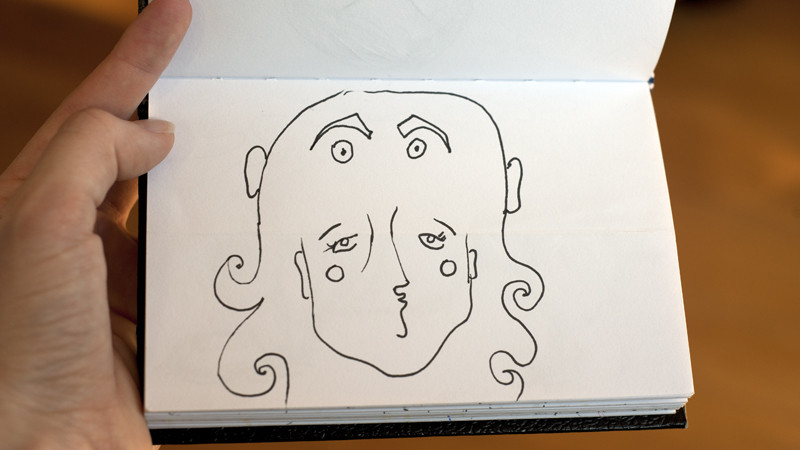
"caption": "An Exquisite Corpse from my sketchbook. (Photo: Adrienne Blaine)",
"description": null,
"title": "Exquisite Corpse 3",
"credit": null,
"status": "inherit",
"isLoading": false,
"fetchFailed": false
},
"arts_10408819": {
"type": "attachments",
"id": "arts_10408819",
"meta": {
"index": "attachments_1716263798",
"site": "arts",
"id": "10408819",
"found": true
},
"parent": 10408686,
"imgSizes": {
"thumbnail": {
"file": "https://ww2.kqed.org/app/uploads/sites/2/2015/02/ppie-from-david_lead-art-size-400x225.jpg",
"width": 400,
"mimeType": "image/jpeg",
"height": 225
},
"post-thumbnail": {
"file": "https://ww2.kqed.org/app/uploads/sites/2/2015/02/ppie-from-david_lead-art-size-672x372.jpg",
"width": 672,
"mimeType": "image/jpeg",
"height": 372
},
"kqedFullSize": {
"file": "https://ww2.kqed.org/app/uploads/sites/2/2015/02/ppie-from-david_lead-art-size.jpg",
"width": 800,
"height": 450
},
"guest-author-96": {
"file": "https://ww2.kqed.org/app/uploads/sites/2/2015/02/ppie-from-david_lead-art-size-96x96.jpg",
"width": 96,
"mimeType": "image/jpeg",
"height": 96
},
"medium": {
"file": "https://ww2.kqed.org/app/uploads/sites/2/2015/02/ppie-from-david_lead-art-size-800x450.jpg",
"width": 800,
"mimeType": "image/jpeg",
"height": 450
},
"guest-author-64": {
"file": "https://ww2.kqed.org/app/uploads/sites/2/2015/02/ppie-from-david_lead-art-size-64x64.jpg",
"width": 64,
"mimeType": "image/jpeg",
"height": 64
},
"detail": {
"file": "https://ww2.kqed.org/app/uploads/sites/2/2015/02/ppie-from-david_lead-art-size-75x75.jpg",
"width": 75,
"mimeType": "image/jpeg",
"height": 75
},
"guest-author-32": {
"file": "https://ww2.kqed.org/app/uploads/sites/2/2015/02/ppie-from-david_lead-art-size-32x32.jpg",
"width": 32,
"mimeType": "image/jpeg",
"height": 32
},
"guest-author-128": {
"file": "https://ww2.kqed.org/app/uploads/sites/2/2015/02/ppie-from-david_lead-art-size-128x128.jpg",
"width": 128,
"mimeType": "image/jpeg",
"height": 128
}
},
"publishDate": 1424467326,
"modified": 1424467326,
"caption": null,
"description": null,
"title": "ppie-from-david_lead-art-size",
"credit": null,
"status": "inherit",
"isLoading": false,
"fetchFailed": false
},
"arts_10397384": {
"type": "attachments",
"id": "arts_10397384",
"meta": {
"index": "attachments_1716263798",
"site": "arts",
"id": "10397384",
"found": true
},
"parent": 0,
"imgSizes": {
"twentyfourteen-full-width": {
"file": "https://ww2.kqed.org/app/uploads/sites/2/2015/02/BrandonAnderton_011715-1038x576.jpg",
"width": 1038,
"mimeType": "image/jpeg",
"height": 576
},
"thumbnail": {
"file": "https://ww2.kqed.org/app/uploads/sites/2/2015/02/BrandonAnderton_011715-400x262.jpg",
"width": 400,
"mimeType": "image/jpeg",
"height": 262
},
"post-thumbnail": {
"file": "https://ww2.kqed.org/app/uploads/sites/2/2015/02/BrandonAnderton_011715-672x372.jpg",
"width": 672,
"mimeType": "image/jpeg",
"height": 372
},
"kqedFullSize": {
"file": "https://ww2.kqed.org/app/uploads/sites/2/2015/02/BrandonAnderton_011715.jpg",
"width": 1100,
"height": 720
},
"guest-author-96": {
"file": "https://ww2.kqed.org/app/uploads/sites/2/2015/02/BrandonAnderton_011715-96x96.jpg",
"width": 96,
"mimeType": "image/jpeg",
"height": 96
},
"medium": {
"file": "https://ww2.kqed.org/app/uploads/sites/2/2015/02/BrandonAnderton_011715-800x524.jpg",
"width": 800,
"mimeType": "image/jpeg",
"height": 524
},
"guest-author-64": {
"file": "https://ww2.kqed.org/app/uploads/sites/2/2015/02/BrandonAnderton_011715-64x64.jpg",
"width": 64,
"mimeType": "image/jpeg",
"height": 64
},
"detail": {
"file": "https://ww2.kqed.org/app/uploads/sites/2/2015/02/BrandonAnderton_011715-75x75.jpg",
"width": 75,
"mimeType": "image/jpeg",
"height": 75
},
"guest-author-32": {
"file": "https://ww2.kqed.org/app/uploads/sites/2/2015/02/BrandonAnderton_011715-32x32.jpg",
"width": 32,
"mimeType": "image/jpeg",
"height": 32
},
"guest-author-128": {
"file": "https://ww2.kqed.org/app/uploads/sites/2/2015/02/BrandonAnderton_011715-128x128.jpg",
"width": 128,
"mimeType": "image/jpeg",
"height": 128
}
},
"publishDate": 1424134074,
"modified": 1424210929,
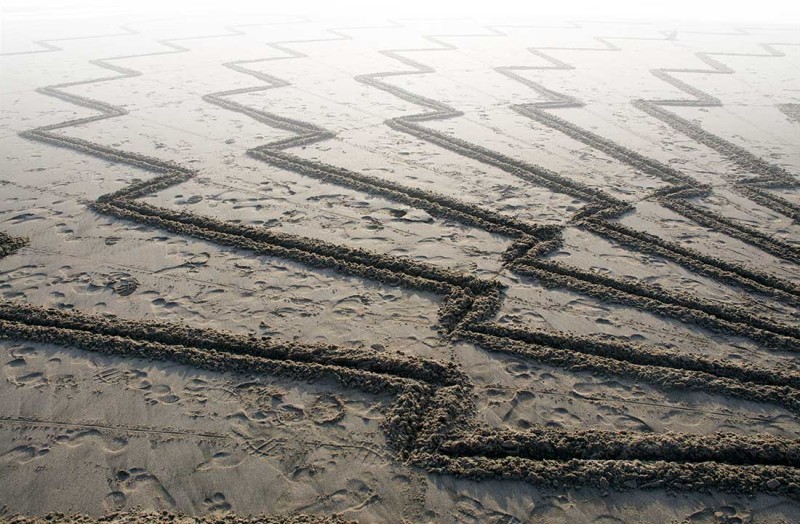
"caption": "Sand drawing by artist Brandon Anderton. (Photo: Brian Eder)",
"description": null,
"title": "BrandonAnderton_011715",
"credit": null,
"status": "inherit",
"isLoading": false,
"fetchFailed": false
},
"arts_10382693": {
"type": "attachments",
"id": "arts_10382693",
"meta": {
"index": "attachments_1716263798",
"site": "arts",
"id": "10382693",
"found": true
},
"parent": 10368148,
"imgSizes": {
"thumbnail": {
"file": "https://ww2.kqed.org/app/uploads/sites/2/2015/02/BoxerBob1-400x248.jpg",
"width": 400,
"mimeType": "image/jpeg",
"height": 248
},
"post-thumbnail": {
"file": "https://ww2.kqed.org/app/uploads/sites/2/2015/02/BoxerBob1-672x372.jpg",
"width": 672,
"mimeType": "image/jpeg",
"height": 372
},
"kqedFullSize": {
"file": "https://ww2.kqed.org/app/uploads/sites/2/2015/02/BoxerBob1.jpg",
"width": 800,
"height": 495
},
"guest-author-96": {
"file": "https://ww2.kqed.org/app/uploads/sites/2/2015/02/BoxerBob1-96x96.jpg",
"width": 96,
"mimeType": "image/jpeg",
"height": 96
},
"medium": {
"file": "https://ww2.kqed.org/app/uploads/sites/2/2015/02/BoxerBob1-800x495.jpg",
"width": 800,
"mimeType": "image/jpeg",
"height": 495
},
"guest-author-64": {
"file": "https://ww2.kqed.org/app/uploads/sites/2/2015/02/BoxerBob1-64x64.jpg",
"width": 64,
"mimeType": "image/jpeg",
"height": 64
},
"detail": {
"file": "https://ww2.kqed.org/app/uploads/sites/2/2015/02/BoxerBob1-75x75.jpg",
"width": 75,
"mimeType": "image/jpeg",
"height": 75
},
"guest-author-32": {
"file": "https://ww2.kqed.org/app/uploads/sites/2/2015/02/BoxerBob1-32x32.jpg",
"width": 32,
"mimeType": "image/jpeg",
"height": 32
},
"guest-author-128": {
"file": "https://ww2.kqed.org/app/uploads/sites/2/2015/02/BoxerBob1-128x128.jpg",
"width": 128,
"mimeType": "image/jpeg",
"height": 128
}
},
"publishDate": 1423691592,
"modified": 1423691618,
"caption": "Boxer Bob and his cat, Sugar Ray, at the Bulb. (Photo: Robin Lasser)",
"description": null,
"title": "BoxerBob1",
"credit": null,
"status": "inherit",
"isLoading": false,
"fetchFailed": false
},
"arts_10379764": {
"type": "attachments",
"id": "arts_10379764",
"meta": {
"index": "attachments_1716263798",
"site": "arts",
"id": "10379764",
"found": true
},
"parent": 10379517,
"imgSizes": {
"thumbnail": {
"file": "https://ww2.kqed.org/app/uploads/sites/2/2015/02/Rexcrop-400x225.jpg",
"width": 400,
"mimeType": "image/jpeg",
"height": 225
},
"post-thumbnail": {
"file": "https://ww2.kqed.org/app/uploads/sites/2/2015/02/Rexcrop-672x372.jpg",
"width": 672,
"mimeType": "image/jpeg",
"height": 372
},
"kqedFullSize": {
"file": "https://ww2.kqed.org/app/uploads/sites/2/2015/02/Rexcrop.jpg",
"width": 800,
"height": 450
},
"guest-author-96": {
"file": "https://ww2.kqed.org/app/uploads/sites/2/2015/02/Rexcrop-96x96.jpg",
"width": 96,
"mimeType": "image/jpeg",
"height": 96
},
"medium": {
"file": "https://ww2.kqed.org/app/uploads/sites/2/2015/02/Rexcrop-800x450.jpg",
"width": 800,
"mimeType": "image/jpeg",
"height": 450
},
"guest-author-64": {
"file": "https://ww2.kqed.org/app/uploads/sites/2/2015/02/Rexcrop-64x64.jpg",
"width": 64,
"mimeType": "image/jpeg",
"height": 64
},
"detail": {
"file": "https://ww2.kqed.org/app/uploads/sites/2/2015/02/Rexcrop-75x75.jpg",
"width": 75,
"mimeType": "image/jpeg",
"height": 75
},
"guest-author-32": {
"file": "https://ww2.kqed.org/app/uploads/sites/2/2015/02/Rexcrop-32x32.jpg",
"width": 32,
"mimeType": "image/jpeg",
"height": 32
},
"guest-author-128": {
"file": "https://ww2.kqed.org/app/uploads/sites/2/2015/02/Rexcrop-128x128.jpg",
"width": 128,
"mimeType": "image/jpeg",
"height": 128
}
},
"publishDate": 1423603605,
"modified": 1423605148,
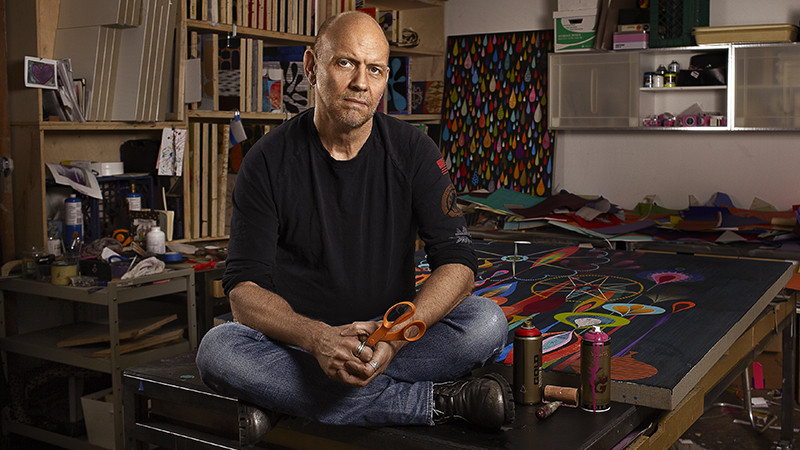
"caption": "Rex Ray in his studio. (Photo: Christiana Ceppas)\n",
"description": "Rex Ray in his studio\n",
"title": "Rexcrop",
"credit": null,
"status": "inherit",
"isLoading": false,
"fetchFailed": false
},
"arts_10368646": {
"type": "attachments",
"id": "arts_10368646",
"meta": {
"index": "attachments_1716263798",
"site": "arts",
"id": "10368646",
"found": true
},
"parent": 10354098,
"imgSizes": {
"thumbnail": {
"file": "https://ww2.kqed.org/app/uploads/sites/2/2015/02/Dashti_Untitled5-400x267.jpg",
"width": 400,
"mimeType": "image/jpeg",
"height": 267
},
"post-thumbnail": {
"file": "https://ww2.kqed.org/app/uploads/sites/2/2015/02/Dashti_Untitled5-672x372.jpg",
"width": 672,
"mimeType": "image/jpeg",
"height": 372
},
"kqedFullSize": {
"file": "https://ww2.kqed.org/app/uploads/sites/2/2015/02/Dashti_Untitled5.jpg",
"width": 800,
"height": 533
},
"guest-author-96": {
"file": "https://ww2.kqed.org/app/uploads/sites/2/2015/02/Dashti_Untitled5-96x96.jpg",
"width": 96,
"mimeType": "image/jpeg",
"height": 96
},
"medium": {
"file": "https://ww2.kqed.org/app/uploads/sites/2/2015/02/Dashti_Untitled5-800x533.jpg",
"width": 800,
"mimeType": "image/jpeg",
"height": 533
},
"guest-author-64": {
"file": "https://ww2.kqed.org/app/uploads/sites/2/2015/02/Dashti_Untitled5-64x64.jpg",
"width": 64,
"mimeType": "image/jpeg",
"height": 64
},
"detail": {
"file": "https://ww2.kqed.org/app/uploads/sites/2/2015/02/Dashti_Untitled5-75x75.jpg",
"width": 75,
"mimeType": "image/jpeg",
"height": 75
},
"guest-author-32": {
"file": "https://ww2.kqed.org/app/uploads/sites/2/2015/02/Dashti_Untitled5-32x32.jpg",
"width": 32,
"mimeType": "image/jpeg",
"height": 32
},
"guest-author-128": {
"file": "https://ww2.kqed.org/app/uploads/sites/2/2015/02/Dashti_Untitled5-128x128.jpg",
"width": 128,
"mimeType": "image/jpeg",
"height": 128
}
},
"publishDate": 1423271571,
"modified": 1423271619,
"caption": "Gohar Dashti (Iran, b. 1980), \u003cem>Untitled #5\u003c/em>, from the series \u003cem>Today’s Life and War\u003c/em>, 2008. (Courtesy of the artist, Azita Bina, and Robert Klein Gallery, Boston)",
"description": null,
"title": "Dashti_Untitled5",
"credit": null,
"status": "inherit",
"isLoading": false,
"fetchFailed": false
},
"arts_10360669": {
"type": "attachments",
"id": "arts_10360669",
"meta": {
"index": "attachments_1716263798",
"site": "arts",
"id": "10360669",
"found": true
},
"parent": 10360060,
"imgSizes": {
"twentyfourteen-full-width": {
"file": "https://ww2.kqed.org/app/uploads/sites/2/2015/02/2-1038x576.jpg",
"width": 1038,
"mimeType": "image/jpeg",
"height": 576
},
"thumbnail": {
"file": "https://ww2.kqed.org/app/uploads/sites/2/2015/02/2-400x267.jpg",
"width": 400,
"mimeType": "image/jpeg",
"height": 267
},
"post-thumbnail": {
"file": "https://ww2.kqed.org/app/uploads/sites/2/2015/02/2-672x372.jpg",
"width": 672,
"mimeType": "image/jpeg",
"height": 372
},
"kqedFullSize": {
"file": "https://ww2.kqed.org/app/uploads/sites/2/2015/02/2.jpg",
"width": 3456,
"height": 2304
},
"large": {
"file": "https://ww2.kqed.org/app/uploads/sites/2/2015/02/2-1180x787.jpg",
"width": 1180,
"mimeType": "image/jpeg",
"height": 787
},
"guest-author-96": {
"file": "https://ww2.kqed.org/app/uploads/sites/2/2015/02/2-96x96.jpg",
"width": 96,
"mimeType": "image/jpeg",
"height": 96
},
"medium": {
"file": "https://ww2.kqed.org/app/uploads/sites/2/2015/02/2-800x533.jpg",
"width": 800,
"mimeType": "image/jpeg",
"height": 533
},
"guest-author-64": {
"file": "https://ww2.kqed.org/app/uploads/sites/2/2015/02/2-64x64.jpg",
"width": 64,
"mimeType": "image/jpeg",
"height": 64
},
"detail": {
"file": "https://ww2.kqed.org/app/uploads/sites/2/2015/02/2-75x75.jpg",
"width": 75,
"mimeType": "image/jpeg",
"height": 75
},
"guest-author-32": {
"file": "https://ww2.kqed.org/app/uploads/sites/2/2015/02/2-32x32.jpg",
"width": 32,
"mimeType": "image/jpeg",
"height": 32
},
"guest-author-128": {
"file": "https://ww2.kqed.org/app/uploads/sites/2/2015/02/2-128x128.jpg",
"width": 128,
"mimeType": "image/jpeg",
"height": 128
}
},
"publishDate": 1423031241,
"modified": 1423443150,
"caption": "Detail of art by Malik Seneferu at Impact Hub in Oakland. (Photo: Lakshmi Sarah)",
"description": null,
"title": "2",
"credit": null,
"status": "inherit",
"isLoading": false,
"fetchFailed": false
},
"arts_10315752": {
"type": "attachments",
"id": "arts_10315752",
"meta": {
"index": "attachments_1716263798",
"site": "arts",
"id": "10315752",
"found": true
},
"parent": 10315524,
"imgSizes": {
"twentyfourteen-full-width": {
"file": "https://ww2.kqed.org/app/uploads/sites/2/2015/01/5CC-windows-01-1038x576.jpg",
"width": 1038,
"mimeType": "image/jpeg",
"height": 576
},
"thumbnail": {
"file": "https://ww2.kqed.org/app/uploads/sites/2/2015/01/5CC-windows-01-400x265.jpg",
"width": 400,
"mimeType": "image/jpeg",
"height": 265
},
"post-thumbnail": {
"file": "https://ww2.kqed.org/app/uploads/sites/2/2015/01/5CC-windows-01-672x372.jpg",
"width": 672,
"mimeType": "image/jpeg",
"height": 372
},
"kqedFullSize": {
"file": "https://ww2.kqed.org/app/uploads/sites/2/2015/01/5CC-windows-01.jpg",
"width": 1400,
"height": 930
},
"large": {
"file": "https://ww2.kqed.org/app/uploads/sites/2/2015/01/5CC-windows-01-1180x783.jpg",
"width": 1180,
"mimeType": "image/jpeg",
"height": 783
},
"guest-author-96": {
"file": "https://ww2.kqed.org/app/uploads/sites/2/2015/01/5CC-windows-01-96x96.jpg",
"width": 96,
"mimeType": "image/jpeg",
"height": 96
},
"medium": {
"file": "https://ww2.kqed.org/app/uploads/sites/2/2015/01/5CC-windows-01-800x531.jpg",
"width": 800,
"mimeType": "image/jpeg",
"height": 531
},
"guest-author-64": {
"file": "https://ww2.kqed.org/app/uploads/sites/2/2015/01/5CC-windows-01-64x64.jpg",
"width": 64,
"mimeType": "image/jpeg",
"height": 64
},
"detail": {
"file": "https://ww2.kqed.org/app/uploads/sites/2/2015/01/5CC-windows-01-75x75.jpg",
"width": 75,
"mimeType": "image/jpeg",
"height": 75
},
"guest-author-32": {
"file": "https://ww2.kqed.org/app/uploads/sites/2/2015/01/5CC-windows-01-32x32.jpg",
"width": 32,
"mimeType": "image/jpeg",
"height": 32
},
"guest-author-128": {
"file": "https://ww2.kqed.org/app/uploads/sites/2/2015/01/5CC-windows-01-128x128.jpg",
"width": 128,
"mimeType": "image/jpeg",
"height": 128
}
},
"publishDate": 1421659407,
"modified": 1422047364,
"caption": "Ken Davis' work in progress at Five Color Cowboy in San Jose. (Photo courtesy Johnny Granado)",
"description": null,
"title": "Ken Davis",
"credit": null,
"status": "inherit",
"isLoading": false,
"fetchFailed": false
},
"arts_10304233": {
"type": "attachments",
"id": "arts_10304233",
"meta": {
"index": "attachments_1716263798",
"site": "arts",
"id": "10304233",
"found": true
},
"parent": 10304103,
"imgSizes": {
"twentyfourteen-full-width": {
"file": "https://ww2.kqed.org/app/uploads/sites/2/2015/01/Boomtown2white-1038x576.jpg",
"width": 1038,
"mimeType": "image/jpeg",
"height": 576
},
"thumbnail": {
"file": "https://ww2.kqed.org/app/uploads/sites/2/2015/01/Boomtown2white-400x225.jpg",
"width": 400,
"mimeType": "image/jpeg",
"height": 225
},
"post-thumbnail": {
"file": "https://ww2.kqed.org/app/uploads/sites/2/2015/01/Boomtown2white-672x372.jpg",
"width": 672,
"mimeType": "image/jpeg",
"height": 372
},
"kqedFullSize": {
"file": "https://ww2.kqed.org/app/uploads/sites/2/2015/01/Boomtown2white.jpg",
"width": 1400,
"height": 788
},
"large": {
"file": "https://ww2.kqed.org/app/uploads/sites/2/2015/01/Boomtown2white-1180x664.jpg",
"width": 1180,
"mimeType": "image/jpeg",
"height": 664
},
"guest-author-96": {
"file": "https://ww2.kqed.org/app/uploads/sites/2/2015/01/Boomtown2white-96x96.jpg",
"width": 96,
"mimeType": "image/jpeg",
"height": 96
},
"medium": {
"file": "https://ww2.kqed.org/app/uploads/sites/2/2015/01/Boomtown2white-800x450.jpg",
"width": 800,
"mimeType": "image/jpeg",
"height": 450
},
"guest-author-64": {
"file": "https://ww2.kqed.org/app/uploads/sites/2/2015/01/Boomtown2white-64x64.jpg",
"width": 64,
"mimeType": "image/jpeg",
"height": 64
},
"detail": {
"file": "https://ww2.kqed.org/app/uploads/sites/2/2015/01/Boomtown2white-75x75.jpg",
"width": 75,
"mimeType": "image/jpeg",
"height": 75
},
"guest-author-32": {
"file": "https://ww2.kqed.org/app/uploads/sites/2/2015/01/Boomtown2white-32x32.jpg",
"width": 32,
"mimeType": "image/jpeg",
"height": 32
},
"guest-author-128": {
"file": "https://ww2.kqed.org/app/uploads/sites/2/2015/01/Boomtown2white-128x128.jpg",
"width": 128,
"mimeType": "image/jpeg",
"height": 128
}
},
"publishDate": 1421307915,
"modified": 1421307927,
"caption": "Illustration by Carolyn Porras. \u003ca href=\"http://www.carolynporrasart.com\" target=\"_blank\">carolynporrasart.com\u003c/a>",
"description": null,
"title": "Boomtown2white",
"credit": null,
"status": "inherit",
"isLoading": false,
"fetchFailed": false
},
"arts_10315398": {
"type": "attachments",
"id": "arts_10315398",
"meta": {
"index": "attachments_1716263798",
"site": "arts",
"id": "10315398",
"found": true
},
"parent": 10309628,
"imgSizes": {
"thumbnail": {
"file": "https://ww2.kqed.org/app/uploads/sites/2/2015/01/fiore_still-Blog-400x225.jpg",
"width": 400,
"mimeType": "image/jpeg",
"height": 225
},
"post-thumbnail": {
"file": "https://ww2.kqed.org/app/uploads/sites/2/2015/01/fiore_still-Blog-672x372.jpg",
"width": 672,
"mimeType": "image/jpeg",
"height": 372
},
"kqedFullSize": {
"file": "https://ww2.kqed.org/app/uploads/sites/2/2015/01/fiore_still-Blog.jpg",
"width": 800,
"height": 450
},
"guest-author-96": {
"file": "https://ww2.kqed.org/app/uploads/sites/2/2015/01/fiore_still-Blog-96x96.jpg",
"width": 96,
"mimeType": "image/jpeg",
"height": 96
},
"guest-author-64": {
"file": "https://ww2.kqed.org/app/uploads/sites/2/2015/01/fiore_still-Blog-64x64.jpg",
"width": 64,
"mimeType": "image/jpeg",
"height": 64
},
"detail": {
"file": "https://ww2.kqed.org/app/uploads/sites/2/2015/01/fiore_still-Blog-75x75.jpg",
"width": 75,
"mimeType": "image/jpeg",
"height": 75
},
"guest-author-32": {
"file": "https://ww2.kqed.org/app/uploads/sites/2/2015/01/fiore_still-Blog-32x32.jpg",
"width": 32,
"mimeType": "image/jpeg",
"height": 32
},
"guest-author-128": {
"file": "https://ww2.kqed.org/app/uploads/sites/2/2015/01/fiore_still-Blog-128x128.jpg",
"width": 128,
"mimeType": "image/jpeg",
"height": 128
}
},
"publishDate": 1421648186,
"modified": 1421648208,
"caption": null,
"description": null,
"title": "fiore_still Blog",
"credit": "Mark Fiore",
"status": "inherit",
"isLoading": false,
"fetchFailed": false
},
"arts_10315401": {
"type": "attachments",
"id": "arts_10315401",
"meta": {
"index": "attachments_1716263798",
"site": "arts",
"id": "10315401",
"found": true
},
"parent": 10287220,
"imgSizes": {
"thumbnail": {
"file": "https://ww2.kqed.org/app/uploads/sites/2/2015/01/SincerelyYours-400x225.jpg",
"width": 400,
"mimeType": "image/jpeg",
"height": 225
},
"post-thumbnail": {
"file": "https://ww2.kqed.org/app/uploads/sites/2/2015/01/SincerelyYours-672x372.jpg",
"width": 672,
"mimeType": "image/jpeg",
"height": 372
},
"kqedFullSize": {
"file": "https://ww2.kqed.org/app/uploads/sites/2/2015/01/SincerelyYours.jpg",
"width": 800,
"height": 450
},
"guest-author-96": {
"file": "https://ww2.kqed.org/app/uploads/sites/2/2015/01/SincerelyYours-96x96.jpg",
"width": 96,
"mimeType": "image/jpeg",
"height": 96
},
"guest-author-64": {
"file": "https://ww2.kqed.org/app/uploads/sites/2/2015/01/SincerelyYours-64x64.jpg",
"width": 64,
"mimeType": "image/jpeg",
"height": 64
},
"detail": {
"file": "https://ww2.kqed.org/app/uploads/sites/2/2015/01/SincerelyYours-75x75.jpg",
"width": 75,
"mimeType": "image/jpeg",
"height": 75
},
"guest-author-32": {
"file": "https://ww2.kqed.org/app/uploads/sites/2/2015/01/SincerelyYours-32x32.jpg",
"width": 32,
"mimeType": "image/jpeg",
"height": 32
},
"guest-author-128": {
"file": "https://ww2.kqed.org/app/uploads/sites/2/2015/01/SincerelyYours-128x128.jpg",
"width": 128,
"mimeType": "image/jpeg",
"height": 128
}
},
"publishDate": 1421650619,
"modified": 1421650697,
"caption": "Detail from IAMSU!'s latest album, \u003cem>Sincerely Yours\u003c/em>. (Image: Sylvstr)",
"description": null,
"title": "SincerelyYours",
"credit": null,
"status": "inherit",
"isLoading": false,
"fetchFailed": false
},
"arts_10296200": {
"type": "attachments",
"id": "arts_10296200",
"meta": {
"index": "attachments_1716263798",
"site": "arts",
"id": "10296200",
"found": true
},
"parent": 10296199,
"imgSizes": {
"twentyfourteen-full-width": {
"file": "https://ww2.kqed.org/app/uploads/sites/2/2015/01/BCAFposterccc2-1038x576.jpg",
"width": 1038,
"mimeType": "image/jpeg",
"height": 576
},
"thumbnail": {
"file": "https://ww2.kqed.org/app/uploads/sites/2/2015/01/BCAFposterccc2-400x266.jpg",
"width": 400,
"mimeType": "image/jpeg",
"height": 266
},
"post-thumbnail": {
"file": "https://ww2.kqed.org/app/uploads/sites/2/2015/01/BCAFposterccc2-672x372.jpg",
"width": 672,
"mimeType": "image/jpeg",
"height": 372
},
"kqedFullSize": {
"file": "https://ww2.kqed.org/app/uploads/sites/2/2015/01/BCAFposterccc2.jpg",
"width": 1188,
"height": 792
},
"large": {
"file": "https://ww2.kqed.org/app/uploads/sites/2/2015/01/BCAFposterccc2-1180x786.jpg",
"width": 1180,
"mimeType": "image/jpeg",
"height": 786
},
"guest-author-96": {
"file": "https://ww2.kqed.org/app/uploads/sites/2/2015/01/BCAFposterccc2-96x96.jpg",
"width": 96,
"mimeType": "image/jpeg",
"height": 96
},
"medium": {
"file": "https://ww2.kqed.org/app/uploads/sites/2/2015/01/BCAFposterccc2-800x533.jpg",
"width": 800,
"mimeType": "image/jpeg",
"height": 533
},
"guest-author-64": {
"file": "https://ww2.kqed.org/app/uploads/sites/2/2015/01/BCAFposterccc2-64x64.jpg",
"width": 64,
"mimeType": "image/jpeg",
"height": 64
},
"detail": {
"file": "https://ww2.kqed.org/app/uploads/sites/2/2015/01/BCAFposterccc2-75x75.jpg",
"width": 75,
"mimeType": "image/jpeg",
"height": 75
},
"guest-author-32": {
"file": "https://ww2.kqed.org/app/uploads/sites/2/2015/01/BCAFposterccc2-32x32.jpg",
"width": 32,
"mimeType": "image/jpeg",
"height": 32
},
"guest-author-128": {
"file": "https://ww2.kqed.org/app/uploads/sites/2/2015/01/BCAFposterccc2-128x128.jpg",
"width": 128,
"mimeType": "image/jpeg",
"height": 128
}
},
"publishDate": 1421073836,
"modified": 1421101249,
"caption": "The inaugural 2015 Black Comix Arts Festival poster. (Illustration: John Jennings)",
"description": null,
"title": "BCAFposterccc2",
"credit": null,
"status": "inherit",
"isLoading": false,
"fetchFailed": false
}
},
"audioPlayerReducer": {
"postId": "stream_live",
"isPaused": true,
"isPlaying": false,
"pfsActive": false,
"pledgeModalIsOpen": true,
"playerDrawerIsOpen": false,
"liveAudioPlayStartedAt": 0,
"liveAudioPlayContext": ""
},
"authorsReducer": {
"byline_arts_10408686": {
"type": "authors",
"id": "byline_arts_10408686",
"meta": {
"override": true
},
"slug": "byline_arts_10408686",
"name": "Lisa Landers",
"isLoading": false
},
"byline_arts_10309628": {
"type": "authors",
"id": "byline_arts_10309628",
"meta": {
"override": true
},
"slug": "byline_arts_10309628",
"name": "Mark Fiore",
"isLoading": false
},
"cfrock": {
"type": "authors",
"id": "58",
"meta": {
"index": "authors_1716337520",
"id": "58",
"found": true
},
"name": "Christian L. Frock",
"firstName": "Christian L.",
"lastName": "Frock",
"slug": "cfrock",
"email": "christian@invisiblevenue.com",
"display_author_email": false,
"staff_mastheads": [
"arts"
],
"title": "KQED Contributor",
"bio": null,
"avatar": "https://secure.gravatar.com/avatar/da93aa5c1bc6f6561a99d5073186102c?s=600&d=blank&r=g",
"twitter": null,
"facebook": null,
"instagram": null,
"linkedin": null,
"sites": [
{
"site": "arts",
"roles": [
"Contributor",
"contributor"
]
}
],
"headData": {
"title": "Christian L. Frock | KQED",
"description": "KQED Contributor",
"ogImgSrc": "https://secure.gravatar.com/avatar/da93aa5c1bc6f6561a99d5073186102c?s=600&d=blank&r=g",
"twImgSrc": "https://secure.gravatar.com/avatar/da93aa5c1bc6f6561a99d5073186102c?s=600&d=blank&r=g"
},
"isLoading": false,
"link": "/author/cfrock"
},
"shotchkiss": {
"type": "authors",
"id": "61",
"meta": {
"index": "authors_1716337520",
"id": "61",
"found": true
},
"name": "Sarah Hotchkiss",
"firstName": "Sarah",
"lastName": "Hotchkiss",
"slug": "shotchkiss",
"email": "shotchkiss@kqed.org",
"display_author_email": true,
"staff_mastheads": [
"arts"
],
"title": "Senior Editor",
"bio": "Sarah Hotchkiss is a San Francisco \u003ca href=\"http://www.sarahhotchkiss.com\">artist\u003c/a> and arts writer. In 2019, she received the Dorothea & Leo Rabkin Foundation grant for visual art journalism and in 2020 she received a Society of Professional Journalists, Northern California award for excellence in arts and culture reporting.",
"avatar": "https://secure.gravatar.com/avatar/bc662df144b3d27fd8b1b6f1c2a420d34e91e53154d411bb7ad353cc8b6cea8d?s=600&d=blank&r=g",
"twitter": null,
"bluesky": null,
"facebook": null,
"instagram": null,
"linkedin": null,
"sites": [
{
"site": "",
"roles": [
"editor"
]
},
{
"site": "arts",
"roles": [
"Contributor",
"administrator"
]
},
{
"site": "artschool",
"roles": [
"administrator"
]
},
{
"site": "news",
"roles": [
"editor"
]
},
{
"site": "pop",
"roles": [
"administrator"
]
},
{
"site": "bayareabites",
"roles": [
"editor"
]
},
{
"site": "spark",
"roles": [
"editor"
]
},
{
"site": "checkplease",
"roles": [
"editor"
]
}
],
"headData": {
"title": "Sarah Hotchkiss | KQED",
"description": "Senior Editor",
"ogImgSrc": "https://secure.gravatar.com/avatar/bc662df144b3d27fd8b1b6f1c2a420d34e91e53154d411bb7ad353cc8b6cea8d?s=600&d=blank&r=g",
"twImgSrc": "https://secure.gravatar.com/avatar/bc662df144b3d27fd8b1b6f1c2a420d34e91e53154d411bb7ad353cc8b6cea8d?s=600&d=blank&r=g"
},
"isLoading": false,
"link": "/author/shotchkiss"
},
"ablaine": {
"type": "authors",
"id": "72",
"meta": {
"index": "authors_1716337520",
"id": "72",
"found": true
},
"name": "Adrienne Blaine",
"firstName": "Adrienne",
"lastName": "Blaine",
"slug": "ablaine",
"email": "adrienneblaine@hotmail.com",
"display_author_email": false,
"staff_mastheads": [],
"title": null,
"bio": "Adrienne Blaine is a Millennial writer from the South Bay. She has a BA in Comparative Literary and Cultural Studies combined with Communications and Media Studies from Franklin University Switzerland. Living in Switzerland for four years and traveling from Morocco to Iceland introduced her to diverse art, culture and food. She currently lives in San Francisco and writes about these topics.",
"avatar": "https://secure.gravatar.com/avatar/10d0a10a2189067e5e3f6fc9fc4ebdf2?s=600&d=blank&r=g",
"twitter": null,
"facebook": null,
"instagram": null,
"linkedin": null,
"sites": [
{
"site": "arts",
"roles": [
"Contributor",
"contributor"
]
},
{
"site": "bayareabites",
"roles": [
"contributor"
]
},
{
"site": "food",
"roles": [
"contributor"
]
}
],
"headData": {
"title": "Adrienne Blaine | KQED",
"description": null,
"ogImgSrc": "https://secure.gravatar.com/avatar/10d0a10a2189067e5e3f6fc9fc4ebdf2?s=600&d=blank&r=g",
"twImgSrc": "https://secure.gravatar.com/avatar/10d0a10a2189067e5e3f6fc9fc4ebdf2?s=600&d=blank&r=g"
},
"isLoading": false,
"link": "/author/ablaine"
},
"rseikaly": {
"type": "authors",
"id": "77",
"meta": {
"index": "authors_1716337520",
"id": "77",
"found": true
},
"name": "Roula Seikaly",
"firstName": "Roula",
"lastName": "Seikaly",
"slug": "rseikaly",
"email": "roula@roulaseikaly.com",
"display_author_email": false,
"staff_mastheads": [],
"title": "KQED Contributor",
"bio": "Roula Seikaly in an independent writer and curator based in Berkeley, California, and Senior Editor at \u003ca href=\"http://hafny.org/\">Humble Arts Foundation\u003c/a>. She has curated exhibitions at Colorado Photographic Arts Center, Filter Photo Festival, Blue Sky Gallery, SF Camerawork, SOMArts, and the Utah Museum of Arts. She is a regular contributor to Photograph, Hyerallergic, BOMB Magazine, and KQED Arts.",
"avatar": "https://secure.gravatar.com/avatar/771cde409896af1326a07050f2e4e489?s=600&d=blank&r=g",
"twitter": null,
"facebook": null,
"instagram": null,
"linkedin": null,
"sites": [
{
"site": "arts",
"roles": [
"Contributor",
"contributor"
]
}
],
"headData": {
"title": "Roula Seikaly | KQED",
"description": "KQED Contributor",
"ogImgSrc": "https://secure.gravatar.com/avatar/771cde409896af1326a07050f2e4e489?s=600&d=blank&r=g",
"twImgSrc": "https://secure.gravatar.com/avatar/771cde409896af1326a07050f2e4e489?s=600&d=blank&r=g"
},
"isLoading": false,
"link": "/author/rseikaly"
},
"clakey": {
"type": "authors",
"id": "191",
"meta": {
"index": "authors_1716337520",
"id": "191",
"found": true
},
"name": "Cherri Lakey",
"firstName": "Cherri",
"lastName": "Lakey",
"slug": "clakey",
"email": "cherri@galleryad.com",
"display_author_email": false,
"staff_mastheads": [],
"title": "KQED Contributor",
"bio": "Co-owner/curator of urban contemporary art and culture gallery \u003ca href=\"http://www.galleryAD.com\">ANNO DOMINI\u003c/a> // the second coming of Art & Design and producer of a bunch of other cool projects with partner \u003ca href=\"http://ww2.kqed.org/arts/author/beder/\" target=\"_blank\">Brian Eder.\u003c/a> \u003ca href=\"https://twitter.com/astrogirl\">Follow @astrogirl\u003c/a>\r\n// ",
"avatar": "https://secure.gravatar.com/avatar/29642fbd8e9eef623a3f07213c5b739fbbfe7e1efe98571b1093fabcaade6f08?s=600&d=blank&r=g",
"twitter": null,
"bluesky": null,
"facebook": null,
"instagram": null,
"linkedin": null,
"sites": [
{
"site": "arts",
"roles": [
"subscriber"
]
}
],
"headData": {
"title": "Cherri Lakey | KQED",
"description": "KQED Contributor",
"ogImgSrc": "https://secure.gravatar.com/avatar/29642fbd8e9eef623a3f07213c5b739fbbfe7e1efe98571b1093fabcaade6f08?s=600&d=blank&r=g",
"twImgSrc": "https://secure.gravatar.com/avatar/29642fbd8e9eef623a3f07213c5b739fbbfe7e1efe98571b1093fabcaade6f08?s=600&d=blank&r=g"
},
"isLoading": false,
"link": "/author/clakey"
},
"beder": {
"type": "authors",
"id": "192",
"meta": {
"index": "authors_1716337520",
"id": "192",
"found": true
},
"name": "Brian Eder",
"firstName": "Brian",
"lastName": "Eder",
"slug": "beder",
"email": "brian@galleryad.com",
"display_author_email": false,
"staff_mastheads": [],
"title": null,
"bio": "Brian Eder lives and works in the industrious city of San Jose, CA. He's best known for his role as the co-curator of \u003ca title=\"ANNO DOMINI Gallery\" href=\"http://www.galleryAD.com\" target=\"_blank\">ANNO DOMINI Gallery\u003c/a> that he and his partner, \u003ca href=\"http://ww2.kqed.org/arts/author/clakey/\" target=\"_blank\">Cherri Lakey\u003c/a>, founded in 2000. He's also the co-producer of San Jose's SubZERO Festival, an annual gathering of the progenitors of culture promoting subculture and indie music since 2008. He joins KQED Arts as one of their newest Contributors beginning in the Fall of 2014. \u003ca class=\"twitter-follow-button\" href=\"https://twitter.com/atmcmnk\" data-show-count=\"false\">Follow @atmcmnk\u003c/a>\r\n\u003cscript>// \u003c![CDATA[\r\n!function(d,s,id){var js,fjs=d.getElementsByTagName(s)[0],p=/^http:/.test(d.location)?'http':'https';if(!d.getElementById(id)){js=d.createElement(s);js.id=id;js.src=p+'://platform.twitter.com/widgets.js';fjs.parentNode.insertBefore(js,fjs);}}(document, 'script', 'twitter-wjs');\r\n// ]]>\u003c/script>",
"avatar": "https://secure.gravatar.com/avatar/980f18af12a51783dd04f6283a4f0e61?s=600&d=blank&r=g",
"twitter": null,
"facebook": null,
"instagram": null,
"linkedin": null,
"sites": [
{
"site": "arts",
"roles": [
"contributor"
]
}
],
"headData": {
"title": "Brian Eder | KQED",
"description": null,
"ogImgSrc": "https://secure.gravatar.com/avatar/980f18af12a51783dd04f6283a4f0e61?s=600&d=blank&r=g",
"twImgSrc": "https://secure.gravatar.com/avatar/980f18af12a51783dd04f6283a4f0e61?s=600&d=blank&r=g"
},
"isLoading": false,
"link": "/author/beder"
},
"aeghan": {
"type": "authors",
"id": "195",
"meta": {
"index": "authors_1716337520",
"id": "195",
"found": true
},
"name": "Adizah Eghan",
"firstName": "Adizah",
"lastName": "Eghan",
"slug": "aeghan",
"email": "adizah.e@gmail.com",
"display_author_email": false,
"staff_mastheads": [],
"title": "KQED Contributor",
"bio": "Adizah Eghan is a former reporter at KQED News and writer for KQED Arts. She caught the radio bug as an intern for PRI's The World and landed in KQED's newsroom after a stint teaching English in India. She covers culture, the arts, and global music in the Bay Area. This is where she tweets: \u003ca class=\"ProfileHeaderCard-screennameLink u-linkComplex js-nav\" style=\"color: #8899a6;\" href=\"https://twitter.com/Adizah_E\">@\u003cspan class=\"u-linkComplex-target\">Adizah_E\u003c/span>\u003c/a>",
"avatar": "https://secure.gravatar.com/avatar/d6e30ed9ca504243b4d8ee5d7ca32324?s=600&d=blank&r=g",
"twitter": "Adizah_E",
"facebook": null,
"instagram": null,
"linkedin": null,
"sites": [
{
"site": "arts",
"roles": [
"contributor"
]
},
{
"site": "news",
"roles": [
"subscriber"
]
},
{
"site": "stateofhealth",
"roles": [
"author"
]
}
],
"headData": {
"title": "Adizah Eghan | KQED",
"description": "KQED Contributor",
"ogImgSrc": "https://secure.gravatar.com/avatar/d6e30ed9ca504243b4d8ee5d7ca32324?s=600&d=blank&r=g",
"twImgSrc": "https://secure.gravatar.com/avatar/d6e30ed9ca504243b4d8ee5d7ca32324?s=600&d=blank&r=g"
},
"isLoading": false,
"link": "/author/aeghan"
},
"dburlison": {
"type": "authors",
"id": "3216",
"meta": {
"index": "authors_1716337520",
"id": "3216",
"found": true
},
"name": "Dani Burlison",
"firstName": "Dani",
"lastName": "Burlison",
"slug": "dburlison",
"email": "danisavestheworld@yahoo.com",
"display_author_email": false,
"staff_mastheads": [],
"title": null,
"bio": "\u003cb id=\"yui_3_16_0_1_1416414652499_5365\" class=\"yiv3033141065\">Dani Burlison\u003c/b> is an award-winning writer, teacher and North Bay resident with a special interest in California's fascinating subcultures. You can find her commentary on writing, feminism, social justice and life with two teen daughters on Twitter at @DaniBurlison.",
"avatar": "https://secure.gravatar.com/avatar/c0b371463a220978c947a5c4ce2da294?s=600&d=blank&r=g",
"twitter": null,
"facebook": null,
"instagram": null,
"linkedin": null,
"sites": [
{
"site": "arts",
"roles": [
"contributor"
]
}
],
"headData": {
"title": "Dani Burlison | KQED",
"description": null,
"ogImgSrc": "https://secure.gravatar.com/avatar/c0b371463a220978c947a5c4ce2da294?s=600&d=blank&r=g",
"twImgSrc": "https://secure.gravatar.com/avatar/c0b371463a220978c947a5c4ce2da294?s=600&d=blank&r=g"
},
"isLoading": false,
"link": "/author/dburlison"
},
"lakshmi": {
"type": "authors",
"id": "3245",
"meta": {
"index": "authors_1716337520",
"id": "3245",
"found": true
},
"name": "Lakshmi Sarah",
"firstName": "Lakshmi",
"lastName": "Sarah",
"slug": "lakshmi",
"email": "lakisarah@gmail.com",
"display_author_email": false,
"staff_mastheads": [],
"title": null,
"bio": "Born and raised in California, Lakshmi is an educator and journalist with a focus on South Asia, gender, race and the arts. Over the past few years, she has worked with newspapers, radio and magazines from Botswana to Los Angeles. She has written and produced for various audiences, including Mic, Global Voices, Al Jazeera Online, AJ+ and KQED Arts. Lakshmi is a graduate of Pitzer College where she studied Global Communications and Studio Arts.",
"avatar": "https://secure.gravatar.com/avatar/30f520a9238d29ba9187c2a405e0f85d?s=600&d=blank&r=g",
"twitter": "lakitalki",
"facebook": null,
"instagram": null,
"linkedin": null,
"sites": [
{
"site": "arts",
"roles": [
"editor"
]
},
{
"site": "pop",
"roles": [
"contributor"
]
},
{
"site": "science",
"roles": [
"editor"
]
}
],
"headData": {
"title": "Lakshmi Sarah | KQED",
"description": null,
"ogImgSrc": "https://secure.gravatar.com/avatar/30f520a9238d29ba9187c2a405e0f85d?s=600&d=blank&r=g",
"twImgSrc": "https://secure.gravatar.com/avatar/30f520a9238d29ba9187c2a405e0f85d?s=600&d=blank&r=g"
},
"isLoading": false,
"link": "/author/lakshmi"
}
},
"pagesReducer": {
"arts_category_visualarts": {
"type": "terms",
"id": "arts_70",
"meta": {
"index": "terms_1716263798",
"site": "arts",
"id": "70",
"score": 14.4079685
},
"featImg": null,
"name": "Visual Arts",
"description": null,
"taxonomy": "category",
"headData": {
"twImgId": null,
"twTitle": null,
"ogTitle": null,
"ogImgId": null,
"twDescription": null,
"description": null,
"title": "Visual Arts Archives | KQED Arts",
"ogDescription": null
},
"ttid": 71,
"slug": "visualarts",
"isLoading": false,
"title": "Visual Arts",
"pageMeta": {
"site": "arts",
"WpPageTemplate": "page-topic-editorial",
"currentPage": 158
},
"blocks": [
{
"blockName": "kqed/post-list",
"attrs": {
"layout": "cardArticle2",
"query": "posts/arts?category=visualarts",
"seeMore": false,
"paginated": true,
"page": 158
}
},
{
"blockName": "kqed/ad"
}
]
}
},
"pfsSessionReducer": {},
"postsReducer": {
"stream_live": {
"type": "live",
"id": "stream_live",
"audioUrl": "https://streams.kqed.org/kqedradio",
"title": "Live Stream",
"excerpt": "Live Stream information currently unavailable.",
"link": "/radio",
"featImg": "",
"label": {
"name": "KQED Live",
"link": "/"
}
},
"stream_kqedNewscast": {
"type": "posts",
"id": "stream_kqedNewscast",
"audioUrl": "https://www.kqed.org/.stream/anon/radio/RDnews/newscast.mp3?_=1",
"title": "KQED Newscast",
"featImg": "",
"label": {
"name": "88.5 FM",
"link": "/"
}
},
"arts_10396543": {
"type": "posts",
"id": "arts_10396543",
"meta": {
"index": "posts_1716263798",
"site": "arts",
"id": "10396543",
"score": null,
"sort": [
1424527236000
]
},
"parent": 0,
"labelTerm": {
"site": "arts"
},
"blocks": [],
"publishDate": 1424527236,
"format": "standard",
"title": "This One Weird Surrealist Trick Will Fill Your Sketchbook",
"headTitle": "This One Weird Surrealist Trick Will Fill Your Sketchbook | KQED",
"content": "\u003cp>If you have a blank sketchbook lying around, \u003ca href=\"http://www.slate.com/articles/business/moneybox/2013/07/how_one_weird_trick_conquered_the_internet_what_happens_when_you_click_on.html\" target=\"_blank\" rel=\"noopener\">“one weird trick”\u003c/a> from the Surrealists can turn any social gathering into a collaborative art session. Instead of sequestering yourself at home with your unused, expensive art supplies, take them with you to your next dinner party.\u003c/p>\n\u003cp>In the early years of the Surrealist movement, young poets and artists began blurring the lines between art and life at their social gatherings in Paris. As early as 1917, founding Surrealists like \u003ca href=\"http://en.wikipedia.org/wiki/Andr%C3%A9_Breton\" target=\"_blank\" rel=\"noopener\">André Breton\u003c/a> played a parlor game that asked participants to contribute to a poem or drawing without knowing what came before or after their own contribution. One such early poem resulted in the odd phrase “le cadaver exquis boira le vin nouveau” (“the exquisite corpse shall drink the young wine”), which inspired the Surrealists to dub the game \u003ca href=\"http://en.wikipedia.org/wiki/Exquisite_corpse\" target=\"_blank\" rel=\"noopener\">“Exquisite Corpse.”\u003c/a> You can see a prime example of the game in drawing, by Joan Miró, Man Ray and others, \u003ca href=\"http://www.moma.org/collection/browse_results.php?criteria=O%3AAD%3AE%3A907&page_number=1&template_id=1&sort_order=1\" target=\"_blank\" rel=\"noopener\">right here\u003c/a>.\u003c/p>\n\u003cp>While Surrealists used this “weird trick” to liberate their subconscious mind and challenge notions of rationality, anyone can use Exquisite Corpses to incorporate art into their daily social lives. All you will need is a pen, paper and some collaborators . . . and maybe some “young wine.”\u003c/p>\n\u003cp>Few people consider themselves artists, and most mistakenly believe they can’t draw. But when you hand someone a piece of folded paper with a few lines peeking over the crease, and say, “Finish this drawing,” it feels more like a brain teaser than a measure of skill.\u003c/p>\n\u003cp>Depending on the size of the paper, multiple people can participate until you can no longer fold it over and pass it on. Unfolding the paper reveals the Exquisite Corpse you have made together. Much like the director \u003ca href=\"http://www.imdb.com/name/nm0327273/\" target=\"_blank\" rel=\"noopener\">Michel Gondry\u003c/a>’s declaration that \u003ca href=\"http://www.indiebound.org/book/9780979415388\" target=\"_blank\" rel=\"noopener\">“You’ll Like This Film Because You’re in It,”\u003c/a> I believe even the most reluctant participant will like the drawing because they helped make it.\u003c/p>\n\u003cp>[ad fullwidth]\u003c/p>\n\u003cp>Creating artwork together is a great way to break the ice or introduce yourself to new people. You may even be surprised by what people you already know can create — including yourself! See the high-tech Exquisite Corpse that the artists on \u003ca href=\"https://www.youtube.com/user/Drawfee/featured\" target=\"_blank\" rel=\"noopener\">Drawfee Break\u003c/a> create for YouTube below.\u003c/p>\n\u003cp>[youtube http://www.youtube.com/watch?v=4hWMLZ40khU?rel=0&controls=0&showinfo=0]\u003c/p>\n\u003cp>André Breton said of Exquisite Corpses, “What exalted us in these productions was indeed the conviction that, come what might, they bore the mark of something that could not be begotten by one mind alone and that they were endowed, in a much greater measure, with a power of drift that poetry cannot value too highly.”\u003c/p>\n\u003cp>Whether you pass one piece of paper around or play with multiple people simultaneously, there are different variations of this game that produce similarly entertaining effects. Instead of drawing, the approach can be used to write poems or short stories with suggestions from the \u003ca href=\"http://www.poets.org/poetsorg/text/play-exquisite-corpse\" target=\"_blank\" rel=\"noopener\">Academy of American Poets\u003c/a>.\u003c/p>\n\u003cp>If you have a large group of focused people, I like to play what some call \u003ca href=\"https://derailedtelephonepictionary.wordpress.com/what-is-telephone-pictionary/\" target=\"_blank\" rel=\"noopener\">“Pictionary Telephone,”\u003c/a> where participants alternate between writing sentences and creating drawings based on the previous sentence until the original idea has been completely altered to hilarious effect.\u003c/p>\n\u003cfigure id=\"attachment_10396663\" class=\"wp-caption aligncenter\" style=\"max-width: 1100px\">\u003ca href=\"http://ww2.kqed.org/arts/wp-content/uploads/sites/2/2015/02/Exquisite-Corpse.jpg\">\u003cimg loading=\"lazy\" decoding=\"async\" class=\"size-full wp-image-10396663\" src=\"http://ww2.kqed.org/arts/wp-content/uploads/sites/2/2015/02/Exquisite-Corpse.jpg\" alt=\"An Exquisite Corpse from my sketchbook. (Photo: Adrienne Blaine)\" width=\"1100\" height=\"732\" srcset=\"https://cdn.kqed.org/wp-content/uploads/sites/2/2015/02/Exquisite-Corpse.jpg 1100w, https://cdn.kqed.org/wp-content/uploads/sites/2/2015/02/Exquisite-Corpse-400x266.jpg 400w, https://cdn.kqed.org/wp-content/uploads/sites/2/2015/02/Exquisite-Corpse-800x532.jpg 800w\" sizes=\"(max-width: 1100px) 100vw, 1100px\">\u003c/a>\u003cfigcaption class=\"wp-caption-text\">An Exquisite Corpse from my sketchbook. (Photo: Adrienne Blaine)\u003c/figcaption>\u003c/figure>\n\u003cp>If you peek inside the 4×6 sketchbooks I’ve been carrying around for the past few years, you will notice that most of the pages are creased down the middle. These Exquisite Corpses are souvenirs from high school reunions, holiday barbecues, dinner parties and pub crawls.\u003c/p>\n\u003cp>\u003c/p>\n\u003cp>Looking back, I can identify creators by their drawing styles and each page feels like a handmade present. Most of the drawings capture the spirit of the gathering better than a posed snapshot could. So go forth and conquer the blank page!\u003c/p>\n\n",
"stats": {
"hasVideo": true,
"hasChartOrMap": false,
"hasAudio": false,
"hasPolis": false,
"wordCount": 663,
"hasGoogleForm": false,
"hasGallery": false,
"hasHearkenModule": false,
"iframeSrcs": [],
"paragraphCount": 14
},
"modified": 1705047542,
"excerpt": "The collaborative \"exquisite corpse\" game, intersecting art and social life, remains a captivating ice-breaker at parties and other functions.",
"headData": {
"twImgId": "",
"twTitle": "",
"ogTitle": "",
"ogImgId": "",
"twDescription": "",
"description": "The collaborative "exquisite corpse" game, intersecting art and social life, remains a captivating ice-breaker at parties and other functions.",
"title": "This One Weird Surrealist Trick Will Fill Your Sketchbook | KQED",
"ogDescription": "",
"schema": {
"@context": "https://schema.org",
"@type": "Article",
"headline": "This One Weird Surrealist Trick Will Fill Your Sketchbook",
"datePublished": "2015-02-21T06:00:36-08:00",
"dateModified": "2024-01-12T00:19:02-08:00",
"image": "https://cdn.kqed.org/wp-content/uploads/2020/02/KQED-OG-Image@1x.png"
}
},
"guestAuthors": [],
"slug": "this-one-weird-surrealist-trick-will-fill-your-sketchbook",
"status": "publish",
"sticky": false,
"path": "/arts/10396543/this-one-weird-surrealist-trick-will-fill-your-sketchbook",
"audioTrackLength": null,
"parsedContent": [
{
"type": "contentString",
"content": "\u003cdiv class=\"post-body\">\u003cp>\u003cp>If you have a blank sketchbook lying around, \u003ca href=\"http://www.slate.com/articles/business/moneybox/2013/07/how_one_weird_trick_conquered_the_internet_what_happens_when_you_click_on.html\" target=\"_blank\" rel=\"noopener\">“one weird trick”\u003c/a> from the Surrealists can turn any social gathering into a collaborative art session. Instead of sequestering yourself at home with your unused, expensive art supplies, take them with you to your next dinner party.\u003c/p>\n\u003cp>In the early years of the Surrealist movement, young poets and artists began blurring the lines between art and life at their social gatherings in Paris. As early as 1917, founding Surrealists like \u003ca href=\"http://en.wikipedia.org/wiki/Andr%C3%A9_Breton\" target=\"_blank\" rel=\"noopener\">André Breton\u003c/a> played a parlor game that asked participants to contribute to a poem or drawing without knowing what came before or after their own contribution. One such early poem resulted in the odd phrase “le cadaver exquis boira le vin nouveau” (“the exquisite corpse shall drink the young wine”), which inspired the Surrealists to dub the game \u003ca href=\"http://en.wikipedia.org/wiki/Exquisite_corpse\" target=\"_blank\" rel=\"noopener\">“Exquisite Corpse.”\u003c/a> You can see a prime example of the game in drawing, by Joan Miró, Man Ray and others, \u003ca href=\"http://www.moma.org/collection/browse_results.php?criteria=O%3AAD%3AE%3A907&page_number=1&template_id=1&sort_order=1\" target=\"_blank\" rel=\"noopener\">right here\u003c/a>.\u003c/p>\n\u003cp>While Surrealists used this “weird trick” to liberate their subconscious mind and challenge notions of rationality, anyone can use Exquisite Corpses to incorporate art into their daily social lives. All you will need is a pen, paper and some collaborators . . . and maybe some “young wine.”\u003c/p>\n\u003cp>Few people consider themselves artists, and most mistakenly believe they can’t draw. But when you hand someone a piece of folded paper with a few lines peeking over the crease, and say, “Finish this drawing,” it feels more like a brain teaser than a measure of skill.\u003c/p>\n\u003cp>Depending on the size of the paper, multiple people can participate until you can no longer fold it over and pass it on. Unfolding the paper reveals the Exquisite Corpse you have made together. Much like the director \u003ca href=\"http://www.imdb.com/name/nm0327273/\" target=\"_blank\" rel=\"noopener\">Michel Gondry\u003c/a>’s declaration that \u003ca href=\"http://www.indiebound.org/book/9780979415388\" target=\"_blank\" rel=\"noopener\">“You’ll Like This Film Because You’re in It,”\u003c/a> I believe even the most reluctant participant will like the drawing because they helped make it.\u003c/p>\n\u003cp>\u003c/p>\u003c/div>",
"attributes": {
"named": {},
"numeric": []
}
},
{
"type": "component",
"content": "",
"name": "ad",
"attributes": {
"named": {
"label": "fullwidth"
},
"numeric": [
"fullwidth"
]
}
},
{
"type": "contentString",
"content": "\u003cdiv class=\"post-body\">\u003cp>\u003c/p>\n\u003cp>Creating artwork together is a great way to break the ice or introduce yourself to new people. You may even be surprised by what people you already know can create — including yourself! See the high-tech Exquisite Corpse that the artists on \u003ca href=\"https://www.youtube.com/user/Drawfee/featured\" target=\"_blank\" rel=\"noopener\">Drawfee Break\u003c/a> create for YouTube below.\u003c/p>\n\u003cp>\u003c/p>\u003cp>\u003cspan class='utils-parseShortcode-shortcodes-__youtubeShortcode__embedYoutube'>\n \u003cspan class='utils-parseShortcode-shortcodes-__youtubeShortcode__embedYoutubeInside'>\n \u003ciframe\n loading='lazy'\n class='utils-parseShortcode-shortcodes-__youtubeShortcode__youtubePlayer'\n type='text/html'\n src='//www.youtube.com/embed/4hWMLZ40khU?rel=0'\n title='//www.youtube.com/embed/4hWMLZ40khU?rel=0'\n allowfullscreen='true'\n style='border:0;'>\u003c/iframe>\n \u003c/span>\n \u003c/span>\u003c/p>\u003cp>\u003c/p>\n\u003cp>André Breton said of Exquisite Corpses, “What exalted us in these productions was indeed the conviction that, come what might, they bore the mark of something that could not be begotten by one mind alone and that they were endowed, in a much greater measure, with a power of drift that poetry cannot value too highly.”\u003c/p>\n\u003cp>Whether you pass one piece of paper around or play with multiple people simultaneously, there are different variations of this game that produce similarly entertaining effects. Instead of drawing, the approach can be used to write poems or short stories with suggestions from the \u003ca href=\"http://www.poets.org/poetsorg/text/play-exquisite-corpse\" target=\"_blank\" rel=\"noopener\">Academy of American Poets\u003c/a>.\u003c/p>\n\u003cp>If you have a large group of focused people, I like to play what some call \u003ca href=\"https://derailedtelephonepictionary.wordpress.com/what-is-telephone-pictionary/\" target=\"_blank\" rel=\"noopener\">“Pictionary Telephone,”\u003c/a> where participants alternate between writing sentences and creating drawings based on the previous sentence until the original idea has been completely altered to hilarious effect.\u003c/p>\n\u003cfigure id=\"attachment_10396663\" class=\"wp-caption aligncenter\" style=\"max-width: 1100px\">\u003ca href=\"http://ww2.kqed.org/arts/wp-content/uploads/sites/2/2015/02/Exquisite-Corpse.jpg\">\u003cimg loading=\"lazy\" decoding=\"async\" class=\"size-full wp-image-10396663\" src=\"http://ww2.kqed.org/arts/wp-content/uploads/sites/2/2015/02/Exquisite-Corpse.jpg\" alt=\"An Exquisite Corpse from my sketchbook. (Photo: Adrienne Blaine)\" width=\"1100\" height=\"732\" srcset=\"https://cdn.kqed.org/wp-content/uploads/sites/2/2015/02/Exquisite-Corpse.jpg 1100w, https://cdn.kqed.org/wp-content/uploads/sites/2/2015/02/Exquisite-Corpse-400x266.jpg 400w, https://cdn.kqed.org/wp-content/uploads/sites/2/2015/02/Exquisite-Corpse-800x532.jpg 800w\" sizes=\"(max-width: 1100px) 100vw, 1100px\">\u003c/a>\u003cfigcaption class=\"wp-caption-text\">An Exquisite Corpse from my sketchbook. (Photo: Adrienne Blaine)\u003c/figcaption>\u003c/figure>\n\u003cp>If you peek inside the 4×6 sketchbooks I’ve been carrying around for the past few years, you will notice that most of the pages are creased down the middle. These Exquisite Corpses are souvenirs from high school reunions, holiday barbecues, dinner parties and pub crawls.\u003c/p>\n\u003cp>\u003c/p>\n\u003cp>Looking back, I can identify creators by their drawing styles and each page feels like a handmade present. Most of the drawings capture the spirit of the gathering better than a posed snapshot could. So go forth and conquer the blank page!\u003c/p>\n\n\u003c/div>\u003c/p>",
"attributes": {
"named": {},
"numeric": []
}
}
],
"link": "/arts/10396543/this-one-weird-surrealist-trick-will-fill-your-sketchbook",
"authors": [
"72"
],
"categories": [
"arts_70"
],
"tags": [
"arts_596"
],
"featImg": "arts_10396788",
"label": "arts"
},
"arts_10408686": {
"type": "posts",
"id": "arts_10408686",
"meta": {
"index": "posts_1716263798",
"site": "arts",
"id": "10408686",
"score": null,
"sort": [
1424482026000
]
},
"guestAuthors": [],
"slug": "1915-worlds-fair-put-a-reborn-san-francisco-in-the-spotlight",
"title": "1915 World’s Fair Put a Reborn San Francisco in the Spotlight",
"publishDate": 1424482026,
"format": "video",
"headTitle": "1915 World’s Fair Put a Reborn San Francisco in the Spotlight | KQED",
"labelTerm": {
"site": "arts"
},
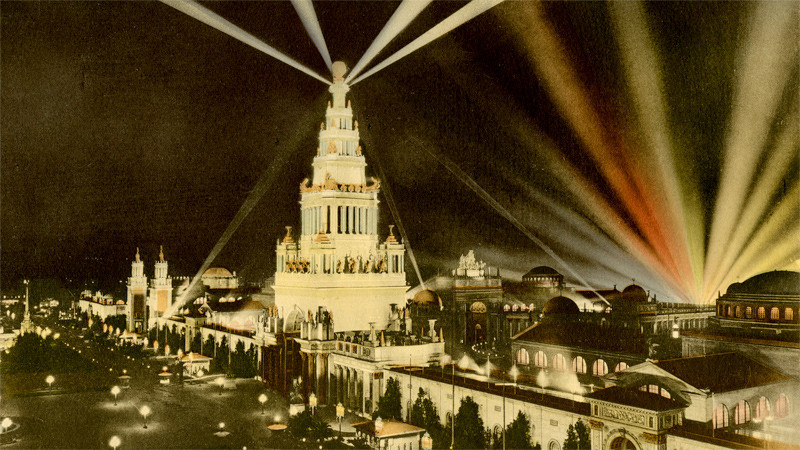
"content": "\u003cp>One hundred years ago—just nine years after earthquake and fire brought San Francisco to her knees–the city threw open the gates to an audacious world’s fair. Amazing displays of art and architecture, industry and commerce, culture and entertainment wowed the 19 million visitors who attended the Panama–Pacific International Exposition. Learn more in the short video documentary above. \u003c/p>\n\u003cp>[ad fullwidth]\u003c/p>\u003cp>\u003c/p>\n",
"blocks": [],
"excerpt": "One hundred years ago—just nine years after earthquake and fire brought San Francisco to her knees--the city threw open the gates to an audacious world’s fair. ",
"status": "publish",
"parent": 0,
"modified": 1757087712,
"stats": {
"hasAudio": false,
"hasVideo": false,
"hasChartOrMap": false,
"iframeSrcs": [],
"hasGoogleForm": false,
"hasGallery": false,
"hasHearkenModule": false,
"hasPolis": false,
"paragraphCount": 3,
"wordCount": 67
},
"headData": {
"title": "1915 World’s Fair Put a Reborn San Francisco in the Spotlight | KQED",
"description": "One hundred years ago—just nine years after earthquake and fire brought San Francisco to her knees--the city threw open the gates to an audacious world’s fair. ",
"ogTitle": "",
"ogDescription": "",
"ogImgId": "",
"twTitle": "",
"twDescription": "",
"twImgId": "",
"schema": {
"@context": "https://schema.org",
"@type": "Article",
"headline": "1915 World’s Fair Put a Reborn San Francisco in the Spotlight",
"datePublished": "2015-02-20T17:27:06-08:00",
"dateModified": "2025-09-05T08:55:12-07:00",
"image": "https://cdn.kqed.org/wp-content/uploads/2020/02/KQED-OG-Image@1x.png"
}
},
"primaryCategory": {
"termId": 70,
"slug": "visualarts",
"name": "Visual Arts"
},
"videoEmbed": "http://youtu.be/8Di2G8SiffQ",
"sticky": false,
"nprByline": "Lisa Landers",
"nprStoryId": "kqed-10408686",
"templateType": "standard",
"featuredImageType": "standard",
"excludeFromSiteSearch": "Include",
"showOnAuthorArchivePages": "No",
"articleAge": "0",
"path": "/arts/10408686/1915-worlds-fair-put-a-reborn-san-francisco-in-the-spotlight",
"audioTrackLength": null,
"parsedContent": [
{
"type": "contentString",
"content": "\u003cdiv class=\"post-body\">\u003cp>\u003cp>One hundred years ago—just nine years after earthquake and fire brought San Francisco to her knees–the city threw open the gates to an audacious world’s fair. Amazing displays of art and architecture, industry and commerce, culture and entertainment wowed the 19 million visitors who attended the Panama–Pacific International Exposition. Learn more in the short video documentary above. \u003c/p>\n\u003cp>\u003c/p>\u003c/div>",
"attributes": {
"named": {},
"numeric": []
}
},
{
"type": "component",
"content": "",
"name": "ad",
"attributes": {
"named": {
"label": "fullwidth"
},
"numeric": [
"fullwidth"
]
}
},
{
"type": "contentString",
"content": "\u003cdiv class=\"post-body\">\u003cp>\u003c/p>\u003cp>\u003c/p>\n\u003c/div>\u003c/p>",
"attributes": {
"named": {},
"numeric": []
}
}
],
"link": "/arts/10408686/1915-worlds-fair-put-a-reborn-san-francisco-in-the-spotlight",
"authors": [
"byline_arts_10408686"
],
"categories": [
"arts_70"
],
"tags": [
"arts_596"
],
"featImg": "arts_10408819",
"label": "arts"
},
"arts_10392464": {
"type": "posts",
"id": "arts_10392464",
"meta": {
"index": "posts_1716263798",
"site": "arts",
"id": "10392464",
"score": null,
"sort": [
1424293239000
]
},
"parent": 0,
"labelTerm": {
"site": "arts"
},
"blocks": [],
"publishDate": 1424293239,
"format": "standard",
"title": "The Accidental Journey of Artist Brandon Anderton",
"headTitle": "The Accidental Journey of Artist Brandon Anderton | KQED",
"content": "\u003cp>Brandon Anderton’s story of becoming an artist is an unfamiliar one. He hasn’t been drawing since he was a young boy, and he never dreamed of being an artist when he grew up. In fact, until 2009, when a work-related accident left him seriously injured and ended his career path as an electrician, Anderton wasn’t thinking about art on any level.\u003c/p>\n\u003cp>The 39-year-old California native was born and raised in Fresno and currently resides in San Jose. His childhood was fairly typical for a California youth; he was skateboarding from a young age all the way through his late high school years. “I built a skatepark in my barn at the house,” recalls Anderton with a smile. “Played Anthrax and Suicidal Tendencies ’til 4am in the morning, just skating.”\u003c/p>\n\u003cp>He goes on to describe his high school years as nothing much to brag about academically. However, Anderton did reveal an aptitude for electronics when he was sent to Duncan Polytechnical High School, a model school for career technical education. After successfully building a small working electromagnetic projectile launcher, a.k.a. a railgun, he and a few classmates were inspired to see how far they could take this newfound knowledge. Using some larger electronic components they found laying around the school, they successfully built a railgun powerful enough to blow a hole through the shop’s cinder-block wall. The infamous incident unfortunately led to them all being expelled.\u003c/p>\n\u003cfigure id=\"attachment_10397394\" class=\"wp-caption alignright\" style=\"max-width: 640px\">\u003cimg loading=\"lazy\" decoding=\"async\" src=\"http://ww2.kqed.org/arts/wp-content/uploads/sites/2/2015/02/brandon_anderton_racing.jpg\" alt=\"Brandon Anderton on Track Day at Sears Point Raceway, circa 2006. (Photo courtesy Brandon Anderton)\" width=\"640\" height=\"427\" class=\"size-full wp-image-10397394\" srcset=\"https://cdn.kqed.org/wp-content/uploads/sites/2/2015/02/brandon_anderton_racing.jpg 640w, https://cdn.kqed.org/wp-content/uploads/sites/2/2015/02/brandon_anderton_racing-400x267.jpg 400w\" sizes=\"(max-width: 640px) 100vw, 640px\">\u003cfigcaption class=\"wp-caption-text\">Brandon Anderton on Track Day at Sears Point Raceway, circa 2006. (Photo courtesy Brandon Anderton)\u003c/figcaption>\u003c/figure>\n\u003cp>Shortly after high school, Anderton transitioned from skateboarding to motorcycle road racing. It wasn’t long before he gained sponsorship by brands like Ducati, Aprilia, Moto Italiano, Avon Tyres, and others. By the time he walked away from the sport, circa 2007, a good portion of his left side was reinforced by titanium. “I’ve broken my legs three times apiece, and my arms twice each in various ways,” explains Anderton. “My pelvis, in half, once, scapula on left side once, right and left clavicles once apiece, and multiple ribs on both sides.”\u003c/p>\n\u003cp>To put it mildly, Anderton is no stranger to injury. But prior to 2009, when he suffered a serious fall working as an electrician, his body had always bounced back. Anderton was hopeful that even though his 2009 recovery seemed slower, he would eventually return to normal. Unfortunately, a session with his physical therapist forced Anderton’s body beyond its current limits, leaving him in a state of chronic pain for years to follow.\u003c/p>\n\u003cfigure id=\"attachment_10397523\" class=\"wp-caption alignright\" style=\"max-width: 640px\">\u003cimg loading=\"lazy\" decoding=\"async\" src=\"http://ww2.kqed.org/arts/wp-content/uploads/sites/2/2015/02/Controlled-Chaos-by-Brandon-Anderton-640w.jpg\" alt='\"Controlled Chaos\"' width=\"640\" height=\"640\" class=\"size-full wp-image-10397523\" srcset=\"https://cdn.kqed.org/wp-content/uploads/sites/2/2015/02/Controlled-Chaos-by-Brandon-Anderton-640w.jpg 640w, https://cdn.kqed.org/wp-content/uploads/sites/2/2015/02/Controlled-Chaos-by-Brandon-Anderton-640w-400x400.jpg 400w, https://cdn.kqed.org/wp-content/uploads/sites/2/2015/02/Controlled-Chaos-by-Brandon-Anderton-640w-600x600.jpg 600w, https://cdn.kqed.org/wp-content/uploads/sites/2/2015/02/Controlled-Chaos-by-Brandon-Anderton-640w-32x32.jpg 32w, https://cdn.kqed.org/wp-content/uploads/sites/2/2015/02/Controlled-Chaos-by-Brandon-Anderton-640w-64x64.jpg 64w, https://cdn.kqed.org/wp-content/uploads/sites/2/2015/02/Controlled-Chaos-by-Brandon-Anderton-640w-96x96.jpg 96w, https://cdn.kqed.org/wp-content/uploads/sites/2/2015/02/Controlled-Chaos-by-Brandon-Anderton-640w-128x128.jpg 128w, https://cdn.kqed.org/wp-content/uploads/sites/2/2015/02/Controlled-Chaos-by-Brandon-Anderton-640w-75x75.jpg 75w\" sizes=\"(max-width: 640px) 100vw, 640px\">\u003cfigcaption class=\"wp-caption-text\">“Controlled Chaos” by Brandon Anderton, 2013; quad panel created using the spin art machine. (Courtesy of the artist.)\u003c/figcaption>\u003c/figure>\n\u003cp>Anderton began going to see \u003ca title=\"Christine Hirabayashi\" href=\"http://bapwc.com/portfolio/details/christine-hirabayashi-mft-i-atr-bc/\" target=\"_blank\" rel=\"noopener\">Christine Hirabayashi\u003c/a>, an art therapist at \u003ca title=\"BAPWC\" href=\"http://bapwc.com/portfolio/types/los-gatos/\" target=\"_blank\" rel=\"noopener\">Bay Area Pain and Wellness Center\u003c/a> (BAPWC) in Los Gatos, in 2011. Initially, he didn’t really want to be there. But, he remembers, “the thing that I really liked about Christine and I think the reason why she resonated with me so much is that she understands that humans aren’t compartmentalized machines in an absolute sense.” Anderton considered himself a fairly stereotypical guy, used to holding it all in, and drawing wasn’t something he saw coming naturally.\u003c/p>\n\u003cp>[ad fullwidth]\u003c/p>\n\u003cp>His first real breakthrough came one day when no one was around, and he spotted a drill amidst the art supplies. Anderton attached it to a canvas and turned it into a spin art machine. Despite making a serious mess, “Building the spin art machine was what got me committed to being artistic,” Anderton says.\u003c/p>\n\u003cp>“From that point on,” continues Anderton, “I’ve just been working on myself and sorting through my stories and embracing more of the art. Since I had never done anything really ‘artistic,’ I feel like it’s an undefined and unexplored playground. You just get out there and go. There are no boundaries. But the scary part was just allowing myself to just go through some of my stories and be with my emotions. Let them destroy me and do what they are going to do. Just honoring that, that’s what needs to happen.”\u003c/p>\n\u003cfigure id=\"attachment_10397547\" class=\"wp-caption alignright\" style=\"max-width: 640px\">\u003cimg loading=\"lazy\" decoding=\"async\" src=\"http://ww2.kqed.org/arts/wp-content/uploads/sites/2/2015/02/Love-and-Loss-by-Brandon-Anderton-640w.jpg\" alt=\"“Love and Loss” by Brandon Anderton, 2013. (Image courtesy of the artist)\" width=\"640\" height=\"438\" class=\"size-full wp-image-10397547\" srcset=\"https://cdn.kqed.org/wp-content/uploads/sites/2/2015/02/Love-and-Loss-by-Brandon-Anderton-640w.jpg 640w, https://cdn.kqed.org/wp-content/uploads/sites/2/2015/02/Love-and-Loss-by-Brandon-Anderton-640w-400x274.jpg 400w\" sizes=\"(max-width: 640px) 100vw, 640px\">\u003cfigcaption class=\"wp-caption-text\">“Love and Loss” by Brandon Anderton, 2013. (Image courtesy of the artist)\u003c/figcaption>\u003c/figure>\n\u003cp>When asked how the art therapy was helping him, Anderton is characteristically to-the-point. “It bypasses all this precognitive bullshit that we’ve developed to operate inside of our society,” he says. “It’s a very patriarchal society. Everything’s linear and put in a box, and you do this to do that, you know what I mean? But art for me, and thinking about art and expressions of art bypasses all that. It totally skirts that cognitive, left-hemisphere thinking and it just goes right to your emotional side.”\u003c/p>\n\u003cp>Anderton continues: “The best example of that I’ve seen is with \u003ca title=\"Barron Storey\" href=\"http://barronstorey.com/\" target=\"_blank\" rel=\"noopener\">Barron Storey’s work\u003c/a>,” referring to Storey’s 2013 \u003ca title='\"Suicide\" by Barron Storey' href=\"http://www.galleryad.com/art/archives/art/backroom/barron_storey___suicide/\" target=\"_blank\" rel=\"noopener\">\u003cem>Suicide\u003c/em>\u003c/a> exhibition (full disclosure: the exhibition took place at Anno Domini Gallery, of which I am a co-founder). “I had to keep coming back. It was like a compulsion. He gets it. I feel like in his execution, what he drew, in the context it doesn’t have to make sense. I could look at any part of that and totally feel what he was feeling via proxy, my own projection, but I feel a kinship with him. I was in awe of both his honesty and the content.”\u003c/p>\n\u003cp>Anderton continued seeking other ways to express himself artistically. “I’ve always been a micro-to-macro thinker,” he tells me, “just on an endless treadmill. How far does this go? One of the things I’ve come to the conclusion on is that all things are relative. They are all interrelated and each discipline is a different manifestation of the same concept.”\u003c/p>\n\u003cp>This sort of thinking led Anderton to exploring sacred geometry through his artistic practice. “I would see these things and I would see the math behind it and it was like an alien joy,” said Anderton. “I really believe that all things intertwine. There’s no separation from anything or anyone. They’re just different expressions.”\u003c/p>\n\u003cfigure id=\"attachment_10397670\" class=\"wp-caption aligncenter\" style=\"max-width: 800px\">\u003cimg loading=\"lazy\" decoding=\"async\" src=\"http://ww2.kqed.org/arts/wp-content/uploads/sites/2/2015/02/IMG_1653_Brandon_Anderton_800w.jpg\" alt=\"Sand drawing at Pomponio State Beach in San Gregorio, CA, by artist Brandon Anderton, 2015. (Drone photo courtesy of the artist)\" width=\"800\" height=\"450\" class=\"size-full wp-image-10397670\" srcset=\"https://cdn.kqed.org/wp-content/uploads/sites/2/2015/02/IMG_1653_Brandon_Anderton_800w.jpg 800w, https://cdn.kqed.org/wp-content/uploads/sites/2/2015/02/IMG_1653_Brandon_Anderton_800w-400x225.jpg 400w\" sizes=\"(max-width: 800px) 100vw, 800px\">\u003cfigcaption class=\"wp-caption-text\">Sand drawing at Pomponio State Beach in San Gregorio, CA, by artist Brandon Anderton, 2015. (Drone photo courtesy of the artist)\u003c/figcaption>\u003c/figure>\n\u003cp>Anderton journeyed into these concepts originally creating large paintings on canvas. Staying true to his micro-to-macro tendencies, Anderton eventually found himself on the beach one day dragging a piece of driftwood, drawing patterns in the sand until the next wave would roll in, erasing his marks. His compulsion to see how far he can take something has since evolved into creating giant intricate drawings in the sand during low tide. He’s traded the driftwood for ropes, spikes and an assortment of rakes. On the day I visited him back in January at \u003ca title=\"Pomponio State Beach\" href=\"http://www.parks.ca.gov/?page_id=521\" target=\"_blank\" rel=\"noopener\">Pomponio State Beach\u003c/a> in San Gregorio, Anderton had sketched out a grid in the sand before I arrived — and proceeded to create a large, intricate sand drawing as I and other curious passersby looked on. Knowing Anderton’s condition, that’s a remarkable feat. The large temporary mandala-like drawings can take him hours to create; most days he can hardly stand for more than a few minutes at a time without the pain creeping in.\u003c/p>\n\u003cp>Weather and body permitting, you can find Anderton along the coast between Santa Cruz and Half Moon Bay a few times a week. It’s as much a meditation for him at this point as it is an expression of art.\u003c/p>\n\u003cp>“It really doesn’t matter what it is you do. As long as you are awake and present and moving, that is your path,” Anderton says. “It’s what you are here to do. As long as you are up and experiencing things, you are walking that path.”\u003c/p>\n\u003cp>[ad floatright]\u003c/p>\n\u003cp>\u003cem>Learn more about Brandon Anderton and his ongoing work at \u003ca title=\"FRP Art\" href=\"http://www.frpart.org\" target=\"_blank\" rel=\"noopener\">FRP Art\u003c/a> (Functional Restoration Program Art).\u003c/em>\u003c/p>\n\n",
"stats": {
"hasVideo": false,
"hasChartOrMap": false,
"hasAudio": false,
"hasPolis": false,
"wordCount": 1401,
"hasGoogleForm": false,
"hasGallery": false,
"hasHearkenModule": false,
"iframeSrcs": [],
"paragraphCount": 18
},
"modified": 1705047570,
"excerpt": "It wasn't until a particularly debilitating injury that the former motorcycle road racer saw himself as an artist—and now, he's on South Bay beaches weekly.",
"headData": {
"twImgId": "",
"twTitle": "",
"ogTitle": "",
"ogImgId": "",
"twDescription": "",
"description": "It wasn't until a particularly debilitating injury that the former motorcycle road racer saw himself as an artist—and now, he's on South Bay beaches weekly.",
"title": "The Accidental Journey of Artist Brandon Anderton | KQED",
"ogDescription": "",
"schema": {
"@context": "https://schema.org",
"@type": "Article",
"headline": "The Accidental Journey of Artist Brandon Anderton",
"datePublished": "2015-02-18T13:00:39-08:00",
"dateModified": "2024-01-12T00:19:30-08:00",
"image": "https://cdn.kqed.org/wp-content/uploads/2020/02/KQED-OG-Image@1x.png"
}
},
"guestAuthors": [],
"slug": "the-accidental-journey-of-artist-brandon-anderton",
"status": "publish",
"sticky": false,
"path": "/arts/10392464/the-accidental-journey-of-artist-brandon-anderton",
"audioTrackLength": null,
"parsedContent": [
{
"type": "contentString",
"content": "\u003cdiv class=\"post-body\">\u003cp>\u003cp>Brandon Anderton’s story of becoming an artist is an unfamiliar one. He hasn’t been drawing since he was a young boy, and he never dreamed of being an artist when he grew up. In fact, until 2009, when a work-related accident left him seriously injured and ended his career path as an electrician, Anderton wasn’t thinking about art on any level.\u003c/p>\n\u003cp>The 39-year-old California native was born and raised in Fresno and currently resides in San Jose. His childhood was fairly typical for a California youth; he was skateboarding from a young age all the way through his late high school years. “I built a skatepark in my barn at the house,” recalls Anderton with a smile. “Played Anthrax and Suicidal Tendencies ’til 4am in the morning, just skating.”\u003c/p>\n\u003cp>He goes on to describe his high school years as nothing much to brag about academically. However, Anderton did reveal an aptitude for electronics when he was sent to Duncan Polytechnical High School, a model school for career technical education. After successfully building a small working electromagnetic projectile launcher, a.k.a. a railgun, he and a few classmates were inspired to see how far they could take this newfound knowledge. Using some larger electronic components they found laying around the school, they successfully built a railgun powerful enough to blow a hole through the shop’s cinder-block wall. The infamous incident unfortunately led to them all being expelled.\u003c/p>\n\u003cfigure id=\"attachment_10397394\" class=\"wp-caption alignright\" style=\"max-width: 640px\">\u003cimg loading=\"lazy\" decoding=\"async\" src=\"http://ww2.kqed.org/arts/wp-content/uploads/sites/2/2015/02/brandon_anderton_racing.jpg\" alt=\"Brandon Anderton on Track Day at Sears Point Raceway, circa 2006. (Photo courtesy Brandon Anderton)\" width=\"640\" height=\"427\" class=\"size-full wp-image-10397394\" srcset=\"https://cdn.kqed.org/wp-content/uploads/sites/2/2015/02/brandon_anderton_racing.jpg 640w, https://cdn.kqed.org/wp-content/uploads/sites/2/2015/02/brandon_anderton_racing-400x267.jpg 400w\" sizes=\"(max-width: 640px) 100vw, 640px\">\u003cfigcaption class=\"wp-caption-text\">Brandon Anderton on Track Day at Sears Point Raceway, circa 2006. (Photo courtesy Brandon Anderton)\u003c/figcaption>\u003c/figure>\n\u003cp>Shortly after high school, Anderton transitioned from skateboarding to motorcycle road racing. It wasn’t long before he gained sponsorship by brands like Ducati, Aprilia, Moto Italiano, Avon Tyres, and others. By the time he walked away from the sport, circa 2007, a good portion of his left side was reinforced by titanium. “I’ve broken my legs three times apiece, and my arms twice each in various ways,” explains Anderton. “My pelvis, in half, once, scapula on left side once, right and left clavicles once apiece, and multiple ribs on both sides.”\u003c/p>\n\u003cp>To put it mildly, Anderton is no stranger to injury. But prior to 2009, when he suffered a serious fall working as an electrician, his body had always bounced back. Anderton was hopeful that even though his 2009 recovery seemed slower, he would eventually return to normal. Unfortunately, a session with his physical therapist forced Anderton’s body beyond its current limits, leaving him in a state of chronic pain for years to follow.\u003c/p>\n\u003cfigure id=\"attachment_10397523\" class=\"wp-caption alignright\" style=\"max-width: 640px\">\u003cimg loading=\"lazy\" decoding=\"async\" src=\"http://ww2.kqed.org/arts/wp-content/uploads/sites/2/2015/02/Controlled-Chaos-by-Brandon-Anderton-640w.jpg\" alt='\"Controlled Chaos\"' width=\"640\" height=\"640\" class=\"size-full wp-image-10397523\" srcset=\"https://cdn.kqed.org/wp-content/uploads/sites/2/2015/02/Controlled-Chaos-by-Brandon-Anderton-640w.jpg 640w, https://cdn.kqed.org/wp-content/uploads/sites/2/2015/02/Controlled-Chaos-by-Brandon-Anderton-640w-400x400.jpg 400w, https://cdn.kqed.org/wp-content/uploads/sites/2/2015/02/Controlled-Chaos-by-Brandon-Anderton-640w-600x600.jpg 600w, https://cdn.kqed.org/wp-content/uploads/sites/2/2015/02/Controlled-Chaos-by-Brandon-Anderton-640w-32x32.jpg 32w, https://cdn.kqed.org/wp-content/uploads/sites/2/2015/02/Controlled-Chaos-by-Brandon-Anderton-640w-64x64.jpg 64w, https://cdn.kqed.org/wp-content/uploads/sites/2/2015/02/Controlled-Chaos-by-Brandon-Anderton-640w-96x96.jpg 96w, https://cdn.kqed.org/wp-content/uploads/sites/2/2015/02/Controlled-Chaos-by-Brandon-Anderton-640w-128x128.jpg 128w, https://cdn.kqed.org/wp-content/uploads/sites/2/2015/02/Controlled-Chaos-by-Brandon-Anderton-640w-75x75.jpg 75w\" sizes=\"(max-width: 640px) 100vw, 640px\">\u003cfigcaption class=\"wp-caption-text\">“Controlled Chaos” by Brandon Anderton, 2013; quad panel created using the spin art machine. (Courtesy of the artist.)\u003c/figcaption>\u003c/figure>\n\u003cp>Anderton began going to see \u003ca title=\"Christine Hirabayashi\" href=\"http://bapwc.com/portfolio/details/christine-hirabayashi-mft-i-atr-bc/\" target=\"_blank\" rel=\"noopener\">Christine Hirabayashi\u003c/a>, an art therapist at \u003ca title=\"BAPWC\" href=\"http://bapwc.com/portfolio/types/los-gatos/\" target=\"_blank\" rel=\"noopener\">Bay Area Pain and Wellness Center\u003c/a> (BAPWC) in Los Gatos, in 2011. Initially, he didn’t really want to be there. But, he remembers, “the thing that I really liked about Christine and I think the reason why she resonated with me so much is that she understands that humans aren’t compartmentalized machines in an absolute sense.” Anderton considered himself a fairly stereotypical guy, used to holding it all in, and drawing wasn’t something he saw coming naturally.\u003c/p>\n\u003cp>\u003c/p>\u003c/div>",
"attributes": {
"named": {},
"numeric": []
}
},
{
"type": "component",
"content": "",
"name": "ad",
"attributes": {
"named": {
"label": "fullwidth"
},
"numeric": [
"fullwidth"
]
}
},
{
"type": "contentString",
"content": "\u003cdiv class=\"post-body\">\u003cp>\u003c/p>\n\u003cp>His first real breakthrough came one day when no one was around, and he spotted a drill amidst the art supplies. Anderton attached it to a canvas and turned it into a spin art machine. Despite making a serious mess, “Building the spin art machine was what got me committed to being artistic,” Anderton says.\u003c/p>\n\u003cp>“From that point on,” continues Anderton, “I’ve just been working on myself and sorting through my stories and embracing more of the art. Since I had never done anything really ‘artistic,’ I feel like it’s an undefined and unexplored playground. You just get out there and go. There are no boundaries. But the scary part was just allowing myself to just go through some of my stories and be with my emotions. Let them destroy me and do what they are going to do. Just honoring that, that’s what needs to happen.”\u003c/p>\n\u003cfigure id=\"attachment_10397547\" class=\"wp-caption alignright\" style=\"max-width: 640px\">\u003cimg loading=\"lazy\" decoding=\"async\" src=\"http://ww2.kqed.org/arts/wp-content/uploads/sites/2/2015/02/Love-and-Loss-by-Brandon-Anderton-640w.jpg\" alt=\"“Love and Loss” by Brandon Anderton, 2013. (Image courtesy of the artist)\" width=\"640\" height=\"438\" class=\"size-full wp-image-10397547\" srcset=\"https://cdn.kqed.org/wp-content/uploads/sites/2/2015/02/Love-and-Loss-by-Brandon-Anderton-640w.jpg 640w, https://cdn.kqed.org/wp-content/uploads/sites/2/2015/02/Love-and-Loss-by-Brandon-Anderton-640w-400x274.jpg 400w\" sizes=\"(max-width: 640px) 100vw, 640px\">\u003cfigcaption class=\"wp-caption-text\">“Love and Loss” by Brandon Anderton, 2013. (Image courtesy of the artist)\u003c/figcaption>\u003c/figure>\n\u003cp>When asked how the art therapy was helping him, Anderton is characteristically to-the-point. “It bypasses all this precognitive bullshit that we’ve developed to operate inside of our society,” he says. “It’s a very patriarchal society. Everything’s linear and put in a box, and you do this to do that, you know what I mean? But art for me, and thinking about art and expressions of art bypasses all that. It totally skirts that cognitive, left-hemisphere thinking and it just goes right to your emotional side.”\u003c/p>\n\u003cp>Anderton continues: “The best example of that I’ve seen is with \u003ca title=\"Barron Storey\" href=\"http://barronstorey.com/\" target=\"_blank\" rel=\"noopener\">Barron Storey’s work\u003c/a>,” referring to Storey’s 2013 \u003ca title='\"Suicide\" by Barron Storey' href=\"http://www.galleryad.com/art/archives/art/backroom/barron_storey___suicide/\" target=\"_blank\" rel=\"noopener\">\u003cem>Suicide\u003c/em>\u003c/a> exhibition (full disclosure: the exhibition took place at Anno Domini Gallery, of which I am a co-founder). “I had to keep coming back. It was like a compulsion. He gets it. I feel like in his execution, what he drew, in the context it doesn’t have to make sense. I could look at any part of that and totally feel what he was feeling via proxy, my own projection, but I feel a kinship with him. I was in awe of both his honesty and the content.”\u003c/p>\n\u003cp>Anderton continued seeking other ways to express himself artistically. “I’ve always been a micro-to-macro thinker,” he tells me, “just on an endless treadmill. How far does this go? One of the things I’ve come to the conclusion on is that all things are relative. They are all interrelated and each discipline is a different manifestation of the same concept.”\u003c/p>\n\u003cp>This sort of thinking led Anderton to exploring sacred geometry through his artistic practice. “I would see these things and I would see the math behind it and it was like an alien joy,” said Anderton. “I really believe that all things intertwine. There’s no separation from anything or anyone. They’re just different expressions.”\u003c/p>\n\u003cfigure id=\"attachment_10397670\" class=\"wp-caption aligncenter\" style=\"max-width: 800px\">\u003cimg loading=\"lazy\" decoding=\"async\" src=\"http://ww2.kqed.org/arts/wp-content/uploads/sites/2/2015/02/IMG_1653_Brandon_Anderton_800w.jpg\" alt=\"Sand drawing at Pomponio State Beach in San Gregorio, CA, by artist Brandon Anderton, 2015. (Drone photo courtesy of the artist)\" width=\"800\" height=\"450\" class=\"size-full wp-image-10397670\" srcset=\"https://cdn.kqed.org/wp-content/uploads/sites/2/2015/02/IMG_1653_Brandon_Anderton_800w.jpg 800w, https://cdn.kqed.org/wp-content/uploads/sites/2/2015/02/IMG_1653_Brandon_Anderton_800w-400x225.jpg 400w\" sizes=\"(max-width: 800px) 100vw, 800px\">\u003cfigcaption class=\"wp-caption-text\">Sand drawing at Pomponio State Beach in San Gregorio, CA, by artist Brandon Anderton, 2015. (Drone photo courtesy of the artist)\u003c/figcaption>\u003c/figure>\n\u003cp>Anderton journeyed into these concepts originally creating large paintings on canvas. Staying true to his micro-to-macro tendencies, Anderton eventually found himself on the beach one day dragging a piece of driftwood, drawing patterns in the sand until the next wave would roll in, erasing his marks. His compulsion to see how far he can take something has since evolved into creating giant intricate drawings in the sand during low tide. He’s traded the driftwood for ropes, spikes and an assortment of rakes. On the day I visited him back in January at \u003ca title=\"Pomponio State Beach\" href=\"http://www.parks.ca.gov/?page_id=521\" target=\"_blank\" rel=\"noopener\">Pomponio State Beach\u003c/a> in San Gregorio, Anderton had sketched out a grid in the sand before I arrived — and proceeded to create a large, intricate sand drawing as I and other curious passersby looked on. Knowing Anderton’s condition, that’s a remarkable feat. The large temporary mandala-like drawings can take him hours to create; most days he can hardly stand for more than a few minutes at a time without the pain creeping in.\u003c/p>\n\u003cp>Weather and body permitting, you can find Anderton along the coast between Santa Cruz and Half Moon Bay a few times a week. It’s as much a meditation for him at this point as it is an expression of art.\u003c/p>\n\u003cp>“It really doesn’t matter what it is you do. As long as you are awake and present and moving, that is your path,” Anderton says. “It’s what you are here to do. As long as you are up and experiencing things, you are walking that path.”\u003c/p>\n\u003cp>\u003c/p>\u003c/div>",
"attributes": {
"named": {},
"numeric": []
}
},
{
"type": "component",
"content": "",
"name": "ad",
"attributes": {
"named": {
"label": "floatright"
},
"numeric": [
"floatright"
]
}
},
{
"type": "contentString",
"content": "\u003cdiv class=\"post-body\">\u003cp>\u003c/p>\n\u003cp>\u003cem>Learn more about Brandon Anderton and his ongoing work at \u003ca title=\"FRP Art\" href=\"http://www.frpart.org\" target=\"_blank\" rel=\"noopener\">FRP Art\u003c/a> (Functional Restoration Program Art).\u003c/em>\u003c/p>\n\n\u003c/div>\u003c/p>",
"attributes": {
"named": {},
"numeric": []
}
}
],
"link": "/arts/10392464/the-accidental-journey-of-artist-brandon-anderton",
"authors": [
"192"
],
"categories": [
"arts_70"
],
"tags": [
"arts_596"
],
"featImg": "arts_10397384",
"label": "arts"
},
"arts_10368148": {
"type": "posts",
"id": "arts_10368148",
"meta": {
"index": "posts_1716263798",
"site": "arts",
"id": "10368148",
"score": null,
"sort": [
1423702859000
]
},
"guestAuthors": [],
"slug": "displaced-art-from-evicted-residents-of-albany-bulb-at-refuge-in-refuse",
"title": "Displaced Art from Evicted Residents of Albany Bulb at 'Refuge in Refuse'",
"publishDate": 1423702859,
"format": "standard",
"headTitle": "Displaced Art from Evicted Residents of Albany Bulb at ‘Refuge in Refuse’ | KQED",
"labelTerm": {
"term": 140,
"site": "arts"
},
"content": "\u003caside class=\"event-info alignright\">\n\u003cfigure>\u003ca href=\"http://ww2.kqed.org/arts/programs/the-do-list/\">\u003cimg decoding=\"async\" src=\"http://ww2.kqed.org/wp-content/themes/KQED-unified/img/thedolist_icon.png\" alt=\"\" width=\"100\">\u003c/a>\u003c/figure>\n\u003ch3>\u003ca href=\"http://ww2.kqed.org/arts/the-do-list/refuge-in-refuse-homesteading-art-culture-project/\" target=\"_blank\" rel=\"noopener\">Event Information\u003c/a>\u003c/h3>\n\u003ch2>Refuge in Refuse: Homesteading Art & Culture Project\u003c/h2>\n\u003cdiv class=\"event-desc\">Displaced art from evicted residents of Albany Bulb.\u003c/div>\n\u003cdiv class=\"event-dates\">\n\u003ch4>Feb. 12 – Mar. 12, 2015\u003c/h4>\n\u003c/div>\n\u003cdiv class=\"event-venue\">SOMArts Cultural Center\u003c/div>\n\u003cul>\n\u003cli>\u003ca href=\"http://ww2.kqed.org/arts/the-do-list/refuge-in-refuse-homesteading-art-culture-project/\" target=\"_blank\" rel=\"noopener\">Details and tickets\u003c/a>\u003c/li>\n\u003c/ul>\n\u003c/aside>\n\u003cp>In April 2014, more than two dozen people were evicted from their informal settlement at the \u003ca href=\"http://www.albanyca.org/index.aspx?page=1280\">Albany Bulb\u003c/a> along the East Bay shoreline. After a complex battle encompassing land-use issues, homeless advocacy, creative reuse and access to public space — and what, exactly, that access should look like — the residents were offered roughly $3,000 each to pack up and leave.\u003c/p>\n\u003cp>A former landfill owned by the city of Albany, the Bulb has been a hotly contested space for decades. It’s been utilized as a DIY venue for public sculpture and graffiti art, an ersatz dog park, a point of environmental interest and a home to otherwise unhoused residents reclaiming unused materials to build habitable spaces, at least one of which towered at three stories high. And although the last residents of the Bulb have left the space, many have collaborated with several Bay Area artists and \u003ca href=\"http://www.somarts.org/\">SOMArts\u003c/a> for an upcoming exhibit, \u003cem>\u003ca href=\"http://www.somarts.org/refugeopens/\">Refuge and Refuse: Homesteading, Art and Culture\u003c/a>\u003c/em>, which opens Feb. 12 and runs through Mar. 14.\u003c/p>\n\u003cfigure id=\"attachment_10368271\" class=\"wp-caption alignright\" style=\"max-width: 800px\">\u003ca href=\"http://ww2.kqed.org/arts/wp-content/uploads/sites/2/2015/02/bulbedited.jpg\">\u003cimg loading=\"lazy\" decoding=\"async\" class=\"size-medium wp-image-10368271\" src=\"http://ww2.kqed.org/arts/wp-content/uploads/sites/2/2015/02/bulbedited-800x537.jpg\" alt=\"Aerial view of The Bulb\" width=\"800\" height=\"537\" srcset=\"https://cdn.kqed.org/wp-content/uploads/sites/2/2015/02/bulbedited-800x537.jpg 800w, https://cdn.kqed.org/wp-content/uploads/sites/2/2015/02/bulbedited-400x268.jpg 400w, https://cdn.kqed.org/wp-content/uploads/sites/2/2015/02/bulbedited.jpg 1031w\" sizes=\"(max-width: 800px) 100vw, 800px\">\u003c/a>\u003cfigcaption class=\"wp-caption-text\">Aerial view of the Bulb. (Photo: Robin Lasser)\u003c/figcaption>\u003c/figure>\n\u003cp>“For me, it was really that combination of the communities of people who lived out there dynamically with the arts, and the place, and the million-dollar views,” says Oakland resident and San Jose State University professor of art \u003ca href=\"http://robinlasser.com/\">Robin Lasser\u003c/a>, one of the show’s curators. “I’m exaggerating here, but for me it felt like one of the last places on earth where you had this kind of freedom. For me, [it reflects] the sixties when you had movements of people doing experimental living; life was embraced and politicized and fought for.”\u003c/p>\n\u003cp>That freedom extended to the art created at the Blub. “One of the incredible things about the bulb and the contested space is that you just do what you do,” Lasser says. “The landfill art that is out there and the graffiti that is out there aren’t sanctioned. Artists didn’t have curators saying what was valuable and what was not.”\u003c/p>\n\u003cfigure id=\"attachment_10368270\" class=\"wp-caption alignright\" style=\"max-width: 800px\">\u003ca href=\"http://ww2.kqed.org/arts/wp-content/uploads/sites/2/2015/02/Bulb-osha.jpg\">\u003cimg loading=\"lazy\" decoding=\"async\" class=\"wp-image-10368270 size-medium\" src=\"http://ww2.kqed.org/arts/wp-content/uploads/sites/2/2015/02/Bulb-osha-800x400.jpg\" alt=\"Bulb Osha\" width=\"800\" height=\"400\" srcset=\"https://cdn.kqed.org/wp-content/uploads/sites/2/2015/02/Bulb-osha-800x400.jpg 800w, https://cdn.kqed.org/wp-content/uploads/sites/2/2015/02/Bulb-osha-400x200.jpg 400w, https://cdn.kqed.org/wp-content/uploads/sites/2/2015/02/Bulb-osha.jpg 1100w\" sizes=\"(max-width: 800px) 100vw, 800px\">\u003c/a>\u003cfigcaption class=\"wp-caption-text\">Landfill Sculpture by participating artist Osha Neumann.\u003c/figcaption>\u003c/figure>\n\u003cp>Lasser and co-curators Danielle Siembieda and Barbara Boissevain have created an exhibit showcasing the complexities of the political, social and environmental issues around housing, the economy, and the environment. Their work, along with that of many of the evicted tenants, exposes the multiple realities that have coexisted on the land; the collaborative projects give a face to those forced out of a place they once called home.\u003c/p>\n\u003cp>[ad fullwidth]\u003c/p>\n\u003cp>These “landfillians” include such infamous characters as Boxer Bob, the former professional fighter who constructed a three-story mansion out of reclaimed shipping pallets and other building materials. Another former resident, Mad Marc, lived at the Bulb for nearly 20 years; according to Lasser, Mad Marc retrieved discarded materials by bike and built what the locals call the Fairy Castle, a heart-shaped structure made from discarded grocery carts. The structure, he says, was not meant for human occupancy but was instead built as a gift to San Francisco.\u003c/p>\n\u003cfigure id=\"attachment_10382694\" class=\"wp-caption alignright\" style=\"max-width: 640px\">\u003cimg loading=\"lazy\" decoding=\"async\" class=\"size-full wp-image-10382694\" src=\"http://ww2.kqed.org/arts/wp-content/uploads/sites/2/2015/02/BulbShow1.jpg\" alt=\"Zoetrope Bike Sculpture and Mandalas at Refuge in Refuse. (Judith Leinen and Robin Lasser with former resident Tamara Robinson)\" width=\"640\" height=\"427\" srcset=\"https://cdn.kqed.org/wp-content/uploads/sites/2/2015/02/BulbShow1.jpg 640w, https://cdn.kqed.org/wp-content/uploads/sites/2/2015/02/BulbShow1-400x267.jpg 400w\" sizes=\"(max-width: 640px) 100vw, 640px\">\u003cfigcaption class=\"wp-caption-text\">Zoetrope Bike Sculpture and Mandalas at \u003cem>Refuge in Refuse\u003c/em>. (Judith Leinen and Robin Lasser with former resident Tamara Robinson)\u003c/figcaption>\u003c/figure>\n\u003cp>Although the dwellings at the Bulb were demolished after eviction, the show features images of what was once a vibrant, eclectic community. Tamara Robinson and Danielle Evans are among the many former residents with projects on display at the event.\u003c/p>\n\u003cp>“We wanted to work on an exhibition that could really house all of the stakeholders who have an investment in this place that is truly a phenomena of magic. Not to romanticize things, but I think a lot of people, including those that lived there, felt that way about it,” says Lasser. “But it is a contested space. I think the politics in our country right now — with the division of those who have and those who don’t — gets greater and greater. There are so many people who find themselves out on the streets. Evictions of all sorts are happening to people for all kinds of reasons.”\u003c/p>\n\u003cp>With housing costs continuing to skyrocket around the Bay Area, the $3,000 from what homeless advocates call a “buyout” from the city surely didn’t go far. Although some former inhabitants moved on to transitional and permanent housing since their eviction, some continue living off the grid in other locations. Many others are back on the streets.\u003c/p>\n\u003cfigure id=\"attachment_10368152\" class=\"wp-caption alignright\" style=\"max-width: 800px\">\u003ca href=\"http://ww2.kqed.org/arts/wp-content/uploads/sites/2/2015/02/Bulb-Danielleedited.jpg\">\u003cimg loading=\"lazy\" decoding=\"async\" class=\"wp-image-10368152 size-medium\" src=\"http://ww2.kqed.org/arts/wp-content/uploads/sites/2/2015/02/Bulb-Danielleedited-800x541.jpg\" alt=\"\" width=\"800\" height=\"541\" srcset=\"https://cdn.kqed.org/wp-content/uploads/sites/2/2015/02/Bulb-Danielleedited-800x541.jpg 800w, https://cdn.kqed.org/wp-content/uploads/sites/2/2015/02/Bulb-Danielleedited-400x271.jpg 400w, https://cdn.kqed.org/wp-content/uploads/sites/2/2015/02/Bulb-Danielleedited.jpg 1024w\" sizes=\"(max-width: 800px) 100vw, 800px\">\u003c/a>\u003cfigcaption class=\"wp-caption-text\">Danielle Evans paints in her former home at the Bulb. (Photo: Robin Lasser)\u003c/figcaption>\u003c/figure>\n\u003cp>Still, the art aims to capture the spirit of what it means to live, work and create outside of the bounds of societal norms. Audio stories, video, photography, painting, sculpture and additional pieces created and developed through nontraditional artist mediums such as urban planning, landscape architecture and contemporary archeological mapping systems bring to life the multi-layered views of what the Bulb has meant, and continues to mean, to the community.\u003c/p>\n\u003cp>The exhibit’s free opening reception includes three film screenings, informal discussions with former residents and participating artists, and tours of the \u003ca href=\"http://www.lavamae.org/\">LavaMae bus\u003c/a>, a project of the \u003ca href=\"http://www.tides.org/\">Tides Center\u003c/a> that provides mobile showers for the homeless in repurposed MUNI buses. A workshop on building mobile shelters with Greg Kloehn takes place Feb. 21, and an “Augmented Reality Tour of Albany Bulb” is scheduled for Feb. 28.\u003c/p>\n\u003cp>For some, the idea that celebrating art instead of actively working to solve issues around accessible housing may seem insensitive, or at the very least portray a neutrality around the Bulb’s social issues, but Lasser disagrees.\u003c/p>\n\u003cp>\u003c/p>\n\u003cp>“Rather than thinking of neutrality, I like to think of it as inclusive. If you’re going through that space, you get to make up your own mind about things and be motivated to activate,” she says. “Because of the films and the imagery, I think the indomitable spirit of the people from there will be clear.”\u003c/p>\n\n",
"blocks": [],
"excerpt": "A new exhibit featuring art from former residents of the Albany Bulb honors one of the Bay Area's most unique communities.",
"status": "publish",
"parent": 0,
"modified": 1726700373,
"stats": {
"hasAudio": false,
"hasVideo": false,
"hasChartOrMap": false,
"iframeSrcs": [],
"hasGoogleForm": false,
"hasGallery": false,
"hasHearkenModule": false,
"hasPolis": false,
"paragraphCount": 15,
"wordCount": 1043
},
"headData": {
"title": "Displaced Art from Evicted Residents of Albany Bulb at 'Refuge in Refuse' | KQED",
"description": "A new exhibit featuring art from former residents of the Albany Bulb honors one of the Bay Area's most unique communities.",
"ogTitle": "",
"ogDescription": "",
"ogImgId": "",
"twTitle": "",
"twDescription": "",
"twImgId": "",
"schema": {
"@context": "https://schema.org",
"@type": "Article",
"headline": "Displaced Art from Evicted Residents of Albany Bulb at 'Refuge in Refuse'",
"datePublished": "2015-02-11T17:00:59-08:00",
"dateModified": "2024-09-18T15:59:33-07:00",
"image": "https://cdn.kqed.org/wp-content/uploads/2020/02/KQED-OG-Image@1x.png"
}
},
"sticky": false,
"path": "/arts/10368148/displaced-art-from-evicted-residents-of-albany-bulb-at-refuge-in-refuse",
"audioTrackLength": null,
"parsedContent": [
{
"type": "contentString",
"content": "\u003cdiv class=\"post-body\">\u003cp>\u003caside class=\"event-info alignright\">\n\u003cfigure>\u003ca href=\"http://ww2.kqed.org/arts/programs/the-do-list/\">\u003cimg decoding=\"async\" src=\"http://ww2.kqed.org/wp-content/themes/KQED-unified/img/thedolist_icon.png\" alt=\"\" width=\"100\">\u003c/a>\u003c/figure>\n\u003ch3>\u003ca href=\"http://ww2.kqed.org/arts/the-do-list/refuge-in-refuse-homesteading-art-culture-project/\" target=\"_blank\" rel=\"noopener\">Event Information\u003c/a>\u003c/h3>\n\u003ch2>Refuge in Refuse: Homesteading Art & Culture Project\u003c/h2>\n\u003cdiv class=\"event-desc\">Displaced art from evicted residents of Albany Bulb.\u003c/div>\n\u003cdiv class=\"event-dates\">\n\u003ch4>Feb. 12 – Mar. 12, 2015\u003c/h4>\n\u003c/div>\n\u003cdiv class=\"event-venue\">SOMArts Cultural Center\u003c/div>\n\u003cul>\n\u003cli>\u003ca href=\"http://ww2.kqed.org/arts/the-do-list/refuge-in-refuse-homesteading-art-culture-project/\" target=\"_blank\" rel=\"noopener\">Details and tickets\u003c/a>\u003c/li>\n\u003c/ul>\n\u003c/aside>\n\u003cp>In April 2014, more than two dozen people were evicted from their informal settlement at the \u003ca href=\"http://www.albanyca.org/index.aspx?page=1280\">Albany Bulb\u003c/a> along the East Bay shoreline. After a complex battle encompassing land-use issues, homeless advocacy, creative reuse and access to public space — and what, exactly, that access should look like — the residents were offered roughly $3,000 each to pack up and leave.\u003c/p>\n\u003cp>A former landfill owned by the city of Albany, the Bulb has been a hotly contested space for decades. It’s been utilized as a DIY venue for public sculpture and graffiti art, an ersatz dog park, a point of environmental interest and a home to otherwise unhoused residents reclaiming unused materials to build habitable spaces, at least one of which towered at three stories high. And although the last residents of the Bulb have left the space, many have collaborated with several Bay Area artists and \u003ca href=\"http://www.somarts.org/\">SOMArts\u003c/a> for an upcoming exhibit, \u003cem>\u003ca href=\"http://www.somarts.org/refugeopens/\">Refuge and Refuse: Homesteading, Art and Culture\u003c/a>\u003c/em>, which opens Feb. 12 and runs through Mar. 14.\u003c/p>\n\u003cfigure id=\"attachment_10368271\" class=\"wp-caption alignright\" style=\"max-width: 800px\">\u003ca href=\"http://ww2.kqed.org/arts/wp-content/uploads/sites/2/2015/02/bulbedited.jpg\">\u003cimg loading=\"lazy\" decoding=\"async\" class=\"size-medium wp-image-10368271\" src=\"http://ww2.kqed.org/arts/wp-content/uploads/sites/2/2015/02/bulbedited-800x537.jpg\" alt=\"Aerial view of The Bulb\" width=\"800\" height=\"537\" srcset=\"https://cdn.kqed.org/wp-content/uploads/sites/2/2015/02/bulbedited-800x537.jpg 800w, https://cdn.kqed.org/wp-content/uploads/sites/2/2015/02/bulbedited-400x268.jpg 400w, https://cdn.kqed.org/wp-content/uploads/sites/2/2015/02/bulbedited.jpg 1031w\" sizes=\"(max-width: 800px) 100vw, 800px\">\u003c/a>\u003cfigcaption class=\"wp-caption-text\">Aerial view of the Bulb. (Photo: Robin Lasser)\u003c/figcaption>\u003c/figure>\n\u003cp>“For me, it was really that combination of the communities of people who lived out there dynamically with the arts, and the place, and the million-dollar views,” says Oakland resident and San Jose State University professor of art \u003ca href=\"http://robinlasser.com/\">Robin Lasser\u003c/a>, one of the show’s curators. “I’m exaggerating here, but for me it felt like one of the last places on earth where you had this kind of freedom. For me, [it reflects] the sixties when you had movements of people doing experimental living; life was embraced and politicized and fought for.”\u003c/p>\n\u003cp>That freedom extended to the art created at the Blub. “One of the incredible things about the bulb and the contested space is that you just do what you do,” Lasser says. “The landfill art that is out there and the graffiti that is out there aren’t sanctioned. Artists didn’t have curators saying what was valuable and what was not.”\u003c/p>\n\u003cfigure id=\"attachment_10368270\" class=\"wp-caption alignright\" style=\"max-width: 800px\">\u003ca href=\"http://ww2.kqed.org/arts/wp-content/uploads/sites/2/2015/02/Bulb-osha.jpg\">\u003cimg loading=\"lazy\" decoding=\"async\" class=\"wp-image-10368270 size-medium\" src=\"http://ww2.kqed.org/arts/wp-content/uploads/sites/2/2015/02/Bulb-osha-800x400.jpg\" alt=\"Bulb Osha\" width=\"800\" height=\"400\" srcset=\"https://cdn.kqed.org/wp-content/uploads/sites/2/2015/02/Bulb-osha-800x400.jpg 800w, https://cdn.kqed.org/wp-content/uploads/sites/2/2015/02/Bulb-osha-400x200.jpg 400w, https://cdn.kqed.org/wp-content/uploads/sites/2/2015/02/Bulb-osha.jpg 1100w\" sizes=\"(max-width: 800px) 100vw, 800px\">\u003c/a>\u003cfigcaption class=\"wp-caption-text\">Landfill Sculpture by participating artist Osha Neumann.\u003c/figcaption>\u003c/figure>\n\u003cp>Lasser and co-curators Danielle Siembieda and Barbara Boissevain have created an exhibit showcasing the complexities of the political, social and environmental issues around housing, the economy, and the environment. Their work, along with that of many of the evicted tenants, exposes the multiple realities that have coexisted on the land; the collaborative projects give a face to those forced out of a place they once called home.\u003c/p>\n\u003cp>\u003c/p>\u003c/div>",
"attributes": {
"named": {},
"numeric": []
}
},
{
"type": "component",
"content": "",
"name": "ad",
"attributes": {
"named": {
"label": "fullwidth"
},
"numeric": [
"fullwidth"
]
}
},
{
"type": "contentString",
"content": "\u003cdiv class=\"post-body\">\u003cp>\u003c/p>\n\u003cp>These “landfillians” include such infamous characters as Boxer Bob, the former professional fighter who constructed a three-story mansion out of reclaimed shipping pallets and other building materials. Another former resident, Mad Marc, lived at the Bulb for nearly 20 years; according to Lasser, Mad Marc retrieved discarded materials by bike and built what the locals call the Fairy Castle, a heart-shaped structure made from discarded grocery carts. The structure, he says, was not meant for human occupancy but was instead built as a gift to San Francisco.\u003c/p>\n\u003cfigure id=\"attachment_10382694\" class=\"wp-caption alignright\" style=\"max-width: 640px\">\u003cimg loading=\"lazy\" decoding=\"async\" class=\"size-full wp-image-10382694\" src=\"http://ww2.kqed.org/arts/wp-content/uploads/sites/2/2015/02/BulbShow1.jpg\" alt=\"Zoetrope Bike Sculpture and Mandalas at Refuge in Refuse. (Judith Leinen and Robin Lasser with former resident Tamara Robinson)\" width=\"640\" height=\"427\" srcset=\"https://cdn.kqed.org/wp-content/uploads/sites/2/2015/02/BulbShow1.jpg 640w, https://cdn.kqed.org/wp-content/uploads/sites/2/2015/02/BulbShow1-400x267.jpg 400w\" sizes=\"(max-width: 640px) 100vw, 640px\">\u003cfigcaption class=\"wp-caption-text\">Zoetrope Bike Sculpture and Mandalas at \u003cem>Refuge in Refuse\u003c/em>. (Judith Leinen and Robin Lasser with former resident Tamara Robinson)\u003c/figcaption>\u003c/figure>\n\u003cp>Although the dwellings at the Bulb were demolished after eviction, the show features images of what was once a vibrant, eclectic community. Tamara Robinson and Danielle Evans are among the many former residents with projects on display at the event.\u003c/p>\n\u003cp>“We wanted to work on an exhibition that could really house all of the stakeholders who have an investment in this place that is truly a phenomena of magic. Not to romanticize things, but I think a lot of people, including those that lived there, felt that way about it,” says Lasser. “But it is a contested space. I think the politics in our country right now — with the division of those who have and those who don’t — gets greater and greater. There are so many people who find themselves out on the streets. Evictions of all sorts are happening to people for all kinds of reasons.”\u003c/p>\n\u003cp>With housing costs continuing to skyrocket around the Bay Area, the $3,000 from what homeless advocates call a “buyout” from the city surely didn’t go far. Although some former inhabitants moved on to transitional and permanent housing since their eviction, some continue living off the grid in other locations. Many others are back on the streets.\u003c/p>\n\u003cfigure id=\"attachment_10368152\" class=\"wp-caption alignright\" style=\"max-width: 800px\">\u003ca href=\"http://ww2.kqed.org/arts/wp-content/uploads/sites/2/2015/02/Bulb-Danielleedited.jpg\">\u003cimg loading=\"lazy\" decoding=\"async\" class=\"wp-image-10368152 size-medium\" src=\"http://ww2.kqed.org/arts/wp-content/uploads/sites/2/2015/02/Bulb-Danielleedited-800x541.jpg\" alt=\"\" width=\"800\" height=\"541\" srcset=\"https://cdn.kqed.org/wp-content/uploads/sites/2/2015/02/Bulb-Danielleedited-800x541.jpg 800w, https://cdn.kqed.org/wp-content/uploads/sites/2/2015/02/Bulb-Danielleedited-400x271.jpg 400w, https://cdn.kqed.org/wp-content/uploads/sites/2/2015/02/Bulb-Danielleedited.jpg 1024w\" sizes=\"(max-width: 800px) 100vw, 800px\">\u003c/a>\u003cfigcaption class=\"wp-caption-text\">Danielle Evans paints in her former home at the Bulb. (Photo: Robin Lasser)\u003c/figcaption>\u003c/figure>\n\u003cp>Still, the art aims to capture the spirit of what it means to live, work and create outside of the bounds of societal norms. Audio stories, video, photography, painting, sculpture and additional pieces created and developed through nontraditional artist mediums such as urban planning, landscape architecture and contemporary archeological mapping systems bring to life the multi-layered views of what the Bulb has meant, and continues to mean, to the community.\u003c/p>\n\u003cp>The exhibit’s free opening reception includes three film screenings, informal discussions with former residents and participating artists, and tours of the \u003ca href=\"http://www.lavamae.org/\">LavaMae bus\u003c/a>, a project of the \u003ca href=\"http://www.tides.org/\">Tides Center\u003c/a> that provides mobile showers for the homeless in repurposed MUNI buses. A workshop on building mobile shelters with Greg Kloehn takes place Feb. 21, and an “Augmented Reality Tour of Albany Bulb” is scheduled for Feb. 28.\u003c/p>\n\u003cp>For some, the idea that celebrating art instead of actively working to solve issues around accessible housing may seem insensitive, or at the very least portray a neutrality around the Bulb’s social issues, but Lasser disagrees.\u003c/p>\n\u003cp>\u003c/p>\n\u003cp>“Rather than thinking of neutrality, I like to think of it as inclusive. If you’re going through that space, you get to make up your own mind about things and be motivated to activate,” she says. “Because of the films and the imagery, I think the indomitable spirit of the people from there will be clear.”\u003c/p>\n\n\u003c/div>\u003c/p>",
"attributes": {
"named": {},
"numeric": []
}
}
],
"link": "/arts/10368148/displaced-art-from-evicted-residents-of-albany-bulb-at-refuge-in-refuse",
"authors": [
"3216"
],
"programs": [
"arts_140"
],
"categories": [
"arts_70"
],
"tags": [
"arts_596",
"arts_626"
],
"featImg": "arts_10382693",
"label": "arts_140"
},
"arts_10379517": {
"type": "posts",
"id": "arts_10379517",
"meta": {
"index": "posts_1716263798",
"site": "arts",
"id": "10379517",
"score": null,
"sort": [
1423612828000
]
},
"parent": 0,
"labelTerm": {
"site": "arts"
},
"blocks": [],
"publishDate": 1423612828,
"format": "standard",
"title": "Finding Beauty Along the Edges: Remembering Rex Ray (1956–2015)",
"headTitle": "Finding Beauty Along the Edges: Remembering Rex Ray (1956–2015) | KQED",
"content": "\u003cp>News of San Francisco artist and designer Rex Ray’s death rippled out over the ether Monday afternoon, with many friends and admirers expressing sorrow on social media. Author Rebecca Solnit posted on Facebook about meeting Ray in 1989, and in noting that he designed her first book, wrote, “He made ‘high’ art as well as design and then they merged into something gorgeous and extravagant and joyous and very colorful.” Shortly thereafter \u003ca href=\"http://www.davidbowie.com/news/rex-ray-says-goodbye-and-fu-54141\" target=\"_blank\" rel=\"noopener\">a warm tribute to Ray\u003c/a> went up on David Bowie’s website, coinciding with a heartfelt \u003ca href=\"https://www.facebook.com/griff.williams.5/posts/10206082145677131\" target=\"_blank\" rel=\"noopener\">post\u003c/a> by Griff Williams, owner of Gallery 16 and the artist’s gallerist of nearly 20 years. That Ray’s work so fluidly traverses art and design is a testament to his inestimable talents; that his work is so widely embraced is a testament to him.\u003c/p>\n\u003cp>I didn’t know Ray personally, but I would know his work from across the room. I first encountered his collages in 2002 at ModernBook/Gallery494, a gallery-cum-bookstore then located in Palo Alto that featured small exhibitions of highly crafted artworks and art books with a strong design aesthetic. Small works on panel by Ray lined the walls; their lush resin coated surfaces and exquisite color palettes drew me in off the street like a bee to honey, and I wasn’t the only one. I worked at a gallery two doors down and everyone who walked in asked me if I’d seen Ray’s show. The work held broad appeal in Palo Alto, to be sure, where Joseph Eichler’s mid-century modern homes are symbols of good taste and timeless design. Ray’s intricate cut paper collages have always been simultaneously retro and contemporary.\u003c/p>\n\u003cp>His finely detailed images are often evocative of foliage and often present a bejeweled dreamscape, firmly entrenched in loveliness. Ferris wheels, starbursts and delicate chains make appearances, as do organic forms composed of tear-shaped cut paper petals. Ray’s color combinations are somehow optimistic, or maybe it was his implementation of cutaway shapes, giving practical beauty to the cuttings others might have thrown away. But not Ray — in his work negative space is as essential as positive space, and it speaks volumes about his eye for detail. Coming upon his work now, I look for the “edge events,” small details that give powerful visual impact to the edges of his work. The eye could languish in the center of his compositions quite happily, but Ray also knew to celebrate their boundaries.\u003c/p>\n\u003cfigure id=\"attachment_10379763\" class=\"wp-caption alignright\" style=\"max-width: 640px\">\u003ca href=\"http://ww2.kqed.org/arts/wp-content/uploads/sites/2/2015/02/discolariaCrop.jpg\">\u003cimg loading=\"lazy\" decoding=\"async\" class=\"size-full wp-image-10379763\" src=\"http://ww2.kqed.org/arts/wp-content/uploads/sites/2/2015/02/discolariaCrop.jpg\" alt='\"Discolaria\" 2009 Collage on linen 100\" x 300\"' width=\"640\" height=\"426\" srcset=\"https://cdn.kqed.org/wp-content/uploads/sites/2/2015/02/discolariaCrop.jpg 640w, https://cdn.kqed.org/wp-content/uploads/sites/2/2015/02/discolariaCrop-400x266.jpg 400w\" sizes=\"(max-width: 640px) 100vw, 640px\">\u003c/a>\u003cfigcaption class=\"wp-caption-text\">“Discolaria,” 2009. \u003ccite>(Gallery 16)\u003c/cite>\u003c/figcaption>\u003c/figure>\n\u003cp>Even if the work hinged somehow on being “too beautiful” for some people — we all know the type — his rock ‘n’ roll side could engage anyone. By day, of course, Ray was a graphic designer with a penchant for music. He did corporate gigs and commercial projects for the likes of Apple and Levi’s, including a construction barrier that may have one-upped a lot of public art on display at the time. Early on, he designed posters and T-shirts for ACT UP, and later he created concert posters for just about everyone, including Florence and the Machine, Radiohead, Kanye West, Rihanna, The Rolling Stones, Bryan Adams, Beck, R. E. M., and Paul McCartney, among many others.\u003c/p>\n\u003cp>Beyond all of that, he experimented with putting his work on everything from posters to note cards, mugs to iPad covers, jigsaw puzzles to decorative trays, and beyond. He illustrated children’s books and calendars — and once even wrapped a Smartcar in his designs for charity. The beauty of covering all the bases, the so-called high and low, is that the work belongs everywhere, from the museum walls to the gift shop to the street. I vividly recall seeing SFMOMA’s gift shop window tricked out a few years ago with a display of Ray’s wares. He also had many museum shows, of course, and reproductions, as fun as they are, are never as amazing as the work is in person, but frankly it was his ability and his willingness to experiment in so many arenas that was a huge part of his appeal.\u003c/p>\n\u003cp>[ad fullwidth]\u003c/p>\n\u003cp>Purists have debated whether Ray’s art was really design or whether his design was really art, but these boring distinctions hardly mattered — really, who cares? He kept working, prolifically imprinting his legacy everywhere. Gone too soon, at just age 58 after years of battling lymphoma, he left a tremendous array of art and design to populate the void. The work that remains, all of it, reminds us to look for art high and low — and to find beauty along the edges however, wherever we can.\u003c/p>\n\u003cp>\u003c/p>\n\u003cp>Work by Rex Ray is currently featured in the traveling group exhibition, \u003cem>Beauty Reigns: A Baroque Sensibility in Recent Painting\u003c/em>, which is organized by René Paul Barilleaux, Chief Curator, for San Antonio’s McNay Art Museum. A public memorial for Ray is scheduled for March 12, 6pm, at Gallery 16. For more information, see \u003ca href=\"http://www.gallery16.com/\" target=\"_blank\" rel=\"noopener\">Gallery 16’s site\u003c/a>.\u003c/p>\n\n",
"stats": {
"hasVideo": false,
"hasChartOrMap": false,
"hasAudio": false,
"hasPolis": false,
"wordCount": 868,
"hasGoogleForm": false,
"hasGallery": false,
"hasHearkenModule": false,
"iframeSrcs": [],
"paragraphCount": 9
},
"modified": 1705047619,
"excerpt": "Christian L. Frock honors the impact and legacy of artist Rex Ray, who died Monday at the age of 58 after years of battling lymphoma. ",
"headData": {
"twImgId": "",
"twTitle": "",
"ogTitle": "",
"ogImgId": "",
"twDescription": "",
"description": "Christian L. Frock honors the impact and legacy of artist Rex Ray, who died Monday at the age of 58 after years of battling lymphoma. ",
"title": "Finding Beauty Along the Edges: Remembering Rex Ray (1956–2015) | KQED",
"ogDescription": "",
"schema": {
"@context": "https://schema.org",
"@type": "Article",
"headline": "Finding Beauty Along the Edges: Remembering Rex Ray (1956–2015)",
"datePublished": "2015-02-10T16:00:28-08:00",
"dateModified": "2024-01-12T00:20:19-08:00",
"image": "https://cdn.kqed.org/wp-content/uploads/2020/02/KQED-OG-Image@1x.png"
}
},
"guestAuthors": [],
"slug": "finding-beauty-along-the-edges-remembering-rex-ray-1956-2015",
"status": "publish",
"sticky": false,
"path": "/arts/10379517/finding-beauty-along-the-edges-remembering-rex-ray-1956-2015",
"audioTrackLength": null,
"parsedContent": [
{
"type": "contentString",
"content": "\u003cdiv class=\"post-body\">\u003cp>\u003cp>News of San Francisco artist and designer Rex Ray’s death rippled out over the ether Monday afternoon, with many friends and admirers expressing sorrow on social media. Author Rebecca Solnit posted on Facebook about meeting Ray in 1989, and in noting that he designed her first book, wrote, “He made ‘high’ art as well as design and then they merged into something gorgeous and extravagant and joyous and very colorful.” Shortly thereafter \u003ca href=\"http://www.davidbowie.com/news/rex-ray-says-goodbye-and-fu-54141\" target=\"_blank\" rel=\"noopener\">a warm tribute to Ray\u003c/a> went up on David Bowie’s website, coinciding with a heartfelt \u003ca href=\"https://www.facebook.com/griff.williams.5/posts/10206082145677131\" target=\"_blank\" rel=\"noopener\">post\u003c/a> by Griff Williams, owner of Gallery 16 and the artist’s gallerist of nearly 20 years. That Ray’s work so fluidly traverses art and design is a testament to his inestimable talents; that his work is so widely embraced is a testament to him.\u003c/p>\n\u003cp>I didn’t know Ray personally, but I would know his work from across the room. I first encountered his collages in 2002 at ModernBook/Gallery494, a gallery-cum-bookstore then located in Palo Alto that featured small exhibitions of highly crafted artworks and art books with a strong design aesthetic. Small works on panel by Ray lined the walls; their lush resin coated surfaces and exquisite color palettes drew me in off the street like a bee to honey, and I wasn’t the only one. I worked at a gallery two doors down and everyone who walked in asked me if I’d seen Ray’s show. The work held broad appeal in Palo Alto, to be sure, where Joseph Eichler’s mid-century modern homes are symbols of good taste and timeless design. Ray’s intricate cut paper collages have always been simultaneously retro and contemporary.\u003c/p>\n\u003cp>His finely detailed images are often evocative of foliage and often present a bejeweled dreamscape, firmly entrenched in loveliness. Ferris wheels, starbursts and delicate chains make appearances, as do organic forms composed of tear-shaped cut paper petals. Ray’s color combinations are somehow optimistic, or maybe it was his implementation of cutaway shapes, giving practical beauty to the cuttings others might have thrown away. But not Ray — in his work negative space is as essential as positive space, and it speaks volumes about his eye for detail. Coming upon his work now, I look for the “edge events,” small details that give powerful visual impact to the edges of his work. The eye could languish in the center of his compositions quite happily, but Ray also knew to celebrate their boundaries.\u003c/p>\n\u003cfigure id=\"attachment_10379763\" class=\"wp-caption alignright\" style=\"max-width: 640px\">\u003ca href=\"http://ww2.kqed.org/arts/wp-content/uploads/sites/2/2015/02/discolariaCrop.jpg\">\u003cimg loading=\"lazy\" decoding=\"async\" class=\"size-full wp-image-10379763\" src=\"http://ww2.kqed.org/arts/wp-content/uploads/sites/2/2015/02/discolariaCrop.jpg\" alt='\"Discolaria\" 2009 Collage on linen 100\" x 300\"' width=\"640\" height=\"426\" srcset=\"https://cdn.kqed.org/wp-content/uploads/sites/2/2015/02/discolariaCrop.jpg 640w, https://cdn.kqed.org/wp-content/uploads/sites/2/2015/02/discolariaCrop-400x266.jpg 400w\" sizes=\"(max-width: 640px) 100vw, 640px\">\u003c/a>\u003cfigcaption class=\"wp-caption-text\">“Discolaria,” 2009. \u003ccite>(Gallery 16)\u003c/cite>\u003c/figcaption>\u003c/figure>\n\u003cp>Even if the work hinged somehow on being “too beautiful” for some people — we all know the type — his rock ‘n’ roll side could engage anyone. By day, of course, Ray was a graphic designer with a penchant for music. He did corporate gigs and commercial projects for the likes of Apple and Levi’s, including a construction barrier that may have one-upped a lot of public art on display at the time. Early on, he designed posters and T-shirts for ACT UP, and later he created concert posters for just about everyone, including Florence and the Machine, Radiohead, Kanye West, Rihanna, The Rolling Stones, Bryan Adams, Beck, R. E. M., and Paul McCartney, among many others.\u003c/p>\n\u003cp>Beyond all of that, he experimented with putting his work on everything from posters to note cards, mugs to iPad covers, jigsaw puzzles to decorative trays, and beyond. He illustrated children’s books and calendars — and once even wrapped a Smartcar in his designs for charity. The beauty of covering all the bases, the so-called high and low, is that the work belongs everywhere, from the museum walls to the gift shop to the street. I vividly recall seeing SFMOMA’s gift shop window tricked out a few years ago with a display of Ray’s wares. He also had many museum shows, of course, and reproductions, as fun as they are, are never as amazing as the work is in person, but frankly it was his ability and his willingness to experiment in so many arenas that was a huge part of his appeal.\u003c/p>\n\u003cp>\u003c/p>\u003c/div>",
"attributes": {
"named": {},
"numeric": []
}
},
{
"type": "component",
"content": "",
"name": "ad",
"attributes": {
"named": {
"label": "fullwidth"
},
"numeric": [
"fullwidth"
]
}
},
{
"type": "contentString",
"content": "\u003cdiv class=\"post-body\">\u003cp>\u003c/p>\n\u003cp>Purists have debated whether Ray’s art was really design or whether his design was really art, but these boring distinctions hardly mattered — really, who cares? He kept working, prolifically imprinting his legacy everywhere. Gone too soon, at just age 58 after years of battling lymphoma, he left a tremendous array of art and design to populate the void. The work that remains, all of it, reminds us to look for art high and low — and to find beauty along the edges however, wherever we can.\u003c/p>\n\u003cp>\u003c/p>\n\u003cp>Work by Rex Ray is currently featured in the traveling group exhibition, \u003cem>Beauty Reigns: A Baroque Sensibility in Recent Painting\u003c/em>, which is organized by René Paul Barilleaux, Chief Curator, for San Antonio’s McNay Art Museum. A public memorial for Ray is scheduled for March 12, 6pm, at Gallery 16. For more information, see \u003ca href=\"http://www.gallery16.com/\" target=\"_blank\" rel=\"noopener\">Gallery 16’s site\u003c/a>.\u003c/p>\n\n\u003c/div>\u003c/p>",
"attributes": {
"named": {},
"numeric": []
}
}
],
"link": "/arts/10379517/finding-beauty-along-the-edges-remembering-rex-ray-1956-2015",
"authors": [
"58"
],
"categories": [
"arts_235",
"arts_70"
],
"tags": [
"arts_596"
],
"featImg": "arts_10379764",
"label": "arts"
},
"arts_10354098": {
"type": "posts",
"id": "arts_10354098",
"meta": {
"index": "posts_1716263798",
"site": "arts",
"id": "10354098",
"score": null,
"sort": [
1423317645000
]
},
"parent": 0,
"labelTerm": {
"site": "arts",
"term": 140
},
"blocks": [],
"publishDate": 1423317645,
"format": "standard",
"title": "Speaking Their Truth: Photography from Women in Iran and the Arab World",
"headTitle": "Speaking Their Truth: Photography from Women in Iran and the Arab World | KQED",
"content": "\u003caside class=\"event-info alignright\">\n\u003cfigure>\u003ca href=\"http://ww2.kqed.org/arts/programs/the-do-list/\">\u003cimg decoding=\"async\" src=\"http://ww2.kqed.org/wp-content/themes/KQED-unified/img/thedolist_icon.png\" alt=\"\" width=\"100\">\u003c/a>\u003c/figure>\n\u003ch3>\u003ca href=\"http://ww2.kqed.org/arts/the-do-list/she-who-tells-a-story/\" target=\"_blank\" rel=\"noopener\">Event Information\u003c/a>\u003c/h3>\n\u003ch2>She Who Tells a Story\u003c/h2>\n\u003cdiv class=\"event-desc\">Photographs from Iran and the Arab World.\u003c/div>\n\u003cdiv class=\"event-dates\">\n\u003ch4>Through May 4, 2015\u003c/h4>\n\u003c/div>\n\u003cdiv class=\"event-venue\">Cantor Arts Center\u003c/div>\n\u003cul>\n\u003cli>\u003ca href=\"http://ww2.kqed.org/arts/the-do-list/she-who-tells-a-story/\" target=\"_blank\" rel=\"noopener\">Details and tickets\u003c/a>\u003c/li>\n\u003c/ul>\n\u003c/aside>\n\u003cp>Western news outlets have closely followed the story of \u003ca title=\"Sajida al-Rishawi\" href=\"http://news.yahoo.com/sajida-al-rishawi--the-failed-suicide-bomber-is-wants-in-prisoner-exchange-161654532.html\">Sajida al-Rishawi\u003c/a>, an Iraqi woman with ties to ISIS who currently sits on death row in Jordan. What’s striking about the commentary to date is the surprise expressed that al-Rishawi—and like her, Hayat Boumeddiene, who was sought as an accomplice in the massacre of journalists at the office of French satirical newspaper \u003cem>Charlie Hebdo\u003c/em>—could carry out such violent acts. That surprise is telling, for it illustrates the psychological constructions to which Middle Eastern women are often reduced: the hapless innocent with little ability to resist fundamentalism, or else the murderous zealot whose radicalization was inevitable.\u003c/p>\n\u003cp>Challenging those staid notions is an intimate exhibition now on view at the Cantor Arts Center at Stanford University. \u003cem>She Who Tells a Story: Women Photographers from Iran and the Arab World\u003c/em> marshals the work of 12 contemporary artists to tell stories of lives that proudly and powerfully defy popular stereotypes.\u003c/p>\n\u003cp>\u003ca title=\"Orientalism\" href=\"http://www.arabstereotypes.org/why-stereotypes/what-orientalism\">Orientalism\u003c/a>, a socio-political construct outlined by the late Palestinian cultural critic and theorist Edward Said, is the dominant schema by which Middle Eastern civilizations were situated for western audiences. Beginning in the mid-19th century, the advent of early photographic techniques allowed practitioners to build on the visual language already established by European artists including Jean-Léon Gérôme and Eugene Delacroix. On canvas and in photographs, Middle Eastern societies were presented as exotic, violent, inferior, and therefore beholden to their colonizing western counterparts for drawing them into the rapidly modernizing world.\u003c/p>\n\u003cfigure id=\"attachment_10354221\" class=\"wp-caption alignright\" style=\"max-width: 427px\">\u003cimg loading=\"lazy\" decoding=\"async\" src=\"http://ww2.kqed.org/arts/wp-content/uploads/sites/2/2015/02/Ghadirian_Untitled_2-e1423273912858.jpg\" alt=\"Shadi Ghadirian (Iran, b. 1974), Untitled from the Qajar series, 1998. (Courtesy Museum of Fine Arts, Boston.)\" width=\"427\" height=\"640\" class=\"size-full wp-image-10354221\">\u003cfigcaption class=\"wp-caption-text\">Shadi Ghadirian (Iran, b. 1974), Untitled from the \u003cem>Qajar\u003c/em> series, 1998. (Courtesy Museum of Fine Arts, Boston.)\u003c/figcaption>\u003c/figure>\n\u003cp>It could be argued that all of the images featured in \u003cem>She Who Tells a Story\u003c/em> were made as an interrogation or rejection of essentialist thinking, but there are specific bodies of work that illustrate how those challenges have changed over time. Lalla Essaydi—who along with Shirin Neshat, also represented in the exhibit, is arguably one of the better-known Arab artists in the contemporary art community—visualizes the female body as the prize of wholesale cultural consumption. \u003cem>Bullets Revisited #3\u003c/em> (2012) features a woman reclining on a low-slung bed in front of a gilded background. Looking closer, one realizes that the shimmering facets are not gold, but bullet casings. She is languid, available at least to our gaze, yet uninviting. She is contained, as women were thought to be controlled within physical spaces such as harems.\u003c/p>\n\u003cp>Essaydi’s performative practice addresses space as a gendered experience, identity, and isolation, all of which parallels her experience of growing up between eastern and western sensibilities. In this image, as in her earlier series \u003cem>Converging Territories \u003c/em>(2003-04), calligraphy references the power of the word in Islamic culture. Her subject’s skin bears the mark of religion, while other material signifiers such as bullet casings reference the fearsome rise and bloody consequences of extremist factions such as ISIS and Al-Qaeda.\u003c/p>\n\u003cp>[ad fullwidth]\u003c/p>\n\u003cp>Where Lalla Essaydi represents the first wave of visual artists whose work both challenged the limitations placed on contemporary creative practice in the Middle East and aroused western attention, artists Boushra Almutawakel and Shadi Ghadirian, along with the other nine artists highlighted in the exhibition, represent the next generation of Middle Eastern artists. \u003cem>Mother, Daughter, Doll \u003c/em>(2010) features two figures in a series of nine photographs. In the introductory frame, we see Almutawakel and her oldest child dressed in colorful yet conservative dress and seated before the camera. Over the course of the succeeding eight panels, color and expression vanish beneath a \u003ci>niqab\u003c/i>, the full-length robe that leaves only a woman’s eyes visible.\u003c/p>\n\u003cfigure id=\"attachment_10354220\" class=\"wp-caption alignright\" style=\"max-width: 427px\">\u003cimg loading=\"lazy\" decoding=\"async\" src=\"http://ww2.kqed.org/arts/wp-content/uploads/sites/2/2015/02/Almutawakel_series-e1423273933949.jpg\" alt=\"Boushra Almutawakel (Yemen, b. 1969), Mother, Daughter, Doll from the Hijab series, 2010. (Courtesy Museum of Fine Arts, Boston)\" width=\"427\" height=\"640\" class=\"size-full wp-image-10354220\">\u003cfigcaption class=\"wp-caption-text\">Boushra Almutawakel (Yemen, b. 1969), \u003cem>Mother, Daughter, Doll\u003c/em> from the \u003cem>Hijab\u003c/em> series, 2010. (Courtesy Museum of Fine Arts, Boston)\u003c/figcaption>\u003c/figure>\n\u003cp>It’s easy to see this series as reinforcing western stereotypes of Arab and Iranian women—veiled, submissive, “other”—but there is more to it. For some observant women, dressing conservatively protects them from an often hostile and unpredictable world. Almutawakel’s delivery is heavy-handed, but the series successfully presents both the stereotype with which we are all too familiar and the sense of security such sartorial choices allow.\u003c/p>\n\u003cp>\u003cem>Mother, Daughter, Doll \u003c/em> is hung opposite Shadi Ghadirian’s \u003cem>Qajar\u003c/em> series (1998), in which young Iranian women are photographed holding objects including a boombox, a Pepsi can, and musical instruments, and the two bodies of work convey how the artists subvert longstanding practices in photographic portraiture. Curator Kristen Gresh, who organized the exhibition for the Museum of Fine Arts in Boston, writes of Ghadirian’s work: “These humorous pastiches set up a cross-cultural and cross-temporal encounter.” In effect, we are witness to Ghadirian as she reconciles her own practice with history and contemporaneity, restriction and freedom, public and private.\u003c/p>\n\u003cp>Identity and its de/construction run throughout the exhibition, particularly as an intimate exchange between photographer and subject. Tanya Habjouqa’s \u003cem>Women of Gaza \u003c/em>(2009) portrays female subjects engaged in a range of activities, including a family picnic on the beach and an exercise class. These moments are far from extraordinary, and it is their mundane familiarity that provides potency. Talk to almost anyone in the Middle East about what they want from life, and their answers may include safety, agency, and freedom. Habjouqa captures those fleeting moments, and the series is rendered all the more powerful by the realization that what she captured of Gaza was pounded into dust by Israel during the summer of 2014.\u003c/p>\n\u003cfigure id=\"attachment_10354224\" class=\"wp-caption alignright\" style=\"max-width: 640px\">\u003cimg loading=\"lazy\" decoding=\"async\" src=\"http://ww2.kqed.org/arts/wp-content/uploads/sites/2/2015/02/Bisan_RMatar_LR-e1423273874126.jpg\" alt=\"Rania Matar, Bisan, Bethlehem, West Bank, 2009. From A Girl and Her Room series. (Courtesy of the artist and Carroll and Sons, Boston)\" width=\"640\" height=\"427\" class=\"size-full wp-image-10354224\">\u003cfigcaption class=\"wp-caption-text\">Rania Matar, \u003cem>Bisan, Bethlehem, West Bank\u003c/em>, 2009. From \u003cem>A Girl and Her Room\u003c/em> series. (Courtesy of the artist and Carroll and Sons, Boston)\u003c/figcaption>\u003c/figure>\n\u003cp>In similar fashion are Rania Matar’s photographs of girls on the verge of womanhood in their bedrooms. \u003cem>A Girl in Her Room\u003c/em> (2010) offers a view of otherwise private spaces, where childhood is quickly overwhelmed by teenage interests and anxieties. While the entire series is engaging, I was stopped cold by \u003cem>Bisan, Bethlehem, West Bank\u003c/em> (2009). Curled into a chair, her feet pulled up to the edge as she fidgets with her sock, Bisan gazes away from the camera as though lost in thought. What struck me about this composition was the tiny Palestinian flag attached to the wall above her head. What is identity, and how is it constructed, when national allegiance is proclaimed as more important?\u003c/p>\n\u003cp>Geopolitical conflict is another, and perhaps most important, aspect of life in the greater Middle East portrayed throughout the exhibition. Important because it shapes our understanding of past and present acrimony in the region, and because it renders other choices made by those who live in war zones all the more precious. Macro- and micro- views of conflict and its aftermath are represented in a smart cross-gallery installation of Jananne Al-Ani’s \u003cem>Aerial I\u003c/em> (2011) and Rula Halawani’s \u003cem>Negative Incursions\u003c/em> (2002). Al Ani’s work—production stills drawn from the single-channel digital video \u003cem>Shadow Sites II\u003c/em>—captures places on the land that bear the marks of humankind’s creative and destructive potential. Al-Ani’s 1,000-ft. view suggests the prevalence and unemotional clarity of military surveillance and reminds us of the power of war to erase who and what once was.\u003c/p>\n\u003cp>By contrast, Rula Halawani’s series \u003cem>Negative Incursions\u003c/em> documents Israel’s assault on Gaza in 2002, a portent of the atrocities that unfolded in the same region in 2009 and again in 2014. Trained as a photojournalist, Halawani abandoned press photography after years of forcefully separating herself from her subjects so as to maintain objectivity. \u003cem>Negative Incursions\u003c/em> is the first series she produced after shifting professional gears. The large-format photographs are printed as negatives, and the reverse presentation has a disquieting effect. We know that we’re looking at tanks rolling through the streets of Gaza, and at bodies cut down by gunfire, but the clarity and “truth” thought to be conveyed by the photographic image is unclear. The absence of the the body in Al-Ani’s work and its obscured presence in Halawani’s work render these images as powerful pendants.\u003c/p>\n\u003cp>[ad floatright]\u003c/p>\n\u003cp>\u003cem>She Who Tells a Story\u003c/em> succeeds as a presentation of photographic work by women throughout the Middle East. While the subjects, aesthetic choices, and range of photographic practices represented is narrow and at times repetitive, the installation builds on the momentum created by other recent exhibitions, including \u003cem>\u003ca title=\"Here and Elsewhere\" href=\"http://www.newmuseum.org/exhibitions/view/here-and-elsewhere\">Here and Elsewhere\u003c/a>\u003c/em> and \u003cem>\u003ca title=\"View from Inside\" href=\"http://2014biennial.fotofest.org/view-from-inside.aspx#.VM7qQWTF95A\">View from Inside\u003c/a>\u003c/em>, in which contemporary art produced throughout the Middle East is examined through a critical lens.\u003c/p>\n\n",
"stats": {
"hasVideo": false,
"hasChartOrMap": false,
"hasAudio": false,
"hasPolis": false,
"wordCount": 1485,
"hasGoogleForm": false,
"hasGallery": false,
"hasHearkenModule": false,
"iframeSrcs": [],
"paragraphCount": 15
},
"modified": 1705047638,
"excerpt": "An in-depth look at the realities revealed in \u003cem>She Who Tells a Story\u003c/em>, the exhibit of photographic work by women throughout the Middle East.",
"headData": {
"twImgId": "",
"twTitle": "",
"ogTitle": "",
"ogImgId": "",
"twDescription": "",
"description": "An in-depth look at the realities revealed in She Who Tells a Story, the exhibit of photographic work by women throughout the Middle East.",
"title": "Speaking Their Truth: Photography from Women in Iran and the Arab World | KQED",
"ogDescription": "",
"schema": {
"@context": "https://schema.org",
"@type": "Article",
"headline": "Speaking Their Truth: Photography from Women in Iran and the Arab World",
"datePublished": "2015-02-07T06:00:45-08:00",
"dateModified": "2024-01-12T00:20:38-08:00",
"image": "https://cdn.kqed.org/wp-content/uploads/2020/02/KQED-OG-Image@1x.png"
}
},
"guestAuthors": [],
"slug": "speaking-their-truth-photos-from-women-in-iran-and-the-arab-world",
"status": "publish",
"sticky": false,
"path": "/arts/10354098/speaking-their-truth-photos-from-women-in-iran-and-the-arab-world",
"audioTrackLength": null,
"parsedContent": [
{
"type": "contentString",
"content": "\u003cdiv class=\"post-body\">\u003cp>\u003caside class=\"event-info alignright\">\n\u003cfigure>\u003ca href=\"http://ww2.kqed.org/arts/programs/the-do-list/\">\u003cimg decoding=\"async\" src=\"http://ww2.kqed.org/wp-content/themes/KQED-unified/img/thedolist_icon.png\" alt=\"\" width=\"100\">\u003c/a>\u003c/figure>\n\u003ch3>\u003ca href=\"http://ww2.kqed.org/arts/the-do-list/she-who-tells-a-story/\" target=\"_blank\" rel=\"noopener\">Event Information\u003c/a>\u003c/h3>\n\u003ch2>She Who Tells a Story\u003c/h2>\n\u003cdiv class=\"event-desc\">Photographs from Iran and the Arab World.\u003c/div>\n\u003cdiv class=\"event-dates\">\n\u003ch4>Through May 4, 2015\u003c/h4>\n\u003c/div>\n\u003cdiv class=\"event-venue\">Cantor Arts Center\u003c/div>\n\u003cul>\n\u003cli>\u003ca href=\"http://ww2.kqed.org/arts/the-do-list/she-who-tells-a-story/\" target=\"_blank\" rel=\"noopener\">Details and tickets\u003c/a>\u003c/li>\n\u003c/ul>\n\u003c/aside>\n\u003cp>Western news outlets have closely followed the story of \u003ca title=\"Sajida al-Rishawi\" href=\"http://news.yahoo.com/sajida-al-rishawi--the-failed-suicide-bomber-is-wants-in-prisoner-exchange-161654532.html\">Sajida al-Rishawi\u003c/a>, an Iraqi woman with ties to ISIS who currently sits on death row in Jordan. What’s striking about the commentary to date is the surprise expressed that al-Rishawi—and like her, Hayat Boumeddiene, who was sought as an accomplice in the massacre of journalists at the office of French satirical newspaper \u003cem>Charlie Hebdo\u003c/em>—could carry out such violent acts. That surprise is telling, for it illustrates the psychological constructions to which Middle Eastern women are often reduced: the hapless innocent with little ability to resist fundamentalism, or else the murderous zealot whose radicalization was inevitable.\u003c/p>\n\u003cp>Challenging those staid notions is an intimate exhibition now on view at the Cantor Arts Center at Stanford University. \u003cem>She Who Tells a Story: Women Photographers from Iran and the Arab World\u003c/em> marshals the work of 12 contemporary artists to tell stories of lives that proudly and powerfully defy popular stereotypes.\u003c/p>\n\u003cp>\u003ca title=\"Orientalism\" href=\"http://www.arabstereotypes.org/why-stereotypes/what-orientalism\">Orientalism\u003c/a>, a socio-political construct outlined by the late Palestinian cultural critic and theorist Edward Said, is the dominant schema by which Middle Eastern civilizations were situated for western audiences. Beginning in the mid-19th century, the advent of early photographic techniques allowed practitioners to build on the visual language already established by European artists including Jean-Léon Gérôme and Eugene Delacroix. On canvas and in photographs, Middle Eastern societies were presented as exotic, violent, inferior, and therefore beholden to their colonizing western counterparts for drawing them into the rapidly modernizing world.\u003c/p>\n\u003cfigure id=\"attachment_10354221\" class=\"wp-caption alignright\" style=\"max-width: 427px\">\u003cimg loading=\"lazy\" decoding=\"async\" src=\"http://ww2.kqed.org/arts/wp-content/uploads/sites/2/2015/02/Ghadirian_Untitled_2-e1423273912858.jpg\" alt=\"Shadi Ghadirian (Iran, b. 1974), Untitled from the Qajar series, 1998. (Courtesy Museum of Fine Arts, Boston.)\" width=\"427\" height=\"640\" class=\"size-full wp-image-10354221\">\u003cfigcaption class=\"wp-caption-text\">Shadi Ghadirian (Iran, b. 1974), Untitled from the \u003cem>Qajar\u003c/em> series, 1998. (Courtesy Museum of Fine Arts, Boston.)\u003c/figcaption>\u003c/figure>\n\u003cp>It could be argued that all of the images featured in \u003cem>She Who Tells a Story\u003c/em> were made as an interrogation or rejection of essentialist thinking, but there are specific bodies of work that illustrate how those challenges have changed over time. Lalla Essaydi—who along with Shirin Neshat, also represented in the exhibit, is arguably one of the better-known Arab artists in the contemporary art community—visualizes the female body as the prize of wholesale cultural consumption. \u003cem>Bullets Revisited #3\u003c/em> (2012) features a woman reclining on a low-slung bed in front of a gilded background. Looking closer, one realizes that the shimmering facets are not gold, but bullet casings. She is languid, available at least to our gaze, yet uninviting. She is contained, as women were thought to be controlled within physical spaces such as harems.\u003c/p>\n\u003cp>Essaydi’s performative practice addresses space as a gendered experience, identity, and isolation, all of which parallels her experience of growing up between eastern and western sensibilities. In this image, as in her earlier series \u003cem>Converging Territories \u003c/em>(2003-04), calligraphy references the power of the word in Islamic culture. Her subject’s skin bears the mark of religion, while other material signifiers such as bullet casings reference the fearsome rise and bloody consequences of extremist factions such as ISIS and Al-Qaeda.\u003c/p>\n\u003cp>\u003c/p>\u003c/div>",
"attributes": {
"named": {},
"numeric": []
}
},
{
"type": "component",
"content": "",
"name": "ad",
"attributes": {
"named": {
"label": "fullwidth"
},
"numeric": [
"fullwidth"
]
}
},
{
"type": "contentString",
"content": "\u003cdiv class=\"post-body\">\u003cp>\u003c/p>\n\u003cp>Where Lalla Essaydi represents the first wave of visual artists whose work both challenged the limitations placed on contemporary creative practice in the Middle East and aroused western attention, artists Boushra Almutawakel and Shadi Ghadirian, along with the other nine artists highlighted in the exhibition, represent the next generation of Middle Eastern artists. \u003cem>Mother, Daughter, Doll \u003c/em>(2010) features two figures in a series of nine photographs. In the introductory frame, we see Almutawakel and her oldest child dressed in colorful yet conservative dress and seated before the camera. Over the course of the succeeding eight panels, color and expression vanish beneath a \u003ci>niqab\u003c/i>, the full-length robe that leaves only a woman’s eyes visible.\u003c/p>\n\u003cfigure id=\"attachment_10354220\" class=\"wp-caption alignright\" style=\"max-width: 427px\">\u003cimg loading=\"lazy\" decoding=\"async\" src=\"http://ww2.kqed.org/arts/wp-content/uploads/sites/2/2015/02/Almutawakel_series-e1423273933949.jpg\" alt=\"Boushra Almutawakel (Yemen, b. 1969), Mother, Daughter, Doll from the Hijab series, 2010. (Courtesy Museum of Fine Arts, Boston)\" width=\"427\" height=\"640\" class=\"size-full wp-image-10354220\">\u003cfigcaption class=\"wp-caption-text\">Boushra Almutawakel (Yemen, b. 1969), \u003cem>Mother, Daughter, Doll\u003c/em> from the \u003cem>Hijab\u003c/em> series, 2010. (Courtesy Museum of Fine Arts, Boston)\u003c/figcaption>\u003c/figure>\n\u003cp>It’s easy to see this series as reinforcing western stereotypes of Arab and Iranian women—veiled, submissive, “other”—but there is more to it. For some observant women, dressing conservatively protects them from an often hostile and unpredictable world. Almutawakel’s delivery is heavy-handed, but the series successfully presents both the stereotype with which we are all too familiar and the sense of security such sartorial choices allow.\u003c/p>\n\u003cp>\u003cem>Mother, Daughter, Doll \u003c/em> is hung opposite Shadi Ghadirian’s \u003cem>Qajar\u003c/em> series (1998), in which young Iranian women are photographed holding objects including a boombox, a Pepsi can, and musical instruments, and the two bodies of work convey how the artists subvert longstanding practices in photographic portraiture. Curator Kristen Gresh, who organized the exhibition for the Museum of Fine Arts in Boston, writes of Ghadirian’s work: “These humorous pastiches set up a cross-cultural and cross-temporal encounter.” In effect, we are witness to Ghadirian as she reconciles her own practice with history and contemporaneity, restriction and freedom, public and private.\u003c/p>\n\u003cp>Identity and its de/construction run throughout the exhibition, particularly as an intimate exchange between photographer and subject. Tanya Habjouqa’s \u003cem>Women of Gaza \u003c/em>(2009) portrays female subjects engaged in a range of activities, including a family picnic on the beach and an exercise class. These moments are far from extraordinary, and it is their mundane familiarity that provides potency. Talk to almost anyone in the Middle East about what they want from life, and their answers may include safety, agency, and freedom. Habjouqa captures those fleeting moments, and the series is rendered all the more powerful by the realization that what she captured of Gaza was pounded into dust by Israel during the summer of 2014.\u003c/p>\n\u003cfigure id=\"attachment_10354224\" class=\"wp-caption alignright\" style=\"max-width: 640px\">\u003cimg loading=\"lazy\" decoding=\"async\" src=\"http://ww2.kqed.org/arts/wp-content/uploads/sites/2/2015/02/Bisan_RMatar_LR-e1423273874126.jpg\" alt=\"Rania Matar, Bisan, Bethlehem, West Bank, 2009. From A Girl and Her Room series. (Courtesy of the artist and Carroll and Sons, Boston)\" width=\"640\" height=\"427\" class=\"size-full wp-image-10354224\">\u003cfigcaption class=\"wp-caption-text\">Rania Matar, \u003cem>Bisan, Bethlehem, West Bank\u003c/em>, 2009. From \u003cem>A Girl and Her Room\u003c/em> series. (Courtesy of the artist and Carroll and Sons, Boston)\u003c/figcaption>\u003c/figure>\n\u003cp>In similar fashion are Rania Matar’s photographs of girls on the verge of womanhood in their bedrooms. \u003cem>A Girl in Her Room\u003c/em> (2010) offers a view of otherwise private spaces, where childhood is quickly overwhelmed by teenage interests and anxieties. While the entire series is engaging, I was stopped cold by \u003cem>Bisan, Bethlehem, West Bank\u003c/em> (2009). Curled into a chair, her feet pulled up to the edge as she fidgets with her sock, Bisan gazes away from the camera as though lost in thought. What struck me about this composition was the tiny Palestinian flag attached to the wall above her head. What is identity, and how is it constructed, when national allegiance is proclaimed as more important?\u003c/p>\n\u003cp>Geopolitical conflict is another, and perhaps most important, aspect of life in the greater Middle East portrayed throughout the exhibition. Important because it shapes our understanding of past and present acrimony in the region, and because it renders other choices made by those who live in war zones all the more precious. Macro- and micro- views of conflict and its aftermath are represented in a smart cross-gallery installation of Jananne Al-Ani’s \u003cem>Aerial I\u003c/em> (2011) and Rula Halawani’s \u003cem>Negative Incursions\u003c/em> (2002). Al Ani’s work—production stills drawn from the single-channel digital video \u003cem>Shadow Sites II\u003c/em>—captures places on the land that bear the marks of humankind’s creative and destructive potential. Al-Ani’s 1,000-ft. view suggests the prevalence and unemotional clarity of military surveillance and reminds us of the power of war to erase who and what once was.\u003c/p>\n\u003cp>By contrast, Rula Halawani’s series \u003cem>Negative Incursions\u003c/em> documents Israel’s assault on Gaza in 2002, a portent of the atrocities that unfolded in the same region in 2009 and again in 2014. Trained as a photojournalist, Halawani abandoned press photography after years of forcefully separating herself from her subjects so as to maintain objectivity. \u003cem>Negative Incursions\u003c/em> is the first series she produced after shifting professional gears. The large-format photographs are printed as negatives, and the reverse presentation has a disquieting effect. We know that we’re looking at tanks rolling through the streets of Gaza, and at bodies cut down by gunfire, but the clarity and “truth” thought to be conveyed by the photographic image is unclear. The absence of the the body in Al-Ani’s work and its obscured presence in Halawani’s work render these images as powerful pendants.\u003c/p>\n\u003cp>\u003c/p>\u003c/div>",
"attributes": {
"named": {},
"numeric": []
}
},
{
"type": "component",
"content": "",
"name": "ad",
"attributes": {
"named": {
"label": "floatright"
},
"numeric": [
"floatright"
]
}
},
{
"type": "contentString",
"content": "\u003cdiv class=\"post-body\">\u003cp>\u003c/p>\n\u003cp>\u003cem>She Who Tells a Story\u003c/em> succeeds as a presentation of photographic work by women throughout the Middle East. While the subjects, aesthetic choices, and range of photographic practices represented is narrow and at times repetitive, the installation builds on the momentum created by other recent exhibitions, including \u003cem>\u003ca title=\"Here and Elsewhere\" href=\"http://www.newmuseum.org/exhibitions/view/here-and-elsewhere\">Here and Elsewhere\u003c/a>\u003c/em> and \u003cem>\u003ca title=\"View from Inside\" href=\"http://2014biennial.fotofest.org/view-from-inside.aspx#.VM7qQWTF95A\">View from Inside\u003c/a>\u003c/em>, in which contemporary art produced throughout the Middle East is examined through a critical lens.\u003c/p>\n\n\u003c/div>\u003c/p>",
"attributes": {
"named": {},
"numeric": []
}
}
],
"link": "/arts/10354098/speaking-their-truth-photos-from-women-in-iran-and-the-arab-world",
"authors": [
"77"
],
"programs": [
"arts_140"
],
"categories": [
"arts_70"
],
"tags": [
"arts_596"
],
"featImg": "arts_10368646",
"label": "arts_140"
},
"arts_10360060": {
"type": "posts",
"id": "arts_10360060",
"meta": {
"index": "posts_1716263798",
"site": "arts",
"id": "10360060",
"score": null,
"sort": [
1423249253000
]
},
"guestAuthors": [],
"slug": "celebrating-black-love-and-reclaiming-a-place-in-history",
"title": "Celebrating Black Love and Reclaiming a Place in History",
"publishDate": 1423249253,
"format": "standard",
"headTitle": "Celebrating Black Love and Reclaiming a Place in History | KQED",
"labelTerm": {
"term": 140,
"site": "arts"
},
"content": "\u003caside class=\"event-info alignright\">\n\u003cfigure>\u003ca href=\"http://ww2.kqed.org/arts/programs/the-do-list/\" target=\"_blank\" rel=\"noopener\">\u003cimg decoding=\"async\" src=\"http://ww2.kqed.org/wp-content/themes/KQED-unified/img/thedolist_icon.png\" alt=\"\" width=\"100\">\u003c/a>\u003c/figure>\n\u003ch3>Event Information\u003c/h3>\n\u003ch4>‘Through a Lens Darkly’\u003c/h4>\n\u003cdiv class=\"event-desc\">Screening with filmmaker discussion.\u003c/div>\n\u003cdiv class=\"event-dates\">\n\u003ch4>Feb. 12, 2015\u003c/h4>\n\u003c/div>\n\u003cdiv class=\"event-venue\">CounterPulse\u003c/div>\n\u003cul>\n\u003cli>\u003ca title=\"Details\" href=\"http://ww2.kqed.org/events/pick/black-history-month-celebration/\" target=\"_blank\" rel=\"noopener\">Event details\u003c/a>\u003c/li>\n\u003c/ul>\n\u003cp>–\u003c/p>\n\u003ch4>‘A Love Supreme’ Night\u003c/h4>\n\u003cdiv class=\"event-desc\">Screening with live jazz.\u003c/div>\n\u003cdiv class=\"event-dates\">\n\u003ch4>Feb. 13, 2015\u003c/h4>\n\u003c/div>\n\u003cdiv class=\"event-venue\">Impact Hub, Oakland\u003c/div>\n\u003cul>\n\u003cli>\u003ca title=\"Details\" href=\"http://ww2.kqed.org/events/pick/love-supreme-night/\" target=\"_blank\" rel=\"noopener\">Event details\u003c/a>\u003c/li>\n\u003c/ul>\n\u003cp>–\u003c/p>\n\u003ch4>Digital Diaspora Family Reunion Roadshow\u003c/h4>\n\u003cdiv class=\"event-desc\">Participatory family-photo afternoon event with live jazz.\u003c/div>\n\u003cdiv class=\"event-dates\">\n\u003ch4>Feb. 14, 2015\u003c/h4>\n\u003c/div>\n\u003cdiv class=\"event-venue\">World Assembly Family of Churches\u003c/div>\n\u003cul>\n\u003cli>\u003ca title=\"Details\" href=\"http://ww2.kqed.org/events/pick/digital-diaspora-family-reunion-roadshow/\" target=\"_blank\" rel=\"noopener\">Event details\u003c/a>\u003c/li>\n\u003c/ul>\n\u003c/aside>\n\u003cp>It’s February, and all across the U.S., events celebrate Black History Month to honor African-American contributions to society. In Oakland, the country’s \u003ca href=\"http://priceonomics.com/the-most-and-least-diverse-cities-in-america/\" target=\"_blank\" rel=\"noopener\">most diverse\u003c/a> city, celebrations come with an added importance of remembering history and the importance of the visual image.\u003c/p>\n\u003cp>Photographs are powerful. They are also personal. For Thomas Allen Harris, the family photo album has been a source of inspiration, as well as a point of collaboration and conversation. In his most recent film, \u003cem>Through a Lens Darkly: Black Photographers and the Emergence of a People\u003c/em>, Harris interweaves his own story into the history of African-American photographers in the United States. An award-winning filmmaker, Harris has made films for the past 20 years using his family narrative as a point of departure.\u003c/p>\n\u003cp>Harris, who grew up in the Bronx and Dar es Salaam, Tanzania, is deeply interested in family histories and how they intersect with the public record. At a young age, Harris sat on the knees of his grandfather, enjoying the stories of his family. Many of his previous films, in fact, have been tied to familial themes: \u003cem>Families of Value\u003c/em> (1995) takes a deeper look at black families through the lens of queer siblings; \u003cem>É Minha Cara/That’s My Face\u003c/em> (2001) is a queer “mythopoetic” journey through the African diaspora; and \u003cem>Twelve Disciples of Nelson Mandela\u003c/em> (2004) was inspired by the passing of his South African stepfather, whose “weapon of choice was the camera,” Harris says.\u003c/p>\n\u003cp>https://www.youtube.com/watch?v=o4Kd1GfkfW4\u003c/p>\n\u003cp>With \u003cem>Through a Lens Darkly\u003c/em>, Harris’ aim was to create a film based on Deborah Willis’ book, \u003cem>Reflections in Black: A History of Black Photographers, 1840 to the Present\u003c/em>. The film is not just about black photography; on the phone from the East Coast, Harris describes it as “a war of images in the American family album.” As the end product of over seven years of extensive research and sifting through more than 15,000 photographs from institutional archives and professional photographers, in addition to 6,000 images from personal archives, the film uses about 950 images. Six months before the film was finished, Harris decided to put his own story into the film. “In many ways, it explodes notions of documentary,” he says.\u003c/p>\n\u003cp>[ad fullwidth]\u003c/p>\n\u003cp>Understanding the legacy of black photographers has important ramifications for what goes on today. Harris hopes the film will prompt viewers to think about race in a different way, and sees it ultimately as a call to action. “The goal is to understand the power of our family photographs and how they connect our family stories to the historical record, understanding our commonality despite our differences.”\u003c/p>\n\u003cfigure id=\"attachment_10360670\" class=\"wp-caption alignright\" style=\"max-width: 640px\">\u003cimg loading=\"lazy\" decoding=\"async\" class=\"size-large wp-image-10360670\" src=\"http://ww2.kqed.org/arts/wp-content/uploads/sites/2/2015/02/3-1180x787.jpg\" alt=\"Art by Malik and Karen Seneferu\" width=\"640\" height=\"427\" srcset=\"https://cdn.kqed.org/wp-content/uploads/sites/2/2015/02/3-1180x787.jpg 1180w, https://cdn.kqed.org/wp-content/uploads/sites/2/2015/02/3-400x267.jpg 400w, https://cdn.kqed.org/wp-content/uploads/sites/2/2015/02/3-800x533.jpg 800w\" sizes=\"(max-width: 640px) 100vw, 640px\">\u003cfigcaption class=\"wp-caption-text\">Detail of art by Malik Seneferu at Impact Hub in Oakland. (Photo: Lakshmi Sarah) \u003ccite>(Lakshmi Sarah)\u003c/cite>\u003c/figcaption>\u003c/figure>\n\u003cp>For Harris, it’s about “how we see one another and ourselves,” a theme that’s echoed in an accompanying art exhibit at the \u003ca href=\"http://oakland.impacthub.net/omi-gallery/\" target=\"_blank\" rel=\"noopener\">OMI gallery at Impact Hub\u003c/a> in Oakland.\u003c/p>\n\u003cp>“\u003ca href=\"http://oakland.impacthub.net/omi-gallery/\" target=\"_blank\" rel=\"noopener\">BLACK<3MATTERS\u003c/a>,” curated by Ashara Ekundayo, co-founder of Impact Hub Oakland, represents the second time Oakland-based artists Karen Seneferu and her husband Malik Seneferu have shown their artwork together. As Karen Seneferu sees it, “The concerns that people have for the community can’t happen without love.” Ultimately, she believes one can’t declare that “black lives matter” unless one also recognizes “black love matters.”\u003c/p>\n\u003cp>\u003c/p>\n\u003cp>For Impact Hub Oakland and Ekundayo, it’s all about love. “Love is our bottom line,” she says. Celebrating the 50th anniversary of John Coltrane’s seminal album \u003cem>A Love Supreme\u003c/em> and Impact Hub Oakland’s first anniversary, Ekundayo sees the events as a three-prong conversation with the film, the space and the art.\u003c/p>\n\n",
"blocks": [],
"excerpt": " Thomas Allen Harris discusses his film 'Through a Lens Darkly,' while in Oakland, Impact Hub's new show stresses the importance of love.",
"status": "publish",
"parent": 0,
"modified": 1726700381,
"stats": {
"hasAudio": false,
"hasVideo": true,
"hasChartOrMap": false,
"iframeSrcs": [],
"hasGoogleForm": false,
"hasGallery": false,
"hasHearkenModule": false,
"hasPolis": false,
"paragraphCount": 12,
"wordCount": 711
},
"headData": {
"title": "Celebrating Black Love and Reclaiming a Place in History | KQED",
"description": " Thomas Allen Harris discusses his film 'Through a Lens Darkly,' while in Oakland, Impact Hub's new show stresses the importance of love.",
"ogTitle": "",
"ogDescription": "",
"ogImgId": "",
"twTitle": "",
"twDescription": "",
"twImgId": "",
"schema": {
"@context": "https://schema.org",
"@type": "Article",
"headline": "Celebrating Black Love and Reclaiming a Place in History",
"datePublished": "2015-02-06T11:00:53-08:00",
"dateModified": "2024-09-18T15:59:41-07:00",
"image": "https://cdn.kqed.org/wp-content/uploads/2020/02/KQED-OG-Image@1x.png"
}
},
"sticky": false,
"path": "/arts/10360060/celebrating-black-love-and-reclaiming-a-place-in-history",
"audioTrackLength": null,
"parsedContent": [
{
"type": "contentString",
"content": "\u003cdiv class=\"post-body\">\u003cp>\u003caside class=\"event-info alignright\">\n\u003cfigure>\u003ca href=\"http://ww2.kqed.org/arts/programs/the-do-list/\" target=\"_blank\" rel=\"noopener\">\u003cimg decoding=\"async\" src=\"http://ww2.kqed.org/wp-content/themes/KQED-unified/img/thedolist_icon.png\" alt=\"\" width=\"100\">\u003c/a>\u003c/figure>\n\u003ch3>Event Information\u003c/h3>\n\u003ch4>‘Through a Lens Darkly’\u003c/h4>\n\u003cdiv class=\"event-desc\">Screening with filmmaker discussion.\u003c/div>\n\u003cdiv class=\"event-dates\">\n\u003ch4>Feb. 12, 2015\u003c/h4>\n\u003c/div>\n\u003cdiv class=\"event-venue\">CounterPulse\u003c/div>\n\u003cul>\n\u003cli>\u003ca title=\"Details\" href=\"http://ww2.kqed.org/events/pick/black-history-month-celebration/\" target=\"_blank\" rel=\"noopener\">Event details\u003c/a>\u003c/li>\n\u003c/ul>\n\u003cp>–\u003c/p>\n\u003ch4>‘A Love Supreme’ Night\u003c/h4>\n\u003cdiv class=\"event-desc\">Screening with live jazz.\u003c/div>\n\u003cdiv class=\"event-dates\">\n\u003ch4>Feb. 13, 2015\u003c/h4>\n\u003c/div>\n\u003cdiv class=\"event-venue\">Impact Hub, Oakland\u003c/div>\n\u003cul>\n\u003cli>\u003ca title=\"Details\" href=\"http://ww2.kqed.org/events/pick/love-supreme-night/\" target=\"_blank\" rel=\"noopener\">Event details\u003c/a>\u003c/li>\n\u003c/ul>\n\u003cp>–\u003c/p>\n\u003ch4>Digital Diaspora Family Reunion Roadshow\u003c/h4>\n\u003cdiv class=\"event-desc\">Participatory family-photo afternoon event with live jazz.\u003c/div>\n\u003cdiv class=\"event-dates\">\n\u003ch4>Feb. 14, 2015\u003c/h4>\n\u003c/div>\n\u003cdiv class=\"event-venue\">World Assembly Family of Churches\u003c/div>\n\u003cul>\n\u003cli>\u003ca title=\"Details\" href=\"http://ww2.kqed.org/events/pick/digital-diaspora-family-reunion-roadshow/\" target=\"_blank\" rel=\"noopener\">Event details\u003c/a>\u003c/li>\n\u003c/ul>\n\u003c/aside>\n\u003cp>It’s February, and all across the U.S., events celebrate Black History Month to honor African-American contributions to society. In Oakland, the country’s \u003ca href=\"http://priceonomics.com/the-most-and-least-diverse-cities-in-america/\" target=\"_blank\" rel=\"noopener\">most diverse\u003c/a> city, celebrations come with an added importance of remembering history and the importance of the visual image.\u003c/p>\n\u003cp>Photographs are powerful. They are also personal. For Thomas Allen Harris, the family photo album has been a source of inspiration, as well as a point of collaboration and conversation. In his most recent film, \u003cem>Through a Lens Darkly: Black Photographers and the Emergence of a People\u003c/em>, Harris interweaves his own story into the history of African-American photographers in the United States. An award-winning filmmaker, Harris has made films for the past 20 years using his family narrative as a point of departure.\u003c/p>\n\u003cp>Harris, who grew up in the Bronx and Dar es Salaam, Tanzania, is deeply interested in family histories and how they intersect with the public record. At a young age, Harris sat on the knees of his grandfather, enjoying the stories of his family. Many of his previous films, in fact, have been tied to familial themes: \u003cem>Families of Value\u003c/em> (1995) takes a deeper look at black families through the lens of queer siblings; \u003cem>É Minha Cara/That’s My Face\u003c/em> (2001) is a queer “mythopoetic” journey through the African diaspora; and \u003cem>Twelve Disciples of Nelson Mandela\u003c/em> (2004) was inspired by the passing of his South African stepfather, whose “weapon of choice was the camera,” Harris says.\u003c/p>\u003c/p>\u003cp>\u003cspan class='utils-parseShortcode-shortcodes-__youtubeShortcode__embedYoutube'>\n \u003cspan class='utils-parseShortcode-shortcodes-__youtubeShortcode__embedYoutubeInside'>\n \u003ciframe\n loading='lazy'\n class='utils-parseShortcode-shortcodes-__youtubeShortcode__youtubePlayer'\n type='text/html'\n src='//www.youtube.com/embed/o4Kd1GfkfW4'\n title='//www.youtube.com/embed/o4Kd1GfkfW4'\n allowfullscreen='true'\n style='border:0;'>\u003c/iframe>\n \u003c/span>\n \u003c/span>\u003c/p>\u003cp>\u003cp>With \u003cem>Through a Lens Darkly\u003c/em>, Harris’ aim was to create a film based on Deborah Willis’ book, \u003cem>Reflections in Black: A History of Black Photographers, 1840 to the Present\u003c/em>. The film is not just about black photography; on the phone from the East Coast, Harris describes it as “a war of images in the American family album.” As the end product of over seven years of extensive research and sifting through more than 15,000 photographs from institutional archives and professional photographers, in addition to 6,000 images from personal archives, the film uses about 950 images. Six months before the film was finished, Harris decided to put his own story into the film. “In many ways, it explodes notions of documentary,” he says.\u003c/p>\n\u003cp>\u003c/p>\u003c/div>",
"attributes": {
"named": {},
"numeric": []
}
},
{
"type": "component",
"content": "",
"name": "ad",
"attributes": {
"named": {
"label": "fullwidth"
},
"numeric": [
"fullwidth"
]
}
},
{
"type": "contentString",
"content": "\u003cdiv class=\"post-body\">\u003cp>\u003c/p>\n\u003cp>Understanding the legacy of black photographers has important ramifications for what goes on today. Harris hopes the film will prompt viewers to think about race in a different way, and sees it ultimately as a call to action. “The goal is to understand the power of our family photographs and how they connect our family stories to the historical record, understanding our commonality despite our differences.”\u003c/p>\n\u003cfigure id=\"attachment_10360670\" class=\"wp-caption alignright\" style=\"max-width: 640px\">\u003cimg loading=\"lazy\" decoding=\"async\" class=\"size-large wp-image-10360670\" src=\"http://ww2.kqed.org/arts/wp-content/uploads/sites/2/2015/02/3-1180x787.jpg\" alt=\"Art by Malik and Karen Seneferu\" width=\"640\" height=\"427\" srcset=\"https://cdn.kqed.org/wp-content/uploads/sites/2/2015/02/3-1180x787.jpg 1180w, https://cdn.kqed.org/wp-content/uploads/sites/2/2015/02/3-400x267.jpg 400w, https://cdn.kqed.org/wp-content/uploads/sites/2/2015/02/3-800x533.jpg 800w\" sizes=\"(max-width: 640px) 100vw, 640px\">\u003cfigcaption class=\"wp-caption-text\">Detail of art by Malik Seneferu at Impact Hub in Oakland. (Photo: Lakshmi Sarah) \u003ccite>(Lakshmi Sarah)\u003c/cite>\u003c/figcaption>\u003c/figure>\n\u003cp>For Harris, it’s about “how we see one another and ourselves,” a theme that’s echoed in an accompanying art exhibit at the \u003ca href=\"http://oakland.impacthub.net/omi-gallery/\" target=\"_blank\" rel=\"noopener\">OMI gallery at Impact Hub\u003c/a> in Oakland.\u003c/p>\n\u003cp>“\u003ca href=\"http://oakland.impacthub.net/omi-gallery/\" target=\"_blank\" rel=\"noopener\">BLACK<3MATTERS\u003c/a>,” curated by Ashara Ekundayo, co-founder of Impact Hub Oakland, represents the second time Oakland-based artists Karen Seneferu and her husband Malik Seneferu have shown their artwork together. As Karen Seneferu sees it, “The concerns that people have for the community can’t happen without love.” Ultimately, she believes one can’t declare that “black lives matter” unless one also recognizes “black love matters.”\u003c/p>\n\u003cp>\u003c/p>\n\u003cp>For Impact Hub Oakland and Ekundayo, it’s all about love. “Love is our bottom line,” she says. Celebrating the 50th anniversary of John Coltrane’s seminal album \u003cem>A Love Supreme\u003c/em> and Impact Hub Oakland’s first anniversary, Ekundayo sees the events as a three-prong conversation with the film, the space and the art.\u003c/p>\n\n\u003c/div>\u003c/p>",
"attributes": {
"named": {},
"numeric": []
}
}
],
"link": "/arts/10360060/celebrating-black-love-and-reclaiming-a-place-in-history",
"authors": [
"3245"
],
"programs": [
"arts_140"
],
"categories": [
"arts_74",
"arts_70"
],
"tags": [
"arts_596",
"arts_626"
],
"featImg": "arts_10360669",
"label": "arts_140"
},
"arts_10315524": {
"type": "posts",
"id": "arts_10315524",
"meta": {
"index": "posts_1716263798",
"site": "arts",
"id": "10315524",
"score": null,
"sort": [
1422108048000
]
},
"parent": 0,
"labelTerm": {
"site": "arts"
},
"blocks": [],
"publishDate": 1422108048,
"format": "standard",
"title": "Cool Hand Ken: A Traditional Sign Painter in a Digital Age",
"headTitle": "Cool Hand Ken: A Traditional Sign Painter in a Digital Age | KQED",
"content": "\u003cp>For 73 years, \u003ca href=\"www.mercurynews.com/ci_23241171/cassidy-rey-giese-painted-silicon-valley-and-showed\">Rey Giese\u003c/a> painted the Valley of Heart’s Delight in letters, numbers and company logos. A skilled artisan whose craft was earned by years of apprenticeship, working as a journeyman and then finally branching out into his own business, Giese spent the 1930s and ’40s in what would come to be known as Silicon Valley honing his skills and personal style—one that he adhered to throughout his entire career, enduring passing trends and fickle tastes.\u003c/p>\n\u003cp>Giese was still working two weeks before his death, at the age of 93, in 2013. Whether or not he was aware of it, a new generation of sign painters revered him as a legend, and were committing themselves to keep the vanishing craft alive. In a \u003ca href=\"http://www.kaleidgallery.com/2014/01/rey-giese-painting-the-town-since-1935-exhibit-feb-7-2014/\">tribute exhibition\u003c/a> at KALEID Gallery in 2014, friends, clients and sign painters from up and down the California coast showed up with a variety of Giese artwork, vintage photos and plenty of good-humored stories. He was clearly beloved by all that knew him.\u003c/p>\n\u003cfigure id=\"attachment_10315749\" class=\"wp-caption alignright\" style=\"max-width: 514px\">\u003cimg loading=\"lazy\" decoding=\"async\" src=\"http://ww2.kqed.org/arts/wp-content/uploads/sites/2/2015/01/P1190244.jpg\" alt=\"Giese Tribute Exhibition at KALEID Gallery, 2014. (Photo: Cherri Lakey)\" width=\"514\" height=\"720\" class=\"size-full wp-image-10315749\" srcset=\"https://cdn.kqed.org/wp-content/uploads/sites/2/2015/01/P1190244.jpg 514w, https://cdn.kqed.org/wp-content/uploads/sites/2/2015/01/P1190244-400x560.jpg 400w, https://cdn.kqed.org/wp-content/uploads/sites/2/2015/01/P1190244-428x600.jpg 428w\" sizes=\"(max-width: 514px) 100vw, 514px\">\u003cfigcaption class=\"wp-caption-text\">Giese Tribute Exhibition at KALEID Gallery, 2014. (Photo: Cherri Lakey)\u003c/figcaption>\u003c/figure>\n\u003cp>Ken Davis was one of them. An ardent admirer, Davis once met with Giese to inquire about purchasing one of his signs. Giese looked at him a bit confused, and said, “You’re a sign painter, why don’t you just make it?” Davis persisted: “I’d like something from you.” Giese just rolled his eyes, and said, “Okay.”\u003c/p>\n\u003cp>Davis was born in 1982, the very same year that the vinyl cutting plotter was established, thus causing the accelerated decline of the traditional sign trade; it was (and still is) faster and cheaper than hand-painting. Davis’ peers like to joke that he was born “in the ashes of sign painting,” but Davis has taken the torch from the purists of the past, like Rey Giese, and carried it into a digital age where its rarity is being appreciated as an art.\u003c/p>\n\u003cp>Davis grew up in Fremont, drawing replicas of comic-book logos like \u003cem>The Incredible Hulk\u003c/em> and rusted brand names on the sides of freight trains that rolled through the neighborhood. An inclination toward subculture led him to visiting skateboard shops for their graphics, much like others might visit an art gallery. He felt his calling to do graphics and lettering for a living, but had no idea how to go about it. He was working in a shipping and receiving warehouse and really beginning to loathe it. “I started acting out and doing little subversive things to make me feel better about my day,” he says—things like building a secret skate ramp in the back of the warehouse and hiding out whenever he could. It was there that he read \u003cem>Two Year Autopsy\u003c/em> by tattoo artist \u003ca href=\"http://www.grimemonster.com/\">Grime\u003c/a>. “All I could think,” recalls Davis, “was that this guy had it harder than most and is doing his dream… what’s my excuse?”\u003c/p>\n\u003cp>[ad fullwidth]\u003c/p>\n\u003cp>In 2003, Davis began practicing his lettering in secret and learned about the sign painter’s enamel \u003ca href=\"http://www.1shot.com/home.html\">1 Shot.\u003c/a> “I rushed over to an art store in downtown San Jose that I heard carried it,” he says. “They only carried three colors: white, ivory and dark brown. I bought all three… it’s a color palette I still use in my work all the time.”\u003c/p>\n\u003cfigure id=\"attachment_10315750\" class=\"wp-caption alignright\" style=\"max-width: 505px\">\u003cimg loading=\"lazy\" decoding=\"async\" src=\"http://ww2.kqed.org/arts/wp-content/uploads/sites/2/2015/01/DSCF0054.jpg\" alt=\"Ken Davis' studio. (Photo: Cherri Lakey)\" width=\"505\" height=\"720\" class=\"size-full wp-image-10315750\" srcset=\"https://cdn.kqed.org/wp-content/uploads/sites/2/2015/01/DSCF0054.jpg 505w, https://cdn.kqed.org/wp-content/uploads/sites/2/2015/01/DSCF0054-400x570.jpg 400w, https://cdn.kqed.org/wp-content/uploads/sites/2/2015/01/DSCF0054-420x600.jpg 420w\" sizes=\"(max-width: 505px) 100vw, 505px\">\u003cfigcaption class=\"wp-caption-text\">Ken Davis’ studio. (Photo: Cherri Lakey)\u003c/figcaption>\u003c/figure>\n\u003cp>As fate would have it, Davis soon met \u003ca href=\"http://www.joshluke.com/\">Josh Luke\u003c/a> at an art show in a tattoo shop. Davis pointed to Luke’s “Trick or Treat” gold-leaf sign in the show and asked, “Can you show me how you do that?” Soon, they were hanging out, bonding over lettering and skateboarding. Luke worked at \u003ca href=\"http://www.newbohemiasigns.com/\">New Bohemia Signs\u003c/a>, a 100% hand-painted sign shop, and when a vacancy came up at the small but soon-to-explode shop, they offered Davis an apprenticeship. “I was so excited,” Davis reports. “My very first job was to fill in all these circles, and it took me forever because I wanted to be so precise about it and do a good job.”\u003c/p>\n\u003cp>That sort of dedication is still with him today. Davis values meticulous technique and is disappointed by the “earn it ’til you learn it” attitudes of the internet age. “There’s a whole enthusiasm in making crafts that were lost during our parents’ generation, but the problem I see with that is that everything is so goddamned accessible online,” he says. “There’s no genuine appreciation for the steps needed to hone that craft. ‘Hey, I just took a three-part session on YouTube on how to do this… I’m going to start my own online business selling it.’ There’s a total disregard for other people’s pounds of flesh they gave in honing their skill.”\u003c/p>\n\u003cp>Davis continues: “Every artist or craftsperson I look up to doesn’t just see something and copy it. They’ve said to themselves, ‘I like that, but \u003cem>why\u003c/em> do I like it? Let me look at the influences and go down that rabbit hole of history.’ They come back up with their own take on things, and their own reasons for doing what it is they’re doing.”\u003c/p>\n\u003cp>Davis remains unwavering in a commitment to giving his client work of great value. “I may come in with a migraine, but it won’t be because I was at the bar the night before. It’ll be because of the pressure I put on myself to deliver the best I can.” As for the many unseasoned sign painters charging questionable rates, Davis is concerned about their potential to “sour” the public on sign painting with their lack of skill. “You have to bring the quality that brought you to where you are, and you have to bring that quality every time. The only way to stay relevant in craft or art is to consistently be a monster,” he says. “To just consistently annihilate their senses.”\u003c/p>\n\u003cfigure id=\"attachment_10315751\" class=\"wp-caption alignright\" style=\"max-width: 531px\">\u003cimg loading=\"lazy\" decoding=\"async\" src=\"http://ww2.kqed.org/arts/wp-content/uploads/sites/2/2015/01/DSCF0085.jpg\" alt=\"Ken Davis in his studio. (Photo: Cherri Lakey)\" width=\"531\" height=\"720\" class=\"size-full wp-image-10315751\" srcset=\"https://cdn.kqed.org/wp-content/uploads/sites/2/2015/01/DSCF0085.jpg 531w, https://cdn.kqed.org/wp-content/uploads/sites/2/2015/01/DSCF0085-400x542.jpg 400w, https://cdn.kqed.org/wp-content/uploads/sites/2/2015/01/DSCF0085-442x600.jpg 442w\" sizes=\"(max-width: 531px) 100vw, 531px\">\u003cfigcaption class=\"wp-caption-text\">Ken Davis in his Hayward studio. (Photo: Cherri Lakey)\u003c/figcaption>\u003c/figure>\n\u003cp>It’s with this reputation and fan base that Davis has been successfully self-employed for the past three years, dividing his time between on-location work for clients, commission work for customers and his own artistic work for art shows. But even these divisions are becoming blurry. He often has clients that reach out and say: “We like what you do, just do something for us.” This is a tricky line between the trade purists, whose motto is “It’s just a sign,” and the artists who are commissioned to execute their own vision and aesthetic.\u003c/p>\n\u003cp>But Davis has the respect of both camps. With the standards of the craft’s forebears on one hand and a quick wit and contemporary outsider attitude on the other—coupled with an active \u003ca href=\"http://instagram.com/coolhandken/\" target=\"_blank\" rel=\"noopener\">Instagram feed\u003c/a>—he’s even been flown to Japan and the Netherlands for work (something he’s hoping to do more of). “As the Bay Area is being slashed and every open space is being built upon, I’m really wanting to move closer to nature. Keep my overhead low, travel more, and paint for people that appreciate what I do,” Davis says.\u003c/p>\n\u003cp>[ad floatright]\u003c/p>\n\u003cp>“This is it for me, it’s sacred. I take it very seriously because I don’t want to go back.”\u003c/p>\n\n",
"stats": {
"hasVideo": false,
"hasChartOrMap": false,
"hasAudio": false,
"hasPolis": false,
"wordCount": 1310,
"hasGoogleForm": false,
"hasGallery": false,
"hasHearkenModule": false,
"iframeSrcs": [],
"paragraphCount": 15
},
"modified": 1705047689,
"excerpt": "Contemporary sign painter “Cool Hand” Ken Davis carries on the legacy of a disappearing trade.",
"headData": {
"twImgId": "",
"twTitle": "",
"ogTitle": "",
"ogImgId": "",
"twDescription": "",
"description": "Contemporary sign painter “Cool Hand” Ken Davis carries on the legacy of a disappearing trade.",
"title": "Cool Hand Ken: A Traditional Sign Painter in a Digital Age | KQED",
"ogDescription": "",
"schema": {
"@context": "https://schema.org",
"@type": "Article",
"headline": "Cool Hand Ken: A Traditional Sign Painter in a Digital Age",
"datePublished": "2015-01-24T06:00:48-08:00",
"dateModified": "2024-01-12T00:21:29-08:00",
"image": "https://cdn.kqed.org/wp-content/uploads/2020/02/KQED-OG-Image@1x.png"
}
},
"guestAuthors": [],
"slug": "cool-hand-ken-a-traditional-sign-painter-in-a-digital-age",
"status": "publish",
"sticky": false,
"path": "/arts/10315524/cool-hand-ken-a-traditional-sign-painter-in-a-digital-age",
"audioTrackLength": null,
"parsedContent": [
{
"type": "contentString",
"content": "\u003cdiv class=\"post-body\">\u003cp>\u003cp>For 73 years, \u003ca href=\"www.mercurynews.com/ci_23241171/cassidy-rey-giese-painted-silicon-valley-and-showed\">Rey Giese\u003c/a> painted the Valley of Heart’s Delight in letters, numbers and company logos. A skilled artisan whose craft was earned by years of apprenticeship, working as a journeyman and then finally branching out into his own business, Giese spent the 1930s and ’40s in what would come to be known as Silicon Valley honing his skills and personal style—one that he adhered to throughout his entire career, enduring passing trends and fickle tastes.\u003c/p>\n\u003cp>Giese was still working two weeks before his death, at the age of 93, in 2013. Whether or not he was aware of it, a new generation of sign painters revered him as a legend, and were committing themselves to keep the vanishing craft alive. In a \u003ca href=\"http://www.kaleidgallery.com/2014/01/rey-giese-painting-the-town-since-1935-exhibit-feb-7-2014/\">tribute exhibition\u003c/a> at KALEID Gallery in 2014, friends, clients and sign painters from up and down the California coast showed up with a variety of Giese artwork, vintage photos and plenty of good-humored stories. He was clearly beloved by all that knew him.\u003c/p>\n\u003cfigure id=\"attachment_10315749\" class=\"wp-caption alignright\" style=\"max-width: 514px\">\u003cimg loading=\"lazy\" decoding=\"async\" src=\"http://ww2.kqed.org/arts/wp-content/uploads/sites/2/2015/01/P1190244.jpg\" alt=\"Giese Tribute Exhibition at KALEID Gallery, 2014. (Photo: Cherri Lakey)\" width=\"514\" height=\"720\" class=\"size-full wp-image-10315749\" srcset=\"https://cdn.kqed.org/wp-content/uploads/sites/2/2015/01/P1190244.jpg 514w, https://cdn.kqed.org/wp-content/uploads/sites/2/2015/01/P1190244-400x560.jpg 400w, https://cdn.kqed.org/wp-content/uploads/sites/2/2015/01/P1190244-428x600.jpg 428w\" sizes=\"(max-width: 514px) 100vw, 514px\">\u003cfigcaption class=\"wp-caption-text\">Giese Tribute Exhibition at KALEID Gallery, 2014. (Photo: Cherri Lakey)\u003c/figcaption>\u003c/figure>\n\u003cp>Ken Davis was one of them. An ardent admirer, Davis once met with Giese to inquire about purchasing one of his signs. Giese looked at him a bit confused, and said, “You’re a sign painter, why don’t you just make it?” Davis persisted: “I’d like something from you.” Giese just rolled his eyes, and said, “Okay.”\u003c/p>\n\u003cp>Davis was born in 1982, the very same year that the vinyl cutting plotter was established, thus causing the accelerated decline of the traditional sign trade; it was (and still is) faster and cheaper than hand-painting. Davis’ peers like to joke that he was born “in the ashes of sign painting,” but Davis has taken the torch from the purists of the past, like Rey Giese, and carried it into a digital age where its rarity is being appreciated as an art.\u003c/p>\n\u003cp>Davis grew up in Fremont, drawing replicas of comic-book logos like \u003cem>The Incredible Hulk\u003c/em> and rusted brand names on the sides of freight trains that rolled through the neighborhood. An inclination toward subculture led him to visiting skateboard shops for their graphics, much like others might visit an art gallery. He felt his calling to do graphics and lettering for a living, but had no idea how to go about it. He was working in a shipping and receiving warehouse and really beginning to loathe it. “I started acting out and doing little subversive things to make me feel better about my day,” he says—things like building a secret skate ramp in the back of the warehouse and hiding out whenever he could. It was there that he read \u003cem>Two Year Autopsy\u003c/em> by tattoo artist \u003ca href=\"http://www.grimemonster.com/\">Grime\u003c/a>. “All I could think,” recalls Davis, “was that this guy had it harder than most and is doing his dream… what’s my excuse?”\u003c/p>\n\u003cp>\u003c/p>\u003c/div>",
"attributes": {
"named": {},
"numeric": []
}
},
{
"type": "component",
"content": "",
"name": "ad",
"attributes": {
"named": {
"label": "fullwidth"
},
"numeric": [
"fullwidth"
]
}
},
{
"type": "contentString",
"content": "\u003cdiv class=\"post-body\">\u003cp>\u003c/p>\n\u003cp>In 2003, Davis began practicing his lettering in secret and learned about the sign painter’s enamel \u003ca href=\"http://www.1shot.com/home.html\">1 Shot.\u003c/a> “I rushed over to an art store in downtown San Jose that I heard carried it,” he says. “They only carried three colors: white, ivory and dark brown. I bought all three… it’s a color palette I still use in my work all the time.”\u003c/p>\n\u003cfigure id=\"attachment_10315750\" class=\"wp-caption alignright\" style=\"max-width: 505px\">\u003cimg loading=\"lazy\" decoding=\"async\" src=\"http://ww2.kqed.org/arts/wp-content/uploads/sites/2/2015/01/DSCF0054.jpg\" alt=\"Ken Davis' studio. (Photo: Cherri Lakey)\" width=\"505\" height=\"720\" class=\"size-full wp-image-10315750\" srcset=\"https://cdn.kqed.org/wp-content/uploads/sites/2/2015/01/DSCF0054.jpg 505w, https://cdn.kqed.org/wp-content/uploads/sites/2/2015/01/DSCF0054-400x570.jpg 400w, https://cdn.kqed.org/wp-content/uploads/sites/2/2015/01/DSCF0054-420x600.jpg 420w\" sizes=\"(max-width: 505px) 100vw, 505px\">\u003cfigcaption class=\"wp-caption-text\">Ken Davis’ studio. (Photo: Cherri Lakey)\u003c/figcaption>\u003c/figure>\n\u003cp>As fate would have it, Davis soon met \u003ca href=\"http://www.joshluke.com/\">Josh Luke\u003c/a> at an art show in a tattoo shop. Davis pointed to Luke’s “Trick or Treat” gold-leaf sign in the show and asked, “Can you show me how you do that?” Soon, they were hanging out, bonding over lettering and skateboarding. Luke worked at \u003ca href=\"http://www.newbohemiasigns.com/\">New Bohemia Signs\u003c/a>, a 100% hand-painted sign shop, and when a vacancy came up at the small but soon-to-explode shop, they offered Davis an apprenticeship. “I was so excited,” Davis reports. “My very first job was to fill in all these circles, and it took me forever because I wanted to be so precise about it and do a good job.”\u003c/p>\n\u003cp>That sort of dedication is still with him today. Davis values meticulous technique and is disappointed by the “earn it ’til you learn it” attitudes of the internet age. “There’s a whole enthusiasm in making crafts that were lost during our parents’ generation, but the problem I see with that is that everything is so goddamned accessible online,” he says. “There’s no genuine appreciation for the steps needed to hone that craft. ‘Hey, I just took a three-part session on YouTube on how to do this… I’m going to start my own online business selling it.’ There’s a total disregard for other people’s pounds of flesh they gave in honing their skill.”\u003c/p>\n\u003cp>Davis continues: “Every artist or craftsperson I look up to doesn’t just see something and copy it. They’ve said to themselves, ‘I like that, but \u003cem>why\u003c/em> do I like it? Let me look at the influences and go down that rabbit hole of history.’ They come back up with their own take on things, and their own reasons for doing what it is they’re doing.”\u003c/p>\n\u003cp>Davis remains unwavering in a commitment to giving his client work of great value. “I may come in with a migraine, but it won’t be because I was at the bar the night before. It’ll be because of the pressure I put on myself to deliver the best I can.” As for the many unseasoned sign painters charging questionable rates, Davis is concerned about their potential to “sour” the public on sign painting with their lack of skill. “You have to bring the quality that brought you to where you are, and you have to bring that quality every time. The only way to stay relevant in craft or art is to consistently be a monster,” he says. “To just consistently annihilate their senses.”\u003c/p>\n\u003cfigure id=\"attachment_10315751\" class=\"wp-caption alignright\" style=\"max-width: 531px\">\u003cimg loading=\"lazy\" decoding=\"async\" src=\"http://ww2.kqed.org/arts/wp-content/uploads/sites/2/2015/01/DSCF0085.jpg\" alt=\"Ken Davis in his studio. (Photo: Cherri Lakey)\" width=\"531\" height=\"720\" class=\"size-full wp-image-10315751\" srcset=\"https://cdn.kqed.org/wp-content/uploads/sites/2/2015/01/DSCF0085.jpg 531w, https://cdn.kqed.org/wp-content/uploads/sites/2/2015/01/DSCF0085-400x542.jpg 400w, https://cdn.kqed.org/wp-content/uploads/sites/2/2015/01/DSCF0085-442x600.jpg 442w\" sizes=\"(max-width: 531px) 100vw, 531px\">\u003cfigcaption class=\"wp-caption-text\">Ken Davis in his Hayward studio. (Photo: Cherri Lakey)\u003c/figcaption>\u003c/figure>\n\u003cp>It’s with this reputation and fan base that Davis has been successfully self-employed for the past three years, dividing his time between on-location work for clients, commission work for customers and his own artistic work for art shows. But even these divisions are becoming blurry. He often has clients that reach out and say: “We like what you do, just do something for us.” This is a tricky line between the trade purists, whose motto is “It’s just a sign,” and the artists who are commissioned to execute their own vision and aesthetic.\u003c/p>\n\u003cp>But Davis has the respect of both camps. With the standards of the craft’s forebears on one hand and a quick wit and contemporary outsider attitude on the other—coupled with an active \u003ca href=\"http://instagram.com/coolhandken/\" target=\"_blank\" rel=\"noopener\">Instagram feed\u003c/a>—he’s even been flown to Japan and the Netherlands for work (something he’s hoping to do more of). “As the Bay Area is being slashed and every open space is being built upon, I’m really wanting to move closer to nature. Keep my overhead low, travel more, and paint for people that appreciate what I do,” Davis says.\u003c/p>\n\u003cp>\u003c/p>\u003c/div>",
"attributes": {
"named": {},
"numeric": []
}
},
{
"type": "component",
"content": "",
"name": "ad",
"attributes": {
"named": {
"label": "floatright"
},
"numeric": [
"floatright"
]
}
},
{
"type": "contentString",
"content": "\u003cdiv class=\"post-body\">\u003cp>\u003c/p>\n\u003cp>“This is it for me, it’s sacred. I take it very seriously because I don’t want to go back.”\u003c/p>\n\n\u003c/div>\u003c/p>",
"attributes": {
"named": {},
"numeric": []
}
}
],
"link": "/arts/10315524/cool-hand-ken-a-traditional-sign-painter-in-a-digital-age",
"authors": [
"191"
],
"categories": [
"arts_70"
],
"tags": [
"arts_596"
],
"featImg": "arts_10315752",
"label": "arts"
},
"arts_10304103": {
"type": "posts",
"id": "arts_10304103",
"meta": {
"index": "posts_1716263798",
"site": "arts",
"id": "10304103",
"score": null,
"sort": [
1421762435000
]
},
"parent": 0,
"labelTerm": {
"site": "arts"
},
"blocks": [],
"publishDate": 1421762435,
"format": "standard",
"title": "BART Gallery Pt. 2: Take a Journey Beyond Downtown",
"headTitle": "BART Gallery Pt. 2: Take a Journey Beyond Downtown | KQED",
"content": "\u003cp>Continuing our two-part tour of Oakland art galleries organized by BART stops (\u003ca href=\"http://ww2.kqed.org/arts/2015/01/07/bart-gallery-pt-1-take-the-train-to-oaklands-art-boom/\" target=\"_blank\" rel=\"noopener\">see Part 1 here\u003c/a>), we journey in this installment a bit farther afield, to Temescal, Eastlake and Golden Gate. By no means definitive, this guide should nonetheless provide the curious with plenty to see, if not a few new spaces to investigate. Be sure to add your favorite Oakland galleries in the comments section below and enjoy the ride!\u003c/p>\n\u003ch2>MacArthur BART\u003c/h2>\n\u003cfigure id=\"attachment_10304109\" class=\"wp-caption alignright\" style=\"max-width: 640px\">\u003cimg loading=\"lazy\" decoding=\"async\" class=\"size-full wp-image-10304109\" src=\"http://ww2.kqed.org/arts/wp-content/uploads/sites/2/2015/01/Sofia_Cordova_Echoes_2014.jpg\" alt=\"Sofía Cordóva, <i>Echoes of a Tumbling Throne (Odas Al Fin De Los Tiempos)</i>, 2014; Courtesy Royal NoneSuch Gallery, Oakland\" width=\"640\" height=\"360\" srcset=\"https://cdn.kqed.org/wp-content/uploads/sites/2/2015/01/Sofia_Cordova_Echoes_2014.jpg 640w, https://cdn.kqed.org/wp-content/uploads/sites/2/2015/01/Sofia_Cordova_Echoes_2014-400x225.jpg 400w\" sizes=\"(max-width: 640px) 100vw, 640px\">\u003cfigcaption class=\"wp-caption-text\">Sofía Cordóva, \u003ci>Echoes of a Tumbling Throne (Odas Al Fin De Los Tiempos)\u003c/i>, 2014; Courtesy Royal NoneSuch Gallery, Oakland\u003c/figcaption>\u003c/figure>\n\u003ch3>Royal NoneSuch Gallery\u003c/h3>\n\u003ch5>4231 Telegraph Ave.\u003cbr>\n\u003ca href=\"http://www.royalnonesuchgallery.com/\" target=\"_blank\" rel=\"noopener\">royalnonesuchgallery.com\u003c/a>\u003c/h5>\n\u003cp>Royal NoneSuch Gallery (conveniently shortened to RNG) packs a whole lot of quality into its tiny, 270-square-foot space. Currently helmed by a five-person roster of artists, RNG is experiencing increased and well-deserved attention of late, with write-ups in a variety of local publications for their mixture of solo shows, conceptual pairings and immersive installations. Their experimental programming even extends to their version of a fundraising auction, in which artist-facilitated experiences replace objects. Opening Jan. 30 is \u003cem>Not Much To Look At\u003c/em>, an exhibition of “new ugly paintings” by 14 Bay Area artists.\u003c/p>\n\u003cfigure id=\"attachment_10318181\" class=\"wp-caption alignright\" style=\"max-width: 450px\">\u003cimg loading=\"lazy\" decoding=\"async\" src=\"http://ww2.kqed.org/arts/wp-content/uploads/sites/2/2015/01/AFterHours.SM_.jpg\" alt=\"Carrie Hott, Installation view from After Hours, 2014; Courtesy Interface Gallery, Oakland\" width=\"450\" height=\"450\" class=\"size-full wp-image-10318181\" srcset=\"https://cdn.kqed.org/wp-content/uploads/sites/2/2015/01/AFterHours.SM_.jpg 450w, https://cdn.kqed.org/wp-content/uploads/sites/2/2015/01/AFterHours.SM_-400x400.jpg 400w, https://cdn.kqed.org/wp-content/uploads/sites/2/2015/01/AFterHours.SM_-32x32.jpg 32w, https://cdn.kqed.org/wp-content/uploads/sites/2/2015/01/AFterHours.SM_-64x64.jpg 64w, https://cdn.kqed.org/wp-content/uploads/sites/2/2015/01/AFterHours.SM_-96x96.jpg 96w, https://cdn.kqed.org/wp-content/uploads/sites/2/2015/01/AFterHours.SM_-128x128.jpg 128w, https://cdn.kqed.org/wp-content/uploads/sites/2/2015/01/AFterHours.SM_-75x75.jpg 75w\" sizes=\"(max-width: 450px) 100vw, 450px\">\u003cfigcaption class=\"wp-caption-text\">Carrie Hott, Installation view from \u003cem>After Hours\u003c/em>, 2014; Courtesy Interface Gallery, Oakland\u003c/figcaption>\u003c/figure>\n\u003ch3>Interface Gallery\u003c/h3>\n\u003ch5>486 49th St.\u003cbr>\n\u003ca href=\"http://www.interfaceartgallery.com/\" target=\"_blank\" rel=\"noopener\">interfaceartgallery.com\u003c/a>\u003c/h5>\n\u003cp>In a converted horse stall at the end of Temescal Alley, just off Telegraph and 49th Street, Interface Gallery hosts intimate shows both experimental and object-based. In a unique installation challenge, the gallery’s largest wall is floor-to-ceiling brick, prompting a level of site-specific problem-solving in each exhibition. Gallery director Suzanne L’Heureux hosts an eclectic range of makers and thinkers—from Shipping + Receiving’s \u003cb>Feral City\u003c/b> to the current atmospheric installation by Carrie Hott, the imagined life of a lamp shop after hours.\u003c/p>\n\u003ch2>Ashby BART\u003c/h2>\n\u003cfigure id=\"attachment_10304238\" class=\"wp-caption alignright\" style=\"max-width: 640px\">\u003cimg loading=\"lazy\" decoding=\"async\" class=\"size-full wp-image-10304238\" src=\"http://ww2.kqed.org/arts/wp-content/uploads/sites/2/2015/01/999_lazybones_jpg_640x640_q95.jpg\" alt=\"Lisa Rybovich Crallé, Tablet 1 (Moonlight Bongo), 2014; Courtesy ØGAARD, Oakland\" width=\"640\" height=\"478\" srcset=\"https://cdn.kqed.org/wp-content/uploads/sites/2/2015/01/999_lazybones_jpg_640x640_q95.jpg 640w, https://cdn.kqed.org/wp-content/uploads/sites/2/2015/01/999_lazybones_jpg_640x640_q95-400x298.jpg 400w\" sizes=\"(max-width: 640px) 100vw, 640px\">\u003cfigcaption class=\"wp-caption-text\">Lisa Rybovich Crallé, Tablet 1 (Moonlight Bongo), 2014; Courtesy ØGAARD, Oakland\u003c/figcaption>\u003c/figure>\n\u003ch3>ØGAARD\u003c/h3>\n\u003ch5>5861 San Pablo Ave.\u003cbr>\n\u003ca href=\"http://www.ogaard.org/\" target=\"_blank\" rel=\"noopener\">ogaard.org\u003c/a>\u003c/h5>\n\u003cp>A textile-focused gallery, event space and studio run by Tessa Watson out of a pristine San Pablo storefront, ØGAARD challenges notions of what actually belongs in a “textile-focused gallery” (sometimes sculptures, sometimes ceramics). It’s also a hub of creative activity; along with exhibitions that tread that delicious line between craft and art, Watson organizes workshops covering everything from loom weaving to butter knife carving about once a month. Oakland artist Alice Wiese starts off the new year with a show of embroidery work opening Jan. 24.\u003c/p>\n\u003ch2>Lake Merritt BART\u003c/h2>\n\u003cfigure id=\"attachment_10304239\" class=\"wp-caption alignright\" style=\"max-width: 640px\">\u003cimg loading=\"lazy\" decoding=\"async\" class=\"size-full wp-image-10304239\" src=\"http://ww2.kqed.org/arts/wp-content/uploads/sites/2/2015/01/quality-auto-service-1-IMG_4162.jpg\" alt=\"Kathy Sloane, from <b>Gardens, Garages and Garbage Cans</b>, 2014; Courtesy Random Parts, Oakland\" width=\"640\" height=\"427\" srcset=\"https://cdn.kqed.org/wp-content/uploads/sites/2/2015/01/quality-auto-service-1-IMG_4162.jpg 640w, https://cdn.kqed.org/wp-content/uploads/sites/2/2015/01/quality-auto-service-1-IMG_4162-400x266.jpg 400w\" sizes=\"(max-width: 640px) 100vw, 640px\">\u003cfigcaption class=\"wp-caption-text\">Kathy Sloane, from \u003cb>Gardens, Garages and Garbage Cans\u003c/b>, 2014; Courtesy Random Parts, Oakland\u003c/figcaption>\u003c/figure>\n\u003ch3>Random Parts\u003c/h3>\n\u003ch5>1206 13th Ave.\u003cbr>\n\u003ca href=\"http://www.randomparts.org/\" target=\"_blank\" rel=\"noopener\">randomparts.org\u003c/a>\u003c/h5>\n\u003cp>While Random Parts stretches the BART-able conditions of this list a bit (prepare for a 20 minute walk from the Lake Merritt stop), it’s well worth the journey to this small artist-run space. One year into their programming, they’ve hosted an artist-in-residence from Spain, facilitated a neighborhood mural, exhibited photographs of ad hoc local planters and showed drawings by Bay Area conceptual artist Lowell Darling, to name a few. Their mission, to intermingle international, local, well-known, self-taught and underexposed artists, is true to their name. Except in this case, the “random” parts are always, unexpectedly, the parts you didn’t know you were looking for. Their 2015 season starts off February with paintings by Colleen Flaherty.\u003c/p>\n\u003cfigure id=\"attachment_10304236\" class=\"wp-caption alignright\" style=\"max-width: 640px\">\u003cimg loading=\"lazy\" decoding=\"async\" class=\"size-full wp-image-10304236\" src=\"http://ww2.kqed.org/arts/wp-content/uploads/sites/2/2015/01/Our-Ascent_Diptych.jpg\" alt=\"Kristine Eudey, <i>Our Ascent Yields to a Contour</i>, 2014; Courtesy the artist\" width=\"640\" height=\"299\" srcset=\"https://cdn.kqed.org/wp-content/uploads/sites/2/2015/01/Our-Ascent_Diptych.jpg 640w, https://cdn.kqed.org/wp-content/uploads/sites/2/2015/01/Our-Ascent_Diptych-400x186.jpg 400w\" sizes=\"(max-width: 640px) 100vw, 640px\">\u003cfigcaption class=\"wp-caption-text\">Kristine Eudey, \u003ci>Our Ascent Yields to a Contour\u003c/i>, 2014; Courtesy the artist\u003c/figcaption>\u003c/figure>\n\u003ch3>Backstock Gallery\u003c/h3>\n\u003ch5>3231 Grand Ave.\u003cbr>\n\u003ca href=\"http://www.oakcommon.com/pages/backstock-gallery\" target=\"_blank\" rel=\"noopener\">oakcommon.com/pages/backstock-gallery\u003c/a>\u003c/h5>\n\u003cp>Since we’ve already strayed from the BART map, the pleasant stroll to Backstock Gallery won’t bother you one bit. Whether you choose to orbit Lake Merritt clockwise or counterclockwise, you’ll wind up just across the street from the picturesque Grand Lake Theatre on a strip full of diversions. Backstock is tucked in the two back rooms of Oak Common, a retail store with a highly curated selection of clothing, accessories, fancy soaps and plant koozies. Operating since Sept. 2013, the gallery shows local and formerly local artists (Lauren Douglas, Anzfer Farms, Simon Pyle), dedicated to the “under-represented genres” of film, video, installation and experimental work. Next up: an exhibition of photographs by recent CCA MFA alum Kristine Eudey, opening Jan. 25.\u003c/p>\n\u003ch2>Anywhere!\u003c/h2>\n\u003cfigure id=\"attachment_10304107\" class=\"wp-caption alignright\" style=\"max-width: 640px\">\u003cimg loading=\"lazy\" decoding=\"async\" class=\"size-full wp-image-10304107\" src=\"http://ww2.kqed.org/arts/wp-content/uploads/sites/2/2015/01/DGW_Four-Generations-825x417.jpg\" alt=\"Doug Garth Williams, <i>Four Generations</i>, 2012; Courtesy Block Gallery\" width=\"640\" height=\"323\" srcset=\"https://cdn.kqed.org/wp-content/uploads/sites/2/2015/01/DGW_Four-Generations-825x417.jpg 640w, https://cdn.kqed.org/wp-content/uploads/sites/2/2015/01/DGW_Four-Generations-825x417-400x201.jpg 400w\" sizes=\"(max-width: 640px) 100vw, 640px\">\u003cfigcaption class=\"wp-caption-text\">Doug Garth Williams, \u003ci>Four Generations\u003c/i>, 2012; Courtesy Block Gallery\u003c/figcaption>\u003c/figure>\n\u003ch3>BLOCK GALLERY\u003c/h3>\n\u003cp>\u003c/p>\n\u003ch5>\u003ca href=\"http://www.block-gallery.com/\" target=\"_blank\" rel=\"noopener\">block-gallery.com\u003c/a>\u003c/h5>\n\u003cp>BLOCK GALLERY could be anywhere, but chances are it’s somewhere BART friendly. This site-specific exhibition program, run by Director Lacey Haslam, negotiates alternative spaces for exhibitions, forging partnerships with local businesses and filling more than just empty storefronts with art. Most recently, Haslam organized \u003cb>Resource\u003c/b>, with the work of seven artists in eight public window spaces along Old Oakland’s Ninth Street. Prior to that, you might have noticed the text pieces by Kari Marboe alongside the Latham Memorial Fountain. Currently on view: a solo show by painter Anna Valdez inside Inspired Life Chiropractic, and a two-person exhibition with Valdez and Sacramento-based Andrew L. Rogers at Domain Apartments.\u003c/p>\n\u003cp>[ad fullwidth]\u003c/p>\u003cp>\u003c/p>\n",
"stats": {
"hasVideo": false,
"hasChartOrMap": false,
"hasAudio": false,
"hasPolis": false,
"wordCount": 869,
"hasGoogleForm": false,
"hasGallery": false,
"hasHearkenModule": false,
"iframeSrcs": [],
"paragraphCount": 10
},
"modified": 1705047713,
"excerpt": "The second in our series touring the East Bay's art galleries, arranged by BART station.",
"headData": {
"twImgId": "",
"twTitle": "",
"ogTitle": "",
"ogImgId": "",
"twDescription": "",
"description": "The second in our series touring the East Bay's art galleries, arranged by BART station.",
"title": "BART Gallery Pt. 2: Take a Journey Beyond Downtown | KQED",
"ogDescription": "",
"schema": {
"@context": "https://schema.org",
"@type": "Article",
"headline": "BART Gallery Pt. 2: Take a Journey Beyond Downtown",
"datePublished": "2015-01-20T06:00:35-08:00",
"dateModified": "2024-01-12T00:21:53-08:00",
"image": "https://cdn.kqed.org/wp-content/uploads/2020/02/KQED-OG-Image@1x.png"
}
},
"guestAuthors": [],
"slug": "bart-gallery-pt-2-take-a-journey-beyond-downtown",
"status": "publish",
"sticky": false,
"path": "/arts/10304103/bart-gallery-pt-2-take-a-journey-beyond-downtown",
"audioTrackLength": null,
"parsedContent": [
{
"type": "contentString",
"content": "\u003cdiv class=\"post-body\">\u003cp>\u003cp>Continuing our two-part tour of Oakland art galleries organized by BART stops (\u003ca href=\"http://ww2.kqed.org/arts/2015/01/07/bart-gallery-pt-1-take-the-train-to-oaklands-art-boom/\" target=\"_blank\" rel=\"noopener\">see Part 1 here\u003c/a>), we journey in this installment a bit farther afield, to Temescal, Eastlake and Golden Gate. By no means definitive, this guide should nonetheless provide the curious with plenty to see, if not a few new spaces to investigate. Be sure to add your favorite Oakland galleries in the comments section below and enjoy the ride!\u003c/p>\n\u003ch2>MacArthur BART\u003c/h2>\n\u003cfigure id=\"attachment_10304109\" class=\"wp-caption alignright\" style=\"max-width: 640px\">\u003cimg loading=\"lazy\" decoding=\"async\" class=\"size-full wp-image-10304109\" src=\"http://ww2.kqed.org/arts/wp-content/uploads/sites/2/2015/01/Sofia_Cordova_Echoes_2014.jpg\" alt=\"Sofía Cordóva, <i>Echoes of a Tumbling Throne (Odas Al Fin De Los Tiempos)</i>, 2014; Courtesy Royal NoneSuch Gallery, Oakland\" width=\"640\" height=\"360\" srcset=\"https://cdn.kqed.org/wp-content/uploads/sites/2/2015/01/Sofia_Cordova_Echoes_2014.jpg 640w, https://cdn.kqed.org/wp-content/uploads/sites/2/2015/01/Sofia_Cordova_Echoes_2014-400x225.jpg 400w\" sizes=\"(max-width: 640px) 100vw, 640px\">\u003cfigcaption class=\"wp-caption-text\">Sofía Cordóva, \u003ci>Echoes of a Tumbling Throne (Odas Al Fin De Los Tiempos)\u003c/i>, 2014; Courtesy Royal NoneSuch Gallery, Oakland\u003c/figcaption>\u003c/figure>\n\u003ch3>Royal NoneSuch Gallery\u003c/h3>\n\u003ch5>4231 Telegraph Ave.\u003cbr>\n\u003ca href=\"http://www.royalnonesuchgallery.com/\" target=\"_blank\" rel=\"noopener\">royalnonesuchgallery.com\u003c/a>\u003c/h5>\n\u003cp>Royal NoneSuch Gallery (conveniently shortened to RNG) packs a whole lot of quality into its tiny, 270-square-foot space. Currently helmed by a five-person roster of artists, RNG is experiencing increased and well-deserved attention of late, with write-ups in a variety of local publications for their mixture of solo shows, conceptual pairings and immersive installations. Their experimental programming even extends to their version of a fundraising auction, in which artist-facilitated experiences replace objects. Opening Jan. 30 is \u003cem>Not Much To Look At\u003c/em>, an exhibition of “new ugly paintings” by 14 Bay Area artists.\u003c/p>\n\u003cfigure id=\"attachment_10318181\" class=\"wp-caption alignright\" style=\"max-width: 450px\">\u003cimg loading=\"lazy\" decoding=\"async\" src=\"http://ww2.kqed.org/arts/wp-content/uploads/sites/2/2015/01/AFterHours.SM_.jpg\" alt=\"Carrie Hott, Installation view from After Hours, 2014; Courtesy Interface Gallery, Oakland\" width=\"450\" height=\"450\" class=\"size-full wp-image-10318181\" srcset=\"https://cdn.kqed.org/wp-content/uploads/sites/2/2015/01/AFterHours.SM_.jpg 450w, https://cdn.kqed.org/wp-content/uploads/sites/2/2015/01/AFterHours.SM_-400x400.jpg 400w, https://cdn.kqed.org/wp-content/uploads/sites/2/2015/01/AFterHours.SM_-32x32.jpg 32w, https://cdn.kqed.org/wp-content/uploads/sites/2/2015/01/AFterHours.SM_-64x64.jpg 64w, https://cdn.kqed.org/wp-content/uploads/sites/2/2015/01/AFterHours.SM_-96x96.jpg 96w, https://cdn.kqed.org/wp-content/uploads/sites/2/2015/01/AFterHours.SM_-128x128.jpg 128w, https://cdn.kqed.org/wp-content/uploads/sites/2/2015/01/AFterHours.SM_-75x75.jpg 75w\" sizes=\"(max-width: 450px) 100vw, 450px\">\u003cfigcaption class=\"wp-caption-text\">Carrie Hott, Installation view from \u003cem>After Hours\u003c/em>, 2014; Courtesy Interface Gallery, Oakland\u003c/figcaption>\u003c/figure>\n\u003ch3>Interface Gallery\u003c/h3>\n\u003ch5>486 49th St.\u003cbr>\n\u003ca href=\"http://www.interfaceartgallery.com/\" target=\"_blank\" rel=\"noopener\">interfaceartgallery.com\u003c/a>\u003c/h5>\n\u003cp>In a converted horse stall at the end of Temescal Alley, just off Telegraph and 49th Street, Interface Gallery hosts intimate shows both experimental and object-based. In a unique installation challenge, the gallery’s largest wall is floor-to-ceiling brick, prompting a level of site-specific problem-solving in each exhibition. Gallery director Suzanne L’Heureux hosts an eclectic range of makers and thinkers—from Shipping + Receiving’s \u003cb>Feral City\u003c/b> to the current atmospheric installation by Carrie Hott, the imagined life of a lamp shop after hours.\u003c/p>\n\u003ch2>Ashby BART\u003c/h2>\n\u003cfigure id=\"attachment_10304238\" class=\"wp-caption alignright\" style=\"max-width: 640px\">\u003cimg loading=\"lazy\" decoding=\"async\" class=\"size-full wp-image-10304238\" src=\"http://ww2.kqed.org/arts/wp-content/uploads/sites/2/2015/01/999_lazybones_jpg_640x640_q95.jpg\" alt=\"Lisa Rybovich Crallé, Tablet 1 (Moonlight Bongo), 2014; Courtesy ØGAARD, Oakland\" width=\"640\" height=\"478\" srcset=\"https://cdn.kqed.org/wp-content/uploads/sites/2/2015/01/999_lazybones_jpg_640x640_q95.jpg 640w, https://cdn.kqed.org/wp-content/uploads/sites/2/2015/01/999_lazybones_jpg_640x640_q95-400x298.jpg 400w\" sizes=\"(max-width: 640px) 100vw, 640px\">\u003cfigcaption class=\"wp-caption-text\">Lisa Rybovich Crallé, Tablet 1 (Moonlight Bongo), 2014; Courtesy ØGAARD, Oakland\u003c/figcaption>\u003c/figure>\n\u003ch3>ØGAARD\u003c/h3>\n\u003ch5>5861 San Pablo Ave.\u003cbr>\n\u003ca href=\"http://www.ogaard.org/\" target=\"_blank\" rel=\"noopener\">ogaard.org\u003c/a>\u003c/h5>\n\u003cp>A textile-focused gallery, event space and studio run by Tessa Watson out of a pristine San Pablo storefront, ØGAARD challenges notions of what actually belongs in a “textile-focused gallery” (sometimes sculptures, sometimes ceramics). It’s also a hub of creative activity; along with exhibitions that tread that delicious line between craft and art, Watson organizes workshops covering everything from loom weaving to butter knife carving about once a month. Oakland artist Alice Wiese starts off the new year with a show of embroidery work opening Jan. 24.\u003c/p>\n\u003ch2>Lake Merritt BART\u003c/h2>\n\u003cfigure id=\"attachment_10304239\" class=\"wp-caption alignright\" style=\"max-width: 640px\">\u003cimg loading=\"lazy\" decoding=\"async\" class=\"size-full wp-image-10304239\" src=\"http://ww2.kqed.org/arts/wp-content/uploads/sites/2/2015/01/quality-auto-service-1-IMG_4162.jpg\" alt=\"Kathy Sloane, from <b>Gardens, Garages and Garbage Cans</b>, 2014; Courtesy Random Parts, Oakland\" width=\"640\" height=\"427\" srcset=\"https://cdn.kqed.org/wp-content/uploads/sites/2/2015/01/quality-auto-service-1-IMG_4162.jpg 640w, https://cdn.kqed.org/wp-content/uploads/sites/2/2015/01/quality-auto-service-1-IMG_4162-400x266.jpg 400w\" sizes=\"(max-width: 640px) 100vw, 640px\">\u003cfigcaption class=\"wp-caption-text\">Kathy Sloane, from \u003cb>Gardens, Garages and Garbage Cans\u003c/b>, 2014; Courtesy Random Parts, Oakland\u003c/figcaption>\u003c/figure>\n\u003ch3>Random Parts\u003c/h3>\n\u003ch5>1206 13th Ave.\u003cbr>\n\u003ca href=\"http://www.randomparts.org/\" target=\"_blank\" rel=\"noopener\">randomparts.org\u003c/a>\u003c/h5>\n\u003cp>While Random Parts stretches the BART-able conditions of this list a bit (prepare for a 20 minute walk from the Lake Merritt stop), it’s well worth the journey to this small artist-run space. One year into their programming, they’ve hosted an artist-in-residence from Spain, facilitated a neighborhood mural, exhibited photographs of ad hoc local planters and showed drawings by Bay Area conceptual artist Lowell Darling, to name a few. Their mission, to intermingle international, local, well-known, self-taught and underexposed artists, is true to their name. Except in this case, the “random” parts are always, unexpectedly, the parts you didn’t know you were looking for. Their 2015 season starts off February with paintings by Colleen Flaherty.\u003c/p>\n\u003cfigure id=\"attachment_10304236\" class=\"wp-caption alignright\" style=\"max-width: 640px\">\u003cimg loading=\"lazy\" decoding=\"async\" class=\"size-full wp-image-10304236\" src=\"http://ww2.kqed.org/arts/wp-content/uploads/sites/2/2015/01/Our-Ascent_Diptych.jpg\" alt=\"Kristine Eudey, <i>Our Ascent Yields to a Contour</i>, 2014; Courtesy the artist\" width=\"640\" height=\"299\" srcset=\"https://cdn.kqed.org/wp-content/uploads/sites/2/2015/01/Our-Ascent_Diptych.jpg 640w, https://cdn.kqed.org/wp-content/uploads/sites/2/2015/01/Our-Ascent_Diptych-400x186.jpg 400w\" sizes=\"(max-width: 640px) 100vw, 640px\">\u003cfigcaption class=\"wp-caption-text\">Kristine Eudey, \u003ci>Our Ascent Yields to a Contour\u003c/i>, 2014; Courtesy the artist\u003c/figcaption>\u003c/figure>\n\u003ch3>Backstock Gallery\u003c/h3>\n\u003ch5>3231 Grand Ave.\u003cbr>\n\u003ca href=\"http://www.oakcommon.com/pages/backstock-gallery\" target=\"_blank\" rel=\"noopener\">oakcommon.com/pages/backstock-gallery\u003c/a>\u003c/h5>\n\u003cp>Since we’ve already strayed from the BART map, the pleasant stroll to Backstock Gallery won’t bother you one bit. Whether you choose to orbit Lake Merritt clockwise or counterclockwise, you’ll wind up just across the street from the picturesque Grand Lake Theatre on a strip full of diversions. Backstock is tucked in the two back rooms of Oak Common, a retail store with a highly curated selection of clothing, accessories, fancy soaps and plant koozies. Operating since Sept. 2013, the gallery shows local and formerly local artists (Lauren Douglas, Anzfer Farms, Simon Pyle), dedicated to the “under-represented genres” of film, video, installation and experimental work. Next up: an exhibition of photographs by recent CCA MFA alum Kristine Eudey, opening Jan. 25.\u003c/p>\n\u003ch2>Anywhere!\u003c/h2>\n\u003cfigure id=\"attachment_10304107\" class=\"wp-caption alignright\" style=\"max-width: 640px\">\u003cimg loading=\"lazy\" decoding=\"async\" class=\"size-full wp-image-10304107\" src=\"http://ww2.kqed.org/arts/wp-content/uploads/sites/2/2015/01/DGW_Four-Generations-825x417.jpg\" alt=\"Doug Garth Williams, <i>Four Generations</i>, 2012; Courtesy Block Gallery\" width=\"640\" height=\"323\" srcset=\"https://cdn.kqed.org/wp-content/uploads/sites/2/2015/01/DGW_Four-Generations-825x417.jpg 640w, https://cdn.kqed.org/wp-content/uploads/sites/2/2015/01/DGW_Four-Generations-825x417-400x201.jpg 400w\" sizes=\"(max-width: 640px) 100vw, 640px\">\u003cfigcaption class=\"wp-caption-text\">Doug Garth Williams, \u003ci>Four Generations\u003c/i>, 2012; Courtesy Block Gallery\u003c/figcaption>\u003c/figure>\n\u003ch3>BLOCK GALLERY\u003c/h3>\n\u003cp>\u003c/p>\n\u003ch5>\u003ca href=\"http://www.block-gallery.com/\" target=\"_blank\" rel=\"noopener\">block-gallery.com\u003c/a>\u003c/h5>\n\u003cp>BLOCK GALLERY could be anywhere, but chances are it’s somewhere BART friendly. This site-specific exhibition program, run by Director Lacey Haslam, negotiates alternative spaces for exhibitions, forging partnerships with local businesses and filling more than just empty storefronts with art. Most recently, Haslam organized \u003cb>Resource\u003c/b>, with the work of seven artists in eight public window spaces along Old Oakland’s Ninth Street. Prior to that, you might have noticed the text pieces by Kari Marboe alongside the Latham Memorial Fountain. Currently on view: a solo show by painter Anna Valdez inside Inspired Life Chiropractic, and a two-person exhibition with Valdez and Sacramento-based Andrew L. Rogers at Domain Apartments.\u003c/p>\n\u003cp>\u003c/p>\u003c/div>",
"attributes": {
"named": {},
"numeric": []
}
},
{
"type": "component",
"content": "",
"name": "ad",
"attributes": {
"named": {
"label": "fullwidth"
},
"numeric": [
"fullwidth"
]
}
},
{
"type": "contentString",
"content": "\u003cdiv class=\"post-body\">\u003cp>\u003c/p>\u003cp>\u003c/p>\n\u003c/div>\u003c/p>",
"attributes": {
"named": {},
"numeric": []
}
}
],
"link": "/arts/10304103/bart-gallery-pt-2-take-a-journey-beyond-downtown",
"authors": [
"61"
],
"categories": [
"arts_235",
"arts_70"
],
"tags": [
"arts_596"
],
"featImg": "arts_10304233",
"label": "arts"
},
"arts_10309628": {
"type": "posts",
"id": "arts_10309628",
"meta": {
"index": "posts_1716263798",
"site": "arts",
"id": "10309628",
"score": null,
"sort": [
1421701232000
]
},
"guestAuthors": [],
"slug": "pulitzer-prize-winning-cartoonist-reflects-on-the-charlie-hebdo-attacks",
"title": "Pulitzer Prize-winning Cartoonist Reflects on 'Charlie Hebdo' Attacks",
"publishDate": 1421701232,
"format": "video",
"headTitle": "Pulitzer Prize-winning Cartoonist Reflects on ‘Charlie Hebdo’ Attacks | KQED",
"labelTerm": {
"site": "arts"
},
"content": "\u003cp>I first heard about the attacks on the \u003cem>Charlie Hebdo\u003c/em> cartoonists early in the morning while juggling my two kids at breakfast. My wife and I spoke in hushed tones and spelled out words in front of the kids. I want to keep this sort of awfulness from them as long as possible. Our oldest knows I’m a cartoonist, and suddenly, cartoonists getting killed was the top story on every news outlet.\u003c/p>\n\u003cp>While I have the luxury of living and working in the United States, where thankfully free speech is revered, the attacks in Paris definitely put the “what if?” in the back of my head.\u003c/p>\n\u003cp>No time for that, I had to contact my political cartoonist friends around the country to see if they had any news or knew any of the cartoonists at \u003cem>Charlie Hebdo\u003c/em>. It didn’t take long to hear stories of palling around with these guys or having beers with them, and now they were dead, targeted by terrorists for their cartoons.\u003c/p>\n\u003cp>Imagine your grandfather or an older uncle who can draw and make people laugh. They’re fun at parties and have an interesting, weird job. That describes many of the cartoonists I know, and seems to apply to the cartoonists killed at \u003cem>Charlie Hebdo\u003c/em>. (Three of the cartoonists who were killed were \u003ca href=\"http://www.theguardian.com/world/2015/jan/07/cartoonists-victims-charlie-hebdo-attack\" target=\"_blank\" rel=\"noopener\">over 70 years old\u003c/a>.)\u003c/p>\n\u003cp>I don’t want to minimize the senseless killing of the other non-cartoonists, but it was the cartoonists who led the crazed gunmen to attack the \u003cem>Charlie Hebdo\u003c/em> offices that day. They did it because of the cartoons.\u003c/p>\n\u003cp>[ad fullwidth]\u003c/p>\n\u003cp>So, should we take a closer look at the content and offensive nature of some of those \u003ca href=\"http://www.charliehebdo.fr/\" target=\"_blank\" rel=\"noopener\">cartoons\u003c/a>? Should we dig deeper into the \u003ca href=\"http://www.nytimes.com/2015/01/14/world/europe/new-charlie-hebdo-has-muhammad-cartoon.html\" target=\"_blank\" rel=\"noopener\">cultural differences\u003c/a> that caused people to react so violently? Should we investigate whether these cartoons \u003ca href=\"https://firstlook.org/theintercept/2015/01/09/solidarity-charlie-hebdo-cartoons/\" target=\"_blank\" rel=\"noopener\">crossed a line\u003c/a> that shouldn’t be crossed?\u003c/p>\n\u003cp>No. You do not kill people because your feelings were hurt. Period.\u003c/p>\n\u003cp>More than feelings being hurt, were these cartoons “blasphemy?” \u003ca href=\"http://www.nytimes.com/2015/01/15/world/attack-prompts-debate-on-the-roots-of-muslim-objection-to-image-making-.html?_r=0\" target=\"_blank\" rel=\"noopener\">Perhaps\u003c/a>, depending on who you ask. Sure, the Koran \u003ca href=\"http://www.newsweek.com/koran-does-not-forbid-images-prophet-298298\" target=\"_blank\" rel=\"noopener\">discourages\u003c/a> making images of divine figures, but this is in the context of preventing idol worship. Did these terrorists really worry people would worship the cartoon images in \u003cem>Charlie Hebdo\u003c/em>? After all, that’s why the Koran mentions the dangers of making images.\u003c/p>\n\u003cp>Of course, their worry is probably that Muhammad is being disrespected or mocked, but who gets to decide what is in good fun and what is cruel, blasphemous mocking? The guy with the AK-47, apparently. \u003c/p>\n\u003cp>Even if cartoons or other images depict Muhammad, the Koran does not call for punishing the creators of these images with death—that is the guy with the AK-47’s interpretation of Islam’s most holy text. \u003c/p>\n\u003cp>You see the dangerous rabbit hole we go down when we try to critique cartoons based on the interpretations of madmen, for that is what these terrorists really are. We shouldn’t second-guess cartoons based on a violent extremist’s interpretation of a 1,400-year-old holy book. That would be like altering federal legislation in the United States lest it offend the guy who \u003ca href=\"http://www.cnn.com/2015/01/13/politics/john-boehner-bartender-poison/\" target=\"_blank\" rel=\"noopener\">thinks he’s Jesus\u003c/a> and wants to poison John Boehner. \u003c/p>\n\u003cp>Yes, if there was no racism in France, peace in the Middle East and happy well-adjusted people everywhere, the Paris attacks may not have happened. But rather than avenging years of colonialism in the Middle East, fighting discrimination in France and defending the Prophet Muhammad, methinks these killers wanted to be bigger than they really were and do it the easy way. What’s easier than shooting up a bunch of high-profile old cartoonists?\u003c/p>\n\u003cp>Since editing cartoons and limiting speech based on the unintelligible demands of the confused and violent mind of an Islamic extremist is so ridiculous, what about the vast majority of Muslims who are moderate, some of who may be offended by cartoons?\u003c/p>\n\u003cp>Let them be offended. \u003c/p>\n\u003cp>Sorry, but many cartoons are intended to offend. While I would not create work like the Danish Muhammad cartoons or those appearing in \u003cem>Charlie Hebdo\u003c/em> (my cartoons depicting Muhammad are a \u003ca href=\"http://youtu.be/Tyl2bPqmjoI\" target=\"_blank\" rel=\"noopener\">little more\u003c/a>, um, \u003ca href=\"http://youtu.be/9W5tAMKHwS8\" target=\"_blank\" rel=\"noopener\">subtle\u003c/a>), I firmly stand by their right to create those cartoons, as ham-fisted and goofy as they are.\u003cbr>\nStrangely enough, I think one of the best \u003ca href=\"http://www.theguardian.com/world/2006/aug/20/iran.israel\" target=\"_blank\" rel=\"noopener\">responses\u003c/a> to the Danish Muhammad cartoons came from the Iranian newspaper \u003cem>Hamshahri\u003c/em>, which launched their “International Holocaust Cartoon Competition” in 2006. Yes, the cartoon competition was all about Holocaust denial, and the cartoons were anti-Semitic and vile. But I’ll take a war of ideas and cartoons anytime over actual violence. Let’s fight speech with more speech!\u003c/p>\n\u003cp>One thing most people don’t know is that attacks on cartoonists happen all the time. I’ve become involved with \u003ca href=\"http://cartoonistsrights.org/\" target=\"_blank\" rel=\"noopener\">Cartoonists Rights Network International\u003c/a>, a group that shines a light on cartoonists around the world who have been attacked, imprisoned or killed. I have become friends with many cartoonists who have had to hide out from thugs, been jailed or beaten—inspiring men and women who continue to draw cartoons under threat of lawsuits, physical attacks or death. \u003c/p>\n\u003cp>My hope is that the power of cartoons—and conversely the attacks on powerful cartoons—receive more attention after the \u003cem>Charlie Hebdo\u003c/em> attacks.\u003c/p>\n\u003cp>Even though it may not always seem like it, the pen (or pencil, or brush, or computer) really is mightier than the sword. Five million copies of \u003cem>Charlie Hebdo\u003c/em> and inspired cartoonists around the world—now we know who gets the last laugh.\u003c/p>\n\u003cp>–\u003c/p>\n\u003cp>\u003c/p>\n\u003cp>\u003cem>Mark Fiore is a flash-animation editorial cartoonist working in San Francisco. His \u003ca href=\"https://www.markfiore.com/\" target=\"_blank\" rel=\"noopener\">website\u003c/a> hosts voicemails from irate readers threatening him on a regular basis. He is the recipient of the 2010 Pulitzer Prize for editorial cartooning. Follow him on Twitter at \u003ca href=\"https://twitter.com/markfiore\" target=\"_blank\" rel=\"noopener\">@MarkFiore\u003c/a>.\u003c/em>\u003c/p>\n\n",
"blocks": [],
"excerpt": "Mark Fiore, longtime Bay Area political cartoonist, takes a closer look at the attacks in Paris; what they mean to him personally and to the future of satire.",
"status": "publish",
"parent": 0,
"modified": 1726771449,
"stats": {
"hasAudio": false,
"hasVideo": false,
"hasChartOrMap": false,
"iframeSrcs": [],
"hasGoogleForm": false,
"hasGallery": false,
"hasHearkenModule": false,
"hasPolis": false,
"paragraphCount": 22,
"wordCount": 994
},
"headData": {
"title": "Pulitzer Prize-winning Cartoonist Reflects on 'Charlie Hebdo' Attacks | KQED",
"description": "Mark Fiore, longtime Bay Area political cartoonist, takes a closer look at the attacks in Paris; what they mean to him personally and to the future of satire.",
"ogTitle": "",
"ogDescription": "",
"ogImgId": "",
"twTitle": "",
"twDescription": "",
"twImgId": "",
"schema": {
"@context": "https://schema.org",
"@type": "Article",
"headline": "Pulitzer Prize-winning Cartoonist Reflects on 'Charlie Hebdo' Attacks",
"datePublished": "2015-01-19T13:00:32-08:00",
"dateModified": "2024-09-19T11:44:09-07:00",
"image": "https://cdn.kqed.org/wp-content/uploads/2020/02/KQED-OG-Image@1x.png"
}
},
"videoEmbed": "https://www.youtube.com/watch?v=UDYjtVpor-E",
"sticky": false,
"nprByline": "Mark Fiore",
"path": "/arts/10309628/pulitzer-prize-winning-cartoonist-reflects-on-the-charlie-hebdo-attacks",
"audioTrackLength": null,
"parsedContent": [
{
"type": "contentString",
"content": "\u003cdiv class=\"post-body\">\u003cp>\u003cp>I first heard about the attacks on the \u003cem>Charlie Hebdo\u003c/em> cartoonists early in the morning while juggling my two kids at breakfast. My wife and I spoke in hushed tones and spelled out words in front of the kids. I want to keep this sort of awfulness from them as long as possible. Our oldest knows I’m a cartoonist, and suddenly, cartoonists getting killed was the top story on every news outlet.\u003c/p>\n\u003cp>While I have the luxury of living and working in the United States, where thankfully free speech is revered, the attacks in Paris definitely put the “what if?” in the back of my head.\u003c/p>\n\u003cp>No time for that, I had to contact my political cartoonist friends around the country to see if they had any news or knew any of the cartoonists at \u003cem>Charlie Hebdo\u003c/em>. It didn’t take long to hear stories of palling around with these guys or having beers with them, and now they were dead, targeted by terrorists for their cartoons.\u003c/p>\n\u003cp>Imagine your grandfather or an older uncle who can draw and make people laugh. They’re fun at parties and have an interesting, weird job. That describes many of the cartoonists I know, and seems to apply to the cartoonists killed at \u003cem>Charlie Hebdo\u003c/em>. (Three of the cartoonists who were killed were \u003ca href=\"http://www.theguardian.com/world/2015/jan/07/cartoonists-victims-charlie-hebdo-attack\" target=\"_blank\" rel=\"noopener\">over 70 years old\u003c/a>.)\u003c/p>\n\u003cp>I don’t want to minimize the senseless killing of the other non-cartoonists, but it was the cartoonists who led the crazed gunmen to attack the \u003cem>Charlie Hebdo\u003c/em> offices that day. They did it because of the cartoons.\u003c/p>\n\u003cp>\u003c/p>\u003c/div>",
"attributes": {
"named": {},
"numeric": []
}
},
{
"type": "component",
"content": "",
"name": "ad",
"attributes": {
"named": {
"label": "fullwidth"
},
"numeric": [
"fullwidth"
]
}
},
{
"type": "contentString",
"content": "\u003cdiv class=\"post-body\">\u003cp>\u003c/p>\n\u003cp>So, should we take a closer look at the content and offensive nature of some of those \u003ca href=\"http://www.charliehebdo.fr/\" target=\"_blank\" rel=\"noopener\">cartoons\u003c/a>? Should we dig deeper into the \u003ca href=\"http://www.nytimes.com/2015/01/14/world/europe/new-charlie-hebdo-has-muhammad-cartoon.html\" target=\"_blank\" rel=\"noopener\">cultural differences\u003c/a> that caused people to react so violently? Should we investigate whether these cartoons \u003ca href=\"https://firstlook.org/theintercept/2015/01/09/solidarity-charlie-hebdo-cartoons/\" target=\"_blank\" rel=\"noopener\">crossed a line\u003c/a> that shouldn’t be crossed?\u003c/p>\n\u003cp>No. You do not kill people because your feelings were hurt. Period.\u003c/p>\n\u003cp>More than feelings being hurt, were these cartoons “blasphemy?” \u003ca href=\"http://www.nytimes.com/2015/01/15/world/attack-prompts-debate-on-the-roots-of-muslim-objection-to-image-making-.html?_r=0\" target=\"_blank\" rel=\"noopener\">Perhaps\u003c/a>, depending on who you ask. Sure, the Koran \u003ca href=\"http://www.newsweek.com/koran-does-not-forbid-images-prophet-298298\" target=\"_blank\" rel=\"noopener\">discourages\u003c/a> making images of divine figures, but this is in the context of preventing idol worship. Did these terrorists really worry people would worship the cartoon images in \u003cem>Charlie Hebdo\u003c/em>? After all, that’s why the Koran mentions the dangers of making images.\u003c/p>\n\u003cp>Of course, their worry is probably that Muhammad is being disrespected or mocked, but who gets to decide what is in good fun and what is cruel, blasphemous mocking? The guy with the AK-47, apparently. \u003c/p>\n\u003cp>Even if cartoons or other images depict Muhammad, the Koran does not call for punishing the creators of these images with death—that is the guy with the AK-47’s interpretation of Islam’s most holy text. \u003c/p>\n\u003cp>You see the dangerous rabbit hole we go down when we try to critique cartoons based on the interpretations of madmen, for that is what these terrorists really are. We shouldn’t second-guess cartoons based on a violent extremist’s interpretation of a 1,400-year-old holy book. That would be like altering federal legislation in the United States lest it offend the guy who \u003ca href=\"http://www.cnn.com/2015/01/13/politics/john-boehner-bartender-poison/\" target=\"_blank\" rel=\"noopener\">thinks he’s Jesus\u003c/a> and wants to poison John Boehner. \u003c/p>\n\u003cp>Yes, if there was no racism in France, peace in the Middle East and happy well-adjusted people everywhere, the Paris attacks may not have happened. But rather than avenging years of colonialism in the Middle East, fighting discrimination in France and defending the Prophet Muhammad, methinks these killers wanted to be bigger than they really were and do it the easy way. What’s easier than shooting up a bunch of high-profile old cartoonists?\u003c/p>\n\u003cp>Since editing cartoons and limiting speech based on the unintelligible demands of the confused and violent mind of an Islamic extremist is so ridiculous, what about the vast majority of Muslims who are moderate, some of who may be offended by cartoons?\u003c/p>\n\u003cp>Let them be offended. \u003c/p>\n\u003cp>Sorry, but many cartoons are intended to offend. While I would not create work like the Danish Muhammad cartoons or those appearing in \u003cem>Charlie Hebdo\u003c/em> (my cartoons depicting Muhammad are a \u003ca href=\"http://youtu.be/Tyl2bPqmjoI\" target=\"_blank\" rel=\"noopener\">little more\u003c/a>, um, \u003ca href=\"http://youtu.be/9W5tAMKHwS8\" target=\"_blank\" rel=\"noopener\">subtle\u003c/a>), I firmly stand by their right to create those cartoons, as ham-fisted and goofy as they are.\u003cbr>\nStrangely enough, I think one of the best \u003ca href=\"http://www.theguardian.com/world/2006/aug/20/iran.israel\" target=\"_blank\" rel=\"noopener\">responses\u003c/a> to the Danish Muhammad cartoons came from the Iranian newspaper \u003cem>Hamshahri\u003c/em>, which launched their “International Holocaust Cartoon Competition” in 2006. Yes, the cartoon competition was all about Holocaust denial, and the cartoons were anti-Semitic and vile. But I’ll take a war of ideas and cartoons anytime over actual violence. Let’s fight speech with more speech!\u003c/p>\n\u003cp>One thing most people don’t know is that attacks on cartoonists happen all the time. I’ve become involved with \u003ca href=\"http://cartoonistsrights.org/\" target=\"_blank\" rel=\"noopener\">Cartoonists Rights Network International\u003c/a>, a group that shines a light on cartoonists around the world who have been attacked, imprisoned or killed. I have become friends with many cartoonists who have had to hide out from thugs, been jailed or beaten—inspiring men and women who continue to draw cartoons under threat of lawsuits, physical attacks or death. \u003c/p>\n\u003cp>My hope is that the power of cartoons—and conversely the attacks on powerful cartoons—receive more attention after the \u003cem>Charlie Hebdo\u003c/em> attacks.\u003c/p>\n\u003cp>Even though it may not always seem like it, the pen (or pencil, or brush, or computer) really is mightier than the sword. Five million copies of \u003cem>Charlie Hebdo\u003c/em> and inspired cartoonists around the world—now we know who gets the last laugh.\u003c/p>\n\u003cp>–\u003c/p>\n\u003cp>\u003c/p>\n\u003cp>\u003cem>Mark Fiore is a flash-animation editorial cartoonist working in San Francisco. His \u003ca href=\"https://www.markfiore.com/\" target=\"_blank\" rel=\"noopener\">website\u003c/a> hosts voicemails from irate readers threatening him on a regular basis. He is the recipient of the 2010 Pulitzer Prize for editorial cartooning. Follow him on Twitter at \u003ca href=\"https://twitter.com/markfiore\" target=\"_blank\" rel=\"noopener\">@MarkFiore\u003c/a>.\u003c/em>\u003c/p>\n\n\u003c/div>\u003c/p>",
"attributes": {
"named": {},
"numeric": []
}
}
],
"link": "/arts/10309628/pulitzer-prize-winning-cartoonist-reflects-on-the-charlie-hebdo-attacks",
"authors": [
"byline_arts_10309628"
],
"categories": [
"arts_235",
"arts_70"
],
"tags": [
"arts_596"
],
"featImg": "arts_10315398",
"label": "arts"
},
"arts_10287220": {
"type": "posts",
"id": "arts_10287220",
"meta": {
"index": "posts_1716263798",
"site": "arts",
"id": "10287220",
"score": null,
"sort": [
1421676054000
]
},
"guestAuthors": [],
"slug": "local-artists-discuss-the-place-of-healing-artwork-in-black-lives",
"title": "Local Artists Discuss the Place of Healing Artwork in Black Lives",
"publishDate": 1421676054,
"format": "standard",
"headTitle": "Local Artists Discuss the Place of Healing Artwork in Black Lives | KQED",
"labelTerm": {
"site": "arts"
},
"content": "\u003cp>Inequality and police brutality aren’t exactly new, but social media is. And in reaction to the recent spate of killings of unarmed black men, which have been well-documented by smartphones and online sharing, society is once again revisiting the issue of racism. The feelings of grief and frustration among black youth and those in solidarity can be seen in the #BlackLivesMatter movement, which has brought millions of people together in protest of police violence.\u003c/p>\n\u003cp>Sometimes, \u003ca href=\"http://ww2.kqed.org/news/2014/12/19/Berkeley-businesses-respond-michael-brown-protests-black-lives-matter\">certain aspects of street protests\u003c/a> stray from the core idea of what it means to be young and black in America. But a handful of local artists are taking back that idea by creating a space—through their art—to heal from the systemic racism that breeds fear, self-doubt and self-hatred within black communities.\u003c/p>\n\u003cfigure id=\"attachment_10287334\" class=\"wp-caption alignleft\" style=\"max-width: 300px\">\u003ca href=\"http://ww2.kqed.org/arts/wp-content/uploads/sites/2/2015/01/tumblr_mng1s1r9Uk1qjzkeqo1_1280.png\">\u003cimg loading=\"lazy\" decoding=\"async\" class=\"wp-image-10287334 size-full\" src=\"http://ww2.kqed.org/arts/wp-content/uploads/sites/2/2015/01/tumblr_mng1s1r9Uk1qjzkeqo1_1280.png\" alt=\"tumblr_mng1s1r9Uk1qjzkeqo1_1280\" width=\"300\" height=\"220\">\u003c/a>\u003cfigcaption class=\"wp-caption-text\">Amir Aziz, 21: “I want to actually tell the story of what happened at the moment for us now and for later too.” (Photo credit: Kristian Contreras/Youthful Kinfolk)\u003c/figcaption>\u003c/figure>\n\u003cp>\u003ca href=\"http://amiraziz.me/\">Amir Aziz\u003c/a> is a graphic artist, photographer and Oakland native who’s part of the Bay Area art collective \u003ca href=\"http://youthfulkinfolk.com/\">Youthful Kinfolk\u003c/a>, a group of young people interested in pushing Bay Area art and culture further. Aziz chronicles the movements that sprout from the deaths and resulting trials of unarmed black men, putting them together in a “collection of unity.” His collection demonstrates how Oakland’s young people of color interact with various events happening all over the nation. “I go to these events and I document them, and I want to share that with everyone—share what you miss when you’re not in this part of Oakland that you may not be too comfortable with,” Aziz says.\u003c/p>\n\u003cfigure id=\"attachment_10287336\" class=\"wp-caption alignright\" style=\"max-width: 400px\">\u003ca href=\"http://ww2.kqed.org/arts/wp-content/uploads/sites/2/2015/01/tumblr_n233f9OtQ51rjhvsdo1_1280.jpg\">\u003cimg loading=\"lazy\" decoding=\"async\" class=\"wp-image-10287336 size-thumbnail\" src=\"http://ww2.kqed.org/arts/wp-content/uploads/sites/2/2015/01/tumblr_n233f9OtQ51rjhvsdo1_1280-400x509.jpg\" alt=\"tumblr_n233f9OtQ51rjhvsdo1_1280\" width=\"400\" height=\"509\" srcset=\"https://cdn.kqed.org/wp-content/uploads/sites/2/2015/01/tumblr_n233f9OtQ51rjhvsdo1_1280-400x509.jpg 400w, https://cdn.kqed.org/wp-content/uploads/sites/2/2015/01/tumblr_n233f9OtQ51rjhvsdo1_1280-471x600.jpg 471w, https://cdn.kqed.org/wp-content/uploads/sites/2/2015/01/tumblr_n233f9OtQ51rjhvsdo1_1280-927x1180.jpg 927w, https://cdn.kqed.org/wp-content/uploads/sites/2/2015/01/tumblr_n233f9OtQ51rjhvsdo1_1280.jpg 1280w\" sizes=\"(max-width: 400px) 100vw, 400px\">\u003c/a>\u003cfigcaption class=\"wp-caption-text\">Amir Aziz, \u003cem>Portrait of a Potential Black Girl\u003c/em>\u003c/figcaption>\u003c/figure>\n\u003cp>He also focuses on photo manipulation inspired by \u003ca href=\"http://www.ebony.com/entertainment-culture/black-alt-enter-afrofuturism-999#axzz3OJd7yEVe\">Afrofuturism\u003c/a>, the movement of black sci-fi and fantasy culture born in the late 1970s (think Parliament, Sun Ra, Octavia Butler and, more recently, Janelle Monáe).\u003c/p>\n\u003cp>If approached at random on the street and asked, “Are the lives of black people just as important as the lives of white people?,” most people would likely say yes. Yet at the same time, young black children all over America struggle to find positive role models and depictions of themselves in the media. How are they supposed to plan a future? That’s where Afrofuturism comes in.\u003c/p>\n\u003cp>[ad fullwidth]\u003c/p>\n\u003cp>Aziz’s work projects a positive future for black people, outside of the stereotypical box. “I just like projecting so-called blackness in the past, present and future,” he says. “I like to look toward our future and create realisms for us and alternatives.”\u003c/p>\n\u003cp>As Aziz says, “We may not always have [healing spaces] or know where to find them, or know they exist. I think art is one of the ways that you can have a healing space.”\u003c/p>\n\u003cp>\u003cem>Find Amir Aziz on Twitter as \u003ca href=\"https://twitter.com/amirazizme\">@amirazizme\u003c/a>.\u003c/em>\u003c/p>\n\u003cfigure id=\"attachment_10287457\" class=\"wp-caption alignleft\" style=\"max-width: 276px\">\u003ca href=\"http://ww2.kqed.org/arts/wp-content/uploads/sites/2/2015/01/10608321_1555651857986019_1303018795844505660_o.jpg\">\u003cimg loading=\"lazy\" decoding=\"async\" class=\"wp-image-10287457\" src=\"http://ww2.kqed.org/arts/wp-content/uploads/sites/2/2015/01/10608321_1555651857986019_1303018795844505660_o-400x457.jpg\" alt=\"Lady Rose\" width=\"276\" height=\"315\">\u003c/a>\u003cfigcaption class=\"wp-caption-text\">Roselyn Berry, 30, “All my work is political regardless of the subject matter, it always comes from a political lens of how we’re unified and how we’re liberated and using creative expression as a tool and a means for social change.”\u003c/figcaption>\u003c/figure>\n\u003cp>Writer and spoken-word artist Roselyn Berry, a.k.a. \u003ca href=\"http://www.revolutionarywords.com/\">Lady Rose\u003c/a>, has dedicated her life to uplifting African American communities. She’s been involved in social justice work for the last 14 years—11 of those in Boston, where she marched in solidarity for Oscar Grant, and three in the Bay Area.\u003c/p>\n\u003cp>“Having to see your folks be dehumanized and murdered over and over and over again, it’s just overly traumatizing and it’s difficult,” Berry says. “As an artist, it’s both what drives me to want to produce and it’s also what makes me feel like I can’t produce. It’s so personal, and it takes you to a place where I think sometimes my brain can’t even be creative, because it’s just too hard to deal with the reality of it.”\u003c/p>\n\u003cp>She struggled to write her piece titled “Hands Up, Don’t Shoot” right after Michael Brown was killed. It’s one of the only pieces she’s released to the public since. The overwhelming reality of the situation made it difficult for her to open up and channel the raw frustration and rage she felt into her writing.\u003c/p>\n\u003cp>[youtube http://www.youtube.com/watch?v=xe8GtqKzdds]\u003c/p>\n\u003cp>Nevertheless, Berry forces herself to write in such moments of urgency, because it enables black people to tell their stories and heal.\u003c/p>\n\u003cp>“Any time a life is lost, especially when it’s a life of a black or brown person, whether I knew them or not, it feels personal to me,” she explains. “Because we’ve lost someone from our community. Because we’ve lost another soldier. Because we’ve lost another warrior. And regardless of whatever judgements folks had about how those people lived their lives or whatever decisions they made—which none of us really know anyways—it’s still another life.”\u003c/p>\n\u003cp>[soundcloud url=”https://api.soundcloud.com/tracks/173264661″]\u003c/p>\n\u003cp>As a social justice worker, Berry is familiar with the issues that over-policing causes in black communities, but it doesn’t stop the hurt. She wants to see more at the rallies, protests and marches. Not just chanting or spoken word, but full ceremony, song and dance. “We’ve gotten to a point where we start to view creative expression as an accessory to the movement, or as something that we integrate as opposed to a centerpiece,” she says. “I’d like to see us start to recognize that freedom of expression has always been a tactic that our folks have used to come together around, and we don’t do enough of it.”\u003c/p>\n\u003cp>\u003cem>Find Roselyn Berry on Facebook as \u003ca href=\"https://www.facebook.com/pages/Lady-Rose/1555648477986357?fref=nf\">Lady Rose\u003c/a>.\u003c/em>\u003c/p>\n\u003cfigure id=\"attachment_10288514\" class=\"wp-caption alignleft\" style=\"max-width: 301px\">\u003ca href=\"http://ww2.kqed.org/arts/wp-content/uploads/sites/2/2015/01/RS13961_Screen-Shot-2015-01-09-at-10.44.52-AM.png-alt_219-1.png\">\u003cimg loading=\"lazy\" decoding=\"async\" class=\"wp-image-10288514\" src=\"http://ww2.kqed.org/arts/wp-content/uploads/sites/2/2015/01/RS13961_Screen-Shot-2015-01-09-at-10.44.52-AM.png-alt_219-1-400x279.png\" alt=\"Adimu Madyun is the healer and facilitator of DeterminiNation \" width=\"301\" height=\"210\" srcset=\"https://cdn.kqed.org/wp-content/uploads/sites/2/2015/01/RS13961_Screen-Shot-2015-01-09-at-10.44.52-AM.png-alt_219-1-400x279.png 400w, https://cdn.kqed.org/wp-content/uploads/sites/2/2015/01/RS13961_Screen-Shot-2015-01-09-at-10.44.52-AM.png-alt_219-1.png 782w\" sizes=\"(max-width: 301px) 100vw, 301px\">\u003c/a>\u003cfigcaption class=\"wp-caption-text\">Adimu Madyun says the best way to protest is to be in alignment mentally, physically, spiritually and emotionally.\u003c/figcaption>\u003c/figure>\n\u003cp>A traditionally successful access point for black communities is hip-hop, an artistic space of healing, political engagement and success—particularly for black folks. \u003ca href=\"http://www.determinationmedia.org/\">DetermiNation\u003c/a> is a black men’s group affiliated with \u003ca href=\"http://unitedrootsoakland.org/\">United Roots Oakland\u003c/a>. The group gives young men ages 19-26 a space to learn, to heal from the trauma of lives characterized by poverty and drugs, and to focus on what they want to affirm in their future as opposed to what their life is about in the present.\u003c/p>\n\u003cp>For the men of DetermiNation, the death of a peer is nothing new. It’s part of the daily struggle that’s plagued African-American communities for centuries.\u003c/p>\n\u003cp>Group facilitator Adimu Madyun encourages the men of DetermiNation to focus on improving themselves mentally, physically, spiritually and emotionally through art. To Madyun, music is an integral part. He also tells his men not to get too deep into protests and instead focus on empowering themselves first, so as to make their families, organizations and communities strong.\u003c/p>\n\u003cp>“The world of the protests can be very confusing, because they get out there and march with all kinds of people, and then they realize they still have nothing,” Madyun says. “When the protests are done, they are still on the street.”\u003c/p>\n\u003cp>When first creating music, many of the men in DetermiNation rap and sing about “terrible stuff,” Madyun says, citing sexism, violence and drugs—subjects more ‘ratchet’ than political. But Madyun lets them work through that, and then provides them with a solution. “You have to talk and teach and sell what social responsibility is, he says. “You have to get them excited about being responsible.”\u003c/p>\n\u003cp>DetermiNation provides an environment for men to critique one another and show love in order to get to the next stage of creating art with a social message. In the song “Living Wealthy,” for example, Madyun raps about healing the men, as the others rap about seeing their community overcome racial and economic inequality.\u003c/p>\n\u003cp>[soundcloud url=”https://api.soundcloud.com/tracks/140436882″]\u003c/p>\n\u003cp>\u003cem>Find DetermiNation on Twitter as \u003ca href=\"https://twitter.com/DetermiNationMG\">@DetermiNationMG\u003c/a>.\u003c/em>\u003c/p>\n\u003cfigure id=\"attachment_10287474\" class=\"wp-caption alignleft\" style=\"max-width: 237px\">\u003ca href=\"http://ww2.kqed.org/arts/wp-content/uploads/sites/2/2015/01/tumblr_nfpjd2Ephe1qzodk2o1_400-e1420798083625.jpg\">\u003cimg loading=\"lazy\" decoding=\"async\" class=\"wp-image-10287474\" src=\"http://ww2.kqed.org/arts/wp-content/uploads/sites/2/2015/01/tumblr_nfpjd2Ephe1qzodk2o1_400-e1420798083625.jpg\" alt=\"(Photo Credit: Arturo Torres/atorresphoto.com) \" width=\"237\" height=\"237\">\u003c/a>\u003cfigcaption class=\"wp-caption-text\">IAMSU!: “It’s necessary for us to voice our opinions and speak up, because if we don’t then they’ll think they can just walk all over us.” (Photo: Arturo Torres)\u003c/figcaption>\u003c/figure>\n\u003cp>Richmond hip-hop artist Sudan Williams, a.k.a. \u003ca href=\"http://hbkiamsu.com/\">IAMSU!\u003c/a>, was a youth leader before he started making music full-time—and now he’s got the ear of the people. As a talented rapper and producer whose social media game is on point, Su’s following expands well beyond the Bay Area and the United States.\u003c/p>\n\u003cp>Su’s at that artistic sweet spot: on the creative come-up, but not too good for his mom’s house in Pinole. “I come here and I have to deal with the problems that go on here,” he explains, “so this is what directly affects me. So I consider myself a local artist, the things that I convey in my music are all things that I’ve seen living out here.”\u003c/p>\n\u003cp>As a musician, he’s been making music with good vibes. But the momentous energy of recent events within the black community have him thinking about the type of artist he wants to be. Normally, he just reports his experience as a young black man, be it the struggle of his peers or simply being in the club. But “lately I’ve been having a conflict of what I talk about in my music, just because of these things that are going on,” he reports. “I’ve been having trouble approaching things the way that I used to. I know I need to be more attentive to what I’m actually saying in my music, and I want people to take [away] something of value.”\u003c/p>\n\u003cp>His debut album \u003cem>Sincerely Yours\u003c/em> came out in May of last year. The song “Problems” touches on the issue of black people’s struggles, such as enduring the world’s limited historical perspective on black lives, obstacles to buying real estate, and more.\u003c/p>\n\u003cp>[youtube http://www.youtube.com/watch?v=orYme0D5yJw&w=560&h=315]\u003c/p>\n\u003cp>Ironically, Su’s hesitant about being too political and preachy in his music. His place of healing comes primarily through conducting toy- and backpack-collection drives in Oakland. Su’s challenge is in how he can lead people away from fear and self-hatred while growing as an artist that’s true to himself and his own personal progression.\u003c/p>\n\u003cp>Or, as he puts it: “The generation that I cater to isn’t really receptive to being just badgered and harassed with a message, you know?”\u003c/p>\n\u003cp>[ad floatright]\u003c/p>\n\u003cp>\u003cem>Find IAMSU! on Twitter at \u003ca href=\"https://twitter.com/IAMSU\">@IAMSU\u003c/a>.\u003c/em>\u003c/p>\n\n",
"blocks": [],
"excerpt": "Talking with young Bay Area artists and cultural scenemakers about art's healing power in the #BlackLivesMatter movement; featuring IAMSU!, Amir Aziz, Lady Rose and DetermiNation.\r\n\r\n",
"status": "publish",
"parent": 0,
"modified": 1726771451,
"stats": {
"hasAudio": false,
"hasVideo": true,
"hasChartOrMap": false,
"iframeSrcs": [],
"hasGoogleForm": false,
"hasGallery": false,
"hasHearkenModule": false,
"hasPolis": false,
"paragraphCount": 35,
"wordCount": 1907
},
"headData": {
"title": "Local Artists Discuss the Place of Healing Artwork in Black Lives | KQED",
"description": "Talking with young Bay Area artists and cultural scenemakers about art's healing power in the #BlackLivesMatter movement; featuring IAMSU!, Amir Aziz, Lady Rose and DetermiNation.\r\n\r\n",
"ogTitle": "",
"ogDescription": "",
"ogImgId": "",
"twTitle": "",
"twDescription": "",
"twImgId": "",
"schema": {
"@context": "https://schema.org",
"@type": "Article",
"headline": "Local Artists Discuss the Place of Healing Artwork in Black Lives",
"datePublished": "2015-01-19T06:00:54-08:00",
"dateModified": "2024-09-19T11:44:11-07:00",
"image": "https://cdn.kqed.org/wp-content/uploads/2020/02/KQED-OG-Image@1x.png"
}
},
"sticky": false,
"path": "/arts/10287220/local-artists-discuss-the-place-of-healing-artwork-in-black-lives",
"audioTrackLength": null,
"parsedContent": [
{
"type": "contentString",
"content": "\u003cdiv class=\"post-body\">\u003cp>\u003cp>Inequality and police brutality aren’t exactly new, but social media is. And in reaction to the recent spate of killings of unarmed black men, which have been well-documented by smartphones and online sharing, society is once again revisiting the issue of racism. The feelings of grief and frustration among black youth and those in solidarity can be seen in the #BlackLivesMatter movement, which has brought millions of people together in protest of police violence.\u003c/p>\n\u003cp>Sometimes, \u003ca href=\"http://ww2.kqed.org/news/2014/12/19/Berkeley-businesses-respond-michael-brown-protests-black-lives-matter\">certain aspects of street protests\u003c/a> stray from the core idea of what it means to be young and black in America. But a handful of local artists are taking back that idea by creating a space—through their art—to heal from the systemic racism that breeds fear, self-doubt and self-hatred within black communities.\u003c/p>\n\u003cfigure id=\"attachment_10287334\" class=\"wp-caption alignleft\" style=\"max-width: 300px\">\u003ca href=\"http://ww2.kqed.org/arts/wp-content/uploads/sites/2/2015/01/tumblr_mng1s1r9Uk1qjzkeqo1_1280.png\">\u003cimg loading=\"lazy\" decoding=\"async\" class=\"wp-image-10287334 size-full\" src=\"http://ww2.kqed.org/arts/wp-content/uploads/sites/2/2015/01/tumblr_mng1s1r9Uk1qjzkeqo1_1280.png\" alt=\"tumblr_mng1s1r9Uk1qjzkeqo1_1280\" width=\"300\" height=\"220\">\u003c/a>\u003cfigcaption class=\"wp-caption-text\">Amir Aziz, 21: “I want to actually tell the story of what happened at the moment for us now and for later too.” (Photo credit: Kristian Contreras/Youthful Kinfolk)\u003c/figcaption>\u003c/figure>\n\u003cp>\u003ca href=\"http://amiraziz.me/\">Amir Aziz\u003c/a> is a graphic artist, photographer and Oakland native who’s part of the Bay Area art collective \u003ca href=\"http://youthfulkinfolk.com/\">Youthful Kinfolk\u003c/a>, a group of young people interested in pushing Bay Area art and culture further. Aziz chronicles the movements that sprout from the deaths and resulting trials of unarmed black men, putting them together in a “collection of unity.” His collection demonstrates how Oakland’s young people of color interact with various events happening all over the nation. “I go to these events and I document them, and I want to share that with everyone—share what you miss when you’re not in this part of Oakland that you may not be too comfortable with,” Aziz says.\u003c/p>\n\u003cfigure id=\"attachment_10287336\" class=\"wp-caption alignright\" style=\"max-width: 400px\">\u003ca href=\"http://ww2.kqed.org/arts/wp-content/uploads/sites/2/2015/01/tumblr_n233f9OtQ51rjhvsdo1_1280.jpg\">\u003cimg loading=\"lazy\" decoding=\"async\" class=\"wp-image-10287336 size-thumbnail\" src=\"http://ww2.kqed.org/arts/wp-content/uploads/sites/2/2015/01/tumblr_n233f9OtQ51rjhvsdo1_1280-400x509.jpg\" alt=\"tumblr_n233f9OtQ51rjhvsdo1_1280\" width=\"400\" height=\"509\" srcset=\"https://cdn.kqed.org/wp-content/uploads/sites/2/2015/01/tumblr_n233f9OtQ51rjhvsdo1_1280-400x509.jpg 400w, https://cdn.kqed.org/wp-content/uploads/sites/2/2015/01/tumblr_n233f9OtQ51rjhvsdo1_1280-471x600.jpg 471w, https://cdn.kqed.org/wp-content/uploads/sites/2/2015/01/tumblr_n233f9OtQ51rjhvsdo1_1280-927x1180.jpg 927w, https://cdn.kqed.org/wp-content/uploads/sites/2/2015/01/tumblr_n233f9OtQ51rjhvsdo1_1280.jpg 1280w\" sizes=\"(max-width: 400px) 100vw, 400px\">\u003c/a>\u003cfigcaption class=\"wp-caption-text\">Amir Aziz, \u003cem>Portrait of a Potential Black Girl\u003c/em>\u003c/figcaption>\u003c/figure>\n\u003cp>He also focuses on photo manipulation inspired by \u003ca href=\"http://www.ebony.com/entertainment-culture/black-alt-enter-afrofuturism-999#axzz3OJd7yEVe\">Afrofuturism\u003c/a>, the movement of black sci-fi and fantasy culture born in the late 1970s (think Parliament, Sun Ra, Octavia Butler and, more recently, Janelle Monáe).\u003c/p>\n\u003cp>If approached at random on the street and asked, “Are the lives of black people just as important as the lives of white people?,” most people would likely say yes. Yet at the same time, young black children all over America struggle to find positive role models and depictions of themselves in the media. How are they supposed to plan a future? That’s where Afrofuturism comes in.\u003c/p>\n\u003cp>\u003c/p>\u003c/div>",
"attributes": {
"named": {},
"numeric": []
}
},
{
"type": "component",
"content": "",
"name": "ad",
"attributes": {
"named": {
"label": "fullwidth"
},
"numeric": [
"fullwidth"
]
}
},
{
"type": "contentString",
"content": "\u003cdiv class=\"post-body\">\u003cp>\u003c/p>\n\u003cp>Aziz’s work projects a positive future for black people, outside of the stereotypical box. “I just like projecting so-called blackness in the past, present and future,” he says. “I like to look toward our future and create realisms for us and alternatives.”\u003c/p>\n\u003cp>As Aziz says, “We may not always have [healing spaces] or know where to find them, or know they exist. I think art is one of the ways that you can have a healing space.”\u003c/p>\n\u003cp>\u003cem>Find Amir Aziz on Twitter as \u003ca href=\"https://twitter.com/amirazizme\">@amirazizme\u003c/a>.\u003c/em>\u003c/p>\n\u003cfigure id=\"attachment_10287457\" class=\"wp-caption alignleft\" style=\"max-width: 276px\">\u003ca href=\"http://ww2.kqed.org/arts/wp-content/uploads/sites/2/2015/01/10608321_1555651857986019_1303018795844505660_o.jpg\">\u003cimg loading=\"lazy\" decoding=\"async\" class=\"wp-image-10287457\" src=\"http://ww2.kqed.org/arts/wp-content/uploads/sites/2/2015/01/10608321_1555651857986019_1303018795844505660_o-400x457.jpg\" alt=\"Lady Rose\" width=\"276\" height=\"315\">\u003c/a>\u003cfigcaption class=\"wp-caption-text\">Roselyn Berry, 30, “All my work is political regardless of the subject matter, it always comes from a political lens of how we’re unified and how we’re liberated and using creative expression as a tool and a means for social change.”\u003c/figcaption>\u003c/figure>\n\u003cp>Writer and spoken-word artist Roselyn Berry, a.k.a. \u003ca href=\"http://www.revolutionarywords.com/\">Lady Rose\u003c/a>, has dedicated her life to uplifting African American communities. She’s been involved in social justice work for the last 14 years—11 of those in Boston, where she marched in solidarity for Oscar Grant, and three in the Bay Area.\u003c/p>\n\u003cp>“Having to see your folks be dehumanized and murdered over and over and over again, it’s just overly traumatizing and it’s difficult,” Berry says. “As an artist, it’s both what drives me to want to produce and it’s also what makes me feel like I can’t produce. It’s so personal, and it takes you to a place where I think sometimes my brain can’t even be creative, because it’s just too hard to deal with the reality of it.”\u003c/p>\n\u003cp>She struggled to write her piece titled “Hands Up, Don’t Shoot” right after Michael Brown was killed. It’s one of the only pieces she’s released to the public since. The overwhelming reality of the situation made it difficult for her to open up and channel the raw frustration and rage she felt into her writing.\u003c/p>\n\u003cp>\u003c/p>\u003cp>\u003cspan class='utils-parseShortcode-shortcodes-__youtubeShortcode__embedYoutube'>\n \u003cspan class='utils-parseShortcode-shortcodes-__youtubeShortcode__embedYoutubeInside'>\n \u003ciframe\n loading='lazy'\n class='utils-parseShortcode-shortcodes-__youtubeShortcode__youtubePlayer'\n type='text/html'\n src='//www.youtube.com/embed/xe8GtqKzdds'\n title='//www.youtube.com/embed/xe8GtqKzdds'\n allowfullscreen='true'\n style='border:0;'>\u003c/iframe>\n \u003c/span>\n \u003c/span>\u003c/p>\u003cp>\u003c/p>\n\u003cp>Nevertheless, Berry forces herself to write in such moments of urgency, because it enables black people to tell their stories and heal.\u003c/p>\n\u003cp>“Any time a life is lost, especially when it’s a life of a black or brown person, whether I knew them or not, it feels personal to me,” she explains. “Because we’ve lost someone from our community. Because we’ve lost another soldier. Because we’ve lost another warrior. And regardless of whatever judgements folks had about how those people lived their lives or whatever decisions they made—which none of us really know anyways—it’s still another life.”\u003c/p>\n\u003cp>\u003c/p>\u003cp>\u003cdiv class='utils-parseShortcode-shortcodes-__shortcodes__shortcodeWrapper'>\n \u003ciframe width='undefined' height='undefined'\n scrolling='no' frameborder='no'\n src='https://w.soundcloud.com/player/?url=”https://api.soundcloud.com/tracks/173264661″&visual=true&undefined'\n title='”https://api.soundcloud.com/tracks/173264661″'>\n \u003c/iframe>\n \u003c/div>\u003c/p>\u003cp>\u003c/p>\n\u003cp>As a social justice worker, Berry is familiar with the issues that over-policing causes in black communities, but it doesn’t stop the hurt. She wants to see more at the rallies, protests and marches. Not just chanting or spoken word, but full ceremony, song and dance. “We’ve gotten to a point where we start to view creative expression as an accessory to the movement, or as something that we integrate as opposed to a centerpiece,” she says. “I’d like to see us start to recognize that freedom of expression has always been a tactic that our folks have used to come together around, and we don’t do enough of it.”\u003c/p>\n\u003cp>\u003cem>Find Roselyn Berry on Facebook as \u003ca href=\"https://www.facebook.com/pages/Lady-Rose/1555648477986357?fref=nf\">Lady Rose\u003c/a>.\u003c/em>\u003c/p>\n\u003cfigure id=\"attachment_10288514\" class=\"wp-caption alignleft\" style=\"max-width: 301px\">\u003ca href=\"http://ww2.kqed.org/arts/wp-content/uploads/sites/2/2015/01/RS13961_Screen-Shot-2015-01-09-at-10.44.52-AM.png-alt_219-1.png\">\u003cimg loading=\"lazy\" decoding=\"async\" class=\"wp-image-10288514\" src=\"http://ww2.kqed.org/arts/wp-content/uploads/sites/2/2015/01/RS13961_Screen-Shot-2015-01-09-at-10.44.52-AM.png-alt_219-1-400x279.png\" alt=\"Adimu Madyun is the healer and facilitator of DeterminiNation \" width=\"301\" height=\"210\" srcset=\"https://cdn.kqed.org/wp-content/uploads/sites/2/2015/01/RS13961_Screen-Shot-2015-01-09-at-10.44.52-AM.png-alt_219-1-400x279.png 400w, https://cdn.kqed.org/wp-content/uploads/sites/2/2015/01/RS13961_Screen-Shot-2015-01-09-at-10.44.52-AM.png-alt_219-1.png 782w\" sizes=\"(max-width: 301px) 100vw, 301px\">\u003c/a>\u003cfigcaption class=\"wp-caption-text\">Adimu Madyun says the best way to protest is to be in alignment mentally, physically, spiritually and emotionally.\u003c/figcaption>\u003c/figure>\n\u003cp>A traditionally successful access point for black communities is hip-hop, an artistic space of healing, political engagement and success—particularly for black folks. \u003ca href=\"http://www.determinationmedia.org/\">DetermiNation\u003c/a> is a black men’s group affiliated with \u003ca href=\"http://unitedrootsoakland.org/\">United Roots Oakland\u003c/a>. The group gives young men ages 19-26 a space to learn, to heal from the trauma of lives characterized by poverty and drugs, and to focus on what they want to affirm in their future as opposed to what their life is about in the present.\u003c/p>\n\u003cp>For the men of DetermiNation, the death of a peer is nothing new. It’s part of the daily struggle that’s plagued African-American communities for centuries.\u003c/p>\n\u003cp>Group facilitator Adimu Madyun encourages the men of DetermiNation to focus on improving themselves mentally, physically, spiritually and emotionally through art. To Madyun, music is an integral part. He also tells his men not to get too deep into protests and instead focus on empowering themselves first, so as to make their families, organizations and communities strong.\u003c/p>\n\u003cp>“The world of the protests can be very confusing, because they get out there and march with all kinds of people, and then they realize they still have nothing,” Madyun says. “When the protests are done, they are still on the street.”\u003c/p>\n\u003cp>When first creating music, many of the men in DetermiNation rap and sing about “terrible stuff,” Madyun says, citing sexism, violence and drugs—subjects more ‘ratchet’ than political. But Madyun lets them work through that, and then provides them with a solution. “You have to talk and teach and sell what social responsibility is, he says. “You have to get them excited about being responsible.”\u003c/p>\n\u003cp>DetermiNation provides an environment for men to critique one another and show love in order to get to the next stage of creating art with a social message. In the song “Living Wealthy,” for example, Madyun raps about healing the men, as the others rap about seeing their community overcome racial and economic inequality.\u003c/p>\n\u003cp>\u003c/p>\u003cp>\u003cdiv class='utils-parseShortcode-shortcodes-__shortcodes__shortcodeWrapper'>\n \u003ciframe width='undefined' height='undefined'\n scrolling='no' frameborder='no'\n src='https://w.soundcloud.com/player/?url=”https://api.soundcloud.com/tracks/140436882″&visual=true&undefined'\n title='”https://api.soundcloud.com/tracks/140436882″'>\n \u003c/iframe>\n \u003c/div>\u003c/p>\u003cp>\u003c/p>\n\u003cp>\u003cem>Find DetermiNation on Twitter as \u003ca href=\"https://twitter.com/DetermiNationMG\">@DetermiNationMG\u003c/a>.\u003c/em>\u003c/p>\n\u003cfigure id=\"attachment_10287474\" class=\"wp-caption alignleft\" style=\"max-width: 237px\">\u003ca href=\"http://ww2.kqed.org/arts/wp-content/uploads/sites/2/2015/01/tumblr_nfpjd2Ephe1qzodk2o1_400-e1420798083625.jpg\">\u003cimg loading=\"lazy\" decoding=\"async\" class=\"wp-image-10287474\" src=\"http://ww2.kqed.org/arts/wp-content/uploads/sites/2/2015/01/tumblr_nfpjd2Ephe1qzodk2o1_400-e1420798083625.jpg\" alt=\"(Photo Credit: Arturo Torres/atorresphoto.com) \" width=\"237\" height=\"237\">\u003c/a>\u003cfigcaption class=\"wp-caption-text\">IAMSU!: “It’s necessary for us to voice our opinions and speak up, because if we don’t then they’ll think they can just walk all over us.” (Photo: Arturo Torres)\u003c/figcaption>\u003c/figure>\n\u003cp>Richmond hip-hop artist Sudan Williams, a.k.a. \u003ca href=\"http://hbkiamsu.com/\">IAMSU!\u003c/a>, was a youth leader before he started making music full-time—and now he’s got the ear of the people. As a talented rapper and producer whose social media game is on point, Su’s following expands well beyond the Bay Area and the United States.\u003c/p>\n\u003cp>Su’s at that artistic sweet spot: on the creative come-up, but not too good for his mom’s house in Pinole. “I come here and I have to deal with the problems that go on here,” he explains, “so this is what directly affects me. So I consider myself a local artist, the things that I convey in my music are all things that I’ve seen living out here.”\u003c/p>\n\u003cp>As a musician, he’s been making music with good vibes. But the momentous energy of recent events within the black community have him thinking about the type of artist he wants to be. Normally, he just reports his experience as a young black man, be it the struggle of his peers or simply being in the club. But “lately I’ve been having a conflict of what I talk about in my music, just because of these things that are going on,” he reports. “I’ve been having trouble approaching things the way that I used to. I know I need to be more attentive to what I’m actually saying in my music, and I want people to take [away] something of value.”\u003c/p>\n\u003cp>His debut album \u003cem>Sincerely Yours\u003c/em> came out in May of last year. The song “Problems” touches on the issue of black people’s struggles, such as enduring the world’s limited historical perspective on black lives, obstacles to buying real estate, and more.\u003c/p>\n\u003cp>\u003c/p>\u003cp>\u003cspan class='utils-parseShortcode-shortcodes-__youtubeShortcode__embedYoutube'>\n \u003cspan class='utils-parseShortcode-shortcodes-__youtubeShortcode__embedYoutubeInside'>\n \u003ciframe\n loading='lazy'\n class='utils-parseShortcode-shortcodes-__youtubeShortcode__youtubePlayer'\n type='text/html'\n src='//www.youtube.com/embed/orYme0D5yJw'\n title='//www.youtube.com/embed/orYme0D5yJw'\n allowfullscreen='true'\n style='border:0;'>\u003c/iframe>\n \u003c/span>\n \u003c/span>\u003c/p>\u003cp>\u003c/p>\n\u003cp>Ironically, Su’s hesitant about being too political and preachy in his music. His place of healing comes primarily through conducting toy- and backpack-collection drives in Oakland. Su’s challenge is in how he can lead people away from fear and self-hatred while growing as an artist that’s true to himself and his own personal progression.\u003c/p>\n\u003cp>Or, as he puts it: “The generation that I cater to isn’t really receptive to being just badgered and harassed with a message, you know?”\u003c/p>\n\u003cp>\u003c/p>\u003c/div>",
"attributes": {
"named": {},
"numeric": []
}
},
{
"type": "component",
"content": "",
"name": "ad",
"attributes": {
"named": {
"label": "floatright"
},
"numeric": [
"floatright"
]
}
},
{
"type": "contentString",
"content": "\u003cdiv class=\"post-body\">\u003cp>\u003c/p>\n\u003cp>\u003cem>Find IAMSU! on Twitter at \u003ca href=\"https://twitter.com/IAMSU\">@IAMSU\u003c/a>.\u003c/em>\u003c/p>\n\n\u003c/div>\u003c/p>",
"attributes": {
"named": {},
"numeric": []
}
}
],
"link": "/arts/10287220/local-artists-discuss-the-place-of-healing-artwork-in-black-lives",
"authors": [
"195"
],
"categories": [
"arts_69",
"arts_70"
],
"tags": [
"arts_596"
],
"featImg": "arts_10315401",
"label": "arts"
},
"arts_10296199": {
"type": "posts",
"id": "arts_10296199",
"meta": {
"index": "posts_1716263798",
"site": "arts",
"id": "10296199",
"score": null,
"sort": [
1421157642000
]
},
"parent": 0,
"labelTerm": {
"site": "arts",
"term": 140
},
"blocks": [],
"publishDate": 1421157642,
"format": "standard",
"title": "The Black Comix Art Festival Celebrates the March to Freedom",
"headTitle": "The Black Comix Art Festival Celebrates the March to Freedom | KQED",
"content": "\u003caside class=\"event-info alignright\">\n\u003cfigure>\u003ca href=\"http://ww2.kqed.org/arts/programs/the-do-list/\">\u003cimg decoding=\"async\" src=\"http://ww2.kqed.org/wp-content/themes/KQED-unified/img/thedolist_icon.png\" alt=\"\" width=\"100\">\u003c/a>\u003c/figure>\n\u003ch3>\u003ca href=\"http://ww2.kqed.org/arts/the-do-list/black-comix-art-festival/\">Event Information\u003c/a>\u003c/h3>\n\u003ch4>Black Comix Art Festival\u003c/h4>\n\u003cdiv class=\"event-desc\">Inaugural celebration with artists, panels and more.\u003c/div>\n\u003cdiv class=\"event-dates\">\n\u003ch4>Jan 18-19, 2015\u003c/h4>\n\u003c/div>\n\u003cdiv class=\"event-venue\">Yerba Buena Gardens\u003c/div>\n\u003cul>\n\u003cli>\u003ca href=\"http://ww2.kqed.org/arts/the-do-list/black-comix-art-festival/\">Details and tickets\u003c/a>\u003c/li>\n\u003c/ul>\n\u003c/aside>\n\u003cp>It’s been two years since mega comic-book convention WonderCon packed up and headed south to Anaheim. And this year, the Alternative Press Expo (APE) returns to San Jose, leaving local comic book lovers without a simple BART ride over to their favorite annual gathering. What’s a comic lover to do, you ask?\u003c/p>\n\u003cp>To start, one can spend two days celebrating the brilliant creativity of comic book artists at the first annual \u003ca href=\"http://bcaf.norcalmlkfoundation.org/\" target=\"_blank\" rel=\"noopener\">Black Comix Art Festival\u003c/a> (BCAF). The festival, a program sponsored by the Northern California Martin Luther King, Jr. Community Foundation, runs Jan. 18-19.\u003c/p>\n\u003cp>“Our overarching goal, our mission, is to celebrate African Americans in the comic arts and popular visual culture,” says Aaron Grizzell, event co-founder and executive director of the Northern California MLK Community Foundation. “Every community who lives in this area, who lives in this state, should be able to see themselves within the culture in which they participate. You ought to be able to see a superhero or see someone you can dream about, that you want to be.”\u003c/p>\n\u003cp>Grizzell and co-founder and comic book artist John Jennings—who also co-founded the annual Black Comic Book Festival in Harlem—hope to provide just that. In the spirit of accessibility, the event is free; what’s more, both BART and MUNI will provide free transportation to attendees around the bay.\u003c/p>\n\u003cp>“We want people of all ages, particularly the young people, when they’re just sort of formulating what their community looks like, to see within this space positive visions of themselves so they can create and be inspired,” says Grizzell.\u003c/p>\n\u003cfigure id=\"attachment_10296201\" class=\"wp-caption alignright\" style=\"max-width: 446px\">\u003cimg loading=\"lazy\" decoding=\"async\" src=\"http://ww2.kqed.org/arts/wp-content/uploads/sites/2/2015/01/Afua-Niobe.jpg\" alt=\"Afua Richardson's "Niobe"\" width=\"446\" height=\"409\" class=\"size-full wp-image-10296201\" srcset=\"https://cdn.kqed.org/wp-content/uploads/sites/2/2015/01/Afua-Niobe.jpg 446w, https://cdn.kqed.org/wp-content/uploads/sites/2/2015/01/Afua-Niobe-400x366.jpg 400w\" sizes=\"(max-width: 446px) 100vw, 446px\">\u003cfigcaption class=\"wp-caption-text\">Afua Richardson’s “Niobe,” from ‘The Untamed’ (Stranger Comics).\u003c/figcaption>\u003c/figure>\n\u003cp>The theme for the inaugural BCAF is “March to Freedom,” commemorating the 50th anniversary of the historic civil-rights march from Selma to Montgomery and the passing of the 1965 Voting Rights Act.\u003c/p>\n\u003cp>[ad fullwidth]\u003c/p>\n\u003cp>“We also see BCAF as being, for some of us who are a little more active in the space, a space where we can open up various conversations that might be a little more difficult than in ‘real life,’” says Grizzell. “Artists in the comic space can create certain types of messages, and because it’s in an animation space, it might be able to open up new conversations.”\u003c/p>\n\u003cp>Those conversations include the representation of women and people of color in the traditionally white, male-dominated culture of comic books, but also the current climate of race, gender and class issues around the country. The organizing committee kept conscious of gender representation with vendors and presenters, and will host a strong presence of celebrated black women artists. Among them are \u003ci>Genius\u003c/i> creator \u003ca href=\"http://www.afuarichardson.info/\" target=\"_blank\" rel=\"noopener\">Afua Richardson\u003c/a>, who has an upcoming digital \u003ci>Wonder Woman\u003c/i> project in the works with DC Comics, and \u003ci>Concrete Park\u003c/i> co-creator \u003ca href=\"http://www.darkhorse.com/Blog/1676/tony-puryear-and-erika-alexanders-concrete-park-re\" target=\"_blank\" rel=\"noopener\">Erika Alexander\u003c/a>. Actress \u003ca href=\"http://www.amandlastenberg.com/\" target=\"_blank\" rel=\"noopener\">Amandla Stenberg\u003c/a> (known to many for her portrayal of Rue in the \u003ci>Hunger Games\u003c/i> films) will be in attendance with her latest comic project, as well.\u003c/p>\n\u003cp>The event will also host panel discussions and presentations specific to the African-American comic world.\u003c/p>\n\u003cp>“We don’t put any restrictions on the subject matter, only that we need to make sure it’s age-appropriate in how we discuss it,” says Grizzell. “We suspect this is going to generate a lot of conversations specific to what is going on in our social milieu.”\u003c/p>\n\u003cp>The panel discussions include a wide array of topics, from self-publishing to media critic \u003ca href=\"http://rutgerspress.rutgers.edu/product/Blacker-the-Ink,5473.aspx\" target=\"_blank\" rel=\"noopener\">Frances Gateward\u003c/a>'s exploration of African-American comics’ impact on pop culture at large. Writer and culture critic \u003ca href=\"http://thenerdsofcolor.org/author/shawntca/\" target=\"_blank\" rel=\"noopener\">Shawn Taylor\u003c/a> will present on “hip-hop, comics and popular culture.” A presentation on police brutality is on the schedule, with \u003ci>K Chronicles\u003c/i> creator \u003ca href=\"http://www.kchronicles.com/\" target=\"_blank\" rel=\"noopener\">Keith Knight\u003c/a> moderating.\u003c/p>\n\u003cp>And let’s not forget the talented lineup of artists presenting their work. In addition to the panelists, other vendors include \u003ci>Blue Marvel\u003c/i>'s \u003ca href=\"https://www.facebook.com/kevin.grevioux\" target=\"_blank\" rel=\"noopener\">Kevin Grevioux\u003c/a>, \u003ci>Black Dynamite\u003c/i> creator \u003ca href=\"http://leseanthomas.com/\" target=\"_blank\" rel=\"noopener\">LeSean Thomas\u003c/a>, and \u003ci>Miranda Mercury\u003c/i> and \u003ci>Voltron\u003c/i> writer \u003ca href=\"http://mirandamercury.com/?tag=brandon-thomas\" target=\"_blank\" rel=\"noopener\">Brandon Thomas\u003c/a>, among many others.\u003c/p>\n\u003cp>\u003c/p>\n\u003cp>“We’re ecstatic about where we’ve been able to set this up and how it’s been set up,” says Grizzell. “As the head of the foundation, our joy comes from when we see something coming together and how it can have a real impact on the community—not just the target community of African Americans, but the community as a whole—we’re really happy about that.”\u003c/p>\n\n",
"stats": {
"hasVideo": false,
"hasChartOrMap": false,
"hasAudio": false,
"hasPolis": false,
"wordCount": 801,
"hasGoogleForm": false,
"hasGallery": false,
"hasHearkenModule": false,
"iframeSrcs": [],
"paragraphCount": 15
},
"modified": 1705047751,
"excerpt": "A talk with the founders of the inaugural Black Comix Art Festival, which runs two days and includes panel discussions, artist presentations and more.",
"headData": {
"twImgId": "",
"twTitle": "",
"ogTitle": "",
"ogImgId": "",
"twDescription": "",
"description": "A talk with the founders of the inaugural Black Comix Art Festival, which runs two days and includes panel discussions, artist presentations and more.",
"title": "The Black Comix Art Festival Celebrates the March to Freedom | KQED",
"ogDescription": "",
"schema": {
"@context": "https://schema.org",
"@type": "Article",
"headline": "The Black Comix Art Festival Celebrates the March to Freedom",
"datePublished": "2015-01-13T06:00:42-08:00",
"dateModified": "2024-01-12T00:22:31-08:00",
"image": "https://cdn.kqed.org/wp-content/uploads/2020/02/KQED-OG-Image@1x.png"
}
},
"guestAuthors": [],
"slug": "the-black-comix-art-festival-celebrates-the-march-to-freedom",
"status": "publish",
"sticky": false,
"path": "/arts/10296199/the-black-comix-art-festival-celebrates-the-march-to-freedom",
"audioTrackLength": null,
"parsedContent": [
{
"type": "contentString",
"content": "\u003cdiv class=\"post-body\">\u003cp>\u003caside class=\"event-info alignright\">\n\u003cfigure>\u003ca href=\"http://ww2.kqed.org/arts/programs/the-do-list/\">\u003cimg decoding=\"async\" src=\"http://ww2.kqed.org/wp-content/themes/KQED-unified/img/thedolist_icon.png\" alt=\"\" width=\"100\">\u003c/a>\u003c/figure>\n\u003ch3>\u003ca href=\"http://ww2.kqed.org/arts/the-do-list/black-comix-art-festival/\">Event Information\u003c/a>\u003c/h3>\n\u003ch4>Black Comix Art Festival\u003c/h4>\n\u003cdiv class=\"event-desc\">Inaugural celebration with artists, panels and more.\u003c/div>\n\u003cdiv class=\"event-dates\">\n\u003ch4>Jan 18-19, 2015\u003c/h4>\n\u003c/div>\n\u003cdiv class=\"event-venue\">Yerba Buena Gardens\u003c/div>\n\u003cul>\n\u003cli>\u003ca href=\"http://ww2.kqed.org/arts/the-do-list/black-comix-art-festival/\">Details and tickets\u003c/a>\u003c/li>\n\u003c/ul>\n\u003c/aside>\n\u003cp>It’s been two years since mega comic-book convention WonderCon packed up and headed south to Anaheim. And this year, the Alternative Press Expo (APE) returns to San Jose, leaving local comic book lovers without a simple BART ride over to their favorite annual gathering. What’s a comic lover to do, you ask?\u003c/p>\n\u003cp>To start, one can spend two days celebrating the brilliant creativity of comic book artists at the first annual \u003ca href=\"http://bcaf.norcalmlkfoundation.org/\" target=\"_blank\" rel=\"noopener\">Black Comix Art Festival\u003c/a> (BCAF). The festival, a program sponsored by the Northern California Martin Luther King, Jr. Community Foundation, runs Jan. 18-19.\u003c/p>\n\u003cp>“Our overarching goal, our mission, is to celebrate African Americans in the comic arts and popular visual culture,” says Aaron Grizzell, event co-founder and executive director of the Northern California MLK Community Foundation. “Every community who lives in this area, who lives in this state, should be able to see themselves within the culture in which they participate. You ought to be able to see a superhero or see someone you can dream about, that you want to be.”\u003c/p>\n\u003cp>Grizzell and co-founder and comic book artist John Jennings—who also co-founded the annual Black Comic Book Festival in Harlem—hope to provide just that. In the spirit of accessibility, the event is free; what’s more, both BART and MUNI will provide free transportation to attendees around the bay.\u003c/p>\n\u003cp>“We want people of all ages, particularly the young people, when they’re just sort of formulating what their community looks like, to see within this space positive visions of themselves so they can create and be inspired,” says Grizzell.\u003c/p>\n\u003cfigure id=\"attachment_10296201\" class=\"wp-caption alignright\" style=\"max-width: 446px\">\u003cimg loading=\"lazy\" decoding=\"async\" src=\"http://ww2.kqed.org/arts/wp-content/uploads/sites/2/2015/01/Afua-Niobe.jpg\" alt=\"Afua Richardson's "Niobe"\" width=\"446\" height=\"409\" class=\"size-full wp-image-10296201\" srcset=\"https://cdn.kqed.org/wp-content/uploads/sites/2/2015/01/Afua-Niobe.jpg 446w, https://cdn.kqed.org/wp-content/uploads/sites/2/2015/01/Afua-Niobe-400x366.jpg 400w\" sizes=\"(max-width: 446px) 100vw, 446px\">\u003cfigcaption class=\"wp-caption-text\">Afua Richardson’s “Niobe,” from ‘The Untamed’ (Stranger Comics).\u003c/figcaption>\u003c/figure>\n\u003cp>The theme for the inaugural BCAF is “March to Freedom,” commemorating the 50th anniversary of the historic civil-rights march from Selma to Montgomery and the passing of the 1965 Voting Rights Act.\u003c/p>\n\u003cp>\u003c/p>\u003c/div>",
"attributes": {
"named": {},
"numeric": []
}
},
{
"type": "component",
"content": "",
"name": "ad",
"attributes": {
"named": {
"label": "fullwidth"
},
"numeric": [
"fullwidth"
]
}
},
{
"type": "contentString",
"content": "\u003cdiv class=\"post-body\">\u003cp>\u003c/p>\n\u003cp>“We also see BCAF as being, for some of us who are a little more active in the space, a space where we can open up various conversations that might be a little more difficult than in ‘real life,’” says Grizzell. “Artists in the comic space can create certain types of messages, and because it’s in an animation space, it might be able to open up new conversations.”\u003c/p>\n\u003cp>Those conversations include the representation of women and people of color in the traditionally white, male-dominated culture of comic books, but also the current climate of race, gender and class issues around the country. The organizing committee kept conscious of gender representation with vendors and presenters, and will host a strong presence of celebrated black women artists. Among them are \u003ci>Genius\u003c/i> creator \u003ca href=\"http://www.afuarichardson.info/\" target=\"_blank\" rel=\"noopener\">Afua Richardson\u003c/a>, who has an upcoming digital \u003ci>Wonder Woman\u003c/i> project in the works with DC Comics, and \u003ci>Concrete Park\u003c/i> co-creator \u003ca href=\"http://www.darkhorse.com/Blog/1676/tony-puryear-and-erika-alexanders-concrete-park-re\" target=\"_blank\" rel=\"noopener\">Erika Alexander\u003c/a>. Actress \u003ca href=\"http://www.amandlastenberg.com/\" target=\"_blank\" rel=\"noopener\">Amandla Stenberg\u003c/a> (known to many for her portrayal of Rue in the \u003ci>Hunger Games\u003c/i> films) will be in attendance with her latest comic project, as well.\u003c/p>\n\u003cp>The event will also host panel discussions and presentations specific to the African-American comic world.\u003c/p>\n\u003cp>“We don’t put any restrictions on the subject matter, only that we need to make sure it’s age-appropriate in how we discuss it,” says Grizzell. “We suspect this is going to generate a lot of conversations specific to what is going on in our social milieu.”\u003c/p>\n\u003cp>The panel discussions include a wide array of topics, from self-publishing to media critic \u003ca href=\"http://rutgerspress.rutgers.edu/product/Blacker-the-Ink,5473.aspx\" target=\"_blank\" rel=\"noopener\">Frances Gateward\u003c/a>'s exploration of African-American comics’ impact on pop culture at large. Writer and culture critic \u003ca href=\"http://thenerdsofcolor.org/author/shawntca/\" target=\"_blank\" rel=\"noopener\">Shawn Taylor\u003c/a> will present on “hip-hop, comics and popular culture.” A presentation on police brutality is on the schedule, with \u003ci>K Chronicles\u003c/i> creator \u003ca href=\"http://www.kchronicles.com/\" target=\"_blank\" rel=\"noopener\">Keith Knight\u003c/a> moderating.\u003c/p>\n\u003cp>And let’s not forget the talented lineup of artists presenting their work. In addition to the panelists, other vendors include \u003ci>Blue Marvel\u003c/i>'s \u003ca href=\"https://www.facebook.com/kevin.grevioux\" target=\"_blank\" rel=\"noopener\">Kevin Grevioux\u003c/a>, \u003ci>Black Dynamite\u003c/i> creator \u003ca href=\"http://leseanthomas.com/\" target=\"_blank\" rel=\"noopener\">LeSean Thomas\u003c/a>, and \u003ci>Miranda Mercury\u003c/i> and \u003ci>Voltron\u003c/i> writer \u003ca href=\"http://mirandamercury.com/?tag=brandon-thomas\" target=\"_blank\" rel=\"noopener\">Brandon Thomas\u003c/a>, among many others.\u003c/p>\n\u003cp>\u003c/p>\n\u003cp>“We’re ecstatic about where we’ve been able to set this up and how it’s been set up,” says Grizzell. “As the head of the foundation, our joy comes from when we see something coming together and how it can have a real impact on the community—not just the target community of African Americans, but the community as a whole—we’re really happy about that.”\u003c/p>\n\n\u003c/div>\u003c/p>",
"attributes": {
"named": {},
"numeric": []
}
}
],
"link": "/arts/10296199/the-black-comix-art-festival-celebrates-the-march-to-freedom",
"authors": [
"3216"
],
"programs": [
"arts_140"
],
"categories": [
"arts_73",
"arts_70"
],
"tags": [
"arts_596",
"arts_626"
],
"featImg": "arts_10296200",
"label": "arts_140"
}
},
"podcastsReducer": {
"isFetching": false,
"fetchFailed": false,
"hasFetched": false,
"podcasts": {}
},
"radioProgramsReducer": {
"isFetching": false,
"fetchFailed": false,
"hasFetched": false,
"radioPrograms": {}
},
"radioSearchSegmentsReducer": {},
"programsReducer": {
"all-things-considered": {
"id": "all-things-considered",
"title": "All Things Considered",
"info": "Every weekday, \u003cem>All Things Considered\u003c/em> hosts Robert Siegel, Audie Cornish, Ari Shapiro, and Kelly McEvers present the program's trademark mix of news, interviews, commentaries, reviews, and offbeat features. Michel Martin hosts on the weekends.",
"airtime": "MON-FRI 1pm-2pm, 4:30pm-6:30pm\u003cbr />SAT-SUN 5pm-6pm",
"imageSrc": "https://cdn.kqed.org/wp-content/uploads/2024/04/All-Things-Considered-Podcast-Tile-360x360-1.jpg",
"officialWebsiteLink": "https://www.npr.org/programs/all-things-considered/",
"meta": {
"site": "news",
"source": "npr"
},
"link": "/radio/program/all-things-considered"
},
"american-suburb-podcast": {
"id": "american-suburb-podcast",
"title": "American Suburb: The Podcast",
"tagline": "The flip side of gentrification, told through one town",
"info": "Gentrification is changing cities across America, forcing people from neighborhoods they have long called home. Call them the displaced. Now those priced out of the Bay Area are looking for a better life in an unlikely place. American Suburb follows this migration to one California town along the Delta, 45 miles from San Francisco. But is this once sleepy suburb ready for them?",
"imageSrc": "https://cdn.kqed.org/wp-content/uploads/2024/04/American-Suburb-Podcast-Tile-703x703-1.jpg",
"officialWebsiteLink": "/news/series/american-suburb-podcast",
"meta": {
"site": "news",
"source": "kqed",
"order": 19
},
"link": "/news/series/american-suburb-podcast/",
"subscribe": {
"npr": "https://rpb3r.app.goo.gl/RBrW",
"apple": "https://itunes.apple.com/WebObjects/MZStore.woa/wa/viewPodcast?mt=2&id=1287748328",
"tuneIn": "https://tunein.com/radio/American-Suburb-p1086805/",
"rss": "https://ww2.kqed.org/news/series/american-suburb-podcast/feed/podcast",
"google": "https://podcasts.google.com/feed/aHR0cHM6Ly9mZWVkcy5tZWdhcGhvbmUuZm0vS1FJTkMzMDExODgxNjA5"
}
},
"baycurious": {
"id": "baycurious",
"title": "Bay Curious",
"tagline": "Exploring the Bay Area, one question at a time",
"info": "KQED’s new podcast, Bay Curious, gets to the bottom of the mysteries — both profound and peculiar — that give the Bay Area its unique identity. And we’ll do it with your help! You ask the questions. You decide what Bay Curious investigates. And you join us on the journey to find the answers.",
"imageSrc": "https://cdn.kqed.org/wp-content/uploads/2024/04/Bay-Curious-Podcast-Tile-703x703-1.jpg",
"imageAlt": "KQED Bay Curious",
"officialWebsiteLink": "/news/series/baycurious",
"meta": {
"site": "news",
"source": "kqed",
"order": 3
},
"link": "/podcasts/baycurious",
"subscribe": {
"apple": "https://podcasts.apple.com/us/podcast/bay-curious/id1172473406",
"npr": "https://www.npr.org/podcasts/500557090/bay-curious",
"rss": "https://ww2.kqed.org/news/category/bay-curious-podcast/feed/podcast",
"amazon": "https://music.amazon.com/podcasts/9a90d476-aa04-455d-9a4c-0871ed6216d4/bay-curious",
"stitcher": "https://www.stitcher.com/podcast/kqed/bay-curious",
"spotify": "https://open.spotify.com/show/6O76IdmhixfijmhTZLIJ8k"
}
},
"bbc-world-service": {
"id": "bbc-world-service",
"title": "BBC World Service",
"info": "The day's top stories from BBC News compiled twice daily in the week, once at weekends.",
"airtime": "MON-FRI 9pm-10pm, TUE-FRI 1am-2am",
"imageSrc": "https://cdn.kqed.org/wp-content/uploads/2024/04/BBC-World-Service-Podcast-Tile-360x360-1.jpg",
"officialWebsiteLink": "https://www.bbc.co.uk/sounds/play/live:bbc_world_service",
"meta": {
"site": "news",
"source": "BBC World Service"
},
"link": "/radio/program/bbc-world-service",
"subscribe": {
"apple": "https://itunes.apple.com/us/podcast/global-news-podcast/id135067274?mt=2",
"tuneIn": "https://tunein.com/radio/BBC-World-Service-p455581/",
"rss": "https://podcasts.files.bbci.co.uk/p02nq0gn.rss"
}
},
"californiareport": {
"id": "californiareport",
"title": "The California Report",
"tagline": "California, day by day",
"info": "KQED’s statewide radio news program providing daily coverage of issues, trends and public policy decisions.",
"imageSrc": "https://cdn.kqed.org/wp-content/uploads/2024/04/The-California-Report-Podcast-Tile-703x703-1.jpg",
"imageAlt": "KQED The California Report",
"officialWebsiteLink": "/californiareport",
"meta": {
"site": "news",
"source": "kqed",
"order": 8
},
"link": "/californiareport",
"subscribe": {
"apple": "https://podcasts.apple.com/us/podcast/kqeds-the-california-report/id79681292",
"amazon": "https://music.amazon.com/podcasts/26099305-72af-4542-9dde-ac1807fe36d5/kqed-s-the-california-report",
"npr": "https://www.npr.org/podcasts/432285393/the-california-report",
"stitcher": "https://www.stitcher.com/podcast/kqedfm-kqeds-the-california-report-podcast-8838",
"rss": "https://ww2.kqed.org/news/tag/tcram/feed/podcast"
}
},
"californiareportmagazine": {
"id": "californiareportmagazine",
"title": "The California Report Magazine",
"tagline": "Your state, your stories",
"info": "Every week, The California Report Magazine takes you on a road trip for the ears: to visit the places and meet the people who make California unique. The in-depth storytelling podcast from the California Report.",
"airtime": "FRI 4:30pm-5pm, 6:30pm-7pm, 11pm-11:30pm",
"imageSrc": "https://cdn.kqed.org/wp-content/uploads/2024/04/The-California-Report-Magazine-Podcast-Tile-703x703-1.jpg",
"imageAlt": "KQED The California Report Magazine",
"officialWebsiteLink": "/californiareportmagazine",
"meta": {
"site": "news",
"source": "kqed",
"order": 10
},
"link": "/californiareportmagazine",
"subscribe": {
"apple": "https://podcasts.apple.com/us/podcast/the-california-report-magazine/id1314750545",
"google": "https://podcasts.google.com/feed/aHR0cHM6Ly9mZWVkcy5tZWdhcGhvbmUuZm0vS1FJTkM3NjkwNjk1OTAz",
"npr": "https://www.npr.org/podcasts/564733126/the-california-report-magazine",
"stitcher": "https://www.stitcher.com/podcast/kqed/the-california-report-magazine",
"rss": "https://ww2.kqed.org/news/tag/tcrmag/feed/podcast"
}
},
"city-arts": {
"id": "city-arts",
"title": "City Arts & Lectures",
"info": "A one-hour radio program to hear celebrated writers, artists and thinkers address contemporary ideas and values, often discussing the creative process. Please note: tapes or transcripts are not available",
"imageSrc": "https://ww2.kqed.org/radio/wp-content/uploads/sites/50/2018/05/cityartsandlecture-300x300.jpg",
"officialWebsiteLink": "https://www.cityarts.net/",
"airtime": "SUN 1pm-2pm, TUE 10pm, WED 1am",
"meta": {
"site": "news",
"source": "City Arts & Lectures"
},
"link": "https://www.cityarts.net",
"subscribe": {
"tuneIn": "https://tunein.com/radio/City-Arts-and-Lectures-p692/",
"rss": "https://www.cityarts.net/feed/"
}
},
"closealltabs": {
"id": "closealltabs",
"title": "Close All Tabs",
"tagline": "Your irreverent guide to the trends redefining our world",
"info": "Close All Tabs breaks down how digital culture shapes our world through thoughtful insights and irreverent humor.",
"imageSrc": "https://cdn.kqed.org/wp-content/uploads/2025/02/CAT_2_Tile-scaled.jpg",
"imageAlt": "KQED Close All Tabs",
"officialWebsiteLink": "/podcasts/closealltabs",
"meta": {
"site": "news",
"source": "kqed",
"order": 1
},
"link": "/podcasts/closealltabs",
"subscribe": {
"apple": "https://podcasts.apple.com/us/podcast/close-all-tabs/id214663465",
"rss": "https://feeds.megaphone.fm/KQINC6993880386",
"amazon": "https://music.amazon.com/podcasts/92d9d4ac-67a3-4eed-b10a-fb45d45b1ef2/close-all-tabs",
"spotify": "https://open.spotify.com/show/6LAJFHnGK1pYXYzv6SIol6?si=deb0cae19813417c"
}
},
"code-switch-life-kit": {
"id": "code-switch-life-kit",
"title": "Code Switch / Life Kit",
"info": "\u003cem>Code Switch\u003c/em>, which listeners will hear in the first part of the hour, has fearless and much-needed conversations about race. Hosted by journalists of color, the show tackles the subject of race head-on, exploring how it impacts every part of society — from politics and pop culture to history, sports and more.\u003cbr />\u003cbr />\u003cem>Life Kit\u003c/em>, which will be in the second part of the hour, guides you through spaces and feelings no one prepares you for — from finances to mental health, from workplace microaggressions to imposter syndrome, from relationships to parenting. The show features experts with real world experience and shares their knowledge. Because everyone needs a little help being human.\u003cbr />\u003cbr />\u003ca href=\"https://www.npr.org/podcasts/510312/codeswitch\">\u003cem>Code Switch\u003c/em> offical site and podcast\u003c/a>\u003cbr />\u003ca href=\"https://www.npr.org/lifekit\">\u003cem>Life Kit\u003c/em> offical site and podcast\u003c/a>\u003cbr />",
"airtime": "SUN 9pm-10pm",
"imageSrc": "https://cdn.kqed.org/wp-content/uploads/2024/04/Code-Switch-Life-Kit-Podcast-Tile-360x360-1.jpg",
"meta": {
"site": "radio",
"source": "npr"
},
"link": "/radio/program/code-switch-life-kit",
"subscribe": {
"apple": "https://podcasts.apple.com/podcast/1112190608?mt=2&at=11l79Y&ct=nprdirectory",
"google": "https://podcasts.google.com/feed/aHR0cHM6Ly93d3cubnByLm9yZy9yc3MvcG9kY2FzdC5waHA_aWQ9NTEwMzEy",
"spotify": "https://open.spotify.com/show/3bExJ9JQpkwNhoHvaIIuyV",
"rss": "https://feeds.npr.org/510312/podcast.xml"
}
},
"commonwealth-club": {
"id": "commonwealth-club",
"title": "Commonwealth Club of California Podcast",
"info": "The Commonwealth Club of California is the nation's oldest and largest public affairs forum. As a non-partisan forum, The Club brings to the public airwaves diverse viewpoints on important topics. The Club's weekly radio broadcast - the oldest in the U.S., dating back to 1924 - is carried across the nation on public radio stations and is now podcasting. Our website archive features audio of our recent programs, as well as selected speeches from our long and distinguished history. This podcast feed is usually updated twice a week and is always un-edited.",
"airtime": "THU 10pm, FRI 1am",
"imageSrc": "https://cdn.kqed.org/wp-content/uploads/2024/04/Commonwealth-Club-Podcast-Tile-360x360-1.jpg",
"officialWebsiteLink": "https://www.commonwealthclub.org/podcasts",
"meta": {
"site": "news",
"source": "Commonwealth Club of California"
},
"link": "/radio/program/commonwealth-club",
"subscribe": {
"apple": "https://itunes.apple.com/us/podcast/commonwealth-club-of-california-podcast/id976334034?mt=2",
"google": "https://podcasts.google.com/feed/aHR0cDovL3d3dy5jb21tb253ZWFsdGhjbHViLm9yZy9hdWRpby9wb2RjYXN0L3dlZWtseS54bWw",
"tuneIn": "https://tunein.com/radio/Commonwealth-Club-of-California-p1060/"
}
},
"forum": {
"id": "forum",
"title": "Forum",
"tagline": "The conversation starts here",
"info": "KQED’s live call-in program discussing local, state, national and international issues, as well as in-depth interviews.",
"airtime": "MON-FRI 9am-11am, 10pm-11pm",
"imageSrc": "https://cdn.kqed.org/wp-content/uploads/2024/04/Forum-Podcast-Tile-703x703-1.jpg",
"imageAlt": "KQED Forum with Mina Kim and Alexis Madrigal",
"officialWebsiteLink": "/forum",
"meta": {
"site": "news",
"source": "kqed",
"order": 9
},
"link": "/forum",
"subscribe": {
"apple": "https://podcasts.apple.com/us/podcast/kqeds-forum/id73329719",
"google": "https://podcasts.google.com/feed/aHR0cHM6Ly9mZWVkcy5tZWdhcGhvbmUuZm0vS1FJTkM5NTU3MzgxNjMz",
"npr": "https://www.npr.org/podcasts/432307980/forum",
"stitcher": "https://www.stitcher.com/podcast/kqedfm-kqeds-forum-podcast",
"rss": "https://feeds.megaphone.fm/KQINC9557381633"
}
},
"freakonomics-radio": {
"id": "freakonomics-radio",
"title": "Freakonomics Radio",
"info": "Freakonomics Radio is a one-hour award-winning podcast and public-radio project hosted by Stephen Dubner, with co-author Steve Levitt as a regular guest. It is produced in partnership with WNYC.",
"imageSrc": "https://ww2.kqed.org/news/wp-content/uploads/sites/10/2018/05/freakonomicsRadio.png",
"officialWebsiteLink": "http://freakonomics.com/",
"airtime": "SUN 1am-2am, SAT 3pm-4pm",
"meta": {
"site": "radio",
"source": "WNYC"
},
"link": "/radio/program/freakonomics-radio",
"subscribe": {
"npr": "https://rpb3r.app.goo.gl/4s8b",
"apple": "https://itunes.apple.com/us/podcast/freakonomics-radio/id354668519",
"tuneIn": "https://tunein.com/podcasts/WNYC-Podcasts/Freakonomics-Radio-p272293/",
"rss": "https://feeds.feedburner.com/freakonomicsradio"
}
},
"fresh-air": {
"id": "fresh-air",
"title": "Fresh Air",
"info": "Hosted by Terry Gross, \u003cem>Fresh Air from WHYY\u003c/em> is the Peabody Award-winning weekday magazine of contemporary arts and issues. One of public radio's most popular programs, Fresh Air features intimate conversations with today's biggest luminaries.",
"airtime": "MON-FRI 7pm-8pm",
"imageSrc": "https://cdn.kqed.org/wp-content/uploads/2024/04/Fresh-Air-Podcast-Tile-360x360-1.jpg",
"officialWebsiteLink": "https://www.npr.org/programs/fresh-air/",
"meta": {
"site": "radio",
"source": "npr"
},
"link": "/radio/program/fresh-air",
"subscribe": {
"npr": "https://rpb3r.app.goo.gl/4s8b",
"apple": "https://itunes.apple.com/WebObjects/MZStore.woa/wa/viewPodcast?s=143441&mt=2&id=214089682&at=11l79Y&ct=nprdirectory",
"tuneIn": "https://tunein.com/radio/Fresh-Air-p17/",
"rss": "https://feeds.npr.org/381444908/podcast.xml"
}
},
"here-and-now": {
"id": "here-and-now",
"title": "Here & Now",
"info": "A live production of NPR and WBUR Boston, in collaboration with stations across the country, Here & Now reflects the fluid world of news as it's happening in the middle of the day, with timely, in-depth news, interviews and conversation. Hosted by Robin Young, Jeremy Hobson and Tonya Mosley.",
"airtime": "MON-THU 11am-12pm",
"imageSrc": "https://cdn.kqed.org/wp-content/uploads/2024/04/Here-And-Now-Podcast-Tile-360x360-1.jpg",
"officialWebsiteLink": "http://www.wbur.org/hereandnow",
"meta": {
"site": "news",
"source": "npr"
},
"link": "/radio/program/here-and-now",
"subsdcribe": {
"apple": "https://itunes.apple.com/WebObjects/MZStore.woa/wa/viewPodcast?mt=2&id=426698661",
"tuneIn": "https://tunein.com/radio/Here--Now-p211/",
"rss": "https://feeds.npr.org/510051/podcast.xml"
}
},
"hidden-brain": {
"id": "hidden-brain",
"title": "Hidden Brain",
"info": "Shankar Vedantam uses science and storytelling to reveal the unconscious patterns that drive human behavior, shape our choices and direct our relationships.",
"imageSrc": "https://ww2.kqed.org/radio/wp-content/uploads/sites/50/2018/05/hiddenbrain.jpg",
"officialWebsiteLink": "https://www.npr.org/series/423302056/hidden-brain",
"airtime": "SUN 7pm-8pm",
"meta": {
"site": "news",
"source": "NPR"
},
"link": "/radio/program/hidden-brain",
"subscribe": {
"apple": "https://itunes.apple.com/us/podcast/hidden-brain/id1028908750?mt=2",
"tuneIn": "https://tunein.com/podcasts/Science-Podcasts/Hidden-Brain-p787503/",
"rss": "https://feeds.npr.org/510308/podcast.xml"
}
},
"how-i-built-this": {
"id": "how-i-built-this",
"title": "How I Built This with Guy Raz",
"info": "Guy Raz dives into the stories behind some of the world's best known companies. How I Built This weaves a narrative journey about innovators, entrepreneurs and idealists—and the movements they built.",
"imageSrc": "https://ww2.kqed.org/news/wp-content/uploads/sites/10/2018/05/howIBuiltThis.png",
"officialWebsiteLink": "https://www.npr.org/podcasts/510313/how-i-built-this",
"airtime": "SUN 7:30pm-8pm",
"meta": {
"site": "news",
"source": "npr"
},
"link": "/radio/program/how-i-built-this",
"subscribe": {
"npr": "https://rpb3r.app.goo.gl/3zxy",
"apple": "https://itunes.apple.com/us/podcast/how-i-built-this-with-guy-raz/id1150510297?mt=2",
"tuneIn": "https://tunein.com/podcasts/Arts--Culture-Podcasts/How-I-Built-This-p910896/",
"rss": "https://feeds.npr.org/510313/podcast.xml"
}
},
"hyphenacion": {
"id": "hyphenacion",
"title": "Hyphenación",
"tagline": "Where conversation and cultura meet",
"info": "What kind of no sabo word is Hyphenación? For us, it’s about living within a hyphenation. Like being a third-gen Mexican-American from the Texas border now living that Bay Area Chicano life. Like Xorje! Each week we bring together a couple of hyphenated Latinos to talk all about personal life choices: family, careers, relationships, belonging … everything is on the table. ",
"imageSrc": "https://cdn.kqed.org/wp-content/uploads/2025/03/Hyphenacion_FinalAssets_PodcastTile.png",
"imageAlt": "KQED Hyphenación",
"officialWebsiteLink": "/podcasts/hyphenacion",
"meta": {
"site": "news",
"source": "kqed",
"order": 15
},
"link": "/podcasts/hyphenacion",
"subscribe": {
"apple": "https://podcasts.apple.com/us/podcast/hyphenaci%C3%B3n/id1191591838",
"spotify": "https://open.spotify.com/show/2p3Fifq96nw9BPcmFdIq0o?si=39209f7b25774f38",
"youtube": "https://www.youtube.com/c/kqedarts",
"amazon": "https://music.amazon.com/podcasts/6c3dd23c-93fb-4aab-97ba-1725fa6315f1/hyphenaci%C3%B3n",
"rss": "https://feeds.megaphone.fm/KQINC2275451163"
}
},
"jerrybrown": {
"id": "jerrybrown",
"title": "The Political Mind of Jerry Brown",
"tagline": "Lessons from a lifetime in politics",
"info": "The Political Mind of Jerry Brown brings listeners the wisdom of the former Governor, Mayor, and presidential candidate. Scott Shafer interviewed Brown for more than 40 hours, covering the former governor's life and half-century in the political game – and Brown has some lessons he'd like to share. ",
"imageSrc": "https://cdn.kqed.org/wp-content/uploads/2024/04/The-Political-Mind-of-Jerry-Brown-Podcast-Tile-703x703-1.jpg",
"imageAlt": "KQED The Political Mind of Jerry Brown",
"officialWebsiteLink": "/podcasts/jerrybrown",
"meta": {
"site": "news",
"source": "kqed",
"order": 18
},
"link": "/podcasts/jerrybrown",
"subscribe": {
"npr": "https://www.npr.org/podcasts/790253322/the-political-mind-of-jerry-brown",
"apple": "https://itunes.apple.com/us/podcast/id1492194549",
"rss": "https://ww2.kqed.org/news/series/jerrybrown/feed/podcast/",
"tuneIn": "http://tun.in/pjGcK",
"stitcher": "https://www.stitcher.com/podcast/kqed/the-political-mind-of-jerry-brown",
"spotify": "https://open.spotify.com/show/54C1dmuyFyKMFttY6X2j6r?si=K8SgRCoISNK6ZbjpXrX5-w",
"amazon": "https://music.amazon.com/podcasts/44420f75-3b0e-4301-ab3b-16da6b09e543/the-political-mind-of-jerry-brown"
}
},
"latino-usa": {
"id": "latino-usa",
"title": "Latino USA",
"airtime": "MON 1am-2am, SUN 6pm-7pm",
"info": "Latino USA, the radio journal of news and culture, is the only national, English-language radio program produced from a Latino perspective.",
"imageSrc": "https://ww2.kqed.org/radio/wp-content/uploads/sites/50/2018/04/latinoUsa.jpg",
"officialWebsiteLink": "http://latinousa.org/",
"meta": {
"site": "news",
"source": "npr"
},
"link": "/radio/program/latino-usa",
"subscribe": {
"npr": "https://rpb3r.app.goo.gl/xtTd",
"apple": "https://itunes.apple.com/WebObjects/MZStore.woa/wa/viewPodcast?s=143441&mt=2&id=79681317&at=11l79Y&ct=nprdirectory",
"tuneIn": "https://tunein.com/radio/Latino-USA-p621/",
"rss": "https://feeds.npr.org/510016/podcast.xml"
}
},
"marketplace": {
"id": "marketplace",
"title": "Marketplace",
"info": "Our flagship program, helmed by Kai Ryssdal, examines what the day in money delivered, through stories, conversations, newsworthy numbers and more. Updated Monday through Friday at about 3:30 p.m. PT.",
"airtime": "MON-FRI 4pm-4:30pm, MON-WED 6:30pm-7pm",
"imageSrc": "https://cdn.kqed.org/wp-content/uploads/2024/04/Marketplace-Podcast-Tile-360x360-1.jpg",
"officialWebsiteLink": "https://www.marketplace.org/",
"meta": {
"site": "news",
"source": "American Public Media"
},
"link": "/radio/program/marketplace",
"subscribe": {
"apple": "https://itunes.apple.com/WebObjects/MZStore.woa/wa/viewPodcast?s=143441&mt=2&id=201853034&at=11l79Y&ct=nprdirectory",
"tuneIn": "https://tunein.com/radio/APM-Marketplace-p88/",
"rss": "https://feeds.publicradio.org/public_feeds/marketplace-pm/rss/rss"
}
},
"masters-of-scale": {
"id": "masters-of-scale",
"title": "Masters of Scale",
"info": "Masters of Scale is an original podcast in which LinkedIn co-founder and Greylock Partner Reid Hoffman sets out to describe and prove theories that explain how great entrepreneurs take their companies from zero to a gazillion in ingenious fashion.",
"airtime": "Every other Wednesday June 12 through October 16 at 8pm (repeats Thursdays at 2am)",
"imageSrc": "https://cdn.kqed.org/wp-content/uploads/2024/04/Masters-of-Scale-Podcast-Tile-360x360-1.jpg",
"officialWebsiteLink": "https://mastersofscale.com/",
"meta": {
"site": "radio",
"source": "WaitWhat"
},
"link": "/radio/program/masters-of-scale",
"subscribe": {
"apple": "http://mastersofscale.app.link/",
"rss": "https://rss.art19.com/masters-of-scale"
}
},
"mindshift": {
"id": "mindshift",
"title": "MindShift",
"tagline": "A podcast about the future of learning and how we raise our kids",
"info": "The MindShift podcast explores the innovations in education that are shaping how kids learn. Hosts Ki Sung and Katrina Schwartz introduce listeners to educators, researchers, parents and students who are developing effective ways to improve how kids learn. We cover topics like how fed-up administrators are developing surprising tactics to deal with classroom disruptions; how listening to podcasts are helping kids develop reading skills; the consequences of overparenting; and why interdisciplinary learning can engage students on all ends of the traditional achievement spectrum. This podcast is part of the MindShift education site, a division of KQED News. KQED is an NPR/PBS member station based in San Francisco. You can also visit the MindShift website for episodes and supplemental blog posts or tweet us \u003ca href=\"https://twitter.com/MindShiftKQED\">@MindShiftKQED\u003c/a> or visit us at \u003ca href=\"/mindshift\">MindShift.KQED.org\u003c/a>",
"imageSrc": "https://cdn.kqed.org/wp-content/uploads/2024/04/Mindshift-Podcast-Tile-703x703-1.jpg",
"imageAlt": "KQED MindShift: How We Will Learn",
"officialWebsiteLink": "/mindshift/",
"meta": {
"site": "news",
"source": "kqed",
"order": 12
},
"link": "/podcasts/mindshift",
"subscribe": {
"apple": "https://podcasts.apple.com/us/podcast/mindshift-podcast/id1078765985",
"google": "https://podcasts.google.com/feed/aHR0cHM6Ly9mZWVkcy5tZWdhcGhvbmUuZm0vS1FJTkM1NzY0NjAwNDI5",
"npr": "https://www.npr.org/podcasts/464615685/mind-shift-podcast",
"stitcher": "https://www.stitcher.com/podcast/kqed/stories-teachers-share",
"spotify": "https://open.spotify.com/show/0MxSpNYZKNprFLCl7eEtyx"
}
},
"morning-edition": {
"id": "morning-edition",
"title": "Morning Edition",
"info": "\u003cem>Morning Edition\u003c/em> takes listeners around the country and the world with multi-faceted stories and commentaries every weekday. Hosts Steve Inskeep, David Greene and Rachel Martin bring you the latest breaking news and features to prepare you for the day.",
"airtime": "MON-FRI 3am-9am",
"imageSrc": "https://cdn.kqed.org/wp-content/uploads/2024/04/Morning-Edition-Podcast-Tile-360x360-1.jpg",
"officialWebsiteLink": "https://www.npr.org/programs/morning-edition/",
"meta": {
"site": "news",
"source": "npr"
},
"link": "/radio/program/morning-edition"
},
"onourwatch": {
"id": "onourwatch",
"title": "On Our Watch",
"tagline": "Deeply-reported investigative journalism",
"info": "For decades, the process for how police police themselves has been inconsistent – if not opaque. In some states, like California, these proceedings were completely hidden. After a new police transparency law unsealed scores of internal affairs files, our reporters set out to examine these cases and the shadow world of police discipline. On Our Watch brings listeners into the rooms where officers are questioned and witnesses are interrogated to find out who this system is really protecting. Is it the officers, or the public they've sworn to serve?",
"imageSrc": "https://cdn.kqed.org/wp-content/uploads/2024/04/On-Our-Watch-Podcast-Tile-703x703-1.jpg",
"imageAlt": "On Our Watch from NPR and KQED",
"officialWebsiteLink": "/podcasts/onourwatch",
"meta": {
"site": "news",
"source": "kqed",
"order": 11
},
"link": "/podcasts/onourwatch",
"subscribe": {
"apple": "https://podcasts.apple.com/podcast/id1567098962",
"google": "https://podcasts.google.com/feed/aHR0cHM6Ly9mZWVkcy5ucHIub3JnLzUxMDM2MC9wb2RjYXN0LnhtbD9zYz1nb29nbGVwb2RjYXN0cw",
"npr": "https://rpb3r.app.goo.gl/onourwatch",
"spotify": "https://open.spotify.com/show/0OLWoyizopu6tY1XiuX70x",
"tuneIn": "https://tunein.com/radio/On-Our-Watch-p1436229/",
"stitcher": "https://www.stitcher.com/show/on-our-watch",
"rss": "https://feeds.npr.org/510360/podcast.xml"
}
},
"on-the-media": {
"id": "on-the-media",
"title": "On The Media",
"info": "Our weekly podcast explores how the media 'sausage' is made, casts an incisive eye on fluctuations in the marketplace of ideas, and examines threats to the freedom of information and expression in America and abroad. For one hour a week, the show tries to lift the veil from the process of \"making media,\" especially news media, because it's through that lens that we see the world and the world sees us",
"airtime": "SUN 2pm-3pm, MON 12am-1am",
"imageSrc": "https://ww2.kqed.org/radio/wp-content/uploads/sites/50/2018/04/onTheMedia.png",
"officialWebsiteLink": "https://www.wnycstudios.org/shows/otm",
"meta": {
"site": "news",
"source": "wnyc"
},
"link": "/radio/program/on-the-media",
"subscribe": {
"apple": "https://itunes.apple.com/us/podcast/on-the-media/id73330715?mt=2",
"tuneIn": "https://tunein.com/radio/On-the-Media-p69/",
"rss": "http://feeds.wnyc.org/onthemedia"
}
},
"pbs-newshour": {
"id": "pbs-newshour",
"title": "PBS NewsHour",
"info": "Analysis, background reports and updates from the PBS NewsHour putting today's news in context.",
"airtime": "MON-FRI 3pm-4pm",
"imageSrc": "https://cdn.kqed.org/wp-content/uploads/2024/04/PBS-News-Hour-Podcast-Tile-360x360-1.jpg",
"officialWebsiteLink": "https://www.pbs.org/newshour/",
"meta": {
"site": "news",
"source": "pbs"
},
"link": "/radio/program/pbs-newshour",
"subscribe": {
"apple": "https://itunes.apple.com/us/podcast/pbs-newshour-full-show/id394432287?mt=2",
"tuneIn": "https://tunein.com/radio/PBS-NewsHour---Full-Show-p425698/",
"rss": "https://www.pbs.org/newshour/feeds/rss/podcasts/show"
}
},
"perspectives": {
"id": "perspectives",
"title": "Perspectives",
"tagline": "KQED's series of daily listener commentaries since 1991",
"info": "KQED's series of daily listener commentaries since 1991.",
"imageSrc": "https://cdn.kqed.org/wp-content/uploads/2025/01/Perspectives_Tile_Final.jpg",
"imageAlt": "KQED Perspectives",
"officialWebsiteLink": "/perspectives/",
"meta": {
"site": "radio",
"source": "kqed",
"order": 14
},
"link": "/perspectives",
"subscribe": {
"apple": "https://podcasts.apple.com/us/podcast/id73801135",
"npr": "https://www.npr.org/podcasts/432309616/perspectives",
"rss": "https://ww2.kqed.org/perspectives/category/perspectives/feed/",
"google": "https://podcasts.google.com/feed/aHR0cHM6Ly93dzIua3FlZC5vcmcvcGVyc3BlY3RpdmVzL2NhdGVnb3J5L3BlcnNwZWN0aXZlcy9mZWVkLw"
}
},
"planet-money": {
"id": "planet-money",
"title": "Planet Money",
"info": "The economy explained. Imagine you could call up a friend and say, Meet me at the bar and tell me what's going on with the economy. Now imagine that's actually a fun evening.",
"airtime": "SUN 3pm-4pm",
"imageSrc": "https://ww2.kqed.org/radio/wp-content/uploads/sites/50/2018/04/planetmoney.jpg",
"officialWebsiteLink": "https://www.npr.org/sections/money/",
"meta": {
"site": "news",
"source": "npr"
},
"link": "/radio/program/planet-money",
"subscribe": {
"npr": "https://rpb3r.app.goo.gl/M4f5",
"apple": "https://itunes.apple.com/us/podcast/planet-money/id290783428?mt=2",
"tuneIn": "https://tunein.com/podcasts/Business--Economics-Podcasts/Planet-Money-p164680/",
"rss": "https://feeds.npr.org/510289/podcast.xml"
}
},
"politicalbreakdown": {
"id": "politicalbreakdown",
"title": "Political Breakdown",
"tagline": "Politics from a personal perspective",
"info": "Political Breakdown is a new series that explores the political intersection of California and the nation. Each week hosts Scott Shafer and Marisa Lagos are joined with a new special guest to unpack politics -- with personality — and offer an insider’s glimpse at how politics happens.",
"airtime": "THU 6:30pm-7pm",
"imageSrc": "https://cdn.kqed.org/wp-content/uploads/2024/04/Political-Breakdown-2024-Podcast-Tile-703x703-1.jpg",
"imageAlt": "KQED Political Breakdown",
"officialWebsiteLink": "/podcasts/politicalbreakdown",
"meta": {
"site": "radio",
"source": "kqed",
"order": 5
},
"link": "/podcasts/politicalbreakdown",
"subscribe": {
"apple": "https://podcasts.apple.com/us/podcast/political-breakdown/id1327641087",
"amazon": "https://music.amazon.com/podcasts/e0c2d153-ad36-4c8d-901d-f1da6a724824/political-breakdown",
"npr": "https://www.npr.org/podcasts/572155894/political-breakdown",
"stitcher": "https://www.stitcher.com/podcast/kqed/political-breakdown",
"spotify": "https://open.spotify.com/show/07RVyIjIdk2WDuVehvBMoN",
"rss": "https://ww2.kqed.org/news/tag/political-breakdown/feed/podcast"
}
},
"possible": {
"id": "possible",
"title": "Possible",
"info": "Possible is hosted by entrepreneur Reid Hoffman and writer Aria Finger. Together in Possible, Hoffman and Finger lead enlightening discussions about building a brighter collective future. The show features interviews with visionary guests like Trevor Noah, Sam Altman and Janette Sadik-Khan. Possible paints an optimistic portrait of the world we can create through science, policy, business, art and our shared humanity. It asks: What if everything goes right for once? How can we get there? Each episode also includes a short fiction story generated by advanced AI GPT-4, serving as a thought-provoking springboard to speculate how humanity could leverage technology for good.",
"airtime": "SUN 2pm",
"imageSrc": "https://cdn.kqed.org/wp-content/uploads/2024/04/Possible-Podcast-Tile-360x360-1.jpg",
"officialWebsiteLink": "https://www.possible.fm/",
"meta": {
"site": "news",
"source": "Possible"
},
"link": "/radio/program/possible",
"subscribe": {
"apple": "https://podcasts.apple.com/us/podcast/possible/id1677184070",
"spotify": "https://open.spotify.com/show/730YpdUSNlMyPQwNnyjp4k"
}
},
"pri-the-world": {
"id": "pri-the-world",
"title": "PRI's The World: Latest Edition",
"info": "Each weekday, host Marco Werman and his team of producers bring you the world's most interesting stories in an hour of radio that reminds us just how small our planet really is.",
"airtime": "MON-FRI 2pm-3pm",
"imageSrc": "https://cdn.kqed.org/wp-content/uploads/2024/04/The-World-Podcast-Tile-360x360-1.jpg",
"officialWebsiteLink": "https://www.pri.org/programs/the-world",
"meta": {
"site": "news",
"source": "PRI"
},
"link": "/radio/program/pri-the-world",
"subscribe": {
"apple": "https://itunes.apple.com/us/podcast/pris-the-world-latest-edition/id278196007?mt=2",
"tuneIn": "https://tunein.com/podcasts/News--Politics-Podcasts/PRIs-The-World-p24/",
"rss": "http://feeds.feedburner.com/pri/theworld"
}
},
"radiolab": {
"id": "radiolab",
"title": "Radiolab",
"info": "A two-time Peabody Award-winner, Radiolab is an investigation told through sounds and stories, and centered around one big idea. In the Radiolab world, information sounds like music and science and culture collide. Hosted by Jad Abumrad and Robert Krulwich, the show is designed for listeners who demand skepticism, but appreciate wonder. WNYC Studios is the producer of other leading podcasts including Freakonomics Radio, Death, Sex & Money, On the Media and many more.",
"airtime": "SUN 12am-1am, SAT 2pm-3pm",
"imageSrc": "https://ww2.kqed.org/radio/wp-content/uploads/sites/50/2018/04/radiolab1400.png",
"officialWebsiteLink": "https://www.wnycstudios.org/shows/radiolab/",
"meta": {
"site": "science",
"source": "WNYC"
},
"link": "/radio/program/radiolab",
"subscribe": {
"apple": "https://itunes.apple.com/us/podcast/radiolab/id152249110?mt=2",
"tuneIn": "https://tunein.com/radio/RadioLab-p68032/",
"rss": "https://feeds.wnyc.org/radiolab"
}
},
"reveal": {
"id": "reveal",
"title": "Reveal",
"info": "Created by The Center for Investigative Reporting and PRX, Reveal is public radios first one-hour weekly radio show and podcast dedicated to investigative reporting. Credible, fact based and without a partisan agenda, Reveal combines the power and artistry of driveway moment storytelling with data-rich reporting on critically important issues. The result is stories that inform and inspire, arming our listeners with information to right injustices, hold the powerful accountable and improve lives.Reveal is hosted by Al Letson and showcases the award-winning work of CIR and newsrooms large and small across the nation. In a radio and podcast market crowded with choices, Reveal focuses on important and often surprising stories that illuminate the world for our listeners.",
"airtime": "SAT 4pm-5pm",
"imageSrc": "https://ww2.kqed.org/radio/wp-content/uploads/sites/50/2018/04/reveal300px.png",
"officialWebsiteLink": "https://www.revealnews.org/episodes/",
"meta": {
"site": "news",
"source": "npr"
},
"link": "/radio/program/reveal",
"subscribe": {
"apple": "https://itunes.apple.com/us/podcast/reveal/id886009669",
"tuneIn": "https://tunein.com/radio/Reveal-p679597/",
"rss": "http://feeds.revealradio.org/revealpodcast"
}
},
"rightnowish": {
"id": "rightnowish",
"title": "Rightnowish",
"tagline": "Art is where you find it",
"info": "Rightnowish digs into life in the Bay Area right now… ish. Journalist Pendarvis Harshaw takes us to galleries painted on the sides of liquor stores in West Oakland. We'll dance in warehouses in the Bayview, make smoothies with kids in South Berkeley, and listen to classical music in a 1984 Cutlass Supreme in Richmond. Every week, Pen talks to movers and shakers about how the Bay Area shapes what they create, and how they shape the place we call home.",
"imageSrc": "https://cdn.kqed.org/wp-content/uploads/2024/04/Rightnowish-Podcast-Tile-500x500-1.jpg",
"imageAlt": "KQED Rightnowish with Pendarvis Harshaw",
"officialWebsiteLink": "/podcasts/rightnowish",
"meta": {
"site": "arts",
"source": "kqed",
"order": 16
},
"link": "/podcasts/rightnowish",
"subscribe": {
"npr": "https://www.npr.org/podcasts/721590300/rightnowish",
"rss": "https://ww2.kqed.org/arts/programs/rightnowish/feed/podcast",
"apple": "https://podcasts.apple.com/us/podcast/rightnowish/id1482187648",
"stitcher": "https://www.stitcher.com/podcast/kqed/rightnowish",
"google": "https://podcasts.google.com/feed/aHR0cHM6Ly9mZWVkcy5tZWdhcGhvbmUuZm0vS1FJTkMxMjU5MTY3NDc4",
"spotify": "https://open.spotify.com/show/7kEJuafTzTVan7B78ttz1I"
}
},
"science-friday": {
"id": "science-friday",
"title": "Science Friday",
"info": "Science Friday is a weekly science talk show, broadcast live over public radio stations nationwide. Each week, the show focuses on science topics that are in the news and tries to bring an educated, balanced discussion to bear on the scientific issues at hand. Panels of expert guests join host Ira Flatow, a veteran science journalist, to discuss science and to take questions from listeners during the call-in portion of the program.",
"airtime": "FRI 11am-1pm",
"imageSrc": "https://cdn.kqed.org/wp-content/uploads/2024/04/Science-Friday-Podcast-Tile-360x360-1.jpg",
"officialWebsiteLink": "https://www.wnycstudios.org/shows/science-friday",
"meta": {
"site": "news",
"source": "npr"
},
"link": "/radio/program/science-friday",
"subscribe": {
"apple": "https://itunes.apple.com/WebObjects/MZStore.woa/wa/viewPodcast?s=143441&mt=2&id=73329284&at=11l79Y&ct=nprdirectory",
"tuneIn": "https://tunein.com/radio/Science-Friday-p394/",
"rss": "http://feeds.wnyc.org/science-friday"
}
},
"snap-judgment": {
"id": "snap-judgment",
"title": "Snap Judgment",
"tagline": "Real stories with killer beats",
"info": "The Snap Judgment radio show and podcast mixes real stories with killer beats to produce cinematic, dramatic radio. Snap's musical brand of storytelling dares listeners to see the world through the eyes of another. This is storytelling... with a BEAT!! Snap first aired on public radio stations nationwide in July 2010. Today, Snap Judgment airs on over 450 public radio stations and is brought to the airwaves by KQED & PRX.",
"airtime": "SAT 1pm-2pm, 9pm-10pm",
"imageSrc": "https://cdn.kqed.org/wp-content/uploads/2024/05/Snap-Judgment-Podcast-Tile-703x703-1.jpg",
"imageAlt": "KQED Snap Judgment",
"officialWebsiteLink": "https://snapjudgment.org",
"meta": {
"site": "arts",
"source": "kqed",
"order": 4
},
"link": "https://snapjudgment.org",
"subscribe": {
"apple": "https://podcasts.apple.com/us/podcast/snap-judgment/id283657561",
"npr": "https://www.npr.org/podcasts/449018144/snap-judgment",
"stitcher": "https://www.pandora.com/podcast/snap-judgment/PC:241?source=stitcher-sunset",
"spotify": "https://open.spotify.com/show/3Cct7ZWmxHNAtLgBTqjC5v",
"rss": "https://snap.feed.snapjudgment.org/"
}
},
"soldout": {
"id": "soldout",
"title": "SOLD OUT: Rethinking Housing in America",
"tagline": "A new future for housing",
"info": "Sold Out: Rethinking Housing in America",
"imageSrc": "https://cdn.kqed.org/wp-content/uploads/2024/04/Sold-Out-Podcast-Tile-703x703-1.jpg",
"imageAlt": "KQED Sold Out: Rethinking Housing in America",
"officialWebsiteLink": "/podcasts/soldout",
"meta": {
"site": "news",
"source": "kqed",
"order": 13
},
"link": "/podcasts/soldout",
"subscribe": {
"npr": "https://www.npr.org/podcasts/911586047/s-o-l-d-o-u-t-a-new-future-for-housing",
"apple": "https://podcasts.apple.com/us/podcast/introducing-sold-out-rethinking-housing-in-america/id1531354937",
"rss": "https://feeds.megaphone.fm/soldout",
"spotify": "https://open.spotify.com/show/38dTBSk2ISFoPiyYNoKn1X",
"stitcher": "https://www.stitcher.com/podcast/kqed/sold-out-rethinking-housing-in-america",
"tunein": "https://tunein.com/radio/SOLD-OUT-Rethinking-Housing-in-America-p1365871/"
}
},
"spooked": {
"id": "spooked",
"title": "Spooked",
"tagline": "True-life supernatural stories",
"info": "",
"imageSrc": "https://cdn.kqed.org/wp-content/uploads/2024/10/Spooked-Podcast-Tile-703x703-1.jpg",
"imageAlt": "KQED Spooked",
"officialWebsiteLink": "https://spookedpodcast.org/",
"meta": {
"site": "news",
"source": "kqed",
"order": 7
},
"link": "https://spookedpodcast.org/",
"subscribe": {
"apple": "https://podcasts.apple.com/us/podcast/spooked/id1279361017",
"npr": "https://www.npr.org/podcasts/549547848/snap-judgment-presents-spooked",
"spotify": "https://open.spotify.com/show/76571Rfl3m7PLJQZKQIGCT",
"rss": "https://feeds.simplecast.com/TBotaapn"
}
},
"tech-nation": {
"id": "tech-nation",
"title": "Tech Nation Radio Podcast",
"info": "Tech Nation is a weekly public radio program, hosted by Dr. Moira Gunn. Founded in 1993, it has grown from a simple interview show to a multi-faceted production, featuring conversations with noted technology and science leaders, and a weekly science and technology-related commentary.",
"airtime": "FRI 10pm",
"imageSrc": "https://cdn.kqed.org/wp-content/uploads/2024/04/Tech-Nation-Radio-Podcast-Tile-360x360-1.jpg",
"officialWebsiteLink": "http://technation.podomatic.com/",
"meta": {
"site": "science",
"source": "Tech Nation Media"
},
"link": "/radio/program/tech-nation",
"subscribe": {
"rss": "https://technation.podomatic.com/rss2.xml"
}
},
"ted-radio-hour": {
"id": "ted-radio-hour",
"title": "TED Radio Hour",
"info": "The TED Radio Hour is a journey through fascinating ideas, astonishing inventions, fresh approaches to old problems, and new ways to think and create.",
"airtime": "SUN 3pm-4pm, SAT 10pm-11pm",
"imageSrc": "https://ww2.kqed.org/radio/wp-content/uploads/sites/50/2018/04/tedRadioHour.jpg",
"officialWebsiteLink": "https://www.npr.org/programs/ted-radio-hour/?showDate=2018-06-22",
"meta": {
"site": "news",
"source": "npr"
},
"link": "/radio/program/ted-radio-hour",
"subscribe": {
"npr": "https://rpb3r.app.goo.gl/8vsS",
"apple": "https://itunes.apple.com/WebObjects/MZStore.woa/wa/viewPodcast?s=143441&mt=2&id=523121474&at=11l79Y&ct=nprdirectory",
"tuneIn": "https://tunein.com/radio/TED-Radio-Hour-p418021/",
"rss": "https://feeds.npr.org/510298/podcast.xml"
}
},
"thebay": {
"id": "thebay",
"title": "The Bay",
"tagline": "Local news to keep you rooted",
"info": "Host Devin Katayama walks you through the biggest story of the day with reporters and newsmakers.",
"imageSrc": "https://cdn.kqed.org/wp-content/uploads/2024/04/The-Bay-Podcast-Tile-703x703-1.jpg",
"imageAlt": "KQED The Bay",
"officialWebsiteLink": "/podcasts/thebay",
"meta": {
"site": "radio",
"source": "kqed",
"order": 2
},
"link": "/podcasts/thebay",
"subscribe": {
"apple": "https://podcasts.apple.com/us/podcast/the-bay/id1350043452",
"amazon": "https://music.amazon.com/podcasts/d800ea4c-7a2c-42f2-b861-edaf78a5db0b/the-bay",
"npr": "https://www.npr.org/podcasts/586725995/the-bay",
"stitcher": "https://www.stitcher.com/podcast/kqed/the-bay",
"spotify": "https://open.spotify.com/show/4BIKBKIujizLHlIlBNaAqQ",
"rss": "https://feeds.megaphone.fm/KQINC8259786327"
}
},
"thelatest": {
"id": "thelatest",
"title": "The Latest",
"tagline": "Trusted local news in real time",
"info": "",
"imageSrc": "https://cdn.kqed.org/wp-content/uploads/2025/05/The-Latest-2025-Podcast-Tile-703x703-1.jpg",
"imageAlt": "KQED The Latest",
"officialWebsiteLink": "/thelatest",
"meta": {
"site": "news",
"source": "kqed",
"order": 6
},
"link": "/thelatest",
"subscribe": {
"apple": "https://podcasts.apple.com/us/podcast/the-latest-from-kqed/id1197721799",
"npr": "https://www.npr.org/podcasts/1257949365/the-latest-from-k-q-e-d",
"spotify": "https://open.spotify.com/show/5KIIXMgM9GTi5AepwOYvIZ?si=bd3053fec7244dba",
"rss": "https://feeds.megaphone.fm/KQINC9137121918"
}
},
"theleap": {
"id": "theleap",
"title": "The Leap",
"tagline": "What if you closed your eyes, and jumped?",
"info": "Stories about people making dramatic, risky changes, told by award-winning public radio reporter Judy Campbell.",
"imageSrc": "https://cdn.kqed.org/wp-content/uploads/2024/04/The-Leap-Podcast-Tile-703x703-1.jpg",
"imageAlt": "KQED The Leap",
"officialWebsiteLink": "/podcasts/theleap",
"meta": {
"site": "news",
"source": "kqed",
"order": 17
},
"link": "/podcasts/theleap",
"subscribe": {
"apple": "https://podcasts.apple.com/us/podcast/the-leap/id1046668171",
"npr": "https://www.npr.org/podcasts/447248267/the-leap",
"stitcher": "https://www.stitcher.com/podcast/kqed/the-leap",
"spotify": "https://open.spotify.com/show/3sSlVHHzU0ytLwuGs1SD1U",
"rss": "https://ww2.kqed.org/news/programs/the-leap/feed/podcast"
}
},
"the-moth-radio-hour": {
"id": "the-moth-radio-hour",
"title": "The Moth Radio Hour",
"info": "Since its launch in 1997, The Moth has presented thousands of true stories, told live and without notes, to standing-room-only crowds worldwide. Moth storytellers stand alone, under a spotlight, with only a microphone and a roomful of strangers. The storyteller and the audience embark on a high-wire act of shared experience which is both terrifying and exhilarating. Since 2008, The Moth podcast has featured many of our favorite stories told live on Moth stages around the country. For information on all of our programs and live events, visit themoth.org.",
"airtime": "SAT 8pm-9pm and SUN 11am-12pm",
"imageSrc": "https://ww2.kqed.org/radio/wp-content/uploads/sites/50/2018/04/theMoth.jpg",
"officialWebsiteLink": "https://themoth.org/",
"meta": {
"site": "arts",
"source": "prx"
},
"link": "/radio/program/the-moth-radio-hour",
"subscribe": {
"apple": "https://itunes.apple.com/us/podcast/the-moth-podcast/id275699983?mt=2",
"tuneIn": "https://tunein.com/radio/The-Moth-p273888/",
"rss": "http://feeds.themoth.org/themothpodcast"
}
},
"the-new-yorker-radio-hour": {
"id": "the-new-yorker-radio-hour",
"title": "The New Yorker Radio Hour",
"info": "The New Yorker Radio Hour is a weekly program presented by the magazine's editor, David Remnick, and produced by WNYC Studios and The New Yorker. Each episode features a diverse mix of interviews, profiles, storytelling, and an occasional burst of humor inspired by the magazine, and shaped by its writers, artists, and editors. This isn't a radio version of a magazine, but something all its own, reflecting the rich possibilities of audio storytelling and conversation. Theme music for the show was composed and performed by Merrill Garbus of tUnE-YArDs.",
"airtime": "SAT 10am-11am",
"imageSrc": "https://cdn.kqed.org/wp-content/uploads/2024/04/The-New-Yorker-Podcast-Tile-360x360-1.jpg",
"officialWebsiteLink": "https://www.wnycstudios.org/shows/tnyradiohour",
"meta": {
"site": "arts",
"source": "WNYC"
},
"link": "/radio/program/the-new-yorker-radio-hour",
"subscribe": {
"apple": "https://itunes.apple.com/us/podcast/id1050430296",
"tuneIn": "https://tunein.com/podcasts/WNYC-Podcasts/New-Yorker-Radio-Hour-p803804/",
"rss": "https://feeds.feedburner.com/newyorkerradiohour"
}
},
"the-sam-sanders-show": {
"id": "the-sam-sanders-show",
"title": "The Sam Sanders Show",
"info": "One of public radio's most dynamic voices, Sam Sanders helped launch The NPR Politics Podcast and hosted NPR's hit show It's Been A Minute. Now, the award-winning host returns with something brand new, The Sam Sanders Show. Every week, Sam Sanders and friends dig into the culture that shapes our lives: what's driving the biggest trends, how artists really think, and even the memes you can't stop scrolling past. Sam is beloved for his way of unpacking the world and bringing you up close to fresh currents and engaging conversations. The Sam Sanders Show is smart, funny and always a good time.",
"airtime": "FRI 12-1pm AND SAT 11am-12pm",
"imageSrc": "https://cdn.kqed.org/wp-content/uploads/2025/11/The-Sam-Sanders-Show-Podcast-Tile-400x400-1.jpg",
"officialWebsiteLink": "https://www.kcrw.com/shows/the-sam-sanders-show/latest",
"meta": {
"site": "arts",
"source": "KCRW"
},
"link": "https://www.kcrw.com/shows/the-sam-sanders-show/latest",
"subscribe": {
"rss": "https://feed.cdnstream1.com/zjb/feed/download/ac/28/59/ac28594c-e1d0-4231-8728-61865cdc80e8.xml"
}
},
"the-splendid-table": {
"id": "the-splendid-table",
"title": "The Splendid Table",
"info": "\u003cem>The Splendid Table\u003c/em> hosts our nation's conversations about cooking, sustainability and food culture.",
"imageSrc": "https://cdn.kqed.org/wp-content/uploads/2024/04/The-Splendid-Table-Podcast-Tile-360x360-1.jpg",
"officialWebsiteLink": "https://www.splendidtable.org/",
"airtime": "SUN 10-11 pm",
"meta": {
"site": "radio",
"source": "npr"
},
"link": "/radio/program/the-splendid-table"
},
"this-american-life": {
"id": "this-american-life",
"title": "This American Life",
"info": "This American Life is a weekly public radio show, heard by 2.2 million people on more than 500 stations. Another 2.5 million people download the weekly podcast. It is hosted by Ira Glass, produced in collaboration with Chicago Public Media, delivered to stations by PRX The Public Radio Exchange, and has won all of the major broadcasting awards.",
"airtime": "SAT 12pm-1pm, 7pm-8pm",
"imageSrc": "https://ww2.kqed.org/radio/wp-content/uploads/sites/50/2018/04/thisAmericanLife.png",
"officialWebsiteLink": "https://www.thisamericanlife.org/",
"meta": {
"site": "news",
"source": "wbez"
},
"link": "/radio/program/this-american-life",
"subscribe": {
"apple": "https://itunes.apple.com/WebObjects/MZStore.woa/wa/viewPodcast?s=143441&mt=2&id=201671138&at=11l79Y&ct=nprdirectory",
"rss": "https://www.thisamericanlife.org/podcast/rss.xml"
}
},
"tinydeskradio": {
"id": "tinydeskradio",
"title": "Tiny Desk Radio",
"info": "We're bringing the best of Tiny Desk to the airwaves, only on public radio.",
"airtime": "SUN 8pm and SAT 9pm",
"imageSrc": "https://cdn.kqed.org/wp-content/uploads/2025/04/300x300-For-Member-Station-Logo-Tiny-Desk-Radio-@2x.png",
"officialWebsiteLink": "https://www.npr.org/series/g-s1-52030/tiny-desk-radio",
"meta": {
"site": "news",
"source": "npr"
},
"link": "/radio/program/tinydeskradio",
"subscribe": {
"rss": "https://feeds.npr.org/g-s1-52030/rss.xml"
}
},
"wait-wait-dont-tell-me": {
"id": "wait-wait-dont-tell-me",
"title": "Wait Wait... Don't Tell Me!",
"info": "Peter Sagal and Bill Kurtis host the weekly NPR News quiz show alongside some of the best and brightest news and entertainment personalities.",
"airtime": "SUN 10am-11am, SAT 11am-12pm, SAT 6pm-7pm",
"imageSrc": "https://cdn.kqed.org/wp-content/uploads/2024/04/Wait-Wait-Podcast-Tile-300x300-1.jpg",
"officialWebsiteLink": "https://www.npr.org/programs/wait-wait-dont-tell-me/",
"meta": {
"site": "news",
"source": "npr"
},
"link": "/radio/program/wait-wait-dont-tell-me",
"subscribe": {
"npr": "https://rpb3r.app.goo.gl/Xogv",
"apple": "https://itunes.apple.com/WebObjects/MZStore.woa/wa/viewPodcast?s=143441&mt=2&id=121493804&at=11l79Y&ct=nprdirectory",
"tuneIn": "https://tunein.com/radio/Wait-Wait-Dont-Tell-Me-p46/",
"rss": "https://feeds.npr.org/344098539/podcast.xml"
}
},
"weekend-edition-saturday": {
"id": "weekend-edition-saturday",
"title": "Weekend Edition Saturday",
"info": "Weekend Edition Saturday wraps up the week's news and offers a mix of analysis and features on a wide range of topics, including arts, sports, entertainment, and human interest stories. The two-hour program is hosted by NPR's Peabody Award-winning Scott Simon.",
"airtime": "SAT 5am-10am",
"imageSrc": "https://cdn.kqed.org/wp-content/uploads/2024/04/Weekend-Edition-Podcast-Tile-360x360-1.jpg",
"officialWebsiteLink": "https://www.npr.org/programs/weekend-edition-saturday/",
"meta": {
"site": "news",
"source": "npr"
},
"link": "/radio/program/weekend-edition-saturday"
},
"weekend-edition-sunday": {
"id": "weekend-edition-sunday",
"title": "Weekend Edition Sunday",
"info": "Weekend Edition Sunday features interviews with newsmakers, artists, scientists, politicians, musicians, writers, theologians and historians. The program has covered news events from Nelson Mandela's 1990 release from a South African prison to the capture of Saddam Hussein.",
"airtime": "SUN 5am-10am",
"imageSrc": "https://cdn.kqed.org/wp-content/uploads/2024/04/Weekend-Edition-Podcast-Tile-360x360-1.jpg",
"officialWebsiteLink": "https://www.npr.org/programs/weekend-edition-sunday/",
"meta": {
"site": "news",
"source": "npr"
},
"link": "/radio/program/weekend-edition-sunday"
}
},
"racesReducer": {},
"racesGenElectionReducer": {},
"racesGenElection2026Reducer": {},
"racesGenElection2026PresidentialReducer": {},
"radioSchedulesReducer": {},
"listsReducer": {
"posts/arts?category=visualarts": {
"isFetching": false,
"latestQuery": {
"from": 1884,
"size": 12
},
"vitalsOnly": false,
"totalRequested": 12,
"isLoading": false,
"isLoadingMore": true,
"total": {
"value": 2494,
"relation": "eq"
},
"items": [
"arts_10396543",
"arts_10408686",
"arts_10392464",
"arts_10368148",
"arts_10379517",
"arts_10354098",
"arts_10360060",
"arts_10315524",
"arts_10304103",
"arts_10309628",
"arts_10287220",
"arts_10296199"
],
"complete": true
}
},
"recallGuideReducer": {
"intros": {},
"policy": {},
"candidates": {}
},
"savedArticleReducer": {
"articles": [],
"status": {}
},
"newslettersReducer": {
"isFetching": false,
"fetchFailed": false,
"hasFetched": false,
"newsletters": {},
"isSubscribing": false,
"isUnsubscribing": false,
"subscribedNewsletters": {}
},
"termsReducer": {
"about": {
"name": "About",
"type": "terms",
"id": "about",
"slug": "about",
"link": "/about",
"taxonomy": "site"
},
"arts": {
"name": "Arts & Culture",
"grouping": [
"arts",
"pop",
"trulyca"
],
"description": "KQED Arts provides daily in-depth coverage of the Bay Area's music, art, film, performing arts, literature and arts news, as well as cultural commentary and criticism.",
"type": "terms",
"id": "arts",
"slug": "arts",
"link": "/arts",
"taxonomy": "site"
},
"artschool": {
"name": "Art School",
"parent": "arts",
"type": "terms",
"id": "artschool",
"slug": "artschool",
"link": "/artschool",
"taxonomy": "site"
},
"bayareabites": {
"name": "KQED food",
"grouping": [
"food",
"bayareabites",
"checkplease"
],
"parent": "food",
"type": "terms",
"id": "bayareabites",
"slug": "bayareabites",
"link": "/food",
"taxonomy": "site"
},
"bayareahiphop": {
"name": "Bay Area Hiphop",
"type": "terms",
"id": "bayareahiphop",
"slug": "bayareahiphop",
"link": "/bayareahiphop",
"taxonomy": "site"
},
"campaign21": {
"name": "Campaign 21",
"type": "terms",
"id": "campaign21",
"slug": "campaign21",
"link": "/campaign21",
"taxonomy": "site"
},
"careers": {
"name": "Careers",
"type": "terms",
"id": "careers",
"slug": "careers",
"link": "/careers",
"taxonomy": "site"
},
"checkplease": {
"name": "KQED food",
"grouping": [
"food",
"bayareabites",
"checkplease"
],
"parent": "food",
"type": "terms",
"id": "checkplease",
"slug": "checkplease",
"link": "/food",
"taxonomy": "site"
},
"education": {
"name": "Education",
"grouping": [
"education"
],
"type": "terms",
"id": "education",
"slug": "education",
"link": "/education",
"taxonomy": "site"
},
"elections": {
"name": "Elections",
"type": "terms",
"id": "elections",
"slug": "elections",
"link": "/elections",
"taxonomy": "site"
},
"events": {
"name": "Events",
"type": "terms",
"id": "events",
"slug": "events",
"link": "/events",
"taxonomy": "site"
},
"event": {
"name": "Event",
"alias": "events",
"type": "terms",
"id": "event",
"slug": "event",
"link": "/event",
"taxonomy": "site"
},
"filmschoolshorts": {
"name": "Film School Shorts",
"type": "terms",
"id": "filmschoolshorts",
"slug": "filmschoolshorts",
"link": "/filmschoolshorts",
"taxonomy": "site"
},
"food": {
"name": "KQED food",
"grouping": [
"food",
"bayareabites",
"checkplease"
],
"type": "terms",
"id": "food",
"slug": "food",
"link": "/food",
"taxonomy": "site"
},
"forum": {
"name": "Forum",
"relatedContentQuery": "posts/forum?",
"parent": "news",
"type": "terms",
"id": "forum",
"slug": "forum",
"link": "/forum",
"taxonomy": "site"
},
"futureofyou": {
"name": "Future of You",
"grouping": [
"science",
"futureofyou"
],
"parent": "science",
"type": "terms",
"id": "futureofyou",
"slug": "futureofyou",
"link": "/futureofyou",
"taxonomy": "site"
},
"jpepinheart": {
"name": "KQED food",
"relatedContentQuery": "posts/food,bayareabites,checkplease",
"parent": "food",
"type": "terms",
"id": "jpepinheart",
"slug": "jpepinheart",
"link": "/food",
"taxonomy": "site"
},
"liveblog": {
"name": "Live Blog",
"type": "terms",
"id": "liveblog",
"slug": "liveblog",
"link": "/liveblog",
"taxonomy": "site"
},
"livetv": {
"name": "Live TV",
"parent": "tv",
"type": "terms",
"id": "livetv",
"slug": "livetv",
"link": "/livetv",
"taxonomy": "site"
},
"lowdown": {
"name": "The Lowdown",
"relatedContentQuery": "posts/lowdown?",
"parent": "news",
"type": "terms",
"id": "lowdown",
"slug": "lowdown",
"link": "/lowdown",
"taxonomy": "site"
},
"mindshift": {
"name": "Mindshift",
"parent": "news",
"description": "MindShift explores the future of education by highlighting the innovative – and sometimes counterintuitive – ways educators and parents are helping all children succeed.",
"type": "terms",
"id": "mindshift",
"slug": "mindshift",
"link": "/mindshift",
"taxonomy": "site"
},
"news": {
"name": "News",
"grouping": [
"news",
"forum"
],
"type": "terms",
"id": "news",
"slug": "news",
"link": "/news",
"taxonomy": "site"
},
"newsletters": {
"name": "newsletters",
"type": "terms",
"id": "newsletters",
"slug": "newsletters",
"link": "/newsletters",
"taxonomy": "site"
},
"perspectives": {
"name": "Perspectives",
"parent": "radio",
"type": "terms",
"id": "perspectives",
"slug": "perspectives",
"link": "/perspectives",
"taxonomy": "site"
},
"podcasts": {
"name": "Podcasts",
"type": "terms",
"id": "podcasts",
"slug": "podcasts",
"link": "/podcasts",
"taxonomy": "site"
},
"pop": {
"name": "Pop",
"parent": "arts",
"type": "terms",
"id": "pop",
"slug": "pop",
"link": "/pop",
"taxonomy": "site"
},
"pressroom": {
"name": "Pressroom",
"type": "terms",
"id": "pressroom",
"slug": "pressroom",
"link": "/pressroom",
"taxonomy": "site"
},
"quest": {
"name": "Quest",
"parent": "science",
"type": "terms",
"id": "quest",
"slug": "quest",
"link": "/quest",
"taxonomy": "site"
},
"radio": {
"name": "Radio",
"grouping": [
"forum",
"perspectives"
],
"description": "Listen to KQED Public Radio – home of Forum and The California Report – on 88.5 FM in San Francisco, 89.3 FM in Sacramento, 88.3 FM in Santa Rosa and 88.1 FM in Martinez.",
"type": "terms",
"id": "radio",
"slug": "radio",
"link": "/radio",
"taxonomy": "site"
},
"root": {
"name": "KQED",
"image": "https://ww2.kqed.org/app/uploads/2020/02/KQED-OG-Image@1x.png",
"imageWidth": 1200,
"imageHeight": 630,
"headData": {
"title": "KQED | News, Radio, Podcasts, TV | Public Media for Northern California",
"description": "KQED provides public radio, television, and independent reporting on issues that matter to the Bay Area. We’re the NPR and PBS member station for Northern California."
},
"type": "terms",
"id": "root",
"slug": "root",
"link": "/root",
"taxonomy": "site"
},
"science": {
"name": "Science",
"grouping": [
"science",
"futureofyou"
],
"description": "KQED Science brings you award-winning science and environment coverage from the Bay Area and beyond.",
"type": "terms",
"id": "science",
"slug": "science",
"link": "/science",
"taxonomy": "site"
},
"stateofhealth": {
"name": "State of Health",
"parent": "science",
"type": "terms",
"id": "stateofhealth",
"slug": "stateofhealth",
"link": "/stateofhealth",
"taxonomy": "site"
},
"support": {
"name": "Support",
"type": "terms",
"id": "support",
"slug": "support",
"link": "/support",
"taxonomy": "site"
},
"thedolist": {
"name": "The Do List",
"parent": "arts",
"type": "terms",
"id": "thedolist",
"slug": "thedolist",
"link": "/thedolist",
"taxonomy": "site"
},
"trulyca": {
"name": "Truly CA",
"grouping": [
"arts",
"pop",
"trulyca"
],
"parent": "arts",
"type": "terms",
"id": "trulyca",
"slug": "trulyca",
"link": "/trulyca",
"taxonomy": "site"
},
"tv": {
"name": "TV",
"type": "terms",
"id": "tv",
"slug": "tv",
"link": "/tv",
"taxonomy": "site"
},
"voterguide": {
"name": "Voter Guide",
"parent": "elections",
"alias": "elections",
"type": "terms",
"id": "voterguide",
"slug": "voterguide",
"link": "/voterguide",
"taxonomy": "site"
},
"guiaelectoral": {
"name": "Guia Electoral",
"parent": "elections",
"alias": "elections",
"type": "terms",
"id": "guiaelectoral",
"slug": "guiaelectoral",
"link": "/guiaelectoral",
"taxonomy": "site"
},
"arts_category_visualarts": {
"isLoading": true
},
"arts_70": {
"type": "terms",
"id": "arts_70",
"meta": {
"index": "terms_1716263798",
"site": "arts",
"id": "70",
"found": true
},
"relationships": {},
"featImg": null,
"name": "Visual Arts",
"description": null,
"taxonomy": "category",
"headData": {
"twImgId": null,
"twTitle": null,
"ogTitle": null,
"ogImgId": null,
"twDescription": null,
"description": null,
"title": "Visual Arts Archives | KQED Arts",
"ogDescription": null
},
"ttid": 71,
"slug": "visualarts",
"isLoading": false,
"link": "/arts/category/visualarts"
},
"arts_596": {
"type": "terms",
"id": "arts_596",
"meta": {
"index": "terms_1716263798",
"site": "arts",
"id": "596",
"found": true
},
"relationships": {},
"featImg": null,
"name": "ntv",
"description": null,
"taxonomy": "tag",
"headData": {
"twImgId": null,
"twTitle": null,
"ogTitle": null,
"ogImgId": null,
"twDescription": null,
"description": null,
"title": "ntv Archives | KQED Arts",
"ogDescription": null
},
"ttid": 602,
"slug": "ntv",
"isLoading": false,
"link": "/arts/tag/ntv"
},
"arts_140": {
"type": "terms",
"id": "arts_140",
"meta": {
"index": "terms_1716263798",
"site": "arts",
"id": "140",
"found": true
},
"relationships": {},
"name": "The Do List",
"slug": "the-do-list",
"taxonomy": "program",
"description": null,
"featImg": "https://cdn.kqed.org/wp-content/uploads/sites/2/2015/11/The-Do-LIst-logo-2014-horizontal-015.png",
"headData": {
"title": "The Do List Archives | KQED Arts",
"description": null,
"ogTitle": null,
"ogDescription": null,
"ogImgId": null,
"twTitle": null,
"twDescription": null,
"twImgId": null
},
"ttid": 141,
"isLoading": false,
"link": "/arts/program/the-do-list"
},
"arts_626": {
"type": "terms",
"id": "arts_626",
"meta": {
"index": "terms_1716263798",
"site": "arts",
"id": "626",
"found": true
},
"relationships": {},
"featImg": null,
"name": "the-do-list-featured",
"description": null,
"taxonomy": "tag",
"headData": {
"twImgId": null,
"twTitle": null,
"ogTitle": null,
"ogImgId": null,
"twDescription": null,
"description": null,
"title": "the-do-list-featured Archives | KQED Arts",
"ogDescription": null
},
"ttid": 634,
"slug": "the-do-list-featured",
"isLoading": false,
"link": "/arts/tag/the-do-list-featured"
},
"arts_235": {
"type": "terms",
"id": "arts_235",
"meta": {
"index": "terms_1716263798",
"site": "arts",
"id": "235",
"found": true
},
"relationships": {},
"featImg": null,
"name": "News",
"description": null,
"taxonomy": "category",
"headData": {
"twImgId": null,
"twTitle": null,
"ogTitle": null,
"ogImgId": null,
"twDescription": null,
"description": null,
"title": "News Archives | KQED Arts",
"ogDescription": null
},
"ttid": 236,
"slug": "news",
"isLoading": false,
"link": "/arts/category/news"
},
"arts_74": {
"type": "terms",
"id": "arts_74",
"meta": {
"index": "terms_1716263798",
"site": "arts",
"id": "74",
"found": true
},
"relationships": {},
"featImg": null,
"name": "Movies",
"description": null,
"taxonomy": "category",
"headData": {
"twImgId": null,
"twTitle": null,
"ogTitle": null,
"ogImgId": null,
"twDescription": null,
"description": null,
"title": "Movies Archives | KQED Arts",
"ogDescription": null
},
"ttid": 75,
"slug": "movies",
"isLoading": false,
"link": "/arts/category/movies"
},
"arts_69": {
"type": "terms",
"id": "arts_69",
"meta": {
"index": "terms_1716263798",
"site": "arts",
"id": "69",
"found": true
},
"relationships": {},
"featImg": null,
"name": "Music",
"description": null,
"taxonomy": "category",
"headData": {
"twImgId": null,
"twTitle": null,
"ogTitle": null,
"ogImgId": null,
"twDescription": null,
"description": null,
"title": "Music Archives | KQED Arts",
"ogDescription": null
},
"ttid": 70,
"slug": "music",
"isLoading": false,
"link": "/arts/category/music"
},
"arts_73": {
"type": "terms",
"id": "arts_73",
"meta": {
"index": "terms_1716263798",
"site": "arts",
"id": "73",
"found": true
},
"relationships": {},
"featImg": null,
"name": "Books",
"description": null,
"taxonomy": "category",
"headData": {
"twImgId": null,
"twTitle": null,
"ogTitle": null,
"ogImgId": null,
"twDescription": null,
"description": null,
"title": "Books Archives | KQED Arts",
"ogDescription": null
},
"ttid": 74,
"slug": "literature",
"isLoading": false,
"link": "/arts/category/literature"
}
},
"userPermissionsReducer": {
"wpLoggedIn": false
},
"eventsReducer": {},
"fssReducer": {},
"tvDailyScheduleReducer": {},
"tvWeeklyScheduleReducer": {},
"tvPrimetimeScheduleReducer": {},
"tvMonthlyScheduleReducer": {},
"userAccountReducer": {
"user": {
"email": null,
"emailStatus": "EMAIL_UNVALIDATED",
"loggedStatus": "LOGGED_OUT",
"loggingChecked": false,
"articles": [],
"firstName": null,
"lastName": null,
"phoneNumber": null,
"fetchingMembership": false,
"membershipError": false,
"memberships": [
{
"id": null,
"startDate": null,
"firstName": null,
"lastName": null,
"familyNumber": null,
"memberNumber": null,
"memberSince": null,
"expirationDate": null,
"pfsEligible": false,
"isSustaining": false,
"membershipLevel": "Prospect",
"membershipStatus": "Non Member",
"lastGiftDate": null,
"renewalDate": null,
"lastDonationAmount": null
}
]
},
"authModal": {
"isOpen": false,
"view": "LANDING_VIEW"
},
"error": null
},
"youthMediaReducer": {},
"checkPleaseReducer": {
"filterData": {
"region": {
"key": "Restaurant Region",
"filters": [
"Any Region"
]
},
"cuisine": {
"key": "Restaurant Cuisine",
"filters": [
"Any Cuisine"
]
}
},
"restaurantDataById": {},
"restaurantIdsSorted": [],
"error": null
},
"userAgentReducer": {
"userAgent": "Mozilla/5.0 AppleWebKit/537.36 (KHTML, like Gecko; compatible; ClaudeBot/1.0; +claudebot@anthropic.com)",
"isBot": true
},
"requestOutcomesReducer": {
"notFound": []
}
}