window.__IS_SSR__=true
window.__INITIAL_STATE__={
"attachmentsReducer": {
"audio_0": {
"type": "attachments",
"id": "audio_0",
"imgSizes": {
"kqedFullSize": {
"file": "https://ww2.kqed.org/news/wp-content/themes/KQED-unified/img/audio_bgs/background0.jpg"
}
}
},
"audio_1": {
"type": "attachments",
"id": "audio_1",
"imgSizes": {
"kqedFullSize": {
"file": "https://ww2.kqed.org/news/wp-content/themes/KQED-unified/img/audio_bgs/background1.jpg"
}
}
},
"audio_2": {
"type": "attachments",
"id": "audio_2",
"imgSizes": {
"kqedFullSize": {
"file": "https://ww2.kqed.org/news/wp-content/themes/KQED-unified/img/audio_bgs/background2.jpg"
}
}
},
"audio_3": {
"type": "attachments",
"id": "audio_3",
"imgSizes": {
"kqedFullSize": {
"file": "https://ww2.kqed.org/news/wp-content/themes/KQED-unified/img/audio_bgs/background3.jpg"
}
}
},
"audio_4": {
"type": "attachments",
"id": "audio_4",
"imgSizes": {
"kqedFullSize": {
"file": "https://ww2.kqed.org/news/wp-content/themes/KQED-unified/img/audio_bgs/background4.jpg"
}
}
},
"placeholder": {
"type": "attachments",
"id": "placeholder",
"imgSizes": {
"thumbnail": {
"file": "https://cdn.kqed.org/wp-content/uploads/2024/12/KQED-Default-Image-816638274-2000x1333-1-160x107.jpg",
"width": 160,
"height": 107,
"mimeType": "image/jpeg"
},
"medium": {
"file": "https://cdn.kqed.org/wp-content/uploads/2024/12/KQED-Default-Image-816638274-2000x1333-1-800x533.jpg",
"width": 800,
"height": 533,
"mimeType": "image/jpeg"
},
"medium_large": {
"file": "https://cdn.kqed.org/wp-content/uploads/2024/12/KQED-Default-Image-816638274-2000x1333-1-768x512.jpg",
"width": 768,
"height": 512,
"mimeType": "image/jpeg"
},
"large": {
"file": "https://cdn.kqed.org/wp-content/uploads/2024/12/KQED-Default-Image-816638274-2000x1333-1-1020x680.jpg",
"width": 1020,
"height": 680,
"mimeType": "image/jpeg"
},
"1536x1536": {
"file": "https://cdn.kqed.org/wp-content/uploads/2024/12/KQED-Default-Image-816638274-2000x1333-1-1536x1024.jpg",
"width": 1536,
"height": 1024,
"mimeType": "image/jpeg"
},
"fd-lrg": {
"file": "https://cdn.kqed.org/wp-content/uploads/2024/12/KQED-Default-Image-816638274-2000x1333-1-1536x1024.jpg",
"width": 1536,
"height": 1024,
"mimeType": "image/jpeg"
},
"fd-med": {
"file": "https://cdn.kqed.org/wp-content/uploads/2024/12/KQED-Default-Image-816638274-2000x1333-1-1020x680.jpg",
"width": 1020,
"height": 680,
"mimeType": "image/jpeg"
},
"fd-sm": {
"file": "https://cdn.kqed.org/wp-content/uploads/2024/12/KQED-Default-Image-816638274-2000x1333-1-800x533.jpg",
"width": 800,
"height": 533,
"mimeType": "image/jpeg"
},
"post-thumbnail": {
"file": "https://cdn.kqed.org/wp-content/uploads/2024/12/KQED-Default-Image-816638274-2000x1333-1-672x372.jpg",
"width": 672,
"height": 372,
"mimeType": "image/jpeg"
},
"twentyfourteen-full-width": {
"file": "https://cdn.kqed.org/wp-content/uploads/2024/12/KQED-Default-Image-816638274-2000x1333-1-1038x576.jpg",
"width": 1038,
"height": 576,
"mimeType": "image/jpeg"
},
"xxsmall": {
"file": "https://cdn.kqed.org/wp-content/uploads/2024/12/KQED-Default-Image-816638274-2000x1333-1-160x107.jpg",
"width": 160,
"height": 107,
"mimeType": "image/jpeg"
},
"xsmall": {
"file": "https://cdn.kqed.org/wp-content/uploads/2024/12/KQED-Default-Image-816638274-2000x1333-1-672x372.jpg",
"width": 672,
"height": 372,
"mimeType": "image/jpeg"
},
"small": {
"file": "https://cdn.kqed.org/wp-content/uploads/2024/12/KQED-Default-Image-816638274-2000x1333-1-672x372.jpg",
"width": 672,
"height": 372,
"mimeType": "image/jpeg"
},
"xlarge": {
"file": "https://cdn.kqed.org/wp-content/uploads/2024/12/KQED-Default-Image-816638274-2000x1333-1-1020x680.jpg",
"width": 1020,
"height": 680,
"mimeType": "image/jpeg"
},
"full-width": {
"file": "https://cdn.kqed.org/wp-content/uploads/2024/12/KQED-Default-Image-816638274-2000x1333-1-1920x1280.jpg",
"width": 1920,
"height": 1280,
"mimeType": "image/jpeg"
},
"guest-author-32": {
"file": "https://cdn.kqed.org/wp-content/uploads/2025/01/KQED-Default-Image-816638274-1333x1333-1-160x160.jpg",
"width": 32,
"height": 32,
"mimeType": "image/jpeg"
},
"guest-author-50": {
"file": "https://cdn.kqed.org/wp-content/uploads/2025/01/KQED-Default-Image-816638274-1333x1333-1-160x160.jpg",
"width": 50,
"height": 50,
"mimeType": "image/jpeg"
},
"guest-author-64": {
"file": "https://cdn.kqed.org/wp-content/uploads/2025/01/KQED-Default-Image-816638274-1333x1333-1-160x160.jpg",
"width": 64,
"height": 64,
"mimeType": "image/jpeg"
},
"guest-author-96": {
"file": "https://cdn.kqed.org/wp-content/uploads/2025/01/KQED-Default-Image-816638274-1333x1333-1-160x160.jpg",
"width": 96,
"height": 96,
"mimeType": "image/jpeg"
},
"guest-author-128": {
"file": "https://cdn.kqed.org/wp-content/uploads/2025/01/KQED-Default-Image-816638274-1333x1333-1-160x160.jpg",
"width": 128,
"height": 128,
"mimeType": "image/jpeg"
},
"detail": {
"file": "https://cdn.kqed.org/wp-content/uploads/2025/01/KQED-Default-Image-816638274-1333x1333-1-160x160.jpg",
"width": 160,
"height": 160,
"mimeType": "image/jpeg"
},
"kqedFullSize": {
"file": "https://cdn.kqed.org/wp-content/uploads/2024/12/KQED-Default-Image-816638274-2000x1333-1.jpg",
"width": 2000,
"height": 1333
}
}
},
"arts_11508945": {
"type": "attachments",
"id": "arts_11508945",
"meta": {
"index": "attachments_1716263798",
"site": "arts",
"id": "11508945",
"found": true
},
"parent": 11503547,
"imgSizes": {
"thumbnail": {
"file": "https://ww2.kqed.org/app/uploads/sites/2/2016/04/MonarcaCover-400x225.jpg",
"width": 400,
"mimeType": "image/jpeg",
"height": 225
},
"fd-sm": {
"file": "https://ww2.kqed.org/app/uploads/sites/2/2016/04/MonarcaCover-960x540.jpg",
"width": 960,
"mimeType": "image/jpeg",
"height": 540
},
"post-thumbnail": {
"file": "https://ww2.kqed.org/app/uploads/sites/2/2016/04/MonarcaCover-672x372.jpg",
"width": 672,
"mimeType": "image/jpeg",
"height": 372
},
"kqedFullSize": {
"file": "https://ww2.kqed.org/app/uploads/sites/2/2016/04/MonarcaCover.jpg",
"width": 980,
"height": 551
},
"guest-author-96": {
"file": "https://ww2.kqed.org/app/uploads/sites/2/2016/04/MonarcaCover-96x96.jpg",
"width": 96,
"mimeType": "image/jpeg",
"height": 96
},
"medium": {
"file": "https://ww2.kqed.org/app/uploads/sites/2/2016/04/MonarcaCover-800x450.jpg",
"width": 800,
"mimeType": "image/jpeg",
"height": 450
},
"guest-author-64": {
"file": "https://ww2.kqed.org/app/uploads/sites/2/2016/04/MonarcaCover-64x64.jpg",
"width": 64,
"mimeType": "image/jpeg",
"height": 64
},
"detail": {
"file": "https://ww2.kqed.org/app/uploads/sites/2/2016/04/MonarcaCover-75x75.jpg",
"width": 75,
"mimeType": "image/jpeg",
"height": 75
},
"guest-author-32": {
"file": "https://ww2.kqed.org/app/uploads/sites/2/2016/04/MonarcaCover-32x32.jpg",
"width": 32,
"mimeType": "image/jpeg",
"height": 32
},
"medium_large": {
"file": "https://ww2.kqed.org/app/uploads/sites/2/2016/04/MonarcaCover-768x432.jpg",
"width": 768,
"mimeType": "image/jpeg",
"height": 432
},
"guest-author-128": {
"file": "https://ww2.kqed.org/app/uploads/sites/2/2016/04/MonarcaCover-128x128.jpg",
"width": 128,
"mimeType": "image/jpeg",
"height": 128
}
},
"publishDate": 1461109324,
"modified": 1461109345,
"caption": "M. Guzman, 'Lucha Olovera' (detail).",
"description": null,
"title": "MonarcaCover",
"credit": "Courtesy of the artist",
"status": "inherit",
"isLoading": false,
"fetchFailed": false
},
"pop_16279": {
"type": "attachments",
"id": "pop_16279",
"meta": {
"index": "attachments_1716263798",
"site": "pop",
"id": "16279",
"found": true
},
"parent": 16277,
"imgSizes": {
"thumbnail": {
"file": "https://ww2.kqed.org/app/uploads/sites/12/2015/05/harriet-tubman-20-dollar-bill-400x225.jpg",
"width": 400,
"mimeType": "image/jpeg",
"height": 225
},
"post-thumbnail": {
"file": "https://ww2.kqed.org/app/uploads/sites/12/2015/05/harriet-tubman-20-dollar-bill-672x372.jpg",
"width": 672,
"mimeType": "image/jpeg",
"height": 372
},
"kqedFullSize": {
"file": "https://ww2.kqed.org/app/uploads/sites/12/2015/05/harriet-tubman-20-dollar-bill.jpg",
"width": 800,
"height": 450
},
"guest-author-96": {
"file": "https://ww2.kqed.org/app/uploads/sites/12/2015/05/harriet-tubman-20-dollar-bill-96x96.jpg",
"width": 96,
"mimeType": "image/jpeg",
"height": 96
},
"medium": {
"file": "https://ww2.kqed.org/app/uploads/sites/12/2015/05/harriet-tubman-20-dollar-bill-800x450.jpg",
"width": 800,
"mimeType": "image/jpeg",
"height": 450
},
"guest-author-64": {
"file": "https://ww2.kqed.org/app/uploads/sites/12/2015/05/harriet-tubman-20-dollar-bill-64x64.jpg",
"width": 64,
"mimeType": "image/jpeg",
"height": 64
},
"detail": {
"file": "https://ww2.kqed.org/app/uploads/sites/12/2015/05/harriet-tubman-20-dollar-bill-75x75.jpg",
"width": 75,
"mimeType": "image/jpeg",
"height": 75
},
"guest-author-32": {
"file": "https://ww2.kqed.org/app/uploads/sites/12/2015/05/harriet-tubman-20-dollar-bill-32x32.jpg",
"width": 32,
"mimeType": "image/jpeg",
"height": 32
},
"guest-author-128": {
"file": "https://ww2.kqed.org/app/uploads/sites/12/2015/05/harriet-tubman-20-dollar-bill-128x128.jpg",
"width": 128,
"mimeType": "image/jpeg",
"height": 128
}
},
"publishDate": 1431461242,
"modified": 1461701023,
"caption": "Photo: \u003ca href=\"http://www.womenon20s.org/meet_the_winner\">Women on 20s\u003c/a>",
"description": null,
"title": "harriet-tubman-20-dollar-bill",
"credit": null,
"status": "inherit",
"isLoading": false,
"fetchFailed": false
},
"arts_11508065": {
"type": "attachments",
"id": "arts_11508065",
"meta": {
"index": "attachments_1716263798",
"site": "arts",
"id": "11508065",
"found": true
},
"parent": 11508062,
"imgSizes": {
"twentyfourteen-full-width": {
"file": "https://ww2.kqed.org/app/uploads/sites/2/2016/04/Cappara-1038x576.jpg",
"width": 1038,
"mimeType": "image/jpeg",
"height": 576
},
"thumbnail": {
"file": "https://ww2.kqed.org/app/uploads/sites/2/2016/04/Cappara-400x225.jpg",
"width": 400,
"mimeType": "image/jpeg",
"height": 225
},
"fd-sm": {
"file": "https://ww2.kqed.org/app/uploads/sites/2/2016/04/Cappara-960x540.jpg",
"width": 960,
"mimeType": "image/jpeg",
"height": 540
},
"post-thumbnail": {
"file": "https://ww2.kqed.org/app/uploads/sites/2/2016/04/Cappara-672x372.jpg",
"width": 672,
"mimeType": "image/jpeg",
"height": 372
},
"kqedFullSize": {
"file": "https://ww2.kqed.org/app/uploads/sites/2/2016/04/Cappara.jpg",
"width": 1152,
"height": 648
},
"guest-author-96": {
"file": "https://ww2.kqed.org/app/uploads/sites/2/2016/04/Cappara-96x96.jpg",
"width": 96,
"mimeType": "image/jpeg",
"height": 96
},
"medium": {
"file": "https://ww2.kqed.org/app/uploads/sites/2/2016/04/Cappara-800x450.jpg",
"width": 800,
"mimeType": "image/jpeg",
"height": 450
},
"guest-author-64": {
"file": "https://ww2.kqed.org/app/uploads/sites/2/2016/04/Cappara-64x64.jpg",
"width": 64,
"mimeType": "image/jpeg",
"height": 64
},
"detail": {
"file": "https://ww2.kqed.org/app/uploads/sites/2/2016/04/Cappara-75x75.jpg",
"width": 75,
"mimeType": "image/jpeg",
"height": 75
},
"guest-author-32": {
"file": "https://ww2.kqed.org/app/uploads/sites/2/2016/04/Cappara-32x32.jpg",
"width": 32,
"mimeType": "image/jpeg",
"height": 32
},
"medium_large": {
"file": "https://ww2.kqed.org/app/uploads/sites/2/2016/04/Cappara-768x432.jpg",
"width": 768,
"mimeType": "image/jpeg",
"height": 432
},
"guest-author-128": {
"file": "https://ww2.kqed.org/app/uploads/sites/2/2016/04/Cappara-128x128.jpg",
"width": 128,
"mimeType": "image/jpeg",
"height": 128
}
},
"publishDate": 1461086200,
"modified": 1461105355,
"caption": "Michael Cappara (1949--1988), a dancer featured in the 'Dancers We Lost' exhibition",
"description": "Michael Cappara (1949--1988), a dancer featured in the 'Dancers We Lost' exhibition",
"title": "Michael Cappara",
"credit": "Photo: James Armstrong/Courtesy of Virginia Buckner",
"status": "inherit",
"isLoading": false,
"fetchFailed": false
},
"news_10930494": {
"type": "attachments",
"id": "news_10930494",
"meta": {
"index": "attachments_1716263798",
"site": "news",
"id": "10930494",
"found": true
},
"parent": 10930485,
"imgSizes": {
"jmtc-small-thumb": {
"file": "https://ww2.kqed.org/app/uploads/sites/10/2016/04/ferry-280x150.jpg",
"width": 280,
"mimeType": "image/jpeg",
"height": 150
},
"thumbnail": {
"file": "https://ww2.kqed.org/app/uploads/sites/10/2016/04/ferry-400x269.jpg",
"width": 400,
"mimeType": "image/jpeg",
"height": 269
},
"post-thumbnail": {
"file": "https://ww2.kqed.org/app/uploads/sites/10/2016/04/ferry-672x372.jpg",
"width": 672,
"mimeType": "image/jpeg",
"height": 372
},
"kqedFullSize": {
"file": "https://ww2.kqed.org/app/uploads/sites/10/2016/04/ferry.jpg",
"width": 800,
"height": 538
},
"guest-author-96": {
"file": "https://ww2.kqed.org/app/uploads/sites/10/2016/04/ferry-96x96.jpg",
"width": 96,
"mimeType": "image/jpeg",
"height": 96
},
"medium": {
"file": "https://ww2.kqed.org/app/uploads/sites/10/2016/04/ferry-800x538.jpg",
"width": 800,
"mimeType": "image/jpeg",
"height": 538
},
"guest-author-64": {
"file": "https://ww2.kqed.org/app/uploads/sites/10/2016/04/ferry-64x64.jpg",
"width": 64,
"mimeType": "image/jpeg",
"height": 64
},
"detail": {
"file": "https://ww2.kqed.org/app/uploads/sites/10/2016/04/ferry-75x75.jpg",
"width": 75,
"mimeType": "image/jpeg",
"height": 75
},
"guest-author-32": {
"file": "https://ww2.kqed.org/app/uploads/sites/10/2016/04/ferry-32x32.jpg",
"width": 32,
"mimeType": "image/jpeg",
"height": 32
},
"guest-author-128": {
"file": "https://ww2.kqed.org/app/uploads/sites/10/2016/04/ferry-128x128.jpg",
"width": 128,
"mimeType": "image/jpeg",
"height": 128
}
},
"publishDate": 1460771399,
"modified": 1460771431,
"caption": "View of the Ferry Building from Steuart Street after the earthquake and fire of April 18, 1906 and present day.",
"description": null,
"title": "ferry",
"credit": "\u003ca href=\"www.sfpl.org/sfphotos\">San Francisco History Center, San Francisco Public Library\u003c/a> and Ericka Cruz Guevarra/KQED",
"status": "inherit",
"isLoading": false,
"fetchFailed": false
},
"news_10931225": {
"type": "attachments",
"id": "news_10931225",
"meta": {
"index": "attachments_1716263798",
"site": "news",
"id": "10931225",
"found": true
},
"parent": 10931190,
"imgSizes": {
"jmtc-small-thumb": {
"file": "https://ww2.kqed.org/app/uploads/sites/10/2016/04/facingmoes-280x150.png",
"width": 280,
"mimeType": "image/png",
"height": 150
},
"thumbnail": {
"file": "https://ww2.kqed.org/app/uploads/sites/10/2016/04/facingmoes-400x257.png",
"width": 400,
"mimeType": "image/png",
"height": 257
},
"post-thumbnail": {
"file": "https://ww2.kqed.org/app/uploads/sites/10/2016/04/facingmoes-672x372.png",
"width": 672,
"mimeType": "image/png",
"height": 372
},
"kqedFullSize": {
"file": "https://ww2.kqed.org/app/uploads/sites/10/2016/04/facingmoes.png",
"width": 720,
"height": 462
},
"guest-author-96": {
"file": "https://ww2.kqed.org/app/uploads/sites/10/2016/04/facingmoes-96x96.png",
"width": 96,
"mimeType": "image/png",
"height": 96
},
"guest-author-64": {
"file": "https://ww2.kqed.org/app/uploads/sites/10/2016/04/facingmoes-64x64.png",
"width": 64,
"mimeType": "image/png",
"height": 64
},
"detail": {
"file": "https://ww2.kqed.org/app/uploads/sites/10/2016/04/facingmoes-75x75.png",
"width": 75,
"mimeType": "image/png",
"height": 75
},
"guest-author-32": {
"file": "https://ww2.kqed.org/app/uploads/sites/10/2016/04/facingmoes-32x32.png",
"width": 32,
"mimeType": "image/png",
"height": 32
},
"guest-author-128": {
"file": "https://ww2.kqed.org/app/uploads/sites/10/2016/04/facingmoes-128x128.png",
"width": 128,
"mimeType": "image/png",
"height": 128
}
},
"publishDate": 1460841963,
"modified": 1460842035,
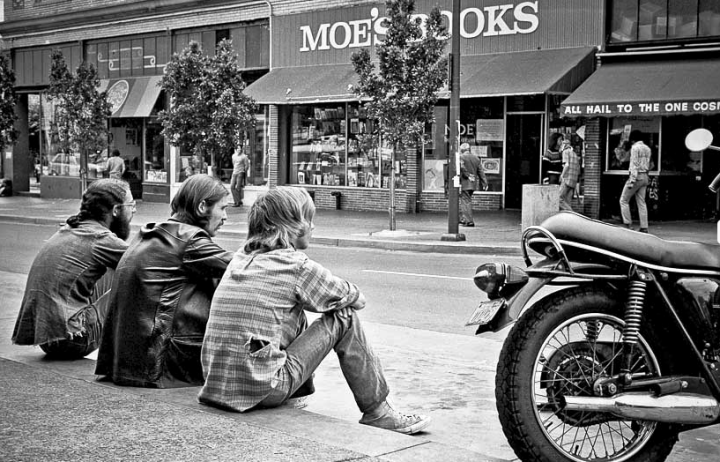
"caption": "Telegraph Avenue, between Dwight Way and Haste Street, circa 1970.",
"description": null,
"title": "Telegraph Avenue-Berkeley",
"credit": "Nacio Jan Brown via Berkeleyside",
"status": "inherit",
"isLoading": false,
"fetchFailed": false
},
"arts_11496991": {
"type": "attachments",
"id": "arts_11496991",
"meta": {
"index": "attachments_1716263798",
"site": "arts",
"id": "11496991",
"found": true
},
"parent": 11496747,
"imgSizes": {
"thumbnail": {
"file": "https://ww2.kqed.org/app/uploads/sites/2/2016/04/RS19165_Case15wallGIS_800px-qut-400x226.jpg",
"width": 400,
"mimeType": "image/jpeg",
"height": 226
},
"post-thumbnail": {
"file": "https://ww2.kqed.org/app/uploads/sites/2/2016/04/RS19165_Case15wallGIS_800px-qut-672x372.jpg",
"width": 672,
"mimeType": "image/jpeg",
"height": 372
},
"kqedFullSize": {
"file": "https://ww2.kqed.org/app/uploads/sites/2/2016/04/RS19165_Case15wallGIS_800px-qut.jpg",
"width": 800,
"height": 452
},
"guest-author-96": {
"file": "https://ww2.kqed.org/app/uploads/sites/2/2016/04/RS19165_Case15wallGIS_800px-qut-96x96.jpg",
"width": 96,
"mimeType": "image/jpeg",
"height": 96
},
"medium": {
"file": "https://ww2.kqed.org/app/uploads/sites/2/2016/04/RS19165_Case15wallGIS_800px-qut-800x452.jpg",
"width": 800,
"mimeType": "image/jpeg",
"height": 452
},
"guest-author-64": {
"file": "https://ww2.kqed.org/app/uploads/sites/2/2016/04/RS19165_Case15wallGIS_800px-qut-64x64.jpg",
"width": 64,
"mimeType": "image/jpeg",
"height": 64
},
"detail": {
"file": "https://ww2.kqed.org/app/uploads/sites/2/2016/04/RS19165_Case15wallGIS_800px-qut-75x75.jpg",
"width": 75,
"mimeType": "image/jpeg",
"height": 75
},
"guest-author-32": {
"file": "https://ww2.kqed.org/app/uploads/sites/2/2016/04/RS19165_Case15wallGIS_800px-qut-32x32.jpg",
"width": 32,
"mimeType": "image/jpeg",
"height": 32
},
"medium_large": {
"file": "https://ww2.kqed.org/app/uploads/sites/2/2016/04/RS19165_Case15wallGIS_800px-qut-768x434.jpg",
"width": 768,
"mimeType": "image/jpeg",
"height": 434
},
"guest-author-128": {
"file": "https://ww2.kqed.org/app/uploads/sites/2/2016/04/RS19165_Case15wallGIS_800px-qut-128x128.jpg",
"width": 128,
"mimeType": "image/jpeg",
"height": 128
}
},
"publishDate": 1460752701,
"modified": 1460752716,
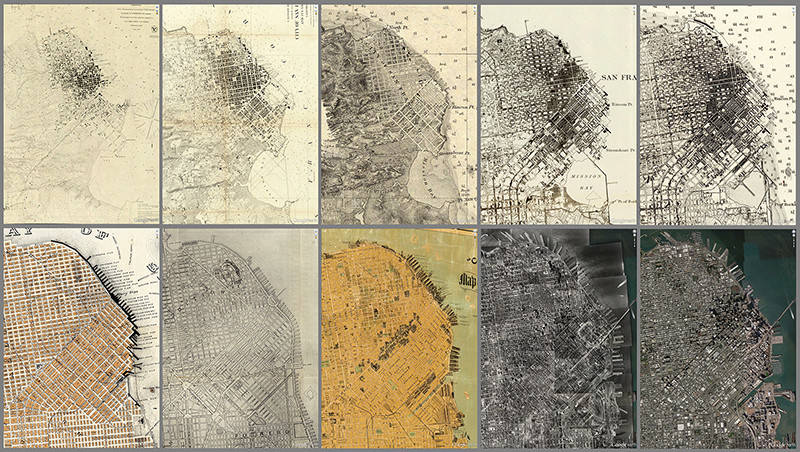
"caption": "These maps of San Francisco show how the city grew from 1853 to 2015. They're of varying sizes and scales, but when digitized, they can be \"geo-referenced\" against Google Earth and then easily compared.",
"description": "These maps of San Francisco show how the city grew from 1853 to 2015. They're of varying sizes and scales, but when digitized, they can be \"geo-referenced\" against Google Earth and then easily compared.",
"title": "RS19165_Case15wallGIS_800px-qut",
"credit": "Photo: Courtesy of The David Rumsey Map Center",
"status": "inherit",
"isLoading": false,
"fetchFailed": false
},
"arts_11485242": {
"type": "attachments",
"id": "arts_11485242",
"meta": {
"index": "attachments_1716263798",
"site": "arts",
"id": "11485242",
"found": true
},
"parent": 11485238,
"imgSizes": {
"twentyfourteen-full-width": {
"file": "https://ww2.kqed.org/app/uploads/sites/2/2016/04/RS19098_CommunityQuiltHighRes-qut-1038x576.jpg",
"width": 1038,
"mimeType": "image/jpeg",
"height": 576
},
"thumbnail": {
"file": "https://ww2.kqed.org/app/uploads/sites/2/2016/04/RS19098_CommunityQuiltHighRes-qut-400x241.jpg",
"width": 400,
"mimeType": "image/jpeg",
"height": 241
},
"fd-sm": {
"file": "https://ww2.kqed.org/app/uploads/sites/2/2016/04/RS19098_CommunityQuiltHighRes-qut-960x578.jpg",
"width": 960,
"mimeType": "image/jpeg",
"height": 578
},
"post-thumbnail": {
"file": "https://ww2.kqed.org/app/uploads/sites/2/2016/04/RS19098_CommunityQuiltHighRes-qut-672x372.jpg",
"width": 672,
"mimeType": "image/jpeg",
"height": 372
},
"kqedFullSize": {
"file": "https://ww2.kqed.org/app/uploads/sites/2/2016/04/RS19098_CommunityQuiltHighRes-qut.jpg",
"width": 1920,
"height": 1156
},
"large": {
"file": "https://ww2.kqed.org/app/uploads/sites/2/2016/04/RS19098_CommunityQuiltHighRes-qut-1180x710.jpg",
"width": 1180,
"mimeType": "image/jpeg",
"height": 710
},
"guest-author-96": {
"file": "https://ww2.kqed.org/app/uploads/sites/2/2016/04/RS19098_CommunityQuiltHighRes-qut-96x96.jpg",
"width": 96,
"mimeType": "image/jpeg",
"height": 96
},
"medium": {
"file": "https://ww2.kqed.org/app/uploads/sites/2/2016/04/RS19098_CommunityQuiltHighRes-qut-800x482.jpg",
"width": 800,
"mimeType": "image/jpeg",
"height": 482
},
"guest-author-64": {
"file": "https://ww2.kqed.org/app/uploads/sites/2/2016/04/RS19098_CommunityQuiltHighRes-qut-64x64.jpg",
"width": 64,
"mimeType": "image/jpeg",
"height": 64
},
"guest-author-32": {
"file": "https://ww2.kqed.org/app/uploads/sites/2/2016/04/RS19098_CommunityQuiltHighRes-qut-32x32.jpg",
"width": 32,
"mimeType": "image/jpeg",
"height": 32
},
"fd-lrg": {
"file": "https://ww2.kqed.org/app/uploads/sites/2/2016/04/RS19098_CommunityQuiltHighRes-qut-1920x1156.jpg",
"width": 1920,
"mimeType": "image/jpeg",
"height": 1156
},
"fd-med": {
"file": "https://ww2.kqed.org/app/uploads/sites/2/2016/04/RS19098_CommunityQuiltHighRes-qut-1180x710.jpg",
"width": 1180,
"mimeType": "image/jpeg",
"height": 710
},
"detail": {
"file": "https://ww2.kqed.org/app/uploads/sites/2/2016/04/RS19098_CommunityQuiltHighRes-qut-75x75.jpg",
"width": 75,
"mimeType": "image/jpeg",
"height": 75
},
"medium_large": {
"file": "https://ww2.kqed.org/app/uploads/sites/2/2016/04/RS19098_CommunityQuiltHighRes-qut-768x462.jpg",
"width": 768,
"mimeType": "image/jpeg",
"height": 462
},
"guest-author-128": {
"file": "https://ww2.kqed.org/app/uploads/sites/2/2016/04/RS19098_CommunityQuiltHighRes-qut-128x128.jpg",
"width": 128,
"mimeType": "image/jpeg",
"height": 128
}
},
"publishDate": 1460412494,
"modified": 1460502660,
"caption": "A collective quilt created by East Palo Alto locals with the help of Linda Gass, who served as an artist in residence at Cooley Landing.",
"description": "A collective quilt created by East Palo Alto locals with the help of Linda Gass, who served as an artist in residence at Cooley Landing.",
"title": "RS19098_CommunityQuiltHighRes-qut",
"credit": "Photo: Courtesy of Palo Alto Art Center",
"status": "inherit",
"isLoading": false,
"fetchFailed": false
},
"arts_11092805": {
"type": "attachments",
"id": "arts_11092805",
"meta": {
"index": "attachments_1716263798",
"site": "arts",
"id": "11092805",
"found": true
},
"parent": 11092804,
"imgSizes": {
"thumbnail": {
"file": "https://ww2.kqed.org/app/uploads/sites/2/2015/11/Ta-Nehisi-Coatescrop-400x225.jpg",
"width": 400,
"mimeType": "image/jpeg",
"height": 225
},
"post-thumbnail": {
"file": "https://ww2.kqed.org/app/uploads/sites/2/2015/11/Ta-Nehisi-Coatescrop-672x372.jpg",
"width": 672,
"mimeType": "image/jpeg",
"height": 372
},
"kqedFullSize": {
"file": "https://ww2.kqed.org/app/uploads/sites/2/2015/11/Ta-Nehisi-Coatescrop.jpg",
"width": 800,
"height": 450
},
"guest-author-96": {
"file": "https://ww2.kqed.org/app/uploads/sites/2/2015/11/Ta-Nehisi-Coatescrop-96x96.jpg",
"width": 96,
"mimeType": "image/jpeg",
"height": 96
},
"medium": {
"file": "https://ww2.kqed.org/app/uploads/sites/2/2015/11/Ta-Nehisi-Coatescrop-800x450.jpg",
"width": 800,
"mimeType": "image/jpeg",
"height": 450
},
"guest-author-64": {
"file": "https://ww2.kqed.org/app/uploads/sites/2/2015/11/Ta-Nehisi-Coatescrop-64x64.jpg",
"width": 64,
"mimeType": "image/jpeg",
"height": 64
},
"detail": {
"file": "https://ww2.kqed.org/app/uploads/sites/2/2015/11/Ta-Nehisi-Coatescrop-75x75.jpg",
"width": 75,
"mimeType": "image/jpeg",
"height": 75
},
"guest-author-32": {
"file": "https://ww2.kqed.org/app/uploads/sites/2/2015/11/Ta-Nehisi-Coatescrop-32x32.jpg",
"width": 32,
"mimeType": "image/jpeg",
"height": 32
},
"guest-author-128": {
"file": "https://ww2.kqed.org/app/uploads/sites/2/2015/11/Ta-Nehisi-Coatescrop-128x128.jpg",
"width": 128,
"mimeType": "image/jpeg",
"height": 128
}
},
"publishDate": 1447912723,
"modified": 1447912775,
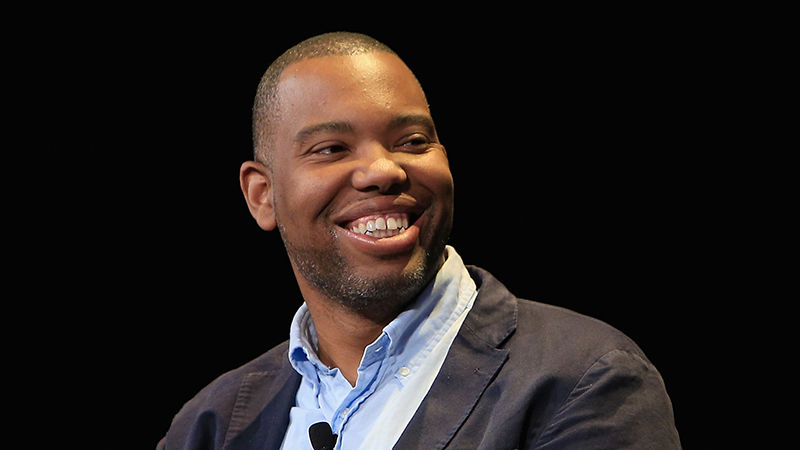
"caption": "Writer Ta-Nehisi Coates speaks onstage at the New Yorker Festival 2015 ",
"description": "Writer Ta-Nehisi Coates speaks onstage at the New Yorker Festival 2015 ",
"title": "The New Yorker Festival 2015 - The Fire This Time",
"credit": "Photo: Anna Webber/Getty Images",
"status": "inherit",
"isLoading": false,
"fetchFailed": false
},
"arts_11487955": {
"type": "attachments",
"id": "arts_11487955",
"meta": {
"index": "attachments_1716263798",
"site": "arts",
"id": "11487955",
"found": true
},
"parent": 11487587,
"imgSizes": {
"twentyfourteen-full-width": {
"file": "https://ww2.kqed.org/app/uploads/sites/2/2016/04/cats-in-space-1038x576.jpg",
"width": 1038,
"mimeType": "image/jpeg",
"height": 576
},
"thumbnail": {
"file": "https://ww2.kqed.org/app/uploads/sites/2/2016/04/cats-in-space-400x225.jpg",
"width": 400,
"mimeType": "image/jpeg",
"height": 225
},
"fd-sm": {
"file": "https://ww2.kqed.org/app/uploads/sites/2/2016/04/cats-in-space-960x540.jpg",
"width": 960,
"mimeType": "image/jpeg",
"height": 540
},
"post-thumbnail": {
"file": "https://ww2.kqed.org/app/uploads/sites/2/2016/04/cats-in-space-672x372.jpg",
"width": 672,
"mimeType": "image/jpeg",
"height": 372
},
"kqedFullSize": {
"file": "https://ww2.kqed.org/app/uploads/sites/2/2016/04/cats-in-space.jpg",
"width": 1250,
"height": 703
},
"large": {
"file": "https://ww2.kqed.org/app/uploads/sites/2/2016/04/cats-in-space-1180x664.jpg",
"width": 1180,
"mimeType": "image/jpeg",
"height": 664
},
"guest-author-96": {
"file": "https://ww2.kqed.org/app/uploads/sites/2/2016/04/cats-in-space-96x96.jpg",
"width": 96,
"mimeType": "image/jpeg",
"height": 96
},
"medium": {
"file": "https://ww2.kqed.org/app/uploads/sites/2/2016/04/cats-in-space-800x450.jpg",
"width": 800,
"mimeType": "image/jpeg",
"height": 450
},
"guest-author-64": {
"file": "https://ww2.kqed.org/app/uploads/sites/2/2016/04/cats-in-space-64x64.jpg",
"width": 64,
"mimeType": "image/jpeg",
"height": 64
},
"guest-author-32": {
"file": "https://ww2.kqed.org/app/uploads/sites/2/2016/04/cats-in-space-32x32.jpg",
"width": 32,
"mimeType": "image/jpeg",
"height": 32
},
"fd-med": {
"file": "https://ww2.kqed.org/app/uploads/sites/2/2016/04/cats-in-space-1180x664.jpg",
"width": 1180,
"mimeType": "image/jpeg",
"height": 664
},
"detail": {
"file": "https://ww2.kqed.org/app/uploads/sites/2/2016/04/cats-in-space-75x75.jpg",
"width": 75,
"mimeType": "image/jpeg",
"height": 75
},
"medium_large": {
"file": "https://ww2.kqed.org/app/uploads/sites/2/2016/04/cats-in-space-768x432.jpg",
"width": 768,
"mimeType": "image/jpeg",
"height": 432
},
"guest-author-128": {
"file": "https://ww2.kqed.org/app/uploads/sites/2/2016/04/cats-in-space-128x128.jpg",
"width": 128,
"mimeType": "image/jpeg",
"height": 128
}
},
"publishDate": 1460492272,
"modified": 1460493798,
"caption": "Two cats battle it out with illuminated sticks for Cats in Space Tour. ",
"description": "Two cats battle it out with illuminated sticks for Cats in Space Tour. ",
"title": "Two cats battle it out with illuminated sticks for Cats in Space Tour.",
"credit": "Photo: Courtesy of Cats in Space Tour.",
"status": "inherit",
"isLoading": false,
"fetchFailed": false
},
"pop_22319": {
"type": "attachments",
"id": "pop_22319",
"meta": {
"index": "attachments_1716263798",
"site": "pop",
"id": "22319",
"found": true
},
"parent": 22314,
"imgSizes": {
"thumbnail": {
"file": "https://ww2.kqed.org/app/uploads/sites/12/2016/04/emoji-translation-400x225.jpg",
"width": 400,
"mimeType": "image/jpeg",
"height": 225
},
"post-thumbnail": {
"file": "https://ww2.kqed.org/app/uploads/sites/12/2016/04/emoji-translation-672x372.jpg",
"width": 672,
"mimeType": "image/jpeg",
"height": 372
},
"kqedFullSize": {
"file": "https://ww2.kqed.org/app/uploads/sites/12/2016/04/emoji-translation.jpg",
"width": 807,
"height": 454
},
"guest-author-96": {
"file": "https://ww2.kqed.org/app/uploads/sites/12/2016/04/emoji-translation-96x96.jpg",
"width": 96,
"mimeType": "image/jpeg",
"height": 96
},
"medium": {
"file": "https://ww2.kqed.org/app/uploads/sites/12/2016/04/emoji-translation-800x450.jpg",
"width": 800,
"mimeType": "image/jpeg",
"height": 450
},
"guest-author-64": {
"file": "https://ww2.kqed.org/app/uploads/sites/12/2016/04/emoji-translation-64x64.jpg",
"width": 64,
"mimeType": "image/jpeg",
"height": 64
},
"detail": {
"file": "https://ww2.kqed.org/app/uploads/sites/12/2016/04/emoji-translation-75x75.jpg",
"width": 75,
"mimeType": "image/jpeg",
"height": 75
},
"guest-author-32": {
"file": "https://ww2.kqed.org/app/uploads/sites/12/2016/04/emoji-translation-32x32.jpg",
"width": 32,
"mimeType": "image/jpeg",
"height": 32
},
"medium_large": {
"file": "https://ww2.kqed.org/app/uploads/sites/12/2016/04/emoji-translation-768x432.jpg",
"width": 768,
"mimeType": "image/jpeg",
"height": 432
},
"guest-author-128": {
"file": "https://ww2.kqed.org/app/uploads/sites/12/2016/04/emoji-translation-128x128.jpg",
"width": 128,
"mimeType": "image/jpeg",
"height": 128
}
},
"publishDate": 1460505567,
"modified": 1460505640,
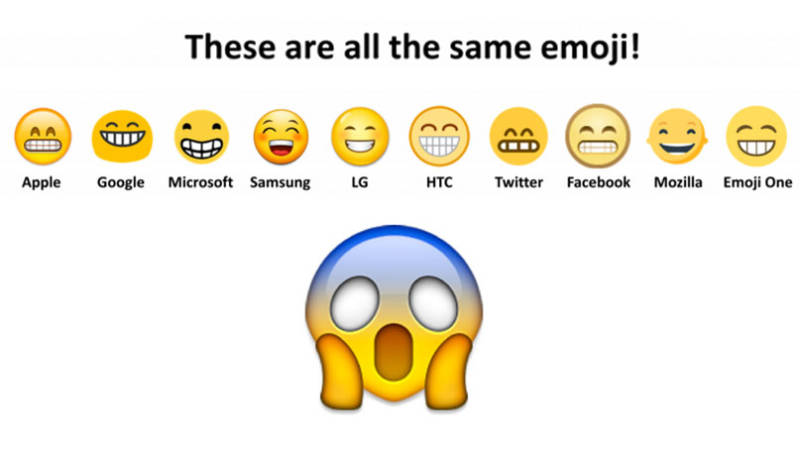
"caption": "Photo: \u003ca href=\"http://grouplens.org/blog/investigating-the-potential-for-miscommunication-using-emoji/\">grouplens\u003c/a> and Emmanuel Hapsis",
"description": null,
"title": "emoji-translation",
"credit": null,
"status": "inherit",
"isLoading": false,
"fetchFailed": false
},
"arts_11485495": {
"type": "attachments",
"id": "arts_11485495",
"meta": {
"index": "attachments_1716263798",
"site": "arts",
"id": "11485495",
"found": true
},
"parent": 11485373,
"imgSizes": {
"thumbnail": {
"file": "https://ww2.kqed.org/app/uploads/sites/2/2016/04/Illma-Gore-London-400x225.jpg",
"width": 400,
"mimeType": "image/jpeg",
"height": 225
},
"fd-sm": {
"file": "https://ww2.kqed.org/app/uploads/sites/2/2016/04/Illma-Gore-London-960x540.jpg",
"width": 960,
"mimeType": "image/jpeg",
"height": 540
},
"post-thumbnail": {
"file": "https://ww2.kqed.org/app/uploads/sites/2/2016/04/Illma-Gore-London-672x372.jpg",
"width": 672,
"mimeType": "image/jpeg",
"height": 372
},
"kqedFullSize": {
"file": "https://ww2.kqed.org/app/uploads/sites/2/2016/04/Illma-Gore-London.jpg",
"width": 960,
"height": 540
},
"guest-author-96": {
"file": "https://ww2.kqed.org/app/uploads/sites/2/2016/04/Illma-Gore-London-96x96.jpg",
"width": 96,
"mimeType": "image/jpeg",
"height": 96
},
"medium": {
"file": "https://ww2.kqed.org/app/uploads/sites/2/2016/04/Illma-Gore-London-800x450.jpg",
"width": 800,
"mimeType": "image/jpeg",
"height": 450
},
"guest-author-64": {
"file": "https://ww2.kqed.org/app/uploads/sites/2/2016/04/Illma-Gore-London-64x64.jpg",
"width": 64,
"mimeType": "image/jpeg",
"height": 64
},
"detail": {
"file": "https://ww2.kqed.org/app/uploads/sites/2/2016/04/Illma-Gore-London-75x75.jpg",
"width": 75,
"mimeType": "image/jpeg",
"height": 75
},
"guest-author-32": {
"file": "https://ww2.kqed.org/app/uploads/sites/2/2016/04/Illma-Gore-London-32x32.jpg",
"width": 32,
"mimeType": "image/jpeg",
"height": 32
},
"medium_large": {
"file": "https://ww2.kqed.org/app/uploads/sites/2/2016/04/Illma-Gore-London-768x432.jpg",
"width": 768,
"mimeType": "image/jpeg",
"height": 432
},
"guest-author-128": {
"file": "https://ww2.kqed.org/app/uploads/sites/2/2016/04/Illma-Gore-London-128x128.jpg",
"width": 128,
"mimeType": "image/jpeg",
"height": 128
}
},
"publishDate": 1460418256,
"modified": 1460418289,
"caption": "Illma Gore at the Maddox Gallery in London with her portrait",
"description": "Illma Gore at the Maddox Gallery in London with her portrait",
"title": "Illma Gore London",
"credit": "Photo: Courtesy of Illma Gore",
"status": "inherit",
"isLoading": false,
"fetchFailed": false
},
"bayareabites_108486": {
"type": "attachments",
"id": "bayareabites_108486",
"meta": {
"index": "attachments_1716263798",
"site": "bayareabites",
"id": "108486",
"found": true
},
"parent": 108485,
"imgSizes": {
"twentyfourteen-full-width": {
"file": "https://ww2.kqed.org/app/uploads/sites/24/2016/04/louganis_sq-9607975e922498e6e8205a74e92b779320a5a9fd-1038x576.jpg",
"width": 1038,
"mimeType": "image/jpeg",
"height": 576
},
"thumbnail": {
"file": "https://ww2.kqed.org/app/uploads/sites/24/2016/04/louganis_sq-9607975e922498e6e8205a74e92b779320a5a9fd-400x400.jpg",
"width": 400,
"mimeType": "image/jpeg",
"height": 400
},
"fd-sm": {
"file": "https://ww2.kqed.org/app/uploads/sites/24/2016/04/louganis_sq-9607975e922498e6e8205a74e92b779320a5a9fd-960x961.jpg",
"width": 960,
"mimeType": "image/jpeg",
"height": 961
},
"post-thumbnail": {
"file": "https://ww2.kqed.org/app/uploads/sites/24/2016/04/louganis_sq-9607975e922498e6e8205a74e92b779320a5a9fd-672x372.jpg",
"width": 672,
"mimeType": "image/jpeg",
"height": 372
},
"kqedFullSize": {
"file": "https://ww2.kqed.org/app/uploads/sites/24/2016/04/louganis_sq-9607975e922498e6e8205a74e92b779320a5a9fd.jpg",
"width": 2295,
"height": 2297
},
"large": {
"file": "https://ww2.kqed.org/app/uploads/sites/24/2016/04/louganis_sq-9607975e922498e6e8205a74e92b779320a5a9fd-1440x1441.jpg",
"width": 1440,
"mimeType": "image/jpeg",
"height": 1441
},
"guest-author-96": {
"file": "https://ww2.kqed.org/app/uploads/sites/24/2016/04/louganis_sq-9607975e922498e6e8205a74e92b779320a5a9fd-96x96.jpg",
"width": 96,
"mimeType": "image/jpeg",
"height": 96
},
"medium": {
"file": "https://ww2.kqed.org/app/uploads/sites/24/2016/04/louganis_sq-9607975e922498e6e8205a74e92b779320a5a9fd-800x801.jpg",
"width": 800,
"mimeType": "image/jpeg",
"height": 801
},
"guest-author-64": {
"file": "https://ww2.kqed.org/app/uploads/sites/24/2016/04/louganis_sq-9607975e922498e6e8205a74e92b779320a5a9fd-64x64.jpg",
"width": 64,
"mimeType": "image/jpeg",
"height": 64
},
"guest-author-32": {
"file": "https://ww2.kqed.org/app/uploads/sites/24/2016/04/louganis_sq-9607975e922498e6e8205a74e92b779320a5a9fd-32x32.jpg",
"width": 32,
"mimeType": "image/jpeg",
"height": 32
},
"cat_post_thumb_sizecategory-posts-2": {
"file": "https://ww2.kqed.org/app/uploads/sites/24/2016/04/louganis_sq-9607975e922498e6e8205a74e92b779320a5a9fd-150x150.jpg",
"width": 150,
"mimeType": "image/jpeg",
"height": 150
},
"fd-lrg": {
"file": "https://ww2.kqed.org/app/uploads/sites/24/2016/04/louganis_sq-9607975e922498e6e8205a74e92b779320a5a9fd-1920x1922.jpg",
"width": 1920,
"mimeType": "image/jpeg",
"height": 1922
},
"fd-med": {
"file": "https://ww2.kqed.org/app/uploads/sites/24/2016/04/louganis_sq-9607975e922498e6e8205a74e92b779320a5a9fd-1180x1181.jpg",
"width": 1180,
"mimeType": "image/jpeg",
"height": 1181
},
"detail": {
"file": "https://ww2.kqed.org/app/uploads/sites/24/2016/04/louganis_sq-9607975e922498e6e8205a74e92b779320a5a9fd-75x75.jpg",
"width": 75,
"mimeType": "image/jpeg",
"height": 75
},
"medium_large": {
"file": "https://ww2.kqed.org/app/uploads/sites/24/2016/04/louganis_sq-9607975e922498e6e8205a74e92b779320a5a9fd-768x769.jpg",
"width": 768,
"mimeType": "image/jpeg",
"height": 769
},
"guest-author-128": {
"file": "https://ww2.kqed.org/app/uploads/sites/24/2016/04/louganis_sq-9607975e922498e6e8205a74e92b779320a5a9fd-128x128.jpg",
"width": 128,
"mimeType": "image/jpeg",
"height": 128
}
},
"publishDate": 1460410292,
"modified": 1460410752,
"caption": "Greg Louganis in an inward dive pike on the front of the Wheaties box. The \"legends\" series boxes will be on shelves starting in May.",
"description": "Greg Louganis in an inward dive pike on the front of the Wheaties box. The \"legends\" series boxes will be on shelves starting in May.",
"title": "Greg Louganis in an inward dive pike on the front of the Wheaties box. The \"legends\" series boxes will be on shelves starting in May.",
"credit": "Courtesy Of General Mills",
"status": "inherit",
"isLoading": false,
"fetchFailed": false
}
},
"audioPlayerReducer": {
"postId": "stream_live",
"isPaused": true,
"isPlaying": false,
"pfsActive": false,
"pledgeModalIsOpen": true,
"playerDrawerIsOpen": false,
"liveAudioPlayStartedAt": 0,
"liveAudioPlayContext": ""
},
"authorsReducer": {
"byline_news_10931190": {
"type": "authors",
"id": "byline_news_10931190",
"meta": {
"override": true
},
"slug": "byline_news_10931190",
"name": "\u003cstrong>\u003ca href=\"http://www.berkeleyside.com/author/tomdalzell/\" target=\"_blank\">Tom Dalzell\u003c/a>\u003cbr />Berkeleyside\u003c/strong>",
"isLoading": false
},
"byline_arts_11491497": {
"type": "authors",
"id": "byline_arts_11491497",
"meta": {
"override": true
},
"slug": "byline_arts_11491497",
"name": "Jesse J. Holland, Associated Press",
"isLoading": false
},
"byline_pop_22314": {
"type": "authors",
"id": "byline_pop_22314",
"meta": {
"override": true
},
"slug": "byline_pop_22314",
"name": "Eyder Peralta",
"isLoading": false
},
"byline_bayareabites_108485": {
"type": "authors",
"id": "byline_bayareabites_108485",
"meta": {
"override": true
},
"slug": "byline_bayareabites_108485",
"name": "Laura Wagner, \u003ca href=\"http://ww2.kqed.org/bayareabites/author/nprfood/\">NPR Food\u003c/a>",
"isLoading": false
},
"ehapsis": {
"type": "authors",
"id": "27",
"meta": {
"index": "authors_1716337520",
"id": "27",
"found": true
},
"name": "Emmanuel Hapsis",
"firstName": "Emmanuel",
"lastName": "Hapsis",
"slug": "ehapsis",
"email": "ehapsis@kqed.org",
"display_author_email": false,
"staff_mastheads": [],
"title": "KQED Contributor",
"bio": "Emmanuel Hapsis is the creator and editor of KQED Pop and also the host of \u003cem>\u003ca href=\"https://itunes.apple.com/us/podcast/the-cooler/id1041117499?mt=2\">The Cooler\u003c/a>\u003c/em>. He studied creative writing at University of Maryland and went on to receive his MFA in the field from California College of the Arts. In his free time, he sings his heart out at karaoke.",
"avatar": "https://secure.gravatar.com/avatar/6302b6f7ef8b2dcd3acd9e2c6bc570b7?s=600&d=blank&r=g",
"twitter": "xcusemybeauty",
"facebook": null,
"instagram": null,
"linkedin": null,
"sites": [
{
"site": "arts",
"roles": [
"Contributor",
"subscriber"
]
},
{
"site": "pop",
"roles": [
"contributor"
]
}
],
"headData": {
"title": "Emmanuel Hapsis | KQED",
"description": "KQED Contributor",
"ogImgSrc": "https://secure.gravatar.com/avatar/6302b6f7ef8b2dcd3acd9e2c6bc570b7?s=600&d=blank&r=g",
"twImgSrc": "https://secure.gravatar.com/avatar/6302b6f7ef8b2dcd3acd9e2c6bc570b7?s=600&d=blank&r=g"
},
"isLoading": false,
"link": "/author/ehapsis"
},
"jedalatpour": {
"type": "authors",
"id": "42",
"meta": {
"index": "authors_1716337520",
"id": "42",
"found": true
},
"name": "Jeffrey Edalatpour",
"firstName": "Jeffrey",
"lastName": "Edalatpour",
"slug": "jedalatpour",
"email": "jedalatpour@kqed.org",
"display_author_email": false,
"staff_mastheads": [],
"title": null,
"bio": "Jeffrey Edalatpour's first published article was a 1999 film review of Pedro Almodovar’s \u003ci>All About My Mother. \u003c/i>Since then, his writing about arts, food and culture has appeared in a variety of print and online publications, including: KQED Arts, \u003ci>Metro Silicon Valley, Interview Magazine, \u003c/i>Berkeleyside.com, The Rumpus and \u003ci>SF Weekly. \u003c/i>His favorite Iris Murdoch novels (in no particular order) are \u003ci>The Bell, An Unofficial Rose \u003c/i>and\u003ci>The Black Prince\u003c/i>\u003ci>. \u003c/i>In other words, his home library is an anglophile’s dream.",
"avatar": "https://secure.gravatar.com/avatar/ed59ec60f4980f3a45d0c3758c17a4d4?s=600&d=blank&r=g",
"twitter": "jsedalatpour",
"facebook": null,
"instagram": null,
"linkedin": null,
"sites": [
{
"site": "arts",
"roles": [
"Contributor",
"contributor"
]
},
{
"site": "about",
"roles": [
"contributor"
]
},
{
"site": "bayareabites",
"roles": [
"author"
]
}
],
"headData": {
"title": "Jeffrey Edalatpour | KQED",
"description": null,
"ogImgSrc": "https://secure.gravatar.com/avatar/ed59ec60f4980f3a45d0c3758c17a4d4?s=600&d=blank&r=g",
"twImgSrc": "https://secure.gravatar.com/avatar/ed59ec60f4980f3a45d0c3758c17a4d4?s=600&d=blank&r=g"
},
"isLoading": false,
"link": "/author/jedalatpour"
},
"kjones": {
"type": "authors",
"id": "93",
"meta": {
"index": "authors_1716337520",
"id": "93",
"found": true
},
"name": "Kevin L. Jones",
"firstName": "Kevin",
"lastName": "Jones",
"slug": "kjones",
"email": "kjones@kqed.org",
"display_author_email": false,
"staff_mastheads": [],
"title": null,
"bio": null,
"avatar": "https://secure.gravatar.com/avatar/12c65b5633ed39d0a59bb7f497eff645?s=600&d=blank&r=g",
"twitter": null,
"facebook": null,
"instagram": null,
"linkedin": null,
"sites": [
{
"site": "arts",
"roles": [
"subscriber"
]
},
{
"site": "styleguide",
"roles": [
"contributor"
]
},
{
"site": "artschool",
"roles": [
"subscriber"
]
},
{
"site": "news",
"roles": [
"subscriber"
]
},
{
"site": "pop",
"roles": [
"subscriber"
]
}
],
"headData": {
"title": "Kevin L. Jones | KQED",
"description": null,
"ogImgSrc": "https://secure.gravatar.com/avatar/12c65b5633ed39d0a59bb7f497eff645?s=600&d=blank&r=g",
"twImgSrc": "https://secure.gravatar.com/avatar/12c65b5633ed39d0a59bb7f497eff645?s=600&d=blank&r=g"
},
"isLoading": false,
"link": "/author/kjones"
},
"clakey": {
"type": "authors",
"id": "191",
"meta": {
"index": "authors_1716337520",
"id": "191",
"found": true
},
"name": "Cherri Lakey",
"firstName": "Cherri",
"lastName": "Lakey",
"slug": "clakey",
"email": "cherri@galleryad.com",
"display_author_email": false,
"staff_mastheads": [],
"title": "KQED Contributor",
"bio": "Co-owner/curator of urban contemporary art and culture gallery \u003ca href=\"http://www.galleryAD.com\">ANNO DOMINI\u003c/a> // the second coming of Art & Design and producer of a bunch of other cool projects with partner \u003ca href=\"http://ww2.kqed.org/arts/author/beder/\" target=\"_blank\">Brian Eder.\u003c/a> \u003ca href=\"https://twitter.com/astrogirl\">Follow @astrogirl\u003c/a>\r\n// ",
"avatar": "https://secure.gravatar.com/avatar/29642fbd8e9eef623a3f07213c5b739fbbfe7e1efe98571b1093fabcaade6f08?s=600&d=blank&r=g",
"twitter": null,
"bluesky": null,
"facebook": null,
"instagram": null,
"linkedin": null,
"sites": [
{
"site": "arts",
"roles": [
"subscriber"
]
}
],
"headData": {
"title": "Cherri Lakey | KQED",
"description": "KQED Contributor",
"ogImgSrc": "https://secure.gravatar.com/avatar/29642fbd8e9eef623a3f07213c5b739fbbfe7e1efe98571b1093fabcaade6f08?s=600&d=blank&r=g",
"twImgSrc": "https://secure.gravatar.com/avatar/29642fbd8e9eef623a3f07213c5b739fbbfe7e1efe98571b1093fabcaade6f08?s=600&d=blank&r=g"
},
"isLoading": false,
"link": "/author/clakey"
},
"lisapickoffwhite-2": {
"type": "authors",
"id": "199",
"meta": {
"index": "authors_1716337520",
"id": "199",
"found": true
},
"name": "Lisa Pickoff-White",
"firstName": "Lisa",
"lastName": "Pickoff-White",
"slug": "lisapickoffwhite-2",
"email": "lpickoffwhite@kqed.org",
"display_author_email": false,
"staff_mastheads": [
"news"
],
"title": "Data Journalist, Senior Producer",
"bio": "Lisa Pickoff-White is KQED's data reporter. Lisa specializes in simplifying complex topics and bringing them to life through compelling visuals, including photography and data visualizations. She previously has worked at the Center for Investigative Reporting and other national outlets. Her work has been honored with awards from the Online News Association, Investigative Reporters and Editors, the Society of Professional Journalists and SXSW Interactive. \u003cstrong> \u003c/strong>",
"avatar": "https://secure.gravatar.com/avatar/5513c5f3967df792aa65bee2501e84d6?s=600&d=blank&r=g",
"twitter": "pickoffwhite",
"facebook": null,
"instagram": null,
"linkedin": null,
"sites": [
{
"site": "",
"roles": [
"editor"
]
},
{
"site": "arts",
"roles": []
},
{
"site": "news",
"roles": [
"administrator"
]
},
{
"site": "about",
"roles": [
"editor"
]
},
{
"site": "stateofhealth",
"roles": [
"administrator"
]
},
{
"site": "science",
"roles": [
"editor"
]
},
{
"site": "quest",
"roles": [
"editor"
]
},
{
"site": "forum",
"roles": [
"editor"
]
}
],
"headData": {
"title": "Lisa Pickoff-White | KQED",
"description": "Data Journalist, Senior Producer",
"ogImgSrc": "https://secure.gravatar.com/avatar/5513c5f3967df792aa65bee2501e84d6?s=600&d=blank&r=g",
"twImgSrc": "https://secure.gravatar.com/avatar/5513c5f3967df792aa65bee2501e84d6?s=600&d=blank&r=g"
},
"isLoading": false,
"link": "/author/lisapickoffwhite-2"
},
"rachael-myrow": {
"type": "authors",
"id": "251",
"meta": {
"index": "authors_1716337520",
"id": "251",
"found": true
},
"name": "Rachael Myrow",
"firstName": "Rachael",
"lastName": "Myrow",
"slug": "rachael-myrow",
"email": "rmyrow@kqed.org",
"display_author_email": true,
"staff_mastheads": [
"news"
],
"title": "Senior Editor of KQED's Silicon Valley News Desk",
"bio": "• I write and edit stories about how Silicon Valley power and policies shape everyday life in California. I’m also passionate about making Bay Area history and culture more accessible to a broad public. • I’ve been a journalist for most of my life, starting in high school with The Franklin Press in Los Angeles, where I grew up. While earning my first degree in English at UC Berkeley, I got my start in public radio at KALX-FM. After completing a second degree in journalism at Cal, I landed my first professional job at Marketplace, then moved on to KPCC (now LAist), and then KQED, where I hosted The California Report for more than seven years. • My reporting has appeared on NPR, The World, WBUR’s \u003ci>Here & Now\u003c/i>, and the BBC. I also guest host for KQED’s \u003ci>Forum\u003c/i>, as well as the Commonwealth Club in San Francisco. • I speak periodically on media, democracy and technology issues, and do voiceover work for documentaries and educational video projects. • Outside of the studio, you'll find me hiking Bay Area trails and whipping up Insta-ready meals in my kitchen. • I do not accept gifts, money, or favors from anyone connected to my reporting, I don't pay people for information, and I do not support or donate to political causes. • I strive to treat the people I report on with fairness, honesty, and respect. I also recognize there are often multiple sides to a story and work to verify information through multiple sources and documentation. If I get something wrong, I correct it.",
"avatar": "https://secure.gravatar.com/avatar/3ed8a3c5f26025e4a805ba634cda8cd764906b97438a6d9ce216b044e340da4e?s=600&d=blank&r=g",
"twitter": "rachaelmyrow",
"bluesky": null,
"facebook": null,
"instagram": null,
"linkedin": "https://www.linkedin.com/in/rachaelmyrow/",
"sites": [
{
"site": "arts",
"roles": [
"administrator"
]
},
{
"site": "news",
"roles": [
"edit_others_posts",
"editor"
]
},
{
"site": "futureofyou",
"roles": [
"editor"
]
},
{
"site": "bayareabites",
"roles": [
"editor"
]
},
{
"site": "stateofhealth",
"roles": [
"editor"
]
},
{
"site": "science",
"roles": [
"editor"
]
},
{
"site": "food",
"roles": [
"editor"
]
},
{
"site": "forum",
"roles": [
"editor"
]
},
{
"site": "liveblog",
"roles": [
"author"
]
}
],
"headData": {
"title": "Rachael Myrow | KQED",
"description": "Senior Editor of KQED's Silicon Valley News Desk",
"ogImgSrc": "https://secure.gravatar.com/avatar/3ed8a3c5f26025e4a805ba634cda8cd764906b97438a6d9ce216b044e340da4e?s=600&d=blank&r=g",
"twImgSrc": "https://secure.gravatar.com/avatar/3ed8a3c5f26025e4a805ba634cda8cd764906b97438a6d9ce216b044e340da4e?s=600&d=blank&r=g"
},
"isLoading": false,
"link": "/author/rachael-myrow"
},
"ecruzguevarra": {
"type": "authors",
"id": "8654",
"meta": {
"index": "authors_1716337520",
"id": "8654",
"found": true
},
"name": "Ericka Cruz Guevarra",
"firstName": "Ericka",
"lastName": "Cruz Guevarra",
"slug": "ecruzguevarra",
"email": "ecruzguevarra@kqed.org",
"display_author_email": true,
"staff_mastheads": [
"news"
],
"title": "Producer, The Bay Podcast",
"bio": "Ericka Cruz Guevarra is host of \u003ca href=\"https://www.kqed.org/podcasts/thebay\">\u003cem>The Bay\u003c/em>\u003c/a> podcast at KQED. Before host, she was the show’s producer. Her work in that capacity includes a three-part reported series on policing in Vallejo, which won a 2020 excellence in journalism award from the Society of Professional Journalists. Ericka has worked as a breaking news reporter at Oregon Public Broadcasting, helped produce the Code Switch podcast, and was KQED’s inaugural Raul Ramirez Diversity Fund intern. She’s also an alumna of NPR’s Next Generation Radio program. Send her an email if you have strong feelings about whether Fairfield and Suisun City are the Bay. Ericka is represented by SAG-AFTRA.",
"avatar": "https://secure.gravatar.com/avatar/accefc1de4bafc7e234b69bcb9b6f6536c130fd84709bc3069ef11a78787e1bb?s=600&d=blank&r=g",
"twitter": "NotoriousECG",
"bluesky": null,
"facebook": null,
"instagram": null,
"linkedin": null,
"sites": [
{
"site": "arts",
"roles": [
"subscriber"
]
},
{
"site": "news",
"roles": [
"editor",
"manage_categories"
]
},
{
"site": "futureofyou",
"roles": [
"subscriber"
]
},
{
"site": "stateofhealth",
"roles": [
"subscriber"
]
},
{
"site": "science",
"roles": [
"editor"
]
},
{
"site": "forum",
"roles": [
"subscriber"
]
}
],
"headData": {
"title": "Ericka Cruz Guevarra | KQED",
"description": "Producer, The Bay Podcast",
"ogImgSrc": "https://secure.gravatar.com/avatar/accefc1de4bafc7e234b69bcb9b6f6536c130fd84709bc3069ef11a78787e1bb?s=600&d=blank&r=g",
"twImgSrc": "https://secure.gravatar.com/avatar/accefc1de4bafc7e234b69bcb9b6f6536c130fd84709bc3069ef11a78787e1bb?s=600&d=blank&r=g"
},
"isLoading": false,
"link": "/author/ecruzguevarra"
},
"crnoveno": {
"type": "authors",
"id": "11208",
"meta": {
"index": "authors_1716337520",
"id": "11208",
"found": true
},
"name": "Creo Noveno",
"firstName": "Creo",
"lastName": "Noveno",
"slug": "crnoveno",
"email": "creonoveno@gmail.com",
"display_author_email": false,
"staff_mastheads": [],
"title": "KQED Contributor",
"bio": null,
"avatar": "https://secure.gravatar.com/avatar/0df6606b8e36036309fd287052246d01?s=600&d=blank&r=g",
"twitter": null,
"facebook": null,
"instagram": null,
"linkedin": null,
"sites": [
{
"site": "arts",
"roles": [
"subscriber"
]
},
{
"site": "pop",
"roles": [
"contributor"
]
}
],
"headData": {
"title": "Creo Noveno | KQED",
"description": "KQED Contributor",
"ogImgSrc": "https://secure.gravatar.com/avatar/0df6606b8e36036309fd287052246d01?s=600&d=blank&r=g",
"twImgSrc": "https://secure.gravatar.com/avatar/0df6606b8e36036309fd287052246d01?s=600&d=blank&r=g"
},
"isLoading": false,
"link": "/author/crnoveno"
}
},
"pagesReducer": {
"arts_category_visualarts": {
"type": "terms",
"id": "arts_70",
"meta": {
"index": "terms_1716263798",
"site": "arts",
"id": "70",
"score": 14.407251
},
"featImg": null,
"name": "Visual Arts",
"description": null,
"taxonomy": "category",
"headData": {
"twImgId": null,
"twTitle": null,
"ogTitle": null,
"ogImgId": null,
"twDescription": null,
"description": null,
"title": "Visual Arts Archives | KQED Arts",
"ogDescription": null
},
"ttid": 71,
"slug": "visualarts",
"isLoading": false,
"title": "Visual Arts",
"pageMeta": {
"site": "arts",
"WpPageTemplate": "page-topic-editorial",
"currentPage": 132
},
"blocks": [
{
"blockName": "kqed/post-list",
"attrs": {
"layout": "cardArticle2",
"query": "posts/arts?category=visualarts",
"seeMore": false,
"paginated": true,
"page": 132
}
},
{
"blockName": "kqed/ad"
}
]
}
},
"pfsSessionReducer": {},
"postsReducer": {
"stream_live": {
"type": "live",
"id": "stream_live",
"audioUrl": "https://streams.kqed.org/kqedradio",
"title": "Live Stream",
"excerpt": "Live Stream information currently unavailable.",
"link": "/radio",
"featImg": "",
"label": {
"name": "KQED Live",
"link": "/"
}
},
"stream_kqedNewscast": {
"type": "posts",
"id": "stream_kqedNewscast",
"audioUrl": "https://www.kqed.org/.stream/anon/radio/RDnews/newscast.mp3?_=1",
"title": "KQED Newscast",
"featImg": "",
"label": {
"name": "88.5 FM",
"link": "/"
}
},
"arts_11503547": {
"type": "posts",
"id": "arts_11503547",
"meta": {
"index": "posts_1716263798",
"site": "arts",
"id": "11503547",
"score": null,
"sort": [
1461164421000
]
},
"guestAuthors": [],
"slug": "revolutionary-artists-cut-deep-in-the-monarca-la-metamorphosis-exhibition",
"title": "Revolutionary Artists Cut Deep in San Jose’s ‘MONARCA’ Exhibition",
"publishDate": 1461164421,
"format": "standard",
"headTitle": "Revolutionary Artists Cut Deep in San Jose’s ‘MONARCA’ Exhibition | KQED",
"labelTerm": {
"site": "arts"
},
"content": "\u003cp>\u003ca href=\"http://guerilla-art.mx/yescka/\" target=\"_blank\" rel=\"noopener\">Yescka\u003c/a>’s call to action as an artist truly began in 2006 during the Oaxaca \u003ca href=\"https://en.wikipedia.org/wiki/2006_Oaxaca_protests\" target=\"_blank\" rel=\"noopener\">teachers’ strike\u003c/a>, when a tear gas canister hit him in the chest at close range. Thinking he had been hit with a bullet, he realized the radio he was holding had shattered from the impact of the canister, probably saving his life.\u003c/p>\n\u003cp>It was during this now-historic period of rebellion (calling for better pay for teachers and the resignation of the state’s governor) that the Asamblea de Artistas Revolucionarios de Oaxaca (ASARO) collective was formed.\u003c/p>\n\u003cfigure id=\"attachment_11503550\" class=\"wp-caption aligncenter\" style=\"max-width: 1047px\">\u003cimg loading=\"lazy\" decoding=\"async\" class=\"wp-image-11503550 size-full\" src=\"http://ww2.kqed.org/arts/wp-content/uploads/sites/2/2016/04/Yescka.jpg\" alt=\"Yescka, 'La Hima Cena a la Mexicana.'\" width=\"1047\" height=\"720\" srcset=\"https://cdn.kqed.org/wp-content/uploads/sites/2/2016/04/Yescka.jpg 1047w, https://cdn.kqed.org/wp-content/uploads/sites/2/2016/04/Yescka-400x275.jpg 400w, https://cdn.kqed.org/wp-content/uploads/sites/2/2016/04/Yescka-800x550.jpg 800w, https://cdn.kqed.org/wp-content/uploads/sites/2/2016/04/Yescka-768x528.jpg 768w, https://cdn.kqed.org/wp-content/uploads/sites/2/2016/04/Yescka-960x660.jpg 960w\" sizes=\"(max-width: 1047px) 100vw, 1047px\">\u003cfigcaption class=\"wp-caption-text\">Yescka, ‘La Hima Cena a la Mexicana.’ \u003ccite>(Photo by Cherri Lakey)\u003c/cite>\u003c/figcaption>\u003c/figure>\n\u003cp>Made up of 35 artists — from students to street artists to those with established careers — the collective set out to contribute to the movement by creating social and political art that would make people more sensitive, raise consciousness and foster new spaces for artistic expression.\u003c/p>\n\u003cp>Ten years later, ASARO is still a working collective with a core group of 13 members. Many of the original members have gone on to live abroad, carrying with them the values of ASARO’s founding principles. For Yescka, political art remains a tool to express emotions and situations that affect the human sensitivity. “In this world,” he says, “I think some expressions are forgetting the human side, they are more pretentious and empty.”\u003c/p>\n\u003cp>The collective’s current exhibition at \u003ca href=\"http://www.curategood.com/\" target=\"_blank\" rel=\"noopener\">Curate Good\u003c/a> in San Jose, \u003cem>MONARCA: La Metamorphosis\u003c/em> is an excellent example of the power of conscientious art making. The works in the show call attention to and document pivotal moments of human suffering as well as our enduring resilience.\u003c/p>\n\u003cfigure id=\"attachment_11503551\" class=\"wp-caption aligncenter\" style=\"max-width: 1021px\">\u003cimg loading=\"lazy\" decoding=\"async\" class=\"wp-image-11503551 size-full\" src=\"http://ww2.kqed.org/arts/wp-content/uploads/sites/2/2016/04/Zaner.jpg\" alt=\"Zamer, 'La Ley Mata.'\" width=\"1021\" height=\"714\" srcset=\"https://cdn.kqed.org/wp-content/uploads/sites/2/2016/04/Zaner.jpg 1021w, https://cdn.kqed.org/wp-content/uploads/sites/2/2016/04/Zaner-400x280.jpg 400w, https://cdn.kqed.org/wp-content/uploads/sites/2/2016/04/Zaner-800x559.jpg 800w, https://cdn.kqed.org/wp-content/uploads/sites/2/2016/04/Zaner-768x537.jpg 768w, https://cdn.kqed.org/wp-content/uploads/sites/2/2016/04/Zaner-960x671.jpg 960w\" sizes=\"(max-width: 1021px) 100vw, 1021px\">\u003cfigcaption class=\"wp-caption-text\">Zamer, ‘La Ley Mata.’ \u003ccite>(Photo by Cherri Lakey)\u003c/cite>\u003c/figcaption>\u003c/figure>\n\u003cp>The exhibition came to San Jose thanks to the efforts of \u003ca href=\"http://sonidoclash.com/\" target=\"_blank\" rel=\"noopener\">Sonido Clash\u003c/a>, a San Jose music collective of DJs specializing in the “traditional and future sounds of Latino music.” Sonido Clash met many of the \u003ci>MONARCA\u003c/i> artists last year at \u003cem>Oaxacalifornia\u003c/em>, an art show at the \u003ca href=\"http://moderntimesbookstore.com/\" target=\"_blank\" rel=\"noopener\">Modern Times Bookstore\u003c/a> in San Francisco.\u003c/p>\n\u003cp>[ad fullwidth]\u003c/p>\n\u003cp>\u003cem>MONARCA\u003c/em> organizer Fernando J. “Tlacoyo” Pérez of Sonido Clash says the exhibiting artists produced new works for the show, which he describes as “artwork that marries traditional art forms mixed with the modern influences and political issues our generation faces.”\u003c/p>\n\u003cfigure id=\"attachment_11503549\" class=\"wp-caption alignright\" style=\"max-width: 418px\">\u003cimg loading=\"lazy\" decoding=\"async\" class=\"wp-image-11503549 size-medium\" src=\"http://ww2.kqed.org/arts/wp-content/uploads/sites/2/2016/04/Mazatal-418x600.jpg\" alt=\"Mazatal, 'La Sin Lucha.'\" width=\"418\" height=\"600\" srcset=\"https://cdn.kqed.org/wp-content/uploads/sites/2/2016/04/Mazatal-418x600.jpg 418w, https://cdn.kqed.org/wp-content/uploads/sites/2/2016/04/Mazatal-400x575.jpg 400w, https://cdn.kqed.org/wp-content/uploads/sites/2/2016/04/Mazatal.jpg 501w\" sizes=\"(max-width: 418px) 100vw, 418px\">\u003cfigcaption class=\"wp-caption-text\">Mazatal, ‘La Sin Lucha.’ \u003ccite>(Photo by Cherri Lakey)\u003c/cite>\u003c/figcaption>\u003c/figure>\n\u003cp>For ASARO, it’s very important to communicate with a wide audience of people through their art. The collective says, “The problems are not personal anymore. They are the world’s problem, and art plays an important role… art breaks rules and it critiques the most devastating human acts.” \u003c/p>\n\u003cp>Sadly, it’s a disappointing fact that no matter where you live on the planet today, there is plenty of oppression and suffering to keep political artists busy, including the 15 artists featured in \u003cem>MONARCA\u003c/em>. The conscious thought they put into their art, coupled with their medium — woodcut prints — binds these artists together even though they are from different parts of the world, depicting topics relevant to their specific communities.\u003c/p>\n\u003cp>The hurried viewer may assume all the work was created by a sole artist, but if you spend some time with the show, it becomes apparent that each artist has their own visual vocabulary, an identifiable method of carving and a unique way of dealing with negative and positive space within the print.\u003c/p>\n\u003cfigure id=\"attachment_11503548\" class=\"wp-caption aligncenter\" style=\"max-width: 1080px\">\u003cimg loading=\"lazy\" decoding=\"async\" class=\"wp-image-11503548 size-full\" src=\"http://ww2.kqed.org/arts/wp-content/uploads/sites/2/2016/04/IBautista.jpg\" alt=\"Ivan Bautista, (L) 'Estigma,' (R) 'Estigma XXII.'\" width=\"1080\" height=\"720\" srcset=\"https://cdn.kqed.org/wp-content/uploads/sites/2/2016/04/IBautista.jpg 1080w, https://cdn.kqed.org/wp-content/uploads/sites/2/2016/04/IBautista-400x267.jpg 400w, https://cdn.kqed.org/wp-content/uploads/sites/2/2016/04/IBautista-800x533.jpg 800w, https://cdn.kqed.org/wp-content/uploads/sites/2/2016/04/IBautista-768x512.jpg 768w, https://cdn.kqed.org/wp-content/uploads/sites/2/2016/04/IBautista-960x640.jpg 960w\" sizes=\"(max-width: 1080px) 100vw, 1080px\">\u003cfigcaption class=\"wp-caption-text\">Ivan Bautista, (L) ‘Estigma,’ (R) ‘Estigma XXII.’ \u003ccite>(Photo by Cherri Lakey)\u003c/cite>\u003c/figcaption>\u003c/figure>\n\u003cp>The \u003ca href=\"https://vimeo.com/69185814\" target=\"_blank\" rel=\"noopener\">labor intensive process\u003c/a> of cutting away sections of wood to create an image in relief, inking it, placing paper on top and applying pressure to transfer the ink to the paper is to me symbolic of the exertion required to create anything of significance — whether that’s an artwork or effecting change in a worker’s life.\u003c/p>\n\u003cp>Perhaps this is why the woodcut, with its thick bold lines, stark contrasting colors and potential for mass distribution, is still used today. The woodcut remains an effective means to grab our attention and relay a message far beyond the gallery walls; find them on community boards, at civic gatherings and wheat pasted in the streets.\u003c/p>\n\u003cp>\u003c/p>\n\u003cp>\u003cem>\u003cb>MONARCA: La Metamorphosis\u003c/b> is on view through May 5, 2016 at Curate Good in San Jose. For more information visit \u003ca href=\"http://www.curategood.com/\" target=\"_blank\" rel=\"noopener\">curategood.com\u003c/a>.\u003c/em>\u003c/p>\n\n",
"blocks": [],
"excerpt": "Curate Good showcases a powerful exhibition by a Oaxaca-based collective documenting human suffering and resilience through woodcut prints.",
"status": "publish",
"parent": 0,
"modified": 1726788099,
"stats": {
"hasAudio": false,
"hasVideo": false,
"hasChartOrMap": false,
"iframeSrcs": [],
"hasGoogleForm": false,
"hasGallery": false,
"hasHearkenModule": false,
"hasPolis": false,
"paragraphCount": 15,
"wordCount": 740
},
"headData": {
"title": "Revolutionary Artists Cut Deep in San Jose’s ‘MONARCA’ Exhibition | KQED",
"description": "Curate Good showcases a powerful exhibition by a Oaxaca-based collective documenting human suffering and resilience through woodcut prints.",
"ogTitle": "",
"ogDescription": "",
"ogImgId": "",
"twTitle": "",
"twDescription": "",
"twImgId": "",
"schema": {
"@context": "https://schema.org",
"@type": "Article",
"headline": "Revolutionary Artists Cut Deep in San Jose’s ‘MONARCA’ Exhibition",
"datePublished": "2016-04-20T08:00:21-07:00",
"dateModified": "2024-09-19T16:21:39-07:00",
"image": "https://cdn.kqed.org/wp-content/uploads/2020/02/KQED-OG-Image@1x.png"
}
},
"sticky": false,
"path": "/arts/11503547/revolutionary-artists-cut-deep-in-the-monarca-la-metamorphosis-exhibition",
"audioTrackLength": null,
"parsedContent": [
{
"type": "contentString",
"content": "\u003cdiv class=\"post-body\">\u003cp>\u003cp>\u003ca href=\"http://guerilla-art.mx/yescka/\" target=\"_blank\" rel=\"noopener\">Yescka\u003c/a>’s call to action as an artist truly began in 2006 during the Oaxaca \u003ca href=\"https://en.wikipedia.org/wiki/2006_Oaxaca_protests\" target=\"_blank\" rel=\"noopener\">teachers’ strike\u003c/a>, when a tear gas canister hit him in the chest at close range. Thinking he had been hit with a bullet, he realized the radio he was holding had shattered from the impact of the canister, probably saving his life.\u003c/p>\n\u003cp>It was during this now-historic period of rebellion (calling for better pay for teachers and the resignation of the state’s governor) that the Asamblea de Artistas Revolucionarios de Oaxaca (ASARO) collective was formed.\u003c/p>\n\u003cfigure id=\"attachment_11503550\" class=\"wp-caption aligncenter\" style=\"max-width: 1047px\">\u003cimg loading=\"lazy\" decoding=\"async\" class=\"wp-image-11503550 size-full\" src=\"http://ww2.kqed.org/arts/wp-content/uploads/sites/2/2016/04/Yescka.jpg\" alt=\"Yescka, 'La Hima Cena a la Mexicana.'\" width=\"1047\" height=\"720\" srcset=\"https://cdn.kqed.org/wp-content/uploads/sites/2/2016/04/Yescka.jpg 1047w, https://cdn.kqed.org/wp-content/uploads/sites/2/2016/04/Yescka-400x275.jpg 400w, https://cdn.kqed.org/wp-content/uploads/sites/2/2016/04/Yescka-800x550.jpg 800w, https://cdn.kqed.org/wp-content/uploads/sites/2/2016/04/Yescka-768x528.jpg 768w, https://cdn.kqed.org/wp-content/uploads/sites/2/2016/04/Yescka-960x660.jpg 960w\" sizes=\"(max-width: 1047px) 100vw, 1047px\">\u003cfigcaption class=\"wp-caption-text\">Yescka, ‘La Hima Cena a la Mexicana.’ \u003ccite>(Photo by Cherri Lakey)\u003c/cite>\u003c/figcaption>\u003c/figure>\n\u003cp>Made up of 35 artists — from students to street artists to those with established careers — the collective set out to contribute to the movement by creating social and political art that would make people more sensitive, raise consciousness and foster new spaces for artistic expression.\u003c/p>\n\u003cp>Ten years later, ASARO is still a working collective with a core group of 13 members. Many of the original members have gone on to live abroad, carrying with them the values of ASARO’s founding principles. For Yescka, political art remains a tool to express emotions and situations that affect the human sensitivity. “In this world,” he says, “I think some expressions are forgetting the human side, they are more pretentious and empty.”\u003c/p>\n\u003cp>The collective’s current exhibition at \u003ca href=\"http://www.curategood.com/\" target=\"_blank\" rel=\"noopener\">Curate Good\u003c/a> in San Jose, \u003cem>MONARCA: La Metamorphosis\u003c/em> is an excellent example of the power of conscientious art making. The works in the show call attention to and document pivotal moments of human suffering as well as our enduring resilience.\u003c/p>\n\u003cfigure id=\"attachment_11503551\" class=\"wp-caption aligncenter\" style=\"max-width: 1021px\">\u003cimg loading=\"lazy\" decoding=\"async\" class=\"wp-image-11503551 size-full\" src=\"http://ww2.kqed.org/arts/wp-content/uploads/sites/2/2016/04/Zaner.jpg\" alt=\"Zamer, 'La Ley Mata.'\" width=\"1021\" height=\"714\" srcset=\"https://cdn.kqed.org/wp-content/uploads/sites/2/2016/04/Zaner.jpg 1021w, https://cdn.kqed.org/wp-content/uploads/sites/2/2016/04/Zaner-400x280.jpg 400w, https://cdn.kqed.org/wp-content/uploads/sites/2/2016/04/Zaner-800x559.jpg 800w, https://cdn.kqed.org/wp-content/uploads/sites/2/2016/04/Zaner-768x537.jpg 768w, https://cdn.kqed.org/wp-content/uploads/sites/2/2016/04/Zaner-960x671.jpg 960w\" sizes=\"(max-width: 1021px) 100vw, 1021px\">\u003cfigcaption class=\"wp-caption-text\">Zamer, ‘La Ley Mata.’ \u003ccite>(Photo by Cherri Lakey)\u003c/cite>\u003c/figcaption>\u003c/figure>\n\u003cp>The exhibition came to San Jose thanks to the efforts of \u003ca href=\"http://sonidoclash.com/\" target=\"_blank\" rel=\"noopener\">Sonido Clash\u003c/a>, a San Jose music collective of DJs specializing in the “traditional and future sounds of Latino music.” Sonido Clash met many of the \u003ci>MONARCA\u003c/i> artists last year at \u003cem>Oaxacalifornia\u003c/em>, an art show at the \u003ca href=\"http://moderntimesbookstore.com/\" target=\"_blank\" rel=\"noopener\">Modern Times Bookstore\u003c/a> in San Francisco.\u003c/p>\n\u003cp>\u003c/p>\u003c/div>",
"attributes": {
"named": {},
"numeric": []
}
},
{
"type": "component",
"content": "",
"name": "ad",
"attributes": {
"named": {
"label": "fullwidth"
},
"numeric": [
"fullwidth"
]
}
},
{
"type": "contentString",
"content": "\u003cdiv class=\"post-body\">\u003cp>\u003c/p>\n\u003cp>\u003cem>MONARCA\u003c/em> organizer Fernando J. “Tlacoyo” Pérez of Sonido Clash says the exhibiting artists produced new works for the show, which he describes as “artwork that marries traditional art forms mixed with the modern influences and political issues our generation faces.”\u003c/p>\n\u003cfigure id=\"attachment_11503549\" class=\"wp-caption alignright\" style=\"max-width: 418px\">\u003cimg loading=\"lazy\" decoding=\"async\" class=\"wp-image-11503549 size-medium\" src=\"http://ww2.kqed.org/arts/wp-content/uploads/sites/2/2016/04/Mazatal-418x600.jpg\" alt=\"Mazatal, 'La Sin Lucha.'\" width=\"418\" height=\"600\" srcset=\"https://cdn.kqed.org/wp-content/uploads/sites/2/2016/04/Mazatal-418x600.jpg 418w, https://cdn.kqed.org/wp-content/uploads/sites/2/2016/04/Mazatal-400x575.jpg 400w, https://cdn.kqed.org/wp-content/uploads/sites/2/2016/04/Mazatal.jpg 501w\" sizes=\"(max-width: 418px) 100vw, 418px\">\u003cfigcaption class=\"wp-caption-text\">Mazatal, ‘La Sin Lucha.’ \u003ccite>(Photo by Cherri Lakey)\u003c/cite>\u003c/figcaption>\u003c/figure>\n\u003cp>For ASARO, it’s very important to communicate with a wide audience of people through their art. The collective says, “The problems are not personal anymore. They are the world’s problem, and art plays an important role… art breaks rules and it critiques the most devastating human acts.” \u003c/p>\n\u003cp>Sadly, it’s a disappointing fact that no matter where you live on the planet today, there is plenty of oppression and suffering to keep political artists busy, including the 15 artists featured in \u003cem>MONARCA\u003c/em>. The conscious thought they put into their art, coupled with their medium — woodcut prints — binds these artists together even though they are from different parts of the world, depicting topics relevant to their specific communities.\u003c/p>\n\u003cp>The hurried viewer may assume all the work was created by a sole artist, but if you spend some time with the show, it becomes apparent that each artist has their own visual vocabulary, an identifiable method of carving and a unique way of dealing with negative and positive space within the print.\u003c/p>\n\u003cfigure id=\"attachment_11503548\" class=\"wp-caption aligncenter\" style=\"max-width: 1080px\">\u003cimg loading=\"lazy\" decoding=\"async\" class=\"wp-image-11503548 size-full\" src=\"http://ww2.kqed.org/arts/wp-content/uploads/sites/2/2016/04/IBautista.jpg\" alt=\"Ivan Bautista, (L) 'Estigma,' (R) 'Estigma XXII.'\" width=\"1080\" height=\"720\" srcset=\"https://cdn.kqed.org/wp-content/uploads/sites/2/2016/04/IBautista.jpg 1080w, https://cdn.kqed.org/wp-content/uploads/sites/2/2016/04/IBautista-400x267.jpg 400w, https://cdn.kqed.org/wp-content/uploads/sites/2/2016/04/IBautista-800x533.jpg 800w, https://cdn.kqed.org/wp-content/uploads/sites/2/2016/04/IBautista-768x512.jpg 768w, https://cdn.kqed.org/wp-content/uploads/sites/2/2016/04/IBautista-960x640.jpg 960w\" sizes=\"(max-width: 1080px) 100vw, 1080px\">\u003cfigcaption class=\"wp-caption-text\">Ivan Bautista, (L) ‘Estigma,’ (R) ‘Estigma XXII.’ \u003ccite>(Photo by Cherri Lakey)\u003c/cite>\u003c/figcaption>\u003c/figure>\n\u003cp>The \u003ca href=\"https://vimeo.com/69185814\" target=\"_blank\" rel=\"noopener\">labor intensive process\u003c/a> of cutting away sections of wood to create an image in relief, inking it, placing paper on top and applying pressure to transfer the ink to the paper is to me symbolic of the exertion required to create anything of significance — whether that’s an artwork or effecting change in a worker’s life.\u003c/p>\n\u003cp>Perhaps this is why the woodcut, with its thick bold lines, stark contrasting colors and potential for mass distribution, is still used today. The woodcut remains an effective means to grab our attention and relay a message far beyond the gallery walls; find them on community boards, at civic gatherings and wheat pasted in the streets.\u003c/p>\n\u003cp>\u003c/p>\n\u003cp>\u003cem>\u003cb>MONARCA: La Metamorphosis\u003c/b> is on view through May 5, 2016 at Curate Good in San Jose. For more information visit \u003ca href=\"http://www.curategood.com/\" target=\"_blank\" rel=\"noopener\">curategood.com\u003c/a>.\u003c/em>\u003c/p>\n\n\u003c/div>\u003c/p>",
"attributes": {
"named": {},
"numeric": []
}
}
],
"link": "/arts/11503547/revolutionary-artists-cut-deep-in-the-monarca-la-metamorphosis-exhibition",
"authors": [
"191"
],
"categories": [
"arts_70"
],
"tags": [
"arts_1118",
"arts_596",
"arts_769"
],
"featImg": "arts_11508945",
"label": "arts"
},
"pop_22761": {
"type": "posts",
"id": "pop_22761",
"meta": {
"index": "posts_1716263798",
"site": "pop",
"id": "22761",
"score": null,
"sort": [
1461175963000
]
},
"parent": 0,
"labelTerm": {
"site": "pop"
},
"blocks": [],
"publishDate": 1461175963,
"format": "standard",
"disqusTitle": "Harriet Tubman to Replace Slave-Holder Andrew Jackson on the $20 Bill",
"title": "Harriet Tubman to Replace Slave-Holder Andrew Jackson on the $20 Bill",
"headTitle": "KQED Pop | KQED Arts",
"content": "\u003cp>[contextly_sidebar id=\"YnQfB3tfV1SyRTLzFWQREsegceL8FeWh\"]Last year, \u003ca href=\"http://ww2.kqed.org/pop/2015/04/10/one-of-these-4-women-could-soon-grace-the-20-bill-with-your-help/\" target=\"_blank\">I wrote about Women On 20s\u003c/a>\u003ca href=\"http://www.womenon20s.org/\">,\u003c/a> an organization whose mission is to put a woman’s face on paper currency by 2020, the 100th anniversary of the 19th amendment, which granted women the right to vote. After a public vote that \u003ca href=\"http://ww2.kqed.org/pop/2015/05/12/harriet-tubman-could-replace-andrew-jackson-on-the-20-bill/\" target=\"_blank\">selected Harriet Tubman\u003c/a> as the ideal nominee and a year of petitioning the Treasury Department to make history by better representing history, it looks like it's all really happening!\u003c/p>\n\u003cp>This afternoon, the Treasury is set to announce that slave-freer Harriet Tubman will replace slave-holder Andrew Jackson on the $20 bill. And that's not all: civil right leaders will grace the $5 bill and multiple suffragettes will appear on the back of the $10 bill (Alexander Hamilton was spared because of his newfound popularity, thanks to Broadway and Lin-Manuel Miranda).\u003c/p>\n\u003cp>On top of all the obvious reasons why this news is wonderful, \u003ca href=\"http://www.vox.com/2016/4/20/11469736/harriet-tubman-twenty-why\" target=\"_blank\">an anecdote\u003c/a> from Tubman's life makes the symbolism even more poignant. When her father was on trial for helping slaves escape, Tubman was desperate to raise $20 to free him. She marched into the office of abolitionist Oliver Johnson, declared \"I'm not gwine till I git my twenty dollars,\" and sat and slept there until she got what she came for (before you congratulate the rich white dude, don't; the funds came from ex-slaves who raised money on Harriet's behalf). Not in her wildest dreams did she probably imagine that her face would one day end up gracing the very bill she had to beg and plead for. Go on and bend, arc of the moral universe, bend!\u003c/p>\n\u003cp>\u003cstrong>Update (5:15pm): \u003c/strong>Ugh, we should have sensed that some white nonsense was just around the corner:\u003c/p>\n\u003cp>https://twitter.com/NPR/status/722880185796849672\u003c/p>\n\u003cp>[ad fullwidth]\u003c/p>\n\u003cp>\u003c/p>\n\u003cp>\u003ca href=\"http://ww2.kqed.org/pop/wp-content/uploads/sites/12/2016/04/p89Jk.gif\" rel=\"attachment wp-att-22781\">\u003cimg class=\"aligncenter size-full wp-image-22781\" src=\"http://ww2.kqed.org/pop/wp-content/uploads/sites/12/2016/04/p89Jk.gif\" alt=\"p89Jk\" width=\"400\" height=\"230\">\u003c/a>\u003ca href=\"http://ww2.kqed.org/pop/wp-content/uploads/sites/12/2016/04/VozmhcT.gif\" rel=\"attachment wp-att-22783\">\u003cimg class=\"aligncenter size-full wp-image-22783\" src=\"http://ww2.kqed.org/pop/wp-content/uploads/sites/12/2016/04/VozmhcT.gif\" alt=\"VozmhcT\" width=\"400\" height=\"229\">\u003c/a>\u003ca href=\"http://ww2.kqed.org/pop/wp-content/uploads/sites/12/2016/04/anigif_enhanced-buzz-10484-1424304227-18.gif\" rel=\"attachment wp-att-22788\">\u003cimg class=\"aligncenter size-full wp-image-22788\" src=\"http://ww2.kqed.org/pop/wp-content/uploads/sites/12/2016/04/anigif_enhanced-buzz-10484-1424304227-18.gif\" alt=\"anigif_enhanced-buzz-10484-1424304227-18\" width=\"400\" height=\"261\">\u003c/a>\u003c/p>\n\n",
"disqusIdentifier": "22761 http://ww2.kqed.org/pop/?p=22761",
"disqusUrl": "https://ww2.kqed.org/pop/2016/04/20/harriet-tubman-to-replace-slave-holder-andrew-jackson-on-the-20-bill/",
"stats": {
"hasVideo": false,
"hasChartOrMap": false,
"hasAudio": false,
"hasPolis": false,
"wordCount": 308,
"hasGoogleForm": false,
"hasGallery": false,
"hasHearkenModule": false,
"iframeSrcs": [],
"paragraphCount": 7
},
"modified": 1461198101,
"excerpt": "Go on and bend, arc of the moral universe, bend!",
"headData": {
"twImgId": "",
"twTitle": "",
"ogTitle": "",
"ogImgId": "",
"twDescription": "",
"description": "Go on and bend, arc of the moral universe, bend!",
"title": "Harriet Tubman to Replace Slave-Holder Andrew Jackson on the $20 Bill | KQED",
"ogDescription": "",
"schema": {
"@context": "https://schema.org",
"@type": "Article",
"headline": "Harriet Tubman to Replace Slave-Holder Andrew Jackson on the $20 Bill",
"datePublished": "2016-04-20T11:12:43-07:00",
"dateModified": "2016-04-20T17:21:41-07:00",
"image": "https://cdn.kqed.org/wp-content/uploads/2020/02/KQED-OG-Image@1x.png"
}
},
"guestAuthors": [],
"slug": "harriet-tubman-to-replace-slave-holder-andrew-jackson-on-the-20-bill",
"status": "publish",
"path": "/pop/22761/harriet-tubman-to-replace-slave-holder-andrew-jackson-on-the-20-bill",
"audioTrackLength": null,
"parsedContent": [
{
"type": "contentString",
"content": "\u003cdiv class=\"post-body\">\u003cp>\u003cp>\u003c/p>\u003cp>\u003c/p>\u003cp>Last year, \u003ca href=\"http://ww2.kqed.org/pop/2015/04/10/one-of-these-4-women-could-soon-grace-the-20-bill-with-your-help/\" target=\"_blank\">I wrote about Women On 20s\u003c/a>\u003ca href=\"http://www.womenon20s.org/\">,\u003c/a> an organization whose mission is to put a woman’s face on paper currency by 2020, the 100th anniversary of the 19th amendment, which granted women the right to vote. After a public vote that \u003ca href=\"http://ww2.kqed.org/pop/2015/05/12/harriet-tubman-could-replace-andrew-jackson-on-the-20-bill/\" target=\"_blank\">selected Harriet Tubman\u003c/a> as the ideal nominee and a year of petitioning the Treasury Department to make history by better representing history, it looks like it's all really happening!\u003c/p>\n\u003cp>This afternoon, the Treasury is set to announce that slave-freer Harriet Tubman will replace slave-holder Andrew Jackson on the $20 bill. And that's not all: civil right leaders will grace the $5 bill and multiple suffragettes will appear on the back of the $10 bill (Alexander Hamilton was spared because of his newfound popularity, thanks to Broadway and Lin-Manuel Miranda).\u003c/p>\n\u003cp>On top of all the obvious reasons why this news is wonderful, \u003ca href=\"http://www.vox.com/2016/4/20/11469736/harriet-tubman-twenty-why\" target=\"_blank\">an anecdote\u003c/a> from Tubman's life makes the symbolism even more poignant. When her father was on trial for helping slaves escape, Tubman was desperate to raise $20 to free him. She marched into the office of abolitionist Oliver Johnson, declared \"I'm not gwine till I git my twenty dollars,\" and sat and slept there until she got what she came for (before you congratulate the rich white dude, don't; the funds came from ex-slaves who raised money on Harriet's behalf). Not in her wildest dreams did she probably imagine that her face would one day end up gracing the very bill she had to beg and plead for. Go on and bend, arc of the moral universe, bend!\u003c/p>\n\u003cp>\u003cstrong>Update (5:15pm): \u003c/strong>Ugh, we should have sensed that some white nonsense was just around the corner:\u003c/p>\u003c/p>\u003c/div>",
"attributes": {
"named": {},
"numeric": []
}
},
{
"type": "component",
"content": "",
"name": "singleTwitterStatus",
"attributes": {
"named": {
"id": "722880185796849672"
},
"numeric": []
}
},
{
"type": "contentString",
"content": "\u003cdiv class=\"post-body\">\u003cp>\n\u003cp>\u003c/p>\u003c/div>",
"attributes": {
"named": {},
"numeric": []
}
},
{
"type": "component",
"content": "",
"name": "ad",
"attributes": {
"named": {
"label": "fullwidth"
},
"numeric": [
"fullwidth"
]
}
},
{
"type": "contentString",
"content": "\u003cdiv class=\"post-body\">\u003cp>\u003c/p>\n\u003cp>\u003c/p>\n\u003cp>\u003ca href=\"http://ww2.kqed.org/pop/wp-content/uploads/sites/12/2016/04/p89Jk.gif\" rel=\"attachment wp-att-22781\">\u003cimg class=\"aligncenter size-full wp-image-22781\" src=\"http://ww2.kqed.org/pop/wp-content/uploads/sites/12/2016/04/p89Jk.gif\" alt=\"p89Jk\" width=\"400\" height=\"230\">\u003c/a>\u003ca href=\"http://ww2.kqed.org/pop/wp-content/uploads/sites/12/2016/04/VozmhcT.gif\" rel=\"attachment wp-att-22783\">\u003cimg class=\"aligncenter size-full wp-image-22783\" src=\"http://ww2.kqed.org/pop/wp-content/uploads/sites/12/2016/04/VozmhcT.gif\" alt=\"VozmhcT\" width=\"400\" height=\"229\">\u003c/a>\u003ca href=\"http://ww2.kqed.org/pop/wp-content/uploads/sites/12/2016/04/anigif_enhanced-buzz-10484-1424304227-18.gif\" rel=\"attachment wp-att-22788\">\u003cimg class=\"aligncenter size-full wp-image-22788\" src=\"http://ww2.kqed.org/pop/wp-content/uploads/sites/12/2016/04/anigif_enhanced-buzz-10484-1424304227-18.gif\" alt=\"anigif_enhanced-buzz-10484-1424304227-18\" width=\"400\" height=\"261\">\u003c/a>\u003c/p>\n\n\u003c/div>\u003c/p>",
"attributes": {
"named": {},
"numeric": []
}
}
],
"link": "/pop/22761/harriet-tubman-to-replace-slave-holder-andrew-jackson-on-the-20-bill",
"authors": [
"27"
],
"categories": [
"pop_1041"
],
"tags": [
"pop_197",
"pop_1051"
],
"featImg": "pop_16279",
"label": "pop"
},
"arts_11508062": {
"type": "posts",
"id": "arts_11508062",
"meta": {
"index": "posts_1716263798",
"site": "arts",
"id": "11508062",
"score": null,
"sort": [
1461092447000
]
},
"parent": 0,
"labelTerm": {
"site": "arts"
},
"blocks": [],
"publishDate": 1461092447,
"format": "standard",
"title": "‘Dancers We Lost’ Honors Bay Area Dancers who Died of AIDS",
"headTitle": "‘Dancers We Lost’ Honors Bay Area Dancers who Died of AIDS | KQED",
"content": "\u003cp>\u003cspan style=\"font-weight: 400\">A new exhibition of photographs housed at the Community Gallery at the \u003ca href=\"http://www.glbthistory.org/museum/dancers-we-lost/\" target=\"_blank\" rel=\"noopener\">GLBT History Museum\u003c/a> in San Francisco’s Castro neighborhood gathers together a series of portraits of Bay Area dancers who died during the height of the HIV/AIDS epidemic in the 1980s and 90s. The images in \u003c/span>\u003ci>\u003cspan style=\"font-weight: 400\">\u003ca href=\"http://www.glbthistory.org/museum/dancers-we-lost/\" target=\"_blank\" rel=\"noopener\">Dancers We Lost: Honoring Performers Lost to HIV/AIDS\u003c/a>\u003c/span>\u003c/i>\u003cspan style=\"font-weight: 400\"> capture the dancers at the height of their powers. Their physiques are toned and enviable. They strike graceful, impassioned poses – some mid-air — in tights and in costume.\u003c/span>\u003cspan style=\"font-weight: 400\">\u003cbr>\n\u003c/span>\u003cspan style=\"font-weight: 400\">\u003cbr>\n\u003c/span>\u003cspan style=\"font-weight: 400\">The photographs, all mounted on black paper, indicate the dancer’s name, his Bay Area dance company, and the years of each performer’s birth and death. Russell Hartley (1926-1983), who also worked as a costumer for the San Francisco Ballet, appears in the Mother Ginger outfit he designed for the first U.S. production of \u003c/span>\u003ci>\u003cspan style=\"font-weight: 400\">The Nutcracker,\u003c/span>\u003c/i>\u003cspan style=\"font-weight: 400\"> which was staged in 1944 at the War Memorial Opera House. \u003c/span>\u003cspan style=\"line-height: 1.5\">A necklace hangs down on Alvin Ailey’s bare chest (1931-1989) as his arms arch upward. Charles Ward (1952-1986) leaps to his right, his arms and legs aimed like arrows at a distant bullseye.\u003c/span>\u003c/p>\n\u003cp>\u003cspan style=\"font-weight: 400\">Until McElhinney started work on this project, these dancers and their contributions to arts in the Bay Area seemed poised to disappear from the history books. “Absence is the word that came to mind when I began to research these performers,” says the show’s curator Glenne McElhinney in her exhibition notes.\u003c/span>\u003c/p>\n\u003cfigure id=\"attachment_11508064\" class=\"wp-caption aligncenter\" style=\"max-width: 800px\">\u003cimg loading=\"lazy\" decoding=\"async\" class=\"size-medium wp-image-11508064\" src=\"http://ww2.kqed.org/arts/wp-content/uploads/sites/2/2016/04/Luna_Rhoades_Mendes-800x450.jpg\" alt=\"L to r: Cruz Luna (1938--1988) Photographer Unknown; Courtesy of Luna Family. Tracy Allen Rhoades (1961--1993) Photo by Robert Bryant; Courtesy of Joe Tuohy. Antonio Mendes (1949--1991) Photographer Unknown; Courtesy of Meg Rosenfeld. \" width=\"800\" height=\"450\" srcset=\"https://cdn.kqed.org/wp-content/uploads/sites/2/2016/04/Luna_Rhoades_Mendes-800x450.jpg 800w, https://cdn.kqed.org/wp-content/uploads/sites/2/2016/04/Luna_Rhoades_Mendes-400x225.jpg 400w, https://cdn.kqed.org/wp-content/uploads/sites/2/2016/04/Luna_Rhoades_Mendes-768x432.jpg 768w, https://cdn.kqed.org/wp-content/uploads/sites/2/2016/04/Luna_Rhoades_Mendes-960x540.jpg 960w, https://cdn.kqed.org/wp-content/uploads/sites/2/2016/04/Luna_Rhoades_Mendes.jpg 1152w\" sizes=\"(max-width: 800px) 100vw, 800px\">\u003cfigcaption class=\"wp-caption-text\">L to r: Cruz Luna (1938–1988) (Photo: Photographer Unknown/Courtesy of Luna Family.) Tracy Allen Rhoades (1961–1993) (Photo: Robert Bryant/Courtesy of Joe Tuohy.) Antonio Mendes (1949–1991) (Photo: Unknown/Courtesy of Meg Rosenfeld)\u003c/figcaption>\u003c/figure>\n\u003cp>\u003cspan style=\"font-weight: 400\">The exhibition originated with McElhinney’s research on the legendary, San Francisco-based dancer and choreographer Zack Thompson, who had a dance studio on the second floor of the Black Community Center — housed at 330 Grove Street from 1968 to the mid-1970s — and \u003ca href=\"http://www.sfgate.com/news/article/OBITUARY-Zack-Thompson-2966148.php\" target=\"_blank\" rel=\"noopener\">died of AIDS at the age of 61 in 1996\u003c/a>. “\u003c/span>\u003cspan style=\"font-weight: 400\">People kept telling me, ‘He was crazy; he was wild; he was an amazing dancer,’” \u003c/span>\u003cspan style=\"font-weight: 400\">McElhinney says of Thompson. \u003c/span>\u003cspan style=\"font-weight: 400\">“This came from so many different voices. They would say, ‘We don’t know what happened to him, but he would be a great interview.’” Once she turned her full attention to Thompson, McElhinney fell in love with his story. \u003c/span>\u003cspan style=\"font-weight: 400\">\u003cbr>\n\u003c/span>\u003cspan style=\"font-weight: 400\">\u003cbr>\n\u003c/span>\u003cspan style=\"font-weight: 400\">Thompson became internationally famous as a black jazz dancer, danced with Katherine Dunham and Josephine Baker, and lived for many years in Toronto, Paris and Amsterdam before returning to the Bay Area, where he had grown up. Although McElhinney knew little about dance before starting the project, the roll call of dancers who died too soon quickly took hold of her imagination. “I started researching his contemporaries so I could interview them and I found they were all dead,” McElhinney says. “Then I researched their contemporaries and their dance colleagues and they were all dead.” \u003c/span>\u003c/p>\n\u003cfigure id=\"attachment_11508066\" class=\"wp-caption aligncenter\" style=\"max-width: 800px\">\u003cimg loading=\"lazy\" decoding=\"async\" class=\"size-medium wp-image-11508066\" src=\"http://ww2.kqed.org/arts/wp-content/uploads/sites/2/2016/04/Boatwright-800x450.jpg\" alt=\"Christopher Boatwright (1954--1997) Photo by Marty Sohl; Courtesy of Museum of Performance + Design \" width=\"800\" height=\"450\" srcset=\"https://cdn.kqed.org/wp-content/uploads/sites/2/2016/04/Boatwright-800x450.jpg 800w, https://cdn.kqed.org/wp-content/uploads/sites/2/2016/04/Boatwright-400x225.jpg 400w, https://cdn.kqed.org/wp-content/uploads/sites/2/2016/04/Boatwright-768x432.jpg 768w, https://cdn.kqed.org/wp-content/uploads/sites/2/2016/04/Boatwright-960x540.jpg 960w, https://cdn.kqed.org/wp-content/uploads/sites/2/2016/04/Boatwright.jpg 1152w\" sizes=\"(max-width: 800px) 100vw, 800px\">\u003cfigcaption class=\"wp-caption-text\">Christopher Boatwright (1954–1997) (Photo: Marty Sohl/Courtesy of Museum of Performance + Design)\u003c/figcaption>\u003c/figure>\n\u003cp>\u003cspan style=\"font-weight: 400\">McElhinney also contacted many of the dancers’ families who had saved years of ephemera. She has manila envelopes stuffed with old photographs, playbills and programs relating to performers featured in the exhibition. Over the next few years, the trove of photographs, scrapbooks, personal papers, biography files and items will go to the \u003ca href=\"http://www.mpdsf.org/index.html\" target=\"_blank\" rel=\"noopener\">Museum of Performance + Design\u003c/a> in San Francisco. And, as a result of her findings, the curator is now in the process of producing a short biographical film about Thompson and his life as a dancer. \u003c/span>\u003c/p>\n\u003cp>\u003cspan style=\"font-weight: 400\">The memorabilia clearly shows how the performers’ families still take pride in their son’s or brother’s achievements, and underscores how much they were deeply loved — and are still deeply missed.\u003c/span>\u003c/p>\n\u003cfigure id=\"attachment_11508067\" class=\"wp-caption aligncenter\" style=\"max-width: 800px\">\u003cimg loading=\"lazy\" decoding=\"async\" class=\"size-medium wp-image-11508067\" src=\"http://ww2.kqed.org/arts/wp-content/uploads/sites/2/2016/04/Stierle-800x450.jpg\" alt=\"Edward Stierle (1968 -1991) Courtesy of The Joffrey Ballet; Photo by Herbert Migdoll Courtesy of Rosemarie Stierle Worton\" width=\"800\" height=\"450\" srcset=\"https://cdn.kqed.org/wp-content/uploads/sites/2/2016/04/Stierle-800x450.jpg 800w, https://cdn.kqed.org/wp-content/uploads/sites/2/2016/04/Stierle-400x225.jpg 400w, https://cdn.kqed.org/wp-content/uploads/sites/2/2016/04/Stierle-768x432.jpg 768w, https://cdn.kqed.org/wp-content/uploads/sites/2/2016/04/Stierle-960x540.jpg 960w, https://cdn.kqed.org/wp-content/uploads/sites/2/2016/04/Stierle.jpg 1152w\" sizes=\"(max-width: 800px) 100vw, 800px\">\u003cfigcaption class=\"wp-caption-text\">Edward Stierle (1968 -1991) (Photo: Herbert Migdoll/Courtesy of Rosemarie Stierle Worton)\u003c/figcaption>\u003c/figure>\n\u003cp>\u003cstrong>\u003ci>Dancers We Lost: Honoring Performers Lost to HIV/AIDS\u003c/i> is on view at the GLBT History Museum through Sunday, Aug. 7. \u003c/strong>\u003c/p>\n\u003cp>[ad fullwidth]\u003c/p>\u003cp>\u003c/p>\n",
"stats": {
"hasVideo": false,
"hasChartOrMap": false,
"hasAudio": false,
"hasPolis": false,
"wordCount": 698,
"hasGoogleForm": false,
"hasGallery": false,
"hasHearkenModule": false,
"iframeSrcs": [],
"paragraphCount": 8
},
"modified": 1705044542,
"excerpt": "Some of the region’s leading, long-lost performers spring to life in a series of striking photographs at San Francisco’s GLBT History Museum \r\n",
"headData": {
"twImgId": "",
"twTitle": "",
"ogTitle": "",
"ogImgId": "",
"twDescription": "",
"description": "Some of the region’s leading, long-lost performers spring to life in a series of striking photographs at San Francisco’s GLBT History Museum \r\n",
"title": "‘Dancers We Lost’ Honors Bay Area Dancers who Died of AIDS | KQED",
"ogDescription": "",
"schema": {
"@context": "https://schema.org",
"@type": "Article",
"headline": "‘Dancers We Lost’ Honors Bay Area Dancers who Died of AIDS",
"datePublished": "2016-04-19T12:00:47-07:00",
"dateModified": "2024-01-11T23:29:02-08:00",
"image": "https://cdn.kqed.org/wp-content/uploads/2020/02/KQED-OG-Image@1x.png"
}
},
"guestAuthors": [],
"slug": "dancers-we-lost-honors-bay-area-dancers-who-died-of-aids",
"status": "publish",
"sticky": false,
"path": "/arts/11508062/dancers-we-lost-honors-bay-area-dancers-who-died-of-aids",
"audioTrackLength": null,
"parsedContent": [
{
"type": "contentString",
"content": "\u003cdiv class=\"post-body\">\u003cp>\u003cp>\u003cspan style=\"font-weight: 400\">A new exhibition of photographs housed at the Community Gallery at the \u003ca href=\"http://www.glbthistory.org/museum/dancers-we-lost/\" target=\"_blank\" rel=\"noopener\">GLBT History Museum\u003c/a> in San Francisco’s Castro neighborhood gathers together a series of portraits of Bay Area dancers who died during the height of the HIV/AIDS epidemic in the 1980s and 90s. The images in \u003c/span>\u003ci>\u003cspan style=\"font-weight: 400\">\u003ca href=\"http://www.glbthistory.org/museum/dancers-we-lost/\" target=\"_blank\" rel=\"noopener\">Dancers We Lost: Honoring Performers Lost to HIV/AIDS\u003c/a>\u003c/span>\u003c/i>\u003cspan style=\"font-weight: 400\"> capture the dancers at the height of their powers. Their physiques are toned and enviable. They strike graceful, impassioned poses – some mid-air — in tights and in costume.\u003c/span>\u003cspan style=\"font-weight: 400\">\u003cbr>\n\u003c/span>\u003cspan style=\"font-weight: 400\">\u003cbr>\n\u003c/span>\u003cspan style=\"font-weight: 400\">The photographs, all mounted on black paper, indicate the dancer’s name, his Bay Area dance company, and the years of each performer’s birth and death. Russell Hartley (1926-1983), who also worked as a costumer for the San Francisco Ballet, appears in the Mother Ginger outfit he designed for the first U.S. production of \u003c/span>\u003ci>\u003cspan style=\"font-weight: 400\">The Nutcracker,\u003c/span>\u003c/i>\u003cspan style=\"font-weight: 400\"> which was staged in 1944 at the War Memorial Opera House. \u003c/span>\u003cspan style=\"line-height: 1.5\">A necklace hangs down on Alvin Ailey’s bare chest (1931-1989) as his arms arch upward. Charles Ward (1952-1986) leaps to his right, his arms and legs aimed like arrows at a distant bullseye.\u003c/span>\u003c/p>\n\u003cp>\u003cspan style=\"font-weight: 400\">Until McElhinney started work on this project, these dancers and their contributions to arts in the Bay Area seemed poised to disappear from the history books. “Absence is the word that came to mind when I began to research these performers,” says the show’s curator Glenne McElhinney in her exhibition notes.\u003c/span>\u003c/p>\n\u003cfigure id=\"attachment_11508064\" class=\"wp-caption aligncenter\" style=\"max-width: 800px\">\u003cimg loading=\"lazy\" decoding=\"async\" class=\"size-medium wp-image-11508064\" src=\"http://ww2.kqed.org/arts/wp-content/uploads/sites/2/2016/04/Luna_Rhoades_Mendes-800x450.jpg\" alt=\"L to r: Cruz Luna (1938--1988) Photographer Unknown; Courtesy of Luna Family. Tracy Allen Rhoades (1961--1993) Photo by Robert Bryant; Courtesy of Joe Tuohy. Antonio Mendes (1949--1991) Photographer Unknown; Courtesy of Meg Rosenfeld. \" width=\"800\" height=\"450\" srcset=\"https://cdn.kqed.org/wp-content/uploads/sites/2/2016/04/Luna_Rhoades_Mendes-800x450.jpg 800w, https://cdn.kqed.org/wp-content/uploads/sites/2/2016/04/Luna_Rhoades_Mendes-400x225.jpg 400w, https://cdn.kqed.org/wp-content/uploads/sites/2/2016/04/Luna_Rhoades_Mendes-768x432.jpg 768w, https://cdn.kqed.org/wp-content/uploads/sites/2/2016/04/Luna_Rhoades_Mendes-960x540.jpg 960w, https://cdn.kqed.org/wp-content/uploads/sites/2/2016/04/Luna_Rhoades_Mendes.jpg 1152w\" sizes=\"(max-width: 800px) 100vw, 800px\">\u003cfigcaption class=\"wp-caption-text\">L to r: Cruz Luna (1938–1988) (Photo: Photographer Unknown/Courtesy of Luna Family.) Tracy Allen Rhoades (1961–1993) (Photo: Robert Bryant/Courtesy of Joe Tuohy.) Antonio Mendes (1949–1991) (Photo: Unknown/Courtesy of Meg Rosenfeld)\u003c/figcaption>\u003c/figure>\n\u003cp>\u003cspan style=\"font-weight: 400\">The exhibition originated with McElhinney’s research on the legendary, San Francisco-based dancer and choreographer Zack Thompson, who had a dance studio on the second floor of the Black Community Center — housed at 330 Grove Street from 1968 to the mid-1970s — and \u003ca href=\"http://www.sfgate.com/news/article/OBITUARY-Zack-Thompson-2966148.php\" target=\"_blank\" rel=\"noopener\">died of AIDS at the age of 61 in 1996\u003c/a>. “\u003c/span>\u003cspan style=\"font-weight: 400\">People kept telling me, ‘He was crazy; he was wild; he was an amazing dancer,’” \u003c/span>\u003cspan style=\"font-weight: 400\">McElhinney says of Thompson. \u003c/span>\u003cspan style=\"font-weight: 400\">“This came from so many different voices. They would say, ‘We don’t know what happened to him, but he would be a great interview.’” Once she turned her full attention to Thompson, McElhinney fell in love with his story. \u003c/span>\u003cspan style=\"font-weight: 400\">\u003cbr>\n\u003c/span>\u003cspan style=\"font-weight: 400\">\u003cbr>\n\u003c/span>\u003cspan style=\"font-weight: 400\">Thompson became internationally famous as a black jazz dancer, danced with Katherine Dunham and Josephine Baker, and lived for many years in Toronto, Paris and Amsterdam before returning to the Bay Area, where he had grown up. Although McElhinney knew little about dance before starting the project, the roll call of dancers who died too soon quickly took hold of her imagination. “I started researching his contemporaries so I could interview them and I found they were all dead,” McElhinney says. “Then I researched their contemporaries and their dance colleagues and they were all dead.” \u003c/span>\u003c/p>\n\u003cfigure id=\"attachment_11508066\" class=\"wp-caption aligncenter\" style=\"max-width: 800px\">\u003cimg loading=\"lazy\" decoding=\"async\" class=\"size-medium wp-image-11508066\" src=\"http://ww2.kqed.org/arts/wp-content/uploads/sites/2/2016/04/Boatwright-800x450.jpg\" alt=\"Christopher Boatwright (1954--1997) Photo by Marty Sohl; Courtesy of Museum of Performance + Design \" width=\"800\" height=\"450\" srcset=\"https://cdn.kqed.org/wp-content/uploads/sites/2/2016/04/Boatwright-800x450.jpg 800w, https://cdn.kqed.org/wp-content/uploads/sites/2/2016/04/Boatwright-400x225.jpg 400w, https://cdn.kqed.org/wp-content/uploads/sites/2/2016/04/Boatwright-768x432.jpg 768w, https://cdn.kqed.org/wp-content/uploads/sites/2/2016/04/Boatwright-960x540.jpg 960w, https://cdn.kqed.org/wp-content/uploads/sites/2/2016/04/Boatwright.jpg 1152w\" sizes=\"(max-width: 800px) 100vw, 800px\">\u003cfigcaption class=\"wp-caption-text\">Christopher Boatwright (1954–1997) (Photo: Marty Sohl/Courtesy of Museum of Performance + Design)\u003c/figcaption>\u003c/figure>\n\u003cp>\u003cspan style=\"font-weight: 400\">McElhinney also contacted many of the dancers’ families who had saved years of ephemera. She has manila envelopes stuffed with old photographs, playbills and programs relating to performers featured in the exhibition. Over the next few years, the trove of photographs, scrapbooks, personal papers, biography files and items will go to the \u003ca href=\"http://www.mpdsf.org/index.html\" target=\"_blank\" rel=\"noopener\">Museum of Performance + Design\u003c/a> in San Francisco. And, as a result of her findings, the curator is now in the process of producing a short biographical film about Thompson and his life as a dancer. \u003c/span>\u003c/p>\n\u003cp>\u003cspan style=\"font-weight: 400\">The memorabilia clearly shows how the performers’ families still take pride in their son’s or brother’s achievements, and underscores how much they were deeply loved — and are still deeply missed.\u003c/span>\u003c/p>\n\u003cfigure id=\"attachment_11508067\" class=\"wp-caption aligncenter\" style=\"max-width: 800px\">\u003cimg loading=\"lazy\" decoding=\"async\" class=\"size-medium wp-image-11508067\" src=\"http://ww2.kqed.org/arts/wp-content/uploads/sites/2/2016/04/Stierle-800x450.jpg\" alt=\"Edward Stierle (1968 -1991) Courtesy of The Joffrey Ballet; Photo by Herbert Migdoll Courtesy of Rosemarie Stierle Worton\" width=\"800\" height=\"450\" srcset=\"https://cdn.kqed.org/wp-content/uploads/sites/2/2016/04/Stierle-800x450.jpg 800w, https://cdn.kqed.org/wp-content/uploads/sites/2/2016/04/Stierle-400x225.jpg 400w, https://cdn.kqed.org/wp-content/uploads/sites/2/2016/04/Stierle-768x432.jpg 768w, https://cdn.kqed.org/wp-content/uploads/sites/2/2016/04/Stierle-960x540.jpg 960w, https://cdn.kqed.org/wp-content/uploads/sites/2/2016/04/Stierle.jpg 1152w\" sizes=\"(max-width: 800px) 100vw, 800px\">\u003cfigcaption class=\"wp-caption-text\">Edward Stierle (1968 -1991) (Photo: Herbert Migdoll/Courtesy of Rosemarie Stierle Worton)\u003c/figcaption>\u003c/figure>\n\u003cp>\u003cstrong>\u003ci>Dancers We Lost: Honoring Performers Lost to HIV/AIDS\u003c/i> is on view at the GLBT History Museum through Sunday, Aug. 7. \u003c/strong>\u003c/p>\n\u003cp>\u003c/p>\u003c/div>",
"attributes": {
"named": {},
"numeric": []
}
},
{
"type": "component",
"content": "",
"name": "ad",
"attributes": {
"named": {
"label": "fullwidth"
},
"numeric": [
"fullwidth"
]
}
},
{
"type": "contentString",
"content": "\u003cdiv class=\"post-body\">\u003cp>\u003c/p>\u003cp>\u003c/p>\n\u003c/div>\u003c/p>",
"attributes": {
"named": {},
"numeric": []
}
}
],
"link": "/arts/11508062/dancers-we-lost-honors-bay-area-dancers-who-died-of-aids",
"authors": [
"42"
],
"categories": [
"arts_966",
"arts_235",
"arts_70"
],
"tags": [
"arts_1119",
"arts_1118",
"arts_596"
],
"featImg": "arts_11508065",
"label": "arts"
},
"news_10930485": {
"type": "posts",
"id": "news_10930485",
"meta": {
"index": "posts_1716263798",
"site": "news",
"id": "10930485",
"score": null,
"sort": [
1461000582000
]
},
"parent": 0,
"labelTerm": {
"site": "news",
"term": 6944
},
"blocks": [],
"publishDate": 1461000582,
"format": "standard",
"disqusTitle": "See How San Francisco Rebuilt 110 Years After the 1906 Quake",
"title": "See How San Francisco Rebuilt 110 Years After the 1906 Quake",
"headTitle": "News Fix | KQED News",
"content": "\u003cp>At 5:12 a.m., the shaking started 110 years ago today. The 7.8 magnitude earthquake and ensuing fires destroyed more than 80 percent of San Francisco and killed about 3,000 people.\u003c/p>\n\u003cp>The destruction inspired photographers from around the world and the 1906 earthquake became one of the first natural disasters widely documented with photos and early motion pictures.\u003c/p>\n\u003cp>\u003ca href=\"http://www.sfgate.com/bayarea/article/New-S-F-archive-includes-stunning-photos-from-6207086.php\" target=\"_blank\">John Henry Mentz\u003c/a> worked as a staff photographer for United Railroads at the time. On April 18, and in the ensuing days, he took more than \u003ca href=\"http://sfmta.photoshelter.com/#!/index\" target=\"_blank\">200 images\u003c/a> with his large-format camera and created a case of 6 1/2-by-8 1/2 inch negative plates.\u003c/p>\n\u003cp>Three weeks later, \u003ca href=\"http://petapixel.com/2013/06/19/the-captive-airship-george-lawrences-panoramic-kite-photography-rig/\" target=\"_blank\">George Lawrence\u003c/a> shot his famous \"San Francisco in Ruins\" with a 49-pound camera flying about 2,000 feet above the bay with 17 Conyne kites strung together with piano wire cable.\u003c/p>\n\u003cp>Photographer Frederick Eugene Ives captured the destruction \u003ca href=\"http://americanhistory.si.edu/blog/2010/01/the-1906-san-francisco-quake-in-color.html\" target=\"_blank\">in color photographs\u003c/a> six months later, using a device called a Krőmgram.\u003c/p>\n\u003cp>[ad fullwidth]\u003c/p>\n\u003cp>\u003c/p>\n\u003cp>Because of their vision, we can stand before the surviving buildings and imagine what it felt like 110 years ago.\u003c/p>\n\u003cfigure id=\"attachment_10930506\" class=\"wp-caption aligncenter\" style=\"max-width: 800px\">\u003ca href=\"http://ww2.kqed.org/news/wp-content/uploads/sites/10/2016/04/mills2.jpg\" rel=\"attachment wp-att-10930496\">\u003cimg class=\"wp-image-10930506 size-medium\" src=\"http://ww2.kqed.org/news/wp-content/uploads/sites/10/2016/04/mills2-800x270.jpg\" alt=\"\" width=\"800\" height=\"270\" srcset=\"https://ww2.kqed.org/app/uploads/sites/10/2016/04/mills2-800x270.jpg 800w, https://ww2.kqed.org/app/uploads/sites/10/2016/04/mills2-400x135.jpg 400w, https://ww2.kqed.org/app/uploads/sites/10/2016/04/mills2.jpg 1920w, https://ww2.kqed.org/app/uploads/sites/10/2016/04/mills2-1180x399.jpg 1180w, https://ww2.kqed.org/app/uploads/sites/10/2016/04/mills2-960x325.jpg 960w\" sizes=\"(max-width: 800px) 100vw, 800px\">\u003c/a>\u003cfigcaption class=\"wp-caption-text\">Mills Building damaged after the 1906 earthquake and fire. \u003ccite>(\u003ca href=\"www.sfpl.org/sfphotos\">San Francisco History Center, San Francisco Public Library\u003c/a> and Ericka Cruz Guevarra/KQED)\u003c/cite>\u003c/figcaption>\u003c/figure>\n\u003cfigure id=\"attachment_10930488\" class=\"wp-caption aligncenter\" style=\"max-width: 800px\">\u003ca href=\"http://ww2.kqed.org/news/wp-content/uploads/sites/10/2016/04/boniface.jpg\" rel=\"attachment wp-att-10930488\">\u003cimg class=\"size-medium wp-image-10930488\" src=\"http://ww2.kqed.org/news/wp-content/uploads/sites/10/2016/04/boniface-800x281.jpg\" alt=\"St. Boniface Church after the 1906 earthquake and present day.\" width=\"800\" height=\"281\" srcset=\"https://ww2.kqed.org/app/uploads/sites/10/2016/04/boniface-800x281.jpg 800w, https://ww2.kqed.org/app/uploads/sites/10/2016/04/boniface-400x140.jpg 400w, https://ww2.kqed.org/app/uploads/sites/10/2016/04/boniface.jpg 1920w, https://ww2.kqed.org/app/uploads/sites/10/2016/04/boniface-1180x414.jpg 1180w, https://ww2.kqed.org/app/uploads/sites/10/2016/04/boniface-960x337.jpg 960w\" sizes=\"(max-width: 800px) 100vw, 800px\">\u003c/a>\u003cfigcaption class=\"wp-caption-text\">St. Boniface Church after the 1906 earthquake and present day. \u003ccite>(\u003ca href=\"www.sfpl.org/sfphotos\">San Francisco History Center, San Francisco Public Library\u003c/a> and Ericka Cruz Guevarra/KQED)\u003c/cite>\u003c/figcaption>\u003c/figure>\n\u003cfigure id=\"attachment_10930499\" class=\"wp-caption aligncenter\" style=\"max-width: 800px\">\u003ca href=\"http://ww2.kqed.org/news/wp-content/uploads/sites/10/2016/04/stfrancis.jpg\" rel=\"attachment wp-att-10930499\">\u003cimg class=\"size-medium wp-image-10930499\" src=\"http://ww2.kqed.org/news/wp-content/uploads/sites/10/2016/04/stfrancis-800x561.jpg\" alt=\"St. Francis Hotel after the earthquake and fire of April, 1906 and present day.\" width=\"800\" height=\"561\" srcset=\"https://ww2.kqed.org/app/uploads/sites/10/2016/04/stfrancis.jpg 800w, https://ww2.kqed.org/app/uploads/sites/10/2016/04/stfrancis-400x281.jpg 400w\" sizes=\"(max-width: 800px) 100vw, 800px\">\u003c/a>\u003cfigcaption class=\"wp-caption-text\">St. Francis Hotel after the earthquake and fire of April, 1906. Written on back: \"St. Francis Hotel + new wing in process of construction. Only damage was by fire. Powell + Geary.\" \u003ccite>(\u003ca href=\"www.sfpl.org/sfphotos\">San Francisco History Center, San Francisco Public Library\u003c/a> and Ericka Cruz Guevarra/KQED)\u003c/cite>\u003c/figcaption>\u003c/figure>\n\u003cfigure id=\"attachment_10930503\" class=\"wp-caption aligncenter\" style=\"max-width: 800px\">\u003ca href=\"http://ww2.kqed.org/news/wp-content/uploads/sites/10/2016/04/kohl.jpg\" rel=\"attachment wp-att-10930503\">\u003cimg class=\"size-medium wp-image-10930503\" src=\"http://ww2.kqed.org/news/wp-content/uploads/sites/10/2016/04/kohl-800x479.jpg\" alt=\"California street at Montgomery. Ruins of the Kohl Building.\" width=\"800\" height=\"479\" srcset=\"https://ww2.kqed.org/app/uploads/sites/10/2016/04/kohl.jpg 800w, https://ww2.kqed.org/app/uploads/sites/10/2016/04/kohl-400x240.jpg 400w\" sizes=\"(max-width: 800px) 100vw, 800px\">\u003c/a>\u003cfigcaption class=\"wp-caption-text\">California street at Montgomery. Ruins of the Kohl Building. \u003ccite>(\u003ca href=\"www.sfpl.org/sfphotos\">San Francisco History Center, San Francisco Public Library\u003c/a> and Ericka Cruz Guevarra/KQED)\u003c/cite>\u003c/figcaption>\u003c/figure>\n\n",
"disqusIdentifier": "10930485 http://ww2.kqed.org/news/?p=10930485",
"disqusUrl": "https://ww2.kqed.org/news/2016/04/18/see-how-san-francisco-rebuilt-110-years-after-the-1906-quake/",
"stats": {
"hasVideo": false,
"hasChartOrMap": false,
"hasAudio": false,
"hasPolis": false,
"wordCount": 297,
"hasGoogleForm": false,
"hasGallery": false,
"hasHearkenModule": false,
"iframeSrcs": [],
"paragraphCount": 8
},
"modified": 1461179621,
"excerpt": "Because of early photographers we can visualize the damage done today.",
"headData": {
"twImgId": "",
"twTitle": "",
"ogTitle": "",
"ogImgId": "",
"twDescription": "",
"description": "Because of early photographers we can visualize the damage done today.",
"title": "See How San Francisco Rebuilt 110 Years After the 1906 Quake | KQED",
"ogDescription": "",
"schema": {
"@context": "https://schema.org",
"@type": "NewsArticle",
"headline": "See How San Francisco Rebuilt 110 Years After the 1906 Quake",
"datePublished": "2016-04-18T10:29:42-07:00",
"dateModified": "2016-04-20T12:13:41-07:00",
"image": "https://cdn.kqed.org/wp-content/uploads/2020/02/KQED-OG-Image@1x.png",
"isAccessibleForFree": "True",
"publisher": {
"@type": "NewsMediaOrganization",
"@id": "https://www.kqed.org/#organization",
"name": "KQED",
"logo": "https://cdn.kqed.org/wp-content/uploads/2020/02/KQED-OG-Image@1x.png",
"url": "https://www.kqed.org",
"sameAs": [
"https://www.facebook.com/KQED",
"https://twitter.com/KQED",
"https://www.instagram.com/kqed/",
"https://www.tiktok.com/@kqedofficial",
"https://www.linkedin.com/company/kqed",
"https://www.youtube.com/channel/UCeC0IOo7i1P_61zVUWbJ4nw"
]
}
}
},
"guestAuthors": [],
"slug": "see-how-san-francisco-rebuilt-110-years-after-the-1906-quake",
"status": "publish",
"path": "/news/10930485/see-how-san-francisco-rebuilt-110-years-after-the-1906-quake",
"audioTrackLength": null,
"parsedContent": [
{
"type": "contentString",
"content": "\u003cdiv class=\"post-body\">\u003cp>\u003cp>At 5:12 a.m., the shaking started 110 years ago today. The 7.8 magnitude earthquake and ensuing fires destroyed more than 80 percent of San Francisco and killed about 3,000 people.\u003c/p>\n\u003cp>The destruction inspired photographers from around the world and the 1906 earthquake became one of the first natural disasters widely documented with photos and early motion pictures.\u003c/p>\n\u003cp>\u003ca href=\"http://www.sfgate.com/bayarea/article/New-S-F-archive-includes-stunning-photos-from-6207086.php\" target=\"_blank\">John Henry Mentz\u003c/a> worked as a staff photographer for United Railroads at the time. On April 18, and in the ensuing days, he took more than \u003ca href=\"http://sfmta.photoshelter.com/#!/index\" target=\"_blank\">200 images\u003c/a> with his large-format camera and created a case of 6 1/2-by-8 1/2 inch negative plates.\u003c/p>\n\u003cp>Three weeks later, \u003ca href=\"http://petapixel.com/2013/06/19/the-captive-airship-george-lawrences-panoramic-kite-photography-rig/\" target=\"_blank\">George Lawrence\u003c/a> shot his famous \"San Francisco in Ruins\" with a 49-pound camera flying about 2,000 feet above the bay with 17 Conyne kites strung together with piano wire cable.\u003c/p>\n\u003cp>Photographer Frederick Eugene Ives captured the destruction \u003ca href=\"http://americanhistory.si.edu/blog/2010/01/the-1906-san-francisco-quake-in-color.html\" target=\"_blank\">in color photographs\u003c/a> six months later, using a device called a Krőmgram.\u003c/p>\n\u003cp>\u003c/p>\u003c/div>",
"attributes": {
"named": {},
"numeric": []
}
},
{
"type": "component",
"content": "",
"name": "ad",
"attributes": {
"named": {
"label": "fullwidth"
},
"numeric": [
"fullwidth"
]
}
},
{
"type": "contentString",
"content": "\u003cdiv class=\"post-body\">\u003cp>\u003c/p>\n\u003cp>\u003c/p>\n\u003cp>Because of their vision, we can stand before the surviving buildings and imagine what it felt like 110 years ago.\u003c/p>\n\u003cfigure id=\"attachment_10930506\" class=\"wp-caption aligncenter\" style=\"max-width: 800px\">\u003ca href=\"http://ww2.kqed.org/news/wp-content/uploads/sites/10/2016/04/mills2.jpg\" rel=\"attachment wp-att-10930496\">\u003cimg class=\"wp-image-10930506 size-medium\" src=\"http://ww2.kqed.org/news/wp-content/uploads/sites/10/2016/04/mills2-800x270.jpg\" alt=\"\" width=\"800\" height=\"270\" srcset=\"https://ww2.kqed.org/app/uploads/sites/10/2016/04/mills2-800x270.jpg 800w, https://ww2.kqed.org/app/uploads/sites/10/2016/04/mills2-400x135.jpg 400w, https://ww2.kqed.org/app/uploads/sites/10/2016/04/mills2.jpg 1920w, https://ww2.kqed.org/app/uploads/sites/10/2016/04/mills2-1180x399.jpg 1180w, https://ww2.kqed.org/app/uploads/sites/10/2016/04/mills2-960x325.jpg 960w\" sizes=\"(max-width: 800px) 100vw, 800px\">\u003c/a>\u003cfigcaption class=\"wp-caption-text\">Mills Building damaged after the 1906 earthquake and fire. \u003ccite>(\u003ca href=\"www.sfpl.org/sfphotos\">San Francisco History Center, San Francisco Public Library\u003c/a> and Ericka Cruz Guevarra/KQED)\u003c/cite>\u003c/figcaption>\u003c/figure>\n\u003cfigure id=\"attachment_10930488\" class=\"wp-caption aligncenter\" style=\"max-width: 800px\">\u003ca href=\"http://ww2.kqed.org/news/wp-content/uploads/sites/10/2016/04/boniface.jpg\" rel=\"attachment wp-att-10930488\">\u003cimg class=\"size-medium wp-image-10930488\" src=\"http://ww2.kqed.org/news/wp-content/uploads/sites/10/2016/04/boniface-800x281.jpg\" alt=\"St. Boniface Church after the 1906 earthquake and present day.\" width=\"800\" height=\"281\" srcset=\"https://ww2.kqed.org/app/uploads/sites/10/2016/04/boniface-800x281.jpg 800w, https://ww2.kqed.org/app/uploads/sites/10/2016/04/boniface-400x140.jpg 400w, https://ww2.kqed.org/app/uploads/sites/10/2016/04/boniface.jpg 1920w, https://ww2.kqed.org/app/uploads/sites/10/2016/04/boniface-1180x414.jpg 1180w, https://ww2.kqed.org/app/uploads/sites/10/2016/04/boniface-960x337.jpg 960w\" sizes=\"(max-width: 800px) 100vw, 800px\">\u003c/a>\u003cfigcaption class=\"wp-caption-text\">St. Boniface Church after the 1906 earthquake and present day. \u003ccite>(\u003ca href=\"www.sfpl.org/sfphotos\">San Francisco History Center, San Francisco Public Library\u003c/a> and Ericka Cruz Guevarra/KQED)\u003c/cite>\u003c/figcaption>\u003c/figure>\n\u003cfigure id=\"attachment_10930499\" class=\"wp-caption aligncenter\" style=\"max-width: 800px\">\u003ca href=\"http://ww2.kqed.org/news/wp-content/uploads/sites/10/2016/04/stfrancis.jpg\" rel=\"attachment wp-att-10930499\">\u003cimg class=\"size-medium wp-image-10930499\" src=\"http://ww2.kqed.org/news/wp-content/uploads/sites/10/2016/04/stfrancis-800x561.jpg\" alt=\"St. Francis Hotel after the earthquake and fire of April, 1906 and present day.\" width=\"800\" height=\"561\" srcset=\"https://ww2.kqed.org/app/uploads/sites/10/2016/04/stfrancis.jpg 800w, https://ww2.kqed.org/app/uploads/sites/10/2016/04/stfrancis-400x281.jpg 400w\" sizes=\"(max-width: 800px) 100vw, 800px\">\u003c/a>\u003cfigcaption class=\"wp-caption-text\">St. Francis Hotel after the earthquake and fire of April, 1906. Written on back: \"St. Francis Hotel + new wing in process of construction. Only damage was by fire. Powell + Geary.\" \u003ccite>(\u003ca href=\"www.sfpl.org/sfphotos\">San Francisco History Center, San Francisco Public Library\u003c/a> and Ericka Cruz Guevarra/KQED)\u003c/cite>\u003c/figcaption>\u003c/figure>\n\u003cfigure id=\"attachment_10930503\" class=\"wp-caption aligncenter\" style=\"max-width: 800px\">\u003ca href=\"http://ww2.kqed.org/news/wp-content/uploads/sites/10/2016/04/kohl.jpg\" rel=\"attachment wp-att-10930503\">\u003cimg class=\"size-medium wp-image-10930503\" src=\"http://ww2.kqed.org/news/wp-content/uploads/sites/10/2016/04/kohl-800x479.jpg\" alt=\"California street at Montgomery. Ruins of the Kohl Building.\" width=\"800\" height=\"479\" srcset=\"https://ww2.kqed.org/app/uploads/sites/10/2016/04/kohl.jpg 800w, https://ww2.kqed.org/app/uploads/sites/10/2016/04/kohl-400x240.jpg 400w\" sizes=\"(max-width: 800px) 100vw, 800px\">\u003c/a>\u003cfigcaption class=\"wp-caption-text\">California street at Montgomery. Ruins of the Kohl Building. \u003ccite>(\u003ca href=\"www.sfpl.org/sfphotos\">San Francisco History Center, San Francisco Public Library\u003c/a> and Ericka Cruz Guevarra/KQED)\u003c/cite>\u003c/figcaption>\u003c/figure>\n\n\u003c/div>\u003c/p>",
"attributes": {
"named": {},
"numeric": []
}
}
],
"link": "/news/10930485/see-how-san-francisco-rebuilt-110-years-after-the-1906-quake",
"authors": [
"8654",
"199"
],
"programs": [
"news_6944"
],
"categories": [
"news_223",
"news_8",
"news_356"
],
"tags": [
"news_993",
"news_17826",
"news_2672"
],
"featImg": "news_10930494",
"label": "news_6944"
},
"news_10931190": {
"type": "posts",
"id": "news_10931190",
"meta": {
"index": "posts_1716263798",
"site": "news",
"id": "10931190",
"score": null,
"sort": [
1460988033000
]
},
"guestAuthors": [],
"slug": "enduring-portrait-of-berkeleys-boulevard-of-the-unconventional",
"title": "Enduring Portrait of Berkeley's Boulevard of the Unconventional",
"publishDate": 1460988033,
"format": "standard",
"headTitle": "Enduring Portrait of Berkeley’s Boulevard of the Unconventional | KQED",
"labelTerm": {
"term": 6944,
"site": "news"
},
"content": "\u003cp>For decades, Telegraph Avenue has been the Boulevard of Unconventional Berkeley — a bohemian enclave, then the Free Speech Movement, anti-Vietnam War, People’s Park, hippies, punks, street people. Before the Big Changes of the late 1960s, on Telegraph you could buy out-of-town and foreign-language newspapers, croissants, espresso drinks, Turkish cigarettes and Gauloises.\u003c/p>\n\u003cp>You could watch foreign-language films at the Cinema Guild and Cinema Studio, and read what Pauline Kael had to say about the movies, and play chess, and everywhere was baroque music and folk music. There were boutiques and haberdasheries and art galleries and mom-and-pop grocery stores. And the used bookstores! What a world! We were Athens, this was our Bleecker Street, our Boulevard Saint-Michel with a touch, perhaps, of Bourbon Street and Dylan’s Desolation Row.\u003c/p>\n\u003cp>And then came the Big Changes. Telegraph became a battlefield in the late 1960s, literally and culturally. Telegraph Avenue between Haste Street and Dwight Way was the epicenter of countercultural change in Berkeley, and there exists a striking photographic documentation of that block at that time by Nacio Jan Brown.\u003c/p>\n\u003cp>Brown arrived in Berkeley as a freshman at Cal in the fall of 1960. In 1965, he started to photograph Berkeley in earnest. …\u003c/p>\n\u003cp>Many of Brown’s photographs documenting life on Telegraph Avenue were taken from the Med shooting across to the Rag Theatre clothing store, street level of an apartment house known not just a little facetiously as the Telegraph Hilton. His modus operandi was to arrive on the Avenue before the young people. He became part of the scene, not an outsider photographing it.\u003c/p>\n\u003cfigure id=\"attachment_10931226\" class=\"wp-caption aligncenter\" style=\"max-width: 720px\">\u003ca href=\"http://ww2.kqed.org/news/wp-content/uploads/sites/10/2016/04/Three-girls-720x460.png\" rel=\"attachment wp-att-10931226\">\u003cimg loading=\"lazy\" decoding=\"async\" src=\"http://ww2.kqed.org/news/wp-content/uploads/sites/10/2016/04/Three-girls-720x460.png\" alt=\"Many of the photographs were of young teens who called themselves the Red Rockets and their youth auxiliary, the Mini Mob. Their classroom was Telegraph Avenue. Their family was each other.\" width=\"720\" height=\"460\" class=\"size-full wp-image-10931226\" srcset=\"https://cdn.kqed.org/wp-content/uploads/sites/10/2016/04/Three-girls-720x460.png 720w, https://cdn.kqed.org/wp-content/uploads/sites/10/2016/04/Three-girls-720x460-400x256.png 400w\" sizes=\"(max-width: 720px) 100vw, 720px\">\u003c/a>\u003cfigcaption class=\"wp-caption-text\">Many of the photographs were of young teens who called themselves the Red Rockets and their youth auxiliary, the Mini Mob. Their classroom was Telegraph Avenue. Their family was each other. \u003ccite>(Nacio Jan Brown via Berkeleyside)\u003c/cite>\u003c/figcaption>\u003c/figure>\n\u003cp>Brown stopped shooting on Telegraph in 1973. He was exhausted. “There came a time when I just couldn’t shoot anymore.” Things were getting ugly. He continued having coffee at the Med regularly until the early 1980s, and then stopped going to Telegraph at all. Too ugly, too sad. Hard drugs and exploitation had slowly supplanted marijuana and hope/joy, even as he was shooting the block. The kids of Telegraph moved on. Many died young, way too many, casually disappearing. Some thrived in life, and look back on the years on Telegraph with appreciation and fondness. Some struggle still.\u003c/p>\n\u003cp>[ad fullwidth]\u003c/p>\n\u003cp>\u003cem>Read the full story and view more of Nacio Jan Brown’s photographs at Berkeleyside:\u003c/em>\u003cbr>\n\u003ca href=\"http://www.berkeleyside.com/2016/04/14/how-quirky-was-berkeley-the-riches-of-rag-theater/\" target=\"_blank\" rel=\"noopener\">\u003cstrong>The Riches of Rag Theater: Nacio Jan Brown’s Berkeley\u003c/strong>\u003c/a>\u003c/p>\n\u003cp>\u003c/p>\n\u003cp>\u003cem>Tom Dalzell, a labor lawyer, created a website, \u003ca href=\"http://quirkyberkeley.com/\" target=\"_blank\" rel=\"noopener\">Quirky Berkeley\u003c/a>, to share all the whimsical local objects he has captured with his iPhone. The site now has more than 8,000 photographs of quirky objects around town as well as posts where the 30-year resident muses on what it all means.\u003c/em>\u003c/p>\n\n",
"blocks": [],
"excerpt": "Nacio Jan Brown captured hundreds of portraits of Berkeley's Telegraph Avenue during the flowering, and wilting, of the 1960s and early '70s.",
"status": "publish",
"parent": 0,
"modified": 1721103861,
"stats": {
"hasAudio": false,
"hasVideo": false,
"hasChartOrMap": false,
"iframeSrcs": [],
"hasGoogleForm": false,
"hasGallery": false,
"hasHearkenModule": false,
"hasPolis": false,
"paragraphCount": 10,
"wordCount": 497
},
"headData": {
"title": "Enduring Portrait of Berkeley's Boulevard of the Unconventional | KQED",
"description": "Nacio Jan Brown captured hundreds of portraits of Berkeley's Telegraph Avenue during the flowering, and wilting, of the 1960s and early '70s.",
"ogTitle": "",
"ogDescription": "",
"ogImgId": "",
"twTitle": "",
"twDescription": "",
"twImgId": "",
"schema": {
"@context": "https://schema.org",
"@type": "NewsArticle",
"headline": "Enduring Portrait of Berkeley's Boulevard of the Unconventional",
"datePublished": "2016-04-18T07:00:33-07:00",
"dateModified": "2024-07-15T21:24:21-07:00",
"image": "https://cdn.kqed.org/wp-content/uploads/2020/02/KQED-OG-Image@1x.png",
"isAccessibleForFree": "True",
"publisher": {
"@type": "NewsMediaOrganization",
"@id": "https://www.kqed.org/#organization",
"name": "KQED",
"logo": "https://cdn.kqed.org/wp-content/uploads/2020/02/KQED-OG-Image@1x.png",
"url": "https://www.kqed.org",
"sameAs": [
"https://www.facebook.com/KQED",
"https://twitter.com/KQED",
"https://www.instagram.com/kqed/",
"https://www.tiktok.com/@kqedofficial",
"https://www.linkedin.com/company/kqed",
"https://www.youtube.com/channel/UCeC0IOo7i1P_61zVUWbJ4nw"
]
}
}
},
"sticky": false,
"nprByline": "\u003cstrong>\u003ca href=\"http://www.berkeleyside.com/author/tomdalzell/\" target=\"_blank\">Tom Dalzell\u003c/a>\u003cbr />Berkeleyside\u003c/strong>",
"path": "/news/10931190/enduring-portrait-of-berkeleys-boulevard-of-the-unconventional",
"audioTrackLength": null,
"parsedContent": [
{
"type": "contentString",
"content": "\u003cdiv class=\"post-body\">\u003cp>\u003cp>For decades, Telegraph Avenue has been the Boulevard of Unconventional Berkeley — a bohemian enclave, then the Free Speech Movement, anti-Vietnam War, People’s Park, hippies, punks, street people. Before the Big Changes of the late 1960s, on Telegraph you could buy out-of-town and foreign-language newspapers, croissants, espresso drinks, Turkish cigarettes and Gauloises.\u003c/p>\n\u003cp>You could watch foreign-language films at the Cinema Guild and Cinema Studio, and read what Pauline Kael had to say about the movies, and play chess, and everywhere was baroque music and folk music. There were boutiques and haberdasheries and art galleries and mom-and-pop grocery stores. And the used bookstores! What a world! We were Athens, this was our Bleecker Street, our Boulevard Saint-Michel with a touch, perhaps, of Bourbon Street and Dylan’s Desolation Row.\u003c/p>\n\u003cp>And then came the Big Changes. Telegraph became a battlefield in the late 1960s, literally and culturally. Telegraph Avenue between Haste Street and Dwight Way was the epicenter of countercultural change in Berkeley, and there exists a striking photographic documentation of that block at that time by Nacio Jan Brown.\u003c/p>\n\u003cp>Brown arrived in Berkeley as a freshman at Cal in the fall of 1960. In 1965, he started to photograph Berkeley in earnest. …\u003c/p>\n\u003cp>Many of Brown’s photographs documenting life on Telegraph Avenue were taken from the Med shooting across to the Rag Theatre clothing store, street level of an apartment house known not just a little facetiously as the Telegraph Hilton. His modus operandi was to arrive on the Avenue before the young people. He became part of the scene, not an outsider photographing it.\u003c/p>\n\u003cfigure id=\"attachment_10931226\" class=\"wp-caption aligncenter\" style=\"max-width: 720px\">\u003ca href=\"http://ww2.kqed.org/news/wp-content/uploads/sites/10/2016/04/Three-girls-720x460.png\" rel=\"attachment wp-att-10931226\">\u003cimg loading=\"lazy\" decoding=\"async\" src=\"http://ww2.kqed.org/news/wp-content/uploads/sites/10/2016/04/Three-girls-720x460.png\" alt=\"Many of the photographs were of young teens who called themselves the Red Rockets and their youth auxiliary, the Mini Mob. Their classroom was Telegraph Avenue. Their family was each other.\" width=\"720\" height=\"460\" class=\"size-full wp-image-10931226\" srcset=\"https://cdn.kqed.org/wp-content/uploads/sites/10/2016/04/Three-girls-720x460.png 720w, https://cdn.kqed.org/wp-content/uploads/sites/10/2016/04/Three-girls-720x460-400x256.png 400w\" sizes=\"(max-width: 720px) 100vw, 720px\">\u003c/a>\u003cfigcaption class=\"wp-caption-text\">Many of the photographs were of young teens who called themselves the Red Rockets and their youth auxiliary, the Mini Mob. Their classroom was Telegraph Avenue. Their family was each other. \u003ccite>(Nacio Jan Brown via Berkeleyside)\u003c/cite>\u003c/figcaption>\u003c/figure>\n\u003cp>Brown stopped shooting on Telegraph in 1973. He was exhausted. “There came a time when I just couldn’t shoot anymore.” Things were getting ugly. He continued having coffee at the Med regularly until the early 1980s, and then stopped going to Telegraph at all. Too ugly, too sad. Hard drugs and exploitation had slowly supplanted marijuana and hope/joy, even as he was shooting the block. The kids of Telegraph moved on. Many died young, way too many, casually disappearing. Some thrived in life, and look back on the years on Telegraph with appreciation and fondness. Some struggle still.\u003c/p>\n\u003cp>\u003c/p>\u003c/div>",
"attributes": {
"named": {},
"numeric": []
}
},
{
"type": "component",
"content": "",
"name": "ad",
"attributes": {
"named": {
"label": "fullwidth"
},
"numeric": [
"fullwidth"
]
}
},
{
"type": "contentString",
"content": "\u003cdiv class=\"post-body\">\u003cp>\u003c/p>\n\u003cp>\u003cem>Read the full story and view more of Nacio Jan Brown’s photographs at Berkeleyside:\u003c/em>\u003cbr>\n\u003ca href=\"http://www.berkeleyside.com/2016/04/14/how-quirky-was-berkeley-the-riches-of-rag-theater/\" target=\"_blank\" rel=\"noopener\">\u003cstrong>The Riches of Rag Theater: Nacio Jan Brown’s Berkeley\u003c/strong>\u003c/a>\u003c/p>\n\u003cp>\u003c/p>\n\u003cp>\u003cem>Tom Dalzell, a labor lawyer, created a website, \u003ca href=\"http://quirkyberkeley.com/\" target=\"_blank\" rel=\"noopener\">Quirky Berkeley\u003c/a>, to share all the whimsical local objects he has captured with his iPhone. The site now has more than 8,000 photographs of quirky objects around town as well as posts where the 30-year resident muses on what it all means.\u003c/em>\u003c/p>\n\n\u003c/div>\u003c/p>",
"attributes": {
"named": {},
"numeric": []
}
}
],
"link": "/news/10931190/enduring-portrait-of-berkeleys-boulevard-of-the-unconventional",
"authors": [
"byline_news_10931190"
],
"programs": [
"news_6944"
],
"categories": [
"news_223"
],
"tags": [
"news_129",
"news_20013",
"news_2672"
],
"affiliates": [
"news_5078"
],
"featImg": "news_10931225",
"label": "news_6944"
},
"arts_11496747": {
"type": "posts",
"id": "arts_11496747",
"meta": {
"index": "posts_1716263798",
"site": "arts",
"id": "11496747",
"score": null,
"sort": [
1460759290000
]
},
"guestAuthors": [],
"slug": "stanfords-new-map-center-lets-you-get-up-close-personal",
"title": "Stanford's New Map Center Lets You Get Up Close & Personal",
"publishDate": 1460759290,
"format": "standard",
"headTitle": "Stanford’s New Map Center Lets You Get Up Close & Personal | KQED",
"labelTerm": {
"term": 140,
"site": "arts"
},
"content": "\u003cp>One of the largest map collections in the country is about to open at Stanford. \u003ca href=\"http://rumseymapcenter.stanford.edu\" target=\"_blank\" rel=\"noopener noreferrer\">The David Rumsey Map Center \u003c/a>is not just big in size, with more than 150,000 items, including rare first editions. It’s also accessible world-wide because many of the maps have been digitized; more than 67,000 items.\u003c/p>\n\u003cp>Retired real estate developer David Rumsey has been obsessed with maps since he was a small boy, and he’s been collecting for more than three decades. “I like modern maps, I like old maps,” Rumsey says. “I just find them fascinating. They’re art. They’re science. They’re history. All of those things.”\u003c/p>\n\u003cp>Rumsey has donated his entire collection to Stanford. It includes atlases, wall maps, globes, maritime charts, and even children’s maps made for school assignments. Highlights include a 19th century Jain cosmological diagram hand-painted on cloth, a leather-bound book considered to be the first true world atlas, \u003cem>\u003ca href=\"http://bit.ly/23BAHaS\" target=\"_blank\" rel=\"noopener noreferrer\">Theatrum Orbis Terrarum\u003c/a>\u003c/em>\u003cem> \u003c/em>\u003cem>(1570),\u003c/em> and a map from the first published edition of \u003cem>Meriwether Lewis and William Clark’s Account of the Expedition\u003c/em>.\u003c/p>\n\u003cfigure id=\"attachment_11496990\" class=\"wp-caption aligncenter\" style=\"max-width: 800px\">\u003cimg loading=\"lazy\" decoding=\"async\" class=\"size-medium wp-image-11496990\" src=\"http://ww2.kqed.org/arts/wp-content/uploads/sites/2/2016/04/RS19167_br999hw44402F3493001-qut-800x374.jpg\" alt=\"A Map of Lewis and Clark's Track, Across the Western Portion of North America From the Mississippi to the Pacific Ocean (1814). The map was copied by Samuel Lewis from William Clark's original drawing, and was engraved by Samuel Harrison.\" width=\"800\" height=\"374\" srcset=\"https://cdn.kqed.org/wp-content/uploads/sites/2/2016/04/RS19167_br999hw44402F3493001-qut-800x374.jpg 800w, https://cdn.kqed.org/wp-content/uploads/sites/2/2016/04/RS19167_br999hw44402F3493001-qut-400x187.jpg 400w, https://cdn.kqed.org/wp-content/uploads/sites/2/2016/04/RS19167_br999hw44402F3493001-qut-768x359.jpg 768w, https://cdn.kqed.org/wp-content/uploads/sites/2/2016/04/RS19167_br999hw44402F3493001-qut-1180x552.jpg 1180w, https://cdn.kqed.org/wp-content/uploads/sites/2/2016/04/RS19167_br999hw44402F3493001-qut.jpg 1920w, https://cdn.kqed.org/wp-content/uploads/sites/2/2016/04/RS19167_br999hw44402F3493001-qut-960x449.jpg 960w\" sizes=\"(max-width: 800px) 100vw, 800px\">\u003cfigcaption class=\"wp-caption-text\">A Map of Lewis and Clark’s Track, Across the Western Portion of North America From the Mississippi to the Pacific Ocean (1814). The map was copied by Samuel Lewis from William Clark’s original drawing, and was engraved by Samuel Harrison. \u003ccite>(Photo: Courtesy of The David Rumsey Map Center)\u003c/cite>\u003c/figcaption>\u003c/figure>\n\u003cp>Other map collections are represented at the center, including Glen McLaughlin’s \u003cem>\u003ca href=\"https://exhibits.stanford.edu/california-as-an-island\" target=\"_blank\" rel=\"noopener noreferrer\">California as an Island\u003c/a>\u003c/em>, which tells the story of a \u003ca href=\"http://ww2.kqed.org/news/2013/04/01/when-california-was-an-island\" target=\"_blank\" rel=\"noopener noreferrer\">long-cherished misconception\u003c/a> about California held by European map makers when the New World was still largely\u003cem> terra incognita \u003c/em>to them\u003cem>. \u003c/em>\u003c/p>\n\u003cp>Rumsey says he picked Stanford over other potential libraries because he didn’t want his maps locked away in dusty archives.\u003cstrong> \u003c/strong>“In the past, these kinds of collections were more about preservation, which is good, very admirable,” Rumsey says. “But we would like to change that paradigm.”\u003c/p>\n\u003cp>[ad fullwidth]\u003c/p>\n\u003cp>\u003cstrong>Digital revolution makes collections more accessible \u003c/strong>\u003c/p>\n\u003cp>A growing number of major map repositories have signed onto what’s known as the \u003ca href=\"http://iiif.io/\" target=\"_blank\" rel=\"noopener noreferrer\">International Image Interoperability Framework\u003c/a>. It’s a system that enables participating institutions to share their collections using compatible software to deliver high resolution images to anyone who asks. As a result of this development, curators everywhere can more easily put together exhibitions without having to physically bring artifacts to their museums. “It doesn’t matter where the actual image is,” says G. Salim Mohammed, the curator who heads the David Rumsey Map Center. “It could be in Europe. It could be in Africa. It could be anywhere there is Internet access.”\u003c/p>\n\u003cp>In addition to curators, the system stands to benefit scholars, school children, environmentalists, artists, and other groups.\u003c/p>\n\u003cp>“Maps in physical form are beautiful, but they’re hard to work with,” says Rumsey. “In digital form, they’re light as a feather.”\u003c/p>\n\u003cp>\u003cstrong>That Said, You Really Should Visit Stanford\u003c/strong>\u003c/p>\n\u003cp>So why go to Green Library, the physical building where the Center is located? For one thing, you’ll want to see the inaugural exhibition, \u003cem>\u003ca href=\"https://exhibits.stanford.edu/david-rumsey-map-collection/feature/a-universe-of-maps-opening-the-david-rumsey-map-center\" target=\"_blank\" rel=\"noopener noreferrer\">A Universe of Maps\u003c/a>\u003c/em> in the Peterson Gallery on the library’s second floor. Massive printouts of the digitized maps from the collection are on the walls, including in the rotunda and in the stairwells. They’re even etched onto the glass doors at the entrance of the center. The sharpness of the detail is stunning. It may take you an hour to make your way into the center itself.\u003c/p>\n\u003cp>Once there, two floor-to-ceiling computer screens immediately capture your attention. One is a 12 x 7′ touch screen, for those big and small who’ve learned to relate to visual images through an iPad. The other screen is 16 x 9′. “These are basically screen savers that we commissioned from \u003ca href=\"http://stamen.com/\" target=\"_blank\" rel=\"noopener noreferrer\">Stamen Design\u003c/a> in San Francisco,” Rumsey jokes, just before he shows what you can do with them.\u003c/p>\n\u003cfigure id=\"attachment_11496992\" class=\"wp-caption aligncenter\" style=\"max-width: 750px\">\u003cimg loading=\"lazy\" decoding=\"async\" class=\"size-medium wp-image-11496992\" src=\"http://ww2.kqed.org/arts/wp-content/uploads/sites/2/2016/04/RS19166_Plan-de-Turgota-qut-750x600.jpg\" alt=\"Plan de Turgota map of Paris (1739). This copy was printed from the original plates in approximately 1860.\" width=\"750\" height=\"600\" srcset=\"https://cdn.kqed.org/wp-content/uploads/sites/2/2016/04/RS19166_Plan-de-Turgota-qut-750x600.jpg 750w, https://cdn.kqed.org/wp-content/uploads/sites/2/2016/04/RS19166_Plan-de-Turgota-qut-400x320.jpg 400w, https://cdn.kqed.org/wp-content/uploads/sites/2/2016/04/RS19166_Plan-de-Turgota-qut-768x614.jpg 768w, https://cdn.kqed.org/wp-content/uploads/sites/2/2016/04/RS19166_Plan-de-Turgota-qut-1180x944.jpg 1180w, https://cdn.kqed.org/wp-content/uploads/sites/2/2016/04/RS19166_Plan-de-Turgota-qut.jpg 1920w, https://cdn.kqed.org/wp-content/uploads/sites/2/2016/04/RS19166_Plan-de-Turgota-qut-960x768.jpg 960w\" sizes=\"(max-width: 750px) 100vw, 750px\">\u003cfigcaption class=\"wp-caption-text\">Plan de Turgota map of Paris (1739). This copy was printed from the original plates in approximately 1860. \u003ccite>(Photo: Courtesy of The David Rumsey Map Center)\u003c/cite>\u003c/figcaption>\u003c/figure>\n\u003cp>It’s not that you can’t zoom in and out, cross fade between maps, and do side-by-side comparisons on your laptop at home. But on a giant screen, you can zoom in to see incredible detail that often goes completely unnoticed when you’re looking at a map as a whole.\u003c/p>\n\u003cp>Rumsey pulls up \u003ca href=\"http://www.davidrumsey.com/luna/servlet/detail/RUMSEY~8~1~287244~90059510:Composite--Paris--Plan-de-Turgot?sort=Pub_List_No_InitialSort%2CPub_Date%2CPub_List_No%2CSeries_No?&qvq=q:paris;sort:Pub_List_No_InitialSort%2CPub_Date%2CPub_List_No%2CSeries_No;lc:RUMSEY~8~1&mi=0&trs=7605\" target=\"_blank\" rel=\"noopener noreferrer\">\u003cem>Plan de Turgot\u003c/em>\u003c/a>, a map of Paris from 1739. “It’s 20 sheets in a book, but we knitted them altogether into one gigantic image,” Rumsey says. On Rumsey’s big screen, you can see a huge amount of detail. “You see all the piles of wood?” Rumsey says. “That’s the heating source for Paris in 1739.” Rumsey clicks around, to show how wood is making its way from outside the city to homes inside. “The man that made this map had permission from the king to go into all the back yards,” Rumsey says. “So he has the gardens. It’s just an extraordinary cultural record. Maps are just like books. They’re filled with all kinds of stories to tell.”\u003c/p>\n\u003cfigure id=\"attachment_11497112\" class=\"wp-caption aligncenter\" style=\"max-width: 800px\">\u003cimg loading=\"lazy\" decoding=\"async\" class=\"wp-image-11497112 size-medium\" src=\"http://ww2.kqed.org/arts/wp-content/uploads/sites/2/2016/04/RS19168_rumsey-qut-800x600.jpg\" alt=\"David Rumsey stands in front of a map from 1733 superimposed over Google Earth. Wouldn't you like to run a search for viewing on a 16 x 9' computer screen?\" width=\"800\" height=\"600\" srcset=\"https://cdn.kqed.org/wp-content/uploads/sites/2/2016/04/RS19168_rumsey-qut-800x600.jpg 800w, https://cdn.kqed.org/wp-content/uploads/sites/2/2016/04/RS19168_rumsey-qut-400x300.jpg 400w, https://cdn.kqed.org/wp-content/uploads/sites/2/2016/04/RS19168_rumsey-qut-768x576.jpg 768w, https://cdn.kqed.org/wp-content/uploads/sites/2/2016/04/RS19168_rumsey-qut-1180x884.jpg 1180w, https://cdn.kqed.org/wp-content/uploads/sites/2/2016/04/RS19168_rumsey-qut.jpg 1920w, https://cdn.kqed.org/wp-content/uploads/sites/2/2016/04/RS19168_rumsey-qut-960x720.jpg 960w\" sizes=\"(max-width: 800px) 100vw, 800px\">\u003cfigcaption class=\"wp-caption-text\">David Rumsey stands in front of a map from 1733 superimposed over Google Earth. Wouldn’t you like to run a search for viewing on a 16 x 9′ computer screen? \u003ccite>(Photo: Rachael Myrow/KQED)\u003c/cite>\u003c/figcaption>\u003c/figure>\n\u003cp>\u003c/p>\n\u003cp>\u003cstrong>The David Rumsey Map Center opens for special events Tuesday, Apr. 19. It opens to the public Tuesday, Apr. 25. More info \u003ca href=\"https://events.stanford.edu/events/587/58753/\" target=\"_blank\" rel=\"noopener noreferrer\">here\u003c/a>\u003c/strong>.\u003c/p>\n\n",
"blocks": [],
"excerpt": "The David Rumsey Map Center is not just big in size, with more than 150,000 items. It also lets you see the world in amazing detail",
"status": "publish",
"parent": 0,
"modified": 1726771198,
"stats": {
"hasAudio": false,
"hasVideo": false,
"hasChartOrMap": false,
"iframeSrcs": [],
"hasGoogleForm": false,
"hasGallery": false,
"hasHearkenModule": false,
"hasPolis": false,
"paragraphCount": 17,
"wordCount": 1001
},
"headData": {
"title": "Stanford's New Map Center Lets You Get Up Close & Personal | KQED",
"description": "The David Rumsey Map Center is not just big in size, with more than 150,000 items. It also lets you see the world in amazing detail",
"ogTitle": "",
"ogDescription": "",
"ogImgId": "",
"twTitle": "",
"twDescription": "",
"twImgId": "",
"schema": {
"@context": "https://schema.org",
"@type": "Article",
"headline": "Stanford's New Map Center Lets You Get Up Close & Personal",
"datePublished": "2016-04-15T15:28:10-07:00",
"dateModified": "2024-09-19T11:39:58-07:00",
"image": "https://cdn.kqed.org/wp-content/uploads/2020/02/KQED-OG-Image@1x.png"
}
},
"sticky": false,
"excludeFromSiteSearch": "Include",
"path": "/arts/11496747/stanfords-new-map-center-lets-you-get-up-close-personal",
"audioTrackLength": null,
"parsedContent": [
{
"type": "contentString",
"content": "\u003cdiv class=\"post-body\">\u003cp>\u003cp>One of the largest map collections in the country is about to open at Stanford. \u003ca href=\"http://rumseymapcenter.stanford.edu\" target=\"_blank\" rel=\"noopener noreferrer\">The David Rumsey Map Center \u003c/a>is not just big in size, with more than 150,000 items, including rare first editions. It’s also accessible world-wide because many of the maps have been digitized; more than 67,000 items.\u003c/p>\n\u003cp>Retired real estate developer David Rumsey has been obsessed with maps since he was a small boy, and he’s been collecting for more than three decades. “I like modern maps, I like old maps,” Rumsey says. “I just find them fascinating. They’re art. They’re science. They’re history. All of those things.”\u003c/p>\n\u003cp>Rumsey has donated his entire collection to Stanford. It includes atlases, wall maps, globes, maritime charts, and even children’s maps made for school assignments. Highlights include a 19th century Jain cosmological diagram hand-painted on cloth, a leather-bound book considered to be the first true world atlas, \u003cem>\u003ca href=\"http://bit.ly/23BAHaS\" target=\"_blank\" rel=\"noopener noreferrer\">Theatrum Orbis Terrarum\u003c/a>\u003c/em>\u003cem> \u003c/em>\u003cem>(1570),\u003c/em> and a map from the first published edition of \u003cem>Meriwether Lewis and William Clark’s Account of the Expedition\u003c/em>.\u003c/p>\n\u003cfigure id=\"attachment_11496990\" class=\"wp-caption aligncenter\" style=\"max-width: 800px\">\u003cimg loading=\"lazy\" decoding=\"async\" class=\"size-medium wp-image-11496990\" src=\"http://ww2.kqed.org/arts/wp-content/uploads/sites/2/2016/04/RS19167_br999hw44402F3493001-qut-800x374.jpg\" alt=\"A Map of Lewis and Clark's Track, Across the Western Portion of North America From the Mississippi to the Pacific Ocean (1814). The map was copied by Samuel Lewis from William Clark's original drawing, and was engraved by Samuel Harrison.\" width=\"800\" height=\"374\" srcset=\"https://cdn.kqed.org/wp-content/uploads/sites/2/2016/04/RS19167_br999hw44402F3493001-qut-800x374.jpg 800w, https://cdn.kqed.org/wp-content/uploads/sites/2/2016/04/RS19167_br999hw44402F3493001-qut-400x187.jpg 400w, https://cdn.kqed.org/wp-content/uploads/sites/2/2016/04/RS19167_br999hw44402F3493001-qut-768x359.jpg 768w, https://cdn.kqed.org/wp-content/uploads/sites/2/2016/04/RS19167_br999hw44402F3493001-qut-1180x552.jpg 1180w, https://cdn.kqed.org/wp-content/uploads/sites/2/2016/04/RS19167_br999hw44402F3493001-qut.jpg 1920w, https://cdn.kqed.org/wp-content/uploads/sites/2/2016/04/RS19167_br999hw44402F3493001-qut-960x449.jpg 960w\" sizes=\"(max-width: 800px) 100vw, 800px\">\u003cfigcaption class=\"wp-caption-text\">A Map of Lewis and Clark’s Track, Across the Western Portion of North America From the Mississippi to the Pacific Ocean (1814). The map was copied by Samuel Lewis from William Clark’s original drawing, and was engraved by Samuel Harrison. \u003ccite>(Photo: Courtesy of The David Rumsey Map Center)\u003c/cite>\u003c/figcaption>\u003c/figure>\n\u003cp>Other map collections are represented at the center, including Glen McLaughlin’s \u003cem>\u003ca href=\"https://exhibits.stanford.edu/california-as-an-island\" target=\"_blank\" rel=\"noopener noreferrer\">California as an Island\u003c/a>\u003c/em>, which tells the story of a \u003ca href=\"http://ww2.kqed.org/news/2013/04/01/when-california-was-an-island\" target=\"_blank\" rel=\"noopener noreferrer\">long-cherished misconception\u003c/a> about California held by European map makers when the New World was still largely\u003cem> terra incognita \u003c/em>to them\u003cem>. \u003c/em>\u003c/p>\n\u003cp>Rumsey says he picked Stanford over other potential libraries because he didn’t want his maps locked away in dusty archives.\u003cstrong> \u003c/strong>“In the past, these kinds of collections were more about preservation, which is good, very admirable,” Rumsey says. “But we would like to change that paradigm.”\u003c/p>\n\u003cp>\u003c/p>\u003c/div>",
"attributes": {
"named": {},
"numeric": []
}
},
{
"type": "component",
"content": "",
"name": "ad",
"attributes": {
"named": {
"label": "fullwidth"
},
"numeric": [
"fullwidth"
]
}
},
{
"type": "contentString",
"content": "\u003cdiv class=\"post-body\">\u003cp>\u003c/p>\n\u003cp>\u003cstrong>Digital revolution makes collections more accessible \u003c/strong>\u003c/p>\n\u003cp>A growing number of major map repositories have signed onto what’s known as the \u003ca href=\"http://iiif.io/\" target=\"_blank\" rel=\"noopener noreferrer\">International Image Interoperability Framework\u003c/a>. It’s a system that enables participating institutions to share their collections using compatible software to deliver high resolution images to anyone who asks. As a result of this development, curators everywhere can more easily put together exhibitions without having to physically bring artifacts to their museums. “It doesn’t matter where the actual image is,” says G. Salim Mohammed, the curator who heads the David Rumsey Map Center. “It could be in Europe. It could be in Africa. It could be anywhere there is Internet access.”\u003c/p>\n\u003cp>In addition to curators, the system stands to benefit scholars, school children, environmentalists, artists, and other groups.\u003c/p>\n\u003cp>“Maps in physical form are beautiful, but they’re hard to work with,” says Rumsey. “In digital form, they’re light as a feather.”\u003c/p>\n\u003cp>\u003cstrong>That Said, You Really Should Visit Stanford\u003c/strong>\u003c/p>\n\u003cp>So why go to Green Library, the physical building where the Center is located? For one thing, you’ll want to see the inaugural exhibition, \u003cem>\u003ca href=\"https://exhibits.stanford.edu/david-rumsey-map-collection/feature/a-universe-of-maps-opening-the-david-rumsey-map-center\" target=\"_blank\" rel=\"noopener noreferrer\">A Universe of Maps\u003c/a>\u003c/em> in the Peterson Gallery on the library’s second floor. Massive printouts of the digitized maps from the collection are on the walls, including in the rotunda and in the stairwells. They’re even etched onto the glass doors at the entrance of the center. The sharpness of the detail is stunning. It may take you an hour to make your way into the center itself.\u003c/p>\n\u003cp>Once there, two floor-to-ceiling computer screens immediately capture your attention. One is a 12 x 7′ touch screen, for those big and small who’ve learned to relate to visual images through an iPad. The other screen is 16 x 9′. “These are basically screen savers that we commissioned from \u003ca href=\"http://stamen.com/\" target=\"_blank\" rel=\"noopener noreferrer\">Stamen Design\u003c/a> in San Francisco,” Rumsey jokes, just before he shows what you can do with them.\u003c/p>\n\u003cfigure id=\"attachment_11496992\" class=\"wp-caption aligncenter\" style=\"max-width: 750px\">\u003cimg loading=\"lazy\" decoding=\"async\" class=\"size-medium wp-image-11496992\" src=\"http://ww2.kqed.org/arts/wp-content/uploads/sites/2/2016/04/RS19166_Plan-de-Turgota-qut-750x600.jpg\" alt=\"Plan de Turgota map of Paris (1739). This copy was printed from the original plates in approximately 1860.\" width=\"750\" height=\"600\" srcset=\"https://cdn.kqed.org/wp-content/uploads/sites/2/2016/04/RS19166_Plan-de-Turgota-qut-750x600.jpg 750w, https://cdn.kqed.org/wp-content/uploads/sites/2/2016/04/RS19166_Plan-de-Turgota-qut-400x320.jpg 400w, https://cdn.kqed.org/wp-content/uploads/sites/2/2016/04/RS19166_Plan-de-Turgota-qut-768x614.jpg 768w, https://cdn.kqed.org/wp-content/uploads/sites/2/2016/04/RS19166_Plan-de-Turgota-qut-1180x944.jpg 1180w, https://cdn.kqed.org/wp-content/uploads/sites/2/2016/04/RS19166_Plan-de-Turgota-qut.jpg 1920w, https://cdn.kqed.org/wp-content/uploads/sites/2/2016/04/RS19166_Plan-de-Turgota-qut-960x768.jpg 960w\" sizes=\"(max-width: 750px) 100vw, 750px\">\u003cfigcaption class=\"wp-caption-text\">Plan de Turgota map of Paris (1739). This copy was printed from the original plates in approximately 1860. \u003ccite>(Photo: Courtesy of The David Rumsey Map Center)\u003c/cite>\u003c/figcaption>\u003c/figure>\n\u003cp>It’s not that you can’t zoom in and out, cross fade between maps, and do side-by-side comparisons on your laptop at home. But on a giant screen, you can zoom in to see incredible detail that often goes completely unnoticed when you’re looking at a map as a whole.\u003c/p>\n\u003cp>Rumsey pulls up \u003ca href=\"http://www.davidrumsey.com/luna/servlet/detail/RUMSEY~8~1~287244~90059510:Composite--Paris--Plan-de-Turgot?sort=Pub_List_No_InitialSort%2CPub_Date%2CPub_List_No%2CSeries_No?&qvq=q:paris;sort:Pub_List_No_InitialSort%2CPub_Date%2CPub_List_No%2CSeries_No;lc:RUMSEY~8~1&mi=0&trs=7605\" target=\"_blank\" rel=\"noopener noreferrer\">\u003cem>Plan de Turgot\u003c/em>\u003c/a>, a map of Paris from 1739. “It’s 20 sheets in a book, but we knitted them altogether into one gigantic image,” Rumsey says. On Rumsey’s big screen, you can see a huge amount of detail. “You see all the piles of wood?” Rumsey says. “That’s the heating source for Paris in 1739.” Rumsey clicks around, to show how wood is making its way from outside the city to homes inside. “The man that made this map had permission from the king to go into all the back yards,” Rumsey says. “So he has the gardens. It’s just an extraordinary cultural record. Maps are just like books. They’re filled with all kinds of stories to tell.”\u003c/p>\n\u003cfigure id=\"attachment_11497112\" class=\"wp-caption aligncenter\" style=\"max-width: 800px\">\u003cimg loading=\"lazy\" decoding=\"async\" class=\"wp-image-11497112 size-medium\" src=\"http://ww2.kqed.org/arts/wp-content/uploads/sites/2/2016/04/RS19168_rumsey-qut-800x600.jpg\" alt=\"David Rumsey stands in front of a map from 1733 superimposed over Google Earth. Wouldn't you like to run a search for viewing on a 16 x 9' computer screen?\" width=\"800\" height=\"600\" srcset=\"https://cdn.kqed.org/wp-content/uploads/sites/2/2016/04/RS19168_rumsey-qut-800x600.jpg 800w, https://cdn.kqed.org/wp-content/uploads/sites/2/2016/04/RS19168_rumsey-qut-400x300.jpg 400w, https://cdn.kqed.org/wp-content/uploads/sites/2/2016/04/RS19168_rumsey-qut-768x576.jpg 768w, https://cdn.kqed.org/wp-content/uploads/sites/2/2016/04/RS19168_rumsey-qut-1180x884.jpg 1180w, https://cdn.kqed.org/wp-content/uploads/sites/2/2016/04/RS19168_rumsey-qut.jpg 1920w, https://cdn.kqed.org/wp-content/uploads/sites/2/2016/04/RS19168_rumsey-qut-960x720.jpg 960w\" sizes=\"(max-width: 800px) 100vw, 800px\">\u003cfigcaption class=\"wp-caption-text\">David Rumsey stands in front of a map from 1733 superimposed over Google Earth. Wouldn’t you like to run a search for viewing on a 16 x 9′ computer screen? \u003ccite>(Photo: Rachael Myrow/KQED)\u003c/cite>\u003c/figcaption>\u003c/figure>\n\u003cp>\u003c/p>\n\u003cp>\u003cstrong>The David Rumsey Map Center opens for special events Tuesday, Apr. 19. It opens to the public Tuesday, Apr. 25. More info \u003ca href=\"https://events.stanford.edu/events/587/58753/\" target=\"_blank\" rel=\"noopener noreferrer\">here\u003c/a>\u003c/strong>.\u003c/p>\n\n\u003c/div>\u003c/p>",
"attributes": {
"named": {},
"numeric": []
}
}
],
"link": "/arts/11496747/stanfords-new-map-center-lets-you-get-up-close-personal",
"authors": [
"251"
],
"programs": [
"arts_140"
],
"categories": [
"arts_73",
"arts_235",
"arts_70"
],
"tags": [
"arts_1119",
"arts_1118",
"arts_596"
],
"featImg": "arts_11496991",
"label": "arts_140"
},
"arts_11485238": {
"type": "posts",
"id": "arts_11485238",
"meta": {
"index": "posts_1716263798",
"site": "arts",
"id": "11485238",
"score": null,
"sort": [
1460651448000
]
},
"guestAuthors": [],
"slug": "quilts-help-transform-east-palo-altos-cooley-landing-from-toxic-dump-to-beauty-spot",
"title": "Quilts Help Stitch Together New Perception of East Palo Alto's Cooley Landing",
"publishDate": 1460651448,
"format": "standard",
"headTitle": "Quilts Help Stitch Together New Perception of East Palo Alto’s Cooley Landing | KQED",
"labelTerm": {
"site": "arts"
},
"content": "\u003cp>\u003cspan style=\"font-weight: 400\">\u003ca href=\"http://cityofepa.org/?nid=446\" target=\"_blank\" rel=\"noopener\">Cooley Landing\u003c/a>, on the shores of East Palo Alto, has been used and abused over the last century. It was even the San Mateo County \u003c/span>\u003cspan style=\"font-weight: 400\">dump\u003c/span>\u003ci>\u003c/i>\u003cspan style=\"font-weight: 400\">for a couple of decades. But a local environmental artist is helping community members feel like the site belongs to them now\u003c/span>\u003cspan style=\"font-weight: 400\">.\u003c/span>\u003c/p>\n\n\u003cp>On Saturday, Apr. 16, the city of East Palo Alto opens a new community center on this nine acre patch of restored wetlands. Ahead of the big day, a crack cadre of sewing enthusiasts at the East Palo Alto Senior Center has been working on a massive quilt with textile artist \u003ca href=\"http://lindagass.com\" target=\"_blank\" rel=\"noopener\">Linda Gass\u003c/a>.\u003c/p>\n\n\u003cp>This is painstaking, detailed work that’s not so easy on aging eyes. Years ago, the Senior Center ladies used to make clothes, drapes and quilts. “My mom did the same, and she taught me,” says 77-year-old Dorothy Lewis. She has lived in East Palo Alto since 1959, and as a child, saw her fair share of sewing parties. “They did their own designs. It was nice watching them all sit around and dip snuff.”\u003cstrong> \u003c/strong>\u003cstrong>Game to help\u003c/strong>\u003c/p>\n\n\u003cp>As long as Gass is willing to thread the needles, 71-year-old sewing volunteer Carolyn White is more than game to help. “You know what I love about this quilt?” White says. “Everybody can participate in it. To show how we work together as people. It’s a family affair.”\u003c/p>\n\n\u003cfigure class=\"wp-block-image size-medium\">\n\u003cimg loading=\"lazy\" decoding=\"async\" width=\"723\" height=\"600\" src=\"http://ww2.kqed.org/arts/wp-content/uploads/sites/2/2016/04/RS19105_CarolynWhite-qut-723x600.jpg\" alt=\"Carolyn White, 71, has lived in East Palo since 1974. \" class=\"wp-image-11485363\" srcset=\"https://cdn.kqed.org/wp-content/uploads/sites/2/2016/04/RS19105_CarolynWhite-qut-723x600.jpg 723w, https://cdn.kqed.org/wp-content/uploads/sites/2/2016/04/RS19105_CarolynWhite-qut-400x332.jpg 400w, https://cdn.kqed.org/wp-content/uploads/sites/2/2016/04/RS19105_CarolynWhite-qut-768x637.jpg 768w, https://cdn.kqed.org/wp-content/uploads/sites/2/2016/04/RS19105_CarolynWhite-qut-1180x979.jpg 1180w, https://cdn.kqed.org/wp-content/uploads/sites/2/2016/04/RS19105_CarolynWhite-qut.jpg 1920w, https://cdn.kqed.org/wp-content/uploads/sites/2/2016/04/RS19105_CarolynWhite-qut-960x797.jpg 960w\" sizes=\"auto, (max-width: 723px) 100vw, 723px\">\n\u003cfigcaption class=\"wp-element-caption\">Carolyn White, 71, has lived in East Palo since 1974. “This is something for us, but our children will say ‘Our grandmother, our mother, all our family, was participating in this quilt.’ So it means a lot.” (Photo: Rachael Myrow/KQED)\u003c/figcaption>\n\u003c/figure>\n\n\u003cp>\u003cspan style=\"font-weight: 400\">\u003ca href=\"http://www.lindagass.com/CreativeEcologyArtwork.html\" target=\"_blank\" rel=\"noopener\">Linda Gass\u003c/a> is an environmental artist who has spent much of her career focused on environmental issues. “I’m both an artist and an environmentalist, and I combine the two,” Gass says.\u003c/span>\u003cspan style=\"font-weight: 400\">In recent months, Gass has been a \u003ca href=\"http://www.cityofpaloalto.org/gov/depts/csd/artcenter/news/displaynews.asp?NewsID=3213&TargetID=308\" target=\"_blank\" rel=\"noopener\">resident artist\u003c/a> at Cooley Landing, thanks to the Institute of Museum and Library Services, the Palo Alto Art Center and the Palo Alto Junior Museum & Zoo. She’s spent that time coming up with creative ways to connect locals to a recently restored natural resource on their shoreline. She helped lead art and science \u003ca href=\"https://youtu.be/WCMULhEOYN8?list=PL7mxJElF4vgjFY7pvHObLyIo9UNFsDx9g\" target=\"_blank\" rel=\"noopener\">workshops\u003c/a> last summer, and made five quilts, or “stitched paintings,” as Gass calls them, inspired by Cooley Landing. \u003c/span>\u003c/p>\n\n\u003cp>[ad fullwidth]\u003c/p>\n\u003cp>“We looked at mud samples under a microscope,” Gass says of the process. “We did drawings, both looking far in the distance, and then looking very close, and drawing the finely detailed things that we saw. We were interested in the contrast between the man-made items here and the natural environment.”\u003c/p>\n\u003cdiv class=\"wp-block-image\">\n\u003cfigure class=\"aligncenter size-medium\">\n\u003cimg loading=\"lazy\" decoding=\"async\" width=\"605\" height=\"600\" src=\"http://ww2.kqed.org/arts/wp-content/uploads/sites/2/2016/04/RS19104_LifeInWaterFinal-qut-605x600.jpg\" alt=\"“Cooley Landing: Life in Water” by Linda Gass (2015).\" class=\"wp-image-11485362\" srcset=\"https://cdn.kqed.org/wp-content/uploads/sites/2/2016/04/RS19104_LifeInWaterFinal-qut-605x600.jpg 605w, https://cdn.kqed.org/wp-content/uploads/sites/2/2016/04/RS19104_LifeInWaterFinal-qut-400x397.jpg 400w, https://cdn.kqed.org/wp-content/uploads/sites/2/2016/04/RS19104_LifeInWaterFinal-qut-768x762.jpg 768w, https://cdn.kqed.org/wp-content/uploads/sites/2/2016/04/RS19104_LifeInWaterFinal-qut-1180x1170.jpg 1180w, https://cdn.kqed.org/wp-content/uploads/sites/2/2016/04/RS19104_LifeInWaterFinal-qut-960x952.jpg 960w, https://cdn.kqed.org/wp-content/uploads/sites/2/2016/04/RS19104_LifeInWaterFinal-qut-32x32.jpg 32w, https://cdn.kqed.org/wp-content/uploads/sites/2/2016/04/RS19104_LifeInWaterFinal-qut-64x64.jpg 64w, https://cdn.kqed.org/wp-content/uploads/sites/2/2016/04/RS19104_LifeInWaterFinal-qut-96x96.jpg 96w, https://cdn.kqed.org/wp-content/uploads/sites/2/2016/04/RS19104_LifeInWaterFinal-qut-128x128.jpg 128w, https://cdn.kqed.org/wp-content/uploads/sites/2/2016/04/RS19104_LifeInWaterFinal-qut-75x75.jpg 75w, https://cdn.kqed.org/wp-content/uploads/sites/2/2016/04/RS19104_LifeInWaterFinal-qut.jpg 1815w\" sizes=\"auto, (max-width: 605px) 100vw, 605px\">\n\u003cfigcaption class=\"wp-element-caption\">‘Cooley Landing: Life in Water’ by Linda Gass (2015). (Photo: Courtesy of Don Tuttle)\u003c/figcaption>\n\u003c/figure>\n\u003c/div>\n\u003cp>In addition to the quilts and the workshops, Gass martialed an army of helpers to create a \u003ca href=\"http://www.lindagass.com/CooleyLandingLandArt.html\" target=\"_blank\" rel=\"noopener\">temporary land art installation\u003c/a> out of 2,000 blue plastic \u003ca href=\"http://www.surv-kap.com/Survey-Accessories/Survey-Marking-Whiskers\" target=\"_blank\" rel=\"noopener\">survey marking whiskers\u003c/a> (a tool commonly used by surveyers to plot out construction and other survey sites.) Gass and her collaborators used whiskers to indicate the original San Francisco Bay shoreline before landfill came into the picture.\u003c/p>\n\n\u003cp>\u003cstrong>Community participation is key\u003c/strong>\u003c/p>\n\n\u003cp>Gass is keen to involve community members as active participants in her projects. She wanted the last, biggest quilt produced as a result of her residency to be something collectively created.\u003c/p>\n\n\u003cp>The artist had local high school students paint silk squares she pre-populated with designs of local wildlife. “So you’ll see pickle weed and water boatman bugs, leopard sharks, pelicans, mud crabs,” she says.\u003c/p>\n\n\u003cp>Cooley Landing officially opened to the public in 2012. Operated by the city of East Palo Alto, the park was created in partnership with the \u003ca href=\"http://www.openspace.org/our-work/projects/cooley-landing\" target=\"_blank\" rel=\"noopener\">Midpeninsula Regional Open Space District\u003c/a>, which owns the \u003ca href=\"http://www.openspace.org/preserves/ravenswood\">Ravenswood Open Space Preserve\u003c/a> just to the north. To the south lies the \u003ca href=\"http://www.cityofpaloalto.org/depts/csd/parks_and_open_space/preserves_and_open_spaces/the_baylands.asp\" target=\"_blank\" rel=\"noopener\">Palo Alto Baylands Nature Preserve\u003c/a>, known for the highest concentration of the endangered clapper rail in the world.\u003c/p>\n\n\u003cp>On any given day, you’ll see a wide variety of locals putting Cooley Landing to use in different ways. Fisherman cast for the sturgeon and striped bass. Couples meet for lunch at the picnic tables. Teens come here to smoke a joint.\u003c/p>\n\n\u003cp>But Gass feels that there is a difference between superficially appreciating the bucolic landscape and understanding what you’re really looking at. “It really helps to have someone else teach you how to look at nature and be still,” she says.\u003c/p>\n\u003cdiv class=\"wp-block-image\">\n\u003cfigure class=\"aligncenter size-large\">\n\u003cimg loading=\"lazy\" decoding=\"async\" width=\"800\" height=\"600\" src=\"http://ww2.kqed.org/arts/wp-content/uploads/sites/2/2016/04/RS19103_IMG_1534-qut-800x600.jpg\" alt=\"Cooley Landing is a pleasant piece of nature just a few minutes drive from the city. There are walking trails and picnic tables. If you\" class=\"wp-image-11485244\" srcset=\"https://cdn.kqed.org/wp-content/uploads/sites/2/2016/04/RS19103_IMG_1534-qut-800x600.jpg 800w, https://cdn.kqed.org/wp-content/uploads/sites/2/2016/04/RS19103_IMG_1534-qut-400x300.jpg 400w, https://cdn.kqed.org/wp-content/uploads/sites/2/2016/04/RS19103_IMG_1534-qut-768x576.jpg 768w, https://cdn.kqed.org/wp-content/uploads/sites/2/2016/04/RS19103_IMG_1534-qut-1180x885.jpg 1180w, https://cdn.kqed.org/wp-content/uploads/sites/2/2016/04/RS19103_IMG_1534-qut.jpg 1920w, https://cdn.kqed.org/wp-content/uploads/sites/2/2016/04/RS19103_IMG_1534-qut-960x720.jpg 960w\" sizes=\"auto, (max-width: 800px) 100vw, 800px\">\n\u003cfigcaption class=\"wp-element-caption\">Cooley Landing at low tide. (Photo: Rachael Myrow/KQED)\u003c/figcaption>\n\u003c/figure>\n\u003c/div>\n\u003cp>At the Eastern end of Bay Road, Cooley Landing juts out into the water, a stub of landfill with two prongs. From the air, it looks like the business end of an electric cord. To the north, you can see Dumbarton Bridge; to the south, a string of PG&E power line towers. Small planes take off in endless procession from Palo Alto Airport nearby.\u003c/p>\n\n\u003cp>\u003cstrong>\u003cspan style=\"line-height: 1.5\">No pristine wilderness\u003c/span>\u003c/strong>\u003cspan style=\"line-height: 1.5\">Even after a multi-million dollar clean-up and restoration, the edges of Cooley Landing are covered in chunks of concrete and rebar. Tires poke out of the mud.\u003c/span>\n\u003c/p>\u003cp>Gass had her doubts when she first laid eyes on the place. “Because Cooley Landing had been a landfill and lots of toxic things had been dumped and burned here, I wasn’t sure that the water quality around Cooley Landing would be healthy,” she says.\u003c/p>\n\n\u003cp>This was a brownfield, so toxic the Environmental Protection Agency (EPA) was willing to \u003ca href=\"https://www3.epa.gov/region9/superfund/cooley/\" target=\"_blank\" rel=\"noopener\">pitch in\u003c/a>\u003c/p>\n\n\n\u003cp>to help pay for the clean-up. It took 10 years of work with multiple agencies – not to mention the effort and money required to build the Educational Center.\u003c/p>\n\u003cdiv class=\"wp-block-image\">\n\u003cfigure class=\"aligncenter size-large\">\n\u003cimg loading=\"lazy\" decoding=\"async\" width=\"800\" height=\"533\" src=\"http://ww2.kqed.org/arts/wp-content/uploads/sites/2/2016/04/RS19106_EducationCenter1-qut-800x533.jpg\" alt=\"There are multiple nods to history in this building, designed by Fog Studio. The wood and curves hint at this land\" class=\"wp-image-11485364\" srcset=\"https://cdn.kqed.org/wp-content/uploads/sites/2/2016/04/RS19106_EducationCenter1-qut-800x533.jpg 800w, https://cdn.kqed.org/wp-content/uploads/sites/2/2016/04/RS19106_EducationCenter1-qut-400x267.jpg 400w, https://cdn.kqed.org/wp-content/uploads/sites/2/2016/04/RS19106_EducationCenter1-qut-768x512.jpg 768w, https://cdn.kqed.org/wp-content/uploads/sites/2/2016/04/RS19106_EducationCenter1-qut-1180x787.jpg 1180w, https://cdn.kqed.org/wp-content/uploads/sites/2/2016/04/RS19106_EducationCenter1-qut-960x640.jpg 960w, https://cdn.kqed.org/wp-content/uploads/sites/2/2016/04/RS19106_EducationCenter1-qut.jpg 1680w\" sizes=\"auto, (max-width: 800px) 100vw, 800px\">\n\u003cfigcaption class=\"wp-element-caption\">There are multiple nods to history in this building, designed by Fog Studio. The wood and curves hint at this land’s past as a port and boat works. The reclaimed brick recalls the time locally manufactured bricks were shipped from here to San Francisco. (Photo: Courtesy of Fog Studio)\u003c/figcaption>\n\u003c/figure>\n\u003c/div>\n\u003cp>\u003cspan style=\"font-weight: 400\">East Palo Alto’s Mayor Donna Rutherford is proud of the Education Center’s reclaimed Canadian cedar wood walls where the quilts will hang, and the structure’s great big picture windows that look out onto the water. “\u003c/span>I mean, it was a dump,” Rutherford says. “Now it’s a jewel of our community. We’re going to enjoy it for years and years to come.”\n\u003c/p>\u003cp>\u003cspan style=\"font-weight: 400\">That remains to be seen. City Manager Carlos Martinez says East Palo Alto needs $250,000 a year to keep the building open. Martinez isn’t sure at this point where the funds will come from. \u003c/span>“We still have to determine that,” he says.\u003c/p>\n\n\u003cp>[ad floatright]\u003c/p>\n\u003cp>Gass may not solve the cash flow problem. But with her bold quilts inspired by local wildlife, she’s managed to leave an artistic testament to the value of Cooley Landing, for the community it’s meant to serve.\u003c/p>\n\n\n",
"blocks": [
{
"blockName": "core/paragraph",
"attrs": [],
"innerHTML": "\n\u003cp>\u003cspan style=\"font-weight: 400\">\u003ca href=\"http://cityofepa.org/?nid=446\" target=\"_blank\" rel=\"noopener\">Cooley Landing\u003c/a>, on the shores of East Palo Alto, has been used and abused over the last century. It was even the San Mateo County \u003c/span>\u003cspan style=\"font-weight: 400\">dump\u003c/span>\u003ci>\u003c/i>\u003cspan style=\"font-weight: 400\">for a couple of decades. But a local environmental artist is helping community members feel like the site belongs to them now\u003c/span>\u003cspan style=\"font-weight: 400\">.\u003c/span>\u003c/p>\n",
"innerContent": [
"\n\u003cp>\u003cspan style=\"font-weight: 400\">\u003ca href=\"http://cityofepa.org/?nid=446\" target=\"_blank\" rel=\"noopener\">Cooley Landing\u003c/a>, on the shores of East Palo Alto, has been used and abused over the last century. It was even the San Mateo County \u003c/span>\u003cspan style=\"font-weight: 400\">dump\u003c/span>\u003ci>\u003c/i>\u003cspan style=\"font-weight: 400\">for a couple of decades. But a local environmental artist is helping community members feel like the site belongs to them now\u003c/span>\u003cspan style=\"font-weight: 400\">.\u003c/span>\u003c/p>\n"
],
"innerBlocks": []
},
{
"blockName": "core/paragraph",
"attrs": [],
"innerHTML": "\n\u003cp>On Saturday, Apr. 16, the city of East Palo Alto opens a new community center on this nine acre patch of restored wetlands. Ahead of the big day, a crack cadre of sewing enthusiasts at the East Palo Alto Senior Center has been working on a massive quilt with textile artist \u003ca href=\"http://lindagass.com\" target=\"_blank\" rel=\"noopener\">Linda Gass\u003c/a>.\u003c/p>\n",
"innerContent": [
"\n\u003cp>On Saturday, Apr. 16, the city of East Palo Alto opens a new community center on this nine acre patch of restored wetlands. Ahead of the big day, a crack cadre of sewing enthusiasts at the East Palo Alto Senior Center has been working on a massive quilt with textile artist \u003ca href=\"http://lindagass.com\" target=\"_blank\" rel=\"noopener\">Linda Gass\u003c/a>.\u003c/p>\n"
],
"innerBlocks": []
},
{
"blockName": "core/paragraph",
"attrs": [],
"innerHTML": "\n\u003cp>This is painstaking, detailed work that’s not so easy on aging eyes. Years ago, the Senior Center ladies used to make clothes, drapes and quilts. “My mom did the same, and she taught me,” says 77-year-old Dorothy Lewis. She has lived in East Palo Alto since 1959, and as a child, saw her fair share of sewing parties. “They did their own designs. It was nice watching them all sit around and dip snuff.”\u003cstrong> \u003c/strong>\u003cstrong>Game to help\u003c/strong>\u003c/p>\n",
"innerContent": [
"\n\u003cp>This is painstaking, detailed work that’s not so easy on aging eyes. Years ago, the Senior Center ladies used to make clothes, drapes and quilts. “My mom did the same, and she taught me,” says 77-year-old Dorothy Lewis. She has lived in East Palo Alto since 1959, and as a child, saw her fair share of sewing parties. “They did their own designs. It was nice watching them all sit around and dip snuff.”\u003cstrong> \u003c/strong>\u003cstrong>Game to help\u003c/strong>\u003c/p>\n"
],
"innerBlocks": []
},
{
"blockName": "core/paragraph",
"attrs": [],
"innerHTML": "\n\u003cp>As long as Gass is willing to thread the needles, 71-year-old sewing volunteer Carolyn White is more than game to help. “You know what I love about this quilt?” White says. “Everybody can participate in it. To show how we work together as people. It’s a family affair.”\u003c/p>\n",
"innerContent": [
"\n\u003cp>As long as Gass is willing to thread the needles, 71-year-old sewing volunteer Carolyn White is more than game to help. “You know what I love about this quilt?” White says. “Everybody can participate in it. To show how we work together as people. It’s a family affair.”\u003c/p>\n"
],
"innerBlocks": []
},
{
"blockName": "core/image",
"attrs": {
"id": 11485363,
"sizeSlug": "medium",
"imageCredit": "Photo: Rachael Myrow/KQED",
"srcset": "https://cdn.kqed.org/wp-content/uploads/sites/2/2016/04/RS19105_CarolynWhite-qut-723x600.jpg 723w, https://cdn.kqed.org/wp-content/uploads/sites/2/2016/04/RS19105_CarolynWhite-qut-400x332.jpg 400w, https://cdn.kqed.org/wp-content/uploads/sites/2/2016/04/RS19105_CarolynWhite-qut-768x637.jpg 768w, https://cdn.kqed.org/wp-content/uploads/sites/2/2016/04/RS19105_CarolynWhite-qut-1180x979.jpg 1180w, https://cdn.kqed.org/wp-content/uploads/sites/2/2016/04/RS19105_CarolynWhite-qut.jpg 1920w, https://cdn.kqed.org/wp-content/uploads/sites/2/2016/04/RS19105_CarolynWhite-qut-960x797.jpg 960w",
"sizes": "(min-width: 992px) min(100vw, 1536px), (min-width: 768px) min(100vw, 1280px), min(100vw, 1020px)"
},
"innerHTML": "\n\u003cfigure class=\"wp-block-image size-medium\">\n\u003cimg src=\"http://ww2.kqed.org/arts/wp-content/uploads/sites/2/2016/04/RS19105_CarolynWhite-qut-723x600.jpg\" alt=\"Carolyn White, 71, has lived in East Palo since 1974. \" class=\"wp-image-11485363\" srcset=\"https://cdn.kqed.org/wp-content/uploads/sites/2/2016/04/RS19105_CarolynWhite-qut-723x600.jpg 723w, https://cdn.kqed.org/wp-content/uploads/sites/2/2016/04/RS19105_CarolynWhite-qut-400x332.jpg 400w, https://cdn.kqed.org/wp-content/uploads/sites/2/2016/04/RS19105_CarolynWhite-qut-768x637.jpg 768w, https://cdn.kqed.org/wp-content/uploads/sites/2/2016/04/RS19105_CarolynWhite-qut-1180x979.jpg 1180w, https://cdn.kqed.org/wp-content/uploads/sites/2/2016/04/RS19105_CarolynWhite-qut.jpg 1920w, https://cdn.kqed.org/wp-content/uploads/sites/2/2016/04/RS19105_CarolynWhite-qut-960x797.jpg 960w\" sizes=\"(min-width: 992px) min(100vw, 1536px), (min-width: 768px) min(100vw, 1280px), min(100vw, 1020px)\" />\n\u003cfigcaption class=\"wp-element-caption\">Carolyn White, 71, has lived in East Palo since 1974. “This is something for us, but our children will say ‘Our grandmother, our mother, all our family, was participating in this quilt.’ So it means a lot.”\u003c/figcaption>\n\u003c/figure>\n",
"innerContent": [
"\n\u003cfigure class=\"wp-block-image size-medium\">\n\u003cimg src=\"http://ww2.kqed.org/arts/wp-content/uploads/sites/2/2016/04/RS19105_CarolynWhite-qut-723x600.jpg\" alt=\"Carolyn White, 71, has lived in East Palo since 1974. \" class=\"wp-image-11485363\" />\n\u003cfigcaption class=\"wp-element-caption\">Carolyn White, 71, has lived in East Palo since 1974. “This is something for us, but our children will say ‘Our grandmother, our mother, all our family, was participating in this quilt.’ So it means a lot.”\u003c/figcaption>\n\u003c/figure>\n"
],
"innerBlocks": []
},
{
"blockName": "core/paragraph",
"attrs": [],
"innerHTML": "\n\u003cp>\u003cspan style=\"font-weight: 400\">\u003ca href=\"http://www.lindagass.com/CreativeEcologyArtwork.html\" target=\"_blank\" rel=\"noopener\">Linda Gass\u003c/a> is an environmental artist who has spent much of her career focused on environmental issues. “I’m both an artist and an environmentalist, and I combine the two,” Gass says.\u003c/span>\u003cspan style=\"font-weight: 400\">In recent months, Gass has been a \u003ca href=\"http://www.cityofpaloalto.org/gov/depts/csd/artcenter/news/displaynews.asp?NewsID=3213&TargetID=308\" target=\"_blank\" rel=\"noopener\">resident artist\u003c/a> at Cooley Landing, thanks to the Institute of Museum and Library Services, the Palo Alto Art Center and the Palo Alto Junior Museum & Zoo. She’s spent that time coming up with creative ways to connect locals to a recently restored natural resource on their shoreline. She helped lead art and science \u003ca href=\"https://youtu.be/WCMULhEOYN8?list=PL7mxJElF4vgjFY7pvHObLyIo9UNFsDx9g\" target=\"_blank\" rel=\"noopener\">workshops\u003c/a> last summer, and made five quilts, or “stitched paintings,” as Gass calls them, inspired by Cooley Landing. \u003c/span>\u003c/p>\n",
"innerContent": [
"\n\u003cp>\u003cspan style=\"font-weight: 400\">\u003ca href=\"http://www.lindagass.com/CreativeEcologyArtwork.html\" target=\"_blank\" rel=\"noopener\">Linda Gass\u003c/a> is an environmental artist who has spent much of her career focused on environmental issues. “I’m both an artist and an environmentalist, and I combine the two,” Gass says.\u003c/span>\u003cspan style=\"font-weight: 400\">In recent months, Gass has been a \u003ca href=\"http://www.cityofpaloalto.org/gov/depts/csd/artcenter/news/displaynews.asp?NewsID=3213&TargetID=308\" target=\"_blank\" rel=\"noopener\">resident artist\u003c/a> at Cooley Landing, thanks to the Institute of Museum and Library Services, the Palo Alto Art Center and the Palo Alto Junior Museum & Zoo. She’s spent that time coming up with creative ways to connect locals to a recently restored natural resource on their shoreline. She helped lead art and science \u003ca href=\"https://youtu.be/WCMULhEOYN8?list=PL7mxJElF4vgjFY7pvHObLyIo9UNFsDx9g\" target=\"_blank\" rel=\"noopener\">workshops\u003c/a> last summer, and made five quilts, or “stitched paintings,” as Gass calls them, inspired by Cooley Landing. \u003c/span>\u003c/p>\n"
],
"innerBlocks": []
},
{
"blockName": "kqed/ad",
"attrs": {
"format": "fullwidth"
},
"innerBlocks": [],
"innerHTML": "",
"innerContent": []
},
{
"blockName": "core/paragraph",
"attrs": [],
"innerHTML": "\n\u003cp>“We looked at mud samples under a microscope,” Gass says of the process. “We did drawings, both looking far in the distance, and then looking very close, and drawing the finely detailed things that we saw. We were interested in the contrast between the man-made items here and the natural environment.”\u003c/p>\n",
"innerContent": [
"\n\u003cp>“We looked at mud samples under a microscope,” Gass says of the process. “We did drawings, both looking far in the distance, and then looking very close, and drawing the finely detailed things that we saw. We were interested in the contrast between the man-made items here and the natural environment.”\u003c/p>\n"
],
"innerBlocks": []
},
{
"blockName": "core/image",
"attrs": {
"id": 11485362,
"sizeSlug": "medium",
"align": "center",
"imageCredit": "Photo: Courtesy of Don Tuttle",
"srcset": "https://cdn.kqed.org/wp-content/uploads/sites/2/2016/04/RS19104_LifeInWaterFinal-qut-605x600.jpg 605w, https://cdn.kqed.org/wp-content/uploads/sites/2/2016/04/RS19104_LifeInWaterFinal-qut-400x397.jpg 400w, https://cdn.kqed.org/wp-content/uploads/sites/2/2016/04/RS19104_LifeInWaterFinal-qut-768x762.jpg 768w, https://cdn.kqed.org/wp-content/uploads/sites/2/2016/04/RS19104_LifeInWaterFinal-qut-1180x1170.jpg 1180w, https://cdn.kqed.org/wp-content/uploads/sites/2/2016/04/RS19104_LifeInWaterFinal-qut-960x952.jpg 960w, https://cdn.kqed.org/wp-content/uploads/sites/2/2016/04/RS19104_LifeInWaterFinal-qut-32x32.jpg 32w, https://cdn.kqed.org/wp-content/uploads/sites/2/2016/04/RS19104_LifeInWaterFinal-qut-64x64.jpg 64w, https://cdn.kqed.org/wp-content/uploads/sites/2/2016/04/RS19104_LifeInWaterFinal-qut-96x96.jpg 96w, https://cdn.kqed.org/wp-content/uploads/sites/2/2016/04/RS19104_LifeInWaterFinal-qut-128x128.jpg 128w, https://cdn.kqed.org/wp-content/uploads/sites/2/2016/04/RS19104_LifeInWaterFinal-qut-75x75.jpg 75w, https://cdn.kqed.org/wp-content/uploads/sites/2/2016/04/RS19104_LifeInWaterFinal-qut.jpg 1815w",
"sizes": "(min-width: 992px) min(100vw, 1536px), (min-width: 768px) min(100vw, 1280px), min(100vw, 1020px)"
},
"innerHTML": "\n\u003cfigure class=\"wp-block-image aligncenter size-medium\">\n\u003cimg src=\"http://ww2.kqed.org/arts/wp-content/uploads/sites/2/2016/04/RS19104_LifeInWaterFinal-qut-605x600.jpg\" alt=\"“Cooley Landing: Life in Water” by Linda Gass (2015).\" class=\"wp-image-11485362\" srcset=\"https://cdn.kqed.org/wp-content/uploads/sites/2/2016/04/RS19104_LifeInWaterFinal-qut-605x600.jpg 605w, https://cdn.kqed.org/wp-content/uploads/sites/2/2016/04/RS19104_LifeInWaterFinal-qut-400x397.jpg 400w, https://cdn.kqed.org/wp-content/uploads/sites/2/2016/04/RS19104_LifeInWaterFinal-qut-768x762.jpg 768w, https://cdn.kqed.org/wp-content/uploads/sites/2/2016/04/RS19104_LifeInWaterFinal-qut-1180x1170.jpg 1180w, https://cdn.kqed.org/wp-content/uploads/sites/2/2016/04/RS19104_LifeInWaterFinal-qut-960x952.jpg 960w, https://cdn.kqed.org/wp-content/uploads/sites/2/2016/04/RS19104_LifeInWaterFinal-qut-32x32.jpg 32w, https://cdn.kqed.org/wp-content/uploads/sites/2/2016/04/RS19104_LifeInWaterFinal-qut-64x64.jpg 64w, https://cdn.kqed.org/wp-content/uploads/sites/2/2016/04/RS19104_LifeInWaterFinal-qut-96x96.jpg 96w, https://cdn.kqed.org/wp-content/uploads/sites/2/2016/04/RS19104_LifeInWaterFinal-qut-128x128.jpg 128w, https://cdn.kqed.org/wp-content/uploads/sites/2/2016/04/RS19104_LifeInWaterFinal-qut-75x75.jpg 75w, https://cdn.kqed.org/wp-content/uploads/sites/2/2016/04/RS19104_LifeInWaterFinal-qut.jpg 1815w\" sizes=\"(min-width: 992px) min(100vw, 1536px), (min-width: 768px) min(100vw, 1280px), min(100vw, 1020px)\" />\n\u003cfigcaption class=\"wp-element-caption\">‘Cooley Landing: Life in Water’ by Linda Gass (2015).\u003c/figcaption>\n\u003c/figure>\n",
"innerContent": [
"\n\u003cfigure class=\"wp-block-image aligncenter size-medium\">\n\u003cimg src=\"http://ww2.kqed.org/arts/wp-content/uploads/sites/2/2016/04/RS19104_LifeInWaterFinal-qut-605x600.jpg\" alt=\"“Cooley Landing: Life in Water” by Linda Gass (2015).\" class=\"wp-image-11485362\" />\n\u003cfigcaption class=\"wp-element-caption\">‘Cooley Landing: Life in Water’ by Linda Gass (2015).\u003c/figcaption>\n\u003c/figure>\n"
],
"innerBlocks": []
},
{
"blockName": "core/paragraph",
"attrs": [],
"innerHTML": "\n\u003cp>In addition to the quilts and the workshops, Gass martialed an army of helpers to create a \u003ca href=\"http://www.lindagass.com/CooleyLandingLandArt.html\" target=\"_blank\" rel=\"noopener\">temporary land art installation\u003c/a> out of 2,000 blue plastic \u003ca href=\"http://www.surv-kap.com/Survey-Accessories/Survey-Marking-Whiskers\" target=\"_blank\" rel=\"noopener\">survey marking whiskers\u003c/a> (a tool commonly used by surveyers to plot out construction and other survey sites.) Gass and her collaborators used whiskers to indicate the original San Francisco Bay shoreline before landfill came into the picture.\u003c/p>\n",
"innerContent": [
"\n\u003cp>In addition to the quilts and the workshops, Gass martialed an army of helpers to create a \u003ca href=\"http://www.lindagass.com/CooleyLandingLandArt.html\" target=\"_blank\" rel=\"noopener\">temporary land art installation\u003c/a> out of 2,000 blue plastic \u003ca href=\"http://www.surv-kap.com/Survey-Accessories/Survey-Marking-Whiskers\" target=\"_blank\" rel=\"noopener\">survey marking whiskers\u003c/a> (a tool commonly used by surveyers to plot out construction and other survey sites.) Gass and her collaborators used whiskers to indicate the original San Francisco Bay shoreline before landfill came into the picture.\u003c/p>\n"
],
"innerBlocks": []
},
{
"blockName": "core/paragraph",
"attrs": [],
"innerHTML": "\n\u003cp>\u003cstrong>Community participation is key\u003c/strong>\u003c/p>\n",
"innerContent": [
"\n\u003cp>\u003cstrong>Community participation is key\u003c/strong>\u003c/p>\n"
],
"innerBlocks": []
},
{
"blockName": "core/paragraph",
"attrs": [],
"innerHTML": "\n\u003cp>Gass is keen to involve community members as active participants in her projects. She wanted the last, biggest quilt produced as a result of her residency to be something collectively created.\u003c/p>\n",
"innerContent": [
"\n\u003cp>Gass is keen to involve community members as active participants in her projects. She wanted the last, biggest quilt produced as a result of her residency to be something collectively created.\u003c/p>\n"
],
"innerBlocks": []
},
{
"blockName": "core/paragraph",
"attrs": [],
"innerHTML": "\n\u003cp>The artist had local high school students paint silk squares she pre-populated with designs of local wildlife. “So you’ll see pickle weed and water boatman bugs, leopard sharks, pelicans, mud crabs,” she says.\u003c/p>\n",
"innerContent": [
"\n\u003cp>The artist had local high school students paint silk squares she pre-populated with designs of local wildlife. “So you’ll see pickle weed and water boatman bugs, leopard sharks, pelicans, mud crabs,” she says.\u003c/p>\n"
],
"innerBlocks": []
},
{
"blockName": "core/paragraph",
"attrs": [],
"innerHTML": "\n\u003cp>Cooley Landing officially opened to the public in 2012. Operated by the city of East Palo Alto, the park was created in partnership with the \u003ca href=\"http://www.openspace.org/our-work/projects/cooley-landing\" target=\"_blank\" rel=\"noopener\">Midpeninsula Regional Open Space District\u003c/a>, which owns the \u003ca href=\"http://www.openspace.org/preserves/ravenswood\">Ravenswood Open Space Preserve\u003c/a> just to the north. To the south lies the \u003ca href=\"http://www.cityofpaloalto.org/depts/csd/parks_and_open_space/preserves_and_open_spaces/the_baylands.asp\" target=\"_blank\" rel=\"noopener\">Palo Alto Baylands Nature Preserve\u003c/a>, known for the highest concentration of the endangered clapper rail in the world.\u003c/p>\n",
"innerContent": [
"\n\u003cp>Cooley Landing officially opened to the public in 2012. Operated by the city of East Palo Alto, the park was created in partnership with the \u003ca href=\"http://www.openspace.org/our-work/projects/cooley-landing\" target=\"_blank\" rel=\"noopener\">Midpeninsula Regional Open Space District\u003c/a>, which owns the \u003ca href=\"http://www.openspace.org/preserves/ravenswood\">Ravenswood Open Space Preserve\u003c/a> just to the north. To the south lies the \u003ca href=\"http://www.cityofpaloalto.org/depts/csd/parks_and_open_space/preserves_and_open_spaces/the_baylands.asp\" target=\"_blank\" rel=\"noopener\">Palo Alto Baylands Nature Preserve\u003c/a>, known for the highest concentration of the endangered clapper rail in the world.\u003c/p>\n"
],
"innerBlocks": []
},
{
"blockName": "core/paragraph",
"attrs": [],
"innerHTML": "\n\u003cp>On any given day, you’ll see a wide variety of locals putting Cooley Landing to use in different ways. Fisherman cast for the sturgeon and striped bass. Couples meet for lunch at the picnic tables. Teens come here to smoke a joint.\u003c/p>\n",
"innerContent": [
"\n\u003cp>On any given day, you’ll see a wide variety of locals putting Cooley Landing to use in different ways. Fisherman cast for the sturgeon and striped bass. Couples meet for lunch at the picnic tables. Teens come here to smoke a joint.\u003c/p>\n"
],
"innerBlocks": []
},
{
"blockName": "core/paragraph",
"attrs": [],
"innerHTML": "\n\u003cp>But Gass feels that there is a difference between superficially appreciating the bucolic landscape and understanding what you’re really looking at. “It really helps to have someone else teach you how to look at nature and be still,” she says.\u003c/p>\n",
"innerContent": [
"\n\u003cp>But Gass feels that there is a difference between superficially appreciating the bucolic landscape and understanding what you’re really looking at. “It really helps to have someone else teach you how to look at nature and be still,” she says.\u003c/p>\n"
],
"innerBlocks": []
},
{
"blockName": "core/image",
"attrs": {
"id": 11485244,
"sizeSlug": "large",
"align": "center",
"imageCredit": "Photo: Rachael Myrow/KQED",
"srcset": "https://cdn.kqed.org/wp-content/uploads/sites/2/2016/04/RS19103_IMG_1534-qut-1180x885.jpg 1180w, https://cdn.kqed.org/wp-content/uploads/sites/2/2016/04/RS19103_IMG_1534-qut-400x300.jpg 400w, https://cdn.kqed.org/wp-content/uploads/sites/2/2016/04/RS19103_IMG_1534-qut-800x600.jpg 800w, https://cdn.kqed.org/wp-content/uploads/sites/2/2016/04/RS19103_IMG_1534-qut-768x576.jpg 768w, https://cdn.kqed.org/wp-content/uploads/sites/2/2016/04/RS19103_IMG_1534-qut.jpg 1920w, https://cdn.kqed.org/wp-content/uploads/sites/2/2016/04/RS19103_IMG_1534-qut-960x720.jpg 960w",
"sizes": "(min-width: 992px) min(100vw, 1536px), (min-width: 768px) min(100vw, 1280px), min(100vw, 1020px)"
},
"innerHTML": "\n\u003cfigure class=\"wp-block-image aligncenter size-large\">\n\u003cimg src=\"http://ww2.kqed.org/arts/wp-content/uploads/sites/2/2016/04/RS19103_IMG_1534-qut-800x600.jpg\" alt=\"Cooley Landing is a pleasant piece of nature just a few minutes drive from the city. There are walking trails and picnic tables. If you\" class=\"wp-image-11485244\" srcset=\"https://cdn.kqed.org/wp-content/uploads/sites/2/2016/04/RS19103_IMG_1534-qut-1180x885.jpg 1180w, https://cdn.kqed.org/wp-content/uploads/sites/2/2016/04/RS19103_IMG_1534-qut-400x300.jpg 400w, https://cdn.kqed.org/wp-content/uploads/sites/2/2016/04/RS19103_IMG_1534-qut-800x600.jpg 800w, https://cdn.kqed.org/wp-content/uploads/sites/2/2016/04/RS19103_IMG_1534-qut-768x576.jpg 768w, https://cdn.kqed.org/wp-content/uploads/sites/2/2016/04/RS19103_IMG_1534-qut.jpg 1920w, https://cdn.kqed.org/wp-content/uploads/sites/2/2016/04/RS19103_IMG_1534-qut-960x720.jpg 960w\" sizes=\"(min-width: 992px) min(100vw, 1536px), (min-width: 768px) min(100vw, 1280px), min(100vw, 1020px)\" />\n\u003cfigcaption class=\"wp-element-caption\">Cooley Landing at low tide.\u003c/figcaption>\n\u003c/figure>\n",
"innerContent": [
"\n\u003cfigure class=\"wp-block-image aligncenter size-large\">\n\u003cimg src=\"http://ww2.kqed.org/arts/wp-content/uploads/sites/2/2016/04/RS19103_IMG_1534-qut-800x600.jpg\" alt=\"Cooley Landing is a pleasant piece of nature just a few minutes drive from the city. There are walking trails and picnic tables. If you\" class=\"wp-image-11485244\" />\n\u003cfigcaption class=\"wp-element-caption\">Cooley Landing at low tide.\u003c/figcaption>\n\u003c/figure>\n"
],
"innerBlocks": []
},
{
"blockName": "core/paragraph",
"attrs": [],
"innerHTML": "\n\u003cp>At the Eastern end of Bay Road, Cooley Landing juts out into the water, a stub of landfill with two prongs. From the air, it looks like the business end of an electric cord. To the north, you can see Dumbarton Bridge; to the south, a string of PG&E power line towers. Small planes take off in endless procession from Palo Alto Airport nearby.\u003c/p>\n",
"innerContent": [
"\n\u003cp>At the Eastern end of Bay Road, Cooley Landing juts out into the water, a stub of landfill with two prongs. From the air, it looks like the business end of an electric cord. To the north, you can see Dumbarton Bridge; to the south, a string of PG&E power line towers. Small planes take off in endless procession from Palo Alto Airport nearby.\u003c/p>\n"
],
"innerBlocks": []
},
{
"blockName": "core/paragraph",
"attrs": [],
"innerHTML": "\n\u003cp>\u003cstrong>\u003cspan style=\"line-height: 1.5\">No pristine wilderness\u003c/span>\u003c/strong>\u003cspan style=\"line-height: 1.5\">Even after a multi-million dollar clean-up and restoration, the edges of Cooley Landing are covered in chunks of concrete and rebar. Tires poke out of the mud.\u003c/span>\u003c/p>\n",
"innerContent": [
"\n\u003cp>\u003cstrong>\u003cspan style=\"line-height: 1.5\">No pristine wilderness\u003c/span>\u003c/strong>\u003cspan style=\"line-height: 1.5\">Even after a multi-million dollar clean-up and restoration, the edges of Cooley Landing are covered in chunks of concrete and rebar. Tires poke out of the mud.\u003c/span>",
null,
null,
"\u003c/p>\n"
],
"innerBlocks": [
{
"blockName": "core/paragraph",
"attrs": [],
"innerBlocks": [],
"innerHTML": "\n\u003cp>Gass had her doubts when she first laid eyes on the place. “Because Cooley Landing had been a landfill and lots of toxic things had been dumped and burned here, I wasn’t sure that the water quality around Cooley Landing would be healthy,” she says.\u003c/p>\n",
"innerContent": [
"\n\u003cp>Gass had her doubts when she first laid eyes on the place. “Because Cooley Landing had been a landfill and lots of toxic things had been dumped and burned here, I wasn’t sure that the water quality around Cooley Landing would be healthy,” she says.\u003c/p>\n"
]
},
{
"blockName": "core/paragraph",
"attrs": [],
"innerBlocks": [],
"innerHTML": "\n\u003cp>This was a brownfield, so toxic the Environmental Protection Agency (EPA) was willing to \u003ca href=\"https://www3.epa.gov/region9/superfund/cooley/\" target=\"_blank\" rel=\"noopener\">pitch in\u003c/a>\u003c/p>\n",
"innerContent": [
"\n\u003cp>This was a brownfield, so toxic the Environmental Protection Agency (EPA) was willing to \u003ca href=\"https://www3.epa.gov/region9/superfund/cooley/\" target=\"_blank\" rel=\"noopener\">pitch in\u003c/a>\u003c/p>\n"
]
}
]
},
{
"blockName": "core/paragraph",
"attrs": [],
"innerHTML": "\n\u003cp>to help pay for the clean-up. It took 10 years of work with multiple agencies – not to mention the effort and money required to build the Educational Center.\u003c/p>\n",
"innerContent": [
"\n\u003cp>to help pay for the clean-up. It took 10 years of work with multiple agencies – not to mention the effort and money required to build the Educational Center.\u003c/p>\n"
],
"innerBlocks": []
},
{
"blockName": "core/image",
"attrs": {
"id": 11485364,
"sizeSlug": "large",
"align": "center",
"imageCredit": "Photo: Courtesy of Fog Studio",
"srcset": "https://cdn.kqed.org/wp-content/uploads/sites/2/2016/04/RS19106_EducationCenter1-qut-1180x787.jpg 1180w, https://cdn.kqed.org/wp-content/uploads/sites/2/2016/04/RS19106_EducationCenter1-qut-400x267.jpg 400w, https://cdn.kqed.org/wp-content/uploads/sites/2/2016/04/RS19106_EducationCenter1-qut-800x533.jpg 800w, https://cdn.kqed.org/wp-content/uploads/sites/2/2016/04/RS19106_EducationCenter1-qut-768x512.jpg 768w, https://cdn.kqed.org/wp-content/uploads/sites/2/2016/04/RS19106_EducationCenter1-qut-960x640.jpg 960w, https://cdn.kqed.org/wp-content/uploads/sites/2/2016/04/RS19106_EducationCenter1-qut.jpg 1680w",
"sizes": "(min-width: 992px) min(100vw, 1536px), (min-width: 768px) min(100vw, 1280px), min(100vw, 1020px)"
},
"innerHTML": "\n\u003cfigure class=\"wp-block-image aligncenter size-large\">\n\u003cimg src=\"http://ww2.kqed.org/arts/wp-content/uploads/sites/2/2016/04/RS19106_EducationCenter1-qut-800x533.jpg\" alt=\"There are multiple nods to history in this building, designed by Fog Studio. The wood and curves hint at this land\" class=\"wp-image-11485364\" srcset=\"https://cdn.kqed.org/wp-content/uploads/sites/2/2016/04/RS19106_EducationCenter1-qut-1180x787.jpg 1180w, https://cdn.kqed.org/wp-content/uploads/sites/2/2016/04/RS19106_EducationCenter1-qut-400x267.jpg 400w, https://cdn.kqed.org/wp-content/uploads/sites/2/2016/04/RS19106_EducationCenter1-qut-800x533.jpg 800w, https://cdn.kqed.org/wp-content/uploads/sites/2/2016/04/RS19106_EducationCenter1-qut-768x512.jpg 768w, https://cdn.kqed.org/wp-content/uploads/sites/2/2016/04/RS19106_EducationCenter1-qut-960x640.jpg 960w, https://cdn.kqed.org/wp-content/uploads/sites/2/2016/04/RS19106_EducationCenter1-qut.jpg 1680w\" sizes=\"(min-width: 992px) min(100vw, 1536px), (min-width: 768px) min(100vw, 1280px), min(100vw, 1020px)\" />\n\u003cfigcaption class=\"wp-element-caption\">There are multiple nods to history in this building, designed by Fog Studio. The wood and curves hint at this land’s past as a port and boat works. The reclaimed brick recalls the time locally manufactured bricks were shipped from here to San Francisco.\u003c/figcaption>\n\u003c/figure>\n",
"innerContent": [
"\n\u003cfigure class=\"wp-block-image aligncenter size-large\">\n\u003cimg src=\"http://ww2.kqed.org/arts/wp-content/uploads/sites/2/2016/04/RS19106_EducationCenter1-qut-800x533.jpg\" alt=\"There are multiple nods to history in this building, designed by Fog Studio. The wood and curves hint at this land\" class=\"wp-image-11485364\" />\n\u003cfigcaption class=\"wp-element-caption\">There are multiple nods to history in this building, designed by Fog Studio. The wood and curves hint at this land’s past as a port and boat works. The reclaimed brick recalls the time locally manufactured bricks were shipped from here to San Francisco.\u003c/figcaption>\n\u003c/figure>\n"
],
"innerBlocks": []
},
{
"blockName": "core/paragraph",
"attrs": [],
"innerHTML": "\n\u003cp>\u003cspan style=\"font-weight: 400\">East Palo Alto’s Mayor Donna Rutherford is proud of the Education Center’s reclaimed Canadian cedar wood walls where the quilts will hang, and the structure’s great big picture windows that look out onto the water. “\u003c/span>I mean, it was a dump,” Rutherford says. “Now it’s a jewel of our community. We’re going to enjoy it for years and years to come.”\u003c/p>\n",
"innerContent": [
"\n\u003cp>\u003cspan style=\"font-weight: 400\">East Palo Alto’s Mayor Donna Rutherford is proud of the Education Center’s reclaimed Canadian cedar wood walls where the quilts will hang, and the structure’s great big picture windows that look out onto the water. “\u003c/span>I mean, it was a dump,” Rutherford says. “Now it’s a jewel of our community. We’re going to enjoy it for years and years to come.”",
null,
null,
"\u003c/p>\n"
],
"innerBlocks": [
{
"blockName": "core/paragraph",
"attrs": [],
"innerBlocks": [],
"innerHTML": "\n\u003cp>\u003cspan style=\"font-weight: 400\">That remains to be seen. City Manager Carlos Martinez says East Palo Alto needs $250,000 a year to keep the building open. Martinez isn’t sure at this point where the funds will come from. \u003c/span>“We still have to determine that,” he says.\u003c/p>\n",
"innerContent": [
"\n\u003cp>\u003cspan style=\"font-weight: 400\">That remains to be seen. City Manager Carlos Martinez says East Palo Alto needs $250,000 a year to keep the building open. Martinez isn’t sure at this point where the funds will come from. \u003c/span>“We still have to determine that,” he says.\u003c/p>\n"
]
},
{
"blockName": "core/paragraph",
"attrs": [],
"innerBlocks": [],
"innerHTML": "\n\u003cp>Gass may not solve the cash flow problem. But with her bold quilts inspired by local wildlife, she’s managed to leave an artistic testament to the value of Cooley Landing, for the community it’s meant to serve.\u003c/p>\n",
"innerContent": [
"\n\u003cp>Gass may not solve the cash flow problem. But with her bold quilts inspired by local wildlife, she’s managed to leave an artistic testament to the value of Cooley Landing, for the community it’s meant to serve.\u003c/p>\n"
]
}
]
},
{
"blockName": "kqed/ad",
"attrs": {
"format": "floatright"
},
"innerBlocks": [],
"innerHTML": "",
"innerContent": []
}
],
"excerpt": "Environmental textile artist Linda Gass has been working with locals to reflect on the beauty and biodiversity of a site that was once a toxic waste dump",
"status": "publish",
"parent": 0,
"modified": 1785367840,
"stats": {
"hasAudio": false,
"hasVideo": false,
"hasChartOrMap": false,
"iframeSrcs": [],
"hasGoogleForm": false,
"hasGallery": false,
"hasHearkenModule": false,
"hasPolis": false,
"paragraphCount": 23,
"wordCount": 1222
},
"headData": {
"title": "Quilts Help Stitch Together New Perception of East Palo Alto's Cooley Landing | KQED",
"description": "Environmental textile artist Linda Gass has been working with locals to reflect on the beauty and biodiversity of a site that was once a toxic waste dump",
"ogTitle": "",
"ogDescription": "",
"ogImgId": "",
"twTitle": "",
"twDescription": "",
"twImgId": "",
"schema": {
"@context": "https://schema.org",
"@type": "Article",
"headline": "Quilts Help Stitch Together New Perception of East Palo Alto's Cooley Landing",
"datePublished": "2016-04-14T09:30:48-07:00",
"dateModified": "2026-07-29T16:30:40-07:00",
"image": "https://cdn.kqed.org/wp-content/uploads/2020/02/KQED-OG-Image@1x.png"
}
},
"primaryCategory": {
"termId": 235,
"slug": "news",
"name": "News"
},
"sticky": false,
"templateType": "standard",
"featuredImageType": "standard",
"excludeFromSiteSearch": "Include",
"articleAge": "0",
"path": "/arts/11485238/quilts-help-transform-east-palo-altos-cooley-landing-from-toxic-dump-to-beauty-spot",
"audioTrackLength": null,
"parsedContent": [
{
"type": "contentString",
"content": "\u003cdiv class=\"post-body\">\u003cp>\u003cp>\u003cspan style=\"font-weight: 400\">\u003ca href=\"http://cityofepa.org/?nid=446\" target=\"_blank\" rel=\"noopener\">Cooley Landing\u003c/a>, on the shores of East Palo Alto, has been used and abused over the last century. It was even the San Mateo County \u003c/span>\u003cspan style=\"font-weight: 400\">dump\u003c/span>\u003ci>\u003c/i>\u003cspan style=\"font-weight: 400\">for a couple of decades. But a local environmental artist is helping community members feel like the site belongs to them now\u003c/span>\u003cspan style=\"font-weight: 400\">.\u003c/span>\u003c/p>\n\n\u003cp>On Saturday, Apr. 16, the city of East Palo Alto opens a new community center on this nine acre patch of restored wetlands. Ahead of the big day, a crack cadre of sewing enthusiasts at the East Palo Alto Senior Center has been working on a massive quilt with textile artist \u003ca href=\"http://lindagass.com\" target=\"_blank\" rel=\"noopener\">Linda Gass\u003c/a>.\u003c/p>\n\n\u003cp>This is painstaking, detailed work that’s not so easy on aging eyes. Years ago, the Senior Center ladies used to make clothes, drapes and quilts. “My mom did the same, and she taught me,” says 77-year-old Dorothy Lewis. She has lived in East Palo Alto since 1959, and as a child, saw her fair share of sewing parties. “They did their own designs. It was nice watching them all sit around and dip snuff.”\u003cstrong> \u003c/strong>\u003cstrong>Game to help\u003c/strong>\u003c/p>\n\n\u003cp>As long as Gass is willing to thread the needles, 71-year-old sewing volunteer Carolyn White is more than game to help. “You know what I love about this quilt?” White says. “Everybody can participate in it. To show how we work together as people. It’s a family affair.”\u003c/p>\n\n\u003cfigure class=\"wp-block-image size-medium\">\n\u003cimg loading=\"lazy\" decoding=\"async\" width=\"723\" height=\"600\" src=\"http://ww2.kqed.org/arts/wp-content/uploads/sites/2/2016/04/RS19105_CarolynWhite-qut-723x600.jpg\" alt=\"Carolyn White, 71, has lived in East Palo since 1974. \" class=\"wp-image-11485363\" srcset=\"https://cdn.kqed.org/wp-content/uploads/sites/2/2016/04/RS19105_CarolynWhite-qut-723x600.jpg 723w, https://cdn.kqed.org/wp-content/uploads/sites/2/2016/04/RS19105_CarolynWhite-qut-400x332.jpg 400w, https://cdn.kqed.org/wp-content/uploads/sites/2/2016/04/RS19105_CarolynWhite-qut-768x637.jpg 768w, https://cdn.kqed.org/wp-content/uploads/sites/2/2016/04/RS19105_CarolynWhite-qut-1180x979.jpg 1180w, https://cdn.kqed.org/wp-content/uploads/sites/2/2016/04/RS19105_CarolynWhite-qut.jpg 1920w, https://cdn.kqed.org/wp-content/uploads/sites/2/2016/04/RS19105_CarolynWhite-qut-960x797.jpg 960w\" sizes=\"auto, (max-width: 723px) 100vw, 723px\">\n\u003cfigcaption class=\"wp-element-caption\">Carolyn White, 71, has lived in East Palo since 1974. “This is something for us, but our children will say ‘Our grandmother, our mother, all our family, was participating in this quilt.’ So it means a lot.” (Photo: Rachael Myrow/KQED)\u003c/figcaption>\n\u003c/figure>\n\n\u003cp>\u003cspan style=\"font-weight: 400\">\u003ca href=\"http://www.lindagass.com/CreativeEcologyArtwork.html\" target=\"_blank\" rel=\"noopener\">Linda Gass\u003c/a> is an environmental artist who has spent much of her career focused on environmental issues. “I’m both an artist and an environmentalist, and I combine the two,” Gass says.\u003c/span>\u003cspan style=\"font-weight: 400\">In recent months, Gass has been a \u003ca href=\"http://www.cityofpaloalto.org/gov/depts/csd/artcenter/news/displaynews.asp?NewsID=3213&TargetID=308\" target=\"_blank\" rel=\"noopener\">resident artist\u003c/a> at Cooley Landing, thanks to the Institute of Museum and Library Services, the Palo Alto Art Center and the Palo Alto Junior Museum & Zoo. She’s spent that time coming up with creative ways to connect locals to a recently restored natural resource on their shoreline. She helped lead art and science \u003ca href=\"https://youtu.be/WCMULhEOYN8?list=PL7mxJElF4vgjFY7pvHObLyIo9UNFsDx9g\" target=\"_blank\" rel=\"noopener\">workshops\u003c/a> last summer, and made five quilts, or “stitched paintings,” as Gass calls them, inspired by Cooley Landing. \u003c/span>\u003c/p>\n\n\u003cp>\u003c/p>\u003c/div>",
"attributes": {
"named": {},
"numeric": []
}
},
{
"type": "component",
"content": "",
"name": "ad",
"attributes": {
"named": {
"label": "fullwidth"
},
"numeric": [
"fullwidth"
]
}
},
{
"type": "contentString",
"content": "\u003cdiv class=\"post-body\">\u003cp>\u003c/p>\n\u003cp>“We looked at mud samples under a microscope,” Gass says of the process. “We did drawings, both looking far in the distance, and then looking very close, and drawing the finely detailed things that we saw. We were interested in the contrast between the man-made items here and the natural environment.”\u003c/p>\n\u003cdiv class=\"wp-block-image\">\n\u003cfigure class=\"aligncenter size-medium\">\n\u003cimg loading=\"lazy\" decoding=\"async\" width=\"605\" height=\"600\" src=\"http://ww2.kqed.org/arts/wp-content/uploads/sites/2/2016/04/RS19104_LifeInWaterFinal-qut-605x600.jpg\" alt=\"“Cooley Landing: Life in Water” by Linda Gass (2015).\" class=\"wp-image-11485362\" srcset=\"https://cdn.kqed.org/wp-content/uploads/sites/2/2016/04/RS19104_LifeInWaterFinal-qut-605x600.jpg 605w, https://cdn.kqed.org/wp-content/uploads/sites/2/2016/04/RS19104_LifeInWaterFinal-qut-400x397.jpg 400w, https://cdn.kqed.org/wp-content/uploads/sites/2/2016/04/RS19104_LifeInWaterFinal-qut-768x762.jpg 768w, https://cdn.kqed.org/wp-content/uploads/sites/2/2016/04/RS19104_LifeInWaterFinal-qut-1180x1170.jpg 1180w, https://cdn.kqed.org/wp-content/uploads/sites/2/2016/04/RS19104_LifeInWaterFinal-qut-960x952.jpg 960w, https://cdn.kqed.org/wp-content/uploads/sites/2/2016/04/RS19104_LifeInWaterFinal-qut-32x32.jpg 32w, https://cdn.kqed.org/wp-content/uploads/sites/2/2016/04/RS19104_LifeInWaterFinal-qut-64x64.jpg 64w, https://cdn.kqed.org/wp-content/uploads/sites/2/2016/04/RS19104_LifeInWaterFinal-qut-96x96.jpg 96w, https://cdn.kqed.org/wp-content/uploads/sites/2/2016/04/RS19104_LifeInWaterFinal-qut-128x128.jpg 128w, https://cdn.kqed.org/wp-content/uploads/sites/2/2016/04/RS19104_LifeInWaterFinal-qut-75x75.jpg 75w, https://cdn.kqed.org/wp-content/uploads/sites/2/2016/04/RS19104_LifeInWaterFinal-qut.jpg 1815w\" sizes=\"auto, (max-width: 605px) 100vw, 605px\">\n\u003cfigcaption class=\"wp-element-caption\">‘Cooley Landing: Life in Water’ by Linda Gass (2015). (Photo: Courtesy of Don Tuttle)\u003c/figcaption>\n\u003c/figure>\n\u003c/div>\n\u003cp>In addition to the quilts and the workshops, Gass martialed an army of helpers to create a \u003ca href=\"http://www.lindagass.com/CooleyLandingLandArt.html\" target=\"_blank\" rel=\"noopener\">temporary land art installation\u003c/a> out of 2,000 blue plastic \u003ca href=\"http://www.surv-kap.com/Survey-Accessories/Survey-Marking-Whiskers\" target=\"_blank\" rel=\"noopener\">survey marking whiskers\u003c/a> (a tool commonly used by surveyers to plot out construction and other survey sites.) Gass and her collaborators used whiskers to indicate the original San Francisco Bay shoreline before landfill came into the picture.\u003c/p>\n\n\u003cp>\u003cstrong>Community participation is key\u003c/strong>\u003c/p>\n\n\u003cp>Gass is keen to involve community members as active participants in her projects. She wanted the last, biggest quilt produced as a result of her residency to be something collectively created.\u003c/p>\n\n\u003cp>The artist had local high school students paint silk squares she pre-populated with designs of local wildlife. “So you’ll see pickle weed and water boatman bugs, leopard sharks, pelicans, mud crabs,” she says.\u003c/p>\n\n\u003cp>Cooley Landing officially opened to the public in 2012. Operated by the city of East Palo Alto, the park was created in partnership with the \u003ca href=\"http://www.openspace.org/our-work/projects/cooley-landing\" target=\"_blank\" rel=\"noopener\">Midpeninsula Regional Open Space District\u003c/a>, which owns the \u003ca href=\"http://www.openspace.org/preserves/ravenswood\">Ravenswood Open Space Preserve\u003c/a> just to the north. To the south lies the \u003ca href=\"http://www.cityofpaloalto.org/depts/csd/parks_and_open_space/preserves_and_open_spaces/the_baylands.asp\" target=\"_blank\" rel=\"noopener\">Palo Alto Baylands Nature Preserve\u003c/a>, known for the highest concentration of the endangered clapper rail in the world.\u003c/p>\n\n\u003cp>On any given day, you’ll see a wide variety of locals putting Cooley Landing to use in different ways. Fisherman cast for the sturgeon and striped bass. Couples meet for lunch at the picnic tables. Teens come here to smoke a joint.\u003c/p>\n\n\u003cp>But Gass feels that there is a difference between superficially appreciating the bucolic landscape and understanding what you’re really looking at. “It really helps to have someone else teach you how to look at nature and be still,” she says.\u003c/p>\n\u003cdiv class=\"wp-block-image\">\n\u003cfigure class=\"aligncenter size-large\">\n\u003cimg loading=\"lazy\" decoding=\"async\" width=\"800\" height=\"600\" src=\"http://ww2.kqed.org/arts/wp-content/uploads/sites/2/2016/04/RS19103_IMG_1534-qut-800x600.jpg\" alt=\"Cooley Landing is a pleasant piece of nature just a few minutes drive from the city. There are walking trails and picnic tables. If you\" class=\"wp-image-11485244\" srcset=\"https://cdn.kqed.org/wp-content/uploads/sites/2/2016/04/RS19103_IMG_1534-qut-800x600.jpg 800w, https://cdn.kqed.org/wp-content/uploads/sites/2/2016/04/RS19103_IMG_1534-qut-400x300.jpg 400w, https://cdn.kqed.org/wp-content/uploads/sites/2/2016/04/RS19103_IMG_1534-qut-768x576.jpg 768w, https://cdn.kqed.org/wp-content/uploads/sites/2/2016/04/RS19103_IMG_1534-qut-1180x885.jpg 1180w, https://cdn.kqed.org/wp-content/uploads/sites/2/2016/04/RS19103_IMG_1534-qut.jpg 1920w, https://cdn.kqed.org/wp-content/uploads/sites/2/2016/04/RS19103_IMG_1534-qut-960x720.jpg 960w\" sizes=\"auto, (max-width: 800px) 100vw, 800px\">\n\u003cfigcaption class=\"wp-element-caption\">Cooley Landing at low tide. (Photo: Rachael Myrow/KQED)\u003c/figcaption>\n\u003c/figure>\n\u003c/div>\n\u003cp>At the Eastern end of Bay Road, Cooley Landing juts out into the water, a stub of landfill with two prongs. From the air, it looks like the business end of an electric cord. To the north, you can see Dumbarton Bridge; to the south, a string of PG&E power line towers. Small planes take off in endless procession from Palo Alto Airport nearby.\u003c/p>\n\n\u003cp>\u003cstrong>\u003cspan style=\"line-height: 1.5\">No pristine wilderness\u003c/span>\u003c/strong>\u003cspan style=\"line-height: 1.5\">Even after a multi-million dollar clean-up and restoration, the edges of Cooley Landing are covered in chunks of concrete and rebar. Tires poke out of the mud.\u003c/span>\n\u003c/p>\u003cp>Gass had her doubts when she first laid eyes on the place. “Because Cooley Landing had been a landfill and lots of toxic things had been dumped and burned here, I wasn’t sure that the water quality around Cooley Landing would be healthy,” she says.\u003c/p>\n\n\u003cp>This was a brownfield, so toxic the Environmental Protection Agency (EPA) was willing to \u003ca href=\"https://www3.epa.gov/region9/superfund/cooley/\" target=\"_blank\" rel=\"noopener\">pitch in\u003c/a>\u003c/p>\n\n\n\u003cp>to help pay for the clean-up. It took 10 years of work with multiple agencies – not to mention the effort and money required to build the Educational Center.\u003c/p>\n\u003cdiv class=\"wp-block-image\">\n\u003cfigure class=\"aligncenter size-large\">\n\u003cimg loading=\"lazy\" decoding=\"async\" width=\"800\" height=\"533\" src=\"http://ww2.kqed.org/arts/wp-content/uploads/sites/2/2016/04/RS19106_EducationCenter1-qut-800x533.jpg\" alt=\"There are multiple nods to history in this building, designed by Fog Studio. The wood and curves hint at this land\" class=\"wp-image-11485364\" srcset=\"https://cdn.kqed.org/wp-content/uploads/sites/2/2016/04/RS19106_EducationCenter1-qut-800x533.jpg 800w, https://cdn.kqed.org/wp-content/uploads/sites/2/2016/04/RS19106_EducationCenter1-qut-400x267.jpg 400w, https://cdn.kqed.org/wp-content/uploads/sites/2/2016/04/RS19106_EducationCenter1-qut-768x512.jpg 768w, https://cdn.kqed.org/wp-content/uploads/sites/2/2016/04/RS19106_EducationCenter1-qut-1180x787.jpg 1180w, https://cdn.kqed.org/wp-content/uploads/sites/2/2016/04/RS19106_EducationCenter1-qut-960x640.jpg 960w, https://cdn.kqed.org/wp-content/uploads/sites/2/2016/04/RS19106_EducationCenter1-qut.jpg 1680w\" sizes=\"auto, (max-width: 800px) 100vw, 800px\">\n\u003cfigcaption class=\"wp-element-caption\">There are multiple nods to history in this building, designed by Fog Studio. The wood and curves hint at this land’s past as a port and boat works. The reclaimed brick recalls the time locally manufactured bricks were shipped from here to San Francisco. (Photo: Courtesy of Fog Studio)\u003c/figcaption>\n\u003c/figure>\n\u003c/div>\n\u003cp>\u003cspan style=\"font-weight: 400\">East Palo Alto’s Mayor Donna Rutherford is proud of the Education Center’s reclaimed Canadian cedar wood walls where the quilts will hang, and the structure’s great big picture windows that look out onto the water. “\u003c/span>I mean, it was a dump,” Rutherford says. “Now it’s a jewel of our community. We’re going to enjoy it for years and years to come.”\n\u003c/p>\u003cp>\u003cspan style=\"font-weight: 400\">That remains to be seen. City Manager Carlos Martinez says East Palo Alto needs $250,000 a year to keep the building open. Martinez isn’t sure at this point where the funds will come from. \u003c/span>“We still have to determine that,” he says.\u003c/p>\n\n\u003cp>\u003c/p>\u003c/div>",
"attributes": {
"named": {},
"numeric": []
}
},
{
"type": "component",
"content": "",
"name": "ad",
"attributes": {
"named": {
"label": "floatright"
},
"numeric": [
"floatright"
]
}
},
{
"type": "contentString",
"content": "\u003cdiv class=\"post-body\">\u003cp>\u003c/p>\n\u003cp>Gass may not solve the cash flow problem. But with her bold quilts inspired by local wildlife, she’s managed to leave an artistic testament to the value of Cooley Landing, for the community it’s meant to serve.\u003c/p>\n\n\n\u003c/div>\u003c/p>",
"attributes": {
"named": {},
"numeric": []
}
}
],
"link": "/arts/11485238/quilts-help-transform-east-palo-altos-cooley-landing-from-toxic-dump-to-beauty-spot",
"authors": [
"251"
],
"categories": [
"arts_235",
"arts_70"
],
"tags": [
"arts_1310",
"arts_1037",
"arts_1119"
],
"featImg": "arts_11485242",
"label": "arts"
},
"arts_11491497": {
"type": "posts",
"id": "arts_11491497",
"meta": {
"index": "posts_1716263798",
"site": "arts",
"id": "11491497",
"score": null,
"sort": [
1460594360000
]
},
"guestAuthors": [],
"slug": "ta-nehisi-coates-pivots-from-politics-to-comic-books",
"title": "Ta-Nehisi Coates Pivots From Politics to Comic Books with 'Black Panther'",
"publishDate": 1460594360,
"format": "standard",
"headTitle": "Ta-Nehisi Coates Pivots From Politics to Comic Books with ‘Black Panther’ | KQED",
"labelTerm": {
"site": "arts"
},
"content": "\u003cp>One of America’s most popular writers on race is now concentrating on the life of the superhero king of a mythical African country.\u003c/p>\n\u003cp>Ta-Nehisi Coates’ lifelong love of comic books made him jump at the chance to write \u003cem>the Black Panther\u003c/em>, one of the first comic books heroes of color for Marvel. While it may seem like a diversion from his serious commentary on race, Coates says it still allows him to talk about issues that he feels deeply about — through a good superhero story.\u003c/p>\n\u003cp>“Can this promise of rights — human rights and civil rights — be expanded equally to everybody?” he said in an interview with The Associated Press. “That is very much alive in Black Panther, even though it’s not a ‘race’ story. The spirit of it is very much there.”\u003c/p>\n\u003cp>A national correspondent for The Atlantic magazine, Coates’ 2015 book “Between the World and Me” won the National Book Award for Nonfiction and has been on The New York Times bestseller list for 37 weeks and counting. He also was a recipient of a McArthur Foundation “genius” grant last year.\u003c/p>\n\u003cp>Now living in Paris, Coates is taking on a character with a long comic book history and a rising public profile. \u003cem>The Black Panther\u003c/em> was introduced as a supporting character in \u003cem>Fantastic Four\u003c/em> in 1966, and will be featured in Marvel’s \u003cem>Captain America: Civil War\u003c/em> movie in May. There is also a 2018 movie scheduled to be helmed by \u003cem>Fruitvale Station\u003c/em> and \u003cem>Creed\u003c/em> director Ryan Coogler.\u003c/p>\n\u003cp>[ad fullwidth]\u003c/p>\n\u003cp>The Black Panther is the alter-ego of T’Challa, the king of Wakanda, a technologically-advanced African country. In addition to being monarch, he controls the country’s vibranium, a fictional metal that absorbs vibrations and forms the bedrock of the country’s wealth and power. A longtime ally and one-time member of both the Avengers and the Fantastic Four, T’Challa uses his wealth, inventions, and country’s resources to battle against evil from both inside and outside his country’s borders while serving as the head of the government.\u003c/p>\n\u003cp>Coates, who is now living in Paris, said he hopes to be part of making the Black Panther more popular in American society.\u003c/p>\n\u003cp>“My job is to make people regard Wakanda and the Black Panther in the same way that I regarded Marvel’s New York and Spider-Man when I was a kid,” he said.\u003c/p>\n\u003cp>It may be on its way. Marvel took more than 300,000 pre-orders for \u003cem>Black Panther\u003c/em> #1, officials said. According to John Jackson Miller’s \u003cem>The Comics Chronicles\u003c/em>, the top selling comic book in March — \u003cem>Batman\u003c/em> — sold 163,406.\u003c/p>\n\u003cp>Coates is writing an 11-issue run, with artist Brian Stelfreeze. It will explore questions of morality and power, such as why such a technologically-advanced country would even have a monarch, and whether a good man be king. When asked if there is an allegory for current state of politics in the United States in those questions, Coates laughed.\u003c/p>\n\u003cp>“That is probably for people who are interpreting it to say,” he said. “I can paint the story but I’ll be interested in what people draw from it.”\u003c/p>\n\u003cp>Some have questioned why Coates wrote a comic book instead of continuing to focus on real-life issues of racism and violence, especially with the issues playing such a vital role in the presidential campaign. Coates said he considers that question an attack on art.\u003c/p>\n\u003cp>“In every stage in history when people make art, horrible things are happening in the politics of the world. That’s where a lot of the art came from,” he said … “What people are really saying is, ‘Why don’t you write about the things I would write about? But I don’t actually have time to develop the chops to become the kind of person who can do journalism; I just want you to do what I would do.'”\u003c/p>\n\u003cp>Besides, Coates explained, comic books heavily influenced his writing and are an underappreciated form of literature.\u003c/p>\n\u003cp>“I think comic books function as a form of visual poetry, at least when they’re done at a certain level,” he said.\u003c/p>\n\u003cp>“I know what moves me,” he added, “and comic books have always been part of that.”\u003c/p>\n\u003cp>___\u003c/p>\n\u003cp>\u003c/p>\n\u003cp>Copyright 2016 The Associated Press. All rights reserved. \u003c/p>\n\n",
"blocks": [],
"excerpt": "Pre-orders for the new comic are double what 'Batman,' the current top seller, sold last month.",
"status": "publish",
"parent": 0,
"modified": 1726709984,
"stats": {
"hasAudio": false,
"hasVideo": false,
"hasChartOrMap": false,
"iframeSrcs": [],
"hasGoogleForm": false,
"hasGallery": false,
"hasHearkenModule": false,
"hasPolis": false,
"paragraphCount": 20,
"wordCount": 772
},
"headData": {
"title": "Ta-Nehisi Coates Pivots From Politics to Comic Books with 'Black Panther' | KQED",
"description": "Pre-orders for the new comic are double what 'Batman,' the current top seller, sold last month.",
"ogTitle": "",
"ogDescription": "",
"ogImgId": "",
"twTitle": "",
"twDescription": "",
"twImgId": "",
"schema": {
"@context": "https://schema.org",
"@type": "Article",
"headline": "Ta-Nehisi Coates Pivots From Politics to Comic Books with 'Black Panther'",
"datePublished": "2016-04-13T17:39:20-07:00",
"dateModified": "2024-09-18T18:39:44-07:00",
"image": "https://cdn.kqed.org/wp-content/uploads/2020/02/KQED-OG-Image@1x.png"
}
},
"sticky": false,
"nprByline": "Jesse J. Holland, Associated Press",
"path": "/arts/11491497/ta-nehisi-coates-pivots-from-politics-to-comic-books",
"audioTrackLength": null,
"parsedContent": [
{
"type": "contentString",
"content": "\u003cdiv class=\"post-body\">\u003cp>\u003cp>One of America’s most popular writers on race is now concentrating on the life of the superhero king of a mythical African country.\u003c/p>\n\u003cp>Ta-Nehisi Coates’ lifelong love of comic books made him jump at the chance to write \u003cem>the Black Panther\u003c/em>, one of the first comic books heroes of color for Marvel. While it may seem like a diversion from his serious commentary on race, Coates says it still allows him to talk about issues that he feels deeply about — through a good superhero story.\u003c/p>\n\u003cp>“Can this promise of rights — human rights and civil rights — be expanded equally to everybody?” he said in an interview with The Associated Press. “That is very much alive in Black Panther, even though it’s not a ‘race’ story. The spirit of it is very much there.”\u003c/p>\n\u003cp>A national correspondent for The Atlantic magazine, Coates’ 2015 book “Between the World and Me” won the National Book Award for Nonfiction and has been on The New York Times bestseller list for 37 weeks and counting. He also was a recipient of a McArthur Foundation “genius” grant last year.\u003c/p>\n\u003cp>Now living in Paris, Coates is taking on a character with a long comic book history and a rising public profile. \u003cem>The Black Panther\u003c/em> was introduced as a supporting character in \u003cem>Fantastic Four\u003c/em> in 1966, and will be featured in Marvel’s \u003cem>Captain America: Civil War\u003c/em> movie in May. There is also a 2018 movie scheduled to be helmed by \u003cem>Fruitvale Station\u003c/em> and \u003cem>Creed\u003c/em> director Ryan Coogler.\u003c/p>\n\u003cp>\u003c/p>\u003c/div>",
"attributes": {
"named": {},
"numeric": []
}
},
{
"type": "component",
"content": "",
"name": "ad",
"attributes": {
"named": {
"label": "fullwidth"
},
"numeric": [
"fullwidth"
]
}
},
{
"type": "contentString",
"content": "\u003cdiv class=\"post-body\">\u003cp>\u003c/p>\n\u003cp>The Black Panther is the alter-ego of T’Challa, the king of Wakanda, a technologically-advanced African country. In addition to being monarch, he controls the country’s vibranium, a fictional metal that absorbs vibrations and forms the bedrock of the country’s wealth and power. A longtime ally and one-time member of both the Avengers and the Fantastic Four, T’Challa uses his wealth, inventions, and country’s resources to battle against evil from both inside and outside his country’s borders while serving as the head of the government.\u003c/p>\n\u003cp>Coates, who is now living in Paris, said he hopes to be part of making the Black Panther more popular in American society.\u003c/p>\n\u003cp>“My job is to make people regard Wakanda and the Black Panther in the same way that I regarded Marvel’s New York and Spider-Man when I was a kid,” he said.\u003c/p>\n\u003cp>It may be on its way. Marvel took more than 300,000 pre-orders for \u003cem>Black Panther\u003c/em> #1, officials said. According to John Jackson Miller’s \u003cem>The Comics Chronicles\u003c/em>, the top selling comic book in March — \u003cem>Batman\u003c/em> — sold 163,406.\u003c/p>\n\u003cp>Coates is writing an 11-issue run, with artist Brian Stelfreeze. It will explore questions of morality and power, such as why such a technologically-advanced country would even have a monarch, and whether a good man be king. When asked if there is an allegory for current state of politics in the United States in those questions, Coates laughed.\u003c/p>\n\u003cp>“That is probably for people who are interpreting it to say,” he said. “I can paint the story but I’ll be interested in what people draw from it.”\u003c/p>\n\u003cp>Some have questioned why Coates wrote a comic book instead of continuing to focus on real-life issues of racism and violence, especially with the issues playing such a vital role in the presidential campaign. Coates said he considers that question an attack on art.\u003c/p>\n\u003cp>“In every stage in history when people make art, horrible things are happening in the politics of the world. That’s where a lot of the art came from,” he said … “What people are really saying is, ‘Why don’t you write about the things I would write about? But I don’t actually have time to develop the chops to become the kind of person who can do journalism; I just want you to do what I would do.'”\u003c/p>\n\u003cp>Besides, Coates explained, comic books heavily influenced his writing and are an underappreciated form of literature.\u003c/p>\n\u003cp>“I think comic books function as a form of visual poetry, at least when they’re done at a certain level,” he said.\u003c/p>\n\u003cp>“I know what moves me,” he added, “and comic books have always been part of that.”\u003c/p>\n\u003cp>___\u003c/p>\n\u003cp>\u003c/p>\n\u003cp>Copyright 2016 The Associated Press. All rights reserved. \u003c/p>\n\n\u003c/div>\u003c/p>",
"attributes": {
"named": {},
"numeric": []
}
}
],
"link": "/arts/11491497/ta-nehisi-coates-pivots-from-politics-to-comic-books",
"authors": [
"byline_arts_11491497"
],
"categories": [
"arts_73",
"arts_75",
"arts_70"
],
"tags": [
"arts_746",
"arts_596"
],
"featImg": "arts_11092805",
"label": "arts"
},
"arts_11487587": {
"type": "posts",
"id": "arts_11487587",
"meta": {
"index": "posts_1716263798",
"site": "arts",
"id": "11487587",
"score": null,
"sort": [
1460497633000
]
},
"guestAuthors": [],
"slug": "a-disturbance-in-the-fur-ce-event-renamed-after-lucasfilm-notice",
"title": "A Disturbance in The Fur-ce: Event Renamed After Lucasfilm Notice",
"publishDate": 1460497633,
"format": "standard",
"headTitle": "A Disturbance in The Fur-ce: Event Renamed After Lucasfilm Notice | KQED",
"labelTerm": {
"site": "arts"
},
"content": "\u003cp>The \u003ca href=\"https://recordsetter.com/world-record/global-lightsaber-battle/45244\" target=\"_blank\" rel=\"noopener\">world record-breaking\u003c/a> Light Battle Tour, which drew large crowds during its stop in the Embarcadero’s Sue Bierman Park \u003ca href=\"http://www.ktvu.com/news/58937866-story\" target=\"_blank\" rel=\"noopener\">last December\u003c/a>, will now be known as \u003ca href=\"https://catsinspacetour.com/\" target=\"_blank\" rel=\"noopener\">Cats in Space Tour\u003c/a> after a legal settlement with trademark holder Lucasfilm, according to an \u003ca href=\"https://catsinspacetour.com/blogs/news/118143171-statement-re-legal-settlement-with-lucasfilm-cats-in-space-launch\" target=\"_blank\" rel=\"noopener\">announcement\u003c/a> on the event’s website.\u003c/p>\n\u003cp>According to the post, the \u003ca href=\"http://ww2.kqed.org/news/2012/10/30/disney-buys-lucasfilm-and-makes-a-star-wars-sequel\" target=\"_blank\" rel=\"noopener\">Disney-helmed Lucasfilm\u003c/a> first approached Canadian non-profit \u003ca href=\"http://www.newmindspace.com/\" target=\"_blank\" rel=\"noopener\">Newmindspace\u003c/a> with a cease-and-desist in January over the use of the words the words “lightsaber,” “Jedi,” “Sith,” and “The Force.” Then in March, they followed up with another notice over the similarity of the name “Light Battle Tour” to the company’s trademark.\u003c/p>\n\u003cp>As per the settlement, event coordinators re-branded the event to “Cats in Space Tour,” but assure attendees that previous registrations will still be honored and that the event shall proceed as usual. The battle between Space Cats and Space Mice rages on, with the inclusion of the weapon that is clearly not a lightsaber, but a “cat blade”.\u003c/p>\n\u003cfigure id=\"attachment_11488074\" class=\"wp-caption alignnone\" style=\"max-width: 600px\">\u003cimg loading=\"lazy\" decoding=\"async\" class=\"size-medium wp-image-11488074\" src=\"http://ww2.kqed.org/arts/wp-content/uploads/sites/2/2016/04/cat-blade-600x600.jpg\" alt=\"Registration for the Cats in Space Tour run from $10 to $25 per person and include memorabilia and a dollar donation to Make-A-Wish. \" width=\"600\" height=\"600\" srcset=\"https://cdn.kqed.org/wp-content/uploads/sites/2/2016/04/cat-blade-600x600.jpg 600w, https://cdn.kqed.org/wp-content/uploads/sites/2/2016/04/cat-blade-400x400.jpg 400w, https://cdn.kqed.org/wp-content/uploads/sites/2/2016/04/cat-blade-768x768.jpg 768w, https://cdn.kqed.org/wp-content/uploads/sites/2/2016/04/cat-blade-32x32.jpg 32w, https://cdn.kqed.org/wp-content/uploads/sites/2/2016/04/cat-blade-64x64.jpg 64w, https://cdn.kqed.org/wp-content/uploads/sites/2/2016/04/cat-blade-96x96.jpg 96w, https://cdn.kqed.org/wp-content/uploads/sites/2/2016/04/cat-blade-128x128.jpg 128w, https://cdn.kqed.org/wp-content/uploads/sites/2/2016/04/cat-blade-75x75.jpg 75w, https://cdn.kqed.org/wp-content/uploads/sites/2/2016/04/cat-blade.jpg 900w\" sizes=\"(max-width: 600px) 100vw, 600px\">\u003cfigcaption class=\"wp-caption-text\">Registration for the Cats in Space Tour run from $10 to $25 per person and include memorabilia and a dollar donation to Make-A-Wish. \u003ccite>(Photo: Courtesy of Cats in Space Tour. )\u003c/cite>\u003c/figcaption>\u003c/figure>\n\u003cp>“Cats in Space is a fun, playful series of Space Battles where participants can fight with fantasy weapons, laser guns, and more, while enjoying original artwork on T-shirts that benefit charity,” co-founder Kevin Bracken states in the post.\u003c/p>\n\u003cp>\u003ca href=\"http://www.newmindspace.com/\" target=\"_blank\" rel=\"noopener\">Newmindspace\u003c/a>, which has been organizing large-scale events in 2005, first launched their Light Battle Tour events in 2007 at the \u003ca href=\"https://www.youtube.com/watch?v=DCV4EK7hVkU\" target=\"_blank\" rel=\"noopener\">Royal Ontario Museum\u003c/a> in Toronto and has since expanded to over ten cities across the United States.\u003c/p>\n\u003cp>[ad fullwidth]\u003c/p>\n\u003cp>\u003c/p>\n\u003cp>The Cats in Space Tour kicks off in Downtown San Jose’s St. James Park on Saturday, Apr. 30. \u003c/p>\n\n",
"blocks": [],
"excerpt": "Global lightsaber event undergoes rebranding after Lucasfilm raises claims of trademark infringement.",
"status": "publish",
"parent": 0,
"modified": 1726771026,
"stats": {
"hasAudio": false,
"hasVideo": false,
"hasChartOrMap": false,
"iframeSrcs": [],
"hasGoogleForm": false,
"hasGallery": false,
"hasHearkenModule": false,
"hasPolis": false,
"paragraphCount": 8,
"wordCount": 317
},
"headData": {
"title": "A Disturbance in The Fur-ce: Event Renamed After Lucasfilm Notice | KQED",
"description": "Global lightsaber event undergoes rebranding after Lucasfilm raises claims of trademark infringement.",
"ogTitle": "",
"ogDescription": "",
"ogImgId": "",
"twTitle": "",
"twDescription": "",
"twImgId": "",
"schema": {
"@context": "https://schema.org",
"@type": "Article",
"headline": "A Disturbance in The Fur-ce: Event Renamed After Lucasfilm Notice",
"datePublished": "2016-04-12T14:47:13-07:00",
"dateModified": "2024-09-19T11:37:06-07:00",
"image": "https://cdn.kqed.org/wp-content/uploads/2020/02/KQED-OG-Image@1x.png"
}
},
"sticky": false,
"path": "/arts/11487587/a-disturbance-in-the-fur-ce-event-renamed-after-lucasfilm-notice",
"audioTrackLength": null,
"parsedContent": [
{
"type": "contentString",
"content": "\u003cdiv class=\"post-body\">\u003cp>\u003cp>The \u003ca href=\"https://recordsetter.com/world-record/global-lightsaber-battle/45244\" target=\"_blank\" rel=\"noopener\">world record-breaking\u003c/a> Light Battle Tour, which drew large crowds during its stop in the Embarcadero’s Sue Bierman Park \u003ca href=\"http://www.ktvu.com/news/58937866-story\" target=\"_blank\" rel=\"noopener\">last December\u003c/a>, will now be known as \u003ca href=\"https://catsinspacetour.com/\" target=\"_blank\" rel=\"noopener\">Cats in Space Tour\u003c/a> after a legal settlement with trademark holder Lucasfilm, according to an \u003ca href=\"https://catsinspacetour.com/blogs/news/118143171-statement-re-legal-settlement-with-lucasfilm-cats-in-space-launch\" target=\"_blank\" rel=\"noopener\">announcement\u003c/a> on the event’s website.\u003c/p>\n\u003cp>According to the post, the \u003ca href=\"http://ww2.kqed.org/news/2012/10/30/disney-buys-lucasfilm-and-makes-a-star-wars-sequel\" target=\"_blank\" rel=\"noopener\">Disney-helmed Lucasfilm\u003c/a> first approached Canadian non-profit \u003ca href=\"http://www.newmindspace.com/\" target=\"_blank\" rel=\"noopener\">Newmindspace\u003c/a> with a cease-and-desist in January over the use of the words the words “lightsaber,” “Jedi,” “Sith,” and “The Force.” Then in March, they followed up with another notice over the similarity of the name “Light Battle Tour” to the company’s trademark.\u003c/p>\n\u003cp>As per the settlement, event coordinators re-branded the event to “Cats in Space Tour,” but assure attendees that previous registrations will still be honored and that the event shall proceed as usual. The battle between Space Cats and Space Mice rages on, with the inclusion of the weapon that is clearly not a lightsaber, but a “cat blade”.\u003c/p>\n\u003cfigure id=\"attachment_11488074\" class=\"wp-caption alignnone\" style=\"max-width: 600px\">\u003cimg loading=\"lazy\" decoding=\"async\" class=\"size-medium wp-image-11488074\" src=\"http://ww2.kqed.org/arts/wp-content/uploads/sites/2/2016/04/cat-blade-600x600.jpg\" alt=\"Registration for the Cats in Space Tour run from $10 to $25 per person and include memorabilia and a dollar donation to Make-A-Wish. \" width=\"600\" height=\"600\" srcset=\"https://cdn.kqed.org/wp-content/uploads/sites/2/2016/04/cat-blade-600x600.jpg 600w, https://cdn.kqed.org/wp-content/uploads/sites/2/2016/04/cat-blade-400x400.jpg 400w, https://cdn.kqed.org/wp-content/uploads/sites/2/2016/04/cat-blade-768x768.jpg 768w, https://cdn.kqed.org/wp-content/uploads/sites/2/2016/04/cat-blade-32x32.jpg 32w, https://cdn.kqed.org/wp-content/uploads/sites/2/2016/04/cat-blade-64x64.jpg 64w, https://cdn.kqed.org/wp-content/uploads/sites/2/2016/04/cat-blade-96x96.jpg 96w, https://cdn.kqed.org/wp-content/uploads/sites/2/2016/04/cat-blade-128x128.jpg 128w, https://cdn.kqed.org/wp-content/uploads/sites/2/2016/04/cat-blade-75x75.jpg 75w, https://cdn.kqed.org/wp-content/uploads/sites/2/2016/04/cat-blade.jpg 900w\" sizes=\"(max-width: 600px) 100vw, 600px\">\u003cfigcaption class=\"wp-caption-text\">Registration for the Cats in Space Tour run from $10 to $25 per person and include memorabilia and a dollar donation to Make-A-Wish. \u003ccite>(Photo: Courtesy of Cats in Space Tour. )\u003c/cite>\u003c/figcaption>\u003c/figure>\n\u003cp>“Cats in Space is a fun, playful series of Space Battles where participants can fight with fantasy weapons, laser guns, and more, while enjoying original artwork on T-shirts that benefit charity,” co-founder Kevin Bracken states in the post.\u003c/p>\n\u003cp>\u003ca href=\"http://www.newmindspace.com/\" target=\"_blank\" rel=\"noopener\">Newmindspace\u003c/a>, which has been organizing large-scale events in 2005, first launched their Light Battle Tour events in 2007 at the \u003ca href=\"https://www.youtube.com/watch?v=DCV4EK7hVkU\" target=\"_blank\" rel=\"noopener\">Royal Ontario Museum\u003c/a> in Toronto and has since expanded to over ten cities across the United States.\u003c/p>\n\u003cp>\u003c/p>\u003c/div>",
"attributes": {
"named": {},
"numeric": []
}
},
{
"type": "component",
"content": "",
"name": "ad",
"attributes": {
"named": {
"label": "fullwidth"
},
"numeric": [
"fullwidth"
]
}
},
{
"type": "contentString",
"content": "\u003cdiv class=\"post-body\">\u003cp>\u003c/p>\n\u003cp>\u003c/p>\n\u003cp>The Cats in Space Tour kicks off in Downtown San Jose’s St. James Park on Saturday, Apr. 30. \u003c/p>\n\n\u003c/div>\u003c/p>",
"attributes": {
"named": {},
"numeric": []
}
}
],
"link": "/arts/11487587/a-disturbance-in-the-fur-ce-event-renamed-after-lucasfilm-notice",
"authors": [
"11208"
],
"categories": [
"arts_74",
"arts_235",
"arts_75",
"arts_70"
],
"tags": [
"arts_746",
"arts_596"
],
"featImg": "arts_11487955",
"label": "arts"
},
"pop_22314": {
"type": "posts",
"id": "pop_22314",
"meta": {
"index": "posts_1716263798",
"site": "pop",
"id": "22314",
"score": null,
"sort": [
1460506053000
]
},
"parent": 0,
"labelTerm": {
"site": "pop"
},
"blocks": [],
"publishDate": 1460506053,
"format": "standard",
"disqusTitle": "Lost In Translation: Study Finds Interpretation Of Emojis Can Vary Widely",
"title": "Lost In Translation: Study Finds Interpretation Of Emojis Can Vary Widely",
"headTitle": "KQED Pop | KQED Arts",
"content": "\u003cp>Emojis were supposed to be the great equalizer: a language all its own capable of transcending borders and cultural differences.\u003c/p>\n\u003cp>Not so fast, say a group of researchers who \u003ca href=\"http://grouplens.org/site-content/uploads/Emoji_Interpretation.pdf\">found that different people had vastly different interpretations of some popular emojis\u003c/a>. The researchers published their findings for GroupLens, a research lab based out of the Department of Computer Science and Engineering at the University of Minnesota, Twin Cities.\u003c/p>\n\u003cp>\"I think some people thought that they could use [emojis] with little risk and what we found is that it actually is at high risk of miscommunication,\" Hannah Miller, a Ph.D. student at the University of Minnesota and one of the authors of the study, said in a phone interview.\u003c/p>\n\u003cp>For example, the researchers found that when people receive the \"face with tears of joy\" emoji — \u003ca href=\"http://blog.oxforddictionaries.com/2015/11/word-of-the-year-2015-emoji/\">which Oxford Dictionaries declared its word of the year\u003c/a> — some interpret it positively, while others will interpret it negatively.\u003c/p>\n\u003cp>\"We find that only 4.5 percent of emoji symbols we examined have consistently low variance in their sentiment interpretations,\" the researchers write. \"Conversely, in 25 percent of the cases where participants rated the same rendering, they did not agree on whether the sentiment was positive, neutral, or negative.\"\u003c/p>\n\u003cp>[ad fullwidth]\u003c/p>\n\u003cp>This, the researchers found, only gets more complicated when you're texting across platforms, because the same emojis are rendered differently on an iPhone than they are on a Samsung Galaxy, for example.\u003c/p>\n\u003cp>Via Miller, here's how \"grinning face with smiling eyes\" would look on each platform and how the study's subjects interpreted it:\u003c/p>\n\u003cp> \u003c/p>\n\u003cfigure id=\"attachment_22322\" class=\"wp-caption aligncenter\" style=\"max-width: 800px\">\u003ca href=\"http://ww2.kqed.org/pop/wp-content/uploads/sites/12/2016/04/sentimentavg-grinningfacewsmilingeyes-1024x411_custom-8c652f86c97ccad8823571bb49075f90cdec29df-s800-c85.png\" rel=\"attachment wp-att-22322\">\u003cimg class=\"size-full wp-image-22322\" src=\"http://ww2.kqed.org/pop/wp-content/uploads/sites/12/2016/04/sentimentavg-grinningfacewsmilingeyes-1024x411_custom-8c652f86c97ccad8823571bb49075f90cdec29df-s800-c85.png\" alt='(Photo: <a href=\"http://grouplens.org/blog/investigating-the-potential-for-miscommunication-using-emoji/\">grouplens</a>)' width=\"800\" height=\"321\" srcset=\"https://ww2.kqed.org/app/uploads/sites/12/2016/04/sentimentavg-grinningfacewsmilingeyes-1024x411_custom-8c652f86c97ccad8823571bb49075f90cdec29df-s800-c85.png 800w, https://ww2.kqed.org/app/uploads/sites/12/2016/04/sentimentavg-grinningfacewsmilingeyes-1024x411_custom-8c652f86c97ccad8823571bb49075f90cdec29df-s800-c85-400x161.png 400w, https://ww2.kqed.org/app/uploads/sites/12/2016/04/sentimentavg-grinningfacewsmilingeyes-1024x411_custom-8c652f86c97ccad8823571bb49075f90cdec29df-s800-c85-768x308.png 768w\" sizes=\"(max-width: 800px) 100vw, 800px\">\u003c/a>\u003cfigcaption class=\"wp-caption-text\">This graphic shows how the same emoji is interpreted on different platforms.\u003cbr>(Photo: \u003ca href=\"http://grouplens.org/blog/investigating-the-potential-for-miscommunication-using-emoji/\">grouplens\u003c/a>)\u003c/figcaption>\u003c/figure>\n\u003cp>And here is an example of how that may work out in a real-life conversation:\u003c/p>\n\u003cfigure id=\"attachment_22321\" class=\"wp-caption aligncenter\" style=\"max-width: 768px\">\u003ca href=\"http://ww2.kqed.org/pop/wp-content/uploads/sites/12/2016/04/acrosstextconversation-cropped-1-768x404_custom-6cbe3f89950c9fcf00e6ffb7fea06df90c7d0fb4-s800-c85.png\" rel=\"attachment wp-att-22321\">\u003cimg class=\"size-full wp-image-22321\" src=\"http://ww2.kqed.org/pop/wp-content/uploads/sites/12/2016/04/acrosstextconversation-cropped-1-768x404_custom-6cbe3f89950c9fcf00e6ffb7fea06df90c7d0fb4-s800-c85.png\" alt='How a real-life conversation could go when people interpret an emoticon differently.(Photo: <a href=\"http://grouplens.org/blog/investigating-the-potential-for-miscommunication-using-emoji/\">grouplens</a>)' width=\"768\" height=\"403\" srcset=\"https://ww2.kqed.org/app/uploads/sites/12/2016/04/acrosstextconversation-cropped-1-768x404_custom-6cbe3f89950c9fcf00e6ffb7fea06df90c7d0fb4-s800-c85.png 768w, https://ww2.kqed.org/app/uploads/sites/12/2016/04/acrosstextconversation-cropped-1-768x404_custom-6cbe3f89950c9fcf00e6ffb7fea06df90c7d0fb4-s800-c85-400x210.png 400w\" sizes=\"(max-width: 768px) 100vw, 768px\">\u003c/a>\u003cfigcaption class=\"wp-caption-text\">How a real-life conversation could go when people interpret an emoticon differently.(Photo: \u003ca href=\"http://grouplens.org/blog/investigating-the-potential-for-miscommunication-using-emoji/\">grouplens\u003c/a>)\u003c/figcaption>\u003c/figure>\n\u003cp>Jacob Thebault-Spieker, a PhD student at the University of Minnesota and another of the study's authors, said maybe part of the confusion comes from the newness of the language.\u003c/p>\n\u003cp>\"The understanding that we have from theory suggests that people build shared meaning of communication and interaction over time,\" he said. \"These are new. People are building up their new norms within a group of friends or within a geographic region or perhaps even within a culture and those things may start to even out over time.\"\u003c/p>\n\u003cp>One thing that could help, said Miller, is a dictionary or in this case \u003ca href=\"http://emojipedia.org/\">emojipedia.com\u003c/a>, the authority on the meaning of emojis.\u003c/p>\n\u003cp>If that doesn't work, you can stick to old fashioned emoticons 🙁\u003c/p>\n\u003cp>Those are less likely to be misconstrued.\u003c/p>\n\u003cp>\u003c/p>\n\u003cp>We'll leave you with a graphic from the paper that ranks how misconstrued emojis are across platforms. From left to right, it shows most misconstrued to least misconstrued:\u003c/p>\n\u003cfigure id=\"attachment_22320\" class=\"wp-caption aligncenter\" style=\"max-width: 716px\">\u003ca href=\"http://ww2.kqed.org/pop/wp-content/uploads/sites/12/2016/04/across-platform_custom-87fd4dd677dd92b5f5d1f08bc77de4a4bc68fbcd-s800-c85.png\" rel=\"attachment wp-att-22320\">\u003cimg class=\"size-full wp-image-22320\" src=\"http://ww2.kqed.org/pop/wp-content/uploads/sites/12/2016/04/across-platform_custom-87fd4dd677dd92b5f5d1f08bc77de4a4bc68fbcd-s800-c85.png\" alt='A graphic ranking misconstrued emojis across platforms. (Photo: <a href=\"http://grouplens.org/blog/investigating-the-potential-for-miscommunication-using-emoji/\">grouplens</a>)' width=\"716\" height=\"307\" srcset=\"https://ww2.kqed.org/app/uploads/sites/12/2016/04/across-platform_custom-87fd4dd677dd92b5f5d1f08bc77de4a4bc68fbcd-s800-c85.png 716w, https://ww2.kqed.org/app/uploads/sites/12/2016/04/across-platform_custom-87fd4dd677dd92b5f5d1f08bc77de4a4bc68fbcd-s800-c85-400x172.png 400w\" sizes=\"(max-width: 716px) 100vw, 716px\">\u003c/a>\u003cfigcaption class=\"wp-caption-text\">A graphic ranking misconstrued emojis across platforms.\u003cbr>(Photo: \u003ca href=\"http://grouplens.org/blog/investigating-the-potential-for-miscommunication-using-emoji/\">grouplens\u003c/a>)\u003c/figcaption>\u003c/figure>\n\u003cdiv class=\"fullattribution\">\u003cem>Copyright 2016 NPR. To see more, visit http://www.npr.org/.\u003cimg src=\"http://www.google-analytics.com/__utm.gif?utmac=UA-5828686-4&utmdt=Lost+In+Translation%3A+Study+Finds+Interpretation+Of+Emojis+Can+Vary+Widely+&utme=8(APIKey)9(MDAxOTAwOTE4MDEyMTkxMDAzNjczZDljZA004)\" alt=\"\">\u003c/em>\u003c/div>\n\n",
"disqusIdentifier": "22314 http://ww2.kqed.org/pop/?p=22314",
"disqusUrl": "https://ww2.kqed.org/pop/2016/04/12/lost-in-translation-study-finds-interpretation-of-emojis-can-vary-widely/",
"stats": {
"hasVideo": false,
"hasChartOrMap": false,
"hasAudio": false,
"hasPolis": false,
"wordCount": 489,
"hasGoogleForm": false,
"hasGallery": false,
"hasHearkenModule": false,
"iframeSrcs": [],
"paragraphCount": 16
},
"modified": 1460506053,
"excerpt": "That sweaty smiley face emoji may be positive to some of your friends and negative to others. And depending on who you're texting it may appear entirely different on their device.",
"headData": {
"twImgId": "",
"twTitle": "",
"ogTitle": "",
"ogImgId": "",
"twDescription": "",
"description": "That sweaty smiley face emoji may be positive to some of your friends and negative to others. And depending on who you're texting it may appear entirely different on their device.",
"title": "Lost In Translation: Study Finds Interpretation Of Emojis Can Vary Widely | KQED",
"ogDescription": "",
"schema": {
"@context": "https://schema.org",
"@type": "Article",
"headline": "Lost In Translation: Study Finds Interpretation Of Emojis Can Vary Widely",
"datePublished": "2016-04-12T17:07:33-07:00",
"dateModified": "2016-04-12T17:07:33-07:00",
"image": "https://cdn.kqed.org/wp-content/uploads/2020/02/KQED-OG-Image@1x.png"
}
},
"guestAuthors": [],
"slug": "lost-in-translation-study-finds-interpretation-of-emojis-can-vary-widely",
"status": "publish",
"nprApiLink": "http://api.npr.org/query?id=473965971&apiKey=MDAxOTAwOTE4MDEyMTkxMDAzNjczZDljZA004",
"nprByline": "Eyder Peralta",
"nprStoryDate": "Tue, 12 Apr 2016 17:05:00 -0400",
"nprLastModifiedDate": "Tue, 12 Apr 2016 18:35:50 -0400",
"nprHtmlLink": "http://www.npr.org/sections/thetwo-way/2016/04/12/473965971/lost-in-translation-study-finds-interpretation-of-emojis-can-vary-widely?ft=nprml&f=473965971",
"nprImageAgency": "grouplens",
"nprStoryId": "473965971",
"nprRetrievedStory": "1",
"nprPubDate": "Tue, 12 Apr 2016 18:35:00 -0400",
"path": "/pop/22314/lost-in-translation-study-finds-interpretation-of-emojis-can-vary-widely",
"audioTrackLength": null,
"parsedContent": [
{
"type": "contentString",
"content": "\u003cdiv class=\"post-body\">\u003cp>\u003cp>Emojis were supposed to be the great equalizer: a language all its own capable of transcending borders and cultural differences.\u003c/p>\n\u003cp>Not so fast, say a group of researchers who \u003ca href=\"http://grouplens.org/site-content/uploads/Emoji_Interpretation.pdf\">found that different people had vastly different interpretations of some popular emojis\u003c/a>. The researchers published their findings for GroupLens, a research lab based out of the Department of Computer Science and Engineering at the University of Minnesota, Twin Cities.\u003c/p>\n\u003cp>\"I think some people thought that they could use [emojis] with little risk and what we found is that it actually is at high risk of miscommunication,\" Hannah Miller, a Ph.D. student at the University of Minnesota and one of the authors of the study, said in a phone interview.\u003c/p>\n\u003cp>For example, the researchers found that when people receive the \"face with tears of joy\" emoji — \u003ca href=\"http://blog.oxforddictionaries.com/2015/11/word-of-the-year-2015-emoji/\">which Oxford Dictionaries declared its word of the year\u003c/a> — some interpret it positively, while others will interpret it negatively.\u003c/p>\n\u003cp>\"We find that only 4.5 percent of emoji symbols we examined have consistently low variance in their sentiment interpretations,\" the researchers write. \"Conversely, in 25 percent of the cases where participants rated the same rendering, they did not agree on whether the sentiment was positive, neutral, or negative.\"\u003c/p>\n\u003cp>\u003c/p>\u003c/div>",
"attributes": {
"named": {},
"numeric": []
}
},
{
"type": "component",
"content": "",
"name": "ad",
"attributes": {
"named": {
"label": "fullwidth"
},
"numeric": [
"fullwidth"
]
}
},
{
"type": "contentString",
"content": "\u003cdiv class=\"post-body\">\u003cp>\u003c/p>\n\u003cp>This, the researchers found, only gets more complicated when you're texting across platforms, because the same emojis are rendered differently on an iPhone than they are on a Samsung Galaxy, for example.\u003c/p>\n\u003cp>Via Miller, here's how \"grinning face with smiling eyes\" would look on each platform and how the study's subjects interpreted it:\u003c/p>\n\u003cp> \u003c/p>\n\u003cfigure id=\"attachment_22322\" class=\"wp-caption aligncenter\" style=\"max-width: 800px\">\u003ca href=\"http://ww2.kqed.org/pop/wp-content/uploads/sites/12/2016/04/sentimentavg-grinningfacewsmilingeyes-1024x411_custom-8c652f86c97ccad8823571bb49075f90cdec29df-s800-c85.png\" rel=\"attachment wp-att-22322\">\u003cimg class=\"size-full wp-image-22322\" src=\"http://ww2.kqed.org/pop/wp-content/uploads/sites/12/2016/04/sentimentavg-grinningfacewsmilingeyes-1024x411_custom-8c652f86c97ccad8823571bb49075f90cdec29df-s800-c85.png\" alt='(Photo: <a href=\"http://grouplens.org/blog/investigating-the-potential-for-miscommunication-using-emoji/\">grouplens</a>)' width=\"800\" height=\"321\" srcset=\"https://ww2.kqed.org/app/uploads/sites/12/2016/04/sentimentavg-grinningfacewsmilingeyes-1024x411_custom-8c652f86c97ccad8823571bb49075f90cdec29df-s800-c85.png 800w, https://ww2.kqed.org/app/uploads/sites/12/2016/04/sentimentavg-grinningfacewsmilingeyes-1024x411_custom-8c652f86c97ccad8823571bb49075f90cdec29df-s800-c85-400x161.png 400w, https://ww2.kqed.org/app/uploads/sites/12/2016/04/sentimentavg-grinningfacewsmilingeyes-1024x411_custom-8c652f86c97ccad8823571bb49075f90cdec29df-s800-c85-768x308.png 768w\" sizes=\"(max-width: 800px) 100vw, 800px\">\u003c/a>\u003cfigcaption class=\"wp-caption-text\">This graphic shows how the same emoji is interpreted on different platforms.\u003cbr>(Photo: \u003ca href=\"http://grouplens.org/blog/investigating-the-potential-for-miscommunication-using-emoji/\">grouplens\u003c/a>)\u003c/figcaption>\u003c/figure>\n\u003cp>And here is an example of how that may work out in a real-life conversation:\u003c/p>\n\u003cfigure id=\"attachment_22321\" class=\"wp-caption aligncenter\" style=\"max-width: 768px\">\u003ca href=\"http://ww2.kqed.org/pop/wp-content/uploads/sites/12/2016/04/acrosstextconversation-cropped-1-768x404_custom-6cbe3f89950c9fcf00e6ffb7fea06df90c7d0fb4-s800-c85.png\" rel=\"attachment wp-att-22321\">\u003cimg class=\"size-full wp-image-22321\" src=\"http://ww2.kqed.org/pop/wp-content/uploads/sites/12/2016/04/acrosstextconversation-cropped-1-768x404_custom-6cbe3f89950c9fcf00e6ffb7fea06df90c7d0fb4-s800-c85.png\" alt='How a real-life conversation could go when people interpret an emoticon differently.(Photo: <a href=\"http://grouplens.org/blog/investigating-the-potential-for-miscommunication-using-emoji/\">grouplens</a>)' width=\"768\" height=\"403\" srcset=\"https://ww2.kqed.org/app/uploads/sites/12/2016/04/acrosstextconversation-cropped-1-768x404_custom-6cbe3f89950c9fcf00e6ffb7fea06df90c7d0fb4-s800-c85.png 768w, https://ww2.kqed.org/app/uploads/sites/12/2016/04/acrosstextconversation-cropped-1-768x404_custom-6cbe3f89950c9fcf00e6ffb7fea06df90c7d0fb4-s800-c85-400x210.png 400w\" sizes=\"(max-width: 768px) 100vw, 768px\">\u003c/a>\u003cfigcaption class=\"wp-caption-text\">How a real-life conversation could go when people interpret an emoticon differently.(Photo: \u003ca href=\"http://grouplens.org/blog/investigating-the-potential-for-miscommunication-using-emoji/\">grouplens\u003c/a>)\u003c/figcaption>\u003c/figure>\n\u003cp>Jacob Thebault-Spieker, a PhD student at the University of Minnesota and another of the study's authors, said maybe part of the confusion comes from the newness of the language.\u003c/p>\n\u003cp>\"The understanding that we have from theory suggests that people build shared meaning of communication and interaction over time,\" he said. \"These are new. People are building up their new norms within a group of friends or within a geographic region or perhaps even within a culture and those things may start to even out over time.\"\u003c/p>\n\u003cp>One thing that could help, said Miller, is a dictionary or in this case \u003ca href=\"http://emojipedia.org/\">emojipedia.com\u003c/a>, the authority on the meaning of emojis.\u003c/p>\n\u003cp>If that doesn't work, you can stick to old fashioned emoticons 🙁\u003c/p>\n\u003cp>Those are less likely to be misconstrued.\u003c/p>\n\u003cp>\u003c/p>\n\u003cp>We'll leave you with a graphic from the paper that ranks how misconstrued emojis are across platforms. From left to right, it shows most misconstrued to least misconstrued:\u003c/p>\n\u003cfigure id=\"attachment_22320\" class=\"wp-caption aligncenter\" style=\"max-width: 716px\">\u003ca href=\"http://ww2.kqed.org/pop/wp-content/uploads/sites/12/2016/04/across-platform_custom-87fd4dd677dd92b5f5d1f08bc77de4a4bc68fbcd-s800-c85.png\" rel=\"attachment wp-att-22320\">\u003cimg class=\"size-full wp-image-22320\" src=\"http://ww2.kqed.org/pop/wp-content/uploads/sites/12/2016/04/across-platform_custom-87fd4dd677dd92b5f5d1f08bc77de4a4bc68fbcd-s800-c85.png\" alt='A graphic ranking misconstrued emojis across platforms. (Photo: <a href=\"http://grouplens.org/blog/investigating-the-potential-for-miscommunication-using-emoji/\">grouplens</a>)' width=\"716\" height=\"307\" srcset=\"https://ww2.kqed.org/app/uploads/sites/12/2016/04/across-platform_custom-87fd4dd677dd92b5f5d1f08bc77de4a4bc68fbcd-s800-c85.png 716w, https://ww2.kqed.org/app/uploads/sites/12/2016/04/across-platform_custom-87fd4dd677dd92b5f5d1f08bc77de4a4bc68fbcd-s800-c85-400x172.png 400w\" sizes=\"(max-width: 716px) 100vw, 716px\">\u003c/a>\u003cfigcaption class=\"wp-caption-text\">A graphic ranking misconstrued emojis across platforms.\u003cbr>(Photo: \u003ca href=\"http://grouplens.org/blog/investigating-the-potential-for-miscommunication-using-emoji/\">grouplens\u003c/a>)\u003c/figcaption>\u003c/figure>\n\u003cdiv class=\"fullattribution\">\u003cem>Copyright 2016 NPR. To see more, visit http://www.npr.org/.\u003cimg src=\"http://www.google-analytics.com/__utm.gif?utmac=UA-5828686-4&utmdt=Lost+In+Translation%3A+Study+Finds+Interpretation+Of+Emojis+Can+Vary+Widely+&utme=8(APIKey)9(MDAxOTAwOTE4MDEyMTkxMDAzNjczZDljZA004)\" alt=\"\">\u003c/em>\u003c/div>\n\n\u003c/div>\u003c/p>",
"attributes": {
"named": {},
"numeric": []
}
}
],
"link": "/pop/22314/lost-in-translation-study-finds-interpretation-of-emojis-can-vary-widely",
"authors": [
"byline_pop_22314"
],
"categories": [
"pop_1155"
],
"featImg": "pop_22319",
"label": "pop"
},
"arts_11485373": {
"type": "posts",
"id": "arts_11485373",
"meta": {
"index": "posts_1716263798",
"site": "arts",
"id": "11485373",
"score": null,
"sort": [
1460424227000
]
},
"guestAuthors": [],
"slug": "illma-communication-naked-trump-portrait-on-display-in-london-gallery",
"title": "Illma Communication: Naked Trump Portrait on Display in London Gallery",
"publishDate": 1460424227,
"format": "standard",
"headTitle": "Illma Communication: Naked Trump Portrait on Display in London Gallery | KQED",
"labelTerm": {
"site": "arts"
},
"content": "\u003cp>The infamous “Donald Trump with a Micropenis” portrait, created by artist and Bay Area native Ashley “Illma” Gore, went on display at a gallery in London last week after she was unable to find a gallery in the U.S. to exhibit it.\u003c/p>\n\u003cp>Gore, who is based in Los Angeles but grew up in San Francisco and Australia, created the portrait titled “Make America Great Again” back in February of this year. She posted a picture of it on Facebook and it ended up being shared 50 million times in three days. It also led to her being \u003ca href=\"http://ww2.kqed.org/arts/2016/03/29/license-to-illma-naked-trump-portrait-gets-artist-banned-from-facebook-ebay/\" target=\"_blank\" rel=\"noopener\">banned from Facebook and eBay,\u003c/a> as well as being harassed and threatened online. \u003c/p>\n\u003cp>Apparently she’s been \u003ca href=\"https://www.facebook.com/tomfoolery.art/\" target=\"_blank\" rel=\"noopener\">allowed back on Facebook\u003c/a> because on April 9 she posted \u003ca href=\"https://www.facebook.com/ITVLondon/videos/10153511644687944/\" target=\"_blank\" rel=\"noopener\">a news report from ITV London\u003c/a> discussing how her piece is on display at the Maddox Gallery in London’s Mayfair area for the next two weeks. \u003c/p>\n\u003cp>“They reached out to me, despite all the controversy, and said, ‘We’d love to show it in London,’ which was a relief to me,” Gore told ITV London.\u003c/p>\n\u003cp>Questions about when Gore’s Facebook ban was lifted have not yet been returned. \u003c/p>\n\u003cp>[ad fullwidth]\u003c/p>\u003cp>\u003c/p>\n",
"blocks": [],
"excerpt": "The infamous naked portrait of Donald Trump is on display at the Maddox Gallery for two weeks",
"status": "publish",
"parent": 0,
"modified": 1726710004,
"stats": {
"hasAudio": false,
"hasVideo": false,
"hasChartOrMap": false,
"iframeSrcs": [],
"hasGoogleForm": false,
"hasGallery": false,
"hasHearkenModule": false,
"hasPolis": false,
"paragraphCount": 7,
"wordCount": 211
},
"headData": {
"title": "Illma Communication: Naked Trump Portrait on Display in London Gallery | KQED",
"description": "The infamous naked portrait of Donald Trump is on display at the Maddox Gallery for two weeks",
"ogTitle": "",
"ogDescription": "",
"ogImgId": "",
"twTitle": "",
"twDescription": "",
"twImgId": "",
"schema": {
"@context": "https://schema.org",
"@type": "Article",
"headline": "Illma Communication: Naked Trump Portrait on Display in London Gallery",
"datePublished": "2016-04-11T18:23:47-07:00",
"dateModified": "2024-09-18T18:40:04-07:00",
"image": "https://cdn.kqed.org/wp-content/uploads/2020/02/KQED-OG-Image@1x.png"
}
},
"sticky": false,
"path": "/arts/11485373/illma-communication-naked-trump-portrait-on-display-in-london-gallery",
"audioTrackLength": null,
"parsedContent": [
{
"type": "contentString",
"content": "\u003cdiv class=\"post-body\">\u003cp>\u003cp>The infamous “Donald Trump with a Micropenis” portrait, created by artist and Bay Area native Ashley “Illma” Gore, went on display at a gallery in London last week after she was unable to find a gallery in the U.S. to exhibit it.\u003c/p>\n\u003cp>Gore, who is based in Los Angeles but grew up in San Francisco and Australia, created the portrait titled “Make America Great Again” back in February of this year. She posted a picture of it on Facebook and it ended up being shared 50 million times in three days. It also led to her being \u003ca href=\"http://ww2.kqed.org/arts/2016/03/29/license-to-illma-naked-trump-portrait-gets-artist-banned-from-facebook-ebay/\" target=\"_blank\" rel=\"noopener\">banned from Facebook and eBay,\u003c/a> as well as being harassed and threatened online. \u003c/p>\n\u003cp>Apparently she’s been \u003ca href=\"https://www.facebook.com/tomfoolery.art/\" target=\"_blank\" rel=\"noopener\">allowed back on Facebook\u003c/a> because on April 9 she posted \u003ca href=\"https://www.facebook.com/ITVLondon/videos/10153511644687944/\" target=\"_blank\" rel=\"noopener\">a news report from ITV London\u003c/a> discussing how her piece is on display at the Maddox Gallery in London’s Mayfair area for the next two weeks. \u003c/p>\n\u003cp>“They reached out to me, despite all the controversy, and said, ‘We’d love to show it in London,’ which was a relief to me,” Gore told ITV London.\u003c/p>\n\u003cp>Questions about when Gore’s Facebook ban was lifted have not yet been returned. \u003c/p>\n\u003cp>\u003c/p>\u003c/div>",
"attributes": {
"named": {},
"numeric": []
}
},
{
"type": "component",
"content": "",
"name": "ad",
"attributes": {
"named": {
"label": "fullwidth"
},
"numeric": [
"fullwidth"
]
}
},
{
"type": "contentString",
"content": "\u003cdiv class=\"post-body\">\u003cp>\u003c/p>\u003cp>\u003c/p>\n\u003c/div>\u003c/p>",
"attributes": {
"named": {},
"numeric": []
}
}
],
"link": "/arts/11485373/illma-communication-naked-trump-portrait-on-display-in-london-gallery",
"authors": [
"93"
],
"categories": [
"arts_235",
"arts_70"
],
"tags": [
"arts_746",
"arts_596"
],
"featImg": "arts_11485495",
"label": "arts"
},
"bayareabites_108485": {
"type": "posts",
"id": "bayareabites_108485",
"meta": {
"index": "posts_1716263798",
"site": "bayareabites",
"id": "108485",
"score": null,
"sort": [
1460411019000
]
},
"parent": 0,
"labelTerm": {
"site": "bayareabites"
},
"blocks": [],
"publishDate": 1460411019,
"format": "standard",
"disqusTitle": "Better Late Than Never: Olympic Champion Greg Louganis Gets His Wheaties Box",
"title": "Better Late Than Never: Olympic Champion Greg Louganis Gets His Wheaties Box",
"headTitle": "Bay Area Bites | KQED Food",
"content": "\u003cp>In his competitive diving career, four-time Olympic diving gold medalist and five-time world champion Greg Louganis has been all over the world. Now he'll be in one place that's eluded him for years: your kitchen table.\u003c/p>\n\u003cp>Wheaties announced that Louganis — who is \u003ca href=\"http://greglouganis.com/category/activist/\">openly gay and HIV-positive\u003c/a> — along with two other former Olympians, hurdler Edwin Moses and swimmer Janet Evans, will be featured on the cereal boxes as part of the revamped \"legends\" series.\u003c/p>\n\u003cp>In a 2015 HBO documentary called \u003cem>Back on Board: Greg Louganis,\u003c/em> the diver said he understood that he wasn't featured on the Wheaties box during the prime of his career in the 1980s because he didn't fit the company's requirement of a \"wholesome image,\" as he was rumored to be gay. He came out publicly about his sexual identity and HIV-positive status in 1995.\u003c/p>\n\u003cp>Louganis says he is glad to finally be getting the recognition.\u003c/p>\n\u003cfigure id=\"attachment_108487\" class=\"wp-caption alignright\" style=\"max-width: 400px\">\u003cimg src=\"http://ww2.kqed.org/bayareabites/wp-content/uploads/sites/24/2016/04/evans_custom-2121964c31ad0f4327bdd3db4373a7251c24b80f-400x618.jpg\" alt=\"Janet Evans is one of the greatest women's distance swimmers in U.S. history..\" width=\"400\" height=\"618\" class=\"size-thumbnail wp-image-108487\" srcset=\"https://ww2.kqed.org/app/uploads/sites/24/2016/04/evans_custom-2121964c31ad0f4327bdd3db4373a7251c24b80f-400x618.jpg 400w, https://ww2.kqed.org/app/uploads/sites/24/2016/04/evans_custom-2121964c31ad0f4327bdd3db4373a7251c24b80f-800x1236.jpg 800w, https://ww2.kqed.org/app/uploads/sites/24/2016/04/evans_custom-2121964c31ad0f4327bdd3db4373a7251c24b80f-768x1187.jpg 768w, https://ww2.kqed.org/app/uploads/sites/24/2016/04/evans_custom-2121964c31ad0f4327bdd3db4373a7251c24b80f-1440x2225.jpg 1440w, https://ww2.kqed.org/app/uploads/sites/24/2016/04/evans_custom-2121964c31ad0f4327bdd3db4373a7251c24b80f-1180x1823.jpg 1180w, https://ww2.kqed.org/app/uploads/sites/24/2016/04/evans_custom-2121964c31ad0f4327bdd3db4373a7251c24b80f-960x1483.jpg 960w\" sizes=\"(max-width: 400px) 100vw, 400px\">\u003cfigcaption class=\"wp-caption-text\">Janet Evans is one of the greatest women's distance swimmers in U.S. history.. \u003ccite>(Courtesy Of General Mills)\u003c/cite>\u003c/figcaption>\u003c/figure>\n\u003cp>\"[It's] so incredible to be honored with the likes of Edwin Moses — we were in our first Olympic games in 1976 together,\" Louganis told NPR's \u003cem>All Things Considered\u003c/em>. \"Janet Evans — we trained at Mission Viejo together — I watched her grow up.\"\u003c/p>\n\u003cp>[ad fullwidth]\u003c/p>\n\u003cp>Louganis became the only man to sweep the \u003ca href=\"http://www.olympic.org/gregory-louganis\">Olympic diving events\u003c/a> in back-to-back games when he won gold medals in both springboard and platform diving in the '84 and '88 Olympics. He's now a role model for other athletes including British Olympic diver Tom Daley, who came out as gay when he was around 20 years old.\u003c/p>\n\u003cp>\"I would have always wanted someone like him as a role model on the front of a cereal box,\" Daley told NPR's Ari Shapiro. \"He's a great model and forever will be the greatest diver to walk this earth.\"\u003c/p>\n\u003cp>General Mills spokesman Mike Siemienas told NPR he couldn't provide an answer as to why Louganis wasn't on the box previously because no one who was involved in those decisions still worked at the company. Siemienas said a committee is responsible for determining which athletes are on the boxes.\u003c/p>\n\u003cfigure id=\"attachment_108488\" class=\"wp-caption alignright\" style=\"max-width: 400px\">\u003cimg src=\"http://ww2.kqed.org/bayareabites/wp-content/uploads/sites/24/2016/04/edwin_custom-b94f08722c2d731521067ca48d5a09ba94dad083-400x618.jpg\" alt=\"Edwin Moses was a three-time world champion in the 400-meter hurdles.\" width=\"400\" height=\"618\" class=\"size-thumbnail wp-image-108488\" srcset=\"https://ww2.kqed.org/app/uploads/sites/24/2016/04/edwin_custom-b94f08722c2d731521067ca48d5a09ba94dad083-400x618.jpg 400w, https://ww2.kqed.org/app/uploads/sites/24/2016/04/edwin_custom-b94f08722c2d731521067ca48d5a09ba94dad083-800x1236.jpg 800w, https://ww2.kqed.org/app/uploads/sites/24/2016/04/edwin_custom-b94f08722c2d731521067ca48d5a09ba94dad083-768x1187.jpg 768w, https://ww2.kqed.org/app/uploads/sites/24/2016/04/edwin_custom-b94f08722c2d731521067ca48d5a09ba94dad083-1440x2225.jpg 1440w, https://ww2.kqed.org/app/uploads/sites/24/2016/04/edwin_custom-b94f08722c2d731521067ca48d5a09ba94dad083-1180x1823.jpg 1180w, https://ww2.kqed.org/app/uploads/sites/24/2016/04/edwin_custom-b94f08722c2d731521067ca48d5a09ba94dad083-960x1483.jpg 960w\" sizes=\"(max-width: 400px) 100vw, 400px\">\u003cfigcaption class=\"wp-caption-text\">Edwin Moses was a three-time world champion in the 400-meter hurdles. \u003ccite>(Courtesy Of General Mills)\u003c/cite>\u003c/figcaption>\u003c/figure>\n\u003cp>Wheaties unveiled the \"legends\" cereal boxes after the documentary detailing Louganis' athletic career and experiences as a gay man sparked a petition on \u003ca href=\"https://www.change.org/p/general-mills-put-greg-louganis-on-the-wheaties-box\">Change.org\u003c/a> to get the diver on the iconic Wheaties cereal box. Created by Julie Sondgerath, who had never met Louganis, the petition garnered nearly 45,000 signatures.\u003c/p>\n\u003cp>Wheaties told NPR that the petition did not factor into the decision to put Louganis on a Wheaties box.\u003c/p>\n\u003cp>\"We were aware of the petition, as we see this all the time from fans wanting their favorite athlete on the box,\" Siemienas said. \"But appearing on a Wheaties box is not a popularity contest. Wheaties chooses athletes based on their achievements on and off their field of play.\"\u003c/p>\n\u003cp>As for Louganis, he says that he appreciates the honor more now than he would have in the 1980s.\u003c/p>\n\u003cp>\"Back in '95, I wasn't expected to live very long because we thought of HIV-AIDS as a death sentence, so to be here today, now 56, the box means so much more to me than it would have then because I feel like I'm being embraced as a whole person, not just for my athletic achievements.\"\u003c/p>\n\u003cp>\u003c/p>\n\u003cp>\u003cem>Copyright 2016 \u003ca href=\"http://www.npr.org/\" target=\"_blank\">NPR\u003c/a>.\u003c/em> \u003c/p>\n\n",
"disqusIdentifier": "108485 http://ww2.kqed.org/bayareabites/?p=108485",
"disqusUrl": "https://ww2.kqed.org/bayareabites/2016/04/11/better-late-than-never-olympic-champion-greg-louganis-gets-his-wheaties-box/",
"stats": {
"hasVideo": false,
"hasChartOrMap": false,
"hasAudio": false,
"hasPolis": false,
"wordCount": 595,
"hasGoogleForm": false,
"hasGallery": false,
"hasHearkenModule": false,
"iframeSrcs": [],
"paragraphCount": 16
},
"modified": 1460411061,
"excerpt": "The openly gay gold-medal winner said the box \"means so much more to me than it would have then because I feel like I'm being embraced as a whole person, not just for my athletic achievements.\"",
"headData": {
"twImgId": "",
"twTitle": "",
"ogTitle": "",
"ogImgId": "",
"twDescription": "",
"description": "The openly gay gold-medal winner said the box "means so much more to me than it would have then because I feel like I'm being embraced as a whole person, not just for my athletic achievements."",
"title": "Better Late Than Never: Olympic Champion Greg Louganis Gets His Wheaties Box | KQED",
"ogDescription": "",
"schema": {
"@context": "https://schema.org",
"@type": "Article",
"headline": "Better Late Than Never: Olympic Champion Greg Louganis Gets His Wheaties Box",
"datePublished": "2016-04-11T14:43:39-07:00",
"dateModified": "2016-04-11T14:44:21-07:00",
"image": "https://cdn.kqed.org/wp-content/uploads/2020/02/KQED-OG-Image@1x.png"
}
},
"guestAuthors": [],
"slug": "better-late-than-never-olympic-champion-greg-louganis-gets-his-wheaties-box",
"status": "publish",
"nprApiLink": "http://api.npr.org/query?id=473107455&apiKey=MDAxOTAwOTE4MDEyMTkxMDAzNjczZDljZA004",
"nprByline": "Laura Wagner, \u003ca href=\"http://ww2.kqed.org/bayareabites/author/nprfood/\">NPR Food\u003c/a>",
"nprStoryDate": "Tue, 05 Apr 2016 17:41:00 -0400",
"nprLastModifiedDate": "Thu, 07 Apr 2016 15:30:14 -0400",
"nprHtmlLink": "http://www.npr.org/sections/thetwo-way/2016/04/05/473107455/better-late-than-never-olympic-champion-greg-louganis-gets-his-wheaties-box?ft=nprml&f=473107455",
"nprAudio": "http://pd.npr.org/anon.npr-mp3/npr/atc/2016/04/20160405_atc_wheaties_better_late_than_never.mp3?orgId=1&topicId=1055&d=276&p=2&story=473107455&t=progseg&e=473067018&seg=7&ft=nprml&f=473107455",
"nprImageAgency": "Courtesy Of General Mills",
"nprAudioM3u": "http://api.npr.org/m3u/1473150771-518191.m3u?orgId=1&topicId=1055&d=276&p=2&story=473107455&t=progseg&e=473067018&seg=7&ft=nprml&f=473107455",
"nprStoryId": "473107455",
"nprRetrievedStory": "1",
"nprPubDate": "Thu, 07 Apr 2016 15:30:00 -0400",
"path": "/bayareabites/108485/better-late-than-never-olympic-champion-greg-louganis-gets-his-wheaties-box",
"audioUrl": "http://pd.npr.org/anon.npr-mp3/npr/atc/2016/04/20160405_atc_wheaties_better_late_than_never.mp3?orgId=1&topicId=1055&d=276&p=2&story=473107455&t=progseg&e=473067018&seg=7&ft=nprml&f=473107455",
"audioTrackLength": null,
"parsedContent": [
{
"type": "contentString",
"content": "\u003cdiv class=\"post-body\">\u003cp>\u003cp>In his competitive diving career, four-time Olympic diving gold medalist and five-time world champion Greg Louganis has been all over the world. Now he'll be in one place that's eluded him for years: your kitchen table.\u003c/p>\n\u003cp>Wheaties announced that Louganis — who is \u003ca href=\"http://greglouganis.com/category/activist/\">openly gay and HIV-positive\u003c/a> — along with two other former Olympians, hurdler Edwin Moses and swimmer Janet Evans, will be featured on the cereal boxes as part of the revamped \"legends\" series.\u003c/p>\n\u003cp>In a 2015 HBO documentary called \u003cem>Back on Board: Greg Louganis,\u003c/em> the diver said he understood that he wasn't featured on the Wheaties box during the prime of his career in the 1980s because he didn't fit the company's requirement of a \"wholesome image,\" as he was rumored to be gay. He came out publicly about his sexual identity and HIV-positive status in 1995.\u003c/p>\n\u003cp>Louganis says he is glad to finally be getting the recognition.\u003c/p>\n\u003cfigure id=\"attachment_108487\" class=\"wp-caption alignright\" style=\"max-width: 400px\">\u003cimg src=\"http://ww2.kqed.org/bayareabites/wp-content/uploads/sites/24/2016/04/evans_custom-2121964c31ad0f4327bdd3db4373a7251c24b80f-400x618.jpg\" alt=\"Janet Evans is one of the greatest women's distance swimmers in U.S. history..\" width=\"400\" height=\"618\" class=\"size-thumbnail wp-image-108487\" srcset=\"https://ww2.kqed.org/app/uploads/sites/24/2016/04/evans_custom-2121964c31ad0f4327bdd3db4373a7251c24b80f-400x618.jpg 400w, https://ww2.kqed.org/app/uploads/sites/24/2016/04/evans_custom-2121964c31ad0f4327bdd3db4373a7251c24b80f-800x1236.jpg 800w, https://ww2.kqed.org/app/uploads/sites/24/2016/04/evans_custom-2121964c31ad0f4327bdd3db4373a7251c24b80f-768x1187.jpg 768w, https://ww2.kqed.org/app/uploads/sites/24/2016/04/evans_custom-2121964c31ad0f4327bdd3db4373a7251c24b80f-1440x2225.jpg 1440w, https://ww2.kqed.org/app/uploads/sites/24/2016/04/evans_custom-2121964c31ad0f4327bdd3db4373a7251c24b80f-1180x1823.jpg 1180w, https://ww2.kqed.org/app/uploads/sites/24/2016/04/evans_custom-2121964c31ad0f4327bdd3db4373a7251c24b80f-960x1483.jpg 960w\" sizes=\"(max-width: 400px) 100vw, 400px\">\u003cfigcaption class=\"wp-caption-text\">Janet Evans is one of the greatest women's distance swimmers in U.S. history.. \u003ccite>(Courtesy Of General Mills)\u003c/cite>\u003c/figcaption>\u003c/figure>\n\u003cp>\"[It's] so incredible to be honored with the likes of Edwin Moses — we were in our first Olympic games in 1976 together,\" Louganis told NPR's \u003cem>All Things Considered\u003c/em>. \"Janet Evans — we trained at Mission Viejo together — I watched her grow up.\"\u003c/p>\n\u003cp>\u003c/p>\u003c/div>",
"attributes": {
"named": {},
"numeric": []
}
},
{
"type": "component",
"content": "",
"name": "ad",
"attributes": {
"named": {
"label": "fullwidth"
},
"numeric": [
"fullwidth"
]
}
},
{
"type": "contentString",
"content": "\u003cdiv class=\"post-body\">\u003cp>\u003c/p>\n\u003cp>Louganis became the only man to sweep the \u003ca href=\"http://www.olympic.org/gregory-louganis\">Olympic diving events\u003c/a> in back-to-back games when he won gold medals in both springboard and platform diving in the '84 and '88 Olympics. He's now a role model for other athletes including British Olympic diver Tom Daley, who came out as gay when he was around 20 years old.\u003c/p>\n\u003cp>\"I would have always wanted someone like him as a role model on the front of a cereal box,\" Daley told NPR's Ari Shapiro. \"He's a great model and forever will be the greatest diver to walk this earth.\"\u003c/p>\n\u003cp>General Mills spokesman Mike Siemienas told NPR he couldn't provide an answer as to why Louganis wasn't on the box previously because no one who was involved in those decisions still worked at the company. Siemienas said a committee is responsible for determining which athletes are on the boxes.\u003c/p>\n\u003cfigure id=\"attachment_108488\" class=\"wp-caption alignright\" style=\"max-width: 400px\">\u003cimg src=\"http://ww2.kqed.org/bayareabites/wp-content/uploads/sites/24/2016/04/edwin_custom-b94f08722c2d731521067ca48d5a09ba94dad083-400x618.jpg\" alt=\"Edwin Moses was a three-time world champion in the 400-meter hurdles.\" width=\"400\" height=\"618\" class=\"size-thumbnail wp-image-108488\" srcset=\"https://ww2.kqed.org/app/uploads/sites/24/2016/04/edwin_custom-b94f08722c2d731521067ca48d5a09ba94dad083-400x618.jpg 400w, https://ww2.kqed.org/app/uploads/sites/24/2016/04/edwin_custom-b94f08722c2d731521067ca48d5a09ba94dad083-800x1236.jpg 800w, https://ww2.kqed.org/app/uploads/sites/24/2016/04/edwin_custom-b94f08722c2d731521067ca48d5a09ba94dad083-768x1187.jpg 768w, https://ww2.kqed.org/app/uploads/sites/24/2016/04/edwin_custom-b94f08722c2d731521067ca48d5a09ba94dad083-1440x2225.jpg 1440w, https://ww2.kqed.org/app/uploads/sites/24/2016/04/edwin_custom-b94f08722c2d731521067ca48d5a09ba94dad083-1180x1823.jpg 1180w, https://ww2.kqed.org/app/uploads/sites/24/2016/04/edwin_custom-b94f08722c2d731521067ca48d5a09ba94dad083-960x1483.jpg 960w\" sizes=\"(max-width: 400px) 100vw, 400px\">\u003cfigcaption class=\"wp-caption-text\">Edwin Moses was a three-time world champion in the 400-meter hurdles. \u003ccite>(Courtesy Of General Mills)\u003c/cite>\u003c/figcaption>\u003c/figure>\n\u003cp>Wheaties unveiled the \"legends\" cereal boxes after the documentary detailing Louganis' athletic career and experiences as a gay man sparked a petition on \u003ca href=\"https://www.change.org/p/general-mills-put-greg-louganis-on-the-wheaties-box\">Change.org\u003c/a> to get the diver on the iconic Wheaties cereal box. Created by Julie Sondgerath, who had never met Louganis, the petition garnered nearly 45,000 signatures.\u003c/p>\n\u003cp>Wheaties told NPR that the petition did not factor into the decision to put Louganis on a Wheaties box.\u003c/p>\n\u003cp>\"We were aware of the petition, as we see this all the time from fans wanting their favorite athlete on the box,\" Siemienas said. \"But appearing on a Wheaties box is not a popularity contest. Wheaties chooses athletes based on their achievements on and off their field of play.\"\u003c/p>\n\u003cp>As for Louganis, he says that he appreciates the honor more now than he would have in the 1980s.\u003c/p>\n\u003cp>\"Back in '95, I wasn't expected to live very long because we thought of HIV-AIDS as a death sentence, so to be here today, now 56, the box means so much more to me than it would have then because I feel like I'm being embraced as a whole person, not just for my athletic achievements.\"\u003c/p>\n\u003cp>\u003c/p>\n\u003cp>\u003cem>Copyright 2016 \u003ca href=\"http://www.npr.org/\" target=\"_blank\">NPR\u003c/a>.\u003c/em> \u003c/p>\n\n\u003c/div>\u003c/p>",
"attributes": {
"named": {},
"numeric": []
}
}
],
"link": "/bayareabites/108485/better-late-than-never-olympic-champion-greg-louganis-gets-his-wheaties-box",
"authors": [
"byline_bayareabites_108485"
],
"categories": [
"bayareabites_11028",
"bayareabites_2090",
"bayareabites_12555",
"bayareabites_2035",
"bayareabites_4"
],
"tags": [
"bayareabites_3039",
"bayareabites_15398",
"bayareabites_12646",
"bayareabites_15396",
"bayareabites_3040",
"bayareabites_2329",
"bayareabites_15397"
],
"featImg": "bayareabites_108486",
"label": "bayareabites"
}
},
"podcastsReducer": {
"isFetching": false,
"fetchFailed": false,
"hasFetched": false,
"podcasts": {}
},
"radioProgramsReducer": {
"isFetching": false,
"fetchFailed": false,
"hasFetched": false,
"radioPrograms": {}
},
"radioSearchSegmentsReducer": {},
"programsReducer": {
"all-things-considered": {
"id": "all-things-considered",
"title": "All Things Considered",
"info": "Every weekday, \u003cem>All Things Considered\u003c/em> hosts Robert Siegel, Audie Cornish, Ari Shapiro, and Kelly McEvers present the program's trademark mix of news, interviews, commentaries, reviews, and offbeat features. Michel Martin hosts on the weekends.",
"airtime": "MON-FRI 1pm-2pm, 4:30pm-6:30pm\u003cbr />SAT-SUN 5pm-6pm",
"imageSrc": "https://cdn.kqed.org/wp-content/uploads/2024/04/All-Things-Considered-Podcast-Tile-360x360-1.jpg",
"officialWebsiteLink": "https://www.npr.org/programs/all-things-considered/",
"meta": {
"site": "news",
"source": "npr"
},
"link": "/radio/program/all-things-considered"
},
"american-suburb-podcast": {
"id": "american-suburb-podcast",
"title": "American Suburb: The Podcast",
"tagline": "The flip side of gentrification, told through one town",
"info": "Gentrification is changing cities across America, forcing people from neighborhoods they have long called home. Call them the displaced. Now those priced out of the Bay Area are looking for a better life in an unlikely place. American Suburb follows this migration to one California town along the Delta, 45 miles from San Francisco. But is this once sleepy suburb ready for them?",
"imageSrc": "https://cdn.kqed.org/wp-content/uploads/2024/04/American-Suburb-Podcast-Tile-703x703-1.jpg",
"officialWebsiteLink": "/news/series/american-suburb-podcast",
"meta": {
"site": "news",
"source": "kqed",
"order": 19
},
"link": "/news/series/american-suburb-podcast/",
"subscribe": {
"npr": "https://rpb3r.app.goo.gl/RBrW",
"apple": "https://itunes.apple.com/WebObjects/MZStore.woa/wa/viewPodcast?mt=2&id=1287748328",
"tuneIn": "https://tunein.com/radio/American-Suburb-p1086805/",
"rss": "https://ww2.kqed.org/news/series/american-suburb-podcast/feed/podcast",
"google": "https://podcasts.google.com/feed/aHR0cHM6Ly9mZWVkcy5tZWdhcGhvbmUuZm0vS1FJTkMzMDExODgxNjA5"
}
},
"baycurious": {
"id": "baycurious",
"title": "Bay Curious",
"tagline": "Exploring the Bay Area, one question at a time",
"info": "KQED’s new podcast, Bay Curious, gets to the bottom of the mysteries — both profound and peculiar — that give the Bay Area its unique identity. And we’ll do it with your help! You ask the questions. You decide what Bay Curious investigates. And you join us on the journey to find the answers.",
"imageSrc": "https://cdn.kqed.org/wp-content/uploads/2024/04/Bay-Curious-Podcast-Tile-703x703-1.jpg",
"imageAlt": "KQED Bay Curious",
"officialWebsiteLink": "/news/series/baycurious",
"meta": {
"site": "news",
"source": "kqed",
"order": 3
},
"link": "/podcasts/baycurious",
"subscribe": {
"apple": "https://podcasts.apple.com/us/podcast/bay-curious/id1172473406",
"npr": "https://www.npr.org/podcasts/500557090/bay-curious",
"rss": "https://ww2.kqed.org/news/category/bay-curious-podcast/feed/podcast",
"amazon": "https://music.amazon.com/podcasts/9a90d476-aa04-455d-9a4c-0871ed6216d4/bay-curious",
"stitcher": "https://www.stitcher.com/podcast/kqed/bay-curious",
"spotify": "https://open.spotify.com/show/6O76IdmhixfijmhTZLIJ8k"
}
},
"bbc-world-service": {
"id": "bbc-world-service",
"title": "BBC World Service",
"info": "The day's top stories from BBC News compiled twice daily in the week, once at weekends.",
"airtime": "MON-FRI 9pm-10pm, TUE-FRI 1am-2am",
"imageSrc": "https://cdn.kqed.org/wp-content/uploads/2024/04/BBC-World-Service-Podcast-Tile-360x360-1.jpg",
"officialWebsiteLink": "https://www.bbc.co.uk/sounds/play/live:bbc_world_service",
"meta": {
"site": "news",
"source": "BBC World Service"
},
"link": "/radio/program/bbc-world-service",
"subscribe": {
"apple": "https://itunes.apple.com/us/podcast/global-news-podcast/id135067274?mt=2",
"tuneIn": "https://tunein.com/radio/BBC-World-Service-p455581/",
"rss": "https://podcasts.files.bbci.co.uk/p02nq0gn.rss"
}
},
"californiareport": {
"id": "californiareport",
"title": "The California Report",
"tagline": "California, day by day",
"info": "KQED’s statewide radio news program providing daily coverage of issues, trends and public policy decisions.",
"imageSrc": "https://cdn.kqed.org/wp-content/uploads/2024/04/The-California-Report-Podcast-Tile-703x703-1.jpg",
"imageAlt": "KQED The California Report",
"officialWebsiteLink": "/californiareport",
"meta": {
"site": "news",
"source": "kqed",
"order": 8
},
"link": "/californiareport",
"subscribe": {
"apple": "https://podcasts.apple.com/us/podcast/kqeds-the-california-report/id79681292",
"amazon": "https://music.amazon.com/podcasts/26099305-72af-4542-9dde-ac1807fe36d5/kqed-s-the-california-report",
"npr": "https://www.npr.org/podcasts/432285393/the-california-report",
"stitcher": "https://www.stitcher.com/podcast/kqedfm-kqeds-the-california-report-podcast-8838",
"rss": "https://ww2.kqed.org/news/tag/tcram/feed/podcast"
}
},
"californiareportmagazine": {
"id": "californiareportmagazine",
"title": "The California Report Magazine",
"tagline": "Your state, your stories",
"info": "Every week, The California Report Magazine takes you on a road trip for the ears: to visit the places and meet the people who make California unique. The in-depth storytelling podcast from the California Report.",
"airtime": "FRI 4:30pm-5pm, 6:30pm-7pm, 11pm-11:30pm",
"imageSrc": "https://cdn.kqed.org/wp-content/uploads/2024/04/The-California-Report-Magazine-Podcast-Tile-703x703-1.jpg",
"imageAlt": "KQED The California Report Magazine",
"officialWebsiteLink": "/californiareportmagazine",
"meta": {
"site": "news",
"source": "kqed",
"order": 10
},
"link": "/californiareportmagazine",
"subscribe": {
"apple": "https://podcasts.apple.com/us/podcast/the-california-report-magazine/id1314750545",
"google": "https://podcasts.google.com/feed/aHR0cHM6Ly9mZWVkcy5tZWdhcGhvbmUuZm0vS1FJTkM3NjkwNjk1OTAz",
"npr": "https://www.npr.org/podcasts/564733126/the-california-report-magazine",
"stitcher": "https://www.stitcher.com/podcast/kqed/the-california-report-magazine",
"rss": "https://ww2.kqed.org/news/tag/tcrmag/feed/podcast"
}
},
"city-arts": {
"id": "city-arts",
"title": "City Arts & Lectures",
"info": "A one-hour radio program to hear celebrated writers, artists and thinkers address contemporary ideas and values, often discussing the creative process. Please note: tapes or transcripts are not available",
"imageSrc": "https://ww2.kqed.org/radio/wp-content/uploads/sites/50/2018/05/cityartsandlecture-300x300.jpg",
"officialWebsiteLink": "https://www.cityarts.net/",
"airtime": "SUN 1pm-2pm, TUE 10pm, WED 1am",
"meta": {
"site": "news",
"source": "City Arts & Lectures"
},
"link": "https://www.cityarts.net",
"subscribe": {
"tuneIn": "https://tunein.com/radio/City-Arts-and-Lectures-p692/",
"rss": "https://www.cityarts.net/feed/"
}
},
"closealltabs": {
"id": "closealltabs",
"title": "Close All Tabs",
"tagline": "Your irreverent guide to the trends redefining our world",
"info": "Close All Tabs breaks down how digital culture shapes our world through thoughtful insights and irreverent humor.",
"imageSrc": "https://cdn.kqed.org/wp-content/uploads/2025/02/CAT_2_Tile-scaled.jpg",
"imageAlt": "KQED Close All Tabs",
"officialWebsiteLink": "/podcasts/closealltabs",
"meta": {
"site": "news",
"source": "kqed",
"order": 1
},
"link": "/podcasts/closealltabs",
"subscribe": {
"apple": "https://podcasts.apple.com/us/podcast/close-all-tabs/id214663465",
"rss": "https://feeds.megaphone.fm/KQINC6993880386",
"amazon": "https://music.amazon.com/podcasts/92d9d4ac-67a3-4eed-b10a-fb45d45b1ef2/close-all-tabs",
"spotify": "https://open.spotify.com/show/6LAJFHnGK1pYXYzv6SIol6?si=deb0cae19813417c"
}
},
"code-switch-life-kit": {
"id": "code-switch-life-kit",
"title": "Code Switch / Life Kit",
"info": "\u003cem>Code Switch\u003c/em>, which listeners will hear in the first part of the hour, has fearless and much-needed conversations about race. Hosted by journalists of color, the show tackles the subject of race head-on, exploring how it impacts every part of society — from politics and pop culture to history, sports and more.\u003cbr />\u003cbr />\u003cem>Life Kit\u003c/em>, which will be in the second part of the hour, guides you through spaces and feelings no one prepares you for — from finances to mental health, from workplace microaggressions to imposter syndrome, from relationships to parenting. The show features experts with real world experience and shares their knowledge. Because everyone needs a little help being human.\u003cbr />\u003cbr />\u003ca href=\"https://www.npr.org/podcasts/510312/codeswitch\">\u003cem>Code Switch\u003c/em> offical site and podcast\u003c/a>\u003cbr />\u003ca href=\"https://www.npr.org/lifekit\">\u003cem>Life Kit\u003c/em> offical site and podcast\u003c/a>\u003cbr />",
"airtime": "SUN 9pm-10pm",
"imageSrc": "https://cdn.kqed.org/wp-content/uploads/2024/04/Code-Switch-Life-Kit-Podcast-Tile-360x360-1.jpg",
"meta": {
"site": "radio",
"source": "npr"
},
"link": "/radio/program/code-switch-life-kit",
"subscribe": {
"apple": "https://podcasts.apple.com/podcast/1112190608?mt=2&at=11l79Y&ct=nprdirectory",
"google": "https://podcasts.google.com/feed/aHR0cHM6Ly93d3cubnByLm9yZy9yc3MvcG9kY2FzdC5waHA_aWQ9NTEwMzEy",
"spotify": "https://open.spotify.com/show/3bExJ9JQpkwNhoHvaIIuyV",
"rss": "https://feeds.npr.org/510312/podcast.xml"
}
},
"commonwealth-club": {
"id": "commonwealth-club",
"title": "Commonwealth Club of California Podcast",
"info": "The Commonwealth Club of California is the nation's oldest and largest public affairs forum. As a non-partisan forum, The Club brings to the public airwaves diverse viewpoints on important topics. The Club's weekly radio broadcast - the oldest in the U.S., dating back to 1924 - is carried across the nation on public radio stations and is now podcasting. Our website archive features audio of our recent programs, as well as selected speeches from our long and distinguished history. This podcast feed is usually updated twice a week and is always un-edited.",
"airtime": "THU 10pm, FRI 1am",
"imageSrc": "https://cdn.kqed.org/wp-content/uploads/2024/04/Commonwealth-Club-Podcast-Tile-360x360-1.jpg",
"officialWebsiteLink": "https://www.commonwealthclub.org/podcasts",
"meta": {
"site": "news",
"source": "Commonwealth Club of California"
},
"link": "/radio/program/commonwealth-club",
"subscribe": {
"apple": "https://itunes.apple.com/us/podcast/commonwealth-club-of-california-podcast/id976334034?mt=2",
"google": "https://podcasts.google.com/feed/aHR0cDovL3d3dy5jb21tb253ZWFsdGhjbHViLm9yZy9hdWRpby9wb2RjYXN0L3dlZWtseS54bWw",
"tuneIn": "https://tunein.com/radio/Commonwealth-Club-of-California-p1060/"
}
},
"forum": {
"id": "forum",
"title": "Forum",
"tagline": "The conversation starts here",
"info": "KQED’s live call-in program discussing local, state, national and international issues, as well as in-depth interviews.",
"airtime": "MON-FRI 9am-11am, 10pm-11pm",
"imageSrc": "https://cdn.kqed.org/wp-content/uploads/2024/04/Forum-Podcast-Tile-703x703-1.jpg",
"imageAlt": "KQED Forum with Mina Kim and Alexis Madrigal",
"officialWebsiteLink": "/forum",
"meta": {
"site": "news",
"source": "kqed",
"order": 9
},
"link": "/forum",
"subscribe": {
"apple": "https://podcasts.apple.com/us/podcast/kqeds-forum/id73329719",
"google": "https://podcasts.google.com/feed/aHR0cHM6Ly9mZWVkcy5tZWdhcGhvbmUuZm0vS1FJTkM5NTU3MzgxNjMz",
"npr": "https://www.npr.org/podcasts/432307980/forum",
"stitcher": "https://www.stitcher.com/podcast/kqedfm-kqeds-forum-podcast",
"rss": "https://feeds.megaphone.fm/KQINC9557381633"
}
},
"freakonomics-radio": {
"id": "freakonomics-radio",
"title": "Freakonomics Radio",
"info": "Freakonomics Radio is a one-hour award-winning podcast and public-radio project hosted by Stephen Dubner, with co-author Steve Levitt as a regular guest. It is produced in partnership with WNYC.",
"imageSrc": "https://ww2.kqed.org/news/wp-content/uploads/sites/10/2018/05/freakonomicsRadio.png",
"officialWebsiteLink": "http://freakonomics.com/",
"airtime": "SUN 1am-2am, SAT 3pm-4pm",
"meta": {
"site": "radio",
"source": "WNYC"
},
"link": "/radio/program/freakonomics-radio",
"subscribe": {
"npr": "https://rpb3r.app.goo.gl/4s8b",
"apple": "https://itunes.apple.com/us/podcast/freakonomics-radio/id354668519",
"tuneIn": "https://tunein.com/podcasts/WNYC-Podcasts/Freakonomics-Radio-p272293/",
"rss": "https://feeds.feedburner.com/freakonomicsradio"
}
},
"fresh-air": {
"id": "fresh-air",
"title": "Fresh Air",
"info": "Hosted by Terry Gross, \u003cem>Fresh Air from WHYY\u003c/em> is the Peabody Award-winning weekday magazine of contemporary arts and issues. One of public radio's most popular programs, Fresh Air features intimate conversations with today's biggest luminaries.",
"airtime": "MON-FRI 7pm-8pm",
"imageSrc": "https://cdn.kqed.org/wp-content/uploads/2024/04/Fresh-Air-Podcast-Tile-360x360-1.jpg",
"officialWebsiteLink": "https://www.npr.org/programs/fresh-air/",
"meta": {
"site": "radio",
"source": "npr"
},
"link": "/radio/program/fresh-air",
"subscribe": {
"npr": "https://rpb3r.app.goo.gl/4s8b",
"apple": "https://itunes.apple.com/WebObjects/MZStore.woa/wa/viewPodcast?s=143441&mt=2&id=214089682&at=11l79Y&ct=nprdirectory",
"tuneIn": "https://tunein.com/radio/Fresh-Air-p17/",
"rss": "https://feeds.npr.org/381444908/podcast.xml"
}
},
"here-and-now": {
"id": "here-and-now",
"title": "Here & Now",
"info": "A live production of NPR and WBUR Boston, in collaboration with stations across the country, Here & Now reflects the fluid world of news as it's happening in the middle of the day, with timely, in-depth news, interviews and conversation. Hosted by Robin Young, Jeremy Hobson and Tonya Mosley.",
"airtime": "MON-THU 11am-12pm",
"imageSrc": "https://cdn.kqed.org/wp-content/uploads/2024/04/Here-And-Now-Podcast-Tile-360x360-1.jpg",
"officialWebsiteLink": "http://www.wbur.org/hereandnow",
"meta": {
"site": "news",
"source": "npr"
},
"link": "/radio/program/here-and-now",
"subsdcribe": {
"apple": "https://itunes.apple.com/WebObjects/MZStore.woa/wa/viewPodcast?mt=2&id=426698661",
"tuneIn": "https://tunein.com/radio/Here--Now-p211/",
"rss": "https://feeds.npr.org/510051/podcast.xml"
}
},
"hidden-brain": {
"id": "hidden-brain",
"title": "Hidden Brain",
"info": "Shankar Vedantam uses science and storytelling to reveal the unconscious patterns that drive human behavior, shape our choices and direct our relationships.",
"imageSrc": "https://ww2.kqed.org/radio/wp-content/uploads/sites/50/2018/05/hiddenbrain.jpg",
"officialWebsiteLink": "https://www.npr.org/series/423302056/hidden-brain",
"airtime": "SUN 7pm-8pm",
"meta": {
"site": "news",
"source": "NPR"
},
"link": "/radio/program/hidden-brain",
"subscribe": {
"apple": "https://itunes.apple.com/us/podcast/hidden-brain/id1028908750?mt=2",
"tuneIn": "https://tunein.com/podcasts/Science-Podcasts/Hidden-Brain-p787503/",
"rss": "https://feeds.npr.org/510308/podcast.xml"
}
},
"how-i-built-this": {
"id": "how-i-built-this",
"title": "How I Built This with Guy Raz",
"info": "Guy Raz dives into the stories behind some of the world's best known companies. How I Built This weaves a narrative journey about innovators, entrepreneurs and idealists—and the movements they built.",
"imageSrc": "https://ww2.kqed.org/news/wp-content/uploads/sites/10/2018/05/howIBuiltThis.png",
"officialWebsiteLink": "https://www.npr.org/podcasts/510313/how-i-built-this",
"airtime": "SUN 7:30pm-8pm",
"meta": {
"site": "news",
"source": "npr"
},
"link": "/radio/program/how-i-built-this",
"subscribe": {
"npr": "https://rpb3r.app.goo.gl/3zxy",
"apple": "https://itunes.apple.com/us/podcast/how-i-built-this-with-guy-raz/id1150510297?mt=2",
"tuneIn": "https://tunein.com/podcasts/Arts--Culture-Podcasts/How-I-Built-This-p910896/",
"rss": "https://feeds.npr.org/510313/podcast.xml"
}
},
"hyphenacion": {
"id": "hyphenacion",
"title": "Hyphenación",
"tagline": "Where conversation and cultura meet",
"info": "What kind of no sabo word is Hyphenación? For us, it’s about living within a hyphenation. Like being a third-gen Mexican-American from the Texas border now living that Bay Area Chicano life. Like Xorje! Each week we bring together a couple of hyphenated Latinos to talk all about personal life choices: family, careers, relationships, belonging … everything is on the table. ",
"imageSrc": "https://cdn.kqed.org/wp-content/uploads/2025/03/Hyphenacion_FinalAssets_PodcastTile.png",
"imageAlt": "KQED Hyphenación",
"officialWebsiteLink": "/podcasts/hyphenacion",
"meta": {
"site": "news",
"source": "kqed",
"order": 15
},
"link": "/podcasts/hyphenacion",
"subscribe": {
"apple": "https://podcasts.apple.com/us/podcast/hyphenaci%C3%B3n/id1191591838",
"spotify": "https://open.spotify.com/show/2p3Fifq96nw9BPcmFdIq0o?si=39209f7b25774f38",
"youtube": "https://www.youtube.com/c/kqedarts",
"amazon": "https://music.amazon.com/podcasts/6c3dd23c-93fb-4aab-97ba-1725fa6315f1/hyphenaci%C3%B3n",
"rss": "https://feeds.megaphone.fm/KQINC2275451163"
}
},
"jerrybrown": {
"id": "jerrybrown",
"title": "The Political Mind of Jerry Brown",
"tagline": "Lessons from a lifetime in politics",
"info": "The Political Mind of Jerry Brown brings listeners the wisdom of the former Governor, Mayor, and presidential candidate. Scott Shafer interviewed Brown for more than 40 hours, covering the former governor's life and half-century in the political game – and Brown has some lessons he'd like to share. ",
"imageSrc": "https://cdn.kqed.org/wp-content/uploads/2024/04/The-Political-Mind-of-Jerry-Brown-Podcast-Tile-703x703-1.jpg",
"imageAlt": "KQED The Political Mind of Jerry Brown",
"officialWebsiteLink": "/podcasts/jerrybrown",
"meta": {
"site": "news",
"source": "kqed",
"order": 18
},
"link": "/podcasts/jerrybrown",
"subscribe": {
"npr": "https://www.npr.org/podcasts/790253322/the-political-mind-of-jerry-brown",
"apple": "https://itunes.apple.com/us/podcast/id1492194549",
"rss": "https://ww2.kqed.org/news/series/jerrybrown/feed/podcast/",
"tuneIn": "http://tun.in/pjGcK",
"stitcher": "https://www.stitcher.com/podcast/kqed/the-political-mind-of-jerry-brown",
"spotify": "https://open.spotify.com/show/54C1dmuyFyKMFttY6X2j6r?si=K8SgRCoISNK6ZbjpXrX5-w",
"amazon": "https://music.amazon.com/podcasts/44420f75-3b0e-4301-ab3b-16da6b09e543/the-political-mind-of-jerry-brown"
}
},
"latino-usa": {
"id": "latino-usa",
"title": "Latino USA",
"airtime": "MON 1am-2am, SUN 6pm-7pm",
"info": "Latino USA, the radio journal of news and culture, is the only national, English-language radio program produced from a Latino perspective.",
"imageSrc": "https://ww2.kqed.org/radio/wp-content/uploads/sites/50/2018/04/latinoUsa.jpg",
"officialWebsiteLink": "http://latinousa.org/",
"meta": {
"site": "news",
"source": "npr"
},
"link": "/radio/program/latino-usa",
"subscribe": {
"npr": "https://rpb3r.app.goo.gl/xtTd",
"apple": "https://itunes.apple.com/WebObjects/MZStore.woa/wa/viewPodcast?s=143441&mt=2&id=79681317&at=11l79Y&ct=nprdirectory",
"tuneIn": "https://tunein.com/radio/Latino-USA-p621/",
"rss": "https://feeds.npr.org/510016/podcast.xml"
}
},
"marketplace": {
"id": "marketplace",
"title": "Marketplace",
"info": "Our flagship program, helmed by Kai Ryssdal, examines what the day in money delivered, through stories, conversations, newsworthy numbers and more. Updated Monday through Friday at about 3:30 p.m. PT.",
"airtime": "MON-FRI 4pm-4:30pm, MON-WED 6:30pm-7pm",
"imageSrc": "https://cdn.kqed.org/wp-content/uploads/2024/04/Marketplace-Podcast-Tile-360x360-1.jpg",
"officialWebsiteLink": "https://www.marketplace.org/",
"meta": {
"site": "news",
"source": "American Public Media"
},
"link": "/radio/program/marketplace",
"subscribe": {
"apple": "https://itunes.apple.com/WebObjects/MZStore.woa/wa/viewPodcast?s=143441&mt=2&id=201853034&at=11l79Y&ct=nprdirectory",
"tuneIn": "https://tunein.com/radio/APM-Marketplace-p88/",
"rss": "https://feeds.publicradio.org/public_feeds/marketplace-pm/rss/rss"
}
},
"masters-of-scale": {
"id": "masters-of-scale",
"title": "Masters of Scale",
"info": "Masters of Scale is an original podcast in which LinkedIn co-founder and Greylock Partner Reid Hoffman sets out to describe and prove theories that explain how great entrepreneurs take their companies from zero to a gazillion in ingenious fashion.",
"airtime": "Every other Wednesday June 12 through October 16 at 8pm (repeats Thursdays at 2am)",
"imageSrc": "https://cdn.kqed.org/wp-content/uploads/2024/04/Masters-of-Scale-Podcast-Tile-360x360-1.jpg",
"officialWebsiteLink": "https://mastersofscale.com/",
"meta": {
"site": "radio",
"source": "WaitWhat"
},
"link": "/radio/program/masters-of-scale",
"subscribe": {
"apple": "http://mastersofscale.app.link/",
"rss": "https://rss.art19.com/masters-of-scale"
}
},
"mindshift": {
"id": "mindshift",
"title": "MindShift",
"tagline": "A podcast about the future of learning and how we raise our kids",
"info": "The MindShift podcast explores the innovations in education that are shaping how kids learn. Hosts Ki Sung and Katrina Schwartz introduce listeners to educators, researchers, parents and students who are developing effective ways to improve how kids learn. We cover topics like how fed-up administrators are developing surprising tactics to deal with classroom disruptions; how listening to podcasts are helping kids develop reading skills; the consequences of overparenting; and why interdisciplinary learning can engage students on all ends of the traditional achievement spectrum. This podcast is part of the MindShift education site, a division of KQED News. KQED is an NPR/PBS member station based in San Francisco. You can also visit the MindShift website for episodes and supplemental blog posts or tweet us \u003ca href=\"https://twitter.com/MindShiftKQED\">@MindShiftKQED\u003c/a> or visit us at \u003ca href=\"/mindshift\">MindShift.KQED.org\u003c/a>",
"imageSrc": "https://cdn.kqed.org/wp-content/uploads/2024/04/Mindshift-Podcast-Tile-703x703-1.jpg",
"imageAlt": "KQED MindShift: How We Will Learn",
"officialWebsiteLink": "/mindshift/",
"meta": {
"site": "news",
"source": "kqed",
"order": 12
},
"link": "/podcasts/mindshift",
"subscribe": {
"apple": "https://podcasts.apple.com/us/podcast/mindshift-podcast/id1078765985",
"google": "https://podcasts.google.com/feed/aHR0cHM6Ly9mZWVkcy5tZWdhcGhvbmUuZm0vS1FJTkM1NzY0NjAwNDI5",
"npr": "https://www.npr.org/podcasts/464615685/mind-shift-podcast",
"stitcher": "https://www.stitcher.com/podcast/kqed/stories-teachers-share",
"spotify": "https://open.spotify.com/show/0MxSpNYZKNprFLCl7eEtyx"
}
},
"morning-edition": {
"id": "morning-edition",
"title": "Morning Edition",
"info": "\u003cem>Morning Edition\u003c/em> takes listeners around the country and the world with multi-faceted stories and commentaries every weekday. Hosts Steve Inskeep, David Greene and Rachel Martin bring you the latest breaking news and features to prepare you for the day.",
"airtime": "MON-FRI 3am-9am",
"imageSrc": "https://cdn.kqed.org/wp-content/uploads/2024/04/Morning-Edition-Podcast-Tile-360x360-1.jpg",
"officialWebsiteLink": "https://www.npr.org/programs/morning-edition/",
"meta": {
"site": "news",
"source": "npr"
},
"link": "/radio/program/morning-edition"
},
"onourwatch": {
"id": "onourwatch",
"title": "On Our Watch",
"tagline": "Deeply-reported investigative journalism",
"info": "For decades, the process for how police police themselves has been inconsistent – if not opaque. In some states, like California, these proceedings were completely hidden. After a new police transparency law unsealed scores of internal affairs files, our reporters set out to examine these cases and the shadow world of police discipline. On Our Watch brings listeners into the rooms where officers are questioned and witnesses are interrogated to find out who this system is really protecting. Is it the officers, or the public they've sworn to serve?",
"imageSrc": "https://cdn.kqed.org/wp-content/uploads/2024/04/On-Our-Watch-Podcast-Tile-703x703-1.jpg",
"imageAlt": "On Our Watch from NPR and KQED",
"officialWebsiteLink": "/podcasts/onourwatch",
"meta": {
"site": "news",
"source": "kqed",
"order": 11
},
"link": "/podcasts/onourwatch",
"subscribe": {
"apple": "https://podcasts.apple.com/podcast/id1567098962",
"google": "https://podcasts.google.com/feed/aHR0cHM6Ly9mZWVkcy5ucHIub3JnLzUxMDM2MC9wb2RjYXN0LnhtbD9zYz1nb29nbGVwb2RjYXN0cw",
"npr": "https://rpb3r.app.goo.gl/onourwatch",
"spotify": "https://open.spotify.com/show/0OLWoyizopu6tY1XiuX70x",
"tuneIn": "https://tunein.com/radio/On-Our-Watch-p1436229/",
"stitcher": "https://www.stitcher.com/show/on-our-watch",
"rss": "https://feeds.npr.org/510360/podcast.xml"
}
},
"on-the-media": {
"id": "on-the-media",
"title": "On The Media",
"info": "Our weekly podcast explores how the media 'sausage' is made, casts an incisive eye on fluctuations in the marketplace of ideas, and examines threats to the freedom of information and expression in America and abroad. For one hour a week, the show tries to lift the veil from the process of \"making media,\" especially news media, because it's through that lens that we see the world and the world sees us",
"airtime": "SUN 2pm-3pm, MON 12am-1am",
"imageSrc": "https://ww2.kqed.org/radio/wp-content/uploads/sites/50/2018/04/onTheMedia.png",
"officialWebsiteLink": "https://www.wnycstudios.org/shows/otm",
"meta": {
"site": "news",
"source": "wnyc"
},
"link": "/radio/program/on-the-media",
"subscribe": {
"apple": "https://itunes.apple.com/us/podcast/on-the-media/id73330715?mt=2",
"tuneIn": "https://tunein.com/radio/On-the-Media-p69/",
"rss": "http://feeds.wnyc.org/onthemedia"
}
},
"pbs-newshour": {
"id": "pbs-newshour",
"title": "PBS NewsHour",
"info": "Analysis, background reports and updates from the PBS NewsHour putting today's news in context.",
"airtime": "MON-FRI 3pm-4pm",
"imageSrc": "https://cdn.kqed.org/wp-content/uploads/2024/04/PBS-News-Hour-Podcast-Tile-360x360-1.jpg",
"officialWebsiteLink": "https://www.pbs.org/newshour/",
"meta": {
"site": "news",
"source": "pbs"
},
"link": "/radio/program/pbs-newshour",
"subscribe": {
"apple": "https://itunes.apple.com/us/podcast/pbs-newshour-full-show/id394432287?mt=2",
"tuneIn": "https://tunein.com/radio/PBS-NewsHour---Full-Show-p425698/",
"rss": "https://www.pbs.org/newshour/feeds/rss/podcasts/show"
}
},
"perspectives": {
"id": "perspectives",
"title": "Perspectives",
"tagline": "KQED's series of daily listener commentaries since 1991",
"info": "KQED's series of daily listener commentaries since 1991.",
"imageSrc": "https://cdn.kqed.org/wp-content/uploads/2025/01/Perspectives_Tile_Final.jpg",
"imageAlt": "KQED Perspectives",
"officialWebsiteLink": "/perspectives/",
"meta": {
"site": "radio",
"source": "kqed",
"order": 14
},
"link": "/perspectives",
"subscribe": {
"apple": "https://podcasts.apple.com/us/podcast/id73801135",
"npr": "https://www.npr.org/podcasts/432309616/perspectives",
"rss": "https://ww2.kqed.org/perspectives/category/perspectives/feed/",
"google": "https://podcasts.google.com/feed/aHR0cHM6Ly93dzIua3FlZC5vcmcvcGVyc3BlY3RpdmVzL2NhdGVnb3J5L3BlcnNwZWN0aXZlcy9mZWVkLw"
}
},
"planet-money": {
"id": "planet-money",
"title": "Planet Money",
"info": "The economy explained. Imagine you could call up a friend and say, Meet me at the bar and tell me what's going on with the economy. Now imagine that's actually a fun evening.",
"airtime": "SUN 3pm-4pm",
"imageSrc": "https://ww2.kqed.org/radio/wp-content/uploads/sites/50/2018/04/planetmoney.jpg",
"officialWebsiteLink": "https://www.npr.org/sections/money/",
"meta": {
"site": "news",
"source": "npr"
},
"link": "/radio/program/planet-money",
"subscribe": {
"npr": "https://rpb3r.app.goo.gl/M4f5",
"apple": "https://itunes.apple.com/us/podcast/planet-money/id290783428?mt=2",
"tuneIn": "https://tunein.com/podcasts/Business--Economics-Podcasts/Planet-Money-p164680/",
"rss": "https://feeds.npr.org/510289/podcast.xml"
}
},
"politicalbreakdown": {
"id": "politicalbreakdown",
"title": "Political Breakdown",
"tagline": "Politics from a personal perspective",
"info": "Political Breakdown is a new series that explores the political intersection of California and the nation. Each week hosts Scott Shafer and Marisa Lagos are joined with a new special guest to unpack politics -- with personality — and offer an insider’s glimpse at how politics happens.",
"airtime": "THU 6:30pm-7pm",
"imageSrc": "https://cdn.kqed.org/wp-content/uploads/2024/04/Political-Breakdown-2024-Podcast-Tile-703x703-1.jpg",
"imageAlt": "KQED Political Breakdown",
"officialWebsiteLink": "/podcasts/politicalbreakdown",
"meta": {
"site": "radio",
"source": "kqed",
"order": 5
},
"link": "/podcasts/politicalbreakdown",
"subscribe": {
"apple": "https://podcasts.apple.com/us/podcast/political-breakdown/id1327641087",
"amazon": "https://music.amazon.com/podcasts/e0c2d153-ad36-4c8d-901d-f1da6a724824/political-breakdown",
"npr": "https://www.npr.org/podcasts/572155894/political-breakdown",
"stitcher": "https://www.stitcher.com/podcast/kqed/political-breakdown",
"spotify": "https://open.spotify.com/show/07RVyIjIdk2WDuVehvBMoN",
"rss": "https://ww2.kqed.org/news/tag/political-breakdown/feed/podcast"
}
},
"possible": {
"id": "possible",
"title": "Possible",
"info": "Possible is hosted by entrepreneur Reid Hoffman and writer Aria Finger. Together in Possible, Hoffman and Finger lead enlightening discussions about building a brighter collective future. The show features interviews with visionary guests like Trevor Noah, Sam Altman and Janette Sadik-Khan. Possible paints an optimistic portrait of the world we can create through science, policy, business, art and our shared humanity. It asks: What if everything goes right for once? How can we get there? Each episode also includes a short fiction story generated by advanced AI GPT-4, serving as a thought-provoking springboard to speculate how humanity could leverage technology for good.",
"airtime": "SUN 2pm",
"imageSrc": "https://cdn.kqed.org/wp-content/uploads/2024/04/Possible-Podcast-Tile-360x360-1.jpg",
"officialWebsiteLink": "https://www.possible.fm/",
"meta": {
"site": "news",
"source": "Possible"
},
"link": "/radio/program/possible",
"subscribe": {
"apple": "https://podcasts.apple.com/us/podcast/possible/id1677184070",
"spotify": "https://open.spotify.com/show/730YpdUSNlMyPQwNnyjp4k"
}
},
"pri-the-world": {
"id": "pri-the-world",
"title": "PRI's The World: Latest Edition",
"info": "Each weekday, host Marco Werman and his team of producers bring you the world's most interesting stories in an hour of radio that reminds us just how small our planet really is.",
"airtime": "MON-FRI 2pm-3pm",
"imageSrc": "https://cdn.kqed.org/wp-content/uploads/2024/04/The-World-Podcast-Tile-360x360-1.jpg",
"officialWebsiteLink": "https://www.pri.org/programs/the-world",
"meta": {
"site": "news",
"source": "PRI"
},
"link": "/radio/program/pri-the-world",
"subscribe": {
"apple": "https://itunes.apple.com/us/podcast/pris-the-world-latest-edition/id278196007?mt=2",
"tuneIn": "https://tunein.com/podcasts/News--Politics-Podcasts/PRIs-The-World-p24/",
"rss": "http://feeds.feedburner.com/pri/theworld"
}
},
"radiolab": {
"id": "radiolab",
"title": "Radiolab",
"info": "A two-time Peabody Award-winner, Radiolab is an investigation told through sounds and stories, and centered around one big idea. In the Radiolab world, information sounds like music and science and culture collide. Hosted by Jad Abumrad and Robert Krulwich, the show is designed for listeners who demand skepticism, but appreciate wonder. WNYC Studios is the producer of other leading podcasts including Freakonomics Radio, Death, Sex & Money, On the Media and many more.",
"airtime": "SUN 12am-1am, SAT 2pm-3pm",
"imageSrc": "https://ww2.kqed.org/radio/wp-content/uploads/sites/50/2018/04/radiolab1400.png",
"officialWebsiteLink": "https://www.wnycstudios.org/shows/radiolab/",
"meta": {
"site": "science",
"source": "WNYC"
},
"link": "/radio/program/radiolab",
"subscribe": {
"apple": "https://itunes.apple.com/us/podcast/radiolab/id152249110?mt=2",
"tuneIn": "https://tunein.com/radio/RadioLab-p68032/",
"rss": "https://feeds.wnyc.org/radiolab"
}
},
"reveal": {
"id": "reveal",
"title": "Reveal",
"info": "Created by The Center for Investigative Reporting and PRX, Reveal is public radios first one-hour weekly radio show and podcast dedicated to investigative reporting. Credible, fact based and without a partisan agenda, Reveal combines the power and artistry of driveway moment storytelling with data-rich reporting on critically important issues. The result is stories that inform and inspire, arming our listeners with information to right injustices, hold the powerful accountable and improve lives.Reveal is hosted by Al Letson and showcases the award-winning work of CIR and newsrooms large and small across the nation. In a radio and podcast market crowded with choices, Reveal focuses on important and often surprising stories that illuminate the world for our listeners.",
"airtime": "SAT 4pm-5pm",
"imageSrc": "https://ww2.kqed.org/radio/wp-content/uploads/sites/50/2018/04/reveal300px.png",
"officialWebsiteLink": "https://www.revealnews.org/episodes/",
"meta": {
"site": "news",
"source": "npr"
},
"link": "/radio/program/reveal",
"subscribe": {
"apple": "https://itunes.apple.com/us/podcast/reveal/id886009669",
"tuneIn": "https://tunein.com/radio/Reveal-p679597/",
"rss": "http://feeds.revealradio.org/revealpodcast"
}
},
"rightnowish": {
"id": "rightnowish",
"title": "Rightnowish",
"tagline": "Art is where you find it",
"info": "Rightnowish digs into life in the Bay Area right now… ish. Journalist Pendarvis Harshaw takes us to galleries painted on the sides of liquor stores in West Oakland. We'll dance in warehouses in the Bayview, make smoothies with kids in South Berkeley, and listen to classical music in a 1984 Cutlass Supreme in Richmond. Every week, Pen talks to movers and shakers about how the Bay Area shapes what they create, and how they shape the place we call home.",
"imageSrc": "https://cdn.kqed.org/wp-content/uploads/2024/04/Rightnowish-Podcast-Tile-500x500-1.jpg",
"imageAlt": "KQED Rightnowish with Pendarvis Harshaw",
"officialWebsiteLink": "/podcasts/rightnowish",
"meta": {
"site": "arts",
"source": "kqed",
"order": 16
},
"link": "/podcasts/rightnowish",
"subscribe": {
"npr": "https://www.npr.org/podcasts/721590300/rightnowish",
"rss": "https://ww2.kqed.org/arts/programs/rightnowish/feed/podcast",
"apple": "https://podcasts.apple.com/us/podcast/rightnowish/id1482187648",
"stitcher": "https://www.stitcher.com/podcast/kqed/rightnowish",
"google": "https://podcasts.google.com/feed/aHR0cHM6Ly9mZWVkcy5tZWdhcGhvbmUuZm0vS1FJTkMxMjU5MTY3NDc4",
"spotify": "https://open.spotify.com/show/7kEJuafTzTVan7B78ttz1I"
}
},
"science-friday": {
"id": "science-friday",
"title": "Science Friday",
"info": "Science Friday is a weekly science talk show, broadcast live over public radio stations nationwide. Each week, the show focuses on science topics that are in the news and tries to bring an educated, balanced discussion to bear on the scientific issues at hand. Panels of expert guests join host Ira Flatow, a veteran science journalist, to discuss science and to take questions from listeners during the call-in portion of the program.",
"airtime": "FRI 11am-1pm",
"imageSrc": "https://cdn.kqed.org/wp-content/uploads/2024/04/Science-Friday-Podcast-Tile-360x360-1.jpg",
"officialWebsiteLink": "https://www.wnycstudios.org/shows/science-friday",
"meta": {
"site": "news",
"source": "npr"
},
"link": "/radio/program/science-friday",
"subscribe": {
"apple": "https://itunes.apple.com/WebObjects/MZStore.woa/wa/viewPodcast?s=143441&mt=2&id=73329284&at=11l79Y&ct=nprdirectory",
"tuneIn": "https://tunein.com/radio/Science-Friday-p394/",
"rss": "http://feeds.wnyc.org/science-friday"
}
},
"snap-judgment": {
"id": "snap-judgment",
"title": "Snap Judgment",
"tagline": "Real stories with killer beats",
"info": "The Snap Judgment radio show and podcast mixes real stories with killer beats to produce cinematic, dramatic radio. Snap's musical brand of storytelling dares listeners to see the world through the eyes of another. This is storytelling... with a BEAT!! Snap first aired on public radio stations nationwide in July 2010. Today, Snap Judgment airs on over 450 public radio stations and is brought to the airwaves by KQED & PRX.",
"airtime": "SAT 1pm-2pm, 9pm-10pm",
"imageSrc": "https://cdn.kqed.org/wp-content/uploads/2024/05/Snap-Judgment-Podcast-Tile-703x703-1.jpg",
"imageAlt": "KQED Snap Judgment",
"officialWebsiteLink": "https://snapjudgment.org",
"meta": {
"site": "arts",
"source": "kqed",
"order": 4
},
"link": "https://snapjudgment.org",
"subscribe": {
"apple": "https://podcasts.apple.com/us/podcast/snap-judgment/id283657561",
"npr": "https://www.npr.org/podcasts/449018144/snap-judgment",
"stitcher": "https://www.pandora.com/podcast/snap-judgment/PC:241?source=stitcher-sunset",
"spotify": "https://open.spotify.com/show/3Cct7ZWmxHNAtLgBTqjC5v",
"rss": "https://snap.feed.snapjudgment.org/"
}
},
"soldout": {
"id": "soldout",
"title": "SOLD OUT: Rethinking Housing in America",
"tagline": "A new future for housing",
"info": "Sold Out: Rethinking Housing in America",
"imageSrc": "https://cdn.kqed.org/wp-content/uploads/2024/04/Sold-Out-Podcast-Tile-703x703-1.jpg",
"imageAlt": "KQED Sold Out: Rethinking Housing in America",
"officialWebsiteLink": "/podcasts/soldout",
"meta": {
"site": "news",
"source": "kqed",
"order": 13
},
"link": "/podcasts/soldout",
"subscribe": {
"npr": "https://www.npr.org/podcasts/911586047/s-o-l-d-o-u-t-a-new-future-for-housing",
"apple": "https://podcasts.apple.com/us/podcast/introducing-sold-out-rethinking-housing-in-america/id1531354937",
"rss": "https://feeds.megaphone.fm/soldout",
"spotify": "https://open.spotify.com/show/38dTBSk2ISFoPiyYNoKn1X",
"stitcher": "https://www.stitcher.com/podcast/kqed/sold-out-rethinking-housing-in-america",
"tunein": "https://tunein.com/radio/SOLD-OUT-Rethinking-Housing-in-America-p1365871/"
}
},
"spooked": {
"id": "spooked",
"title": "Spooked",
"tagline": "True-life supernatural stories",
"info": "",
"imageSrc": "https://cdn.kqed.org/wp-content/uploads/2024/10/Spooked-Podcast-Tile-703x703-1.jpg",
"imageAlt": "KQED Spooked",
"officialWebsiteLink": "https://spookedpodcast.org/",
"meta": {
"site": "news",
"source": "kqed",
"order": 7
},
"link": "https://spookedpodcast.org/",
"subscribe": {
"apple": "https://podcasts.apple.com/us/podcast/spooked/id1279361017",
"npr": "https://www.npr.org/podcasts/549547848/snap-judgment-presents-spooked",
"spotify": "https://open.spotify.com/show/76571Rfl3m7PLJQZKQIGCT",
"rss": "https://feeds.simplecast.com/TBotaapn"
}
},
"tech-nation": {
"id": "tech-nation",
"title": "Tech Nation Radio Podcast",
"info": "Tech Nation is a weekly public radio program, hosted by Dr. Moira Gunn. Founded in 1993, it has grown from a simple interview show to a multi-faceted production, featuring conversations with noted technology and science leaders, and a weekly science and technology-related commentary.",
"airtime": "FRI 10pm",
"imageSrc": "https://cdn.kqed.org/wp-content/uploads/2024/04/Tech-Nation-Radio-Podcast-Tile-360x360-1.jpg",
"officialWebsiteLink": "http://technation.podomatic.com/",
"meta": {
"site": "science",
"source": "Tech Nation Media"
},
"link": "/radio/program/tech-nation",
"subscribe": {
"rss": "https://technation.podomatic.com/rss2.xml"
}
},
"ted-radio-hour": {
"id": "ted-radio-hour",
"title": "TED Radio Hour",
"info": "The TED Radio Hour is a journey through fascinating ideas, astonishing inventions, fresh approaches to old problems, and new ways to think and create.",
"airtime": "SUN 3pm-4pm, SAT 10pm-11pm",
"imageSrc": "https://ww2.kqed.org/radio/wp-content/uploads/sites/50/2018/04/tedRadioHour.jpg",
"officialWebsiteLink": "https://www.npr.org/programs/ted-radio-hour/?showDate=2018-06-22",
"meta": {
"site": "news",
"source": "npr"
},
"link": "/radio/program/ted-radio-hour",
"subscribe": {
"npr": "https://rpb3r.app.goo.gl/8vsS",
"apple": "https://itunes.apple.com/WebObjects/MZStore.woa/wa/viewPodcast?s=143441&mt=2&id=523121474&at=11l79Y&ct=nprdirectory",
"tuneIn": "https://tunein.com/radio/TED-Radio-Hour-p418021/",
"rss": "https://feeds.npr.org/510298/podcast.xml"
}
},
"thebay": {
"id": "thebay",
"title": "The Bay",
"tagline": "Local news to keep you rooted",
"info": "Host Devin Katayama walks you through the biggest story of the day with reporters and newsmakers.",
"imageSrc": "https://cdn.kqed.org/wp-content/uploads/2024/04/The-Bay-Podcast-Tile-703x703-1.jpg",
"imageAlt": "KQED The Bay",
"officialWebsiteLink": "/podcasts/thebay",
"meta": {
"site": "radio",
"source": "kqed",
"order": 2
},
"link": "/podcasts/thebay",
"subscribe": {
"apple": "https://podcasts.apple.com/us/podcast/the-bay/id1350043452",
"amazon": "https://music.amazon.com/podcasts/d800ea4c-7a2c-42f2-b861-edaf78a5db0b/the-bay",
"npr": "https://www.npr.org/podcasts/586725995/the-bay",
"stitcher": "https://www.stitcher.com/podcast/kqed/the-bay",
"spotify": "https://open.spotify.com/show/4BIKBKIujizLHlIlBNaAqQ",
"rss": "https://feeds.megaphone.fm/KQINC8259786327"
}
},
"thelatest": {
"id": "thelatest",
"title": "The Latest",
"tagline": "Trusted local news in real time",
"info": "",
"imageSrc": "https://cdn.kqed.org/wp-content/uploads/2025/05/The-Latest-2025-Podcast-Tile-703x703-1.jpg",
"imageAlt": "KQED The Latest",
"officialWebsiteLink": "/thelatest",
"meta": {
"site": "news",
"source": "kqed",
"order": 6
},
"link": "/thelatest",
"subscribe": {
"apple": "https://podcasts.apple.com/us/podcast/the-latest-from-kqed/id1197721799",
"npr": "https://www.npr.org/podcasts/1257949365/the-latest-from-k-q-e-d",
"spotify": "https://open.spotify.com/show/5KIIXMgM9GTi5AepwOYvIZ?si=bd3053fec7244dba",
"rss": "https://feeds.megaphone.fm/KQINC9137121918"
}
},
"theleap": {
"id": "theleap",
"title": "The Leap",
"tagline": "What if you closed your eyes, and jumped?",
"info": "Stories about people making dramatic, risky changes, told by award-winning public radio reporter Judy Campbell.",
"imageSrc": "https://cdn.kqed.org/wp-content/uploads/2024/04/The-Leap-Podcast-Tile-703x703-1.jpg",
"imageAlt": "KQED The Leap",
"officialWebsiteLink": "/podcasts/theleap",
"meta": {
"site": "news",
"source": "kqed",
"order": 17
},
"link": "/podcasts/theleap",
"subscribe": {
"apple": "https://podcasts.apple.com/us/podcast/the-leap/id1046668171",
"npr": "https://www.npr.org/podcasts/447248267/the-leap",
"stitcher": "https://www.stitcher.com/podcast/kqed/the-leap",
"spotify": "https://open.spotify.com/show/3sSlVHHzU0ytLwuGs1SD1U",
"rss": "https://ww2.kqed.org/news/programs/the-leap/feed/podcast"
}
},
"the-moth-radio-hour": {
"id": "the-moth-radio-hour",
"title": "The Moth Radio Hour",
"info": "Since its launch in 1997, The Moth has presented thousands of true stories, told live and without notes, to standing-room-only crowds worldwide. Moth storytellers stand alone, under a spotlight, with only a microphone and a roomful of strangers. The storyteller and the audience embark on a high-wire act of shared experience which is both terrifying and exhilarating. Since 2008, The Moth podcast has featured many of our favorite stories told live on Moth stages around the country. For information on all of our programs and live events, visit themoth.org.",
"airtime": "SAT 8pm-9pm and SUN 11am-12pm",
"imageSrc": "https://ww2.kqed.org/radio/wp-content/uploads/sites/50/2018/04/theMoth.jpg",
"officialWebsiteLink": "https://themoth.org/",
"meta": {
"site": "arts",
"source": "prx"
},
"link": "/radio/program/the-moth-radio-hour",
"subscribe": {
"apple": "https://itunes.apple.com/us/podcast/the-moth-podcast/id275699983?mt=2",
"tuneIn": "https://tunein.com/radio/The-Moth-p273888/",
"rss": "http://feeds.themoth.org/themothpodcast"
}
},
"the-new-yorker-radio-hour": {
"id": "the-new-yorker-radio-hour",
"title": "The New Yorker Radio Hour",
"info": "The New Yorker Radio Hour is a weekly program presented by the magazine's editor, David Remnick, and produced by WNYC Studios and The New Yorker. Each episode features a diverse mix of interviews, profiles, storytelling, and an occasional burst of humor inspired by the magazine, and shaped by its writers, artists, and editors. This isn't a radio version of a magazine, but something all its own, reflecting the rich possibilities of audio storytelling and conversation. Theme music for the show was composed and performed by Merrill Garbus of tUnE-YArDs.",
"airtime": "SAT 10am-11am",
"imageSrc": "https://cdn.kqed.org/wp-content/uploads/2024/04/The-New-Yorker-Podcast-Tile-360x360-1.jpg",
"officialWebsiteLink": "https://www.wnycstudios.org/shows/tnyradiohour",
"meta": {
"site": "arts",
"source": "WNYC"
},
"link": "/radio/program/the-new-yorker-radio-hour",
"subscribe": {
"apple": "https://itunes.apple.com/us/podcast/id1050430296",
"tuneIn": "https://tunein.com/podcasts/WNYC-Podcasts/New-Yorker-Radio-Hour-p803804/",
"rss": "https://feeds.feedburner.com/newyorkerradiohour"
}
},
"the-sam-sanders-show": {
"id": "the-sam-sanders-show",
"title": "The Sam Sanders Show",
"info": "One of public radio's most dynamic voices, Sam Sanders helped launch The NPR Politics Podcast and hosted NPR's hit show It's Been A Minute. Now, the award-winning host returns with something brand new, The Sam Sanders Show. Every week, Sam Sanders and friends dig into the culture that shapes our lives: what's driving the biggest trends, how artists really think, and even the memes you can't stop scrolling past. Sam is beloved for his way of unpacking the world and bringing you up close to fresh currents and engaging conversations. The Sam Sanders Show is smart, funny and always a good time.",
"airtime": "FRI 12-1pm AND SAT 11am-12pm",
"imageSrc": "https://cdn.kqed.org/wp-content/uploads/2025/11/The-Sam-Sanders-Show-Podcast-Tile-400x400-1.jpg",
"officialWebsiteLink": "https://www.kcrw.com/shows/the-sam-sanders-show/latest",
"meta": {
"site": "arts",
"source": "KCRW"
},
"link": "https://www.kcrw.com/shows/the-sam-sanders-show/latest",
"subscribe": {
"rss": "https://feed.cdnstream1.com/zjb/feed/download/ac/28/59/ac28594c-e1d0-4231-8728-61865cdc80e8.xml"
}
},
"the-splendid-table": {
"id": "the-splendid-table",
"title": "The Splendid Table",
"info": "\u003cem>The Splendid Table\u003c/em> hosts our nation's conversations about cooking, sustainability and food culture.",
"imageSrc": "https://cdn.kqed.org/wp-content/uploads/2024/04/The-Splendid-Table-Podcast-Tile-360x360-1.jpg",
"officialWebsiteLink": "https://www.splendidtable.org/",
"airtime": "SUN 10-11 pm",
"meta": {
"site": "radio",
"source": "npr"
},
"link": "/radio/program/the-splendid-table"
},
"this-american-life": {
"id": "this-american-life",
"title": "This American Life",
"info": "This American Life is a weekly public radio show, heard by 2.2 million people on more than 500 stations. Another 2.5 million people download the weekly podcast. It is hosted by Ira Glass, produced in collaboration with Chicago Public Media, delivered to stations by PRX The Public Radio Exchange, and has won all of the major broadcasting awards.",
"airtime": "SAT 12pm-1pm, 7pm-8pm",
"imageSrc": "https://ww2.kqed.org/radio/wp-content/uploads/sites/50/2018/04/thisAmericanLife.png",
"officialWebsiteLink": "https://www.thisamericanlife.org/",
"meta": {
"site": "news",
"source": "wbez"
},
"link": "/radio/program/this-american-life",
"subscribe": {
"apple": "https://itunes.apple.com/WebObjects/MZStore.woa/wa/viewPodcast?s=143441&mt=2&id=201671138&at=11l79Y&ct=nprdirectory",
"rss": "https://www.thisamericanlife.org/podcast/rss.xml"
}
},
"tinydeskradio": {
"id": "tinydeskradio",
"title": "Tiny Desk Radio",
"info": "We're bringing the best of Tiny Desk to the airwaves, only on public radio.",
"airtime": "SUN 8pm and SAT 9pm",
"imageSrc": "https://cdn.kqed.org/wp-content/uploads/2025/04/300x300-For-Member-Station-Logo-Tiny-Desk-Radio-@2x.png",
"officialWebsiteLink": "https://www.npr.org/series/g-s1-52030/tiny-desk-radio",
"meta": {
"site": "news",
"source": "npr"
},
"link": "/radio/program/tinydeskradio",
"subscribe": {
"rss": "https://feeds.npr.org/g-s1-52030/rss.xml"
}
},
"wait-wait-dont-tell-me": {
"id": "wait-wait-dont-tell-me",
"title": "Wait Wait... Don't Tell Me!",
"info": "Peter Sagal and Bill Kurtis host the weekly NPR News quiz show alongside some of the best and brightest news and entertainment personalities.",
"airtime": "SUN 10am-11am, SAT 11am-12pm, SAT 6pm-7pm",
"imageSrc": "https://cdn.kqed.org/wp-content/uploads/2024/04/Wait-Wait-Podcast-Tile-300x300-1.jpg",
"officialWebsiteLink": "https://www.npr.org/programs/wait-wait-dont-tell-me/",
"meta": {
"site": "news",
"source": "npr"
},
"link": "/radio/program/wait-wait-dont-tell-me",
"subscribe": {
"npr": "https://rpb3r.app.goo.gl/Xogv",
"apple": "https://itunes.apple.com/WebObjects/MZStore.woa/wa/viewPodcast?s=143441&mt=2&id=121493804&at=11l79Y&ct=nprdirectory",
"tuneIn": "https://tunein.com/radio/Wait-Wait-Dont-Tell-Me-p46/",
"rss": "https://feeds.npr.org/344098539/podcast.xml"
}
},
"weekend-edition-saturday": {
"id": "weekend-edition-saturday",
"title": "Weekend Edition Saturday",
"info": "Weekend Edition Saturday wraps up the week's news and offers a mix of analysis and features on a wide range of topics, including arts, sports, entertainment, and human interest stories. The two-hour program is hosted by NPR's Peabody Award-winning Scott Simon.",
"airtime": "SAT 5am-10am",
"imageSrc": "https://cdn.kqed.org/wp-content/uploads/2024/04/Weekend-Edition-Podcast-Tile-360x360-1.jpg",
"officialWebsiteLink": "https://www.npr.org/programs/weekend-edition-saturday/",
"meta": {
"site": "news",
"source": "npr"
},
"link": "/radio/program/weekend-edition-saturday"
},
"weekend-edition-sunday": {
"id": "weekend-edition-sunday",
"title": "Weekend Edition Sunday",
"info": "Weekend Edition Sunday features interviews with newsmakers, artists, scientists, politicians, musicians, writers, theologians and historians. The program has covered news events from Nelson Mandela's 1990 release from a South African prison to the capture of Saddam Hussein.",
"airtime": "SUN 5am-10am",
"imageSrc": "https://cdn.kqed.org/wp-content/uploads/2024/04/Weekend-Edition-Podcast-Tile-360x360-1.jpg",
"officialWebsiteLink": "https://www.npr.org/programs/weekend-edition-sunday/",
"meta": {
"site": "news",
"source": "npr"
},
"link": "/radio/program/weekend-edition-sunday"
}
},
"racesReducer": {},
"racesGenElectionReducer": {},
"racesGenElection2026Reducer": {},
"racesGenElection2026PresidentialReducer": {},
"radioSchedulesReducer": {},
"listsReducer": {
"posts/arts?category=visualarts": {
"isFetching": false,
"latestQuery": {
"from": 1572,
"size": 12
},
"vitalsOnly": false,
"totalRequested": 12,
"isLoading": false,
"isLoadingMore": true,
"total": {
"value": 2494,
"relation": "eq"
},
"items": [
"arts_11503547",
"pop_22761",
"arts_11508062",
"news_10930485",
"news_10931190",
"arts_11496747",
"arts_11485238",
"arts_11491497",
"arts_11487587",
"pop_22314",
"arts_11485373",
"bayareabites_108485"
],
"complete": true
}
},
"recallGuideReducer": {
"intros": {},
"policy": {},
"candidates": {}
},
"savedArticleReducer": {
"articles": [],
"status": {}
},
"newslettersReducer": {
"isFetching": false,
"fetchFailed": false,
"hasFetched": false,
"newsletters": {},
"isSubscribing": false,
"isUnsubscribing": false,
"subscribedNewsletters": {}
},
"termsReducer": {
"about": {
"name": "About",
"type": "terms",
"id": "about",
"slug": "about",
"link": "/about",
"taxonomy": "site"
},
"arts": {
"name": "Arts & Culture",
"grouping": [
"arts",
"pop",
"trulyca"
],
"description": "KQED Arts provides daily in-depth coverage of the Bay Area's music, art, film, performing arts, literature and arts news, as well as cultural commentary and criticism.",
"type": "terms",
"id": "arts",
"slug": "arts",
"link": "/arts",
"taxonomy": "site"
},
"artschool": {
"name": "Art School",
"parent": "arts",
"type": "terms",
"id": "artschool",
"slug": "artschool",
"link": "/artschool",
"taxonomy": "site"
},
"bayareabites": {
"name": "KQED food",
"grouping": [
"food",
"bayareabites",
"checkplease"
],
"parent": "food",
"type": "terms",
"id": "bayareabites",
"slug": "bayareabites",
"link": "/food",
"taxonomy": "site"
},
"bayareahiphop": {
"name": "Bay Area Hiphop",
"type": "terms",
"id": "bayareahiphop",
"slug": "bayareahiphop",
"link": "/bayareahiphop",
"taxonomy": "site"
},
"campaign21": {
"name": "Campaign 21",
"type": "terms",
"id": "campaign21",
"slug": "campaign21",
"link": "/campaign21",
"taxonomy": "site"
},
"careers": {
"name": "Careers",
"type": "terms",
"id": "careers",
"slug": "careers",
"link": "/careers",
"taxonomy": "site"
},
"checkplease": {
"name": "KQED food",
"grouping": [
"food",
"bayareabites",
"checkplease"
],
"parent": "food",
"type": "terms",
"id": "checkplease",
"slug": "checkplease",
"link": "/food",
"taxonomy": "site"
},
"education": {
"name": "Education",
"grouping": [
"education"
],
"type": "terms",
"id": "education",
"slug": "education",
"link": "/education",
"taxonomy": "site"
},
"elections": {
"name": "Elections",
"type": "terms",
"id": "elections",
"slug": "elections",
"link": "/elections",
"taxonomy": "site"
},
"events": {
"name": "Events",
"type": "terms",
"id": "events",
"slug": "events",
"link": "/events",
"taxonomy": "site"
},
"event": {
"name": "Event",
"alias": "events",
"type": "terms",
"id": "event",
"slug": "event",
"link": "/event",
"taxonomy": "site"
},
"filmschoolshorts": {
"name": "Film School Shorts",
"type": "terms",
"id": "filmschoolshorts",
"slug": "filmschoolshorts",
"link": "/filmschoolshorts",
"taxonomy": "site"
},
"food": {
"name": "KQED food",
"grouping": [
"food",
"bayareabites",
"checkplease"
],
"type": "terms",
"id": "food",
"slug": "food",
"link": "/food",
"taxonomy": "site"
},
"forum": {
"name": "Forum",
"relatedContentQuery": "posts/forum?",
"parent": "news",
"type": "terms",
"id": "forum",
"slug": "forum",
"link": "/forum",
"taxonomy": "site"
},
"futureofyou": {
"name": "Future of You",
"grouping": [
"science",
"futureofyou"
],
"parent": "science",
"type": "terms",
"id": "futureofyou",
"slug": "futureofyou",
"link": "/futureofyou",
"taxonomy": "site"
},
"jpepinheart": {
"name": "KQED food",
"relatedContentQuery": "posts/food,bayareabites,checkplease",
"parent": "food",
"type": "terms",
"id": "jpepinheart",
"slug": "jpepinheart",
"link": "/food",
"taxonomy": "site"
},
"liveblog": {
"name": "Live Blog",
"type": "terms",
"id": "liveblog",
"slug": "liveblog",
"link": "/liveblog",
"taxonomy": "site"
},
"livetv": {
"name": "Live TV",
"parent": "tv",
"type": "terms",
"id": "livetv",
"slug": "livetv",
"link": "/livetv",
"taxonomy": "site"
},
"lowdown": {
"name": "The Lowdown",
"relatedContentQuery": "posts/lowdown?",
"parent": "news",
"type": "terms",
"id": "lowdown",
"slug": "lowdown",
"link": "/lowdown",
"taxonomy": "site"
},
"mindshift": {
"name": "Mindshift",
"parent": "news",
"description": "MindShift explores the future of education by highlighting the innovative – and sometimes counterintuitive – ways educators and parents are helping all children succeed.",
"type": "terms",
"id": "mindshift",
"slug": "mindshift",
"link": "/mindshift",
"taxonomy": "site"
},
"news": {
"name": "News",
"grouping": [
"news",
"forum"
],
"type": "terms",
"id": "news",
"slug": "news",
"link": "/news",
"taxonomy": "site"
},
"newsletters": {
"name": "newsletters",
"type": "terms",
"id": "newsletters",
"slug": "newsletters",
"link": "/newsletters",
"taxonomy": "site"
},
"perspectives": {
"name": "Perspectives",
"parent": "radio",
"type": "terms",
"id": "perspectives",
"slug": "perspectives",
"link": "/perspectives",
"taxonomy": "site"
},
"podcasts": {
"name": "Podcasts",
"type": "terms",
"id": "podcasts",
"slug": "podcasts",
"link": "/podcasts",
"taxonomy": "site"
},
"pop": {
"name": "Pop",
"parent": "arts",
"type": "terms",
"id": "pop",
"slug": "pop",
"link": "/pop",
"taxonomy": "site"
},
"pressroom": {
"name": "Pressroom",
"type": "terms",
"id": "pressroom",
"slug": "pressroom",
"link": "/pressroom",
"taxonomy": "site"
},
"quest": {
"name": "Quest",
"parent": "science",
"type": "terms",
"id": "quest",
"slug": "quest",
"link": "/quest",
"taxonomy": "site"
},
"radio": {
"name": "Radio",
"grouping": [
"forum",
"perspectives"
],
"description": "Listen to KQED Public Radio – home of Forum and The California Report – on 88.5 FM in San Francisco, 89.3 FM in Sacramento, 88.3 FM in Santa Rosa and 88.1 FM in Martinez.",
"type": "terms",
"id": "radio",
"slug": "radio",
"link": "/radio",
"taxonomy": "site"
},
"root": {
"name": "KQED",
"image": "https://ww2.kqed.org/app/uploads/2020/02/KQED-OG-Image@1x.png",
"imageWidth": 1200,
"imageHeight": 630,
"headData": {
"title": "KQED | News, Radio, Podcasts, TV | Public Media for Northern California",
"description": "KQED provides public radio, television, and independent reporting on issues that matter to the Bay Area. We’re the NPR and PBS member station for Northern California."
},
"type": "terms",
"id": "root",
"slug": "root",
"link": "/root",
"taxonomy": "site"
},
"science": {
"name": "Science",
"grouping": [
"science",
"futureofyou"
],
"description": "KQED Science brings you award-winning science and environment coverage from the Bay Area and beyond.",
"type": "terms",
"id": "science",
"slug": "science",
"link": "/science",
"taxonomy": "site"
},
"stateofhealth": {
"name": "State of Health",
"parent": "science",
"type": "terms",
"id": "stateofhealth",
"slug": "stateofhealth",
"link": "/stateofhealth",
"taxonomy": "site"
},
"support": {
"name": "Support",
"type": "terms",
"id": "support",
"slug": "support",
"link": "/support",
"taxonomy": "site"
},
"thedolist": {
"name": "The Do List",
"parent": "arts",
"type": "terms",
"id": "thedolist",
"slug": "thedolist",
"link": "/thedolist",
"taxonomy": "site"
},
"trulyca": {
"name": "Truly CA",
"grouping": [
"arts",
"pop",
"trulyca"
],
"parent": "arts",
"type": "terms",
"id": "trulyca",
"slug": "trulyca",
"link": "/trulyca",
"taxonomy": "site"
},
"tv": {
"name": "TV",
"type": "terms",
"id": "tv",
"slug": "tv",
"link": "/tv",
"taxonomy": "site"
},
"voterguide": {
"name": "Voter Guide",
"parent": "elections",
"alias": "elections",
"type": "terms",
"id": "voterguide",
"slug": "voterguide",
"link": "/voterguide",
"taxonomy": "site"
},
"guiaelectoral": {
"name": "Guia Electoral",
"parent": "elections",
"alias": "elections",
"type": "terms",
"id": "guiaelectoral",
"slug": "guiaelectoral",
"link": "/guiaelectoral",
"taxonomy": "site"
},
"arts_category_visualarts": {
"isLoading": true
},
"arts_70": {
"type": "terms",
"id": "arts_70",
"meta": {
"index": "terms_1716263798",
"site": "arts",
"id": "70",
"found": true
},
"relationships": {},
"featImg": null,
"name": "Visual Arts",
"description": null,
"taxonomy": "category",
"headData": {
"twImgId": null,
"twTitle": null,
"ogTitle": null,
"ogImgId": null,
"twDescription": null,
"description": null,
"title": "Visual Arts Archives | KQED Arts",
"ogDescription": null
},
"ttid": 71,
"slug": "visualarts",
"isLoading": false,
"link": "/arts/category/visualarts"
},
"arts_1118": {
"type": "terms",
"id": "arts_1118",
"meta": {
"index": "terms_1716263798",
"site": "arts",
"id": "1118",
"found": true
},
"relationships": {},
"featImg": null,
"name": "featured",
"description": null,
"taxonomy": "tag",
"headData": {
"twImgId": null,
"twTitle": null,
"ogTitle": null,
"ogImgId": null,
"twDescription": null,
"description": null,
"title": "featured Archives | KQED Arts",
"ogDescription": null
},
"ttid": 1135,
"slug": "featured",
"isLoading": false,
"link": "/arts/tag/featured"
},
"arts_596": {
"type": "terms",
"id": "arts_596",
"meta": {
"index": "terms_1716263798",
"site": "arts",
"id": "596",
"found": true
},
"relationships": {},
"featImg": null,
"name": "ntv",
"description": null,
"taxonomy": "tag",
"headData": {
"twImgId": null,
"twTitle": null,
"ogTitle": null,
"ogImgId": null,
"twDescription": null,
"description": null,
"title": "ntv Archives | KQED Arts",
"ogDescription": null
},
"ttid": 602,
"slug": "ntv",
"isLoading": false,
"link": "/arts/tag/ntv"
},
"arts_769": {
"type": "terms",
"id": "arts_769",
"meta": {
"index": "terms_1716263798",
"site": "arts",
"id": "769",
"found": true
},
"relationships": {},
"featImg": null,
"name": "review",
"description": null,
"taxonomy": "tag",
"headData": {
"twImgId": null,
"twTitle": null,
"ogTitle": null,
"ogImgId": null,
"twDescription": null,
"description": null,
"title": "review Archives | KQED Arts",
"ogDescription": null
},
"ttid": 787,
"slug": "review",
"isLoading": false,
"link": "/arts/tag/review"
},
"pop_1041": {
"type": "terms",
"id": "pop_1041",
"meta": {
"index": "terms_1716263798",
"site": "pop",
"id": "1041",
"found": true
},
"relationships": {},
"featImg": null,
"name": "Zeitgeist",
"description": null,
"taxonomy": "category",
"headData": {
"twImgId": null,
"twTitle": null,
"ogTitle": null,
"ogImgId": null,
"twDescription": null,
"description": null,
"title": "Zeitgeist Archives | KQED Arts",
"ogDescription": null
},
"ttid": 1042,
"slug": "zeitgeist",
"isLoading": false,
"link": "/pop/category/zeitgeist"
},
"pop_197": {
"type": "terms",
"id": "pop_197",
"meta": {
"index": "terms_1716263798",
"site": "pop",
"id": "197",
"found": true
},
"relationships": {},
"featImg": null,
"name": "feminism",
"description": null,
"taxonomy": "tag",
"headData": {
"twImgId": null,
"twTitle": null,
"ogTitle": null,
"ogImgId": null,
"twDescription": null,
"description": null,
"title": "feminism Archives | KQED Arts",
"ogDescription": null
},
"ttid": 197,
"slug": "feminism",
"isLoading": false,
"link": "/pop/tag/feminism"
},
"pop_1051": {
"type": "terms",
"id": "pop_1051",
"meta": {
"index": "terms_1716263798",
"site": "pop",
"id": "1051",
"found": true
},
"relationships": {},
"featImg": null,
"name": "money",
"description": null,
"taxonomy": "tag",
"headData": {
"twImgId": null,
"twTitle": null,
"ogTitle": null,
"ogImgId": null,
"twDescription": null,
"description": null,
"title": "money Archives | KQED Arts",
"ogDescription": null
},
"ttid": 1052,
"slug": "money",
"isLoading": false,
"link": "/pop/tag/money"
},
"arts_966": {
"type": "terms",
"id": "arts_966",
"meta": {
"index": "terms_1716263798",
"site": "arts",
"id": "966",
"found": true
},
"relationships": {},
"featImg": null,
"name": "Dance",
"description": null,
"taxonomy": "category",
"headData": {
"twImgId": null,
"twTitle": null,
"ogTitle": null,
"ogImgId": null,
"twDescription": null,
"description": null,
"title": "Dance Archives | KQED Arts",
"ogDescription": null
},
"ttid": 984,
"slug": "dance",
"isLoading": false,
"link": "/arts/category/dance"
},
"arts_235": {
"type": "terms",
"id": "arts_235",
"meta": {
"index": "terms_1716263798",
"site": "arts",
"id": "235",
"found": true
},
"relationships": {},
"featImg": null,
"name": "News",
"description": null,
"taxonomy": "category",
"headData": {
"twImgId": null,
"twTitle": null,
"ogTitle": null,
"ogImgId": null,
"twDescription": null,
"description": null,
"title": "News Archives | KQED Arts",
"ogDescription": null
},
"ttid": 236,
"slug": "news",
"isLoading": false,
"link": "/arts/category/news"
},
"arts_1119": {
"type": "terms",
"id": "arts_1119",
"meta": {
"index": "terms_1716263798",
"site": "arts",
"id": "1119",
"found": true
},
"relationships": {},
"featImg": null,
"name": "feature",
"description": null,
"taxonomy": "tag",
"headData": {
"twImgId": null,
"twTitle": null,
"ogTitle": null,
"ogImgId": null,
"twDescription": null,
"description": null,
"title": "feature Archives | KQED Arts",
"ogDescription": null
},
"ttid": 1136,
"slug": "feature",
"isLoading": false,
"link": "/arts/tag/feature"
},
"news_6944": {
"type": "terms",
"id": "news_6944",
"meta": {
"index": "terms_1716263798",
"site": "news",
"id": "6944",
"found": true
},
"relationships": {},
"featImg": "https://ww2.kqed.org/app/uploads/sites/10/2014/10/News-Fix-Logo-Web-Banners-04.png",
"name": "News Fix",
"description": null,
"taxonomy": "program",
"headData": {
"twImgId": null,
"twTitle": null,
"ogTitle": null,
"ogImgId": null,
"twDescription": null,
"description": "The News Fix is a daily news podcast from KQED that breaks down the latest headlines and provides in-depth analysis of the stories that matter to the Bay Area.",
"title": "News Fix - Daily Dose of Bay Area News | KQED",
"ogDescription": null
},
"ttid": 6968,
"slug": "news-fix",
"isLoading": false,
"link": "/news/program/news-fix"
},
"news_223": {
"type": "terms",
"id": "news_223",
"meta": {
"index": "terms_1716263798",
"site": "news",
"id": "223",
"found": true
},
"relationships": {},
"featImg": null,
"name": "Arts and Culture",
"description": null,
"taxonomy": "category",
"headData": {
"twImgId": null,
"twTitle": null,
"ogTitle": null,
"ogImgId": null,
"twDescription": null,
"description": null,
"title": "Arts and Culture Archives | KQED News",
"ogDescription": null
},
"ttid": 231,
"slug": "arts-and-culture",
"isLoading": false,
"link": "/news/category/arts-and-culture"
},
"news_8": {
"type": "terms",
"id": "news_8",
"meta": {
"index": "terms_1716263798",
"site": "news",
"id": "8",
"found": true
},
"relationships": {},
"featImg": null,
"name": "News",
"description": null,
"taxonomy": "category",
"headData": {
"twImgId": null,
"twTitle": null,
"ogTitle": null,
"ogImgId": null,
"twDescription": null,
"description": null,
"title": "News Archives | KQED News",
"ogDescription": null
},
"ttid": 8,
"slug": "news",
"isLoading": false,
"link": "/news/category/news"
},
"news_356": {
"type": "terms",
"id": "news_356",
"meta": {
"index": "terms_1716263798",
"site": "news",
"id": "356",
"found": true
},
"relationships": {},
"featImg": null,
"name": "Science",
"description": null,
"taxonomy": "category",
"headData": {
"twImgId": null,
"twTitle": null,
"ogTitle": null,
"ogImgId": null,
"twDescription": null,
"description": null,
"title": "Science Archives | KQED News",
"ogDescription": null
},
"ttid": 364,
"slug": "science",
"isLoading": false,
"link": "/news/category/science"
},
"news_993": {
"type": "terms",
"id": "news_993",
"meta": {
"index": "terms_1716263798",
"site": "news",
"id": "993",
"found": true
},
"relationships": {},
"featImg": null,
"name": "1906 earthquake",
"description": null,
"taxonomy": "tag",
"headData": {
"twImgId": null,
"twTitle": null,
"ogTitle": null,
"ogImgId": null,
"twDescription": null,
"description": null,
"title": "1906 earthquake Archives | KQED News",
"ogDescription": null
},
"ttid": 1003,
"slug": "1906-earthquake",
"isLoading": false,
"link": "/news/tag/1906-earthquake"
},
"news_17826": {
"type": "terms",
"id": "news_17826",
"meta": {
"index": "terms_1716263798",
"site": "news",
"id": "17826",
"found": true
},
"relationships": {},
"featImg": null,
"name": "earthquakes",
"description": null,
"taxonomy": "tag",
"headData": {
"twImgId": null,
"twTitle": null,
"ogTitle": null,
"ogImgId": null,
"twDescription": null,
"description": null,
"title": "earthquakes Archives | KQED News",
"ogDescription": null
},
"ttid": 17860,
"slug": "earthquakes",
"isLoading": false,
"link": "/news/tag/earthquakes"
},
"news_2672": {
"type": "terms",
"id": "news_2672",
"meta": {
"index": "terms_1716263798",
"site": "news",
"id": "2672",
"found": true
},
"relationships": {},
"featImg": null,
"name": "Photography",
"description": "Witness the Bay Area through captivating images and compelling narratives. Explore the latest visually-driven storytelling by KQED and immerse yourself in the heart of our community.",
"taxonomy": "tag",
"headData": {
"twImgId": null,
"twTitle": null,
"ogTitle": null,
"ogImgId": null,
"twDescription": null,
"description": "Witness the Bay Area through captivating images and compelling narratives. Explore the latest visually-driven storytelling by KQED and immerse yourself in the heart of our community.",
"title": "Photography Archives | KQED News",
"ogDescription": null
},
"ttid": 2689,
"slug": "photography",
"isLoading": false,
"link": "/news/tag/photography"
},
"news_129": {
"type": "terms",
"id": "news_129",
"meta": {
"index": "terms_1716263798",
"site": "news",
"id": "129",
"found": true
},
"relationships": {},
"featImg": null,
"name": "Berkeley",
"description": null,
"taxonomy": "tag",
"headData": {
"twImgId": null,
"twTitle": null,
"ogTitle": null,
"ogImgId": null,
"twDescription": null,
"description": null,
"title": "Berkeley Archives | KQED News",
"ogDescription": null
},
"ttid": 133,
"slug": "berkeley",
"isLoading": false,
"link": "/news/tag/berkeley"
},
"news_20013": {
"type": "terms",
"id": "news_20013",
"meta": {
"index": "terms_1716263798",
"site": "news",
"id": "20013",
"found": true
},
"relationships": {},
"featImg": null,
"name": "education",
"description": null,
"taxonomy": "tag",
"headData": {
"twImgId": null,
"twTitle": null,
"ogTitle": null,
"ogImgId": null,
"twDescription": null,
"description": null,
"title": "education Archives | KQED News",
"ogDescription": null
},
"ttid": 20030,
"slug": "education",
"isLoading": false,
"link": "/news/tag/education"
},
"news_5078": {
"type": "terms",
"id": "news_5078",
"meta": {
"index": "terms_1716263798",
"site": "news",
"id": "5078",
"found": true
},
"relationships": {},
"featImg": null,
"name": "Berkeleyside",
"description": "Berkeleyside is Berkeley, California’s independently owned local news site. We report on the extraordinary diversity of people, issues, events, food and environment in our city on the Bay.",
"taxonomy": "affiliate",
"headData": {
"twImgId": null,
"twTitle": null,
"ogTitle": null,
"ogImgId": null,
"twDescription": null,
"description": "Berkeleyside is Berkeley, California’s independently owned local news site. We report on the extraordinary diversity of people, issues, events, food and environment in our city on the Bay.",
"title": "Berkeleyside Archives | KQED Arts",
"ogDescription": null
},
"ttid": 5099,
"slug": "berkeleyside-2",
"isLoading": false,
"link": "/news/affiliate/berkeleyside-2"
},
"arts_140": {
"type": "terms",
"id": "arts_140",
"meta": {
"index": "terms_1716263798",
"site": "arts",
"id": "140",
"found": true
},
"relationships": {},
"name": "The Do List",
"slug": "the-do-list",
"taxonomy": "program",
"description": null,
"featImg": "https://cdn.kqed.org/wp-content/uploads/sites/2/2015/11/The-Do-LIst-logo-2014-horizontal-015.png",
"headData": {
"title": "The Do List Archives | KQED Arts",
"description": null,
"ogTitle": null,
"ogDescription": null,
"ogImgId": null,
"twTitle": null,
"twDescription": null,
"twImgId": null
},
"ttid": 141,
"isLoading": false,
"link": "/arts/program/the-do-list"
},
"arts_73": {
"type": "terms",
"id": "arts_73",
"meta": {
"index": "terms_1716263798",
"site": "arts",
"id": "73",
"found": true
},
"relationships": {},
"featImg": null,
"name": "Books",
"description": null,
"taxonomy": "category",
"headData": {
"twImgId": null,
"twTitle": null,
"ogTitle": null,
"ogImgId": null,
"twDescription": null,
"description": null,
"title": "Books Archives | KQED Arts",
"ogDescription": null
},
"ttid": 74,
"slug": "literature",
"isLoading": false,
"link": "/arts/category/literature"
},
"arts_1310": {
"type": "terms",
"id": "arts_1310",
"meta": {
"index": "terms_1716263798",
"site": "arts",
"id": "1310",
"found": true
},
"relationships": {},
"featImg": null,
"name": "Art in the Open",
"description": null,
"taxonomy": "tag",
"headData": {
"twImgId": null,
"twTitle": null,
"ogTitle": null,
"ogImgId": null,
"twDescription": null,
"description": null,
"title": "Art in the Open Archives | KQED Arts",
"ogDescription": null
},
"ttid": 1322,
"slug": "art-in-the-open",
"isLoading": false,
"link": "/arts/tag/art-in-the-open"
},
"arts_1037": {
"type": "terms",
"id": "arts_1037",
"meta": {
"index": "terms_1716263798",
"site": "arts",
"id": "1037",
"found": true
},
"relationships": {},
"featImg": null,
"name": "audio",
"description": null,
"taxonomy": "tag",
"headData": {
"twImgId": null,
"twTitle": null,
"ogTitle": null,
"ogImgId": null,
"twDescription": null,
"description": null,
"title": "audio Archives | KQED Arts",
"ogDescription": null
},
"ttid": 1054,
"slug": "audio",
"isLoading": false,
"link": "/arts/tag/audio"
},
"arts_75": {
"type": "terms",
"id": "arts_75",
"meta": {
"index": "terms_1716263798",
"site": "arts",
"id": "75",
"found": true
},
"relationships": {},
"featImg": null,
"name": "Pop Culture",
"description": null,
"taxonomy": "category",
"headData": {
"twImgId": null,
"twTitle": null,
"ogTitle": null,
"ogImgId": null,
"twDescription": null,
"description": null,
"title": "Pop Culture Archives | KQED Arts",
"ogDescription": null
},
"ttid": 76,
"slug": "popculture",
"isLoading": false,
"link": "/arts/category/popculture"
},
"arts_746": {
"type": "terms",
"id": "arts_746",
"meta": {
"index": "terms_1716263798",
"site": "arts",
"id": "746",
"found": true
},
"relationships": {},
"featImg": null,
"name": "news",
"description": null,
"taxonomy": "tag",
"headData": {
"twImgId": null,
"twTitle": null,
"ogTitle": null,
"ogImgId": null,
"twDescription": null,
"description": null,
"title": "news Archives | KQED Arts",
"ogDescription": null
},
"ttid": 764,
"slug": "news-2",
"isLoading": false,
"link": "/arts/tag/news-2"
},
"arts_74": {
"type": "terms",
"id": "arts_74",
"meta": {
"index": "terms_1716263798",
"site": "arts",
"id": "74",
"found": true
},
"relationships": {},
"featImg": null,
"name": "Movies",
"description": null,
"taxonomy": "category",
"headData": {
"twImgId": null,
"twTitle": null,
"ogTitle": null,
"ogImgId": null,
"twDescription": null,
"description": null,
"title": "Movies Archives | KQED Arts",
"ogDescription": null
},
"ttid": 75,
"slug": "movies",
"isLoading": false,
"link": "/arts/category/movies"
},
"pop_1155": {
"type": "terms",
"id": "pop_1155",
"meta": {
"index": "terms_1716263798",
"site": "pop",
"id": "1155",
"found": true
},
"relationships": {},
"featImg": null,
"name": "Tech Life",
"description": null,
"taxonomy": "category",
"headData": {
"twImgId": null,
"twTitle": null,
"ogTitle": null,
"ogImgId": null,
"twDescription": null,
"description": null,
"title": "Tech Life Archives | KQED Arts",
"ogDescription": null
},
"ttid": 1156,
"slug": "tech-life",
"isLoading": false,
"link": "/pop/category/tech-life"
},
"bayareabites_11028": {
"type": "terms",
"id": "bayareabites_11028",
"meta": {
"index": "terms_1716263798",
"site": "bayareabites",
"id": "11028",
"found": true
},
"relationships": {},
"featImg": null,
"name": "food art",
"description": null,
"taxonomy": "category",
"headData": {
"twImgId": null,
"twTitle": null,
"ogTitle": null,
"ogImgId": null,
"twDescription": null,
"description": null,
"title": "food art Archives | KQED Bay Area Bites",
"ogDescription": null
},
"ttid": 7736,
"slug": "food-art",
"isLoading": false,
"link": "/bayareabites/category/food-art"
},
"bayareabites_2090": {
"type": "terms",
"id": "bayareabites_2090",
"meta": {
"index": "terms_1716263798",
"site": "bayareabites",
"id": "2090",
"found": true
},
"relationships": {},
"featImg": null,
"name": "food history and celebrities",
"description": null,
"taxonomy": "category",
"headData": {
"twImgId": null,
"twTitle": null,
"ogTitle": null,
"ogImgId": null,
"twDescription": null,
"description": null,
"title": "food history and celebrities Archives | KQED Bay Area Bites",
"ogDescription": null
},
"ttid": 1561,
"slug": "food-history-and-celebrities",
"isLoading": false,
"link": "/bayareabites/category/food-history-and-celebrities"
},
"bayareabites_12555": {
"type": "terms",
"id": "bayareabites_12555",
"meta": {
"index": "terms_1716263798",
"site": "bayareabites",
"id": "12555",
"found": true
},
"relationships": {},
"featImg": null,
"name": "marketing, advertising & labeling",
"description": null,
"taxonomy": "category",
"headData": {
"twImgId": null,
"twTitle": null,
"ogTitle": null,
"ogImgId": null,
"twDescription": null,
"description": null,
"title": "marketing, advertising & labeling Archives | KQED Bay Area Bites",
"ogDescription": null
},
"ttid": 7018,
"slug": "marketing-and-advertising",
"isLoading": false,
"link": "/bayareabites/category/marketing-and-advertising"
},
"bayareabites_2035": {
"type": "terms",
"id": "bayareabites_2035",
"meta": {
"index": "terms_1716263798",
"site": "bayareabites",
"id": "2035",
"found": true
},
"relationships": {},
"featImg": null,
"name": "politics, activism, food safety",
"description": null,
"taxonomy": "category",
"headData": {
"twImgId": null,
"twTitle": null,
"ogTitle": null,
"ogImgId": null,
"twDescription": null,
"description": null,
"title": "politics, activism, food safety Archives | KQED Bay Area Bites",
"ogDescription": null
},
"ttid": 943,
"slug": "politics-activism-food-safety",
"isLoading": false,
"link": "/bayareabites/category/politics-activism-food-safety"
},
"bayareabites_4": {
"type": "terms",
"id": "bayareabites_4",
"meta": {
"index": "terms_1716263798",
"site": "bayareabites",
"id": "4",
"found": true
},
"relationships": {},
"featImg": null,
"name": "sports",
"description": null,
"taxonomy": "category",
"headData": {
"twImgId": null,
"twTitle": null,
"ogTitle": null,
"ogImgId": null,
"twDescription": null,
"description": null,
"title": "sports Archives | KQED Bay Area Bites",
"ogDescription": null
},
"ttid": 5814,
"slug": "sports",
"isLoading": false,
"link": "/bayareabites/category/sports"
},
"bayareabites_3039": {
"type": "terms",
"id": "bayareabites_3039",
"meta": {
"index": "terms_1716263798",
"site": "bayareabites",
"id": "3039",
"found": true
},
"relationships": {},
"featImg": null,
"name": "AIDS",
"description": null,
"taxonomy": "tag",
"headData": {
"twImgId": null,
"twTitle": null,
"ogTitle": null,
"ogImgId": null,
"twDescription": null,
"description": null,
"title": "AIDS Archives | KQED Bay Area Bites",
"ogDescription": null
},
"ttid": 2114,
"slug": "aids",
"isLoading": false,
"link": "/bayareabites/tag/aids"
},
"bayareabites_15398": {
"type": "terms",
"id": "bayareabites_15398",
"meta": {
"index": "terms_1716263798",
"site": "bayareabites",
"id": "15398",
"found": true
},
"relationships": {},
"featImg": null,
"name": "Back on Board: Greg Louganis",
"description": null,
"taxonomy": "tag",
"headData": {
"twImgId": null,
"twTitle": null,
"ogTitle": null,
"ogImgId": null,
"twDescription": null,
"description": null,
"title": "Back on Board: Greg Louganis Archives | KQED Bay Area Bites",
"ogDescription": null
},
"ttid": 99728,
"slug": "back-on-board-greg-louganis",
"isLoading": false,
"link": "/bayareabites/tag/back-on-board-greg-louganis"
},
"bayareabites_12646": {
"type": "terms",
"id": "bayareabites_12646",
"meta": {
"index": "terms_1716263798",
"site": "bayareabites",
"id": "12646",
"found": true
},
"relationships": {},
"featImg": null,
"name": "Change.org",
"description": null,
"taxonomy": "tag",
"headData": {
"twImgId": null,
"twTitle": null,
"ogTitle": null,
"ogImgId": null,
"twDescription": null,
"description": null,
"title": "Change.org Archives | KQED Bay Area Bites",
"ogDescription": null
},
"ttid": 7109,
"slug": "change-org",
"isLoading": false,
"link": "/bayareabites/tag/change-org"
},
"bayareabites_15396": {
"type": "terms",
"id": "bayareabites_15396",
"meta": {
"index": "terms_1716263798",
"site": "bayareabites",
"id": "15396",
"found": true
},
"relationships": {},
"featImg": null,
"name": "greg louganis",
"description": null,
"taxonomy": "tag",
"headData": {
"twImgId": null,
"twTitle": null,
"ogTitle": null,
"ogImgId": null,
"twDescription": null,
"description": null,
"title": "greg louganis Archives | KQED Bay Area Bites",
"ogDescription": null
},
"ttid": 99726,
"slug": "greg-louganis",
"isLoading": false,
"link": "/bayareabites/tag/greg-louganis"
},
"bayareabites_3040": {
"type": "terms",
"id": "bayareabites_3040",
"meta": {
"index": "terms_1716263798",
"site": "bayareabites",
"id": "3040",
"found": true
},
"relationships": {},
"featImg": null,
"name": "HIV",
"description": null,
"taxonomy": "tag",
"headData": {
"twImgId": null,
"twTitle": null,
"ogTitle": null,
"ogImgId": null,
"twDescription": null,
"description": null,
"title": "HIV Archives | KQED Bay Area Bites",
"ogDescription": null
},
"ttid": 2115,
"slug": "hiv",
"isLoading": false,
"link": "/bayareabites/tag/hiv"
},
"bayareabites_2329": {
"type": "terms",
"id": "bayareabites_2329",
"meta": {
"index": "terms_1716263798",
"site": "bayareabites",
"id": "2329",
"found": true
},
"relationships": {},
"featImg": null,
"name": "lgbt",
"description": null,
"taxonomy": "tag",
"headData": {
"twImgId": null,
"twTitle": null,
"ogTitle": null,
"ogImgId": null,
"twDescription": null,
"description": null,
"title": "lgbt Archives | KQED Bay Area Bites",
"ogDescription": null
},
"ttid": 1733,
"slug": "lgbt",
"isLoading": false,
"link": "/bayareabites/tag/lgbt"
},
"bayareabites_15397": {
"type": "terms",
"id": "bayareabites_15397",
"meta": {
"index": "terms_1716263798",
"site": "bayareabites",
"id": "15397",
"found": true
},
"relationships": {},
"featImg": null,
"name": "wheaties",
"description": null,
"taxonomy": "tag",
"headData": {
"twImgId": null,
"twTitle": null,
"ogTitle": null,
"ogImgId": null,
"twDescription": null,
"description": null,
"title": "wheaties Archives | KQED Bay Area Bites",
"ogDescription": null
},
"ttid": 99727,
"slug": "wheaties",
"isLoading": false,
"link": "/bayareabites/tag/wheaties"
}
},
"userPermissionsReducer": {
"wpLoggedIn": false
},
"eventsReducer": {},
"fssReducer": {},
"tvDailyScheduleReducer": {},
"tvWeeklyScheduleReducer": {},
"tvPrimetimeScheduleReducer": {},
"tvMonthlyScheduleReducer": {},
"userAccountReducer": {
"user": {
"email": null,
"emailStatus": "EMAIL_UNVALIDATED",
"loggedStatus": "LOGGED_OUT",
"loggingChecked": false,
"articles": [],
"firstName": null,
"lastName": null,
"phoneNumber": null,
"fetchingMembership": false,
"membershipError": false,
"memberships": [
{
"id": null,
"startDate": null,
"firstName": null,
"lastName": null,
"familyNumber": null,
"memberNumber": null,
"memberSince": null,
"expirationDate": null,
"pfsEligible": false,
"isSustaining": false,
"membershipLevel": "Prospect",
"membershipStatus": "Non Member",
"lastGiftDate": null,
"renewalDate": null,
"lastDonationAmount": null
}
]
},
"authModal": {
"isOpen": false,
"view": "LANDING_VIEW"
},
"error": null
},
"youthMediaReducer": {},
"checkPleaseReducer": {
"filterData": {
"region": {
"key": "Restaurant Region",
"filters": [
"Any Region"
]
},
"cuisine": {
"key": "Restaurant Cuisine",
"filters": [
"Any Cuisine"
]
}
},
"restaurantDataById": {},
"restaurantIdsSorted": [],
"error": null
},
"userAgentReducer": {
"userAgent": "Mozilla/5.0 AppleWebKit/537.36 (KHTML, like Gecko; compatible; ClaudeBot/1.0; +claudebot@anthropic.com)",
"isBot": true
},
"requestOutcomesReducer": {
"notFound": []
}
}