window.__IS_SSR__=true
window.__INITIAL_STATE__={
"attachmentsReducer": {
"audio_0": {
"type": "attachments",
"id": "audio_0",
"imgSizes": {
"kqedFullSize": {
"file": "https://ww2.kqed.org/news/wp-content/themes/KQED-unified/img/audio_bgs/background0.jpg"
}
}
},
"audio_1": {
"type": "attachments",
"id": "audio_1",
"imgSizes": {
"kqedFullSize": {
"file": "https://ww2.kqed.org/news/wp-content/themes/KQED-unified/img/audio_bgs/background1.jpg"
}
}
},
"audio_2": {
"type": "attachments",
"id": "audio_2",
"imgSizes": {
"kqedFullSize": {
"file": "https://ww2.kqed.org/news/wp-content/themes/KQED-unified/img/audio_bgs/background2.jpg"
}
}
},
"audio_3": {
"type": "attachments",
"id": "audio_3",
"imgSizes": {
"kqedFullSize": {
"file": "https://ww2.kqed.org/news/wp-content/themes/KQED-unified/img/audio_bgs/background3.jpg"
}
}
},
"audio_4": {
"type": "attachments",
"id": "audio_4",
"imgSizes": {
"kqedFullSize": {
"file": "https://ww2.kqed.org/news/wp-content/themes/KQED-unified/img/audio_bgs/background4.jpg"
}
}
},
"placeholder": {
"type": "attachments",
"id": "placeholder",
"imgSizes": {
"thumbnail": {
"file": "https://cdn.kqed.org/wp-content/uploads/2024/12/KQED-Default-Image-816638274-2000x1333-1-160x107.jpg",
"width": 160,
"height": 107,
"mimeType": "image/jpeg"
},
"medium": {
"file": "https://cdn.kqed.org/wp-content/uploads/2024/12/KQED-Default-Image-816638274-2000x1333-1-800x533.jpg",
"width": 800,
"height": 533,
"mimeType": "image/jpeg"
},
"medium_large": {
"file": "https://cdn.kqed.org/wp-content/uploads/2024/12/KQED-Default-Image-816638274-2000x1333-1-768x512.jpg",
"width": 768,
"height": 512,
"mimeType": "image/jpeg"
},
"large": {
"file": "https://cdn.kqed.org/wp-content/uploads/2024/12/KQED-Default-Image-816638274-2000x1333-1-1020x680.jpg",
"width": 1020,
"height": 680,
"mimeType": "image/jpeg"
},
"1536x1536": {
"file": "https://cdn.kqed.org/wp-content/uploads/2024/12/KQED-Default-Image-816638274-2000x1333-1-1536x1024.jpg",
"width": 1536,
"height": 1024,
"mimeType": "image/jpeg"
},
"fd-lrg": {
"file": "https://cdn.kqed.org/wp-content/uploads/2024/12/KQED-Default-Image-816638274-2000x1333-1-1536x1024.jpg",
"width": 1536,
"height": 1024,
"mimeType": "image/jpeg"
},
"fd-med": {
"file": "https://cdn.kqed.org/wp-content/uploads/2024/12/KQED-Default-Image-816638274-2000x1333-1-1020x680.jpg",
"width": 1020,
"height": 680,
"mimeType": "image/jpeg"
},
"fd-sm": {
"file": "https://cdn.kqed.org/wp-content/uploads/2024/12/KQED-Default-Image-816638274-2000x1333-1-800x533.jpg",
"width": 800,
"height": 533,
"mimeType": "image/jpeg"
},
"post-thumbnail": {
"file": "https://cdn.kqed.org/wp-content/uploads/2024/12/KQED-Default-Image-816638274-2000x1333-1-672x372.jpg",
"width": 672,
"height": 372,
"mimeType": "image/jpeg"
},
"twentyfourteen-full-width": {
"file": "https://cdn.kqed.org/wp-content/uploads/2024/12/KQED-Default-Image-816638274-2000x1333-1-1038x576.jpg",
"width": 1038,
"height": 576,
"mimeType": "image/jpeg"
},
"xxsmall": {
"file": "https://cdn.kqed.org/wp-content/uploads/2024/12/KQED-Default-Image-816638274-2000x1333-1-160x107.jpg",
"width": 160,
"height": 107,
"mimeType": "image/jpeg"
},
"xsmall": {
"file": "https://cdn.kqed.org/wp-content/uploads/2024/12/KQED-Default-Image-816638274-2000x1333-1-672x372.jpg",
"width": 672,
"height": 372,
"mimeType": "image/jpeg"
},
"small": {
"file": "https://cdn.kqed.org/wp-content/uploads/2024/12/KQED-Default-Image-816638274-2000x1333-1-672x372.jpg",
"width": 672,
"height": 372,
"mimeType": "image/jpeg"
},
"xlarge": {
"file": "https://cdn.kqed.org/wp-content/uploads/2024/12/KQED-Default-Image-816638274-2000x1333-1-1020x680.jpg",
"width": 1020,
"height": 680,
"mimeType": "image/jpeg"
},
"full-width": {
"file": "https://cdn.kqed.org/wp-content/uploads/2024/12/KQED-Default-Image-816638274-2000x1333-1-1920x1280.jpg",
"width": 1920,
"height": 1280,
"mimeType": "image/jpeg"
},
"guest-author-32": {
"file": "https://cdn.kqed.org/wp-content/uploads/2025/01/KQED-Default-Image-816638274-1333x1333-1-160x160.jpg",
"width": 32,
"height": 32,
"mimeType": "image/jpeg"
},
"guest-author-50": {
"file": "https://cdn.kqed.org/wp-content/uploads/2025/01/KQED-Default-Image-816638274-1333x1333-1-160x160.jpg",
"width": 50,
"height": 50,
"mimeType": "image/jpeg"
},
"guest-author-64": {
"file": "https://cdn.kqed.org/wp-content/uploads/2025/01/KQED-Default-Image-816638274-1333x1333-1-160x160.jpg",
"width": 64,
"height": 64,
"mimeType": "image/jpeg"
},
"guest-author-96": {
"file": "https://cdn.kqed.org/wp-content/uploads/2025/01/KQED-Default-Image-816638274-1333x1333-1-160x160.jpg",
"width": 96,
"height": 96,
"mimeType": "image/jpeg"
},
"guest-author-128": {
"file": "https://cdn.kqed.org/wp-content/uploads/2025/01/KQED-Default-Image-816638274-1333x1333-1-160x160.jpg",
"width": 128,
"height": 128,
"mimeType": "image/jpeg"
},
"detail": {
"file": "https://cdn.kqed.org/wp-content/uploads/2025/01/KQED-Default-Image-816638274-1333x1333-1-160x160.jpg",
"width": 160,
"height": 160,
"mimeType": "image/jpeg"
},
"kqedFullSize": {
"file": "https://cdn.kqed.org/wp-content/uploads/2024/12/KQED-Default-Image-816638274-2000x1333-1.jpg",
"width": 2000,
"height": 1333
}
}
},
"arts_13781559": {
"type": "attachments",
"id": "arts_13781559",
"meta": {
"index": "attachments_1716263798",
"site": "arts",
"id": "13781559",
"found": true
},
"parent": 13781556,
"imgSizes": {
"small": {
"file": "https://ww2.kqed.org/app/uploads/sites/2/2017/07/Sam-shepard-520x293.jpg",
"width": 520,
"mimeType": "image/jpeg",
"height": 293
},
"twentyfourteen-full-width": {
"file": "https://ww2.kqed.org/app/uploads/sites/2/2017/07/Sam-shepard-1038x576.jpg",
"width": 1038,
"mimeType": "image/jpeg",
"height": 576
},
"thumbnail": {
"file": "https://ww2.kqed.org/app/uploads/sites/2/2017/07/Sam-shepard-160x90.jpg",
"width": 160,
"mimeType": "image/jpeg",
"height": 90
},
"fd-sm": {
"file": "https://ww2.kqed.org/app/uploads/sites/2/2017/07/Sam-shepard-960x540.jpg",
"width": 960,
"mimeType": "image/jpeg",
"height": 540
},
"post-thumbnail": {
"file": "https://ww2.kqed.org/app/uploads/sites/2/2017/07/Sam-shepard-672x372.jpg",
"width": 672,
"mimeType": "image/jpeg",
"height": 372
},
"xsmall": {
"file": "https://ww2.kqed.org/app/uploads/sites/2/2017/07/Sam-shepard-375x211.jpg",
"width": 375,
"mimeType": "image/jpeg",
"height": 211
},
"kqedFullSize": {
"file": "https://ww2.kqed.org/app/uploads/sites/2/2017/07/Sam-shepard.jpg",
"width": 1920,
"height": 1080
},
"large": {
"file": "https://ww2.kqed.org/app/uploads/sites/2/2017/07/Sam-shepard-1020x574.jpg",
"width": 1020,
"mimeType": "image/jpeg",
"height": 574
},
"xlarge": {
"file": "https://ww2.kqed.org/app/uploads/sites/2/2017/07/Sam-shepard-1180x664.jpg",
"width": 1180,
"mimeType": "image/jpeg",
"height": 664
},
"guest-author-50": {
"file": "https://ww2.kqed.org/app/uploads/sites/2/2017/07/Sam-shepard-50x50.jpg",
"width": 50,
"mimeType": "image/jpeg",
"height": 50
},
"guest-author-96": {
"file": "https://ww2.kqed.org/app/uploads/sites/2/2017/07/Sam-shepard-96x96.jpg",
"width": 96,
"mimeType": "image/jpeg",
"height": 96
},
"medium": {
"file": "https://ww2.kqed.org/app/uploads/sites/2/2017/07/Sam-shepard-800x450.jpg",
"width": 800,
"mimeType": "image/jpeg",
"height": 450
},
"guest-author-64": {
"file": "https://ww2.kqed.org/app/uploads/sites/2/2017/07/Sam-shepard-64x64.jpg",
"width": 64,
"mimeType": "image/jpeg",
"height": 64
},
"guest-author-32": {
"file": "https://ww2.kqed.org/app/uploads/sites/2/2017/07/Sam-shepard-32x32.jpg",
"width": 32,
"mimeType": "image/jpeg",
"height": 32
},
"fd-lrg": {
"file": "https://ww2.kqed.org/app/uploads/sites/2/2017/07/Sam-shepard-1920x1080.jpg",
"width": 1920,
"mimeType": "image/jpeg",
"height": 1080
},
"fd-med": {
"file": "https://ww2.kqed.org/app/uploads/sites/2/2017/07/Sam-shepard-1180x664.jpg",
"width": 1180,
"mimeType": "image/jpeg",
"height": 664
},
"full-width": {
"file": "https://ww2.kqed.org/app/uploads/sites/2/2017/07/Sam-shepard-1920x1080.jpg",
"width": 1920,
"mimeType": "image/jpeg",
"height": 1080
},
"detail": {
"file": "https://ww2.kqed.org/app/uploads/sites/2/2017/07/Sam-shepard-150x150.jpg",
"width": 150,
"mimeType": "image/jpeg",
"height": 150
},
"medium_large": {
"file": "https://ww2.kqed.org/app/uploads/sites/2/2017/07/Sam-shepard-768x432.jpg",
"width": 768,
"mimeType": "image/jpeg",
"height": 432
},
"guest-author-128": {
"file": "https://ww2.kqed.org/app/uploads/sites/2/2017/07/Sam-shepard-128x128.jpg",
"width": 128,
"mimeType": "image/jpeg",
"height": 128
},
"xxsmall": {
"file": "https://ww2.kqed.org/app/uploads/sites/2/2017/07/Sam-shepard-240x135.jpg",
"width": 240,
"mimeType": "image/jpeg",
"height": 135
}
},
"publishDate": 1501523587,
"modified": 1501523644,
"caption": "Sam Shepard poses for a portrait while promoting the film 'Don't Come Knocking' at the 58th International Cannes Film Festival May 20, 2005 in Cannes, France. ",
"description": "Sam Shepard poses for a portrait while promoting the film 'Don't Come Knocking' at the 58th International Cannes Film Festival May 20, 2005 in Cannes, France. ",
"title": "Cannes - Cast Of \"Don't Come Knocking\" Portrait Session",
"credit": "Photo: Carlo Allegri/Getty Images",
"status": "inherit",
"isLoading": false,
"fetchFailed": false
},
"arts_13702921": {
"type": "attachments",
"id": "arts_13702921",
"meta": {
"index": "attachments_1716263798",
"site": "arts",
"id": "13702921",
"found": true
},
"parent": 0,
"imgSizes": {
"small": {
"file": "https://ww2.kqed.org/app/uploads/sites/2/2017/07/w2w-header-el-beh-520x293.jpg",
"width": 520,
"mimeType": "image/jpeg",
"height": 293
},
"twentyfourteen-full-width": {
"file": "https://ww2.kqed.org/app/uploads/sites/2/2017/07/w2w-header-el-beh-1038x576.jpg",
"width": 1038,
"mimeType": "image/jpeg",
"height": 576
},
"thumbnail": {
"file": "https://ww2.kqed.org/app/uploads/sites/2/2017/07/w2w-header-el-beh-160x90.jpg",
"width": 160,
"mimeType": "image/jpeg",
"height": 90
},
"fd-sm": {
"file": "https://ww2.kqed.org/app/uploads/sites/2/2017/07/w2w-header-el-beh-960x540.jpg",
"width": 960,
"mimeType": "image/jpeg",
"height": 540
},
"post-thumbnail": {
"file": "https://ww2.kqed.org/app/uploads/sites/2/2017/07/w2w-header-el-beh-672x372.jpg",
"width": 672,
"mimeType": "image/jpeg",
"height": 372
},
"xsmall": {
"file": "https://ww2.kqed.org/app/uploads/sites/2/2017/07/w2w-header-el-beh-375x211.jpg",
"width": 375,
"mimeType": "image/jpeg",
"height": 211
},
"kqedFullSize": {
"file": "https://ww2.kqed.org/app/uploads/sites/2/2017/07/w2w-header-el-beh.jpg",
"width": 1920,
"height": 1080
},
"large": {
"file": "https://ww2.kqed.org/app/uploads/sites/2/2017/07/w2w-header-el-beh-1020x574.jpg",
"width": 1020,
"mimeType": "image/jpeg",
"height": 574
},
"xlarge": {
"file": "https://ww2.kqed.org/app/uploads/sites/2/2017/07/w2w-header-el-beh-1180x664.jpg",
"width": 1180,
"mimeType": "image/jpeg",
"height": 664
},
"guest-author-50": {
"file": "https://ww2.kqed.org/app/uploads/sites/2/2017/07/w2w-header-el-beh-50x50.jpg",
"width": 50,
"mimeType": "image/jpeg",
"height": 50
},
"guest-author-96": {
"file": "https://ww2.kqed.org/app/uploads/sites/2/2017/07/w2w-header-el-beh-96x96.jpg",
"width": 96,
"mimeType": "image/jpeg",
"height": 96
},
"medium": {
"file": "https://ww2.kqed.org/app/uploads/sites/2/2017/07/w2w-header-el-beh-800x450.jpg",
"width": 800,
"mimeType": "image/jpeg",
"height": 450
},
"guest-author-64": {
"file": "https://ww2.kqed.org/app/uploads/sites/2/2017/07/w2w-header-el-beh-64x64.jpg",
"width": 64,
"mimeType": "image/jpeg",
"height": 64
},
"guest-author-32": {
"file": "https://ww2.kqed.org/app/uploads/sites/2/2017/07/w2w-header-el-beh-32x32.jpg",
"width": 32,
"mimeType": "image/jpeg",
"height": 32
},
"fd-lrg": {
"file": "https://ww2.kqed.org/app/uploads/sites/2/2017/07/w2w-header-el-beh-1920x1080.jpg",
"width": 1920,
"mimeType": "image/jpeg",
"height": 1080
},
"fd-med": {
"file": "https://ww2.kqed.org/app/uploads/sites/2/2017/07/w2w-header-el-beh-1180x664.jpg",
"width": 1180,
"mimeType": "image/jpeg",
"height": 664
},
"full-width": {
"file": "https://ww2.kqed.org/app/uploads/sites/2/2017/07/w2w-header-el-beh-1920x1080.jpg",
"width": 1920,
"mimeType": "image/jpeg",
"height": 1080
},
"detail": {
"file": "https://ww2.kqed.org/app/uploads/sites/2/2017/07/w2w-header-el-beh-150x150.jpg",
"width": 150,
"mimeType": "image/jpeg",
"height": 150
},
"medium_large": {
"file": "https://ww2.kqed.org/app/uploads/sites/2/2017/07/w2w-header-el-beh-768x432.jpg",
"width": 768,
"mimeType": "image/jpeg",
"height": 432
},
"guest-author-128": {
"file": "https://ww2.kqed.org/app/uploads/sites/2/2017/07/w2w-header-el-beh-128x128.jpg",
"width": 128,
"mimeType": "image/jpeg",
"height": 128
},
"xxsmall": {
"file": "https://ww2.kqed.org/app/uploads/sites/2/2017/07/w2w-header-el-beh-240x135.jpg",
"width": 240,
"mimeType": "image/jpeg",
"height": 135
}
},
"publishDate": 1500577927,
"modified": 1500671981,
"caption": "El Beh.",
"description": "El Beh.",
"title": "El Beh",
"credit": "Photo: Christina Campbell",
"status": "inherit",
"isLoading": false,
"fetchFailed": false
},
"news_11592140": {
"type": "attachments",
"id": "news_11592140",
"meta": {
"index": "attachments_1716263798",
"site": "news",
"id": "11592140",
"found": true
},
"parent": 11572666,
"imgSizes": {
"small": {
"file": "https://ww2.kqed.org/app/uploads/sites/10/2017/07/ed-parks-as-steve-jobs-1-e1500943700620-520x293.jpg",
"width": 520,
"mimeType": "image/jpeg",
"height": 293
},
"twentyfourteen-full-width": {
"file": "https://ww2.kqed.org/app/uploads/sites/10/2017/07/ed-parks-as-steve-jobs-1-e1500943700620-1038x576.jpg",
"width": 1038,
"mimeType": "image/jpeg",
"height": 576
},
"thumbnail": {
"file": "https://ww2.kqed.org/app/uploads/sites/10/2017/07/ed-parks-as-steve-jobs-1-e1500943700620-160x90.jpg",
"width": 160,
"mimeType": "image/jpeg",
"height": 90
},
"fd-sm": {
"file": "https://ww2.kqed.org/app/uploads/sites/10/2017/07/ed-parks-as-steve-jobs-1-e1500943700620-960x540.jpg",
"width": 960,
"mimeType": "image/jpeg",
"height": 540
},
"post-thumbnail": {
"file": "https://ww2.kqed.org/app/uploads/sites/10/2017/07/ed-parks-as-steve-jobs-1-e1500943700620-672x372.jpg",
"width": 672,
"mimeType": "image/jpeg",
"height": 372
},
"xsmall": {
"file": "https://ww2.kqed.org/app/uploads/sites/10/2017/07/ed-parks-as-steve-jobs-1-e1500943700620-375x211.jpg",
"width": 375,
"mimeType": "image/jpeg",
"height": 211
},
"kqedFullSize": {
"file": "https://ww2.kqed.org/app/uploads/sites/10/2017/07/ed-parks-as-steve-jobs-1-e1500943700620.jpg",
"width": 3472,
"height": 1954
},
"large": {
"file": "https://ww2.kqed.org/app/uploads/sites/10/2017/07/ed-parks-as-steve-jobs-1-e1500943700620-1020x574.jpg",
"width": 1020,
"mimeType": "image/jpeg",
"height": 574
},
"xlarge": {
"file": "https://ww2.kqed.org/app/uploads/sites/10/2017/07/ed-parks-as-steve-jobs-1-e1500943700620-1180x664.jpg",
"width": 1180,
"mimeType": "image/jpeg",
"height": 664
},
"guest-author-50": {
"file": "https://ww2.kqed.org/app/uploads/sites/10/2017/07/ed-parks-as-steve-jobs-1-e1500943700620-50x50.jpg",
"width": 50,
"mimeType": "image/jpeg",
"height": 50
},
"guest-author-96": {
"file": "https://ww2.kqed.org/app/uploads/sites/10/2017/07/ed-parks-as-steve-jobs-1-e1500943700620-96x96.jpg",
"width": 96,
"mimeType": "image/jpeg",
"height": 96
},
"medium": {
"file": "https://ww2.kqed.org/app/uploads/sites/10/2017/07/ed-parks-as-steve-jobs-1-e1500943700620-800x450.jpg",
"width": 800,
"mimeType": "image/jpeg",
"height": 450
},
"guest-author-64": {
"file": "https://ww2.kqed.org/app/uploads/sites/10/2017/07/ed-parks-as-steve-jobs-1-e1500943700620-64x64.jpg",
"width": 64,
"mimeType": "image/jpeg",
"height": 64
},
"guest-author-32": {
"file": "https://ww2.kqed.org/app/uploads/sites/10/2017/07/ed-parks-as-steve-jobs-1-e1500943700620-32x32.jpg",
"width": 32,
"mimeType": "image/jpeg",
"height": 32
},
"fd-lrg": {
"file": "https://ww2.kqed.org/app/uploads/sites/10/2017/07/ed-parks-as-steve-jobs-1-e1500943700620-1920x1081.jpg",
"width": 1920,
"mimeType": "image/jpeg",
"height": 1081
},
"fd-med": {
"file": "https://ww2.kqed.org/app/uploads/sites/10/2017/07/ed-parks-as-steve-jobs-1-e1500943700620-1180x664.jpg",
"width": 1180,
"mimeType": "image/jpeg",
"height": 664
},
"full-width": {
"file": "https://ww2.kqed.org/app/uploads/sites/10/2017/07/ed-parks-as-steve-jobs-1-e1500943700620-1920x1081.jpg",
"width": 1920,
"mimeType": "image/jpeg",
"height": 1081
},
"detail": {
"file": "https://ww2.kqed.org/app/uploads/sites/10/2017/07/ed-parks-as-steve-jobs-1-e1500943700620-150x150.jpg",
"width": 150,
"mimeType": "image/jpeg",
"height": 150
},
"guest-author-128": {
"file": "https://ww2.kqed.org/app/uploads/sites/10/2017/07/ed-parks-as-steve-jobs-1-e1500943700620-128x128.jpg",
"width": 128,
"mimeType": "image/jpeg",
"height": 128
},
"xxsmall": {
"file": "https://ww2.kqed.org/app/uploads/sites/10/2017/07/ed-parks-as-steve-jobs-1-e1500943700620-240x135.jpg",
"width": 240,
"mimeType": "image/jpeg",
"height": 135
}
},
"publishDate": 1500943588,
"modified": 1500943692,
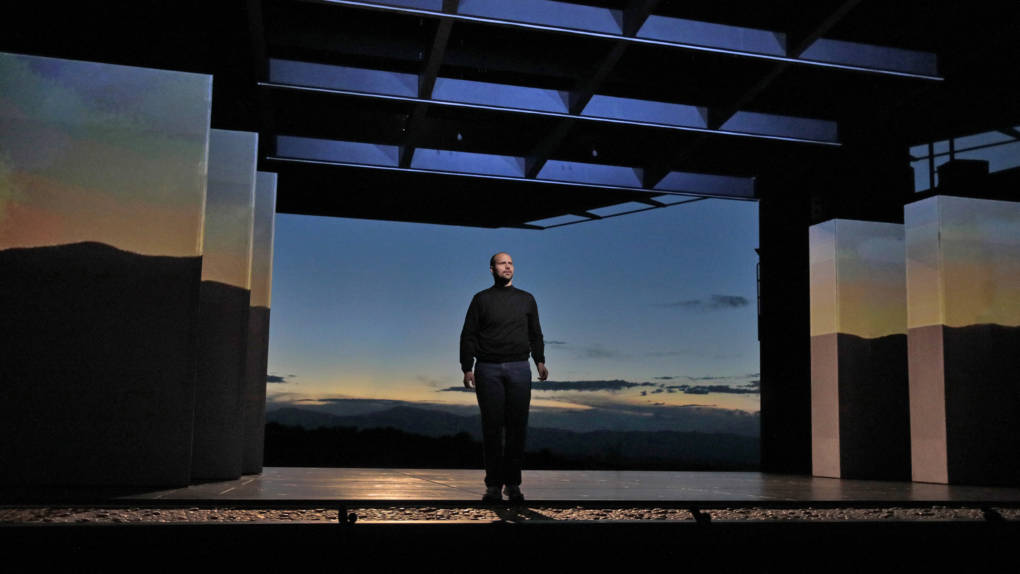
"caption": "Edward Parks as Steve Jobs in the new opera 'The (R)evolution of Steve Jobs by Bay Area composer Mason Bates.",
"description": "Edward Parks as Steve Jobs in the new opera 'The (R)evolution of Steve Jobs by Bay Area composer Mason Bates.",
"title": "ed parks as steve jobs",
"credit": "Photo: Ken Howard Courtesy of Santa Fe Opera",
"status": "inherit",
"isLoading": false,
"fetchFailed": false
},
"arts_13696699": {
"type": "attachments",
"id": "arts_13696699",
"meta": {
"index": "attachments_1716263798",
"site": "arts",
"id": "13696699",
"found": true
},
"parent": 13695608,
"imgSizes": {
"small": {
"file": "https://ww2.kqed.org/app/uploads/sites/2/2017/07/Most20Valuable20Player202007-2-520x292.jpg",
"width": 520,
"mimeType": "image/jpeg",
"height": 292
},
"twentyfourteen-full-width": {
"file": "https://ww2.kqed.org/app/uploads/sites/2/2017/07/Most20Valuable20Player202007-2-1038x576.jpg",
"width": 1038,
"mimeType": "image/jpeg",
"height": 576
},
"thumbnail": {
"file": "https://ww2.kqed.org/app/uploads/sites/2/2017/07/Most20Valuable20Player202007-2-160x90.jpg",
"width": 160,
"mimeType": "image/jpeg",
"height": 90
},
"fd-sm": {
"file": "https://ww2.kqed.org/app/uploads/sites/2/2017/07/Most20Valuable20Player202007-2-960x540.jpg",
"width": 960,
"mimeType": "image/jpeg",
"height": 540
},
"post-thumbnail": {
"file": "https://ww2.kqed.org/app/uploads/sites/2/2017/07/Most20Valuable20Player202007-2-672x372.jpg",
"width": 672,
"mimeType": "image/jpeg",
"height": 372
},
"xsmall": {
"file": "https://ww2.kqed.org/app/uploads/sites/2/2017/07/Most20Valuable20Player202007-2-375x211.jpg",
"width": 375,
"mimeType": "image/jpeg",
"height": 211
},
"kqedFullSize": {
"file": "https://ww2.kqed.org/app/uploads/sites/2/2017/07/Most20Valuable20Player202007-2.jpg",
"width": 2436,
"height": 1370
},
"large": {
"file": "https://ww2.kqed.org/app/uploads/sites/2/2017/07/Most20Valuable20Player202007-2-1020x574.jpg",
"width": 1020,
"mimeType": "image/jpeg",
"height": 574
},
"xlarge": {
"file": "https://ww2.kqed.org/app/uploads/sites/2/2017/07/Most20Valuable20Player202007-2-1180x664.jpg",
"width": 1180,
"mimeType": "image/jpeg",
"height": 664
},
"guest-author-50": {
"file": "https://ww2.kqed.org/app/uploads/sites/2/2017/07/Most20Valuable20Player202007-2-50x50.jpg",
"width": 50,
"mimeType": "image/jpeg",
"height": 50
},
"guest-author-96": {
"file": "https://ww2.kqed.org/app/uploads/sites/2/2017/07/Most20Valuable20Player202007-2-96x96.jpg",
"width": 96,
"mimeType": "image/jpeg",
"height": 96
},
"medium": {
"file": "https://ww2.kqed.org/app/uploads/sites/2/2017/07/Most20Valuable20Player202007-2-800x450.jpg",
"width": 800,
"mimeType": "image/jpeg",
"height": 450
},
"guest-author-64": {
"file": "https://ww2.kqed.org/app/uploads/sites/2/2017/07/Most20Valuable20Player202007-2-64x64.jpg",
"width": 64,
"mimeType": "image/jpeg",
"height": 64
},
"guest-author-32": {
"file": "https://ww2.kqed.org/app/uploads/sites/2/2017/07/Most20Valuable20Player202007-2-32x32.jpg",
"width": 32,
"mimeType": "image/jpeg",
"height": 32
},
"fd-lrg": {
"file": "https://ww2.kqed.org/app/uploads/sites/2/2017/07/Most20Valuable20Player202007-2-1920x1080.jpg",
"width": 1920,
"mimeType": "image/jpeg",
"height": 1080
},
"fd-med": {
"file": "https://ww2.kqed.org/app/uploads/sites/2/2017/07/Most20Valuable20Player202007-2-1180x664.jpg",
"width": 1180,
"mimeType": "image/jpeg",
"height": 664
},
"full-width": {
"file": "https://ww2.kqed.org/app/uploads/sites/2/2017/07/Most20Valuable20Player202007-2-1920x1080.jpg",
"width": 1920,
"mimeType": "image/jpeg",
"height": 1080
},
"detail": {
"file": "https://ww2.kqed.org/app/uploads/sites/2/2017/07/Most20Valuable20Player202007-2-150x150.jpg",
"width": 150,
"mimeType": "image/jpeg",
"height": 150
},
"medium_large": {
"file": "https://ww2.kqed.org/app/uploads/sites/2/2017/07/Most20Valuable20Player202007-2-768x432.jpg",
"width": 768,
"mimeType": "image/jpeg",
"height": 432
},
"guest-author-128": {
"file": "https://ww2.kqed.org/app/uploads/sites/2/2017/07/Most20Valuable20Player202007-2-128x128.jpg",
"width": 128,
"mimeType": "image/jpeg",
"height": 128
},
"xxsmall": {
"file": "https://ww2.kqed.org/app/uploads/sites/2/2017/07/Most20Valuable20Player202007-2-240x135.jpg",
"width": 240,
"mimeType": "image/jpeg",
"height": 135
}
},
"publishDate": 1500500224,
"modified": 1500502025,
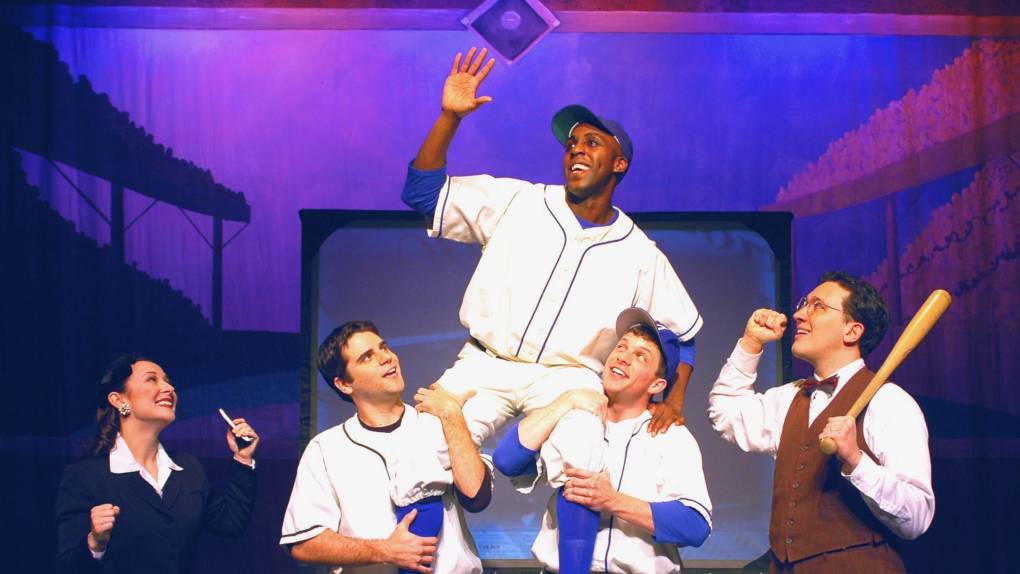
"caption": "A celebratory moment in \"Most Valuable Player,\" performed at The California Theatre Center, a soon-to-be-shuttered community theater in Sunnyvale.",
"description": "A celebratory moment in \"Most Valuable Player,\" performed at The California Theatre Center, a soon-to-be-shuttered community theater in Sunnyvale.",
"title": "MostValuablePlayer2007 2",
"credit": "Photo: Courtesy of the California Theatre Center",
"status": "inherit",
"isLoading": false,
"fetchFailed": false
},
"arts_13660037": {
"type": "attachments",
"id": "arts_13660037",
"meta": {
"index": "attachments_1716263798",
"site": "arts",
"id": "13660037",
"found": true
},
"parent": 13659789,
"imgSizes": {
"small": {
"file": "https://ww2.kqed.org/app/uploads/sites/2/2017/07/IMG_2861-e1500065757894-520x294.jpg",
"width": 520,
"mimeType": "image/jpeg",
"height": 294
},
"twentyfourteen-full-width": {
"file": "https://ww2.kqed.org/app/uploads/sites/2/2017/07/IMG_2861-960x576.jpg",
"width": 960,
"mimeType": "image/jpeg",
"height": 576
},
"thumbnail": {
"file": "https://ww2.kqed.org/app/uploads/sites/2/2017/07/IMG_2861-e1500065757894-160x90.jpg",
"width": 160,
"mimeType": "image/jpeg",
"height": 90
},
"fd-sm": {
"file": "https://ww2.kqed.org/app/uploads/sites/2/2017/07/IMG_2861-960x1280.jpg",
"width": 960,
"mimeType": "image/jpeg",
"height": 1280
},
"post-thumbnail": {
"file": "https://ww2.kqed.org/app/uploads/sites/2/2017/07/IMG_2861-e1500065757894-672x372.jpg",
"width": 672,
"mimeType": "image/jpeg",
"height": 372
},
"xsmall": {
"file": "https://ww2.kqed.org/app/uploads/sites/2/2017/07/IMG_2861-e1500065757894-375x212.jpg",
"width": 375,
"mimeType": "image/jpeg",
"height": 212
},
"kqedFullSize": {
"file": "https://ww2.kqed.org/app/uploads/sites/2/2017/07/IMG_2861-e1500065757894.jpg",
"width": 912,
"height": 515
},
"guest-author-50": {
"file": "https://ww2.kqed.org/app/uploads/sites/2/2017/07/IMG_2861-e1500065757894-50x50.jpg",
"width": 50,
"mimeType": "image/jpeg",
"height": 50
},
"guest-author-96": {
"file": "https://ww2.kqed.org/app/uploads/sites/2/2017/07/IMG_2861-e1500065757894-96x96.jpg",
"width": 96,
"mimeType": "image/jpeg",
"height": 96
},
"medium": {
"file": "https://ww2.kqed.org/app/uploads/sites/2/2017/07/IMG_2861-e1500065757894-800x452.jpg",
"width": 800,
"mimeType": "image/jpeg",
"height": 452
},
"guest-author-64": {
"file": "https://ww2.kqed.org/app/uploads/sites/2/2017/07/IMG_2861-e1500065757894-64x64.jpg",
"width": 64,
"mimeType": "image/jpeg",
"height": 64
},
"guest-author-32": {
"file": "https://ww2.kqed.org/app/uploads/sites/2/2017/07/IMG_2861-e1500065757894-32x32.jpg",
"width": 32,
"mimeType": "image/jpeg",
"height": 32
},
"detail": {
"file": "https://ww2.kqed.org/app/uploads/sites/2/2017/07/IMG_2861-e1500065757894-150x150.jpg",
"width": 150,
"mimeType": "image/jpeg",
"height": 150
},
"medium_large": {
"file": "https://ww2.kqed.org/app/uploads/sites/2/2017/07/IMG_2861-e1500065757894-768x434.jpg",
"width": 768,
"mimeType": "image/jpeg",
"height": 434
},
"guest-author-128": {
"file": "https://ww2.kqed.org/app/uploads/sites/2/2017/07/IMG_2861-e1500065757894-128x128.jpg",
"width": 128,
"mimeType": "image/jpeg",
"height": 128
},
"xxsmall": {
"file": "https://ww2.kqed.org/app/uploads/sites/2/2017/07/IMG_2861-e1500065757894-240x136.jpg",
"width": 240,
"mimeType": "image/jpeg",
"height": 136
}
},
"publishDate": 1500065710,
"modified": 1500067870,
"caption": "Johanna Reis and her husband Timo won $10 lottery tickets to see ‘Hamilton’ on tour in San Francisco.",
"description": "Johanna Reis and her husband Timo won $10 lottery tickets to see ‘Hamilton’ on tour in San Francisco.",
"title": "IMG_2861",
"credit": "Photo: Johanna Reis/KQED",
"status": "inherit",
"isLoading": false,
"fetchFailed": false
},
"arts_13627340": {
"type": "attachments",
"id": "arts_13627340",
"meta": {
"index": "attachments_1716263798",
"site": "arts",
"id": "13627340",
"found": true
},
"parent": 13625584,
"imgSizes": {
"small": {
"file": "https://ww2.kqed.org/app/uploads/sites/2/2017/07/OC9-e1499667314752-520x294.jpg",
"width": 520,
"mimeType": "image/jpeg",
"height": 294
},
"twentyfourteen-full-width": {
"file": "https://ww2.kqed.org/app/uploads/sites/2/2017/07/OC9-e1499667314752-1038x576.jpg",
"width": 1038,
"mimeType": "image/jpeg",
"height": 576
},
"thumbnail": {
"file": "https://ww2.kqed.org/app/uploads/sites/2/2017/07/OC9-e1499667314752-160x91.jpg",
"width": 160,
"mimeType": "image/jpeg",
"height": 91
},
"fd-sm": {
"file": "https://ww2.kqed.org/app/uploads/sites/2/2017/07/OC9-e1499667314752-960x543.jpg",
"width": 960,
"mimeType": "image/jpeg",
"height": 543
},
"post-thumbnail": {
"file": "https://ww2.kqed.org/app/uploads/sites/2/2017/07/OC9-e1499667314752-672x372.jpg",
"width": 672,
"mimeType": "image/jpeg",
"height": 372
},
"xsmall": {
"file": "https://ww2.kqed.org/app/uploads/sites/2/2017/07/OC9-e1499667314752-375x212.jpg",
"width": 375,
"mimeType": "image/jpeg",
"height": 212
},
"kqedFullSize": {
"file": "https://ww2.kqed.org/app/uploads/sites/2/2017/07/OC9-e1499667314752.jpg",
"width": 2981,
"height": 1687
},
"large": {
"file": "https://ww2.kqed.org/app/uploads/sites/2/2017/07/OC9-e1499667314752-1020x577.jpg",
"width": 1020,
"mimeType": "image/jpeg",
"height": 577
},
"xlarge": {
"file": "https://ww2.kqed.org/app/uploads/sites/2/2017/07/OC9-e1499667314752-1180x668.jpg",
"width": 1180,
"mimeType": "image/jpeg",
"height": 668
},
"guest-author-50": {
"file": "https://ww2.kqed.org/app/uploads/sites/2/2017/07/OC9-e1499667314752-50x50.jpg",
"width": 50,
"mimeType": "image/jpeg",
"height": 50
},
"guest-author-96": {
"file": "https://ww2.kqed.org/app/uploads/sites/2/2017/07/OC9-e1499667314752-96x96.jpg",
"width": 96,
"mimeType": "image/jpeg",
"height": 96
},
"medium": {
"file": "https://ww2.kqed.org/app/uploads/sites/2/2017/07/OC9-e1499667314752-800x453.jpg",
"width": 800,
"mimeType": "image/jpeg",
"height": 453
},
"guest-author-64": {
"file": "https://ww2.kqed.org/app/uploads/sites/2/2017/07/OC9-e1499667314752-64x64.jpg",
"width": 64,
"mimeType": "image/jpeg",
"height": 64
},
"guest-author-32": {
"file": "https://ww2.kqed.org/app/uploads/sites/2/2017/07/OC9-e1499667314752-32x32.jpg",
"width": 32,
"mimeType": "image/jpeg",
"height": 32
},
"fd-lrg": {
"file": "https://ww2.kqed.org/app/uploads/sites/2/2017/07/OC9-e1499667314752-1920x1087.jpg",
"width": 1920,
"mimeType": "image/jpeg",
"height": 1087
},
"fd-med": {
"file": "https://ww2.kqed.org/app/uploads/sites/2/2017/07/OC9-e1499667314752-1180x668.jpg",
"width": 1180,
"mimeType": "image/jpeg",
"height": 668
},
"full-width": {
"file": "https://ww2.kqed.org/app/uploads/sites/2/2017/07/OC9-e1499667314752-1920x1087.jpg",
"width": 1920,
"mimeType": "image/jpeg",
"height": 1087
},
"detail": {
"file": "https://ww2.kqed.org/app/uploads/sites/2/2017/07/OC9-e1499667314752-150x150.jpg",
"width": 150,
"mimeType": "image/jpeg",
"height": 150
},
"medium_large": {
"file": "https://ww2.kqed.org/app/uploads/sites/2/2017/07/OC9-e1499667314752-768x435.jpg",
"width": 768,
"mimeType": "image/jpeg",
"height": 435
},
"guest-author-128": {
"file": "https://ww2.kqed.org/app/uploads/sites/2/2017/07/OC9-e1499667314752-128x128.jpg",
"width": 128,
"mimeType": "image/jpeg",
"height": 128
},
"xxsmall": {
"file": "https://ww2.kqed.org/app/uploads/sites/2/2017/07/OC9-e1499667314752-240x136.jpg",
"width": 240,
"mimeType": "image/jpeg",
"height": 136
}
},
"publishDate": 1499667056,
"modified": 1499667265,
"caption": "Zoe (Sydney Morton), the octoroon of 'An Octoroon' takes a light to America's racial tragedy.",
"description": "Zoe (Sydney Morton), the octoroon of 'An Octoroon' takes a light to America's racial tragedy.",
"title": "OC9",
"credit": "Photo Kevin Berne",
"status": "inherit",
"isLoading": false,
"fetchFailed": false
},
"arts_13625801": {
"type": "attachments",
"id": "arts_13625801",
"meta": {
"index": "attachments_1716263798",
"site": "arts",
"id": "13625801",
"found": true
},
"parent": 13625584,
"imgSizes": {
"small": {
"file": "https://ww2.kqed.org/app/uploads/sites/2/2017/07/OC8-e1499648108289-520x292.jpg",
"width": 520,
"mimeType": "image/jpeg",
"height": 292
},
"twentyfourteen-full-width": {
"file": "https://ww2.kqed.org/app/uploads/sites/2/2017/07/OC8-e1499648108289-1038x576.jpg",
"width": 1038,
"mimeType": "image/jpeg",
"height": 576
},
"thumbnail": {
"file": "https://ww2.kqed.org/app/uploads/sites/2/2017/07/OC8-e1499648108289-160x90.jpg",
"width": 160,
"mimeType": "image/jpeg",
"height": 90
},
"fd-sm": {
"file": "https://ww2.kqed.org/app/uploads/sites/2/2017/07/OC8-e1499648108289-960x540.jpg",
"width": 960,
"mimeType": "image/jpeg",
"height": 540
},
"post-thumbnail": {
"file": "https://ww2.kqed.org/app/uploads/sites/2/2017/07/OC8-e1499648108289-672x372.jpg",
"width": 672,
"mimeType": "image/jpeg",
"height": 372
},
"xsmall": {
"file": "https://ww2.kqed.org/app/uploads/sites/2/2017/07/OC8-e1499648108289-375x211.jpg",
"width": 375,
"mimeType": "image/jpeg",
"height": 211
},
"kqedFullSize": {
"file": "https://ww2.kqed.org/app/uploads/sites/2/2017/07/OC8-e1499648108289.jpg",
"width": 3318,
"height": 1866
},
"large": {
"file": "https://ww2.kqed.org/app/uploads/sites/2/2017/07/OC8-e1499648108289-1020x574.jpg",
"width": 1020,
"mimeType": "image/jpeg",
"height": 574
},
"xlarge": {
"file": "https://ww2.kqed.org/app/uploads/sites/2/2017/07/OC8-e1499648108289-1180x664.jpg",
"width": 1180,
"mimeType": "image/jpeg",
"height": 664
},
"guest-author-50": {
"file": "https://ww2.kqed.org/app/uploads/sites/2/2017/07/OC8-e1499648108289-50x50.jpg",
"width": 50,
"mimeType": "image/jpeg",
"height": 50
},
"guest-author-96": {
"file": "https://ww2.kqed.org/app/uploads/sites/2/2017/07/OC8-e1499648108289-96x96.jpg",
"width": 96,
"mimeType": "image/jpeg",
"height": 96
},
"medium": {
"file": "https://ww2.kqed.org/app/uploads/sites/2/2017/07/OC8-e1499648108289-800x450.jpg",
"width": 800,
"mimeType": "image/jpeg",
"height": 450
},
"guest-author-64": {
"file": "https://ww2.kqed.org/app/uploads/sites/2/2017/07/OC8-e1499648108289-64x64.jpg",
"width": 64,
"mimeType": "image/jpeg",
"height": 64
},
"guest-author-32": {
"file": "https://ww2.kqed.org/app/uploads/sites/2/2017/07/OC8-e1499648108289-32x32.jpg",
"width": 32,
"mimeType": "image/jpeg",
"height": 32
},
"fd-lrg": {
"file": "https://ww2.kqed.org/app/uploads/sites/2/2017/07/OC8-e1499648108289-1920x1080.jpg",
"width": 1920,
"mimeType": "image/jpeg",
"height": 1080
},
"fd-med": {
"file": "https://ww2.kqed.org/app/uploads/sites/2/2017/07/OC8-e1499648108289-1180x664.jpg",
"width": 1180,
"mimeType": "image/jpeg",
"height": 664
},
"full-width": {
"file": "https://ww2.kqed.org/app/uploads/sites/2/2017/07/OC8-e1499648108289-1920x1080.jpg",
"width": 1920,
"mimeType": "image/jpeg",
"height": 1080
},
"detail": {
"file": "https://ww2.kqed.org/app/uploads/sites/2/2017/07/OC8-e1499648108289-150x150.jpg",
"width": 150,
"mimeType": "image/jpeg",
"height": 150
},
"medium_large": {
"file": "https://ww2.kqed.org/app/uploads/sites/2/2017/07/OC8-e1499648108289-768x432.jpg",
"width": 768,
"mimeType": "image/jpeg",
"height": 432
},
"guest-author-128": {
"file": "https://ww2.kqed.org/app/uploads/sites/2/2017/07/OC8-e1499648108289-128x128.jpg",
"width": 128,
"mimeType": "image/jpeg",
"height": 128
},
"xxsmall": {
"file": "https://ww2.kqed.org/app/uploads/sites/2/2017/07/OC8-e1499648108289-240x135.jpg",
"width": 240,
"mimeType": "image/jpeg",
"height": 135
}
},
"publishDate": 1499647867,
"modified": 1499668086,
"caption": "The fictional playwright BJJ (Lance Gardner) re-imagines the 19th melodrama 'The Octoroon' in 'An Octoroon' at the Berkeley Rep.",
"description": "The fictional playwright BJJ (Lance Gardner) re-imagines the 19th melodrama 'The Octoroon' in 'An Octoroon' at the Berkeley Rep.",
"title": "OC8",
"credit": "Photo: Kevin Berne",
"status": "inherit",
"isLoading": false,
"fetchFailed": false
},
"arts_13596141": {
"type": "attachments",
"id": "arts_13596141",
"meta": {
"index": "attachments_1716263798",
"site": "arts",
"id": "13596141",
"found": true
},
"parent": 13595888,
"imgSizes": {
"small": {
"file": "https://ww2.kqed.org/app/uploads/sites/2/2017/07/interrogation_hi-e1499323426347-520x292.jpg",
"width": 520,
"mimeType": "image/jpeg",
"height": 292
},
"twentyfourteen-full-width": {
"file": "https://ww2.kqed.org/app/uploads/sites/2/2017/07/interrogation_hi-e1499323426347-1038x576.jpg",
"width": 1038,
"mimeType": "image/jpeg",
"height": 576
},
"thumbnail": {
"file": "https://ww2.kqed.org/app/uploads/sites/2/2017/07/interrogation_hi-e1499323426347-160x90.jpg",
"width": 160,
"mimeType": "image/jpeg",
"height": 90
},
"fd-sm": {
"file": "https://ww2.kqed.org/app/uploads/sites/2/2017/07/interrogation_hi-e1499323426347-960x540.jpg",
"width": 960,
"mimeType": "image/jpeg",
"height": 540
},
"post-thumbnail": {
"file": "https://ww2.kqed.org/app/uploads/sites/2/2017/07/interrogation_hi-e1499323426347-672x372.jpg",
"width": 672,
"mimeType": "image/jpeg",
"height": 372
},
"xsmall": {
"file": "https://ww2.kqed.org/app/uploads/sites/2/2017/07/interrogation_hi-e1499323426347-375x211.jpg",
"width": 375,
"mimeType": "image/jpeg",
"height": 211
},
"kqedFullSize": {
"file": "https://ww2.kqed.org/app/uploads/sites/2/2017/07/interrogation_hi-e1499323426347.jpg",
"width": 5353,
"height": 3010
},
"large": {
"file": "https://ww2.kqed.org/app/uploads/sites/2/2017/07/interrogation_hi-e1499323426347-1020x574.jpg",
"width": 1020,
"mimeType": "image/jpeg",
"height": 574
},
"xlarge": {
"file": "https://ww2.kqed.org/app/uploads/sites/2/2017/07/interrogation_hi-e1499323426347-1180x664.jpg",
"width": 1180,
"mimeType": "image/jpeg",
"height": 664
},
"guest-author-50": {
"file": "https://ww2.kqed.org/app/uploads/sites/2/2017/07/interrogation_hi-e1499323426347-50x50.jpg",
"width": 50,
"mimeType": "image/jpeg",
"height": 50
},
"guest-author-96": {
"file": "https://ww2.kqed.org/app/uploads/sites/2/2017/07/interrogation_hi-e1499323426347-96x96.jpg",
"width": 96,
"mimeType": "image/jpeg",
"height": 96
},
"medium": {
"file": "https://ww2.kqed.org/app/uploads/sites/2/2017/07/interrogation_hi-e1499323426347-800x450.jpg",
"width": 800,
"mimeType": "image/jpeg",
"height": 450
},
"guest-author-64": {
"file": "https://ww2.kqed.org/app/uploads/sites/2/2017/07/interrogation_hi-e1499323426347-64x64.jpg",
"width": 64,
"mimeType": "image/jpeg",
"height": 64
},
"guest-author-32": {
"file": "https://ww2.kqed.org/app/uploads/sites/2/2017/07/interrogation_hi-e1499323426347-32x32.jpg",
"width": 32,
"mimeType": "image/jpeg",
"height": 32
},
"fd-lrg": {
"file": "https://ww2.kqed.org/app/uploads/sites/2/2017/07/interrogation_hi-e1499323426347-1920x1080.jpg",
"width": 1920,
"mimeType": "image/jpeg",
"height": 1080
},
"fd-med": {
"file": "https://ww2.kqed.org/app/uploads/sites/2/2017/07/interrogation_hi-e1499323426347-1180x664.jpg",
"width": 1180,
"mimeType": "image/jpeg",
"height": 664
},
"full-width": {
"file": "https://ww2.kqed.org/app/uploads/sites/2/2017/07/interrogation_hi-e1499323426347-1920x1080.jpg",
"width": 1920,
"mimeType": "image/jpeg",
"height": 1080
},
"detail": {
"file": "https://ww2.kqed.org/app/uploads/sites/2/2017/07/interrogation_hi-e1499323426347-150x150.jpg",
"width": 150,
"mimeType": "image/jpeg",
"height": 150
},
"medium_large": {
"file": "https://ww2.kqed.org/app/uploads/sites/2/2017/07/interrogation_hi-e1499323426347-768x432.jpg",
"width": 768,
"mimeType": "image/jpeg",
"height": 432
},
"guest-author-128": {
"file": "https://ww2.kqed.org/app/uploads/sites/2/2017/07/interrogation_hi-e1499323426347-128x128.jpg",
"width": 128,
"mimeType": "image/jpeg",
"height": 128
},
"xxsmall": {
"file": "https://ww2.kqed.org/app/uploads/sites/2/2017/07/interrogation_hi-e1499323426347-240x135.jpg",
"width": 240,
"mimeType": "image/jpeg",
"height": 135
}
},
"publishDate": 1499322195,
"modified": 1499323319,
"caption": "ICE Agent L. Mary Jones (Velina Brown) and her girlfriend Zaniyah Nahuati (Marilet Martinez) navigate a difficult relationship in 'Walls' by the San Francisco Mime Troupe.",
"description": "ICE Agent L. Mary Jones (Velina Brown) and her girlfriend Zaniyah Nahuati (Marilet Martinez) navigate a difficult relationship in 'Walls' by the San Francisco Mime Troupe.",
"title": "interrogation_hi",
"credit": "Photo: Mike Melnyk",
"status": "inherit",
"isLoading": false,
"fetchFailed": false
},
"arts_13599150": {
"type": "attachments",
"id": "arts_13599150",
"meta": {
"index": "attachments_1716263798",
"site": "arts",
"id": "13599150",
"found": true
},
"parent": 13599142,
"imgSizes": {
"small": {
"file": "https://ww2.kqed.org/app/uploads/sites/2/2017/07/gettyimages-3202710_wide-816625b6c1ed20481cff83637a46ba608651e364-520x292.jpg",
"width": 520,
"mimeType": "image/jpeg",
"height": 292
},
"twentyfourteen-full-width": {
"file": "https://ww2.kqed.org/app/uploads/sites/2/2017/07/gettyimages-3202710_wide-816625b6c1ed20481cff83637a46ba608651e364-1038x576.jpg",
"width": 1038,
"mimeType": "image/jpeg",
"height": 576
},
"thumbnail": {
"file": "https://ww2.kqed.org/app/uploads/sites/2/2017/07/gettyimages-3202710_wide-816625b6c1ed20481cff83637a46ba608651e364-160x90.jpg",
"width": 160,
"mimeType": "image/jpeg",
"height": 90
},
"fd-sm": {
"file": "https://ww2.kqed.org/app/uploads/sites/2/2017/07/gettyimages-3202710_wide-816625b6c1ed20481cff83637a46ba608651e364-960x540.jpg",
"width": 960,
"mimeType": "image/jpeg",
"height": 540
},
"post-thumbnail": {
"file": "https://ww2.kqed.org/app/uploads/sites/2/2017/07/gettyimages-3202710_wide-816625b6c1ed20481cff83637a46ba608651e364-672x372.jpg",
"width": 672,
"mimeType": "image/jpeg",
"height": 372
},
"xsmall": {
"file": "https://ww2.kqed.org/app/uploads/sites/2/2017/07/gettyimages-3202710_wide-816625b6c1ed20481cff83637a46ba608651e364-375x211.jpg",
"width": 375,
"mimeType": "image/jpeg",
"height": 211
},
"kqedFullSize": {
"file": "https://ww2.kqed.org/app/uploads/sites/2/2017/07/gettyimages-3202710_wide-816625b6c1ed20481cff83637a46ba608651e364.jpg",
"width": 3555,
"height": 1999
},
"large": {
"file": "https://ww2.kqed.org/app/uploads/sites/2/2017/07/gettyimages-3202710_wide-816625b6c1ed20481cff83637a46ba608651e364-1020x574.jpg",
"width": 1020,
"mimeType": "image/jpeg",
"height": 574
},
"xlarge": {
"file": "https://ww2.kqed.org/app/uploads/sites/2/2017/07/gettyimages-3202710_wide-816625b6c1ed20481cff83637a46ba608651e364-1180x664.jpg",
"width": 1180,
"mimeType": "image/jpeg",
"height": 664
},
"guest-author-50": {
"file": "https://ww2.kqed.org/app/uploads/sites/2/2017/07/gettyimages-3202710_wide-816625b6c1ed20481cff83637a46ba608651e364-50x50.jpg",
"width": 50,
"mimeType": "image/jpeg",
"height": 50
},
"guest-author-96": {
"file": "https://ww2.kqed.org/app/uploads/sites/2/2017/07/gettyimages-3202710_wide-816625b6c1ed20481cff83637a46ba608651e364-96x96.jpg",
"width": 96,
"mimeType": "image/jpeg",
"height": 96
},
"medium": {
"file": "https://ww2.kqed.org/app/uploads/sites/2/2017/07/gettyimages-3202710_wide-816625b6c1ed20481cff83637a46ba608651e364-800x450.jpg",
"width": 800,
"mimeType": "image/jpeg",
"height": 450
},
"guest-author-64": {
"file": "https://ww2.kqed.org/app/uploads/sites/2/2017/07/gettyimages-3202710_wide-816625b6c1ed20481cff83637a46ba608651e364-64x64.jpg",
"width": 64,
"mimeType": "image/jpeg",
"height": 64
},
"guest-author-32": {
"file": "https://ww2.kqed.org/app/uploads/sites/2/2017/07/gettyimages-3202710_wide-816625b6c1ed20481cff83637a46ba608651e364-32x32.jpg",
"width": 32,
"mimeType": "image/jpeg",
"height": 32
},
"fd-lrg": {
"file": "https://ww2.kqed.org/app/uploads/sites/2/2017/07/gettyimages-3202710_wide-816625b6c1ed20481cff83637a46ba608651e364-1920x1080.jpg",
"width": 1920,
"mimeType": "image/jpeg",
"height": 1080
},
"fd-med": {
"file": "https://ww2.kqed.org/app/uploads/sites/2/2017/07/gettyimages-3202710_wide-816625b6c1ed20481cff83637a46ba608651e364-1180x664.jpg",
"width": 1180,
"mimeType": "image/jpeg",
"height": 664
},
"full-width": {
"file": "https://ww2.kqed.org/app/uploads/sites/2/2017/07/gettyimages-3202710_wide-816625b6c1ed20481cff83637a46ba608651e364-1920x1080.jpg",
"width": 1920,
"mimeType": "image/jpeg",
"height": 1080
},
"detail": {
"file": "https://ww2.kqed.org/app/uploads/sites/2/2017/07/gettyimages-3202710_wide-816625b6c1ed20481cff83637a46ba608651e364-150x150.jpg",
"width": 150,
"mimeType": "image/jpeg",
"height": 150
},
"medium_large": {
"file": "https://ww2.kqed.org/app/uploads/sites/2/2017/07/gettyimages-3202710_wide-816625b6c1ed20481cff83637a46ba608651e364-768x432.jpg",
"width": 768,
"mimeType": "image/jpeg",
"height": 432
},
"guest-author-128": {
"file": "https://ww2.kqed.org/app/uploads/sites/2/2017/07/gettyimages-3202710_wide-816625b6c1ed20481cff83637a46ba608651e364-128x128.jpg",
"width": 128,
"mimeType": "image/jpeg",
"height": 128
},
"xxsmall": {
"file": "https://ww2.kqed.org/app/uploads/sites/2/2017/07/gettyimages-3202710_wide-816625b6c1ed20481cff83637a46ba608651e364-240x135.jpg",
"width": 240,
"mimeType": "image/jpeg",
"height": 135
}
},
"publishDate": 1499354811,
"modified": 1499354925,
"caption": "Edward Albee, pictured here in 1967, won three Pulitzer Prizes over the course of his career.",
"description": "Edward Albee, pictured here in 1967, won three Pulitzer Prizes over the course of his career.",
"title": "Edward Albee, pictured here in 1967, won three Pulitzer Prizes over the course of his career.",
"credit": "Photo: Hulton Archive/Getty Images",
"status": "inherit",
"isLoading": false,
"fetchFailed": false
},
"arts_13195853": {
"type": "attachments",
"id": "arts_13195853",
"meta": {
"index": "attachments_1716263798",
"site": "arts",
"id": "13195853",
"found": true
},
"parent": 13156032,
"imgSizes": {
"small": {
"file": "https://ww2.kqed.org/app/uploads/sites/2/2017/05/Dorothea-Lange-Manzanar-Relocation-CenterCROP-520x293.jpg",
"width": 520,
"mimeType": "image/jpeg",
"height": 293
},
"thumbnail": {
"file": "https://ww2.kqed.org/app/uploads/sites/2/2017/05/Dorothea-Lange-Manzanar-Relocation-CenterCROP-160x90.jpg",
"width": 160,
"mimeType": "image/jpeg",
"height": 90
},
"post-thumbnail": {
"file": "https://ww2.kqed.org/app/uploads/sites/2/2017/05/Dorothea-Lange-Manzanar-Relocation-CenterCROP-672x372.jpg",
"width": 672,
"mimeType": "image/jpeg",
"height": 372
},
"xsmall": {
"file": "https://ww2.kqed.org/app/uploads/sites/2/2017/05/Dorothea-Lange-Manzanar-Relocation-CenterCROP-375x211.jpg",
"width": 375,
"mimeType": "image/jpeg",
"height": 211
},
"kqedFullSize": {
"file": "https://ww2.kqed.org/app/uploads/sites/2/2017/05/Dorothea-Lange-Manzanar-Relocation-CenterCROP.jpg",
"width": 800,
"height": 450
},
"guest-author-50": {
"file": "https://ww2.kqed.org/app/uploads/sites/2/2017/05/Dorothea-Lange-Manzanar-Relocation-CenterCROP-50x50.jpg",
"width": 50,
"mimeType": "image/jpeg",
"height": 50
},
"guest-author-96": {
"file": "https://ww2.kqed.org/app/uploads/sites/2/2017/05/Dorothea-Lange-Manzanar-Relocation-CenterCROP-96x96.jpg",
"width": 96,
"mimeType": "image/jpeg",
"height": 96
},
"medium": {
"file": "https://ww2.kqed.org/app/uploads/sites/2/2017/05/Dorothea-Lange-Manzanar-Relocation-CenterCROP-800x450.jpg",
"width": 800,
"mimeType": "image/jpeg",
"height": 450
},
"guest-author-64": {
"file": "https://ww2.kqed.org/app/uploads/sites/2/2017/05/Dorothea-Lange-Manzanar-Relocation-CenterCROP-64x64.jpg",
"width": 64,
"mimeType": "image/jpeg",
"height": 64
},
"guest-author-32": {
"file": "https://ww2.kqed.org/app/uploads/sites/2/2017/05/Dorothea-Lange-Manzanar-Relocation-CenterCROP-32x32.jpg",
"width": 32,
"mimeType": "image/jpeg",
"height": 32
},
"detail": {
"file": "https://ww2.kqed.org/app/uploads/sites/2/2017/05/Dorothea-Lange-Manzanar-Relocation-CenterCROP-150x150.jpg",
"width": 150,
"mimeType": "image/jpeg",
"height": 150
},
"medium_large": {
"file": "https://ww2.kqed.org/app/uploads/sites/2/2017/05/Dorothea-Lange-Manzanar-Relocation-CenterCROP-768x432.jpg",
"width": 768,
"mimeType": "image/jpeg",
"height": 432
},
"guest-author-128": {
"file": "https://ww2.kqed.org/app/uploads/sites/2/2017/05/Dorothea-Lange-Manzanar-Relocation-CenterCROP-128x128.jpg",
"width": 128,
"mimeType": "image/jpeg",
"height": 128
},
"xxsmall": {
"file": "https://ww2.kqed.org/app/uploads/sites/2/2017/05/Dorothea-Lange-Manzanar-Relocation-CenterCROP-240x135.jpg",
"width": 240,
"mimeType": "image/jpeg",
"height": 135
}
},
"publishDate": 1494380930,
"modified": 1494380979,
"caption": "Dorothea Lange, 'Manzanar, California. Dust storm at this War Relocation Authority center where evacuees of Japanese ancestry are spending the duration, July 3, 1942.'",
"description": "Dorothea Lange, 'Manzanar, California. Dust storm at this War Relocation Authority center where evacuees of Japanese ancestry are spending the duration, July 3, 1942.'",
"title": "Dorothea-Lange-Manzanar-Relocation-CenterCROP",
"credit": "Courtesy of OMCA",
"status": "inherit",
"isLoading": false,
"fetchFailed": false
},
"arts_13546364": {
"type": "attachments",
"id": "arts_13546364",
"meta": {
"index": "attachments_1716263798",
"site": "arts",
"id": "13546364",
"found": true
},
"parent": 13545153,
"imgSizes": {
"small": {
"file": "https://ww2.kqed.org/app/uploads/sites/2/2017/06/A_20170410_1576_Priscilla_HiResWEB-e1498774587883-520x292.jpg",
"width": 520,
"mimeType": "image/jpeg",
"height": 292
},
"thumbnail": {
"file": "https://ww2.kqed.org/app/uploads/sites/2/2017/06/A_20170410_1576_Priscilla_HiResWEB-e1498774587883-160x90.jpg",
"width": 160,
"mimeType": "image/jpeg",
"height": 90
},
"post-thumbnail": {
"file": "https://ww2.kqed.org/app/uploads/sites/2/2017/06/A_20170410_1576_Priscilla_HiResWEB-e1498774587883-672x372.jpg",
"width": 672,
"mimeType": "image/jpeg",
"height": 372
},
"xsmall": {
"file": "https://ww2.kqed.org/app/uploads/sites/2/2017/06/A_20170410_1576_Priscilla_HiResWEB-e1498774587883-375x211.jpg",
"width": 375,
"mimeType": "image/jpeg",
"height": 211
},
"kqedFullSize": {
"file": "https://ww2.kqed.org/app/uploads/sites/2/2017/06/A_20170410_1576_Priscilla_HiResWEB-e1498774587883.jpg",
"width": 685,
"height": 385
},
"guest-author-50": {
"file": "https://ww2.kqed.org/app/uploads/sites/2/2017/06/A_20170410_1576_Priscilla_HiResWEB-e1498774587883-50x50.jpg",
"width": 50,
"mimeType": "image/jpeg",
"height": 50
},
"guest-author-96": {
"file": "https://ww2.kqed.org/app/uploads/sites/2/2017/06/A_20170410_1576_Priscilla_HiResWEB-e1498774587883-96x96.jpg",
"width": 96,
"mimeType": "image/jpeg",
"height": 96
},
"guest-author-64": {
"file": "https://ww2.kqed.org/app/uploads/sites/2/2017/06/A_20170410_1576_Priscilla_HiResWEB-e1498774587883-64x64.jpg",
"width": 64,
"mimeType": "image/jpeg",
"height": 64
},
"detail": {
"file": "https://ww2.kqed.org/app/uploads/sites/2/2017/06/A_20170410_1576_Priscilla_HiResWEB-e1498774587883-150x150.jpg",
"width": 150,
"mimeType": "image/jpeg",
"height": 150
},
"guest-author-32": {
"file": "https://ww2.kqed.org/app/uploads/sites/2/2017/06/A_20170410_1576_Priscilla_HiResWEB-e1498774587883-32x32.jpg",
"width": 32,
"mimeType": "image/jpeg",
"height": 32
},
"guest-author-128": {
"file": "https://ww2.kqed.org/app/uploads/sites/2/2017/06/A_20170410_1576_Priscilla_HiResWEB-e1498774587883-128x128.jpg",
"width": 128,
"mimeType": "image/jpeg",
"height": 128
},
"xxsmall": {
"file": "https://ww2.kqed.org/app/uploads/sites/2/2017/06/A_20170410_1576_Priscilla_HiResWEB-e1498774587883-240x135.jpg",
"width": 240,
"mimeType": "image/jpeg",
"height": 135
}
},
"publishDate": 1498774450,
"modified": 1498779340,
"caption": "Stephen Kanaski as Miss Understanding and Rudy Guerrero as Tick in 'Priscilla Queen of the Desert,' a Theatre Rhinoceros production at San Francisco's Eureka Theatre. Eureka will shut down on July 5 after 45 years. ",
"description": "Stephen Kanaski as Miss Understanding and Rudy Guerrero as Tick in\n'Priscilla Queen of the Desert', a Theatre Rhinoceros production at San Francisco's Eureka Theatre. Eureka is shutting down Jul. 5 after 45 years. ",
"title": "A_20170410_1576_Priscilla_HiResWEB",
"credit": "Photo: David Wilson",
"status": "inherit",
"isLoading": false,
"fetchFailed": false
},
"arts_13531698": {
"type": "attachments",
"id": "arts_13531698",
"meta": {
"index": "attachments_1716263798",
"site": "arts",
"id": "13531698",
"found": true
},
"parent": 13516134,
"imgSizes": {
"small": {
"file": "https://ww2.kqed.org/app/uploads/sites/2/2017/06/MoAD.Group_.MAIN_-520x293.jpg",
"width": 520,
"mimeType": "image/jpeg",
"height": 293
},
"thumbnail": {
"file": "https://ww2.kqed.org/app/uploads/sites/2/2017/06/MoAD.Group_.MAIN_-160x90.jpg",
"width": 160,
"mimeType": "image/jpeg",
"height": 90
},
"fd-sm": {
"file": "https://ww2.kqed.org/app/uploads/sites/2/2017/06/MoAD.Group_.MAIN_-960x540.jpg",
"width": 960,
"mimeType": "image/jpeg",
"height": 540
},
"post-thumbnail": {
"file": "https://ww2.kqed.org/app/uploads/sites/2/2017/06/MoAD.Group_.MAIN_-672x372.jpg",
"width": 672,
"mimeType": "image/jpeg",
"height": 372
},
"xsmall": {
"file": "https://ww2.kqed.org/app/uploads/sites/2/2017/06/MoAD.Group_.MAIN_-375x211.jpg",
"width": 375,
"mimeType": "image/jpeg",
"height": 211
},
"kqedFullSize": {
"file": "https://ww2.kqed.org/app/uploads/sites/2/2017/06/MoAD.Group_.MAIN_.jpg",
"width": 960,
"height": 540
},
"guest-author-50": {
"file": "https://ww2.kqed.org/app/uploads/sites/2/2017/06/MoAD.Group_.MAIN_-50x50.jpg",
"width": 50,
"mimeType": "image/jpeg",
"height": 50
},
"guest-author-96": {
"file": "https://ww2.kqed.org/app/uploads/sites/2/2017/06/MoAD.Group_.MAIN_-96x96.jpg",
"width": 96,
"mimeType": "image/jpeg",
"height": 96
},
"medium": {
"file": "https://ww2.kqed.org/app/uploads/sites/2/2017/06/MoAD.Group_.MAIN_-800x450.jpg",
"width": 800,
"mimeType": "image/jpeg",
"height": 450
},
"guest-author-64": {
"file": "https://ww2.kqed.org/app/uploads/sites/2/2017/06/MoAD.Group_.MAIN_-64x64.jpg",
"width": 64,
"mimeType": "image/jpeg",
"height": 64
},
"guest-author-32": {
"file": "https://ww2.kqed.org/app/uploads/sites/2/2017/06/MoAD.Group_.MAIN_-32x32.jpg",
"width": 32,
"mimeType": "image/jpeg",
"height": 32
},
"detail": {
"file": "https://ww2.kqed.org/app/uploads/sites/2/2017/06/MoAD.Group_.MAIN_-150x150.jpg",
"width": 150,
"mimeType": "image/jpeg",
"height": 150
},
"medium_large": {
"file": "https://ww2.kqed.org/app/uploads/sites/2/2017/06/MoAD.Group_.MAIN_-768x432.jpg",
"width": 768,
"mimeType": "image/jpeg",
"height": 432
},
"guest-author-128": {
"file": "https://ww2.kqed.org/app/uploads/sites/2/2017/06/MoAD.Group_.MAIN_-128x128.jpg",
"width": 128,
"mimeType": "image/jpeg",
"height": 128
},
"xxsmall": {
"file": "https://ww2.kqed.org/app/uploads/sites/2/2017/06/MoAD.Group_.MAIN_-240x135.jpg",
"width": 240,
"mimeType": "image/jpeg",
"height": 135
}
},
"publishDate": 1498596279,
"modified": 1498596313,
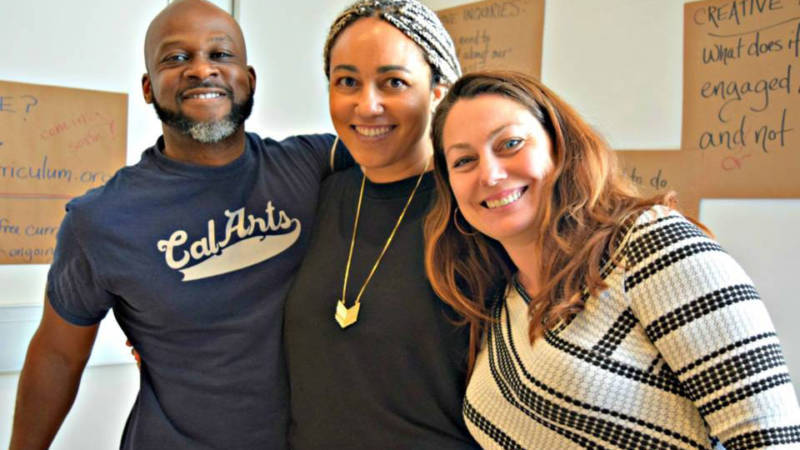
"caption": "Organizers of Rise Up! An American Curriculum at MoAD, from left: Marc Bamuthi Joseph, Mariah Rankine-Landers, and Jessa Brie Moreno.",
"description": "Organizers of Rise Up! An American Curriculum at MoAD, from left: Marc Bamuthi Joseph, Mariah Rankine-Landers, and Jessa Brie Moreno.",
"title": "MoAD.Group.MAIN",
"credit": "Photo: Shelby Pope",
"status": "inherit",
"isLoading": false,
"fetchFailed": false
}
},
"audioPlayerReducer": {
"postId": "stream_live",
"isPaused": true,
"isPlaying": false,
"pfsActive": false,
"pledgeModalIsOpen": true,
"playerDrawerIsOpen": false,
"liveAudioPlayStartedAt": 0,
"liveAudioPlayContext": ""
},
"authorsReducer": {
"byline_arts_13781556": {
"type": "authors",
"id": "byline_arts_13781556",
"meta": {
"override": true
},
"slug": "byline_arts_13781556",
"name": "Colin Dwyer",
"isLoading": false
},
"byline_arts_13659789": {
"type": "authors",
"id": "byline_arts_13659789",
"meta": {
"override": true
},
"slug": "byline_arts_13659789",
"name": "Johanna Reis, KQED",
"isLoading": false
},
"byline_arts_13599142": {
"type": "authors",
"id": "byline_arts_13599142",
"meta": {
"override": true
},
"slug": "byline_arts_13599142",
"name": "Jeff Lunden",
"isLoading": false
},
"cmusiker": {
"type": "authors",
"id": "32",
"meta": {
"index": "authors_1716337520",
"id": "32",
"found": true
},
"name": "Cy Musiker",
"firstName": "Cy",
"lastName": "Musiker",
"slug": "cmusiker",
"email": "cmusiker@kqed.org",
"display_author_email": false,
"staff_mastheads": [],
"title": "KQED Contributor",
"bio": "Cy Musiker is a former co-host of The Do List and a former reporter covering the arts for KQED News and The California Report. He loves live performance, especially great theater, jazz, roots music, anything by Mahler. Cy has an MJ from UC Berkeley's School of Journalism, and got his BA from Hampshire College. His work has been recognized by the Society for Professional Journalists with their Sigma Delta Chi Award for Public Service in Journalism. When he can, Cy likes to swim in Tomales Bay, run with his dog in the East Bay Hills, and hike the Sierra.",
"avatar": "https://secure.gravatar.com/avatar/05eaba5c5696ce8f062e4ea2df428a43?s=600&d=blank&r=g",
"twitter": null,
"facebook": null,
"instagram": null,
"linkedin": null,
"sites": [
{
"site": "arts",
"roles": [
"Contributor",
"subscriber"
]
},
{
"site": "news",
"roles": [
"author"
]
},
{
"site": "bayareabites",
"roles": [
"contributor"
]
}
],
"headData": {
"title": "Cy Musiker | KQED",
"description": "KQED Contributor",
"ogImgSrc": "https://secure.gravatar.com/avatar/05eaba5c5696ce8f062e4ea2df428a43?s=600&d=blank&r=g",
"twImgSrc": "https://secure.gravatar.com/avatar/05eaba5c5696ce8f062e4ea2df428a43?s=600&d=blank&r=g"
},
"isLoading": false,
"link": "/author/cmusiker"
},
"rachael-myrow": {
"type": "authors",
"id": "251",
"meta": {
"index": "authors_1716337520",
"id": "251",
"found": true
},
"name": "Rachael Myrow",
"firstName": "Rachael",
"lastName": "Myrow",
"slug": "rachael-myrow",
"email": "rmyrow@kqed.org",
"display_author_email": true,
"staff_mastheads": [
"news"
],
"title": "Senior Editor of KQED's Silicon Valley News Desk",
"bio": "• I write and edit stories about how Silicon Valley power and policies shape everyday life in California. I’m also passionate about making Bay Area history and culture more accessible to a broad public. • I’ve been a journalist for most of my life, starting in high school with The Franklin Press in Los Angeles, where I grew up. While earning my first degree in English at UC Berkeley, I got my start in public radio at KALX-FM. After completing a second degree in journalism at Cal, I landed my first professional job at Marketplace, then moved on to KPCC (now LAist), and then KQED, where I hosted The California Report for more than seven years. • My reporting has appeared on NPR, The World, WBUR’s \u003ci>Here & Now\u003c/i>, and the BBC. I also guest host for KQED’s \u003ci>Forum\u003c/i>, as well as the Commonwealth Club in San Francisco. • I speak periodically on media, democracy and technology issues, and do voiceover work for documentaries and educational video projects. • Outside of the studio, you'll find me hiking Bay Area trails and whipping up Insta-ready meals in my kitchen. • I do not accept gifts, money, or favors from anyone connected to my reporting, I don't pay people for information, and I do not support or donate to political causes. • I strive to treat the people I report on with fairness, honesty, and respect. I also recognize there are often multiple sides to a story and work to verify information through multiple sources and documentation. If I get something wrong, I correct it.",
"avatar": "https://secure.gravatar.com/avatar/3ed8a3c5f26025e4a805ba634cda8cd764906b97438a6d9ce216b044e340da4e?s=600&d=blank&r=g",
"twitter": "rachaelmyrow",
"bluesky": null,
"facebook": null,
"instagram": null,
"linkedin": "https://www.linkedin.com/in/rachaelmyrow/",
"sites": [
{
"site": "arts",
"roles": [
"administrator"
]
},
{
"site": "news",
"roles": [
"edit_others_posts",
"editor"
]
},
{
"site": "futureofyou",
"roles": [
"editor"
]
},
{
"site": "bayareabites",
"roles": [
"editor"
]
},
{
"site": "stateofhealth",
"roles": [
"editor"
]
},
{
"site": "science",
"roles": [
"editor"
]
},
{
"site": "food",
"roles": [
"editor"
]
},
{
"site": "forum",
"roles": [
"editor"
]
},
{
"site": "liveblog",
"roles": [
"author"
]
}
],
"headData": {
"title": "Rachael Myrow | KQED",
"description": "Senior Editor of KQED's Silicon Valley News Desk",
"ogImgSrc": "https://secure.gravatar.com/avatar/3ed8a3c5f26025e4a805ba634cda8cd764906b97438a6d9ce216b044e340da4e?s=600&d=blank&r=g",
"twImgSrc": "https://secure.gravatar.com/avatar/3ed8a3c5f26025e4a805ba634cda8cd764906b97438a6d9ce216b044e340da4e?s=600&d=blank&r=g"
},
"isLoading": false,
"link": "/author/rachael-myrow"
},
"shelbypope": {
"type": "authors",
"id": "5566",
"meta": {
"index": "authors_1716337520",
"id": "5566",
"found": true
},
"name": "Shelby Pope",
"firstName": "Shelby",
"lastName": "Pope",
"slug": "shelbypope",
"email": "shelbylpope@gmail.com",
"display_author_email": false,
"staff_mastheads": [],
"title": "KQED Contributor",
"bio": "Shelby Pope is a freelance writer living and eating her way through the East Bay. She’s written about food, art and science for publications including the Smithsonian, Lucky Peach, and the Washington Post's pet blog. When she’s not taste testing sourdough bread to find the Bay Area’s best loaf, you can find her on Twitter \u003ca href=\"https://twitter.com/shelbylpope\">@shelbylpope\u003c/a> or at \u003ca href=\"https://shelbypope.com/\">shelbypope.com\u003c/a>",
"avatar": "https://secure.gravatar.com/avatar/df74e904399e45720e48e36c6e1ae7a90c32216eb2c9c82f3b2e1a9641b507d3?s=600&d=blank&r=g",
"twitter": "shelbylpope",
"bluesky": null,
"facebook": null,
"instagram": null,
"linkedin": null,
"sites": [
{
"site": "arts",
"roles": [
"subscriber"
]
},
{
"site": "food",
"roles": [
"subscriber"
]
}
],
"headData": {
"title": "Shelby Pope | KQED",
"description": "KQED Contributor",
"ogImgSrc": "https://secure.gravatar.com/avatar/df74e904399e45720e48e36c6e1ae7a90c32216eb2c9c82f3b2e1a9641b507d3?s=600&d=blank&r=g",
"twImgSrc": "https://secure.gravatar.com/avatar/df74e904399e45720e48e36c6e1ae7a90c32216eb2c9c82f3b2e1a9641b507d3?s=600&d=blank&r=g"
},
"isLoading": false,
"link": "/author/shelbypope"
},
"cveltman": {
"type": "authors",
"id": "8608",
"meta": {
"index": "authors_1716337520",
"id": "8608",
"found": true
},
"name": "Chloe Veltman",
"firstName": "Chloe",
"lastName": "Veltman",
"slug": "cveltman",
"email": "cveltman@kqed.org",
"display_author_email": true,
"staff_mastheads": [],
"title": "Arts and Culture Reporter",
"bio": "Chloe Veltman is a former arts and culture reporter for KQED. Prior to joining the organization, she launched and led the arts bureau at Colorado Public Radio, served as the Bay Area's culture columnist for the New York Times, and was the founder, host and executive producer of VoiceBox, a national award-winning weekly podcast/radio show and live events series all about the human voice. Chloe is the recipient of numerous prizes, grants and fellowships including a Webby Award for her work on interactive storytelling, both the John S Knight Journalism Fellowship and Humanities Center Fellowship at Stanford University, the Sundance Arts Writing Fellowship and a Library of Congress Research Fellowship. She is the author of the book \"On Acting\" and has appeared as a guest lecturer at Yale University and the San Francisco Conservatory of Music among other institutions. She holds a BA in english literature from King's College, Cambridge, and a Masters in Dramaturgy from the Central School of Speech and Drama/Harvard Institute for Advanced Theater Training.\r\n\u003ca href=\"https://www.chloeveltman.com\">www.chloeveltman.com\u003c/a>",
"avatar": "https://secure.gravatar.com/avatar/55403394b00a1ddab683952c2eb2cf85?s=600&d=blank&r=g",
"twitter": "chloeveltman",
"facebook": null,
"instagram": null,
"linkedin": null,
"sites": [
{
"site": "arts",
"roles": []
},
{
"site": "news",
"roles": [
"author"
]
},
{
"site": "pop",
"roles": [
"editor"
]
},
{
"site": "science",
"roles": []
}
],
"headData": {
"title": "Chloe Veltman | KQED",
"description": "Arts and Culture Reporter",
"ogImgSrc": "https://secure.gravatar.com/avatar/55403394b00a1ddab683952c2eb2cf85?s=600&d=blank&r=g",
"twImgSrc": "https://secure.gravatar.com/avatar/55403394b00a1ddab683952c2eb2cf85?s=600&d=blank&r=g"
},
"isLoading": false,
"link": "/author/cveltman"
},
"jwilkins": {
"type": "authors",
"id": "8668",
"meta": {
"index": "authors_1716337520",
"id": "8668",
"found": true
},
"name": "John Wilkins",
"firstName": "John",
"lastName": "Wilkins",
"slug": "jwilkins",
"email": "Johnrwilkins@aol.com",
"display_author_email": false,
"staff_mastheads": [],
"title": null,
"bio": "John Wilkins is the theater critic for KQED Arts. He was the Artistic Director of Last Planet Theatre for ten years and teaches in the Writing and Literature program at CCA. Follow him on Twitter @johnrwilkins2",
"avatar": "https://secure.gravatar.com/avatar/7798fcc8a10bee0e04387b724b492df7?s=600&d=blank&r=g",
"twitter": null,
"facebook": null,
"instagram": null,
"linkedin": null,
"sites": [
{
"site": "arts",
"roles": [
"subscriber"
]
}
],
"headData": {
"title": "John Wilkins | KQED",
"description": null,
"ogImgSrc": "https://secure.gravatar.com/avatar/7798fcc8a10bee0e04387b724b492df7?s=600&d=blank&r=g",
"twImgSrc": "https://secure.gravatar.com/avatar/7798fcc8a10bee0e04387b724b492df7?s=600&d=blank&r=g"
},
"isLoading": false,
"link": "/author/jwilkins"
}
},
"pagesReducer": {
"arts_category_theater": {
"type": "terms",
"id": "arts_967",
"meta": {
"index": "terms_1716263798",
"site": "arts",
"id": "967",
"score": 12.286901
},
"featImg": null,
"name": "Theater",
"description": null,
"taxonomy": "category",
"headData": {
"twImgId": null,
"twTitle": null,
"ogTitle": null,
"ogImgId": null,
"twDescription": null,
"description": null,
"title": "Theater Archives | KQED Arts",
"ogDescription": null
},
"ttid": 985,
"slug": "theater",
"isLoading": false,
"title": "Theater",
"pageMeta": {
"site": "arts",
"WpPageTemplate": "page-topic-editorial",
"currentPage": 43
},
"blocks": [
{
"blockName": "kqed/post-list",
"attrs": {
"layout": "cardArticle2",
"query": "posts/arts?category=theater",
"seeMore": false,
"paginated": true,
"page": 43
}
},
{
"blockName": "kqed/ad"
}
]
}
},
"pfsSessionReducer": {},
"postsReducer": {
"stream_live": {
"type": "live",
"id": "stream_live",
"audioUrl": "https://streams.kqed.org/kqedradio",
"title": "Live Stream",
"excerpt": "Live Stream information currently unavailable.",
"link": "/radio",
"featImg": "",
"label": {
"name": "KQED Live",
"link": "/"
}
},
"stream_kqedNewscast": {
"type": "posts",
"id": "stream_kqedNewscast",
"audioUrl": "https://www.kqed.org/.stream/anon/radio/RDnews/newscast.mp3?_=1",
"title": "KQED Newscast",
"featImg": "",
"label": {
"name": "88.5 FM",
"link": "/"
}
},
"arts_13781556": {
"type": "posts",
"id": "arts_13781556",
"meta": {
"index": "posts_1716263798",
"site": "arts",
"id": "13781556",
"score": null,
"sort": [
1501523654000
]
},
"parent": 0,
"labelTerm": {
"site": "arts",
"term": 137
},
"blocks": [],
"publishDate": 1501523654,
"format": "standard",
"title": "Sam Shepard, 'Poet Laureate Of America's Emotional Badlands,' Dies at 73",
"headTitle": "Sam Shepard, ‘Poet Laureate Of America’s Emotional Badlands,’ Dies at 73 | KQED",
"content": "\u003cp>\u003cstrong>Updated at 1:34 p.m. ET\u003c/strong>\u003c/p>\n\u003cp>For more than half a century, playwright Sam Shepard stood as a towering presence in American theater and cinema, penning dozens of plays and earning an Oscar nomination as an actor in his own right. Delving deeply into the complicated, often bleak nature of family life, the Pulitzer Prize winner earned the title — \u003ca href=\"https://books.google.com/books?id=Af7PDAAAQBAJ&pg=PT21&lpg=PT21&dq=%22jack+kroll%22+%22poet+laureate+of+America%27s+emotional+badlands%22&source=bl&ots=fARoHxMmPd&sig=jv8zszWvsm10C-Aj-b_vVP6lWlI&hl=en&sa=X&ved=0ahUKEwiXxeKW77PVAhXHOT4KHW7kB6EQ6AEIKDAA#v=onepage&q=%22jack%20kroll%22%20%22poet%20laureate%20of%20America's%20emotional%20badlands%22&f=false\" target=\"_blank\" rel=\"noopener\">in drama critic Jack Kroll’s words\u003c/a> — of “poet laureate of America’s emotional badlands.”\u003c/p>\n\u003cp>That influential “poet laureate” — who was not only a playwright, but an actor and director too — died Thursday at 73 of complications from Lou Gehrig’s disease, also called called amyotrophic lateral sclerosis. A family representative said he died at his home in Kentucky.\u003c/p>\n\u003cp>“The family requests privacy at this difficult time,” spokesman Chris Boneau said Monday.\u003c/p>\n\u003cp>Born Samuel Shepard Rogers in Illinois, the playwright spent much of his youth moving from place to place with his family, eventually attending high school just east of LA in Duarte, Calif. And by the time he opened his career in his early 20s with a string of one-act plays, the mythology of the fading West had firmly taken hold in him.\u003c/p>\n\u003cp>[ad fullwidth]\u003c/p>\n\u003cp>As \u003ca href=\"http://www.nytimes.com/1984/01/29/theater/myths-dreams-realities-sam-shepard-s-america.html\" target=\"_blank\" rel=\"noopener\">he told The New York Times\u003c/a> in 1983, he was fascinated by the ebb tide of a myth — and how people seek to replace it with others.\u003c/p>\n\u003cp>“People are starved for the truth,” he told the \u003cem>Times\u003c/em>, “and when something comes along that even looks like the truth, people will latch on to it because everything’s so false. People are starved for a way of life — they’re hunting for a way to be or to act toward the world.”\u003c/p>\n\u003cp>In his early works and throughout his career, as he was helping trailblaze a space for playwrights off-Broadway and attracting a cult following of his own, Shepard continued to return to the West — and to another space where nostalgia often runs aground on reality: the family.\u003c/p>\n\u003cp>These muddled, sometimes dangerous familial ties served as the centerpiece of Shepard’s Pulitzer Prize-winning play, 1979’s \u003cem>Buried Child\u003c/em>. He would also go on to earn Pulitzer nominations for 1981’s \u003cem>True West\u003c/em> and 1983’s \u003cem>Fool for Love\u003c/em>.\u003c/p>\n\u003cp>https://twitter.com/NationalTheatre/status/892060996369567745\u003c/p>\n\u003cp>It was in 1983 that Shepard also took a star turn on the big screen, playing the test pilot Chuck Yeager in the film \u003cem>The Right Stuff\u003c/em>. That role would earn him an \u003ca href=\"https://www.oscars.org/oscars/ceremonies/1984\" target=\"_blank\" rel=\"noopener\">Oscar nomination for best supporting actor\u003c/a> the next year.\u003c/p>\n\u003cp>Shepard continued to play roles in front of the camera, even as he wrote for the stage. In fact, his most recent role was in the Netflix series \u003cem>Bloodline\u003c/em>, the final season of which was released earlier this year.\u003c/p>\n\u003cp>https://twitter.com/BeauWillimon/status/892033403196932098\u003c/p>\n\u003cp>In these performances on-screen, as in so many of his plays, the writer and actor said he often looked inward to find the complexities of the people he portrayed.\u003c/p>\n\u003cp>“It’s very difficult to escape your background. You know, I don’t think it’s necessary to even try to escape it,” Shepard told \u003cem>Fresh Air\u003c/em> in 1998. “More and more, I start to think that it’s necessary to see exactly what it is that you inherited on both ends of the stick: your timidity, your courage, your self-deceit, and your honesty — and all the rest of it.”\u003c/p>\n\u003cp>Shepard added: “It’s necessary to include all of that in order to be able to accept oneself.” \u003c/p>\n\u003cp>\u003ci>Watch Sam Shepard play drums with the Holy Modal Rounders on Rowan & Martin’s ‘Laugh-In’ in 1968:\u003c/i>\u003c/p>\n\u003cp>\u003c/p>\n\u003cp>https://www.youtube.com/watch?v=xvX9yPZvFgQ\u003c/p>\n\u003cdiv class=\"fullattribution\">Copyright 2017 NPR. To see more, visit http://www.npr.org/.\u003cimg decoding=\"async\" src=\"https://www.google-analytics.com/__utm.gif?utmac=UA-5828686-4&utmdt=Sam+Shepard%2C+%27Poet+Laureate+Of+America%27s+Emotional+Badlands%2C%27+Dies+At+73&utme=8(APIKey)9(MDAxOTAwOTE4MDEyMTkxMDAzNjczZDljZA004)\">\u003c/div>\n\n",
"stats": {
"hasVideo": true,
"hasChartOrMap": false,
"hasAudio": false,
"hasPolis": false,
"wordCount": 657,
"hasGoogleForm": false,
"hasGallery": false,
"hasHearkenModule": false,
"iframeSrcs": [],
"paragraphCount": 17
},
"modified": 1705029903,
"excerpt": "A Pulitzer Prize-winning playwright and Oscar-nominated actor, Shepard cut a towering presence in theater and cinema. He died last week of complications from ALS, a family spokesman says.",
"headData": {
"twImgId": "",
"twTitle": "",
"ogTitle": "",
"ogImgId": "",
"twDescription": "",
"description": "A Pulitzer Prize-winning playwright and Oscar-nominated actor, Shepard cut a towering presence in theater and cinema. He died last week of complications from ALS, a family spokesman says.",
"title": "Sam Shepard, 'Poet Laureate Of America's Emotional Badlands,' Dies at 73 | KQED",
"ogDescription": "",
"schema": {
"@context": "https://schema.org",
"@type": "Article",
"headline": "Sam Shepard, 'Poet Laureate Of America's Emotional Badlands,' Dies at 73",
"datePublished": "2017-07-31T10:54:14-07:00",
"dateModified": "2024-01-11T19:25:03-08:00",
"image": "https://cdn.kqed.org/wp-content/uploads/2020/02/KQED-OG-Image@1x.png"
}
},
"guestAuthors": [],
"slug": "sam-shepard-poet-laureate-of-americas-emotional-badlands-dies-at-73",
"status": "publish",
"nprApiLink": "http://api.npr.org/query?id=540580724&apiKey=MDAxOTAwOTE4MDEyMTkxMDAzNjczZDljZA004",
"nprByline": "Colin Dwyer",
"nprStoryDate": "Mon, 31 Jul 2017 12:09:00 -0400",
"nprLastModifiedDate": "Mon, 31 Jul 2017 13:42:01 -0400",
"sticky": false,
"nprHtmlLink": "http://www.npr.org/sections/thetwo-way/2017/07/31/540580724/sam-shepard-poet-laureate-of-americas-emotional-badlands-dies-at-73?ft=nprml&f=540580724",
"nprImageAgency": "AP",
"nprImageCredit": "Charles Sykes",
"nprStoryId": "540580724",
"nprRetrievedStory": "1",
"nprPubDate": "Mon, 31 Jul 2017 13:41:00 -0400",
"path": "/arts/13781556/sam-shepard-poet-laureate-of-americas-emotional-badlands-dies-at-73",
"audioTrackLength": null,
"parsedContent": [
{
"type": "contentString",
"content": "\u003cdiv class=\"post-body\">\u003cp>\u003cp>\u003cstrong>Updated at 1:34 p.m. ET\u003c/strong>\u003c/p>\n\u003cp>For more than half a century, playwright Sam Shepard stood as a towering presence in American theater and cinema, penning dozens of plays and earning an Oscar nomination as an actor in his own right. Delving deeply into the complicated, often bleak nature of family life, the Pulitzer Prize winner earned the title — \u003ca href=\"https://books.google.com/books?id=Af7PDAAAQBAJ&pg=PT21&lpg=PT21&dq=%22jack+kroll%22+%22poet+laureate+of+America%27s+emotional+badlands%22&source=bl&ots=fARoHxMmPd&sig=jv8zszWvsm10C-Aj-b_vVP6lWlI&hl=en&sa=X&ved=0ahUKEwiXxeKW77PVAhXHOT4KHW7kB6EQ6AEIKDAA#v=onepage&q=%22jack%20kroll%22%20%22poet%20laureate%20of%20America's%20emotional%20badlands%22&f=false\" target=\"_blank\" rel=\"noopener\">in drama critic Jack Kroll’s words\u003c/a> — of “poet laureate of America’s emotional badlands.”\u003c/p>\n\u003cp>That influential “poet laureate” — who was not only a playwright, but an actor and director too — died Thursday at 73 of complications from Lou Gehrig’s disease, also called called amyotrophic lateral sclerosis. A family representative said he died at his home in Kentucky.\u003c/p>\n\u003cp>“The family requests privacy at this difficult time,” spokesman Chris Boneau said Monday.\u003c/p>\n\u003cp>Born Samuel Shepard Rogers in Illinois, the playwright spent much of his youth moving from place to place with his family, eventually attending high school just east of LA in Duarte, Calif. And by the time he opened his career in his early 20s with a string of one-act plays, the mythology of the fading West had firmly taken hold in him.\u003c/p>\n\u003cp>\u003c/p>\u003c/div>",
"attributes": {
"named": {},
"numeric": []
}
},
{
"type": "component",
"content": "",
"name": "ad",
"attributes": {
"named": {
"label": "fullwidth"
},
"numeric": [
"fullwidth"
]
}
},
{
"type": "contentString",
"content": "\u003cdiv class=\"post-body\">\u003cp>\u003c/p>\n\u003cp>As \u003ca href=\"http://www.nytimes.com/1984/01/29/theater/myths-dreams-realities-sam-shepard-s-america.html\" target=\"_blank\" rel=\"noopener\">he told The New York Times\u003c/a> in 1983, he was fascinated by the ebb tide of a myth — and how people seek to replace it with others.\u003c/p>\n\u003cp>“People are starved for the truth,” he told the \u003cem>Times\u003c/em>, “and when something comes along that even looks like the truth, people will latch on to it because everything’s so false. People are starved for a way of life — they’re hunting for a way to be or to act toward the world.”\u003c/p>\n\u003cp>In his early works and throughout his career, as he was helping trailblaze a space for playwrights off-Broadway and attracting a cult following of his own, Shepard continued to return to the West — and to another space where nostalgia often runs aground on reality: the family.\u003c/p>\n\u003cp>These muddled, sometimes dangerous familial ties served as the centerpiece of Shepard’s Pulitzer Prize-winning play, 1979’s \u003cem>Buried Child\u003c/em>. He would also go on to earn Pulitzer nominations for 1981’s \u003cem>True West\u003c/em> and 1983’s \u003cem>Fool for Love\u003c/em>.\u003c/p>\u003c/p>\u003c/div>",
"attributes": {
"named": {},
"numeric": []
}
},
{
"type": "component",
"content": "",
"name": "singleTwitterStatus",
"attributes": {
"named": {
"id": "892060996369567745"
},
"numeric": []
}
},
{
"type": "contentString",
"content": "\u003cdiv class=\"post-body\">\u003cp>\n\u003cp>It was in 1983 that Shepard also took a star turn on the big screen, playing the test pilot Chuck Yeager in the film \u003cem>The Right Stuff\u003c/em>. That role would earn him an \u003ca href=\"https://www.oscars.org/oscars/ceremonies/1984\" target=\"_blank\" rel=\"noopener\">Oscar nomination for best supporting actor\u003c/a> the next year.\u003c/p>\n\u003cp>Shepard continued to play roles in front of the camera, even as he wrote for the stage. In fact, his most recent role was in the Netflix series \u003cem>Bloodline\u003c/em>, the final season of which was released earlier this year.\u003c/p>\u003c/p>\u003c/div>",
"attributes": {
"named": {},
"numeric": []
}
},
{
"type": "component",
"content": "",
"name": "singleTwitterStatus",
"attributes": {
"named": {
"id": "892033403196932098"
},
"numeric": []
}
},
{
"type": "contentString",
"content": "\u003cdiv class=\"post-body\">\u003cp>\n\u003cp>In these performances on-screen, as in so many of his plays, the writer and actor said he often looked inward to find the complexities of the people he portrayed.\u003c/p>\n\u003cp>“It’s very difficult to escape your background. You know, I don’t think it’s necessary to even try to escape it,” Shepard told \u003cem>Fresh Air\u003c/em> in 1998. “More and more, I start to think that it’s necessary to see exactly what it is that you inherited on both ends of the stick: your timidity, your courage, your self-deceit, and your honesty — and all the rest of it.”\u003c/p>\n\u003cp>Shepard added: “It’s necessary to include all of that in order to be able to accept oneself.” \u003c/p>\n\u003cp>\u003ci>Watch Sam Shepard play drums with the Holy Modal Rounders on Rowan & Martin’s ‘Laugh-In’ in 1968:\u003c/i>\u003c/p>\n\u003cp>\u003c/p>\u003c/p>\u003cp>\u003cspan class='utils-parseShortcode-shortcodes-__youtubeShortcode__embedYoutube'>\n \u003cspan class='utils-parseShortcode-shortcodes-__youtubeShortcode__embedYoutubeInside'>\n \u003ciframe\n loading='lazy'\n class='utils-parseShortcode-shortcodes-__youtubeShortcode__youtubePlayer'\n type='text/html'\n src='//www.youtube.com/embed/xvX9yPZvFgQ'\n title='//www.youtube.com/embed/xvX9yPZvFgQ'\n allowfullscreen='true'\n style='border:0;'>\u003c/iframe>\n \u003c/span>\n \u003c/span>\u003c/p>\u003cp>\u003cdiv class=\"fullattribution\">Copyright 2017 NPR. To see more, visit http://www.npr.org/.\u003cimg decoding=\"async\" src=\"https://www.google-analytics.com/__utm.gif?utmac=UA-5828686-4&utmdt=Sam+Shepard%2C+%27Poet+Laureate+Of+America%27s+Emotional+Badlands%2C%27+Dies+At+73&utme=8(APIKey)9(MDAxOTAwOTE4MDEyMTkxMDAzNjczZDljZA004)\">\u003c/div>\n\n\u003c/div>\u003c/p>",
"attributes": {
"named": {},
"numeric": []
}
}
],
"link": "/arts/13781556/sam-shepard-poet-laureate-of-americas-emotional-badlands-dies-at-73",
"authors": [
"byline_arts_13781556"
],
"categories": [
"arts_235",
"arts_967"
],
"tags": [
"arts_1448",
"arts_1254",
"arts_596",
"arts_1091"
],
"affiliates": [
"arts_137"
],
"featImg": "arts_13781559",
"label": "arts_137"
},
"arts_13660604": {
"type": "posts",
"id": "arts_13660604",
"meta": {
"index": "posts_1716263798",
"site": "arts",
"id": "13660604",
"score": null,
"sort": [
1500735634000
]
},
"guestAuthors": [],
"slug": "women-to-watch-el-beh",
"title": "Women to Watch: El Beh",
"publishDate": 1500735634,
"format": "image",
"headTitle": "Women to Watch: El Beh | KQED",
"labelTerm": {
"site": "arts"
},
"content": "\u003cp>\u003cem>Welcome to KQED Arts’ \u003ca href=\"https://ww2.kqed.org/arts/series/women-to-watch/\" target=\"_blank\" rel=\"noopener noreferrer\">Women to Watch\u003c/a>, a series celebrating 20 local women artists, creatives and makers who are pushing boundaries in 2017. Driven by passion for their own disciplines, from photography to comedy and every other medium in between, these women are true vanguards paving the way in their respective communities.\u003c/em>\u003c/p>\n\u003cp>El Beh is a San Francisco-based theater artist, performer, musician and educator with a passion for ensemble-devised theater at the intersection of social justice, community and radical art.\u003c/p>\n\u003cp>Whether mastering all of the roles in \u003cem>Hamlet\u003c/em> in a daring “roulette” version of Shakespeare’s drama at Shotgun Players’ Ashby Stage in Berkeley, doing drag cabaret at the Rite Spot bar in San Francisco, or playing the cello and singing in Taylor Mac’s \u003cem>A 24-Decade History of Popular Music\u003c/em> at St. Ann’s Warehouse in Brooklyn, the 34-year-old North County San Diego native is consistently thrilling to watch.\u003c/p>\n\u003cp>Beh next appears on stage this fall at the Curran Theater in San Francisco, reprising her role in Mac’s \u003cem>24-Decade History of Popular Music. \u003c/em>Shotgun Players has also tapped her to perform in its upcoming production of Robert Wilson and Tom Waits’ \u003cem>The Black Rider.\u003c/em>\u003c/p>\n\u003cfigure id=\"attachment_13660641\" class=\"wp-caption aligncenter\" style=\"max-width: 800px\">\u003cimg loading=\"lazy\" decoding=\"async\" class=\"size-medium wp-image-13660641\" src=\"https://ww2.kqed.org/arts/wp-content/uploads/sites/2/2017/07/El-Beh-2-800x544.jpg\" alt=\"El Beh playing cello at Z Space. \" width=\"800\" height=\"544\">\u003cfigcaption class=\"wp-caption-text\">El Beh playing cello at Z Space. \u003ccite>(Photo: Kristina Bakrevski)\u003c/cite>\u003c/figcaption>\u003c/figure>\n\u003cp>\u003cstrong>What do you most adore—and find most challenging—about being an artist in the Bay Area?\u003c/strong>\u003c/p>\n\u003cp>[ad fullwidth]\u003c/p>\n\u003cp>I love what community we have as artists here. There’s a lot of support both from fellow artists and artistic institutions. I think that we’re at the forefront of national attempts to create a more diverse, inclusive and therefore more accurate representation of our country within our community of artistic practitioners and patrons. Don’t get me wrong, we have a long way to go. But it’s not everywhere in the country that a queer person of color would be prioritized to play Emily Webb in \u003cem>Our Town\u003c/em>.\u003c/p>\n\u003cp>On the other hand, I’ve had many a local friend struggle with eviction or have to move away from the area entirely in order to continue making art sustainably. I’m privileged to have rent control, but even that small increase every year means my working far beyond full-time hours in order to make ends meet. And I know very few artists for whom that story isn’t also true. Because of the economics, many theater companies are only able to function by making less risky artistic choices in their programming. Meanwhile, the experimental, less commercial companies have a harder time even existing. Thankfully here in San Francisco, we have strong, bold folks like Lisa Steindler at Z Space, and the teams at Yerba Buena Center for the Arts and Counterpulse who are committed to finding ways for devised, experimental performance art to continue being made and brought to the Bay Area.\u003c/p>\n\u003cfigure id=\"attachment_13703653\" class=\"wp-caption aligncenter\" style=\"max-width: 800px\">\u003cimg loading=\"lazy\" decoding=\"async\" class=\"size-medium wp-image-13703653\" src=\"https://ww2.kqed.org/arts/wp-content/uploads/sites/2/2017/07/w2w-elbeh-800x450.jpg\" alt=\"El Beh.\" width=\"800\" height=\"450\" srcset=\"https://cdn.kqed.org/wp-content/uploads/sites/2/2017/07/w2w-elbeh-800x450.jpg 800w, https://cdn.kqed.org/wp-content/uploads/sites/2/2017/07/w2w-elbeh-160x90.jpg 160w, https://cdn.kqed.org/wp-content/uploads/sites/2/2017/07/w2w-elbeh-768x432.jpg 768w, https://cdn.kqed.org/wp-content/uploads/sites/2/2017/07/w2w-elbeh-1020x574.jpg 1020w, https://cdn.kqed.org/wp-content/uploads/sites/2/2017/07/w2w-elbeh.jpg 1920w, https://cdn.kqed.org/wp-content/uploads/sites/2/2017/07/w2w-elbeh-1180x664.jpg 1180w, https://cdn.kqed.org/wp-content/uploads/sites/2/2017/07/w2w-elbeh-960x540.jpg 960w, https://cdn.kqed.org/wp-content/uploads/sites/2/2017/07/w2w-elbeh-240x135.jpg 240w, https://cdn.kqed.org/wp-content/uploads/sites/2/2017/07/w2w-elbeh-375x211.jpg 375w, https://cdn.kqed.org/wp-content/uploads/sites/2/2017/07/w2w-elbeh-520x293.jpg 520w\" sizes=\"(max-width: 800px) 100vw, 800px\">\u003cfigcaption class=\"wp-caption-text\">El Beh. \u003ccite>(Photo: Christina Campbell)\u003c/cite>\u003c/figcaption>\u003c/figure>\n\u003cp>\u003cstrong>What was your first big break in the Bay Area performing arts scene and how did you go about securing it?\u003c/strong>\u003c/p>\n\u003cp>The show that really shaped the path my career has taken thus far was \u003cem>The Threepenny Opera\u003c/em> at Shotgun Players in Berkeley. It was my first show at Shotgun and it introduced me to my dearest collaborators, which then led to pretty much every incredible collaboration I’ve had since then, as well as the honing of my aesthetic. I didn’t even get to audition in person, but sent in a recording of me singing some of the songs from the show. Shotgun artistic director Patrick Dooley had seen me in Berkeley Playhouse’s production of \u003cem>Seussical\u003c/em>, and had been so consistent and persistent about getting me in something at Shotgun that he was able to convince the director of \u003cem>The Threepenny Opera\u003c/em>, Susannah Martin, to cast me.\u003c/p>\n\u003cp>\u003cstrong>What comes first for you – being a musician or an actor? How do you go about integrating both pursuits into your life, seemingly so seamlessly?\u003c/strong>\u003c/p>\n\u003cp>It’s a little difficult for me to define myself as either a musician or an actor. I grew up playing music. But I would say that in recent years I’ve come back to being a musician because of the decision to become a professional actor. Integration was kind of a given to me at first, because the idea of the “actor-musician” became the zeitgeist around the time when I started performing professionally. So a lot of my early work came from my ability to handle both crafts. Nowadays, I’m fortunate enough to get to integrate both pursuits because of my preference for devised and physically-based work, which means we get to bring our full selves to the table.\u003c/p>\n\u003cp>\u003cstrong>In Taylor Mac’s \u003cem>A 24-Decade History of Popular Music\u003c/em>, you’re on stage playing the cello, acting and singing for hours and hours on end. How many hours are you on stage and how do you go about psyching yourself up for and getting through such a long performance?\u003c/strong>\u003c/p>\n\u003cp class=\"p1\">I really love “durational” performance and all that it exposes as we’re made to sit with things far longer than we’re typically comfortable with and everything starts to break down. After doing Mugwumpin’s \u003ci>Asomnia\u003c/i>, where we stayed awake and created new performances together every hour-and-a-half for 60 hours straight. Anything less than that feels like cake! I have it really easy in \u003ci>A 24-Decade\u003c/i> with my longest time on stage being six hours. Our music director, Matt Ray, brilliantly arranged all the music so most of the musicians get breaks even during the longer stretches as well. It doesn’t ever feel like I’m playing for very long in the grand scheme of things.\u003c/p>\n\u003cdiv>\u003c/div>\n\u003cfigure id=\"attachment_13660642\" class=\"wp-caption aligncenter\" style=\"max-width: 800px\">\u003cimg loading=\"lazy\" decoding=\"async\" class=\"size-medium wp-image-13660642\" src=\"https://ww2.kqed.org/arts/wp-content/uploads/sites/2/2017/07/El-Beh-3-e1500072732540-800x451.jpg\" alt=\"El Beh as Hamlet in Shotgun Players ‘roulette’ version of Shakespeare work.\" width=\"800\" height=\"451\" srcset=\"https://cdn.kqed.org/wp-content/uploads/sites/2/2017/07/El-Beh-3-e1500072732540-800x451.jpg 800w, https://cdn.kqed.org/wp-content/uploads/sites/2/2017/07/El-Beh-3-e1500072732540-160x90.jpg 160w, https://cdn.kqed.org/wp-content/uploads/sites/2/2017/07/El-Beh-3-e1500072732540-768x433.jpg 768w, https://cdn.kqed.org/wp-content/uploads/sites/2/2017/07/El-Beh-3-e1500072732540-240x135.jpg 240w, https://cdn.kqed.org/wp-content/uploads/sites/2/2017/07/El-Beh-3-e1500072732540-375x212.jpg 375w, https://cdn.kqed.org/wp-content/uploads/sites/2/2017/07/El-Beh-3-e1500072732540-520x293.jpg 520w, https://cdn.kqed.org/wp-content/uploads/sites/2/2017/07/El-Beh-3-e1500072732540.jpg 890w\" sizes=\"(max-width: 800px) 100vw, 800px\">\u003cfigcaption class=\"wp-caption-text\">El Beh as Hamlet in Shotgun Players ‘roulette’ version of Shakespeare work. \u003ccite>(Photo: Pak Han)\u003c/cite>\u003c/figcaption>\u003c/figure>\n\u003cp>Besides my usual grounding, physical and vocal warm up rituals, there isn’t a lot of psyching up I need to do for this piece except to remain present.\u003c/p>\n\u003cp>\u003cstrong>What does your ideal future look like for women artists in the Bay Area?\u003c/strong>\u003c/p>\n\u003cp>I believe we are making progress. But I often desire far more radical measures to be taken to create equity. I think there needs to be a dominance of representation of oppressed peoples because our stories have for so long been silenced, forgotten and disregarded.\u003c/p>\n\u003cp>For me, it’s not just about gender parity, but rather, gender equity. This considers outside of the binary. It’s hard for me to restrict my thinking around gender lines without including its intersections with race, class, sexuality and disability. So what my ideal future looks like for all disenfranchised working artists is equity in representation in the arts with the ability to thrive while making art that matters to them and their particular communities. We need to give these individuals more space and agency so typically underrepresented voices have the opportunity to steer the ship.\u003c/p>\n\u003cp>\u003cimg loading=\"lazy\" decoding=\"async\" src=\"https://ww2.kqed.org/arts/wp-content/uploads/sites/2/2016/09/Q.Logo_.Break_.jpg\" alt=\"\" width=\"800\" height=\"78\" class=\"aligncenter size-full wp-image-12127869\" srcset=\"https://cdn.kqed.org/wp-content/uploads/sites/2/2016/09/Q.Logo_.Break_.jpg 800w, https://cdn.kqed.org/wp-content/uploads/sites/2/2016/09/Q.Logo_.Break_-400x39.jpg 400w, https://cdn.kqed.org/wp-content/uploads/sites/2/2016/09/Q.Logo_.Break_-768x75.jpg 768w\" sizes=\"(max-width: 800px) 100vw, 800px\">\u003c/p>\n\u003cp>\u003cem>Curious about who else made the list? Check out the \u003ca href=\"https://ww2.kqed.org/arts/series/women-to-watch/\" target=\"_blank\" rel=\"noopener\">Women to Watch \u003c/a>series page, including photo galleries, interviews, and videos.\u003c/em>\u003c/p>\n\u003cp>[ad floatright]\u003c/p>\n\u003cp>\u003cem>Do you know a Bay Area artist who is doing amazing things? \u003ca href=\"https://www.instagram.com/kqed_arts/\" target=\"_blank\" rel=\"noopener\">We want to hear from you\u003c/a>! Highlight her efforts using \u003ca href=\"https://www.instagram.com/explore/tags/baybrilliant/\" target=\"_blank\" rel=\"noopener\">#BayBrilliant\u003c/a>.\u003c/em>\u003c/p>\n\n",
"blocks": [],
"excerpt": "Whether mastering all of the roles in 'Hamlet,' performing drag cabaret, or playing the cello, the 34-year-old is consistently thrilling to watch.",
"status": "publish",
"parent": 0,
"modified": 1726785585,
"stats": {
"hasAudio": false,
"hasVideo": false,
"hasChartOrMap": false,
"iframeSrcs": [],
"hasGoogleForm": false,
"hasGallery": false,
"hasHearkenModule": false,
"hasPolis": false,
"paragraphCount": 21,
"wordCount": 1255
},
"headData": {
"title": "Women to Watch: El Beh | KQED",
"description": "Whether mastering all of the roles in 'Hamlet,' performing drag cabaret, or playing the cello, the 34-year-old is consistently thrilling to watch.",
"ogTitle": "",
"ogDescription": "",
"ogImgId": "",
"twTitle": "",
"twDescription": "",
"twImgId": "",
"schema": {
"@context": "https://schema.org",
"@type": "Article",
"headline": "Women to Watch: El Beh",
"datePublished": "2017-07-22T08:00:34-07:00",
"dateModified": "2024-09-19T15:39:45-07:00",
"image": "https://cdn.kqed.org/wp-content/uploads/2020/02/KQED-OG-Image@1x.png"
}
},
"sticky": false,
"path": "/arts/13660604/women-to-watch-el-beh",
"audioTrackLength": null,
"parsedContent": [
{
"type": "contentString",
"content": "\u003cdiv class=\"post-body\">\u003cp>\u003cp>\u003cem>Welcome to KQED Arts’ \u003ca href=\"https://ww2.kqed.org/arts/series/women-to-watch/\" target=\"_blank\" rel=\"noopener noreferrer\">Women to Watch\u003c/a>, a series celebrating 20 local women artists, creatives and makers who are pushing boundaries in 2017. Driven by passion for their own disciplines, from photography to comedy and every other medium in between, these women are true vanguards paving the way in their respective communities.\u003c/em>\u003c/p>\n\u003cp>El Beh is a San Francisco-based theater artist, performer, musician and educator with a passion for ensemble-devised theater at the intersection of social justice, community and radical art.\u003c/p>\n\u003cp>Whether mastering all of the roles in \u003cem>Hamlet\u003c/em> in a daring “roulette” version of Shakespeare’s drama at Shotgun Players’ Ashby Stage in Berkeley, doing drag cabaret at the Rite Spot bar in San Francisco, or playing the cello and singing in Taylor Mac’s \u003cem>A 24-Decade History of Popular Music\u003c/em> at St. Ann’s Warehouse in Brooklyn, the 34-year-old North County San Diego native is consistently thrilling to watch.\u003c/p>\n\u003cp>Beh next appears on stage this fall at the Curran Theater in San Francisco, reprising her role in Mac’s \u003cem>24-Decade History of Popular Music. \u003c/em>Shotgun Players has also tapped her to perform in its upcoming production of Robert Wilson and Tom Waits’ \u003cem>The Black Rider.\u003c/em>\u003c/p>\n\u003cfigure id=\"attachment_13660641\" class=\"wp-caption aligncenter\" style=\"max-width: 800px\">\u003cimg loading=\"lazy\" decoding=\"async\" class=\"size-medium wp-image-13660641\" src=\"https://ww2.kqed.org/arts/wp-content/uploads/sites/2/2017/07/El-Beh-2-800x544.jpg\" alt=\"El Beh playing cello at Z Space. \" width=\"800\" height=\"544\">\u003cfigcaption class=\"wp-caption-text\">El Beh playing cello at Z Space. \u003ccite>(Photo: Kristina Bakrevski)\u003c/cite>\u003c/figcaption>\u003c/figure>\n\u003cp>\u003cstrong>What do you most adore—and find most challenging—about being an artist in the Bay Area?\u003c/strong>\u003c/p>\n\u003cp>\u003c/p>\u003c/div>",
"attributes": {
"named": {},
"numeric": []
}
},
{
"type": "component",
"content": "",
"name": "ad",
"attributes": {
"named": {
"label": "fullwidth"
},
"numeric": [
"fullwidth"
]
}
},
{
"type": "contentString",
"content": "\u003cdiv class=\"post-body\">\u003cp>\u003c/p>\n\u003cp>I love what community we have as artists here. There’s a lot of support both from fellow artists and artistic institutions. I think that we’re at the forefront of national attempts to create a more diverse, inclusive and therefore more accurate representation of our country within our community of artistic practitioners and patrons. Don’t get me wrong, we have a long way to go. But it’s not everywhere in the country that a queer person of color would be prioritized to play Emily Webb in \u003cem>Our Town\u003c/em>.\u003c/p>\n\u003cp>On the other hand, I’ve had many a local friend struggle with eviction or have to move away from the area entirely in order to continue making art sustainably. I’m privileged to have rent control, but even that small increase every year means my working far beyond full-time hours in order to make ends meet. And I know very few artists for whom that story isn’t also true. Because of the economics, many theater companies are only able to function by making less risky artistic choices in their programming. Meanwhile, the experimental, less commercial companies have a harder time even existing. Thankfully here in San Francisco, we have strong, bold folks like Lisa Steindler at Z Space, and the teams at Yerba Buena Center for the Arts and Counterpulse who are committed to finding ways for devised, experimental performance art to continue being made and brought to the Bay Area.\u003c/p>\n\u003cfigure id=\"attachment_13703653\" class=\"wp-caption aligncenter\" style=\"max-width: 800px\">\u003cimg loading=\"lazy\" decoding=\"async\" class=\"size-medium wp-image-13703653\" src=\"https://ww2.kqed.org/arts/wp-content/uploads/sites/2/2017/07/w2w-elbeh-800x450.jpg\" alt=\"El Beh.\" width=\"800\" height=\"450\" srcset=\"https://cdn.kqed.org/wp-content/uploads/sites/2/2017/07/w2w-elbeh-800x450.jpg 800w, https://cdn.kqed.org/wp-content/uploads/sites/2/2017/07/w2w-elbeh-160x90.jpg 160w, https://cdn.kqed.org/wp-content/uploads/sites/2/2017/07/w2w-elbeh-768x432.jpg 768w, https://cdn.kqed.org/wp-content/uploads/sites/2/2017/07/w2w-elbeh-1020x574.jpg 1020w, https://cdn.kqed.org/wp-content/uploads/sites/2/2017/07/w2w-elbeh.jpg 1920w, https://cdn.kqed.org/wp-content/uploads/sites/2/2017/07/w2w-elbeh-1180x664.jpg 1180w, https://cdn.kqed.org/wp-content/uploads/sites/2/2017/07/w2w-elbeh-960x540.jpg 960w, https://cdn.kqed.org/wp-content/uploads/sites/2/2017/07/w2w-elbeh-240x135.jpg 240w, https://cdn.kqed.org/wp-content/uploads/sites/2/2017/07/w2w-elbeh-375x211.jpg 375w, https://cdn.kqed.org/wp-content/uploads/sites/2/2017/07/w2w-elbeh-520x293.jpg 520w\" sizes=\"(max-width: 800px) 100vw, 800px\">\u003cfigcaption class=\"wp-caption-text\">El Beh. \u003ccite>(Photo: Christina Campbell)\u003c/cite>\u003c/figcaption>\u003c/figure>\n\u003cp>\u003cstrong>What was your first big break in the Bay Area performing arts scene and how did you go about securing it?\u003c/strong>\u003c/p>\n\u003cp>The show that really shaped the path my career has taken thus far was \u003cem>The Threepenny Opera\u003c/em> at Shotgun Players in Berkeley. It was my first show at Shotgun and it introduced me to my dearest collaborators, which then led to pretty much every incredible collaboration I’ve had since then, as well as the honing of my aesthetic. I didn’t even get to audition in person, but sent in a recording of me singing some of the songs from the show. Shotgun artistic director Patrick Dooley had seen me in Berkeley Playhouse’s production of \u003cem>Seussical\u003c/em>, and had been so consistent and persistent about getting me in something at Shotgun that he was able to convince the director of \u003cem>The Threepenny Opera\u003c/em>, Susannah Martin, to cast me.\u003c/p>\n\u003cp>\u003cstrong>What comes first for you – being a musician or an actor? How do you go about integrating both pursuits into your life, seemingly so seamlessly?\u003c/strong>\u003c/p>\n\u003cp>It’s a little difficult for me to define myself as either a musician or an actor. I grew up playing music. But I would say that in recent years I’ve come back to being a musician because of the decision to become a professional actor. Integration was kind of a given to me at first, because the idea of the “actor-musician” became the zeitgeist around the time when I started performing professionally. So a lot of my early work came from my ability to handle both crafts. Nowadays, I’m fortunate enough to get to integrate both pursuits because of my preference for devised and physically-based work, which means we get to bring our full selves to the table.\u003c/p>\n\u003cp>\u003cstrong>In Taylor Mac’s \u003cem>A 24-Decade History of Popular Music\u003c/em>, you’re on stage playing the cello, acting and singing for hours and hours on end. How many hours are you on stage and how do you go about psyching yourself up for and getting through such a long performance?\u003c/strong>\u003c/p>\n\u003cp class=\"p1\">I really love “durational” performance and all that it exposes as we’re made to sit with things far longer than we’re typically comfortable with and everything starts to break down. After doing Mugwumpin’s \u003ci>Asomnia\u003c/i>, where we stayed awake and created new performances together every hour-and-a-half for 60 hours straight. Anything less than that feels like cake! I have it really easy in \u003ci>A 24-Decade\u003c/i> with my longest time on stage being six hours. Our music director, Matt Ray, brilliantly arranged all the music so most of the musicians get breaks even during the longer stretches as well. It doesn’t ever feel like I’m playing for very long in the grand scheme of things.\u003c/p>\n\u003cdiv>\u003c/div>\n\u003cfigure id=\"attachment_13660642\" class=\"wp-caption aligncenter\" style=\"max-width: 800px\">\u003cimg loading=\"lazy\" decoding=\"async\" class=\"size-medium wp-image-13660642\" src=\"https://ww2.kqed.org/arts/wp-content/uploads/sites/2/2017/07/El-Beh-3-e1500072732540-800x451.jpg\" alt=\"El Beh as Hamlet in Shotgun Players ‘roulette’ version of Shakespeare work.\" width=\"800\" height=\"451\" srcset=\"https://cdn.kqed.org/wp-content/uploads/sites/2/2017/07/El-Beh-3-e1500072732540-800x451.jpg 800w, https://cdn.kqed.org/wp-content/uploads/sites/2/2017/07/El-Beh-3-e1500072732540-160x90.jpg 160w, https://cdn.kqed.org/wp-content/uploads/sites/2/2017/07/El-Beh-3-e1500072732540-768x433.jpg 768w, https://cdn.kqed.org/wp-content/uploads/sites/2/2017/07/El-Beh-3-e1500072732540-240x135.jpg 240w, https://cdn.kqed.org/wp-content/uploads/sites/2/2017/07/El-Beh-3-e1500072732540-375x212.jpg 375w, https://cdn.kqed.org/wp-content/uploads/sites/2/2017/07/El-Beh-3-e1500072732540-520x293.jpg 520w, https://cdn.kqed.org/wp-content/uploads/sites/2/2017/07/El-Beh-3-e1500072732540.jpg 890w\" sizes=\"(max-width: 800px) 100vw, 800px\">\u003cfigcaption class=\"wp-caption-text\">El Beh as Hamlet in Shotgun Players ‘roulette’ version of Shakespeare work. \u003ccite>(Photo: Pak Han)\u003c/cite>\u003c/figcaption>\u003c/figure>\n\u003cp>Besides my usual grounding, physical and vocal warm up rituals, there isn’t a lot of psyching up I need to do for this piece except to remain present.\u003c/p>\n\u003cp>\u003cstrong>What does your ideal future look like for women artists in the Bay Area?\u003c/strong>\u003c/p>\n\u003cp>I believe we are making progress. But I often desire far more radical measures to be taken to create equity. I think there needs to be a dominance of representation of oppressed peoples because our stories have for so long been silenced, forgotten and disregarded.\u003c/p>\n\u003cp>For me, it’s not just about gender parity, but rather, gender equity. This considers outside of the binary. It’s hard for me to restrict my thinking around gender lines without including its intersections with race, class, sexuality and disability. So what my ideal future looks like for all disenfranchised working artists is equity in representation in the arts with the ability to thrive while making art that matters to them and their particular communities. We need to give these individuals more space and agency so typically underrepresented voices have the opportunity to steer the ship.\u003c/p>\n\u003cp>\u003cimg loading=\"lazy\" decoding=\"async\" src=\"https://ww2.kqed.org/arts/wp-content/uploads/sites/2/2016/09/Q.Logo_.Break_.jpg\" alt=\"\" width=\"800\" height=\"78\" class=\"aligncenter size-full wp-image-12127869\" srcset=\"https://cdn.kqed.org/wp-content/uploads/sites/2/2016/09/Q.Logo_.Break_.jpg 800w, https://cdn.kqed.org/wp-content/uploads/sites/2/2016/09/Q.Logo_.Break_-400x39.jpg 400w, https://cdn.kqed.org/wp-content/uploads/sites/2/2016/09/Q.Logo_.Break_-768x75.jpg 768w\" sizes=\"(max-width: 800px) 100vw, 800px\">\u003c/p>\n\u003cp>\u003cem>Curious about who else made the list? Check out the \u003ca href=\"https://ww2.kqed.org/arts/series/women-to-watch/\" target=\"_blank\" rel=\"noopener\">Women to Watch \u003c/a>series page, including photo galleries, interviews, and videos.\u003c/em>\u003c/p>\n\u003cp>\u003c/p>\u003c/div>",
"attributes": {
"named": {},
"numeric": []
}
},
{
"type": "component",
"content": "",
"name": "ad",
"attributes": {
"named": {
"label": "floatright"
},
"numeric": [
"floatright"
]
}
},
{
"type": "contentString",
"content": "\u003cdiv class=\"post-body\">\u003cp>\u003c/p>\n\u003cp>\u003cem>Do you know a Bay Area artist who is doing amazing things? \u003ca href=\"https://www.instagram.com/kqed_arts/\" target=\"_blank\" rel=\"noopener\">We want to hear from you\u003c/a>! Highlight her efforts using \u003ca href=\"https://www.instagram.com/explore/tags/baybrilliant/\" target=\"_blank\" rel=\"noopener\">#BayBrilliant\u003c/a>.\u003c/em>\u003c/p>\n\n\u003c/div>\u003c/p>",
"attributes": {
"named": {},
"numeric": []
}
}
],
"link": "/arts/13660604/women-to-watch-el-beh",
"authors": [
"8608"
],
"categories": [
"arts_69",
"arts_967"
],
"tags": [
"arts_1118",
"arts_596",
"arts_989",
"arts_4337"
],
"featImg": "arts_13702921",
"label": "arts"
},
"news_11572666": {
"type": "posts",
"id": "news_11572666",
"meta": {
"index": "posts_1716263798",
"site": "news",
"id": "11572666",
"score": null,
"sort": [
1500660537000
]
},
"guestAuthors": [],
"slug": "silicon-valley-composer-transforms-steve-jobs-life-story-into-opera",
"title": "Silicon Valley Composer Transforms Steve Jobs' Life Story Into Opera",
"publishDate": 1500660537,
"format": "standard",
"headTitle": "Silicon Valley Composer Transforms Steve Jobs’ Life Story Into Opera | KQED",
"labelTerm": {
"term": 72,
"site": "news"
},
"content": "\u003cp>Composer and electronica DJ \u003ca href=\"http://www.masonbates.com/\" target=\"_blank\" rel=\"noopener noreferrer\">Mason Bates\u003c/a> is listening intently to the sound of a clicking computer key through speakers rigged up to a laptop in his Burlingame music studio.\u003c/p>\n\u003cp>[audio src=\"http://www.kqed.org/.stream/anon/radio/RDnews/2017/07/20170724JobsOperaVeltman.mp3\" image=\"https://ww2.kqed.org/news/wp-content/uploads/sites/10/2017/07/ed-parks-as-steve-jobs-e1500565671452-1180x668.jpg\" title=\"Silicon Valley Composer Transforms Steve Jobs' Life Story Into Opera\" program=\"The California Report\"]\u003c/p>\n\u003cp>Bates admits the key clicks don’t sound like much on their own. But the opening music in his new opera, \u003ca href=\"https://www.santafeopera.org/operas-and-ticketing/the-revolution-of-steve-jobs\" target=\"_blank\" rel=\"noopener noreferrer\">“The (R)evolution of Steve Jobs”\u003c/a>, morphs out of those simple sounds.\u003c/p>\n\u003cp>“When you take them together and then turn them into a rhythmic device, they create a bit of a tapestry,” he says.\u003c/p>\n\u003cfigure id=\"attachment_11577470\" class=\"wp-caption aligncenter\" style=\"max-width: 800px\">\u003cimg loading=\"lazy\" decoding=\"async\" class=\"size-medium wp-image-11577470\" src=\"https://ww2.kqed.org/news/wp-content/uploads/sites/10/2017/07/mason-bates-in-studio-e1500565320462-800x451.jpg\" alt=\"Composer Mason Bates in his home music studio in Burlingame.\" width=\"800\" height=\"451\" srcset=\"https://cdn.kqed.org/wp-content/uploads/sites/10/2017/07/mason-bates-in-studio-e1500565320462-800x451.jpg 800w, https://cdn.kqed.org/wp-content/uploads/sites/10/2017/07/mason-bates-in-studio-e1500565320462-160x90.jpg 160w, https://cdn.kqed.org/wp-content/uploads/sites/10/2017/07/mason-bates-in-studio-e1500565320462-1020x575.jpg 1020w, https://cdn.kqed.org/wp-content/uploads/sites/10/2017/07/mason-bates-in-studio-e1500565320462-1920x1082.jpg 1920w, https://cdn.kqed.org/wp-content/uploads/sites/10/2017/07/mason-bates-in-studio-e1500565320462-1180x665.jpg 1180w, https://cdn.kqed.org/wp-content/uploads/sites/10/2017/07/mason-bates-in-studio-e1500565320462-960x541.jpg 960w, https://cdn.kqed.org/wp-content/uploads/sites/10/2017/07/mason-bates-in-studio-e1500565320462-240x135.jpg 240w, https://cdn.kqed.org/wp-content/uploads/sites/10/2017/07/mason-bates-in-studio-e1500565320462-375x211.jpg 375w, https://cdn.kqed.org/wp-content/uploads/sites/10/2017/07/mason-bates-in-studio-e1500565320462-520x293.jpg 520w\" sizes=\"(max-width: 800px) 100vw, 800px\">\u003cfigcaption class=\"wp-caption-text\">Composer Mason Bates in his home music studio in Burlingame. \u003ccite>(Photo: Chloe Veltman/KQED)\u003c/cite>\u003c/figcaption>\u003c/figure>\n\u003cp>Bates often uses digital technology in his orchestral works. He’s written major pieces for the likes of the San Francisco Symphony and the Kennedy Center in Washington, D.C., among other top-tier arts institutions.\u003c/p>\n\u003cp>[ad fullwidth]\u003c/p>\n\u003cp>But this is his first full-length opera. And it matters to the 40-year-old composer that the pops, beeps and whizzes in his score come from genuine Apple gear. The key clicks are those of the Mac Plus computer, released in 1986.\u003c/p>\n\u003cp>“While you might not be able to pick out exactly that’s a spinning hard drive of an Apple I, a Power Mac or Mac Plus key click, I think the accumulation of those sounds does lend an authenticity to the sound world,” Bates says.\u003c/p>\n\u003cfigure id=\"attachment_43874\" class=\"wp-caption aligncenter\" style=\"max-width: 1920px\">\u003cimg loading=\"lazy\" decoding=\"async\" class=\"wp-image-43874\" src=\"https://ww2.kqed.org/news/wp-content/uploads/sites/10/2011/10/Jobs_2003_rev3.jpg\" alt=\"Steve Jobs in 2003. Creative Commons.\" width=\"1920\" height=\"1755\">\u003cfigcaption class=\"wp-caption-text\">Steve Jobs in 2003. Creative Commons.\u003c/figcaption>\u003c/figure>\n\u003cp>But it takes more than an authentic sound world to make sense of Steve Jobs’ epic life story on stage; it’s not for nothing that Walter Isaacson’s well-known 2011 biography of Jobs (which Bates cites as a major source of inspiration for his opera) runs to more than 650 pages.\u003c/p>\n\u003cp>After all, the man ran three major companies — Apple, NeXT and Pixar — where he oversaw the release of many wildly successful products and movies like the iPhone and \u003ci>Toy Story\u003c/i>.\u003c/p>\n\u003cp>He also had a complicated personal life. Jobs was adopted as a baby; he refused to publicly acknowledge his first child, Lisa Brennan-Jobs, for years; and he died young in 2011 of cancer at the age of 56.\u003c/p>\n\u003cfigure id=\"attachment_11577472\" class=\"wp-caption aligncenter\" style=\"max-width: 800px\">\u003cimg loading=\"lazy\" decoding=\"async\" class=\"size-medium wp-image-11577472\" src=\"https://ww2.kqed.org/news/wp-content/uploads/sites/10/2017/07/ed-parks-as-steve-jobs-e1500565671452-800x453.jpg\" alt=\"Edward Parks as Steve Jobs in ‘The (R)evolution of Steve Jobs’.\" width=\"800\" height=\"453\" srcset=\"https://cdn.kqed.org/wp-content/uploads/sites/10/2017/07/ed-parks-as-steve-jobs-e1500565671452-800x453.jpg 800w, https://cdn.kqed.org/wp-content/uploads/sites/10/2017/07/ed-parks-as-steve-jobs-e1500565671452-160x91.jpg 160w, https://cdn.kqed.org/wp-content/uploads/sites/10/2017/07/ed-parks-as-steve-jobs-e1500565671452-1020x577.jpg 1020w, https://cdn.kqed.org/wp-content/uploads/sites/10/2017/07/ed-parks-as-steve-jobs-e1500565671452-1920x1086.jpg 1920w, https://cdn.kqed.org/wp-content/uploads/sites/10/2017/07/ed-parks-as-steve-jobs-e1500565671452-1180x668.jpg 1180w, https://cdn.kqed.org/wp-content/uploads/sites/10/2017/07/ed-parks-as-steve-jobs-e1500565671452-960x543.jpg 960w, https://cdn.kqed.org/wp-content/uploads/sites/10/2017/07/ed-parks-as-steve-jobs-e1500565671452-240x136.jpg 240w, https://cdn.kqed.org/wp-content/uploads/sites/10/2017/07/ed-parks-as-steve-jobs-e1500565671452-375x212.jpg 375w, https://cdn.kqed.org/wp-content/uploads/sites/10/2017/07/ed-parks-as-steve-jobs-e1500565671452-520x294.jpg 520w\" sizes=\"(max-width: 800px) 100vw, 800px\">\u003cfigcaption class=\"wp-caption-text\">Edward Parks as Steve Jobs in ‘The (R)evolution of Steve Jobs’. \u003ccite>(Photo: Ken Howard Courtesy Santa Fe Opera)\u003c/cite>\u003c/figcaption>\u003c/figure>\n\u003cp>“He was such a complex individual, I cannot even imagine how you’d capture Steve’s life in an opera,” says Andy Cunningham, who worked closely with Jobs as a publicist and witnessed the ups and down of his career — and erratic temperament — firsthand.\u003c/p>\n\u003cp>Cunningham says Jobs hired and fired her several times, and once demanded calla lilies for his hotel room at midnight. “Steve was a very emotional person, and he was driven largely by his emotions,” she says.\u003c/p>\n\u003cfigure id=\"attachment_11572896\" class=\"wp-caption aligncenter\" style=\"max-width: 800px\">\u003cimg loading=\"lazy\" decoding=\"async\" class=\"size-medium wp-image-11572896\" src=\"https://ww2.kqed.org/news/wp-content/uploads/sites/10/2017/07/Andy-Cunningham-worked-as-a-publicist-for-Steve-Jobs-in-his-early-years-at-Apple-NeXT-and-Pixar-photo-credit-richard-michel-e1500322382895-800x451.jpg\" alt=\"Andy Cunningham worked as a publicist for Steve Jobs in his early years at Apple, NeXT and Pixar. She witnessed the ups and down of his career — and erratic temperament — first hand.\" width=\"800\" height=\"451\" srcset=\"https://cdn.kqed.org/wp-content/uploads/sites/10/2017/07/Andy-Cunningham-worked-as-a-publicist-for-Steve-Jobs-in-his-early-years-at-Apple-NeXT-and-Pixar-photo-credit-richard-michel-e1500322382895-800x451.jpg 800w, https://cdn.kqed.org/wp-content/uploads/sites/10/2017/07/Andy-Cunningham-worked-as-a-publicist-for-Steve-Jobs-in-his-early-years-at-Apple-NeXT-and-Pixar-photo-credit-richard-michel-e1500322382895-160x90.jpg 160w, https://cdn.kqed.org/wp-content/uploads/sites/10/2017/07/Andy-Cunningham-worked-as-a-publicist-for-Steve-Jobs-in-his-early-years-at-Apple-NeXT-and-Pixar-photo-credit-richard-michel-e1500322382895-1020x575.jpg 1020w, https://cdn.kqed.org/wp-content/uploads/sites/10/2017/07/Andy-Cunningham-worked-as-a-publicist-for-Steve-Jobs-in-his-early-years-at-Apple-NeXT-and-Pixar-photo-credit-richard-michel-e1500322382895-1920x1082.jpg 1920w, https://cdn.kqed.org/wp-content/uploads/sites/10/2017/07/Andy-Cunningham-worked-as-a-publicist-for-Steve-Jobs-in-his-early-years-at-Apple-NeXT-and-Pixar-photo-credit-richard-michel-e1500322382895-1180x665.jpg 1180w, https://cdn.kqed.org/wp-content/uploads/sites/10/2017/07/Andy-Cunningham-worked-as-a-publicist-for-Steve-Jobs-in-his-early-years-at-Apple-NeXT-and-Pixar-photo-credit-richard-michel-e1500322382895-960x541.jpg 960w, https://cdn.kqed.org/wp-content/uploads/sites/10/2017/07/Andy-Cunningham-worked-as-a-publicist-for-Steve-Jobs-in-his-early-years-at-Apple-NeXT-and-Pixar-photo-credit-richard-michel-e1500322382895-240x135.jpg 240w, https://cdn.kqed.org/wp-content/uploads/sites/10/2017/07/Andy-Cunningham-worked-as-a-publicist-for-Steve-Jobs-in-his-early-years-at-Apple-NeXT-and-Pixar-photo-credit-richard-michel-e1500322382895-375x211.jpg 375w, https://cdn.kqed.org/wp-content/uploads/sites/10/2017/07/Andy-Cunningham-worked-as-a-publicist-for-Steve-Jobs-in-his-early-years-at-Apple-NeXT-and-Pixar-photo-credit-richard-michel-e1500322382895-520x293.jpg 520w\" sizes=\"(max-width: 800px) 100vw, 800px\">\u003cfigcaption class=\"wp-caption-text\">Andy Cunningham worked as a publicist for Steve Jobs in his early years at Apple, NeXT and Pixar. She witnessed the ups and down of his career — and erratic temperament — firsthand. \u003ccite>(Photo: Richard Michel)\u003c/cite>\u003c/figcaption>\u003c/figure>\n\u003cp>Other individuals and organizations have also questioned the idea of transforming Jobs’ story into opera.\u003c/p>\n\u003cp>For instance, the San Francisco Opera turned down the opportunity to host the world premiere when Bates and his early-stage collaborator on the project, UC Berkeley arts presenter Cal Performances, approached SF Opera’s leadership in 2013. (Since the project was workshopped at the San Francisco Conservatory of Music in 2015 and 2016, SF Opera has come around, and will be producing the work in its 2019-2020 season.)\u003c/p>\n\u003cp>But Bates revels in the complexity and emotionality of his subject. “His actual life is the stuff of opera,” Bates says.\u003c/p>\n\u003cp>The opera careens backward and forward between episodes in Jobs’ life. In one scene he’s launching the iPhone at MacWorld 2007. Then it’s 1974 and he’s dropping acid in an orchard with his girlfriend.\u003c/p>\n\u003cp>The work also weaves together intricate theme tunes for each individual character. There’s jazzy saxophone music for Steve Wozniak, Jobs’ partner in the early years of Apple. Gongs and prayer bowls illustrate Jobs’ spiritual adviser, Kobun Chino Otogawa.\u003c/p>\n\u003cfigure id=\"attachment_11577471\" class=\"wp-caption aligncenter\" style=\"max-width: 800px\">\u003cimg loading=\"lazy\" decoding=\"async\" class=\"size-medium wp-image-11577471\" src=\"https://ww2.kqed.org/news/wp-content/uploads/sites/10/2017/07/steve-and-woz-e1500565440961-800x453.jpg\" alt=\"Garrett Sorenson as Steve Wozniak and Edward Parks as Steve Jobs in ‘The (R)evolution of Steve Jobs’.\" width=\"800\" height=\"453\" srcset=\"https://cdn.kqed.org/wp-content/uploads/sites/10/2017/07/steve-and-woz-e1500565440961-800x453.jpg 800w, https://cdn.kqed.org/wp-content/uploads/sites/10/2017/07/steve-and-woz-e1500565440961-160x91.jpg 160w, https://cdn.kqed.org/wp-content/uploads/sites/10/2017/07/steve-and-woz-e1500565440961-1020x578.jpg 1020w, https://cdn.kqed.org/wp-content/uploads/sites/10/2017/07/steve-and-woz-e1500565440961-1920x1088.jpg 1920w, https://cdn.kqed.org/wp-content/uploads/sites/10/2017/07/steve-and-woz-e1500565440961-1180x668.jpg 1180w, https://cdn.kqed.org/wp-content/uploads/sites/10/2017/07/steve-and-woz-e1500565440961-960x544.jpg 960w, https://cdn.kqed.org/wp-content/uploads/sites/10/2017/07/steve-and-woz-e1500565440961-240x136.jpg 240w, https://cdn.kqed.org/wp-content/uploads/sites/10/2017/07/steve-and-woz-e1500565440961-375x212.jpg 375w, https://cdn.kqed.org/wp-content/uploads/sites/10/2017/07/steve-and-woz-e1500565440961-520x295.jpg 520w\" sizes=\"(max-width: 800px) 100vw, 800px\">\u003cfigcaption class=\"wp-caption-text\">Garrett Sorenson as Steve Wozniak and Edward Parks as Steve Jobs in ‘The (R)evolution of Steve Jobs’. \u003ccite>(Photo: Ken Howard Courtesy Santa Fe Opera)\u003c/cite>\u003c/figcaption>\u003c/figure>\n\u003cp>Appropriately, Bates has created a sound world for the opera’s protagonist that features quicksilver electronic sounds and acoustic guitar — an instrument that Jobs adored, especially as played by Joan Baez and Bob Dylan.\u003c/p>\n\u003cp>And while operatic heroes are usually played by tenors, this one’s a baritone — a darker, more nuanced voice. American singer Edward Parks plays the character of Jobs in the world premiere production, opening in Santa Fe, New Mexico, this weekend. Like a true baritone, Parks isn’t afraid to embrace Jobs’ dark side.\u003c/p>\n\u003cp>“I’m mostly drawn to his flaws,” Parks says. “The arc of his life is grand. There’s a lot of betrayal, there’s a lot of anger towards people, and there’s a lot of love as well.”\u003c/p>\n\u003cp>All ingredients ripe for opera.\u003c/p>\n\u003cp>\u003cimg loading=\"lazy\" decoding=\"async\" class=\"aligncenter size-full wp-image-12127869\" src=\"https://ww2.kqed.org/arts/wp-content/uploads/sites/2/2016/09/Q.Logo_.Break_.jpg\" alt=\"\" width=\"800\" height=\"78\">\u003c/p>\n\u003cp>\u003c/p>\n\u003cp>\u003ca href=\"https://www.santafeopera.org/operas-and-ticketing/the-revolution-of-steve-jobs\"> “The (R)evolution of Steve Jobs”\u003c/a> opens this weekend at Santa Fe Opera in Santa Fe, New Mexico. There will be a California production at San Francisco Opera during the company’s 2019-2020 season.\u003c/p>\n\n",
"blocks": [],
"excerpt": "Burlingame-based composer Mason Bates unleashes his new, electronica-infused opera about the tech icon, 'The (R)evolution of Steve Jobs.'",
"status": "publish",
"parent": 0,
"modified": 1721110956,
"stats": {
"hasAudio": true,
"hasVideo": false,
"hasChartOrMap": false,
"iframeSrcs": [],
"hasGoogleForm": false,
"hasGallery": false,
"hasHearkenModule": false,
"hasPolis": false,
"paragraphCount": 24,
"wordCount": 994
},
"headData": {
"title": "Silicon Valley Composer Transforms Steve Jobs' Life Story Into Opera | KQED",
"description": "Burlingame-based composer Mason Bates unleashes his new, electronica-infused opera about the tech icon, 'The (R)evolution of Steve Jobs.'",
"ogTitle": "",
"ogDescription": "",
"ogImgId": "",
"twTitle": "",
"twDescription": "",
"twImgId": "",
"schema": {
"@context": "https://schema.org",
"@type": "NewsArticle",
"headline": "Silicon Valley Composer Transforms Steve Jobs' Life Story Into Opera",
"datePublished": "2017-07-21T11:08:57-07:00",
"dateModified": "2024-07-15T23:22:36-07:00",
"image": "https://cdn.kqed.org/wp-content/uploads/2020/02/KQED-OG-Image@1x.png",
"isAccessibleForFree": "True",
"publisher": {
"@type": "NewsMediaOrganization",
"@id": "https://www.kqed.org/#organization",
"name": "KQED",
"logo": "https://cdn.kqed.org/wp-content/uploads/2020/02/KQED-OG-Image@1x.png",
"url": "https://www.kqed.org",
"sameAs": [
"https://www.facebook.com/KQED",
"https://twitter.com/KQED",
"https://www.instagram.com/kqed/",
"https://www.tiktok.com/@kqedofficial",
"https://www.linkedin.com/company/kqed",
"https://www.youtube.com/channel/UCeC0IOo7i1P_61zVUWbJ4nw"
]
}
}
},
"sticky": false,
"path": "/news/11572666/silicon-valley-composer-transforms-steve-jobs-life-story-into-opera",
"audioTrackLength": null,
"parsedContent": [
{
"type": "contentString",
"content": "\u003cdiv class=\"post-body\">\u003cp>\u003cp>Composer and electronica DJ \u003ca href=\"http://www.masonbates.com/\" target=\"_blank\" rel=\"noopener noreferrer\">Mason Bates\u003c/a> is listening intently to the sound of a clicking computer key through speakers rigged up to a laptop in his Burlingame music studio.\u003c/p>\n\u003cp>\u003c/p>\u003c/div>",
"attributes": {
"named": {},
"numeric": []
}
},
{
"type": "component",
"content": "",
"name": "audio",
"attributes": {
"named": {
"src": "http://www.kqed.org/.stream/anon/radio/RDnews/2017/07/20170724JobsOperaVeltman.mp3",
"image": "https://ww2.kqed.org/news/wp-content/uploads/sites/10/2017/07/ed-parks-as-steve-jobs-e1500565671452-1180x668.jpg",
"title": "Silicon Valley Composer Transforms Steve Jobs' Life Story Into Opera",
"program": "The California Report",
"label": ""
},
"numeric": []
}
},
{
"type": "contentString",
"content": "\u003cdiv class=\"post-body\">\u003cp>\u003c/p>\n\u003cp>Bates admits the key clicks don’t sound like much on their own. But the opening music in his new opera, \u003ca href=\"https://www.santafeopera.org/operas-and-ticketing/the-revolution-of-steve-jobs\" target=\"_blank\" rel=\"noopener noreferrer\">“The (R)evolution of Steve Jobs”\u003c/a>, morphs out of those simple sounds.\u003c/p>\n\u003cp>“When you take them together and then turn them into a rhythmic device, they create a bit of a tapestry,” he says.\u003c/p>\n\u003cfigure id=\"attachment_11577470\" class=\"wp-caption aligncenter\" style=\"max-width: 800px\">\u003cimg loading=\"lazy\" decoding=\"async\" class=\"size-medium wp-image-11577470\" src=\"https://ww2.kqed.org/news/wp-content/uploads/sites/10/2017/07/mason-bates-in-studio-e1500565320462-800x451.jpg\" alt=\"Composer Mason Bates in his home music studio in Burlingame.\" width=\"800\" height=\"451\" srcset=\"https://cdn.kqed.org/wp-content/uploads/sites/10/2017/07/mason-bates-in-studio-e1500565320462-800x451.jpg 800w, https://cdn.kqed.org/wp-content/uploads/sites/10/2017/07/mason-bates-in-studio-e1500565320462-160x90.jpg 160w, https://cdn.kqed.org/wp-content/uploads/sites/10/2017/07/mason-bates-in-studio-e1500565320462-1020x575.jpg 1020w, https://cdn.kqed.org/wp-content/uploads/sites/10/2017/07/mason-bates-in-studio-e1500565320462-1920x1082.jpg 1920w, https://cdn.kqed.org/wp-content/uploads/sites/10/2017/07/mason-bates-in-studio-e1500565320462-1180x665.jpg 1180w, https://cdn.kqed.org/wp-content/uploads/sites/10/2017/07/mason-bates-in-studio-e1500565320462-960x541.jpg 960w, https://cdn.kqed.org/wp-content/uploads/sites/10/2017/07/mason-bates-in-studio-e1500565320462-240x135.jpg 240w, https://cdn.kqed.org/wp-content/uploads/sites/10/2017/07/mason-bates-in-studio-e1500565320462-375x211.jpg 375w, https://cdn.kqed.org/wp-content/uploads/sites/10/2017/07/mason-bates-in-studio-e1500565320462-520x293.jpg 520w\" sizes=\"(max-width: 800px) 100vw, 800px\">\u003cfigcaption class=\"wp-caption-text\">Composer Mason Bates in his home music studio in Burlingame. \u003ccite>(Photo: Chloe Veltman/KQED)\u003c/cite>\u003c/figcaption>\u003c/figure>\n\u003cp>Bates often uses digital technology in his orchestral works. He’s written major pieces for the likes of the San Francisco Symphony and the Kennedy Center in Washington, D.C., among other top-tier arts institutions.\u003c/p>\n\u003cp>\u003c/p>\u003c/div>",
"attributes": {
"named": {},
"numeric": []
}
},
{
"type": "component",
"content": "",
"name": "ad",
"attributes": {
"named": {
"label": "fullwidth"
},
"numeric": [
"fullwidth"
]
}
},
{
"type": "contentString",
"content": "\u003cdiv class=\"post-body\">\u003cp>\u003c/p>\n\u003cp>But this is his first full-length opera. And it matters to the 40-year-old composer that the pops, beeps and whizzes in his score come from genuine Apple gear. The key clicks are those of the Mac Plus computer, released in 1986.\u003c/p>\n\u003cp>“While you might not be able to pick out exactly that’s a spinning hard drive of an Apple I, a Power Mac or Mac Plus key click, I think the accumulation of those sounds does lend an authenticity to the sound world,” Bates says.\u003c/p>\n\u003cfigure id=\"attachment_43874\" class=\"wp-caption aligncenter\" style=\"max-width: 1920px\">\u003cimg loading=\"lazy\" decoding=\"async\" class=\"wp-image-43874\" src=\"https://ww2.kqed.org/news/wp-content/uploads/sites/10/2011/10/Jobs_2003_rev3.jpg\" alt=\"Steve Jobs in 2003. Creative Commons.\" width=\"1920\" height=\"1755\">\u003cfigcaption class=\"wp-caption-text\">Steve Jobs in 2003. Creative Commons.\u003c/figcaption>\u003c/figure>\n\u003cp>But it takes more than an authentic sound world to make sense of Steve Jobs’ epic life story on stage; it’s not for nothing that Walter Isaacson’s well-known 2011 biography of Jobs (which Bates cites as a major source of inspiration for his opera) runs to more than 650 pages.\u003c/p>\n\u003cp>After all, the man ran three major companies — Apple, NeXT and Pixar — where he oversaw the release of many wildly successful products and movies like the iPhone and \u003ci>Toy Story\u003c/i>.\u003c/p>\n\u003cp>He also had a complicated personal life. Jobs was adopted as a baby; he refused to publicly acknowledge his first child, Lisa Brennan-Jobs, for years; and he died young in 2011 of cancer at the age of 56.\u003c/p>\n\u003cfigure id=\"attachment_11577472\" class=\"wp-caption aligncenter\" style=\"max-width: 800px\">\u003cimg loading=\"lazy\" decoding=\"async\" class=\"size-medium wp-image-11577472\" src=\"https://ww2.kqed.org/news/wp-content/uploads/sites/10/2017/07/ed-parks-as-steve-jobs-e1500565671452-800x453.jpg\" alt=\"Edward Parks as Steve Jobs in ‘The (R)evolution of Steve Jobs’.\" width=\"800\" height=\"453\" srcset=\"https://cdn.kqed.org/wp-content/uploads/sites/10/2017/07/ed-parks-as-steve-jobs-e1500565671452-800x453.jpg 800w, https://cdn.kqed.org/wp-content/uploads/sites/10/2017/07/ed-parks-as-steve-jobs-e1500565671452-160x91.jpg 160w, https://cdn.kqed.org/wp-content/uploads/sites/10/2017/07/ed-parks-as-steve-jobs-e1500565671452-1020x577.jpg 1020w, https://cdn.kqed.org/wp-content/uploads/sites/10/2017/07/ed-parks-as-steve-jobs-e1500565671452-1920x1086.jpg 1920w, https://cdn.kqed.org/wp-content/uploads/sites/10/2017/07/ed-parks-as-steve-jobs-e1500565671452-1180x668.jpg 1180w, https://cdn.kqed.org/wp-content/uploads/sites/10/2017/07/ed-parks-as-steve-jobs-e1500565671452-960x543.jpg 960w, https://cdn.kqed.org/wp-content/uploads/sites/10/2017/07/ed-parks-as-steve-jobs-e1500565671452-240x136.jpg 240w, https://cdn.kqed.org/wp-content/uploads/sites/10/2017/07/ed-parks-as-steve-jobs-e1500565671452-375x212.jpg 375w, https://cdn.kqed.org/wp-content/uploads/sites/10/2017/07/ed-parks-as-steve-jobs-e1500565671452-520x294.jpg 520w\" sizes=\"(max-width: 800px) 100vw, 800px\">\u003cfigcaption class=\"wp-caption-text\">Edward Parks as Steve Jobs in ‘The (R)evolution of Steve Jobs’. \u003ccite>(Photo: Ken Howard Courtesy Santa Fe Opera)\u003c/cite>\u003c/figcaption>\u003c/figure>\n\u003cp>“He was such a complex individual, I cannot even imagine how you’d capture Steve’s life in an opera,” says Andy Cunningham, who worked closely with Jobs as a publicist and witnessed the ups and down of his career — and erratic temperament — firsthand.\u003c/p>\n\u003cp>Cunningham says Jobs hired and fired her several times, and once demanded calla lilies for his hotel room at midnight. “Steve was a very emotional person, and he was driven largely by his emotions,” she says.\u003c/p>\n\u003cfigure id=\"attachment_11572896\" class=\"wp-caption aligncenter\" style=\"max-width: 800px\">\u003cimg loading=\"lazy\" decoding=\"async\" class=\"size-medium wp-image-11572896\" src=\"https://ww2.kqed.org/news/wp-content/uploads/sites/10/2017/07/Andy-Cunningham-worked-as-a-publicist-for-Steve-Jobs-in-his-early-years-at-Apple-NeXT-and-Pixar-photo-credit-richard-michel-e1500322382895-800x451.jpg\" alt=\"Andy Cunningham worked as a publicist for Steve Jobs in his early years at Apple, NeXT and Pixar. She witnessed the ups and down of his career — and erratic temperament — first hand.\" width=\"800\" height=\"451\" srcset=\"https://cdn.kqed.org/wp-content/uploads/sites/10/2017/07/Andy-Cunningham-worked-as-a-publicist-for-Steve-Jobs-in-his-early-years-at-Apple-NeXT-and-Pixar-photo-credit-richard-michel-e1500322382895-800x451.jpg 800w, https://cdn.kqed.org/wp-content/uploads/sites/10/2017/07/Andy-Cunningham-worked-as-a-publicist-for-Steve-Jobs-in-his-early-years-at-Apple-NeXT-and-Pixar-photo-credit-richard-michel-e1500322382895-160x90.jpg 160w, https://cdn.kqed.org/wp-content/uploads/sites/10/2017/07/Andy-Cunningham-worked-as-a-publicist-for-Steve-Jobs-in-his-early-years-at-Apple-NeXT-and-Pixar-photo-credit-richard-michel-e1500322382895-1020x575.jpg 1020w, https://cdn.kqed.org/wp-content/uploads/sites/10/2017/07/Andy-Cunningham-worked-as-a-publicist-for-Steve-Jobs-in-his-early-years-at-Apple-NeXT-and-Pixar-photo-credit-richard-michel-e1500322382895-1920x1082.jpg 1920w, https://cdn.kqed.org/wp-content/uploads/sites/10/2017/07/Andy-Cunningham-worked-as-a-publicist-for-Steve-Jobs-in-his-early-years-at-Apple-NeXT-and-Pixar-photo-credit-richard-michel-e1500322382895-1180x665.jpg 1180w, https://cdn.kqed.org/wp-content/uploads/sites/10/2017/07/Andy-Cunningham-worked-as-a-publicist-for-Steve-Jobs-in-his-early-years-at-Apple-NeXT-and-Pixar-photo-credit-richard-michel-e1500322382895-960x541.jpg 960w, https://cdn.kqed.org/wp-content/uploads/sites/10/2017/07/Andy-Cunningham-worked-as-a-publicist-for-Steve-Jobs-in-his-early-years-at-Apple-NeXT-and-Pixar-photo-credit-richard-michel-e1500322382895-240x135.jpg 240w, https://cdn.kqed.org/wp-content/uploads/sites/10/2017/07/Andy-Cunningham-worked-as-a-publicist-for-Steve-Jobs-in-his-early-years-at-Apple-NeXT-and-Pixar-photo-credit-richard-michel-e1500322382895-375x211.jpg 375w, https://cdn.kqed.org/wp-content/uploads/sites/10/2017/07/Andy-Cunningham-worked-as-a-publicist-for-Steve-Jobs-in-his-early-years-at-Apple-NeXT-and-Pixar-photo-credit-richard-michel-e1500322382895-520x293.jpg 520w\" sizes=\"(max-width: 800px) 100vw, 800px\">\u003cfigcaption class=\"wp-caption-text\">Andy Cunningham worked as a publicist for Steve Jobs in his early years at Apple, NeXT and Pixar. She witnessed the ups and down of his career — and erratic temperament — firsthand. \u003ccite>(Photo: Richard Michel)\u003c/cite>\u003c/figcaption>\u003c/figure>\n\u003cp>Other individuals and organizations have also questioned the idea of transforming Jobs’ story into opera.\u003c/p>\n\u003cp>For instance, the San Francisco Opera turned down the opportunity to host the world premiere when Bates and his early-stage collaborator on the project, UC Berkeley arts presenter Cal Performances, approached SF Opera’s leadership in 2013. (Since the project was workshopped at the San Francisco Conservatory of Music in 2015 and 2016, SF Opera has come around, and will be producing the work in its 2019-2020 season.)\u003c/p>\n\u003cp>But Bates revels in the complexity and emotionality of his subject. “His actual life is the stuff of opera,” Bates says.\u003c/p>\n\u003cp>The opera careens backward and forward between episodes in Jobs’ life. In one scene he’s launching the iPhone at MacWorld 2007. Then it’s 1974 and he’s dropping acid in an orchard with his girlfriend.\u003c/p>\n\u003cp>The work also weaves together intricate theme tunes for each individual character. There’s jazzy saxophone music for Steve Wozniak, Jobs’ partner in the early years of Apple. Gongs and prayer bowls illustrate Jobs’ spiritual adviser, Kobun Chino Otogawa.\u003c/p>\n\u003cfigure id=\"attachment_11577471\" class=\"wp-caption aligncenter\" style=\"max-width: 800px\">\u003cimg loading=\"lazy\" decoding=\"async\" class=\"size-medium wp-image-11577471\" src=\"https://ww2.kqed.org/news/wp-content/uploads/sites/10/2017/07/steve-and-woz-e1500565440961-800x453.jpg\" alt=\"Garrett Sorenson as Steve Wozniak and Edward Parks as Steve Jobs in ‘The (R)evolution of Steve Jobs’.\" width=\"800\" height=\"453\" srcset=\"https://cdn.kqed.org/wp-content/uploads/sites/10/2017/07/steve-and-woz-e1500565440961-800x453.jpg 800w, https://cdn.kqed.org/wp-content/uploads/sites/10/2017/07/steve-and-woz-e1500565440961-160x91.jpg 160w, https://cdn.kqed.org/wp-content/uploads/sites/10/2017/07/steve-and-woz-e1500565440961-1020x578.jpg 1020w, https://cdn.kqed.org/wp-content/uploads/sites/10/2017/07/steve-and-woz-e1500565440961-1920x1088.jpg 1920w, https://cdn.kqed.org/wp-content/uploads/sites/10/2017/07/steve-and-woz-e1500565440961-1180x668.jpg 1180w, https://cdn.kqed.org/wp-content/uploads/sites/10/2017/07/steve-and-woz-e1500565440961-960x544.jpg 960w, https://cdn.kqed.org/wp-content/uploads/sites/10/2017/07/steve-and-woz-e1500565440961-240x136.jpg 240w, https://cdn.kqed.org/wp-content/uploads/sites/10/2017/07/steve-and-woz-e1500565440961-375x212.jpg 375w, https://cdn.kqed.org/wp-content/uploads/sites/10/2017/07/steve-and-woz-e1500565440961-520x295.jpg 520w\" sizes=\"(max-width: 800px) 100vw, 800px\">\u003cfigcaption class=\"wp-caption-text\">Garrett Sorenson as Steve Wozniak and Edward Parks as Steve Jobs in ‘The (R)evolution of Steve Jobs’. \u003ccite>(Photo: Ken Howard Courtesy Santa Fe Opera)\u003c/cite>\u003c/figcaption>\u003c/figure>\n\u003cp>Appropriately, Bates has created a sound world for the opera’s protagonist that features quicksilver electronic sounds and acoustic guitar — an instrument that Jobs adored, especially as played by Joan Baez and Bob Dylan.\u003c/p>\n\u003cp>And while operatic heroes are usually played by tenors, this one’s a baritone — a darker, more nuanced voice. American singer Edward Parks plays the character of Jobs in the world premiere production, opening in Santa Fe, New Mexico, this weekend. Like a true baritone, Parks isn’t afraid to embrace Jobs’ dark side.\u003c/p>\n\u003cp>“I’m mostly drawn to his flaws,” Parks says. “The arc of his life is grand. There’s a lot of betrayal, there’s a lot of anger towards people, and there’s a lot of love as well.”\u003c/p>\n\u003cp>All ingredients ripe for opera.\u003c/p>\n\u003cp>\u003cimg loading=\"lazy\" decoding=\"async\" class=\"aligncenter size-full wp-image-12127869\" src=\"https://ww2.kqed.org/arts/wp-content/uploads/sites/2/2016/09/Q.Logo_.Break_.jpg\" alt=\"\" width=\"800\" height=\"78\">\u003c/p>\n\u003cp>\u003c/p>\n\u003cp>\u003ca href=\"https://www.santafeopera.org/operas-and-ticketing/the-revolution-of-steve-jobs\"> “The (R)evolution of Steve Jobs”\u003c/a> opens this weekend at Santa Fe Opera in Santa Fe, New Mexico. There will be a California production at San Francisco Opera during the company’s 2019-2020 season.\u003c/p>\n\n\u003c/div>\u003c/p>",
"attributes": {
"named": {},
"numeric": []
}
}
],
"link": "/news/11572666/silicon-valley-composer-transforms-steve-jobs-life-story-into-opera",
"authors": [
"8608"
],
"programs": [
"news_72"
],
"categories": [
"news_223",
"news_8"
],
"tags": [
"news_19182",
"news_19133",
"news_301"
],
"featImg": "news_11592140",
"label": "news_72"
},
"arts_13695608": {
"type": "posts",
"id": "arts_13695608",
"meta": {
"index": "posts_1716263798",
"site": "arts",
"id": "13695608",
"score": null,
"sort": [
1500506720000
]
},
"guestAuthors": [],
"slug": "parents-lament-loss-as-sunnyvales-california-theatre-center-closes",
"title": "Parents Lament Loss as Sunnyvale's California Theatre Center Closes",
"publishDate": 1500506720,
"format": "standard",
"headTitle": "Parents Lament Loss as Sunnyvale’s California Theatre Center Closes | KQED",
"labelTerm": {
"site": "arts"
},
"content": "\u003cp>“Dear Friend of CTC,” begins the post on the California Theatre Center’s \u003ca href=\"https://www.facebook.com/CaliforniaTheatreCenter/\" target=\"_blank\" rel=\"noopener noreferrer\">Facebook page\u003c/a>.\u003c/p>\n\u003cblockquote>\u003cp>\u003cem>California Theatre Center will be closing its doors, effective August 1, 2017.\u003c/em>\u003c/p>\n\u003cp>\u003cem>After 41 years in the business of offering performances to audiences of over seven million and providing education programs for thousands of students, CTC’s board and senior management, after careful deliberation, have concluded that it is not possible to maintain our quality of services to our community. Escalating costs and limited resources make it unsustainable for the compa\u003cspan class=\"text_exposed_show\">ny to continue operation.\u003c/span>\u003c/em>\u003c/p>\u003c/blockquote>\n\u003cp>Community reaction was immediate and rueful. Here’s one typical comment from Alex Moissis: “\u003cspan class=\"UFICommentBody _1n4g\">How sad! … Our children … owe their confidence on stage and their communication and team-building skills to their mentors and friends at CTC. Through the program their command of the English language expanded as they became acquainted with wonderful theater works. Our family will never forget CTC.”\u003c/span>\u003c/p>\n\u003cp>Josie Saracino taught kindergarten and first grade for 20 years at Peninsula School in Menlo Park. “All of those years, I brought my kids to the California Theatre Center. A lot of them had never seen a live performance.”\u003c/p>\n\u003cp>Saracino would build lesson plans around the play. The class would read the book beforehand, and draw their favorite scenes after. “It was so wonderful. I wish they could have found a funder,” Saracino said.\u003c/p>\n\u003cp>“I’m having trouble finding words to express my sorrow at the loss of this great resource to our educational community,” wrote Kathleen Flynn, a teacher at Ohlone Elementary School in Palo Alto. “I cannot tell you how many wonderful plays our kids saw at CTC and how these talented actors and actresses brought to life so many stories for them…I just don’t see how we can allow this to happen as a community. I’m heart broken.”\u003c/p>\n\u003cfigure id=\"attachment_13696700\" class=\"wp-caption aligncenter\" style=\"max-width: 800px\">\u003cimg loading=\"lazy\" decoding=\"async\" class=\"wp-image-13696700 size-medium\" src=\"https://ww2.kqed.org/arts/wp-content/uploads/sites/2/2017/07/DSC_0830-2-800x450.jpg\" alt='From \"Peter Rabbit,\" performed by the California Theatre Center.' width=\"800\" height=\"450\" srcset=\"https://cdn.kqed.org/wp-content/uploads/sites/2/2017/07/DSC_0830-2-800x450.jpg 800w, https://cdn.kqed.org/wp-content/uploads/sites/2/2017/07/DSC_0830-2-160x90.jpg 160w, https://cdn.kqed.org/wp-content/uploads/sites/2/2017/07/DSC_0830-2-768x432.jpg 768w, https://cdn.kqed.org/wp-content/uploads/sites/2/2017/07/DSC_0830-2-1020x574.jpg 1020w, https://cdn.kqed.org/wp-content/uploads/sites/2/2017/07/DSC_0830-2-1920x1080.jpg 1920w, https://cdn.kqed.org/wp-content/uploads/sites/2/2017/07/DSC_0830-2-1180x664.jpg 1180w, https://cdn.kqed.org/wp-content/uploads/sites/2/2017/07/DSC_0830-2-960x540.jpg 960w, https://cdn.kqed.org/wp-content/uploads/sites/2/2017/07/DSC_0830-2-240x135.jpg 240w, https://cdn.kqed.org/wp-content/uploads/sites/2/2017/07/DSC_0830-2-375x211.jpg 375w, https://cdn.kqed.org/wp-content/uploads/sites/2/2017/07/DSC_0830-2-520x292.jpg 520w\" sizes=\"(max-width: 800px) 100vw, 800px\">\u003cfigcaption class=\"wp-caption-text\">From “Peter Rabbit,” performed by the California Theatre Center. \u003ccite>(Photo: Courtesy of the California Theatre Center)\u003c/cite>\u003c/figcaption>\u003c/figure>\n\u003cp>The \u003ca href=\"https://www.ctcinc.org\" target=\"_blank\" rel=\"noopener noreferrer\">California Theatre Center’\u003c/a>s Box Office Manager Diana Burnell wrote KQED to say that the rising cost of living in Silicon Valley led to the closure.\u003c/p>\n\u003cp>[ad fullwidth]\u003c/p>\n\u003cp>“We have been struggling for years to make ends meet. Essentially, the costs of doing business in Silicon Valley just kept increasing and we were unable to increase income to meet those costs,” Burnell wrote. “We hired full-time actor/teachers and administrators, and being able to pay them a livable wage in Silicon Valley became nigh impossible.”\u003c/p>\n\u003cp>Not to mention the cost of renting space, and everything else, Burnell says. “The rental costs for our offices, storage, and the theaters we used (including the Sunnyvale Community Center Theatre), as well as other costs such as insurance, set and costume supplies, and hotel costs (when we toured across the western states) kept increasing year after year.”\u003c/p>\n\u003cp>Burnell added that the Center relied largely on ticket sales and tuition fees, as opposed to donations.\u003c/p>\n\u003cp>“Changes in field trip policies (bus costs, background checks and other restrictions on parent drivers, car seat laws, among others) had a large impact on the number of tickets we were able to sell for our field trip performances,” Burnell wrote. “Enrollment in our Education programs was also declining, as more theatre programs became available and as more STEM oriented programs arose.”\u003c/p>\n\u003cfigure id=\"attachment_13696702\" class=\"wp-caption aligncenter\" style=\"max-width: 800px\">\u003cimg loading=\"lazy\" decoding=\"async\" class=\"size-medium wp-image-13696702\" src=\"https://ww2.kqed.org/arts/wp-content/uploads/sites/2/2017/07/4219377531-2-800x450.jpg\" alt=\"A scene from "Madeline's Christmas," performed by the California Theatre Center.\" width=\"800\" height=\"450\" srcset=\"https://cdn.kqed.org/wp-content/uploads/sites/2/2017/07/4219377531-2-800x450.jpg 800w, https://cdn.kqed.org/wp-content/uploads/sites/2/2017/07/4219377531-2-160x90.jpg 160w, https://cdn.kqed.org/wp-content/uploads/sites/2/2017/07/4219377531-2-768x432.jpg 768w, https://cdn.kqed.org/wp-content/uploads/sites/2/2017/07/4219377531-2-1020x574.jpg 1020w, https://cdn.kqed.org/wp-content/uploads/sites/2/2017/07/4219377531-2-1180x664.jpg 1180w, https://cdn.kqed.org/wp-content/uploads/sites/2/2017/07/4219377531-2-960x540.jpg 960w, https://cdn.kqed.org/wp-content/uploads/sites/2/2017/07/4219377531-2-240x135.jpg 240w, https://cdn.kqed.org/wp-content/uploads/sites/2/2017/07/4219377531-2-375x211.jpg 375w, https://cdn.kqed.org/wp-content/uploads/sites/2/2017/07/4219377531-2-520x293.jpg 520w, https://cdn.kqed.org/wp-content/uploads/sites/2/2017/07/4219377531-2.jpg 1600w\" sizes=\"(max-width: 800px) 100vw, 800px\">\u003cfigcaption class=\"wp-caption-text\">A scene from “Madeline’s Christmas,” performed by the California Theatre Center. \u003ccite>(Photo: Courtesy of the California Theatre Center)\u003c/cite>\u003c/figcaption>\u003c/figure>\n\u003cp>Sunnyvale Mayor Glenn Hendricks provided this brief statement: “Community theater is a vital part of creative arts in our community and we’re grateful to the California Theatre Center for their dedication to performance over the years.”\u003c/p>\n\u003cp>Dale Albright, Program Director at \u003ca href=\"http://www.theatrebayarea.org/\" target=\"_blank\" rel=\"noopener noreferrer\">Theatre Bay Area\u003c/a> in San Francisco, sounded sad over CTC’s news when he spoke to KQED Wednesday. He said he knew many people who have come from the California Theatre Center or went on to work there, including two couples who met at CTC and later married.\u003c/p>\n\u003cp>\u003c/p>\n\u003cp>“I recognize the impact (the CTC) had on youth and arts education,” Albright said. “They live in a world that’s connected, adjacent to mine.”\u003c/p>\n\n",
"blocks": [],
"excerpt": "The California Theatre Center is closing after 41 years of community service to Sunnyvale's families.",
"status": "publish",
"parent": 0,
"modified": 1726707250,
"stats": {
"hasAudio": false,
"hasVideo": false,
"hasChartOrMap": false,
"iframeSrcs": [],
"hasGoogleForm": false,
"hasGallery": false,
"hasHearkenModule": false,
"hasPolis": false,
"paragraphCount": 17,
"wordCount": 739
},
"headData": {
"title": "Parents Lament Loss as Sunnyvale's California Theatre Center Closes | KQED",
"description": "The California Theatre Center is closing after 41 years of community service to Sunnyvale's families.",
"ogTitle": "",
"ogDescription": "",
"ogImgId": "",
"twTitle": "",
"twDescription": "",
"twImgId": "",
"schema": {
"@context": "https://schema.org",
"@type": "Article",
"headline": "Parents Lament Loss as Sunnyvale's California Theatre Center Closes",
"datePublished": "2017-07-19T16:25:20-07:00",
"dateModified": "2024-09-18T17:54:10-07:00",
"image": "https://cdn.kqed.org/wp-content/uploads/2020/02/KQED-OG-Image@1x.png"
}
},
"sticky": false,
"WpOldSlug": "parents-lament-loss-as-sunnyvales-california-theatre-center-closes-slug-change",
"path": "/arts/13695608/parents-lament-loss-as-sunnyvales-california-theatre-center-closes",
"audioTrackLength": null,
"parsedContent": [
{
"type": "contentString",
"content": "\u003cdiv class=\"post-body\">\u003cp>\u003cp>“Dear Friend of CTC,” begins the post on the California Theatre Center’s \u003ca href=\"https://www.facebook.com/CaliforniaTheatreCenter/\" target=\"_blank\" rel=\"noopener noreferrer\">Facebook page\u003c/a>.\u003c/p>\n\u003cblockquote>\u003cp>\u003cem>California Theatre Center will be closing its doors, effective August 1, 2017.\u003c/em>\u003c/p>\n\u003cp>\u003cem>After 41 years in the business of offering performances to audiences of over seven million and providing education programs for thousands of students, CTC’s board and senior management, after careful deliberation, have concluded that it is not possible to maintain our quality of services to our community. Escalating costs and limited resources make it unsustainable for the compa\u003cspan class=\"text_exposed_show\">ny to continue operation.\u003c/span>\u003c/em>\u003c/p>\u003c/blockquote>\n\u003cp>Community reaction was immediate and rueful. Here’s one typical comment from Alex Moissis: “\u003cspan class=\"UFICommentBody _1n4g\">How sad! … Our children … owe their confidence on stage and their communication and team-building skills to their mentors and friends at CTC. Through the program their command of the English language expanded as they became acquainted with wonderful theater works. Our family will never forget CTC.”\u003c/span>\u003c/p>\n\u003cp>Josie Saracino taught kindergarten and first grade for 20 years at Peninsula School in Menlo Park. “All of those years, I brought my kids to the California Theatre Center. A lot of them had never seen a live performance.”\u003c/p>\n\u003cp>Saracino would build lesson plans around the play. The class would read the book beforehand, and draw their favorite scenes after. “It was so wonderful. I wish they could have found a funder,” Saracino said.\u003c/p>\n\u003cp>“I’m having trouble finding words to express my sorrow at the loss of this great resource to our educational community,” wrote Kathleen Flynn, a teacher at Ohlone Elementary School in Palo Alto. “I cannot tell you how many wonderful plays our kids saw at CTC and how these talented actors and actresses brought to life so many stories for them…I just don’t see how we can allow this to happen as a community. I’m heart broken.”\u003c/p>\n\u003cfigure id=\"attachment_13696700\" class=\"wp-caption aligncenter\" style=\"max-width: 800px\">\u003cimg loading=\"lazy\" decoding=\"async\" class=\"wp-image-13696700 size-medium\" src=\"https://ww2.kqed.org/arts/wp-content/uploads/sites/2/2017/07/DSC_0830-2-800x450.jpg\" alt='From \"Peter Rabbit,\" performed by the California Theatre Center.' width=\"800\" height=\"450\" srcset=\"https://cdn.kqed.org/wp-content/uploads/sites/2/2017/07/DSC_0830-2-800x450.jpg 800w, https://cdn.kqed.org/wp-content/uploads/sites/2/2017/07/DSC_0830-2-160x90.jpg 160w, https://cdn.kqed.org/wp-content/uploads/sites/2/2017/07/DSC_0830-2-768x432.jpg 768w, https://cdn.kqed.org/wp-content/uploads/sites/2/2017/07/DSC_0830-2-1020x574.jpg 1020w, https://cdn.kqed.org/wp-content/uploads/sites/2/2017/07/DSC_0830-2-1920x1080.jpg 1920w, https://cdn.kqed.org/wp-content/uploads/sites/2/2017/07/DSC_0830-2-1180x664.jpg 1180w, https://cdn.kqed.org/wp-content/uploads/sites/2/2017/07/DSC_0830-2-960x540.jpg 960w, https://cdn.kqed.org/wp-content/uploads/sites/2/2017/07/DSC_0830-2-240x135.jpg 240w, https://cdn.kqed.org/wp-content/uploads/sites/2/2017/07/DSC_0830-2-375x211.jpg 375w, https://cdn.kqed.org/wp-content/uploads/sites/2/2017/07/DSC_0830-2-520x292.jpg 520w\" sizes=\"(max-width: 800px) 100vw, 800px\">\u003cfigcaption class=\"wp-caption-text\">From “Peter Rabbit,” performed by the California Theatre Center. \u003ccite>(Photo: Courtesy of the California Theatre Center)\u003c/cite>\u003c/figcaption>\u003c/figure>\n\u003cp>The \u003ca href=\"https://www.ctcinc.org\" target=\"_blank\" rel=\"noopener noreferrer\">California Theatre Center’\u003c/a>s Box Office Manager Diana Burnell wrote KQED to say that the rising cost of living in Silicon Valley led to the closure.\u003c/p>\n\u003cp>\u003c/p>\u003c/div>",
"attributes": {
"named": {},
"numeric": []
}
},
{
"type": "component",
"content": "",
"name": "ad",
"attributes": {
"named": {
"label": "fullwidth"
},
"numeric": [
"fullwidth"
]
}
},
{
"type": "contentString",
"content": "\u003cdiv class=\"post-body\">\u003cp>\u003c/p>\n\u003cp>“We have been struggling for years to make ends meet. Essentially, the costs of doing business in Silicon Valley just kept increasing and we were unable to increase income to meet those costs,” Burnell wrote. “We hired full-time actor/teachers and administrators, and being able to pay them a livable wage in Silicon Valley became nigh impossible.”\u003c/p>\n\u003cp>Not to mention the cost of renting space, and everything else, Burnell says. “The rental costs for our offices, storage, and the theaters we used (including the Sunnyvale Community Center Theatre), as well as other costs such as insurance, set and costume supplies, and hotel costs (when we toured across the western states) kept increasing year after year.”\u003c/p>\n\u003cp>Burnell added that the Center relied largely on ticket sales and tuition fees, as opposed to donations.\u003c/p>\n\u003cp>“Changes in field trip policies (bus costs, background checks and other restrictions on parent drivers, car seat laws, among others) had a large impact on the number of tickets we were able to sell for our field trip performances,” Burnell wrote. “Enrollment in our Education programs was also declining, as more theatre programs became available and as more STEM oriented programs arose.”\u003c/p>\n\u003cfigure id=\"attachment_13696702\" class=\"wp-caption aligncenter\" style=\"max-width: 800px\">\u003cimg loading=\"lazy\" decoding=\"async\" class=\"size-medium wp-image-13696702\" src=\"https://ww2.kqed.org/arts/wp-content/uploads/sites/2/2017/07/4219377531-2-800x450.jpg\" alt=\"A scene from "Madeline's Christmas," performed by the California Theatre Center.\" width=\"800\" height=\"450\" srcset=\"https://cdn.kqed.org/wp-content/uploads/sites/2/2017/07/4219377531-2-800x450.jpg 800w, https://cdn.kqed.org/wp-content/uploads/sites/2/2017/07/4219377531-2-160x90.jpg 160w, https://cdn.kqed.org/wp-content/uploads/sites/2/2017/07/4219377531-2-768x432.jpg 768w, https://cdn.kqed.org/wp-content/uploads/sites/2/2017/07/4219377531-2-1020x574.jpg 1020w, https://cdn.kqed.org/wp-content/uploads/sites/2/2017/07/4219377531-2-1180x664.jpg 1180w, https://cdn.kqed.org/wp-content/uploads/sites/2/2017/07/4219377531-2-960x540.jpg 960w, https://cdn.kqed.org/wp-content/uploads/sites/2/2017/07/4219377531-2-240x135.jpg 240w, https://cdn.kqed.org/wp-content/uploads/sites/2/2017/07/4219377531-2-375x211.jpg 375w, https://cdn.kqed.org/wp-content/uploads/sites/2/2017/07/4219377531-2-520x293.jpg 520w, https://cdn.kqed.org/wp-content/uploads/sites/2/2017/07/4219377531-2.jpg 1600w\" sizes=\"(max-width: 800px) 100vw, 800px\">\u003cfigcaption class=\"wp-caption-text\">A scene from “Madeline’s Christmas,” performed by the California Theatre Center. \u003ccite>(Photo: Courtesy of the California Theatre Center)\u003c/cite>\u003c/figcaption>\u003c/figure>\n\u003cp>Sunnyvale Mayor Glenn Hendricks provided this brief statement: “Community theater is a vital part of creative arts in our community and we’re grateful to the California Theatre Center for their dedication to performance over the years.”\u003c/p>\n\u003cp>Dale Albright, Program Director at \u003ca href=\"http://www.theatrebayarea.org/\" target=\"_blank\" rel=\"noopener noreferrer\">Theatre Bay Area\u003c/a> in San Francisco, sounded sad over CTC’s news when he spoke to KQED Wednesday. He said he knew many people who have come from the California Theatre Center or went on to work there, including two couples who met at CTC and later married.\u003c/p>\n\u003cp>\u003c/p>\n\u003cp>“I recognize the impact (the CTC) had on youth and arts education,” Albright said. “They live in a world that’s connected, adjacent to mine.”\u003c/p>\n\n\u003c/div>\u003c/p>",
"attributes": {
"named": {},
"numeric": []
}
}
],
"link": "/arts/13695608/parents-lament-loss-as-sunnyvales-california-theatre-center-closes",
"authors": [
"251"
],
"categories": [
"arts_235",
"arts_967"
],
"tags": [
"arts_1448",
"arts_596"
],
"featImg": "arts_13696699",
"label": "arts"
},
"arts_13659789": {
"type": "posts",
"id": "arts_13659789",
"meta": {
"index": "posts_1716263798",
"site": "arts",
"id": "13659789",
"score": null,
"sort": [
1500068694000
]
},
"parent": 0,
"labelTerm": {
"site": "arts"
},
"blocks": [],
"publishDate": 1500068694,
"format": "standard",
"title": "Contrary to Popular Belief, It IS Possible to Win the Hamilton Lottery",
"headTitle": "Contrary to Popular Belief, It IS Possible to Win the Hamilton Lottery | KQED",
"content": "\u003cp>I’m not generally the sort of person who wins stuff. The only time I remember getting lucky in a prize draw was the day I scored a box of fresh vegetables with my parents at a harvest festival in Saxony, Germany, when I was 7 years old.\u003c/p>\n\u003cp>So when I learned about \u003cem>Hamilton\u003c/em>, and digested all the hype surrounding the long waiting lists for tickets, and the nosebleed sums of money people were paying for seats to see the musical on tour in San Francisco, I knew I wouldn’t be able to get any closer to the experience than perhaps watching some clips of it on TV or online.\u003c/p>\n\u003cp>And this is probably very much where my efforts would have ended, were it not for a friend who told me about the ticket lottery for the San Francisco production. The terms offer a limited number of tickets to daily performances of the musical via a random drawing. Winning tickets are $10 and limited to two per winner.\u003c/p>\n\u003cp>“Worth a try,” I thought.\u003c/p>\n\u003cp>I entered the \u003cem>Hamilton\u003c/em> lottery every day for two weeks. It became part of my routine, like brushing my teeth.\u003c/p>\n\u003cp>[ad fullwidth]\u003c/p>\n\u003cp>Last Tuesday morning, when I was sitting in a meeting at work, I received a text message. “You won 2x tickets!” it simply said.\u003c/p>\n\u003cp>I’m not normally given to outbursts in meetings. But I couldn’t prevent a quiet shriek escaping from my lips. My concentration was gone. What? Me? Won? Really? How? Why? Did I just exhaust my whole portion of luck for the rest of my life?\u003c/p>\n\u003cp>I wasted no time in paying the $20 via Paypal for the seats, and then I was done. The two tickets were mine to collect at will call the next day for the afternoon performance.\u003c/p>\n\u003cp>I couldn’t wait to share the news with my husband. He loves musicals. I don’t know many other grown men who’ve seen \u003cem>The Lion King\u003c/em> three times. So you can imagine his surprise when I told him we were off to see \u003cem>Hamilton\u003c/em>. He almost fell over.\u003c/p>\n\u003cfigure id=\"attachment_13660485\" class=\"wp-caption aligncenter\" style=\"max-width: 800px\">\u003cimg loading=\"lazy\" decoding=\"async\" class=\"size-medium wp-image-13660485\" src=\"https://ww2.kqed.org/arts/wp-content/uploads/sites/2/2017/07/IMG_2862-e1500067827199-800x451.jpg\" alt=\"A selfie at the Orpheum Theatre.\" width=\"800\" height=\"451\" srcset=\"https://cdn.kqed.org/wp-content/uploads/sites/2/2017/07/IMG_2862-e1500067827199-800x451.jpg 800w, https://cdn.kqed.org/wp-content/uploads/sites/2/2017/07/IMG_2862-e1500067827199-160x90.jpg 160w, https://cdn.kqed.org/wp-content/uploads/sites/2/2017/07/IMG_2862-e1500067827199-768x433.jpg 768w, https://cdn.kqed.org/wp-content/uploads/sites/2/2017/07/IMG_2862-e1500067827199-1020x575.jpg 1020w, https://cdn.kqed.org/wp-content/uploads/sites/2/2017/07/IMG_2862-e1500067827199-960x541.jpg 960w, https://cdn.kqed.org/wp-content/uploads/sites/2/2017/07/IMG_2862-e1500067827199-240x135.jpg 240w, https://cdn.kqed.org/wp-content/uploads/sites/2/2017/07/IMG_2862-e1500067827199-375x211.jpg 375w, https://cdn.kqed.org/wp-content/uploads/sites/2/2017/07/IMG_2862-e1500067827199-520x293.jpg 520w, https://cdn.kqed.org/wp-content/uploads/sites/2/2017/07/IMG_2862-e1500067827199.jpg 1084w\" sizes=\"(max-width: 800px) 100vw, 800px\">\u003cfigcaption class=\"wp-caption-text\">A selfie at the Orpheum Theatre. \u003ccite>(Photo: Johanna Reis/KQED)\u003c/cite>\u003c/figcaption>\u003c/figure>\n\u003cp>Our excitement went into overdrive when we arrived at the Orpheum Theatre and discovered where our seats were located.\u003c/p>\n\u003cp>“Wait a second,” I said to my husband, while squinting at our tickets. “Row A…\u003cem>that\u003c/em> Row A…the \u003cem>front\u003c/em> row A…Oh. My God.” We just couldn’t believe our luck.\u003c/p>\n\u003cp>From then on, we soaked up every single second of the artistically electrifying, socially charged musical. The composition, sense of ensemble and choreography blew our minds and left us emotionally shattered.\u003c/p>\n\u003cp>It’s been two days since we saw the show. But the wonder of the experience is still fresh in our minds, hearts and ears. I’ve been humming “Alexander Hamilton, my name is Alexander Hamilton …”, “I am not throwing away my shot!” and “Rise up! Whoa! Whoa!” around the office. My colleagues are alternately puzzled and impressed. I hope this feeling will never let us go.\u003c/p>\n\u003cp>\u003cimg loading=\"lazy\" decoding=\"async\" class=\"aligncenter size-full wp-image-12127869\" src=\"https://ww2.kqed.org/arts/wp-content/uploads/sites/2/2016/09/Q.Logo_.Break_.jpg\" alt=\"\" width=\"800\" height=\"78\" srcset=\"https://cdn.kqed.org/wp-content/uploads/sites/2/2016/09/Q.Logo_.Break_.jpg 800w, https://cdn.kqed.org/wp-content/uploads/sites/2/2016/09/Q.Logo_.Break_-400x39.jpg 400w, https://cdn.kqed.org/wp-content/uploads/sites/2/2016/09/Q.Logo_.Break_-768x75.jpg 768w\" sizes=\"(max-width: 800px) 100vw, 800px\">\u003c/p>\n\u003cp>\u003c/p>\n\u003cp>To enter the lottery to win a ticket to see ‘Hamilton’ for $10, click \u003ca href=\"http://www.luckyseat.com/hamilton/\" target=\"_blank\" rel=\"noopener noreferrer\">here\u003c/a>.\u003c/p>\n\n",
"stats": {
"hasVideo": false,
"hasChartOrMap": false,
"hasAudio": false,
"hasPolis": false,
"wordCount": 577,
"hasGoogleForm": false,
"hasGallery": false,
"hasHearkenModule": false,
"iframeSrcs": [],
"paragraphCount": 17
},
"modified": 1705030052,
"excerpt": "KQED Arts' production & finance operations manager explains how she scored $10 tickets for the hit musical. All it took was a little determination and a lot of luck.",
"headData": {
"twImgId": "",
"twTitle": "",
"ogTitle": "",
"ogImgId": "",
"twDescription": "",
"description": "KQED Arts' production & finance operations manager explains how she scored $10 tickets for the hit musical. All it took was a little determination and a lot of luck.",
"title": "Contrary to Popular Belief, It IS Possible to Win the Hamilton Lottery | KQED",
"ogDescription": "",
"schema": {
"@context": "https://schema.org",
"@type": "Article",
"headline": "Contrary to Popular Belief, It IS Possible to Win the Hamilton Lottery",
"datePublished": "2017-07-14T14:44:54-07:00",
"dateModified": "2024-01-11T19:27:32-08:00",
"image": "https://cdn.kqed.org/wp-content/uploads/2020/02/KQED-OG-Image@1x.png"
}
},
"guestAuthors": [],
"slug": "contrary-to-popular-belief-it-is-possible-to-win-the-hamilton-lottery",
"status": "publish",
"nprByline": "Johanna Reis, KQED",
"sticky": false,
"path": "/arts/13659789/contrary-to-popular-belief-it-is-possible-to-win-the-hamilton-lottery",
"audioTrackLength": null,
"parsedContent": [
{
"type": "contentString",
"content": "\u003cdiv class=\"post-body\">\u003cp>\u003cp>I’m not generally the sort of person who wins stuff. The only time I remember getting lucky in a prize draw was the day I scored a box of fresh vegetables with my parents at a harvest festival in Saxony, Germany, when I was 7 years old.\u003c/p>\n\u003cp>So when I learned about \u003cem>Hamilton\u003c/em>, and digested all the hype surrounding the long waiting lists for tickets, and the nosebleed sums of money people were paying for seats to see the musical on tour in San Francisco, I knew I wouldn’t be able to get any closer to the experience than perhaps watching some clips of it on TV or online.\u003c/p>\n\u003cp>And this is probably very much where my efforts would have ended, were it not for a friend who told me about the ticket lottery for the San Francisco production. The terms offer a limited number of tickets to daily performances of the musical via a random drawing. Winning tickets are $10 and limited to two per winner.\u003c/p>\n\u003cp>“Worth a try,” I thought.\u003c/p>\n\u003cp>I entered the \u003cem>Hamilton\u003c/em> lottery every day for two weeks. It became part of my routine, like brushing my teeth.\u003c/p>\n\u003cp>\u003c/p>\u003c/div>",
"attributes": {
"named": {},
"numeric": []
}
},
{
"type": "component",
"content": "",
"name": "ad",
"attributes": {
"named": {
"label": "fullwidth"
},
"numeric": [
"fullwidth"
]
}
},
{
"type": "contentString",
"content": "\u003cdiv class=\"post-body\">\u003cp>\u003c/p>\n\u003cp>Last Tuesday morning, when I was sitting in a meeting at work, I received a text message. “You won 2x tickets!” it simply said.\u003c/p>\n\u003cp>I’m not normally given to outbursts in meetings. But I couldn’t prevent a quiet shriek escaping from my lips. My concentration was gone. What? Me? Won? Really? How? Why? Did I just exhaust my whole portion of luck for the rest of my life?\u003c/p>\n\u003cp>I wasted no time in paying the $20 via Paypal for the seats, and then I was done. The two tickets were mine to collect at will call the next day for the afternoon performance.\u003c/p>\n\u003cp>I couldn’t wait to share the news with my husband. He loves musicals. I don’t know many other grown men who’ve seen \u003cem>The Lion King\u003c/em> three times. So you can imagine his surprise when I told him we were off to see \u003cem>Hamilton\u003c/em>. He almost fell over.\u003c/p>\n\u003cfigure id=\"attachment_13660485\" class=\"wp-caption aligncenter\" style=\"max-width: 800px\">\u003cimg loading=\"lazy\" decoding=\"async\" class=\"size-medium wp-image-13660485\" src=\"https://ww2.kqed.org/arts/wp-content/uploads/sites/2/2017/07/IMG_2862-e1500067827199-800x451.jpg\" alt=\"A selfie at the Orpheum Theatre.\" width=\"800\" height=\"451\" srcset=\"https://cdn.kqed.org/wp-content/uploads/sites/2/2017/07/IMG_2862-e1500067827199-800x451.jpg 800w, https://cdn.kqed.org/wp-content/uploads/sites/2/2017/07/IMG_2862-e1500067827199-160x90.jpg 160w, https://cdn.kqed.org/wp-content/uploads/sites/2/2017/07/IMG_2862-e1500067827199-768x433.jpg 768w, https://cdn.kqed.org/wp-content/uploads/sites/2/2017/07/IMG_2862-e1500067827199-1020x575.jpg 1020w, https://cdn.kqed.org/wp-content/uploads/sites/2/2017/07/IMG_2862-e1500067827199-960x541.jpg 960w, https://cdn.kqed.org/wp-content/uploads/sites/2/2017/07/IMG_2862-e1500067827199-240x135.jpg 240w, https://cdn.kqed.org/wp-content/uploads/sites/2/2017/07/IMG_2862-e1500067827199-375x211.jpg 375w, https://cdn.kqed.org/wp-content/uploads/sites/2/2017/07/IMG_2862-e1500067827199-520x293.jpg 520w, https://cdn.kqed.org/wp-content/uploads/sites/2/2017/07/IMG_2862-e1500067827199.jpg 1084w\" sizes=\"(max-width: 800px) 100vw, 800px\">\u003cfigcaption class=\"wp-caption-text\">A selfie at the Orpheum Theatre. \u003ccite>(Photo: Johanna Reis/KQED)\u003c/cite>\u003c/figcaption>\u003c/figure>\n\u003cp>Our excitement went into overdrive when we arrived at the Orpheum Theatre and discovered where our seats were located.\u003c/p>\n\u003cp>“Wait a second,” I said to my husband, while squinting at our tickets. “Row A…\u003cem>that\u003c/em> Row A…the \u003cem>front\u003c/em> row A…Oh. My God.” We just couldn’t believe our luck.\u003c/p>\n\u003cp>From then on, we soaked up every single second of the artistically electrifying, socially charged musical. The composition, sense of ensemble and choreography blew our minds and left us emotionally shattered.\u003c/p>\n\u003cp>It’s been two days since we saw the show. But the wonder of the experience is still fresh in our minds, hearts and ears. I’ve been humming “Alexander Hamilton, my name is Alexander Hamilton …”, “I am not throwing away my shot!” and “Rise up! Whoa! Whoa!” around the office. My colleagues are alternately puzzled and impressed. I hope this feeling will never let us go.\u003c/p>\n\u003cp>\u003cimg loading=\"lazy\" decoding=\"async\" class=\"aligncenter size-full wp-image-12127869\" src=\"https://ww2.kqed.org/arts/wp-content/uploads/sites/2/2016/09/Q.Logo_.Break_.jpg\" alt=\"\" width=\"800\" height=\"78\" srcset=\"https://cdn.kqed.org/wp-content/uploads/sites/2/2016/09/Q.Logo_.Break_.jpg 800w, https://cdn.kqed.org/wp-content/uploads/sites/2/2016/09/Q.Logo_.Break_-400x39.jpg 400w, https://cdn.kqed.org/wp-content/uploads/sites/2/2016/09/Q.Logo_.Break_-768x75.jpg 768w\" sizes=\"(max-width: 800px) 100vw, 800px\">\u003c/p>\n\u003cp>\u003c/p>\n\u003cp>To enter the lottery to win a ticket to see ‘Hamilton’ for $10, click \u003ca href=\"http://www.luckyseat.com/hamilton/\" target=\"_blank\" rel=\"noopener noreferrer\">here\u003c/a>.\u003c/p>\n\n\u003c/div>\u003c/p>",
"attributes": {
"named": {},
"numeric": []
}
}
],
"link": "/arts/13659789/contrary-to-popular-belief-it-is-possible-to-win-the-hamilton-lottery",
"authors": [
"byline_arts_13659789"
],
"categories": [
"arts_235",
"arts_967"
],
"tags": [
"arts_1119",
"arts_1118",
"arts_1922",
"arts_596"
],
"featImg": "arts_13660037",
"label": "arts"
},
"arts_13645394": {
"type": "posts",
"id": "arts_13645394",
"meta": {
"index": "posts_1716263798",
"site": "arts",
"id": "13645394",
"score": null,
"sort": [
1499904002000
]
},
"guestAuthors": [],
"slug": "cy-and-jamedras-picks-a-neo-soul-innovator-a-melodrama-on-race-and-a-showcase-for-womens-audio",
"title": "Cy and Jamedra's Picks: A Neo-Soul Innovator, a Melodrama on Race, and a Showcase for Women's Audio",
"publishDate": 1499904002,
"format": "audio",
"headTitle": "Cy and Jamedra’s Picks: A Neo-Soul Innovator, a Melodrama on Race, and a Showcase for Women’s Audio | KQED",
"labelTerm": {
"term": 140,
"site": "arts"
},
"content": "\u003cp>The days are long, perfect for lounging at the park. But when dusk turns to nighttime, The Do List wants you to find the perfect show. My co-host this week is Jamedra Brown Fleischman, former social media specialist for KQED Arts, and a co-host of \u003ca href=\"http://www.npr.org/podcasts/448115865/the-cooler\" target=\"_blank\" rel=\"noopener noreferrer\">The Cooler podcast\u003c/a> from KQED Pop. Now here’s our picks.\u003c/p>\n\u003cp>https://www.youtube.com/watch?v=m0DX4FzGvOs\u003c/p>\n\u003cp>\u003cstrong>July 29\u003c/strong>: \u003ca href=\"http://www.meshell.com/\" target=\"_blank\" rel=\"noopener noreferrer\">Meshell Ndegeocello\u003c/a> can do just about anything musically, including jazz and hip-hop, and the songs are intensely emotional. Jamedra notes she’s credited as the founder of the neo-soul movement, with Erykah Badu, Goapele, Maxwell and others following suit. Ndegeocello has worked recently with director Ava Duvernay on the TV series \u003cem>Queen Sugar\u003c/em> — but for Jamedra, her voice will always conjure up one of her favorite movies,\u003cem> Love and Basketball\u003c/em> (2000), in which \u003ca href=\"https://www.youtube.com/watch?v=1qbzo9DnAqA\" target=\"_blank\" rel=\"noopener noreferrer\">she sings about a love betrayed\u003c/a>. Details for Ndegeocello’s show at Freight & Salvage \u003ca href=\"http://thefreight.org/meshell-ndegeocello\" target=\"_blank\" rel=\"noopener noreferrer\">are here\u003c/a>.\u003c/p>\n\u003cfigure id=\"attachment_13646698\" class=\"wp-caption aligncenter\" style=\"max-width: 800px\">\u003cimg loading=\"lazy\" decoding=\"async\" class=\"size-medium wp-image-13646698\" src=\"https://ww2.kqed.org/arts/wp-content/uploads/sites/2/2017/07/3636_17_Lotus-Live_Poster_V5-1-800x1162.jpeg\" alt=\"A poster for the Asian Art Museum‘s attempt to set a Guinness World Record for the largest human flower\" width=\"800\" height=\"1162\" srcset=\"https://cdn.kqed.org/wp-content/uploads/sites/2/2017/07/3636_17_Lotus-Live_Poster_V5-1-800x1162.jpeg 800w, https://cdn.kqed.org/wp-content/uploads/sites/2/2017/07/3636_17_Lotus-Live_Poster_V5-1-160x232.jpeg 160w, https://cdn.kqed.org/wp-content/uploads/sites/2/2017/07/3636_17_Lotus-Live_Poster_V5-1-768x1116.jpeg 768w, https://cdn.kqed.org/wp-content/uploads/sites/2/2017/07/3636_17_Lotus-Live_Poster_V5-1-1020x1482.jpeg 1020w, https://cdn.kqed.org/wp-content/uploads/sites/2/2017/07/3636_17_Lotus-Live_Poster_V5-1-1920x2789.jpeg 1920w, https://cdn.kqed.org/wp-content/uploads/sites/2/2017/07/3636_17_Lotus-Live_Poster_V5-1-1180x1714.jpeg 1180w, https://cdn.kqed.org/wp-content/uploads/sites/2/2017/07/3636_17_Lotus-Live_Poster_V5-1-960x1395.jpeg 960w, https://cdn.kqed.org/wp-content/uploads/sites/2/2017/07/3636_17_Lotus-Live_Poster_V5-1-240x349.jpeg 240w, https://cdn.kqed.org/wp-content/uploads/sites/2/2017/07/3636_17_Lotus-Live_Poster_V5-1-375x545.jpeg 375w, https://cdn.kqed.org/wp-content/uploads/sites/2/2017/07/3636_17_Lotus-Live_Poster_V5-1-520x755.jpeg 520w\" sizes=\"(max-width: 800px) 100vw, 800px\">\u003cfigcaption class=\"wp-caption-text\">A poster for the Asian Art Museum’s attempt to set a Guinness World Record for the largest human flower. \u003ccite>(Photo: Courtesy of Asian Art Museum)\u003c/cite>\u003c/figcaption>\u003c/figure>\n\u003cp>\u003cstrong>July 15: \u003c/strong>\u003cspan style=\"font-weight: 400\">Here’s a chance to win a prize, make history, and celebrate the lotus, a flower that expresses Buddhist and Hindu ideals of purity and beauty. Following the \u003ca href=\"https://ww2.kqed.org/arts/2015/08/27/watch-a-thousand-rosie-the-riveters-set-a-world-record-in-richmond/\" target=\"_blank\" rel=\"noopener noreferrer\">trend\u003c/a> of \u003ca href=\"https://ww2.kqed.org/arts/2017/07/07/frida-kahlo-celebrated-with-an-attempt-at-a-world-record/\" target=\"_blank\" rel=\"noopener noreferrer\">unusual\u003c/a> world-record \u003ca href=\"https://ww2.kqed.org/arts/2015/07/02/oakland-comes-together-to-break-record-for-longest-soul-train/\" target=\"_blank\" rel=\"noopener noreferrer\">attempts\u003c/a> in the Bay Area, the Asian Art Museum is hoping to set a \u003c/span>\u003cspan style=\"font-weight: 400\">Guinness World Record for the largest human flower as part of its \u003ca href=\"http://www.asianart.org/exhibitions/flower-power\" target=\"_blank\" rel=\"noopener noreferrer\">Flower Power exhibit\u003c/a>, timed for citywide commemoration of the 50th anniversary of the Summer of Love. Already, \u003ca href=\"https://www.eventbrite.com/e/lotus-live-earn-the-guinness-world-recordstm-title-for-largest-human-flower-tickets-35088099450?aff=ehomecard\" target=\"_blank\" rel=\"noopener noreferrer\">2,500 people have signed up\u003c/a>, and the museum is hoping for 3,000 or more. \u003c/span>\u003cspan style=\"font-weight: 400\">The current Guinness record for largest human flower featured 2,297 people at the Rochester Lilac Festival in 2014. And to help pad the numbers for this attempt? Jamedra’s bringing her kids.\u003c/span>\u003c/p>\n\u003cp>https://www.youtube.com/watch?v=8fGcf3GODKE\u003c/p>\n\u003cp>[ad fullwidth]\u003c/p>\n\u003cp>\u003cstrong>July 14 & 23\u003c/strong>: Seun Kuti is very much like his father, the late Nigerian political activist and musician Fela Kuti. He leads his father’s former band, Egypt 80, and sings of protest and the fight against oppression from banks and politicians of the left and right in Africa — and in Flint, Michigan (check the anti-IMF video above). Seun preaches the lyrics over irresistible Afrobeat rhythms. Raise your fist, dance your butt off. Details for his show Friday at the California WorldFest in Grass Valley are \u003ca href=\"http://worldfest.net/\" target=\"_blank\" rel=\"noopener noreferrer\">here\u003c/a>. And he plays the New Parish in Oakland on Sunday, July 23; \u003ca href=\"http://www.ticketweb.com/t3/sale/SaleEventDetail?dispatch=loadSelectionData&eventId=7373525&pl=newparish&REFID=clientsitewp\" target=\"_blank\" rel=\"noopener noreferrer\">details here. \u003c/a>\u003c/p>\n\u003cfigure id=\"attachment_13627339\" class=\"wp-caption aligncenter\" style=\"max-width: 800px\">\u003cimg loading=\"lazy\" decoding=\"async\" class=\"size-medium wp-image-13627339\" src=\"https://ww2.kqed.org/arts/wp-content/uploads/sites/2/2017/07/OC4-e1499666699982-800x451.jpg\" alt=\"M'Closky (Lance Gardner) is all villain in 'An Octoroon' by Branden Jacobs-Jenkins.\" width=\"800\" height=\"451\" srcset=\"https://cdn.kqed.org/wp-content/uploads/sites/2/2017/07/OC4-e1499666699982-800x451.jpg 800w, https://cdn.kqed.org/wp-content/uploads/sites/2/2017/07/OC4-e1499666699982-160x90.jpg 160w, https://cdn.kqed.org/wp-content/uploads/sites/2/2017/07/OC4-e1499666699982-768x433.jpg 768w, https://cdn.kqed.org/wp-content/uploads/sites/2/2017/07/OC4-e1499666699982-1020x575.jpg 1020w, https://cdn.kqed.org/wp-content/uploads/sites/2/2017/07/OC4-e1499666699982-1920x1083.jpg 1920w, https://cdn.kqed.org/wp-content/uploads/sites/2/2017/07/OC4-e1499666699982-1180x665.jpg 1180w, https://cdn.kqed.org/wp-content/uploads/sites/2/2017/07/OC4-e1499666699982-960x541.jpg 960w, https://cdn.kqed.org/wp-content/uploads/sites/2/2017/07/OC4-e1499666699982-240x135.jpg 240w, https://cdn.kqed.org/wp-content/uploads/sites/2/2017/07/OC4-e1499666699982-375x211.jpg 375w, https://cdn.kqed.org/wp-content/uploads/sites/2/2017/07/OC4-e1499666699982-520x293.jpg 520w\" sizes=\"(max-width: 800px) 100vw, 800px\">\u003cfigcaption class=\"wp-caption-text\">M’Closky (Lance Gardner) is all villain in ‘An Octoroon’ by Branden Jacobs-Jenkins. \u003ccite>(Photo: Kevin Berne)\u003c/cite>\u003c/figcaption>\u003c/figure>\n\u003cp>\u003cstrong>June 23-July 29: \u003c/strong>\u003cem>An Octoroon\u003c/em> is the most fascinating and confrontational play I’ve seen this year. This West Coast premiere from \u003cspan style=\"font-weight: 400\">\u003ca href=\"http://www.newyorker.com/magazine/2017/03/06/branden-jacobs-jenkins-from-the-heart\" target=\"_blank\" rel=\"noopener noreferrer\">Branden Jacobs-Jenkins\u003c/a> opens with actor Lance Gardner speaking: “\u003c/span>Hi everyone. I’m a black playwright. I don’t know exactly what that means. But I’m here to tell you a story.” And then Gardner puts on whiteface, as another actor dons redface to play an American Indian. There’s blackface too, so, as Jamedra says, if you’re not offended in some way, you’re not paying attention. Much of the play is Jacobs-Jenkins deconstruction of a 19th Century melodrama by \u003ca href=\"http://www.theatrehistory.com/irish/boucicault001.html\" target=\"_blank\" rel=\"noopener noreferrer\">Dion Boucicault\u003c/a> about the fate of a Southern plantation. But there’s also running commentary on what it’s like to be an African American on the American stage. Br’er Rabbit gets a part too, and just when you think it’s okay to laugh at the racist attitudes of characters from 160 years ago, Jacobs-Jenkins slaps you with an image or line forcing you to recognize how things haven’t changed very much at all. Check out our critic John Wilkins’ review \u003ca href=\"https://ww2.kqed.org/arts/2017/07/12/an-octoroon-wallows-in-americas-racial-quagmire/\" target=\"_blank\" rel=\"noopener noreferrer\">here\u003c/a>. Details for \u003cem>An Octoroon\u003c/em> at Berkeley Rep are \u003ca href=\"https://www.berkeleyrep.org/season/1617/10668.asp\" target=\"_blank\" rel=\"noopener noreferrer\">here\u003c/a>.\u003c/p>\n\u003cp>https://www.youtube.com/watch?v=pobZr1XYxos\u003c/p>\n\u003cp>\u003cstrong>July 26\u003c/strong>: Oakland’s \u003ca href=\"https://ww2.kqed.org/arts/2017/02/22/star-amerasu-talks-transphobia-addiction-and-assault-with-an-upbeat-electro-pop-twist/\" target=\"_blank\" rel=\"noopener noreferrer\">Star Ahmerasu\u003c/a>, a queer black trans woman who wears her heart and soul on her sleeve; Oakland’s Siri, “the trippy princess”; and soul singer \u003ca href=\"https://soundcloud.com/simmisings\" target=\"_blank\" rel=\"noopener noreferrer\">Simmi\u003c/a>, and DJ Arumi — they’re all “local sirens,” new faces on the Bay Area music scene. They also comprise the lineup for a quarterly showcase staged by Women’s Audio Mission, whose goal is to get more women involved in the music industry, which is more male-dominated than Hollywood (and that’s saying something). Details for this free Women’s Audio Mission show at Pianofight in San Francisco are \u003ca href=\"https://www.eventbrite.com/e/wam-presents-local-sirens-siri-ahf-mer-ah-su-simmi-arumi-tickets-33949814810?aff=es2\" target=\"_blank\" rel=\"noopener noreferrer\">here\u003c/a>.\u003c/p>\n\u003cp>Thanks so much to Jamedra Brown Fleischman for co-hosting the show this week\u003c/p>\n\u003cfigure id=\"attachment_13653849\" class=\"wp-caption aligncenter\" style=\"max-width: 800px\">\u003cimg loading=\"lazy\" decoding=\"async\" class=\"wp-image-13653849 size-medium\" src=\"https://ww2.kqed.org/arts/wp-content/uploads/sites/2/2017/07/Image-uploaded-from-iOS-1-e1499980660106-800x450.jpg\" alt=\"Jamedra Brown Fleischman and Cy Musiker\" width=\"800\" height=\"450\" srcset=\"https://cdn.kqed.org/wp-content/uploads/sites/2/2017/07/Image-uploaded-from-iOS-1-e1499980660106-800x450.jpg 800w, https://cdn.kqed.org/wp-content/uploads/sites/2/2017/07/Image-uploaded-from-iOS-1-e1499980660106-160x90.jpg 160w, https://cdn.kqed.org/wp-content/uploads/sites/2/2017/07/Image-uploaded-from-iOS-1-e1499980660106-768x432.jpg 768w, https://cdn.kqed.org/wp-content/uploads/sites/2/2017/07/Image-uploaded-from-iOS-1-e1499980660106-1020x574.jpg 1020w, https://cdn.kqed.org/wp-content/uploads/sites/2/2017/07/Image-uploaded-from-iOS-1-e1499980660106-1920x1080.jpg 1920w, https://cdn.kqed.org/wp-content/uploads/sites/2/2017/07/Image-uploaded-from-iOS-1-e1499980660106-1180x664.jpg 1180w, https://cdn.kqed.org/wp-content/uploads/sites/2/2017/07/Image-uploaded-from-iOS-1-e1499980660106-960x540.jpg 960w, https://cdn.kqed.org/wp-content/uploads/sites/2/2017/07/Image-uploaded-from-iOS-1-e1499980660106-240x135.jpg 240w, https://cdn.kqed.org/wp-content/uploads/sites/2/2017/07/Image-uploaded-from-iOS-1-e1499980660106-375x211.jpg 375w, https://cdn.kqed.org/wp-content/uploads/sites/2/2017/07/Image-uploaded-from-iOS-1-e1499980660106-520x293.jpg 520w\" sizes=\"(max-width: 800px) 100vw, 800px\">\u003cfigcaption class=\"wp-caption-text\">Jamedra Brown Fleischman and Cy Musiker \u003ccite>(Photo: Chloe Veltman/KQED)\u003c/cite>\u003c/figcaption>\u003c/figure>\n\u003cp>\u003c/p>\n\u003cp>\u003cimg loading=\"lazy\" decoding=\"async\" class=\"aligncenter size-medium wp-image-12127869\" src=\"https://ww2.kqed.org/arts/wp-content/uploads/sites/2/2016/09/Q.Logo_.Break_-800x78.jpg\" alt=\"\" width=\"800\" height=\"78\" srcset=\"https://cdn.kqed.org/wp-content/uploads/sites/2/2016/09/Q.Logo_.Break_.jpg 800w, https://cdn.kqed.org/wp-content/uploads/sites/2/2016/09/Q.Logo_.Break_-400x39.jpg 400w, https://cdn.kqed.org/wp-content/uploads/sites/2/2016/09/Q.Logo_.Break_-768x75.jpg 768w\" sizes=\"(max-width: 800px) 100vw, 800px\">\u003c/p>\n\n",
"blocks": [],
"excerpt": "Cy and Jamedra share the coolest shows in the Bay Area, including a compelling play at Berkeley Rep, a world-record attempt, a neo-soul pioneer and more.",
"status": "publish",
"parent": 0,
"modified": 1726785591,
"stats": {
"hasAudio": false,
"hasVideo": true,
"hasChartOrMap": false,
"iframeSrcs": [],
"hasGoogleForm": false,
"hasGallery": false,
"hasHearkenModule": false,
"hasPolis": false,
"paragraphCount": 10,
"wordCount": 823
},
"headData": {
"title": "Cy and Jamedra's Picks: A Neo-Soul Innovator, a Melodrama on Race, and a Showcase for Women's Audio | KQED",
"description": "Cy and Jamedra share the coolest shows in the Bay Area, including a compelling play at Berkeley Rep, a world-record attempt, a neo-soul pioneer and more.",
"ogTitle": "",
"ogDescription": "",
"ogImgId": "",
"twTitle": "",
"twDescription": "",
"twImgId": "",
"schema": {
"@context": "https://schema.org",
"@type": "Article",
"headline": "Cy and Jamedra's Picks: A Neo-Soul Innovator, a Melodrama on Race, and a Showcase for Women's Audio",
"datePublished": "2017-07-12T17:00:02-07:00",
"dateModified": "2024-09-19T15:39:51-07:00",
"image": "https://cdn.kqed.org/wp-content/uploads/2020/02/KQED-OG-Image@1x.png"
}
},
"audioUrl": "https://www.kqed.org/.stream/anon/radio//2017/07/TheDoListforJuly14.mp3",
"guestFields": "0",
"sticky": false,
"path": "/arts/13645394/cy-and-jamedras-picks-a-neo-soul-innovator-a-melodrama-on-race-and-a-showcase-for-womens-audio",
"audioTrackLength": null,
"parsedContent": [
{
"type": "contentString",
"content": "\u003cdiv class=\"post-body\">\u003cp>\u003cp>The days are long, perfect for lounging at the park. But when dusk turns to nighttime, The Do List wants you to find the perfect show. My co-host this week is Jamedra Brown Fleischman, former social media specialist for KQED Arts, and a co-host of \u003ca href=\"http://www.npr.org/podcasts/448115865/the-cooler\" target=\"_blank\" rel=\"noopener noreferrer\">The Cooler podcast\u003c/a> from KQED Pop. Now here’s our picks.\u003c/p>\u003c/p>\u003cp>\u003cspan class='utils-parseShortcode-shortcodes-__youtubeShortcode__embedYoutube'>\n \u003cspan class='utils-parseShortcode-shortcodes-__youtubeShortcode__embedYoutubeInside'>\n \u003ciframe\n loading='lazy'\n class='utils-parseShortcode-shortcodes-__youtubeShortcode__youtubePlayer'\n type='text/html'\n src='//www.youtube.com/embed/m0DX4FzGvOs'\n title='//www.youtube.com/embed/m0DX4FzGvOs'\n allowfullscreen='true'\n style='border:0;'>\u003c/iframe>\n \u003c/span>\n \u003c/span>\u003c/p>\u003cp>\u003cp>\u003cstrong>July 29\u003c/strong>: \u003ca href=\"http://www.meshell.com/\" target=\"_blank\" rel=\"noopener noreferrer\">Meshell Ndegeocello\u003c/a> can do just about anything musically, including jazz and hip-hop, and the songs are intensely emotional. Jamedra notes she’s credited as the founder of the neo-soul movement, with Erykah Badu, Goapele, Maxwell and others following suit. Ndegeocello has worked recently with director Ava Duvernay on the TV series \u003cem>Queen Sugar\u003c/em> — but for Jamedra, her voice will always conjure up one of her favorite movies,\u003cem> Love and Basketball\u003c/em> (2000), in which \u003ca href=\"https://www.youtube.com/watch?v=1qbzo9DnAqA\" target=\"_blank\" rel=\"noopener noreferrer\">she sings about a love betrayed\u003c/a>. Details for Ndegeocello’s show at Freight & Salvage \u003ca href=\"http://thefreight.org/meshell-ndegeocello\" target=\"_blank\" rel=\"noopener noreferrer\">are here\u003c/a>.\u003c/p>\n\u003cfigure id=\"attachment_13646698\" class=\"wp-caption aligncenter\" style=\"max-width: 800px\">\u003cimg loading=\"lazy\" decoding=\"async\" class=\"size-medium wp-image-13646698\" src=\"https://ww2.kqed.org/arts/wp-content/uploads/sites/2/2017/07/3636_17_Lotus-Live_Poster_V5-1-800x1162.jpeg\" alt=\"A poster for the Asian Art Museum‘s attempt to set a Guinness World Record for the largest human flower\" width=\"800\" height=\"1162\" srcset=\"https://cdn.kqed.org/wp-content/uploads/sites/2/2017/07/3636_17_Lotus-Live_Poster_V5-1-800x1162.jpeg 800w, https://cdn.kqed.org/wp-content/uploads/sites/2/2017/07/3636_17_Lotus-Live_Poster_V5-1-160x232.jpeg 160w, https://cdn.kqed.org/wp-content/uploads/sites/2/2017/07/3636_17_Lotus-Live_Poster_V5-1-768x1116.jpeg 768w, https://cdn.kqed.org/wp-content/uploads/sites/2/2017/07/3636_17_Lotus-Live_Poster_V5-1-1020x1482.jpeg 1020w, https://cdn.kqed.org/wp-content/uploads/sites/2/2017/07/3636_17_Lotus-Live_Poster_V5-1-1920x2789.jpeg 1920w, https://cdn.kqed.org/wp-content/uploads/sites/2/2017/07/3636_17_Lotus-Live_Poster_V5-1-1180x1714.jpeg 1180w, https://cdn.kqed.org/wp-content/uploads/sites/2/2017/07/3636_17_Lotus-Live_Poster_V5-1-960x1395.jpeg 960w, https://cdn.kqed.org/wp-content/uploads/sites/2/2017/07/3636_17_Lotus-Live_Poster_V5-1-240x349.jpeg 240w, https://cdn.kqed.org/wp-content/uploads/sites/2/2017/07/3636_17_Lotus-Live_Poster_V5-1-375x545.jpeg 375w, https://cdn.kqed.org/wp-content/uploads/sites/2/2017/07/3636_17_Lotus-Live_Poster_V5-1-520x755.jpeg 520w\" sizes=\"(max-width: 800px) 100vw, 800px\">\u003cfigcaption class=\"wp-caption-text\">A poster for the Asian Art Museum’s attempt to set a Guinness World Record for the largest human flower. \u003ccite>(Photo: Courtesy of Asian Art Museum)\u003c/cite>\u003c/figcaption>\u003c/figure>\n\u003cp>\u003cstrong>July 15: \u003c/strong>\u003cspan style=\"font-weight: 400\">Here’s a chance to win a prize, make history, and celebrate the lotus, a flower that expresses Buddhist and Hindu ideals of purity and beauty. Following the \u003ca href=\"https://ww2.kqed.org/arts/2015/08/27/watch-a-thousand-rosie-the-riveters-set-a-world-record-in-richmond/\" target=\"_blank\" rel=\"noopener noreferrer\">trend\u003c/a> of \u003ca href=\"https://ww2.kqed.org/arts/2017/07/07/frida-kahlo-celebrated-with-an-attempt-at-a-world-record/\" target=\"_blank\" rel=\"noopener noreferrer\">unusual\u003c/a> world-record \u003ca href=\"https://ww2.kqed.org/arts/2015/07/02/oakland-comes-together-to-break-record-for-longest-soul-train/\" target=\"_blank\" rel=\"noopener noreferrer\">attempts\u003c/a> in the Bay Area, the Asian Art Museum is hoping to set a \u003c/span>\u003cspan style=\"font-weight: 400\">Guinness World Record for the largest human flower as part of its \u003ca href=\"http://www.asianart.org/exhibitions/flower-power\" target=\"_blank\" rel=\"noopener noreferrer\">Flower Power exhibit\u003c/a>, timed for citywide commemoration of the 50th anniversary of the Summer of Love. Already, \u003ca href=\"https://www.eventbrite.com/e/lotus-live-earn-the-guinness-world-recordstm-title-for-largest-human-flower-tickets-35088099450?aff=ehomecard\" target=\"_blank\" rel=\"noopener noreferrer\">2,500 people have signed up\u003c/a>, and the museum is hoping for 3,000 or more. \u003c/span>\u003cspan style=\"font-weight: 400\">The current Guinness record for largest human flower featured 2,297 people at the Rochester Lilac Festival in 2014. And to help pad the numbers for this attempt? Jamedra’s bringing her kids.\u003c/span>\u003c/p>\u003c/p>\u003cp>\u003cspan class='utils-parseShortcode-shortcodes-__youtubeShortcode__embedYoutube'>\n \u003cspan class='utils-parseShortcode-shortcodes-__youtubeShortcode__embedYoutubeInside'>\n \u003ciframe\n loading='lazy'\n class='utils-parseShortcode-shortcodes-__youtubeShortcode__youtubePlayer'\n type='text/html'\n src='//www.youtube.com/embed/8fGcf3GODKE'\n title='//www.youtube.com/embed/8fGcf3GODKE'\n allowfullscreen='true'\n style='border:0;'>\u003c/iframe>\n \u003c/span>\n \u003c/span>\u003c/p>\u003cp>\u003cp>\u003c/p>\u003c/div>",
"attributes": {
"named": {},
"numeric": []
}
},
{
"type": "component",
"content": "",
"name": "ad",
"attributes": {
"named": {
"label": "fullwidth"
},
"numeric": [
"fullwidth"
]
}
},
{
"type": "contentString",
"content": "\u003cdiv class=\"post-body\">\u003cp>\u003c/p>\n\u003cp>\u003cstrong>July 14 & 23\u003c/strong>: Seun Kuti is very much like his father, the late Nigerian political activist and musician Fela Kuti. He leads his father’s former band, Egypt 80, and sings of protest and the fight against oppression from banks and politicians of the left and right in Africa — and in Flint, Michigan (check the anti-IMF video above). Seun preaches the lyrics over irresistible Afrobeat rhythms. Raise your fist, dance your butt off. Details for his show Friday at the California WorldFest in Grass Valley are \u003ca href=\"http://worldfest.net/\" target=\"_blank\" rel=\"noopener noreferrer\">here\u003c/a>. And he plays the New Parish in Oakland on Sunday, July 23; \u003ca href=\"http://www.ticketweb.com/t3/sale/SaleEventDetail?dispatch=loadSelectionData&eventId=7373525&pl=newparish&REFID=clientsitewp\" target=\"_blank\" rel=\"noopener noreferrer\">details here. \u003c/a>\u003c/p>\n\u003cfigure id=\"attachment_13627339\" class=\"wp-caption aligncenter\" style=\"max-width: 800px\">\u003cimg loading=\"lazy\" decoding=\"async\" class=\"size-medium wp-image-13627339\" src=\"https://ww2.kqed.org/arts/wp-content/uploads/sites/2/2017/07/OC4-e1499666699982-800x451.jpg\" alt=\"M'Closky (Lance Gardner) is all villain in 'An Octoroon' by Branden Jacobs-Jenkins.\" width=\"800\" height=\"451\" srcset=\"https://cdn.kqed.org/wp-content/uploads/sites/2/2017/07/OC4-e1499666699982-800x451.jpg 800w, https://cdn.kqed.org/wp-content/uploads/sites/2/2017/07/OC4-e1499666699982-160x90.jpg 160w, https://cdn.kqed.org/wp-content/uploads/sites/2/2017/07/OC4-e1499666699982-768x433.jpg 768w, https://cdn.kqed.org/wp-content/uploads/sites/2/2017/07/OC4-e1499666699982-1020x575.jpg 1020w, https://cdn.kqed.org/wp-content/uploads/sites/2/2017/07/OC4-e1499666699982-1920x1083.jpg 1920w, https://cdn.kqed.org/wp-content/uploads/sites/2/2017/07/OC4-e1499666699982-1180x665.jpg 1180w, https://cdn.kqed.org/wp-content/uploads/sites/2/2017/07/OC4-e1499666699982-960x541.jpg 960w, https://cdn.kqed.org/wp-content/uploads/sites/2/2017/07/OC4-e1499666699982-240x135.jpg 240w, https://cdn.kqed.org/wp-content/uploads/sites/2/2017/07/OC4-e1499666699982-375x211.jpg 375w, https://cdn.kqed.org/wp-content/uploads/sites/2/2017/07/OC4-e1499666699982-520x293.jpg 520w\" sizes=\"(max-width: 800px) 100vw, 800px\">\u003cfigcaption class=\"wp-caption-text\">M’Closky (Lance Gardner) is all villain in ‘An Octoroon’ by Branden Jacobs-Jenkins. \u003ccite>(Photo: Kevin Berne)\u003c/cite>\u003c/figcaption>\u003c/figure>\n\u003cp>\u003cstrong>June 23-July 29: \u003c/strong>\u003cem>An Octoroon\u003c/em> is the most fascinating and confrontational play I’ve seen this year. This West Coast premiere from \u003cspan style=\"font-weight: 400\">\u003ca href=\"http://www.newyorker.com/magazine/2017/03/06/branden-jacobs-jenkins-from-the-heart\" target=\"_blank\" rel=\"noopener noreferrer\">Branden Jacobs-Jenkins\u003c/a> opens with actor Lance Gardner speaking: “\u003c/span>Hi everyone. I’m a black playwright. I don’t know exactly what that means. But I’m here to tell you a story.” And then Gardner puts on whiteface, as another actor dons redface to play an American Indian. There’s blackface too, so, as Jamedra says, if you’re not offended in some way, you’re not paying attention. Much of the play is Jacobs-Jenkins deconstruction of a 19th Century melodrama by \u003ca href=\"http://www.theatrehistory.com/irish/boucicault001.html\" target=\"_blank\" rel=\"noopener noreferrer\">Dion Boucicault\u003c/a> about the fate of a Southern plantation. But there’s also running commentary on what it’s like to be an African American on the American stage. Br’er Rabbit gets a part too, and just when you think it’s okay to laugh at the racist attitudes of characters from 160 years ago, Jacobs-Jenkins slaps you with an image or line forcing you to recognize how things haven’t changed very much at all. Check out our critic John Wilkins’ review \u003ca href=\"https://ww2.kqed.org/arts/2017/07/12/an-octoroon-wallows-in-americas-racial-quagmire/\" target=\"_blank\" rel=\"noopener noreferrer\">here\u003c/a>. Details for \u003cem>An Octoroon\u003c/em> at Berkeley Rep are \u003ca href=\"https://www.berkeleyrep.org/season/1617/10668.asp\" target=\"_blank\" rel=\"noopener noreferrer\">here\u003c/a>.\u003c/p>\u003c/p>\u003cp>\u003cspan class='utils-parseShortcode-shortcodes-__youtubeShortcode__embedYoutube'>\n \u003cspan class='utils-parseShortcode-shortcodes-__youtubeShortcode__embedYoutubeInside'>\n \u003ciframe\n loading='lazy'\n class='utils-parseShortcode-shortcodes-__youtubeShortcode__youtubePlayer'\n type='text/html'\n src='//www.youtube.com/embed/pobZr1XYxos'\n title='//www.youtube.com/embed/pobZr1XYxos'\n allowfullscreen='true'\n style='border:0;'>\u003c/iframe>\n \u003c/span>\n \u003c/span>\u003c/p>\u003cp>\u003cp>\u003cstrong>July 26\u003c/strong>: Oakland’s \u003ca href=\"https://ww2.kqed.org/arts/2017/02/22/star-amerasu-talks-transphobia-addiction-and-assault-with-an-upbeat-electro-pop-twist/\" target=\"_blank\" rel=\"noopener noreferrer\">Star Ahmerasu\u003c/a>, a queer black trans woman who wears her heart and soul on her sleeve; Oakland’s Siri, “the trippy princess”; and soul singer \u003ca href=\"https://soundcloud.com/simmisings\" target=\"_blank\" rel=\"noopener noreferrer\">Simmi\u003c/a>, and DJ Arumi — they’re all “local sirens,” new faces on the Bay Area music scene. They also comprise the lineup for a quarterly showcase staged by Women’s Audio Mission, whose goal is to get more women involved in the music industry, which is more male-dominated than Hollywood (and that’s saying something). Details for this free Women’s Audio Mission show at Pianofight in San Francisco are \u003ca href=\"https://www.eventbrite.com/e/wam-presents-local-sirens-siri-ahf-mer-ah-su-simmi-arumi-tickets-33949814810?aff=es2\" target=\"_blank\" rel=\"noopener noreferrer\">here\u003c/a>.\u003c/p>\n\u003cp>Thanks so much to Jamedra Brown Fleischman for co-hosting the show this week\u003c/p>\n\u003cfigure id=\"attachment_13653849\" class=\"wp-caption aligncenter\" style=\"max-width: 800px\">\u003cimg loading=\"lazy\" decoding=\"async\" class=\"wp-image-13653849 size-medium\" src=\"https://ww2.kqed.org/arts/wp-content/uploads/sites/2/2017/07/Image-uploaded-from-iOS-1-e1499980660106-800x450.jpg\" alt=\"Jamedra Brown Fleischman and Cy Musiker\" width=\"800\" height=\"450\" srcset=\"https://cdn.kqed.org/wp-content/uploads/sites/2/2017/07/Image-uploaded-from-iOS-1-e1499980660106-800x450.jpg 800w, https://cdn.kqed.org/wp-content/uploads/sites/2/2017/07/Image-uploaded-from-iOS-1-e1499980660106-160x90.jpg 160w, https://cdn.kqed.org/wp-content/uploads/sites/2/2017/07/Image-uploaded-from-iOS-1-e1499980660106-768x432.jpg 768w, https://cdn.kqed.org/wp-content/uploads/sites/2/2017/07/Image-uploaded-from-iOS-1-e1499980660106-1020x574.jpg 1020w, https://cdn.kqed.org/wp-content/uploads/sites/2/2017/07/Image-uploaded-from-iOS-1-e1499980660106-1920x1080.jpg 1920w, https://cdn.kqed.org/wp-content/uploads/sites/2/2017/07/Image-uploaded-from-iOS-1-e1499980660106-1180x664.jpg 1180w, https://cdn.kqed.org/wp-content/uploads/sites/2/2017/07/Image-uploaded-from-iOS-1-e1499980660106-960x540.jpg 960w, https://cdn.kqed.org/wp-content/uploads/sites/2/2017/07/Image-uploaded-from-iOS-1-e1499980660106-240x135.jpg 240w, https://cdn.kqed.org/wp-content/uploads/sites/2/2017/07/Image-uploaded-from-iOS-1-e1499980660106-375x211.jpg 375w, https://cdn.kqed.org/wp-content/uploads/sites/2/2017/07/Image-uploaded-from-iOS-1-e1499980660106-520x293.jpg 520w\" sizes=\"(max-width: 800px) 100vw, 800px\">\u003cfigcaption class=\"wp-caption-text\">Jamedra Brown Fleischman and Cy Musiker \u003ccite>(Photo: Chloe Veltman/KQED)\u003c/cite>\u003c/figcaption>\u003c/figure>\n\u003cp>\u003c/p>\n\u003cp>\u003cimg loading=\"lazy\" decoding=\"async\" class=\"aligncenter size-medium wp-image-12127869\" src=\"https://ww2.kqed.org/arts/wp-content/uploads/sites/2/2016/09/Q.Logo_.Break_-800x78.jpg\" alt=\"\" width=\"800\" height=\"78\" srcset=\"https://cdn.kqed.org/wp-content/uploads/sites/2/2016/09/Q.Logo_.Break_.jpg 800w, https://cdn.kqed.org/wp-content/uploads/sites/2/2016/09/Q.Logo_.Break_-400x39.jpg 400w, https://cdn.kqed.org/wp-content/uploads/sites/2/2016/09/Q.Logo_.Break_-768x75.jpg 768w\" sizes=\"(max-width: 800px) 100vw, 800px\">\u003c/p>\n\n\u003c/div>\u003c/p>",
"attributes": {
"named": {},
"numeric": []
}
}
],
"link": "/arts/13645394/cy-and-jamedras-picks-a-neo-soul-innovator-a-melodrama-on-race-and-a-showcase-for-womens-audio",
"authors": [
"32"
],
"programs": [
"arts_140"
],
"categories": [
"arts_1",
"arts_69",
"arts_235",
"arts_75",
"arts_967",
"arts_990"
],
"tags": [
"arts_1118",
"arts_596",
"arts_626"
],
"featImg": "arts_13627340",
"label": "arts_140"
},
"arts_13625584": {
"type": "posts",
"id": "arts_13625584",
"meta": {
"index": "posts_1716263798",
"site": "arts",
"id": "13625584",
"score": null,
"sort": [
1499896831000
]
},
"parent": 0,
"labelTerm": {
"site": "arts"
},
"blocks": [],
"publishDate": 1499896831,
"format": "image",
"title": "'An Octoroon' Wallows in America's Racial Quagmire",
"headTitle": "‘An Octoroon’ Wallows in America’s Racial Quagmire | KQED",
"content": "\u003cp>In our present political climate, blackness has become not just a lightning rod, but also a victim of reductive, uncritical thinking, both from the right and the left. And so I’ve been looking forward to the Berkeley Repertory Theatre’s production of Brandon Jacobs-Jenkins’ much-lauded \u003ca href=\"https://www.berkeleyrep.org/season/1617/10668.asp\" target=\"_blank\" rel=\"noopener noreferrer\">\u003cem>An Octoroon\u003c/em>\u003c/a>, a postmodern riff on Dion Boucicault’s 19th century hit melodrama, \u003cem>The Octoroon\u003c/em>.\u003c/p>\n\u003cp>Jacobs-Jenkins is certainly one of today’s more astute and alert playwrights (\u003cem>War\u003c/em>, \u003cem>Neighbors\u003c/em>) and he wastes no time in taking the knife to the jugular of bad ideas. BJJ (short for Brandon Jacobs-Jenkins) — played by Lance Gardner in a precise, searing performance — ambles out onto the stage and says, “Hi, everyone. I’m a ‘black playwright.’ I don’t know exactly what that means.” It’s a sharp first jab, throwing out what seems like an obvious declaration and then immediately dismantling it with good-natured bafflement.\u003c/p>\n\u003cp>All BJJ wants it is for us to share in his predicament. Even though he’s black, he wants to be free to be more than black — an artist who might, for instance, write a play about “talking farm animals.” When a literary manager excitedly responds that BJJ is “deconstructing African folktales,” he shoots back, “Bitch! I’m not fucking deconstructing any fucking African fucking folktales.” One might say that this is a man who wants both in and out of America’s racial quagmire.\u003c/p>\n\u003cfigure id=\"attachment_13627329\" class=\"wp-caption aligncenter\" style=\"max-width: 800px\">\u003cimg loading=\"lazy\" decoding=\"async\" class=\"size-medium wp-image-13627329\" src=\"https://ww2.kqed.org/arts/wp-content/uploads/sites/2/2017/07/OC1-e1499666389927-800x451.jpg\" alt=\"BJJ (Lance Gardner) gets ready to perform whiteness in 'An Octoroon' by Brandon Jacobs-Jenkins.\" width=\"800\" height=\"451\" srcset=\"https://cdn.kqed.org/wp-content/uploads/sites/2/2017/07/OC1-e1499666389927-800x451.jpg 800w, https://cdn.kqed.org/wp-content/uploads/sites/2/2017/07/OC1-e1499666389927-160x90.jpg 160w, https://cdn.kqed.org/wp-content/uploads/sites/2/2017/07/OC1-e1499666389927-768x433.jpg 768w, https://cdn.kqed.org/wp-content/uploads/sites/2/2017/07/OC1-e1499666389927-1020x575.jpg 1020w, https://cdn.kqed.org/wp-content/uploads/sites/2/2017/07/OC1-e1499666389927-1920x1083.jpg 1920w, https://cdn.kqed.org/wp-content/uploads/sites/2/2017/07/OC1-e1499666389927-1180x665.jpg 1180w, https://cdn.kqed.org/wp-content/uploads/sites/2/2017/07/OC1-e1499666389927-960x541.jpg 960w, https://cdn.kqed.org/wp-content/uploads/sites/2/2017/07/OC1-e1499666389927-240x135.jpg 240w, https://cdn.kqed.org/wp-content/uploads/sites/2/2017/07/OC1-e1499666389927-375x211.jpg 375w, https://cdn.kqed.org/wp-content/uploads/sites/2/2017/07/OC1-e1499666389927-520x293.jpg 520w\" sizes=\"(max-width: 800px) 100vw, 800px\">\u003cfigcaption class=\"wp-caption-text\">BJJ (Lance Gardner) gets ready to perform whiteness in ‘An Octoroon’ by Brandon Jacobs-Jenkins. \u003ccite>(Photo: Kevin Berne)\u003c/cite>\u003c/figcaption>\u003c/figure>\n\u003cp>The \u003cem>coup-de-theatre\u003c/em> of Jacobs-Jenkins’ smart opening is that BJJ is preparing for a role in his reimagining of Boucicault’s melodrama. He’s going to play both the white hero and the white villain of the piece. As we listen to him plead to escape the restrictive racial categories of our age, he’s smearing himself with a clown’s white makeup and donning a floppy-haired wig to embrace the restrictive racial categories of the past.\u003c/p>\n\u003cp>What follows is Boucicault’s plot, a fair number of Boucicault’s scenes, and Jacobs-Jenkins’ own sensibilities and concerns. The past is, of course, a great place to have fun and to make fun of: knowledge is superiority and the present always has a surplus of hindsight. And so it’s not just race that Jacobs-Jenkins sends up, but also the cultural and theatrical sensibilities that produced the American melodrama.\u003c/p>\n\u003cp>[ad fullwidth]\u003c/p>\n\u003cp>We get to laugh at the racist caricatures of African-Americans and Native Americans, ridiculous courting rituals, and the over-the-top narrative machinations that once passed for riveting drama. The notion that George (recently returned from sophisticated Paris) and Zoe (the lovely octoroon of the title) should not marry because, as she puts it, “the one black drop gives me despair, for I’m an unclean thing — I’m an octoroon!” is ludicrous. Of course, it’s even more so as the cast sighs and mugs its way through scenes of high emotion.\u003c/p>\n\u003cfigure id=\"attachment_13627339\" class=\"wp-caption aligncenter\" style=\"max-width: 800px\">\u003cimg loading=\"lazy\" decoding=\"async\" class=\"size-medium wp-image-13627339\" src=\"https://ww2.kqed.org/arts/wp-content/uploads/sites/2/2017/07/OC4-e1499666699982-800x451.jpg\" alt=\"The villain M'Closky (Lance Gardner) is all villain in 'An Octoroon' by Branden Jacobs-Jenkins. \" width=\"800\" height=\"451\" srcset=\"https://cdn.kqed.org/wp-content/uploads/sites/2/2017/07/OC4-e1499666699982-800x451.jpg 800w, https://cdn.kqed.org/wp-content/uploads/sites/2/2017/07/OC4-e1499666699982-160x90.jpg 160w, https://cdn.kqed.org/wp-content/uploads/sites/2/2017/07/OC4-e1499666699982-768x433.jpg 768w, https://cdn.kqed.org/wp-content/uploads/sites/2/2017/07/OC4-e1499666699982-1020x575.jpg 1020w, https://cdn.kqed.org/wp-content/uploads/sites/2/2017/07/OC4-e1499666699982-1920x1083.jpg 1920w, https://cdn.kqed.org/wp-content/uploads/sites/2/2017/07/OC4-e1499666699982-1180x665.jpg 1180w, https://cdn.kqed.org/wp-content/uploads/sites/2/2017/07/OC4-e1499666699982-960x541.jpg 960w, https://cdn.kqed.org/wp-content/uploads/sites/2/2017/07/OC4-e1499666699982-240x135.jpg 240w, https://cdn.kqed.org/wp-content/uploads/sites/2/2017/07/OC4-e1499666699982-375x211.jpg 375w, https://cdn.kqed.org/wp-content/uploads/sites/2/2017/07/OC4-e1499666699982-520x293.jpg 520w\" sizes=\"(max-width: 800px) 100vw, 800px\">\u003cfigcaption class=\"wp-caption-text\">The villain M’Closky (Lance Gardner) is all villain in ‘An Octoroon’ by Branden Jacobs-Jenkins. \u003ccite>(Photo: Kevin Berne)\u003c/cite>\u003c/figcaption>\u003c/figure>\n\u003cp>The way that Jacobs-Jenkins sets up the play, framed around his present-day concerns, creates even more distance. This is not our world. Both dramatically and philosophically these choices place \u003cem>An Octoroon\u003c/em> on precarious ground. It gives the 21st century audience of the Berkeley Rep and others like it across the country an obvious out — it’s easy to write off “the idiotic past” — and renders it difficult to make a case for the ongoing relevance of Boucicault’s original play. So what seems like an easy target and a way to address the tortured politics of our present day loses force and starts to feel awfully muddled.\u003c/p>\n\u003cp>It’s not that Jacobs-Jenkins isn’t unaware of the rat’s nest of complexity he’s taking on; it’s that his interventions, except for a few instances, strain for meaning rather than cause the obvious discomfort he’s after. The playwright is a would-be provocateur who just seems too easy to please in his justified anger. Perhaps it’s too justified.\u003c/p>\n\u003cp>In one of the most crucial plot points of the play, BJJ enters and tries to explain, intervene in, and update Boucicault’s use of what was the then-new technology of photography. The moment feels as aesthetically false as the goofy histrionics of melodramatic acting. Yes, it’s a clever twist. But it feels more like a last ditch attempt at significance rather than a true reckoning.\u003c/p>\n\u003cfigure id=\"attachment_13627340\" class=\"wp-caption aligncenter\" style=\"max-width: 800px\">\u003cimg loading=\"lazy\" decoding=\"async\" class=\"size-medium wp-image-13627340\" src=\"https://ww2.kqed.org/arts/wp-content/uploads/sites/2/2017/07/OC9-e1499667314752-800x453.jpg\" alt=\"Zoe (Sydney Morton), the octoroon of 'An Octoroon' takes a light to America's racial tragedy.\" width=\"800\" height=\"453\" srcset=\"https://cdn.kqed.org/wp-content/uploads/sites/2/2017/07/OC9-e1499667314752-800x453.jpg 800w, https://cdn.kqed.org/wp-content/uploads/sites/2/2017/07/OC9-e1499667314752-160x91.jpg 160w, https://cdn.kqed.org/wp-content/uploads/sites/2/2017/07/OC9-e1499667314752-768x435.jpg 768w, https://cdn.kqed.org/wp-content/uploads/sites/2/2017/07/OC9-e1499667314752-1020x577.jpg 1020w, https://cdn.kqed.org/wp-content/uploads/sites/2/2017/07/OC9-e1499667314752-1920x1087.jpg 1920w, https://cdn.kqed.org/wp-content/uploads/sites/2/2017/07/OC9-e1499667314752-1180x668.jpg 1180w, https://cdn.kqed.org/wp-content/uploads/sites/2/2017/07/OC9-e1499667314752-960x543.jpg 960w, https://cdn.kqed.org/wp-content/uploads/sites/2/2017/07/OC9-e1499667314752-240x136.jpg 240w, https://cdn.kqed.org/wp-content/uploads/sites/2/2017/07/OC9-e1499667314752-375x212.jpg 375w, https://cdn.kqed.org/wp-content/uploads/sites/2/2017/07/OC9-e1499667314752-520x294.jpg 520w\" sizes=\"(max-width: 800px) 100vw, 800px\">\u003cfigcaption class=\"wp-caption-text\">Zoe (Sydney Morton), the octoroon of ‘An Octoroon’ takes a light to America’s racial tragedy. \u003ccite>(Photo Kevin Berne)\u003c/cite>\u003c/figcaption>\u003c/figure>\n\u003cp>Dripping in schmaltz, melodrama is a justifiably derided form. Yet aspects of it are deep in the DNA of American theater. It’s evident not just in 19th century warhorses like \u003cem>The Octoroon\u003c/em> and \u003cem>Uncle Tom’s Cabin\u003c/em>, but also in some of the greatest and most unhinged moments in the plays of Eugene O’Neill and Tennessee Williams, as well as those of contemporary writers such as Cherrie Moraga and Katori Hall.\u003c/p>\n\u003cp>As Jacobs-Jenkins is keenly aware, melodrama is often the easiest and most direct form of addressing issues of social justice. But in doing so, you really have to believe in what you’re writing about with your whole spirit and risk seeming like an idiot, both among your contemporaries and into the future. Boucicault saw an injustice and responded imperfectly, but he did it with verve.\u003c/p>\n\u003cp>We live in a world where “smart” and “distanced” have become signs of sophistication and intelligence. The postmodern hijinks of Jacobs-Jenkins’ \u003cem>An Octoroon\u003c/em> seems knowing, but it lacks the headlong rush of its source material. Despite its many virtues, there’s something safe and docile about this 21st century play; in spite of its many faults, the 19th century melodrama on which it’s based feels more true and alive.\u003c/p>\n\u003cp>\u003cimg loading=\"lazy\" decoding=\"async\" class=\"aligncenter size-full wp-image-12127869\" src=\"https://ww2.kqed.org/arts/wp-content/uploads/sites/2/2016/09/Q.Logo_.Break_.jpg\" alt=\"\" width=\"800\" height=\"78\" srcset=\"https://cdn.kqed.org/wp-content/uploads/sites/2/2016/09/Q.Logo_.Break_.jpg 800w, https://cdn.kqed.org/wp-content/uploads/sites/2/2016/09/Q.Logo_.Break_-400x39.jpg 400w, https://cdn.kqed.org/wp-content/uploads/sites/2/2016/09/Q.Logo_.Break_-768x75.jpg 768w\" sizes=\"(max-width: 800px) 100vw, 800px\">\u003c/p>\n\u003cp>\u003c/p>\n\u003cp>\u003cem>‘An Octoroon’ runs through Saturday, Jul. 29 at Berkeley Repertory Theatre. For tickets and information \u003ca href=\"https://www.berkeleyrep.org\">click here\u003c/a>.\u003c/em>\u003c/p>\n\n",
"stats": {
"hasVideo": false,
"hasChartOrMap": false,
"hasAudio": false,
"hasPolis": false,
"wordCount": 1104,
"hasGoogleForm": false,
"hasGallery": false,
"hasHearkenModule": false,
"iframeSrcs": [],
"paragraphCount": 16
},
"modified": 1705030079,
"excerpt": "Brandon Jacobs-Jenkins’ postmodern riff on a 19th century hit melodrama at Berkeley Rep is engaging, but at times goes too easy on the audience.",
"headData": {
"twImgId": "",
"twTitle": "",
"ogTitle": "",
"ogImgId": "",
"twDescription": "",
"description": "Brandon Jacobs-Jenkins’ postmodern riff on a 19th century hit melodrama at Berkeley Rep is engaging, but at times goes too easy on the audience.",
"title": "'An Octoroon' Wallows in America's Racial Quagmire | KQED",
"ogDescription": "",
"schema": {
"@context": "https://schema.org",
"@type": "Article",
"headline": "'An Octoroon' Wallows in America's Racial Quagmire",
"datePublished": "2017-07-12T15:00:31-07:00",
"dateModified": "2024-01-11T19:27:59-08:00",
"image": "https://cdn.kqed.org/wp-content/uploads/2020/02/KQED-OG-Image@1x.png"
}
},
"guestAuthors": [],
"slug": "an-octoroon-wallows-in-americas-racial-quagmire",
"status": "publish",
"sticky": false,
"path": "/arts/13625584/an-octoroon-wallows-in-americas-racial-quagmire",
"audioTrackLength": null,
"parsedContent": [
{
"type": "contentString",
"content": "\u003cdiv class=\"post-body\">\u003cp>\u003cp>In our present political climate, blackness has become not just a lightning rod, but also a victim of reductive, uncritical thinking, both from the right and the left. And so I’ve been looking forward to the Berkeley Repertory Theatre’s production of Brandon Jacobs-Jenkins’ much-lauded \u003ca href=\"https://www.berkeleyrep.org/season/1617/10668.asp\" target=\"_blank\" rel=\"noopener noreferrer\">\u003cem>An Octoroon\u003c/em>\u003c/a>, a postmodern riff on Dion Boucicault’s 19th century hit melodrama, \u003cem>The Octoroon\u003c/em>.\u003c/p>\n\u003cp>Jacobs-Jenkins is certainly one of today’s more astute and alert playwrights (\u003cem>War\u003c/em>, \u003cem>Neighbors\u003c/em>) and he wastes no time in taking the knife to the jugular of bad ideas. BJJ (short for Brandon Jacobs-Jenkins) — played by Lance Gardner in a precise, searing performance — ambles out onto the stage and says, “Hi, everyone. I’m a ‘black playwright.’ I don’t know exactly what that means.” It’s a sharp first jab, throwing out what seems like an obvious declaration and then immediately dismantling it with good-natured bafflement.\u003c/p>\n\u003cp>All BJJ wants it is for us to share in his predicament. Even though he’s black, he wants to be free to be more than black — an artist who might, for instance, write a play about “talking farm animals.” When a literary manager excitedly responds that BJJ is “deconstructing African folktales,” he shoots back, “Bitch! I’m not fucking deconstructing any fucking African fucking folktales.” One might say that this is a man who wants both in and out of America’s racial quagmire.\u003c/p>\n\u003cfigure id=\"attachment_13627329\" class=\"wp-caption aligncenter\" style=\"max-width: 800px\">\u003cimg loading=\"lazy\" decoding=\"async\" class=\"size-medium wp-image-13627329\" src=\"https://ww2.kqed.org/arts/wp-content/uploads/sites/2/2017/07/OC1-e1499666389927-800x451.jpg\" alt=\"BJJ (Lance Gardner) gets ready to perform whiteness in 'An Octoroon' by Brandon Jacobs-Jenkins.\" width=\"800\" height=\"451\" srcset=\"https://cdn.kqed.org/wp-content/uploads/sites/2/2017/07/OC1-e1499666389927-800x451.jpg 800w, https://cdn.kqed.org/wp-content/uploads/sites/2/2017/07/OC1-e1499666389927-160x90.jpg 160w, https://cdn.kqed.org/wp-content/uploads/sites/2/2017/07/OC1-e1499666389927-768x433.jpg 768w, https://cdn.kqed.org/wp-content/uploads/sites/2/2017/07/OC1-e1499666389927-1020x575.jpg 1020w, https://cdn.kqed.org/wp-content/uploads/sites/2/2017/07/OC1-e1499666389927-1920x1083.jpg 1920w, https://cdn.kqed.org/wp-content/uploads/sites/2/2017/07/OC1-e1499666389927-1180x665.jpg 1180w, https://cdn.kqed.org/wp-content/uploads/sites/2/2017/07/OC1-e1499666389927-960x541.jpg 960w, https://cdn.kqed.org/wp-content/uploads/sites/2/2017/07/OC1-e1499666389927-240x135.jpg 240w, https://cdn.kqed.org/wp-content/uploads/sites/2/2017/07/OC1-e1499666389927-375x211.jpg 375w, https://cdn.kqed.org/wp-content/uploads/sites/2/2017/07/OC1-e1499666389927-520x293.jpg 520w\" sizes=\"(max-width: 800px) 100vw, 800px\">\u003cfigcaption class=\"wp-caption-text\">BJJ (Lance Gardner) gets ready to perform whiteness in ‘An Octoroon’ by Brandon Jacobs-Jenkins. \u003ccite>(Photo: Kevin Berne)\u003c/cite>\u003c/figcaption>\u003c/figure>\n\u003cp>The \u003cem>coup-de-theatre\u003c/em> of Jacobs-Jenkins’ smart opening is that BJJ is preparing for a role in his reimagining of Boucicault’s melodrama. He’s going to play both the white hero and the white villain of the piece. As we listen to him plead to escape the restrictive racial categories of our age, he’s smearing himself with a clown’s white makeup and donning a floppy-haired wig to embrace the restrictive racial categories of the past.\u003c/p>\n\u003cp>What follows is Boucicault’s plot, a fair number of Boucicault’s scenes, and Jacobs-Jenkins’ own sensibilities and concerns. The past is, of course, a great place to have fun and to make fun of: knowledge is superiority and the present always has a surplus of hindsight. And so it’s not just race that Jacobs-Jenkins sends up, but also the cultural and theatrical sensibilities that produced the American melodrama.\u003c/p>\n\u003cp>\u003c/p>\u003c/div>",
"attributes": {
"named": {},
"numeric": []
}
},
{
"type": "component",
"content": "",
"name": "ad",
"attributes": {
"named": {
"label": "fullwidth"
},
"numeric": [
"fullwidth"
]
}
},
{
"type": "contentString",
"content": "\u003cdiv class=\"post-body\">\u003cp>\u003c/p>\n\u003cp>We get to laugh at the racist caricatures of African-Americans and Native Americans, ridiculous courting rituals, and the over-the-top narrative machinations that once passed for riveting drama. The notion that George (recently returned from sophisticated Paris) and Zoe (the lovely octoroon of the title) should not marry because, as she puts it, “the one black drop gives me despair, for I’m an unclean thing — I’m an octoroon!” is ludicrous. Of course, it’s even more so as the cast sighs and mugs its way through scenes of high emotion.\u003c/p>\n\u003cfigure id=\"attachment_13627339\" class=\"wp-caption aligncenter\" style=\"max-width: 800px\">\u003cimg loading=\"lazy\" decoding=\"async\" class=\"size-medium wp-image-13627339\" src=\"https://ww2.kqed.org/arts/wp-content/uploads/sites/2/2017/07/OC4-e1499666699982-800x451.jpg\" alt=\"The villain M'Closky (Lance Gardner) is all villain in 'An Octoroon' by Branden Jacobs-Jenkins. \" width=\"800\" height=\"451\" srcset=\"https://cdn.kqed.org/wp-content/uploads/sites/2/2017/07/OC4-e1499666699982-800x451.jpg 800w, https://cdn.kqed.org/wp-content/uploads/sites/2/2017/07/OC4-e1499666699982-160x90.jpg 160w, https://cdn.kqed.org/wp-content/uploads/sites/2/2017/07/OC4-e1499666699982-768x433.jpg 768w, https://cdn.kqed.org/wp-content/uploads/sites/2/2017/07/OC4-e1499666699982-1020x575.jpg 1020w, https://cdn.kqed.org/wp-content/uploads/sites/2/2017/07/OC4-e1499666699982-1920x1083.jpg 1920w, https://cdn.kqed.org/wp-content/uploads/sites/2/2017/07/OC4-e1499666699982-1180x665.jpg 1180w, https://cdn.kqed.org/wp-content/uploads/sites/2/2017/07/OC4-e1499666699982-960x541.jpg 960w, https://cdn.kqed.org/wp-content/uploads/sites/2/2017/07/OC4-e1499666699982-240x135.jpg 240w, https://cdn.kqed.org/wp-content/uploads/sites/2/2017/07/OC4-e1499666699982-375x211.jpg 375w, https://cdn.kqed.org/wp-content/uploads/sites/2/2017/07/OC4-e1499666699982-520x293.jpg 520w\" sizes=\"(max-width: 800px) 100vw, 800px\">\u003cfigcaption class=\"wp-caption-text\">The villain M’Closky (Lance Gardner) is all villain in ‘An Octoroon’ by Branden Jacobs-Jenkins. \u003ccite>(Photo: Kevin Berne)\u003c/cite>\u003c/figcaption>\u003c/figure>\n\u003cp>The way that Jacobs-Jenkins sets up the play, framed around his present-day concerns, creates even more distance. This is not our world. Both dramatically and philosophically these choices place \u003cem>An Octoroon\u003c/em> on precarious ground. It gives the 21st century audience of the Berkeley Rep and others like it across the country an obvious out — it’s easy to write off “the idiotic past” — and renders it difficult to make a case for the ongoing relevance of Boucicault’s original play. So what seems like an easy target and a way to address the tortured politics of our present day loses force and starts to feel awfully muddled.\u003c/p>\n\u003cp>It’s not that Jacobs-Jenkins isn’t unaware of the rat’s nest of complexity he’s taking on; it’s that his interventions, except for a few instances, strain for meaning rather than cause the obvious discomfort he’s after. The playwright is a would-be provocateur who just seems too easy to please in his justified anger. Perhaps it’s too justified.\u003c/p>\n\u003cp>In one of the most crucial plot points of the play, BJJ enters and tries to explain, intervene in, and update Boucicault’s use of what was the then-new technology of photography. The moment feels as aesthetically false as the goofy histrionics of melodramatic acting. Yes, it’s a clever twist. But it feels more like a last ditch attempt at significance rather than a true reckoning.\u003c/p>\n\u003cfigure id=\"attachment_13627340\" class=\"wp-caption aligncenter\" style=\"max-width: 800px\">\u003cimg loading=\"lazy\" decoding=\"async\" class=\"size-medium wp-image-13627340\" src=\"https://ww2.kqed.org/arts/wp-content/uploads/sites/2/2017/07/OC9-e1499667314752-800x453.jpg\" alt=\"Zoe (Sydney Morton), the octoroon of 'An Octoroon' takes a light to America's racial tragedy.\" width=\"800\" height=\"453\" srcset=\"https://cdn.kqed.org/wp-content/uploads/sites/2/2017/07/OC9-e1499667314752-800x453.jpg 800w, https://cdn.kqed.org/wp-content/uploads/sites/2/2017/07/OC9-e1499667314752-160x91.jpg 160w, https://cdn.kqed.org/wp-content/uploads/sites/2/2017/07/OC9-e1499667314752-768x435.jpg 768w, https://cdn.kqed.org/wp-content/uploads/sites/2/2017/07/OC9-e1499667314752-1020x577.jpg 1020w, https://cdn.kqed.org/wp-content/uploads/sites/2/2017/07/OC9-e1499667314752-1920x1087.jpg 1920w, https://cdn.kqed.org/wp-content/uploads/sites/2/2017/07/OC9-e1499667314752-1180x668.jpg 1180w, https://cdn.kqed.org/wp-content/uploads/sites/2/2017/07/OC9-e1499667314752-960x543.jpg 960w, https://cdn.kqed.org/wp-content/uploads/sites/2/2017/07/OC9-e1499667314752-240x136.jpg 240w, https://cdn.kqed.org/wp-content/uploads/sites/2/2017/07/OC9-e1499667314752-375x212.jpg 375w, https://cdn.kqed.org/wp-content/uploads/sites/2/2017/07/OC9-e1499667314752-520x294.jpg 520w\" sizes=\"(max-width: 800px) 100vw, 800px\">\u003cfigcaption class=\"wp-caption-text\">Zoe (Sydney Morton), the octoroon of ‘An Octoroon’ takes a light to America’s racial tragedy. \u003ccite>(Photo Kevin Berne)\u003c/cite>\u003c/figcaption>\u003c/figure>\n\u003cp>Dripping in schmaltz, melodrama is a justifiably derided form. Yet aspects of it are deep in the DNA of American theater. It’s evident not just in 19th century warhorses like \u003cem>The Octoroon\u003c/em> and \u003cem>Uncle Tom’s Cabin\u003c/em>, but also in some of the greatest and most unhinged moments in the plays of Eugene O’Neill and Tennessee Williams, as well as those of contemporary writers such as Cherrie Moraga and Katori Hall.\u003c/p>\n\u003cp>As Jacobs-Jenkins is keenly aware, melodrama is often the easiest and most direct form of addressing issues of social justice. But in doing so, you really have to believe in what you’re writing about with your whole spirit and risk seeming like an idiot, both among your contemporaries and into the future. Boucicault saw an injustice and responded imperfectly, but he did it with verve.\u003c/p>\n\u003cp>We live in a world where “smart” and “distanced” have become signs of sophistication and intelligence. The postmodern hijinks of Jacobs-Jenkins’ \u003cem>An Octoroon\u003c/em> seems knowing, but it lacks the headlong rush of its source material. Despite its many virtues, there’s something safe and docile about this 21st century play; in spite of its many faults, the 19th century melodrama on which it’s based feels more true and alive.\u003c/p>\n\u003cp>\u003cimg loading=\"lazy\" decoding=\"async\" class=\"aligncenter size-full wp-image-12127869\" src=\"https://ww2.kqed.org/arts/wp-content/uploads/sites/2/2016/09/Q.Logo_.Break_.jpg\" alt=\"\" width=\"800\" height=\"78\" srcset=\"https://cdn.kqed.org/wp-content/uploads/sites/2/2016/09/Q.Logo_.Break_.jpg 800w, https://cdn.kqed.org/wp-content/uploads/sites/2/2016/09/Q.Logo_.Break_-400x39.jpg 400w, https://cdn.kqed.org/wp-content/uploads/sites/2/2016/09/Q.Logo_.Break_-768x75.jpg 768w\" sizes=\"(max-width: 800px) 100vw, 800px\">\u003c/p>\n\u003cp>\u003c/p>\n\u003cp>\u003cem>‘An Octoroon’ runs through Saturday, Jul. 29 at Berkeley Repertory Theatre. For tickets and information \u003ca href=\"https://www.berkeleyrep.org\">click here\u003c/a>.\u003c/em>\u003c/p>\n\n\u003c/div>\u003c/p>",
"attributes": {
"named": {},
"numeric": []
}
}
],
"link": "/arts/13625584/an-octoroon-wallows-in-americas-racial-quagmire",
"authors": [
"8668"
],
"categories": [
"arts_967"
],
"tags": [
"arts_1118",
"arts_596",
"arts_769"
],
"featImg": "arts_13625801",
"label": "arts"
},
"arts_13595888": {
"type": "posts",
"id": "arts_13595888",
"meta": {
"index": "posts_1716263798",
"site": "arts",
"id": "13595888",
"score": null,
"sort": [
1499378405000
]
},
"parent": 0,
"labelTerm": {
"site": "arts"
},
"blocks": [],
"publishDate": 1499378405,
"format": "image",
"title": "Breitbart Mime Troupe Freakout Tests NEA Funding Assumptions",
"headTitle": "Breitbart Mime Troupe Freakout Tests NEA Funding Assumptions | KQED",
"content": "\u003cp>In its 58th year, the \u003ca href=\"http://www.sfmt.org/index.php\" target=\"_blank\" rel=\"noopener noreferrer\">San Francisco Mime Troupe\u003c/a> is caught in what I would describe as an extended aesthetic rut. The company delivers a variation of the same show year after year: a kind of longform \u003cem>Saturday Night Live\u003c/em> sketch with a more robust leftish agenda.\u003c/p>\n\u003cp>The Troupe’s shows are more a summer ritual gathering than a place for theater. The productions go up and down in quality. Thanks to Edris Cooper-Anifowoshe’s direction, this year’s offering, \u003cem>Walls\u003c/em>, zips along for the first half-hour or so. But the experience ultimately feels like most other Mime Troupe productions — you’ve seen and felt it all before.\u003c/p>\n\u003cfigure id=\"attachment_13596646\" class=\"wp-caption aligncenter\" style=\"max-width: 800px\">\u003cimg loading=\"lazy\" decoding=\"async\" class=\"size-medium wp-image-13596646\" src=\"https://ww2.kqed.org/arts/wp-content/uploads/sites/2/2017/07/yessir_hi-e1499325052832-800x450.jpg\" alt=\"\" width=\"800\" height=\"450\" srcset=\"https://cdn.kqed.org/wp-content/uploads/sites/2/2017/07/yessir_hi-e1499325052832-800x450.jpg 800w, https://cdn.kqed.org/wp-content/uploads/sites/2/2017/07/yessir_hi-e1499325052832-160x90.jpg 160w, https://cdn.kqed.org/wp-content/uploads/sites/2/2017/07/yessir_hi-e1499325052832-768x432.jpg 768w, https://cdn.kqed.org/wp-content/uploads/sites/2/2017/07/yessir_hi-e1499325052832-1020x574.jpg 1020w, https://cdn.kqed.org/wp-content/uploads/sites/2/2017/07/yessir_hi-e1499325052832-1920x1080.jpg 1920w, https://cdn.kqed.org/wp-content/uploads/sites/2/2017/07/yessir_hi-e1499325052832-1180x664.jpg 1180w, https://cdn.kqed.org/wp-content/uploads/sites/2/2017/07/yessir_hi-e1499325052832-960x540.jpg 960w, https://cdn.kqed.org/wp-content/uploads/sites/2/2017/07/yessir_hi-e1499325052832-240x135.jpg 240w, https://cdn.kqed.org/wp-content/uploads/sites/2/2017/07/yessir_hi-e1499325052832-375x211.jpg 375w, https://cdn.kqed.org/wp-content/uploads/sites/2/2017/07/yessir_hi-e1499325052832-520x292.jpg 520w\" sizes=\"(max-width: 800px) 100vw, 800px\">\u003cfigcaption class=\"wp-caption-text\">L. Mary Jones (Velina Brown) strays towards the bad in ‘Walls’ by the San Francisco Mime Troupe. \u003ccite>(Photo: Mike Melnyk)\u003c/cite>\u003c/figcaption>\u003c/figure>\n\u003cp>So when \u003cem>Breitbart News\u003c/em>, basically scavenging the work of the \u003ca href=\"http://freebeacon.com/culture/feds-spend-20000-musical-illegal-immigrant-lesbian/\">\u003cem>Free Beacon\u003c/em>\u003c/a>, flipped out last week over the Mime Troupe receiving a grant from the National Endowment for the Arts (NEA) (“\u003ca href=\"http://www.breitbart.com/texas/2017/06/26/trump-nea-grants-20k-lesbian-illegal-alien-musical/\" target=\"_blank\" rel=\"noopener noreferrer\">Trump NEA grants $20k for lesbian illegal alien musical\u003c/a>“) the online publication got at some uncomfortable truths. Perhaps the most pressing question the article raised is, what do we expect from political art, and art that is partially funded by the government?\u003c/p>\n\u003cp>Both the \u003cem>Breitbart \u003c/em>article and the one it filches from in the \u003cem>Free Beacon\u003c/em> hew to the facts, for the most part. They quote from the show’s press release, have a clear sense of what \u003cem>Walls\u003c/em> is about, and demonstrate an understanding of the Mime Troupe’s mission. What these publications object to is the notion of support, primarily financial, as well as the simple act of giving credence to anything they deem un-American.\u003c/p>\n\u003cp>In a basic way, the mere existence of the Mime Troupe is a threat, a counter-vision that is so destabilizing that a $20,000 grant is treated as a bankrupting of the entire economy, to say nothing of the nation’s soul. The \u003cem>Breitbart\u003c/em> headline — “lesbian illegal alien musical” — says it all. But what’s damning about it all is how the Mime Troupe takes such potent, promising material and churns it into indifferent mush.\u003c/p>\n\u003cp>[ad fullwidth]\u003c/p>\n\u003cp>The outline of \u003cem>Walls\u003c/em> is promising, and asks serious questions about national policies and personal responsibility. Zaniyah Nahuati, a young Mexican woman, has crossed over to the United States and has been hiding in her lover’s apartment. That she’s a lesbian and her partner Mary is an ICE agent is just the beginning of a series of farcical mishaps that cut to the heart of our national immigration policy. It’s not just President Donald Trump’s way of doing things that comes under scrutiny in the show, but also the policies of former Presidents Obama, both Bushes, and Clinton.\u003c/p>\n\u003cfigure id=\"attachment_13596681\" class=\"wp-caption aligncenter\" style=\"max-width: 800px\">\u003cimg loading=\"lazy\" decoding=\"async\" class=\"size-medium wp-image-13596681\" src=\"https://ww2.kqed.org/arts/wp-content/uploads/sites/2/2017/07/crossing_hi-e1499325976956-800x451.jpg\" alt=\"Just depicting L. Mary Jones (Velina Brown) and Zaniyah Nahuati (Marilet Martinez) together is dangerous for Breitbart News in 'Walls' by the San Francisco Mime Troupe.\" width=\"800\" height=\"451\" srcset=\"https://cdn.kqed.org/wp-content/uploads/sites/2/2017/07/crossing_hi-e1499325976956-800x451.jpg 800w, https://cdn.kqed.org/wp-content/uploads/sites/2/2017/07/crossing_hi-e1499325976956-160x90.jpg 160w, https://cdn.kqed.org/wp-content/uploads/sites/2/2017/07/crossing_hi-e1499325976956-768x433.jpg 768w, https://cdn.kqed.org/wp-content/uploads/sites/2/2017/07/crossing_hi-e1499325976956-1020x576.jpg 1020w, https://cdn.kqed.org/wp-content/uploads/sites/2/2017/07/crossing_hi-e1499325976956-1920x1084.jpg 1920w, https://cdn.kqed.org/wp-content/uploads/sites/2/2017/07/crossing_hi-e1499325976956-1180x666.jpg 1180w, https://cdn.kqed.org/wp-content/uploads/sites/2/2017/07/crossing_hi-e1499325976956-960x542.jpg 960w, https://cdn.kqed.org/wp-content/uploads/sites/2/2017/07/crossing_hi-e1499325976956-240x135.jpg 240w, https://cdn.kqed.org/wp-content/uploads/sites/2/2017/07/crossing_hi-e1499325976956-375x212.jpg 375w, https://cdn.kqed.org/wp-content/uploads/sites/2/2017/07/crossing_hi-e1499325976956-520x293.jpg 520w\" sizes=\"(max-width: 800px) 100vw, 800px\">\u003cfigcaption class=\"wp-caption-text\">Just depicting L. Mary Jones (Velina Brown) and Zaniyah Nahuati (Marilet Martinez) together is dangerous for Breitbart News in ‘Walls’ by the San Francisco Mime Troupe. \u003ccite>(Photo: Mike Melnyk)\u003c/cite>\u003c/figcaption>\u003c/figure>\n\u003cp>The setup is by far the most effective aspect of Michael Gene Sullivan’s script. Mary is essentially two citizens: a private one who wishes to protect the illegal Zaniyah, and a public one who is sworn to track her down, turn her in, and escort her back to Mexico. And so this is a love story between a person without legal standing and another split between law and desire.\u003c/p>\n\u003cp>Great farce moves so fast that we can barely keep up with it. But in \u003cem>Walls\u003c/em>, all the comic bits, minor characters, and overly long set-ups to obvious jokes slow down the action. Rather than concentrate on the lives of people living in complex times and how they negotiate them, we end up numbed by a narrative we’re light years ahead of. Scenes that should fly by go on and on to less and less effect.\u003c/p>\n\u003cfigure id=\"attachment_13596649\" class=\"wp-caption aligncenter\" style=\"max-width: 800px\">\u003cimg loading=\"lazy\" decoding=\"async\" class=\"size-medium wp-image-13596649\" src=\"https://ww2.kqed.org/arts/wp-content/uploads/sites/2/2017/07/lep1_hi-e1499325680255-800x466.jpg\" alt=\"ICE Agent Cliodhna Abhabullogue (Lizzie Calogero), Leprechaun (Marilet Martinez) and L. Mary Jones (Velina Brown) discuss the meaning of immigration in 'Walls' by the San Francisco Mime Troupe.\" width=\"800\" height=\"466\" srcset=\"https://cdn.kqed.org/wp-content/uploads/sites/2/2017/07/lep1_hi-e1499325680255-800x466.jpg 800w, https://cdn.kqed.org/wp-content/uploads/sites/2/2017/07/lep1_hi-e1499325680255-160x93.jpg 160w, https://cdn.kqed.org/wp-content/uploads/sites/2/2017/07/lep1_hi-e1499325680255-768x447.jpg 768w, https://cdn.kqed.org/wp-content/uploads/sites/2/2017/07/lep1_hi-e1499325680255-1020x594.jpg 1020w, https://cdn.kqed.org/wp-content/uploads/sites/2/2017/07/lep1_hi-e1499325680255-1920x1118.jpg 1920w, https://cdn.kqed.org/wp-content/uploads/sites/2/2017/07/lep1_hi-e1499325680255-1180x687.jpg 1180w, https://cdn.kqed.org/wp-content/uploads/sites/2/2017/07/lep1_hi-e1499325680255-960x559.jpg 960w, https://cdn.kqed.org/wp-content/uploads/sites/2/2017/07/lep1_hi-e1499325680255-240x140.jpg 240w, https://cdn.kqed.org/wp-content/uploads/sites/2/2017/07/lep1_hi-e1499325680255-375x218.jpg 375w, https://cdn.kqed.org/wp-content/uploads/sites/2/2017/07/lep1_hi-e1499325680255-520x303.jpg 520w\" sizes=\"(max-width: 800px) 100vw, 800px\">\u003cfigcaption class=\"wp-caption-text\">ICE Agent Cliodhna Abhabullogue (Lizzie Calogero), Leprechaun (Marilet Martinez) and L. Mary Jones (Velina Brown) discuss the meaning of immigration in ‘Walls’ by the San Francisco Mime Troupe. \u003ccite>(Photo: Mike Melnyk)\u003c/cite>\u003c/figcaption>\u003c/figure>\n\u003cp>If the set up offends \u003cem>Breitbart\u003c/em> and the \u003cem>Free Beacon\u003c/em>, the follow-through should offend all those who dream of an engaged political art, one that’s funded, free, and alive to the world. There should be more to an offending vision than its mere presence.\u003c/p>\n\u003cp>\u003cimg loading=\"lazy\" decoding=\"async\" class=\"aligncenter size-full wp-image-12127869\" src=\"https://ww2.kqed.org/arts/wp-content/uploads/sites/2/2016/09/Q.Logo_.Break_.jpg\" alt=\"\" width=\"800\" height=\"78\" srcset=\"https://cdn.kqed.org/wp-content/uploads/sites/2/2016/09/Q.Logo_.Break_.jpg 800w, https://cdn.kqed.org/wp-content/uploads/sites/2/2016/09/Q.Logo_.Break_-400x39.jpg 400w, https://cdn.kqed.org/wp-content/uploads/sites/2/2016/09/Q.Logo_.Break_-768x75.jpg 768w\" sizes=\"(max-width: 800px) 100vw, 800px\">\u003c/p>\n\u003cp>\u003cem>‘Walls’ runs through Sunday, Sep. 10 at various outdoor locations throughout the Bay Area. Tickets are free. For information on show times \u003ca href=\"http://www.sfmt.org/schedule/index.php\">click here\u003c/a>.\u003c/em>\u003c/p>\n\u003cp>\u003c/p>\n\u003cp> \u003c/p>\n\n",
"stats": {
"hasVideo": false,
"hasChartOrMap": false,
"hasAudio": false,
"hasPolis": false,
"wordCount": 791,
"hasGoogleForm": false,
"hasGallery": false,
"hasHearkenModule": false,
"iframeSrcs": [],
"paragraphCount": 13
},
"modified": 1705030135,
"excerpt": "Seeing the San Francisco theater company's show 'Walls' after the right-wing publication dubbed it a 'lesbian illegal alien musical' provides food for thought.",
"headData": {
"twImgId": "",
"twTitle": "",
"ogTitle": "",
"ogImgId": "",
"twDescription": "",
"description": "Seeing the San Francisco theater company's show 'Walls' after the right-wing publication dubbed it a 'lesbian illegal alien musical' provides food for thought.",
"title": "Breitbart Mime Troupe Freakout Tests NEA Funding Assumptions | KQED",
"ogDescription": "",
"schema": {
"@context": "https://schema.org",
"@type": "Article",
"headline": "Breitbart Mime Troupe Freakout Tests NEA Funding Assumptions",
"datePublished": "2017-07-06T15:00:05-07:00",
"dateModified": "2024-01-11T19:28:55-08:00",
"image": "https://cdn.kqed.org/wp-content/uploads/2020/02/KQED-OG-Image@1x.png"
}
},
"guestAuthors": [],
"slug": "breitbart-mime-troupe-freakout-tests-nea-funding-assumptions",
"status": "publish",
"sticky": false,
"path": "/arts/13595888/breitbart-mime-troupe-freakout-tests-nea-funding-assumptions",
"audioTrackLength": null,
"parsedContent": [
{
"type": "contentString",
"content": "\u003cdiv class=\"post-body\">\u003cp>\u003cp>In its 58th year, the \u003ca href=\"http://www.sfmt.org/index.php\" target=\"_blank\" rel=\"noopener noreferrer\">San Francisco Mime Troupe\u003c/a> is caught in what I would describe as an extended aesthetic rut. The company delivers a variation of the same show year after year: a kind of longform \u003cem>Saturday Night Live\u003c/em> sketch with a more robust leftish agenda.\u003c/p>\n\u003cp>The Troupe’s shows are more a summer ritual gathering than a place for theater. The productions go up and down in quality. Thanks to Edris Cooper-Anifowoshe’s direction, this year’s offering, \u003cem>Walls\u003c/em>, zips along for the first half-hour or so. But the experience ultimately feels like most other Mime Troupe productions — you’ve seen and felt it all before.\u003c/p>\n\u003cfigure id=\"attachment_13596646\" class=\"wp-caption aligncenter\" style=\"max-width: 800px\">\u003cimg loading=\"lazy\" decoding=\"async\" class=\"size-medium wp-image-13596646\" src=\"https://ww2.kqed.org/arts/wp-content/uploads/sites/2/2017/07/yessir_hi-e1499325052832-800x450.jpg\" alt=\"\" width=\"800\" height=\"450\" srcset=\"https://cdn.kqed.org/wp-content/uploads/sites/2/2017/07/yessir_hi-e1499325052832-800x450.jpg 800w, https://cdn.kqed.org/wp-content/uploads/sites/2/2017/07/yessir_hi-e1499325052832-160x90.jpg 160w, https://cdn.kqed.org/wp-content/uploads/sites/2/2017/07/yessir_hi-e1499325052832-768x432.jpg 768w, https://cdn.kqed.org/wp-content/uploads/sites/2/2017/07/yessir_hi-e1499325052832-1020x574.jpg 1020w, https://cdn.kqed.org/wp-content/uploads/sites/2/2017/07/yessir_hi-e1499325052832-1920x1080.jpg 1920w, https://cdn.kqed.org/wp-content/uploads/sites/2/2017/07/yessir_hi-e1499325052832-1180x664.jpg 1180w, https://cdn.kqed.org/wp-content/uploads/sites/2/2017/07/yessir_hi-e1499325052832-960x540.jpg 960w, https://cdn.kqed.org/wp-content/uploads/sites/2/2017/07/yessir_hi-e1499325052832-240x135.jpg 240w, https://cdn.kqed.org/wp-content/uploads/sites/2/2017/07/yessir_hi-e1499325052832-375x211.jpg 375w, https://cdn.kqed.org/wp-content/uploads/sites/2/2017/07/yessir_hi-e1499325052832-520x292.jpg 520w\" sizes=\"(max-width: 800px) 100vw, 800px\">\u003cfigcaption class=\"wp-caption-text\">L. Mary Jones (Velina Brown) strays towards the bad in ‘Walls’ by the San Francisco Mime Troupe. \u003ccite>(Photo: Mike Melnyk)\u003c/cite>\u003c/figcaption>\u003c/figure>\n\u003cp>So when \u003cem>Breitbart News\u003c/em>, basically scavenging the work of the \u003ca href=\"http://freebeacon.com/culture/feds-spend-20000-musical-illegal-immigrant-lesbian/\">\u003cem>Free Beacon\u003c/em>\u003c/a>, flipped out last week over the Mime Troupe receiving a grant from the National Endowment for the Arts (NEA) (“\u003ca href=\"http://www.breitbart.com/texas/2017/06/26/trump-nea-grants-20k-lesbian-illegal-alien-musical/\" target=\"_blank\" rel=\"noopener noreferrer\">Trump NEA grants $20k for lesbian illegal alien musical\u003c/a>“) the online publication got at some uncomfortable truths. Perhaps the most pressing question the article raised is, what do we expect from political art, and art that is partially funded by the government?\u003c/p>\n\u003cp>Both the \u003cem>Breitbart \u003c/em>article and the one it filches from in the \u003cem>Free Beacon\u003c/em> hew to the facts, for the most part. They quote from the show’s press release, have a clear sense of what \u003cem>Walls\u003c/em> is about, and demonstrate an understanding of the Mime Troupe’s mission. What these publications object to is the notion of support, primarily financial, as well as the simple act of giving credence to anything they deem un-American.\u003c/p>\n\u003cp>In a basic way, the mere existence of the Mime Troupe is a threat, a counter-vision that is so destabilizing that a $20,000 grant is treated as a bankrupting of the entire economy, to say nothing of the nation’s soul. The \u003cem>Breitbart\u003c/em> headline — “lesbian illegal alien musical” — says it all. But what’s damning about it all is how the Mime Troupe takes such potent, promising material and churns it into indifferent mush.\u003c/p>\n\u003cp>\u003c/p>\u003c/div>",
"attributes": {
"named": {},
"numeric": []
}
},
{
"type": "component",
"content": "",
"name": "ad",
"attributes": {
"named": {
"label": "fullwidth"
},
"numeric": [
"fullwidth"
]
}
},
{
"type": "contentString",
"content": "\u003cdiv class=\"post-body\">\u003cp>\u003c/p>\n\u003cp>The outline of \u003cem>Walls\u003c/em> is promising, and asks serious questions about national policies and personal responsibility. Zaniyah Nahuati, a young Mexican woman, has crossed over to the United States and has been hiding in her lover’s apartment. That she’s a lesbian and her partner Mary is an ICE agent is just the beginning of a series of farcical mishaps that cut to the heart of our national immigration policy. It’s not just President Donald Trump’s way of doing things that comes under scrutiny in the show, but also the policies of former Presidents Obama, both Bushes, and Clinton.\u003c/p>\n\u003cfigure id=\"attachment_13596681\" class=\"wp-caption aligncenter\" style=\"max-width: 800px\">\u003cimg loading=\"lazy\" decoding=\"async\" class=\"size-medium wp-image-13596681\" src=\"https://ww2.kqed.org/arts/wp-content/uploads/sites/2/2017/07/crossing_hi-e1499325976956-800x451.jpg\" alt=\"Just depicting L. Mary Jones (Velina Brown) and Zaniyah Nahuati (Marilet Martinez) together is dangerous for Breitbart News in 'Walls' by the San Francisco Mime Troupe.\" width=\"800\" height=\"451\" srcset=\"https://cdn.kqed.org/wp-content/uploads/sites/2/2017/07/crossing_hi-e1499325976956-800x451.jpg 800w, https://cdn.kqed.org/wp-content/uploads/sites/2/2017/07/crossing_hi-e1499325976956-160x90.jpg 160w, https://cdn.kqed.org/wp-content/uploads/sites/2/2017/07/crossing_hi-e1499325976956-768x433.jpg 768w, https://cdn.kqed.org/wp-content/uploads/sites/2/2017/07/crossing_hi-e1499325976956-1020x576.jpg 1020w, https://cdn.kqed.org/wp-content/uploads/sites/2/2017/07/crossing_hi-e1499325976956-1920x1084.jpg 1920w, https://cdn.kqed.org/wp-content/uploads/sites/2/2017/07/crossing_hi-e1499325976956-1180x666.jpg 1180w, https://cdn.kqed.org/wp-content/uploads/sites/2/2017/07/crossing_hi-e1499325976956-960x542.jpg 960w, https://cdn.kqed.org/wp-content/uploads/sites/2/2017/07/crossing_hi-e1499325976956-240x135.jpg 240w, https://cdn.kqed.org/wp-content/uploads/sites/2/2017/07/crossing_hi-e1499325976956-375x212.jpg 375w, https://cdn.kqed.org/wp-content/uploads/sites/2/2017/07/crossing_hi-e1499325976956-520x293.jpg 520w\" sizes=\"(max-width: 800px) 100vw, 800px\">\u003cfigcaption class=\"wp-caption-text\">Just depicting L. Mary Jones (Velina Brown) and Zaniyah Nahuati (Marilet Martinez) together is dangerous for Breitbart News in ‘Walls’ by the San Francisco Mime Troupe. \u003ccite>(Photo: Mike Melnyk)\u003c/cite>\u003c/figcaption>\u003c/figure>\n\u003cp>The setup is by far the most effective aspect of Michael Gene Sullivan’s script. Mary is essentially two citizens: a private one who wishes to protect the illegal Zaniyah, and a public one who is sworn to track her down, turn her in, and escort her back to Mexico. And so this is a love story between a person without legal standing and another split between law and desire.\u003c/p>\n\u003cp>Great farce moves so fast that we can barely keep up with it. But in \u003cem>Walls\u003c/em>, all the comic bits, minor characters, and overly long set-ups to obvious jokes slow down the action. Rather than concentrate on the lives of people living in complex times and how they negotiate them, we end up numbed by a narrative we’re light years ahead of. Scenes that should fly by go on and on to less and less effect.\u003c/p>\n\u003cfigure id=\"attachment_13596649\" class=\"wp-caption aligncenter\" style=\"max-width: 800px\">\u003cimg loading=\"lazy\" decoding=\"async\" class=\"size-medium wp-image-13596649\" src=\"https://ww2.kqed.org/arts/wp-content/uploads/sites/2/2017/07/lep1_hi-e1499325680255-800x466.jpg\" alt=\"ICE Agent Cliodhna Abhabullogue (Lizzie Calogero), Leprechaun (Marilet Martinez) and L. Mary Jones (Velina Brown) discuss the meaning of immigration in 'Walls' by the San Francisco Mime Troupe.\" width=\"800\" height=\"466\" srcset=\"https://cdn.kqed.org/wp-content/uploads/sites/2/2017/07/lep1_hi-e1499325680255-800x466.jpg 800w, https://cdn.kqed.org/wp-content/uploads/sites/2/2017/07/lep1_hi-e1499325680255-160x93.jpg 160w, https://cdn.kqed.org/wp-content/uploads/sites/2/2017/07/lep1_hi-e1499325680255-768x447.jpg 768w, https://cdn.kqed.org/wp-content/uploads/sites/2/2017/07/lep1_hi-e1499325680255-1020x594.jpg 1020w, https://cdn.kqed.org/wp-content/uploads/sites/2/2017/07/lep1_hi-e1499325680255-1920x1118.jpg 1920w, https://cdn.kqed.org/wp-content/uploads/sites/2/2017/07/lep1_hi-e1499325680255-1180x687.jpg 1180w, https://cdn.kqed.org/wp-content/uploads/sites/2/2017/07/lep1_hi-e1499325680255-960x559.jpg 960w, https://cdn.kqed.org/wp-content/uploads/sites/2/2017/07/lep1_hi-e1499325680255-240x140.jpg 240w, https://cdn.kqed.org/wp-content/uploads/sites/2/2017/07/lep1_hi-e1499325680255-375x218.jpg 375w, https://cdn.kqed.org/wp-content/uploads/sites/2/2017/07/lep1_hi-e1499325680255-520x303.jpg 520w\" sizes=\"(max-width: 800px) 100vw, 800px\">\u003cfigcaption class=\"wp-caption-text\">ICE Agent Cliodhna Abhabullogue (Lizzie Calogero), Leprechaun (Marilet Martinez) and L. Mary Jones (Velina Brown) discuss the meaning of immigration in ‘Walls’ by the San Francisco Mime Troupe. \u003ccite>(Photo: Mike Melnyk)\u003c/cite>\u003c/figcaption>\u003c/figure>\n\u003cp>If the set up offends \u003cem>Breitbart\u003c/em> and the \u003cem>Free Beacon\u003c/em>, the follow-through should offend all those who dream of an engaged political art, one that’s funded, free, and alive to the world. There should be more to an offending vision than its mere presence.\u003c/p>\n\u003cp>\u003cimg loading=\"lazy\" decoding=\"async\" class=\"aligncenter size-full wp-image-12127869\" src=\"https://ww2.kqed.org/arts/wp-content/uploads/sites/2/2016/09/Q.Logo_.Break_.jpg\" alt=\"\" width=\"800\" height=\"78\" srcset=\"https://cdn.kqed.org/wp-content/uploads/sites/2/2016/09/Q.Logo_.Break_.jpg 800w, https://cdn.kqed.org/wp-content/uploads/sites/2/2016/09/Q.Logo_.Break_-400x39.jpg 400w, https://cdn.kqed.org/wp-content/uploads/sites/2/2016/09/Q.Logo_.Break_-768x75.jpg 768w\" sizes=\"(max-width: 800px) 100vw, 800px\">\u003c/p>\n\u003cp>\u003cem>‘Walls’ runs through Sunday, Sep. 10 at various outdoor locations throughout the Bay Area. Tickets are free. For information on show times \u003ca href=\"http://www.sfmt.org/schedule/index.php\">click here\u003c/a>.\u003c/em>\u003c/p>\n\u003cp>\u003c/p>\n\u003cp> \u003c/p>\n\n\u003c/div>\u003c/p>",
"attributes": {
"named": {},
"numeric": []
}
}
],
"link": "/arts/13595888/breitbart-mime-troupe-freakout-tests-nea-funding-assumptions",
"authors": [
"8668"
],
"categories": [
"arts_235",
"arts_967"
],
"tags": [
"arts_1118",
"arts_596",
"arts_769"
],
"featImg": "arts_13596141",
"label": "arts"
},
"arts_13599142": {
"type": "posts",
"id": "arts_13599142",
"meta": {
"index": "posts_1716263798",
"site": "arts",
"id": "13599142",
"score": null,
"sort": [
1499354930000
]
},
"parent": 0,
"labelTerm": {
"site": "arts",
"term": 137
},
"blocks": [],
"publishDate": 1499354930,
"format": "standard",
"title": "Playwright Edward Albee's Incomplete Works May Never See The Light Of Day",
"headTitle": "Playwright Edward Albee’s Incomplete Works May Never See The Light Of Day | KQED",
"content": "\u003cp>Pulitzer Prize-winning playwright Edward Albee has been in the news a lot lately. Albee \u003ca href=\"http://www.npr.org/sections/thetwo-way/2016/09/16/462191417/playwright-edward-albee-who-changed-and-challenged-audiences-dies-at-88\" target=\"_blank\" rel=\"noopener\">died in 2016\u003c/a>, and since then his estate has turned down \u003ca href=\"http://www.npr.org/sections/codeswitch/2017/05/31/530750975/why-a-theater-director-made-a-color-conscious-choice-in-virginia-woolf-casting\" target=\"_blank\" rel=\"noopener\">a multi-racial production\u003c/a> of \u003cem>Who’s Afraid of Virginia Woolf?\u003c/em> and put his contemporary art collection up for auction for an estimated $9 million. Now \u003cem>The New York Times\u003c/em> \u003ca href=\"https://www.nytimes.com/2017/07/04/theater/edward-albees-final-wish-destroy-my-unfinished-work.html?_r=0\" target=\"_blank\" rel=\"noopener\">reports\u003c/a> that his incomplete works may never see the light of day.\u003c/p>\n\u003cp>The clause in Albee’s will is pretty clear: “If at the time of my death I shall leave any incomplete manuscripts I hereby direct my executors to destroy such incomplete manuscripts.”\u003c/p>\n\u003cp>Albee’s estate wouldn’t comment on whether they’ve followed his orders, but the directive is very much in character — and Emily Mann isn’t the least bit surprised. She’s the artistic director of the \u003ca href=\"http://www.mccarter.org/home.aspx?page_id=1\" target=\"_blank\" rel=\"noopener\">McCarter Theatre Center\u003c/a> in Princeton, N.J., and she worked with Albee on several plays. “He wanted to have authority over everything of his that was on the stage,” she says. That meant casting, props and even the color of the set.\u003c/p>\n\u003cp>Mann says the playwright was so exacting that when actress Rosemary Harris was rehearsing his play \u003cem>All Over\u003c/em>, “He wrote me a note on one of Rosemary’s lines which was, ‘I didn’t hear the comma.’ ”\u003c/p>\n\u003cp>According to Mann, whenever they worked on a new play together, Albee pretty much kept his writing a secret. There were never readings or workshops, just a final draft. The playwright told me in a 2008 interview, “I don’t think a play should go in rehearsal until it’s ready to open.”\u003c/p>\n\u003cp>[ad fullwidth]\u003c/p>\n\u003cp>That’s where the incomplete manuscripts come in. Albee’s last work, \u003cem>Laying an Egg\u003c/em>, was supposed to open off-Broadway, but it was postponed twice because the author said it wasn’t ready. Now we may never know what was in that play.\u003c/p>\n\u003cp>David Crespy is president of the \u003ca href=\"http://edwardalbeesociety.org/\" target=\"_blank\" rel=\"noopener\">Edward Albee Society\u003c/a>, which promotes scholarship on the playwrights work. “It’s a very disappointing decision,” he says. “… It’s kind of a way of shutting us out of Edward’s creative process — which, by the way, he \u003cem>wanted\u003c/em> to shut us out of his creative process.”\u003c/p>\n\u003cp>But in the past, other estates have chosen to ignore authors’ wishes. Franz Kafka asked for his work to be burned, and it wasn’t; the play \u003cem>Long Day’s Journey Into Night\u003c/em> was staged shortly after playwright Eugene O’Neill’s death, even though he asked for a 25-year waiting period.\u003c/p>\n\u003cp>David Friedlander is a lawyer for theater productions. He says the Albee estate’s decision may be a loss for future scholarship on the playwright, but it’s well within its rights: “Authors, when they’re working on drafts of things, they might write things that are poorly written, for one; ideas and concepts that are incomplete, or characters that are incomplete; or they may write things that are, you know, sexist or racist or politically charged that they may or may not really believe. But the artist, I think, has the absolute right to determine what gets disclosed.”\u003c/p>\n\u003cp>\u003c/p>\n\u003cp>Albee exercised that right in \u003ca href=\"http://www.npr.org/templates/story/story.php?storyId=88141908\" target=\"_blank\" rel=\"noopener\">his 2008 interview with me\u003c/a>. When I asked about a new play he was working on, he gave a sly smile and said, “One is emerging, yes. … It’s called \u003cem>Silence\u003c/em>, yes. Yes. That’s all I will tell you at the moment about it.” \u003c/p>\n\u003cdiv class=\"fullattribution\">Copyright 2017 NPR. To see more, visit http://www.npr.org/.\u003cimg decoding=\"async\" src=\"https://www.google-analytics.com/__utm.gif?utmac=UA-5828686-4&utmdt=+Playwright+Edward+Albee%27s+Incomplete+Works+May+Never+See+The+Light+Of+Day&utme=8(APIKey)9(MDAxOTAwOTE4MDEyMTkxMDAzNjczZDljZA004)\">\u003c/div>\n\n",
"stats": {
"hasVideo": false,
"hasChartOrMap": false,
"hasAudio": false,
"hasPolis": false,
"wordCount": 630,
"hasGoogleForm": false,
"hasGallery": false,
"hasHearkenModule": false,
"iframeSrcs": [],
"paragraphCount": 12
},
"modified": 1705030144,
"excerpt": "Albee died in 2016, and in his will he asked that all his incomplete manuscripts be destroyed — including a play that was supposed to open off-Broadway.",
"headData": {
"twImgId": "",
"twTitle": "",
"ogTitle": "",
"ogImgId": "",
"twDescription": "",
"description": "Albee died in 2016, and in his will he asked that all his incomplete manuscripts be destroyed — including a play that was supposed to open off-Broadway.",
"title": "Playwright Edward Albee's Incomplete Works May Never See The Light Of Day | KQED",
"ogDescription": "",
"schema": {
"@context": "https://schema.org",
"@type": "Article",
"headline": "Playwright Edward Albee's Incomplete Works May Never See The Light Of Day",
"datePublished": "2017-07-06T08:28:50-07:00",
"dateModified": "2024-01-11T19:29:04-08:00",
"image": "https://cdn.kqed.org/wp-content/uploads/2020/02/KQED-OG-Image@1x.png"
}
},
"guestAuthors": [],
"slug": "playwright-edward-albees-incomplete-works-may-never-see-the-light-of-day",
"status": "publish",
"nprApiLink": "http://api.npr.org/query?id=535650843&apiKey=MDAxOTAwOTE4MDEyMTkxMDAzNjczZDljZA004",
"nprStoryDate": "Wed, 05 Jul 2017 17:51:00 -0400",
"nprLastModifiedDate": "Wed, 05 Jul 2017 18:08:54 -0400",
"nprHtmlLink": "http://www.npr.org/2017/07/05/535650843/playwright-edward-albee-s-unfinished-works-may-never-see-the-light-of-day?ft=nprml&f=535650843",
"nprAudio": "https://ondemand.npr.org/anon.npr-mp3/npr/atc/2017/07/20170705_atc_albee_works_destroyed.mp3?orgId=1&topicId=1144&d=226&p=2&story=535650843&t=progseg&e=535582011&seg=13&ft=nprml&f=535650843",
"nprImageAgency": "Getty Images",
"nprAudioM3u": "http://api.npr.org/m3u/1535660702-6ad08b.m3u?orgId=1&topicId=1144&d=226&p=2&story=535650843&t=progseg&e=535582011&seg=13&ft=nprml&f=535650843",
"nprStoryId": "535650843",
"nprByline": "Jeff Lunden",
"sticky": false,
"nprImageCredit": "Hulton Archive",
"nprRetrievedStory": "1",
"nprPubDate": "Wed, 05 Jul 2017 17:52:00 -0400",
"path": "/arts/13599142/playwright-edward-albees-incomplete-works-may-never-see-the-light-of-day",
"audioUrl": "https://ondemand.npr.org/anon.npr-mp3/npr/atc/2017/07/20170705_atc_albee_works_destroyed.mp3?orgId=1&topicId=1144&d=226&p=2&story=535650843&t=progseg&e=535582011&seg=13&ft=nprml&f=535650843",
"audioTrackLength": null,
"parsedContent": [
{
"type": "contentString",
"content": "\u003cdiv class=\"post-body\">\u003cp>\u003cp>Pulitzer Prize-winning playwright Edward Albee has been in the news a lot lately. Albee \u003ca href=\"http://www.npr.org/sections/thetwo-way/2016/09/16/462191417/playwright-edward-albee-who-changed-and-challenged-audiences-dies-at-88\" target=\"_blank\" rel=\"noopener\">died in 2016\u003c/a>, and since then his estate has turned down \u003ca href=\"http://www.npr.org/sections/codeswitch/2017/05/31/530750975/why-a-theater-director-made-a-color-conscious-choice-in-virginia-woolf-casting\" target=\"_blank\" rel=\"noopener\">a multi-racial production\u003c/a> of \u003cem>Who’s Afraid of Virginia Woolf?\u003c/em> and put his contemporary art collection up for auction for an estimated $9 million. Now \u003cem>The New York Times\u003c/em> \u003ca href=\"https://www.nytimes.com/2017/07/04/theater/edward-albees-final-wish-destroy-my-unfinished-work.html?_r=0\" target=\"_blank\" rel=\"noopener\">reports\u003c/a> that his incomplete works may never see the light of day.\u003c/p>\n\u003cp>The clause in Albee’s will is pretty clear: “If at the time of my death I shall leave any incomplete manuscripts I hereby direct my executors to destroy such incomplete manuscripts.”\u003c/p>\n\u003cp>Albee’s estate wouldn’t comment on whether they’ve followed his orders, but the directive is very much in character — and Emily Mann isn’t the least bit surprised. She’s the artistic director of the \u003ca href=\"http://www.mccarter.org/home.aspx?page_id=1\" target=\"_blank\" rel=\"noopener\">McCarter Theatre Center\u003c/a> in Princeton, N.J., and she worked with Albee on several plays. “He wanted to have authority over everything of his that was on the stage,” she says. That meant casting, props and even the color of the set.\u003c/p>\n\u003cp>Mann says the playwright was so exacting that when actress Rosemary Harris was rehearsing his play \u003cem>All Over\u003c/em>, “He wrote me a note on one of Rosemary’s lines which was, ‘I didn’t hear the comma.’ ”\u003c/p>\n\u003cp>According to Mann, whenever they worked on a new play together, Albee pretty much kept his writing a secret. There were never readings or workshops, just a final draft. The playwright told me in a 2008 interview, “I don’t think a play should go in rehearsal until it’s ready to open.”\u003c/p>\n\u003cp>\u003c/p>\u003c/div>",
"attributes": {
"named": {},
"numeric": []
}
},
{
"type": "component",
"content": "",
"name": "ad",
"attributes": {
"named": {
"label": "fullwidth"
},
"numeric": [
"fullwidth"
]
}
},
{
"type": "contentString",
"content": "\u003cdiv class=\"post-body\">\u003cp>\u003c/p>\n\u003cp>That’s where the incomplete manuscripts come in. Albee’s last work, \u003cem>Laying an Egg\u003c/em>, was supposed to open off-Broadway, but it was postponed twice because the author said it wasn’t ready. Now we may never know what was in that play.\u003c/p>\n\u003cp>David Crespy is president of the \u003ca href=\"http://edwardalbeesociety.org/\" target=\"_blank\" rel=\"noopener\">Edward Albee Society\u003c/a>, which promotes scholarship on the playwrights work. “It’s a very disappointing decision,” he says. “… It’s kind of a way of shutting us out of Edward’s creative process — which, by the way, he \u003cem>wanted\u003c/em> to shut us out of his creative process.”\u003c/p>\n\u003cp>But in the past, other estates have chosen to ignore authors’ wishes. Franz Kafka asked for his work to be burned, and it wasn’t; the play \u003cem>Long Day’s Journey Into Night\u003c/em> was staged shortly after playwright Eugene O’Neill’s death, even though he asked for a 25-year waiting period.\u003c/p>\n\u003cp>David Friedlander is a lawyer for theater productions. He says the Albee estate’s decision may be a loss for future scholarship on the playwright, but it’s well within its rights: “Authors, when they’re working on drafts of things, they might write things that are poorly written, for one; ideas and concepts that are incomplete, or characters that are incomplete; or they may write things that are, you know, sexist or racist or politically charged that they may or may not really believe. But the artist, I think, has the absolute right to determine what gets disclosed.”\u003c/p>\n\u003cp>\u003c/p>\n\u003cp>Albee exercised that right in \u003ca href=\"http://www.npr.org/templates/story/story.php?storyId=88141908\" target=\"_blank\" rel=\"noopener\">his 2008 interview with me\u003c/a>. When I asked about a new play he was working on, he gave a sly smile and said, “One is emerging, yes. … It’s called \u003cem>Silence\u003c/em>, yes. Yes. That’s all I will tell you at the moment about it.” \u003c/p>\n\u003cdiv class=\"fullattribution\">Copyright 2017 NPR. To see more, visit http://www.npr.org/.\u003cimg decoding=\"async\" src=\"https://www.google-analytics.com/__utm.gif?utmac=UA-5828686-4&utmdt=+Playwright+Edward+Albee%27s+Incomplete+Works+May+Never+See+The+Light+Of+Day&utme=8(APIKey)9(MDAxOTAwOTE4MDEyMTkxMDAzNjczZDljZA004)\">\u003c/div>\n\n\u003c/div>\u003c/p>",
"attributes": {
"named": {},
"numeric": []
}
}
],
"link": "/arts/13599142/playwright-edward-albees-incomplete-works-may-never-see-the-light-of-day",
"authors": [
"byline_arts_13599142"
],
"categories": [
"arts_235",
"arts_967"
],
"tags": [
"arts_1448",
"arts_1118",
"arts_596"
],
"affiliates": [
"arts_137"
],
"featImg": "arts_13599150",
"label": "arts_137"
},
"arts_13592351": {
"type": "posts",
"id": "arts_13592351",
"meta": {
"index": "posts_1716263798",
"site": "arts",
"id": "13592351",
"score": null,
"sort": [
1499301131000
]
},
"guestAuthors": [],
"slug": "cy-and-sarahs-picks-a-tale-of-four-immigrants-photos-of-injustice-and-a-musical-company-store",
"title": "Cy and Sarah's Picks: A Tale of Four Immigrants, Photos of Injustice, and a Musical Company Store",
"publishDate": 1499301131,
"format": "audio",
"headTitle": "Cy and Sarah’s Picks: A Tale of Four Immigrants, Photos of Injustice, and a Musical Company Store | KQED",
"labelTerm": {
"term": 140,
"site": "arts"
},
"content": "\u003cp>My co-host this week is Sarah Sexton, an Oakland music promoter, founder of the record label \u003ca href=\"http://oaktownindiemayhem.com/\" target=\"_blank\" rel=\"noopener\">Oakland Indie Mayhem\u003c/a>, and \u003ca href=\"https://ww2.kqed.org/arts/2016/07/21/women-to-watch-sarah-sexton/\" target=\"_blank\" rel=\"noopener\">one of KQED’s ‘Women to Watch’\u003c/a> in 2016. The best part of doing the show with Sarah? We got to take an audio field trip to the Oakland Museum for \u003ca href=\"https://ww2.kqed.org/arts/2017/05/10/once-suppressed-dorothea-lange-photographs-capture-wartime-paranoia/\" target=\"_blank\" rel=\"noopener\">the Dorothea Lange show \u003cem>Politics of Seeing\u003c/em>\u003c/a>. Read on for more.\u003c/p>\n\u003cp>https://www.youtube.com/watch?v=R0flGuje298\u003c/p>\n\u003cp>\u003cstrong>July 8:\u003c/strong> Madeline Kenney (video above) is an Oakland baker, cartoon enthusiast, musician, and one of the headliners for Company Pop, a showcase and pop-up store for \u003ca href=\"http://companyrecordlabel.com/\" target=\"_blank\" rel=\"noopener noreferrer\">Company Records \u003c/a>and its artists. Company Pop was founded by Berkeley’s Chaz Bundick, of the band \u003ca href=\"http://toroymoi.com/\" target=\"_blank\" rel=\"noopener noreferrer\">Toro Y Moi\u003c/a>, and features Bundick’s side projects such as Les Sins and collaborations with \u003ca href=\"http://www.mattson2.com/\" target=\"_blank\" rel=\"noopener noreferrer\">The Mattson 2\u003c/a> and others — the roster is a diverse mix of indie rock, pop and jazz. The city of Berkeley recently celebrated Bundick by \u003ca href=\"http://pitchfork.com/news/toro-y-moi-honored-in-berkeley-with-chaz-bundick-day/\" target=\"_blank\" rel=\"noopener\">giving him a day in his honor\u003c/a>, so we’re happy they’re sharing him with Oakland for this show featuring music, art giveaways and video projections at the \u003ca href=\"https://www.facebook.com/pg/starlinesocialclub/events/?ref=page_internal\" target=\"_blank\" rel=\"noopener noreferrer\">Starline Social Club\u003c/a> on Saturday. \u003ca href=\"https://www.eventbrite.com/e/company-pop-showcase-featuring-toro-y-moi-dj-set-astronauts-etc-dj-set-vinyl-williams-madeline-tickets-35243433057\" target=\"_blank\" rel=\"noopener noreferrer\">Details here\u003c/a>.\u003c/p>\n\u003cp>https://www.youtube.com/watch?v=Zg-sqo3awkg\u003c/p>\n\u003cp>\u003cstrong>July 13:\u003c/strong> The Quebe Sisters, out of Texas, are three young women who play fiddle and harmonize in a stylistic blend of Bob Wills and the Lennon Sisters. Like Wills, they mix country, jazz, and a little bit of bluegrass into an upbeat sound. My wife is a huge fan, so we’ll be at one of these shows. Details for their appearance at the Sierra Nevada Big Room in Chico on Tuesday July 11 \u003ca href=\"http://www.sierranevada.com/brewery/california/big-room\" target=\"_blank\" rel=\"noopener noreferrer\">are here\u003c/a>. Then they play Freight and Salvage in Berkeley on Thursday, July 13 (\u003ca href=\"http://thefreight.org/quebe-sisters\" target=\"_blank\" rel=\"noopener noreferrer\">details here\u003c/a>), or catch them Friday, July 14, on the plaza in Cloverdale for a free show. \u003ca href=\"http://www.cloverdaleartsalliance.org/fnlmusic/\" target=\"_blank\" rel=\"noopener noreferrer\">Details here\u003c/a>.\u003c/p>\n\u003cfigure id=\"attachment_13594147\" class=\"wp-caption aligncenter\" style=\"max-width: 800px\">\u003cimg loading=\"lazy\" decoding=\"async\" class=\"size-medium wp-image-13594147\" src=\"https://ww2.kqed.org/arts/wp-content/uploads/sites/2/2017/07/The-Four-Immigrants-e1499299167585-800x450.jpg\" alt=\"Charlie (Hansel Tan), Fred (Sean Fenton), Frank (Phil Wong), and Henry (James Seol) arrive in San Francisco in the 'Four Immigrants, an American Musical Manga\" width=\"800\" height=\"450\" srcset=\"https://cdn.kqed.org/wp-content/uploads/sites/2/2017/07/The-Four-Immigrants-e1499299167585-800x450.jpg 800w, https://cdn.kqed.org/wp-content/uploads/sites/2/2017/07/The-Four-Immigrants-e1499299167585-160x90.jpg 160w, https://cdn.kqed.org/wp-content/uploads/sites/2/2017/07/The-Four-Immigrants-e1499299167585-768x432.jpg 768w, https://cdn.kqed.org/wp-content/uploads/sites/2/2017/07/The-Four-Immigrants-e1499299167585-1020x574.jpg 1020w, https://cdn.kqed.org/wp-content/uploads/sites/2/2017/07/The-Four-Immigrants-e1499299167585-1920x1081.jpg 1920w, https://cdn.kqed.org/wp-content/uploads/sites/2/2017/07/The-Four-Immigrants-e1499299167585-1180x664.jpg 1180w, https://cdn.kqed.org/wp-content/uploads/sites/2/2017/07/The-Four-Immigrants-e1499299167585-960x540.jpg 960w, https://cdn.kqed.org/wp-content/uploads/sites/2/2017/07/The-Four-Immigrants-e1499299167585-240x135.jpg 240w, https://cdn.kqed.org/wp-content/uploads/sites/2/2017/07/The-Four-Immigrants-e1499299167585-375x211.jpg 375w, https://cdn.kqed.org/wp-content/uploads/sites/2/2017/07/The-Four-Immigrants-e1499299167585-520x293.jpg 520w\" sizes=\"(max-width: 800px) 100vw, 800px\">\u003cfigcaption class=\"wp-caption-text\">Charlie (Hansel Tan), Fred (Sean Fenton), Frank (Phil Wong), and Henry (James Seol) arrive in San Francisco in ‘Four Immigrants, an American Musical Manga.’ \u003ccite>(Photo: Kevin Berne/Theatreworks)\u003c/cite>\u003c/figcaption>\u003c/figure>\n\u003cp>\u003cstrong>July 12–Aug. 6:\u003c/strong> Theatreworks founder and Artistic Director Robert Kelley never met a musical he didn’t like, so it’s no surprise to find him greenlighting a full production of \u003cem>The Four Immigrants, an American Musical Manga\u003c/em>, a play developed at the company’s New Works Festival last year.\u003c/p>\n\u003cfigure id=\"attachment_13594149\" class=\"wp-caption aligncenter\" style=\"max-width: 800px\">\u003cimg loading=\"lazy\" decoding=\"async\" class=\"size-medium wp-image-13594149\" src=\"https://ww2.kqed.org/arts/wp-content/uploads/sites/2/2017/07/The-Four-Immigrants-Illustration-800x671.jpg\" alt=\"An original illustration from the graphic novel 'The Four Immigrants' by Henry Kiyama, translated by Frederik L. Schodt\" width=\"800\" height=\"671\" srcset=\"https://cdn.kqed.org/wp-content/uploads/sites/2/2017/07/The-Four-Immigrants-Illustration-800x671.jpg 800w, https://cdn.kqed.org/wp-content/uploads/sites/2/2017/07/The-Four-Immigrants-Illustration-160x134.jpg 160w, https://cdn.kqed.org/wp-content/uploads/sites/2/2017/07/The-Four-Immigrants-Illustration-768x644.jpg 768w, https://cdn.kqed.org/wp-content/uploads/sites/2/2017/07/The-Four-Immigrants-Illustration-1020x856.jpg 1020w, https://cdn.kqed.org/wp-content/uploads/sites/2/2017/07/The-Four-Immigrants-Illustration-1920x1611.jpg 1920w, https://cdn.kqed.org/wp-content/uploads/sites/2/2017/07/The-Four-Immigrants-Illustration-1180x990.jpg 1180w, https://cdn.kqed.org/wp-content/uploads/sites/2/2017/07/The-Four-Immigrants-Illustration-960x805.jpg 960w, https://cdn.kqed.org/wp-content/uploads/sites/2/2017/07/The-Four-Immigrants-Illustration-240x201.jpg 240w, https://cdn.kqed.org/wp-content/uploads/sites/2/2017/07/The-Four-Immigrants-Illustration-375x315.jpg 375w, https://cdn.kqed.org/wp-content/uploads/sites/2/2017/07/The-Four-Immigrants-Illustration-520x436.jpg 520w\" sizes=\"(max-width: 800px) 100vw, 800px\">\u003cfigcaption class=\"wp-caption-text\">An original illustration from the graphic novel ‘The Four Immigrants’ by Henry Kiyama, translated by Frederik L. Schodt. \u003ccite>(Photo: Courtesy of Theatreworks)\u003c/cite>\u003c/figcaption>\u003c/figure>\n\u003cp>Playwright \u003ca href=\"http://www.minkahng.com/4imm/\" target=\"_blank\" rel=\"noopener noreferrer\">Min Kahng \u003c/a>of Alameda based the musical \u003ca href=\"https://en.wikipedia.org/wiki/The_Four_Immigrants_Manga\" target=\"_blank\" rel=\"noopener noreferrer\">on a graphic novel written by Henry Kiyama\u003c/a> in 1931, based on his own experiences in San Francisco in the early 20th century, a period that covered the 1906 earthquake, the 1918 flu epidemic, and the Panama-Pacific International Exposition. The show promises to be both a celebration of the way immigrants have always believed in the American dream, but also a cautionary tale of how unwelcoming the United States has been for many Asian-Americans and other immigrants. \u003ca href=\"https://www.theatreworks.org/201718-season/201718-season/the-four-immigrants/\" target=\"_blank\" rel=\"noopener noreferrer\">Details here\u003c/a>.\u003c/p>\n\u003cfigure id=\"attachment_13593838\" class=\"wp-caption aligncenter\" style=\"max-width: 800px\">\u003cimg loading=\"lazy\" decoding=\"async\" class=\"size-medium wp-image-13593838\" src=\"https://ww2.kqed.org/arts/wp-content/uploads/sites/2/2017/07/Crossroads-General-Store-North-Carolina-1938-e1499295357772-800x517.jpg\" alt='\"Crossroads, General Store, North Carolina,\" by Dorothea Lange, part of the show ‘Politics of Seeing‘ at the Oakland Museum of California' width=\"800\" height=\"517\" srcset=\"https://cdn.kqed.org/wp-content/uploads/sites/2/2017/07/Crossroads-General-Store-North-Carolina-1938-e1499295357772-800x517.jpg 800w, https://cdn.kqed.org/wp-content/uploads/sites/2/2017/07/Crossroads-General-Store-North-Carolina-1938-e1499295357772-160x103.jpg 160w, https://cdn.kqed.org/wp-content/uploads/sites/2/2017/07/Crossroads-General-Store-North-Carolina-1938-e1499295357772-768x497.jpg 768w, https://cdn.kqed.org/wp-content/uploads/sites/2/2017/07/Crossroads-General-Store-North-Carolina-1938-e1499295357772-1020x660.jpg 1020w, https://cdn.kqed.org/wp-content/uploads/sites/2/2017/07/Crossroads-General-Store-North-Carolina-1938-e1499295357772-1920x1242.jpg 1920w, https://cdn.kqed.org/wp-content/uploads/sites/2/2017/07/Crossroads-General-Store-North-Carolina-1938-e1499295357772-1180x763.jpg 1180w, https://cdn.kqed.org/wp-content/uploads/sites/2/2017/07/Crossroads-General-Store-North-Carolina-1938-e1499295357772-960x621.jpg 960w, https://cdn.kqed.org/wp-content/uploads/sites/2/2017/07/Crossroads-General-Store-North-Carolina-1938-e1499295357772-240x155.jpg 240w, https://cdn.kqed.org/wp-content/uploads/sites/2/2017/07/Crossroads-General-Store-North-Carolina-1938-e1499295357772-375x243.jpg 375w, https://cdn.kqed.org/wp-content/uploads/sites/2/2017/07/Crossroads-General-Store-North-Carolina-1938-e1499295357772-520x336.jpg 520w\" sizes=\"(max-width: 800px) 100vw, 800px\">\u003cfigcaption class=\"wp-caption-text\">“Crossroads, General Store, North Carolina,” by Dorothea Lange, part of the show ‘Politics of Seeing‘ at the Oakland Museum of California. \u003ccite>(Photo: Dorothea Lange Courtesy of the Oakland Museum)\u003c/cite>\u003c/figcaption>\u003c/figure>\n\u003cp>\u003cstrong>Continuing through Aug. 13: \u003c/strong>\u003cem>Dorothea Lange: Politics of\u003c/em>\u003cbr>\n\u003cem> Seeing \u003c/em>is an exhibit showing that Lange, a journalist famous for her Depression era photos, was always working to fight injustice in her documentary work — whether covering poverty in the south (see above), migrants leaving the Midwest for California, \u003ca href=\"https://ww2.kqed.org/arts/2017/05/10/once-suppressed-dorothea-lange-photographs-capture-wartime-paranoia/\" target=\"_blank\" rel=\"noopener noreferrer\">Japanese-Americans facing internment\u003c/a>, or Public Defenders working for indigent clients. The pictures are always beautifully shot and framed, but for Lange, they only mattered if they provoked the viewer and brought reform. The show also shows how Lange influenced other photojournalists to expose poverty and injustice, among them Ken Light, who’s taught for years at the Journalism school at Cal Berkeley. Details for the exhibition at the Oakland Museum of California are \u003ca href=\"http://museumca.org/exhibit/dorothea-lange-politics-seeing\" target=\"_blank\" rel=\"noopener noreferrer\">here\u003c/a>.\u003c/p>\n\u003cp>[ad fullwidth]\u003c/p>\n\u003cp>https://www.youtube.com/watch?v=0BRegAkk1A4\u003c/p>\n\u003cp>\u003cstrong>July 13\u003c/strong>: Tall Black Guy is a beat maker and music producer out of Chicago. His music is often in a laid-back groove, and remixes artists both well-known and obscure, including Sade and the South African singer Moonchild. Sarah says she likes how he tells a story through his beats and samples. And his tracks often tackle deep issues such as racism, inequality and privilege. Details for his show Thursday at the Continental Bar and Lounge in San Jose \u003ca href=\"https://www.facebook.com/events/1695706470738563/?__xt__=33.%7B%22logging_data%22%3A%7B%22profile_id%22%3A1695706470738563%2C%22event_type%22%3A%22clicked_view_profile%22%2C%22impression_info%22%3A%22eyJmIjp7InN0eWxlIjoiMzUiLCJwYWdlX2lkIjoiMTUzMjEyMjA0ODE5NDU2IiwicmVxdWVzdF9pZCI6Ik5qazVNek0zT1RjekxUQXVOemd3TkRJME1EQWdNVFE1T1RJNU9ETTBOeTB4TVRZME16VXlOVFExIn19%22%2C%22surface%22%3A%22www_pages_home%22%2C%22interacted_story_type%22%3A%22509240112603598%22%2C%22session_id%22%3A%22e35b7ded23b17bd1447db3fe3c0467c0%22%7D%7D\" target=\"_blank\" rel=\"noopener noreferrer\">are here\u003c/a>.\u003c/p>\n\u003cfigure id=\"attachment_13593444\" class=\"wp-caption aligncenter\" style=\"max-width: 800px\">\u003cimg loading=\"lazy\" decoding=\"async\" class=\"size-medium wp-image-13593444\" src=\"https://ww2.kqed.org/arts/wp-content/uploads/sites/2/2017/07/Image-uploaded-from-iOS-800x495.jpg\" alt=\"KQED's Cy Musiker and music producer Sarah Sexton at the Dorothea Lange show at the Oakland Museum of California\" width=\"800\" height=\"495\" srcset=\"https://cdn.kqed.org/wp-content/uploads/sites/2/2017/07/Image-uploaded-from-iOS-800x495.jpg 800w, https://cdn.kqed.org/wp-content/uploads/sites/2/2017/07/Image-uploaded-from-iOS-160x99.jpg 160w, https://cdn.kqed.org/wp-content/uploads/sites/2/2017/07/Image-uploaded-from-iOS-768x475.jpg 768w, https://cdn.kqed.org/wp-content/uploads/sites/2/2017/07/Image-uploaded-from-iOS-1020x631.jpg 1020w, https://cdn.kqed.org/wp-content/uploads/sites/2/2017/07/Image-uploaded-from-iOS-1920x1188.jpg 1920w, https://cdn.kqed.org/wp-content/uploads/sites/2/2017/07/Image-uploaded-from-iOS-1180x730.jpg 1180w, https://cdn.kqed.org/wp-content/uploads/sites/2/2017/07/Image-uploaded-from-iOS-960x594.jpg 960w, https://cdn.kqed.org/wp-content/uploads/sites/2/2017/07/Image-uploaded-from-iOS-240x148.jpg 240w, https://cdn.kqed.org/wp-content/uploads/sites/2/2017/07/Image-uploaded-from-iOS-375x232.jpg 375w, https://cdn.kqed.org/wp-content/uploads/sites/2/2017/07/Image-uploaded-from-iOS-520x322.jpg 520w\" sizes=\"(max-width: 800px) 100vw, 800px\">\u003cfigcaption class=\"wp-caption-text\">KQED’s Cy Musiker and music producer Sarah Sexton at the Dorothea Lange show at the Oakland Museum of California. \u003ccite>(Photo: Cy Musiker/KQED)\u003c/cite>\u003c/figcaption>\u003c/figure>\n\u003cp>Thanks to Sarah Sexton for co-hosting this week’s show!\u003c/p>\n\u003cp>\u003c/p>\n\u003cp>\u003cimg loading=\"lazy\" decoding=\"async\" src=\"https://ww2.kqed.org/arts/wp-content/uploads/sites/2/2016/09/Q.Logo_.Break_.jpg\" alt=\"\" width=\"800\" height=\"78\" class=\"aligncenter size-full wp-image-12127869\" srcset=\"https://cdn.kqed.org/wp-content/uploads/sites/2/2016/09/Q.Logo_.Break_.jpg 800w, https://cdn.kqed.org/wp-content/uploads/sites/2/2016/09/Q.Logo_.Break_-400x39.jpg 400w, https://cdn.kqed.org/wp-content/uploads/sites/2/2016/09/Q.Logo_.Break_-768x75.jpg 768w\" sizes=\"(max-width: 800px) 100vw, 800px\">\u003c/p>\n\n",
"blocks": [],
"excerpt": "Madeline Kinney, the Quebe Sisters, Dorothea Lange, Tall Black Guy and more make up this week's Do List with co-host Sarah Sexton.",
"status": "publish",
"parent": 0,
"modified": 1726785597,
"stats": {
"hasAudio": false,
"hasVideo": true,
"hasChartOrMap": false,
"iframeSrcs": [],
"hasGoogleForm": false,
"hasGallery": false,
"hasHearkenModule": false,
"hasPolis": false,
"paragraphCount": 11,
"wordCount": 815
},
"headData": {
"title": "Cy and Sarah's Picks: A Tale of Four Immigrants, Photos of Injustice, and a Musical Company Store | KQED",
"description": "Madeline Kinney, the Quebe Sisters, Dorothea Lange, Tall Black Guy and more make up this week's Do List with co-host Sarah Sexton.",
"ogTitle": "",
"ogDescription": "",
"ogImgId": "",
"twTitle": "",
"twDescription": "",
"twImgId": "",
"schema": {
"@context": "https://schema.org",
"@type": "Article",
"headline": "Cy and Sarah's Picks: A Tale of Four Immigrants, Photos of Injustice, and a Musical Company Store",
"datePublished": "2017-07-05T17:32:11-07:00",
"dateModified": "2024-09-19T15:39:57-07:00",
"image": "https://cdn.kqed.org/wp-content/uploads/2020/02/KQED-OG-Image@1x.png"
}
},
"audioUrl": "https://www.kqed.org/.stream/anon/radio/thedolist/2017/07/TheDoListforJuly72017withCoHostSarahSexton.mp3",
"sticky": false,
"path": "/arts/13592351/cy-and-sarahs-picks-a-tale-of-four-immigrants-photos-of-injustice-and-a-musical-company-store",
"audioTrackLength": null,
"parsedContent": [
{
"type": "contentString",
"content": "\u003cdiv class=\"post-body\">\u003cp>\u003cp>My co-host this week is Sarah Sexton, an Oakland music promoter, founder of the record label \u003ca href=\"http://oaktownindiemayhem.com/\" target=\"_blank\" rel=\"noopener\">Oakland Indie Mayhem\u003c/a>, and \u003ca href=\"https://ww2.kqed.org/arts/2016/07/21/women-to-watch-sarah-sexton/\" target=\"_blank\" rel=\"noopener\">one of KQED’s ‘Women to Watch’\u003c/a> in 2016. The best part of doing the show with Sarah? We got to take an audio field trip to the Oakland Museum for \u003ca href=\"https://ww2.kqed.org/arts/2017/05/10/once-suppressed-dorothea-lange-photographs-capture-wartime-paranoia/\" target=\"_blank\" rel=\"noopener\">the Dorothea Lange show \u003cem>Politics of Seeing\u003c/em>\u003c/a>. Read on for more.\u003c/p>\u003c/p>\u003cp>\u003cspan class='utils-parseShortcode-shortcodes-__youtubeShortcode__embedYoutube'>\n \u003cspan class='utils-parseShortcode-shortcodes-__youtubeShortcode__embedYoutubeInside'>\n \u003ciframe\n loading='lazy'\n class='utils-parseShortcode-shortcodes-__youtubeShortcode__youtubePlayer'\n type='text/html'\n src='//www.youtube.com/embed/R0flGuje298'\n title='//www.youtube.com/embed/R0flGuje298'\n allowfullscreen='true'\n style='border:0;'>\u003c/iframe>\n \u003c/span>\n \u003c/span>\u003c/p>\u003cp>\u003cp>\u003cstrong>July 8:\u003c/strong> Madeline Kenney (video above) is an Oakland baker, cartoon enthusiast, musician, and one of the headliners for Company Pop, a showcase and pop-up store for \u003ca href=\"http://companyrecordlabel.com/\" target=\"_blank\" rel=\"noopener noreferrer\">Company Records \u003c/a>and its artists. Company Pop was founded by Berkeley’s Chaz Bundick, of the band \u003ca href=\"http://toroymoi.com/\" target=\"_blank\" rel=\"noopener noreferrer\">Toro Y Moi\u003c/a>, and features Bundick’s side projects such as Les Sins and collaborations with \u003ca href=\"http://www.mattson2.com/\" target=\"_blank\" rel=\"noopener noreferrer\">The Mattson 2\u003c/a> and others — the roster is a diverse mix of indie rock, pop and jazz. The city of Berkeley recently celebrated Bundick by \u003ca href=\"http://pitchfork.com/news/toro-y-moi-honored-in-berkeley-with-chaz-bundick-day/\" target=\"_blank\" rel=\"noopener\">giving him a day in his honor\u003c/a>, so we’re happy they’re sharing him with Oakland for this show featuring music, art giveaways and video projections at the \u003ca href=\"https://www.facebook.com/pg/starlinesocialclub/events/?ref=page_internal\" target=\"_blank\" rel=\"noopener noreferrer\">Starline Social Club\u003c/a> on Saturday. \u003ca href=\"https://www.eventbrite.com/e/company-pop-showcase-featuring-toro-y-moi-dj-set-astronauts-etc-dj-set-vinyl-williams-madeline-tickets-35243433057\" target=\"_blank\" rel=\"noopener noreferrer\">Details here\u003c/a>.\u003c/p>\u003c/p>\u003cp>\u003cspan class='utils-parseShortcode-shortcodes-__youtubeShortcode__embedYoutube'>\n \u003cspan class='utils-parseShortcode-shortcodes-__youtubeShortcode__embedYoutubeInside'>\n \u003ciframe\n loading='lazy'\n class='utils-parseShortcode-shortcodes-__youtubeShortcode__youtubePlayer'\n type='text/html'\n src='//www.youtube.com/embed/Zg-sqo3awkg'\n title='//www.youtube.com/embed/Zg-sqo3awkg'\n allowfullscreen='true'\n style='border:0;'>\u003c/iframe>\n \u003c/span>\n \u003c/span>\u003c/p>\u003cp>\u003cp>\u003cstrong>July 13:\u003c/strong> The Quebe Sisters, out of Texas, are three young women who play fiddle and harmonize in a stylistic blend of Bob Wills and the Lennon Sisters. Like Wills, they mix country, jazz, and a little bit of bluegrass into an upbeat sound. My wife is a huge fan, so we’ll be at one of these shows. Details for their appearance at the Sierra Nevada Big Room in Chico on Tuesday July 11 \u003ca href=\"http://www.sierranevada.com/brewery/california/big-room\" target=\"_blank\" rel=\"noopener noreferrer\">are here\u003c/a>. Then they play Freight and Salvage in Berkeley on Thursday, July 13 (\u003ca href=\"http://thefreight.org/quebe-sisters\" target=\"_blank\" rel=\"noopener noreferrer\">details here\u003c/a>), or catch them Friday, July 14, on the plaza in Cloverdale for a free show. \u003ca href=\"http://www.cloverdaleartsalliance.org/fnlmusic/\" target=\"_blank\" rel=\"noopener noreferrer\">Details here\u003c/a>.\u003c/p>\n\u003cfigure id=\"attachment_13594147\" class=\"wp-caption aligncenter\" style=\"max-width: 800px\">\u003cimg loading=\"lazy\" decoding=\"async\" class=\"size-medium wp-image-13594147\" src=\"https://ww2.kqed.org/arts/wp-content/uploads/sites/2/2017/07/The-Four-Immigrants-e1499299167585-800x450.jpg\" alt=\"Charlie (Hansel Tan), Fred (Sean Fenton), Frank (Phil Wong), and Henry (James Seol) arrive in San Francisco in the 'Four Immigrants, an American Musical Manga\" width=\"800\" height=\"450\" srcset=\"https://cdn.kqed.org/wp-content/uploads/sites/2/2017/07/The-Four-Immigrants-e1499299167585-800x450.jpg 800w, https://cdn.kqed.org/wp-content/uploads/sites/2/2017/07/The-Four-Immigrants-e1499299167585-160x90.jpg 160w, https://cdn.kqed.org/wp-content/uploads/sites/2/2017/07/The-Four-Immigrants-e1499299167585-768x432.jpg 768w, https://cdn.kqed.org/wp-content/uploads/sites/2/2017/07/The-Four-Immigrants-e1499299167585-1020x574.jpg 1020w, https://cdn.kqed.org/wp-content/uploads/sites/2/2017/07/The-Four-Immigrants-e1499299167585-1920x1081.jpg 1920w, https://cdn.kqed.org/wp-content/uploads/sites/2/2017/07/The-Four-Immigrants-e1499299167585-1180x664.jpg 1180w, https://cdn.kqed.org/wp-content/uploads/sites/2/2017/07/The-Four-Immigrants-e1499299167585-960x540.jpg 960w, https://cdn.kqed.org/wp-content/uploads/sites/2/2017/07/The-Four-Immigrants-e1499299167585-240x135.jpg 240w, https://cdn.kqed.org/wp-content/uploads/sites/2/2017/07/The-Four-Immigrants-e1499299167585-375x211.jpg 375w, https://cdn.kqed.org/wp-content/uploads/sites/2/2017/07/The-Four-Immigrants-e1499299167585-520x293.jpg 520w\" sizes=\"(max-width: 800px) 100vw, 800px\">\u003cfigcaption class=\"wp-caption-text\">Charlie (Hansel Tan), Fred (Sean Fenton), Frank (Phil Wong), and Henry (James Seol) arrive in San Francisco in ‘Four Immigrants, an American Musical Manga.’ \u003ccite>(Photo: Kevin Berne/Theatreworks)\u003c/cite>\u003c/figcaption>\u003c/figure>\n\u003cp>\u003cstrong>July 12–Aug. 6:\u003c/strong> Theatreworks founder and Artistic Director Robert Kelley never met a musical he didn’t like, so it’s no surprise to find him greenlighting a full production of \u003cem>The Four Immigrants, an American Musical Manga\u003c/em>, a play developed at the company’s New Works Festival last year.\u003c/p>\n\u003cfigure id=\"attachment_13594149\" class=\"wp-caption aligncenter\" style=\"max-width: 800px\">\u003cimg loading=\"lazy\" decoding=\"async\" class=\"size-medium wp-image-13594149\" src=\"https://ww2.kqed.org/arts/wp-content/uploads/sites/2/2017/07/The-Four-Immigrants-Illustration-800x671.jpg\" alt=\"An original illustration from the graphic novel 'The Four Immigrants' by Henry Kiyama, translated by Frederik L. Schodt\" width=\"800\" height=\"671\" srcset=\"https://cdn.kqed.org/wp-content/uploads/sites/2/2017/07/The-Four-Immigrants-Illustration-800x671.jpg 800w, https://cdn.kqed.org/wp-content/uploads/sites/2/2017/07/The-Four-Immigrants-Illustration-160x134.jpg 160w, https://cdn.kqed.org/wp-content/uploads/sites/2/2017/07/The-Four-Immigrants-Illustration-768x644.jpg 768w, https://cdn.kqed.org/wp-content/uploads/sites/2/2017/07/The-Four-Immigrants-Illustration-1020x856.jpg 1020w, https://cdn.kqed.org/wp-content/uploads/sites/2/2017/07/The-Four-Immigrants-Illustration-1920x1611.jpg 1920w, https://cdn.kqed.org/wp-content/uploads/sites/2/2017/07/The-Four-Immigrants-Illustration-1180x990.jpg 1180w, https://cdn.kqed.org/wp-content/uploads/sites/2/2017/07/The-Four-Immigrants-Illustration-960x805.jpg 960w, https://cdn.kqed.org/wp-content/uploads/sites/2/2017/07/The-Four-Immigrants-Illustration-240x201.jpg 240w, https://cdn.kqed.org/wp-content/uploads/sites/2/2017/07/The-Four-Immigrants-Illustration-375x315.jpg 375w, https://cdn.kqed.org/wp-content/uploads/sites/2/2017/07/The-Four-Immigrants-Illustration-520x436.jpg 520w\" sizes=\"(max-width: 800px) 100vw, 800px\">\u003cfigcaption class=\"wp-caption-text\">An original illustration from the graphic novel ‘The Four Immigrants’ by Henry Kiyama, translated by Frederik L. Schodt. \u003ccite>(Photo: Courtesy of Theatreworks)\u003c/cite>\u003c/figcaption>\u003c/figure>\n\u003cp>Playwright \u003ca href=\"http://www.minkahng.com/4imm/\" target=\"_blank\" rel=\"noopener noreferrer\">Min Kahng \u003c/a>of Alameda based the musical \u003ca href=\"https://en.wikipedia.org/wiki/The_Four_Immigrants_Manga\" target=\"_blank\" rel=\"noopener noreferrer\">on a graphic novel written by Henry Kiyama\u003c/a> in 1931, based on his own experiences in San Francisco in the early 20th century, a period that covered the 1906 earthquake, the 1918 flu epidemic, and the Panama-Pacific International Exposition. The show promises to be both a celebration of the way immigrants have always believed in the American dream, but also a cautionary tale of how unwelcoming the United States has been for many Asian-Americans and other immigrants. \u003ca href=\"https://www.theatreworks.org/201718-season/201718-season/the-four-immigrants/\" target=\"_blank\" rel=\"noopener noreferrer\">Details here\u003c/a>.\u003c/p>\n\u003cfigure id=\"attachment_13593838\" class=\"wp-caption aligncenter\" style=\"max-width: 800px\">\u003cimg loading=\"lazy\" decoding=\"async\" class=\"size-medium wp-image-13593838\" src=\"https://ww2.kqed.org/arts/wp-content/uploads/sites/2/2017/07/Crossroads-General-Store-North-Carolina-1938-e1499295357772-800x517.jpg\" alt='\"Crossroads, General Store, North Carolina,\" by Dorothea Lange, part of the show ‘Politics of Seeing‘ at the Oakland Museum of California' width=\"800\" height=\"517\" srcset=\"https://cdn.kqed.org/wp-content/uploads/sites/2/2017/07/Crossroads-General-Store-North-Carolina-1938-e1499295357772-800x517.jpg 800w, https://cdn.kqed.org/wp-content/uploads/sites/2/2017/07/Crossroads-General-Store-North-Carolina-1938-e1499295357772-160x103.jpg 160w, https://cdn.kqed.org/wp-content/uploads/sites/2/2017/07/Crossroads-General-Store-North-Carolina-1938-e1499295357772-768x497.jpg 768w, https://cdn.kqed.org/wp-content/uploads/sites/2/2017/07/Crossroads-General-Store-North-Carolina-1938-e1499295357772-1020x660.jpg 1020w, https://cdn.kqed.org/wp-content/uploads/sites/2/2017/07/Crossroads-General-Store-North-Carolina-1938-e1499295357772-1920x1242.jpg 1920w, https://cdn.kqed.org/wp-content/uploads/sites/2/2017/07/Crossroads-General-Store-North-Carolina-1938-e1499295357772-1180x763.jpg 1180w, https://cdn.kqed.org/wp-content/uploads/sites/2/2017/07/Crossroads-General-Store-North-Carolina-1938-e1499295357772-960x621.jpg 960w, https://cdn.kqed.org/wp-content/uploads/sites/2/2017/07/Crossroads-General-Store-North-Carolina-1938-e1499295357772-240x155.jpg 240w, https://cdn.kqed.org/wp-content/uploads/sites/2/2017/07/Crossroads-General-Store-North-Carolina-1938-e1499295357772-375x243.jpg 375w, https://cdn.kqed.org/wp-content/uploads/sites/2/2017/07/Crossroads-General-Store-North-Carolina-1938-e1499295357772-520x336.jpg 520w\" sizes=\"(max-width: 800px) 100vw, 800px\">\u003cfigcaption class=\"wp-caption-text\">“Crossroads, General Store, North Carolina,” by Dorothea Lange, part of the show ‘Politics of Seeing‘ at the Oakland Museum of California. \u003ccite>(Photo: Dorothea Lange Courtesy of the Oakland Museum)\u003c/cite>\u003c/figcaption>\u003c/figure>\n\u003cp>\u003cstrong>Continuing through Aug. 13: \u003c/strong>\u003cem>Dorothea Lange: Politics of\u003c/em>\u003cbr>\n\u003cem> Seeing \u003c/em>is an exhibit showing that Lange, a journalist famous for her Depression era photos, was always working to fight injustice in her documentary work — whether covering poverty in the south (see above), migrants leaving the Midwest for California, \u003ca href=\"https://ww2.kqed.org/arts/2017/05/10/once-suppressed-dorothea-lange-photographs-capture-wartime-paranoia/\" target=\"_blank\" rel=\"noopener noreferrer\">Japanese-Americans facing internment\u003c/a>, or Public Defenders working for indigent clients. The pictures are always beautifully shot and framed, but for Lange, they only mattered if they provoked the viewer and brought reform. The show also shows how Lange influenced other photojournalists to expose poverty and injustice, among them Ken Light, who’s taught for years at the Journalism school at Cal Berkeley. Details for the exhibition at the Oakland Museum of California are \u003ca href=\"http://museumca.org/exhibit/dorothea-lange-politics-seeing\" target=\"_blank\" rel=\"noopener noreferrer\">here\u003c/a>.\u003c/p>\n\u003cp>\u003c/p>\u003c/div>",
"attributes": {
"named": {},
"numeric": []
}
},
{
"type": "component",
"content": "",
"name": "ad",
"attributes": {
"named": {
"label": "fullwidth"
},
"numeric": [
"fullwidth"
]
}
},
{
"type": "contentString",
"content": "\u003cdiv class=\"post-body\">\u003cp>\u003c/p>\u003c/p>\u003cp>\u003cspan class='utils-parseShortcode-shortcodes-__youtubeShortcode__embedYoutube'>\n \u003cspan class='utils-parseShortcode-shortcodes-__youtubeShortcode__embedYoutubeInside'>\n \u003ciframe\n loading='lazy'\n class='utils-parseShortcode-shortcodes-__youtubeShortcode__youtubePlayer'\n type='text/html'\n src='//www.youtube.com/embed/0BRegAkk1A4'\n title='//www.youtube.com/embed/0BRegAkk1A4'\n allowfullscreen='true'\n style='border:0;'>\u003c/iframe>\n \u003c/span>\n \u003c/span>\u003c/p>\u003cp>\u003cp>\u003cstrong>July 13\u003c/strong>: Tall Black Guy is a beat maker and music producer out of Chicago. His music is often in a laid-back groove, and remixes artists both well-known and obscure, including Sade and the South African singer Moonchild. Sarah says she likes how he tells a story through his beats and samples. And his tracks often tackle deep issues such as racism, inequality and privilege. Details for his show Thursday at the Continental Bar and Lounge in San Jose \u003ca href=\"https://www.facebook.com/events/1695706470738563/?__xt__=33.%7B%22logging_data%22%3A%7B%22profile_id%22%3A1695706470738563%2C%22event_type%22%3A%22clicked_view_profile%22%2C%22impression_info%22%3A%22eyJmIjp7InN0eWxlIjoiMzUiLCJwYWdlX2lkIjoiMTUzMjEyMjA0ODE5NDU2IiwicmVxdWVzdF9pZCI6Ik5qazVNek0zT1RjekxUQXVOemd3TkRJME1EQWdNVFE1T1RJNU9ETTBOeTB4TVRZME16VXlOVFExIn19%22%2C%22surface%22%3A%22www_pages_home%22%2C%22interacted_story_type%22%3A%22509240112603598%22%2C%22session_id%22%3A%22e35b7ded23b17bd1447db3fe3c0467c0%22%7D%7D\" target=\"_blank\" rel=\"noopener noreferrer\">are here\u003c/a>.\u003c/p>\n\u003cfigure id=\"attachment_13593444\" class=\"wp-caption aligncenter\" style=\"max-width: 800px\">\u003cimg loading=\"lazy\" decoding=\"async\" class=\"size-medium wp-image-13593444\" src=\"https://ww2.kqed.org/arts/wp-content/uploads/sites/2/2017/07/Image-uploaded-from-iOS-800x495.jpg\" alt=\"KQED's Cy Musiker and music producer Sarah Sexton at the Dorothea Lange show at the Oakland Museum of California\" width=\"800\" height=\"495\" srcset=\"https://cdn.kqed.org/wp-content/uploads/sites/2/2017/07/Image-uploaded-from-iOS-800x495.jpg 800w, https://cdn.kqed.org/wp-content/uploads/sites/2/2017/07/Image-uploaded-from-iOS-160x99.jpg 160w, https://cdn.kqed.org/wp-content/uploads/sites/2/2017/07/Image-uploaded-from-iOS-768x475.jpg 768w, https://cdn.kqed.org/wp-content/uploads/sites/2/2017/07/Image-uploaded-from-iOS-1020x631.jpg 1020w, https://cdn.kqed.org/wp-content/uploads/sites/2/2017/07/Image-uploaded-from-iOS-1920x1188.jpg 1920w, https://cdn.kqed.org/wp-content/uploads/sites/2/2017/07/Image-uploaded-from-iOS-1180x730.jpg 1180w, https://cdn.kqed.org/wp-content/uploads/sites/2/2017/07/Image-uploaded-from-iOS-960x594.jpg 960w, https://cdn.kqed.org/wp-content/uploads/sites/2/2017/07/Image-uploaded-from-iOS-240x148.jpg 240w, https://cdn.kqed.org/wp-content/uploads/sites/2/2017/07/Image-uploaded-from-iOS-375x232.jpg 375w, https://cdn.kqed.org/wp-content/uploads/sites/2/2017/07/Image-uploaded-from-iOS-520x322.jpg 520w\" sizes=\"(max-width: 800px) 100vw, 800px\">\u003cfigcaption class=\"wp-caption-text\">KQED’s Cy Musiker and music producer Sarah Sexton at the Dorothea Lange show at the Oakland Museum of California. \u003ccite>(Photo: Cy Musiker/KQED)\u003c/cite>\u003c/figcaption>\u003c/figure>\n\u003cp>Thanks to Sarah Sexton for co-hosting this week’s show!\u003c/p>\n\u003cp>\u003c/p>\n\u003cp>\u003cimg loading=\"lazy\" decoding=\"async\" src=\"https://ww2.kqed.org/arts/wp-content/uploads/sites/2/2016/09/Q.Logo_.Break_.jpg\" alt=\"\" width=\"800\" height=\"78\" class=\"aligncenter size-full wp-image-12127869\" srcset=\"https://cdn.kqed.org/wp-content/uploads/sites/2/2016/09/Q.Logo_.Break_.jpg 800w, https://cdn.kqed.org/wp-content/uploads/sites/2/2016/09/Q.Logo_.Break_-400x39.jpg 400w, https://cdn.kqed.org/wp-content/uploads/sites/2/2016/09/Q.Logo_.Break_-768x75.jpg 768w\" sizes=\"(max-width: 800px) 100vw, 800px\">\u003c/p>\n\n\u003c/div>\u003c/p>",
"attributes": {
"named": {},
"numeric": []
}
}
],
"link": "/arts/13592351/cy-and-sarahs-picks-a-tale-of-four-immigrants-photos-of-injustice-and-a-musical-company-store",
"authors": [
"32"
],
"programs": [
"arts_140"
],
"categories": [
"arts_1",
"arts_73",
"arts_69",
"arts_235",
"arts_75",
"arts_967",
"arts_70"
],
"tags": [
"arts_1118",
"arts_1006",
"arts_596",
"arts_626"
],
"featImg": "arts_13195853",
"label": "arts_140"
},
"arts_13545153": {
"type": "posts",
"id": "arts_13545153",
"meta": {
"index": "posts_1716263798",
"site": "arts",
"id": "13545153",
"score": null,
"sort": [
1498779738000
]
},
"guestAuthors": [],
"slug": "sf-theater-which-birthed-angels-in-america-to-close-after-45-years",
"title": "SF Theater Which Birthed 'Angels in America' to Close After 45 Years",
"publishDate": 1498779738,
"format": "standard",
"headTitle": "SF Theater Which Birthed ‘Angels in America’ to Close After 45 Years | KQED",
"labelTerm": {
"site": "arts"
},
"content": "\u003cp>The scrappy San Francisco theater company that birthed \u003ca href=\"https://en.wikipedia.org/wiki/Angels_in_America:_A_Gay_Fantasia_on_National_Themes\" target=\"_blank\" rel=\"noopener noreferrer\">\u003cem>Angels in America\u003c/em>\u003c/a>, one of the most iconic American plays of the late 20th century, is closing after 45 years.\u003c/p>\n\u003cp>Founded in 1972, the \u003ca href=\"http://www.theeurekatheatre.com/\" target=\"_blank\" rel=\"noopener noreferrer\">Eureka Theatre\u003c/a> helped to launch the careers of well-known actors, directors and playwrights, like Danny Glover and Anna Deavere Smith.\u003c/p>\n\u003cp>But it’s best known for commissioning Tony Kushner to write \u003cem>Angels in America\u003c/em>. The searing political drama about the AIDS crisis had its world premiere at Eureka in 1991.\u003c/p>\n\u003cp>Kushner’s drama went on to acclaimed runs on Broadway and the UK’s National Theatre, and in 2003 became a \u003ca href=\"http://www.hbo.com/movies/angels-in-america\" target=\"_blank\" rel=\"noopener noreferrer\">hit TV miniseries\u003c/a> starring Al Pacino and Meryl Streep.\u003c/p>\n\u003cp>Laird Rodet, Eureka’s executive director, cites several reasons for the decision to shut down the company, including escalating maintenance costs on its venue, located on Jackson Street in the heart of San Francisco’s Financial District.\u003c/p>\n\u003cp>[ad fullwidth]\u003c/p>\n\u003cp>\u003cspan style=\"font-weight: 400\">“After our 10-year lease expired, the landlord, Gateway Partners, wanted to have year-to-year leases for all of their tenants including Starbucks, Safeway, Togo’s and Eureka,” Rodet says. “For a non-profit venue to have a year-to-year lease, it’s almost impossible to raise funds from foundations and individuals for renovations.”\u003c/span>\u003c/p>\n\u003cp>The Eureka Theatre Company has had two distinct identities over the past 45 years. It began as a producing organization. But following a four-year hiatus in the late 1990s, it reemerged principally as a venue, renting subsidized performance space to other small Bay Area-based arts producers like \u003ca href=\"http://42ndstmoon.org/\" target=\"_blank\" rel=\"noopener noreferrer\">42nd Street Moon\u003c/a>, \u003ca href=\"http://www.sfsketchfest.com/\" target=\"_blank\" rel=\"noopener noreferrer\">SF Sketchfest\u003c/a> and \u003ca href=\"http://therhino.org/\" target=\"_blank\" rel=\"noopener noreferrer\">Theatre Rhinoceros\u003c/a> for their shows.\u003c/p>\n\u003cp>42nd Street Moon is taking over the venue’s lease, and will continue to sublet the space to other companies as well as produce its own shows there. The venue’s name will change to Gateway Theatre.\u003c/p>\n\u003cp>“It’s in our interest to keep that space as our long-term home,” says 42nd Street Moon executive director Daren Carollo. “We want that stability.”\u003c/p>\n\u003cp>Carollo says his organization is in the process of negotiating a longer lease with Gateway Partners. “The Partners are interested in keeping arts as a vital part of space,” Carollo says. “But they want a producing company in it.”\u003c/p>\n\u003cp>Eureka will officially cease operations on Wednesday, July 5, following the final performance of Theatre Rhinoceros’ musical production of \u003ca href=\"http://therhino.org/\" target=\"_blank\" rel=\"noopener noreferrer\">\u003cem>Priscilla, Queen of the Desert\u003c/em>\u003c/a>.\u003c/p>\n\u003cp>\u003c/p>\n\u003cp>\u003cimg loading=\"lazy\" decoding=\"async\" src=\"https://ww2.kqed.org/arts/wp-content/uploads/sites/2/2016/09/Q.Logo_.Break_-800x78.jpg\" alt=\"\" width=\"800\" height=\"78\" class=\"aligncenter size-medium wp-image-12127869\" srcset=\"https://cdn.kqed.org/wp-content/uploads/sites/2/2016/09/Q.Logo_.Break_.jpg 800w, https://cdn.kqed.org/wp-content/uploads/sites/2/2016/09/Q.Logo_.Break_-400x39.jpg 400w, https://cdn.kqed.org/wp-content/uploads/sites/2/2016/09/Q.Logo_.Break_-768x75.jpg 768w\" sizes=\"(max-width: 800px) 100vw, 800px\">\u003c/p>\n\n",
"blocks": [],
"excerpt": "The Eureka Theatre helped launch the careers of Danny Glover and Anna Deavere Smith, but it’s best known for commissioning Tony Kushner to write one of the most iconic dramas of the late 20th century.\r\n",
"status": "publish",
"parent": 0,
"modified": 1726707305,
"stats": {
"hasAudio": false,
"hasVideo": false,
"hasChartOrMap": false,
"iframeSrcs": [],
"hasGoogleForm": false,
"hasGallery": false,
"hasHearkenModule": false,
"hasPolis": false,
"paragraphCount": 14,
"wordCount": 433
},
"headData": {
"title": "SF Theater Which Birthed 'Angels in America' to Close After 45 Years | KQED",
"description": "The Eureka Theatre helped launch the careers of Danny Glover and Anna Deavere Smith, but it’s best known for commissioning Tony Kushner to write one of the most iconic dramas of the late 20th century.\r\n",
"ogTitle": "",
"ogDescription": "",
"ogImgId": "",
"twTitle": "",
"twDescription": "",
"twImgId": "",
"schema": {
"@context": "https://schema.org",
"@type": "Article",
"headline": "SF Theater Which Birthed 'Angels in America' to Close After 45 Years",
"datePublished": "2017-06-29T16:42:18-07:00",
"dateModified": "2024-09-18T17:55:05-07:00",
"image": "https://cdn.kqed.org/wp-content/uploads/2020/02/KQED-OG-Image@1x.png"
}
},
"sticky": false,
"path": "/arts/13545153/sf-theater-which-birthed-angels-in-america-to-close-after-45-years",
"audioTrackLength": null,
"parsedContent": [
{
"type": "contentString",
"content": "\u003cdiv class=\"post-body\">\u003cp>\u003cp>The scrappy San Francisco theater company that birthed \u003ca href=\"https://en.wikipedia.org/wiki/Angels_in_America:_A_Gay_Fantasia_on_National_Themes\" target=\"_blank\" rel=\"noopener noreferrer\">\u003cem>Angels in America\u003c/em>\u003c/a>, one of the most iconic American plays of the late 20th century, is closing after 45 years.\u003c/p>\n\u003cp>Founded in 1972, the \u003ca href=\"http://www.theeurekatheatre.com/\" target=\"_blank\" rel=\"noopener noreferrer\">Eureka Theatre\u003c/a> helped to launch the careers of well-known actors, directors and playwrights, like Danny Glover and Anna Deavere Smith.\u003c/p>\n\u003cp>But it’s best known for commissioning Tony Kushner to write \u003cem>Angels in America\u003c/em>. The searing political drama about the AIDS crisis had its world premiere at Eureka in 1991.\u003c/p>\n\u003cp>Kushner’s drama went on to acclaimed runs on Broadway and the UK’s National Theatre, and in 2003 became a \u003ca href=\"http://www.hbo.com/movies/angels-in-america\" target=\"_blank\" rel=\"noopener noreferrer\">hit TV miniseries\u003c/a> starring Al Pacino and Meryl Streep.\u003c/p>\n\u003cp>Laird Rodet, Eureka’s executive director, cites several reasons for the decision to shut down the company, including escalating maintenance costs on its venue, located on Jackson Street in the heart of San Francisco’s Financial District.\u003c/p>\n\u003cp>\u003c/p>\u003c/div>",
"attributes": {
"named": {},
"numeric": []
}
},
{
"type": "component",
"content": "",
"name": "ad",
"attributes": {
"named": {
"label": "fullwidth"
},
"numeric": [
"fullwidth"
]
}
},
{
"type": "contentString",
"content": "\u003cdiv class=\"post-body\">\u003cp>\u003c/p>\n\u003cp>\u003cspan style=\"font-weight: 400\">“After our 10-year lease expired, the landlord, Gateway Partners, wanted to have year-to-year leases for all of their tenants including Starbucks, Safeway, Togo’s and Eureka,” Rodet says. “For a non-profit venue to have a year-to-year lease, it’s almost impossible to raise funds from foundations and individuals for renovations.”\u003c/span>\u003c/p>\n\u003cp>The Eureka Theatre Company has had two distinct identities over the past 45 years. It began as a producing organization. But following a four-year hiatus in the late 1990s, it reemerged principally as a venue, renting subsidized performance space to other small Bay Area-based arts producers like \u003ca href=\"http://42ndstmoon.org/\" target=\"_blank\" rel=\"noopener noreferrer\">42nd Street Moon\u003c/a>, \u003ca href=\"http://www.sfsketchfest.com/\" target=\"_blank\" rel=\"noopener noreferrer\">SF Sketchfest\u003c/a> and \u003ca href=\"http://therhino.org/\" target=\"_blank\" rel=\"noopener noreferrer\">Theatre Rhinoceros\u003c/a> for their shows.\u003c/p>\n\u003cp>42nd Street Moon is taking over the venue’s lease, and will continue to sublet the space to other companies as well as produce its own shows there. The venue’s name will change to Gateway Theatre.\u003c/p>\n\u003cp>“It’s in our interest to keep that space as our long-term home,” says 42nd Street Moon executive director Daren Carollo. “We want that stability.”\u003c/p>\n\u003cp>Carollo says his organization is in the process of negotiating a longer lease with Gateway Partners. “The Partners are interested in keeping arts as a vital part of space,” Carollo says. “But they want a producing company in it.”\u003c/p>\n\u003cp>Eureka will officially cease operations on Wednesday, July 5, following the final performance of Theatre Rhinoceros’ musical production of \u003ca href=\"http://therhino.org/\" target=\"_blank\" rel=\"noopener noreferrer\">\u003cem>Priscilla, Queen of the Desert\u003c/em>\u003c/a>.\u003c/p>\n\u003cp>\u003c/p>\n\u003cp>\u003cimg loading=\"lazy\" decoding=\"async\" src=\"https://ww2.kqed.org/arts/wp-content/uploads/sites/2/2016/09/Q.Logo_.Break_-800x78.jpg\" alt=\"\" width=\"800\" height=\"78\" class=\"aligncenter size-medium wp-image-12127869\" srcset=\"https://cdn.kqed.org/wp-content/uploads/sites/2/2016/09/Q.Logo_.Break_.jpg 800w, https://cdn.kqed.org/wp-content/uploads/sites/2/2016/09/Q.Logo_.Break_-400x39.jpg 400w, https://cdn.kqed.org/wp-content/uploads/sites/2/2016/09/Q.Logo_.Break_-768x75.jpg 768w\" sizes=\"(max-width: 800px) 100vw, 800px\">\u003c/p>\n\n\u003c/div>\u003c/p>",
"attributes": {
"named": {},
"numeric": []
}
}
],
"link": "/arts/13545153/sf-theater-which-birthed-angels-in-america-to-close-after-45-years",
"authors": [
"8608"
],
"categories": [
"arts_235",
"arts_967"
],
"tags": [
"arts_1118",
"arts_746",
"arts_596",
"arts_1928"
],
"featImg": "arts_13546364",
"label": "arts"
},
"arts_13516134": {
"type": "posts",
"id": "arts_13516134",
"meta": {
"index": "posts_1716263798",
"site": "arts",
"id": "13516134",
"score": null,
"sort": [
1498586419000
]
},
"guestAuthors": [],
"slug": "hamilton-from-broadway-smash-to-teaching-tool-for-students",
"title": "'Hamilton': From Broadway Smash to Teaching Tool for Young Students",
"publishDate": 1498586419,
"format": "standard",
"headTitle": "‘Hamilton’: From Broadway Smash to Teaching Tool for Young Students | KQED",
"labelTerm": {
"site": "arts"
},
"content": "\u003cp>Mariah Rankine-Landers wasn’t excited to see the play her friend dragged her to. She had flown to New York for one reason, and one reason, only: Taye Diggs.\u003c/p>\n\u003cp>At the time, Diggs was starring in a Broadway production of \u003cem>Hedwig and the Angry Inch\u003c/em>, and Rankine-Landers and her friend Jessa Brie Moreno flew across the country to see it. During the trip, however, Moreno bought tickets to another play, one Rankine-Landers hadn’t heard of: \u003cem>Hamilton\u003c/em>.\u003c/p>\n\u003cp>When the curtains went up, Rankine-Landers noticed that the cast looked like her — a rarity in the theater world. \u003cem>Great\u003c/em>, she thought, \u003cem>another musical starting with a slave song\u003c/em>. Soon, though, she realized that the black actors in this play weren’t relegated to typical disenfranchised roles: they were the protagonists. She felt tears in her eyes, remembering all the times she had been told that she couldn’t play dress-up in historical costumes. “In that moment, she said, “I realized, ‘The world is changing.’”\u003c/p>\n\u003cfigure id=\"attachment_13531208\" class=\"wp-caption aligncenter\" style=\"max-width: 800px\">\u003cimg loading=\"lazy\" decoding=\"async\" src=\"https://ww2.kqed.org/arts/wp-content/uploads/sites/2/2017/06/MoAD.Exercise2-800x450.jpg\" alt=\"Participants in the Rise Up! workshop at the Museum of the African Diaspora run an exercise on June 24, 2017. \" width=\"800\" height=\"450\" class=\"size-medium wp-image-13531208\" srcset=\"https://cdn.kqed.org/wp-content/uploads/sites/2/2017/06/MoAD.Exercise2-800x450.jpg 800w, https://cdn.kqed.org/wp-content/uploads/sites/2/2017/06/MoAD.Exercise2-160x90.jpg 160w, https://cdn.kqed.org/wp-content/uploads/sites/2/2017/06/MoAD.Exercise2-768x432.jpg 768w, https://cdn.kqed.org/wp-content/uploads/sites/2/2017/06/MoAD.Exercise2-1020x574.jpg 1020w, https://cdn.kqed.org/wp-content/uploads/sites/2/2017/06/MoAD.Exercise2.jpg 1920w, https://cdn.kqed.org/wp-content/uploads/sites/2/2017/06/MoAD.Exercise2-1180x664.jpg 1180w, https://cdn.kqed.org/wp-content/uploads/sites/2/2017/06/MoAD.Exercise2-960x540.jpg 960w, https://cdn.kqed.org/wp-content/uploads/sites/2/2017/06/MoAD.Exercise2-240x135.jpg 240w, https://cdn.kqed.org/wp-content/uploads/sites/2/2017/06/MoAD.Exercise2-375x211.jpg 375w, https://cdn.kqed.org/wp-content/uploads/sites/2/2017/06/MoAD.Exercise2-520x293.jpg 520w\" sizes=\"(max-width: 800px) 100vw, 800px\">\u003cfigcaption class=\"wp-caption-text\">Participants in the Rise Up! workshop at the Museum of the African Diaspora run an exercise on June 24, 2017. \u003ccite>(Shelby Pope)\u003c/cite>\u003c/figcaption>\u003c/figure>\n\u003cp>On Saturday morning, Rankine-Landers told this story to a group of about 25 teachers at the Museum of the African Diaspora. Rankine-Landers is part of Rise Up!, a group developing curriculum for educators using \u003cem>Hamilton\u003c/em> as a teaching tool. Weeks before the group’s website with public resources goes live, the teachers, armed with notebooks and coffee, were there to learn how to take advantage of the cultural zeitgeist.\u003c/p>\n\u003cp>For students, the play’s themes of revolution and power have taken on a particular significance since the election. “What’s changed is young people have a new and vital response to civic action,” said Marc Bamuthi Joseph, who developed the day’s curriculum with Rakine-Landers. Joseph is the Chief of Program and Pedagogy at Yerba Buena Center for the Arts (his title, he joked, is “what happens when poets name themselves”), whose introduction to the play came from Daveed Diggs. One of the musical’s breakout stars, Diggs’ last pre-\u003cem>Hamilton\u003c/em> role was in Joesph’s own choreopoem \u003cem>Word Becomes Flesh\u003c/em>.\u003c/p>\n\u003cfigure id=\"attachment_13516258\" class=\"wp-caption aligncenter\" style=\"max-width: 800px\">\u003cimg loading=\"lazy\" decoding=\"async\" class=\"size-medium wp-image-13516258\" src=\"https://ww2.kqed.org/arts/wp-content/uploads/sites/2/2017/06/edited2-800x420.jpg\" alt=\"Marc Bamuthi Joseph takes notes during one of the event's discussions.\" width=\"800\" height=\"420\" srcset=\"https://cdn.kqed.org/wp-content/uploads/sites/2/2017/06/edited2-800x420.jpg 800w, https://cdn.kqed.org/wp-content/uploads/sites/2/2017/06/edited2-160x84.jpg 160w, https://cdn.kqed.org/wp-content/uploads/sites/2/2017/06/edited2-768x403.jpg 768w, https://cdn.kqed.org/wp-content/uploads/sites/2/2017/06/edited2-1020x535.jpg 1020w, https://cdn.kqed.org/wp-content/uploads/sites/2/2017/06/edited2.jpg 1920w, https://cdn.kqed.org/wp-content/uploads/sites/2/2017/06/edited2-1180x619.jpg 1180w, https://cdn.kqed.org/wp-content/uploads/sites/2/2017/06/edited2-960x504.jpg 960w, https://cdn.kqed.org/wp-content/uploads/sites/2/2017/06/edited2-240x126.jpg 240w, https://cdn.kqed.org/wp-content/uploads/sites/2/2017/06/edited2-375x197.jpg 375w, https://cdn.kqed.org/wp-content/uploads/sites/2/2017/06/edited2-520x273.jpg 520w\" sizes=\"(max-width: 800px) 100vw, 800px\">\u003cfigcaption class=\"wp-caption-text\">Marc Bamuthi Joseph takes notes during one of the event’s discussions. \u003ccite>(Shelby Pope)\u003c/cite>\u003c/figcaption>\u003c/figure>\n\u003cp>“I’m so nervous,” Rankine-Landers said before the event, tapping at a laptop. “I hope that they’re piqued.” The Rise Up! Curriculum encourages educators to have their students tie their personal experiences, their own revolutions, to the American Revolution. To model that, Rankine-Landers and Joesph had to ask the teachers deep, uncomfortable questions about their lived experiences. One of Rankine-Landers’ goals for the day was encourage educators to become comfortable with the uncomfortable.\u003c/p>\n\u003cp>[ad fullwidth]\u003c/p>\n\u003cp>After an opening prayer wherein the group agreed to acknowledge their past and move toward a future of more inclusive narratives, Rankine-Landers introduced handshake shapes, which she demonstrated with Jessa Brie Moreno (the friend who originally introduced Rankine-Landers to \u003cem>Hamilton\u003c/em>, and one of the leaders of Rise Up!). Partners started with a handshake or fist bump. Then, one partner broke away to establish a new point of contact, while the other partner remained in the original position. The process repeated until partners were tangled around each other, any awkwardness forgotten. For some, the result was a floundering waltz, or a choppy yoga routine. “That’s too much, I’m not trying to fall right now,” one woman warned her partner. Others ended up on the floor. “So good to get into the body,” Joseph enthused.\u003c/p>\n\u003cfigure id=\"attachment_13531206\" class=\"wp-caption aligncenter\" style=\"max-width: 800px\">\u003cimg loading=\"lazy\" decoding=\"async\" src=\"https://ww2.kqed.org/arts/wp-content/uploads/sites/2/2017/06/MoAD.Exercise-800x450.jpg\" alt=\"Participants in the Rise Up! workshop at the Museum of the African Diaspora run an exercise on June 24, 2017.\" width=\"800\" height=\"450\" class=\"size-medium wp-image-13531206\" srcset=\"https://cdn.kqed.org/wp-content/uploads/sites/2/2017/06/MoAD.Exercise-800x450.jpg 800w, https://cdn.kqed.org/wp-content/uploads/sites/2/2017/06/MoAD.Exercise-160x90.jpg 160w, https://cdn.kqed.org/wp-content/uploads/sites/2/2017/06/MoAD.Exercise-768x432.jpg 768w, https://cdn.kqed.org/wp-content/uploads/sites/2/2017/06/MoAD.Exercise-1020x574.jpg 1020w, https://cdn.kqed.org/wp-content/uploads/sites/2/2017/06/MoAD.Exercise.jpg 1920w, https://cdn.kqed.org/wp-content/uploads/sites/2/2017/06/MoAD.Exercise-1180x664.jpg 1180w, https://cdn.kqed.org/wp-content/uploads/sites/2/2017/06/MoAD.Exercise-960x540.jpg 960w, https://cdn.kqed.org/wp-content/uploads/sites/2/2017/06/MoAD.Exercise-240x135.jpg 240w, https://cdn.kqed.org/wp-content/uploads/sites/2/2017/06/MoAD.Exercise-375x211.jpg 375w, https://cdn.kqed.org/wp-content/uploads/sites/2/2017/06/MoAD.Exercise-520x293.jpg 520w\" sizes=\"(max-width: 800px) 100vw, 800px\">\u003cfigcaption class=\"wp-caption-text\">Participants in the Rise Up! workshop at the Museum of the African Diaspora run an exercise on June 24, 2017. \u003ccite>(Shelby Pope)\u003c/cite>\u003c/figcaption>\u003c/figure>\n\u003cp>Attendees then went through a series of exercises where they were asked to interrogate themselves. Think of a memory or experience you’ve had, instructors asked, that you’d like to plant in the brain of of our 45th president (the class’ preferred way of referring to Trump). During other exercises, they were asked to examine their memories and definitions of the world, as well as those of their personal relationships: \u003cem>Who are the five people you’re most accountable to? Who are you engaged with? Who are you not close with?\u003c/em>\u003c/p>\n\u003cp>This excavation helped teachers develop a framework that would allow them to incorporate their students’ personal narratives into the study of history, to “think about personal experiences and connect them to traditional paradigms of power,” as Joseph said. “Where does accountability to one another come up in history? Who are you responsible for throughout history? How does compassion play into the American revolution?” Joseph asked, eliciting approving snaps from the crowd.\u003c/p>\n\u003cfigure id=\"attachment_13516262\" class=\"wp-caption aligncenter\" style=\"max-width: 800px\">\u003cimg loading=\"lazy\" decoding=\"async\" src=\"https://ww2.kqed.org/arts/wp-content/uploads/sites/2/2017/06/edited1-800x342.jpg\" alt=\"Attendees at the Museum of the African Diaspora's Saturday event, Rise Up! An American Curriculum.\" width=\"800\" height=\"342\" class=\"size-medium wp-image-13516262\" srcset=\"https://cdn.kqed.org/wp-content/uploads/sites/2/2017/06/edited1-800x342.jpg 800w, https://cdn.kqed.org/wp-content/uploads/sites/2/2017/06/edited1-160x68.jpg 160w, https://cdn.kqed.org/wp-content/uploads/sites/2/2017/06/edited1-768x328.jpg 768w, https://cdn.kqed.org/wp-content/uploads/sites/2/2017/06/edited1-1020x436.jpg 1020w, https://cdn.kqed.org/wp-content/uploads/sites/2/2017/06/edited1.jpg 1920w, https://cdn.kqed.org/wp-content/uploads/sites/2/2017/06/edited1-1180x505.jpg 1180w, https://cdn.kqed.org/wp-content/uploads/sites/2/2017/06/edited1-960x411.jpg 960w, https://cdn.kqed.org/wp-content/uploads/sites/2/2017/06/edited1-240x103.jpg 240w, https://cdn.kqed.org/wp-content/uploads/sites/2/2017/06/edited1-375x160.jpg 375w, https://cdn.kqed.org/wp-content/uploads/sites/2/2017/06/edited1-520x222.jpg 520w\" sizes=\"(max-width: 800px) 100vw, 800px\">\u003cfigcaption class=\"wp-caption-text\">Attendees at the Museum of the African Diaspora’s Saturday event, Rise Up! An American Curriculum. \u003ccite>(Shelby Pope)\u003c/cite>\u003c/figcaption>\u003c/figure>\n\u003cp>But before they could pose those questions to their students, the teachers had to ask themselves the questions first. Rankine-Landers’ goal wasn’t to provide didactic instructions about how to teach \u003cem>Hamilton\u003c/em>, but to create a space where teachers could be vulnerable, a place to address the complex emotions that Hamilton — and teaching — can provoke. \u003c/p>\n\u003cp>In that regard, the class had been a success, she said afterward, as she watched attendees mingling after three hours of sharing stories, challenges and tears. “My favorite part is creating this community,” she said. “They walked in as strangers, and now they’re hugging.”\u003c/p>\n\u003cp>\u003c/p>\n\u003cp>\u003cimg loading=\"lazy\" decoding=\"async\" src=\"https://ww2.kqed.org/arts/wp-content/uploads/sites/2/2016/09/Q.Logo_.Break_.jpg\" alt=\"\" width=\"800\" height=\"78\" class=\"aligncenter size-full wp-image-12127869\" srcset=\"https://cdn.kqed.org/wp-content/uploads/sites/2/2016/09/Q.Logo_.Break_.jpg 800w, https://cdn.kqed.org/wp-content/uploads/sites/2/2016/09/Q.Logo_.Break_-400x39.jpg 400w, https://cdn.kqed.org/wp-content/uploads/sites/2/2016/09/Q.Logo_.Break_-768x75.jpg 768w\" sizes=\"(max-width: 800px) 100vw, 800px\">\u003c/p>\n\n",
"blocks": [],
"excerpt": "A workshop from the group Rise Up! gives teachers skills to inspire students through the lens of the hit musical 'Hamilton.'",
"status": "publish",
"parent": 0,
"modified": 1726702178,
"stats": {
"hasAudio": false,
"hasVideo": false,
"hasChartOrMap": false,
"iframeSrcs": [],
"hasGoogleForm": false,
"hasGallery": false,
"hasHearkenModule": false,
"hasPolis": false,
"paragraphCount": 14,
"wordCount": 952
},
"headData": {
"title": "'Hamilton': From Broadway Smash to Teaching Tool for Young Students | KQED",
"description": "A workshop from the group Rise Up! gives teachers skills to inspire students through the lens of the hit musical 'Hamilton.'",
"ogTitle": "",
"ogDescription": "",
"ogImgId": "",
"twTitle": "",
"twDescription": "",
"twImgId": "",
"schema": {
"@context": "https://schema.org",
"@type": "Article",
"headline": "'Hamilton': From Broadway Smash to Teaching Tool for Young Students",
"datePublished": "2017-06-27T11:00:19-07:00",
"dateModified": "2024-09-18T16:29:38-07:00",
"image": "https://cdn.kqed.org/wp-content/uploads/2020/02/KQED-OG-Image@1x.png"
}
},
"sticky": false,
"excludeFromSiteSearch": "Include",
"articleAge": "0",
"path": "/arts/13516134/hamilton-from-broadway-smash-to-teaching-tool-for-students",
"audioTrackLength": null,
"parsedContent": [
{
"type": "contentString",
"content": "\u003cdiv class=\"post-body\">\u003cp>\u003cp>Mariah Rankine-Landers wasn’t excited to see the play her friend dragged her to. She had flown to New York for one reason, and one reason, only: Taye Diggs.\u003c/p>\n\u003cp>At the time, Diggs was starring in a Broadway production of \u003cem>Hedwig and the Angry Inch\u003c/em>, and Rankine-Landers and her friend Jessa Brie Moreno flew across the country to see it. During the trip, however, Moreno bought tickets to another play, one Rankine-Landers hadn’t heard of: \u003cem>Hamilton\u003c/em>.\u003c/p>\n\u003cp>When the curtains went up, Rankine-Landers noticed that the cast looked like her — a rarity in the theater world. \u003cem>Great\u003c/em>, she thought, \u003cem>another musical starting with a slave song\u003c/em>. Soon, though, she realized that the black actors in this play weren’t relegated to typical disenfranchised roles: they were the protagonists. She felt tears in her eyes, remembering all the times she had been told that she couldn’t play dress-up in historical costumes. “In that moment, she said, “I realized, ‘The world is changing.’”\u003c/p>\n\u003cfigure id=\"attachment_13531208\" class=\"wp-caption aligncenter\" style=\"max-width: 800px\">\u003cimg loading=\"lazy\" decoding=\"async\" src=\"https://ww2.kqed.org/arts/wp-content/uploads/sites/2/2017/06/MoAD.Exercise2-800x450.jpg\" alt=\"Participants in the Rise Up! workshop at the Museum of the African Diaspora run an exercise on June 24, 2017. \" width=\"800\" height=\"450\" class=\"size-medium wp-image-13531208\" srcset=\"https://cdn.kqed.org/wp-content/uploads/sites/2/2017/06/MoAD.Exercise2-800x450.jpg 800w, https://cdn.kqed.org/wp-content/uploads/sites/2/2017/06/MoAD.Exercise2-160x90.jpg 160w, https://cdn.kqed.org/wp-content/uploads/sites/2/2017/06/MoAD.Exercise2-768x432.jpg 768w, https://cdn.kqed.org/wp-content/uploads/sites/2/2017/06/MoAD.Exercise2-1020x574.jpg 1020w, https://cdn.kqed.org/wp-content/uploads/sites/2/2017/06/MoAD.Exercise2.jpg 1920w, https://cdn.kqed.org/wp-content/uploads/sites/2/2017/06/MoAD.Exercise2-1180x664.jpg 1180w, https://cdn.kqed.org/wp-content/uploads/sites/2/2017/06/MoAD.Exercise2-960x540.jpg 960w, https://cdn.kqed.org/wp-content/uploads/sites/2/2017/06/MoAD.Exercise2-240x135.jpg 240w, https://cdn.kqed.org/wp-content/uploads/sites/2/2017/06/MoAD.Exercise2-375x211.jpg 375w, https://cdn.kqed.org/wp-content/uploads/sites/2/2017/06/MoAD.Exercise2-520x293.jpg 520w\" sizes=\"(max-width: 800px) 100vw, 800px\">\u003cfigcaption class=\"wp-caption-text\">Participants in the Rise Up! workshop at the Museum of the African Diaspora run an exercise on June 24, 2017. \u003ccite>(Shelby Pope)\u003c/cite>\u003c/figcaption>\u003c/figure>\n\u003cp>On Saturday morning, Rankine-Landers told this story to a group of about 25 teachers at the Museum of the African Diaspora. Rankine-Landers is part of Rise Up!, a group developing curriculum for educators using \u003cem>Hamilton\u003c/em> as a teaching tool. Weeks before the group’s website with public resources goes live, the teachers, armed with notebooks and coffee, were there to learn how to take advantage of the cultural zeitgeist.\u003c/p>\n\u003cp>For students, the play’s themes of revolution and power have taken on a particular significance since the election. “What’s changed is young people have a new and vital response to civic action,” said Marc Bamuthi Joseph, who developed the day’s curriculum with Rakine-Landers. Joseph is the Chief of Program and Pedagogy at Yerba Buena Center for the Arts (his title, he joked, is “what happens when poets name themselves”), whose introduction to the play came from Daveed Diggs. One of the musical’s breakout stars, Diggs’ last pre-\u003cem>Hamilton\u003c/em> role was in Joesph’s own choreopoem \u003cem>Word Becomes Flesh\u003c/em>.\u003c/p>\n\u003cfigure id=\"attachment_13516258\" class=\"wp-caption aligncenter\" style=\"max-width: 800px\">\u003cimg loading=\"lazy\" decoding=\"async\" class=\"size-medium wp-image-13516258\" src=\"https://ww2.kqed.org/arts/wp-content/uploads/sites/2/2017/06/edited2-800x420.jpg\" alt=\"Marc Bamuthi Joseph takes notes during one of the event's discussions.\" width=\"800\" height=\"420\" srcset=\"https://cdn.kqed.org/wp-content/uploads/sites/2/2017/06/edited2-800x420.jpg 800w, https://cdn.kqed.org/wp-content/uploads/sites/2/2017/06/edited2-160x84.jpg 160w, https://cdn.kqed.org/wp-content/uploads/sites/2/2017/06/edited2-768x403.jpg 768w, https://cdn.kqed.org/wp-content/uploads/sites/2/2017/06/edited2-1020x535.jpg 1020w, https://cdn.kqed.org/wp-content/uploads/sites/2/2017/06/edited2.jpg 1920w, https://cdn.kqed.org/wp-content/uploads/sites/2/2017/06/edited2-1180x619.jpg 1180w, https://cdn.kqed.org/wp-content/uploads/sites/2/2017/06/edited2-960x504.jpg 960w, https://cdn.kqed.org/wp-content/uploads/sites/2/2017/06/edited2-240x126.jpg 240w, https://cdn.kqed.org/wp-content/uploads/sites/2/2017/06/edited2-375x197.jpg 375w, https://cdn.kqed.org/wp-content/uploads/sites/2/2017/06/edited2-520x273.jpg 520w\" sizes=\"(max-width: 800px) 100vw, 800px\">\u003cfigcaption class=\"wp-caption-text\">Marc Bamuthi Joseph takes notes during one of the event’s discussions. \u003ccite>(Shelby Pope)\u003c/cite>\u003c/figcaption>\u003c/figure>\n\u003cp>“I’m so nervous,” Rankine-Landers said before the event, tapping at a laptop. “I hope that they’re piqued.” The Rise Up! Curriculum encourages educators to have their students tie their personal experiences, their own revolutions, to the American Revolution. To model that, Rankine-Landers and Joesph had to ask the teachers deep, uncomfortable questions about their lived experiences. One of Rankine-Landers’ goals for the day was encourage educators to become comfortable with the uncomfortable.\u003c/p>\n\u003cp>\u003c/p>\u003c/div>",
"attributes": {
"named": {},
"numeric": []
}
},
{
"type": "component",
"content": "",
"name": "ad",
"attributes": {
"named": {
"label": "fullwidth"
},
"numeric": [
"fullwidth"
]
}
},
{
"type": "contentString",
"content": "\u003cdiv class=\"post-body\">\u003cp>\u003c/p>\n\u003cp>After an opening prayer wherein the group agreed to acknowledge their past and move toward a future of more inclusive narratives, Rankine-Landers introduced handshake shapes, which she demonstrated with Jessa Brie Moreno (the friend who originally introduced Rankine-Landers to \u003cem>Hamilton\u003c/em>, and one of the leaders of Rise Up!). Partners started with a handshake or fist bump. Then, one partner broke away to establish a new point of contact, while the other partner remained in the original position. The process repeated until partners were tangled around each other, any awkwardness forgotten. For some, the result was a floundering waltz, or a choppy yoga routine. “That’s too much, I’m not trying to fall right now,” one woman warned her partner. Others ended up on the floor. “So good to get into the body,” Joseph enthused.\u003c/p>\n\u003cfigure id=\"attachment_13531206\" class=\"wp-caption aligncenter\" style=\"max-width: 800px\">\u003cimg loading=\"lazy\" decoding=\"async\" src=\"https://ww2.kqed.org/arts/wp-content/uploads/sites/2/2017/06/MoAD.Exercise-800x450.jpg\" alt=\"Participants in the Rise Up! workshop at the Museum of the African Diaspora run an exercise on June 24, 2017.\" width=\"800\" height=\"450\" class=\"size-medium wp-image-13531206\" srcset=\"https://cdn.kqed.org/wp-content/uploads/sites/2/2017/06/MoAD.Exercise-800x450.jpg 800w, https://cdn.kqed.org/wp-content/uploads/sites/2/2017/06/MoAD.Exercise-160x90.jpg 160w, https://cdn.kqed.org/wp-content/uploads/sites/2/2017/06/MoAD.Exercise-768x432.jpg 768w, https://cdn.kqed.org/wp-content/uploads/sites/2/2017/06/MoAD.Exercise-1020x574.jpg 1020w, https://cdn.kqed.org/wp-content/uploads/sites/2/2017/06/MoAD.Exercise.jpg 1920w, https://cdn.kqed.org/wp-content/uploads/sites/2/2017/06/MoAD.Exercise-1180x664.jpg 1180w, https://cdn.kqed.org/wp-content/uploads/sites/2/2017/06/MoAD.Exercise-960x540.jpg 960w, https://cdn.kqed.org/wp-content/uploads/sites/2/2017/06/MoAD.Exercise-240x135.jpg 240w, https://cdn.kqed.org/wp-content/uploads/sites/2/2017/06/MoAD.Exercise-375x211.jpg 375w, https://cdn.kqed.org/wp-content/uploads/sites/2/2017/06/MoAD.Exercise-520x293.jpg 520w\" sizes=\"(max-width: 800px) 100vw, 800px\">\u003cfigcaption class=\"wp-caption-text\">Participants in the Rise Up! workshop at the Museum of the African Diaspora run an exercise on June 24, 2017. \u003ccite>(Shelby Pope)\u003c/cite>\u003c/figcaption>\u003c/figure>\n\u003cp>Attendees then went through a series of exercises where they were asked to interrogate themselves. Think of a memory or experience you’ve had, instructors asked, that you’d like to plant in the brain of of our 45th president (the class’ preferred way of referring to Trump). During other exercises, they were asked to examine their memories and definitions of the world, as well as those of their personal relationships: \u003cem>Who are the five people you’re most accountable to? Who are you engaged with? Who are you not close with?\u003c/em>\u003c/p>\n\u003cp>This excavation helped teachers develop a framework that would allow them to incorporate their students’ personal narratives into the study of history, to “think about personal experiences and connect them to traditional paradigms of power,” as Joseph said. “Where does accountability to one another come up in history? Who are you responsible for throughout history? How does compassion play into the American revolution?” Joseph asked, eliciting approving snaps from the crowd.\u003c/p>\n\u003cfigure id=\"attachment_13516262\" class=\"wp-caption aligncenter\" style=\"max-width: 800px\">\u003cimg loading=\"lazy\" decoding=\"async\" src=\"https://ww2.kqed.org/arts/wp-content/uploads/sites/2/2017/06/edited1-800x342.jpg\" alt=\"Attendees at the Museum of the African Diaspora's Saturday event, Rise Up! An American Curriculum.\" width=\"800\" height=\"342\" class=\"size-medium wp-image-13516262\" srcset=\"https://cdn.kqed.org/wp-content/uploads/sites/2/2017/06/edited1-800x342.jpg 800w, https://cdn.kqed.org/wp-content/uploads/sites/2/2017/06/edited1-160x68.jpg 160w, https://cdn.kqed.org/wp-content/uploads/sites/2/2017/06/edited1-768x328.jpg 768w, https://cdn.kqed.org/wp-content/uploads/sites/2/2017/06/edited1-1020x436.jpg 1020w, https://cdn.kqed.org/wp-content/uploads/sites/2/2017/06/edited1.jpg 1920w, https://cdn.kqed.org/wp-content/uploads/sites/2/2017/06/edited1-1180x505.jpg 1180w, https://cdn.kqed.org/wp-content/uploads/sites/2/2017/06/edited1-960x411.jpg 960w, https://cdn.kqed.org/wp-content/uploads/sites/2/2017/06/edited1-240x103.jpg 240w, https://cdn.kqed.org/wp-content/uploads/sites/2/2017/06/edited1-375x160.jpg 375w, https://cdn.kqed.org/wp-content/uploads/sites/2/2017/06/edited1-520x222.jpg 520w\" sizes=\"(max-width: 800px) 100vw, 800px\">\u003cfigcaption class=\"wp-caption-text\">Attendees at the Museum of the African Diaspora’s Saturday event, Rise Up! An American Curriculum. \u003ccite>(Shelby Pope)\u003c/cite>\u003c/figcaption>\u003c/figure>\n\u003cp>But before they could pose those questions to their students, the teachers had to ask themselves the questions first. Rankine-Landers’ goal wasn’t to provide didactic instructions about how to teach \u003cem>Hamilton\u003c/em>, but to create a space where teachers could be vulnerable, a place to address the complex emotions that Hamilton — and teaching — can provoke. \u003c/p>\n\u003cp>In that regard, the class had been a success, she said afterward, as she watched attendees mingling after three hours of sharing stories, challenges and tears. “My favorite part is creating this community,” she said. “They walked in as strangers, and now they’re hugging.”\u003c/p>\n\u003cp>\u003c/p>\n\u003cp>\u003cimg loading=\"lazy\" decoding=\"async\" src=\"https://ww2.kqed.org/arts/wp-content/uploads/sites/2/2016/09/Q.Logo_.Break_.jpg\" alt=\"\" width=\"800\" height=\"78\" class=\"aligncenter size-full wp-image-12127869\" srcset=\"https://cdn.kqed.org/wp-content/uploads/sites/2/2016/09/Q.Logo_.Break_.jpg 800w, https://cdn.kqed.org/wp-content/uploads/sites/2/2016/09/Q.Logo_.Break_-400x39.jpg 400w, https://cdn.kqed.org/wp-content/uploads/sites/2/2016/09/Q.Logo_.Break_-768x75.jpg 768w\" sizes=\"(max-width: 800px) 100vw, 800px\">\u003c/p>\n\n\u003c/div>\u003c/p>",
"attributes": {
"named": {},
"numeric": []
}
}
],
"link": "/arts/13516134/hamilton-from-broadway-smash-to-teaching-tool-for-students",
"authors": [
"5566"
],
"categories": [
"arts_967"
],
"tags": [
"arts_1118",
"arts_1922",
"arts_596"
],
"featImg": "arts_13531698",
"label": "arts"
}
},
"podcastsReducer": {
"isFetching": false,
"fetchFailed": false,
"hasFetched": false,
"podcasts": {}
},
"radioProgramsReducer": {
"isFetching": false,
"fetchFailed": false,
"hasFetched": false,
"radioPrograms": {}
},
"radioSearchSegmentsReducer": {},
"programsReducer": {
"all-things-considered": {
"id": "all-things-considered",
"title": "All Things Considered",
"info": "Every weekday, \u003cem>All Things Considered\u003c/em> hosts Robert Siegel, Audie Cornish, Ari Shapiro, and Kelly McEvers present the program's trademark mix of news, interviews, commentaries, reviews, and offbeat features. Michel Martin hosts on the weekends.",
"airtime": "MON-FRI 1pm-2pm, 4:30pm-6:30pm\u003cbr />SAT-SUN 5pm-6pm",
"imageSrc": "https://cdn.kqed.org/wp-content/uploads/2024/04/All-Things-Considered-Podcast-Tile-360x360-1.jpg",
"officialWebsiteLink": "https://www.npr.org/programs/all-things-considered/",
"meta": {
"site": "news",
"source": "npr"
},
"link": "/radio/program/all-things-considered"
},
"american-suburb-podcast": {
"id": "american-suburb-podcast",
"title": "American Suburb: The Podcast",
"tagline": "The flip side of gentrification, told through one town",
"info": "Gentrification is changing cities across America, forcing people from neighborhoods they have long called home. Call them the displaced. Now those priced out of the Bay Area are looking for a better life in an unlikely place. American Suburb follows this migration to one California town along the Delta, 45 miles from San Francisco. But is this once sleepy suburb ready for them?",
"imageSrc": "https://cdn.kqed.org/wp-content/uploads/2024/04/American-Suburb-Podcast-Tile-703x703-1.jpg",
"officialWebsiteLink": "/news/series/american-suburb-podcast",
"meta": {
"site": "news",
"source": "kqed",
"order": 19
},
"link": "/news/series/american-suburb-podcast/",
"subscribe": {
"npr": "https://rpb3r.app.goo.gl/RBrW",
"apple": "https://itunes.apple.com/WebObjects/MZStore.woa/wa/viewPodcast?mt=2&id=1287748328",
"tuneIn": "https://tunein.com/radio/American-Suburb-p1086805/",
"rss": "https://ww2.kqed.org/news/series/american-suburb-podcast/feed/podcast",
"google": "https://podcasts.google.com/feed/aHR0cHM6Ly9mZWVkcy5tZWdhcGhvbmUuZm0vS1FJTkMzMDExODgxNjA5"
}
},
"baycurious": {
"id": "baycurious",
"title": "Bay Curious",
"tagline": "Exploring the Bay Area, one question at a time",
"info": "KQED’s new podcast, Bay Curious, gets to the bottom of the mysteries — both profound and peculiar — that give the Bay Area its unique identity. And we’ll do it with your help! You ask the questions. You decide what Bay Curious investigates. And you join us on the journey to find the answers.",
"imageSrc": "https://cdn.kqed.org/wp-content/uploads/2024/04/Bay-Curious-Podcast-Tile-703x703-1.jpg",
"imageAlt": "KQED Bay Curious",
"officialWebsiteLink": "/news/series/baycurious",
"meta": {
"site": "news",
"source": "kqed",
"order": 3
},
"link": "/podcasts/baycurious",
"subscribe": {
"apple": "https://podcasts.apple.com/us/podcast/bay-curious/id1172473406",
"npr": "https://www.npr.org/podcasts/500557090/bay-curious",
"rss": "https://ww2.kqed.org/news/category/bay-curious-podcast/feed/podcast",
"amazon": "https://music.amazon.com/podcasts/9a90d476-aa04-455d-9a4c-0871ed6216d4/bay-curious",
"stitcher": "https://www.stitcher.com/podcast/kqed/bay-curious",
"spotify": "https://open.spotify.com/show/6O76IdmhixfijmhTZLIJ8k"
}
},
"bbc-world-service": {
"id": "bbc-world-service",
"title": "BBC World Service",
"info": "The day's top stories from BBC News compiled twice daily in the week, once at weekends.",
"airtime": "MON-FRI 9pm-10pm, TUE-FRI 1am-2am",
"imageSrc": "https://cdn.kqed.org/wp-content/uploads/2024/04/BBC-World-Service-Podcast-Tile-360x360-1.jpg",
"officialWebsiteLink": "https://www.bbc.co.uk/sounds/play/live:bbc_world_service",
"meta": {
"site": "news",
"source": "BBC World Service"
},
"link": "/radio/program/bbc-world-service",
"subscribe": {
"apple": "https://itunes.apple.com/us/podcast/global-news-podcast/id135067274?mt=2",
"tuneIn": "https://tunein.com/radio/BBC-World-Service-p455581/",
"rss": "https://podcasts.files.bbci.co.uk/p02nq0gn.rss"
}
},
"californiareport": {
"id": "californiareport",
"title": "The California Report",
"tagline": "California, day by day",
"info": "KQED’s statewide radio news program providing daily coverage of issues, trends and public policy decisions.",
"imageSrc": "https://cdn.kqed.org/wp-content/uploads/2024/04/The-California-Report-Podcast-Tile-703x703-1.jpg",
"imageAlt": "KQED The California Report",
"officialWebsiteLink": "/californiareport",
"meta": {
"site": "news",
"source": "kqed",
"order": 8
},
"link": "/californiareport",
"subscribe": {
"apple": "https://podcasts.apple.com/us/podcast/kqeds-the-california-report/id79681292",
"amazon": "https://music.amazon.com/podcasts/26099305-72af-4542-9dde-ac1807fe36d5/kqed-s-the-california-report",
"npr": "https://www.npr.org/podcasts/432285393/the-california-report",
"stitcher": "https://www.stitcher.com/podcast/kqedfm-kqeds-the-california-report-podcast-8838",
"rss": "https://ww2.kqed.org/news/tag/tcram/feed/podcast"
}
},
"californiareportmagazine": {
"id": "californiareportmagazine",
"title": "The California Report Magazine",
"tagline": "Your state, your stories",
"info": "Every week, The California Report Magazine takes you on a road trip for the ears: to visit the places and meet the people who make California unique. The in-depth storytelling podcast from the California Report.",
"airtime": "FRI 4:30pm-5pm, 6:30pm-7pm, 11pm-11:30pm",
"imageSrc": "https://cdn.kqed.org/wp-content/uploads/2024/04/The-California-Report-Magazine-Podcast-Tile-703x703-1.jpg",
"imageAlt": "KQED The California Report Magazine",
"officialWebsiteLink": "/californiareportmagazine",
"meta": {
"site": "news",
"source": "kqed",
"order": 10
},
"link": "/californiareportmagazine",
"subscribe": {
"apple": "https://podcasts.apple.com/us/podcast/the-california-report-magazine/id1314750545",
"google": "https://podcasts.google.com/feed/aHR0cHM6Ly9mZWVkcy5tZWdhcGhvbmUuZm0vS1FJTkM3NjkwNjk1OTAz",
"npr": "https://www.npr.org/podcasts/564733126/the-california-report-magazine",
"stitcher": "https://www.stitcher.com/podcast/kqed/the-california-report-magazine",
"rss": "https://ww2.kqed.org/news/tag/tcrmag/feed/podcast"
}
},
"city-arts": {
"id": "city-arts",
"title": "City Arts & Lectures",
"info": "A one-hour radio program to hear celebrated writers, artists and thinkers address contemporary ideas and values, often discussing the creative process. Please note: tapes or transcripts are not available",
"imageSrc": "https://ww2.kqed.org/radio/wp-content/uploads/sites/50/2018/05/cityartsandlecture-300x300.jpg",
"officialWebsiteLink": "https://www.cityarts.net/",
"airtime": "SUN 1pm-2pm, TUE 10pm, WED 1am",
"meta": {
"site": "news",
"source": "City Arts & Lectures"
},
"link": "https://www.cityarts.net",
"subscribe": {
"tuneIn": "https://tunein.com/radio/City-Arts-and-Lectures-p692/",
"rss": "https://www.cityarts.net/feed/"
}
},
"closealltabs": {
"id": "closealltabs",
"title": "Close All Tabs",
"tagline": "Your irreverent guide to the trends redefining our world",
"info": "Close All Tabs breaks down how digital culture shapes our world through thoughtful insights and irreverent humor.",
"imageSrc": "https://cdn.kqed.org/wp-content/uploads/2025/02/CAT_2_Tile-scaled.jpg",
"imageAlt": "KQED Close All Tabs",
"officialWebsiteLink": "/podcasts/closealltabs",
"meta": {
"site": "news",
"source": "kqed",
"order": 1
},
"link": "/podcasts/closealltabs",
"subscribe": {
"apple": "https://podcasts.apple.com/us/podcast/close-all-tabs/id214663465",
"rss": "https://feeds.megaphone.fm/KQINC6993880386",
"amazon": "https://music.amazon.com/podcasts/92d9d4ac-67a3-4eed-b10a-fb45d45b1ef2/close-all-tabs",
"spotify": "https://open.spotify.com/show/6LAJFHnGK1pYXYzv6SIol6?si=deb0cae19813417c"
}
},
"code-switch-life-kit": {
"id": "code-switch-life-kit",
"title": "Code Switch / Life Kit",
"info": "\u003cem>Code Switch\u003c/em>, which listeners will hear in the first part of the hour, has fearless and much-needed conversations about race. Hosted by journalists of color, the show tackles the subject of race head-on, exploring how it impacts every part of society — from politics and pop culture to history, sports and more.\u003cbr />\u003cbr />\u003cem>Life Kit\u003c/em>, which will be in the second part of the hour, guides you through spaces and feelings no one prepares you for — from finances to mental health, from workplace microaggressions to imposter syndrome, from relationships to parenting. The show features experts with real world experience and shares their knowledge. Because everyone needs a little help being human.\u003cbr />\u003cbr />\u003ca href=\"https://www.npr.org/podcasts/510312/codeswitch\">\u003cem>Code Switch\u003c/em> offical site and podcast\u003c/a>\u003cbr />\u003ca href=\"https://www.npr.org/lifekit\">\u003cem>Life Kit\u003c/em> offical site and podcast\u003c/a>\u003cbr />",
"airtime": "SUN 9pm-10pm",
"imageSrc": "https://cdn.kqed.org/wp-content/uploads/2024/04/Code-Switch-Life-Kit-Podcast-Tile-360x360-1.jpg",
"meta": {
"site": "radio",
"source": "npr"
},
"link": "/radio/program/code-switch-life-kit",
"subscribe": {
"apple": "https://podcasts.apple.com/podcast/1112190608?mt=2&at=11l79Y&ct=nprdirectory",
"google": "https://podcasts.google.com/feed/aHR0cHM6Ly93d3cubnByLm9yZy9yc3MvcG9kY2FzdC5waHA_aWQ9NTEwMzEy",
"spotify": "https://open.spotify.com/show/3bExJ9JQpkwNhoHvaIIuyV",
"rss": "https://feeds.npr.org/510312/podcast.xml"
}
},
"commonwealth-club": {
"id": "commonwealth-club",
"title": "Commonwealth Club of California Podcast",
"info": "The Commonwealth Club of California is the nation's oldest and largest public affairs forum. As a non-partisan forum, The Club brings to the public airwaves diverse viewpoints on important topics. The Club's weekly radio broadcast - the oldest in the U.S., dating back to 1924 - is carried across the nation on public radio stations and is now podcasting. Our website archive features audio of our recent programs, as well as selected speeches from our long and distinguished history. This podcast feed is usually updated twice a week and is always un-edited.",
"airtime": "THU 10pm, FRI 1am",
"imageSrc": "https://cdn.kqed.org/wp-content/uploads/2024/04/Commonwealth-Club-Podcast-Tile-360x360-1.jpg",
"officialWebsiteLink": "https://www.commonwealthclub.org/podcasts",
"meta": {
"site": "news",
"source": "Commonwealth Club of California"
},
"link": "/radio/program/commonwealth-club",
"subscribe": {
"apple": "https://itunes.apple.com/us/podcast/commonwealth-club-of-california-podcast/id976334034?mt=2",
"google": "https://podcasts.google.com/feed/aHR0cDovL3d3dy5jb21tb253ZWFsdGhjbHViLm9yZy9hdWRpby9wb2RjYXN0L3dlZWtseS54bWw",
"tuneIn": "https://tunein.com/radio/Commonwealth-Club-of-California-p1060/"
}
},
"forum": {
"id": "forum",
"title": "Forum",
"tagline": "The conversation starts here",
"info": "KQED’s live call-in program discussing local, state, national and international issues, as well as in-depth interviews.",
"airtime": "MON-FRI 9am-11am, 10pm-11pm",
"imageSrc": "https://cdn.kqed.org/wp-content/uploads/2024/04/Forum-Podcast-Tile-703x703-1.jpg",
"imageAlt": "KQED Forum with Mina Kim and Alexis Madrigal",
"officialWebsiteLink": "/forum",
"meta": {
"site": "news",
"source": "kqed",
"order": 9
},
"link": "/forum",
"subscribe": {
"apple": "https://podcasts.apple.com/us/podcast/kqeds-forum/id73329719",
"google": "https://podcasts.google.com/feed/aHR0cHM6Ly9mZWVkcy5tZWdhcGhvbmUuZm0vS1FJTkM5NTU3MzgxNjMz",
"npr": "https://www.npr.org/podcasts/432307980/forum",
"stitcher": "https://www.stitcher.com/podcast/kqedfm-kqeds-forum-podcast",
"rss": "https://feeds.megaphone.fm/KQINC9557381633"
}
},
"freakonomics-radio": {
"id": "freakonomics-radio",
"title": "Freakonomics Radio",
"info": "Freakonomics Radio is a one-hour award-winning podcast and public-radio project hosted by Stephen Dubner, with co-author Steve Levitt as a regular guest. It is produced in partnership with WNYC.",
"imageSrc": "https://ww2.kqed.org/news/wp-content/uploads/sites/10/2018/05/freakonomicsRadio.png",
"officialWebsiteLink": "http://freakonomics.com/",
"airtime": "SUN 1am-2am, SAT 3pm-4pm",
"meta": {
"site": "radio",
"source": "WNYC"
},
"link": "/radio/program/freakonomics-radio",
"subscribe": {
"npr": "https://rpb3r.app.goo.gl/4s8b",
"apple": "https://itunes.apple.com/us/podcast/freakonomics-radio/id354668519",
"tuneIn": "https://tunein.com/podcasts/WNYC-Podcasts/Freakonomics-Radio-p272293/",
"rss": "https://feeds.feedburner.com/freakonomicsradio"
}
},
"fresh-air": {
"id": "fresh-air",
"title": "Fresh Air",
"info": "Hosted by Terry Gross, \u003cem>Fresh Air from WHYY\u003c/em> is the Peabody Award-winning weekday magazine of contemporary arts and issues. One of public radio's most popular programs, Fresh Air features intimate conversations with today's biggest luminaries.",
"airtime": "MON-FRI 7pm-8pm",
"imageSrc": "https://cdn.kqed.org/wp-content/uploads/2024/04/Fresh-Air-Podcast-Tile-360x360-1.jpg",
"officialWebsiteLink": "https://www.npr.org/programs/fresh-air/",
"meta": {
"site": "radio",
"source": "npr"
},
"link": "/radio/program/fresh-air",
"subscribe": {
"npr": "https://rpb3r.app.goo.gl/4s8b",
"apple": "https://itunes.apple.com/WebObjects/MZStore.woa/wa/viewPodcast?s=143441&mt=2&id=214089682&at=11l79Y&ct=nprdirectory",
"tuneIn": "https://tunein.com/radio/Fresh-Air-p17/",
"rss": "https://feeds.npr.org/381444908/podcast.xml"
}
},
"here-and-now": {
"id": "here-and-now",
"title": "Here & Now",
"info": "A live production of NPR and WBUR Boston, in collaboration with stations across the country, Here & Now reflects the fluid world of news as it's happening in the middle of the day, with timely, in-depth news, interviews and conversation. Hosted by Robin Young, Jeremy Hobson and Tonya Mosley.",
"airtime": "MON-THU 11am-12pm",
"imageSrc": "https://cdn.kqed.org/wp-content/uploads/2024/04/Here-And-Now-Podcast-Tile-360x360-1.jpg",
"officialWebsiteLink": "http://www.wbur.org/hereandnow",
"meta": {
"site": "news",
"source": "npr"
},
"link": "/radio/program/here-and-now",
"subsdcribe": {
"apple": "https://itunes.apple.com/WebObjects/MZStore.woa/wa/viewPodcast?mt=2&id=426698661",
"tuneIn": "https://tunein.com/radio/Here--Now-p211/",
"rss": "https://feeds.npr.org/510051/podcast.xml"
}
},
"hidden-brain": {
"id": "hidden-brain",
"title": "Hidden Brain",
"info": "Shankar Vedantam uses science and storytelling to reveal the unconscious patterns that drive human behavior, shape our choices and direct our relationships.",
"imageSrc": "https://ww2.kqed.org/radio/wp-content/uploads/sites/50/2018/05/hiddenbrain.jpg",
"officialWebsiteLink": "https://www.npr.org/series/423302056/hidden-brain",
"airtime": "SUN 7pm-8pm",
"meta": {
"site": "news",
"source": "NPR"
},
"link": "/radio/program/hidden-brain",
"subscribe": {
"apple": "https://itunes.apple.com/us/podcast/hidden-brain/id1028908750?mt=2",
"tuneIn": "https://tunein.com/podcasts/Science-Podcasts/Hidden-Brain-p787503/",
"rss": "https://feeds.npr.org/510308/podcast.xml"
}
},
"how-i-built-this": {
"id": "how-i-built-this",
"title": "How I Built This with Guy Raz",
"info": "Guy Raz dives into the stories behind some of the world's best known companies. How I Built This weaves a narrative journey about innovators, entrepreneurs and idealists—and the movements they built.",
"imageSrc": "https://ww2.kqed.org/news/wp-content/uploads/sites/10/2018/05/howIBuiltThis.png",
"officialWebsiteLink": "https://www.npr.org/podcasts/510313/how-i-built-this",
"airtime": "SUN 7:30pm-8pm",
"meta": {
"site": "news",
"source": "npr"
},
"link": "/radio/program/how-i-built-this",
"subscribe": {
"npr": "https://rpb3r.app.goo.gl/3zxy",
"apple": "https://itunes.apple.com/us/podcast/how-i-built-this-with-guy-raz/id1150510297?mt=2",
"tuneIn": "https://tunein.com/podcasts/Arts--Culture-Podcasts/How-I-Built-This-p910896/",
"rss": "https://feeds.npr.org/510313/podcast.xml"
}
},
"hyphenacion": {
"id": "hyphenacion",
"title": "Hyphenación",
"tagline": "Where conversation and cultura meet",
"info": "What kind of no sabo word is Hyphenación? For us, it’s about living within a hyphenation. Like being a third-gen Mexican-American from the Texas border now living that Bay Area Chicano life. Like Xorje! Each week we bring together a couple of hyphenated Latinos to talk all about personal life choices: family, careers, relationships, belonging … everything is on the table. ",
"imageSrc": "https://cdn.kqed.org/wp-content/uploads/2025/03/Hyphenacion_FinalAssets_PodcastTile.png",
"imageAlt": "KQED Hyphenación",
"officialWebsiteLink": "/podcasts/hyphenacion",
"meta": {
"site": "news",
"source": "kqed",
"order": 15
},
"link": "/podcasts/hyphenacion",
"subscribe": {
"apple": "https://podcasts.apple.com/us/podcast/hyphenaci%C3%B3n/id1191591838",
"spotify": "https://open.spotify.com/show/2p3Fifq96nw9BPcmFdIq0o?si=39209f7b25774f38",
"youtube": "https://www.youtube.com/c/kqedarts",
"amazon": "https://music.amazon.com/podcasts/6c3dd23c-93fb-4aab-97ba-1725fa6315f1/hyphenaci%C3%B3n",
"rss": "https://feeds.megaphone.fm/KQINC2275451163"
}
},
"jerrybrown": {
"id": "jerrybrown",
"title": "The Political Mind of Jerry Brown",
"tagline": "Lessons from a lifetime in politics",
"info": "The Political Mind of Jerry Brown brings listeners the wisdom of the former Governor, Mayor, and presidential candidate. Scott Shafer interviewed Brown for more than 40 hours, covering the former governor's life and half-century in the political game – and Brown has some lessons he'd like to share. ",
"imageSrc": "https://cdn.kqed.org/wp-content/uploads/2024/04/The-Political-Mind-of-Jerry-Brown-Podcast-Tile-703x703-1.jpg",
"imageAlt": "KQED The Political Mind of Jerry Brown",
"officialWebsiteLink": "/podcasts/jerrybrown",
"meta": {
"site": "news",
"source": "kqed",
"order": 18
},
"link": "/podcasts/jerrybrown",
"subscribe": {
"npr": "https://www.npr.org/podcasts/790253322/the-political-mind-of-jerry-brown",
"apple": "https://itunes.apple.com/us/podcast/id1492194549",
"rss": "https://ww2.kqed.org/news/series/jerrybrown/feed/podcast/",
"tuneIn": "http://tun.in/pjGcK",
"stitcher": "https://www.stitcher.com/podcast/kqed/the-political-mind-of-jerry-brown",
"spotify": "https://open.spotify.com/show/54C1dmuyFyKMFttY6X2j6r?si=K8SgRCoISNK6ZbjpXrX5-w",
"amazon": "https://music.amazon.com/podcasts/44420f75-3b0e-4301-ab3b-16da6b09e543/the-political-mind-of-jerry-brown"
}
},
"latino-usa": {
"id": "latino-usa",
"title": "Latino USA",
"airtime": "MON 1am-2am, SUN 6pm-7pm",
"info": "Latino USA, the radio journal of news and culture, is the only national, English-language radio program produced from a Latino perspective.",
"imageSrc": "https://ww2.kqed.org/radio/wp-content/uploads/sites/50/2018/04/latinoUsa.jpg",
"officialWebsiteLink": "http://latinousa.org/",
"meta": {
"site": "news",
"source": "npr"
},
"link": "/radio/program/latino-usa",
"subscribe": {
"npr": "https://rpb3r.app.goo.gl/xtTd",
"apple": "https://itunes.apple.com/WebObjects/MZStore.woa/wa/viewPodcast?s=143441&mt=2&id=79681317&at=11l79Y&ct=nprdirectory",
"tuneIn": "https://tunein.com/radio/Latino-USA-p621/",
"rss": "https://feeds.npr.org/510016/podcast.xml"
}
},
"marketplace": {
"id": "marketplace",
"title": "Marketplace",
"info": "Our flagship program, helmed by Kai Ryssdal, examines what the day in money delivered, through stories, conversations, newsworthy numbers and more. Updated Monday through Friday at about 3:30 p.m. PT.",
"airtime": "MON-FRI 4pm-4:30pm, MON-WED 6:30pm-7pm",
"imageSrc": "https://cdn.kqed.org/wp-content/uploads/2024/04/Marketplace-Podcast-Tile-360x360-1.jpg",
"officialWebsiteLink": "https://www.marketplace.org/",
"meta": {
"site": "news",
"source": "American Public Media"
},
"link": "/radio/program/marketplace",
"subscribe": {
"apple": "https://itunes.apple.com/WebObjects/MZStore.woa/wa/viewPodcast?s=143441&mt=2&id=201853034&at=11l79Y&ct=nprdirectory",
"tuneIn": "https://tunein.com/radio/APM-Marketplace-p88/",
"rss": "https://feeds.publicradio.org/public_feeds/marketplace-pm/rss/rss"
}
},
"masters-of-scale": {
"id": "masters-of-scale",
"title": "Masters of Scale",
"info": "Masters of Scale is an original podcast in which LinkedIn co-founder and Greylock Partner Reid Hoffman sets out to describe and prove theories that explain how great entrepreneurs take their companies from zero to a gazillion in ingenious fashion.",
"airtime": "Every other Wednesday June 12 through October 16 at 8pm (repeats Thursdays at 2am)",
"imageSrc": "https://cdn.kqed.org/wp-content/uploads/2024/04/Masters-of-Scale-Podcast-Tile-360x360-1.jpg",
"officialWebsiteLink": "https://mastersofscale.com/",
"meta": {
"site": "radio",
"source": "WaitWhat"
},
"link": "/radio/program/masters-of-scale",
"subscribe": {
"apple": "http://mastersofscale.app.link/",
"rss": "https://rss.art19.com/masters-of-scale"
}
},
"mindshift": {
"id": "mindshift",
"title": "MindShift",
"tagline": "A podcast about the future of learning and how we raise our kids",
"info": "The MindShift podcast explores the innovations in education that are shaping how kids learn. Hosts Ki Sung and Katrina Schwartz introduce listeners to educators, researchers, parents and students who are developing effective ways to improve how kids learn. We cover topics like how fed-up administrators are developing surprising tactics to deal with classroom disruptions; how listening to podcasts are helping kids develop reading skills; the consequences of overparenting; and why interdisciplinary learning can engage students on all ends of the traditional achievement spectrum. This podcast is part of the MindShift education site, a division of KQED News. KQED is an NPR/PBS member station based in San Francisco. You can also visit the MindShift website for episodes and supplemental blog posts or tweet us \u003ca href=\"https://twitter.com/MindShiftKQED\">@MindShiftKQED\u003c/a> or visit us at \u003ca href=\"/mindshift\">MindShift.KQED.org\u003c/a>",
"imageSrc": "https://cdn.kqed.org/wp-content/uploads/2024/04/Mindshift-Podcast-Tile-703x703-1.jpg",
"imageAlt": "KQED MindShift: How We Will Learn",
"officialWebsiteLink": "/mindshift/",
"meta": {
"site": "news",
"source": "kqed",
"order": 12
},
"link": "/podcasts/mindshift",
"subscribe": {
"apple": "https://podcasts.apple.com/us/podcast/mindshift-podcast/id1078765985",
"google": "https://podcasts.google.com/feed/aHR0cHM6Ly9mZWVkcy5tZWdhcGhvbmUuZm0vS1FJTkM1NzY0NjAwNDI5",
"npr": "https://www.npr.org/podcasts/464615685/mind-shift-podcast",
"stitcher": "https://www.stitcher.com/podcast/kqed/stories-teachers-share",
"spotify": "https://open.spotify.com/show/0MxSpNYZKNprFLCl7eEtyx"
}
},
"morning-edition": {
"id": "morning-edition",
"title": "Morning Edition",
"info": "\u003cem>Morning Edition\u003c/em> takes listeners around the country and the world with multi-faceted stories and commentaries every weekday. Hosts Steve Inskeep, David Greene and Rachel Martin bring you the latest breaking news and features to prepare you for the day.",
"airtime": "MON-FRI 3am-9am",
"imageSrc": "https://cdn.kqed.org/wp-content/uploads/2024/04/Morning-Edition-Podcast-Tile-360x360-1.jpg",
"officialWebsiteLink": "https://www.npr.org/programs/morning-edition/",
"meta": {
"site": "news",
"source": "npr"
},
"link": "/radio/program/morning-edition"
},
"onourwatch": {
"id": "onourwatch",
"title": "On Our Watch",
"tagline": "Deeply-reported investigative journalism",
"info": "For decades, the process for how police police themselves has been inconsistent – if not opaque. In some states, like California, these proceedings were completely hidden. After a new police transparency law unsealed scores of internal affairs files, our reporters set out to examine these cases and the shadow world of police discipline. On Our Watch brings listeners into the rooms where officers are questioned and witnesses are interrogated to find out who this system is really protecting. Is it the officers, or the public they've sworn to serve?",
"imageSrc": "https://cdn.kqed.org/wp-content/uploads/2024/04/On-Our-Watch-Podcast-Tile-703x703-1.jpg",
"imageAlt": "On Our Watch from NPR and KQED",
"officialWebsiteLink": "/podcasts/onourwatch",
"meta": {
"site": "news",
"source": "kqed",
"order": 11
},
"link": "/podcasts/onourwatch",
"subscribe": {
"apple": "https://podcasts.apple.com/podcast/id1567098962",
"google": "https://podcasts.google.com/feed/aHR0cHM6Ly9mZWVkcy5ucHIub3JnLzUxMDM2MC9wb2RjYXN0LnhtbD9zYz1nb29nbGVwb2RjYXN0cw",
"npr": "https://rpb3r.app.goo.gl/onourwatch",
"spotify": "https://open.spotify.com/show/0OLWoyizopu6tY1XiuX70x",
"tuneIn": "https://tunein.com/radio/On-Our-Watch-p1436229/",
"stitcher": "https://www.stitcher.com/show/on-our-watch",
"rss": "https://feeds.npr.org/510360/podcast.xml"
}
},
"on-the-media": {
"id": "on-the-media",
"title": "On The Media",
"info": "Our weekly podcast explores how the media 'sausage' is made, casts an incisive eye on fluctuations in the marketplace of ideas, and examines threats to the freedom of information and expression in America and abroad. For one hour a week, the show tries to lift the veil from the process of \"making media,\" especially news media, because it's through that lens that we see the world and the world sees us",
"airtime": "SUN 2pm-3pm, MON 12am-1am",
"imageSrc": "https://ww2.kqed.org/radio/wp-content/uploads/sites/50/2018/04/onTheMedia.png",
"officialWebsiteLink": "https://www.wnycstudios.org/shows/otm",
"meta": {
"site": "news",
"source": "wnyc"
},
"link": "/radio/program/on-the-media",
"subscribe": {
"apple": "https://itunes.apple.com/us/podcast/on-the-media/id73330715?mt=2",
"tuneIn": "https://tunein.com/radio/On-the-Media-p69/",
"rss": "http://feeds.wnyc.org/onthemedia"
}
},
"pbs-newshour": {
"id": "pbs-newshour",
"title": "PBS NewsHour",
"info": "Analysis, background reports and updates from the PBS NewsHour putting today's news in context.",
"airtime": "MON-FRI 3pm-4pm",
"imageSrc": "https://cdn.kqed.org/wp-content/uploads/2024/04/PBS-News-Hour-Podcast-Tile-360x360-1.jpg",
"officialWebsiteLink": "https://www.pbs.org/newshour/",
"meta": {
"site": "news",
"source": "pbs"
},
"link": "/radio/program/pbs-newshour",
"subscribe": {
"apple": "https://itunes.apple.com/us/podcast/pbs-newshour-full-show/id394432287?mt=2",
"tuneIn": "https://tunein.com/radio/PBS-NewsHour---Full-Show-p425698/",
"rss": "https://www.pbs.org/newshour/feeds/rss/podcasts/show"
}
},
"perspectives": {
"id": "perspectives",
"title": "Perspectives",
"tagline": "KQED's series of daily listener commentaries since 1991",
"info": "KQED's series of daily listener commentaries since 1991.",
"imageSrc": "https://cdn.kqed.org/wp-content/uploads/2025/01/Perspectives_Tile_Final.jpg",
"imageAlt": "KQED Perspectives",
"officialWebsiteLink": "/perspectives/",
"meta": {
"site": "radio",
"source": "kqed",
"order": 14
},
"link": "/perspectives",
"subscribe": {
"apple": "https://podcasts.apple.com/us/podcast/id73801135",
"npr": "https://www.npr.org/podcasts/432309616/perspectives",
"rss": "https://ww2.kqed.org/perspectives/category/perspectives/feed/",
"google": "https://podcasts.google.com/feed/aHR0cHM6Ly93dzIua3FlZC5vcmcvcGVyc3BlY3RpdmVzL2NhdGVnb3J5L3BlcnNwZWN0aXZlcy9mZWVkLw"
}
},
"planet-money": {
"id": "planet-money",
"title": "Planet Money",
"info": "The economy explained. Imagine you could call up a friend and say, Meet me at the bar and tell me what's going on with the economy. Now imagine that's actually a fun evening.",
"airtime": "SUN 3pm-4pm",
"imageSrc": "https://ww2.kqed.org/radio/wp-content/uploads/sites/50/2018/04/planetmoney.jpg",
"officialWebsiteLink": "https://www.npr.org/sections/money/",
"meta": {
"site": "news",
"source": "npr"
},
"link": "/radio/program/planet-money",
"subscribe": {
"npr": "https://rpb3r.app.goo.gl/M4f5",
"apple": "https://itunes.apple.com/us/podcast/planet-money/id290783428?mt=2",
"tuneIn": "https://tunein.com/podcasts/Business--Economics-Podcasts/Planet-Money-p164680/",
"rss": "https://feeds.npr.org/510289/podcast.xml"
}
},
"politicalbreakdown": {
"id": "politicalbreakdown",
"title": "Political Breakdown",
"tagline": "Politics from a personal perspective",
"info": "Political Breakdown is a new series that explores the political intersection of California and the nation. Each week hosts Scott Shafer and Marisa Lagos are joined with a new special guest to unpack politics -- with personality — and offer an insider’s glimpse at how politics happens.",
"airtime": "THU 6:30pm-7pm",
"imageSrc": "https://cdn.kqed.org/wp-content/uploads/2024/04/Political-Breakdown-2024-Podcast-Tile-703x703-1.jpg",
"imageAlt": "KQED Political Breakdown",
"officialWebsiteLink": "/podcasts/politicalbreakdown",
"meta": {
"site": "radio",
"source": "kqed",
"order": 5
},
"link": "/podcasts/politicalbreakdown",
"subscribe": {
"apple": "https://podcasts.apple.com/us/podcast/political-breakdown/id1327641087",
"amazon": "https://music.amazon.com/podcasts/e0c2d153-ad36-4c8d-901d-f1da6a724824/political-breakdown",
"npr": "https://www.npr.org/podcasts/572155894/political-breakdown",
"stitcher": "https://www.stitcher.com/podcast/kqed/political-breakdown",
"spotify": "https://open.spotify.com/show/07RVyIjIdk2WDuVehvBMoN",
"rss": "https://ww2.kqed.org/news/tag/political-breakdown/feed/podcast"
}
},
"possible": {
"id": "possible",
"title": "Possible",
"info": "Possible is hosted by entrepreneur Reid Hoffman and writer Aria Finger. Together in Possible, Hoffman and Finger lead enlightening discussions about building a brighter collective future. The show features interviews with visionary guests like Trevor Noah, Sam Altman and Janette Sadik-Khan. Possible paints an optimistic portrait of the world we can create through science, policy, business, art and our shared humanity. It asks: What if everything goes right for once? How can we get there? Each episode also includes a short fiction story generated by advanced AI GPT-4, serving as a thought-provoking springboard to speculate how humanity could leverage technology for good.",
"airtime": "SUN 2pm",
"imageSrc": "https://cdn.kqed.org/wp-content/uploads/2024/04/Possible-Podcast-Tile-360x360-1.jpg",
"officialWebsiteLink": "https://www.possible.fm/",
"meta": {
"site": "news",
"source": "Possible"
},
"link": "/radio/program/possible",
"subscribe": {
"apple": "https://podcasts.apple.com/us/podcast/possible/id1677184070",
"spotify": "https://open.spotify.com/show/730YpdUSNlMyPQwNnyjp4k"
}
},
"pri-the-world": {
"id": "pri-the-world",
"title": "PRI's The World: Latest Edition",
"info": "Each weekday, host Marco Werman and his team of producers bring you the world's most interesting stories in an hour of radio that reminds us just how small our planet really is.",
"airtime": "MON-FRI 2pm-3pm",
"imageSrc": "https://cdn.kqed.org/wp-content/uploads/2024/04/The-World-Podcast-Tile-360x360-1.jpg",
"officialWebsiteLink": "https://www.pri.org/programs/the-world",
"meta": {
"site": "news",
"source": "PRI"
},
"link": "/radio/program/pri-the-world",
"subscribe": {
"apple": "https://itunes.apple.com/us/podcast/pris-the-world-latest-edition/id278196007?mt=2",
"tuneIn": "https://tunein.com/podcasts/News--Politics-Podcasts/PRIs-The-World-p24/",
"rss": "http://feeds.feedburner.com/pri/theworld"
}
},
"radiolab": {
"id": "radiolab",
"title": "Radiolab",
"info": "A two-time Peabody Award-winner, Radiolab is an investigation told through sounds and stories, and centered around one big idea. In the Radiolab world, information sounds like music and science and culture collide. Hosted by Jad Abumrad and Robert Krulwich, the show is designed for listeners who demand skepticism, but appreciate wonder. WNYC Studios is the producer of other leading podcasts including Freakonomics Radio, Death, Sex & Money, On the Media and many more.",
"airtime": "SUN 12am-1am, SAT 2pm-3pm",
"imageSrc": "https://ww2.kqed.org/radio/wp-content/uploads/sites/50/2018/04/radiolab1400.png",
"officialWebsiteLink": "https://www.wnycstudios.org/shows/radiolab/",
"meta": {
"site": "science",
"source": "WNYC"
},
"link": "/radio/program/radiolab",
"subscribe": {
"apple": "https://itunes.apple.com/us/podcast/radiolab/id152249110?mt=2",
"tuneIn": "https://tunein.com/radio/RadioLab-p68032/",
"rss": "https://feeds.wnyc.org/radiolab"
}
},
"reveal": {
"id": "reveal",
"title": "Reveal",
"info": "Created by The Center for Investigative Reporting and PRX, Reveal is public radios first one-hour weekly radio show and podcast dedicated to investigative reporting. Credible, fact based and without a partisan agenda, Reveal combines the power and artistry of driveway moment storytelling with data-rich reporting on critically important issues. The result is stories that inform and inspire, arming our listeners with information to right injustices, hold the powerful accountable and improve lives.Reveal is hosted by Al Letson and showcases the award-winning work of CIR and newsrooms large and small across the nation. In a radio and podcast market crowded with choices, Reveal focuses on important and often surprising stories that illuminate the world for our listeners.",
"airtime": "SAT 4pm-5pm",
"imageSrc": "https://ww2.kqed.org/radio/wp-content/uploads/sites/50/2018/04/reveal300px.png",
"officialWebsiteLink": "https://www.revealnews.org/episodes/",
"meta": {
"site": "news",
"source": "npr"
},
"link": "/radio/program/reveal",
"subscribe": {
"apple": "https://itunes.apple.com/us/podcast/reveal/id886009669",
"tuneIn": "https://tunein.com/radio/Reveal-p679597/",
"rss": "http://feeds.revealradio.org/revealpodcast"
}
},
"rightnowish": {
"id": "rightnowish",
"title": "Rightnowish",
"tagline": "Art is where you find it",
"info": "Rightnowish digs into life in the Bay Area right now… ish. Journalist Pendarvis Harshaw takes us to galleries painted on the sides of liquor stores in West Oakland. We'll dance in warehouses in the Bayview, make smoothies with kids in South Berkeley, and listen to classical music in a 1984 Cutlass Supreme in Richmond. Every week, Pen talks to movers and shakers about how the Bay Area shapes what they create, and how they shape the place we call home.",
"imageSrc": "https://cdn.kqed.org/wp-content/uploads/2024/04/Rightnowish-Podcast-Tile-500x500-1.jpg",
"imageAlt": "KQED Rightnowish with Pendarvis Harshaw",
"officialWebsiteLink": "/podcasts/rightnowish",
"meta": {
"site": "arts",
"source": "kqed",
"order": 16
},
"link": "/podcasts/rightnowish",
"subscribe": {
"npr": "https://www.npr.org/podcasts/721590300/rightnowish",
"rss": "https://ww2.kqed.org/arts/programs/rightnowish/feed/podcast",
"apple": "https://podcasts.apple.com/us/podcast/rightnowish/id1482187648",
"stitcher": "https://www.stitcher.com/podcast/kqed/rightnowish",
"google": "https://podcasts.google.com/feed/aHR0cHM6Ly9mZWVkcy5tZWdhcGhvbmUuZm0vS1FJTkMxMjU5MTY3NDc4",
"spotify": "https://open.spotify.com/show/7kEJuafTzTVan7B78ttz1I"
}
},
"science-friday": {
"id": "science-friday",
"title": "Science Friday",
"info": "Science Friday is a weekly science talk show, broadcast live over public radio stations nationwide. Each week, the show focuses on science topics that are in the news and tries to bring an educated, balanced discussion to bear on the scientific issues at hand. Panels of expert guests join host Ira Flatow, a veteran science journalist, to discuss science and to take questions from listeners during the call-in portion of the program.",
"airtime": "FRI 11am-1pm",
"imageSrc": "https://cdn.kqed.org/wp-content/uploads/2024/04/Science-Friday-Podcast-Tile-360x360-1.jpg",
"officialWebsiteLink": "https://www.wnycstudios.org/shows/science-friday",
"meta": {
"site": "news",
"source": "npr"
},
"link": "/radio/program/science-friday",
"subscribe": {
"apple": "https://itunes.apple.com/WebObjects/MZStore.woa/wa/viewPodcast?s=143441&mt=2&id=73329284&at=11l79Y&ct=nprdirectory",
"tuneIn": "https://tunein.com/radio/Science-Friday-p394/",
"rss": "http://feeds.wnyc.org/science-friday"
}
},
"snap-judgment": {
"id": "snap-judgment",
"title": "Snap Judgment",
"tagline": "Real stories with killer beats",
"info": "The Snap Judgment radio show and podcast mixes real stories with killer beats to produce cinematic, dramatic radio. Snap's musical brand of storytelling dares listeners to see the world through the eyes of another. This is storytelling... with a BEAT!! Snap first aired on public radio stations nationwide in July 2010. Today, Snap Judgment airs on over 450 public radio stations and is brought to the airwaves by KQED & PRX.",
"airtime": "SAT 1pm-2pm, 9pm-10pm",
"imageSrc": "https://cdn.kqed.org/wp-content/uploads/2024/05/Snap-Judgment-Podcast-Tile-703x703-1.jpg",
"imageAlt": "KQED Snap Judgment",
"officialWebsiteLink": "https://snapjudgment.org",
"meta": {
"site": "arts",
"source": "kqed",
"order": 4
},
"link": "https://snapjudgment.org",
"subscribe": {
"apple": "https://podcasts.apple.com/us/podcast/snap-judgment/id283657561",
"npr": "https://www.npr.org/podcasts/449018144/snap-judgment",
"stitcher": "https://www.pandora.com/podcast/snap-judgment/PC:241?source=stitcher-sunset",
"spotify": "https://open.spotify.com/show/3Cct7ZWmxHNAtLgBTqjC5v",
"rss": "https://snap.feed.snapjudgment.org/"
}
},
"soldout": {
"id": "soldout",
"title": "SOLD OUT: Rethinking Housing in America",
"tagline": "A new future for housing",
"info": "Sold Out: Rethinking Housing in America",
"imageSrc": "https://cdn.kqed.org/wp-content/uploads/2024/04/Sold-Out-Podcast-Tile-703x703-1.jpg",
"imageAlt": "KQED Sold Out: Rethinking Housing in America",
"officialWebsiteLink": "/podcasts/soldout",
"meta": {
"site": "news",
"source": "kqed",
"order": 13
},
"link": "/podcasts/soldout",
"subscribe": {
"npr": "https://www.npr.org/podcasts/911586047/s-o-l-d-o-u-t-a-new-future-for-housing",
"apple": "https://podcasts.apple.com/us/podcast/introducing-sold-out-rethinking-housing-in-america/id1531354937",
"rss": "https://feeds.megaphone.fm/soldout",
"spotify": "https://open.spotify.com/show/38dTBSk2ISFoPiyYNoKn1X",
"stitcher": "https://www.stitcher.com/podcast/kqed/sold-out-rethinking-housing-in-america",
"tunein": "https://tunein.com/radio/SOLD-OUT-Rethinking-Housing-in-America-p1365871/"
}
},
"spooked": {
"id": "spooked",
"title": "Spooked",
"tagline": "True-life supernatural stories",
"info": "",
"imageSrc": "https://cdn.kqed.org/wp-content/uploads/2024/10/Spooked-Podcast-Tile-703x703-1.jpg",
"imageAlt": "KQED Spooked",
"officialWebsiteLink": "https://spookedpodcast.org/",
"meta": {
"site": "news",
"source": "kqed",
"order": 7
},
"link": "https://spookedpodcast.org/",
"subscribe": {
"apple": "https://podcasts.apple.com/us/podcast/spooked/id1279361017",
"npr": "https://www.npr.org/podcasts/549547848/snap-judgment-presents-spooked",
"spotify": "https://open.spotify.com/show/76571Rfl3m7PLJQZKQIGCT",
"rss": "https://feeds.simplecast.com/TBotaapn"
}
},
"tech-nation": {
"id": "tech-nation",
"title": "Tech Nation Radio Podcast",
"info": "Tech Nation is a weekly public radio program, hosted by Dr. Moira Gunn. Founded in 1993, it has grown from a simple interview show to a multi-faceted production, featuring conversations with noted technology and science leaders, and a weekly science and technology-related commentary.",
"airtime": "FRI 10pm",
"imageSrc": "https://cdn.kqed.org/wp-content/uploads/2024/04/Tech-Nation-Radio-Podcast-Tile-360x360-1.jpg",
"officialWebsiteLink": "http://technation.podomatic.com/",
"meta": {
"site": "science",
"source": "Tech Nation Media"
},
"link": "/radio/program/tech-nation",
"subscribe": {
"rss": "https://technation.podomatic.com/rss2.xml"
}
},
"ted-radio-hour": {
"id": "ted-radio-hour",
"title": "TED Radio Hour",
"info": "The TED Radio Hour is a journey through fascinating ideas, astonishing inventions, fresh approaches to old problems, and new ways to think and create.",
"airtime": "SUN 3pm-4pm, SAT 10pm-11pm",
"imageSrc": "https://ww2.kqed.org/radio/wp-content/uploads/sites/50/2018/04/tedRadioHour.jpg",
"officialWebsiteLink": "https://www.npr.org/programs/ted-radio-hour/?showDate=2018-06-22",
"meta": {
"site": "news",
"source": "npr"
},
"link": "/radio/program/ted-radio-hour",
"subscribe": {
"npr": "https://rpb3r.app.goo.gl/8vsS",
"apple": "https://itunes.apple.com/WebObjects/MZStore.woa/wa/viewPodcast?s=143441&mt=2&id=523121474&at=11l79Y&ct=nprdirectory",
"tuneIn": "https://tunein.com/radio/TED-Radio-Hour-p418021/",
"rss": "https://feeds.npr.org/510298/podcast.xml"
}
},
"thebay": {
"id": "thebay",
"title": "The Bay",
"tagline": "Local news to keep you rooted",
"info": "Host Devin Katayama walks you through the biggest story of the day with reporters and newsmakers.",
"imageSrc": "https://cdn.kqed.org/wp-content/uploads/2024/04/The-Bay-Podcast-Tile-703x703-1.jpg",
"imageAlt": "KQED The Bay",
"officialWebsiteLink": "/podcasts/thebay",
"meta": {
"site": "radio",
"source": "kqed",
"order": 2
},
"link": "/podcasts/thebay",
"subscribe": {
"apple": "https://podcasts.apple.com/us/podcast/the-bay/id1350043452",
"amazon": "https://music.amazon.com/podcasts/d800ea4c-7a2c-42f2-b861-edaf78a5db0b/the-bay",
"npr": "https://www.npr.org/podcasts/586725995/the-bay",
"stitcher": "https://www.stitcher.com/podcast/kqed/the-bay",
"spotify": "https://open.spotify.com/show/4BIKBKIujizLHlIlBNaAqQ",
"rss": "https://feeds.megaphone.fm/KQINC8259786327"
}
},
"thelatest": {
"id": "thelatest",
"title": "The Latest",
"tagline": "Trusted local news in real time",
"info": "",
"imageSrc": "https://cdn.kqed.org/wp-content/uploads/2025/05/The-Latest-2025-Podcast-Tile-703x703-1.jpg",
"imageAlt": "KQED The Latest",
"officialWebsiteLink": "/thelatest",
"meta": {
"site": "news",
"source": "kqed",
"order": 6
},
"link": "/thelatest",
"subscribe": {
"apple": "https://podcasts.apple.com/us/podcast/the-latest-from-kqed/id1197721799",
"npr": "https://www.npr.org/podcasts/1257949365/the-latest-from-k-q-e-d",
"spotify": "https://open.spotify.com/show/5KIIXMgM9GTi5AepwOYvIZ?si=bd3053fec7244dba",
"rss": "https://feeds.megaphone.fm/KQINC9137121918"
}
},
"theleap": {
"id": "theleap",
"title": "The Leap",
"tagline": "What if you closed your eyes, and jumped?",
"info": "Stories about people making dramatic, risky changes, told by award-winning public radio reporter Judy Campbell.",
"imageSrc": "https://cdn.kqed.org/wp-content/uploads/2024/04/The-Leap-Podcast-Tile-703x703-1.jpg",
"imageAlt": "KQED The Leap",
"officialWebsiteLink": "/podcasts/theleap",
"meta": {
"site": "news",
"source": "kqed",
"order": 17
},
"link": "/podcasts/theleap",
"subscribe": {
"apple": "https://podcasts.apple.com/us/podcast/the-leap/id1046668171",
"npr": "https://www.npr.org/podcasts/447248267/the-leap",
"stitcher": "https://www.stitcher.com/podcast/kqed/the-leap",
"spotify": "https://open.spotify.com/show/3sSlVHHzU0ytLwuGs1SD1U",
"rss": "https://ww2.kqed.org/news/programs/the-leap/feed/podcast"
}
},
"the-moth-radio-hour": {
"id": "the-moth-radio-hour",
"title": "The Moth Radio Hour",
"info": "Since its launch in 1997, The Moth has presented thousands of true stories, told live and without notes, to standing-room-only crowds worldwide. Moth storytellers stand alone, under a spotlight, with only a microphone and a roomful of strangers. The storyteller and the audience embark on a high-wire act of shared experience which is both terrifying and exhilarating. Since 2008, The Moth podcast has featured many of our favorite stories told live on Moth stages around the country. For information on all of our programs and live events, visit themoth.org.",
"airtime": "SAT 8pm-9pm and SUN 11am-12pm",
"imageSrc": "https://ww2.kqed.org/radio/wp-content/uploads/sites/50/2018/04/theMoth.jpg",
"officialWebsiteLink": "https://themoth.org/",
"meta": {
"site": "arts",
"source": "prx"
},
"link": "/radio/program/the-moth-radio-hour",
"subscribe": {
"apple": "https://itunes.apple.com/us/podcast/the-moth-podcast/id275699983?mt=2",
"tuneIn": "https://tunein.com/radio/The-Moth-p273888/",
"rss": "http://feeds.themoth.org/themothpodcast"
}
},
"the-new-yorker-radio-hour": {
"id": "the-new-yorker-radio-hour",
"title": "The New Yorker Radio Hour",
"info": "The New Yorker Radio Hour is a weekly program presented by the magazine's editor, David Remnick, and produced by WNYC Studios and The New Yorker. Each episode features a diverse mix of interviews, profiles, storytelling, and an occasional burst of humor inspired by the magazine, and shaped by its writers, artists, and editors. This isn't a radio version of a magazine, but something all its own, reflecting the rich possibilities of audio storytelling and conversation. Theme music for the show was composed and performed by Merrill Garbus of tUnE-YArDs.",
"airtime": "SAT 10am-11am",
"imageSrc": "https://cdn.kqed.org/wp-content/uploads/2024/04/The-New-Yorker-Podcast-Tile-360x360-1.jpg",
"officialWebsiteLink": "https://www.wnycstudios.org/shows/tnyradiohour",
"meta": {
"site": "arts",
"source": "WNYC"
},
"link": "/radio/program/the-new-yorker-radio-hour",
"subscribe": {
"apple": "https://itunes.apple.com/us/podcast/id1050430296",
"tuneIn": "https://tunein.com/podcasts/WNYC-Podcasts/New-Yorker-Radio-Hour-p803804/",
"rss": "https://feeds.feedburner.com/newyorkerradiohour"
}
},
"the-sam-sanders-show": {
"id": "the-sam-sanders-show",
"title": "The Sam Sanders Show",
"info": "One of public radio's most dynamic voices, Sam Sanders helped launch The NPR Politics Podcast and hosted NPR's hit show It's Been A Minute. Now, the award-winning host returns with something brand new, The Sam Sanders Show. Every week, Sam Sanders and friends dig into the culture that shapes our lives: what's driving the biggest trends, how artists really think, and even the memes you can't stop scrolling past. Sam is beloved for his way of unpacking the world and bringing you up close to fresh currents and engaging conversations. The Sam Sanders Show is smart, funny and always a good time.",
"airtime": "FRI 12-1pm AND SAT 11am-12pm",
"imageSrc": "https://cdn.kqed.org/wp-content/uploads/2025/11/The-Sam-Sanders-Show-Podcast-Tile-400x400-1.jpg",
"officialWebsiteLink": "https://www.kcrw.com/shows/the-sam-sanders-show/latest",
"meta": {
"site": "arts",
"source": "KCRW"
},
"link": "https://www.kcrw.com/shows/the-sam-sanders-show/latest",
"subscribe": {
"rss": "https://feed.cdnstream1.com/zjb/feed/download/ac/28/59/ac28594c-e1d0-4231-8728-61865cdc80e8.xml"
}
},
"the-splendid-table": {
"id": "the-splendid-table",
"title": "The Splendid Table",
"info": "\u003cem>The Splendid Table\u003c/em> hosts our nation's conversations about cooking, sustainability and food culture.",
"imageSrc": "https://cdn.kqed.org/wp-content/uploads/2024/04/The-Splendid-Table-Podcast-Tile-360x360-1.jpg",
"officialWebsiteLink": "https://www.splendidtable.org/",
"airtime": "SUN 10-11 pm",
"meta": {
"site": "radio",
"source": "npr"
},
"link": "/radio/program/the-splendid-table"
},
"this-american-life": {
"id": "this-american-life",
"title": "This American Life",
"info": "This American Life is a weekly public radio show, heard by 2.2 million people on more than 500 stations. Another 2.5 million people download the weekly podcast. It is hosted by Ira Glass, produced in collaboration with Chicago Public Media, delivered to stations by PRX The Public Radio Exchange, and has won all of the major broadcasting awards.",
"airtime": "SAT 12pm-1pm, 7pm-8pm",
"imageSrc": "https://ww2.kqed.org/radio/wp-content/uploads/sites/50/2018/04/thisAmericanLife.png",
"officialWebsiteLink": "https://www.thisamericanlife.org/",
"meta": {
"site": "news",
"source": "wbez"
},
"link": "/radio/program/this-american-life",
"subscribe": {
"apple": "https://itunes.apple.com/WebObjects/MZStore.woa/wa/viewPodcast?s=143441&mt=2&id=201671138&at=11l79Y&ct=nprdirectory",
"rss": "https://www.thisamericanlife.org/podcast/rss.xml"
}
},
"tinydeskradio": {
"id": "tinydeskradio",
"title": "Tiny Desk Radio",
"info": "We're bringing the best of Tiny Desk to the airwaves, only on public radio.",
"airtime": "SUN 8pm and SAT 9pm",
"imageSrc": "https://cdn.kqed.org/wp-content/uploads/2025/04/300x300-For-Member-Station-Logo-Tiny-Desk-Radio-@2x.png",
"officialWebsiteLink": "https://www.npr.org/series/g-s1-52030/tiny-desk-radio",
"meta": {
"site": "news",
"source": "npr"
},
"link": "/radio/program/tinydeskradio",
"subscribe": {
"rss": "https://feeds.npr.org/g-s1-52030/rss.xml"
}
},
"wait-wait-dont-tell-me": {
"id": "wait-wait-dont-tell-me",
"title": "Wait Wait... Don't Tell Me!",
"info": "Peter Sagal and Bill Kurtis host the weekly NPR News quiz show alongside some of the best and brightest news and entertainment personalities.",
"airtime": "SUN 10am-11am, SAT 11am-12pm, SAT 6pm-7pm",
"imageSrc": "https://cdn.kqed.org/wp-content/uploads/2024/04/Wait-Wait-Podcast-Tile-300x300-1.jpg",
"officialWebsiteLink": "https://www.npr.org/programs/wait-wait-dont-tell-me/",
"meta": {
"site": "news",
"source": "npr"
},
"link": "/radio/program/wait-wait-dont-tell-me",
"subscribe": {
"npr": "https://rpb3r.app.goo.gl/Xogv",
"apple": "https://itunes.apple.com/WebObjects/MZStore.woa/wa/viewPodcast?s=143441&mt=2&id=121493804&at=11l79Y&ct=nprdirectory",
"tuneIn": "https://tunein.com/radio/Wait-Wait-Dont-Tell-Me-p46/",
"rss": "https://feeds.npr.org/344098539/podcast.xml"
}
},
"weekend-edition-saturday": {
"id": "weekend-edition-saturday",
"title": "Weekend Edition Saturday",
"info": "Weekend Edition Saturday wraps up the week's news and offers a mix of analysis and features on a wide range of topics, including arts, sports, entertainment, and human interest stories. The two-hour program is hosted by NPR's Peabody Award-winning Scott Simon.",
"airtime": "SAT 5am-10am",
"imageSrc": "https://cdn.kqed.org/wp-content/uploads/2024/04/Weekend-Edition-Podcast-Tile-360x360-1.jpg",
"officialWebsiteLink": "https://www.npr.org/programs/weekend-edition-saturday/",
"meta": {
"site": "news",
"source": "npr"
},
"link": "/radio/program/weekend-edition-saturday"
},
"weekend-edition-sunday": {
"id": "weekend-edition-sunday",
"title": "Weekend Edition Sunday",
"info": "Weekend Edition Sunday features interviews with newsmakers, artists, scientists, politicians, musicians, writers, theologians and historians. The program has covered news events from Nelson Mandela's 1990 release from a South African prison to the capture of Saddam Hussein.",
"airtime": "SUN 5am-10am",
"imageSrc": "https://cdn.kqed.org/wp-content/uploads/2024/04/Weekend-Edition-Podcast-Tile-360x360-1.jpg",
"officialWebsiteLink": "https://www.npr.org/programs/weekend-edition-sunday/",
"meta": {
"site": "news",
"source": "npr"
},
"link": "/radio/program/weekend-edition-sunday"
}
},
"racesReducer": {},
"racesGenElectionReducer": {},
"racesGenElection2026Reducer": {},
"racesGenElection2026PresidentialReducer": {},
"radioSchedulesReducer": {},
"listsReducer": {
"posts/arts?category=theater": {
"isFetching": false,
"latestQuery": {
"from": 504,
"size": 12
},
"vitalsOnly": false,
"totalRequested": 12,
"isLoading": false,
"isLoadingMore": true,
"total": {
"value": 983,
"relation": "eq"
},
"items": [
"arts_13781556",
"arts_13660604",
"news_11572666",
"arts_13695608",
"arts_13659789",
"arts_13645394",
"arts_13625584",
"arts_13595888",
"arts_13599142",
"arts_13592351",
"arts_13545153",
"arts_13516134"
],
"complete": true
}
},
"recallGuideReducer": {
"intros": {},
"policy": {},
"candidates": {}
},
"savedArticleReducer": {
"articles": [],
"status": {}
},
"newslettersReducer": {
"isFetching": false,
"fetchFailed": false,
"hasFetched": false,
"newsletters": {},
"isSubscribing": false,
"isUnsubscribing": false,
"subscribedNewsletters": {}
},
"termsReducer": {
"about": {
"name": "About",
"type": "terms",
"id": "about",
"slug": "about",
"link": "/about",
"taxonomy": "site"
},
"arts": {
"name": "Arts & Culture",
"grouping": [
"arts",
"pop",
"trulyca"
],
"description": "KQED Arts provides daily in-depth coverage of the Bay Area's music, art, film, performing arts, literature and arts news, as well as cultural commentary and criticism.",
"type": "terms",
"id": "arts",
"slug": "arts",
"link": "/arts",
"taxonomy": "site"
},
"artschool": {
"name": "Art School",
"parent": "arts",
"type": "terms",
"id": "artschool",
"slug": "artschool",
"link": "/artschool",
"taxonomy": "site"
},
"bayareabites": {
"name": "KQED food",
"grouping": [
"food",
"bayareabites",
"checkplease"
],
"parent": "food",
"type": "terms",
"id": "bayareabites",
"slug": "bayareabites",
"link": "/food",
"taxonomy": "site"
},
"bayareahiphop": {
"name": "Bay Area Hiphop",
"type": "terms",
"id": "bayareahiphop",
"slug": "bayareahiphop",
"link": "/bayareahiphop",
"taxonomy": "site"
},
"campaign21": {
"name": "Campaign 21",
"type": "terms",
"id": "campaign21",
"slug": "campaign21",
"link": "/campaign21",
"taxonomy": "site"
},
"careers": {
"name": "Careers",
"type": "terms",
"id": "careers",
"slug": "careers",
"link": "/careers",
"taxonomy": "site"
},
"checkplease": {
"name": "KQED food",
"grouping": [
"food",
"bayareabites",
"checkplease"
],
"parent": "food",
"type": "terms",
"id": "checkplease",
"slug": "checkplease",
"link": "/food",
"taxonomy": "site"
},
"education": {
"name": "Education",
"grouping": [
"education"
],
"type": "terms",
"id": "education",
"slug": "education",
"link": "/education",
"taxonomy": "site"
},
"elections": {
"name": "Elections",
"type": "terms",
"id": "elections",
"slug": "elections",
"link": "/elections",
"taxonomy": "site"
},
"events": {
"name": "Events",
"type": "terms",
"id": "events",
"slug": "events",
"link": "/events",
"taxonomy": "site"
},
"event": {
"name": "Event",
"alias": "events",
"type": "terms",
"id": "event",
"slug": "event",
"link": "/event",
"taxonomy": "site"
},
"filmschoolshorts": {
"name": "Film School Shorts",
"type": "terms",
"id": "filmschoolshorts",
"slug": "filmschoolshorts",
"link": "/filmschoolshorts",
"taxonomy": "site"
},
"food": {
"name": "KQED food",
"grouping": [
"food",
"bayareabites",
"checkplease"
],
"type": "terms",
"id": "food",
"slug": "food",
"link": "/food",
"taxonomy": "site"
},
"forum": {
"name": "Forum",
"relatedContentQuery": "posts/forum?",
"parent": "news",
"type": "terms",
"id": "forum",
"slug": "forum",
"link": "/forum",
"taxonomy": "site"
},
"futureofyou": {
"name": "Future of You",
"grouping": [
"science",
"futureofyou"
],
"parent": "science",
"type": "terms",
"id": "futureofyou",
"slug": "futureofyou",
"link": "/futureofyou",
"taxonomy": "site"
},
"jpepinheart": {
"name": "KQED food",
"relatedContentQuery": "posts/food,bayareabites,checkplease",
"parent": "food",
"type": "terms",
"id": "jpepinheart",
"slug": "jpepinheart",
"link": "/food",
"taxonomy": "site"
},
"liveblog": {
"name": "Live Blog",
"type": "terms",
"id": "liveblog",
"slug": "liveblog",
"link": "/liveblog",
"taxonomy": "site"
},
"livetv": {
"name": "Live TV",
"parent": "tv",
"type": "terms",
"id": "livetv",
"slug": "livetv",
"link": "/livetv",
"taxonomy": "site"
},
"lowdown": {
"name": "The Lowdown",
"relatedContentQuery": "posts/lowdown?",
"parent": "news",
"type": "terms",
"id": "lowdown",
"slug": "lowdown",
"link": "/lowdown",
"taxonomy": "site"
},
"mindshift": {
"name": "Mindshift",
"parent": "news",
"description": "MindShift explores the future of education by highlighting the innovative – and sometimes counterintuitive – ways educators and parents are helping all children succeed.",
"type": "terms",
"id": "mindshift",
"slug": "mindshift",
"link": "/mindshift",
"taxonomy": "site"
},
"news": {
"name": "News",
"grouping": [
"news",
"forum"
],
"type": "terms",
"id": "news",
"slug": "news",
"link": "/news",
"taxonomy": "site"
},
"newsletters": {
"name": "newsletters",
"type": "terms",
"id": "newsletters",
"slug": "newsletters",
"link": "/newsletters",
"taxonomy": "site"
},
"perspectives": {
"name": "Perspectives",
"parent": "radio",
"type": "terms",
"id": "perspectives",
"slug": "perspectives",
"link": "/perspectives",
"taxonomy": "site"
},
"podcasts": {
"name": "Podcasts",
"type": "terms",
"id": "podcasts",
"slug": "podcasts",
"link": "/podcasts",
"taxonomy": "site"
},
"pop": {
"name": "Pop",
"parent": "arts",
"type": "terms",
"id": "pop",
"slug": "pop",
"link": "/pop",
"taxonomy": "site"
},
"pressroom": {
"name": "Pressroom",
"type": "terms",
"id": "pressroom",
"slug": "pressroom",
"link": "/pressroom",
"taxonomy": "site"
},
"quest": {
"name": "Quest",
"parent": "science",
"type": "terms",
"id": "quest",
"slug": "quest",
"link": "/quest",
"taxonomy": "site"
},
"radio": {
"name": "Radio",
"grouping": [
"forum",
"perspectives"
],
"description": "Listen to KQED Public Radio – home of Forum and The California Report – on 88.5 FM in San Francisco, 89.3 FM in Sacramento, 88.3 FM in Santa Rosa and 88.1 FM in Martinez.",
"type": "terms",
"id": "radio",
"slug": "radio",
"link": "/radio",
"taxonomy": "site"
},
"root": {
"name": "KQED",
"image": "https://ww2.kqed.org/app/uploads/2020/02/KQED-OG-Image@1x.png",
"imageWidth": 1200,
"imageHeight": 630,
"headData": {
"title": "KQED | News, Radio, Podcasts, TV | Public Media for Northern California",
"description": "KQED provides public radio, television, and independent reporting on issues that matter to the Bay Area. We’re the NPR and PBS member station for Northern California."
},
"type": "terms",
"id": "root",
"slug": "root",
"link": "/root",
"taxonomy": "site"
},
"science": {
"name": "Science",
"grouping": [
"science",
"futureofyou"
],
"description": "KQED Science brings you award-winning science and environment coverage from the Bay Area and beyond.",
"type": "terms",
"id": "science",
"slug": "science",
"link": "/science",
"taxonomy": "site"
},
"stateofhealth": {
"name": "State of Health",
"parent": "science",
"type": "terms",
"id": "stateofhealth",
"slug": "stateofhealth",
"link": "/stateofhealth",
"taxonomy": "site"
},
"support": {
"name": "Support",
"type": "terms",
"id": "support",
"slug": "support",
"link": "/support",
"taxonomy": "site"
},
"thedolist": {
"name": "The Do List",
"parent": "arts",
"type": "terms",
"id": "thedolist",
"slug": "thedolist",
"link": "/thedolist",
"taxonomy": "site"
},
"trulyca": {
"name": "Truly CA",
"grouping": [
"arts",
"pop",
"trulyca"
],
"parent": "arts",
"type": "terms",
"id": "trulyca",
"slug": "trulyca",
"link": "/trulyca",
"taxonomy": "site"
},
"tv": {
"name": "TV",
"type": "terms",
"id": "tv",
"slug": "tv",
"link": "/tv",
"taxonomy": "site"
},
"voterguide": {
"name": "Voter Guide",
"parent": "elections",
"alias": "elections",
"type": "terms",
"id": "voterguide",
"slug": "voterguide",
"link": "/voterguide",
"taxonomy": "site"
},
"guiaelectoral": {
"name": "Guia Electoral",
"parent": "elections",
"alias": "elections",
"type": "terms",
"id": "guiaelectoral",
"slug": "guiaelectoral",
"link": "/guiaelectoral",
"taxonomy": "site"
},
"arts_category_theater": {
"isLoading": true
},
"arts_967": {
"type": "terms",
"id": "arts_967",
"meta": {
"index": "terms_1716263798",
"site": "arts",
"id": "967",
"found": true
},
"relationships": {},
"featImg": null,
"name": "Theater",
"description": null,
"taxonomy": "category",
"headData": {
"twImgId": null,
"twTitle": null,
"ogTitle": null,
"ogImgId": null,
"twDescription": null,
"description": null,
"title": "Theater Archives | KQED Arts",
"ogDescription": null
},
"ttid": 985,
"slug": "theater",
"isLoading": false,
"link": "/arts/category/theater"
},
"arts_235": {
"type": "terms",
"id": "arts_235",
"meta": {
"index": "terms_1716263798",
"site": "arts",
"id": "235",
"found": true
},
"relationships": {},
"featImg": null,
"name": "News",
"description": null,
"taxonomy": "category",
"headData": {
"twImgId": null,
"twTitle": null,
"ogTitle": null,
"ogImgId": null,
"twDescription": null,
"description": null,
"title": "News Archives | KQED Arts",
"ogDescription": null
},
"ttid": 236,
"slug": "news",
"isLoading": false,
"link": "/arts/category/news"
},
"arts_1448": {
"type": "terms",
"id": "arts_1448",
"meta": {
"index": "terms_1716263798",
"site": "arts",
"id": "1448",
"found": true
},
"relationships": {},
"featImg": null,
"name": "art wire",
"description": null,
"taxonomy": "tag",
"headData": {
"twImgId": null,
"twTitle": null,
"ogTitle": null,
"ogImgId": null,
"twDescription": null,
"description": null,
"title": "art wire Archives | KQED Arts",
"ogDescription": null
},
"ttid": 1460,
"slug": "art-wire",
"isLoading": false,
"link": "/arts/tag/art-wire"
},
"arts_1254": {
"type": "terms",
"id": "arts_1254",
"meta": {
"index": "terms_1716263798",
"site": "arts",
"id": "1254",
"found": true
},
"relationships": {},
"featImg": null,
"name": "exclude",
"description": null,
"taxonomy": "tag",
"headData": {
"twImgId": null,
"twTitle": null,
"ogTitle": null,
"ogImgId": null,
"twDescription": null,
"description": null,
"title": "exclude Archives | KQED Arts",
"ogDescription": null
},
"ttid": 1266,
"slug": "exclude",
"isLoading": false,
"link": "/arts/tag/exclude"
},
"arts_596": {
"type": "terms",
"id": "arts_596",
"meta": {
"index": "terms_1716263798",
"site": "arts",
"id": "596",
"found": true
},
"relationships": {},
"featImg": null,
"name": "ntv",
"description": null,
"taxonomy": "tag",
"headData": {
"twImgId": null,
"twTitle": null,
"ogTitle": null,
"ogImgId": null,
"twDescription": null,
"description": null,
"title": "ntv Archives | KQED Arts",
"ogDescription": null
},
"ttid": 602,
"slug": "ntv",
"isLoading": false,
"link": "/arts/tag/ntv"
},
"arts_1091": {
"type": "terms",
"id": "arts_1091",
"meta": {
"index": "terms_1716263798",
"site": "arts",
"id": "1091",
"found": true
},
"relationships": {},
"featImg": null,
"name": "obit",
"description": null,
"taxonomy": "tag",
"headData": {
"twImgId": null,
"twTitle": null,
"ogTitle": null,
"ogImgId": null,
"twDescription": null,
"description": null,
"title": "obit Archives | KQED Arts",
"ogDescription": null
},
"ttid": 1108,
"slug": "obit",
"isLoading": false,
"link": "/arts/tag/obit"
},
"arts_137": {
"type": "terms",
"id": "arts_137",
"meta": {
"index": "terms_1716263798",
"site": "arts",
"id": "137",
"found": true
},
"relationships": {},
"featImg": "https://ww2.kqed.org/app/uploads/sites/2/2014/04/logo-npr-lg1.png",
"name": "NPR",
"description": null,
"taxonomy": "affiliate",
"headData": {
"twImgId": null,
"twTitle": null,
"ogTitle": null,
"ogImgId": null,
"twDescription": null,
"description": null,
"title": "NPR Archives | KQED Arts",
"ogDescription": null
},
"ttid": 138,
"slug": "npr",
"isLoading": false,
"link": "/arts/affiliate/npr"
},
"arts_69": {
"type": "terms",
"id": "arts_69",
"meta": {
"index": "terms_1716263798",
"site": "arts",
"id": "69",
"found": true
},
"relationships": {},
"featImg": null,
"name": "Music",
"description": null,
"taxonomy": "category",
"headData": {
"twImgId": null,
"twTitle": null,
"ogTitle": null,
"ogImgId": null,
"twDescription": null,
"description": null,
"title": "Music Archives | KQED Arts",
"ogDescription": null
},
"ttid": 70,
"slug": "music",
"isLoading": false,
"link": "/arts/category/music"
},
"arts_1118": {
"type": "terms",
"id": "arts_1118",
"meta": {
"index": "terms_1716263798",
"site": "arts",
"id": "1118",
"found": true
},
"relationships": {},
"featImg": null,
"name": "featured",
"description": null,
"taxonomy": "tag",
"headData": {
"twImgId": null,
"twTitle": null,
"ogTitle": null,
"ogImgId": null,
"twDescription": null,
"description": null,
"title": "featured Archives | KQED Arts",
"ogDescription": null
},
"ttid": 1135,
"slug": "featured",
"isLoading": false,
"link": "/arts/tag/featured"
},
"arts_989": {
"type": "terms",
"id": "arts_989",
"meta": {
"index": "terms_1716263798",
"site": "arts",
"id": "989",
"found": true
},
"relationships": {},
"featImg": null,
"name": "Q&A",
"description": null,
"taxonomy": "tag",
"headData": {
"twImgId": null,
"twTitle": null,
"ogTitle": null,
"ogImgId": null,
"twDescription": null,
"description": null,
"title": "Q&A Archives | KQED Arts",
"ogDescription": null
},
"ttid": 1007,
"slug": "qa",
"isLoading": false,
"link": "/arts/tag/qa"
},
"arts_4337": {
"type": "terms",
"id": "arts_4337",
"meta": {
"index": "terms_1716263798",
"site": "arts",
"id": "4337",
"found": true
},
"relationships": {},
"featImg": null,
"name": "women-to-watch-2017",
"description": null,
"taxonomy": "tag",
"headData": {
"twImgId": null,
"twTitle": null,
"ogTitle": null,
"ogImgId": null,
"twDescription": null,
"description": null,
"title": "women-to-watch-2017 Archives | KQED Arts",
"ogDescription": null
},
"ttid": 4349,
"slug": "women-to-watch-2017",
"isLoading": false,
"link": "/arts/tag/women-to-watch-2017"
},
"news_72": {
"type": "terms",
"id": "news_72",
"meta": {
"index": "terms_1716263798",
"site": "news",
"id": "72",
"found": true
},
"relationships": {},
"featImg": "https://ww2.kqed.org/app/uploads/sites/10/2014/10/TCR-2-Logo-Web-Banners-03.png",
"name": "The California Report",
"description": null,
"taxonomy": "program",
"headData": {
"twImgId": null,
"twTitle": null,
"ogTitle": null,
"ogImgId": null,
"twDescription": null,
"description": null,
"title": "The California Report Archives | KQED News",
"ogDescription": null
},
"ttid": 6969,
"slug": "the-california-report",
"isLoading": false,
"link": "/news/program/the-california-report"
},
"news_223": {
"type": "terms",
"id": "news_223",
"meta": {
"index": "terms_1716263798",
"site": "news",
"id": "223",
"found": true
},
"relationships": {},
"featImg": null,
"name": "Arts and Culture",
"description": null,
"taxonomy": "category",
"headData": {
"twImgId": null,
"twTitle": null,
"ogTitle": null,
"ogImgId": null,
"twDescription": null,
"description": null,
"title": "Arts and Culture Archives | KQED News",
"ogDescription": null
},
"ttid": 231,
"slug": "arts-and-culture",
"isLoading": false,
"link": "/news/category/arts-and-culture"
},
"news_8": {
"type": "terms",
"id": "news_8",
"meta": {
"index": "terms_1716263798",
"site": "news",
"id": "8",
"found": true
},
"relationships": {},
"featImg": null,
"name": "News",
"description": null,
"taxonomy": "category",
"headData": {
"twImgId": null,
"twTitle": null,
"ogTitle": null,
"ogImgId": null,
"twDescription": null,
"description": null,
"title": "News Archives | KQED News",
"ogDescription": null
},
"ttid": 8,
"slug": "news",
"isLoading": false,
"link": "/news/category/news"
},
"news_19182": {
"type": "terms",
"id": "news_19182",
"meta": {
"index": "terms_1716263798",
"site": "news",
"id": "19182",
"found": true
},
"relationships": {},
"featImg": null,
"name": "Apple",
"description": null,
"taxonomy": "tag",
"headData": {
"twImgId": null,
"twTitle": null,
"ogTitle": null,
"ogImgId": null,
"twDescription": null,
"description": null,
"title": "Apple Archives | KQED News",
"ogDescription": null
},
"ttid": 19199,
"slug": "apple",
"isLoading": false,
"link": "/news/tag/apple"
},
"news_19133": {
"type": "terms",
"id": "news_19133",
"meta": {
"index": "terms_1716263798",
"site": "news",
"id": "19133",
"found": true
},
"relationships": {},
"featImg": null,
"name": "Arts",
"description": null,
"taxonomy": "tag",
"headData": {
"twImgId": null,
"twTitle": null,
"ogTitle": null,
"ogImgId": null,
"twDescription": null,
"description": null,
"title": "Arts Archives | KQED News",
"ogDescription": null
},
"ttid": 19150,
"slug": "arts",
"isLoading": false,
"link": "/news/tag/arts"
},
"news_301": {
"type": "terms",
"id": "news_301",
"meta": {
"index": "terms_1716263798",
"site": "news",
"id": "301",
"found": true
},
"relationships": {},
"featImg": null,
"name": "Steve Jobs",
"description": null,
"taxonomy": "tag",
"headData": {
"twImgId": null,
"twTitle": null,
"ogTitle": null,
"ogImgId": null,
"twDescription": null,
"description": null,
"title": "Steve Jobs Archives | KQED News",
"ogDescription": null
},
"ttid": 309,
"slug": "steve-jobs",
"isLoading": false,
"link": "/news/tag/steve-jobs"
},
"arts_1119": {
"type": "terms",
"id": "arts_1119",
"meta": {
"index": "terms_1716263798",
"site": "arts",
"id": "1119",
"found": true
},
"relationships": {},
"featImg": null,
"name": "feature",
"description": null,
"taxonomy": "tag",
"headData": {
"twImgId": null,
"twTitle": null,
"ogTitle": null,
"ogImgId": null,
"twDescription": null,
"description": null,
"title": "feature Archives | KQED Arts",
"ogDescription": null
},
"ttid": 1136,
"slug": "feature",
"isLoading": false,
"link": "/arts/tag/feature"
},
"arts_1922": {
"type": "terms",
"id": "arts_1922",
"meta": {
"index": "terms_1716263798",
"site": "arts",
"id": "1922",
"found": true
},
"relationships": {},
"featImg": null,
"name": "hamilton",
"description": null,
"taxonomy": "tag",
"headData": {
"twImgId": null,
"twTitle": null,
"ogTitle": null,
"ogImgId": null,
"twDescription": null,
"description": null,
"title": "hamilton Archives | KQED Arts",
"ogDescription": null
},
"ttid": 1934,
"slug": "hamilton",
"isLoading": false,
"link": "/arts/tag/hamilton"
},
"arts_140": {
"type": "terms",
"id": "arts_140",
"meta": {
"index": "terms_1716263798",
"site": "arts",
"id": "140",
"found": true
},
"relationships": {},
"name": "The Do List",
"slug": "the-do-list",
"taxonomy": "program",
"description": null,
"featImg": "https://cdn.kqed.org/wp-content/uploads/sites/2/2015/11/The-Do-LIst-logo-2014-horizontal-015.png",
"headData": {
"title": "The Do List Archives | KQED Arts",
"description": null,
"ogTitle": null,
"ogDescription": null,
"ogImgId": null,
"twTitle": null,
"twDescription": null,
"twImgId": null
},
"ttid": 141,
"isLoading": false,
"link": "/arts/program/the-do-list"
},
"arts_1": {
"type": "terms",
"id": "arts_1",
"meta": {
"index": "terms_1716263798",
"site": "arts",
"id": "1",
"found": true
},
"relationships": {},
"featImg": null,
"name": "Arts",
"description": null,
"taxonomy": "category",
"headData": {
"twImgId": null,
"twTitle": null,
"ogTitle": null,
"ogImgId": null,
"twDescription": null,
"description": null,
"title": "Arts Archives | KQED Arts",
"ogDescription": null
},
"ttid": 1,
"slug": "arts",
"isLoading": false,
"link": "/arts/category/arts"
},
"arts_75": {
"type": "terms",
"id": "arts_75",
"meta": {
"index": "terms_1716263798",
"site": "arts",
"id": "75",
"found": true
},
"relationships": {},
"featImg": null,
"name": "Pop Culture",
"description": null,
"taxonomy": "category",
"headData": {
"twImgId": null,
"twTitle": null,
"ogTitle": null,
"ogImgId": null,
"twDescription": null,
"description": null,
"title": "Pop Culture Archives | KQED Arts",
"ogDescription": null
},
"ttid": 76,
"slug": "popculture",
"isLoading": false,
"link": "/arts/category/popculture"
},
"arts_990": {
"type": "terms",
"id": "arts_990",
"meta": {
"index": "terms_1716263798",
"site": "arts",
"id": "990",
"found": true
},
"relationships": {},
"featImg": null,
"name": "TV",
"description": null,
"taxonomy": "category",
"headData": {
"twImgId": null,
"twTitle": null,
"ogTitle": null,
"ogImgId": null,
"twDescription": null,
"description": null,
"title": "TV Archives | KQED Arts",
"ogDescription": null
},
"ttid": 1008,
"slug": "tv",
"isLoading": false,
"link": "/arts/category/tv"
},
"arts_626": {
"type": "terms",
"id": "arts_626",
"meta": {
"index": "terms_1716263798",
"site": "arts",
"id": "626",
"found": true
},
"relationships": {},
"featImg": null,
"name": "the-do-list-featured",
"description": null,
"taxonomy": "tag",
"headData": {
"twImgId": null,
"twTitle": null,
"ogTitle": null,
"ogImgId": null,
"twDescription": null,
"description": null,
"title": "the-do-list-featured Archives | KQED Arts",
"ogDescription": null
},
"ttid": 634,
"slug": "the-do-list-featured",
"isLoading": false,
"link": "/arts/tag/the-do-list-featured"
},
"arts_769": {
"type": "terms",
"id": "arts_769",
"meta": {
"index": "terms_1716263798",
"site": "arts",
"id": "769",
"found": true
},
"relationships": {},
"featImg": null,
"name": "review",
"description": null,
"taxonomy": "tag",
"headData": {
"twImgId": null,
"twTitle": null,
"ogTitle": null,
"ogImgId": null,
"twDescription": null,
"description": null,
"title": "review Archives | KQED Arts",
"ogDescription": null
},
"ttid": 787,
"slug": "review",
"isLoading": false,
"link": "/arts/tag/review"
},
"arts_73": {
"type": "terms",
"id": "arts_73",
"meta": {
"index": "terms_1716263798",
"site": "arts",
"id": "73",
"found": true
},
"relationships": {},
"featImg": null,
"name": "Books",
"description": null,
"taxonomy": "category",
"headData": {
"twImgId": null,
"twTitle": null,
"ogTitle": null,
"ogImgId": null,
"twDescription": null,
"description": null,
"title": "Books Archives | KQED Arts",
"ogDescription": null
},
"ttid": 74,
"slug": "literature",
"isLoading": false,
"link": "/arts/category/literature"
},
"arts_70": {
"type": "terms",
"id": "arts_70",
"meta": {
"index": "terms_1716263798",
"site": "arts",
"id": "70",
"found": true
},
"relationships": {},
"featImg": null,
"name": "Visual Arts",
"description": null,
"taxonomy": "category",
"headData": {
"twImgId": null,
"twTitle": null,
"ogTitle": null,
"ogImgId": null,
"twDescription": null,
"description": null,
"title": "Visual Arts Archives | KQED Arts",
"ogDescription": null
},
"ttid": 71,
"slug": "visualarts",
"isLoading": false,
"link": "/arts/category/visualarts"
},
"arts_1006": {
"type": "terms",
"id": "arts_1006",
"meta": {
"index": "terms_1716263798",
"site": "arts",
"id": "1006",
"found": true
},
"relationships": {},
"featImg": null,
"name": "guide",
"description": null,
"taxonomy": "tag",
"headData": {
"twImgId": null,
"twTitle": null,
"ogTitle": null,
"ogImgId": null,
"twDescription": null,
"description": null,
"title": "guide Archives | KQED Arts",
"ogDescription": null
},
"ttid": 1023,
"slug": "guide",
"isLoading": false,
"link": "/arts/tag/guide"
},
"arts_746": {
"type": "terms",
"id": "arts_746",
"meta": {
"index": "terms_1716263798",
"site": "arts",
"id": "746",
"found": true
},
"relationships": {},
"featImg": null,
"name": "news",
"description": null,
"taxonomy": "tag",
"headData": {
"twImgId": null,
"twTitle": null,
"ogTitle": null,
"ogImgId": null,
"twDescription": null,
"description": null,
"title": "news Archives | KQED Arts",
"ogDescription": null
},
"ttid": 764,
"slug": "news-2",
"isLoading": false,
"link": "/arts/tag/news-2"
},
"arts_1928": {
"type": "terms",
"id": "arts_1928",
"meta": {
"index": "terms_1716263798",
"site": "arts",
"id": "1928",
"found": true
},
"relationships": {},
"featImg": null,
"name": "tony kushner",
"description": null,
"taxonomy": "tag",
"headData": {
"twImgId": null,
"twTitle": null,
"ogTitle": null,
"ogImgId": null,
"twDescription": null,
"description": null,
"title": "tony kushner Archives | KQED Arts",
"ogDescription": null
},
"ttid": 1940,
"slug": "tony-kushner",
"isLoading": false,
"link": "/arts/tag/tony-kushner"
}
},
"userPermissionsReducer": {
"wpLoggedIn": false
},
"eventsReducer": {},
"fssReducer": {},
"tvDailyScheduleReducer": {},
"tvWeeklyScheduleReducer": {},
"tvPrimetimeScheduleReducer": {},
"tvMonthlyScheduleReducer": {},
"userAccountReducer": {
"user": {
"email": null,
"emailStatus": "EMAIL_UNVALIDATED",
"loggedStatus": "LOGGED_OUT",
"loggingChecked": false,
"articles": [],
"firstName": null,
"lastName": null,
"phoneNumber": null,
"fetchingMembership": false,
"membershipError": false,
"memberships": [
{
"id": null,
"startDate": null,
"firstName": null,
"lastName": null,
"familyNumber": null,
"memberNumber": null,
"memberSince": null,
"expirationDate": null,
"pfsEligible": false,
"isSustaining": false,
"membershipLevel": "Prospect",
"membershipStatus": "Non Member",
"lastGiftDate": null,
"renewalDate": null,
"lastDonationAmount": null
}
]
},
"authModal": {
"isOpen": false,
"view": "LANDING_VIEW"
},
"error": null
},
"youthMediaReducer": {},
"checkPleaseReducer": {
"filterData": {
"region": {
"key": "Restaurant Region",
"filters": [
"Any Region"
]
},
"cuisine": {
"key": "Restaurant Cuisine",
"filters": [
"Any Cuisine"
]
}
},
"restaurantDataById": {},
"restaurantIdsSorted": [],
"error": null
},
"userAgentReducer": {
"userAgent": "Mozilla/5.0 AppleWebKit/537.36 (KHTML, like Gecko; compatible; ClaudeBot/1.0; +claudebot@anthropic.com)",
"isBot": true
},
"requestOutcomesReducer": {
"notFound": []
}
}