window.__IS_SSR__=true
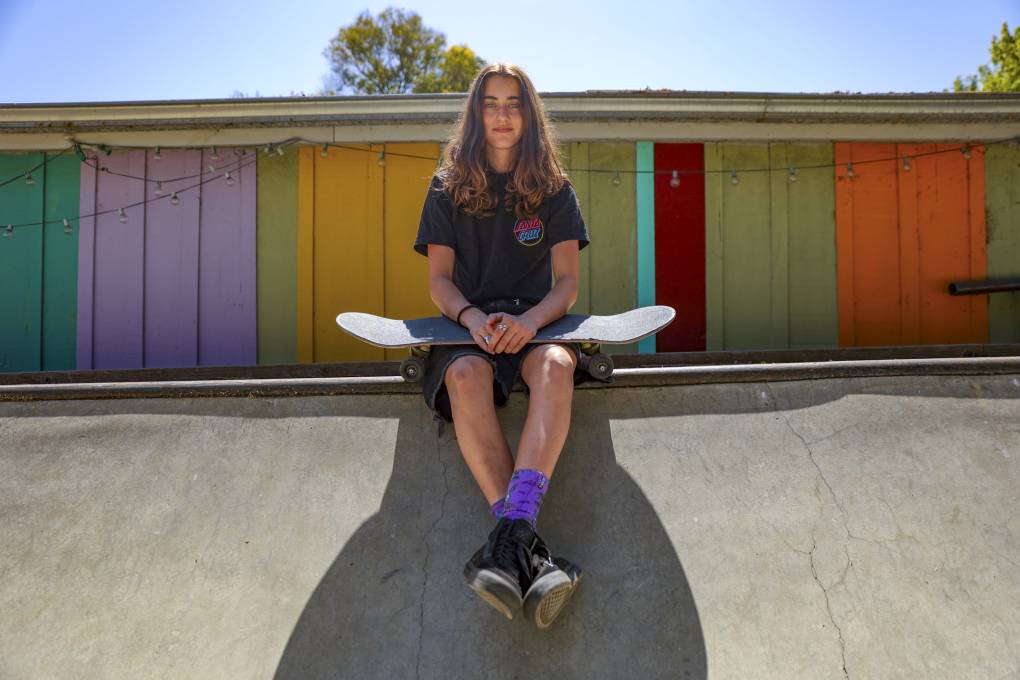
window.__INITIAL_STATE__={
"attachmentsReducer": {
"audio_0": {
"type": "attachments",
"id": "audio_0",
"imgSizes": {
"kqedFullSize": {
"file": "https://ww2.kqed.org/news/wp-content/themes/KQED-unified/img/audio_bgs/background0.jpg"
}
}
},
"audio_1": {
"type": "attachments",
"id": "audio_1",
"imgSizes": {
"kqedFullSize": {
"file": "https://ww2.kqed.org/news/wp-content/themes/KQED-unified/img/audio_bgs/background1.jpg"
}
}
},
"audio_2": {
"type": "attachments",
"id": "audio_2",
"imgSizes": {
"kqedFullSize": {
"file": "https://ww2.kqed.org/news/wp-content/themes/KQED-unified/img/audio_bgs/background2.jpg"
}
}
},
"audio_3": {
"type": "attachments",
"id": "audio_3",
"imgSizes": {
"kqedFullSize": {
"file": "https://ww2.kqed.org/news/wp-content/themes/KQED-unified/img/audio_bgs/background3.jpg"
}
}
},
"audio_4": {
"type": "attachments",
"id": "audio_4",
"imgSizes": {
"kqedFullSize": {
"file": "https://ww2.kqed.org/news/wp-content/themes/KQED-unified/img/audio_bgs/background4.jpg"
}
}
},
"placeholder": {
"type": "attachments",
"id": "placeholder",
"imgSizes": {
"thumbnail": {
"file": "https://cdn.kqed.org/wp-content/uploads/2024/12/KQED-Default-Image-816638274-2000x1333-1-160x107.jpg",
"width": 160,
"height": 107,
"mimeType": "image/jpeg"
},
"medium": {
"file": "https://cdn.kqed.org/wp-content/uploads/2024/12/KQED-Default-Image-816638274-2000x1333-1-800x533.jpg",
"width": 800,
"height": 533,
"mimeType": "image/jpeg"
},
"medium_large": {
"file": "https://cdn.kqed.org/wp-content/uploads/2024/12/KQED-Default-Image-816638274-2000x1333-1-768x512.jpg",
"width": 768,
"height": 512,
"mimeType": "image/jpeg"
},
"large": {
"file": "https://cdn.kqed.org/wp-content/uploads/2024/12/KQED-Default-Image-816638274-2000x1333-1-1020x680.jpg",
"width": 1020,
"height": 680,
"mimeType": "image/jpeg"
},
"1536x1536": {
"file": "https://cdn.kqed.org/wp-content/uploads/2024/12/KQED-Default-Image-816638274-2000x1333-1-1536x1024.jpg",
"width": 1536,
"height": 1024,
"mimeType": "image/jpeg"
},
"fd-lrg": {
"file": "https://cdn.kqed.org/wp-content/uploads/2024/12/KQED-Default-Image-816638274-2000x1333-1-1536x1024.jpg",
"width": 1536,
"height": 1024,
"mimeType": "image/jpeg"
},
"fd-med": {
"file": "https://cdn.kqed.org/wp-content/uploads/2024/12/KQED-Default-Image-816638274-2000x1333-1-1020x680.jpg",
"width": 1020,
"height": 680,
"mimeType": "image/jpeg"
},
"fd-sm": {
"file": "https://cdn.kqed.org/wp-content/uploads/2024/12/KQED-Default-Image-816638274-2000x1333-1-800x533.jpg",
"width": 800,
"height": 533,
"mimeType": "image/jpeg"
},
"post-thumbnail": {
"file": "https://cdn.kqed.org/wp-content/uploads/2024/12/KQED-Default-Image-816638274-2000x1333-1-672x372.jpg",
"width": 672,
"height": 372,
"mimeType": "image/jpeg"
},
"twentyfourteen-full-width": {
"file": "https://cdn.kqed.org/wp-content/uploads/2024/12/KQED-Default-Image-816638274-2000x1333-1-1038x576.jpg",
"width": 1038,
"height": 576,
"mimeType": "image/jpeg"
},
"xxsmall": {
"file": "https://cdn.kqed.org/wp-content/uploads/2024/12/KQED-Default-Image-816638274-2000x1333-1-160x107.jpg",
"width": 160,
"height": 107,
"mimeType": "image/jpeg"
},
"xsmall": {
"file": "https://cdn.kqed.org/wp-content/uploads/2024/12/KQED-Default-Image-816638274-2000x1333-1-672x372.jpg",
"width": 672,
"height": 372,
"mimeType": "image/jpeg"
},
"small": {
"file": "https://cdn.kqed.org/wp-content/uploads/2024/12/KQED-Default-Image-816638274-2000x1333-1-672x372.jpg",
"width": 672,
"height": 372,
"mimeType": "image/jpeg"
},
"xlarge": {
"file": "https://cdn.kqed.org/wp-content/uploads/2024/12/KQED-Default-Image-816638274-2000x1333-1-1020x680.jpg",
"width": 1020,
"height": 680,
"mimeType": "image/jpeg"
},
"full-width": {
"file": "https://cdn.kqed.org/wp-content/uploads/2024/12/KQED-Default-Image-816638274-2000x1333-1-1920x1280.jpg",
"width": 1920,
"height": 1280,
"mimeType": "image/jpeg"
},
"guest-author-32": {
"file": "https://cdn.kqed.org/wp-content/uploads/2025/01/KQED-Default-Image-816638274-1333x1333-1-160x160.jpg",
"width": 32,
"height": 32,
"mimeType": "image/jpeg"
},
"guest-author-50": {
"file": "https://cdn.kqed.org/wp-content/uploads/2025/01/KQED-Default-Image-816638274-1333x1333-1-160x160.jpg",
"width": 50,
"height": 50,
"mimeType": "image/jpeg"
},
"guest-author-64": {
"file": "https://cdn.kqed.org/wp-content/uploads/2025/01/KQED-Default-Image-816638274-1333x1333-1-160x160.jpg",
"width": 64,
"height": 64,
"mimeType": "image/jpeg"
},
"guest-author-96": {
"file": "https://cdn.kqed.org/wp-content/uploads/2025/01/KQED-Default-Image-816638274-1333x1333-1-160x160.jpg",
"width": 96,
"height": 96,
"mimeType": "image/jpeg"
},
"guest-author-128": {
"file": "https://cdn.kqed.org/wp-content/uploads/2025/01/KQED-Default-Image-816638274-1333x1333-1-160x160.jpg",
"width": 128,
"height": 128,
"mimeType": "image/jpeg"
},
"detail": {
"file": "https://cdn.kqed.org/wp-content/uploads/2025/01/KQED-Default-Image-816638274-1333x1333-1-160x160.jpg",
"width": 160,
"height": 160,
"mimeType": "image/jpeg"
},
"kqedFullSize": {
"file": "https://cdn.kqed.org/wp-content/uploads/2024/12/KQED-Default-Image-816638274-2000x1333-1.jpg",
"width": 2000,
"height": 1333
}
}
},
"arts_13962403": {
"type": "attachments",
"id": "arts_13962403",
"meta": {
"index": "attachments_1716263798",
"site": "arts",
"id": "13962403",
"found": true
},
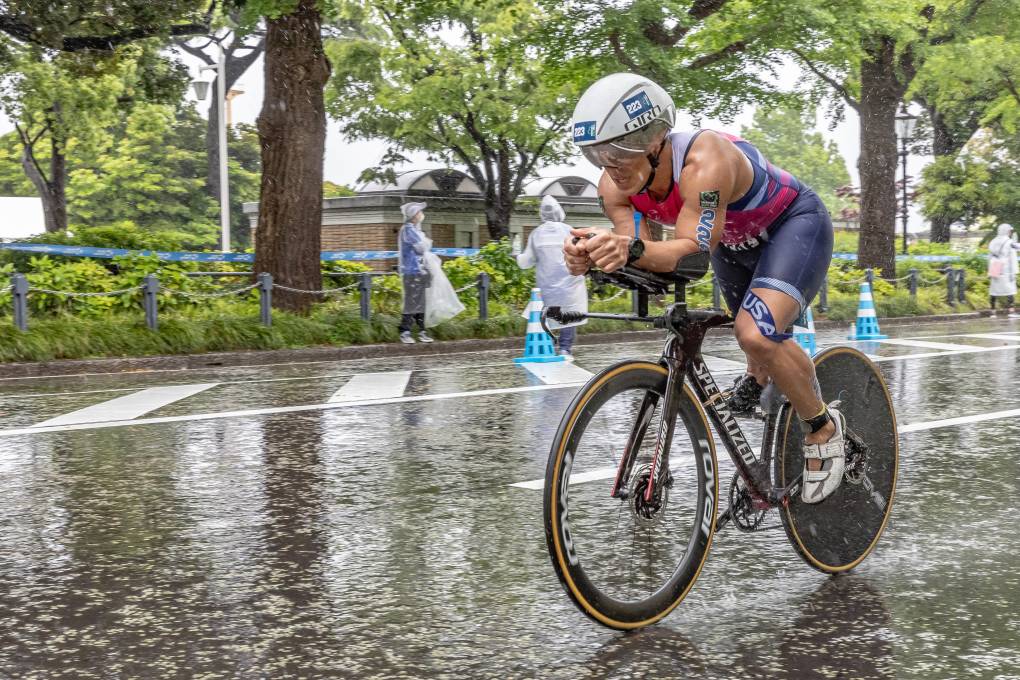
"title": "Hayward's own Mohamed Lahna competing at the ITU World Triathlon Para Series in Japan in 2022.",
"publishDate": 1723252943,
"status": "inherit",
"parent": 13962395,
"modified": 1723253092,
"caption": "Hayward's own Mohamed Lahna competing at the ITU World Triathlon Para Series in Japan in 2022.",
"credit": "Nobuo Yano/Getty Images",
"altTag": "A competitive cyclist in full racing gear rides down a rain-drenched road.",
"description": null,
"imgSizes": {
"medium": {
"file": "https://cdn.kqed.org/wp-content/uploads/sites/2/2024/08/GettyImages-1397270221-800x533.jpg",
"width": 800,
"height": 533,
"mimeType": "image/jpeg"
},
"large": {
"file": "https://cdn.kqed.org/wp-content/uploads/sites/2/2024/08/GettyImages-1397270221-1020x680.jpg",
"width": 1020,
"height": 680,
"mimeType": "image/jpeg"
},
"thumbnail": {
"file": "https://cdn.kqed.org/wp-content/uploads/sites/2/2024/08/GettyImages-1397270221-160x107.jpg",
"width": 160,
"height": 107,
"mimeType": "image/jpeg"
},
"medium_large": {
"file": "https://cdn.kqed.org/wp-content/uploads/sites/2/2024/08/GettyImages-1397270221-768x512.jpg",
"width": 768,
"height": 512,
"mimeType": "image/jpeg"
},
"1536x1536": {
"file": "https://cdn.kqed.org/wp-content/uploads/sites/2/2024/08/GettyImages-1397270221-1536x1024.jpg",
"width": 1536,
"height": 1024,
"mimeType": "image/jpeg"
},
"2048x2048": {
"file": "https://cdn.kqed.org/wp-content/uploads/sites/2/2024/08/GettyImages-1397270221-2048x1365.jpg",
"width": 2048,
"height": 1365,
"mimeType": "image/jpeg"
},
"post-thumbnail": {
"file": "https://cdn.kqed.org/wp-content/uploads/sites/2/2024/08/GettyImages-1397270221-672x372.jpg",
"width": 672,
"height": 372,
"mimeType": "image/jpeg"
},
"twentyfourteen-full-width": {
"file": "https://cdn.kqed.org/wp-content/uploads/sites/2/2024/08/GettyImages-1397270221-1038x576.jpg",
"width": 1038,
"height": 576,
"mimeType": "image/jpeg"
},
"full-width": {
"file": "https://cdn.kqed.org/wp-content/uploads/sites/2/2024/08/GettyImages-1397270221-1920x1280.jpg",
"width": 1920,
"height": 1280,
"mimeType": "image/jpeg"
},
"kqedFullSize": {
"file": "https://cdn.kqed.org/wp-content/uploads/sites/2/2024/08/GettyImages-1397270221-scaled.jpg",
"width": 2560,
"height": 1707
}
},
"isLoading": false,
"fetchFailed": false
},
"arts_13962575": {
"type": "attachments",
"id": "arts_13962575",
"meta": {
"index": "attachments_1716263798",
"site": "arts",
"id": "13962575",
"found": true
},
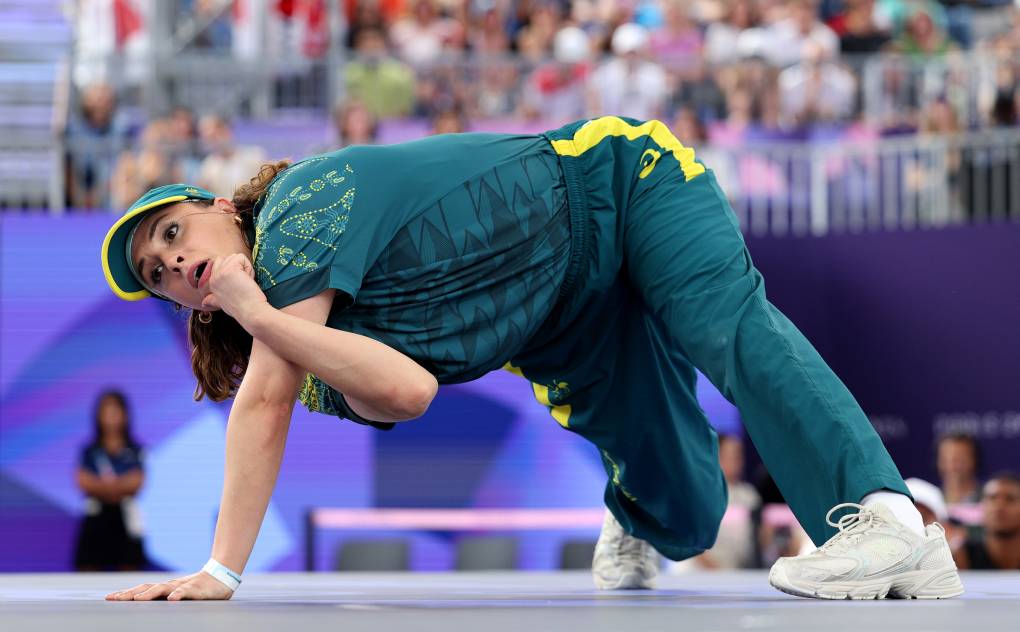
"title": "Raygun of Team Australia competes during the B-Girls Round Robin Group at the Paris Olympics.",
"publishDate": 1723482256,
"status": "inherit",
"parent": 13962574,
"modified": 1723482357,
"caption": "Raygun of Team Australia \ncompetes during the B-Girls Round Robin Group \nat the Paris Olympics.",
"credit": "Elsa/Getty Images",
"altTag": "A white woman in green tracksuit contorts herself on the floor in front of a packed stadium.",
"description": null,
"imgSizes": {
"medium": {
"file": "https://cdn.kqed.org/wp-content/uploads/sites/2/2024/08/GettyImages-2166046752-800x496.jpg",
"width": 800,
"height": 496,
"mimeType": "image/jpeg"
},
"large": {
"file": "https://cdn.kqed.org/wp-content/uploads/sites/2/2024/08/GettyImages-2166046752-1020x632.jpg",
"width": 1020,
"height": 632,
"mimeType": "image/jpeg"
},
"thumbnail": {
"file": "https://cdn.kqed.org/wp-content/uploads/sites/2/2024/08/GettyImages-2166046752-160x99.jpg",
"width": 160,
"height": 99,
"mimeType": "image/jpeg"
},
"medium_large": {
"file": "https://cdn.kqed.org/wp-content/uploads/sites/2/2024/08/GettyImages-2166046752-768x476.jpg",
"width": 768,
"height": 476,
"mimeType": "image/jpeg"
},
"1536x1536": {
"file": "https://cdn.kqed.org/wp-content/uploads/sites/2/2024/08/GettyImages-2166046752-1536x951.jpg",
"width": 1536,
"height": 951,
"mimeType": "image/jpeg"
},
"2048x2048": {
"file": "https://cdn.kqed.org/wp-content/uploads/sites/2/2024/08/GettyImages-2166046752-2048x1269.jpg",
"width": 2048,
"height": 1269,
"mimeType": "image/jpeg"
},
"post-thumbnail": {
"file": "https://cdn.kqed.org/wp-content/uploads/sites/2/2024/08/GettyImages-2166046752-672x372.jpg",
"width": 672,
"height": 372,
"mimeType": "image/jpeg"
},
"twentyfourteen-full-width": {
"file": "https://cdn.kqed.org/wp-content/uploads/sites/2/2024/08/GettyImages-2166046752-1038x576.jpg",
"width": 1038,
"height": 576,
"mimeType": "image/jpeg"
},
"full-width": {
"file": "https://cdn.kqed.org/wp-content/uploads/sites/2/2024/08/GettyImages-2166046752-1920x1189.jpg",
"width": 1920,
"height": 1189,
"mimeType": "image/jpeg"
},
"kqedFullSize": {
"file": "https://cdn.kqed.org/wp-content/uploads/sites/2/2024/08/GettyImages-2166046752-scaled-e1723482366385.jpg",
"width": 1920,
"height": 1190
}
},
"isLoading": false,
"fetchFailed": false
},
"arts_13962357": {
"type": "attachments",
"id": "arts_13962357",
"meta": {
"index": "attachments_1716263798",
"site": "arts",
"id": "13962357",
"found": true
},
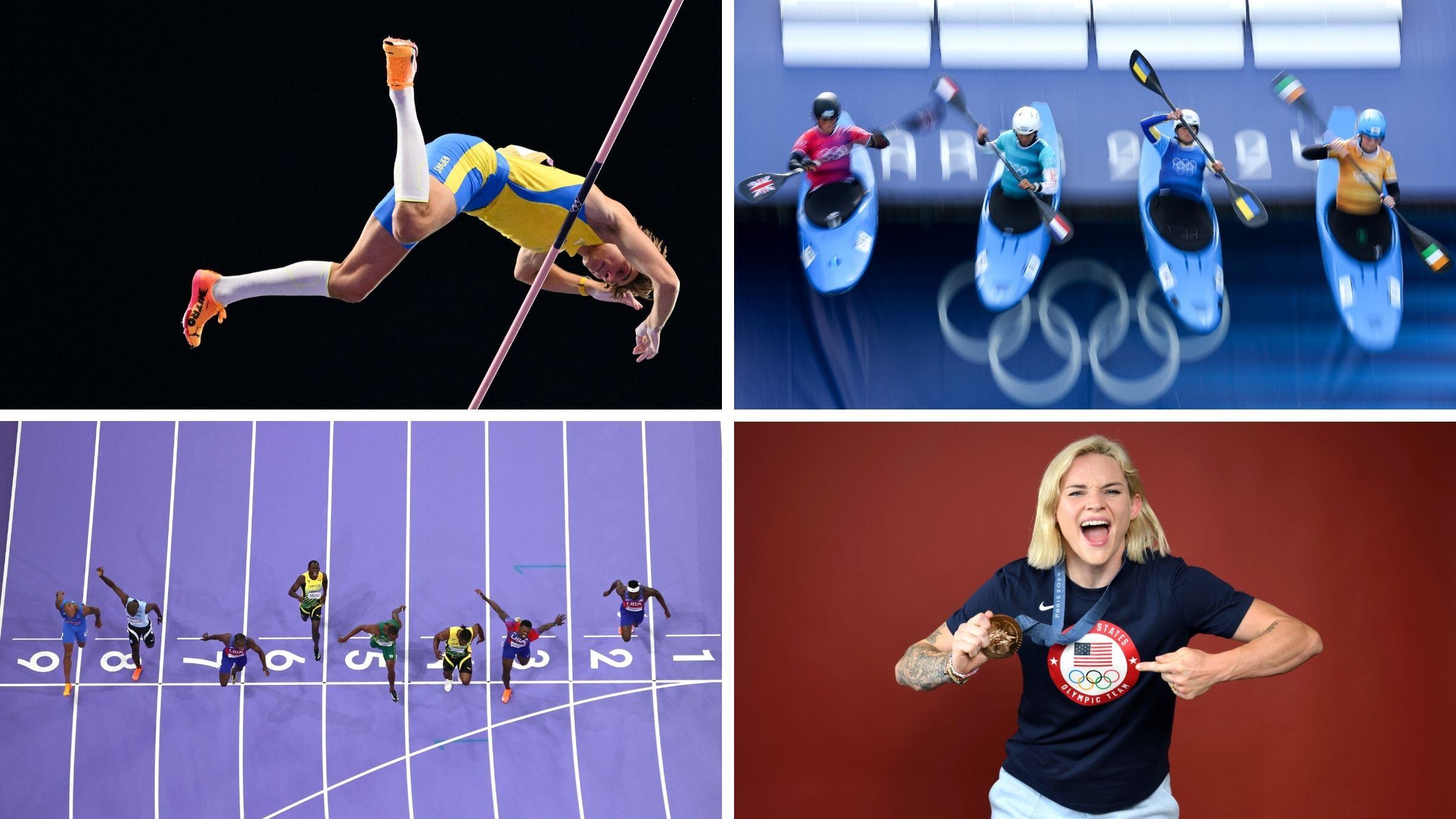
"title": "Clockwise from left, pole vaulter Armand Duplantis, the Canoe Slalom Women's Kayak Cross, women's rugby player Sammy Sullivan, and the Men's 100m Final.",
"publishDate": 1723226601,
"status": "inherit",
"parent": 13962356,
"modified": 1723229584,
"caption": "Clockwise from left, pole vaulter Armand Duplantis, the Canoe Slalom Women's Kayak Cross, women's rugby player Sammy Sullivan, and the Men's 100m Final.",
"credit": "Kirill Kudrtavtsev/AFP via Getty Images; Alex Davidson/Getty Images; Kristy Sparow/Getty Images; Richard Heathcote/Getty Images",
"altTag": "Four sports-related images from the Paris 2024 Olympics.",
"description": null,
"imgSizes": {
"kqedFullSize": {
"file": "https://cdn.kqed.org/wp-content/uploads/sites/2/2024/08/4-images-horizontal-1.jpeg",
"width": 2400,
"height": 1350
}
},
"isLoading": false,
"fetchFailed": false
},
"arts_13962309": {
"type": "attachments",
"id": "arts_13962309",
"meta": {
"index": "attachments_1716263798",
"site": "arts",
"id": "13962309",
"found": true
},
"title": "GettyImages-2164812805_2000",
"publishDate": 1723146546,
"status": "inherit",
"parent": 13962267,
"modified": 1723147000,
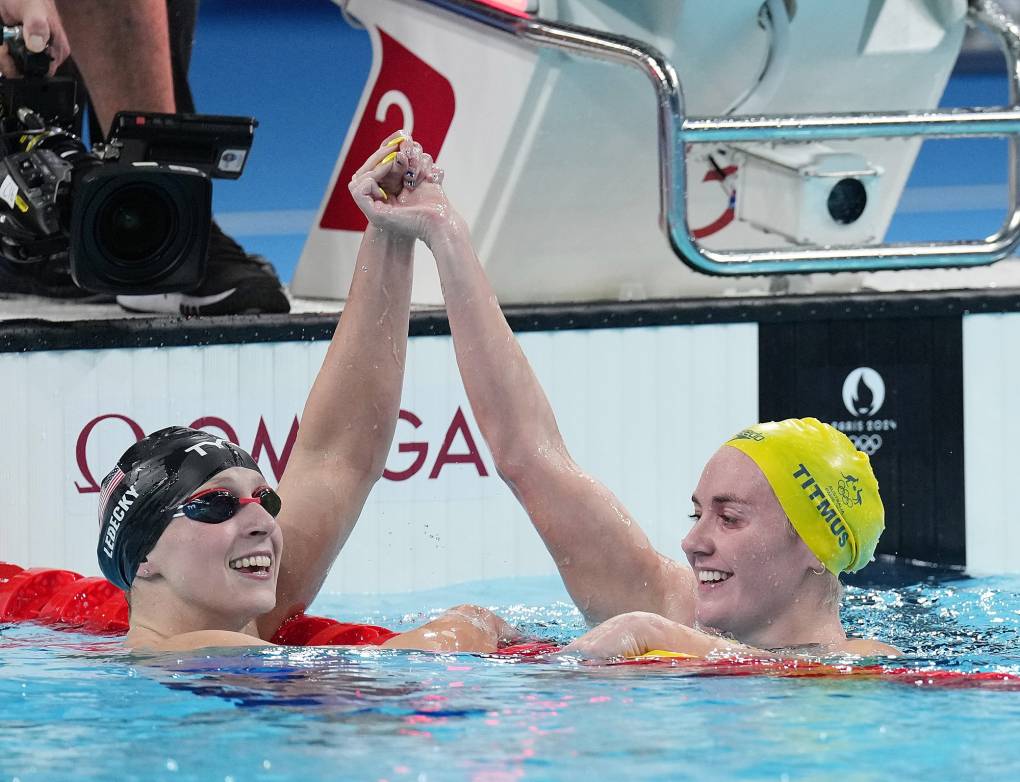
"caption": "USA's Katie Ledecky and Australia's Ariarne Titmus clasp hands in triumph after the women's 800-meter freestyle final.",
"credit": "Xue Yuge/Xinhua via Getty Images",
"altTag": "Smiling female swimmers hold hands with their arms raised high across a pool lane divider.",
"description": null,
"imgSizes": {
"medium": {
"file": "https://cdn.kqed.org/wp-content/uploads/sites/2/2024/08/GettyImages-2164812805_2000-800x614.jpg",
"width": 800,
"height": 614,
"mimeType": "image/jpeg"
},
"large": {
"file": "https://cdn.kqed.org/wp-content/uploads/sites/2/2024/08/GettyImages-2164812805_2000-1020x782.jpg",
"width": 1020,
"height": 782,
"mimeType": "image/jpeg"
},
"thumbnail": {
"file": "https://cdn.kqed.org/wp-content/uploads/sites/2/2024/08/GettyImages-2164812805_2000-160x123.jpg",
"width": 160,
"height": 123,
"mimeType": "image/jpeg"
},
"medium_large": {
"file": "https://cdn.kqed.org/wp-content/uploads/sites/2/2024/08/GettyImages-2164812805_2000-768x589.jpg",
"width": 768,
"height": 589,
"mimeType": "image/jpeg"
},
"1536x1536": {
"file": "https://cdn.kqed.org/wp-content/uploads/sites/2/2024/08/GettyImages-2164812805_2000-1536x1178.jpg",
"width": 1536,
"height": 1178,
"mimeType": "image/jpeg"
},
"post-thumbnail": {
"file": "https://cdn.kqed.org/wp-content/uploads/sites/2/2024/08/GettyImages-2164812805_2000-672x372.jpg",
"width": 672,
"height": 372,
"mimeType": "image/jpeg"
},
"twentyfourteen-full-width": {
"file": "https://cdn.kqed.org/wp-content/uploads/sites/2/2024/08/GettyImages-2164812805_2000-1038x576.jpg",
"width": 1038,
"height": 576,
"mimeType": "image/jpeg"
},
"full-width": {
"file": "https://cdn.kqed.org/wp-content/uploads/sites/2/2024/08/GettyImages-2164812805_2000-1920x1473.jpg",
"width": 1920,
"height": 1473,
"mimeType": "image/jpeg"
},
"kqedFullSize": {
"file": "https://cdn.kqed.org/wp-content/uploads/sites/2/2024/08/GettyImages-2164812805_2000.jpg",
"width": 2000,
"height": 1534
}
},
"isLoading": false,
"fetchFailed": false
},
"arts_13962036": {
"type": "attachments",
"id": "arts_13962036",
"meta": {
"index": "attachments_1716263798",
"site": "arts",
"id": "13962036",
"found": true
},
"title": "Taiwan's Lin Yu-ting, left, and Algeria's Imane Khelif have competed in boxing competitions as women for years. But their presence in Paris is being scrutinized by some after they failed a vague gender eligibility test last year.",
"publishDate": 1722630303,
"status": "inherit",
"parent": 13962035,
"modified": 1722632615,
"caption": "Taiwan's Lin Yu-ting, left, and Algeria's Imane Khelif have competed in boxing competitions as women for years. But their presence in Paris is being scrutinized by some after they failed a vague gender eligibility test last year.",
"credit": "John Locher/AP and Aijaz Rahi/AP",
"altTag": null,
"description": null,
"imgSizes": {
"medium": {
"file": "https://cdn.kqed.org/wp-content/uploads/sites/2/2024/08/boxing-diptych-800x450.jpeg",
"width": 800,
"height": 450,
"mimeType": "image/jpeg"
},
"large": {
"file": "https://cdn.kqed.org/wp-content/uploads/sites/2/2024/08/boxing-diptych-1020x574.jpeg",
"width": 1020,
"height": 574,
"mimeType": "image/jpeg"
},
"thumbnail": {
"file": "https://cdn.kqed.org/wp-content/uploads/sites/2/2024/08/boxing-diptych-160x90.jpeg",
"width": 160,
"height": 90,
"mimeType": "image/jpeg"
},
"medium_large": {
"file": "https://cdn.kqed.org/wp-content/uploads/sites/2/2024/08/boxing-diptych-768x432.jpeg",
"width": 768,
"height": 432,
"mimeType": "image/jpeg"
},
"1536x1536": {
"file": "https://cdn.kqed.org/wp-content/uploads/sites/2/2024/08/boxing-diptych-1536x864.jpeg",
"width": 1536,
"height": 864,
"mimeType": "image/jpeg"
},
"2048x2048": {
"file": "https://cdn.kqed.org/wp-content/uploads/sites/2/2024/08/boxing-diptych-2048x1152.jpeg",
"width": 2048,
"height": 1152,
"mimeType": "image/jpeg"
},
"post-thumbnail": {
"file": "https://cdn.kqed.org/wp-content/uploads/sites/2/2024/08/boxing-diptych-672x372.jpeg",
"width": 672,
"height": 372,
"mimeType": "image/jpeg"
},
"twentyfourteen-full-width": {
"file": "https://cdn.kqed.org/wp-content/uploads/sites/2/2024/08/boxing-diptych-1038x576.jpeg",
"width": 1038,
"height": 576,
"mimeType": "image/jpeg"
},
"full-width": {
"file": "https://cdn.kqed.org/wp-content/uploads/sites/2/2024/08/boxing-diptych-1920x1080.jpeg",
"width": 1920,
"height": 1080,
"mimeType": "image/jpeg"
},
"kqedFullSize": {
"file": "https://cdn.kqed.org/wp-content/uploads/sites/2/2024/08/boxing-diptych-scaled.jpeg",
"width": 2560,
"height": 1440
}
},
"isLoading": false,
"fetchFailed": false
},
"arts_13961968": {
"type": "attachments",
"id": "arts_13961968",
"meta": {
"index": "attachments_1716263798",
"site": "arts",
"id": "13961968",
"found": true
},
"title": "SHOOTING-OLY-PARIS-2024",
"publishDate": 1722557455,
"status": "inherit",
"parent": 13961967,
"modified": 1722558940,
"caption": "Turkey's Yusuf Dikec, competing in the shooting 10m air pistol mixed team went viral for his casual look.",
"credit": "Alain Jocard/AFP",
"altTag": "A man with one hand in his pocket, wearing a white t-shirt stands in front of a 'Paris' sign holding a gun.",
"description": "Turkey's Yusuf Dikec, competing in the shooting 10m air pistol mixed team went viral for his casual look.",
"imgSizes": {
"medium": {
"file": "https://cdn.kqed.org/wp-content/uploads/sites/2/2024/08/gettyimages-2163848592-800x533.jpeg",
"width": 800,
"height": 533,
"mimeType": "image/jpeg"
},
"large": {
"file": "https://cdn.kqed.org/wp-content/uploads/sites/2/2024/08/gettyimages-2163848592-1020x680.jpeg",
"width": 1020,
"height": 680,
"mimeType": "image/jpeg"
},
"thumbnail": {
"file": "https://cdn.kqed.org/wp-content/uploads/sites/2/2024/08/gettyimages-2163848592-160x107.jpeg",
"width": 160,
"height": 107,
"mimeType": "image/jpeg"
},
"medium_large": {
"file": "https://cdn.kqed.org/wp-content/uploads/sites/2/2024/08/gettyimages-2163848592-768x512.jpeg",
"width": 768,
"height": 512,
"mimeType": "image/jpeg"
},
"1536x1536": {
"file": "https://cdn.kqed.org/wp-content/uploads/sites/2/2024/08/gettyimages-2163848592-1536x1024.jpeg",
"width": 1536,
"height": 1024,
"mimeType": "image/jpeg"
},
"2048x2048": {
"file": "https://cdn.kqed.org/wp-content/uploads/sites/2/2024/08/gettyimages-2163848592-2048x1365.jpeg",
"width": 2048,
"height": 1365,
"mimeType": "image/jpeg"
},
"post-thumbnail": {
"file": "https://cdn.kqed.org/wp-content/uploads/sites/2/2024/08/gettyimages-2163848592-672x372.jpeg",
"width": 672,
"height": 372,
"mimeType": "image/jpeg"
},
"twentyfourteen-full-width": {
"file": "https://cdn.kqed.org/wp-content/uploads/sites/2/2024/08/gettyimages-2163848592-1038x576.jpeg",
"width": 1038,
"height": 576,
"mimeType": "image/jpeg"
},
"full-width": {
"file": "https://cdn.kqed.org/wp-content/uploads/sites/2/2024/08/gettyimages-2163848592-1920x1280.jpeg",
"width": 1920,
"height": 1280,
"mimeType": "image/jpeg"
},
"kqedFullSize": {
"file": "https://cdn.kqed.org/wp-content/uploads/sites/2/2024/08/gettyimages-2163848592-scaled-e1722558821733.jpeg",
"width": 1920,
"height": 1280
}
},
"isLoading": false,
"fetchFailed": false
},
"arts_13961862": {
"type": "attachments",
"id": "arts_13961862",
"meta": {
"index": "attachments_1716263798",
"site": "arts",
"id": "13961862",
"found": true
},
"title": "Brazil’s Gabriel Medina reacts after catching a large wave in the men’s surfing competition during the Paris Olympics on July 29, 2024.",
"publishDate": 1722459085,
"status": "inherit",
"parent": 13961861,
"modified": 1722459822,
"caption": "Brazil’s Gabriel Medina reacts after catching a large wave in the men’s surfing competition during the Paris Olympics on July 29, 2024. ",
"credit": "JEROME BROUILLET/AFP via Getty Images",
"altTag": "A surfer stands upright in midair, with one arm extended aloft. Behind him trails his surfboard, tethered to his ankle, also in midair. The ocean waves roll several feet below.",
"description": null,
"imgSizes": {
"medium": {
"file": "https://cdn.kqed.org/wp-content/uploads/sites/2/2024/07/gettyimages-2163817418-800x532.jpeg",
"width": 800,
"height": 532,
"mimeType": "image/jpeg"
},
"large": {
"file": "https://cdn.kqed.org/wp-content/uploads/sites/2/2024/07/gettyimages-2163817418-1020x678.jpeg",
"width": 1020,
"height": 678,
"mimeType": "image/jpeg"
},
"thumbnail": {
"file": "https://cdn.kqed.org/wp-content/uploads/sites/2/2024/07/gettyimages-2163817418-160x106.jpeg",
"width": 160,
"height": 106,
"mimeType": "image/jpeg"
},
"medium_large": {
"file": "https://cdn.kqed.org/wp-content/uploads/sites/2/2024/07/gettyimages-2163817418-768x510.jpeg",
"width": 768,
"height": 510,
"mimeType": "image/jpeg"
},
"1536x1536": {
"file": "https://cdn.kqed.org/wp-content/uploads/sites/2/2024/07/gettyimages-2163817418-1536x1021.jpeg",
"width": 1536,
"height": 1021,
"mimeType": "image/jpeg"
},
"2048x2048": {
"file": "https://cdn.kqed.org/wp-content/uploads/sites/2/2024/07/gettyimages-2163817418-2048x1361.jpeg",
"width": 2048,
"height": 1361,
"mimeType": "image/jpeg"
},
"post-thumbnail": {
"file": "https://cdn.kqed.org/wp-content/uploads/sites/2/2024/07/gettyimages-2163817418-672x372.jpeg",
"width": 672,
"height": 372,
"mimeType": "image/jpeg"
},
"twentyfourteen-full-width": {
"file": "https://cdn.kqed.org/wp-content/uploads/sites/2/2024/07/gettyimages-2163817418-1038x576.jpeg",
"width": 1038,
"height": 576,
"mimeType": "image/jpeg"
},
"full-width": {
"file": "https://cdn.kqed.org/wp-content/uploads/sites/2/2024/07/gettyimages-2163817418-1920x1276.jpeg",
"width": 1920,
"height": 1276,
"mimeType": "image/jpeg"
},
"kqedFullSize": {
"file": "https://cdn.kqed.org/wp-content/uploads/sites/2/2024/07/gettyimages-2163817418-scaled-e1722459255521.jpeg",
"width": 1920,
"height": 1277
}
},
"isLoading": false,
"fetchFailed": false
},
"arts_13961676": {
"type": "attachments",
"id": "arts_13961676",
"meta": {
"index": "attachments_1716263798",
"site": "arts",
"id": "13961676",
"found": true
},
"title": "Team USA's men's swimming team stands on the podium after winning gold in the men's 400-meter freestyle relay final at the Paris Olympics.",
"publishDate": 1722278526,
"status": "inherit",
"parent": 13961675,
"modified": 1722279073,
"caption": "Team USA's men's swimming team stands on the podium after winning gold in the men's 400-meter freestyle relay final at the Paris Olympics.",
"credit": "Martin Meissner/AP",
"altTag": "Four white men in blue tracksuits stand in a line each biting their own gold medals.",
"description": null,
"imgSizes": {
"medium": {
"file": "https://cdn.kqed.org/wp-content/uploads/sites/2/2024/07/ap24209737530622-800x534.jpeg",
"width": 800,
"height": 534,
"mimeType": "image/jpeg"
},
"large": {
"file": "https://cdn.kqed.org/wp-content/uploads/sites/2/2024/07/ap24209737530622-1020x680.jpeg",
"width": 1020,
"height": 680,
"mimeType": "image/jpeg"
},
"thumbnail": {
"file": "https://cdn.kqed.org/wp-content/uploads/sites/2/2024/07/ap24209737530622-160x107.jpeg",
"width": 160,
"height": 107,
"mimeType": "image/jpeg"
},
"medium_large": {
"file": "https://cdn.kqed.org/wp-content/uploads/sites/2/2024/07/ap24209737530622-768x512.jpeg",
"width": 768,
"height": 512,
"mimeType": "image/jpeg"
},
"1536x1536": {
"file": "https://cdn.kqed.org/wp-content/uploads/sites/2/2024/07/ap24209737530622-1536x1024.jpeg",
"width": 1536,
"height": 1024,
"mimeType": "image/jpeg"
},
"2048x2048": {
"file": "https://cdn.kqed.org/wp-content/uploads/sites/2/2024/07/ap24209737530622-2048x1366.jpeg",
"width": 2048,
"height": 1366,
"mimeType": "image/jpeg"
},
"post-thumbnail": {
"file": "https://cdn.kqed.org/wp-content/uploads/sites/2/2024/07/ap24209737530622-672x372.jpeg",
"width": 672,
"height": 372,
"mimeType": "image/jpeg"
},
"twentyfourteen-full-width": {
"file": "https://cdn.kqed.org/wp-content/uploads/sites/2/2024/07/ap24209737530622-1038x576.jpeg",
"width": 1038,
"height": 576,
"mimeType": "image/jpeg"
},
"full-width": {
"file": "https://cdn.kqed.org/wp-content/uploads/sites/2/2024/07/ap24209737530622-1920x1280.jpeg",
"width": 1920,
"height": 1280,
"mimeType": "image/jpeg"
},
"kqedFullSize": {
"file": "https://cdn.kqed.org/wp-content/uploads/sites/2/2024/07/ap24209737530622-scaled-e1722278972865.jpeg",
"width": 1920,
"height": 1280
}
},
"isLoading": false,
"fetchFailed": false
},
"arts_13961524": {
"type": "attachments",
"id": "arts_13961524",
"meta": {
"index": "attachments_1716263798",
"site": "arts",
"id": "13961524",
"found": true
},
"title": "20240722_MINNASTESS_GC-3-KQED",
"publishDate": 1721852812,
"status": "inherit",
"parent": 0,
"modified": 1721927045,
"caption": "Minna Stess in her backyard in Petaluma on July 22, 2024, before heading to the 2024 Summer Olympics to represent the U.S. in women’s skateboarding.",
"credit": "Gina Castro/KQED",
"altTag": null,
"description": null,
"imgSizes": {
"medium": {
"file": "https://cdn.kqed.org/wp-content/uploads/sites/2/2024/07/20240722_MINNASTESS_GC-3-KQED-800x533.jpg",
"width": 800,
"height": 533,
"mimeType": "image/jpeg"
},
"large": {
"file": "https://cdn.kqed.org/wp-content/uploads/sites/2/2024/07/20240722_MINNASTESS_GC-3-KQED-1020x680.jpg",
"width": 1020,
"height": 680,
"mimeType": "image/jpeg"
},
"thumbnail": {
"file": "https://cdn.kqed.org/wp-content/uploads/sites/2/2024/07/20240722_MINNASTESS_GC-3-KQED-160x107.jpg",
"width": 160,
"height": 107,
"mimeType": "image/jpeg"
},
"medium_large": {
"file": "https://cdn.kqed.org/wp-content/uploads/sites/2/2024/07/20240722_MINNASTESS_GC-3-KQED-768x512.jpg",
"width": 768,
"height": 512,
"mimeType": "image/jpeg"
},
"1536x1536": {
"file": "https://cdn.kqed.org/wp-content/uploads/sites/2/2024/07/20240722_MINNASTESS_GC-3-KQED-1536x1024.jpg",
"width": 1536,
"height": 1024,
"mimeType": "image/jpeg"
},
"post-thumbnail": {
"file": "https://cdn.kqed.org/wp-content/uploads/sites/2/2024/07/20240722_MINNASTESS_GC-3-KQED-672x372.jpg",
"width": 672,
"height": 372,
"mimeType": "image/jpeg"
},
"twentyfourteen-full-width": {
"file": "https://cdn.kqed.org/wp-content/uploads/sites/2/2024/07/20240722_MINNASTESS_GC-3-KQED-1038x576.jpg",
"width": 1038,
"height": 576,
"mimeType": "image/jpeg"
},
"full-width": {
"file": "https://cdn.kqed.org/wp-content/uploads/sites/2/2024/07/20240722_MINNASTESS_GC-3-KQED-1920x1280.jpg",
"width": 1920,
"height": 1280,
"mimeType": "image/jpeg"
},
"kqedFullSize": {
"file": "https://cdn.kqed.org/wp-content/uploads/sites/2/2024/07/20240722_MINNASTESS_GC-3-KQED.jpg",
"width": 2000,
"height": 1333
}
},
"isLoading": false,
"fetchFailed": false
},
"arts_13960708": {
"type": "attachments",
"id": "arts_13960708",
"meta": {
"index": "attachments_1716263798",
"site": "arts",
"id": "13960708",
"found": true
},
"title": "Ballers.MAIN",
"publishDate": 1720464043,
"status": "inherit",
"parent": 13960687,
"modified": 1720464063,
"caption": null,
"credit": "Jason Novak",
"altTag": null,
"description": null,
"imgSizes": {
"medium": {
"file": "https://cdn.kqed.org/wp-content/uploads/sites/2/2024/07/Ballers.MAIN_-800x450.jpg",
"width": 800,
"height": 450,
"mimeType": "image/jpeg"
},
"large": {
"file": "https://cdn.kqed.org/wp-content/uploads/sites/2/2024/07/Ballers.MAIN_-1020x574.jpg",
"width": 1020,
"height": 574,
"mimeType": "image/jpeg"
},
"thumbnail": {
"file": "https://cdn.kqed.org/wp-content/uploads/sites/2/2024/07/Ballers.MAIN_-160x90.jpg",
"width": 160,
"height": 90,
"mimeType": "image/jpeg"
},
"medium_large": {
"file": "https://cdn.kqed.org/wp-content/uploads/sites/2/2024/07/Ballers.MAIN_-768x432.jpg",
"width": 768,
"height": 432,
"mimeType": "image/jpeg"
},
"post-thumbnail": {
"file": "https://cdn.kqed.org/wp-content/uploads/sites/2/2024/07/Ballers.MAIN_-672x372.jpg",
"width": 672,
"height": 372,
"mimeType": "image/jpeg"
},
"twentyfourteen-full-width": {
"file": "https://cdn.kqed.org/wp-content/uploads/sites/2/2024/07/Ballers.MAIN_-1038x576.jpg",
"width": 1038,
"height": 576,
"mimeType": "image/jpeg"
},
"kqedFullSize": {
"file": "https://cdn.kqed.org/wp-content/uploads/sites/2/2024/07/Ballers.MAIN_.jpg",
"width": 1201,
"height": 676
}
},
"isLoading": false,
"fetchFailed": false
},
"arts_13960606": {
"type": "attachments",
"id": "arts_13960606",
"meta": {
"index": "attachments_1716263798",
"site": "arts",
"id": "13960606",
"found": true
},
"title": "ap20208579410612-scaled",
"publishDate": 1719855854,
"status": "inherit",
"parent": 13960599,
"modified": 1719855894,
"caption": "Minnesota Lynx players lock arms during a moment of silence in honor of Breonna Taylor before a game in July 2020.",
"credit": "Phelan M. Ebenhack/AP",
"altTag": null,
"description": null,
"imgSizes": {
"medium": {
"file": "https://cdn.kqed.org/wp-content/uploads/sites/2/2024/07/ap20208579410612-scaled-1-800x533.jpg",
"width": 800,
"height": 533,
"mimeType": "image/jpeg"
},
"large": {
"file": "https://cdn.kqed.org/wp-content/uploads/sites/2/2024/07/ap20208579410612-scaled-1-1020x679.jpg",
"width": 1020,
"height": 679,
"mimeType": "image/jpeg"
},
"thumbnail": {
"file": "https://cdn.kqed.org/wp-content/uploads/sites/2/2024/07/ap20208579410612-scaled-1-160x107.jpg",
"width": 160,
"height": 107,
"mimeType": "image/jpeg"
},
"medium_large": {
"file": "https://cdn.kqed.org/wp-content/uploads/sites/2/2024/07/ap20208579410612-scaled-1-768x511.jpg",
"width": 768,
"height": 511,
"mimeType": "image/jpeg"
},
"1536x1536": {
"file": "https://cdn.kqed.org/wp-content/uploads/sites/2/2024/07/ap20208579410612-scaled-1-1536x1022.jpg",
"width": 1536,
"height": 1022,
"mimeType": "image/jpeg"
},
"post-thumbnail": {
"file": "https://cdn.kqed.org/wp-content/uploads/sites/2/2024/07/ap20208579410612-scaled-1-672x372.jpg",
"width": 672,
"height": 372,
"mimeType": "image/jpeg"
},
"twentyfourteen-full-width": {
"file": "https://cdn.kqed.org/wp-content/uploads/sites/2/2024/07/ap20208579410612-scaled-1-1038x576.jpg",
"width": 1038,
"height": 576,
"mimeType": "image/jpeg"
},
"kqedFullSize": {
"file": "https://cdn.kqed.org/wp-content/uploads/sites/2/2024/07/ap20208579410612-scaled-1.jpg",
"width": 1920,
"height": 1278
}
},
"isLoading": false,
"fetchFailed": false
},
"arts_13959568": {
"type": "attachments",
"id": "arts_13959568",
"meta": {
"index": "attachments_1716263798",
"site": "arts",
"id": "13959568",
"found": true
},
"title": "These images provided by San Francisco Giants coach Ryan Christenson show lineup cards from baseball games.",
"publishDate": 1718068524,
"status": "inherit",
"parent": 13959567,
"modified": 1718070099,
"caption": "These images provided by San Francisco Giants coach Ryan Christenson show lineup cards from baseball games.",
"credit": "Ryan Christenson via AP",
"altTag": "Three lineup cards for the San Diego Padres, beautifully written.",
"description": null,
"imgSizes": {
"medium": {
"file": "https://cdn.kqed.org/wp-content/uploads/sites/2/2024/06/Screen-Shot-2024-06-10-at-6.12.46-PM-800x497.png",
"width": 800,
"height": 497,
"mimeType": "image/png"
},
"large": {
"file": "https://cdn.kqed.org/wp-content/uploads/sites/2/2024/06/Screen-Shot-2024-06-10-at-6.12.46-PM-1020x634.png",
"width": 1020,
"height": 634,
"mimeType": "image/png"
},
"thumbnail": {
"file": "https://cdn.kqed.org/wp-content/uploads/sites/2/2024/06/Screen-Shot-2024-06-10-at-6.12.46-PM-160x99.png",
"width": 160,
"height": 99,
"mimeType": "image/png"
},
"medium_large": {
"file": "https://cdn.kqed.org/wp-content/uploads/sites/2/2024/06/Screen-Shot-2024-06-10-at-6.12.46-PM-768x477.png",
"width": 768,
"height": 477,
"mimeType": "image/png"
},
"1536x1536": {
"file": "https://cdn.kqed.org/wp-content/uploads/sites/2/2024/06/Screen-Shot-2024-06-10-at-6.12.46-PM-1536x954.png",
"width": 1536,
"height": 954,
"mimeType": "image/png"
},
"post-thumbnail": {
"file": "https://cdn.kqed.org/wp-content/uploads/sites/2/2024/06/Screen-Shot-2024-06-10-at-6.12.46-PM-672x372.png",
"width": 672,
"height": 372,
"mimeType": "image/png"
},
"twentyfourteen-full-width": {
"file": "https://cdn.kqed.org/wp-content/uploads/sites/2/2024/06/Screen-Shot-2024-06-10-at-6.12.46-PM-1038x576.png",
"width": 1038,
"height": 576,
"mimeType": "image/png"
},
"full-width": {
"file": "https://cdn.kqed.org/wp-content/uploads/sites/2/2024/06/Screen-Shot-2024-06-10-at-6.12.46-PM-1920x1193.png",
"width": 1920,
"height": 1193,
"mimeType": "image/png"
},
"kqedFullSize": {
"file": "https://cdn.kqed.org/wp-content/uploads/sites/2/2024/06/Screen-Shot-2024-06-10-at-6.12.46-PM.png",
"width": 2018,
"height": 1254
}
},
"isLoading": false,
"fetchFailed": false
}
},
"audioPlayerReducer": {
"postId": "stream_live",
"isPaused": true,
"isPlaying": false,
"pfsActive": false,
"pledgeModalIsOpen": true,
"playerDrawerIsOpen": false,
"liveAudioPlayStartedAt": 0,
"liveAudioPlayContext": ""
},
"authorsReducer": {
"byline_arts_13962574": {
"type": "authors",
"id": "byline_arts_13962574",
"meta": {
"override": true
},
"slug": "byline_arts_13962574",
"name": "Noreen Nasir, Associated Press",
"isLoading": false
},
"byline_arts_13962356": {
"type": "authors",
"id": "byline_arts_13962356",
"meta": {
"override": true
},
"slug": "byline_arts_13962356",
"name": "Linda Holmes, NPR",
"isLoading": false
},
"byline_arts_13962035": {
"type": "authors",
"id": "byline_arts_13962035",
"meta": {
"override": true
},
"slug": "byline_arts_13962035",
"name": "Rachel Treisman, NPR",
"isLoading": false
},
"byline_arts_13961967": {
"type": "authors",
"id": "byline_arts_13961967",
"meta": {
"override": true
},
"slug": "byline_arts_13961967",
"name": "Rachel Treisman, NPR",
"isLoading": false
},
"byline_arts_13961861": {
"type": "authors",
"id": "byline_arts_13961861",
"meta": {
"override": true
},
"slug": "byline_arts_13961861",
"name": "Natalie Escobar",
"isLoading": false
},
"byline_arts_13961675": {
"type": "authors",
"id": "byline_arts_13961675",
"meta": {
"override": true
},
"slug": "byline_arts_13961675",
"name": "Juliana Kim, NPR",
"isLoading": false
},
"byline_arts_13960687": {
"type": "authors",
"id": "byline_arts_13960687",
"meta": {
"override": true
},
"slug": "byline_arts_13960687",
"name": "Jason Novak and Alan Chazaro",
"isLoading": false
},
"byline_arts_13959567": {
"type": "authors",
"id": "byline_arts_13959567",
"meta": {
"override": true
},
"slug": "byline_arts_13959567",
"name": "Ronald Blum, Associated Press",
"isLoading": false
},
"ralexandra": {
"type": "authors",
"id": "11242",
"meta": {
"index": "authors_1716337520",
"id": "11242",
"found": true
},
"name": "Rae Alexandra",
"firstName": "Rae",
"lastName": "Alexandra",
"slug": "ralexandra",
"email": "ralexandra@kqed.org",
"display_author_email": true,
"staff_mastheads": [],
"title": "Reporter/Producer",
"bio": "Rae Alexandra is a Reporter/Producer for KQED Arts & Culture, and the creator/author of the \u003ca href=\"https://www.kqed.org/arts/program/rebel-girls-from-bay-area-history\">Rebel Girls From Bay Area History\u003c/a> and \u003ca href=\"https://www.kqed.org/bizarrebayarea\">Bizarre Bay Area\u003c/a> series. Her debut book, \u003ca href=\"https://citylights.com/politics-current-events-history/unsung-heroines35-women-who-changed/\">Unsung Heroines: 35 Women Who Changed the Bay Area\u003c/a> was published by City Lights in March 2026. In 2023, Rae was awarded an SPJ Excellence in Journalism Award for Arts & Culture. Rae was born and raised in Wales and subsequently — even after two decades in Northern California — still uses phrases that regularly baffle her coworkers.",
"avatar": "https://secure.gravatar.com/avatar/edfee8176c80cc0a382b051190f5341997df378a934a5774dcb0977732dfd401?s=600&d=blank&r=g",
"twitter": null,
"bluesky": null,
"facebook": null,
"instagram": null,
"linkedin": null,
"sites": [
{
"site": "arts",
"roles": [
"subscriber"
]
},
{
"site": "news",
"roles": [
"subscriber"
]
},
{
"site": "pop",
"roles": [
"subscriber"
]
},
{
"site": "bayareabites",
"roles": [
"subscriber"
]
},
{
"site": "science",
"roles": [
"subscriber"
]
}
],
"headData": {
"title": "Rae Alexandra | KQED",
"description": "Reporter/Producer",
"ogImgSrc": "https://secure.gravatar.com/avatar/edfee8176c80cc0a382b051190f5341997df378a934a5774dcb0977732dfd401?s=600&d=blank&r=g",
"twImgSrc": "https://secure.gravatar.com/avatar/edfee8176c80cc0a382b051190f5341997df378a934a5774dcb0977732dfd401?s=600&d=blank&r=g"
},
"isLoading": false,
"link": "/author/ralexandra"
},
"achazaro": {
"type": "authors",
"id": "11748",
"meta": {
"index": "authors_1716337520",
"id": "11748",
"found": true
},
"name": "Alan Chazaro",
"firstName": "Alan",
"lastName": "Chazaro",
"slug": "achazaro",
"email": "agchazaro@gmail.com",
"display_author_email": true,
"staff_mastheads": [],
"title": "Food Writer and Reporter",
"bio": "Alan Chazaro is the author of \u003cem>This Is Not a Frank Ocean Cover Album\u003c/em> (Black Lawrence Press, 2019), \u003cem>Piñata Theory\u003c/em> (Black Lawrence Press, 2020), and \u003cem>Notes from the Eastern Span of the Bay Bridge\u003c/em> (Ghost City Press, 2021). He is a graduate of June Jordan’s Poetry for the People program at UC Berkeley and a former Lawrence Ferlinghetti Fellow at the University of San Francisco. He writes about sports, food, art, music, education, and culture while repping the Bay on \u003ca href=\"https://twitter.com/alan_chazaro\">Twitter\u003c/a> and \u003ca href=\"https://www.instagram.com/alan_chazaro/?hl=en\">Instagram\u003c/a> at @alan_chazaro.",
"avatar": "https://secure.gravatar.com/avatar/ea8b6dd970fc5c29e7a188e7d5861df7?s=600&d=blank&r=g",
"twitter": "alan_chazaro",
"facebook": null,
"instagram": null,
"linkedin": null,
"sites": [
{
"site": "arts",
"roles": [
"contributor"
]
},
{
"site": "news",
"roles": [
"editor"
]
}
],
"headData": {
"title": "Alan Chazaro | KQED",
"description": "Food Writer and Reporter",
"ogImgSrc": "https://secure.gravatar.com/avatar/ea8b6dd970fc5c29e7a188e7d5861df7?s=600&d=blank&r=g",
"twImgSrc": "https://secure.gravatar.com/avatar/ea8b6dd970fc5c29e7a188e7d5861df7?s=600&d=blank&r=g"
},
"isLoading": false,
"link": "/author/achazaro"
},
"sfaulise": {
"type": "authors",
"id": "11919",
"meta": {
"index": "authors_1716337520",
"id": "11919",
"found": true
},
"name": "Shannon Faulise",
"firstName": "Shannon",
"lastName": "Faulise",
"slug": "sfaulise",
"email": "sfaulise@kqed.org",
"display_author_email": false,
"staff_mastheads": [],
"title": "Contributor, KQED Arts & Culture",
"bio": "Shannon Faulise is a graduate of the UC Berkeley Graduate School of Journalism, where she concentrated on photojournalism and feature writing. Shannon's photos, audio pieces and written stories have appeared in The Oaklandside, The Redwood City Pulse and KALX. Outside of reporting, Shannon loves kpop, women's sports and concerts. She served as an intern for KQED Arts & Culture in 2024–25.",
"avatar": "https://secure.gravatar.com/avatar/76449df2627a603d6b02f0534ec3c913007029bff4f1c0572071401f9a293a02?s=600&d=blank&r=g",
"twitter": null,
"bluesky": null,
"facebook": null,
"instagram": null,
"linkedin": null,
"sites": [
{
"site": "arts",
"roles": [
"subscriber"
]
}
],
"headData": {
"title": "Shannon Faulise | KQED",
"description": "Contributor, KQED Arts & Culture",
"ogImgSrc": "https://secure.gravatar.com/avatar/76449df2627a603d6b02f0534ec3c913007029bff4f1c0572071401f9a293a02?s=600&d=blank&r=g",
"twImgSrc": "https://secure.gravatar.com/avatar/76449df2627a603d6b02f0534ec3c913007029bff4f1c0572071401f9a293a02?s=600&d=blank&r=g"
},
"isLoading": false,
"link": "/author/sfaulise"
}
},
"pagesReducer": {
"arts_category_sports": {
"type": "terms",
"id": "arts_13238",
"meta": {
"index": "terms_1716263798",
"site": "arts",
"id": "13238",
"score": 12.071877
},
"featImg": null,
"name": "Sports",
"description": null,
"taxonomy": "category",
"headData": {
"twImgId": null,
"twTitle": null,
"ogTitle": null,
"ogImgId": null,
"twDescription": null,
"description": null,
"title": "Sports Archives | KQED Arts",
"ogDescription": null
},
"ttid": 13250,
"slug": "sports",
"isLoading": false,
"title": "Sports",
"pageMeta": {
"site": "arts",
"WpPageTemplate": "page-topic-editorial",
"currentPage": 8
},
"blocks": [
{
"blockName": "kqed/post-list",
"attrs": {
"layout": "cardArticle2",
"query": "posts/arts?category=sports",
"seeMore": false,
"paginated": true,
"page": 8
}
},
{
"blockName": "kqed/ad"
}
]
}
},
"pfsSessionReducer": {},
"postsReducer": {
"stream_live": {
"type": "live",
"id": "stream_live",
"audioUrl": "https://streams.kqed.org/kqedradio",
"title": "Live Stream",
"excerpt": "Live Stream information currently unavailable.",
"link": "/radio",
"featImg": "",
"label": {
"name": "KQED Live",
"link": "/"
}
},
"stream_kqedNewscast": {
"type": "posts",
"id": "stream_kqedNewscast",
"audioUrl": "https://www.kqed.org/.stream/anon/radio/RDnews/newscast.mp3?_=1",
"title": "KQED Newscast",
"featImg": "",
"label": {
"name": "88.5 FM",
"link": "/"
}
},
"arts_13962395": {
"type": "posts",
"id": "arts_13962395",
"meta": {
"index": "posts_1716263798",
"site": "arts",
"id": "13962395",
"score": null,
"sort": [
1723763934000
]
},
"guestAuthors": [],
"slug": "bay-area-athletes-paralympic-games-paris-2024",
"title": "Bay Area Athletes to Watch at the Paris 2024 Paralympic Games",
"publishDate": 1723763934,
"format": "standard",
"headTitle": "Bay Area Athletes to Watch at the Paris 2024 Paralympic Games | KQED",
"labelTerm": {
"term": 140,
"site": "arts"
},
"content": "\u003cp>The 2024 Olympic Games may be over (see: \u003ca href=\"https://www.youtube.com/watch?v=9CahdsQFjwQ\">Tom Cruise on a motorcycle\u003c/a>), but it’ll soon be time for the \u003ca href=\"https://www.paralympic.org/paris-2024\">Paris Paralympics\u003c/a>. Running Aug. 28–Sept. 8, the Paralympics involve 4,000 athletes from 177 countries duking it out across 22 sports and 549 medal events. \u003c/p>\n\u003cp>As always, Team USA, already in possession of more gold paralympic medals than any other country on Earth, looks set for success. And in case you want to play regional favorites, here are the incredible Bay Area athletes to root for.\u003c/p>\n\u003ch2>Mark Barr\u003c/h2>\n\u003cp>Hailing from Davis, Mark Barr possesses a fortitude that is borderline unfathomable. Always a sporty kid, he survived bone cancer at the age of 14, but lost his right leg to the disease. After his surgery, a nurse at the hospital — herself an amputee — told him about the Paralympics and encouraged him to go for the gold. Just four years later, Barr was competing in the 2004 games in Athens. (That nurse inspired him in more ways than one — Barr later became an ICU nurse too.)\u003c/p>\n\u003cp>[aside postid='news_11993783']Seeking an even greater challenge at the end of college, Barr decided to transition to triathlons. Once he acquired a prothesis allowing him to do so from the \u003ca href=\"https://www.challengedathletes.org/\">Challenged Athletes Foundation\u003c/a>, there was no stopping him. In 2018, Barr was undefeated in the World Paratriathlon Series and won an ESPY award. Last year, he ticked off another life goal: becoming a dad.\u003c/p>\n\u003ch2>Hannah Chadwick\u003c/h2>\n\u003cp>UC Davis graduate Hannah Chadwick has been blind since birth, but she’s never let that hold her back. She is, after all, a tandem cyclist — one who didn’t even take up the sport until 2019. Her late arrival to cycling has done nothing to slow her down. Last year, the 32-year-old took home two gold medals from the Parapan American Games after winning the 1,000-meter and 3,000-meter races with her cycling partner of one year, Skyler Espinoza. Now the duo are heading to the Paralympics for the very first time.\u003c/p>\n\u003cp>[ad fullwidth]\u003c/p>\n\u003cp>Though born in China, Chadwick moved to Northern California at the age of 12, having been adopted by American parents.\u003c/p>\n\u003cp>“Growing up in Humboldt County taught me the importance of how to create and maintain a support network,” \u003ca href=\"https://lostcoastoutpost.com/2023/aug/16/chadwick/\">she told the \u003cem>Lost Coast Outpost\u003c/em>\u003c/a> last year. “I’m so grateful to everyone that encouraged me along the way. I was given many opportunities, and I’m so thankful to be a part of the community.”\u003c/p>\n\u003cfigure id=\"attachment_13962404\" class=\"wp-caption aligncenter\" style=\"max-width: 1870px\">\u003cimg loading=\"lazy\" decoding=\"async\" class=\"size-full wp-image-13962404\" src=\"https://cdn.kqed.org/wp-content/uploads/sites/2/2024/08/GettyImages-1581496968-scaled.jpg\" alt=\"Two women in professional cycling gear cheer expressively as they ride a tandem bicycle on a race track.\" width=\"1870\" height=\"2560\" srcset=\"https://cdn.kqed.org/wp-content/uploads/sites/2/2024/08/GettyImages-1581496968-scaled.jpg 1870w, https://cdn.kqed.org/wp-content/uploads/sites/2/2024/08/GettyImages-1581496968-800x1095.jpg 800w, https://cdn.kqed.org/wp-content/uploads/sites/2/2024/08/GettyImages-1581496968-1020x1396.jpg 1020w, https://cdn.kqed.org/wp-content/uploads/sites/2/2024/08/GettyImages-1581496968-160x219.jpg 160w, https://cdn.kqed.org/wp-content/uploads/sites/2/2024/08/GettyImages-1581496968-768x1051.jpg 768w, https://cdn.kqed.org/wp-content/uploads/sites/2/2024/08/GettyImages-1581496968-1122x1536.jpg 1122w, https://cdn.kqed.org/wp-content/uploads/sites/2/2024/08/GettyImages-1581496968-1496x2048.jpg 1496w, https://cdn.kqed.org/wp-content/uploads/sites/2/2024/08/GettyImages-1581496968-1920x2628.jpg 1920w\" sizes=\"auto, (max-width: 1870px) 100vw, 1870px\">\u003cfigcaption class=\"wp-caption-text\">Hannah Chadwick and Skyler Espinoza celebrate winning bronze in the women’s B para-cycling sprint finals at the UCI Cycling World Championships on Aug. 6, 2023. \u003ccite>(ADRIAN DENNIS/AFP via Getty Images)\u003c/cite>\u003c/figcaption>\u003c/figure>\n\u003ch2>Skyler Espinoza\u003c/h2>\n\u003cp>Menlo Park-based Skyler Espinoza acts as Chadwick’s “pilot” on the race track — but cycling wasn’t always her first sport of choice. Throughout college, and during her time as a graduate student at Stanford, Espinoza was a rower. Even after graduating, she stayed at Stanford as a rowing coach. Espinoza came to cycling only after back surgery prompted her to get on a bike as part of her physiotherapy. She hasn’t looked back since.\u003c/p>\n\u003cp>[aside postid='arts_13962267']“I think the pilot role really speaks to my values a lot in terms of supporting other athletes in sports,” \u003ca href=\"https://www.usparacycling.org/news/2023/october/31/skyler-espinoza-joe-christiansen-reach-world-stage-as-tandem-team-pilots\">Espinoza told U.S. Paracycling\u003c/a> last year. “It’s a teammate role, it’s a little bit of a mentor role and coaching role because I’ve been an athlete for a long time and Hannah is a relatively new athlete. It’s been a really great opportunity.”\u003c/p>\n\u003ch2>Noah Jaffe\u003c/h2>\n\u003cp>This born-and-raised Californian has been a competitive swimmer since he was just 10 years old. Clearly, starting young pays off. Jaffe absolutely smashed his competitions at last year’s Paralympic Swimming World Championships: not only did he win four medals, including a gold, he also broke the American record for the 100-meter freestyle race.\u003c/p>\n\u003cp>https://www.youtube.com/watch?v=ULkzw9KB17c\u003c/p>\n\u003cp>That success inspired him to take a year out from his biochemistry studies at UC Berkeley and focus on training for the Paralympics, which he’s currently doing at the U.S. Olympic and Paralympic Training Center in Colorado.\u003c/p>\n\u003cp>“Being around a lot of Paralympic athletes … is new to me,” he recently told TeamUSA.com. “I’ve always trained with able-bodied athletes, so having that community and knowing this is a place for me, and being able to connect with them both in practice and outside of practice has been great.”\u003c/p>\n\u003cp>Jaffe was born with spastic quadriplegic cerebral palsy, which restricts movement in both of his legs and right arm. Once he’s completed his studies, his goal is to work with young people living with similar conditions. \u003c/p>\n\u003ch2>Mohamed Lahna\u003c/h2>\n\u003cp>[aside postid='arts_13962574']Born in Casablanca, educated in San Mateo and a current resident of Hayward, Mohamed Lahna simply cannot stop taking on new challenges — possibly because he’s making up for lost time. As a small child, he used crutches to play sports with friends. Through his teens, Lahna wasn’t allowed to participate in gym glass, having used an unbendable prosthetic made of wood and leather. He didn’t ride a bike until he was 23 years old. And yet, since he received his first running prosthetic in 2011, Lahna has been incapable of slowing down.\u003c/p>\n\u003cp>Within two years of getting that prosthetic, Lahna won his first International Triathlon Union paratriathlon. He also quickly discovered he was the kind of guy who could swim the Strait of Gibraltar, run marathons across the Sahara Desert, complete Ironman competitions and ride a bicycle from South America’s lowest point to its highest peak. Lahna will be competing in the triathlon in Paris — don’t expect a leisurely pace.\u003c/p>\n\u003cfigure id=\"attachment_13962402\" class=\"wp-caption aligncenter\" style=\"max-width: 2560px\">\u003cimg loading=\"lazy\" decoding=\"async\" class=\"size-full wp-image-13962402\" src=\"https://cdn.kqed.org/wp-content/uploads/sites/2/2024/08/GettyImages-1338385347-scaled.jpg\" alt=\"Female athletes raise their hands in celebration from the floor of a volleyball court. All are visible from behind except for one woman in the center of the image.\" width=\"2560\" height=\"1707\" srcset=\"https://cdn.kqed.org/wp-content/uploads/sites/2/2024/08/GettyImages-1338385347-scaled.jpg 2560w, https://cdn.kqed.org/wp-content/uploads/sites/2/2024/08/GettyImages-1338385347-800x533.jpg 800w, https://cdn.kqed.org/wp-content/uploads/sites/2/2024/08/GettyImages-1338385347-1020x680.jpg 1020w, https://cdn.kqed.org/wp-content/uploads/sites/2/2024/08/GettyImages-1338385347-160x107.jpg 160w, https://cdn.kqed.org/wp-content/uploads/sites/2/2024/08/GettyImages-1338385347-768x512.jpg 768w, https://cdn.kqed.org/wp-content/uploads/sites/2/2024/08/GettyImages-1338385347-1536x1024.jpg 1536w, https://cdn.kqed.org/wp-content/uploads/sites/2/2024/08/GettyImages-1338385347-2048x1365.jpg 2048w, https://cdn.kqed.org/wp-content/uploads/sites/2/2024/08/GettyImages-1338385347-1920x1280.jpg 1920w\" sizes=\"auto, (max-width: 2560px) 100vw, 2560px\">\u003cfigcaption class=\"wp-caption-text\">Bethany Zummo (C) celebrates a point with her team mates during a women’s sitting volleyball match at the Tokyo 2020 Paralympic Games. \u003ccite>(Dean Mouhtaropoulos/Getty Images)\u003c/cite>\u003c/figcaption>\u003c/figure>\n\u003ch2>Bethany Zummo\u003c/h2>\n\u003cp>This 31-year-old volleyball wizard from Dublin grew up playing standing volleyball despite losing her right foot at age 2. That turned out to be perfect training for her current job coaching girls at NorCal Volleyball Club in Livermore. It helps that Zummo is also currently at the top of her game in sitting volleyball, having won gold medals at the two Paralympics she has so far competed in — Rio 2016 and Tokyo 2021.\u003c/p>\n\u003cp>Zummo now revels in being able to play both versions of the sport.\u003c/p>\n\u003cp>“I didn’t want to play sitting volleyball or an adaptive sport because I thought it was weird,” she once said, recalling her formative years. “I thought it was different, and all I wanted to do was fit in. I just want to be able to show my girls that it is so much more fun to stand out and be different. They don’t have to put so much pressure on themselves to be perfect … I’ve been exactly where they are.”\u003c/p>\n\u003cp>The next generation is clearly in great hands.\u003c/p>\n\u003chr>\n\u003cp>[ad floatright]\u003c/p>\n\u003cp>\u003cem>The 2024 Paralympic Games begin streaming on Peacock on Aug. 28, 2024. Select events will also be available to view via CNBC, E!, NBC and USA Network.\u003c/em>\u003c/p>\n\n",
"blocks": [],
"excerpt": "Meet our local Paralympians, including a UC Berkeley biochemistry student, a volleyball coach and a Davis ICU nurse. ",
"status": "publish",
"parent": 0,
"modified": 1741726058,
"stats": {
"hasAudio": false,
"hasVideo": true,
"hasChartOrMap": false,
"iframeSrcs": [],
"hasGoogleForm": false,
"hasGallery": false,
"hasHearkenModule": false,
"hasPolis": false,
"paragraphCount": 22,
"wordCount": 1259
},
"headData": {
"title": "Paris 2024 Paralympic Games: Bay Area Athletes to Watch | KQED",
"description": "Meet our local Paralympians, including a UC Berkeley biochemistry student, a volleyball coach and a Davis ICU nurse. ",
"ogTitle": "Bay Area Athletes to Watch at the Paris 2024 Paralympic Games",
"ogDescription": "",
"ogImgId": "",
"twTitle": "Bay Area Athletes to Watch at the Paris 2024 Paralympic Games",
"twDescription": "",
"twImgId": "",
"socialTitle": "Paris 2024 Paralympic Games: Bay Area Athletes to Watch %%page%% %%sep%% KQED",
"schema": {
"@context": "https://schema.org",
"@type": "Article",
"headline": "Bay Area Athletes to Watch at the Paris 2024 Paralympic Games",
"datePublished": "2024-08-15T16:18:54-07:00",
"dateModified": "2025-03-11T13:47:38-07:00",
"image": "https://cdn.kqed.org/wp-content/uploads/2020/02/KQED-OG-Image@1x.png"
}
},
"sticky": false,
"nprStoryId": "kqed-13962395",
"templateType": "standard",
"featuredImageType": "standard",
"excludeFromSiteSearch": "Include",
"articleAge": "0",
"path": "/arts/13962395/bay-area-athletes-paralympic-games-paris-2024",
"audioTrackLength": null,
"parsedContent": [
{
"type": "contentString",
"content": "\u003cdiv class=\"post-body\">\u003cp>\u003cp>The 2024 Olympic Games may be over (see: \u003ca href=\"https://www.youtube.com/watch?v=9CahdsQFjwQ\">Tom Cruise on a motorcycle\u003c/a>), but it’ll soon be time for the \u003ca href=\"https://www.paralympic.org/paris-2024\">Paris Paralympics\u003c/a>. Running Aug. 28–Sept. 8, the Paralympics involve 4,000 athletes from 177 countries duking it out across 22 sports and 549 medal events. \u003c/p>\n\u003cp>As always, Team USA, already in possession of more gold paralympic medals than any other country on Earth, looks set for success. And in case you want to play regional favorites, here are the incredible Bay Area athletes to root for.\u003c/p>\n\u003ch2>Mark Barr\u003c/h2>\n\u003cp>Hailing from Davis, Mark Barr possesses a fortitude that is borderline unfathomable. Always a sporty kid, he survived bone cancer at the age of 14, but lost his right leg to the disease. After his surgery, a nurse at the hospital — herself an amputee — told him about the Paralympics and encouraged him to go for the gold. Just four years later, Barr was competing in the 2004 games in Athens. (That nurse inspired him in more ways than one — Barr later became an ICU nurse too.)\u003c/p>\n\u003cp>\u003c/p>\u003c/div>",
"attributes": {
"named": {},
"numeric": []
}
},
{
"type": "component",
"content": "",
"name": "aside",
"attributes": {
"named": {
"postid": "news_11993783",
"label": ""
},
"numeric": []
}
},
{
"type": "contentString",
"content": "\u003cdiv class=\"post-body\">\u003cp>Seeking an even greater challenge at the end of college, Barr decided to transition to triathlons. Once he acquired a prothesis allowing him to do so from the \u003ca href=\"https://www.challengedathletes.org/\">Challenged Athletes Foundation\u003c/a>, there was no stopping him. In 2018, Barr was undefeated in the World Paratriathlon Series and won an ESPY award. Last year, he ticked off another life goal: becoming a dad.\u003c/p>\n\u003ch2>Hannah Chadwick\u003c/h2>\n\u003cp>UC Davis graduate Hannah Chadwick has been blind since birth, but she’s never let that hold her back. She is, after all, a tandem cyclist — one who didn’t even take up the sport until 2019. Her late arrival to cycling has done nothing to slow her down. Last year, the 32-year-old took home two gold medals from the Parapan American Games after winning the 1,000-meter and 3,000-meter races with her cycling partner of one year, Skyler Espinoza. Now the duo are heading to the Paralympics for the very first time.\u003c/p>\n\u003cp>\u003c/p>\u003c/div>",
"attributes": {
"named": {},
"numeric": []
}
},
{
"type": "component",
"content": "",
"name": "ad",
"attributes": {
"named": {
"label": "fullwidth"
},
"numeric": [
"fullwidth"
]
}
},
{
"type": "contentString",
"content": "\u003cdiv class=\"post-body\">\u003cp>\u003c/p>\n\u003cp>Though born in China, Chadwick moved to Northern California at the age of 12, having been adopted by American parents.\u003c/p>\n\u003cp>“Growing up in Humboldt County taught me the importance of how to create and maintain a support network,” \u003ca href=\"https://lostcoastoutpost.com/2023/aug/16/chadwick/\">she told the \u003cem>Lost Coast Outpost\u003c/em>\u003c/a> last year. “I’m so grateful to everyone that encouraged me along the way. I was given many opportunities, and I’m so thankful to be a part of the community.”\u003c/p>\n\u003cfigure id=\"attachment_13962404\" class=\"wp-caption aligncenter\" style=\"max-width: 1870px\">\u003cimg loading=\"lazy\" decoding=\"async\" class=\"size-full wp-image-13962404\" src=\"https://cdn.kqed.org/wp-content/uploads/sites/2/2024/08/GettyImages-1581496968-scaled.jpg\" alt=\"Two women in professional cycling gear cheer expressively as they ride a tandem bicycle on a race track.\" width=\"1870\" height=\"2560\" srcset=\"https://cdn.kqed.org/wp-content/uploads/sites/2/2024/08/GettyImages-1581496968-scaled.jpg 1870w, https://cdn.kqed.org/wp-content/uploads/sites/2/2024/08/GettyImages-1581496968-800x1095.jpg 800w, https://cdn.kqed.org/wp-content/uploads/sites/2/2024/08/GettyImages-1581496968-1020x1396.jpg 1020w, https://cdn.kqed.org/wp-content/uploads/sites/2/2024/08/GettyImages-1581496968-160x219.jpg 160w, https://cdn.kqed.org/wp-content/uploads/sites/2/2024/08/GettyImages-1581496968-768x1051.jpg 768w, https://cdn.kqed.org/wp-content/uploads/sites/2/2024/08/GettyImages-1581496968-1122x1536.jpg 1122w, https://cdn.kqed.org/wp-content/uploads/sites/2/2024/08/GettyImages-1581496968-1496x2048.jpg 1496w, https://cdn.kqed.org/wp-content/uploads/sites/2/2024/08/GettyImages-1581496968-1920x2628.jpg 1920w\" sizes=\"auto, (max-width: 1870px) 100vw, 1870px\">\u003cfigcaption class=\"wp-caption-text\">Hannah Chadwick and Skyler Espinoza celebrate winning bronze in the women’s B para-cycling sprint finals at the UCI Cycling World Championships on Aug. 6, 2023. \u003ccite>(ADRIAN DENNIS/AFP via Getty Images)\u003c/cite>\u003c/figcaption>\u003c/figure>\n\u003ch2>Skyler Espinoza\u003c/h2>\n\u003cp>Menlo Park-based Skyler Espinoza acts as Chadwick’s “pilot” on the race track — but cycling wasn’t always her first sport of choice. Throughout college, and during her time as a graduate student at Stanford, Espinoza was a rower. Even after graduating, she stayed at Stanford as a rowing coach. Espinoza came to cycling only after back surgery prompted her to get on a bike as part of her physiotherapy. She hasn’t looked back since.\u003c/p>\n\u003cp>\u003c/p>\u003c/div>",
"attributes": {
"named": {},
"numeric": []
}
},
{
"type": "component",
"content": "",
"name": "aside",
"attributes": {
"named": {
"postid": "arts_13962267",
"label": ""
},
"numeric": []
}
},
{
"type": "contentString",
"content": "\u003cdiv class=\"post-body\">\u003cp>“I think the pilot role really speaks to my values a lot in terms of supporting other athletes in sports,” \u003ca href=\"https://www.usparacycling.org/news/2023/october/31/skyler-espinoza-joe-christiansen-reach-world-stage-as-tandem-team-pilots\">Espinoza told U.S. Paracycling\u003c/a> last year. “It’s a teammate role, it’s a little bit of a mentor role and coaching role because I’ve been an athlete for a long time and Hannah is a relatively new athlete. It’s been a really great opportunity.”\u003c/p>\n\u003ch2>Noah Jaffe\u003c/h2>\n\u003cp>This born-and-raised Californian has been a competitive swimmer since he was just 10 years old. Clearly, starting young pays off. Jaffe absolutely smashed his competitions at last year’s Paralympic Swimming World Championships: not only did he win four medals, including a gold, he also broke the American record for the 100-meter freestyle race.\u003c/p>\u003c/p>\u003cp>\u003cspan class='utils-parseShortcode-shortcodes-__youtubeShortcode__embedYoutube'>\n \u003cspan class='utils-parseShortcode-shortcodes-__youtubeShortcode__embedYoutubeInside'>\n \u003ciframe\n loading='lazy'\n class='utils-parseShortcode-shortcodes-__youtubeShortcode__youtubePlayer'\n type='text/html'\n src='//www.youtube.com/embed/ULkzw9KB17c'\n title='//www.youtube.com/embed/ULkzw9KB17c'\n allowfullscreen='true'\n style='border:0;'>\u003c/iframe>\n \u003c/span>\n \u003c/span>\u003c/p>\u003cp>\u003cp>That success inspired him to take a year out from his biochemistry studies at UC Berkeley and focus on training for the Paralympics, which he’s currently doing at the U.S. Olympic and Paralympic Training Center in Colorado.\u003c/p>\n\u003cp>“Being around a lot of Paralympic athletes … is new to me,” he recently told TeamUSA.com. “I’ve always trained with able-bodied athletes, so having that community and knowing this is a place for me, and being able to connect with them both in practice and outside of practice has been great.”\u003c/p>\n\u003cp>Jaffe was born with spastic quadriplegic cerebral palsy, which restricts movement in both of his legs and right arm. Once he’s completed his studies, his goal is to work with young people living with similar conditions. \u003c/p>\n\u003ch2>Mohamed Lahna\u003c/h2>\n\u003cp>\u003c/p>\u003c/div>",
"attributes": {
"named": {},
"numeric": []
}
},
{
"type": "component",
"content": "",
"name": "aside",
"attributes": {
"named": {
"postid": "arts_13962574",
"label": ""
},
"numeric": []
}
},
{
"type": "contentString",
"content": "\u003cdiv class=\"post-body\">\u003cp>Born in Casablanca, educated in San Mateo and a current resident of Hayward, Mohamed Lahna simply cannot stop taking on new challenges — possibly because he’s making up for lost time. As a small child, he used crutches to play sports with friends. Through his teens, Lahna wasn’t allowed to participate in gym glass, having used an unbendable prosthetic made of wood and leather. He didn’t ride a bike until he was 23 years old. And yet, since he received his first running prosthetic in 2011, Lahna has been incapable of slowing down.\u003c/p>\n\u003cp>Within two years of getting that prosthetic, Lahna won his first International Triathlon Union paratriathlon. He also quickly discovered he was the kind of guy who could swim the Strait of Gibraltar, run marathons across the Sahara Desert, complete Ironman competitions and ride a bicycle from South America’s lowest point to its highest peak. Lahna will be competing in the triathlon in Paris — don’t expect a leisurely pace.\u003c/p>\n\u003cfigure id=\"attachment_13962402\" class=\"wp-caption aligncenter\" style=\"max-width: 2560px\">\u003cimg loading=\"lazy\" decoding=\"async\" class=\"size-full wp-image-13962402\" src=\"https://cdn.kqed.org/wp-content/uploads/sites/2/2024/08/GettyImages-1338385347-scaled.jpg\" alt=\"Female athletes raise their hands in celebration from the floor of a volleyball court. All are visible from behind except for one woman in the center of the image.\" width=\"2560\" height=\"1707\" srcset=\"https://cdn.kqed.org/wp-content/uploads/sites/2/2024/08/GettyImages-1338385347-scaled.jpg 2560w, https://cdn.kqed.org/wp-content/uploads/sites/2/2024/08/GettyImages-1338385347-800x533.jpg 800w, https://cdn.kqed.org/wp-content/uploads/sites/2/2024/08/GettyImages-1338385347-1020x680.jpg 1020w, https://cdn.kqed.org/wp-content/uploads/sites/2/2024/08/GettyImages-1338385347-160x107.jpg 160w, https://cdn.kqed.org/wp-content/uploads/sites/2/2024/08/GettyImages-1338385347-768x512.jpg 768w, https://cdn.kqed.org/wp-content/uploads/sites/2/2024/08/GettyImages-1338385347-1536x1024.jpg 1536w, https://cdn.kqed.org/wp-content/uploads/sites/2/2024/08/GettyImages-1338385347-2048x1365.jpg 2048w, https://cdn.kqed.org/wp-content/uploads/sites/2/2024/08/GettyImages-1338385347-1920x1280.jpg 1920w\" sizes=\"auto, (max-width: 2560px) 100vw, 2560px\">\u003cfigcaption class=\"wp-caption-text\">Bethany Zummo (C) celebrates a point with her team mates during a women’s sitting volleyball match at the Tokyo 2020 Paralympic Games. \u003ccite>(Dean Mouhtaropoulos/Getty Images)\u003c/cite>\u003c/figcaption>\u003c/figure>\n\u003ch2>Bethany Zummo\u003c/h2>\n\u003cp>This 31-year-old volleyball wizard from Dublin grew up playing standing volleyball despite losing her right foot at age 2. That turned out to be perfect training for her current job coaching girls at NorCal Volleyball Club in Livermore. It helps that Zummo is also currently at the top of her game in sitting volleyball, having won gold medals at the two Paralympics she has so far competed in — Rio 2016 and Tokyo 2021.\u003c/p>\n\u003cp>Zummo now revels in being able to play both versions of the sport.\u003c/p>\n\u003cp>“I didn’t want to play sitting volleyball or an adaptive sport because I thought it was weird,” she once said, recalling her formative years. “I thought it was different, and all I wanted to do was fit in. I just want to be able to show my girls that it is so much more fun to stand out and be different. They don’t have to put so much pressure on themselves to be perfect … I’ve been exactly where they are.”\u003c/p>\n\u003cp>The next generation is clearly in great hands.\u003c/p>\n\u003chr>\n\u003cp>\u003c/p>\u003c/div>",
"attributes": {
"named": {},
"numeric": []
}
},
{
"type": "component",
"content": "",
"name": "ad",
"attributes": {
"named": {
"label": "floatright"
},
"numeric": [
"floatright"
]
}
},
{
"type": "contentString",
"content": "\u003cdiv class=\"post-body\">\u003cp>\u003c/p>\n\u003cp>\u003cem>The 2024 Paralympic Games begin streaming on Peacock on Aug. 28, 2024. Select events will also be available to view via CNBC, E!, NBC and USA Network.\u003c/em>\u003c/p>\n\n\u003c/div>\u003c/p>",
"attributes": {
"named": {},
"numeric": []
}
}
],
"link": "/arts/13962395/bay-area-athletes-paralympic-games-paris-2024",
"authors": [
"11242"
],
"programs": [
"arts_140"
],
"categories": [
"arts_1",
"arts_235",
"arts_75",
"arts_13238"
],
"tags": [
"arts_10342",
"arts_10278",
"arts_3920",
"arts_22271",
"arts_585"
],
"featImg": "arts_13962403",
"label": "arts_140"
},
"arts_13962574": {
"type": "posts",
"id": "arts_13962574",
"meta": {
"index": "posts_1716263798",
"site": "arts",
"id": "13962574",
"score": null,
"sort": [
1723485183000
]
},
"guestAuthors": [],
"slug": "raygun-australia-breakdancing-olympics-durag-paris-2024-viral-kangaroo-hop",
"title": "Cringy Moves and a White Girl’s Durag Raise Questions About Olympic Breaking",
"publishDate": 1723485183,
"format": "standard",
"headTitle": "Cringy Moves and a White Girl’s Durag Raise Questions About Olympic Breaking | KQED",
"labelTerm": {
"site": "arts"
},
"content": "\u003cp>From the Australian b-girl with the meme-worthy “kangaroo” dance move to the silver-medal winning Lithuanian in a durag, breaking’s Olympic debut had a few moments that raised questions from viewers about whether the essence of the hip-hop art form was captured at the Paris Games.\u003c/p>\n\u003cp>Rachael Gunn, or “b-girl Raygun,” a 36-year-old professor from Sydney, Australia, quickly achieved internet fame, but not necessarily for Olympic-level skill. Competing against some b-girls half her age, she was swept out of the round-robin stage without earning a single point, and her unconventional moves landed flat while failing to match the skill level of her foes.\u003c/p>\n\u003cp>[aside postid='arts_13961861']At one point, Gunn raised one leg while standing and leaned back with her arms bent toward her ears. At another, while laying on her side, she reached for her toes, flipped over and did it again in a move dubbed “the kangaroo.”\u003c/p>\n\u003cp>Gunn has a Ph.D. in cultural studies, and her LinkedIn page notes she is “interested in the cultural politics of breaking.”\u003c/p>\n\u003cp>“I was never going to beat these girls on what they do best — their power moves,” said Gunn. “What I bring is creativity.”\u003c/p>\n\u003cblockquote class=\"tiktok-embed\" cite=\"https://www.tiktok.com/@registeredclipz/video/7401992673608977665\" data-video-id=\"7401992673608977665\" style=\"max-width: 605px;min-width: 325px\">\n\u003csection> \u003ca target=\"_blank\" title=\"@registeredclipz\" href=\"https://www.tiktok.com/@registeredclipz?refer=embed\" rel=\"noopener\">@registeredclipz\u003c/a> \u003ca title=\"olympics\" target=\"_blank\" href=\"https://www.tiktok.com/tag/olympics?refer=embed\" rel=\"noopener\">#olympics\u003c/a> \u003ca title=\"olympics2024\" target=\"_blank\" href=\"https://www.tiktok.com/tag/olympics2024?refer=embed\" rel=\"noopener\">#olympics2024\u003c/a> \u003ca title=\"breakdance\" target=\"_blank\" href=\"https://www.tiktok.com/tag/breakdance?refer=embed\" rel=\"noopener\">#breakdance\u003c/a> \u003ca title=\"australia\" target=\"_blank\" href=\"https://www.tiktok.com/tag/australia?refer=embed\" rel=\"noopener\">#australia\u003c/a> \u003ca target=\"_blank\" title=\"♬ original sound - Registeredclipz\" href=\"https://www.tiktok.com/music/original-sound-7401992765594176273?refer=embed\" rel=\"noopener\">♬ original sound – Registeredclipz\u003c/a> \u003c/section>\n\u003c/blockquote>\n\u003cp> [tiktok]\u003c/p>\n\u003cp>[ad fullwidth]\u003c/p>\n\u003cp>Clips of her routine have gone viral on TikTok and elsewhere, and many cringed at her moves platformed on the Olympic stage as a representation of hip-hop and breaking culture.\u003c/p>\n\u003cp>“It’s almost like they are mocking the genre,” wrote one user on X.\u003c/p>\n\u003ch2>Some of it was ‘weird to see’\u003c/h2>\n\u003cp>Many Black viewers, in particular, called out Lithuania’s silver medalist b-girl Nicka, (legally named Dominika Banevič) for donning a durag during each of her battles. Durags, once worn by enslaved Africans to tie up their hair for work, are still worn by Black people to protect and style their hair. They became a fashionable symbol of Black pride in the 1960s and 1970s and, in the 1990s and early 2000s, also became a popular element of hip-hop style. But when worn by those who aren’t Black, durags can be seen as cultural appropriation. Banevič is white.\u003c/p>\n\u003cp>https://twitter.com/AUSTRALFrog/status/1822166945480798607\u003c/p>\n\u003cp>Actor Kevin Fredericks responded on Instagram to Banevič donning the headwear by saying it looked “weird to see somebody who don’t need it for protective style or waves to be rocking the durag.”\u003c/p>\n\u003cp>[aside postid='arts_13961542']The 17-year-old breaker ultimately won the silver medal after losing in the final to Japan’s b-girl Ami (Ami Yuasa).\u003c/p>\n\u003cp>For her part, Banevič has credited the breakers from the 1970s in the Bronx — the OGs — or “original gangsters” in hip-hop who created the dance — for her own success and breaking style.\u003c/p>\n\u003cp>“It’s a huge responsibility to represent and raise the bar every time for breaking because they did an amazing job. Big respect for the OGs and the pioneers that invented all those moves. Without them, it wouldn’t be possible,” she said. “Without them, breaking wouldn’t be where it is today. So I’m grateful for them.”\u003c/p>\n\u003ch2>Concerns over losing breaking’s roots\u003c/h2>\n\u003cp>Friday night’s slips “may have alienated too many new viewers to garner the anticipated response from our Olympic premiere,” said Zack Slusser, vice president of Breaking for Gold USA and USA Dance, in a text message to the Associated Press.\u003c/p>\n\u003cp>“We need to change the narrative from yesterday’s first impression of breaking as Olympic sport. There were significant organizational and governance shortcomings that could have been easily reconciled but, unfortunately, negatively impacted Breaking’s first touching point to a new global audience.”\u003c/p>\n\u003cp>[aside postid='arts_13962267']The challenge for Olympic organizers was to bring breaking and hip-hop culture to a mass audience, including many viewers who were skeptical about the dance form’s addition to the Olympic roster. Others feared the subculture being co-opted by officials, commercialized and put through a rigid judging structure, when the spirit of breaking has been rooted in local communities, centered around street battles, cyphers and block parties. Hip-hop was born as a youth culture within Black and brown communities in the Bronx as a way to escape strife and socio-economic struggles and make a statement of empowerment at a time when they were labeled as lost, lawless kids by New York politicians.\u003c/p>\n\u003cp>Refugee breaker Manizha Talash, or “b-girl Talash,” channeled that rebellious vibe by donning a “Free Afghan Women” cape during her pre-qualifier battle — a defiant and personal statement for a 21-year-old who fled her native Afghanistan to escape Taliban rule. Talash was quickly disqualified for violating the Olympics’ ban on political statements on the field of play.\u003c/p>\n\u003cfigure id=\"attachment_13962582\" class=\"wp-caption aligncenter\" style=\"max-width: 1920px\">\u003cimg loading=\"lazy\" decoding=\"async\" class=\"size-full wp-image-13962582\" src=\"https://cdn.kqed.org/wp-content/uploads/sites/2/2024/08/GettyImages-2166037532-scaled-e1723484370138.jpg\" alt='An athlete on an Olympic stage stands with her arms outstretched wearing a blue cape that says \"Free Afghan Women.\"' width=\"1920\" height=\"1238\">\u003cfigcaption class=\"wp-caption-text\">B-Girl Talash of Team of Refugee Olympic Team competes while wearing a outfit which reads “Free Afghan women” during the B-girls Pre-Qualifier at the Paris Olympic Games. \u003ccite>(Ezra Shaw/Getty Images)\u003c/cite>\u003c/figcaption>\u003c/figure>\n\u003cp>Both American b-girls were eliminated in Friday’s round-robin phase, a blow to the country representing the birthplace of hip-hop in what could be the discipline’s only Games appearance. B-girl Logistx (legal name Logan Edra) and b-girl Sunny (Sunny Choi) both ranked in the top 12 internationally but came up short of the quarterfinals.\u003c/p>\n\u003cp>\u003c/p>\n\u003cp>“Breaking for the Olympics has changed the way that some people are dancing,” said Choi, referring to some of the flashier moves and jam-packed routines. “Breaking changes over time. And maybe I’m just old-school and I don’t want to change … I think a lot of people in our community were a little bit afraid of that happening.”\u003c/p>\n\n",
"blocks": [],
"excerpt": "Australia's Raygun has taken the most heat on social media, but she wasn’t breakdancing’s only controversial moment.",
"status": "publish",
"parent": 0,
"modified": 1741726066,
"stats": {
"hasAudio": false,
"hasVideo": false,
"hasChartOrMap": false,
"iframeSrcs": [],
"hasGoogleForm": false,
"hasGallery": false,
"hasHearkenModule": false,
"hasPolis": false,
"paragraphCount": 21,
"wordCount": 1020
},
"headData": {
"title": "Olympic Breaking’s Messiest Moments at Paris 2024 | KQED",
"description": "Australia's Raygun has taken the most heat on social media, but she wasn’t breakdancing’s only controversial moment.",
"ogTitle": "Cringy Moves and a White Girl’s Durag Prompt Questions About Olympic Breaking",
"ogDescription": "",
"ogImgId": "",
"twTitle": "Cringy Moves and a White Girl’s Durag Prompt Questions About Olympic Breaking",
"twDescription": "",
"twImgId": "",
"socialTitle": "Olympic Breaking’s Messiest Moments at Paris 2024%%page%% %%sep%% KQED",
"schema": {
"@context": "https://schema.org",
"@type": "Article",
"headline": "Cringy Moves and a White Girl’s Durag Raise Questions About Olympic Breaking",
"datePublished": "2024-08-12T10:53:03-07:00",
"dateModified": "2025-03-11T13:47:46-07:00",
"image": "https://cdn.kqed.org/wp-content/uploads/2020/02/KQED-OG-Image@1x.png"
}
},
"sticky": false,
"nprByline": "Noreen Nasir, Associated Press",
"nprStoryId": "kqed-13962574",
"templateType": "standard",
"featuredImageType": "standard",
"excludeFromSiteSearch": "Include",
"showOnAuthorArchivePages": "No",
"articleAge": "0",
"path": "/arts/13962574/raygun-australia-breakdancing-olympics-durag-paris-2024-viral-kangaroo-hop",
"audioTrackLength": null,
"parsedContent": [
{
"type": "contentString",
"content": "\u003cdiv class=\"post-body\">\u003cp>\u003cp>From the Australian b-girl with the meme-worthy “kangaroo” dance move to the silver-medal winning Lithuanian in a durag, breaking’s Olympic debut had a few moments that raised questions from viewers about whether the essence of the hip-hop art form was captured at the Paris Games.\u003c/p>\n\u003cp>Rachael Gunn, or “b-girl Raygun,” a 36-year-old professor from Sydney, Australia, quickly achieved internet fame, but not necessarily for Olympic-level skill. Competing against some b-girls half her age, she was swept out of the round-robin stage without earning a single point, and her unconventional moves landed flat while failing to match the skill level of her foes.\u003c/p>\n\u003cp>\u003c/p>\u003c/div>",
"attributes": {
"named": {},
"numeric": []
}
},
{
"type": "component",
"content": "",
"name": "aside",
"attributes": {
"named": {
"postid": "arts_13961861",
"label": ""
},
"numeric": []
}
},
{
"type": "contentString",
"content": "\u003cdiv class=\"post-body\">\u003cp>At one point, Gunn raised one leg while standing and leaned back with her arms bent toward her ears. At another, while laying on her side, she reached for her toes, flipped over and did it again in a move dubbed “the kangaroo.”\u003c/p>\n\u003cp>Gunn has a Ph.D. in cultural studies, and her LinkedIn page notes she is “interested in the cultural politics of breaking.”\u003c/p>\n\u003cp>“I was never going to beat these girls on what they do best — their power moves,” said Gunn. “What I bring is creativity.”\u003c/p>\n\u003cblockquote class=\"tiktok-embed\" cite=\"https://www.tiktok.com/@registeredclipz/video/7401992673608977665\" data-video-id=\"7401992673608977665\" style=\"max-width: 605px;min-width: 325px\">\n\u003csection> \u003ca target=\"_blank\" title=\"@registeredclipz\" href=\"https://www.tiktok.com/@registeredclipz?refer=embed\" rel=\"noopener\">@registeredclipz\u003c/a> \u003ca title=\"olympics\" target=\"_blank\" href=\"https://www.tiktok.com/tag/olympics?refer=embed\" rel=\"noopener\">#olympics\u003c/a> \u003ca title=\"olympics2024\" target=\"_blank\" href=\"https://www.tiktok.com/tag/olympics2024?refer=embed\" rel=\"noopener\">#olympics2024\u003c/a> \u003ca title=\"breakdance\" target=\"_blank\" href=\"https://www.tiktok.com/tag/breakdance?refer=embed\" rel=\"noopener\">#breakdance\u003c/a> \u003ca title=\"australia\" target=\"_blank\" href=\"https://www.tiktok.com/tag/australia?refer=embed\" rel=\"noopener\">#australia\u003c/a> \u003ca target=\"_blank\" title=\"♬ original sound - Registeredclipz\" href=\"https://www.tiktok.com/music/original-sound-7401992765594176273?refer=embed\" rel=\"noopener\">♬ original sound – Registeredclipz\u003c/a> \u003c/section>\n\u003c/blockquote>\n\u003cp> \u003c/p>\u003c/div>",
"attributes": {
"named": {},
"numeric": []
}
},
{
"type": "component",
"content": "",
"name": "tiktok",
"attributes": {
"named": {
"label": ""
},
"numeric": []
}
},
{
"type": "contentString",
"content": "\u003cdiv class=\"post-body\">\u003cp>\u003c/p>\n\u003cp>\u003c/p>\u003c/div>",
"attributes": {
"named": {},
"numeric": []
}
},
{
"type": "component",
"content": "",
"name": "ad",
"attributes": {
"named": {
"label": "fullwidth"
},
"numeric": [
"fullwidth"
]
}
},
{
"type": "contentString",
"content": "\u003cdiv class=\"post-body\">\u003cp>\u003c/p>\n\u003cp>Clips of her routine have gone viral on TikTok and elsewhere, and many cringed at her moves platformed on the Olympic stage as a representation of hip-hop and breaking culture.\u003c/p>\n\u003cp>“It’s almost like they are mocking the genre,” wrote one user on X.\u003c/p>\n\u003ch2>Some of it was ‘weird to see’\u003c/h2>\n\u003cp>Many Black viewers, in particular, called out Lithuania’s silver medalist b-girl Nicka, (legally named Dominika Banevič) for donning a durag during each of her battles. Durags, once worn by enslaved Africans to tie up their hair for work, are still worn by Black people to protect and style their hair. They became a fashionable symbol of Black pride in the 1960s and 1970s and, in the 1990s and early 2000s, also became a popular element of hip-hop style. But when worn by those who aren’t Black, durags can be seen as cultural appropriation. Banevič is white.\u003c/p>\u003c/p>\u003c/div>",
"attributes": {
"named": {},
"numeric": []
}
},
{
"type": "component",
"content": "",
"name": "singleTwitterStatus",
"attributes": {
"named": {
"id": "1822166945480798607"
},
"numeric": []
}
},
{
"type": "contentString",
"content": "\u003cdiv class=\"post-body\">\u003cp>\n\u003cp>Actor Kevin Fredericks responded on Instagram to Banevič donning the headwear by saying it looked “weird to see somebody who don’t need it for protective style or waves to be rocking the durag.”\u003c/p>\n\u003cp>\u003c/p>\u003c/div>",
"attributes": {
"named": {},
"numeric": []
}
},
{
"type": "component",
"content": "",
"name": "aside",
"attributes": {
"named": {
"postid": "arts_13961542",
"label": ""
},
"numeric": []
}
},
{
"type": "contentString",
"content": "\u003cdiv class=\"post-body\">\u003cp>The 17-year-old breaker ultimately won the silver medal after losing in the final to Japan’s b-girl Ami (Ami Yuasa).\u003c/p>\n\u003cp>For her part, Banevič has credited the breakers from the 1970s in the Bronx — the OGs — or “original gangsters” in hip-hop who created the dance — for her own success and breaking style.\u003c/p>\n\u003cp>“It’s a huge responsibility to represent and raise the bar every time for breaking because they did an amazing job. Big respect for the OGs and the pioneers that invented all those moves. Without them, it wouldn’t be possible,” she said. “Without them, breaking wouldn’t be where it is today. So I’m grateful for them.”\u003c/p>\n\u003ch2>Concerns over losing breaking’s roots\u003c/h2>\n\u003cp>Friday night’s slips “may have alienated too many new viewers to garner the anticipated response from our Olympic premiere,” said Zack Slusser, vice president of Breaking for Gold USA and USA Dance, in a text message to the Associated Press.\u003c/p>\n\u003cp>“We need to change the narrative from yesterday’s first impression of breaking as Olympic sport. There were significant organizational and governance shortcomings that could have been easily reconciled but, unfortunately, negatively impacted Breaking’s first touching point to a new global audience.”\u003c/p>\n\u003cp>\u003c/p>\u003c/div>",
"attributes": {
"named": {},
"numeric": []
}
},
{
"type": "component",
"content": "",
"name": "aside",
"attributes": {
"named": {
"postid": "arts_13962267",
"label": ""
},
"numeric": []
}
},
{
"type": "contentString",
"content": "\u003cdiv class=\"post-body\">\u003cp>The challenge for Olympic organizers was to bring breaking and hip-hop culture to a mass audience, including many viewers who were skeptical about the dance form’s addition to the Olympic roster. Others feared the subculture being co-opted by officials, commercialized and put through a rigid judging structure, when the spirit of breaking has been rooted in local communities, centered around street battles, cyphers and block parties. Hip-hop was born as a youth culture within Black and brown communities in the Bronx as a way to escape strife and socio-economic struggles and make a statement of empowerment at a time when they were labeled as lost, lawless kids by New York politicians.\u003c/p>\n\u003cp>Refugee breaker Manizha Talash, or “b-girl Talash,” channeled that rebellious vibe by donning a “Free Afghan Women” cape during her pre-qualifier battle — a defiant and personal statement for a 21-year-old who fled her native Afghanistan to escape Taliban rule. Talash was quickly disqualified for violating the Olympics’ ban on political statements on the field of play.\u003c/p>\n\u003cfigure id=\"attachment_13962582\" class=\"wp-caption aligncenter\" style=\"max-width: 1920px\">\u003cimg loading=\"lazy\" decoding=\"async\" class=\"size-full wp-image-13962582\" src=\"https://cdn.kqed.org/wp-content/uploads/sites/2/2024/08/GettyImages-2166037532-scaled-e1723484370138.jpg\" alt='An athlete on an Olympic stage stands with her arms outstretched wearing a blue cape that says \"Free Afghan Women.\"' width=\"1920\" height=\"1238\">\u003cfigcaption class=\"wp-caption-text\">B-Girl Talash of Team of Refugee Olympic Team competes while wearing a outfit which reads “Free Afghan women” during the B-girls Pre-Qualifier at the Paris Olympic Games. \u003ccite>(Ezra Shaw/Getty Images)\u003c/cite>\u003c/figcaption>\u003c/figure>\n\u003cp>Both American b-girls were eliminated in Friday’s round-robin phase, a blow to the country representing the birthplace of hip-hop in what could be the discipline’s only Games appearance. B-girl Logistx (legal name Logan Edra) and b-girl Sunny (Sunny Choi) both ranked in the top 12 internationally but came up short of the quarterfinals.\u003c/p>\n\u003cp>\u003c/p>\n\u003cp>“Breaking for the Olympics has changed the way that some people are dancing,” said Choi, referring to some of the flashier moves and jam-packed routines. “Breaking changes over time. And maybe I’m just old-school and I don’t want to change … I think a lot of people in our community were a little bit afraid of that happening.”\u003c/p>\n\n\u003c/div>\u003c/p>",
"attributes": {
"named": {},
"numeric": []
}
}
],
"link": "/arts/13962574/raygun-australia-breakdancing-olympics-durag-paris-2024-viral-kangaroo-hop",
"authors": [
"byline_arts_13962574"
],
"categories": [
"arts_1",
"arts_966",
"arts_75",
"arts_13238"
],
"tags": [
"arts_22264",
"arts_22263",
"arts_3920"
],
"featImg": "arts_13962575",
"label": "arts"
},
"arts_13962356": {
"type": "posts",
"id": "arts_13962356",
"meta": {
"index": "posts_1716263798",
"site": "arts",
"id": "13962356",
"score": null,
"sort": [
1723230118000
]
},
"guestAuthors": [],
"slug": "made-up-olympic-medals-for-paris-athletes-that-deserve-them",
"title": "9 Imaginary Olympic Medals That Paris 2024 Needed",
"publishDate": 1723230118,
"format": "standard",
"headTitle": "9 Imaginary Olympic Medals That Paris 2024 Needed | KQED",
"labelTerm": {
"term": 137,
"site": "arts"
},
"content": "\u003cp>The real Olympic medals are given out according to rules about speed, scores, perfection, actually defeating your opponent, all that boring stuff. But what if they weren’t?\u003c/p>\n\u003cp>What if there were another set of medals we could give to some of the best achievements of the games, even if they weren’t in officially recognized sports? We tried to think of what we’d hand out. So here are nine additional medals — call them the Extra Golds — for some of the additional feats of strength and cleverness that have delighted us in the last two weeks.\u003c/p>\n\u003ch3>The one-man lift of one man\u003c/h3>\n\u003cfigure id=\"attachment_13962361\" class=\"wp-caption aligncenter\" style=\"max-width: 1296px\">\u003cimg loading=\"lazy\" decoding=\"async\" class=\"size-full wp-image-13962361\" src=\"https://cdn.kqed.org/wp-content/uploads/sites/2/2024/08/wrestler.png\" alt=\"A gleeful looking wrestler falls to the ground dragging his coach with him.\" width=\"1296\" height=\"860\" srcset=\"https://cdn.kqed.org/wp-content/uploads/sites/2/2024/08/wrestler.png 1296w, https://cdn.kqed.org/wp-content/uploads/sites/2/2024/08/wrestler-800x531.png 800w, https://cdn.kqed.org/wp-content/uploads/sites/2/2024/08/wrestler-1020x677.png 1020w, https://cdn.kqed.org/wp-content/uploads/sites/2/2024/08/wrestler-160x106.png 160w, https://cdn.kqed.org/wp-content/uploads/sites/2/2024/08/wrestler-768x510.png 768w\" sizes=\"auto, (max-width: 1296px) 100vw, 1296px\">\u003cfigcaption class=\"wp-caption-text\">Mijain Lopez Nunez (R) celebrates with his coach on Aug. 6, 2024. \u003ccite>(Punit Paranjpe/AFP via Getty Images)\u003c/cite>\u003c/figcaption>\u003c/figure>\n\u003cp>It would have been enough that Cuba’s Mijain Lopez Nunez won his fifth consecutive gold medal for Greco-Roman wrestling — becoming the first Summer Olympian ever to hit that milestone. After he finished, he unlaced his shoes and set them on the mat to mark his retirement. But it wasn’t all poignancy — he also playfully flipped one coach onto his back, then lifted another and carried him a few steps. It’s one thing to win your match; it’s another to set a record in a grueling event and then celebrate by picking up an entire wrestling coach and carrying him around.\u003c/p>\n\u003ch3>The 400-meter WHAAAAT?\u003c/h3>\n\u003cfigure id=\"attachment_13962362\" class=\"wp-caption aligncenter\" style=\"max-width: 1292px\">\u003cimg loading=\"lazy\" decoding=\"async\" class=\"size-full wp-image-13962362\" src=\"https://cdn.kqed.org/wp-content/uploads/sites/2/2024/08/Quincy-Hall.png\" alt=\"Five Olympic runners sprinting down a track.\" width=\"1292\" height=\"858\" srcset=\"https://cdn.kqed.org/wp-content/uploads/sites/2/2024/08/Quincy-Hall.png 1292w, https://cdn.kqed.org/wp-content/uploads/sites/2/2024/08/Quincy-Hall-800x531.png 800w, https://cdn.kqed.org/wp-content/uploads/sites/2/2024/08/Quincy-Hall-1020x677.png 1020w, https://cdn.kqed.org/wp-content/uploads/sites/2/2024/08/Quincy-Hall-160x106.png 160w, https://cdn.kqed.org/wp-content/uploads/sites/2/2024/08/Quincy-Hall-768x510.png 768w\" sizes=\"auto, (max-width: 1292px) 100vw, 1292px\">\u003cfigcaption class=\"wp-caption-text\">Quincy Hall on the home straight in the Men’s 400m final on Aug. 7, 2024. \u003ccite>(Richard Heathcote/Getty Images)\u003c/cite>\u003c/figcaption>\u003c/figure>\n\u003cp>Team USA sprinter Quincy Hall was going to lose the men’s 400 meters. It was obvious. Heading into the last 150 meters or so, he seemed to have been bested by not one, not two, but three of the other guys in the race. And then \u003ca href=\"https://www.npr.org/2024/08/07/g-s1-15858/quincy-hall-olympic-400m-gold-paris\">he just accelerated.\u003c/a> It looked magical. One of the curious things about sprinters is that when they’re speeding up, it can almost look like they’re slowing down.\u003c/p>\n\u003cp>As Hall pushed toward the finish line, if you were watching him in a vacuum, you might think he was \u003cem>more \u003c/em>spent, \u003cem>more \u003c/em>tapped out. But he was somehow passing everybody! And he leaned at the finish line and just edged out Matthew Hudson-Smith of Great Britain to win the gold medal. We still have to admit: We don’t entirely get what happened.\u003c/p>\n\u003ch3>The athlete drop\u003c/h3>\n\u003cfigure id=\"attachment_13962365\" class=\"wp-caption aligncenter\" style=\"max-width: 1296px\">\u003cimg loading=\"lazy\" decoding=\"async\" class=\"size-full wp-image-13962365\" src=\"https://cdn.kqed.org/wp-content/uploads/sites/2/2024/08/athlete-drop.png\" alt=\"Four canoes with people in them being dropped from a great height.\" width=\"1296\" height=\"810\" srcset=\"https://cdn.kqed.org/wp-content/uploads/sites/2/2024/08/athlete-drop.png 1296w, https://cdn.kqed.org/wp-content/uploads/sites/2/2024/08/athlete-drop-800x500.png 800w, https://cdn.kqed.org/wp-content/uploads/sites/2/2024/08/athlete-drop-1020x638.png 1020w, https://cdn.kqed.org/wp-content/uploads/sites/2/2024/08/athlete-drop-160x100.png 160w, https://cdn.kqed.org/wp-content/uploads/sites/2/2024/08/athlete-drop-768x480.png 768w\" sizes=\"auto, (max-width: 1296px) 100vw, 1296px\">\u003cfigcaption class=\"wp-caption-text\">The beginning of the Canoe Slalom Women’s Kayak Cross heats on Aug. 4, 2024. \u003ccite>(Alex Davidson/Getty Images)\u003c/cite>\u003c/figcaption>\u003c/figure>\n\u003cp>Olympic sports begin in a lot of ways. A whistle blows, or a pistol bangs, or an athlete runs or serves or jumps. But the gold medal in athlete-dropping can only go to \u003ca href=\"https://www.npr.org/2024/08/02/nx-s1-4927314/kayak-cross-olympic-debut-paris\">the kayak cross.\u003c/a> In this event, several competitors are kept suspended above the course they are about to paddle through. Then they are dropped. Yes, they are flat-out indifferently dumped into the water the way you would release an undersized fish. And, crowded together, they have to navigate a course of buoys and get to the finish line. Anybody can run when a whistle blows or start a game when the referee says so. This is something entirely different.\u003c/p>\n\u003ch3>The 6.25-meter maximum flex\u003c/h3>\n\u003cfigure id=\"attachment_13962367\" class=\"wp-caption aligncenter\" style=\"max-width: 1294px\">\u003cimg loading=\"lazy\" decoding=\"async\" class=\"size-full wp-image-13962367\" src=\"https://cdn.kqed.org/wp-content/uploads/sites/2/2024/08/Armand-Duplantis.png\" alt=\"A high-jumper glides over the top of a high jump pole.\" width=\"1294\" height=\"862\" srcset=\"https://cdn.kqed.org/wp-content/uploads/sites/2/2024/08/Armand-Duplantis.png 1294w, https://cdn.kqed.org/wp-content/uploads/sites/2/2024/08/Armand-Duplantis-800x533.png 800w, https://cdn.kqed.org/wp-content/uploads/sites/2/2024/08/Armand-Duplantis-1020x679.png 1020w, https://cdn.kqed.org/wp-content/uploads/sites/2/2024/08/Armand-Duplantis-160x107.png 160w, https://cdn.kqed.org/wp-content/uploads/sites/2/2024/08/Armand-Duplantis-768x512.png 768w\" sizes=\"auto, (max-width: 1294px) 100vw, 1294px\">\u003cfigcaption class=\"wp-caption-text\">Armand Duplantis set the new Olympic record in the men’s pole vault final on Aug. 5, 2024. \u003ccite>(Kirill Kudrtavtsev/AFP via Getty Images)\u003c/cite>\u003c/figcaption>\u003c/figure>\n\u003cp>Swedish-American pole vaulter Armand Duplantis — Mondo — already was guaranteed a gold medal. He didn’t need to jump anymore. But Mondo does not jump because he needs to. No, Mondo jumps because he \u003cem>wishes \u003c/em>to. And at the Paris finals, even when he already knew he had won, he wished to do something more: swipe the world record held by his greatest rival … [checks notes] himself.\u003c/p>\n\u003cp>[ad fullwidth]\u003c/p>\n\u003cp>Earlier this year, Duplantis jumped 6.24 meters. So what was next? \u003ca href=\"https://www.npr.org/2024/08/05/g-s1-15440/mondo-pole-vault-gold-sweden-paris-olympics\">6.25 meters, obviously.\u003c/a> Never one to deny his loyal audience the drama they crave, he took three jumps to clear the bar at that height, but on that last one, he nailed it. Who knows what he’ll do next? Dare we hope for … 6.26 meters?\u003c/p>\n\u003ch3>Audience participation\u003c/h3>\n\u003cfigure id=\"attachment_13962369\" class=\"wp-caption aligncenter\" style=\"max-width: 1294px\">\u003cimg loading=\"lazy\" decoding=\"async\" class=\"size-full wp-image-13962369\" src=\"https://cdn.kqed.org/wp-content/uploads/sites/2/2024/08/Le%CC%81on-Marchand.png\" alt=\"A male Olympic swimmer props himself up on a lane divider in a swimming pool and smiles broadly.\" width=\"1294\" height=\"832\" srcset=\"https://cdn.kqed.org/wp-content/uploads/sites/2/2024/08/Léon-Marchand.png 1294w, https://cdn.kqed.org/wp-content/uploads/sites/2/2024/08/Léon-Marchand-800x514.png 800w, https://cdn.kqed.org/wp-content/uploads/sites/2/2024/08/Léon-Marchand-1020x656.png 1020w, https://cdn.kqed.org/wp-content/uploads/sites/2/2024/08/Léon-Marchand-160x103.png 160w, https://cdn.kqed.org/wp-content/uploads/sites/2/2024/08/Léon-Marchand-768x494.png 768w\" sizes=\"auto, (max-width: 1294px) 100vw, 1294px\">\u003cfigcaption class=\"wp-caption-text\">Léon Marchand reacts after competing in the Men’s 400m Individual Medley Heats on July 28, 2024. \u003ccite>(Sarah Stier/Getty Images)\u003c/cite>\u003c/figcaption>\u003c/figure>\n\u003cp>The Paris crowds have been thrilling to listen to, overall. Particularly in support of French athletes, they cheer, they yell, they chant, they roar. But they may have peaked when swimmer Léon Marchand was in the pool. Marchand swam in four individual races, and \u003ca href=\"https://www.npr.org/2024/08/03/nx-s1-5062365/leon-marchand-france-swimmer-olympic-gold\">he won four gold medals\u003c/a>. And every time, the crowd didn’t just yell for him; they \u003cem>pulsated \u003c/em>for him. Whenever he was doing a stroke that brought him rhythmically up out of the water, the crowd made sure that every time they saw his head, they gave him a fresh shout. Let’s be honest: It’s hard to know whether any of this is intelligible to a guy whose head is still mostly underwater and who is hyperfocused on things like his own arms and legs. But it was as if the people watching his races wanted you to be \u003cem>sure \u003c/em>they were cheering for no one else, \u003cem>sure \u003c/em>they were there for him. And indeed, we knew.\u003c/p>\n\u003ch3>The out of left field leader\u003c/h3>\n\u003cfigure id=\"attachment_13962370\" class=\"wp-caption aligncenter\" style=\"max-width: 1296px\">\u003cimg loading=\"lazy\" decoding=\"async\" class=\"size-full wp-image-13962370\" src=\"https://cdn.kqed.org/wp-content/uploads/sites/2/2024/08/Kristen-Faulkner.png\" alt=\"A cycling finish line filmed from above. A lone female cyclist crosses without any other competitors in sight.\" width=\"1296\" height=\"950\" srcset=\"https://cdn.kqed.org/wp-content/uploads/sites/2/2024/08/Kristen-Faulkner.png 1296w, https://cdn.kqed.org/wp-content/uploads/sites/2/2024/08/Kristen-Faulkner-800x586.png 800w, https://cdn.kqed.org/wp-content/uploads/sites/2/2024/08/Kristen-Faulkner-1020x748.png 1020w, https://cdn.kqed.org/wp-content/uploads/sites/2/2024/08/Kristen-Faulkner-160x117.png 160w, https://cdn.kqed.org/wp-content/uploads/sites/2/2024/08/Kristen-Faulkner-768x563.png 768w\" sizes=\"auto, (max-width: 1296px) 100vw, 1296px\">\u003cfigcaption class=\"wp-caption-text\">Kristen Faulkner passes the finish line during the women’s road race of cycling on Aug. 4, 2024. \u003ccite>(Wu Huiwo/Xinhua - Pool/Getty Images)\u003c/cite>\u003c/figcaption>\u003c/figure>\n\u003cp>U.S. competitor Kristen Faulkner didn’t think until relatively recently that she was going to compete in the women’s road race that runs almost 100 miles through the streets of Paris and surrounding towns. She didn’t even think she was coming to the Olympics until \u003ca href=\"https://www.thecut.com/article/2024-olympics-kristen-faulkner-is-the-underdog-of-the-games.html\">another competitor resigned from the team\u003c/a> in July. As in, this July, last month. But things happen, and there she was.\u003c/p>\n\u003cp>[aside postid='arts_13961967']Late in the road race, she was in a chasing pair with another cyclist, separated by a few seconds from the leading pair. The announcers talked about whether the chasing pair could make a move — did they have enough left to get close? Could they close the gap? Well, they did close the gap. But almost as soon as the two pairs met and became four competitors together, Faulkner \u003cem>took off\u003c/em>. Nobody followed. The announcer yelled, “Nobody is chasing! Nobody is chasing the American, Kristen Faulkner, the gap is exploding!”\u003c/p>\n\u003cp>Faulkner — who only picked up cycling in \u003cem>2016 —\u003c/em> started her move with about two miles to go, and she ultimately won by almost a full minute. She was simply gone. Oh — and a couple days later, she won a gold medal in the track cycling team pursuit, making her the first U.S. woman to win gold medals in \u003ca href=\"https://www.teamusa.com/news/2024/august/07/team-usa-is-golden-in-women-s-team-pursuit-kristen-faulkner-becomes-first-u-s-woman-to-win-olympic-gold-in-two-different-disciplines\">two different disciplines\u003c/a>. Not the August she thought she was going to have in July, huh?\u003c/p>\n\u003ch3>The last-minute lean\u003c/h3>\n\u003cfigure id=\"attachment_13962372\" class=\"wp-caption aligncenter\" style=\"max-width: 1290px\">\u003cimg loading=\"lazy\" decoding=\"async\" class=\"size-full wp-image-13962372\" src=\"https://cdn.kqed.org/wp-content/uploads/sites/2/2024/08/Noah-Lyles.png\" alt=\"A race track viewed from above as 8 runners all cross the finish line close together.\" width=\"1290\" height=\"734\" srcset=\"https://cdn.kqed.org/wp-content/uploads/sites/2/2024/08/Noah-Lyles.png 1290w, https://cdn.kqed.org/wp-content/uploads/sites/2/2024/08/Noah-Lyles-800x455.png 800w, https://cdn.kqed.org/wp-content/uploads/sites/2/2024/08/Noah-Lyles-1020x580.png 1020w, https://cdn.kqed.org/wp-content/uploads/sites/2/2024/08/Noah-Lyles-160x91.png 160w, https://cdn.kqed.org/wp-content/uploads/sites/2/2024/08/Noah-Lyles-768x437.png 768w\" sizes=\"auto, (max-width: 1290px) 100vw, 1290px\">\u003cfigcaption class=\"wp-caption-text\">Noah Lyles crosses the finish line to win the Men’s 100m Final on Aug. 4, 2024. \u003ccite>(Richard Heathcote/Getty Images)\u003c/cite>\u003c/figcaption>\u003c/figure>\n\u003cp>All of the sprinting events rely on the lean, for the simple reason that the rules state that you cross the finish line with your torso, not your head or your foot. (Quincy Hall, noted above, leaned, too.) Even after the men’s 100-meter dash, many of us believed that Team USA’s Noah Lyles had not won it. We were not even sure he had medaled. When they said he had, in fact, won the gold by five one-thousandths of a second, it felt like … no, he didn’t. He didn’t, did he? As it turned out, he did. Kishane Thompson of Jamaica looked like his essence, his general being, was ahead of Lyles. Your eyes might have told you he was the winner — at least one commentator’s eyes told her he was. Ah, but Lyles has the lean. \u003ca href=\"https://www.npr.org/2024/08/04/g-s1-15308/noah-lyles-gold-100m-final-paris\">He won\u003c/a> by pushing his chest forward just enough. Lyles ran a remarkable race overall; he’d been in last place at the 40-yard mark. But you have to respect the lean that ultimately sealed the deal.\u003c/p>\n\u003cp>A note: It was only after I first added Lyles to this list that the news broke that he had competed in the 200 meters after \u003ca href=\"https://www.npr.org/2024/08/08/nx-s1-5068339/botswanas-letsile-tebogo-noah-lyles-olympic-gold-200-meter\">testing positive for COVID.\u003c/a> It was a sobering reminder of the lingering effects of COVID on these games that what had been such a uniformly great story turned troubling. Lyles is \u003ca href=\"https://www.npr.org/2024/07/29/nx-s1-5055889/covid-british-olympic-swimmer-adam-peaty\">far from the only athlete\u003c/a> who has gotten COVID or competed with COVID. But he has asthma, and particularly given what we know about long COVID, the sight of him leaving the field in a wheelchair was a reminder of the risks that remain, especially in the absence of meaningful precautions.\u003c/p>\n\u003ch3>Use of an accessory\u003c/h3>\n\u003cfigure id=\"attachment_13962373\" class=\"wp-caption aligncenter\" style=\"max-width: 1296px\">\u003cimg loading=\"lazy\" decoding=\"async\" class=\"size-full wp-image-13962373\" src=\"https://cdn.kqed.org/wp-content/uploads/sites/2/2024/08/Stephen-Nedoroscik.png\" alt=\"A man wearing a track jacket waves a pair of spectacles over his head.\" width=\"1296\" height=\"920\" srcset=\"https://cdn.kqed.org/wp-content/uploads/sites/2/2024/08/Stephen-Nedoroscik.png 1296w, https://cdn.kqed.org/wp-content/uploads/sites/2/2024/08/Stephen-Nedoroscik-800x568.png 800w, https://cdn.kqed.org/wp-content/uploads/sites/2/2024/08/Stephen-Nedoroscik-1020x724.png 1020w, https://cdn.kqed.org/wp-content/uploads/sites/2/2024/08/Stephen-Nedoroscik-160x114.png 160w, https://cdn.kqed.org/wp-content/uploads/sites/2/2024/08/Stephen-Nedoroscik-768x545.png 768w\" sizes=\"auto, (max-width: 1296px) 100vw, 1296px\">\u003cfigcaption class=\"wp-caption-text\">Stephen Nedoroscik celebrates after the Artistic Gymnastics Men’s Pommel Horse Final on Aug. 3, 2024. \u003ccite>(Jamie Squire/Getty Images)\u003c/cite>\u003c/figcaption>\u003c/figure>\n\u003cp>Look, by now we all know about Stephen Nedoroscik, \u003ca href=\"https://www.npr.org/2024/07/30/nx-s1-5057146/pommel-horse-stephen-nedoroscik-olympics\">“Pommel Horse Guy,”\u003c/a> who helped clinch the bronze medal for the U.S. men’s gymnastics team. We know that he is great at pommel horse — a specialist, in fact. We know that he was the last to go, that he had to hit and hit hard in order to win the bronze that was obviously so special to those guys that it might as well have been gold. But we must also recognize the power of his accessory game. Nedoroscik has a couple conditions — coloboma and strabismus — that affect his eyesight, and he says that when he competes on pommel horse, he’s doing it by feel, so he leaves his glasses behind. We (his fans) got to the point where the sight of his glasses hanging on the chalk bowl — as they did during the team final, and as they did when he won an individual bronze medal in pommel horse — had an unmistakable, “Oh, it’s HAPPENING” feeling. Like lots of us, he doesn’t wear his glasses for fashion, but that doesn’t mean they can’t be cool.\u003c/p>\n\u003ch3>Enthusiasm management\u003c/h3>\n\u003cfigure id=\"attachment_13962374\" class=\"wp-caption aligncenter\" style=\"max-width: 1296px\">\u003cimg loading=\"lazy\" decoding=\"async\" class=\"size-full wp-image-13962374\" src=\"https://cdn.kqed.org/wp-content/uploads/sites/2/2024/08/Sammy-Sullivan.png\" alt=\"A blonde woman wearing an Olympic USA t-shirt points at a medal hanging around her neck and looks overjoyed.\" width=\"1296\" height=\"860\" srcset=\"https://cdn.kqed.org/wp-content/uploads/sites/2/2024/08/Sammy-Sullivan.png 1296w, https://cdn.kqed.org/wp-content/uploads/sites/2/2024/08/Sammy-Sullivan-800x531.png 800w, https://cdn.kqed.org/wp-content/uploads/sites/2/2024/08/Sammy-Sullivan-1020x677.png 1020w, https://cdn.kqed.org/wp-content/uploads/sites/2/2024/08/Sammy-Sullivan-160x106.png 160w, https://cdn.kqed.org/wp-content/uploads/sites/2/2024/08/Sammy-Sullivan-768x510.png 768w\" sizes=\"auto, (max-width: 1296px) 100vw, 1296px\">\u003cfigcaption class=\"wp-caption-text\">Sammy Sullivan wasn’t ready to celebrate until the win was official. \u003ccite>(Kristy Sparow/Getty Images)\u003c/cite>\u003c/figcaption>\u003c/figure>\n\u003cp>When \u003ca href=\"https://www.npr.org/2024/08/01/nx-s1-5059158/olympics-womens-rugby-sevens-appreciation\">the U.S. women won a bronze medal\u003c/a> by beating Australia in rugby sevens, it was an absolutely classic last-minute sports moment. With Team USA down 12-7 in the closing seconds, Alex Sedrick ran all the way down the field from almost the opposite end and scored a “try,” tying the match at 12. Team USA would still need a conversion — a pretty easy-looking one, but still — in order to actually win. And so, as the team celebrated Sedrick’s score, one face on the sideline was not ready to celebrate. Sammy Sullivan served the very important function of jinx avoider, because as they waited to see whether they would actually get that conversion, she told her teammates: \u003ca href=\"https://www.tiktok.com/@seekclarity.friends/video/7397491452995063082\">“SHUT UP.”\u003c/a>\u003c/p>\n\u003cp>[aside postid='arts_13962267']We’ve all been there, teetering on the edge of jubilation, afraid that other people will ruin it just by admitting it’s happening. We have all lived with the fear that our moment of victory is impossibly fragile and hubris will make it shatter. Sammy Sullivan was all of us: “SHUT UP.”\u003c/p>\n\u003cp>\u003cem>This piece also appeared in NPR’s Pop Culture Happy Hour newsletter. \u003ca href=\"https://www.npr.org/newsletter/pop-culture\">Sign up for the newsletter\u003c/a> so you don’t miss the next one, plus get weekly recommendations about what’s making us happy.\u003c/em>\u003c/p>\n\u003cp>[ad floatright]\u003c/p>\n\u003cp>\u003cem>Listen to Pop Culture Happy Hour on \u003ca href=\"http://n.pr/3xNgYt9\">Apple Podcasts\u003c/a> and \u003ca href=\"http://n.pr/3ELR3n6\">Spotify\u003c/a>.\u003c/em>\u003c/p>\n\n",
"blocks": [],
"excerpt": "What if there were Olympic medals for audience participation, or the best use of an accessory? Let's dole them out!",
"status": "publish",
"parent": 0,
"modified": 1741726068,
"stats": {
"hasAudio": false,
"hasVideo": false,
"hasChartOrMap": false,
"iframeSrcs": [],
"hasGoogleForm": false,
"hasGallery": false,
"hasHearkenModule": false,
"hasPolis": false,
"paragraphCount": 21,
"wordCount": 2005
},
"headData": {
"title": "Olympic Medals That Don’t Exist ... But Should | KQED",
"description": "What if there were Olympic medals for audience participation, or the best use of an accessory? Let's dole them out!",
"ogTitle": "9 Imaginary Olympic Medals That Paris 2024 Needed",
"ogDescription": "",
"ogImgId": "",
"twTitle": "9 Imaginary Olympic Medals That Paris 2024 Needed",
"twDescription": "",
"twImgId": "",
"socialTitle": "Olympic Medals That Don’t Exist ... But Should%%page%% %%sep%% KQED",
"schema": {
"@context": "https://schema.org",
"@type": "Article",
"headline": "9 Imaginary Olympic Medals That Paris 2024 Needed",
"datePublished": "2024-08-09T12:01:58-07:00",
"dateModified": "2025-03-11T13:47:48-07:00",
"image": "https://cdn.kqed.org/wp-content/uploads/2020/02/KQED-OG-Image@1x.png"
}
},
"sticky": false,
"nprByline": "Linda Holmes, NPR",
"nprStoryId": "nx-s1-5060368",
"nprHtmlLink": "https://www.npr.org/2024/08/09/nx-s1-5060368/olympics-2024-unofficial-gold-medals",
"nprRetrievedStory": "1",
"nprPubDate": "2024-08-09T13:46:09.581-04:00",
"nprStoryDate": "2024-08-09T13:46:09.581-04:00",
"nprLastModifiedDate": "2024-08-09T13:58:37.932-04:00",
"templateType": "standard",
"featuredImageType": "standard",
"excludeFromSiteSearch": "Include",
"showOnAuthorArchivePages": "No",
"articleAge": "0",
"path": "/arts/13962356/made-up-olympic-medals-for-paris-athletes-that-deserve-them",
"audioTrackLength": null,
"parsedContent": [
{
"type": "contentString",
"content": "\u003cdiv class=\"post-body\">\u003cp>\u003cp>The real Olympic medals are given out according to rules about speed, scores, perfection, actually defeating your opponent, all that boring stuff. But what if they weren’t?\u003c/p>\n\u003cp>What if there were another set of medals we could give to some of the best achievements of the games, even if they weren’t in officially recognized sports? We tried to think of what we’d hand out. So here are nine additional medals — call them the Extra Golds — for some of the additional feats of strength and cleverness that have delighted us in the last two weeks.\u003c/p>\n\u003ch3>The one-man lift of one man\u003c/h3>\n\u003cfigure id=\"attachment_13962361\" class=\"wp-caption aligncenter\" style=\"max-width: 1296px\">\u003cimg loading=\"lazy\" decoding=\"async\" class=\"size-full wp-image-13962361\" src=\"https://cdn.kqed.org/wp-content/uploads/sites/2/2024/08/wrestler.png\" alt=\"A gleeful looking wrestler falls to the ground dragging his coach with him.\" width=\"1296\" height=\"860\" srcset=\"https://cdn.kqed.org/wp-content/uploads/sites/2/2024/08/wrestler.png 1296w, https://cdn.kqed.org/wp-content/uploads/sites/2/2024/08/wrestler-800x531.png 800w, https://cdn.kqed.org/wp-content/uploads/sites/2/2024/08/wrestler-1020x677.png 1020w, https://cdn.kqed.org/wp-content/uploads/sites/2/2024/08/wrestler-160x106.png 160w, https://cdn.kqed.org/wp-content/uploads/sites/2/2024/08/wrestler-768x510.png 768w\" sizes=\"auto, (max-width: 1296px) 100vw, 1296px\">\u003cfigcaption class=\"wp-caption-text\">Mijain Lopez Nunez (R) celebrates with his coach on Aug. 6, 2024. \u003ccite>(Punit Paranjpe/AFP via Getty Images)\u003c/cite>\u003c/figcaption>\u003c/figure>\n\u003cp>It would have been enough that Cuba’s Mijain Lopez Nunez won his fifth consecutive gold medal for Greco-Roman wrestling — becoming the first Summer Olympian ever to hit that milestone. After he finished, he unlaced his shoes and set them on the mat to mark his retirement. But it wasn’t all poignancy — he also playfully flipped one coach onto his back, then lifted another and carried him a few steps. It’s one thing to win your match; it’s another to set a record in a grueling event and then celebrate by picking up an entire wrestling coach and carrying him around.\u003c/p>\n\u003ch3>The 400-meter WHAAAAT?\u003c/h3>\n\u003cfigure id=\"attachment_13962362\" class=\"wp-caption aligncenter\" style=\"max-width: 1292px\">\u003cimg loading=\"lazy\" decoding=\"async\" class=\"size-full wp-image-13962362\" src=\"https://cdn.kqed.org/wp-content/uploads/sites/2/2024/08/Quincy-Hall.png\" alt=\"Five Olympic runners sprinting down a track.\" width=\"1292\" height=\"858\" srcset=\"https://cdn.kqed.org/wp-content/uploads/sites/2/2024/08/Quincy-Hall.png 1292w, https://cdn.kqed.org/wp-content/uploads/sites/2/2024/08/Quincy-Hall-800x531.png 800w, https://cdn.kqed.org/wp-content/uploads/sites/2/2024/08/Quincy-Hall-1020x677.png 1020w, https://cdn.kqed.org/wp-content/uploads/sites/2/2024/08/Quincy-Hall-160x106.png 160w, https://cdn.kqed.org/wp-content/uploads/sites/2/2024/08/Quincy-Hall-768x510.png 768w\" sizes=\"auto, (max-width: 1292px) 100vw, 1292px\">\u003cfigcaption class=\"wp-caption-text\">Quincy Hall on the home straight in the Men’s 400m final on Aug. 7, 2024. \u003ccite>(Richard Heathcote/Getty Images)\u003c/cite>\u003c/figcaption>\u003c/figure>\n\u003cp>Team USA sprinter Quincy Hall was going to lose the men’s 400 meters. It was obvious. Heading into the last 150 meters or so, he seemed to have been bested by not one, not two, but three of the other guys in the race. And then \u003ca href=\"https://www.npr.org/2024/08/07/g-s1-15858/quincy-hall-olympic-400m-gold-paris\">he just accelerated.\u003c/a> It looked magical. One of the curious things about sprinters is that when they’re speeding up, it can almost look like they’re slowing down.\u003c/p>\n\u003cp>As Hall pushed toward the finish line, if you were watching him in a vacuum, you might think he was \u003cem>more \u003c/em>spent, \u003cem>more \u003c/em>tapped out. But he was somehow passing everybody! And he leaned at the finish line and just edged out Matthew Hudson-Smith of Great Britain to win the gold medal. We still have to admit: We don’t entirely get what happened.\u003c/p>\n\u003ch3>The athlete drop\u003c/h3>\n\u003cfigure id=\"attachment_13962365\" class=\"wp-caption aligncenter\" style=\"max-width: 1296px\">\u003cimg loading=\"lazy\" decoding=\"async\" class=\"size-full wp-image-13962365\" src=\"https://cdn.kqed.org/wp-content/uploads/sites/2/2024/08/athlete-drop.png\" alt=\"Four canoes with people in them being dropped from a great height.\" width=\"1296\" height=\"810\" srcset=\"https://cdn.kqed.org/wp-content/uploads/sites/2/2024/08/athlete-drop.png 1296w, https://cdn.kqed.org/wp-content/uploads/sites/2/2024/08/athlete-drop-800x500.png 800w, https://cdn.kqed.org/wp-content/uploads/sites/2/2024/08/athlete-drop-1020x638.png 1020w, https://cdn.kqed.org/wp-content/uploads/sites/2/2024/08/athlete-drop-160x100.png 160w, https://cdn.kqed.org/wp-content/uploads/sites/2/2024/08/athlete-drop-768x480.png 768w\" sizes=\"auto, (max-width: 1296px) 100vw, 1296px\">\u003cfigcaption class=\"wp-caption-text\">The beginning of the Canoe Slalom Women’s Kayak Cross heats on Aug. 4, 2024. \u003ccite>(Alex Davidson/Getty Images)\u003c/cite>\u003c/figcaption>\u003c/figure>\n\u003cp>Olympic sports begin in a lot of ways. A whistle blows, or a pistol bangs, or an athlete runs or serves or jumps. But the gold medal in athlete-dropping can only go to \u003ca href=\"https://www.npr.org/2024/08/02/nx-s1-4927314/kayak-cross-olympic-debut-paris\">the kayak cross.\u003c/a> In this event, several competitors are kept suspended above the course they are about to paddle through. Then they are dropped. Yes, they are flat-out indifferently dumped into the water the way you would release an undersized fish. And, crowded together, they have to navigate a course of buoys and get to the finish line. Anybody can run when a whistle blows or start a game when the referee says so. This is something entirely different.\u003c/p>\n\u003ch3>The 6.25-meter maximum flex\u003c/h3>\n\u003cfigure id=\"attachment_13962367\" class=\"wp-caption aligncenter\" style=\"max-width: 1294px\">\u003cimg loading=\"lazy\" decoding=\"async\" class=\"size-full wp-image-13962367\" src=\"https://cdn.kqed.org/wp-content/uploads/sites/2/2024/08/Armand-Duplantis.png\" alt=\"A high-jumper glides over the top of a high jump pole.\" width=\"1294\" height=\"862\" srcset=\"https://cdn.kqed.org/wp-content/uploads/sites/2/2024/08/Armand-Duplantis.png 1294w, https://cdn.kqed.org/wp-content/uploads/sites/2/2024/08/Armand-Duplantis-800x533.png 800w, https://cdn.kqed.org/wp-content/uploads/sites/2/2024/08/Armand-Duplantis-1020x679.png 1020w, https://cdn.kqed.org/wp-content/uploads/sites/2/2024/08/Armand-Duplantis-160x107.png 160w, https://cdn.kqed.org/wp-content/uploads/sites/2/2024/08/Armand-Duplantis-768x512.png 768w\" sizes=\"auto, (max-width: 1294px) 100vw, 1294px\">\u003cfigcaption class=\"wp-caption-text\">Armand Duplantis set the new Olympic record in the men’s pole vault final on Aug. 5, 2024. \u003ccite>(Kirill Kudrtavtsev/AFP via Getty Images)\u003c/cite>\u003c/figcaption>\u003c/figure>\n\u003cp>Swedish-American pole vaulter Armand Duplantis — Mondo — already was guaranteed a gold medal. He didn’t need to jump anymore. But Mondo does not jump because he needs to. No, Mondo jumps because he \u003cem>wishes \u003c/em>to. And at the Paris finals, even when he already knew he had won, he wished to do something more: swipe the world record held by his greatest rival … [checks notes] himself.\u003c/p>\n\u003cp>\u003c/p>\u003c/div>",
"attributes": {
"named": {},
"numeric": []
}
},
{
"type": "component",
"content": "",
"name": "ad",
"attributes": {
"named": {
"label": "fullwidth"
},
"numeric": [
"fullwidth"
]
}
},
{
"type": "contentString",
"content": "\u003cdiv class=\"post-body\">\u003cp>\u003c/p>\n\u003cp>Earlier this year, Duplantis jumped 6.24 meters. So what was next? \u003ca href=\"https://www.npr.org/2024/08/05/g-s1-15440/mondo-pole-vault-gold-sweden-paris-olympics\">6.25 meters, obviously.\u003c/a> Never one to deny his loyal audience the drama they crave, he took three jumps to clear the bar at that height, but on that last one, he nailed it. Who knows what he’ll do next? Dare we hope for … 6.26 meters?\u003c/p>\n\u003ch3>Audience participation\u003c/h3>\n\u003cfigure id=\"attachment_13962369\" class=\"wp-caption aligncenter\" style=\"max-width: 1294px\">\u003cimg loading=\"lazy\" decoding=\"async\" class=\"size-full wp-image-13962369\" src=\"https://cdn.kqed.org/wp-content/uploads/sites/2/2024/08/Le%CC%81on-Marchand.png\" alt=\"A male Olympic swimmer props himself up on a lane divider in a swimming pool and smiles broadly.\" width=\"1294\" height=\"832\" srcset=\"https://cdn.kqed.org/wp-content/uploads/sites/2/2024/08/Léon-Marchand.png 1294w, https://cdn.kqed.org/wp-content/uploads/sites/2/2024/08/Léon-Marchand-800x514.png 800w, https://cdn.kqed.org/wp-content/uploads/sites/2/2024/08/Léon-Marchand-1020x656.png 1020w, https://cdn.kqed.org/wp-content/uploads/sites/2/2024/08/Léon-Marchand-160x103.png 160w, https://cdn.kqed.org/wp-content/uploads/sites/2/2024/08/Léon-Marchand-768x494.png 768w\" sizes=\"auto, (max-width: 1294px) 100vw, 1294px\">\u003cfigcaption class=\"wp-caption-text\">Léon Marchand reacts after competing in the Men’s 400m Individual Medley Heats on July 28, 2024. \u003ccite>(Sarah Stier/Getty Images)\u003c/cite>\u003c/figcaption>\u003c/figure>\n\u003cp>The Paris crowds have been thrilling to listen to, overall. Particularly in support of French athletes, they cheer, they yell, they chant, they roar. But they may have peaked when swimmer Léon Marchand was in the pool. Marchand swam in four individual races, and \u003ca href=\"https://www.npr.org/2024/08/03/nx-s1-5062365/leon-marchand-france-swimmer-olympic-gold\">he won four gold medals\u003c/a>. And every time, the crowd didn’t just yell for him; they \u003cem>pulsated \u003c/em>for him. Whenever he was doing a stroke that brought him rhythmically up out of the water, the crowd made sure that every time they saw his head, they gave him a fresh shout. Let’s be honest: It’s hard to know whether any of this is intelligible to a guy whose head is still mostly underwater and who is hyperfocused on things like his own arms and legs. But it was as if the people watching his races wanted you to be \u003cem>sure \u003c/em>they were cheering for no one else, \u003cem>sure \u003c/em>they were there for him. And indeed, we knew.\u003c/p>\n\u003ch3>The out of left field leader\u003c/h3>\n\u003cfigure id=\"attachment_13962370\" class=\"wp-caption aligncenter\" style=\"max-width: 1296px\">\u003cimg loading=\"lazy\" decoding=\"async\" class=\"size-full wp-image-13962370\" src=\"https://cdn.kqed.org/wp-content/uploads/sites/2/2024/08/Kristen-Faulkner.png\" alt=\"A cycling finish line filmed from above. A lone female cyclist crosses without any other competitors in sight.\" width=\"1296\" height=\"950\" srcset=\"https://cdn.kqed.org/wp-content/uploads/sites/2/2024/08/Kristen-Faulkner.png 1296w, https://cdn.kqed.org/wp-content/uploads/sites/2/2024/08/Kristen-Faulkner-800x586.png 800w, https://cdn.kqed.org/wp-content/uploads/sites/2/2024/08/Kristen-Faulkner-1020x748.png 1020w, https://cdn.kqed.org/wp-content/uploads/sites/2/2024/08/Kristen-Faulkner-160x117.png 160w, https://cdn.kqed.org/wp-content/uploads/sites/2/2024/08/Kristen-Faulkner-768x563.png 768w\" sizes=\"auto, (max-width: 1296px) 100vw, 1296px\">\u003cfigcaption class=\"wp-caption-text\">Kristen Faulkner passes the finish line during the women’s road race of cycling on Aug. 4, 2024. \u003ccite>(Wu Huiwo/Xinhua - Pool/Getty Images)\u003c/cite>\u003c/figcaption>\u003c/figure>\n\u003cp>U.S. competitor Kristen Faulkner didn’t think until relatively recently that she was going to compete in the women’s road race that runs almost 100 miles through the streets of Paris and surrounding towns. She didn’t even think she was coming to the Olympics until \u003ca href=\"https://www.thecut.com/article/2024-olympics-kristen-faulkner-is-the-underdog-of-the-games.html\">another competitor resigned from the team\u003c/a> in July. As in, this July, last month. But things happen, and there she was.\u003c/p>\n\u003cp>\u003c/p>\u003c/div>",
"attributes": {
"named": {},
"numeric": []
}
},
{
"type": "component",
"content": "",
"name": "aside",
"attributes": {
"named": {
"postid": "arts_13961967",
"label": ""
},
"numeric": []
}
},
{
"type": "contentString",
"content": "\u003cdiv class=\"post-body\">\u003cp>Late in the road race, she was in a chasing pair with another cyclist, separated by a few seconds from the leading pair. The announcers talked about whether the chasing pair could make a move — did they have enough left to get close? Could they close the gap? Well, they did close the gap. But almost as soon as the two pairs met and became four competitors together, Faulkner \u003cem>took off\u003c/em>. Nobody followed. The announcer yelled, “Nobody is chasing! Nobody is chasing the American, Kristen Faulkner, the gap is exploding!”\u003c/p>\n\u003cp>Faulkner — who only picked up cycling in \u003cem>2016 —\u003c/em> started her move with about two miles to go, and she ultimately won by almost a full minute. She was simply gone. Oh — and a couple days later, she won a gold medal in the track cycling team pursuit, making her the first U.S. woman to win gold medals in \u003ca href=\"https://www.teamusa.com/news/2024/august/07/team-usa-is-golden-in-women-s-team-pursuit-kristen-faulkner-becomes-first-u-s-woman-to-win-olympic-gold-in-two-different-disciplines\">two different disciplines\u003c/a>. Not the August she thought she was going to have in July, huh?\u003c/p>\n\u003ch3>The last-minute lean\u003c/h3>\n\u003cfigure id=\"attachment_13962372\" class=\"wp-caption aligncenter\" style=\"max-width: 1290px\">\u003cimg loading=\"lazy\" decoding=\"async\" class=\"size-full wp-image-13962372\" src=\"https://cdn.kqed.org/wp-content/uploads/sites/2/2024/08/Noah-Lyles.png\" alt=\"A race track viewed from above as 8 runners all cross the finish line close together.\" width=\"1290\" height=\"734\" srcset=\"https://cdn.kqed.org/wp-content/uploads/sites/2/2024/08/Noah-Lyles.png 1290w, https://cdn.kqed.org/wp-content/uploads/sites/2/2024/08/Noah-Lyles-800x455.png 800w, https://cdn.kqed.org/wp-content/uploads/sites/2/2024/08/Noah-Lyles-1020x580.png 1020w, https://cdn.kqed.org/wp-content/uploads/sites/2/2024/08/Noah-Lyles-160x91.png 160w, https://cdn.kqed.org/wp-content/uploads/sites/2/2024/08/Noah-Lyles-768x437.png 768w\" sizes=\"auto, (max-width: 1290px) 100vw, 1290px\">\u003cfigcaption class=\"wp-caption-text\">Noah Lyles crosses the finish line to win the Men’s 100m Final on Aug. 4, 2024. \u003ccite>(Richard Heathcote/Getty Images)\u003c/cite>\u003c/figcaption>\u003c/figure>\n\u003cp>All of the sprinting events rely on the lean, for the simple reason that the rules state that you cross the finish line with your torso, not your head or your foot. (Quincy Hall, noted above, leaned, too.) Even after the men’s 100-meter dash, many of us believed that Team USA’s Noah Lyles had not won it. We were not even sure he had medaled. When they said he had, in fact, won the gold by five one-thousandths of a second, it felt like … no, he didn’t. He didn’t, did he? As it turned out, he did. Kishane Thompson of Jamaica looked like his essence, his general being, was ahead of Lyles. Your eyes might have told you he was the winner — at least one commentator’s eyes told her he was. Ah, but Lyles has the lean. \u003ca href=\"https://www.npr.org/2024/08/04/g-s1-15308/noah-lyles-gold-100m-final-paris\">He won\u003c/a> by pushing his chest forward just enough. Lyles ran a remarkable race overall; he’d been in last place at the 40-yard mark. But you have to respect the lean that ultimately sealed the deal.\u003c/p>\n\u003cp>A note: It was only after I first added Lyles to this list that the news broke that he had competed in the 200 meters after \u003ca href=\"https://www.npr.org/2024/08/08/nx-s1-5068339/botswanas-letsile-tebogo-noah-lyles-olympic-gold-200-meter\">testing positive for COVID.\u003c/a> It was a sobering reminder of the lingering effects of COVID on these games that what had been such a uniformly great story turned troubling. Lyles is \u003ca href=\"https://www.npr.org/2024/07/29/nx-s1-5055889/covid-british-olympic-swimmer-adam-peaty\">far from the only athlete\u003c/a> who has gotten COVID or competed with COVID. But he has asthma, and particularly given what we know about long COVID, the sight of him leaving the field in a wheelchair was a reminder of the risks that remain, especially in the absence of meaningful precautions.\u003c/p>\n\u003ch3>Use of an accessory\u003c/h3>\n\u003cfigure id=\"attachment_13962373\" class=\"wp-caption aligncenter\" style=\"max-width: 1296px\">\u003cimg loading=\"lazy\" decoding=\"async\" class=\"size-full wp-image-13962373\" src=\"https://cdn.kqed.org/wp-content/uploads/sites/2/2024/08/Stephen-Nedoroscik.png\" alt=\"A man wearing a track jacket waves a pair of spectacles over his head.\" width=\"1296\" height=\"920\" srcset=\"https://cdn.kqed.org/wp-content/uploads/sites/2/2024/08/Stephen-Nedoroscik.png 1296w, https://cdn.kqed.org/wp-content/uploads/sites/2/2024/08/Stephen-Nedoroscik-800x568.png 800w, https://cdn.kqed.org/wp-content/uploads/sites/2/2024/08/Stephen-Nedoroscik-1020x724.png 1020w, https://cdn.kqed.org/wp-content/uploads/sites/2/2024/08/Stephen-Nedoroscik-160x114.png 160w, https://cdn.kqed.org/wp-content/uploads/sites/2/2024/08/Stephen-Nedoroscik-768x545.png 768w\" sizes=\"auto, (max-width: 1296px) 100vw, 1296px\">\u003cfigcaption class=\"wp-caption-text\">Stephen Nedoroscik celebrates after the Artistic Gymnastics Men’s Pommel Horse Final on Aug. 3, 2024. \u003ccite>(Jamie Squire/Getty Images)\u003c/cite>\u003c/figcaption>\u003c/figure>\n\u003cp>Look, by now we all know about Stephen Nedoroscik, \u003ca href=\"https://www.npr.org/2024/07/30/nx-s1-5057146/pommel-horse-stephen-nedoroscik-olympics\">“Pommel Horse Guy,”\u003c/a> who helped clinch the bronze medal for the U.S. men’s gymnastics team. We know that he is great at pommel horse — a specialist, in fact. We know that he was the last to go, that he had to hit and hit hard in order to win the bronze that was obviously so special to those guys that it might as well have been gold. But we must also recognize the power of his accessory game. Nedoroscik has a couple conditions — coloboma and strabismus — that affect his eyesight, and he says that when he competes on pommel horse, he’s doing it by feel, so he leaves his glasses behind. We (his fans) got to the point where the sight of his glasses hanging on the chalk bowl — as they did during the team final, and as they did when he won an individual bronze medal in pommel horse — had an unmistakable, “Oh, it’s HAPPENING” feeling. Like lots of us, he doesn’t wear his glasses for fashion, but that doesn’t mean they can’t be cool.\u003c/p>\n\u003ch3>Enthusiasm management\u003c/h3>\n\u003cfigure id=\"attachment_13962374\" class=\"wp-caption aligncenter\" style=\"max-width: 1296px\">\u003cimg loading=\"lazy\" decoding=\"async\" class=\"size-full wp-image-13962374\" src=\"https://cdn.kqed.org/wp-content/uploads/sites/2/2024/08/Sammy-Sullivan.png\" alt=\"A blonde woman wearing an Olympic USA t-shirt points at a medal hanging around her neck and looks overjoyed.\" width=\"1296\" height=\"860\" srcset=\"https://cdn.kqed.org/wp-content/uploads/sites/2/2024/08/Sammy-Sullivan.png 1296w, https://cdn.kqed.org/wp-content/uploads/sites/2/2024/08/Sammy-Sullivan-800x531.png 800w, https://cdn.kqed.org/wp-content/uploads/sites/2/2024/08/Sammy-Sullivan-1020x677.png 1020w, https://cdn.kqed.org/wp-content/uploads/sites/2/2024/08/Sammy-Sullivan-160x106.png 160w, https://cdn.kqed.org/wp-content/uploads/sites/2/2024/08/Sammy-Sullivan-768x510.png 768w\" sizes=\"auto, (max-width: 1296px) 100vw, 1296px\">\u003cfigcaption class=\"wp-caption-text\">Sammy Sullivan wasn’t ready to celebrate until the win was official. \u003ccite>(Kristy Sparow/Getty Images)\u003c/cite>\u003c/figcaption>\u003c/figure>\n\u003cp>When \u003ca href=\"https://www.npr.org/2024/08/01/nx-s1-5059158/olympics-womens-rugby-sevens-appreciation\">the U.S. women won a bronze medal\u003c/a> by beating Australia in rugby sevens, it was an absolutely classic last-minute sports moment. With Team USA down 12-7 in the closing seconds, Alex Sedrick ran all the way down the field from almost the opposite end and scored a “try,” tying the match at 12. Team USA would still need a conversion — a pretty easy-looking one, but still — in order to actually win. And so, as the team celebrated Sedrick’s score, one face on the sideline was not ready to celebrate. Sammy Sullivan served the very important function of jinx avoider, because as they waited to see whether they would actually get that conversion, she told her teammates: \u003ca href=\"https://www.tiktok.com/@seekclarity.friends/video/7397491452995063082\">“SHUT UP.”\u003c/a>\u003c/p>\n\u003cp>\u003c/p>\u003c/div>",
"attributes": {
"named": {},
"numeric": []
}
},
{
"type": "component",
"content": "",
"name": "aside",
"attributes": {
"named": {
"postid": "arts_13962267",
"label": ""
},
"numeric": []
}
},
{
"type": "contentString",
"content": "\u003cdiv class=\"post-body\">\u003cp>We’ve all been there, teetering on the edge of jubilation, afraid that other people will ruin it just by admitting it’s happening. We have all lived with the fear that our moment of victory is impossibly fragile and hubris will make it shatter. Sammy Sullivan was all of us: “SHUT UP.”\u003c/p>\n\u003cp>\u003cem>This piece also appeared in NPR’s Pop Culture Happy Hour newsletter. \u003ca href=\"https://www.npr.org/newsletter/pop-culture\">Sign up for the newsletter\u003c/a> so you don’t miss the next one, plus get weekly recommendations about what’s making us happy.\u003c/em>\u003c/p>\n\u003cp>\u003c/p>\u003c/div>",
"attributes": {
"named": {},
"numeric": []
}
},
{
"type": "component",
"content": "",
"name": "ad",
"attributes": {
"named": {
"label": "floatright"
},
"numeric": [
"floatright"
]
}
},
{
"type": "contentString",
"content": "\u003cdiv class=\"post-body\">\u003cp>\u003c/p>\n\u003cp>\u003cem>Listen to Pop Culture Happy Hour on \u003ca href=\"http://n.pr/3xNgYt9\">Apple Podcasts\u003c/a> and \u003ca href=\"http://n.pr/3ELR3n6\">Spotify\u003c/a>.\u003c/em>\u003c/p>\n\n\u003c/div>\u003c/p>",
"attributes": {
"named": {},
"numeric": []
}
}
],
"link": "/arts/13962356/made-up-olympic-medals-for-paris-athletes-that-deserve-them",
"authors": [
"byline_arts_13962356"
],
"categories": [
"arts_1",
"arts_75",
"arts_13238"
],
"tags": [
"arts_3920"
],
"affiliates": [
"arts_137"
],
"featImg": "arts_13962357",
"label": "arts_137"
},
"arts_13962267": {
"type": "posts",
"id": "arts_13962267",
"meta": {
"index": "posts_1716263798",
"site": "arts",
"id": "13962267",
"score": null,
"sort": [
1723147709000
]
},
"guestAuthors": [],
"slug": "female-athletes-best-moving-moments-paris-olympics-2024",
"title": "Heartwarming Moments of Women Supporting Women at the Paris Olympics",
"publishDate": 1723147709,
"format": "aside",
"headTitle": "Heartwarming Moments of Women Supporting Women at the Paris Olympics | KQED",
"labelTerm": {
"site": "arts"
},
"content": "\u003cp>Most of us have an idea of what Earth’s greatest athletes must be like: ultra-competitive, motivated to win at all costs, driven to crush their rivals. Similar things are often repeated about the way women behave with other women. With that in mind, trope-believers might have expected Paris 2024 — the first Olympics to ever embrace \u003ca href=\"https://olympics.com/ioc/news/genderequalolympics-celebrating-full-gender-parity-on-the-field-of-play-at-paris-2024\">gender parity for competitors\u003c/a> — to be one giant “catfight.” Instead, another image has emerged. One of women supporting women at every level.\u003c/p>\n\u003cp>Here are just a few of the most notable examples of stereotype-crushing sports(wo)manship on display during the games.\u003c/p>\n\u003ch2>Ariarne Titmus boosts Katie Ledecky\u003c/h2>\n\u003cfigure id=\"attachment_13962309\" class=\"wp-caption aligncenter\" style=\"max-width: 2000px\">\u003cimg loading=\"lazy\" decoding=\"async\" class=\"size-full wp-image-13962309\" src=\"https://cdn.kqed.org/wp-content/uploads/sites/2/2024/08/GettyImages-2164812805_2000.jpg\" alt=\"Smiling female swimmers hold hands with their arms raised high across a pool lane divider.\" width=\"2000\" height=\"1534\" srcset=\"https://cdn.kqed.org/wp-content/uploads/sites/2/2024/08/GettyImages-2164812805_2000.jpg 2000w, https://cdn.kqed.org/wp-content/uploads/sites/2/2024/08/GettyImages-2164812805_2000-800x614.jpg 800w, https://cdn.kqed.org/wp-content/uploads/sites/2/2024/08/GettyImages-2164812805_2000-1020x782.jpg 1020w, https://cdn.kqed.org/wp-content/uploads/sites/2/2024/08/GettyImages-2164812805_2000-160x123.jpg 160w, https://cdn.kqed.org/wp-content/uploads/sites/2/2024/08/GettyImages-2164812805_2000-768x589.jpg 768w, https://cdn.kqed.org/wp-content/uploads/sites/2/2024/08/GettyImages-2164812805_2000-1536x1178.jpg 1536w, https://cdn.kqed.org/wp-content/uploads/sites/2/2024/08/GettyImages-2164812805_2000-1920x1473.jpg 1920w\" sizes=\"auto, (max-width: 2000px) 100vw, 2000px\">\u003cfigcaption class=\"wp-caption-text\">USA’s Katie Ledecky and Australia’s Ariarne Titmus clasp hands in triumph after the women’s 800-meter freestyle final. \u003ccite>(Xue Yuge/Xinhua via Getty Images)\u003c/cite>\u003c/figcaption>\u003c/figure>\n\u003cp>Stanford graduate Katie Ledecky had already earned seven Olympic gold medals and another 21 world championship golds when she arrived in Paris. On Aug. 3, however, after she won her ninth gold medal and became the most decorated female swimmer and most decorated American female athlete of all time, Ledecky knew she’d crossed a new kind of finish line.\u003c/p>\n\u003cp>[aside postid='arts_11993783']The moment was not lost on the competitor in the swimming lane next to hers, Australia’s Ariarne Titmus, who had just scored a silver medal herself. As Ledecky took a moment in the water to catch her breath, looking lost in her own world, Titmus approached, grabbed Ledecky’s hand across the lane divider and raised it aloft to ensure Ledecky took a few seconds to absorb the cheers of the thrilled spectators. Titmus then offered Ledecky a hug and words of congratulations.\u003c/p>\n\u003cp>It was a perfect end to the race for women who are considered rivals by commentators, but who consider each other inspirations. Just days before the race, Ledecky said of Titmus, “We love competing against each other. It brings the best out of each of us and pushes each of us in training.”\u003c/p>\n\u003cp>[ad fullwidth]\u003c/p>\n\u003cp>After the 800-meter race was over, Titmus said, “[Ledecky]’s made me a better athlete. I totally respect what she has done in this sport more than anyone else … She’s unreal.”\u003c/p>\n\u003ch2>Silina Pha Aphay assists Lucia Moris\u003c/h2>\n\u003cfigure id=\"attachment_13962311\" class=\"wp-caption aligncenter\" style=\"max-width: 2000px\">\u003cimg loading=\"lazy\" decoding=\"async\" class=\"wp-image-13962311 size-full\" src=\"https://cdn.kqed.org/wp-content/uploads/sites/2/2024/08/GettyImages-2164914122_2000.jpg\" alt=\"One female runner lies on the track distressed, while another bends down and tries to support the injured runner's leg.\" width=\"2000\" height=\"1333\" srcset=\"https://cdn.kqed.org/wp-content/uploads/sites/2/2024/08/GettyImages-2164914122_2000.jpg 2000w, https://cdn.kqed.org/wp-content/uploads/sites/2/2024/08/GettyImages-2164914122_2000-800x533.jpg 800w, https://cdn.kqed.org/wp-content/uploads/sites/2/2024/08/GettyImages-2164914122_2000-1020x680.jpg 1020w, https://cdn.kqed.org/wp-content/uploads/sites/2/2024/08/GettyImages-2164914122_2000-160x107.jpg 160w, https://cdn.kqed.org/wp-content/uploads/sites/2/2024/08/GettyImages-2164914122_2000-768x512.jpg 768w, https://cdn.kqed.org/wp-content/uploads/sites/2/2024/08/GettyImages-2164914122_2000-1536x1024.jpg 1536w, https://cdn.kqed.org/wp-content/uploads/sites/2/2024/08/GettyImages-2164914122_2000-1920x1280.jpg 1920w\" sizes=\"auto, (max-width: 2000px) 100vw, 2000px\">\u003cfigcaption class=\"wp-caption-text\">Silina Pha Aphay runs to the aid of Lucia Moris, who was injured during the women’s 100-meter preliminary round. \u003ccite>(Michael Steele/Getty Images)\u003c/cite>\u003c/figcaption>\u003c/figure>\n\u003cp>On Aug. 2, nine female runners from all over the world gathered at the Stade de France in Paris to compete for a place in further 100-meter rounds. Laotian sprinter Silina Pha Aphay was among those competitors. After she crossed the finish line in sixth place, the 28-year-old turned back to the track and noticed one of her fellow runners hadn’t made it. Flat out on the ground and writhing in agony was South Sudan’s Lucia Moris, who had suffered an injury to her right leg during the race.\u003c/p>\n\u003cp>Without hesitating, Pha Aphay ran back to Moris, attempted to make the injured woman more comfortable, and flagged down medics to come and assist. Moris was soon carried away on a stretcher. Though neither woman advanced to further competitions, the moment they shared on the track was pure Olympic gold.\u003c/p>\n\u003ch2>Sha’Carri Richardson and Melissa Jefferson celebrate Julien Alfred\u003c/h2>\n\u003cfigure id=\"attachment_13962310\" class=\"wp-caption aligncenter\" style=\"max-width: 2000px\">\u003cimg loading=\"lazy\" decoding=\"async\" class=\"size-full wp-image-13962310\" src=\"https://cdn.kqed.org/wp-content/uploads/sites/2/2024/08/GettyImages-2164815348_2000.jpg\" alt=\"Three female athletes smile triumphantly on a running track holding up their countries' flags.\" width=\"2000\" height=\"1345\" srcset=\"https://cdn.kqed.org/wp-content/uploads/sites/2/2024/08/GettyImages-2164815348_2000.jpg 2000w, https://cdn.kqed.org/wp-content/uploads/sites/2/2024/08/GettyImages-2164815348_2000-800x538.jpg 800w, https://cdn.kqed.org/wp-content/uploads/sites/2/2024/08/GettyImages-2164815348_2000-1020x686.jpg 1020w, https://cdn.kqed.org/wp-content/uploads/sites/2/2024/08/GettyImages-2164815348_2000-160x108.jpg 160w, https://cdn.kqed.org/wp-content/uploads/sites/2/2024/08/GettyImages-2164815348_2000-768x516.jpg 768w, https://cdn.kqed.org/wp-content/uploads/sites/2/2024/08/GettyImages-2164815348_2000-1536x1033.jpg 1536w, https://cdn.kqed.org/wp-content/uploads/sites/2/2024/08/GettyImages-2164815348_2000-1920x1291.jpg 1920w\" sizes=\"auto, (max-width: 2000px) 100vw, 2000px\">\u003cfigcaption class=\"wp-caption-text\">Julien Alfred (C) of Saint Lucia, Sha’Carri Richardson (R) and Melissa Jefferson (L) of the United States celebrate after the women’s 100-meter final. \u003ccite>(Li Ying/Xinhua via Getty Images)\u003c/cite>\u003c/figcaption>\u003c/figure>\n\u003cp>When Julien Alfred won St. Lucia’s first ever Olympic medal — a gold one no less — in the women’s 100-meter final, she was understandably overcome with emotion. Noticing Alfred was sobbing, American bronze winner Melissa Jefferson approached her, attempting to comfort Alfred with a hug.\u003c/p>\n\u003cp>Moments later, when Alfred was doubled over and still visibly overwhelmed, silver medal winner Richardson came over, gave her a warm smile and a pat on the back and encouraged Alfred back onto the track to take a photo for posterity. The move snapped Alfred back into more celebratory spirits. The glorious image above is what followed — an encapsulation of women celebrating each other’s achievements with nothing but joy.\u003c/p>\n\u003ch2>Tamires Morena carries Albertina Kassoma\u003c/h2>\n\u003cfigure id=\"attachment_13962308\" class=\"wp-caption aligncenter\" style=\"max-width: 2000px\">\u003cimg loading=\"lazy\" decoding=\"async\" class=\"wp-image-13962308 size-full\" src=\"https://cdn.kqed.org/wp-content/uploads/sites/2/2024/08/GettyImages-2164807711_2000.jpg\" alt=\"Large crowds watch on as a female handball player carries a rival handball player off the court after an injury.\" width=\"2000\" height=\"1477\" srcset=\"https://cdn.kqed.org/wp-content/uploads/sites/2/2024/08/GettyImages-2164807711_2000.jpg 2000w, https://cdn.kqed.org/wp-content/uploads/sites/2/2024/08/GettyImages-2164807711_2000-800x591.jpg 800w, https://cdn.kqed.org/wp-content/uploads/sites/2/2024/08/GettyImages-2164807711_2000-1020x753.jpg 1020w, https://cdn.kqed.org/wp-content/uploads/sites/2/2024/08/GettyImages-2164807711_2000-160x118.jpg 160w, https://cdn.kqed.org/wp-content/uploads/sites/2/2024/08/GettyImages-2164807711_2000-768x567.jpg 768w, https://cdn.kqed.org/wp-content/uploads/sites/2/2024/08/GettyImages-2164807711_2000-1536x1134.jpg 1536w, https://cdn.kqed.org/wp-content/uploads/sites/2/2024/08/GettyImages-2164807711_2000-1920x1418.jpg 1920w\" sizes=\"auto, (max-width: 2000px) 100vw, 2000px\">\u003cfigcaption class=\"wp-caption-text\">Tamires Morena of Brazil carries Angola’s Albertina Kassoma off the court during the women’s handball preliminary match. \u003ccite>(He Canling/Xinhua via Getty Images)\u003c/cite>\u003c/figcaption>\u003c/figure>\n\u003cp>On Aug. 3, when Angola’s handball team captain Albertina Kassoma collapsed on the court with an injured knee, a series of remarkable things happened. The first person who rushed to Kassoma’s aid was, naturally, the Angolans’ team doctor. But once Kassoma was up on her feet, the next person to come to her aid was from the opposing team: Brazilian goalkeeper Gabriela Moreschi. Moreschi wrapped an arm around the 6-foot-3-inch Kassoma’s waist and got ready to assist her walk off the court. But before Kassoma could even attempt to take a step, in charged Brazilian line player Tamires Morena with an even better idea.\u003c/p>\n\u003cp>\u003ca href=\"https://www.instagram.com/p/C-Nc_JgpfMv/\">Morena scooped up her sporting rival\u003c/a> and — with pretty astounding strength — smoothly carried Kassoma from the court to a chair and awaiting medics. As soon as Morena’s selfless act began, the nearly 6,000 handball fans inside South Paris Arena 6 roared their approval. Without missing a beat, after depositing Kassoma, Morena simply returned to the game. She later reported that Kassoma had shown her appreciation for the assist by saying, “Thank you very much, my friend. Only you could lift me up.”\u003c/p>\n\u003ch2>Lindsey Horan comforts Saki Kumagai and Riko Ueki\u003c/h2>\n\u003cfigure id=\"attachment_13962312\" class=\"wp-caption aligncenter\" style=\"max-width: 2000px\">\u003cimg loading=\"lazy\" decoding=\"async\" class=\"size-full wp-image-13962312\" src=\"https://cdn.kqed.org/wp-content/uploads/sites/2/2024/08/GettyImages-2165118542_2000.jpg\" alt=\"A woman in a white soccer uniform hugs a woman in black and blue soccer uniform on a field in front of a packed crowd.\" width=\"2000\" height=\"1333\" srcset=\"https://cdn.kqed.org/wp-content/uploads/sites/2/2024/08/GettyImages-2165118542_2000.jpg 2000w, https://cdn.kqed.org/wp-content/uploads/sites/2/2024/08/GettyImages-2165118542_2000-800x533.jpg 800w, https://cdn.kqed.org/wp-content/uploads/sites/2/2024/08/GettyImages-2165118542_2000-1020x680.jpg 1020w, https://cdn.kqed.org/wp-content/uploads/sites/2/2024/08/GettyImages-2165118542_2000-160x107.jpg 160w, https://cdn.kqed.org/wp-content/uploads/sites/2/2024/08/GettyImages-2165118542_2000-768x512.jpg 768w, https://cdn.kqed.org/wp-content/uploads/sites/2/2024/08/GettyImages-2165118542_2000-1536x1024.jpg 1536w, https://cdn.kqed.org/wp-content/uploads/sites/2/2024/08/GettyImages-2165118542_2000-1920x1280.jpg 1920w\" sizes=\"auto, (max-width: 2000px) 100vw, 2000px\">\u003cfigcaption class=\"wp-caption-text\">Lindsey Horan comforts Japan’s Saki Kumagai after the women’s quarterfinal match. \u003ccite>(Andrea Vilchez/ISI/Getty Images)\u003c/cite>\u003c/figcaption>\u003c/figure>\n\u003cp>On Aug. 3, the U.S. women’s soccer team was victorious after Trinity Rodman scored a show-stopping goal during extra time. As the Americans erupted in celebrations on the Parc des Princes pitch, the members of the defeated Japanese team slowly let it sink in that their Olympic dreams were over.\u003c/p>\n\u003cp>It didn’t take long for U.S. team captain Lindsey Horan to notice their devastation unfolding. After spotting Saki Kumagai prostrate on the field, Horan quickly approached, embraced Kumagai in a warm hug and offered some words of comfort. Horan didn’t stop there either. TV cameras also caught her holding Japanese striker Riko Ueki. Pure class.\u003c/p>\n\u003ch2>Rayssa Leal takes selfies with Coco Yoshizawa and Liz Akama\u003c/h2>\n\u003cfigure id=\"attachment_13962307\" class=\"wp-caption aligncenter\" style=\"max-width: 2000px\">\u003cimg loading=\"lazy\" decoding=\"async\" class=\"size-full wp-image-13962307\" src=\"https://cdn.kqed.org/wp-content/uploads/sites/2/2024/08/GettyImages-2163539609_2000.jpg\" alt=\"Three young women gather together and smile for one of their cell phones, held aloft, while atop an Olympic podium, watched by large crowds in the distance.\" width=\"2000\" height=\"1333\" srcset=\"https://cdn.kqed.org/wp-content/uploads/sites/2/2024/08/GettyImages-2163539609_2000.jpg 2000w, https://cdn.kqed.org/wp-content/uploads/sites/2/2024/08/GettyImages-2163539609_2000-800x533.jpg 800w, https://cdn.kqed.org/wp-content/uploads/sites/2/2024/08/GettyImages-2163539609_2000-1020x680.jpg 1020w, https://cdn.kqed.org/wp-content/uploads/sites/2/2024/08/GettyImages-2163539609_2000-160x107.jpg 160w, https://cdn.kqed.org/wp-content/uploads/sites/2/2024/08/GettyImages-2163539609_2000-768x512.jpg 768w, https://cdn.kqed.org/wp-content/uploads/sites/2/2024/08/GettyImages-2163539609_2000-1536x1024.jpg 1536w, https://cdn.kqed.org/wp-content/uploads/sites/2/2024/08/GettyImages-2163539609_2000-1920x1280.jpg 1920w\" sizes=\"auto, (max-width: 2000px) 100vw, 2000px\">\u003cfigcaption class=\"wp-caption-text\">Bronze medallist Rayssa Leal of Brazil takes a selfie with gold medallist Coco Yoshizawa (C) and silver medallist Liz Akama (L), both representing Japan. \u003ccite>(Kirill Kudryavtsev/AFP via Getty Images)\u003c/cite>\u003c/figcaption>\u003c/figure>\n\u003cp>Much was made of the way in which Rayssa Leal of Brazil scuppered Japan’s hopes of scoring all three medals in the women’s street skateboarding competition by winning the bronze. Are there some ticked-off street skaters rolling around Tokyo right now? Maybe. If there are, Leal, gold medalist Coco Yoshizawa and silver medalist Liz Akama clearly couldn’t care less. After accepting their medals on the Paris podium, Leal initiated a selfie with her competitors in front of supportive crowds.\u003c/p>\n\u003cp>The skaters’ togetherness should come as little surprise to anyone who’s been paying attention to this newest of Olympic competitions. Throughout Paris 2024, the female skaters have displayed \u003ca href=\"https://www.youtube.com/watch?v=x3W3vgZyy4c\">unbridled camaraderie\u003c/a> for one another, cheering each other on, clasping hands, chatting, embracing and generally having a great time with each other. That’s how you do it.\u003c/p>\n\u003ch2>Simone Biles and Jordan Chiles worship Rebeca Andrade\u003c/h2>\n\u003cfigure id=\"attachment_13962313\" class=\"wp-caption aligncenter\" style=\"max-width: 2000px\">\u003cimg loading=\"lazy\" decoding=\"async\" class=\"size-full wp-image-13962313\" src=\"https://cdn.kqed.org/wp-content/uploads/sites/2/2024/08/GettyImages-2165422760_2000.jpg\" alt=\"An athlete stands arms raised and triumphant on a podium, two fellow athletes bow down in praise on either side\" width=\"2000\" height=\"1368\" srcset=\"https://cdn.kqed.org/wp-content/uploads/sites/2/2024/08/GettyImages-2165422760_2000.jpg 2000w, https://cdn.kqed.org/wp-content/uploads/sites/2/2024/08/GettyImages-2165422760_2000-800x547.jpg 800w, https://cdn.kqed.org/wp-content/uploads/sites/2/2024/08/GettyImages-2165422760_2000-1020x698.jpg 1020w, https://cdn.kqed.org/wp-content/uploads/sites/2/2024/08/GettyImages-2165422760_2000-160x109.jpg 160w, https://cdn.kqed.org/wp-content/uploads/sites/2/2024/08/GettyImages-2165422760_2000-768x525.jpg 768w, https://cdn.kqed.org/wp-content/uploads/sites/2/2024/08/GettyImages-2165422760_2000-1536x1051.jpg 1536w, https://cdn.kqed.org/wp-content/uploads/sites/2/2024/08/GettyImages-2165422760_2000-1920x1313.jpg 1920w\" sizes=\"auto, (max-width: 2000px) 100vw, 2000px\">\u003cfigcaption class=\"wp-caption-text\">Silver medalist Simone Biles (L) and bronze medalist Jordan Chiles (R) bow down before gold medalist Rebeca Andrade (C) of Brazil after the artistic gymnastics women’s floor competition. \u003ccite>(Naomi Baker/Getty Images)\u003c/cite>\u003c/figcaption>\u003c/figure>\n\u003cp>We couldn’t leave a list of heartwarming Paris 2024 moments without pointing to this: an Olympic scene that will go down in history.\u003c/p>\n\u003cp>[ad floatright]\u003c/p>\n\u003cp>After Rebeca Andrade of Brazil won her first gold in the artistic gymnastics women’s floor competition, bronze winner Jordan Chiles and silver winner Simone Biles took it upon themselves to bow down in admiration of Andrade at the medals podium. It was a moment of women supporting women so heartwarming, it didn’t need words. Andrade’s delighted smile said it all.\u003c/p>\n\n",
"blocks": [],
"excerpt": "Biles and Chiles weren’t the only athletes at Paris 2024 to support their rivals.",
"status": "publish",
"parent": 0,
"modified": 1741726077,
"stats": {
"hasAudio": false,
"hasVideo": false,
"hasChartOrMap": false,
"iframeSrcs": [],
"hasGoogleForm": false,
"hasGallery": false,
"hasHearkenModule": false,
"hasPolis": false,
"paragraphCount": 20,
"wordCount": 1429
},
"headData": {
"title": "7 Times Women Supported Their Olympic Rivals in Paris | KQED",
"description": "Biles and Chiles weren’t the only athletes at Paris 2024 to support their rivals.",
"ogTitle": "Heartwarming Moments of Women Supporting Women at the Paris Olympics",
"ogDescription": "",
"ogImgId": "",
"twTitle": "Heartwarming Moments of Women Supporting Women at the Paris Olympics",
"twDescription": "",
"twImgId": "",
"socialTitle": "7 Times Women Supported Their Olympic Rivals in Paris %%page%% %%sep%% KQED",
"schema": {
"@context": "https://schema.org",
"@type": "Article",
"headline": "Heartwarming Moments of Women Supporting Women at the Paris Olympics",
"datePublished": "2024-08-08T13:08:29-07:00",
"dateModified": "2025-03-11T13:47:57-07:00",
"image": "https://cdn.kqed.org/wp-content/uploads/2020/02/KQED-OG-Image@1x.png"
}
},
"sticky": false,
"nprStoryId": "kqed-13962267",
"templateType": "standard",
"featuredImageType": "standard",
"excludeFromSiteSearch": "Include",
"articleAge": "0",
"path": "/arts/13962267/female-athletes-best-moving-moments-paris-olympics-2024",
"audioTrackLength": null,
"parsedContent": [
{
"type": "contentString",
"content": "\u003cdiv class=\"post-body\">\u003cp>\u003cp>Most of us have an idea of what Earth’s greatest athletes must be like: ultra-competitive, motivated to win at all costs, driven to crush their rivals. Similar things are often repeated about the way women behave with other women. With that in mind, trope-believers might have expected Paris 2024 — the first Olympics to ever embrace \u003ca href=\"https://olympics.com/ioc/news/genderequalolympics-celebrating-full-gender-parity-on-the-field-of-play-at-paris-2024\">gender parity for competitors\u003c/a> — to be one giant “catfight.” Instead, another image has emerged. One of women supporting women at every level.\u003c/p>\n\u003cp>Here are just a few of the most notable examples of stereotype-crushing sports(wo)manship on display during the games.\u003c/p>\n\u003ch2>Ariarne Titmus boosts Katie Ledecky\u003c/h2>\n\u003cfigure id=\"attachment_13962309\" class=\"wp-caption aligncenter\" style=\"max-width: 2000px\">\u003cimg loading=\"lazy\" decoding=\"async\" class=\"size-full wp-image-13962309\" src=\"https://cdn.kqed.org/wp-content/uploads/sites/2/2024/08/GettyImages-2164812805_2000.jpg\" alt=\"Smiling female swimmers hold hands with their arms raised high across a pool lane divider.\" width=\"2000\" height=\"1534\" srcset=\"https://cdn.kqed.org/wp-content/uploads/sites/2/2024/08/GettyImages-2164812805_2000.jpg 2000w, https://cdn.kqed.org/wp-content/uploads/sites/2/2024/08/GettyImages-2164812805_2000-800x614.jpg 800w, https://cdn.kqed.org/wp-content/uploads/sites/2/2024/08/GettyImages-2164812805_2000-1020x782.jpg 1020w, https://cdn.kqed.org/wp-content/uploads/sites/2/2024/08/GettyImages-2164812805_2000-160x123.jpg 160w, https://cdn.kqed.org/wp-content/uploads/sites/2/2024/08/GettyImages-2164812805_2000-768x589.jpg 768w, https://cdn.kqed.org/wp-content/uploads/sites/2/2024/08/GettyImages-2164812805_2000-1536x1178.jpg 1536w, https://cdn.kqed.org/wp-content/uploads/sites/2/2024/08/GettyImages-2164812805_2000-1920x1473.jpg 1920w\" sizes=\"auto, (max-width: 2000px) 100vw, 2000px\">\u003cfigcaption class=\"wp-caption-text\">USA’s Katie Ledecky and Australia’s Ariarne Titmus clasp hands in triumph after the women’s 800-meter freestyle final. \u003ccite>(Xue Yuge/Xinhua via Getty Images)\u003c/cite>\u003c/figcaption>\u003c/figure>\n\u003cp>Stanford graduate Katie Ledecky had already earned seven Olympic gold medals and another 21 world championship golds when she arrived in Paris. On Aug. 3, however, after she won her ninth gold medal and became the most decorated female swimmer and most decorated American female athlete of all time, Ledecky knew she’d crossed a new kind of finish line.\u003c/p>\n\u003cp>\u003c/p>\u003c/div>",
"attributes": {
"named": {},
"numeric": []
}
},
{
"type": "component",
"content": "",
"name": "aside",
"attributes": {
"named": {
"postid": "arts_11993783",
"label": ""
},
"numeric": []
}
},
{
"type": "contentString",
"content": "\u003cdiv class=\"post-body\">\u003cp>The moment was not lost on the competitor in the swimming lane next to hers, Australia’s Ariarne Titmus, who had just scored a silver medal herself. As Ledecky took a moment in the water to catch her breath, looking lost in her own world, Titmus approached, grabbed Ledecky’s hand across the lane divider and raised it aloft to ensure Ledecky took a few seconds to absorb the cheers of the thrilled spectators. Titmus then offered Ledecky a hug and words of congratulations.\u003c/p>\n\u003cp>It was a perfect end to the race for women who are considered rivals by commentators, but who consider each other inspirations. Just days before the race, Ledecky said of Titmus, “We love competing against each other. It brings the best out of each of us and pushes each of us in training.”\u003c/p>\n\u003cp>\u003c/p>\u003c/div>",
"attributes": {
"named": {},
"numeric": []
}
},
{
"type": "component",
"content": "",
"name": "ad",
"attributes": {
"named": {
"label": "fullwidth"
},
"numeric": [
"fullwidth"
]
}
},
{
"type": "contentString",
"content": "\u003cdiv class=\"post-body\">\u003cp>\u003c/p>\n\u003cp>After the 800-meter race was over, Titmus said, “[Ledecky]’s made me a better athlete. I totally respect what she has done in this sport more than anyone else … She’s unreal.”\u003c/p>\n\u003ch2>Silina Pha Aphay assists Lucia Moris\u003c/h2>\n\u003cfigure id=\"attachment_13962311\" class=\"wp-caption aligncenter\" style=\"max-width: 2000px\">\u003cimg loading=\"lazy\" decoding=\"async\" class=\"wp-image-13962311 size-full\" src=\"https://cdn.kqed.org/wp-content/uploads/sites/2/2024/08/GettyImages-2164914122_2000.jpg\" alt=\"One female runner lies on the track distressed, while another bends down and tries to support the injured runner's leg.\" width=\"2000\" height=\"1333\" srcset=\"https://cdn.kqed.org/wp-content/uploads/sites/2/2024/08/GettyImages-2164914122_2000.jpg 2000w, https://cdn.kqed.org/wp-content/uploads/sites/2/2024/08/GettyImages-2164914122_2000-800x533.jpg 800w, https://cdn.kqed.org/wp-content/uploads/sites/2/2024/08/GettyImages-2164914122_2000-1020x680.jpg 1020w, https://cdn.kqed.org/wp-content/uploads/sites/2/2024/08/GettyImages-2164914122_2000-160x107.jpg 160w, https://cdn.kqed.org/wp-content/uploads/sites/2/2024/08/GettyImages-2164914122_2000-768x512.jpg 768w, https://cdn.kqed.org/wp-content/uploads/sites/2/2024/08/GettyImages-2164914122_2000-1536x1024.jpg 1536w, https://cdn.kqed.org/wp-content/uploads/sites/2/2024/08/GettyImages-2164914122_2000-1920x1280.jpg 1920w\" sizes=\"auto, (max-width: 2000px) 100vw, 2000px\">\u003cfigcaption class=\"wp-caption-text\">Silina Pha Aphay runs to the aid of Lucia Moris, who was injured during the women’s 100-meter preliminary round. \u003ccite>(Michael Steele/Getty Images)\u003c/cite>\u003c/figcaption>\u003c/figure>\n\u003cp>On Aug. 2, nine female runners from all over the world gathered at the Stade de France in Paris to compete for a place in further 100-meter rounds. Laotian sprinter Silina Pha Aphay was among those competitors. After she crossed the finish line in sixth place, the 28-year-old turned back to the track and noticed one of her fellow runners hadn’t made it. Flat out on the ground and writhing in agony was South Sudan’s Lucia Moris, who had suffered an injury to her right leg during the race.\u003c/p>\n\u003cp>Without hesitating, Pha Aphay ran back to Moris, attempted to make the injured woman more comfortable, and flagged down medics to come and assist. Moris was soon carried away on a stretcher. Though neither woman advanced to further competitions, the moment they shared on the track was pure Olympic gold.\u003c/p>\n\u003ch2>Sha’Carri Richardson and Melissa Jefferson celebrate Julien Alfred\u003c/h2>\n\u003cfigure id=\"attachment_13962310\" class=\"wp-caption aligncenter\" style=\"max-width: 2000px\">\u003cimg loading=\"lazy\" decoding=\"async\" class=\"size-full wp-image-13962310\" src=\"https://cdn.kqed.org/wp-content/uploads/sites/2/2024/08/GettyImages-2164815348_2000.jpg\" alt=\"Three female athletes smile triumphantly on a running track holding up their countries' flags.\" width=\"2000\" height=\"1345\" srcset=\"https://cdn.kqed.org/wp-content/uploads/sites/2/2024/08/GettyImages-2164815348_2000.jpg 2000w, https://cdn.kqed.org/wp-content/uploads/sites/2/2024/08/GettyImages-2164815348_2000-800x538.jpg 800w, https://cdn.kqed.org/wp-content/uploads/sites/2/2024/08/GettyImages-2164815348_2000-1020x686.jpg 1020w, https://cdn.kqed.org/wp-content/uploads/sites/2/2024/08/GettyImages-2164815348_2000-160x108.jpg 160w, https://cdn.kqed.org/wp-content/uploads/sites/2/2024/08/GettyImages-2164815348_2000-768x516.jpg 768w, https://cdn.kqed.org/wp-content/uploads/sites/2/2024/08/GettyImages-2164815348_2000-1536x1033.jpg 1536w, https://cdn.kqed.org/wp-content/uploads/sites/2/2024/08/GettyImages-2164815348_2000-1920x1291.jpg 1920w\" sizes=\"auto, (max-width: 2000px) 100vw, 2000px\">\u003cfigcaption class=\"wp-caption-text\">Julien Alfred (C) of Saint Lucia, Sha’Carri Richardson (R) and Melissa Jefferson (L) of the United States celebrate after the women’s 100-meter final. \u003ccite>(Li Ying/Xinhua via Getty Images)\u003c/cite>\u003c/figcaption>\u003c/figure>\n\u003cp>When Julien Alfred won St. Lucia’s first ever Olympic medal — a gold one no less — in the women’s 100-meter final, she was understandably overcome with emotion. Noticing Alfred was sobbing, American bronze winner Melissa Jefferson approached her, attempting to comfort Alfred with a hug.\u003c/p>\n\u003cp>Moments later, when Alfred was doubled over and still visibly overwhelmed, silver medal winner Richardson came over, gave her a warm smile and a pat on the back and encouraged Alfred back onto the track to take a photo for posterity. The move snapped Alfred back into more celebratory spirits. The glorious image above is what followed — an encapsulation of women celebrating each other’s achievements with nothing but joy.\u003c/p>\n\u003ch2>Tamires Morena carries Albertina Kassoma\u003c/h2>\n\u003cfigure id=\"attachment_13962308\" class=\"wp-caption aligncenter\" style=\"max-width: 2000px\">\u003cimg loading=\"lazy\" decoding=\"async\" class=\"wp-image-13962308 size-full\" src=\"https://cdn.kqed.org/wp-content/uploads/sites/2/2024/08/GettyImages-2164807711_2000.jpg\" alt=\"Large crowds watch on as a female handball player carries a rival handball player off the court after an injury.\" width=\"2000\" height=\"1477\" srcset=\"https://cdn.kqed.org/wp-content/uploads/sites/2/2024/08/GettyImages-2164807711_2000.jpg 2000w, https://cdn.kqed.org/wp-content/uploads/sites/2/2024/08/GettyImages-2164807711_2000-800x591.jpg 800w, https://cdn.kqed.org/wp-content/uploads/sites/2/2024/08/GettyImages-2164807711_2000-1020x753.jpg 1020w, https://cdn.kqed.org/wp-content/uploads/sites/2/2024/08/GettyImages-2164807711_2000-160x118.jpg 160w, https://cdn.kqed.org/wp-content/uploads/sites/2/2024/08/GettyImages-2164807711_2000-768x567.jpg 768w, https://cdn.kqed.org/wp-content/uploads/sites/2/2024/08/GettyImages-2164807711_2000-1536x1134.jpg 1536w, https://cdn.kqed.org/wp-content/uploads/sites/2/2024/08/GettyImages-2164807711_2000-1920x1418.jpg 1920w\" sizes=\"auto, (max-width: 2000px) 100vw, 2000px\">\u003cfigcaption class=\"wp-caption-text\">Tamires Morena of Brazil carries Angola’s Albertina Kassoma off the court during the women’s handball preliminary match. \u003ccite>(He Canling/Xinhua via Getty Images)\u003c/cite>\u003c/figcaption>\u003c/figure>\n\u003cp>On Aug. 3, when Angola’s handball team captain Albertina Kassoma collapsed on the court with an injured knee, a series of remarkable things happened. The first person who rushed to Kassoma’s aid was, naturally, the Angolans’ team doctor. But once Kassoma was up on her feet, the next person to come to her aid was from the opposing team: Brazilian goalkeeper Gabriela Moreschi. Moreschi wrapped an arm around the 6-foot-3-inch Kassoma’s waist and got ready to assist her walk off the court. But before Kassoma could even attempt to take a step, in charged Brazilian line player Tamires Morena with an even better idea.\u003c/p>\n\u003cp>\u003ca href=\"https://www.instagram.com/p/C-Nc_JgpfMv/\">Morena scooped up her sporting rival\u003c/a> and — with pretty astounding strength — smoothly carried Kassoma from the court to a chair and awaiting medics. As soon as Morena’s selfless act began, the nearly 6,000 handball fans inside South Paris Arena 6 roared their approval. Without missing a beat, after depositing Kassoma, Morena simply returned to the game. She later reported that Kassoma had shown her appreciation for the assist by saying, “Thank you very much, my friend. Only you could lift me up.”\u003c/p>\n\u003ch2>Lindsey Horan comforts Saki Kumagai and Riko Ueki\u003c/h2>\n\u003cfigure id=\"attachment_13962312\" class=\"wp-caption aligncenter\" style=\"max-width: 2000px\">\u003cimg loading=\"lazy\" decoding=\"async\" class=\"size-full wp-image-13962312\" src=\"https://cdn.kqed.org/wp-content/uploads/sites/2/2024/08/GettyImages-2165118542_2000.jpg\" alt=\"A woman in a white soccer uniform hugs a woman in black and blue soccer uniform on a field in front of a packed crowd.\" width=\"2000\" height=\"1333\" srcset=\"https://cdn.kqed.org/wp-content/uploads/sites/2/2024/08/GettyImages-2165118542_2000.jpg 2000w, https://cdn.kqed.org/wp-content/uploads/sites/2/2024/08/GettyImages-2165118542_2000-800x533.jpg 800w, https://cdn.kqed.org/wp-content/uploads/sites/2/2024/08/GettyImages-2165118542_2000-1020x680.jpg 1020w, https://cdn.kqed.org/wp-content/uploads/sites/2/2024/08/GettyImages-2165118542_2000-160x107.jpg 160w, https://cdn.kqed.org/wp-content/uploads/sites/2/2024/08/GettyImages-2165118542_2000-768x512.jpg 768w, https://cdn.kqed.org/wp-content/uploads/sites/2/2024/08/GettyImages-2165118542_2000-1536x1024.jpg 1536w, https://cdn.kqed.org/wp-content/uploads/sites/2/2024/08/GettyImages-2165118542_2000-1920x1280.jpg 1920w\" sizes=\"auto, (max-width: 2000px) 100vw, 2000px\">\u003cfigcaption class=\"wp-caption-text\">Lindsey Horan comforts Japan’s Saki Kumagai after the women’s quarterfinal match. \u003ccite>(Andrea Vilchez/ISI/Getty Images)\u003c/cite>\u003c/figcaption>\u003c/figure>\n\u003cp>On Aug. 3, the U.S. women’s soccer team was victorious after Trinity Rodman scored a show-stopping goal during extra time. As the Americans erupted in celebrations on the Parc des Princes pitch, the members of the defeated Japanese team slowly let it sink in that their Olympic dreams were over.\u003c/p>\n\u003cp>It didn’t take long for U.S. team captain Lindsey Horan to notice their devastation unfolding. After spotting Saki Kumagai prostrate on the field, Horan quickly approached, embraced Kumagai in a warm hug and offered some words of comfort. Horan didn’t stop there either. TV cameras also caught her holding Japanese striker Riko Ueki. Pure class.\u003c/p>\n\u003ch2>Rayssa Leal takes selfies with Coco Yoshizawa and Liz Akama\u003c/h2>\n\u003cfigure id=\"attachment_13962307\" class=\"wp-caption aligncenter\" style=\"max-width: 2000px\">\u003cimg loading=\"lazy\" decoding=\"async\" class=\"size-full wp-image-13962307\" src=\"https://cdn.kqed.org/wp-content/uploads/sites/2/2024/08/GettyImages-2163539609_2000.jpg\" alt=\"Three young women gather together and smile for one of their cell phones, held aloft, while atop an Olympic podium, watched by large crowds in the distance.\" width=\"2000\" height=\"1333\" srcset=\"https://cdn.kqed.org/wp-content/uploads/sites/2/2024/08/GettyImages-2163539609_2000.jpg 2000w, https://cdn.kqed.org/wp-content/uploads/sites/2/2024/08/GettyImages-2163539609_2000-800x533.jpg 800w, https://cdn.kqed.org/wp-content/uploads/sites/2/2024/08/GettyImages-2163539609_2000-1020x680.jpg 1020w, https://cdn.kqed.org/wp-content/uploads/sites/2/2024/08/GettyImages-2163539609_2000-160x107.jpg 160w, https://cdn.kqed.org/wp-content/uploads/sites/2/2024/08/GettyImages-2163539609_2000-768x512.jpg 768w, https://cdn.kqed.org/wp-content/uploads/sites/2/2024/08/GettyImages-2163539609_2000-1536x1024.jpg 1536w, https://cdn.kqed.org/wp-content/uploads/sites/2/2024/08/GettyImages-2163539609_2000-1920x1280.jpg 1920w\" sizes=\"auto, (max-width: 2000px) 100vw, 2000px\">\u003cfigcaption class=\"wp-caption-text\">Bronze medallist Rayssa Leal of Brazil takes a selfie with gold medallist Coco Yoshizawa (C) and silver medallist Liz Akama (L), both representing Japan. \u003ccite>(Kirill Kudryavtsev/AFP via Getty Images)\u003c/cite>\u003c/figcaption>\u003c/figure>\n\u003cp>Much was made of the way in which Rayssa Leal of Brazil scuppered Japan’s hopes of scoring all three medals in the women’s street skateboarding competition by winning the bronze. Are there some ticked-off street skaters rolling around Tokyo right now? Maybe. If there are, Leal, gold medalist Coco Yoshizawa and silver medalist Liz Akama clearly couldn’t care less. After accepting their medals on the Paris podium, Leal initiated a selfie with her competitors in front of supportive crowds.\u003c/p>\n\u003cp>The skaters’ togetherness should come as little surprise to anyone who’s been paying attention to this newest of Olympic competitions. Throughout Paris 2024, the female skaters have displayed \u003ca href=\"https://www.youtube.com/watch?v=x3W3vgZyy4c\">unbridled camaraderie\u003c/a> for one another, cheering each other on, clasping hands, chatting, embracing and generally having a great time with each other. That’s how you do it.\u003c/p>\n\u003ch2>Simone Biles and Jordan Chiles worship Rebeca Andrade\u003c/h2>\n\u003cfigure id=\"attachment_13962313\" class=\"wp-caption aligncenter\" style=\"max-width: 2000px\">\u003cimg loading=\"lazy\" decoding=\"async\" class=\"size-full wp-image-13962313\" src=\"https://cdn.kqed.org/wp-content/uploads/sites/2/2024/08/GettyImages-2165422760_2000.jpg\" alt=\"An athlete stands arms raised and triumphant on a podium, two fellow athletes bow down in praise on either side\" width=\"2000\" height=\"1368\" srcset=\"https://cdn.kqed.org/wp-content/uploads/sites/2/2024/08/GettyImages-2165422760_2000.jpg 2000w, https://cdn.kqed.org/wp-content/uploads/sites/2/2024/08/GettyImages-2165422760_2000-800x547.jpg 800w, https://cdn.kqed.org/wp-content/uploads/sites/2/2024/08/GettyImages-2165422760_2000-1020x698.jpg 1020w, https://cdn.kqed.org/wp-content/uploads/sites/2/2024/08/GettyImages-2165422760_2000-160x109.jpg 160w, https://cdn.kqed.org/wp-content/uploads/sites/2/2024/08/GettyImages-2165422760_2000-768x525.jpg 768w, https://cdn.kqed.org/wp-content/uploads/sites/2/2024/08/GettyImages-2165422760_2000-1536x1051.jpg 1536w, https://cdn.kqed.org/wp-content/uploads/sites/2/2024/08/GettyImages-2165422760_2000-1920x1313.jpg 1920w\" sizes=\"auto, (max-width: 2000px) 100vw, 2000px\">\u003cfigcaption class=\"wp-caption-text\">Silver medalist Simone Biles (L) and bronze medalist Jordan Chiles (R) bow down before gold medalist Rebeca Andrade (C) of Brazil after the artistic gymnastics women’s floor competition. \u003ccite>(Naomi Baker/Getty Images)\u003c/cite>\u003c/figcaption>\u003c/figure>\n\u003cp>We couldn’t leave a list of heartwarming Paris 2024 moments without pointing to this: an Olympic scene that will go down in history.\u003c/p>\n\u003cp>\u003c/p>\u003c/div>",
"attributes": {
"named": {},
"numeric": []
}
},
{
"type": "component",
"content": "",
"name": "ad",
"attributes": {
"named": {
"label": "floatright"
},
"numeric": [
"floatright"
]
}
},
{
"type": "contentString",
"content": "\u003cdiv class=\"post-body\">\u003cp>\u003c/p>\n\u003cp>After Rebeca Andrade of Brazil won her first gold in the artistic gymnastics women’s floor competition, bronze winner Jordan Chiles and silver winner Simone Biles took it upon themselves to bow down in admiration of Andrade at the medals podium. It was a moment of women supporting women so heartwarming, it didn’t need words. Andrade’s delighted smile said it all.\u003c/p>\n\n\u003c/div>\u003c/p>",
"attributes": {
"named": {},
"numeric": []
}
}
],
"link": "/arts/13962267/female-athletes-best-moving-moments-paris-olympics-2024",
"authors": [
"11242"
],
"categories": [
"arts_1",
"arts_75",
"arts_13238"
],
"tags": [
"arts_10278",
"arts_1962",
"arts_3920",
"arts_4506"
],
"featImg": "arts_13962309",
"label": "arts"
},
"arts_13962035": {
"type": "posts",
"id": "arts_13962035",
"meta": {
"index": "posts_1716263798",
"site": "arts",
"id": "13962035",
"score": null,
"sort": [
1722633383000
]
},
"guestAuthors": [],
"slug": "olympic-boxing-gender-controversy-paris-2024-jk-rowling",
"title": "What to Know About the Gender Controversy Sweeping Olympic Boxing",
"publishDate": 1722633383,
"format": "standard",
"headTitle": "What to Know About the Gender Controversy Sweeping Olympic Boxing | KQED",
"labelTerm": {
"site": "arts"
},
"content": "\u003cp>Women’s boxing is at the center of the latest Olympics controversy as critics take issue with the participation of two athletes — Imane Khelif of Algeria and Lin Yu-ting of Taiwan — who have failed gender eligibility tests in the past.\u003c/p>\n\u003cp>Both Khelif and Lin identify and have long competed as women, but were disqualified from the 2023 women’s world championships by the International Boxing Association (IBA) for \u003ca href=\"https://www.iba.sport/wp-content/uploads/2023/05/BoD-meeting-minutes_New-Delhi_FV-approved.pdf\">what it called\u003c/a> failure to meet “eligibility rules.”\u003c/p>\n\u003cp>[aside postid='arts_13961967']Olympic organizers are defending their right to compete in Paris and questioning the validity of those unspecified tests and the fairness of their previous disqualification, which they said happened without due process.\u003c/p>\n\u003cp>“The current aggression against these two athletes is based entirely on this arbitrary decision, which was taken without any proper procedure — especially considering that these athletes had been competing in top-level competition for many years,” the International Olympic Committee \u003ca href=\"https://olympics.com/ioc/news/joint-paris-2024-boxing-unit-ioc-statement\">said in a statement\u003c/a> Thursday.\u003c/p>\n\u003cp>The conservative outcry started after Khelif won her match against Angela Carini of Italy on Thursday in somewhat dramatic fashion.\u003c/p>\n\u003cp>[ad fullwidth]\u003c/p>\n\u003cp>Carini quit just 46 seconds into the bout after Khelif’s punches dislodged her chinstrap and bloodied her shorts. After deciding to withdraw, she fell to her knees sobbing in the ring and refused to shake hands with Khelif.\u003c/p>\n\u003cp>“I have never been hit so hard in my life,” Carini \u003ca href=\"https://x.com/badel_cmail/status/1818964680498393549\">tearfully told reporters\u003c/a> afterward.\u003c/p>\n\u003cp>She \u003ca href=\"https://www.nbcchicago.com/paris-2024-summer-olympics/what-happened-with-imane-khelif-boxer-who-had-gender-test-issue-at-olympics/3508367/\">said she had stopped fighting\u003c/a> because of nose pain, but also said it wasn’t her place to pass judgment on whether Khelif should compete.\u003c/p>\n\u003cp>“If an athlete is this way, and in that sense it’s not right or it is right, it’s not up to me to decide,” Carini added.\u003c/p>\n\u003cp>Khelif didn’t speak to the media other than a quick comment to \u003ca href=\"https://www.bbc.com/sport/olympics/articles/cw0yvln9z00o\">BBC Sport\u003c/a>: “I’m here for the gold — I fight everybody.”\u003c/p>\n\u003cp>[aside postid='arts_13961675']She is set to return to the ring Saturday for a quarterfinal matchup against Hungary’s Anna Luca Hamori.\u003c/p>\n\u003cp>Hamori has accepted the fight, saying she is “not scared” of Khelif. But the Hungarian Boxing Association is striking a different tone: The \u003ca href=\"https://apnews.com/article/olympics-2024-boxing-imane-khelif-f62ac85cba099c549202c80c4a4d3f8c\">Associated Press reported\u003c/a> on Friday that the organization is sending “letters of protest” about the matchup to the IOC and Hungary’s own Olympic committee.\u003c/p>\n\u003cp>On Friday, Lin emerged victorious in her preliminary-round fight against Uzbekistan’s Sitora Turdibekova, winning 5-0 by unanimous decision but without much fanfare in the crowd.\u003c/p>\n\u003cp>She is headed to the quarterfinals on Sunday, one victory away from her first Olympic medal.\u003c/p>\n\u003ch3>Who is Lin?\u003c/h3>\n\u003cp>Lin, 28, a \u003ca href=\"https://www.newsweek.com/lin-yu-ting-olympics-boxing-gender-imane-khelif-1933834\">two-time world champion,\u003c/a> has been competing for over a decade.\u003c/p>\n\u003cp>According to her Olympic bio, Lin joined an athletics team as a child “to achieve good results in athletics and win awards to help out financially.” She switched to boxing in middle school.\u003c/p>\n\u003cp>[aside postid='arts_13961861']She made her \u003ca href=\"https://olympics.com/en/paris-2024/athlete/yu-ting-lin_1887963\">Olympic debut\u003c/a> at the Tokyo Games, though left without a medal.\u003c/p>\n\u003cp>Still, the southpaw has won many other titles — including bronze in featherweight at the 2019 Women’s World Boxing Championships, gold at bantamweight in 2018 and gold in featherweight in 2022.\u003c/p>\n\u003cp>She also won a bronze medal at the 2023 world championships, \u003ca href=\"https://www.taipeitimes.com/News/sport/archives/2023/03/27/2003796795\">but lost it\u003c/a> after she was disqualified. It went to the opponent she had defeated in the quarterfinals, Bulgaria’s Svetlana Kamenova Staneva.\u003c/p>\n\u003ch3>Who is Khelif?\u003c/h3>\n\u003cp>Khelif, at 25 years old and 5’10”, has been competing since 2018. She entered Paris with a 9-5 professional record, according to the \u003cem>\u003ca href=\"https://www.nytimes.com/athletic/5675415/2024/08/01/olympic-womens-boxing-dispute-imane-khelif/\">New York Times\u003c/a>. \u003c/em>\u003c/p>\n\u003cp>She made her first Olympic appearance at the Tokyo Games in 2021, where she lost in the quarterfinal round to Ireland’s Kellie Harrington (and didn’t face any false allegations about her gender at the time, as many of \u003ca href=\"https://x.com/Algeria_FC/status/1819128788862882183\">her defenders are now noting\u003c/a>).\u003c/p>\n\u003cp>Khelif won the African and Mediterranean Championships in 2022 and reached the final of the IBA Women’s World Championships that same year. She took home silver, after a defeat by another Irish boxer, Katie Broadhurst.\u003c/p>\n\u003cp>Khelif also reached the finals of the 2023 world championships in New Delhi but was disqualified by organizers the day before they began in March.\u003c/p>\n\u003ch3>Why were the athletes disqualified last year?\u003c/h3>\n\u003cp>The IBA said in a statement at the time that Khelif and Lin had “failed to meet eligibility rules, following a test conducted by an independent laboratory.”\u003c/p>\n\u003cp>[aside postid='arts_13961542']IBA President Umar Krevlev \u003ca href=\"https://www.washingtonpost.com/sports/olympics/2024/08/01/imane-khelif-algerian-boxer-gender-paris-olympics/\">told Russian state media\u003c/a> that it was “proven they have XY chromosomes” — which is seen in men, as opposed to the XX genotype of women\u003cstrong>.\u003c/strong>\u003c/p>\n\u003cp>It is \u003ca href=\"https://www.cancer.gov/publications/dictionaries/cancer-terms/def/swyer-syndrome\">medically possible\u003c/a> for women to have male chromosomes, \u003ca href=\"https://novonordiskfonden.dk/en/news/more-women-than-expected-are-genetically-men/\">in rare cases\u003c/a>. Separately, there are a number of \u003ca href=\"https://my.clevelandclinic.org/health/articles/22002-androgens\">health conditions\u003c/a> — most notably, polycystic ovary syndrome — that can cause women to produce excess male hormones.\u003c/p>\n\u003cp>In a new \u003ca href=\"https://www.iba.sport/news/statement-made-by-the-international-boxing-association-regarding-athletes-disqualifications-in-world-boxing-championships-2023/\">statement released this week\u003c/a>, the IBA clarified that Khelif and Lin had not undergone a testosterone exam, but were “subject to a separate and recognized test, whereby the specifics remain confidential.”\u003c/p>\n\u003cp>“This test conclusively indicated that both athletes did not meet the required necessary eligibility criteria and were found to have competitive advantages over other female competitors,” they wrote.\u003c/p>\n\u003cfigure id=\"attachment_13962041\" class=\"wp-caption aligncenter\" style=\"max-width: 1296px\">\u003cimg loading=\"lazy\" decoding=\"async\" class=\"size-full wp-image-13962041\" src=\"https://cdn.kqed.org/wp-content/uploads/sites/2/2024/08/Screenshot-2024-08-02-at-2.06.01%E2%80%AFPM.png\" alt=\"Two women in boxing kits inside the ring.\" width=\"1296\" height=\"860\" srcset=\"https://cdn.kqed.org/wp-content/uploads/sites/2/2024/08/Screenshot-2024-08-02-at-2.06.01 PM.png 1296w, https://cdn.kqed.org/wp-content/uploads/sites/2/2024/08/Screenshot-2024-08-02-at-2.06.01 PM-800x531.png 800w, https://cdn.kqed.org/wp-content/uploads/sites/2/2024/08/Screenshot-2024-08-02-at-2.06.01 PM-1020x677.png 1020w, https://cdn.kqed.org/wp-content/uploads/sites/2/2024/08/Screenshot-2024-08-02-at-2.06.01 PM-160x106.png 160w, https://cdn.kqed.org/wp-content/uploads/sites/2/2024/08/Screenshot-2024-08-02-at-2.06.01 PM-768x510.png 768w\" sizes=\"auto, (max-width: 1296px) 100vw, 1296px\">\u003cfigcaption class=\"wp-caption-text\">Algeria’s Imane Khelif, right, walks beside Italy’s Angela Carini after winning their women’s 66kg preliminary boxing match. \u003ccite>(John Locher/AP)\u003c/cite>\u003c/figcaption>\u003c/figure>\n\u003ch3>Why are they eligible for the Olympics?\u003c/h3>\n\u003cp>The IBA is no longer the governing body of Olympic boxing.\u003c/p>\n\u003cp>The IOC — which had already overseen boxing competitions for the Tokyo Olympics — officially \u003ca href=\"https://apnews.com/article/boxing-olympics-ioc-iba-paris-1338983c3c1d0ccef6936f8a3fe34154\">voted to derecognize it\u003c/a> in June 2023, after a years-long dispute over the integrity of its bouts and judging and transparency of management.\u003c/p>\n\u003cp>Olympic officials took issue with how presidents from Uzbekistan and Russia ran the IBA, as well as the fact that its sole sponsor was a Russian state energy firm, according to the Associated Press.\u003c/p>\n\u003cp>The IOC has repeatedly defended the athletes’ right to compete in Paris, casting doubt on the process that disqualified them last year and pointing to their female legal identities.\u003c/p>\n\u003cp>[aside postid='arts_13904009']“They are women in their passports and it’s stated that this is the case, that they are female,” spokesperson \u003ca href=\"https://apnews.com/article/2024-paris-olympics-gender-boxing-d06c6e06017a535c02a2fd15cacd2e51\">Mark Adams told reporters\u003c/a> earlier this week. Notably, there is no right to \u003ca href=\"https://www.equaldex.com/region/algeria\">change one’s legal gender\u003c/a> under Algerian law.\u003c/p>\n\u003cp>In its Thursday statement, the IOC confirmed that all athletes participating in the boxing tournament “comply with the competition’s eligibility and entry regulations, as well as all applicable medical regulations.” It said it used the Tokyo boxing rules as the baseline for this year’s regulations.\u003c/p>\n\u003cp>It called Khelif and Lin, whom it did not identify by name, “the victims of a sudden arbitrary decision by the IBA.”\u003c/p>\n\u003cp>The IOC said it is “saddened by the abuse that the two athletes are currently receiving,” and stressed the need for National Boxing Federations to “reach a consensus around a new International federation” for boxing to be included in the 2028 Summer Olympics in Los Angeles.\u003c/p>\n\u003cp>On Friday, spokesperson \u003ca href=\"https://deadline.com/2024/08/international-olympics-committee-witch-hunt-boxing-gender-row-1236029886/\">Adams reminded reporters\u003c/a> that the IOC \u003ca href=\"https://www.scientificamerican.com/podcast/episode/sex-testing-in-the-olympics-and-other-elite-sports-is-based-on-flawed/#:~:text=And%20from%201968%20to%201999,you%20go%2C%20whenever%20you%20compete.\">stopped blanket sex testing\u003c/a> in 1999, and that “even if there were a sex test that everyone agreed with, I don’t think anyone wants to see a return to some of the scenes.” He acknowledged that the situation has become a minefield.\u003c/p>\n\u003cp>“And unfortunately, as with all minefields, we want a simple explanation,” he added. “Everyone wants a black-and-white explanation of how we can determine this. That explanation does not exist, neither in the scientific community, nor anywhere else.”\u003c/p>\n\u003cp>For more about sex testing in elite women’s sports, \u003ca href=\"https://www.npr.org/2024/07/12/g-s1-8943/npr-embedded-cbc-testing-in-elite-sports-tested-podcast\">check out the new podcast \u003cem>Tested\u003c/em>\u003c/a>, from NPR and the CBC.\u003c/p>\n\u003cfigure id=\"attachment_13962042\" class=\"wp-caption aligncenter\" style=\"max-width: 1296px\">\u003cimg loading=\"lazy\" decoding=\"async\" class=\"size-full wp-image-13962042\" src=\"https://cdn.kqed.org/wp-content/uploads/sites/2/2024/08/Screenshot-2024-08-02-at-2.07.42%E2%80%AFPM.png\" alt=\"Inside a boxing ring, a referee holds aloft one arm of a female boxer dressed in red. A female boxer in blue looks down.\" width=\"1296\" height=\"860\" srcset=\"https://cdn.kqed.org/wp-content/uploads/sites/2/2024/08/Screenshot-2024-08-02-at-2.07.42 PM.png 1296w, https://cdn.kqed.org/wp-content/uploads/sites/2/2024/08/Screenshot-2024-08-02-at-2.07.42 PM-800x531.png 800w, https://cdn.kqed.org/wp-content/uploads/sites/2/2024/08/Screenshot-2024-08-02-at-2.07.42 PM-1020x677.png 1020w, https://cdn.kqed.org/wp-content/uploads/sites/2/2024/08/Screenshot-2024-08-02-at-2.07.42 PM-160x106.png 160w, https://cdn.kqed.org/wp-content/uploads/sites/2/2024/08/Screenshot-2024-08-02-at-2.07.42 PM-768x510.png 768w\" sizes=\"auto, (max-width: 1296px) 100vw, 1296px\">\u003cfigcaption class=\"wp-caption-text\">Lin Yu-ting, left, reacts after defeating Uzbekistan’s Sitora Turdibekova in their women’s 57 kg preliminary boxing match. \u003ccite>(John Locher/AP)\u003c/cite>\u003c/figcaption>\u003c/figure>\n\u003ch3>What are critics and supporters saying?\u003c/h3>\n\u003cp>After Khelif’s win, the backlash was swift, especially in conservative circles.\u003c/p>\n\u003cp>Author \u003ca href=\"https://x.com/jk_rowling/status/1819007216214573268\">J.K. Rowling\u003c/a> — who has been criticized for her \u003ca href=\"https://www.npr.org/2022/08/31/1120299781/jk-rowling-new-book-the-ink-black-heart\">transphobic views in recent years\u003c/a> — falsely labeled her a man, in a tweet that has garnered over 400,000 likes. Former President Donald Trump \u003ca href=\"https://truthsocial.com/@realDonaldTrump/posts/112888066089313688\">shared a video\u003c/a> of the match on Truth Social, writing in all caps, “I WILL KEEP MEN OUT OF WOMEN’S SPORTS!”\u003c/p>\n\u003cp>Riley Gaines, a widely-followed former collegiate swimmer who describes herself as a “leader defending women’s single-sex spaces,” tweeted that “men don’t belong in women’s sports.” Tesla CEO Elon Musk \u003ca href=\"https://x.com/elonmusk/status/1818986936310075743\">amplified her tweet\u003c/a>, adding, “Absolutely.”\u003c/p>\n\u003cp>Vlogger-turned-WWE wrestler Logan Paul also \u003ca href=\"https://www.outsports.com/2024/8/2/24099099/logan-paul-imane-khelif-wwe-paris-olympics/\">slammed Khelif as a man\u003c/a>, tweeting that the match was “the purest form of evil unfolding right before your eyes.” He later \u003ca href=\"https://x.com/LoganPaul/status/1819080702002188783\">deleted his post\u003c/a> and wrote, “I might be guilty of spreading misinformation along with the entirety of this app.”\u003c/p>\n\u003cp>Foreign officials have also weighed in.\u003c/p>\n\u003cp>Italy’s \u003ca href=\"https://www.npr.org/2022/09/24/1124685476/giorgia-meloni-italy-election\">far-right Prime Minister\u003c/a> Giorgia Meloni told the Italian news agency ANSA that the fight between Carini and Khelif was unfair.\u003c/p>\n\u003cp>“I think that athletes who have male genetic characteristics should not be admitted to women’s competitions,” she said, \u003ca href=\"https://www.reuters.com/sports/olympics/boxing-algerian-khelif-advances-after-italys-carini-abandons-fight-after-46-2024-08-01/\">according to Reuters\u003c/a>. “And not because you want to discriminate against someone, but to protect the right of female athletes to be able to compete on equal terms.”\u003c/p>\n\u003cp>[aside postid='arts_11993783']Italy’s family and sports ministers have also \u003ca href=\"https://www.reuters.com/sports/olympics/boxing-algeria-condemns-targeting-boxer-khelif-over-gender-test-2024-07-31/\">voiced concerns\u003c/a> about the lack of clarity around gender eligibility criteria, suggesting that uniform international criteria would assuage “suspicion” and protect athletes’ safety.\u003c/p>\n\u003cp>Algeria’s Olympic committee is defending Khelif, issuing a statement on Wednesday condemning what it called her “unethical targeting” with “baseless propaganda.”\u003c/p>\n\u003cp>“Such attacks on her personality and dignity are deeply unfair, especially as she prepares for the pinnacle of her career at the Olympics,” it added, \u003ca href=\"https://www.reuters.com/sports/olympics/boxing-algeria-condemns-targeting-boxer-khelif-over-gender-test-2024-07-31/\">per Reuters\u003c/a>.\u003c/p>\n\u003cp>Meanwhile, Taiwanese officials have \u003ca href=\"https://www.reuters.com/sports/olympics/taiwan-leaders-back-boxer-olympic-gender-row-2024-08-02/#:~:text=Lin%20is%20a%20double%20world,her%20mother%20suffer%20domestic%20abuse.\">thrown their support\u003c/a> behind Lin.\u003c/p>\n\u003cp>Pan Men-an, secretary-general for Taiwan’s presidential office, said on social media that it is wrong for the athlete to be “subjected to humiliation, insults and verbal bullying just because of your appearance and a controversial verdict in the past.”\u003c/p>\n\u003cp>[ad floatright]\u003c/p>\n\u003cp>Tsai Ing-wen, Taiwan’s first female president, \u003ca href=\"https://x.com/iingwen/status/1819255417773645885\">wrote on X\u003c/a> that Lin is “an athlete who is fearless in the face of challenges, whether they come from inside or outside the ring.”\u003c/p>\n\n",
"blocks": [],
"excerpt": "Olympic organizers are defending the participation of two boxers who failed a controversial gender eligibility test last year.",
"status": "publish",
"parent": 0,
"modified": 1741726077,
"stats": {
"hasAudio": false,
"hasVideo": false,
"hasChartOrMap": false,
"iframeSrcs": [],
"hasGoogleForm": false,
"hasGallery": false,
"hasHearkenModule": false,
"hasPolis": false,
"paragraphCount": 54,
"wordCount": 1820
},
"headData": {
"title": "What to Know About the Gender Controversy Sweeping Olympic Boxing | KQED",
"description": "Olympic organizers are defending the participation of two boxers who failed a controversial gender eligibility test last year.",
"ogTitle": "",
"ogDescription": "",
"ogImgId": "",
"twTitle": "",
"twDescription": "",
"twImgId": "",
"schema": {
"@context": "https://schema.org",
"@type": "Article",
"headline": "What to Know About the Gender Controversy Sweeping Olympic Boxing",
"datePublished": "2024-08-02T14:16:23-07:00",
"dateModified": "2025-03-11T13:47:57-07:00",
"image": "https://cdn.kqed.org/wp-content/uploads/2020/02/KQED-OG-Image@1x.png"
}
},
"sticky": false,
"nprByline": "Rachel Treisman, NPR",
"nprStoryId": "nx-s1-5061280",
"nprHtmlLink": "https://www.npr.org/2024/08/02/nx-s1-5061280/olympic-womens-boxing-gender-imane-khelif-lin-yuting",
"nprRetrievedStory": "1",
"nprPubDate": "2024-08-02T13:33:39.954-04:00",
"nprStoryDate": "2024-08-02T13:33:39.954-04:00",
"nprLastModifiedDate": "2024-08-02T14:20:12.224-04:00",
"templateType": "standard",
"featuredImageType": "standard",
"excludeFromSiteSearch": "Include",
"showOnAuthorArchivePages": "No",
"articleAge": "0",
"path": "/arts/13962035/olympic-boxing-gender-controversy-paris-2024-jk-rowling",
"audioTrackLength": null,
"parsedContent": [
{
"type": "contentString",
"content": "\u003cdiv class=\"post-body\">\u003cp>\u003cp>Women’s boxing is at the center of the latest Olympics controversy as critics take issue with the participation of two athletes — Imane Khelif of Algeria and Lin Yu-ting of Taiwan — who have failed gender eligibility tests in the past.\u003c/p>\n\u003cp>Both Khelif and Lin identify and have long competed as women, but were disqualified from the 2023 women’s world championships by the International Boxing Association (IBA) for \u003ca href=\"https://www.iba.sport/wp-content/uploads/2023/05/BoD-meeting-minutes_New-Delhi_FV-approved.pdf\">what it called\u003c/a> failure to meet “eligibility rules.”\u003c/p>\n\u003cp>\u003c/p>\u003c/div>",
"attributes": {
"named": {},
"numeric": []
}
},
{
"type": "component",
"content": "",
"name": "aside",
"attributes": {
"named": {
"postid": "arts_13961967",
"label": ""
},
"numeric": []
}
},
{
"type": "contentString",
"content": "\u003cdiv class=\"post-body\">\u003cp>Olympic organizers are defending their right to compete in Paris and questioning the validity of those unspecified tests and the fairness of their previous disqualification, which they said happened without due process.\u003c/p>\n\u003cp>“The current aggression against these two athletes is based entirely on this arbitrary decision, which was taken without any proper procedure — especially considering that these athletes had been competing in top-level competition for many years,” the International Olympic Committee \u003ca href=\"https://olympics.com/ioc/news/joint-paris-2024-boxing-unit-ioc-statement\">said in a statement\u003c/a> Thursday.\u003c/p>\n\u003cp>The conservative outcry started after Khelif won her match against Angela Carini of Italy on Thursday in somewhat dramatic fashion.\u003c/p>\n\u003cp>\u003c/p>\u003c/div>",
"attributes": {
"named": {},
"numeric": []
}
},
{
"type": "component",
"content": "",
"name": "ad",
"attributes": {
"named": {
"label": "fullwidth"
},
"numeric": [
"fullwidth"
]
}
},
{
"type": "contentString",
"content": "\u003cdiv class=\"post-body\">\u003cp>\u003c/p>\n\u003cp>Carini quit just 46 seconds into the bout after Khelif’s punches dislodged her chinstrap and bloodied her shorts. After deciding to withdraw, she fell to her knees sobbing in the ring and refused to shake hands with Khelif.\u003c/p>\n\u003cp>“I have never been hit so hard in my life,” Carini \u003ca href=\"https://x.com/badel_cmail/status/1818964680498393549\">tearfully told reporters\u003c/a> afterward.\u003c/p>\n\u003cp>She \u003ca href=\"https://www.nbcchicago.com/paris-2024-summer-olympics/what-happened-with-imane-khelif-boxer-who-had-gender-test-issue-at-olympics/3508367/\">said she had stopped fighting\u003c/a> because of nose pain, but also said it wasn’t her place to pass judgment on whether Khelif should compete.\u003c/p>\n\u003cp>“If an athlete is this way, and in that sense it’s not right or it is right, it’s not up to me to decide,” Carini added.\u003c/p>\n\u003cp>Khelif didn’t speak to the media other than a quick comment to \u003ca href=\"https://www.bbc.com/sport/olympics/articles/cw0yvln9z00o\">BBC Sport\u003c/a>: “I’m here for the gold — I fight everybody.”\u003c/p>\n\u003cp>\u003c/p>\u003c/div>",
"attributes": {
"named": {},
"numeric": []
}
},
{
"type": "component",
"content": "",
"name": "aside",
"attributes": {
"named": {
"postid": "arts_13961675",
"label": ""
},
"numeric": []
}
},
{
"type": "contentString",
"content": "\u003cdiv class=\"post-body\">\u003cp>She is set to return to the ring Saturday for a quarterfinal matchup against Hungary’s Anna Luca Hamori.\u003c/p>\n\u003cp>Hamori has accepted the fight, saying she is “not scared” of Khelif. But the Hungarian Boxing Association is striking a different tone: The \u003ca href=\"https://apnews.com/article/olympics-2024-boxing-imane-khelif-f62ac85cba099c549202c80c4a4d3f8c\">Associated Press reported\u003c/a> on Friday that the organization is sending “letters of protest” about the matchup to the IOC and Hungary’s own Olympic committee.\u003c/p>\n\u003cp>On Friday, Lin emerged victorious in her preliminary-round fight against Uzbekistan’s Sitora Turdibekova, winning 5-0 by unanimous decision but without much fanfare in the crowd.\u003c/p>\n\u003cp>She is headed to the quarterfinals on Sunday, one victory away from her first Olympic medal.\u003c/p>\n\u003ch3>Who is Lin?\u003c/h3>\n\u003cp>Lin, 28, a \u003ca href=\"https://www.newsweek.com/lin-yu-ting-olympics-boxing-gender-imane-khelif-1933834\">two-time world champion,\u003c/a> has been competing for over a decade.\u003c/p>\n\u003cp>According to her Olympic bio, Lin joined an athletics team as a child “to achieve good results in athletics and win awards to help out financially.” She switched to boxing in middle school.\u003c/p>\n\u003cp>\u003c/p>\u003c/div>",
"attributes": {
"named": {},
"numeric": []
}
},
{
"type": "component",
"content": "",
"name": "aside",
"attributes": {
"named": {
"postid": "arts_13961861",
"label": ""
},
"numeric": []
}
},
{
"type": "contentString",
"content": "\u003cdiv class=\"post-body\">\u003cp>She made her \u003ca href=\"https://olympics.com/en/paris-2024/athlete/yu-ting-lin_1887963\">Olympic debut\u003c/a> at the Tokyo Games, though left without a medal.\u003c/p>\n\u003cp>Still, the southpaw has won many other titles — including bronze in featherweight at the 2019 Women’s World Boxing Championships, gold at bantamweight in 2018 and gold in featherweight in 2022.\u003c/p>\n\u003cp>She also won a bronze medal at the 2023 world championships, \u003ca href=\"https://www.taipeitimes.com/News/sport/archives/2023/03/27/2003796795\">but lost it\u003c/a> after she was disqualified. It went to the opponent she had defeated in the quarterfinals, Bulgaria’s Svetlana Kamenova Staneva.\u003c/p>\n\u003ch3>Who is Khelif?\u003c/h3>\n\u003cp>Khelif, at 25 years old and 5’10”, has been competing since 2018. She entered Paris with a 9-5 professional record, according to the \u003cem>\u003ca href=\"https://www.nytimes.com/athletic/5675415/2024/08/01/olympic-womens-boxing-dispute-imane-khelif/\">New York Times\u003c/a>. \u003c/em>\u003c/p>\n\u003cp>She made her first Olympic appearance at the Tokyo Games in 2021, where she lost in the quarterfinal round to Ireland’s Kellie Harrington (and didn’t face any false allegations about her gender at the time, as many of \u003ca href=\"https://x.com/Algeria_FC/status/1819128788862882183\">her defenders are now noting\u003c/a>).\u003c/p>\n\u003cp>Khelif won the African and Mediterranean Championships in 2022 and reached the final of the IBA Women’s World Championships that same year. She took home silver, after a defeat by another Irish boxer, Katie Broadhurst.\u003c/p>\n\u003cp>Khelif also reached the finals of the 2023 world championships in New Delhi but was disqualified by organizers the day before they began in March.\u003c/p>\n\u003ch3>Why were the athletes disqualified last year?\u003c/h3>\n\u003cp>The IBA said in a statement at the time that Khelif and Lin had “failed to meet eligibility rules, following a test conducted by an independent laboratory.”\u003c/p>\n\u003cp>\u003c/p>\u003c/div>",
"attributes": {
"named": {},
"numeric": []
}
},
{
"type": "component",
"content": "",
"name": "aside",
"attributes": {
"named": {
"postid": "arts_13961542",
"label": ""
},
"numeric": []
}
},
{
"type": "contentString",
"content": "\u003cdiv class=\"post-body\">\u003cp>IBA President Umar Krevlev \u003ca href=\"https://www.washingtonpost.com/sports/olympics/2024/08/01/imane-khelif-algerian-boxer-gender-paris-olympics/\">told Russian state media\u003c/a> that it was “proven they have XY chromosomes” — which is seen in men, as opposed to the XX genotype of women\u003cstrong>.\u003c/strong>\u003c/p>\n\u003cp>It is \u003ca href=\"https://www.cancer.gov/publications/dictionaries/cancer-terms/def/swyer-syndrome\">medically possible\u003c/a> for women to have male chromosomes, \u003ca href=\"https://novonordiskfonden.dk/en/news/more-women-than-expected-are-genetically-men/\">in rare cases\u003c/a>. Separately, there are a number of \u003ca href=\"https://my.clevelandclinic.org/health/articles/22002-androgens\">health conditions\u003c/a> — most notably, polycystic ovary syndrome — that can cause women to produce excess male hormones.\u003c/p>\n\u003cp>In a new \u003ca href=\"https://www.iba.sport/news/statement-made-by-the-international-boxing-association-regarding-athletes-disqualifications-in-world-boxing-championships-2023/\">statement released this week\u003c/a>, the IBA clarified that Khelif and Lin had not undergone a testosterone exam, but were “subject to a separate and recognized test, whereby the specifics remain confidential.”\u003c/p>\n\u003cp>“This test conclusively indicated that both athletes did not meet the required necessary eligibility criteria and were found to have competitive advantages over other female competitors,” they wrote.\u003c/p>\n\u003cfigure id=\"attachment_13962041\" class=\"wp-caption aligncenter\" style=\"max-width: 1296px\">\u003cimg loading=\"lazy\" decoding=\"async\" class=\"size-full wp-image-13962041\" src=\"https://cdn.kqed.org/wp-content/uploads/sites/2/2024/08/Screenshot-2024-08-02-at-2.06.01%E2%80%AFPM.png\" alt=\"Two women in boxing kits inside the ring.\" width=\"1296\" height=\"860\" srcset=\"https://cdn.kqed.org/wp-content/uploads/sites/2/2024/08/Screenshot-2024-08-02-at-2.06.01 PM.png 1296w, https://cdn.kqed.org/wp-content/uploads/sites/2/2024/08/Screenshot-2024-08-02-at-2.06.01 PM-800x531.png 800w, https://cdn.kqed.org/wp-content/uploads/sites/2/2024/08/Screenshot-2024-08-02-at-2.06.01 PM-1020x677.png 1020w, https://cdn.kqed.org/wp-content/uploads/sites/2/2024/08/Screenshot-2024-08-02-at-2.06.01 PM-160x106.png 160w, https://cdn.kqed.org/wp-content/uploads/sites/2/2024/08/Screenshot-2024-08-02-at-2.06.01 PM-768x510.png 768w\" sizes=\"auto, (max-width: 1296px) 100vw, 1296px\">\u003cfigcaption class=\"wp-caption-text\">Algeria’s Imane Khelif, right, walks beside Italy’s Angela Carini after winning their women’s 66kg preliminary boxing match. \u003ccite>(John Locher/AP)\u003c/cite>\u003c/figcaption>\u003c/figure>\n\u003ch3>Why are they eligible for the Olympics?\u003c/h3>\n\u003cp>The IBA is no longer the governing body of Olympic boxing.\u003c/p>\n\u003cp>The IOC — which had already overseen boxing competitions for the Tokyo Olympics — officially \u003ca href=\"https://apnews.com/article/boxing-olympics-ioc-iba-paris-1338983c3c1d0ccef6936f8a3fe34154\">voted to derecognize it\u003c/a> in June 2023, after a years-long dispute over the integrity of its bouts and judging and transparency of management.\u003c/p>\n\u003cp>Olympic officials took issue with how presidents from Uzbekistan and Russia ran the IBA, as well as the fact that its sole sponsor was a Russian state energy firm, according to the Associated Press.\u003c/p>\n\u003cp>The IOC has repeatedly defended the athletes’ right to compete in Paris, casting doubt on the process that disqualified them last year and pointing to their female legal identities.\u003c/p>\n\u003cp>\u003c/p>\u003c/div>",
"attributes": {
"named": {},
"numeric": []
}
},
{
"type": "component",
"content": "",
"name": "aside",
"attributes": {
"named": {
"postid": "arts_13904009",
"label": ""
},
"numeric": []
}
},
{
"type": "contentString",
"content": "\u003cdiv class=\"post-body\">\u003cp>“They are women in their passports and it’s stated that this is the case, that they are female,” spokesperson \u003ca href=\"https://apnews.com/article/2024-paris-olympics-gender-boxing-d06c6e06017a535c02a2fd15cacd2e51\">Mark Adams told reporters\u003c/a> earlier this week. Notably, there is no right to \u003ca href=\"https://www.equaldex.com/region/algeria\">change one’s legal gender\u003c/a> under Algerian law.\u003c/p>\n\u003cp>In its Thursday statement, the IOC confirmed that all athletes participating in the boxing tournament “comply with the competition’s eligibility and entry regulations, as well as all applicable medical regulations.” It said it used the Tokyo boxing rules as the baseline for this year’s regulations.\u003c/p>\n\u003cp>It called Khelif and Lin, whom it did not identify by name, “the victims of a sudden arbitrary decision by the IBA.”\u003c/p>\n\u003cp>The IOC said it is “saddened by the abuse that the two athletes are currently receiving,” and stressed the need for National Boxing Federations to “reach a consensus around a new International federation” for boxing to be included in the 2028 Summer Olympics in Los Angeles.\u003c/p>\n\u003cp>On Friday, spokesperson \u003ca href=\"https://deadline.com/2024/08/international-olympics-committee-witch-hunt-boxing-gender-row-1236029886/\">Adams reminded reporters\u003c/a> that the IOC \u003ca href=\"https://www.scientificamerican.com/podcast/episode/sex-testing-in-the-olympics-and-other-elite-sports-is-based-on-flawed/#:~:text=And%20from%201968%20to%201999,you%20go%2C%20whenever%20you%20compete.\">stopped blanket sex testing\u003c/a> in 1999, and that “even if there were a sex test that everyone agreed with, I don’t think anyone wants to see a return to some of the scenes.” He acknowledged that the situation has become a minefield.\u003c/p>\n\u003cp>“And unfortunately, as with all minefields, we want a simple explanation,” he added. “Everyone wants a black-and-white explanation of how we can determine this. That explanation does not exist, neither in the scientific community, nor anywhere else.”\u003c/p>\n\u003cp>For more about sex testing in elite women’s sports, \u003ca href=\"https://www.npr.org/2024/07/12/g-s1-8943/npr-embedded-cbc-testing-in-elite-sports-tested-podcast\">check out the new podcast \u003cem>Tested\u003c/em>\u003c/a>, from NPR and the CBC.\u003c/p>\n\u003cfigure id=\"attachment_13962042\" class=\"wp-caption aligncenter\" style=\"max-width: 1296px\">\u003cimg loading=\"lazy\" decoding=\"async\" class=\"size-full wp-image-13962042\" src=\"https://cdn.kqed.org/wp-content/uploads/sites/2/2024/08/Screenshot-2024-08-02-at-2.07.42%E2%80%AFPM.png\" alt=\"Inside a boxing ring, a referee holds aloft one arm of a female boxer dressed in red. A female boxer in blue looks down.\" width=\"1296\" height=\"860\" srcset=\"https://cdn.kqed.org/wp-content/uploads/sites/2/2024/08/Screenshot-2024-08-02-at-2.07.42 PM.png 1296w, https://cdn.kqed.org/wp-content/uploads/sites/2/2024/08/Screenshot-2024-08-02-at-2.07.42 PM-800x531.png 800w, https://cdn.kqed.org/wp-content/uploads/sites/2/2024/08/Screenshot-2024-08-02-at-2.07.42 PM-1020x677.png 1020w, https://cdn.kqed.org/wp-content/uploads/sites/2/2024/08/Screenshot-2024-08-02-at-2.07.42 PM-160x106.png 160w, https://cdn.kqed.org/wp-content/uploads/sites/2/2024/08/Screenshot-2024-08-02-at-2.07.42 PM-768x510.png 768w\" sizes=\"auto, (max-width: 1296px) 100vw, 1296px\">\u003cfigcaption class=\"wp-caption-text\">Lin Yu-ting, left, reacts after defeating Uzbekistan’s Sitora Turdibekova in their women’s 57 kg preliminary boxing match. \u003ccite>(John Locher/AP)\u003c/cite>\u003c/figcaption>\u003c/figure>\n\u003ch3>What are critics and supporters saying?\u003c/h3>\n\u003cp>After Khelif’s win, the backlash was swift, especially in conservative circles.\u003c/p>\n\u003cp>Author \u003ca href=\"https://x.com/jk_rowling/status/1819007216214573268\">J.K. Rowling\u003c/a> — who has been criticized for her \u003ca href=\"https://www.npr.org/2022/08/31/1120299781/jk-rowling-new-book-the-ink-black-heart\">transphobic views in recent years\u003c/a> — falsely labeled her a man, in a tweet that has garnered over 400,000 likes. Former President Donald Trump \u003ca href=\"https://truthsocial.com/@realDonaldTrump/posts/112888066089313688\">shared a video\u003c/a> of the match on Truth Social, writing in all caps, “I WILL KEEP MEN OUT OF WOMEN’S SPORTS!”\u003c/p>\n\u003cp>Riley Gaines, a widely-followed former collegiate swimmer who describes herself as a “leader defending women’s single-sex spaces,” tweeted that “men don’t belong in women’s sports.” Tesla CEO Elon Musk \u003ca href=\"https://x.com/elonmusk/status/1818986936310075743\">amplified her tweet\u003c/a>, adding, “Absolutely.”\u003c/p>\n\u003cp>Vlogger-turned-WWE wrestler Logan Paul also \u003ca href=\"https://www.outsports.com/2024/8/2/24099099/logan-paul-imane-khelif-wwe-paris-olympics/\">slammed Khelif as a man\u003c/a>, tweeting that the match was “the purest form of evil unfolding right before your eyes.” He later \u003ca href=\"https://x.com/LoganPaul/status/1819080702002188783\">deleted his post\u003c/a> and wrote, “I might be guilty of spreading misinformation along with the entirety of this app.”\u003c/p>\n\u003cp>Foreign officials have also weighed in.\u003c/p>\n\u003cp>Italy’s \u003ca href=\"https://www.npr.org/2022/09/24/1124685476/giorgia-meloni-italy-election\">far-right Prime Minister\u003c/a> Giorgia Meloni told the Italian news agency ANSA that the fight between Carini and Khelif was unfair.\u003c/p>\n\u003cp>“I think that athletes who have male genetic characteristics should not be admitted to women’s competitions,” she said, \u003ca href=\"https://www.reuters.com/sports/olympics/boxing-algerian-khelif-advances-after-italys-carini-abandons-fight-after-46-2024-08-01/\">according to Reuters\u003c/a>. “And not because you want to discriminate against someone, but to protect the right of female athletes to be able to compete on equal terms.”\u003c/p>\n\u003cp>\u003c/p>\u003c/div>",
"attributes": {
"named": {},
"numeric": []
}
},
{
"type": "component",
"content": "",
"name": "aside",
"attributes": {
"named": {
"postid": "arts_11993783",
"label": ""
},
"numeric": []
}
},
{
"type": "contentString",
"content": "\u003cdiv class=\"post-body\">\u003cp>Italy’s family and sports ministers have also \u003ca href=\"https://www.reuters.com/sports/olympics/boxing-algeria-condemns-targeting-boxer-khelif-over-gender-test-2024-07-31/\">voiced concerns\u003c/a> about the lack of clarity around gender eligibility criteria, suggesting that uniform international criteria would assuage “suspicion” and protect athletes’ safety.\u003c/p>\n\u003cp>Algeria’s Olympic committee is defending Khelif, issuing a statement on Wednesday condemning what it called her “unethical targeting” with “baseless propaganda.”\u003c/p>\n\u003cp>“Such attacks on her personality and dignity are deeply unfair, especially as she prepares for the pinnacle of her career at the Olympics,” it added, \u003ca href=\"https://www.reuters.com/sports/olympics/boxing-algeria-condemns-targeting-boxer-khelif-over-gender-test-2024-07-31/\">per Reuters\u003c/a>.\u003c/p>\n\u003cp>Meanwhile, Taiwanese officials have \u003ca href=\"https://www.reuters.com/sports/olympics/taiwan-leaders-back-boxer-olympic-gender-row-2024-08-02/#:~:text=Lin%20is%20a%20double%20world,her%20mother%20suffer%20domestic%20abuse.\">thrown their support\u003c/a> behind Lin.\u003c/p>\n\u003cp>Pan Men-an, secretary-general for Taiwan’s presidential office, said on social media that it is wrong for the athlete to be “subjected to humiliation, insults and verbal bullying just because of your appearance and a controversial verdict in the past.”\u003c/p>\n\u003cp>\u003c/p>\u003c/div>",
"attributes": {
"named": {},
"numeric": []
}
},
{
"type": "component",
"content": "",
"name": "ad",
"attributes": {
"named": {
"label": "floatright"
},
"numeric": [
"floatright"
]
}
},
{
"type": "contentString",
"content": "\u003cdiv class=\"post-body\">\u003cp>\u003c/p>\n\u003cp>Tsai Ing-wen, Taiwan’s first female president, \u003ca href=\"https://x.com/iingwen/status/1819255417773645885\">wrote on X\u003c/a> that Lin is “an athlete who is fearless in the face of challenges, whether they come from inside or outside the ring.”\u003c/p>\n\n\u003c/div>\u003c/p>",
"attributes": {
"named": {},
"numeric": []
}
}
],
"link": "/arts/13962035/olympic-boxing-gender-controversy-paris-2024-jk-rowling",
"authors": [
"byline_arts_13962035"
],
"categories": [
"arts_1",
"arts_75",
"arts_13238"
],
"tags": [
"arts_22248",
"arts_22246",
"arts_3920"
],
"featImg": "arts_13962036",
"label": "arts"
},
"arts_13961967": {
"type": "posts",
"id": "arts_13961967",
"meta": {
"index": "posts_1716263798",
"site": "arts",
"id": "13961967",
"score": null,
"sort": [
1722616996000
]
},
"guestAuthors": [],
"slug": "olympic-shooter-meme-turkey-protection-gear-dressed-down-silver-medal-viral",
"title": "A Conspicuously Dressed-Down Olympic Shooter Won Silver, Then Went Viral",
"publishDate": 1722616996,
"format": "standard",
"headTitle": "A Conspicuously Dressed-Down Olympic Shooter Won Silver, Then Went Viral | KQED",
"labelTerm": {
"term": 137,
"site": "arts"
},
"content": "\u003cp>Olympic shooters have been getting lots of attention for their \u003ca href=\"https://www.npr.org/2024/07/31/g-s1-14616/olympics-paris-sharpshooter-style-kim-yeji\">cyberpunk-looking gear\u003c/a>. But one is standing out for his decidedly lower-tech look — and the fact that he got to the podium nonetheless.\u003c/p>\n\u003cp>On Tuesday, Turkey’s Yusuf Dikec shot his way to a silver medal in the air pistol mixed team competition, and to instant online fame. His winning quality, the internet decided, was his seeming nonchalance.\u003c/p>\n\u003cp>[aside postid='arts_13961861']While many of Dikec’s competitors were decked out in large ear protectors, visors and sci fi-esque shooting glasses, he played it a different kind of cool with regular eyeglasses and barely visible ear plugs.\u003c/p>\n\u003cp>Wearing a jersey that looked like an ordinary T-shirt, and shooting with his free hand tucked in his pants pocket, the 51-year-old gave off a noticeably casual vibe.\u003c/p>\n\u003cp>So casual, in fact, that scores of social media users jokingly wondered whether Turkey had \u003ca href=\"https://x.com/boredpanda/status/1818939728558764274\">sent a hitman\u003c/a> to the Olympics. Some praised his aura as “\u003ca href=\"https://x.com/RVCJ_FB/status/1818846267960709585\">infinite\u003c/a>,” others as “\u003ca href=\"https://x.com/SharpFootball/status/1818753649574551747\">insane\u003c/a>.”\u003c/p>\n\u003cp>[ad fullwidth]\u003c/p>\n\u003cp>https://twitter.com/DD_Geopolitics/status/1818714460829462904\u003c/p>\n\u003cp>And many drew a contrast between Dikec and South Korean shooter Kim Yeji, whose futuristic aesthetic and unflappable demeanor made her an \u003ca href=\"https://www.npr.org/2024/07/31/g-s1-14616/olympics-paris-sharpshooter-style-kim-yeji\">overnight style sensation\u003c/a> earlier this week.\u003c/p>\n\u003cp>Memes joked that the two embodied the contrast between \u003ca href=\"https://x.com/ExcelHumor/status/1818800216465649933\">Google Sheets vs. Microsoft Excel\u003c/a>, men vs. women \u003ca href=\"https://x.com/nonpoccafe/status/1818729033296916618\">packing for a trip\u003c/a> and anime protagonist vs. \u003ca href=\"https://x.com/creatine_cycle/status/1818725351314370807\">recently divorced engineer\u003c/a>, to name a few.\u003c/p>\n\u003cp>https://twitter.com/Olympics/status/1818909520661278729\u003c/p>\n\u003cp>“South Korea sent a fully-kitted out player for the Olympic shooting,” read \u003ca href=\"https://x.com/creepydotorg/status/1818776262036607328\">one viral tweet\u003c/a>. “Turkey sent [a] guy with no specialized lenses, eye cover or ear protection and got the silver medal.”\u003c/p>\n\u003cp>Dikec and his teammate, Sevval Ilayda Tarhan, won silver in the mixed team 10-meter air pistol event, bringing home Turkey’s first-ever medal in Olympic shooting.\u003c/p>\n\u003cp>He placed 13th in his individual event, and is already looking ahead to his next Olympics.\u003c/p>\n\u003cp>“I hope next in Los Angeles (for) a gold medal,” he said afterward, according to the \u003ca href=\"https://apnews.com/article/olympics-2024-yusuf-dikec-turkish-shooter-a7890124304080a48e7ee4294004d306\">Associated Press\u003c/a>.\u003c/p>\n\u003ch3>The former officer loves dancing and cats\u003c/h3>\n\u003cp>This is Dikec’s \u003ca href=\"https://olympics.com/en/athletes/yusuf-dikec\">fifth Olympics\u003c/a> — he has competed in shooting events in every Summer Games since 2008.\u003c/p>\n\u003cp>He’s also a seven-time European champion and 2014 double world champion in the 25m standard pistol and 25m centerfire pistol, according to his \u003ca href=\"https://olympics.com/en/paris-2024/athlete/yusuf-dikec_1564893\">Olympics biography\u003c/a>.\u003c/p>\n\u003cp>https://twitter.com/PunchingCat/status/1818913609592062046\u003c/p>\n\u003cp>Dikec’s bio says he took up shooting in 2001 after he started working as a non-commissioned officer for the Gendarmerie General Command (an armed law enforcement organization in Turkey).\u003c/p>\n\u003cp>His current occupation is listed as “athlete,” and \u003ca href=\"https://www.euronews.com/2024/08/01/the-star-we-didnt-know-we-needed-turkish-olympic-shooter-yusuf-dikec-takes-the-internet-by\">EuroNews reports\u003c/a> that he retired from the Gendarmerie.\u003c/p>\n\u003cp>Dikec lists exactly one hobby on his bio page: dancing. He’s also a cat lover, as social media sleuths quickly discovered.\u003c/p>\n\u003cp>His philosophy, ironically, is, “Success doesn’t come with your hands in your pockets.”\u003c/p>\n\u003ch3>His unique style comes down to personal preference\u003c/h3>\n\u003cfigure id=\"attachment_13961972\" class=\"wp-caption aligncenter\" style=\"max-width: 1290px\">\u003cimg loading=\"lazy\" decoding=\"async\" class=\"size-full wp-image-13961972\" src=\"https://cdn.kqed.org/wp-content/uploads/sites/2/2024/08/Screenshot-2024-08-01-at-5.23.54%E2%80%AFPM.png\" alt=\"A woman and man in red polo shirts stand in front of the Eiffel Tower, which is decorated with Olympic rings. The pair are both wearing silver medals.\" width=\"1290\" height=\"862\" srcset=\"https://cdn.kqed.org/wp-content/uploads/sites/2/2024/08/Screenshot-2024-08-01-at-5.23.54 PM.png 1290w, https://cdn.kqed.org/wp-content/uploads/sites/2/2024/08/Screenshot-2024-08-01-at-5.23.54 PM-800x535.png 800w, https://cdn.kqed.org/wp-content/uploads/sites/2/2024/08/Screenshot-2024-08-01-at-5.23.54 PM-1020x682.png 1020w, https://cdn.kqed.org/wp-content/uploads/sites/2/2024/08/Screenshot-2024-08-01-at-5.23.54 PM-160x107.png 160w, https://cdn.kqed.org/wp-content/uploads/sites/2/2024/08/Screenshot-2024-08-01-at-5.23.54 PM-768x513.png 768w\" sizes=\"(max-width: 1290px) 100vw, 1290px\">\u003cfigcaption class=\"wp-caption-text\">Sevval Ilayda Tarhan and Yusuf Dikec pose with the Turkish flag and their silver medals. \u003ccite>(Miguel Medina/AFP via Getty Images)\u003c/cite>\u003c/figcaption>\u003c/figure>\n\u003cp>Shooting glasses — a \u003ca href=\"https://www.nbcphiladelphia.com/paris-2024-summer-olympics/watch-olympic-shooting-glasses-explained/3929746/\">customizable combo\u003c/a> of a lens, mechanical iris and blinders that together can help athletes better line up their mark — have become pretty standard in recent years, though clearly not all athletes are required to use them.\u003c/p>\n\u003cp>Dikec told Turkish radio station Radyo Gol that while most shooters use one eye, he prefers to use both.\u003c/p>\n\u003cp>“Shooting with two eyes — I believe that it’s better,” he said, according to a \u003ca href=\"https://www.cnn.com/2024/08/01/sport/yusuf-dikec-turkey-olympics-shooter-viral-spt/index.html\">translation from CNN\u003c/a>. “I’ve done a lot of research on it, so I didn’t need the equipment.”\u003c/p>\n\u003cp>[aside postid='news_11993783']Chinese rifle shooter Liu Yukun won a gold medal Thursday with a similarly sparse set of gear, the AP notes — just earplugs, with no blinder or visor.\u003c/p>\n\u003cp>And Dikec is \u003ca href=\"https://x.com/womenpostingws/status/1818740025166901373\">not the only athlete\u003c/a> who shoots with his other hand in his pocket. He told the radio station that it’s a matter of feeling more motivated and comfortable.\u003c/p>\n\u003cp>The stance “is actually about bringing the body to equilibrium and focusing and concentrating,” he added.\u003c/p>\n\u003cp>Dikec seems to be taking his social media stardom in stride, reposting several memes to \u003ca href=\"https://www.instagram.com/yusufdikecofficial/\">his Instagram page\u003c/a> (and, of course, a \u003ca href=\"https://www.instagram.com/yusufdikecofficial/\">photo of his silver medal\u003c/a>). He has also continued to defend his style.\u003c/p>\n\u003cp>\u003c/p>\n\u003cp>EuroNews reports that he told the Turkish press: “I did not need special equipment. I’m a natural, a natural shooter.”\u003c/p>\n\n",
"blocks": [],
"excerpt": "Five-time Olympian Yusuf Dikec's casual style had many viewers jokingly wondering if he might be a hitman.",
"status": "publish",
"parent": 0,
"modified": 1722616996,
"stats": {
"hasAudio": false,
"hasVideo": false,
"hasChartOrMap": false,
"iframeSrcs": [],
"hasGoogleForm": false,
"hasGallery": false,
"hasHearkenModule": false,
"hasPolis": false,
"paragraphCount": 27,
"wordCount": 776
},
"headData": {
"title": "A Conspicuously Dressed-Down Olympic Shooter Won Silver, Then Went Viral | KQED",
"description": "Five-time Olympian Yusuf Dikec's casual style had many viewers jokingly wondering if he might be a hitman.",
"ogTitle": "",
"ogDescription": "",
"ogImgId": "",
"twTitle": "",
"twDescription": "",
"twImgId": "",
"schema": {
"@context": "https://schema.org",
"@type": "Article",
"headline": "A Conspicuously Dressed-Down Olympic Shooter Won Silver, Then Went Viral",
"datePublished": "2024-08-02T09:43:16-07:00",
"dateModified": "2024-08-02T09:43:16-07:00",
"image": "https://cdn.kqed.org/wp-content/uploads/2020/02/KQED-OG-Image@1x.png"
}
},
"sticky": false,
"nprByline": "Rachel Treisman, NPR",
"nprStoryId": "nx-s1-5060078",
"nprHtmlLink": "https://www.npr.org/2024/08/01/nx-s1-5060078/turkey-shooter-olympics-glasses-gear-silver",
"nprRetrievedStory": "1",
"nprPubDate": "2024-08-01T10:23:54.8-04:00",
"nprStoryDate": "2024-08-01T10:23:54.8-04:00",
"nprLastModifiedDate": "2024-08-01T10:23:54.8-04:00",
"templateType": "standard",
"featuredImageType": "standard",
"excludeFromSiteSearch": "Include",
"showOnAuthorArchivePages": "No",
"articleAge": "0",
"path": "/arts/13961967/olympic-shooter-meme-turkey-protection-gear-dressed-down-silver-medal-viral",
"audioTrackLength": null,
"parsedContent": [
{
"type": "contentString",
"content": "\u003cdiv class=\"post-body\">\u003cp>\u003cp>Olympic shooters have been getting lots of attention for their \u003ca href=\"https://www.npr.org/2024/07/31/g-s1-14616/olympics-paris-sharpshooter-style-kim-yeji\">cyberpunk-looking gear\u003c/a>. But one is standing out for his decidedly lower-tech look — and the fact that he got to the podium nonetheless.\u003c/p>\n\u003cp>On Tuesday, Turkey’s Yusuf Dikec shot his way to a silver medal in the air pistol mixed team competition, and to instant online fame. His winning quality, the internet decided, was his seeming nonchalance.\u003c/p>\n\u003cp>\u003c/p>\u003c/div>",
"attributes": {
"named": {},
"numeric": []
}
},
{
"type": "component",
"content": "",
"name": "aside",
"attributes": {
"named": {
"postid": "arts_13961861",
"label": ""
},
"numeric": []
}
},
{
"type": "contentString",
"content": "\u003cdiv class=\"post-body\">\u003cp>While many of Dikec’s competitors were decked out in large ear protectors, visors and sci fi-esque shooting glasses, he played it a different kind of cool with regular eyeglasses and barely visible ear plugs.\u003c/p>\n\u003cp>Wearing a jersey that looked like an ordinary T-shirt, and shooting with his free hand tucked in his pants pocket, the 51-year-old gave off a noticeably casual vibe.\u003c/p>\n\u003cp>So casual, in fact, that scores of social media users jokingly wondered whether Turkey had \u003ca href=\"https://x.com/boredpanda/status/1818939728558764274\">sent a hitman\u003c/a> to the Olympics. Some praised his aura as “\u003ca href=\"https://x.com/RVCJ_FB/status/1818846267960709585\">infinite\u003c/a>,” others as “\u003ca href=\"https://x.com/SharpFootball/status/1818753649574551747\">insane\u003c/a>.”\u003c/p>\n\u003cp>\u003c/p>\u003c/div>",
"attributes": {
"named": {},
"numeric": []
}
},
{
"type": "component",
"content": "",
"name": "ad",
"attributes": {
"named": {
"label": "fullwidth"
},
"numeric": [
"fullwidth"
]
}
},
{
"type": "contentString",
"content": "\u003cdiv class=\"post-body\">\u003cp>\u003c/p>\u003c/p>\u003c/div>",
"attributes": {
"named": {},
"numeric": []
}
},
{
"type": "component",
"content": "",
"name": "singleTwitterStatus",
"attributes": {
"named": {
"id": "1818714460829462904"
},
"numeric": []
}
},
{
"type": "contentString",
"content": "\u003cdiv class=\"post-body\">\u003cp>\n\u003cp>And many drew a contrast between Dikec and South Korean shooter Kim Yeji, whose futuristic aesthetic and unflappable demeanor made her an \u003ca href=\"https://www.npr.org/2024/07/31/g-s1-14616/olympics-paris-sharpshooter-style-kim-yeji\">overnight style sensation\u003c/a> earlier this week.\u003c/p>\n\u003cp>Memes joked that the two embodied the contrast between \u003ca href=\"https://x.com/ExcelHumor/status/1818800216465649933\">Google Sheets vs. Microsoft Excel\u003c/a>, men vs. women \u003ca href=\"https://x.com/nonpoccafe/status/1818729033296916618\">packing for a trip\u003c/a> and anime protagonist vs. \u003ca href=\"https://x.com/creatine_cycle/status/1818725351314370807\">recently divorced engineer\u003c/a>, to name a few.\u003c/p>\u003c/p>\u003c/div>",
"attributes": {
"named": {},
"numeric": []
}
},
{
"type": "component",
"content": "",
"name": "singleTwitterStatus",
"attributes": {
"named": {
"id": "1818909520661278729"
},
"numeric": []
}
},
{
"type": "contentString",
"content": "\u003cdiv class=\"post-body\">\u003cp>\n\u003cp>“South Korea sent a fully-kitted out player for the Olympic shooting,” read \u003ca href=\"https://x.com/creepydotorg/status/1818776262036607328\">one viral tweet\u003c/a>. “Turkey sent [a] guy with no specialized lenses, eye cover or ear protection and got the silver medal.”\u003c/p>\n\u003cp>Dikec and his teammate, Sevval Ilayda Tarhan, won silver in the mixed team 10-meter air pistol event, bringing home Turkey’s first-ever medal in Olympic shooting.\u003c/p>\n\u003cp>He placed 13th in his individual event, and is already looking ahead to his next Olympics.\u003c/p>\n\u003cp>“I hope next in Los Angeles (for) a gold medal,” he said afterward, according to the \u003ca href=\"https://apnews.com/article/olympics-2024-yusuf-dikec-turkish-shooter-a7890124304080a48e7ee4294004d306\">Associated Press\u003c/a>.\u003c/p>\n\u003ch3>The former officer loves dancing and cats\u003c/h3>\n\u003cp>This is Dikec’s \u003ca href=\"https://olympics.com/en/athletes/yusuf-dikec\">fifth Olympics\u003c/a> — he has competed in shooting events in every Summer Games since 2008.\u003c/p>\n\u003cp>He’s also a seven-time European champion and 2014 double world champion in the 25m standard pistol and 25m centerfire pistol, according to his \u003ca href=\"https://olympics.com/en/paris-2024/athlete/yusuf-dikec_1564893\">Olympics biography\u003c/a>.\u003c/p>\u003c/p>\u003c/div>",
"attributes": {
"named": {},
"numeric": []
}
},
{
"type": "component",
"content": "",
"name": "singleTwitterStatus",
"attributes": {
"named": {
"id": "1818913609592062046"
},
"numeric": []
}
},
{
"type": "contentString",
"content": "\u003cdiv class=\"post-body\">\u003cp>\n\u003cp>Dikec’s bio says he took up shooting in 2001 after he started working as a non-commissioned officer for the Gendarmerie General Command (an armed law enforcement organization in Turkey).\u003c/p>\n\u003cp>His current occupation is listed as “athlete,” and \u003ca href=\"https://www.euronews.com/2024/08/01/the-star-we-didnt-know-we-needed-turkish-olympic-shooter-yusuf-dikec-takes-the-internet-by\">EuroNews reports\u003c/a> that he retired from the Gendarmerie.\u003c/p>\n\u003cp>Dikec lists exactly one hobby on his bio page: dancing. He’s also a cat lover, as social media sleuths quickly discovered.\u003c/p>\n\u003cp>His philosophy, ironically, is, “Success doesn’t come with your hands in your pockets.”\u003c/p>\n\u003ch3>His unique style comes down to personal preference\u003c/h3>\n\u003cfigure id=\"attachment_13961972\" class=\"wp-caption aligncenter\" style=\"max-width: 1290px\">\u003cimg loading=\"lazy\" decoding=\"async\" class=\"size-full wp-image-13961972\" src=\"https://cdn.kqed.org/wp-content/uploads/sites/2/2024/08/Screenshot-2024-08-01-at-5.23.54%E2%80%AFPM.png\" alt=\"A woman and man in red polo shirts stand in front of the Eiffel Tower, which is decorated with Olympic rings. The pair are both wearing silver medals.\" width=\"1290\" height=\"862\" srcset=\"https://cdn.kqed.org/wp-content/uploads/sites/2/2024/08/Screenshot-2024-08-01-at-5.23.54 PM.png 1290w, https://cdn.kqed.org/wp-content/uploads/sites/2/2024/08/Screenshot-2024-08-01-at-5.23.54 PM-800x535.png 800w, https://cdn.kqed.org/wp-content/uploads/sites/2/2024/08/Screenshot-2024-08-01-at-5.23.54 PM-1020x682.png 1020w, https://cdn.kqed.org/wp-content/uploads/sites/2/2024/08/Screenshot-2024-08-01-at-5.23.54 PM-160x107.png 160w, https://cdn.kqed.org/wp-content/uploads/sites/2/2024/08/Screenshot-2024-08-01-at-5.23.54 PM-768x513.png 768w\" sizes=\"(max-width: 1290px) 100vw, 1290px\">\u003cfigcaption class=\"wp-caption-text\">Sevval Ilayda Tarhan and Yusuf Dikec pose with the Turkish flag and their silver medals. \u003ccite>(Miguel Medina/AFP via Getty Images)\u003c/cite>\u003c/figcaption>\u003c/figure>\n\u003cp>Shooting glasses — a \u003ca href=\"https://www.nbcphiladelphia.com/paris-2024-summer-olympics/watch-olympic-shooting-glasses-explained/3929746/\">customizable combo\u003c/a> of a lens, mechanical iris and blinders that together can help athletes better line up their mark — have become pretty standard in recent years, though clearly not all athletes are required to use them.\u003c/p>\n\u003cp>Dikec told Turkish radio station Radyo Gol that while most shooters use one eye, he prefers to use both.\u003c/p>\n\u003cp>“Shooting with two eyes — I believe that it’s better,” he said, according to a \u003ca href=\"https://www.cnn.com/2024/08/01/sport/yusuf-dikec-turkey-olympics-shooter-viral-spt/index.html\">translation from CNN\u003c/a>. “I’ve done a lot of research on it, so I didn’t need the equipment.”\u003c/p>\n\u003cp>\u003c/p>\u003c/div>",
"attributes": {
"named": {},
"numeric": []
}
},
{
"type": "component",
"content": "",
"name": "aside",
"attributes": {
"named": {
"postid": "news_11993783",
"label": ""
},
"numeric": []
}
},
{
"type": "contentString",
"content": "\u003cdiv class=\"post-body\">\u003cp>Chinese rifle shooter Liu Yukun won a gold medal Thursday with a similarly sparse set of gear, the AP notes — just earplugs, with no blinder or visor.\u003c/p>\n\u003cp>And Dikec is \u003ca href=\"https://x.com/womenpostingws/status/1818740025166901373\">not the only athlete\u003c/a> who shoots with his other hand in his pocket. He told the radio station that it’s a matter of feeling more motivated and comfortable.\u003c/p>\n\u003cp>The stance “is actually about bringing the body to equilibrium and focusing and concentrating,” he added.\u003c/p>\n\u003cp>Dikec seems to be taking his social media stardom in stride, reposting several memes to \u003ca href=\"https://www.instagram.com/yusufdikecofficial/\">his Instagram page\u003c/a> (and, of course, a \u003ca href=\"https://www.instagram.com/yusufdikecofficial/\">photo of his silver medal\u003c/a>). He has also continued to defend his style.\u003c/p>\n\u003cp>\u003c/p>\n\u003cp>EuroNews reports that he told the Turkish press: “I did not need special equipment. I’m a natural, a natural shooter.”\u003c/p>\n\n\u003c/div>\u003c/p>",
"attributes": {
"named": {},
"numeric": []
}
}
],
"link": "/arts/13961967/olympic-shooter-meme-turkey-protection-gear-dressed-down-silver-medal-viral",
"authors": [
"byline_arts_13961967"
],
"categories": [
"arts_1",
"arts_75",
"arts_13238"
],
"tags": [
"arts_21823",
"arts_3920",
"arts_22004",
"arts_2137",
"arts_22242"
],
"affiliates": [
"arts_137"
],
"featImg": "arts_13961968",
"label": "arts_137"
},
"arts_13961861": {
"type": "posts",
"id": "arts_13961861",
"meta": {
"index": "posts_1716263798",
"site": "arts",
"id": "13961861",
"score": null,
"sort": [
1722459976000
]
},
"guestAuthors": [],
"slug": "mid-air-olympic-surfer-photo-gabriel-medina-jerome-brouillet-record-breaking",
"title": "This Viral Photo Perfectly Captures an Olympic Surfer’s Record-Breaking Ride",
"publishDate": 1722459976,
"format": "standard",
"headTitle": "This Viral Photo Perfectly Captures an Olympic Surfer’s Record-Breaking Ride | KQED",
"labelTerm": {
"term": 137,
"site": "arts"
},
"content": "\u003cp>When AFP photographer Jerome Brouillet set out to shoot the third day of the \u003ca href=\"https://www.kqed.org/arts/13961675/paris-olympics-team-usa-medal-count-so-far\">Olympic Games\u003c/a>’ surfing competition in Tahiti on Monday, he couldn’t have predicted that he’d capture one of the most iconic moments of the Games so far.\u003c/p>\n\u003cp>In the fifth heat of the day, Brazilian three-time world champion Gabriel Medina \u003ca href=\"https://www.youtube.com/watch?v=H6uUxnAODNM\">rode through a huge wave,\u003c/a> a ride that would nab him a nearly perfect score of 9.90 — an Olympic record. From a boat to the side of the action, Brouillet waited for Medina to surf out of the wave — where he captured the now-viral photo.\u003c/p>\n\u003cp>[aside postid='arts_13961542,arts_13961982']Medina, who’s just soared out from the barrel of a treacherous wave, raises an arm toward the sky, index finger pointed upward. His surfboard, tethered to his ankle, is also careening through the air — and, in this millisecond captured by Brouillet, is perfectly parallel with Medina.\u003c/p>\n\u003cp>“I like to say that taking pictures is a bit like surfing. It’s a mix of preparation, devotion, timing, some experience and a touch of luck,” Brouillet wrote in an \u003ca href=\"https://www.instagram.com/p/C-Dq2nYvnmZ/?img_index=1\">Instagram post featuring the photo.\u003c/a>\u003c/p>\n\u003cp>When Medina first entered the wave, one of the biggest of the day, Brouillet could tell that something special was going to happen, \u003ca href=\"https://www.afp.com/en/inside-afp/backstory-i-number-1-how-afp-photographer-grabbed-perfect-surf-shot\">he told the AFP\u003c/a>. But from his vantage point on a boat with other media covering the event, he said he wasn’t sure what he’d be able to capture. Then, the expert surfing photographer snapped four frames of Medina emerging from the wave, celebrating his run.\u003c/p>\n\u003cp>[ad fullwidth]\u003c/p>\n\u003cp>“Sometimes he makes an acrobatic gesture and this time he did that and so I pushed the button,” he told the AFP.\u003c/p>\n\u003cp>In the meantime, the photo has gone majorly viral; Medina himself posted the photo to Instagram, where it’s received more than 5.7 million likes.\u003c/p>\n\u003cp>[aside postid='news_11993783']The fact that Brouillet was able to snap this photo probably shouldn’t come as much of a surprise — the photographer, who’s worked for the AFP for several years, is a surfer himself and moved to Tahiti about a decade ago, \u003ca href=\"https://time.com/7005239/olympics-surfing-photo-tahiti-gabriel-medina-jerome-brouillet/\">according to \u003cem>Time\u003c/em>.\u003c/a>\u003c/p>\n\u003cfigure class=\"wp-block-embed npr-promo-card insettwocolumn\">\n\u003cdiv class=\"wp-block-embed__wrapper\">\u003c/div>\n\u003c/figure>\n\u003cp>“That day, Gabriel was in the water at the right place, at the right time, and so was I,” Brouillet wrote on Instagram.\u003c/p>\n\u003cp>\u003c/p>\n\u003cp>The Paris Games’ surfing events have been taking place off \u003ca href=\"https://www.npr.org/2024/07/24/nx-s1-5050686/olympics-surfing-tahiti\">the coast of Teahupo’o\u003c/a>, a village on the French Polynesian island of Tahiti. Its waters are notorious for the heavy, powerful waves that break over a large but shallow reef. Accordingly, it’s both unnerved and enticed top surfers for decades: “It’s one of the most beautiful and dangerous waves in the world,” \u003ca href=\"https://www.npr.org/2024/07/29/nx-s1-5055836/olympics-surfing-tahiti-waves-2024-paris\">pro big-wave surfer Garrett McNamara told NPR\u003c/a>.\u003c/p>\n\n",
"blocks": [],
"excerpt": "AFP photographer Jerome Brouillet caught the Brazilian world champion Gabriel Medina seemingly walking over water.",
"status": "publish",
"parent": 0,
"modified": 1741726078,
"stats": {
"hasAudio": false,
"hasVideo": false,
"hasChartOrMap": false,
"iframeSrcs": [],
"hasGoogleForm": false,
"hasGallery": false,
"hasHearkenModule": false,
"hasPolis": false,
"paragraphCount": 12,
"wordCount": 481
},
"headData": {
"title": "The Perfect Surfing Photo Now Exists, Featuring Gabriel Medina | KQED",
"description": "AFP photographer Jerome Brouillet caught the Brazilian world champion Gabriel Medina seemingly walking over water.",
"ogTitle": "A Photographer Captured the Perfect Shot of an Olympic Surfer’s Record-Breaking Ride",
"ogDescription": "",
"ogImgId": "",
"twTitle": "A Photographer Captured the Perfect Shot of an Olympic Surfer’s Record-Breaking Ride",
"twDescription": "",
"twImgId": "",
"socialTitle": "The Perfect Surfing Photo Now Exists, Featuring Gabriel Medina %%page%% %%sep%% KQED",
"schema": {
"@context": "https://schema.org",
"@type": "Article",
"headline": "This Viral Photo Perfectly Captures an Olympic Surfer’s Record-Breaking Ride",
"datePublished": "2024-07-31T14:06:16-07:00",
"dateModified": "2025-03-11T13:47:58-07:00",
"image": "https://cdn.kqed.org/wp-content/uploads/2020/02/KQED-OG-Image@1x.png"
}
},
"sticky": false,
"nprByline": "Natalie Escobar",
"nprStoryId": "g-s1-14395",
"nprHtmlLink": "https://www.npr.org/sections/the-picture-show/2024/07/31/g-s1-14395/olympic-tahiti-surfer-photo",
"nprRetrievedStory": "1",
"nprPubDate": "2024-07-31T05:00:00-04:00",
"nprStoryDate": "2024-07-31T05:00:00-04:00",
"nprLastModifiedDate": "2024-07-31T11:21:49.682-04:00",
"templateType": "standard",
"featuredImageType": "standard",
"excludeFromSiteSearch": "Include",
"showOnAuthorArchivePages": "No",
"articleAge": "0",
"path": "/arts/13961861/mid-air-olympic-surfer-photo-gabriel-medina-jerome-brouillet-record-breaking",
"audioTrackLength": null,
"parsedContent": [
{
"type": "contentString",
"content": "\u003cdiv class=\"post-body\">\u003cp>\u003cp>When AFP photographer Jerome Brouillet set out to shoot the third day of the \u003ca href=\"https://www.kqed.org/arts/13961675/paris-olympics-team-usa-medal-count-so-far\">Olympic Games\u003c/a>’ surfing competition in Tahiti on Monday, he couldn’t have predicted that he’d capture one of the most iconic moments of the Games so far.\u003c/p>\n\u003cp>In the fifth heat of the day, Brazilian three-time world champion Gabriel Medina \u003ca href=\"https://www.youtube.com/watch?v=H6uUxnAODNM\">rode through a huge wave,\u003c/a> a ride that would nab him a nearly perfect score of 9.90 — an Olympic record. From a boat to the side of the action, Brouillet waited for Medina to surf out of the wave — where he captured the now-viral photo.\u003c/p>\n\u003cp>\u003c/p>\u003c/div>",
"attributes": {
"named": {},
"numeric": []
}
},
{
"type": "component",
"content": "",
"name": "aside",
"attributes": {
"named": {
"postid": "arts_13961542,arts_13961982",
"label": ""
},
"numeric": []
}
},
{
"type": "contentString",
"content": "\u003cdiv class=\"post-body\">\u003cp>Medina, who’s just soared out from the barrel of a treacherous wave, raises an arm toward the sky, index finger pointed upward. His surfboard, tethered to his ankle, is also careening through the air — and, in this millisecond captured by Brouillet, is perfectly parallel with Medina.\u003c/p>\n\u003cp>“I like to say that taking pictures is a bit like surfing. It’s a mix of preparation, devotion, timing, some experience and a touch of luck,” Brouillet wrote in an \u003ca href=\"https://www.instagram.com/p/C-Dq2nYvnmZ/?img_index=1\">Instagram post featuring the photo.\u003c/a>\u003c/p>\n\u003cp>When Medina first entered the wave, one of the biggest of the day, Brouillet could tell that something special was going to happen, \u003ca href=\"https://www.afp.com/en/inside-afp/backstory-i-number-1-how-afp-photographer-grabbed-perfect-surf-shot\">he told the AFP\u003c/a>. But from his vantage point on a boat with other media covering the event, he said he wasn’t sure what he’d be able to capture. Then, the expert surfing photographer snapped four frames of Medina emerging from the wave, celebrating his run.\u003c/p>\n\u003cp>\u003c/p>\u003c/div>",
"attributes": {
"named": {},
"numeric": []
}
},
{
"type": "component",
"content": "",
"name": "ad",
"attributes": {
"named": {
"label": "fullwidth"
},
"numeric": [
"fullwidth"
]
}
},
{
"type": "contentString",
"content": "\u003cdiv class=\"post-body\">\u003cp>\u003c/p>\n\u003cp>“Sometimes he makes an acrobatic gesture and this time he did that and so I pushed the button,” he told the AFP.\u003c/p>\n\u003cp>In the meantime, the photo has gone majorly viral; Medina himself posted the photo to Instagram, where it’s received more than 5.7 million likes.\u003c/p>\n\u003cp>\u003c/p>\u003c/div>",
"attributes": {
"named": {},
"numeric": []
}
},
{
"type": "component",
"content": "",
"name": "aside",
"attributes": {
"named": {
"postid": "news_11993783",
"label": ""
},
"numeric": []
}
},
{
"type": "contentString",
"content": "\u003cdiv class=\"post-body\">\u003cp>The fact that Brouillet was able to snap this photo probably shouldn’t come as much of a surprise — the photographer, who’s worked for the AFP for several years, is a surfer himself and moved to Tahiti about a decade ago, \u003ca href=\"https://time.com/7005239/olympics-surfing-photo-tahiti-gabriel-medina-jerome-brouillet/\">according to \u003cem>Time\u003c/em>.\u003c/a>\u003c/p>\n\u003cfigure class=\"wp-block-embed npr-promo-card insettwocolumn\">\n\u003cdiv class=\"wp-block-embed__wrapper\">\u003c/div>\n\u003c/figure>\n\u003cp>“That day, Gabriel was in the water at the right place, at the right time, and so was I,” Brouillet wrote on Instagram.\u003c/p>\n\u003cp>\u003c/p>\n\u003cp>The Paris Games’ surfing events have been taking place off \u003ca href=\"https://www.npr.org/2024/07/24/nx-s1-5050686/olympics-surfing-tahiti\">the coast of Teahupo’o\u003c/a>, a village on the French Polynesian island of Tahiti. Its waters are notorious for the heavy, powerful waves that break over a large but shallow reef. Accordingly, it’s both unnerved and enticed top surfers for decades: “It’s one of the most beautiful and dangerous waves in the world,” \u003ca href=\"https://www.npr.org/2024/07/29/nx-s1-5055836/olympics-surfing-tahiti-waves-2024-paris\">pro big-wave surfer Garrett McNamara told NPR\u003c/a>.\u003c/p>\n\n\u003c/div>\u003c/p>",
"attributes": {
"named": {},
"numeric": []
}
}
],
"link": "/arts/13961861/mid-air-olympic-surfer-photo-gabriel-medina-jerome-brouillet-record-breaking",
"authors": [
"byline_arts_13961861"
],
"categories": [
"arts_1",
"arts_75",
"arts_13238"
],
"tags": [
"arts_3920",
"arts_822",
"arts_22238"
],
"affiliates": [
"arts_137"
],
"featImg": "arts_13961862",
"label": "arts_137"
},
"arts_13961675": {
"type": "posts",
"id": "arts_13961675",
"meta": {
"index": "posts_1716263798",
"site": "arts",
"id": "13961675",
"score": null,
"sort": [
1722279165000
]
},
"guestAuthors": [],
"slug": "paris-olympics-team-usa-medal-count-so-far",
"title": "How Is Team USA Faring in the Olympics? Here's a Medal Count So Far",
"publishDate": 1722279165,
"format": "standard",
"headTitle": "How Is Team USA Faring in the Olympics? Here’s a Medal Count So Far | KQED",
"labelTerm": {
"term": 137,
"site": "arts"
},
"content": "\u003cp>\u003ca href=\"https://www.kqed.org/news/11993783/paris-2024-olympic-games-san-francisco-bay-area-athletes-competing\">The Paris Olympics\u003c/a> are in full swing with nearly 7,000 athletes from 206 delegations vying for bronze, silver and of course, gold.\u003c/p>\n\u003cp>As of Thursday evening, Team USA has won 37 medals. Other teams to reach double-digits in medals are France with 27; China, 24; Great Britain 20; Australia 18; and Japan 16; Italy, 16; and South Korea with 12.\u003c/p>\n\u003cp>[aside postid='arts_13961542']While the U.S. may have the most medals so far, the rankings for gold medals are a different story.\u003c/p>\n\u003cp>China leads the way with 11. The United States, which only had five gold medals yesterday, now comes in second after China, at nine. Host nation France ties with Japan and Australia at eight gold medals each. Great Britain and South Korea are tied with six gold medals each.\u003c/p>\n\u003cp>Now, no nation officially “wins” the Olympics but earning the most medals or gold medals remains a symbol of victory for participating countries. As of Tuesday, the United States has become the first country to surpass the 3,000-Olympic medal barrier. This record tally includes both Summer and Winter Games.\u003c/p>\n\u003cp>[ad fullwidth]\u003c/p>\n\u003cp>\u003c/p>\n\u003cp>So, how is Team USA doing so far? As of Wednesday evening:\u003c/p>\n\u003ch2>Gold medals: 9\u003c/h2>\n\u003cul>\n\u003cli>Fencing: 2\u003c/li>\n\u003cli>Swimming: 4\u003c/li>\n\u003cli>Gymnastics: 2\u003c/li>\n\u003cli>Rowing: 1\u003c/li>\n\u003c/ul>\n\u003ch2>Silver medals: 15\u003c/h2>\n\u003cul>\n\u003cli>Cycling BMX Freestyle: 1\u003c/li>\n\u003cli>Cycling Mountain Bike: 1\u003c/li>\n\u003cli>Diving: 1\u003c/li>\n\u003cli>Fencing: 1\u003c/li>\n\u003cli>Skateboarding: 1\u003c/li>\n\u003cli>Swimming: 10\u003c/li>\n\u003c/ul>\n\u003ch2>Bronze medals: 13\u003c/h2>\n\u003cul>\n\u003cli>Artistic Gymnastics: 2\u003c/li>\n\u003cli>Canoe Shalom: 1\u003c/li>\n\u003cli>Cycling Road: 1\u003c/li>\n\u003cli>Fencing: 1\u003c/li>\n\u003cli>Rugby Sevens: 1\u003c/li>\n\u003cli>Skateboarding: 1\u003c/li>\n\u003cli>Swimming: 6\u003c/li>\n\u003c/ul>\n\n",
"blocks": [],
"excerpt": "Team USA leads for the most number of medals earned in the Paris Olympics so far. But the team is trailing behind in golds.",
"status": "publish",
"parent": 0,
"modified": 1741726086,
"stats": {
"hasAudio": false,
"hasVideo": false,
"hasChartOrMap": false,
"iframeSrcs": [],
"hasGoogleForm": false,
"hasGallery": false,
"hasHearkenModule": false,
"hasPolis": false,
"paragraphCount": 8,
"wordCount": 252
},
"headData": {
"title": "How Many Medals Has Team USA Won at the Paris Olympics? | KQED",
"description": "Team USA leads for the most number of medals earned in the Paris Olympics so far. But the team is trailing behind in golds.",
"ogTitle": "How Is Team USA Faring in the Olympics? Here's a Medal Count So Far",
"ogDescription": "",
"ogImgId": "",
"twTitle": "How Is Team USA Faring in the Olympics? Here's a Medal Count So Far",
"twDescription": "",
"twImgId": "",
"socialTitle": "How Many Medals Has Team USA Won at the Paris Olympics?%%page%% %%sep%% KQED",
"schema": {
"@context": "https://schema.org",
"@type": "Article",
"headline": "How Is Team USA Faring in the Olympics? Here's a Medal Count So Far",
"datePublished": "2024-07-29T11:52:45-07:00",
"dateModified": "2025-03-11T13:48:06-07:00",
"image": "https://cdn.kqed.org/wp-content/uploads/2020/02/KQED-OG-Image@1x.png"
}
},
"sticky": false,
"nprByline": "Juliana Kim, NPR",
"nprStoryId": "nx-s1-5055102",
"nprHtmlLink": "https://www.npr.org/2024/07/29/nx-s1-5055102/team-usa-medal-count-olympics-2024",
"nprRetrievedStory": "1",
"nprPubDate": "2024-07-29T08:52:53.574-04:00",
"nprStoryDate": "2024-07-29T08:52:53.574-04:00",
"nprLastModifiedDate": "2024-07-29T13:05:17.188-04:00",
"templateType": "standard",
"featuredImageType": "standard",
"excludeFromSiteSearch": "Include",
"showOnAuthorArchivePages": "No",
"articleAge": "0",
"path": "/arts/13961675/paris-olympics-team-usa-medal-count-so-far",
"audioTrackLength": null,
"parsedContent": [
{
"type": "contentString",
"content": "\u003cdiv class=\"post-body\">\u003cp>\u003cp>\u003ca href=\"https://www.kqed.org/news/11993783/paris-2024-olympic-games-san-francisco-bay-area-athletes-competing\">The Paris Olympics\u003c/a> are in full swing with nearly 7,000 athletes from 206 delegations vying for bronze, silver and of course, gold.\u003c/p>\n\u003cp>As of Thursday evening, Team USA has won 37 medals. Other teams to reach double-digits in medals are France with 27; China, 24; Great Britain 20; Australia 18; and Japan 16; Italy, 16; and South Korea with 12.\u003c/p>\n\u003cp>\u003c/p>\u003c/div>",
"attributes": {
"named": {},
"numeric": []
}
},
{
"type": "component",
"content": "",
"name": "aside",
"attributes": {
"named": {
"postid": "arts_13961542",
"label": ""
},
"numeric": []
}
},
{
"type": "contentString",
"content": "\u003cdiv class=\"post-body\">\u003cp>While the U.S. may have the most medals so far, the rankings for gold medals are a different story.\u003c/p>\n\u003cp>China leads the way with 11. The United States, which only had five gold medals yesterday, now comes in second after China, at nine. Host nation France ties with Japan and Australia at eight gold medals each. Great Britain and South Korea are tied with six gold medals each.\u003c/p>\n\u003cp>Now, no nation officially “wins” the Olympics but earning the most medals or gold medals remains a symbol of victory for participating countries. As of Tuesday, the United States has become the first country to surpass the 3,000-Olympic medal barrier. This record tally includes both Summer and Winter Games.\u003c/p>\n\u003cp>\u003c/p>\u003c/div>",
"attributes": {
"named": {},
"numeric": []
}
},
{
"type": "component",
"content": "",
"name": "ad",
"attributes": {
"named": {
"label": "fullwidth"
},
"numeric": [
"fullwidth"
]
}
},
{
"type": "contentString",
"content": "\u003cdiv class=\"post-body\">\u003cp>\u003c/p>\n\u003cp>\u003c/p>\n\u003cp>So, how is Team USA doing so far? As of Wednesday evening:\u003c/p>\n\u003ch2>Gold medals: 9\u003c/h2>\n\u003cul>\n\u003cli>Fencing: 2\u003c/li>\n\u003cli>Swimming: 4\u003c/li>\n\u003cli>Gymnastics: 2\u003c/li>\n\u003cli>Rowing: 1\u003c/li>\n\u003c/ul>\n\u003ch2>Silver medals: 15\u003c/h2>\n\u003cul>\n\u003cli>Cycling BMX Freestyle: 1\u003c/li>\n\u003cli>Cycling Mountain Bike: 1\u003c/li>\n\u003cli>Diving: 1\u003c/li>\n\u003cli>Fencing: 1\u003c/li>\n\u003cli>Skateboarding: 1\u003c/li>\n\u003cli>Swimming: 10\u003c/li>\n\u003c/ul>\n\u003ch2>Bronze medals: 13\u003c/h2>\n\u003cul>\n\u003cli>Artistic Gymnastics: 2\u003c/li>\n\u003cli>Canoe Shalom: 1\u003c/li>\n\u003cli>Cycling Road: 1\u003c/li>\n\u003cli>Fencing: 1\u003c/li>\n\u003cli>Rugby Sevens: 1\u003c/li>\n\u003cli>Skateboarding: 1\u003c/li>\n\u003cli>Swimming: 6\u003c/li>\n\u003c/ul>\n\n\u003c/div>\u003c/p>",
"attributes": {
"named": {},
"numeric": []
}
}
],
"link": "/arts/13961675/paris-olympics-team-usa-medal-count-so-far",
"authors": [
"byline_arts_13961675"
],
"categories": [
"arts_1",
"arts_235",
"arts_13238"
],
"tags": [
"arts_3920"
],
"affiliates": [
"arts_137"
],
"featImg": "arts_13961676",
"label": "arts_137"
},
"arts_13961542": {
"type": "posts",
"id": "arts_13961542",
"meta": {
"index": "posts_1716263798",
"site": "arts",
"id": "13961542",
"score": null,
"sort": [
1721931967000
]
},
"guestAuthors": [],
"slug": "minna-stess-skateboarding-petaluma-paris-olympics",
"title": "For This 18-Year-Old Skater, the Paris Olympics Are Just the Beginning",
"publishDate": 1721931967,
"format": "standard",
"headTitle": "For This 18-Year-Old Skater, the Paris Olympics Are Just the Beginning | KQED",
"labelTerm": {
"site": "arts"
},
"content": "\u003cp>From the street, Minna Stess’ Petaluma home fits right in with the other houses on the block. Sitting in her backyard on a sunny Monday afternoon, dressed in a black T-shirt and shorts, purple socks and Vans, the 18-year-old looks like almost any other suburban skate kid.\u003c/p>\n\u003cp>There’s just one difference: Stess is about to fly to Paris to compete in \u003ca href=\"https://www.kqed.org/news/11993783/paris-2024-olympic-games-san-francisco-bay-area-athletes-competing\">the 2024 Olympics\u003c/a>.\u003c/p>\n\u003cp>In Paris, Stess will represent the United States in skateboarding, which became an Olympic sport just four years ago. To vie for the gold on the U.S. women’s team on a relatively new Olympic field, and on a global stage no less, the stakes couldn’t be higher.\u003c/p>\n\u003cfigure id=\"attachment_13961525\" class=\"wp-caption aligncenter\" style=\"max-width: 2000px\">\u003cimg loading=\"lazy\" decoding=\"async\" class=\"size-full wp-image-13961525\" src=\"https://cdn.kqed.org/wp-content/uploads/sites/2/2024/07/20240722_MINNASTESS_GC-13-KQED.jpg\" alt=\"\" width=\"2000\" height=\"1333\" srcset=\"https://cdn.kqed.org/wp-content/uploads/sites/2/2024/07/20240722_MINNASTESS_GC-13-KQED.jpg 2000w, https://cdn.kqed.org/wp-content/uploads/sites/2/2024/07/20240722_MINNASTESS_GC-13-KQED-800x533.jpg 800w, https://cdn.kqed.org/wp-content/uploads/sites/2/2024/07/20240722_MINNASTESS_GC-13-KQED-1020x680.jpg 1020w, https://cdn.kqed.org/wp-content/uploads/sites/2/2024/07/20240722_MINNASTESS_GC-13-KQED-160x107.jpg 160w, https://cdn.kqed.org/wp-content/uploads/sites/2/2024/07/20240722_MINNASTESS_GC-13-KQED-768x512.jpg 768w, https://cdn.kqed.org/wp-content/uploads/sites/2/2024/07/20240722_MINNASTESS_GC-13-KQED-1536x1024.jpg 1536w, https://cdn.kqed.org/wp-content/uploads/sites/2/2024/07/20240722_MINNASTESS_GC-13-KQED-1920x1280.jpg 1920w\" sizes=\"auto, (max-width: 2000px) 100vw, 2000px\">\u003cfigcaption class=\"wp-caption-text\">U.S Olympic Skateboarder Minna Stess, 18, skates in her Petaluma backyard on July 22, 2024. \u003ccite>(Gina Castro/KQED)\u003c/cite>\u003c/figcaption>\u003c/figure>\n\u003cp>And yet when I meet with her, 24 hours before she gets on an airplane for the biggest competition of her young career, Stess remains easygoing and calm. Nonchalant, even. After all, she says, no matter how hard she tries, she can’t remember a time when she didn’t skate.\u003c/p>\n\u003ch2>Turning Pro at 11\u003c/h2>\n\u003cp>Stess’ backyard is no ordinary backyard. The majority of it is taken up by a custom-built mini-skatepark, built in 2012. Back then, its three-foot transitions were plenty high for six-year-old Stess. Wanting to copy her older brother Finnley, she’d gotten into skating four years earlier, around age 2.\u003c/p>\n\u003cp>[ad fullwidth]\u003c/p>\n\u003cp>Sitting on a bench seat on the backyard deck, Stess tells me her parents had a wooden ramp put in before the concrete park, but they got tired of throwing tarps over it every time it rained. The family celebrated the new concrete park’s completion by stepping their feet into the wet concrete before it dried. You can still see Stess’ tiny, classic Vans imprint.\u003c/p>\n\u003cfigure id=\"attachment_13961550\" class=\"wp-caption aligncenter\" style=\"max-width: 2000px\">\u003cimg loading=\"lazy\" decoding=\"async\" class=\"size-full wp-image-13961550\" src=\"https://cdn.kqed.org/wp-content/uploads/sites/2/2024/07/20240722_MinnaStess_GC-40_qed.jpg\" alt=\"\" width=\"2000\" height=\"1333\" srcset=\"https://cdn.kqed.org/wp-content/uploads/sites/2/2024/07/20240722_MinnaStess_GC-40_qed.jpg 2000w, https://cdn.kqed.org/wp-content/uploads/sites/2/2024/07/20240722_MinnaStess_GC-40_qed-800x533.jpg 800w, https://cdn.kqed.org/wp-content/uploads/sites/2/2024/07/20240722_MinnaStess_GC-40_qed-1020x680.jpg 1020w, https://cdn.kqed.org/wp-content/uploads/sites/2/2024/07/20240722_MinnaStess_GC-40_qed-160x107.jpg 160w, https://cdn.kqed.org/wp-content/uploads/sites/2/2024/07/20240722_MinnaStess_GC-40_qed-768x512.jpg 768w, https://cdn.kqed.org/wp-content/uploads/sites/2/2024/07/20240722_MinnaStess_GC-40_qed-1536x1024.jpg 1536w, https://cdn.kqed.org/wp-content/uploads/sites/2/2024/07/20240722_MinnaStess_GC-40_qed-1920x1280.jpg 1920w\" sizes=\"auto, (max-width: 2000px) 100vw, 2000px\">\u003cfigcaption class=\"wp-caption-text\">U.S Olympic Skateboarder Minna Stess’s shoe imprints (at left) at her home in Petaluma on July 22, 2024. \u003ccite>(Gina Castro/KQED)\u003c/cite>\u003c/figcaption>\u003c/figure>\n\u003cp>Having her own backyard park was an asset in a city that didn’t have many skateparks while Stess was growing up. She skated the ramps at the \u003ca href=\"https://www.kqed.org/news/11954041/teens-helped-save-this-historic-bay-area-theater-by-making-it-their-own\">Phoenix Theater\u003c/a>, a downtown music venue and teen hangout, and got involved with skate contests put on by the California Amateur Skateboard League, even though they required long car rides.\u003c/p>\n\u003cp>An admirer of Brazilian-American skater Bob Burnquist and his skating style, Stess entered more amateur contests, winning her first by the time she turned eight. She turned pro around age 11, and soon started making appearances at some of the biggest contests around: the Dew Tour, the X Games and the USA National Championships. Along the way, she found herself drawn to park skating, a discipline which combines multiple styles like bowl, street and vert.\u003c/p>\n\u003cp>“I like airing out of things and flying high,” Stess says. “Park is definitely my favorite. I prefer it to literally everything.”\u003c/p>\n\u003cfigure id=\"attachment_13961546\" class=\"wp-caption aligncenter\" style=\"max-width: 2000px\">\u003cimg loading=\"lazy\" decoding=\"async\" class=\"size-full wp-image-13961546\" src=\"https://cdn.kqed.org/wp-content/uploads/sites/2/2024/07/20240722_MinnaStess_GC-7_qed.jpg\" alt=\"\" width=\"2000\" height=\"1331\" srcset=\"https://cdn.kqed.org/wp-content/uploads/sites/2/2024/07/20240722_MinnaStess_GC-7_qed.jpg 2000w, https://cdn.kqed.org/wp-content/uploads/sites/2/2024/07/20240722_MinnaStess_GC-7_qed-800x532.jpg 800w, https://cdn.kqed.org/wp-content/uploads/sites/2/2024/07/20240722_MinnaStess_GC-7_qed-1020x679.jpg 1020w, https://cdn.kqed.org/wp-content/uploads/sites/2/2024/07/20240722_MinnaStess_GC-7_qed-160x106.jpg 160w, https://cdn.kqed.org/wp-content/uploads/sites/2/2024/07/20240722_MinnaStess_GC-7_qed-768x511.jpg 768w, https://cdn.kqed.org/wp-content/uploads/sites/2/2024/07/20240722_MinnaStess_GC-7_qed-1536x1022.jpg 1536w, https://cdn.kqed.org/wp-content/uploads/sites/2/2024/07/20240722_MinnaStess_GC-7_qed-1920x1278.jpg 1920w\" sizes=\"auto, (max-width: 2000px) 100vw, 2000px\">\u003cfigcaption class=\"wp-caption-text\">Minna Stess, 18, poses for a portrait at her home in Petaluma on July 22, 2024. Stess is headed to the 2024 Summer Olympics to represent the U.S in women’s skateboarding. \u003ccite>(Gina Castro/KQED)\u003c/cite>\u003c/figcaption>\u003c/figure>\n\u003ch2>Kickflipping Her Way to the Olympics\u003c/h2>\n\u003cp>Her career continued to take flight, too, as Stess was chosen for the USA Skateboarding Women’s Park National Team in 2019. In 2021, she won the USA National Championships’ Women’s Park competition, becoming its youngest champion at age 15. And though she didn’t get to compete, Stess was named as an alternate for Team USA in the 2021 Olympic games.\u003c/p>\n\u003cp>Stess’ path to the Olympics has been one filled with epic highs and lows. One of the lows came in May, when she entered an Olympic qualifier in Shanghai, China, and fell during all three of her runs. It was something she’d never done before, she tells me.\u003c/p>\n\u003cp>“I was like, ‘Okay, I can’t do that again,’” says Stess. “I kind of like, cracked under pressure, I guess.”\u003c/p>\n\u003cfigure id=\"attachment_13961527\" class=\"wp-caption aligncenter\" style=\"max-width: 2000px\">\u003cimg loading=\"lazy\" decoding=\"async\" class=\"size-full wp-image-13961527\" src=\"https://cdn.kqed.org/wp-content/uploads/sites/2/2024/07/20240722_MINNASTESS_GC-41-KQED.jpg\" alt=\"\" width=\"2000\" height=\"1333\" srcset=\"https://cdn.kqed.org/wp-content/uploads/sites/2/2024/07/20240722_MINNASTESS_GC-41-KQED.jpg 2000w, https://cdn.kqed.org/wp-content/uploads/sites/2/2024/07/20240722_MINNASTESS_GC-41-KQED-800x533.jpg 800w, https://cdn.kqed.org/wp-content/uploads/sites/2/2024/07/20240722_MINNASTESS_GC-41-KQED-1020x680.jpg 1020w, https://cdn.kqed.org/wp-content/uploads/sites/2/2024/07/20240722_MINNASTESS_GC-41-KQED-160x107.jpg 160w, https://cdn.kqed.org/wp-content/uploads/sites/2/2024/07/20240722_MINNASTESS_GC-41-KQED-768x512.jpg 768w, https://cdn.kqed.org/wp-content/uploads/sites/2/2024/07/20240722_MINNASTESS_GC-41-KQED-1536x1024.jpg 1536w, https://cdn.kqed.org/wp-content/uploads/sites/2/2024/07/20240722_MINNASTESS_GC-41-KQED-1920x1280.jpg 1920w\" sizes=\"auto, (max-width: 2000px) 100vw, 2000px\">\u003cfigcaption class=\"wp-caption-text\">U.S Olympic Skateboarder Minna Stess holds up her skateboard with slide marks in Petaluma on July 22, 2024. \u003ccite>(Gina Castro/KQED)\u003c/cite>\u003c/figcaption>\u003c/figure>\n\u003cp>Her final Olympic Qualifier Series contest was held last month in Budapest, Hungary, and it quickly became just as nerve-wracking as her experience in Shanghai. She fell during her first two runs, and was feeling the pressure with just one run left. “I couldn’t watch anyone skate. I was like, pacing in circles,” reflecting back on her runs, she says. She had the support of the crowd and her competitors, though, who cheered loudly for her right before that fateful final run.\u003c/p>\n\u003cp>“Even the Brazilians were hyped,” she says. “And if the Brazilians are cheering for you, you know you did something right.”\u003c/p>\n\u003cp>She made it through her final run without falling, and even though her score wasn’t as high as she’d hoped, it was enough. Stess had punched her ticket to Paris.\u003c/p>\n\u003cfigure id=\"attachment_13961547\" class=\"wp-caption aligncenter\" style=\"max-width: 2000px\">\u003cimg loading=\"lazy\" decoding=\"async\" class=\"size-full wp-image-13961547\" src=\"https://cdn.kqed.org/wp-content/uploads/sites/2/2024/07/20240722_MinnaStess_GC-12_qed.jpg\" alt=\"\" width=\"2000\" height=\"1322\" srcset=\"https://cdn.kqed.org/wp-content/uploads/sites/2/2024/07/20240722_MinnaStess_GC-12_qed.jpg 2000w, https://cdn.kqed.org/wp-content/uploads/sites/2/2024/07/20240722_MinnaStess_GC-12_qed-800x529.jpg 800w, https://cdn.kqed.org/wp-content/uploads/sites/2/2024/07/20240722_MinnaStess_GC-12_qed-1020x674.jpg 1020w, https://cdn.kqed.org/wp-content/uploads/sites/2/2024/07/20240722_MinnaStess_GC-12_qed-160x106.jpg 160w, https://cdn.kqed.org/wp-content/uploads/sites/2/2024/07/20240722_MinnaStess_GC-12_qed-768x508.jpg 768w, https://cdn.kqed.org/wp-content/uploads/sites/2/2024/07/20240722_MinnaStess_GC-12_qed-1536x1015.jpg 1536w, https://cdn.kqed.org/wp-content/uploads/sites/2/2024/07/20240722_MinnaStess_GC-12_qed-1920x1269.jpg 1920w\" sizes=\"auto, (max-width: 2000px) 100vw, 2000px\">\u003cfigcaption class=\"wp-caption-text\">U.S Olympic Skateboarder Minna Stess poses for a photo with her parents Andrew and Moniz at their home in Petaluma on July 22, 2024. \u003ccite>(Gina Castro/KQED)\u003c/cite>\u003c/figcaption>\u003c/figure>\n\u003ch2>A Family Affair\u003c/h2>\n\u003cp>For the duration of the Games, Stess will stay at the Olympic Village, sharing a room with a member of the street skating team. Her family will be close by in case she needs an escape; her parents, thinking ahead, booked a four-bedroom Paris home eight months ago for themselves, Stess’ brother, her uncle, her aunt and even her 87-year-old grandma.\u003c/p>\n\u003cp>“We never plan this far ahead for anything,” says her mother, Moniz Stess. Due to skateboarding’s very on-the-fly nature, she explains, it’s hard to plan lodging and plane tickets in advance. They waited to book their plane tickets until Stess knew whether or not she was Olympics-bound, but they still booked the house, just in case.\u003c/p>\n\u003cp>[aside postID='arts_13899344']It was a hunch that paid off, and Stess’ parents couldn’t be more proud.\u003c/p>\n\u003cp>“I drive Minna crazy using the word ‘journey,’ but it has been just that,” says her father, Andrew Stess. “It–” his voice breaks a little. “I can’t talk about it without getting teary-eyed. You see your kid loves something, and you want to–”\u003c/p>\n\u003cp>Just then, his face suddenly softens as he spots Stess, who’s been half-tuned in from the other side of the skatepark. “She’s laughing at me,” he smiles.\u003c/p>\n\u003cfigure id=\"attachment_13961545\" class=\"wp-caption aligncenter\" style=\"max-width: 2000px\">\u003cimg loading=\"lazy\" decoding=\"async\" class=\"size-full wp-image-13961545\" src=\"https://cdn.kqed.org/wp-content/uploads/sites/2/2024/07/20240722_MinnaStess_GC-2_qed.jpg\" alt=\"\" width=\"2000\" height=\"1333\" srcset=\"https://cdn.kqed.org/wp-content/uploads/sites/2/2024/07/20240722_MinnaStess_GC-2_qed.jpg 2000w, https://cdn.kqed.org/wp-content/uploads/sites/2/2024/07/20240722_MinnaStess_GC-2_qed-800x533.jpg 800w, https://cdn.kqed.org/wp-content/uploads/sites/2/2024/07/20240722_MinnaStess_GC-2_qed-1020x680.jpg 1020w, https://cdn.kqed.org/wp-content/uploads/sites/2/2024/07/20240722_MinnaStess_GC-2_qed-160x107.jpg 160w, https://cdn.kqed.org/wp-content/uploads/sites/2/2024/07/20240722_MinnaStess_GC-2_qed-768x512.jpg 768w, https://cdn.kqed.org/wp-content/uploads/sites/2/2024/07/20240722_MinnaStess_GC-2_qed-1536x1024.jpg 1536w, https://cdn.kqed.org/wp-content/uploads/sites/2/2024/07/20240722_MinnaStess_GC-2_qed-1920x1280.jpg 1920w\" sizes=\"auto, (max-width: 2000px) 100vw, 2000px\">\u003cfigcaption class=\"wp-caption-text\">Minna Stess, 18, takes a break from skating at her home in Petaluma on July 22, 2024. Stess will compete in the 2024 Summer Olympics, representing the U.S in women’s skateboarding. \u003ccite>(Gina Castro/KQED)\u003c/cite>\u003c/figcaption>\u003c/figure>\n\u003ch2>Staying ‘In the Moment’\u003c/h2>\n\u003cp>Stess’ family has always been extremely supportive of her career, and have managed to find routine amidst the hectic nature of pro contest skating. “People probably thought we were nuts with, you know, us hopping in the car on weekends and driving the kids wherever, to go to whatever contest,” says Moniz. “But skateboarding for us is just normal.”\u003c/p>\n\u003cp>Stess, too, has learned to balance staying competitive while also avoiding burnout. “I’m lucky, because I live in Petaluma, and most of the skating stuff is down in Southern California,” she says. “It’s kind of like going back and forth between two worlds.” Her friends, too, are a big source of support. Some are skaters like her, others don’t skate at all. “Being with them is kind of like a refresher,” she says.\u003c/p>\n\u003cp>[aside postID='arts_13931352']With the days counting down to her Olympic preliminary contest, the skater feels confident both mentally and physically. “I definitely feel better than I did when I got back from Budapest,” she says. “I’m excited to go.” As for how she processes all the emotions that come from being a pro athlete on the world stage, “I try not to think of the consequences of things and just like, be in the moment,” she tells me. “You want to land your run, but sometimes you gotta realize like, not everything’s going to go right.”\u003c/p>\n\u003cp>I ask if she’s prepared her runs yet, but she knows anything she plans on paper will likely have to be tweaked once she gets a feel for the park firsthand. For now, she’s looking forward to watching the street skaters practice and doing a bit of \u003ca href=\"https://olympics.com/en/news/paris-2024-olympics-i-traded-pins-with-simone-biles\">Olympic pin trading\u003c/a>.\u003c/p>\n\u003cp>She has one other hope, too. Her Olympic Village roommate had to buy blinds for their dorm, and they apparently keep falling down.\u003c/p>\n\u003cp>“So I hope they stay up,” Stess says, “so I can get a good night’s sleep.”\u003c/p>\n\u003chr>\n\u003cp>[ad floatright]\u003c/p>\n\u003cp>\u003cem>Minna Stess competes in the \u003ca href=\"https://olympics.com/en/paris-2024/schedule/skateboarding/women-s-park?day=6-august\">Olympic Skateboarding Women’s Park Preliminaries on Tuesday, Aug. 6\u003c/a>. The event will be broadcast at 3:30 a.m. Pacific Time. The Women’s Final airs at 8:30 a.m. \u003c/em>\u003c/p>\n\n",
"blocks": [],
"excerpt": "Petaluma's Minna Stess has been skating since she was two. Now she's competing for the gold.",
"status": "publish",
"parent": 0,
"modified": 1741726088,
"stats": {
"hasAudio": false,
"hasVideo": false,
"hasChartOrMap": false,
"iframeSrcs": [],
"hasGoogleForm": false,
"hasGallery": false,
"hasHearkenModule": false,
"hasPolis": false,
"paragraphCount": 29,
"wordCount": 1578
},
"headData": {
"title": "Meet Minna Stess, the 18-Year-Old Skater Going to the Olympics | KQED",
"description": "Petaluma's Minna Stess has been skating since she was two. Now she's competing for the gold.",
"ogTitle": "Meet Minna Stess, the 18-Year-Old Petaluma Skater Going to the Olympics",
"ogDescription": "",
"ogImgId": "",
"twTitle": "Meet Minna Stess, the 18-Year-Old Skater Going to the Olympics",
"twDescription": "",
"twImgId": "",
"socialTitle": "Meet Minna Stess, the 18-Year-Old Skater Going to the Olympics %%page%% %%sep%% KQED",
"schema": {
"@context": "https://schema.org",
"@type": "Article",
"headline": "For This 18-Year-Old Skater, the Paris Olympics Are Just the Beginning",
"datePublished": "2024-07-25T11:26:07-07:00",
"dateModified": "2025-03-11T13:48:08-07:00",
"image": "https://cdn.kqed.org/wp-content/uploads/2020/02/KQED-OG-Image@1x.png"
}
},
"audioUrl": "https://traffic.omny.fm/d/clips/0af137ef-751e-4b19-a055-aaef00d2d578/ffca7e9f-6831-41c5-bcaf-aaef00f5a073/d82b561c-2c5b-426a-aba8-b1c3010c5772/audio.mp3",
"sticky": false,
"nprStoryId": "kqed-13961542",
"templateType": "standard",
"featuredImageType": "standard",
"excludeFromSiteSearch": "Include",
"showOnAuthorArchivePages": "Yes",
"articleAge": "0",
"path": "/arts/13961542/minna-stess-skateboarding-petaluma-paris-olympics",
"audioTrackLength": null,
"parsedContent": [
{
"type": "contentString",
"content": "\u003cdiv class=\"post-body\">\u003cp>\u003cp>From the street, Minna Stess’ Petaluma home fits right in with the other houses on the block. Sitting in her backyard on a sunny Monday afternoon, dressed in a black T-shirt and shorts, purple socks and Vans, the 18-year-old looks like almost any other suburban skate kid.\u003c/p>\n\u003cp>There’s just one difference: Stess is about to fly to Paris to compete in \u003ca href=\"https://www.kqed.org/news/11993783/paris-2024-olympic-games-san-francisco-bay-area-athletes-competing\">the 2024 Olympics\u003c/a>.\u003c/p>\n\u003cp>In Paris, Stess will represent the United States in skateboarding, which became an Olympic sport just four years ago. To vie for the gold on the U.S. women’s team on a relatively new Olympic field, and on a global stage no less, the stakes couldn’t be higher.\u003c/p>\n\u003cfigure id=\"attachment_13961525\" class=\"wp-caption aligncenter\" style=\"max-width: 2000px\">\u003cimg loading=\"lazy\" decoding=\"async\" class=\"size-full wp-image-13961525\" src=\"https://cdn.kqed.org/wp-content/uploads/sites/2/2024/07/20240722_MINNASTESS_GC-13-KQED.jpg\" alt=\"\" width=\"2000\" height=\"1333\" srcset=\"https://cdn.kqed.org/wp-content/uploads/sites/2/2024/07/20240722_MINNASTESS_GC-13-KQED.jpg 2000w, https://cdn.kqed.org/wp-content/uploads/sites/2/2024/07/20240722_MINNASTESS_GC-13-KQED-800x533.jpg 800w, https://cdn.kqed.org/wp-content/uploads/sites/2/2024/07/20240722_MINNASTESS_GC-13-KQED-1020x680.jpg 1020w, https://cdn.kqed.org/wp-content/uploads/sites/2/2024/07/20240722_MINNASTESS_GC-13-KQED-160x107.jpg 160w, https://cdn.kqed.org/wp-content/uploads/sites/2/2024/07/20240722_MINNASTESS_GC-13-KQED-768x512.jpg 768w, https://cdn.kqed.org/wp-content/uploads/sites/2/2024/07/20240722_MINNASTESS_GC-13-KQED-1536x1024.jpg 1536w, https://cdn.kqed.org/wp-content/uploads/sites/2/2024/07/20240722_MINNASTESS_GC-13-KQED-1920x1280.jpg 1920w\" sizes=\"auto, (max-width: 2000px) 100vw, 2000px\">\u003cfigcaption class=\"wp-caption-text\">U.S Olympic Skateboarder Minna Stess, 18, skates in her Petaluma backyard on July 22, 2024. \u003ccite>(Gina Castro/KQED)\u003c/cite>\u003c/figcaption>\u003c/figure>\n\u003cp>And yet when I meet with her, 24 hours before she gets on an airplane for the biggest competition of her young career, Stess remains easygoing and calm. Nonchalant, even. After all, she says, no matter how hard she tries, she can’t remember a time when she didn’t skate.\u003c/p>\n\u003ch2>Turning Pro at 11\u003c/h2>\n\u003cp>Stess’ backyard is no ordinary backyard. The majority of it is taken up by a custom-built mini-skatepark, built in 2012. Back then, its three-foot transitions were plenty high for six-year-old Stess. Wanting to copy her older brother Finnley, she’d gotten into skating four years earlier, around age 2.\u003c/p>\n\u003cp>\u003c/p>\u003c/div>",
"attributes": {
"named": {},
"numeric": []
}
},
{
"type": "component",
"content": "",
"name": "ad",
"attributes": {
"named": {
"label": "fullwidth"
},
"numeric": [
"fullwidth"
]
}
},
{
"type": "contentString",
"content": "\u003cdiv class=\"post-body\">\u003cp>\u003c/p>\n\u003cp>Sitting on a bench seat on the backyard deck, Stess tells me her parents had a wooden ramp put in before the concrete park, but they got tired of throwing tarps over it every time it rained. The family celebrated the new concrete park’s completion by stepping their feet into the wet concrete before it dried. You can still see Stess’ tiny, classic Vans imprint.\u003c/p>\n\u003cfigure id=\"attachment_13961550\" class=\"wp-caption aligncenter\" style=\"max-width: 2000px\">\u003cimg loading=\"lazy\" decoding=\"async\" class=\"size-full wp-image-13961550\" src=\"https://cdn.kqed.org/wp-content/uploads/sites/2/2024/07/20240722_MinnaStess_GC-40_qed.jpg\" alt=\"\" width=\"2000\" height=\"1333\" srcset=\"https://cdn.kqed.org/wp-content/uploads/sites/2/2024/07/20240722_MinnaStess_GC-40_qed.jpg 2000w, https://cdn.kqed.org/wp-content/uploads/sites/2/2024/07/20240722_MinnaStess_GC-40_qed-800x533.jpg 800w, https://cdn.kqed.org/wp-content/uploads/sites/2/2024/07/20240722_MinnaStess_GC-40_qed-1020x680.jpg 1020w, https://cdn.kqed.org/wp-content/uploads/sites/2/2024/07/20240722_MinnaStess_GC-40_qed-160x107.jpg 160w, https://cdn.kqed.org/wp-content/uploads/sites/2/2024/07/20240722_MinnaStess_GC-40_qed-768x512.jpg 768w, https://cdn.kqed.org/wp-content/uploads/sites/2/2024/07/20240722_MinnaStess_GC-40_qed-1536x1024.jpg 1536w, https://cdn.kqed.org/wp-content/uploads/sites/2/2024/07/20240722_MinnaStess_GC-40_qed-1920x1280.jpg 1920w\" sizes=\"auto, (max-width: 2000px) 100vw, 2000px\">\u003cfigcaption class=\"wp-caption-text\">U.S Olympic Skateboarder Minna Stess’s shoe imprints (at left) at her home in Petaluma on July 22, 2024. \u003ccite>(Gina Castro/KQED)\u003c/cite>\u003c/figcaption>\u003c/figure>\n\u003cp>Having her own backyard park was an asset in a city that didn’t have many skateparks while Stess was growing up. She skated the ramps at the \u003ca href=\"https://www.kqed.org/news/11954041/teens-helped-save-this-historic-bay-area-theater-by-making-it-their-own\">Phoenix Theater\u003c/a>, a downtown music venue and teen hangout, and got involved with skate contests put on by the California Amateur Skateboard League, even though they required long car rides.\u003c/p>\n\u003cp>An admirer of Brazilian-American skater Bob Burnquist and his skating style, Stess entered more amateur contests, winning her first by the time she turned eight. She turned pro around age 11, and soon started making appearances at some of the biggest contests around: the Dew Tour, the X Games and the USA National Championships. Along the way, she found herself drawn to park skating, a discipline which combines multiple styles like bowl, street and vert.\u003c/p>\n\u003cp>“I like airing out of things and flying high,” Stess says. “Park is definitely my favorite. I prefer it to literally everything.”\u003c/p>\n\u003cfigure id=\"attachment_13961546\" class=\"wp-caption aligncenter\" style=\"max-width: 2000px\">\u003cimg loading=\"lazy\" decoding=\"async\" class=\"size-full wp-image-13961546\" src=\"https://cdn.kqed.org/wp-content/uploads/sites/2/2024/07/20240722_MinnaStess_GC-7_qed.jpg\" alt=\"\" width=\"2000\" height=\"1331\" srcset=\"https://cdn.kqed.org/wp-content/uploads/sites/2/2024/07/20240722_MinnaStess_GC-7_qed.jpg 2000w, https://cdn.kqed.org/wp-content/uploads/sites/2/2024/07/20240722_MinnaStess_GC-7_qed-800x532.jpg 800w, https://cdn.kqed.org/wp-content/uploads/sites/2/2024/07/20240722_MinnaStess_GC-7_qed-1020x679.jpg 1020w, https://cdn.kqed.org/wp-content/uploads/sites/2/2024/07/20240722_MinnaStess_GC-7_qed-160x106.jpg 160w, https://cdn.kqed.org/wp-content/uploads/sites/2/2024/07/20240722_MinnaStess_GC-7_qed-768x511.jpg 768w, https://cdn.kqed.org/wp-content/uploads/sites/2/2024/07/20240722_MinnaStess_GC-7_qed-1536x1022.jpg 1536w, https://cdn.kqed.org/wp-content/uploads/sites/2/2024/07/20240722_MinnaStess_GC-7_qed-1920x1278.jpg 1920w\" sizes=\"auto, (max-width: 2000px) 100vw, 2000px\">\u003cfigcaption class=\"wp-caption-text\">Minna Stess, 18, poses for a portrait at her home in Petaluma on July 22, 2024. Stess is headed to the 2024 Summer Olympics to represent the U.S in women’s skateboarding. \u003ccite>(Gina Castro/KQED)\u003c/cite>\u003c/figcaption>\u003c/figure>\n\u003ch2>Kickflipping Her Way to the Olympics\u003c/h2>\n\u003cp>Her career continued to take flight, too, as Stess was chosen for the USA Skateboarding Women’s Park National Team in 2019. In 2021, she won the USA National Championships’ Women’s Park competition, becoming its youngest champion at age 15. And though she didn’t get to compete, Stess was named as an alternate for Team USA in the 2021 Olympic games.\u003c/p>\n\u003cp>Stess’ path to the Olympics has been one filled with epic highs and lows. One of the lows came in May, when she entered an Olympic qualifier in Shanghai, China, and fell during all three of her runs. It was something she’d never done before, she tells me.\u003c/p>\n\u003cp>“I was like, ‘Okay, I can’t do that again,’” says Stess. “I kind of like, cracked under pressure, I guess.”\u003c/p>\n\u003cfigure id=\"attachment_13961527\" class=\"wp-caption aligncenter\" style=\"max-width: 2000px\">\u003cimg loading=\"lazy\" decoding=\"async\" class=\"size-full wp-image-13961527\" src=\"https://cdn.kqed.org/wp-content/uploads/sites/2/2024/07/20240722_MINNASTESS_GC-41-KQED.jpg\" alt=\"\" width=\"2000\" height=\"1333\" srcset=\"https://cdn.kqed.org/wp-content/uploads/sites/2/2024/07/20240722_MINNASTESS_GC-41-KQED.jpg 2000w, https://cdn.kqed.org/wp-content/uploads/sites/2/2024/07/20240722_MINNASTESS_GC-41-KQED-800x533.jpg 800w, https://cdn.kqed.org/wp-content/uploads/sites/2/2024/07/20240722_MINNASTESS_GC-41-KQED-1020x680.jpg 1020w, https://cdn.kqed.org/wp-content/uploads/sites/2/2024/07/20240722_MINNASTESS_GC-41-KQED-160x107.jpg 160w, https://cdn.kqed.org/wp-content/uploads/sites/2/2024/07/20240722_MINNASTESS_GC-41-KQED-768x512.jpg 768w, https://cdn.kqed.org/wp-content/uploads/sites/2/2024/07/20240722_MINNASTESS_GC-41-KQED-1536x1024.jpg 1536w, https://cdn.kqed.org/wp-content/uploads/sites/2/2024/07/20240722_MINNASTESS_GC-41-KQED-1920x1280.jpg 1920w\" sizes=\"auto, (max-width: 2000px) 100vw, 2000px\">\u003cfigcaption class=\"wp-caption-text\">U.S Olympic Skateboarder Minna Stess holds up her skateboard with slide marks in Petaluma on July 22, 2024. \u003ccite>(Gina Castro/KQED)\u003c/cite>\u003c/figcaption>\u003c/figure>\n\u003cp>Her final Olympic Qualifier Series contest was held last month in Budapest, Hungary, and it quickly became just as nerve-wracking as her experience in Shanghai. She fell during her first two runs, and was feeling the pressure with just one run left. “I couldn’t watch anyone skate. I was like, pacing in circles,” reflecting back on her runs, she says. She had the support of the crowd and her competitors, though, who cheered loudly for her right before that fateful final run.\u003c/p>\n\u003cp>“Even the Brazilians were hyped,” she says. “And if the Brazilians are cheering for you, you know you did something right.”\u003c/p>\n\u003cp>She made it through her final run without falling, and even though her score wasn’t as high as she’d hoped, it was enough. Stess had punched her ticket to Paris.\u003c/p>\n\u003cfigure id=\"attachment_13961547\" class=\"wp-caption aligncenter\" style=\"max-width: 2000px\">\u003cimg loading=\"lazy\" decoding=\"async\" class=\"size-full wp-image-13961547\" src=\"https://cdn.kqed.org/wp-content/uploads/sites/2/2024/07/20240722_MinnaStess_GC-12_qed.jpg\" alt=\"\" width=\"2000\" height=\"1322\" srcset=\"https://cdn.kqed.org/wp-content/uploads/sites/2/2024/07/20240722_MinnaStess_GC-12_qed.jpg 2000w, https://cdn.kqed.org/wp-content/uploads/sites/2/2024/07/20240722_MinnaStess_GC-12_qed-800x529.jpg 800w, https://cdn.kqed.org/wp-content/uploads/sites/2/2024/07/20240722_MinnaStess_GC-12_qed-1020x674.jpg 1020w, https://cdn.kqed.org/wp-content/uploads/sites/2/2024/07/20240722_MinnaStess_GC-12_qed-160x106.jpg 160w, https://cdn.kqed.org/wp-content/uploads/sites/2/2024/07/20240722_MinnaStess_GC-12_qed-768x508.jpg 768w, https://cdn.kqed.org/wp-content/uploads/sites/2/2024/07/20240722_MinnaStess_GC-12_qed-1536x1015.jpg 1536w, https://cdn.kqed.org/wp-content/uploads/sites/2/2024/07/20240722_MinnaStess_GC-12_qed-1920x1269.jpg 1920w\" sizes=\"auto, (max-width: 2000px) 100vw, 2000px\">\u003cfigcaption class=\"wp-caption-text\">U.S Olympic Skateboarder Minna Stess poses for a photo with her parents Andrew and Moniz at their home in Petaluma on July 22, 2024. \u003ccite>(Gina Castro/KQED)\u003c/cite>\u003c/figcaption>\u003c/figure>\n\u003ch2>A Family Affair\u003c/h2>\n\u003cp>For the duration of the Games, Stess will stay at the Olympic Village, sharing a room with a member of the street skating team. Her family will be close by in case she needs an escape; her parents, thinking ahead, booked a four-bedroom Paris home eight months ago for themselves, Stess’ brother, her uncle, her aunt and even her 87-year-old grandma.\u003c/p>\n\u003cp>“We never plan this far ahead for anything,” says her mother, Moniz Stess. Due to skateboarding’s very on-the-fly nature, she explains, it’s hard to plan lodging and plane tickets in advance. They waited to book their plane tickets until Stess knew whether or not she was Olympics-bound, but they still booked the house, just in case.\u003c/p>\n\u003cp>\u003c/p>\u003c/div>",
"attributes": {
"named": {},
"numeric": []
}
},
{
"type": "component",
"content": "",
"name": "aside",
"attributes": {
"named": {
"postid": "arts_13899344",
"label": ""
},
"numeric": []
}
},
{
"type": "contentString",
"content": "\u003cdiv class=\"post-body\">\u003cp>It was a hunch that paid off, and Stess’ parents couldn’t be more proud.\u003c/p>\n\u003cp>“I drive Minna crazy using the word ‘journey,’ but it has been just that,” says her father, Andrew Stess. “It–” his voice breaks a little. “I can’t talk about it without getting teary-eyed. You see your kid loves something, and you want to–”\u003c/p>\n\u003cp>Just then, his face suddenly softens as he spots Stess, who’s been half-tuned in from the other side of the skatepark. “She’s laughing at me,” he smiles.\u003c/p>\n\u003cfigure id=\"attachment_13961545\" class=\"wp-caption aligncenter\" style=\"max-width: 2000px\">\u003cimg loading=\"lazy\" decoding=\"async\" class=\"size-full wp-image-13961545\" src=\"https://cdn.kqed.org/wp-content/uploads/sites/2/2024/07/20240722_MinnaStess_GC-2_qed.jpg\" alt=\"\" width=\"2000\" height=\"1333\" srcset=\"https://cdn.kqed.org/wp-content/uploads/sites/2/2024/07/20240722_MinnaStess_GC-2_qed.jpg 2000w, https://cdn.kqed.org/wp-content/uploads/sites/2/2024/07/20240722_MinnaStess_GC-2_qed-800x533.jpg 800w, https://cdn.kqed.org/wp-content/uploads/sites/2/2024/07/20240722_MinnaStess_GC-2_qed-1020x680.jpg 1020w, https://cdn.kqed.org/wp-content/uploads/sites/2/2024/07/20240722_MinnaStess_GC-2_qed-160x107.jpg 160w, https://cdn.kqed.org/wp-content/uploads/sites/2/2024/07/20240722_MinnaStess_GC-2_qed-768x512.jpg 768w, https://cdn.kqed.org/wp-content/uploads/sites/2/2024/07/20240722_MinnaStess_GC-2_qed-1536x1024.jpg 1536w, https://cdn.kqed.org/wp-content/uploads/sites/2/2024/07/20240722_MinnaStess_GC-2_qed-1920x1280.jpg 1920w\" sizes=\"auto, (max-width: 2000px) 100vw, 2000px\">\u003cfigcaption class=\"wp-caption-text\">Minna Stess, 18, takes a break from skating at her home in Petaluma on July 22, 2024. Stess will compete in the 2024 Summer Olympics, representing the U.S in women’s skateboarding. \u003ccite>(Gina Castro/KQED)\u003c/cite>\u003c/figcaption>\u003c/figure>\n\u003ch2>Staying ‘In the Moment’\u003c/h2>\n\u003cp>Stess’ family has always been extremely supportive of her career, and have managed to find routine amidst the hectic nature of pro contest skating. “People probably thought we were nuts with, you know, us hopping in the car on weekends and driving the kids wherever, to go to whatever contest,” says Moniz. “But skateboarding for us is just normal.”\u003c/p>\n\u003cp>Stess, too, has learned to balance staying competitive while also avoiding burnout. “I’m lucky, because I live in Petaluma, and most of the skating stuff is down in Southern California,” she says. “It’s kind of like going back and forth between two worlds.” Her friends, too, are a big source of support. Some are skaters like her, others don’t skate at all. “Being with them is kind of like a refresher,” she says.\u003c/p>\n\u003cp>\u003c/p>\u003c/div>",
"attributes": {
"named": {},
"numeric": []
}
},
{
"type": "component",
"content": "",
"name": "aside",
"attributes": {
"named": {
"postid": "arts_13931352",
"label": ""
},
"numeric": []
}
},
{
"type": "contentString",
"content": "\u003cdiv class=\"post-body\">\u003cp>With the days counting down to her Olympic preliminary contest, the skater feels confident both mentally and physically. “I definitely feel better than I did when I got back from Budapest,” she says. “I’m excited to go.” As for how she processes all the emotions that come from being a pro athlete on the world stage, “I try not to think of the consequences of things and just like, be in the moment,” she tells me. “You want to land your run, but sometimes you gotta realize like, not everything’s going to go right.”\u003c/p>\n\u003cp>I ask if she’s prepared her runs yet, but she knows anything she plans on paper will likely have to be tweaked once she gets a feel for the park firsthand. For now, she’s looking forward to watching the street skaters practice and doing a bit of \u003ca href=\"https://olympics.com/en/news/paris-2024-olympics-i-traded-pins-with-simone-biles\">Olympic pin trading\u003c/a>.\u003c/p>\n\u003cp>She has one other hope, too. Her Olympic Village roommate had to buy blinds for their dorm, and they apparently keep falling down.\u003c/p>\n\u003cp>“So I hope they stay up,” Stess says, “so I can get a good night’s sleep.”\u003c/p>\n\u003chr>\n\u003cp>\u003c/p>\u003c/div>",
"attributes": {
"named": {},
"numeric": []
}
},
{
"type": "component",
"content": "",
"name": "ad",
"attributes": {
"named": {
"label": "floatright"
},
"numeric": [
"floatright"
]
}
},
{
"type": "contentString",
"content": "\u003cdiv class=\"post-body\">\u003cp>\u003c/p>\n\u003cp>\u003cem>Minna Stess competes in the \u003ca href=\"https://olympics.com/en/paris-2024/schedule/skateboarding/women-s-park?day=6-august\">Olympic Skateboarding Women’s Park Preliminaries on Tuesday, Aug. 6\u003c/a>. The event will be broadcast at 3:30 a.m. Pacific Time. The Women’s Final airs at 8:30 a.m. \u003c/em>\u003c/p>\n\n\u003c/div>\u003c/p>",
"attributes": {
"named": {},
"numeric": []
}
}
],
"link": "/arts/13961542/minna-stess-skateboarding-petaluma-paris-olympics",
"authors": [
"11919"
],
"categories": [
"arts_1",
"arts_235",
"arts_13238"
],
"tags": [
"arts_10342",
"arts_10278",
"arts_10422",
"arts_3920",
"arts_3231",
"arts_1442"
],
"featImg": "arts_13961524",
"label": "arts"
},
"arts_13960687": {
"type": "posts",
"id": "arts_13960687",
"meta": {
"index": "posts_1716263798",
"site": "arts",
"id": "13960687",
"score": null,
"sort": [
1720540800000
]
},
"guestAuthors": [],
"slug": "oakland-ballers-baseball-summertime-fans",
"title": "Summertime Baseball, Oakland Style",
"publishDate": 1720540800,
"format": "aside",
"headTitle": "Summertime Baseball, Oakland Style | KQED",
"labelTerm": {
"site": "arts"
},
"content": "\u003cp>\u003cimg loading=\"lazy\" decoding=\"async\" src=\"https://cdn.kqed.org/wp-content/uploads/sites/2/2024/07/Ballers.1.jpeg\" alt=\"\" width=\"1232\" height=\"1600\" class=\"aligncenter size-full wp-image-13960698\" srcset=\"https://cdn.kqed.org/wp-content/uploads/sites/2/2024/07/Ballers.1.jpeg 1232w, https://cdn.kqed.org/wp-content/uploads/sites/2/2024/07/Ballers.1-800x1039.jpeg 800w, https://cdn.kqed.org/wp-content/uploads/sites/2/2024/07/Ballers.1-1020x1325.jpeg 1020w, https://cdn.kqed.org/wp-content/uploads/sites/2/2024/07/Ballers.1-160x208.jpeg 160w, https://cdn.kqed.org/wp-content/uploads/sites/2/2024/07/Ballers.1-768x997.jpeg 768w, https://cdn.kqed.org/wp-content/uploads/sites/2/2024/07/Ballers.1-1183x1536.jpeg 1183w\" sizes=\"(max-width: 1232px) 100vw, 1232px\">\u003c/p>\n\u003cp>\u003cimg loading=\"lazy\" decoding=\"async\" src=\"https://cdn.kqed.org/wp-content/uploads/sites/2/2024/07/Ballers.2.jpeg\" alt=\"\" width=\"1230\" height=\"1600\" class=\"aligncenter size-full wp-image-13960697\" srcset=\"https://cdn.kqed.org/wp-content/uploads/sites/2/2024/07/Ballers.2.jpeg 1230w, https://cdn.kqed.org/wp-content/uploads/sites/2/2024/07/Ballers.2-800x1041.jpeg 800w, https://cdn.kqed.org/wp-content/uploads/sites/2/2024/07/Ballers.2-1020x1327.jpeg 1020w, https://cdn.kqed.org/wp-content/uploads/sites/2/2024/07/Ballers.2-160x208.jpeg 160w, https://cdn.kqed.org/wp-content/uploads/sites/2/2024/07/Ballers.2-768x999.jpeg 768w, https://cdn.kqed.org/wp-content/uploads/sites/2/2024/07/Ballers.2-1181x1536.jpeg 1181w\" sizes=\"(max-width: 1230px) 100vw, 1230px\">\u003c/p>\n\u003cp>\u003cimg loading=\"lazy\" decoding=\"async\" src=\"https://cdn.kqed.org/wp-content/uploads/sites/2/2024/07/Ballers.3.jpeg\" alt=\"\" width=\"1236\" height=\"1600\" class=\"aligncenter size-full wp-image-13960696\" srcset=\"https://cdn.kqed.org/wp-content/uploads/sites/2/2024/07/Ballers.3.jpeg 1236w, https://cdn.kqed.org/wp-content/uploads/sites/2/2024/07/Ballers.3-800x1036.jpeg 800w, https://cdn.kqed.org/wp-content/uploads/sites/2/2024/07/Ballers.3-1020x1320.jpeg 1020w, https://cdn.kqed.org/wp-content/uploads/sites/2/2024/07/Ballers.3-160x207.jpeg 160w, https://cdn.kqed.org/wp-content/uploads/sites/2/2024/07/Ballers.3-768x994.jpeg 768w, https://cdn.kqed.org/wp-content/uploads/sites/2/2024/07/Ballers.3-1187x1536.jpeg 1187w\" sizes=\"(max-width: 1236px) 100vw, 1236px\">\u003c/p>\n\u003cp>\u003cimg loading=\"lazy\" decoding=\"async\" src=\"https://cdn.kqed.org/wp-content/uploads/sites/2/2024/07/Ballers.4.rev_.jpg\" alt=\"\" width=\"1237\" height=\"1600\" class=\"aligncenter size-full wp-image-13960750\" srcset=\"https://cdn.kqed.org/wp-content/uploads/sites/2/2024/07/Ballers.4.rev_.jpg 1237w, https://cdn.kqed.org/wp-content/uploads/sites/2/2024/07/Ballers.4.rev_-800x1035.jpg 800w, https://cdn.kqed.org/wp-content/uploads/sites/2/2024/07/Ballers.4.rev_-1020x1319.jpg 1020w, https://cdn.kqed.org/wp-content/uploads/sites/2/2024/07/Ballers.4.rev_-160x207.jpg 160w, https://cdn.kqed.org/wp-content/uploads/sites/2/2024/07/Ballers.4.rev_-768x993.jpg 768w, https://cdn.kqed.org/wp-content/uploads/sites/2/2024/07/Ballers.4.rev_-1188x1536.jpg 1188w\" sizes=\"(max-width: 1237px) 100vw, 1237px\">\u003c/p>\n\u003cp>\u003cimg loading=\"lazy\" decoding=\"async\" src=\"https://cdn.kqed.org/wp-content/uploads/sites/2/2024/07/Ballers.5.jpeg\" alt=\"\" width=\"1247\" height=\"1600\" class=\"aligncenter size-full wp-image-13960694\" srcset=\"https://cdn.kqed.org/wp-content/uploads/sites/2/2024/07/Ballers.5.jpeg 1247w, https://cdn.kqed.org/wp-content/uploads/sites/2/2024/07/Ballers.5-800x1026.jpeg 800w, https://cdn.kqed.org/wp-content/uploads/sites/2/2024/07/Ballers.5-1020x1309.jpeg 1020w, https://cdn.kqed.org/wp-content/uploads/sites/2/2024/07/Ballers.5-160x205.jpeg 160w, https://cdn.kqed.org/wp-content/uploads/sites/2/2024/07/Ballers.5-768x985.jpeg 768w, https://cdn.kqed.org/wp-content/uploads/sites/2/2024/07/Ballers.5-1197x1536.jpeg 1197w\" sizes=\"(max-width: 1247px) 100vw, 1247px\">\u003c/p>\n\u003cp>[ad fullwidth]\u003c/p>\n\u003cp>\u003cimg loading=\"lazy\" decoding=\"async\" src=\"https://cdn.kqed.org/wp-content/uploads/sites/2/2024/07/Ballers.6.jpeg\" alt=\"\" width=\"1248\" height=\"1600\" class=\"aligncenter size-full wp-image-13960693\" srcset=\"https://cdn.kqed.org/wp-content/uploads/sites/2/2024/07/Ballers.6.jpeg 1248w, https://cdn.kqed.org/wp-content/uploads/sites/2/2024/07/Ballers.6-800x1026.jpeg 800w, https://cdn.kqed.org/wp-content/uploads/sites/2/2024/07/Ballers.6-1020x1308.jpeg 1020w, https://cdn.kqed.org/wp-content/uploads/sites/2/2024/07/Ballers.6-160x205.jpeg 160w, https://cdn.kqed.org/wp-content/uploads/sites/2/2024/07/Ballers.6-768x985.jpeg 768w, https://cdn.kqed.org/wp-content/uploads/sites/2/2024/07/Ballers.6-1198x1536.jpeg 1198w\" sizes=\"(max-width: 1248px) 100vw, 1248px\">\u003c/p>\n\u003cp>\u003cimg loading=\"lazy\" decoding=\"async\" src=\"https://cdn.kqed.org/wp-content/uploads/sites/2/2024/07/Ballers.7.jpeg\" alt=\"\" width=\"1240\" height=\"1600\" class=\"aligncenter size-full wp-image-13960692\" srcset=\"https://cdn.kqed.org/wp-content/uploads/sites/2/2024/07/Ballers.7.jpeg 1240w, https://cdn.kqed.org/wp-content/uploads/sites/2/2024/07/Ballers.7-800x1032.jpeg 800w, https://cdn.kqed.org/wp-content/uploads/sites/2/2024/07/Ballers.7-1020x1316.jpeg 1020w, https://cdn.kqed.org/wp-content/uploads/sites/2/2024/07/Ballers.7-160x206.jpeg 160w, https://cdn.kqed.org/wp-content/uploads/sites/2/2024/07/Ballers.7-768x991.jpeg 768w, https://cdn.kqed.org/wp-content/uploads/sites/2/2024/07/Ballers.7-1190x1536.jpeg 1190w\" sizes=\"(max-width: 1240px) 100vw, 1240px\">\u003c/p>\n\u003cp>\u003cimg loading=\"lazy\" decoding=\"async\" src=\"https://cdn.kqed.org/wp-content/uploads/sites/2/2024/07/Ballers.8.jpeg\" alt=\"\" width=\"1245\" height=\"1600\" class=\"aligncenter size-full wp-image-13960691\" srcset=\"https://cdn.kqed.org/wp-content/uploads/sites/2/2024/07/Ballers.8.jpeg 1245w, https://cdn.kqed.org/wp-content/uploads/sites/2/2024/07/Ballers.8-800x1028.jpeg 800w, https://cdn.kqed.org/wp-content/uploads/sites/2/2024/07/Ballers.8-1020x1311.jpeg 1020w, https://cdn.kqed.org/wp-content/uploads/sites/2/2024/07/Ballers.8-160x206.jpeg 160w, https://cdn.kqed.org/wp-content/uploads/sites/2/2024/07/Ballers.8-768x987.jpeg 768w, https://cdn.kqed.org/wp-content/uploads/sites/2/2024/07/Ballers.8-1195x1536.jpeg 1195w\" sizes=\"(max-width: 1245px) 100vw, 1245px\">\u003c/p>\n\u003cp>\u003cimg loading=\"lazy\" decoding=\"async\" src=\"https://cdn.kqed.org/wp-content/uploads/sites/2/2024/07/Ballers.9.jpeg\" alt=\"\" width=\"1242\" height=\"1600\" class=\"aligncenter size-full wp-image-13960690\" srcset=\"https://cdn.kqed.org/wp-content/uploads/sites/2/2024/07/Ballers.9.jpeg 1242w, https://cdn.kqed.org/wp-content/uploads/sites/2/2024/07/Ballers.9-800x1031.jpeg 800w, https://cdn.kqed.org/wp-content/uploads/sites/2/2024/07/Ballers.9-1020x1314.jpeg 1020w, https://cdn.kqed.org/wp-content/uploads/sites/2/2024/07/Ballers.9-160x206.jpeg 160w, https://cdn.kqed.org/wp-content/uploads/sites/2/2024/07/Ballers.9-768x989.jpeg 768w, https://cdn.kqed.org/wp-content/uploads/sites/2/2024/07/Ballers.9-1192x1536.jpeg 1192w\" sizes=\"(max-width: 1242px) 100vw, 1242px\">\u003c/p>\n\u003cp>\u003c/p>\n\u003cp>\u003cimg loading=\"lazy\" decoding=\"async\" src=\"https://cdn.kqed.org/wp-content/uploads/sites/2/2024/07/Ballers.10.jpeg\" alt=\"\" width=\"1240\" height=\"1600\" class=\"aligncenter size-full wp-image-13960689\" srcset=\"https://cdn.kqed.org/wp-content/uploads/sites/2/2024/07/Ballers.10.jpeg 1240w, https://cdn.kqed.org/wp-content/uploads/sites/2/2024/07/Ballers.10-800x1032.jpeg 800w, https://cdn.kqed.org/wp-content/uploads/sites/2/2024/07/Ballers.10-1020x1316.jpeg 1020w, https://cdn.kqed.org/wp-content/uploads/sites/2/2024/07/Ballers.10-160x206.jpeg 160w, https://cdn.kqed.org/wp-content/uploads/sites/2/2024/07/Ballers.10-768x991.jpeg 768w, https://cdn.kqed.org/wp-content/uploads/sites/2/2024/07/Ballers.10-1190x1536.jpeg 1190w\" sizes=\"(max-width: 1240px) 100vw, 1240px\">\u003c/p>\n\n",
"blocks": [],
"excerpt": "The Oakland Ballers and a horde of loyal fans are building a new sports era in The Town.",
"status": "publish",
"parent": 0,
"modified": 1720541121,
"stats": {
"hasAudio": false,
"hasVideo": false,
"hasChartOrMap": false,
"iframeSrcs": [],
"hasGoogleForm": false,
"hasGallery": false,
"hasHearkenModule": false,
"hasPolis": false,
"paragraphCount": 12,
"wordCount": 2
},
"headData": {
"title": "The Oakland Ballers and Their Fans Are Building a New Baseball Era | KQED",
"description": "The Oakland Ballers and a horde of loyal fans are building a new sports era in The Town.",
"ogTitle": "",
"ogDescription": "",
"ogImgId": "",
"twTitle": "",
"twDescription": "",
"twImgId": "",
"socialTitle": "The Oakland Ballers and Their Fans Are Building a New Baseball Era %%page%% %%sep%% KQED",
"schema": {
"@context": "https://schema.org",
"@type": "Article",
"headline": "Summertime Baseball, Oakland Style",
"datePublished": "2024-07-09T09:00:00-07:00",
"dateModified": "2024-07-09T09:05:21-07:00",
"image": "https://cdn.kqed.org/wp-content/uploads/2020/02/KQED-OG-Image@1x.png"
}
},
"sticky": false,
"WpOldSlug": "summertime-baseball-oakland-style",
"nprByline": "Jason Novak and Alan Chazaro",
"nprStoryId": "kqed-13960687",
"templateType": "standard",
"featuredImageType": "standard",
"excludeFromSiteSearch": "Include",
"showOnAuthorArchivePages": "Yes",
"articleAge": "0",
"path": "/arts/13960687/oakland-ballers-baseball-summertime-fans",
"audioTrackLength": null,
"parsedContent": [
{
"type": "contentString",
"content": "\u003cdiv class=\"post-body\">\u003cp>\u003cp>\u003cimg loading=\"lazy\" decoding=\"async\" src=\"https://cdn.kqed.org/wp-content/uploads/sites/2/2024/07/Ballers.1.jpeg\" alt=\"\" width=\"1232\" height=\"1600\" class=\"aligncenter size-full wp-image-13960698\" srcset=\"https://cdn.kqed.org/wp-content/uploads/sites/2/2024/07/Ballers.1.jpeg 1232w, https://cdn.kqed.org/wp-content/uploads/sites/2/2024/07/Ballers.1-800x1039.jpeg 800w, https://cdn.kqed.org/wp-content/uploads/sites/2/2024/07/Ballers.1-1020x1325.jpeg 1020w, https://cdn.kqed.org/wp-content/uploads/sites/2/2024/07/Ballers.1-160x208.jpeg 160w, https://cdn.kqed.org/wp-content/uploads/sites/2/2024/07/Ballers.1-768x997.jpeg 768w, https://cdn.kqed.org/wp-content/uploads/sites/2/2024/07/Ballers.1-1183x1536.jpeg 1183w\" sizes=\"(max-width: 1232px) 100vw, 1232px\">\u003c/p>\n\u003cp>\u003cimg loading=\"lazy\" decoding=\"async\" src=\"https://cdn.kqed.org/wp-content/uploads/sites/2/2024/07/Ballers.2.jpeg\" alt=\"\" width=\"1230\" height=\"1600\" class=\"aligncenter size-full wp-image-13960697\" srcset=\"https://cdn.kqed.org/wp-content/uploads/sites/2/2024/07/Ballers.2.jpeg 1230w, https://cdn.kqed.org/wp-content/uploads/sites/2/2024/07/Ballers.2-800x1041.jpeg 800w, https://cdn.kqed.org/wp-content/uploads/sites/2/2024/07/Ballers.2-1020x1327.jpeg 1020w, https://cdn.kqed.org/wp-content/uploads/sites/2/2024/07/Ballers.2-160x208.jpeg 160w, https://cdn.kqed.org/wp-content/uploads/sites/2/2024/07/Ballers.2-768x999.jpeg 768w, https://cdn.kqed.org/wp-content/uploads/sites/2/2024/07/Ballers.2-1181x1536.jpeg 1181w\" sizes=\"(max-width: 1230px) 100vw, 1230px\">\u003c/p>\n\u003cp>\u003cimg loading=\"lazy\" decoding=\"async\" src=\"https://cdn.kqed.org/wp-content/uploads/sites/2/2024/07/Ballers.3.jpeg\" alt=\"\" width=\"1236\" height=\"1600\" class=\"aligncenter size-full wp-image-13960696\" srcset=\"https://cdn.kqed.org/wp-content/uploads/sites/2/2024/07/Ballers.3.jpeg 1236w, https://cdn.kqed.org/wp-content/uploads/sites/2/2024/07/Ballers.3-800x1036.jpeg 800w, https://cdn.kqed.org/wp-content/uploads/sites/2/2024/07/Ballers.3-1020x1320.jpeg 1020w, https://cdn.kqed.org/wp-content/uploads/sites/2/2024/07/Ballers.3-160x207.jpeg 160w, https://cdn.kqed.org/wp-content/uploads/sites/2/2024/07/Ballers.3-768x994.jpeg 768w, https://cdn.kqed.org/wp-content/uploads/sites/2/2024/07/Ballers.3-1187x1536.jpeg 1187w\" sizes=\"(max-width: 1236px) 100vw, 1236px\">\u003c/p>\n\u003cp>\u003cimg loading=\"lazy\" decoding=\"async\" src=\"https://cdn.kqed.org/wp-content/uploads/sites/2/2024/07/Ballers.4.rev_.jpg\" alt=\"\" width=\"1237\" height=\"1600\" class=\"aligncenter size-full wp-image-13960750\" srcset=\"https://cdn.kqed.org/wp-content/uploads/sites/2/2024/07/Ballers.4.rev_.jpg 1237w, https://cdn.kqed.org/wp-content/uploads/sites/2/2024/07/Ballers.4.rev_-800x1035.jpg 800w, https://cdn.kqed.org/wp-content/uploads/sites/2/2024/07/Ballers.4.rev_-1020x1319.jpg 1020w, https://cdn.kqed.org/wp-content/uploads/sites/2/2024/07/Ballers.4.rev_-160x207.jpg 160w, https://cdn.kqed.org/wp-content/uploads/sites/2/2024/07/Ballers.4.rev_-768x993.jpg 768w, https://cdn.kqed.org/wp-content/uploads/sites/2/2024/07/Ballers.4.rev_-1188x1536.jpg 1188w\" sizes=\"(max-width: 1237px) 100vw, 1237px\">\u003c/p>\n\u003cp>\u003cimg loading=\"lazy\" decoding=\"async\" src=\"https://cdn.kqed.org/wp-content/uploads/sites/2/2024/07/Ballers.5.jpeg\" alt=\"\" width=\"1247\" height=\"1600\" class=\"aligncenter size-full wp-image-13960694\" srcset=\"https://cdn.kqed.org/wp-content/uploads/sites/2/2024/07/Ballers.5.jpeg 1247w, https://cdn.kqed.org/wp-content/uploads/sites/2/2024/07/Ballers.5-800x1026.jpeg 800w, https://cdn.kqed.org/wp-content/uploads/sites/2/2024/07/Ballers.5-1020x1309.jpeg 1020w, https://cdn.kqed.org/wp-content/uploads/sites/2/2024/07/Ballers.5-160x205.jpeg 160w, https://cdn.kqed.org/wp-content/uploads/sites/2/2024/07/Ballers.5-768x985.jpeg 768w, https://cdn.kqed.org/wp-content/uploads/sites/2/2024/07/Ballers.5-1197x1536.jpeg 1197w\" sizes=\"(max-width: 1247px) 100vw, 1247px\">\u003c/p>\n\u003cp>\u003c/p>\u003c/div>",
"attributes": {
"named": {},
"numeric": []
}
},
{
"type": "component",
"content": "",
"name": "ad",
"attributes": {
"named": {
"label": "fullwidth"
},
"numeric": [
"fullwidth"
]
}
},
{
"type": "contentString",
"content": "\u003cdiv class=\"post-body\">\u003cp>\u003c/p>\n\u003cp>\u003cimg loading=\"lazy\" decoding=\"async\" src=\"https://cdn.kqed.org/wp-content/uploads/sites/2/2024/07/Ballers.6.jpeg\" alt=\"\" width=\"1248\" height=\"1600\" class=\"aligncenter size-full wp-image-13960693\" srcset=\"https://cdn.kqed.org/wp-content/uploads/sites/2/2024/07/Ballers.6.jpeg 1248w, https://cdn.kqed.org/wp-content/uploads/sites/2/2024/07/Ballers.6-800x1026.jpeg 800w, https://cdn.kqed.org/wp-content/uploads/sites/2/2024/07/Ballers.6-1020x1308.jpeg 1020w, https://cdn.kqed.org/wp-content/uploads/sites/2/2024/07/Ballers.6-160x205.jpeg 160w, https://cdn.kqed.org/wp-content/uploads/sites/2/2024/07/Ballers.6-768x985.jpeg 768w, https://cdn.kqed.org/wp-content/uploads/sites/2/2024/07/Ballers.6-1198x1536.jpeg 1198w\" sizes=\"(max-width: 1248px) 100vw, 1248px\">\u003c/p>\n\u003cp>\u003cimg loading=\"lazy\" decoding=\"async\" src=\"https://cdn.kqed.org/wp-content/uploads/sites/2/2024/07/Ballers.7.jpeg\" alt=\"\" width=\"1240\" height=\"1600\" class=\"aligncenter size-full wp-image-13960692\" srcset=\"https://cdn.kqed.org/wp-content/uploads/sites/2/2024/07/Ballers.7.jpeg 1240w, https://cdn.kqed.org/wp-content/uploads/sites/2/2024/07/Ballers.7-800x1032.jpeg 800w, https://cdn.kqed.org/wp-content/uploads/sites/2/2024/07/Ballers.7-1020x1316.jpeg 1020w, https://cdn.kqed.org/wp-content/uploads/sites/2/2024/07/Ballers.7-160x206.jpeg 160w, https://cdn.kqed.org/wp-content/uploads/sites/2/2024/07/Ballers.7-768x991.jpeg 768w, https://cdn.kqed.org/wp-content/uploads/sites/2/2024/07/Ballers.7-1190x1536.jpeg 1190w\" sizes=\"(max-width: 1240px) 100vw, 1240px\">\u003c/p>\n\u003cp>\u003cimg loading=\"lazy\" decoding=\"async\" src=\"https://cdn.kqed.org/wp-content/uploads/sites/2/2024/07/Ballers.8.jpeg\" alt=\"\" width=\"1245\" height=\"1600\" class=\"aligncenter size-full wp-image-13960691\" srcset=\"https://cdn.kqed.org/wp-content/uploads/sites/2/2024/07/Ballers.8.jpeg 1245w, https://cdn.kqed.org/wp-content/uploads/sites/2/2024/07/Ballers.8-800x1028.jpeg 800w, https://cdn.kqed.org/wp-content/uploads/sites/2/2024/07/Ballers.8-1020x1311.jpeg 1020w, https://cdn.kqed.org/wp-content/uploads/sites/2/2024/07/Ballers.8-160x206.jpeg 160w, https://cdn.kqed.org/wp-content/uploads/sites/2/2024/07/Ballers.8-768x987.jpeg 768w, https://cdn.kqed.org/wp-content/uploads/sites/2/2024/07/Ballers.8-1195x1536.jpeg 1195w\" sizes=\"(max-width: 1245px) 100vw, 1245px\">\u003c/p>\n\u003cp>\u003cimg loading=\"lazy\" decoding=\"async\" src=\"https://cdn.kqed.org/wp-content/uploads/sites/2/2024/07/Ballers.9.jpeg\" alt=\"\" width=\"1242\" height=\"1600\" class=\"aligncenter size-full wp-image-13960690\" srcset=\"https://cdn.kqed.org/wp-content/uploads/sites/2/2024/07/Ballers.9.jpeg 1242w, https://cdn.kqed.org/wp-content/uploads/sites/2/2024/07/Ballers.9-800x1031.jpeg 800w, https://cdn.kqed.org/wp-content/uploads/sites/2/2024/07/Ballers.9-1020x1314.jpeg 1020w, https://cdn.kqed.org/wp-content/uploads/sites/2/2024/07/Ballers.9-160x206.jpeg 160w, https://cdn.kqed.org/wp-content/uploads/sites/2/2024/07/Ballers.9-768x989.jpeg 768w, https://cdn.kqed.org/wp-content/uploads/sites/2/2024/07/Ballers.9-1192x1536.jpeg 1192w\" sizes=\"(max-width: 1242px) 100vw, 1242px\">\u003c/p>\n\u003cp>\u003c/p>\n\u003cp>\u003cimg loading=\"lazy\" decoding=\"async\" src=\"https://cdn.kqed.org/wp-content/uploads/sites/2/2024/07/Ballers.10.jpeg\" alt=\"\" width=\"1240\" height=\"1600\" class=\"aligncenter size-full wp-image-13960689\" srcset=\"https://cdn.kqed.org/wp-content/uploads/sites/2/2024/07/Ballers.10.jpeg 1240w, https://cdn.kqed.org/wp-content/uploads/sites/2/2024/07/Ballers.10-800x1032.jpeg 800w, https://cdn.kqed.org/wp-content/uploads/sites/2/2024/07/Ballers.10-1020x1316.jpeg 1020w, https://cdn.kqed.org/wp-content/uploads/sites/2/2024/07/Ballers.10-160x206.jpeg 160w, https://cdn.kqed.org/wp-content/uploads/sites/2/2024/07/Ballers.10-768x991.jpeg 768w, https://cdn.kqed.org/wp-content/uploads/sites/2/2024/07/Ballers.10-1190x1536.jpeg 1190w\" sizes=\"(max-width: 1240px) 100vw, 1240px\">\u003c/p>\n\n\u003c/div>\u003c/p>",
"attributes": {
"named": {},
"numeric": []
}
}
],
"link": "/arts/13960687/oakland-ballers-baseball-summertime-fans",
"authors": [
"byline_arts_13960687"
],
"categories": [
"arts_1",
"arts_13238"
],
"tags": [
"arts_10092",
"arts_10342",
"arts_10278",
"arts_1143",
"arts_1551",
"arts_21764"
],
"featImg": "arts_13960708",
"label": "arts"
},
"arts_13960599": {
"type": "posts",
"id": "arts_13960599",
"meta": {
"index": "posts_1716263798",
"site": "arts",
"id": "13960599",
"score": null,
"sort": [
1719855930000
]
},
"guestAuthors": [],
"slug": "wnba-documentary-highlights-off-court-player-activism",
"title": "New WNBA Documentary Highlights Off-Court Player Activism",
"publishDate": 1719855930,
"format": "standard",
"headTitle": "New WNBA Documentary Highlights Off-Court Player Activism | KQED",
"labelTerm": {
"term": 10778,
"site": "arts"
},
"content": "\u003cp>Know how you can tell if women’s sports has finally broken into the American mainstream consciousness? When your 82-year-old grandmother-in-law tells you, “They’ve been showing a lot more girls basketball on television these days.”\u003c/p>\n\u003cp>With viewership for women’s basketball at an all-time high, \u003cem>Power of the Dream\u003c/em> — Amazon’s new documentary directed by Dawn Porter that highlights the WNBA’s fight for equity and representation — arrives at an apex moment.\u003c/p>\n\u003cp>\u003cspan style=\"font-weight: 400\">[aside postid='arts_13957833']\u003c/span>Offering a candid look into the off-court activism of WNBAers during the COVID-ravaged 2020 season — as players mourn the loss of Black lives due to police violence and get involved in the Georgia senatorial race — the film isn’t what you’d expect from a basketball joint. There’s virtually no dribbling in it, and very little action about the sport itself. (Perhaps that’s communicated in the title, which is more poetic than it is athletic).\u003c/p>\n\u003cp>\u003cspan style=\"font-weight: 400\">[aside postid='news_11986061']\u003c/span>And yet, this isn’t a polished look at the league’s imperviousness. It’s about the ugliness of pro sports in America: the struggles that even the world’s most successful, elite basketballers face, their battles to impact greater social change, and their sacrifices to improve conditions for marginalized communities, all while juggling their own needs that aren’t being met as a unionized workforce of 144 employees.\u003c/p>\n\u003cp>With a mix of news clips, original documentary footage, and interviews with notable sports journalists and WNBA icons (including Angel McCoughtry, Layshia Clarendon, and Elizabeth Williams), the film shows multiple dimensions of player-led change.\u003c/p>\n\u003cp>[ad fullwidth]\u003c/p>\n\u003cp>Rather than glorifying the WNBA’s public image (the film shows when the league misstepped by fining players for their social actions), the camera zooms in on players in genuine states of vulnerability and uncertainty — if not utter frustration — as they coordinate to stand up for their core beliefs. It helps that two of the featured athletes, Nneka Ogwumike and Sue Bird, widely considered to be among the best women hoopers of their generations, are behind the film’s production. The documentary shines brightest in moments that feel intimate: windows of genuine urgency and (figurative) locker room access that can be gained when the players themselves have a hand in the making.\u003c/p>\n\u003cfigure class=\"wp-block-image size-large\">\u003cimg decoding=\"async\" src=\"https://npr.brightspotcdn.com/dims3/default/strip/false/crop/3000x1688+0+0/resize/1200/quality/75/format/jpeg/?url=http%3A%2F%2Fnpr-brightspot.s3.amazonaws.com%2Ff9%2F2d%2F0cec4df04f95a4e71957bbae31a2%2Fpotd-2024-fg-00070503-still018-3000.jpg\" alt=\"Layshia Clarendon in Power of the Dream.\">\u003cfigcaption>Layshia Clarendon in \u003cem>Power of the Dream.\u003c/em> \u003ccite> (Prime Video | Amazon MGM Studios)\u003c/cite>\u003c/figcaption>\u003c/figure>\n\u003cp>Ultimately, the film asks: What responsibilities do modern professional athletes have? How do those responsibilities evolve, shift and deepen when layered with issues of gender, race and economics? And how do high-achieving humans respond when their dreams are challenged and interrupted?\u003c/p>\n\u003ch3>A legacy of WNBActivism\u003c/h3>\n\u003cp>\u003cem>Power of the Dream\u003c/em> constructs a framework beginning with the opening scene, when a group key players prepare to discuss their political views on live television while wearing black T-shirts that read “ARREST THE COPS WHO KILLED BREONNA TAYLOR” and “SAY HER NAME.”\u003c/p>\n\u003cp>\u003cspan style=\"font-weight: 400\">[aside postid='arts_13956931']\u003c/span>From the outset, the film provides a microhistory on the legacy of social advocacy among WNBA players — despite being fined, targeted and criticized by league officials, media and fans. In 2016, the Minnesota Lynx drew ire from the Minnesota Police Department after members of the team spoke out against the killing of Philando Castile in nearby Falcon Heights. The team’s franchise player and four-time WNBA champion, Maya Moore, became the face of the player-led protests. The boldness of the Lynx — who, at the time, were the WNBA’s version of Michael Jordan’s Chicago Bulls of the ‘90s — initiated a chain of protests in the sports world culminating with Colin Kaepernick’s infamous NFL kneel later that year.\u003c/p>\n\u003cp>Moore would eventually take her fight for justice further, stepping away from basketball in 2019 to dedicate time towards freeing a wrongly convicted man (Jonathan Irons, her now-husband), and eventually retiring to fully pursue social justice causes. Moore’s story isn’t brand new, but, through the insights of journalists like Jemele Hill, the documentary argues that the magnitude of Moore’s actions haven’t been fully grasped yet. Her work is positioned as a reflection of the WNBA’s larger ethos of compassion in ways that are rarely seen in other major leagues.\u003c/p>\n\u003cp>https://twitter.com/sportsiren/status/1298883521327566854\u003c/p>\n\u003cp>Moore isn’t the only WNBA luminary who has risked her own neck to do the right thing. Much of the documentary focuses on the coordinated efforts of the league’s players at the height of the 2020 “Wubble.”\u003c/p>\n\u003cp>With the murders of Breonna Taylor and, months later, George Floyd, the league’s biggest stars take a unified stand. With televised games scheduled to air, they collectively refuse to compete as usual, instead gathering on the lawn of IMG Academy in Bradenton, Fla. — where their shortened, quarantined season took place — to hold a vigil. Every single WNBA player was in attendance. It’s among the most moving things you’ll ever see in professional sports. Imagine any other league pulling that off.\u003c/p>\n\u003cp>Holly Rowe, an ESPN reporter who was assigned to cover the WNBA’s COVID season, says in the documentary that those WNBA players embodied the most politicized group of pro athletes in U.S. history. These weren’t just individuals sharing comments on social media, or outliers spewing out-of-context, post-game press conference soundbites — it was a tactical, organized assemblage of the league’s entirety speaking out as one. And they sustained it throughout the whole season.\u003c/p>\n\u003ch3>Labor politics in the “W”\u003c/h3>\n\u003cp>For the uninitiated WNBA newbie, \u003cem>Power of the Dream \u003c/em>is an introduction to the players’ collaborative capacity for change. Indeed, the WNBA offers a case study in labor organizing that arguably no other major sports league in America can.\u003c/p>\n\u003cp>Ogwumike — a league stalwart, Stanford alumni and former No. 1 pick in the 2012 WNBA Draft — helmed the Women’s National Basketball Players Association during pivotal contract negotiations in 2019 and 2020.\u003c/p>\n\u003cfigure class=\"wp-block-image size-large\">\u003cimg decoding=\"async\" src=\"https://npr.brightspotcdn.com/dims3/default/strip/false/crop/3000x1688+0+0/resize/1200/quality/75/format/jpeg/?url=http%3A%2F%2Fnpr-brightspot.s3.amazonaws.com%2F84%2F1b%2F837c76334846b66a009e79796113%2Fpotd-2024-fg-00011210-still002-3000.jpg\" alt=\"Nneka Ogwumike featured in Power of the Dream.\">\u003cfigcaption>Nneka Ogwumike featured in \u003cem>Power of the Dream.\u003c/em> \u003ccite> (Prime Video | Amazon MGM Studios)\u003c/cite>\u003c/figcaption>\u003c/figure>\n\u003cp>The filmmakers show Ogwumike and her colleagues strategizing, and then, like a fastbreak on the open court, coming up big. They \u003ca href=\"https://www.wnba.com/news/wnba-and-wnbpa-reach-tentative-agreement-on-groundbreaking-eight-year-collective-bargaining-agreement\">secured an unprecedented 53% salary increase and paid maternity leave\u003c/a>, among the largest, most progressive overhauls in U.S. sports bargaining history. (There’s still a long way to go: The WNBA’s top-paid stars will make around $250,000 in salaries this year; just a fraction of the NBA’s \u003cem>minimum \u003c/em>pay of over $1 million.)\u003c/p>\n\u003cp>The WNBA players’ victory, though a subplot in the film, serves a narrative function: it lays the groundwork for legitimizing the WNBA’s relentless efforts for improving conditions on multiple fronts — forming one spear tip in their multi-pronged demand for change that eventually reaches Congress.\u003c/p>\n\u003ch3>The Georgia U.S. Senate race\u003c/h3>\n\u003cp>The WNBA’s Atlanta Dream franchise — named after Dr. Martin Luther King’s timeless monologue — is the climactic end point of the documentary (see: \u003cem>Power of the \u003c/em>Dream\u003cem>)\u003c/em>. Though the filmmakers choose to explore league-wide issues plaguing athletes on various teams leading up to that moment, the overall exposition ultimately funnels towards Atlanta.\u003c/p>\n\u003cp>Amid the social turmoil of the 2020 season, Atlanta’s then-majority-owner, Republican Sen. Kelly Loeffler (who declined to be interviewed for the documentary) became a major source of disruption for the players when she discredited the WNBA’s women for their support of Black Lives Matter.\u003c/p>\n\u003cp>As the 2020 elections unfolded in Georgia, Loeffler was favored to win in a crucial Senate race as the incumbent candidate. WNBA players, once again, made history: they openly denounced Loeffler by strategically rallying around her opponent, Rev. Raphael Warnock.\u003c/p>\n\u003cfigure class=\"wp-block-image size-large\">\u003cimg decoding=\"async\" src=\"https://npr.brightspotcdn.com/dims3/default/strip/false/crop/3000x1688+0+0/resize/1200/quality/75/format/jpeg/?url=http%3A%2F%2Fnpr-brightspot.s3.amazonaws.com%2F6f%2F20%2F0209a93847d99a01a79d7ae9af69%2Fpotd-2024-fg-00041411-still011-3000.jpg\" alt=\"Sue Bird featured in the new documentary Power of the Dream.\">\u003cfigcaption>Sue Bird featured in the new documentary \u003cem>Power of the Dream.\u003c/em> \u003ccite> (Prime Video | Amazon MGM Studios)\u003c/cite>\u003c/figcaption>\u003c/figure>\n\u003cp>Warnock held only 9% of voter support before the WNBA’s involvement, and the documentary positions the players’ support as crucial to his win. In the film, Warnock (the only male subject) largely credits the WNBA for his unprecedented victory, becoming Georgia’s first-ever Black senator. He remains in office.\u003c/p>\n\u003cp>Despite her monumental success on and off the court, Bird still grapples with the larger question of pro athletes’ responsibilities, and whether or not they should even exert their social and political influence at such a high level. It’s not lost on her, and her peers, that in order to make change for their communities, they must also do the work. For these players, that meant talking with family members and figures like Michelle Obama, getting involved with organizations like “Say Her Name,” doing research on candidates, and actually meeting Warnock before they officially endorsed him. Those duties are certainly not listed on the job description for a WNBA player — or any top-level athlete, for that matter.\u003c/p>\n\u003cp>“It’s never just been about basketball for us,” Bird says on camera. And for this particular group of hoopers, how could it be?\u003c/p>\n\u003cp>[ad floatright]\u003c/p>\n\u003cp>\u003cb>\u003ci>Copyright 2024 NPR. To see more, \u003c/i>\u003c/b>\u003ca href=\"https://www.npr.org\">\u003cb>\u003ci>visit NPR\u003c/i>\u003c/b>\u003c/a>\u003cb>\u003ci>.\u003c/i>\u003c/b>\u003c/p>\n\n",
"blocks": [],
"excerpt": "‘Power of the Dream’ shows how players took a stand during racial justice protests, helped elect a senator and negotiated pay raises.",
"status": "publish",
"parent": 0,
"modified": 1726701070,
"stats": {
"hasAudio": false,
"hasVideo": false,
"hasChartOrMap": false,
"iframeSrcs": [],
"hasGoogleForm": false,
"hasGallery": false,
"hasHearkenModule": false,
"hasPolis": false,
"paragraphCount": 26,
"wordCount": 1577
},
"headData": {
"title": "Review: WNBA Documentary Highlights Off-Court Activism | KQED",
"description": "‘Power of the Dream’ shows how players took a stand during racial justice protests, helped elect a senator and negotiated pay raises.",
"ogTitle": "",
"ogDescription": "",
"ogImgId": "arts_13960606",
"twTitle": "",
"twDescription": "",
"twImgId": "arts_13960606",
"socialTitle": "Review: WNBA Documentary Highlights Off-Court Activism %%page%% %%sep%% KQED",
"socialDescription": "‘Power of the Dream’ shows how players took a stand during racial justice protests, helped elect a senator and negotiated pay raises.",
"schema": {
"@context": "https://schema.org",
"@type": "Article",
"headline": "New WNBA Documentary Highlights Off-Court Player Activism",
"datePublished": "2024-07-01T10:45:30-07:00",
"dateModified": "2024-09-18T16:11:10-07:00",
"image": "https://cdn.kqed.org/wp-content/uploads/2020/02/KQED-OG-Image@1x.png"
}
},
"sticky": false,
"nprStoryId": "nx-s1-5015702",
"nprHtmlLink": "https://www.npr.org/2024/07/01/nx-s1-5015702/wnba-documentary-black-lives-matter-raphael-warnock",
"nprRetrievedStory": "1",
"nprPubDate": "2024-07-01T11:00:00-04:00",
"nprStoryDate": "2024-07-01T11:00:00-04:00",
"nprLastModifiedDate": "2024-07-01T11:00:17.661-04:00",
"excludeFromSiteSearch": "Include",
"articleAge": "0",
"path": "/arts/13960599/wnba-documentary-highlights-off-court-player-activism",
"audioTrackLength": null,
"parsedContent": [
{
"type": "contentString",
"content": "\u003cdiv class=\"post-body\">\u003cp>\u003cp>Know how you can tell if women’s sports has finally broken into the American mainstream consciousness? When your 82-year-old grandmother-in-law tells you, “They’ve been showing a lot more girls basketball on television these days.”\u003c/p>\n\u003cp>With viewership for women’s basketball at an all-time high, \u003cem>Power of the Dream\u003c/em> — Amazon’s new documentary directed by Dawn Porter that highlights the WNBA’s fight for equity and representation — arrives at an apex moment.\u003c/p>\n\u003cp>\u003cspan style=\"font-weight: 400\">\u003c/p>\u003c/div>",
"attributes": {
"named": {},
"numeric": []
}
},
{
"type": "component",
"content": "",
"name": "aside",
"attributes": {
"named": {
"postid": "arts_13957833",
"label": ""
},
"numeric": []
}
},
{
"type": "contentString",
"content": "\u003cdiv class=\"post-body\">\u003cp>\u003c/span>Offering a candid look into the off-court activism of WNBAers during the COVID-ravaged 2020 season — as players mourn the loss of Black lives due to police violence and get involved in the Georgia senatorial race — the film isn’t what you’d expect from a basketball joint. There’s virtually no dribbling in it, and very little action about the sport itself. (Perhaps that’s communicated in the title, which is more poetic than it is athletic).\u003c/p>\n\u003cp>\u003cspan style=\"font-weight: 400\">\u003c/p>\u003c/div>",
"attributes": {
"named": {},
"numeric": []
}
},
{
"type": "component",
"content": "",
"name": "aside",
"attributes": {
"named": {
"postid": "news_11986061",
"label": ""
},
"numeric": []
}
},
{
"type": "contentString",
"content": "\u003cdiv class=\"post-body\">\u003cp>\u003c/span>And yet, this isn’t a polished look at the league’s imperviousness. It’s about the ugliness of pro sports in America: the struggles that even the world’s most successful, elite basketballers face, their battles to impact greater social change, and their sacrifices to improve conditions for marginalized communities, all while juggling their own needs that aren’t being met as a unionized workforce of 144 employees.\u003c/p>\n\u003cp>With a mix of news clips, original documentary footage, and interviews with notable sports journalists and WNBA icons (including Angel McCoughtry, Layshia Clarendon, and Elizabeth Williams), the film shows multiple dimensions of player-led change.\u003c/p>\n\u003cp>\u003c/p>\u003c/div>",
"attributes": {
"named": {},
"numeric": []
}
},
{
"type": "component",
"content": "",
"name": "ad",
"attributes": {
"named": {
"label": "fullwidth"
},
"numeric": [
"fullwidth"
]
}
},
{
"type": "contentString",
"content": "\u003cdiv class=\"post-body\">\u003cp>\u003c/p>\n\u003cp>Rather than glorifying the WNBA’s public image (the film shows when the league misstepped by fining players for their social actions), the camera zooms in on players in genuine states of vulnerability and uncertainty — if not utter frustration — as they coordinate to stand up for their core beliefs. It helps that two of the featured athletes, Nneka Ogwumike and Sue Bird, widely considered to be among the best women hoopers of their generations, are behind the film’s production. The documentary shines brightest in moments that feel intimate: windows of genuine urgency and (figurative) locker room access that can be gained when the players themselves have a hand in the making.\u003c/p>\n\u003cfigure class=\"wp-block-image size-large\">\u003cimg decoding=\"async\" src=\"https://npr.brightspotcdn.com/dims3/default/strip/false/crop/3000x1688+0+0/resize/1200/quality/75/format/jpeg/?url=http%3A%2F%2Fnpr-brightspot.s3.amazonaws.com%2Ff9%2F2d%2F0cec4df04f95a4e71957bbae31a2%2Fpotd-2024-fg-00070503-still018-3000.jpg\" alt=\"Layshia Clarendon in Power of the Dream.\">\u003cfigcaption>Layshia Clarendon in \u003cem>Power of the Dream.\u003c/em> \u003ccite> (Prime Video | Amazon MGM Studios)\u003c/cite>\u003c/figcaption>\u003c/figure>\n\u003cp>Ultimately, the film asks: What responsibilities do modern professional athletes have? How do those responsibilities evolve, shift and deepen when layered with issues of gender, race and economics? And how do high-achieving humans respond when their dreams are challenged and interrupted?\u003c/p>\n\u003ch3>A legacy of WNBActivism\u003c/h3>\n\u003cp>\u003cem>Power of the Dream\u003c/em> constructs a framework beginning with the opening scene, when a group key players prepare to discuss their political views on live television while wearing black T-shirts that read “ARREST THE COPS WHO KILLED BREONNA TAYLOR” and “SAY HER NAME.”\u003c/p>\n\u003cp>\u003cspan style=\"font-weight: 400\">\u003c/p>\u003c/div>",
"attributes": {
"named": {},
"numeric": []
}
},
{
"type": "component",
"content": "",
"name": "aside",
"attributes": {
"named": {
"postid": "arts_13956931",
"label": ""
},
"numeric": []
}
},
{
"type": "contentString",
"content": "\u003cdiv class=\"post-body\">\u003cp>\u003c/span>From the outset, the film provides a microhistory on the legacy of social advocacy among WNBA players — despite being fined, targeted and criticized by league officials, media and fans. In 2016, the Minnesota Lynx drew ire from the Minnesota Police Department after members of the team spoke out against the killing of Philando Castile in nearby Falcon Heights. The team’s franchise player and four-time WNBA champion, Maya Moore, became the face of the player-led protests. The boldness of the Lynx — who, at the time, were the WNBA’s version of Michael Jordan’s Chicago Bulls of the ‘90s — initiated a chain of protests in the sports world culminating with Colin Kaepernick’s infamous NFL kneel later that year.\u003c/p>\n\u003cp>Moore would eventually take her fight for justice further, stepping away from basketball in 2019 to dedicate time towards freeing a wrongly convicted man (Jonathan Irons, her now-husband), and eventually retiring to fully pursue social justice causes. Moore’s story isn’t brand new, but, through the insights of journalists like Jemele Hill, the documentary argues that the magnitude of Moore’s actions haven’t been fully grasped yet. Her work is positioned as a reflection of the WNBA’s larger ethos of compassion in ways that are rarely seen in other major leagues.\u003c/p>\u003c/p>\u003c/div>",
"attributes": {
"named": {},
"numeric": []
}
},
{
"type": "component",
"content": "",
"name": "singleTwitterStatus",
"attributes": {
"named": {
"id": "1298883521327566854"
},
"numeric": []
}
},
{
"type": "contentString",
"content": "\u003cdiv class=\"post-body\">\u003cp>\n\u003cp>Moore isn’t the only WNBA luminary who has risked her own neck to do the right thing. Much of the documentary focuses on the coordinated efforts of the league’s players at the height of the 2020 “Wubble.”\u003c/p>\n\u003cp>With the murders of Breonna Taylor and, months later, George Floyd, the league’s biggest stars take a unified stand. With televised games scheduled to air, they collectively refuse to compete as usual, instead gathering on the lawn of IMG Academy in Bradenton, Fla. — where their shortened, quarantined season took place — to hold a vigil. Every single WNBA player was in attendance. It’s among the most moving things you’ll ever see in professional sports. Imagine any other league pulling that off.\u003c/p>\n\u003cp>Holly Rowe, an ESPN reporter who was assigned to cover the WNBA’s COVID season, says in the documentary that those WNBA players embodied the most politicized group of pro athletes in U.S. history. These weren’t just individuals sharing comments on social media, or outliers spewing out-of-context, post-game press conference soundbites — it was a tactical, organized assemblage of the league’s entirety speaking out as one. And they sustained it throughout the whole season.\u003c/p>\n\u003ch3>Labor politics in the “W”\u003c/h3>\n\u003cp>For the uninitiated WNBA newbie, \u003cem>Power of the Dream \u003c/em>is an introduction to the players’ collaborative capacity for change. Indeed, the WNBA offers a case study in labor organizing that arguably no other major sports league in America can.\u003c/p>\n\u003cp>Ogwumike — a league stalwart, Stanford alumni and former No. 1 pick in the 2012 WNBA Draft — helmed the Women’s National Basketball Players Association during pivotal contract negotiations in 2019 and 2020.\u003c/p>\n\u003cfigure class=\"wp-block-image size-large\">\u003cimg decoding=\"async\" src=\"https://npr.brightspotcdn.com/dims3/default/strip/false/crop/3000x1688+0+0/resize/1200/quality/75/format/jpeg/?url=http%3A%2F%2Fnpr-brightspot.s3.amazonaws.com%2F84%2F1b%2F837c76334846b66a009e79796113%2Fpotd-2024-fg-00011210-still002-3000.jpg\" alt=\"Nneka Ogwumike featured in Power of the Dream.\">\u003cfigcaption>Nneka Ogwumike featured in \u003cem>Power of the Dream.\u003c/em> \u003ccite> (Prime Video | Amazon MGM Studios)\u003c/cite>\u003c/figcaption>\u003c/figure>\n\u003cp>The filmmakers show Ogwumike and her colleagues strategizing, and then, like a fastbreak on the open court, coming up big. They \u003ca href=\"https://www.wnba.com/news/wnba-and-wnbpa-reach-tentative-agreement-on-groundbreaking-eight-year-collective-bargaining-agreement\">secured an unprecedented 53% salary increase and paid maternity leave\u003c/a>, among the largest, most progressive overhauls in U.S. sports bargaining history. (There’s still a long way to go: The WNBA’s top-paid stars will make around $250,000 in salaries this year; just a fraction of the NBA’s \u003cem>minimum \u003c/em>pay of over $1 million.)\u003c/p>\n\u003cp>The WNBA players’ victory, though a subplot in the film, serves a narrative function: it lays the groundwork for legitimizing the WNBA’s relentless efforts for improving conditions on multiple fronts — forming one spear tip in their multi-pronged demand for change that eventually reaches Congress.\u003c/p>\n\u003ch3>The Georgia U.S. Senate race\u003c/h3>\n\u003cp>The WNBA’s Atlanta Dream franchise — named after Dr. Martin Luther King’s timeless monologue — is the climactic end point of the documentary (see: \u003cem>Power of the \u003c/em>Dream\u003cem>)\u003c/em>. Though the filmmakers choose to explore league-wide issues plaguing athletes on various teams leading up to that moment, the overall exposition ultimately funnels towards Atlanta.\u003c/p>\n\u003cp>Amid the social turmoil of the 2020 season, Atlanta’s then-majority-owner, Republican Sen. Kelly Loeffler (who declined to be interviewed for the documentary) became a major source of disruption for the players when she discredited the WNBA’s women for their support of Black Lives Matter.\u003c/p>\n\u003cp>As the 2020 elections unfolded in Georgia, Loeffler was favored to win in a crucial Senate race as the incumbent candidate. WNBA players, once again, made history: they openly denounced Loeffler by strategically rallying around her opponent, Rev. Raphael Warnock.\u003c/p>\n\u003cfigure class=\"wp-block-image size-large\">\u003cimg decoding=\"async\" src=\"https://npr.brightspotcdn.com/dims3/default/strip/false/crop/3000x1688+0+0/resize/1200/quality/75/format/jpeg/?url=http%3A%2F%2Fnpr-brightspot.s3.amazonaws.com%2F6f%2F20%2F0209a93847d99a01a79d7ae9af69%2Fpotd-2024-fg-00041411-still011-3000.jpg\" alt=\"Sue Bird featured in the new documentary Power of the Dream.\">\u003cfigcaption>Sue Bird featured in the new documentary \u003cem>Power of the Dream.\u003c/em> \u003ccite> (Prime Video | Amazon MGM Studios)\u003c/cite>\u003c/figcaption>\u003c/figure>\n\u003cp>Warnock held only 9% of voter support before the WNBA’s involvement, and the documentary positions the players’ support as crucial to his win. In the film, Warnock (the only male subject) largely credits the WNBA for his unprecedented victory, becoming Georgia’s first-ever Black senator. He remains in office.\u003c/p>\n\u003cp>Despite her monumental success on and off the court, Bird still grapples with the larger question of pro athletes’ responsibilities, and whether or not they should even exert their social and political influence at such a high level. It’s not lost on her, and her peers, that in order to make change for their communities, they must also do the work. For these players, that meant talking with family members and figures like Michelle Obama, getting involved with organizations like “Say Her Name,” doing research on candidates, and actually meeting Warnock before they officially endorsed him. Those duties are certainly not listed on the job description for a WNBA player — or any top-level athlete, for that matter.\u003c/p>\n\u003cp>“It’s never just been about basketball for us,” Bird says on camera. And for this particular group of hoopers, how could it be?\u003c/p>\n\u003cp>\u003c/p>\u003c/div>",
"attributes": {
"named": {},
"numeric": []
}
},
{
"type": "component",
"content": "",
"name": "ad",
"attributes": {
"named": {
"label": "floatright"
},
"numeric": [
"floatright"
]
}
},
{
"type": "contentString",
"content": "\u003cdiv class=\"post-body\">\u003cp>\u003c/p>\n\u003cp>\u003cb>\u003ci>Copyright 2024 NPR. To see more, \u003c/i>\u003c/b>\u003ca href=\"https://www.npr.org\">\u003cb>\u003ci>visit NPR\u003c/i>\u003c/b>\u003c/a>\u003cb>\u003ci>.\u003c/i>\u003c/b>\u003c/p>\n\n\u003c/div>\u003c/p>",
"attributes": {
"named": {},
"numeric": []
}
}
],
"link": "/arts/13960599/wnba-documentary-highlights-off-court-player-activism",
"authors": [
"11748"
],
"categories": [
"arts_1",
"arts_74",
"arts_75",
"arts_13238"
],
"tags": [
"arts_4459",
"arts_13672",
"arts_22151",
"arts_5265",
"arts_22199"
],
"affiliates": [
"arts_10778"
],
"featImg": "arts_13960606",
"label": "arts_10778"
},
"arts_13959567": {
"type": "posts",
"id": "arts_13959567",
"meta": {
"index": "posts_1716263798",
"site": "arts",
"id": "13959567",
"score": null,
"sort": [
1718117346000
]
},
"guestAuthors": [],
"slug": "san-francisco-giants-coach-ryan-christenson-lineup-cards-art-calligraphy",
"title": "San Francisco Giants Coach Ryan Christenson Turns Lineup Cards Into Art",
"publishDate": 1718117346,
"format": "standard",
"headTitle": "San Francisco Giants Coach Ryan Christenson Turns Lineup Cards Into Art | KQED",
"labelTerm": {
"site": "arts"
},
"content": "\u003cp>Ryan Christenson has turned lineup cards into art.\u003c/p>\n\u003cp>After San Francisco Giants manager Bob Melvin picks a batting order, his bench coach selects the font and color scheme for the day’s sumptuous script. Options include Roman Gothic, a Celtic variation, Chicano Tattoo and graffiti.\u003c/p>\n\u003cp>“He’s an artist,” said New York Yankees star Juan Soto, who spent 1 1/2 years with Christenson in San Diego.\u003c/p>\n\u003cp>Players look forward to the handwriting on the wall as long as Christenson provides the penmanship. When pitcher Drew Pomeranz reached the visitors’ clubhouse at Citi Field to join the Giants last month, the lettering was unmistakable.\u003c/p>\n\u003cp>“I knew as soon as I walked in here who wrote that board,” he said.\u003c/p>\n\u003cp>[ad fullwidth]\u003c/p>\n\u003cp>Christenson uses roughly 10 styles that include cursives with various thickness to make the letters pop. He employs the Phillies’ Scriptwurst font for games against Philadelphia and imitates the style of the interlocking “NY” monogram’s type when playing the Yankees.\u003c/p>\n\u003cp>“Whatever floats my boat that day,” he said. “Sometimes if we go on a little winning streak, I’ll keep that font going until we lose.”\u003c/p>\n\u003cp>[aside postid='arts_13938668']Right-handed hitters are often in black, left-handers in red and switch-hitters in blue. He used orange and blue when the Giants played the Mets, and rainbow colors on pride night.\u003c/p>\n\u003cp>“It’s something that the players kind of get a kick out of,” Christenson said, noting that sometimes when players have a great game, they’re gifted the lineup card as a memento.\u003c/p>\n\u003cp>“That’s just something unique. You can put it on your wall. Just a little piece of art to it. It’s unique.”\u003c/p>\n\u003cp>A 50-year-old former outfielder, Christenson was born in Redlands, California, and grew up in nearby Highland. He never studied calligraphy.\u003c/p>\n\u003cp>“I first started doing it back when I was a little kid. My grandma, my nana, she gave me a calligraphy pen,” Christenson said, thinking back fondly to Iva Six. “So throughout my childhood, I’d like pick it up and then put it back in the closet and find it and bring it back out and doodle a little bit around with it and kind of learn just the basics of how it worked.”\u003c/p>\n\u003cfigure id=\"attachment_13959569\" class=\"wp-caption aligncenter\" style=\"max-width: 2210px\">\u003cimg loading=\"lazy\" decoding=\"async\" class=\"size-full wp-image-13959569\" src=\"https://cdn.kqed.org/wp-content/uploads/sites/2/2024/06/Screen-Shot-2024-06-10-at-6.19.15-PM.png\" alt=\"Two line up cards for the San Francisco Giants next to a color drawing of baseball players in action.\" width=\"2210\" height=\"1086\" srcset=\"https://cdn.kqed.org/wp-content/uploads/sites/2/2024/06/Screen-Shot-2024-06-10-at-6.19.15-PM.png 2210w, https://cdn.kqed.org/wp-content/uploads/sites/2/2024/06/Screen-Shot-2024-06-10-at-6.19.15-PM-800x393.png 800w, https://cdn.kqed.org/wp-content/uploads/sites/2/2024/06/Screen-Shot-2024-06-10-at-6.19.15-PM-1020x501.png 1020w, https://cdn.kqed.org/wp-content/uploads/sites/2/2024/06/Screen-Shot-2024-06-10-at-6.19.15-PM-160x79.png 160w, https://cdn.kqed.org/wp-content/uploads/sites/2/2024/06/Screen-Shot-2024-06-10-at-6.19.15-PM-768x377.png 768w, https://cdn.kqed.org/wp-content/uploads/sites/2/2024/06/Screen-Shot-2024-06-10-at-6.19.15-PM-1536x755.png 1536w, https://cdn.kqed.org/wp-content/uploads/sites/2/2024/06/Screen-Shot-2024-06-10-at-6.19.15-PM-2048x1006.png 2048w, https://cdn.kqed.org/wp-content/uploads/sites/2/2024/06/Screen-Shot-2024-06-10-at-6.19.15-PM-1920x943.png 1920w\" sizes=\"(max-width: 2210px) 100vw, 2210px\">\u003cfigcaption class=\"wp-caption-text\">These images provided by Giants coach Ryan Christenson show lineup card and a drawing showing Frank White turning a double play. “He’s an artist,” said New York Yankees star Juan Soto, who spent a year and a half with Christenson in San Diego. \u003ccite>(Ryan Christenson via AP)\u003c/cite>\u003c/figcaption>\u003c/figure>\n\u003cp>Christenson doodled in his school folders at Apple Valley High School, northeast of Los Angeles. He made the baseball team at Pepperdine as a walk-on and was selected by Oakland in the 10th round of the 1995 amateur draft.\u003c/p>\n\u003cp>[aside postid='arts_13931346']He hit .222 over six seasons from 1998 to 2002 with the Athletics, Arizona, Milwaukee and Texas, earning a World Series ring with the 2001 Diamondbacks, though he didn’t play in the postseason. He retired due to a knee injury after spending 2004 with the Marlins’ Triple-A Albuquerque team and got his bachelor’s degree from Pepperdine that year, majoring in business.\u003c/p>\n\u003cp>“So I kind of have a little bit of left and right mind working,” Christenson said. “I love numbers and the analytics part of baseball. I love reading a horse racing form. All the numbers fascinate me there. And then I also enjoy the artistic side.”\u003c/p>\n\u003cp>After working in a mortgage bank north of San Diego, he opened a baseball academy in Georgia. He was planning a larger academy but financing from suburban Fairburn fell through.\u003c/p>\n\u003cp>Christenson decided to get back into baseball and worked his way up the Athletics organization, managing Class A Beloit (2013) and Stockton (2014), Double-A Midland (2015-16) and Triple-A Nashville (2017). He became Melvin’s bench coach with the A’s from 2018-21, moved to San Diego with Melvin as bench coach in 2022 and associate manager in 2023, then followed Melvin to the Giants this season.\u003c/p>\n\u003cp>“He is very analytic oriented, and that organization was like that,” Melvin said. “It was a perfect fit at the perfect time. Obviously, I brought him everywhere I’ve gone.”\u003c/p>\n\u003cp>Christenson restarted flamboyant penmanship in 2014 at Stockton, inspired by the fancy lineup cards of Jerry Narron and Don Wakamatsu, both former managers who also coached. Narron’s creative cards started with Baltimore in 1993, and he appreciates having the imprint of an innovator.\u003c/p>\n\u003cp>“Imitation is the highest form of flattery, so I appreciate it,” Narron said.\u003c/p>\n\u003cp>Wakamatsu’s lineup cards gained limelight when Kansas City reached the 2014 World Series.\u003c/p>\n\u003cp>[aside postid='arts_13956931']“The reason I started in the first place was I remembered when I first got to my first game in the big leagues with the White Sox and they gave me my lineup card and it meant something to me,” Wakamatsu said. “When I started doing Sharpie pens, like everybody else at the time, I just didn’t like the look of it. Kind of an old-school baseball guy and I started playing around with it. My first ones were awfully rough and I think I got a little bit better as I went along.”\u003c/p>\n\u003cp>Christenson takes a bag with writing implements and ink cartridges on the road. He uses Elegant Writer felt tip markers from Speedball and also some with metal tips.\u003c/p>\n\u003cp>Most lineup cards take about 15 minutes, but more intricate designs can stretch drafting to 30.\u003c/p>\n\u003cp>“Nothing too long, just a little Zen moment, kind of get you away from the grinding-on-the-numbers part of the game and just kind of lets my mind relax,” Christenson said.\u003c/p>\n\u003cp>If a player comes up sore during batting practice and is scratched, Christenson is ready to revise.\u003c/p>\n\u003cp>“Usually I’ll take another lineup card and if it’s in the 7 hole, I’ll write the correct name in the 7 hole, then I’ll just cut it out, glue it over the top so the water marks line up. Unless you really look at it, you can’t tell,” he said.\u003c/p>\n\u003cp>San Francisco sells a majority of Christenson’s lineup cards in the Giants’ “From the Clubhouse” store at Oracle Park starting at $75, with price dependent on the game and milestones.\u003c/p>\n\u003cp>Melvin has several framed lineup cards in his study.\u003c/p>\n\u003cp>[ad floatright]\u003c/p>\n\u003cp>“I don’t know how he has the time with all that he has to do,” Melvin said. “The players come out to the dugout at times and the first thing they want to look at is what’s the different calligraphy on the lineup card today.”\u003c/p>\n\n",
"blocks": [],
"excerpt": "Christenson uses calligraphy to embellish lineup cards with special fonts and color schemes for each game.",
"status": "publish",
"parent": 0,
"modified": 1726770915,
"stats": {
"hasAudio": false,
"hasVideo": false,
"hasChartOrMap": false,
"iframeSrcs": [],
"hasGoogleForm": false,
"hasGallery": false,
"hasHearkenModule": false,
"hasPolis": false,
"paragraphCount": 32,
"wordCount": 1190
},
"headData": {
"title": "San Francisco Giants Coach Ryan Christenson Turns Lineup Cards Into Art | KQED",
"description": "Christenson uses calligraphy to embellish lineup cards with special fonts and color schemes for each game.",
"ogTitle": "",
"ogDescription": "",
"ogImgId": "",
"twTitle": "",
"twDescription": "",
"twImgId": "",
"schema": {
"@context": "https://schema.org",
"@type": "Article",
"headline": "San Francisco Giants Coach Ryan Christenson Turns Lineup Cards Into Art",
"datePublished": "2024-06-11T07:49:06-07:00",
"dateModified": "2024-09-19T11:35:15-07:00",
"image": "https://cdn.kqed.org/wp-content/uploads/2020/02/KQED-OG-Image@1x.png"
}
},
"sticky": false,
"nprByline": "Ronald Blum, Associated Press",
"nprStoryId": "kqed-13959567",
"templateType": "standard",
"featuredImageType": "standard",
"excludeFromSiteSearch": "Include",
"showOnAuthorArchivePages": "No",
"articleAge": "0",
"path": "/arts/13959567/san-francisco-giants-coach-ryan-christenson-lineup-cards-art-calligraphy",
"audioTrackLength": null,
"parsedContent": [
{
"type": "contentString",
"content": "\u003cdiv class=\"post-body\">\u003cp>\u003cp>Ryan Christenson has turned lineup cards into art.\u003c/p>\n\u003cp>After San Francisco Giants manager Bob Melvin picks a batting order, his bench coach selects the font and color scheme for the day’s sumptuous script. Options include Roman Gothic, a Celtic variation, Chicano Tattoo and graffiti.\u003c/p>\n\u003cp>“He’s an artist,” said New York Yankees star Juan Soto, who spent 1 1/2 years with Christenson in San Diego.\u003c/p>\n\u003cp>Players look forward to the handwriting on the wall as long as Christenson provides the penmanship. When pitcher Drew Pomeranz reached the visitors’ clubhouse at Citi Field to join the Giants last month, the lettering was unmistakable.\u003c/p>\n\u003cp>“I knew as soon as I walked in here who wrote that board,” he said.\u003c/p>\n\u003cp>\u003c/p>\u003c/div>",
"attributes": {
"named": {},
"numeric": []
}
},
{
"type": "component",
"content": "",
"name": "ad",
"attributes": {
"named": {
"label": "fullwidth"
},
"numeric": [
"fullwidth"
]
}
},
{
"type": "contentString",
"content": "\u003cdiv class=\"post-body\">\u003cp>\u003c/p>\n\u003cp>Christenson uses roughly 10 styles that include cursives with various thickness to make the letters pop. He employs the Phillies’ Scriptwurst font for games against Philadelphia and imitates the style of the interlocking “NY” monogram’s type when playing the Yankees.\u003c/p>\n\u003cp>“Whatever floats my boat that day,” he said. “Sometimes if we go on a little winning streak, I’ll keep that font going until we lose.”\u003c/p>\n\u003cp>\u003c/p>\u003c/div>",
"attributes": {
"named": {},
"numeric": []
}
},
{
"type": "component",
"content": "",
"name": "aside",
"attributes": {
"named": {
"postid": "arts_13938668",
"label": ""
},
"numeric": []
}
},
{
"type": "contentString",
"content": "\u003cdiv class=\"post-body\">\u003cp>Right-handed hitters are often in black, left-handers in red and switch-hitters in blue. He used orange and blue when the Giants played the Mets, and rainbow colors on pride night.\u003c/p>\n\u003cp>“It’s something that the players kind of get a kick out of,” Christenson said, noting that sometimes when players have a great game, they’re gifted the lineup card as a memento.\u003c/p>\n\u003cp>“That’s just something unique. You can put it on your wall. Just a little piece of art to it. It’s unique.”\u003c/p>\n\u003cp>A 50-year-old former outfielder, Christenson was born in Redlands, California, and grew up in nearby Highland. He never studied calligraphy.\u003c/p>\n\u003cp>“I first started doing it back when I was a little kid. My grandma, my nana, she gave me a calligraphy pen,” Christenson said, thinking back fondly to Iva Six. “So throughout my childhood, I’d like pick it up and then put it back in the closet and find it and bring it back out and doodle a little bit around with it and kind of learn just the basics of how it worked.”\u003c/p>\n\u003cfigure id=\"attachment_13959569\" class=\"wp-caption aligncenter\" style=\"max-width: 2210px\">\u003cimg loading=\"lazy\" decoding=\"async\" class=\"size-full wp-image-13959569\" src=\"https://cdn.kqed.org/wp-content/uploads/sites/2/2024/06/Screen-Shot-2024-06-10-at-6.19.15-PM.png\" alt=\"Two line up cards for the San Francisco Giants next to a color drawing of baseball players in action.\" width=\"2210\" height=\"1086\" srcset=\"https://cdn.kqed.org/wp-content/uploads/sites/2/2024/06/Screen-Shot-2024-06-10-at-6.19.15-PM.png 2210w, https://cdn.kqed.org/wp-content/uploads/sites/2/2024/06/Screen-Shot-2024-06-10-at-6.19.15-PM-800x393.png 800w, https://cdn.kqed.org/wp-content/uploads/sites/2/2024/06/Screen-Shot-2024-06-10-at-6.19.15-PM-1020x501.png 1020w, https://cdn.kqed.org/wp-content/uploads/sites/2/2024/06/Screen-Shot-2024-06-10-at-6.19.15-PM-160x79.png 160w, https://cdn.kqed.org/wp-content/uploads/sites/2/2024/06/Screen-Shot-2024-06-10-at-6.19.15-PM-768x377.png 768w, https://cdn.kqed.org/wp-content/uploads/sites/2/2024/06/Screen-Shot-2024-06-10-at-6.19.15-PM-1536x755.png 1536w, https://cdn.kqed.org/wp-content/uploads/sites/2/2024/06/Screen-Shot-2024-06-10-at-6.19.15-PM-2048x1006.png 2048w, https://cdn.kqed.org/wp-content/uploads/sites/2/2024/06/Screen-Shot-2024-06-10-at-6.19.15-PM-1920x943.png 1920w\" sizes=\"(max-width: 2210px) 100vw, 2210px\">\u003cfigcaption class=\"wp-caption-text\">These images provided by Giants coach Ryan Christenson show lineup card and a drawing showing Frank White turning a double play. “He’s an artist,” said New York Yankees star Juan Soto, who spent a year and a half with Christenson in San Diego. \u003ccite>(Ryan Christenson via AP)\u003c/cite>\u003c/figcaption>\u003c/figure>\n\u003cp>Christenson doodled in his school folders at Apple Valley High School, northeast of Los Angeles. He made the baseball team at Pepperdine as a walk-on and was selected by Oakland in the 10th round of the 1995 amateur draft.\u003c/p>\n\u003cp>\u003c/p>\u003c/div>",
"attributes": {
"named": {},
"numeric": []
}
},
{
"type": "component",
"content": "",
"name": "aside",
"attributes": {
"named": {
"postid": "arts_13931346",
"label": ""
},
"numeric": []
}
},
{
"type": "contentString",
"content": "\u003cdiv class=\"post-body\">\u003cp>He hit .222 over six seasons from 1998 to 2002 with the Athletics, Arizona, Milwaukee and Texas, earning a World Series ring with the 2001 Diamondbacks, though he didn’t play in the postseason. He retired due to a knee injury after spending 2004 with the Marlins’ Triple-A Albuquerque team and got his bachelor’s degree from Pepperdine that year, majoring in business.\u003c/p>\n\u003cp>“So I kind of have a little bit of left and right mind working,” Christenson said. “I love numbers and the analytics part of baseball. I love reading a horse racing form. All the numbers fascinate me there. And then I also enjoy the artistic side.”\u003c/p>\n\u003cp>After working in a mortgage bank north of San Diego, he opened a baseball academy in Georgia. He was planning a larger academy but financing from suburban Fairburn fell through.\u003c/p>\n\u003cp>Christenson decided to get back into baseball and worked his way up the Athletics organization, managing Class A Beloit (2013) and Stockton (2014), Double-A Midland (2015-16) and Triple-A Nashville (2017). He became Melvin’s bench coach with the A’s from 2018-21, moved to San Diego with Melvin as bench coach in 2022 and associate manager in 2023, then followed Melvin to the Giants this season.\u003c/p>\n\u003cp>“He is very analytic oriented, and that organization was like that,” Melvin said. “It was a perfect fit at the perfect time. Obviously, I brought him everywhere I’ve gone.”\u003c/p>\n\u003cp>Christenson restarted flamboyant penmanship in 2014 at Stockton, inspired by the fancy lineup cards of Jerry Narron and Don Wakamatsu, both former managers who also coached. Narron’s creative cards started with Baltimore in 1993, and he appreciates having the imprint of an innovator.\u003c/p>\n\u003cp>“Imitation is the highest form of flattery, so I appreciate it,” Narron said.\u003c/p>\n\u003cp>Wakamatsu’s lineup cards gained limelight when Kansas City reached the 2014 World Series.\u003c/p>\n\u003cp>\u003c/p>\u003c/div>",
"attributes": {
"named": {},
"numeric": []
}
},
{
"type": "component",
"content": "",
"name": "aside",
"attributes": {
"named": {
"postid": "arts_13956931",
"label": ""
},
"numeric": []
}
},
{
"type": "contentString",
"content": "\u003cdiv class=\"post-body\">\u003cp>“The reason I started in the first place was I remembered when I first got to my first game in the big leagues with the White Sox and they gave me my lineup card and it meant something to me,” Wakamatsu said. “When I started doing Sharpie pens, like everybody else at the time, I just didn’t like the look of it. Kind of an old-school baseball guy and I started playing around with it. My first ones were awfully rough and I think I got a little bit better as I went along.”\u003c/p>\n\u003cp>Christenson takes a bag with writing implements and ink cartridges on the road. He uses Elegant Writer felt tip markers from Speedball and also some with metal tips.\u003c/p>\n\u003cp>Most lineup cards take about 15 minutes, but more intricate designs can stretch drafting to 30.\u003c/p>\n\u003cp>“Nothing too long, just a little Zen moment, kind of get you away from the grinding-on-the-numbers part of the game and just kind of lets my mind relax,” Christenson said.\u003c/p>\n\u003cp>If a player comes up sore during batting practice and is scratched, Christenson is ready to revise.\u003c/p>\n\u003cp>“Usually I’ll take another lineup card and if it’s in the 7 hole, I’ll write the correct name in the 7 hole, then I’ll just cut it out, glue it over the top so the water marks line up. Unless you really look at it, you can’t tell,” he said.\u003c/p>\n\u003cp>San Francisco sells a majority of Christenson’s lineup cards in the Giants’ “From the Clubhouse” store at Oracle Park starting at $75, with price dependent on the game and milestones.\u003c/p>\n\u003cp>Melvin has several framed lineup cards in his study.\u003c/p>\n\u003cp>\u003c/p>\u003c/div>",
"attributes": {
"named": {},
"numeric": []
}
},
{
"type": "component",
"content": "",
"name": "ad",
"attributes": {
"named": {
"label": "floatright"
},
"numeric": [
"floatright"
]
}
},
{
"type": "contentString",
"content": "\u003cdiv class=\"post-body\">\u003cp>\u003c/p>\n\u003cp>“I don’t know how he has the time with all that he has to do,” Melvin said. “The players come out to the dugout at times and the first thing they want to look at is what’s the different calligraphy on the lineup card today.”\u003c/p>\n\n\u003c/div>\u003c/p>",
"attributes": {
"named": {},
"numeric": []
}
}
],
"link": "/arts/13959567/san-francisco-giants-coach-ryan-christenson-lineup-cards-art-calligraphy",
"authors": [
"byline_arts_13959567"
],
"categories": [
"arts_1",
"arts_13238"
],
"tags": [
"arts_10092",
"arts_22182",
"arts_1146"
],
"featImg": "arts_13959568",
"label": "arts"
}
},
"podcastsReducer": {
"isFetching": false,
"fetchFailed": false,
"hasFetched": false,
"podcasts": {}
},
"radioProgramsReducer": {
"isFetching": false,
"fetchFailed": false,
"hasFetched": false,
"radioPrograms": {}
},
"radioSearchSegmentsReducer": {},
"programsReducer": {
"all-things-considered": {
"id": "all-things-considered",
"title": "All Things Considered",
"info": "Every weekday, \u003cem>All Things Considered\u003c/em> hosts Robert Siegel, Audie Cornish, Ari Shapiro, and Kelly McEvers present the program's trademark mix of news, interviews, commentaries, reviews, and offbeat features. Michel Martin hosts on the weekends.",
"airtime": "MON-FRI 1pm-2pm, 4:30pm-6:30pm\u003cbr />SAT-SUN 5pm-6pm",
"imageSrc": "https://cdn.kqed.org/wp-content/uploads/2024/04/All-Things-Considered-Podcast-Tile-360x360-1.jpg",
"officialWebsiteLink": "https://www.npr.org/programs/all-things-considered/",
"meta": {
"site": "news",
"source": "npr"
},
"link": "/radio/program/all-things-considered"
},
"american-suburb-podcast": {
"id": "american-suburb-podcast",
"title": "American Suburb: The Podcast",
"tagline": "The flip side of gentrification, told through one town",
"info": "Gentrification is changing cities across America, forcing people from neighborhoods they have long called home. Call them the displaced. Now those priced out of the Bay Area are looking for a better life in an unlikely place. American Suburb follows this migration to one California town along the Delta, 45 miles from San Francisco. But is this once sleepy suburb ready for them?",
"imageSrc": "https://cdn.kqed.org/wp-content/uploads/2024/04/American-Suburb-Podcast-Tile-703x703-1.jpg",
"officialWebsiteLink": "/news/series/american-suburb-podcast",
"meta": {
"site": "news",
"source": "kqed",
"order": 19
},
"link": "/news/series/american-suburb-podcast/",
"subscribe": {
"npr": "https://rpb3r.app.goo.gl/RBrW",
"apple": "https://itunes.apple.com/WebObjects/MZStore.woa/wa/viewPodcast?mt=2&id=1287748328",
"tuneIn": "https://tunein.com/radio/American-Suburb-p1086805/",
"rss": "https://ww2.kqed.org/news/series/american-suburb-podcast/feed/podcast",
"google": "https://podcasts.google.com/feed/aHR0cHM6Ly9mZWVkcy5tZWdhcGhvbmUuZm0vS1FJTkMzMDExODgxNjA5"
}
},
"baycurious": {
"id": "baycurious",
"title": "Bay Curious",
"tagline": "Exploring the Bay Area, one question at a time",
"info": "KQED’s new podcast, Bay Curious, gets to the bottom of the mysteries — both profound and peculiar — that give the Bay Area its unique identity. And we’ll do it with your help! You ask the questions. You decide what Bay Curious investigates. And you join us on the journey to find the answers.",
"imageSrc": "https://cdn.kqed.org/wp-content/uploads/2024/04/Bay-Curious-Podcast-Tile-703x703-1.jpg",
"imageAlt": "KQED Bay Curious",
"officialWebsiteLink": "/news/series/baycurious",
"meta": {
"site": "news",
"source": "kqed",
"order": 3
},
"link": "/podcasts/baycurious",
"subscribe": {
"apple": "https://podcasts.apple.com/us/podcast/bay-curious/id1172473406",
"npr": "https://www.npr.org/podcasts/500557090/bay-curious",
"rss": "https://ww2.kqed.org/news/category/bay-curious-podcast/feed/podcast",
"amazon": "https://music.amazon.com/podcasts/9a90d476-aa04-455d-9a4c-0871ed6216d4/bay-curious",
"stitcher": "https://www.stitcher.com/podcast/kqed/bay-curious",
"spotify": "https://open.spotify.com/show/6O76IdmhixfijmhTZLIJ8k"
}
},
"bbc-world-service": {
"id": "bbc-world-service",
"title": "BBC World Service",
"info": "The day's top stories from BBC News compiled twice daily in the week, once at weekends.",
"airtime": "MON-FRI 9pm-10pm, TUE-FRI 1am-2am",
"imageSrc": "https://cdn.kqed.org/wp-content/uploads/2024/04/BBC-World-Service-Podcast-Tile-360x360-1.jpg",
"officialWebsiteLink": "https://www.bbc.co.uk/sounds/play/live:bbc_world_service",
"meta": {
"site": "news",
"source": "BBC World Service"
},
"link": "/radio/program/bbc-world-service",
"subscribe": {
"apple": "https://itunes.apple.com/us/podcast/global-news-podcast/id135067274?mt=2",
"tuneIn": "https://tunein.com/radio/BBC-World-Service-p455581/",
"rss": "https://podcasts.files.bbci.co.uk/p02nq0gn.rss"
}
},
"californiareport": {
"id": "californiareport",
"title": "The California Report",
"tagline": "California, day by day",
"info": "KQED’s statewide radio news program providing daily coverage of issues, trends and public policy decisions.",
"imageSrc": "https://cdn.kqed.org/wp-content/uploads/2024/04/The-California-Report-Podcast-Tile-703x703-1.jpg",
"imageAlt": "KQED The California Report",
"officialWebsiteLink": "/californiareport",
"meta": {
"site": "news",
"source": "kqed",
"order": 8
},
"link": "/californiareport",
"subscribe": {
"apple": "https://podcasts.apple.com/us/podcast/kqeds-the-california-report/id79681292",
"amazon": "https://music.amazon.com/podcasts/26099305-72af-4542-9dde-ac1807fe36d5/kqed-s-the-california-report",
"npr": "https://www.npr.org/podcasts/432285393/the-california-report",
"stitcher": "https://www.stitcher.com/podcast/kqedfm-kqeds-the-california-report-podcast-8838",
"rss": "https://ww2.kqed.org/news/tag/tcram/feed/podcast"
}
},
"californiareportmagazine": {
"id": "californiareportmagazine",
"title": "The California Report Magazine",
"tagline": "Your state, your stories",
"info": "Every week, The California Report Magazine takes you on a road trip for the ears: to visit the places and meet the people who make California unique. The in-depth storytelling podcast from the California Report.",
"airtime": "FRI 4:30pm-5pm, 6:30pm-7pm, 11pm-11:30pm",
"imageSrc": "https://cdn.kqed.org/wp-content/uploads/2024/04/The-California-Report-Magazine-Podcast-Tile-703x703-1.jpg",
"imageAlt": "KQED The California Report Magazine",
"officialWebsiteLink": "/californiareportmagazine",
"meta": {
"site": "news",
"source": "kqed",
"order": 10
},
"link": "/californiareportmagazine",
"subscribe": {
"apple": "https://podcasts.apple.com/us/podcast/the-california-report-magazine/id1314750545",
"google": "https://podcasts.google.com/feed/aHR0cHM6Ly9mZWVkcy5tZWdhcGhvbmUuZm0vS1FJTkM3NjkwNjk1OTAz",
"npr": "https://www.npr.org/podcasts/564733126/the-california-report-magazine",
"stitcher": "https://www.stitcher.com/podcast/kqed/the-california-report-magazine",
"rss": "https://ww2.kqed.org/news/tag/tcrmag/feed/podcast"
}
},
"city-arts": {
"id": "city-arts",
"title": "City Arts & Lectures",
"info": "A one-hour radio program to hear celebrated writers, artists and thinkers address contemporary ideas and values, often discussing the creative process. Please note: tapes or transcripts are not available",
"imageSrc": "https://ww2.kqed.org/radio/wp-content/uploads/sites/50/2018/05/cityartsandlecture-300x300.jpg",
"officialWebsiteLink": "https://www.cityarts.net/",
"airtime": "SUN 1pm-2pm, TUE 10pm, WED 1am",
"meta": {
"site": "news",
"source": "City Arts & Lectures"
},
"link": "https://www.cityarts.net",
"subscribe": {
"tuneIn": "https://tunein.com/radio/City-Arts-and-Lectures-p692/",
"rss": "https://www.cityarts.net/feed/"
}
},
"closealltabs": {
"id": "closealltabs",
"title": "Close All Tabs",
"tagline": "Your irreverent guide to the trends redefining our world",
"info": "Close All Tabs breaks down how digital culture shapes our world through thoughtful insights and irreverent humor.",
"imageSrc": "https://cdn.kqed.org/wp-content/uploads/2025/02/CAT_2_Tile-scaled.jpg",
"imageAlt": "KQED Close All Tabs",
"officialWebsiteLink": "/podcasts/closealltabs",
"meta": {
"site": "news",
"source": "kqed",
"order": 1
},
"link": "/podcasts/closealltabs",
"subscribe": {
"apple": "https://podcasts.apple.com/us/podcast/close-all-tabs/id214663465",
"rss": "https://feeds.megaphone.fm/KQINC6993880386",
"amazon": "https://music.amazon.com/podcasts/92d9d4ac-67a3-4eed-b10a-fb45d45b1ef2/close-all-tabs",
"spotify": "https://open.spotify.com/show/6LAJFHnGK1pYXYzv6SIol6?si=deb0cae19813417c"
}
},
"code-switch-life-kit": {
"id": "code-switch-life-kit",
"title": "Code Switch / Life Kit",
"info": "\u003cem>Code Switch\u003c/em>, which listeners will hear in the first part of the hour, has fearless and much-needed conversations about race. Hosted by journalists of color, the show tackles the subject of race head-on, exploring how it impacts every part of society — from politics and pop culture to history, sports and more.\u003cbr />\u003cbr />\u003cem>Life Kit\u003c/em>, which will be in the second part of the hour, guides you through spaces and feelings no one prepares you for — from finances to mental health, from workplace microaggressions to imposter syndrome, from relationships to parenting. The show features experts with real world experience and shares their knowledge. Because everyone needs a little help being human.\u003cbr />\u003cbr />\u003ca href=\"https://www.npr.org/podcasts/510312/codeswitch\">\u003cem>Code Switch\u003c/em> offical site and podcast\u003c/a>\u003cbr />\u003ca href=\"https://www.npr.org/lifekit\">\u003cem>Life Kit\u003c/em> offical site and podcast\u003c/a>\u003cbr />",
"airtime": "SUN 9pm-10pm",
"imageSrc": "https://cdn.kqed.org/wp-content/uploads/2024/04/Code-Switch-Life-Kit-Podcast-Tile-360x360-1.jpg",
"meta": {
"site": "radio",
"source": "npr"
},
"link": "/radio/program/code-switch-life-kit",
"subscribe": {
"apple": "https://podcasts.apple.com/podcast/1112190608?mt=2&at=11l79Y&ct=nprdirectory",
"google": "https://podcasts.google.com/feed/aHR0cHM6Ly93d3cubnByLm9yZy9yc3MvcG9kY2FzdC5waHA_aWQ9NTEwMzEy",
"spotify": "https://open.spotify.com/show/3bExJ9JQpkwNhoHvaIIuyV",
"rss": "https://feeds.npr.org/510312/podcast.xml"
}
},
"commonwealth-club": {
"id": "commonwealth-club",
"title": "Commonwealth Club of California Podcast",
"info": "The Commonwealth Club of California is the nation's oldest and largest public affairs forum. As a non-partisan forum, The Club brings to the public airwaves diverse viewpoints on important topics. The Club's weekly radio broadcast - the oldest in the U.S., dating back to 1924 - is carried across the nation on public radio stations and is now podcasting. Our website archive features audio of our recent programs, as well as selected speeches from our long and distinguished history. This podcast feed is usually updated twice a week and is always un-edited.",
"airtime": "THU 10pm, FRI 1am",
"imageSrc": "https://cdn.kqed.org/wp-content/uploads/2024/04/Commonwealth-Club-Podcast-Tile-360x360-1.jpg",
"officialWebsiteLink": "https://www.commonwealthclub.org/podcasts",
"meta": {
"site": "news",
"source": "Commonwealth Club of California"
},
"link": "/radio/program/commonwealth-club",
"subscribe": {
"apple": "https://itunes.apple.com/us/podcast/commonwealth-club-of-california-podcast/id976334034?mt=2",
"google": "https://podcasts.google.com/feed/aHR0cDovL3d3dy5jb21tb253ZWFsdGhjbHViLm9yZy9hdWRpby9wb2RjYXN0L3dlZWtseS54bWw",
"tuneIn": "https://tunein.com/radio/Commonwealth-Club-of-California-p1060/"
}
},
"forum": {
"id": "forum",
"title": "Forum",
"tagline": "The conversation starts here",
"info": "KQED’s live call-in program discussing local, state, national and international issues, as well as in-depth interviews.",
"airtime": "MON-FRI 9am-11am, 10pm-11pm",
"imageSrc": "https://cdn.kqed.org/wp-content/uploads/2024/04/Forum-Podcast-Tile-703x703-1.jpg",
"imageAlt": "KQED Forum with Mina Kim and Alexis Madrigal",
"officialWebsiteLink": "/forum",
"meta": {
"site": "news",
"source": "kqed",
"order": 9
},
"link": "/forum",
"subscribe": {
"apple": "https://podcasts.apple.com/us/podcast/kqeds-forum/id73329719",
"google": "https://podcasts.google.com/feed/aHR0cHM6Ly9mZWVkcy5tZWdhcGhvbmUuZm0vS1FJTkM5NTU3MzgxNjMz",
"npr": "https://www.npr.org/podcasts/432307980/forum",
"stitcher": "https://www.stitcher.com/podcast/kqedfm-kqeds-forum-podcast",
"rss": "https://feeds.megaphone.fm/KQINC9557381633"
}
},
"freakonomics-radio": {
"id": "freakonomics-radio",
"title": "Freakonomics Radio",
"info": "Freakonomics Radio is a one-hour award-winning podcast and public-radio project hosted by Stephen Dubner, with co-author Steve Levitt as a regular guest. It is produced in partnership with WNYC.",
"imageSrc": "https://ww2.kqed.org/news/wp-content/uploads/sites/10/2018/05/freakonomicsRadio.png",
"officialWebsiteLink": "http://freakonomics.com/",
"airtime": "SUN 1am-2am, SAT 3pm-4pm",
"meta": {
"site": "radio",
"source": "WNYC"
},
"link": "/radio/program/freakonomics-radio",
"subscribe": {
"npr": "https://rpb3r.app.goo.gl/4s8b",
"apple": "https://itunes.apple.com/us/podcast/freakonomics-radio/id354668519",
"tuneIn": "https://tunein.com/podcasts/WNYC-Podcasts/Freakonomics-Radio-p272293/",
"rss": "https://feeds.feedburner.com/freakonomicsradio"
}
},
"fresh-air": {
"id": "fresh-air",
"title": "Fresh Air",
"info": "Hosted by Terry Gross, \u003cem>Fresh Air from WHYY\u003c/em> is the Peabody Award-winning weekday magazine of contemporary arts and issues. One of public radio's most popular programs, Fresh Air features intimate conversations with today's biggest luminaries.",
"airtime": "MON-FRI 7pm-8pm",
"imageSrc": "https://cdn.kqed.org/wp-content/uploads/2024/04/Fresh-Air-Podcast-Tile-360x360-1.jpg",
"officialWebsiteLink": "https://www.npr.org/programs/fresh-air/",
"meta": {
"site": "radio",
"source": "npr"
},
"link": "/radio/program/fresh-air",
"subscribe": {
"npr": "https://rpb3r.app.goo.gl/4s8b",
"apple": "https://itunes.apple.com/WebObjects/MZStore.woa/wa/viewPodcast?s=143441&mt=2&id=214089682&at=11l79Y&ct=nprdirectory",
"tuneIn": "https://tunein.com/radio/Fresh-Air-p17/",
"rss": "https://feeds.npr.org/381444908/podcast.xml"
}
},
"here-and-now": {
"id": "here-and-now",
"title": "Here & Now",
"info": "A live production of NPR and WBUR Boston, in collaboration with stations across the country, Here & Now reflects the fluid world of news as it's happening in the middle of the day, with timely, in-depth news, interviews and conversation. Hosted by Robin Young, Jeremy Hobson and Tonya Mosley.",
"airtime": "MON-THU 11am-12pm",
"imageSrc": "https://cdn.kqed.org/wp-content/uploads/2024/04/Here-And-Now-Podcast-Tile-360x360-1.jpg",
"officialWebsiteLink": "http://www.wbur.org/hereandnow",
"meta": {
"site": "news",
"source": "npr"
},
"link": "/radio/program/here-and-now",
"subsdcribe": {
"apple": "https://itunes.apple.com/WebObjects/MZStore.woa/wa/viewPodcast?mt=2&id=426698661",
"tuneIn": "https://tunein.com/radio/Here--Now-p211/",
"rss": "https://feeds.npr.org/510051/podcast.xml"
}
},
"hidden-brain": {
"id": "hidden-brain",
"title": "Hidden Brain",
"info": "Shankar Vedantam uses science and storytelling to reveal the unconscious patterns that drive human behavior, shape our choices and direct our relationships.",
"imageSrc": "https://ww2.kqed.org/radio/wp-content/uploads/sites/50/2018/05/hiddenbrain.jpg",
"officialWebsiteLink": "https://www.npr.org/series/423302056/hidden-brain",
"airtime": "SUN 7pm-8pm",
"meta": {
"site": "news",
"source": "NPR"
},
"link": "/radio/program/hidden-brain",
"subscribe": {
"apple": "https://itunes.apple.com/us/podcast/hidden-brain/id1028908750?mt=2",
"tuneIn": "https://tunein.com/podcasts/Science-Podcasts/Hidden-Brain-p787503/",
"rss": "https://feeds.npr.org/510308/podcast.xml"
}
},
"how-i-built-this": {
"id": "how-i-built-this",
"title": "How I Built This with Guy Raz",
"info": "Guy Raz dives into the stories behind some of the world's best known companies. How I Built This weaves a narrative journey about innovators, entrepreneurs and idealists—and the movements they built.",
"imageSrc": "https://ww2.kqed.org/news/wp-content/uploads/sites/10/2018/05/howIBuiltThis.png",
"officialWebsiteLink": "https://www.npr.org/podcasts/510313/how-i-built-this",
"airtime": "SUN 7:30pm-8pm",
"meta": {
"site": "news",
"source": "npr"
},
"link": "/radio/program/how-i-built-this",
"subscribe": {
"npr": "https://rpb3r.app.goo.gl/3zxy",
"apple": "https://itunes.apple.com/us/podcast/how-i-built-this-with-guy-raz/id1150510297?mt=2",
"tuneIn": "https://tunein.com/podcasts/Arts--Culture-Podcasts/How-I-Built-This-p910896/",
"rss": "https://feeds.npr.org/510313/podcast.xml"
}
},
"hyphenacion": {
"id": "hyphenacion",
"title": "Hyphenación",
"tagline": "Where conversation and cultura meet",
"info": "What kind of no sabo word is Hyphenación? For us, it’s about living within a hyphenation. Like being a third-gen Mexican-American from the Texas border now living that Bay Area Chicano life. Like Xorje! Each week we bring together a couple of hyphenated Latinos to talk all about personal life choices: family, careers, relationships, belonging … everything is on the table. ",
"imageSrc": "https://cdn.kqed.org/wp-content/uploads/2025/03/Hyphenacion_FinalAssets_PodcastTile.png",
"imageAlt": "KQED Hyphenación",
"officialWebsiteLink": "/podcasts/hyphenacion",
"meta": {
"site": "news",
"source": "kqed",
"order": 15
},
"link": "/podcasts/hyphenacion",
"subscribe": {
"apple": "https://podcasts.apple.com/us/podcast/hyphenaci%C3%B3n/id1191591838",
"spotify": "https://open.spotify.com/show/2p3Fifq96nw9BPcmFdIq0o?si=39209f7b25774f38",
"youtube": "https://www.youtube.com/c/kqedarts",
"amazon": "https://music.amazon.com/podcasts/6c3dd23c-93fb-4aab-97ba-1725fa6315f1/hyphenaci%C3%B3n",
"rss": "https://feeds.megaphone.fm/KQINC2275451163"
}
},
"jerrybrown": {
"id": "jerrybrown",
"title": "The Political Mind of Jerry Brown",
"tagline": "Lessons from a lifetime in politics",
"info": "The Political Mind of Jerry Brown brings listeners the wisdom of the former Governor, Mayor, and presidential candidate. Scott Shafer interviewed Brown for more than 40 hours, covering the former governor's life and half-century in the political game – and Brown has some lessons he'd like to share. ",
"imageSrc": "https://cdn.kqed.org/wp-content/uploads/2024/04/The-Political-Mind-of-Jerry-Brown-Podcast-Tile-703x703-1.jpg",
"imageAlt": "KQED The Political Mind of Jerry Brown",
"officialWebsiteLink": "/podcasts/jerrybrown",
"meta": {
"site": "news",
"source": "kqed",
"order": 18
},
"link": "/podcasts/jerrybrown",
"subscribe": {
"npr": "https://www.npr.org/podcasts/790253322/the-political-mind-of-jerry-brown",
"apple": "https://itunes.apple.com/us/podcast/id1492194549",
"rss": "https://ww2.kqed.org/news/series/jerrybrown/feed/podcast/",
"tuneIn": "http://tun.in/pjGcK",
"stitcher": "https://www.stitcher.com/podcast/kqed/the-political-mind-of-jerry-brown",
"spotify": "https://open.spotify.com/show/54C1dmuyFyKMFttY6X2j6r?si=K8SgRCoISNK6ZbjpXrX5-w",
"amazon": "https://music.amazon.com/podcasts/44420f75-3b0e-4301-ab3b-16da6b09e543/the-political-mind-of-jerry-brown"
}
},
"latino-usa": {
"id": "latino-usa",
"title": "Latino USA",
"airtime": "MON 1am-2am, SUN 6pm-7pm",
"info": "Latino USA, the radio journal of news and culture, is the only national, English-language radio program produced from a Latino perspective.",
"imageSrc": "https://ww2.kqed.org/radio/wp-content/uploads/sites/50/2018/04/latinoUsa.jpg",
"officialWebsiteLink": "http://latinousa.org/",
"meta": {
"site": "news",
"source": "npr"
},
"link": "/radio/program/latino-usa",
"subscribe": {
"npr": "https://rpb3r.app.goo.gl/xtTd",
"apple": "https://itunes.apple.com/WebObjects/MZStore.woa/wa/viewPodcast?s=143441&mt=2&id=79681317&at=11l79Y&ct=nprdirectory",
"tuneIn": "https://tunein.com/radio/Latino-USA-p621/",
"rss": "https://feeds.npr.org/510016/podcast.xml"
}
},
"marketplace": {
"id": "marketplace",
"title": "Marketplace",
"info": "Our flagship program, helmed by Kai Ryssdal, examines what the day in money delivered, through stories, conversations, newsworthy numbers and more. Updated Monday through Friday at about 3:30 p.m. PT.",
"airtime": "MON-FRI 4pm-4:30pm, MON-WED 6:30pm-7pm",
"imageSrc": "https://cdn.kqed.org/wp-content/uploads/2024/04/Marketplace-Podcast-Tile-360x360-1.jpg",
"officialWebsiteLink": "https://www.marketplace.org/",
"meta": {
"site": "news",
"source": "American Public Media"
},
"link": "/radio/program/marketplace",
"subscribe": {
"apple": "https://itunes.apple.com/WebObjects/MZStore.woa/wa/viewPodcast?s=143441&mt=2&id=201853034&at=11l79Y&ct=nprdirectory",
"tuneIn": "https://tunein.com/radio/APM-Marketplace-p88/",
"rss": "https://feeds.publicradio.org/public_feeds/marketplace-pm/rss/rss"
}
},
"masters-of-scale": {
"id": "masters-of-scale",
"title": "Masters of Scale",
"info": "Masters of Scale is an original podcast in which LinkedIn co-founder and Greylock Partner Reid Hoffman sets out to describe and prove theories that explain how great entrepreneurs take their companies from zero to a gazillion in ingenious fashion.",
"airtime": "Every other Wednesday June 12 through October 16 at 8pm (repeats Thursdays at 2am)",
"imageSrc": "https://cdn.kqed.org/wp-content/uploads/2024/04/Masters-of-Scale-Podcast-Tile-360x360-1.jpg",
"officialWebsiteLink": "https://mastersofscale.com/",
"meta": {
"site": "radio",
"source": "WaitWhat"
},
"link": "/radio/program/masters-of-scale",
"subscribe": {
"apple": "http://mastersofscale.app.link/",
"rss": "https://rss.art19.com/masters-of-scale"
}
},
"mindshift": {
"id": "mindshift",
"title": "MindShift",
"tagline": "A podcast about the future of learning and how we raise our kids",
"info": "The MindShift podcast explores the innovations in education that are shaping how kids learn. Hosts Ki Sung and Katrina Schwartz introduce listeners to educators, researchers, parents and students who are developing effective ways to improve how kids learn. We cover topics like how fed-up administrators are developing surprising tactics to deal with classroom disruptions; how listening to podcasts are helping kids develop reading skills; the consequences of overparenting; and why interdisciplinary learning can engage students on all ends of the traditional achievement spectrum. This podcast is part of the MindShift education site, a division of KQED News. KQED is an NPR/PBS member station based in San Francisco. You can also visit the MindShift website for episodes and supplemental blog posts or tweet us \u003ca href=\"https://twitter.com/MindShiftKQED\">@MindShiftKQED\u003c/a> or visit us at \u003ca href=\"/mindshift\">MindShift.KQED.org\u003c/a>",
"imageSrc": "https://cdn.kqed.org/wp-content/uploads/2024/04/Mindshift-Podcast-Tile-703x703-1.jpg",
"imageAlt": "KQED MindShift: How We Will Learn",
"officialWebsiteLink": "/mindshift/",
"meta": {
"site": "news",
"source": "kqed",
"order": 12
},
"link": "/podcasts/mindshift",
"subscribe": {
"apple": "https://podcasts.apple.com/us/podcast/mindshift-podcast/id1078765985",
"google": "https://podcasts.google.com/feed/aHR0cHM6Ly9mZWVkcy5tZWdhcGhvbmUuZm0vS1FJTkM1NzY0NjAwNDI5",
"npr": "https://www.npr.org/podcasts/464615685/mind-shift-podcast",
"stitcher": "https://www.stitcher.com/podcast/kqed/stories-teachers-share",
"spotify": "https://open.spotify.com/show/0MxSpNYZKNprFLCl7eEtyx"
}
},
"morning-edition": {
"id": "morning-edition",
"title": "Morning Edition",
"info": "\u003cem>Morning Edition\u003c/em> takes listeners around the country and the world with multi-faceted stories and commentaries every weekday. Hosts Steve Inskeep, David Greene and Rachel Martin bring you the latest breaking news and features to prepare you for the day.",
"airtime": "MON-FRI 3am-9am",
"imageSrc": "https://cdn.kqed.org/wp-content/uploads/2024/04/Morning-Edition-Podcast-Tile-360x360-1.jpg",
"officialWebsiteLink": "https://www.npr.org/programs/morning-edition/",
"meta": {
"site": "news",
"source": "npr"
},
"link": "/radio/program/morning-edition"
},
"onourwatch": {
"id": "onourwatch",
"title": "On Our Watch",
"tagline": "Deeply-reported investigative journalism",
"info": "For decades, the process for how police police themselves has been inconsistent – if not opaque. In some states, like California, these proceedings were completely hidden. After a new police transparency law unsealed scores of internal affairs files, our reporters set out to examine these cases and the shadow world of police discipline. On Our Watch brings listeners into the rooms where officers are questioned and witnesses are interrogated to find out who this system is really protecting. Is it the officers, or the public they've sworn to serve?",
"imageSrc": "https://cdn.kqed.org/wp-content/uploads/2024/04/On-Our-Watch-Podcast-Tile-703x703-1.jpg",
"imageAlt": "On Our Watch from NPR and KQED",
"officialWebsiteLink": "/podcasts/onourwatch",
"meta": {
"site": "news",
"source": "kqed",
"order": 11
},
"link": "/podcasts/onourwatch",
"subscribe": {
"apple": "https://podcasts.apple.com/podcast/id1567098962",
"google": "https://podcasts.google.com/feed/aHR0cHM6Ly9mZWVkcy5ucHIub3JnLzUxMDM2MC9wb2RjYXN0LnhtbD9zYz1nb29nbGVwb2RjYXN0cw",
"npr": "https://rpb3r.app.goo.gl/onourwatch",
"spotify": "https://open.spotify.com/show/0OLWoyizopu6tY1XiuX70x",
"tuneIn": "https://tunein.com/radio/On-Our-Watch-p1436229/",
"stitcher": "https://www.stitcher.com/show/on-our-watch",
"rss": "https://feeds.npr.org/510360/podcast.xml"
}
},
"on-the-media": {
"id": "on-the-media",
"title": "On The Media",
"info": "Our weekly podcast explores how the media 'sausage' is made, casts an incisive eye on fluctuations in the marketplace of ideas, and examines threats to the freedom of information and expression in America and abroad. For one hour a week, the show tries to lift the veil from the process of \"making media,\" especially news media, because it's through that lens that we see the world and the world sees us",
"airtime": "SUN 2pm-3pm, MON 12am-1am",
"imageSrc": "https://ww2.kqed.org/radio/wp-content/uploads/sites/50/2018/04/onTheMedia.png",
"officialWebsiteLink": "https://www.wnycstudios.org/shows/otm",
"meta": {
"site": "news",
"source": "wnyc"
},
"link": "/radio/program/on-the-media",
"subscribe": {
"apple": "https://itunes.apple.com/us/podcast/on-the-media/id73330715?mt=2",
"tuneIn": "https://tunein.com/radio/On-the-Media-p69/",
"rss": "http://feeds.wnyc.org/onthemedia"
}
},
"pbs-newshour": {
"id": "pbs-newshour",
"title": "PBS NewsHour",
"info": "Analysis, background reports and updates from the PBS NewsHour putting today's news in context.",
"airtime": "MON-FRI 3pm-4pm",
"imageSrc": "https://cdn.kqed.org/wp-content/uploads/2024/04/PBS-News-Hour-Podcast-Tile-360x360-1.jpg",
"officialWebsiteLink": "https://www.pbs.org/newshour/",
"meta": {
"site": "news",
"source": "pbs"
},
"link": "/radio/program/pbs-newshour",
"subscribe": {
"apple": "https://itunes.apple.com/us/podcast/pbs-newshour-full-show/id394432287?mt=2",
"tuneIn": "https://tunein.com/radio/PBS-NewsHour---Full-Show-p425698/",
"rss": "https://www.pbs.org/newshour/feeds/rss/podcasts/show"
}
},
"perspectives": {
"id": "perspectives",
"title": "Perspectives",
"tagline": "KQED's series of daily listener commentaries since 1991",
"info": "KQED's series of daily listener commentaries since 1991.",
"imageSrc": "https://cdn.kqed.org/wp-content/uploads/2025/01/Perspectives_Tile_Final.jpg",
"imageAlt": "KQED Perspectives",
"officialWebsiteLink": "/perspectives/",
"meta": {
"site": "radio",
"source": "kqed",
"order": 14
},
"link": "/perspectives",
"subscribe": {
"apple": "https://podcasts.apple.com/us/podcast/id73801135",
"npr": "https://www.npr.org/podcasts/432309616/perspectives",
"rss": "https://ww2.kqed.org/perspectives/category/perspectives/feed/",
"google": "https://podcasts.google.com/feed/aHR0cHM6Ly93dzIua3FlZC5vcmcvcGVyc3BlY3RpdmVzL2NhdGVnb3J5L3BlcnNwZWN0aXZlcy9mZWVkLw"
}
},
"planet-money": {
"id": "planet-money",
"title": "Planet Money",
"info": "The economy explained. Imagine you could call up a friend and say, Meet me at the bar and tell me what's going on with the economy. Now imagine that's actually a fun evening.",
"airtime": "SUN 3pm-4pm",
"imageSrc": "https://ww2.kqed.org/radio/wp-content/uploads/sites/50/2018/04/planetmoney.jpg",
"officialWebsiteLink": "https://www.npr.org/sections/money/",
"meta": {
"site": "news",
"source": "npr"
},
"link": "/radio/program/planet-money",
"subscribe": {
"npr": "https://rpb3r.app.goo.gl/M4f5",
"apple": "https://itunes.apple.com/us/podcast/planet-money/id290783428?mt=2",
"tuneIn": "https://tunein.com/podcasts/Business--Economics-Podcasts/Planet-Money-p164680/",
"rss": "https://feeds.npr.org/510289/podcast.xml"
}
},
"politicalbreakdown": {
"id": "politicalbreakdown",
"title": "Political Breakdown",
"tagline": "Politics from a personal perspective",
"info": "Political Breakdown is a new series that explores the political intersection of California and the nation. Each week hosts Scott Shafer and Marisa Lagos are joined with a new special guest to unpack politics -- with personality — and offer an insider’s glimpse at how politics happens.",
"airtime": "THU 6:30pm-7pm",
"imageSrc": "https://cdn.kqed.org/wp-content/uploads/2024/04/Political-Breakdown-2024-Podcast-Tile-703x703-1.jpg",
"imageAlt": "KQED Political Breakdown",
"officialWebsiteLink": "/podcasts/politicalbreakdown",
"meta": {
"site": "radio",
"source": "kqed",
"order": 5
},
"link": "/podcasts/politicalbreakdown",
"subscribe": {
"apple": "https://podcasts.apple.com/us/podcast/political-breakdown/id1327641087",
"amazon": "https://music.amazon.com/podcasts/e0c2d153-ad36-4c8d-901d-f1da6a724824/political-breakdown",
"npr": "https://www.npr.org/podcasts/572155894/political-breakdown",
"stitcher": "https://www.stitcher.com/podcast/kqed/political-breakdown",
"spotify": "https://open.spotify.com/show/07RVyIjIdk2WDuVehvBMoN",
"rss": "https://ww2.kqed.org/news/tag/political-breakdown/feed/podcast"
}
},
"possible": {
"id": "possible",
"title": "Possible",
"info": "Possible is hosted by entrepreneur Reid Hoffman and writer Aria Finger. Together in Possible, Hoffman and Finger lead enlightening discussions about building a brighter collective future. The show features interviews with visionary guests like Trevor Noah, Sam Altman and Janette Sadik-Khan. Possible paints an optimistic portrait of the world we can create through science, policy, business, art and our shared humanity. It asks: What if everything goes right for once? How can we get there? Each episode also includes a short fiction story generated by advanced AI GPT-4, serving as a thought-provoking springboard to speculate how humanity could leverage technology for good.",
"airtime": "SUN 2pm",
"imageSrc": "https://cdn.kqed.org/wp-content/uploads/2024/04/Possible-Podcast-Tile-360x360-1.jpg",
"officialWebsiteLink": "https://www.possible.fm/",
"meta": {
"site": "news",
"source": "Possible"
},
"link": "/radio/program/possible",
"subscribe": {
"apple": "https://podcasts.apple.com/us/podcast/possible/id1677184070",
"spotify": "https://open.spotify.com/show/730YpdUSNlMyPQwNnyjp4k"
}
},
"pri-the-world": {
"id": "pri-the-world",
"title": "PRI's The World: Latest Edition",
"info": "Each weekday, host Marco Werman and his team of producers bring you the world's most interesting stories in an hour of radio that reminds us just how small our planet really is.",
"airtime": "MON-FRI 2pm-3pm",
"imageSrc": "https://cdn.kqed.org/wp-content/uploads/2024/04/The-World-Podcast-Tile-360x360-1.jpg",
"officialWebsiteLink": "https://www.pri.org/programs/the-world",
"meta": {
"site": "news",
"source": "PRI"
},
"link": "/radio/program/pri-the-world",
"subscribe": {
"apple": "https://itunes.apple.com/us/podcast/pris-the-world-latest-edition/id278196007?mt=2",
"tuneIn": "https://tunein.com/podcasts/News--Politics-Podcasts/PRIs-The-World-p24/",
"rss": "http://feeds.feedburner.com/pri/theworld"
}
},
"radiolab": {
"id": "radiolab",
"title": "Radiolab",
"info": "A two-time Peabody Award-winner, Radiolab is an investigation told through sounds and stories, and centered around one big idea. In the Radiolab world, information sounds like music and science and culture collide. Hosted by Jad Abumrad and Robert Krulwich, the show is designed for listeners who demand skepticism, but appreciate wonder. WNYC Studios is the producer of other leading podcasts including Freakonomics Radio, Death, Sex & Money, On the Media and many more.",
"airtime": "SUN 12am-1am, SAT 2pm-3pm",
"imageSrc": "https://ww2.kqed.org/radio/wp-content/uploads/sites/50/2018/04/radiolab1400.png",
"officialWebsiteLink": "https://www.wnycstudios.org/shows/radiolab/",
"meta": {
"site": "science",
"source": "WNYC"
},
"link": "/radio/program/radiolab",
"subscribe": {
"apple": "https://itunes.apple.com/us/podcast/radiolab/id152249110?mt=2",
"tuneIn": "https://tunein.com/radio/RadioLab-p68032/",
"rss": "https://feeds.wnyc.org/radiolab"
}
},
"reveal": {
"id": "reveal",
"title": "Reveal",
"info": "Created by The Center for Investigative Reporting and PRX, Reveal is public radios first one-hour weekly radio show and podcast dedicated to investigative reporting. Credible, fact based and without a partisan agenda, Reveal combines the power and artistry of driveway moment storytelling with data-rich reporting on critically important issues. The result is stories that inform and inspire, arming our listeners with information to right injustices, hold the powerful accountable and improve lives.Reveal is hosted by Al Letson and showcases the award-winning work of CIR and newsrooms large and small across the nation. In a radio and podcast market crowded with choices, Reveal focuses on important and often surprising stories that illuminate the world for our listeners.",
"airtime": "SAT 4pm-5pm",
"imageSrc": "https://ww2.kqed.org/radio/wp-content/uploads/sites/50/2018/04/reveal300px.png",
"officialWebsiteLink": "https://www.revealnews.org/episodes/",
"meta": {
"site": "news",
"source": "npr"
},
"link": "/radio/program/reveal",
"subscribe": {
"apple": "https://itunes.apple.com/us/podcast/reveal/id886009669",
"tuneIn": "https://tunein.com/radio/Reveal-p679597/",
"rss": "http://feeds.revealradio.org/revealpodcast"
}
},
"rightnowish": {
"id": "rightnowish",
"title": "Rightnowish",
"tagline": "Art is where you find it",
"info": "Rightnowish digs into life in the Bay Area right now… ish. Journalist Pendarvis Harshaw takes us to galleries painted on the sides of liquor stores in West Oakland. We'll dance in warehouses in the Bayview, make smoothies with kids in South Berkeley, and listen to classical music in a 1984 Cutlass Supreme in Richmond. Every week, Pen talks to movers and shakers about how the Bay Area shapes what they create, and how they shape the place we call home.",
"imageSrc": "https://cdn.kqed.org/wp-content/uploads/2024/04/Rightnowish-Podcast-Tile-500x500-1.jpg",
"imageAlt": "KQED Rightnowish with Pendarvis Harshaw",
"officialWebsiteLink": "/podcasts/rightnowish",
"meta": {
"site": "arts",
"source": "kqed",
"order": 16
},
"link": "/podcasts/rightnowish",
"subscribe": {
"npr": "https://www.npr.org/podcasts/721590300/rightnowish",
"rss": "https://ww2.kqed.org/arts/programs/rightnowish/feed/podcast",
"apple": "https://podcasts.apple.com/us/podcast/rightnowish/id1482187648",
"stitcher": "https://www.stitcher.com/podcast/kqed/rightnowish",
"google": "https://podcasts.google.com/feed/aHR0cHM6Ly9mZWVkcy5tZWdhcGhvbmUuZm0vS1FJTkMxMjU5MTY3NDc4",
"spotify": "https://open.spotify.com/show/7kEJuafTzTVan7B78ttz1I"
}
},
"science-friday": {
"id": "science-friday",
"title": "Science Friday",
"info": "Science Friday is a weekly science talk show, broadcast live over public radio stations nationwide. Each week, the show focuses on science topics that are in the news and tries to bring an educated, balanced discussion to bear on the scientific issues at hand. Panels of expert guests join host Ira Flatow, a veteran science journalist, to discuss science and to take questions from listeners during the call-in portion of the program.",
"airtime": "FRI 11am-1pm",
"imageSrc": "https://cdn.kqed.org/wp-content/uploads/2024/04/Science-Friday-Podcast-Tile-360x360-1.jpg",
"officialWebsiteLink": "https://www.wnycstudios.org/shows/science-friday",
"meta": {
"site": "news",
"source": "npr"
},
"link": "/radio/program/science-friday",
"subscribe": {
"apple": "https://itunes.apple.com/WebObjects/MZStore.woa/wa/viewPodcast?s=143441&mt=2&id=73329284&at=11l79Y&ct=nprdirectory",
"tuneIn": "https://tunein.com/radio/Science-Friday-p394/",
"rss": "http://feeds.wnyc.org/science-friday"
}
},
"snap-judgment": {
"id": "snap-judgment",
"title": "Snap Judgment",
"tagline": "Real stories with killer beats",
"info": "The Snap Judgment radio show and podcast mixes real stories with killer beats to produce cinematic, dramatic radio. Snap's musical brand of storytelling dares listeners to see the world through the eyes of another. This is storytelling... with a BEAT!! Snap first aired on public radio stations nationwide in July 2010. Today, Snap Judgment airs on over 450 public radio stations and is brought to the airwaves by KQED & PRX.",
"airtime": "SAT 1pm-2pm, 9pm-10pm",
"imageSrc": "https://cdn.kqed.org/wp-content/uploads/2024/05/Snap-Judgment-Podcast-Tile-703x703-1.jpg",
"imageAlt": "KQED Snap Judgment",
"officialWebsiteLink": "https://snapjudgment.org",
"meta": {
"site": "arts",
"source": "kqed",
"order": 4
},
"link": "https://snapjudgment.org",
"subscribe": {
"apple": "https://podcasts.apple.com/us/podcast/snap-judgment/id283657561",
"npr": "https://www.npr.org/podcasts/449018144/snap-judgment",
"stitcher": "https://www.pandora.com/podcast/snap-judgment/PC:241?source=stitcher-sunset",
"spotify": "https://open.spotify.com/show/3Cct7ZWmxHNAtLgBTqjC5v",
"rss": "https://snap.feed.snapjudgment.org/"
}
},
"soldout": {
"id": "soldout",
"title": "SOLD OUT: Rethinking Housing in America",
"tagline": "A new future for housing",
"info": "Sold Out: Rethinking Housing in America",
"imageSrc": "https://cdn.kqed.org/wp-content/uploads/2024/04/Sold-Out-Podcast-Tile-703x703-1.jpg",
"imageAlt": "KQED Sold Out: Rethinking Housing in America",
"officialWebsiteLink": "/podcasts/soldout",
"meta": {
"site": "news",
"source": "kqed",
"order": 13
},
"link": "/podcasts/soldout",
"subscribe": {
"npr": "https://www.npr.org/podcasts/911586047/s-o-l-d-o-u-t-a-new-future-for-housing",
"apple": "https://podcasts.apple.com/us/podcast/introducing-sold-out-rethinking-housing-in-america/id1531354937",
"rss": "https://feeds.megaphone.fm/soldout",
"spotify": "https://open.spotify.com/show/38dTBSk2ISFoPiyYNoKn1X",
"stitcher": "https://www.stitcher.com/podcast/kqed/sold-out-rethinking-housing-in-america",
"tunein": "https://tunein.com/radio/SOLD-OUT-Rethinking-Housing-in-America-p1365871/"
}
},
"spooked": {
"id": "spooked",
"title": "Spooked",
"tagline": "True-life supernatural stories",
"info": "",
"imageSrc": "https://cdn.kqed.org/wp-content/uploads/2024/10/Spooked-Podcast-Tile-703x703-1.jpg",
"imageAlt": "KQED Spooked",
"officialWebsiteLink": "https://spookedpodcast.org/",
"meta": {
"site": "news",
"source": "kqed",
"order": 7
},
"link": "https://spookedpodcast.org/",
"subscribe": {
"apple": "https://podcasts.apple.com/us/podcast/spooked/id1279361017",
"npr": "https://www.npr.org/podcasts/549547848/snap-judgment-presents-spooked",
"spotify": "https://open.spotify.com/show/76571Rfl3m7PLJQZKQIGCT",
"rss": "https://feeds.simplecast.com/TBotaapn"
}
},
"tech-nation": {
"id": "tech-nation",
"title": "Tech Nation Radio Podcast",
"info": "Tech Nation is a weekly public radio program, hosted by Dr. Moira Gunn. Founded in 1993, it has grown from a simple interview show to a multi-faceted production, featuring conversations with noted technology and science leaders, and a weekly science and technology-related commentary.",
"airtime": "FRI 10pm",
"imageSrc": "https://cdn.kqed.org/wp-content/uploads/2024/04/Tech-Nation-Radio-Podcast-Tile-360x360-1.jpg",
"officialWebsiteLink": "http://technation.podomatic.com/",
"meta": {
"site": "science",
"source": "Tech Nation Media"
},
"link": "/radio/program/tech-nation",
"subscribe": {
"rss": "https://technation.podomatic.com/rss2.xml"
}
},
"ted-radio-hour": {
"id": "ted-radio-hour",
"title": "TED Radio Hour",
"info": "The TED Radio Hour is a journey through fascinating ideas, astonishing inventions, fresh approaches to old problems, and new ways to think and create.",
"airtime": "SUN 3pm-4pm, SAT 10pm-11pm",
"imageSrc": "https://ww2.kqed.org/radio/wp-content/uploads/sites/50/2018/04/tedRadioHour.jpg",
"officialWebsiteLink": "https://www.npr.org/programs/ted-radio-hour/?showDate=2018-06-22",
"meta": {
"site": "news",
"source": "npr"
},
"link": "/radio/program/ted-radio-hour",
"subscribe": {
"npr": "https://rpb3r.app.goo.gl/8vsS",
"apple": "https://itunes.apple.com/WebObjects/MZStore.woa/wa/viewPodcast?s=143441&mt=2&id=523121474&at=11l79Y&ct=nprdirectory",
"tuneIn": "https://tunein.com/radio/TED-Radio-Hour-p418021/",
"rss": "https://feeds.npr.org/510298/podcast.xml"
}
},
"thebay": {
"id": "thebay",
"title": "The Bay",
"tagline": "Local news to keep you rooted",
"info": "Host Devin Katayama walks you through the biggest story of the day with reporters and newsmakers.",
"imageSrc": "https://cdn.kqed.org/wp-content/uploads/2024/04/The-Bay-Podcast-Tile-703x703-1.jpg",
"imageAlt": "KQED The Bay",
"officialWebsiteLink": "/podcasts/thebay",
"meta": {
"site": "radio",
"source": "kqed",
"order": 2
},
"link": "/podcasts/thebay",
"subscribe": {
"apple": "https://podcasts.apple.com/us/podcast/the-bay/id1350043452",
"amazon": "https://music.amazon.com/podcasts/d800ea4c-7a2c-42f2-b861-edaf78a5db0b/the-bay",
"npr": "https://www.npr.org/podcasts/586725995/the-bay",
"stitcher": "https://www.stitcher.com/podcast/kqed/the-bay",
"spotify": "https://open.spotify.com/show/4BIKBKIujizLHlIlBNaAqQ",
"rss": "https://feeds.megaphone.fm/KQINC8259786327"
}
},
"thelatest": {
"id": "thelatest",
"title": "The Latest",
"tagline": "Trusted local news in real time",
"info": "",
"imageSrc": "https://cdn.kqed.org/wp-content/uploads/2025/05/The-Latest-2025-Podcast-Tile-703x703-1.jpg",
"imageAlt": "KQED The Latest",
"officialWebsiteLink": "/thelatest",
"meta": {
"site": "news",
"source": "kqed",
"order": 6
},
"link": "/thelatest",
"subscribe": {
"apple": "https://podcasts.apple.com/us/podcast/the-latest-from-kqed/id1197721799",
"npr": "https://www.npr.org/podcasts/1257949365/the-latest-from-k-q-e-d",
"spotify": "https://open.spotify.com/show/5KIIXMgM9GTi5AepwOYvIZ?si=bd3053fec7244dba",
"rss": "https://feeds.megaphone.fm/KQINC9137121918"
}
},
"theleap": {
"id": "theleap",
"title": "The Leap",
"tagline": "What if you closed your eyes, and jumped?",
"info": "Stories about people making dramatic, risky changes, told by award-winning public radio reporter Judy Campbell.",
"imageSrc": "https://cdn.kqed.org/wp-content/uploads/2024/04/The-Leap-Podcast-Tile-703x703-1.jpg",
"imageAlt": "KQED The Leap",
"officialWebsiteLink": "/podcasts/theleap",
"meta": {
"site": "news",
"source": "kqed",
"order": 17
},
"link": "/podcasts/theleap",
"subscribe": {
"apple": "https://podcasts.apple.com/us/podcast/the-leap/id1046668171",
"npr": "https://www.npr.org/podcasts/447248267/the-leap",
"stitcher": "https://www.stitcher.com/podcast/kqed/the-leap",
"spotify": "https://open.spotify.com/show/3sSlVHHzU0ytLwuGs1SD1U",
"rss": "https://ww2.kqed.org/news/programs/the-leap/feed/podcast"
}
},
"the-moth-radio-hour": {
"id": "the-moth-radio-hour",
"title": "The Moth Radio Hour",
"info": "Since its launch in 1997, The Moth has presented thousands of true stories, told live and without notes, to standing-room-only crowds worldwide. Moth storytellers stand alone, under a spotlight, with only a microphone and a roomful of strangers. The storyteller and the audience embark on a high-wire act of shared experience which is both terrifying and exhilarating. Since 2008, The Moth podcast has featured many of our favorite stories told live on Moth stages around the country. For information on all of our programs and live events, visit themoth.org.",
"airtime": "SAT 8pm-9pm and SUN 11am-12pm",
"imageSrc": "https://ww2.kqed.org/radio/wp-content/uploads/sites/50/2018/04/theMoth.jpg",
"officialWebsiteLink": "https://themoth.org/",
"meta": {
"site": "arts",
"source": "prx"
},
"link": "/radio/program/the-moth-radio-hour",
"subscribe": {
"apple": "https://itunes.apple.com/us/podcast/the-moth-podcast/id275699983?mt=2",
"tuneIn": "https://tunein.com/radio/The-Moth-p273888/",
"rss": "http://feeds.themoth.org/themothpodcast"
}
},
"the-new-yorker-radio-hour": {
"id": "the-new-yorker-radio-hour",
"title": "The New Yorker Radio Hour",
"info": "The New Yorker Radio Hour is a weekly program presented by the magazine's editor, David Remnick, and produced by WNYC Studios and The New Yorker. Each episode features a diverse mix of interviews, profiles, storytelling, and an occasional burst of humor inspired by the magazine, and shaped by its writers, artists, and editors. This isn't a radio version of a magazine, but something all its own, reflecting the rich possibilities of audio storytelling and conversation. Theme music for the show was composed and performed by Merrill Garbus of tUnE-YArDs.",
"airtime": "SAT 10am-11am",
"imageSrc": "https://cdn.kqed.org/wp-content/uploads/2024/04/The-New-Yorker-Podcast-Tile-360x360-1.jpg",
"officialWebsiteLink": "https://www.wnycstudios.org/shows/tnyradiohour",
"meta": {
"site": "arts",
"source": "WNYC"
},
"link": "/radio/program/the-new-yorker-radio-hour",
"subscribe": {
"apple": "https://itunes.apple.com/us/podcast/id1050430296",
"tuneIn": "https://tunein.com/podcasts/WNYC-Podcasts/New-Yorker-Radio-Hour-p803804/",
"rss": "https://feeds.feedburner.com/newyorkerradiohour"
}
},
"the-sam-sanders-show": {
"id": "the-sam-sanders-show",
"title": "The Sam Sanders Show",
"info": "One of public radio's most dynamic voices, Sam Sanders helped launch The NPR Politics Podcast and hosted NPR's hit show It's Been A Minute. Now, the award-winning host returns with something brand new, The Sam Sanders Show. Every week, Sam Sanders and friends dig into the culture that shapes our lives: what's driving the biggest trends, how artists really think, and even the memes you can't stop scrolling past. Sam is beloved for his way of unpacking the world and bringing you up close to fresh currents and engaging conversations. The Sam Sanders Show is smart, funny and always a good time.",
"airtime": "FRI 12-1pm AND SAT 11am-12pm",
"imageSrc": "https://cdn.kqed.org/wp-content/uploads/2025/11/The-Sam-Sanders-Show-Podcast-Tile-400x400-1.jpg",
"officialWebsiteLink": "https://www.kcrw.com/shows/the-sam-sanders-show/latest",
"meta": {
"site": "arts",
"source": "KCRW"
},
"link": "https://www.kcrw.com/shows/the-sam-sanders-show/latest",
"subscribe": {
"rss": "https://feed.cdnstream1.com/zjb/feed/download/ac/28/59/ac28594c-e1d0-4231-8728-61865cdc80e8.xml"
}
},
"the-splendid-table": {
"id": "the-splendid-table",
"title": "The Splendid Table",
"info": "\u003cem>The Splendid Table\u003c/em> hosts our nation's conversations about cooking, sustainability and food culture.",
"imageSrc": "https://cdn.kqed.org/wp-content/uploads/2024/04/The-Splendid-Table-Podcast-Tile-360x360-1.jpg",
"officialWebsiteLink": "https://www.splendidtable.org/",
"airtime": "SUN 10-11 pm",
"meta": {
"site": "radio",
"source": "npr"
},
"link": "/radio/program/the-splendid-table"
},
"this-american-life": {
"id": "this-american-life",
"title": "This American Life",
"info": "This American Life is a weekly public radio show, heard by 2.2 million people on more than 500 stations. Another 2.5 million people download the weekly podcast. It is hosted by Ira Glass, produced in collaboration with Chicago Public Media, delivered to stations by PRX The Public Radio Exchange, and has won all of the major broadcasting awards.",
"airtime": "SAT 12pm-1pm, 7pm-8pm",
"imageSrc": "https://ww2.kqed.org/radio/wp-content/uploads/sites/50/2018/04/thisAmericanLife.png",
"officialWebsiteLink": "https://www.thisamericanlife.org/",
"meta": {
"site": "news",
"source": "wbez"
},
"link": "/radio/program/this-american-life",
"subscribe": {
"apple": "https://itunes.apple.com/WebObjects/MZStore.woa/wa/viewPodcast?s=143441&mt=2&id=201671138&at=11l79Y&ct=nprdirectory",
"rss": "https://www.thisamericanlife.org/podcast/rss.xml"
}
},
"tinydeskradio": {
"id": "tinydeskradio",
"title": "Tiny Desk Radio",
"info": "We're bringing the best of Tiny Desk to the airwaves, only on public radio.",
"airtime": "SUN 8pm and SAT 9pm",
"imageSrc": "https://cdn.kqed.org/wp-content/uploads/2025/04/300x300-For-Member-Station-Logo-Tiny-Desk-Radio-@2x.png",
"officialWebsiteLink": "https://www.npr.org/series/g-s1-52030/tiny-desk-radio",
"meta": {
"site": "news",
"source": "npr"
},
"link": "/radio/program/tinydeskradio",
"subscribe": {
"rss": "https://feeds.npr.org/g-s1-52030/rss.xml"
}
},
"wait-wait-dont-tell-me": {
"id": "wait-wait-dont-tell-me",
"title": "Wait Wait... Don't Tell Me!",
"info": "Peter Sagal and Bill Kurtis host the weekly NPR News quiz show alongside some of the best and brightest news and entertainment personalities.",
"airtime": "SUN 10am-11am, SAT 11am-12pm, SAT 6pm-7pm",
"imageSrc": "https://cdn.kqed.org/wp-content/uploads/2024/04/Wait-Wait-Podcast-Tile-300x300-1.jpg",
"officialWebsiteLink": "https://www.npr.org/programs/wait-wait-dont-tell-me/",
"meta": {
"site": "news",
"source": "npr"
},
"link": "/radio/program/wait-wait-dont-tell-me",
"subscribe": {
"npr": "https://rpb3r.app.goo.gl/Xogv",
"apple": "https://itunes.apple.com/WebObjects/MZStore.woa/wa/viewPodcast?s=143441&mt=2&id=121493804&at=11l79Y&ct=nprdirectory",
"tuneIn": "https://tunein.com/radio/Wait-Wait-Dont-Tell-Me-p46/",
"rss": "https://feeds.npr.org/344098539/podcast.xml"
}
},
"weekend-edition-saturday": {
"id": "weekend-edition-saturday",
"title": "Weekend Edition Saturday",
"info": "Weekend Edition Saturday wraps up the week's news and offers a mix of analysis and features on a wide range of topics, including arts, sports, entertainment, and human interest stories. The two-hour program is hosted by NPR's Peabody Award-winning Scott Simon.",
"airtime": "SAT 5am-10am",
"imageSrc": "https://cdn.kqed.org/wp-content/uploads/2024/04/Weekend-Edition-Podcast-Tile-360x360-1.jpg",
"officialWebsiteLink": "https://www.npr.org/programs/weekend-edition-saturday/",
"meta": {
"site": "news",
"source": "npr"
},
"link": "/radio/program/weekend-edition-saturday"
},
"weekend-edition-sunday": {
"id": "weekend-edition-sunday",
"title": "Weekend Edition Sunday",
"info": "Weekend Edition Sunday features interviews with newsmakers, artists, scientists, politicians, musicians, writers, theologians and historians. The program has covered news events from Nelson Mandela's 1990 release from a South African prison to the capture of Saddam Hussein.",
"airtime": "SUN 5am-10am",
"imageSrc": "https://cdn.kqed.org/wp-content/uploads/2024/04/Weekend-Edition-Podcast-Tile-360x360-1.jpg",
"officialWebsiteLink": "https://www.npr.org/programs/weekend-edition-sunday/",
"meta": {
"site": "news",
"source": "npr"
},
"link": "/radio/program/weekend-edition-sunday"
}
},
"racesReducer": {},
"racesGenElectionReducer": {},
"racesGenElection2026Reducer": {},
"racesGenElection2026PresidentialReducer": {},
"radioSchedulesReducer": {},
"listsReducer": {
"posts/arts?category=sports": {
"isFetching": false,
"latestQuery": {
"from": 84,
"size": 12
},
"vitalsOnly": false,
"totalRequested": 12,
"isLoading": false,
"isLoadingMore": true,
"total": {
"value": 170,
"relation": "eq"
},
"items": [
"arts_13962395",
"arts_13962574",
"arts_13962356",
"arts_13962267",
"arts_13962035",
"arts_13961967",
"arts_13961861",
"arts_13961675",
"arts_13961542",
"arts_13960687",
"arts_13960599",
"arts_13959567"
],
"complete": true
}
},
"recallGuideReducer": {
"intros": {},
"policy": {},
"candidates": {}
},
"savedArticleReducer": {
"articles": [],
"status": {}
},
"newslettersReducer": {
"isFetching": false,
"fetchFailed": false,
"hasFetched": false,
"newsletters": {},
"isSubscribing": false,
"isUnsubscribing": false,
"subscribedNewsletters": {}
},
"termsReducer": {
"about": {
"name": "About",
"type": "terms",
"id": "about",
"slug": "about",
"link": "/about",
"taxonomy": "site"
},
"arts": {
"name": "Arts & Culture",
"grouping": [
"arts",
"pop",
"trulyca"
],
"description": "KQED Arts provides daily in-depth coverage of the Bay Area's music, art, film, performing arts, literature and arts news, as well as cultural commentary and criticism.",
"type": "terms",
"id": "arts",
"slug": "arts",
"link": "/arts",
"taxonomy": "site"
},
"artschool": {
"name": "Art School",
"parent": "arts",
"type": "terms",
"id": "artschool",
"slug": "artschool",
"link": "/artschool",
"taxonomy": "site"
},
"bayareabites": {
"name": "KQED food",
"grouping": [
"food",
"bayareabites",
"checkplease"
],
"parent": "food",
"type": "terms",
"id": "bayareabites",
"slug": "bayareabites",
"link": "/food",
"taxonomy": "site"
},
"bayareahiphop": {
"name": "Bay Area Hiphop",
"type": "terms",
"id": "bayareahiphop",
"slug": "bayareahiphop",
"link": "/bayareahiphop",
"taxonomy": "site"
},
"campaign21": {
"name": "Campaign 21",
"type": "terms",
"id": "campaign21",
"slug": "campaign21",
"link": "/campaign21",
"taxonomy": "site"
},
"careers": {
"name": "Careers",
"type": "terms",
"id": "careers",
"slug": "careers",
"link": "/careers",
"taxonomy": "site"
},
"checkplease": {
"name": "KQED food",
"grouping": [
"food",
"bayareabites",
"checkplease"
],
"parent": "food",
"type": "terms",
"id": "checkplease",
"slug": "checkplease",
"link": "/food",
"taxonomy": "site"
},
"education": {
"name": "Education",
"grouping": [
"education"
],
"type": "terms",
"id": "education",
"slug": "education",
"link": "/education",
"taxonomy": "site"
},
"elections": {
"name": "Elections",
"type": "terms",
"id": "elections",
"slug": "elections",
"link": "/elections",
"taxonomy": "site"
},
"events": {
"name": "Events",
"type": "terms",
"id": "events",
"slug": "events",
"link": "/events",
"taxonomy": "site"
},
"event": {
"name": "Event",
"alias": "events",
"type": "terms",
"id": "event",
"slug": "event",
"link": "/event",
"taxonomy": "site"
},
"filmschoolshorts": {
"name": "Film School Shorts",
"type": "terms",
"id": "filmschoolshorts",
"slug": "filmschoolshorts",
"link": "/filmschoolshorts",
"taxonomy": "site"
},
"food": {
"name": "KQED food",
"grouping": [
"food",
"bayareabites",
"checkplease"
],
"type": "terms",
"id": "food",
"slug": "food",
"link": "/food",
"taxonomy": "site"
},
"forum": {
"name": "Forum",
"relatedContentQuery": "posts/forum?",
"parent": "news",
"type": "terms",
"id": "forum",
"slug": "forum",
"link": "/forum",
"taxonomy": "site"
},
"futureofyou": {
"name": "Future of You",
"grouping": [
"science",
"futureofyou"
],
"parent": "science",
"type": "terms",
"id": "futureofyou",
"slug": "futureofyou",
"link": "/futureofyou",
"taxonomy": "site"
},
"jpepinheart": {
"name": "KQED food",
"relatedContentQuery": "posts/food,bayareabites,checkplease",
"parent": "food",
"type": "terms",
"id": "jpepinheart",
"slug": "jpepinheart",
"link": "/food",
"taxonomy": "site"
},
"liveblog": {
"name": "Live Blog",
"type": "terms",
"id": "liveblog",
"slug": "liveblog",
"link": "/liveblog",
"taxonomy": "site"
},
"livetv": {
"name": "Live TV",
"parent": "tv",
"type": "terms",
"id": "livetv",
"slug": "livetv",
"link": "/livetv",
"taxonomy": "site"
},
"lowdown": {
"name": "The Lowdown",
"relatedContentQuery": "posts/lowdown?",
"parent": "news",
"type": "terms",
"id": "lowdown",
"slug": "lowdown",
"link": "/lowdown",
"taxonomy": "site"
},
"mindshift": {
"name": "Mindshift",
"parent": "news",
"description": "MindShift explores the future of education by highlighting the innovative – and sometimes counterintuitive – ways educators and parents are helping all children succeed.",
"type": "terms",
"id": "mindshift",
"slug": "mindshift",
"link": "/mindshift",
"taxonomy": "site"
},
"news": {
"name": "News",
"grouping": [
"news",
"forum"
],
"type": "terms",
"id": "news",
"slug": "news",
"link": "/news",
"taxonomy": "site"
},
"newsletters": {
"name": "newsletters",
"type": "terms",
"id": "newsletters",
"slug": "newsletters",
"link": "/newsletters",
"taxonomy": "site"
},
"perspectives": {
"name": "Perspectives",
"parent": "radio",
"type": "terms",
"id": "perspectives",
"slug": "perspectives",
"link": "/perspectives",
"taxonomy": "site"
},
"podcasts": {
"name": "Podcasts",
"type": "terms",
"id": "podcasts",
"slug": "podcasts",
"link": "/podcasts",
"taxonomy": "site"
},
"pop": {
"name": "Pop",
"parent": "arts",
"type": "terms",
"id": "pop",
"slug": "pop",
"link": "/pop",
"taxonomy": "site"
},
"pressroom": {
"name": "Pressroom",
"type": "terms",
"id": "pressroom",
"slug": "pressroom",
"link": "/pressroom",
"taxonomy": "site"
},
"quest": {
"name": "Quest",
"parent": "science",
"type": "terms",
"id": "quest",
"slug": "quest",
"link": "/quest",
"taxonomy": "site"
},
"radio": {
"name": "Radio",
"grouping": [
"forum",
"perspectives"
],
"description": "Listen to KQED Public Radio – home of Forum and The California Report – on 88.5 FM in San Francisco, 89.3 FM in Sacramento, 88.3 FM in Santa Rosa and 88.1 FM in Martinez.",
"type": "terms",
"id": "radio",
"slug": "radio",
"link": "/radio",
"taxonomy": "site"
},
"root": {
"name": "KQED",
"image": "https://ww2.kqed.org/app/uploads/2020/02/KQED-OG-Image@1x.png",
"imageWidth": 1200,
"imageHeight": 630,
"headData": {
"title": "KQED | News, Radio, Podcasts, TV | Public Media for Northern California",
"description": "KQED provides public radio, television, and independent reporting on issues that matter to the Bay Area. We’re the NPR and PBS member station for Northern California."
},
"type": "terms",
"id": "root",
"slug": "root",
"link": "/root",
"taxonomy": "site"
},
"science": {
"name": "Science",
"grouping": [
"science",
"futureofyou"
],
"description": "KQED Science brings you award-winning science and environment coverage from the Bay Area and beyond.",
"type": "terms",
"id": "science",
"slug": "science",
"link": "/science",
"taxonomy": "site"
},
"stateofhealth": {
"name": "State of Health",
"parent": "science",
"type": "terms",
"id": "stateofhealth",
"slug": "stateofhealth",
"link": "/stateofhealth",
"taxonomy": "site"
},
"support": {
"name": "Support",
"type": "terms",
"id": "support",
"slug": "support",
"link": "/support",
"taxonomy": "site"
},
"thedolist": {
"name": "The Do List",
"parent": "arts",
"type": "terms",
"id": "thedolist",
"slug": "thedolist",
"link": "/thedolist",
"taxonomy": "site"
},
"trulyca": {
"name": "Truly CA",
"grouping": [
"arts",
"pop",
"trulyca"
],
"parent": "arts",
"type": "terms",
"id": "trulyca",
"slug": "trulyca",
"link": "/trulyca",
"taxonomy": "site"
},
"tv": {
"name": "TV",
"type": "terms",
"id": "tv",
"slug": "tv",
"link": "/tv",
"taxonomy": "site"
},
"voterguide": {
"name": "Voter Guide",
"parent": "elections",
"alias": "elections",
"type": "terms",
"id": "voterguide",
"slug": "voterguide",
"link": "/voterguide",
"taxonomy": "site"
},
"guiaelectoral": {
"name": "Guia Electoral",
"parent": "elections",
"alias": "elections",
"type": "terms",
"id": "guiaelectoral",
"slug": "guiaelectoral",
"link": "/guiaelectoral",
"taxonomy": "site"
},
"arts_category_sports": {
"isLoading": true
},
"arts_13238": {
"type": "terms",
"id": "arts_13238",
"meta": {
"index": "terms_1716263798",
"site": "arts",
"id": "13238",
"found": true
},
"relationships": {},
"featImg": null,
"name": "Sports",
"description": null,
"taxonomy": "category",
"headData": {
"twImgId": null,
"twTitle": null,
"ogTitle": null,
"ogImgId": null,
"twDescription": null,
"description": null,
"title": "Sports Archives | KQED Arts",
"ogDescription": null
},
"ttid": 13250,
"slug": "sports",
"isLoading": false,
"link": "/arts/category/sports"
},
"arts_140": {
"type": "terms",
"id": "arts_140",
"meta": {
"index": "terms_1716263798",
"site": "arts",
"id": "140",
"found": true
},
"relationships": {},
"name": "The Do List",
"slug": "the-do-list",
"taxonomy": "program",
"description": null,
"featImg": "https://cdn.kqed.org/wp-content/uploads/sites/2/2015/11/The-Do-LIst-logo-2014-horizontal-015.png",
"headData": {
"title": "The Do List Archives | KQED Arts",
"description": null,
"ogTitle": null,
"ogDescription": null,
"ogImgId": null,
"twTitle": null,
"twDescription": null,
"twImgId": null
},
"ttid": 141,
"isLoading": false,
"link": "/arts/program/the-do-list"
},
"arts_1": {
"type": "terms",
"id": "arts_1",
"meta": {
"index": "terms_1716263798",
"site": "arts",
"id": "1",
"found": true
},
"relationships": {},
"featImg": null,
"name": "Arts",
"description": null,
"taxonomy": "category",
"headData": {
"twImgId": null,
"twTitle": null,
"ogTitle": null,
"ogImgId": null,
"twDescription": null,
"description": null,
"title": "Arts Archives | KQED Arts",
"ogDescription": null
},
"ttid": 1,
"slug": "arts",
"isLoading": false,
"link": "/arts/category/arts"
},
"arts_235": {
"type": "terms",
"id": "arts_235",
"meta": {
"index": "terms_1716263798",
"site": "arts",
"id": "235",
"found": true
},
"relationships": {},
"featImg": null,
"name": "News",
"description": null,
"taxonomy": "category",
"headData": {
"twImgId": null,
"twTitle": null,
"ogTitle": null,
"ogImgId": null,
"twDescription": null,
"description": null,
"title": "News Archives | KQED Arts",
"ogDescription": null
},
"ttid": 236,
"slug": "news",
"isLoading": false,
"link": "/arts/category/news"
},
"arts_75": {
"type": "terms",
"id": "arts_75",
"meta": {
"index": "terms_1716263798",
"site": "arts",
"id": "75",
"found": true
},
"relationships": {},
"featImg": null,
"name": "Pop Culture",
"description": null,
"taxonomy": "category",
"headData": {
"twImgId": null,
"twTitle": null,
"ogTitle": null,
"ogImgId": null,
"twDescription": null,
"description": null,
"title": "Pop Culture Archives | KQED Arts",
"ogDescription": null
},
"ttid": 76,
"slug": "popculture",
"isLoading": false,
"link": "/arts/category/popculture"
},
"arts_10342": {
"type": "terms",
"id": "arts_10342",
"meta": {
"index": "terms_1716263798",
"site": "arts",
"id": "10342",
"found": true
},
"relationships": {},
"featImg": null,
"name": "editorspick",
"description": null,
"taxonomy": "tag",
"headData": {
"twImgId": null,
"twTitle": null,
"ogTitle": null,
"ogImgId": null,
"twDescription": null,
"description": null,
"title": "editorspick Archives | KQED Arts",
"ogDescription": null
},
"ttid": 10354,
"slug": "editorspick",
"isLoading": false,
"link": "/arts/tag/editorspick"
},
"arts_10278": {
"type": "terms",
"id": "arts_10278",
"meta": {
"index": "terms_1716263798",
"site": "arts",
"id": "10278",
"found": true
},
"relationships": {},
"featImg": null,
"name": "featured-arts",
"description": null,
"taxonomy": "tag",
"headData": {
"twImgId": null,
"twTitle": null,
"ogTitle": null,
"ogImgId": null,
"twDescription": null,
"description": null,
"title": "featured-arts Archives | KQED Arts",
"ogDescription": null
},
"ttid": 10290,
"slug": "featured-arts",
"isLoading": false,
"link": "/arts/tag/featured-arts"
},
"arts_3920": {
"type": "terms",
"id": "arts_3920",
"meta": {
"index": "terms_1716263798",
"site": "arts",
"id": "3920",
"found": true
},
"relationships": {},
"featImg": null,
"name": "Olympics",
"description": null,
"taxonomy": "tag",
"headData": {
"twImgId": null,
"twTitle": null,
"ogTitle": null,
"ogImgId": null,
"twDescription": null,
"description": null,
"title": "Olympics Archives | KQED Arts",
"ogDescription": null
},
"ttid": 3932,
"slug": "olympics",
"isLoading": false,
"link": "/arts/tag/olympics"
},
"arts_22271": {
"type": "terms",
"id": "arts_22271",
"meta": {
"index": "terms_1716263798",
"site": "arts",
"id": "22271",
"found": true
},
"relationships": {},
"name": "paralympics",
"slug": "paralympics",
"taxonomy": "tag",
"description": null,
"featImg": null,
"headData": {
"title": "paralympics | KQED Arts",
"description": null,
"ogTitle": null,
"ogDescription": null,
"ogImgId": null,
"twTitle": null,
"twDescription": null,
"twImgId": null
},
"ttid": 22283,
"isLoading": false,
"link": "/arts/tag/paralympics"
},
"arts_585": {
"type": "terms",
"id": "arts_585",
"meta": {
"index": "terms_1716263798",
"site": "arts",
"id": "585",
"found": true
},
"relationships": {},
"featImg": null,
"name": "thedolist",
"description": null,
"taxonomy": "tag",
"headData": {
"twImgId": null,
"twTitle": null,
"ogTitle": null,
"ogImgId": null,
"twDescription": null,
"description": null,
"title": "thedolist Archives | KQED Arts",
"ogDescription": null
},
"ttid": 590,
"slug": "thedolist",
"isLoading": false,
"link": "/arts/tag/thedolist"
},
"arts_21866": {
"type": "terms",
"id": "arts_21866",
"meta": {
"index": "terms_1716263798",
"site": "arts",
"id": "21866",
"found": true
},
"relationships": {},
"featImg": null,
"name": "Arts and Culture",
"description": null,
"taxonomy": "interest",
"headData": {
"twImgId": null,
"twTitle": null,
"ogTitle": null,
"ogImgId": null,
"twDescription": null,
"description": null,
"title": "Arts and Culture Archives | KQED Arts",
"ogDescription": null
},
"ttid": 21878,
"slug": "arts-and-culture",
"isLoading": false,
"link": "/arts/interest/arts-and-culture"
},
"arts_21879": {
"type": "terms",
"id": "arts_21879",
"meta": {
"index": "terms_1716263798",
"site": "arts",
"id": "21879",
"found": true
},
"relationships": {},
"featImg": null,
"name": "Entertainment",
"description": null,
"taxonomy": "interest",
"headData": {
"twImgId": null,
"twTitle": null,
"ogTitle": null,
"ogImgId": null,
"twDescription": null,
"description": null,
"title": "Entertainment Archives | KQED Arts",
"ogDescription": null
},
"ttid": 21891,
"slug": "entertainment",
"isLoading": false,
"link": "/arts/interest/entertainment"
},
"arts_966": {
"type": "terms",
"id": "arts_966",
"meta": {
"index": "terms_1716263798",
"site": "arts",
"id": "966",
"found": true
},
"relationships": {},
"featImg": null,
"name": "Dance",
"description": null,
"taxonomy": "category",
"headData": {
"twImgId": null,
"twTitle": null,
"ogTitle": null,
"ogImgId": null,
"twDescription": null,
"description": null,
"title": "Dance Archives | KQED Arts",
"ogDescription": null
},
"ttid": 984,
"slug": "dance",
"isLoading": false,
"link": "/arts/category/dance"
},
"arts_22264": {
"type": "terms",
"id": "arts_22264",
"meta": {
"index": "terms_1716263798",
"site": "arts",
"id": "22264",
"found": true
},
"relationships": {},
"name": "Australia",
"slug": "australia",
"taxonomy": "tag",
"description": null,
"featImg": null,
"headData": {
"title": "Australia Archives | KQED Arts",
"description": null,
"ogTitle": null,
"ogDescription": null,
"ogImgId": null,
"twTitle": null,
"twDescription": null,
"twImgId": null
},
"ttid": 22276,
"isLoading": false,
"link": "/arts/tag/australia"
},
"arts_22263": {
"type": "terms",
"id": "arts_22263",
"meta": {
"index": "terms_1716263798",
"site": "arts",
"id": "22263",
"found": true
},
"relationships": {},
"name": "breakdancing",
"slug": "breakdancing",
"taxonomy": "tag",
"description": null,
"featImg": null,
"headData": {
"title": "breakdancing Archives | KQED Arts",
"description": null,
"ogTitle": null,
"ogDescription": null,
"ogImgId": null,
"twTitle": null,
"twDescription": null,
"twImgId": null
},
"ttid": 22275,
"isLoading": false,
"link": "/arts/tag/breakdancing"
},
"arts_137": {
"type": "terms",
"id": "arts_137",
"meta": {
"index": "terms_1716263798",
"site": "arts",
"id": "137",
"found": true
},
"relationships": {},
"featImg": "https://ww2.kqed.org/app/uploads/sites/2/2014/04/logo-npr-lg1.png",
"name": "NPR",
"description": null,
"taxonomy": "affiliate",
"headData": {
"twImgId": null,
"twTitle": null,
"ogTitle": null,
"ogImgId": null,
"twDescription": null,
"description": null,
"title": "NPR Archives | KQED Arts",
"ogDescription": null
},
"ttid": 138,
"slug": "npr",
"isLoading": false,
"link": "/arts/affiliate/npr"
},
"arts_1962": {
"type": "terms",
"id": "arts_1962",
"meta": {
"index": "terms_1716263798",
"site": "arts",
"id": "1962",
"found": true
},
"relationships": {},
"featImg": null,
"name": "feminism",
"description": null,
"taxonomy": "tag",
"headData": {
"twImgId": null,
"twTitle": null,
"ogTitle": null,
"ogImgId": null,
"twDescription": null,
"description": null,
"title": "feminism Archives | KQED Arts",
"ogDescription": null
},
"ttid": 1974,
"slug": "feminism",
"isLoading": false,
"link": "/arts/tag/feminism"
},
"arts_4506": {
"type": "terms",
"id": "arts_4506",
"meta": {
"index": "terms_1716263798",
"site": "arts",
"id": "4506",
"found": true
},
"relationships": {},
"featImg": null,
"name": "Sports",
"description": null,
"taxonomy": "tag",
"headData": {
"twImgId": null,
"twTitle": null,
"ogTitle": null,
"ogImgId": null,
"twDescription": null,
"description": null,
"title": "Sports Archives | KQED Arts",
"ogDescription": null
},
"ttid": 4518,
"slug": "sports",
"isLoading": false,
"link": "/arts/tag/sports"
},
"arts_22248": {
"type": "terms",
"id": "arts_22248",
"meta": {
"index": "terms_1716263798",
"site": "arts",
"id": "22248",
"found": true
},
"relationships": {},
"name": "boxing",
"slug": "boxing",
"taxonomy": "tag",
"description": null,
"featImg": null,
"headData": {
"title": "boxing Archives | KQED Arts",
"description": null,
"ogTitle": null,
"ogDescription": null,
"ogImgId": null,
"twTitle": null,
"twDescription": null,
"twImgId": null
},
"ttid": 22260,
"isLoading": false,
"link": "/arts/tag/boxing"
},
"arts_22246": {
"type": "terms",
"id": "arts_22246",
"meta": {
"index": "terms_1716263798",
"site": "arts",
"id": "22246",
"found": true
},
"relationships": {},
"name": "gender",
"slug": "gender",
"taxonomy": "tag",
"description": null,
"featImg": null,
"headData": {
"title": "gender Archives | KQED Arts",
"description": null,
"ogTitle": null,
"ogDescription": null,
"ogImgId": null,
"twTitle": null,
"twDescription": null,
"twImgId": null
},
"ttid": 22258,
"isLoading": false,
"link": "/arts/tag/gender"
},
"arts_21823": {
"type": "terms",
"id": "arts_21823",
"meta": {
"index": "terms_1716263798",
"site": "arts",
"id": "21823",
"found": true
},
"relationships": {},
"featImg": null,
"name": "2024",
"description": null,
"taxonomy": "tag",
"headData": {
"twImgId": null,
"twTitle": null,
"ogTitle": null,
"ogImgId": null,
"twDescription": null,
"description": null,
"title": "2024 Archives | KQED Arts",
"ogDescription": null
},
"ttid": 21835,
"slug": "2024",
"isLoading": false,
"link": "/arts/tag/2024"
},
"arts_22004": {
"type": "terms",
"id": "arts_22004",
"meta": {
"index": "terms_1716263798",
"site": "arts",
"id": "22004",
"found": true
},
"relationships": {},
"featImg": null,
"name": "Paris",
"description": null,
"taxonomy": "tag",
"headData": {
"twImgId": null,
"twTitle": null,
"ogTitle": null,
"ogImgId": null,
"twDescription": null,
"description": null,
"title": "Paris Archives | KQED Arts",
"ogDescription": null
},
"ttid": 22016,
"slug": "paris",
"isLoading": false,
"link": "/arts/tag/paris"
},
"arts_2137": {
"type": "terms",
"id": "arts_2137",
"meta": {
"index": "terms_1716263798",
"site": "arts",
"id": "2137",
"found": true
},
"relationships": {},
"featImg": null,
"name": "social media",
"description": null,
"taxonomy": "tag",
"headData": {
"twImgId": null,
"twTitle": null,
"ogTitle": null,
"ogImgId": null,
"twDescription": null,
"description": null,
"title": "social media Archives | KQED Arts",
"ogDescription": null
},
"ttid": 2149,
"slug": "social-media",
"isLoading": false,
"link": "/arts/tag/social-media"
},
"arts_22242": {
"type": "terms",
"id": "arts_22242",
"meta": {
"index": "terms_1716263798",
"site": "arts",
"id": "22242",
"found": true
},
"relationships": {},
"name": "Turkey",
"slug": "turkey",
"taxonomy": "tag",
"description": null,
"featImg": null,
"headData": {
"title": "Turkey Archives | KQED Arts",
"description": null,
"ogTitle": null,
"ogDescription": null,
"ogImgId": null,
"twTitle": null,
"twDescription": null,
"twImgId": null
},
"ttid": 22254,
"isLoading": false,
"link": "/arts/tag/turkey"
},
"arts_822": {
"type": "terms",
"id": "arts_822",
"meta": {
"index": "terms_1716263798",
"site": "arts",
"id": "822",
"found": true
},
"relationships": {},
"featImg": null,
"name": "photography",
"description": null,
"taxonomy": "tag",
"headData": {
"twImgId": null,
"twTitle": null,
"ogTitle": null,
"ogImgId": null,
"twDescription": null,
"description": null,
"title": "photography Archives | KQED Arts",
"ogDescription": null
},
"ttid": 840,
"slug": "photography",
"isLoading": false,
"link": "/arts/tag/photography"
},
"arts_22238": {
"type": "terms",
"id": "arts_22238",
"meta": {
"index": "terms_1716263798",
"site": "arts",
"id": "22238",
"found": true
},
"relationships": {},
"name": "surfing",
"slug": "surfing",
"taxonomy": "tag",
"description": null,
"featImg": null,
"headData": {
"title": "surfing Archives | KQED Arts",
"description": null,
"ogTitle": null,
"ogDescription": null,
"ogImgId": null,
"twTitle": null,
"twDescription": null,
"twImgId": null
},
"ttid": 22250,
"isLoading": false,
"link": "/arts/tag/surfing"
},
"arts_21870": {
"type": "terms",
"id": "arts_21870",
"meta": {
"index": "terms_1716263798",
"site": "arts",
"id": "21870",
"found": true
},
"relationships": {},
"featImg": null,
"name": "Events",
"description": null,
"taxonomy": "interest",
"headData": {
"twImgId": null,
"twTitle": null,
"ogTitle": null,
"ogImgId": null,
"twDescription": null,
"description": null,
"title": "Events Archives | KQED Arts",
"ogDescription": null
},
"ttid": 21882,
"slug": "events",
"isLoading": false,
"link": "/arts/interest/events"
},
"arts_10422": {
"type": "terms",
"id": "arts_10422",
"meta": {
"index": "terms_1716263798",
"site": "arts",
"id": "10422",
"found": true
},
"relationships": {},
"featImg": null,
"name": "featured-news",
"description": null,
"taxonomy": "tag",
"headData": {
"twImgId": null,
"twTitle": null,
"ogTitle": null,
"ogImgId": null,
"twDescription": null,
"description": null,
"title": "featured-news Archives | KQED Arts",
"ogDescription": null
},
"ttid": 10434,
"slug": "featured-news",
"isLoading": false,
"link": "/arts/tag/featured-news"
},
"arts_3231": {
"type": "terms",
"id": "arts_3231",
"meta": {
"index": "terms_1716263798",
"site": "arts",
"id": "3231",
"found": true
},
"relationships": {},
"featImg": null,
"name": "Petaluma",
"description": null,
"taxonomy": "tag",
"headData": {
"twImgId": null,
"twTitle": null,
"ogTitle": null,
"ogImgId": null,
"twDescription": null,
"description": null,
"title": "Petaluma Archives | KQED Arts",
"ogDescription": null
},
"ttid": 3243,
"slug": "petaluma",
"isLoading": false,
"link": "/arts/tag/petaluma"
},
"arts_1442": {
"type": "terms",
"id": "arts_1442",
"meta": {
"index": "terms_1716263798",
"site": "arts",
"id": "1442",
"found": true
},
"relationships": {},
"featImg": null,
"name": "skateboarding",
"description": null,
"taxonomy": "tag",
"headData": {
"twImgId": null,
"twTitle": null,
"ogTitle": null,
"ogImgId": null,
"twDescription": null,
"description": null,
"title": "skateboarding Archives | KQED Arts",
"ogDescription": null
},
"ttid": 1454,
"slug": "skateboarding",
"isLoading": false,
"link": "/arts/tag/skateboarding"
},
"arts_21873": {
"type": "terms",
"id": "arts_21873",
"meta": {
"index": "terms_1716263798",
"site": "arts",
"id": "21873",
"found": true
},
"relationships": {},
"featImg": null,
"name": "North Bay",
"description": null,
"taxonomy": "interest",
"headData": {
"twImgId": null,
"twTitle": null,
"ogTitle": null,
"ogImgId": null,
"twDescription": null,
"description": null,
"title": "North Bay Archives | KQED Arts",
"ogDescription": null
},
"ttid": 21885,
"slug": "north-bay",
"isLoading": false,
"link": "/arts/interest/north-bay"
},
"arts_10092": {
"type": "terms",
"id": "arts_10092",
"meta": {
"index": "terms_1716263798",
"site": "arts",
"id": "10092",
"found": true
},
"relationships": {},
"featImg": null,
"name": "Baseball",
"description": null,
"taxonomy": "tag",
"headData": {
"twImgId": null,
"twTitle": null,
"ogTitle": null,
"ogImgId": null,
"twDescription": null,
"description": null,
"title": "Baseball Archives | KQED Arts",
"ogDescription": null
},
"ttid": 10104,
"slug": "baseball",
"isLoading": false,
"link": "/arts/tag/baseball"
},
"arts_1143": {
"type": "terms",
"id": "arts_1143",
"meta": {
"index": "terms_1716263798",
"site": "arts",
"id": "1143",
"found": true
},
"relationships": {},
"featImg": null,
"name": "Oakland",
"description": null,
"taxonomy": "tag",
"headData": {
"twImgId": null,
"twTitle": null,
"ogTitle": null,
"ogImgId": null,
"twDescription": null,
"description": null,
"title": "Oakland Archives | KQED Arts",
"ogDescription": null
},
"ttid": 692,
"slug": "oakland",
"isLoading": false,
"link": "/arts/tag/oakland"
},
"arts_1551": {
"type": "terms",
"id": "arts_1551",
"meta": {
"index": "terms_1716263798",
"site": "arts",
"id": "1551",
"found": true
},
"relationships": {},
"featImg": null,
"name": "oakland a's",
"description": null,
"taxonomy": "tag",
"headData": {
"twImgId": null,
"twTitle": null,
"ogTitle": null,
"ogImgId": null,
"twDescription": null,
"description": null,
"title": "oakland a's Archives | KQED Arts",
"ogDescription": null
},
"ttid": 1563,
"slug": "oakland-as",
"isLoading": false,
"link": "/arts/tag/oakland-as"
},
"arts_21764": {
"type": "terms",
"id": "arts_21764",
"meta": {
"index": "terms_1716263798",
"site": "arts",
"id": "21764",
"found": true
},
"relationships": {},
"name": "Oakland Ballers",
"slug": "oakland-ballers",
"taxonomy": "tag",
"description": null,
"featImg": null,
"headData": {
"title": "Oakland Ballers | KQED Arts",
"description": null,
"ogTitle": null,
"ogDescription": null,
"ogImgId": null,
"twTitle": null,
"twDescription": null,
"twImgId": null
},
"ttid": 21776,
"isLoading": false,
"link": "/arts/tag/oakland-ballers"
},
"arts_21860": {
"type": "terms",
"id": "arts_21860",
"meta": {
"index": "terms_1716263798",
"site": "arts",
"id": "21860",
"found": true
},
"relationships": {},
"featImg": null,
"name": "Oakland",
"description": null,
"taxonomy": "interest",
"headData": {
"twImgId": null,
"twTitle": null,
"ogTitle": null,
"ogImgId": null,
"twDescription": null,
"description": null,
"title": "Oakland Archives | KQED Arts",
"ogDescription": null
},
"ttid": 21872,
"slug": "oakland",
"isLoading": false,
"link": "/arts/interest/oakland"
},
"arts_74": {
"type": "terms",
"id": "arts_74",
"meta": {
"index": "terms_1716263798",
"site": "arts",
"id": "74",
"found": true
},
"relationships": {},
"featImg": null,
"name": "Movies",
"description": null,
"taxonomy": "category",
"headData": {
"twImgId": null,
"twTitle": null,
"ogTitle": null,
"ogImgId": null,
"twDescription": null,
"description": null,
"title": "Movies Archives | KQED Arts",
"ogDescription": null
},
"ttid": 75,
"slug": "movies",
"isLoading": false,
"link": "/arts/category/movies"
},
"arts_4459": {
"type": "terms",
"id": "arts_4459",
"meta": {
"index": "terms_1716263798",
"site": "arts",
"id": "4459",
"found": true
},
"relationships": {},
"featImg": null,
"name": "activism",
"description": null,
"taxonomy": "tag",
"headData": {
"twImgId": null,
"twTitle": null,
"ogTitle": null,
"ogImgId": null,
"twDescription": null,
"description": null,
"title": "activism Archives | KQED Arts",
"ogDescription": null
},
"ttid": 4471,
"slug": "activism",
"isLoading": false,
"link": "/arts/tag/activism"
},
"arts_13672": {
"type": "terms",
"id": "arts_13672",
"meta": {
"index": "terms_1716263798",
"site": "arts",
"id": "13672",
"found": true
},
"relationships": {},
"name": "Documentaries",
"slug": "documentaries",
"taxonomy": "tag",
"description": null,
"featImg": null,
"headData": {
"title": "Documentaries | KQED Arts",
"description": null,
"ogTitle": null,
"ogDescription": null,
"ogImgId": null,
"twTitle": null,
"twDescription": null,
"twImgId": null
},
"ttid": 13684,
"isLoading": false,
"link": "/arts/tag/documentaries"
},
"arts_22151": {
"type": "terms",
"id": "arts_22151",
"meta": {
"index": "terms_1716263798",
"site": "arts",
"id": "22151",
"found": true
},
"relationships": {},
"name": "Golden State Valkyries",
"slug": "golden-state-valkyries",
"taxonomy": "tag",
"description": null,
"featImg": null,
"headData": {
"title": "Golden State Valkyries | KQED Arts",
"description": null,
"ogTitle": null,
"ogDescription": null,
"ogImgId": null,
"twTitle": null,
"twDescription": null,
"twImgId": null
},
"ttid": 22163,
"isLoading": false,
"link": "/arts/tag/golden-state-valkyries"
},
"arts_5265": {
"type": "terms",
"id": "arts_5265",
"meta": {
"index": "terms_1716263798",
"site": "arts",
"id": "5265",
"found": true
},
"relationships": {},
"featImg": null,
"name": "social justice",
"description": null,
"taxonomy": "tag",
"headData": {
"twImgId": null,
"twTitle": null,
"ogTitle": null,
"ogImgId": null,
"twDescription": null,
"description": null,
"title": "social justice Archives | KQED Arts",
"ogDescription": null
},
"ttid": 5277,
"slug": "social-justice",
"isLoading": false,
"link": "/arts/tag/social-justice"
},
"arts_22199": {
"type": "terms",
"id": "arts_22199",
"meta": {
"index": "terms_1716263798",
"site": "arts",
"id": "22199",
"found": true
},
"relationships": {},
"name": "wnba",
"slug": "wnba",
"taxonomy": "tag",
"description": null,
"featImg": null,
"headData": {
"title": "wnba Archives | KQED Arts",
"description": null,
"ogTitle": null,
"ogDescription": null,
"ogImgId": null,
"twTitle": null,
"twDescription": null,
"twImgId": null
},
"ttid": 22211,
"isLoading": false,
"link": "/arts/tag/wnba"
},
"arts_10778": {
"type": "terms",
"id": "arts_10778",
"meta": {
"index": "terms_1716263798",
"site": "arts",
"id": "10778",
"found": true
},
"relationships": {},
"featImg": null,
"name": "NPR",
"description": null,
"taxonomy": "affiliate",
"headData": {
"twImgId": null,
"twTitle": null,
"ogTitle": null,
"ogImgId": null,
"twDescription": null,
"description": null,
"title": "NPR Archives | KQED Arts",
"ogDescription": null
},
"ttid": 10790,
"slug": "his-is-a-good-time-to-start-a-garden-heres-how",
"isLoading": false,
"link": "/arts/affiliate/his-is-a-good-time-to-start-a-garden-heres-how"
},
"arts_22182": {
"type": "terms",
"id": "arts_22182",
"meta": {
"index": "terms_1716263798",
"site": "arts",
"id": "22182",
"found": true
},
"relationships": {},
"name": "Giants",
"slug": "giants",
"taxonomy": "tag",
"description": null,
"featImg": null,
"headData": {
"title": "Giants Archives | KQED Arts",
"description": null,
"ogTitle": null,
"ogDescription": null,
"ogImgId": null,
"twTitle": null,
"twDescription": null,
"twImgId": null
},
"ttid": 22194,
"isLoading": false,
"link": "/arts/tag/giants"
},
"arts_1146": {
"type": "terms",
"id": "arts_1146",
"meta": {
"index": "terms_1716263798",
"site": "arts",
"id": "1146",
"found": true
},
"relationships": {},
"featImg": null,
"name": "San Francisco",
"description": null,
"taxonomy": "tag",
"headData": {
"twImgId": null,
"twTitle": null,
"ogTitle": null,
"ogImgId": null,
"twDescription": null,
"description": null,
"title": "San Francisco Archives | KQED Arts",
"ogDescription": null
},
"ttid": 701,
"slug": "san-francisco",
"isLoading": false,
"link": "/arts/tag/san-francisco"
},
"arts_21859": {
"type": "terms",
"id": "arts_21859",
"meta": {
"index": "terms_1716263798",
"site": "arts",
"id": "21859",
"found": true
},
"relationships": {},
"featImg": null,
"name": "San Francisco",
"description": null,
"taxonomy": "interest",
"headData": {
"twImgId": null,
"twTitle": null,
"ogTitle": null,
"ogImgId": null,
"twDescription": null,
"description": null,
"title": "San Francisco Archives | KQED Arts",
"ogDescription": null
},
"ttid": 21871,
"slug": "san-francisco",
"isLoading": false,
"link": "/arts/interest/san-francisco"
}
},
"userPermissionsReducer": {
"wpLoggedIn": false
},
"eventsReducer": {},
"fssReducer": {},
"tvDailyScheduleReducer": {},
"tvWeeklyScheduleReducer": {},
"tvPrimetimeScheduleReducer": {},
"tvMonthlyScheduleReducer": {},
"userAccountReducer": {
"user": {
"email": null,
"emailStatus": "EMAIL_UNVALIDATED",
"loggedStatus": "LOGGED_OUT",
"loggingChecked": false,
"articles": [],
"firstName": null,
"lastName": null,
"phoneNumber": null,
"fetchingMembership": false,
"membershipError": false,
"memberships": [
{
"id": null,
"startDate": null,
"firstName": null,
"lastName": null,
"familyNumber": null,
"memberNumber": null,
"memberSince": null,
"expirationDate": null,
"pfsEligible": false,
"isSustaining": false,
"membershipLevel": "Prospect",
"membershipStatus": "Non Member",
"lastGiftDate": null,
"renewalDate": null,
"lastDonationAmount": null
}
]
},
"authModal": {
"isOpen": false,
"view": "LANDING_VIEW"
},
"error": null
},
"youthMediaReducer": {},
"checkPleaseReducer": {
"filterData": {
"region": {
"key": "Restaurant Region",
"filters": [
"Any Region"
]
},
"cuisine": {
"key": "Restaurant Cuisine",
"filters": [
"Any Cuisine"
]
}
},
"restaurantDataById": {},
"restaurantIdsSorted": [],
"error": null
},
"userAgentReducer": {
"userAgent": "Mozilla/5.0 AppleWebKit/537.36 (KHTML, like Gecko; compatible; ClaudeBot/1.0; +claudebot@anthropic.com)",
"isBot": true
},
"requestOutcomesReducer": {
"notFound": []
}
}