window.__IS_SSR__=true
window.__INITIAL_STATE__={
"attachmentsReducer": {
"audio_0": {
"type": "attachments",
"id": "audio_0",
"imgSizes": {
"kqedFullSize": {
"file": "https://ww2.kqed.org/news/wp-content/themes/KQED-unified/img/audio_bgs/background0.jpg"
}
}
},
"audio_1": {
"type": "attachments",
"id": "audio_1",
"imgSizes": {
"kqedFullSize": {
"file": "https://ww2.kqed.org/news/wp-content/themes/KQED-unified/img/audio_bgs/background1.jpg"
}
}
},
"audio_2": {
"type": "attachments",
"id": "audio_2",
"imgSizes": {
"kqedFullSize": {
"file": "https://ww2.kqed.org/news/wp-content/themes/KQED-unified/img/audio_bgs/background2.jpg"
}
}
},
"audio_3": {
"type": "attachments",
"id": "audio_3",
"imgSizes": {
"kqedFullSize": {
"file": "https://ww2.kqed.org/news/wp-content/themes/KQED-unified/img/audio_bgs/background3.jpg"
}
}
},
"audio_4": {
"type": "attachments",
"id": "audio_4",
"imgSizes": {
"kqedFullSize": {
"file": "https://ww2.kqed.org/news/wp-content/themes/KQED-unified/img/audio_bgs/background4.jpg"
}
}
},
"placeholder": {
"type": "attachments",
"id": "placeholder",
"imgSizes": {
"thumbnail": {
"file": "https://cdn.kqed.org/wp-content/uploads/2024/12/KQED-Default-Image-816638274-2000x1333-1-160x107.jpg",
"width": 160,
"height": 107,
"mimeType": "image/jpeg"
},
"medium": {
"file": "https://cdn.kqed.org/wp-content/uploads/2024/12/KQED-Default-Image-816638274-2000x1333-1-800x533.jpg",
"width": 800,
"height": 533,
"mimeType": "image/jpeg"
},
"medium_large": {
"file": "https://cdn.kqed.org/wp-content/uploads/2024/12/KQED-Default-Image-816638274-2000x1333-1-768x512.jpg",
"width": 768,
"height": 512,
"mimeType": "image/jpeg"
},
"large": {
"file": "https://cdn.kqed.org/wp-content/uploads/2024/12/KQED-Default-Image-816638274-2000x1333-1-1020x680.jpg",
"width": 1020,
"height": 680,
"mimeType": "image/jpeg"
},
"1536x1536": {
"file": "https://cdn.kqed.org/wp-content/uploads/2024/12/KQED-Default-Image-816638274-2000x1333-1-1536x1024.jpg",
"width": 1536,
"height": 1024,
"mimeType": "image/jpeg"
},
"fd-lrg": {
"file": "https://cdn.kqed.org/wp-content/uploads/2024/12/KQED-Default-Image-816638274-2000x1333-1-1536x1024.jpg",
"width": 1536,
"height": 1024,
"mimeType": "image/jpeg"
},
"fd-med": {
"file": "https://cdn.kqed.org/wp-content/uploads/2024/12/KQED-Default-Image-816638274-2000x1333-1-1020x680.jpg",
"width": 1020,
"height": 680,
"mimeType": "image/jpeg"
},
"fd-sm": {
"file": "https://cdn.kqed.org/wp-content/uploads/2024/12/KQED-Default-Image-816638274-2000x1333-1-800x533.jpg",
"width": 800,
"height": 533,
"mimeType": "image/jpeg"
},
"post-thumbnail": {
"file": "https://cdn.kqed.org/wp-content/uploads/2024/12/KQED-Default-Image-816638274-2000x1333-1-672x372.jpg",
"width": 672,
"height": 372,
"mimeType": "image/jpeg"
},
"twentyfourteen-full-width": {
"file": "https://cdn.kqed.org/wp-content/uploads/2024/12/KQED-Default-Image-816638274-2000x1333-1-1038x576.jpg",
"width": 1038,
"height": 576,
"mimeType": "image/jpeg"
},
"xxsmall": {
"file": "https://cdn.kqed.org/wp-content/uploads/2024/12/KQED-Default-Image-816638274-2000x1333-1-160x107.jpg",
"width": 160,
"height": 107,
"mimeType": "image/jpeg"
},
"xsmall": {
"file": "https://cdn.kqed.org/wp-content/uploads/2024/12/KQED-Default-Image-816638274-2000x1333-1-672x372.jpg",
"width": 672,
"height": 372,
"mimeType": "image/jpeg"
},
"small": {
"file": "https://cdn.kqed.org/wp-content/uploads/2024/12/KQED-Default-Image-816638274-2000x1333-1-672x372.jpg",
"width": 672,
"height": 372,
"mimeType": "image/jpeg"
},
"xlarge": {
"file": "https://cdn.kqed.org/wp-content/uploads/2024/12/KQED-Default-Image-816638274-2000x1333-1-1020x680.jpg",
"width": 1020,
"height": 680,
"mimeType": "image/jpeg"
},
"full-width": {
"file": "https://cdn.kqed.org/wp-content/uploads/2024/12/KQED-Default-Image-816638274-2000x1333-1-1920x1280.jpg",
"width": 1920,
"height": 1280,
"mimeType": "image/jpeg"
},
"guest-author-32": {
"file": "https://cdn.kqed.org/wp-content/uploads/2025/01/KQED-Default-Image-816638274-1333x1333-1-160x160.jpg",
"width": 32,
"height": 32,
"mimeType": "image/jpeg"
},
"guest-author-50": {
"file": "https://cdn.kqed.org/wp-content/uploads/2025/01/KQED-Default-Image-816638274-1333x1333-1-160x160.jpg",
"width": 50,
"height": 50,
"mimeType": "image/jpeg"
},
"guest-author-64": {
"file": "https://cdn.kqed.org/wp-content/uploads/2025/01/KQED-Default-Image-816638274-1333x1333-1-160x160.jpg",
"width": 64,
"height": 64,
"mimeType": "image/jpeg"
},
"guest-author-96": {
"file": "https://cdn.kqed.org/wp-content/uploads/2025/01/KQED-Default-Image-816638274-1333x1333-1-160x160.jpg",
"width": 96,
"height": 96,
"mimeType": "image/jpeg"
},
"guest-author-128": {
"file": "https://cdn.kqed.org/wp-content/uploads/2025/01/KQED-Default-Image-816638274-1333x1333-1-160x160.jpg",
"width": 128,
"height": 128,
"mimeType": "image/jpeg"
},
"detail": {
"file": "https://cdn.kqed.org/wp-content/uploads/2025/01/KQED-Default-Image-816638274-1333x1333-1-160x160.jpg",
"width": 160,
"height": 160,
"mimeType": "image/jpeg"
},
"kqedFullSize": {
"file": "https://cdn.kqed.org/wp-content/uploads/2024/12/KQED-Default-Image-816638274-2000x1333-1.jpg",
"width": 2000,
"height": 1333
}
}
},
"arts_13967797": {
"type": "attachments",
"id": "arts_13967797",
"meta": {
"index": "attachments_1716263798",
"site": "arts",
"id": "13967797",
"found": true
},
"title": "An illustration of NBA star and boat owner Klay Thompson with his pup, Rocco.",
"publishDate": 1730929523,
"status": "inherit",
"parent": 13967748,
"modified": 1731004827,
"caption": "An illustration of NBA star and boat owner Klay Thompson with his pup, Rocco.",
"credit": "\u003ca href=\"https://www.instagram.com/bunnieeatmuffin/\" target=\"_blank\">Kaitlyn Joe-Johnson\u003c/a>",
"altTag": "An illustration of NBA star and boat owner Klay Thompson with his pup, Rocco.",
"description": "An illustration of NBA star and boat owner Klay Thompson with his pup, Rocco.",
"imgSizes": {
"medium": {
"file": "https://cdn.kqed.org/wp-content/uploads/sites/2/2024/11/KlayThompson.solespace.16x9-800x450.jpg",
"width": 800,
"height": 450,
"mimeType": "image/jpeg"
},
"large": {
"file": "https://cdn.kqed.org/wp-content/uploads/sites/2/2024/11/KlayThompson.solespace.16x9-1020x574.jpg",
"width": 1020,
"height": 574,
"mimeType": "image/jpeg"
},
"thumbnail": {
"file": "https://cdn.kqed.org/wp-content/uploads/sites/2/2024/11/KlayThompson.solespace.16x9-160x90.jpg",
"width": 160,
"height": 90,
"mimeType": "image/jpeg"
},
"medium_large": {
"file": "https://cdn.kqed.org/wp-content/uploads/sites/2/2024/11/KlayThompson.solespace.16x9-768x432.jpg",
"width": 768,
"height": 432,
"mimeType": "image/jpeg"
},
"post-thumbnail": {
"file": "https://cdn.kqed.org/wp-content/uploads/sites/2/2024/11/KlayThompson.solespace.16x9-672x372.jpg",
"width": 672,
"height": 372,
"mimeType": "image/jpeg"
},
"twentyfourteen-full-width": {
"file": "https://cdn.kqed.org/wp-content/uploads/sites/2/2024/11/KlayThompson.solespace.16x9-1038x576.jpg",
"width": 1038,
"height": 576,
"mimeType": "image/jpeg"
},
"kqedFullSize": {
"file": "https://cdn.kqed.org/wp-content/uploads/sites/2/2024/11/KlayThompson.solespace.16x9.jpg",
"width": 1164,
"height": 655
}
},
"isLoading": false,
"fetchFailed": false
},
"arts_13967363": {
"type": "attachments",
"id": "arts_13967363",
"meta": {
"index": "attachments_1716263798",
"site": "arts",
"id": "13967363",
"found": true
},
"title": "Ron Allen (R) and Jim Thibaud (L) skating outside the 16th St. Mission BART station in 1989.",
"publishDate": 1730141466,
"status": "inherit",
"parent": 13967132,
"modified": 1730146311,
"caption": "Ron Allen (R) and Jim Thibaud (L) skating outside the 16th St. Mission BART station in 1989.",
"credit": "Courtesy of Tobin Yelland",
"altTag": "A skateboarder grinds on a concrete platform, while another watches on. Foot traffic is all around them.",
"description": null,
"imgSizes": {
"medium": {
"file": "https://cdn.kqed.org/wp-content/uploads/sites/2/2024/10/0007-029-03A_ZZ_Ron_Allen-and-Jim-Thibaud_Tobin_Yelland-800x542.jpg",
"width": 800,
"height": 542,
"mimeType": "image/jpeg"
},
"large": {
"file": "https://cdn.kqed.org/wp-content/uploads/sites/2/2024/10/0007-029-03A_ZZ_Ron_Allen-and-Jim-Thibaud_Tobin_Yelland-1020x691.jpg",
"width": 1020,
"height": 691,
"mimeType": "image/jpeg"
},
"thumbnail": {
"file": "https://cdn.kqed.org/wp-content/uploads/sites/2/2024/10/0007-029-03A_ZZ_Ron_Allen-and-Jim-Thibaud_Tobin_Yelland-160x108.jpg",
"width": 160,
"height": 108,
"mimeType": "image/jpeg"
},
"medium_large": {
"file": "https://cdn.kqed.org/wp-content/uploads/sites/2/2024/10/0007-029-03A_ZZ_Ron_Allen-and-Jim-Thibaud_Tobin_Yelland-768x520.jpg",
"width": 768,
"height": 520,
"mimeType": "image/jpeg"
},
"1536x1536": {
"file": "https://cdn.kqed.org/wp-content/uploads/sites/2/2024/10/0007-029-03A_ZZ_Ron_Allen-and-Jim-Thibaud_Tobin_Yelland-1536x1041.jpg",
"width": 1536,
"height": 1041,
"mimeType": "image/jpeg"
},
"post-thumbnail": {
"file": "https://cdn.kqed.org/wp-content/uploads/sites/2/2024/10/0007-029-03A_ZZ_Ron_Allen-and-Jim-Thibaud_Tobin_Yelland-672x372.jpg",
"width": 672,
"height": 372,
"mimeType": "image/jpeg"
},
"twentyfourteen-full-width": {
"file": "https://cdn.kqed.org/wp-content/uploads/sites/2/2024/10/0007-029-03A_ZZ_Ron_Allen-and-Jim-Thibaud_Tobin_Yelland-1038x576.jpg",
"width": 1038,
"height": 576,
"mimeType": "image/jpeg"
},
"full-width": {
"file": "https://cdn.kqed.org/wp-content/uploads/sites/2/2024/10/0007-029-03A_ZZ_Ron_Allen-and-Jim-Thibaud_Tobin_Yelland-1920x1301.jpg",
"width": 1920,
"height": 1301,
"mimeType": "image/jpeg"
},
"kqedFullSize": {
"file": "https://cdn.kqed.org/wp-content/uploads/sites/2/2024/10/0007-029-03A_ZZ_Ron_Allen-and-Jim-Thibaud_Tobin_Yelland.jpg",
"width": 2000,
"height": 1355
}
},
"isLoading": false,
"fetchFailed": false
},
"arts_13966428": {
"type": "attachments",
"id": "arts_13966428",
"meta": {
"index": "attachments_1716263798",
"site": "arts",
"id": "13966428",
"found": true
},
"title": "giant robot",
"publishDate": 1728594462,
"status": "inherit",
"parent": 13966390,
"modified": 1728594536,
"caption": "‘Giant Robot: Thirty Years of Defining Asian American Pop Culture.’",
"credit": "Robot Factory Incorporated/Drawn & Quarterly",
"altTag": "An illustration of an angry robot rampaging through a street.",
"description": null,
"imgSizes": {
"medium": {
"file": "https://cdn.kqed.org/wp-content/uploads/sites/2/2024/10/giant-robot-800x538.png",
"width": 800,
"height": 538,
"mimeType": "image/png"
},
"large": {
"file": "https://cdn.kqed.org/wp-content/uploads/sites/2/2024/10/giant-robot-1020x686.png",
"width": 1020,
"height": 686,
"mimeType": "image/png"
},
"thumbnail": {
"file": "https://cdn.kqed.org/wp-content/uploads/sites/2/2024/10/giant-robot-160x108.png",
"width": 160,
"height": 108,
"mimeType": "image/png"
},
"medium_large": {
"file": "https://cdn.kqed.org/wp-content/uploads/sites/2/2024/10/giant-robot-768x516.png",
"width": 768,
"height": 516,
"mimeType": "image/png"
},
"1536x1536": {
"file": "https://cdn.kqed.org/wp-content/uploads/sites/2/2024/10/giant-robot-1536x1033.png",
"width": 1536,
"height": 1033,
"mimeType": "image/png"
},
"post-thumbnail": {
"file": "https://cdn.kqed.org/wp-content/uploads/sites/2/2024/10/giant-robot-672x372.png",
"width": 672,
"height": 372,
"mimeType": "image/png"
},
"twentyfourteen-full-width": {
"file": "https://cdn.kqed.org/wp-content/uploads/sites/2/2024/10/giant-robot-1038x576.png",
"width": 1038,
"height": 576,
"mimeType": "image/png"
},
"full-width": {
"file": "https://cdn.kqed.org/wp-content/uploads/sites/2/2024/10/giant-robot-1920x1291.png",
"width": 1920,
"height": 1291,
"mimeType": "image/png"
},
"kqedFullSize": {
"file": "https://cdn.kqed.org/wp-content/uploads/sites/2/2024/10/giant-robot.png",
"width": 2000,
"height": 1345
}
},
"isLoading": false,
"fetchFailed": false
},
"arts_13966748": {
"type": "attachments",
"id": "arts_13966748",
"meta": {
"index": "attachments_1716263798",
"site": "arts",
"id": "13966748",
"found": true
},
"title": "GettyImages-2057074096",
"publishDate": 1729124361,
"status": "inherit",
"parent": 13966747,
"modified": 1729124407,
"caption": "Twin Peaks in San Francisco, pictured in March 2024. ",
"credit": "Tayfun Coskun/Anadolu via Getty Images",
"altTag": null,
"description": null,
"imgSizes": {
"medium": {
"file": "https://cdn.kqed.org/wp-content/uploads/sites/2/2024/10/GettyImages-2057074096-800x450.jpg",
"width": 800,
"height": 450,
"mimeType": "image/jpeg"
},
"large": {
"file": "https://cdn.kqed.org/wp-content/uploads/sites/2/2024/10/GettyImages-2057074096-1020x574.jpg",
"width": 1020,
"height": 574,
"mimeType": "image/jpeg"
},
"thumbnail": {
"file": "https://cdn.kqed.org/wp-content/uploads/sites/2/2024/10/GettyImages-2057074096-160x90.jpg",
"width": 160,
"height": 90,
"mimeType": "image/jpeg"
},
"medium_large": {
"file": "https://cdn.kqed.org/wp-content/uploads/sites/2/2024/10/GettyImages-2057074096-768x432.jpg",
"width": 768,
"height": 432,
"mimeType": "image/jpeg"
},
"1536x1536": {
"file": "https://cdn.kqed.org/wp-content/uploads/sites/2/2024/10/GettyImages-2057074096-1536x864.jpg",
"width": 1536,
"height": 864,
"mimeType": "image/jpeg"
},
"post-thumbnail": {
"file": "https://cdn.kqed.org/wp-content/uploads/sites/2/2024/10/GettyImages-2057074096-672x372.jpg",
"width": 672,
"height": 372,
"mimeType": "image/jpeg"
},
"twentyfourteen-full-width": {
"file": "https://cdn.kqed.org/wp-content/uploads/sites/2/2024/10/GettyImages-2057074096-1038x576.jpg",
"width": 1038,
"height": 576,
"mimeType": "image/jpeg"
},
"full-width": {
"file": "https://cdn.kqed.org/wp-content/uploads/sites/2/2024/10/GettyImages-2057074096-1920x1080.jpg",
"width": 1920,
"height": 1080,
"mimeType": "image/jpeg"
},
"kqedFullSize": {
"file": "https://cdn.kqed.org/wp-content/uploads/sites/2/2024/10/GettyImages-2057074096.jpg",
"width": 2000,
"height": 1125
}
},
"isLoading": false,
"fetchFailed": false
},
"arts_13966586": {
"type": "attachments",
"id": "arts_13966586",
"meta": {
"index": "attachments_1716263798",
"site": "arts",
"id": "13966586",
"found": true
},
"title": "TW_KingJames_KevinBerne12",
"publishDate": 1728949783,
"status": "inherit",
"parent": 13966570,
"modified": 1728949908,
"caption": "Shawn (Kenny Scott) and Matt (Jordan Lane Shappell) share their love of basketball in TheatreWorks Silicon Valley's ‘King James.’ ",
"credit": "Kevin Berne",
"altTag": null,
"description": null,
"imgSizes": {
"medium": {
"file": "https://cdn.kqed.org/wp-content/uploads/sites/2/2024/10/TW_KingJames_KevinBerne12-800x532.jpg",
"width": 800,
"height": 532,
"mimeType": "image/jpeg"
},
"large": {
"file": "https://cdn.kqed.org/wp-content/uploads/sites/2/2024/10/TW_KingJames_KevinBerne12-1020x679.jpg",
"width": 1020,
"height": 679,
"mimeType": "image/jpeg"
},
"thumbnail": {
"file": "https://cdn.kqed.org/wp-content/uploads/sites/2/2024/10/TW_KingJames_KevinBerne12-160x106.jpg",
"width": 160,
"height": 106,
"mimeType": "image/jpeg"
},
"medium_large": {
"file": "https://cdn.kqed.org/wp-content/uploads/sites/2/2024/10/TW_KingJames_KevinBerne12-768x511.jpg",
"width": 768,
"height": 511,
"mimeType": "image/jpeg"
},
"1536x1536": {
"file": "https://cdn.kqed.org/wp-content/uploads/sites/2/2024/10/TW_KingJames_KevinBerne12-1536x1022.jpg",
"width": 1536,
"height": 1022,
"mimeType": "image/jpeg"
},
"post-thumbnail": {
"file": "https://cdn.kqed.org/wp-content/uploads/sites/2/2024/10/TW_KingJames_KevinBerne12-672x372.jpg",
"width": 672,
"height": 372,
"mimeType": "image/jpeg"
},
"twentyfourteen-full-width": {
"file": "https://cdn.kqed.org/wp-content/uploads/sites/2/2024/10/TW_KingJames_KevinBerne12-1038x576.jpg",
"width": 1038,
"height": 576,
"mimeType": "image/jpeg"
},
"full-width": {
"file": "https://cdn.kqed.org/wp-content/uploads/sites/2/2024/10/TW_KingJames_KevinBerne12-1920x1278.jpg",
"width": 1920,
"height": 1278,
"mimeType": "image/jpeg"
},
"kqedFullSize": {
"file": "https://cdn.kqed.org/wp-content/uploads/sites/2/2024/10/TW_KingJames_KevinBerne12.jpg",
"width": 2000,
"height": 1331
}
},
"isLoading": false,
"fetchFailed": false
},
"arts_13965534": {
"type": "attachments",
"id": "arts_13965534",
"meta": {
"index": "attachments_1716263798",
"site": "arts",
"id": "13965534",
"found": true
},
"title": "880995A7-76FF-4AF0-90E2-4F424C97717C",
"publishDate": 1727365319,
"status": "inherit",
"parent": 13965397,
"modified": 1727365349,
"caption": "Entering the Oakland Coliseum for the last time. ",
"credit": "Briana Chazaro",
"altTag": null,
"description": null,
"imgSizes": {
"medium": {
"file": "https://cdn.kqed.org/wp-content/uploads/sites/2/2024/09/880995A7-76FF-4AF0-90E2-4F424C97717C-1-800x450.jpg",
"width": 800,
"height": 450,
"mimeType": "image/jpeg"
},
"large": {
"file": "https://cdn.kqed.org/wp-content/uploads/sites/2/2024/09/880995A7-76FF-4AF0-90E2-4F424C97717C-1-1020x574.jpg",
"width": 1020,
"height": 574,
"mimeType": "image/jpeg"
},
"thumbnail": {
"file": "https://cdn.kqed.org/wp-content/uploads/sites/2/2024/09/880995A7-76FF-4AF0-90E2-4F424C97717C-1-160x90.jpg",
"width": 160,
"height": 90,
"mimeType": "image/jpeg"
},
"medium_large": {
"file": "https://cdn.kqed.org/wp-content/uploads/sites/2/2024/09/880995A7-76FF-4AF0-90E2-4F424C97717C-1-768x432.jpg",
"width": 768,
"height": 432,
"mimeType": "image/jpeg"
},
"1536x1536": {
"file": "https://cdn.kqed.org/wp-content/uploads/sites/2/2024/09/880995A7-76FF-4AF0-90E2-4F424C97717C-1-1536x864.jpg",
"width": 1536,
"height": 864,
"mimeType": "image/jpeg"
},
"post-thumbnail": {
"file": "https://cdn.kqed.org/wp-content/uploads/sites/2/2024/09/880995A7-76FF-4AF0-90E2-4F424C97717C-1-672x372.jpg",
"width": 672,
"height": 372,
"mimeType": "image/jpeg"
},
"twentyfourteen-full-width": {
"file": "https://cdn.kqed.org/wp-content/uploads/sites/2/2024/09/880995A7-76FF-4AF0-90E2-4F424C97717C-1-1038x576.jpg",
"width": 1038,
"height": 576,
"mimeType": "image/jpeg"
},
"full-width": {
"file": "https://cdn.kqed.org/wp-content/uploads/sites/2/2024/09/880995A7-76FF-4AF0-90E2-4F424C97717C-1-1920x1080.jpg",
"width": 1920,
"height": 1080,
"mimeType": "image/jpeg"
},
"kqedFullSize": {
"file": "https://cdn.kqed.org/wp-content/uploads/sites/2/2024/09/880995A7-76FF-4AF0-90E2-4F424C97717C-1.jpg",
"width": 2000,
"height": 1125
}
},
"isLoading": false,
"fetchFailed": false
},
"arts_13963599": {
"type": "attachments",
"id": "arts_13963599",
"meta": {
"index": "attachments_1716263798",
"site": "arts",
"id": "13963599",
"found": true
},
"title": "Fair Oaks Soccer Session",
"publishDate": 1725401035,
"status": "inherit",
"parent": 13963597,
"modified": 1727231471,
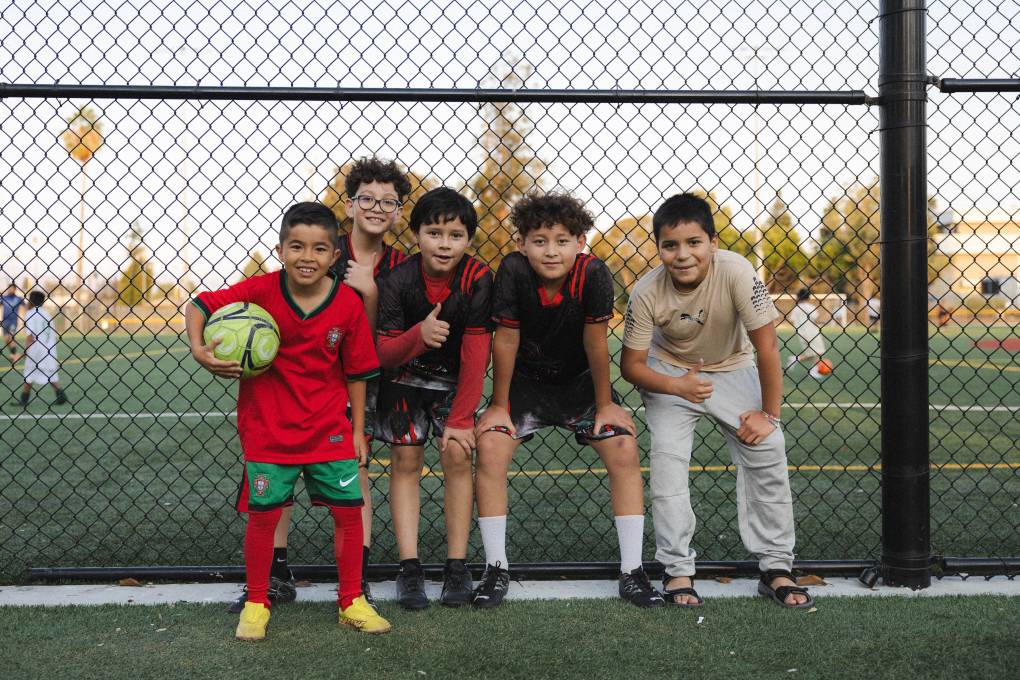
"caption": "Silicon Valley has a rich history and tradition of soccer, which includes housing all of the Bay Area's major-league pro soccer teams and hosting World Cup matches. Here, a group of young boys pose on the sideline during an adult league game in Sunnyvale on Aug. 24, 2024.",
"credit": "Alex Knowbody",
"altTag": "a group of young boys pose for a photo near a soccer field in Sunnyvale",
"description": null,
"imgSizes": {
"medium": {
"file": "https://cdn.kqed.org/wp-content/uploads/sites/2/2024/09/FairOaksPark_SoccerSession-4-800x533.jpg",
"width": 800,
"height": 533,
"mimeType": "image/jpeg"
},
"large": {
"file": "https://cdn.kqed.org/wp-content/uploads/sites/2/2024/09/FairOaksPark_SoccerSession-4-1020x680.jpg",
"width": 1020,
"height": 680,
"mimeType": "image/jpeg"
},
"thumbnail": {
"file": "https://cdn.kqed.org/wp-content/uploads/sites/2/2024/09/FairOaksPark_SoccerSession-4-160x107.jpg",
"width": 160,
"height": 107,
"mimeType": "image/jpeg"
},
"medium_large": {
"file": "https://cdn.kqed.org/wp-content/uploads/sites/2/2024/09/FairOaksPark_SoccerSession-4-768x512.jpg",
"width": 768,
"height": 512,
"mimeType": "image/jpeg"
},
"1536x1536": {
"file": "https://cdn.kqed.org/wp-content/uploads/sites/2/2024/09/FairOaksPark_SoccerSession-4-1536x1024.jpg",
"width": 1536,
"height": 1024,
"mimeType": "image/jpeg"
},
"2048x2048": {
"file": "https://cdn.kqed.org/wp-content/uploads/sites/2/2024/09/FairOaksPark_SoccerSession-4-2048x1365.jpg",
"width": 2048,
"height": 1365,
"mimeType": "image/jpeg"
},
"post-thumbnail": {
"file": "https://cdn.kqed.org/wp-content/uploads/sites/2/2024/09/FairOaksPark_SoccerSession-4-672x372.jpg",
"width": 672,
"height": 372,
"mimeType": "image/jpeg"
},
"twentyfourteen-full-width": {
"file": "https://cdn.kqed.org/wp-content/uploads/sites/2/2024/09/FairOaksPark_SoccerSession-4-1038x576.jpg",
"width": 1038,
"height": 576,
"mimeType": "image/jpeg"
},
"full-width": {
"file": "https://cdn.kqed.org/wp-content/uploads/sites/2/2024/09/FairOaksPark_SoccerSession-4-1920x1280.jpg",
"width": 1920,
"height": 1280,
"mimeType": "image/jpeg"
},
"kqedFullSize": {
"file": "https://cdn.kqed.org/wp-content/uploads/sites/2/2024/09/FairOaksPark_SoccerSession-4-scaled.jpg",
"width": 2560,
"height": 1707
}
},
"isLoading": false,
"fetchFailed": false
},
"arts_13965515": {
"type": "attachments",
"id": "arts_13965515",
"meta": {
"index": "attachments_1716263798",
"site": "arts",
"id": "13965515",
"found": true
},
"title": "20240918_TownStrides_GC-65_qed",
"publishDate": 1727288292,
"status": "inherit",
"parent": 13965512,
"modified": 1727289879,
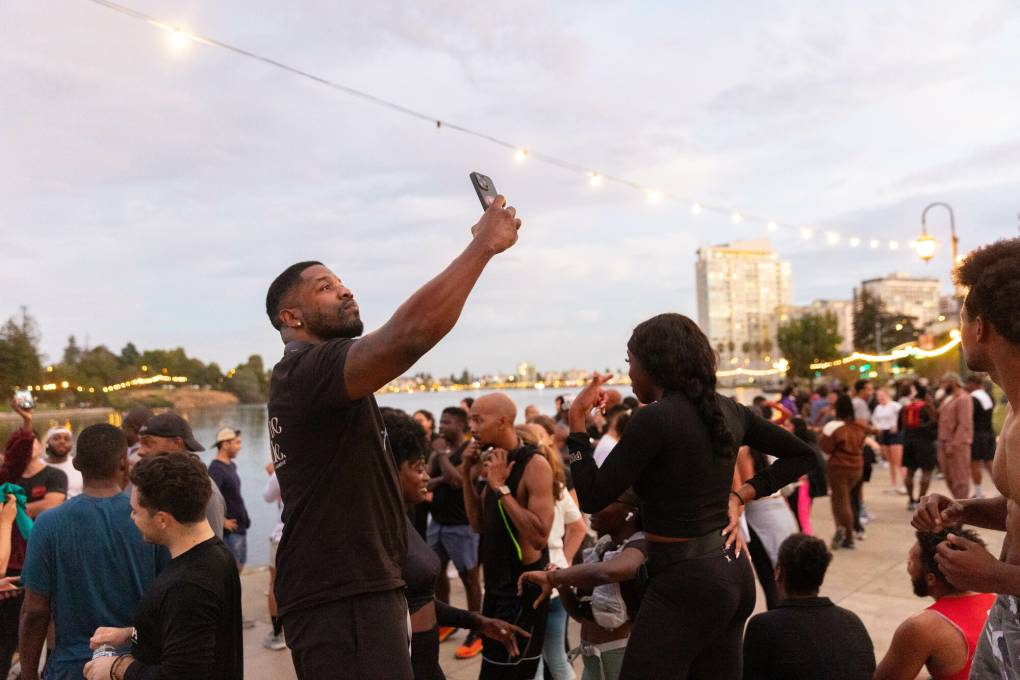
"caption": "TyRon Johnson of Discovery Bay takes a selfie after running a lap around Lake Merritt in Oakland on September 18, 2024. TyRon has been attending Town Strides meet-ups for two months and tries to come out at least 3 times a month.",
"credit": "Gina Castro/KQED",
"altTag": null,
"description": null,
"imgSizes": {
"medium": {
"file": "https://cdn.kqed.org/wp-content/uploads/sites/2/2024/09/20240918_TownStrides_GC-65_qed-800x533.jpg",
"width": 800,
"height": 533,
"mimeType": "image/jpeg"
},
"large": {
"file": "https://cdn.kqed.org/wp-content/uploads/sites/2/2024/09/20240918_TownStrides_GC-65_qed-1020x680.jpg",
"width": 1020,
"height": 680,
"mimeType": "image/jpeg"
},
"thumbnail": {
"file": "https://cdn.kqed.org/wp-content/uploads/sites/2/2024/09/20240918_TownStrides_GC-65_qed-160x107.jpg",
"width": 160,
"height": 107,
"mimeType": "image/jpeg"
},
"medium_large": {
"file": "https://cdn.kqed.org/wp-content/uploads/sites/2/2024/09/20240918_TownStrides_GC-65_qed-768x512.jpg",
"width": 768,
"height": 512,
"mimeType": "image/jpeg"
},
"1536x1536": {
"file": "https://cdn.kqed.org/wp-content/uploads/sites/2/2024/09/20240918_TownStrides_GC-65_qed-1536x1024.jpg",
"width": 1536,
"height": 1024,
"mimeType": "image/jpeg"
},
"post-thumbnail": {
"file": "https://cdn.kqed.org/wp-content/uploads/sites/2/2024/09/20240918_TownStrides_GC-65_qed-672x372.jpg",
"width": 672,
"height": 372,
"mimeType": "image/jpeg"
},
"twentyfourteen-full-width": {
"file": "https://cdn.kqed.org/wp-content/uploads/sites/2/2024/09/20240918_TownStrides_GC-65_qed-1038x576.jpg",
"width": 1038,
"height": 576,
"mimeType": "image/jpeg"
},
"full-width": {
"file": "https://cdn.kqed.org/wp-content/uploads/sites/2/2024/09/20240918_TownStrides_GC-65_qed-1920x1280.jpg",
"width": 1920,
"height": 1280,
"mimeType": "image/jpeg"
},
"kqedFullSize": {
"file": "https://cdn.kqed.org/wp-content/uploads/sites/2/2024/09/20240918_TownStrides_GC-65_qed.jpg",
"width": 2000,
"height": 1333
}
},
"isLoading": false,
"fetchFailed": false
},
"arts_13964276": {
"type": "attachments",
"id": "arts_13964276",
"meta": {
"index": "attachments_1716263798",
"site": "arts",
"id": "13964276",
"found": true
},
"title": "‘Why We Love Football: A History in 100 Moments’ by Joe Posnanski.",
"publishDate": 1726503692,
"status": "inherit",
"parent": 13964273,
"modified": 1726503729,
"caption": "‘Why We Love Football: A History in 100 Moments’ by Joe Posnanski.",
"credit": "Dutton",
"altTag": null,
"description": null,
"imgSizes": {
"medium": {
"file": "https://cdn.kqed.org/wp-content/uploads/sites/2/2024/09/foot-small-800x496.png",
"width": 800,
"height": 496,
"mimeType": "image/png"
},
"large": {
"file": "https://cdn.kqed.org/wp-content/uploads/sites/2/2024/09/foot-small-1020x632.png",
"width": 1020,
"height": 632,
"mimeType": "image/png"
},
"thumbnail": {
"file": "https://cdn.kqed.org/wp-content/uploads/sites/2/2024/09/foot-small-160x99.png",
"width": 160,
"height": 99,
"mimeType": "image/png"
},
"medium_large": {
"file": "https://cdn.kqed.org/wp-content/uploads/sites/2/2024/09/foot-small-768x476.png",
"width": 768,
"height": 476,
"mimeType": "image/png"
},
"1536x1536": {
"file": "https://cdn.kqed.org/wp-content/uploads/sites/2/2024/09/foot-small-1536x952.png",
"width": 1536,
"height": 952,
"mimeType": "image/png"
},
"post-thumbnail": {
"file": "https://cdn.kqed.org/wp-content/uploads/sites/2/2024/09/foot-small-672x372.png",
"width": 672,
"height": 372,
"mimeType": "image/png"
},
"twentyfourteen-full-width": {
"file": "https://cdn.kqed.org/wp-content/uploads/sites/2/2024/09/foot-small-1038x576.png",
"width": 1038,
"height": 576,
"mimeType": "image/png"
},
"full-width": {
"file": "https://cdn.kqed.org/wp-content/uploads/sites/2/2024/09/foot-small-1920x1190.png",
"width": 1920,
"height": 1190,
"mimeType": "image/png"
},
"kqedFullSize": {
"file": "https://cdn.kqed.org/wp-content/uploads/sites/2/2024/09/foot-small.png",
"width": 2000,
"height": 1240
}
},
"isLoading": false,
"fetchFailed": false
},
"arts_13964211": {
"type": "attachments",
"id": "arts_13964211",
"meta": {
"index": "attachments_1716263798",
"site": "arts",
"id": "13964211",
"found": true
},
"title": "EpicBill_Pressroom_01",
"publishDate": 1726203226,
"status": "inherit",
"parent": 13964208,
"modified": 1726203317,
"caption": "Bill Bradley at the start of the Arrowhead 135 in International Falls, Minnesota.",
"credit": "Quinnolyn Benson-Yates",
"altTag": null,
"description": null,
"imgSizes": {
"medium": {
"file": "https://cdn.kqed.org/wp-content/uploads/sites/2/2024/09/EpicBill_Pressroom_01-800x412.jpg",
"width": 800,
"height": 412,
"mimeType": "image/jpeg"
},
"large": {
"file": "https://cdn.kqed.org/wp-content/uploads/sites/2/2024/09/EpicBill_Pressroom_01-1020x525.jpg",
"width": 1020,
"height": 525,
"mimeType": "image/jpeg"
},
"thumbnail": {
"file": "https://cdn.kqed.org/wp-content/uploads/sites/2/2024/09/EpicBill_Pressroom_01-160x82.jpg",
"width": 160,
"height": 82,
"mimeType": "image/jpeg"
},
"medium_large": {
"file": "https://cdn.kqed.org/wp-content/uploads/sites/2/2024/09/EpicBill_Pressroom_01-768x396.jpg",
"width": 768,
"height": 396,
"mimeType": "image/jpeg"
},
"1536x1536": {
"file": "https://cdn.kqed.org/wp-content/uploads/sites/2/2024/09/EpicBill_Pressroom_01-1536x791.jpg",
"width": 1536,
"height": 791,
"mimeType": "image/jpeg"
},
"post-thumbnail": {
"file": "https://cdn.kqed.org/wp-content/uploads/sites/2/2024/09/EpicBill_Pressroom_01-672x372.jpg",
"width": 672,
"height": 372,
"mimeType": "image/jpeg"
},
"twentyfourteen-full-width": {
"file": "https://cdn.kqed.org/wp-content/uploads/sites/2/2024/09/EpicBill_Pressroom_01-1038x576.jpg",
"width": 1038,
"height": 576,
"mimeType": "image/jpeg"
},
"kqedFullSize": {
"file": "https://cdn.kqed.org/wp-content/uploads/sites/2/2024/09/EpicBill_Pressroom_01.jpg",
"width": 1920,
"height": 989
}
},
"isLoading": false,
"fetchFailed": false
},
"arts_13963572": {
"type": "attachments",
"id": "arts_13963572",
"meta": {
"index": "attachments_1716263798",
"site": "arts",
"id": "13963572",
"found": true
},
"title": "Unity-through-Skateboarding-at-SFMOMA_InstallView2_2000",
"publishDate": 1725393061,
"status": "inherit",
"parent": 13963560,
"modified": 1725393224,
"caption": "An installation view of 'Unity Through Skateboarding' at SFMOMA.",
"credit": "Tenari Tuatagaloa",
"altTag": "gallery with grid of photographs covering walls, six tvs and painted bench",
"description": null,
"imgSizes": {
"medium": {
"file": "https://cdn.kqed.org/wp-content/uploads/sites/2/2024/09/Unity-through-Skateboarding-at-SFMOMA_InstallView2_2000-800x600.jpg",
"width": 800,
"height": 600,
"mimeType": "image/jpeg"
},
"large": {
"file": "https://cdn.kqed.org/wp-content/uploads/sites/2/2024/09/Unity-through-Skateboarding-at-SFMOMA_InstallView2_2000-1020x765.jpg",
"width": 1020,
"height": 765,
"mimeType": "image/jpeg"
},
"thumbnail": {
"file": "https://cdn.kqed.org/wp-content/uploads/sites/2/2024/09/Unity-through-Skateboarding-at-SFMOMA_InstallView2_2000-160x120.jpg",
"width": 160,
"height": 120,
"mimeType": "image/jpeg"
},
"medium_large": {
"file": "https://cdn.kqed.org/wp-content/uploads/sites/2/2024/09/Unity-through-Skateboarding-at-SFMOMA_InstallView2_2000-768x576.jpg",
"width": 768,
"height": 576,
"mimeType": "image/jpeg"
},
"1536x1536": {
"file": "https://cdn.kqed.org/wp-content/uploads/sites/2/2024/09/Unity-through-Skateboarding-at-SFMOMA_InstallView2_2000-1536x1152.jpg",
"width": 1536,
"height": 1152,
"mimeType": "image/jpeg"
},
"post-thumbnail": {
"file": "https://cdn.kqed.org/wp-content/uploads/sites/2/2024/09/Unity-through-Skateboarding-at-SFMOMA_InstallView2_2000-672x372.jpg",
"width": 672,
"height": 372,
"mimeType": "image/jpeg"
},
"twentyfourteen-full-width": {
"file": "https://cdn.kqed.org/wp-content/uploads/sites/2/2024/09/Unity-through-Skateboarding-at-SFMOMA_InstallView2_2000-1038x576.jpg",
"width": 1038,
"height": 576,
"mimeType": "image/jpeg"
},
"full-width": {
"file": "https://cdn.kqed.org/wp-content/uploads/sites/2/2024/09/Unity-through-Skateboarding-at-SFMOMA_InstallView2_2000-1920x1440.jpg",
"width": 1920,
"height": 1440,
"mimeType": "image/jpeg"
},
"kqedFullSize": {
"file": "https://cdn.kqed.org/wp-content/uploads/sites/2/2024/09/Unity-through-Skateboarding-at-SFMOMA_InstallView2_2000.jpg",
"width": 2000,
"height": 1500
}
},
"isLoading": false,
"fetchFailed": false
},
"arts_13962810": {
"type": "attachments",
"id": "arts_13962810",
"meta": {
"index": "attachments_1716263798",
"site": "arts",
"id": "13962810",
"found": true
},
"title": "For the Win Boxing",
"publishDate": 1723837760,
"status": "inherit",
"parent": 0,
"modified": 1723837953,
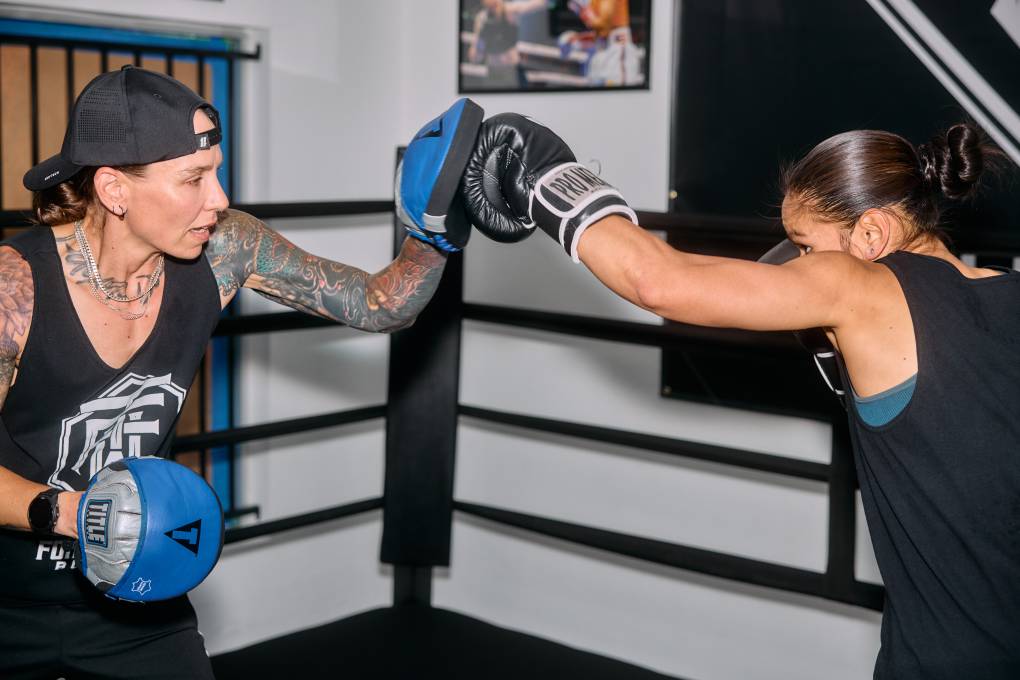
"caption": "Coach Rae Black (left) founded For the Win Boxing to train female and nonbinary fighters like amateur boxer Jackie Espejo (right). ",
"credit": "D.A. Mission",
"altTag": "A coach and boxer spar in a ring.",
"description": null,
"imgSizes": {
"medium": {
"file": "https://cdn.kqed.org/wp-content/uploads/sites/2/2024/08/F93A0217-800x534.jpg",
"width": 800,
"height": 534,
"mimeType": "image/jpeg"
},
"large": {
"file": "https://cdn.kqed.org/wp-content/uploads/sites/2/2024/08/F93A0217-1020x680.jpg",
"width": 1020,
"height": 680,
"mimeType": "image/jpeg"
},
"thumbnail": {
"file": "https://cdn.kqed.org/wp-content/uploads/sites/2/2024/08/F93A0217-160x107.jpg",
"width": 160,
"height": 107,
"mimeType": "image/jpeg"
},
"medium_large": {
"file": "https://cdn.kqed.org/wp-content/uploads/sites/2/2024/08/F93A0217-768x512.jpg",
"width": 768,
"height": 512,
"mimeType": "image/jpeg"
},
"1536x1536": {
"file": "https://cdn.kqed.org/wp-content/uploads/sites/2/2024/08/F93A0217-1536x1025.jpg",
"width": 1536,
"height": 1025,
"mimeType": "image/jpeg"
},
"2048x2048": {
"file": "https://cdn.kqed.org/wp-content/uploads/sites/2/2024/08/F93A0217-2048x1366.jpg",
"width": 2048,
"height": 1366,
"mimeType": "image/jpeg"
},
"post-thumbnail": {
"file": "https://cdn.kqed.org/wp-content/uploads/sites/2/2024/08/F93A0217-672x372.jpg",
"width": 672,
"height": 372,
"mimeType": "image/jpeg"
},
"twentyfourteen-full-width": {
"file": "https://cdn.kqed.org/wp-content/uploads/sites/2/2024/08/F93A0217-1038x576.jpg",
"width": 1038,
"height": 576,
"mimeType": "image/jpeg"
},
"full-width": {
"file": "https://cdn.kqed.org/wp-content/uploads/sites/2/2024/08/F93A0217-1920x1281.jpg",
"width": 1920,
"height": 1281,
"mimeType": "image/jpeg"
},
"kqedFullSize": {
"file": "https://cdn.kqed.org/wp-content/uploads/sites/2/2024/08/F93A0217-scaled.jpg",
"width": 2560,
"height": 1708
}
},
"isLoading": false,
"fetchFailed": false
}
},
"audioPlayerReducer": {
"postId": "stream_live",
"isPaused": true,
"isPlaying": false,
"pfsActive": false,
"pledgeModalIsOpen": true,
"playerDrawerIsOpen": false,
"liveAudioPlayStartedAt": 0,
"liveAudioPlayContext": ""
},
"authorsReducer": {
"byline_arts_13966570": {
"type": "authors",
"id": "byline_arts_13966570",
"meta": {
"override": true
},
"slug": "byline_arts_13966570",
"name": "Ashwini Gangal",
"isLoading": false
},
"byline_arts_13964273": {
"type": "authors",
"id": "byline_arts_13964273",
"meta": {
"override": true
},
"slug": "byline_arts_13964273",
"name": "Mike Householder, Associated Press",
"isLoading": false
},
"byline_arts_13962783": {
"type": "authors",
"id": "byline_arts_13962783",
"meta": {
"override": true
},
"slug": "byline_arts_13962783",
"name": "Danny Acosta",
"isLoading": false
},
"gmeline": {
"type": "authors",
"id": "185",
"meta": {
"index": "authors_1716337520",
"id": "185",
"found": true
},
"name": "Gabe Meline",
"firstName": "Gabe",
"lastName": "Meline",
"slug": "gmeline",
"email": "gmeline@kqed.org",
"display_author_email": true,
"staff_mastheads": [
"arts"
],
"title": "Senior Editor, KQED Arts & Culture",
"bio": "Gabe Meline entered journalism at age 15 making photocopied zines, and has since earned awards from the Edward R. Murrow Awards, the Society for Professional Journalists, the Online Journalism Awards, the Association of Alternative Newsweeklies and the California Newspaper Publishers Association. Prior to KQED, he was the editor of the \u003cem>North Bay Bohemian\u003c/em> and a touring musician. He lives with his wife and daughter in his hometown of Santa Rosa, CA.",
"avatar": "https://secure.gravatar.com/avatar/5bebe57be0d8bc2dd318934feb47299e2d2d10cba28d09d8d7afb389a2ce2bdd?s=600&d=blank&r=g",
"twitter": null,
"bluesky": null,
"facebook": null,
"instagram": null,
"linkedin": null,
"sites": [
{
"site": "",
"roles": [
"editor"
]
},
{
"site": "arts",
"roles": [
"administrator"
]
},
{
"site": "artschool",
"roles": [
"editor"
]
},
{
"site": "news",
"roles": [
"author"
]
},
{
"site": "pop",
"roles": [
"editor"
]
},
{
"site": "bayareabites",
"roles": [
"editor"
]
},
{
"site": "food",
"roles": [
"editor"
]
},
{
"site": "forum",
"roles": [
"administrator"
]
},
{
"site": "liveblog",
"roles": [
"editor"
]
},
{
"site": "hiphop",
"roles": [
"editor"
]
}
],
"headData": {
"title": "Gabe Meline | KQED",
"description": "Senior Editor, KQED Arts & Culture",
"ogImgSrc": "https://secure.gravatar.com/avatar/5bebe57be0d8bc2dd318934feb47299e2d2d10cba28d09d8d7afb389a2ce2bdd?s=600&d=blank&r=g",
"twImgSrc": "https://secure.gravatar.com/avatar/5bebe57be0d8bc2dd318934feb47299e2d2d10cba28d09d8d7afb389a2ce2bdd?s=600&d=blank&r=g"
},
"isLoading": false,
"link": "/author/gmeline"
},
"ralexandra": {
"type": "authors",
"id": "11242",
"meta": {
"index": "authors_1716337520",
"id": "11242",
"found": true
},
"name": "Rae Alexandra",
"firstName": "Rae",
"lastName": "Alexandra",
"slug": "ralexandra",
"email": "ralexandra@kqed.org",
"display_author_email": true,
"staff_mastheads": [],
"title": "Reporter/Producer",
"bio": "Rae Alexandra is a Reporter/Producer for KQED Arts & Culture, and the creator/author of the \u003ca href=\"https://www.kqed.org/arts/program/rebel-girls-from-bay-area-history\">Rebel Girls From Bay Area History\u003c/a> and \u003ca href=\"https://www.kqed.org/bizarrebayarea\">Bizarre Bay Area\u003c/a> series. Her debut book, \u003ca href=\"https://citylights.com/politics-current-events-history/unsung-heroines35-women-who-changed/\">Unsung Heroines: 35 Women Who Changed the Bay Area\u003c/a> was published by City Lights in March 2026. In 2023, Rae was awarded an SPJ Excellence in Journalism Award for Arts & Culture. Rae was born and raised in Wales and subsequently — even after two decades in Northern California — still uses phrases that regularly baffle her coworkers.",
"avatar": "https://secure.gravatar.com/avatar/edfee8176c80cc0a382b051190f5341997df378a934a5774dcb0977732dfd401?s=600&d=blank&r=g",
"twitter": null,
"bluesky": null,
"facebook": null,
"instagram": null,
"linkedin": null,
"sites": [
{
"site": "arts",
"roles": [
"subscriber"
]
},
{
"site": "news",
"roles": [
"subscriber"
]
},
{
"site": "pop",
"roles": [
"subscriber"
]
},
{
"site": "bayareabites",
"roles": [
"subscriber"
]
},
{
"site": "science",
"roles": [
"subscriber"
]
}
],
"headData": {
"title": "Rae Alexandra | KQED",
"description": "Reporter/Producer",
"ogImgSrc": "https://secure.gravatar.com/avatar/edfee8176c80cc0a382b051190f5341997df378a934a5774dcb0977732dfd401?s=600&d=blank&r=g",
"twImgSrc": "https://secure.gravatar.com/avatar/edfee8176c80cc0a382b051190f5341997df378a934a5774dcb0977732dfd401?s=600&d=blank&r=g"
},
"isLoading": false,
"link": "/author/ralexandra"
},
"ogpenn": {
"type": "authors",
"id": "11491",
"meta": {
"index": "authors_1716337520",
"id": "11491",
"found": true
},
"name": "Pendarvis Harshaw",
"firstName": "Pendarvis",
"lastName": "Harshaw",
"slug": "ogpenn",
"email": "ogpenn@gmail.com",
"display_author_email": false,
"staff_mastheads": [
"arts"
],
"title": "Community Engagement Reporter",
"bio": "Pendarvis Harshaw is an educator, host and writer with KQED Arts.",
"avatar": "https://secure.gravatar.com/avatar/972b77ee8e3f346ae2b00622661187fbfabd059b5693bbdc1475ea7a722fd4cd?s=600&d=blank&r=g",
"twitter": null,
"bluesky": null,
"facebook": null,
"instagram": "ogpenn",
"linkedin": null,
"sites": [
{
"site": "arts",
"roles": [
"administrator"
]
},
{
"site": "news",
"roles": [
"editor"
]
},
{
"site": "bayareabites",
"roles": [
"author"
]
},
{
"site": "hiphop",
"roles": [
"editor"
]
}
],
"headData": {
"title": "Pendarvis Harshaw | KQED",
"description": "Community Engagement Reporter",
"ogImgSrc": "https://secure.gravatar.com/avatar/972b77ee8e3f346ae2b00622661187fbfabd059b5693bbdc1475ea7a722fd4cd?s=600&d=blank&r=g",
"twImgSrc": "https://secure.gravatar.com/avatar/972b77ee8e3f346ae2b00622661187fbfabd059b5693bbdc1475ea7a722fd4cd?s=600&d=blank&r=g"
},
"isLoading": false,
"link": "/author/ogpenn"
},
"achazaro": {
"type": "authors",
"id": "11748",
"meta": {
"index": "authors_1716337520",
"id": "11748",
"found": true
},
"name": "Alan Chazaro",
"firstName": "Alan",
"lastName": "Chazaro",
"slug": "achazaro",
"email": "agchazaro@gmail.com",
"display_author_email": true,
"staff_mastheads": [],
"title": "Food Writer and Reporter",
"bio": "Alan Chazaro is the author of \u003cem>This Is Not a Frank Ocean Cover Album\u003c/em> (Black Lawrence Press, 2019), \u003cem>Piñata Theory\u003c/em> (Black Lawrence Press, 2020), and \u003cem>Notes from the Eastern Span of the Bay Bridge\u003c/em> (Ghost City Press, 2021). He is a graduate of June Jordan’s Poetry for the People program at UC Berkeley and a former Lawrence Ferlinghetti Fellow at the University of San Francisco. He writes about sports, food, art, music, education, and culture while repping the Bay on \u003ca href=\"https://twitter.com/alan_chazaro\">Twitter\u003c/a> and \u003ca href=\"https://www.instagram.com/alan_chazaro/?hl=en\">Instagram\u003c/a> at @alan_chazaro.",
"avatar": "https://secure.gravatar.com/avatar/ea8b6dd970fc5c29e7a188e7d5861df7?s=600&d=blank&r=g",
"twitter": "alan_chazaro",
"facebook": null,
"instagram": null,
"linkedin": null,
"sites": [
{
"site": "arts",
"roles": [
"contributor"
]
},
{
"site": "news",
"roles": [
"editor"
]
}
],
"headData": {
"title": "Alan Chazaro | KQED",
"description": "Food Writer and Reporter",
"ogImgSrc": "https://secure.gravatar.com/avatar/ea8b6dd970fc5c29e7a188e7d5861df7?s=600&d=blank&r=g",
"twImgSrc": "https://secure.gravatar.com/avatar/ea8b6dd970fc5c29e7a188e7d5861df7?s=600&d=blank&r=g"
},
"isLoading": false,
"link": "/author/achazaro"
},
"sfaulise": {
"type": "authors",
"id": "11919",
"meta": {
"index": "authors_1716337520",
"id": "11919",
"found": true
},
"name": "Shannon Faulise",
"firstName": "Shannon",
"lastName": "Faulise",
"slug": "sfaulise",
"email": "sfaulise@kqed.org",
"display_author_email": false,
"staff_mastheads": [],
"title": "Contributor, KQED Arts & Culture",
"bio": "Shannon Faulise is a graduate of the UC Berkeley Graduate School of Journalism, where she concentrated on photojournalism and feature writing. Shannon's photos, audio pieces and written stories have appeared in The Oaklandside, The Redwood City Pulse and KALX. Outside of reporting, Shannon loves kpop, women's sports and concerts. She served as an intern for KQED Arts & Culture in 2024–25.",
"avatar": "https://secure.gravatar.com/avatar/76449df2627a603d6b02f0534ec3c913007029bff4f1c0572071401f9a293a02?s=600&d=blank&r=g",
"twitter": null,
"bluesky": null,
"facebook": null,
"instagram": null,
"linkedin": null,
"sites": [
{
"site": "arts",
"roles": [
"subscriber"
]
}
],
"headData": {
"title": "Shannon Faulise | KQED",
"description": "Contributor, KQED Arts & Culture",
"ogImgSrc": "https://secure.gravatar.com/avatar/76449df2627a603d6b02f0534ec3c913007029bff4f1c0572071401f9a293a02?s=600&d=blank&r=g",
"twImgSrc": "https://secure.gravatar.com/avatar/76449df2627a603d6b02f0534ec3c913007029bff4f1c0572071401f9a293a02?s=600&d=blank&r=g"
},
"isLoading": false,
"link": "/author/sfaulise"
},
"ncoats": {
"type": "authors",
"id": "12013",
"meta": {
"index": "authors_1716337520",
"id": "12013",
"found": true
},
"name": "Nia Coats",
"firstName": "Nia",
"lastName": "Coats",
"slug": "ncoats",
"email": "ncoats@kqed.org",
"display_author_email": false,
"staff_mastheads": [],
"title": "Intern, KQED Arts & Culture",
"bio": "Nia Coats is KQED Arts & Culture's editorial intern. As a recent Berkeley School of Journalism graduate, she has covered arts and culture in the Bay Area and nationwide since 2021. She has a great love for music and the ways it soundtracks our lives. When she isn't reporting or writing, Nia is going to concerts, watching movies and working on her magazine, \u003cem>Lucky 7\u003c/em>.",
"avatar": "https://secure.gravatar.com/avatar/5603dfcf7b25a681fd9fcc1f691ee510bd6a2fdbb37b425d337245b9e330e449?s=600&d=blank&r=g",
"twitter": null,
"bluesky": null,
"facebook": null,
"instagram": null,
"linkedin": null,
"sites": [
{
"site": "arts",
"roles": [
"contributor"
]
}
],
"headData": {
"title": "Nia Coats | KQED",
"description": "Intern, KQED Arts & Culture",
"ogImgSrc": "https://secure.gravatar.com/avatar/5603dfcf7b25a681fd9fcc1f691ee510bd6a2fdbb37b425d337245b9e330e449?s=600&d=blank&r=g",
"twImgSrc": "https://secure.gravatar.com/avatar/5603dfcf7b25a681fd9fcc1f691ee510bd6a2fdbb37b425d337245b9e330e449?s=600&d=blank&r=g"
},
"isLoading": false,
"link": "/author/ncoats"
}
},
"pagesReducer": {
"arts_category_sports": {
"type": "terms",
"id": "arts_13238",
"meta": {
"index": "terms_1716263798",
"site": "arts",
"id": "13238",
"score": 12.071835
},
"featImg": null,
"name": "Sports",
"description": null,
"taxonomy": "category",
"headData": {
"twImgId": null,
"twTitle": null,
"ogTitle": null,
"ogImgId": null,
"twDescription": null,
"description": null,
"title": "Sports Archives | KQED Arts",
"ogDescription": null
},
"ttid": 13250,
"slug": "sports",
"isLoading": false,
"title": "Sports",
"pageMeta": {
"site": "arts",
"WpPageTemplate": "page-topic-editorial",
"currentPage": 7
},
"blocks": [
{
"blockName": "kqed/post-list",
"attrs": {
"layout": "cardArticle2",
"query": "posts/arts?category=sports",
"seeMore": false,
"paginated": true,
"page": 7
}
},
{
"blockName": "kqed/ad"
}
]
}
},
"pfsSessionReducer": {},
"postsReducer": {
"stream_live": {
"type": "live",
"id": "stream_live",
"audioUrl": "https://streams.kqed.org/kqedradio",
"title": "Live Stream",
"excerpt": "Live Stream information currently unavailable.",
"link": "/radio",
"featImg": "",
"label": {
"name": "KQED Live",
"link": "/"
}
},
"stream_kqedNewscast": {
"type": "posts",
"id": "stream_kqedNewscast",
"audioUrl": "https://www.kqed.org/.stream/anon/radio/RDnews/newscast.mp3?_=1",
"title": "KQED Newscast",
"featImg": "",
"label": {
"name": "88.5 FM",
"link": "/"
}
},
"arts_13967748": {
"type": "posts",
"id": "arts_13967748",
"meta": {
"index": "posts_1716263798",
"site": "arts",
"id": "13967748",
"score": null,
"sort": [
1730937660000
]
},
"guestAuthors": [],
"slug": "klay-thompson-art-show",
"title": "Welcome Back to the Klay Area, Mr. Thompson",
"publishDate": 1730937660,
"format": "aside",
"headTitle": "Welcome Back to the Klay Area, Mr. Thompson | KQED",
"labelTerm": {
"term": 140,
"site": "arts"
},
"content": "\u003cfigure id=\"attachment_13967753\" class=\"wp-caption aligncenter\" style=\"max-width: 748px\">\u003cimg loading=\"lazy\" decoding=\"async\" class=\"size-full wp-image-13967753\" src=\"https://cdn.kqed.org/wp-content/uploads/sites/2/2024/11/Screenshot-2024-11-05-at-2.18.35%E2%80%AFPM.png\" alt=\"\" width=\"748\" height=\"880\" srcset=\"https://cdn.kqed.org/wp-content/uploads/sites/2/2024/11/Screenshot-2024-11-05-at-2.18.35 PM.png 748w, https://cdn.kqed.org/wp-content/uploads/sites/2/2024/11/Screenshot-2024-11-05-at-2.18.35 PM-160x188.png 160w\" sizes=\"(max-width: 748px) 100vw, 748px\">\u003cfigcaption class=\"wp-caption-text\">An illustration of NBA star (and boat owner) Klay Thompson with his pup, Rocco. \u003ccite>(\u003ca href=\"https://www.instagram.com/bunnieeatmuffin/\" target=\"_blank\">Kaitlyn Joe-Johnson\u003c/a>)\u003c/cite>\u003c/figcaption>\u003c/figure>\n\u003cp>The NBA season is in full swing, and with a 7-1 record, the Golden State Warriors are balling.\u003c/p>\n\u003cp>As the Bay Area prepares to \u003ca href=\"https://www.nba.com/warriors/2025-allstar\" target=\"_blank\" rel=\"noopener\">host the NBA All-Star game in February\u003c/a>, and with the WNBA’s latest expansion team \u003ca href=\"https://valkyries.com/\" target=\"_blank\" rel=\"noopener\">the Golden State Valkyries\u003c/a> set to debut in May, it’s a good time to be a local hoops fan.\u003c/p>\n\u003cp>That is, unless you’re a big \u003ca href=\"https://www.si.com/nba/mavericks/news/former-warriors-star-klay-thompson-reveals-why-he-signed-with-dallas-mavericks\">Klay Thompson fan\u003c/a>. But don’t worry. After his \u003ca href=\"https://www.nba.com/news/klay-thompson-2024-free-agency\" target=\"_blank\" rel=\"noopener\">sign-and-trade\u003c/a> deal this past off-season, the beloved former Golden State Warriors shooting guard makes his return to the Bay as a member of the Dallas Mavericks to play the Warriors on Nov. 12.\u003c/p>\n\u003cfigure id=\"attachment_13967760\" class=\"wp-caption aligncenter\" style=\"max-width: 934px\">\u003cimg loading=\"lazy\" decoding=\"async\" class=\"size-full wp-image-13967760\" src=\"https://cdn.kqed.org/wp-content/uploads/sites/2/2024/11/IMG_1592.jpg\" alt=\"Splash Brother Klay Thompson illustrated in the spirit of the Super Mario Bros.\" width=\"934\" height=\"1236\" srcset=\"https://cdn.kqed.org/wp-content/uploads/sites/2/2024/11/IMG_1592.jpg 934w, https://cdn.kqed.org/wp-content/uploads/sites/2/2024/11/IMG_1592-800x1059.jpg 800w, https://cdn.kqed.org/wp-content/uploads/sites/2/2024/11/IMG_1592-160x212.jpg 160w, https://cdn.kqed.org/wp-content/uploads/sites/2/2024/11/IMG_1592-768x1016.jpg 768w\" sizes=\"(max-width: 934px) 100vw, 934px\">\u003cfigcaption class=\"wp-caption-text\">Splash Brother Klay Thompson illustrated in the spirit of Super Mario Bros. \u003ccite>(\u003ca href=\"https://www.instagram.com/raystation/?hl=en\" target=\"_blank\">Ray Yuen\u003c/a>)\u003c/cite>\u003c/figcaption>\u003c/figure>\n\u003cp>Amidst the mixed emotions, there’s no denying that Captain Klay played a huge part in the Dubs dynasty that brought about four championship titles over the past decade.\u003c/p>\n\u003cp>To recognize that fact ahead of the splash brother reunion, Oakland’s SoleSpace — a sneaker store and creative lab — hosts a weekend-long art tribute to Klay Thompson called \u003ca href=\"https://www.instagram.com/p/DCAROFHSbW7/?igsh=MWQ1ZGUxMzBkMA%3D%3D\" target=\"_blank\" rel=\"noopener\">Klay Area\u003c/a>.\u003c/p>\n\u003cp>[ad fullwidth]\u003c/p>\n\u003cp>Co-coordinated by \u003ca href=\"https://www.instagram.com/solespacelab/\" target=\"_blank\" rel=\"noopener\">SoleSpace\u003c/a> owner \u003ca href=\"https://www.kqed.org/arts/13958896/solespace-lab-oakland-sneakers-sustainability\" target=\"_blank\" rel=\"noopener\">Jeff Perlstein\u003c/a> and artist \u003ca href=\"https://jonathanchan.com/?fbclid=PAZXh0bgNhZW0CMTEAAaYiXEyUsKxhuCHAC8onc6J3SItLgahwTHwC9lPXYmCjdJ9SovfAD-jDZ0k_aem_OBVCHlvA2mEAzbZZMsLSlA\" target=\"_blank\" rel=\"noopener\">Jonathan Chan\u003c/a>, the event will feature visual art pieces paying homage to Thompson, who holds the NBA record for \u003ca href=\"https://www.nba.com/news/nba-flashback-klay-thompson\" target=\"_blank\" rel=\"noopener\">points scored in a single quarter\u003c/a> (37) and \u003ca href=\"https://www.nba.com/news/most-3-pointers-made-single-game-nba-history\" target=\"_blank\" rel=\"noopener\">the most three-pointers made in a game\u003c/a> (14).\u003c/p>\n\u003cfigure id=\"attachment_13967761\" class=\"wp-caption aligncenter\" style=\"max-width: 746px\">\u003cimg loading=\"lazy\" decoding=\"async\" class=\"size-full wp-image-13967761\" src=\"https://cdn.kqed.org/wp-content/uploads/sites/2/2024/11/Screenshot-2024-11-05-at-2.39.12%E2%80%AFPM.png\" alt='\"China Klay,\" immortalized in artwork.' width=\"746\" height=\"976\" srcset=\"https://cdn.kqed.org/wp-content/uploads/sites/2/2024/11/Screenshot-2024-11-05-at-2.39.12 PM.png 746w, https://cdn.kqed.org/wp-content/uploads/sites/2/2024/11/Screenshot-2024-11-05-at-2.39.12 PM-160x209.png 160w\" sizes=\"(max-width: 746px) 100vw, 746px\">\u003cfigcaption class=\"wp-caption-text\">“China Klay,” immortalized in artwork. \u003ccite>(\u003ca href=\"https://www.instagram.com/thecitygfx/\" target=\"_blank\">Jason Wong\u003c/a>)\u003c/cite>\u003c/figcaption>\u003c/figure>\n\u003cp>Works from \u003ca href=\"https://www.instagram.com/bunnieeatmuffin/\" target=\"_blank\" rel=\"noopener\">Kaitlyn Joe-Johnson\u003c/a>, \u003ca href=\"https://www.instagram.com/shomari7382/\" target=\"_blank\" rel=\"noopener\">Shomari Smith\u003c/a>, \u003ca href=\"https://www.instagram.com/thecitygfx/\" target=\"_blank\" rel=\"noopener\">Jason Wong\u003c/a>, \u003ca href=\"https://www.instagram.com/raystation/\" target=\"_blank\" rel=\"noopener\">Ray Yuen\u003c/a>, Joel Rebello and more will be on display inside of the building on 9th Street in Old Oakland. Bright illustrations, creative remixes of images from popular culture and \u003ca href=\"https://www.youtube.com/watch?v=FG_IJYAb6TU\" target=\"_blank\" rel=\"noopener\">a dig at Klay’s comedic time in China\u003c/a> are among the pieces included.\u003c/p>\n\u003chr>\n\u003cp>\u003c/p>\n\u003cp>\u003cem>‘Klay Area,’ an all-ages exhibition, opens Friday, Nov. 8, and runs through Saturday and Sunday. Entry is donation-based. For more details check SoleSpace’s \u003ca href=\"https://www.instagram.com/p/DCAROFHSbW7/?igsh=MWQ1ZGUxMzBkMA%3D%3D\" target=\"_blank\" rel=\"noopener\">Instagram\u003c/a>. \u003c/em>\u003c/p>\n\n",
"blocks": [],
"excerpt": "An exhibition honoring former Warriors star Klay Thompson opens just in time for his return to the Bay Area. ",
"status": "publish",
"parent": 0,
"modified": 1731016773,
"stats": {
"hasAudio": false,
"hasVideo": false,
"hasChartOrMap": false,
"iframeSrcs": [],
"hasGoogleForm": false,
"hasGallery": false,
"hasHearkenModule": false,
"hasPolis": false,
"paragraphCount": 10,
"wordCount": 353
},
"headData": {
"title": "Welcome Back to the Klay Area, Mr. Thompson | KQED",
"description": "An exhibition honoring former Warriors star Klay Thompson opens just in time for his return to the Bay Area. ",
"ogTitle": "",
"ogDescription": "",
"ogImgId": "",
"twTitle": "",
"twDescription": "",
"twImgId": "",
"schema": {
"@context": "https://schema.org",
"@type": "Article",
"headline": "Welcome Back to the Klay Area, Mr. Thompson",
"datePublished": "2024-11-06T16:01:00-08:00",
"dateModified": "2024-11-07T13:59:33-08:00",
"image": "https://cdn.kqed.org/wp-content/uploads/2020/02/KQED-OG-Image@1x.png"
}
},
"sticky": false,
"nprStoryId": "kqed-13967748",
"templateType": "standard",
"featuredImageType": "standard",
"excludeFromSiteSearch": "Include",
"articleAge": "0",
"path": "/arts/13967748/klay-thompson-art-show",
"audioTrackLength": null,
"parsedContent": [
{
"type": "contentString",
"content": "\u003cdiv class=\"post-body\">\u003cp>\u003cfigure id=\"attachment_13967753\" class=\"wp-caption aligncenter\" style=\"max-width: 748px\">\u003cimg loading=\"lazy\" decoding=\"async\" class=\"size-full wp-image-13967753\" src=\"https://cdn.kqed.org/wp-content/uploads/sites/2/2024/11/Screenshot-2024-11-05-at-2.18.35%E2%80%AFPM.png\" alt=\"\" width=\"748\" height=\"880\" srcset=\"https://cdn.kqed.org/wp-content/uploads/sites/2/2024/11/Screenshot-2024-11-05-at-2.18.35 PM.png 748w, https://cdn.kqed.org/wp-content/uploads/sites/2/2024/11/Screenshot-2024-11-05-at-2.18.35 PM-160x188.png 160w\" sizes=\"(max-width: 748px) 100vw, 748px\">\u003cfigcaption class=\"wp-caption-text\">An illustration of NBA star (and boat owner) Klay Thompson with his pup, Rocco. \u003ccite>(\u003ca href=\"https://www.instagram.com/bunnieeatmuffin/\" target=\"_blank\">Kaitlyn Joe-Johnson\u003c/a>)\u003c/cite>\u003c/figcaption>\u003c/figure>\n\u003cp>The NBA season is in full swing, and with a 7-1 record, the Golden State Warriors are balling.\u003c/p>\n\u003cp>As the Bay Area prepares to \u003ca href=\"https://www.nba.com/warriors/2025-allstar\" target=\"_blank\" rel=\"noopener\">host the NBA All-Star game in February\u003c/a>, and with the WNBA’s latest expansion team \u003ca href=\"https://valkyries.com/\" target=\"_blank\" rel=\"noopener\">the Golden State Valkyries\u003c/a> set to debut in May, it’s a good time to be a local hoops fan.\u003c/p>\n\u003cp>That is, unless you’re a big \u003ca href=\"https://www.si.com/nba/mavericks/news/former-warriors-star-klay-thompson-reveals-why-he-signed-with-dallas-mavericks\">Klay Thompson fan\u003c/a>. But don’t worry. After his \u003ca href=\"https://www.nba.com/news/klay-thompson-2024-free-agency\" target=\"_blank\" rel=\"noopener\">sign-and-trade\u003c/a> deal this past off-season, the beloved former Golden State Warriors shooting guard makes his return to the Bay as a member of the Dallas Mavericks to play the Warriors on Nov. 12.\u003c/p>\n\u003cfigure id=\"attachment_13967760\" class=\"wp-caption aligncenter\" style=\"max-width: 934px\">\u003cimg loading=\"lazy\" decoding=\"async\" class=\"size-full wp-image-13967760\" src=\"https://cdn.kqed.org/wp-content/uploads/sites/2/2024/11/IMG_1592.jpg\" alt=\"Splash Brother Klay Thompson illustrated in the spirit of the Super Mario Bros.\" width=\"934\" height=\"1236\" srcset=\"https://cdn.kqed.org/wp-content/uploads/sites/2/2024/11/IMG_1592.jpg 934w, https://cdn.kqed.org/wp-content/uploads/sites/2/2024/11/IMG_1592-800x1059.jpg 800w, https://cdn.kqed.org/wp-content/uploads/sites/2/2024/11/IMG_1592-160x212.jpg 160w, https://cdn.kqed.org/wp-content/uploads/sites/2/2024/11/IMG_1592-768x1016.jpg 768w\" sizes=\"(max-width: 934px) 100vw, 934px\">\u003cfigcaption class=\"wp-caption-text\">Splash Brother Klay Thompson illustrated in the spirit of Super Mario Bros. \u003ccite>(\u003ca href=\"https://www.instagram.com/raystation/?hl=en\" target=\"_blank\">Ray Yuen\u003c/a>)\u003c/cite>\u003c/figcaption>\u003c/figure>\n\u003cp>Amidst the mixed emotions, there’s no denying that Captain Klay played a huge part in the Dubs dynasty that brought about four championship titles over the past decade.\u003c/p>\n\u003cp>To recognize that fact ahead of the splash brother reunion, Oakland’s SoleSpace — a sneaker store and creative lab — hosts a weekend-long art tribute to Klay Thompson called \u003ca href=\"https://www.instagram.com/p/DCAROFHSbW7/?igsh=MWQ1ZGUxMzBkMA%3D%3D\" target=\"_blank\" rel=\"noopener\">Klay Area\u003c/a>.\u003c/p>\n\u003cp>\u003c/p>\u003c/div>",
"attributes": {
"named": {},
"numeric": []
}
},
{
"type": "component",
"content": "",
"name": "ad",
"attributes": {
"named": {
"label": "fullwidth"
},
"numeric": [
"fullwidth"
]
}
},
{
"type": "contentString",
"content": "\u003cdiv class=\"post-body\">\u003cp>\u003c/p>\n\u003cp>Co-coordinated by \u003ca href=\"https://www.instagram.com/solespacelab/\" target=\"_blank\" rel=\"noopener\">SoleSpace\u003c/a> owner \u003ca href=\"https://www.kqed.org/arts/13958896/solespace-lab-oakland-sneakers-sustainability\" target=\"_blank\" rel=\"noopener\">Jeff Perlstein\u003c/a> and artist \u003ca href=\"https://jonathanchan.com/?fbclid=PAZXh0bgNhZW0CMTEAAaYiXEyUsKxhuCHAC8onc6J3SItLgahwTHwC9lPXYmCjdJ9SovfAD-jDZ0k_aem_OBVCHlvA2mEAzbZZMsLSlA\" target=\"_blank\" rel=\"noopener\">Jonathan Chan\u003c/a>, the event will feature visual art pieces paying homage to Thompson, who holds the NBA record for \u003ca href=\"https://www.nba.com/news/nba-flashback-klay-thompson\" target=\"_blank\" rel=\"noopener\">points scored in a single quarter\u003c/a> (37) and \u003ca href=\"https://www.nba.com/news/most-3-pointers-made-single-game-nba-history\" target=\"_blank\" rel=\"noopener\">the most three-pointers made in a game\u003c/a> (14).\u003c/p>\n\u003cfigure id=\"attachment_13967761\" class=\"wp-caption aligncenter\" style=\"max-width: 746px\">\u003cimg loading=\"lazy\" decoding=\"async\" class=\"size-full wp-image-13967761\" src=\"https://cdn.kqed.org/wp-content/uploads/sites/2/2024/11/Screenshot-2024-11-05-at-2.39.12%E2%80%AFPM.png\" alt='\"China Klay,\" immortalized in artwork.' width=\"746\" height=\"976\" srcset=\"https://cdn.kqed.org/wp-content/uploads/sites/2/2024/11/Screenshot-2024-11-05-at-2.39.12 PM.png 746w, https://cdn.kqed.org/wp-content/uploads/sites/2/2024/11/Screenshot-2024-11-05-at-2.39.12 PM-160x209.png 160w\" sizes=\"(max-width: 746px) 100vw, 746px\">\u003cfigcaption class=\"wp-caption-text\">“China Klay,” immortalized in artwork. \u003ccite>(\u003ca href=\"https://www.instagram.com/thecitygfx/\" target=\"_blank\">Jason Wong\u003c/a>)\u003c/cite>\u003c/figcaption>\u003c/figure>\n\u003cp>Works from \u003ca href=\"https://www.instagram.com/bunnieeatmuffin/\" target=\"_blank\" rel=\"noopener\">Kaitlyn Joe-Johnson\u003c/a>, \u003ca href=\"https://www.instagram.com/shomari7382/\" target=\"_blank\" rel=\"noopener\">Shomari Smith\u003c/a>, \u003ca href=\"https://www.instagram.com/thecitygfx/\" target=\"_blank\" rel=\"noopener\">Jason Wong\u003c/a>, \u003ca href=\"https://www.instagram.com/raystation/\" target=\"_blank\" rel=\"noopener\">Ray Yuen\u003c/a>, Joel Rebello and more will be on display inside of the building on 9th Street in Old Oakland. Bright illustrations, creative remixes of images from popular culture and \u003ca href=\"https://www.youtube.com/watch?v=FG_IJYAb6TU\" target=\"_blank\" rel=\"noopener\">a dig at Klay’s comedic time in China\u003c/a> are among the pieces included.\u003c/p>\n\u003chr>\n\u003cp>\u003c/p>\n\u003cp>\u003cem>‘Klay Area,’ an all-ages exhibition, opens Friday, Nov. 8, and runs through Saturday and Sunday. Entry is donation-based. For more details check SoleSpace’s \u003ca href=\"https://www.instagram.com/p/DCAROFHSbW7/?igsh=MWQ1ZGUxMzBkMA%3D%3D\" target=\"_blank\" rel=\"noopener\">Instagram\u003c/a>. \u003c/em>\u003c/p>\n\n\u003c/div>\u003c/p>",
"attributes": {
"named": {},
"numeric": []
}
}
],
"link": "/arts/13967748/klay-thompson-art-show",
"authors": [
"11491"
],
"programs": [
"arts_140"
],
"categories": [
"arts_1",
"arts_13238",
"arts_22313",
"arts_70"
],
"tags": [
"arts_10278",
"arts_1143",
"arts_585"
],
"featImg": "arts_13967797",
"label": "arts_140"
},
"arts_13967132": {
"type": "posts",
"id": "arts_13967132",
"meta": {
"index": "posts_1716263798",
"site": "arts",
"id": "13967132",
"score": null,
"sort": [
1730151500000
]
},
"guestAuthors": [],
"slug": "tobin-yelland-skateboard-photography-san-francisco-deluxe-mission-dlx",
"title": "Tobin Yelland Exhibit Launches Deluxe Skate Shop’s New Mission Location",
"publishDate": 1730151500,
"format": "standard",
"headTitle": "Tobin Yelland Exhibit Launches Deluxe Skate Shop’s New Mission Location | KQED",
"labelTerm": {
"term": 140,
"site": "arts"
},
"content": "\u003cp>\u003ca href=\"https://www.tobinyelland.com/\">Tobin Yelland\u003c/a> is a bonafide photographic legend, but nowhere is he more beloved than in \u003ca href=\"https://www.kqed.org/arts/13931352/skateboarding-san-francisco-ted-barrow-thrasher\">San Francisco’s skateboarding community\u003c/a>. Yelland grew up in the city and got his first skate photo published when he was just 15. His reverence, not just for skateboarding, but for his fellow skaters, shines through every shot — as does the community’s unruly camaraderie.\u003c/p>\n\u003cp>[aside postid='arts_13963560']It’s only fitting, then, that a collection of 24 of Yelland’s photographs is on display right now to celebrate the launch of \u003ca href=\"https://dlxskateshop.com/\">Deluxe Skate Shop\u003c/a>’s new location in the Mission. Deluxe is as much of a Bay Area institution as Yelland is; its Potrero-based distribution center opened in 1986.\u003c/p>\n\u003cp>The Yelland images on display at 2330 Mission St. were all captured between 1988 and 1993 — a game-changing period for street skating, when San Francisco was at the forefront. Yelland was one of only a handful of photographers working to capture it all.\u003c/p>\n\u003cfigure id=\"attachment_13967360\" class=\"wp-caption aligncenter\" style=\"max-width: 2000px\">\u003cimg loading=\"lazy\" decoding=\"async\" class=\"size-full wp-image-13967360\" src=\"https://cdn.kqed.org/wp-content/uploads/sites/2/2024/10/1989-0017-02_Jesse_Driggs_Tobin_Yelland-2.jpg\" alt=\"A young man balances on his skateboard on the top edge of a half pipe built behind someone's house. Spectators watch on from underneath.\" width=\"2000\" height=\"1500\" srcset=\"https://cdn.kqed.org/wp-content/uploads/sites/2/2024/10/1989-0017-02_Jesse_Driggs_Tobin_Yelland-2.jpg 2000w, https://cdn.kqed.org/wp-content/uploads/sites/2/2024/10/1989-0017-02_Jesse_Driggs_Tobin_Yelland-2-800x600.jpg 800w, https://cdn.kqed.org/wp-content/uploads/sites/2/2024/10/1989-0017-02_Jesse_Driggs_Tobin_Yelland-2-1020x765.jpg 1020w, https://cdn.kqed.org/wp-content/uploads/sites/2/2024/10/1989-0017-02_Jesse_Driggs_Tobin_Yelland-2-160x120.jpg 160w, https://cdn.kqed.org/wp-content/uploads/sites/2/2024/10/1989-0017-02_Jesse_Driggs_Tobin_Yelland-2-768x576.jpg 768w, https://cdn.kqed.org/wp-content/uploads/sites/2/2024/10/1989-0017-02_Jesse_Driggs_Tobin_Yelland-2-1536x1152.jpg 1536w, https://cdn.kqed.org/wp-content/uploads/sites/2/2024/10/1989-0017-02_Jesse_Driggs_Tobin_Yelland-2-1920x1440.jpg 1920w\" sizes=\"(max-width: 2000px) 100vw, 2000px\">\u003cfigcaption class=\"wp-caption-text\">Jesse Driggs skating a backyard half pipe in 1989, as captured by Tobin Yelland. \u003ccite>(Courtesy of Tobin Yelland)\u003c/cite>\u003c/figcaption>\u003c/figure>\n\u003cp>It’s clear that Yelland carefully curated the images for this show to give a well-rounded and complete picture of what was happening in San Francisco skate culture during that time: Wide shots of kids gathered with their boards at the Embarcadero (EMB) “Wave.” Wallrides outside the 16th Street Walgreens. Hill bombing in Twin Peaks. Three decades later, watching these young men mastering their craft remains a joy to behold.\u003c/p>\n\u003cp>Even better, there are as many stationary portraits of key individuals here as there are actual skate shots. And often, these are the images that tell you the most. Whether it’s a smiling Mark Gonzalez hanging outside of a deli or a haunted-looking John Cardiel in the passenger seat of a car, these small moments speak volumes. None louder than the image of Mickey Reyes and Jeff Whitehead detained in the back of a police car. (Whitehead looks thoroughly indifferent, Reyes is gleefully laughing.)\u003c/p>\n\u003cfigure id=\"attachment_13967374\" class=\"wp-caption aligncenter\" style=\"max-width: 1318px\">\u003cimg loading=\"lazy\" decoding=\"async\" class=\"wp-image-13967374 size-full\" src=\"https://cdn.kqed.org/wp-content/uploads/sites/2/2024/10/0008-89-27_ZZPhil_Shao_Tobin_Yelland.jpg\" alt=\"A young Asian man stands and smiles warmly for the camera in the middle of a city street.\" width=\"1318\" height=\"2000\" srcset=\"https://cdn.kqed.org/wp-content/uploads/sites/2/2024/10/0008-89-27_ZZPhil_Shao_Tobin_Yelland.jpg 1318w, https://cdn.kqed.org/wp-content/uploads/sites/2/2024/10/0008-89-27_ZZPhil_Shao_Tobin_Yelland-800x1214.jpg 800w, https://cdn.kqed.org/wp-content/uploads/sites/2/2024/10/0008-89-27_ZZPhil_Shao_Tobin_Yelland-1020x1548.jpg 1020w, https://cdn.kqed.org/wp-content/uploads/sites/2/2024/10/0008-89-27_ZZPhil_Shao_Tobin_Yelland-160x243.jpg 160w, https://cdn.kqed.org/wp-content/uploads/sites/2/2024/10/0008-89-27_ZZPhil_Shao_Tobin_Yelland-768x1165.jpg 768w, https://cdn.kqed.org/wp-content/uploads/sites/2/2024/10/0008-89-27_ZZPhil_Shao_Tobin_Yelland-1012x1536.jpg 1012w\" sizes=\"(max-width: 1318px) 100vw, 1318px\">\u003cfigcaption class=\"wp-caption-text\">A poignant portrait of Phil Shao at the Embarcadero in 1992. The beloved Redwood City skater died in a car crash, aged 24. \u003ccite>(Courtesy of Tobin Yelland)\u003c/cite>\u003c/figcaption>\u003c/figure>\n\u003cp>This particular period of images struck me as a good fit for the new Deluxe store for other, less exciting reasons. In many ways, Deluxe remains married to a period of skateboarding in which women were entirely invisible (unless they were in a state of objectification). Based on my visit, the new store is currently as male-focused as skating was throughout the 1990s, despite the emergence of \u003ca href=\"https://www.kqed.org/arts/13961542/minna-stess-skateboarding-petaluma-paris-olympics\">a new generation of female skaters\u003c/a> who are pushing the sport forward. Deluxe describes their clothing and footwear offerings as gender neutral, and women skaters’ pro decks are featured on the wall, and yet the lone instance of female imagery I saw in Deluxe were naked women inside a book.\u003c/p>\n\u003cp>[ad fullwidth]\u003c/p>\n\u003cp>[aside postid='arts_13961542']This oversight disappointed me, given how much thought has clearly gone into designing the store. Colorful figures painted by \u003ca href=\"https://www.instagram.com/jeffcheung1/?hl=en\">Jeffrey Cheung\u003c/a> decorate the wall outside the restroom and storeroom. Another wall is dominated by a San Francisco-themed mural by \u003ca href=\"https://altmansiegel.com/artists/chris-johanson/\">Chris Johanson\u003c/a> and \u003ca href=\"https://www.maxmarttila.com/about\">Max Marttila\u003c/a>. Then there’s the restroom, which features probably the greatest \u003ca href=\"https://toddfrancis.com/\">Todd Francis\u003c/a> pigeon mural I’ve ever seen. Ten birds circle the walls, one awkwardly giving “full blown eye contact,” another clutching the corner of a Taqueria Cancún menu, and two judging any men foolish enough to stand before the toilet bowl. To be in the center of it all is a jubilant experience.\u003c/p>\n\u003cblockquote class=\"tiktok-embed\" style=\"max-width: 605px;min-width: 325px\" cite=\"https://www.tiktok.com/@rae_alexandra/video/7430916865867746603\" data-video-id=\"7430916865867746603\">\n\u003csection>\u003ca title=\"@rae_alexandra\" href=\"https://www.tiktok.com/@rae_alexandra?refer=embed\" target=\"_blank\" rel=\"noopener\">@rae_alexandra\u003c/a>The Todd Francis bathroom at the new Mission Deluxe store is a thing of true beauty.\u003ca title=\"♬ original sound - rae_alexandra\" href=\"https://www.tiktok.com/music/original-sound-7430916856354982698?refer=embed\" target=\"_blank\" rel=\"noopener\">♬ original sound – rae_alexandra\u003c/a>\u003c/section>\n\u003cp>[tiktok]\u003c/p>\u003c/blockquote>\n\u003cp>These paintings will be permanent fixtures at Deluxe, while Yelland’s photos will be up for six months only. His images — a time capsule of sorts — capture a key moment in San Francisco history. The photographer may be based in Los Angeles now, but in an \u003ca href=\"https://www.monsterchildren.com/articles/tobin-yelland-20-year-issue\">interview with Australia’s \u003cem>Monster Children\u003c/em>\u003c/a> published earlier this year, Yelland himself noted, “Being in San Francisco was such a great place. I don’t think I could have done it in any other city.”\u003c/p>\n\u003chr>\n\u003cp>\u003cem>Tobin Yelland’s photography is on display at Deluxe Skate Shop (2330 Mission St., San Francisco) through April 2025.\u003c/em>\u003c/p>\n\u003cp>\u003c/p>\n\u003cp>\u003ci>This story was updated to more accurately reflect Deluxe’s clothing, footwear and skate deck offerings.\u003c/i>\u003c/p>\n\n",
"blocks": [],
"excerpt": "One of SF’s most iconic skate photographers has a new show — with one of the city’s most iconic skate shops.",
"status": "publish",
"parent": 0,
"modified": 1730336818,
"stats": {
"hasAudio": false,
"hasVideo": false,
"hasChartOrMap": false,
"iframeSrcs": [],
"hasGoogleForm": false,
"hasGallery": false,
"hasHearkenModule": false,
"hasPolis": false,
"paragraphCount": 13,
"wordCount": 761
},
"headData": {
"title": "New DLX SF Location Displays Tobin Yelland Skate Photos | KQED",
"description": "One of SF’s most iconic skate photographers has a new show — with one of the city’s most iconic skate shops.",
"ogTitle": "Tobin Yelland Exhibit Launches Deluxe Skate Shop’s New Mission Location",
"ogDescription": "",
"ogImgId": "",
"twTitle": "Tobin Yelland Exhibit Launches Deluxe Skate Shop’s New Mission Location",
"twDescription": "",
"twImgId": "",
"socialTitle": "New DLX SF Location Displays Tobin Yelland Skate Photos %%page%% %%sep%% KQED",
"schema": {
"@context": "https://schema.org",
"@type": "Article",
"headline": "Tobin Yelland Exhibit Launches Deluxe Skate Shop’s New Mission Location",
"datePublished": "2024-10-28T14:38:20-07:00",
"dateModified": "2024-10-30T18:06:58-07:00",
"image": "https://cdn.kqed.org/wp-content/uploads/2020/02/KQED-OG-Image@1x.png"
}
},
"sticky": false,
"nprStoryId": "kqed-13967132",
"templateType": "standard",
"featuredImageType": "standard",
"excludeFromSiteSearch": "Include",
"articleAge": "0",
"path": "/arts/13967132/tobin-yelland-skateboard-photography-san-francisco-deluxe-mission-dlx",
"audioTrackLength": null,
"parsedContent": [
{
"type": "contentString",
"content": "\u003cdiv class=\"post-body\">\u003cp>\u003cp>\u003ca href=\"https://www.tobinyelland.com/\">Tobin Yelland\u003c/a> is a bonafide photographic legend, but nowhere is he more beloved than in \u003ca href=\"https://www.kqed.org/arts/13931352/skateboarding-san-francisco-ted-barrow-thrasher\">San Francisco’s skateboarding community\u003c/a>. Yelland grew up in the city and got his first skate photo published when he was just 15. His reverence, not just for skateboarding, but for his fellow skaters, shines through every shot — as does the community’s unruly camaraderie.\u003c/p>\n\u003cp>\u003c/p>\u003c/div>",
"attributes": {
"named": {},
"numeric": []
}
},
{
"type": "component",
"content": "",
"name": "aside",
"attributes": {
"named": {
"postid": "arts_13963560",
"label": ""
},
"numeric": []
}
},
{
"type": "contentString",
"content": "\u003cdiv class=\"post-body\">\u003cp>It’s only fitting, then, that a collection of 24 of Yelland’s photographs is on display right now to celebrate the launch of \u003ca href=\"https://dlxskateshop.com/\">Deluxe Skate Shop\u003c/a>’s new location in the Mission. Deluxe is as much of a Bay Area institution as Yelland is; its Potrero-based distribution center opened in 1986.\u003c/p>\n\u003cp>The Yelland images on display at 2330 Mission St. were all captured between 1988 and 1993 — a game-changing period for street skating, when San Francisco was at the forefront. Yelland was one of only a handful of photographers working to capture it all.\u003c/p>\n\u003cfigure id=\"attachment_13967360\" class=\"wp-caption aligncenter\" style=\"max-width: 2000px\">\u003cimg loading=\"lazy\" decoding=\"async\" class=\"size-full wp-image-13967360\" src=\"https://cdn.kqed.org/wp-content/uploads/sites/2/2024/10/1989-0017-02_Jesse_Driggs_Tobin_Yelland-2.jpg\" alt=\"A young man balances on his skateboard on the top edge of a half pipe built behind someone's house. Spectators watch on from underneath.\" width=\"2000\" height=\"1500\" srcset=\"https://cdn.kqed.org/wp-content/uploads/sites/2/2024/10/1989-0017-02_Jesse_Driggs_Tobin_Yelland-2.jpg 2000w, https://cdn.kqed.org/wp-content/uploads/sites/2/2024/10/1989-0017-02_Jesse_Driggs_Tobin_Yelland-2-800x600.jpg 800w, https://cdn.kqed.org/wp-content/uploads/sites/2/2024/10/1989-0017-02_Jesse_Driggs_Tobin_Yelland-2-1020x765.jpg 1020w, https://cdn.kqed.org/wp-content/uploads/sites/2/2024/10/1989-0017-02_Jesse_Driggs_Tobin_Yelland-2-160x120.jpg 160w, https://cdn.kqed.org/wp-content/uploads/sites/2/2024/10/1989-0017-02_Jesse_Driggs_Tobin_Yelland-2-768x576.jpg 768w, https://cdn.kqed.org/wp-content/uploads/sites/2/2024/10/1989-0017-02_Jesse_Driggs_Tobin_Yelland-2-1536x1152.jpg 1536w, https://cdn.kqed.org/wp-content/uploads/sites/2/2024/10/1989-0017-02_Jesse_Driggs_Tobin_Yelland-2-1920x1440.jpg 1920w\" sizes=\"(max-width: 2000px) 100vw, 2000px\">\u003cfigcaption class=\"wp-caption-text\">Jesse Driggs skating a backyard half pipe in 1989, as captured by Tobin Yelland. \u003ccite>(Courtesy of Tobin Yelland)\u003c/cite>\u003c/figcaption>\u003c/figure>\n\u003cp>It’s clear that Yelland carefully curated the images for this show to give a well-rounded and complete picture of what was happening in San Francisco skate culture during that time: Wide shots of kids gathered with their boards at the Embarcadero (EMB) “Wave.” Wallrides outside the 16th Street Walgreens. Hill bombing in Twin Peaks. Three decades later, watching these young men mastering their craft remains a joy to behold.\u003c/p>\n\u003cp>Even better, there are as many stationary portraits of key individuals here as there are actual skate shots. And often, these are the images that tell you the most. Whether it’s a smiling Mark Gonzalez hanging outside of a deli or a haunted-looking John Cardiel in the passenger seat of a car, these small moments speak volumes. None louder than the image of Mickey Reyes and Jeff Whitehead detained in the back of a police car. (Whitehead looks thoroughly indifferent, Reyes is gleefully laughing.)\u003c/p>\n\u003cfigure id=\"attachment_13967374\" class=\"wp-caption aligncenter\" style=\"max-width: 1318px\">\u003cimg loading=\"lazy\" decoding=\"async\" class=\"wp-image-13967374 size-full\" src=\"https://cdn.kqed.org/wp-content/uploads/sites/2/2024/10/0008-89-27_ZZPhil_Shao_Tobin_Yelland.jpg\" alt=\"A young Asian man stands and smiles warmly for the camera in the middle of a city street.\" width=\"1318\" height=\"2000\" srcset=\"https://cdn.kqed.org/wp-content/uploads/sites/2/2024/10/0008-89-27_ZZPhil_Shao_Tobin_Yelland.jpg 1318w, https://cdn.kqed.org/wp-content/uploads/sites/2/2024/10/0008-89-27_ZZPhil_Shao_Tobin_Yelland-800x1214.jpg 800w, https://cdn.kqed.org/wp-content/uploads/sites/2/2024/10/0008-89-27_ZZPhil_Shao_Tobin_Yelland-1020x1548.jpg 1020w, https://cdn.kqed.org/wp-content/uploads/sites/2/2024/10/0008-89-27_ZZPhil_Shao_Tobin_Yelland-160x243.jpg 160w, https://cdn.kqed.org/wp-content/uploads/sites/2/2024/10/0008-89-27_ZZPhil_Shao_Tobin_Yelland-768x1165.jpg 768w, https://cdn.kqed.org/wp-content/uploads/sites/2/2024/10/0008-89-27_ZZPhil_Shao_Tobin_Yelland-1012x1536.jpg 1012w\" sizes=\"(max-width: 1318px) 100vw, 1318px\">\u003cfigcaption class=\"wp-caption-text\">A poignant portrait of Phil Shao at the Embarcadero in 1992. The beloved Redwood City skater died in a car crash, aged 24. \u003ccite>(Courtesy of Tobin Yelland)\u003c/cite>\u003c/figcaption>\u003c/figure>\n\u003cp>This particular period of images struck me as a good fit for the new Deluxe store for other, less exciting reasons. In many ways, Deluxe remains married to a period of skateboarding in which women were entirely invisible (unless they were in a state of objectification). Based on my visit, the new store is currently as male-focused as skating was throughout the 1990s, despite the emergence of \u003ca href=\"https://www.kqed.org/arts/13961542/minna-stess-skateboarding-petaluma-paris-olympics\">a new generation of female skaters\u003c/a> who are pushing the sport forward. Deluxe describes their clothing and footwear offerings as gender neutral, and women skaters’ pro decks are featured on the wall, and yet the lone instance of female imagery I saw in Deluxe were naked women inside a book.\u003c/p>\n\u003cp>\u003c/p>\u003c/div>",
"attributes": {
"named": {},
"numeric": []
}
},
{
"type": "component",
"content": "",
"name": "ad",
"attributes": {
"named": {
"label": "fullwidth"
},
"numeric": [
"fullwidth"
]
}
},
{
"type": "contentString",
"content": "\u003cdiv class=\"post-body\">\u003cp>\u003c/p>\n\u003cp>\u003c/p>\u003c/div>",
"attributes": {
"named": {},
"numeric": []
}
},
{
"type": "component",
"content": "",
"name": "aside",
"attributes": {
"named": {
"postid": "arts_13961542",
"label": ""
},
"numeric": []
}
},
{
"type": "contentString",
"content": "\u003cdiv class=\"post-body\">\u003cp>This oversight disappointed me, given how much thought has clearly gone into designing the store. Colorful figures painted by \u003ca href=\"https://www.instagram.com/jeffcheung1/?hl=en\">Jeffrey Cheung\u003c/a> decorate the wall outside the restroom and storeroom. Another wall is dominated by a San Francisco-themed mural by \u003ca href=\"https://altmansiegel.com/artists/chris-johanson/\">Chris Johanson\u003c/a> and \u003ca href=\"https://www.maxmarttila.com/about\">Max Marttila\u003c/a>. Then there’s the restroom, which features probably the greatest \u003ca href=\"https://toddfrancis.com/\">Todd Francis\u003c/a> pigeon mural I’ve ever seen. Ten birds circle the walls, one awkwardly giving “full blown eye contact,” another clutching the corner of a Taqueria Cancún menu, and two judging any men foolish enough to stand before the toilet bowl. To be in the center of it all is a jubilant experience.\u003c/p>\n\u003cblockquote class=\"tiktok-embed\" style=\"max-width: 605px;min-width: 325px\" cite=\"https://www.tiktok.com/@rae_alexandra/video/7430916865867746603\" data-video-id=\"7430916865867746603\">\n\u003csection>\u003ca title=\"@rae_alexandra\" href=\"https://www.tiktok.com/@rae_alexandra?refer=embed\" target=\"_blank\" rel=\"noopener\">@rae_alexandra\u003c/a>The Todd Francis bathroom at the new Mission Deluxe store is a thing of true beauty.\u003ca title=\"♬ original sound - rae_alexandra\" href=\"https://www.tiktok.com/music/original-sound-7430916856354982698?refer=embed\" target=\"_blank\" rel=\"noopener\">♬ original sound – rae_alexandra\u003c/a>\u003c/section>\n\u003cp>\u003c/p>\u003c/div>",
"attributes": {
"named": {},
"numeric": []
}
},
{
"type": "component",
"content": "",
"name": "tiktok",
"attributes": {
"named": {
"label": ""
},
"numeric": []
}
},
{
"type": "contentString",
"content": "\u003cdiv class=\"post-body\">\u003cp>\u003c/p>\u003c/blockquote>\n\u003cp>These paintings will be permanent fixtures at Deluxe, while Yelland’s photos will be up for six months only. His images — a time capsule of sorts — capture a key moment in San Francisco history. The photographer may be based in Los Angeles now, but in an \u003ca href=\"https://www.monsterchildren.com/articles/tobin-yelland-20-year-issue\">interview with Australia’s \u003cem>Monster Children\u003c/em>\u003c/a> published earlier this year, Yelland himself noted, “Being in San Francisco was such a great place. I don’t think I could have done it in any other city.”\u003c/p>\n\u003chr>\n\u003cp>\u003cem>Tobin Yelland’s photography is on display at Deluxe Skate Shop (2330 Mission St., San Francisco) through April 2025.\u003c/em>\u003c/p>\n\u003cp>\u003c/p>\n\u003cp>\u003ci>This story was updated to more accurately reflect Deluxe’s clothing, footwear and skate deck offerings.\u003c/i>\u003c/p>\n\n\u003c/div>\u003c/p>",
"attributes": {
"named": {},
"numeric": []
}
}
],
"link": "/arts/13967132/tobin-yelland-skateboard-photography-san-francisco-deluxe-mission-dlx",
"authors": [
"11242"
],
"programs": [
"arts_140"
],
"categories": [
"arts_1",
"arts_75",
"arts_13238",
"arts_22313"
],
"tags": [
"arts_822",
"arts_769",
"arts_1442",
"arts_585"
],
"featImg": "arts_13967363",
"label": "arts_140"
},
"arts_13966390": {
"type": "posts",
"id": "arts_13966390",
"meta": {
"index": "posts_1716263798",
"site": "arts",
"id": "13966390",
"score": null,
"sort": [
1729522821000
]
},
"guestAuthors": [],
"slug": "giant-robot-magazine-30-year-anniversary-book-review-asian-american-pop-culture",
"title": "‘Giant Robot’ Is a Pop Culture Tome That’ll Take You Back to a Pre-Internet Age",
"publishDate": 1729522821,
"format": "standard",
"headTitle": "‘Giant Robot’ Is a Pop Culture Tome That’ll Take You Back to a Pre-Internet Age | KQED",
"labelTerm": {
"term": 140,
"site": "arts"
},
"content": "\u003cp>Roving through the back of my magazine collection recently, I found a much-treasured copy of the second issue of short-lived Beastie Boys fanzine, \u003cem>Grand Royal\u003c/em>. It dates to 1995. I remember excitedly buying it in an X-Large store in New York City and poring over every single page. Looking at it in 2024 however, took me aback. That zine now stands as a screaming monument to how much longer our attention spans were before the internet lived in our pockets.\u003c/p>\n\u003cp>I mention this because opening \u003cem>Giant Robot: Thirty Years of Defining Asian American Pop Culture\u003c/em> for the first time gave me a similar sensation. The new hardcover collection of \u003cem>Giant Robot\u003c/em> magazine’s highlights from the last three decades might look like a coffee table book on the outside, but on the inside, it’s a reflection of how we used to read. Page after page of densely packed text with minimal images to break up a font that often feels unreasonably small for pages of this size. (It all makes sense: \u003cem>Giant Robot\u003c/em> did, after all, start life in 1994 as a fanzine.)\u003c/p>\n\u003cp>[aside postid='arts_13966153']Facing down \u003cem>Giant Robot\u003c/em>’s nearly 500 pages for the first time would be an intimidating exercise if not for the thoughtfulness of the book’s editors. Eric Nakamura, Francine Yulo, Tracy Hurren, Megan Tan and Tom Devlin clearly anticipated the attention span challenge and adapted accordingly. As such, the content here is split into color-coded categories — identity, cinema, comics and manga, music, travel, food, fashion, sports, toys, and art — thereby making it easy to locate your passion of choice and dive in with intention.\u003c/p>\n\u003cp>The cinema section contains the most recognizable names in the book, thanks to interviews with the likes of Chow Yun-Fat, \u003ca href=\"https://www.kqed.org/arts/13926277/michelle-yeoh-called-out-sexism-in-hollywood-will-it-help-close-the-gender-gap\">Michelle Yeoh\u003c/a>, \u003ca href=\"https://www.kqed.org/arts/13915798/in-thor-love-and-thunder-waititis-familiar-strains-feel-familiar-and-strained\">Taika Waititi\u003c/a>, \u003ca href=\"https://www.kqed.org/arts/13955458/dev-patels-monkey-man-is-a-political-allegory-bathed-in-blood\">Dev Patel\u003c/a>, \u003ca href=\"https://www.kqed.org/arts/13750397/now-playing-johnnie-tos-crime-wave\">John Woo\u003c/a>, \u003ca href=\"https://www.kqed.org/arts/13915702/mr-malcolms-list-susan-allain-regency-romance-london\">Freida Pinto\u003c/a>, \u003ca href=\"https://www.kqed.org/news/tag/george-takei\">George Takei\u003c/a> and \u003cem>Spirited Away\u003c/em> legend \u003ca href=\"https://www.kqed.org/arts/13934544/the-boy-and-the-heron-hayao-miyazaki-animation-anime-dream\">Hayao Miyazaki\u003c/a>. My personal favorite, however, is a Q&A with \u003ca href=\"https://www.npr.org/sections/codeswitch/2015/02/06/384307677/whats-so-cringe-worthy-about-long-duk-dong-in-sixteen-candles\">Gedde Watanabe\u003c/a> (who played Long Duk Dong in \u003cem>Sixteen Candles\u003c/em>), in which he bluntly shares his feelings about the \u003ca href=\"https://www.kqed.org/arts/11815363/seoul-searching-transplants-80s-teen-movies-to-summer-camp-in-south-korea\">problematic character\u003c/a> he’s most famous for.\u003c/p>\n\u003cp>The music section sees stars like Yeah Yeah Yeahs and Money Mark rubbing shoulders with more obscure artists. The 2007 remembrance here of Lance Hahn — San Francisco punk rock treasure, J Church vocalist and former \u003cem>Giant Robot\u003c/em> contributor — almost knocked me down with a wave of bittersweet nostalgia. (The story also includes Bay Area folks from \u003ca href=\"https://www.kqed.org/arts/13804539/jawbreaker-plays-first-show-in-21-years-video-photos-setlist\">Jawbreaker\u003c/a>, \u003ca href=\"https://www.kqed.org/arts/11782160/the-five-weirdest-records-i-ever-bought-at-aquarius-records-r-i-p\">Aquarius Records\u003c/a> and \u003ca href=\"https://www.kqed.org/arts/13833821/nofxs-fat-mike-under-fire-for-tasteless-joke-about-las-vegas-massacre\">Fat Wreck Chords\u003c/a> sharing quotes about Hahn’s life.)\u003c/p>\n\u003cfigure id=\"attachment_13966425\" class=\"wp-caption aligncenter\" style=\"max-width: 1498px\">\u003cimg loading=\"lazy\" decoding=\"async\" class=\"size-full wp-image-13966425\" src=\"https://cdn.kqed.org/wp-content/uploads/sites/2/2024/10/chinatown.png\" alt=\"The page of a magazine headlined 'The OG of American Chinatowns.’\" width=\"1498\" height=\"2000\" srcset=\"https://cdn.kqed.org/wp-content/uploads/sites/2/2024/10/chinatown.png 1498w, https://cdn.kqed.org/wp-content/uploads/sites/2/2024/10/chinatown-800x1068.png 800w, https://cdn.kqed.org/wp-content/uploads/sites/2/2024/10/chinatown-1020x1362.png 1020w, https://cdn.kqed.org/wp-content/uploads/sites/2/2024/10/chinatown-160x214.png 160w, https://cdn.kqed.org/wp-content/uploads/sites/2/2024/10/chinatown-768x1025.png 768w, https://cdn.kqed.org/wp-content/uploads/sites/2/2024/10/chinatown-1150x1536.png 1150w\" sizes=\"(max-width: 1498px) 100vw, 1498px\">\u003cfigcaption class=\"wp-caption-text\">A 1998 story about the history of San Francisco’s Chinatown, as seen in ‘Giant Robot: Thirty Years of Defining Asian American Pop Culture.’ \u003ccite>(Robot Factory Incorporated/Drawn & Quarterly)\u003c/cite>\u003c/figcaption>\u003c/figure>\n\u003cp>The Hahn profile is just one of the ways \u003cem>Giant Robot\u003c/em> reflects Bay Area culture, despite having always been based in Los Angeles. \u003ca href=\"https://www.kqed.org/arts/tag/chinatown\">San Francisco’s Chinatown\u003c/a> garners an article titled “The OG of American Chinatowns,” complete with an entire profile of Mr. Bing’s dive bar. There is a recollection of the student-led \u003ca href=\"https://www.youtube.com/watch?v=As_P3DueKrY\">San Francisco State University strike of 1968\u003c/a>. UC Berkeley radicals Richard Aoki, Harvey Dong, Steve Louie and Vicci Wong are also interviewed about historical Bay Area activism.\u003c/p>\n\u003cp>[ad fullwidth]\u003c/p>\n\u003cp>So too are there Bay Area figures peppered throughout. \u003ca href=\"https://www.kqed.org/pop/20739/hollywood-so-white-margaret-cho-other-bay-area-locals-on-the-epidemic-of-invisibility\">Margaret Cho\u003c/a> contributes a particularly hilarious 1996 column titled “White Guys That Like Asian Girls.“ (Quote: “Andrew McCarthy is everything Asian girls like about white guys. Quietly handsome, not overly masculine, sweaty-palmed, neatly dressed in blues and grays and, when we want, really good at looking bewildered.”)\u003c/p>\n\u003cp>[aside postid='arts_13965937']Then there’s the food section: so gloriously anarchic, it almost defies description. Just know that it includes a defense of MSG, a guide to Asian liquor, recipes that the Filipino inmates at L.A. County Jail made after hours in 2002, and a 1995 article about something called the “Cambodian Doughnut Cartel.”\u003c/p>\n\u003cp>So, yes. Do not let the enormity of \u003cem>Giant Robot: Thirty Years of Defining Asian American Pop Culture\u003c/em> turn you off. Having this portable collection of \u003cem>Giant Robot\u003c/em>’s back catalog isn’t just a treat, it also reflects how print media has changed and evolved during the age of the internet. (Unsurprisingly, those pages crammed with text dissipate as the years pass.) Even more importantly, this collection stands as an indispensable documentation of Asian American contributions to the culture, both mainstream and underground, over a very long period of time.\u003c/p>\n\u003cp>Best of all? It’s so entertaining, it’ll make you want to read like it’s still the ’90s.\u003c/p>\n\u003chr>\n\u003cp>\u003cem>‘\u003ca href=\"https://www.giantrobot.com/collections/giant-robot-magazine/products/preorder-giant-robot-thirty-years-of-defining-asian-american-pop-culture-hardcover-signed\">Giant Robot: Thirty Years of Defining Asian American Pop Culture\u003c/a>’ edited by Eric Nakamura, Francine Yulo, Tracy Hurren, Megan Tan and Tom Devlin is out on Oct. 21, 2024, from \u003ca href=\"https://drawnandquarterly.com/books/giant-robot-thirty-years-of-defining-asian-american-pop-culture/\">Drawn & Quarterly\u003c/a>.\u003c/em>\u003c/p>\n\u003cp>\u003c/p>\n\u003cp>\u003cem>Eric Nakamura will be at San Francisco’s \u003ca href=\"https://www.silversprocket.net/events/in-store-events-at-1018-valencia-st/\">Silver Sprocket\u003c/a> (1018 Valencia St.) for a booksigning on Oct. 26, 2024. He’ll also be in conversation with illustrator Felicia Chiao, artist Windy Chien and Jawbreaker drummer Adam Pfahler.\u003c/em>\u003c/p>\n\n",
"blocks": [],
"excerpt": "A book of the Asian American magazine’s best pop-culture content is brimming with Bay Area treasures.",
"status": "publish",
"parent": 0,
"modified": 1729721658,
"stats": {
"hasAudio": false,
"hasVideo": false,
"hasChartOrMap": false,
"iframeSrcs": [],
"hasGoogleForm": false,
"hasGallery": false,
"hasHearkenModule": false,
"hasPolis": false,
"paragraphCount": 14,
"wordCount": 863
},
"headData": {
"title": "Book Review: ‘Giant Robot’ Is 30 Years of Pop Culture Gifts | KQED",
"description": "A book of the Asian American magazine’s best pop-culture content is brimming with Bay Area treasures.",
"ogTitle": "‘Giant Robot’ Is a Pop Culture Tome That’ll Take You Back to a Pre-Internet Age",
"ogDescription": "",
"ogImgId": "",
"twTitle": "‘Giant Robot’ Is a Pop Culture Tome That’ll Take You Back to a Pre-Internet Age",
"twDescription": "",
"twImgId": "",
"socialTitle": "Book Review: ‘Giant Robot’ Is 30 Years of Pop Culture Gifts %%page%% %%sep%% KQED",
"schema": {
"@context": "https://schema.org",
"@type": "Article",
"headline": "‘Giant Robot’ Is a Pop Culture Tome That’ll Take You Back to a Pre-Internet Age",
"datePublished": "2024-10-21T08:00:21-07:00",
"dateModified": "2024-10-23T15:14:18-07:00",
"image": "https://cdn.kqed.org/wp-content/uploads/2020/02/KQED-OG-Image@1x.png"
}
},
"sticky": false,
"nprStoryId": "kqed-13966390",
"templateType": "standard",
"featuredImageType": "standard",
"excludeFromSiteSearch": "Include",
"articleAge": "0",
"path": "/arts/13966390/giant-robot-magazine-30-year-anniversary-book-review-asian-american-pop-culture",
"audioTrackLength": null,
"parsedContent": [
{
"type": "contentString",
"content": "\u003cdiv class=\"post-body\">\u003cp>\u003cp>Roving through the back of my magazine collection recently, I found a much-treasured copy of the second issue of short-lived Beastie Boys fanzine, \u003cem>Grand Royal\u003c/em>. It dates to 1995. I remember excitedly buying it in an X-Large store in New York City and poring over every single page. Looking at it in 2024 however, took me aback. That zine now stands as a screaming monument to how much longer our attention spans were before the internet lived in our pockets.\u003c/p>\n\u003cp>I mention this because opening \u003cem>Giant Robot: Thirty Years of Defining Asian American Pop Culture\u003c/em> for the first time gave me a similar sensation. The new hardcover collection of \u003cem>Giant Robot\u003c/em> magazine’s highlights from the last three decades might look like a coffee table book on the outside, but on the inside, it’s a reflection of how we used to read. Page after page of densely packed text with minimal images to break up a font that often feels unreasonably small for pages of this size. (It all makes sense: \u003cem>Giant Robot\u003c/em> did, after all, start life in 1994 as a fanzine.)\u003c/p>\n\u003cp>\u003c/p>\u003c/div>",
"attributes": {
"named": {},
"numeric": []
}
},
{
"type": "component",
"content": "",
"name": "aside",
"attributes": {
"named": {
"postid": "arts_13966153",
"label": ""
},
"numeric": []
}
},
{
"type": "contentString",
"content": "\u003cdiv class=\"post-body\">\u003cp>Facing down \u003cem>Giant Robot\u003c/em>’s nearly 500 pages for the first time would be an intimidating exercise if not for the thoughtfulness of the book’s editors. Eric Nakamura, Francine Yulo, Tracy Hurren, Megan Tan and Tom Devlin clearly anticipated the attention span challenge and adapted accordingly. As such, the content here is split into color-coded categories — identity, cinema, comics and manga, music, travel, food, fashion, sports, toys, and art — thereby making it easy to locate your passion of choice and dive in with intention.\u003c/p>\n\u003cp>The cinema section contains the most recognizable names in the book, thanks to interviews with the likes of Chow Yun-Fat, \u003ca href=\"https://www.kqed.org/arts/13926277/michelle-yeoh-called-out-sexism-in-hollywood-will-it-help-close-the-gender-gap\">Michelle Yeoh\u003c/a>, \u003ca href=\"https://www.kqed.org/arts/13915798/in-thor-love-and-thunder-waititis-familiar-strains-feel-familiar-and-strained\">Taika Waititi\u003c/a>, \u003ca href=\"https://www.kqed.org/arts/13955458/dev-patels-monkey-man-is-a-political-allegory-bathed-in-blood\">Dev Patel\u003c/a>, \u003ca href=\"https://www.kqed.org/arts/13750397/now-playing-johnnie-tos-crime-wave\">John Woo\u003c/a>, \u003ca href=\"https://www.kqed.org/arts/13915702/mr-malcolms-list-susan-allain-regency-romance-london\">Freida Pinto\u003c/a>, \u003ca href=\"https://www.kqed.org/news/tag/george-takei\">George Takei\u003c/a> and \u003cem>Spirited Away\u003c/em> legend \u003ca href=\"https://www.kqed.org/arts/13934544/the-boy-and-the-heron-hayao-miyazaki-animation-anime-dream\">Hayao Miyazaki\u003c/a>. My personal favorite, however, is a Q&A with \u003ca href=\"https://www.npr.org/sections/codeswitch/2015/02/06/384307677/whats-so-cringe-worthy-about-long-duk-dong-in-sixteen-candles\">Gedde Watanabe\u003c/a> (who played Long Duk Dong in \u003cem>Sixteen Candles\u003c/em>), in which he bluntly shares his feelings about the \u003ca href=\"https://www.kqed.org/arts/11815363/seoul-searching-transplants-80s-teen-movies-to-summer-camp-in-south-korea\">problematic character\u003c/a> he’s most famous for.\u003c/p>\n\u003cp>The music section sees stars like Yeah Yeah Yeahs and Money Mark rubbing shoulders with more obscure artists. The 2007 remembrance here of Lance Hahn — San Francisco punk rock treasure, J Church vocalist and former \u003cem>Giant Robot\u003c/em> contributor — almost knocked me down with a wave of bittersweet nostalgia. (The story also includes Bay Area folks from \u003ca href=\"https://www.kqed.org/arts/13804539/jawbreaker-plays-first-show-in-21-years-video-photos-setlist\">Jawbreaker\u003c/a>, \u003ca href=\"https://www.kqed.org/arts/11782160/the-five-weirdest-records-i-ever-bought-at-aquarius-records-r-i-p\">Aquarius Records\u003c/a> and \u003ca href=\"https://www.kqed.org/arts/13833821/nofxs-fat-mike-under-fire-for-tasteless-joke-about-las-vegas-massacre\">Fat Wreck Chords\u003c/a> sharing quotes about Hahn’s life.)\u003c/p>\n\u003cfigure id=\"attachment_13966425\" class=\"wp-caption aligncenter\" style=\"max-width: 1498px\">\u003cimg loading=\"lazy\" decoding=\"async\" class=\"size-full wp-image-13966425\" src=\"https://cdn.kqed.org/wp-content/uploads/sites/2/2024/10/chinatown.png\" alt=\"The page of a magazine headlined 'The OG of American Chinatowns.’\" width=\"1498\" height=\"2000\" srcset=\"https://cdn.kqed.org/wp-content/uploads/sites/2/2024/10/chinatown.png 1498w, https://cdn.kqed.org/wp-content/uploads/sites/2/2024/10/chinatown-800x1068.png 800w, https://cdn.kqed.org/wp-content/uploads/sites/2/2024/10/chinatown-1020x1362.png 1020w, https://cdn.kqed.org/wp-content/uploads/sites/2/2024/10/chinatown-160x214.png 160w, https://cdn.kqed.org/wp-content/uploads/sites/2/2024/10/chinatown-768x1025.png 768w, https://cdn.kqed.org/wp-content/uploads/sites/2/2024/10/chinatown-1150x1536.png 1150w\" sizes=\"(max-width: 1498px) 100vw, 1498px\">\u003cfigcaption class=\"wp-caption-text\">A 1998 story about the history of San Francisco’s Chinatown, as seen in ‘Giant Robot: Thirty Years of Defining Asian American Pop Culture.’ \u003ccite>(Robot Factory Incorporated/Drawn & Quarterly)\u003c/cite>\u003c/figcaption>\u003c/figure>\n\u003cp>The Hahn profile is just one of the ways \u003cem>Giant Robot\u003c/em> reflects Bay Area culture, despite having always been based in Los Angeles. \u003ca href=\"https://www.kqed.org/arts/tag/chinatown\">San Francisco’s Chinatown\u003c/a> garners an article titled “The OG of American Chinatowns,” complete with an entire profile of Mr. Bing’s dive bar. There is a recollection of the student-led \u003ca href=\"https://www.youtube.com/watch?v=As_P3DueKrY\">San Francisco State University strike of 1968\u003c/a>. UC Berkeley radicals Richard Aoki, Harvey Dong, Steve Louie and Vicci Wong are also interviewed about historical Bay Area activism.\u003c/p>\n\u003cp>\u003c/p>\u003c/div>",
"attributes": {
"named": {},
"numeric": []
}
},
{
"type": "component",
"content": "",
"name": "ad",
"attributes": {
"named": {
"label": "fullwidth"
},
"numeric": [
"fullwidth"
]
}
},
{
"type": "contentString",
"content": "\u003cdiv class=\"post-body\">\u003cp>\u003c/p>\n\u003cp>So too are there Bay Area figures peppered throughout. \u003ca href=\"https://www.kqed.org/pop/20739/hollywood-so-white-margaret-cho-other-bay-area-locals-on-the-epidemic-of-invisibility\">Margaret Cho\u003c/a> contributes a particularly hilarious 1996 column titled “White Guys That Like Asian Girls.“ (Quote: “Andrew McCarthy is everything Asian girls like about white guys. Quietly handsome, not overly masculine, sweaty-palmed, neatly dressed in blues and grays and, when we want, really good at looking bewildered.”)\u003c/p>\n\u003cp>\u003c/p>\u003c/div>",
"attributes": {
"named": {},
"numeric": []
}
},
{
"type": "component",
"content": "",
"name": "aside",
"attributes": {
"named": {
"postid": "arts_13965937",
"label": ""
},
"numeric": []
}
},
{
"type": "contentString",
"content": "\u003cdiv class=\"post-body\">\u003cp>Then there’s the food section: so gloriously anarchic, it almost defies description. Just know that it includes a defense of MSG, a guide to Asian liquor, recipes that the Filipino inmates at L.A. County Jail made after hours in 2002, and a 1995 article about something called the “Cambodian Doughnut Cartel.”\u003c/p>\n\u003cp>So, yes. Do not let the enormity of \u003cem>Giant Robot: Thirty Years of Defining Asian American Pop Culture\u003c/em> turn you off. Having this portable collection of \u003cem>Giant Robot\u003c/em>’s back catalog isn’t just a treat, it also reflects how print media has changed and evolved during the age of the internet. (Unsurprisingly, those pages crammed with text dissipate as the years pass.) Even more importantly, this collection stands as an indispensable documentation of Asian American contributions to the culture, both mainstream and underground, over a very long period of time.\u003c/p>\n\u003cp>Best of all? It’s so entertaining, it’ll make you want to read like it’s still the ’90s.\u003c/p>\n\u003chr>\n\u003cp>\u003cem>‘\u003ca href=\"https://www.giantrobot.com/collections/giant-robot-magazine/products/preorder-giant-robot-thirty-years-of-defining-asian-american-pop-culture-hardcover-signed\">Giant Robot: Thirty Years of Defining Asian American Pop Culture\u003c/a>’ edited by Eric Nakamura, Francine Yulo, Tracy Hurren, Megan Tan and Tom Devlin is out on Oct. 21, 2024, from \u003ca href=\"https://drawnandquarterly.com/books/giant-robot-thirty-years-of-defining-asian-american-pop-culture/\">Drawn & Quarterly\u003c/a>.\u003c/em>\u003c/p>\n\u003cp>\u003c/p>\n\u003cp>\u003cem>Eric Nakamura will be at San Francisco’s \u003ca href=\"https://www.silversprocket.net/events/in-store-events-at-1018-valencia-st/\">Silver Sprocket\u003c/a> (1018 Valencia St.) for a booksigning on Oct. 26, 2024. He’ll also be in conversation with illustrator Felicia Chiao, artist Windy Chien and Jawbreaker drummer Adam Pfahler.\u003c/em>\u003c/p>\n\n\u003c/div>\u003c/p>",
"attributes": {
"named": {},
"numeric": []
}
}
],
"link": "/arts/13966390/giant-robot-magazine-30-year-anniversary-book-review-asian-american-pop-culture",
"authors": [
"11242"
],
"programs": [
"arts_140"
],
"categories": [
"arts_1",
"arts_73",
"arts_76",
"arts_74",
"arts_69",
"arts_75",
"arts_13238",
"arts_22313"
],
"tags": [
"arts_4672",
"arts_10278",
"arts_7970",
"arts_769",
"arts_585",
"arts_914"
],
"featImg": "arts_13966428",
"label": "arts_140"
},
"arts_13966747": {
"type": "posts",
"id": "arts_13966747",
"meta": {
"index": "posts_1716263798",
"site": "arts",
"id": "13966747",
"score": null,
"sort": [
1729124900000
]
},
"guestAuthors": [],
"slug": "twin-peaks-skate-contest-red-bull-san-francisco",
"title": "There’s a Skate Contest Coming to Twin Peaks This Weekend",
"publishDate": 1729124900,
"format": "standard",
"headTitle": "There’s a Skate Contest Coming to Twin Peaks This Weekend | KQED",
"labelTerm": {
"term": 140,
"site": "arts"
},
"content": "\u003cp>San Francisco’s Twin Peaks has long been a popular lookout and hiking spot, thanks to its stunning views, 920 feet above sea level. But this Saturday, Bay Area skaters are taking over.\u003c/p>\n\u003cp>As part of the ‘Sky Line’ skate contest series, Red Bull will transform the city’s Twin Peaks into a temporary downhill skatepark, and are inviting locals to witness the action — for free.\u003c/p>\n\u003cp>[aside postID='arts_13931352']Bay Area skaters have flocked to Twin Peaks for years. Ever since San Francisco closed the east side to car traffic in 2016, the space has been much friendlier to skate and foot traffic. Now, fans will get to see what 36 of the nation’s top skaters can do with the temporary skate course running along Twin Peaks Boulevard, full of funboxes, ledges and grind rails.\u003c/p>\n\u003cp>Competitors will be judged by legendary skaters like \u003ca href=\"https://www.instagram.com/chicobrenes/?hl=en\">Chico Brenes\u003c/a>, and the event will be hosted by San Francisco’s own \u003ca href=\"https://www.instagram.com/gcode_tb4l/\">Gary Rogers\u003c/a>. Though the contest is invite-only to compete, fans can cheer on skaters competing for titles like best trick, best line and fan favorite.\u003c/p>\n\u003cp>Whether you’re a newbie or a veteran skater, Saturday’s contest offers something for everyone who gets around on four wheels. \u003c/p>\n\u003chr>\n\u003cp>\u003cem>Red Bull’s Sky Line contest kicks off on Saturday, Oct. 19, on Twin Peaks Blvd. in San Francisco. \u003ca href=\"https://www.redbull.com/us-en/events/red-bull-sky-line/sky-line-faqs\">Details here\u003c/a>. \u003c/em>\u003c/p>\n\u003cp>[ad fullwidth]\u003c/p>\u003cp>\u003c/p>\n",
"blocks": [],
"excerpt": "Thirty-six of the nation's top skaters will compete on the downhill course, high above San Francisco.",
"status": "publish",
"parent": 0,
"modified": 1729124900,
"stats": {
"hasAudio": false,
"hasVideo": false,
"hasChartOrMap": false,
"iframeSrcs": [],
"hasGoogleForm": false,
"hasGallery": false,
"hasHearkenModule": false,
"hasPolis": false,
"paragraphCount": 8,
"wordCount": 238
},
"headData": {
"title": "There’s a Skate Contest Coming to Twin Peaks This Weekend | KQED",
"description": "Thirty-six of the nation's top skaters will compete on the downhill course, high above San Francisco.",
"ogTitle": "",
"ogDescription": "",
"ogImgId": "",
"twTitle": "",
"twDescription": "",
"twImgId": "",
"schema": {
"@context": "https://schema.org",
"@type": "Article",
"headline": "There’s a Skate Contest Coming to Twin Peaks This Weekend",
"datePublished": "2024-10-16T17:28:20-07:00",
"dateModified": "2024-10-16T17:28:20-07:00",
"image": "https://cdn.kqed.org/wp-content/uploads/2020/02/KQED-OG-Image@1x.png"
}
},
"sticky": false,
"nprStoryId": "kqed-13966747",
"templateType": "standard",
"featuredImageType": "standard",
"excludeFromSiteSearch": "Include",
"articleAge": "0",
"path": "/arts/13966747/twin-peaks-skate-contest-red-bull-san-francisco",
"audioTrackLength": null,
"parsedContent": [
{
"type": "contentString",
"content": "\u003cdiv class=\"post-body\">\u003cp>\u003cp>San Francisco’s Twin Peaks has long been a popular lookout and hiking spot, thanks to its stunning views, 920 feet above sea level. But this Saturday, Bay Area skaters are taking over.\u003c/p>\n\u003cp>As part of the ‘Sky Line’ skate contest series, Red Bull will transform the city’s Twin Peaks into a temporary downhill skatepark, and are inviting locals to witness the action — for free.\u003c/p>\n\u003cp>\u003c/p>\u003c/div>",
"attributes": {
"named": {},
"numeric": []
}
},
{
"type": "component",
"content": "",
"name": "aside",
"attributes": {
"named": {
"postid": "arts_13931352",
"label": ""
},
"numeric": []
}
},
{
"type": "contentString",
"content": "\u003cdiv class=\"post-body\">\u003cp>Bay Area skaters have flocked to Twin Peaks for years. Ever since San Francisco closed the east side to car traffic in 2016, the space has been much friendlier to skate and foot traffic. Now, fans will get to see what 36 of the nation’s top skaters can do with the temporary skate course running along Twin Peaks Boulevard, full of funboxes, ledges and grind rails.\u003c/p>\n\u003cp>Competitors will be judged by legendary skaters like \u003ca href=\"https://www.instagram.com/chicobrenes/?hl=en\">Chico Brenes\u003c/a>, and the event will be hosted by San Francisco’s own \u003ca href=\"https://www.instagram.com/gcode_tb4l/\">Gary Rogers\u003c/a>. Though the contest is invite-only to compete, fans can cheer on skaters competing for titles like best trick, best line and fan favorite.\u003c/p>\n\u003cp>Whether you’re a newbie or a veteran skater, Saturday’s contest offers something for everyone who gets around on four wheels. \u003c/p>\n\u003chr>\n\u003cp>\u003cem>Red Bull’s Sky Line contest kicks off on Saturday, Oct. 19, on Twin Peaks Blvd. in San Francisco. \u003ca href=\"https://www.redbull.com/us-en/events/red-bull-sky-line/sky-line-faqs\">Details here\u003c/a>. \u003c/em>\u003c/p>\n\u003cp>\u003c/p>\u003c/div>",
"attributes": {
"named": {},
"numeric": []
}
},
{
"type": "component",
"content": "",
"name": "ad",
"attributes": {
"named": {
"label": "fullwidth"
},
"numeric": [
"fullwidth"
]
}
},
{
"type": "contentString",
"content": "\u003cdiv class=\"post-body\">\u003cp>\u003c/p>\u003cp>\u003c/p>\n\u003c/div>\u003c/p>",
"attributes": {
"named": {},
"numeric": []
}
}
],
"link": "/arts/13966747/twin-peaks-skate-contest-red-bull-san-francisco",
"authors": [
"11919"
],
"programs": [
"arts_140"
],
"categories": [
"arts_1",
"arts_13238",
"arts_22313"
],
"tags": [
"arts_1146",
"arts_1442",
"arts_585"
],
"featImg": "arts_13966748",
"label": "arts_140"
},
"arts_13966570": {
"type": "posts",
"id": "arts_13966570",
"meta": {
"index": "posts_1716263798",
"site": "arts",
"id": "13966570",
"score": null,
"sort": [
1728950155000
]
},
"guestAuthors": [],
"slug": "king-james-rajiv-joseph-theatreworks-silicon-valley",
"title": "‘King James’ Honors the ‘Language of Sports’ Spoken by American Men",
"publishDate": 1728950155,
"format": "standard",
"headTitle": "‘King James’ Honors the ‘Language of Sports’ Spoken by American Men | KQED",
"labelTerm": {
"term": 140,
"site": "arts"
},
"content": "\u003cp>When Rajiv Joseph first wrote \u003cem>King James\u003c/em>, a play about the friendship of two LeBron James fans, Shawn and Matt, it was drafted as a single scene. Eventually, he turned it into a four-part story — loosely mirroring the four quarters of a basketball game — that takes place over several years.\u003c/p>\n\u003cp>“I realized I needed to have a play that spanned the length of time, because part of LeBron’s appeal and his legacy is his longevity,” said the Pulitzer-nominated playwright. “And part of the story is how the emotions towards him ebbed and flowed over time because of different fortunes.”\u003c/p>\n\u003cp>[aside postID='arts_13966472']Directed by Joseph’s longtime workmate Giovanna Sardelli, and \u003ca href=\"https://theatreworks.org/mainstage/king-james/\">running through Nov. 3 at TheatreWorks Silicon Valley\u003c/a> in Mountain View, \u003cem>King James\u003c/em> reflects contemporary social realities in that its protagonists belong to different races and economic backgrounds. At its heart, though, it’s a nod to the way men use sports to express otherwise repressed emotions. “They have a sort of ‘code,’” Joseph said. \u003c/p>\n\u003cp>This theme came from Joseph’s own friendships growing up. “We have this language of sports, this rivalry between teams and our opinions of players that get very fierce,” he said.\u003c/p>\n\u003cfigure id=\"attachment_13966587\" class=\"wp-caption aligncenter\" style=\"max-width: 2000px\">\u003cimg loading=\"lazy\" decoding=\"async\" src=\"https://cdn.kqed.org/wp-content/uploads/sites/2/2024/10/TW_KingJames_KevinBerne3.jpg\" alt=\"\" width=\"2000\" height=\"1331\" class=\"size-full wp-image-13966587\" srcset=\"https://cdn.kqed.org/wp-content/uploads/sites/2/2024/10/TW_KingJames_KevinBerne3.jpg 2000w, https://cdn.kqed.org/wp-content/uploads/sites/2/2024/10/TW_KingJames_KevinBerne3-800x532.jpg 800w, https://cdn.kqed.org/wp-content/uploads/sites/2/2024/10/TW_KingJames_KevinBerne3-1020x679.jpg 1020w, https://cdn.kqed.org/wp-content/uploads/sites/2/2024/10/TW_KingJames_KevinBerne3-160x106.jpg 160w, https://cdn.kqed.org/wp-content/uploads/sites/2/2024/10/TW_KingJames_KevinBerne3-768x511.jpg 768w, https://cdn.kqed.org/wp-content/uploads/sites/2/2024/10/TW_KingJames_KevinBerne3-1536x1022.jpg 1536w, https://cdn.kqed.org/wp-content/uploads/sites/2/2024/10/TW_KingJames_KevinBerne3-1920x1278.jpg 1920w\" sizes=\"(max-width: 2000px) 100vw, 2000px\">\u003cfigcaption class=\"wp-caption-text\">Shawn (Kenny Scott) and Matt (Jordan Lane Shappell) in TheatreWorks Silicon Valley’s ‘King James.’ \u003ccite>(Kevin Berne)\u003c/cite>\u003c/figcaption>\u003c/figure>\n\u003cp>The deepest impression was made by his good friend, actor Glenn Davis who is also the artistic director of Steppenwolf Theatre Company in Chicago, where \u003cem>King James\u003c/em> premiered in March 2022. Davis played Shawn. He was also in the cast of Joseph’s \u003cem>Bengal Tiger at the Baghdad Zoo\u003c/em>, which premiered in California in 2009 and later went to Broadway.\u003c/p>\n\u003cp>[ad fullwidth]\u003c/p>\n\u003cp>Davis and Joseph have been friends for decades and share a love of basketball. “He’s from Chicago, I’m from Cleveland, he’s a Jordan guy, I’m a LeBron guy and so those arguments and debates also filter into the story in a major way,” said Joseph.\u003c/p>\n\u003cp>Team sports, especially of the kind associated with regions and cities, are about a great deal more than simply watching one’s favorite athletes in action, Joseph said. “There’s so much of one’s identity, one’s upbringing, one’s family and friends that’s connected to the performance of a team… that sense of it, the sense of belonging somewhere. All those factors are kind of what inspired the play somewhere for me.”\u003c/p>\n\u003cfigure id=\"attachment_13966585\" class=\"wp-caption aligncenter\" style=\"max-width: 2000px\">\u003cimg loading=\"lazy\" decoding=\"async\" src=\"https://cdn.kqed.org/wp-content/uploads/sites/2/2024/10/TW_KingJames_KevinBerne9.jpg\" alt=\"\" width=\"2000\" height=\"1331\" class=\"size-full wp-image-13966585\" srcset=\"https://cdn.kqed.org/wp-content/uploads/sites/2/2024/10/TW_KingJames_KevinBerne9.jpg 2000w, https://cdn.kqed.org/wp-content/uploads/sites/2/2024/10/TW_KingJames_KevinBerne9-800x532.jpg 800w, https://cdn.kqed.org/wp-content/uploads/sites/2/2024/10/TW_KingJames_KevinBerne9-1020x679.jpg 1020w, https://cdn.kqed.org/wp-content/uploads/sites/2/2024/10/TW_KingJames_KevinBerne9-160x106.jpg 160w, https://cdn.kqed.org/wp-content/uploads/sites/2/2024/10/TW_KingJames_KevinBerne9-768x511.jpg 768w, https://cdn.kqed.org/wp-content/uploads/sites/2/2024/10/TW_KingJames_KevinBerne9-1536x1022.jpg 1536w, https://cdn.kqed.org/wp-content/uploads/sites/2/2024/10/TW_KingJames_KevinBerne9-1920x1278.jpg 1920w\" sizes=\"(max-width: 2000px) 100vw, 2000px\">\u003cfigcaption class=\"wp-caption-text\">Shawn (Kenny Scott) and Matt (Jordan Lane Shappell) in TheatreWorks Silicon Valley’s ‘King James.’ \u003ccite>(Kevin Berne)\u003c/cite>\u003c/figcaption>\u003c/figure>\n\u003cp>Joseph’s own identity has informed this piece in a big way. Not his mixed-race identity — his dad is Indian, his mom is part French-part German — but the part that ties him to the place he was born and raised: Cleveland.\u003c/p>\n\u003cp>“In the case of this play, the identity that comes across of mine is my identity as a Clevelander — as an East Side Clevelander,” he said. Autobiographical elements are aplenty; the entire play takes place in a suburb of the city called Cleveland Heights, where Joseph grew up. Matt went to Heights High School, where Joseph went. Shawn went to St. Ignatius High School, the Catholic private school that Joseph’s grandfather and uncles went to — “that I was supposed to go to, but I begged my parents not to go to,” Joseph said.\u003c/p>\n\u003cp>[aside postID='arts_13966064']Also playing into the creation of this play was the “implicitly dramatic” relationship between the city of Cleveland and LeBron. “You know, he’s from the region, he came here, we loved him, he left Cleveland, we hated him, he came back to Cleveland, we loved him…” he said, recounting James’ career.\u003c/p>\n\u003cp>By his own admission, it’s these aspects that make King James a “decidedly American play,” as compared to much of his previous work. For instance, \u003cem>Guards at the Taj\u003c/em> (2015), about the cruelty behind the construction of the Taj Mahal, remains his most internationally produced play.\u003c/p>\n\u003cfigure id=\"attachment_13966587\" class=\"wp-caption aligncenter\" style=\"max-width: 2000px\">\u003cimg loading=\"lazy\" decoding=\"async\" src=\"https://cdn.kqed.org/wp-content/uploads/sites/2/2024/10/TW_KingJames_KevinBerne3.jpg\" alt=\"\" width=\"2000\" height=\"1331\" class=\"size-full wp-image-13966587\" srcset=\"https://cdn.kqed.org/wp-content/uploads/sites/2/2024/10/TW_KingJames_KevinBerne3.jpg 2000w, https://cdn.kqed.org/wp-content/uploads/sites/2/2024/10/TW_KingJames_KevinBerne3-800x532.jpg 800w, https://cdn.kqed.org/wp-content/uploads/sites/2/2024/10/TW_KingJames_KevinBerne3-1020x679.jpg 1020w, https://cdn.kqed.org/wp-content/uploads/sites/2/2024/10/TW_KingJames_KevinBerne3-160x106.jpg 160w, https://cdn.kqed.org/wp-content/uploads/sites/2/2024/10/TW_KingJames_KevinBerne3-768x511.jpg 768w, https://cdn.kqed.org/wp-content/uploads/sites/2/2024/10/TW_KingJames_KevinBerne3-1536x1022.jpg 1536w, https://cdn.kqed.org/wp-content/uploads/sites/2/2024/10/TW_KingJames_KevinBerne3-1920x1278.jpg 1920w\" sizes=\"(max-width: 2000px) 100vw, 2000px\">\u003cfigcaption class=\"wp-caption-text\">Shawn (Kenny Scott) and Matt (Jordan Lane Shappell) in TheatreWorks Silicon Valley’s ‘King James.’ \u003ccite>(Kevin Berne)\u003c/cite>\u003c/figcaption>\u003c/figure>\n\u003cp>“The story of King James is an American story, and a Cleveland story, and it deals with the racial dynamics between white and Black people in this country,” he said. A few months from now, it’ll be staged in London, but he doesn’t anticipate a prolific international life for it. “I think it’s a limitation that it is kind of so clearly an American play.”\u003c/p>\n\u003cp>All the same, it is one of the most produced plays within the country. In 2016, in a historical final, the Cleveland Cavaliers beat the Golden State Warriors to win the NBA championship thanks to \u003ca href=\"https://en.wikipedia.org/wiki/The_Block_(basketball)\">James’ famed block\u003c/a>. Is Joseph at all concerned that his Bay Area audience most likely comprises Warriors fans who’re still salty about that blip in the sporting matrix? \u003c/p>\n\u003cp>“Oh, not at all,” he said. “The fans of the Warriors are much like the 2016 Warriors — their bark was worse than their bite.”\u003c/p>\n\u003chr>\n\u003cp>\u003c/p>\n\u003cp>\u003cem>‘King James’ runs through Nov. 3 at the Mountain View Center for the Performing Arts in Mountain View. \u003ca href=\"http://<a%20href=\" https:>“>Details here\u003c/a>. \u003c/em>\u003c/p>\n\n",
"blocks": [],
"excerpt": "Rajiv Joseph’s play, loosely about LeBron James, is rooted in friendship, basketball and social realities.",
"status": "publish",
"parent": 0,
"modified": 1728950410,
"stats": {
"hasAudio": false,
"hasVideo": false,
"hasChartOrMap": false,
"iframeSrcs": [],
"hasGoogleForm": false,
"hasGallery": false,
"hasHearkenModule": false,
"hasPolis": false,
"paragraphCount": 17,
"wordCount": 931
},
"headData": {
"title": "‘King James’ Honors the ‘Language of Sports’ Spoken by American Men | KQED",
"description": "Rajiv Joseph’s play, loosely about LeBron James, is rooted in friendship, basketball and social realities.",
"ogTitle": "",
"ogDescription": "",
"ogImgId": "",
"twTitle": "",
"twDescription": "",
"twImgId": "",
"schema": {
"@context": "https://schema.org",
"@type": "Article",
"headline": "‘King James’ Honors the ‘Language of Sports’ Spoken by American Men",
"datePublished": "2024-10-14T16:55:55-07:00",
"dateModified": "2024-10-14T17:00:10-07:00",
"image": "https://cdn.kqed.org/wp-content/uploads/2020/02/KQED-OG-Image@1x.png"
}
},
"sticky": false,
"nprByline": "Ashwini Gangal",
"nprStoryId": "kqed-13966570",
"templateType": "standard",
"featuredImageType": "standard",
"excludeFromSiteSearch": "Include",
"showOnAuthorArchivePages": "No",
"articleAge": "0",
"path": "/arts/13966570/king-james-rajiv-joseph-theatreworks-silicon-valley",
"audioTrackLength": null,
"parsedContent": [
{
"type": "contentString",
"content": "\u003cdiv class=\"post-body\">\u003cp>\u003cp>When Rajiv Joseph first wrote \u003cem>King James\u003c/em>, a play about the friendship of two LeBron James fans, Shawn and Matt, it was drafted as a single scene. Eventually, he turned it into a four-part story — loosely mirroring the four quarters of a basketball game — that takes place over several years.\u003c/p>\n\u003cp>“I realized I needed to have a play that spanned the length of time, because part of LeBron’s appeal and his legacy is his longevity,” said the Pulitzer-nominated playwright. “And part of the story is how the emotions towards him ebbed and flowed over time because of different fortunes.”\u003c/p>\n\u003cp>\u003c/p>\u003c/div>",
"attributes": {
"named": {},
"numeric": []
}
},
{
"type": "component",
"content": "",
"name": "aside",
"attributes": {
"named": {
"postid": "arts_13966472",
"label": ""
},
"numeric": []
}
},
{
"type": "contentString",
"content": "\u003cdiv class=\"post-body\">\u003cp>Directed by Joseph’s longtime workmate Giovanna Sardelli, and \u003ca href=\"https://theatreworks.org/mainstage/king-james/\">running through Nov. 3 at TheatreWorks Silicon Valley\u003c/a> in Mountain View, \u003cem>King James\u003c/em> reflects contemporary social realities in that its protagonists belong to different races and economic backgrounds. At its heart, though, it’s a nod to the way men use sports to express otherwise repressed emotions. “They have a sort of ‘code,’” Joseph said. \u003c/p>\n\u003cp>This theme came from Joseph’s own friendships growing up. “We have this language of sports, this rivalry between teams and our opinions of players that get very fierce,” he said.\u003c/p>\n\u003cfigure id=\"attachment_13966587\" class=\"wp-caption aligncenter\" style=\"max-width: 2000px\">\u003cimg loading=\"lazy\" decoding=\"async\" src=\"https://cdn.kqed.org/wp-content/uploads/sites/2/2024/10/TW_KingJames_KevinBerne3.jpg\" alt=\"\" width=\"2000\" height=\"1331\" class=\"size-full wp-image-13966587\" srcset=\"https://cdn.kqed.org/wp-content/uploads/sites/2/2024/10/TW_KingJames_KevinBerne3.jpg 2000w, https://cdn.kqed.org/wp-content/uploads/sites/2/2024/10/TW_KingJames_KevinBerne3-800x532.jpg 800w, https://cdn.kqed.org/wp-content/uploads/sites/2/2024/10/TW_KingJames_KevinBerne3-1020x679.jpg 1020w, https://cdn.kqed.org/wp-content/uploads/sites/2/2024/10/TW_KingJames_KevinBerne3-160x106.jpg 160w, https://cdn.kqed.org/wp-content/uploads/sites/2/2024/10/TW_KingJames_KevinBerne3-768x511.jpg 768w, https://cdn.kqed.org/wp-content/uploads/sites/2/2024/10/TW_KingJames_KevinBerne3-1536x1022.jpg 1536w, https://cdn.kqed.org/wp-content/uploads/sites/2/2024/10/TW_KingJames_KevinBerne3-1920x1278.jpg 1920w\" sizes=\"(max-width: 2000px) 100vw, 2000px\">\u003cfigcaption class=\"wp-caption-text\">Shawn (Kenny Scott) and Matt (Jordan Lane Shappell) in TheatreWorks Silicon Valley’s ‘King James.’ \u003ccite>(Kevin Berne)\u003c/cite>\u003c/figcaption>\u003c/figure>\n\u003cp>The deepest impression was made by his good friend, actor Glenn Davis who is also the artistic director of Steppenwolf Theatre Company in Chicago, where \u003cem>King James\u003c/em> premiered in March 2022. Davis played Shawn. He was also in the cast of Joseph’s \u003cem>Bengal Tiger at the Baghdad Zoo\u003c/em>, which premiered in California in 2009 and later went to Broadway.\u003c/p>\n\u003cp>\u003c/p>\u003c/div>",
"attributes": {
"named": {},
"numeric": []
}
},
{
"type": "component",
"content": "",
"name": "ad",
"attributes": {
"named": {
"label": "fullwidth"
},
"numeric": [
"fullwidth"
]
}
},
{
"type": "contentString",
"content": "\u003cdiv class=\"post-body\">\u003cp>\u003c/p>\n\u003cp>Davis and Joseph have been friends for decades and share a love of basketball. “He’s from Chicago, I’m from Cleveland, he’s a Jordan guy, I’m a LeBron guy and so those arguments and debates also filter into the story in a major way,” said Joseph.\u003c/p>\n\u003cp>Team sports, especially of the kind associated with regions and cities, are about a great deal more than simply watching one’s favorite athletes in action, Joseph said. “There’s so much of one’s identity, one’s upbringing, one’s family and friends that’s connected to the performance of a team… that sense of it, the sense of belonging somewhere. All those factors are kind of what inspired the play somewhere for me.”\u003c/p>\n\u003cfigure id=\"attachment_13966585\" class=\"wp-caption aligncenter\" style=\"max-width: 2000px\">\u003cimg loading=\"lazy\" decoding=\"async\" src=\"https://cdn.kqed.org/wp-content/uploads/sites/2/2024/10/TW_KingJames_KevinBerne9.jpg\" alt=\"\" width=\"2000\" height=\"1331\" class=\"size-full wp-image-13966585\" srcset=\"https://cdn.kqed.org/wp-content/uploads/sites/2/2024/10/TW_KingJames_KevinBerne9.jpg 2000w, https://cdn.kqed.org/wp-content/uploads/sites/2/2024/10/TW_KingJames_KevinBerne9-800x532.jpg 800w, https://cdn.kqed.org/wp-content/uploads/sites/2/2024/10/TW_KingJames_KevinBerne9-1020x679.jpg 1020w, https://cdn.kqed.org/wp-content/uploads/sites/2/2024/10/TW_KingJames_KevinBerne9-160x106.jpg 160w, https://cdn.kqed.org/wp-content/uploads/sites/2/2024/10/TW_KingJames_KevinBerne9-768x511.jpg 768w, https://cdn.kqed.org/wp-content/uploads/sites/2/2024/10/TW_KingJames_KevinBerne9-1536x1022.jpg 1536w, https://cdn.kqed.org/wp-content/uploads/sites/2/2024/10/TW_KingJames_KevinBerne9-1920x1278.jpg 1920w\" sizes=\"(max-width: 2000px) 100vw, 2000px\">\u003cfigcaption class=\"wp-caption-text\">Shawn (Kenny Scott) and Matt (Jordan Lane Shappell) in TheatreWorks Silicon Valley’s ‘King James.’ \u003ccite>(Kevin Berne)\u003c/cite>\u003c/figcaption>\u003c/figure>\n\u003cp>Joseph’s own identity has informed this piece in a big way. Not his mixed-race identity — his dad is Indian, his mom is part French-part German — but the part that ties him to the place he was born and raised: Cleveland.\u003c/p>\n\u003cp>“In the case of this play, the identity that comes across of mine is my identity as a Clevelander — as an East Side Clevelander,” he said. Autobiographical elements are aplenty; the entire play takes place in a suburb of the city called Cleveland Heights, where Joseph grew up. Matt went to Heights High School, where Joseph went. Shawn went to St. Ignatius High School, the Catholic private school that Joseph’s grandfather and uncles went to — “that I was supposed to go to, but I begged my parents not to go to,” Joseph said.\u003c/p>\n\u003cp>\u003c/p>\u003c/div>",
"attributes": {
"named": {},
"numeric": []
}
},
{
"type": "component",
"content": "",
"name": "aside",
"attributes": {
"named": {
"postid": "arts_13966064",
"label": ""
},
"numeric": []
}
},
{
"type": "contentString",
"content": "\u003cdiv class=\"post-body\">\u003cp>Also playing into the creation of this play was the “implicitly dramatic” relationship between the city of Cleveland and LeBron. “You know, he’s from the region, he came here, we loved him, he left Cleveland, we hated him, he came back to Cleveland, we loved him…” he said, recounting James’ career.\u003c/p>\n\u003cp>By his own admission, it’s these aspects that make King James a “decidedly American play,” as compared to much of his previous work. For instance, \u003cem>Guards at the Taj\u003c/em> (2015), about the cruelty behind the construction of the Taj Mahal, remains his most internationally produced play.\u003c/p>\n\u003cfigure id=\"attachment_13966587\" class=\"wp-caption aligncenter\" style=\"max-width: 2000px\">\u003cimg loading=\"lazy\" decoding=\"async\" src=\"https://cdn.kqed.org/wp-content/uploads/sites/2/2024/10/TW_KingJames_KevinBerne3.jpg\" alt=\"\" width=\"2000\" height=\"1331\" class=\"size-full wp-image-13966587\" srcset=\"https://cdn.kqed.org/wp-content/uploads/sites/2/2024/10/TW_KingJames_KevinBerne3.jpg 2000w, https://cdn.kqed.org/wp-content/uploads/sites/2/2024/10/TW_KingJames_KevinBerne3-800x532.jpg 800w, https://cdn.kqed.org/wp-content/uploads/sites/2/2024/10/TW_KingJames_KevinBerne3-1020x679.jpg 1020w, https://cdn.kqed.org/wp-content/uploads/sites/2/2024/10/TW_KingJames_KevinBerne3-160x106.jpg 160w, https://cdn.kqed.org/wp-content/uploads/sites/2/2024/10/TW_KingJames_KevinBerne3-768x511.jpg 768w, https://cdn.kqed.org/wp-content/uploads/sites/2/2024/10/TW_KingJames_KevinBerne3-1536x1022.jpg 1536w, https://cdn.kqed.org/wp-content/uploads/sites/2/2024/10/TW_KingJames_KevinBerne3-1920x1278.jpg 1920w\" sizes=\"(max-width: 2000px) 100vw, 2000px\">\u003cfigcaption class=\"wp-caption-text\">Shawn (Kenny Scott) and Matt (Jordan Lane Shappell) in TheatreWorks Silicon Valley’s ‘King James.’ \u003ccite>(Kevin Berne)\u003c/cite>\u003c/figcaption>\u003c/figure>\n\u003cp>“The story of King James is an American story, and a Cleveland story, and it deals with the racial dynamics between white and Black people in this country,” he said. A few months from now, it’ll be staged in London, but he doesn’t anticipate a prolific international life for it. “I think it’s a limitation that it is kind of so clearly an American play.”\u003c/p>\n\u003cp>All the same, it is one of the most produced plays within the country. In 2016, in a historical final, the Cleveland Cavaliers beat the Golden State Warriors to win the NBA championship thanks to \u003ca href=\"https://en.wikipedia.org/wiki/The_Block_(basketball)\">James’ famed block\u003c/a>. Is Joseph at all concerned that his Bay Area audience most likely comprises Warriors fans who’re still salty about that blip in the sporting matrix? \u003c/p>\n\u003cp>“Oh, not at all,” he said. “The fans of the Warriors are much like the 2016 Warriors — their bark was worse than their bite.”\u003c/p>\n\u003chr>\n\u003cp>\u003c/p>\n\u003cp>\u003cem>‘King James’ runs through Nov. 3 at the Mountain View Center for the Performing Arts in Mountain View. \u003ca href=\"http://<a%20href=\" https:>“>Details here\u003c/a>. \u003c/em>\u003c/p>\n\n\u003c/div>\u003c/p>",
"attributes": {
"named": {},
"numeric": []
}
}
],
"link": "/arts/13966570/king-james-rajiv-joseph-theatreworks-silicon-valley",
"authors": [
"byline_arts_13966570"
],
"programs": [
"arts_140"
],
"categories": [
"arts_1",
"arts_13238",
"arts_22313",
"arts_967"
],
"tags": [
"arts_10278",
"arts_2286",
"arts_1084",
"arts_2475",
"arts_2323",
"arts_585"
],
"featImg": "arts_13966586",
"label": "arts_140"
},
"arts_13965397": {
"type": "posts",
"id": "arts_13965397",
"meta": {
"index": "posts_1716263798",
"site": "arts",
"id": "13965397",
"score": null,
"sort": [
1727365665000
]
},
"guestAuthors": [],
"slug": "photos-the-end-of-green-collar-baseball-at-the-oakland-coliseum",
"title": "Photos: The End of Green-Collar Baseball at the Oakland Coliseum",
"publishDate": 1727365665,
"format": "aside",
"headTitle": "Photos: The End of Green-Collar Baseball at the Oakland Coliseum | KQED",
"labelTerm": {
"site": "arts"
},
"content": "\u003cfigure id=\"attachment_13965408\" class=\"wp-caption aligncenter\" style=\"max-width: 1707px\">\u003cimg loading=\"lazy\" decoding=\"async\" class=\"size-full wp-image-13965408\" src=\"https://cdn.kqed.org/wp-content/uploads/sites/2/2024/09/AB5BA9D1-3CA8-48CE-B94C-2D7133AD6717-scaled.jpg\" alt=\"\" width=\"1707\" height=\"2560\" srcset=\"https://cdn.kqed.org/wp-content/uploads/sites/2/2024/09/AB5BA9D1-3CA8-48CE-B94C-2D7133AD6717-scaled.jpg 1707w, https://cdn.kqed.org/wp-content/uploads/sites/2/2024/09/AB5BA9D1-3CA8-48CE-B94C-2D7133AD6717-800x1200.jpg 800w, https://cdn.kqed.org/wp-content/uploads/sites/2/2024/09/AB5BA9D1-3CA8-48CE-B94C-2D7133AD6717-1020x1530.jpg 1020w, https://cdn.kqed.org/wp-content/uploads/sites/2/2024/09/AB5BA9D1-3CA8-48CE-B94C-2D7133AD6717-160x240.jpg 160w, https://cdn.kqed.org/wp-content/uploads/sites/2/2024/09/AB5BA9D1-3CA8-48CE-B94C-2D7133AD6717-768x1152.jpg 768w, https://cdn.kqed.org/wp-content/uploads/sites/2/2024/09/AB5BA9D1-3CA8-48CE-B94C-2D7133AD6717-1024x1536.jpg 1024w, https://cdn.kqed.org/wp-content/uploads/sites/2/2024/09/AB5BA9D1-3CA8-48CE-B94C-2D7133AD6717-1365x2048.jpg 1365w, https://cdn.kqed.org/wp-content/uploads/sites/2/2024/09/AB5BA9D1-3CA8-48CE-B94C-2D7133AD6717-1920x2880.jpg 1920w\" sizes=\"(max-width: 1707px) 100vw, 1707px\">\u003cfigcaption class=\"wp-caption-text\">Oakland will never be the same without the Golden State Warriors, the Oakland Raiders — and now, the Oakland Athletics. \u003ccite>(Briana Chazaro)\u003c/cite>\u003c/figcaption>\u003c/figure>\n\u003cp>It’s not until you’ve lived through the trenches of fandom that it hits you: Local sports teams are like extended family. And when you’ve lost one of your childhood homes, there’s nothing but grief left in its place.\u003c/p>\n\u003cp>The loss of the Oakland Athletics at the Coliseum is the saddest collective mourning I’ve ever known. The hole that it leaves is enormous. Both my wife and I grew up attending the outdated, mostly dilapidated stadium. Over the past two years, we’ve started to bring our toddler along, too.\u003c/p>\n\u003cp>Recently, and before the madness of the Thursday’s final game, the three of us went to a typical home game together to say goodbye. A sense of abandonment permeated the Coliseum, in stark contrast to the vibrancy of A’s games in decades past.\u003c/p>\n\u003cp>Walking across the BART bridge, through the gated entrances and around the barren gray concourse, we documented the stadium’s vacant ghostliness following the team’s announcement to leave Oakland after 57 years.\u003c/p>\n\u003cfigure id=\"attachment_13965412\" class=\"wp-caption alignnone\" style=\"max-width: 1707px\">\u003cimg loading=\"lazy\" decoding=\"async\" class=\"size-full wp-image-13965412\" src=\"https://cdn.kqed.org/wp-content/uploads/sites/2/2024/09/25167C29-298F-4564-92B8-A95544C2464F-scaled.jpg\" alt=\"\" width=\"1707\" height=\"2560\" srcset=\"https://cdn.kqed.org/wp-content/uploads/sites/2/2024/09/25167C29-298F-4564-92B8-A95544C2464F-scaled.jpg 1707w, https://cdn.kqed.org/wp-content/uploads/sites/2/2024/09/25167C29-298F-4564-92B8-A95544C2464F-800x1200.jpg 800w, https://cdn.kqed.org/wp-content/uploads/sites/2/2024/09/25167C29-298F-4564-92B8-A95544C2464F-1020x1530.jpg 1020w, https://cdn.kqed.org/wp-content/uploads/sites/2/2024/09/25167C29-298F-4564-92B8-A95544C2464F-160x240.jpg 160w, https://cdn.kqed.org/wp-content/uploads/sites/2/2024/09/25167C29-298F-4564-92B8-A95544C2464F-768x1152.jpg 768w, https://cdn.kqed.org/wp-content/uploads/sites/2/2024/09/25167C29-298F-4564-92B8-A95544C2464F-1024x1536.jpg 1024w, https://cdn.kqed.org/wp-content/uploads/sites/2/2024/09/25167C29-298F-4564-92B8-A95544C2464F-1365x2048.jpg 1365w, https://cdn.kqed.org/wp-content/uploads/sites/2/2024/09/25167C29-298F-4564-92B8-A95544C2464F-1920x2880.jpg 1920w\" sizes=\"(max-width: 1707px) 100vw, 1707px\">\u003cfigcaption class=\"wp-caption-text\">Getting to the Coliseum has always been easy. Due to its unbeatable proximity to Bay Area Rapid Transit and Highway 880, it has long stood as the most easily reachable sports venue in all of California. \u003ccite>(Briana Chazaro)\u003c/cite>\u003c/figcaption>\u003c/figure>\n\u003cfigure id=\"attachment_13965411\" class=\"wp-caption alignnone\" style=\"max-width: 1707px\">\u003cimg loading=\"lazy\" decoding=\"async\" class=\"size-full wp-image-13965411\" src=\"https://cdn.kqed.org/wp-content/uploads/sites/2/2024/09/527E5EEE-CF60-40E4-8A37-4BDB906BA408-scaled.jpg\" alt=\"\" width=\"1707\" height=\"2560\" srcset=\"https://cdn.kqed.org/wp-content/uploads/sites/2/2024/09/527E5EEE-CF60-40E4-8A37-4BDB906BA408-scaled.jpg 1707w, https://cdn.kqed.org/wp-content/uploads/sites/2/2024/09/527E5EEE-CF60-40E4-8A37-4BDB906BA408-800x1200.jpg 800w, https://cdn.kqed.org/wp-content/uploads/sites/2/2024/09/527E5EEE-CF60-40E4-8A37-4BDB906BA408-1020x1530.jpg 1020w, https://cdn.kqed.org/wp-content/uploads/sites/2/2024/09/527E5EEE-CF60-40E4-8A37-4BDB906BA408-160x240.jpg 160w, https://cdn.kqed.org/wp-content/uploads/sites/2/2024/09/527E5EEE-CF60-40E4-8A37-4BDB906BA408-768x1152.jpg 768w, https://cdn.kqed.org/wp-content/uploads/sites/2/2024/09/527E5EEE-CF60-40E4-8A37-4BDB906BA408-1024x1536.jpg 1024w, https://cdn.kqed.org/wp-content/uploads/sites/2/2024/09/527E5EEE-CF60-40E4-8A37-4BDB906BA408-1365x2048.jpg 1365w, https://cdn.kqed.org/wp-content/uploads/sites/2/2024/09/527E5EEE-CF60-40E4-8A37-4BDB906BA408-1920x2880.jpg 1920w\" sizes=\"(max-width: 1707px) 100vw, 1707px\">\u003cfigcaption class=\"wp-caption-text\">Since 1972, countless Oakland sports fans have crossed the BART bridge to attend games, while bootleggers and buskers have endearingly converted it into a site of pre- and post-game action. \u003ccite>(Briana Chazaro)\u003c/cite>\u003c/figcaption>\u003c/figure>\n\u003cfigure id=\"attachment_13965409\" class=\"wp-caption alignnone\" style=\"max-width: 1707px\">\u003cimg loading=\"lazy\" decoding=\"async\" class=\"size-full wp-image-13965409\" src=\"https://cdn.kqed.org/wp-content/uploads/sites/2/2024/09/B258D21E-33AA-494F-A530-A615893A248D-scaled.jpg\" alt=\"\" width=\"1707\" height=\"2560\" srcset=\"https://cdn.kqed.org/wp-content/uploads/sites/2/2024/09/B258D21E-33AA-494F-A530-A615893A248D-scaled.jpg 1707w, https://cdn.kqed.org/wp-content/uploads/sites/2/2024/09/B258D21E-33AA-494F-A530-A615893A248D-800x1200.jpg 800w, https://cdn.kqed.org/wp-content/uploads/sites/2/2024/09/B258D21E-33AA-494F-A530-A615893A248D-1020x1530.jpg 1020w, https://cdn.kqed.org/wp-content/uploads/sites/2/2024/09/B258D21E-33AA-494F-A530-A615893A248D-160x240.jpg 160w, https://cdn.kqed.org/wp-content/uploads/sites/2/2024/09/B258D21E-33AA-494F-A530-A615893A248D-768x1152.jpg 768w, https://cdn.kqed.org/wp-content/uploads/sites/2/2024/09/B258D21E-33AA-494F-A530-A615893A248D-1024x1536.jpg 1024w, https://cdn.kqed.org/wp-content/uploads/sites/2/2024/09/B258D21E-33AA-494F-A530-A615893A248D-1365x2048.jpg 1365w, https://cdn.kqed.org/wp-content/uploads/sites/2/2024/09/B258D21E-33AA-494F-A530-A615893A248D-1920x2880.jpg 1920w\" sizes=\"(max-width: 1707px) 100vw, 1707px\">\u003cfigcaption class=\"wp-caption-text\">The Coliseum isn’t the most beautiful sports venue out there, but it’s definitely the realest. \u003ccite>(Briana Chazaro)\u003c/cite>\u003c/figcaption>\u003c/figure>\n\u003cfigure id=\"attachment_13965407\" class=\"wp-caption alignnone\" style=\"max-width: 1707px\">\u003cimg loading=\"lazy\" decoding=\"async\" class=\"size-full wp-image-13965407\" src=\"https://cdn.kqed.org/wp-content/uploads/sites/2/2024/09/A498CF1B-C322-46F1-B438-82B883EA2D4C-scaled.jpg\" alt=\"\" width=\"1707\" height=\"2560\" srcset=\"https://cdn.kqed.org/wp-content/uploads/sites/2/2024/09/A498CF1B-C322-46F1-B438-82B883EA2D4C-scaled.jpg 1707w, https://cdn.kqed.org/wp-content/uploads/sites/2/2024/09/A498CF1B-C322-46F1-B438-82B883EA2D4C-800x1200.jpg 800w, https://cdn.kqed.org/wp-content/uploads/sites/2/2024/09/A498CF1B-C322-46F1-B438-82B883EA2D4C-1020x1530.jpg 1020w, https://cdn.kqed.org/wp-content/uploads/sites/2/2024/09/A498CF1B-C322-46F1-B438-82B883EA2D4C-160x240.jpg 160w, https://cdn.kqed.org/wp-content/uploads/sites/2/2024/09/A498CF1B-C322-46F1-B438-82B883EA2D4C-768x1152.jpg 768w, https://cdn.kqed.org/wp-content/uploads/sites/2/2024/09/A498CF1B-C322-46F1-B438-82B883EA2D4C-1024x1536.jpg 1024w, https://cdn.kqed.org/wp-content/uploads/sites/2/2024/09/A498CF1B-C322-46F1-B438-82B883EA2D4C-1365x2048.jpg 1365w, https://cdn.kqed.org/wp-content/uploads/sites/2/2024/09/A498CF1B-C322-46F1-B438-82B883EA2D4C-1920x2880.jpg 1920w\" sizes=\"(max-width: 1707px) 100vw, 1707px\">\u003cfigcaption class=\"wp-caption-text\">The neglect and abandonment of the Coliseum by the team’s ownership is pure Shakesperean tragedy. \u003ccite>(Briana Chazaro)\u003c/cite>\u003c/figcaption>\u003c/figure>\n\u003cfigure id=\"attachment_13965406\" class=\"wp-caption alignnone\" style=\"max-width: 1707px\">\u003cimg loading=\"lazy\" decoding=\"async\" class=\"size-full wp-image-13965406\" src=\"https://cdn.kqed.org/wp-content/uploads/sites/2/2024/09/880995A7-76FF-4AF0-90E2-4F424C97717C-scaled.jpg\" alt=\"\" width=\"1707\" height=\"2560\" srcset=\"https://cdn.kqed.org/wp-content/uploads/sites/2/2024/09/880995A7-76FF-4AF0-90E2-4F424C97717C-scaled.jpg 1707w, https://cdn.kqed.org/wp-content/uploads/sites/2/2024/09/880995A7-76FF-4AF0-90E2-4F424C97717C-800x1200.jpg 800w, https://cdn.kqed.org/wp-content/uploads/sites/2/2024/09/880995A7-76FF-4AF0-90E2-4F424C97717C-1020x1530.jpg 1020w, https://cdn.kqed.org/wp-content/uploads/sites/2/2024/09/880995A7-76FF-4AF0-90E2-4F424C97717C-160x240.jpg 160w, https://cdn.kqed.org/wp-content/uploads/sites/2/2024/09/880995A7-76FF-4AF0-90E2-4F424C97717C-768x1152.jpg 768w, https://cdn.kqed.org/wp-content/uploads/sites/2/2024/09/880995A7-76FF-4AF0-90E2-4F424C97717C-1024x1536.jpg 1024w, https://cdn.kqed.org/wp-content/uploads/sites/2/2024/09/880995A7-76FF-4AF0-90E2-4F424C97717C-1365x2048.jpg 1365w, https://cdn.kqed.org/wp-content/uploads/sites/2/2024/09/880995A7-76FF-4AF0-90E2-4F424C97717C-1920x2880.jpg 1920w\" sizes=\"(max-width: 1707px) 100vw, 1707px\">\u003cfigcaption class=\"wp-caption-text\">Walking into Oakland’s baseball sanctuary for a final time. \u003ccite>(Briana Chazaro)\u003c/cite>\u003c/figcaption>\u003c/figure>\n\u003cfigure id=\"attachment_13965405\" class=\"wp-caption alignnone\" style=\"max-width: 1707px\">\u003cimg loading=\"lazy\" decoding=\"async\" class=\"size-full wp-image-13965405\" src=\"https://cdn.kqed.org/wp-content/uploads/sites/2/2024/09/038464A3-BDB4-4B41-AD8D-4D3A39A67ED4-scaled.jpg\" alt=\"\" width=\"1707\" height=\"2560\" srcset=\"https://cdn.kqed.org/wp-content/uploads/sites/2/2024/09/038464A3-BDB4-4B41-AD8D-4D3A39A67ED4-scaled.jpg 1707w, https://cdn.kqed.org/wp-content/uploads/sites/2/2024/09/038464A3-BDB4-4B41-AD8D-4D3A39A67ED4-800x1200.jpg 800w, https://cdn.kqed.org/wp-content/uploads/sites/2/2024/09/038464A3-BDB4-4B41-AD8D-4D3A39A67ED4-1020x1530.jpg 1020w, https://cdn.kqed.org/wp-content/uploads/sites/2/2024/09/038464A3-BDB4-4B41-AD8D-4D3A39A67ED4-160x240.jpg 160w, https://cdn.kqed.org/wp-content/uploads/sites/2/2024/09/038464A3-BDB4-4B41-AD8D-4D3A39A67ED4-768x1152.jpg 768w, https://cdn.kqed.org/wp-content/uploads/sites/2/2024/09/038464A3-BDB4-4B41-AD8D-4D3A39A67ED4-1024x1536.jpg 1024w, https://cdn.kqed.org/wp-content/uploads/sites/2/2024/09/038464A3-BDB4-4B41-AD8D-4D3A39A67ED4-1365x2048.jpg 1365w, https://cdn.kqed.org/wp-content/uploads/sites/2/2024/09/038464A3-BDB4-4B41-AD8D-4D3A39A67ED4-1920x2880.jpg 1920w\" sizes=\"(max-width: 1707px) 100vw, 1707px\">\u003cfigcaption class=\"wp-caption-text\">The Coliseum has always been imperfect, but its unfinished edges have appealed to fans for decades, and highlight Oakland’s unadorned authenticity. \u003ccite>(Briana Chazaro)\u003c/cite>\u003c/figcaption>\u003c/figure>\n\u003cfigure id=\"attachment_13965403\" class=\"wp-caption alignnone\" style=\"max-width: 1707px\">\u003cimg loading=\"lazy\" decoding=\"async\" class=\"size-full wp-image-13965403\" src=\"https://cdn.kqed.org/wp-content/uploads/sites/2/2024/09/2907E449-4CAD-4C8E-97B2-99F0BC93A2A1-scaled.jpg\" alt=\"\" width=\"1707\" height=\"2560\" srcset=\"https://cdn.kqed.org/wp-content/uploads/sites/2/2024/09/2907E449-4CAD-4C8E-97B2-99F0BC93A2A1-scaled.jpg 1707w, https://cdn.kqed.org/wp-content/uploads/sites/2/2024/09/2907E449-4CAD-4C8E-97B2-99F0BC93A2A1-800x1200.jpg 800w, https://cdn.kqed.org/wp-content/uploads/sites/2/2024/09/2907E449-4CAD-4C8E-97B2-99F0BC93A2A1-1020x1530.jpg 1020w, https://cdn.kqed.org/wp-content/uploads/sites/2/2024/09/2907E449-4CAD-4C8E-97B2-99F0BC93A2A1-160x240.jpg 160w, https://cdn.kqed.org/wp-content/uploads/sites/2/2024/09/2907E449-4CAD-4C8E-97B2-99F0BC93A2A1-768x1152.jpg 768w, https://cdn.kqed.org/wp-content/uploads/sites/2/2024/09/2907E449-4CAD-4C8E-97B2-99F0BC93A2A1-1024x1536.jpg 1024w, https://cdn.kqed.org/wp-content/uploads/sites/2/2024/09/2907E449-4CAD-4C8E-97B2-99F0BC93A2A1-1365x2048.jpg 1365w, https://cdn.kqed.org/wp-content/uploads/sites/2/2024/09/2907E449-4CAD-4C8E-97B2-99F0BC93A2A1-1920x2880.jpg 1920w\" sizes=\"(max-width: 1707px) 100vw, 1707px\">\u003cfigcaption class=\"wp-caption-text\">Discarded peanut shells littering a row of empty seats. \u003ccite>(Briana Chazaro)\u003c/cite>\u003c/figcaption>\u003c/figure>\n\u003cfigure id=\"attachment_13965402\" class=\"wp-caption alignnone\" style=\"max-width: 1707px\">\u003cimg loading=\"lazy\" decoding=\"async\" class=\"size-full wp-image-13965402\" src=\"https://cdn.kqed.org/wp-content/uploads/sites/2/2024/09/61A84BE2-1BEB-45C1-8F02-0088B2CA7A8E-scaled.jpg\" alt=\"\" width=\"1707\" height=\"2560\" srcset=\"https://cdn.kqed.org/wp-content/uploads/sites/2/2024/09/61A84BE2-1BEB-45C1-8F02-0088B2CA7A8E-scaled.jpg 1707w, https://cdn.kqed.org/wp-content/uploads/sites/2/2024/09/61A84BE2-1BEB-45C1-8F02-0088B2CA7A8E-800x1200.jpg 800w, https://cdn.kqed.org/wp-content/uploads/sites/2/2024/09/61A84BE2-1BEB-45C1-8F02-0088B2CA7A8E-1020x1530.jpg 1020w, https://cdn.kqed.org/wp-content/uploads/sites/2/2024/09/61A84BE2-1BEB-45C1-8F02-0088B2CA7A8E-160x240.jpg 160w, https://cdn.kqed.org/wp-content/uploads/sites/2/2024/09/61A84BE2-1BEB-45C1-8F02-0088B2CA7A8E-768x1152.jpg 768w, https://cdn.kqed.org/wp-content/uploads/sites/2/2024/09/61A84BE2-1BEB-45C1-8F02-0088B2CA7A8E-1024x1536.jpg 1024w, https://cdn.kqed.org/wp-content/uploads/sites/2/2024/09/61A84BE2-1BEB-45C1-8F02-0088B2CA7A8E-1365x2048.jpg 1365w, https://cdn.kqed.org/wp-content/uploads/sites/2/2024/09/61A84BE2-1BEB-45C1-8F02-0088B2CA7A8E-1920x2880.jpg 1920w\" sizes=\"(max-width: 1707px) 100vw, 1707px\">\u003cfigcaption class=\"wp-caption-text\">The beloved bleachers and the controversial Mount Davis and luxury suites above. \u003ccite>(Briana Chazaro)\u003c/cite>\u003c/figcaption>\u003c/figure>\n\u003cfigure id=\"attachment_13965401\" class=\"wp-caption alignnone\" style=\"max-width: 1707px\">\u003cimg loading=\"lazy\" decoding=\"async\" class=\"size-full wp-image-13965401\" src=\"https://cdn.kqed.org/wp-content/uploads/sites/2/2024/09/8B27A946-EA98-4D90-BBCD-EAB6C52D0CF8-scaled.jpg\" alt=\"\" width=\"1707\" height=\"2560\" srcset=\"https://cdn.kqed.org/wp-content/uploads/sites/2/2024/09/8B27A946-EA98-4D90-BBCD-EAB6C52D0CF8-scaled.jpg 1707w, https://cdn.kqed.org/wp-content/uploads/sites/2/2024/09/8B27A946-EA98-4D90-BBCD-EAB6C52D0CF8-800x1200.jpg 800w, https://cdn.kqed.org/wp-content/uploads/sites/2/2024/09/8B27A946-EA98-4D90-BBCD-EAB6C52D0CF8-1020x1530.jpg 1020w, https://cdn.kqed.org/wp-content/uploads/sites/2/2024/09/8B27A946-EA98-4D90-BBCD-EAB6C52D0CF8-160x240.jpg 160w, https://cdn.kqed.org/wp-content/uploads/sites/2/2024/09/8B27A946-EA98-4D90-BBCD-EAB6C52D0CF8-768x1152.jpg 768w, https://cdn.kqed.org/wp-content/uploads/sites/2/2024/09/8B27A946-EA98-4D90-BBCD-EAB6C52D0CF8-1024x1536.jpg 1024w, https://cdn.kqed.org/wp-content/uploads/sites/2/2024/09/8B27A946-EA98-4D90-BBCD-EAB6C52D0CF8-1365x2048.jpg 1365w, https://cdn.kqed.org/wp-content/uploads/sites/2/2024/09/8B27A946-EA98-4D90-BBCD-EAB6C52D0CF8-1920x2880.jpg 1920w\" sizes=\"(max-width: 1707px) 100vw, 1707px\">\u003cfigcaption class=\"wp-caption-text\">A graffitied message of gratitude in the second deck of the right-field seats, thanking the city of Oakland for 57 years of baseball memories. \u003ccite>(Briana Chazaro)\u003c/cite>\u003c/figcaption>\u003c/figure>\n\u003cp>[ad fullwidth]\u003c/p>\u003cp>\u003c/p>\n",
"blocks": [],
"excerpt": "A final look at the Oakland Coliseum's unadorned grit through the lens of a lifetime fan.",
"status": "publish",
"parent": 0,
"modified": 1727483209,
"stats": {
"hasAudio": false,
"hasVideo": false,
"hasChartOrMap": false,
"iframeSrcs": [],
"hasGoogleForm": false,
"hasGallery": false,
"hasHearkenModule": false,
"hasPolis": false,
"paragraphCount": 6,
"wordCount": 407
},
"headData": {
"title": "Photos: The End of Green-Collar Baseball at the Oakland Coliseum | KQED",
"description": "A final look at the Oakland Coliseum's unadorned grit through the lens of a lifetime fan.",
"ogTitle": "",
"ogDescription": "",
"ogImgId": "",
"twTitle": "",
"twDescription": "",
"twImgId": "",
"schema": {
"@context": "https://schema.org",
"@type": "Article",
"headline": "Photos: The End of Green-Collar Baseball at the Oakland Coliseum",
"datePublished": "2024-09-26T08:47:45-07:00",
"dateModified": "2024-09-27T17:26:49-07:00",
"image": "https://cdn.kqed.org/wp-content/uploads/2020/02/KQED-OG-Image@1x.png"
}
},
"sticky": false,
"nprStoryId": "kqed-13965397",
"templateType": "standard",
"featuredImageType": "standard",
"excludeFromSiteSearch": "Include",
"articleAge": "0",
"path": "/arts/13965397/photos-the-end-of-green-collar-baseball-at-the-oakland-coliseum",
"audioTrackLength": null,
"parsedContent": [
{
"type": "contentString",
"content": "\u003cdiv class=\"post-body\">\u003cp>\u003cfigure id=\"attachment_13965408\" class=\"wp-caption aligncenter\" style=\"max-width: 1707px\">\u003cimg loading=\"lazy\" decoding=\"async\" class=\"size-full wp-image-13965408\" src=\"https://cdn.kqed.org/wp-content/uploads/sites/2/2024/09/AB5BA9D1-3CA8-48CE-B94C-2D7133AD6717-scaled.jpg\" alt=\"\" width=\"1707\" height=\"2560\" srcset=\"https://cdn.kqed.org/wp-content/uploads/sites/2/2024/09/AB5BA9D1-3CA8-48CE-B94C-2D7133AD6717-scaled.jpg 1707w, https://cdn.kqed.org/wp-content/uploads/sites/2/2024/09/AB5BA9D1-3CA8-48CE-B94C-2D7133AD6717-800x1200.jpg 800w, https://cdn.kqed.org/wp-content/uploads/sites/2/2024/09/AB5BA9D1-3CA8-48CE-B94C-2D7133AD6717-1020x1530.jpg 1020w, https://cdn.kqed.org/wp-content/uploads/sites/2/2024/09/AB5BA9D1-3CA8-48CE-B94C-2D7133AD6717-160x240.jpg 160w, https://cdn.kqed.org/wp-content/uploads/sites/2/2024/09/AB5BA9D1-3CA8-48CE-B94C-2D7133AD6717-768x1152.jpg 768w, https://cdn.kqed.org/wp-content/uploads/sites/2/2024/09/AB5BA9D1-3CA8-48CE-B94C-2D7133AD6717-1024x1536.jpg 1024w, https://cdn.kqed.org/wp-content/uploads/sites/2/2024/09/AB5BA9D1-3CA8-48CE-B94C-2D7133AD6717-1365x2048.jpg 1365w, https://cdn.kqed.org/wp-content/uploads/sites/2/2024/09/AB5BA9D1-3CA8-48CE-B94C-2D7133AD6717-1920x2880.jpg 1920w\" sizes=\"(max-width: 1707px) 100vw, 1707px\">\u003cfigcaption class=\"wp-caption-text\">Oakland will never be the same without the Golden State Warriors, the Oakland Raiders — and now, the Oakland Athletics. \u003ccite>(Briana Chazaro)\u003c/cite>\u003c/figcaption>\u003c/figure>\n\u003cp>It’s not until you’ve lived through the trenches of fandom that it hits you: Local sports teams are like extended family. And when you’ve lost one of your childhood homes, there’s nothing but grief left in its place.\u003c/p>\n\u003cp>The loss of the Oakland Athletics at the Coliseum is the saddest collective mourning I’ve ever known. The hole that it leaves is enormous. Both my wife and I grew up attending the outdated, mostly dilapidated stadium. Over the past two years, we’ve started to bring our toddler along, too.\u003c/p>\n\u003cp>Recently, and before the madness of the Thursday’s final game, the three of us went to a typical home game together to say goodbye. A sense of abandonment permeated the Coliseum, in stark contrast to the vibrancy of A’s games in decades past.\u003c/p>\n\u003cp>Walking across the BART bridge, through the gated entrances and around the barren gray concourse, we documented the stadium’s vacant ghostliness following the team’s announcement to leave Oakland after 57 years.\u003c/p>\n\u003cfigure id=\"attachment_13965412\" class=\"wp-caption alignnone\" style=\"max-width: 1707px\">\u003cimg loading=\"lazy\" decoding=\"async\" class=\"size-full wp-image-13965412\" src=\"https://cdn.kqed.org/wp-content/uploads/sites/2/2024/09/25167C29-298F-4564-92B8-A95544C2464F-scaled.jpg\" alt=\"\" width=\"1707\" height=\"2560\" srcset=\"https://cdn.kqed.org/wp-content/uploads/sites/2/2024/09/25167C29-298F-4564-92B8-A95544C2464F-scaled.jpg 1707w, https://cdn.kqed.org/wp-content/uploads/sites/2/2024/09/25167C29-298F-4564-92B8-A95544C2464F-800x1200.jpg 800w, https://cdn.kqed.org/wp-content/uploads/sites/2/2024/09/25167C29-298F-4564-92B8-A95544C2464F-1020x1530.jpg 1020w, https://cdn.kqed.org/wp-content/uploads/sites/2/2024/09/25167C29-298F-4564-92B8-A95544C2464F-160x240.jpg 160w, https://cdn.kqed.org/wp-content/uploads/sites/2/2024/09/25167C29-298F-4564-92B8-A95544C2464F-768x1152.jpg 768w, https://cdn.kqed.org/wp-content/uploads/sites/2/2024/09/25167C29-298F-4564-92B8-A95544C2464F-1024x1536.jpg 1024w, https://cdn.kqed.org/wp-content/uploads/sites/2/2024/09/25167C29-298F-4564-92B8-A95544C2464F-1365x2048.jpg 1365w, https://cdn.kqed.org/wp-content/uploads/sites/2/2024/09/25167C29-298F-4564-92B8-A95544C2464F-1920x2880.jpg 1920w\" sizes=\"(max-width: 1707px) 100vw, 1707px\">\u003cfigcaption class=\"wp-caption-text\">Getting to the Coliseum has always been easy. Due to its unbeatable proximity to Bay Area Rapid Transit and Highway 880, it has long stood as the most easily reachable sports venue in all of California. \u003ccite>(Briana Chazaro)\u003c/cite>\u003c/figcaption>\u003c/figure>\n\u003cfigure id=\"attachment_13965411\" class=\"wp-caption alignnone\" style=\"max-width: 1707px\">\u003cimg loading=\"lazy\" decoding=\"async\" class=\"size-full wp-image-13965411\" src=\"https://cdn.kqed.org/wp-content/uploads/sites/2/2024/09/527E5EEE-CF60-40E4-8A37-4BDB906BA408-scaled.jpg\" alt=\"\" width=\"1707\" height=\"2560\" srcset=\"https://cdn.kqed.org/wp-content/uploads/sites/2/2024/09/527E5EEE-CF60-40E4-8A37-4BDB906BA408-scaled.jpg 1707w, https://cdn.kqed.org/wp-content/uploads/sites/2/2024/09/527E5EEE-CF60-40E4-8A37-4BDB906BA408-800x1200.jpg 800w, https://cdn.kqed.org/wp-content/uploads/sites/2/2024/09/527E5EEE-CF60-40E4-8A37-4BDB906BA408-1020x1530.jpg 1020w, https://cdn.kqed.org/wp-content/uploads/sites/2/2024/09/527E5EEE-CF60-40E4-8A37-4BDB906BA408-160x240.jpg 160w, https://cdn.kqed.org/wp-content/uploads/sites/2/2024/09/527E5EEE-CF60-40E4-8A37-4BDB906BA408-768x1152.jpg 768w, https://cdn.kqed.org/wp-content/uploads/sites/2/2024/09/527E5EEE-CF60-40E4-8A37-4BDB906BA408-1024x1536.jpg 1024w, https://cdn.kqed.org/wp-content/uploads/sites/2/2024/09/527E5EEE-CF60-40E4-8A37-4BDB906BA408-1365x2048.jpg 1365w, https://cdn.kqed.org/wp-content/uploads/sites/2/2024/09/527E5EEE-CF60-40E4-8A37-4BDB906BA408-1920x2880.jpg 1920w\" sizes=\"(max-width: 1707px) 100vw, 1707px\">\u003cfigcaption class=\"wp-caption-text\">Since 1972, countless Oakland sports fans have crossed the BART bridge to attend games, while bootleggers and buskers have endearingly converted it into a site of pre- and post-game action. \u003ccite>(Briana Chazaro)\u003c/cite>\u003c/figcaption>\u003c/figure>\n\u003cfigure id=\"attachment_13965409\" class=\"wp-caption alignnone\" style=\"max-width: 1707px\">\u003cimg loading=\"lazy\" decoding=\"async\" class=\"size-full wp-image-13965409\" src=\"https://cdn.kqed.org/wp-content/uploads/sites/2/2024/09/B258D21E-33AA-494F-A530-A615893A248D-scaled.jpg\" alt=\"\" width=\"1707\" height=\"2560\" srcset=\"https://cdn.kqed.org/wp-content/uploads/sites/2/2024/09/B258D21E-33AA-494F-A530-A615893A248D-scaled.jpg 1707w, https://cdn.kqed.org/wp-content/uploads/sites/2/2024/09/B258D21E-33AA-494F-A530-A615893A248D-800x1200.jpg 800w, https://cdn.kqed.org/wp-content/uploads/sites/2/2024/09/B258D21E-33AA-494F-A530-A615893A248D-1020x1530.jpg 1020w, https://cdn.kqed.org/wp-content/uploads/sites/2/2024/09/B258D21E-33AA-494F-A530-A615893A248D-160x240.jpg 160w, https://cdn.kqed.org/wp-content/uploads/sites/2/2024/09/B258D21E-33AA-494F-A530-A615893A248D-768x1152.jpg 768w, https://cdn.kqed.org/wp-content/uploads/sites/2/2024/09/B258D21E-33AA-494F-A530-A615893A248D-1024x1536.jpg 1024w, https://cdn.kqed.org/wp-content/uploads/sites/2/2024/09/B258D21E-33AA-494F-A530-A615893A248D-1365x2048.jpg 1365w, https://cdn.kqed.org/wp-content/uploads/sites/2/2024/09/B258D21E-33AA-494F-A530-A615893A248D-1920x2880.jpg 1920w\" sizes=\"(max-width: 1707px) 100vw, 1707px\">\u003cfigcaption class=\"wp-caption-text\">The Coliseum isn’t the most beautiful sports venue out there, but it’s definitely the realest. \u003ccite>(Briana Chazaro)\u003c/cite>\u003c/figcaption>\u003c/figure>\n\u003cfigure id=\"attachment_13965407\" class=\"wp-caption alignnone\" style=\"max-width: 1707px\">\u003cimg loading=\"lazy\" decoding=\"async\" class=\"size-full wp-image-13965407\" src=\"https://cdn.kqed.org/wp-content/uploads/sites/2/2024/09/A498CF1B-C322-46F1-B438-82B883EA2D4C-scaled.jpg\" alt=\"\" width=\"1707\" height=\"2560\" srcset=\"https://cdn.kqed.org/wp-content/uploads/sites/2/2024/09/A498CF1B-C322-46F1-B438-82B883EA2D4C-scaled.jpg 1707w, https://cdn.kqed.org/wp-content/uploads/sites/2/2024/09/A498CF1B-C322-46F1-B438-82B883EA2D4C-800x1200.jpg 800w, https://cdn.kqed.org/wp-content/uploads/sites/2/2024/09/A498CF1B-C322-46F1-B438-82B883EA2D4C-1020x1530.jpg 1020w, https://cdn.kqed.org/wp-content/uploads/sites/2/2024/09/A498CF1B-C322-46F1-B438-82B883EA2D4C-160x240.jpg 160w, https://cdn.kqed.org/wp-content/uploads/sites/2/2024/09/A498CF1B-C322-46F1-B438-82B883EA2D4C-768x1152.jpg 768w, https://cdn.kqed.org/wp-content/uploads/sites/2/2024/09/A498CF1B-C322-46F1-B438-82B883EA2D4C-1024x1536.jpg 1024w, https://cdn.kqed.org/wp-content/uploads/sites/2/2024/09/A498CF1B-C322-46F1-B438-82B883EA2D4C-1365x2048.jpg 1365w, https://cdn.kqed.org/wp-content/uploads/sites/2/2024/09/A498CF1B-C322-46F1-B438-82B883EA2D4C-1920x2880.jpg 1920w\" sizes=\"(max-width: 1707px) 100vw, 1707px\">\u003cfigcaption class=\"wp-caption-text\">The neglect and abandonment of the Coliseum by the team’s ownership is pure Shakesperean tragedy. \u003ccite>(Briana Chazaro)\u003c/cite>\u003c/figcaption>\u003c/figure>\n\u003cfigure id=\"attachment_13965406\" class=\"wp-caption alignnone\" style=\"max-width: 1707px\">\u003cimg loading=\"lazy\" decoding=\"async\" class=\"size-full wp-image-13965406\" src=\"https://cdn.kqed.org/wp-content/uploads/sites/2/2024/09/880995A7-76FF-4AF0-90E2-4F424C97717C-scaled.jpg\" alt=\"\" width=\"1707\" height=\"2560\" srcset=\"https://cdn.kqed.org/wp-content/uploads/sites/2/2024/09/880995A7-76FF-4AF0-90E2-4F424C97717C-scaled.jpg 1707w, https://cdn.kqed.org/wp-content/uploads/sites/2/2024/09/880995A7-76FF-4AF0-90E2-4F424C97717C-800x1200.jpg 800w, https://cdn.kqed.org/wp-content/uploads/sites/2/2024/09/880995A7-76FF-4AF0-90E2-4F424C97717C-1020x1530.jpg 1020w, https://cdn.kqed.org/wp-content/uploads/sites/2/2024/09/880995A7-76FF-4AF0-90E2-4F424C97717C-160x240.jpg 160w, https://cdn.kqed.org/wp-content/uploads/sites/2/2024/09/880995A7-76FF-4AF0-90E2-4F424C97717C-768x1152.jpg 768w, https://cdn.kqed.org/wp-content/uploads/sites/2/2024/09/880995A7-76FF-4AF0-90E2-4F424C97717C-1024x1536.jpg 1024w, https://cdn.kqed.org/wp-content/uploads/sites/2/2024/09/880995A7-76FF-4AF0-90E2-4F424C97717C-1365x2048.jpg 1365w, https://cdn.kqed.org/wp-content/uploads/sites/2/2024/09/880995A7-76FF-4AF0-90E2-4F424C97717C-1920x2880.jpg 1920w\" sizes=\"(max-width: 1707px) 100vw, 1707px\">\u003cfigcaption class=\"wp-caption-text\">Walking into Oakland’s baseball sanctuary for a final time. \u003ccite>(Briana Chazaro)\u003c/cite>\u003c/figcaption>\u003c/figure>\n\u003cfigure id=\"attachment_13965405\" class=\"wp-caption alignnone\" style=\"max-width: 1707px\">\u003cimg loading=\"lazy\" decoding=\"async\" class=\"size-full wp-image-13965405\" src=\"https://cdn.kqed.org/wp-content/uploads/sites/2/2024/09/038464A3-BDB4-4B41-AD8D-4D3A39A67ED4-scaled.jpg\" alt=\"\" width=\"1707\" height=\"2560\" srcset=\"https://cdn.kqed.org/wp-content/uploads/sites/2/2024/09/038464A3-BDB4-4B41-AD8D-4D3A39A67ED4-scaled.jpg 1707w, https://cdn.kqed.org/wp-content/uploads/sites/2/2024/09/038464A3-BDB4-4B41-AD8D-4D3A39A67ED4-800x1200.jpg 800w, https://cdn.kqed.org/wp-content/uploads/sites/2/2024/09/038464A3-BDB4-4B41-AD8D-4D3A39A67ED4-1020x1530.jpg 1020w, https://cdn.kqed.org/wp-content/uploads/sites/2/2024/09/038464A3-BDB4-4B41-AD8D-4D3A39A67ED4-160x240.jpg 160w, https://cdn.kqed.org/wp-content/uploads/sites/2/2024/09/038464A3-BDB4-4B41-AD8D-4D3A39A67ED4-768x1152.jpg 768w, https://cdn.kqed.org/wp-content/uploads/sites/2/2024/09/038464A3-BDB4-4B41-AD8D-4D3A39A67ED4-1024x1536.jpg 1024w, https://cdn.kqed.org/wp-content/uploads/sites/2/2024/09/038464A3-BDB4-4B41-AD8D-4D3A39A67ED4-1365x2048.jpg 1365w, https://cdn.kqed.org/wp-content/uploads/sites/2/2024/09/038464A3-BDB4-4B41-AD8D-4D3A39A67ED4-1920x2880.jpg 1920w\" sizes=\"(max-width: 1707px) 100vw, 1707px\">\u003cfigcaption class=\"wp-caption-text\">The Coliseum has always been imperfect, but its unfinished edges have appealed to fans for decades, and highlight Oakland’s unadorned authenticity. \u003ccite>(Briana Chazaro)\u003c/cite>\u003c/figcaption>\u003c/figure>\n\u003cfigure id=\"attachment_13965403\" class=\"wp-caption alignnone\" style=\"max-width: 1707px\">\u003cimg loading=\"lazy\" decoding=\"async\" class=\"size-full wp-image-13965403\" src=\"https://cdn.kqed.org/wp-content/uploads/sites/2/2024/09/2907E449-4CAD-4C8E-97B2-99F0BC93A2A1-scaled.jpg\" alt=\"\" width=\"1707\" height=\"2560\" srcset=\"https://cdn.kqed.org/wp-content/uploads/sites/2/2024/09/2907E449-4CAD-4C8E-97B2-99F0BC93A2A1-scaled.jpg 1707w, https://cdn.kqed.org/wp-content/uploads/sites/2/2024/09/2907E449-4CAD-4C8E-97B2-99F0BC93A2A1-800x1200.jpg 800w, https://cdn.kqed.org/wp-content/uploads/sites/2/2024/09/2907E449-4CAD-4C8E-97B2-99F0BC93A2A1-1020x1530.jpg 1020w, https://cdn.kqed.org/wp-content/uploads/sites/2/2024/09/2907E449-4CAD-4C8E-97B2-99F0BC93A2A1-160x240.jpg 160w, https://cdn.kqed.org/wp-content/uploads/sites/2/2024/09/2907E449-4CAD-4C8E-97B2-99F0BC93A2A1-768x1152.jpg 768w, https://cdn.kqed.org/wp-content/uploads/sites/2/2024/09/2907E449-4CAD-4C8E-97B2-99F0BC93A2A1-1024x1536.jpg 1024w, https://cdn.kqed.org/wp-content/uploads/sites/2/2024/09/2907E449-4CAD-4C8E-97B2-99F0BC93A2A1-1365x2048.jpg 1365w, https://cdn.kqed.org/wp-content/uploads/sites/2/2024/09/2907E449-4CAD-4C8E-97B2-99F0BC93A2A1-1920x2880.jpg 1920w\" sizes=\"(max-width: 1707px) 100vw, 1707px\">\u003cfigcaption class=\"wp-caption-text\">Discarded peanut shells littering a row of empty seats. \u003ccite>(Briana Chazaro)\u003c/cite>\u003c/figcaption>\u003c/figure>\n\u003cfigure id=\"attachment_13965402\" class=\"wp-caption alignnone\" style=\"max-width: 1707px\">\u003cimg loading=\"lazy\" decoding=\"async\" class=\"size-full wp-image-13965402\" src=\"https://cdn.kqed.org/wp-content/uploads/sites/2/2024/09/61A84BE2-1BEB-45C1-8F02-0088B2CA7A8E-scaled.jpg\" alt=\"\" width=\"1707\" height=\"2560\" srcset=\"https://cdn.kqed.org/wp-content/uploads/sites/2/2024/09/61A84BE2-1BEB-45C1-8F02-0088B2CA7A8E-scaled.jpg 1707w, https://cdn.kqed.org/wp-content/uploads/sites/2/2024/09/61A84BE2-1BEB-45C1-8F02-0088B2CA7A8E-800x1200.jpg 800w, https://cdn.kqed.org/wp-content/uploads/sites/2/2024/09/61A84BE2-1BEB-45C1-8F02-0088B2CA7A8E-1020x1530.jpg 1020w, https://cdn.kqed.org/wp-content/uploads/sites/2/2024/09/61A84BE2-1BEB-45C1-8F02-0088B2CA7A8E-160x240.jpg 160w, https://cdn.kqed.org/wp-content/uploads/sites/2/2024/09/61A84BE2-1BEB-45C1-8F02-0088B2CA7A8E-768x1152.jpg 768w, https://cdn.kqed.org/wp-content/uploads/sites/2/2024/09/61A84BE2-1BEB-45C1-8F02-0088B2CA7A8E-1024x1536.jpg 1024w, https://cdn.kqed.org/wp-content/uploads/sites/2/2024/09/61A84BE2-1BEB-45C1-8F02-0088B2CA7A8E-1365x2048.jpg 1365w, https://cdn.kqed.org/wp-content/uploads/sites/2/2024/09/61A84BE2-1BEB-45C1-8F02-0088B2CA7A8E-1920x2880.jpg 1920w\" sizes=\"(max-width: 1707px) 100vw, 1707px\">\u003cfigcaption class=\"wp-caption-text\">The beloved bleachers and the controversial Mount Davis and luxury suites above. \u003ccite>(Briana Chazaro)\u003c/cite>\u003c/figcaption>\u003c/figure>\n\u003cfigure id=\"attachment_13965401\" class=\"wp-caption alignnone\" style=\"max-width: 1707px\">\u003cimg loading=\"lazy\" decoding=\"async\" class=\"size-full wp-image-13965401\" src=\"https://cdn.kqed.org/wp-content/uploads/sites/2/2024/09/8B27A946-EA98-4D90-BBCD-EAB6C52D0CF8-scaled.jpg\" alt=\"\" width=\"1707\" height=\"2560\" srcset=\"https://cdn.kqed.org/wp-content/uploads/sites/2/2024/09/8B27A946-EA98-4D90-BBCD-EAB6C52D0CF8-scaled.jpg 1707w, https://cdn.kqed.org/wp-content/uploads/sites/2/2024/09/8B27A946-EA98-4D90-BBCD-EAB6C52D0CF8-800x1200.jpg 800w, https://cdn.kqed.org/wp-content/uploads/sites/2/2024/09/8B27A946-EA98-4D90-BBCD-EAB6C52D0CF8-1020x1530.jpg 1020w, https://cdn.kqed.org/wp-content/uploads/sites/2/2024/09/8B27A946-EA98-4D90-BBCD-EAB6C52D0CF8-160x240.jpg 160w, https://cdn.kqed.org/wp-content/uploads/sites/2/2024/09/8B27A946-EA98-4D90-BBCD-EAB6C52D0CF8-768x1152.jpg 768w, https://cdn.kqed.org/wp-content/uploads/sites/2/2024/09/8B27A946-EA98-4D90-BBCD-EAB6C52D0CF8-1024x1536.jpg 1024w, https://cdn.kqed.org/wp-content/uploads/sites/2/2024/09/8B27A946-EA98-4D90-BBCD-EAB6C52D0CF8-1365x2048.jpg 1365w, https://cdn.kqed.org/wp-content/uploads/sites/2/2024/09/8B27A946-EA98-4D90-BBCD-EAB6C52D0CF8-1920x2880.jpg 1920w\" sizes=\"(max-width: 1707px) 100vw, 1707px\">\u003cfigcaption class=\"wp-caption-text\">A graffitied message of gratitude in the second deck of the right-field seats, thanking the city of Oakland for 57 years of baseball memories. \u003ccite>(Briana Chazaro)\u003c/cite>\u003c/figcaption>\u003c/figure>\n\u003cp>\u003c/p>\u003c/div>",
"attributes": {
"named": {},
"numeric": []
}
},
{
"type": "component",
"content": "",
"name": "ad",
"attributes": {
"named": {
"label": "fullwidth"
},
"numeric": [
"fullwidth"
]
}
},
{
"type": "contentString",
"content": "\u003cdiv class=\"post-body\">\u003cp>\u003c/p>\u003cp>\u003c/p>\n\u003c/div>\u003c/p>",
"attributes": {
"named": {},
"numeric": []
}
}
],
"link": "/arts/13965397/photos-the-end-of-green-collar-baseball-at-the-oakland-coliseum",
"authors": [
"11748"
],
"categories": [
"arts_1",
"arts_1564",
"arts_13238"
],
"tags": [
"arts_5488",
"arts_1143",
"arts_1551",
"arts_5489"
],
"featImg": "arts_13965534",
"label": "arts"
},
"arts_13963597": {
"type": "posts",
"id": "arts_13963597",
"meta": {
"index": "posts_1716263798",
"site": "arts",
"id": "13963597",
"score": null,
"sort": [
1727294424000
]
},
"guestAuthors": [],
"slug": "silicon-valley-bay-area-san-jose-soccer-capital",
"title": "Why Silicon Valley Is the Soccer Capital of the Bay Area",
"publishDate": 1727294424,
"format": "standard",
"headTitle": "Why Silicon Valley Is the Soccer Capital of the Bay Area | KQED",
"labelTerm": {},
"content": "\u003cp>\u003cem>KQED’s \u003ca href=\"https://www.kqed.org/siliconvalleyunseen/\">Silicon Valley Unseen\u003c/a> is a series of photo essays, original reporting and underreported histories that survey the tech capital’s overlooked communities and subcultures from a local perspective.\u003c/em>\u003c/p>\n\u003cp>[dropcap]L[/dropcap]et it be known: Silicon Valley is soccer country.\u003c/p>\n\u003cp>Here, our love of the net isn’t just limited to venture capitalist goals. Our passion and skills can also be seen on our soccer fields, where goals and nets of another kind abound.\u003c/p>\n\u003cfigure id=\"attachment_13963607\" class=\"wp-caption alignnone\" style=\"max-width: 2560px\">\u003cimg loading=\"lazy\" decoding=\"async\" class=\"size-full wp-image-13963607\" src=\"https://cdn.kqed.org/wp-content/uploads/sites/2/2024/09/SJvsChivas_167-scaled.jpg\" alt=\"shirtless men cheer in stands with blue smoke behind them in stadium\" width=\"2560\" height=\"1707\" srcset=\"https://cdn.kqed.org/wp-content/uploads/sites/2/2024/09/SJvsChivas_167-scaled.jpg 2560w, https://cdn.kqed.org/wp-content/uploads/sites/2/2024/09/SJvsChivas_167-800x533.jpg 800w, https://cdn.kqed.org/wp-content/uploads/sites/2/2024/09/SJvsChivas_167-1020x680.jpg 1020w, https://cdn.kqed.org/wp-content/uploads/sites/2/2024/09/SJvsChivas_167-160x107.jpg 160w, https://cdn.kqed.org/wp-content/uploads/sites/2/2024/09/SJvsChivas_167-768x512.jpg 768w, https://cdn.kqed.org/wp-content/uploads/sites/2/2024/09/SJvsChivas_167-1536x1024.jpg 1536w, https://cdn.kqed.org/wp-content/uploads/sites/2/2024/09/SJvsChivas_167-2048x1365.jpg 2048w, https://cdn.kqed.org/wp-content/uploads/sites/2/2024/09/SJvsChivas_167-1920x1280.jpg 1920w\" sizes=\"(max-width: 2560px) 100vw, 2560px\">\u003cfigcaption class=\"wp-caption-text\">A group of ‘ultras’ cheer on the San Jose Earthquakes during a Leagues Cup Game at Levi’s Stadium in Santa Clara on July 27, 2024. \u003ccite>(Alex Knowbody)\u003c/cite>\u003c/figcaption>\u003c/figure>\n\u003cp>Take Fair Oaks Park in Sunnyvale, for example. Located off Hwy. 101 near Hwy. 237, it’s where you’ll find taqueros, paleteros, birthday parties, bootleg bartenders and even live mariachi bands setting up next to a gorgeous stretch of renovated turf fields. Despite being meant for football and baseball, it’s where soccer reigns supreme.\u003c/p>\n\u003cp>In maverick fashion, these players run — cutting straight down the clearly demarcated lines — as if to repurpose America’s pastime into a site of pilgrimage for renegade fútbolistas who might otherwise go unnoticed in suburbia.\u003c/p>\n\u003cfigure id=\"attachment_13963601\" class=\"wp-caption alignnone\" style=\"max-width: 2560px\">\u003cimg loading=\"lazy\" decoding=\"async\" class=\"size-full wp-image-13963601\" src=\"https://cdn.kqed.org/wp-content/uploads/sites/2/2024/09/FairOaksPark_SoccerSession-12-scaled.jpg\" alt=\"two players chase the ball during a local soccer game\" width=\"2560\" height=\"1440\" srcset=\"https://cdn.kqed.org/wp-content/uploads/sites/2/2024/09/FairOaksPark_SoccerSession-12-scaled.jpg 2560w, https://cdn.kqed.org/wp-content/uploads/sites/2/2024/09/FairOaksPark_SoccerSession-12-800x450.jpg 800w, https://cdn.kqed.org/wp-content/uploads/sites/2/2024/09/FairOaksPark_SoccerSession-12-1020x574.jpg 1020w, https://cdn.kqed.org/wp-content/uploads/sites/2/2024/09/FairOaksPark_SoccerSession-12-160x90.jpg 160w, https://cdn.kqed.org/wp-content/uploads/sites/2/2024/09/FairOaksPark_SoccerSession-12-768x432.jpg 768w, https://cdn.kqed.org/wp-content/uploads/sites/2/2024/09/FairOaksPark_SoccerSession-12-1536x864.jpg 1536w, https://cdn.kqed.org/wp-content/uploads/sites/2/2024/09/FairOaksPark_SoccerSession-12-2048x1152.jpg 2048w, https://cdn.kqed.org/wp-content/uploads/sites/2/2024/09/FairOaksPark_SoccerSession-12-1920x1080.jpg 1920w\" sizes=\"(max-width: 2560px) 100vw, 2560px\">\u003cfigcaption class=\"wp-caption-text\">Two players chase after a soccer ball during a local league game in Sunnyvale on Aug. 24, 2024. This neighborhood field is just a few miles north of Levi’s Stadium and PayPal Park, where the Bay Area’s only Major League Soccer teams play. \u003ccite>(Alex Knowbody)\u003c/cite>\u003c/figcaption>\u003c/figure>\n\u003ch2>Everyone shows up\u003c/h2>\n\u003cp>As I’ve grown older, I’ve come to realize that this kind of public soccer display in America is not so much about getting physical exercise as it is about exercising a sense identity through communal gathering. Everyone shows up to watch, to hang out and to feel a sense of home, even when home might actually be across another, more hardened boundary. And maybe that’s part of what makes the game such a necessity.\u003c/p>\n\u003cp>Nowhere else in the Bay has the same level of collective devotion and fanaticism for this sport as Silicon Valley. In my own daily life, it’s fervently rampant. I did, after all, grow up in a home with a single immigrant dad who revered the holy sport.\u003c/p>\n\u003cfigure id=\"attachment_13963602\" class=\"wp-caption alignnone\" style=\"max-width: 2560px\">\u003cimg loading=\"lazy\" decoding=\"async\" class=\"size-full wp-image-13963602\" src=\"https://cdn.kqed.org/wp-content/uploads/sites/2/2024/09/FairOaksPark_SoccerSession-16-scaled.jpg\" alt=\"a teenage boy dribbles a soccer ball in his socks on the sidelines of a soccer field\" width=\"2560\" height=\"1707\" srcset=\"https://cdn.kqed.org/wp-content/uploads/sites/2/2024/09/FairOaksPark_SoccerSession-16-scaled.jpg 2560w, https://cdn.kqed.org/wp-content/uploads/sites/2/2024/09/FairOaksPark_SoccerSession-16-800x533.jpg 800w, https://cdn.kqed.org/wp-content/uploads/sites/2/2024/09/FairOaksPark_SoccerSession-16-1020x680.jpg 1020w, https://cdn.kqed.org/wp-content/uploads/sites/2/2024/09/FairOaksPark_SoccerSession-16-160x107.jpg 160w, https://cdn.kqed.org/wp-content/uploads/sites/2/2024/09/FairOaksPark_SoccerSession-16-768x512.jpg 768w, https://cdn.kqed.org/wp-content/uploads/sites/2/2024/09/FairOaksPark_SoccerSession-16-1536x1024.jpg 1536w, https://cdn.kqed.org/wp-content/uploads/sites/2/2024/09/FairOaksPark_SoccerSession-16-2048x1365.jpg 2048w, https://cdn.kqed.org/wp-content/uploads/sites/2/2024/09/FairOaksPark_SoccerSession-16-1920x1280.jpg 1920w\" sizes=\"(max-width: 2560px) 100vw, 2560px\">\u003cfigcaption class=\"wp-caption-text\">A teenager dribbles a ball in his socks while two local games occur on adjacent fields in Sunnyvale on Aug. 24, 2024. \u003ccite>(Alex Knowbody)\u003c/cite>\u003c/figcaption>\u003c/figure>\n\u003cp>My dad, \u003ca href=\"https://www.kqed.org/arts/13964538/silicon-valley-unseen-san-jose-south-bay-locals\">who migrated to Silicon Valley from Mexico and serendipitously landed a career in tech during the ’80s\u003c/a>, has participated in pick-up soccer games and company-funded leagues all over the Bay’s southern coastline for almost 40 years. In his later stages of playing, he belonged to a diverse group of diehards who played at a park in Mountain View every Saturday morning.\u003c/p>\n\u003cp>Throughout college and into my adulthood, I would drive down from the East Bay, sometimes with friends of my own, to join in. Afterwards, we’d all go to a nearby Mexican restaurant to eat, drink and watch whatever international soccer matches were being aired on television that day.\u003c/p>\n\u003cp>My dad was a regular of that group — as much a surrogate family unit of ragtags as they were soccer addicts — until he was over 70 years old, before finally hanging up his worn-out boots and giving way to the next crop of young footballers. (My dad likes to point out that an 80-year-old Italian man, known locally as “Tony the Tiger,” continues to play).\u003c/p>\n\u003cfigure id=\"attachment_13963600\" class=\"wp-caption alignnone\" style=\"max-width: 1707px\">\u003cimg loading=\"lazy\" decoding=\"async\" class=\"size-full wp-image-13963600\" src=\"https://cdn.kqed.org/wp-content/uploads/sites/2/2024/09/FairOaksPark_SoccerSession-10-scaled.jpg\" alt=\"a soccer player rests on the sideline while his team plays on the field\" width=\"1707\" height=\"2560\" srcset=\"https://cdn.kqed.org/wp-content/uploads/sites/2/2024/09/FairOaksPark_SoccerSession-10-scaled.jpg 1707w, https://cdn.kqed.org/wp-content/uploads/sites/2/2024/09/FairOaksPark_SoccerSession-10-800x1200.jpg 800w, https://cdn.kqed.org/wp-content/uploads/sites/2/2024/09/FairOaksPark_SoccerSession-10-1020x1530.jpg 1020w, https://cdn.kqed.org/wp-content/uploads/sites/2/2024/09/FairOaksPark_SoccerSession-10-160x240.jpg 160w, https://cdn.kqed.org/wp-content/uploads/sites/2/2024/09/FairOaksPark_SoccerSession-10-768x1152.jpg 768w, https://cdn.kqed.org/wp-content/uploads/sites/2/2024/09/FairOaksPark_SoccerSession-10-1024x1536.jpg 1024w, https://cdn.kqed.org/wp-content/uploads/sites/2/2024/09/FairOaksPark_SoccerSession-10-1365x2048.jpg 1365w, https://cdn.kqed.org/wp-content/uploads/sites/2/2024/09/FairOaksPark_SoccerSession-10-1920x2880.jpg 1920w\" sizes=\"(max-width: 1707px) 100vw, 1707px\">\u003cfigcaption class=\"wp-caption-text\">A soccer player watches his team from the sidelines during an adult league game in Sunnyvale on Aug. 24, 2024. \u003ccite>(Alex Knowbody)\u003c/cite>\u003c/figcaption>\u003c/figure>\n\u003cp>That kind of affinity for the sport isn’t uncommon in Silicon Valley, which boasts a population of immigrants, youth groups and local teams flourishing in the area. On a pragmatic level, there’s simply more terrain and literal space to kick the ball around Santa Clara Valley than in the more urbanized parts of the Bay.\u003c/p>\n\u003cp>Perhaps that’s why Silicon Valley has become Northern California’s unofficial capital of soccer, where FIFA, Major League Soccer and other notable entities have established their global presence.\u003c/p>\n\u003cfigure id=\"attachment_13963604\" class=\"wp-caption alignnone\" style=\"max-width: 2560px\">\u003cimg loading=\"lazy\" decoding=\"async\" class=\"size-full wp-image-13963604\" src=\"https://cdn.kqed.org/wp-content/uploads/sites/2/2024/09/SJvsChivas_018-scaled.jpg\" alt=\"professional soccer players take the field during a game at Levi's Stadium\" width=\"2560\" height=\"1707\" srcset=\"https://cdn.kqed.org/wp-content/uploads/sites/2/2024/09/SJvsChivas_018-scaled.jpg 2560w, https://cdn.kqed.org/wp-content/uploads/sites/2/2024/09/SJvsChivas_018-800x533.jpg 800w, https://cdn.kqed.org/wp-content/uploads/sites/2/2024/09/SJvsChivas_018-1020x680.jpg 1020w, https://cdn.kqed.org/wp-content/uploads/sites/2/2024/09/SJvsChivas_018-160x107.jpg 160w, https://cdn.kqed.org/wp-content/uploads/sites/2/2024/09/SJvsChivas_018-768x512.jpg 768w, https://cdn.kqed.org/wp-content/uploads/sites/2/2024/09/SJvsChivas_018-1536x1024.jpg 1536w, https://cdn.kqed.org/wp-content/uploads/sites/2/2024/09/SJvsChivas_018-2048x1365.jpg 2048w, https://cdn.kqed.org/wp-content/uploads/sites/2/2024/09/SJvsChivas_018-1920x1280.jpg 1920w\" sizes=\"(max-width: 2560px) 100vw, 2560px\">\u003cfigcaption class=\"wp-caption-text\">The San Jose Earthquakes take the field against Club Deportivo Guadalajara during a Leagues Cup Game at Levi’s Stadium in Santa Clara on July 27, 2024. \u003ccite>(Alex Knowbody)\u003c/cite>\u003c/figcaption>\u003c/figure>\n\u003ch2>A storied soccer history\u003c/h2>\n\u003cp>In 1994, Silicon Valley — not Oakland or San Francisco — was selected to host World Cup games at Stanford Stadium in Palo Alto. The region’s world cup committee, led by \u003ca href=\"https://www.kqed.org/arts/13934415/8-over-80-derek-liecty\">local soccer advocate Derek Liecty\u003c/a>, who formerly captained Stanford’s varsity team, deemed it the best soccer venue in all of the region from his playing days. It would establish a tradition of international soccer in Silicon Valley that continues to this day, where Copa America and World Cup qualifiers are still commonly held at nearby Levi’s Stadium in Santa Clara.\u003c/p>\n\u003cp>Currently, PayPal Park in San Jose is the home of the Bay Area’s only Major League Soccer squads for both men and women: the Earthquakes (formerly Clash) and Bay FC. Prior to that stadium’s opening in 2015 (which, by the way, includes the world’s largest outdoor bar that offers a gorgeous, eye-level view of the field), San Jose State University’s soccer complex has long represented a mecca of West Coast soccerdom.\u003c/p>\n\u003cfigure id=\"attachment_13963608\" class=\"wp-caption alignnone\" style=\"max-width: 2560px\">\u003cimg loading=\"lazy\" decoding=\"async\" class=\"size-full wp-image-13963608\" src=\"https://cdn.kqed.org/wp-content/uploads/sites/2/2024/09/SJvsChivas_169-scaled.jpg\" alt=\"a stadium is filled with fans during a professional soccer game between the San Jose Earthquakes and Guadalajara Chivas\" width=\"2560\" height=\"1440\" srcset=\"https://cdn.kqed.org/wp-content/uploads/sites/2/2024/09/SJvsChivas_169-scaled.jpg 2560w, https://cdn.kqed.org/wp-content/uploads/sites/2/2024/09/SJvsChivas_169-800x450.jpg 800w, https://cdn.kqed.org/wp-content/uploads/sites/2/2024/09/SJvsChivas_169-1020x574.jpg 1020w, https://cdn.kqed.org/wp-content/uploads/sites/2/2024/09/SJvsChivas_169-160x90.jpg 160w, https://cdn.kqed.org/wp-content/uploads/sites/2/2024/09/SJvsChivas_169-768x432.jpg 768w, https://cdn.kqed.org/wp-content/uploads/sites/2/2024/09/SJvsChivas_169-1536x864.jpg 1536w, https://cdn.kqed.org/wp-content/uploads/sites/2/2024/09/SJvsChivas_169-2048x1152.jpg 2048w, https://cdn.kqed.org/wp-content/uploads/sites/2/2024/09/SJvsChivas_169-1920x1080.jpg 1920w\" sizes=\"(max-width: 2560px) 100vw, 2560px\">\u003cfigcaption class=\"wp-caption-text\">The San Jose Earthquakes compete against Club Deportivo Guadalajara during a Leagues Cup Game at Levi’s Stadium in Santa Clara on July 27, 2024. \u003ccite>(Alex Knowbody)\u003c/cite>\u003c/figcaption>\u003c/figure>\n\u003cp>In 1996, Major League Soccer held their first-ever game in San Jose at Spartan Stadium between the Clash and D.C. United.\u003c/p>\n\u003cp>I’ll say that again: \u003ca href=\"https://www.mlssoccer.com/news/how-dc-united-and-san-jose-clash-got-their-names-and-original-look\">the first official game in MLS’ national history was inaugurated in the heart of Silicon Valley\u003c/a>.\u003c/p>\n\u003cp>Out of any site they could’ve chosen as the axis of a burgeoning soccer renaissance in the United States — Los Angeles, Chicago, New York, Houston — MLS founders designated San Jose as the ideal destination to kick off their newly formed league. (San Jose’s team defeated D.C. with an 89th-minute Eric Wynalda goal to become the first-ever team and city to notch an MLS victory.) For years after, the Brazilian men’s soccer team made Los Gatos, on the furthest edge of Silicon Valley, \u003ca href=\"https://gostanford.com/news/2019/07/04/a-whole-new-world\">their preferred home base\u003c/a>.\u003c/p>\n\u003ch2>An early home for women’s soccer\u003c/h2>\n\u003cp>It’s not just men’s soccer that has been cradled in Silicon Valley, either. According to Soccer History USA, the first-ever U.S. Women’s National Team appearance in this part of the country \u003ca href=\"https://soccerhistoryusa.org/asha/sanfrancisco.html\">took place in San Jose\u003c/a>.\u003c/p>\n\u003cp>Later, in 1999, the Women’s World Cup semifinals (featuring the United States against Brazil) would transpire in Palo Alto. The U.S. won. In the very next game, Brandi Chastain scored the U.S. a game-winning penalty shot in the final against China. As destined by the Bay Area soccer gods, Chastain — a Women’s World Cup hero — just so happens to have been \u003ca href=\"https://medium.com/@oaklandroots/bay-area-womens-pro-soccer-a-history-6c335b28d28e\">born and raised in San Jose\u003c/a>.\u003c/p>\n\u003cfigure id=\"attachment_13963606\" class=\"wp-caption alignnone\" style=\"max-width: 2560px\">\u003cimg loading=\"lazy\" decoding=\"async\" class=\"size-full wp-image-13963606\" src=\"https://cdn.kqed.org/wp-content/uploads/sites/2/2024/09/SJvsChivas_082-scaled.jpg\" alt=\"fans cheering for the San Jose Earthquakes during a professional soccer game\" width=\"2560\" height=\"1707\" srcset=\"https://cdn.kqed.org/wp-content/uploads/sites/2/2024/09/SJvsChivas_082-scaled.jpg 2560w, https://cdn.kqed.org/wp-content/uploads/sites/2/2024/09/SJvsChivas_082-800x533.jpg 800w, https://cdn.kqed.org/wp-content/uploads/sites/2/2024/09/SJvsChivas_082-1020x680.jpg 1020w, https://cdn.kqed.org/wp-content/uploads/sites/2/2024/09/SJvsChivas_082-160x107.jpg 160w, https://cdn.kqed.org/wp-content/uploads/sites/2/2024/09/SJvsChivas_082-768x512.jpg 768w, https://cdn.kqed.org/wp-content/uploads/sites/2/2024/09/SJvsChivas_082-1536x1024.jpg 1536w, https://cdn.kqed.org/wp-content/uploads/sites/2/2024/09/SJvsChivas_082-2048x1365.jpg 2048w, https://cdn.kqed.org/wp-content/uploads/sites/2/2024/09/SJvsChivas_082-1920x1280.jpg 1920w\" sizes=\"(max-width: 2560px) 100vw, 2560px\">\u003cfigcaption class=\"wp-caption-text\">An intergenerational group of fans cheer on the San Jose Earthquakes against Club Deportivo Guadalajara during a Leagues Cup Game at Levi’s Stadium in Santa Clara on July 27, 2024. \u003ccite>(Alex Knowbody)\u003c/cite>\u003c/figcaption>\u003c/figure>\n\u003cp>Three years after, in 2001, riding the success of the Women’s World Cup, the country’s first women’s professional soccer league — the Women’s United Soccer Association — launched. Guess where the start-up league decided to add its first and only Bay Area squad? In San Jose. The Bay Area CyberRays (\u003ca href=\"https://sanjosesportschronicle.com/soccer/san-jose-cyberrays/\">later renamed San Jose CyberRays\u003c/a>) would win the league’s first championship in \u003ca href=\"https://www.youtube.com/watch?v=ltDUTGdtbek\">dramatic penalty kicks against Atlanta\u003c/a>. Unfortunately, the WUSA shuttered in 2003.\u003c/p>\n\u003cp>The CyberRays’ spiritual inheritors, FC Gold Pride, followed in 2008, a short-lived franchise that The Guardian once dubbed “\u003ca href=\"https://www.theguardian.com/football/2023/jul/05/fc-gold-pride-history-san-francisco\">women’s soccer’s forgotten dream team\u003c/a>.” The clubhouse featured some of the best women players from around the globe, including Brazilian legend Marta, a five-time FIFA Women’s Player of the Year who led Gold Pride to a national championship in the squad’s final season. The team started out playing by games in — you guessed it — Silicon Valley. They were \u003ca href=\"https://www.losaltosonline.com/archives/local-couple-buys-pro-soccer-team/article_8d2c91d3-2bb9-5c39-99f7-5791f61b21b5.html\">owned by Silicon Valley tech CEO Brian NeSmith and his wife, Nancy\u003c/a>, whose daughters played soccer locally. NeSmith ran a Sunnyvale-based cybersecurity company, which \u003ca href=\"https://www.mercurynews.com/2008/09/15/killion-soccer-mom-and-dad-go-big-time/\">he compared to launching his soccer team\u003c/a> in the fledgling league.\u003c/p>\n\u003cp>And \u003ca href=\"https://artsandculture.google.com/story/for-club-and-country-san-jos%C3%A9-s-soccer-heroes-history-san-jose/CwXBxNeyigAA8A?hl=en\">the list goes on\u003c/a>. (I’d be remiss if I didn’t mention that the San Jose Earthquakes were originally founded in 1974, preceding the MLS by 21 years and making them among the nation’s oldest still-active soccer clubs at the professional level).\u003c/p>\n\u003cfigure id=\"attachment_13963605\" class=\"wp-caption alignnone\" style=\"max-width: 1707px\">\u003cimg loading=\"lazy\" decoding=\"async\" class=\"size-full wp-image-13963605\" src=\"https://cdn.kqed.org/wp-content/uploads/sites/2/2024/09/SJvsChivas_063-scaled.jpg\" alt=\"a San Jose Earthquakes fan celebrates a goal\" width=\"1707\" height=\"2560\" srcset=\"https://cdn.kqed.org/wp-content/uploads/sites/2/2024/09/SJvsChivas_063-scaled.jpg 1707w, https://cdn.kqed.org/wp-content/uploads/sites/2/2024/09/SJvsChivas_063-800x1200.jpg 800w, https://cdn.kqed.org/wp-content/uploads/sites/2/2024/09/SJvsChivas_063-1020x1530.jpg 1020w, https://cdn.kqed.org/wp-content/uploads/sites/2/2024/09/SJvsChivas_063-160x240.jpg 160w, https://cdn.kqed.org/wp-content/uploads/sites/2/2024/09/SJvsChivas_063-768x1152.jpg 768w, https://cdn.kqed.org/wp-content/uploads/sites/2/2024/09/SJvsChivas_063-1024x1536.jpg 1024w, https://cdn.kqed.org/wp-content/uploads/sites/2/2024/09/SJvsChivas_063-1365x2048.jpg 1365w, https://cdn.kqed.org/wp-content/uploads/sites/2/2024/09/SJvsChivas_063-1920x2880.jpg 1920w\" sizes=\"(max-width: 1707px) 100vw, 1707px\">\u003cfigcaption class=\"wp-caption-text\">A San Jose Earthquakes fan sports a retro San Jose Clash jacket during a Leagues Cup Game at Levi’s Stadium in Santa Clara on July 27, 2024. \u003ccite>(Alex Knowbody)\u003c/cite>\u003c/figcaption>\u003c/figure>\n\u003ch2>Full-circle, but even better\u003c/h2>\n\u003cp>When I think back on growing up in Silicon Valley with my soccer-loving dad, it all makes sense. He often took me and my older brother to games at Stanford Stadium and Spartan Stadium to see international matches and the San Jose Clash. (My dad attended a 1994 World Cup showdown, albeit without me or my brother at his side).\u003c/p>\n\u003cp>And now, decades later, with a toddler of my own, I’ve taken my dad and son to San Jose to root for the Bay FC, \u003ca href=\"https://www.allforxi.com/2024/4/2/24118167/third-times-the-charm-the-story-of-womens-soccer-in-the-bay-area\">the splashy new expansion team in the National Women’s Soccer League\u003c/a>. It was the first women’s pro soccer game my dad ever attended — a sign of the sport’s continued growth, popularity and evolution. Attending such games wouldn’t feel nearly as feasible if we had to make the commute from San Francisco, Berkeley or the North Bay.\u003c/p>\n\u003cp>Luckily, we have it all right here in our backyard.\u003c/p>\n\u003cfigure id=\"attachment_13963603\" class=\"wp-caption alignnone\" style=\"max-width: 2560px\">\u003cimg loading=\"lazy\" decoding=\"async\" class=\"size-full wp-image-13963603\" src=\"https://cdn.kqed.org/wp-content/uploads/sites/2/2024/09/FairOaksPark_SoccerSession-39-scaled.jpg\" alt=\"a taquero cuts al pastor meat from a spinning trompo during a local soccer game\" width=\"2560\" height=\"1707\" srcset=\"https://cdn.kqed.org/wp-content/uploads/sites/2/2024/09/FairOaksPark_SoccerSession-39-scaled.jpg 2560w, https://cdn.kqed.org/wp-content/uploads/sites/2/2024/09/FairOaksPark_SoccerSession-39-800x533.jpg 800w, https://cdn.kqed.org/wp-content/uploads/sites/2/2024/09/FairOaksPark_SoccerSession-39-1020x680.jpg 1020w, https://cdn.kqed.org/wp-content/uploads/sites/2/2024/09/FairOaksPark_SoccerSession-39-160x107.jpg 160w, https://cdn.kqed.org/wp-content/uploads/sites/2/2024/09/FairOaksPark_SoccerSession-39-768x512.jpg 768w, https://cdn.kqed.org/wp-content/uploads/sites/2/2024/09/FairOaksPark_SoccerSession-39-1536x1024.jpg 1536w, https://cdn.kqed.org/wp-content/uploads/sites/2/2024/09/FairOaksPark_SoccerSession-39-2048x1365.jpg 2048w, https://cdn.kqed.org/wp-content/uploads/sites/2/2024/09/FairOaksPark_SoccerSession-39-1920x1280.jpg 1920w\" sizes=\"(max-width: 2560px) 100vw, 2560px\">\u003cfigcaption class=\"wp-caption-text\">Taqueros cutting al pastor meat during a game on Aug. 24, 2024. Paleteros and mariachis also frequent this park in Sunnyvale, adding to the festive environment and fan experience. \u003ccite>(Alex Knowbody)\u003c/cite>\u003c/figcaption>\u003c/figure>\n\u003cp>[ad fullwidth]\u003c/p>\n\u003cp>\u003cimg loading=\"lazy\" decoding=\"async\" class=\"alignnone size-full wp-image-13965311\" src=\"https://cdn.kqed.org/wp-content/uploads/sites/2/2024/09/SVU.LogoBreak.computer.jpg\" alt=\"\" width=\"800\" height=\"78\" srcset=\"https://cdn.kqed.org/wp-content/uploads/sites/2/2024/09/SVU.LogoBreak.computer.jpg 800w, https://cdn.kqed.org/wp-content/uploads/sites/2/2024/09/SVU.LogoBreak.computer-160x16.jpg 160w, https://cdn.kqed.org/wp-content/uploads/sites/2/2024/09/SVU.LogoBreak.computer-768x75.jpg 768w\" sizes=\"(max-width: 800px) 100vw, 800px\">\u003c/p>\n\u003cp>\u003ci>Alex Knowbody is a freelance photographer from East Side San Jose. As a Silicon Valley lifer, his work centers on documenting his community’s many sides. His photography can be viewed \u003ca href=\"https://www.alexknowbody.com/\">here\u003c/a>.\u003c/i>\u003c/p>\n\u003cp>[ad floatright]\u003c/p>\n",
"blocks": [],
"excerpt": "A San Jose photographer captures Silicon Valley’s love affair with soccer — and its contributions to U.S. sports history.",
"status": "publish",
"parent": 0,
"modified": 1727293902,
"stats": {
"hasAudio": false,
"hasVideo": false,
"hasChartOrMap": false,
"iframeSrcs": [],
"hasGoogleForm": false,
"hasGallery": false,
"hasHearkenModule": false,
"hasPolis": false,
"paragraphCount": 29,
"wordCount": 1788
},
"headData": {
"title": "Why Silicon Valley Is the Soccer Capital of the Bay Area | KQED",
"description": "A San Jose photographer captures Silicon Valley’s love affair with soccer — and its contributions to U.S. sports history.",
"ogTitle": "",
"ogDescription": "",
"ogImgId": "",
"twTitle": "",
"twDescription": "",
"twImgId": "",
"schema": {
"@context": "https://schema.org",
"@type": "Article",
"headline": "Why Silicon Valley Is the Soccer Capital of the Bay Area",
"datePublished": "2024-09-25T13:00:24-07:00",
"dateModified": "2024-09-25T12:51:42-07:00",
"image": "https://cdn.kqed.org/wp-content/uploads/2020/02/KQED-OG-Image@1x.png"
}
},
"source": "Silicon Valley Unseen",
"sourceUrl": "https://www.kqed.org/siliconvalleyunseen",
"sticky": false,
"templateType": "standard",
"featuredImageType": "standard",
"excludeFromSiteSearch": "Include",
"articleAge": "0",
"path": "/arts/13963597/silicon-valley-bay-area-san-jose-soccer-capital",
"audioTrackLength": null,
"parsedContent": [
{
"type": "contentString",
"content": "\u003cdiv class=\"post-body\">\u003cp>\u003cp>\u003cem>KQED’s \u003ca href=\"https://www.kqed.org/siliconvalleyunseen/\">Silicon Valley Unseen\u003c/a> is a series of photo essays, original reporting and underreported histories that survey the tech capital’s overlooked communities and subcultures from a local perspective.\u003c/em>\u003c/p>\n\u003cp>\u003c/p>\u003cp>\u003cspan class=\"utils-parseShortcode-shortcodes-__dropcapShortcode__dropcap\">L\u003c/span>\u003c/p>\u003cp>et it be known: Silicon Valley is soccer country.\u003c/p>\n\u003cp>Here, our love of the net isn’t just limited to venture capitalist goals. Our passion and skills can also be seen on our soccer fields, where goals and nets of another kind abound.\u003c/p>\n\u003cfigure id=\"attachment_13963607\" class=\"wp-caption alignnone\" style=\"max-width: 2560px\">\u003cimg loading=\"lazy\" decoding=\"async\" class=\"size-full wp-image-13963607\" src=\"https://cdn.kqed.org/wp-content/uploads/sites/2/2024/09/SJvsChivas_167-scaled.jpg\" alt=\"shirtless men cheer in stands with blue smoke behind them in stadium\" width=\"2560\" height=\"1707\" srcset=\"https://cdn.kqed.org/wp-content/uploads/sites/2/2024/09/SJvsChivas_167-scaled.jpg 2560w, https://cdn.kqed.org/wp-content/uploads/sites/2/2024/09/SJvsChivas_167-800x533.jpg 800w, https://cdn.kqed.org/wp-content/uploads/sites/2/2024/09/SJvsChivas_167-1020x680.jpg 1020w, https://cdn.kqed.org/wp-content/uploads/sites/2/2024/09/SJvsChivas_167-160x107.jpg 160w, https://cdn.kqed.org/wp-content/uploads/sites/2/2024/09/SJvsChivas_167-768x512.jpg 768w, https://cdn.kqed.org/wp-content/uploads/sites/2/2024/09/SJvsChivas_167-1536x1024.jpg 1536w, https://cdn.kqed.org/wp-content/uploads/sites/2/2024/09/SJvsChivas_167-2048x1365.jpg 2048w, https://cdn.kqed.org/wp-content/uploads/sites/2/2024/09/SJvsChivas_167-1920x1280.jpg 1920w\" sizes=\"(max-width: 2560px) 100vw, 2560px\">\u003cfigcaption class=\"wp-caption-text\">A group of ‘ultras’ cheer on the San Jose Earthquakes during a Leagues Cup Game at Levi’s Stadium in Santa Clara on July 27, 2024. \u003ccite>(Alex Knowbody)\u003c/cite>\u003c/figcaption>\u003c/figure>\n\u003cp>Take Fair Oaks Park in Sunnyvale, for example. Located off Hwy. 101 near Hwy. 237, it’s where you’ll find taqueros, paleteros, birthday parties, bootleg bartenders and even live mariachi bands setting up next to a gorgeous stretch of renovated turf fields. Despite being meant for football and baseball, it’s where soccer reigns supreme.\u003c/p>\n\u003cp>In maverick fashion, these players run — cutting straight down the clearly demarcated lines — as if to repurpose America’s pastime into a site of pilgrimage for renegade fútbolistas who might otherwise go unnoticed in suburbia.\u003c/p>\n\u003cfigure id=\"attachment_13963601\" class=\"wp-caption alignnone\" style=\"max-width: 2560px\">\u003cimg loading=\"lazy\" decoding=\"async\" class=\"size-full wp-image-13963601\" src=\"https://cdn.kqed.org/wp-content/uploads/sites/2/2024/09/FairOaksPark_SoccerSession-12-scaled.jpg\" alt=\"two players chase the ball during a local soccer game\" width=\"2560\" height=\"1440\" srcset=\"https://cdn.kqed.org/wp-content/uploads/sites/2/2024/09/FairOaksPark_SoccerSession-12-scaled.jpg 2560w, https://cdn.kqed.org/wp-content/uploads/sites/2/2024/09/FairOaksPark_SoccerSession-12-800x450.jpg 800w, https://cdn.kqed.org/wp-content/uploads/sites/2/2024/09/FairOaksPark_SoccerSession-12-1020x574.jpg 1020w, https://cdn.kqed.org/wp-content/uploads/sites/2/2024/09/FairOaksPark_SoccerSession-12-160x90.jpg 160w, https://cdn.kqed.org/wp-content/uploads/sites/2/2024/09/FairOaksPark_SoccerSession-12-768x432.jpg 768w, https://cdn.kqed.org/wp-content/uploads/sites/2/2024/09/FairOaksPark_SoccerSession-12-1536x864.jpg 1536w, https://cdn.kqed.org/wp-content/uploads/sites/2/2024/09/FairOaksPark_SoccerSession-12-2048x1152.jpg 2048w, https://cdn.kqed.org/wp-content/uploads/sites/2/2024/09/FairOaksPark_SoccerSession-12-1920x1080.jpg 1920w\" sizes=\"(max-width: 2560px) 100vw, 2560px\">\u003cfigcaption class=\"wp-caption-text\">Two players chase after a soccer ball during a local league game in Sunnyvale on Aug. 24, 2024. This neighborhood field is just a few miles north of Levi’s Stadium and PayPal Park, where the Bay Area’s only Major League Soccer teams play. \u003ccite>(Alex Knowbody)\u003c/cite>\u003c/figcaption>\u003c/figure>\n\u003ch2>Everyone shows up\u003c/h2>\n\u003cp>As I’ve grown older, I’ve come to realize that this kind of public soccer display in America is not so much about getting physical exercise as it is about exercising a sense identity through communal gathering. Everyone shows up to watch, to hang out and to feel a sense of home, even when home might actually be across another, more hardened boundary. And maybe that’s part of what makes the game such a necessity.\u003c/p>\n\u003cp>Nowhere else in the Bay has the same level of collective devotion and fanaticism for this sport as Silicon Valley. In my own daily life, it’s fervently rampant. I did, after all, grow up in a home with a single immigrant dad who revered the holy sport.\u003c/p>\n\u003cfigure id=\"attachment_13963602\" class=\"wp-caption alignnone\" style=\"max-width: 2560px\">\u003cimg loading=\"lazy\" decoding=\"async\" class=\"size-full wp-image-13963602\" src=\"https://cdn.kqed.org/wp-content/uploads/sites/2/2024/09/FairOaksPark_SoccerSession-16-scaled.jpg\" alt=\"a teenage boy dribbles a soccer ball in his socks on the sidelines of a soccer field\" width=\"2560\" height=\"1707\" srcset=\"https://cdn.kqed.org/wp-content/uploads/sites/2/2024/09/FairOaksPark_SoccerSession-16-scaled.jpg 2560w, https://cdn.kqed.org/wp-content/uploads/sites/2/2024/09/FairOaksPark_SoccerSession-16-800x533.jpg 800w, https://cdn.kqed.org/wp-content/uploads/sites/2/2024/09/FairOaksPark_SoccerSession-16-1020x680.jpg 1020w, https://cdn.kqed.org/wp-content/uploads/sites/2/2024/09/FairOaksPark_SoccerSession-16-160x107.jpg 160w, https://cdn.kqed.org/wp-content/uploads/sites/2/2024/09/FairOaksPark_SoccerSession-16-768x512.jpg 768w, https://cdn.kqed.org/wp-content/uploads/sites/2/2024/09/FairOaksPark_SoccerSession-16-1536x1024.jpg 1536w, https://cdn.kqed.org/wp-content/uploads/sites/2/2024/09/FairOaksPark_SoccerSession-16-2048x1365.jpg 2048w, https://cdn.kqed.org/wp-content/uploads/sites/2/2024/09/FairOaksPark_SoccerSession-16-1920x1280.jpg 1920w\" sizes=\"(max-width: 2560px) 100vw, 2560px\">\u003cfigcaption class=\"wp-caption-text\">A teenager dribbles a ball in his socks while two local games occur on adjacent fields in Sunnyvale on Aug. 24, 2024. \u003ccite>(Alex Knowbody)\u003c/cite>\u003c/figcaption>\u003c/figure>\n\u003cp>My dad, \u003ca href=\"https://www.kqed.org/arts/13964538/silicon-valley-unseen-san-jose-south-bay-locals\">who migrated to Silicon Valley from Mexico and serendipitously landed a career in tech during the ’80s\u003c/a>, has participated in pick-up soccer games and company-funded leagues all over the Bay’s southern coastline for almost 40 years. In his later stages of playing, he belonged to a diverse group of diehards who played at a park in Mountain View every Saturday morning.\u003c/p>\n\u003cp>Throughout college and into my adulthood, I would drive down from the East Bay, sometimes with friends of my own, to join in. Afterwards, we’d all go to a nearby Mexican restaurant to eat, drink and watch whatever international soccer matches were being aired on television that day.\u003c/p>\n\u003cp>My dad was a regular of that group — as much a surrogate family unit of ragtags as they were soccer addicts — until he was over 70 years old, before finally hanging up his worn-out boots and giving way to the next crop of young footballers. (My dad likes to point out that an 80-year-old Italian man, known locally as “Tony the Tiger,” continues to play).\u003c/p>\n\u003cfigure id=\"attachment_13963600\" class=\"wp-caption alignnone\" style=\"max-width: 1707px\">\u003cimg loading=\"lazy\" decoding=\"async\" class=\"size-full wp-image-13963600\" src=\"https://cdn.kqed.org/wp-content/uploads/sites/2/2024/09/FairOaksPark_SoccerSession-10-scaled.jpg\" alt=\"a soccer player rests on the sideline while his team plays on the field\" width=\"1707\" height=\"2560\" srcset=\"https://cdn.kqed.org/wp-content/uploads/sites/2/2024/09/FairOaksPark_SoccerSession-10-scaled.jpg 1707w, https://cdn.kqed.org/wp-content/uploads/sites/2/2024/09/FairOaksPark_SoccerSession-10-800x1200.jpg 800w, https://cdn.kqed.org/wp-content/uploads/sites/2/2024/09/FairOaksPark_SoccerSession-10-1020x1530.jpg 1020w, https://cdn.kqed.org/wp-content/uploads/sites/2/2024/09/FairOaksPark_SoccerSession-10-160x240.jpg 160w, https://cdn.kqed.org/wp-content/uploads/sites/2/2024/09/FairOaksPark_SoccerSession-10-768x1152.jpg 768w, https://cdn.kqed.org/wp-content/uploads/sites/2/2024/09/FairOaksPark_SoccerSession-10-1024x1536.jpg 1024w, https://cdn.kqed.org/wp-content/uploads/sites/2/2024/09/FairOaksPark_SoccerSession-10-1365x2048.jpg 1365w, https://cdn.kqed.org/wp-content/uploads/sites/2/2024/09/FairOaksPark_SoccerSession-10-1920x2880.jpg 1920w\" sizes=\"(max-width: 1707px) 100vw, 1707px\">\u003cfigcaption class=\"wp-caption-text\">A soccer player watches his team from the sidelines during an adult league game in Sunnyvale on Aug. 24, 2024. \u003ccite>(Alex Knowbody)\u003c/cite>\u003c/figcaption>\u003c/figure>\n\u003cp>That kind of affinity for the sport isn’t uncommon in Silicon Valley, which boasts a population of immigrants, youth groups and local teams flourishing in the area. On a pragmatic level, there’s simply more terrain and literal space to kick the ball around Santa Clara Valley than in the more urbanized parts of the Bay.\u003c/p>\n\u003cp>Perhaps that’s why Silicon Valley has become Northern California’s unofficial capital of soccer, where FIFA, Major League Soccer and other notable entities have established their global presence.\u003c/p>\n\u003cfigure id=\"attachment_13963604\" class=\"wp-caption alignnone\" style=\"max-width: 2560px\">\u003cimg loading=\"lazy\" decoding=\"async\" class=\"size-full wp-image-13963604\" src=\"https://cdn.kqed.org/wp-content/uploads/sites/2/2024/09/SJvsChivas_018-scaled.jpg\" alt=\"professional soccer players take the field during a game at Levi's Stadium\" width=\"2560\" height=\"1707\" srcset=\"https://cdn.kqed.org/wp-content/uploads/sites/2/2024/09/SJvsChivas_018-scaled.jpg 2560w, https://cdn.kqed.org/wp-content/uploads/sites/2/2024/09/SJvsChivas_018-800x533.jpg 800w, https://cdn.kqed.org/wp-content/uploads/sites/2/2024/09/SJvsChivas_018-1020x680.jpg 1020w, https://cdn.kqed.org/wp-content/uploads/sites/2/2024/09/SJvsChivas_018-160x107.jpg 160w, https://cdn.kqed.org/wp-content/uploads/sites/2/2024/09/SJvsChivas_018-768x512.jpg 768w, https://cdn.kqed.org/wp-content/uploads/sites/2/2024/09/SJvsChivas_018-1536x1024.jpg 1536w, https://cdn.kqed.org/wp-content/uploads/sites/2/2024/09/SJvsChivas_018-2048x1365.jpg 2048w, https://cdn.kqed.org/wp-content/uploads/sites/2/2024/09/SJvsChivas_018-1920x1280.jpg 1920w\" sizes=\"(max-width: 2560px) 100vw, 2560px\">\u003cfigcaption class=\"wp-caption-text\">The San Jose Earthquakes take the field against Club Deportivo Guadalajara during a Leagues Cup Game at Levi’s Stadium in Santa Clara on July 27, 2024. \u003ccite>(Alex Knowbody)\u003c/cite>\u003c/figcaption>\u003c/figure>\n\u003ch2>A storied soccer history\u003c/h2>\n\u003cp>In 1994, Silicon Valley — not Oakland or San Francisco — was selected to host World Cup games at Stanford Stadium in Palo Alto. The region’s world cup committee, led by \u003ca href=\"https://www.kqed.org/arts/13934415/8-over-80-derek-liecty\">local soccer advocate Derek Liecty\u003c/a>, who formerly captained Stanford’s varsity team, deemed it the best soccer venue in all of the region from his playing days. It would establish a tradition of international soccer in Silicon Valley that continues to this day, where Copa America and World Cup qualifiers are still commonly held at nearby Levi’s Stadium in Santa Clara.\u003c/p>\n\u003cp>Currently, PayPal Park in San Jose is the home of the Bay Area’s only Major League Soccer squads for both men and women: the Earthquakes (formerly Clash) and Bay FC. Prior to that stadium’s opening in 2015 (which, by the way, includes the world’s largest outdoor bar that offers a gorgeous, eye-level view of the field), San Jose State University’s soccer complex has long represented a mecca of West Coast soccerdom.\u003c/p>\n\u003cfigure id=\"attachment_13963608\" class=\"wp-caption alignnone\" style=\"max-width: 2560px\">\u003cimg loading=\"lazy\" decoding=\"async\" class=\"size-full wp-image-13963608\" src=\"https://cdn.kqed.org/wp-content/uploads/sites/2/2024/09/SJvsChivas_169-scaled.jpg\" alt=\"a stadium is filled with fans during a professional soccer game between the San Jose Earthquakes and Guadalajara Chivas\" width=\"2560\" height=\"1440\" srcset=\"https://cdn.kqed.org/wp-content/uploads/sites/2/2024/09/SJvsChivas_169-scaled.jpg 2560w, https://cdn.kqed.org/wp-content/uploads/sites/2/2024/09/SJvsChivas_169-800x450.jpg 800w, https://cdn.kqed.org/wp-content/uploads/sites/2/2024/09/SJvsChivas_169-1020x574.jpg 1020w, https://cdn.kqed.org/wp-content/uploads/sites/2/2024/09/SJvsChivas_169-160x90.jpg 160w, https://cdn.kqed.org/wp-content/uploads/sites/2/2024/09/SJvsChivas_169-768x432.jpg 768w, https://cdn.kqed.org/wp-content/uploads/sites/2/2024/09/SJvsChivas_169-1536x864.jpg 1536w, https://cdn.kqed.org/wp-content/uploads/sites/2/2024/09/SJvsChivas_169-2048x1152.jpg 2048w, https://cdn.kqed.org/wp-content/uploads/sites/2/2024/09/SJvsChivas_169-1920x1080.jpg 1920w\" sizes=\"(max-width: 2560px) 100vw, 2560px\">\u003cfigcaption class=\"wp-caption-text\">The San Jose Earthquakes compete against Club Deportivo Guadalajara during a Leagues Cup Game at Levi’s Stadium in Santa Clara on July 27, 2024. \u003ccite>(Alex Knowbody)\u003c/cite>\u003c/figcaption>\u003c/figure>\n\u003cp>In 1996, Major League Soccer held their first-ever game in San Jose at Spartan Stadium between the Clash and D.C. United.\u003c/p>\n\u003cp>I’ll say that again: \u003ca href=\"https://www.mlssoccer.com/news/how-dc-united-and-san-jose-clash-got-their-names-and-original-look\">the first official game in MLS’ national history was inaugurated in the heart of Silicon Valley\u003c/a>.\u003c/p>\n\u003cp>Out of any site they could’ve chosen as the axis of a burgeoning soccer renaissance in the United States — Los Angeles, Chicago, New York, Houston — MLS founders designated San Jose as the ideal destination to kick off their newly formed league. (San Jose’s team defeated D.C. with an 89th-minute Eric Wynalda goal to become the first-ever team and city to notch an MLS victory.) For years after, the Brazilian men’s soccer team made Los Gatos, on the furthest edge of Silicon Valley, \u003ca href=\"https://gostanford.com/news/2019/07/04/a-whole-new-world\">their preferred home base\u003c/a>.\u003c/p>\n\u003ch2>An early home for women’s soccer\u003c/h2>\n\u003cp>It’s not just men’s soccer that has been cradled in Silicon Valley, either. According to Soccer History USA, the first-ever U.S. Women’s National Team appearance in this part of the country \u003ca href=\"https://soccerhistoryusa.org/asha/sanfrancisco.html\">took place in San Jose\u003c/a>.\u003c/p>\n\u003cp>Later, in 1999, the Women’s World Cup semifinals (featuring the United States against Brazil) would transpire in Palo Alto. The U.S. won. In the very next game, Brandi Chastain scored the U.S. a game-winning penalty shot in the final against China. As destined by the Bay Area soccer gods, Chastain — a Women’s World Cup hero — just so happens to have been \u003ca href=\"https://medium.com/@oaklandroots/bay-area-womens-pro-soccer-a-history-6c335b28d28e\">born and raised in San Jose\u003c/a>.\u003c/p>\n\u003cfigure id=\"attachment_13963606\" class=\"wp-caption alignnone\" style=\"max-width: 2560px\">\u003cimg loading=\"lazy\" decoding=\"async\" class=\"size-full wp-image-13963606\" src=\"https://cdn.kqed.org/wp-content/uploads/sites/2/2024/09/SJvsChivas_082-scaled.jpg\" alt=\"fans cheering for the San Jose Earthquakes during a professional soccer game\" width=\"2560\" height=\"1707\" srcset=\"https://cdn.kqed.org/wp-content/uploads/sites/2/2024/09/SJvsChivas_082-scaled.jpg 2560w, https://cdn.kqed.org/wp-content/uploads/sites/2/2024/09/SJvsChivas_082-800x533.jpg 800w, https://cdn.kqed.org/wp-content/uploads/sites/2/2024/09/SJvsChivas_082-1020x680.jpg 1020w, https://cdn.kqed.org/wp-content/uploads/sites/2/2024/09/SJvsChivas_082-160x107.jpg 160w, https://cdn.kqed.org/wp-content/uploads/sites/2/2024/09/SJvsChivas_082-768x512.jpg 768w, https://cdn.kqed.org/wp-content/uploads/sites/2/2024/09/SJvsChivas_082-1536x1024.jpg 1536w, https://cdn.kqed.org/wp-content/uploads/sites/2/2024/09/SJvsChivas_082-2048x1365.jpg 2048w, https://cdn.kqed.org/wp-content/uploads/sites/2/2024/09/SJvsChivas_082-1920x1280.jpg 1920w\" sizes=\"(max-width: 2560px) 100vw, 2560px\">\u003cfigcaption class=\"wp-caption-text\">An intergenerational group of fans cheer on the San Jose Earthquakes against Club Deportivo Guadalajara during a Leagues Cup Game at Levi’s Stadium in Santa Clara on July 27, 2024. \u003ccite>(Alex Knowbody)\u003c/cite>\u003c/figcaption>\u003c/figure>\n\u003cp>Three years after, in 2001, riding the success of the Women’s World Cup, the country’s first women’s professional soccer league — the Women’s United Soccer Association — launched. Guess where the start-up league decided to add its first and only Bay Area squad? In San Jose. The Bay Area CyberRays (\u003ca href=\"https://sanjosesportschronicle.com/soccer/san-jose-cyberrays/\">later renamed San Jose CyberRays\u003c/a>) would win the league’s first championship in \u003ca href=\"https://www.youtube.com/watch?v=ltDUTGdtbek\">dramatic penalty kicks against Atlanta\u003c/a>. Unfortunately, the WUSA shuttered in 2003.\u003c/p>\n\u003cp>The CyberRays’ spiritual inheritors, FC Gold Pride, followed in 2008, a short-lived franchise that The Guardian once dubbed “\u003ca href=\"https://www.theguardian.com/football/2023/jul/05/fc-gold-pride-history-san-francisco\">women’s soccer’s forgotten dream team\u003c/a>.” The clubhouse featured some of the best women players from around the globe, including Brazilian legend Marta, a five-time FIFA Women’s Player of the Year who led Gold Pride to a national championship in the squad’s final season. The team started out playing by games in — you guessed it — Silicon Valley. They were \u003ca href=\"https://www.losaltosonline.com/archives/local-couple-buys-pro-soccer-team/article_8d2c91d3-2bb9-5c39-99f7-5791f61b21b5.html\">owned by Silicon Valley tech CEO Brian NeSmith and his wife, Nancy\u003c/a>, whose daughters played soccer locally. NeSmith ran a Sunnyvale-based cybersecurity company, which \u003ca href=\"https://www.mercurynews.com/2008/09/15/killion-soccer-mom-and-dad-go-big-time/\">he compared to launching his soccer team\u003c/a> in the fledgling league.\u003c/p>\n\u003cp>And \u003ca href=\"https://artsandculture.google.com/story/for-club-and-country-san-jos%C3%A9-s-soccer-heroes-history-san-jose/CwXBxNeyigAA8A?hl=en\">the list goes on\u003c/a>. (I’d be remiss if I didn’t mention that the San Jose Earthquakes were originally founded in 1974, preceding the MLS by 21 years and making them among the nation’s oldest still-active soccer clubs at the professional level).\u003c/p>\n\u003cfigure id=\"attachment_13963605\" class=\"wp-caption alignnone\" style=\"max-width: 1707px\">\u003cimg loading=\"lazy\" decoding=\"async\" class=\"size-full wp-image-13963605\" src=\"https://cdn.kqed.org/wp-content/uploads/sites/2/2024/09/SJvsChivas_063-scaled.jpg\" alt=\"a San Jose Earthquakes fan celebrates a goal\" width=\"1707\" height=\"2560\" srcset=\"https://cdn.kqed.org/wp-content/uploads/sites/2/2024/09/SJvsChivas_063-scaled.jpg 1707w, https://cdn.kqed.org/wp-content/uploads/sites/2/2024/09/SJvsChivas_063-800x1200.jpg 800w, https://cdn.kqed.org/wp-content/uploads/sites/2/2024/09/SJvsChivas_063-1020x1530.jpg 1020w, https://cdn.kqed.org/wp-content/uploads/sites/2/2024/09/SJvsChivas_063-160x240.jpg 160w, https://cdn.kqed.org/wp-content/uploads/sites/2/2024/09/SJvsChivas_063-768x1152.jpg 768w, https://cdn.kqed.org/wp-content/uploads/sites/2/2024/09/SJvsChivas_063-1024x1536.jpg 1024w, https://cdn.kqed.org/wp-content/uploads/sites/2/2024/09/SJvsChivas_063-1365x2048.jpg 1365w, https://cdn.kqed.org/wp-content/uploads/sites/2/2024/09/SJvsChivas_063-1920x2880.jpg 1920w\" sizes=\"(max-width: 1707px) 100vw, 1707px\">\u003cfigcaption class=\"wp-caption-text\">A San Jose Earthquakes fan sports a retro San Jose Clash jacket during a Leagues Cup Game at Levi’s Stadium in Santa Clara on July 27, 2024. \u003ccite>(Alex Knowbody)\u003c/cite>\u003c/figcaption>\u003c/figure>\n\u003ch2>Full-circle, but even better\u003c/h2>\n\u003cp>When I think back on growing up in Silicon Valley with my soccer-loving dad, it all makes sense. He often took me and my older brother to games at Stanford Stadium and Spartan Stadium to see international matches and the San Jose Clash. (My dad attended a 1994 World Cup showdown, albeit without me or my brother at his side).\u003c/p>\n\u003cp>And now, decades later, with a toddler of my own, I’ve taken my dad and son to San Jose to root for the Bay FC, \u003ca href=\"https://www.allforxi.com/2024/4/2/24118167/third-times-the-charm-the-story-of-womens-soccer-in-the-bay-area\">the splashy new expansion team in the National Women’s Soccer League\u003c/a>. It was the first women’s pro soccer game my dad ever attended — a sign of the sport’s continued growth, popularity and evolution. Attending such games wouldn’t feel nearly as feasible if we had to make the commute from San Francisco, Berkeley or the North Bay.\u003c/p>\n\u003cp>Luckily, we have it all right here in our backyard.\u003c/p>\n\u003cfigure id=\"attachment_13963603\" class=\"wp-caption alignnone\" style=\"max-width: 2560px\">\u003cimg loading=\"lazy\" decoding=\"async\" class=\"size-full wp-image-13963603\" src=\"https://cdn.kqed.org/wp-content/uploads/sites/2/2024/09/FairOaksPark_SoccerSession-39-scaled.jpg\" alt=\"a taquero cuts al pastor meat from a spinning trompo during a local soccer game\" width=\"2560\" height=\"1707\" srcset=\"https://cdn.kqed.org/wp-content/uploads/sites/2/2024/09/FairOaksPark_SoccerSession-39-scaled.jpg 2560w, https://cdn.kqed.org/wp-content/uploads/sites/2/2024/09/FairOaksPark_SoccerSession-39-800x533.jpg 800w, https://cdn.kqed.org/wp-content/uploads/sites/2/2024/09/FairOaksPark_SoccerSession-39-1020x680.jpg 1020w, https://cdn.kqed.org/wp-content/uploads/sites/2/2024/09/FairOaksPark_SoccerSession-39-160x107.jpg 160w, https://cdn.kqed.org/wp-content/uploads/sites/2/2024/09/FairOaksPark_SoccerSession-39-768x512.jpg 768w, https://cdn.kqed.org/wp-content/uploads/sites/2/2024/09/FairOaksPark_SoccerSession-39-1536x1024.jpg 1536w, https://cdn.kqed.org/wp-content/uploads/sites/2/2024/09/FairOaksPark_SoccerSession-39-2048x1365.jpg 2048w, https://cdn.kqed.org/wp-content/uploads/sites/2/2024/09/FairOaksPark_SoccerSession-39-1920x1280.jpg 1920w\" sizes=\"(max-width: 2560px) 100vw, 2560px\">\u003cfigcaption class=\"wp-caption-text\">Taqueros cutting al pastor meat during a game on Aug. 24, 2024. Paleteros and mariachis also frequent this park in Sunnyvale, adding to the festive environment and fan experience. \u003ccite>(Alex Knowbody)\u003c/cite>\u003c/figcaption>\u003c/figure>\n\u003cp>\u003c/p>\u003c/div>",
"attributes": {
"named": {},
"numeric": []
}
},
{
"type": "component",
"content": "",
"name": "ad",
"attributes": {
"named": {
"label": "fullwidth"
},
"numeric": [
"fullwidth"
]
}
},
{
"type": "contentString",
"content": "\u003cdiv class=\"post-body\">\u003cp>\u003c/p>\n\u003cp>\u003cimg loading=\"lazy\" decoding=\"async\" class=\"alignnone size-full wp-image-13965311\" src=\"https://cdn.kqed.org/wp-content/uploads/sites/2/2024/09/SVU.LogoBreak.computer.jpg\" alt=\"\" width=\"800\" height=\"78\" srcset=\"https://cdn.kqed.org/wp-content/uploads/sites/2/2024/09/SVU.LogoBreak.computer.jpg 800w, https://cdn.kqed.org/wp-content/uploads/sites/2/2024/09/SVU.LogoBreak.computer-160x16.jpg 160w, https://cdn.kqed.org/wp-content/uploads/sites/2/2024/09/SVU.LogoBreak.computer-768x75.jpg 768w\" sizes=\"(max-width: 800px) 100vw, 800px\">\u003c/p>\n\u003cp>\u003ci>Alex Knowbody is a freelance photographer from East Side San Jose. As a Silicon Valley lifer, his work centers on documenting his community’s many sides. His photography can be viewed \u003ca href=\"https://www.alexknowbody.com/\">here\u003c/a>.\u003c/i>\u003c/p>\n\u003cp>\u003c/p>\u003c/div>",
"attributes": {
"named": {},
"numeric": []
}
},
{
"type": "component",
"content": "",
"name": "ad",
"attributes": {
"named": {
"label": "floatright"
},
"numeric": [
"floatright"
]
}
},
{
"type": "contentString",
"content": "\u003cdiv class=\"post-body\">\u003cp>\u003c/p>\n\u003c/div>\u003c/p>",
"attributes": {
"named": {},
"numeric": []
}
}
],
"link": "/arts/13963597/silicon-valley-bay-area-san-jose-soccer-capital",
"authors": [
"11748"
],
"series": [
"arts_22322"
],
"categories": [
"arts_1",
"arts_7862",
"arts_13238"
],
"tags": [
"arts_10278",
"arts_16908",
"arts_1084",
"arts_3001",
"arts_21960",
"arts_4506",
"arts_14954"
],
"featImg": "arts_13963599",
"label": "source_arts_13963597"
},
"arts_13965512": {
"type": "posts",
"id": "arts_13965512",
"meta": {
"index": "posts_1716263798",
"site": "arts",
"id": "13965512",
"score": null,
"sort": [
1727290208000
]
},
"guestAuthors": [],
"slug": "town-strides-oakland-run-club",
"title": "The Hottest New (Run) Club in Oakland Is Town Strides",
"publishDate": 1727290208,
"format": "standard",
"headTitle": "The Hottest New (Run) Club in Oakland Is Town Strides | KQED",
"labelTerm": {
"term": 140,
"site": "arts"
},
"content": "\u003cp>On a recent Wednesday evening, the sun was setting over the murky waters of Lake Merritt, and geese, ducks and seagulls flocked in abundance. Hundreds of runners assembled: groups of women in trendy work-out sets; parents telling their children to come on; and seasoned athletes in performance gear. After a warm-up and a pep talk, everyone set off to run, walk or trot the 3.4 miles around the jewel of Oakland.\u003c/p>\n\u003cp>This is Oakland’s newest run club, \u003ca href=\"https://www.instagram.com/townstrides/?hl=en\">Town Strides\u003c/a>. “For us, the end goal is to get people outside and active,” says Town Strides co-founder Ashley Hughes. “Also, for Black people to feel comfortable being outside, being active, pushing our bodies more and moving.”\u003c/p>\n\u003cfigure id=\"attachment_13965443\" class=\"wp-caption aligncenter\" style=\"max-width: 2000px\">\u003cimg loading=\"lazy\" decoding=\"async\" class=\"size-full wp-image-13965443\" src=\"https://cdn.kqed.org/wp-content/uploads/sites/2/2024/09/20240918_TOWNSTRIDES_GC-56-KQED.jpg\" alt=\"\" width=\"2000\" height=\"1333\" srcset=\"https://cdn.kqed.org/wp-content/uploads/sites/2/2024/09/20240918_TOWNSTRIDES_GC-56-KQED.jpg 2000w, https://cdn.kqed.org/wp-content/uploads/sites/2/2024/09/20240918_TOWNSTRIDES_GC-56-KQED-800x533.jpg 800w, https://cdn.kqed.org/wp-content/uploads/sites/2/2024/09/20240918_TOWNSTRIDES_GC-56-KQED-1020x680.jpg 1020w, https://cdn.kqed.org/wp-content/uploads/sites/2/2024/09/20240918_TOWNSTRIDES_GC-56-KQED-160x107.jpg 160w, https://cdn.kqed.org/wp-content/uploads/sites/2/2024/09/20240918_TOWNSTRIDES_GC-56-KQED-768x512.jpg 768w, https://cdn.kqed.org/wp-content/uploads/sites/2/2024/09/20240918_TOWNSTRIDES_GC-56-KQED-1536x1024.jpg 1536w, https://cdn.kqed.org/wp-content/uploads/sites/2/2024/09/20240918_TOWNSTRIDES_GC-56-KQED-1920x1280.jpg 1920w\" sizes=\"auto, (max-width: 2000px) 100vw, 2000px\">\u003cfigcaption class=\"wp-caption-text\">Runners and walkers gather for a group stretch at Lake Merritt in Oakland on Sept. 18, 2024. \u003ccite>(Gina Castro/KQED)\u003c/cite>\u003c/figcaption>\u003c/figure>\n\u003cp>Town Strides meets weekly, and the community has grown exponentially since Hughes first began inviting her TikTok and Instagram followers on “Hot Bae Walks” around the lake to make new friends. After a few random run-ins with Aziza Yaropa, an avid runner, the two decided to come together, and Town Strides was born in May 2024. The club recently had its biggest run to date on Sept. 7, when a collaboration with \u003ca href=\"https://www.teamfitnesse.com/\">Black-owned Oakland gym Fitnesse\u003c/a> brought out over 300 runners.\u003c/p>\n\u003cp>“We thought it would be a fun little thing, but we did not expect a turnout like this,” says Yaropa.\u003c/p>\n\u003cfigure id=\"attachment_13965514\" class=\"wp-caption aligncenter\" style=\"max-width: 2000px\">\u003cimg loading=\"lazy\" decoding=\"async\" class=\"size-full wp-image-13965514\" src=\"https://cdn.kqed.org/wp-content/uploads/sites/2/2024/09/20240918_TownStrides_GC-70_qed.jpg\" alt=\"\" width=\"2000\" height=\"1333\" srcset=\"https://cdn.kqed.org/wp-content/uploads/sites/2/2024/09/20240918_TownStrides_GC-70_qed.jpg 2000w, https://cdn.kqed.org/wp-content/uploads/sites/2/2024/09/20240918_TownStrides_GC-70_qed-800x533.jpg 800w, https://cdn.kqed.org/wp-content/uploads/sites/2/2024/09/20240918_TownStrides_GC-70_qed-1020x680.jpg 1020w, https://cdn.kqed.org/wp-content/uploads/sites/2/2024/09/20240918_TownStrides_GC-70_qed-160x107.jpg 160w, https://cdn.kqed.org/wp-content/uploads/sites/2/2024/09/20240918_TownStrides_GC-70_qed-768x512.jpg 768w, https://cdn.kqed.org/wp-content/uploads/sites/2/2024/09/20240918_TownStrides_GC-70_qed-1536x1024.jpg 1536w, https://cdn.kqed.org/wp-content/uploads/sites/2/2024/09/20240918_TownStrides_GC-70_qed-1920x1280.jpg 1920w\" sizes=\"auto, (max-width: 2000px) 100vw, 2000px\">\u003cfigcaption class=\"wp-caption-text\">Town Strides founders Aziza Yaropa, center left, and Ashley Hughes, center right, speak with community members at Calabash in Oakland on Sept. 18, 2024. \u003ccite>(Gina Castro/KQED)\u003c/cite>\u003c/figcaption>\u003c/figure>\n\u003cp>Town Strides promotes health consciousness, but community is at its core. After sweating it out each week, joggers make their way to local restaurants for a “cool down” where everyone can connect.\u003c/p>\n\u003cp>[ad fullwidth]\u003c/p>\n\u003cp>In the past year, social media took run clubs to the next level. A simple scroll reveals that run clubs are popping up in nearly every city in the U.S. — and that many of their members are white. But where does everyone else fit in? In San Francisco, there are over 10 run clubs in a city that span seven by seven miles. Yet to Yaropa and Hughes, organized efforts to put sneakers to pavement felt lacking in Oakland.\u003c/p>\n\u003cp>\u003ca href=\"https://www.kqed.org/arts/13932138/esteban-raheem-abdul-raheem-samayoa-pt-2\">Esteban Raheem Abdul Raheem Samoya\u003c/a>, an artist, started running with Town Strides back when its weekly participants numbered at around 40. “I think it’s real special for Oakland,” he says. “When we get together, people don’t always see it as positive, but when you see a group of us running, how much more positive can it get?”\u003c/p>\n\u003cfigure id=\"attachment_13965441\" class=\"wp-caption aligncenter\" style=\"max-width: 2000px\">\u003cimg loading=\"lazy\" decoding=\"async\" class=\"size-full wp-image-13965441\" src=\"https://cdn.kqed.org/wp-content/uploads/sites/2/2024/09/20240918_TOWNSTRIDES_GC-52-KQED.jpg\" alt=\"\" width=\"2000\" height=\"1333\" srcset=\"https://cdn.kqed.org/wp-content/uploads/sites/2/2024/09/20240918_TOWNSTRIDES_GC-52-KQED.jpg 2000w, https://cdn.kqed.org/wp-content/uploads/sites/2/2024/09/20240918_TOWNSTRIDES_GC-52-KQED-800x533.jpg 800w, https://cdn.kqed.org/wp-content/uploads/sites/2/2024/09/20240918_TOWNSTRIDES_GC-52-KQED-1020x680.jpg 1020w, https://cdn.kqed.org/wp-content/uploads/sites/2/2024/09/20240918_TOWNSTRIDES_GC-52-KQED-160x107.jpg 160w, https://cdn.kqed.org/wp-content/uploads/sites/2/2024/09/20240918_TOWNSTRIDES_GC-52-KQED-768x512.jpg 768w, https://cdn.kqed.org/wp-content/uploads/sites/2/2024/09/20240918_TOWNSTRIDES_GC-52-KQED-1536x1024.jpg 1536w, https://cdn.kqed.org/wp-content/uploads/sites/2/2024/09/20240918_TOWNSTRIDES_GC-52-KQED-1920x1280.jpg 1920w\" sizes=\"auto, (max-width: 2000px) 100vw, 2000px\">\u003cfigcaption class=\"wp-caption-text\">Esteban Samayoa of Oakland poses for a portrait at Lake Merritt in Oakland on Sept. 18, 2024. \u003ccite>(Gina Castro/KQED)\u003c/cite>\u003c/figcaption>\u003c/figure>\n\u003cp>That positivity has reached people all over the Bay Area, who now come to Lake Merritt each Wednesday for their weekly trek. Coach Ralph Cooke, 56, and Darnell Turner, 60, were already members of the Black Men Run Club when they decided to also join Town Strides.\u003c/p>\n\u003cp>“I’ve been running for four decades, and a lot of that time, it was like I was the only Black person out there. But I remember the first time I saw Black Men Run, I was like, ‘Oh my God, they’re like a bunch of people who look like me running around the lake,’” Cooke says. “That was important, being part of the community. … I can’t explain it, but it just felt different.”\u003c/p>\n\u003cfigure id=\"attachment_13965444\" class=\"wp-caption aligncenter\" style=\"max-width: 2000px\">\u003cimg loading=\"lazy\" decoding=\"async\" class=\"size-full wp-image-13965444\" src=\"https://cdn.kqed.org/wp-content/uploads/sites/2/2024/09/20240918_TOWNSTRIDES_GC-57-KQED.jpg\" alt=\"\" width=\"2000\" height=\"1333\" srcset=\"https://cdn.kqed.org/wp-content/uploads/sites/2/2024/09/20240918_TOWNSTRIDES_GC-57-KQED.jpg 2000w, https://cdn.kqed.org/wp-content/uploads/sites/2/2024/09/20240918_TOWNSTRIDES_GC-57-KQED-800x533.jpg 800w, https://cdn.kqed.org/wp-content/uploads/sites/2/2024/09/20240918_TOWNSTRIDES_GC-57-KQED-1020x680.jpg 1020w, https://cdn.kqed.org/wp-content/uploads/sites/2/2024/09/20240918_TOWNSTRIDES_GC-57-KQED-160x107.jpg 160w, https://cdn.kqed.org/wp-content/uploads/sites/2/2024/09/20240918_TOWNSTRIDES_GC-57-KQED-768x512.jpg 768w, https://cdn.kqed.org/wp-content/uploads/sites/2/2024/09/20240918_TOWNSTRIDES_GC-57-KQED-1536x1024.jpg 1536w, https://cdn.kqed.org/wp-content/uploads/sites/2/2024/09/20240918_TOWNSTRIDES_GC-57-KQED-1920x1280.jpg 1920w\" sizes=\"auto, (max-width: 2000px) 100vw, 2000px\">\u003cfigcaption class=\"wp-caption-text\">Coach Ralph Cooke, 56, left, and Darnell Turner, 60, right, pose for a photo at Lake Merritt in Oakland on Sept. 18, 2024. \u003ccite>(Gina Castro/KQED)\u003c/cite>\u003c/figcaption>\u003c/figure>\n\u003cp>Lake Merritt has long been where Oaklanders go to connect, celebrate and sweat. The \u003ca href=\"https://x.com/amirazizphotos/status/1361500125281984512\">Black Panthers did training drills\u003c/a> there in the ’60s. Today, its annual Juneteenth celebration is the place to be for Black pride. Town Strides is just the latest addition to that long legacy, and welcomes everyone — whether they were born and raised in the Town or recently arrived.\u003c/p>\n\u003cfigure id=\"attachment_13965439\" class=\"wp-caption aligncenter\" style=\"max-width: 2000px\">\u003cimg loading=\"lazy\" decoding=\"async\" class=\"size-full wp-image-13965439\" src=\"https://cdn.kqed.org/wp-content/uploads/sites/2/2024/09/20240918_TOWNSTRIDES_GC-46-KQED.jpg\" alt=\"\" width=\"2000\" height=\"1333\" srcset=\"https://cdn.kqed.org/wp-content/uploads/sites/2/2024/09/20240918_TOWNSTRIDES_GC-46-KQED.jpg 2000w, https://cdn.kqed.org/wp-content/uploads/sites/2/2024/09/20240918_TOWNSTRIDES_GC-46-KQED-800x533.jpg 800w, https://cdn.kqed.org/wp-content/uploads/sites/2/2024/09/20240918_TOWNSTRIDES_GC-46-KQED-1020x680.jpg 1020w, https://cdn.kqed.org/wp-content/uploads/sites/2/2024/09/20240918_TOWNSTRIDES_GC-46-KQED-160x107.jpg 160w, https://cdn.kqed.org/wp-content/uploads/sites/2/2024/09/20240918_TOWNSTRIDES_GC-46-KQED-768x512.jpg 768w, https://cdn.kqed.org/wp-content/uploads/sites/2/2024/09/20240918_TOWNSTRIDES_GC-46-KQED-1536x1024.jpg 1536w, https://cdn.kqed.org/wp-content/uploads/sites/2/2024/09/20240918_TOWNSTRIDES_GC-46-KQED-1920x1280.jpg 1920w\" sizes=\"auto, (max-width: 2000px) 100vw, 2000px\">\u003cfigcaption class=\"wp-caption-text\">Ciara James, left, and Brianna Boyd, right, who met at a Town Strides, pose for a photo in Oakland on Sept. 18, 2024. \u003ccite>(Gina Castro/KQED)\u003c/cite>\u003c/figcaption>\u003c/figure>\n\u003cp>Town Strides is where friendship blossomed for Brianna Boyd, 26, and Ciara James, 24, who recently arrived in Oakland from Texas and Oregon respectively. Finding community in a space centered around fun and fitness helped them adjust to their new city.\u003c/p>\n\u003cp>“Seeing like-minded individuals, especially Black people, all in one space and doing something good for the community,” Boyd says, “and flipping the narrative of Oakland. … We do this every week, and there’s no problem.”\u003c/p>\n\u003cfigure id=\"attachment_13965516\" class=\"wp-caption aligncenter\" style=\"max-width: 2560px\">\u003cimg loading=\"lazy\" decoding=\"async\" class=\"size-full wp-image-13965516\" src=\"https://cdn.kqed.org/wp-content/uploads/sites/2/2024/09/20240922_GreenDayPinole_GC_-43-scaled.jpg\" alt=\"\" width=\"2560\" height=\"1635\" srcset=\"https://cdn.kqed.org/wp-content/uploads/sites/2/2024/09/20240922_GreenDayPinole_GC_-43-scaled.jpg 2560w, https://cdn.kqed.org/wp-content/uploads/sites/2/2024/09/20240922_GreenDayPinole_GC_-43-800x511.jpg 800w, https://cdn.kqed.org/wp-content/uploads/sites/2/2024/09/20240922_GreenDayPinole_GC_-43-1020x652.jpg 1020w, https://cdn.kqed.org/wp-content/uploads/sites/2/2024/09/20240922_GreenDayPinole_GC_-43-160x102.jpg 160w, https://cdn.kqed.org/wp-content/uploads/sites/2/2024/09/20240922_GreenDayPinole_GC_-43-768x491.jpg 768w, https://cdn.kqed.org/wp-content/uploads/sites/2/2024/09/20240922_GreenDayPinole_GC_-43-1536x981.jpg 1536w, https://cdn.kqed.org/wp-content/uploads/sites/2/2024/09/20240922_GreenDayPinole_GC_-43-2048x1308.jpg 2048w, https://cdn.kqed.org/wp-content/uploads/sites/2/2024/09/20240922_GreenDayPinole_GC_-43-1920x1227.jpg 1920w\" sizes=\"auto, (max-width: 2560px) 100vw, 2560px\">\u003cfigcaption class=\"wp-caption-text\">Town Strides runners jog around Lake Merritt in Oakland on Sept. 18, 2024. \u003ccite>(Gina Castro/KQED)\u003c/cite>\u003c/figcaption>\u003c/figure>\n\u003chr>\n\u003cp>\u003c/p>\n\u003cp>\u003cem>Town Strides meets at 20th and Harrison Street in Oakland for a community run every Wednesday at 6:30. On Sept. 28, they’ll collaborate with the UC Berkeley women’s basketball team for \u003ca href=\"https://calbears.com/news/2024/8/28/womens-basketball-womens-basketball-hosts-fifth-annual-race-for-change.aspx\">Race for Change\u003c/a>, a benefit for Cal Athletics’ Diversity, Equity, Inclusion, Belonging and Justice office.\u003c/em>\u003c/p>\n\n",
"blocks": [],
"excerpt": "The laid-back, inclusive meet-ups at Lake Merritt attract over 100 runners and walkers each week. ",
"status": "publish",
"parent": 0,
"modified": 1785519807,
"stats": {
"hasAudio": false,
"hasVideo": false,
"hasChartOrMap": false,
"iframeSrcs": [],
"hasGoogleForm": false,
"hasGallery": false,
"hasHearkenModule": false,
"hasPolis": false,
"paragraphCount": 15,
"wordCount": 880
},
"headData": {
"title": "The Hottest New (Run) Club in Oakland Is Town Strides | KQED",
"description": "The laid-back, inclusive meet-ups at Lake Merritt attract over 100 runners and walkers each week. ",
"ogTitle": "",
"ogDescription": "",
"ogImgId": "",
"twTitle": "",
"twDescription": "",
"twImgId": "",
"schema": {
"@context": "https://schema.org",
"@type": "Article",
"headline": "The Hottest New (Run) Club in Oakland Is Town Strides",
"datePublished": "2024-09-25T11:50:08-07:00",
"dateModified": "2026-07-31T10:43:27-07:00",
"image": "https://cdn.kqed.org/wp-content/uploads/2020/02/KQED-OG-Image@1x.png"
}
},
"primaryCategory": {
"termId": 1,
"slug": "arts",
"name": "Arts"
},
"sticky": false,
"nprStoryId": "kqed-13965512",
"templateType": "standard",
"featuredImageType": "standard",
"excludeFromSiteSearch": "Include",
"showOnAuthorArchivePages": "No",
"articleAge": "0",
"path": "/arts/13965512/town-strides-oakland-run-club",
"audioTrackLength": null,
"parsedContent": [
{
"type": "contentString",
"content": "\u003cdiv class=\"post-body\">\u003cp>\u003cp>On a recent Wednesday evening, the sun was setting over the murky waters of Lake Merritt, and geese, ducks and seagulls flocked in abundance. Hundreds of runners assembled: groups of women in trendy work-out sets; parents telling their children to come on; and seasoned athletes in performance gear. After a warm-up and a pep talk, everyone set off to run, walk or trot the 3.4 miles around the jewel of Oakland.\u003c/p>\n\u003cp>This is Oakland’s newest run club, \u003ca href=\"https://www.instagram.com/townstrides/?hl=en\">Town Strides\u003c/a>. “For us, the end goal is to get people outside and active,” says Town Strides co-founder Ashley Hughes. “Also, for Black people to feel comfortable being outside, being active, pushing our bodies more and moving.”\u003c/p>\n\u003cfigure id=\"attachment_13965443\" class=\"wp-caption aligncenter\" style=\"max-width: 2000px\">\u003cimg loading=\"lazy\" decoding=\"async\" class=\"size-full wp-image-13965443\" src=\"https://cdn.kqed.org/wp-content/uploads/sites/2/2024/09/20240918_TOWNSTRIDES_GC-56-KQED.jpg\" alt=\"\" width=\"2000\" height=\"1333\" srcset=\"https://cdn.kqed.org/wp-content/uploads/sites/2/2024/09/20240918_TOWNSTRIDES_GC-56-KQED.jpg 2000w, https://cdn.kqed.org/wp-content/uploads/sites/2/2024/09/20240918_TOWNSTRIDES_GC-56-KQED-800x533.jpg 800w, https://cdn.kqed.org/wp-content/uploads/sites/2/2024/09/20240918_TOWNSTRIDES_GC-56-KQED-1020x680.jpg 1020w, https://cdn.kqed.org/wp-content/uploads/sites/2/2024/09/20240918_TOWNSTRIDES_GC-56-KQED-160x107.jpg 160w, https://cdn.kqed.org/wp-content/uploads/sites/2/2024/09/20240918_TOWNSTRIDES_GC-56-KQED-768x512.jpg 768w, https://cdn.kqed.org/wp-content/uploads/sites/2/2024/09/20240918_TOWNSTRIDES_GC-56-KQED-1536x1024.jpg 1536w, https://cdn.kqed.org/wp-content/uploads/sites/2/2024/09/20240918_TOWNSTRIDES_GC-56-KQED-1920x1280.jpg 1920w\" sizes=\"auto, (max-width: 2000px) 100vw, 2000px\">\u003cfigcaption class=\"wp-caption-text\">Runners and walkers gather for a group stretch at Lake Merritt in Oakland on Sept. 18, 2024. \u003ccite>(Gina Castro/KQED)\u003c/cite>\u003c/figcaption>\u003c/figure>\n\u003cp>Town Strides meets weekly, and the community has grown exponentially since Hughes first began inviting her TikTok and Instagram followers on “Hot Bae Walks” around the lake to make new friends. After a few random run-ins with Aziza Yaropa, an avid runner, the two decided to come together, and Town Strides was born in May 2024. The club recently had its biggest run to date on Sept. 7, when a collaboration with \u003ca href=\"https://www.teamfitnesse.com/\">Black-owned Oakland gym Fitnesse\u003c/a> brought out over 300 runners.\u003c/p>\n\u003cp>“We thought it would be a fun little thing, but we did not expect a turnout like this,” says Yaropa.\u003c/p>\n\u003cfigure id=\"attachment_13965514\" class=\"wp-caption aligncenter\" style=\"max-width: 2000px\">\u003cimg loading=\"lazy\" decoding=\"async\" class=\"size-full wp-image-13965514\" src=\"https://cdn.kqed.org/wp-content/uploads/sites/2/2024/09/20240918_TownStrides_GC-70_qed.jpg\" alt=\"\" width=\"2000\" height=\"1333\" srcset=\"https://cdn.kqed.org/wp-content/uploads/sites/2/2024/09/20240918_TownStrides_GC-70_qed.jpg 2000w, https://cdn.kqed.org/wp-content/uploads/sites/2/2024/09/20240918_TownStrides_GC-70_qed-800x533.jpg 800w, https://cdn.kqed.org/wp-content/uploads/sites/2/2024/09/20240918_TownStrides_GC-70_qed-1020x680.jpg 1020w, https://cdn.kqed.org/wp-content/uploads/sites/2/2024/09/20240918_TownStrides_GC-70_qed-160x107.jpg 160w, https://cdn.kqed.org/wp-content/uploads/sites/2/2024/09/20240918_TownStrides_GC-70_qed-768x512.jpg 768w, https://cdn.kqed.org/wp-content/uploads/sites/2/2024/09/20240918_TownStrides_GC-70_qed-1536x1024.jpg 1536w, https://cdn.kqed.org/wp-content/uploads/sites/2/2024/09/20240918_TownStrides_GC-70_qed-1920x1280.jpg 1920w\" sizes=\"auto, (max-width: 2000px) 100vw, 2000px\">\u003cfigcaption class=\"wp-caption-text\">Town Strides founders Aziza Yaropa, center left, and Ashley Hughes, center right, speak with community members at Calabash in Oakland on Sept. 18, 2024. \u003ccite>(Gina Castro/KQED)\u003c/cite>\u003c/figcaption>\u003c/figure>\n\u003cp>Town Strides promotes health consciousness, but community is at its core. After sweating it out each week, joggers make their way to local restaurants for a “cool down” where everyone can connect.\u003c/p>\n\u003cp>\u003c/p>\u003c/div>",
"attributes": {
"named": {},
"numeric": []
}
},
{
"type": "component",
"content": "",
"name": "ad",
"attributes": {
"named": {
"label": "fullwidth"
},
"numeric": [
"fullwidth"
]
}
},
{
"type": "contentString",
"content": "\u003cdiv class=\"post-body\">\u003cp>\u003c/p>\n\u003cp>In the past year, social media took run clubs to the next level. A simple scroll reveals that run clubs are popping up in nearly every city in the U.S. — and that many of their members are white. But where does everyone else fit in? In San Francisco, there are over 10 run clubs in a city that span seven by seven miles. Yet to Yaropa and Hughes, organized efforts to put sneakers to pavement felt lacking in Oakland.\u003c/p>\n\u003cp>\u003ca href=\"https://www.kqed.org/arts/13932138/esteban-raheem-abdul-raheem-samayoa-pt-2\">Esteban Raheem Abdul Raheem Samoya\u003c/a>, an artist, started running with Town Strides back when its weekly participants numbered at around 40. “I think it’s real special for Oakland,” he says. “When we get together, people don’t always see it as positive, but when you see a group of us running, how much more positive can it get?”\u003c/p>\n\u003cfigure id=\"attachment_13965441\" class=\"wp-caption aligncenter\" style=\"max-width: 2000px\">\u003cimg loading=\"lazy\" decoding=\"async\" class=\"size-full wp-image-13965441\" src=\"https://cdn.kqed.org/wp-content/uploads/sites/2/2024/09/20240918_TOWNSTRIDES_GC-52-KQED.jpg\" alt=\"\" width=\"2000\" height=\"1333\" srcset=\"https://cdn.kqed.org/wp-content/uploads/sites/2/2024/09/20240918_TOWNSTRIDES_GC-52-KQED.jpg 2000w, https://cdn.kqed.org/wp-content/uploads/sites/2/2024/09/20240918_TOWNSTRIDES_GC-52-KQED-800x533.jpg 800w, https://cdn.kqed.org/wp-content/uploads/sites/2/2024/09/20240918_TOWNSTRIDES_GC-52-KQED-1020x680.jpg 1020w, https://cdn.kqed.org/wp-content/uploads/sites/2/2024/09/20240918_TOWNSTRIDES_GC-52-KQED-160x107.jpg 160w, https://cdn.kqed.org/wp-content/uploads/sites/2/2024/09/20240918_TOWNSTRIDES_GC-52-KQED-768x512.jpg 768w, https://cdn.kqed.org/wp-content/uploads/sites/2/2024/09/20240918_TOWNSTRIDES_GC-52-KQED-1536x1024.jpg 1536w, https://cdn.kqed.org/wp-content/uploads/sites/2/2024/09/20240918_TOWNSTRIDES_GC-52-KQED-1920x1280.jpg 1920w\" sizes=\"auto, (max-width: 2000px) 100vw, 2000px\">\u003cfigcaption class=\"wp-caption-text\">Esteban Samayoa of Oakland poses for a portrait at Lake Merritt in Oakland on Sept. 18, 2024. \u003ccite>(Gina Castro/KQED)\u003c/cite>\u003c/figcaption>\u003c/figure>\n\u003cp>That positivity has reached people all over the Bay Area, who now come to Lake Merritt each Wednesday for their weekly trek. Coach Ralph Cooke, 56, and Darnell Turner, 60, were already members of the Black Men Run Club when they decided to also join Town Strides.\u003c/p>\n\u003cp>“I’ve been running for four decades, and a lot of that time, it was like I was the only Black person out there. But I remember the first time I saw Black Men Run, I was like, ‘Oh my God, they’re like a bunch of people who look like me running around the lake,’” Cooke says. “That was important, being part of the community. … I can’t explain it, but it just felt different.”\u003c/p>\n\u003cfigure id=\"attachment_13965444\" class=\"wp-caption aligncenter\" style=\"max-width: 2000px\">\u003cimg loading=\"lazy\" decoding=\"async\" class=\"size-full wp-image-13965444\" src=\"https://cdn.kqed.org/wp-content/uploads/sites/2/2024/09/20240918_TOWNSTRIDES_GC-57-KQED.jpg\" alt=\"\" width=\"2000\" height=\"1333\" srcset=\"https://cdn.kqed.org/wp-content/uploads/sites/2/2024/09/20240918_TOWNSTRIDES_GC-57-KQED.jpg 2000w, https://cdn.kqed.org/wp-content/uploads/sites/2/2024/09/20240918_TOWNSTRIDES_GC-57-KQED-800x533.jpg 800w, https://cdn.kqed.org/wp-content/uploads/sites/2/2024/09/20240918_TOWNSTRIDES_GC-57-KQED-1020x680.jpg 1020w, https://cdn.kqed.org/wp-content/uploads/sites/2/2024/09/20240918_TOWNSTRIDES_GC-57-KQED-160x107.jpg 160w, https://cdn.kqed.org/wp-content/uploads/sites/2/2024/09/20240918_TOWNSTRIDES_GC-57-KQED-768x512.jpg 768w, https://cdn.kqed.org/wp-content/uploads/sites/2/2024/09/20240918_TOWNSTRIDES_GC-57-KQED-1536x1024.jpg 1536w, https://cdn.kqed.org/wp-content/uploads/sites/2/2024/09/20240918_TOWNSTRIDES_GC-57-KQED-1920x1280.jpg 1920w\" sizes=\"auto, (max-width: 2000px) 100vw, 2000px\">\u003cfigcaption class=\"wp-caption-text\">Coach Ralph Cooke, 56, left, and Darnell Turner, 60, right, pose for a photo at Lake Merritt in Oakland on Sept. 18, 2024. \u003ccite>(Gina Castro/KQED)\u003c/cite>\u003c/figcaption>\u003c/figure>\n\u003cp>Lake Merritt has long been where Oaklanders go to connect, celebrate and sweat. The \u003ca href=\"https://x.com/amirazizphotos/status/1361500125281984512\">Black Panthers did training drills\u003c/a> there in the ’60s. Today, its annual Juneteenth celebration is the place to be for Black pride. Town Strides is just the latest addition to that long legacy, and welcomes everyone — whether they were born and raised in the Town or recently arrived.\u003c/p>\n\u003cfigure id=\"attachment_13965439\" class=\"wp-caption aligncenter\" style=\"max-width: 2000px\">\u003cimg loading=\"lazy\" decoding=\"async\" class=\"size-full wp-image-13965439\" src=\"https://cdn.kqed.org/wp-content/uploads/sites/2/2024/09/20240918_TOWNSTRIDES_GC-46-KQED.jpg\" alt=\"\" width=\"2000\" height=\"1333\" srcset=\"https://cdn.kqed.org/wp-content/uploads/sites/2/2024/09/20240918_TOWNSTRIDES_GC-46-KQED.jpg 2000w, https://cdn.kqed.org/wp-content/uploads/sites/2/2024/09/20240918_TOWNSTRIDES_GC-46-KQED-800x533.jpg 800w, https://cdn.kqed.org/wp-content/uploads/sites/2/2024/09/20240918_TOWNSTRIDES_GC-46-KQED-1020x680.jpg 1020w, https://cdn.kqed.org/wp-content/uploads/sites/2/2024/09/20240918_TOWNSTRIDES_GC-46-KQED-160x107.jpg 160w, https://cdn.kqed.org/wp-content/uploads/sites/2/2024/09/20240918_TOWNSTRIDES_GC-46-KQED-768x512.jpg 768w, https://cdn.kqed.org/wp-content/uploads/sites/2/2024/09/20240918_TOWNSTRIDES_GC-46-KQED-1536x1024.jpg 1536w, https://cdn.kqed.org/wp-content/uploads/sites/2/2024/09/20240918_TOWNSTRIDES_GC-46-KQED-1920x1280.jpg 1920w\" sizes=\"auto, (max-width: 2000px) 100vw, 2000px\">\u003cfigcaption class=\"wp-caption-text\">Ciara James, left, and Brianna Boyd, right, who met at a Town Strides, pose for a photo in Oakland on Sept. 18, 2024. \u003ccite>(Gina Castro/KQED)\u003c/cite>\u003c/figcaption>\u003c/figure>\n\u003cp>Town Strides is where friendship blossomed for Brianna Boyd, 26, and Ciara James, 24, who recently arrived in Oakland from Texas and Oregon respectively. Finding community in a space centered around fun and fitness helped them adjust to their new city.\u003c/p>\n\u003cp>“Seeing like-minded individuals, especially Black people, all in one space and doing something good for the community,” Boyd says, “and flipping the narrative of Oakland. … We do this every week, and there’s no problem.”\u003c/p>\n\u003cfigure id=\"attachment_13965516\" class=\"wp-caption aligncenter\" style=\"max-width: 2560px\">\u003cimg loading=\"lazy\" decoding=\"async\" class=\"size-full wp-image-13965516\" src=\"https://cdn.kqed.org/wp-content/uploads/sites/2/2024/09/20240922_GreenDayPinole_GC_-43-scaled.jpg\" alt=\"\" width=\"2560\" height=\"1635\" srcset=\"https://cdn.kqed.org/wp-content/uploads/sites/2/2024/09/20240922_GreenDayPinole_GC_-43-scaled.jpg 2560w, https://cdn.kqed.org/wp-content/uploads/sites/2/2024/09/20240922_GreenDayPinole_GC_-43-800x511.jpg 800w, https://cdn.kqed.org/wp-content/uploads/sites/2/2024/09/20240922_GreenDayPinole_GC_-43-1020x652.jpg 1020w, https://cdn.kqed.org/wp-content/uploads/sites/2/2024/09/20240922_GreenDayPinole_GC_-43-160x102.jpg 160w, https://cdn.kqed.org/wp-content/uploads/sites/2/2024/09/20240922_GreenDayPinole_GC_-43-768x491.jpg 768w, https://cdn.kqed.org/wp-content/uploads/sites/2/2024/09/20240922_GreenDayPinole_GC_-43-1536x981.jpg 1536w, https://cdn.kqed.org/wp-content/uploads/sites/2/2024/09/20240922_GreenDayPinole_GC_-43-2048x1308.jpg 2048w, https://cdn.kqed.org/wp-content/uploads/sites/2/2024/09/20240922_GreenDayPinole_GC_-43-1920x1227.jpg 1920w\" sizes=\"auto, (max-width: 2560px) 100vw, 2560px\">\u003cfigcaption class=\"wp-caption-text\">Town Strides runners jog around Lake Merritt in Oakland on Sept. 18, 2024. \u003ccite>(Gina Castro/KQED)\u003c/cite>\u003c/figcaption>\u003c/figure>\n\u003chr>\n\u003cp>\u003c/p>\n\u003cp>\u003cem>Town Strides meets at 20th and Harrison Street in Oakland for a community run every Wednesday at 6:30. On Sept. 28, they’ll collaborate with the UC Berkeley women’s basketball team for \u003ca href=\"https://calbears.com/news/2024/8/28/womens-basketball-womens-basketball-hosts-fifth-annual-race-for-change.aspx\">Race for Change\u003c/a>, a benefit for Cal Athletics’ Diversity, Equity, Inclusion, Belonging and Justice office.\u003c/em>\u003c/p>\n\n\u003c/div>\u003c/p>",
"attributes": {
"named": {},
"numeric": []
}
}
],
"link": "/arts/13965512/town-strides-oakland-run-club",
"authors": [
"12013"
],
"programs": [
"arts_140"
],
"categories": [
"arts_1",
"arts_13238"
],
"tags": [
"arts_10278",
"arts_1785",
"arts_1143",
"arts_4506",
"arts_585"
],
"featImg": "arts_13965515",
"label": "arts_140"
},
"arts_13964273": {
"type": "posts",
"id": "arts_13964273",
"meta": {
"index": "posts_1716263798",
"site": "arts",
"id": "13964273",
"score": null,
"sort": [
1726507944000
]
},
"guestAuthors": [],
"slug": "why-we-love-football-history-in-100-moments-joe-posnanski-book-review",
"title": "Joe Posnanski Scores With Poignant, Informative, Hilarious ‘Why We Love Football’",
"publishDate": 1726507944,
"format": "aside",
"headTitle": "Joe Posnanski Scores With Poignant, Informative, Hilarious ‘Why We Love Football’ | KQED",
"labelTerm": {
"term": 140,
"site": "arts"
},
"content": "\u003cfigure id=\"attachment_13964275\" class=\"wp-caption aligncenter\" style=\"max-width: 1374px\">\u003cimg loading=\"lazy\" decoding=\"async\" class=\"size-full wp-image-13964275\" src=\"https://cdn.kqed.org/wp-content/uploads/sites/2/2024/09/football.png\" alt=\"A book cover featuring an American football.\" width=\"1374\" height=\"2000\" srcset=\"https://cdn.kqed.org/wp-content/uploads/sites/2/2024/09/football.png 1374w, https://cdn.kqed.org/wp-content/uploads/sites/2/2024/09/football-800x1164.png 800w, https://cdn.kqed.org/wp-content/uploads/sites/2/2024/09/football-1020x1485.png 1020w, https://cdn.kqed.org/wp-content/uploads/sites/2/2024/09/football-160x233.png 160w, https://cdn.kqed.org/wp-content/uploads/sites/2/2024/09/football-768x1118.png 768w, https://cdn.kqed.org/wp-content/uploads/sites/2/2024/09/football-1055x1536.png 1055w\" sizes=\"(max-width: 1374px) 100vw, 1374px\">\u003cfigcaption class=\"wp-caption-text\">‘Why We Love Football: A History in 100 Moments’ by Joe Posnanski. \u003ccite>(Dutton)\u003c/cite>\u003c/figcaption>\u003c/figure>\n\u003cp>Joe Posnanski is getting pretty good at this whole sports countdown thing.\u003c/p>\n\u003cp>The award-winning sportswriter’s previous books have profiled significant ballplayers (\u003cem>The Baseball 100\u003c/em>) and ticked off 50 of the biggest occasions in the history of our national pastime (\u003cem>Why We Love Baseball\u003c/em>.)\u003c/p>\n\u003cp>[aside postid='arts_13926031']Posnanski is back with a new sport and total. \u003cem>In Why We Love Football: A History in 100 Moments\u003c/em>, the former \u003cem>Sports Illustrated\u003c/em> scribe pens a thoroughly enjoyable look back at the players and plays that have come to define America’s most popular sport.\u003c/p>\n\u003cp>Sure, one could argue with what was included and what was not, the order, etc. But at the end of the day, the book is a love letter to football — a poignant, informative and at times hilarious look at what makes the gridiron game such a part of the national fabric.\u003c/p>\n\u003cp>“It takes us fans to the mountaintop, and it tears our hearts out,” Posnanski writes. “It lifts us and crushes us, thrills us and revolts us, leaves us empty and leaves us wanting and leaves us breathless.”\u003c/p>\n\u003cp>[ad fullwidth]\u003c/p>\n\u003cp>There are no-brainers in there — the 1972 “Immaculate Reception” that lifted the Pittsburgh Steelers over the Oakland Raiders to their first-ever playoff victory, the “Kick-Six” missed field goal return for Auburn that stunned Alabama in the 2013 Iron Bowl and Bart Starr’s title-winning quarterback keeper during the 1967 NFL Championship “Ice Bowl” game against Dallas at Lambeau Field — but \u003cem>Why We Love Football\u003c/em> is at its best when it explores the off-the-beaten-path moments in the game’s long history.\u003c/p>\n\u003cp>And the intersection of football and pop culture. The passage on former Notre Dame coach Dan Devine’s portrayal in the underdog feel-good film \u003cem>Rudy\u003c/em> alone might be worth the book’s purchase price.\u003c/p>\n\u003cp>[aside postid='arts_13962267']For football fans like this reviewer, the book is an absolute must-read. But it should be accessible to the football-averse, too, with its brilliant writing and research that unearths gems and perspectives that bring the game and its characters to life. Readers will find themselves laughing out loud at times.\u003c/p>\n\u003cp>“Football matters because, at its best, the game illustrates life at its most exuberant and most passionate and most emotionally heightened,” Posnanski writes.\u003c/p>\n\u003cp>\u003cem>Why We Love Football\u003c/em> proves that statement by reminding us all what makes it the No. 1 sport in the land.\u003c/p>\n\u003chr>\n\u003cp>\u003c/p>\n\u003cp>\u003cem>‘Why We Love Football: A History in 100 Moments’ by Joe Posnanski is released on Sept. 17, 2024 via Dutton.\u003c/em>\u003c/p>\n\n",
"blocks": [],
"excerpt": "In the new book, the former ‘Sports Illustrated’ scribe presents an enjoyable look back at America’s most popular sport.",
"status": "publish",
"parent": 0,
"modified": 1726504387,
"stats": {
"hasAudio": false,
"hasVideo": false,
"hasChartOrMap": false,
"iframeSrcs": [],
"hasGoogleForm": false,
"hasGallery": false,
"hasHearkenModule": false,
"hasPolis": false,
"paragraphCount": 13,
"wordCount": 462
},
"headData": {
"title": "Book Review: ‘Why We Love Football’ by Joe Posnanski | KQED",
"description": "In the new book, the former ‘Sports Illustrated’ scribe presents an enjoyable look back at America’s most popular sport.",
"ogTitle": "Joe Posnanski Scores With Poignant, Informative, Hilarious ‘Why We Love Football’",
"ogDescription": "",
"ogImgId": "",
"twTitle": "Joe Posnanski Scores With Poignant, Informative, Hilarious ‘Why We Love Football’",
"twDescription": "",
"twImgId": "",
"socialTitle": "Book Review: ‘Why We Love Football’ by Joe Posnanski %%page%% %%sep%% KQED",
"schema": {
"@context": "https://schema.org",
"@type": "Article",
"headline": "Joe Posnanski Scores With Poignant, Informative, Hilarious ‘Why We Love Football’",
"datePublished": "2024-09-16T10:32:24-07:00",
"dateModified": "2024-09-16T09:33:07-07:00",
"image": "https://cdn.kqed.org/wp-content/uploads/2020/02/KQED-OG-Image@1x.png"
}
},
"sticky": false,
"nprByline": "Mike Householder, Associated Press",
"templateType": "standard",
"featuredImageType": "standard",
"excludeFromSiteSearch": "Include",
"showOnAuthorArchivePages": "No",
"articleAge": "0",
"path": "/arts/13964273/why-we-love-football-history-in-100-moments-joe-posnanski-book-review",
"audioTrackLength": null,
"parsedContent": [
{
"type": "contentString",
"content": "\u003cdiv class=\"post-body\">\u003cp>\u003cfigure id=\"attachment_13964275\" class=\"wp-caption aligncenter\" style=\"max-width: 1374px\">\u003cimg loading=\"lazy\" decoding=\"async\" class=\"size-full wp-image-13964275\" src=\"https://cdn.kqed.org/wp-content/uploads/sites/2/2024/09/football.png\" alt=\"A book cover featuring an American football.\" width=\"1374\" height=\"2000\" srcset=\"https://cdn.kqed.org/wp-content/uploads/sites/2/2024/09/football.png 1374w, https://cdn.kqed.org/wp-content/uploads/sites/2/2024/09/football-800x1164.png 800w, https://cdn.kqed.org/wp-content/uploads/sites/2/2024/09/football-1020x1485.png 1020w, https://cdn.kqed.org/wp-content/uploads/sites/2/2024/09/football-160x233.png 160w, https://cdn.kqed.org/wp-content/uploads/sites/2/2024/09/football-768x1118.png 768w, https://cdn.kqed.org/wp-content/uploads/sites/2/2024/09/football-1055x1536.png 1055w\" sizes=\"(max-width: 1374px) 100vw, 1374px\">\u003cfigcaption class=\"wp-caption-text\">‘Why We Love Football: A History in 100 Moments’ by Joe Posnanski. \u003ccite>(Dutton)\u003c/cite>\u003c/figcaption>\u003c/figure>\n\u003cp>Joe Posnanski is getting pretty good at this whole sports countdown thing.\u003c/p>\n\u003cp>The award-winning sportswriter’s previous books have profiled significant ballplayers (\u003cem>The Baseball 100\u003c/em>) and ticked off 50 of the biggest occasions in the history of our national pastime (\u003cem>Why We Love Baseball\u003c/em>.)\u003c/p>\n\u003cp>\u003c/p>\u003c/div>",
"attributes": {
"named": {},
"numeric": []
}
},
{
"type": "component",
"content": "",
"name": "aside",
"attributes": {
"named": {
"postid": "arts_13926031",
"label": ""
},
"numeric": []
}
},
{
"type": "contentString",
"content": "\u003cdiv class=\"post-body\">\u003cp>Posnanski is back with a new sport and total. \u003cem>In Why We Love Football: A History in 100 Moments\u003c/em>, the former \u003cem>Sports Illustrated\u003c/em> scribe pens a thoroughly enjoyable look back at the players and plays that have come to define America’s most popular sport.\u003c/p>\n\u003cp>Sure, one could argue with what was included and what was not, the order, etc. But at the end of the day, the book is a love letter to football — a poignant, informative and at times hilarious look at what makes the gridiron game such a part of the national fabric.\u003c/p>\n\u003cp>“It takes us fans to the mountaintop, and it tears our hearts out,” Posnanski writes. “It lifts us and crushes us, thrills us and revolts us, leaves us empty and leaves us wanting and leaves us breathless.”\u003c/p>\n\u003cp>\u003c/p>\u003c/div>",
"attributes": {
"named": {},
"numeric": []
}
},
{
"type": "component",
"content": "",
"name": "ad",
"attributes": {
"named": {
"label": "fullwidth"
},
"numeric": [
"fullwidth"
]
}
},
{
"type": "contentString",
"content": "\u003cdiv class=\"post-body\">\u003cp>\u003c/p>\n\u003cp>There are no-brainers in there — the 1972 “Immaculate Reception” that lifted the Pittsburgh Steelers over the Oakland Raiders to their first-ever playoff victory, the “Kick-Six” missed field goal return for Auburn that stunned Alabama in the 2013 Iron Bowl and Bart Starr’s title-winning quarterback keeper during the 1967 NFL Championship “Ice Bowl” game against Dallas at Lambeau Field — but \u003cem>Why We Love Football\u003c/em> is at its best when it explores the off-the-beaten-path moments in the game’s long history.\u003c/p>\n\u003cp>And the intersection of football and pop culture. The passage on former Notre Dame coach Dan Devine’s portrayal in the underdog feel-good film \u003cem>Rudy\u003c/em> alone might be worth the book’s purchase price.\u003c/p>\n\u003cp>\u003c/p>\u003c/div>",
"attributes": {
"named": {},
"numeric": []
}
},
{
"type": "component",
"content": "",
"name": "aside",
"attributes": {
"named": {
"postid": "arts_13962267",
"label": ""
},
"numeric": []
}
},
{
"type": "contentString",
"content": "\u003cdiv class=\"post-body\">\u003cp>For football fans like this reviewer, the book is an absolute must-read. But it should be accessible to the football-averse, too, with its brilliant writing and research that unearths gems and perspectives that bring the game and its characters to life. Readers will find themselves laughing out loud at times.\u003c/p>\n\u003cp>“Football matters because, at its best, the game illustrates life at its most exuberant and most passionate and most emotionally heightened,” Posnanski writes.\u003c/p>\n\u003cp>\u003cem>Why We Love Football\u003c/em> proves that statement by reminding us all what makes it the No. 1 sport in the land.\u003c/p>\n\u003chr>\n\u003cp>\u003c/p>\n\u003cp>\u003cem>‘Why We Love Football: A History in 100 Moments’ by Joe Posnanski is released on Sept. 17, 2024 via Dutton.\u003c/em>\u003c/p>\n\n\u003c/div>\u003c/p>",
"attributes": {
"named": {},
"numeric": []
}
}
],
"link": "/arts/13964273/why-we-love-football-history-in-100-moments-joe-posnanski-book-review",
"authors": [
"byline_arts_13964273"
],
"programs": [
"arts_140"
],
"categories": [
"arts_1",
"arts_73",
"arts_75",
"arts_13238"
],
"tags": [
"arts_8273",
"arts_769",
"arts_585"
],
"featImg": "arts_13964276",
"label": "arts_140"
},
"arts_13964208": {
"type": "posts",
"id": "arts_13964208",
"meta": {
"index": "posts_1716263798",
"site": "arts",
"id": "13964208",
"score": null,
"sort": [
1726244895000
]
},
"guestAuthors": [],
"slug": "bill-bradley-video-santa-rosa-ultra-marathon-climbing-epic-bill-documentary",
"title": "The Man Who Rented Santa Rosa Its DVDs Now Does the Unthinkable",
"publishDate": 1726244895,
"format": "standard",
"headTitle": "The Man Who Rented Santa Rosa Its DVDs Now Does the Unthinkable | KQED",
"labelTerm": {
"term": 140,
"site": "arts"
},
"content": "\u003cp>Growing up in Santa Rosa, everyone my age either worked at Bradley Video, knew someone who worked at Bradley Video or rented movies from Bradley Video. During the height of home video rentals, its six stores in town outnumbered the corporate behemoths (Blockbuster, Hollywood Video) and the beloved niche store (Video Droid, still missed).\u003c/p>\n\u003cp>I’ve known extras from \u003ca href=\"https://www.youtube.com/watch?v=9SYTdjG0BO4\">the famous video store scene in \u003cem>Scream\u003c/em>\u003c/a>, which was filmed at a Bradley Video. I’ve heard stories of unsavory after-hours activities involving adult DVDs and brazen employees.\u003c/p>\n\u003cp>And, yes, I’d heard that the guy who owned Bradley Video has now lost his mind.\u003c/p>\n\u003cfigure id=\"attachment_13964213\" class=\"wp-caption aligncenter\" style=\"max-width: 1920px\">\u003cimg loading=\"lazy\" decoding=\"async\" class=\"size-full wp-image-13964213\" src=\"https://cdn.kqed.org/wp-content/uploads/sites/2/2024/09/EpicBill_Pressroom_04.jpg.jpg\" alt=\"\" width=\"1920\" height=\"989\" srcset=\"https://cdn.kqed.org/wp-content/uploads/sites/2/2024/09/EpicBill_Pressroom_04.jpg.jpg 1920w, https://cdn.kqed.org/wp-content/uploads/sites/2/2024/09/EpicBill_Pressroom_04.jpg-800x412.jpg 800w, https://cdn.kqed.org/wp-content/uploads/sites/2/2024/09/EpicBill_Pressroom_04.jpg-1020x525.jpg 1020w, https://cdn.kqed.org/wp-content/uploads/sites/2/2024/09/EpicBill_Pressroom_04.jpg-160x82.jpg 160w, https://cdn.kqed.org/wp-content/uploads/sites/2/2024/09/EpicBill_Pressroom_04.jpg-768x396.jpg 768w, https://cdn.kqed.org/wp-content/uploads/sites/2/2024/09/EpicBill_Pressroom_04.jpg-1536x791.jpg 1536w\" sizes=\"(max-width: 1920px) 100vw, 1920px\">\u003cfigcaption class=\"wp-caption-text\">Bill Bradley in the middle of the desert in Death Valley, running the Badwater 135. \u003ccite>(Quinnolyn Benson-Yates)\u003c/cite>\u003c/figcaption>\u003c/figure>\n\u003cp>By which I mean that Bill Bradley, who declared bankruptcy and \u003ca href=\"https://www.pressdemocrat.com/article/news/all-11-stores-close-three-months-after-filing-for-bankruptcy/\">closed all 11 Bradley Video stores\u003c/a> as his industry cratered in 2005, now climbs mountains. And runs ultra-marathons. And heaves his body across freezing temperatures, blistering heat, numbing sea water and dizzying altitudes, regularly, over and over.\u003c/p>\n\u003cp>Why? That’s the central question posited by the hour-long documentary \u003cem>\u003ca href=\"https://www.epicbillfilm.com/\">Epic Bill\u003c/a>\u003c/em>, about Bill Bradley’s quest to push himself as much as humanly possible, and then a little more, too. The film \u003ca href=\"https://www.kqed.org/pressroom/12366/kqed-presents-epic-bill-a-story-of-resilience-and-reinvention\">premieres on KQED 9 on Friday, Sept. 13 at 8p.m\u003c/a>.\u003c/p>\n\u003cp>[ad fullwidth]\u003c/p>\n\u003cp>Now in his mid-60s, Bradley runs hundreds of miles through Death Valley for fun. He’s completed a “Badwater Quad,” racing between the lowest point in Death Valley to Mt. Whitney and back for a total of 584 miles. He’s broken the world record for most consecutive rim-to-rim runs in the Grand Canyon.\u003c/p>\n\u003cp>And he’s not about to stop. He’s attempted to swim the English Channel five times. He’s made six attempts at summiting Mt. Denali.\u003c/p>\n\u003cfigure id=\"attachment_13964210\" class=\"wp-caption aligncenter\" style=\"max-width: 1920px\">\u003cimg loading=\"lazy\" decoding=\"async\" class=\"size-full wp-image-13964210\" src=\"https://cdn.kqed.org/wp-content/uploads/sites/2/2024/09/EpicBill_Pressroom_03.jpg.jpg\" alt=\"\" width=\"1920\" height=\"989\" srcset=\"https://cdn.kqed.org/wp-content/uploads/sites/2/2024/09/EpicBill_Pressroom_03.jpg.jpg 1920w, https://cdn.kqed.org/wp-content/uploads/sites/2/2024/09/EpicBill_Pressroom_03.jpg-800x412.jpg 800w, https://cdn.kqed.org/wp-content/uploads/sites/2/2024/09/EpicBill_Pressroom_03.jpg-1020x525.jpg 1020w, https://cdn.kqed.org/wp-content/uploads/sites/2/2024/09/EpicBill_Pressroom_03.jpg-160x82.jpg 160w, https://cdn.kqed.org/wp-content/uploads/sites/2/2024/09/EpicBill_Pressroom_03.jpg-768x396.jpg 768w, https://cdn.kqed.org/wp-content/uploads/sites/2/2024/09/EpicBill_Pressroom_03.jpg-1536x791.jpg 1536w\" sizes=\"(max-width: 1920px) 100vw, 1920px\">\u003cfigcaption class=\"wp-caption-text\">Bill Bradley climbs Mount Aconcagua, the highest peak in the Americas, at sundown. \u003ccite>(Quinnolyn Benson-Yates)\u003c/cite>\u003c/figcaption>\u003c/figure>\n\u003cp>But… why? \u003cem>Epic Bill\u003c/em> addresses that persistent question in various ways. Being worth $5 million and then going bankrupt at age 45 “royally screwed my mind up,” Bradley says. After a period of self-doubt, he took up a friend’s offer to run a 50-mile race and hasn’t looked back since.\u003c/p>\n\u003cp>Filmed while Bradley attempts the snowy 135-mile Arrowhead race in Minnesota and the 22,837-ft. Mt. Aconcagua in Argentina, the documentary digs into the grisly details of Bradley’s pursuits, and the effect extreme conditions have on his body. (Those queasy at the sight of gnarled, blistered feet: be warned.)\u003c/p>\n\u003cp>“At his core, he’s an excessive personality type,” says his daughter. That’s evident at one point when, against all advice of race officials who’ve evaluated his condition, he continues the Arrowhead anyway. The only time he stops is when he physically can’t go on; in a self-filmed scene on Mt. Aconcagua, just 600 feet from the top, he painfully explains that he can no longer stand up, let alone hike, due to the altitude.\u003c/p>\n\u003cfigure id=\"attachment_13964212\" class=\"wp-caption aligncenter\" style=\"max-width: 1920px\">\u003cimg loading=\"lazy\" decoding=\"async\" class=\"size-full wp-image-13964212\" src=\"https://cdn.kqed.org/wp-content/uploads/sites/2/2024/09/EpicBill_Pressroom_02.jpg\" alt=\"\" width=\"1920\" height=\"989\" srcset=\"https://cdn.kqed.org/wp-content/uploads/sites/2/2024/09/EpicBill_Pressroom_02.jpg 1920w, https://cdn.kqed.org/wp-content/uploads/sites/2/2024/09/EpicBill_Pressroom_02-800x412.jpg 800w, https://cdn.kqed.org/wp-content/uploads/sites/2/2024/09/EpicBill_Pressroom_02-1020x525.jpg 1020w, https://cdn.kqed.org/wp-content/uploads/sites/2/2024/09/EpicBill_Pressroom_02-160x82.jpg 160w, https://cdn.kqed.org/wp-content/uploads/sites/2/2024/09/EpicBill_Pressroom_02-768x396.jpg 768w, https://cdn.kqed.org/wp-content/uploads/sites/2/2024/09/EpicBill_Pressroom_02-1536x791.jpg 1536w\" sizes=\"(max-width: 1920px) 100vw, 1920px\">\u003cfigcaption class=\"wp-caption-text\">Bill Bradley, seen in the distance at left, trudging through the Northeastern Minnesota wilderness during the Arrowhead 135. \u003ccite>(Quinnolyn Benson-Yates)\u003c/cite>\u003c/figcaption>\u003c/figure>\n\u003cp>Again… \u003cem>why\u003c/em>? Why continue to chase your improbable dreams when everyone is telling you to stop, and when people are literally dying on the mountain around you?\u003c/p>\n\u003cp>If you don’t care about the answer, the documentary might start to drag. But for anyone who knows the monomaniacal quest to finish something, no matter how much pain to your body, no matter how much your brain is telling you no, \u003cem>Epic Bill\u003c/em> will feel very familiar.\u003c/p>\n\u003cp>As Bradley himself says, in the best explanation for his pursuits: “You feel alive because you’re pushing the boundaries of what a human can do.”\u003c/p>\n\u003chr>\n\u003cp>\u003c/p>\n\u003cp>\u003cem>‘\u003ca href=\"https://www.epicbillfilm.com/\">Epic Bill\u003c/a>’ premieres premieres on KQED 9 on Friday, Sept. 13 at 8 p.m. \u003ca href=\"http://<a%20href=\">Details here\u003c/a>. \u003c/em>\u003c/p>\n\n",
"blocks": [],
"excerpt": "The new documentary 'Epic Bill' follows Bill Bradley as he climbs mountains, swims seas and runs thousands of miles — for fun. ",
"status": "publish",
"parent": 0,
"modified": 1726248956,
"stats": {
"hasAudio": false,
"hasVideo": false,
"hasChartOrMap": false,
"iframeSrcs": [],
"hasGoogleForm": false,
"hasGallery": false,
"hasHearkenModule": false,
"hasPolis": false,
"paragraphCount": 16,
"wordCount": 675
},
"headData": {
"title": "The Man Who Rented Santa Rosa Its DVDs Now Does the Unthinkable | KQED",
"description": "The new documentary 'Epic Bill' follows Bill Bradley as he climbs mountains, swims seas and runs thousands of miles — for fun. ",
"ogTitle": "",
"ogDescription": "",
"ogImgId": "",
"twTitle": "",
"twDescription": "",
"twImgId": "",
"schema": {
"@context": "https://schema.org",
"@type": "Article",
"headline": "The Man Who Rented Santa Rosa Its DVDs Now Does the Unthinkable",
"datePublished": "2024-09-13T09:28:15-07:00",
"dateModified": "2024-09-13T10:35:56-07:00",
"image": "https://cdn.kqed.org/wp-content/uploads/2020/02/KQED-OG-Image@1x.png"
}
},
"sticky": false,
"nprStoryId": "kqed-13964208",
"templateType": "standard",
"featuredImageType": "standard",
"excludeFromSiteSearch": "Include",
"articleAge": "0",
"path": "/arts/13964208/bill-bradley-video-santa-rosa-ultra-marathon-climbing-epic-bill-documentary",
"audioTrackLength": null,
"parsedContent": [
{
"type": "contentString",
"content": "\u003cdiv class=\"post-body\">\u003cp>\u003cp>Growing up in Santa Rosa, everyone my age either worked at Bradley Video, knew someone who worked at Bradley Video or rented movies from Bradley Video. During the height of home video rentals, its six stores in town outnumbered the corporate behemoths (Blockbuster, Hollywood Video) and the beloved niche store (Video Droid, still missed).\u003c/p>\n\u003cp>I’ve known extras from \u003ca href=\"https://www.youtube.com/watch?v=9SYTdjG0BO4\">the famous video store scene in \u003cem>Scream\u003c/em>\u003c/a>, which was filmed at a Bradley Video. I’ve heard stories of unsavory after-hours activities involving adult DVDs and brazen employees.\u003c/p>\n\u003cp>And, yes, I’d heard that the guy who owned Bradley Video has now lost his mind.\u003c/p>\n\u003cfigure id=\"attachment_13964213\" class=\"wp-caption aligncenter\" style=\"max-width: 1920px\">\u003cimg loading=\"lazy\" decoding=\"async\" class=\"size-full wp-image-13964213\" src=\"https://cdn.kqed.org/wp-content/uploads/sites/2/2024/09/EpicBill_Pressroom_04.jpg.jpg\" alt=\"\" width=\"1920\" height=\"989\" srcset=\"https://cdn.kqed.org/wp-content/uploads/sites/2/2024/09/EpicBill_Pressroom_04.jpg.jpg 1920w, https://cdn.kqed.org/wp-content/uploads/sites/2/2024/09/EpicBill_Pressroom_04.jpg-800x412.jpg 800w, https://cdn.kqed.org/wp-content/uploads/sites/2/2024/09/EpicBill_Pressroom_04.jpg-1020x525.jpg 1020w, https://cdn.kqed.org/wp-content/uploads/sites/2/2024/09/EpicBill_Pressroom_04.jpg-160x82.jpg 160w, https://cdn.kqed.org/wp-content/uploads/sites/2/2024/09/EpicBill_Pressroom_04.jpg-768x396.jpg 768w, https://cdn.kqed.org/wp-content/uploads/sites/2/2024/09/EpicBill_Pressroom_04.jpg-1536x791.jpg 1536w\" sizes=\"(max-width: 1920px) 100vw, 1920px\">\u003cfigcaption class=\"wp-caption-text\">Bill Bradley in the middle of the desert in Death Valley, running the Badwater 135. \u003ccite>(Quinnolyn Benson-Yates)\u003c/cite>\u003c/figcaption>\u003c/figure>\n\u003cp>By which I mean that Bill Bradley, who declared bankruptcy and \u003ca href=\"https://www.pressdemocrat.com/article/news/all-11-stores-close-three-months-after-filing-for-bankruptcy/\">closed all 11 Bradley Video stores\u003c/a> as his industry cratered in 2005, now climbs mountains. And runs ultra-marathons. And heaves his body across freezing temperatures, blistering heat, numbing sea water and dizzying altitudes, regularly, over and over.\u003c/p>\n\u003cp>Why? That’s the central question posited by the hour-long documentary \u003cem>\u003ca href=\"https://www.epicbillfilm.com/\">Epic Bill\u003c/a>\u003c/em>, about Bill Bradley’s quest to push himself as much as humanly possible, and then a little more, too. The film \u003ca href=\"https://www.kqed.org/pressroom/12366/kqed-presents-epic-bill-a-story-of-resilience-and-reinvention\">premieres on KQED 9 on Friday, Sept. 13 at 8p.m\u003c/a>.\u003c/p>\n\u003cp>\u003c/p>\u003c/div>",
"attributes": {
"named": {},
"numeric": []
}
},
{
"type": "component",
"content": "",
"name": "ad",
"attributes": {
"named": {
"label": "fullwidth"
},
"numeric": [
"fullwidth"
]
}
},
{
"type": "contentString",
"content": "\u003cdiv class=\"post-body\">\u003cp>\u003c/p>\n\u003cp>Now in his mid-60s, Bradley runs hundreds of miles through Death Valley for fun. He’s completed a “Badwater Quad,” racing between the lowest point in Death Valley to Mt. Whitney and back for a total of 584 miles. He’s broken the world record for most consecutive rim-to-rim runs in the Grand Canyon.\u003c/p>\n\u003cp>And he’s not about to stop. He’s attempted to swim the English Channel five times. He’s made six attempts at summiting Mt. Denali.\u003c/p>\n\u003cfigure id=\"attachment_13964210\" class=\"wp-caption aligncenter\" style=\"max-width: 1920px\">\u003cimg loading=\"lazy\" decoding=\"async\" class=\"size-full wp-image-13964210\" src=\"https://cdn.kqed.org/wp-content/uploads/sites/2/2024/09/EpicBill_Pressroom_03.jpg.jpg\" alt=\"\" width=\"1920\" height=\"989\" srcset=\"https://cdn.kqed.org/wp-content/uploads/sites/2/2024/09/EpicBill_Pressroom_03.jpg.jpg 1920w, https://cdn.kqed.org/wp-content/uploads/sites/2/2024/09/EpicBill_Pressroom_03.jpg-800x412.jpg 800w, https://cdn.kqed.org/wp-content/uploads/sites/2/2024/09/EpicBill_Pressroom_03.jpg-1020x525.jpg 1020w, https://cdn.kqed.org/wp-content/uploads/sites/2/2024/09/EpicBill_Pressroom_03.jpg-160x82.jpg 160w, https://cdn.kqed.org/wp-content/uploads/sites/2/2024/09/EpicBill_Pressroom_03.jpg-768x396.jpg 768w, https://cdn.kqed.org/wp-content/uploads/sites/2/2024/09/EpicBill_Pressroom_03.jpg-1536x791.jpg 1536w\" sizes=\"(max-width: 1920px) 100vw, 1920px\">\u003cfigcaption class=\"wp-caption-text\">Bill Bradley climbs Mount Aconcagua, the highest peak in the Americas, at sundown. \u003ccite>(Quinnolyn Benson-Yates)\u003c/cite>\u003c/figcaption>\u003c/figure>\n\u003cp>But… why? \u003cem>Epic Bill\u003c/em> addresses that persistent question in various ways. Being worth $5 million and then going bankrupt at age 45 “royally screwed my mind up,” Bradley says. After a period of self-doubt, he took up a friend’s offer to run a 50-mile race and hasn’t looked back since.\u003c/p>\n\u003cp>Filmed while Bradley attempts the snowy 135-mile Arrowhead race in Minnesota and the 22,837-ft. Mt. Aconcagua in Argentina, the documentary digs into the grisly details of Bradley’s pursuits, and the effect extreme conditions have on his body. (Those queasy at the sight of gnarled, blistered feet: be warned.)\u003c/p>\n\u003cp>“At his core, he’s an excessive personality type,” says his daughter. That’s evident at one point when, against all advice of race officials who’ve evaluated his condition, he continues the Arrowhead anyway. The only time he stops is when he physically can’t go on; in a self-filmed scene on Mt. Aconcagua, just 600 feet from the top, he painfully explains that he can no longer stand up, let alone hike, due to the altitude.\u003c/p>\n\u003cfigure id=\"attachment_13964212\" class=\"wp-caption aligncenter\" style=\"max-width: 1920px\">\u003cimg loading=\"lazy\" decoding=\"async\" class=\"size-full wp-image-13964212\" src=\"https://cdn.kqed.org/wp-content/uploads/sites/2/2024/09/EpicBill_Pressroom_02.jpg\" alt=\"\" width=\"1920\" height=\"989\" srcset=\"https://cdn.kqed.org/wp-content/uploads/sites/2/2024/09/EpicBill_Pressroom_02.jpg 1920w, https://cdn.kqed.org/wp-content/uploads/sites/2/2024/09/EpicBill_Pressroom_02-800x412.jpg 800w, https://cdn.kqed.org/wp-content/uploads/sites/2/2024/09/EpicBill_Pressroom_02-1020x525.jpg 1020w, https://cdn.kqed.org/wp-content/uploads/sites/2/2024/09/EpicBill_Pressroom_02-160x82.jpg 160w, https://cdn.kqed.org/wp-content/uploads/sites/2/2024/09/EpicBill_Pressroom_02-768x396.jpg 768w, https://cdn.kqed.org/wp-content/uploads/sites/2/2024/09/EpicBill_Pressroom_02-1536x791.jpg 1536w\" sizes=\"(max-width: 1920px) 100vw, 1920px\">\u003cfigcaption class=\"wp-caption-text\">Bill Bradley, seen in the distance at left, trudging through the Northeastern Minnesota wilderness during the Arrowhead 135. \u003ccite>(Quinnolyn Benson-Yates)\u003c/cite>\u003c/figcaption>\u003c/figure>\n\u003cp>Again… \u003cem>why\u003c/em>? Why continue to chase your improbable dreams when everyone is telling you to stop, and when people are literally dying on the mountain around you?\u003c/p>\n\u003cp>If you don’t care about the answer, the documentary might start to drag. But for anyone who knows the monomaniacal quest to finish something, no matter how much pain to your body, no matter how much your brain is telling you no, \u003cem>Epic Bill\u003c/em> will feel very familiar.\u003c/p>\n\u003cp>As Bradley himself says, in the best explanation for his pursuits: “You feel alive because you’re pushing the boundaries of what a human can do.”\u003c/p>\n\u003chr>\n\u003cp>\u003c/p>\n\u003cp>\u003cem>‘\u003ca href=\"https://www.epicbillfilm.com/\">Epic Bill\u003c/a>’ premieres premieres on KQED 9 on Friday, Sept. 13 at 8 p.m. \u003ca href=\"http://<a%20href=\">Details here\u003c/a>. \u003c/em>\u003c/p>\n\n\u003c/div>\u003c/p>",
"attributes": {
"named": {},
"numeric": []
}
}
],
"link": "/arts/13964208/bill-bradley-video-santa-rosa-ultra-marathon-climbing-epic-bill-documentary",
"authors": [
"185"
],
"programs": [
"arts_140"
],
"categories": [
"arts_1",
"arts_74",
"arts_13238"
],
"tags": [
"arts_10278",
"arts_2721",
"arts_585"
],
"featImg": "arts_13964211",
"label": "arts_140"
},
"arts_13963560": {
"type": "posts",
"id": "arts_13963560",
"meta": {
"index": "posts_1716263798",
"site": "arts",
"id": "13963560",
"score": null,
"sort": [
1725394180000
]
},
"guestAuthors": [],
"slug": "sfmoma-unity-through-skateboarding-bipoc-queer-trans-skaters",
"title": "SFMOMA’s ‘Unity Through Skateboarding’ Celebrates BIPOC, Queer and Trans Skaters",
"publishDate": 1725394180,
"format": "standard",
"headTitle": "SFMOMA’s ‘Unity Through Skateboarding’ Celebrates BIPOC, Queer and Trans Skaters | KQED",
"labelTerm": {},
"content": "\u003cp>All of us can easily picture what a skateboard looks like. Four wheels below a wooden deck with all the fixings (trucks, baseplates, risers, bushings, you get the gist) that create an instantly recognizable mode of transportation, source of fun and personalized style. But for anyone who has never been part of a skate community or skated in a contest, cultural knowledge about the sport usually stops there.\u003c/p>\n\u003cp>[aside postID='arts_13961542']\u003c/p>\n\u003cp>Enter Jeffrey Cheung and Gabriel Ramirez, founders of local skate collective \u003ca href=\"https://www.instagram.com/unityskateboarding/\">Unity\u003c/a> and now guest curators at the San Francisco Museum of Modern Art. Their new vivid installation, \u003ci>\u003ca href=\"https://www.sfmoma.org/exhibition/unity-through-skateboarding/\">Unity Through Skateboarding\u003c/a>\u003c/i>, celebrates queer, trans, BIPOC and women skaters of the past and present, including the tight-knit communities they form. \u003c/p>\n\u003cp>Although the exhibition takes up only two rooms, Cheung and Ramirez have packed every inch of space with their collection. One of the first things you notice when you walk into the space is just how much vibrant color you’re surrounded by. Hanging in four neat rows on the wall in the first room of the exhibition are more than 30 skate decks, each featuring original painted artwork. Some of Cheung’s own artwork, which portrays bodies of all sizes, colors and shapes interwoven together on Unity skateboards, appears alongside designs by skaters like \u003ca href=\"https://www.instagram.com/mimiknoop/?hl=en\">Mimi Knoop\u003c/a> and the Oakland artist and skater \u003ca href=\"https://www.instagram.com/marbie.princess/\">Marbie\u003c/a>. \u003c/p>\n\u003cfigure id=\"attachment_13963571\" class=\"wp-caption aligncenter\" style=\"max-width: 2000px\">\u003cimg loading=\"lazy\" decoding=\"async\" src=\"https://cdn.kqed.org/wp-content/uploads/sites/2/2024/09/Unity-through-Skateboarding-at-SFMOMA_Install-View1_2000.jpg\" alt=\"White wall with grid of vertically arranged skate decks\" width=\"2000\" height=\"1422\" class=\"size-full wp-image-13963571\" srcset=\"https://cdn.kqed.org/wp-content/uploads/sites/2/2024/09/Unity-through-Skateboarding-at-SFMOMA_Install-View1_2000.jpg 2000w, https://cdn.kqed.org/wp-content/uploads/sites/2/2024/09/Unity-through-Skateboarding-at-SFMOMA_Install-View1_2000-800x569.jpg 800w, https://cdn.kqed.org/wp-content/uploads/sites/2/2024/09/Unity-through-Skateboarding-at-SFMOMA_Install-View1_2000-1020x725.jpg 1020w, https://cdn.kqed.org/wp-content/uploads/sites/2/2024/09/Unity-through-Skateboarding-at-SFMOMA_Install-View1_2000-160x114.jpg 160w, https://cdn.kqed.org/wp-content/uploads/sites/2/2024/09/Unity-through-Skateboarding-at-SFMOMA_Install-View1_2000-768x546.jpg 768w, https://cdn.kqed.org/wp-content/uploads/sites/2/2024/09/Unity-through-Skateboarding-at-SFMOMA_Install-View1_2000-1536x1092.jpg 1536w, https://cdn.kqed.org/wp-content/uploads/sites/2/2024/09/Unity-through-Skateboarding-at-SFMOMA_Install-View1_2000-1920x1365.jpg 1920w\" sizes=\"(max-width: 2000px) 100vw, 2000px\">\u003cfigcaption class=\"wp-caption-text\">An installation view of ‘Unity Through Skateboarding’ at SFMOMA. \u003ccite>(Tenari Tuatagaloa)\u003c/cite>\u003c/figcaption>\u003c/figure>\n\u003cp>On the opposing wall, you’ll find large banners and smaller pieces of artwork containing bits of typed reflections, handwritten announcements and pages of zines. In the center of the room is a large glass display case featuring copies of skate magazines with prominent skaters from across the globe on the covers. It’s a good reminder of just how far skate culture and community can reach, from the Bay Area, to Chicago’s \u003ca href=\"https://www.froskate.com/\">froSkate\u003c/a>, and even overseas in places like Ethiopia and the Philippines. \u003c/p>\n\u003cp>[ad fullwidth]\u003c/p>\n\u003cp>The installation comes at a time when skateboarding’s popularity, especially among young women and queer skaters, is higher than ever. Internationally, skaters like Brazil’s Rayssa Leal and Japan’s Cocona Hiraki have helped boost the sport in their home countries and on international stages like the Summer Olympics and X Games. In the United States, notable skaters like Alexis Sablone and Bryce Wettstein, combined with opportunities and support from skate groups like \u003ca href=\"https://www.girlisnota4letterword.com/\">Girl Is NOT A 4 Letter Word\u003c/a>, \u003ca href=\"https://www.skatelikeagirl.com/\">Skate Like a Girl\u003c/a> and Unity have helped propel skaters of all backgrounds and identities into the sport. \u003c/p>\n\u003cp>\u003ci>Unity Through Skateboarding\u003c/i> is not only a collection, it’s an ode to these BIPOC, queer, trans and women skaters. That was evident as I entered the second room of the installation, which features three full walls of photos and portraits, a skate box covered in handwritten, heartfelt messages and artwork, and six television screens stacked two high, running multiple skate tapes on a loop. \u003c/p>\n\u003cfigure id=\"attachment_13963570\" class=\"wp-caption aligncenter\" style=\"max-width: 2000px\">\u003cimg loading=\"lazy\" decoding=\"async\" src=\"https://cdn.kqed.org/wp-content/uploads/sites/2/2024/09/03_Kevin-Thatcher_Stephanie-Person_2000.jpg\" alt=\"two images of femme skaters doing tricks, one in black-and-white, one in color\" width=\"2000\" height=\"1460\" class=\"size-full wp-image-13963570\" srcset=\"https://cdn.kqed.org/wp-content/uploads/sites/2/2024/09/03_Kevin-Thatcher_Stephanie-Person_2000.jpg 2000w, https://cdn.kqed.org/wp-content/uploads/sites/2/2024/09/03_Kevin-Thatcher_Stephanie-Person_2000-800x584.jpg 800w, https://cdn.kqed.org/wp-content/uploads/sites/2/2024/09/03_Kevin-Thatcher_Stephanie-Person_2000-1020x745.jpg 1020w, https://cdn.kqed.org/wp-content/uploads/sites/2/2024/09/03_Kevin-Thatcher_Stephanie-Person_2000-160x117.jpg 160w, https://cdn.kqed.org/wp-content/uploads/sites/2/2024/09/03_Kevin-Thatcher_Stephanie-Person_2000-768x561.jpg 768w, https://cdn.kqed.org/wp-content/uploads/sites/2/2024/09/03_Kevin-Thatcher_Stephanie-Person_2000-1536x1121.jpg 1536w, https://cdn.kqed.org/wp-content/uploads/sites/2/2024/09/03_Kevin-Thatcher_Stephanie-Person_2000-1920x1402.jpg 1920w\" sizes=\"(max-width: 2000px) 100vw, 2000px\">\u003cfigcaption class=\"wp-caption-text\">L: Kevin Thatcher, ‘Stephanie Person, Boneless, Derby Skatepark, Santa Cruz,’ 1985; R: Sean Carabarin, ‘Cher Strauberry, Slappy at Bricks,’ 2021. \u003ccite>(Courtesy Thrasher Magazine and Unity)\u003c/cite>\u003c/figcaption>\u003c/figure>\n\u003cp>The skate footage stuck out to me in particular; it really is an act of love to be filmed by someone else while skateboarding. A skate video means someone cares enough to make sure your every attempt at a new trick is captured at a good angle and in decent lighting. It means you have someone who can film police officers who try to detain and immobilize skaters, as some of the clips show.\u003c/p>\n\u003cp>[aside postID='arts_13963016']What makes these videos stand out, too, is that the tapes also include non-skating activities: skaters drinking tea, performing live music with drums and guitars, screen printing T-shirts and simply hanging out. It’s a message clearly conveyed by Cheung and Ramirez that skateboarding is about so much more than the contests and tricks you can land. Skate culture is about friendship, community and liberation from social norms. \u003c/p>\n\u003cp>Thinking more widely, skate culture is also about place, resistance and politics. Yes, you’ll see copies of more mainstream skate magazines like \u003ci>Thrasher\u003c/i> in the exhibition’s collection, but you’ll also see political banners, zines and other works of art that tie skateboarding and direct action together. One page of art hanging on a wall reads, “Trans rights are human rights!” while another calls for a free Palestine. \u003c/p>\n\u003cfigure id=\"attachment_13963573\" class=\"wp-caption aligncenter\" style=\"max-width: 2000px\">\u003cimg loading=\"lazy\" decoding=\"async\" src=\"https://cdn.kqed.org/wp-content/uploads/sites/2/2024/09/Unity-through-Skateboarding-at-SFMOMA_InstallView3_2000.jpg\" alt=\"close-up of wall covered in art, zines and flyers\" width=\"2000\" height=\"1546\" class=\"size-full wp-image-13963573\" srcset=\"https://cdn.kqed.org/wp-content/uploads/sites/2/2024/09/Unity-through-Skateboarding-at-SFMOMA_InstallView3_2000.jpg 2000w, https://cdn.kqed.org/wp-content/uploads/sites/2/2024/09/Unity-through-Skateboarding-at-SFMOMA_InstallView3_2000-800x618.jpg 800w, https://cdn.kqed.org/wp-content/uploads/sites/2/2024/09/Unity-through-Skateboarding-at-SFMOMA_InstallView3_2000-1020x788.jpg 1020w, https://cdn.kqed.org/wp-content/uploads/sites/2/2024/09/Unity-through-Skateboarding-at-SFMOMA_InstallView3_2000-160x124.jpg 160w, https://cdn.kqed.org/wp-content/uploads/sites/2/2024/09/Unity-through-Skateboarding-at-SFMOMA_InstallView3_2000-768x594.jpg 768w, https://cdn.kqed.org/wp-content/uploads/sites/2/2024/09/Unity-through-Skateboarding-at-SFMOMA_InstallView3_2000-1536x1187.jpg 1536w, https://cdn.kqed.org/wp-content/uploads/sites/2/2024/09/Unity-through-Skateboarding-at-SFMOMA_InstallView3_2000-1920x1484.jpg 1920w\" sizes=\"(max-width: 2000px) 100vw, 2000px\">\u003cfigcaption class=\"wp-caption-text\">An installation view of ‘Unity Through Skateboarding’ at SFMOMA. \u003ccite>(Tenari Tuatagaloa)\u003c/cite>\u003c/figcaption>\u003c/figure>\n\u003cp>In addition to freedom and community, this collection is about love. Videos of skaters holding hands and skating in tandem, handwritten messages of “I love my trans friends” on a skatepark box, and photos of skaters smiling are all evidence of just how deeply enriching and loving skate communities can be for their members, especially for those from marginalized communities. And just as much as it is a dedication of support and love, it’s also the start of an archive, a point to look back on to measure how far skating has come in terms of inclusion and intersectionality. \u003c/p>\n\u003cp>Whether you’re a skater or not, you’ll definitely want to spend a little extra time in this exhibition really absorbing how skate culture has been, and continues to be, shaped by lenses like race, class and gender. And for those who are a little more up to snuff on skate history and figures, there are plenty of Easter eggs in the show. If you look closely enough, you may catch a glimpse of skate legends Cara-Beth Burnside, Mariah Duran, Jenn Soto and others who haven’t so much paved the way as they have ollied over it.\u003c/p>\n\u003chr>\n\u003cp>\u003c/p>\n\u003cp>\u003ci>‘\u003ca href=\"https://www.sfmoma.org/exhibition/unity-through-skateboarding/\">Unity Through Skateboarding\u003c/a>’ is on view at the San Francisco Museum of Modern Art through April 27, 2025.\u003c/i>\u003c/p>\n\n",
"blocks": [],
"excerpt": "The show curated by Jeffrey Cheung and Gabriel Ramirez is an ode to tight-knit skating communities.",
"status": "publish",
"parent": 0,
"modified": 1726700725,
"stats": {
"hasAudio": false,
"hasVideo": false,
"hasChartOrMap": false,
"iframeSrcs": [],
"hasGoogleForm": false,
"hasGallery": false,
"hasHearkenModule": false,
"hasPolis": false,
"paragraphCount": 15,
"wordCount": 989
},
"headData": {
"title": "‘Unity Through Skateboarding’: A Vivid Show at SFMOMA | KQED",
"description": "The show curated by Jeffrey Cheung and Gabriel Ramirez is an ode to tight-knit skating communities.",
"ogTitle": "SFMOMA’s ‘Unity Through Skateboarding’ Celebrates BIPOC, Queer and Trans Skaters",
"ogDescription": "",
"ogImgId": "",
"twTitle": "SFMOMA’s ‘Unity Through Skateboarding’ Celebrates BIPOC, Queer and Trans Skaters",
"twDescription": "",
"twImgId": "",
"socialTitle": "‘Unity Through Skateboarding’: A Vivid Show at SFMOMA %%page%% %%sep%% KQED",
"schema": {
"@context": "https://schema.org",
"@type": "Article",
"headline": "SFMOMA’s ‘Unity Through Skateboarding’ Celebrates BIPOC, Queer and Trans Skaters",
"datePublished": "2024-09-03T13:09:40-07:00",
"dateModified": "2024-09-18T16:05:25-07:00",
"image": "https://cdn.kqed.org/wp-content/uploads/2020/02/KQED-OG-Image@1x.png"
}
},
"source": "Food",
"sourceUrl": "https://www.kqed.org/food",
"sticky": false,
"nprStoryId": "kqed-13963560",
"templateType": "standard",
"featuredImageType": "standard",
"excludeFromSiteSearch": "Include",
"articleAge": "0",
"path": "/arts/13963560/sfmoma-unity-through-skateboarding-bipoc-queer-trans-skaters",
"audioTrackLength": null,
"parsedContent": [
{
"type": "contentString",
"content": "\u003cdiv class=\"post-body\">\u003cp>\u003cp>All of us can easily picture what a skateboard looks like. Four wheels below a wooden deck with all the fixings (trucks, baseplates, risers, bushings, you get the gist) that create an instantly recognizable mode of transportation, source of fun and personalized style. But for anyone who has never been part of a skate community or skated in a contest, cultural knowledge about the sport usually stops there.\u003c/p>\n\u003cp>\u003c/p>\u003c/div>",
"attributes": {
"named": {},
"numeric": []
}
},
{
"type": "component",
"content": "",
"name": "aside",
"attributes": {
"named": {
"postid": "arts_13961542",
"label": ""
},
"numeric": []
}
},
{
"type": "contentString",
"content": "\u003cdiv class=\"post-body\">\u003cp>\u003c/p>\n\u003cp>Enter Jeffrey Cheung and Gabriel Ramirez, founders of local skate collective \u003ca href=\"https://www.instagram.com/unityskateboarding/\">Unity\u003c/a> and now guest curators at the San Francisco Museum of Modern Art. Their new vivid installation, \u003ci>\u003ca href=\"https://www.sfmoma.org/exhibition/unity-through-skateboarding/\">Unity Through Skateboarding\u003c/a>\u003c/i>, celebrates queer, trans, BIPOC and women skaters of the past and present, including the tight-knit communities they form. \u003c/p>\n\u003cp>Although the exhibition takes up only two rooms, Cheung and Ramirez have packed every inch of space with their collection. One of the first things you notice when you walk into the space is just how much vibrant color you’re surrounded by. Hanging in four neat rows on the wall in the first room of the exhibition are more than 30 skate decks, each featuring original painted artwork. Some of Cheung’s own artwork, which portrays bodies of all sizes, colors and shapes interwoven together on Unity skateboards, appears alongside designs by skaters like \u003ca href=\"https://www.instagram.com/mimiknoop/?hl=en\">Mimi Knoop\u003c/a> and the Oakland artist and skater \u003ca href=\"https://www.instagram.com/marbie.princess/\">Marbie\u003c/a>. \u003c/p>\n\u003cfigure id=\"attachment_13963571\" class=\"wp-caption aligncenter\" style=\"max-width: 2000px\">\u003cimg loading=\"lazy\" decoding=\"async\" src=\"https://cdn.kqed.org/wp-content/uploads/sites/2/2024/09/Unity-through-Skateboarding-at-SFMOMA_Install-View1_2000.jpg\" alt=\"White wall with grid of vertically arranged skate decks\" width=\"2000\" height=\"1422\" class=\"size-full wp-image-13963571\" srcset=\"https://cdn.kqed.org/wp-content/uploads/sites/2/2024/09/Unity-through-Skateboarding-at-SFMOMA_Install-View1_2000.jpg 2000w, https://cdn.kqed.org/wp-content/uploads/sites/2/2024/09/Unity-through-Skateboarding-at-SFMOMA_Install-View1_2000-800x569.jpg 800w, https://cdn.kqed.org/wp-content/uploads/sites/2/2024/09/Unity-through-Skateboarding-at-SFMOMA_Install-View1_2000-1020x725.jpg 1020w, https://cdn.kqed.org/wp-content/uploads/sites/2/2024/09/Unity-through-Skateboarding-at-SFMOMA_Install-View1_2000-160x114.jpg 160w, https://cdn.kqed.org/wp-content/uploads/sites/2/2024/09/Unity-through-Skateboarding-at-SFMOMA_Install-View1_2000-768x546.jpg 768w, https://cdn.kqed.org/wp-content/uploads/sites/2/2024/09/Unity-through-Skateboarding-at-SFMOMA_Install-View1_2000-1536x1092.jpg 1536w, https://cdn.kqed.org/wp-content/uploads/sites/2/2024/09/Unity-through-Skateboarding-at-SFMOMA_Install-View1_2000-1920x1365.jpg 1920w\" sizes=\"(max-width: 2000px) 100vw, 2000px\">\u003cfigcaption class=\"wp-caption-text\">An installation view of ‘Unity Through Skateboarding’ at SFMOMA. \u003ccite>(Tenari Tuatagaloa)\u003c/cite>\u003c/figcaption>\u003c/figure>\n\u003cp>On the opposing wall, you’ll find large banners and smaller pieces of artwork containing bits of typed reflections, handwritten announcements and pages of zines. In the center of the room is a large glass display case featuring copies of skate magazines with prominent skaters from across the globe on the covers. It’s a good reminder of just how far skate culture and community can reach, from the Bay Area, to Chicago’s \u003ca href=\"https://www.froskate.com/\">froSkate\u003c/a>, and even overseas in places like Ethiopia and the Philippines. \u003c/p>\n\u003cp>\u003c/p>\u003c/div>",
"attributes": {
"named": {},
"numeric": []
}
},
{
"type": "component",
"content": "",
"name": "ad",
"attributes": {
"named": {
"label": "fullwidth"
},
"numeric": [
"fullwidth"
]
}
},
{
"type": "contentString",
"content": "\u003cdiv class=\"post-body\">\u003cp>\u003c/p>\n\u003cp>The installation comes at a time when skateboarding’s popularity, especially among young women and queer skaters, is higher than ever. Internationally, skaters like Brazil’s Rayssa Leal and Japan’s Cocona Hiraki have helped boost the sport in their home countries and on international stages like the Summer Olympics and X Games. In the United States, notable skaters like Alexis Sablone and Bryce Wettstein, combined with opportunities and support from skate groups like \u003ca href=\"https://www.girlisnota4letterword.com/\">Girl Is NOT A 4 Letter Word\u003c/a>, \u003ca href=\"https://www.skatelikeagirl.com/\">Skate Like a Girl\u003c/a> and Unity have helped propel skaters of all backgrounds and identities into the sport. \u003c/p>\n\u003cp>\u003ci>Unity Through Skateboarding\u003c/i> is not only a collection, it’s an ode to these BIPOC, queer, trans and women skaters. That was evident as I entered the second room of the installation, which features three full walls of photos and portraits, a skate box covered in handwritten, heartfelt messages and artwork, and six television screens stacked two high, running multiple skate tapes on a loop. \u003c/p>\n\u003cfigure id=\"attachment_13963570\" class=\"wp-caption aligncenter\" style=\"max-width: 2000px\">\u003cimg loading=\"lazy\" decoding=\"async\" src=\"https://cdn.kqed.org/wp-content/uploads/sites/2/2024/09/03_Kevin-Thatcher_Stephanie-Person_2000.jpg\" alt=\"two images of femme skaters doing tricks, one in black-and-white, one in color\" width=\"2000\" height=\"1460\" class=\"size-full wp-image-13963570\" srcset=\"https://cdn.kqed.org/wp-content/uploads/sites/2/2024/09/03_Kevin-Thatcher_Stephanie-Person_2000.jpg 2000w, https://cdn.kqed.org/wp-content/uploads/sites/2/2024/09/03_Kevin-Thatcher_Stephanie-Person_2000-800x584.jpg 800w, https://cdn.kqed.org/wp-content/uploads/sites/2/2024/09/03_Kevin-Thatcher_Stephanie-Person_2000-1020x745.jpg 1020w, https://cdn.kqed.org/wp-content/uploads/sites/2/2024/09/03_Kevin-Thatcher_Stephanie-Person_2000-160x117.jpg 160w, https://cdn.kqed.org/wp-content/uploads/sites/2/2024/09/03_Kevin-Thatcher_Stephanie-Person_2000-768x561.jpg 768w, https://cdn.kqed.org/wp-content/uploads/sites/2/2024/09/03_Kevin-Thatcher_Stephanie-Person_2000-1536x1121.jpg 1536w, https://cdn.kqed.org/wp-content/uploads/sites/2/2024/09/03_Kevin-Thatcher_Stephanie-Person_2000-1920x1402.jpg 1920w\" sizes=\"(max-width: 2000px) 100vw, 2000px\">\u003cfigcaption class=\"wp-caption-text\">L: Kevin Thatcher, ‘Stephanie Person, Boneless, Derby Skatepark, Santa Cruz,’ 1985; R: Sean Carabarin, ‘Cher Strauberry, Slappy at Bricks,’ 2021. \u003ccite>(Courtesy Thrasher Magazine and Unity)\u003c/cite>\u003c/figcaption>\u003c/figure>\n\u003cp>The skate footage stuck out to me in particular; it really is an act of love to be filmed by someone else while skateboarding. A skate video means someone cares enough to make sure your every attempt at a new trick is captured at a good angle and in decent lighting. It means you have someone who can film police officers who try to detain and immobilize skaters, as some of the clips show.\u003c/p>\n\u003cp>\u003c/p>\u003c/div>",
"attributes": {
"named": {},
"numeric": []
}
},
{
"type": "component",
"content": "",
"name": "aside",
"attributes": {
"named": {
"postid": "arts_13963016",
"label": ""
},
"numeric": []
}
},
{
"type": "contentString",
"content": "\u003cdiv class=\"post-body\">\u003cp>What makes these videos stand out, too, is that the tapes also include non-skating activities: skaters drinking tea, performing live music with drums and guitars, screen printing T-shirts and simply hanging out. It’s a message clearly conveyed by Cheung and Ramirez that skateboarding is about so much more than the contests and tricks you can land. Skate culture is about friendship, community and liberation from social norms. \u003c/p>\n\u003cp>Thinking more widely, skate culture is also about place, resistance and politics. Yes, you’ll see copies of more mainstream skate magazines like \u003ci>Thrasher\u003c/i> in the exhibition’s collection, but you’ll also see political banners, zines and other works of art that tie skateboarding and direct action together. One page of art hanging on a wall reads, “Trans rights are human rights!” while another calls for a free Palestine. \u003c/p>\n\u003cfigure id=\"attachment_13963573\" class=\"wp-caption aligncenter\" style=\"max-width: 2000px\">\u003cimg loading=\"lazy\" decoding=\"async\" src=\"https://cdn.kqed.org/wp-content/uploads/sites/2/2024/09/Unity-through-Skateboarding-at-SFMOMA_InstallView3_2000.jpg\" alt=\"close-up of wall covered in art, zines and flyers\" width=\"2000\" height=\"1546\" class=\"size-full wp-image-13963573\" srcset=\"https://cdn.kqed.org/wp-content/uploads/sites/2/2024/09/Unity-through-Skateboarding-at-SFMOMA_InstallView3_2000.jpg 2000w, https://cdn.kqed.org/wp-content/uploads/sites/2/2024/09/Unity-through-Skateboarding-at-SFMOMA_InstallView3_2000-800x618.jpg 800w, https://cdn.kqed.org/wp-content/uploads/sites/2/2024/09/Unity-through-Skateboarding-at-SFMOMA_InstallView3_2000-1020x788.jpg 1020w, https://cdn.kqed.org/wp-content/uploads/sites/2/2024/09/Unity-through-Skateboarding-at-SFMOMA_InstallView3_2000-160x124.jpg 160w, https://cdn.kqed.org/wp-content/uploads/sites/2/2024/09/Unity-through-Skateboarding-at-SFMOMA_InstallView3_2000-768x594.jpg 768w, https://cdn.kqed.org/wp-content/uploads/sites/2/2024/09/Unity-through-Skateboarding-at-SFMOMA_InstallView3_2000-1536x1187.jpg 1536w, https://cdn.kqed.org/wp-content/uploads/sites/2/2024/09/Unity-through-Skateboarding-at-SFMOMA_InstallView3_2000-1920x1484.jpg 1920w\" sizes=\"(max-width: 2000px) 100vw, 2000px\">\u003cfigcaption class=\"wp-caption-text\">An installation view of ‘Unity Through Skateboarding’ at SFMOMA. \u003ccite>(Tenari Tuatagaloa)\u003c/cite>\u003c/figcaption>\u003c/figure>\n\u003cp>In addition to freedom and community, this collection is about love. Videos of skaters holding hands and skating in tandem, handwritten messages of “I love my trans friends” on a skatepark box, and photos of skaters smiling are all evidence of just how deeply enriching and loving skate communities can be for their members, especially for those from marginalized communities. And just as much as it is a dedication of support and love, it’s also the start of an archive, a point to look back on to measure how far skating has come in terms of inclusion and intersectionality. \u003c/p>\n\u003cp>Whether you’re a skater or not, you’ll definitely want to spend a little extra time in this exhibition really absorbing how skate culture has been, and continues to be, shaped by lenses like race, class and gender. And for those who are a little more up to snuff on skate history and figures, there are plenty of Easter eggs in the show. If you look closely enough, you may catch a glimpse of skate legends Cara-Beth Burnside, Mariah Duran, Jenn Soto and others who haven’t so much paved the way as they have ollied over it.\u003c/p>\n\u003chr>\n\u003cp>\u003c/p>\n\u003cp>\u003ci>‘\u003ca href=\"https://www.sfmoma.org/exhibition/unity-through-skateboarding/\">Unity Through Skateboarding\u003c/a>’ is on view at the San Francisco Museum of Modern Art through April 27, 2025.\u003c/i>\u003c/p>\n\n\u003c/div>\u003c/p>",
"attributes": {
"named": {},
"numeric": []
}
}
],
"link": "/arts/13963560/sfmoma-unity-through-skateboarding-bipoc-queer-trans-skaters",
"authors": [
"11919"
],
"programs": [
"arts_140"
],
"categories": [
"arts_1",
"arts_13238",
"arts_70"
],
"tags": [
"arts_10342",
"arts_10278",
"arts_769",
"arts_1381",
"arts_1442",
"arts_585"
],
"featImg": "arts_13963572",
"label": "source_arts_13963560"
},
"arts_13962783": {
"type": "posts",
"id": "arts_13962783",
"meta": {
"index": "posts_1716263798",
"site": "arts",
"id": "13962783",
"score": null,
"sort": [
1723839577000
]
},
"guestAuthors": [],
"slug": "oaklands-for-the-win-is-a-haven-for-female-and-nonbinary-boxers",
"title": "Oakland’s For The Win Is a Haven for Female and Nonbinary Boxers",
"publishDate": 1723839577,
"format": "standard",
"headTitle": "Oakland’s For The Win Is a Haven for Female and Nonbinary Boxers | KQED",
"labelTerm": {
"site": "arts"
},
"content": "\u003cp>Coach Rae Black has been boxing long enough to recognize the “sweet science” needs to update some of its formulas.\u003c/p>\n\u003cp>For all the big-ticket narratives boxing sells about rags-to-riches success, it has generally been exclusionary towards women athletes of any background or skill level — or really anyone who’s not a straight man. That was a glaring omission for Black.\u003c/p>\n\u003cp>Growing up in the ’90s, Black heard plenty of discouraging messages about boxing. When they got interested in the sport, their mother told them “women don’t box” and “you’re too pretty to get hit.” Black still got hit, injured and concussed while playing soccer and rugby, and eventually found their way into the ring.\u003c/p>\n\u003cp>When they became a coach, Black noticed a pattern. Women would come to the gym, but the culture did not encourage them to stay. So they created a space for women, queer, nonbinary and trans boxers to train: \u003ca href=\"https://www.ftwboxing.com/\">For The Win Boxing\u003c/a> in Oakland.\u003c/p>\n\u003cp>“I wanted to create a space where women could see themselves and thrive,” says Black, who opened the gym in 2023. “There’s a difference between a space that allows women and a space that really supports women, a space that puts women forward and makes sure their female athletes are getting the right kind of attention.”\u003c/p>\n\u003cfigure id=\"attachment_13962814\" class=\"wp-caption aligncenter\" style=\"max-width: 2560px\">\u003cimg loading=\"lazy\" decoding=\"async\" class=\"size-full wp-image-13962814\" src=\"https://cdn.kqed.org/wp-content/uploads/sites/2/2024/08/F93A0086-scaled.jpg\" alt=\"A boxing coach watches the ring in her gym.\" width=\"2560\" height=\"1708\" srcset=\"https://cdn.kqed.org/wp-content/uploads/sites/2/2024/08/F93A0086-scaled.jpg 2560w, https://cdn.kqed.org/wp-content/uploads/sites/2/2024/08/F93A0086-800x534.jpg 800w, https://cdn.kqed.org/wp-content/uploads/sites/2/2024/08/F93A0086-1020x680.jpg 1020w, https://cdn.kqed.org/wp-content/uploads/sites/2/2024/08/F93A0086-160x107.jpg 160w, https://cdn.kqed.org/wp-content/uploads/sites/2/2024/08/F93A0086-768x512.jpg 768w, https://cdn.kqed.org/wp-content/uploads/sites/2/2024/08/F93A0086-1536x1025.jpg 1536w, https://cdn.kqed.org/wp-content/uploads/sites/2/2024/08/F93A0086-2048x1366.jpg 2048w, https://cdn.kqed.org/wp-content/uploads/sites/2/2024/08/F93A0086-1920x1281.jpg 1920w\" sizes=\"(max-width: 2560px) 100vw, 2560px\">\u003cfigcaption class=\"wp-caption-text\">Rae Black has been a boxing coach for 20 years. \u003ccite>(D.A. Mission )\u003c/cite>\u003c/figcaption>\u003c/figure>\n\u003cp>At best, boxing has been slow or reluctant to platform women. At worst, it has a troubling history of looking the other way at \u003ca href=\"https://www.espn.com/boxing/story/_/id/35345736/gervonta-davis-arrest-history-line-abuse-hit-run-charges-denials\">domestic violence\u003c/a>, \u003ca href=\"https://www.skysports.com/boxing/news/12183/12810147/the-lessons-boxing-must-learn-about-homophobia-ten-years-after-orlando-cruz-were-no-further\">homophobia and misogyny\u003c/a>, and its recent \u003ca href=\"https://www.thenation.com/article/society/imane-khelif-olympics-paris-boxing-transphobia/\">transphobic panic\u003c/a> at the Olympics and beyond hasn’t helped. These are systemic issues, and For The Win wants to change them from the ground up.\u003c/p>\n\u003cp>[ad fullwidth]\u003c/p>\n\u003cp>“By producing quality athletes … my hope is to have that be what sells [women fighters],” says Black, “like Claressa Shields, and Katie Taylor, Chantelle Cameron, Savannah Marshall and quite a few others who don’t use hyper-feminization to get notoriety.”\u003c/p>\n\u003cp>In previous decades, promoters only sold women’s fights for novelty, the male gaze or to cash in on a famous father’s name. Women’s boxing has only been in the Olympics since 2012. The first women’s fight to headline “the mecca” of boxing, New York City’s Madison Square Garden, only transpired two years ago, on April 30, 2022, when Katie Taylor fought Amanda Serrano.\u003c/p>\n\u003cp>These strides are encouraging, but they’re long overdue. Now, Black is investing sweat equity into boxing’s future and modeling how people assigned female at birth can be successful in a fighter’s corner.\u003c/p>\n\u003cfigure id=\"attachment_13962809\" class=\"wp-caption aligncenter\" style=\"max-width: 2560px\">\u003cimg loading=\"lazy\" decoding=\"async\" class=\"size-full wp-image-13962809\" src=\"https://cdn.kqed.org/wp-content/uploads/sites/2/2024/08/F93A0260-scaled.jpg\" alt=\"\" width=\"2560\" height=\"1708\" srcset=\"https://cdn.kqed.org/wp-content/uploads/sites/2/2024/08/F93A0260-scaled.jpg 2560w, https://cdn.kqed.org/wp-content/uploads/sites/2/2024/08/F93A0260-800x534.jpg 800w, https://cdn.kqed.org/wp-content/uploads/sites/2/2024/08/F93A0260-1020x680.jpg 1020w, https://cdn.kqed.org/wp-content/uploads/sites/2/2024/08/F93A0260-160x107.jpg 160w, https://cdn.kqed.org/wp-content/uploads/sites/2/2024/08/F93A0260-768x512.jpg 768w, https://cdn.kqed.org/wp-content/uploads/sites/2/2024/08/F93A0260-1536x1025.jpg 1536w, https://cdn.kqed.org/wp-content/uploads/sites/2/2024/08/F93A0260-2048x1366.jpg 2048w, https://cdn.kqed.org/wp-content/uploads/sites/2/2024/08/F93A0260-1920x1281.jpg 1920w\" sizes=\"(max-width: 2560px) 100vw, 2560px\">\u003cfigcaption class=\"wp-caption-text\">Boxers Pavin Argyle (left) and Jackie Espejo (right) pose with their coach, Rae Black, at For the Win. \u003ccite>(D.A. Mission)\u003c/cite>\u003c/figcaption>\u003c/figure>\n\u003cp>Black’s philosophy is what attracted two dedicated students to eventually form For The Win’s amateur boxing team. Jackie Espejo is a queer Filipina graphic designer who was always curious about boxing. Googling places to try the sport, she saw reviews calling out gyms for misogyny. Eventually, she found Black’s website, and saw that For The Win offers sliding-scale rates for students — another key way Coach Rae is advocating for an equitable environment.\u003c/p>\n\u003cp>“I think I manifested Rae,” says Espejo. “The landing page had a video of Rae holding mitts for a woman, and it fit the vibe that I was exactly looking for, so I knew right then and there I had to hit them up.”\u003c/p>\n\u003cp>Espejo boxed strictly for a cardio workout with Black for four years until 2023, when she took up sparring and eventually fought in a match. Her amateur record is now 2-1. [aside postid='arts_13962267,arts_13956931']\u003c/p>\n\u003cp>“Once I put my mind to boxing and developed a way better discipline for it, I felt more balanced as far as my spiritual health, my mental health and physical health,” Espejo says.\u003c/p>\n\u003cp>For The Win’s other fighter, Pavin Argyle (5-1 amateur record), has always been a multi-sport athlete. After training off of YouTube, and briefly going to a different gym, they found Black. Argyle was encouraged that Black shared a similar sports background, which has given the two a common language.\u003c/p>\n\u003cp>“The way you have to throw this punch is kind of like throwing sidearm in baseball, or moving your feet this way is like that side step in basketball, so them specifically, I don’t feel like there’s anybody else who can really teach me as effectively as the way they teach me,” Argyle says.\u003c/p>\n\u003cfigure id=\"attachment_13962811\" class=\"wp-caption aligncenter\" style=\"max-width: 2560px\">\u003cimg loading=\"lazy\" decoding=\"async\" class=\"size-full wp-image-13962811\" src=\"https://cdn.kqed.org/wp-content/uploads/sites/2/2024/08/F93A0195-scaled.jpg\" alt=\"\" width=\"2560\" height=\"1708\" srcset=\"https://cdn.kqed.org/wp-content/uploads/sites/2/2024/08/F93A0195-scaled.jpg 2560w, https://cdn.kqed.org/wp-content/uploads/sites/2/2024/08/F93A0195-800x534.jpg 800w, https://cdn.kqed.org/wp-content/uploads/sites/2/2024/08/F93A0195-1020x680.jpg 1020w, https://cdn.kqed.org/wp-content/uploads/sites/2/2024/08/F93A0195-160x107.jpg 160w, https://cdn.kqed.org/wp-content/uploads/sites/2/2024/08/F93A0195-768x512.jpg 768w, https://cdn.kqed.org/wp-content/uploads/sites/2/2024/08/F93A0195-1536x1025.jpg 1536w, https://cdn.kqed.org/wp-content/uploads/sites/2/2024/08/F93A0195-2048x1366.jpg 2048w, https://cdn.kqed.org/wp-content/uploads/sites/2/2024/08/F93A0195-1920x1281.jpg 1920w\" sizes=\"(max-width: 2560px) 100vw, 2560px\">\u003cfigcaption class=\"wp-caption-text\">Pavin Argyle (right) trains with Coach Rae Black at For the Win in Oakland. \u003ccite>(D.A. Mission)\u003c/cite>\u003c/figcaption>\u003c/figure>\n\u003cp>She proceeds to tell a story about a time she was thrown into the ring with a more experienced male boxer, who stung her with a right-hand punch away from any coach’s watchful eyes. He was apologetic and she was fine, but Argyle knows now, “there’s no reason I should have been in that situation,” she says. “And if I was in that situation, my coach should have been paying attention to me. That’s just something that would never happen here. The level of trust we have with Rae is here because every sparring session, they make sure that everything is laid out on the table.”\u003c/p>\n\u003cp>Argyle wants to go pro eventually. Espejo doesn’t have that goal in mind at the moment, but both athletes will compete on Aug. 17 on an all women’s boxing card in Salinas, CA. They both fight that day, then Argyle takes a week off before flying to Hawaii for another bout.\u003c/p>\n\u003cfigure id=\"attachment_13962813\" class=\"wp-caption aligncenter\" style=\"max-width: 2560px\">\u003cimg loading=\"lazy\" decoding=\"async\" class=\"size-full wp-image-13962813\" src=\"https://cdn.kqed.org/wp-content/uploads/sites/2/2024/08/F93A0122-scaled.jpg\" alt=\"A boxer hits a punching bag. \" width=\"2560\" height=\"1708\" srcset=\"https://cdn.kqed.org/wp-content/uploads/sites/2/2024/08/F93A0122-scaled.jpg 2560w, https://cdn.kqed.org/wp-content/uploads/sites/2/2024/08/F93A0122-800x534.jpg 800w, https://cdn.kqed.org/wp-content/uploads/sites/2/2024/08/F93A0122-1020x680.jpg 1020w, https://cdn.kqed.org/wp-content/uploads/sites/2/2024/08/F93A0122-160x107.jpg 160w, https://cdn.kqed.org/wp-content/uploads/sites/2/2024/08/F93A0122-768x512.jpg 768w, https://cdn.kqed.org/wp-content/uploads/sites/2/2024/08/F93A0122-1536x1025.jpg 1536w, https://cdn.kqed.org/wp-content/uploads/sites/2/2024/08/F93A0122-2048x1366.jpg 2048w, https://cdn.kqed.org/wp-content/uploads/sites/2/2024/08/F93A0122-1920x1281.jpg 1920w\" sizes=\"(max-width: 2560px) 100vw, 2560px\">\u003cfigcaption class=\"wp-caption-text\">Jackie Espejo boxed for fitness for years before she began competing. \u003ccite>(D.A. Mission)\u003c/cite>\u003c/figcaption>\u003c/figure>\n\u003cp>Black, Espejo and Argyle literally built the ring at For The Win together. Espejo designed the logo. They aren’t just Coach Rae’s students, they’re keyholders. They hope boxing matures socially, and grows the way women’s basketball and soccer are surging.\u003c/p>\n\u003cp>“When we’re inclusive, everybody thrives, but there’s a scarcity mentality amongst women [in boxing] that if someone who doesn’t look like us — specifically gender-wise, even if they are nonbinary — gets something that we want, then there’s not enough to eat,” says Black. “That’s a really unfortunate challenge that we have.”\u003c/p>\n\u003cp>Combat sports gyms with For The Win’s mission and composition just don’t exist on any notable level yet — this is a unique, groundbreaking pursuit. For the Win is a positive take on the FTW acronym 2Pac made famous. Even though its mere existence notes a certain defiance, the team finds a level of peace in the good they are inviting into their space and combat sports as a whole.\u003c/p>\n\u003cp>[ad floatright]\u003c/p>\n\u003cp>“You will be able to discover your own inner strength,” says Espejo. “You might find out you’re a whole different-ass person in the ring than you are outside of the ring.”\u003c/p>\n\n",
"blocks": [],
"excerpt": "The gym prepares amateur fighters for national competitions, and wants to change the culture of the sport. ",
"status": "publish",
"parent": 0,
"modified": 1726700858,
"stats": {
"hasAudio": false,
"hasVideo": false,
"hasChartOrMap": false,
"iframeSrcs": [],
"hasGoogleForm": false,
"hasGallery": false,
"hasHearkenModule": false,
"hasPolis": false,
"paragraphCount": 23,
"wordCount": 1235
},
"headData": {
"title": "Oakland’s For The Win Boxing Is a Gender-Inclusive Haven | KQED",
"description": "The gym prepares amateur fighters for national competitions, and wants to change the culture of the sport. ",
"ogTitle": "Oakland’s For The Win Is a Haven for Female and Nonbinary Boxers",
"ogDescription": "",
"ogImgId": "",
"twTitle": "Oakland’s For The Win Is a Haven for Female and Nonbinary Boxers",
"twDescription": "",
"twImgId": "",
"socialTitle": "Oakland’s For The Win Boxing Is a Gender-Inclusive Haven %%page%% %%sep%% KQED",
"schema": {
"@context": "https://schema.org",
"@type": "Article",
"headline": "Oakland’s For The Win Is a Haven for Female and Nonbinary Boxers",
"datePublished": "2024-08-16T13:19:37-07:00",
"dateModified": "2024-09-18T16:07:38-07:00",
"image": "https://cdn.kqed.org/wp-content/uploads/2020/02/KQED-OG-Image@1x.png"
}
},
"sticky": false,
"nprByline": "Danny Acosta",
"nprStoryId": "kqed-13962783",
"templateType": "standard",
"featuredImageType": "standard",
"excludeFromSiteSearch": "Include",
"showOnAuthorArchivePages": "No",
"articleAge": "0",
"path": "/arts/13962783/oaklands-for-the-win-is-a-haven-for-female-and-nonbinary-boxers",
"audioTrackLength": null,
"parsedContent": [
{
"type": "contentString",
"content": "\u003cdiv class=\"post-body\">\u003cp>\u003cp>Coach Rae Black has been boxing long enough to recognize the “sweet science” needs to update some of its formulas.\u003c/p>\n\u003cp>For all the big-ticket narratives boxing sells about rags-to-riches success, it has generally been exclusionary towards women athletes of any background or skill level — or really anyone who’s not a straight man. That was a glaring omission for Black.\u003c/p>\n\u003cp>Growing up in the ’90s, Black heard plenty of discouraging messages about boxing. When they got interested in the sport, their mother told them “women don’t box” and “you’re too pretty to get hit.” Black still got hit, injured and concussed while playing soccer and rugby, and eventually found their way into the ring.\u003c/p>\n\u003cp>When they became a coach, Black noticed a pattern. Women would come to the gym, but the culture did not encourage them to stay. So they created a space for women, queer, nonbinary and trans boxers to train: \u003ca href=\"https://www.ftwboxing.com/\">For The Win Boxing\u003c/a> in Oakland.\u003c/p>\n\u003cp>“I wanted to create a space where women could see themselves and thrive,” says Black, who opened the gym in 2023. “There’s a difference between a space that allows women and a space that really supports women, a space that puts women forward and makes sure their female athletes are getting the right kind of attention.”\u003c/p>\n\u003cfigure id=\"attachment_13962814\" class=\"wp-caption aligncenter\" style=\"max-width: 2560px\">\u003cimg loading=\"lazy\" decoding=\"async\" class=\"size-full wp-image-13962814\" src=\"https://cdn.kqed.org/wp-content/uploads/sites/2/2024/08/F93A0086-scaled.jpg\" alt=\"A boxing coach watches the ring in her gym.\" width=\"2560\" height=\"1708\" srcset=\"https://cdn.kqed.org/wp-content/uploads/sites/2/2024/08/F93A0086-scaled.jpg 2560w, https://cdn.kqed.org/wp-content/uploads/sites/2/2024/08/F93A0086-800x534.jpg 800w, https://cdn.kqed.org/wp-content/uploads/sites/2/2024/08/F93A0086-1020x680.jpg 1020w, https://cdn.kqed.org/wp-content/uploads/sites/2/2024/08/F93A0086-160x107.jpg 160w, https://cdn.kqed.org/wp-content/uploads/sites/2/2024/08/F93A0086-768x512.jpg 768w, https://cdn.kqed.org/wp-content/uploads/sites/2/2024/08/F93A0086-1536x1025.jpg 1536w, https://cdn.kqed.org/wp-content/uploads/sites/2/2024/08/F93A0086-2048x1366.jpg 2048w, https://cdn.kqed.org/wp-content/uploads/sites/2/2024/08/F93A0086-1920x1281.jpg 1920w\" sizes=\"(max-width: 2560px) 100vw, 2560px\">\u003cfigcaption class=\"wp-caption-text\">Rae Black has been a boxing coach for 20 years. \u003ccite>(D.A. Mission )\u003c/cite>\u003c/figcaption>\u003c/figure>\n\u003cp>At best, boxing has been slow or reluctant to platform women. At worst, it has a troubling history of looking the other way at \u003ca href=\"https://www.espn.com/boxing/story/_/id/35345736/gervonta-davis-arrest-history-line-abuse-hit-run-charges-denials\">domestic violence\u003c/a>, \u003ca href=\"https://www.skysports.com/boxing/news/12183/12810147/the-lessons-boxing-must-learn-about-homophobia-ten-years-after-orlando-cruz-were-no-further\">homophobia and misogyny\u003c/a>, and its recent \u003ca href=\"https://www.thenation.com/article/society/imane-khelif-olympics-paris-boxing-transphobia/\">transphobic panic\u003c/a> at the Olympics and beyond hasn’t helped. These are systemic issues, and For The Win wants to change them from the ground up.\u003c/p>\n\u003cp>\u003c/p>\u003c/div>",
"attributes": {
"named": {},
"numeric": []
}
},
{
"type": "component",
"content": "",
"name": "ad",
"attributes": {
"named": {
"label": "fullwidth"
},
"numeric": [
"fullwidth"
]
}
},
{
"type": "contentString",
"content": "\u003cdiv class=\"post-body\">\u003cp>\u003c/p>\n\u003cp>“By producing quality athletes … my hope is to have that be what sells [women fighters],” says Black, “like Claressa Shields, and Katie Taylor, Chantelle Cameron, Savannah Marshall and quite a few others who don’t use hyper-feminization to get notoriety.”\u003c/p>\n\u003cp>In previous decades, promoters only sold women’s fights for novelty, the male gaze or to cash in on a famous father’s name. Women’s boxing has only been in the Olympics since 2012. The first women’s fight to headline “the mecca” of boxing, New York City’s Madison Square Garden, only transpired two years ago, on April 30, 2022, when Katie Taylor fought Amanda Serrano.\u003c/p>\n\u003cp>These strides are encouraging, but they’re long overdue. Now, Black is investing sweat equity into boxing’s future and modeling how people assigned female at birth can be successful in a fighter’s corner.\u003c/p>\n\u003cfigure id=\"attachment_13962809\" class=\"wp-caption aligncenter\" style=\"max-width: 2560px\">\u003cimg loading=\"lazy\" decoding=\"async\" class=\"size-full wp-image-13962809\" src=\"https://cdn.kqed.org/wp-content/uploads/sites/2/2024/08/F93A0260-scaled.jpg\" alt=\"\" width=\"2560\" height=\"1708\" srcset=\"https://cdn.kqed.org/wp-content/uploads/sites/2/2024/08/F93A0260-scaled.jpg 2560w, https://cdn.kqed.org/wp-content/uploads/sites/2/2024/08/F93A0260-800x534.jpg 800w, https://cdn.kqed.org/wp-content/uploads/sites/2/2024/08/F93A0260-1020x680.jpg 1020w, https://cdn.kqed.org/wp-content/uploads/sites/2/2024/08/F93A0260-160x107.jpg 160w, https://cdn.kqed.org/wp-content/uploads/sites/2/2024/08/F93A0260-768x512.jpg 768w, https://cdn.kqed.org/wp-content/uploads/sites/2/2024/08/F93A0260-1536x1025.jpg 1536w, https://cdn.kqed.org/wp-content/uploads/sites/2/2024/08/F93A0260-2048x1366.jpg 2048w, https://cdn.kqed.org/wp-content/uploads/sites/2/2024/08/F93A0260-1920x1281.jpg 1920w\" sizes=\"(max-width: 2560px) 100vw, 2560px\">\u003cfigcaption class=\"wp-caption-text\">Boxers Pavin Argyle (left) and Jackie Espejo (right) pose with their coach, Rae Black, at For the Win. \u003ccite>(D.A. Mission)\u003c/cite>\u003c/figcaption>\u003c/figure>\n\u003cp>Black’s philosophy is what attracted two dedicated students to eventually form For The Win’s amateur boxing team. Jackie Espejo is a queer Filipina graphic designer who was always curious about boxing. Googling places to try the sport, she saw reviews calling out gyms for misogyny. Eventually, she found Black’s website, and saw that For The Win offers sliding-scale rates for students — another key way Coach Rae is advocating for an equitable environment.\u003c/p>\n\u003cp>“I think I manifested Rae,” says Espejo. “The landing page had a video of Rae holding mitts for a woman, and it fit the vibe that I was exactly looking for, so I knew right then and there I had to hit them up.”\u003c/p>\n\u003cp>Espejo boxed strictly for a cardio workout with Black for four years until 2023, when she took up sparring and eventually fought in a match. Her amateur record is now 2-1. \u003c/p>\u003c/div>",
"attributes": {
"named": {},
"numeric": []
}
},
{
"type": "component",
"content": "",
"name": "aside",
"attributes": {
"named": {
"postid": "arts_13962267,arts_13956931",
"label": ""
},
"numeric": []
}
},
{
"type": "contentString",
"content": "\u003cdiv class=\"post-body\">\u003cp>\u003c/p>\n\u003cp>“Once I put my mind to boxing and developed a way better discipline for it, I felt more balanced as far as my spiritual health, my mental health and physical health,” Espejo says.\u003c/p>\n\u003cp>For The Win’s other fighter, Pavin Argyle (5-1 amateur record), has always been a multi-sport athlete. After training off of YouTube, and briefly going to a different gym, they found Black. Argyle was encouraged that Black shared a similar sports background, which has given the two a common language.\u003c/p>\n\u003cp>“The way you have to throw this punch is kind of like throwing sidearm in baseball, or moving your feet this way is like that side step in basketball, so them specifically, I don’t feel like there’s anybody else who can really teach me as effectively as the way they teach me,” Argyle says.\u003c/p>\n\u003cfigure id=\"attachment_13962811\" class=\"wp-caption aligncenter\" style=\"max-width: 2560px\">\u003cimg loading=\"lazy\" decoding=\"async\" class=\"size-full wp-image-13962811\" src=\"https://cdn.kqed.org/wp-content/uploads/sites/2/2024/08/F93A0195-scaled.jpg\" alt=\"\" width=\"2560\" height=\"1708\" srcset=\"https://cdn.kqed.org/wp-content/uploads/sites/2/2024/08/F93A0195-scaled.jpg 2560w, https://cdn.kqed.org/wp-content/uploads/sites/2/2024/08/F93A0195-800x534.jpg 800w, https://cdn.kqed.org/wp-content/uploads/sites/2/2024/08/F93A0195-1020x680.jpg 1020w, https://cdn.kqed.org/wp-content/uploads/sites/2/2024/08/F93A0195-160x107.jpg 160w, https://cdn.kqed.org/wp-content/uploads/sites/2/2024/08/F93A0195-768x512.jpg 768w, https://cdn.kqed.org/wp-content/uploads/sites/2/2024/08/F93A0195-1536x1025.jpg 1536w, https://cdn.kqed.org/wp-content/uploads/sites/2/2024/08/F93A0195-2048x1366.jpg 2048w, https://cdn.kqed.org/wp-content/uploads/sites/2/2024/08/F93A0195-1920x1281.jpg 1920w\" sizes=\"(max-width: 2560px) 100vw, 2560px\">\u003cfigcaption class=\"wp-caption-text\">Pavin Argyle (right) trains with Coach Rae Black at For the Win in Oakland. \u003ccite>(D.A. Mission)\u003c/cite>\u003c/figcaption>\u003c/figure>\n\u003cp>She proceeds to tell a story about a time she was thrown into the ring with a more experienced male boxer, who stung her with a right-hand punch away from any coach’s watchful eyes. He was apologetic and she was fine, but Argyle knows now, “there’s no reason I should have been in that situation,” she says. “And if I was in that situation, my coach should have been paying attention to me. That’s just something that would never happen here. The level of trust we have with Rae is here because every sparring session, they make sure that everything is laid out on the table.”\u003c/p>\n\u003cp>Argyle wants to go pro eventually. Espejo doesn’t have that goal in mind at the moment, but both athletes will compete on Aug. 17 on an all women’s boxing card in Salinas, CA. They both fight that day, then Argyle takes a week off before flying to Hawaii for another bout.\u003c/p>\n\u003cfigure id=\"attachment_13962813\" class=\"wp-caption aligncenter\" style=\"max-width: 2560px\">\u003cimg loading=\"lazy\" decoding=\"async\" class=\"size-full wp-image-13962813\" src=\"https://cdn.kqed.org/wp-content/uploads/sites/2/2024/08/F93A0122-scaled.jpg\" alt=\"A boxer hits a punching bag. \" width=\"2560\" height=\"1708\" srcset=\"https://cdn.kqed.org/wp-content/uploads/sites/2/2024/08/F93A0122-scaled.jpg 2560w, https://cdn.kqed.org/wp-content/uploads/sites/2/2024/08/F93A0122-800x534.jpg 800w, https://cdn.kqed.org/wp-content/uploads/sites/2/2024/08/F93A0122-1020x680.jpg 1020w, https://cdn.kqed.org/wp-content/uploads/sites/2/2024/08/F93A0122-160x107.jpg 160w, https://cdn.kqed.org/wp-content/uploads/sites/2/2024/08/F93A0122-768x512.jpg 768w, https://cdn.kqed.org/wp-content/uploads/sites/2/2024/08/F93A0122-1536x1025.jpg 1536w, https://cdn.kqed.org/wp-content/uploads/sites/2/2024/08/F93A0122-2048x1366.jpg 2048w, https://cdn.kqed.org/wp-content/uploads/sites/2/2024/08/F93A0122-1920x1281.jpg 1920w\" sizes=\"(max-width: 2560px) 100vw, 2560px\">\u003cfigcaption class=\"wp-caption-text\">Jackie Espejo boxed for fitness for years before she began competing. \u003ccite>(D.A. Mission)\u003c/cite>\u003c/figcaption>\u003c/figure>\n\u003cp>Black, Espejo and Argyle literally built the ring at For The Win together. Espejo designed the logo. They aren’t just Coach Rae’s students, they’re keyholders. They hope boxing matures socially, and grows the way women’s basketball and soccer are surging.\u003c/p>\n\u003cp>“When we’re inclusive, everybody thrives, but there’s a scarcity mentality amongst women [in boxing] that if someone who doesn’t look like us — specifically gender-wise, even if they are nonbinary — gets something that we want, then there’s not enough to eat,” says Black. “That’s a really unfortunate challenge that we have.”\u003c/p>\n\u003cp>Combat sports gyms with For The Win’s mission and composition just don’t exist on any notable level yet — this is a unique, groundbreaking pursuit. For the Win is a positive take on the FTW acronym 2Pac made famous. Even though its mere existence notes a certain defiance, the team finds a level of peace in the good they are inviting into their space and combat sports as a whole.\u003c/p>\n\u003cp>\u003c/p>\u003c/div>",
"attributes": {
"named": {},
"numeric": []
}
},
{
"type": "component",
"content": "",
"name": "ad",
"attributes": {
"named": {
"label": "floatright"
},
"numeric": [
"floatright"
]
}
},
{
"type": "contentString",
"content": "\u003cdiv class=\"post-body\">\u003cp>\u003c/p>\n\u003cp>“You will be able to discover your own inner strength,” says Espejo. “You might find out you’re a whole different-ass person in the ring than you are outside of the ring.”\u003c/p>\n\n\u003c/div>\u003c/p>",
"attributes": {
"named": {},
"numeric": []
}
}
],
"link": "/arts/13962783/oaklands-for-the-win-is-a-haven-for-female-and-nonbinary-boxers",
"authors": [
"byline_arts_13962783"
],
"categories": [
"arts_1",
"arts_13238"
],
"tags": [
"arts_22248",
"arts_10278",
"arts_3226",
"arts_1143",
"arts_4506",
"arts_22247"
],
"featImg": "arts_13962810",
"label": "arts"
}
},
"podcastsReducer": {
"isFetching": false,
"fetchFailed": false,
"hasFetched": false,
"podcasts": {}
},
"radioProgramsReducer": {
"isFetching": false,
"fetchFailed": false,
"hasFetched": false,
"radioPrograms": {}
},
"radioSearchSegmentsReducer": {},
"programsReducer": {
"all-things-considered": {
"id": "all-things-considered",
"title": "All Things Considered",
"info": "Every weekday, \u003cem>All Things Considered\u003c/em> hosts Robert Siegel, Audie Cornish, Ari Shapiro, and Kelly McEvers present the program's trademark mix of news, interviews, commentaries, reviews, and offbeat features. Michel Martin hosts on the weekends.",
"airtime": "MON-FRI 1pm-2pm, 4:30pm-6:30pm\u003cbr />SAT-SUN 5pm-6pm",
"imageSrc": "https://cdn.kqed.org/wp-content/uploads/2024/04/All-Things-Considered-Podcast-Tile-360x360-1.jpg",
"officialWebsiteLink": "https://www.npr.org/programs/all-things-considered/",
"meta": {
"site": "news",
"source": "npr"
},
"link": "/radio/program/all-things-considered"
},
"american-suburb-podcast": {
"id": "american-suburb-podcast",
"title": "American Suburb: The Podcast",
"tagline": "The flip side of gentrification, told through one town",
"info": "Gentrification is changing cities across America, forcing people from neighborhoods they have long called home. Call them the displaced. Now those priced out of the Bay Area are looking for a better life in an unlikely place. American Suburb follows this migration to one California town along the Delta, 45 miles from San Francisco. But is this once sleepy suburb ready for them?",
"imageSrc": "https://cdn.kqed.org/wp-content/uploads/2024/04/American-Suburb-Podcast-Tile-703x703-1.jpg",
"officialWebsiteLink": "/news/series/american-suburb-podcast",
"meta": {
"site": "news",
"source": "kqed",
"order": 19
},
"link": "/news/series/american-suburb-podcast/",
"subscribe": {
"npr": "https://rpb3r.app.goo.gl/RBrW",
"apple": "https://itunes.apple.com/WebObjects/MZStore.woa/wa/viewPodcast?mt=2&id=1287748328",
"tuneIn": "https://tunein.com/radio/American-Suburb-p1086805/",
"rss": "https://ww2.kqed.org/news/series/american-suburb-podcast/feed/podcast",
"google": "https://podcasts.google.com/feed/aHR0cHM6Ly9mZWVkcy5tZWdhcGhvbmUuZm0vS1FJTkMzMDExODgxNjA5"
}
},
"baycurious": {
"id": "baycurious",
"title": "Bay Curious",
"tagline": "Exploring the Bay Area, one question at a time",
"info": "KQED’s new podcast, Bay Curious, gets to the bottom of the mysteries — both profound and peculiar — that give the Bay Area its unique identity. And we’ll do it with your help! You ask the questions. You decide what Bay Curious investigates. And you join us on the journey to find the answers.",
"imageSrc": "https://cdn.kqed.org/wp-content/uploads/2024/04/Bay-Curious-Podcast-Tile-703x703-1.jpg",
"imageAlt": "KQED Bay Curious",
"officialWebsiteLink": "/news/series/baycurious",
"meta": {
"site": "news",
"source": "kqed",
"order": 3
},
"link": "/podcasts/baycurious",
"subscribe": {
"apple": "https://podcasts.apple.com/us/podcast/bay-curious/id1172473406",
"npr": "https://www.npr.org/podcasts/500557090/bay-curious",
"rss": "https://ww2.kqed.org/news/category/bay-curious-podcast/feed/podcast",
"amazon": "https://music.amazon.com/podcasts/9a90d476-aa04-455d-9a4c-0871ed6216d4/bay-curious",
"stitcher": "https://www.stitcher.com/podcast/kqed/bay-curious",
"spotify": "https://open.spotify.com/show/6O76IdmhixfijmhTZLIJ8k"
}
},
"bbc-world-service": {
"id": "bbc-world-service",
"title": "BBC World Service",
"info": "The day's top stories from BBC News compiled twice daily in the week, once at weekends.",
"airtime": "MON-FRI 9pm-10pm, TUE-FRI 1am-2am",
"imageSrc": "https://cdn.kqed.org/wp-content/uploads/2024/04/BBC-World-Service-Podcast-Tile-360x360-1.jpg",
"officialWebsiteLink": "https://www.bbc.co.uk/sounds/play/live:bbc_world_service",
"meta": {
"site": "news",
"source": "BBC World Service"
},
"link": "/radio/program/bbc-world-service",
"subscribe": {
"apple": "https://itunes.apple.com/us/podcast/global-news-podcast/id135067274?mt=2",
"tuneIn": "https://tunein.com/radio/BBC-World-Service-p455581/",
"rss": "https://podcasts.files.bbci.co.uk/p02nq0gn.rss"
}
},
"californiareport": {
"id": "californiareport",
"title": "The California Report",
"tagline": "California, day by day",
"info": "KQED’s statewide radio news program providing daily coverage of issues, trends and public policy decisions.",
"imageSrc": "https://cdn.kqed.org/wp-content/uploads/2024/04/The-California-Report-Podcast-Tile-703x703-1.jpg",
"imageAlt": "KQED The California Report",
"officialWebsiteLink": "/californiareport",
"meta": {
"site": "news",
"source": "kqed",
"order": 8
},
"link": "/californiareport",
"subscribe": {
"apple": "https://podcasts.apple.com/us/podcast/kqeds-the-california-report/id79681292",
"amazon": "https://music.amazon.com/podcasts/26099305-72af-4542-9dde-ac1807fe36d5/kqed-s-the-california-report",
"npr": "https://www.npr.org/podcasts/432285393/the-california-report",
"stitcher": "https://www.stitcher.com/podcast/kqedfm-kqeds-the-california-report-podcast-8838",
"rss": "https://ww2.kqed.org/news/tag/tcram/feed/podcast"
}
},
"californiareportmagazine": {
"id": "californiareportmagazine",
"title": "The California Report Magazine",
"tagline": "Your state, your stories",
"info": "Every week, The California Report Magazine takes you on a road trip for the ears: to visit the places and meet the people who make California unique. The in-depth storytelling podcast from the California Report.",
"airtime": "FRI 4:30pm-5pm, 6:30pm-7pm, 11pm-11:30pm",
"imageSrc": "https://cdn.kqed.org/wp-content/uploads/2024/04/The-California-Report-Magazine-Podcast-Tile-703x703-1.jpg",
"imageAlt": "KQED The California Report Magazine",
"officialWebsiteLink": "/californiareportmagazine",
"meta": {
"site": "news",
"source": "kqed",
"order": 10
},
"link": "/californiareportmagazine",
"subscribe": {
"apple": "https://podcasts.apple.com/us/podcast/the-california-report-magazine/id1314750545",
"google": "https://podcasts.google.com/feed/aHR0cHM6Ly9mZWVkcy5tZWdhcGhvbmUuZm0vS1FJTkM3NjkwNjk1OTAz",
"npr": "https://www.npr.org/podcasts/564733126/the-california-report-magazine",
"stitcher": "https://www.stitcher.com/podcast/kqed/the-california-report-magazine",
"rss": "https://ww2.kqed.org/news/tag/tcrmag/feed/podcast"
}
},
"city-arts": {
"id": "city-arts",
"title": "City Arts & Lectures",
"info": "A one-hour radio program to hear celebrated writers, artists and thinkers address contemporary ideas and values, often discussing the creative process. Please note: tapes or transcripts are not available",
"imageSrc": "https://ww2.kqed.org/radio/wp-content/uploads/sites/50/2018/05/cityartsandlecture-300x300.jpg",
"officialWebsiteLink": "https://www.cityarts.net/",
"airtime": "SUN 1pm-2pm, TUE 10pm, WED 1am",
"meta": {
"site": "news",
"source": "City Arts & Lectures"
},
"link": "https://www.cityarts.net",
"subscribe": {
"tuneIn": "https://tunein.com/radio/City-Arts-and-Lectures-p692/",
"rss": "https://www.cityarts.net/feed/"
}
},
"closealltabs": {
"id": "closealltabs",
"title": "Close All Tabs",
"tagline": "Your irreverent guide to the trends redefining our world",
"info": "Close All Tabs breaks down how digital culture shapes our world through thoughtful insights and irreverent humor.",
"imageSrc": "https://cdn.kqed.org/wp-content/uploads/2025/02/CAT_2_Tile-scaled.jpg",
"imageAlt": "KQED Close All Tabs",
"officialWebsiteLink": "/podcasts/closealltabs",
"meta": {
"site": "news",
"source": "kqed",
"order": 1
},
"link": "/podcasts/closealltabs",
"subscribe": {
"apple": "https://podcasts.apple.com/us/podcast/close-all-tabs/id214663465",
"rss": "https://feeds.megaphone.fm/KQINC6993880386",
"amazon": "https://music.amazon.com/podcasts/92d9d4ac-67a3-4eed-b10a-fb45d45b1ef2/close-all-tabs",
"spotify": "https://open.spotify.com/show/6LAJFHnGK1pYXYzv6SIol6?si=deb0cae19813417c"
}
},
"code-switch-life-kit": {
"id": "code-switch-life-kit",
"title": "Code Switch / Life Kit",
"info": "\u003cem>Code Switch\u003c/em>, which listeners will hear in the first part of the hour, has fearless and much-needed conversations about race. Hosted by journalists of color, the show tackles the subject of race head-on, exploring how it impacts every part of society — from politics and pop culture to history, sports and more.\u003cbr />\u003cbr />\u003cem>Life Kit\u003c/em>, which will be in the second part of the hour, guides you through spaces and feelings no one prepares you for — from finances to mental health, from workplace microaggressions to imposter syndrome, from relationships to parenting. The show features experts with real world experience and shares their knowledge. Because everyone needs a little help being human.\u003cbr />\u003cbr />\u003ca href=\"https://www.npr.org/podcasts/510312/codeswitch\">\u003cem>Code Switch\u003c/em> offical site and podcast\u003c/a>\u003cbr />\u003ca href=\"https://www.npr.org/lifekit\">\u003cem>Life Kit\u003c/em> offical site and podcast\u003c/a>\u003cbr />",
"airtime": "SUN 9pm-10pm",
"imageSrc": "https://cdn.kqed.org/wp-content/uploads/2024/04/Code-Switch-Life-Kit-Podcast-Tile-360x360-1.jpg",
"meta": {
"site": "radio",
"source": "npr"
},
"link": "/radio/program/code-switch-life-kit",
"subscribe": {
"apple": "https://podcasts.apple.com/podcast/1112190608?mt=2&at=11l79Y&ct=nprdirectory",
"google": "https://podcasts.google.com/feed/aHR0cHM6Ly93d3cubnByLm9yZy9yc3MvcG9kY2FzdC5waHA_aWQ9NTEwMzEy",
"spotify": "https://open.spotify.com/show/3bExJ9JQpkwNhoHvaIIuyV",
"rss": "https://feeds.npr.org/510312/podcast.xml"
}
},
"commonwealth-club": {
"id": "commonwealth-club",
"title": "Commonwealth Club of California Podcast",
"info": "The Commonwealth Club of California is the nation's oldest and largest public affairs forum. As a non-partisan forum, The Club brings to the public airwaves diverse viewpoints on important topics. The Club's weekly radio broadcast - the oldest in the U.S., dating back to 1924 - is carried across the nation on public radio stations and is now podcasting. Our website archive features audio of our recent programs, as well as selected speeches from our long and distinguished history. This podcast feed is usually updated twice a week and is always un-edited.",
"airtime": "THU 10pm, FRI 1am",
"imageSrc": "https://cdn.kqed.org/wp-content/uploads/2024/04/Commonwealth-Club-Podcast-Tile-360x360-1.jpg",
"officialWebsiteLink": "https://www.commonwealthclub.org/podcasts",
"meta": {
"site": "news",
"source": "Commonwealth Club of California"
},
"link": "/radio/program/commonwealth-club",
"subscribe": {
"apple": "https://itunes.apple.com/us/podcast/commonwealth-club-of-california-podcast/id976334034?mt=2",
"google": "https://podcasts.google.com/feed/aHR0cDovL3d3dy5jb21tb253ZWFsdGhjbHViLm9yZy9hdWRpby9wb2RjYXN0L3dlZWtseS54bWw",
"tuneIn": "https://tunein.com/radio/Commonwealth-Club-of-California-p1060/"
}
},
"forum": {
"id": "forum",
"title": "Forum",
"tagline": "The conversation starts here",
"info": "KQED’s live call-in program discussing local, state, national and international issues, as well as in-depth interviews.",
"airtime": "MON-FRI 9am-11am, 10pm-11pm",
"imageSrc": "https://cdn.kqed.org/wp-content/uploads/2024/04/Forum-Podcast-Tile-703x703-1.jpg",
"imageAlt": "KQED Forum with Mina Kim and Alexis Madrigal",
"officialWebsiteLink": "/forum",
"meta": {
"site": "news",
"source": "kqed",
"order": 9
},
"link": "/forum",
"subscribe": {
"apple": "https://podcasts.apple.com/us/podcast/kqeds-forum/id73329719",
"google": "https://podcasts.google.com/feed/aHR0cHM6Ly9mZWVkcy5tZWdhcGhvbmUuZm0vS1FJTkM5NTU3MzgxNjMz",
"npr": "https://www.npr.org/podcasts/432307980/forum",
"stitcher": "https://www.stitcher.com/podcast/kqedfm-kqeds-forum-podcast",
"rss": "https://feeds.megaphone.fm/KQINC9557381633"
}
},
"freakonomics-radio": {
"id": "freakonomics-radio",
"title": "Freakonomics Radio",
"info": "Freakonomics Radio is a one-hour award-winning podcast and public-radio project hosted by Stephen Dubner, with co-author Steve Levitt as a regular guest. It is produced in partnership with WNYC.",
"imageSrc": "https://ww2.kqed.org/news/wp-content/uploads/sites/10/2018/05/freakonomicsRadio.png",
"officialWebsiteLink": "http://freakonomics.com/",
"airtime": "SUN 1am-2am, SAT 3pm-4pm",
"meta": {
"site": "radio",
"source": "WNYC"
},
"link": "/radio/program/freakonomics-radio",
"subscribe": {
"npr": "https://rpb3r.app.goo.gl/4s8b",
"apple": "https://itunes.apple.com/us/podcast/freakonomics-radio/id354668519",
"tuneIn": "https://tunein.com/podcasts/WNYC-Podcasts/Freakonomics-Radio-p272293/",
"rss": "https://feeds.feedburner.com/freakonomicsradio"
}
},
"fresh-air": {
"id": "fresh-air",
"title": "Fresh Air",
"info": "Hosted by Terry Gross, \u003cem>Fresh Air from WHYY\u003c/em> is the Peabody Award-winning weekday magazine of contemporary arts and issues. One of public radio's most popular programs, Fresh Air features intimate conversations with today's biggest luminaries.",
"airtime": "MON-FRI 7pm-8pm",
"imageSrc": "https://cdn.kqed.org/wp-content/uploads/2024/04/Fresh-Air-Podcast-Tile-360x360-1.jpg",
"officialWebsiteLink": "https://www.npr.org/programs/fresh-air/",
"meta": {
"site": "radio",
"source": "npr"
},
"link": "/radio/program/fresh-air",
"subscribe": {
"npr": "https://rpb3r.app.goo.gl/4s8b",
"apple": "https://itunes.apple.com/WebObjects/MZStore.woa/wa/viewPodcast?s=143441&mt=2&id=214089682&at=11l79Y&ct=nprdirectory",
"tuneIn": "https://tunein.com/radio/Fresh-Air-p17/",
"rss": "https://feeds.npr.org/381444908/podcast.xml"
}
},
"here-and-now": {
"id": "here-and-now",
"title": "Here & Now",
"info": "A live production of NPR and WBUR Boston, in collaboration with stations across the country, Here & Now reflects the fluid world of news as it's happening in the middle of the day, with timely, in-depth news, interviews and conversation. Hosted by Robin Young, Jeremy Hobson and Tonya Mosley.",
"airtime": "MON-THU 11am-12pm",
"imageSrc": "https://cdn.kqed.org/wp-content/uploads/2024/04/Here-And-Now-Podcast-Tile-360x360-1.jpg",
"officialWebsiteLink": "http://www.wbur.org/hereandnow",
"meta": {
"site": "news",
"source": "npr"
},
"link": "/radio/program/here-and-now",
"subsdcribe": {
"apple": "https://itunes.apple.com/WebObjects/MZStore.woa/wa/viewPodcast?mt=2&id=426698661",
"tuneIn": "https://tunein.com/radio/Here--Now-p211/",
"rss": "https://feeds.npr.org/510051/podcast.xml"
}
},
"hidden-brain": {
"id": "hidden-brain",
"title": "Hidden Brain",
"info": "Shankar Vedantam uses science and storytelling to reveal the unconscious patterns that drive human behavior, shape our choices and direct our relationships.",
"imageSrc": "https://ww2.kqed.org/radio/wp-content/uploads/sites/50/2018/05/hiddenbrain.jpg",
"officialWebsiteLink": "https://www.npr.org/series/423302056/hidden-brain",
"airtime": "SUN 7pm-8pm",
"meta": {
"site": "news",
"source": "NPR"
},
"link": "/radio/program/hidden-brain",
"subscribe": {
"apple": "https://itunes.apple.com/us/podcast/hidden-brain/id1028908750?mt=2",
"tuneIn": "https://tunein.com/podcasts/Science-Podcasts/Hidden-Brain-p787503/",
"rss": "https://feeds.npr.org/510308/podcast.xml"
}
},
"how-i-built-this": {
"id": "how-i-built-this",
"title": "How I Built This with Guy Raz",
"info": "Guy Raz dives into the stories behind some of the world's best known companies. How I Built This weaves a narrative journey about innovators, entrepreneurs and idealists—and the movements they built.",
"imageSrc": "https://ww2.kqed.org/news/wp-content/uploads/sites/10/2018/05/howIBuiltThis.png",
"officialWebsiteLink": "https://www.npr.org/podcasts/510313/how-i-built-this",
"airtime": "SUN 7:30pm-8pm",
"meta": {
"site": "news",
"source": "npr"
},
"link": "/radio/program/how-i-built-this",
"subscribe": {
"npr": "https://rpb3r.app.goo.gl/3zxy",
"apple": "https://itunes.apple.com/us/podcast/how-i-built-this-with-guy-raz/id1150510297?mt=2",
"tuneIn": "https://tunein.com/podcasts/Arts--Culture-Podcasts/How-I-Built-This-p910896/",
"rss": "https://feeds.npr.org/510313/podcast.xml"
}
},
"hyphenacion": {
"id": "hyphenacion",
"title": "Hyphenación",
"tagline": "Where conversation and cultura meet",
"info": "What kind of no sabo word is Hyphenación? For us, it’s about living within a hyphenation. Like being a third-gen Mexican-American from the Texas border now living that Bay Area Chicano life. Like Xorje! Each week we bring together a couple of hyphenated Latinos to talk all about personal life choices: family, careers, relationships, belonging … everything is on the table. ",
"imageSrc": "https://cdn.kqed.org/wp-content/uploads/2025/03/Hyphenacion_FinalAssets_PodcastTile.png",
"imageAlt": "KQED Hyphenación",
"officialWebsiteLink": "/podcasts/hyphenacion",
"meta": {
"site": "news",
"source": "kqed",
"order": 15
},
"link": "/podcasts/hyphenacion",
"subscribe": {
"apple": "https://podcasts.apple.com/us/podcast/hyphenaci%C3%B3n/id1191591838",
"spotify": "https://open.spotify.com/show/2p3Fifq96nw9BPcmFdIq0o?si=39209f7b25774f38",
"youtube": "https://www.youtube.com/c/kqedarts",
"amazon": "https://music.amazon.com/podcasts/6c3dd23c-93fb-4aab-97ba-1725fa6315f1/hyphenaci%C3%B3n",
"rss": "https://feeds.megaphone.fm/KQINC2275451163"
}
},
"jerrybrown": {
"id": "jerrybrown",
"title": "The Political Mind of Jerry Brown",
"tagline": "Lessons from a lifetime in politics",
"info": "The Political Mind of Jerry Brown brings listeners the wisdom of the former Governor, Mayor, and presidential candidate. Scott Shafer interviewed Brown for more than 40 hours, covering the former governor's life and half-century in the political game – and Brown has some lessons he'd like to share. ",
"imageSrc": "https://cdn.kqed.org/wp-content/uploads/2024/04/The-Political-Mind-of-Jerry-Brown-Podcast-Tile-703x703-1.jpg",
"imageAlt": "KQED The Political Mind of Jerry Brown",
"officialWebsiteLink": "/podcasts/jerrybrown",
"meta": {
"site": "news",
"source": "kqed",
"order": 18
},
"link": "/podcasts/jerrybrown",
"subscribe": {
"npr": "https://www.npr.org/podcasts/790253322/the-political-mind-of-jerry-brown",
"apple": "https://itunes.apple.com/us/podcast/id1492194549",
"rss": "https://ww2.kqed.org/news/series/jerrybrown/feed/podcast/",
"tuneIn": "http://tun.in/pjGcK",
"stitcher": "https://www.stitcher.com/podcast/kqed/the-political-mind-of-jerry-brown",
"spotify": "https://open.spotify.com/show/54C1dmuyFyKMFttY6X2j6r?si=K8SgRCoISNK6ZbjpXrX5-w",
"amazon": "https://music.amazon.com/podcasts/44420f75-3b0e-4301-ab3b-16da6b09e543/the-political-mind-of-jerry-brown"
}
},
"latino-usa": {
"id": "latino-usa",
"title": "Latino USA",
"airtime": "MON 1am-2am, SUN 6pm-7pm",
"info": "Latino USA, the radio journal of news and culture, is the only national, English-language radio program produced from a Latino perspective.",
"imageSrc": "https://ww2.kqed.org/radio/wp-content/uploads/sites/50/2018/04/latinoUsa.jpg",
"officialWebsiteLink": "http://latinousa.org/",
"meta": {
"site": "news",
"source": "npr"
},
"link": "/radio/program/latino-usa",
"subscribe": {
"npr": "https://rpb3r.app.goo.gl/xtTd",
"apple": "https://itunes.apple.com/WebObjects/MZStore.woa/wa/viewPodcast?s=143441&mt=2&id=79681317&at=11l79Y&ct=nprdirectory",
"tuneIn": "https://tunein.com/radio/Latino-USA-p621/",
"rss": "https://feeds.npr.org/510016/podcast.xml"
}
},
"marketplace": {
"id": "marketplace",
"title": "Marketplace",
"info": "Our flagship program, helmed by Kai Ryssdal, examines what the day in money delivered, through stories, conversations, newsworthy numbers and more. Updated Monday through Friday at about 3:30 p.m. PT.",
"airtime": "MON-FRI 4pm-4:30pm, MON-WED 6:30pm-7pm",
"imageSrc": "https://cdn.kqed.org/wp-content/uploads/2024/04/Marketplace-Podcast-Tile-360x360-1.jpg",
"officialWebsiteLink": "https://www.marketplace.org/",
"meta": {
"site": "news",
"source": "American Public Media"
},
"link": "/radio/program/marketplace",
"subscribe": {
"apple": "https://itunes.apple.com/WebObjects/MZStore.woa/wa/viewPodcast?s=143441&mt=2&id=201853034&at=11l79Y&ct=nprdirectory",
"tuneIn": "https://tunein.com/radio/APM-Marketplace-p88/",
"rss": "https://feeds.publicradio.org/public_feeds/marketplace-pm/rss/rss"
}
},
"masters-of-scale": {
"id": "masters-of-scale",
"title": "Masters of Scale",
"info": "Masters of Scale is an original podcast in which LinkedIn co-founder and Greylock Partner Reid Hoffman sets out to describe and prove theories that explain how great entrepreneurs take their companies from zero to a gazillion in ingenious fashion.",
"airtime": "Every other Wednesday June 12 through October 16 at 8pm (repeats Thursdays at 2am)",
"imageSrc": "https://cdn.kqed.org/wp-content/uploads/2024/04/Masters-of-Scale-Podcast-Tile-360x360-1.jpg",
"officialWebsiteLink": "https://mastersofscale.com/",
"meta": {
"site": "radio",
"source": "WaitWhat"
},
"link": "/radio/program/masters-of-scale",
"subscribe": {
"apple": "http://mastersofscale.app.link/",
"rss": "https://rss.art19.com/masters-of-scale"
}
},
"mindshift": {
"id": "mindshift",
"title": "MindShift",
"tagline": "A podcast about the future of learning and how we raise our kids",
"info": "The MindShift podcast explores the innovations in education that are shaping how kids learn. Hosts Ki Sung and Katrina Schwartz introduce listeners to educators, researchers, parents and students who are developing effective ways to improve how kids learn. We cover topics like how fed-up administrators are developing surprising tactics to deal with classroom disruptions; how listening to podcasts are helping kids develop reading skills; the consequences of overparenting; and why interdisciplinary learning can engage students on all ends of the traditional achievement spectrum. This podcast is part of the MindShift education site, a division of KQED News. KQED is an NPR/PBS member station based in San Francisco. You can also visit the MindShift website for episodes and supplemental blog posts or tweet us \u003ca href=\"https://twitter.com/MindShiftKQED\">@MindShiftKQED\u003c/a> or visit us at \u003ca href=\"/mindshift\">MindShift.KQED.org\u003c/a>",
"imageSrc": "https://cdn.kqed.org/wp-content/uploads/2024/04/Mindshift-Podcast-Tile-703x703-1.jpg",
"imageAlt": "KQED MindShift: How We Will Learn",
"officialWebsiteLink": "/mindshift/",
"meta": {
"site": "news",
"source": "kqed",
"order": 12
},
"link": "/podcasts/mindshift",
"subscribe": {
"apple": "https://podcasts.apple.com/us/podcast/mindshift-podcast/id1078765985",
"google": "https://podcasts.google.com/feed/aHR0cHM6Ly9mZWVkcy5tZWdhcGhvbmUuZm0vS1FJTkM1NzY0NjAwNDI5",
"npr": "https://www.npr.org/podcasts/464615685/mind-shift-podcast",
"stitcher": "https://www.stitcher.com/podcast/kqed/stories-teachers-share",
"spotify": "https://open.spotify.com/show/0MxSpNYZKNprFLCl7eEtyx"
}
},
"morning-edition": {
"id": "morning-edition",
"title": "Morning Edition",
"info": "\u003cem>Morning Edition\u003c/em> takes listeners around the country and the world with multi-faceted stories and commentaries every weekday. Hosts Steve Inskeep, David Greene and Rachel Martin bring you the latest breaking news and features to prepare you for the day.",
"airtime": "MON-FRI 3am-9am",
"imageSrc": "https://cdn.kqed.org/wp-content/uploads/2024/04/Morning-Edition-Podcast-Tile-360x360-1.jpg",
"officialWebsiteLink": "https://www.npr.org/programs/morning-edition/",
"meta": {
"site": "news",
"source": "npr"
},
"link": "/radio/program/morning-edition"
},
"onourwatch": {
"id": "onourwatch",
"title": "On Our Watch",
"tagline": "Deeply-reported investigative journalism",
"info": "For decades, the process for how police police themselves has been inconsistent – if not opaque. In some states, like California, these proceedings were completely hidden. After a new police transparency law unsealed scores of internal affairs files, our reporters set out to examine these cases and the shadow world of police discipline. On Our Watch brings listeners into the rooms where officers are questioned and witnesses are interrogated to find out who this system is really protecting. Is it the officers, or the public they've sworn to serve?",
"imageSrc": "https://cdn.kqed.org/wp-content/uploads/2024/04/On-Our-Watch-Podcast-Tile-703x703-1.jpg",
"imageAlt": "On Our Watch from NPR and KQED",
"officialWebsiteLink": "/podcasts/onourwatch",
"meta": {
"site": "news",
"source": "kqed",
"order": 11
},
"link": "/podcasts/onourwatch",
"subscribe": {
"apple": "https://podcasts.apple.com/podcast/id1567098962",
"google": "https://podcasts.google.com/feed/aHR0cHM6Ly9mZWVkcy5ucHIub3JnLzUxMDM2MC9wb2RjYXN0LnhtbD9zYz1nb29nbGVwb2RjYXN0cw",
"npr": "https://rpb3r.app.goo.gl/onourwatch",
"spotify": "https://open.spotify.com/show/0OLWoyizopu6tY1XiuX70x",
"tuneIn": "https://tunein.com/radio/On-Our-Watch-p1436229/",
"stitcher": "https://www.stitcher.com/show/on-our-watch",
"rss": "https://feeds.npr.org/510360/podcast.xml"
}
},
"on-the-media": {
"id": "on-the-media",
"title": "On The Media",
"info": "Our weekly podcast explores how the media 'sausage' is made, casts an incisive eye on fluctuations in the marketplace of ideas, and examines threats to the freedom of information and expression in America and abroad. For one hour a week, the show tries to lift the veil from the process of \"making media,\" especially news media, because it's through that lens that we see the world and the world sees us",
"airtime": "SUN 2pm-3pm, MON 12am-1am",
"imageSrc": "https://ww2.kqed.org/radio/wp-content/uploads/sites/50/2018/04/onTheMedia.png",
"officialWebsiteLink": "https://www.wnycstudios.org/shows/otm",
"meta": {
"site": "news",
"source": "wnyc"
},
"link": "/radio/program/on-the-media",
"subscribe": {
"apple": "https://itunes.apple.com/us/podcast/on-the-media/id73330715?mt=2",
"tuneIn": "https://tunein.com/radio/On-the-Media-p69/",
"rss": "http://feeds.wnyc.org/onthemedia"
}
},
"pbs-newshour": {
"id": "pbs-newshour",
"title": "PBS NewsHour",
"info": "Analysis, background reports and updates from the PBS NewsHour putting today's news in context.",
"airtime": "MON-FRI 3pm-4pm",
"imageSrc": "https://cdn.kqed.org/wp-content/uploads/2024/04/PBS-News-Hour-Podcast-Tile-360x360-1.jpg",
"officialWebsiteLink": "https://www.pbs.org/newshour/",
"meta": {
"site": "news",
"source": "pbs"
},
"link": "/radio/program/pbs-newshour",
"subscribe": {
"apple": "https://itunes.apple.com/us/podcast/pbs-newshour-full-show/id394432287?mt=2",
"tuneIn": "https://tunein.com/radio/PBS-NewsHour---Full-Show-p425698/",
"rss": "https://www.pbs.org/newshour/feeds/rss/podcasts/show"
}
},
"perspectives": {
"id": "perspectives",
"title": "Perspectives",
"tagline": "KQED's series of daily listener commentaries since 1991",
"info": "KQED's series of daily listener commentaries since 1991.",
"imageSrc": "https://cdn.kqed.org/wp-content/uploads/2025/01/Perspectives_Tile_Final.jpg",
"imageAlt": "KQED Perspectives",
"officialWebsiteLink": "/perspectives/",
"meta": {
"site": "radio",
"source": "kqed",
"order": 14
},
"link": "/perspectives",
"subscribe": {
"apple": "https://podcasts.apple.com/us/podcast/id73801135",
"npr": "https://www.npr.org/podcasts/432309616/perspectives",
"rss": "https://ww2.kqed.org/perspectives/category/perspectives/feed/",
"google": "https://podcasts.google.com/feed/aHR0cHM6Ly93dzIua3FlZC5vcmcvcGVyc3BlY3RpdmVzL2NhdGVnb3J5L3BlcnNwZWN0aXZlcy9mZWVkLw"
}
},
"planet-money": {
"id": "planet-money",
"title": "Planet Money",
"info": "The economy explained. Imagine you could call up a friend and say, Meet me at the bar and tell me what's going on with the economy. Now imagine that's actually a fun evening.",
"airtime": "SUN 3pm-4pm",
"imageSrc": "https://ww2.kqed.org/radio/wp-content/uploads/sites/50/2018/04/planetmoney.jpg",
"officialWebsiteLink": "https://www.npr.org/sections/money/",
"meta": {
"site": "news",
"source": "npr"
},
"link": "/radio/program/planet-money",
"subscribe": {
"npr": "https://rpb3r.app.goo.gl/M4f5",
"apple": "https://itunes.apple.com/us/podcast/planet-money/id290783428?mt=2",
"tuneIn": "https://tunein.com/podcasts/Business--Economics-Podcasts/Planet-Money-p164680/",
"rss": "https://feeds.npr.org/510289/podcast.xml"
}
},
"politicalbreakdown": {
"id": "politicalbreakdown",
"title": "Political Breakdown",
"tagline": "Politics from a personal perspective",
"info": "Political Breakdown is a new series that explores the political intersection of California and the nation. Each week hosts Scott Shafer and Marisa Lagos are joined with a new special guest to unpack politics -- with personality — and offer an insider’s glimpse at how politics happens.",
"airtime": "THU 6:30pm-7pm",
"imageSrc": "https://cdn.kqed.org/wp-content/uploads/2024/04/Political-Breakdown-2024-Podcast-Tile-703x703-1.jpg",
"imageAlt": "KQED Political Breakdown",
"officialWebsiteLink": "/podcasts/politicalbreakdown",
"meta": {
"site": "radio",
"source": "kqed",
"order": 5
},
"link": "/podcasts/politicalbreakdown",
"subscribe": {
"apple": "https://podcasts.apple.com/us/podcast/political-breakdown/id1327641087",
"amazon": "https://music.amazon.com/podcasts/e0c2d153-ad36-4c8d-901d-f1da6a724824/political-breakdown",
"npr": "https://www.npr.org/podcasts/572155894/political-breakdown",
"stitcher": "https://www.stitcher.com/podcast/kqed/political-breakdown",
"spotify": "https://open.spotify.com/show/07RVyIjIdk2WDuVehvBMoN",
"rss": "https://ww2.kqed.org/news/tag/political-breakdown/feed/podcast"
}
},
"possible": {
"id": "possible",
"title": "Possible",
"info": "Possible is hosted by entrepreneur Reid Hoffman and writer Aria Finger. Together in Possible, Hoffman and Finger lead enlightening discussions about building a brighter collective future. The show features interviews with visionary guests like Trevor Noah, Sam Altman and Janette Sadik-Khan. Possible paints an optimistic portrait of the world we can create through science, policy, business, art and our shared humanity. It asks: What if everything goes right for once? How can we get there? Each episode also includes a short fiction story generated by advanced AI GPT-4, serving as a thought-provoking springboard to speculate how humanity could leverage technology for good.",
"airtime": "SUN 2pm",
"imageSrc": "https://cdn.kqed.org/wp-content/uploads/2024/04/Possible-Podcast-Tile-360x360-1.jpg",
"officialWebsiteLink": "https://www.possible.fm/",
"meta": {
"site": "news",
"source": "Possible"
},
"link": "/radio/program/possible",
"subscribe": {
"apple": "https://podcasts.apple.com/us/podcast/possible/id1677184070",
"spotify": "https://open.spotify.com/show/730YpdUSNlMyPQwNnyjp4k"
}
},
"pri-the-world": {
"id": "pri-the-world",
"title": "PRI's The World: Latest Edition",
"info": "Each weekday, host Marco Werman and his team of producers bring you the world's most interesting stories in an hour of radio that reminds us just how small our planet really is.",
"airtime": "MON-FRI 2pm-3pm",
"imageSrc": "https://cdn.kqed.org/wp-content/uploads/2024/04/The-World-Podcast-Tile-360x360-1.jpg",
"officialWebsiteLink": "https://www.pri.org/programs/the-world",
"meta": {
"site": "news",
"source": "PRI"
},
"link": "/radio/program/pri-the-world",
"subscribe": {
"apple": "https://itunes.apple.com/us/podcast/pris-the-world-latest-edition/id278196007?mt=2",
"tuneIn": "https://tunein.com/podcasts/News--Politics-Podcasts/PRIs-The-World-p24/",
"rss": "http://feeds.feedburner.com/pri/theworld"
}
},
"radiolab": {
"id": "radiolab",
"title": "Radiolab",
"info": "A two-time Peabody Award-winner, Radiolab is an investigation told through sounds and stories, and centered around one big idea. In the Radiolab world, information sounds like music and science and culture collide. Hosted by Jad Abumrad and Robert Krulwich, the show is designed for listeners who demand skepticism, but appreciate wonder. WNYC Studios is the producer of other leading podcasts including Freakonomics Radio, Death, Sex & Money, On the Media and many more.",
"airtime": "SUN 12am-1am, SAT 2pm-3pm",
"imageSrc": "https://ww2.kqed.org/radio/wp-content/uploads/sites/50/2018/04/radiolab1400.png",
"officialWebsiteLink": "https://www.wnycstudios.org/shows/radiolab/",
"meta": {
"site": "science",
"source": "WNYC"
},
"link": "/radio/program/radiolab",
"subscribe": {
"apple": "https://itunes.apple.com/us/podcast/radiolab/id152249110?mt=2",
"tuneIn": "https://tunein.com/radio/RadioLab-p68032/",
"rss": "https://feeds.wnyc.org/radiolab"
}
},
"reveal": {
"id": "reveal",
"title": "Reveal",
"info": "Created by The Center for Investigative Reporting and PRX, Reveal is public radios first one-hour weekly radio show and podcast dedicated to investigative reporting. Credible, fact based and without a partisan agenda, Reveal combines the power and artistry of driveway moment storytelling with data-rich reporting on critically important issues. The result is stories that inform and inspire, arming our listeners with information to right injustices, hold the powerful accountable and improve lives.Reveal is hosted by Al Letson and showcases the award-winning work of CIR and newsrooms large and small across the nation. In a radio and podcast market crowded with choices, Reveal focuses on important and often surprising stories that illuminate the world for our listeners.",
"airtime": "SAT 4pm-5pm",
"imageSrc": "https://ww2.kqed.org/radio/wp-content/uploads/sites/50/2018/04/reveal300px.png",
"officialWebsiteLink": "https://www.revealnews.org/episodes/",
"meta": {
"site": "news",
"source": "npr"
},
"link": "/radio/program/reveal",
"subscribe": {
"apple": "https://itunes.apple.com/us/podcast/reveal/id886009669",
"tuneIn": "https://tunein.com/radio/Reveal-p679597/",
"rss": "http://feeds.revealradio.org/revealpodcast"
}
},
"rightnowish": {
"id": "rightnowish",
"title": "Rightnowish",
"tagline": "Art is where you find it",
"info": "Rightnowish digs into life in the Bay Area right now… ish. Journalist Pendarvis Harshaw takes us to galleries painted on the sides of liquor stores in West Oakland. We'll dance in warehouses in the Bayview, make smoothies with kids in South Berkeley, and listen to classical music in a 1984 Cutlass Supreme in Richmond. Every week, Pen talks to movers and shakers about how the Bay Area shapes what they create, and how they shape the place we call home.",
"imageSrc": "https://cdn.kqed.org/wp-content/uploads/2024/04/Rightnowish-Podcast-Tile-500x500-1.jpg",
"imageAlt": "KQED Rightnowish with Pendarvis Harshaw",
"officialWebsiteLink": "/podcasts/rightnowish",
"meta": {
"site": "arts",
"source": "kqed",
"order": 16
},
"link": "/podcasts/rightnowish",
"subscribe": {
"npr": "https://www.npr.org/podcasts/721590300/rightnowish",
"rss": "https://ww2.kqed.org/arts/programs/rightnowish/feed/podcast",
"apple": "https://podcasts.apple.com/us/podcast/rightnowish/id1482187648",
"stitcher": "https://www.stitcher.com/podcast/kqed/rightnowish",
"google": "https://podcasts.google.com/feed/aHR0cHM6Ly9mZWVkcy5tZWdhcGhvbmUuZm0vS1FJTkMxMjU5MTY3NDc4",
"spotify": "https://open.spotify.com/show/7kEJuafTzTVan7B78ttz1I"
}
},
"science-friday": {
"id": "science-friday",
"title": "Science Friday",
"info": "Science Friday is a weekly science talk show, broadcast live over public radio stations nationwide. Each week, the show focuses on science topics that are in the news and tries to bring an educated, balanced discussion to bear on the scientific issues at hand. Panels of expert guests join host Ira Flatow, a veteran science journalist, to discuss science and to take questions from listeners during the call-in portion of the program.",
"airtime": "FRI 11am-1pm",
"imageSrc": "https://cdn.kqed.org/wp-content/uploads/2024/04/Science-Friday-Podcast-Tile-360x360-1.jpg",
"officialWebsiteLink": "https://www.wnycstudios.org/shows/science-friday",
"meta": {
"site": "news",
"source": "npr"
},
"link": "/radio/program/science-friday",
"subscribe": {
"apple": "https://itunes.apple.com/WebObjects/MZStore.woa/wa/viewPodcast?s=143441&mt=2&id=73329284&at=11l79Y&ct=nprdirectory",
"tuneIn": "https://tunein.com/radio/Science-Friday-p394/",
"rss": "http://feeds.wnyc.org/science-friday"
}
},
"snap-judgment": {
"id": "snap-judgment",
"title": "Snap Judgment",
"tagline": "Real stories with killer beats",
"info": "The Snap Judgment radio show and podcast mixes real stories with killer beats to produce cinematic, dramatic radio. Snap's musical brand of storytelling dares listeners to see the world through the eyes of another. This is storytelling... with a BEAT!! Snap first aired on public radio stations nationwide in July 2010. Today, Snap Judgment airs on over 450 public radio stations and is brought to the airwaves by KQED & PRX.",
"airtime": "SAT 1pm-2pm, 9pm-10pm",
"imageSrc": "https://cdn.kqed.org/wp-content/uploads/2024/05/Snap-Judgment-Podcast-Tile-703x703-1.jpg",
"imageAlt": "KQED Snap Judgment",
"officialWebsiteLink": "https://snapjudgment.org",
"meta": {
"site": "arts",
"source": "kqed",
"order": 4
},
"link": "https://snapjudgment.org",
"subscribe": {
"apple": "https://podcasts.apple.com/us/podcast/snap-judgment/id283657561",
"npr": "https://www.npr.org/podcasts/449018144/snap-judgment",
"stitcher": "https://www.pandora.com/podcast/snap-judgment/PC:241?source=stitcher-sunset",
"spotify": "https://open.spotify.com/show/3Cct7ZWmxHNAtLgBTqjC5v",
"rss": "https://snap.feed.snapjudgment.org/"
}
},
"soldout": {
"id": "soldout",
"title": "SOLD OUT: Rethinking Housing in America",
"tagline": "A new future for housing",
"info": "Sold Out: Rethinking Housing in America",
"imageSrc": "https://cdn.kqed.org/wp-content/uploads/2024/04/Sold-Out-Podcast-Tile-703x703-1.jpg",
"imageAlt": "KQED Sold Out: Rethinking Housing in America",
"officialWebsiteLink": "/podcasts/soldout",
"meta": {
"site": "news",
"source": "kqed",
"order": 13
},
"link": "/podcasts/soldout",
"subscribe": {
"npr": "https://www.npr.org/podcasts/911586047/s-o-l-d-o-u-t-a-new-future-for-housing",
"apple": "https://podcasts.apple.com/us/podcast/introducing-sold-out-rethinking-housing-in-america/id1531354937",
"rss": "https://feeds.megaphone.fm/soldout",
"spotify": "https://open.spotify.com/show/38dTBSk2ISFoPiyYNoKn1X",
"stitcher": "https://www.stitcher.com/podcast/kqed/sold-out-rethinking-housing-in-america",
"tunein": "https://tunein.com/radio/SOLD-OUT-Rethinking-Housing-in-America-p1365871/"
}
},
"spooked": {
"id": "spooked",
"title": "Spooked",
"tagline": "True-life supernatural stories",
"info": "",
"imageSrc": "https://cdn.kqed.org/wp-content/uploads/2024/10/Spooked-Podcast-Tile-703x703-1.jpg",
"imageAlt": "KQED Spooked",
"officialWebsiteLink": "https://spookedpodcast.org/",
"meta": {
"site": "news",
"source": "kqed",
"order": 7
},
"link": "https://spookedpodcast.org/",
"subscribe": {
"apple": "https://podcasts.apple.com/us/podcast/spooked/id1279361017",
"npr": "https://www.npr.org/podcasts/549547848/snap-judgment-presents-spooked",
"spotify": "https://open.spotify.com/show/76571Rfl3m7PLJQZKQIGCT",
"rss": "https://feeds.simplecast.com/TBotaapn"
}
},
"tech-nation": {
"id": "tech-nation",
"title": "Tech Nation Radio Podcast",
"info": "Tech Nation is a weekly public radio program, hosted by Dr. Moira Gunn. Founded in 1993, it has grown from a simple interview show to a multi-faceted production, featuring conversations with noted technology and science leaders, and a weekly science and technology-related commentary.",
"airtime": "FRI 10pm",
"imageSrc": "https://cdn.kqed.org/wp-content/uploads/2024/04/Tech-Nation-Radio-Podcast-Tile-360x360-1.jpg",
"officialWebsiteLink": "http://technation.podomatic.com/",
"meta": {
"site": "science",
"source": "Tech Nation Media"
},
"link": "/radio/program/tech-nation",
"subscribe": {
"rss": "https://technation.podomatic.com/rss2.xml"
}
},
"ted-radio-hour": {
"id": "ted-radio-hour",
"title": "TED Radio Hour",
"info": "The TED Radio Hour is a journey through fascinating ideas, astonishing inventions, fresh approaches to old problems, and new ways to think and create.",
"airtime": "SUN 3pm-4pm, SAT 10pm-11pm",
"imageSrc": "https://ww2.kqed.org/radio/wp-content/uploads/sites/50/2018/04/tedRadioHour.jpg",
"officialWebsiteLink": "https://www.npr.org/programs/ted-radio-hour/?showDate=2018-06-22",
"meta": {
"site": "news",
"source": "npr"
},
"link": "/radio/program/ted-radio-hour",
"subscribe": {
"npr": "https://rpb3r.app.goo.gl/8vsS",
"apple": "https://itunes.apple.com/WebObjects/MZStore.woa/wa/viewPodcast?s=143441&mt=2&id=523121474&at=11l79Y&ct=nprdirectory",
"tuneIn": "https://tunein.com/radio/TED-Radio-Hour-p418021/",
"rss": "https://feeds.npr.org/510298/podcast.xml"
}
},
"thebay": {
"id": "thebay",
"title": "The Bay",
"tagline": "Local news to keep you rooted",
"info": "Host Devin Katayama walks you through the biggest story of the day with reporters and newsmakers.",
"imageSrc": "https://cdn.kqed.org/wp-content/uploads/2024/04/The-Bay-Podcast-Tile-703x703-1.jpg",
"imageAlt": "KQED The Bay",
"officialWebsiteLink": "/podcasts/thebay",
"meta": {
"site": "radio",
"source": "kqed",
"order": 2
},
"link": "/podcasts/thebay",
"subscribe": {
"apple": "https://podcasts.apple.com/us/podcast/the-bay/id1350043452",
"amazon": "https://music.amazon.com/podcasts/d800ea4c-7a2c-42f2-b861-edaf78a5db0b/the-bay",
"npr": "https://www.npr.org/podcasts/586725995/the-bay",
"stitcher": "https://www.stitcher.com/podcast/kqed/the-bay",
"spotify": "https://open.spotify.com/show/4BIKBKIujizLHlIlBNaAqQ",
"rss": "https://feeds.megaphone.fm/KQINC8259786327"
}
},
"thelatest": {
"id": "thelatest",
"title": "The Latest",
"tagline": "Trusted local news in real time",
"info": "",
"imageSrc": "https://cdn.kqed.org/wp-content/uploads/2025/05/The-Latest-2025-Podcast-Tile-703x703-1.jpg",
"imageAlt": "KQED The Latest",
"officialWebsiteLink": "/thelatest",
"meta": {
"site": "news",
"source": "kqed",
"order": 6
},
"link": "/thelatest",
"subscribe": {
"apple": "https://podcasts.apple.com/us/podcast/the-latest-from-kqed/id1197721799",
"npr": "https://www.npr.org/podcasts/1257949365/the-latest-from-k-q-e-d",
"spotify": "https://open.spotify.com/show/5KIIXMgM9GTi5AepwOYvIZ?si=bd3053fec7244dba",
"rss": "https://feeds.megaphone.fm/KQINC9137121918"
}
},
"theleap": {
"id": "theleap",
"title": "The Leap",
"tagline": "What if you closed your eyes, and jumped?",
"info": "Stories about people making dramatic, risky changes, told by award-winning public radio reporter Judy Campbell.",
"imageSrc": "https://cdn.kqed.org/wp-content/uploads/2024/04/The-Leap-Podcast-Tile-703x703-1.jpg",
"imageAlt": "KQED The Leap",
"officialWebsiteLink": "/podcasts/theleap",
"meta": {
"site": "news",
"source": "kqed",
"order": 17
},
"link": "/podcasts/theleap",
"subscribe": {
"apple": "https://podcasts.apple.com/us/podcast/the-leap/id1046668171",
"npr": "https://www.npr.org/podcasts/447248267/the-leap",
"stitcher": "https://www.stitcher.com/podcast/kqed/the-leap",
"spotify": "https://open.spotify.com/show/3sSlVHHzU0ytLwuGs1SD1U",
"rss": "https://ww2.kqed.org/news/programs/the-leap/feed/podcast"
}
},
"the-moth-radio-hour": {
"id": "the-moth-radio-hour",
"title": "The Moth Radio Hour",
"info": "Since its launch in 1997, The Moth has presented thousands of true stories, told live and without notes, to standing-room-only crowds worldwide. Moth storytellers stand alone, under a spotlight, with only a microphone and a roomful of strangers. The storyteller and the audience embark on a high-wire act of shared experience which is both terrifying and exhilarating. Since 2008, The Moth podcast has featured many of our favorite stories told live on Moth stages around the country. For information on all of our programs and live events, visit themoth.org.",
"airtime": "SAT 8pm-9pm and SUN 11am-12pm",
"imageSrc": "https://ww2.kqed.org/radio/wp-content/uploads/sites/50/2018/04/theMoth.jpg",
"officialWebsiteLink": "https://themoth.org/",
"meta": {
"site": "arts",
"source": "prx"
},
"link": "/radio/program/the-moth-radio-hour",
"subscribe": {
"apple": "https://itunes.apple.com/us/podcast/the-moth-podcast/id275699983?mt=2",
"tuneIn": "https://tunein.com/radio/The-Moth-p273888/",
"rss": "http://feeds.themoth.org/themothpodcast"
}
},
"the-new-yorker-radio-hour": {
"id": "the-new-yorker-radio-hour",
"title": "The New Yorker Radio Hour",
"info": "The New Yorker Radio Hour is a weekly program presented by the magazine's editor, David Remnick, and produced by WNYC Studios and The New Yorker. Each episode features a diverse mix of interviews, profiles, storytelling, and an occasional burst of humor inspired by the magazine, and shaped by its writers, artists, and editors. This isn't a radio version of a magazine, but something all its own, reflecting the rich possibilities of audio storytelling and conversation. Theme music for the show was composed and performed by Merrill Garbus of tUnE-YArDs.",
"airtime": "SAT 10am-11am",
"imageSrc": "https://cdn.kqed.org/wp-content/uploads/2024/04/The-New-Yorker-Podcast-Tile-360x360-1.jpg",
"officialWebsiteLink": "https://www.wnycstudios.org/shows/tnyradiohour",
"meta": {
"site": "arts",
"source": "WNYC"
},
"link": "/radio/program/the-new-yorker-radio-hour",
"subscribe": {
"apple": "https://itunes.apple.com/us/podcast/id1050430296",
"tuneIn": "https://tunein.com/podcasts/WNYC-Podcasts/New-Yorker-Radio-Hour-p803804/",
"rss": "https://feeds.feedburner.com/newyorkerradiohour"
}
},
"the-sam-sanders-show": {
"id": "the-sam-sanders-show",
"title": "The Sam Sanders Show",
"info": "One of public radio's most dynamic voices, Sam Sanders helped launch The NPR Politics Podcast and hosted NPR's hit show It's Been A Minute. Now, the award-winning host returns with something brand new, The Sam Sanders Show. Every week, Sam Sanders and friends dig into the culture that shapes our lives: what's driving the biggest trends, how artists really think, and even the memes you can't stop scrolling past. Sam is beloved for his way of unpacking the world and bringing you up close to fresh currents and engaging conversations. The Sam Sanders Show is smart, funny and always a good time.",
"airtime": "FRI 12-1pm AND SAT 11am-12pm",
"imageSrc": "https://cdn.kqed.org/wp-content/uploads/2025/11/The-Sam-Sanders-Show-Podcast-Tile-400x400-1.jpg",
"officialWebsiteLink": "https://www.kcrw.com/shows/the-sam-sanders-show/latest",
"meta": {
"site": "arts",
"source": "KCRW"
},
"link": "https://www.kcrw.com/shows/the-sam-sanders-show/latest",
"subscribe": {
"rss": "https://feed.cdnstream1.com/zjb/feed/download/ac/28/59/ac28594c-e1d0-4231-8728-61865cdc80e8.xml"
}
},
"the-splendid-table": {
"id": "the-splendid-table",
"title": "The Splendid Table",
"info": "\u003cem>The Splendid Table\u003c/em> hosts our nation's conversations about cooking, sustainability and food culture.",
"imageSrc": "https://cdn.kqed.org/wp-content/uploads/2024/04/The-Splendid-Table-Podcast-Tile-360x360-1.jpg",
"officialWebsiteLink": "https://www.splendidtable.org/",
"airtime": "SUN 10-11 pm",
"meta": {
"site": "radio",
"source": "npr"
},
"link": "/radio/program/the-splendid-table"
},
"this-american-life": {
"id": "this-american-life",
"title": "This American Life",
"info": "This American Life is a weekly public radio show, heard by 2.2 million people on more than 500 stations. Another 2.5 million people download the weekly podcast. It is hosted by Ira Glass, produced in collaboration with Chicago Public Media, delivered to stations by PRX The Public Radio Exchange, and has won all of the major broadcasting awards.",
"airtime": "SAT 12pm-1pm, 7pm-8pm",
"imageSrc": "https://ww2.kqed.org/radio/wp-content/uploads/sites/50/2018/04/thisAmericanLife.png",
"officialWebsiteLink": "https://www.thisamericanlife.org/",
"meta": {
"site": "news",
"source": "wbez"
},
"link": "/radio/program/this-american-life",
"subscribe": {
"apple": "https://itunes.apple.com/WebObjects/MZStore.woa/wa/viewPodcast?s=143441&mt=2&id=201671138&at=11l79Y&ct=nprdirectory",
"rss": "https://www.thisamericanlife.org/podcast/rss.xml"
}
},
"tinydeskradio": {
"id": "tinydeskradio",
"title": "Tiny Desk Radio",
"info": "We're bringing the best of Tiny Desk to the airwaves, only on public radio.",
"airtime": "SUN 8pm and SAT 9pm",
"imageSrc": "https://cdn.kqed.org/wp-content/uploads/2025/04/300x300-For-Member-Station-Logo-Tiny-Desk-Radio-@2x.png",
"officialWebsiteLink": "https://www.npr.org/series/g-s1-52030/tiny-desk-radio",
"meta": {
"site": "news",
"source": "npr"
},
"link": "/radio/program/tinydeskradio",
"subscribe": {
"rss": "https://feeds.npr.org/g-s1-52030/rss.xml"
}
},
"wait-wait-dont-tell-me": {
"id": "wait-wait-dont-tell-me",
"title": "Wait Wait... Don't Tell Me!",
"info": "Peter Sagal and Bill Kurtis host the weekly NPR News quiz show alongside some of the best and brightest news and entertainment personalities.",
"airtime": "SUN 10am-11am, SAT 11am-12pm, SAT 6pm-7pm",
"imageSrc": "https://cdn.kqed.org/wp-content/uploads/2024/04/Wait-Wait-Podcast-Tile-300x300-1.jpg",
"officialWebsiteLink": "https://www.npr.org/programs/wait-wait-dont-tell-me/",
"meta": {
"site": "news",
"source": "npr"
},
"link": "/radio/program/wait-wait-dont-tell-me",
"subscribe": {
"npr": "https://rpb3r.app.goo.gl/Xogv",
"apple": "https://itunes.apple.com/WebObjects/MZStore.woa/wa/viewPodcast?s=143441&mt=2&id=121493804&at=11l79Y&ct=nprdirectory",
"tuneIn": "https://tunein.com/radio/Wait-Wait-Dont-Tell-Me-p46/",
"rss": "https://feeds.npr.org/344098539/podcast.xml"
}
},
"weekend-edition-saturday": {
"id": "weekend-edition-saturday",
"title": "Weekend Edition Saturday",
"info": "Weekend Edition Saturday wraps up the week's news and offers a mix of analysis and features on a wide range of topics, including arts, sports, entertainment, and human interest stories. The two-hour program is hosted by NPR's Peabody Award-winning Scott Simon.",
"airtime": "SAT 5am-10am",
"imageSrc": "https://cdn.kqed.org/wp-content/uploads/2024/04/Weekend-Edition-Podcast-Tile-360x360-1.jpg",
"officialWebsiteLink": "https://www.npr.org/programs/weekend-edition-saturday/",
"meta": {
"site": "news",
"source": "npr"
},
"link": "/radio/program/weekend-edition-saturday"
},
"weekend-edition-sunday": {
"id": "weekend-edition-sunday",
"title": "Weekend Edition Sunday",
"info": "Weekend Edition Sunday features interviews with newsmakers, artists, scientists, politicians, musicians, writers, theologians and historians. The program has covered news events from Nelson Mandela's 1990 release from a South African prison to the capture of Saddam Hussein.",
"airtime": "SUN 5am-10am",
"imageSrc": "https://cdn.kqed.org/wp-content/uploads/2024/04/Weekend-Edition-Podcast-Tile-360x360-1.jpg",
"officialWebsiteLink": "https://www.npr.org/programs/weekend-edition-sunday/",
"meta": {
"site": "news",
"source": "npr"
},
"link": "/radio/program/weekend-edition-sunday"
}
},
"racesReducer": {},
"racesGenElectionReducer": {},
"racesGenElection2026Reducer": {},
"racesGenElection2026PresidentialReducer": {},
"radioSchedulesReducer": {},
"listsReducer": {
"posts/arts?category=sports": {
"isFetching": false,
"latestQuery": {
"from": 72,
"size": 12
},
"vitalsOnly": false,
"totalRequested": 12,
"isLoading": false,
"isLoadingMore": true,
"total": {
"value": 170,
"relation": "eq"
},
"items": [
"arts_13967748",
"arts_13967132",
"arts_13966390",
"arts_13966747",
"arts_13966570",
"arts_13965397",
"arts_13963597",
"arts_13965512",
"arts_13964273",
"arts_13964208",
"arts_13963560",
"arts_13962783"
],
"complete": true
}
},
"recallGuideReducer": {
"intros": {},
"policy": {},
"candidates": {}
},
"savedArticleReducer": {
"articles": [],
"status": {}
},
"newslettersReducer": {
"isFetching": false,
"fetchFailed": false,
"hasFetched": false,
"newsletters": {},
"isSubscribing": false,
"isUnsubscribing": false,
"subscribedNewsletters": {}
},
"termsReducer": {
"about": {
"name": "About",
"type": "terms",
"id": "about",
"slug": "about",
"link": "/about",
"taxonomy": "site"
},
"arts": {
"name": "Arts & Culture",
"grouping": [
"arts",
"pop",
"trulyca"
],
"description": "KQED Arts provides daily in-depth coverage of the Bay Area's music, art, film, performing arts, literature and arts news, as well as cultural commentary and criticism.",
"type": "terms",
"id": "arts",
"slug": "arts",
"link": "/arts",
"taxonomy": "site"
},
"artschool": {
"name": "Art School",
"parent": "arts",
"type": "terms",
"id": "artschool",
"slug": "artschool",
"link": "/artschool",
"taxonomy": "site"
},
"bayareabites": {
"name": "KQED food",
"grouping": [
"food",
"bayareabites",
"checkplease"
],
"parent": "food",
"type": "terms",
"id": "bayareabites",
"slug": "bayareabites",
"link": "/food",
"taxonomy": "site"
},
"bayareahiphop": {
"name": "Bay Area Hiphop",
"type": "terms",
"id": "bayareahiphop",
"slug": "bayareahiphop",
"link": "/bayareahiphop",
"taxonomy": "site"
},
"campaign21": {
"name": "Campaign 21",
"type": "terms",
"id": "campaign21",
"slug": "campaign21",
"link": "/campaign21",
"taxonomy": "site"
},
"careers": {
"name": "Careers",
"type": "terms",
"id": "careers",
"slug": "careers",
"link": "/careers",
"taxonomy": "site"
},
"checkplease": {
"name": "KQED food",
"grouping": [
"food",
"bayareabites",
"checkplease"
],
"parent": "food",
"type": "terms",
"id": "checkplease",
"slug": "checkplease",
"link": "/food",
"taxonomy": "site"
},
"education": {
"name": "Education",
"grouping": [
"education"
],
"type": "terms",
"id": "education",
"slug": "education",
"link": "/education",
"taxonomy": "site"
},
"elections": {
"name": "Elections",
"type": "terms",
"id": "elections",
"slug": "elections",
"link": "/elections",
"taxonomy": "site"
},
"events": {
"name": "Events",
"type": "terms",
"id": "events",
"slug": "events",
"link": "/events",
"taxonomy": "site"
},
"event": {
"name": "Event",
"alias": "events",
"type": "terms",
"id": "event",
"slug": "event",
"link": "/event",
"taxonomy": "site"
},
"filmschoolshorts": {
"name": "Film School Shorts",
"type": "terms",
"id": "filmschoolshorts",
"slug": "filmschoolshorts",
"link": "/filmschoolshorts",
"taxonomy": "site"
},
"food": {
"name": "KQED food",
"grouping": [
"food",
"bayareabites",
"checkplease"
],
"type": "terms",
"id": "food",
"slug": "food",
"link": "/food",
"taxonomy": "site"
},
"forum": {
"name": "Forum",
"relatedContentQuery": "posts/forum?",
"parent": "news",
"type": "terms",
"id": "forum",
"slug": "forum",
"link": "/forum",
"taxonomy": "site"
},
"futureofyou": {
"name": "Future of You",
"grouping": [
"science",
"futureofyou"
],
"parent": "science",
"type": "terms",
"id": "futureofyou",
"slug": "futureofyou",
"link": "/futureofyou",
"taxonomy": "site"
},
"jpepinheart": {
"name": "KQED food",
"relatedContentQuery": "posts/food,bayareabites,checkplease",
"parent": "food",
"type": "terms",
"id": "jpepinheart",
"slug": "jpepinheart",
"link": "/food",
"taxonomy": "site"
},
"liveblog": {
"name": "Live Blog",
"type": "terms",
"id": "liveblog",
"slug": "liveblog",
"link": "/liveblog",
"taxonomy": "site"
},
"livetv": {
"name": "Live TV",
"parent": "tv",
"type": "terms",
"id": "livetv",
"slug": "livetv",
"link": "/livetv",
"taxonomy": "site"
},
"lowdown": {
"name": "The Lowdown",
"relatedContentQuery": "posts/lowdown?",
"parent": "news",
"type": "terms",
"id": "lowdown",
"slug": "lowdown",
"link": "/lowdown",
"taxonomy": "site"
},
"mindshift": {
"name": "Mindshift",
"parent": "news",
"description": "MindShift explores the future of education by highlighting the innovative – and sometimes counterintuitive – ways educators and parents are helping all children succeed.",
"type": "terms",
"id": "mindshift",
"slug": "mindshift",
"link": "/mindshift",
"taxonomy": "site"
},
"news": {
"name": "News",
"grouping": [
"news",
"forum"
],
"type": "terms",
"id": "news",
"slug": "news",
"link": "/news",
"taxonomy": "site"
},
"newsletters": {
"name": "newsletters",
"type": "terms",
"id": "newsletters",
"slug": "newsletters",
"link": "/newsletters",
"taxonomy": "site"
},
"perspectives": {
"name": "Perspectives",
"parent": "radio",
"type": "terms",
"id": "perspectives",
"slug": "perspectives",
"link": "/perspectives",
"taxonomy": "site"
},
"podcasts": {
"name": "Podcasts",
"type": "terms",
"id": "podcasts",
"slug": "podcasts",
"link": "/podcasts",
"taxonomy": "site"
},
"pop": {
"name": "Pop",
"parent": "arts",
"type": "terms",
"id": "pop",
"slug": "pop",
"link": "/pop",
"taxonomy": "site"
},
"pressroom": {
"name": "Pressroom",
"type": "terms",
"id": "pressroom",
"slug": "pressroom",
"link": "/pressroom",
"taxonomy": "site"
},
"quest": {
"name": "Quest",
"parent": "science",
"type": "terms",
"id": "quest",
"slug": "quest",
"link": "/quest",
"taxonomy": "site"
},
"radio": {
"name": "Radio",
"grouping": [
"forum",
"perspectives"
],
"description": "Listen to KQED Public Radio – home of Forum and The California Report – on 88.5 FM in San Francisco, 89.3 FM in Sacramento, 88.3 FM in Santa Rosa and 88.1 FM in Martinez.",
"type": "terms",
"id": "radio",
"slug": "radio",
"link": "/radio",
"taxonomy": "site"
},
"root": {
"name": "KQED",
"image": "https://ww2.kqed.org/app/uploads/2020/02/KQED-OG-Image@1x.png",
"imageWidth": 1200,
"imageHeight": 630,
"headData": {
"title": "KQED | News, Radio, Podcasts, TV | Public Media for Northern California",
"description": "KQED provides public radio, television, and independent reporting on issues that matter to the Bay Area. We’re the NPR and PBS member station for Northern California."
},
"type": "terms",
"id": "root",
"slug": "root",
"link": "/root",
"taxonomy": "site"
},
"science": {
"name": "Science",
"grouping": [
"science",
"futureofyou"
],
"description": "KQED Science brings you award-winning science and environment coverage from the Bay Area and beyond.",
"type": "terms",
"id": "science",
"slug": "science",
"link": "/science",
"taxonomy": "site"
},
"stateofhealth": {
"name": "State of Health",
"parent": "science",
"type": "terms",
"id": "stateofhealth",
"slug": "stateofhealth",
"link": "/stateofhealth",
"taxonomy": "site"
},
"support": {
"name": "Support",
"type": "terms",
"id": "support",
"slug": "support",
"link": "/support",
"taxonomy": "site"
},
"thedolist": {
"name": "The Do List",
"parent": "arts",
"type": "terms",
"id": "thedolist",
"slug": "thedolist",
"link": "/thedolist",
"taxonomy": "site"
},
"trulyca": {
"name": "Truly CA",
"grouping": [
"arts",
"pop",
"trulyca"
],
"parent": "arts",
"type": "terms",
"id": "trulyca",
"slug": "trulyca",
"link": "/trulyca",
"taxonomy": "site"
},
"tv": {
"name": "TV",
"type": "terms",
"id": "tv",
"slug": "tv",
"link": "/tv",
"taxonomy": "site"
},
"voterguide": {
"name": "Voter Guide",
"parent": "elections",
"alias": "elections",
"type": "terms",
"id": "voterguide",
"slug": "voterguide",
"link": "/voterguide",
"taxonomy": "site"
},
"guiaelectoral": {
"name": "Guia Electoral",
"parent": "elections",
"alias": "elections",
"type": "terms",
"id": "guiaelectoral",
"slug": "guiaelectoral",
"link": "/guiaelectoral",
"taxonomy": "site"
},
"arts_category_sports": {
"isLoading": true
},
"arts_13238": {
"type": "terms",
"id": "arts_13238",
"meta": {
"index": "terms_1716263798",
"site": "arts",
"id": "13238",
"found": true
},
"relationships": {},
"featImg": null,
"name": "Sports",
"description": null,
"taxonomy": "category",
"headData": {
"twImgId": null,
"twTitle": null,
"ogTitle": null,
"ogImgId": null,
"twDescription": null,
"description": null,
"title": "Sports Archives | KQED Arts",
"ogDescription": null
},
"ttid": 13250,
"slug": "sports",
"isLoading": false,
"link": "/arts/category/sports"
},
"source_arts_13963597": {
"type": "terms",
"id": "source_arts_13963597",
"meta": {
"override": true
},
"name": "Silicon Valley Unseen",
"link": "https://www.kqed.org/siliconvalleyunseen",
"isLoading": false
},
"source_arts_13963560": {
"type": "terms",
"id": "source_arts_13963560",
"meta": {
"override": true
},
"name": "Food",
"link": "https://www.kqed.org/food",
"isLoading": false
},
"arts_140": {
"type": "terms",
"id": "arts_140",
"meta": {
"index": "terms_1716263798",
"site": "arts",
"id": "140",
"found": true
},
"relationships": {},
"name": "The Do List",
"slug": "the-do-list",
"taxonomy": "program",
"description": null,
"featImg": "https://cdn.kqed.org/wp-content/uploads/sites/2/2015/11/The-Do-LIst-logo-2014-horizontal-015.png",
"headData": {
"title": "The Do List Archives | KQED Arts",
"description": null,
"ogTitle": null,
"ogDescription": null,
"ogImgId": null,
"twTitle": null,
"twDescription": null,
"twImgId": null
},
"ttid": 141,
"isLoading": false,
"link": "/arts/program/the-do-list"
},
"arts_1": {
"type": "terms",
"id": "arts_1",
"meta": {
"index": "terms_1716263798",
"site": "arts",
"id": "1",
"found": true
},
"relationships": {},
"featImg": null,
"name": "Arts",
"description": null,
"taxonomy": "category",
"headData": {
"twImgId": null,
"twTitle": null,
"ogTitle": null,
"ogImgId": null,
"twDescription": null,
"description": null,
"title": "Arts Archives | KQED Arts",
"ogDescription": null
},
"ttid": 1,
"slug": "arts",
"isLoading": false,
"link": "/arts/category/arts"
},
"arts_22313": {
"type": "terms",
"id": "arts_22313",
"meta": {
"index": "terms_1716263798",
"site": "arts",
"id": "22313",
"found": true
},
"relationships": {},
"name": "The Do List",
"slug": "the-do-list",
"taxonomy": "category",
"description": null,
"featImg": null,
"headData": {
"title": "The Do List | KQED Arts",
"description": null,
"ogTitle": null,
"ogDescription": null,
"ogImgId": null,
"twTitle": null,
"twDescription": null,
"twImgId": null
},
"ttid": 22325,
"isLoading": false,
"link": "/arts/category/the-do-list"
},
"arts_70": {
"type": "terms",
"id": "arts_70",
"meta": {
"index": "terms_1716263798",
"site": "arts",
"id": "70",
"found": true
},
"relationships": {},
"featImg": null,
"name": "Visual Arts",
"description": null,
"taxonomy": "category",
"headData": {
"twImgId": null,
"twTitle": null,
"ogTitle": null,
"ogImgId": null,
"twDescription": null,
"description": null,
"title": "Visual Arts Archives | KQED Arts",
"ogDescription": null
},
"ttid": 71,
"slug": "visualarts",
"isLoading": false,
"link": "/arts/category/visualarts"
},
"arts_10278": {
"type": "terms",
"id": "arts_10278",
"meta": {
"index": "terms_1716263798",
"site": "arts",
"id": "10278",
"found": true
},
"relationships": {},
"featImg": null,
"name": "featured-arts",
"description": null,
"taxonomy": "tag",
"headData": {
"twImgId": null,
"twTitle": null,
"ogTitle": null,
"ogImgId": null,
"twDescription": null,
"description": null,
"title": "featured-arts Archives | KQED Arts",
"ogDescription": null
},
"ttid": 10290,
"slug": "featured-arts",
"isLoading": false,
"link": "/arts/tag/featured-arts"
},
"arts_1143": {
"type": "terms",
"id": "arts_1143",
"meta": {
"index": "terms_1716263798",
"site": "arts",
"id": "1143",
"found": true
},
"relationships": {},
"featImg": null,
"name": "Oakland",
"description": null,
"taxonomy": "tag",
"headData": {
"twImgId": null,
"twTitle": null,
"ogTitle": null,
"ogImgId": null,
"twDescription": null,
"description": null,
"title": "Oakland Archives | KQED Arts",
"ogDescription": null
},
"ttid": 692,
"slug": "oakland",
"isLoading": false,
"link": "/arts/tag/oakland"
},
"arts_585": {
"type": "terms",
"id": "arts_585",
"meta": {
"index": "terms_1716263798",
"site": "arts",
"id": "585",
"found": true
},
"relationships": {},
"featImg": null,
"name": "thedolist",
"description": null,
"taxonomy": "tag",
"headData": {
"twImgId": null,
"twTitle": null,
"ogTitle": null,
"ogImgId": null,
"twDescription": null,
"description": null,
"title": "thedolist Archives | KQED Arts",
"ogDescription": null
},
"ttid": 590,
"slug": "thedolist",
"isLoading": false,
"link": "/arts/tag/thedolist"
},
"arts_21866": {
"type": "terms",
"id": "arts_21866",
"meta": {
"index": "terms_1716263798",
"site": "arts",
"id": "21866",
"found": true
},
"relationships": {},
"featImg": null,
"name": "Arts and Culture",
"description": null,
"taxonomy": "interest",
"headData": {
"twImgId": null,
"twTitle": null,
"ogTitle": null,
"ogImgId": null,
"twDescription": null,
"description": null,
"title": "Arts and Culture Archives | KQED Arts",
"ogDescription": null
},
"ttid": 21878,
"slug": "arts-and-culture",
"isLoading": false,
"link": "/arts/interest/arts-and-culture"
},
"arts_21871": {
"type": "terms",
"id": "arts_21871",
"meta": {
"index": "terms_1716263798",
"site": "arts",
"id": "21871",
"found": true
},
"relationships": {},
"featImg": null,
"name": "East Bay",
"description": null,
"taxonomy": "interest",
"headData": {
"twImgId": null,
"twTitle": null,
"ogTitle": null,
"ogImgId": null,
"twDescription": null,
"description": null,
"title": "East Bay Archives | KQED Arts",
"ogDescription": null
},
"ttid": 21883,
"slug": "east-bay",
"isLoading": false,
"link": "/arts/interest/east-bay"
},
"arts_21879": {
"type": "terms",
"id": "arts_21879",
"meta": {
"index": "terms_1716263798",
"site": "arts",
"id": "21879",
"found": true
},
"relationships": {},
"featImg": null,
"name": "Entertainment",
"description": null,
"taxonomy": "interest",
"headData": {
"twImgId": null,
"twTitle": null,
"ogTitle": null,
"ogImgId": null,
"twDescription": null,
"description": null,
"title": "Entertainment Archives | KQED Arts",
"ogDescription": null
},
"ttid": 21891,
"slug": "entertainment",
"isLoading": false,
"link": "/arts/interest/entertainment"
},
"arts_21870": {
"type": "terms",
"id": "arts_21870",
"meta": {
"index": "terms_1716263798",
"site": "arts",
"id": "21870",
"found": true
},
"relationships": {},
"featImg": null,
"name": "Events",
"description": null,
"taxonomy": "interest",
"headData": {
"twImgId": null,
"twTitle": null,
"ogTitle": null,
"ogImgId": null,
"twDescription": null,
"description": null,
"title": "Events Archives | KQED Arts",
"ogDescription": null
},
"ttid": 21882,
"slug": "events",
"isLoading": false,
"link": "/arts/interest/events"
},
"arts_21860": {
"type": "terms",
"id": "arts_21860",
"meta": {
"index": "terms_1716263798",
"site": "arts",
"id": "21860",
"found": true
},
"relationships": {},
"featImg": null,
"name": "Oakland",
"description": null,
"taxonomy": "interest",
"headData": {
"twImgId": null,
"twTitle": null,
"ogTitle": null,
"ogImgId": null,
"twDescription": null,
"description": null,
"title": "Oakland Archives | KQED Arts",
"ogDescription": null
},
"ttid": 21872,
"slug": "oakland",
"isLoading": false,
"link": "/arts/interest/oakland"
},
"arts_75": {
"type": "terms",
"id": "arts_75",
"meta": {
"index": "terms_1716263798",
"site": "arts",
"id": "75",
"found": true
},
"relationships": {},
"featImg": null,
"name": "Pop Culture",
"description": null,
"taxonomy": "category",
"headData": {
"twImgId": null,
"twTitle": null,
"ogTitle": null,
"ogImgId": null,
"twDescription": null,
"description": null,
"title": "Pop Culture Archives | KQED Arts",
"ogDescription": null
},
"ttid": 76,
"slug": "popculture",
"isLoading": false,
"link": "/arts/category/popculture"
},
"arts_822": {
"type": "terms",
"id": "arts_822",
"meta": {
"index": "terms_1716263798",
"site": "arts",
"id": "822",
"found": true
},
"relationships": {},
"featImg": null,
"name": "photography",
"description": null,
"taxonomy": "tag",
"headData": {
"twImgId": null,
"twTitle": null,
"ogTitle": null,
"ogImgId": null,
"twDescription": null,
"description": null,
"title": "photography Archives | KQED Arts",
"ogDescription": null
},
"ttid": 840,
"slug": "photography",
"isLoading": false,
"link": "/arts/tag/photography"
},
"arts_769": {
"type": "terms",
"id": "arts_769",
"meta": {
"index": "terms_1716263798",
"site": "arts",
"id": "769",
"found": true
},
"relationships": {},
"featImg": null,
"name": "review",
"description": null,
"taxonomy": "tag",
"headData": {
"twImgId": null,
"twTitle": null,
"ogTitle": null,
"ogImgId": null,
"twDescription": null,
"description": null,
"title": "review Archives | KQED Arts",
"ogDescription": null
},
"ttid": 787,
"slug": "review",
"isLoading": false,
"link": "/arts/tag/review"
},
"arts_1442": {
"type": "terms",
"id": "arts_1442",
"meta": {
"index": "terms_1716263798",
"site": "arts",
"id": "1442",
"found": true
},
"relationships": {},
"featImg": null,
"name": "skateboarding",
"description": null,
"taxonomy": "tag",
"headData": {
"twImgId": null,
"twTitle": null,
"ogTitle": null,
"ogImgId": null,
"twDescription": null,
"description": null,
"title": "skateboarding Archives | KQED Arts",
"ogDescription": null
},
"ttid": 1454,
"slug": "skateboarding",
"isLoading": false,
"link": "/arts/tag/skateboarding"
},
"arts_21859": {
"type": "terms",
"id": "arts_21859",
"meta": {
"index": "terms_1716263798",
"site": "arts",
"id": "21859",
"found": true
},
"relationships": {},
"featImg": null,
"name": "San Francisco",
"description": null,
"taxonomy": "interest",
"headData": {
"twImgId": null,
"twTitle": null,
"ogTitle": null,
"ogImgId": null,
"twDescription": null,
"description": null,
"title": "San Francisco Archives | KQED Arts",
"ogDescription": null
},
"ttid": 21871,
"slug": "san-francisco",
"isLoading": false,
"link": "/arts/interest/san-francisco"
},
"arts_73": {
"type": "terms",
"id": "arts_73",
"meta": {
"index": "terms_1716263798",
"site": "arts",
"id": "73",
"found": true
},
"relationships": {},
"featImg": null,
"name": "Books",
"description": null,
"taxonomy": "category",
"headData": {
"twImgId": null,
"twTitle": null,
"ogTitle": null,
"ogImgId": null,
"twDescription": null,
"description": null,
"title": "Books Archives | KQED Arts",
"ogDescription": null
},
"ttid": 74,
"slug": "literature",
"isLoading": false,
"link": "/arts/category/literature"
},
"arts_76": {
"type": "terms",
"id": "arts_76",
"meta": {
"index": "terms_1716263798",
"site": "arts",
"id": "76",
"found": true
},
"relationships": {},
"featImg": null,
"name": "Fashion/Design",
"description": null,
"taxonomy": "category",
"headData": {
"twImgId": null,
"twTitle": null,
"ogTitle": null,
"ogImgId": null,
"twDescription": null,
"description": null,
"title": "Fashion/Design Archives | KQED Arts",
"ogDescription": null
},
"ttid": 77,
"slug": "design",
"isLoading": false,
"link": "/arts/category/design"
},
"arts_74": {
"type": "terms",
"id": "arts_74",
"meta": {
"index": "terms_1716263798",
"site": "arts",
"id": "74",
"found": true
},
"relationships": {},
"featImg": null,
"name": "Movies",
"description": null,
"taxonomy": "category",
"headData": {
"twImgId": null,
"twTitle": null,
"ogTitle": null,
"ogImgId": null,
"twDescription": null,
"description": null,
"title": "Movies Archives | KQED Arts",
"ogDescription": null
},
"ttid": 75,
"slug": "movies",
"isLoading": false,
"link": "/arts/category/movies"
},
"arts_69": {
"type": "terms",
"id": "arts_69",
"meta": {
"index": "terms_1716263798",
"site": "arts",
"id": "69",
"found": true
},
"relationships": {},
"featImg": null,
"name": "Music",
"description": null,
"taxonomy": "category",
"headData": {
"twImgId": null,
"twTitle": null,
"ogTitle": null,
"ogImgId": null,
"twDescription": null,
"description": null,
"title": "Music Archives | KQED Arts",
"ogDescription": null
},
"ttid": 70,
"slug": "music",
"isLoading": false,
"link": "/arts/category/music"
},
"arts_4672": {
"type": "terms",
"id": "arts_4672",
"meta": {
"index": "terms_1716263798",
"site": "arts",
"id": "4672",
"found": true
},
"relationships": {},
"featImg": null,
"name": "Asian American",
"description": null,
"taxonomy": "tag",
"headData": {
"twImgId": null,
"twTitle": null,
"ogTitle": null,
"ogImgId": null,
"twDescription": null,
"description": null,
"title": "Asian American Archives | KQED Arts",
"ogDescription": null
},
"ttid": 4684,
"slug": "asian-american",
"isLoading": false,
"link": "/arts/tag/asian-american"
},
"arts_7970": {
"type": "terms",
"id": "arts_7970",
"meta": {
"index": "terms_1716263798",
"site": "arts",
"id": "7970",
"found": true
},
"relationships": {},
"featImg": null,
"name": "magazines",
"description": null,
"taxonomy": "tag",
"headData": {
"twImgId": null,
"twTitle": null,
"ogTitle": null,
"ogImgId": null,
"twDescription": null,
"description": null,
"title": "magazines Archives | KQED Arts",
"ogDescription": null
},
"ttid": 7982,
"slug": "magazines",
"isLoading": false,
"link": "/arts/tag/magazines"
},
"arts_914": {
"type": "terms",
"id": "arts_914",
"meta": {
"index": "terms_1716263798",
"site": "arts",
"id": "914",
"found": true
},
"relationships": {},
"featImg": null,
"name": "zines",
"description": null,
"taxonomy": "tag",
"headData": {
"twImgId": null,
"twTitle": null,
"ogTitle": null,
"ogImgId": null,
"twDescription": null,
"description": null,
"title": "zines Archives | KQED Arts",
"ogDescription": null
},
"ttid": 932,
"slug": "zines",
"isLoading": false,
"link": "/arts/tag/zines"
},
"arts_1146": {
"type": "terms",
"id": "arts_1146",
"meta": {
"index": "terms_1716263798",
"site": "arts",
"id": "1146",
"found": true
},
"relationships": {},
"featImg": null,
"name": "San Francisco",
"description": null,
"taxonomy": "tag",
"headData": {
"twImgId": null,
"twTitle": null,
"ogTitle": null,
"ogImgId": null,
"twDescription": null,
"description": null,
"title": "San Francisco Archives | KQED Arts",
"ogDescription": null
},
"ttid": 701,
"slug": "san-francisco",
"isLoading": false,
"link": "/arts/tag/san-francisco"
},
"arts_967": {
"type": "terms",
"id": "arts_967",
"meta": {
"index": "terms_1716263798",
"site": "arts",
"id": "967",
"found": true
},
"relationships": {},
"featImg": null,
"name": "Theater",
"description": null,
"taxonomy": "category",
"headData": {
"twImgId": null,
"twTitle": null,
"ogTitle": null,
"ogImgId": null,
"twDescription": null,
"description": null,
"title": "Theater Archives | KQED Arts",
"ogDescription": null
},
"ttid": 985,
"slug": "theater",
"isLoading": false,
"link": "/arts/category/theater"
},
"arts_2286": {
"type": "terms",
"id": "arts_2286",
"meta": {
"index": "terms_1716263798",
"site": "arts",
"id": "2286",
"found": true
},
"relationships": {},
"featImg": null,
"name": "Mountain View",
"description": null,
"taxonomy": "tag",
"headData": {
"twImgId": null,
"twTitle": null,
"ogTitle": null,
"ogImgId": null,
"twDescription": null,
"description": null,
"title": "Mountain View Archives | KQED Arts",
"ogDescription": null
},
"ttid": 2298,
"slug": "mountain-view",
"isLoading": false,
"link": "/arts/tag/mountain-view"
},
"arts_1084": {
"type": "terms",
"id": "arts_1084",
"meta": {
"index": "terms_1716263798",
"site": "arts",
"id": "1084",
"found": true
},
"relationships": {},
"featImg": null,
"name": "San Jose",
"description": null,
"taxonomy": "tag",
"headData": {
"twImgId": null,
"twTitle": null,
"ogTitle": null,
"ogImgId": null,
"twDescription": null,
"description": null,
"title": "San Jose Archives | KQED Arts",
"ogDescription": null
},
"ttid": 1101,
"slug": "san-jose",
"isLoading": false,
"link": "/arts/tag/san-jose"
},
"arts_2475": {
"type": "terms",
"id": "arts_2475",
"meta": {
"index": "terms_1716263798",
"site": "arts",
"id": "2475",
"found": true
},
"relationships": {},
"featImg": null,
"name": "South Bay",
"description": null,
"taxonomy": "tag",
"headData": {
"twImgId": null,
"twTitle": null,
"ogTitle": null,
"ogImgId": null,
"twDescription": null,
"description": null,
"title": "South Bay Archives | KQED Arts",
"ogDescription": null
},
"ttid": 2487,
"slug": "south-bay",
"isLoading": false,
"link": "/arts/tag/south-bay"
},
"arts_2323": {
"type": "terms",
"id": "arts_2323",
"meta": {
"index": "terms_1716263798",
"site": "arts",
"id": "2323",
"found": true
},
"relationships": {},
"featImg": null,
"name": "Theatreworks",
"description": null,
"taxonomy": "tag",
"headData": {
"twImgId": null,
"twTitle": null,
"ogTitle": null,
"ogImgId": null,
"twDescription": null,
"description": null,
"title": "Theatreworks Archives | KQED Arts",
"ogDescription": null
},
"ttid": 2335,
"slug": "theatreworks",
"isLoading": false,
"link": "/arts/tag/theatreworks"
},
"arts_21861": {
"type": "terms",
"id": "arts_21861",
"meta": {
"index": "terms_1716263798",
"site": "arts",
"id": "21861",
"found": true
},
"relationships": {},
"featImg": null,
"name": "South Bay",
"description": null,
"taxonomy": "interest",
"headData": {
"twImgId": null,
"twTitle": null,
"ogTitle": null,
"ogImgId": null,
"twDescription": null,
"description": null,
"title": "South Bay Archives | KQED Arts",
"ogDescription": null
},
"ttid": 21873,
"slug": "south-bay",
"isLoading": false,
"link": "/arts/interest/south-bay"
},
"arts_1564": {
"type": "terms",
"id": "arts_1564",
"meta": {
"index": "terms_1716263798",
"site": "arts",
"id": "1564",
"found": true
},
"relationships": {},
"featImg": null,
"name": "Remembrance",
"description": null,
"taxonomy": "category",
"headData": {
"twImgId": null,
"twTitle": null,
"ogTitle": null,
"ogImgId": null,
"twDescription": null,
"description": null,
"title": "Remembrance Archives | KQED Arts",
"ogDescription": null
},
"ttid": 1576,
"slug": "remembrance",
"isLoading": false,
"link": "/arts/category/remembrance"
},
"arts_5488": {
"type": "terms",
"id": "arts_5488",
"meta": {
"index": "terms_1716263798",
"site": "arts",
"id": "5488",
"found": true
},
"relationships": {},
"featImg": null,
"name": "A's",
"description": null,
"taxonomy": "tag",
"headData": {
"twImgId": null,
"twTitle": null,
"ogTitle": null,
"ogImgId": null,
"twDescription": null,
"description": null,
"title": "A's Archives | KQED Arts",
"ogDescription": null
},
"ttid": 5500,
"slug": "as",
"isLoading": false,
"link": "/arts/tag/as"
},
"arts_1551": {
"type": "terms",
"id": "arts_1551",
"meta": {
"index": "terms_1716263798",
"site": "arts",
"id": "1551",
"found": true
},
"relationships": {},
"featImg": null,
"name": "oakland a's",
"description": null,
"taxonomy": "tag",
"headData": {
"twImgId": null,
"twTitle": null,
"ogTitle": null,
"ogImgId": null,
"twDescription": null,
"description": null,
"title": "oakland a's Archives | KQED Arts",
"ogDescription": null
},
"ttid": 1563,
"slug": "oakland-as",
"isLoading": false,
"link": "/arts/tag/oakland-as"
},
"arts_5489": {
"type": "terms",
"id": "arts_5489",
"meta": {
"index": "terms_1716263798",
"site": "arts",
"id": "5489",
"found": true
},
"relationships": {},
"featImg": null,
"name": "oakland coliseum",
"description": null,
"taxonomy": "tag",
"headData": {
"twImgId": null,
"twTitle": null,
"ogTitle": null,
"ogImgId": null,
"twDescription": null,
"description": null,
"title": "oakland coliseum Archives | KQED Arts",
"ogDescription": null
},
"ttid": 5501,
"slug": "oakland-coliseum",
"isLoading": false,
"link": "/arts/tag/oakland-coliseum"
},
"arts_22322": {
"type": "terms",
"id": "arts_22322",
"meta": {
"index": "terms_1716263798",
"site": "arts",
"id": "22322",
"found": true
},
"relationships": {},
"name": "Silicon Valley Unseen",
"slug": "silicon-valley-unseen",
"taxonomy": "series",
"description": null,
"featImg": null,
"headData": {
"title": "Silicon Valley Unseen | KQED Arts",
"description": null,
"ogTitle": null,
"ogDescription": null,
"ogImgId": null,
"twTitle": null,
"twDescription": null,
"twImgId": null
},
"ttid": 22334,
"isLoading": false,
"link": "/arts/series/silicon-valley-unseen"
},
"arts_7862": {
"type": "terms",
"id": "arts_7862",
"meta": {
"index": "terms_1716263798",
"site": "arts",
"id": "7862",
"found": true
},
"relationships": {},
"featImg": null,
"name": "History",
"description": null,
"taxonomy": "category",
"headData": {
"twImgId": null,
"twTitle": null,
"ogTitle": null,
"ogImgId": null,
"twDescription": null,
"description": null,
"title": "History Archives | KQED Arts",
"ogDescription": null
},
"ttid": 7874,
"slug": "history",
"isLoading": false,
"link": "/arts/category/history"
},
"arts_16908": {
"type": "terms",
"id": "arts_16908",
"meta": {
"index": "terms_1716263798",
"site": "arts",
"id": "16908",
"found": true
},
"relationships": {},
"featImg": null,
"name": "levi's stadium",
"description": null,
"taxonomy": "tag",
"headData": {
"twImgId": null,
"twTitle": null,
"ogTitle": null,
"ogImgId": null,
"twDescription": null,
"description": null,
"title": "levi's stadium Archives | KQED Arts",
"ogDescription": null
},
"ttid": 16920,
"slug": "levis-stadium",
"isLoading": false,
"link": "/arts/tag/levis-stadium"
},
"arts_3001": {
"type": "terms",
"id": "arts_3001",
"meta": {
"index": "terms_1716263798",
"site": "arts",
"id": "3001",
"found": true
},
"relationships": {},
"featImg": null,
"name": "silicon valley",
"description": null,
"taxonomy": "tag",
"headData": {
"twImgId": null,
"twTitle": null,
"ogTitle": null,
"ogImgId": null,
"twDescription": null,
"description": null,
"title": "silicon valley Archives | KQED Arts",
"ogDescription": null
},
"ttid": 3013,
"slug": "silicon-valley",
"isLoading": false,
"link": "/arts/tag/silicon-valley"
},
"arts_21960": {
"type": "terms",
"id": "arts_21960",
"meta": {
"index": "terms_1716263798",
"site": "arts",
"id": "21960",
"found": true
},
"relationships": {},
"featImg": null,
"name": "soccer",
"description": null,
"taxonomy": "tag",
"headData": {
"twImgId": null,
"twTitle": null,
"ogTitle": null,
"ogImgId": null,
"twDescription": null,
"description": null,
"title": "soccer Archives | KQED Arts",
"ogDescription": null
},
"ttid": 21972,
"slug": "soccer",
"isLoading": false,
"link": "/arts/tag/soccer"
},
"arts_4506": {
"type": "terms",
"id": "arts_4506",
"meta": {
"index": "terms_1716263798",
"site": "arts",
"id": "4506",
"found": true
},
"relationships": {},
"featImg": null,
"name": "Sports",
"description": null,
"taxonomy": "tag",
"headData": {
"twImgId": null,
"twTitle": null,
"ogTitle": null,
"ogImgId": null,
"twDescription": null,
"description": null,
"title": "Sports Archives | KQED Arts",
"ogDescription": null
},
"ttid": 4518,
"slug": "sports",
"isLoading": false,
"link": "/arts/tag/sports"
},
"arts_14954": {
"type": "terms",
"id": "arts_14954",
"meta": {
"index": "terms_1716263798",
"site": "arts",
"id": "14954",
"found": true
},
"relationships": {},
"featImg": null,
"name": "Sunnyvale",
"description": null,
"taxonomy": "tag",
"headData": {
"twImgId": null,
"twTitle": null,
"ogTitle": null,
"ogImgId": null,
"twDescription": null,
"description": null,
"title": "Sunnyvale Archives | KQED Arts",
"ogDescription": null
},
"ttid": 14966,
"slug": "sunnyvale",
"isLoading": false,
"link": "/arts/tag/sunnyvale"
},
"arts_21868": {
"type": "terms",
"id": "arts_21868",
"meta": {
"index": "terms_1716263798",
"site": "arts",
"id": "21868",
"found": true
},
"relationships": {},
"featImg": null,
"name": "California",
"description": null,
"taxonomy": "interest",
"headData": {
"twImgId": null,
"twTitle": null,
"ogTitle": null,
"ogImgId": null,
"twDescription": null,
"description": null,
"title": "California Archives | KQED Arts",
"ogDescription": null
},
"ttid": 21880,
"slug": "california",
"isLoading": false,
"link": "/arts/interest/california"
},
"arts_21874": {
"type": "terms",
"id": "arts_21874",
"meta": {
"index": "terms_1716263798",
"site": "arts",
"id": "21874",
"found": true
},
"relationships": {},
"featImg": null,
"name": "Peninsula",
"description": null,
"taxonomy": "interest",
"headData": {
"twImgId": null,
"twTitle": null,
"ogTitle": null,
"ogImgId": null,
"twDescription": null,
"description": null,
"title": "Peninsula Archives | KQED Arts",
"ogDescription": null
},
"ttid": 21886,
"slug": "peninsula",
"isLoading": false,
"link": "/arts/interest/peninsula"
},
"arts_1785": {
"type": "terms",
"id": "arts_1785",
"meta": {
"index": "terms_1716263798",
"site": "arts",
"id": "1785",
"found": true
},
"relationships": {},
"featImg": null,
"name": "lake merritt",
"description": null,
"taxonomy": "tag",
"headData": {
"twImgId": null,
"twTitle": null,
"ogTitle": null,
"ogImgId": null,
"twDescription": null,
"description": null,
"title": "lake merritt Archives | KQED Arts",
"ogDescription": null
},
"ttid": 1797,
"slug": "lake-merritt",
"isLoading": false,
"link": "/arts/tag/lake-merritt"
},
"arts_8273": {
"type": "terms",
"id": "arts_8273",
"meta": {
"index": "terms_1716263798",
"site": "arts",
"id": "8273",
"found": true
},
"relationships": {},
"featImg": null,
"name": "football",
"description": null,
"taxonomy": "tag",
"headData": {
"twImgId": null,
"twTitle": null,
"ogTitle": null,
"ogImgId": null,
"twDescription": null,
"description": null,
"title": "football Archives | KQED Arts",
"ogDescription": null
},
"ttid": 8285,
"slug": "football",
"isLoading": false,
"link": "/arts/tag/football"
},
"arts_2721": {
"type": "terms",
"id": "arts_2721",
"meta": {
"index": "terms_1716263798",
"site": "arts",
"id": "2721",
"found": true
},
"relationships": {},
"featImg": null,
"name": "Santa Rosa",
"description": null,
"taxonomy": "tag",
"headData": {
"twImgId": null,
"twTitle": null,
"ogTitle": null,
"ogImgId": null,
"twDescription": null,
"description": null,
"title": "Santa Rosa Archives | KQED Arts",
"ogDescription": null
},
"ttid": 2733,
"slug": "santa-rosa",
"isLoading": false,
"link": "/arts/tag/santa-rosa"
},
"arts_21877": {
"type": "terms",
"id": "arts_21877",
"meta": {
"index": "terms_1716263798",
"site": "arts",
"id": "21877",
"found": true
},
"relationships": {},
"featImg": null,
"name": "Health",
"description": null,
"taxonomy": "interest",
"headData": {
"twImgId": null,
"twTitle": null,
"ogTitle": null,
"ogImgId": null,
"twDescription": null,
"description": null,
"title": "Health Archives | KQED Arts",
"ogDescription": null
},
"ttid": 21889,
"slug": "health",
"isLoading": false,
"link": "/arts/interest/health"
},
"arts_10342": {
"type": "terms",
"id": "arts_10342",
"meta": {
"index": "terms_1716263798",
"site": "arts",
"id": "10342",
"found": true
},
"relationships": {},
"featImg": null,
"name": "editorspick",
"description": null,
"taxonomy": "tag",
"headData": {
"twImgId": null,
"twTitle": null,
"ogTitle": null,
"ogImgId": null,
"twDescription": null,
"description": null,
"title": "editorspick Archives | KQED Arts",
"ogDescription": null
},
"ttid": 10354,
"slug": "editorspick",
"isLoading": false,
"link": "/arts/tag/editorspick"
},
"arts_1381": {
"type": "terms",
"id": "arts_1381",
"meta": {
"index": "terms_1716263798",
"site": "arts",
"id": "1381",
"found": true
},
"relationships": {},
"featImg": null,
"name": "SFMOMA",
"description": null,
"taxonomy": "tag",
"headData": {
"twImgId": null,
"twTitle": null,
"ogTitle": null,
"ogImgId": null,
"twDescription": null,
"description": null,
"title": "SFMOMA Archives | KQED Arts",
"ogDescription": null
},
"ttid": 1393,
"slug": "sfmoma",
"isLoading": false,
"link": "/arts/tag/sfmoma"
},
"arts_22248": {
"type": "terms",
"id": "arts_22248",
"meta": {
"index": "terms_1716263798",
"site": "arts",
"id": "22248",
"found": true
},
"relationships": {},
"name": "boxing",
"slug": "boxing",
"taxonomy": "tag",
"description": null,
"featImg": null,
"headData": {
"title": "boxing Archives | KQED Arts",
"description": null,
"ogTitle": null,
"ogDescription": null,
"ogImgId": null,
"twTitle": null,
"twDescription": null,
"twImgId": null
},
"ttid": 22260,
"isLoading": false,
"link": "/arts/tag/boxing"
},
"arts_3226": {
"type": "terms",
"id": "arts_3226",
"meta": {
"index": "terms_1716263798",
"site": "arts",
"id": "3226",
"found": true
},
"relationships": {},
"name": "LGBTQ+",
"slug": "lgbtq",
"taxonomy": "tag",
"description": null,
"featImg": null,
"headData": {
"title": "LGBTQ+ | KQED Arts",
"description": null,
"ogTitle": null,
"ogDescription": null,
"ogImgId": null,
"twTitle": null,
"twDescription": null,
"twImgId": null
},
"ttid": 3238,
"isLoading": false,
"link": "/arts/tag/lgbtq"
},
"arts_22247": {
"type": "terms",
"id": "arts_22247",
"meta": {
"index": "terms_1716263798",
"site": "arts",
"id": "22247",
"found": true
},
"relationships": {},
"name": "women's sports",
"slug": "womens-sports",
"taxonomy": "tag",
"description": null,
"featImg": null,
"headData": {
"title": "women's sports Archives | KQED Arts",
"description": null,
"ogTitle": null,
"ogDescription": null,
"ogImgId": null,
"twTitle": null,
"twDescription": null,
"twImgId": null
},
"ttid": 22259,
"isLoading": false,
"link": "/arts/tag/womens-sports"
}
},
"userPermissionsReducer": {
"wpLoggedIn": false
},
"eventsReducer": {},
"fssReducer": {},
"tvDailyScheduleReducer": {},
"tvWeeklyScheduleReducer": {},
"tvPrimetimeScheduleReducer": {},
"tvMonthlyScheduleReducer": {},
"userAccountReducer": {
"user": {
"email": null,
"emailStatus": "EMAIL_UNVALIDATED",
"loggedStatus": "LOGGED_OUT",
"loggingChecked": false,
"articles": [],
"firstName": null,
"lastName": null,
"phoneNumber": null,
"fetchingMembership": false,
"membershipError": false,
"memberships": [
{
"id": null,
"startDate": null,
"firstName": null,
"lastName": null,
"familyNumber": null,
"memberNumber": null,
"memberSince": null,
"expirationDate": null,
"pfsEligible": false,
"isSustaining": false,
"membershipLevel": "Prospect",
"membershipStatus": "Non Member",
"lastGiftDate": null,
"renewalDate": null,
"lastDonationAmount": null
}
]
},
"authModal": {
"isOpen": false,
"view": "LANDING_VIEW"
},
"error": null
},
"youthMediaReducer": {},
"checkPleaseReducer": {
"filterData": {
"region": {
"key": "Restaurant Region",
"filters": [
"Any Region"
]
},
"cuisine": {
"key": "Restaurant Cuisine",
"filters": [
"Any Cuisine"
]
}
},
"restaurantDataById": {},
"restaurantIdsSorted": [],
"error": null
},
"userAgentReducer": {
"userAgent": "Mozilla/5.0 AppleWebKit/537.36 (KHTML, like Gecko; compatible; ClaudeBot/1.0; +claudebot@anthropic.com)",
"isBot": true
},
"requestOutcomesReducer": {
"notFound": []
}
}