window.__IS_SSR__=true
window.__INITIAL_STATE__={
"attachmentsReducer": {
"audio_0": {
"type": "attachments",
"id": "audio_0",
"imgSizes": {
"kqedFullSize": {
"file": "https://ww2.kqed.org/news/wp-content/themes/KQED-unified/img/audio_bgs/background0.jpg"
}
}
},
"audio_1": {
"type": "attachments",
"id": "audio_1",
"imgSizes": {
"kqedFullSize": {
"file": "https://ww2.kqed.org/news/wp-content/themes/KQED-unified/img/audio_bgs/background1.jpg"
}
}
},
"audio_2": {
"type": "attachments",
"id": "audio_2",
"imgSizes": {
"kqedFullSize": {
"file": "https://ww2.kqed.org/news/wp-content/themes/KQED-unified/img/audio_bgs/background2.jpg"
}
}
},
"audio_3": {
"type": "attachments",
"id": "audio_3",
"imgSizes": {
"kqedFullSize": {
"file": "https://ww2.kqed.org/news/wp-content/themes/KQED-unified/img/audio_bgs/background3.jpg"
}
}
},
"audio_4": {
"type": "attachments",
"id": "audio_4",
"imgSizes": {
"kqedFullSize": {
"file": "https://ww2.kqed.org/news/wp-content/themes/KQED-unified/img/audio_bgs/background4.jpg"
}
}
},
"placeholder": {
"type": "attachments",
"id": "placeholder",
"imgSizes": {
"thumbnail": {
"file": "https://cdn.kqed.org/wp-content/uploads/2024/12/KQED-Default-Image-816638274-2000x1333-1-160x107.jpg",
"width": 160,
"height": 107,
"mimeType": "image/jpeg"
},
"medium": {
"file": "https://cdn.kqed.org/wp-content/uploads/2024/12/KQED-Default-Image-816638274-2000x1333-1-800x533.jpg",
"width": 800,
"height": 533,
"mimeType": "image/jpeg"
},
"medium_large": {
"file": "https://cdn.kqed.org/wp-content/uploads/2024/12/KQED-Default-Image-816638274-2000x1333-1-768x512.jpg",
"width": 768,
"height": 512,
"mimeType": "image/jpeg"
},
"large": {
"file": "https://cdn.kqed.org/wp-content/uploads/2024/12/KQED-Default-Image-816638274-2000x1333-1-1020x680.jpg",
"width": 1020,
"height": 680,
"mimeType": "image/jpeg"
},
"1536x1536": {
"file": "https://cdn.kqed.org/wp-content/uploads/2024/12/KQED-Default-Image-816638274-2000x1333-1-1536x1024.jpg",
"width": 1536,
"height": 1024,
"mimeType": "image/jpeg"
},
"fd-lrg": {
"file": "https://cdn.kqed.org/wp-content/uploads/2024/12/KQED-Default-Image-816638274-2000x1333-1-1536x1024.jpg",
"width": 1536,
"height": 1024,
"mimeType": "image/jpeg"
},
"fd-med": {
"file": "https://cdn.kqed.org/wp-content/uploads/2024/12/KQED-Default-Image-816638274-2000x1333-1-1020x680.jpg",
"width": 1020,
"height": 680,
"mimeType": "image/jpeg"
},
"fd-sm": {
"file": "https://cdn.kqed.org/wp-content/uploads/2024/12/KQED-Default-Image-816638274-2000x1333-1-800x533.jpg",
"width": 800,
"height": 533,
"mimeType": "image/jpeg"
},
"post-thumbnail": {
"file": "https://cdn.kqed.org/wp-content/uploads/2024/12/KQED-Default-Image-816638274-2000x1333-1-672x372.jpg",
"width": 672,
"height": 372,
"mimeType": "image/jpeg"
},
"twentyfourteen-full-width": {
"file": "https://cdn.kqed.org/wp-content/uploads/2024/12/KQED-Default-Image-816638274-2000x1333-1-1038x576.jpg",
"width": 1038,
"height": 576,
"mimeType": "image/jpeg"
},
"xxsmall": {
"file": "https://cdn.kqed.org/wp-content/uploads/2024/12/KQED-Default-Image-816638274-2000x1333-1-160x107.jpg",
"width": 160,
"height": 107,
"mimeType": "image/jpeg"
},
"xsmall": {
"file": "https://cdn.kqed.org/wp-content/uploads/2024/12/KQED-Default-Image-816638274-2000x1333-1-672x372.jpg",
"width": 672,
"height": 372,
"mimeType": "image/jpeg"
},
"small": {
"file": "https://cdn.kqed.org/wp-content/uploads/2024/12/KQED-Default-Image-816638274-2000x1333-1-672x372.jpg",
"width": 672,
"height": 372,
"mimeType": "image/jpeg"
},
"xlarge": {
"file": "https://cdn.kqed.org/wp-content/uploads/2024/12/KQED-Default-Image-816638274-2000x1333-1-1020x680.jpg",
"width": 1020,
"height": 680,
"mimeType": "image/jpeg"
},
"full-width": {
"file": "https://cdn.kqed.org/wp-content/uploads/2024/12/KQED-Default-Image-816638274-2000x1333-1-1920x1280.jpg",
"width": 1920,
"height": 1280,
"mimeType": "image/jpeg"
},
"guest-author-32": {
"file": "https://cdn.kqed.org/wp-content/uploads/2025/01/KQED-Default-Image-816638274-1333x1333-1-160x160.jpg",
"width": 32,
"height": 32,
"mimeType": "image/jpeg"
},
"guest-author-50": {
"file": "https://cdn.kqed.org/wp-content/uploads/2025/01/KQED-Default-Image-816638274-1333x1333-1-160x160.jpg",
"width": 50,
"height": 50,
"mimeType": "image/jpeg"
},
"guest-author-64": {
"file": "https://cdn.kqed.org/wp-content/uploads/2025/01/KQED-Default-Image-816638274-1333x1333-1-160x160.jpg",
"width": 64,
"height": 64,
"mimeType": "image/jpeg"
},
"guest-author-96": {
"file": "https://cdn.kqed.org/wp-content/uploads/2025/01/KQED-Default-Image-816638274-1333x1333-1-160x160.jpg",
"width": 96,
"height": 96,
"mimeType": "image/jpeg"
},
"guest-author-128": {
"file": "https://cdn.kqed.org/wp-content/uploads/2025/01/KQED-Default-Image-816638274-1333x1333-1-160x160.jpg",
"width": 128,
"height": 128,
"mimeType": "image/jpeg"
},
"detail": {
"file": "https://cdn.kqed.org/wp-content/uploads/2025/01/KQED-Default-Image-816638274-1333x1333-1-160x160.jpg",
"width": 160,
"height": 160,
"mimeType": "image/jpeg"
},
"kqedFullSize": {
"file": "https://cdn.kqed.org/wp-content/uploads/2024/12/KQED-Default-Image-816638274-2000x1333-1.jpg",
"width": 2000,
"height": 1333
}
}
},
"arts_13903539": {
"type": "attachments",
"id": "arts_13903539",
"meta": {
"index": "attachments_1716263798",
"site": "arts",
"id": "13903539",
"found": true
},
"parent": 13903532,
"imgSizes": {
"twentyfourteen-full-width": {
"file": "https://ww2.kqed.org/app/uploads/sites/2/2021/09/GettyImages-493816478-1038x576.jpg",
"width": 1038,
"mimeType": "image/jpeg",
"height": 576
},
"thumbnail": {
"file": "https://ww2.kqed.org/app/uploads/sites/2/2021/09/GettyImages-493816478-160x106.jpg",
"width": 160,
"mimeType": "image/jpeg",
"height": 106
},
"post-thumbnail": {
"file": "https://ww2.kqed.org/app/uploads/sites/2/2021/09/GettyImages-493816478-672x372.jpg",
"width": 672,
"mimeType": "image/jpeg",
"height": 372
},
"kqedFullSize": {
"file": "https://ww2.kqed.org/app/uploads/sites/2/2021/09/GettyImages-493816478-scaled.jpg",
"width": 2560,
"height": 1702
},
"2048x2048": {
"file": "https://ww2.kqed.org/app/uploads/sites/2/2021/09/GettyImages-493816478-2048x1361.jpg",
"width": 2048,
"mimeType": "image/jpeg",
"height": 1361
},
"large": {
"file": "https://ww2.kqed.org/app/uploads/sites/2/2021/09/GettyImages-493816478-1020x678.jpg",
"width": 1020,
"mimeType": "image/jpeg",
"height": 678
},
"1536x1536": {
"file": "https://ww2.kqed.org/app/uploads/sites/2/2021/09/GettyImages-493816478-1536x1021.jpg",
"width": 1536,
"mimeType": "image/jpeg",
"height": 1021
},
"full-width": {
"file": "https://ww2.kqed.org/app/uploads/sites/2/2021/09/GettyImages-493816478-1920x1276.jpg",
"width": 1920,
"mimeType": "image/jpeg",
"height": 1276
},
"medium": {
"file": "https://ww2.kqed.org/app/uploads/sites/2/2021/09/GettyImages-493816478-800x532.jpg",
"width": 800,
"mimeType": "image/jpeg",
"height": 532
},
"medium_large": {
"file": "https://ww2.kqed.org/app/uploads/sites/2/2021/09/GettyImages-493816478-768x510.jpg",
"width": 768,
"mimeType": "image/jpeg",
"height": 510
}
},
"publishDate": 1632251608,
"modified": 1632251800,
"caption": "Sarah Dash attends the Jazz Foundation of America's 14th Annual 'A Great Night in Harlem' Gala Concert. The Apollo Theater, New York, October 2015.",
"description": "Sarah Dash attends the Jazz Foundation of America's 14th Annual 'A Great Night in Harlem' Gala Concert. The Apollo Theater, New York, October 2015.",
"title": "Sarah Dash attends the Jazz Foundation of America's 14th Annual 'A Great Night in Harlem' Gala Concert. The Apollo Theater, New York, October 2015.",
"credit": "Theo Wargo/ Getty Images for The Jazz Foundation of America",
"status": "inherit",
"altTag": "Sarah Dash, wearing a striking gold jacket, laughs on the red carpet, one hand over her chest.",
"isLoading": false,
"fetchFailed": false
},
"arts_13902002": {
"type": "attachments",
"id": "arts_13902002",
"meta": {
"index": "attachments_1716263798",
"site": "arts",
"id": "13902002",
"found": true
},
"parent": 13901977,
"imgSizes": {
"twentyfourteen-full-width": {
"file": "https://ww2.kqed.org/app/uploads/sites/2/2021/08/GeorgeHorn-1038x576.jpg",
"width": 1038,
"mimeType": "image/jpeg",
"height": 576
},
"thumbnail": {
"file": "https://ww2.kqed.org/app/uploads/sites/2/2021/08/GeorgeHorn-160x90.jpg",
"width": 160,
"mimeType": "image/jpeg",
"height": 90
},
"post-thumbnail": {
"file": "https://ww2.kqed.org/app/uploads/sites/2/2021/08/GeorgeHorn-672x372.jpg",
"width": 672,
"mimeType": "image/jpeg",
"height": 372
},
"kqedFullSize": {
"file": "https://ww2.kqed.org/app/uploads/sites/2/2021/08/GeorgeHorn.jpg",
"width": 1204,
"height": 677
},
"large": {
"file": "https://ww2.kqed.org/app/uploads/sites/2/2021/08/GeorgeHorn-1020x574.jpg",
"width": 1020,
"mimeType": "image/jpeg",
"height": 574
},
"medium": {
"file": "https://ww2.kqed.org/app/uploads/sites/2/2021/08/GeorgeHorn-800x450.jpg",
"width": 800,
"mimeType": "image/jpeg",
"height": 450
},
"medium_large": {
"file": "https://ww2.kqed.org/app/uploads/sites/2/2021/08/GeorgeHorn-768x432.jpg",
"width": 768,
"mimeType": "image/jpeg",
"height": 432
}
},
"publishDate": 1630014010,
"modified": 1630014122,
"caption": "George Horn's skill at the mysterious art of mastering added final touches to hundreds of albums. ",
"description": "George Horn sitting at his studio controls",
"title": "GeorgeHorn",
"credit": "George Horn Mastering",
"status": "inherit",
"altTag": "George Horn sitting at his studio controls",
"isLoading": false,
"fetchFailed": false
},
"arts_13901746": {
"type": "attachments",
"id": "arts_13901746",
"meta": {
"index": "attachments_1716263798",
"site": "arts",
"id": "13901746",
"found": true
},
"parent": 13901745,
"imgSizes": {
"twentyfourteen-full-width": {
"file": "https://ww2.kqed.org/app/uploads/sites/2/2021/08/Screen-Shot-2021-08-24-at-11.03.29-AM-1038x576.png",
"width": 1038,
"mimeType": "image/png",
"height": 576
},
"thumbnail": {
"file": "https://ww2.kqed.org/app/uploads/sites/2/2021/08/Screen-Shot-2021-08-24-at-11.03.29-AM-160x100.png",
"width": 160,
"mimeType": "image/png",
"height": 100
},
"post-thumbnail": {
"file": "https://ww2.kqed.org/app/uploads/sites/2/2021/08/Screen-Shot-2021-08-24-at-11.03.29-AM-672x372.png",
"width": 672,
"mimeType": "image/png",
"height": 372
},
"kqedFullSize": {
"file": "https://ww2.kqed.org/app/uploads/sites/2/2021/08/Screen-Shot-2021-08-24-at-11.03.29-AM.png",
"width": 1916,
"height": 1196
},
"large": {
"file": "https://ww2.kqed.org/app/uploads/sites/2/2021/08/Screen-Shot-2021-08-24-at-11.03.29-AM-1020x637.png",
"width": 1020,
"mimeType": "image/png",
"height": 637
},
"1536x1536": {
"file": "https://ww2.kqed.org/app/uploads/sites/2/2021/08/Screen-Shot-2021-08-24-at-11.03.29-AM-1536x959.png",
"width": 1536,
"mimeType": "image/png",
"height": 959
},
"medium": {
"file": "https://ww2.kqed.org/app/uploads/sites/2/2021/08/Screen-Shot-2021-08-24-at-11.03.29-AM-800x499.png",
"width": 800,
"mimeType": "image/png",
"height": 499
},
"medium_large": {
"file": "https://ww2.kqed.org/app/uploads/sites/2/2021/08/Screen-Shot-2021-08-24-at-11.03.29-AM-768x479.png",
"width": 768,
"mimeType": "image/png",
"height": 479
}
},
"publishDate": 1629828231,
"modified": 1629828367,
"caption": "Charlie Watts on November 14, 2016 in New York. ",
"description": "Charlie Watts on November 14, 2016 in New York. ",
"title": "Charlie Watts on November 14, 2016 in New York.",
"credit": "Victoria Will/ Invision/ AP, File",
"status": "inherit",
"altTag": "Charlie Watts on November 14, 2016 in New York.",
"isLoading": false,
"fetchFailed": false
},
"arts_13818822": {
"type": "attachments",
"id": "arts_13818822",
"meta": {
"index": "attachments_1716263798",
"site": "arts",
"id": "13818822",
"found": true
},
"parent": 13818821,
"imgSizes": {
"small": {
"file": "https://ww2.kqed.org/app/uploads/sites/2/2018/01/Michael-Morgan-leads-the-Oakland-Symphony-in-a-concert-curated-by-W.-Kamau-Bell-e1515621900776-520x286.jpg",
"width": 520,
"mimeType": "image/jpeg",
"height": 286
},
"twentyfourteen-full-width": {
"file": "https://ww2.kqed.org/app/uploads/sites/2/2018/01/Michael-Morgan-leads-the-Oakland-Symphony-in-a-concert-curated-by-W.-Kamau-Bell-1000x576.jpg",
"width": 1000,
"mimeType": "image/jpeg",
"height": 576
},
"thumbnail": {
"file": "https://ww2.kqed.org/app/uploads/sites/2/2018/01/Michael-Morgan-leads-the-Oakland-Symphony-in-a-concert-curated-by-W.-Kamau-Bell-e1515621900776-160x88.jpg",
"width": 160,
"mimeType": "image/jpeg",
"height": 88
},
"fd-sm": {
"file": "https://ww2.kqed.org/app/uploads/sites/2/2018/01/Michael-Morgan-leads-the-Oakland-Symphony-in-a-concert-curated-by-W.-Kamau-Bell-e1515621900776-960x528.jpg",
"width": 960,
"mimeType": "image/jpeg",
"height": 528
},
"post-thumbnail": {
"file": "https://ww2.kqed.org/app/uploads/sites/2/2018/01/Michael-Morgan-leads-the-Oakland-Symphony-in-a-concert-curated-by-W.-Kamau-Bell-e1515621900776-672x372.jpg",
"width": 672,
"mimeType": "image/jpeg",
"height": 372
},
"xsmall": {
"file": "https://ww2.kqed.org/app/uploads/sites/2/2018/01/Michael-Morgan-leads-the-Oakland-Symphony-in-a-concert-curated-by-W.-Kamau-Bell-e1515621900776-375x206.jpg",
"width": 375,
"mimeType": "image/jpeg",
"height": 206
},
"kqedFullSize": {
"file": "https://ww2.kqed.org/app/uploads/sites/2/2018/01/Michael-Morgan-leads-the-Oakland-Symphony-in-a-concert-curated-by-W.-Kamau-Bell-e1515621900776.jpg",
"width": 1000,
"height": 550
},
"guest-author-50": {
"file": "https://ww2.kqed.org/app/uploads/sites/2/2018/01/Michael-Morgan-leads-the-Oakland-Symphony-in-a-concert-curated-by-W.-Kamau-Bell-e1515621900776-50x50.jpg",
"width": 50,
"mimeType": "image/jpeg",
"height": 50
},
"guest-author-96": {
"file": "https://ww2.kqed.org/app/uploads/sites/2/2018/01/Michael-Morgan-leads-the-Oakland-Symphony-in-a-concert-curated-by-W.-Kamau-Bell-e1515621900776-96x96.jpg",
"width": 96,
"mimeType": "image/jpeg",
"height": 96
},
"medium": {
"file": "https://ww2.kqed.org/app/uploads/sites/2/2018/01/Michael-Morgan-leads-the-Oakland-Symphony-in-a-concert-curated-by-W.-Kamau-Bell-e1515621900776-800x440.jpg",
"width": 800,
"mimeType": "image/jpeg",
"height": 440
},
"guest-author-64": {
"file": "https://ww2.kqed.org/app/uploads/sites/2/2018/01/Michael-Morgan-leads-the-Oakland-Symphony-in-a-concert-curated-by-W.-Kamau-Bell-e1515621900776-64x64.jpg",
"width": 64,
"mimeType": "image/jpeg",
"height": 64
},
"guest-author-32": {
"file": "https://ww2.kqed.org/app/uploads/sites/2/2018/01/Michael-Morgan-leads-the-Oakland-Symphony-in-a-concert-curated-by-W.-Kamau-Bell-e1515621900776-32x32.jpg",
"width": 32,
"mimeType": "image/jpeg",
"height": 32
},
"detail": {
"file": "https://ww2.kqed.org/app/uploads/sites/2/2018/01/Michael-Morgan-leads-the-Oakland-Symphony-in-a-concert-curated-by-W.-Kamau-Bell-e1515621900776-150x150.jpg",
"width": 150,
"mimeType": "image/jpeg",
"height": 150
},
"medium_large": {
"file": "https://ww2.kqed.org/app/uploads/sites/2/2018/01/Michael-Morgan-leads-the-Oakland-Symphony-in-a-concert-curated-by-W.-Kamau-Bell-e1515621900776-768x422.jpg",
"width": 768,
"mimeType": "image/jpeg",
"height": 422
},
"guest-author-128": {
"file": "https://ww2.kqed.org/app/uploads/sites/2/2018/01/Michael-Morgan-leads-the-Oakland-Symphony-in-a-concert-curated-by-W.-Kamau-Bell-e1515621900776-128x128.jpg",
"width": 128,
"mimeType": "image/jpeg",
"height": 128
},
"xxsmall": {
"file": "https://ww2.kqed.org/app/uploads/sites/2/2018/01/Michael-Morgan-leads-the-Oakland-Symphony-in-a-concert-curated-by-W.-Kamau-Bell-e1515621900776-240x132.jpg",
"width": 240,
"mimeType": "image/jpeg",
"height": 132
}
},
"publishDate": 1515621591,
"modified": 1629516891,
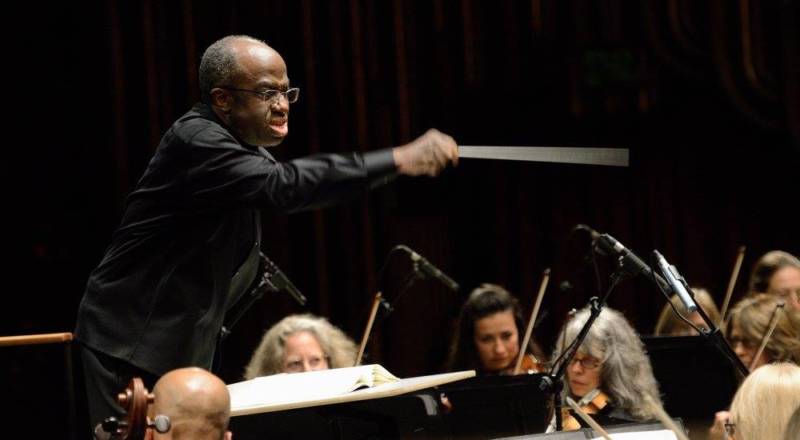
"caption": "Michael Morgan leads the Oakland Symphony Jan. 19, 2018 in a concert curated by W. Kamau Bell.",
"description": "Michael Morgan leads the Oakland Symphony Jan. 19 in a concert curated by W. Kamau Bell.",
"title": "Michael Morgan leads the Oakland Symphony in a concert curated by W. Kamau Bell",
"credit": "Photo: Courtesy of Oakland Symphony",
"status": "inherit",
"altTag": "Michael Morgan leads the Oakland Symphony Jan. 19 in a concert curated by W. Kamau Bell.",
"isLoading": false,
"fetchFailed": false
},
"arts_13901312": {
"type": "attachments",
"id": "arts_13901312",
"meta": {
"index": "attachments_1716263798",
"site": "arts",
"id": "13901312",
"found": true
},
"parent": 13901310,
"imgSizes": {
"twentyfourteen-full-width": {
"file": "https://ww2.kqed.org/app/uploads/sites/2/2021/08/Zumbi.ZionI_-1038x576.jpg",
"width": 1038,
"mimeType": "image/jpeg",
"height": 576
},
"thumbnail": {
"file": "https://ww2.kqed.org/app/uploads/sites/2/2021/08/Zumbi.ZionI_-160x90.jpg",
"width": 160,
"mimeType": "image/jpeg",
"height": 90
},
"post-thumbnail": {
"file": "https://ww2.kqed.org/app/uploads/sites/2/2021/08/Zumbi.ZionI_-672x372.jpg",
"width": 672,
"mimeType": "image/jpeg",
"height": 372
},
"kqedFullSize": {
"file": "https://ww2.kqed.org/app/uploads/sites/2/2021/08/Zumbi.ZionI_.jpg",
"width": 1171,
"height": 659
},
"large": {
"file": "https://ww2.kqed.org/app/uploads/sites/2/2021/08/Zumbi.ZionI_-1020x574.jpg",
"width": 1020,
"mimeType": "image/jpeg",
"height": 574
},
"medium": {
"file": "https://ww2.kqed.org/app/uploads/sites/2/2021/08/Zumbi.ZionI_-800x450.jpg",
"width": 800,
"mimeType": "image/jpeg",
"height": 450
},
"medium_large": {
"file": "https://ww2.kqed.org/app/uploads/sites/2/2021/08/Zumbi.ZionI_-768x432.jpg",
"width": 768,
"mimeType": "image/jpeg",
"height": 432
}
},
"publishDate": 1628901550,
"modified": 1628901583,
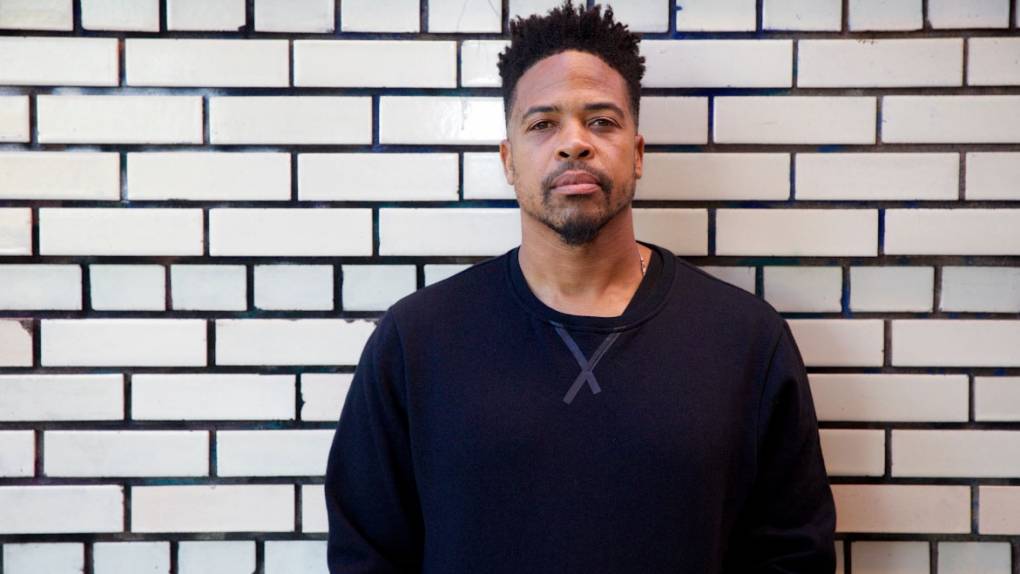
"caption": "MC Baba Zumbi from the hip-hop group Zion I.",
"description": "MC Baba Zumbi from the hip-hop group Zion I.",
"title": "Zumbi.ZionI",
"credit": "Marc Fong",
"status": "inherit",
"altTag": "MC Baba Zumbi from the hip-hop group Zion I.",
"isLoading": false,
"fetchFailed": false
},
"arts_13901288": {
"type": "attachments",
"id": "arts_13901288",
"meta": {
"index": "attachments_1716263798",
"site": "arts",
"id": "13901288",
"found": true
},
"parent": 13901287,
"imgSizes": {
"twentyfourteen-full-width": {
"file": "https://ww2.kqed.org/app/uploads/sites/2/2021/08/NanciGriffith-1038x576.jpg",
"width": 1038,
"mimeType": "image/jpeg",
"height": 576
},
"thumbnail": {
"file": "https://ww2.kqed.org/app/uploads/sites/2/2021/08/NanciGriffith-160x100.jpg",
"width": 160,
"mimeType": "image/jpeg",
"height": 100
},
"post-thumbnail": {
"file": "https://ww2.kqed.org/app/uploads/sites/2/2021/08/NanciGriffith-672x372.jpg",
"width": 672,
"mimeType": "image/jpeg",
"height": 372
},
"kqedFullSize": {
"file": "https://ww2.kqed.org/app/uploads/sites/2/2021/08/NanciGriffith.jpg",
"width": 1920,
"height": 1200
},
"large": {
"file": "https://ww2.kqed.org/app/uploads/sites/2/2021/08/NanciGriffith-1020x638.jpg",
"width": 1020,
"mimeType": "image/jpeg",
"height": 638
},
"1536x1536": {
"file": "https://ww2.kqed.org/app/uploads/sites/2/2021/08/NanciGriffith-1536x960.jpg",
"width": 1536,
"mimeType": "image/jpeg",
"height": 960
},
"medium": {
"file": "https://ww2.kqed.org/app/uploads/sites/2/2021/08/NanciGriffith-800x500.jpg",
"width": 800,
"mimeType": "image/jpeg",
"height": 500
},
"medium_large": {
"file": "https://ww2.kqed.org/app/uploads/sites/2/2021/08/NanciGriffith-768x480.jpg",
"width": 768,
"mimeType": "image/jpeg",
"height": 480
}
},
"publishDate": 1628887104,
"modified": 1628887136,
"caption": "Singer Nanci Griffith particpates in the American Civil Liberties Union's Freedom Concert at Avery Fisher Hall October 4, 2004 in New York City. ",
"description": "Singer Nanci Griffith particpates in the American Civil Liberties Union's Freedom Concert at Avery Fisher Hall October 4, 2004 in New York City. ",
"title": "NanciGriffith",
"credit": "Matthew Peyton/Getty Images",
"status": "inherit",
"altTag": "Singer Nanci Griffith particpates in the American Civil Liberties Union's Freedom Concert at Avery Fisher Hall October 4, 2004 in New York City.",
"isLoading": false,
"fetchFailed": false
},
"arts_13899423": {
"type": "attachments",
"id": "arts_13899423",
"meta": {
"index": "attachments_1716263798",
"site": "arts",
"id": "13899423",
"found": true
},
"parent": 13899416,
"imgSizes": {
"twentyfourteen-full-width": {
"file": "https://ww2.kqed.org/app/uploads/sites/2/2021/06/GiftofGab-1024x576.jpg",
"width": 1024,
"mimeType": "image/jpeg",
"height": 576
},
"thumbnail": {
"file": "https://ww2.kqed.org/app/uploads/sites/2/2021/06/GiftofGab-160x100.jpg",
"width": 160,
"mimeType": "image/jpeg",
"height": 100
},
"post-thumbnail": {
"file": "https://ww2.kqed.org/app/uploads/sites/2/2021/06/GiftofGab-672x372.jpg",
"width": 672,
"mimeType": "image/jpeg",
"height": 372
},
"kqedFullSize": {
"file": "https://ww2.kqed.org/app/uploads/sites/2/2021/06/GiftofGab.jpg",
"width": 1024,
"height": 640
},
"large": {
"file": "https://ww2.kqed.org/app/uploads/sites/2/2021/06/GiftofGab-1020x638.jpg",
"width": 1020,
"mimeType": "image/jpeg",
"height": 638
},
"medium": {
"file": "https://ww2.kqed.org/app/uploads/sites/2/2021/06/GiftofGab-800x500.jpg",
"width": 800,
"mimeType": "image/jpeg",
"height": 500
},
"medium_large": {
"file": "https://ww2.kqed.org/app/uploads/sites/2/2021/06/GiftofGab-768x480.jpg",
"width": 768,
"mimeType": "image/jpeg",
"height": 480
}
},
"publishDate": 1624652038,
"modified": 1624652064,
"caption": "Gift of Gab of Blackalicious performs at the first annual \"LA Weekly Detour Music Festival\" on October 7, 2006, on the streets of downtown Los Angeles, California.",
"description": "Gift of Gab of Blackalicious performs at the first annual \"LA Weekly Detour Music Festival\" on October 7, 2006, on the streets of downtown Los Angeles, California.",
"title": "GiftofGab",
"credit": "Karl Walter/Getty Images",
"status": "inherit",
"altTag": "Gift of Gab of Blackalicious performs at the first annual \"LA Weekly Detour Music Festival\" on October 7, 2006, on the streets of downtown Los Angeles, California.",
"isLoading": false,
"fetchFailed": false
},
"arts_13899043": {
"type": "attachments",
"id": "arts_13899043",
"meta": {
"index": "attachments_1716263798",
"site": "arts",
"id": "13899043",
"found": true
},
"parent": 13899031,
"imgSizes": {
"twentyfourteen-full-width": {
"file": "https://ww2.kqed.org/app/uploads/sites/2/2021/06/Screen-Shot-2021-06-18-at-2.44.19-PM-1038x576.png",
"width": 1038,
"mimeType": "image/png",
"height": 576
},
"thumbnail": {
"file": "https://ww2.kqed.org/app/uploads/sites/2/2021/06/Screen-Shot-2021-06-18-at-2.44.19-PM-160x110.png",
"width": 160,
"mimeType": "image/png",
"height": 110
},
"post-thumbnail": {
"file": "https://ww2.kqed.org/app/uploads/sites/2/2021/06/Screen-Shot-2021-06-18-at-2.44.19-PM-672x372.png",
"width": 672,
"mimeType": "image/png",
"height": 372
},
"kqedFullSize": {
"file": "https://ww2.kqed.org/app/uploads/sites/2/2021/06/Screen-Shot-2021-06-18-at-2.44.19-PM.png",
"width": 2340,
"height": 1610
},
"2048x2048": {
"file": "https://ww2.kqed.org/app/uploads/sites/2/2021/06/Screen-Shot-2021-06-18-at-2.44.19-PM-2048x1409.png",
"width": 2048,
"mimeType": "image/png",
"height": 1409
},
"large": {
"file": "https://ww2.kqed.org/app/uploads/sites/2/2021/06/Screen-Shot-2021-06-18-at-2.44.19-PM-1020x702.png",
"width": 1020,
"mimeType": "image/png",
"height": 702
},
"1536x1536": {
"file": "https://ww2.kqed.org/app/uploads/sites/2/2021/06/Screen-Shot-2021-06-18-at-2.44.19-PM-1536x1057.png",
"width": 1536,
"mimeType": "image/png",
"height": 1057
},
"full-width": {
"file": "https://ww2.kqed.org/app/uploads/sites/2/2021/06/Screen-Shot-2021-06-18-at-2.44.19-PM-1920x1321.png",
"width": 1920,
"mimeType": "image/png",
"height": 1321
},
"medium": {
"file": "https://ww2.kqed.org/app/uploads/sites/2/2021/06/Screen-Shot-2021-06-18-at-2.44.19-PM-800x550.png",
"width": 800,
"mimeType": "image/png",
"height": 550
},
"medium_large": {
"file": "https://ww2.kqed.org/app/uploads/sites/2/2021/06/Screen-Shot-2021-06-18-at-2.44.19-PM-768x528.png",
"width": 768,
"mimeType": "image/png",
"height": 528
}
},
"publishDate": 1624052710,
"modified": 1624052804,
"caption": "Scott Alcoholocaust, as he'll be most remembered.",
"description": "Scott Alcoholocaust, as he'll be most remembered.",
"title": "Scott Alcoholocaust, as he'll be most remembered.",
"credit": "Courtesy of Monika Koczela-Stillman",
"status": "inherit",
"altTag": "A smiling Scott Alcoholocaust, as he'll be most remembered.",
"isLoading": false,
"fetchFailed": false
},
"arts_13897851": {
"type": "attachments",
"id": "arts_13897851",
"meta": {
"index": "attachments_1716263798",
"site": "arts",
"id": "13897851",
"found": true
},
"parent": 13897850,
"imgSizes": {
"twentyfourteen-full-width": {
"file": "https://ww2.kqed.org/app/uploads/sites/2/2021/05/gettyimages-1212903034-5d5d677341239277a754588741e806a6f036feaf-897x576.jpg",
"width": 897,
"mimeType": "image/jpeg",
"height": 576
},
"thumbnail": {
"file": "https://ww2.kqed.org/app/uploads/sites/2/2021/05/gettyimages-1212903034-5d5d677341239277a754588741e806a6f036feaf-160x120.jpg",
"width": 160,
"mimeType": "image/jpeg",
"height": 120
},
"post-thumbnail": {
"file": "https://ww2.kqed.org/app/uploads/sites/2/2021/05/gettyimages-1212903034-5d5d677341239277a754588741e806a6f036feaf-672x372.jpg",
"width": 672,
"mimeType": "image/jpeg",
"height": 372
},
"kqedFullSize": {
"file": "https://ww2.kqed.org/app/uploads/sites/2/2021/05/gettyimages-1212903034-5d5d677341239277a754588741e806a6f036feaf.jpg",
"width": 897,
"height": 673
},
"medium": {
"file": "https://ww2.kqed.org/app/uploads/sites/2/2021/05/gettyimages-1212903034-5d5d677341239277a754588741e806a6f036feaf-800x600.jpg",
"width": 800,
"mimeType": "image/jpeg",
"height": 600
},
"medium_large": {
"file": "https://ww2.kqed.org/app/uploads/sites/2/2021/05/gettyimages-1212903034-5d5d677341239277a754588741e806a6f036feaf-768x576.jpg",
"width": 768,
"mimeType": "image/jpeg",
"height": 576
}
},
"publishDate": 1621980596,
"modified": 1621981864,
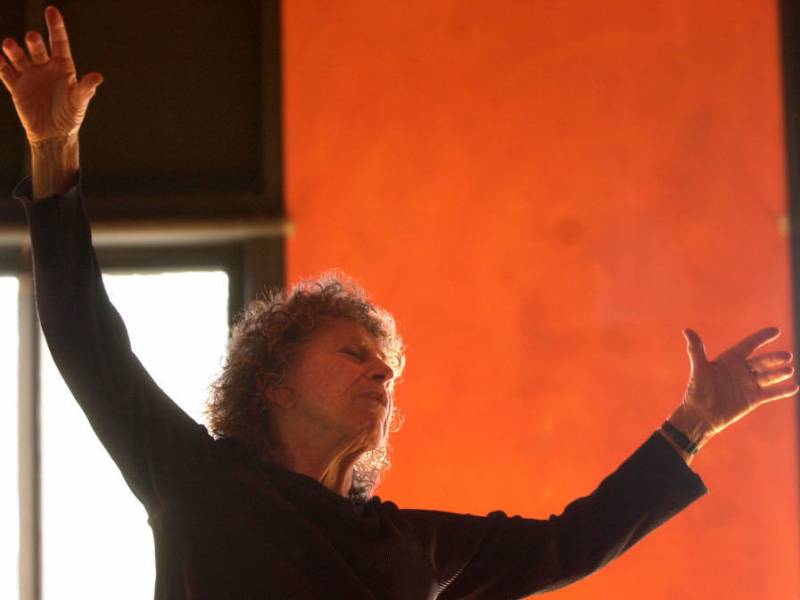
"caption": "An undated photo of choreographer Anna Halprin teaching at her Marin County studio.",
"description": "An undated photo of choreographer Anna Halprin teaching at her Marin County studio.",
"title": "An undated photo of choreographer Anna Halprin teaching at her Marin County, Calif. studio.",
"credit": "Mark Constantini/Getty Images",
"status": "inherit",
"altTag": null,
"isLoading": false,
"fetchFailed": false
},
"arts_13897417": {
"type": "attachments",
"id": "arts_13897417",
"meta": {
"index": "attachments_1716263798",
"site": "arts",
"id": "13897417",
"found": true
},
"parent": 13897414,
"imgSizes": {
"twentyfourteen-full-width": {
"file": "https://ww2.kqed.org/app/uploads/sites/2/2021/05/PaulMooney-1024x576.jpg",
"width": 1024,
"mimeType": "image/jpeg",
"height": 576
},
"thumbnail": {
"file": "https://ww2.kqed.org/app/uploads/sites/2/2021/05/PaulMooney-160x109.jpg",
"width": 160,
"mimeType": "image/jpeg",
"height": 109
},
"post-thumbnail": {
"file": "https://ww2.kqed.org/app/uploads/sites/2/2021/05/PaulMooney-672x372.jpg",
"width": 672,
"mimeType": "image/jpeg",
"height": 372
},
"kqedFullSize": {
"file": "https://ww2.kqed.org/app/uploads/sites/2/2021/05/PaulMooney.jpg",
"width": 1024,
"height": 697
},
"large": {
"file": "https://ww2.kqed.org/app/uploads/sites/2/2021/05/PaulMooney-1020x694.jpg",
"width": 1020,
"mimeType": "image/jpeg",
"height": 694
},
"medium": {
"file": "https://ww2.kqed.org/app/uploads/sites/2/2021/05/PaulMooney-800x545.jpg",
"width": 800,
"mimeType": "image/jpeg",
"height": 545
},
"medium_large": {
"file": "https://ww2.kqed.org/app/uploads/sites/2/2021/05/PaulMooney-768x523.jpg",
"width": 768,
"mimeType": "image/jpeg",
"height": 523
}
},
"publishDate": 1621440900,
"modified": 1621440923,
"caption": "Comedian Paul Mooney takes part in a discussion panel after the world premiere screening of \"That's What I'm Talking About\" at The Museum of Television & Radio January 30, 2006 in New York City. ",
"description": "Comedian Paul Mooney takes part in a discussion panel after the world premiere screening of \"That's What I'm Talking About\" at The Museum of Television & Radio January 30, 2006 in New York City. ",
"title": "PaulMooney",
"credit": "Paul Hawthorne/Getty Images for TV Land",
"status": "inherit",
"altTag": "Comedian Paul Mooney takes part in a discussion panel after the world premiere screening of \"That's What I'm Talking About\" at The Museum of Television & Radio January 30, 2006 in New York City.",
"isLoading": false,
"fetchFailed": false
},
"arts_13897375": {
"type": "attachments",
"id": "arts_13897375",
"meta": {
"index": "attachments_1716263798",
"site": "arts",
"id": "13897375",
"found": true
},
"parent": 13897372,
"imgSizes": {
"twentyfourteen-full-width": {
"file": "https://ww2.kqed.org/app/uploads/sites/2/2021/05/GettyImages-182039920-1038x576.jpg",
"width": 1038,
"mimeType": "image/jpeg",
"height": 576
},
"thumbnail": {
"file": "https://ww2.kqed.org/app/uploads/sites/2/2021/05/GettyImages-182039920-160x107.jpg",
"width": 160,
"mimeType": "image/jpeg",
"height": 107
},
"post-thumbnail": {
"file": "https://ww2.kqed.org/app/uploads/sites/2/2021/05/GettyImages-182039920-672x372.jpg",
"width": 672,
"mimeType": "image/jpeg",
"height": 372
},
"kqedFullSize": {
"file": "https://ww2.kqed.org/app/uploads/sites/2/2021/05/GettyImages-182039920-scaled.jpg",
"width": 2560,
"height": 1707
},
"2048x2048": {
"file": "https://ww2.kqed.org/app/uploads/sites/2/2021/05/GettyImages-182039920-2048x1365.jpg",
"width": 2048,
"mimeType": "image/jpeg",
"height": 1365
},
"large": {
"file": "https://ww2.kqed.org/app/uploads/sites/2/2021/05/GettyImages-182039920-1020x680.jpg",
"width": 1020,
"mimeType": "image/jpeg",
"height": 680
},
"1536x1536": {
"file": "https://ww2.kqed.org/app/uploads/sites/2/2021/05/GettyImages-182039920-1536x1024.jpg",
"width": 1536,
"mimeType": "image/jpeg",
"height": 1024
},
"full-width": {
"file": "https://ww2.kqed.org/app/uploads/sites/2/2021/05/GettyImages-182039920-1920x1280.jpg",
"width": 1920,
"mimeType": "image/jpeg",
"height": 1280
},
"medium": {
"file": "https://ww2.kqed.org/app/uploads/sites/2/2021/05/GettyImages-182039920-800x533.jpg",
"width": 800,
"mimeType": "image/jpeg",
"height": 533
},
"medium_large": {
"file": "https://ww2.kqed.org/app/uploads/sites/2/2021/05/GettyImages-182039920-768x512.jpg",
"width": 768,
"mimeType": "image/jpeg",
"height": 512
}
},
"publishDate": 1621378370,
"modified": 1621378492,
"caption": "Charles Grodin attends the world premiere of 'Captain Phillips' in 2013.",
"description": "Charles Grodin attends the world premiere of 'Captain Phillips' in 2013.",
"title": "Charles Grodin attends the world premiere of 'Captain Phillips' in 2013.",
"credit": "Jemal Countess/Getty Images",
"status": "inherit",
"altTag": "Charles Grodin attends the world premiere of 'Captain Phillips' in 2013.",
"isLoading": false,
"fetchFailed": false
},
"arts_13896679": {
"type": "attachments",
"id": "arts_13896679",
"meta": {
"index": "attachments_1716263798",
"site": "arts",
"id": "13896679",
"found": true
},
"parent": 13896638,
"imgSizes": {
"twentyfourteen-full-width": {
"file": "https://ww2.kqed.org/app/uploads/sites/2/2021/05/William-Wiley-I-wish-that-I-could-have-known-earlier-1970_COVER-1038x576.jpg",
"width": 1038,
"mimeType": "image/jpeg",
"height": 576
},
"thumbnail": {
"file": "https://ww2.kqed.org/app/uploads/sites/2/2021/05/William-Wiley-I-wish-that-I-could-have-known-earlier-1970_COVER-160x117.jpg",
"width": 160,
"mimeType": "image/jpeg",
"height": 117
},
"post-thumbnail": {
"file": "https://ww2.kqed.org/app/uploads/sites/2/2021/05/William-Wiley-I-wish-that-I-could-have-known-earlier-1970_COVER-672x372.jpg",
"width": 672,
"mimeType": "image/jpeg",
"height": 372
},
"kqedFullSize": {
"file": "https://ww2.kqed.org/app/uploads/sites/2/2021/05/William-Wiley-I-wish-that-I-could-have-known-earlier-1970_COVER.jpg",
"width": 1920,
"height": 1408
},
"large": {
"file": "https://ww2.kqed.org/app/uploads/sites/2/2021/05/William-Wiley-I-wish-that-I-could-have-known-earlier-1970_COVER-1020x748.jpg",
"width": 1020,
"mimeType": "image/jpeg",
"height": 748
},
"1536x1536": {
"file": "https://ww2.kqed.org/app/uploads/sites/2/2021/05/William-Wiley-I-wish-that-I-could-have-known-earlier-1970_COVER-1536x1126.jpg",
"width": 1536,
"mimeType": "image/jpeg",
"height": 1126
},
"medium": {
"file": "https://ww2.kqed.org/app/uploads/sites/2/2021/05/William-Wiley-I-wish-that-I-could-have-known-earlier-1970_COVER-800x587.jpg",
"width": 800,
"mimeType": "image/jpeg",
"height": 587
},
"medium_large": {
"file": "https://ww2.kqed.org/app/uploads/sites/2/2021/05/William-Wiley-I-wish-that-I-could-have-known-earlier-1970_COVER-768x563.jpg",
"width": 768,
"mimeType": "image/jpeg",
"height": 563
}
},
"publishDate": 1620082000,
"modified": 1620082065,
"caption": "William Wiley, ‘I Wish I Could Have Known Earlier that You Have All the Time You'll Ever Need Right Up to the Day You Die,’ 1970; Ink and watercolor on paper.",
"description": "William Wiley, ‘I Wish I Could Have Known Earlier that You Have All the Time You'll Ever Need Right Up to the Day You Die,’ 1970; Ink and watercolor on paper.",
"title": "William-Wiley-I-wish-that-I-could-have-known-earlier-1970_COVER",
"credit": "San Francisco Museum of Modern Art; photo by Mary Ellen Hawkins",
"status": "inherit",
"altTag": null,
"isLoading": false,
"fetchFailed": false
}
},
"audioPlayerReducer": {
"postId": "stream_live",
"isPaused": true,
"isPlaying": false,
"pfsActive": false,
"pledgeModalIsOpen": true,
"playerDrawerIsOpen": false,
"liveAudioPlayStartedAt": 0,
"liveAudioPlayContext": ""
},
"authorsReducer": {
"byline_arts_13903532": {
"type": "authors",
"id": "byline_arts_13903532",
"meta": {
"override": true
},
"slug": "byline_arts_13903532",
"name": "Jaclyn Diaz",
"isLoading": false
},
"byline_arts_13901745": {
"type": "authors",
"id": "byline_arts_13901745",
"meta": {
"override": true
},
"slug": "byline_arts_13901745",
"name": " Jill Lawless",
"isLoading": false
},
"byline_arts_13901287": {
"type": "authors",
"id": "byline_arts_13901287",
"meta": {
"override": true
},
"slug": "byline_arts_13901287",
"name": "Kristin M. Hall, Associated Press",
"isLoading": false
},
"byline_arts_13897850": {
"type": "authors",
"id": "byline_arts_13897850",
"meta": {
"override": true
},
"slug": "byline_arts_13897850",
"name": "Anastasia Tsioulcas",
"isLoading": false
},
"byline_arts_13897414": {
"type": "authors",
"id": "byline_arts_13897414",
"meta": {
"override": true
},
"slug": "byline_arts_13897414",
"name": "News Staff and Wires",
"isLoading": false
},
"byline_arts_13897372": {
"type": "authors",
"id": "byline_arts_13897372",
"meta": {
"override": true
},
"slug": "byline_arts_13897372",
"name": "Bob Mondello",
"isLoading": false
},
"byline_arts_13896638": {
"type": "authors",
"id": "byline_arts_13896638",
"meta": {
"override": true
},
"slug": "byline_arts_13896638",
"name": "Zully Adler",
"isLoading": false
},
"agilbert": {
"type": "authors",
"id": "86",
"meta": {
"index": "authors_1716337520",
"id": "86",
"found": true
},
"name": "Andrew Gilbert",
"firstName": "Andrew",
"lastName": "Gilbert",
"slug": "agilbert",
"email": "jazzscribe@aol.com",
"display_author_email": false,
"staff_mastheads": [],
"title": "KQED Contributor",
"bio": "A Los Angeles native based in the Berkeley area since 1996, Andrew Gilbert covers jazz, international music and dance for KQED's \u003ci>California Report, \u003c/i>the\u003ci> Mercury News\u003c/i>, \u003ci>San Francisco Chronicle\u003c/i>, \u003ci>Berkeleyside.com\u003c/i>, and other publications. He is available for weddings and bar and bat mitzvahs. #jazzscribe",
"avatar": "https://secure.gravatar.com/avatar/d7bcafdbefdd39e9a68f88724ca616eb4e7a5a6bff9cdfb62de652a1e1751471?s=600&d=blank&r=g",
"twitter": null,
"bluesky": null,
"facebook": null,
"instagram": null,
"linkedin": null,
"sites": [
{
"site": "arts",
"roles": [
"Contributor",
"author"
]
},
{
"site": "news",
"roles": [
"author"
]
}
],
"headData": {
"title": "Andrew Gilbert | KQED",
"description": "KQED Contributor",
"ogImgSrc": "https://secure.gravatar.com/avatar/d7bcafdbefdd39e9a68f88724ca616eb4e7a5a6bff9cdfb62de652a1e1751471?s=600&d=blank&r=g",
"twImgSrc": "https://secure.gravatar.com/avatar/d7bcafdbefdd39e9a68f88724ca616eb4e7a5a6bff9cdfb62de652a1e1751471?s=600&d=blank&r=g"
},
"isLoading": false,
"link": "/author/agilbert"
},
"gmeline": {
"type": "authors",
"id": "185",
"meta": {
"index": "authors_1716337520",
"id": "185",
"found": true
},
"name": "Gabe Meline",
"firstName": "Gabe",
"lastName": "Meline",
"slug": "gmeline",
"email": "gmeline@kqed.org",
"display_author_email": true,
"staff_mastheads": [
"arts"
],
"title": "Senior Editor, KQED Arts & Culture",
"bio": "Gabe Meline entered journalism at age 15 making photocopied zines, and has since earned awards from the Edward R. Murrow Awards, the Society for Professional Journalists, the Online Journalism Awards, the Association of Alternative Newsweeklies and the California Newspaper Publishers Association. Prior to KQED, he was the editor of the \u003cem>North Bay Bohemian\u003c/em> and a touring musician. He lives with his wife and daughter in his hometown of Santa Rosa, CA.",
"avatar": "https://secure.gravatar.com/avatar/5bebe57be0d8bc2dd318934feb47299e2d2d10cba28d09d8d7afb389a2ce2bdd?s=600&d=blank&r=g",
"twitter": null,
"bluesky": null,
"facebook": null,
"instagram": null,
"linkedin": null,
"sites": [
{
"site": "",
"roles": [
"editor"
]
},
{
"site": "arts",
"roles": [
"administrator"
]
},
{
"site": "artschool",
"roles": [
"editor"
]
},
{
"site": "news",
"roles": [
"author"
]
},
{
"site": "pop",
"roles": [
"editor"
]
},
{
"site": "bayareabites",
"roles": [
"editor"
]
},
{
"site": "food",
"roles": [
"editor"
]
},
{
"site": "forum",
"roles": [
"administrator"
]
},
{
"site": "liveblog",
"roles": [
"editor"
]
},
{
"site": "hiphop",
"roles": [
"editor"
]
}
],
"headData": {
"title": "Gabe Meline | KQED",
"description": "Senior Editor, KQED Arts & Culture",
"ogImgSrc": "https://secure.gravatar.com/avatar/5bebe57be0d8bc2dd318934feb47299e2d2d10cba28d09d8d7afb389a2ce2bdd?s=600&d=blank&r=g",
"twImgSrc": "https://secure.gravatar.com/avatar/5bebe57be0d8bc2dd318934feb47299e2d2d10cba28d09d8d7afb389a2ce2bdd?s=600&d=blank&r=g"
},
"isLoading": false,
"link": "/author/gmeline"
},
"ralexandra": {
"type": "authors",
"id": "11242",
"meta": {
"index": "authors_1716337520",
"id": "11242",
"found": true
},
"name": "Rae Alexandra",
"firstName": "Rae",
"lastName": "Alexandra",
"slug": "ralexandra",
"email": "ralexandra@kqed.org",
"display_author_email": true,
"staff_mastheads": [],
"title": "Reporter/Producer",
"bio": "Rae Alexandra is a Reporter/Producer for KQED Arts & Culture, and the creator/author of the \u003ca href=\"https://www.kqed.org/arts/program/rebel-girls-from-bay-area-history\">Rebel Girls From Bay Area History\u003c/a> and \u003ca href=\"https://www.kqed.org/bizarrebayarea\">Bizarre Bay Area\u003c/a> series. Her debut book, \u003ca href=\"https://citylights.com/politics-current-events-history/unsung-heroines35-women-who-changed/\">Unsung Heroines: 35 Women Who Changed the Bay Area\u003c/a> was published by City Lights in March 2026. In 2023, Rae was awarded an SPJ Excellence in Journalism Award for Arts & Culture. Rae was born and raised in Wales and subsequently — even after two decades in Northern California — still uses phrases that regularly baffle her coworkers.",
"avatar": "https://secure.gravatar.com/avatar/edfee8176c80cc0a382b051190f5341997df378a934a5774dcb0977732dfd401?s=600&d=blank&r=g",
"twitter": null,
"bluesky": null,
"facebook": null,
"instagram": null,
"linkedin": null,
"sites": [
{
"site": "arts",
"roles": [
"subscriber"
]
},
{
"site": "news",
"roles": [
"subscriber"
]
},
{
"site": "pop",
"roles": [
"subscriber"
]
},
{
"site": "bayareabites",
"roles": [
"subscriber"
]
},
{
"site": "science",
"roles": [
"subscriber"
]
}
],
"headData": {
"title": "Rae Alexandra | KQED",
"description": "Reporter/Producer",
"ogImgSrc": "https://secure.gravatar.com/avatar/edfee8176c80cc0a382b051190f5341997df378a934a5774dcb0977732dfd401?s=600&d=blank&r=g",
"twImgSrc": "https://secure.gravatar.com/avatar/edfee8176c80cc0a382b051190f5341997df378a934a5774dcb0977732dfd401?s=600&d=blank&r=g"
},
"isLoading": false,
"link": "/author/ralexandra"
},
"nvoynovskaya": {
"type": "authors",
"id": "11387",
"meta": {
"index": "authors_1716337520",
"id": "11387",
"found": true
},
"name": "Nastia Voynovskaya",
"firstName": "Nastia",
"lastName": "Voynovskaya",
"slug": "nvoynovskaya",
"email": "nvoynovskaya@kqed.org",
"display_author_email": false,
"staff_mastheads": [
"arts"
],
"title": "Editor and reporter",
"bio": "Nastia Voynovskaya is a reporter, editor and host at KQED Arts & Culture. She's been covering the arts in the Bay Area for over a decade, with a focus on music, queer culture, labor issues and grassroots organizing. She has edited KQED story series such as Trans Bay: A History of San Francisco's Gender-Diverse Community, and co-created KQED's Bay Area hip-hop history project, That's My Word. Nastia's work has been recognized by the Society of Professional Journalists and San Francisco Press Club. She regularly appears on podcasts and radio programs, including NPR's All Songs Considered, and hosts live events where music, culture and conversation meet.",
"avatar": "https://secure.gravatar.com/avatar/5025ee460e5a85d69ca20ea6c6f2f80d7e17795c828f61ea3aecfcd924e9042e?s=600&d=blank&r=g",
"twitter": null,
"bluesky": null,
"facebook": null,
"instagram": "https://www.instagram.com/nananastia/",
"linkedin": null,
"sites": [
{
"site": "",
"roles": [
"editor"
]
},
{
"site": "arts",
"roles": [
"administrator"
]
},
{
"site": "news",
"roles": [
"editor"
]
},
{
"site": "pop",
"roles": [
"administrator"
]
},
{
"site": "bayareabites",
"roles": [
"editor"
]
},
{
"site": "podcasts",
"roles": [
"editor"
]
},
{
"site": "hiphop",
"roles": [
"editor"
]
}
],
"headData": {
"title": "Nastia Voynovskaya | KQED",
"description": "Editor and reporter",
"ogImgSrc": "https://secure.gravatar.com/avatar/5025ee460e5a85d69ca20ea6c6f2f80d7e17795c828f61ea3aecfcd924e9042e?s=600&d=blank&r=g",
"twImgSrc": "https://secure.gravatar.com/avatar/5025ee460e5a85d69ca20ea6c6f2f80d7e17795c828f61ea3aecfcd924e9042e?s=600&d=blank&r=g"
},
"isLoading": false,
"link": "/author/nvoynovskaya"
}
},
"pagesReducer": {
"arts_category_remembrance": {
"type": "terms",
"id": "arts_1564",
"meta": {
"index": "terms_1716263798",
"site": "arts",
"id": "1564",
"score": 13.107925
},
"featImg": null,
"name": "Remembrance",
"description": null,
"taxonomy": "category",
"headData": {
"twImgId": null,
"twTitle": null,
"ogTitle": null,
"ogImgId": null,
"twDescription": null,
"description": null,
"title": "Remembrance Archives | KQED Arts",
"ogDescription": null
},
"ttid": 1576,
"slug": "remembrance",
"isLoading": false,
"title": "Remembrance",
"pageMeta": {
"site": "arts",
"WpPageTemplate": "page-topic-editorial",
"currentPage": 12
},
"blocks": [
{
"blockName": "kqed/post-list",
"attrs": {
"layout": "cardArticle2",
"query": "posts/arts?category=remembrance",
"seeMore": false,
"paginated": true,
"page": 12
}
},
{
"blockName": "kqed/ad"
}
]
}
},
"pfsSessionReducer": {},
"postsReducer": {
"stream_live": {
"type": "live",
"id": "stream_live",
"audioUrl": "https://streams.kqed.org/kqedradio",
"title": "Live Stream",
"excerpt": "Live Stream information currently unavailable.",
"link": "/radio",
"featImg": "",
"label": {
"name": "KQED Live",
"link": "/"
}
},
"stream_kqedNewscast": {
"type": "posts",
"id": "stream_kqedNewscast",
"audioUrl": "https://www.kqed.org/.stream/anon/radio/RDnews/newscast.mp3?_=1",
"title": "KQED Newscast",
"featImg": "",
"label": {
"name": "88.5 FM",
"link": "/"
}
},
"arts_13903532": {
"type": "posts",
"id": "arts_13903532",
"meta": {
"index": "posts_1716263798",
"site": "arts",
"id": "13903532",
"score": null,
"sort": [
1632251891000
]
},
"parent": 0,
"labelTerm": {
"site": "arts",
"term": 137
},
"blocks": [],
"publishDate": 1632251891,
"format": "standard",
"title": "Sarah Dash, Singer and Co-Founder of Labelle, Dies at Age 76",
"headTitle": "Sarah Dash, Singer and Co-Founder of Labelle, Dies at Age 76 | KQED",
"content": "\u003cp>Sarah Dash, the singer and co-founder of the all-female singing group Labelle, best known for their 1974 hit “Lady Marmalade,” died Monday at the age of 76.\u003c/p>\n\u003cp>Dash’s bandmate Patti LaBelle announced her longtime friend’s death on social media.\u003c/p>\n\u003cp>“We were just onstage together on Saturday and it was such a powerful and special moment!” LaBelle said on Twitter. “Sarah Dash was an awesomely talented, beautiful and loving soul who blessed my life and the lives of so many others in more ways than I can say. And I could always count on her to have my back! That’s who Sarah was … a loyal friend and a voice for those who didn’t have one.”\u003c/p>\n\u003cp>https://twitter.com/MsPattiPatti/status/1440066002209759232\u003c/p>\n\u003cp>Nona Hendryx rounded out the Labelle trio. Hendryx shared on Instagram of the passing of her former bandmate, “Words are inadequate so I will use few. We spoke a musical language, music says it best. Singing brought us together…”\u003c/p>\n\u003cp>[ad fullwidth]\u003c/p>\n\u003cp>She added that the two had just talked and texted on Saturday. “Now you’re gone, I can’t believe it,” Hendryx said.\u003c/p>\n\u003cp>https://www.instagram.com/p/CUEEeUQgpJd/\u003c/p>\n\u003cp>Labelle \u003ca href=\"https://www.npr.org/2021/02/10/962840768/the-hidden-legacy-of-the-pointer-sisters-genre-busting-pioneers-of-message-music\" target=\"_blank\" rel=\"noopener noreferrer\">started out as the conventional girl group \u003c/a>called Patti LaBelle and the Bluebelles and changed into an Afro-futuristic glam rock group (even changing the name to Labelle to complete the transformation) in 1971.\u003c/p>\n\u003cp>Unlike other girl groups of the time, each member of the group sang both lead and background voices.\u003c/p>\n\u003cp>They also embraced a futuristic look—complete with spacesuits and feathers. With their biggest hit, “Lady Marmalade,” the group also embraced a sexually suggestive and empowering message.\u003c/p>\n\u003cp>https://www.youtube.com/watch?v=Tn0-6n_dng4\u003c/p>\n\u003cp>After the group disbanded in 1976, Dash continued performing as a solo singer, releasing several albums over the years. She \u003ca href=\"https://www.sarahdash.net/about\" target=\"_blank\" rel=\"noopener noreferrer\">became well-established\u003c/a> as a session singer, recording and performing with Keith Richards and the Rolling Stones.\u003c/p>\n\u003cp>\u003c/p>\n\u003cp>LaBelle went on to say on Twitter of her friend: “She was a true giver, always serving and sharing her talent and time. I am heartbroken, as I know all of her loved ones and fans are. But I know that Sarah’s spirit and all that she has given to the world live on. And I pray that her precious memory brings us peace and comfort. Rest in power my dear sister. I love you always!”\u003c/p>\n\u003cdiv class=\"fullattribution\">\u003cem>Copyright 2021 NPR. To see more, visit \u003ca href=\"https://www.npr.org\" target=\"_blank\" rel=\"noopener noreferrer\">NPR\u003c/a>.\u003cimg decoding=\"async\" src=\"https://www.google-analytics.com/__utm.gif?utmac=UA-5828686-4&utmdt=Sarah+Dash%2C+Singer+And+Co-Founder+Of+Labelle%2C+Dies+At+Age+76&utme=8(APIKey)9(MDAxOTAwOTE4MDEyMTkxMDAzNjczZDljZA004)\">\u003c/em>\u003c/div>\n\n",
"stats": {
"hasVideo": true,
"hasChartOrMap": false,
"hasAudio": false,
"hasPolis": false,
"wordCount": 430,
"hasGoogleForm": false,
"hasGallery": false,
"hasHearkenModule": false,
"iframeSrcs": [],
"paragraphCount": 12
},
"modified": 1705007722,
"excerpt": "Sarah Dash is best remembered as singer and co-founder of Labelle, best known for their 1974 hit \"Lady Marmalade.\"",
"headData": {
"twImgId": "",
"twTitle": "",
"ogTitle": "",
"ogImgId": "",
"twDescription": "",
"description": "Sarah Dash is best remembered as singer and co-founder of Labelle, best known for their 1974 hit "Lady Marmalade."",
"title": "Sarah Dash, Singer and Co-Founder of Labelle, Dies at Age 76 | KQED",
"ogDescription": "",
"schema": {
"@context": "https://schema.org",
"@type": "Article",
"headline": "Sarah Dash, Singer and Co-Founder of Labelle, Dies at Age 76",
"datePublished": "2021-09-21T12:18:11-07:00",
"dateModified": "2024-01-11T13:15:22-08:00",
"image": "https://cdn.kqed.org/wp-content/uploads/2020/02/KQED-OG-Image@1x.png"
}
},
"guestAuthors": [],
"slug": "sarah-dash-singer-and-co-founder-of-labelle-dies-at-age-76",
"status": "publish",
"nprApiLink": "http://api.npr.org/query?id=1039200384&apiKey=MDAxOTAwOTE4MDEyMTkxMDAzNjczZDljZA004",
"templateType": "standard",
"nprByline": "Jaclyn Diaz",
"nprStoryDate": "Tue, 21 Sep 2021 05:51:38 -0400",
"nprLastModifiedDate": "Tue, 21 Sep 2021 09:57:11 -0400",
"featuredImageType": "standard",
"sticky": false,
"nprHtmlLink": "https://www.npr.org/2021/09/21/1039200384/sarah-dash-singer-and-co-founder-of-labelle-dies-at-age-76?ft=nprml&f=1039200384",
"nprStoryId": "1039200384",
"nprRetrievedStory": "1",
"nprPubDate": "Tue, 21 Sep 2021 09:57:00 -0400",
"path": "/arts/13903532/sarah-dash-singer-and-co-founder-of-labelle-dies-at-age-76",
"audioTrackLength": null,
"parsedContent": [
{
"type": "contentString",
"content": "\u003cdiv class=\"post-body\">\u003cp>\u003cp>Sarah Dash, the singer and co-founder of the all-female singing group Labelle, best known for their 1974 hit “Lady Marmalade,” died Monday at the age of 76.\u003c/p>\n\u003cp>Dash’s bandmate Patti LaBelle announced her longtime friend’s death on social media.\u003c/p>\n\u003cp>“We were just onstage together on Saturday and it was such a powerful and special moment!” LaBelle said on Twitter. “Sarah Dash was an awesomely talented, beautiful and loving soul who blessed my life and the lives of so many others in more ways than I can say. And I could always count on her to have my back! That’s who Sarah was … a loyal friend and a voice for those who didn’t have one.”\u003c/p>\u003c/p>\u003c/div>",
"attributes": {
"named": {},
"numeric": []
}
},
{
"type": "component",
"content": "",
"name": "singleTwitterStatus",
"attributes": {
"named": {
"id": "1440066002209759232"
},
"numeric": []
}
},
{
"type": "contentString",
"content": "\u003cdiv class=\"post-body\">\u003cp>\n\u003cp>Nona Hendryx rounded out the Labelle trio. Hendryx shared on Instagram of the passing of her former bandmate, “Words are inadequate so I will use few. We spoke a musical language, music says it best. Singing brought us together…”\u003c/p>\n\u003cp>\u003c/p>\u003c/div>",
"attributes": {
"named": {},
"numeric": []
}
},
{
"type": "component",
"content": "",
"name": "ad",
"attributes": {
"named": {
"label": "fullwidth"
},
"numeric": [
"fullwidth"
]
}
},
{
"type": "contentString",
"content": "\u003cdiv class=\"post-body\">\u003cp>\u003c/p>\n\u003cp>She added that the two had just talked and texted on Saturday. “Now you’re gone, I can’t believe it,” Hendryx said.\u003c/p>\u003c/p>\u003c/div>",
"attributes": {
"named": {},
"numeric": []
}
},
{
"type": "component",
"content": "",
"name": "instagramLink",
"attributes": {
"named": {
"instagramUrl": "https://www.instagram.com/p/CUEEeUQgpJd/"
},
"numeric": []
}
},
{
"type": "contentString",
"content": "\u003cdiv class=\"post-body\">\u003cp>\u003cp>Labelle \u003ca href=\"https://www.npr.org/2021/02/10/962840768/the-hidden-legacy-of-the-pointer-sisters-genre-busting-pioneers-of-message-music\" target=\"_blank\" rel=\"noopener noreferrer\">started out as the conventional girl group \u003c/a>called Patti LaBelle and the Bluebelles and changed into an Afro-futuristic glam rock group (even changing the name to Labelle to complete the transformation) in 1971.\u003c/p>\n\u003cp>Unlike other girl groups of the time, each member of the group sang both lead and background voices.\u003c/p>\n\u003cp>They also embraced a futuristic look—complete with spacesuits and feathers. With their biggest hit, “Lady Marmalade,” the group also embraced a sexually suggestive and empowering message.\u003c/p>\u003c/p>\u003cp>\u003cspan class='utils-parseShortcode-shortcodes-__youtubeShortcode__embedYoutube'>\n \u003cspan class='utils-parseShortcode-shortcodes-__youtubeShortcode__embedYoutubeInside'>\n \u003ciframe\n loading='lazy'\n class='utils-parseShortcode-shortcodes-__youtubeShortcode__youtubePlayer'\n type='text/html'\n src='//www.youtube.com/embed/Tn0-6n_dng4'\n title='//www.youtube.com/embed/Tn0-6n_dng4'\n allowfullscreen='true'\n style='border:0;'>\u003c/iframe>\n \u003c/span>\n \u003c/span>\u003c/p>\u003cp>\u003cp>After the group disbanded in 1976, Dash continued performing as a solo singer, releasing several albums over the years. She \u003ca href=\"https://www.sarahdash.net/about\" target=\"_blank\" rel=\"noopener noreferrer\">became well-established\u003c/a> as a session singer, recording and performing with Keith Richards and the Rolling Stones.\u003c/p>\n\u003cp>\u003c/p>\n\u003cp>LaBelle went on to say on Twitter of her friend: “She was a true giver, always serving and sharing her talent and time. I am heartbroken, as I know all of her loved ones and fans are. But I know that Sarah’s spirit and all that she has given to the world live on. And I pray that her precious memory brings us peace and comfort. Rest in power my dear sister. I love you always!”\u003c/p>\n\u003cdiv class=\"fullattribution\">\u003cem>Copyright 2021 NPR. To see more, visit \u003ca href=\"https://www.npr.org\" target=\"_blank\" rel=\"noopener noreferrer\">NPR\u003c/a>.\u003cimg decoding=\"async\" src=\"https://www.google-analytics.com/__utm.gif?utmac=UA-5828686-4&utmdt=Sarah+Dash%2C+Singer+And+Co-Founder+Of+Labelle%2C+Dies+At+Age+76&utme=8(APIKey)9(MDAxOTAwOTE4MDEyMTkxMDAzNjczZDljZA004)\">\u003c/em>\u003c/div>\n\n\u003c/div>\u003c/p>",
"attributes": {
"named": {},
"numeric": []
}
}
],
"link": "/arts/13903532/sarah-dash-singer-and-co-founder-of-labelle-dies-at-age-76",
"authors": [
"byline_arts_13903532"
],
"categories": [
"arts_1",
"arts_69",
"arts_1564"
],
"tags": [
"arts_10589"
],
"affiliates": [
"arts_137"
],
"featImg": "arts_13903539",
"label": "arts_137"
},
"arts_13901977": {
"type": "posts",
"id": "arts_13901977",
"meta": {
"index": "posts_1716263798",
"site": "arts",
"id": "13901977",
"score": null,
"sort": [
1630015812000
]
},
"parent": 0,
"labelTerm": {
"site": "arts"
},
"blocks": [],
"publishDate": 1630015812,
"format": "standard",
"title": "George Horn, Essential Invisible Man of Bay Area Music, Dies at 87",
"headTitle": "George Horn, Essential Invisible Man of Bay Area Music, Dies at 87 | KQED",
"content": "\u003cp>Whether you love hip-hop, punk, modern jazz, jam bands, salsa or country music, George Horn’s fingerprints are all over your playlist.\u003c/p>\n\u003cp>As the chief engineer at a succession of Bay Area studios, most importantly during a nearly three-decade tenure at Fantasy Studios in Berkeley, Horn mastered thousands of albums by artists including Bob Dylan, Charles Mingus, MC Hammer, the Dead Kennedys, Crosby, Stills & Nash, Simon & Garfunkel, the Grateful Dead, Creedence Clearwater Revival, Rosemary Clooney and Santana.\u003c/p>\n\u003cp>An unsurpassed master of the mysterious art of mastering, Horn died early Saturday morning at 87 from pulmonary hypertension exacerbated by COVID-19, according to brother-in-law William Stetler. Described by family and colleagues as an introverted, deeply private man, he launched his own independent mastering studio in 2008 after Concord Records acquired Fantasy’s vast catalogue of jazz labels. At his studio within the Fantasy Studios building, he and his last protégé, Anne-Marie Suenram, maintained the region’s only regularly working lathe for cutting vinyl records.\u003c/p>\n\u003cfigure id=\"attachment_13902061\" class=\"wp-caption aligncenter\" style=\"max-width: 800px\">\u003cimg loading=\"lazy\" decoding=\"async\" src=\"https://ww2.kqed.org/app/uploads/sites/2/2021/08/GeorgeHorn.Handbook-800x512.jpg\" alt=\"\" width=\"800\" height=\"512\" class=\"size-medium wp-image-13902061\" srcset=\"https://cdn.kqed.org/wp-content/uploads/sites/2/2021/08/GeorgeHorn.Handbook-800x512.jpg 800w, https://cdn.kqed.org/wp-content/uploads/sites/2/2021/08/GeorgeHorn.Handbook-1020x653.jpg 1020w, https://cdn.kqed.org/wp-content/uploads/sites/2/2021/08/GeorgeHorn.Handbook-160x102.jpg 160w, https://cdn.kqed.org/wp-content/uploads/sites/2/2021/08/GeorgeHorn.Handbook-768x491.jpg 768w, https://cdn.kqed.org/wp-content/uploads/sites/2/2021/08/GeorgeHorn.Handbook.jpg 1263w\" sizes=\"(max-width: 800px) 100vw, 800px\">\u003cfigcaption class=\"wp-caption-text\">George Horn on the cover of ‘The Mastering Engineer’s Handbook’ (Thompson Course Technology); a recent photo in the studio. \u003ccite>(Courtesy Anne-Marie Suenram)\u003c/cite>\u003c/figcaption>\u003c/figure>\n\u003cp>A San Francisco native, Horn spent his teenage years building and repairing electronic devices. After working in broadcasting, he became chief engineer at a number of labels and studios, notably Columbia Records and Bill Putnam’s Coast Recorders Studios, before becoming chief engineer at Fantasy Studios in 1980. \u003c/p>\n\u003cp>The process of mastering has long held a bit of mystique. Horn learned the craft in the 1960s, when mastering was a mechanical job that meant using a record lathe to etch grooves onto a lacquer or acetate disc—and when, simultaneously, the Bay Area became ground zero for a rock movement unleashed as folk, blues and bluegrass musicians plugged in electric instruments.\u003c/p>\n\u003cp>[ad fullwidth]\u003c/p>\n\u003cp>[aside postID='forum_2010101866567']In the digital age, the job of mastering means preparing any kind of audio for release—a more complicated job “that requires taking all these different tracks that may have been recorded in different studios with different engineers and making them sound like a coherent album,” said veteran Oakland audio engineer Myles Boisen.\u003c/p>\n\u003cp>“It’s a science and an art. As a producer, you want a good mastering engineer to sprinkle their magic mastering dust on it,” Boisen added. “There are nuances they can do above and beyond what’s done in mixing, putting the final sheen on a project before it’s transmitted to the marketplace. Mastering is the last chance for a fresh set of ears.”\u003c/p>\n\u003cfigure id=\"attachment_13902059\" class=\"wp-caption aligncenter\" style=\"max-width: 600px\">\u003cimg loading=\"lazy\" decoding=\"async\" src=\"https://ww2.kqed.org/app/uploads/sites/2/2021/08/Horn.Albums.jpg\" alt=\"\" width=\"600\" height=\"599\" class=\"size-full wp-image-13902059\" srcset=\"https://cdn.kqed.org/wp-content/uploads/sites/2/2021/08/Horn.Albums.jpg 800w, https://cdn.kqed.org/wp-content/uploads/sites/2/2021/08/Horn.Albums-160x159.jpg 160w, https://cdn.kqed.org/wp-content/uploads/sites/2/2021/08/Horn.Albums-768x765.jpg 768w\" sizes=\"(max-width: 600px) 100vw, 600px\">\u003cfigcaption class=\"wp-caption-text\">Nine of the thousands of albums mastered by George Horn. Albums spanning every genre came across Horn’s sharp ear for finishing touches.\u003c/figcaption>\u003c/figure>\n\u003cp>Horn navigated the digital transition seamlessly, embracing the advent of compact discs and each subsequent sea change in the music business. At Fantasy, which owned a treasure trove of jazz recordings by epochal artists such as Miles Davis, John Coltrane, Bill Evans, and Thelonious Monk, Horn and Fantasy colleague Joe Tarantino ushered classic albums by the labels Prestige, Riverside, Contemporary, and Pablo into the digital age as part of a vast Original Jazz Classics (OJC) reissue series.\u003c/p>\n\u003cp>“For me, his major accomplishment was working on the OJC reissues, just a huge number of essential jazz records by Monk, Miles, Trane, and on and on,” Boisen said. “That earlier generation of compact discs didn’t always sound really good, but he took the time and care to make those CDs sound great.”\u003c/p>\n\u003cp>As word of Horn’s passing spread on social media, numerous musicians and colleagues reached out to share stories about him. He may have been loath to talk about his life outside the studio, but in his circle, he was a quiet force who emanated respect for the artists entrusting him with their music. Nothing seemed to faze him, and when punk rock exploded in San Francisco, he became the go-to guy for mastering their records.\u003c/p>\n\u003cfigure id=\"attachment_13902060\" class=\"wp-caption aligncenter\" style=\"max-width: 800px\">\u003cimg loading=\"lazy\" decoding=\"async\" src=\"https://ww2.kqed.org/app/uploads/sites/2/2021/08/George_and_rob-800x532.jpg\" alt=\"\" width=\"800\" height=\"532\" class=\"size-medium wp-image-13902060\" srcset=\"https://cdn.kqed.org/wp-content/uploads/sites/2/2021/08/George_and_rob-800x532.jpg 800w, https://cdn.kqed.org/wp-content/uploads/sites/2/2021/08/George_and_rob-1020x678.jpg 1020w, https://cdn.kqed.org/wp-content/uploads/sites/2/2021/08/George_and_rob-160x106.jpg 160w, https://cdn.kqed.org/wp-content/uploads/sites/2/2021/08/George_and_rob-768x510.jpg 768w, https://cdn.kqed.org/wp-content/uploads/sites/2/2021/08/George_and_rob-1536x1021.jpg 1536w, https://cdn.kqed.org/wp-content/uploads/sites/2/2021/08/George_and_rob.jpg 1920w\" sizes=\"(max-width: 800px) 100vw, 800px\">\u003cfigcaption class=\"wp-caption-text\">George Horn and Ralph Kaffel in the Fantasy Studios parking lot. \u003ccite>(Courtesy of Anne-Marie Suenram)\u003c/cite>\u003c/figcaption>\u003c/figure>\n\u003cp>“He saw everything as a challenge, and he wanted to translate what people wanted,” said Jello Biafra, who started hiring Horn in the early 1980s for the Dead Kennedys. “Before long, he was also doing Flipper and all the stuff Subterranean put out, and of course the rest of the Alternative Tentacles releases too. I attended every single cut that he did, knowing I had somebody’s baby on the line. We had a lot of respect for each other.”\u003c/p>\n\u003cp>Among his fellow engineers, Horn was known for his versatility and exceptional ears. He imbued his artist-first sensibility in the select group of engineers he took under his wing. Gary Hobish, who runs A. Hammer Mastering and Digital Media in San Francisco, got his start under Horn at Fantasy in the early ’80s, where he learned that “in mastering, you have to be able to take on all comers,” Hobish said.\u003c/p>\n\u003cp>“George was amazing at that. It seemed to me he didn’t feel it was his place to tell somebody how their record should sound. One day you’re doing a catalog cut of a classic Bill Evans recording from 1957 and the next day you’re doing a Flipper record or MX-80, something avant garde and intentionally harsh. I never saw a reaction or judgement either way. He knew he was contributing to an artistic scene.”\u003c/p>\n\u003cfigure id=\"attachment_13901978\" class=\"wp-caption alignnone\" style=\"max-width: 800px\">\u003cimg loading=\"lazy\" decoding=\"async\" class=\"size-medium wp-image-13901978\" src=\"https://ww2.kqed.org/app/uploads/sites/2/2021/08/George-Horns-lathe-800x451.jpg\" alt=\"\" width=\"800\" height=\"451\" srcset=\"https://cdn.kqed.org/wp-content/uploads/sites/2/2021/08/George-Horns-lathe-800x451.jpg 800w, https://cdn.kqed.org/wp-content/uploads/sites/2/2021/08/George-Horns-lathe-1020x575.jpg 1020w, https://cdn.kqed.org/wp-content/uploads/sites/2/2021/08/George-Horns-lathe-160x90.jpg 160w, https://cdn.kqed.org/wp-content/uploads/sites/2/2021/08/George-Horns-lathe-768x433.jpg 768w, https://cdn.kqed.org/wp-content/uploads/sites/2/2021/08/George-Horns-lathe-1536x866.jpg 1536w, https://cdn.kqed.org/wp-content/uploads/sites/2/2021/08/George-Horns-lathe-1920x1082.jpg 1920w, https://cdn.kqed.org/wp-content/uploads/sites/2/2021/08/George-Horns-lathe.jpg 2048w\" sizes=\"(max-width: 800px) 100vw, 800px\">\u003cfigcaption class=\"wp-caption-text\">The lathe in George Horn’s studio that’s cut hundreds of albums.\u003c/figcaption>\u003c/figure>\n\u003cp>When interest in vinyl came roaring back, Horn was uniquely placed to take on the new flow of work. He never got rid of his lathe, and he had a young set of ears to assist him. Anne-Marie Suenram, a classically trained vocalist and pianist, met Horn while interning at Fantasy Studios, and he welcomed her evident interest in the mastering process.\u003c/p>\n\u003cp>“As soon as my internship was over he started training me,” she said. “Within a year, he didn’t need to oversee me and he let me do a lot of the mastering and cutting. He was very good to me. When I was expecting my daughter, he would insist on doing anything with chemicals, and he was very supportive during maternity leave.”\u003c/p>\n\u003cp>For the immediate future, Suenram will continue operations at Horn’s studio in Berkeley, cutting records and mastering albums. She’ll also be talking about him, she knows, for years to come.\u003c/p>\n\u003cp>“He really was very much a background character,” Suenram says, “and I’d like people to know about him.”\u003c/p>\n\u003cp>\u003cimg loading=\"lazy\" decoding=\"async\" src=\"https://ww2.kqed.org/app/uploads/sites/2/2017/03/Q.Logo_.Break_-400x39.jpg\" alt=\"\" width=\"400\" height=\"39\" class=\"aligncenter size-full wp-image-12904247\" srcset=\"https://cdn.kqed.org/wp-content/uploads/sites/2/2017/03/Q.Logo_.Break_-400x39.jpg 400w, https://cdn.kqed.org/wp-content/uploads/sites/2/2017/03/Q.Logo_.Break_-400x39-160x16.jpg 160w, https://cdn.kqed.org/wp-content/uploads/sites/2/2017/03/Q.Logo_.Break_-400x39-240x23.jpg 240w, https://cdn.kqed.org/wp-content/uploads/sites/2/2017/03/Q.Logo_.Break_-400x39-375x37.jpg 375w\" sizes=\"(max-width: 400px) 100vw, 400px\">\u003c/p>\n\u003cp>[ad floatright]\u003c/p>\n\u003cp>\u003cem>Horn is survived by his wife of 20 years, Diane Mansfield. Services will take place graveside on Friday, Aug. 27, at 2:45pm, at Holy Cross Cemetery in Colma. Due to COVID, no gathering will follow.\u003c/em>\u003c/p>\n\n",
"stats": {
"hasVideo": false,
"hasChartOrMap": false,
"hasAudio": false,
"hasPolis": false,
"wordCount": 1188,
"hasGoogleForm": false,
"hasGallery": false,
"hasHearkenModule": false,
"iframeSrcs": [],
"paragraphCount": 21
},
"modified": 1705007890,
"excerpt": "A legend in the mysterious art of mastering, Horn died on Saturday from complications related to COVID.",
"headData": {
"twImgId": "",
"twTitle": "",
"ogTitle": "",
"ogImgId": "",
"twDescription": "",
"description": "A legend in the mysterious art of mastering, Horn died on Saturday from complications related to COVID.",
"socialDescription": "A legend in the mysterious art of mastering, Horn died on Saturday from complications related to COVID.",
"title": "George Horn, Essential Invisible Man of Bay Area Music, Dies at 87 | KQED",
"ogDescription": "",
"schema": {
"@context": "https://schema.org",
"@type": "Article",
"headline": "George Horn, Essential Invisible Man of Bay Area Music, Dies at 87",
"datePublished": "2021-08-26T15:10:12-07:00",
"dateModified": "2024-01-11T13:18:10-08:00",
"image": "https://cdn.kqed.org/wp-content/uploads/2020/02/KQED-OG-Image@1x.png"
}
},
"guestAuthors": [],
"slug": "george-horn-essential-invisible-man-of-bay-area-music-dies-at-87",
"status": "publish",
"templateType": "standard",
"featuredImageType": "standard",
"sticky": false,
"path": "/arts/13901977/george-horn-essential-invisible-man-of-bay-area-music-dies-at-87",
"audioTrackLength": null,
"parsedContent": [
{
"type": "contentString",
"content": "\u003cdiv class=\"post-body\">\u003cp>\u003cp>Whether you love hip-hop, punk, modern jazz, jam bands, salsa or country music, George Horn’s fingerprints are all over your playlist.\u003c/p>\n\u003cp>As the chief engineer at a succession of Bay Area studios, most importantly during a nearly three-decade tenure at Fantasy Studios in Berkeley, Horn mastered thousands of albums by artists including Bob Dylan, Charles Mingus, MC Hammer, the Dead Kennedys, Crosby, Stills & Nash, Simon & Garfunkel, the Grateful Dead, Creedence Clearwater Revival, Rosemary Clooney and Santana.\u003c/p>\n\u003cp>An unsurpassed master of the mysterious art of mastering, Horn died early Saturday morning at 87 from pulmonary hypertension exacerbated by COVID-19, according to brother-in-law William Stetler. Described by family and colleagues as an introverted, deeply private man, he launched his own independent mastering studio in 2008 after Concord Records acquired Fantasy’s vast catalogue of jazz labels. At his studio within the Fantasy Studios building, he and his last protégé, Anne-Marie Suenram, maintained the region’s only regularly working lathe for cutting vinyl records.\u003c/p>\n\u003cfigure id=\"attachment_13902061\" class=\"wp-caption aligncenter\" style=\"max-width: 800px\">\u003cimg loading=\"lazy\" decoding=\"async\" src=\"https://ww2.kqed.org/app/uploads/sites/2/2021/08/GeorgeHorn.Handbook-800x512.jpg\" alt=\"\" width=\"800\" height=\"512\" class=\"size-medium wp-image-13902061\" srcset=\"https://cdn.kqed.org/wp-content/uploads/sites/2/2021/08/GeorgeHorn.Handbook-800x512.jpg 800w, https://cdn.kqed.org/wp-content/uploads/sites/2/2021/08/GeorgeHorn.Handbook-1020x653.jpg 1020w, https://cdn.kqed.org/wp-content/uploads/sites/2/2021/08/GeorgeHorn.Handbook-160x102.jpg 160w, https://cdn.kqed.org/wp-content/uploads/sites/2/2021/08/GeorgeHorn.Handbook-768x491.jpg 768w, https://cdn.kqed.org/wp-content/uploads/sites/2/2021/08/GeorgeHorn.Handbook.jpg 1263w\" sizes=\"(max-width: 800px) 100vw, 800px\">\u003cfigcaption class=\"wp-caption-text\">George Horn on the cover of ‘The Mastering Engineer’s Handbook’ (Thompson Course Technology); a recent photo in the studio. \u003ccite>(Courtesy Anne-Marie Suenram)\u003c/cite>\u003c/figcaption>\u003c/figure>\n\u003cp>A San Francisco native, Horn spent his teenage years building and repairing electronic devices. After working in broadcasting, he became chief engineer at a number of labels and studios, notably Columbia Records and Bill Putnam’s Coast Recorders Studios, before becoming chief engineer at Fantasy Studios in 1980. \u003c/p>\n\u003cp>The process of mastering has long held a bit of mystique. Horn learned the craft in the 1960s, when mastering was a mechanical job that meant using a record lathe to etch grooves onto a lacquer or acetate disc—and when, simultaneously, the Bay Area became ground zero for a rock movement unleashed as folk, blues and bluegrass musicians plugged in electric instruments.\u003c/p>\n\u003cp>\u003c/p>\u003c/div>",
"attributes": {
"named": {},
"numeric": []
}
},
{
"type": "component",
"content": "",
"name": "ad",
"attributes": {
"named": {
"label": "fullwidth"
},
"numeric": [
"fullwidth"
]
}
},
{
"type": "contentString",
"content": "\u003cdiv class=\"post-body\">\u003cp>\u003c/p>\n\u003cp>\u003c/p>\u003c/div>",
"attributes": {
"named": {},
"numeric": []
}
},
{
"type": "component",
"content": "",
"name": "aside",
"attributes": {
"named": {
"postid": "forum_2010101866567",
"label": ""
},
"numeric": []
}
},
{
"type": "contentString",
"content": "\u003cdiv class=\"post-body\">\u003cp>In the digital age, the job of mastering means preparing any kind of audio for release—a more complicated job “that requires taking all these different tracks that may have been recorded in different studios with different engineers and making them sound like a coherent album,” said veteran Oakland audio engineer Myles Boisen.\u003c/p>\n\u003cp>“It’s a science and an art. As a producer, you want a good mastering engineer to sprinkle their magic mastering dust on it,” Boisen added. “There are nuances they can do above and beyond what’s done in mixing, putting the final sheen on a project before it’s transmitted to the marketplace. Mastering is the last chance for a fresh set of ears.”\u003c/p>\n\u003cfigure id=\"attachment_13902059\" class=\"wp-caption aligncenter\" style=\"max-width: 600px\">\u003cimg loading=\"lazy\" decoding=\"async\" src=\"https://ww2.kqed.org/app/uploads/sites/2/2021/08/Horn.Albums.jpg\" alt=\"\" width=\"600\" height=\"599\" class=\"size-full wp-image-13902059\" srcset=\"https://cdn.kqed.org/wp-content/uploads/sites/2/2021/08/Horn.Albums.jpg 800w, https://cdn.kqed.org/wp-content/uploads/sites/2/2021/08/Horn.Albums-160x159.jpg 160w, https://cdn.kqed.org/wp-content/uploads/sites/2/2021/08/Horn.Albums-768x765.jpg 768w\" sizes=\"(max-width: 600px) 100vw, 600px\">\u003cfigcaption class=\"wp-caption-text\">Nine of the thousands of albums mastered by George Horn. Albums spanning every genre came across Horn’s sharp ear for finishing touches.\u003c/figcaption>\u003c/figure>\n\u003cp>Horn navigated the digital transition seamlessly, embracing the advent of compact discs and each subsequent sea change in the music business. At Fantasy, which owned a treasure trove of jazz recordings by epochal artists such as Miles Davis, John Coltrane, Bill Evans, and Thelonious Monk, Horn and Fantasy colleague Joe Tarantino ushered classic albums by the labels Prestige, Riverside, Contemporary, and Pablo into the digital age as part of a vast Original Jazz Classics (OJC) reissue series.\u003c/p>\n\u003cp>“For me, his major accomplishment was working on the OJC reissues, just a huge number of essential jazz records by Monk, Miles, Trane, and on and on,” Boisen said. “That earlier generation of compact discs didn’t always sound really good, but he took the time and care to make those CDs sound great.”\u003c/p>\n\u003cp>As word of Horn’s passing spread on social media, numerous musicians and colleagues reached out to share stories about him. He may have been loath to talk about his life outside the studio, but in his circle, he was a quiet force who emanated respect for the artists entrusting him with their music. Nothing seemed to faze him, and when punk rock exploded in San Francisco, he became the go-to guy for mastering their records.\u003c/p>\n\u003cfigure id=\"attachment_13902060\" class=\"wp-caption aligncenter\" style=\"max-width: 800px\">\u003cimg loading=\"lazy\" decoding=\"async\" src=\"https://ww2.kqed.org/app/uploads/sites/2/2021/08/George_and_rob-800x532.jpg\" alt=\"\" width=\"800\" height=\"532\" class=\"size-medium wp-image-13902060\" srcset=\"https://cdn.kqed.org/wp-content/uploads/sites/2/2021/08/George_and_rob-800x532.jpg 800w, https://cdn.kqed.org/wp-content/uploads/sites/2/2021/08/George_and_rob-1020x678.jpg 1020w, https://cdn.kqed.org/wp-content/uploads/sites/2/2021/08/George_and_rob-160x106.jpg 160w, https://cdn.kqed.org/wp-content/uploads/sites/2/2021/08/George_and_rob-768x510.jpg 768w, https://cdn.kqed.org/wp-content/uploads/sites/2/2021/08/George_and_rob-1536x1021.jpg 1536w, https://cdn.kqed.org/wp-content/uploads/sites/2/2021/08/George_and_rob.jpg 1920w\" sizes=\"(max-width: 800px) 100vw, 800px\">\u003cfigcaption class=\"wp-caption-text\">George Horn and Ralph Kaffel in the Fantasy Studios parking lot. \u003ccite>(Courtesy of Anne-Marie Suenram)\u003c/cite>\u003c/figcaption>\u003c/figure>\n\u003cp>“He saw everything as a challenge, and he wanted to translate what people wanted,” said Jello Biafra, who started hiring Horn in the early 1980s for the Dead Kennedys. “Before long, he was also doing Flipper and all the stuff Subterranean put out, and of course the rest of the Alternative Tentacles releases too. I attended every single cut that he did, knowing I had somebody’s baby on the line. We had a lot of respect for each other.”\u003c/p>\n\u003cp>Among his fellow engineers, Horn was known for his versatility and exceptional ears. He imbued his artist-first sensibility in the select group of engineers he took under his wing. Gary Hobish, who runs A. Hammer Mastering and Digital Media in San Francisco, got his start under Horn at Fantasy in the early ’80s, where he learned that “in mastering, you have to be able to take on all comers,” Hobish said.\u003c/p>\n\u003cp>“George was amazing at that. It seemed to me he didn’t feel it was his place to tell somebody how their record should sound. One day you’re doing a catalog cut of a classic Bill Evans recording from 1957 and the next day you’re doing a Flipper record or MX-80, something avant garde and intentionally harsh. I never saw a reaction or judgement either way. He knew he was contributing to an artistic scene.”\u003c/p>\n\u003cfigure id=\"attachment_13901978\" class=\"wp-caption alignnone\" style=\"max-width: 800px\">\u003cimg loading=\"lazy\" decoding=\"async\" class=\"size-medium wp-image-13901978\" src=\"https://ww2.kqed.org/app/uploads/sites/2/2021/08/George-Horns-lathe-800x451.jpg\" alt=\"\" width=\"800\" height=\"451\" srcset=\"https://cdn.kqed.org/wp-content/uploads/sites/2/2021/08/George-Horns-lathe-800x451.jpg 800w, https://cdn.kqed.org/wp-content/uploads/sites/2/2021/08/George-Horns-lathe-1020x575.jpg 1020w, https://cdn.kqed.org/wp-content/uploads/sites/2/2021/08/George-Horns-lathe-160x90.jpg 160w, https://cdn.kqed.org/wp-content/uploads/sites/2/2021/08/George-Horns-lathe-768x433.jpg 768w, https://cdn.kqed.org/wp-content/uploads/sites/2/2021/08/George-Horns-lathe-1536x866.jpg 1536w, https://cdn.kqed.org/wp-content/uploads/sites/2/2021/08/George-Horns-lathe-1920x1082.jpg 1920w, https://cdn.kqed.org/wp-content/uploads/sites/2/2021/08/George-Horns-lathe.jpg 2048w\" sizes=\"(max-width: 800px) 100vw, 800px\">\u003cfigcaption class=\"wp-caption-text\">The lathe in George Horn’s studio that’s cut hundreds of albums.\u003c/figcaption>\u003c/figure>\n\u003cp>When interest in vinyl came roaring back, Horn was uniquely placed to take on the new flow of work. He never got rid of his lathe, and he had a young set of ears to assist him. Anne-Marie Suenram, a classically trained vocalist and pianist, met Horn while interning at Fantasy Studios, and he welcomed her evident interest in the mastering process.\u003c/p>\n\u003cp>“As soon as my internship was over he started training me,” she said. “Within a year, he didn’t need to oversee me and he let me do a lot of the mastering and cutting. He was very good to me. When I was expecting my daughter, he would insist on doing anything with chemicals, and he was very supportive during maternity leave.”\u003c/p>\n\u003cp>For the immediate future, Suenram will continue operations at Horn’s studio in Berkeley, cutting records and mastering albums. She’ll also be talking about him, she knows, for years to come.\u003c/p>\n\u003cp>“He really was very much a background character,” Suenram says, “and I’d like people to know about him.”\u003c/p>\n\u003cp>\u003cimg loading=\"lazy\" decoding=\"async\" src=\"https://ww2.kqed.org/app/uploads/sites/2/2017/03/Q.Logo_.Break_-400x39.jpg\" alt=\"\" width=\"400\" height=\"39\" class=\"aligncenter size-full wp-image-12904247\" srcset=\"https://cdn.kqed.org/wp-content/uploads/sites/2/2017/03/Q.Logo_.Break_-400x39.jpg 400w, https://cdn.kqed.org/wp-content/uploads/sites/2/2017/03/Q.Logo_.Break_-400x39-160x16.jpg 160w, https://cdn.kqed.org/wp-content/uploads/sites/2/2017/03/Q.Logo_.Break_-400x39-240x23.jpg 240w, https://cdn.kqed.org/wp-content/uploads/sites/2/2017/03/Q.Logo_.Break_-400x39-375x37.jpg 375w\" sizes=\"(max-width: 400px) 100vw, 400px\">\u003c/p>\n\u003cp>\u003c/p>\u003c/div>",
"attributes": {
"named": {},
"numeric": []
}
},
{
"type": "component",
"content": "",
"name": "ad",
"attributes": {
"named": {
"label": "floatright"
},
"numeric": [
"floatright"
]
}
},
{
"type": "contentString",
"content": "\u003cdiv class=\"post-body\">\u003cp>\u003c/p>\n\u003cp>\u003cem>Horn is survived by his wife of 20 years, Diane Mansfield. Services will take place graveside on Friday, Aug. 27, at 2:45pm, at Holy Cross Cemetery in Colma. Due to COVID, no gathering will follow.\u003c/em>\u003c/p>\n\n\u003c/div>\u003c/p>",
"attributes": {
"named": {},
"numeric": []
}
}
],
"link": "/arts/13901977/george-horn-essential-invisible-man-of-bay-area-music-dies-at-87",
"authors": [
"86"
],
"categories": [
"arts_1",
"arts_69",
"arts_235",
"arts_1564"
],
"tags": [
"arts_11374",
"arts_1270",
"arts_831",
"arts_1420",
"arts_1091"
],
"featImg": "arts_13902002",
"label": "arts"
},
"arts_13901745": {
"type": "posts",
"id": "arts_13901745",
"meta": {
"index": "posts_1716263798",
"site": "arts",
"id": "13901745",
"score": null,
"sort": [
1629828415000
]
},
"parent": 0,
"labelTerm": {
"site": "arts"
},
"blocks": [],
"publishDate": 1629828415,
"format": "standard",
"title": "Rolling Stones Drummer Charlie Watts Dies at Age 80",
"headTitle": "Rolling Stones Drummer Charlie Watts Dies at Age 80 | KQED",
"content": "\u003cp>Charlie Watts, the self-effacing and unshakeable Rolling Stones drummer who helped anchor one of rock’s greatest rhythm sections and used his “day job” to support his enduring love of jazz, has died, according to his publicist. He was 80.\u003c/p>\n\u003cp>Bernard Doherty said Tuesday that Watts “passed away peacefully in a London hospital earlier today surrounded by his family.”\u003c/p>\n\u003cp>“Charlie was a cherished husband, father and grandfather and also as a member of The Rolling Stones one of the greatest drummers of his generation,” Doherty said.\u003c/p>\n\u003cp>Watts had \u003ca href=\"https://www.yahoo.com/now/drummer-charlie-watts-likely-miss-005445235.html\" target=\"_blank\" rel=\"noopener noreferrer\">announced he would not tour\u003c/a> with the Stones in 2021 because of an undefined health issue.\u003c/p>\n\u003cp>The quiet, elegantly dressed Watts was often ranked with Keith Moon, Ginger Baker and a handful of others as a premier rock drummer, respected worldwide for his muscular, swinging style as the Stones rose from their scruffy beginnings to international superstardom. He joined the band early in 1963 and remained over the next 60 years, ranked just behind Mick Jagger and Keith Richards as the group’s longest-lasting and most essential member.\u003c/p>\n\u003cp>[ad fullwidth]\u003c/p>\n\u003cp>Watts stayed on, and largely held himself apart, through the drug abuse, creative clashes and ego wars that helped kill founding member Brian Jones, drove bassist Bill Wyman and Jones’ replacement Mick Taylor to quit and otherwise made being in the Stones the most exhausting of jobs.\u003c/p>\n\u003cp>A classic Stones song like “Brown Sugar” and “Start Me Up” often began with a hard guitar riff from Richards, with Watts following closely behind, and Wyman, as the bassist liked to say, “fattening the sound.” Watts’ speed, power and time keeping were never better showcased than during the concert documentary, “Shine a Light,” when director Martin Scorsese filmed “Jumpin’ Jack Flash” from where he drummed toward the back of the stage.\u003c/p>\n\u003cp>The Stones began, Watts said, “as white blokes from England playing Black American music” but quickly evolved their own distinctive sound. Watts was a jazz drummer in his early years and never lost his affinity for the music he first loved, heading his own jazz band and taking on numerous other side projects.\u003c/p>\n\u003cp>He had his eccentricities—Watts liked to collect cars even though he didn’t drive and would simply sit in them in his garage. But he was a steadying influence on stage and off as the Stones defied all expectations by rocking well into their 70s, decades longer than their old rivals the Beatles.\u003c/p>\n\u003cp>Watts didn’t care for flashy solos or attention of any kind, but with Wyman and Richards forged some of rock’s deepest grooves on “Honky Tonk Women,” “Brown Sugar” and other songs. The drummer adapted well to everything from the disco of “Miss You” to the jazzy “Can’t You Hear Me Knocking” and the dreamy ballad “Moonlight Mile.”\u003c/p>\n\u003cp>Jagger and Richards at times seemed to agree on little else besides their admiration of Watts, both as a man and a musician. Richards called Watts “the key” and often joked that their affinity was so strong that on stage he’d sometimes try to rattle Watts by suddenly changing the beat—only to have Watts change it right back.\u003c/p>\n\u003cp>Jagger and Richards could only envy his indifference to stardom and relative contentment in his private life, when he was as happy tending to the horses on his estate in rural Devon, England, as he ever was on stage at a sold-out stadium.\u003c/p>\n\u003cp>Watts did on occasion have an impact beyond drumming. He worked with Jagger on the ever more spectacular stage designs for the group’s tours. He also provided illustrations for the back cover of the acclaimed 1967 album “Between the Buttons” and inadvertently gave the record its title. When he asked Stones manager Andrew Oldham what the album would be called, Oldham responded “Between the buttons,” meaning undecided. Watts thought that “Between the Buttons” was the actual name and included it in his artwork.\u003c/p>\n\u003cp>To the world, he was a rock star. But Watts often said that the actual experience was draining and unpleasant, and even frightening. “Girls chasing you down the street, screaming… horrible!… I hated it,” he told the \u003cem>Guardian\u003c/em> newspaper in an interview. In another interview, he described the drumming life as a “cross between being an athlete and a total nervous wreck.”\u003c/p>\n\u003cp>Author Philip Norman, who has written extensively about the Rolling Stones, said Watts lived “in constant hope of being allowed to catch the next plane home.” On tour, he made a point of drawing each hotel room he stayed in, a way of marking time until he could return to his family. He said little about playing the same songs for more than 40 years as the Stones recycled their classics. But he did branch out far beyond “Satisfaction” and “Jumpin’ Jack Flash” by assembling and performing with jazz bands in the second half of his career.\u003c/p>\n\u003cp>Charles Robert Watts, son of a lorry driver and a housewife, was born in Neasden, London, on June 2, 1941. From childhood, he was passionate about music—jazz in particular. He fell in love with the drums after hearing Chico Hamilton and taught himself to play by listening to records by Johnny Dodds, Charlie Parker, Duke Ellington and other jazz giants.\u003c/p>\n\u003cp>He worked for a London advertising firm after he attended Harrow Art College and played drums in his spare time. London was home to a blues and jazz revival in the early 1960s, with Jagger, Richards and Eric Clapton among the future superstars getting their start. Watts’ career took off after he played with Alexis Korner’s Blues Incorporated, for whom Jagger also performed, and was encouraged by Korner to join the Stones.\u003c/p>\n\u003cp>Watts wasn’t a rock music fan at first and remembered being guided by Richards and Brian Jones as he absorbed blues and rock records, notably the music of bluesman Jimmy Reed. He said the band could trace its roots to a brief period when he had lost his job and shared an apartment with Jagger and Richards because he could live there rent-free.\u003c/p>\n\u003cp>“Keith Richards taught me rock and roll,” Watts said. “We’d have nothing to do all day and we’d play these records over and over again. I learned to love Muddy Waters. Keith turned me on to how good Elvis Presley was, and I’d always hated Elvis up ’til then.”\u003c/p>\n\u003cp>Watts was the final man to join the Stones; the band had searched for months to find a permanent drummer and feared Watts was too accomplished for them. Richards would recall the band wanting him so badly to join that members cut down on expenses so they could afford to pay Watts a proper salary. Watts said he believed at first the band would be lucky to last a year.\u003c/p>\n\u003cp>“Every band I’d ever been in had lasted a week,” he said. “I always thought the Stones would last a week, then a fortnight, and then suddenly, it’s 30 years.”\u003c/p>\n\u003cp>[ad floatright]\u003c/p>\n\u003cp>\u003cem>Former\u003c/em> Associated Press \u003cem>writers Greg Katz and Janelle Stecklein compiled biographical material for this story. Copyright \u003ca href=\"https://apnews.com/\" target=\"_blank\" rel=\"noopener noreferrer\">AP\u003c/a>.\u003c/em>\u003c/p>\n\n",
"stats": {
"hasVideo": false,
"hasChartOrMap": false,
"hasAudio": false,
"hasPolis": false,
"wordCount": 1265,
"hasGoogleForm": false,
"hasGallery": false,
"hasHearkenModule": false,
"iframeSrcs": [],
"paragraphCount": 24
},
"modified": 1705007914,
"excerpt": "The legend passed away peacefully in a London hospital earlier today, surrounded by his family.",
"headData": {
"twImgId": "",
"twTitle": "",
"ogTitle": "",
"ogImgId": "",
"twDescription": "",
"description": "The legend passed away peacefully in a London hospital earlier today, surrounded by his family.",
"title": "Rolling Stones Drummer Charlie Watts Dies at Age 80 | KQED",
"ogDescription": "",
"schema": {
"@context": "https://schema.org",
"@type": "Article",
"headline": "Rolling Stones Drummer Charlie Watts Dies at Age 80",
"datePublished": "2021-08-24T11:06:55-07:00",
"dateModified": "2024-01-11T13:18:34-08:00",
"image": "https://cdn.kqed.org/wp-content/uploads/2020/02/KQED-OG-Image@1x.png"
}
},
"guestAuthors": [],
"slug": "rolling-stones-drummer-charlie-watts-dies-at-age-80",
"status": "publish",
"templateType": "standard",
"nprByline": " Jill Lawless",
"featuredImageType": "standard",
"sticky": false,
"path": "/arts/13901745/rolling-stones-drummer-charlie-watts-dies-at-age-80",
"audioTrackLength": null,
"parsedContent": [
{
"type": "contentString",
"content": "\u003cdiv class=\"post-body\">\u003cp>\u003cp>Charlie Watts, the self-effacing and unshakeable Rolling Stones drummer who helped anchor one of rock’s greatest rhythm sections and used his “day job” to support his enduring love of jazz, has died, according to his publicist. He was 80.\u003c/p>\n\u003cp>Bernard Doherty said Tuesday that Watts “passed away peacefully in a London hospital earlier today surrounded by his family.”\u003c/p>\n\u003cp>“Charlie was a cherished husband, father and grandfather and also as a member of The Rolling Stones one of the greatest drummers of his generation,” Doherty said.\u003c/p>\n\u003cp>Watts had \u003ca href=\"https://www.yahoo.com/now/drummer-charlie-watts-likely-miss-005445235.html\" target=\"_blank\" rel=\"noopener noreferrer\">announced he would not tour\u003c/a> with the Stones in 2021 because of an undefined health issue.\u003c/p>\n\u003cp>The quiet, elegantly dressed Watts was often ranked with Keith Moon, Ginger Baker and a handful of others as a premier rock drummer, respected worldwide for his muscular, swinging style as the Stones rose from their scruffy beginnings to international superstardom. He joined the band early in 1963 and remained over the next 60 years, ranked just behind Mick Jagger and Keith Richards as the group’s longest-lasting and most essential member.\u003c/p>\n\u003cp>\u003c/p>\u003c/div>",
"attributes": {
"named": {},
"numeric": []
}
},
{
"type": "component",
"content": "",
"name": "ad",
"attributes": {
"named": {
"label": "fullwidth"
},
"numeric": [
"fullwidth"
]
}
},
{
"type": "contentString",
"content": "\u003cdiv class=\"post-body\">\u003cp>\u003c/p>\n\u003cp>Watts stayed on, and largely held himself apart, through the drug abuse, creative clashes and ego wars that helped kill founding member Brian Jones, drove bassist Bill Wyman and Jones’ replacement Mick Taylor to quit and otherwise made being in the Stones the most exhausting of jobs.\u003c/p>\n\u003cp>A classic Stones song like “Brown Sugar” and “Start Me Up” often began with a hard guitar riff from Richards, with Watts following closely behind, and Wyman, as the bassist liked to say, “fattening the sound.” Watts’ speed, power and time keeping were never better showcased than during the concert documentary, “Shine a Light,” when director Martin Scorsese filmed “Jumpin’ Jack Flash” from where he drummed toward the back of the stage.\u003c/p>\n\u003cp>The Stones began, Watts said, “as white blokes from England playing Black American music” but quickly evolved their own distinctive sound. Watts was a jazz drummer in his early years and never lost his affinity for the music he first loved, heading his own jazz band and taking on numerous other side projects.\u003c/p>\n\u003cp>He had his eccentricities—Watts liked to collect cars even though he didn’t drive and would simply sit in them in his garage. But he was a steadying influence on stage and off as the Stones defied all expectations by rocking well into their 70s, decades longer than their old rivals the Beatles.\u003c/p>\n\u003cp>Watts didn’t care for flashy solos or attention of any kind, but with Wyman and Richards forged some of rock’s deepest grooves on “Honky Tonk Women,” “Brown Sugar” and other songs. The drummer adapted well to everything from the disco of “Miss You” to the jazzy “Can’t You Hear Me Knocking” and the dreamy ballad “Moonlight Mile.”\u003c/p>\n\u003cp>Jagger and Richards at times seemed to agree on little else besides their admiration of Watts, both as a man and a musician. Richards called Watts “the key” and often joked that their affinity was so strong that on stage he’d sometimes try to rattle Watts by suddenly changing the beat—only to have Watts change it right back.\u003c/p>\n\u003cp>Jagger and Richards could only envy his indifference to stardom and relative contentment in his private life, when he was as happy tending to the horses on his estate in rural Devon, England, as he ever was on stage at a sold-out stadium.\u003c/p>\n\u003cp>Watts did on occasion have an impact beyond drumming. He worked with Jagger on the ever more spectacular stage designs for the group’s tours. He also provided illustrations for the back cover of the acclaimed 1967 album “Between the Buttons” and inadvertently gave the record its title. When he asked Stones manager Andrew Oldham what the album would be called, Oldham responded “Between the buttons,” meaning undecided. Watts thought that “Between the Buttons” was the actual name and included it in his artwork.\u003c/p>\n\u003cp>To the world, he was a rock star. But Watts often said that the actual experience was draining and unpleasant, and even frightening. “Girls chasing you down the street, screaming… horrible!… I hated it,” he told the \u003cem>Guardian\u003c/em> newspaper in an interview. In another interview, he described the drumming life as a “cross between being an athlete and a total nervous wreck.”\u003c/p>\n\u003cp>Author Philip Norman, who has written extensively about the Rolling Stones, said Watts lived “in constant hope of being allowed to catch the next plane home.” On tour, he made a point of drawing each hotel room he stayed in, a way of marking time until he could return to his family. He said little about playing the same songs for more than 40 years as the Stones recycled their classics. But he did branch out far beyond “Satisfaction” and “Jumpin’ Jack Flash” by assembling and performing with jazz bands in the second half of his career.\u003c/p>\n\u003cp>Charles Robert Watts, son of a lorry driver and a housewife, was born in Neasden, London, on June 2, 1941. From childhood, he was passionate about music—jazz in particular. He fell in love with the drums after hearing Chico Hamilton and taught himself to play by listening to records by Johnny Dodds, Charlie Parker, Duke Ellington and other jazz giants.\u003c/p>\n\u003cp>He worked for a London advertising firm after he attended Harrow Art College and played drums in his spare time. London was home to a blues and jazz revival in the early 1960s, with Jagger, Richards and Eric Clapton among the future superstars getting their start. Watts’ career took off after he played with Alexis Korner’s Blues Incorporated, for whom Jagger also performed, and was encouraged by Korner to join the Stones.\u003c/p>\n\u003cp>Watts wasn’t a rock music fan at first and remembered being guided by Richards and Brian Jones as he absorbed blues and rock records, notably the music of bluesman Jimmy Reed. He said the band could trace its roots to a brief period when he had lost his job and shared an apartment with Jagger and Richards because he could live there rent-free.\u003c/p>\n\u003cp>“Keith Richards taught me rock and roll,” Watts said. “We’d have nothing to do all day and we’d play these records over and over again. I learned to love Muddy Waters. Keith turned me on to how good Elvis Presley was, and I’d always hated Elvis up ’til then.”\u003c/p>\n\u003cp>Watts was the final man to join the Stones; the band had searched for months to find a permanent drummer and feared Watts was too accomplished for them. Richards would recall the band wanting him so badly to join that members cut down on expenses so they could afford to pay Watts a proper salary. Watts said he believed at first the band would be lucky to last a year.\u003c/p>\n\u003cp>“Every band I’d ever been in had lasted a week,” he said. “I always thought the Stones would last a week, then a fortnight, and then suddenly, it’s 30 years.”\u003c/p>\n\u003cp>\u003c/p>\u003c/div>",
"attributes": {
"named": {},
"numeric": []
}
},
{
"type": "component",
"content": "",
"name": "ad",
"attributes": {
"named": {
"label": "floatright"
},
"numeric": [
"floatright"
]
}
},
{
"type": "contentString",
"content": "\u003cdiv class=\"post-body\">\u003cp>\u003c/p>\n\u003cp>\u003cem>Former\u003c/em> Associated Press \u003cem>writers Greg Katz and Janelle Stecklein compiled biographical material for this story. Copyright \u003ca href=\"https://apnews.com/\" target=\"_blank\" rel=\"noopener noreferrer\">AP\u003c/a>.\u003c/em>\u003c/p>\n\n\u003c/div>\u003c/p>",
"attributes": {
"named": {},
"numeric": []
}
}
],
"link": "/arts/13901745/rolling-stones-drummer-charlie-watts-dies-at-age-80",
"authors": [
"byline_arts_13901745"
],
"categories": [
"arts_1",
"arts_69",
"arts_1564"
],
"featImg": "arts_13901746",
"label": "arts"
},
"arts_13901635": {
"type": "posts",
"id": "arts_13901635",
"meta": {
"index": "posts_1716263798",
"site": "arts",
"id": "13901635",
"score": null,
"sort": [
1629517758000
]
},
"parent": 0,
"labelTerm": {
"site": "arts"
},
"blocks": [],
"publishDate": 1629517758,
"format": "standard",
"title": "Michael Morgan, Visionary Oakland Symphony Conductor, Dies at Age 63",
"headTitle": "Michael Morgan, Visionary Oakland Symphony Conductor, Dies at Age 63 | KQED",
"content": "\u003cp>Michael Morgan, the longtime music director and conductor of the Oakland Symphony, died on Aug. 20 at age 63, his publicist announced today. He passed away at Kaiser Permanente hospital after being admitted last week for an infection, three months after undergoing a successful kidney transplant.\u003c/p>\n\u003cp>Morgan made his mark on the Oakland Symphony with his boundary-pushing programming and passion for education and outreach. Always one to make classical music accessible to new audiences, he invited comedian W. Kamau Bell and activist Dolores Huerta to curate “playlists” for the orchestra to perform, interjecting the canon with songs by John Coltrane and Jimi Hendrix.\u003c/p>\n\u003cp>As one of the few Black and openly gay conductors in the country, Morgan made inclusive programming standard at the Oakland Symphony—well before other orchestras began to grapple with racism in the wake of last year’s protests. His “Notes From…” concert series celebrated the music of Native American, Korean, Vietnamese and LGBTQ+ composers. And as the host of the \u003ca href=\"https://www.sfsymphony.org/CURRENTS\" target=\"_blank\" rel=\"noopener noreferrer\">\u003cem>Currents\u003c/em>\u003c/a> video and podcast series from the San Francisco Symphony, he examined the cross-pollination of classical music with genres as varied as hip-hop and traditional Chinese music.\u003c/p>\n\u003cp>“Our primary question is ‘who’s not here?’ And we look around the room, and see who is not there,” Morgan told \u003ca href=\"https://oaklandside.org/2021/03/24/oakland-symphony-classical-music-race-social-justice-michael-morgan/\" target=\"_blank\" rel=\"noopener noreferrer\">Oaklandside\u003c/a> earlier this year, describing his vision.\u003c/p>\n\u003cp>One of Morgan’s last public appearances was as guest conductor of the San Francisco Symphony at Davies Symphony Hall on July 23. He led the orchestra through a performance of works by overlooked French composer Louise Farrenc and the 1920s jazz classic “Charleston” by James P. Johnson. “He’s made [the Oakland Symphony] a vibrant hotbed for innovative programming, combining a judicious helping of the standard repertoire with music from a wide array of less familiar sources—including, in recent seasons particularly, works by female composers who have too often been left out of the historical narrative,” wrote \u003cem>San Francisco Chronicle\u003c/em> music critic Joshua Kosman in his \u003ca href=\"https://datebook.sfchronicle.com/music/review-conductor-michael-morgan-jazzes-up-a-guest-appearance-with-s-f-symphony\" target=\"_blank\" rel=\"noopener noreferrer\">review\u003c/a> of the concert.\u003c/p>\n\u003cp>[ad fullwidth]\u003c/p>\n\u003cp>Morgan was born in Washington D.C. and began conducting at age 12. In addition to his duties with the Oakland Symphony, he also held the titles of artistic director of Oakland Symphony Youth Orchestra, music director at Bear Valley Music Festival and music director of Gateways Music Festival. He was music director emeritus of the Sacramento Philharmonic and Opera, and sat on the boards of Oaktown Jazz Workshops and the Purple Silk Music Education Foundation.\u003c/p>\n\u003cp>\u003cspan class=\"\">“This is a terribly sad moment for everyone in the Oakland Symphony family.\u003c/span>\u003cspan class=\"\"> \u003c/span>\u003cspan class=\"\">We have lost our guiding father,” said executive director Mieko Hatano in a statement.\u003c/span> \u003cspan class=\"\">“Michael’s plans and ambitions were set for several seasons to come.\u003c/span>\u003cspan class=\"\"> \u003c/span>\u003cspan class=\"\">He made his Orchestra socially authentic, demanded equality, and he made his Orchestra our orchestra.\u003c/span>\u003cspan class=\"\"> \u003c/span>\u003cspan class=\"\">He fashioned a unique, informed artistic profile that attracted one of the most diverse audiences in the nation.\u003c/span>\u003cspan class=\"\"> \u003c/span>\u003cspan class=\"\">His music reflected his beliefs:\u003c/span>\u003cspan class=\"\"> \u003c/span>\u003cspan class=\"\">reverence for the past, attuned to the future, rooted in his adopted home of Oakland.\u003c/span> \u003cspan class=\"\">His spirit will always guide the enduring future of the Oakland Symphony.” \u003c/span>\u003c/p>\n\u003cp>\u003c/p>\n\u003cp>\u003cem>\u003cstrong>Correction: \u003c/strong>\u003c/em>\u003cem>This story originally stated that Michael Morgan’s final performance was with the San Francisco Symphony on July 23 when it was actually at the Bear Valley Music Festival on July 29-Aug. 1.\u003c/em>\u003c/p>\n\n",
"stats": {
"hasVideo": false,
"hasChartOrMap": false,
"hasAudio": false,
"hasPolis": false,
"wordCount": 586,
"hasGoogleForm": false,
"hasGallery": false,
"hasHearkenModule": false,
"iframeSrcs": [],
"paragraphCount": 10
},
"modified": 1705007922,
"excerpt": "Morgan made a lasting mark in classical music with boundary-pushing programming and an inclusive vision. ",
"headData": {
"twImgId": "",
"twTitle": "",
"ogTitle": "",
"ogImgId": "",
"twDescription": "",
"description": "Morgan made a lasting mark in classical music with boundary-pushing programming and an inclusive vision. ",
"title": "Michael Morgan, Visionary Oakland Symphony Conductor, Dies at Age 63 | KQED",
"ogDescription": "",
"schema": {
"@context": "https://schema.org",
"@type": "Article",
"headline": "Michael Morgan, Visionary Oakland Symphony Conductor, Dies at Age 63",
"datePublished": "2021-08-20T20:49:18-07:00",
"dateModified": "2024-01-11T13:18:42-08:00",
"image": "https://cdn.kqed.org/wp-content/uploads/2020/02/KQED-OG-Image@1x.png"
}
},
"guestAuthors": [],
"slug": "michael-morgan-visionary-oakland-symphony-conductor-dies-at-age-63",
"status": "publish",
"templateType": "standard",
"featuredImageType": "standard",
"sticky": false,
"path": "/arts/13901635/michael-morgan-visionary-oakland-symphony-conductor-dies-at-age-63",
"audioTrackLength": null,
"parsedContent": [
{
"type": "contentString",
"content": "\u003cdiv class=\"post-body\">\u003cp>\u003cp>Michael Morgan, the longtime music director and conductor of the Oakland Symphony, died on Aug. 20 at age 63, his publicist announced today. He passed away at Kaiser Permanente hospital after being admitted last week for an infection, three months after undergoing a successful kidney transplant.\u003c/p>\n\u003cp>Morgan made his mark on the Oakland Symphony with his boundary-pushing programming and passion for education and outreach. Always one to make classical music accessible to new audiences, he invited comedian W. Kamau Bell and activist Dolores Huerta to curate “playlists” for the orchestra to perform, interjecting the canon with songs by John Coltrane and Jimi Hendrix.\u003c/p>\n\u003cp>As one of the few Black and openly gay conductors in the country, Morgan made inclusive programming standard at the Oakland Symphony—well before other orchestras began to grapple with racism in the wake of last year’s protests. His “Notes From…” concert series celebrated the music of Native American, Korean, Vietnamese and LGBTQ+ composers. And as the host of the \u003ca href=\"https://www.sfsymphony.org/CURRENTS\" target=\"_blank\" rel=\"noopener noreferrer\">\u003cem>Currents\u003c/em>\u003c/a> video and podcast series from the San Francisco Symphony, he examined the cross-pollination of classical music with genres as varied as hip-hop and traditional Chinese music.\u003c/p>\n\u003cp>“Our primary question is ‘who’s not here?’ And we look around the room, and see who is not there,” Morgan told \u003ca href=\"https://oaklandside.org/2021/03/24/oakland-symphony-classical-music-race-social-justice-michael-morgan/\" target=\"_blank\" rel=\"noopener noreferrer\">Oaklandside\u003c/a> earlier this year, describing his vision.\u003c/p>\n\u003cp>One of Morgan’s last public appearances was as guest conductor of the San Francisco Symphony at Davies Symphony Hall on July 23. He led the orchestra through a performance of works by overlooked French composer Louise Farrenc and the 1920s jazz classic “Charleston” by James P. Johnson. “He’s made [the Oakland Symphony] a vibrant hotbed for innovative programming, combining a judicious helping of the standard repertoire with music from a wide array of less familiar sources—including, in recent seasons particularly, works by female composers who have too often been left out of the historical narrative,” wrote \u003cem>San Francisco Chronicle\u003c/em> music critic Joshua Kosman in his \u003ca href=\"https://datebook.sfchronicle.com/music/review-conductor-michael-morgan-jazzes-up-a-guest-appearance-with-s-f-symphony\" target=\"_blank\" rel=\"noopener noreferrer\">review\u003c/a> of the concert.\u003c/p>\n\u003cp>\u003c/p>\u003c/div>",
"attributes": {
"named": {},
"numeric": []
}
},
{
"type": "component",
"content": "",
"name": "ad",
"attributes": {
"named": {
"label": "fullwidth"
},
"numeric": [
"fullwidth"
]
}
},
{
"type": "contentString",
"content": "\u003cdiv class=\"post-body\">\u003cp>\u003c/p>\n\u003cp>Morgan was born in Washington D.C. and began conducting at age 12. In addition to his duties with the Oakland Symphony, he also held the titles of artistic director of Oakland Symphony Youth Orchestra, music director at Bear Valley Music Festival and music director of Gateways Music Festival. He was music director emeritus of the Sacramento Philharmonic and Opera, and sat on the boards of Oaktown Jazz Workshops and the Purple Silk Music Education Foundation.\u003c/p>\n\u003cp>\u003cspan class=\"\">“This is a terribly sad moment for everyone in the Oakland Symphony family.\u003c/span>\u003cspan class=\"\"> \u003c/span>\u003cspan class=\"\">We have lost our guiding father,” said executive director Mieko Hatano in a statement.\u003c/span> \u003cspan class=\"\">“Michael’s plans and ambitions were set for several seasons to come.\u003c/span>\u003cspan class=\"\"> \u003c/span>\u003cspan class=\"\">He made his Orchestra socially authentic, demanded equality, and he made his Orchestra our orchestra.\u003c/span>\u003cspan class=\"\"> \u003c/span>\u003cspan class=\"\">He fashioned a unique, informed artistic profile that attracted one of the most diverse audiences in the nation.\u003c/span>\u003cspan class=\"\"> \u003c/span>\u003cspan class=\"\">His music reflected his beliefs:\u003c/span>\u003cspan class=\"\"> \u003c/span>\u003cspan class=\"\">reverence for the past, attuned to the future, rooted in his adopted home of Oakland.\u003c/span> \u003cspan class=\"\">His spirit will always guide the enduring future of the Oakland Symphony.” \u003c/span>\u003c/p>\n\u003cp>\u003c/p>\n\u003cp>\u003cem>\u003cstrong>Correction: \u003c/strong>\u003c/em>\u003cem>This story originally stated that Michael Morgan’s final performance was with the San Francisco Symphony on July 23 when it was actually at the Bear Valley Music Festival on July 29-Aug. 1.\u003c/em>\u003c/p>\n\n\u003c/div>\u003c/p>",
"attributes": {
"named": {},
"numeric": []
}
}
],
"link": "/arts/13901635/michael-morgan-visionary-oakland-symphony-conductor-dies-at-age-63",
"authors": [
"11387"
],
"categories": [
"arts_1",
"arts_69",
"arts_235",
"arts_1564"
],
"tags": [
"arts_1312",
"arts_10342",
"arts_10278",
"arts_1143",
"arts_3281"
],
"featImg": "arts_13818822",
"label": "arts"
},
"arts_13901310": {
"type": "posts",
"id": "arts_13901310",
"meta": {
"index": "posts_1716263798",
"site": "arts",
"id": "13901310",
"score": null,
"sort": [
1628910441000
]
},
"guestAuthors": [],
"slug": "baba-zumbi-zion-i-dies",
"title": "Steve 'Zumbi' Gaines, Prolific Bay Area MC from Zion I, Dies at Age 49",
"publishDate": 1628910441,
"format": "standard",
"headTitle": "Steve ‘Zumbi’ Gaines, Prolific Bay Area MC from Zion I, Dies at Age 49 | KQED",
"labelTerm": {
"site": "arts"
},
"content": "\u003cp>\u003cem>This story has been updated. Zumbi’s death has been \u003ca href=\"https://www.kqed.org/arts/13901531/lawyers-investigate-death-of-steve-zumbi-gaines-zion-i-mc\">investigated as a homicide\u003c/a>.\u003c/em>\u003c/p>\n\u003cp>Steve Gaines, the MC known as Baba Zumbi from Bay Area hip-hop group Zion I, has died. KQED spoke with Zumbi’s family and confirmed his death on Friday afternoon.\u003c/p>\n\u003cp>The family shared a statement with KQED Friday evening:\u003c/p>\n\u003cp>\u003cem>It is with utter disbelief and great sadness that the Gaines family shares the news of the passing of Steve “Zumbi” Gaines on Friday, August 13, 2021. Gaines, 49 and the MC of the critically acclaimed hip-hop group Zion I, passed away at Alta Bates Hospital today in the early morning from unknown causes. The family requests privacy in this very challenging time while they await further details.\u003c/em>\u003c/p>\n\u003cp>[aside postID='arts_13962689']\u003cem>Steve is survived by three sons, his mother and his brother. He was working on a Zion I reunion tour with longtime producer and collaborator, Amp Live, to honor the legacy of their musical endeavors for their fans.\u003c/em>\u003c/p>\n\u003cp>Neither Zumbi’s family nor his publicist addressed early reports that he died from complications related to COVID, as initially told to KQED by close friends. Zumbi was said to be hesitant about receiving the COVID vaccine.\u003c/p>\n\u003cp>Earlier Friday, the Los Angeles hip-hop collective Project Blowed \u003ca href=\"https://www.instagram.com/p/CSig6tTrDyH/\" rel=\"noopener noreferrer\" target=\"_blank\">posted a statement\u003c/a> from DJ True Justice, a touring DJ for Zion I, saying that Zumbi had been recovering from COVID when “he had a severe asthma attack and his heart stopped. He died in the hospital. They were unable to revive him.” \u003c/p>\n\u003cp>[aside postID='arts_13936095']But Berkeley police, who responded to a physical altercation between a patient and hospital staff shortly after 5am on Friday, are now investigating Zumbi’s death. A spokesperson for the Berkeley Police Department \u003ca href=\"https://www.sfchronicle.com/bayarea/article/Police-investigating-death-of-well-known-Bay-Area-16388574.php\" rel=\"noopener noreferrer\" target=\"_blank\">told the \u003cem>San Francisco Chronicle\u003c/em>\u003c/a> that the involved patient was eventually pinned down by hospital security. The spokesperson added that, upon arrival, officers began handcuffing the patient when they determined that he needed immediate medical assistance.\u003c/p>\n\u003cp>Police and hospital staff performed livesaving measures, but the patient was unresponsive and pronounced dead at the scene, the spokesperson said. Police dispatch recordings reviewed by KQED identify the patient as Steven Gaines. \u003c/p>\n\u003cfigure id=\"attachment_13901318\" class=\"wp-caption aligncenter\" style=\"max-width: 640px\">\u003cimg loading=\"lazy\" decoding=\"async\" src=\"https://ww2.kqed.org/app/uploads/sites/2/2021/08/Zumbi.WEB_.Vertical-1020x1427.jpg\" alt=\"Baba Zumbi of Zion I in 2012. \" width=\"640\" height=\"895\" class=\"size-large wp-image-13901318\" srcset=\"https://cdn.kqed.org/wp-content/uploads/sites/2/2021/08/Zumbi.WEB_.Vertical-1020x1427.jpg 1020w, https://cdn.kqed.org/wp-content/uploads/sites/2/2021/08/Zumbi.WEB_.Vertical-800x1120.jpg 800w, https://cdn.kqed.org/wp-content/uploads/sites/2/2021/08/Zumbi.WEB_.Vertical-160x224.jpg 160w, https://cdn.kqed.org/wp-content/uploads/sites/2/2021/08/Zumbi.WEB_.Vertical-768x1075.jpg 768w, https://cdn.kqed.org/wp-content/uploads/sites/2/2021/08/Zumbi.WEB_.Vertical-1098x1536.jpg 1098w, https://cdn.kqed.org/wp-content/uploads/sites/2/2021/08/Zumbi.WEB_.Vertical.jpg 1372w\" sizes=\"auto, (max-width: 640px) 100vw, 640px\" />\u003cfigcaption class=\"wp-caption-text\">Baba Zumbi of Zion I in 2012. \u003ccite>(Pendarvis Harshaw)\u003c/cite>\u003c/figcaption>\u003c/figure>\n\u003cp>Zumbi began releasing music under the Zion I name in 2000 together with DJ and producer Amp Live. Over the next decade and a half, the group released nine full-length albums, plus several mixtapes and collaborations. Amp Live left Zion I in 2015, but the two had reunited this year for an anniversary tour together, scheduled for October. \u003c/p>\n\u003cp>Zumbi was known for weaving a spiritual approach into hip-hop, reflected in his searching, mystical lyrics, and in the title of Zion I’s debut album \u003cem>Mind Over Matter\u003c/em>, which \u003cem>The Source\u003c/em> nominated for Independent Album of the Year in 2000.\u003c/p>\n\u003cp>[aside postID='pop_28324']Yet Zumbi also understood the streets, as evidenced by \u003cem>Heroes in the City of Dope\u003c/em>, Zion I’s hoodwise 2006 collaboration with The Grouch. Stridently creative and uncomfortable in any box, Zumbi strove for blending different musical styles, notably on the widely varied 2008 album \u003cem>The Take Over\u003c/em>.\u003c/p>\n\u003cp>Zumbi was no stranger to the social issues in his music. In 2016, he became a victim of the Bay Area’s housing crisis when he was evicted from his Oakland home, and \u003ca href=\"https://www.kqed.org/pop/28324/on-zion-is-tech-a-housing-crisis-turns-personal\" rel=\"noopener noreferrer\" target=\"_blank\">filmed the video for the song “Tech $” inside his house\u003c/a> as his family packed up belongings into moving boxes. \u003c/p>\n\u003cp>“I wrote the song out of frustration with trying to find something affordable and being abruptly introduced to skyrocketing rent prices and hordes of people eager to pay,” he told KQED at the time. \u003c/p>\n\u003cfigure id=\"attachment_13901317\" class=\"wp-caption aligncenter\" style=\"max-width: 800px\">\u003cimg loading=\"lazy\" decoding=\"async\" src=\"https://ww2.kqed.org/app/uploads/sites/2/2021/08/Zunbi.Videoshoot.Horiz_-800x500.jpg\" alt=\"Zumbi of Zion I performs at the video shoot for 'Human Being,' in 2012.\" width=\"800\" height=\"500\" class=\"size-medium wp-image-13901317\" srcset=\"https://cdn.kqed.org/wp-content/uploads/sites/2/2021/08/Zunbi.Videoshoot.Horiz_-800x500.jpg 800w, https://cdn.kqed.org/wp-content/uploads/sites/2/2021/08/Zunbi.Videoshoot.Horiz_-1020x638.jpg 1020w, https://cdn.kqed.org/wp-content/uploads/sites/2/2021/08/Zunbi.Videoshoot.Horiz_-160x100.jpg 160w, https://cdn.kqed.org/wp-content/uploads/sites/2/2021/08/Zunbi.Videoshoot.Horiz_-768x480.jpg 768w, https://cdn.kqed.org/wp-content/uploads/sites/2/2021/08/Zunbi.Videoshoot.Horiz_-1536x960.jpg 1536w, https://cdn.kqed.org/wp-content/uploads/sites/2/2021/08/Zunbi.Videoshoot.Horiz_.jpg 1920w\" sizes=\"auto, (max-width: 800px) 100vw, 800px\" />\u003cfigcaption class=\"wp-caption-text\">Zumbi of Zion I performs at the video shoot for ‘Human Being,’ in 2012. \u003ccite>(Pendarvis Harshaw)\u003c/cite>\u003c/figcaption>\u003c/figure>\n\u003cp>Two years later, while wrestling with the deaths of his father, his grandmother and a close friend, Zumbi \u003ca href=\"https://eastbayexpress.com/the-reawakening-of-zion-is-baba-zumbi-2-1/\" rel=\"noopener noreferrer\" target=\"_blank\">told the \u003cem>East Bay Express\u003c/em>\u003c/a> that he found strength in tai chi and inspiration from his family, including his three kids. In the recording studio, he said, he’d had an epiphany that his deceased loved ones were there in spirit, supporting him. “Now I can never deny the fact that I know that the spirit world is always present,” he said, “and I always have to acknowledge it from here on out.\u003c/p>\n\u003cp>Zumbi loved the Bay Area so much that he wrote an ode to the region, “\u003ca href=\"https://www.youtube.com/watch?v=DMmZuKUzeXE\" rel=\"noopener noreferrer\" target=\"_blank\">The Bay\u003c/a>,” and he performed with, collaborated with, and recorded with countless other Bay Area musicians up until his death. In April, he released “\u003ca href=\"https://www.youtube.com/watch?v=KKzKKxnWX5w\" rel=\"noopener noreferrer\" target=\"_blank\">Try & Try\u003c/a>,” a collaboration with Fantastic Negrito, and over the past summer had played shows with Mac Mall, San Quinn and Equipto.\u003c/p>\n\u003cp>https://www.youtube.com/watch?v=KKzKKxnWX5w\u003c/p>\n\u003cp>A prolific live performer who toured regularly, Zumbi had also performed with Shock G from Digital Underground, upon whose death Zumbi \u003ca href=\"https://www.instagram.com/p/CN_WWgwLmu1/\" rel=\"noopener noreferrer\" target=\"_blank\">wrote\u003c/a>: “hip-hop is getting rocked left and right… tears stream down my face as I write this.”\u003c/p>\n\u003cp>In an Instagram post after the death of Biz Markie last month, Zumbi sounded a more somber tone.\u003c/p>\n\u003cp>“Feels like an entire generation is leaving us as of late,” he wrote.\u003c/p>\n\u003cp>\u003cimg loading=\"lazy\" decoding=\"async\" src=\"https://ww2.kqed.org/app/uploads/sites/2/2017/03/Q.Logo_.Break_-400x39.jpg\" alt=\"\" width=\"400\" height=\"39\" class=\"aligncenter size-full wp-image-12904247\" srcset=\"https://cdn.kqed.org/wp-content/uploads/sites/2/2017/03/Q.Logo_.Break_-400x39.jpg 400w, https://cdn.kqed.org/wp-content/uploads/sites/2/2017/03/Q.Logo_.Break_-400x39-160x16.jpg 160w, https://cdn.kqed.org/wp-content/uploads/sites/2/2017/03/Q.Logo_.Break_-400x39-240x23.jpg 240w, https://cdn.kqed.org/wp-content/uploads/sites/2/2017/03/Q.Logo_.Break_-400x39-375x37.jpg 375w\" sizes=\"auto, (max-width: 400px) 100vw, 400px\" />\u003c/p>\n\u003cp>\u003cem>Pendarvis Harshaw contributed reporting.\u003c/em>\u003c/p>\n",
"blocks": [],
"excerpt": "The well-loved rapper died Friday morning, leaving behind a huge catalog of Bay Area hip-hop.",
"status": "publish",
"parent": 0,
"modified": 1744851805,
"stats": {
"hasAudio": false,
"hasVideo": true,
"hasChartOrMap": false,
"iframeSrcs": [],
"hasGoogleForm": false,
"hasGallery": false,
"hasHearkenModule": false,
"hasPolis": false,
"paragraphCount": 21,
"wordCount": 884
},
"headData": {
"title": "Steve 'Zumbi' Gaines, Prolific Bay Area MC from Zion I, Dies at Age 49 | KQED",
"description": "The well-loved rapper died Friday morning, leaving behind a huge catalog of Bay Area hip-hop.",
"ogTitle": "",
"ogDescription": "",
"ogImgId": "",
"twTitle": "",
"twDescription": "",
"twImgId": "",
"schema": {
"@context": "https://schema.org",
"@type": "Article",
"headline": "Steve 'Zumbi' Gaines, Prolific Bay Area MC from Zion I, Dies at Age 49",
"datePublished": "2021-08-13T20:07:21-07:00",
"dateModified": "2025-04-16T18:03:25-07:00",
"image": "https://cdn.kqed.org/wp-content/uploads/2020/02/KQED-OG-Image@1x.png"
}
},
"sticky": false,
"templateType": "standard",
"featuredImageType": "standard",
"excludeFromSiteSearch": "Include",
"articleAge": "0",
"path": "/arts/13901310/baba-zumbi-zion-i-dies",
"audioTrackLength": null,
"parsedContent": [
{
"type": "contentString",
"content": "\u003cdiv class=\"post-body\">\u003cp>\u003cp>\u003cem>This story has been updated. Zumbi’s death has been \u003ca href=\"https://www.kqed.org/arts/13901531/lawyers-investigate-death-of-steve-zumbi-gaines-zion-i-mc\">investigated as a homicide\u003c/a>.\u003c/em>\u003c/p>\n\u003cp>Steve Gaines, the MC known as Baba Zumbi from Bay Area hip-hop group Zion I, has died. KQED spoke with Zumbi’s family and confirmed his death on Friday afternoon.\u003c/p>\n\u003cp>The family shared a statement with KQED Friday evening:\u003c/p>\n\u003cp>\u003cem>It is with utter disbelief and great sadness that the Gaines family shares the news of the passing of Steve “Zumbi” Gaines on Friday, August 13, 2021. Gaines, 49 and the MC of the critically acclaimed hip-hop group Zion I, passed away at Alta Bates Hospital today in the early morning from unknown causes. The family requests privacy in this very challenging time while they await further details.\u003c/em>\u003c/p>\n\u003cp>\u003c/p>\u003c/div>",
"attributes": {
"named": {},
"numeric": []
}
},
{
"type": "component",
"content": "",
"name": "aside",
"attributes": {
"named": {
"postid": "arts_13962689",
"label": ""
},
"numeric": []
}
},
{
"type": "contentString",
"content": "\u003cdiv class=\"post-body\">\u003cp>\u003cem>Steve is survived by three sons, his mother and his brother. He was working on a Zion I reunion tour with longtime producer and collaborator, Amp Live, to honor the legacy of their musical endeavors for their fans.\u003c/em>\u003c/p>\n\u003cp>Neither Zumbi’s family nor his publicist addressed early reports that he died from complications related to COVID, as initially told to KQED by close friends. Zumbi was said to be hesitant about receiving the COVID vaccine.\u003c/p>\n\u003cp>Earlier Friday, the Los Angeles hip-hop collective Project Blowed \u003ca href=\"https://www.instagram.com/p/CSig6tTrDyH/\" rel=\"noopener noreferrer\" target=\"_blank\">posted a statement\u003c/a> from DJ True Justice, a touring DJ for Zion I, saying that Zumbi had been recovering from COVID when “he had a severe asthma attack and his heart stopped. He died in the hospital. They were unable to revive him.” \u003c/p>\n\u003cp>\u003c/p>\u003c/div>",
"attributes": {
"named": {},
"numeric": []
}
},
{
"type": "component",
"content": "",
"name": "aside",
"attributes": {
"named": {
"postid": "arts_13936095",
"label": ""
},
"numeric": []
}
},
{
"type": "contentString",
"content": "\u003cdiv class=\"post-body\">\u003cp>But Berkeley police, who responded to a physical altercation between a patient and hospital staff shortly after 5am on Friday, are now investigating Zumbi’s death. A spokesperson for the Berkeley Police Department \u003ca href=\"https://www.sfchronicle.com/bayarea/article/Police-investigating-death-of-well-known-Bay-Area-16388574.php\" rel=\"noopener noreferrer\" target=\"_blank\">told the \u003cem>San Francisco Chronicle\u003c/em>\u003c/a> that the involved patient was eventually pinned down by hospital security. The spokesperson added that, upon arrival, officers began handcuffing the patient when they determined that he needed immediate medical assistance.\u003c/p>\n\u003cp>Police and hospital staff performed livesaving measures, but the patient was unresponsive and pronounced dead at the scene, the spokesperson said. Police dispatch recordings reviewed by KQED identify the patient as Steven Gaines. \u003c/p>\n\u003cfigure id=\"attachment_13901318\" class=\"wp-caption aligncenter\" style=\"max-width: 640px\">\u003cimg loading=\"lazy\" decoding=\"async\" src=\"https://ww2.kqed.org/app/uploads/sites/2/2021/08/Zumbi.WEB_.Vertical-1020x1427.jpg\" alt=\"Baba Zumbi of Zion I in 2012. \" width=\"640\" height=\"895\" class=\"size-large wp-image-13901318\" srcset=\"https://cdn.kqed.org/wp-content/uploads/sites/2/2021/08/Zumbi.WEB_.Vertical-1020x1427.jpg 1020w, https://cdn.kqed.org/wp-content/uploads/sites/2/2021/08/Zumbi.WEB_.Vertical-800x1120.jpg 800w, https://cdn.kqed.org/wp-content/uploads/sites/2/2021/08/Zumbi.WEB_.Vertical-160x224.jpg 160w, https://cdn.kqed.org/wp-content/uploads/sites/2/2021/08/Zumbi.WEB_.Vertical-768x1075.jpg 768w, https://cdn.kqed.org/wp-content/uploads/sites/2/2021/08/Zumbi.WEB_.Vertical-1098x1536.jpg 1098w, https://cdn.kqed.org/wp-content/uploads/sites/2/2021/08/Zumbi.WEB_.Vertical.jpg 1372w\" sizes=\"auto, (max-width: 640px) 100vw, 640px\" />\u003cfigcaption class=\"wp-caption-text\">Baba Zumbi of Zion I in 2012. \u003ccite>(Pendarvis Harshaw)\u003c/cite>\u003c/figcaption>\u003c/figure>\n\u003cp>Zumbi began releasing music under the Zion I name in 2000 together with DJ and producer Amp Live. Over the next decade and a half, the group released nine full-length albums, plus several mixtapes and collaborations. Amp Live left Zion I in 2015, but the two had reunited this year for an anniversary tour together, scheduled for October. \u003c/p>\n\u003cp>Zumbi was known for weaving a spiritual approach into hip-hop, reflected in his searching, mystical lyrics, and in the title of Zion I’s debut album \u003cem>Mind Over Matter\u003c/em>, which \u003cem>The Source\u003c/em> nominated for Independent Album of the Year in 2000.\u003c/p>\n\u003cp>\u003c/p>\u003c/div>",
"attributes": {
"named": {},
"numeric": []
}
},
{
"type": "component",
"content": "",
"name": "aside",
"attributes": {
"named": {
"postid": "pop_28324",
"label": ""
},
"numeric": []
}
},
{
"type": "contentString",
"content": "\u003cdiv class=\"post-body\">\u003cp>Yet Zumbi also understood the streets, as evidenced by \u003cem>Heroes in the City of Dope\u003c/em>, Zion I’s hoodwise 2006 collaboration with The Grouch. Stridently creative and uncomfortable in any box, Zumbi strove for blending different musical styles, notably on the widely varied 2008 album \u003cem>The Take Over\u003c/em>.\u003c/p>\n\u003cp>Zumbi was no stranger to the social issues in his music. In 2016, he became a victim of the Bay Area’s housing crisis when he was evicted from his Oakland home, and \u003ca href=\"https://www.kqed.org/pop/28324/on-zion-is-tech-a-housing-crisis-turns-personal\" rel=\"noopener noreferrer\" target=\"_blank\">filmed the video for the song “Tech $” inside his house\u003c/a> as his family packed up belongings into moving boxes. \u003c/p>\n\u003cp>“I wrote the song out of frustration with trying to find something affordable and being abruptly introduced to skyrocketing rent prices and hordes of people eager to pay,” he told KQED at the time. \u003c/p>\n\u003cfigure id=\"attachment_13901317\" class=\"wp-caption aligncenter\" style=\"max-width: 800px\">\u003cimg loading=\"lazy\" decoding=\"async\" src=\"https://ww2.kqed.org/app/uploads/sites/2/2021/08/Zunbi.Videoshoot.Horiz_-800x500.jpg\" alt=\"Zumbi of Zion I performs at the video shoot for 'Human Being,' in 2012.\" width=\"800\" height=\"500\" class=\"size-medium wp-image-13901317\" srcset=\"https://cdn.kqed.org/wp-content/uploads/sites/2/2021/08/Zunbi.Videoshoot.Horiz_-800x500.jpg 800w, https://cdn.kqed.org/wp-content/uploads/sites/2/2021/08/Zunbi.Videoshoot.Horiz_-1020x638.jpg 1020w, https://cdn.kqed.org/wp-content/uploads/sites/2/2021/08/Zunbi.Videoshoot.Horiz_-160x100.jpg 160w, https://cdn.kqed.org/wp-content/uploads/sites/2/2021/08/Zunbi.Videoshoot.Horiz_-768x480.jpg 768w, https://cdn.kqed.org/wp-content/uploads/sites/2/2021/08/Zunbi.Videoshoot.Horiz_-1536x960.jpg 1536w, https://cdn.kqed.org/wp-content/uploads/sites/2/2021/08/Zunbi.Videoshoot.Horiz_.jpg 1920w\" sizes=\"auto, (max-width: 800px) 100vw, 800px\" />\u003cfigcaption class=\"wp-caption-text\">Zumbi of Zion I performs at the video shoot for ‘Human Being,’ in 2012. \u003ccite>(Pendarvis Harshaw)\u003c/cite>\u003c/figcaption>\u003c/figure>\n\u003cp>Two years later, while wrestling with the deaths of his father, his grandmother and a close friend, Zumbi \u003ca href=\"https://eastbayexpress.com/the-reawakening-of-zion-is-baba-zumbi-2-1/\" rel=\"noopener noreferrer\" target=\"_blank\">told the \u003cem>East Bay Express\u003c/em>\u003c/a> that he found strength in tai chi and inspiration from his family, including his three kids. In the recording studio, he said, he’d had an epiphany that his deceased loved ones were there in spirit, supporting him. “Now I can never deny the fact that I know that the spirit world is always present,” he said, “and I always have to acknowledge it from here on out.\u003c/p>\n\u003cp>Zumbi loved the Bay Area so much that he wrote an ode to the region, “\u003ca href=\"https://www.youtube.com/watch?v=DMmZuKUzeXE\" rel=\"noopener noreferrer\" target=\"_blank\">The Bay\u003c/a>,” and he performed with, collaborated with, and recorded with countless other Bay Area musicians up until his death. In April, he released “\u003ca href=\"https://www.youtube.com/watch?v=KKzKKxnWX5w\" rel=\"noopener noreferrer\" target=\"_blank\">Try & Try\u003c/a>,” a collaboration with Fantastic Negrito, and over the past summer had played shows with Mac Mall, San Quinn and Equipto.\u003c/p>\u003c/p>\u003cp>\u003cspan class='utils-parseShortcode-shortcodes-__youtubeShortcode__embedYoutube'>\n \u003cspan class='utils-parseShortcode-shortcodes-__youtubeShortcode__embedYoutubeInside'>\n \u003ciframe\n loading='lazy'\n class='utils-parseShortcode-shortcodes-__youtubeShortcode__youtubePlayer'\n type='text/html'\n src='//www.youtube.com/embed/KKzKKxnWX5w'\n title='//www.youtube.com/embed/KKzKKxnWX5w'\n allowfullscreen='true'\n style='border:0;'>\u003c/iframe>\n \u003c/span>\n \u003c/span>\u003c/p>\u003cp>\u003cp>A prolific live performer who toured regularly, Zumbi had also performed with Shock G from Digital Underground, upon whose death Zumbi \u003ca href=\"https://www.instagram.com/p/CN_WWgwLmu1/\" rel=\"noopener noreferrer\" target=\"_blank\">wrote\u003c/a>: “hip-hop is getting rocked left and right… tears stream down my face as I write this.”\u003c/p>\n\u003cp>In an Instagram post after the death of Biz Markie last month, Zumbi sounded a more somber tone.\u003c/p>\n\u003cp>“Feels like an entire generation is leaving us as of late,” he wrote.\u003c/p>\n\u003cp>\u003cimg loading=\"lazy\" decoding=\"async\" src=\"https://ww2.kqed.org/app/uploads/sites/2/2017/03/Q.Logo_.Break_-400x39.jpg\" alt=\"\" width=\"400\" height=\"39\" class=\"aligncenter size-full wp-image-12904247\" srcset=\"https://cdn.kqed.org/wp-content/uploads/sites/2/2017/03/Q.Logo_.Break_-400x39.jpg 400w, https://cdn.kqed.org/wp-content/uploads/sites/2/2017/03/Q.Logo_.Break_-400x39-160x16.jpg 160w, https://cdn.kqed.org/wp-content/uploads/sites/2/2017/03/Q.Logo_.Break_-400x39-240x23.jpg 240w, https://cdn.kqed.org/wp-content/uploads/sites/2/2017/03/Q.Logo_.Break_-400x39-375x37.jpg 375w\" sizes=\"auto, (max-width: 400px) 100vw, 400px\" />\u003c/p>\n\u003cp>\u003cem>Pendarvis Harshaw contributed reporting.\u003c/em>\u003c/p>\n\u003c/div>\u003c/p>",
"attributes": {
"named": {},
"numeric": []
}
}
],
"link": "/arts/13901310/baba-zumbi-zion-i-dies",
"authors": [
"185"
],
"categories": [
"arts_1",
"arts_69",
"arts_235",
"arts_1564"
],
"tags": [
"arts_5397",
"arts_11014",
"arts_10342",
"arts_10278",
"arts_831",
"arts_1143",
"arts_15217",
"arts_15215"
],
"featImg": "arts_13901312",
"label": "arts"
},
"arts_13901287": {
"type": "posts",
"id": "arts_13901287",
"meta": {
"index": "posts_1716263798",
"site": "arts",
"id": "13901287",
"score": null,
"sort": [
1628887259000
]
},
"parent": 0,
"labelTerm": {
"site": "arts"
},
"blocks": [],
"publishDate": 1628887259,
"format": "standard",
"title": "Nanci Griffith, Beloved Folk Singer-Songwriter, Dies at 68",
"headTitle": "Nanci Griffith, Beloved Folk Singer-Songwriter, Dies at 68 | KQED",
"content": "\u003cp>Nanci Griffith, the Grammy-winning folk singer-songwriter from Texas whose literary songs like “Love at the Five and Dime” celebrated the South, has died. She was 68.\u003c/p>\n\u003cp>Her management company, Gold Mountain Entertainment, said Griffith died Friday but did not provide a cause of death.\u003c/p>\n\u003cp>“It was Nanci’s wish that no further formal statement or press release happen for a week following her passing,” Gold Mountain Entertainment said in a statement.\u003c/p>\n\u003cp>Griffith worked closely with other folk singers, helping the early careers of artists like Lyle Lovett and Emmylou Harris. She had a high-pitched voice, and her singing was effortlessly smooth with a twangy Texas accent as she sang about Dust Bowl farmers and empty Woolworth general stores.\u003c/p>\n\u003cp>Griffith was also known for her recording of “From a Distance,” which would later become a well-known Bette Midler tune. The song appeared on Griffith’s first major label release, “Lone Star State of Mind” in 1987.\u003c/p>\n\u003cp>[ad fullwidth]\u003c/p>\n\u003cp>Her 1993 album “Other Voices, Other Rooms,” earned a Grammy for best contemporary folk album. Named after a Truman Capote novel, the album features Griffith singing with Harris, John Prine, Arlo Guthrie and Guy Clark on classic folk songs.\u003c/p>\n\u003cp>In 2008, Griffith won the Lifetime Achievement Trailblazer Award from the Americana Music Association.\u003c/p>\n\u003cp>Country singer Suzy Bogguss, who had a Top 10 hit with Griffith’s song “Outbound Plane,” posted a remembrance to her friend on Instagram.\u003c/p>\n\u003cp>“I feel blessed to have many memories of our times together along with most everything she ever recorded. I’m going to spend the day reveling in the articulate masterful legacy she’s left us,” Bogguss wrote.\u003c/p>\n\u003cp>Darius Rucker called Griffith one of his idols and why he moved to Nashville.\u003c/p>\n\u003cp>“Singing with her was my favorite things to do,” he wrote on Twitter.\u003c/p>\n\u003cp>Keeping in line with the tradition of folk music, Griffith often wrote social commentary into her songs, such as the anti-racist ode “It’s a Hard Life Wherever You Go,” and the economic impact on rural farmers in the 1980s on “Trouble in the Fields.”\u003c/p>\n\u003cp>“I wrote it because my family were farmers in West Texas during the Great Depression,” Griffith told the Los Angeles Times in a 1990 interview. “It was written basically as a show of support for my generation of farmers.”\u003c/p>\n\u003cp>\u003c/p>\n\u003cp>Griffith gained many fans in Ireland and Northern Ireland, where she would often tour.\u003c/p>\n\n",
"stats": {
"hasVideo": false,
"hasChartOrMap": false,
"hasAudio": false,
"hasPolis": false,
"wordCount": 431,
"hasGoogleForm": false,
"hasGallery": false,
"hasHearkenModule": false,
"iframeSrcs": [],
"paragraphCount": 16
},
"modified": 1705007958,
"excerpt": "No cause of death was given for Griffith, an award-winning Texas singer who moved audiences worldwide. ",
"headData": {
"twImgId": "",
"twTitle": "",
"ogTitle": "",
"ogImgId": "",
"twDescription": "",
"description": "No cause of death was given for Griffith, an award-winning Texas singer who moved audiences worldwide. ",
"title": "Nanci Griffith, Beloved Folk Singer-Songwriter, Dies at 68 | KQED",
"ogDescription": "",
"schema": {
"@context": "https://schema.org",
"@type": "Article",
"headline": "Nanci Griffith, Beloved Folk Singer-Songwriter, Dies at 68",
"datePublished": "2021-08-13T13:40:59-07:00",
"dateModified": "2024-01-11T13:19:18-08:00",
"image": "https://cdn.kqed.org/wp-content/uploads/2020/02/KQED-OG-Image@1x.png"
}
},
"guestAuthors": [],
"slug": "nanci-griffith-beloved-folk-singer-songwriter-dies-at-68",
"status": "publish",
"templateType": "standard",
"nprByline": "Kristin M. Hall, Associated Press",
"featuredImageType": "standard",
"sticky": false,
"path": "/arts/13901287/nanci-griffith-beloved-folk-singer-songwriter-dies-at-68",
"audioTrackLength": null,
"parsedContent": [
{
"type": "contentString",
"content": "\u003cdiv class=\"post-body\">\u003cp>\u003cp>Nanci Griffith, the Grammy-winning folk singer-songwriter from Texas whose literary songs like “Love at the Five and Dime” celebrated the South, has died. She was 68.\u003c/p>\n\u003cp>Her management company, Gold Mountain Entertainment, said Griffith died Friday but did not provide a cause of death.\u003c/p>\n\u003cp>“It was Nanci’s wish that no further formal statement or press release happen for a week following her passing,” Gold Mountain Entertainment said in a statement.\u003c/p>\n\u003cp>Griffith worked closely with other folk singers, helping the early careers of artists like Lyle Lovett and Emmylou Harris. She had a high-pitched voice, and her singing was effortlessly smooth with a twangy Texas accent as she sang about Dust Bowl farmers and empty Woolworth general stores.\u003c/p>\n\u003cp>Griffith was also known for her recording of “From a Distance,” which would later become a well-known Bette Midler tune. The song appeared on Griffith’s first major label release, “Lone Star State of Mind” in 1987.\u003c/p>\n\u003cp>\u003c/p>\u003c/div>",
"attributes": {
"named": {},
"numeric": []
}
},
{
"type": "component",
"content": "",
"name": "ad",
"attributes": {
"named": {
"label": "fullwidth"
},
"numeric": [
"fullwidth"
]
}
},
{
"type": "contentString",
"content": "\u003cdiv class=\"post-body\">\u003cp>\u003c/p>\n\u003cp>Her 1993 album “Other Voices, Other Rooms,” earned a Grammy for best contemporary folk album. Named after a Truman Capote novel, the album features Griffith singing with Harris, John Prine, Arlo Guthrie and Guy Clark on classic folk songs.\u003c/p>\n\u003cp>In 2008, Griffith won the Lifetime Achievement Trailblazer Award from the Americana Music Association.\u003c/p>\n\u003cp>Country singer Suzy Bogguss, who had a Top 10 hit with Griffith’s song “Outbound Plane,” posted a remembrance to her friend on Instagram.\u003c/p>\n\u003cp>“I feel blessed to have many memories of our times together along with most everything she ever recorded. I’m going to spend the day reveling in the articulate masterful legacy she’s left us,” Bogguss wrote.\u003c/p>\n\u003cp>Darius Rucker called Griffith one of his idols and why he moved to Nashville.\u003c/p>\n\u003cp>“Singing with her was my favorite things to do,” he wrote on Twitter.\u003c/p>\n\u003cp>Keeping in line with the tradition of folk music, Griffith often wrote social commentary into her songs, such as the anti-racist ode “It’s a Hard Life Wherever You Go,” and the economic impact on rural farmers in the 1980s on “Trouble in the Fields.”\u003c/p>\n\u003cp>“I wrote it because my family were farmers in West Texas during the Great Depression,” Griffith told the Los Angeles Times in a 1990 interview. “It was written basically as a show of support for my generation of farmers.”\u003c/p>\n\u003cp>\u003c/p>\n\u003cp>Griffith gained many fans in Ireland and Northern Ireland, where she would often tour.\u003c/p>\n\n\u003c/div>\u003c/p>",
"attributes": {
"named": {},
"numeric": []
}
}
],
"link": "/arts/13901287/nanci-griffith-beloved-folk-singer-songwriter-dies-at-68",
"authors": [
"byline_arts_13901287"
],
"categories": [
"arts_1",
"arts_69",
"arts_235",
"arts_1564"
],
"tags": [
"arts_2415",
"arts_1091"
],
"featImg": "arts_13901288",
"label": "arts"
},
"arts_13899416": {
"type": "posts",
"id": "arts_13899416",
"meta": {
"index": "posts_1716263798",
"site": "arts",
"id": "13899416",
"score": null,
"sort": [
1624653020000
]
},
"parent": 0,
"labelTerm": {
"site": "arts"
},
"blocks": [],
"publishDate": 1624653020,
"format": "standard",
"title": "The Gift of Gab: 5 Songs to Know by the Blackalicious Legend",
"headTitle": "The Gift of Gab: 5 Songs to Know by the Blackalicious Legend | KQED",
"content": "\u003cp>The Gift of Gab, who \u003ca href=\"https://www.kqed.org/arts/13899378/blackalicious-gift-of-gab-a-celebrated-mc-dies-at-age-50\" rel=\"noopener noreferrer\" target=\"_blank\">died June 18 at the age of 50\u003c/a>, was a bona fide Bay Area legend. Underappreciated nationally, he occupied a special place in Bay Area hip-hop: immensely skilled, imaginative, earnest, and filled with stamina.\u003c/p>\n\u003cp>Gab was a powerhouse on the stage; a thrill to watch. And while we won’t get that chance again, he leaves behind a large body of recorded work. Here are some of his more memorable tracks. \u003c/p>\n\u003cp>https://www.youtube.com/watch?v=8D5iyKXZcUQ\u003c/p>\n\u003ch2>“Alphabet Aerobics” (\u003cem>A2G\u003c/em>, 1999)\u003c/h2>\n\u003cp>Gab’s signature track is a dextrous workout, a mini-marathon of lyricism, and an \u003cem>accelerando\u003c/em> run through the alphabet that should be taught in every kindergarten class. It’s the Blackalicious song most people know (memorably, \u003ca href=\"https://www.youtube.com/watch?v=aKdV5FvXLuI\" rel=\"noopener noreferrer\" target=\"_blank\">Daniel Radcliffe performed it on \u003cem>The Tonight Show\u003c/em>\u003c/a>), and proved a guaranteed show-stopper in live sets. \u003c/p>\n\u003cp>https://www.youtube.com/watch?v=6kX2fs0soYg\u003c/p>\n\u003ch2>“Deception” (\u003cem>Nia\u003c/em>, 1999)\u003c/h2>\n\u003cp>Between Puffy’s Bad Boy dominance in 1997 and the bling era’s onset in 2000, so-called backpack rap reigned as a rebuke to commercial hip-hop. Money and gold chains were out; songs like “Deception” were in, with Gab in full storytelling mode, narrating the rise and fall of a rapper who loses his way among fame and wealth. Gab’s advice at the end? “If you’re blessed with the talent, utilize it to the fullest, be true to yourself, and stay humble.” \u003c/p>\n\u003cp>[ad fullwidth]\u003c/p>\n\u003cp>https://www.youtube.com/watch?v=sGEkP1F-tgQ\u003c/p>\n\u003ch2>“Swan Lake” (\u003cem>Melodica\u003c/em>, 1993)\u003c/h2>\n\u003cp>The Solesides crew (Gab, Chief Xcel, Lateef, Lyrics Born and DJ Shadow) was rich with talent, and three years before \u003cem>Endtroducing\u003c/em> mystified the world, DJ Shadow deftly turned an \u003ca href=\"https://youtu.be/VWVnQbGMUz4?t=55\" rel=\"noopener noreferrer\" target=\"_blank\">O’Donel Levy sample\u003c/a> into Blackalicious’ first great single. A statement of purpose, a modest flex (“not sayin I’m the baddest but I know I got potential”), “Swan Lake” also introduced Gab’s spiritual side: “Prepare for the essence when your inner soul’s free / Before the departure, plantin’ of the right seed.”\u003c/p>\n\u003cp>https://www.youtube.com/watch?v=YPshuzkL1W0\u003c/p>\n\u003ch2>“Cliff Hanger” (\u003cem>Nia\u003c/em>, 1999)\u003c/h2>\n\u003cp>Gab’s imagination operated at fantasy-author levels, and there’s no better example than this six-minute reverie of dragon queens, swords, helicopters, barracudas, horned creatures, spider webs, karate and ancient scrolls. You’ll be pulled into a fully-formed world—and you’ll forever be leery of being seduced in the club afterward.\u003c/p>\n\u003cp>https://youtu.be/ymVmDOL0-dA\u003c/p>\n\u003ch2>“Nowhere Fast” (\u003cem>Blazing Arrow\u003c/em>, 2002)\u003c/h2>\n\u003cp>\u003cem>Blazing Arrow\u003c/em> marked a new direction for Blackalicious, but Gab’s centered nature stayed constant. Case in point: “Nowhere Fast,” which sees Gab losing a girl, wrestling with her absence, trying to appreciate what they shared, and then looking within to improve himself with stark honesty.\u003c/p>\n\u003cp>\u003c/p>\n\u003cp>As Chief Xcel, his other half in Blackalicious, \u003ca href=\"https://www.instagram.com/p/CQjJdO0p_-X/\" rel=\"noopener noreferrer\" target=\"_blank\">wrote\u003c/a> on Friday: “He knew both his triumphs and challenges were universal and that his listeners might be able to find them applicable to their own lives. He was a compassionate man that cared deeply about people. He was my brother.”\u003c/p>\n\n",
"stats": {
"hasVideo": true,
"hasChartOrMap": false,
"hasAudio": false,
"hasPolis": false,
"wordCount": 549,
"hasGoogleForm": false,
"hasGallery": false,
"hasHearkenModule": false,
"iframeSrcs": [],
"paragraphCount": 10
},
"modified": 1705008147,
"excerpt": "In his rhymes, the Bay Area legend proved his immense skill, imagination, and stamina.",
"headData": {
"twImgId": "",
"twTitle": "",
"ogTitle": "",
"ogImgId": "",
"twDescription": "",
"description": "In his rhymes, the Bay Area legend proved his immense skill, imagination, and stamina.",
"title": "The Gift of Gab: 5 Songs to Know by the Blackalicious Legend | KQED",
"ogDescription": "",
"schema": {
"@context": "https://schema.org",
"@type": "Article",
"headline": "The Gift of Gab: 5 Songs to Know by the Blackalicious Legend",
"datePublished": "2021-06-25T13:30:20-07:00",
"dateModified": "2024-01-11T13:22:27-08:00",
"image": "https://cdn.kqed.org/wp-content/uploads/2020/02/KQED-OG-Image@1x.png"
}
},
"guestAuthors": [],
"slug": "the-gift-of-gab-5-songs-to-know-by-the-blackalicious-legend",
"status": "publish",
"templateType": "standard",
"featuredImageType": "standard",
"sticky": false,
"path": "/arts/13899416/the-gift-of-gab-5-songs-to-know-by-the-blackalicious-legend",
"audioTrackLength": null,
"parsedContent": [
{
"type": "contentString",
"content": "\u003cdiv class=\"post-body\">\u003cp>\u003cp>The Gift of Gab, who \u003ca href=\"https://www.kqed.org/arts/13899378/blackalicious-gift-of-gab-a-celebrated-mc-dies-at-age-50\" rel=\"noopener noreferrer\" target=\"_blank\">died June 18 at the age of 50\u003c/a>, was a bona fide Bay Area legend. Underappreciated nationally, he occupied a special place in Bay Area hip-hop: immensely skilled, imaginative, earnest, and filled with stamina.\u003c/p>\n\u003cp>Gab was a powerhouse on the stage; a thrill to watch. And while we won’t get that chance again, he leaves behind a large body of recorded work. Here are some of his more memorable tracks. \u003c/p>\u003c/p>\u003cp>\u003cspan class='utils-parseShortcode-shortcodes-__youtubeShortcode__embedYoutube'>\n \u003cspan class='utils-parseShortcode-shortcodes-__youtubeShortcode__embedYoutubeInside'>\n \u003ciframe\n loading='lazy'\n class='utils-parseShortcode-shortcodes-__youtubeShortcode__youtubePlayer'\n type='text/html'\n src='//www.youtube.com/embed/8D5iyKXZcUQ'\n title='//www.youtube.com/embed/8D5iyKXZcUQ'\n allowfullscreen='true'\n style='border:0;'>\u003c/iframe>\n \u003c/span>\n \u003c/span>\u003c/p>\u003cp>\u003ch2>“Alphabet Aerobics” (\u003cem>A2G\u003c/em>, 1999)\u003c/h2>\n\u003cp>Gab’s signature track is a dextrous workout, a mini-marathon of lyricism, and an \u003cem>accelerando\u003c/em> run through the alphabet that should be taught in every kindergarten class. It’s the Blackalicious song most people know (memorably, \u003ca href=\"https://www.youtube.com/watch?v=aKdV5FvXLuI\" rel=\"noopener noreferrer\" target=\"_blank\">Daniel Radcliffe performed it on \u003cem>The Tonight Show\u003c/em>\u003c/a>), and proved a guaranteed show-stopper in live sets. \u003c/p>\u003c/p>\u003cp>\u003cspan class='utils-parseShortcode-shortcodes-__youtubeShortcode__embedYoutube'>\n \u003cspan class='utils-parseShortcode-shortcodes-__youtubeShortcode__embedYoutubeInside'>\n \u003ciframe\n loading='lazy'\n class='utils-parseShortcode-shortcodes-__youtubeShortcode__youtubePlayer'\n type='text/html'\n src='//www.youtube.com/embed/6kX2fs0soYg'\n title='//www.youtube.com/embed/6kX2fs0soYg'\n allowfullscreen='true'\n style='border:0;'>\u003c/iframe>\n \u003c/span>\n \u003c/span>\u003c/p>\u003cp>\u003ch2>“Deception” (\u003cem>Nia\u003c/em>, 1999)\u003c/h2>\n\u003cp>Between Puffy’s Bad Boy dominance in 1997 and the bling era’s onset in 2000, so-called backpack rap reigned as a rebuke to commercial hip-hop. Money and gold chains were out; songs like “Deception” were in, with Gab in full storytelling mode, narrating the rise and fall of a rapper who loses his way among fame and wealth. Gab’s advice at the end? “If you’re blessed with the talent, utilize it to the fullest, be true to yourself, and stay humble.” \u003c/p>\n\u003cp>\u003c/p>\u003c/div>",
"attributes": {
"named": {},
"numeric": []
}
},
{
"type": "component",
"content": "",
"name": "ad",
"attributes": {
"named": {
"label": "fullwidth"
},
"numeric": [
"fullwidth"
]
}
},
{
"type": "contentString",
"content": "\u003cdiv class=\"post-body\">\u003cp>\u003c/p>\u003c/p>\u003cp>\u003cspan class='utils-parseShortcode-shortcodes-__youtubeShortcode__embedYoutube'>\n \u003cspan class='utils-parseShortcode-shortcodes-__youtubeShortcode__embedYoutubeInside'>\n \u003ciframe\n loading='lazy'\n class='utils-parseShortcode-shortcodes-__youtubeShortcode__youtubePlayer'\n type='text/html'\n src='//www.youtube.com/embed/sGEkP1F-tgQ'\n title='//www.youtube.com/embed/sGEkP1F-tgQ'\n allowfullscreen='true'\n style='border:0;'>\u003c/iframe>\n \u003c/span>\n \u003c/span>\u003c/p>\u003cp>\u003ch2>“Swan Lake” (\u003cem>Melodica\u003c/em>, 1993)\u003c/h2>\n\u003cp>The Solesides crew (Gab, Chief Xcel, Lateef, Lyrics Born and DJ Shadow) was rich with talent, and three years before \u003cem>Endtroducing\u003c/em> mystified the world, DJ Shadow deftly turned an \u003ca href=\"https://youtu.be/VWVnQbGMUz4?t=55\" rel=\"noopener noreferrer\" target=\"_blank\">O’Donel Levy sample\u003c/a> into Blackalicious’ first great single. A statement of purpose, a modest flex (“not sayin I’m the baddest but I know I got potential”), “Swan Lake” also introduced Gab’s spiritual side: “Prepare for the essence when your inner soul’s free / Before the departure, plantin’ of the right seed.”\u003c/p>\u003c/p>\u003cp>\u003cspan class='utils-parseShortcode-shortcodes-__youtubeShortcode__embedYoutube'>\n \u003cspan class='utils-parseShortcode-shortcodes-__youtubeShortcode__embedYoutubeInside'>\n \u003ciframe\n loading='lazy'\n class='utils-parseShortcode-shortcodes-__youtubeShortcode__youtubePlayer'\n type='text/html'\n src='//www.youtube.com/embed/YPshuzkL1W0'\n title='//www.youtube.com/embed/YPshuzkL1W0'\n allowfullscreen='true'\n style='border:0;'>\u003c/iframe>\n \u003c/span>\n \u003c/span>\u003c/p>\u003cp>\u003ch2>“Cliff Hanger” (\u003cem>Nia\u003c/em>, 1999)\u003c/h2>\n\u003cp>Gab’s imagination operated at fantasy-author levels, and there’s no better example than this six-minute reverie of dragon queens, swords, helicopters, barracudas, horned creatures, spider webs, karate and ancient scrolls. You’ll be pulled into a fully-formed world—and you’ll forever be leery of being seduced in the club afterward.\u003c/p>\u003c/p>\u003cp>\u003cspan class='utils-parseShortcode-shortcodes-__youtubeShortcode__embedYoutube'>\n \u003cspan class='utils-parseShortcode-shortcodes-__youtubeShortcode__embedYoutubeInside'>\n \u003ciframe\n loading='lazy'\n class='utils-parseShortcode-shortcodes-__youtubeShortcode__youtubePlayer'\n type='text/html'\n src='//www.youtube.com/embed/ymVmDOL0-dA'\n title='//www.youtube.com/embed/ymVmDOL0-dA'\n allowfullscreen='true'\n style='border:0;'>\u003c/iframe>\n \u003c/span>\n \u003c/span>\u003c/p>\u003cp>\u003ch2>“Nowhere Fast” (\u003cem>Blazing Arrow\u003c/em>, 2002)\u003c/h2>\n\u003cp>\u003cem>Blazing Arrow\u003c/em> marked a new direction for Blackalicious, but Gab’s centered nature stayed constant. Case in point: “Nowhere Fast,” which sees Gab losing a girl, wrestling with her absence, trying to appreciate what they shared, and then looking within to improve himself with stark honesty.\u003c/p>\n\u003cp>\u003c/p>\n\u003cp>As Chief Xcel, his other half in Blackalicious, \u003ca href=\"https://www.instagram.com/p/CQjJdO0p_-X/\" rel=\"noopener noreferrer\" target=\"_blank\">wrote\u003c/a> on Friday: “He knew both his triumphs and challenges were universal and that his listeners might be able to find them applicable to their own lives. He was a compassionate man that cared deeply about people. He was my brother.”\u003c/p>\n\n\u003c/div>\u003c/p>",
"attributes": {
"named": {},
"numeric": []
}
}
],
"link": "/arts/13899416/the-gift-of-gab-5-songs-to-know-by-the-blackalicious-legend",
"authors": [
"185"
],
"categories": [
"arts_1",
"arts_69",
"arts_1564"
],
"tags": [
"arts_831",
"arts_1091",
"arts_974"
],
"featImg": "arts_13899423",
"label": "arts"
},
"arts_13899031": {
"type": "posts",
"id": "arts_13899031",
"meta": {
"index": "posts_1716263798",
"site": "arts",
"id": "13899031",
"score": null,
"sort": [
1624054828000
]
},
"guestAuthors": [],
"slug": "scott-alcoholocaust-legendary-bay-area-punk-promoter-dies-at-54",
"title": "Scott Alcoholocaust, Legendary Bay Area Punk Promoter, Dies at 54",
"publishDate": 1624054828,
"format": "standard",
"headTitle": "Scott Alcoholocaust, Legendary Bay Area Punk Promoter, Dies at 54 | KQED",
"labelTerm": {
"site": "arts"
},
"content": "\u003cp>Legendary San Francisco punk promoter Scott Alcoholocaust has died at the age of 54, after an 18-month battle with metastatic prostate cancer. Alcoholocaust—whose real name was Scott Rogers—had been deeply involved in the Bay Area underground scene for 25 years. In that time, he booked more than 4,000 shows, and garnered a reputation for being among the most passionate and dedicated promoters in punk.\u003c/p>\n\u003cp>Alcoholocaust’s diagnosis was first publicly announced in February 2020. At that time, a \u003ca href=\"https://www.gofundme.com/f/d9sgb-help-scott-fight-cancer\" target=\"_blank\" rel=\"noopener noreferrer\">GoFundMe\u003c/a> campaign to help with his medical and living expenses raised over $140,000—a testament to how beloved he was in the community, and how many lives he touched. As word of his passing spread online, an outpouring of love and appreciation ensued for his work ethic, his larger-than-life personality, and the support he tirelessly gave to local musicians.\u003c/p>\n\u003cp>https://www.instagram.com/p/CQRmYSNhLn0/?utm_medium=copy_link\u003c/p>\n\u003cp>https://twitter.com/KochinaRude/status/1405909861980807172\u003c/p>\n\u003cp>https://www.instagram.com/p/CQRAipDl6Zx/\u003c/p>\n\u003cp>[ad fullwidth]\u003c/p>\n\u003cp>https://twitter.com/J_LaCroix/status/1405950891807502338\u003c/p>\n\u003cp>https://www.instagram.com/p/CQPwOcrBoNC/\u003c/p>\n\u003cp>“Scott fought his illness with courage and humility, taking scheduled hikes around S.F. with friends he’d made along the way,” \u003ca href=\"https://fleshies.net/album/introducing-the-fleshies\" target=\"_blank\" rel=\"noopener noreferrer\">Fleshies\u003c/a> drummer Brian Hamilton told KQED. “I can say that my life has been better for knowing him, and his contributions to music and community. He was genuine in his occupation. I admire that he picked something he loved and did it. His presence will be sorely missed but not forgotten.”\u003c/p>\n\u003cp>“He preferred the smaller D.I.Y. shows, the dive bars and the punk spots,” \u003ca href=\"https://alternativetentacles.com/artists/dead-and-gone/\" target=\"_blank\" rel=\"noopener noreferrer\">Dead and Gone\u003c/a> vocalist Shane Baker told KQED. “That’s where the energy was and the fun for him. One thing that always struck me about him was his calm, methodical way of doing his thing. He might talk to you about a show when you were out and about, but he knew the importance of following up because memories are short, especially when everyone was out partying. He was incredibly organized and still had all his flyers and calendars going back decades.\u003c/p>\n\u003cp>“His tolerance, kindness, and love for the music and especially the people were essential,” Baker said. “When S.F.’s waves of gentrification hit, he still managed to nurture a fun, dirty, raw, and organic scene. His passing just as the pandemic is ending leaves a big hole. I wish he could have been here to make it happen again.”\u003c/p>\n\u003cp>Alcoholocaust first moved to San Francisco in 1988 from Nevada City. His booking career began seven years later under the moniker Alcoholocaust Presents, which became Depth Charge Presents in 2016. He is remembered for the generosity he showed others; frequently housing bands himself, and sharing mementos with loved ones and friends in the final year of his life.\u003c/p>\n\u003cp>“He hugged and thanked everybody,” San Francisco \u003ca href=\"https://www.listennotes.com/podcasts/terrible-tuesdays-with-dj-naked-rob-naked-rob-F5mSzaPIOUA/\" target=\"_blank\" rel=\"noopener noreferrer\">DJ Robert Góngora\u003c/a> recalls. “He didn’t have to do that. Not many promoters do that. He would give you his shirt if you needed it and he didn’t ask for anything in return.”\u003c/p>\n\u003cp>For those who encountered him in a professional capacity, Alcoholocaust also stood out as singularly memorable in a sea of other promoters. \u003ca href=\"https://www.iamtravishayes.com/\" target=\"_blank\" rel=\"noopener noreferrer\">Travis Hayes\u003c/a> first encountered him while Hayes was working as a booker at \u003ca href=\"https://www.theeparkside.com/\" target=\"_blank\" rel=\"noopener noreferrer\">Thee Parkside\u003c/a> in 2010.\u003c/p>\n\u003cp>“He was one of the few outside promoters that [Thee Parkside] worked with,” Hayes tells KQED. “And every single band he ever worked with just loved him—not one of them ever had a bad word to say about him. There’s a lot to be said for that. I remember at one point, he was doing multiple shows at multiple venues on the same night. So he’d be running to Parkside from a day show at Bender’s, then running to the Knockout for a later show. He booked good shows, but he was only making tens of dollars per show. I honestly don’t know how he did it.”\u003c/p>\n\u003cp>https://www.instagram.com/p/CQRYeSupqoU/\u003c/p>\n\u003cp>\u003c/p>\n\u003cp>Alcoholocaust’s partner Emily Wentz announced his passing via Facebook, late in the day on June 17. “He was at home with me, his mother Lorna and cousin Gina to soothe him on his journey to the other side,” she wrote. “He fought so hard this last year and a half and I’m so proud of him, but I’m glad he’s no longer in pain … There will be a memorial in the city where we will all be able to raise our glasses to him and share our memories. Some of his last words were how much he loves all his friends.”\u003c/p>\n\n",
"blocks": [],
"excerpt": "The beloved promoter died at home after a battle with prostate cancer. ",
"status": "publish",
"parent": 0,
"modified": 1726771277,
"stats": {
"hasAudio": false,
"hasVideo": false,
"hasChartOrMap": false,
"iframeSrcs": [],
"hasGoogleForm": false,
"hasGallery": false,
"hasHearkenModule": false,
"hasPolis": false,
"paragraphCount": 12,
"wordCount": 816
},
"headData": {
"title": "Scott Alcoholocaust, Legendary Bay Area Punk Promoter, Dies at 54 | KQED",
"description": "The beloved promoter died at home after a battle with prostate cancer. ",
"ogTitle": "",
"ogDescription": "",
"ogImgId": "",
"twTitle": "",
"twDescription": "",
"twImgId": "",
"schema": {
"@context": "https://schema.org",
"@type": "Article",
"headline": "Scott Alcoholocaust, Legendary Bay Area Punk Promoter, Dies at 54",
"datePublished": "2021-06-18T15:20:28-07:00",
"dateModified": "2024-09-19T11:41:17-07:00",
"image": "https://cdn.kqed.org/wp-content/uploads/2020/02/KQED-OG-Image@1x.png"
}
},
"sticky": false,
"templateType": "standard",
"featuredImageType": "standard",
"path": "/arts/13899031/scott-alcoholocaust-legendary-bay-area-punk-promoter-dies-at-54",
"audioTrackLength": null,
"parsedContent": [
{
"type": "contentString",
"content": "\u003cdiv class=\"post-body\">\u003cp>\u003cp>Legendary San Francisco punk promoter Scott Alcoholocaust has died at the age of 54, after an 18-month battle with metastatic prostate cancer. Alcoholocaust—whose real name was Scott Rogers—had been deeply involved in the Bay Area underground scene for 25 years. In that time, he booked more than 4,000 shows, and garnered a reputation for being among the most passionate and dedicated promoters in punk.\u003c/p>\n\u003cp>Alcoholocaust’s diagnosis was first publicly announced in February 2020. At that time, a \u003ca href=\"https://www.gofundme.com/f/d9sgb-help-scott-fight-cancer\" target=\"_blank\" rel=\"noopener noreferrer\">GoFundMe\u003c/a> campaign to help with his medical and living expenses raised over $140,000—a testament to how beloved he was in the community, and how many lives he touched. As word of his passing spread online, an outpouring of love and appreciation ensued for his work ethic, his larger-than-life personality, and the support he tirelessly gave to local musicians.\u003c/p>\u003c/p>\u003c/div>",
"attributes": {
"named": {},
"numeric": []
}
},
{
"type": "component",
"content": "",
"name": "instagramLink",
"attributes": {
"named": {
"instagramUrl": "https://www.instagram.com/p/CQRmYSNhLn0/?utm_medium=copy_link"
},
"numeric": []
}
},
{
"type": "contentString",
"content": "\u003cdiv class=\"post-body\">\u003cp>\u003c/p>\u003c/div>",
"attributes": {
"named": {},
"numeric": []
}
},
{
"type": "component",
"content": "",
"name": "singleTwitterStatus",
"attributes": {
"named": {
"id": "1405909861980807172"
},
"numeric": []
}
},
{
"type": "contentString",
"content": "\u003cdiv class=\"post-body\">\u003cp>\u003c/p>\u003c/div>",
"attributes": {
"named": {},
"numeric": []
}
},
{
"type": "component",
"content": "",
"name": "instagramLink",
"attributes": {
"named": {
"instagramUrl": "https://www.instagram.com/p/CQRAipDl6Zx/"
},
"numeric": []
}
},
{
"type": "contentString",
"content": "\u003cdiv class=\"post-body\">\u003cp>\u003cp>\u003c/p>\u003c/div>",
"attributes": {
"named": {},
"numeric": []
}
},
{
"type": "component",
"content": "",
"name": "ad",
"attributes": {
"named": {
"label": "fullwidth"
},
"numeric": [
"fullwidth"
]
}
},
{
"type": "contentString",
"content": "\u003cdiv class=\"post-body\">\u003cp>\u003c/p>\u003c/p>\u003c/div>",
"attributes": {
"named": {},
"numeric": []
}
},
{
"type": "component",
"content": "",
"name": "singleTwitterStatus",
"attributes": {
"named": {
"id": "1405950891807502338"
},
"numeric": []
}
},
{
"type": "contentString",
"content": "\u003cdiv class=\"post-body\">\u003cp>\u003c/p>\u003c/div>",
"attributes": {
"named": {},
"numeric": []
}
},
{
"type": "component",
"content": "",
"name": "instagramLink",
"attributes": {
"named": {
"instagramUrl": "https://www.instagram.com/p/CQPwOcrBoNC/"
},
"numeric": []
}
},
{
"type": "contentString",
"content": "\u003cdiv class=\"post-body\">\u003cp>\u003cp>“Scott fought his illness with courage and humility, taking scheduled hikes around S.F. with friends he’d made along the way,” \u003ca href=\"https://fleshies.net/album/introducing-the-fleshies\" target=\"_blank\" rel=\"noopener noreferrer\">Fleshies\u003c/a> drummer Brian Hamilton told KQED. “I can say that my life has been better for knowing him, and his contributions to music and community. He was genuine in his occupation. I admire that he picked something he loved and did it. His presence will be sorely missed but not forgotten.”\u003c/p>\n\u003cp>“He preferred the smaller D.I.Y. shows, the dive bars and the punk spots,” \u003ca href=\"https://alternativetentacles.com/artists/dead-and-gone/\" target=\"_blank\" rel=\"noopener noreferrer\">Dead and Gone\u003c/a> vocalist Shane Baker told KQED. “That’s where the energy was and the fun for him. One thing that always struck me about him was his calm, methodical way of doing his thing. He might talk to you about a show when you were out and about, but he knew the importance of following up because memories are short, especially when everyone was out partying. He was incredibly organized and still had all his flyers and calendars going back decades.\u003c/p>\n\u003cp>“His tolerance, kindness, and love for the music and especially the people were essential,” Baker said. “When S.F.’s waves of gentrification hit, he still managed to nurture a fun, dirty, raw, and organic scene. His passing just as the pandemic is ending leaves a big hole. I wish he could have been here to make it happen again.”\u003c/p>\n\u003cp>Alcoholocaust first moved to San Francisco in 1988 from Nevada City. His booking career began seven years later under the moniker Alcoholocaust Presents, which became Depth Charge Presents in 2016. He is remembered for the generosity he showed others; frequently housing bands himself, and sharing mementos with loved ones and friends in the final year of his life.\u003c/p>\n\u003cp>“He hugged and thanked everybody,” San Francisco \u003ca href=\"https://www.listennotes.com/podcasts/terrible-tuesdays-with-dj-naked-rob-naked-rob-F5mSzaPIOUA/\" target=\"_blank\" rel=\"noopener noreferrer\">DJ Robert Góngora\u003c/a> recalls. “He didn’t have to do that. Not many promoters do that. He would give you his shirt if you needed it and he didn’t ask for anything in return.”\u003c/p>\n\u003cp>For those who encountered him in a professional capacity, Alcoholocaust also stood out as singularly memorable in a sea of other promoters. \u003ca href=\"https://www.iamtravishayes.com/\" target=\"_blank\" rel=\"noopener noreferrer\">Travis Hayes\u003c/a> first encountered him while Hayes was working as a booker at \u003ca href=\"https://www.theeparkside.com/\" target=\"_blank\" rel=\"noopener noreferrer\">Thee Parkside\u003c/a> in 2010.\u003c/p>\n\u003cp>“He was one of the few outside promoters that [Thee Parkside] worked with,” Hayes tells KQED. “And every single band he ever worked with just loved him—not one of them ever had a bad word to say about him. There’s a lot to be said for that. I remember at one point, he was doing multiple shows at multiple venues on the same night. So he’d be running to Parkside from a day show at Bender’s, then running to the Knockout for a later show. He booked good shows, but he was only making tens of dollars per show. I honestly don’t know how he did it.”\u003c/p>\u003c/p>\u003c/div>",
"attributes": {
"named": {},
"numeric": []
}
},
{
"type": "component",
"content": "",
"name": "instagramLink",
"attributes": {
"named": {
"instagramUrl": "https://www.instagram.com/p/CQRYeSupqoU/"
},
"numeric": []
}
},
{
"type": "contentString",
"content": "\u003cdiv class=\"post-body\">\u003cp>\u003cp>\u003c/p>\n\u003cp>Alcoholocaust’s partner Emily Wentz announced his passing via Facebook, late in the day on June 17. “He was at home with me, his mother Lorna and cousin Gina to soothe him on his journey to the other side,” she wrote. “He fought so hard this last year and a half and I’m so proud of him, but I’m glad he’s no longer in pain … There will be a memorial in the city where we will all be able to raise our glasses to him and share our memories. Some of his last words were how much he loves all his friends.”\u003c/p>\n\n\u003c/div>\u003c/p>",
"attributes": {
"named": {},
"numeric": []
}
}
],
"link": "/arts/13899031/scott-alcoholocaust-legendary-bay-area-punk-promoter-dies-at-54",
"authors": [
"11242"
],
"categories": [
"arts_1",
"arts_69",
"arts_235",
"arts_1564"
],
"tags": [
"arts_1331",
"arts_1091",
"arts_913"
],
"featImg": "arts_13899043",
"label": "arts"
},
"arts_13897850": {
"type": "posts",
"id": "arts_13897850",
"meta": {
"index": "posts_1716263798",
"site": "arts",
"id": "13897850",
"score": null,
"sort": [
1621982424000
]
},
"parent": 0,
"labelTerm": {
"site": "arts"
},
"blocks": [],
"publishDate": 1621982424,
"format": "standard",
"title": "Remembering Anna Halprin, A Pioneering Choreographer",
"headTitle": "Remembering Anna Halprin, A Pioneering Choreographer | KQED",
"content": "\u003cp>Influential choreographer and dancer \u003ca href=\"https://www.annahalprin.org/\" target=\"_blank\" rel=\"noopener noreferrer\">Anna Halprin\u003c/a> has died at age 100. Her art spanned high modernist works and collaborations with artists like John Cage to community-oriented projects that have helped guide people through serious illnesses. Her death was \u003ca href=\"https://www.facebook.com/TamalpaInstitute/posts/10159445643281812\" target=\"_blank\" rel=\"noopener noreferrer\">announced\u003c/a> by her family; no other details were given.\u003c/p>\n\u003cp>Born Anna Schuman in Winnetka, Ill., in 1920, Halprin began studying dance as a little girl. She later pursued her studies at the University of Wisconsin, where she met landscape architect Lawrence Halprin; they were married for 70 years before his death in 2009.\u003c/p>\n\u003cfigure id=\"attachment_11316701\" class=\"wp-caption alignright\" style=\"max-width: 458px\">\u003cimg loading=\"lazy\" decoding=\"async\" src=\"https://ww2.kqed.org/app/uploads/sites/2/2016/02/AnnaLawrence640.jpg\" alt=\"Photographer unknonwn, Anna and Lawrence Halprin, circa 1940.\" width=\"458\" height=\"640\" class=\"size-full wp-image-11316701\" srcset=\"https://cdn.kqed.org/wp-content/uploads/sites/2/2016/02/AnnaLawrence640.jpg 458w, https://cdn.kqed.org/wp-content/uploads/sites/2/2016/02/AnnaLawrence640-400x559.jpg 400w, https://cdn.kqed.org/wp-content/uploads/sites/2/2016/02/AnnaLawrence640-429x600.jpg 429w\" sizes=\"(max-width: 458px) 100vw, 458px\" />\u003cfigcaption class=\"wp-caption-text\">Photographer unknonwn, Anna and Lawrence Halprin, circa 1940. \u003ccite>(Courtesy of Anna Halprin)\u003c/cite>\u003c/figcaption>\u003c/figure>\n\u003cp>After World War II, the couple settled in San Francisco—a move that reoriented Halprin away from the tight modernist circles of their former home, New York City, and towards different modalities. In 1955, Halprin founded the groundbreaking \u003ca href=\"https://annahalprindigitalarchive.omeka.net/exhibits/show/san-francisco-dancers-workshop\" target=\"_blank\" rel=\"noopener noreferrer\">San Francisco Dancers’ Workshop\u003c/a>, where her students included Simone Forti, Yvonne Rainer, Trisha Brown and Meredith Monk. She collaborated there with composers John Cage, Terry Riley and La Monte Young, among other creative forces.\u003c/p>\n\u003cp>Her husband was an influential figure in his own field, designing the memorial to President Franklin D. Roosevelt in Washington, D.C., as well as Ghirardelli Square in San Francisco, a 1.5-mile walkway in the old city of Jerusalem and parts of the Bay Area Rapid Transit System in Calif. The couple also collaborated: Mr. Halprin designed an outdoor deck on their home that served as a work space for his wife, which meandered through the redwoods by Mt. Tamalpais.\u003c/p>\n\u003cp>“That had a tremendous impact on me,” Anna Halprin told \u003ca href=\"https://www.nytimes.com/2014/09/25/garden/in-california-a-marriage-of-dance-and-design.html\" target=\"_blank\" rel=\"noopener noreferrer\">\u003cem>The New York Times\u003c/em>\u003c/a> in 2014. “The dance deck was an eye-opener to taking theater to where people are rather than expecting people to come to you.”\u003c/p>\n\u003cp>Halprin’s most famous work arguably was 1965’s \u003ca href=\"https://annahalprindigitalarchive.omeka.net/exhibits/show/san-francisco-dancers-workshop/parades-and-changes\">\u003cem>Parades and Changes\u003c/em>\u003c/a>, in which her dancers undressed to nudity. When the piece premiered in 1967 at New York’s Hunter College, it was promptly banned, and arrest warrants were issued for all the performers, including composer Morton Subotnick.\u003c/p>\n\u003cp>\u003c!-- iframe plugin v.4.3 wordpress.org/plugins/iframe/ -->\u003cbr />\n\u003ciframe loading=\"lazy\" src=\"https://archive.org/embed/right-on-ceremony-of-us_11873_pm0047625\" width=\"640\" height=\"480\" frameborder=\"0\" webkitallowfullscreen=\"true\" mozallowfullscreen=\"true\" 0=\"allowfullscreen\" scrolling=\"yes\" class=\"iframe-class\">\u003c/iframe>\u003c/p>\n\u003cp>Halprin was fully conscious of the power of art in addressing social issues. In the late 1960s, she brought together Black and white dancers for her work \u003ca href=\"https://archive.org/details/right-on-ceremony-of-us_11873_pm0047625\" target=\"_blank\" rel=\"noopener noreferrer\">\u003cem>Ceremony of Us\u003c/em>\u003c/a>. Later works, including her \u003ca href=\"https://planetarydance.org/the-dance/\" target=\"_blank\" rel=\"noopener noreferrer\">\u003cem>Planetary Dance\u003c/em>\u003c/a>, is centered around the idea of community engagement and renewal, and is meant to be performed by anyone who chooses to participate. In her vision, dance was a deeply democratic activity.\u003c/p>\n\u003cp>[aside postID='arts_11316687']After she was diagnosed with cancer in the early 1970s, Halprin began using dance as a tool of recovery and for addressing grave needs, both for herself and others. She developed specific programs for those suffering from cancer and AIDS. With her daughter Daria, in 1978 she founded the \u003ca href=\"https://www.tamalpa.org/\" target=\"_blank\" rel=\"noopener noreferrer\">Tamalpa Institute\u003c/a>, an educational and research arm of the Dancers’ Workshop. (The Halprins also had another daughter, Rana.) Much of her work involved the connections between art and healing; as her husband ailed, she created such works as 2000’s \u003cem>Intensive Care: Reflections on Death and Dying\u003c/em>.\u003c/p>\n\u003cp>https://youtu.be/aWxpn8wOj70\u003c/p>\n\u003cp>In all, Halprin created more than 150 dance pieces and wrote three books, the most recent of which, 2019’s \u003cem>Making Dances That Matter: Resources for Community Creativity\u003c/em>, was written with psychotherapist Rachel Kaplan.\u003c/p>\n\u003cp>“Part of the challenge I have faced in my work,” Halprin wrote, “is to take our practice of mostly ornamental or performative dance to a place where it can serve multiple community, social and survival needs. This is a book about creating dances that matter to people in their real lives, repurposing dance as a vehicle for social change and community resilience.”\u003c/p>\n\u003cp>\u003ci>Copyright 2021 \u003ca href=\"https://www.npr.org\" rel=\"noopener noreferrer\" target=\"_blank\">NPR\u003c/a>.\u003c/i>\u003c/p>\n",
"stats": {
"hasVideo": false,
"hasChartOrMap": false,
"hasAudio": false,
"hasPolis": false,
"wordCount": 613,
"hasGoogleForm": false,
"hasGallery": false,
"hasHearkenModule": false,
"iframeSrcs": [],
"paragraphCount": 12
},
"modified": 1705008317,
"excerpt": "The Marin County dancer and choreographer wanted to create dances “that matter to people in their real lives.” She died at age 100.",
"headData": {
"twImgId": "",
"twTitle": "",
"ogTitle": "",
"ogImgId": "",
"twDescription": "",
"description": "The Marin County dancer and choreographer wanted to create dances “that matter to people in their real lives.” She died at age 100.",
"title": "Remembering Anna Halprin, A Pioneering Choreographer | KQED",
"ogDescription": "",
"schema": {
"@context": "https://schema.org",
"@type": "Article",
"headline": "Remembering Anna Halprin, A Pioneering Choreographer",
"datePublished": "2021-05-25T15:40:24-07:00",
"dateModified": "2024-01-11T13:25:17-08:00",
"image": "https://cdn.kqed.org/wp-content/uploads/2020/02/KQED-OG-Image@1x.png"
}
},
"guestAuthors": [],
"slug": "remembering-anna-halprin-a-pioneering-choreographer",
"status": "publish",
"nprApiLink": "http://api.npr.org/query?id=1000217732&apiKey=MDAxOTAwOTE4MDEyMTkxMDAzNjczZDljZA004",
"templateType": "standard",
"nprStoryDate": "Tue, 25 May 2021 17:52:03 -0400",
"nprLastModifiedDate": "Tue, 25 May 2021 17:52:27 -0400",
"featuredImageType": "standard",
"nprHtmlLink": "https://www.npr.org/2021/05/25/1000217732/remembering-anna-halprin-a-pioneering-choreographer?ft=nprml&f=1000217732",
"nprImageAgency": "Getty Images",
"nprStoryId": "1000217732",
"nprByline": "Anastasia Tsioulcas",
"sticky": false,
"nprImageCredit": "Mark Constantini",
"nprRetrievedStory": "1",
"nprPubDate": "Tue, 25 May 2021 17:52:00 -0400",
"path": "/arts/13897850/remembering-anna-halprin-a-pioneering-choreographer",
"audioTrackLength": null,
"parsedContent": [
{
"type": "contentString",
"content": "\u003cdiv class=\"post-body\">\u003cp>\u003cp>Influential choreographer and dancer \u003ca href=\"https://www.annahalprin.org/\" target=\"_blank\" rel=\"noopener noreferrer\">Anna Halprin\u003c/a> has died at age 100. Her art spanned high modernist works and collaborations with artists like John Cage to community-oriented projects that have helped guide people through serious illnesses. Her death was \u003ca href=\"https://www.facebook.com/TamalpaInstitute/posts/10159445643281812\" target=\"_blank\" rel=\"noopener noreferrer\">announced\u003c/a> by her family; no other details were given.\u003c/p>\n\u003cp>Born Anna Schuman in Winnetka, Ill., in 1920, Halprin began studying dance as a little girl. She later pursued her studies at the University of Wisconsin, where she met landscape architect Lawrence Halprin; they were married for 70 years before his death in 2009.\u003c/p>\n\u003cfigure id=\"attachment_11316701\" class=\"wp-caption alignright\" style=\"max-width: 458px\">\u003cimg loading=\"lazy\" decoding=\"async\" src=\"https://ww2.kqed.org/app/uploads/sites/2/2016/02/AnnaLawrence640.jpg\" alt=\"Photographer unknonwn, Anna and Lawrence Halprin, circa 1940.\" width=\"458\" height=\"640\" class=\"size-full wp-image-11316701\" srcset=\"https://cdn.kqed.org/wp-content/uploads/sites/2/2016/02/AnnaLawrence640.jpg 458w, https://cdn.kqed.org/wp-content/uploads/sites/2/2016/02/AnnaLawrence640-400x559.jpg 400w, https://cdn.kqed.org/wp-content/uploads/sites/2/2016/02/AnnaLawrence640-429x600.jpg 429w\" sizes=\"(max-width: 458px) 100vw, 458px\" />\u003cfigcaption class=\"wp-caption-text\">Photographer unknonwn, Anna and Lawrence Halprin, circa 1940. \u003ccite>(Courtesy of Anna Halprin)\u003c/cite>\u003c/figcaption>\u003c/figure>\n\u003cp>After World War II, the couple settled in San Francisco—a move that reoriented Halprin away from the tight modernist circles of their former home, New York City, and towards different modalities. In 1955, Halprin founded the groundbreaking \u003ca href=\"https://annahalprindigitalarchive.omeka.net/exhibits/show/san-francisco-dancers-workshop\" target=\"_blank\" rel=\"noopener noreferrer\">San Francisco Dancers’ Workshop\u003c/a>, where her students included Simone Forti, Yvonne Rainer, Trisha Brown and Meredith Monk. She collaborated there with composers John Cage, Terry Riley and La Monte Young, among other creative forces.\u003c/p>\n\u003cp>Her husband was an influential figure in his own field, designing the memorial to President Franklin D. Roosevelt in Washington, D.C., as well as Ghirardelli Square in San Francisco, a 1.5-mile walkway in the old city of Jerusalem and parts of the Bay Area Rapid Transit System in Calif. The couple also collaborated: Mr. Halprin designed an outdoor deck on their home that served as a work space for his wife, which meandered through the redwoods by Mt. Tamalpais.\u003c/p>\n\u003cp>“That had a tremendous impact on me,” Anna Halprin told \u003ca href=\"https://www.nytimes.com/2014/09/25/garden/in-california-a-marriage-of-dance-and-design.html\" target=\"_blank\" rel=\"noopener noreferrer\">\u003cem>The New York Times\u003c/em>\u003c/a> in 2014. “The dance deck was an eye-opener to taking theater to where people are rather than expecting people to come to you.”\u003c/p>\n\u003cp>Halprin’s most famous work arguably was 1965’s \u003ca href=\"https://annahalprindigitalarchive.omeka.net/exhibits/show/san-francisco-dancers-workshop/parades-and-changes\">\u003cem>Parades and Changes\u003c/em>\u003c/a>, in which her dancers undressed to nudity. When the piece premiered in 1967 at New York’s Hunter College, it was promptly banned, and arrest warrants were issued for all the performers, including composer Morton Subotnick.\u003c/p>\n\u003cp>\u003c!-- iframe plugin v.4.3 wordpress.org/plugins/iframe/ -->\u003cbr />\n\u003ciframe loading=\"lazy\" src=\"https://archive.org/embed/right-on-ceremony-of-us_11873_pm0047625\" width=\"640\" height=\"480\" frameborder=\"0\" webkitallowfullscreen=\"true\" mozallowfullscreen=\"true\" 0=\"allowfullscreen\" scrolling=\"yes\" class=\"iframe-class\">\u003c/iframe>\u003c/p>\n\u003cp>Halprin was fully conscious of the power of art in addressing social issues. In the late 1960s, she brought together Black and white dancers for her work \u003ca href=\"https://archive.org/details/right-on-ceremony-of-us_11873_pm0047625\" target=\"_blank\" rel=\"noopener noreferrer\">\u003cem>Ceremony of Us\u003c/em>\u003c/a>. Later works, including her \u003ca href=\"https://planetarydance.org/the-dance/\" target=\"_blank\" rel=\"noopener noreferrer\">\u003cem>Planetary Dance\u003c/em>\u003c/a>, is centered around the idea of community engagement and renewal, and is meant to be performed by anyone who chooses to participate. In her vision, dance was a deeply democratic activity.\u003c/p>\n\u003cp>\u003c/p>\u003c/div>",
"attributes": {
"named": {},
"numeric": []
}
},
{
"type": "component",
"content": "",
"name": "aside",
"attributes": {
"named": {
"postid": "arts_11316687",
"label": ""
},
"numeric": []
}
},
{
"type": "contentString",
"content": "\u003cdiv class=\"post-body\">\u003cp>After she was diagnosed with cancer in the early 1970s, Halprin began using dance as a tool of recovery and for addressing grave needs, both for herself and others. She developed specific programs for those suffering from cancer and AIDS. With her daughter Daria, in 1978 she founded the \u003ca href=\"https://www.tamalpa.org/\" target=\"_blank\" rel=\"noopener noreferrer\">Tamalpa Institute\u003c/a>, an educational and research arm of the Dancers’ Workshop. (The Halprins also had another daughter, Rana.) Much of her work involved the connections between art and healing; as her husband ailed, she created such works as 2000’s \u003cem>Intensive Care: Reflections on Death and Dying\u003c/em>.\u003c/p>\u003c/p>\u003cp>\u003cspan class='utils-parseShortcode-shortcodes-__youtubeShortcode__embedYoutube'>\n \u003cspan class='utils-parseShortcode-shortcodes-__youtubeShortcode__embedYoutubeInside'>\n \u003ciframe\n loading='lazy'\n class='utils-parseShortcode-shortcodes-__youtubeShortcode__youtubePlayer'\n type='text/html'\n src='//www.youtube.com/embed/aWxpn8wOj70'\n title='//www.youtube.com/embed/aWxpn8wOj70'\n allowfullscreen='true'\n style='border:0;'>\u003c/iframe>\n \u003c/span>\n \u003c/span>\u003c/p>\u003cp>\u003cp>In all, Halprin created more than 150 dance pieces and wrote three books, the most recent of which, 2019’s \u003cem>Making Dances That Matter: Resources for Community Creativity\u003c/em>, was written with psychotherapist Rachel Kaplan.\u003c/p>\n\u003cp>“Part of the challenge I have faced in my work,” Halprin wrote, “is to take our practice of mostly ornamental or performative dance to a place where it can serve multiple community, social and survival needs. This is a book about creating dances that matter to people in their real lives, repurposing dance as a vehicle for social change and community resilience.”\u003c/p>\n\u003cp>\u003ci>Copyright 2021 \u003ca href=\"https://www.npr.org\" rel=\"noopener noreferrer\" target=\"_blank\">NPR\u003c/a>.\u003c/i>\u003c/p>\n\u003c/div>\u003c/p>",
"attributes": {
"named": {},
"numeric": []
}
}
],
"link": "/arts/13897850/remembering-anna-halprin-a-pioneering-choreographer",
"authors": [
"byline_arts_13897850"
],
"categories": [
"arts_1",
"arts_966",
"arts_1564"
],
"tags": [
"arts_879",
"arts_10278",
"arts_1091"
],
"featImg": "arts_13897851",
"label": "arts"
},
"arts_13897414": {
"type": "posts",
"id": "arts_13897414",
"meta": {
"index": "posts_1716263798",
"site": "arts",
"id": "13897414",
"score": null,
"sort": [
1621441016000
]
},
"parent": 0,
"labelTerm": {
"site": "arts"
},
"blocks": [],
"publishDate": 1621441016,
"format": "standard",
"title": "Pioneering Comedian Paul Mooney Dies in Oakland at 79",
"headTitle": "Pioneering Comedian Paul Mooney Dies in Oakland at 79 | KQED",
"content": "\u003cp>Paul Mooney, a boundary-pushing comedian who was Richard Pryor’s longtime writing partner and whose sage, incisive musings on racism and American life made him a revered figure in stand-up, has died. He was 79.\u003c/p>\n\u003cp>Cassandra Williams, Mooney’s publicist, said he died Wednesday morning at his home in Oakland, California, from a heart attack.\u003c/p>\n\u003cp>Mooney’s friendship and collaboration with Pryor began in 1968 and lasted until Pryor’s death in 2005. Together, working behind the scenes on shows like \u003cem>Sanford and Son\u003c/em>, they confronted racism perhaps more directly than it ever had been before onstage. Mooney chronicled their partnership in his 2007 memoir \u003cem>Black Is the New White\u003c/em>.\u003c/p>\n\u003cp>Often referred to as the “godfather of modern Black comedy,” Mooney wasn’t as widely known as Pryor, but his influence on comedy was ubiquitous. As head writer on \u003cem>In Living Color\u003c/em>, Mooney helped create and inspire the Homey D. Clown character. He played the future-foretelling Negrodamus on \u003cem>Chappelle’s Show\u003c/em>.\u003c/p>\n\u003cp>Mooney was also an actor who played Sam Cooke in 1978′s \u003cem>The Buddy Holly Story\u003c/em> and Junebug in Spike Lee’s 2000 film \u003cem>Bamboozled\u003c/em>. In recent years, he performed frequently on Bay Area stages, such as the Berkeley Black Repertory Theatre. \u003c/p>\n\u003cp>[ad fullwidth]\u003c/p>\n\u003cp>Mooney was born in Louisiana. In 2009, he told NPR he got his sense of humor from his grandmother. “My grandmother was very funny… She used to sleep with a hammer, you know. So she was a funny person,” he said.\u003c/p>\n\u003cp>In 2006, Mooney talked to NPR about his decision to stop using the “n” word in his stand-up. It happened after his friend, Seinfeld star Michael Richards, unleashed the word on a crowd of hecklers during a show. Mooney told NPR, “When I saw the video, I mean, I’m not easily shocked—I went into shock.” He went on to say, “I was outside of myself looking at me and looking at the word and it was such a weapon. It was such a nuclear – like it was a weapon. It was just – I don’t ever want anybody to have that power again.”\u003c/p>\n\u003cp>Mooney might not have been as famous as his friends and peers like Eddie Murphy and Dave Chappelle, but his influence on comedy runs deep. \u003c/p>\n\u003cp>Filmmaker Ava Duvernay called Mooney “a comedy giant.”\u003c/p>\n\u003cp>“I recall listening to his RACE album in college and how formative it was. Yeah, the jokes. But more so, the freedom. He spoke freely and fearlessly about feelings and experiences others found difficult to express. May he be truly free now. Rest, sir.”\u003c/p>\n\u003cp>\u003c/p>\n\u003cp>\u003cem>Reporting by Jake Coyle, Associated Press; Elizabeth Blair, NPR; and Gabe Meline, KQED.\u003c/em>\u003c/p>\n\n",
"stats": {
"hasVideo": false,
"hasChartOrMap": false,
"hasAudio": false,
"hasPolis": false,
"wordCount": 473,
"hasGoogleForm": false,
"hasGallery": false,
"hasHearkenModule": false,
"iframeSrcs": [],
"paragraphCount": 13
},
"modified": 1705008357,
"excerpt": "The writer for Richard Pryor and guest on 'Chapelle's Show' also appeared in numerous films.",
"headData": {
"twImgId": "",
"twTitle": "",
"ogTitle": "",
"ogImgId": "",
"twDescription": "",
"description": "The writer for Richard Pryor and guest on 'Chapelle's Show' also appeared in numerous films.",
"title": "Pioneering Comedian Paul Mooney Dies in Oakland at 79 | KQED",
"ogDescription": "",
"schema": {
"@context": "https://schema.org",
"@type": "Article",
"headline": "Pioneering Comedian Paul Mooney Dies in Oakland at 79",
"datePublished": "2021-05-19T09:16:56-07:00",
"dateModified": "2024-01-11T13:25:57-08:00",
"image": "https://cdn.kqed.org/wp-content/uploads/2020/02/KQED-OG-Image@1x.png"
}
},
"guestAuthors": [],
"slug": "pioneering-comic-paul-mooney-dies-in-oakland-at-79",
"status": "publish",
"templateType": "standard",
"nprByline": "News Staff and Wires",
"featuredImageType": "standard",
"sticky": false,
"path": "/arts/13897414/pioneering-comic-paul-mooney-dies-in-oakland-at-79",
"audioTrackLength": null,
"parsedContent": [
{
"type": "contentString",
"content": "\u003cdiv class=\"post-body\">\u003cp>\u003cp>Paul Mooney, a boundary-pushing comedian who was Richard Pryor’s longtime writing partner and whose sage, incisive musings on racism and American life made him a revered figure in stand-up, has died. He was 79.\u003c/p>\n\u003cp>Cassandra Williams, Mooney’s publicist, said he died Wednesday morning at his home in Oakland, California, from a heart attack.\u003c/p>\n\u003cp>Mooney’s friendship and collaboration with Pryor began in 1968 and lasted until Pryor’s death in 2005. Together, working behind the scenes on shows like \u003cem>Sanford and Son\u003c/em>, they confronted racism perhaps more directly than it ever had been before onstage. Mooney chronicled their partnership in his 2007 memoir \u003cem>Black Is the New White\u003c/em>.\u003c/p>\n\u003cp>Often referred to as the “godfather of modern Black comedy,” Mooney wasn’t as widely known as Pryor, but his influence on comedy was ubiquitous. As head writer on \u003cem>In Living Color\u003c/em>, Mooney helped create and inspire the Homey D. Clown character. He played the future-foretelling Negrodamus on \u003cem>Chappelle’s Show\u003c/em>.\u003c/p>\n\u003cp>Mooney was also an actor who played Sam Cooke in 1978′s \u003cem>The Buddy Holly Story\u003c/em> and Junebug in Spike Lee’s 2000 film \u003cem>Bamboozled\u003c/em>. In recent years, he performed frequently on Bay Area stages, such as the Berkeley Black Repertory Theatre. \u003c/p>\n\u003cp>\u003c/p>\u003c/div>",
"attributes": {
"named": {},
"numeric": []
}
},
{
"type": "component",
"content": "",
"name": "ad",
"attributes": {
"named": {
"label": "fullwidth"
},
"numeric": [
"fullwidth"
]
}
},
{
"type": "contentString",
"content": "\u003cdiv class=\"post-body\">\u003cp>\u003c/p>\n\u003cp>Mooney was born in Louisiana. In 2009, he told NPR he got his sense of humor from his grandmother. “My grandmother was very funny… She used to sleep with a hammer, you know. So she was a funny person,” he said.\u003c/p>\n\u003cp>In 2006, Mooney talked to NPR about his decision to stop using the “n” word in his stand-up. It happened after his friend, Seinfeld star Michael Richards, unleashed the word on a crowd of hecklers during a show. Mooney told NPR, “When I saw the video, I mean, I’m not easily shocked—I went into shock.” He went on to say, “I was outside of myself looking at me and looking at the word and it was such a weapon. It was such a nuclear – like it was a weapon. It was just – I don’t ever want anybody to have that power again.”\u003c/p>\n\u003cp>Mooney might not have been as famous as his friends and peers like Eddie Murphy and Dave Chappelle, but his influence on comedy runs deep. \u003c/p>\n\u003cp>Filmmaker Ava Duvernay called Mooney “a comedy giant.”\u003c/p>\n\u003cp>“I recall listening to his RACE album in college and how formative it was. Yeah, the jokes. But more so, the freedom. He spoke freely and fearlessly about feelings and experiences others found difficult to express. May he be truly free now. Rest, sir.”\u003c/p>\n\u003cp>\u003c/p>\n\u003cp>\u003cem>Reporting by Jake Coyle, Associated Press; Elizabeth Blair, NPR; and Gabe Meline, KQED.\u003c/em>\u003c/p>\n\n\u003c/div>\u003c/p>",
"attributes": {
"named": {},
"numeric": []
}
}
],
"link": "/arts/13897414/pioneering-comic-paul-mooney-dies-in-oakland-at-79",
"authors": [
"byline_arts_13897414"
],
"categories": [
"arts_1",
"arts_968",
"arts_74",
"arts_1564"
],
"tags": [
"arts_549",
"arts_1143",
"arts_1091",
"arts_6463"
],
"featImg": "arts_13897417",
"label": "arts"
},
"arts_13897372": {
"type": "posts",
"id": "arts_13897372",
"meta": {
"index": "posts_1716263798",
"site": "arts",
"id": "13897372",
"score": null,
"sort": [
1621378683000
]
},
"parent": 0,
"labelTerm": {
"site": "arts",
"term": 137
},
"blocks": [],
"publishDate": 1621378683,
"format": "standard",
"title": "Charles Grodin, Star of 'Beethoven' and 'Midnight Run,' Has Died at 86",
"headTitle": "Charles Grodin, Star of ‘Beethoven’ and ‘Midnight Run,’ Has Died at 86 | KQED",
"content": "\u003cp>Actor Charles Grodin, whose comic characters were almost always hapless, and whose serious characters generally gave that trademark haplessness a sinister twist, died Tuesday of cancer at his home in Wilton, Conn. He was 86.\u003c/p>\n\u003cp>His death, from \u003ca href=\"https://www.npr.org/templates/story/story.php?storyId=99970093\" target=\"_blank\" rel=\"noopener noreferrer\">bone marrow cancer\u003c/a>, was confirmed to NPR by his son, actor Nicholas Grodin.\u003c/p>\n\u003cp>He was the obstetrician who gave \u003cem>Rosemary’s Bab\u003c/em>y to a coven of witches, the dog owner who couldn’t control his enormous Saint Bernard in the \u003cem>Beethoven\u003c/em> movies, and the man who met the girl of his dreams just a little bit late in \u003cem>The Heartbreak Kid. \u003c/em>He was, sad to say, on his honeymoon.\u003c/p>\n\u003cp>https://www.youtube.com/watch?v=5ytlIXSl9GI\u003c/p>\n\u003cp>Grodin credited Elaine May’s direction of \u003ca href=\"https://www.npr.org/templates/story/story.php?storyId=15017471\" target=\"_blank\" rel=\"noopener noreferrer\">\u003cem>The Heartbreak Kid\u003c/em>\u003c/a> with jump-starting his film career in 1972, though he’d made his debut as an uncredited child actor almost two decades earlier in \u003cem>20,000 Leagues Under the Sea.\u003c/em> He became a familiar face in such comedies as \u003cem>Heaven Can Wait \u003c/em>and \u003cem>Midnight Run\u003c/em>, in which he played an accountant pursued by Robert De Niro after having embezzled from the mob.\u003c/p>\n\u003cp>[ad fullwidth]\u003c/p>\n\u003cp>When not working in films, Grodin directed plays on Broadway, including \u003cem>Lovers and Other Strangers \u003c/em>in 1968 and \u003cem>Thieves\u003c/em> in 1974 with Marlo Thomas. And in 1975, he scored a big success opposite Ellen Burstyn as an annual philanderer in the Broadway romantic comedy \u003cem>Same Time, Next Year\u003c/em> (the part went to Alan Alda in the film version).\u003c/p>\n\u003cp>Grodin once described himself as “low-key, but high-strung,” which also described a lot of his characters. And he was so sought after as a talk-show guest on late-night TV (\u003ca href=\"https://www.npr.org/2012/05/13/152496256/johnny-carson-king-of-late-night-a-man-unknown\" target=\"_blank\" rel=\"noopener noreferrer\">Johnny Carson\u003c/a> had him on \u003cem>The Tonight Show\u003c/em> 36 times), he ended up hosting a talk show host himself in the 1990s.\u003c/p>\n\u003cp>His knack for deadpan humor extended to books with titles such as \u003cem>How I Got to Be Whoever it is I Am\u003c/em>.\u003c/p>\n\u003cp>\u003c/p>\n\u003cp>https://www.youtube.com/watch?v=jtA511lb0Sw\u003c/p>\n\u003cdiv class=\"fullattribution\">\u003cem>Copyright 2021 NPR. To see more, visit \u003ca href=\"https://www.npr.org\" target=\"_blank\" rel=\"noopener noreferrer\">NPR\u003c/a>.\u003cimg decoding=\"async\" src=\"https://www.google-analytics.com/__utm.gif?utmac=UA-5828686-4&utmdt=Charles+Grodin%2C+Star+Of+%27Beethoven%27+And+%27Midnight+Run%2C%27+Has+Died+At+86&utme=8(APIKey)9(MDAxOTAwOTE4MDEyMTkxMDAzNjczZDljZA004)\">\u003c/em>\u003c/div>\n\n",
"stats": {
"hasVideo": true,
"hasChartOrMap": false,
"hasAudio": false,
"hasPolis": false,
"wordCount": 344,
"hasGoogleForm": false,
"hasGallery": false,
"hasHearkenModule": false,
"iframeSrcs": [],
"paragraphCount": 9
},
"modified": 1705008364,
"excerpt": "The actor was known for his awkward manner and sharp intelligence. He also wrote commentaries and was a late-night TV favorite.",
"headData": {
"twImgId": "",
"twTitle": "",
"ogTitle": "",
"ogImgId": "",
"twDescription": "",
"description": "The actor was known for his awkward manner and sharp intelligence. He also wrote commentaries and was a late-night TV favorite.",
"title": "Charles Grodin, Star of 'Beethoven' and 'Midnight Run,' Has Died at 86 | KQED",
"ogDescription": "",
"schema": {
"@context": "https://schema.org",
"@type": "Article",
"headline": "Charles Grodin, Star of 'Beethoven' and 'Midnight Run,' Has Died at 86",
"datePublished": "2021-05-18T15:58:03-07:00",
"dateModified": "2024-01-11T13:26:04-08:00",
"image": "https://cdn.kqed.org/wp-content/uploads/2020/02/KQED-OG-Image@1x.png"
}
},
"guestAuthors": [],
"slug": "charles-grodin-star-of-beethoven-and-midnight-run-has-died-at-86",
"status": "publish",
"nprApiLink": "http://api.npr.org/query?id=997968336&apiKey=MDAxOTAwOTE4MDEyMTkxMDAzNjczZDljZA004",
"templateType": "standard",
"nprByline": "Bob Mondello",
"nprStoryDate": "Tue, 18 May 2021 15:13:00 -0400",
"nprLastModifiedDate": "Tue, 18 May 2021 17:51:02 -0400",
"featuredImageType": "standard",
"sticky": false,
"nprHtmlLink": "https://www.npr.org/2021/05/18/997968336/charles-grodin-actor-comedian-and-author-is-dead-at-86?ft=nprml&f=997968336",
"nprStoryId": "997968336",
"nprRetrievedStory": "1",
"nprPubDate": "Tue, 18 May 2021 17:51:00 -0400",
"path": "/arts/13897372/charles-grodin-star-of-beethoven-and-midnight-run-has-died-at-86",
"audioTrackLength": null,
"parsedContent": [
{
"type": "contentString",
"content": "\u003cdiv class=\"post-body\">\u003cp>\u003cp>Actor Charles Grodin, whose comic characters were almost always hapless, and whose serious characters generally gave that trademark haplessness a sinister twist, died Tuesday of cancer at his home in Wilton, Conn. He was 86.\u003c/p>\n\u003cp>His death, from \u003ca href=\"https://www.npr.org/templates/story/story.php?storyId=99970093\" target=\"_blank\" rel=\"noopener noreferrer\">bone marrow cancer\u003c/a>, was confirmed to NPR by his son, actor Nicholas Grodin.\u003c/p>\n\u003cp>He was the obstetrician who gave \u003cem>Rosemary’s Bab\u003c/em>y to a coven of witches, the dog owner who couldn’t control his enormous Saint Bernard in the \u003cem>Beethoven\u003c/em> movies, and the man who met the girl of his dreams just a little bit late in \u003cem>The Heartbreak Kid. \u003c/em>He was, sad to say, on his honeymoon.\u003c/p>\u003c/p>\u003cp>\u003cspan class='utils-parseShortcode-shortcodes-__youtubeShortcode__embedYoutube'>\n \u003cspan class='utils-parseShortcode-shortcodes-__youtubeShortcode__embedYoutubeInside'>\n \u003ciframe\n loading='lazy'\n class='utils-parseShortcode-shortcodes-__youtubeShortcode__youtubePlayer'\n type='text/html'\n src='//www.youtube.com/embed/5ytlIXSl9GI'\n title='//www.youtube.com/embed/5ytlIXSl9GI'\n allowfullscreen='true'\n style='border:0;'>\u003c/iframe>\n \u003c/span>\n \u003c/span>\u003c/p>\u003cp>\u003cp>Grodin credited Elaine May’s direction of \u003ca href=\"https://www.npr.org/templates/story/story.php?storyId=15017471\" target=\"_blank\" rel=\"noopener noreferrer\">\u003cem>The Heartbreak Kid\u003c/em>\u003c/a> with jump-starting his film career in 1972, though he’d made his debut as an uncredited child actor almost two decades earlier in \u003cem>20,000 Leagues Under the Sea.\u003c/em> He became a familiar face in such comedies as \u003cem>Heaven Can Wait \u003c/em>and \u003cem>Midnight Run\u003c/em>, in which he played an accountant pursued by Robert De Niro after having embezzled from the mob.\u003c/p>\n\u003cp>\u003c/p>\u003c/div>",
"attributes": {
"named": {},
"numeric": []
}
},
{
"type": "component",
"content": "",
"name": "ad",
"attributes": {
"named": {
"label": "fullwidth"
},
"numeric": [
"fullwidth"
]
}
},
{
"type": "contentString",
"content": "\u003cdiv class=\"post-body\">\u003cp>\u003c/p>\n\u003cp>When not working in films, Grodin directed plays on Broadway, including \u003cem>Lovers and Other Strangers \u003c/em>in 1968 and \u003cem>Thieves\u003c/em> in 1974 with Marlo Thomas. And in 1975, he scored a big success opposite Ellen Burstyn as an annual philanderer in the Broadway romantic comedy \u003cem>Same Time, Next Year\u003c/em> (the part went to Alan Alda in the film version).\u003c/p>\n\u003cp>Grodin once described himself as “low-key, but high-strung,” which also described a lot of his characters. And he was so sought after as a talk-show guest on late-night TV (\u003ca href=\"https://www.npr.org/2012/05/13/152496256/johnny-carson-king-of-late-night-a-man-unknown\" target=\"_blank\" rel=\"noopener noreferrer\">Johnny Carson\u003c/a> had him on \u003cem>The Tonight Show\u003c/em> 36 times), he ended up hosting a talk show host himself in the 1990s.\u003c/p>\n\u003cp>His knack for deadpan humor extended to books with titles such as \u003cem>How I Got to Be Whoever it is I Am\u003c/em>.\u003c/p>\n\u003cp>\u003c/p>\u003c/p>\u003cp>\u003cspan class='utils-parseShortcode-shortcodes-__youtubeShortcode__embedYoutube'>\n \u003cspan class='utils-parseShortcode-shortcodes-__youtubeShortcode__embedYoutubeInside'>\n \u003ciframe\n loading='lazy'\n class='utils-parseShortcode-shortcodes-__youtubeShortcode__youtubePlayer'\n type='text/html'\n src='//www.youtube.com/embed/jtA511lb0Sw'\n title='//www.youtube.com/embed/jtA511lb0Sw'\n allowfullscreen='true'\n style='border:0;'>\u003c/iframe>\n \u003c/span>\n \u003c/span>\u003c/p>\u003cp>\u003cdiv class=\"fullattribution\">\u003cem>Copyright 2021 NPR. To see more, visit \u003ca href=\"https://www.npr.org\" target=\"_blank\" rel=\"noopener noreferrer\">NPR\u003c/a>.\u003cimg decoding=\"async\" src=\"https://www.google-analytics.com/__utm.gif?utmac=UA-5828686-4&utmdt=Charles+Grodin%2C+Star+Of+%27Beethoven%27+And+%27Midnight+Run%2C%27+Has+Died+At+86&utme=8(APIKey)9(MDAxOTAwOTE4MDEyMTkxMDAzNjczZDljZA004)\">\u003c/em>\u003c/div>\n\n\u003c/div>\u003c/p>",
"attributes": {
"named": {},
"numeric": []
}
}
],
"link": "/arts/13897372/charles-grodin-star-of-beethoven-and-midnight-run-has-died-at-86",
"authors": [
"byline_arts_13897372"
],
"categories": [
"arts_1",
"arts_74",
"arts_1564"
],
"tags": [
"arts_15393"
],
"affiliates": [
"arts_137"
],
"featImg": "arts_13897375",
"label": "arts_137"
},
"arts_13896638": {
"type": "posts",
"id": "arts_13896638",
"meta": {
"index": "posts_1716263798",
"site": "arts",
"id": "13896638",
"score": null,
"sort": [
1620082460000
]
},
"parent": 0,
"labelTerm": {
"site": "arts"
},
"blocks": [],
"publishDate": 1620082460,
"format": "standard",
"title": "Remembering William T. Wiley, Bay Area Artist, Teacher and Notorious Punster",
"headTitle": "Remembering William T. Wiley, Bay Area Artist, Teacher and Notorious Punster | KQED",
"content": "\u003cp>William T. Wiley had many names over six decades as an artist. There were his alter egos Mr. Unatural and Zenry. Critics called him the Zen Cowboy, the Metaphysical Funk Monk, the Dude Ranch Dadaist and Huckleberry Duchamp—handles that conjured California’s brew of folly, spirituality and rugged individualism. Few other West Coast artists inspired so many nicknames. One could chalk this up to Wiley’s thick mustache, blue jeans, boots and bolo tie. But there was something more elusive that aroused the image of a folk hero—and that needed some kind of special name. He worked against the grain in a way that was knowingly oblivious, like someone slightly out of time or in possession of ancient wisdom. For many he was a sort of art world frontiersman, tucked away in the hinterlands of Marin County. He died on April 25, at age 83, due to complications from Parkinson’s disease.\u003c/p>\n\u003cp>[aside postID='arts_13882068']I met Wiley for the first time at his studio in late 2019. I was struck first by his wit, which came in flashes that were easy to miss. And I was lured in by his easy manner and long, comfortable pauses. One wall of his studio was reserved for works in progress. They were delicate black-and-white paintings that belied the tremors of Parkinson’s. The other walls were festooned with objects, among them a clock set in reverse with its numbers printed backwards, a painter’s palette bedecked with an infinity sign, a map of Indiana, a punning holiday card (\u003cem>Happy You Near!\u003c/em>) and a portrait of Jim McGrath, Wiley’s high school art teacher. They reminded me of the mementos and inside jokes that populated so many of his paintings. \u003c/p>\n\u003cfigure id=\"attachment_13896680\" class=\"wp-caption aligncenter\" style=\"max-width: 1200px\">\u003cimg loading=\"lazy\" decoding=\"async\" src=\"https://ww2.kqed.org/app/uploads/sites/2/2021/05/William-Wiley-Untitled-1962_1200.jpg\" alt=\"\" width=\"1200\" height=\"1053\" class=\"size-full wp-image-13896680\" srcset=\"https://cdn.kqed.org/wp-content/uploads/sites/2/2021/05/William-Wiley-Untitled-1962_1200.jpg 1200w, https://cdn.kqed.org/wp-content/uploads/sites/2/2021/05/William-Wiley-Untitled-1962_1200-800x702.jpg 800w, https://cdn.kqed.org/wp-content/uploads/sites/2/2021/05/William-Wiley-Untitled-1962_1200-1020x895.jpg 1020w, https://cdn.kqed.org/wp-content/uploads/sites/2/2021/05/William-Wiley-Untitled-1962_1200-160x140.jpg 160w, https://cdn.kqed.org/wp-content/uploads/sites/2/2021/05/William-Wiley-Untitled-1962_1200-768x674.jpg 768w\" sizes=\"(max-width: 1200px) 100vw, 1200px\">\u003cfigcaption class=\"wp-caption-text\">William Wiley, ‘Untitled,’ 1962; Oil on canvas and panel. \u003ccite>(San Francisco Museum of Modern Art; photo by Katherine Du Tiel)\u003c/cite>\u003c/figcaption>\u003c/figure>\n\u003cp>William T. Wiley was born in Bedford, Indiana in 1937 but didn’t stay for long. The Wiley family hit the road every year so that his father could find new work as a foreman, a surveyor or a service station owner. “Fifth grade in Washington, sixth grade in Texas, seventh grade in California,” is how Wiley remembered this time. Eventually they settled in Richland, Washington, where he attended high school and worked construction in the summers. Themes of wayfaring and blue-collar Americana would emerge years later in Wiley’s work, but when he left Richland in 1956 to study at the California School of Fine Arts (now the San Francisco Art Institute), abstract expressionism was the order of the day. Instructors Elmer Bischoff and Frank Lobdell transformed Wiley into a painter of vigorous blotches and skeins, and after receiving his masters in 1962 he shot to national recognition through exhibitions at the San Francisco Museum of Art and the prestigious Allan Frumkin Gallery. \u003c/p>\n\u003cp>He soon, however, had enough. In 1967 Wiley was already burned out from the demands of the art world and in need of a new spark. A simple realization reignited him, something almost too obvious: make art without thinking too much about it; use what first comes to mind. “It suddenly occurred to me,” he later said, “that art was about what I’d heard on the radio that day, or something I saw outside.” A series of watercolors ensued that sponged up little things from the world around him: the tools in his studio, messages from friends, headlines from newspapers, passing thoughts. \u003cem>O.T.P.A.G.\u003c/em> became a motto—an acronym for “on the page anything goes.” \u003c/p>\n\u003cfigure id=\"attachment_13896678\" class=\"wp-caption aligncenter\" style=\"max-width: 1200px\">\u003cimg loading=\"lazy\" decoding=\"async\" src=\"https://ww2.kqed.org/app/uploads/sites/2/2021/05/William-Wiley-Ships-Log-1969_1200.jpg\" alt=\"\" width=\"1200\" height=\"1646\" class=\"size-full wp-image-13896678\" srcset=\"https://cdn.kqed.org/wp-content/uploads/sites/2/2021/05/William-Wiley-Ships-Log-1969_1200.jpg 1200w, https://cdn.kqed.org/wp-content/uploads/sites/2/2021/05/William-Wiley-Ships-Log-1969_1200-800x1097.jpg 800w, https://cdn.kqed.org/wp-content/uploads/sites/2/2021/05/William-Wiley-Ships-Log-1969_1200-1020x1399.jpg 1020w, https://cdn.kqed.org/wp-content/uploads/sites/2/2021/05/William-Wiley-Ships-Log-1969_1200-160x219.jpg 160w, https://cdn.kqed.org/wp-content/uploads/sites/2/2021/05/William-Wiley-Ships-Log-1969_1200-768x1053.jpg 768w, https://cdn.kqed.org/wp-content/uploads/sites/2/2021/05/William-Wiley-Ships-Log-1969_1200-1120x1536.jpg 1120w\" sizes=\"(max-width: 1200px) 100vw, 1200px\">\u003cfigcaption class=\"wp-caption-text\">William Wiley, ‘Ship’s Log,’ 1969; Wood, canvas, leather, rubber, paper, metal, salt, ceramic, cotton, ink, and watercolor. \u003ccite>(San Francisco Museum of Modern Art; photo by Don Ross)\u003c/cite>\u003c/figcaption>\u003c/figure>\n\u003cp>Wiley’s stream-of-consciousness is both bewildering and easy to enjoy. This is his curious feat. Enigmatic references and symbols (why are there always infinity signs, checkered squares and question marks?) confound art historians, and yet children rejoice at the twists and turns of his compositions. Puns, homonyms, and spoonerisms abound. Words and images crowd together to make their meaning impenetrable, but their exploration is gratifying. It’s personal, amusing and oblique all at once. \u003c/p>\n\u003cp>[ad fullwidth]\u003c/p>\n\u003cp>Wiley’s most lasting influence might be his many years teaching at UC Davis. With Roy De Forest, Manuel Neri, Mike Henderson and Robert Arneson, he transformed a school best known for its agricultural program into ground zero of the so-called “Funk” movement. Funk was loose, kitschy and unafraid of ugliness. Few agreed on the precise meaning of the term, and many artists rejected it outright, but for Wiley it simply meant “down home.” It was rough around the edges and done for its own sake. As Wiley wrote, “Don’t be afraid of being right or wrong about art … the art won’t mind … be afraid of not feeling very much.”\u003c/p>\n\u003cp>\u003cimg loading=\"lazy\" decoding=\"async\" src=\"https://ww2.kqed.org/app/uploads/sites/2/2016/09/Q.Logo_.Break_.jpg\" alt=\"\" width=\"800\" height=\"78\" class=\"aligncenter size-full wp-image-12127869\" srcset=\"https://cdn.kqed.org/wp-content/uploads/sites/2/2016/09/Q.Logo_.Break_.jpg 800w, https://cdn.kqed.org/wp-content/uploads/sites/2/2016/09/Q.Logo_.Break_-400x39.jpg 400w, https://cdn.kqed.org/wp-content/uploads/sites/2/2016/09/Q.Logo_.Break_-768x75.jpg 768w\" sizes=\"(max-width: 800px) 100vw, 800px\">\u003c/p>\n\u003cp>\u003c/p>\n\u003cp>\u003ci>Zully Adler is a PhD candidate at the University of Oxford and former Shorenstein Research Fellow at the San Francisco Museum of Modern Art. William T. Wiley’s work can be seen in ‘Con-Fusion-Ism: The Art of William T. Wiley’ on the fifth floor of SFMOMA.\u003c/i>\u003c/p>\n\n",
"stats": {
"hasVideo": false,
"hasChartOrMap": false,
"hasAudio": false,
"hasPolis": false,
"wordCount": 903,
"hasGoogleForm": false,
"hasGallery": false,
"hasHearkenModule": false,
"iframeSrcs": [],
"paragraphCount": 10
},
"modified": 1705019083,
"excerpt": "He worked against the grain in a way that was knowingly oblivious, like someone in possession of ancient wisdom.",
"headData": {
"twImgId": "",
"twTitle": "",
"ogTitle": "",
"ogImgId": "",
"twDescription": "",
"description": "He worked against the grain in a way that was knowingly oblivious, like someone in possession of ancient wisdom.",
"title": "Remembering William T. Wiley, Bay Area Artist, Teacher and Notorious Punster | KQED",
"ogDescription": "",
"schema": {
"@context": "https://schema.org",
"@type": "Article",
"headline": "Remembering William T. Wiley, Bay Area Artist, Teacher and Notorious Punster",
"datePublished": "2021-05-03T15:54:20-07:00",
"dateModified": "2024-01-11T16:24:43-08:00",
"image": "https://cdn.kqed.org/wp-content/uploads/2020/02/KQED-OG-Image@1x.png"
}
},
"guestAuthors": [],
"slug": "remembering-bay-area-artist-william-t-wiley",
"status": "publish",
"templateType": "standard",
"nprByline": "Zully Adler",
"featuredImageType": "standard",
"sticky": false,
"path": "/arts/13896638/remembering-bay-area-artist-william-t-wiley",
"audioTrackLength": null,
"parsedContent": [
{
"type": "contentString",
"content": "\u003cdiv class=\"post-body\">\u003cp>\u003cp>William T. Wiley had many names over six decades as an artist. There were his alter egos Mr. Unatural and Zenry. Critics called him the Zen Cowboy, the Metaphysical Funk Monk, the Dude Ranch Dadaist and Huckleberry Duchamp—handles that conjured California’s brew of folly, spirituality and rugged individualism. Few other West Coast artists inspired so many nicknames. One could chalk this up to Wiley’s thick mustache, blue jeans, boots and bolo tie. But there was something more elusive that aroused the image of a folk hero—and that needed some kind of special name. He worked against the grain in a way that was knowingly oblivious, like someone slightly out of time or in possession of ancient wisdom. For many he was a sort of art world frontiersman, tucked away in the hinterlands of Marin County. He died on April 25, at age 83, due to complications from Parkinson’s disease.\u003c/p>\n\u003cp>\u003c/p>\u003c/div>",
"attributes": {
"named": {},
"numeric": []
}
},
{
"type": "component",
"content": "",
"name": "aside",
"attributes": {
"named": {
"postid": "arts_13882068",
"label": ""
},
"numeric": []
}
},
{
"type": "contentString",
"content": "\u003cdiv class=\"post-body\">\u003cp>I met Wiley for the first time at his studio in late 2019. I was struck first by his wit, which came in flashes that were easy to miss. And I was lured in by his easy manner and long, comfortable pauses. One wall of his studio was reserved for works in progress. They were delicate black-and-white paintings that belied the tremors of Parkinson’s. The other walls were festooned with objects, among them a clock set in reverse with its numbers printed backwards, a painter’s palette bedecked with an infinity sign, a map of Indiana, a punning holiday card (\u003cem>Happy You Near!\u003c/em>) and a portrait of Jim McGrath, Wiley’s high school art teacher. They reminded me of the mementos and inside jokes that populated so many of his paintings. \u003c/p>\n\u003cfigure id=\"attachment_13896680\" class=\"wp-caption aligncenter\" style=\"max-width: 1200px\">\u003cimg loading=\"lazy\" decoding=\"async\" src=\"https://ww2.kqed.org/app/uploads/sites/2/2021/05/William-Wiley-Untitled-1962_1200.jpg\" alt=\"\" width=\"1200\" height=\"1053\" class=\"size-full wp-image-13896680\" srcset=\"https://cdn.kqed.org/wp-content/uploads/sites/2/2021/05/William-Wiley-Untitled-1962_1200.jpg 1200w, https://cdn.kqed.org/wp-content/uploads/sites/2/2021/05/William-Wiley-Untitled-1962_1200-800x702.jpg 800w, https://cdn.kqed.org/wp-content/uploads/sites/2/2021/05/William-Wiley-Untitled-1962_1200-1020x895.jpg 1020w, https://cdn.kqed.org/wp-content/uploads/sites/2/2021/05/William-Wiley-Untitled-1962_1200-160x140.jpg 160w, https://cdn.kqed.org/wp-content/uploads/sites/2/2021/05/William-Wiley-Untitled-1962_1200-768x674.jpg 768w\" sizes=\"(max-width: 1200px) 100vw, 1200px\">\u003cfigcaption class=\"wp-caption-text\">William Wiley, ‘Untitled,’ 1962; Oil on canvas and panel. \u003ccite>(San Francisco Museum of Modern Art; photo by Katherine Du Tiel)\u003c/cite>\u003c/figcaption>\u003c/figure>\n\u003cp>William T. Wiley was born in Bedford, Indiana in 1937 but didn’t stay for long. The Wiley family hit the road every year so that his father could find new work as a foreman, a surveyor or a service station owner. “Fifth grade in Washington, sixth grade in Texas, seventh grade in California,” is how Wiley remembered this time. Eventually they settled in Richland, Washington, where he attended high school and worked construction in the summers. Themes of wayfaring and blue-collar Americana would emerge years later in Wiley’s work, but when he left Richland in 1956 to study at the California School of Fine Arts (now the San Francisco Art Institute), abstract expressionism was the order of the day. Instructors Elmer Bischoff and Frank Lobdell transformed Wiley into a painter of vigorous blotches and skeins, and after receiving his masters in 1962 he shot to national recognition through exhibitions at the San Francisco Museum of Art and the prestigious Allan Frumkin Gallery. \u003c/p>\n\u003cp>He soon, however, had enough. In 1967 Wiley was already burned out from the demands of the art world and in need of a new spark. A simple realization reignited him, something almost too obvious: make art without thinking too much about it; use what first comes to mind. “It suddenly occurred to me,” he later said, “that art was about what I’d heard on the radio that day, or something I saw outside.” A series of watercolors ensued that sponged up little things from the world around him: the tools in his studio, messages from friends, headlines from newspapers, passing thoughts. \u003cem>O.T.P.A.G.\u003c/em> became a motto—an acronym for “on the page anything goes.” \u003c/p>\n\u003cfigure id=\"attachment_13896678\" class=\"wp-caption aligncenter\" style=\"max-width: 1200px\">\u003cimg loading=\"lazy\" decoding=\"async\" src=\"https://ww2.kqed.org/app/uploads/sites/2/2021/05/William-Wiley-Ships-Log-1969_1200.jpg\" alt=\"\" width=\"1200\" height=\"1646\" class=\"size-full wp-image-13896678\" srcset=\"https://cdn.kqed.org/wp-content/uploads/sites/2/2021/05/William-Wiley-Ships-Log-1969_1200.jpg 1200w, https://cdn.kqed.org/wp-content/uploads/sites/2/2021/05/William-Wiley-Ships-Log-1969_1200-800x1097.jpg 800w, https://cdn.kqed.org/wp-content/uploads/sites/2/2021/05/William-Wiley-Ships-Log-1969_1200-1020x1399.jpg 1020w, https://cdn.kqed.org/wp-content/uploads/sites/2/2021/05/William-Wiley-Ships-Log-1969_1200-160x219.jpg 160w, https://cdn.kqed.org/wp-content/uploads/sites/2/2021/05/William-Wiley-Ships-Log-1969_1200-768x1053.jpg 768w, https://cdn.kqed.org/wp-content/uploads/sites/2/2021/05/William-Wiley-Ships-Log-1969_1200-1120x1536.jpg 1120w\" sizes=\"(max-width: 1200px) 100vw, 1200px\">\u003cfigcaption class=\"wp-caption-text\">William Wiley, ‘Ship’s Log,’ 1969; Wood, canvas, leather, rubber, paper, metal, salt, ceramic, cotton, ink, and watercolor. \u003ccite>(San Francisco Museum of Modern Art; photo by Don Ross)\u003c/cite>\u003c/figcaption>\u003c/figure>\n\u003cp>Wiley’s stream-of-consciousness is both bewildering and easy to enjoy. This is his curious feat. Enigmatic references and symbols (why are there always infinity signs, checkered squares and question marks?) confound art historians, and yet children rejoice at the twists and turns of his compositions. Puns, homonyms, and spoonerisms abound. Words and images crowd together to make their meaning impenetrable, but their exploration is gratifying. It’s personal, amusing and oblique all at once. \u003c/p>\n\u003cp>\u003c/p>\u003c/div>",
"attributes": {
"named": {},
"numeric": []
}
},
{
"type": "component",
"content": "",
"name": "ad",
"attributes": {
"named": {
"label": "fullwidth"
},
"numeric": [
"fullwidth"
]
}
},
{
"type": "contentString",
"content": "\u003cdiv class=\"post-body\">\u003cp>\u003c/p>\n\u003cp>Wiley’s most lasting influence might be his many years teaching at UC Davis. With Roy De Forest, Manuel Neri, Mike Henderson and Robert Arneson, he transformed a school best known for its agricultural program into ground zero of the so-called “Funk” movement. Funk was loose, kitschy and unafraid of ugliness. Few agreed on the precise meaning of the term, and many artists rejected it outright, but for Wiley it simply meant “down home.” It was rough around the edges and done for its own sake. As Wiley wrote, “Don’t be afraid of being right or wrong about art … the art won’t mind … be afraid of not feeling very much.”\u003c/p>\n\u003cp>\u003cimg loading=\"lazy\" decoding=\"async\" src=\"https://ww2.kqed.org/app/uploads/sites/2/2016/09/Q.Logo_.Break_.jpg\" alt=\"\" width=\"800\" height=\"78\" class=\"aligncenter size-full wp-image-12127869\" srcset=\"https://cdn.kqed.org/wp-content/uploads/sites/2/2016/09/Q.Logo_.Break_.jpg 800w, https://cdn.kqed.org/wp-content/uploads/sites/2/2016/09/Q.Logo_.Break_-400x39.jpg 400w, https://cdn.kqed.org/wp-content/uploads/sites/2/2016/09/Q.Logo_.Break_-768x75.jpg 768w\" sizes=\"(max-width: 800px) 100vw, 800px\">\u003c/p>\n\u003cp>\u003c/p>\n\u003cp>\u003ci>Zully Adler is a PhD candidate at the University of Oxford and former Shorenstein Research Fellow at the San Francisco Museum of Modern Art. William T. Wiley’s work can be seen in ‘Con-Fusion-Ism: The Art of William T. Wiley’ on the fifth floor of SFMOMA.\u003c/i>\u003c/p>\n\n\u003c/div>\u003c/p>",
"attributes": {
"named": {},
"numeric": []
}
}
],
"link": "/arts/13896638/remembering-bay-area-artist-william-t-wiley",
"authors": [
"byline_arts_13896638"
],
"categories": [
"arts_1",
"arts_1564"
],
"tags": [
"arts_1091",
"arts_1381"
],
"featImg": "arts_13896679",
"label": "arts"
}
},
"podcastsReducer": {
"isFetching": false,
"fetchFailed": false,
"hasFetched": false,
"podcasts": {}
},
"radioProgramsReducer": {
"isFetching": false,
"fetchFailed": false,
"hasFetched": false,
"radioPrograms": {}
},
"radioSearchSegmentsReducer": {},
"programsReducer": {
"all-things-considered": {
"id": "all-things-considered",
"title": "All Things Considered",
"info": "Every weekday, \u003cem>All Things Considered\u003c/em> hosts Robert Siegel, Audie Cornish, Ari Shapiro, and Kelly McEvers present the program's trademark mix of news, interviews, commentaries, reviews, and offbeat features. Michel Martin hosts on the weekends.",
"airtime": "MON-FRI 1pm-2pm, 4:30pm-6:30pm\u003cbr />SAT-SUN 5pm-6pm",
"imageSrc": "https://cdn.kqed.org/wp-content/uploads/2024/04/All-Things-Considered-Podcast-Tile-360x360-1.jpg",
"officialWebsiteLink": "https://www.npr.org/programs/all-things-considered/",
"meta": {
"site": "news",
"source": "npr"
},
"link": "/radio/program/all-things-considered"
},
"american-suburb-podcast": {
"id": "american-suburb-podcast",
"title": "American Suburb: The Podcast",
"tagline": "The flip side of gentrification, told through one town",
"info": "Gentrification is changing cities across America, forcing people from neighborhoods they have long called home. Call them the displaced. Now those priced out of the Bay Area are looking for a better life in an unlikely place. American Suburb follows this migration to one California town along the Delta, 45 miles from San Francisco. But is this once sleepy suburb ready for them?",
"imageSrc": "https://cdn.kqed.org/wp-content/uploads/2024/04/American-Suburb-Podcast-Tile-703x703-1.jpg",
"officialWebsiteLink": "/news/series/american-suburb-podcast",
"meta": {
"site": "news",
"source": "kqed",
"order": 19
},
"link": "/news/series/american-suburb-podcast/",
"subscribe": {
"npr": "https://rpb3r.app.goo.gl/RBrW",
"apple": "https://itunes.apple.com/WebObjects/MZStore.woa/wa/viewPodcast?mt=2&id=1287748328",
"tuneIn": "https://tunein.com/radio/American-Suburb-p1086805/",
"rss": "https://ww2.kqed.org/news/series/american-suburb-podcast/feed/podcast",
"google": "https://podcasts.google.com/feed/aHR0cHM6Ly9mZWVkcy5tZWdhcGhvbmUuZm0vS1FJTkMzMDExODgxNjA5"
}
},
"baycurious": {
"id": "baycurious",
"title": "Bay Curious",
"tagline": "Exploring the Bay Area, one question at a time",
"info": "KQED’s new podcast, Bay Curious, gets to the bottom of the mysteries — both profound and peculiar — that give the Bay Area its unique identity. And we’ll do it with your help! You ask the questions. You decide what Bay Curious investigates. And you join us on the journey to find the answers.",
"imageSrc": "https://cdn.kqed.org/wp-content/uploads/2024/04/Bay-Curious-Podcast-Tile-703x703-1.jpg",
"imageAlt": "KQED Bay Curious",
"officialWebsiteLink": "/news/series/baycurious",
"meta": {
"site": "news",
"source": "kqed",
"order": 3
},
"link": "/podcasts/baycurious",
"subscribe": {
"apple": "https://podcasts.apple.com/us/podcast/bay-curious/id1172473406",
"npr": "https://www.npr.org/podcasts/500557090/bay-curious",
"rss": "https://ww2.kqed.org/news/category/bay-curious-podcast/feed/podcast",
"amazon": "https://music.amazon.com/podcasts/9a90d476-aa04-455d-9a4c-0871ed6216d4/bay-curious",
"stitcher": "https://www.stitcher.com/podcast/kqed/bay-curious",
"spotify": "https://open.spotify.com/show/6O76IdmhixfijmhTZLIJ8k"
}
},
"bbc-world-service": {
"id": "bbc-world-service",
"title": "BBC World Service",
"info": "The day's top stories from BBC News compiled twice daily in the week, once at weekends.",
"airtime": "MON-FRI 9pm-10pm, TUE-FRI 1am-2am",
"imageSrc": "https://cdn.kqed.org/wp-content/uploads/2024/04/BBC-World-Service-Podcast-Tile-360x360-1.jpg",
"officialWebsiteLink": "https://www.bbc.co.uk/sounds/play/live:bbc_world_service",
"meta": {
"site": "news",
"source": "BBC World Service"
},
"link": "/radio/program/bbc-world-service",
"subscribe": {
"apple": "https://itunes.apple.com/us/podcast/global-news-podcast/id135067274?mt=2",
"tuneIn": "https://tunein.com/radio/BBC-World-Service-p455581/",
"rss": "https://podcasts.files.bbci.co.uk/p02nq0gn.rss"
}
},
"californiareport": {
"id": "californiareport",
"title": "The California Report",
"tagline": "California, day by day",
"info": "KQED’s statewide radio news program providing daily coverage of issues, trends and public policy decisions.",
"imageSrc": "https://cdn.kqed.org/wp-content/uploads/2024/04/The-California-Report-Podcast-Tile-703x703-1.jpg",
"imageAlt": "KQED The California Report",
"officialWebsiteLink": "/californiareport",
"meta": {
"site": "news",
"source": "kqed",
"order": 8
},
"link": "/californiareport",
"subscribe": {
"apple": "https://podcasts.apple.com/us/podcast/kqeds-the-california-report/id79681292",
"amazon": "https://music.amazon.com/podcasts/26099305-72af-4542-9dde-ac1807fe36d5/kqed-s-the-california-report",
"npr": "https://www.npr.org/podcasts/432285393/the-california-report",
"stitcher": "https://www.stitcher.com/podcast/kqedfm-kqeds-the-california-report-podcast-8838",
"rss": "https://ww2.kqed.org/news/tag/tcram/feed/podcast"
}
},
"californiareportmagazine": {
"id": "californiareportmagazine",
"title": "The California Report Magazine",
"tagline": "Your state, your stories",
"info": "Every week, The California Report Magazine takes you on a road trip for the ears: to visit the places and meet the people who make California unique. The in-depth storytelling podcast from the California Report.",
"airtime": "FRI 4:30pm-5pm, 6:30pm-7pm, 11pm-11:30pm",
"imageSrc": "https://cdn.kqed.org/wp-content/uploads/2024/04/The-California-Report-Magazine-Podcast-Tile-703x703-1.jpg",
"imageAlt": "KQED The California Report Magazine",
"officialWebsiteLink": "/californiareportmagazine",
"meta": {
"site": "news",
"source": "kqed",
"order": 10
},
"link": "/californiareportmagazine",
"subscribe": {
"apple": "https://podcasts.apple.com/us/podcast/the-california-report-magazine/id1314750545",
"google": "https://podcasts.google.com/feed/aHR0cHM6Ly9mZWVkcy5tZWdhcGhvbmUuZm0vS1FJTkM3NjkwNjk1OTAz",
"npr": "https://www.npr.org/podcasts/564733126/the-california-report-magazine",
"stitcher": "https://www.stitcher.com/podcast/kqed/the-california-report-magazine",
"rss": "https://ww2.kqed.org/news/tag/tcrmag/feed/podcast"
}
},
"city-arts": {
"id": "city-arts",
"title": "City Arts & Lectures",
"info": "A one-hour radio program to hear celebrated writers, artists and thinkers address contemporary ideas and values, often discussing the creative process. Please note: tapes or transcripts are not available",
"imageSrc": "https://ww2.kqed.org/radio/wp-content/uploads/sites/50/2018/05/cityartsandlecture-300x300.jpg",
"officialWebsiteLink": "https://www.cityarts.net/",
"airtime": "SUN 1pm-2pm, TUE 10pm, WED 1am",
"meta": {
"site": "news",
"source": "City Arts & Lectures"
},
"link": "https://www.cityarts.net",
"subscribe": {
"tuneIn": "https://tunein.com/radio/City-Arts-and-Lectures-p692/",
"rss": "https://www.cityarts.net/feed/"
}
},
"closealltabs": {
"id": "closealltabs",
"title": "Close All Tabs",
"tagline": "Your irreverent guide to the trends redefining our world",
"info": "Close All Tabs breaks down how digital culture shapes our world through thoughtful insights and irreverent humor.",
"imageSrc": "https://cdn.kqed.org/wp-content/uploads/2025/02/CAT_2_Tile-scaled.jpg",
"imageAlt": "KQED Close All Tabs",
"officialWebsiteLink": "/podcasts/closealltabs",
"meta": {
"site": "news",
"source": "kqed",
"order": 1
},
"link": "/podcasts/closealltabs",
"subscribe": {
"apple": "https://podcasts.apple.com/us/podcast/close-all-tabs/id214663465",
"rss": "https://feeds.megaphone.fm/KQINC6993880386",
"amazon": "https://music.amazon.com/podcasts/92d9d4ac-67a3-4eed-b10a-fb45d45b1ef2/close-all-tabs",
"spotify": "https://open.spotify.com/show/6LAJFHnGK1pYXYzv6SIol6?si=deb0cae19813417c"
}
},
"code-switch-life-kit": {
"id": "code-switch-life-kit",
"title": "Code Switch / Life Kit",
"info": "\u003cem>Code Switch\u003c/em>, which listeners will hear in the first part of the hour, has fearless and much-needed conversations about race. Hosted by journalists of color, the show tackles the subject of race head-on, exploring how it impacts every part of society — from politics and pop culture to history, sports and more.\u003cbr />\u003cbr />\u003cem>Life Kit\u003c/em>, which will be in the second part of the hour, guides you through spaces and feelings no one prepares you for — from finances to mental health, from workplace microaggressions to imposter syndrome, from relationships to parenting. The show features experts with real world experience and shares their knowledge. Because everyone needs a little help being human.\u003cbr />\u003cbr />\u003ca href=\"https://www.npr.org/podcasts/510312/codeswitch\">\u003cem>Code Switch\u003c/em> offical site and podcast\u003c/a>\u003cbr />\u003ca href=\"https://www.npr.org/lifekit\">\u003cem>Life Kit\u003c/em> offical site and podcast\u003c/a>\u003cbr />",
"airtime": "SUN 9pm-10pm",
"imageSrc": "https://cdn.kqed.org/wp-content/uploads/2024/04/Code-Switch-Life-Kit-Podcast-Tile-360x360-1.jpg",
"meta": {
"site": "radio",
"source": "npr"
},
"link": "/radio/program/code-switch-life-kit",
"subscribe": {
"apple": "https://podcasts.apple.com/podcast/1112190608?mt=2&at=11l79Y&ct=nprdirectory",
"google": "https://podcasts.google.com/feed/aHR0cHM6Ly93d3cubnByLm9yZy9yc3MvcG9kY2FzdC5waHA_aWQ9NTEwMzEy",
"spotify": "https://open.spotify.com/show/3bExJ9JQpkwNhoHvaIIuyV",
"rss": "https://feeds.npr.org/510312/podcast.xml"
}
},
"commonwealth-club": {
"id": "commonwealth-club",
"title": "Commonwealth Club of California Podcast",
"info": "The Commonwealth Club of California is the nation's oldest and largest public affairs forum. As a non-partisan forum, The Club brings to the public airwaves diverse viewpoints on important topics. The Club's weekly radio broadcast - the oldest in the U.S., dating back to 1924 - is carried across the nation on public radio stations and is now podcasting. Our website archive features audio of our recent programs, as well as selected speeches from our long and distinguished history. This podcast feed is usually updated twice a week and is always un-edited.",
"airtime": "THU 10pm, FRI 1am",
"imageSrc": "https://cdn.kqed.org/wp-content/uploads/2024/04/Commonwealth-Club-Podcast-Tile-360x360-1.jpg",
"officialWebsiteLink": "https://www.commonwealthclub.org/podcasts",
"meta": {
"site": "news",
"source": "Commonwealth Club of California"
},
"link": "/radio/program/commonwealth-club",
"subscribe": {
"apple": "https://itunes.apple.com/us/podcast/commonwealth-club-of-california-podcast/id976334034?mt=2",
"google": "https://podcasts.google.com/feed/aHR0cDovL3d3dy5jb21tb253ZWFsdGhjbHViLm9yZy9hdWRpby9wb2RjYXN0L3dlZWtseS54bWw",
"tuneIn": "https://tunein.com/radio/Commonwealth-Club-of-California-p1060/"
}
},
"forum": {
"id": "forum",
"title": "Forum",
"tagline": "The conversation starts here",
"info": "KQED’s live call-in program discussing local, state, national and international issues, as well as in-depth interviews.",
"airtime": "MON-FRI 9am-11am, 10pm-11pm",
"imageSrc": "https://cdn.kqed.org/wp-content/uploads/2024/04/Forum-Podcast-Tile-703x703-1.jpg",
"imageAlt": "KQED Forum with Mina Kim and Alexis Madrigal",
"officialWebsiteLink": "/forum",
"meta": {
"site": "news",
"source": "kqed",
"order": 9
},
"link": "/forum",
"subscribe": {
"apple": "https://podcasts.apple.com/us/podcast/kqeds-forum/id73329719",
"google": "https://podcasts.google.com/feed/aHR0cHM6Ly9mZWVkcy5tZWdhcGhvbmUuZm0vS1FJTkM5NTU3MzgxNjMz",
"npr": "https://www.npr.org/podcasts/432307980/forum",
"stitcher": "https://www.stitcher.com/podcast/kqedfm-kqeds-forum-podcast",
"rss": "https://feeds.megaphone.fm/KQINC9557381633"
}
},
"freakonomics-radio": {
"id": "freakonomics-radio",
"title": "Freakonomics Radio",
"info": "Freakonomics Radio is a one-hour award-winning podcast and public-radio project hosted by Stephen Dubner, with co-author Steve Levitt as a regular guest. It is produced in partnership with WNYC.",
"imageSrc": "https://ww2.kqed.org/news/wp-content/uploads/sites/10/2018/05/freakonomicsRadio.png",
"officialWebsiteLink": "http://freakonomics.com/",
"airtime": "SUN 1am-2am, SAT 3pm-4pm",
"meta": {
"site": "radio",
"source": "WNYC"
},
"link": "/radio/program/freakonomics-radio",
"subscribe": {
"npr": "https://rpb3r.app.goo.gl/4s8b",
"apple": "https://itunes.apple.com/us/podcast/freakonomics-radio/id354668519",
"tuneIn": "https://tunein.com/podcasts/WNYC-Podcasts/Freakonomics-Radio-p272293/",
"rss": "https://feeds.feedburner.com/freakonomicsradio"
}
},
"fresh-air": {
"id": "fresh-air",
"title": "Fresh Air",
"info": "Hosted by Terry Gross, \u003cem>Fresh Air from WHYY\u003c/em> is the Peabody Award-winning weekday magazine of contemporary arts and issues. One of public radio's most popular programs, Fresh Air features intimate conversations with today's biggest luminaries.",
"airtime": "MON-FRI 7pm-8pm",
"imageSrc": "https://cdn.kqed.org/wp-content/uploads/2024/04/Fresh-Air-Podcast-Tile-360x360-1.jpg",
"officialWebsiteLink": "https://www.npr.org/programs/fresh-air/",
"meta": {
"site": "radio",
"source": "npr"
},
"link": "/radio/program/fresh-air",
"subscribe": {
"npr": "https://rpb3r.app.goo.gl/4s8b",
"apple": "https://itunes.apple.com/WebObjects/MZStore.woa/wa/viewPodcast?s=143441&mt=2&id=214089682&at=11l79Y&ct=nprdirectory",
"tuneIn": "https://tunein.com/radio/Fresh-Air-p17/",
"rss": "https://feeds.npr.org/381444908/podcast.xml"
}
},
"here-and-now": {
"id": "here-and-now",
"title": "Here & Now",
"info": "A live production of NPR and WBUR Boston, in collaboration with stations across the country, Here & Now reflects the fluid world of news as it's happening in the middle of the day, with timely, in-depth news, interviews and conversation. Hosted by Robin Young, Jeremy Hobson and Tonya Mosley.",
"airtime": "MON-THU 11am-12pm",
"imageSrc": "https://cdn.kqed.org/wp-content/uploads/2024/04/Here-And-Now-Podcast-Tile-360x360-1.jpg",
"officialWebsiteLink": "http://www.wbur.org/hereandnow",
"meta": {
"site": "news",
"source": "npr"
},
"link": "/radio/program/here-and-now",
"subsdcribe": {
"apple": "https://itunes.apple.com/WebObjects/MZStore.woa/wa/viewPodcast?mt=2&id=426698661",
"tuneIn": "https://tunein.com/radio/Here--Now-p211/",
"rss": "https://feeds.npr.org/510051/podcast.xml"
}
},
"hidden-brain": {
"id": "hidden-brain",
"title": "Hidden Brain",
"info": "Shankar Vedantam uses science and storytelling to reveal the unconscious patterns that drive human behavior, shape our choices and direct our relationships.",
"imageSrc": "https://ww2.kqed.org/radio/wp-content/uploads/sites/50/2018/05/hiddenbrain.jpg",
"officialWebsiteLink": "https://www.npr.org/series/423302056/hidden-brain",
"airtime": "SUN 7pm-8pm",
"meta": {
"site": "news",
"source": "NPR"
},
"link": "/radio/program/hidden-brain",
"subscribe": {
"apple": "https://itunes.apple.com/us/podcast/hidden-brain/id1028908750?mt=2",
"tuneIn": "https://tunein.com/podcasts/Science-Podcasts/Hidden-Brain-p787503/",
"rss": "https://feeds.npr.org/510308/podcast.xml"
}
},
"how-i-built-this": {
"id": "how-i-built-this",
"title": "How I Built This with Guy Raz",
"info": "Guy Raz dives into the stories behind some of the world's best known companies. How I Built This weaves a narrative journey about innovators, entrepreneurs and idealists—and the movements they built.",
"imageSrc": "https://ww2.kqed.org/news/wp-content/uploads/sites/10/2018/05/howIBuiltThis.png",
"officialWebsiteLink": "https://www.npr.org/podcasts/510313/how-i-built-this",
"airtime": "SUN 7:30pm-8pm",
"meta": {
"site": "news",
"source": "npr"
},
"link": "/radio/program/how-i-built-this",
"subscribe": {
"npr": "https://rpb3r.app.goo.gl/3zxy",
"apple": "https://itunes.apple.com/us/podcast/how-i-built-this-with-guy-raz/id1150510297?mt=2",
"tuneIn": "https://tunein.com/podcasts/Arts--Culture-Podcasts/How-I-Built-This-p910896/",
"rss": "https://feeds.npr.org/510313/podcast.xml"
}
},
"hyphenacion": {
"id": "hyphenacion",
"title": "Hyphenación",
"tagline": "Where conversation and cultura meet",
"info": "What kind of no sabo word is Hyphenación? For us, it’s about living within a hyphenation. Like being a third-gen Mexican-American from the Texas border now living that Bay Area Chicano life. Like Xorje! Each week we bring together a couple of hyphenated Latinos to talk all about personal life choices: family, careers, relationships, belonging … everything is on the table. ",
"imageSrc": "https://cdn.kqed.org/wp-content/uploads/2025/03/Hyphenacion_FinalAssets_PodcastTile.png",
"imageAlt": "KQED Hyphenación",
"officialWebsiteLink": "/podcasts/hyphenacion",
"meta": {
"site": "news",
"source": "kqed",
"order": 15
},
"link": "/podcasts/hyphenacion",
"subscribe": {
"apple": "https://podcasts.apple.com/us/podcast/hyphenaci%C3%B3n/id1191591838",
"spotify": "https://open.spotify.com/show/2p3Fifq96nw9BPcmFdIq0o?si=39209f7b25774f38",
"youtube": "https://www.youtube.com/c/kqedarts",
"amazon": "https://music.amazon.com/podcasts/6c3dd23c-93fb-4aab-97ba-1725fa6315f1/hyphenaci%C3%B3n",
"rss": "https://feeds.megaphone.fm/KQINC2275451163"
}
},
"jerrybrown": {
"id": "jerrybrown",
"title": "The Political Mind of Jerry Brown",
"tagline": "Lessons from a lifetime in politics",
"info": "The Political Mind of Jerry Brown brings listeners the wisdom of the former Governor, Mayor, and presidential candidate. Scott Shafer interviewed Brown for more than 40 hours, covering the former governor's life and half-century in the political game – and Brown has some lessons he'd like to share. ",
"imageSrc": "https://cdn.kqed.org/wp-content/uploads/2024/04/The-Political-Mind-of-Jerry-Brown-Podcast-Tile-703x703-1.jpg",
"imageAlt": "KQED The Political Mind of Jerry Brown",
"officialWebsiteLink": "/podcasts/jerrybrown",
"meta": {
"site": "news",
"source": "kqed",
"order": 18
},
"link": "/podcasts/jerrybrown",
"subscribe": {
"npr": "https://www.npr.org/podcasts/790253322/the-political-mind-of-jerry-brown",
"apple": "https://itunes.apple.com/us/podcast/id1492194549",
"rss": "https://ww2.kqed.org/news/series/jerrybrown/feed/podcast/",
"tuneIn": "http://tun.in/pjGcK",
"stitcher": "https://www.stitcher.com/podcast/kqed/the-political-mind-of-jerry-brown",
"spotify": "https://open.spotify.com/show/54C1dmuyFyKMFttY6X2j6r?si=K8SgRCoISNK6ZbjpXrX5-w",
"amazon": "https://music.amazon.com/podcasts/44420f75-3b0e-4301-ab3b-16da6b09e543/the-political-mind-of-jerry-brown"
}
},
"latino-usa": {
"id": "latino-usa",
"title": "Latino USA",
"airtime": "MON 1am-2am, SUN 6pm-7pm",
"info": "Latino USA, the radio journal of news and culture, is the only national, English-language radio program produced from a Latino perspective.",
"imageSrc": "https://ww2.kqed.org/radio/wp-content/uploads/sites/50/2018/04/latinoUsa.jpg",
"officialWebsiteLink": "http://latinousa.org/",
"meta": {
"site": "news",
"source": "npr"
},
"link": "/radio/program/latino-usa",
"subscribe": {
"npr": "https://rpb3r.app.goo.gl/xtTd",
"apple": "https://itunes.apple.com/WebObjects/MZStore.woa/wa/viewPodcast?s=143441&mt=2&id=79681317&at=11l79Y&ct=nprdirectory",
"tuneIn": "https://tunein.com/radio/Latino-USA-p621/",
"rss": "https://feeds.npr.org/510016/podcast.xml"
}
},
"marketplace": {
"id": "marketplace",
"title": "Marketplace",
"info": "Our flagship program, helmed by Kai Ryssdal, examines what the day in money delivered, through stories, conversations, newsworthy numbers and more. Updated Monday through Friday at about 3:30 p.m. PT.",
"airtime": "MON-FRI 4pm-4:30pm, MON-WED 6:30pm-7pm",
"imageSrc": "https://cdn.kqed.org/wp-content/uploads/2024/04/Marketplace-Podcast-Tile-360x360-1.jpg",
"officialWebsiteLink": "https://www.marketplace.org/",
"meta": {
"site": "news",
"source": "American Public Media"
},
"link": "/radio/program/marketplace",
"subscribe": {
"apple": "https://itunes.apple.com/WebObjects/MZStore.woa/wa/viewPodcast?s=143441&mt=2&id=201853034&at=11l79Y&ct=nprdirectory",
"tuneIn": "https://tunein.com/radio/APM-Marketplace-p88/",
"rss": "https://feeds.publicradio.org/public_feeds/marketplace-pm/rss/rss"
}
},
"masters-of-scale": {
"id": "masters-of-scale",
"title": "Masters of Scale",
"info": "Masters of Scale is an original podcast in which LinkedIn co-founder and Greylock Partner Reid Hoffman sets out to describe and prove theories that explain how great entrepreneurs take their companies from zero to a gazillion in ingenious fashion.",
"airtime": "Every other Wednesday June 12 through October 16 at 8pm (repeats Thursdays at 2am)",
"imageSrc": "https://cdn.kqed.org/wp-content/uploads/2024/04/Masters-of-Scale-Podcast-Tile-360x360-1.jpg",
"officialWebsiteLink": "https://mastersofscale.com/",
"meta": {
"site": "radio",
"source": "WaitWhat"
},
"link": "/radio/program/masters-of-scale",
"subscribe": {
"apple": "http://mastersofscale.app.link/",
"rss": "https://rss.art19.com/masters-of-scale"
}
},
"mindshift": {
"id": "mindshift",
"title": "MindShift",
"tagline": "A podcast about the future of learning and how we raise our kids",
"info": "The MindShift podcast explores the innovations in education that are shaping how kids learn. Hosts Ki Sung and Katrina Schwartz introduce listeners to educators, researchers, parents and students who are developing effective ways to improve how kids learn. We cover topics like how fed-up administrators are developing surprising tactics to deal with classroom disruptions; how listening to podcasts are helping kids develop reading skills; the consequences of overparenting; and why interdisciplinary learning can engage students on all ends of the traditional achievement spectrum. This podcast is part of the MindShift education site, a division of KQED News. KQED is an NPR/PBS member station based in San Francisco. You can also visit the MindShift website for episodes and supplemental blog posts or tweet us \u003ca href=\"https://twitter.com/MindShiftKQED\">@MindShiftKQED\u003c/a> or visit us at \u003ca href=\"/mindshift\">MindShift.KQED.org\u003c/a>",
"imageSrc": "https://cdn.kqed.org/wp-content/uploads/2024/04/Mindshift-Podcast-Tile-703x703-1.jpg",
"imageAlt": "KQED MindShift: How We Will Learn",
"officialWebsiteLink": "/mindshift/",
"meta": {
"site": "news",
"source": "kqed",
"order": 12
},
"link": "/podcasts/mindshift",
"subscribe": {
"apple": "https://podcasts.apple.com/us/podcast/mindshift-podcast/id1078765985",
"google": "https://podcasts.google.com/feed/aHR0cHM6Ly9mZWVkcy5tZWdhcGhvbmUuZm0vS1FJTkM1NzY0NjAwNDI5",
"npr": "https://www.npr.org/podcasts/464615685/mind-shift-podcast",
"stitcher": "https://www.stitcher.com/podcast/kqed/stories-teachers-share",
"spotify": "https://open.spotify.com/show/0MxSpNYZKNprFLCl7eEtyx"
}
},
"morning-edition": {
"id": "morning-edition",
"title": "Morning Edition",
"info": "\u003cem>Morning Edition\u003c/em> takes listeners around the country and the world with multi-faceted stories and commentaries every weekday. Hosts Steve Inskeep, David Greene and Rachel Martin bring you the latest breaking news and features to prepare you for the day.",
"airtime": "MON-FRI 3am-9am",
"imageSrc": "https://cdn.kqed.org/wp-content/uploads/2024/04/Morning-Edition-Podcast-Tile-360x360-1.jpg",
"officialWebsiteLink": "https://www.npr.org/programs/morning-edition/",
"meta": {
"site": "news",
"source": "npr"
},
"link": "/radio/program/morning-edition"
},
"onourwatch": {
"id": "onourwatch",
"title": "On Our Watch",
"tagline": "Deeply-reported investigative journalism",
"info": "For decades, the process for how police police themselves has been inconsistent – if not opaque. In some states, like California, these proceedings were completely hidden. After a new police transparency law unsealed scores of internal affairs files, our reporters set out to examine these cases and the shadow world of police discipline. On Our Watch brings listeners into the rooms where officers are questioned and witnesses are interrogated to find out who this system is really protecting. Is it the officers, or the public they've sworn to serve?",
"imageSrc": "https://cdn.kqed.org/wp-content/uploads/2024/04/On-Our-Watch-Podcast-Tile-703x703-1.jpg",
"imageAlt": "On Our Watch from NPR and KQED",
"officialWebsiteLink": "/podcasts/onourwatch",
"meta": {
"site": "news",
"source": "kqed",
"order": 11
},
"link": "/podcasts/onourwatch",
"subscribe": {
"apple": "https://podcasts.apple.com/podcast/id1567098962",
"google": "https://podcasts.google.com/feed/aHR0cHM6Ly9mZWVkcy5ucHIub3JnLzUxMDM2MC9wb2RjYXN0LnhtbD9zYz1nb29nbGVwb2RjYXN0cw",
"npr": "https://rpb3r.app.goo.gl/onourwatch",
"spotify": "https://open.spotify.com/show/0OLWoyizopu6tY1XiuX70x",
"tuneIn": "https://tunein.com/radio/On-Our-Watch-p1436229/",
"stitcher": "https://www.stitcher.com/show/on-our-watch",
"rss": "https://feeds.npr.org/510360/podcast.xml"
}
},
"on-the-media": {
"id": "on-the-media",
"title": "On The Media",
"info": "Our weekly podcast explores how the media 'sausage' is made, casts an incisive eye on fluctuations in the marketplace of ideas, and examines threats to the freedom of information and expression in America and abroad. For one hour a week, the show tries to lift the veil from the process of \"making media,\" especially news media, because it's through that lens that we see the world and the world sees us",
"airtime": "SUN 2pm-3pm, MON 12am-1am",
"imageSrc": "https://ww2.kqed.org/radio/wp-content/uploads/sites/50/2018/04/onTheMedia.png",
"officialWebsiteLink": "https://www.wnycstudios.org/shows/otm",
"meta": {
"site": "news",
"source": "wnyc"
},
"link": "/radio/program/on-the-media",
"subscribe": {
"apple": "https://itunes.apple.com/us/podcast/on-the-media/id73330715?mt=2",
"tuneIn": "https://tunein.com/radio/On-the-Media-p69/",
"rss": "http://feeds.wnyc.org/onthemedia"
}
},
"pbs-newshour": {
"id": "pbs-newshour",
"title": "PBS NewsHour",
"info": "Analysis, background reports and updates from the PBS NewsHour putting today's news in context.",
"airtime": "MON-FRI 3pm-4pm",
"imageSrc": "https://cdn.kqed.org/wp-content/uploads/2024/04/PBS-News-Hour-Podcast-Tile-360x360-1.jpg",
"officialWebsiteLink": "https://www.pbs.org/newshour/",
"meta": {
"site": "news",
"source": "pbs"
},
"link": "/radio/program/pbs-newshour",
"subscribe": {
"apple": "https://itunes.apple.com/us/podcast/pbs-newshour-full-show/id394432287?mt=2",
"tuneIn": "https://tunein.com/radio/PBS-NewsHour---Full-Show-p425698/",
"rss": "https://www.pbs.org/newshour/feeds/rss/podcasts/show"
}
},
"perspectives": {
"id": "perspectives",
"title": "Perspectives",
"tagline": "KQED's series of daily listener commentaries since 1991",
"info": "KQED's series of daily listener commentaries since 1991.",
"imageSrc": "https://cdn.kqed.org/wp-content/uploads/2025/01/Perspectives_Tile_Final.jpg",
"imageAlt": "KQED Perspectives",
"officialWebsiteLink": "/perspectives/",
"meta": {
"site": "radio",
"source": "kqed",
"order": 14
},
"link": "/perspectives",
"subscribe": {
"apple": "https://podcasts.apple.com/us/podcast/id73801135",
"npr": "https://www.npr.org/podcasts/432309616/perspectives",
"rss": "https://ww2.kqed.org/perspectives/category/perspectives/feed/",
"google": "https://podcasts.google.com/feed/aHR0cHM6Ly93dzIua3FlZC5vcmcvcGVyc3BlY3RpdmVzL2NhdGVnb3J5L3BlcnNwZWN0aXZlcy9mZWVkLw"
}
},
"planet-money": {
"id": "planet-money",
"title": "Planet Money",
"info": "The economy explained. Imagine you could call up a friend and say, Meet me at the bar and tell me what's going on with the economy. Now imagine that's actually a fun evening.",
"airtime": "SUN 3pm-4pm",
"imageSrc": "https://ww2.kqed.org/radio/wp-content/uploads/sites/50/2018/04/planetmoney.jpg",
"officialWebsiteLink": "https://www.npr.org/sections/money/",
"meta": {
"site": "news",
"source": "npr"
},
"link": "/radio/program/planet-money",
"subscribe": {
"npr": "https://rpb3r.app.goo.gl/M4f5",
"apple": "https://itunes.apple.com/us/podcast/planet-money/id290783428?mt=2",
"tuneIn": "https://tunein.com/podcasts/Business--Economics-Podcasts/Planet-Money-p164680/",
"rss": "https://feeds.npr.org/510289/podcast.xml"
}
},
"politicalbreakdown": {
"id": "politicalbreakdown",
"title": "Political Breakdown",
"tagline": "Politics from a personal perspective",
"info": "Political Breakdown is a new series that explores the political intersection of California and the nation. Each week hosts Scott Shafer and Marisa Lagos are joined with a new special guest to unpack politics -- with personality — and offer an insider’s glimpse at how politics happens.",
"airtime": "THU 6:30pm-7pm",
"imageSrc": "https://cdn.kqed.org/wp-content/uploads/2024/04/Political-Breakdown-2024-Podcast-Tile-703x703-1.jpg",
"imageAlt": "KQED Political Breakdown",
"officialWebsiteLink": "/podcasts/politicalbreakdown",
"meta": {
"site": "radio",
"source": "kqed",
"order": 5
},
"link": "/podcasts/politicalbreakdown",
"subscribe": {
"apple": "https://podcasts.apple.com/us/podcast/political-breakdown/id1327641087",
"amazon": "https://music.amazon.com/podcasts/e0c2d153-ad36-4c8d-901d-f1da6a724824/political-breakdown",
"npr": "https://www.npr.org/podcasts/572155894/political-breakdown",
"stitcher": "https://www.stitcher.com/podcast/kqed/political-breakdown",
"spotify": "https://open.spotify.com/show/07RVyIjIdk2WDuVehvBMoN",
"rss": "https://ww2.kqed.org/news/tag/political-breakdown/feed/podcast"
}
},
"possible": {
"id": "possible",
"title": "Possible",
"info": "Possible is hosted by entrepreneur Reid Hoffman and writer Aria Finger. Together in Possible, Hoffman and Finger lead enlightening discussions about building a brighter collective future. The show features interviews with visionary guests like Trevor Noah, Sam Altman and Janette Sadik-Khan. Possible paints an optimistic portrait of the world we can create through science, policy, business, art and our shared humanity. It asks: What if everything goes right for once? How can we get there? Each episode also includes a short fiction story generated by advanced AI GPT-4, serving as a thought-provoking springboard to speculate how humanity could leverage technology for good.",
"airtime": "SUN 2pm",
"imageSrc": "https://cdn.kqed.org/wp-content/uploads/2024/04/Possible-Podcast-Tile-360x360-1.jpg",
"officialWebsiteLink": "https://www.possible.fm/",
"meta": {
"site": "news",
"source": "Possible"
},
"link": "/radio/program/possible",
"subscribe": {
"apple": "https://podcasts.apple.com/us/podcast/possible/id1677184070",
"spotify": "https://open.spotify.com/show/730YpdUSNlMyPQwNnyjp4k"
}
},
"pri-the-world": {
"id": "pri-the-world",
"title": "PRI's The World: Latest Edition",
"info": "Each weekday, host Marco Werman and his team of producers bring you the world's most interesting stories in an hour of radio that reminds us just how small our planet really is.",
"airtime": "MON-FRI 2pm-3pm",
"imageSrc": "https://cdn.kqed.org/wp-content/uploads/2024/04/The-World-Podcast-Tile-360x360-1.jpg",
"officialWebsiteLink": "https://www.pri.org/programs/the-world",
"meta": {
"site": "news",
"source": "PRI"
},
"link": "/radio/program/pri-the-world",
"subscribe": {
"apple": "https://itunes.apple.com/us/podcast/pris-the-world-latest-edition/id278196007?mt=2",
"tuneIn": "https://tunein.com/podcasts/News--Politics-Podcasts/PRIs-The-World-p24/",
"rss": "http://feeds.feedburner.com/pri/theworld"
}
},
"radiolab": {
"id": "radiolab",
"title": "Radiolab",
"info": "A two-time Peabody Award-winner, Radiolab is an investigation told through sounds and stories, and centered around one big idea. In the Radiolab world, information sounds like music and science and culture collide. Hosted by Jad Abumrad and Robert Krulwich, the show is designed for listeners who demand skepticism, but appreciate wonder. WNYC Studios is the producer of other leading podcasts including Freakonomics Radio, Death, Sex & Money, On the Media and many more.",
"airtime": "SUN 12am-1am, SAT 2pm-3pm",
"imageSrc": "https://ww2.kqed.org/radio/wp-content/uploads/sites/50/2018/04/radiolab1400.png",
"officialWebsiteLink": "https://www.wnycstudios.org/shows/radiolab/",
"meta": {
"site": "science",
"source": "WNYC"
},
"link": "/radio/program/radiolab",
"subscribe": {
"apple": "https://itunes.apple.com/us/podcast/radiolab/id152249110?mt=2",
"tuneIn": "https://tunein.com/radio/RadioLab-p68032/",
"rss": "https://feeds.wnyc.org/radiolab"
}
},
"reveal": {
"id": "reveal",
"title": "Reveal",
"info": "Created by The Center for Investigative Reporting and PRX, Reveal is public radios first one-hour weekly radio show and podcast dedicated to investigative reporting. Credible, fact based and without a partisan agenda, Reveal combines the power and artistry of driveway moment storytelling with data-rich reporting on critically important issues. The result is stories that inform and inspire, arming our listeners with information to right injustices, hold the powerful accountable and improve lives.Reveal is hosted by Al Letson and showcases the award-winning work of CIR and newsrooms large and small across the nation. In a radio and podcast market crowded with choices, Reveal focuses on important and often surprising stories that illuminate the world for our listeners.",
"airtime": "SAT 4pm-5pm",
"imageSrc": "https://ww2.kqed.org/radio/wp-content/uploads/sites/50/2018/04/reveal300px.png",
"officialWebsiteLink": "https://www.revealnews.org/episodes/",
"meta": {
"site": "news",
"source": "npr"
},
"link": "/radio/program/reveal",
"subscribe": {
"apple": "https://itunes.apple.com/us/podcast/reveal/id886009669",
"tuneIn": "https://tunein.com/radio/Reveal-p679597/",
"rss": "http://feeds.revealradio.org/revealpodcast"
}
},
"rightnowish": {
"id": "rightnowish",
"title": "Rightnowish",
"tagline": "Art is where you find it",
"info": "Rightnowish digs into life in the Bay Area right now… ish. Journalist Pendarvis Harshaw takes us to galleries painted on the sides of liquor stores in West Oakland. We'll dance in warehouses in the Bayview, make smoothies with kids in South Berkeley, and listen to classical music in a 1984 Cutlass Supreme in Richmond. Every week, Pen talks to movers and shakers about how the Bay Area shapes what they create, and how they shape the place we call home.",
"imageSrc": "https://cdn.kqed.org/wp-content/uploads/2024/04/Rightnowish-Podcast-Tile-500x500-1.jpg",
"imageAlt": "KQED Rightnowish with Pendarvis Harshaw",
"officialWebsiteLink": "/podcasts/rightnowish",
"meta": {
"site": "arts",
"source": "kqed",
"order": 16
},
"link": "/podcasts/rightnowish",
"subscribe": {
"npr": "https://www.npr.org/podcasts/721590300/rightnowish",
"rss": "https://ww2.kqed.org/arts/programs/rightnowish/feed/podcast",
"apple": "https://podcasts.apple.com/us/podcast/rightnowish/id1482187648",
"stitcher": "https://www.stitcher.com/podcast/kqed/rightnowish",
"google": "https://podcasts.google.com/feed/aHR0cHM6Ly9mZWVkcy5tZWdhcGhvbmUuZm0vS1FJTkMxMjU5MTY3NDc4",
"spotify": "https://open.spotify.com/show/7kEJuafTzTVan7B78ttz1I"
}
},
"science-friday": {
"id": "science-friday",
"title": "Science Friday",
"info": "Science Friday is a weekly science talk show, broadcast live over public radio stations nationwide. Each week, the show focuses on science topics that are in the news and tries to bring an educated, balanced discussion to bear on the scientific issues at hand. Panels of expert guests join host Ira Flatow, a veteran science journalist, to discuss science and to take questions from listeners during the call-in portion of the program.",
"airtime": "FRI 11am-1pm",
"imageSrc": "https://cdn.kqed.org/wp-content/uploads/2024/04/Science-Friday-Podcast-Tile-360x360-1.jpg",
"officialWebsiteLink": "https://www.wnycstudios.org/shows/science-friday",
"meta": {
"site": "news",
"source": "npr"
},
"link": "/radio/program/science-friday",
"subscribe": {
"apple": "https://itunes.apple.com/WebObjects/MZStore.woa/wa/viewPodcast?s=143441&mt=2&id=73329284&at=11l79Y&ct=nprdirectory",
"tuneIn": "https://tunein.com/radio/Science-Friday-p394/",
"rss": "http://feeds.wnyc.org/science-friday"
}
},
"snap-judgment": {
"id": "snap-judgment",
"title": "Snap Judgment",
"tagline": "Real stories with killer beats",
"info": "The Snap Judgment radio show and podcast mixes real stories with killer beats to produce cinematic, dramatic radio. Snap's musical brand of storytelling dares listeners to see the world through the eyes of another. This is storytelling... with a BEAT!! Snap first aired on public radio stations nationwide in July 2010. Today, Snap Judgment airs on over 450 public radio stations and is brought to the airwaves by KQED & PRX.",
"airtime": "SAT 1pm-2pm, 9pm-10pm",
"imageSrc": "https://cdn.kqed.org/wp-content/uploads/2024/05/Snap-Judgment-Podcast-Tile-703x703-1.jpg",
"imageAlt": "KQED Snap Judgment",
"officialWebsiteLink": "https://snapjudgment.org",
"meta": {
"site": "arts",
"source": "kqed",
"order": 4
},
"link": "https://snapjudgment.org",
"subscribe": {
"apple": "https://podcasts.apple.com/us/podcast/snap-judgment/id283657561",
"npr": "https://www.npr.org/podcasts/449018144/snap-judgment",
"stitcher": "https://www.pandora.com/podcast/snap-judgment/PC:241?source=stitcher-sunset",
"spotify": "https://open.spotify.com/show/3Cct7ZWmxHNAtLgBTqjC5v",
"rss": "https://snap.feed.snapjudgment.org/"
}
},
"soldout": {
"id": "soldout",
"title": "SOLD OUT: Rethinking Housing in America",
"tagline": "A new future for housing",
"info": "Sold Out: Rethinking Housing in America",
"imageSrc": "https://cdn.kqed.org/wp-content/uploads/2024/04/Sold-Out-Podcast-Tile-703x703-1.jpg",
"imageAlt": "KQED Sold Out: Rethinking Housing in America",
"officialWebsiteLink": "/podcasts/soldout",
"meta": {
"site": "news",
"source": "kqed",
"order": 13
},
"link": "/podcasts/soldout",
"subscribe": {
"npr": "https://www.npr.org/podcasts/911586047/s-o-l-d-o-u-t-a-new-future-for-housing",
"apple": "https://podcasts.apple.com/us/podcast/introducing-sold-out-rethinking-housing-in-america/id1531354937",
"rss": "https://feeds.megaphone.fm/soldout",
"spotify": "https://open.spotify.com/show/38dTBSk2ISFoPiyYNoKn1X",
"stitcher": "https://www.stitcher.com/podcast/kqed/sold-out-rethinking-housing-in-america",
"tunein": "https://tunein.com/radio/SOLD-OUT-Rethinking-Housing-in-America-p1365871/"
}
},
"spooked": {
"id": "spooked",
"title": "Spooked",
"tagline": "True-life supernatural stories",
"info": "",
"imageSrc": "https://cdn.kqed.org/wp-content/uploads/2024/10/Spooked-Podcast-Tile-703x703-1.jpg",
"imageAlt": "KQED Spooked",
"officialWebsiteLink": "https://spookedpodcast.org/",
"meta": {
"site": "news",
"source": "kqed",
"order": 7
},
"link": "https://spookedpodcast.org/",
"subscribe": {
"apple": "https://podcasts.apple.com/us/podcast/spooked/id1279361017",
"npr": "https://www.npr.org/podcasts/549547848/snap-judgment-presents-spooked",
"spotify": "https://open.spotify.com/show/76571Rfl3m7PLJQZKQIGCT",
"rss": "https://feeds.simplecast.com/TBotaapn"
}
},
"tech-nation": {
"id": "tech-nation",
"title": "Tech Nation Radio Podcast",
"info": "Tech Nation is a weekly public radio program, hosted by Dr. Moira Gunn. Founded in 1993, it has grown from a simple interview show to a multi-faceted production, featuring conversations with noted technology and science leaders, and a weekly science and technology-related commentary.",
"airtime": "FRI 10pm",
"imageSrc": "https://cdn.kqed.org/wp-content/uploads/2024/04/Tech-Nation-Radio-Podcast-Tile-360x360-1.jpg",
"officialWebsiteLink": "http://technation.podomatic.com/",
"meta": {
"site": "science",
"source": "Tech Nation Media"
},
"link": "/radio/program/tech-nation",
"subscribe": {
"rss": "https://technation.podomatic.com/rss2.xml"
}
},
"ted-radio-hour": {
"id": "ted-radio-hour",
"title": "TED Radio Hour",
"info": "The TED Radio Hour is a journey through fascinating ideas, astonishing inventions, fresh approaches to old problems, and new ways to think and create.",
"airtime": "SUN 3pm-4pm, SAT 10pm-11pm",
"imageSrc": "https://ww2.kqed.org/radio/wp-content/uploads/sites/50/2018/04/tedRadioHour.jpg",
"officialWebsiteLink": "https://www.npr.org/programs/ted-radio-hour/?showDate=2018-06-22",
"meta": {
"site": "news",
"source": "npr"
},
"link": "/radio/program/ted-radio-hour",
"subscribe": {
"npr": "https://rpb3r.app.goo.gl/8vsS",
"apple": "https://itunes.apple.com/WebObjects/MZStore.woa/wa/viewPodcast?s=143441&mt=2&id=523121474&at=11l79Y&ct=nprdirectory",
"tuneIn": "https://tunein.com/radio/TED-Radio-Hour-p418021/",
"rss": "https://feeds.npr.org/510298/podcast.xml"
}
},
"thebay": {
"id": "thebay",
"title": "The Bay",
"tagline": "Local news to keep you rooted",
"info": "Host Devin Katayama walks you through the biggest story of the day with reporters and newsmakers.",
"imageSrc": "https://cdn.kqed.org/wp-content/uploads/2024/04/The-Bay-Podcast-Tile-703x703-1.jpg",
"imageAlt": "KQED The Bay",
"officialWebsiteLink": "/podcasts/thebay",
"meta": {
"site": "radio",
"source": "kqed",
"order": 2
},
"link": "/podcasts/thebay",
"subscribe": {
"apple": "https://podcasts.apple.com/us/podcast/the-bay/id1350043452",
"amazon": "https://music.amazon.com/podcasts/d800ea4c-7a2c-42f2-b861-edaf78a5db0b/the-bay",
"npr": "https://www.npr.org/podcasts/586725995/the-bay",
"stitcher": "https://www.stitcher.com/podcast/kqed/the-bay",
"spotify": "https://open.spotify.com/show/4BIKBKIujizLHlIlBNaAqQ",
"rss": "https://feeds.megaphone.fm/KQINC8259786327"
}
},
"thelatest": {
"id": "thelatest",
"title": "The Latest",
"tagline": "Trusted local news in real time",
"info": "",
"imageSrc": "https://cdn.kqed.org/wp-content/uploads/2025/05/The-Latest-2025-Podcast-Tile-703x703-1.jpg",
"imageAlt": "KQED The Latest",
"officialWebsiteLink": "/thelatest",
"meta": {
"site": "news",
"source": "kqed",
"order": 6
},
"link": "/thelatest",
"subscribe": {
"apple": "https://podcasts.apple.com/us/podcast/the-latest-from-kqed/id1197721799",
"npr": "https://www.npr.org/podcasts/1257949365/the-latest-from-k-q-e-d",
"spotify": "https://open.spotify.com/show/5KIIXMgM9GTi5AepwOYvIZ?si=bd3053fec7244dba",
"rss": "https://feeds.megaphone.fm/KQINC9137121918"
}
},
"theleap": {
"id": "theleap",
"title": "The Leap",
"tagline": "What if you closed your eyes, and jumped?",
"info": "Stories about people making dramatic, risky changes, told by award-winning public radio reporter Judy Campbell.",
"imageSrc": "https://cdn.kqed.org/wp-content/uploads/2024/04/The-Leap-Podcast-Tile-703x703-1.jpg",
"imageAlt": "KQED The Leap",
"officialWebsiteLink": "/podcasts/theleap",
"meta": {
"site": "news",
"source": "kqed",
"order": 17
},
"link": "/podcasts/theleap",
"subscribe": {
"apple": "https://podcasts.apple.com/us/podcast/the-leap/id1046668171",
"npr": "https://www.npr.org/podcasts/447248267/the-leap",
"stitcher": "https://www.stitcher.com/podcast/kqed/the-leap",
"spotify": "https://open.spotify.com/show/3sSlVHHzU0ytLwuGs1SD1U",
"rss": "https://ww2.kqed.org/news/programs/the-leap/feed/podcast"
}
},
"the-moth-radio-hour": {
"id": "the-moth-radio-hour",
"title": "The Moth Radio Hour",
"info": "Since its launch in 1997, The Moth has presented thousands of true stories, told live and without notes, to standing-room-only crowds worldwide. Moth storytellers stand alone, under a spotlight, with only a microphone and a roomful of strangers. The storyteller and the audience embark on a high-wire act of shared experience which is both terrifying and exhilarating. Since 2008, The Moth podcast has featured many of our favorite stories told live on Moth stages around the country. For information on all of our programs and live events, visit themoth.org.",
"airtime": "SAT 8pm-9pm and SUN 11am-12pm",
"imageSrc": "https://ww2.kqed.org/radio/wp-content/uploads/sites/50/2018/04/theMoth.jpg",
"officialWebsiteLink": "https://themoth.org/",
"meta": {
"site": "arts",
"source": "prx"
},
"link": "/radio/program/the-moth-radio-hour",
"subscribe": {
"apple": "https://itunes.apple.com/us/podcast/the-moth-podcast/id275699983?mt=2",
"tuneIn": "https://tunein.com/radio/The-Moth-p273888/",
"rss": "http://feeds.themoth.org/themothpodcast"
}
},
"the-new-yorker-radio-hour": {
"id": "the-new-yorker-radio-hour",
"title": "The New Yorker Radio Hour",
"info": "The New Yorker Radio Hour is a weekly program presented by the magazine's editor, David Remnick, and produced by WNYC Studios and The New Yorker. Each episode features a diverse mix of interviews, profiles, storytelling, and an occasional burst of humor inspired by the magazine, and shaped by its writers, artists, and editors. This isn't a radio version of a magazine, but something all its own, reflecting the rich possibilities of audio storytelling and conversation. Theme music for the show was composed and performed by Merrill Garbus of tUnE-YArDs.",
"airtime": "SAT 10am-11am",
"imageSrc": "https://cdn.kqed.org/wp-content/uploads/2024/04/The-New-Yorker-Podcast-Tile-360x360-1.jpg",
"officialWebsiteLink": "https://www.wnycstudios.org/shows/tnyradiohour",
"meta": {
"site": "arts",
"source": "WNYC"
},
"link": "/radio/program/the-new-yorker-radio-hour",
"subscribe": {
"apple": "https://itunes.apple.com/us/podcast/id1050430296",
"tuneIn": "https://tunein.com/podcasts/WNYC-Podcasts/New-Yorker-Radio-Hour-p803804/",
"rss": "https://feeds.feedburner.com/newyorkerradiohour"
}
},
"the-sam-sanders-show": {
"id": "the-sam-sanders-show",
"title": "The Sam Sanders Show",
"info": "One of public radio's most dynamic voices, Sam Sanders helped launch The NPR Politics Podcast and hosted NPR's hit show It's Been A Minute. Now, the award-winning host returns with something brand new, The Sam Sanders Show. Every week, Sam Sanders and friends dig into the culture that shapes our lives: what's driving the biggest trends, how artists really think, and even the memes you can't stop scrolling past. Sam is beloved for his way of unpacking the world and bringing you up close to fresh currents and engaging conversations. The Sam Sanders Show is smart, funny and always a good time.",
"airtime": "FRI 12-1pm AND SAT 11am-12pm",
"imageSrc": "https://cdn.kqed.org/wp-content/uploads/2025/11/The-Sam-Sanders-Show-Podcast-Tile-400x400-1.jpg",
"officialWebsiteLink": "https://www.kcrw.com/shows/the-sam-sanders-show/latest",
"meta": {
"site": "arts",
"source": "KCRW"
},
"link": "https://www.kcrw.com/shows/the-sam-sanders-show/latest",
"subscribe": {
"rss": "https://feed.cdnstream1.com/zjb/feed/download/ac/28/59/ac28594c-e1d0-4231-8728-61865cdc80e8.xml"
}
},
"the-splendid-table": {
"id": "the-splendid-table",
"title": "The Splendid Table",
"info": "\u003cem>The Splendid Table\u003c/em> hosts our nation's conversations about cooking, sustainability and food culture.",
"imageSrc": "https://cdn.kqed.org/wp-content/uploads/2024/04/The-Splendid-Table-Podcast-Tile-360x360-1.jpg",
"officialWebsiteLink": "https://www.splendidtable.org/",
"airtime": "SUN 10-11 pm",
"meta": {
"site": "radio",
"source": "npr"
},
"link": "/radio/program/the-splendid-table"
},
"this-american-life": {
"id": "this-american-life",
"title": "This American Life",
"info": "This American Life is a weekly public radio show, heard by 2.2 million people on more than 500 stations. Another 2.5 million people download the weekly podcast. It is hosted by Ira Glass, produced in collaboration with Chicago Public Media, delivered to stations by PRX The Public Radio Exchange, and has won all of the major broadcasting awards.",
"airtime": "SAT 12pm-1pm, 7pm-8pm",
"imageSrc": "https://ww2.kqed.org/radio/wp-content/uploads/sites/50/2018/04/thisAmericanLife.png",
"officialWebsiteLink": "https://www.thisamericanlife.org/",
"meta": {
"site": "news",
"source": "wbez"
},
"link": "/radio/program/this-american-life",
"subscribe": {
"apple": "https://itunes.apple.com/WebObjects/MZStore.woa/wa/viewPodcast?s=143441&mt=2&id=201671138&at=11l79Y&ct=nprdirectory",
"rss": "https://www.thisamericanlife.org/podcast/rss.xml"
}
},
"tinydeskradio": {
"id": "tinydeskradio",
"title": "Tiny Desk Radio",
"info": "We're bringing the best of Tiny Desk to the airwaves, only on public radio.",
"airtime": "SUN 8pm and SAT 9pm",
"imageSrc": "https://cdn.kqed.org/wp-content/uploads/2025/04/300x300-For-Member-Station-Logo-Tiny-Desk-Radio-@2x.png",
"officialWebsiteLink": "https://www.npr.org/series/g-s1-52030/tiny-desk-radio",
"meta": {
"site": "news",
"source": "npr"
},
"link": "/radio/program/tinydeskradio",
"subscribe": {
"rss": "https://feeds.npr.org/g-s1-52030/rss.xml"
}
},
"wait-wait-dont-tell-me": {
"id": "wait-wait-dont-tell-me",
"title": "Wait Wait... Don't Tell Me!",
"info": "Peter Sagal and Bill Kurtis host the weekly NPR News quiz show alongside some of the best and brightest news and entertainment personalities.",
"airtime": "SUN 10am-11am, SAT 11am-12pm, SAT 6pm-7pm",
"imageSrc": "https://cdn.kqed.org/wp-content/uploads/2024/04/Wait-Wait-Podcast-Tile-300x300-1.jpg",
"officialWebsiteLink": "https://www.npr.org/programs/wait-wait-dont-tell-me/",
"meta": {
"site": "news",
"source": "npr"
},
"link": "/radio/program/wait-wait-dont-tell-me",
"subscribe": {
"npr": "https://rpb3r.app.goo.gl/Xogv",
"apple": "https://itunes.apple.com/WebObjects/MZStore.woa/wa/viewPodcast?s=143441&mt=2&id=121493804&at=11l79Y&ct=nprdirectory",
"tuneIn": "https://tunein.com/radio/Wait-Wait-Dont-Tell-Me-p46/",
"rss": "https://feeds.npr.org/344098539/podcast.xml"
}
},
"weekend-edition-saturday": {
"id": "weekend-edition-saturday",
"title": "Weekend Edition Saturday",
"info": "Weekend Edition Saturday wraps up the week's news and offers a mix of analysis and features on a wide range of topics, including arts, sports, entertainment, and human interest stories. The two-hour program is hosted by NPR's Peabody Award-winning Scott Simon.",
"airtime": "SAT 5am-10am",
"imageSrc": "https://cdn.kqed.org/wp-content/uploads/2024/04/Weekend-Edition-Podcast-Tile-360x360-1.jpg",
"officialWebsiteLink": "https://www.npr.org/programs/weekend-edition-saturday/",
"meta": {
"site": "news",
"source": "npr"
},
"link": "/radio/program/weekend-edition-saturday"
},
"weekend-edition-sunday": {
"id": "weekend-edition-sunday",
"title": "Weekend Edition Sunday",
"info": "Weekend Edition Sunday features interviews with newsmakers, artists, scientists, politicians, musicians, writers, theologians and historians. The program has covered news events from Nelson Mandela's 1990 release from a South African prison to the capture of Saddam Hussein.",
"airtime": "SUN 5am-10am",
"imageSrc": "https://cdn.kqed.org/wp-content/uploads/2024/04/Weekend-Edition-Podcast-Tile-360x360-1.jpg",
"officialWebsiteLink": "https://www.npr.org/programs/weekend-edition-sunday/",
"meta": {
"site": "news",
"source": "npr"
},
"link": "/radio/program/weekend-edition-sunday"
}
},
"racesReducer": {},
"racesGenElectionReducer": {},
"racesGenElection2026Reducer": {},
"racesGenElection2026PresidentialReducer": {},
"radioSchedulesReducer": {},
"listsReducer": {
"posts/arts?category=remembrance": {
"isFetching": false,
"latestQuery": {
"from": 132,
"size": 12
},
"vitalsOnly": false,
"totalRequested": 12,
"isLoading": false,
"isLoadingMore": true,
"total": {
"value": 298,
"relation": "eq"
},
"items": [
"arts_13903532",
"arts_13901977",
"arts_13901745",
"arts_13901635",
"arts_13901310",
"arts_13901287",
"arts_13899416",
"arts_13899031",
"arts_13897850",
"arts_13897414",
"arts_13897372",
"arts_13896638"
],
"complete": true
}
},
"recallGuideReducer": {
"intros": {},
"policy": {},
"candidates": {}
},
"savedArticleReducer": {
"articles": [],
"status": {}
},
"newslettersReducer": {
"isFetching": false,
"fetchFailed": false,
"hasFetched": false,
"newsletters": {},
"isSubscribing": false,
"isUnsubscribing": false,
"subscribedNewsletters": {}
},
"termsReducer": {
"about": {
"name": "About",
"type": "terms",
"id": "about",
"slug": "about",
"link": "/about",
"taxonomy": "site"
},
"arts": {
"name": "Arts & Culture",
"grouping": [
"arts",
"pop",
"trulyca"
],
"description": "KQED Arts provides daily in-depth coverage of the Bay Area's music, art, film, performing arts, literature and arts news, as well as cultural commentary and criticism.",
"type": "terms",
"id": "arts",
"slug": "arts",
"link": "/arts",
"taxonomy": "site"
},
"artschool": {
"name": "Art School",
"parent": "arts",
"type": "terms",
"id": "artschool",
"slug": "artschool",
"link": "/artschool",
"taxonomy": "site"
},
"bayareabites": {
"name": "KQED food",
"grouping": [
"food",
"bayareabites",
"checkplease"
],
"parent": "food",
"type": "terms",
"id": "bayareabites",
"slug": "bayareabites",
"link": "/food",
"taxonomy": "site"
},
"bayareahiphop": {
"name": "Bay Area Hiphop",
"type": "terms",
"id": "bayareahiphop",
"slug": "bayareahiphop",
"link": "/bayareahiphop",
"taxonomy": "site"
},
"campaign21": {
"name": "Campaign 21",
"type": "terms",
"id": "campaign21",
"slug": "campaign21",
"link": "/campaign21",
"taxonomy": "site"
},
"careers": {
"name": "Careers",
"type": "terms",
"id": "careers",
"slug": "careers",
"link": "/careers",
"taxonomy": "site"
},
"checkplease": {
"name": "KQED food",
"grouping": [
"food",
"bayareabites",
"checkplease"
],
"parent": "food",
"type": "terms",
"id": "checkplease",
"slug": "checkplease",
"link": "/food",
"taxonomy": "site"
},
"education": {
"name": "Education",
"grouping": [
"education"
],
"type": "terms",
"id": "education",
"slug": "education",
"link": "/education",
"taxonomy": "site"
},
"elections": {
"name": "Elections",
"type": "terms",
"id": "elections",
"slug": "elections",
"link": "/elections",
"taxonomy": "site"
},
"events": {
"name": "Events",
"type": "terms",
"id": "events",
"slug": "events",
"link": "/events",
"taxonomy": "site"
},
"event": {
"name": "Event",
"alias": "events",
"type": "terms",
"id": "event",
"slug": "event",
"link": "/event",
"taxonomy": "site"
},
"filmschoolshorts": {
"name": "Film School Shorts",
"type": "terms",
"id": "filmschoolshorts",
"slug": "filmschoolshorts",
"link": "/filmschoolshorts",
"taxonomy": "site"
},
"food": {
"name": "KQED food",
"grouping": [
"food",
"bayareabites",
"checkplease"
],
"type": "terms",
"id": "food",
"slug": "food",
"link": "/food",
"taxonomy": "site"
},
"forum": {
"name": "Forum",
"relatedContentQuery": "posts/forum?",
"parent": "news",
"type": "terms",
"id": "forum",
"slug": "forum",
"link": "/forum",
"taxonomy": "site"
},
"futureofyou": {
"name": "Future of You",
"grouping": [
"science",
"futureofyou"
],
"parent": "science",
"type": "terms",
"id": "futureofyou",
"slug": "futureofyou",
"link": "/futureofyou",
"taxonomy": "site"
},
"jpepinheart": {
"name": "KQED food",
"relatedContentQuery": "posts/food,bayareabites,checkplease",
"parent": "food",
"type": "terms",
"id": "jpepinheart",
"slug": "jpepinheart",
"link": "/food",
"taxonomy": "site"
},
"liveblog": {
"name": "Live Blog",
"type": "terms",
"id": "liveblog",
"slug": "liveblog",
"link": "/liveblog",
"taxonomy": "site"
},
"livetv": {
"name": "Live TV",
"parent": "tv",
"type": "terms",
"id": "livetv",
"slug": "livetv",
"link": "/livetv",
"taxonomy": "site"
},
"lowdown": {
"name": "The Lowdown",
"relatedContentQuery": "posts/lowdown?",
"parent": "news",
"type": "terms",
"id": "lowdown",
"slug": "lowdown",
"link": "/lowdown",
"taxonomy": "site"
},
"mindshift": {
"name": "Mindshift",
"parent": "news",
"description": "MindShift explores the future of education by highlighting the innovative – and sometimes counterintuitive – ways educators and parents are helping all children succeed.",
"type": "terms",
"id": "mindshift",
"slug": "mindshift",
"link": "/mindshift",
"taxonomy": "site"
},
"news": {
"name": "News",
"grouping": [
"news",
"forum"
],
"type": "terms",
"id": "news",
"slug": "news",
"link": "/news",
"taxonomy": "site"
},
"newsletters": {
"name": "newsletters",
"type": "terms",
"id": "newsletters",
"slug": "newsletters",
"link": "/newsletters",
"taxonomy": "site"
},
"perspectives": {
"name": "Perspectives",
"parent": "radio",
"type": "terms",
"id": "perspectives",
"slug": "perspectives",
"link": "/perspectives",
"taxonomy": "site"
},
"podcasts": {
"name": "Podcasts",
"type": "terms",
"id": "podcasts",
"slug": "podcasts",
"link": "/podcasts",
"taxonomy": "site"
},
"pop": {
"name": "Pop",
"parent": "arts",
"type": "terms",
"id": "pop",
"slug": "pop",
"link": "/pop",
"taxonomy": "site"
},
"pressroom": {
"name": "Pressroom",
"type": "terms",
"id": "pressroom",
"slug": "pressroom",
"link": "/pressroom",
"taxonomy": "site"
},
"quest": {
"name": "Quest",
"parent": "science",
"type": "terms",
"id": "quest",
"slug": "quest",
"link": "/quest",
"taxonomy": "site"
},
"radio": {
"name": "Radio",
"grouping": [
"forum",
"perspectives"
],
"description": "Listen to KQED Public Radio – home of Forum and The California Report – on 88.5 FM in San Francisco, 89.3 FM in Sacramento, 88.3 FM in Santa Rosa and 88.1 FM in Martinez.",
"type": "terms",
"id": "radio",
"slug": "radio",
"link": "/radio",
"taxonomy": "site"
},
"root": {
"name": "KQED",
"image": "https://ww2.kqed.org/app/uploads/2020/02/KQED-OG-Image@1x.png",
"imageWidth": 1200,
"imageHeight": 630,
"headData": {
"title": "KQED | News, Radio, Podcasts, TV | Public Media for Northern California",
"description": "KQED provides public radio, television, and independent reporting on issues that matter to the Bay Area. We’re the NPR and PBS member station for Northern California."
},
"type": "terms",
"id": "root",
"slug": "root",
"link": "/root",
"taxonomy": "site"
},
"science": {
"name": "Science",
"grouping": [
"science",
"futureofyou"
],
"description": "KQED Science brings you award-winning science and environment coverage from the Bay Area and beyond.",
"type": "terms",
"id": "science",
"slug": "science",
"link": "/science",
"taxonomy": "site"
},
"stateofhealth": {
"name": "State of Health",
"parent": "science",
"type": "terms",
"id": "stateofhealth",
"slug": "stateofhealth",
"link": "/stateofhealth",
"taxonomy": "site"
},
"support": {
"name": "Support",
"type": "terms",
"id": "support",
"slug": "support",
"link": "/support",
"taxonomy": "site"
},
"thedolist": {
"name": "The Do List",
"parent": "arts",
"type": "terms",
"id": "thedolist",
"slug": "thedolist",
"link": "/thedolist",
"taxonomy": "site"
},
"trulyca": {
"name": "Truly CA",
"grouping": [
"arts",
"pop",
"trulyca"
],
"parent": "arts",
"type": "terms",
"id": "trulyca",
"slug": "trulyca",
"link": "/trulyca",
"taxonomy": "site"
},
"tv": {
"name": "TV",
"type": "terms",
"id": "tv",
"slug": "tv",
"link": "/tv",
"taxonomy": "site"
},
"voterguide": {
"name": "Voter Guide",
"parent": "elections",
"alias": "elections",
"type": "terms",
"id": "voterguide",
"slug": "voterguide",
"link": "/voterguide",
"taxonomy": "site"
},
"guiaelectoral": {
"name": "Guia Electoral",
"parent": "elections",
"alias": "elections",
"type": "terms",
"id": "guiaelectoral",
"slug": "guiaelectoral",
"link": "/guiaelectoral",
"taxonomy": "site"
},
"arts_category_remembrance": {
"isLoading": true
},
"arts_1564": {
"type": "terms",
"id": "arts_1564",
"meta": {
"index": "terms_1716263798",
"site": "arts",
"id": "1564",
"found": true
},
"relationships": {},
"featImg": null,
"name": "Remembrance",
"description": null,
"taxonomy": "category",
"headData": {
"twImgId": null,
"twTitle": null,
"ogTitle": null,
"ogImgId": null,
"twDescription": null,
"description": null,
"title": "Remembrance Archives | KQED Arts",
"ogDescription": null
},
"ttid": 1576,
"slug": "remembrance",
"isLoading": false,
"link": "/arts/category/remembrance"
},
"arts_1": {
"type": "terms",
"id": "arts_1",
"meta": {
"index": "terms_1716263798",
"site": "arts",
"id": "1",
"found": true
},
"relationships": {},
"featImg": null,
"name": "Arts",
"description": null,
"taxonomy": "category",
"headData": {
"twImgId": null,
"twTitle": null,
"ogTitle": null,
"ogImgId": null,
"twDescription": null,
"description": null,
"title": "Arts Archives | KQED Arts",
"ogDescription": null
},
"ttid": 1,
"slug": "arts",
"isLoading": false,
"link": "/arts/category/arts"
},
"arts_69": {
"type": "terms",
"id": "arts_69",
"meta": {
"index": "terms_1716263798",
"site": "arts",
"id": "69",
"found": true
},
"relationships": {},
"featImg": null,
"name": "Music",
"description": null,
"taxonomy": "category",
"headData": {
"twImgId": null,
"twTitle": null,
"ogTitle": null,
"ogImgId": null,
"twDescription": null,
"description": null,
"title": "Music Archives | KQED Arts",
"ogDescription": null
},
"ttid": 70,
"slug": "music",
"isLoading": false,
"link": "/arts/category/music"
},
"arts_10589": {
"type": "terms",
"id": "arts_10589",
"meta": {
"index": "terms_1716263798",
"site": "arts",
"id": "10589",
"found": true
},
"relationships": {},
"featImg": null,
"name": "&Music",
"description": null,
"taxonomy": "tag",
"headData": {
"twImgId": null,
"twTitle": null,
"ogTitle": null,
"ogImgId": null,
"twDescription": null,
"description": null,
"title": "&Music Archives | KQED Arts",
"ogDescription": null
},
"ttid": 10601,
"slug": "music",
"isLoading": false,
"link": "/arts/tag/music"
},
"arts_137": {
"type": "terms",
"id": "arts_137",
"meta": {
"index": "terms_1716263798",
"site": "arts",
"id": "137",
"found": true
},
"relationships": {},
"featImg": "https://ww2.kqed.org/app/uploads/sites/2/2014/04/logo-npr-lg1.png",
"name": "NPR",
"description": null,
"taxonomy": "affiliate",
"headData": {
"twImgId": null,
"twTitle": null,
"ogTitle": null,
"ogImgId": null,
"twDescription": null,
"description": null,
"title": "NPR Archives | KQED Arts",
"ogDescription": null
},
"ttid": 138,
"slug": "npr",
"isLoading": false,
"link": "/arts/affiliate/npr"
},
"arts_235": {
"type": "terms",
"id": "arts_235",
"meta": {
"index": "terms_1716263798",
"site": "arts",
"id": "235",
"found": true
},
"relationships": {},
"featImg": null,
"name": "News",
"description": null,
"taxonomy": "category",
"headData": {
"twImgId": null,
"twTitle": null,
"ogTitle": null,
"ogImgId": null,
"twDescription": null,
"description": null,
"title": "News Archives | KQED Arts",
"ogDescription": null
},
"ttid": 236,
"slug": "news",
"isLoading": false,
"link": "/arts/category/news"
},
"arts_11374": {
"type": "terms",
"id": "arts_11374",
"meta": {
"index": "terms_1716263798",
"site": "arts",
"id": "11374",
"found": true
},
"relationships": {},
"featImg": null,
"name": "arts-featured",
"description": null,
"taxonomy": "tag",
"headData": {
"twImgId": null,
"twTitle": null,
"ogTitle": null,
"ogImgId": null,
"twDescription": null,
"description": null,
"title": "arts-featured Archives | KQED Arts",
"ogDescription": null
},
"ttid": 11386,
"slug": "arts-featured",
"isLoading": false,
"link": "/arts/tag/arts-featured"
},
"arts_1270": {
"type": "terms",
"id": "arts_1270",
"meta": {
"index": "terms_1716263798",
"site": "arts",
"id": "1270",
"found": true
},
"relationships": {},
"featImg": null,
"name": "Berkeley",
"description": null,
"taxonomy": "tag",
"headData": {
"twImgId": null,
"twTitle": null,
"ogTitle": null,
"ogImgId": null,
"twDescription": null,
"description": null,
"title": "Berkeley Archives | KQED Arts",
"ogDescription": null
},
"ttid": 1282,
"slug": "berkeley",
"isLoading": false,
"link": "/arts/tag/berkeley"
},
"arts_831": {
"type": "terms",
"id": "arts_831",
"meta": {
"index": "terms_1716263798",
"site": "arts",
"id": "831",
"found": true
},
"relationships": {},
"featImg": null,
"name": "Hip Hop",
"description": null,
"taxonomy": "tag",
"headData": {
"twImgId": null,
"twTitle": null,
"socialTitle": "Fresh Off the Streets: Get Amped by the Bay's Hottest Hip-Hop Stories",
"ogTitle": null,
"ogImgId": null,
"twDescription": null,
"description": "Discover rising stars, hidden gems, and live events that'll keep your head nodding. Find your next favorite local hip hop artist right here.",
"metaRobotsNoIndex": "index",
"title": "Fresh Off the Streets: Get Amped by the Bay's Hottest Hip-Hop Stories",
"ogDescription": null
},
"ttid": 849,
"slug": "hip-hop",
"isLoading": false,
"link": "/arts/tag/hip-hop"
},
"arts_1420": {
"type": "terms",
"id": "arts_1420",
"meta": {
"index": "terms_1716263798",
"site": "arts",
"id": "1420",
"found": true
},
"relationships": {},
"featImg": null,
"name": "jazz",
"description": null,
"taxonomy": "tag",
"headData": {
"twImgId": null,
"twTitle": null,
"ogTitle": null,
"ogImgId": null,
"twDescription": null,
"description": null,
"title": "jazz Archives | KQED Arts",
"ogDescription": null
},
"ttid": 1432,
"slug": "jazz",
"isLoading": false,
"link": "/arts/tag/jazz"
},
"arts_1091": {
"type": "terms",
"id": "arts_1091",
"meta": {
"index": "terms_1716263798",
"site": "arts",
"id": "1091",
"found": true
},
"relationships": {},
"featImg": null,
"name": "obit",
"description": null,
"taxonomy": "tag",
"headData": {
"twImgId": null,
"twTitle": null,
"ogTitle": null,
"ogImgId": null,
"twDescription": null,
"description": null,
"title": "obit Archives | KQED Arts",
"ogDescription": null
},
"ttid": 1108,
"slug": "obit",
"isLoading": false,
"link": "/arts/tag/obit"
},
"arts_1312": {
"type": "terms",
"id": "arts_1312",
"meta": {
"index": "terms_1716263798",
"site": "arts",
"id": "1312",
"found": true
},
"relationships": {},
"featImg": null,
"name": "classical music",
"description": null,
"taxonomy": "tag",
"headData": {
"twImgId": null,
"twTitle": null,
"socialTitle": "From Symphony Hall to Hidden Gems: Bay Area's Classical Music Stories",
"ogTitle": null,
"ogImgId": null,
"twDescription": null,
"description": "Immerse yourself in the Bay Area's rich classical music world! KQED brings you news, educational resources, and event listings.",
"metaRobotsNoIndex": "index",
"title": "From Symphony Hall to Hidden Gems: Bay Area's Classical Music Stories",
"ogDescription": null
},
"ttid": 1324,
"slug": "classical-music",
"isLoading": false,
"link": "/arts/tag/classical-music"
},
"arts_10342": {
"type": "terms",
"id": "arts_10342",
"meta": {
"index": "terms_1716263798",
"site": "arts",
"id": "10342",
"found": true
},
"relationships": {},
"featImg": null,
"name": "editorspick",
"description": null,
"taxonomy": "tag",
"headData": {
"twImgId": null,
"twTitle": null,
"ogTitle": null,
"ogImgId": null,
"twDescription": null,
"description": null,
"title": "editorspick Archives | KQED Arts",
"ogDescription": null
},
"ttid": 10354,
"slug": "editorspick",
"isLoading": false,
"link": "/arts/tag/editorspick"
},
"arts_10278": {
"type": "terms",
"id": "arts_10278",
"meta": {
"index": "terms_1716263798",
"site": "arts",
"id": "10278",
"found": true
},
"relationships": {},
"featImg": null,
"name": "featured-arts",
"description": null,
"taxonomy": "tag",
"headData": {
"twImgId": null,
"twTitle": null,
"ogTitle": null,
"ogImgId": null,
"twDescription": null,
"description": null,
"title": "featured-arts Archives | KQED Arts",
"ogDescription": null
},
"ttid": 10290,
"slug": "featured-arts",
"isLoading": false,
"link": "/arts/tag/featured-arts"
},
"arts_1143": {
"type": "terms",
"id": "arts_1143",
"meta": {
"index": "terms_1716263798",
"site": "arts",
"id": "1143",
"found": true
},
"relationships": {},
"featImg": null,
"name": "Oakland",
"description": null,
"taxonomy": "tag",
"headData": {
"twImgId": null,
"twTitle": null,
"ogTitle": null,
"ogImgId": null,
"twDescription": null,
"description": null,
"title": "Oakland Archives | KQED Arts",
"ogDescription": null
},
"ttid": 692,
"slug": "oakland",
"isLoading": false,
"link": "/arts/tag/oakland"
},
"arts_3281": {
"type": "terms",
"id": "arts_3281",
"meta": {
"index": "terms_1716263798",
"site": "arts",
"id": "3281",
"found": true
},
"relationships": {},
"featImg": null,
"name": "Oakland Symphony",
"description": null,
"taxonomy": "tag",
"headData": {
"twImgId": null,
"twTitle": null,
"ogTitle": null,
"ogImgId": null,
"twDescription": null,
"description": null,
"title": "Oakland Symphony Archives | KQED Arts",
"ogDescription": null
},
"ttid": 3293,
"slug": "oakland-symphony",
"isLoading": false,
"link": "/arts/tag/oakland-symphony"
},
"arts_5397": {
"type": "terms",
"id": "arts_5397",
"meta": {
"index": "terms_1716263798",
"site": "arts",
"id": "5397",
"found": true
},
"relationships": {},
"featImg": null,
"name": "bay area rap",
"description": null,
"taxonomy": "tag",
"headData": {
"twImgId": null,
"twTitle": null,
"ogTitle": null,
"ogImgId": null,
"twDescription": null,
"description": null,
"title": "bay area rap Archives | KQED Arts",
"ogDescription": null
},
"ttid": 5409,
"slug": "bay-area-rap",
"isLoading": false,
"link": "/arts/tag/bay-area-rap"
},
"arts_11014": {
"type": "terms",
"id": "arts_11014",
"meta": {
"index": "terms_1716263798",
"site": "arts",
"id": "11014",
"found": true
},
"relationships": {},
"featImg": null,
"name": "COVID",
"description": null,
"taxonomy": "tag",
"headData": {
"twImgId": null,
"twTitle": null,
"ogTitle": null,
"ogImgId": null,
"twDescription": null,
"description": null,
"title": "COVID Archives | KQED Arts",
"ogDescription": null
},
"ttid": 11026,
"slug": "covid",
"isLoading": false,
"link": "/arts/tag/covid"
},
"arts_15217": {
"type": "terms",
"id": "arts_15217",
"meta": {
"index": "terms_1716263798",
"site": "arts",
"id": "15217",
"found": true
},
"relationships": {},
"featImg": null,
"name": "zion i",
"description": null,
"taxonomy": "tag",
"headData": {
"twImgId": null,
"twTitle": null,
"ogTitle": null,
"ogImgId": null,
"twDescription": null,
"description": null,
"title": "zion i Archives | KQED Arts",
"ogDescription": null
},
"ttid": 15229,
"slug": "zion-i",
"isLoading": false,
"link": "/arts/tag/zion-i"
},
"arts_15215": {
"type": "terms",
"id": "arts_15215",
"meta": {
"index": "terms_1716263798",
"site": "arts",
"id": "15215",
"found": true
},
"relationships": {},
"featImg": null,
"name": "zumbi",
"description": null,
"taxonomy": "tag",
"headData": {
"twImgId": null,
"twTitle": null,
"ogTitle": null,
"ogImgId": null,
"twDescription": null,
"description": null,
"title": "zumbi Archives | KQED Arts",
"ogDescription": null
},
"ttid": 15227,
"slug": "zumbi",
"isLoading": false,
"link": "/arts/tag/zumbi"
},
"arts_2415": {
"type": "terms",
"id": "arts_2415",
"meta": {
"index": "terms_1716263798",
"site": "arts",
"id": "2415",
"found": true
},
"relationships": {},
"featImg": null,
"name": "folk music",
"description": null,
"taxonomy": "tag",
"headData": {
"twImgId": null,
"twTitle": null,
"ogTitle": null,
"ogImgId": null,
"twDescription": null,
"description": null,
"title": "folk music Archives | KQED Arts",
"ogDescription": null
},
"ttid": 2427,
"slug": "folk-music",
"isLoading": false,
"link": "/arts/tag/folk-music"
},
"arts_974": {
"type": "terms",
"id": "arts_974",
"meta": {
"index": "terms_1716263798",
"site": "arts",
"id": "974",
"found": true
},
"relationships": {},
"featImg": null,
"name": "rap",
"description": null,
"taxonomy": "tag",
"headData": {
"twImgId": null,
"twTitle": null,
"ogTitle": null,
"ogImgId": null,
"twDescription": null,
"description": null,
"title": "rap Archives | KQED Arts",
"ogDescription": null
},
"ttid": 992,
"slug": "rap",
"isLoading": false,
"link": "/arts/tag/rap"
},
"arts_1331": {
"type": "terms",
"id": "arts_1331",
"meta": {
"index": "terms_1716263798",
"site": "arts",
"id": "1331",
"found": true
},
"relationships": {},
"featImg": null,
"name": "bay area",
"description": null,
"taxonomy": "tag",
"headData": {
"twImgId": null,
"twTitle": null,
"ogTitle": null,
"ogImgId": null,
"twDescription": null,
"description": null,
"title": "bay area Archives | KQED Arts",
"ogDescription": null
},
"ttid": 1343,
"slug": "bay-area",
"isLoading": false,
"link": "/arts/tag/bay-area"
},
"arts_913": {
"type": "terms",
"id": "arts_913",
"meta": {
"index": "terms_1716263798",
"site": "arts",
"id": "913",
"found": true
},
"relationships": {},
"featImg": null,
"name": "punk",
"description": null,
"taxonomy": "tag",
"headData": {
"twImgId": null,
"twTitle": null,
"ogTitle": null,
"ogImgId": null,
"twDescription": null,
"description": null,
"title": "punk Archives | KQED Arts",
"ogDescription": null
},
"ttid": 931,
"slug": "punk",
"isLoading": false,
"link": "/arts/tag/punk"
},
"arts_966": {
"type": "terms",
"id": "arts_966",
"meta": {
"index": "terms_1716263798",
"site": "arts",
"id": "966",
"found": true
},
"relationships": {},
"featImg": null,
"name": "Dance",
"description": null,
"taxonomy": "category",
"headData": {
"twImgId": null,
"twTitle": null,
"ogTitle": null,
"ogImgId": null,
"twDescription": null,
"description": null,
"title": "Dance Archives | KQED Arts",
"ogDescription": null
},
"ttid": 984,
"slug": "dance",
"isLoading": false,
"link": "/arts/category/dance"
},
"arts_879": {
"type": "terms",
"id": "arts_879",
"meta": {
"index": "terms_1716263798",
"site": "arts",
"id": "879",
"found": true
},
"relationships": {},
"featImg": null,
"name": "dance",
"description": "Covering dance events in the Bay Area and more.",
"taxonomy": "tag",
"headData": {
"twImgId": null,
"twTitle": null,
"ogTitle": null,
"ogImgId": null,
"twDescription": null,
"description": "Covering dance events in the Bay Area and more.",
"title": "dance Archives | KQED Arts",
"ogDescription": null
},
"ttid": 897,
"slug": "dance",
"isLoading": false,
"link": "/arts/tag/dance"
},
"arts_968": {
"type": "terms",
"id": "arts_968",
"meta": {
"index": "terms_1716263798",
"site": "arts",
"id": "968",
"found": true
},
"relationships": {},
"featImg": null,
"name": "Comedy",
"description": null,
"taxonomy": "category",
"headData": {
"twImgId": null,
"twTitle": null,
"ogTitle": null,
"ogImgId": null,
"twDescription": null,
"description": null,
"title": "Comedy Archives | KQED Arts",
"ogDescription": null
},
"ttid": 986,
"slug": "comedy",
"isLoading": false,
"link": "/arts/category/comedy"
},
"arts_74": {
"type": "terms",
"id": "arts_74",
"meta": {
"index": "terms_1716263798",
"site": "arts",
"id": "74",
"found": true
},
"relationships": {},
"featImg": null,
"name": "Movies",
"description": null,
"taxonomy": "category",
"headData": {
"twImgId": null,
"twTitle": null,
"ogTitle": null,
"ogImgId": null,
"twDescription": null,
"description": null,
"title": "Movies Archives | KQED Arts",
"ogDescription": null
},
"ttid": 75,
"slug": "movies",
"isLoading": false,
"link": "/arts/category/movies"
},
"arts_549": {
"type": "terms",
"id": "arts_549",
"meta": {
"index": "terms_1716263798",
"site": "arts",
"id": "549",
"found": true
},
"relationships": {},
"featImg": null,
"name": "comedy",
"description": null,
"taxonomy": "tag",
"headData": {
"twImgId": null,
"twTitle": null,
"ogTitle": null,
"ogImgId": null,
"twDescription": null,
"description": null,
"title": "comedy Archives | KQED Arts",
"ogDescription": null
},
"ttid": 550,
"slug": "comedy",
"isLoading": false,
"link": "/arts/tag/comedy"
},
"arts_6463": {
"type": "terms",
"id": "arts_6463",
"meta": {
"index": "terms_1716263798",
"site": "arts",
"id": "6463",
"found": true
},
"relationships": {},
"featImg": null,
"name": "spike lee",
"description": null,
"taxonomy": "tag",
"headData": {
"twImgId": null,
"twTitle": null,
"ogTitle": null,
"ogImgId": null,
"twDescription": null,
"description": null,
"title": "spike lee Archives | KQED Arts",
"ogDescription": null
},
"ttid": 6475,
"slug": "spike-lee",
"isLoading": false,
"link": "/arts/tag/spike-lee"
},
"arts_15393": {
"type": "terms",
"id": "arts_15393",
"meta": {
"index": "terms_1716263798",
"site": "arts",
"id": "15393",
"found": true
},
"relationships": {},
"featImg": null,
"name": "classical",
"description": null,
"taxonomy": "tag",
"headData": {
"twImgId": null,
"twTitle": null,
"ogTitle": null,
"ogImgId": null,
"twDescription": null,
"description": null,
"title": "classical Archives | KQED Arts",
"ogDescription": null
},
"ttid": 15405,
"slug": "classical",
"isLoading": false,
"link": "/arts/tag/classical"
},
"arts_1381": {
"type": "terms",
"id": "arts_1381",
"meta": {
"index": "terms_1716263798",
"site": "arts",
"id": "1381",
"found": true
},
"relationships": {},
"featImg": null,
"name": "SFMOMA",
"description": null,
"taxonomy": "tag",
"headData": {
"twImgId": null,
"twTitle": null,
"ogTitle": null,
"ogImgId": null,
"twDescription": null,
"description": null,
"title": "SFMOMA Archives | KQED Arts",
"ogDescription": null
},
"ttid": 1393,
"slug": "sfmoma",
"isLoading": false,
"link": "/arts/tag/sfmoma"
}
},
"userPermissionsReducer": {
"wpLoggedIn": false
},
"eventsReducer": {},
"fssReducer": {},
"tvDailyScheduleReducer": {},
"tvWeeklyScheduleReducer": {},
"tvPrimetimeScheduleReducer": {},
"tvMonthlyScheduleReducer": {},
"userAccountReducer": {
"user": {
"email": null,
"emailStatus": "EMAIL_UNVALIDATED",
"loggedStatus": "LOGGED_OUT",
"loggingChecked": false,
"articles": [],
"firstName": null,
"lastName": null,
"phoneNumber": null,
"fetchingMembership": false,
"membershipError": false,
"memberships": [
{
"id": null,
"startDate": null,
"firstName": null,
"lastName": null,
"familyNumber": null,
"memberNumber": null,
"memberSince": null,
"expirationDate": null,
"pfsEligible": false,
"isSustaining": false,
"membershipLevel": "Prospect",
"membershipStatus": "Non Member",
"lastGiftDate": null,
"renewalDate": null,
"lastDonationAmount": null
}
]
},
"authModal": {
"isOpen": false,
"view": "LANDING_VIEW"
},
"error": null
},
"youthMediaReducer": {},
"checkPleaseReducer": {
"filterData": {
"region": {
"key": "Restaurant Region",
"filters": [
"Any Region"
]
},
"cuisine": {
"key": "Restaurant Cuisine",
"filters": [
"Any Cuisine"
]
}
},
"restaurantDataById": {},
"restaurantIdsSorted": [],
"error": null
},
"userAgentReducer": {
"userAgent": "Mozilla/5.0 AppleWebKit/537.36 (KHTML, like Gecko; compatible; ClaudeBot/1.0; +claudebot@anthropic.com)",
"isBot": true
},
"requestOutcomesReducer": {
"notFound": []
}
}