window.__IS_SSR__=true
window.__INITIAL_STATE__={
"attachmentsReducer": {
"audio_0": {
"type": "attachments",
"id": "audio_0",
"imgSizes": {
"kqedFullSize": {
"file": "https://ww2.kqed.org/news/wp-content/themes/KQED-unified/img/audio_bgs/background0.jpg"
}
}
},
"audio_1": {
"type": "attachments",
"id": "audio_1",
"imgSizes": {
"kqedFullSize": {
"file": "https://ww2.kqed.org/news/wp-content/themes/KQED-unified/img/audio_bgs/background1.jpg"
}
}
},
"audio_2": {
"type": "attachments",
"id": "audio_2",
"imgSizes": {
"kqedFullSize": {
"file": "https://ww2.kqed.org/news/wp-content/themes/KQED-unified/img/audio_bgs/background2.jpg"
}
}
},
"audio_3": {
"type": "attachments",
"id": "audio_3",
"imgSizes": {
"kqedFullSize": {
"file": "https://ww2.kqed.org/news/wp-content/themes/KQED-unified/img/audio_bgs/background3.jpg"
}
}
},
"audio_4": {
"type": "attachments",
"id": "audio_4",
"imgSizes": {
"kqedFullSize": {
"file": "https://ww2.kqed.org/news/wp-content/themes/KQED-unified/img/audio_bgs/background4.jpg"
}
}
},
"placeholder": {
"type": "attachments",
"id": "placeholder",
"imgSizes": {
"thumbnail": {
"file": "https://cdn.kqed.org/wp-content/uploads/2024/12/KQED-Default-Image-816638274-2000x1333-1-160x107.jpg",
"width": 160,
"height": 107,
"mimeType": "image/jpeg"
},
"medium": {
"file": "https://cdn.kqed.org/wp-content/uploads/2024/12/KQED-Default-Image-816638274-2000x1333-1-800x533.jpg",
"width": 800,
"height": 533,
"mimeType": "image/jpeg"
},
"medium_large": {
"file": "https://cdn.kqed.org/wp-content/uploads/2024/12/KQED-Default-Image-816638274-2000x1333-1-768x512.jpg",
"width": 768,
"height": 512,
"mimeType": "image/jpeg"
},
"large": {
"file": "https://cdn.kqed.org/wp-content/uploads/2024/12/KQED-Default-Image-816638274-2000x1333-1-1020x680.jpg",
"width": 1020,
"height": 680,
"mimeType": "image/jpeg"
},
"1536x1536": {
"file": "https://cdn.kqed.org/wp-content/uploads/2024/12/KQED-Default-Image-816638274-2000x1333-1-1536x1024.jpg",
"width": 1536,
"height": 1024,
"mimeType": "image/jpeg"
},
"fd-lrg": {
"file": "https://cdn.kqed.org/wp-content/uploads/2024/12/KQED-Default-Image-816638274-2000x1333-1-1536x1024.jpg",
"width": 1536,
"height": 1024,
"mimeType": "image/jpeg"
},
"fd-med": {
"file": "https://cdn.kqed.org/wp-content/uploads/2024/12/KQED-Default-Image-816638274-2000x1333-1-1020x680.jpg",
"width": 1020,
"height": 680,
"mimeType": "image/jpeg"
},
"fd-sm": {
"file": "https://cdn.kqed.org/wp-content/uploads/2024/12/KQED-Default-Image-816638274-2000x1333-1-800x533.jpg",
"width": 800,
"height": 533,
"mimeType": "image/jpeg"
},
"post-thumbnail": {
"file": "https://cdn.kqed.org/wp-content/uploads/2024/12/KQED-Default-Image-816638274-2000x1333-1-672x372.jpg",
"width": 672,
"height": 372,
"mimeType": "image/jpeg"
},
"twentyfourteen-full-width": {
"file": "https://cdn.kqed.org/wp-content/uploads/2024/12/KQED-Default-Image-816638274-2000x1333-1-1038x576.jpg",
"width": 1038,
"height": 576,
"mimeType": "image/jpeg"
},
"xxsmall": {
"file": "https://cdn.kqed.org/wp-content/uploads/2024/12/KQED-Default-Image-816638274-2000x1333-1-160x107.jpg",
"width": 160,
"height": 107,
"mimeType": "image/jpeg"
},
"xsmall": {
"file": "https://cdn.kqed.org/wp-content/uploads/2024/12/KQED-Default-Image-816638274-2000x1333-1-672x372.jpg",
"width": 672,
"height": 372,
"mimeType": "image/jpeg"
},
"small": {
"file": "https://cdn.kqed.org/wp-content/uploads/2024/12/KQED-Default-Image-816638274-2000x1333-1-672x372.jpg",
"width": 672,
"height": 372,
"mimeType": "image/jpeg"
},
"xlarge": {
"file": "https://cdn.kqed.org/wp-content/uploads/2024/12/KQED-Default-Image-816638274-2000x1333-1-1020x680.jpg",
"width": 1020,
"height": 680,
"mimeType": "image/jpeg"
},
"full-width": {
"file": "https://cdn.kqed.org/wp-content/uploads/2024/12/KQED-Default-Image-816638274-2000x1333-1-1920x1280.jpg",
"width": 1920,
"height": 1280,
"mimeType": "image/jpeg"
},
"guest-author-32": {
"file": "https://cdn.kqed.org/wp-content/uploads/2025/01/KQED-Default-Image-816638274-1333x1333-1-160x160.jpg",
"width": 32,
"height": 32,
"mimeType": "image/jpeg"
},
"guest-author-50": {
"file": "https://cdn.kqed.org/wp-content/uploads/2025/01/KQED-Default-Image-816638274-1333x1333-1-160x160.jpg",
"width": 50,
"height": 50,
"mimeType": "image/jpeg"
},
"guest-author-64": {
"file": "https://cdn.kqed.org/wp-content/uploads/2025/01/KQED-Default-Image-816638274-1333x1333-1-160x160.jpg",
"width": 64,
"height": 64,
"mimeType": "image/jpeg"
},
"guest-author-96": {
"file": "https://cdn.kqed.org/wp-content/uploads/2025/01/KQED-Default-Image-816638274-1333x1333-1-160x160.jpg",
"width": 96,
"height": 96,
"mimeType": "image/jpeg"
},
"guest-author-128": {
"file": "https://cdn.kqed.org/wp-content/uploads/2025/01/KQED-Default-Image-816638274-1333x1333-1-160x160.jpg",
"width": 128,
"height": 128,
"mimeType": "image/jpeg"
},
"detail": {
"file": "https://cdn.kqed.org/wp-content/uploads/2025/01/KQED-Default-Image-816638274-1333x1333-1-160x160.jpg",
"width": 160,
"height": 160,
"mimeType": "image/jpeg"
},
"kqedFullSize": {
"file": "https://cdn.kqed.org/wp-content/uploads/2024/12/KQED-Default-Image-816638274-2000x1333-1.jpg",
"width": 2000,
"height": 1333
}
}
},
"arts_13939499": {
"type": "attachments",
"id": "arts_13939499",
"meta": {
"index": "attachments_1716263798",
"site": "arts",
"id": "13939499",
"found": true
},
"parent": 13939484,
"imgSizes": {
"twentyfourteen-full-width": {
"file": "https://cdn.kqed.org/wp-content/uploads/sites/2/2023/12/kamaiyah-1038x576.jpg",
"width": 1038,
"mimeType": "image/jpeg",
"height": 576
},
"thumbnail": {
"file": "https://cdn.kqed.org/wp-content/uploads/sites/2/2023/12/kamaiyah-160x107.jpg",
"width": 160,
"mimeType": "image/jpeg",
"height": 107
},
"post-thumbnail": {
"file": "https://cdn.kqed.org/wp-content/uploads/sites/2/2023/12/kamaiyah-672x372.jpg",
"width": 672,
"mimeType": "image/jpeg",
"height": 372
},
"kqedFullSize": {
"file": "https://cdn.kqed.org/wp-content/uploads/sites/2/2023/12/kamaiyah.jpg",
"width": 1200,
"height": 800
},
"large": {
"file": "https://cdn.kqed.org/wp-content/uploads/sites/2/2023/12/kamaiyah-1020x680.jpg",
"width": 1020,
"mimeType": "image/jpeg",
"height": 680
},
"medium": {
"file": "https://cdn.kqed.org/wp-content/uploads/sites/2/2023/12/kamaiyah-800x533.jpg",
"width": 800,
"mimeType": "image/jpeg",
"height": 533
},
"medium_large": {
"file": "https://cdn.kqed.org/wp-content/uploads/sites/2/2023/12/kamaiyah-768x512.jpg",
"width": 768,
"mimeType": "image/jpeg",
"height": 512
}
},
"publishDate": 1702597221,
"modified": 1702597283,
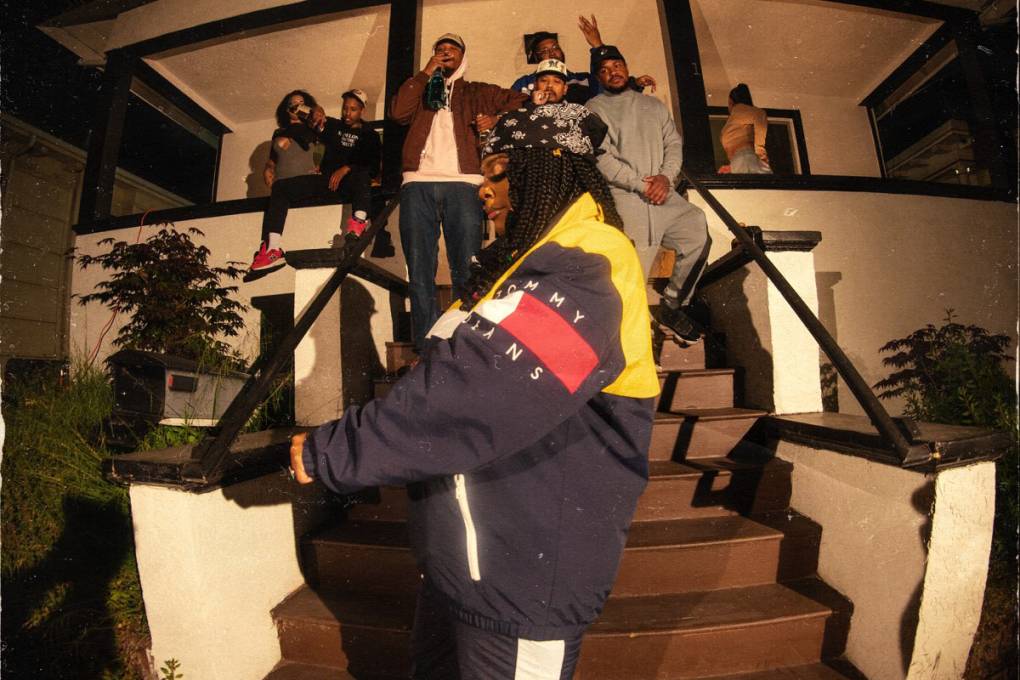
"caption": "Kamaiyah's 'Another Summer Night' perfects her Oakland house-party sound. ",
"description": null,
"title": "kamaiyah",
"credit": "Courtesy of Kamaiyah",
"status": "inherit",
"altTag": "The album cover of Kamaiyah's 'Another Summer Night' shows her in a vintage Tommy Hilfiger jacket, standing outside of a house party.",
"isLoading": false,
"fetchFailed": false
},
"arts_13939497": {
"type": "attachments",
"id": "arts_13939497",
"meta": {
"index": "attachments_1716263798",
"site": "arts",
"id": "13939497",
"found": true
},
"parent": 13939494,
"imgSizes": {
"twentyfourteen-full-width": {
"file": "https://cdn.kqed.org/wp-content/uploads/sites/2/2023/12/GettyImages-119684387-1038x576.jpg",
"width": 1038,
"mimeType": "image/jpeg",
"height": 576
},
"thumbnail": {
"file": "https://cdn.kqed.org/wp-content/uploads/sites/2/2023/12/GettyImages-119684387-160x106.jpg",
"width": 160,
"mimeType": "image/jpeg",
"height": 106
},
"post-thumbnail": {
"file": "https://cdn.kqed.org/wp-content/uploads/sites/2/2023/12/GettyImages-119684387-672x372.jpg",
"width": 672,
"mimeType": "image/jpeg",
"height": 372
},
"kqedFullSize": {
"file": "https://cdn.kqed.org/wp-content/uploads/sites/2/2023/12/GettyImages-119684387-scaled.jpg",
"width": 2560,
"height": 1693
},
"2048x2048": {
"file": "https://cdn.kqed.org/wp-content/uploads/sites/2/2023/12/GettyImages-119684387-2048x1354.jpg",
"width": 2048,
"mimeType": "image/jpeg",
"height": 1354
},
"large": {
"file": "https://cdn.kqed.org/wp-content/uploads/sites/2/2023/12/GettyImages-119684387-1020x674.jpg",
"width": 1020,
"mimeType": "image/jpeg",
"height": 674
},
"1536x1536": {
"file": "https://cdn.kqed.org/wp-content/uploads/sites/2/2023/12/GettyImages-119684387-1536x1016.jpg",
"width": 1536,
"mimeType": "image/jpeg",
"height": 1016
},
"full-width": {
"file": "https://cdn.kqed.org/wp-content/uploads/sites/2/2023/12/GettyImages-119684387-1920x1269.jpg",
"width": 1920,
"mimeType": "image/jpeg",
"height": 1269
},
"medium": {
"file": "https://cdn.kqed.org/wp-content/uploads/sites/2/2023/12/GettyImages-119684387-800x529.jpg",
"width": 800,
"mimeType": "image/jpeg",
"height": 529
},
"medium_large": {
"file": "https://cdn.kqed.org/wp-content/uploads/sites/2/2023/12/GettyImages-119684387-768x508.jpg",
"width": 768,
"mimeType": "image/jpeg",
"height": 508
}
},
"publishDate": 1702597050,
"modified": 1702597078,
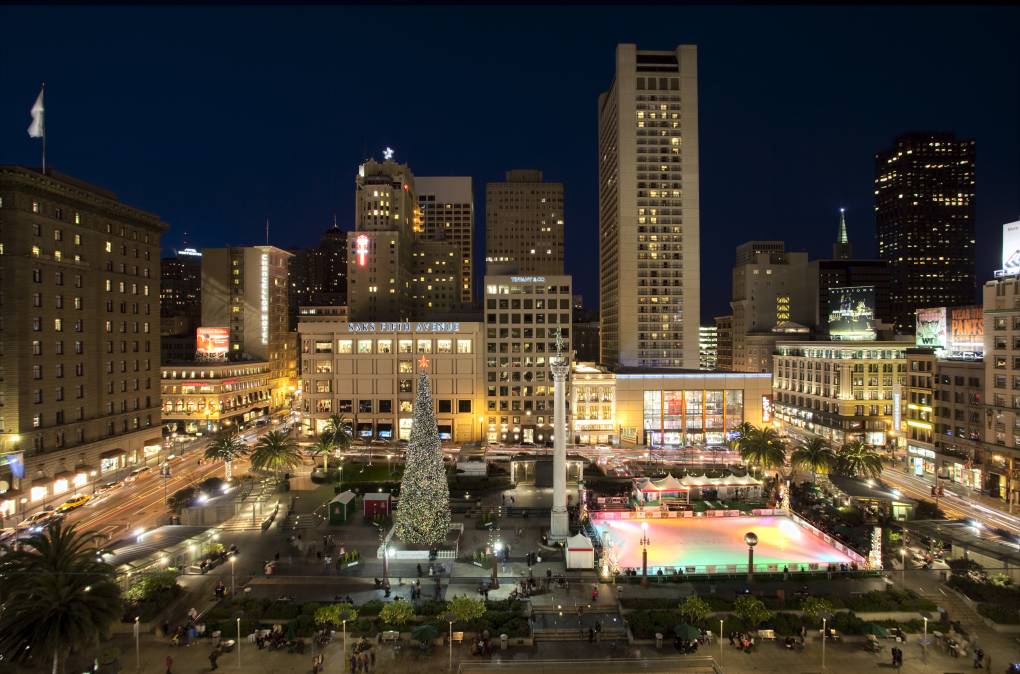
"caption": "San Francisco's Union Square, lit up during holiday season",
"description": null,
"title": "San Francisco Union Square",
"credit": "Ei Katsumata/Getty",
"status": "inherit",
"altTag": null,
"isLoading": false,
"fetchFailed": false
},
"arts_13939488": {
"type": "attachments",
"id": "arts_13939488",
"meta": {
"index": "attachments_1716263798",
"site": "arts",
"id": "13939488",
"found": true
},
"parent": 13939381,
"imgSizes": {
"thumbnail": {
"file": "https://cdn.kqed.org/wp-content/uploads/sites/2/2023/12/5150.MAIN_-160x90.jpg",
"width": 160,
"mimeType": "image/jpeg",
"height": 90
},
"post-thumbnail": {
"file": "https://cdn.kqed.org/wp-content/uploads/sites/2/2023/12/5150.MAIN_-672x372.jpg",
"width": 672,
"mimeType": "image/jpeg",
"height": 372
},
"kqedFullSize": {
"file": "https://cdn.kqed.org/wp-content/uploads/sites/2/2023/12/5150.MAIN_.jpg",
"width": 928,
"height": 522
},
"medium": {
"file": "https://cdn.kqed.org/wp-content/uploads/sites/2/2023/12/5150.MAIN_-800x450.jpg",
"width": 800,
"mimeType": "image/jpeg",
"height": 450
},
"medium_large": {
"file": "https://cdn.kqed.org/wp-content/uploads/sites/2/2023/12/5150.MAIN_-768x432.jpg",
"width": 768,
"mimeType": "image/jpeg",
"height": 432
}
},
"publishDate": 1702595367,
"modified": 1702596530,
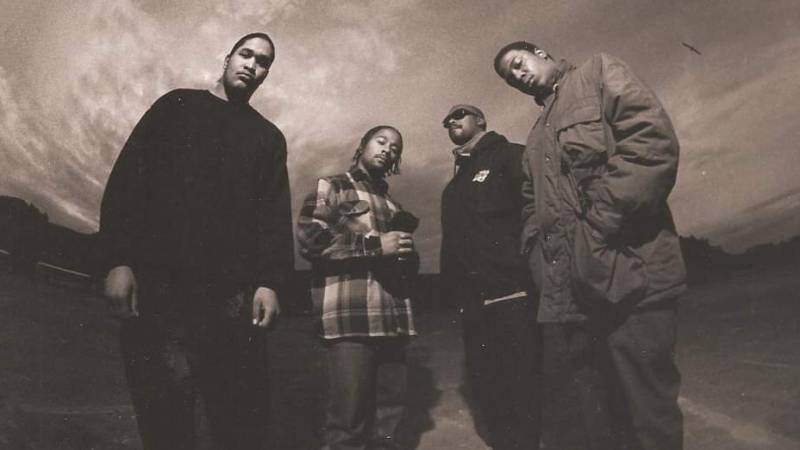
"caption": "As Marin City's most active rap group, 51.50 had a revolving door of members — based, in part, on who was in jail at the time. Pictured here are Los the Jackal, Klark Gable, B.M.F.D. and Tac.",
"description": null,
"title": "5150.MAIN",
"credit": "Courtesy Darren Page",
"status": "inherit",
"altTag": null,
"isLoading": false,
"fetchFailed": false
},
"arts_13939350": {
"type": "attachments",
"id": "arts_13939350",
"meta": {
"index": "attachments_1716263798",
"site": "arts",
"id": "13939350",
"found": true
},
"parent": 13939306,
"imgSizes": {
"twentyfourteen-full-width": {
"file": "https://cdn.kqed.org/wp-content/uploads/sites/2/2023/12/Spitboy.Gilman.16x9-1038x576.jpg",
"width": 1038,
"mimeType": "image/jpeg",
"height": 576
},
"thumbnail": {
"file": "https://cdn.kqed.org/wp-content/uploads/sites/2/2023/12/Spitboy.Gilman.16x9-160x90.jpg",
"width": 160,
"mimeType": "image/jpeg",
"height": 90
},
"post-thumbnail": {
"file": "https://cdn.kqed.org/wp-content/uploads/sites/2/2023/12/Spitboy.Gilman.16x9-672x372.jpg",
"width": 672,
"mimeType": "image/jpeg",
"height": 372
},
"kqedFullSize": {
"file": "https://cdn.kqed.org/wp-content/uploads/sites/2/2023/12/Spitboy.Gilman.16x9.jpg",
"width": 1080,
"height": 608
},
"large": {
"file": "https://cdn.kqed.org/wp-content/uploads/sites/2/2023/12/Spitboy.Gilman.16x9-1020x574.jpg",
"width": 1020,
"mimeType": "image/jpeg",
"height": 574
},
"medium": {
"file": "https://cdn.kqed.org/wp-content/uploads/sites/2/2023/12/Spitboy.Gilman.16x9-800x450.jpg",
"width": 800,
"mimeType": "image/jpeg",
"height": 450
},
"medium_large": {
"file": "https://cdn.kqed.org/wp-content/uploads/sites/2/2023/12/Spitboy.Gilman.16x9-768x432.jpg",
"width": 768,
"mimeType": "image/jpeg",
"height": 432
}
},
"publishDate": 1702496508,
"modified": 1702497006,
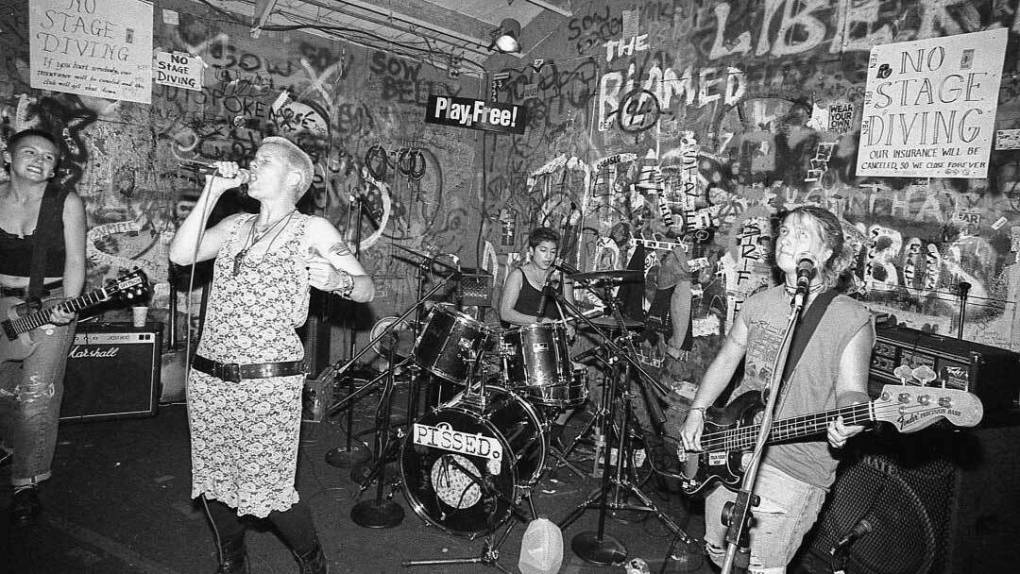
"caption": "The legendary feminist punk band Spitboy performs at 924 Gilman, circa early 1990s. ",
"description": null,
"title": "Spitboy.Gilman.16x9",
"credit": "John Lyons",
"status": "inherit",
"altTag": "a black and white photo of a punk trio, all women, performing in a punk club",
"isLoading": false,
"fetchFailed": false
},
"arts_13939231": {
"type": "attachments",
"id": "arts_13939231",
"meta": {
"index": "attachments_1716263798",
"site": "arts",
"id": "13939231",
"found": true
},
"parent": 13939198,
"imgSizes": {
"twentyfourteen-full-width": {
"file": "https://cdn.kqed.org/wp-content/uploads/sites/2/2023/12/SamReider-by-Richard-Velasco--1038x576.jpg",
"width": 1038,
"mimeType": "image/jpeg",
"height": 576
},
"thumbnail": {
"file": "https://cdn.kqed.org/wp-content/uploads/sites/2/2023/12/SamReider-by-Richard-Velasco--160x107.jpg",
"width": 160,
"mimeType": "image/jpeg",
"height": 107
},
"post-thumbnail": {
"file": "https://cdn.kqed.org/wp-content/uploads/sites/2/2023/12/SamReider-by-Richard-Velasco--672x372.jpg",
"width": 672,
"mimeType": "image/jpeg",
"height": 372
},
"kqedFullSize": {
"file": "https://cdn.kqed.org/wp-content/uploads/sites/2/2023/12/SamReider-by-Richard-Velasco-.jpg",
"width": 1440,
"height": 960
},
"large": {
"file": "https://cdn.kqed.org/wp-content/uploads/sites/2/2023/12/SamReider-by-Richard-Velasco--1020x680.jpg",
"width": 1020,
"mimeType": "image/jpeg",
"height": 680
},
"medium": {
"file": "https://cdn.kqed.org/wp-content/uploads/sites/2/2023/12/SamReider-by-Richard-Velasco--800x533.jpg",
"width": 800,
"mimeType": "image/jpeg",
"height": 533
},
"medium_large": {
"file": "https://cdn.kqed.org/wp-content/uploads/sites/2/2023/12/SamReider-by-Richard-Velasco--768x512.jpg",
"width": 768,
"mimeType": "image/jpeg",
"height": 512
}
},
"publishDate": 1702340735,
"modified": 1702340927,
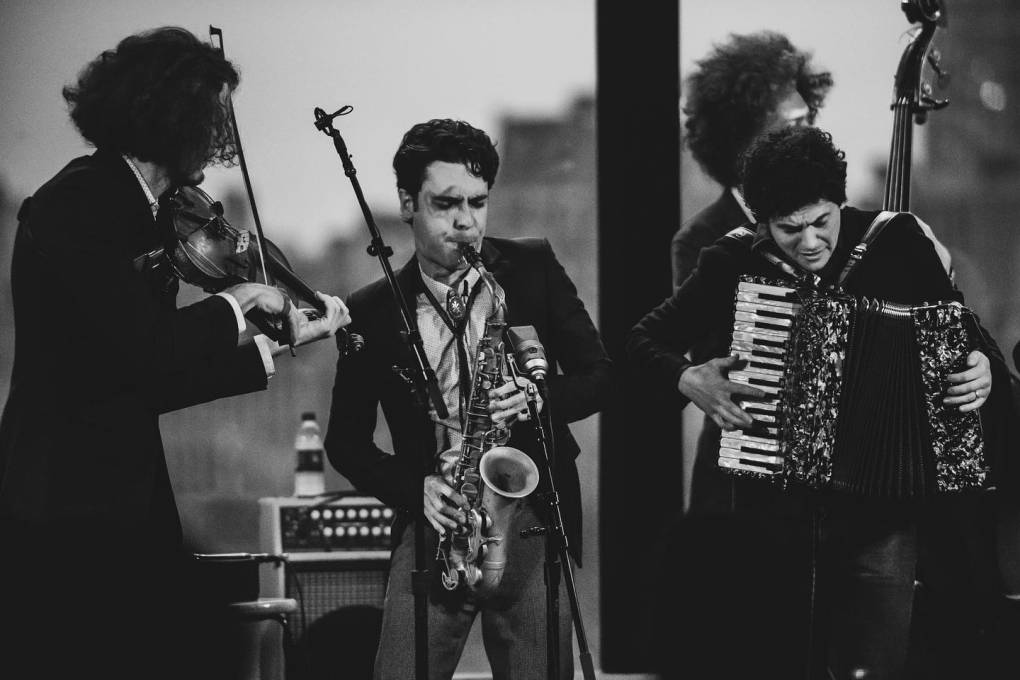
"caption": "Sam Reider and the Human Hands, seen here performing at Dizzy's Club at Lincoln Center, will play at JCCSF on Dec. 14, 2023. \nL to R: Fiddler Ducan Wickel, saxophonist Eddie Barbash, accordionist Sam Reider. ",
"description": null,
"title": "SamReider by Richard Velasco",
"credit": "Richard Velasco",
"status": "inherit",
"altTag": "a black and white photo of a jazz quartet of young men",
"isLoading": false,
"fetchFailed": false
},
"arts_13939214": {
"type": "attachments",
"id": "arts_13939214",
"meta": {
"index": "attachments_1716263798",
"site": "arts",
"id": "13939214",
"found": true
},
"parent": 13939201,
"imgSizes": {
"twentyfourteen-full-width": {
"file": "https://cdn.kqed.org/wp-content/uploads/sites/2/2023/12/Screen-Shot-2023-12-11-at-12.43.17-PM-1038x576.png",
"width": 1038,
"mimeType": "image/png",
"height": 576
},
"thumbnail": {
"file": "https://cdn.kqed.org/wp-content/uploads/sites/2/2023/12/Screen-Shot-2023-12-11-at-12.43.17-PM-160x105.png",
"width": 160,
"mimeType": "image/png",
"height": 105
},
"post-thumbnail": {
"file": "https://cdn.kqed.org/wp-content/uploads/sites/2/2023/12/Screen-Shot-2023-12-11-at-12.43.17-PM-672x372.png",
"width": 672,
"mimeType": "image/png",
"height": 372
},
"kqedFullSize": {
"file": "https://cdn.kqed.org/wp-content/uploads/sites/2/2023/12/Screen-Shot-2023-12-11-at-12.43.17-PM.png",
"width": 2072,
"height": 1356
},
"2048x2048": {
"file": "https://cdn.kqed.org/wp-content/uploads/sites/2/2023/12/Screen-Shot-2023-12-11-at-12.43.17-PM-2048x1340.png",
"width": 2048,
"mimeType": "image/png",
"height": 1340
},
"large": {
"file": "https://cdn.kqed.org/wp-content/uploads/sites/2/2023/12/Screen-Shot-2023-12-11-at-12.43.17-PM-1020x668.png",
"width": 1020,
"mimeType": "image/png",
"height": 668
},
"1536x1536": {
"file": "https://cdn.kqed.org/wp-content/uploads/sites/2/2023/12/Screen-Shot-2023-12-11-at-12.43.17-PM-1536x1005.png",
"width": 1536,
"mimeType": "image/png",
"height": 1005
},
"full-width": {
"file": "https://cdn.kqed.org/wp-content/uploads/sites/2/2023/12/Screen-Shot-2023-12-11-at-12.43.17-PM-1920x1257.png",
"width": 1920,
"mimeType": "image/png",
"height": 1257
},
"medium": {
"file": "https://cdn.kqed.org/wp-content/uploads/sites/2/2023/12/Screen-Shot-2023-12-11-at-12.43.17-PM-800x524.png",
"width": 800,
"mimeType": "image/png",
"height": 524
},
"medium_large": {
"file": "https://cdn.kqed.org/wp-content/uploads/sites/2/2023/12/Screen-Shot-2023-12-11-at-12.43.17-PM-768x503.png",
"width": 768,
"mimeType": "image/png",
"height": 503
}
},
"publishDate": 1702327419,
"modified": 1702327523,
"caption": "A moment from Mariah Carey’s updated ‘All I Want for Christmas Is You’ video.",
"description": null,
"title": "A moment from Mariah Carey’s updated ‘All I Want for Christmas Is You’ video.",
"credit": null,
"status": "inherit",
"altTag": "Mariah Carey in a festive red dress with white fluffy trim gesturing and singing. Dancers are behind her, out of focus.",
"isLoading": false,
"fetchFailed": false
},
"arts_13939194": {
"type": "attachments",
"id": "arts_13939194",
"meta": {
"index": "attachments_1716263798",
"site": "arts",
"id": "13939194",
"found": true
},
"parent": 13939167,
"imgSizes": {
"twentyfourteen-full-width": {
"file": "https://cdn.kqed.org/wp-content/uploads/sites/2/2023/12/andy-guthrie-1-1038x576.jpg",
"width": 1038,
"mimeType": "image/jpeg",
"height": 576
},
"thumbnail": {
"file": "https://cdn.kqed.org/wp-content/uploads/sites/2/2023/12/andy-guthrie-1-160x91.jpg",
"width": 160,
"mimeType": "image/jpeg",
"height": 91
},
"post-thumbnail": {
"file": "https://cdn.kqed.org/wp-content/uploads/sites/2/2023/12/andy-guthrie-1-672x372.jpg",
"width": 672,
"mimeType": "image/jpeg",
"height": 372
},
"kqedFullSize": {
"file": "https://cdn.kqed.org/wp-content/uploads/sites/2/2023/12/andy-guthrie-1.jpg",
"width": 1659,
"height": 947
},
"large": {
"file": "https://cdn.kqed.org/wp-content/uploads/sites/2/2023/12/andy-guthrie-1-1020x582.jpg",
"width": 1020,
"mimeType": "image/jpeg",
"height": 582
},
"1536x1536": {
"file": "https://cdn.kqed.org/wp-content/uploads/sites/2/2023/12/andy-guthrie-1-1536x877.jpg",
"width": 1536,
"mimeType": "image/jpeg",
"height": 877
},
"medium": {
"file": "https://cdn.kqed.org/wp-content/uploads/sites/2/2023/12/andy-guthrie-1-800x457.jpg",
"width": 800,
"mimeType": "image/jpeg",
"height": 457
},
"medium_large": {
"file": "https://cdn.kqed.org/wp-content/uploads/sites/2/2023/12/andy-guthrie-1-768x438.jpg",
"width": 768,
"mimeType": "image/jpeg",
"height": 438
}
},
"publishDate": 1702321960,
"modified": 1702322027,
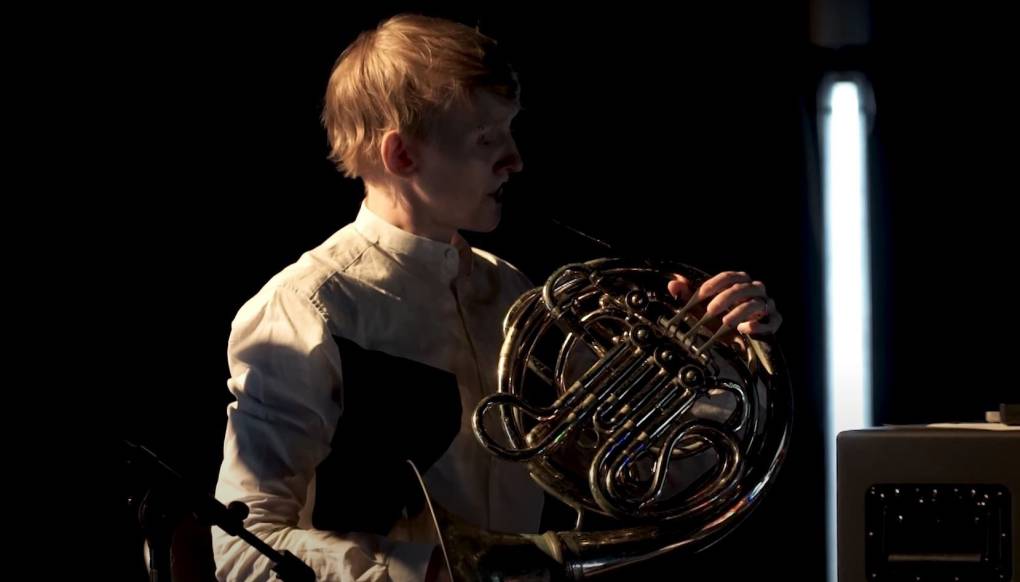
"caption": "Andy Guthrie performs in Paris in March 2023. ",
"description": null,
"title": "andy guthrie",
"credit": "Courtesy of Andy Guthrie",
"status": "inherit",
"altTag": "Andy Guthrie plays a French horn on a dimly lit stage.",
"isLoading": false,
"fetchFailed": false
},
"arts_13937095": {
"type": "attachments",
"id": "arts_13937095",
"meta": {
"index": "attachments_1716263798",
"site": "arts",
"id": "13937095",
"found": true
},
"parent": 13937049,
"imgSizes": {
"twentyfourteen-full-width": {
"file": "https://ww2.kqed.org/app/uploads/sites/2/2023/10/20231013-Swifties-008-JY-KQED-1038x576.jpg",
"width": 1038,
"mimeType": "image/jpeg",
"height": 576
},
"thumbnail": {
"file": "https://ww2.kqed.org/app/uploads/sites/2/2023/10/20231013-Swifties-008-JY-KQED-160x107.jpg",
"width": 160,
"mimeType": "image/jpeg",
"height": 107
},
"post-thumbnail": {
"file": "https://ww2.kqed.org/app/uploads/sites/2/2023/10/20231013-Swifties-008-JY-KQED-672x372.jpg",
"width": 672,
"mimeType": "image/jpeg",
"height": 372
},
"kqedFullSize": {
"file": "https://ww2.kqed.org/app/uploads/sites/2/2023/10/20231013-Swifties-008-JY-KQED.jpg",
"width": 2000,
"height": 1333
},
"large": {
"file": "https://ww2.kqed.org/app/uploads/sites/2/2023/10/20231013-Swifties-008-JY-KQED-1020x680.jpg",
"width": 1020,
"mimeType": "image/jpeg",
"height": 680
},
"1536x1536": {
"file": "https://ww2.kqed.org/app/uploads/sites/2/2023/10/20231013-Swifties-008-JY-KQED-1536x1024.jpg",
"width": 1536,
"mimeType": "image/jpeg",
"height": 1024
},
"full-width": {
"file": "https://ww2.kqed.org/app/uploads/sites/2/2023/10/20231013-Swifties-008-JY-KQED-1920x1280.jpg",
"width": 1920,
"mimeType": "image/jpeg",
"height": 1280
},
"medium": {
"file": "https://ww2.kqed.org/app/uploads/sites/2/2023/10/20231013-Swifties-008-JY-KQED-800x533.jpg",
"width": 800,
"mimeType": "image/jpeg",
"height": 533
},
"medium_large": {
"file": "https://ww2.kqed.org/app/uploads/sites/2/2023/10/20231013-Swifties-008-JY-KQED-768x512.jpg",
"width": 768,
"mimeType": "image/jpeg",
"height": 512
}
},
"publishDate": 1698421316,
"modified": 1698421820,
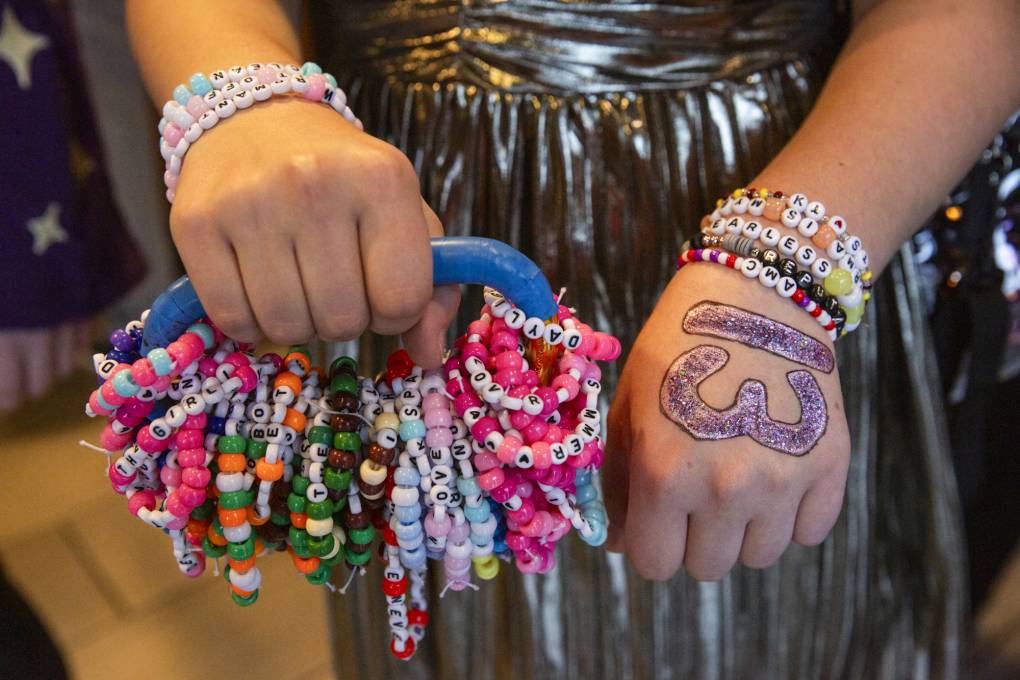
"caption": "Elisheva Samson, 16, shows off her carabiner of friendship bracelets to trade while waiting in line for merch before seeing “Taylor Swift The Eras Tour” at AMC Kabuki in Japantown, San Francisco on Friday, Oct. 13, 2023.",
"description": null,
"title": "Swifties",
"credit": "Juliana Yamada/KQED",
"status": "inherit",
"altTag": "A persons wrists wear eight different bracelets with letters and bright beads on them. The person also holds a carribeaner with dozens more bracelets.",
"isLoading": false,
"fetchFailed": false
},
"arts_13329186": {
"type": "attachments",
"id": "arts_13329186",
"meta": {
"index": "attachments_1716263798",
"site": "arts",
"id": "13329186",
"found": true
},
"parent": 13329185,
"imgSizes": {
"small": {
"file": "https://cdn.kqed.org/wp-content/uploads/sites/2/2017/05/BottleRock.BlackThought.Roo_-520x293.jpg",
"width": 520,
"mimeType": "image/jpeg",
"height": 293
},
"twentyfourteen-full-width": {
"file": "https://cdn.kqed.org/wp-content/uploads/sites/2/2017/05/BottleRock.BlackThought.Roo_-1038x576.jpg",
"width": 1038,
"mimeType": "image/jpeg",
"height": 576
},
"thumbnail": {
"file": "https://cdn.kqed.org/wp-content/uploads/sites/2/2017/05/BottleRock.BlackThought.Roo_-160x90.jpg",
"width": 160,
"mimeType": "image/jpeg",
"height": 90
},
"fd-sm": {
"file": "https://cdn.kqed.org/wp-content/uploads/sites/2/2017/05/BottleRock.BlackThought.Roo_-960x540.jpg",
"width": 960,
"mimeType": "image/jpeg",
"height": 540
},
"post-thumbnail": {
"file": "https://cdn.kqed.org/wp-content/uploads/sites/2/2017/05/BottleRock.BlackThought.Roo_-672x372.jpg",
"width": 672,
"mimeType": "image/jpeg",
"height": 372
},
"xsmall": {
"file": "https://cdn.kqed.org/wp-content/uploads/sites/2/2017/05/BottleRock.BlackThought.Roo_-375x211.jpg",
"width": 375,
"mimeType": "image/jpeg",
"height": 211
},
"kqedFullSize": {
"file": "https://cdn.kqed.org/wp-content/uploads/sites/2/2017/05/BottleRock.BlackThought.Roo_.jpg",
"width": 1920,
"height": 1080
},
"large": {
"file": "https://cdn.kqed.org/wp-content/uploads/sites/2/2017/05/BottleRock.BlackThought.Roo_-1020x574.jpg",
"width": 1020,
"mimeType": "image/jpeg",
"height": 574
},
"xlarge": {
"file": "https://cdn.kqed.org/wp-content/uploads/sites/2/2017/05/BottleRock.BlackThought.Roo_-1180x664.jpg",
"width": 1180,
"mimeType": "image/jpeg",
"height": 664
},
"guest-author-50": {
"file": "https://cdn.kqed.org/wp-content/uploads/sites/2/2017/05/BottleRock.BlackThought.Roo_-50x50.jpg",
"width": 50,
"mimeType": "image/jpeg",
"height": 50
},
"guest-author-96": {
"file": "https://cdn.kqed.org/wp-content/uploads/sites/2/2017/05/BottleRock.BlackThought.Roo_-96x96.jpg",
"width": 96,
"mimeType": "image/jpeg",
"height": 96
},
"medium": {
"file": "https://cdn.kqed.org/wp-content/uploads/sites/2/2017/05/BottleRock.BlackThought.Roo_-800x450.jpg",
"width": 800,
"mimeType": "image/jpeg",
"height": 450
},
"guest-author-64": {
"file": "https://cdn.kqed.org/wp-content/uploads/sites/2/2017/05/BottleRock.BlackThought.Roo_-64x64.jpg",
"width": 64,
"mimeType": "image/jpeg",
"height": 64
},
"guest-author-32": {
"file": "https://cdn.kqed.org/wp-content/uploads/sites/2/2017/05/BottleRock.BlackThought.Roo_-32x32.jpg",
"width": 32,
"mimeType": "image/jpeg",
"height": 32
},
"fd-lrg": {
"file": "https://cdn.kqed.org/wp-content/uploads/sites/2/2017/05/BottleRock.BlackThought.Roo_-1920x1080.jpg",
"width": 1920,
"mimeType": "image/jpeg",
"height": 1080
},
"fd-med": {
"file": "https://cdn.kqed.org/wp-content/uploads/sites/2/2017/05/BottleRock.BlackThought.Roo_-1180x664.jpg",
"width": 1180,
"mimeType": "image/jpeg",
"height": 664
},
"full-width": {
"file": "https://cdn.kqed.org/wp-content/uploads/sites/2/2017/05/BottleRock.BlackThought.Roo_-1920x1080.jpg",
"width": 1920,
"mimeType": "image/jpeg",
"height": 1080
},
"detail": {
"file": "https://cdn.kqed.org/wp-content/uploads/sites/2/2017/05/BottleRock.BlackThought.Roo_-150x150.jpg",
"width": 150,
"mimeType": "image/jpeg",
"height": 150
},
"medium_large": {
"file": "https://cdn.kqed.org/wp-content/uploads/sites/2/2017/05/BottleRock.BlackThought.Roo_-768x432.jpg",
"width": 768,
"mimeType": "image/jpeg",
"height": 432
},
"guest-author-128": {
"file": "https://cdn.kqed.org/wp-content/uploads/sites/2/2017/05/BottleRock.BlackThought.Roo_-128x128.jpg",
"width": 128,
"mimeType": "image/jpeg",
"height": 128
},
"xxsmall": {
"file": "https://cdn.kqed.org/wp-content/uploads/sites/2/2017/05/BottleRock.BlackThought.Roo_-240x135.jpg",
"width": 240,
"mimeType": "image/jpeg",
"height": 135
}
},
"publishDate": 1496074356,
"modified": 1702015408,
"caption": "Black Thought of the Roots performs at the BottleRock music festival in Napa, May 28, 2017.",
"description": "Black Thought of the Roots performs at BottleRock in Napa, May 28, 2017.",
"title": "BottleRock.BlackThought.Roo",
"credit": "Estefany Gonzalez for KQED",
"status": "inherit",
"altTag": "Black Thought of the Roots performs at BottleRock in Napa, May 28, 2017.",
"isLoading": false,
"fetchFailed": false
},
"arts_13938954": {
"type": "attachments",
"id": "arts_13938954",
"meta": {
"index": "attachments_1716263798",
"site": "arts",
"id": "13938954",
"found": true
},
"parent": 13938947,
"imgSizes": {
"twentyfourteen-full-width": {
"file": "https://cdn.kqed.org/wp-content/uploads/sites/2/2023/12/IMG_0901-1038x576.jpeg",
"width": 1038,
"mimeType": "image/jpeg",
"height": 576
},
"thumbnail": {
"file": "https://cdn.kqed.org/wp-content/uploads/sites/2/2023/12/IMG_0901-160x99.jpeg",
"width": 160,
"mimeType": "image/jpeg",
"height": 99
},
"post-thumbnail": {
"file": "https://cdn.kqed.org/wp-content/uploads/sites/2/2023/12/IMG_0901-672x372.jpeg",
"width": 672,
"mimeType": "image/jpeg",
"height": 372
},
"kqedFullSize": {
"file": "https://cdn.kqed.org/wp-content/uploads/sites/2/2023/12/IMG_0901-scaled.jpeg",
"width": 2560,
"height": 1589
},
"2048x2048": {
"file": "https://cdn.kqed.org/wp-content/uploads/sites/2/2023/12/IMG_0901-2048x1271.jpeg",
"width": 2048,
"mimeType": "image/jpeg",
"height": 1271
},
"large": {
"file": "https://cdn.kqed.org/wp-content/uploads/sites/2/2023/12/IMG_0901-1020x633.jpeg",
"width": 1020,
"mimeType": "image/jpeg",
"height": 633
},
"1536x1536": {
"file": "https://cdn.kqed.org/wp-content/uploads/sites/2/2023/12/IMG_0901-1536x953.jpeg",
"width": 1536,
"mimeType": "image/jpeg",
"height": 953
},
"full-width": {
"file": "https://cdn.kqed.org/wp-content/uploads/sites/2/2023/12/IMG_0901-1920x1191.jpeg",
"width": 1920,
"mimeType": "image/jpeg",
"height": 1191
},
"medium": {
"file": "https://cdn.kqed.org/wp-content/uploads/sites/2/2023/12/IMG_0901-800x496.jpeg",
"width": 800,
"mimeType": "image/jpeg",
"height": 496
},
"medium_large": {
"file": "https://cdn.kqed.org/wp-content/uploads/sites/2/2023/12/IMG_0901-768x477.jpeg",
"width": 768,
"mimeType": "image/jpeg",
"height": 477
}
},
"publishDate": 1701819063,
"modified": 1701819224,
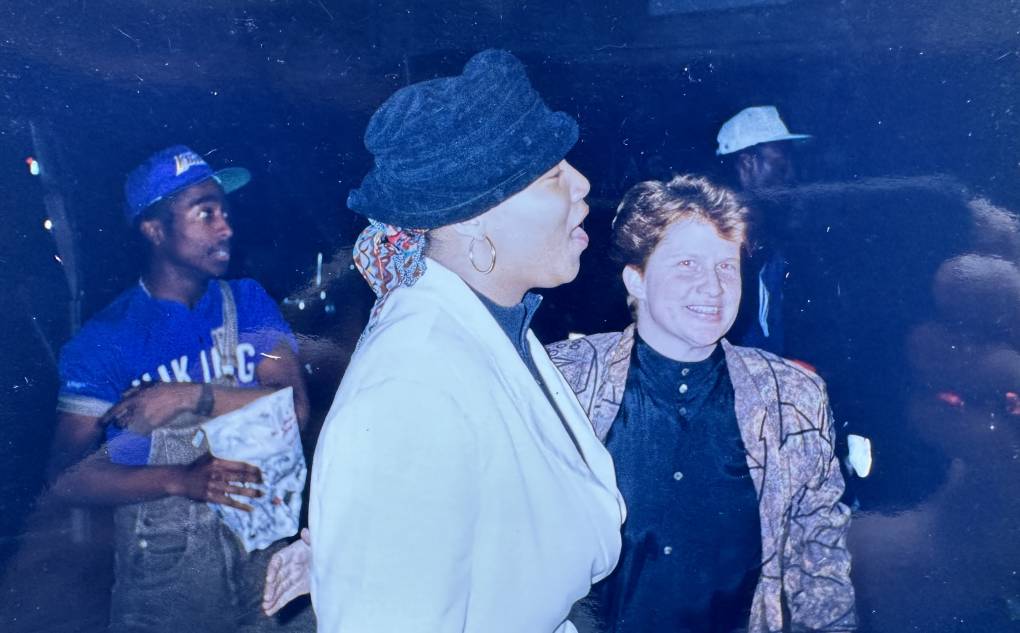
"caption": "Tupac, Queen Latifah and Page Hodel at Hodel's LGBTQ+ party, The Box, in the early '90s.",
"description": null,
"title": "IMG_0901",
"credit": "Courtesy of Page Hodel",
"status": "inherit",
"altTag": null,
"isLoading": false,
"fetchFailed": false
},
"arts_13938867": {
"type": "attachments",
"id": "arts_13938867",
"meta": {
"index": "attachments_1716263798",
"site": "arts",
"id": "13938867",
"found": true
},
"parent": 13938866,
"imgSizes": {
"twentyfourteen-full-width": {
"file": "https://ww2.kqed.org/app/uploads/sites/2/2023/12/image1-1038x576.jpg",
"width": 1038,
"mimeType": "image/jpeg",
"height": 576
},
"thumbnail": {
"file": "https://ww2.kqed.org/app/uploads/sites/2/2023/12/image1-160x107.jpg",
"width": 160,
"mimeType": "image/jpeg",
"height": 107
},
"post-thumbnail": {
"file": "https://ww2.kqed.org/app/uploads/sites/2/2023/12/image1-672x372.jpg",
"width": 672,
"mimeType": "image/jpeg",
"height": 372
},
"kqedFullSize": {
"file": "https://ww2.kqed.org/app/uploads/sites/2/2023/12/image1.jpg",
"width": 1999,
"height": 1333
},
"large": {
"file": "https://ww2.kqed.org/app/uploads/sites/2/2023/12/image1-1020x680.jpg",
"width": 1020,
"mimeType": "image/jpeg",
"height": 680
},
"1536x1536": {
"file": "https://ww2.kqed.org/app/uploads/sites/2/2023/12/image1-1536x1024.jpg",
"width": 1536,
"mimeType": "image/jpeg",
"height": 1024
},
"full-width": {
"file": "https://ww2.kqed.org/app/uploads/sites/2/2023/12/image1-1920x1280.jpg",
"width": 1920,
"mimeType": "image/jpeg",
"height": 1280
},
"medium": {
"file": "https://ww2.kqed.org/app/uploads/sites/2/2023/12/image1-800x533.jpg",
"width": 800,
"mimeType": "image/jpeg",
"height": 533
},
"medium_large": {
"file": "https://ww2.kqed.org/app/uploads/sites/2/2023/12/image1-768x512.jpg",
"width": 768,
"mimeType": "image/jpeg",
"height": 512
}
},
"publishDate": 1701736512,
"modified": 1701736621,
"caption": "Bolo Music Group’s founding roster of artists, from L-R: Ouida, Ian Santillano, Ruby Ibarra and Vince A. Ibarra co-founded the label with producer Angelo 'LASI' Macaraeg.",
"description": null,
"title": "image1",
"credit": "Gino Lucas/Bolo Music Group",
"status": "inherit",
"altTag": "a group of four young Filipino-American musicians stand for a portrait, dressed in colorful clothes",
"isLoading": false,
"fetchFailed": false
},
"arts_13938818": {
"type": "attachments",
"id": "arts_13938818",
"meta": {
"index": "attachments_1716263798",
"site": "arts",
"id": "13938818",
"found": true
},
"parent": 13938757,
"imgSizes": {
"twentyfourteen-full-width": {
"file": "https://ww2.kqed.org/app/uploads/sites/2/2023/12/best-bay-area-music-of-2023-1038x576.jpg",
"width": 1038,
"mimeType": "image/jpeg",
"height": 576
},
"thumbnail": {
"file": "https://ww2.kqed.org/app/uploads/sites/2/2023/12/best-bay-area-music-of-2023-160x78.jpg",
"width": 160,
"mimeType": "image/jpeg",
"height": 78
},
"post-thumbnail": {
"file": "https://ww2.kqed.org/app/uploads/sites/2/2023/12/best-bay-area-music-of-2023-672x372.jpg",
"width": 672,
"mimeType": "image/jpeg",
"height": 372
},
"kqedFullSize": {
"file": "https://ww2.kqed.org/app/uploads/sites/2/2023/12/best-bay-area-music-of-2023.jpg",
"width": 1960,
"height": 957
},
"large": {
"file": "https://ww2.kqed.org/app/uploads/sites/2/2023/12/best-bay-area-music-of-2023-1020x498.jpg",
"width": 1020,
"mimeType": "image/jpeg",
"height": 498
},
"1536x1536": {
"file": "https://ww2.kqed.org/app/uploads/sites/2/2023/12/best-bay-area-music-of-2023-1536x750.jpg",
"width": 1536,
"mimeType": "image/jpeg",
"height": 750
},
"full-width": {
"file": "https://ww2.kqed.org/app/uploads/sites/2/2023/12/best-bay-area-music-of-2023-1920x937.jpg",
"width": 1920,
"mimeType": "image/jpeg",
"height": 937
},
"medium": {
"file": "https://ww2.kqed.org/app/uploads/sites/2/2023/12/best-bay-area-music-of-2023-800x391.jpg",
"width": 800,
"mimeType": "image/jpeg",
"height": 391
},
"medium_large": {
"file": "https://ww2.kqed.org/app/uploads/sites/2/2023/12/best-bay-area-music-of-2023-768x375.jpg",
"width": 768,
"mimeType": "image/jpeg",
"height": 375
}
},
"publishDate": 1701472714,
"modified": 1701719721,
"caption": "Afterthought, Lil Kayla, Sid Sriram and La Doña made some of the best Bay Area music of 2023.",
"description": null,
"title": "best bay area music of 2023",
"credit": "Courtesy of the artists",
"status": "inherit",
"altTag": "A collage with four album covers. Afterthought's 'Communal Healing' features an abstract, simplified painting of a body with dark skin and other, smaller bodies springing from the person's head. Lil Kayla's 'Who Is Lil Kayla?' features a portrait of her stomping the camera. Sid Sriram poses in front of an ornate rug. La Doña's 'Can't Eat Clout' features her in a tulle dress twirling.",
"isLoading": false,
"fetchFailed": false
}
},
"audioPlayerReducer": {
"postId": "stream_live",
"isPaused": true,
"isPlaying": false,
"pfsActive": false,
"pledgeModalIsOpen": true,
"playerDrawerIsOpen": false,
"liveAudioPlayStartedAt": 0,
"liveAudioPlayContext": ""
},
"authorsReducer": {
"byline_arts_13939381": {
"type": "authors",
"id": "byline_arts_13939381",
"meta": {
"override": true
},
"slug": "byline_arts_13939381",
"name": "Daniel Bromfield",
"isLoading": false
},
"byline_arts_13939201": {
"type": "authors",
"id": "byline_arts_13939201",
"meta": {
"override": true
},
"slug": "byline_arts_13939201",
"name": "David Bauder, Associated Press",
"isLoading": false
},
"byline_arts_13939167": {
"type": "authors",
"id": "byline_arts_13939167",
"meta": {
"override": true
},
"slug": "byline_arts_13939167",
"name": "Daniel Bromfield",
"isLoading": false
},
"byline_arts_13938757": {
"type": "authors",
"id": "byline_arts_13938757",
"meta": {
"override": true
},
"slug": "byline_arts_13938757",
"name": "KQED Arts & Culture",
"isLoading": false
},
"shotchkiss": {
"type": "authors",
"id": "61",
"meta": {
"index": "authors_1716337520",
"id": "61",
"found": true
},
"name": "Sarah Hotchkiss",
"firstName": "Sarah",
"lastName": "Hotchkiss",
"slug": "shotchkiss",
"email": "shotchkiss@kqed.org",
"display_author_email": true,
"staff_mastheads": [
"arts"
],
"title": "Senior Editor",
"bio": "Sarah Hotchkiss is a San Francisco \u003ca href=\"http://www.sarahhotchkiss.com\">artist\u003c/a> and arts writer. In 2019, she received the Dorothea & Leo Rabkin Foundation grant for visual art journalism and in 2020 she received a Society of Professional Journalists, Northern California award for excellence in arts and culture reporting.",
"avatar": "https://secure.gravatar.com/avatar/bc662df144b3d27fd8b1b6f1c2a420d34e91e53154d411bb7ad353cc8b6cea8d?s=600&d=blank&r=g",
"twitter": null,
"bluesky": null,
"facebook": null,
"instagram": null,
"linkedin": null,
"sites": [
{
"site": "",
"roles": [
"editor"
]
},
{
"site": "arts",
"roles": [
"Contributor",
"administrator"
]
},
{
"site": "artschool",
"roles": [
"administrator"
]
},
{
"site": "news",
"roles": [
"editor"
]
},
{
"site": "pop",
"roles": [
"administrator"
]
},
{
"site": "bayareabites",
"roles": [
"editor"
]
},
{
"site": "spark",
"roles": [
"editor"
]
},
{
"site": "checkplease",
"roles": [
"editor"
]
}
],
"headData": {
"title": "Sarah Hotchkiss | KQED",
"description": "Senior Editor",
"ogImgSrc": "https://secure.gravatar.com/avatar/bc662df144b3d27fd8b1b6f1c2a420d34e91e53154d411bb7ad353cc8b6cea8d?s=600&d=blank&r=g",
"twImgSrc": "https://secure.gravatar.com/avatar/bc662df144b3d27fd8b1b6f1c2a420d34e91e53154d411bb7ad353cc8b6cea8d?s=600&d=blank&r=g"
},
"isLoading": false,
"link": "/author/shotchkiss"
},
"agilbert": {
"type": "authors",
"id": "86",
"meta": {
"index": "authors_1716337520",
"id": "86",
"found": true
},
"name": "Andrew Gilbert",
"firstName": "Andrew",
"lastName": "Gilbert",
"slug": "agilbert",
"email": "jazzscribe@aol.com",
"display_author_email": false,
"staff_mastheads": [],
"title": "KQED Contributor",
"bio": "A Los Angeles native based in the Berkeley area since 1996, Andrew Gilbert covers jazz, international music and dance for KQED's \u003ci>California Report, \u003c/i>the\u003ci> Mercury News\u003c/i>, \u003ci>San Francisco Chronicle\u003c/i>, \u003ci>Berkeleyside.com\u003c/i>, and other publications. He is available for weddings and bar and bat mitzvahs. #jazzscribe",
"avatar": "https://secure.gravatar.com/avatar/d7bcafdbefdd39e9a68f88724ca616eb4e7a5a6bff9cdfb62de652a1e1751471?s=600&d=blank&r=g",
"twitter": null,
"bluesky": null,
"facebook": null,
"instagram": null,
"linkedin": null,
"sites": [
{
"site": "arts",
"roles": [
"Contributor",
"author"
]
},
{
"site": "news",
"roles": [
"author"
]
}
],
"headData": {
"title": "Andrew Gilbert | KQED",
"description": "KQED Contributor",
"ogImgSrc": "https://secure.gravatar.com/avatar/d7bcafdbefdd39e9a68f88724ca616eb4e7a5a6bff9cdfb62de652a1e1751471?s=600&d=blank&r=g",
"twImgSrc": "https://secure.gravatar.com/avatar/d7bcafdbefdd39e9a68f88724ca616eb4e7a5a6bff9cdfb62de652a1e1751471?s=600&d=blank&r=g"
},
"isLoading": false,
"link": "/author/agilbert"
},
"gmeline": {
"type": "authors",
"id": "185",
"meta": {
"index": "authors_1716337520",
"id": "185",
"found": true
},
"name": "Gabe Meline",
"firstName": "Gabe",
"lastName": "Meline",
"slug": "gmeline",
"email": "gmeline@kqed.org",
"display_author_email": true,
"staff_mastheads": [
"arts"
],
"title": "Senior Editor, KQED Arts & Culture",
"bio": "Gabe Meline entered journalism at age 15 making photocopied zines, and has since earned awards from the Edward R. Murrow Awards, the Society for Professional Journalists, the Online Journalism Awards, the Association of Alternative Newsweeklies and the California Newspaper Publishers Association. Prior to KQED, he was the editor of the \u003cem>North Bay Bohemian\u003c/em> and a touring musician. He lives with his wife and daughter in his hometown of Santa Rosa, CA.",
"avatar": "https://secure.gravatar.com/avatar/5bebe57be0d8bc2dd318934feb47299e2d2d10cba28d09d8d7afb389a2ce2bdd?s=600&d=blank&r=g",
"twitter": null,
"bluesky": null,
"facebook": null,
"instagram": null,
"linkedin": null,
"sites": [
{
"site": "",
"roles": [
"editor"
]
},
{
"site": "arts",
"roles": [
"administrator"
]
},
{
"site": "artschool",
"roles": [
"editor"
]
},
{
"site": "news",
"roles": [
"author"
]
},
{
"site": "pop",
"roles": [
"editor"
]
},
{
"site": "bayareabites",
"roles": [
"editor"
]
},
{
"site": "food",
"roles": [
"editor"
]
},
{
"site": "forum",
"roles": [
"administrator"
]
},
{
"site": "liveblog",
"roles": [
"editor"
]
},
{
"site": "hiphop",
"roles": [
"editor"
]
}
],
"headData": {
"title": "Gabe Meline | KQED",
"description": "Senior Editor, KQED Arts & Culture",
"ogImgSrc": "https://secure.gravatar.com/avatar/5bebe57be0d8bc2dd318934feb47299e2d2d10cba28d09d8d7afb389a2ce2bdd?s=600&d=blank&r=g",
"twImgSrc": "https://secure.gravatar.com/avatar/5bebe57be0d8bc2dd318934feb47299e2d2d10cba28d09d8d7afb389a2ce2bdd?s=600&d=blank&r=g"
},
"isLoading": false,
"link": "/author/gmeline"
},
"esilvers": {
"type": "authors",
"id": "7237",
"meta": {
"index": "authors_1716337520",
"id": "7237",
"found": true
},
"name": "Emma Silvers",
"firstName": "Emma",
"lastName": "Silvers",
"slug": "esilvers",
"email": "esilvers@kqed.org",
"display_author_email": false,
"staff_mastheads": [],
"title": "KQED Contributor",
"bio": "Emma Silvers is an editor at KQED Arts and a former digital producer at KQED News. Born and raised in the Bay Area, she has previously been an arts and entertainment editor at the \u003cem>San Francisco Chronicle\u003c/em>, \u003cem>SF Weekly\u003c/em> and the \u003cem>San Francisco Bay Guardian.\u003c/em> \u003ca href=\"https://www.emmasilvers.com\">Her work\u003c/a> has also appeared in \u003cem>Rolling Stone\u003c/em>, Pitchfork and \u003cem>Mother Jones\u003c/em>. In 2017 she was the recipient of the Society of Professional Journalists-Northern California's award for arts and culture reporting. In 1993 she \u003ca href=\"https://www.kqed.org/pop/16759/wait-what-my-coworker-was-a-voice-over-hyperventilator-for-jurassic-park\">hyperventilated in \u003cem>Jurassic Park\u003c/em>\u003c/a>.",
"avatar": "https://secure.gravatar.com/avatar/247beada39b88ea5759db1f51dba05cf?s=600&d=blank&r=g",
"twitter": "emmaruthless",
"facebook": null,
"instagram": null,
"linkedin": null,
"sites": [
{
"site": "arts",
"roles": [
"editor"
]
},
{
"site": "news",
"roles": [
"editor"
]
},
{
"site": "pop",
"roles": [
"contributor"
]
},
{
"site": "bayareabites",
"roles": [
"editor"
]
},
{
"site": "food",
"roles": [
"contributor"
]
},
{
"site": "liveblog",
"roles": [
"editor"
]
}
],
"headData": {
"title": "Emma Silvers | KQED",
"description": "KQED Contributor",
"ogImgSrc": "https://secure.gravatar.com/avatar/247beada39b88ea5759db1f51dba05cf?s=600&d=blank&r=g",
"twImgSrc": "https://secure.gravatar.com/avatar/247beada39b88ea5759db1f51dba05cf?s=600&d=blank&r=g"
},
"isLoading": false,
"link": "/author/esilvers"
},
"ralexandra": {
"type": "authors",
"id": "11242",
"meta": {
"index": "authors_1716337520",
"id": "11242",
"found": true
},
"name": "Rae Alexandra",
"firstName": "Rae",
"lastName": "Alexandra",
"slug": "ralexandra",
"email": "ralexandra@kqed.org",
"display_author_email": true,
"staff_mastheads": [],
"title": "Reporter/Producer",
"bio": "Rae Alexandra is a Reporter/Producer for KQED Arts & Culture, and the creator/author of the \u003ca href=\"https://www.kqed.org/arts/program/rebel-girls-from-bay-area-history\">Rebel Girls From Bay Area History\u003c/a> and \u003ca href=\"https://www.kqed.org/bizarrebayarea\">Bizarre Bay Area\u003c/a> series. Her debut book, \u003ca href=\"https://citylights.com/politics-current-events-history/unsung-heroines35-women-who-changed/\">Unsung Heroines: 35 Women Who Changed the Bay Area\u003c/a> was published by City Lights in March 2026. In 2023, Rae was awarded an SPJ Excellence in Journalism Award for Arts & Culture. Rae was born and raised in Wales and subsequently — even after two decades in Northern California — still uses phrases that regularly baffle her coworkers.",
"avatar": "https://secure.gravatar.com/avatar/edfee8176c80cc0a382b051190f5341997df378a934a5774dcb0977732dfd401?s=600&d=blank&r=g",
"twitter": null,
"bluesky": null,
"facebook": null,
"instagram": null,
"linkedin": null,
"sites": [
{
"site": "arts",
"roles": [
"subscriber"
]
},
{
"site": "news",
"roles": [
"subscriber"
]
},
{
"site": "pop",
"roles": [
"subscriber"
]
},
{
"site": "bayareabites",
"roles": [
"subscriber"
]
},
{
"site": "science",
"roles": [
"subscriber"
]
}
],
"headData": {
"title": "Rae Alexandra | KQED",
"description": "Reporter/Producer",
"ogImgSrc": "https://secure.gravatar.com/avatar/edfee8176c80cc0a382b051190f5341997df378a934a5774dcb0977732dfd401?s=600&d=blank&r=g",
"twImgSrc": "https://secure.gravatar.com/avatar/edfee8176c80cc0a382b051190f5341997df378a934a5774dcb0977732dfd401?s=600&d=blank&r=g"
},
"isLoading": false,
"link": "/author/ralexandra"
},
"aproehl": {
"type": "authors",
"id": "11296",
"meta": {
"index": "authors_1716337520",
"id": "11296",
"found": true
},
"name": "Ariana Proehl",
"firstName": "Ariana",
"lastName": "Proehl",
"slug": "aproehl",
"email": "aproehl@KQED.org",
"display_author_email": true,
"staff_mastheads": [
"news"
],
"title": "Culture Reporter, KQED",
"bio": "Ariana Proehl is a Culture Reporter and Host.",
"avatar": "https://secure.gravatar.com/avatar/c96b24567eb5bb3a4f8bb295ed53e232?s=600&d=blank&r=g",
"twitter": "ArianaProehl",
"facebook": null,
"instagram": null,
"linkedin": null,
"sites": [
{
"site": "arts",
"roles": []
},
{
"site": "news",
"roles": []
},
{
"site": "education",
"roles": []
},
{
"site": "forum",
"roles": []
}
],
"headData": {
"title": "Ariana Proehl | KQED",
"description": "Culture Reporter, KQED",
"ogImgSrc": "https://secure.gravatar.com/avatar/c96b24567eb5bb3a4f8bb295ed53e232?s=600&d=blank&r=g",
"twImgSrc": "https://secure.gravatar.com/avatar/c96b24567eb5bb3a4f8bb295ed53e232?s=600&d=blank&r=g"
},
"isLoading": false,
"link": "/author/aproehl"
},
"nvoynovskaya": {
"type": "authors",
"id": "11387",
"meta": {
"index": "authors_1716337520",
"id": "11387",
"found": true
},
"name": "Nastia Voynovskaya",
"firstName": "Nastia",
"lastName": "Voynovskaya",
"slug": "nvoynovskaya",
"email": "nvoynovskaya@kqed.org",
"display_author_email": false,
"staff_mastheads": [
"arts"
],
"title": "Editor and reporter",
"bio": "Nastia Voynovskaya is a reporter, editor and host at KQED Arts & Culture. She's been covering the arts in the Bay Area for over a decade, with a focus on music, queer culture, labor issues and grassroots organizing. She has edited KQED story series such as Trans Bay: A History of San Francisco's Gender-Diverse Community, and co-created KQED's Bay Area hip-hop history project, That's My Word. Nastia's work has been recognized by the Society of Professional Journalists and San Francisco Press Club. She regularly appears on podcasts and radio programs, including NPR's All Songs Considered, and hosts live events where music, culture and conversation meet.",
"avatar": "https://secure.gravatar.com/avatar/5025ee460e5a85d69ca20ea6c6f2f80d7e17795c828f61ea3aecfcd924e9042e?s=600&d=blank&r=g",
"twitter": null,
"bluesky": null,
"facebook": null,
"instagram": "https://www.instagram.com/nananastia/",
"linkedin": null,
"sites": [
{
"site": "",
"roles": [
"editor"
]
},
{
"site": "arts",
"roles": [
"administrator"
]
},
{
"site": "news",
"roles": [
"editor"
]
},
{
"site": "pop",
"roles": [
"administrator"
]
},
{
"site": "bayareabites",
"roles": [
"editor"
]
},
{
"site": "podcasts",
"roles": [
"editor"
]
},
{
"site": "hiphop",
"roles": [
"editor"
]
}
],
"headData": {
"title": "Nastia Voynovskaya | KQED",
"description": "Editor and reporter",
"ogImgSrc": "https://secure.gravatar.com/avatar/5025ee460e5a85d69ca20ea6c6f2f80d7e17795c828f61ea3aecfcd924e9042e?s=600&d=blank&r=g",
"twImgSrc": "https://secure.gravatar.com/avatar/5025ee460e5a85d69ca20ea6c6f2f80d7e17795c828f61ea3aecfcd924e9042e?s=600&d=blank&r=g"
},
"isLoading": false,
"link": "/author/nvoynovskaya"
},
"ogpenn": {
"type": "authors",
"id": "11491",
"meta": {
"index": "authors_1716337520",
"id": "11491",
"found": true
},
"name": "Pendarvis Harshaw",
"firstName": "Pendarvis",
"lastName": "Harshaw",
"slug": "ogpenn",
"email": "ogpenn@gmail.com",
"display_author_email": false,
"staff_mastheads": [
"arts"
],
"title": "Community Engagement Reporter",
"bio": "Pendarvis Harshaw is an educator, host and writer with KQED Arts.",
"avatar": "https://secure.gravatar.com/avatar/972b77ee8e3f346ae2b00622661187fbfabd059b5693bbdc1475ea7a722fd4cd?s=600&d=blank&r=g",
"twitter": null,
"bluesky": null,
"facebook": null,
"instagram": "ogpenn",
"linkedin": null,
"sites": [
{
"site": "arts",
"roles": [
"administrator"
]
},
{
"site": "news",
"roles": [
"editor"
]
},
{
"site": "bayareabites",
"roles": [
"author"
]
},
{
"site": "hiphop",
"roles": [
"editor"
]
}
],
"headData": {
"title": "Pendarvis Harshaw | KQED",
"description": "Community Engagement Reporter",
"ogImgSrc": "https://secure.gravatar.com/avatar/972b77ee8e3f346ae2b00622661187fbfabd059b5693bbdc1475ea7a722fd4cd?s=600&d=blank&r=g",
"twImgSrc": "https://secure.gravatar.com/avatar/972b77ee8e3f346ae2b00622661187fbfabd059b5693bbdc1475ea7a722fd4cd?s=600&d=blank&r=g"
},
"isLoading": false,
"link": "/author/ogpenn"
},
"ltsai": {
"type": "authors",
"id": "11743",
"meta": {
"index": "authors_1716337520",
"id": "11743",
"found": true
},
"name": "Luke Tsai",
"firstName": "Luke",
"lastName": "Tsai",
"slug": "ltsai",
"email": "ltsai@kqed.org",
"display_author_email": true,
"staff_mastheads": [
"arts"
],
"title": "Food Editor",
"bio": "Luke Tsai is KQED's food editor and resident stinky tofu connoisseur. Prior to KQED, he was an editor at Eater SF, \u003cem>San Francisco \u003c/em>magazine, and the \u003cem>East Bay Express\u003c/em>, and his work has also appeared in TASTE, the \u003cem>San Francisco Chronicle\u003c/em>, and the \u003cem>Best Food Writing\u003c/em> anthology. When he isn't writing or editing, you'll find him eating most everything he can get his hands on.",
"avatar": "https://secure.gravatar.com/avatar/1e59b45bf191526e7339d6ba46e33a57b2030d25c27660ecc64ea3cb863e34f7?s=600&d=blank&r=g",
"twitter": "theluketsai",
"bluesky": null,
"facebook": null,
"instagram": null,
"linkedin": null,
"sites": [
{
"site": "",
"roles": [
"editor"
]
},
{
"site": "arts",
"roles": [
"administrator"
]
},
{
"site": "news",
"roles": [
"editor",
"contributor"
]
},
{
"site": "bayareabites",
"roles": [
"editor"
]
},
{
"site": "food",
"roles": [
"editor"
]
}
],
"headData": {
"title": "Luke Tsai | KQED",
"description": "Food Editor",
"ogImgSrc": "https://secure.gravatar.com/avatar/1e59b45bf191526e7339d6ba46e33a57b2030d25c27660ecc64ea3cb863e34f7?s=600&d=blank&r=g",
"twImgSrc": "https://secure.gravatar.com/avatar/1e59b45bf191526e7339d6ba46e33a57b2030d25c27660ecc64ea3cb863e34f7?s=600&d=blank&r=g"
},
"isLoading": false,
"link": "/author/ltsai"
},
"achazaro": {
"type": "authors",
"id": "11748",
"meta": {
"index": "authors_1716337520",
"id": "11748",
"found": true
},
"name": "Alan Chazaro",
"firstName": "Alan",
"lastName": "Chazaro",
"slug": "achazaro",
"email": "agchazaro@gmail.com",
"display_author_email": true,
"staff_mastheads": [],
"title": "Food Writer and Reporter",
"bio": "Alan Chazaro is the author of \u003cem>This Is Not a Frank Ocean Cover Album\u003c/em> (Black Lawrence Press, 2019), \u003cem>Piñata Theory\u003c/em> (Black Lawrence Press, 2020), and \u003cem>Notes from the Eastern Span of the Bay Bridge\u003c/em> (Ghost City Press, 2021). He is a graduate of June Jordan’s Poetry for the People program at UC Berkeley and a former Lawrence Ferlinghetti Fellow at the University of San Francisco. He writes about sports, food, art, music, education, and culture while repping the Bay on \u003ca href=\"https://twitter.com/alan_chazaro\">Twitter\u003c/a> and \u003ca href=\"https://www.instagram.com/alan_chazaro/?hl=en\">Instagram\u003c/a> at @alan_chazaro.",
"avatar": "https://secure.gravatar.com/avatar/ea8b6dd970fc5c29e7a188e7d5861df7?s=600&d=blank&r=g",
"twitter": "alan_chazaro",
"facebook": null,
"instagram": null,
"linkedin": null,
"sites": [
{
"site": "arts",
"roles": [
"contributor"
]
},
{
"site": "news",
"roles": [
"editor"
]
}
],
"headData": {
"title": "Alan Chazaro | KQED",
"description": "Food Writer and Reporter",
"ogImgSrc": "https://secure.gravatar.com/avatar/ea8b6dd970fc5c29e7a188e7d5861df7?s=600&d=blank&r=g",
"twImgSrc": "https://secure.gravatar.com/avatar/ea8b6dd970fc5c29e7a188e7d5861df7?s=600&d=blank&r=g"
},
"isLoading": false,
"link": "/author/achazaro"
},
"nkhan": {
"type": "authors",
"id": "11867",
"meta": {
"index": "authors_1716337520",
"id": "11867",
"found": true
},
"name": "Nisa Khan",
"firstName": "Nisa",
"lastName": "Khan",
"slug": "nkhan",
"email": "nkhan@kqed.org",
"display_author_email": false,
"staff_mastheads": [],
"title": "KQED Contributor",
"bio": "Nisa Khan is a reporter for KQED's Audience News Desk. She was formerly a data reporter at Michigan Radio. She earned a Bachelor of Science in Information from the University of Michigan and a Master of Arts in Communication from Stanford University.",
"avatar": "https://secure.gravatar.com/avatar/8720459eef081ff64582b3506b124d58523e80e120704a0cbd9892533c914991?s=600&d=blank&r=g",
"twitter": "mnisakhan",
"bluesky": null,
"facebook": null,
"instagram": null,
"linkedin": null,
"sites": [
{
"site": "arts",
"roles": [
"editor"
]
},
{
"site": "news",
"roles": [
"editor"
]
},
{
"site": "science",
"roles": [
"editor",
"author"
]
},
{
"site": "forum",
"roles": [
"editor"
]
},
{
"site": "liveblog",
"roles": [
"contributor"
]
}
],
"headData": {
"title": "Nisa Khan | KQED",
"description": "KQED Contributor",
"ogImgSrc": "https://secure.gravatar.com/avatar/8720459eef081ff64582b3506b124d58523e80e120704a0cbd9892533c914991?s=600&d=blank&r=g",
"twImgSrc": "https://secure.gravatar.com/avatar/8720459eef081ff64582b3506b124d58523e80e120704a0cbd9892533c914991?s=600&d=blank&r=g"
},
"isLoading": false,
"link": "/author/nkhan"
},
"omayeda": {
"type": "authors",
"id": "11872",
"meta": {
"index": "authors_1716337520",
"id": "11872",
"found": true
},
"name": "Olivia Cruz Mayeda",
"firstName": "Olivia Cruz",
"lastName": "Mayeda",
"slug": "omayeda",
"email": "omayeda@kqed.org",
"display_author_email": false,
"staff_mastheads": [],
"title": "Reporter",
"bio": "Olivia Cruz Mayeda is a journalist covering style, culture and reparations in the Bay Area, a place that has been home to her family for over 100 years. Her writing has also appeared in the \u003cem>San Francisco Chronicle\u003c/em> and \u003cem>El Tecolote\u003c/em>.",
"avatar": "https://secure.gravatar.com/avatar/a8c0baa30219ce1071a9474f4c14141f?s=600&d=blank&r=g",
"twitter": null,
"facebook": null,
"instagram": null,
"linkedin": null,
"sites": [
{
"site": "arts",
"roles": [
"contributor"
]
}
],
"headData": {
"title": "Olivia Cruz Mayeda | KQED",
"description": "Reporter",
"ogImgSrc": "https://secure.gravatar.com/avatar/a8c0baa30219ce1071a9474f4c14141f?s=600&d=blank&r=g",
"twImgSrc": "https://secure.gravatar.com/avatar/a8c0baa30219ce1071a9474f4c14141f?s=600&d=blank&r=g"
},
"isLoading": false,
"link": "/author/omayeda"
},
"udursun": {
"type": "authors",
"id": "11883",
"meta": {
"index": "authors_1716337520",
"id": "11883",
"found": true
},
"name": "Ugur Dursun",
"firstName": "Ugur",
"lastName": "Dursun",
"slug": "udursun",
"email": "udursun@kqed.org",
"display_author_email": true,
"staff_mastheads": [
"arts"
],
"title": "Engagement Producer, KQED Arts & Culture",
"bio": "Ugur Dursun is a reporter and audience engagement producer for KQED Arts. Previously, her reporting has appeared on SFGate, East Bay Times, The Mercury News, KTVU, NBC Bay Area, The Stanford Daily, and other Bay Area local news outlets. In 2023, she was a recipient of Online News Association's \u003ca href=\"https://journalists.org/programs/mj-bear-fellowship/\">MJ Bear Fellowship\u003c/a>, which honors six standout journalists under the age of 30 who are pushing innovation in digital news.",
"avatar": "https://secure.gravatar.com/avatar/9c5fe6a93389635670fe02d7fa44666938055adfbfc2cfd7fffc1de9e29072a2?s=600&d=blank&r=g",
"twitter": null,
"bluesky": null,
"facebook": null,
"instagram": null,
"linkedin": null,
"sites": [
{
"site": "arts",
"roles": [
"administrator"
]
},
{
"site": "news",
"roles": [
"editor"
]
}
],
"headData": {
"title": "Ugur Dursun | KQED",
"description": "Engagement Producer, KQED Arts & Culture",
"ogImgSrc": "https://secure.gravatar.com/avatar/9c5fe6a93389635670fe02d7fa44666938055adfbfc2cfd7fffc1de9e29072a2?s=600&d=blank&r=g",
"twImgSrc": "https://secure.gravatar.com/avatar/9c5fe6a93389635670fe02d7fa44666938055adfbfc2cfd7fffc1de9e29072a2?s=600&d=blank&r=g"
},
"isLoading": false,
"link": "/author/udursun"
}
},
"pagesReducer": {
"arts_category_music": {
"type": "terms",
"id": "arts_69",
"meta": {
"index": "terms_1716263798",
"site": "arts",
"id": "69",
"score": 10.851354
},
"featImg": null,
"name": "Music",
"description": null,
"taxonomy": "category",
"headData": {
"twImgId": null,
"twTitle": null,
"ogTitle": null,
"ogImgId": null,
"twDescription": null,
"description": null,
"title": "Music Archives | KQED Arts",
"ogDescription": null
},
"ttid": 70,
"slug": "music",
"isLoading": false,
"title": "Music",
"pageMeta": {
"site": "arts",
"WpPageTemplate": "page-topic-editorial",
"currentPage": 64
},
"blocks": [
{
"blockName": "kqed/post-list",
"attrs": {
"layout": "cardArticle2",
"query": "posts/arts?category=music",
"seeMore": false,
"paginated": true,
"page": 64
}
},
{
"blockName": "kqed/ad"
}
]
}
},
"pfsSessionReducer": {},
"postsReducer": {
"stream_live": {
"type": "live",
"id": "stream_live",
"audioUrl": "https://streams.kqed.org/kqedradio",
"title": "Live Stream",
"excerpt": "Live Stream information currently unavailable.",
"link": "/radio",
"featImg": "",
"label": {
"name": "KQED Live",
"link": "/"
}
},
"stream_kqedNewscast": {
"type": "posts",
"id": "stream_kqedNewscast",
"audioUrl": "https://www.kqed.org/.stream/anon/radio/RDnews/newscast.mp3?_=1",
"title": "KQED Newscast",
"featImg": "",
"label": {
"name": "88.5 FM",
"link": "/"
}
},
"arts_13939484": {
"type": "posts",
"id": "arts_13939484",
"meta": {
"index": "posts_1716263798",
"site": "arts",
"id": "13939484",
"score": null,
"sort": [
1702600142000
]
},
"parent": 0,
"labelTerm": {
"site": "arts"
},
"blocks": [],
"publishDate": 1702600142,
"format": "standard",
"title": "Oakland Rap Star Kamaiyah Is Hungry As Ever",
"headTitle": "Oakland Rap Star Kamaiyah Is Hungry As Ever | KQED",
"content": "\u003cp>\u003ca href=\"https://www.kqed.org/arts/tag/kamaiyah\">Kamaiyah\u003c/a>’s new album \u003cem>Another Summer Night \u003c/em>is pure Oakland house-party music, full of player attitude and trunk-rattling bass. With its call-and-response choruses and liquor-fueled, late-night tales, it instantly calls to mind the rapper’s 2016 debut, \u003cem>A Good Night in the Ghetto\u003c/em>, whose standout single “\u003ca href=\"https://www.youtube.com/watch?v=dzY6doznXQM\">How Does It Feel\u003c/a>” earned Ill Yaya a spot in 2017’s \u003cem>XXL \u003c/em>Freshman Class and collabs with big names like Drake.\u003c/p>\n\u003cp>Kamaiyah is one of the West Coast’s leading ladies of rap, but she’s also been open about her struggles in the music industry. She left her deal with YG’s 4Hunnid label, a subsidiary of Interscope, after becoming frustrated that her music never got the national push it deserved. (\u003ca href=\"https://www.complex.com/music/a/brad-callas/yg-kamaiyah-reunite-onstage-oakland-4hunnid-records-issues\">She and YG reconciled\u003c/a> this year.) She went independent and put out \u003cem>Got It Made\u003c/em> in 2020 — but just weeks after she celebrated its release at a star-studded boat party cruising the San Francisco Bay, the world went into COVID-19 lockdowns.\u003c/p>\n\u003cp>\u003c!-- iframe plugin v.4.3 wordpress.org/plugins/iframe/ -->\u003cbr>\n\u003ciframe style=\"border-radius:12px\" src=\"https://open.spotify.com/embed/album/0LFRpZraGwxBcc0pypFDKy?utm_source=generator\" width=\"100%\" height=\"352\" frameborder=\"0\" allowfullscreen allow=\"autoplay; clipboard-write; encrypted-media; fullscreen; picture-in-picture\" loading=\"lazy\" scrolling=\"yes\" class=\"iframe-class\">\u003c/iframe>\u003c/p>\n\u003cp>Still, Kamaiyah has remained prolific in the years since, and these speedbumps have only fueled her hunger to make a major impact for herself and her city. In October, she teamed up with Compton-via-Vancouver rapper Jay Worthy and New York producer Harry Fraud for the collaborative project \u003ca href=\"https://pitchfork.com/reviews/albums/harry-fraud-jay-worthy-kamaiyah-the-am3rican-dream/\">\u003cem>The Am3rican Dream\u003c/em>\u003c/a>, where Kamaiyah’s sing-song flows add a bouncy groove to Worthy’s street verses.\u003c/p>\n\u003cp>\u003cem>Another Summer\u003c/em> \u003cem>Night \u003c/em>arrived a month later. And though it might sound like a return to Kamaiyah’s roots (indeed, she recently moved back to the Bay Area after seven years in LA), it also shows her as a changed artist, one who’s dealt with tremendous grief, and whose challenging life experiences have allowed her to become clear about her identity and purpose.\u003c/p>\n\u003cp>[ad fullwidth]\u003c/p>\n\u003cp>Kamaiyah spits game to love interests of different genders, nonchalantly giving voice to queerness in rap. And in rare vulnerable moments that sound like whispered confessions in the corner of the club, she ruminates on losing family and coping with change. Over its 17 tracks, \u003cem>Another Summer Night\u003c/em> shows Kamaiyah’s fighting spirit and willingness to find joy, no matter life’s circumstances.\u003c/p>\n\u003cp>As she gears up for a strong start to her 2024, with another project on the horizon and a \u003ca href=\"https://wl.seetickets.us/event/kamaiyah/579022?afflky=1015Folsom&utm_content=YT-APM2gMBp1gDB2s24PvOAqnfOqobLAuyR_i3_kgDv0zDibyX1o4kSGb1xxAzhS8-jynnMAil3vX2uqysr1FOO_GbvrraboUHP1itEoQPKf2PzK3YyJmGik26ThvguNb2I4mLsJr_H1K6PmTfrMmYjgwjr6wFkzNiiNXNXlbIVwf_AlBXJrEgbU-8%253D&utm_source=youtube&utm_medium=ticket_shelf\">show at San Francisco’s 1015 Folsom on Jan. 5\u003c/a>, Kamaiyah spoke to KQED about her ambitions.\u003c/p>\n\u003cp>\u003cem>This interview has been edited for length and clarity.\u003c/em>\u003c/p>\n\u003cp>https://youtu.be/nqr3EIBHuKo?si=3nBMpZ0Vw2TEqD_r\u003c/p>\n\u003cp>\u003cstrong>Tell me about your rituals for writing and recording music. What do you do to get yourself in a creative mental space, and what do you need to make your best work?\u003c/strong>\u003c/p>\n\u003cp>Just a good beat, honestly. If the music’s not there, then I’m not inspired.\u003c/p>\n\u003cp>Because if I’m inspired, it literally takes me two to three minutes to write a hook. The verses, I can figure that shit out later. Let’s get this hook done because that’s what sells the record. I don’t need liquor. I don’t need n—-s and bitches in the room. I don’t need weed. I just need a good bouncin’ beat, and I’ma get done what needs to get done.\u003c/p>\n\u003cp>\u003cstrong>You’ve been independent for a few years now. What have you learned about trusting your instincts?\u003c/strong>\u003c/p>\n\u003cp>Being independent is really about volume, and I feel like I haven’t found my flow yet. So nobody knows, [but] I’m moving back to the Bay literally Monday because I’m like, all my producers are there, my engineers, et cetera. I need to be closer to what’s going to produce me at a rapid rate to keep me flowing and functioning in music, in the business.\u003c/p>\n\u003cp>Being in LA, I’ve been complacent. I moved here to be on a label. I haven’t been on that label for three or four years now. I need to get back to what works for me and what made me successful. LA was just a steppin’ stone, and I learned all I can learn here for seven years. [If I’m] meant to be back here, I’ll come back here just like I got here the first time.\u003c/p>\n\u003cp>https://youtu.be/C9v4o0aeTiA?si=ekM-R0TCmrZWrN_8\u003c/p>\n\u003cp>\u003cstrong>That’s great to hear about you moving back. So I love how on “Groupies” you said, “Is she gay? / Or she straight? / I’m a hoe.” Can you tell me about your journey with your sexuality, and getting comfortable expressing yourself about it in music?\u003c/strong>\u003c/p>\n\u003cp>I don’t think I’ve ever been uncomfortable, I just don’t give a fuck. And I think that’s the reason I said that, it’s because I don’t give a fuck what you think about me. Bitch, I’m a hoe. I’ma fuck ever I want to, and if it is both of ’em, fuck it. That’s my prerogative. Because honestly, when I came into the entertainment industry, I wasn’t nothing. I was straight. I had a boyfriend. Broke up with him, and then, because I was a tomboy — you know, women from the Bay, we’re more masculine. Alpha-presenting women start approaching me, and then eventually I let one get me. And I was like, you know, this isn’t too bad. So it just became a thing.\u003c/p>\n\u003cp>It was never one or the other, or I like both. It’s just shit that comes with the business. And so you can’t pay me to think the n—-s ain’t doing the same thing because if we getting turnt the fuck out, you n—-s is getting turnt the fuck out. [aside postid='arts_13938947']\u003c/p>\n\u003cp>\u003cstrong>Interesting! Well, I know you’ve also faced some pretty tough losses over the past few years and you allude to that on “Going Thru Shit.” How does grief inform you as an artist?\u003c/strong>\u003c/p>\n\u003cp>Unfortunately, even the day we have this project, my druncle died the morning of Thanksgiving. What I learned for the most part is to remain sober and levelheaded and give yourself 72 hours to cry and release those emotions. But don’t make a habit of being depressed because it’s going to always be something in this business, and you can’t stop because something occurring. Life goes on, unfortunately. As artists, we’ll miss opportunities based on our emotions. And the world don’t stop because you sayin’ no, and Ice Spice sayin’ yes. Who get the look? So you got to say yes even when you don’t want to.\u003c/p>\n\u003cp>\u003cstrong>I’m sorry for your loss. On “Lamborghini Dreams,” you allude to some of the obstacles you’ve faced in the music industry. What do you know now that you wish you could tell your younger self?\u003c/strong>\u003c/p>\n\u003cp>I feel like if I followed my gut instinct a lot earlier, I would have left my label a lot earlier, but I was giving other people that benefit of the doubt, thinking they have my best interests at heart when they don’t. And you can’t expect somebody to do for you what you not doing for yourself, giving yourself an honest chance at success. I didn’t have that in the beginning. And then when I decided to leave, the fucking world shut down. So it’s these last couple of years has been me learning just how to be an independent artist and understand the streaming cycles and all these things that didn’t exist.\u003c/p>\n\u003cp>Because when I first came in, all we had was World Star. If you got a million views on YouTube, you was the shit. Then it was, “Now you got to have this many streams. Now you got to have this many followers. Now you got to make this many fucking TikToks.” The parameters for what the label says is a success is just crazy. So you better off being independent and building your army \u003cspan style=\"font-weight: 400\">—\u003c/span> I don’t give a fuck if it’s 10,000 loyal people. You get them to spend a hundred dollars a year. That’s a million dollars.\u003c/p>\n\u003cfigure id=\"attachment_13832114\" class=\"wp-caption aligncenter\" style=\"max-width: 800px\">\u003cimg loading=\"lazy\" decoding=\"async\" class=\"size-full wp-image-13832114\" src=\"https://cdn.kqed.org/wp-content/uploads/sites/2/2018/05/MG_0034.jpg\" alt=\"Kamaiyah plays Blurry Vision Festival in Oakland on May 13.\" width=\"800\" height=\"539\" srcset=\"https://cdn.kqed.org/wp-content/uploads/sites/2/2018/05/MG_0034.jpg 800w, https://cdn.kqed.org/wp-content/uploads/sites/2/2018/05/MG_0034-160x108.jpg 160w, https://cdn.kqed.org/wp-content/uploads/sites/2/2018/05/MG_0034-768x517.jpg 768w, https://cdn.kqed.org/wp-content/uploads/sites/2/2018/05/MG_0034-240x162.jpg 240w, https://cdn.kqed.org/wp-content/uploads/sites/2/2018/05/MG_0034-375x253.jpg 375w, https://cdn.kqed.org/wp-content/uploads/sites/2/2018/05/MG_0034-520x350.jpg 520w\" sizes=\"(max-width: 800px) 100vw, 800px\">\u003cfigcaption class=\"wp-caption-text\">Kamaiyah plays Blurry Vision Festival in Oakland on May 13, 2018. \u003ccite>(Estefany Gonzalez)\u003c/cite>\u003c/figcaption>\u003c/figure>\n\u003cp>\u003cstrong>What does success mean to you now? \u003c/strong>\u003c/p>\n\u003cp>Success just means leaving shit to my descendants. I’m trying to build my catalog and make sure my kids and grandkids is wealthy because of decisions that are made in my 20s and 30s. I feel like a lot of times we make decisions on life right now, not thinking about the future. I’m thinking about the future now, and it’s like, alright, no more serious relationships, none of that shit til you ready.\u003c/p>\n\u003cp>I feel like I spent my whole 20s worried about other people, other things, and that just drowned me. So I’m about to focus on myself. I’m not starting from the bottom. I’m in the fucking middle. So if I give myself six months, a year of a good run, I think I could be the next fucking Missy Elliott, damn near — if we do this shit the right motherfucking way. Because there’s not a doubt in anybody’s mind, like, [I] should have been there. It just was fucking red tape, red lights stoppin’ me, stop signs and shit.\u003c/p>\n\u003cp>\u003cstrong>How do you see yourself growing after this project? And what do you want to do next?\u003c/strong>\u003c/p>\n\u003cp>Still drop another one. I don’t want to ever get complacent … because the way the industry is thriving right now is volume. It’s not the ’90s or early 2000s, like, nobody is catching a hit that lasts for a fucking year anymore. People’s attention spans are so short. If you got the attention, keep it. And only way you keep it is more shit in their face. It’s got to be organic.\u003c/p>\n\u003cp>https://youtu.be/ksRFzko5JmE?si=hFCbLtEyjjMImNOG\u003c/p>\n\u003cp>\u003cstrong>Recently you worked with Jay Worthy and 03Greedo, and you just had a show with OhGeesy. Is it important for you to work with artists up and down the West Coast while also repping Oakland and the Bay?\u003c/strong>\u003c/p>\n\u003cp>I feel like we got to bridge that gap because it’s always this narrative where one is stealing from the other, et cetera. And it’s like, we all the same family. We all homies.\u003c/p>\n\u003cp>\u003cstrong>I was intrigued by the title of your project with Jay Worthy, \u003cem>The Am3rican Dream\u003c/em>. What does the American dream mean to you?\u003c/strong>\u003c/p>\n\u003cp>I feel like the American dream is to just get rich. That’s what people come here for, like when we think about anybody that say they have the American dream, they come from Third World countries and shit, makin’ something out of nothing to be successful. I feel like we forget that we’re part of the American dream, too, and we could chase that same success because we’re here.\u003c/p>\n\u003cp>And I always feel like Americans are lazy because we’re spoiled. It’s a muthafucka coming from living in a hut with no shoes and waking up, milking a donkey right now that’s going to come here and get richer than you because they got the drive and the desire and the passion to become successful.\u003c/p>\n\u003cp>\u003cstrong>We’ve seen a lot of talented women rise up in rap in recent years. How has the industry changed since you started, and what more do you think needs to change for it to be truly inclusive?\u003c/strong>\u003c/p>\n\u003cp>I feel like there’s an influx and a resurgence of women. But it’s not diversity. It’s the same shit. Copy paste, copy paste.\u003c/p>\n\u003cp>So I feel like it’s that variety that needs to be there. But the variety comes from other women feeling like “I can do it, too.” And it’s the insecurity. You don’t feel cute enough, you don’t feel this enough, you don’t feel that enough. But it’s like, nobody cares. The industry is the ugliest it’s been, no shade to nobody. This shit ain’t about glamor and glitz no more. It’s about success and consistency. The most successful people are the consistent ones. It ain’t about the looks.\u003c/p>\n\u003cp>\u003cstrong>What makes you proudest to be from Oakland?\u003c/strong>\u003c/p>\n\u003cp>[ad floatright]\u003c/p>\n\u003cp>It’s just a family orientation. I just feel like the culture itself breeds love … and we have fun. I love Oakland. It’s like a party culture, a feel-good culture.\u003c/p>\n\n",
"stats": {
"hasVideo": false,
"hasChartOrMap": false,
"hasAudio": false,
"hasPolis": false,
"wordCount": 2228,
"hasGoogleForm": false,
"hasGallery": false,
"hasHearkenModule": false,
"iframeSrcs": [],
"paragraphCount": 39
},
"modified": 1705002968,
"excerpt": "She returns to her house-party roots with 'Another Summer Night,' yet is itching to evolve. ",
"headData": {
"twImgId": "",
"twTitle": "",
"ogTitle": "",
"ogImgId": "",
"twDescription": "",
"description": "She returns to her house-party roots with 'Another Summer Night,' yet is itching to evolve. ",
"title": "Oakland Rap Star Kamaiyah Is Hungry As Ever | KQED",
"ogDescription": "",
"schema": {
"@context": "https://schema.org",
"@type": "Article",
"headline": "Oakland Rap Star Kamaiyah Is Hungry As Ever",
"datePublished": "2023-12-14T16:29:02-08:00",
"dateModified": "2024-01-11T11:56:08-08:00",
"image": "https://cdn.kqed.org/wp-content/uploads/2020/02/KQED-OG-Image@1x.png"
}
},
"guestAuthors": [],
"slug": "kamaiyah-another-summer-night-interview",
"status": "publish",
"templateType": "standard",
"excludeFromSiteSearch": "Include",
"featuredImageType": "standard",
"sticky": false,
"articleAge": "0",
"path": "/arts/13939484/kamaiyah-another-summer-night-interview",
"audioTrackLength": null,
"parsedContent": [
{
"type": "contentString",
"content": "\u003cdiv class=\"post-body\">\u003cp>\u003cp>\u003ca href=\"https://www.kqed.org/arts/tag/kamaiyah\">Kamaiyah\u003c/a>’s new album \u003cem>Another Summer Night \u003c/em>is pure Oakland house-party music, full of player attitude and trunk-rattling bass. With its call-and-response choruses and liquor-fueled, late-night tales, it instantly calls to mind the rapper’s 2016 debut, \u003cem>A Good Night in the Ghetto\u003c/em>, whose standout single “\u003ca href=\"https://www.youtube.com/watch?v=dzY6doznXQM\">How Does It Feel\u003c/a>” earned Ill Yaya a spot in 2017’s \u003cem>XXL \u003c/em>Freshman Class and collabs with big names like Drake.\u003c/p>\n\u003cp>Kamaiyah is one of the West Coast’s leading ladies of rap, but she’s also been open about her struggles in the music industry. She left her deal with YG’s 4Hunnid label, a subsidiary of Interscope, after becoming frustrated that her music never got the national push it deserved. (\u003ca href=\"https://www.complex.com/music/a/brad-callas/yg-kamaiyah-reunite-onstage-oakland-4hunnid-records-issues\">She and YG reconciled\u003c/a> this year.) She went independent and put out \u003cem>Got It Made\u003c/em> in 2020 — but just weeks after she celebrated its release at a star-studded boat party cruising the San Francisco Bay, the world went into COVID-19 lockdowns.\u003c/p>\n\u003cp>\u003c!-- iframe plugin v.4.3 wordpress.org/plugins/iframe/ -->\u003cbr>\n\u003ciframe style=\"border-radius:12px\" src=\"https://open.spotify.com/embed/album/0LFRpZraGwxBcc0pypFDKy?utm_source=generator\" width=\"100%\" height=\"352\" frameborder=\"0\" allowfullscreen allow=\"autoplay; clipboard-write; encrypted-media; fullscreen; picture-in-picture\" loading=\"lazy\" scrolling=\"yes\" class=\"iframe-class\">\u003c/iframe>\u003c/p>\n\u003cp>Still, Kamaiyah has remained prolific in the years since, and these speedbumps have only fueled her hunger to make a major impact for herself and her city. In October, she teamed up with Compton-via-Vancouver rapper Jay Worthy and New York producer Harry Fraud for the collaborative project \u003ca href=\"https://pitchfork.com/reviews/albums/harry-fraud-jay-worthy-kamaiyah-the-am3rican-dream/\">\u003cem>The Am3rican Dream\u003c/em>\u003c/a>, where Kamaiyah’s sing-song flows add a bouncy groove to Worthy’s street verses.\u003c/p>\n\u003cp>\u003cem>Another Summer\u003c/em> \u003cem>Night \u003c/em>arrived a month later. And though it might sound like a return to Kamaiyah’s roots (indeed, she recently moved back to the Bay Area after seven years in LA), it also shows her as a changed artist, one who’s dealt with tremendous grief, and whose challenging life experiences have allowed her to become clear about her identity and purpose.\u003c/p>\n\u003cp>\u003c/p>\u003c/div>",
"attributes": {
"named": {},
"numeric": []
}
},
{
"type": "component",
"content": "",
"name": "ad",
"attributes": {
"named": {
"label": "fullwidth"
},
"numeric": [
"fullwidth"
]
}
},
{
"type": "contentString",
"content": "\u003cdiv class=\"post-body\">\u003cp>\u003c/p>\n\u003cp>Kamaiyah spits game to love interests of different genders, nonchalantly giving voice to queerness in rap. And in rare vulnerable moments that sound like whispered confessions in the corner of the club, she ruminates on losing family and coping with change. Over its 17 tracks, \u003cem>Another Summer Night\u003c/em> shows Kamaiyah’s fighting spirit and willingness to find joy, no matter life’s circumstances.\u003c/p>\n\u003cp>As she gears up for a strong start to her 2024, with another project on the horizon and a \u003ca href=\"https://wl.seetickets.us/event/kamaiyah/579022?afflky=1015Folsom&utm_content=YT-APM2gMBp1gDB2s24PvOAqnfOqobLAuyR_i3_kgDv0zDibyX1o4kSGb1xxAzhS8-jynnMAil3vX2uqysr1FOO_GbvrraboUHP1itEoQPKf2PzK3YyJmGik26ThvguNb2I4mLsJr_H1K6PmTfrMmYjgwjr6wFkzNiiNXNXlbIVwf_AlBXJrEgbU-8%253D&utm_source=youtube&utm_medium=ticket_shelf\">show at San Francisco’s 1015 Folsom on Jan. 5\u003c/a>, Kamaiyah spoke to KQED about her ambitions.\u003c/p>\n\u003cp>\u003cem>This interview has been edited for length and clarity.\u003c/em>\u003c/p>\u003c/p>\u003cp>\u003cspan class='utils-parseShortcode-shortcodes-__youtubeShortcode__embedYoutube'>\n \u003cspan class='utils-parseShortcode-shortcodes-__youtubeShortcode__embedYoutubeInside'>\n \u003ciframe\n loading='lazy'\n class='utils-parseShortcode-shortcodes-__youtubeShortcode__youtubePlayer'\n type='text/html'\n src='//www.youtube.com/embed/nqr3EIBHuKo'\n title='//www.youtube.com/embed/nqr3EIBHuKo'\n allowfullscreen='true'\n style='border:0;'>\u003c/iframe>\n \u003c/span>\n \u003c/span>\u003c/p>\u003cp>\u003cp>\u003cstrong>Tell me about your rituals for writing and recording music. What do you do to get yourself in a creative mental space, and what do you need to make your best work?\u003c/strong>\u003c/p>\n\u003cp>Just a good beat, honestly. If the music’s not there, then I’m not inspired.\u003c/p>\n\u003cp>Because if I’m inspired, it literally takes me two to three minutes to write a hook. The verses, I can figure that shit out later. Let’s get this hook done because that’s what sells the record. I don’t need liquor. I don’t need n—-s and bitches in the room. I don’t need weed. I just need a good bouncin’ beat, and I’ma get done what needs to get done.\u003c/p>\n\u003cp>\u003cstrong>You’ve been independent for a few years now. What have you learned about trusting your instincts?\u003c/strong>\u003c/p>\n\u003cp>Being independent is really about volume, and I feel like I haven’t found my flow yet. So nobody knows, [but] I’m moving back to the Bay literally Monday because I’m like, all my producers are there, my engineers, et cetera. I need to be closer to what’s going to produce me at a rapid rate to keep me flowing and functioning in music, in the business.\u003c/p>\n\u003cp>Being in LA, I’ve been complacent. I moved here to be on a label. I haven’t been on that label for three or four years now. I need to get back to what works for me and what made me successful. LA was just a steppin’ stone, and I learned all I can learn here for seven years. [If I’m] meant to be back here, I’ll come back here just like I got here the first time.\u003c/p>\u003c/p>\u003cp>\u003cspan class='utils-parseShortcode-shortcodes-__youtubeShortcode__embedYoutube'>\n \u003cspan class='utils-parseShortcode-shortcodes-__youtubeShortcode__embedYoutubeInside'>\n \u003ciframe\n loading='lazy'\n class='utils-parseShortcode-shortcodes-__youtubeShortcode__youtubePlayer'\n type='text/html'\n src='//www.youtube.com/embed/C9v4o0aeTiA'\n title='//www.youtube.com/embed/C9v4o0aeTiA'\n allowfullscreen='true'\n style='border:0;'>\u003c/iframe>\n \u003c/span>\n \u003c/span>\u003c/p>\u003cp>\u003cp>\u003cstrong>That’s great to hear about you moving back. So I love how on “Groupies” you said, “Is she gay? / Or she straight? / I’m a hoe.” Can you tell me about your journey with your sexuality, and getting comfortable expressing yourself about it in music?\u003c/strong>\u003c/p>\n\u003cp>I don’t think I’ve ever been uncomfortable, I just don’t give a fuck. And I think that’s the reason I said that, it’s because I don’t give a fuck what you think about me. Bitch, I’m a hoe. I’ma fuck ever I want to, and if it is both of ’em, fuck it. That’s my prerogative. Because honestly, when I came into the entertainment industry, I wasn’t nothing. I was straight. I had a boyfriend. Broke up with him, and then, because I was a tomboy — you know, women from the Bay, we’re more masculine. Alpha-presenting women start approaching me, and then eventually I let one get me. And I was like, you know, this isn’t too bad. So it just became a thing.\u003c/p>\n\u003cp>It was never one or the other, or I like both. It’s just shit that comes with the business. And so you can’t pay me to think the n—-s ain’t doing the same thing because if we getting turnt the fuck out, you n—-s is getting turnt the fuck out. \u003c/p>\u003c/div>",
"attributes": {
"named": {},
"numeric": []
}
},
{
"type": "component",
"content": "",
"name": "aside",
"attributes": {
"named": {
"postid": "arts_13938947",
"label": ""
},
"numeric": []
}
},
{
"type": "contentString",
"content": "\u003cdiv class=\"post-body\">\u003cp>\u003c/p>\n\u003cp>\u003cstrong>Interesting! Well, I know you’ve also faced some pretty tough losses over the past few years and you allude to that on “Going Thru Shit.” How does grief inform you as an artist?\u003c/strong>\u003c/p>\n\u003cp>Unfortunately, even the day we have this project, my druncle died the morning of Thanksgiving. What I learned for the most part is to remain sober and levelheaded and give yourself 72 hours to cry and release those emotions. But don’t make a habit of being depressed because it’s going to always be something in this business, and you can’t stop because something occurring. Life goes on, unfortunately. As artists, we’ll miss opportunities based on our emotions. And the world don’t stop because you sayin’ no, and Ice Spice sayin’ yes. Who get the look? So you got to say yes even when you don’t want to.\u003c/p>\n\u003cp>\u003cstrong>I’m sorry for your loss. On “Lamborghini Dreams,” you allude to some of the obstacles you’ve faced in the music industry. What do you know now that you wish you could tell your younger self?\u003c/strong>\u003c/p>\n\u003cp>I feel like if I followed my gut instinct a lot earlier, I would have left my label a lot earlier, but I was giving other people that benefit of the doubt, thinking they have my best interests at heart when they don’t. And you can’t expect somebody to do for you what you not doing for yourself, giving yourself an honest chance at success. I didn’t have that in the beginning. And then when I decided to leave, the fucking world shut down. So it’s these last couple of years has been me learning just how to be an independent artist and understand the streaming cycles and all these things that didn’t exist.\u003c/p>\n\u003cp>Because when I first came in, all we had was World Star. If you got a million views on YouTube, you was the shit. Then it was, “Now you got to have this many streams. Now you got to have this many followers. Now you got to make this many fucking TikToks.” The parameters for what the label says is a success is just crazy. So you better off being independent and building your army \u003cspan style=\"font-weight: 400\">—\u003c/span> I don’t give a fuck if it’s 10,000 loyal people. You get them to spend a hundred dollars a year. That’s a million dollars.\u003c/p>\n\u003cfigure id=\"attachment_13832114\" class=\"wp-caption aligncenter\" style=\"max-width: 800px\">\u003cimg loading=\"lazy\" decoding=\"async\" class=\"size-full wp-image-13832114\" src=\"https://cdn.kqed.org/wp-content/uploads/sites/2/2018/05/MG_0034.jpg\" alt=\"Kamaiyah plays Blurry Vision Festival in Oakland on May 13.\" width=\"800\" height=\"539\" srcset=\"https://cdn.kqed.org/wp-content/uploads/sites/2/2018/05/MG_0034.jpg 800w, https://cdn.kqed.org/wp-content/uploads/sites/2/2018/05/MG_0034-160x108.jpg 160w, https://cdn.kqed.org/wp-content/uploads/sites/2/2018/05/MG_0034-768x517.jpg 768w, https://cdn.kqed.org/wp-content/uploads/sites/2/2018/05/MG_0034-240x162.jpg 240w, https://cdn.kqed.org/wp-content/uploads/sites/2/2018/05/MG_0034-375x253.jpg 375w, https://cdn.kqed.org/wp-content/uploads/sites/2/2018/05/MG_0034-520x350.jpg 520w\" sizes=\"(max-width: 800px) 100vw, 800px\">\u003cfigcaption class=\"wp-caption-text\">Kamaiyah plays Blurry Vision Festival in Oakland on May 13, 2018. \u003ccite>(Estefany Gonzalez)\u003c/cite>\u003c/figcaption>\u003c/figure>\n\u003cp>\u003cstrong>What does success mean to you now? \u003c/strong>\u003c/p>\n\u003cp>Success just means leaving shit to my descendants. I’m trying to build my catalog and make sure my kids and grandkids is wealthy because of decisions that are made in my 20s and 30s. I feel like a lot of times we make decisions on life right now, not thinking about the future. I’m thinking about the future now, and it’s like, alright, no more serious relationships, none of that shit til you ready.\u003c/p>\n\u003cp>I feel like I spent my whole 20s worried about other people, other things, and that just drowned me. So I’m about to focus on myself. I’m not starting from the bottom. I’m in the fucking middle. So if I give myself six months, a year of a good run, I think I could be the next fucking Missy Elliott, damn near — if we do this shit the right motherfucking way. Because there’s not a doubt in anybody’s mind, like, [I] should have been there. It just was fucking red tape, red lights stoppin’ me, stop signs and shit.\u003c/p>\n\u003cp>\u003cstrong>How do you see yourself growing after this project? And what do you want to do next?\u003c/strong>\u003c/p>\n\u003cp>Still drop another one. I don’t want to ever get complacent … because the way the industry is thriving right now is volume. It’s not the ’90s or early 2000s, like, nobody is catching a hit that lasts for a fucking year anymore. People’s attention spans are so short. If you got the attention, keep it. And only way you keep it is more shit in their face. It’s got to be organic.\u003c/p>\u003c/p>\u003cp>\u003cspan class='utils-parseShortcode-shortcodes-__youtubeShortcode__embedYoutube'>\n \u003cspan class='utils-parseShortcode-shortcodes-__youtubeShortcode__embedYoutubeInside'>\n \u003ciframe\n loading='lazy'\n class='utils-parseShortcode-shortcodes-__youtubeShortcode__youtubePlayer'\n type='text/html'\n src='//www.youtube.com/embed/ksRFzko5JmE'\n title='//www.youtube.com/embed/ksRFzko5JmE'\n allowfullscreen='true'\n style='border:0;'>\u003c/iframe>\n \u003c/span>\n \u003c/span>\u003c/p>\u003cp>\u003cp>\u003cstrong>Recently you worked with Jay Worthy and 03Greedo, and you just had a show with OhGeesy. Is it important for you to work with artists up and down the West Coast while also repping Oakland and the Bay?\u003c/strong>\u003c/p>\n\u003cp>I feel like we got to bridge that gap because it’s always this narrative where one is stealing from the other, et cetera. And it’s like, we all the same family. We all homies.\u003c/p>\n\u003cp>\u003cstrong>I was intrigued by the title of your project with Jay Worthy, \u003cem>The Am3rican Dream\u003c/em>. What does the American dream mean to you?\u003c/strong>\u003c/p>\n\u003cp>I feel like the American dream is to just get rich. That’s what people come here for, like when we think about anybody that say they have the American dream, they come from Third World countries and shit, makin’ something out of nothing to be successful. I feel like we forget that we’re part of the American dream, too, and we could chase that same success because we’re here.\u003c/p>\n\u003cp>And I always feel like Americans are lazy because we’re spoiled. It’s a muthafucka coming from living in a hut with no shoes and waking up, milking a donkey right now that’s going to come here and get richer than you because they got the drive and the desire and the passion to become successful.\u003c/p>\n\u003cp>\u003cstrong>We’ve seen a lot of talented women rise up in rap in recent years. How has the industry changed since you started, and what more do you think needs to change for it to be truly inclusive?\u003c/strong>\u003c/p>\n\u003cp>I feel like there’s an influx and a resurgence of women. But it’s not diversity. It’s the same shit. Copy paste, copy paste.\u003c/p>\n\u003cp>So I feel like it’s that variety that needs to be there. But the variety comes from other women feeling like “I can do it, too.” And it’s the insecurity. You don’t feel cute enough, you don’t feel this enough, you don’t feel that enough. But it’s like, nobody cares. The industry is the ugliest it’s been, no shade to nobody. This shit ain’t about glamor and glitz no more. It’s about success and consistency. The most successful people are the consistent ones. It ain’t about the looks.\u003c/p>\n\u003cp>\u003cstrong>What makes you proudest to be from Oakland?\u003c/strong>\u003c/p>\n\u003cp>\u003c/p>\u003c/div>",
"attributes": {
"named": {},
"numeric": []
}
},
{
"type": "component",
"content": "",
"name": "ad",
"attributes": {
"named": {
"label": "floatright"
},
"numeric": [
"floatright"
]
}
},
{
"type": "contentString",
"content": "\u003cdiv class=\"post-body\">\u003cp>\u003c/p>\n\u003cp>It’s just a family orientation. I just feel like the culture itself breeds love … and we have fun. I love Oakland. It’s like a party culture, a feel-good culture.\u003c/p>\n\n\u003c/div>\u003c/p>",
"attributes": {
"named": {},
"numeric": []
}
}
],
"link": "/arts/13939484/kamaiyah-another-summer-night-interview",
"authors": [
"11387"
],
"categories": [
"arts_1",
"arts_69"
],
"tags": [
"arts_8505",
"arts_10278"
],
"featImg": "arts_13939499",
"label": "arts"
},
"arts_13939494": {
"type": "posts",
"id": "arts_13939494",
"meta": {
"index": "posts_1716263798",
"site": "arts",
"id": "13939494",
"score": null,
"sort": [
1702599204000
]
},
"parent": 0,
"labelTerm": {
"site": "arts",
"term": 140
},
"blocks": [],
"publishDate": 1702599204,
"format": "standard",
"title": "Fairs, Films and a Touch of Goth: Alternative Ideas for Bay Area Holiday Events",
"headTitle": "Fairs, Films and a Touch of Goth: Alternative Ideas for Bay Area Holiday Events | KQED",
"content": "\u003cp>The last weeks of December 2023 are almost upon us. And for many who don’t observe the Christmas holiday, or aren’t traveling to see family, it can feel like things get a little … slow in the Bay Area during this time.\u003c/p>\n\u003cp>But don’t worry – in truth, \u003ca href=\"https://www.kqed.org/arts/13939198/fresh-sounds-for-the-holidays\">the region has \u003ci>plenty \u003c/i>happening in these last couple of weeks\u003c/a> before the new calendar year hits. And it’s not just productions of \u003ci>The Nutcracker \u003c/i>and \u003ci>A Christmas Carol\u003c/i>.\u003c/p>\n\u003cp>So keep reading for our roundup of events, screenings, markets and more – a mix of both classically holiday-themed events and unique pop-ups that go beyond the festive cliches – to explore in the last days of 2023.\u003c/p>\n\u003ch2>Stroll a holiday market\u003c/h2>\n\u003cul>\n\u003cli aria-level=\"1\">\u003ca href=\"https://www.billgrahammenorah.org/schedule\">The Bill Graham Menorah Lighting\u003c/a> at \u003ca href=\"https://visitunionsquaresf.com/calendar\">Union Square\u003c/a> on Thursday, Dec. 14.\u003c/li>\n\u003cli aria-level=\"1\">\u003ca href=\"https://www.eventbrite.com/e/anti-capitalist-holiday-market-tickets-759838396097\">Anti-Capitalist Holiday Market\u003c/a> in San Francisco on Friday, Dec. 15.\u003c/li>\n\u003cli aria-level=\"1\">\u003ca href=\"https://dickensfair.com/general-information/\">The Great Dickens Christmas Fair\u003c/a> in Daly City on Saturday, Dec. 16 and Sunday, Dec. 17.\u003c/li>\n\u003cli aria-level=\"1\">\u003ca href=\"https://www.ferrybuildingmarketplace.com/events/creativity-explored-holiday-pop-up-4/\">Creativity Explored holiday pop-up\u003c/a> at the San Francisco Ferry Building on Saturday, Dec. 16.\u003c/li>\n\u003cli aria-level=\"1\">\u003ca href=\"https://www.eventbrite.com/e/harajuku-holiday-san-francisco-tickets-745591192327\">Harajuku Holiday\u003c/a> in San Francisco on Saturday, Dec. 16.\u003c/li>\n\u003cli aria-level=\"1\">\u003ca href=\"https://www.eventbrite.com/e/holiday-market-at-dokkaebier-taproom-tickets-767918985357\">Holiday Market at Dokkaebier Taproom\u003c/a> in Oakland on Wednesday, Dec. 20.\u003c/li>\n\u003cli aria-level=\"1\">\u003ca href=\"https://winchestermysteryhouse.com/holidays/\">Holiday Candlelight Tour\u003c/a> at the Winchester Mystery House on Saturday, Dec. 16, Saturday Dec. 23 and Saturday, Dec. 30.\u003c/li>\n\u003cli aria-level=\"1\">\u003ca href=\"https://winchestermysteryhouse.com/holidays/\">Annual Menagerie Holiday Oddities & Curiosities Market \u003c/a>also at the Winchester Mystery House on Saturday, Dec. 16.\u003c/li>\n\u003cli aria-level=\"1\">\u003ca href=\"https://headwestmarketplace.com/dates/stgeorgespirits-december2023\">Head West Holiday Market\u003c/a> at George Spirits in Alameda on Sunday, Dec. 17.\u003c/li>\n\u003cli aria-level=\"1\">\u003ca href=\"https://www.eventbrite.com/e/gothmas-popup-market-at-ghost-town-brewing-tickets-758422039737?aff=ebdsoporgprofile\">Gothmas PopUp Market at Ghost Town Brewing\u003c/a> in West Oakland on Sunday, Dec. 17. (Get a skull!)\u003c/li>\n\u003cli aria-level=\"1\">\u003ca href=\"https://www.telegraphfair.com/\">Telegraph Avenue Holiday Street Fair\u003c/a> in Berkeley on Saturday, Dec. 16 and Sunday, Dec. 17; Saturday, Dec. 23 and Sunday, Dec. 24.\u003c/li>\n\u003c/ul>\n\u003cfigure id=\"attachment_13939503\" class=\"wp-caption alignnone\" style=\"max-width: 1920px\">\u003cimg loading=\"lazy\" decoding=\"async\" class=\"size-full wp-image-13939503\" src=\"https://cdn.kqed.org/wp-content/uploads/sites/2/2023/12/Dickens-Fair.jpg\" alt=\"\" width=\"1920\" height=\"1280\" srcset=\"https://cdn.kqed.org/wp-content/uploads/sites/2/2023/12/Dickens-Fair.jpg 1920w, https://cdn.kqed.org/wp-content/uploads/sites/2/2023/12/Dickens-Fair-800x533.jpg 800w, https://cdn.kqed.org/wp-content/uploads/sites/2/2023/12/Dickens-Fair-1020x680.jpg 1020w, https://cdn.kqed.org/wp-content/uploads/sites/2/2023/12/Dickens-Fair-160x107.jpg 160w, https://cdn.kqed.org/wp-content/uploads/sites/2/2023/12/Dickens-Fair-768x512.jpg 768w, https://cdn.kqed.org/wp-content/uploads/sites/2/2023/12/Dickens-Fair-1536x1024.jpg 1536w\" sizes=\"(max-width: 1920px) 100vw, 1920px\">\u003cfigcaption class=\"wp-caption-text\">The Great Dickens Christmas Fair, recreating Victorian London. \u003ccite>(Rich Yee)\u003c/cite>\u003c/figcaption>\u003c/figure>\n\u003ch2>Take advantage of a free museum day\u003c/h2>\n\u003cul>\n\u003cli>Free entry to the \u003ca href=\"https://gggp.org/gifts-at-the-garden/\">San Francisco Botanical Garden for a holiday market\u003c/a> on Saturday, Dec. 16 and Sunday, Dec. 17.\u003c/li>\n\u003cli>San Francisco Botanical Garden is open and \u003ca href=\"https://sf.funcheap.com/event-series/series-san-francisco-botanical-garden-free-days/\">free on Monday, Dec. 25\u003c/a>.\u003c/li>\n\u003cli>\u003ca href=\"https://sfmcd.org/visit/\">San Francisco Museum of Craft and Design\u003c/a> is free on Wednesday, Dec. 20 and Wednesday, Dec. 27.\u003c/li>\n\u003c/ul>\n\u003cp>\u003ca href=\"https://www.kqed.org/news/11943906/how-to-find-free-museum-tickets-in-the-bay-area\">Read more about other free museum days around the Bay Area.\u003c/a>\u003c/p>\n\u003ch2>Catch a special screening\u003c/h2>\n\u003cp>In addition to offering the chance to catch the newest release (I personally am excited for \u003ca href=\"https://www.youtube.com/watch?v=RlbR5N6veqw&pp=ygULcG9vciB0aGluZ3M%3D\">\u003ci>Poor Things\u003c/i>\u003c/a> and \u003ca href=\"https://www.youtube.com/watch?v=t5khm-VjEu4&pp=ygUNYm95IGFuZCBoZXJvbg%3D%3D\">\u003ci>The Boy and the Heron\u003c/i>\u003c/a>\u003ci>), \u003c/i>Alamo Drafthouse Theater in San Francisco’s Mission District is \u003ca href=\"https://drafthouse.com/sf/movies/a-very-alamo-holiday\">hosting several brunch and movie parties\u003c/a>. (Be sure to get your tickets in advance, as screenings may sell out.)\u003c/p>\n\u003cul>\n\u003cli>\u003ca href=\"https://drafthouse.com/sf/event/movie-party-elf\">An \u003ci>Elf \u003c/i>party\u003c/a>, centering the movie starring Will Ferrell, and \u003ca href=\"https://drafthouse.com/sf/event/movie-party-national-lampoons-christmas-vacation\">\u003ci>National Lampoon’s Christmas Vacation\u003c/i>\u003c/a>: both showing on Saturday, Dec.16.\u003c/li>\n\u003cli>\u003ca href=\"https://drafthouse.com/sf/event/brunch-screenings-its-a-wonderful-life-brunch\">\u003ci>It’s a Wonderful Life\u003c/i> brunch\u003c/a> on Sunday, Dec. 24.\u003c/li>\n\u003cli>\u003ca href=\"https://drafthouse.com/sf/event/carol-brunch\">\u003ci>Carol \u003c/i>brunch\u003c/a> on Monday, Dec. 25.\u003c/li>\n\u003c/ul>\n\u003cp>Also in the Mission District, the Roxie Theater is playing Oscar-winning film \u003ca href=\"https://roxie.com/film/there-will-be-blood-35mm/\">\u003ci>There Will Be Blood \u003c/i>on 35mm\u003c/a> on December 25.\u003c/p>\n\u003cp>[ad fullwidth]\u003c/p>\n\u003cp>The \u003ca href=\"https://www.thenewparkway.com/upcomingevents/calendar/\">New Parkway Theater\u003c/a> in Oakland also has a bunch of showings during the holidays:\u003c/p>\n\u003cul>\n\u003cli>A Dec. 15 showing of a \u003ca href=\"https://www.thenewparkway.com/upcomingevents/calendar/\">“so bad it’s good” (the theater’s words)\u003c/a> animated movie called \u003ca href=\"https://www.imdb.com/title/tt0341543/\">\u003ci>Rapsittie Street Kids: Believe in Santa\u003c/i>\u003c/a> that somehow has performances from the legendary voice actor Nancy Cartwright (Bart Simpson) and Mark Hamill (Luke Skywalker, the Batman Animated Series’ Joker). Grab a drink for this one.\u003c/li>\n\u003cli>You can catch the Warriors vs. Nuggets game on Dec. 25 or enjoy \u003ci>Fiddler on the Roof\u003c/i> later that same day.\u003c/li>\n\u003cli>Speaking of Batman, there’s also a showing of \u003ci>Mask of the Phantasm\u003c/i> on Dec. 28. Some people’s favorite Batman movie, period (not mine, though.)\u003c/li>\n\u003c/ul>\n\u003cp>The \u003ca href=\"https://rialtocinemas.com/cerrito/\">Rialto cinema\u003c/a> chain (locations in Berkeley, El Cerrito and Sebastopol) has free family matinee showings for movies like \u003ci>Prancer, Elf, \u003c/i>and \u003ci>An American Tail.\u003c/i>\u003c/p>\n\u003ch2>Head out to a Saturday party\u003c/h2>\n\u003cul>\n\u003cli>\u003ca href=\"https://www.eventbrite.com/e/the-box-dance-party-tickets-754819133347?aff=ebdssbdestsearch\">The Box Dance Party\u003c/a> in Oakland on Saturday, Dec. 30.\u003c/li>\n\u003cli aria-level=\"1\">\u003ca href=\"https://www.eventbrite.com/e/lady-bunny-a-very-blue-xmas-tickets-755034146457?aff=ebdssbdestsearch\">Lady Bunny: A Very Blue Xmas\u003c/a> in San Francisco’s Oasis on Saturday, Dec.23. (On the same day? A\u003ca href=\"https://www.eventbrite.com/e/princess-cher-mas-a-holigay-spectacular-queer-market-tickets-751349926857?aff=ebdssbdestsearch\"> Cher-themed party\u003c/a>.)\u003c/li>\n\u003cli aria-level=\"1\">\u003ca href=\"https://www.eventbrite.com/e/princess-gaymer-nite-zelda-tickets-749643643317?aff=ebdssbdestsearch\">Princess GAYMER Nite: ZELDA Drag Tribute\u003c/a> in San Francisco on Saturday, Dec. 30.\u003c/li>\n\u003cli aria-level=\"1\">And it isn’t \u003ca href=\"https://www.kqed.org/arts/13937049/this-is-getting-good-now-bay-areas-fans-brace-themselves-for-taylor-swifts-1989-album-re-release\">a story by me, Nisa\u003c/a>, without including \u003ca href=\"https://www.eventbrite.com/e/swift-me-away-dance-party-tickets-773467661597?aff=ebdssbdestsearch\">a Taylor Swift-themed party\u003c/a>: this time at San Francisco’s Milk Bar on Saturday, Dec. 30.\u003c/li>\n\u003c/ul>\n\u003cfigure id=\"attachment_11956143\" class=\"wp-caption alignnone\" style=\"max-width: 1920px\">\u003cimg loading=\"lazy\" decoding=\"async\" class=\"size-full wp-image-11956143\" src=\"https://cdn.kqed.org/wp-content/uploads/sites/10/2023/07/RS67126_GettyImages-1474304416-qut.jpg\" alt=\"Taylor Swift, a white woman with blond hair, stands on a stage in a pink flowing long-sleeved dress looking backward at the camera.\" width=\"1920\" height=\"1280\">\u003cfigcaption class=\"wp-caption-text\">Taylor Swift performs onstage for the opening night of ‘Taylor Swift | The Eras Tour’ at State Farm Stadium on March 17, 2023, in Swift City, ERAzona (Glendale, Arizona)\u003c/figcaption>\u003c/figure>\n\u003cp>Looking for more music? KQED Arts has also rounded up\u003ca href=\"https://www.kqed.org/arts/13939198/fresh-sounds-for-the-holidays\"> the best spots to catch a non-traditional live musical performance this holiday season\u003c/a>.\u003c/p>\n\u003ch2>And if you’re looking for something a little more interactive …\u003c/h2>\n\u003cul>\n\u003cli style=\"list-style-type: none;\">\n\u003cul>\n\u003cli>\u003ca href=\"https://enchantchristmas.com/san-jose-ca-paypal-park/\">Santa’s Magic Timepiece\u003c/a> (a light maze, village, and more) in San Jose that runs through Sunday, Dec. 31.\u003c/li>\n\u003cli>For family and kids, interactive games and a circus at San Francisco’s \u003ca href=\"https://www.eventbrite.com/e/reindeer-games-tickets-741268693617?aff=ebdssbdestsearch\">Reindeer Games\u003c/a> on Saturday, Dec. 23.\u003c/li>\n\u003cli>\u003ca href=\"https://www.thegoldengirlslive.com/\">The \u003cem>Golden Girls Live!\u003c/em> drag show runs through Saturday, Dec. 23\u003c/a> at San Francisco’s Victoria Theater.\u003c/li>\n\u003cli>\u003ca href=\"https://www.eventbrite.com/e/goth-skate-winter-edition-tickets-769424207517?aff=ebdssbdestsearch\">Goth Skate at the Church Of 8 Wheels\u003c/a> in San Francisco on Wednesday, Dec. 27.\u003c/li>\n\u003cli>\u003ca href=\"https://www.eventbrite.com/e/kwanzaa-book-brunch-tickets-767176925837?aff=ebdssbdestsearch\">Kwanzaa Book & Brunch\u003c/a> in Richmond on Saturday, Dec. 30.\u003c/li>\n\u003cli>\u003ca href=\"https://www.eventbrite.com/e/bloom-a-filipino-plant-based-dinner-party-tickets-773428303877?aff=ebdssbdestsearch\">Bloom, Filipino plant-based dinner party\u003c/a> in San Francisco on Saturday, Dec. 30.\u003c/li>\n\u003c/ul>\n\u003c/li>\n\u003c/ul>\n\u003cfigure id=\"attachment_13939495\" class=\"wp-caption alignnone\" style=\"max-width: 1020px\">\u003cimg loading=\"lazy\" decoding=\"async\" class=\"size-full wp-image-13939495\" src=\"https://cdn.kqed.org/wp-content/uploads/sites/2/2023/12/Muir-Woods-1-1020x692-1.jpeg\" alt=\"A person in a wheelchair is on a boardwalk underneath redwood trees, looking up at the sky.\" width=\"1020\" height=\"692\" srcset=\"https://cdn.kqed.org/wp-content/uploads/sites/2/2023/12/Muir-Woods-1-1020x692-1.jpeg 1020w, https://cdn.kqed.org/wp-content/uploads/sites/2/2023/12/Muir-Woods-1-1020x692-1-800x543.jpeg 800w, https://cdn.kqed.org/wp-content/uploads/sites/2/2023/12/Muir-Woods-1-1020x692-1-160x109.jpeg 160w, https://cdn.kqed.org/wp-content/uploads/sites/2/2023/12/Muir-Woods-1-1020x692-1-768x521.jpeg 768w\" sizes=\"(max-width: 1020px) 100vw, 1020px\">\u003cfigcaption class=\"wp-caption-text\">Ashley Olson from wheelchairtraveling.com stares up at the mighty coastal redwoods on the boardwalk section of the accessible loop trail at Muir Woods National Monument. \u003ccite>(Courtesy Ashley Olson)\u003c/cite>\u003c/figcaption>\u003c/figure>\n\u003ch2>Finally … take a hike\u003c/h2>\n\u003cp>\u003c/p>\n\u003cp>Rather be stretching your legs? KQED has a \u003ca href=\"https://www.kqed.org/news/11632557/photos-bay-areas-best-hikes-chosen-by-you\">2019 guide to the best holiday hikes\u003c/a> in the Bay Area, and \u003ca href=\"https://www.kqed.org/news/11953167/best-bay-area-accessible-hiking-trails-recommended-by-disability-advocates\">a 2023 guide to the best accessible hiking trails locally\u003c/a>, as recommended by disability advocates.\u003c/p>\n\n",
"stats": {
"hasVideo": false,
"hasChartOrMap": false,
"hasAudio": false,
"hasPolis": false,
"wordCount": 951,
"hasGoogleForm": false,
"hasGallery": false,
"hasHearkenModule": false,
"iframeSrcs": [],
"paragraphCount": 12
},
"modified": 1705002970,
"excerpt": "Looking for things to do in the Bay Area during the holiday season? We've got a roundup that includes fairs, free museums, movies and more (and no 'Nutcracker').",
"headData": {
"twImgId": "",
"twTitle": "",
"ogTitle": "",
"ogImgId": "",
"twDescription": "",
"description": "Looking for things to do in the Bay Area during the holiday season? We've got a roundup that includes fairs, free museums, movies and more (and no 'Nutcracker').",
"title": "Fairs, Films and a Touch of Goth: Alternative Ideas for Bay Area Holiday Events | KQED",
"ogDescription": "",
"schema": {
"@context": "https://schema.org",
"@type": "Article",
"headline": "Fairs, Films and a Touch of Goth: Alternative Ideas for Bay Area Holiday Events",
"datePublished": "2023-12-14T16:13:24-08:00",
"dateModified": "2024-01-11T11:56:10-08:00",
"image": "https://cdn.kqed.org/wp-content/uploads/2020/02/KQED-OG-Image@1x.png"
}
},
"guestAuthors": [],
"slug": "bay-area-holiday-events-2023",
"status": "publish",
"templateType": "standard",
"excludeFromSiteSearch": "Include",
"featuredImageType": "standard",
"sticky": false,
"WpOldSlug": "fairs-films-and-a-touch-of-goth-alternative-ideas-for-bay-area-holiday-events",
"articleAge": "0",
"path": "/arts/13939494/bay-area-holiday-events-2023",
"audioTrackLength": null,
"parsedContent": [
{
"type": "contentString",
"content": "\u003cdiv class=\"post-body\">\u003cp>\u003cp>The last weeks of December 2023 are almost upon us. And for many who don’t observe the Christmas holiday, or aren’t traveling to see family, it can feel like things get a little … slow in the Bay Area during this time.\u003c/p>\n\u003cp>But don’t worry – in truth, \u003ca href=\"https://www.kqed.org/arts/13939198/fresh-sounds-for-the-holidays\">the region has \u003ci>plenty \u003c/i>happening in these last couple of weeks\u003c/a> before the new calendar year hits. And it’s not just productions of \u003ci>The Nutcracker \u003c/i>and \u003ci>A Christmas Carol\u003c/i>.\u003c/p>\n\u003cp>So keep reading for our roundup of events, screenings, markets and more – a mix of both classically holiday-themed events and unique pop-ups that go beyond the festive cliches – to explore in the last days of 2023.\u003c/p>\n\u003ch2>Stroll a holiday market\u003c/h2>\n\u003cul>\n\u003cli aria-level=\"1\">\u003ca href=\"https://www.billgrahammenorah.org/schedule\">The Bill Graham Menorah Lighting\u003c/a> at \u003ca href=\"https://visitunionsquaresf.com/calendar\">Union Square\u003c/a> on Thursday, Dec. 14.\u003c/li>\n\u003cli aria-level=\"1\">\u003ca href=\"https://www.eventbrite.com/e/anti-capitalist-holiday-market-tickets-759838396097\">Anti-Capitalist Holiday Market\u003c/a> in San Francisco on Friday, Dec. 15.\u003c/li>\n\u003cli aria-level=\"1\">\u003ca href=\"https://dickensfair.com/general-information/\">The Great Dickens Christmas Fair\u003c/a> in Daly City on Saturday, Dec. 16 and Sunday, Dec. 17.\u003c/li>\n\u003cli aria-level=\"1\">\u003ca href=\"https://www.ferrybuildingmarketplace.com/events/creativity-explored-holiday-pop-up-4/\">Creativity Explored holiday pop-up\u003c/a> at the San Francisco Ferry Building on Saturday, Dec. 16.\u003c/li>\n\u003cli aria-level=\"1\">\u003ca href=\"https://www.eventbrite.com/e/harajuku-holiday-san-francisco-tickets-745591192327\">Harajuku Holiday\u003c/a> in San Francisco on Saturday, Dec. 16.\u003c/li>\n\u003cli aria-level=\"1\">\u003ca href=\"https://www.eventbrite.com/e/holiday-market-at-dokkaebier-taproom-tickets-767918985357\">Holiday Market at Dokkaebier Taproom\u003c/a> in Oakland on Wednesday, Dec. 20.\u003c/li>\n\u003cli aria-level=\"1\">\u003ca href=\"https://winchestermysteryhouse.com/holidays/\">Holiday Candlelight Tour\u003c/a> at the Winchester Mystery House on Saturday, Dec. 16, Saturday Dec. 23 and Saturday, Dec. 30.\u003c/li>\n\u003cli aria-level=\"1\">\u003ca href=\"https://winchestermysteryhouse.com/holidays/\">Annual Menagerie Holiday Oddities & Curiosities Market \u003c/a>also at the Winchester Mystery House on Saturday, Dec. 16.\u003c/li>\n\u003cli aria-level=\"1\">\u003ca href=\"https://headwestmarketplace.com/dates/stgeorgespirits-december2023\">Head West Holiday Market\u003c/a> at George Spirits in Alameda on Sunday, Dec. 17.\u003c/li>\n\u003cli aria-level=\"1\">\u003ca href=\"https://www.eventbrite.com/e/gothmas-popup-market-at-ghost-town-brewing-tickets-758422039737?aff=ebdsoporgprofile\">Gothmas PopUp Market at Ghost Town Brewing\u003c/a> in West Oakland on Sunday, Dec. 17. (Get a skull!)\u003c/li>\n\u003cli aria-level=\"1\">\u003ca href=\"https://www.telegraphfair.com/\">Telegraph Avenue Holiday Street Fair\u003c/a> in Berkeley on Saturday, Dec. 16 and Sunday, Dec. 17; Saturday, Dec. 23 and Sunday, Dec. 24.\u003c/li>\n\u003c/ul>\n\u003cfigure id=\"attachment_13939503\" class=\"wp-caption alignnone\" style=\"max-width: 1920px\">\u003cimg loading=\"lazy\" decoding=\"async\" class=\"size-full wp-image-13939503\" src=\"https://cdn.kqed.org/wp-content/uploads/sites/2/2023/12/Dickens-Fair.jpg\" alt=\"\" width=\"1920\" height=\"1280\" srcset=\"https://cdn.kqed.org/wp-content/uploads/sites/2/2023/12/Dickens-Fair.jpg 1920w, https://cdn.kqed.org/wp-content/uploads/sites/2/2023/12/Dickens-Fair-800x533.jpg 800w, https://cdn.kqed.org/wp-content/uploads/sites/2/2023/12/Dickens-Fair-1020x680.jpg 1020w, https://cdn.kqed.org/wp-content/uploads/sites/2/2023/12/Dickens-Fair-160x107.jpg 160w, https://cdn.kqed.org/wp-content/uploads/sites/2/2023/12/Dickens-Fair-768x512.jpg 768w, https://cdn.kqed.org/wp-content/uploads/sites/2/2023/12/Dickens-Fair-1536x1024.jpg 1536w\" sizes=\"(max-width: 1920px) 100vw, 1920px\">\u003cfigcaption class=\"wp-caption-text\">The Great Dickens Christmas Fair, recreating Victorian London. \u003ccite>(Rich Yee)\u003c/cite>\u003c/figcaption>\u003c/figure>\n\u003ch2>Take advantage of a free museum day\u003c/h2>\n\u003cul>\n\u003cli>Free entry to the \u003ca href=\"https://gggp.org/gifts-at-the-garden/\">San Francisco Botanical Garden for a holiday market\u003c/a> on Saturday, Dec. 16 and Sunday, Dec. 17.\u003c/li>\n\u003cli>San Francisco Botanical Garden is open and \u003ca href=\"https://sf.funcheap.com/event-series/series-san-francisco-botanical-garden-free-days/\">free on Monday, Dec. 25\u003c/a>.\u003c/li>\n\u003cli>\u003ca href=\"https://sfmcd.org/visit/\">San Francisco Museum of Craft and Design\u003c/a> is free on Wednesday, Dec. 20 and Wednesday, Dec. 27.\u003c/li>\n\u003c/ul>\n\u003cp>\u003ca href=\"https://www.kqed.org/news/11943906/how-to-find-free-museum-tickets-in-the-bay-area\">Read more about other free museum days around the Bay Area.\u003c/a>\u003c/p>\n\u003ch2>Catch a special screening\u003c/h2>\n\u003cp>In addition to offering the chance to catch the newest release (I personally am excited for \u003ca href=\"https://www.youtube.com/watch?v=RlbR5N6veqw&pp=ygULcG9vciB0aGluZ3M%3D\">\u003ci>Poor Things\u003c/i>\u003c/a> and \u003ca href=\"https://www.youtube.com/watch?v=t5khm-VjEu4&pp=ygUNYm95IGFuZCBoZXJvbg%3D%3D\">\u003ci>The Boy and the Heron\u003c/i>\u003c/a>\u003ci>), \u003c/i>Alamo Drafthouse Theater in San Francisco’s Mission District is \u003ca href=\"https://drafthouse.com/sf/movies/a-very-alamo-holiday\">hosting several brunch and movie parties\u003c/a>. (Be sure to get your tickets in advance, as screenings may sell out.)\u003c/p>\n\u003cul>\n\u003cli>\u003ca href=\"https://drafthouse.com/sf/event/movie-party-elf\">An \u003ci>Elf \u003c/i>party\u003c/a>, centering the movie starring Will Ferrell, and \u003ca href=\"https://drafthouse.com/sf/event/movie-party-national-lampoons-christmas-vacation\">\u003ci>National Lampoon’s Christmas Vacation\u003c/i>\u003c/a>: both showing on Saturday, Dec.16.\u003c/li>\n\u003cli>\u003ca href=\"https://drafthouse.com/sf/event/brunch-screenings-its-a-wonderful-life-brunch\">\u003ci>It’s a Wonderful Life\u003c/i> brunch\u003c/a> on Sunday, Dec. 24.\u003c/li>\n\u003cli>\u003ca href=\"https://drafthouse.com/sf/event/carol-brunch\">\u003ci>Carol \u003c/i>brunch\u003c/a> on Monday, Dec. 25.\u003c/li>\n\u003c/ul>\n\u003cp>Also in the Mission District, the Roxie Theater is playing Oscar-winning film \u003ca href=\"https://roxie.com/film/there-will-be-blood-35mm/\">\u003ci>There Will Be Blood \u003c/i>on 35mm\u003c/a> on December 25.\u003c/p>\n\u003cp>\u003c/p>\u003c/div>",
"attributes": {
"named": {},
"numeric": []
}
},
{
"type": "component",
"content": "",
"name": "ad",
"attributes": {
"named": {
"label": "fullwidth"
},
"numeric": [
"fullwidth"
]
}
},
{
"type": "contentString",
"content": "\u003cdiv class=\"post-body\">\u003cp>\u003c/p>\n\u003cp>The \u003ca href=\"https://www.thenewparkway.com/upcomingevents/calendar/\">New Parkway Theater\u003c/a> in Oakland also has a bunch of showings during the holidays:\u003c/p>\n\u003cul>\n\u003cli>A Dec. 15 showing of a \u003ca href=\"https://www.thenewparkway.com/upcomingevents/calendar/\">“so bad it’s good” (the theater’s words)\u003c/a> animated movie called \u003ca href=\"https://www.imdb.com/title/tt0341543/\">\u003ci>Rapsittie Street Kids: Believe in Santa\u003c/i>\u003c/a> that somehow has performances from the legendary voice actor Nancy Cartwright (Bart Simpson) and Mark Hamill (Luke Skywalker, the Batman Animated Series’ Joker). Grab a drink for this one.\u003c/li>\n\u003cli>You can catch the Warriors vs. Nuggets game on Dec. 25 or enjoy \u003ci>Fiddler on the Roof\u003c/i> later that same day.\u003c/li>\n\u003cli>Speaking of Batman, there’s also a showing of \u003ci>Mask of the Phantasm\u003c/i> on Dec. 28. Some people’s favorite Batman movie, period (not mine, though.)\u003c/li>\n\u003c/ul>\n\u003cp>The \u003ca href=\"https://rialtocinemas.com/cerrito/\">Rialto cinema\u003c/a> chain (locations in Berkeley, El Cerrito and Sebastopol) has free family matinee showings for movies like \u003ci>Prancer, Elf, \u003c/i>and \u003ci>An American Tail.\u003c/i>\u003c/p>\n\u003ch2>Head out to a Saturday party\u003c/h2>\n\u003cul>\n\u003cli>\u003ca href=\"https://www.eventbrite.com/e/the-box-dance-party-tickets-754819133347?aff=ebdssbdestsearch\">The Box Dance Party\u003c/a> in Oakland on Saturday, Dec. 30.\u003c/li>\n\u003cli aria-level=\"1\">\u003ca href=\"https://www.eventbrite.com/e/lady-bunny-a-very-blue-xmas-tickets-755034146457?aff=ebdssbdestsearch\">Lady Bunny: A Very Blue Xmas\u003c/a> in San Francisco’s Oasis on Saturday, Dec.23. (On the same day? A\u003ca href=\"https://www.eventbrite.com/e/princess-cher-mas-a-holigay-spectacular-queer-market-tickets-751349926857?aff=ebdssbdestsearch\"> Cher-themed party\u003c/a>.)\u003c/li>\n\u003cli aria-level=\"1\">\u003ca href=\"https://www.eventbrite.com/e/princess-gaymer-nite-zelda-tickets-749643643317?aff=ebdssbdestsearch\">Princess GAYMER Nite: ZELDA Drag Tribute\u003c/a> in San Francisco on Saturday, Dec. 30.\u003c/li>\n\u003cli aria-level=\"1\">And it isn’t \u003ca href=\"https://www.kqed.org/arts/13937049/this-is-getting-good-now-bay-areas-fans-brace-themselves-for-taylor-swifts-1989-album-re-release\">a story by me, Nisa\u003c/a>, without including \u003ca href=\"https://www.eventbrite.com/e/swift-me-away-dance-party-tickets-773467661597?aff=ebdssbdestsearch\">a Taylor Swift-themed party\u003c/a>: this time at San Francisco’s Milk Bar on Saturday, Dec. 30.\u003c/li>\n\u003c/ul>\n\u003cfigure id=\"attachment_11956143\" class=\"wp-caption alignnone\" style=\"max-width: 1920px\">\u003cimg loading=\"lazy\" decoding=\"async\" class=\"size-full wp-image-11956143\" src=\"https://cdn.kqed.org/wp-content/uploads/sites/10/2023/07/RS67126_GettyImages-1474304416-qut.jpg\" alt=\"Taylor Swift, a white woman with blond hair, stands on a stage in a pink flowing long-sleeved dress looking backward at the camera.\" width=\"1920\" height=\"1280\">\u003cfigcaption class=\"wp-caption-text\">Taylor Swift performs onstage for the opening night of ‘Taylor Swift | The Eras Tour’ at State Farm Stadium on March 17, 2023, in Swift City, ERAzona (Glendale, Arizona)\u003c/figcaption>\u003c/figure>\n\u003cp>Looking for more music? KQED Arts has also rounded up\u003ca href=\"https://www.kqed.org/arts/13939198/fresh-sounds-for-the-holidays\"> the best spots to catch a non-traditional live musical performance this holiday season\u003c/a>.\u003c/p>\n\u003ch2>And if you’re looking for something a little more interactive …\u003c/h2>\n\u003cul>\n\u003cli style=\"list-style-type: none;\">\n\u003cul>\n\u003cli>\u003ca href=\"https://enchantchristmas.com/san-jose-ca-paypal-park/\">Santa’s Magic Timepiece\u003c/a> (a light maze, village, and more) in San Jose that runs through Sunday, Dec. 31.\u003c/li>\n\u003cli>For family and kids, interactive games and a circus at San Francisco’s \u003ca href=\"https://www.eventbrite.com/e/reindeer-games-tickets-741268693617?aff=ebdssbdestsearch\">Reindeer Games\u003c/a> on Saturday, Dec. 23.\u003c/li>\n\u003cli>\u003ca href=\"https://www.thegoldengirlslive.com/\">The \u003cem>Golden Girls Live!\u003c/em> drag show runs through Saturday, Dec. 23\u003c/a> at San Francisco’s Victoria Theater.\u003c/li>\n\u003cli>\u003ca href=\"https://www.eventbrite.com/e/goth-skate-winter-edition-tickets-769424207517?aff=ebdssbdestsearch\">Goth Skate at the Church Of 8 Wheels\u003c/a> in San Francisco on Wednesday, Dec. 27.\u003c/li>\n\u003cli>\u003ca href=\"https://www.eventbrite.com/e/kwanzaa-book-brunch-tickets-767176925837?aff=ebdssbdestsearch\">Kwanzaa Book & Brunch\u003c/a> in Richmond on Saturday, Dec. 30.\u003c/li>\n\u003cli>\u003ca href=\"https://www.eventbrite.com/e/bloom-a-filipino-plant-based-dinner-party-tickets-773428303877?aff=ebdssbdestsearch\">Bloom, Filipino plant-based dinner party\u003c/a> in San Francisco on Saturday, Dec. 30.\u003c/li>\n\u003c/ul>\n\u003c/li>\n\u003c/ul>\n\u003cfigure id=\"attachment_13939495\" class=\"wp-caption alignnone\" style=\"max-width: 1020px\">\u003cimg loading=\"lazy\" decoding=\"async\" class=\"size-full wp-image-13939495\" src=\"https://cdn.kqed.org/wp-content/uploads/sites/2/2023/12/Muir-Woods-1-1020x692-1.jpeg\" alt=\"A person in a wheelchair is on a boardwalk underneath redwood trees, looking up at the sky.\" width=\"1020\" height=\"692\" srcset=\"https://cdn.kqed.org/wp-content/uploads/sites/2/2023/12/Muir-Woods-1-1020x692-1.jpeg 1020w, https://cdn.kqed.org/wp-content/uploads/sites/2/2023/12/Muir-Woods-1-1020x692-1-800x543.jpeg 800w, https://cdn.kqed.org/wp-content/uploads/sites/2/2023/12/Muir-Woods-1-1020x692-1-160x109.jpeg 160w, https://cdn.kqed.org/wp-content/uploads/sites/2/2023/12/Muir-Woods-1-1020x692-1-768x521.jpeg 768w\" sizes=\"(max-width: 1020px) 100vw, 1020px\">\u003cfigcaption class=\"wp-caption-text\">Ashley Olson from wheelchairtraveling.com stares up at the mighty coastal redwoods on the boardwalk section of the accessible loop trail at Muir Woods National Monument. \u003ccite>(Courtesy Ashley Olson)\u003c/cite>\u003c/figcaption>\u003c/figure>\n\u003ch2>Finally … take a hike\u003c/h2>\n\u003cp>\u003c/p>\n\u003cp>Rather be stretching your legs? KQED has a \u003ca href=\"https://www.kqed.org/news/11632557/photos-bay-areas-best-hikes-chosen-by-you\">2019 guide to the best holiday hikes\u003c/a> in the Bay Area, and \u003ca href=\"https://www.kqed.org/news/11953167/best-bay-area-accessible-hiking-trails-recommended-by-disability-advocates\">a 2023 guide to the best accessible hiking trails locally\u003c/a>, as recommended by disability advocates.\u003c/p>\n\n\u003c/div>\u003c/p>",
"attributes": {
"named": {},
"numeric": []
}
}
],
"link": "/arts/13939494/bay-area-holiday-events-2023",
"authors": [
"11867"
],
"programs": [
"arts_140"
],
"categories": [
"arts_1",
"arts_74",
"arts_69",
"arts_235"
],
"tags": [
"arts_11374",
"arts_21742",
"arts_1331",
"arts_10278",
"arts_3247",
"arts_585"
],
"featImg": "arts_13939497",
"label": "arts_140"
},
"arts_13939381": {
"type": "posts",
"id": "arts_13939381",
"meta": {
"index": "posts_1716263798",
"site": "arts",
"id": "13939381",
"score": null,
"sort": [
1702597971000
]
},
"guestAuthors": [],
"slug": "rap-group-5150-tupac-shakur-marin-city",
"title": "How the Rap Group 51.50 Put Marin City on the Map",
"publishDate": 1702597971,
"format": "standard",
"headTitle": "How the Rap Group 51.50 Put Marin City on the Map | KQED",
"labelTerm": {},
"content": "\u003cp>\u003cem>Editor’s note: This story is part of \u003c/em>\u003ca href=\"https://www.kqed.org/bayareahiphop\">That’s My Word\u003c/a>\u003cem>, KQED’s year-long exploration of \u003ca href=\"https://www.kqed.org/bayareahiphop\">Bay Area hip-hop\u003c/a> history.\u003c/em>\u003c/p>\n\u003cp>[dropcap]B[/dropcap]efore Ryan Rollins became Ryan D of the rap group 51.50 Illegally Insane, he was a kid from a musical, churchgoing household in tiny Marin City, just north of San Francisco. His mother taught piano lessons, and he sang in choir. “We always had pianos in the house, I was always around music,” says Ryan, who today lives in Fairfield. “But as soon as the breakdance era hit, I was breaking.”\u003c/p>\n\u003cp>Breakdancing soon led to rapping, and Ryan bought a Roland TR-808, the drum machine whose percussive possibilities catalyzed the development of hip-hop. He soon linked up with one of the only other kids in Marin City with an 808: Darren “Klark Gable” Page, with whom he’d start the greatest rap group ever to come out of Marin City.\u003c/p>\n\u003cp>51.50 never hit it big, but they existed at an important time at the crossroads of East Bay and North Bay rap. Some members launched a group with Tupac Shakur, one of the world’s most legendary rap artists, who lived in Marin City for a time. And throughout the 1990s, 51.50’s raw, honest street anthems sold consistently at independent stores in the Bay Area and beyond, putting their small, predominantly Black city on the map. \u003c/p>\n\u003cfigure id=\"attachment_13939491\" class=\"wp-caption aligncenter\" style=\"max-width: 800px\">\u003cimg loading=\"lazy\" decoding=\"async\" src=\"https://cdn.kqed.org/wp-content/uploads/sites/2/2023/12/5150.Tupac_.jpg\" alt=\"\" width=\"800\" height=\"800\" class=\"size-full wp-image-13939491\" srcset=\"https://cdn.kqed.org/wp-content/uploads/sites/2/2023/12/5150.Tupac_.jpg 800w, https://cdn.kqed.org/wp-content/uploads/sites/2/2023/12/5150.Tupac_-160x160.jpg 160w, https://cdn.kqed.org/wp-content/uploads/sites/2/2023/12/5150.Tupac_-768x768.jpg 768w\" sizes=\"(max-width: 800px) 100vw, 800px\">\u003cfigcaption class=\"wp-caption-text\">One Nation Emcees: Klark Gable, Ryan D and Tupac Shakur. \u003ccite>(Courtesy Darren Page)\u003c/cite>\u003c/figcaption>\u003c/figure>\n\u003ch2>From a Rich Tradition\u003c/h2>\n\u003cp>Marin City, a community of 3,000 just north of the Golden Gate Bridge, was built in 1942 to accommodate workers at the WWII-era Marinship shipyards in Sausalito. Many current residents are descendants of those workers, some of whom moved from the South as part of the “Great Migration” of African Americans throughout the 20th century. An outlier within white, affluent Marin County, Marin City still has a disproportionately high percentage of Black residents today: 25%, compared to 3% in the county overall.\u003c/p>\n\u003cp>[ad fullwidth]\u003c/p>\n\u003cp>“They came from a rich tradition of culture and music,” says Felecia Gaston, author of the book \u003cem>A Brand New Start… This Is Home\u003c/em>, which explores the artistic and cultural history of Marin City. “They kept their traditions a lot, starting off with gospel groups, so those traditions carried on and passed down generation to generation.”\u003c/p>\n\u003cp>In the world of hip-hop, Marin City is mostly known as the one-time home of Tupac Shakur, who lived there briefly in 1988 with his family. In such a small town and with hip-hop only just becoming a global phenomenon, it was perhaps inevitable that Shakur and the two 808-owners would link up. Gable, Ryan and Shakur soon formed a group, calling themselves One Nation Emcees. \u003c/p>\n\u003cp>“The rap game was new back then—we were just exercising our skills,” says Gable of these early years. Ryan is slightly less effusive: “I don’t wanna say I was dope as Tupac,” he says, “but I think I was dope as Tupac. Of course, any rapper should think you was dope as anybody if you’re worth any of your salt.”\u003c/p>\n\u003cfigure id=\"attachment_13939489\" class=\"wp-caption aligncenter\" style=\"max-width: 1046px\">\u003cimg loading=\"lazy\" decoding=\"async\" src=\"https://cdn.kqed.org/wp-content/uploads/sites/2/2023/12/5150.park_.jpg\" alt=\"\" width=\"1046\" height=\"1550\" class=\"size-full wp-image-13939489\" srcset=\"https://cdn.kqed.org/wp-content/uploads/sites/2/2023/12/5150.park_.jpg 1046w, https://cdn.kqed.org/wp-content/uploads/sites/2/2023/12/5150.park_-800x1185.jpg 800w, https://cdn.kqed.org/wp-content/uploads/sites/2/2023/12/5150.park_-1020x1511.jpg 1020w, https://cdn.kqed.org/wp-content/uploads/sites/2/2023/12/5150.park_-160x237.jpg 160w, https://cdn.kqed.org/wp-content/uploads/sites/2/2023/12/5150.park_-768x1138.jpg 768w, https://cdn.kqed.org/wp-content/uploads/sites/2/2023/12/5150.park_-1037x1536.jpg 1037w\" sizes=\"(max-width: 1046px) 100vw, 1046px\">\u003cfigcaption class=\"wp-caption-text\">(L–R) Klark Gable, B.M.F.D.,Los tha Jackal and Tac in Marin City’s Golden Gate Village public housing project. \u003ccite>(Courtesy Darren Page)\u003c/cite>\u003c/figcaption>\u003c/figure>\n\u003ch2>‘Come Out of Jail and Straight Into the Studio’\u003c/h2>\n\u003cp>After making a few recordings with Ryan and Gable (“\u003ca href=\"https://www.youtube.com/watch?v=EHJ7M0Ca95s\">Never Be Beat\u003c/a>” and “\u003ca href=\"https://www.youtube.com/watch?v=sv_jP1SmPQ8&\">Fantasy\u003c/a>” survive from this era), Shakur drifted to Oakland, and Ryan went to prison, where he reconvened with an acquaintance named Kendrick “Riq Roq” Wells. Wells had an idea for a record label, and he wanted both Ryan and Gable to be involved.\u003c/p>\n\u003cp>“We built a studio first, and then we had to start a group,” says Gable. “You can’t start a label without a group, obviously.” \u003c/p>\n\u003cp>[aside postID='arts_13923938']After working with various rappers in Marin City, Ryan and Gable — with Wells as their new manager and label boss — completed the core trio with rapper Tac and became the first act on Wells’ ARRogant Records. (Other signees would include Sacramento’s Mayjor Playahs, Pittsburg’s Super Natural Ghetto Starz, and San Francisco’s Raffi & the Righteous Posse.) With few venues in Marin City besides the local recreation center and the annual Marin City Festival, the group performed mostly in Sonoma County, San Francisco, and Southern California. \u003c/p>\n\u003cp>Ryan always envisioned 51.50 as a “Wu-Tang type of thing, but West Coast,” and various collaborators orbited the core trio throughout their existence. Rappers B.M.F.D., G-Amp, and Los tha Jackal were regular collaborators, as was singer Levy Love, who helped the group develop a smooth, soul-inflected style that stood out even in the wildly creative crucible of ’90s Bay Area rap. \u003c/p>\n\u003cp>51.50’s nebulous membership policy was a product of creativity as much as necessity. “The jail was a revolving door to our studio,” Gable jokes. “Come out of jail and straight into the studio, don’t waste no time—that’s how it was.” \u003c/p>\n\u003cp>https://www.youtube.com/watch?v=bsxgq54QXpw\u003c/p>\n\u003cp>51.50, in fact, was one of the earliest artists to record a song from jail — almost. When Ryan was still behind bars and the group was workshopping the songs that would make up their 1992 debut \u003cem>\u003ca href=\"https://www.youtube.com/watch?v=sky2AVZ3cwg&t=1509s\">Games People Play\u003c/a>\u003c/em>, he called the studio with a verse he had just written, and Gable instantly cooked up a sumptuous, Sade-sampling beat.\u003c/p>\n\u003cp>“It was so deep, it’s not the typical gangster rap, you know what I mean?” says Gable. “When he got out of jail and we went to record it, I’m like, something’s missing. It doesn’t sound as deep and dramatic as it did when he called.” \u003c/p>\n\u003cp>Intent on using a real phone rather than simply distorting Ryan’s vocals, the group found a contact in jail and had Ryan deliver his verse \u003cem>to\u003c/em> jail \u003cem>from\u003c/em> the studio. The final recording, “\u003ca href=\"https://www.youtube.com/watch?v=Per2HtfrZdg\">Green & White\u003c/a>,” came out in 1992, the same year as fellow Bay Area rapper Mac Dre’s \u003cem>Back n tha Hood\u003c/em> EP, perhaps the most famous rap recording made from jail and generally cited as the first.\u003c/p>\n\u003cfigure id=\"attachment_13939492\" class=\"wp-caption aligncenter\" style=\"max-width: 1459px\">\u003cimg loading=\"lazy\" decoding=\"async\" src=\"https://cdn.kqed.org/wp-content/uploads/sites/2/2023/12/5150.cassette.jpg\" alt=\"\" width=\"1459\" height=\"921\" class=\"size-full wp-image-13939492\" srcset=\"https://cdn.kqed.org/wp-content/uploads/sites/2/2023/12/5150.cassette.jpg 1459w, https://cdn.kqed.org/wp-content/uploads/sites/2/2023/12/5150.cassette-800x505.jpg 800w, https://cdn.kqed.org/wp-content/uploads/sites/2/2023/12/5150.cassette-1020x644.jpg 1020w, https://cdn.kqed.org/wp-content/uploads/sites/2/2023/12/5150.cassette-160x101.jpg 160w, https://cdn.kqed.org/wp-content/uploads/sites/2/2023/12/5150.cassette-768x485.jpg 768w\" sizes=\"(max-width: 1459px) 100vw, 1459px\">\u003cfigcaption class=\"wp-caption-text\">51.50’s debut album ‘Games People Play.’ \u003ccite>(ARRogant Records)\u003c/cite>\u003c/figcaption>\u003c/figure>\n\u003ch2>Makin’ Legal Money\u003c/h2>\n\u003cp>\u003cem>Games People Play\u003c/em> stood out in the Bay Area rap of the time not only for the group’s “crazy” identity but for the music’s lush, textured sound, which contrasted with the low-slung mobb music sound coming out of the East Bay. The 1995 follow-up \u003cem>Crazy Has Struck Again\u003c/em> featured a larger cast of collaborators, and comes closest of 51.50’s releases to the free-wheeling camaraderie of Wu-Tang’s contemporaneous sound.\u003c/p>\n\u003cp>Following two more albums — 2000’s \u003cem>A.W.O.L. Missing In Action\u003c/em> and 2002’s \u003cem>Back From The Asylum\u003c/em> — the group folded after Tac suffered a stroke in 2004 that caused him to lose much of his memory and many of his motor functions. The group played its final show in 2010 in Fairfax, but it was clear Tac could no longer perform. “I didn’t know how bad it was until that show,” says Gable. “He didn’t know any of the words.”\u003c/p>\n\u003cp>[aside postID='arts_13927349']Of the core three 51.50 members, only Gable still makes music. Ryan has worked for C&H Sugar in Vallejo for nearly 20 years, and claims to have simply lost interest. “I knew what it takes to be a dope rapper,” he says, “and I don’t have that drive anymore.” \u003c/p>\n\u003cp>Yet Ryan says “a lot of people have been reaching out lately” — not to hit him up for features or to ask about 51.50, but to ask about Tupac. \u003c/p>\n\u003cp>Though Ryan and Gable’s collaboration with Tupac lasted only a few months, they were present for one of the saddest and most controversial incidents in both the late rapper’s career and the broader history of Marin City: the fatal shooting of 6-year-old Qa’id Walker-Teal at the 1992 Marin City Festival, at which both 51.50 and Shakur performed. \u003c/p>\n\u003cp>https://www.youtube.com/watch?v=x4i6wAsFwRk\u003c/p>\n\u003ch2>‘I Stopped Talking to Tupac’\u003c/h2>\n\u003cp>By 1992, Shakur was an established music and film star, having just starred in the thriller \u003cem>Juice\u003c/em> and released his debut album \u003cem>2Pacalypse Now\u003c/em> after a stint with the popular Oakland rap group Digital Underground. “He was still coming through the hood, we were still calling him and he was picking right up,” Gable says of Shakur. “But when he was doing that, of course now he was being interviewed on MTV.”\u003c/p>\n\u003cp>After leaving town, Shakur expressed negative sentiments towards Marin City in the press, which angered many locals. According to \u003cem>Tupac Shakur: The Life and Times of an American Icon\u003c/em> by Tayannah Lee McQuillar and Fred L. Johnson, the rapper agreed to perform for free at the 1992 edition of the annual Marin City Festival as an apology to the local community.\u003c/p>\n\u003cp>It quickly became clear not everyone would accept his goodwill gesture. “He’d be down there hanging out with us, chilling,” says Ryan. “But you know, it’s one cat over there looking at him side-eyed.” \u003c/p>\n\u003cfigure id=\"attachment_13939490\" class=\"wp-caption aligncenter\" style=\"max-width: 946px\">\u003cimg loading=\"lazy\" decoding=\"async\" src=\"https://cdn.kqed.org/wp-content/uploads/sites/2/2023/12/5150.Tupac_.outside.jpg\" alt=\"\" width=\"946\" height=\"935\" class=\"size-full wp-image-13939490\" srcset=\"https://cdn.kqed.org/wp-content/uploads/sites/2/2023/12/5150.Tupac_.outside.jpg 946w, https://cdn.kqed.org/wp-content/uploads/sites/2/2023/12/5150.Tupac_.outside-800x791.jpg 800w, https://cdn.kqed.org/wp-content/uploads/sites/2/2023/12/5150.Tupac_.outside-160x158.jpg 160w, https://cdn.kqed.org/wp-content/uploads/sites/2/2023/12/5150.Tupac_.outside-768x759.jpg 768w\" sizes=\"(max-width: 946px) 100vw, 946px\">\u003cfigcaption class=\"wp-caption-text\">In happier times: Ryan D, Tupac Shakur, Ray Luv and Klark Gable. \u003ccite>(Courtesy Darren Page)\u003c/cite>\u003c/figcaption>\u003c/figure>\n\u003cp>According to Gable, a group of drunk locals decided to instigate a fight with Shakur while 51.50 was performing onstage. No one seems quite sure who fired the shot that killed Walker-Teal, but the bullet came from a gun registered to Shakur. \u003c/p>\n\u003cp>“Nobody even brings a gun to the festival,” says Gable. “You know what I mean? And so when that happened, I stopped talking to Tupac.”\u003c/p>\n\u003cp>Tupac was fatally shot in 1996 in Las Vegas at the age of 25, and a suspect in the long-running case was recently charged after decades of speculation and controversy. “I still didn’t have no love for him when he passed,” says Gable. “For that to happen, that eats me up. And the little kid that died, everybody knew him. Everybody loved him.”\u003c/p>\n\u003cfigure id=\"attachment_13939487\" class=\"wp-caption aligncenter\" style=\"max-width: 720px\">\u003cimg loading=\"lazy\" decoding=\"async\" src=\"https://cdn.kqed.org/wp-content/uploads/sites/2/2023/12/5150.recent.jpg\" alt=\"\" width=\"720\" height=\"457\" class=\"size-full wp-image-13939487\" srcset=\"https://cdn.kqed.org/wp-content/uploads/sites/2/2023/12/5150.recent.jpg 720w, https://cdn.kqed.org/wp-content/uploads/sites/2/2023/12/5150.recent-160x102.jpg 160w\" sizes=\"(max-width: 720px) 100vw, 720px\">\u003cfigcaption class=\"wp-caption-text\">(L–R) Tac, Ryan D, and Klark Gable in a recent photo. \u003ccite>(Courtesy Darren Page)\u003c/cite>\u003c/figcaption>\u003c/figure>\n\u003ch2>30 Years Later\u003c/h2>\n\u003cp>These days, 51.50’s music lives on through streaming services, grainy YouTube footage and old cassettes and CDs, traded among collectors. Their members, meanwhile, have gone in different directions. \u003c/p>\n\u003cp>B.M.F.D. became a pastor in Colorado, to the surprise of Ryan and Gable, who remember him during their Marin City days as a hellraiser—“the kind of cat you had to babysit.” G-Amp passed away in Humboldt County in 2021 after suffering a heart attack and subsequently being struck by a car. Wells passed away last August, and the remaining group members all met for the first time in years at his memorial service last month in Sacramento. \u003c/p>\n\u003cp>“You know, that’s life,” says Gable. “Being a Black man, you know. Fortunately none of us got shot. Still here dying of natural causes. But there’s still a few of us. We just linked up for Kendrick’s memorial. I don’t remember the last time all of us were together like that. It’s been years, but it’s always all love.”\u003c/p>\n\u003cp>[ad floatright]\u003c/p>\n\u003cp>\u003cimg loading=\"lazy\" decoding=\"async\" src=\"https://cdn.kqed.org/wp-content/uploads/sites/2/2016/06/Turntable.Break_.jpg\" alt=\"\" width=\"800\" height=\"60\" class=\"aligncenter size-full wp-image-11687704\" srcset=\"https://cdn.kqed.org/wp-content/uploads/sites/2/2016/06/Turntable.Break_.jpg 800w, https://cdn.kqed.org/wp-content/uploads/sites/2/2016/06/Turntable.Break_-400x30.jpg 400w, https://cdn.kqed.org/wp-content/uploads/sites/2/2016/06/Turntable.Break_-768x58.jpg 768w\" sizes=\"(max-width: 800px) 100vw, 800px\">\u003c/p>\n\n",
"blocks": [],
"excerpt": "51.50 released classics like 'Games People Play' and recorded with Tupac, bringing attention to their predominantly Black city located within white, affluent Marin County. ",
"status": "publish",
"parent": 0,
"modified": 1726790353,
"stats": {
"hasAudio": false,
"hasVideo": true,
"hasChartOrMap": false,
"iframeSrcs": [],
"hasGoogleForm": false,
"hasGallery": false,
"hasHearkenModule": false,
"hasPolis": false,
"paragraphCount": 33,
"wordCount": 2033
},
"headData": {
"title": "How the Rap Group 51.50 Put Marin City on the Map | KQED",
"description": "51.50 released classics like 'Games People Play' and recorded with Tupac, bringing attention to their predominantly Black city located within white, affluent Marin County. ",
"ogTitle": "",
"ogDescription": "",
"ogImgId": "",
"twTitle": "",
"twDescription": "",
"twImgId": "",
"schema": {
"@context": "https://schema.org",
"@type": "Article",
"headline": "How the Rap Group 51.50 Put Marin City on the Map",
"datePublished": "2023-12-14T15:52:51-08:00",
"dateModified": "2024-09-19T16:59:13-07:00",
"image": "https://cdn.kqed.org/wp-content/uploads/2020/02/KQED-OG-Image@1x.png"
}
},
"source": "Food",
"sourceUrl": "https://www.kqed.org/food",
"sticky": false,
"nprByline": "Daniel Bromfield",
"templateType": "standard",
"featuredImageType": "standard",
"excludeFromSiteSearch": "Include",
"showOnAuthorArchivePages": "No",
"articleAge": "0",
"path": "/arts/13939381/rap-group-5150-tupac-shakur-marin-city",
"audioTrackLength": null,
"parsedContent": [
{
"type": "contentString",
"content": "\u003cdiv class=\"post-body\">\u003cp>\u003cp>\u003cem>Editor’s note: This story is part of \u003c/em>\u003ca href=\"https://www.kqed.org/bayareahiphop\">That’s My Word\u003c/a>\u003cem>, KQED’s year-long exploration of \u003ca href=\"https://www.kqed.org/bayareahiphop\">Bay Area hip-hop\u003c/a> history.\u003c/em>\u003c/p>\n\u003cp>\u003c/p>\u003cp>\u003cspan class=\"utils-parseShortcode-shortcodes-__dropcapShortcode__dropcap\">B\u003c/span>\u003c/p>\u003cp>efore Ryan Rollins became Ryan D of the rap group 51.50 Illegally Insane, he was a kid from a musical, churchgoing household in tiny Marin City, just north of San Francisco. His mother taught piano lessons, and he sang in choir. “We always had pianos in the house, I was always around music,” says Ryan, who today lives in Fairfield. “But as soon as the breakdance era hit, I was breaking.”\u003c/p>\n\u003cp>Breakdancing soon led to rapping, and Ryan bought a Roland TR-808, the drum machine whose percussive possibilities catalyzed the development of hip-hop. He soon linked up with one of the only other kids in Marin City with an 808: Darren “Klark Gable” Page, with whom he’d start the greatest rap group ever to come out of Marin City.\u003c/p>\n\u003cp>51.50 never hit it big, but they existed at an important time at the crossroads of East Bay and North Bay rap. Some members launched a group with Tupac Shakur, one of the world’s most legendary rap artists, who lived in Marin City for a time. And throughout the 1990s, 51.50’s raw, honest street anthems sold consistently at independent stores in the Bay Area and beyond, putting their small, predominantly Black city on the map. \u003c/p>\n\u003cfigure id=\"attachment_13939491\" class=\"wp-caption aligncenter\" style=\"max-width: 800px\">\u003cimg loading=\"lazy\" decoding=\"async\" src=\"https://cdn.kqed.org/wp-content/uploads/sites/2/2023/12/5150.Tupac_.jpg\" alt=\"\" width=\"800\" height=\"800\" class=\"size-full wp-image-13939491\" srcset=\"https://cdn.kqed.org/wp-content/uploads/sites/2/2023/12/5150.Tupac_.jpg 800w, https://cdn.kqed.org/wp-content/uploads/sites/2/2023/12/5150.Tupac_-160x160.jpg 160w, https://cdn.kqed.org/wp-content/uploads/sites/2/2023/12/5150.Tupac_-768x768.jpg 768w\" sizes=\"(max-width: 800px) 100vw, 800px\">\u003cfigcaption class=\"wp-caption-text\">One Nation Emcees: Klark Gable, Ryan D and Tupac Shakur. \u003ccite>(Courtesy Darren Page)\u003c/cite>\u003c/figcaption>\u003c/figure>\n\u003ch2>From a Rich Tradition\u003c/h2>\n\u003cp>Marin City, a community of 3,000 just north of the Golden Gate Bridge, was built in 1942 to accommodate workers at the WWII-era Marinship shipyards in Sausalito. Many current residents are descendants of those workers, some of whom moved from the South as part of the “Great Migration” of African Americans throughout the 20th century. An outlier within white, affluent Marin County, Marin City still has a disproportionately high percentage of Black residents today: 25%, compared to 3% in the county overall.\u003c/p>\n\u003cp>\u003c/p>\u003c/div>",
"attributes": {
"named": {},
"numeric": []
}
},
{
"type": "component",
"content": "",
"name": "ad",
"attributes": {
"named": {
"label": "fullwidth"
},
"numeric": [
"fullwidth"
]
}
},
{
"type": "contentString",
"content": "\u003cdiv class=\"post-body\">\u003cp>\u003c/p>\n\u003cp>“They came from a rich tradition of culture and music,” says Felecia Gaston, author of the book \u003cem>A Brand New Start… This Is Home\u003c/em>, which explores the artistic and cultural history of Marin City. “They kept their traditions a lot, starting off with gospel groups, so those traditions carried on and passed down generation to generation.”\u003c/p>\n\u003cp>In the world of hip-hop, Marin City is mostly known as the one-time home of Tupac Shakur, who lived there briefly in 1988 with his family. In such a small town and with hip-hop only just becoming a global phenomenon, it was perhaps inevitable that Shakur and the two 808-owners would link up. Gable, Ryan and Shakur soon formed a group, calling themselves One Nation Emcees. \u003c/p>\n\u003cp>“The rap game was new back then—we were just exercising our skills,” says Gable of these early years. Ryan is slightly less effusive: “I don’t wanna say I was dope as Tupac,” he says, “but I think I was dope as Tupac. Of course, any rapper should think you was dope as anybody if you’re worth any of your salt.”\u003c/p>\n\u003cfigure id=\"attachment_13939489\" class=\"wp-caption aligncenter\" style=\"max-width: 1046px\">\u003cimg loading=\"lazy\" decoding=\"async\" src=\"https://cdn.kqed.org/wp-content/uploads/sites/2/2023/12/5150.park_.jpg\" alt=\"\" width=\"1046\" height=\"1550\" class=\"size-full wp-image-13939489\" srcset=\"https://cdn.kqed.org/wp-content/uploads/sites/2/2023/12/5150.park_.jpg 1046w, https://cdn.kqed.org/wp-content/uploads/sites/2/2023/12/5150.park_-800x1185.jpg 800w, https://cdn.kqed.org/wp-content/uploads/sites/2/2023/12/5150.park_-1020x1511.jpg 1020w, https://cdn.kqed.org/wp-content/uploads/sites/2/2023/12/5150.park_-160x237.jpg 160w, https://cdn.kqed.org/wp-content/uploads/sites/2/2023/12/5150.park_-768x1138.jpg 768w, https://cdn.kqed.org/wp-content/uploads/sites/2/2023/12/5150.park_-1037x1536.jpg 1037w\" sizes=\"(max-width: 1046px) 100vw, 1046px\">\u003cfigcaption class=\"wp-caption-text\">(L–R) Klark Gable, B.M.F.D.,Los tha Jackal and Tac in Marin City’s Golden Gate Village public housing project. \u003ccite>(Courtesy Darren Page)\u003c/cite>\u003c/figcaption>\u003c/figure>\n\u003ch2>‘Come Out of Jail and Straight Into the Studio’\u003c/h2>\n\u003cp>After making a few recordings with Ryan and Gable (“\u003ca href=\"https://www.youtube.com/watch?v=EHJ7M0Ca95s\">Never Be Beat\u003c/a>” and “\u003ca href=\"https://www.youtube.com/watch?v=sv_jP1SmPQ8&\">Fantasy\u003c/a>” survive from this era), Shakur drifted to Oakland, and Ryan went to prison, where he reconvened with an acquaintance named Kendrick “Riq Roq” Wells. Wells had an idea for a record label, and he wanted both Ryan and Gable to be involved.\u003c/p>\n\u003cp>“We built a studio first, and then we had to start a group,” says Gable. “You can’t start a label without a group, obviously.” \u003c/p>\n\u003cp>\u003c/p>\u003c/div>",
"attributes": {
"named": {},
"numeric": []
}
},
{
"type": "component",
"content": "",
"name": "aside",
"attributes": {
"named": {
"postid": "arts_13923938",
"label": ""
},
"numeric": []
}
},
{
"type": "contentString",
"content": "\u003cdiv class=\"post-body\">\u003cp>After working with various rappers in Marin City, Ryan and Gable — with Wells as their new manager and label boss — completed the core trio with rapper Tac and became the first act on Wells’ ARRogant Records. (Other signees would include Sacramento’s Mayjor Playahs, Pittsburg’s Super Natural Ghetto Starz, and San Francisco’s Raffi & the Righteous Posse.) With few venues in Marin City besides the local recreation center and the annual Marin City Festival, the group performed mostly in Sonoma County, San Francisco, and Southern California. \u003c/p>\n\u003cp>Ryan always envisioned 51.50 as a “Wu-Tang type of thing, but West Coast,” and various collaborators orbited the core trio throughout their existence. Rappers B.M.F.D., G-Amp, and Los tha Jackal were regular collaborators, as was singer Levy Love, who helped the group develop a smooth, soul-inflected style that stood out even in the wildly creative crucible of ’90s Bay Area rap. \u003c/p>\n\u003cp>51.50’s nebulous membership policy was a product of creativity as much as necessity. “The jail was a revolving door to our studio,” Gable jokes. “Come out of jail and straight into the studio, don’t waste no time—that’s how it was.” \u003c/p>\u003c/p>\u003cp>\u003cspan class='utils-parseShortcode-shortcodes-__youtubeShortcode__embedYoutube'>\n \u003cspan class='utils-parseShortcode-shortcodes-__youtubeShortcode__embedYoutubeInside'>\n \u003ciframe\n loading='lazy'\n class='utils-parseShortcode-shortcodes-__youtubeShortcode__youtubePlayer'\n type='text/html'\n src='//www.youtube.com/embed/bsxgq54QXpw'\n title='//www.youtube.com/embed/bsxgq54QXpw'\n allowfullscreen='true'\n style='border:0;'>\u003c/iframe>\n \u003c/span>\n \u003c/span>\u003c/p>\u003cp>\u003cp>51.50, in fact, was one of the earliest artists to record a song from jail — almost. When Ryan was still behind bars and the group was workshopping the songs that would make up their 1992 debut \u003cem>\u003ca href=\"https://www.youtube.com/watch?v=sky2AVZ3cwg&t=1509s\">Games People Play\u003c/a>\u003c/em>, he called the studio with a verse he had just written, and Gable instantly cooked up a sumptuous, Sade-sampling beat.\u003c/p>\n\u003cp>“It was so deep, it’s not the typical gangster rap, you know what I mean?” says Gable. “When he got out of jail and we went to record it, I’m like, something’s missing. It doesn’t sound as deep and dramatic as it did when he called.” \u003c/p>\n\u003cp>Intent on using a real phone rather than simply distorting Ryan’s vocals, the group found a contact in jail and had Ryan deliver his verse \u003cem>to\u003c/em> jail \u003cem>from\u003c/em> the studio. The final recording, “\u003ca href=\"https://www.youtube.com/watch?v=Per2HtfrZdg\">Green & White\u003c/a>,” came out in 1992, the same year as fellow Bay Area rapper Mac Dre’s \u003cem>Back n tha Hood\u003c/em> EP, perhaps the most famous rap recording made from jail and generally cited as the first.\u003c/p>\n\u003cfigure id=\"attachment_13939492\" class=\"wp-caption aligncenter\" style=\"max-width: 1459px\">\u003cimg loading=\"lazy\" decoding=\"async\" src=\"https://cdn.kqed.org/wp-content/uploads/sites/2/2023/12/5150.cassette.jpg\" alt=\"\" width=\"1459\" height=\"921\" class=\"size-full wp-image-13939492\" srcset=\"https://cdn.kqed.org/wp-content/uploads/sites/2/2023/12/5150.cassette.jpg 1459w, https://cdn.kqed.org/wp-content/uploads/sites/2/2023/12/5150.cassette-800x505.jpg 800w, https://cdn.kqed.org/wp-content/uploads/sites/2/2023/12/5150.cassette-1020x644.jpg 1020w, https://cdn.kqed.org/wp-content/uploads/sites/2/2023/12/5150.cassette-160x101.jpg 160w, https://cdn.kqed.org/wp-content/uploads/sites/2/2023/12/5150.cassette-768x485.jpg 768w\" sizes=\"(max-width: 1459px) 100vw, 1459px\">\u003cfigcaption class=\"wp-caption-text\">51.50’s debut album ‘Games People Play.’ \u003ccite>(ARRogant Records)\u003c/cite>\u003c/figcaption>\u003c/figure>\n\u003ch2>Makin’ Legal Money\u003c/h2>\n\u003cp>\u003cem>Games People Play\u003c/em> stood out in the Bay Area rap of the time not only for the group’s “crazy” identity but for the music’s lush, textured sound, which contrasted with the low-slung mobb music sound coming out of the East Bay. The 1995 follow-up \u003cem>Crazy Has Struck Again\u003c/em> featured a larger cast of collaborators, and comes closest of 51.50’s releases to the free-wheeling camaraderie of Wu-Tang’s contemporaneous sound.\u003c/p>\n\u003cp>Following two more albums — 2000’s \u003cem>A.W.O.L. Missing In Action\u003c/em> and 2002’s \u003cem>Back From The Asylum\u003c/em> — the group folded after Tac suffered a stroke in 2004 that caused him to lose much of his memory and many of his motor functions. The group played its final show in 2010 in Fairfax, but it was clear Tac could no longer perform. “I didn’t know how bad it was until that show,” says Gable. “He didn’t know any of the words.”\u003c/p>\n\u003cp>\u003c/p>\u003c/div>",
"attributes": {
"named": {},
"numeric": []
}
},
{
"type": "component",
"content": "",
"name": "aside",
"attributes": {
"named": {
"postid": "arts_13927349",
"label": ""
},
"numeric": []
}
},
{
"type": "contentString",
"content": "\u003cdiv class=\"post-body\">\u003cp>Of the core three 51.50 members, only Gable still makes music. Ryan has worked for C&H Sugar in Vallejo for nearly 20 years, and claims to have simply lost interest. “I knew what it takes to be a dope rapper,” he says, “and I don’t have that drive anymore.” \u003c/p>\n\u003cp>Yet Ryan says “a lot of people have been reaching out lately” — not to hit him up for features or to ask about 51.50, but to ask about Tupac. \u003c/p>\n\u003cp>Though Ryan and Gable’s collaboration with Tupac lasted only a few months, they were present for one of the saddest and most controversial incidents in both the late rapper’s career and the broader history of Marin City: the fatal shooting of 6-year-old Qa’id Walker-Teal at the 1992 Marin City Festival, at which both 51.50 and Shakur performed. \u003c/p>\u003c/p>\u003cp>\u003cspan class='utils-parseShortcode-shortcodes-__youtubeShortcode__embedYoutube'>\n \u003cspan class='utils-parseShortcode-shortcodes-__youtubeShortcode__embedYoutubeInside'>\n \u003ciframe\n loading='lazy'\n class='utils-parseShortcode-shortcodes-__youtubeShortcode__youtubePlayer'\n type='text/html'\n src='//www.youtube.com/embed/x4i6wAsFwRk'\n title='//www.youtube.com/embed/x4i6wAsFwRk'\n allowfullscreen='true'\n style='border:0;'>\u003c/iframe>\n \u003c/span>\n \u003c/span>\u003c/p>\u003cp>\u003ch2>‘I Stopped Talking to Tupac’\u003c/h2>\n\u003cp>By 1992, Shakur was an established music and film star, having just starred in the thriller \u003cem>Juice\u003c/em> and released his debut album \u003cem>2Pacalypse Now\u003c/em> after a stint with the popular Oakland rap group Digital Underground. “He was still coming through the hood, we were still calling him and he was picking right up,” Gable says of Shakur. “But when he was doing that, of course now he was being interviewed on MTV.”\u003c/p>\n\u003cp>After leaving town, Shakur expressed negative sentiments towards Marin City in the press, which angered many locals. According to \u003cem>Tupac Shakur: The Life and Times of an American Icon\u003c/em> by Tayannah Lee McQuillar and Fred L. Johnson, the rapper agreed to perform for free at the 1992 edition of the annual Marin City Festival as an apology to the local community.\u003c/p>\n\u003cp>It quickly became clear not everyone would accept his goodwill gesture. “He’d be down there hanging out with us, chilling,” says Ryan. “But you know, it’s one cat over there looking at him side-eyed.” \u003c/p>\n\u003cfigure id=\"attachment_13939490\" class=\"wp-caption aligncenter\" style=\"max-width: 946px\">\u003cimg loading=\"lazy\" decoding=\"async\" src=\"https://cdn.kqed.org/wp-content/uploads/sites/2/2023/12/5150.Tupac_.outside.jpg\" alt=\"\" width=\"946\" height=\"935\" class=\"size-full wp-image-13939490\" srcset=\"https://cdn.kqed.org/wp-content/uploads/sites/2/2023/12/5150.Tupac_.outside.jpg 946w, https://cdn.kqed.org/wp-content/uploads/sites/2/2023/12/5150.Tupac_.outside-800x791.jpg 800w, https://cdn.kqed.org/wp-content/uploads/sites/2/2023/12/5150.Tupac_.outside-160x158.jpg 160w, https://cdn.kqed.org/wp-content/uploads/sites/2/2023/12/5150.Tupac_.outside-768x759.jpg 768w\" sizes=\"(max-width: 946px) 100vw, 946px\">\u003cfigcaption class=\"wp-caption-text\">In happier times: Ryan D, Tupac Shakur, Ray Luv and Klark Gable. \u003ccite>(Courtesy Darren Page)\u003c/cite>\u003c/figcaption>\u003c/figure>\n\u003cp>According to Gable, a group of drunk locals decided to instigate a fight with Shakur while 51.50 was performing onstage. No one seems quite sure who fired the shot that killed Walker-Teal, but the bullet came from a gun registered to Shakur. \u003c/p>\n\u003cp>“Nobody even brings a gun to the festival,” says Gable. “You know what I mean? And so when that happened, I stopped talking to Tupac.”\u003c/p>\n\u003cp>Tupac was fatally shot in 1996 in Las Vegas at the age of 25, and a suspect in the long-running case was recently charged after decades of speculation and controversy. “I still didn’t have no love for him when he passed,” says Gable. “For that to happen, that eats me up. And the little kid that died, everybody knew him. Everybody loved him.”\u003c/p>\n\u003cfigure id=\"attachment_13939487\" class=\"wp-caption aligncenter\" style=\"max-width: 720px\">\u003cimg loading=\"lazy\" decoding=\"async\" src=\"https://cdn.kqed.org/wp-content/uploads/sites/2/2023/12/5150.recent.jpg\" alt=\"\" width=\"720\" height=\"457\" class=\"size-full wp-image-13939487\" srcset=\"https://cdn.kqed.org/wp-content/uploads/sites/2/2023/12/5150.recent.jpg 720w, https://cdn.kqed.org/wp-content/uploads/sites/2/2023/12/5150.recent-160x102.jpg 160w\" sizes=\"(max-width: 720px) 100vw, 720px\">\u003cfigcaption class=\"wp-caption-text\">(L–R) Tac, Ryan D, and Klark Gable in a recent photo. \u003ccite>(Courtesy Darren Page)\u003c/cite>\u003c/figcaption>\u003c/figure>\n\u003ch2>30 Years Later\u003c/h2>\n\u003cp>These days, 51.50’s music lives on through streaming services, grainy YouTube footage and old cassettes and CDs, traded among collectors. Their members, meanwhile, have gone in different directions. \u003c/p>\n\u003cp>B.M.F.D. became a pastor in Colorado, to the surprise of Ryan and Gable, who remember him during their Marin City days as a hellraiser—“the kind of cat you had to babysit.” G-Amp passed away in Humboldt County in 2021 after suffering a heart attack and subsequently being struck by a car. Wells passed away last August, and the remaining group members all met for the first time in years at his memorial service last month in Sacramento. \u003c/p>\n\u003cp>“You know, that’s life,” says Gable. “Being a Black man, you know. Fortunately none of us got shot. Still here dying of natural causes. But there’s still a few of us. We just linked up for Kendrick’s memorial. I don’t remember the last time all of us were together like that. It’s been years, but it’s always all love.”\u003c/p>\n\u003cp>\u003c/p>\u003c/div>",
"attributes": {
"named": {},
"numeric": []
}
},
{
"type": "component",
"content": "",
"name": "ad",
"attributes": {
"named": {
"label": "floatright"
},
"numeric": [
"floatright"
]
}
},
{
"type": "contentString",
"content": "\u003cdiv class=\"post-body\">\u003cp>\u003c/p>\n\u003cp>\u003cimg loading=\"lazy\" decoding=\"async\" src=\"https://cdn.kqed.org/wp-content/uploads/sites/2/2016/06/Turntable.Break_.jpg\" alt=\"\" width=\"800\" height=\"60\" class=\"aligncenter size-full wp-image-11687704\" srcset=\"https://cdn.kqed.org/wp-content/uploads/sites/2/2016/06/Turntable.Break_.jpg 800w, https://cdn.kqed.org/wp-content/uploads/sites/2/2016/06/Turntable.Break_-400x30.jpg 400w, https://cdn.kqed.org/wp-content/uploads/sites/2/2016/06/Turntable.Break_-768x58.jpg 768w\" sizes=\"(max-width: 800px) 100vw, 800px\">\u003c/p>\n\n\u003c/div>\u003c/p>",
"attributes": {
"named": {},
"numeric": []
}
}
],
"link": "/arts/13939381/rap-group-5150-tupac-shakur-marin-city",
"authors": [
"byline_arts_13939381"
],
"series": [
"arts_22314"
],
"categories": [
"arts_1",
"arts_69"
],
"tags": [
"arts_11374",
"arts_8505",
"arts_5397",
"arts_10278",
"arts_21796",
"arts_19347",
"arts_4269"
],
"featImg": "arts_13939488",
"label": "source_arts_13939381"
},
"arts_13939306": {
"type": "posts",
"id": "arts_13939306",
"meta": {
"index": "posts_1716263798",
"site": "arts",
"id": "13939306",
"score": null,
"sort": [
1702498981000
]
},
"guestAuthors": [],
"slug": "924-gilman-wall-door-fundraiser",
"title": "Wanna Own a Piece of a World-Famous Punk Club?",
"publishDate": 1702498981,
"format": "standard",
"headTitle": "Wanna Own a Piece of a World-Famous Punk Club? | KQED",
"labelTerm": {
"site": "arts"
},
"content": "\u003cp>“No racism, no sexism, no homophobia, no transphobia, no alcohol, no drugs, no fighting, no stagediving,” reads the list of rules that greets visitors to Berkeley’s \u003ca href=\"https://www.924gilman.org/\">924 Gilman\u003c/a>. Those rules are central to the ethos of the venue — a widely beloved, all-ages, volunteer-run punk club that birthed Green Day, Operation Ivy, Rancid and so many other East Bay bands since it first opened in 1986. But there’s never been a rule against taking home a chunk of the wall.[aside postID='arts_11333286']\u003c/p>\n\u003cp>Good thing, because that’s exactly what 200 punk fans will be doing sometime in early 2024, as a reward for contributing to \u003ca href=\"https://www.kickstarter.com/projects/lavasocks/new-924-gilman-side-doors/\">a fundraiser launched this week\u003c/a>. The Kickstarter aims to raise $20,000 to fund the replacement of 924 Gilman’s existing side door with new doors that will nearly double the club’s capacity, as well as help make the venue more accessible.\u003c/p>\n\u003cp>It’s a project nearly 15 years in the making, says musician and longtime Gilman volunteer Alex Botkin — but the financial strain of the pandemic made the upgrade more urgent.\u003c/p>\n\u003cfigure id=\"attachment_11336196\" class=\"wp-caption aligncenter\" style=\"max-width: 800px\">\u003ca href=\"https://cdn.kqed.org/wp-content/uploads/sites/2/2016/02/Ghoul.jpg\">\u003cimg loading=\"lazy\" decoding=\"async\" class=\"size-medium wp-image-11336196\" src=\"https://cdn.kqed.org/wp-content/uploads/sites/2/2016/02/Ghoul-800x533.jpg\" alt=\"Ghoul perform at 924 Gilman in 2015.\" width=\"800\" height=\"533\" srcset=\"https://cdn.kqed.org/wp-content/uploads/sites/2/2016/02/Ghoul-800x533.jpg 800w, https://cdn.kqed.org/wp-content/uploads/sites/2/2016/02/Ghoul-400x267.jpg 400w, https://cdn.kqed.org/wp-content/uploads/sites/2/2016/02/Ghoul-768x512.jpg 768w, https://cdn.kqed.org/wp-content/uploads/sites/2/2016/02/Ghoul.jpg 900w\" sizes=\"(max-width: 800px) 100vw, 800px\">\u003c/a>\u003cfigcaption class=\"wp-caption-text\">Ghoul perform at 924 Gilman in 2015. \u003ccite>(Taylor Keahey/Flickr)\u003c/cite>\u003c/figcaption>\u003c/figure>\n\u003cp>“After coming back from being closed during COVID, we’ve seen a growing increase in costs just to keep the venue running,” says Botkin, noting that Gilman volunteers have been working with the City of Berkeley for the past seven months to get the proper permits in place. “We’ve always tried to operate within legal capacity, which has been 225, and for much larger shows that’s really difficult to accommodate. This will help with getting as many people in as possible.” The Berkeley Fire Department will determine the club’s new capacity following the renovation, but volunteers expect the new number to be 500 to 550.\u003c/p>\n\u003cp>In coming up with rewards for donors, Botkin says volunteers were looking for something “authentically Gilman, that no one could misconstrue as corporate or sellout-ish.” They landed on “wall chunks.” Following the renovation, supporters who donated $100 will receive a four- to five-inch piece of the heavily illustrated and tagged interior wall that currently surrounds the existing door, along with a certificate of authenticity signed by a Gilman volunteer.\u003c/p>\n\u003cp>[ad fullwidth]\u003c/p>\n\u003cp>“People come by Gilman from far-away places just to see a little bit of East Bay punk history, and they always talk about how amazing the actual building is,” says Botkin. “So this is giving people a chance to have a small piece of it in their home.”[aside postID='arts_13239750']“Also it’s just funny,” he acknowledges. “Like, can we sell people rubble?”\u003c/p>\n\u003cp>Comedic value aside, the fundraiser speaks to the tenuous nature of Gilman’s existence in the year 2023. Known worldwide by punk fans, celebrated by legendary rock bands and even \u003ca href=\"https://www.kqed.org/arts/12978058/municipal-honors-for-924-gilman-punk-really-is-dead\">feted by the City of Berkeley itself\u003c/a> — something that would have been unimaginable 30 years ago — the club still teeters on the brink of unsustainability. As a DIY space in a fully gentrified Berkeley neighborhood, it relies on new generations of young people discovering it, putting in hours of unpaid work on it, tending to both its legacy and its day-to-day functions.\u003c/p>\n\u003cp>There’s always nostalgia involved when it comes to Gilman, says Botkin. But upgrades like these are about “the reality of keeping the place running.”\u003c/p>\n\u003cfigure id=\"attachment_13939358\" class=\"wp-caption aligncenter\" style=\"max-width: 800px\">\u003ca href=\"https://cdn.kqed.org/wp-content/uploads/sites/2/2023/12/image0-5-scaled.jpeg\">\u003cimg loading=\"lazy\" decoding=\"async\" class=\"size-medium wp-image-13939358\" src=\"https://cdn.kqed.org/wp-content/uploads/sites/2/2023/12/image0-5-800x600.jpeg\" alt=\"a blank tan exterior wall of a building with a single door\" width=\"800\" height=\"600\" srcset=\"https://cdn.kqed.org/wp-content/uploads/sites/2/2023/12/image0-5-800x600.jpeg 800w, https://cdn.kqed.org/wp-content/uploads/sites/2/2023/12/image0-5-1020x765.jpeg 1020w, https://cdn.kqed.org/wp-content/uploads/sites/2/2023/12/image0-5-160x120.jpeg 160w, https://cdn.kqed.org/wp-content/uploads/sites/2/2023/12/image0-5-768x576.jpeg 768w, https://cdn.kqed.org/wp-content/uploads/sites/2/2023/12/image0-5-1536x1152.jpeg 1536w, https://cdn.kqed.org/wp-content/uploads/sites/2/2023/12/image0-5-2048x1536.jpeg 2048w, https://cdn.kqed.org/wp-content/uploads/sites/2/2023/12/image0-5-1920x1440.jpeg 1920w\" sizes=\"(max-width: 800px) 100vw, 800px\">\u003c/a>\u003cfigcaption class=\"wp-caption-text\">924 Gilman’s current side door. \u003ccite>(Courtesy Alex Botkin/924 Gilman)\u003c/cite>\u003c/figcaption>\u003c/figure>\n\u003cp>As for the existing side door — the site of countless punk dramas, romances and smoke breaks over the past four decades — it will do what so many industry veterans do when they retire: head to Vegas. Following removal, its new home will be at the \u003ca href=\"https://www.kqed.org/arts/13928586/las-vegas-punk-rock-museum-has-a-treasure-trove-of-bay-area-treats\">Punk Rock Museum\u003c/a>, opened by NOFX’s Fat Mike there earlier this year.\u003c/p>\n\u003cp>\u003c/p>\n\u003cp>Plotkin isn’t sure exactly what that exhibition will look like. But “our pitch was that it should be interactive,” he says. “See what it feels like to get kicked out of Gilman.”\u003c/p>\n\n",
"blocks": [],
"excerpt": "924 Gilman is getting an upgrade — and offering supporters a physical chunk of Bay Area music history.",
"status": "publish",
"parent": 0,
"modified": 1726757416,
"stats": {
"hasAudio": false,
"hasVideo": false,
"hasChartOrMap": false,
"iframeSrcs": [],
"hasGoogleForm": false,
"hasGallery": false,
"hasHearkenModule": false,
"hasPolis": false,
"paragraphCount": 12,
"wordCount": 705
},
"headData": {
"title": "You Can Now Own a Small Chunk of 924 Gilman, Famed Berkeley Punk Club | KQED",
"description": "924 Gilman is getting an upgrade — and offering supporters a physical chunk of Bay Area music history.",
"ogTitle": "You Can Now Own a Piece of This World-Famous Punk Club",
"ogDescription": "",
"ogImgId": "",
"twTitle": "You Can Now Own a Piece of This World-Famous Punk Club",
"twDescription": "",
"twImgId": "",
"socialTitle": "You Can Now Own a Small Chunk of 924 Gilman, Famed Berkeley Punk Club %%page%% %%sep%% KQED",
"schema": {
"@context": "https://schema.org",
"@type": "Article",
"headline": "Wanna Own a Piece of a World-Famous Punk Club?",
"datePublished": "2023-12-13T12:23:01-08:00",
"dateModified": "2024-09-19T07:50:16-07:00",
"image": "https://cdn.kqed.org/wp-content/uploads/2020/02/KQED-OG-Image@1x.png"
}
},
"sticky": false,
"templateType": "standard",
"featuredImageType": "standard",
"excludeFromSiteSearch": "Include",
"articleAge": "0",
"path": "/arts/13939306/924-gilman-wall-door-fundraiser",
"audioTrackLength": null,
"parsedContent": [
{
"type": "contentString",
"content": "\u003cdiv class=\"post-body\">\u003cp>\u003cp>“No racism, no sexism, no homophobia, no transphobia, no alcohol, no drugs, no fighting, no stagediving,” reads the list of rules that greets visitors to Berkeley’s \u003ca href=\"https://www.924gilman.org/\">924 Gilman\u003c/a>. Those rules are central to the ethos of the venue — a widely beloved, all-ages, volunteer-run punk club that birthed Green Day, Operation Ivy, Rancid and so many other East Bay bands since it first opened in 1986. But there’s never been a rule against taking home a chunk of the wall.\u003c/p>\u003c/div>",
"attributes": {
"named": {},
"numeric": []
}
},
{
"type": "component",
"content": "",
"name": "aside",
"attributes": {
"named": {
"postid": "arts_11333286",
"label": ""
},
"numeric": []
}
},
{
"type": "contentString",
"content": "\u003cdiv class=\"post-body\">\u003cp>\u003c/p>\n\u003cp>Good thing, because that’s exactly what 200 punk fans will be doing sometime in early 2024, as a reward for contributing to \u003ca href=\"https://www.kickstarter.com/projects/lavasocks/new-924-gilman-side-doors/\">a fundraiser launched this week\u003c/a>. The Kickstarter aims to raise $20,000 to fund the replacement of 924 Gilman’s existing side door with new doors that will nearly double the club’s capacity, as well as help make the venue more accessible.\u003c/p>\n\u003cp>It’s a project nearly 15 years in the making, says musician and longtime Gilman volunteer Alex Botkin — but the financial strain of the pandemic made the upgrade more urgent.\u003c/p>\n\u003cfigure id=\"attachment_11336196\" class=\"wp-caption aligncenter\" style=\"max-width: 800px\">\u003ca href=\"https://cdn.kqed.org/wp-content/uploads/sites/2/2016/02/Ghoul.jpg\">\u003cimg loading=\"lazy\" decoding=\"async\" class=\"size-medium wp-image-11336196\" src=\"https://cdn.kqed.org/wp-content/uploads/sites/2/2016/02/Ghoul-800x533.jpg\" alt=\"Ghoul perform at 924 Gilman in 2015.\" width=\"800\" height=\"533\" srcset=\"https://cdn.kqed.org/wp-content/uploads/sites/2/2016/02/Ghoul-800x533.jpg 800w, https://cdn.kqed.org/wp-content/uploads/sites/2/2016/02/Ghoul-400x267.jpg 400w, https://cdn.kqed.org/wp-content/uploads/sites/2/2016/02/Ghoul-768x512.jpg 768w, https://cdn.kqed.org/wp-content/uploads/sites/2/2016/02/Ghoul.jpg 900w\" sizes=\"(max-width: 800px) 100vw, 800px\">\u003c/a>\u003cfigcaption class=\"wp-caption-text\">Ghoul perform at 924 Gilman in 2015. \u003ccite>(Taylor Keahey/Flickr)\u003c/cite>\u003c/figcaption>\u003c/figure>\n\u003cp>“After coming back from being closed during COVID, we’ve seen a growing increase in costs just to keep the venue running,” says Botkin, noting that Gilman volunteers have been working with the City of Berkeley for the past seven months to get the proper permits in place. “We’ve always tried to operate within legal capacity, which has been 225, and for much larger shows that’s really difficult to accommodate. This will help with getting as many people in as possible.” The Berkeley Fire Department will determine the club’s new capacity following the renovation, but volunteers expect the new number to be 500 to 550.\u003c/p>\n\u003cp>In coming up with rewards for donors, Botkin says volunteers were looking for something “authentically Gilman, that no one could misconstrue as corporate or sellout-ish.” They landed on “wall chunks.” Following the renovation, supporters who donated $100 will receive a four- to five-inch piece of the heavily illustrated and tagged interior wall that currently surrounds the existing door, along with a certificate of authenticity signed by a Gilman volunteer.\u003c/p>\n\u003cp>\u003c/p>\u003c/div>",
"attributes": {
"named": {},
"numeric": []
}
},
{
"type": "component",
"content": "",
"name": "ad",
"attributes": {
"named": {
"label": "fullwidth"
},
"numeric": [
"fullwidth"
]
}
},
{
"type": "contentString",
"content": "\u003cdiv class=\"post-body\">\u003cp>\u003c/p>\n\u003cp>“People come by Gilman from far-away places just to see a little bit of East Bay punk history, and they always talk about how amazing the actual building is,” says Botkin. “So this is giving people a chance to have a small piece of it in their home.”\u003c/p>\u003c/div>",
"attributes": {
"named": {},
"numeric": []
}
},
{
"type": "component",
"content": "",
"name": "aside",
"attributes": {
"named": {
"postid": "arts_13239750",
"label": ""
},
"numeric": []
}
},
{
"type": "contentString",
"content": "\u003cdiv class=\"post-body\">\u003cp>“Also it’s just funny,” he acknowledges. “Like, can we sell people rubble?”\u003c/p>\n\u003cp>Comedic value aside, the fundraiser speaks to the tenuous nature of Gilman’s existence in the year 2023. Known worldwide by punk fans, celebrated by legendary rock bands and even \u003ca href=\"https://www.kqed.org/arts/12978058/municipal-honors-for-924-gilman-punk-really-is-dead\">feted by the City of Berkeley itself\u003c/a> — something that would have been unimaginable 30 years ago — the club still teeters on the brink of unsustainability. As a DIY space in a fully gentrified Berkeley neighborhood, it relies on new generations of young people discovering it, putting in hours of unpaid work on it, tending to both its legacy and its day-to-day functions.\u003c/p>\n\u003cp>There’s always nostalgia involved when it comes to Gilman, says Botkin. But upgrades like these are about “the reality of keeping the place running.”\u003c/p>\n\u003cfigure id=\"attachment_13939358\" class=\"wp-caption aligncenter\" style=\"max-width: 800px\">\u003ca href=\"https://cdn.kqed.org/wp-content/uploads/sites/2/2023/12/image0-5-scaled.jpeg\">\u003cimg loading=\"lazy\" decoding=\"async\" class=\"size-medium wp-image-13939358\" src=\"https://cdn.kqed.org/wp-content/uploads/sites/2/2023/12/image0-5-800x600.jpeg\" alt=\"a blank tan exterior wall of a building with a single door\" width=\"800\" height=\"600\" srcset=\"https://cdn.kqed.org/wp-content/uploads/sites/2/2023/12/image0-5-800x600.jpeg 800w, https://cdn.kqed.org/wp-content/uploads/sites/2/2023/12/image0-5-1020x765.jpeg 1020w, https://cdn.kqed.org/wp-content/uploads/sites/2/2023/12/image0-5-160x120.jpeg 160w, https://cdn.kqed.org/wp-content/uploads/sites/2/2023/12/image0-5-768x576.jpeg 768w, https://cdn.kqed.org/wp-content/uploads/sites/2/2023/12/image0-5-1536x1152.jpeg 1536w, https://cdn.kqed.org/wp-content/uploads/sites/2/2023/12/image0-5-2048x1536.jpeg 2048w, https://cdn.kqed.org/wp-content/uploads/sites/2/2023/12/image0-5-1920x1440.jpeg 1920w\" sizes=\"(max-width: 800px) 100vw, 800px\">\u003c/a>\u003cfigcaption class=\"wp-caption-text\">924 Gilman’s current side door. \u003ccite>(Courtesy Alex Botkin/924 Gilman)\u003c/cite>\u003c/figcaption>\u003c/figure>\n\u003cp>As for the existing side door — the site of countless punk dramas, romances and smoke breaks over the past four decades — it will do what so many industry veterans do when they retire: head to Vegas. Following removal, its new home will be at the \u003ca href=\"https://www.kqed.org/arts/13928586/las-vegas-punk-rock-museum-has-a-treasure-trove-of-bay-area-treats\">Punk Rock Museum\u003c/a>, opened by NOFX’s Fat Mike there earlier this year.\u003c/p>\n\u003cp>\u003c/p>\n\u003cp>Plotkin isn’t sure exactly what that exhibition will look like. But “our pitch was that it should be interactive,” he says. “See what it feels like to get kicked out of Gilman.”\u003c/p>\n\n\u003c/div>\u003c/p>",
"attributes": {
"named": {},
"numeric": []
}
}
],
"link": "/arts/13939306/924-gilman-wall-door-fundraiser",
"authors": [
"7237"
],
"categories": [
"arts_1",
"arts_7862",
"arts_69",
"arts_235"
],
"tags": [
"arts_21795",
"arts_9964"
],
"featImg": "arts_13939350",
"label": "arts"
},
"arts_13939198": {
"type": "posts",
"id": "arts_13939198",
"meta": {
"index": "posts_1716263798",
"site": "arts",
"id": "13939198",
"score": null,
"sort": [
1702404244000
]
},
"parent": 0,
"labelTerm": {
"site": "arts",
"term": 140
},
"blocks": [],
"publishDate": 1702404244,
"format": "standard",
"title": "Fresh Sounds for the Holidays",
"headTitle": "Fresh Sounds for the Holidays | KQED",
"content": "\u003cp>Even the most ardent lovers of the holiday season can turn Grinch-like when confronted with a steady stream of musical treacle. It’s no dis on Mariah Carey — or even the suave silkiness of Nat “King” Cole — to long for some new celebratory sounds when Hanukkah and Christmas roll around.\u003c/p>\n\u003cp>Fortunately, the Bay Area offers a multitude of options likely to shake off your ears’ ennui, from bluegrass-glazed sugarplum fairies to a symphonic Christmas with the Peanuts posse. Here are some sonic adventures to help heighten your holiday joy.\u003c/p>\n\u003cp>https://www.youtube.com/watch?v=SDyA-fhZkrQ\u003c/p>\n\u003ch2 style=\"margin-top: 40px;\">\u003ca href=\"http://secure.thefreight.org/13248/mr-sun\">Mr Sun Plays Duke Ellington’s ‘Nutcracker Suite’\u003c/a>\u003c/h2>\n\u003cp>\u003cem>8 p.m. Wednesday, Dec. 13\u003c/em>\u003cbr>\n\u003cem>Freight & Salvage, Berkeley\u003c/em>\u003c/p>\n\u003cp>[aside postID='arts_13938757']Some six decades after the release of Duke Ellington and Billy Strayhorn’s ingenious reimagining of Tchaikovsky’s beloved ballet score\u003cem> The Nutcracker\u003c/em>, the jazz suite continues to gain recognition as one of their masterworks. The acoustic supergroup Mr Sun distills the swinging essence of the work, while infusing the music with a potent shot of bluegrass. Featuring fiddle great Darol Anger, mandolinist Joe K. Walsh, guitarist Grant Gordy and bassist Aidan O’Donnell, Mr Sun released the debut album \u003cem>\u003ca href=\"http://secure.thefreight.org/13248/mr-sun\">Mr Sun Plays Duke Ellington’s Nutcracker Suite\u003c/a>\u003c/em> last month. The Marcus Shelby New Orchestra with Tiffany Austin explores the same material through a contemporary big band lens at \u003ca href=\"https://www.sfjazz.org/tickets/productions/23-24/the-marcus-shelby-new-orchestra/\">the SFJAZZ Center Dec. 17\u003c/a>.\u003c/p>\n\u003cp>https://www.youtube.com/watch?v=BPY5wivx6oI\u003c/p>\n\u003ch2 style=\"margin-top: 40px;\">\u003ca href=\"https://jccsfarts.secure.nonprofitsoapbox.com/sam-reider-human-hands\">Sam Reider and the Human Hands\u003c/a>\u003c/h2>\n\u003cp>\u003cem>7 p.m. Thursday, Dec. 14\u003cbr>\nJCCSF Kanbar Hall, San Francisco\u003c/em>\u003c/p>\n\u003cp>In recent years, when San Francisco-born Sam Reider performs around the Bay Area, it’s either been playing solo piano or in a duo, as an accordionist, with Venezuelan cuatro master Jorge Glem. But before he moved back to the Bay Area in 2019 to earn a graduate degree in composition from San Francisco State University, he toured the world with his world-jazz bluegrass band the Human Hands, absorbing a disparate array of sounds and influences. Now, the all-star acoustic combo plays a last-night-of-Hanukkah concert featuring Reider alongside alto saxophonist Eddie Barbash, best known as a founding member of Jon Batiste’s Stay Human; Rising Appalachia fiddler Duncan Wickel; Bela Fleck bassist Mark Schatz; and guitarist Roy Williams, who’s toured and recorded as the rhythmic foil for French Gypsy jazz master Stéphane Wrembel.\u003c/p>\n\u003cp>https://www.youtube.com/watch?v=vt0r_ZiSZKI\u003c/p>\n\u003ch2 style=\"margin-top: 40px;\">\u003ca href=\"https://keysjazzbistro.com/event/tammy-hall-and-kalil-wilson-home-for-the-holidays/\">Kalil Amar Wilson and Alex Doty,\u003c/a> ‘Home For the Holidays’\u003c/h2>\n\u003cp>\u003cem>7 & 9 p.m. Thursday, Dec. 14–Friday, Dec. 15\u003c/em>\u003cbr>\n\u003cem>Keys Jazz Bistro, San Francisco\u003c/em>\u003c/p>\n\u003cp>Before the pandemic, Kalil Amar Wilson (they/them), the child of renowned Nigerian bassist, vocalist and bandleader Babá Ken Okulolo, spent several years performing around Russia. Now the Oakland-reared jazz crooner is reintroducing themself to Bay Area audiences. A conservatory-trained jazz vocalist with a sumptuously lithe sound, bountiful soul and consummate technique, they’re a world-class improviser who has performed with the likes of Omara Portuondo, Herbie Hancock, Zakir Hussain and Dave Holland.\u003c/p>\n\u003cp>The Keys engagement was originally planned as the debut of a duo with piano great Tammy Hall, but she suffered a health setback. Wilson will now be joined by veteran bassist Gary Brown, drummer Joe Kelner, and pianist and Keys proprietor Simon Rowe at the North Beach jazz club for four intimate holiday shows.\u003c/p>\n\u003cp>https://www.youtube.com/watch?v=9KApeKOgWxo\u003c/p>\n\u003ch2 style=\"margin-top: 40px;\">\u003ca href=\"http://www.eventbrite.com/e/natalie-cressman-ian-faquini-tickets-752901447497\">Natalie Cressman & Ian Faquini\u003c/a>\u003c/h2>\n\u003cp>\u003cem>7:30 p.m. Friday, Dec. 15\u003cbr>\nThe Sound Room, Oakland\u003c/em>\u003c/p>\n\u003cp>Trombonist/vocalist Natalie Cressman spent years on the road with Phish’s Trey Anastasio, and was devastated when cancer took her horn-sectionmate James Casey in August. So Cressman and duo partner Ian Faquini — the Brazil-born, Berkeley-reared guitarist, vocalist and composer — recorded the EP \u003cem>An Old Fashioned Christmas\u003c/em>, in partnership with the \u003ca href=\"https://www.nancylanghornefoundation.com/\">Nancy Langhorne Foundation\u003c/a>, a cancer-fighting nonprofit, with all proceeds will go toward colon cancer research. Applying their luscious Brazilian jazz sound to a set of holiday standards, the duo will play the new arrangements at the Sound Room, including the premiere of a “Waltz of the Flowers” arrangement that sets the \u003cem>Nutcracker Suite\u003c/em> favorite to a samba groove.\u003c/p>\n\u003cp>https://www.youtube.com/watch?v=OKLt_qgu-RE\u003c/p>\n\u003ch2 style=\"margin-top: 40px;\">San Francisco Symphony ‘\u003ca href=\"https://www.sfsymphony.org/Buy-Tickets/2023-24/Charlie-Brown-Christmas\">A Charlie Brown Christmas — Live!\u003c/a>’\u003c/h2>\n\u003cp>\u003cem>Wednesday, Dec. 20–Saturday, Dec. 23\u003c/em>\u003cbr>\n\u003cem>Davies Symphony Hall, San Francisco\u003c/em>\u003c/p>\n\u003cp>While San Francisco jazz pianist Vince Guaraldi had already scored a bona fide pop hit with his 1962 instrumental single “Cast Your Fate to the Wind,” his life changed with the broadcast of the first \u003cem>Peanuts\u003c/em> television special, \u003cem>A Charlie Brown Christmas\u003c/em>, in 1965. The infectiously swinging score has been a soundtrack for the holidays ever since, and the SF Symphony’s live production, complete with dancers, voice actors and veteran jazz pianist Larry Dunlap, brings the animated source material to 3D life. The program also includes pieces from John Williams’ scores for \u003cem>Home Alone\u003c/em> and \u003cem>Harry Potter and the Sorcerer’s Stone\u003c/em>, Irving Berlin’s \u003cem>White Christmas\u003c/em> and more.\u003c/p>\n\u003cp>https://www.youtube.com/watch?v=kZHotq9G3Rw\u003c/p>\n\u003ch2 style=\"margin-top: 40px;\">\u003ca href=\"https://secure.thefreight.org/12333/mario-y-su-timbeko-1222\">Mario y su Timbeko Holiday Dance Party\u003c/a>\u003c/h2>\n\u003cp>\u003cem>8 p.m. Friday, Dec. 22\u003cbr>\nFreight & Salvage, Berkeley\u003c/em>\u003c/p>\n\u003cp>Hailing from Camagüey, Cuban singer, songwriter and percussionist Mario “Mayito” Salomon leads the timba band Timbeko, a talent-laden combo that infuses contemporary Cuban dance music with funk, jazz, gospel and R&B. Since debuting in 2018 as part of Oakland’s Temescal Street Fair, the band has been making inroads on the competitive salsa scene, with recent concerts in Miami. Featuring Carlitos Medrano on congas and percussion, bassist Ayla Davila, guitarist David Lechuga, pianist Jason Moen, vocalist/saxophonist Mario “Mayombe” Cruz and vocalist/guitarist Jordan Wilson, Timbeko is sure to heat up the holidays.\u003c/p>\n\u003cp>\u003cimg loading=\"lazy\" decoding=\"async\" class=\"aligncenter size-full wp-image-12127869\" src=\"https://ww2.kqed.org/app/uploads/sites/2/2016/09/Q.Logo_.Break_.jpg\" alt=\"\" width=\"800\" height=\"78\" srcset=\"https://cdn.kqed.org/wp-content/uploads/sites/2/2016/09/Q.Logo_.Break_.jpg 800w, https://cdn.kqed.org/wp-content/uploads/sites/2/2016/09/Q.Logo_.Break_-400x39.jpg 400w, https://cdn.kqed.org/wp-content/uploads/sites/2/2016/09/Q.Logo_.Break_-768x75.jpg 768w\" sizes=\"(max-width: 800px) 100vw, 800px\">\u003c/p>\n\u003cp>[ad fullwidth]\u003c/p>\n\u003cp>\u003c/p>\n",
"stats": {
"hasVideo": true,
"hasChartOrMap": false,
"hasAudio": false,
"hasPolis": false,
"wordCount": 1001,
"hasGoogleForm": false,
"hasGallery": false,
"hasHearkenModule": false,
"iframeSrcs": [],
"paragraphCount": 18
},
"modified": 1705002992,
"excerpt": "Discover new December favorites with a bluegrass ‘Nutcracker,’ Brazilian jazz and more live music around the Bay.",
"headData": {
"twImgId": "",
"twTitle": "",
"ogTitle": "",
"ogImgId": "",
"twDescription": "",
"description": "Discover new December favorites with a bluegrass ‘Nutcracker,’ Brazilian jazz and more live music around the Bay.",
"title": "Fresh Sounds for the Holidays | KQED",
"ogDescription": "",
"schema": {
"@context": "https://schema.org",
"@type": "Article",
"headline": "Fresh Sounds for the Holidays",
"datePublished": "2023-12-12T10:04:04-08:00",
"dateModified": "2024-01-11T11:56:32-08:00",
"image": "https://cdn.kqed.org/wp-content/uploads/2020/02/KQED-OG-Image@1x.png"
}
},
"guestAuthors": [],
"slug": "fresh-sounds-for-the-holidays",
"status": "publish",
"templateType": "standard",
"excludeFromSiteSearch": "Include",
"featuredImageType": "standard",
"sticky": false,
"articleAge": "0",
"path": "/arts/13939198/fresh-sounds-for-the-holidays",
"audioTrackLength": null,
"parsedContent": [
{
"type": "contentString",
"content": "\u003cdiv class=\"post-body\">\u003cp>\u003cp>Even the most ardent lovers of the holiday season can turn Grinch-like when confronted with a steady stream of musical treacle. It’s no dis on Mariah Carey — or even the suave silkiness of Nat “King” Cole — to long for some new celebratory sounds when Hanukkah and Christmas roll around.\u003c/p>\n\u003cp>Fortunately, the Bay Area offers a multitude of options likely to shake off your ears’ ennui, from bluegrass-glazed sugarplum fairies to a symphonic Christmas with the Peanuts posse. Here are some sonic adventures to help heighten your holiday joy.\u003c/p>\u003c/p>\u003cp>\u003cspan class='utils-parseShortcode-shortcodes-__youtubeShortcode__embedYoutube'>\n \u003cspan class='utils-parseShortcode-shortcodes-__youtubeShortcode__embedYoutubeInside'>\n \u003ciframe\n loading='lazy'\n class='utils-parseShortcode-shortcodes-__youtubeShortcode__youtubePlayer'\n type='text/html'\n src='//www.youtube.com/embed/SDyA-fhZkrQ'\n title='//www.youtube.com/embed/SDyA-fhZkrQ'\n allowfullscreen='true'\n style='border:0;'>\u003c/iframe>\n \u003c/span>\n \u003c/span>\u003c/p>\u003cp>\u003ch2 style=\"margin-top: 40px;\">\u003ca href=\"http://secure.thefreight.org/13248/mr-sun\">Mr Sun Plays Duke Ellington’s ‘Nutcracker Suite’\u003c/a>\u003c/h2>\n\u003cp>\u003cem>8 p.m. Wednesday, Dec. 13\u003c/em>\u003cbr>\n\u003cem>Freight & Salvage, Berkeley\u003c/em>\u003c/p>\n\u003cp>\u003c/p>\u003c/div>",
"attributes": {
"named": {},
"numeric": []
}
},
{
"type": "component",
"content": "",
"name": "aside",
"attributes": {
"named": {
"postid": "arts_13938757",
"label": ""
},
"numeric": []
}
},
{
"type": "contentString",
"content": "\u003cdiv class=\"post-body\">\u003cp>Some six decades after the release of Duke Ellington and Billy Strayhorn’s ingenious reimagining of Tchaikovsky’s beloved ballet score\u003cem> The Nutcracker\u003c/em>, the jazz suite continues to gain recognition as one of their masterworks. The acoustic supergroup Mr Sun distills the swinging essence of the work, while infusing the music with a potent shot of bluegrass. Featuring fiddle great Darol Anger, mandolinist Joe K. Walsh, guitarist Grant Gordy and bassist Aidan O’Donnell, Mr Sun released the debut album \u003cem>\u003ca href=\"http://secure.thefreight.org/13248/mr-sun\">Mr Sun Plays Duke Ellington’s Nutcracker Suite\u003c/a>\u003c/em> last month. The Marcus Shelby New Orchestra with Tiffany Austin explores the same material through a contemporary big band lens at \u003ca href=\"https://www.sfjazz.org/tickets/productions/23-24/the-marcus-shelby-new-orchestra/\">the SFJAZZ Center Dec. 17\u003c/a>.\u003c/p>\u003c/p>\u003cp>\u003cspan class='utils-parseShortcode-shortcodes-__youtubeShortcode__embedYoutube'>\n \u003cspan class='utils-parseShortcode-shortcodes-__youtubeShortcode__embedYoutubeInside'>\n \u003ciframe\n loading='lazy'\n class='utils-parseShortcode-shortcodes-__youtubeShortcode__youtubePlayer'\n type='text/html'\n src='//www.youtube.com/embed/BPY5wivx6oI'\n title='//www.youtube.com/embed/BPY5wivx6oI'\n allowfullscreen='true'\n style='border:0;'>\u003c/iframe>\n \u003c/span>\n \u003c/span>\u003c/p>\u003cp>\u003ch2 style=\"margin-top: 40px;\">\u003ca href=\"https://jccsfarts.secure.nonprofitsoapbox.com/sam-reider-human-hands\">Sam Reider and the Human Hands\u003c/a>\u003c/h2>\n\u003cp>\u003cem>7 p.m. Thursday, Dec. 14\u003cbr>\nJCCSF Kanbar Hall, San Francisco\u003c/em>\u003c/p>\n\u003cp>In recent years, when San Francisco-born Sam Reider performs around the Bay Area, it’s either been playing solo piano or in a duo, as an accordionist, with Venezuelan cuatro master Jorge Glem. But before he moved back to the Bay Area in 2019 to earn a graduate degree in composition from San Francisco State University, he toured the world with his world-jazz bluegrass band the Human Hands, absorbing a disparate array of sounds and influences. Now, the all-star acoustic combo plays a last-night-of-Hanukkah concert featuring Reider alongside alto saxophonist Eddie Barbash, best known as a founding member of Jon Batiste’s Stay Human; Rising Appalachia fiddler Duncan Wickel; Bela Fleck bassist Mark Schatz; and guitarist Roy Williams, who’s toured and recorded as the rhythmic foil for French Gypsy jazz master Stéphane Wrembel.\u003c/p>\u003c/p>\u003cp>\u003cspan class='utils-parseShortcode-shortcodes-__youtubeShortcode__embedYoutube'>\n \u003cspan class='utils-parseShortcode-shortcodes-__youtubeShortcode__embedYoutubeInside'>\n \u003ciframe\n loading='lazy'\n class='utils-parseShortcode-shortcodes-__youtubeShortcode__youtubePlayer'\n type='text/html'\n src='//www.youtube.com/embed/vt0r_ZiSZKI'\n title='//www.youtube.com/embed/vt0r_ZiSZKI'\n allowfullscreen='true'\n style='border:0;'>\u003c/iframe>\n \u003c/span>\n \u003c/span>\u003c/p>\u003cp>\u003ch2 style=\"margin-top: 40px;\">\u003ca href=\"https://keysjazzbistro.com/event/tammy-hall-and-kalil-wilson-home-for-the-holidays/\">Kalil Amar Wilson and Alex Doty,\u003c/a> ‘Home For the Holidays’\u003c/h2>\n\u003cp>\u003cem>7 & 9 p.m. Thursday, Dec. 14–Friday, Dec. 15\u003c/em>\u003cbr>\n\u003cem>Keys Jazz Bistro, San Francisco\u003c/em>\u003c/p>\n\u003cp>Before the pandemic, Kalil Amar Wilson (they/them), the child of renowned Nigerian bassist, vocalist and bandleader Babá Ken Okulolo, spent several years performing around Russia. Now the Oakland-reared jazz crooner is reintroducing themself to Bay Area audiences. A conservatory-trained jazz vocalist with a sumptuously lithe sound, bountiful soul and consummate technique, they’re a world-class improviser who has performed with the likes of Omara Portuondo, Herbie Hancock, Zakir Hussain and Dave Holland.\u003c/p>\n\u003cp>The Keys engagement was originally planned as the debut of a duo with piano great Tammy Hall, but she suffered a health setback. Wilson will now be joined by veteran bassist Gary Brown, drummer Joe Kelner, and pianist and Keys proprietor Simon Rowe at the North Beach jazz club for four intimate holiday shows.\u003c/p>\u003c/p>\u003cp>\u003cspan class='utils-parseShortcode-shortcodes-__youtubeShortcode__embedYoutube'>\n \u003cspan class='utils-parseShortcode-shortcodes-__youtubeShortcode__embedYoutubeInside'>\n \u003ciframe\n loading='lazy'\n class='utils-parseShortcode-shortcodes-__youtubeShortcode__youtubePlayer'\n type='text/html'\n src='//www.youtube.com/embed/9KApeKOgWxo'\n title='//www.youtube.com/embed/9KApeKOgWxo'\n allowfullscreen='true'\n style='border:0;'>\u003c/iframe>\n \u003c/span>\n \u003c/span>\u003c/p>\u003cp>\u003ch2 style=\"margin-top: 40px;\">\u003ca href=\"http://www.eventbrite.com/e/natalie-cressman-ian-faquini-tickets-752901447497\">Natalie Cressman & Ian Faquini\u003c/a>\u003c/h2>\n\u003cp>\u003cem>7:30 p.m. Friday, Dec. 15\u003cbr>\nThe Sound Room, Oakland\u003c/em>\u003c/p>\n\u003cp>Trombonist/vocalist Natalie Cressman spent years on the road with Phish’s Trey Anastasio, and was devastated when cancer took her horn-sectionmate James Casey in August. So Cressman and duo partner Ian Faquini — the Brazil-born, Berkeley-reared guitarist, vocalist and composer — recorded the EP \u003cem>An Old Fashioned Christmas\u003c/em>, in partnership with the \u003ca href=\"https://www.nancylanghornefoundation.com/\">Nancy Langhorne Foundation\u003c/a>, a cancer-fighting nonprofit, with all proceeds will go toward colon cancer research. Applying their luscious Brazilian jazz sound to a set of holiday standards, the duo will play the new arrangements at the Sound Room, including the premiere of a “Waltz of the Flowers” arrangement that sets the \u003cem>Nutcracker Suite\u003c/em> favorite to a samba groove.\u003c/p>\u003c/p>\u003cp>\u003cspan class='utils-parseShortcode-shortcodes-__youtubeShortcode__embedYoutube'>\n \u003cspan class='utils-parseShortcode-shortcodes-__youtubeShortcode__embedYoutubeInside'>\n \u003ciframe\n loading='lazy'\n class='utils-parseShortcode-shortcodes-__youtubeShortcode__youtubePlayer'\n type='text/html'\n src='//www.youtube.com/embed/OKLt_qgu-RE'\n title='//www.youtube.com/embed/OKLt_qgu-RE'\n allowfullscreen='true'\n style='border:0;'>\u003c/iframe>\n \u003c/span>\n \u003c/span>\u003c/p>\u003cp>\u003ch2 style=\"margin-top: 40px;\">San Francisco Symphony ‘\u003ca href=\"https://www.sfsymphony.org/Buy-Tickets/2023-24/Charlie-Brown-Christmas\">A Charlie Brown Christmas — Live!\u003c/a>’\u003c/h2>\n\u003cp>\u003cem>Wednesday, Dec. 20–Saturday, Dec. 23\u003c/em>\u003cbr>\n\u003cem>Davies Symphony Hall, San Francisco\u003c/em>\u003c/p>\n\u003cp>While San Francisco jazz pianist Vince Guaraldi had already scored a bona fide pop hit with his 1962 instrumental single “Cast Your Fate to the Wind,” his life changed with the broadcast of the first \u003cem>Peanuts\u003c/em> television special, \u003cem>A Charlie Brown Christmas\u003c/em>, in 1965. The infectiously swinging score has been a soundtrack for the holidays ever since, and the SF Symphony’s live production, complete with dancers, voice actors and veteran jazz pianist Larry Dunlap, brings the animated source material to 3D life. The program also includes pieces from John Williams’ scores for \u003cem>Home Alone\u003c/em> and \u003cem>Harry Potter and the Sorcerer’s Stone\u003c/em>, Irving Berlin’s \u003cem>White Christmas\u003c/em> and more.\u003c/p>\u003c/p>\u003cp>\u003cspan class='utils-parseShortcode-shortcodes-__youtubeShortcode__embedYoutube'>\n \u003cspan class='utils-parseShortcode-shortcodes-__youtubeShortcode__embedYoutubeInside'>\n \u003ciframe\n loading='lazy'\n class='utils-parseShortcode-shortcodes-__youtubeShortcode__youtubePlayer'\n type='text/html'\n src='//www.youtube.com/embed/kZHotq9G3Rw'\n title='//www.youtube.com/embed/kZHotq9G3Rw'\n allowfullscreen='true'\n style='border:0;'>\u003c/iframe>\n \u003c/span>\n \u003c/span>\u003c/p>\u003cp>\u003ch2 style=\"margin-top: 40px;\">\u003ca href=\"https://secure.thefreight.org/12333/mario-y-su-timbeko-1222\">Mario y su Timbeko Holiday Dance Party\u003c/a>\u003c/h2>\n\u003cp>\u003cem>8 p.m. Friday, Dec. 22\u003cbr>\nFreight & Salvage, Berkeley\u003c/em>\u003c/p>\n\u003cp>Hailing from Camagüey, Cuban singer, songwriter and percussionist Mario “Mayito” Salomon leads the timba band Timbeko, a talent-laden combo that infuses contemporary Cuban dance music with funk, jazz, gospel and R&B. Since debuting in 2018 as part of Oakland’s Temescal Street Fair, the band has been making inroads on the competitive salsa scene, with recent concerts in Miami. Featuring Carlitos Medrano on congas and percussion, bassist Ayla Davila, guitarist David Lechuga, pianist Jason Moen, vocalist/saxophonist Mario “Mayombe” Cruz and vocalist/guitarist Jordan Wilson, Timbeko is sure to heat up the holidays.\u003c/p>\n\u003cp>\u003cimg loading=\"lazy\" decoding=\"async\" class=\"aligncenter size-full wp-image-12127869\" src=\"https://ww2.kqed.org/app/uploads/sites/2/2016/09/Q.Logo_.Break_.jpg\" alt=\"\" width=\"800\" height=\"78\" srcset=\"https://cdn.kqed.org/wp-content/uploads/sites/2/2016/09/Q.Logo_.Break_.jpg 800w, https://cdn.kqed.org/wp-content/uploads/sites/2/2016/09/Q.Logo_.Break_-400x39.jpg 400w, https://cdn.kqed.org/wp-content/uploads/sites/2/2016/09/Q.Logo_.Break_-768x75.jpg 768w\" sizes=\"(max-width: 800px) 100vw, 800px\">\u003c/p>\n\u003cp>\u003c/p>\u003c/div>",
"attributes": {
"named": {},
"numeric": []
}
},
{
"type": "component",
"content": "",
"name": "ad",
"attributes": {
"named": {
"label": "fullwidth"
},
"numeric": [
"fullwidth"
]
}
},
{
"type": "contentString",
"content": "\u003cdiv class=\"post-body\">\u003cp>\u003c/p>\n\u003cp>\u003c/p>\n\u003c/div>\u003c/p>",
"attributes": {
"named": {},
"numeric": []
}
}
],
"link": "/arts/13939198/fresh-sounds-for-the-holidays",
"authors": [
"86"
],
"programs": [
"arts_140"
],
"categories": [
"arts_1",
"arts_69"
],
"tags": [
"arts_10278",
"arts_3247",
"arts_1420"
],
"featImg": "arts_13939231",
"label": "arts_140"
},
"arts_13939201": {
"type": "posts",
"id": "arts_13939201",
"meta": {
"index": "posts_1716263798",
"site": "arts",
"id": "13939201",
"score": null,
"sort": [
1702392397000
]
},
"parent": 0,
"labelTerm": {
"site": "arts"
},
"blocks": [],
"publishDate": 1702392397,
"format": "standard",
"title": "How Mariah Carey’s ‘All I Want for Christmas Is You’ Has Stayed So Popular",
"headTitle": "How Mariah Carey’s ‘All I Want for Christmas Is You’ Has Stayed So Popular | KQED",
"content": "\u003cp>If anything about Mariah Carey’s “All I Want for Christmas Is You” annoys you, best to avoid shopping malls now. Or the radio. Maybe music altogether, for that matter.\u003c/p>\n\u003cp>Her 1994 carol dominates holiday music like nothing else.\u003c/p>\n\u003cp>The Christmas colossus has reached No. 1 on Billboard’s Hot 100 chart the past four years in a row — measuring the most popular songs each week by airplay, sales and streaming, not just the holiday-themed — and it’s reasonable to assume 2023 will be no different. One expert predicts it will soon exceed $100 million in earnings. Even its ringtone has sold millions.\u003c/p>\n\u003cp>“That song is just embedded in history now,” says David Foster, the 16-time Grammy-winning composer and producer. “It’s embedded in Christmas. When you think of Christmas right now, you think of that song.”\u003c/p>\n\u003cp>https://www.youtube.com/watch?v=yXQViqx6GMY\u003c/p>\n\u003cp>[ad fullwidth]\u003c/p>\n\u003cp>Carey’s hit is so omnipresent that the \u003cem>Wall Street Journal\u003c/em> wrote about retail workers driven batty by how many times it comes on in their stores, including one who retreats to the stockroom every time he hears the distinctive opening bells.\u003c/p>\n\u003cp>Yet the story behind “All I Want for Christmas Is You” is not all holly and mistletoe.\u003c/p>\n\u003cp>The song’s co-authors, Carey and Walter Afanasieff, are in a mystifying feud. The authors of a different song with the same title have sued seeking $20 million in damages. While Carey calls herself the Queen of Christmas, her bid to trademark that title failed.\u003c/p>\n\u003ch2>Carey’s Signal Ends Each Year’s Hibernation\u003c/h2>\n\u003cp>Every year on Nov. 1, the song’s hibernation ends when Carey posts on social media that “it’s time” to play it again. This year’s message depicted her being freed from a block of ice to make the declaration.\u003c/p>\n\u003cp>[aside postid='arts_13889748']In both music and lyrics, the song was perfectly engineered for success, says Joe Bennett, musicologist and professor at the Berklee College of Music.\u003c/p>\n\u003cp>At the time of its release, most new holiday music came from artists past their peak and looking for a new market. In 1994, though, Carey was at the top of her game.\u003c/p>\n\u003cp>“All I Want for Christmas Is You” works as a love and holiday song. Carey sets it up: She doesn’t care about all the holiday trappings, she has one thing — one person — on her mind. It’s kept vague whether it’s a lover or someone she yearns for.\u003c/p>\n\u003cp>“It’s a wishing song and it works narratively,” Bennett says. “You can sing it to your beloved if you are together or not together.”\u003c/p>\n\u003cp>She sprinkles in specific holiday references: the Christmas tree, presents, Santa Claus, a stocking upon the fireplace, reindeer, sleigh bells, children singing and, of course, mistletoe.\u003c/p>\n\u003cp>The instruments and brisk arrangement recall Phil Spector’s 1965 album, \u003cem>A Christmas Gift for You\u003c/em>, itself a holiday classic. To top it off, part of the melody slyly references “White Christmas,” Bennett says.\u003c/p>\n\u003cp>“That was my goal, to do something timeless that didn’t feel like the ‘90s,” Carey explained in a recent \u003cem>Good Morning America\u003c/em> interview.\u003c/p>\n\u003cp>[aside postid='pop_107720']Billboard has produced lists of top seasonal hits since 2010, and “All I Want for Christmas Is You” has been No. 1 for 57 of the 62 weeks it has run, said Gary Trust, chart director. The Luminate data company said the song peaked at 387 million streams in 2019, the 25th anniversary of its release.\u003c/p>\n\u003cp>Precise numbers are hard to come by, but Will Page, Spotify’s former chief economist and author of the book \u003cem>Pivot\u003c/em>, estimates the song will exceed $100 million in earnings this holiday season.\u003c/p>\n\u003cp>“By most objective measures,” Bennett says, “it’s the most successful Christmas song of all time.”\u003c/p>\n\u003ch2>Dispute Between the Writers\u003c/h2>\n\u003cp>As Afanasieff has told it, much of the work on “All I Want for Christmas Is You” was done by him and Carey working in a rented house in the summer of 1994. The team had a history, working on Carey’s albums \u003cem>Emotions\u003c/em> and \u003cem>Music Box\u003c/em>.\u003c/p>\n\u003cp>He started with a boogie-woogie piano, tossing out melodic ideas that Carey would respond to with lyrics.\u003c/p>\n\u003cp>[aside postid='arts_13922351']“It was like a game of ping-pong,” he said on last year’s podcast, \u003cem>Hot Takes & Deep Dives with Jess Rothschild.\u003c/em> “I hit the ball to her, she’d hit it back to me.”\u003c/p>\n\u003cp>Later, working alone, Carey completed the lyrics and Afanasieff recorded all the instruments.\u003c/p>\n\u003cp>Then things became complicated. Carey was married at the time to Tommy Mottola, head of Sony Music. They broke up in 1997 and her relationship with Afanasieff, who kept working for Mottola, became a casualty of that fractured marriage.\u003c/p>\n\u003cp>Afanasieff told Rothschild that he and Carey didn’t speak for about two decades until she called him around the time of the song’s 25th anniversary, asking for the co-writer’s permission to use the “All I Want for Christmas Is You” lyrics in a children’s book.\u003c/p>\n\u003cp>That business call didn’t lead to a thaw. Afanasieff says it seems his contributions have been written out of Carey’s telling of the song’s creation. No co-writer was mentioned during her \u003cem>Good Morning America\u003c/em> interview last month.\u003c/p>\n\u003cp>“I was working on it by myself so I was writing on this little Casio keyboard, writing down words and thinking about, ‘What do I think about Christmas? What do I love? What do I want? What do I dream of?” she says. “And that’s what started it.”\u003c/p>\n\u003cp>At the time the song was written, Carey wasn’t a keyboard player and didn’t know how to write music, Afanasieff has said. Carey’s spokeswoman did not respond to an interview request.\u003c/p>\n\u003cp>Afanasieff sounds almost bewildered by the turn of events. He told \u003cem>Variety\u003c/em> in 1999 that every holiday season he has to defend himself against people who don’t believe he co-wrote the song. He’s even gotten death threats.\u003c/p>\n\u003cp>[aside postid='arts_13922004']“Mariah has been very wonderful, positive and a force of nature,” he told \u003cem>Variety\u003c/em>’s Chris Willman. “She’s the one that made the song a hit and she’s awesome. But she definitely does not share credit where credit is due. As a result, it has really hurt my reputation and, as a result, has left me with a bittersweet taste in my mouth.”\u003c/p>\n\u003cp>Last month, songwriters Andy Stone and Troy Powers sued Carey and Afanasieff in federal court in California, seeking $20 million in copyright infringement and citing their own 1989 country song, “All I Want for Christmas Is You.” They had dropped a previous effort.\u003c/p>\n\u003cp>Their song has a similar theme, with a narrator desiring a love interest before Christmas comforts. The writers cite an “overwhelming likelihood” that Carey and Afanasieff had heard their song.\u003c/p>\n\u003cp>The two songs have no musical similarities, Berklee’s Bennett says, and the theme is hardly unique. He pointed out Bing Crosby’s “You’re All I Want for Christmas,” Carla Thomas’ “All I Want for Christmas Is You” and Buck Owens’ “All I Want for Christmas, Dear, Is You.”\u003c/p>\n\u003cp>Says the musicologist: “It’s nonsense.”\u003c/p>\n\u003cp>https://www.youtube.com/watch?v=0QATvC2oiNY\u003c/p>\n\u003ch2>The Next ‘All I Want for Christmas Is You’\u003c/h2>\n\u003cp>In his podcast appearance, Afanasieff noted how Foster once told him that “All I Want for Christmas Is You” was the last song to enter the Christmas canon and “that vault is sealed.”\u003c/p>\n\u003cp>[aside postid='pop_108094']Foster told AP he exaggerated a little, but not a lot. Writing a new holiday song is brutally hard, since you’re competing with not just current hits but hundreds of years of songs and memories. The old classics never go away. Only 10 entries on Billboard’s last Hot 100 of holiday songs last year were written after “All I Want for Christmas Is You.”\u003c/p>\n\u003cp>“I just stay away from them, because they scare me,” Foster says. “Lyrically, it’s sort of all been done before — better than I can ever do.”\u003c/p>\n\u003cp>A holiday album Foster and his wife, Katharine McPhee, released recently sticks with the standards, plus Foster’s own 1989 song, “Grown-Up Christmas List.”\u003c/p>\n\u003cp>A handful of more contemporary songs have shown potential staying power, like Ariana Grande’s “Santa Tell Me” from 2014, Kelly Clarkson’s “Underneath the Tree” from 2013, Gwen Stefani & Blake Shelton’s “You Make it Feel Like Christmas” from 2017 and Taylor Swift’s “Christmas Tree Farm” from 2019.\u003c/p>\n\u003cp>https://www.youtube.com/watch?v=nlR0MkrRklg\u003c/p>\n\u003cp>While he appreciates Foster’s compliment, Afanasieff told Rothschild that he hoped others don’t take it to heart.\u003c/p>\n\u003cp>[ad floatright]\u003c/p>\n\u003cp>“I urge songwriters every year,” he says. “It’s time to write the next ‘All I Want for Christmas Is You.’”\u003c/p>\n\n",
"stats": {
"hasVideo": true,
"hasChartOrMap": false,
"hasAudio": false,
"hasPolis": false,
"wordCount": 1616,
"hasGoogleForm": false,
"hasGallery": false,
"hasHearkenModule": false,
"iframeSrcs": [],
"paragraphCount": 42
},
"modified": 1705002994,
"excerpt": "The story behind the festive favorite is not all holly and mistletoe, however...",
"headData": {
"twImgId": "",
"twTitle": "",
"ogTitle": "",
"ogImgId": "",
"twDescription": "",
"description": "The story behind the festive favorite is not all holly and mistletoe, however...",
"title": "How Mariah Carey’s ‘All I Want for Christmas Is You’ Has Stayed So Popular | KQED",
"ogDescription": "",
"schema": {
"@context": "https://schema.org",
"@type": "Article",
"headline": "How Mariah Carey’s ‘All I Want for Christmas Is You’ Has Stayed So Popular",
"datePublished": "2023-12-12T06:46:37-08:00",
"dateModified": "2024-01-11T11:56:34-08:00",
"image": "https://cdn.kqed.org/wp-content/uploads/2020/02/KQED-OG-Image@1x.png"
}
},
"guestAuthors": [],
"slug": "all-i-want-for-christmas-is-you-mariah-carey-lawsuit-songwriters",
"status": "publish",
"templateType": "standard",
"nprByline": "David Bauder, Associated Press",
"excludeFromSiteSearch": "Include",
"featuredImageType": "standard",
"sticky": false,
"showOnAuthorArchivePages": "No",
"articleAge": "0",
"path": "/arts/13939201/all-i-want-for-christmas-is-you-mariah-carey-lawsuit-songwriters",
"audioTrackLength": null,
"parsedContent": [
{
"type": "contentString",
"content": "\u003cdiv class=\"post-body\">\u003cp>\u003cp>If anything about Mariah Carey’s “All I Want for Christmas Is You” annoys you, best to avoid shopping malls now. Or the radio. Maybe music altogether, for that matter.\u003c/p>\n\u003cp>Her 1994 carol dominates holiday music like nothing else.\u003c/p>\n\u003cp>The Christmas colossus has reached No. 1 on Billboard’s Hot 100 chart the past four years in a row — measuring the most popular songs each week by airplay, sales and streaming, not just the holiday-themed — and it’s reasonable to assume 2023 will be no different. One expert predicts it will soon exceed $100 million in earnings. Even its ringtone has sold millions.\u003c/p>\n\u003cp>“That song is just embedded in history now,” says David Foster, the 16-time Grammy-winning composer and producer. “It’s embedded in Christmas. When you think of Christmas right now, you think of that song.”\u003c/p>\u003c/p>\u003cp>\u003cspan class='utils-parseShortcode-shortcodes-__youtubeShortcode__embedYoutube'>\n \u003cspan class='utils-parseShortcode-shortcodes-__youtubeShortcode__embedYoutubeInside'>\n \u003ciframe\n loading='lazy'\n class='utils-parseShortcode-shortcodes-__youtubeShortcode__youtubePlayer'\n type='text/html'\n src='//www.youtube.com/embed/yXQViqx6GMY'\n title='//www.youtube.com/embed/yXQViqx6GMY'\n allowfullscreen='true'\n style='border:0;'>\u003c/iframe>\n \u003c/span>\n \u003c/span>\u003c/p>\u003cp>\u003cp>\u003c/p>\u003c/div>",
"attributes": {
"named": {},
"numeric": []
}
},
{
"type": "component",
"content": "",
"name": "ad",
"attributes": {
"named": {
"label": "fullwidth"
},
"numeric": [
"fullwidth"
]
}
},
{
"type": "contentString",
"content": "\u003cdiv class=\"post-body\">\u003cp>\u003c/p>\n\u003cp>Carey’s hit is so omnipresent that the \u003cem>Wall Street Journal\u003c/em> wrote about retail workers driven batty by how many times it comes on in their stores, including one who retreats to the stockroom every time he hears the distinctive opening bells.\u003c/p>\n\u003cp>Yet the story behind “All I Want for Christmas Is You” is not all holly and mistletoe.\u003c/p>\n\u003cp>The song’s co-authors, Carey and Walter Afanasieff, are in a mystifying feud. The authors of a different song with the same title have sued seeking $20 million in damages. While Carey calls herself the Queen of Christmas, her bid to trademark that title failed.\u003c/p>\n\u003ch2>Carey’s Signal Ends Each Year’s Hibernation\u003c/h2>\n\u003cp>Every year on Nov. 1, the song’s hibernation ends when Carey posts on social media that “it’s time” to play it again. This year’s message depicted her being freed from a block of ice to make the declaration.\u003c/p>\n\u003cp>\u003c/p>\u003c/div>",
"attributes": {
"named": {},
"numeric": []
}
},
{
"type": "component",
"content": "",
"name": "aside",
"attributes": {
"named": {
"postid": "arts_13889748",
"label": ""
},
"numeric": []
}
},
{
"type": "contentString",
"content": "\u003cdiv class=\"post-body\">\u003cp>In both music and lyrics, the song was perfectly engineered for success, says Joe Bennett, musicologist and professor at the Berklee College of Music.\u003c/p>\n\u003cp>At the time of its release, most new holiday music came from artists past their peak and looking for a new market. In 1994, though, Carey was at the top of her game.\u003c/p>\n\u003cp>“All I Want for Christmas Is You” works as a love and holiday song. Carey sets it up: She doesn’t care about all the holiday trappings, she has one thing — one person — on her mind. It’s kept vague whether it’s a lover or someone she yearns for.\u003c/p>\n\u003cp>“It’s a wishing song and it works narratively,” Bennett says. “You can sing it to your beloved if you are together or not together.”\u003c/p>\n\u003cp>She sprinkles in specific holiday references: the Christmas tree, presents, Santa Claus, a stocking upon the fireplace, reindeer, sleigh bells, children singing and, of course, mistletoe.\u003c/p>\n\u003cp>The instruments and brisk arrangement recall Phil Spector’s 1965 album, \u003cem>A Christmas Gift for You\u003c/em>, itself a holiday classic. To top it off, part of the melody slyly references “White Christmas,” Bennett says.\u003c/p>\n\u003cp>“That was my goal, to do something timeless that didn’t feel like the ‘90s,” Carey explained in a recent \u003cem>Good Morning America\u003c/em> interview.\u003c/p>\n\u003cp>\u003c/p>\u003c/div>",
"attributes": {
"named": {},
"numeric": []
}
},
{
"type": "component",
"content": "",
"name": "aside",
"attributes": {
"named": {
"postid": "pop_107720",
"label": ""
},
"numeric": []
}
},
{
"type": "contentString",
"content": "\u003cdiv class=\"post-body\">\u003cp>Billboard has produced lists of top seasonal hits since 2010, and “All I Want for Christmas Is You” has been No. 1 for 57 of the 62 weeks it has run, said Gary Trust, chart director. The Luminate data company said the song peaked at 387 million streams in 2019, the 25th anniversary of its release.\u003c/p>\n\u003cp>Precise numbers are hard to come by, but Will Page, Spotify’s former chief economist and author of the book \u003cem>Pivot\u003c/em>, estimates the song will exceed $100 million in earnings this holiday season.\u003c/p>\n\u003cp>“By most objective measures,” Bennett says, “it’s the most successful Christmas song of all time.”\u003c/p>\n\u003ch2>Dispute Between the Writers\u003c/h2>\n\u003cp>As Afanasieff has told it, much of the work on “All I Want for Christmas Is You” was done by him and Carey working in a rented house in the summer of 1994. The team had a history, working on Carey’s albums \u003cem>Emotions\u003c/em> and \u003cem>Music Box\u003c/em>.\u003c/p>\n\u003cp>He started with a boogie-woogie piano, tossing out melodic ideas that Carey would respond to with lyrics.\u003c/p>\n\u003cp>\u003c/p>\u003c/div>",
"attributes": {
"named": {},
"numeric": []
}
},
{
"type": "component",
"content": "",
"name": "aside",
"attributes": {
"named": {
"postid": "arts_13922351",
"label": ""
},
"numeric": []
}
},
{
"type": "contentString",
"content": "\u003cdiv class=\"post-body\">\u003cp>“It was like a game of ping-pong,” he said on last year’s podcast, \u003cem>Hot Takes & Deep Dives with Jess Rothschild.\u003c/em> “I hit the ball to her, she’d hit it back to me.”\u003c/p>\n\u003cp>Later, working alone, Carey completed the lyrics and Afanasieff recorded all the instruments.\u003c/p>\n\u003cp>Then things became complicated. Carey was married at the time to Tommy Mottola, head of Sony Music. They broke up in 1997 and her relationship with Afanasieff, who kept working for Mottola, became a casualty of that fractured marriage.\u003c/p>\n\u003cp>Afanasieff told Rothschild that he and Carey didn’t speak for about two decades until she called him around the time of the song’s 25th anniversary, asking for the co-writer’s permission to use the “All I Want for Christmas Is You” lyrics in a children’s book.\u003c/p>\n\u003cp>That business call didn’t lead to a thaw. Afanasieff says it seems his contributions have been written out of Carey’s telling of the song’s creation. No co-writer was mentioned during her \u003cem>Good Morning America\u003c/em> interview last month.\u003c/p>\n\u003cp>“I was working on it by myself so I was writing on this little Casio keyboard, writing down words and thinking about, ‘What do I think about Christmas? What do I love? What do I want? What do I dream of?” she says. “And that’s what started it.”\u003c/p>\n\u003cp>At the time the song was written, Carey wasn’t a keyboard player and didn’t know how to write music, Afanasieff has said. Carey’s spokeswoman did not respond to an interview request.\u003c/p>\n\u003cp>Afanasieff sounds almost bewildered by the turn of events. He told \u003cem>Variety\u003c/em> in 1999 that every holiday season he has to defend himself against people who don’t believe he co-wrote the song. He’s even gotten death threats.\u003c/p>\n\u003cp>\u003c/p>\u003c/div>",
"attributes": {
"named": {},
"numeric": []
}
},
{
"type": "component",
"content": "",
"name": "aside",
"attributes": {
"named": {
"postid": "arts_13922004",
"label": ""
},
"numeric": []
}
},
{
"type": "contentString",
"content": "\u003cdiv class=\"post-body\">\u003cp>“Mariah has been very wonderful, positive and a force of nature,” he told \u003cem>Variety\u003c/em>’s Chris Willman. “She’s the one that made the song a hit and she’s awesome. But she definitely does not share credit where credit is due. As a result, it has really hurt my reputation and, as a result, has left me with a bittersweet taste in my mouth.”\u003c/p>\n\u003cp>Last month, songwriters Andy Stone and Troy Powers sued Carey and Afanasieff in federal court in California, seeking $20 million in copyright infringement and citing their own 1989 country song, “All I Want for Christmas Is You.” They had dropped a previous effort.\u003c/p>\n\u003cp>Their song has a similar theme, with a narrator desiring a love interest before Christmas comforts. The writers cite an “overwhelming likelihood” that Carey and Afanasieff had heard their song.\u003c/p>\n\u003cp>The two songs have no musical similarities, Berklee’s Bennett says, and the theme is hardly unique. He pointed out Bing Crosby’s “You’re All I Want for Christmas,” Carla Thomas’ “All I Want for Christmas Is You” and Buck Owens’ “All I Want for Christmas, Dear, Is You.”\u003c/p>\n\u003cp>Says the musicologist: “It’s nonsense.”\u003c/p>\u003c/p>\u003cp>\u003cspan class='utils-parseShortcode-shortcodes-__youtubeShortcode__embedYoutube'>\n \u003cspan class='utils-parseShortcode-shortcodes-__youtubeShortcode__embedYoutubeInside'>\n \u003ciframe\n loading='lazy'\n class='utils-parseShortcode-shortcodes-__youtubeShortcode__youtubePlayer'\n type='text/html'\n src='//www.youtube.com/embed/0QATvC2oiNY'\n title='//www.youtube.com/embed/0QATvC2oiNY'\n allowfullscreen='true'\n style='border:0;'>\u003c/iframe>\n \u003c/span>\n \u003c/span>\u003c/p>\u003cp>\u003ch2>The Next ‘All I Want for Christmas Is You’\u003c/h2>\n\u003cp>In his podcast appearance, Afanasieff noted how Foster once told him that “All I Want for Christmas Is You” was the last song to enter the Christmas canon and “that vault is sealed.”\u003c/p>\n\u003cp>\u003c/p>\u003c/div>",
"attributes": {
"named": {},
"numeric": []
}
},
{
"type": "component",
"content": "",
"name": "aside",
"attributes": {
"named": {
"postid": "pop_108094",
"label": ""
},
"numeric": []
}
},
{
"type": "contentString",
"content": "\u003cdiv class=\"post-body\">\u003cp>Foster told AP he exaggerated a little, but not a lot. Writing a new holiday song is brutally hard, since you’re competing with not just current hits but hundreds of years of songs and memories. The old classics never go away. Only 10 entries on Billboard’s last Hot 100 of holiday songs last year were written after “All I Want for Christmas Is You.”\u003c/p>\n\u003cp>“I just stay away from them, because they scare me,” Foster says. “Lyrically, it’s sort of all been done before — better than I can ever do.”\u003c/p>\n\u003cp>A holiday album Foster and his wife, Katharine McPhee, released recently sticks with the standards, plus Foster’s own 1989 song, “Grown-Up Christmas List.”\u003c/p>\n\u003cp>A handful of more contemporary songs have shown potential staying power, like Ariana Grande’s “Santa Tell Me” from 2014, Kelly Clarkson’s “Underneath the Tree” from 2013, Gwen Stefani & Blake Shelton’s “You Make it Feel Like Christmas” from 2017 and Taylor Swift’s “Christmas Tree Farm” from 2019.\u003c/p>\u003c/p>\u003cp>\u003cspan class='utils-parseShortcode-shortcodes-__youtubeShortcode__embedYoutube'>\n \u003cspan class='utils-parseShortcode-shortcodes-__youtubeShortcode__embedYoutubeInside'>\n \u003ciframe\n loading='lazy'\n class='utils-parseShortcode-shortcodes-__youtubeShortcode__youtubePlayer'\n type='text/html'\n src='//www.youtube.com/embed/nlR0MkrRklg'\n title='//www.youtube.com/embed/nlR0MkrRklg'\n allowfullscreen='true'\n style='border:0;'>\u003c/iframe>\n \u003c/span>\n \u003c/span>\u003c/p>\u003cp>\u003cp>While he appreciates Foster’s compliment, Afanasieff told Rothschild that he hoped others don’t take it to heart.\u003c/p>\n\u003cp>\u003c/p>\u003c/div>",
"attributes": {
"named": {},
"numeric": []
}
},
{
"type": "component",
"content": "",
"name": "ad",
"attributes": {
"named": {
"label": "floatright"
},
"numeric": [
"floatright"
]
}
},
{
"type": "contentString",
"content": "\u003cdiv class=\"post-body\">\u003cp>\u003c/p>\n\u003cp>“I urge songwriters every year,” he says. “It’s time to write the next ‘All I Want for Christmas Is You.’”\u003c/p>\n\n\u003c/div>\u003c/p>",
"attributes": {
"named": {},
"numeric": []
}
}
],
"link": "/arts/13939201/all-i-want-for-christmas-is-you-mariah-carey-lawsuit-songwriters",
"authors": [
"byline_arts_13939201"
],
"categories": [
"arts_1",
"arts_7862",
"arts_69"
],
"featImg": "arts_13939214",
"label": "arts"
},
"arts_13939167": {
"type": "posts",
"id": "arts_13939167",
"meta": {
"index": "posts_1716263798",
"site": "arts",
"id": "13939167",
"score": null,
"sort": [
1702322488000
]
},
"parent": 0,
"labelTerm": {
"site": "arts",
"term": 140
},
"blocks": [],
"publishDate": 1702322488,
"format": "standard",
"title": "With a Field Recorder and French Horn, Andy Guthrie Finds Poetry in Everyday Surroundings",
"headTitle": "With a Field Recorder and French Horn, Andy Guthrie Finds Poetry in Everyday Surroundings | KQED",
"content": "\u003cp>When \u003ca href=\"https://andyguthrie.bandcamp.com/\">Andy Guthrie\u003c/a> was a kid growing up in Minnesota, their parents told them they had to play a “cool instrument.” The choices: oboe and French horn.\u003c/p>\n\u003cp>They went with the latter. “It’s kind of a chameleon,” says the San Francisco-based musician and composer. “I’ve gotten a lot of cool extras out of it over the years.”\u003c/p>\n\u003cp>That’s an understatement. Guthrie’s experimental electro-acoustic music weaves the French horn into rich tapestries of field recordings and found sounds, in which the timbres of musical instruments are often difficult to distinguish from the tumult around them. A San Francisco resident since 2018, Guthrie will perform at \u003ca href=\"https://www.thelab.org/projects/2023/9/22/stephen-omalley-and-franois-j-bonnet-andy-guthrie\">Mission District experimental music venue The Lab\u003c/a> on December 15, French horn in tow — along with some other curious sound sources they found while rummaging through antique shops. [aside postid='arts_13937804']\u003c/p>\n\u003cp>“I’ve got a bingo ball thing with little wooden balls, and I’ve been using that with a contact mic for a while,” says Guthrie. “I’ve got some messed-up little music boxes.”\u003c/p>\n\u003cp>Perhaps the most unusual aspect of Guthrie’s upcoming set — at least to those familiar with the dense, textural works on their previous albums — is that they’ll be performing actual songs. Their fourth and latest album \u003cem>Blemished\u003c/em>, which came out last May on Modern Concern, is the first to feature Guthrie singing and writing songs on the piano.\u003c/p>\n\u003cp>[ad fullwidth]\u003c/p>\n\u003cp style=\"text-align: center\">\n\u003c!-- iframe plugin v.4.3 wordpress.org/plugins/iframe/ -->\u003cbr>\n\u003ciframe loading=\"lazy\" style=\"border: 0; width: 350px; height: 470px;\" src=\"https://bandcamp.com/EmbeddedPlayer/album=2861446266/size=large/bgcol=ffffff/linkcol=0687f5/tracklist=false/transparent=true/\" width=\"100%\" height=\"500\" scrolling=\"yes\" class=\"iframe-class\" frameborder=\"0\">\u003c/iframe>\n\u003c/p>\n\u003cp>“A lot of what I listen to is like indie rock, punk, whatever,” says Guthrie. “I wouldn’t want to \u003cem>not\u003c/em> do atonal weird noise stuff, but I was always a little bit like, if I were a better songwriter, I would do that, but I couldn’t do it. And then something just clicked in 2020.”\u003c/p>\n\u003cp>It’s hard to mistake \u003cem>Blemished\u003c/em> for a Modest Mouse album. The arrangements are stripped-back — just Guthrie’s voice and piano — and they weave in and out of field recordings of thick crowd noise recorded at the Santa Cruz Beach Boardwalk. The effect is almost as if someone has walked by with a speaker blasting Guthrie’s songs.\u003c/p>\n\u003cp>Guthrie lives with their spouse Billy Gomberg, with whom they perform in the duo \u003ca href=\"https://www.fraufraulein.com/andy/\">Fraufraulein\u003c/a>, and their young child in the Outer Richmond district of San Francisco. Visiting the Boardwalk was one of their first family activities when the world re-opened. [aside postid='arts_13939092']\u003c/p>\n\u003cp>“There was such a limited sound world for two years,” says Guthrie. “That was our first real being out in public again, so it was kind of fascinating. Who are all these people?”\u003c/p>\n\u003cp>Guthrie only records sounds they find meaningful in some way. “There are ways to use field recordings as a base layer so that you don’t feel uncomfortable in silence, and things can come in and out of it,” they say. “I’m not great at doing that. I get attached. I try to only record things that are unique — I’m not just getting a random hour of noise.”\u003c/p>\n\u003cp style=\"text-align: center\">\n\u003c!-- iframe plugin v.4.3 wordpress.org/plugins/iframe/ -->\u003cbr>\n\u003ciframe loading=\"lazy\" style=\"border: 0; width: 350px; height: 470px;\" src=\"https://bandcamp.com/EmbeddedPlayer/album=3265105762/size=large/bgcol=ffffff/linkcol=0687f5/tracklist=false/transparent=true/\" width=\"100%\" height=\"500\" scrolling=\"yes\" class=\"iframe-class\" frameborder=\"0\">\u003c/iframe>\n\u003c/p>\n\u003cp>Guthrie likes the idea of each album having “a story in the background that I am aware of, even if nobody else is.”\u003c/p>\n\u003cp>2017’s \u003cem>Brass Orchids\u003c/em> is inspired by Samuel L. Delany’s influential 1975 sci-fi novel \u003ca href=\"https://www.theparisreview.org/blog/2020/03/30/quarantine-reads-dhalgren/\">\u003cem>Dhalgren\u003c/em>\u003c/a>. “I don’t want you to have to know the story to be able to enjoy the work,” they say, “but I like structuring it in my head that way because it helps me compositionally.”\u003c/p>\n\u003cp>One of Guthrie’s most poignant works is the 2021 album \u003cem>Gyropedie\u003c/em>, which connects intimately to their own story. After graduating from University of Iowa with a B.A. in music, Guthrie moved to New York to accept a job as managing director of the long-running new music ensemble the S.E.M. Ensemble. They currently work as an acoustic and audiovisual consultant at sustainable architecture firm Arup.\u003c/p>\n\u003cfigure id=\"attachment_13939189\" class=\"wp-caption aligncenter\" style=\"max-width: 797px\">\u003cimg loading=\"lazy\" decoding=\"async\" class=\"size-full wp-image-13939189\" src=\"https://cdn.kqed.org/wp-content/uploads/sites/2/2023/12/0023655992_10-1.jpg\" alt=\"Andy Guthrie poses in front of a Northern Californian, mountainous landscape.\" width=\"797\" height=\"362\" srcset=\"https://cdn.kqed.org/wp-content/uploads/sites/2/2023/12/0023655992_10-1.jpg 797w, https://cdn.kqed.org/wp-content/uploads/sites/2/2023/12/0023655992_10-1-160x73.jpg 160w, https://cdn.kqed.org/wp-content/uploads/sites/2/2023/12/0023655992_10-1-768x349.jpg 768w\" sizes=\"(max-width: 797px) 100vw, 797px\">\u003cfigcaption class=\"wp-caption-text\">Andy Guthrie performs at The Lab in San Francisco on Dec. 15. \u003ccite>(Courtesy of Andy Guthrie/Bandcamp)\u003c/cite>\u003c/figcaption>\u003c/figure>\n\u003cp>After working at Arup’s New York office for a decade, Guthrie switched offices to San Francisco in 2018, citing the difficulty of raising a kid in New York. “I always wanted to go west eventually,” says Guthrie. “It just became a longer pit stop than I had planned.”\u003c/p>\n\u003cp>The recordings on \u003cem>Gyropedie\u003c/em> come from Guthrie’s last few months in New York, including audio of a “musical playground” where Guthrie and Gomberg used to take their child to play. Some of the instruments heard on the record are instruments the couple had to get rid of before the move. The music on \u003cem>Gyropedie\u003c/em> is fascinating even outside this context, but knowing the story behind the sounds makes it more powerful.\u003c/p>\n\u003cp>“When we left, I felt like I had mined a lot of the New York soundscape,” says Guthrie. “There are some unique sounds that are New York, but beyond that, no matter where you go, it just sounds like 70 decibels of traffic. So I was very excited to be in a place where there were a whole bunch of what [composer] R. Murray Schafer calls soundmarks — the foghorns, the cable cars, the whistling of the Golden Gate Bridge.” [aside postid='arts_13938757']\u003c/p>\n\u003cp>In a statement on \u003cem>Gyropedie\u003c/em>’s Bandcamp page, Guthrie claims California has “something alien about it I’m still trying to grasp.” Over five years after making the move from the East to the West Coast, Guthrie is still in the process of figuring out this quality.\u003c/p>\n\u003cp>“It’s so much quieter here than in New York,” says Guthrie. “My friend Kevin and I went out at five in the morning to get the sounds of the cables before the [cable] cars started running, because they’re just constant. I like learning about a place by recording it.”\u003c/p>\n\u003cp>\u003cimg loading=\"lazy\" decoding=\"async\" class=\"aligncenter size-full wp-image-12127869\" src=\"https://cdn.kqed.org/wp-content/uploads/sites/2/2016/09/Q.Logo_.Break_.jpg\" alt=\"\" width=\"800\" height=\"78\" srcset=\"https://cdn.kqed.org/wp-content/uploads/sites/2/2016/09/Q.Logo_.Break_.jpg 800w, https://cdn.kqed.org/wp-content/uploads/sites/2/2016/09/Q.Logo_.Break_-400x39.jpg 400w, https://cdn.kqed.org/wp-content/uploads/sites/2/2016/09/Q.Logo_.Break_-768x75.jpg 768w\" sizes=\"(max-width: 800px) 100vw, 800px\">\u003c/p>\n\u003cp>\u003cem>Andy Guthrie performs at The Lab in San Francisco with François J. Bonnet and Stephen O’Malley on Dec. 15. \u003ca href=\"https://www.thelab.org/projects/2023/9/22/stephen-omalley-and-franois-j-bonnet-andy-guthrie\">Show details here\u003c/a>.\u003c/em>\u003c/p>\n\u003cp>\u003c/p>\n\u003cp>\u003cstrong>\u003cem>Correction: \u003c/em>\u003c/strong>\u003cem>This piece was updated to correct a reference to R. Murray Schafer.\u003c/em>\u003c/p>\n\n",
"stats": {
"hasVideo": false,
"hasChartOrMap": true,
"hasAudio": false,
"hasPolis": false,
"wordCount": 1081,
"hasGoogleForm": false,
"hasGallery": false,
"hasHearkenModule": false,
"iframeSrcs": [
"https://bandcamp.com/EmbeddedPlayer/album=2861446266/size=large/bgcol=ffffff/linkcol=0687f5/tracklist=false/transparent=true/",
"https://bandcamp.com/EmbeddedPlayer/album=3265105762/size=large/bgcol=ffffff/linkcol=0687f5/tracklist=false/transparent=true/"
],
"paragraphCount": 23
},
"modified": 1705002997,
"excerpt": "The French horn player and pianist's Dec. 15 show at The Lab in SF features bingo balls and broken music boxes.",
"headData": {
"twImgId": "",
"twTitle": "",
"socialTitle": "SF Composer Andy Guthrie Finds Poetry in the Everyday %%page%% %%sep%% KQED",
"ogTitle": "",
"ogImgId": "",
"twDescription": "",
"description": "The French horn player and pianist's Dec. 15 show at The Lab in SF features bingo balls and broken music boxes.",
"title": "SF Composer Andy Guthrie Finds Poetry in the Everyday | KQED",
"ogDescription": "",
"schema": {
"@context": "https://schema.org",
"@type": "Article",
"headline": "With a Field Recorder and French Horn, Andy Guthrie Finds Poetry in Everyday Surroundings",
"datePublished": "2023-12-11T11:21:28-08:00",
"dateModified": "2024-01-11T11:56:37-08:00",
"image": "https://cdn.kqed.org/wp-content/uploads/2020/02/KQED-OG-Image@1x.png"
}
},
"guestAuthors": [],
"slug": "andy-guthrie-composer-the-lab",
"status": "publish",
"templateType": "standard",
"nprByline": "Daniel Bromfield",
"excludeFromSiteSearch": "Include",
"featuredImageType": "standard",
"sticky": false,
"showOnAuthorArchivePages": "No",
"articleAge": "0",
"path": "/arts/13939167/andy-guthrie-composer-the-lab",
"audioTrackLength": null,
"parsedContent": [
{
"type": "contentString",
"content": "\u003cdiv class=\"post-body\">\u003cp>\u003cp>When \u003ca href=\"https://andyguthrie.bandcamp.com/\">Andy Guthrie\u003c/a> was a kid growing up in Minnesota, their parents told them they had to play a “cool instrument.” The choices: oboe and French horn.\u003c/p>\n\u003cp>They went with the latter. “It’s kind of a chameleon,” says the San Francisco-based musician and composer. “I’ve gotten a lot of cool extras out of it over the years.”\u003c/p>\n\u003cp>That’s an understatement. Guthrie’s experimental electro-acoustic music weaves the French horn into rich tapestries of field recordings and found sounds, in which the timbres of musical instruments are often difficult to distinguish from the tumult around them. A San Francisco resident since 2018, Guthrie will perform at \u003ca href=\"https://www.thelab.org/projects/2023/9/22/stephen-omalley-and-franois-j-bonnet-andy-guthrie\">Mission District experimental music venue The Lab\u003c/a> on December 15, French horn in tow — along with some other curious sound sources they found while rummaging through antique shops. \u003c/p>\u003c/div>",
"attributes": {
"named": {},
"numeric": []
}
},
{
"type": "component",
"content": "",
"name": "aside",
"attributes": {
"named": {
"postid": "arts_13937804",
"label": ""
},
"numeric": []
}
},
{
"type": "contentString",
"content": "\u003cdiv class=\"post-body\">\u003cp>\u003c/p>\n\u003cp>“I’ve got a bingo ball thing with little wooden balls, and I’ve been using that with a contact mic for a while,” says Guthrie. “I’ve got some messed-up little music boxes.”\u003c/p>\n\u003cp>Perhaps the most unusual aspect of Guthrie’s upcoming set — at least to those familiar with the dense, textural works on their previous albums — is that they’ll be performing actual songs. Their fourth and latest album \u003cem>Blemished\u003c/em>, which came out last May on Modern Concern, is the first to feature Guthrie singing and writing songs on the piano.\u003c/p>\n\u003cp>\u003c/p>\u003c/div>",
"attributes": {
"named": {},
"numeric": []
}
},
{
"type": "component",
"content": "",
"name": "ad",
"attributes": {
"named": {
"label": "fullwidth"
},
"numeric": [
"fullwidth"
]
}
},
{
"type": "contentString",
"content": "\u003cdiv class=\"post-body\">\u003cp>\u003c/p>\n\u003cp style=\"text-align: center\">\n\u003c!-- iframe plugin v.4.3 wordpress.org/plugins/iframe/ -->\u003cbr>\n\u003ciframe loading=\"lazy\" style=\"border: 0; width: 350px; height: 470px;\" src=\"https://bandcamp.com/EmbeddedPlayer/album=2861446266/size=large/bgcol=ffffff/linkcol=0687f5/tracklist=false/transparent=true/\" width=\"100%\" height=\"500\" scrolling=\"yes\" class=\"iframe-class\" frameborder=\"0\">\u003c/iframe>\n\u003c/p>\n\u003cp>“A lot of what I listen to is like indie rock, punk, whatever,” says Guthrie. “I wouldn’t want to \u003cem>not\u003c/em> do atonal weird noise stuff, but I was always a little bit like, if I were a better songwriter, I would do that, but I couldn’t do it. And then something just clicked in 2020.”\u003c/p>\n\u003cp>It’s hard to mistake \u003cem>Blemished\u003c/em> for a Modest Mouse album. The arrangements are stripped-back — just Guthrie’s voice and piano — and they weave in and out of field recordings of thick crowd noise recorded at the Santa Cruz Beach Boardwalk. The effect is almost as if someone has walked by with a speaker blasting Guthrie’s songs.\u003c/p>\n\u003cp>Guthrie lives with their spouse Billy Gomberg, with whom they perform in the duo \u003ca href=\"https://www.fraufraulein.com/andy/\">Fraufraulein\u003c/a>, and their young child in the Outer Richmond district of San Francisco. Visiting the Boardwalk was one of their first family activities when the world re-opened. \u003c/p>\u003c/div>",
"attributes": {
"named": {},
"numeric": []
}
},
{
"type": "component",
"content": "",
"name": "aside",
"attributes": {
"named": {
"postid": "arts_13939092",
"label": ""
},
"numeric": []
}
},
{
"type": "contentString",
"content": "\u003cdiv class=\"post-body\">\u003cp>\u003c/p>\n\u003cp>“There was such a limited sound world for two years,” says Guthrie. “That was our first real being out in public again, so it was kind of fascinating. Who are all these people?”\u003c/p>\n\u003cp>Guthrie only records sounds they find meaningful in some way. “There are ways to use field recordings as a base layer so that you don’t feel uncomfortable in silence, and things can come in and out of it,” they say. “I’m not great at doing that. I get attached. I try to only record things that are unique — I’m not just getting a random hour of noise.”\u003c/p>\n\u003cp style=\"text-align: center\">\n\u003c!-- iframe plugin v.4.3 wordpress.org/plugins/iframe/ -->\u003cbr>\n\u003ciframe loading=\"lazy\" style=\"border: 0; width: 350px; height: 470px;\" src=\"https://bandcamp.com/EmbeddedPlayer/album=3265105762/size=large/bgcol=ffffff/linkcol=0687f5/tracklist=false/transparent=true/\" width=\"100%\" height=\"500\" scrolling=\"yes\" class=\"iframe-class\" frameborder=\"0\">\u003c/iframe>\n\u003c/p>\n\u003cp>Guthrie likes the idea of each album having “a story in the background that I am aware of, even if nobody else is.”\u003c/p>\n\u003cp>2017’s \u003cem>Brass Orchids\u003c/em> is inspired by Samuel L. Delany’s influential 1975 sci-fi novel \u003ca href=\"https://www.theparisreview.org/blog/2020/03/30/quarantine-reads-dhalgren/\">\u003cem>Dhalgren\u003c/em>\u003c/a>. “I don’t want you to have to know the story to be able to enjoy the work,” they say, “but I like structuring it in my head that way because it helps me compositionally.”\u003c/p>\n\u003cp>One of Guthrie’s most poignant works is the 2021 album \u003cem>Gyropedie\u003c/em>, which connects intimately to their own story. After graduating from University of Iowa with a B.A. in music, Guthrie moved to New York to accept a job as managing director of the long-running new music ensemble the S.E.M. Ensemble. They currently work as an acoustic and audiovisual consultant at sustainable architecture firm Arup.\u003c/p>\n\u003cfigure id=\"attachment_13939189\" class=\"wp-caption aligncenter\" style=\"max-width: 797px\">\u003cimg loading=\"lazy\" decoding=\"async\" class=\"size-full wp-image-13939189\" src=\"https://cdn.kqed.org/wp-content/uploads/sites/2/2023/12/0023655992_10-1.jpg\" alt=\"Andy Guthrie poses in front of a Northern Californian, mountainous landscape.\" width=\"797\" height=\"362\" srcset=\"https://cdn.kqed.org/wp-content/uploads/sites/2/2023/12/0023655992_10-1.jpg 797w, https://cdn.kqed.org/wp-content/uploads/sites/2/2023/12/0023655992_10-1-160x73.jpg 160w, https://cdn.kqed.org/wp-content/uploads/sites/2/2023/12/0023655992_10-1-768x349.jpg 768w\" sizes=\"(max-width: 797px) 100vw, 797px\">\u003cfigcaption class=\"wp-caption-text\">Andy Guthrie performs at The Lab in San Francisco on Dec. 15. \u003ccite>(Courtesy of Andy Guthrie/Bandcamp)\u003c/cite>\u003c/figcaption>\u003c/figure>\n\u003cp>After working at Arup’s New York office for a decade, Guthrie switched offices to San Francisco in 2018, citing the difficulty of raising a kid in New York. “I always wanted to go west eventually,” says Guthrie. “It just became a longer pit stop than I had planned.”\u003c/p>\n\u003cp>The recordings on \u003cem>Gyropedie\u003c/em> come from Guthrie’s last few months in New York, including audio of a “musical playground” where Guthrie and Gomberg used to take their child to play. Some of the instruments heard on the record are instruments the couple had to get rid of before the move. The music on \u003cem>Gyropedie\u003c/em> is fascinating even outside this context, but knowing the story behind the sounds makes it more powerful.\u003c/p>\n\u003cp>“When we left, I felt like I had mined a lot of the New York soundscape,” says Guthrie. “There are some unique sounds that are New York, but beyond that, no matter where you go, it just sounds like 70 decibels of traffic. So I was very excited to be in a place where there were a whole bunch of what [composer] R. Murray Schafer calls soundmarks — the foghorns, the cable cars, the whistling of the Golden Gate Bridge.” \u003c/p>\u003c/div>",
"attributes": {
"named": {},
"numeric": []
}
},
{
"type": "component",
"content": "",
"name": "aside",
"attributes": {
"named": {
"postid": "arts_13938757",
"label": ""
},
"numeric": []
}
},
{
"type": "contentString",
"content": "\u003cdiv class=\"post-body\">\u003cp>\u003c/p>\n\u003cp>In a statement on \u003cem>Gyropedie\u003c/em>’s Bandcamp page, Guthrie claims California has “something alien about it I’m still trying to grasp.” Over five years after making the move from the East to the West Coast, Guthrie is still in the process of figuring out this quality.\u003c/p>\n\u003cp>“It’s so much quieter here than in New York,” says Guthrie. “My friend Kevin and I went out at five in the morning to get the sounds of the cables before the [cable] cars started running, because they’re just constant. I like learning about a place by recording it.”\u003c/p>\n\u003cp>\u003cimg loading=\"lazy\" decoding=\"async\" class=\"aligncenter size-full wp-image-12127869\" src=\"https://cdn.kqed.org/wp-content/uploads/sites/2/2016/09/Q.Logo_.Break_.jpg\" alt=\"\" width=\"800\" height=\"78\" srcset=\"https://cdn.kqed.org/wp-content/uploads/sites/2/2016/09/Q.Logo_.Break_.jpg 800w, https://cdn.kqed.org/wp-content/uploads/sites/2/2016/09/Q.Logo_.Break_-400x39.jpg 400w, https://cdn.kqed.org/wp-content/uploads/sites/2/2016/09/Q.Logo_.Break_-768x75.jpg 768w\" sizes=\"(max-width: 800px) 100vw, 800px\">\u003c/p>\n\u003cp>\u003cem>Andy Guthrie performs at The Lab in San Francisco with François J. Bonnet and Stephen O’Malley on Dec. 15. \u003ca href=\"https://www.thelab.org/projects/2023/9/22/stephen-omalley-and-franois-j-bonnet-andy-guthrie\">Show details here\u003c/a>.\u003c/em>\u003c/p>\n\u003cp>\u003c/p>\n\u003cp>\u003cstrong>\u003cem>Correction: \u003c/em>\u003c/strong>\u003cem>This piece was updated to correct a reference to R. Murray Schafer.\u003c/em>\u003c/p>\n\n\u003c/div>\u003c/p>",
"attributes": {
"named": {},
"numeric": []
}
}
],
"link": "/arts/13939167/andy-guthrie-composer-the-lab",
"authors": [
"byline_arts_13939167"
],
"programs": [
"arts_140"
],
"categories": [
"arts_1",
"arts_69"
],
"tags": [
"arts_10278",
"arts_4109",
"arts_585"
],
"featImg": "arts_13939194",
"label": "arts_140"
},
"arts_13939092": {
"type": "posts",
"id": "arts_13939092",
"meta": {
"index": "posts_1716263798",
"site": "arts",
"id": "13939092",
"score": null,
"sort": [
1702057187000
]
},
"guestAuthors": [],
"slug": "bay-area-trends-of-2023",
"title": "The Bay Area's Hottest, Weirdest, Worst and Funniest Trends of 2023",
"publishDate": 1702057187,
"format": "standard",
"headTitle": "The Bay Area’s Hottest, Weirdest, Worst and Funniest Trends of 2023 | KQED",
"labelTerm": {
"site": "arts"
},
"content": "\u003cp>Welcome to our list of Bay Area arts and culture trends in 2023. Notably, it was a year that few are describing as “the worst year ever,” as many year-end listmakers were understandably wont to do for a while. We also suppose this list could have included things like AI, driverless cars, robot deliveries and the metaverse. It was just Tom Waits’ birthday; \u003ca href=\"https://www.goodreads.com/quotes/195963-we-are-buried-beneath-the-weight-of-information-which-is\">let’s let him weigh in\u003c/a>. \u003c/p>\n\u003cp>Here’s to you all, individually and collectively, \u003ca href=\"https://www.youtube.com/watch?v=q8AMZmWqgRM\">love and happiness\u003c/a> in 2024. \u003c/p>\n\u003cfigure id=\"attachment_13937426\" class=\"wp-caption aligncenter\" style=\"max-width: 2560px\">\u003cimg loading=\"lazy\" decoding=\"async\" src=\"https://cdn.kqed.org/wp-content/uploads/sites/2/2023/11/GettyImages-1579018397-scaled.jpg\" alt=\"A blonde woman with a microphone is on stage performing.\" width=\"2560\" height=\"1815\" class=\"size-full wp-image-13937426\" srcset=\"https://cdn.kqed.org/wp-content/uploads/sites/2/2023/11/GettyImages-1579018397-scaled.jpg 2560w, https://cdn.kqed.org/wp-content/uploads/sites/2/2023/11/GettyImages-1579018397-800x567.jpg 800w, https://cdn.kqed.org/wp-content/uploads/sites/2/2023/11/GettyImages-1579018397-1020x723.jpg 1020w, https://cdn.kqed.org/wp-content/uploads/sites/2/2023/11/GettyImages-1579018397-160x113.jpg 160w, https://cdn.kqed.org/wp-content/uploads/sites/2/2023/11/GettyImages-1579018397-768x544.jpg 768w, https://cdn.kqed.org/wp-content/uploads/sites/2/2023/11/GettyImages-1579018397-1536x1089.jpg 1536w, https://cdn.kqed.org/wp-content/uploads/sites/2/2023/11/GettyImages-1579018397-2048x1452.jpg 2048w, https://cdn.kqed.org/wp-content/uploads/sites/2/2023/11/GettyImages-1579018397-1920x1361.jpg 1920w\" sizes=\"(max-width: 2560px) 100vw, 2560px\">\u003cfigcaption class=\"wp-caption-text\">Taylor Swift performs onstage during The Eras Tour at Levi’s Stadium on July 28, 2023 in Santa Clara. \u003ccite>(Jeff Kravitz/TAS23/Getty Images for TAS Rights Management)\u003c/cite>\u003c/figcaption>\u003c/figure>\n\u003ch2>The Return of the Monoculture\u003c/h2>\n\u003cp>Twelve years after Touré’s defining treatise “\u003ca href=\"https://www.salon.com/2011/09/29/how_niches_killed_culture/\">Why I Miss the Monoculture\u003c/a>,” the monoculture is back, for better or for worse. Taylor Swift alone absolutely dominated the \u003ca href=\"https://www.billboard.com/music/chart-beat/taylor-swift-1989-taylors-version-top-album-sales-chart-1235464968/\">recording\u003c/a>, \u003ca href=\"https://www.normantranscript.com/community/taylor-swift-is-spotify-s-most-streamed-artist-of-2023-ending-bad-bunnys-3-year/article_daecf7f8-8fa4-11ee-8337-5f9be5f11a35.html\">streaming\u003c/a> and \u003ca href=\"https://www.billboard.com/pro/taylor-swift-eras-tour-top-grossing-global-tour/\">touring\u003c/a> industry, while captivating the \u003ca href=\"https://ew.com/movies/taylor-swift-eras-tour-concert-film-tops-box-office-breaks-global-record/\">box office\u003c/a>, the \u003ca href=\"https://www.kqed.org/arts/13937413/uc-berkeleys-taylor-swift-business-class-set-for-2024\">UC system\u003c/a>, \u003ca href=\"https://time.com/6342806/person-of-the-year-2023-taylor-swift/\">\u003cem>TIME\u003c/em> magazine\u003c/a>, and \u003ca href=\"https://www.kqed.org/arts/13931892/dear-city-leaders-stop-with-the-taylor-swift-pandering-already\">our nation’s elected officials\u003c/a> — and Beyoncé was \u003ca href=\"https://variety.com/2023/music/news/beyonce-record-most-grammy-wins-all-time-1235513412/\">not far behind\u003c/a>. \u003cem>Barbie\u003c/em> and \u003cem>Oppenheimer\u003c/em> took the nation’s multiplexes \u003ca href=\"https://variety.com/2023/film/box-office/summer-box-office-hits-4-billion-barbie-oppenheimer-1235712314/\">by storm\u003c/a>, and superhero franchises like \u003cem>Guardians of the Galaxy\u003c/em>, \u003cem>Spider-Man\u003c/em> and \u003cem>Ant-Man\u003c/em> filled out the \u003ca href=\"https://www.boxofficemojo.com/year/2023/\">Top 10 box office list\u003c/a>. In other words, if you needed common ground to talk about with coworkers, you had plenty to pick from this year.\u003cem>—Gabe Meline\u003c/em>\u003c/p>\n\u003cfigure id=\"attachment_13894605\" class=\"wp-caption aligncenter\" style=\"max-width: 1200px\">\u003cimg loading=\"lazy\" decoding=\"async\" src=\"https://cdn.kqed.org/wp-content/uploads/sites/2/2021/03/vangogh-5690_1200.jpg\" alt=\"\" width=\"1200\" height=\"800\" class=\"size-full wp-image-13894605\" srcset=\"https://cdn.kqed.org/wp-content/uploads/sites/2/2021/03/vangogh-5690_1200.jpg 1200w, https://cdn.kqed.org/wp-content/uploads/sites/2/2021/03/vangogh-5690_1200-800x533.jpg 800w, https://cdn.kqed.org/wp-content/uploads/sites/2/2021/03/vangogh-5690_1200-1020x680.jpg 1020w, https://cdn.kqed.org/wp-content/uploads/sites/2/2021/03/vangogh-5690_1200-160x107.jpg 160w, https://cdn.kqed.org/wp-content/uploads/sites/2/2021/03/vangogh-5690_1200-768x512.jpg 768w\" sizes=\"(max-width: 1200px) 100vw, 1200px\">\u003cfigcaption class=\"wp-caption-text\">Immersive van Gogh at SVN West, San Francisco. \u003ccite>(Cheshire Isaacs)\u003c/cite>\u003c/figcaption>\u003c/figure>\n\u003ch2>The End of Immersive ‘Art Experiences’\u003c/h2>\n\u003cp>Let me tell you one thing I didn’t miss this year: being immersed in a so-called art experience. 2022 was full of \u003ca href=\"https://www.kqed.org/arts/13894558/immersive-van-gogh-review-san-francisco\">Immersive van Gogh\u003c/a> spawn (a frankly offensive Frida Kahlo, a fine-by-comparison \u003ca href=\"https://www.kqed.org/arts/13909273/review-imagine-picasso-immersive-san-francisco\">Picasso thing\u003c/a> at the Armory). Those events, in turn, were the immaterial outcome of the \u003ca href=\"https://www.kqed.org/arts/13804930/no-filter-necessary-in-sfs-instagram-ready-color-factory\">Color Factory\u003c/a>, the Museum of Ice Cream and (my personal least favorite) the \u003ca href=\"https://www.kqed.org/arts/13861247/the-90s-experience-instagram\">90’s Experience\u003c/a>. Strangely, we’ve now come full circle: the immersive photo-op has phase-shifted back into physical artwork and taken up residence at our largest museum, courtesy of SFMOMA’s \u003ca href=\"https://www.kqed.org/arts/13935810/yayoi-kusama-sfmoma-infinite-love-review\">Yayoi Kusama exhibition\u003c/a>, which literally costs $10 a minute. If museums learned one thing from all the immersive offshoots over the years, it’s that people will pay top dollar for a limited amount of time in an audio-visual experience utterly stripped of context.\u003cem>—Sarah Hotchkiss\u003c/em>\u003c/p>\n\u003cfigure id=\"attachment_13939100\" class=\"wp-caption aligncenter\" style=\"max-width: 848px\">\u003cimg loading=\"lazy\" decoding=\"async\" src=\"https://cdn.kqed.org/wp-content/uploads/sites/2/2023/12/GettyImages-1456657401.jpg\" alt=\"\" width=\"848\" height=\"566\" class=\"size-full wp-image-13939100\" srcset=\"https://cdn.kqed.org/wp-content/uploads/sites/2/2023/12/GettyImages-1456657401.jpg 848w, https://cdn.kqed.org/wp-content/uploads/sites/2/2023/12/GettyImages-1456657401-800x534.jpg 800w, https://cdn.kqed.org/wp-content/uploads/sites/2/2023/12/GettyImages-1456657401-160x107.jpg 160w, https://cdn.kqed.org/wp-content/uploads/sites/2/2023/12/GettyImages-1456657401-768x513.jpg 768w\" sizes=\"(max-width: 848px) 100vw, 848px\">\u003cfigcaption class=\"wp-caption-text\">If San Francisco’s new marketing campaign slogan sounds familiar, well… (seen here: a sign in Las Vegas.) \u003ccite>(Darren Asay/Getty Images)\u003c/cite>\u003c/figcaption>\u003c/figure>\n\u003ch2>San Francisco Spending Millions Trying to Rebrand Itself\u003c/h2>\n\u003cp>Imagine you live elsewhere, and your understanding of San Francisco is essentially Fox News footage of people pillaging Walgreens. But wait! You encounter a bus ad: “\u003ca href=\"https://www.nytimes.com/2023/10/19/us/san-francisco-ad-campaign.html\">It All Starts Here\u003c/a>.” Are you overcome with desire to travel to SF? How about “\u003ca href=\"https://www.youtube.com/watch?v=3RkuigBlSLg\">Always San Francisco\u003c/a>,” does that do anything for you? This is, as far as I can tell, the scenario on which city leaders and a handful of tech billionaires wagered a combined $10 million in 2023, attempting to reverse reputational damage caused by a dearth of affordable housing, an absurd cost of living and a devastating fentanyl crisis \u003cem>with marketing\u003c/em>. Does this feel a little like the captain of the Titanic launching a social media rebrand mid-collision? Sure! Do nuanced discussions of public health, inequality and long-term investments in the arts make for snappy copy in politicians’ campaign materials? Not really! But hey, maybe we just haven’t come up with the right slogan yet. In the meantime, we have this new “\u003ca href=\"https://sfstandard.com/2023/10/04/san-francisco-anthem-premiere-johns-grill/\">San Francisco theme song\u003c/a>,” about which I will say: \u003ca href=\"https://www.kqed.org/arts/13931922/tony-bennett-san-francisco-remembrance\">We miss you, Tony Bennett\u003c/a>.\u003cem>—Emma Silvers\u003c/em>\u003c/p>\n\u003cfigure id=\"attachment_13925324\" class=\"wp-caption aligncenter\" style=\"max-width: 1920px\">\u003cimg loading=\"lazy\" decoding=\"async\" src=\"https://cdn.kqed.org/wp-content/uploads/sites/2/2023/02/Natera_DekDoiCafe_feature-crop.jpg\" alt=\"A hand reaches to pick up an icy pink beverage. There's also a iced chocolate drink and a plate of corn roti on the table.\" width=\"1920\" height=\"1080\" class=\"size-full wp-image-13925324\" srcset=\"https://cdn.kqed.org/wp-content/uploads/sites/2/2023/02/Natera_DekDoiCafe_feature-crop.jpg 1920w, https://cdn.kqed.org/wp-content/uploads/sites/2/2023/02/Natera_DekDoiCafe_feature-crop-800x450.jpg 800w, https://cdn.kqed.org/wp-content/uploads/sites/2/2023/02/Natera_DekDoiCafe_feature-crop-1020x574.jpg 1020w, https://cdn.kqed.org/wp-content/uploads/sites/2/2023/02/Natera_DekDoiCafe_feature-crop-160x90.jpg 160w, https://cdn.kqed.org/wp-content/uploads/sites/2/2023/02/Natera_DekDoiCafe_feature-crop-768x432.jpg 768w, https://cdn.kqed.org/wp-content/uploads/sites/2/2023/02/Natera_DekDoiCafe_feature-crop-1536x864.jpg 1536w\" sizes=\"(max-width: 1920px) 100vw, 1920px\">\u003cfigcaption class=\"wp-caption-text\">Dek Doi Cafe’s Thai-style “pink milk” and street food style sweet roti.\u003c/figcaption>\u003c/figure>\n\u003ch2>The Bay Area’s (Mom-and-Pop) Restaurant Scene Isn’t Dead Yet\u003c/h2>\n\u003cp>These days, keeping a restaurant afloat in the Bay Area seems like an impossible task — an unwinnable battle against \u003ca href=\"https://www.sfgate.com/food/article/oakland-restaurants-crime-closure-18373900.php\">thieves\u003c/a>, \u003ca href=\"https://www.instagram.com/p/Cz2mhcvLNwW/\">vandals\u003c/a> and an overall “\u003ca href=\"https://www.sfchronicle.com/bayarea/article/cafe-international-lower-haight-18339072.php\">sea of lawlessness\u003c/a>.” Or so goes the prevailing narrative, anyway. A few Oakland restaurateurs even declared a (\u003ca href=\"https://oaklandside.org/2023/09/27/strike-oakland-business-closure-protest/\">largely overblown, hour-long\u003c/a>) “strike” in protest. And it’s true that crime (and, nearly as bad, \u003ca href=\"https://www.kqed.org/arts/13933006/hina-yakitori-closing-grilled-chicken-omakase-san-francisco\">the \u003cem>perception\u003c/em> of crime\u003c/a>) is a real concern. This isn’t an economy that leaves much margin for error, and the sheer economics of the Bay have snuffed out a lot of \u003ca href=\"https://www.bonappetit.com/story/sf-bay-area-dining-problem-opinion\">innovation at the highest end\u003c/a>. Still, anyone lamenting the death of Bay Area food hasn’t been eating out at the same places we have — not when 2023 has gifted us with S-tier \u003ca href=\"https://www.kqed.org/arts/13936332/tchaka-haitian-restaurant-oakland\">Haitian comfort food\u003c/a>, idiosyncratic little Thai cafes serving dessert rotis and “\u003ca href=\"https://www.kqed.org/arts/13925310/dek-doi-cafe-pink-milk-thai-bl-oakland\">gay pink milk\u003c/a>,” and joyously off-kilter \u003ca href=\"https://www.sfchronicle.com/food/restaurants/article/egglicious-india-san-jose-18193681.php\">Indian egg restaurants\u003c/a>. Now as always, when it comes to niche, street-level mom-and-pops, the Bay remains undefeated.\u003cem>—Luke Tsai\u003c/em>\u003c/p>\n\u003cfigure id=\"attachment_13939096\" class=\"wp-caption aligncenter\" style=\"max-width: 2000px\">\u003cimg loading=\"lazy\" decoding=\"async\" src=\"https://cdn.kqed.org/wp-content/uploads/sites/2/2023/12/20230614-AS-REVERSE-BOYCOTT-04-AC-KQED.jpg\" alt=\"\" width=\"2000\" height=\"1333\" class=\"size-full wp-image-13939096\" srcset=\"https://cdn.kqed.org/wp-content/uploads/sites/2/2023/12/20230614-AS-REVERSE-BOYCOTT-04-AC-KQED.jpg 2000w, https://cdn.kqed.org/wp-content/uploads/sites/2/2023/12/20230614-AS-REVERSE-BOYCOTT-04-AC-KQED-800x533.jpg 800w, https://cdn.kqed.org/wp-content/uploads/sites/2/2023/12/20230614-AS-REVERSE-BOYCOTT-04-AC-KQED-1020x680.jpg 1020w, https://cdn.kqed.org/wp-content/uploads/sites/2/2023/12/20230614-AS-REVERSE-BOYCOTT-04-AC-KQED-160x107.jpg 160w, https://cdn.kqed.org/wp-content/uploads/sites/2/2023/12/20230614-AS-REVERSE-BOYCOTT-04-AC-KQED-768x512.jpg 768w, https://cdn.kqed.org/wp-content/uploads/sites/2/2023/12/20230614-AS-REVERSE-BOYCOTT-04-AC-KQED-1536x1024.jpg 1536w, https://cdn.kqed.org/wp-content/uploads/sites/2/2023/12/20230614-AS-REVERSE-BOYCOTT-04-AC-KQED-1920x1280.jpg 1920w\" sizes=\"(max-width: 2000px) 100vw, 2000px\">\u003cfigcaption class=\"wp-caption-text\">Fans of the Oakland A’s gather during a reverse boycott at the Oakland Coliseum to protest the ownership of the baseball team on June 13, 2023. \u003ccite>(Aryk Copley/ KQED)\u003c/cite>\u003c/figcaption>\u003c/figure>\n\u003ch2>The A’s Resent You\u003c/h2>\n\u003cp>Well, the A’s \u003cem>owners\u003c/em> do, at least. That much was confirmed in 2023, during which, instead of my usual seven or eight games at \u003ca href=\"https://twitter.com/gmeline/status/1179463946631184384\">the greatest ballpark in America\u003c/a>, I could only bring myself to go to one. Finally, after years of neglect, the A’s owner — I’d say his name, but it’d have to be accompanied by the foulest string of obscenities imaginable — acquired approval from Major League Baseball to move the whole sad, desiccated team southward to sad, desiccated Las Vegas. Sure, there’s \u003ca href=\"https://www.kqed.org/news/11968536/new-oakland-ballers-baseball-team-aims-to-keep-the-sport-in-the-city\">another baseball team coming to town\u003c/a>. But 2023 was the year of the “SELL” T-shirt, and the broken hearts of longtime fans.\u003cem>—Gabe Meline\u003c/em>\u003c/p>\n\u003cfigure id=\"attachment_13937172\" class=\"wp-caption aligncenter\" style=\"max-width: 2560px\">\u003cimg loading=\"lazy\" decoding=\"async\" src=\"https://cdn.kqed.org/wp-content/uploads/sites/2/2023/10/Image-5-scaled.jpg\" alt=\"A person stands holding a sign with a building in the background.\" width=\"2560\" height=\"1707\" class=\"size-full wp-image-13937172\" srcset=\"https://cdn.kqed.org/wp-content/uploads/sites/2/2023/10/Image-5-scaled.jpg 2560w, https://cdn.kqed.org/wp-content/uploads/sites/2/2023/10/Image-5-800x533.jpg 800w, https://cdn.kqed.org/wp-content/uploads/sites/2/2023/10/Image-5-1020x680.jpg 1020w, https://cdn.kqed.org/wp-content/uploads/sites/2/2023/10/Image-5-160x107.jpg 160w, https://cdn.kqed.org/wp-content/uploads/sites/2/2023/10/Image-5-768x512.jpg 768w, https://cdn.kqed.org/wp-content/uploads/sites/2/2023/10/Image-5-1536x1024.jpg 1536w, https://cdn.kqed.org/wp-content/uploads/sites/2/2023/10/Image-5-2048x1365.jpg 2048w, https://cdn.kqed.org/wp-content/uploads/sites/2/2023/10/Image-5-1920x1280.jpg 1920w\" sizes=\"(max-width: 2560px) 100vw, 2560px\">\u003cfigcaption class=\"wp-caption-text\">Soha Leach, 42, poses in front of a marching crowd at the ‘Stop the Genocide in Gaza’ rally at the Embarcadero in San Francisco on Saturday, Oct. 28. \u003ccite>(Olivia Cruz Mayeda/KQED)\u003c/cite>\u003c/figcaption>\u003c/figure>\n\u003ch2>A Pro-Palestinian Uprising Larger Than Ever\u003c/h2>\n\u003cp>This year saw the largest, most cohesive wave of \u003ca href=\"https://www.kqed.org/arts/13937170/the-art-of-protest-in-san-francisco-5-messages-from-the-gaza-rally\">pro-Palestinian protests\u003c/a> ever. In the Bay Area, Richmond became the \u003ca href=\"https://www.kron4.com/news/bay-area/richmond-city-council-passes-resolution-showing-solidarity-with-gaza/\">first American city\u003c/a> to pass a ceasefire resolution, \u003ca href=\"https://www.kqed.org/news/11968400/oakland-city-council-set-to-vote-on-gaza-cease-fire-resolution\">followed by Oakland\u003c/a>. Bay Area artists, in particular, \u003ca href=\"https://www.kqed.org/arts/13938450/400-bay-area-artists-palestine-bds-pacbi-letter\">rallied in protest\u003c/a> of Israel’s most recent siege of Gaza, which has so far killed \u003ca href=\"https://www.middleeasteye.net/live-blog/live-blog-update/gaza-death-toll-passes-15000-palestinian-official-says?nid=322376&topic=Israel-Palestine%2520war&fid=491046\">more than 15,000\u003c/a> Palestinians. Artists \u003ca href=\"https://www.kqed.org/arts/13937219/bay-area-artists-palestinian-childrens-relief-fund-continental-club\">raised upwards of $13,000\u003c/a> for Palestinian children at a November fundraiser in Oakland, matched in the restaurant scene with support for and by Palestinian \u003ca href=\"https://abc7news.com/israel-hamas-war-giving-back-to-gaza-fundraiser-san-jose-business-el-halal-amigos/13968097/\">businesses and eateries\u003c/a> here in the Bay Area. Even local surfers got involved, \u003ca href=\"https://www.kqed.org/arts/13937866/local-surfers-screening-gaza-surf-club\">screening\u003c/a> the documentary \u003cem>Gaza Surf Club\u003c/em> to call upon their community to advocate for a ceasefire. With their dollars, poetry, policy, \u003ca href=\"https://www.kqed.org/arts/13938619/porch-party-oakland-pop-up-art-activism-community\">food\u003c/a> and \u003ca href=\"https://www.kqed.org/arts/13938450/400-bay-area-artists-palestine-bds-pacbi-letter\">organized boycotts\u003c/a>, Bay Area folks are showing up for Palestinians now more than ever.\u003cem>—Olivia Mayeda\u003c/em>\u003c/p>\n\u003cfigure id=\"attachment_13848951\" class=\"wp-caption aligncenter\" style=\"max-width: 1100px\">\u003cimg loading=\"lazy\" decoding=\"async\" src=\"https://cdn.kqed.org/wp-content/uploads/sites/2/2019/01/Bandcamp.Sign_.jpg\" alt=\"Signage at Bandcamp's new Oakland offices goes up on Jan. 17, 2019.\" width=\"1100\" height=\"751\" class=\"size-full wp-image-13848951\" srcset=\"https://cdn.kqed.org/wp-content/uploads/sites/2/2019/01/Bandcamp.Sign_.jpg 1100w, https://cdn.kqed.org/wp-content/uploads/sites/2/2019/01/Bandcamp.Sign_-160x109.jpg 160w, https://cdn.kqed.org/wp-content/uploads/sites/2/2019/01/Bandcamp.Sign_-800x546.jpg 800w, https://cdn.kqed.org/wp-content/uploads/sites/2/2019/01/Bandcamp.Sign_-768x524.jpg 768w, https://cdn.kqed.org/wp-content/uploads/sites/2/2019/01/Bandcamp.Sign_-1020x696.jpg 1020w\" sizes=\"(max-width: 1100px) 100vw, 1100px\">\u003cfigcaption class=\"wp-caption-text\">Signage at Bandcamp’s Oakland offices goes up on Jan. 17, 2019. The downtown Oakland performance space and record showroom closed in 2023 shortly after Bandcamp’s sale to Songtradr. \u003ccite>(Sam Lefebvre/KQED)\u003c/cite>\u003c/figcaption>\u003c/figure>\n\u003ch2>The Music Industry Making it Harder to Be an Artist — and Fan\u003c/h2>\n\u003cp>In 2023, we convinced ourselves that paying Ticketmaster hundreds of dollars in fees would be a fair exchange for experiencing a once-in-a-lifetime \u003ca href=\"https://www.kqed.org/arts/13934154/beyonce-review-levis-stadium-2023-renaissance-world-tour\">Beyoncé tour\u003c/a>. But throughout the year, the ubiquitous ticketing company drove up prices for large and small concerts alike with those exorbitant add-on fees, all while its parent company, Live Nation, pocketed record profits. Meanwhile, \u003ca href=\"https://www.kqed.org/arts/13935406/fillmore-live-nation-on-road-again-touring-artists\">independent touring musicians\u003c/a> continued to lose money amidst post-pandemic gas prices and inflation. Songtradr bought Bandcamp and \u003ca href=\"https://www.kqed.org/arts/13936509/idiotic-and-cruel-musicians-slam-layoffs-at-bandcamp\">laid off staff\u003c/a> including the entire union bargaining committee, prompting a labor complaint, and Spotify announced that it will stop paying royalties on songs with under 1,000 streams. The music industry is \u003ca href=\"https://www.kqed.org/forum/2010101893314/how-musicians-are-navigating-streaming-algorithms-ai-and-automation\">increasingly stacked against up-and-coming musicians\u003c/a>, which is why it’s all the more important to be intentional about supporting our local artists.\u003cem>—Nastia Voynovskaya\u003c/em>\u003c/p>\n\u003cfigure id=\"attachment_13938220\" class=\"wp-caption aligncenter\" style=\"max-width: 1920px\">\u003cimg loading=\"lazy\" decoding=\"async\" src=\"https://cdn.kqed.org/wp-content/uploads/sites/2/2023/11/20230927-Biggest-Pupusa-020-JY-qut.jpg\" alt=\"Rubber gloved hand sprinkles chopped cilantro onto an oversized pupusa topped the meat.\" width=\"1920\" height=\"1280\" class=\"size-full wp-image-13938220\" srcset=\"https://cdn.kqed.org/wp-content/uploads/sites/2/2023/11/20230927-Biggest-Pupusa-020-JY-qut.jpg 1920w, https://cdn.kqed.org/wp-content/uploads/sites/2/2023/11/20230927-Biggest-Pupusa-020-JY-qut-800x533.jpg 800w, https://cdn.kqed.org/wp-content/uploads/sites/2/2023/11/20230927-Biggest-Pupusa-020-JY-qut-1020x680.jpg 1020w, https://cdn.kqed.org/wp-content/uploads/sites/2/2023/11/20230927-Biggest-Pupusa-020-JY-qut-160x107.jpg 160w, https://cdn.kqed.org/wp-content/uploads/sites/2/2023/11/20230927-Biggest-Pupusa-020-JY-qut-768x512.jpg 768w, https://cdn.kqed.org/wp-content/uploads/sites/2/2023/11/20230927-Biggest-Pupusa-020-JY-qut-1536x1024.jpg 1536w\" sizes=\"(max-width: 1920px) 100vw, 1920px\">\u003cfigcaption class=\"wp-caption-text\">Irma Morales sprinkles cilantro on a Birria Pupusa Pizza in the kitchen at Pupuseria Las Cabańas in Hayward, Calif. on Wednesday, Sept. 27, 2023. \u003ccite>(Juliana Yamada/KQED)\u003c/cite>\u003c/figcaption>\u003c/figure>\n\u003ch2>Watch Me Eat This Pupusa The Size of Your Head and sMasH tHaT LiKe bUtToN!!\u003c/h2>\n\u003cp>Anyone chronically on TikTok and Instagram has probably already noticed this year’s biggest food trend: the proliferation of local, raucous, personality-driven food influencers. From the humorous caricatures of \u003ca href=\"https://www.instagram.com/thesnacksensei/?hl=en\">The Snack Sensei\u003c/a> and \u003ca href=\"https://www.instagram.com/bayareafoodz/\">BayAreaFoodz\u003c/a> to the health-focused feed of \u003ca href=\"https://www.kqed.org/arts/13915889/berkeley-vegan-food-festival-bizerkeley-vegan\">Bizerkeley Vegan\u003c/a> and lavish outings of \u003ca href=\"https://www.instagram.com/allie.eats/?hl=en\">Allie Eats\u003c/a> (nearly half a million followers combined between the four accounts), there’s more bombastic food-related content than ever from the Bay Area. Viral videos of an oversized pupusa or a pan dulce big enough to use as a literal pillow has fueled a \u003ca href=\"https://www.kqed.org/arts/13936325/social-media-biggest-pupusas-burritos-instagram-tiktok-latinextravagant-bay-area\">new wave of extravagant restaurateurs\u003c/a> catering to the frenzy by super-sizing, quadruple-dipping and gold-flaking everything under the sun — often collabing with foodie accounts to build hype. And all of our internet-marinated brains seem to be eating it up.\u003cem>—Alan Chazaro\u003c/em>\u003c/p>\n\u003cfigure id=\"attachment_13931700\" class=\"wp-caption aligncenter\" style=\"max-width: 1630px\">\u003cimg loading=\"lazy\" decoding=\"async\" src=\"https://cdn.kqed.org/wp-content/uploads/sites/2/2023/07/Screen-Shot-2023-07-17-at-8.54.28-AM.png\" alt='A blue sky background with a large Barbie logo in the center and a United airplane. Text around it reads: \"This Barbie is a dream. Now flying.\"' width=\"1630\" height=\"1196\" class=\"size-full wp-image-13931700\" srcset=\"https://cdn.kqed.org/wp-content/uploads/sites/2/2023/07/Screen-Shot-2023-07-17-at-8.54.28-AM.png 1630w, https://cdn.kqed.org/wp-content/uploads/sites/2/2023/07/Screen-Shot-2023-07-17-at-8.54.28-AM-800x587.png 800w, https://cdn.kqed.org/wp-content/uploads/sites/2/2023/07/Screen-Shot-2023-07-17-at-8.54.28-AM-1020x748.png 1020w, https://cdn.kqed.org/wp-content/uploads/sites/2/2023/07/Screen-Shot-2023-07-17-at-8.54.28-AM-160x117.png 160w, https://cdn.kqed.org/wp-content/uploads/sites/2/2023/07/Screen-Shot-2023-07-17-at-8.54.28-AM-768x564.png 768w, https://cdn.kqed.org/wp-content/uploads/sites/2/2023/07/Screen-Shot-2023-07-17-at-8.54.28-AM-1536x1127.png 1536w\" sizes=\"(max-width: 1630px) 100vw, 1630px\">\u003cfigcaption class=\"wp-caption-text\">This Barbie isn’t a Barbie. Now, knock it off, United. \u003ccite>(Instagram/ @united)\u003c/cite>\u003c/figcaption>\u003c/figure>\n\u003ch2>Barbie Burnout\u003c/h2>\n\u003cp>At first it was like, yay, \u003ca href=\"https://www.kqed.org/arts/13933011/its-billiongirlsummer-taylor-beyonce-and-barbie-made-for-one-epic-trifecta\">girly pop culture moment\u003c/a> and \u003ca href=\"https://www.kqed.org/arts/13931981/greta-gerwig-box-office-record-female-directors\">female director from Sacramento making hella bank\u003c/a>, but then it was like, why is every commercial this very specific shade of pink and why are all the makeup stores pink, and the clothing stores, and the shoe stores, and why is that Burger King burger pink, and why is my Google search pink, and is it okay that everyone’s making \u003ca href=\"https://www.kqed.org/arts/13931677/barbenheimer-barbie-oppenheimer-box-office-greta-gerwig-christopher-nolan\">memes that combine Barbie and the actual atomic bomb\u003c/a>, and what the hell is an Ice Spice Munchkin, and isn’t it a bit weird that \u003ca href=\"https://www.kqed.org/arts/13931533/taylor-swift-irs-fbi-woke-gen-z-how-do-you-do-fellow-kidshttps://www.kqed.org/arts/13931533/taylor-swift-irs-fbi-woke-gen-z-how-do-you-do-fellow-kids\">the TSA used Barbie in a knives warning\u003c/a>, and isn’t the end of the movie where Barbie goes to the gynecologist actually lazy and reductive, and wouldn’t it have been better if she was in the Mattel CEO chair instead because women aren’t allowed that very often, and actually, just forget it, because even though \u003ca href=\"https://www.kqed.org/arts/13931753/allan-doll-michael-cera-greta-gerwig-barbie-movie-review\">Allan is the literal greatest\u003c/a>, I want nothing to do with any of this now.\u003cem>—Rae Alexandra\u003c/em>\u003c/p>\n\u003cfigure id=\"attachment_13939095\" class=\"wp-caption aligncenter\" style=\"max-width: 928px\">\u003cimg loading=\"lazy\" decoding=\"async\" src=\"https://cdn.kqed.org/wp-content/uploads/sites/2/2023/12/Screenshot-2023-12-08-at-1.43.29-AM.png\" alt=\"\" width=\"928\" height=\"274\" class=\"size-full wp-image-13939095\" srcset=\"https://cdn.kqed.org/wp-content/uploads/sites/2/2023/12/Screenshot-2023-12-08-at-1.43.29-AM.png 928w, https://cdn.kqed.org/wp-content/uploads/sites/2/2023/12/Screenshot-2023-12-08-at-1.43.29-AM-800x236.png 800w, https://cdn.kqed.org/wp-content/uploads/sites/2/2023/12/Screenshot-2023-12-08-at-1.43.29-AM-160x47.png 160w, https://cdn.kqed.org/wp-content/uploads/sites/2/2023/12/Screenshot-2023-12-08-at-1.43.29-AM-768x227.png 768w\" sizes=\"(max-width: 928px) 100vw, 928px\">\u003cfigcaption class=\"wp-caption-text\">Thanks, Elon. \u003ccite>(X)\u003c/cite>\u003c/figcaption>\u003c/figure>\n\u003ch2>Billionaires Ruining the Internet’s Usefulness\u003c/h2>\n\u003cp>While TikTok continues to drive culture and dominate discourse among young people, adults like Elon Musk (“adults,” ha) couldn’t figure out what to do with their social media platforms if it walked up and hit them with a Cybertruck. Meta did what it always does and \u003ca href=\"https://www.kqed.org/arts/13931259/threads-meta-thanks-i-hate-it\">copied an existing platform\u003c/a> with Threads. BlueSky didn’t fully catch on, Mastodon is a distant memory, and BeReal kinda withered and died. And, in the midst of it all, Google Search became \u003ca href=\"https://www.reddit.com/r/SEO/comments/16yxzg0/google_is_no_longer_a_search_engine/\">more useless than ever\u003c/a>, prompting users seeking information to be fed pages of ads, or worse, \u003ca href=\"https://twitter.com/jakezward/status/1728032639402037610\">AI-generated garbage\u003c/a>. (This is where I repeat my catchphrase: \u003ca href=\"https://twitter.com/search?q=subscribe%20to%20a%20newspaper%20from%3Agmeline&src=typed_query&f=top\">subscribe to a newspaper\u003c/a>.)\u003cem>—Gabe Meline\u003c/em>\u003c/p>\n\u003cfigure id=\"attachment_13923614\" class=\"wp-caption aligncenter\" style=\"max-width: 1920px\">\u003cimg loading=\"lazy\" decoding=\"async\" src=\"https://cdn.kqed.org/wp-content/uploads/sites/2/2023/01/GettyImages-1455560954-scaled-e1673477731985.jpg\" alt=\"A stack of books featuring Prince Harry's face in close up, sit in a neat pile.\" width=\"1920\" height=\"1280\" class=\"size-full wp-image-13923614\">\u003cfigcaption class=\"wp-caption-text\">Prince Harry’s memoir ‘Spare’ is offered for sale at a Barnes & Noble store on Jan. 10, 2023. \u003ccite>(Scott Olson/Getty Images)\u003c/cite>\u003c/figcaption>\u003c/figure>\n\u003ch2>A Flood of Celebrity Memoirs\u003c/h2>\n\u003cp>The secret to publishing a NYT-bestselling blockbuster this year seemed to lie in aristocracy. Celebrity memoirs have never gone out of style, but the monumental success of Prince Harry’s \u003ca href=\"https://www.kqed.org/arts/13923613/dish-from-prince-harry-one-of-their-own-could-fuel-royal-change\">\u003cem>Spare\u003c/em>\u003c/a> and pop music royalty Britney Spears’ \u003ca href=\"https://www.kqed.org/arts/13936729/britney-spears-book-autobiography-the-woman-in-me-gallery-books\">\u003cem>The Woman in Me\u003c/em>\u003c/a>, which sold over 1.6 million and 1.1 million copies in the U.S. alone in their first weeks, shifted the spotlight back on the genre in 2023. For those of us seeking even more juicy, reflective stories from our aspirational tax bracket, memoirs from \u003ca href=\"https://www.kqed.org/arts/13937730/barbra-streisands-memoir-review-my-name-is-barbra\">Barbra Streisand\u003c/a>, \u003ca href=\"https://www.kqed.org/arts/13936614/dolly-parton-book-review-behind-the-seams-my-life-in-rhinestones\">Dolly Parton\u003c/a>, \u003ca href=\"https://www.kqed.org/arts/13930083/elliot-page-shares-struggles-and-former-selves-in-engaging-new-memoir\">Elliot Page\u003c/a>, \u003ca href=\"https://www.npr.org/2023/01/26/1151356491/pamela-anderson-book-memoir\">Pamela Anderson\u003c/a> and \u003ca href=\"https://www.npr.org/2023/10/17/1206140650/jada-pinkett-will-smith-tupac-worthy\">Jada Pinkett Smith\u003c/a> did not disappoint. Pro tip: These memoirs make great stocking stuffers for the pop culture fanatics in your life.\u003cem>—Ugur Dursun\u003c/em>\u003c/p>\n\u003cfigure id=\"attachment_13939097\" class=\"wp-caption aligncenter\" style=\"max-width: 848px\">\u003cimg loading=\"lazy\" decoding=\"async\" src=\"https://cdn.kqed.org/wp-content/uploads/sites/2/2023/12/GettyImages-1042695968.jpg\" alt=\"\" width=\"848\" height=\"566\" class=\"size-full wp-image-13939097\" srcset=\"https://cdn.kqed.org/wp-content/uploads/sites/2/2023/12/GettyImages-1042695968.jpg 848w, https://cdn.kqed.org/wp-content/uploads/sites/2/2023/12/GettyImages-1042695968-800x534.jpg 800w, https://cdn.kqed.org/wp-content/uploads/sites/2/2023/12/GettyImages-1042695968-160x107.jpg 160w, https://cdn.kqed.org/wp-content/uploads/sites/2/2023/12/GettyImages-1042695968-768x513.jpg 768w\" sizes=\"(max-width: 848px) 100vw, 848px\">\u003cfigcaption class=\"wp-caption-text\">Pants! \u003ccite>(Getty Images)\u003c/cite>\u003c/figcaption>\u003c/figure>\n\u003ch2>The Great Pants Awakening\u003c/h2>\n\u003cp>I went to high school in the late aughts, when we all traded low-rise flares for skinny jeans, so I’ve been studying the latest Great Pants Awakening like an anthropologist, gathering data on BART and TikTok, and surveying friends and family members of all ages. Some millennials dared to break up with our beloved tapered legs and waist-cinching highrise trousers, while others clung on to their favorite cuts for dear life. Meanwhile, new pants styles challenged all generations to reconsider their notions of beauty, gender and even propriety. Unisex cargo pants paired with a baggy hoodie to hide the body; thong-revealing ultra-low-rise with nipple-baring mesh on top. It’s all fair game, and both looks can be seen on the same person in a given week. 2023 was all about poly-pantism: the way of the future.\u003cem>—Nastia Voynovskaya\u003c/em> \u003c/p>\n\u003cfigure id=\"attachment_13939094\" class=\"wp-caption aligncenter\" style=\"max-width: 1852px\">\u003cimg loading=\"lazy\" decoding=\"async\" src=\"https://cdn.kqed.org/wp-content/uploads/sites/2/2023/12/AlbanyTwin.jpg\" alt=\"\" width=\"1852\" height=\"1384\" class=\"size-full wp-image-13939094\" srcset=\"https://cdn.kqed.org/wp-content/uploads/sites/2/2023/12/AlbanyTwin.jpg 1852w, https://cdn.kqed.org/wp-content/uploads/sites/2/2023/12/AlbanyTwin-800x598.jpg 800w, https://cdn.kqed.org/wp-content/uploads/sites/2/2023/12/AlbanyTwin-1020x762.jpg 1020w, https://cdn.kqed.org/wp-content/uploads/sites/2/2023/12/AlbanyTwin-160x120.jpg 160w, https://cdn.kqed.org/wp-content/uploads/sites/2/2023/12/AlbanyTwin-768x574.jpg 768w, https://cdn.kqed.org/wp-content/uploads/sites/2/2023/12/AlbanyTwin-1536x1148.jpg 1536w\" sizes=\"(max-width: 1852px) 100vw, 1852px\">\u003cfigcaption class=\"wp-caption-text\">The Albany Twin theater pictured on June 16, 2023, the day after its final movie screening. The theater had served Albany’s moviegoing public for 88 years. \u003ccite>(Gabe Meline/KQED)\u003c/cite>\u003c/figcaption>\u003c/figure>\n\u003ch2>Too Many Movie Theaters Biting the Dust\u003c/h2>\n\u003cp>Despite some hopeful reopenings such as San Francisco’s \u003ca href=\"https://www.kqed.org/arts/13924146/4-star-theater-talk-movies-richmond-history-woody-labounty\">4-Star Theater\u003c/a>, the Bay Area’s movie theaters continue to roll credits and close down for good. The Albany Twin, the Century Theater in San Francisco’s Westfield Mall, the CGV (formerly the AMC) on Van Ness, the Rohnert Park Reading cinema and others all shuttered. “But we can watch movies at home now,” you might say! Joke’s on you, bub: fees for streaming subscriptions \u003ca href=\"https://variety.com/2023/digital/news/streaming-service-price-increase-1235784311/\">got significantly more expensive\u003c/a>. After three years of other \u003ca href=\"https://www.kqed.org/arts/13892596/historic-west-portal-theater-closes-permanently-due-to-pandemic\">tough-to-swallow theater closures\u003c/a>, and tumult for fans of \u003ca href=\"https://www.kqed.org/arts/13917362/castro-theatre-seating-renovation-town-hall\">movies at the Castro\u003c/a>, we’re happy for even the \u003ca href=\"https://www.sfchronicle.com/realestate/article/s-f-real-estate-office-movie-theater-18431003.php\">smallest bit of good news\u003c/a> for local theaters.\u003cem>—Gabe Meline\u003c/em>\u003c/p>\n\u003cfigure id=\"attachment_13939098\" class=\"wp-caption aligncenter\" style=\"max-width: 800px\">\u003cimg loading=\"lazy\" decoding=\"async\" src=\"https://cdn.kqed.org/wp-content/uploads/sites/2/2023/12/LaurenDamato.jpg\" alt=\"\" width=\"800\" height=\"800\" class=\"size-full wp-image-13939098\" srcset=\"https://cdn.kqed.org/wp-content/uploads/sites/2/2023/12/LaurenDamato.jpg 800w, https://cdn.kqed.org/wp-content/uploads/sites/2/2023/12/LaurenDamato-160x160.jpg 160w, https://cdn.kqed.org/wp-content/uploads/sites/2/2023/12/LaurenDamato-768x768.jpg 768w\" sizes=\"(max-width: 800px) 100vw, 800px\">\u003cfigcaption class=\"wp-caption-text\">The studio of San Francisco sign painter and pinstriper Lauren D’Amato at Headlands Center for the Arts, Oct. 22, 2023. \u003ccite>(Gabe Meline/KQED)\u003c/cite>\u003c/figcaption>\u003c/figure>\n\u003ch2>Lots of Love for Sign Painting (and Signs in General) \u003c/h2>\n\u003cp>With a healthy local sign painting scene, it’s no surprise we saw a lot of this work in gallery spaces this year — and a greater appreciation for the artistry of signs, period. Lauren D’Amato’s \u003ca href=\"https://houseofseiko.info/complete_machine\">solo at House of Seiko\u003c/a> borrowed from real-life Bayview signs, and she later received the Headlands’ Tournesol Award for an emerging Bay Area painter. The \u003ca href=\"https://web-production-7d4c4.up.railway.app/pieces/pieces/pieces/shows/2/\">inaugural show at Berkeley’s 127010\u003c/a>, curated by Oliver Hawk Holden, focused on artists merging commercial craft and fine art (a gold leaf and enamel piece by sign painter Michelle “Meng” Nguyen was a standout). And Pacific Saw Works, a new artist-run space in Oakland, christened their walls with a show of sign painters called, simply, \u003ca href=\"https://www.pacificsawworks.com/exhibitions\">\u003ci>Signs\u003c/i>\u003c/a>. I also need to mention the \u003ca href=\"https://www.sfexaminer.com/news/tenderloin-neon-sign-district-wins-approval/article_cf388ae8-3939-11ed-94c7-3376ecdea09c.html\">legislation\u003c/a> that passed late last year to make it easier to repair old neon signs (which often include painted elements) and install new ones in the Tenderloin. This year, we saw \u003ca href=\"https://www.instagram.com/p/Cz7G72syuX0/?img_index=1\">the electric results\u003c/a>.\u003cem>—Sarah Hotchkiss\u003c/em>\u003c/p>\n\u003cfigure id=\"attachment_13938611\" class=\"wp-caption aligncenter\" style=\"max-width: 1017px\">\u003cimg loading=\"lazy\" decoding=\"async\" src=\"https://cdn.kqed.org/wp-content/uploads/sites/2/2023/11/GettyImages-88696481-1020x847-1.jpg\" alt=\"\" width=\"1017\" height=\"652\" class=\"size-full wp-image-13938611\" srcset=\"https://cdn.kqed.org/wp-content/uploads/sites/2/2023/11/GettyImages-88696481-1020x847-1.jpg 1017w, https://cdn.kqed.org/wp-content/uploads/sites/2/2023/11/GettyImages-88696481-1020x847-1-800x513.jpg 800w, https://cdn.kqed.org/wp-content/uploads/sites/2/2023/11/GettyImages-88696481-1020x847-1-160x103.jpg 160w, https://cdn.kqed.org/wp-content/uploads/sites/2/2023/11/GettyImages-88696481-1020x847-1-768x492.jpg 768w\" sizes=\"(max-width: 1017px) 100vw, 1017px\">\u003cfigcaption class=\"wp-caption-text\">Michael Jackson about to win 12 Grammys for ‘Thriller’ at the 1984 awards. At his side is his date Brooke Shields. At the time, says Mary J. Blige in a new documentary, Jackson was considered ‘super-duper-duper sexy.’ \u003ccite>(Ron Galella/ Ron Galella Collection via Getty Images)\u003c/cite>\u003c/figcaption>\u003c/figure>\n\u003ch2>TV Going Peak ’80s and ’90s\u003c/h2>\n\u003cp>My childhood was \u003ca href=\"https://www.kqed.org/pop/97337/the-other-f-word-how-homophobic-language-has-ruined-80s-teen-movies\">the 1980s\u003c/a>, my teen years coincided with \u003ca href=\"https://www.kqed.org/arts/13915084/chloe-sherman-renegade-san-francisco-1990s-schlomer-haus\">the ’90s\u003c/a>, and goddamnit, the streaming platforms \u003cem>really\u003c/em> played into my rapidly aging hands this year. In 2023, I finally got to rewatch \u003ca href=\"https://www.kqed.org/arts/13936463/moonlighting-hulu-cybill-shepherd-bruce-willis-1980s-comedy\">\u003cem>Moonlighting\u003c/em>\u003c/a> (the endearingly preposterous detective show that launched Bruce Willis’ career) and unabashedly immerse myself in \u003cem>L.A. Law\u003c/em> at an age where I could actually understand it. But nowhere has ’80s and \u003ca href=\"https://www.kqed.org/pop/14084/90s-nostalgia-a-look-at-how-our-lives-do-and-dont-matter\">’90s nostalgia\u003c/a> shown up harder than in celebrity documentaries. Watching retrospectives about \u003ca href=\"https://www.kqed.org/arts/13938155\">\u003cem>Thriller\u003c/em>-era Michael Jackson\u003c/a>, Michael J. Fox, Wham!, \u003ca href=\"https://www.kqed.org/arts/13924520/pamela-anderson-captivatingly-tells-her-own-story-in-new-netflix-documentary\">Pamela Anderson\u003c/a>, Anna Nicole Smith, the Gladiators, Robbie Williams, David Beckham and, yes, even Apple TV+’s far too rose-tinted profile of \u003cem>The Super Models\u003c/em> was like seeing my first 20 years of life flash before my eyes. My middle-aged ass is clearly being pandered to — and I absolutely love it.\u003cem>—Rae Alexandra\u003c/em>\u003c/p>\n\u003cp>[ad fullwidth]\u003c/p>\u003cp>[ad floatright]\u003c/p>\n",
"blocks": [],
"excerpt": "Movies! Pants! Barbie! The Internet! Whatever everyone thinks is happening to San Francisco! The KQED Arts & Culture team weighs in on the year. ",
"status": "publish",
"parent": 0,
"modified": 1726757445,
"stats": {
"hasAudio": false,
"hasVideo": false,
"hasChartOrMap": false,
"iframeSrcs": [],
"hasGoogleForm": false,
"hasGallery": false,
"hasHearkenModule": false,
"hasPolis": false,
"paragraphCount": 19,
"wordCount": 2763
},
"headData": {
"title": "The Bay Area's Hottest, Weirdest, Worst and Funniest Trends of 2023 | KQED",
"description": "Movies! Pants! Barbie! The Internet! Whatever everyone thinks is happening to San Francisco! The KQED Arts & Culture team weighs in on the year. ",
"ogTitle": "",
"ogDescription": "",
"ogImgId": "",
"twTitle": "",
"twDescription": "",
"twImgId": "",
"schema": {
"@context": "https://schema.org",
"@type": "Article",
"headline": "The Bay Area's Hottest, Weirdest, Worst and Funniest Trends of 2023",
"datePublished": "2023-12-08T09:39:47-08:00",
"dateModified": "2024-09-19T07:50:45-07:00",
"image": "https://cdn.kqed.org/wp-content/uploads/2020/02/KQED-OG-Image@1x.png"
}
},
"sticky": false,
"templateType": "standard",
"featuredImageType": "standard",
"excludeFromSiteSearch": "Include",
"articleAge": "0",
"path": "/arts/13939092/bay-area-trends-of-2023",
"audioTrackLength": null,
"parsedContent": [
{
"type": "contentString",
"content": "\u003cdiv class=\"post-body\">\u003cp>\u003cp>Welcome to our list of Bay Area arts and culture trends in 2023. Notably, it was a year that few are describing as “the worst year ever,” as many year-end listmakers were understandably wont to do for a while. We also suppose this list could have included things like AI, driverless cars, robot deliveries and the metaverse. It was just Tom Waits’ birthday; \u003ca href=\"https://www.goodreads.com/quotes/195963-we-are-buried-beneath-the-weight-of-information-which-is\">let’s let him weigh in\u003c/a>. \u003c/p>\n\u003cp>Here’s to you all, individually and collectively, \u003ca href=\"https://www.youtube.com/watch?v=q8AMZmWqgRM\">love and happiness\u003c/a> in 2024. \u003c/p>\n\u003cfigure id=\"attachment_13937426\" class=\"wp-caption aligncenter\" style=\"max-width: 2560px\">\u003cimg loading=\"lazy\" decoding=\"async\" src=\"https://cdn.kqed.org/wp-content/uploads/sites/2/2023/11/GettyImages-1579018397-scaled.jpg\" alt=\"A blonde woman with a microphone is on stage performing.\" width=\"2560\" height=\"1815\" class=\"size-full wp-image-13937426\" srcset=\"https://cdn.kqed.org/wp-content/uploads/sites/2/2023/11/GettyImages-1579018397-scaled.jpg 2560w, https://cdn.kqed.org/wp-content/uploads/sites/2/2023/11/GettyImages-1579018397-800x567.jpg 800w, https://cdn.kqed.org/wp-content/uploads/sites/2/2023/11/GettyImages-1579018397-1020x723.jpg 1020w, https://cdn.kqed.org/wp-content/uploads/sites/2/2023/11/GettyImages-1579018397-160x113.jpg 160w, https://cdn.kqed.org/wp-content/uploads/sites/2/2023/11/GettyImages-1579018397-768x544.jpg 768w, https://cdn.kqed.org/wp-content/uploads/sites/2/2023/11/GettyImages-1579018397-1536x1089.jpg 1536w, https://cdn.kqed.org/wp-content/uploads/sites/2/2023/11/GettyImages-1579018397-2048x1452.jpg 2048w, https://cdn.kqed.org/wp-content/uploads/sites/2/2023/11/GettyImages-1579018397-1920x1361.jpg 1920w\" sizes=\"(max-width: 2560px) 100vw, 2560px\">\u003cfigcaption class=\"wp-caption-text\">Taylor Swift performs onstage during The Eras Tour at Levi’s Stadium on July 28, 2023 in Santa Clara. \u003ccite>(Jeff Kravitz/TAS23/Getty Images for TAS Rights Management)\u003c/cite>\u003c/figcaption>\u003c/figure>\n\u003ch2>The Return of the Monoculture\u003c/h2>\n\u003cp>Twelve years after Touré’s defining treatise “\u003ca href=\"https://www.salon.com/2011/09/29/how_niches_killed_culture/\">Why I Miss the Monoculture\u003c/a>,” the monoculture is back, for better or for worse. Taylor Swift alone absolutely dominated the \u003ca href=\"https://www.billboard.com/music/chart-beat/taylor-swift-1989-taylors-version-top-album-sales-chart-1235464968/\">recording\u003c/a>, \u003ca href=\"https://www.normantranscript.com/community/taylor-swift-is-spotify-s-most-streamed-artist-of-2023-ending-bad-bunnys-3-year/article_daecf7f8-8fa4-11ee-8337-5f9be5f11a35.html\">streaming\u003c/a> and \u003ca href=\"https://www.billboard.com/pro/taylor-swift-eras-tour-top-grossing-global-tour/\">touring\u003c/a> industry, while captivating the \u003ca href=\"https://ew.com/movies/taylor-swift-eras-tour-concert-film-tops-box-office-breaks-global-record/\">box office\u003c/a>, the \u003ca href=\"https://www.kqed.org/arts/13937413/uc-berkeleys-taylor-swift-business-class-set-for-2024\">UC system\u003c/a>, \u003ca href=\"https://time.com/6342806/person-of-the-year-2023-taylor-swift/\">\u003cem>TIME\u003c/em> magazine\u003c/a>, and \u003ca href=\"https://www.kqed.org/arts/13931892/dear-city-leaders-stop-with-the-taylor-swift-pandering-already\">our nation’s elected officials\u003c/a> — and Beyoncé was \u003ca href=\"https://variety.com/2023/music/news/beyonce-record-most-grammy-wins-all-time-1235513412/\">not far behind\u003c/a>. \u003cem>Barbie\u003c/em> and \u003cem>Oppenheimer\u003c/em> took the nation’s multiplexes \u003ca href=\"https://variety.com/2023/film/box-office/summer-box-office-hits-4-billion-barbie-oppenheimer-1235712314/\">by storm\u003c/a>, and superhero franchises like \u003cem>Guardians of the Galaxy\u003c/em>, \u003cem>Spider-Man\u003c/em> and \u003cem>Ant-Man\u003c/em> filled out the \u003ca href=\"https://www.boxofficemojo.com/year/2023/\">Top 10 box office list\u003c/a>. In other words, if you needed common ground to talk about with coworkers, you had plenty to pick from this year.\u003cem>—Gabe Meline\u003c/em>\u003c/p>\n\u003cfigure id=\"attachment_13894605\" class=\"wp-caption aligncenter\" style=\"max-width: 1200px\">\u003cimg loading=\"lazy\" decoding=\"async\" src=\"https://cdn.kqed.org/wp-content/uploads/sites/2/2021/03/vangogh-5690_1200.jpg\" alt=\"\" width=\"1200\" height=\"800\" class=\"size-full wp-image-13894605\" srcset=\"https://cdn.kqed.org/wp-content/uploads/sites/2/2021/03/vangogh-5690_1200.jpg 1200w, https://cdn.kqed.org/wp-content/uploads/sites/2/2021/03/vangogh-5690_1200-800x533.jpg 800w, https://cdn.kqed.org/wp-content/uploads/sites/2/2021/03/vangogh-5690_1200-1020x680.jpg 1020w, https://cdn.kqed.org/wp-content/uploads/sites/2/2021/03/vangogh-5690_1200-160x107.jpg 160w, https://cdn.kqed.org/wp-content/uploads/sites/2/2021/03/vangogh-5690_1200-768x512.jpg 768w\" sizes=\"(max-width: 1200px) 100vw, 1200px\">\u003cfigcaption class=\"wp-caption-text\">Immersive van Gogh at SVN West, San Francisco. \u003ccite>(Cheshire Isaacs)\u003c/cite>\u003c/figcaption>\u003c/figure>\n\u003ch2>The End of Immersive ‘Art Experiences’\u003c/h2>\n\u003cp>Let me tell you one thing I didn’t miss this year: being immersed in a so-called art experience. 2022 was full of \u003ca href=\"https://www.kqed.org/arts/13894558/immersive-van-gogh-review-san-francisco\">Immersive van Gogh\u003c/a> spawn (a frankly offensive Frida Kahlo, a fine-by-comparison \u003ca href=\"https://www.kqed.org/arts/13909273/review-imagine-picasso-immersive-san-francisco\">Picasso thing\u003c/a> at the Armory). Those events, in turn, were the immaterial outcome of the \u003ca href=\"https://www.kqed.org/arts/13804930/no-filter-necessary-in-sfs-instagram-ready-color-factory\">Color Factory\u003c/a>, the Museum of Ice Cream and (my personal least favorite) the \u003ca href=\"https://www.kqed.org/arts/13861247/the-90s-experience-instagram\">90’s Experience\u003c/a>. Strangely, we’ve now come full circle: the immersive photo-op has phase-shifted back into physical artwork and taken up residence at our largest museum, courtesy of SFMOMA’s \u003ca href=\"https://www.kqed.org/arts/13935810/yayoi-kusama-sfmoma-infinite-love-review\">Yayoi Kusama exhibition\u003c/a>, which literally costs $10 a minute. If museums learned one thing from all the immersive offshoots over the years, it’s that people will pay top dollar for a limited amount of time in an audio-visual experience utterly stripped of context.\u003cem>—Sarah Hotchkiss\u003c/em>\u003c/p>\n\u003cfigure id=\"attachment_13939100\" class=\"wp-caption aligncenter\" style=\"max-width: 848px\">\u003cimg loading=\"lazy\" decoding=\"async\" src=\"https://cdn.kqed.org/wp-content/uploads/sites/2/2023/12/GettyImages-1456657401.jpg\" alt=\"\" width=\"848\" height=\"566\" class=\"size-full wp-image-13939100\" srcset=\"https://cdn.kqed.org/wp-content/uploads/sites/2/2023/12/GettyImages-1456657401.jpg 848w, https://cdn.kqed.org/wp-content/uploads/sites/2/2023/12/GettyImages-1456657401-800x534.jpg 800w, https://cdn.kqed.org/wp-content/uploads/sites/2/2023/12/GettyImages-1456657401-160x107.jpg 160w, https://cdn.kqed.org/wp-content/uploads/sites/2/2023/12/GettyImages-1456657401-768x513.jpg 768w\" sizes=\"(max-width: 848px) 100vw, 848px\">\u003cfigcaption class=\"wp-caption-text\">If San Francisco’s new marketing campaign slogan sounds familiar, well… (seen here: a sign in Las Vegas.) \u003ccite>(Darren Asay/Getty Images)\u003c/cite>\u003c/figcaption>\u003c/figure>\n\u003ch2>San Francisco Spending Millions Trying to Rebrand Itself\u003c/h2>\n\u003cp>Imagine you live elsewhere, and your understanding of San Francisco is essentially Fox News footage of people pillaging Walgreens. But wait! You encounter a bus ad: “\u003ca href=\"https://www.nytimes.com/2023/10/19/us/san-francisco-ad-campaign.html\">It All Starts Here\u003c/a>.” Are you overcome with desire to travel to SF? How about “\u003ca href=\"https://www.youtube.com/watch?v=3RkuigBlSLg\">Always San Francisco\u003c/a>,” does that do anything for you? This is, as far as I can tell, the scenario on which city leaders and a handful of tech billionaires wagered a combined $10 million in 2023, attempting to reverse reputational damage caused by a dearth of affordable housing, an absurd cost of living and a devastating fentanyl crisis \u003cem>with marketing\u003c/em>. Does this feel a little like the captain of the Titanic launching a social media rebrand mid-collision? Sure! Do nuanced discussions of public health, inequality and long-term investments in the arts make for snappy copy in politicians’ campaign materials? Not really! But hey, maybe we just haven’t come up with the right slogan yet. In the meantime, we have this new “\u003ca href=\"https://sfstandard.com/2023/10/04/san-francisco-anthem-premiere-johns-grill/\">San Francisco theme song\u003c/a>,” about which I will say: \u003ca href=\"https://www.kqed.org/arts/13931922/tony-bennett-san-francisco-remembrance\">We miss you, Tony Bennett\u003c/a>.\u003cem>—Emma Silvers\u003c/em>\u003c/p>\n\u003cfigure id=\"attachment_13925324\" class=\"wp-caption aligncenter\" style=\"max-width: 1920px\">\u003cimg loading=\"lazy\" decoding=\"async\" src=\"https://cdn.kqed.org/wp-content/uploads/sites/2/2023/02/Natera_DekDoiCafe_feature-crop.jpg\" alt=\"A hand reaches to pick up an icy pink beverage. There's also a iced chocolate drink and a plate of corn roti on the table.\" width=\"1920\" height=\"1080\" class=\"size-full wp-image-13925324\" srcset=\"https://cdn.kqed.org/wp-content/uploads/sites/2/2023/02/Natera_DekDoiCafe_feature-crop.jpg 1920w, https://cdn.kqed.org/wp-content/uploads/sites/2/2023/02/Natera_DekDoiCafe_feature-crop-800x450.jpg 800w, https://cdn.kqed.org/wp-content/uploads/sites/2/2023/02/Natera_DekDoiCafe_feature-crop-1020x574.jpg 1020w, https://cdn.kqed.org/wp-content/uploads/sites/2/2023/02/Natera_DekDoiCafe_feature-crop-160x90.jpg 160w, https://cdn.kqed.org/wp-content/uploads/sites/2/2023/02/Natera_DekDoiCafe_feature-crop-768x432.jpg 768w, https://cdn.kqed.org/wp-content/uploads/sites/2/2023/02/Natera_DekDoiCafe_feature-crop-1536x864.jpg 1536w\" sizes=\"(max-width: 1920px) 100vw, 1920px\">\u003cfigcaption class=\"wp-caption-text\">Dek Doi Cafe’s Thai-style “pink milk” and street food style sweet roti.\u003c/figcaption>\u003c/figure>\n\u003ch2>The Bay Area’s (Mom-and-Pop) Restaurant Scene Isn’t Dead Yet\u003c/h2>\n\u003cp>These days, keeping a restaurant afloat in the Bay Area seems like an impossible task — an unwinnable battle against \u003ca href=\"https://www.sfgate.com/food/article/oakland-restaurants-crime-closure-18373900.php\">thieves\u003c/a>, \u003ca href=\"https://www.instagram.com/p/Cz2mhcvLNwW/\">vandals\u003c/a> and an overall “\u003ca href=\"https://www.sfchronicle.com/bayarea/article/cafe-international-lower-haight-18339072.php\">sea of lawlessness\u003c/a>.” Or so goes the prevailing narrative, anyway. A few Oakland restaurateurs even declared a (\u003ca href=\"https://oaklandside.org/2023/09/27/strike-oakland-business-closure-protest/\">largely overblown, hour-long\u003c/a>) “strike” in protest. And it’s true that crime (and, nearly as bad, \u003ca href=\"https://www.kqed.org/arts/13933006/hina-yakitori-closing-grilled-chicken-omakase-san-francisco\">the \u003cem>perception\u003c/em> of crime\u003c/a>) is a real concern. This isn’t an economy that leaves much margin for error, and the sheer economics of the Bay have snuffed out a lot of \u003ca href=\"https://www.bonappetit.com/story/sf-bay-area-dining-problem-opinion\">innovation at the highest end\u003c/a>. Still, anyone lamenting the death of Bay Area food hasn’t been eating out at the same places we have — not when 2023 has gifted us with S-tier \u003ca href=\"https://www.kqed.org/arts/13936332/tchaka-haitian-restaurant-oakland\">Haitian comfort food\u003c/a>, idiosyncratic little Thai cafes serving dessert rotis and “\u003ca href=\"https://www.kqed.org/arts/13925310/dek-doi-cafe-pink-milk-thai-bl-oakland\">gay pink milk\u003c/a>,” and joyously off-kilter \u003ca href=\"https://www.sfchronicle.com/food/restaurants/article/egglicious-india-san-jose-18193681.php\">Indian egg restaurants\u003c/a>. Now as always, when it comes to niche, street-level mom-and-pops, the Bay remains undefeated.\u003cem>—Luke Tsai\u003c/em>\u003c/p>\n\u003cfigure id=\"attachment_13939096\" class=\"wp-caption aligncenter\" style=\"max-width: 2000px\">\u003cimg loading=\"lazy\" decoding=\"async\" src=\"https://cdn.kqed.org/wp-content/uploads/sites/2/2023/12/20230614-AS-REVERSE-BOYCOTT-04-AC-KQED.jpg\" alt=\"\" width=\"2000\" height=\"1333\" class=\"size-full wp-image-13939096\" srcset=\"https://cdn.kqed.org/wp-content/uploads/sites/2/2023/12/20230614-AS-REVERSE-BOYCOTT-04-AC-KQED.jpg 2000w, https://cdn.kqed.org/wp-content/uploads/sites/2/2023/12/20230614-AS-REVERSE-BOYCOTT-04-AC-KQED-800x533.jpg 800w, https://cdn.kqed.org/wp-content/uploads/sites/2/2023/12/20230614-AS-REVERSE-BOYCOTT-04-AC-KQED-1020x680.jpg 1020w, https://cdn.kqed.org/wp-content/uploads/sites/2/2023/12/20230614-AS-REVERSE-BOYCOTT-04-AC-KQED-160x107.jpg 160w, https://cdn.kqed.org/wp-content/uploads/sites/2/2023/12/20230614-AS-REVERSE-BOYCOTT-04-AC-KQED-768x512.jpg 768w, https://cdn.kqed.org/wp-content/uploads/sites/2/2023/12/20230614-AS-REVERSE-BOYCOTT-04-AC-KQED-1536x1024.jpg 1536w, https://cdn.kqed.org/wp-content/uploads/sites/2/2023/12/20230614-AS-REVERSE-BOYCOTT-04-AC-KQED-1920x1280.jpg 1920w\" sizes=\"(max-width: 2000px) 100vw, 2000px\">\u003cfigcaption class=\"wp-caption-text\">Fans of the Oakland A’s gather during a reverse boycott at the Oakland Coliseum to protest the ownership of the baseball team on June 13, 2023. \u003ccite>(Aryk Copley/ KQED)\u003c/cite>\u003c/figcaption>\u003c/figure>\n\u003ch2>The A’s Resent You\u003c/h2>\n\u003cp>Well, the A’s \u003cem>owners\u003c/em> do, at least. That much was confirmed in 2023, during which, instead of my usual seven or eight games at \u003ca href=\"https://twitter.com/gmeline/status/1179463946631184384\">the greatest ballpark in America\u003c/a>, I could only bring myself to go to one. Finally, after years of neglect, the A’s owner — I’d say his name, but it’d have to be accompanied by the foulest string of obscenities imaginable — acquired approval from Major League Baseball to move the whole sad, desiccated team southward to sad, desiccated Las Vegas. Sure, there’s \u003ca href=\"https://www.kqed.org/news/11968536/new-oakland-ballers-baseball-team-aims-to-keep-the-sport-in-the-city\">another baseball team coming to town\u003c/a>. But 2023 was the year of the “SELL” T-shirt, and the broken hearts of longtime fans.\u003cem>—Gabe Meline\u003c/em>\u003c/p>\n\u003cfigure id=\"attachment_13937172\" class=\"wp-caption aligncenter\" style=\"max-width: 2560px\">\u003cimg loading=\"lazy\" decoding=\"async\" src=\"https://cdn.kqed.org/wp-content/uploads/sites/2/2023/10/Image-5-scaled.jpg\" alt=\"A person stands holding a sign with a building in the background.\" width=\"2560\" height=\"1707\" class=\"size-full wp-image-13937172\" srcset=\"https://cdn.kqed.org/wp-content/uploads/sites/2/2023/10/Image-5-scaled.jpg 2560w, https://cdn.kqed.org/wp-content/uploads/sites/2/2023/10/Image-5-800x533.jpg 800w, https://cdn.kqed.org/wp-content/uploads/sites/2/2023/10/Image-5-1020x680.jpg 1020w, https://cdn.kqed.org/wp-content/uploads/sites/2/2023/10/Image-5-160x107.jpg 160w, https://cdn.kqed.org/wp-content/uploads/sites/2/2023/10/Image-5-768x512.jpg 768w, https://cdn.kqed.org/wp-content/uploads/sites/2/2023/10/Image-5-1536x1024.jpg 1536w, https://cdn.kqed.org/wp-content/uploads/sites/2/2023/10/Image-5-2048x1365.jpg 2048w, https://cdn.kqed.org/wp-content/uploads/sites/2/2023/10/Image-5-1920x1280.jpg 1920w\" sizes=\"(max-width: 2560px) 100vw, 2560px\">\u003cfigcaption class=\"wp-caption-text\">Soha Leach, 42, poses in front of a marching crowd at the ‘Stop the Genocide in Gaza’ rally at the Embarcadero in San Francisco on Saturday, Oct. 28. \u003ccite>(Olivia Cruz Mayeda/KQED)\u003c/cite>\u003c/figcaption>\u003c/figure>\n\u003ch2>A Pro-Palestinian Uprising Larger Than Ever\u003c/h2>\n\u003cp>This year saw the largest, most cohesive wave of \u003ca href=\"https://www.kqed.org/arts/13937170/the-art-of-protest-in-san-francisco-5-messages-from-the-gaza-rally\">pro-Palestinian protests\u003c/a> ever. In the Bay Area, Richmond became the \u003ca href=\"https://www.kron4.com/news/bay-area/richmond-city-council-passes-resolution-showing-solidarity-with-gaza/\">first American city\u003c/a> to pass a ceasefire resolution, \u003ca href=\"https://www.kqed.org/news/11968400/oakland-city-council-set-to-vote-on-gaza-cease-fire-resolution\">followed by Oakland\u003c/a>. Bay Area artists, in particular, \u003ca href=\"https://www.kqed.org/arts/13938450/400-bay-area-artists-palestine-bds-pacbi-letter\">rallied in protest\u003c/a> of Israel’s most recent siege of Gaza, which has so far killed \u003ca href=\"https://www.middleeasteye.net/live-blog/live-blog-update/gaza-death-toll-passes-15000-palestinian-official-says?nid=322376&topic=Israel-Palestine%2520war&fid=491046\">more than 15,000\u003c/a> Palestinians. Artists \u003ca href=\"https://www.kqed.org/arts/13937219/bay-area-artists-palestinian-childrens-relief-fund-continental-club\">raised upwards of $13,000\u003c/a> for Palestinian children at a November fundraiser in Oakland, matched in the restaurant scene with support for and by Palestinian \u003ca href=\"https://abc7news.com/israel-hamas-war-giving-back-to-gaza-fundraiser-san-jose-business-el-halal-amigos/13968097/\">businesses and eateries\u003c/a> here in the Bay Area. Even local surfers got involved, \u003ca href=\"https://www.kqed.org/arts/13937866/local-surfers-screening-gaza-surf-club\">screening\u003c/a> the documentary \u003cem>Gaza Surf Club\u003c/em> to call upon their community to advocate for a ceasefire. With their dollars, poetry, policy, \u003ca href=\"https://www.kqed.org/arts/13938619/porch-party-oakland-pop-up-art-activism-community\">food\u003c/a> and \u003ca href=\"https://www.kqed.org/arts/13938450/400-bay-area-artists-palestine-bds-pacbi-letter\">organized boycotts\u003c/a>, Bay Area folks are showing up for Palestinians now more than ever.\u003cem>—Olivia Mayeda\u003c/em>\u003c/p>\n\u003cfigure id=\"attachment_13848951\" class=\"wp-caption aligncenter\" style=\"max-width: 1100px\">\u003cimg loading=\"lazy\" decoding=\"async\" src=\"https://cdn.kqed.org/wp-content/uploads/sites/2/2019/01/Bandcamp.Sign_.jpg\" alt=\"Signage at Bandcamp's new Oakland offices goes up on Jan. 17, 2019.\" width=\"1100\" height=\"751\" class=\"size-full wp-image-13848951\" srcset=\"https://cdn.kqed.org/wp-content/uploads/sites/2/2019/01/Bandcamp.Sign_.jpg 1100w, https://cdn.kqed.org/wp-content/uploads/sites/2/2019/01/Bandcamp.Sign_-160x109.jpg 160w, https://cdn.kqed.org/wp-content/uploads/sites/2/2019/01/Bandcamp.Sign_-800x546.jpg 800w, https://cdn.kqed.org/wp-content/uploads/sites/2/2019/01/Bandcamp.Sign_-768x524.jpg 768w, https://cdn.kqed.org/wp-content/uploads/sites/2/2019/01/Bandcamp.Sign_-1020x696.jpg 1020w\" sizes=\"(max-width: 1100px) 100vw, 1100px\">\u003cfigcaption class=\"wp-caption-text\">Signage at Bandcamp’s Oakland offices goes up on Jan. 17, 2019. The downtown Oakland performance space and record showroom closed in 2023 shortly after Bandcamp’s sale to Songtradr. \u003ccite>(Sam Lefebvre/KQED)\u003c/cite>\u003c/figcaption>\u003c/figure>\n\u003ch2>The Music Industry Making it Harder to Be an Artist — and Fan\u003c/h2>\n\u003cp>In 2023, we convinced ourselves that paying Ticketmaster hundreds of dollars in fees would be a fair exchange for experiencing a once-in-a-lifetime \u003ca href=\"https://www.kqed.org/arts/13934154/beyonce-review-levis-stadium-2023-renaissance-world-tour\">Beyoncé tour\u003c/a>. But throughout the year, the ubiquitous ticketing company drove up prices for large and small concerts alike with those exorbitant add-on fees, all while its parent company, Live Nation, pocketed record profits. Meanwhile, \u003ca href=\"https://www.kqed.org/arts/13935406/fillmore-live-nation-on-road-again-touring-artists\">independent touring musicians\u003c/a> continued to lose money amidst post-pandemic gas prices and inflation. Songtradr bought Bandcamp and \u003ca href=\"https://www.kqed.org/arts/13936509/idiotic-and-cruel-musicians-slam-layoffs-at-bandcamp\">laid off staff\u003c/a> including the entire union bargaining committee, prompting a labor complaint, and Spotify announced that it will stop paying royalties on songs with under 1,000 streams. The music industry is \u003ca href=\"https://www.kqed.org/forum/2010101893314/how-musicians-are-navigating-streaming-algorithms-ai-and-automation\">increasingly stacked against up-and-coming musicians\u003c/a>, which is why it’s all the more important to be intentional about supporting our local artists.\u003cem>—Nastia Voynovskaya\u003c/em>\u003c/p>\n\u003cfigure id=\"attachment_13938220\" class=\"wp-caption aligncenter\" style=\"max-width: 1920px\">\u003cimg loading=\"lazy\" decoding=\"async\" src=\"https://cdn.kqed.org/wp-content/uploads/sites/2/2023/11/20230927-Biggest-Pupusa-020-JY-qut.jpg\" alt=\"Rubber gloved hand sprinkles chopped cilantro onto an oversized pupusa topped the meat.\" width=\"1920\" height=\"1280\" class=\"size-full wp-image-13938220\" srcset=\"https://cdn.kqed.org/wp-content/uploads/sites/2/2023/11/20230927-Biggest-Pupusa-020-JY-qut.jpg 1920w, https://cdn.kqed.org/wp-content/uploads/sites/2/2023/11/20230927-Biggest-Pupusa-020-JY-qut-800x533.jpg 800w, https://cdn.kqed.org/wp-content/uploads/sites/2/2023/11/20230927-Biggest-Pupusa-020-JY-qut-1020x680.jpg 1020w, https://cdn.kqed.org/wp-content/uploads/sites/2/2023/11/20230927-Biggest-Pupusa-020-JY-qut-160x107.jpg 160w, https://cdn.kqed.org/wp-content/uploads/sites/2/2023/11/20230927-Biggest-Pupusa-020-JY-qut-768x512.jpg 768w, https://cdn.kqed.org/wp-content/uploads/sites/2/2023/11/20230927-Biggest-Pupusa-020-JY-qut-1536x1024.jpg 1536w\" sizes=\"(max-width: 1920px) 100vw, 1920px\">\u003cfigcaption class=\"wp-caption-text\">Irma Morales sprinkles cilantro on a Birria Pupusa Pizza in the kitchen at Pupuseria Las Cabańas in Hayward, Calif. on Wednesday, Sept. 27, 2023. \u003ccite>(Juliana Yamada/KQED)\u003c/cite>\u003c/figcaption>\u003c/figure>\n\u003ch2>Watch Me Eat This Pupusa The Size of Your Head and sMasH tHaT LiKe bUtToN!!\u003c/h2>\n\u003cp>Anyone chronically on TikTok and Instagram has probably already noticed this year’s biggest food trend: the proliferation of local, raucous, personality-driven food influencers. From the humorous caricatures of \u003ca href=\"https://www.instagram.com/thesnacksensei/?hl=en\">The Snack Sensei\u003c/a> and \u003ca href=\"https://www.instagram.com/bayareafoodz/\">BayAreaFoodz\u003c/a> to the health-focused feed of \u003ca href=\"https://www.kqed.org/arts/13915889/berkeley-vegan-food-festival-bizerkeley-vegan\">Bizerkeley Vegan\u003c/a> and lavish outings of \u003ca href=\"https://www.instagram.com/allie.eats/?hl=en\">Allie Eats\u003c/a> (nearly half a million followers combined between the four accounts), there’s more bombastic food-related content than ever from the Bay Area. Viral videos of an oversized pupusa or a pan dulce big enough to use as a literal pillow has fueled a \u003ca href=\"https://www.kqed.org/arts/13936325/social-media-biggest-pupusas-burritos-instagram-tiktok-latinextravagant-bay-area\">new wave of extravagant restaurateurs\u003c/a> catering to the frenzy by super-sizing, quadruple-dipping and gold-flaking everything under the sun — often collabing with foodie accounts to build hype. And all of our internet-marinated brains seem to be eating it up.\u003cem>—Alan Chazaro\u003c/em>\u003c/p>\n\u003cfigure id=\"attachment_13931700\" class=\"wp-caption aligncenter\" style=\"max-width: 1630px\">\u003cimg loading=\"lazy\" decoding=\"async\" src=\"https://cdn.kqed.org/wp-content/uploads/sites/2/2023/07/Screen-Shot-2023-07-17-at-8.54.28-AM.png\" alt='A blue sky background with a large Barbie logo in the center and a United airplane. Text around it reads: \"This Barbie is a dream. Now flying.\"' width=\"1630\" height=\"1196\" class=\"size-full wp-image-13931700\" srcset=\"https://cdn.kqed.org/wp-content/uploads/sites/2/2023/07/Screen-Shot-2023-07-17-at-8.54.28-AM.png 1630w, https://cdn.kqed.org/wp-content/uploads/sites/2/2023/07/Screen-Shot-2023-07-17-at-8.54.28-AM-800x587.png 800w, https://cdn.kqed.org/wp-content/uploads/sites/2/2023/07/Screen-Shot-2023-07-17-at-8.54.28-AM-1020x748.png 1020w, https://cdn.kqed.org/wp-content/uploads/sites/2/2023/07/Screen-Shot-2023-07-17-at-8.54.28-AM-160x117.png 160w, https://cdn.kqed.org/wp-content/uploads/sites/2/2023/07/Screen-Shot-2023-07-17-at-8.54.28-AM-768x564.png 768w, https://cdn.kqed.org/wp-content/uploads/sites/2/2023/07/Screen-Shot-2023-07-17-at-8.54.28-AM-1536x1127.png 1536w\" sizes=\"(max-width: 1630px) 100vw, 1630px\">\u003cfigcaption class=\"wp-caption-text\">This Barbie isn’t a Barbie. Now, knock it off, United. \u003ccite>(Instagram/ @united)\u003c/cite>\u003c/figcaption>\u003c/figure>\n\u003ch2>Barbie Burnout\u003c/h2>\n\u003cp>At first it was like, yay, \u003ca href=\"https://www.kqed.org/arts/13933011/its-billiongirlsummer-taylor-beyonce-and-barbie-made-for-one-epic-trifecta\">girly pop culture moment\u003c/a> and \u003ca href=\"https://www.kqed.org/arts/13931981/greta-gerwig-box-office-record-female-directors\">female director from Sacramento making hella bank\u003c/a>, but then it was like, why is every commercial this very specific shade of pink and why are all the makeup stores pink, and the clothing stores, and the shoe stores, and why is that Burger King burger pink, and why is my Google search pink, and is it okay that everyone’s making \u003ca href=\"https://www.kqed.org/arts/13931677/barbenheimer-barbie-oppenheimer-box-office-greta-gerwig-christopher-nolan\">memes that combine Barbie and the actual atomic bomb\u003c/a>, and what the hell is an Ice Spice Munchkin, and isn’t it a bit weird that \u003ca href=\"https://www.kqed.org/arts/13931533/taylor-swift-irs-fbi-woke-gen-z-how-do-you-do-fellow-kidshttps://www.kqed.org/arts/13931533/taylor-swift-irs-fbi-woke-gen-z-how-do-you-do-fellow-kids\">the TSA used Barbie in a knives warning\u003c/a>, and isn’t the end of the movie where Barbie goes to the gynecologist actually lazy and reductive, and wouldn’t it have been better if she was in the Mattel CEO chair instead because women aren’t allowed that very often, and actually, just forget it, because even though \u003ca href=\"https://www.kqed.org/arts/13931753/allan-doll-michael-cera-greta-gerwig-barbie-movie-review\">Allan is the literal greatest\u003c/a>, I want nothing to do with any of this now.\u003cem>—Rae Alexandra\u003c/em>\u003c/p>\n\u003cfigure id=\"attachment_13939095\" class=\"wp-caption aligncenter\" style=\"max-width: 928px\">\u003cimg loading=\"lazy\" decoding=\"async\" src=\"https://cdn.kqed.org/wp-content/uploads/sites/2/2023/12/Screenshot-2023-12-08-at-1.43.29-AM.png\" alt=\"\" width=\"928\" height=\"274\" class=\"size-full wp-image-13939095\" srcset=\"https://cdn.kqed.org/wp-content/uploads/sites/2/2023/12/Screenshot-2023-12-08-at-1.43.29-AM.png 928w, https://cdn.kqed.org/wp-content/uploads/sites/2/2023/12/Screenshot-2023-12-08-at-1.43.29-AM-800x236.png 800w, https://cdn.kqed.org/wp-content/uploads/sites/2/2023/12/Screenshot-2023-12-08-at-1.43.29-AM-160x47.png 160w, https://cdn.kqed.org/wp-content/uploads/sites/2/2023/12/Screenshot-2023-12-08-at-1.43.29-AM-768x227.png 768w\" sizes=\"(max-width: 928px) 100vw, 928px\">\u003cfigcaption class=\"wp-caption-text\">Thanks, Elon. \u003ccite>(X)\u003c/cite>\u003c/figcaption>\u003c/figure>\n\u003ch2>Billionaires Ruining the Internet’s Usefulness\u003c/h2>\n\u003cp>While TikTok continues to drive culture and dominate discourse among young people, adults like Elon Musk (“adults,” ha) couldn’t figure out what to do with their social media platforms if it walked up and hit them with a Cybertruck. Meta did what it always does and \u003ca href=\"https://www.kqed.org/arts/13931259/threads-meta-thanks-i-hate-it\">copied an existing platform\u003c/a> with Threads. BlueSky didn’t fully catch on, Mastodon is a distant memory, and BeReal kinda withered and died. And, in the midst of it all, Google Search became \u003ca href=\"https://www.reddit.com/r/SEO/comments/16yxzg0/google_is_no_longer_a_search_engine/\">more useless than ever\u003c/a>, prompting users seeking information to be fed pages of ads, or worse, \u003ca href=\"https://twitter.com/jakezward/status/1728032639402037610\">AI-generated garbage\u003c/a>. (This is where I repeat my catchphrase: \u003ca href=\"https://twitter.com/search?q=subscribe%20to%20a%20newspaper%20from%3Agmeline&src=typed_query&f=top\">subscribe to a newspaper\u003c/a>.)\u003cem>—Gabe Meline\u003c/em>\u003c/p>\n\u003cfigure id=\"attachment_13923614\" class=\"wp-caption aligncenter\" style=\"max-width: 1920px\">\u003cimg loading=\"lazy\" decoding=\"async\" src=\"https://cdn.kqed.org/wp-content/uploads/sites/2/2023/01/GettyImages-1455560954-scaled-e1673477731985.jpg\" alt=\"A stack of books featuring Prince Harry's face in close up, sit in a neat pile.\" width=\"1920\" height=\"1280\" class=\"size-full wp-image-13923614\">\u003cfigcaption class=\"wp-caption-text\">Prince Harry’s memoir ‘Spare’ is offered for sale at a Barnes & Noble store on Jan. 10, 2023. \u003ccite>(Scott Olson/Getty Images)\u003c/cite>\u003c/figcaption>\u003c/figure>\n\u003ch2>A Flood of Celebrity Memoirs\u003c/h2>\n\u003cp>The secret to publishing a NYT-bestselling blockbuster this year seemed to lie in aristocracy. Celebrity memoirs have never gone out of style, but the monumental success of Prince Harry’s \u003ca href=\"https://www.kqed.org/arts/13923613/dish-from-prince-harry-one-of-their-own-could-fuel-royal-change\">\u003cem>Spare\u003c/em>\u003c/a> and pop music royalty Britney Spears’ \u003ca href=\"https://www.kqed.org/arts/13936729/britney-spears-book-autobiography-the-woman-in-me-gallery-books\">\u003cem>The Woman in Me\u003c/em>\u003c/a>, which sold over 1.6 million and 1.1 million copies in the U.S. alone in their first weeks, shifted the spotlight back on the genre in 2023. For those of us seeking even more juicy, reflective stories from our aspirational tax bracket, memoirs from \u003ca href=\"https://www.kqed.org/arts/13937730/barbra-streisands-memoir-review-my-name-is-barbra\">Barbra Streisand\u003c/a>, \u003ca href=\"https://www.kqed.org/arts/13936614/dolly-parton-book-review-behind-the-seams-my-life-in-rhinestones\">Dolly Parton\u003c/a>, \u003ca href=\"https://www.kqed.org/arts/13930083/elliot-page-shares-struggles-and-former-selves-in-engaging-new-memoir\">Elliot Page\u003c/a>, \u003ca href=\"https://www.npr.org/2023/01/26/1151356491/pamela-anderson-book-memoir\">Pamela Anderson\u003c/a> and \u003ca href=\"https://www.npr.org/2023/10/17/1206140650/jada-pinkett-will-smith-tupac-worthy\">Jada Pinkett Smith\u003c/a> did not disappoint. Pro tip: These memoirs make great stocking stuffers for the pop culture fanatics in your life.\u003cem>—Ugur Dursun\u003c/em>\u003c/p>\n\u003cfigure id=\"attachment_13939097\" class=\"wp-caption aligncenter\" style=\"max-width: 848px\">\u003cimg loading=\"lazy\" decoding=\"async\" src=\"https://cdn.kqed.org/wp-content/uploads/sites/2/2023/12/GettyImages-1042695968.jpg\" alt=\"\" width=\"848\" height=\"566\" class=\"size-full wp-image-13939097\" srcset=\"https://cdn.kqed.org/wp-content/uploads/sites/2/2023/12/GettyImages-1042695968.jpg 848w, https://cdn.kqed.org/wp-content/uploads/sites/2/2023/12/GettyImages-1042695968-800x534.jpg 800w, https://cdn.kqed.org/wp-content/uploads/sites/2/2023/12/GettyImages-1042695968-160x107.jpg 160w, https://cdn.kqed.org/wp-content/uploads/sites/2/2023/12/GettyImages-1042695968-768x513.jpg 768w\" sizes=\"(max-width: 848px) 100vw, 848px\">\u003cfigcaption class=\"wp-caption-text\">Pants! \u003ccite>(Getty Images)\u003c/cite>\u003c/figcaption>\u003c/figure>\n\u003ch2>The Great Pants Awakening\u003c/h2>\n\u003cp>I went to high school in the late aughts, when we all traded low-rise flares for skinny jeans, so I’ve been studying the latest Great Pants Awakening like an anthropologist, gathering data on BART and TikTok, and surveying friends and family members of all ages. Some millennials dared to break up with our beloved tapered legs and waist-cinching highrise trousers, while others clung on to their favorite cuts for dear life. Meanwhile, new pants styles challenged all generations to reconsider their notions of beauty, gender and even propriety. Unisex cargo pants paired with a baggy hoodie to hide the body; thong-revealing ultra-low-rise with nipple-baring mesh on top. It’s all fair game, and both looks can be seen on the same person in a given week. 2023 was all about poly-pantism: the way of the future.\u003cem>—Nastia Voynovskaya\u003c/em> \u003c/p>\n\u003cfigure id=\"attachment_13939094\" class=\"wp-caption aligncenter\" style=\"max-width: 1852px\">\u003cimg loading=\"lazy\" decoding=\"async\" src=\"https://cdn.kqed.org/wp-content/uploads/sites/2/2023/12/AlbanyTwin.jpg\" alt=\"\" width=\"1852\" height=\"1384\" class=\"size-full wp-image-13939094\" srcset=\"https://cdn.kqed.org/wp-content/uploads/sites/2/2023/12/AlbanyTwin.jpg 1852w, https://cdn.kqed.org/wp-content/uploads/sites/2/2023/12/AlbanyTwin-800x598.jpg 800w, https://cdn.kqed.org/wp-content/uploads/sites/2/2023/12/AlbanyTwin-1020x762.jpg 1020w, https://cdn.kqed.org/wp-content/uploads/sites/2/2023/12/AlbanyTwin-160x120.jpg 160w, https://cdn.kqed.org/wp-content/uploads/sites/2/2023/12/AlbanyTwin-768x574.jpg 768w, https://cdn.kqed.org/wp-content/uploads/sites/2/2023/12/AlbanyTwin-1536x1148.jpg 1536w\" sizes=\"(max-width: 1852px) 100vw, 1852px\">\u003cfigcaption class=\"wp-caption-text\">The Albany Twin theater pictured on June 16, 2023, the day after its final movie screening. The theater had served Albany’s moviegoing public for 88 years. \u003ccite>(Gabe Meline/KQED)\u003c/cite>\u003c/figcaption>\u003c/figure>\n\u003ch2>Too Many Movie Theaters Biting the Dust\u003c/h2>\n\u003cp>Despite some hopeful reopenings such as San Francisco’s \u003ca href=\"https://www.kqed.org/arts/13924146/4-star-theater-talk-movies-richmond-history-woody-labounty\">4-Star Theater\u003c/a>, the Bay Area’s movie theaters continue to roll credits and close down for good. The Albany Twin, the Century Theater in San Francisco’s Westfield Mall, the CGV (formerly the AMC) on Van Ness, the Rohnert Park Reading cinema and others all shuttered. “But we can watch movies at home now,” you might say! Joke’s on you, bub: fees for streaming subscriptions \u003ca href=\"https://variety.com/2023/digital/news/streaming-service-price-increase-1235784311/\">got significantly more expensive\u003c/a>. After three years of other \u003ca href=\"https://www.kqed.org/arts/13892596/historic-west-portal-theater-closes-permanently-due-to-pandemic\">tough-to-swallow theater closures\u003c/a>, and tumult for fans of \u003ca href=\"https://www.kqed.org/arts/13917362/castro-theatre-seating-renovation-town-hall\">movies at the Castro\u003c/a>, we’re happy for even the \u003ca href=\"https://www.sfchronicle.com/realestate/article/s-f-real-estate-office-movie-theater-18431003.php\">smallest bit of good news\u003c/a> for local theaters.\u003cem>—Gabe Meline\u003c/em>\u003c/p>\n\u003cfigure id=\"attachment_13939098\" class=\"wp-caption aligncenter\" style=\"max-width: 800px\">\u003cimg loading=\"lazy\" decoding=\"async\" src=\"https://cdn.kqed.org/wp-content/uploads/sites/2/2023/12/LaurenDamato.jpg\" alt=\"\" width=\"800\" height=\"800\" class=\"size-full wp-image-13939098\" srcset=\"https://cdn.kqed.org/wp-content/uploads/sites/2/2023/12/LaurenDamato.jpg 800w, https://cdn.kqed.org/wp-content/uploads/sites/2/2023/12/LaurenDamato-160x160.jpg 160w, https://cdn.kqed.org/wp-content/uploads/sites/2/2023/12/LaurenDamato-768x768.jpg 768w\" sizes=\"(max-width: 800px) 100vw, 800px\">\u003cfigcaption class=\"wp-caption-text\">The studio of San Francisco sign painter and pinstriper Lauren D’Amato at Headlands Center for the Arts, Oct. 22, 2023. \u003ccite>(Gabe Meline/KQED)\u003c/cite>\u003c/figcaption>\u003c/figure>\n\u003ch2>Lots of Love for Sign Painting (and Signs in General) \u003c/h2>\n\u003cp>With a healthy local sign painting scene, it’s no surprise we saw a lot of this work in gallery spaces this year — and a greater appreciation for the artistry of signs, period. Lauren D’Amato’s \u003ca href=\"https://houseofseiko.info/complete_machine\">solo at House of Seiko\u003c/a> borrowed from real-life Bayview signs, and she later received the Headlands’ Tournesol Award for an emerging Bay Area painter. The \u003ca href=\"https://web-production-7d4c4.up.railway.app/pieces/pieces/pieces/shows/2/\">inaugural show at Berkeley’s 127010\u003c/a>, curated by Oliver Hawk Holden, focused on artists merging commercial craft and fine art (a gold leaf and enamel piece by sign painter Michelle “Meng” Nguyen was a standout). And Pacific Saw Works, a new artist-run space in Oakland, christened their walls with a show of sign painters called, simply, \u003ca href=\"https://www.pacificsawworks.com/exhibitions\">\u003ci>Signs\u003c/i>\u003c/a>. I also need to mention the \u003ca href=\"https://www.sfexaminer.com/news/tenderloin-neon-sign-district-wins-approval/article_cf388ae8-3939-11ed-94c7-3376ecdea09c.html\">legislation\u003c/a> that passed late last year to make it easier to repair old neon signs (which often include painted elements) and install new ones in the Tenderloin. This year, we saw \u003ca href=\"https://www.instagram.com/p/Cz7G72syuX0/?img_index=1\">the electric results\u003c/a>.\u003cem>—Sarah Hotchkiss\u003c/em>\u003c/p>\n\u003cfigure id=\"attachment_13938611\" class=\"wp-caption aligncenter\" style=\"max-width: 1017px\">\u003cimg loading=\"lazy\" decoding=\"async\" src=\"https://cdn.kqed.org/wp-content/uploads/sites/2/2023/11/GettyImages-88696481-1020x847-1.jpg\" alt=\"\" width=\"1017\" height=\"652\" class=\"size-full wp-image-13938611\" srcset=\"https://cdn.kqed.org/wp-content/uploads/sites/2/2023/11/GettyImages-88696481-1020x847-1.jpg 1017w, https://cdn.kqed.org/wp-content/uploads/sites/2/2023/11/GettyImages-88696481-1020x847-1-800x513.jpg 800w, https://cdn.kqed.org/wp-content/uploads/sites/2/2023/11/GettyImages-88696481-1020x847-1-160x103.jpg 160w, https://cdn.kqed.org/wp-content/uploads/sites/2/2023/11/GettyImages-88696481-1020x847-1-768x492.jpg 768w\" sizes=\"(max-width: 1017px) 100vw, 1017px\">\u003cfigcaption class=\"wp-caption-text\">Michael Jackson about to win 12 Grammys for ‘Thriller’ at the 1984 awards. At his side is his date Brooke Shields. At the time, says Mary J. Blige in a new documentary, Jackson was considered ‘super-duper-duper sexy.’ \u003ccite>(Ron Galella/ Ron Galella Collection via Getty Images)\u003c/cite>\u003c/figcaption>\u003c/figure>\n\u003ch2>TV Going Peak ’80s and ’90s\u003c/h2>\n\u003cp>My childhood was \u003ca href=\"https://www.kqed.org/pop/97337/the-other-f-word-how-homophobic-language-has-ruined-80s-teen-movies\">the 1980s\u003c/a>, my teen years coincided with \u003ca href=\"https://www.kqed.org/arts/13915084/chloe-sherman-renegade-san-francisco-1990s-schlomer-haus\">the ’90s\u003c/a>, and goddamnit, the streaming platforms \u003cem>really\u003c/em> played into my rapidly aging hands this year. In 2023, I finally got to rewatch \u003ca href=\"https://www.kqed.org/arts/13936463/moonlighting-hulu-cybill-shepherd-bruce-willis-1980s-comedy\">\u003cem>Moonlighting\u003c/em>\u003c/a> (the endearingly preposterous detective show that launched Bruce Willis’ career) and unabashedly immerse myself in \u003cem>L.A. Law\u003c/em> at an age where I could actually understand it. But nowhere has ’80s and \u003ca href=\"https://www.kqed.org/pop/14084/90s-nostalgia-a-look-at-how-our-lives-do-and-dont-matter\">’90s nostalgia\u003c/a> shown up harder than in celebrity documentaries. Watching retrospectives about \u003ca href=\"https://www.kqed.org/arts/13938155\">\u003cem>Thriller\u003c/em>-era Michael Jackson\u003c/a>, Michael J. Fox, Wham!, \u003ca href=\"https://www.kqed.org/arts/13924520/pamela-anderson-captivatingly-tells-her-own-story-in-new-netflix-documentary\">Pamela Anderson\u003c/a>, Anna Nicole Smith, the Gladiators, Robbie Williams, David Beckham and, yes, even Apple TV+’s far too rose-tinted profile of \u003cem>The Super Models\u003c/em> was like seeing my first 20 years of life flash before my eyes. My middle-aged ass is clearly being pandered to — and I absolutely love it.\u003cem>—Rae Alexandra\u003c/em>\u003c/p>\n\u003cp>\u003c/p>\u003c/div>",
"attributes": {
"named": {},
"numeric": []
}
},
{
"type": "component",
"content": "",
"name": "ad",
"attributes": {
"named": {
"label": "fullwidth"
},
"numeric": [
"fullwidth"
]
}
},
{
"type": "contentString",
"content": "\u003cdiv class=\"post-body\">\u003cp>\u003c/p>\u003cp>\u003c/p>\u003c/div>",
"attributes": {
"named": {},
"numeric": []
}
},
{
"type": "component",
"content": "",
"name": "ad",
"attributes": {
"named": {
"label": "floatright"
},
"numeric": [
"floatright"
]
}
},
{
"type": "contentString",
"content": "\u003cdiv class=\"post-body\">\u003cp>\u003c/p>\n\u003c/div>\u003c/p>",
"attributes": {
"named": {},
"numeric": []
}
}
],
"link": "/arts/13939092/bay-area-trends-of-2023",
"authors": [
"11242",
"11748",
"11883",
"61",
"11872",
"185",
"7237",
"11743",
"11387"
],
"categories": [
"arts_1",
"arts_73",
"arts_2303",
"arts_76",
"arts_74",
"arts_69",
"arts_75",
"arts_13238",
"arts_990",
"arts_70"
],
"tags": [
"arts_11374",
"arts_6425",
"arts_21777",
"arts_10342",
"arts_10278",
"arts_5544",
"arts_1551",
"arts_2137",
"arts_3026",
"arts_1553"
],
"featImg": "arts_13937095",
"label": "arts"
},
"arts_13939056": {
"type": "posts",
"id": "arts_13939056",
"meta": {
"index": "posts_1716263798",
"site": "arts",
"id": "13939056",
"score": null,
"sort": [
1702051219000
]
},
"guestAuthors": [],
"slug": "the-maturation-of-your-favorite-artists-and-a-look-back-at-hip-hop-50",
"title": "You Never Thought That Hip-Hop Could Take It This Far",
"publishDate": 1702051219,
"format": "standard",
"headTitle": "You Never Thought That Hip-Hop Could Take It This Far | KQED",
"labelTerm": {
"site": "arts"
},
"content": "\u003cp>\u003cspan style=\"font-size: 4.6875em;float: left;line-height: 0.733em;padding: 0.05em 0.1em 0 0;font-family: times, serif, georgia\">“W\u003c/span>hat drew me into hip-hop,” said Tariq Trotter, widely known as Black Thought of the legendary Roots crew, “was that it was, you know, spoken in a language that, you know, people who were 30, 40, 50 years old didn’t understand.”\u003c/p>\n\u003cp>\u003cimg loading=\"lazy\" decoding=\"async\" class=\"alignright size-thumbnail wp-image-13833985\" src=\"https://ww2.kqed.org/arts/wp-content/uploads/sites/2/2018/05/OGPenn.Cap_-160x184.jpg\" alt=\"\" width=\"160\" height=\"184\" srcset=\"https://cdn.kqed.org/wp-content/uploads/sites/2/2018/05/OGPenn.Cap_-160x184.jpg 160w, https://cdn.kqed.org/wp-content/uploads/sites/2/2018/05/OGPenn.Cap_.jpg 180w\" sizes=\"(max-width: 160px) 100vw, 160px\">Trotter was \u003ca href=\"https://www.npr.org/2023/11/07/1211025998/tariq-trotter-black-thought-the-roots-questlove-upcycled-self\">in conversation with NPR’s Tonya Mosely\u003c/a> as the two discussed Trotter’s new memoir, \u003cem>The Upcycled Self\u003c/em>. The book charts his path both as an artist and an individual; it includes heavy details about his life, including the murders of both his parents, as well a fire he set in his house at the age of six. Trotter, now 52, is clear about his personal maturation process, and how the culture of hip-hop has grown as well.\u003c/p>\n\u003cp>Trotter appreciates the many subgenres within hip-hop, even if he doesn’t understand them; and that’s because he’s not supposed to. The popular sound of today, drill music, isn’t made for people his age. Trotter, who will be \u003ca href=\"https://www.cityboxoffice.com/ordertickets.asp?p=13941\">in discussion with Jelani Cobb at San Francisco’s City Arts & Lectures\u003c/a> on Saturday, Feb. 24, concluded his point by telling Mosely, “We’ve become our parents and grandparents at this point, you know?”\u003c/p>\n\u003cfigure id=\"attachment_13939084\" class=\"wp-caption aligncenter\" style=\"max-width: 800px\">\u003cimg loading=\"lazy\" decoding=\"async\" class=\"size-full wp-image-13939084\" src=\"https://cdn.kqed.org/wp-content/uploads/sites/2/2023/12/Andre.3000.jpg\" alt=\"\" width=\"800\" height=\"1200\" srcset=\"https://cdn.kqed.org/wp-content/uploads/sites/2/2023/12/Andre.3000.jpg 800w, https://cdn.kqed.org/wp-content/uploads/sites/2/2023/12/Andre.3000-160x240.jpg 160w, https://cdn.kqed.org/wp-content/uploads/sites/2/2023/12/Andre.3000-768x1152.jpg 768w\" sizes=\"(max-width: 800px) 100vw, 800px\">\u003cfigcaption class=\"wp-caption-text\">Andre 3000 attends the GQ Men of the Year Party 2023 VIP dinner at Chateau Marmont on Nov. 16, 2023 in Los Angeles. \u003ccite>(Emma McIntyre/Getty Images)\u003c/cite>\u003c/figcaption>\u003c/figure>\n\u003cp>As the celebration of what’s widely regarded as hip-hop’s 50th anniversary year comes to an end, I’m waiting for someone to make one of those montages that plays at the end of a movie. You know, where they show a sepia-colored portrait of each prominent character, overlaid with a couple lines about what eventually came of their lives.\u003c/p>\n\u003cp>When the cheesy music starts, the first image could be of OutKast, the famed Atlanta duo who showed the world that you can rhyme about Cadillacs and spaceships in the same breath. André 3000, who made his mark at the 1995 Source Awards (“\u003ca href=\"https://www.youtube.com/watch?v=jyxaYc9F48Y\">the south got something to say\u003c/a>”), is now a world-traveling flutist who dropped a full-length jazz album. Meanwhile, his former partner in rhyme, Big Boi, a renowned lyricist and actor who played the role of a dope dealer named Marcus in the hit movie \u003cem>ATL\u003c/em>, has become \u003ca href=\"https://www.revolt.tv/article/2022-09-29/213913/big-boi-trends-as-stunned-fans-marvel-over-his-owl-collection/\">an owler\u003c/a>.\u003c/p>\n\u003cp>[ad fullwidth]\u003c/p>\n\u003cp>Members of the collective that birthed OutKast, the Dungeon Family, have also gone on to \u003ca href=\"https://www.youtube.com/watch?v=-N4jf6rtyuw\">notable\u003c/a> \u003ca href=\"https://beats-rhymes-lists.com/facts/future-originally-member-atlanta-dungeon-family/\">things\u003c/a>. Just a few years after a \u003ca href=\"https://www.npr.org/sections/therecord/2018/03/26/596988606/killer-mike-apologizes-for-interview-with-nra-claims-it-was-misused\">controversial interview with the NRA\u003c/a>, and forming an odd-couple partnership with Senator Bernie Sanders during his 2020 presidential run, lyricist Killer Mike dropped Michael, one of the most critically acclaimed albums of the year. Even at the big age of 48, folks can still rap.\u003c/p>\n\u003cfigure id=\"attachment_13828022\" class=\"wp-caption aligncenter\" style=\"max-width: 2048px\">\u003cimg loading=\"lazy\" decoding=\"async\" class=\"size-full wp-image-13828022\" src=\"https://cdn.kqed.org/wp-content/uploads/sites/2/2018/03/gettyimages-632359900_wide-75cfc86b44dfbaea982eba0457af104c57871411.jpg\" alt=\"\" width=\"2048\" height=\"1152\" srcset=\"https://cdn.kqed.org/wp-content/uploads/sites/2/2018/03/gettyimages-632359900_wide-75cfc86b44dfbaea982eba0457af104c57871411.jpg 2048w, https://cdn.kqed.org/wp-content/uploads/sites/2/2018/03/gettyimages-632359900_wide-75cfc86b44dfbaea982eba0457af104c57871411-160x90.jpg 160w, https://cdn.kqed.org/wp-content/uploads/sites/2/2018/03/gettyimages-632359900_wide-75cfc86b44dfbaea982eba0457af104c57871411-800x450.jpg 800w, https://cdn.kqed.org/wp-content/uploads/sites/2/2018/03/gettyimages-632359900_wide-75cfc86b44dfbaea982eba0457af104c57871411-768x432.jpg 768w, https://cdn.kqed.org/wp-content/uploads/sites/2/2018/03/gettyimages-632359900_wide-75cfc86b44dfbaea982eba0457af104c57871411-1020x574.jpg 1020w, https://cdn.kqed.org/wp-content/uploads/sites/2/2018/03/gettyimages-632359900_wide-75cfc86b44dfbaea982eba0457af104c57871411-1920x1080.jpg 1920w, https://cdn.kqed.org/wp-content/uploads/sites/2/2018/03/gettyimages-632359900_wide-75cfc86b44dfbaea982eba0457af104c57871411-1180x664.jpg 1180w, https://cdn.kqed.org/wp-content/uploads/sites/2/2018/03/gettyimages-632359900_wide-75cfc86b44dfbaea982eba0457af104c57871411-960x540.jpg 960w, https://cdn.kqed.org/wp-content/uploads/sites/2/2018/03/gettyimages-632359900_wide-75cfc86b44dfbaea982eba0457af104c57871411-240x135.jpg 240w, https://cdn.kqed.org/wp-content/uploads/sites/2/2018/03/gettyimages-632359900_wide-75cfc86b44dfbaea982eba0457af104c57871411-375x211.jpg 375w, https://cdn.kqed.org/wp-content/uploads/sites/2/2018/03/gettyimages-632359900_wide-75cfc86b44dfbaea982eba0457af104c57871411-520x293.jpg 520w\" sizes=\"(max-width: 2048px) 100vw, 2048px\">\u003cfigcaption class=\"wp-caption-text\">Killer Mike performing in Atlanta in 2017. \u003ccite>(David A. Smith/Getty Images)\u003c/cite>\u003c/figcaption>\u003c/figure>\n\u003cp>Speaking of old heads from Atlanta who can still gas a track: Ludacris has entered the chat. In addition to co-starring in the Christmas film \u003cem>\u003ca href=\"https://www.imdb.com/title/tt5608166/\">Dashing Through The Snow\u003c/a>\u003c/em>, creating a charming children’s show called \u003cem>\u003ca href=\"https://www.karmasworld.com/p/1\">Karma’s World\u003c/a>\u003c/em>, and doing \u003ca href=\"https://www.youtube.com/watch?v=c3WaUZhvjK4\">commercials for State Farm Insurance\u003c/a>, at age 46 Luda is reportedly \u003ca href=\"https://people.com/ludacris-to-release-new-music-2024-after-taking-step-back-8405825\">working on an album\u003c/a> for 2024. (\u003ca href=\"https://www.instagram.com/reel/CoL-fnvAlAq/?utm_source=ig_web_copy_link\">He still has bars\u003c/a>.)\u003c/p>\n\u003cp>But not everyone is doing well with maturation. Again in Atlanta, rapper T.I.’s life has become a bit of a walking reality show. Despite his large vocabulary and investment in \u003ca href=\"https://www.wsbtv.com/news/local/atlanta/atlanta-rapper-ti-celebrates-opening-his-first-affordable-housing-development/5IYPKMYWTJB33KHSZX3VK6XHN4/\">real estate properties\u003c/a>, T.I., who at the age of 43 recently announced an impending double album and subsequent \u003ca href=\"https://allrapnews.com/news/t-i-to-retire-from-rap-with-final-double-album-featuring-nba-youngboy/\">retirement from rap\u003c/a>, has been the butt of jokes about \u003ca href=\"https://globalnews.ca/news/6214889/ti-daughter-hymen-controversy/\">family issues\u003c/a>. Most recently, the King of the South had to deal with a \u003ca href=\"https://theshaderoom.com/settin-things-straight-t-i-addresses-viral-scuffle-with-son-king-harris/\">recorded altercation with his son\u003c/a>.\u003c/p>\n\u003cp>[aside postID='arts_13923938']Speaking of hip-hop icons and domestic disputes: Diddy.\u003c/p>\n\u003cp>After changing his name again, this time to “Brother Love,” and dropping an album titled \u003cem>The Love Album: Off the Grid\u003c/em>, it’s become extremely apparent that 54 year-old Diddy, real name Sean Combs, is the polar opposite of love. Just days after being \u003ca href=\"https://www.npr.org/2023/11/17/1213684443/lawsuit-accuses-sean-diddy-combs-of-trafficking-sexual-assault-and-abuse\">sued by musician and former girlfriend Cassie\u003c/a> for trafficking, rape, assault and more, Combs settled the case out of court, expeditiously. A few days later, Combs, who recently stepped down as Chairman of Revolt TV, was served with additional lawsuits from different women who alleged similar crimes. \u003cem>More money, more problems\u003c/em>.\u003c/p>\n\u003cp>On the topic of people involved in the mid-’90s East Coast / West Coast beef and the law: \u003ca href=\"https://www.npr.org/2023/09/29/1202716171/tupac-shakur-killing-duane-davis-indicted\">Duane “Keffe D” Davis\u003c/a> is now in prison for charges related to the murder of Tupac Shakur after his arrest earlier this fall. Just a few months later, in an unrelated but relevant story, \u003ca href=\"https://www.kqed.org/arts/13937563/tupac-shakur-way-oakland-street-renaming\">Tupac Shakur’s name was immortalized\u003c/a> during a street naming ceremony in \u003ca href=\"https://www.youtube.com/watch?v=yCYT3T3UBdw\">the city he got his game from\u003c/a>, Oakland.\u003c/p>\n\u003cfigure id=\"attachment_13937625\" class=\"wp-caption aligncenter\" style=\"max-width: 1920px\">\u003cimg loading=\"lazy\" decoding=\"async\" class=\"size-full wp-image-13937625\" src=\"https://cdn.kqed.org/wp-content/uploads/sites/2/2023/11/231103-TupakShakurWay-27-BL-qut.jpg\" alt=\"\" width=\"1920\" height=\"1280\" srcset=\"https://cdn.kqed.org/wp-content/uploads/sites/2/2023/11/231103-TupakShakurWay-27-BL-qut.jpg 1920w, https://cdn.kqed.org/wp-content/uploads/sites/2/2023/11/231103-TupakShakurWay-27-BL-qut-800x533.jpg 800w, https://cdn.kqed.org/wp-content/uploads/sites/2/2023/11/231103-TupakShakurWay-27-BL-qut-1020x680.jpg 1020w, https://cdn.kqed.org/wp-content/uploads/sites/2/2023/11/231103-TupakShakurWay-27-BL-qut-160x107.jpg 160w, https://cdn.kqed.org/wp-content/uploads/sites/2/2023/11/231103-TupakShakurWay-27-BL-qut-768x512.jpg 768w, https://cdn.kqed.org/wp-content/uploads/sites/2/2023/11/231103-TupakShakurWay-27-BL-qut-1536x1024.jpg 1536w\" sizes=\"(max-width: 1920px) 100vw, 1920px\">\u003cfigcaption class=\"wp-caption-text\">The sign for ‘Tupac Shakur Way’ is unveiled during a renaming ceremony in Oakland, Calif., on Nov. 3, 2023. \u003ccite>(Beth LaBerge/KQED)\u003c/cite>\u003c/figcaption>\u003c/figure>\n\u003cp>Late last year, the City of Oakland also unveiled \u003ca href=\"https://www.kqed.org/arts/13922616/too-short-way-street-sign-unveiled-oakland\">a street sign recognizing 57 year-old Too Short’s contributions\u003c/a> to the culture in front of his alma mater, Fremont High School. Additionally, while dropping an album, releasing a cookbook, and selling enough liquor to sink a ship, 56 year-old entrepreneur \u003ca href=\"https://www.kqed.org/arts/13936776/e-40-gets-the-key-to-the-city-of-vallejo-and-a-street-named-in-his-honor\">E-40 got a part of Magazine Street in Vallejo named in his honor\u003c/a>.\u003c/p>\n\u003cp>Staying in the Bay, the Hieroglyphics crew’s Souls of Mischief, who three decades ago famously predicted that they’d be chillin’ until the clock strikes infinity, are doing a lot more than just chillin’. They initially set out to do 93 shows this year to celebrate the 30th anniversary of their song “93 ’Til Infinity.” As of today, they’ve done 117 shows across multiple continents, and they’ve also \u003ca href=\"https://www.kqed.org/arts/13932471/souls-of-mischief-freestyle-93-til-infinity\">recorded new verses over the “93 ’Til Infinity” instrumental\u003c/a>.\u003c/p>\n\u003cp>Another member of \u003ca href=\"https://www.npr.org/sections/therecord/2013/04/17/177326079/this-was-1993-20-years-ago-i-heard-the-perfect-rap-song\">the class of ’93\u003c/a> from Oakland, 52 year-old Boots Riley, has been on a run. His 2023 TV series about a giant Black man from East Oakland, \u003cem>I’m A Virgo\u003c/em>, has been nominated for multiple awards. Behind the scenes, Boots has continued to point out injustices in our society, with a focus on the predatory nature of capitalism.\u003c/p>\n\u003cfigure id=\"attachment_13933475\" class=\"wp-caption aligncenter\" style=\"max-width: 2000px\">\u003cimg loading=\"lazy\" decoding=\"async\" class=\"size-full wp-image-13933475\" src=\"https://cdn.kqed.org/wp-content/uploads/sites/2/2023/08/230818-BOOTS-RILEY-Getty-MM-KQED.jpg\" alt=\"A person in a very tall hat speaks in to a set of microphones at a podium in an outdoor setting.\" width=\"2000\" height=\"1333\" srcset=\"https://cdn.kqed.org/wp-content/uploads/sites/2/2023/08/230818-BOOTS-RILEY-Getty-MM-KQED.jpg 2000w, https://cdn.kqed.org/wp-content/uploads/sites/2/2023/08/230818-BOOTS-RILEY-Getty-MM-KQED-800x533.jpg 800w, https://cdn.kqed.org/wp-content/uploads/sites/2/2023/08/230818-BOOTS-RILEY-Getty-MM-KQED-1020x680.jpg 1020w, https://cdn.kqed.org/wp-content/uploads/sites/2/2023/08/230818-BOOTS-RILEY-Getty-MM-KQED-160x107.jpg 160w, https://cdn.kqed.org/wp-content/uploads/sites/2/2023/08/230818-BOOTS-RILEY-Getty-MM-KQED-768x512.jpg 768w, https://cdn.kqed.org/wp-content/uploads/sites/2/2023/08/230818-BOOTS-RILEY-Getty-MM-KQED-1536x1024.jpg 1536w, https://cdn.kqed.org/wp-content/uploads/sites/2/2023/08/230818-BOOTS-RILEY-Getty-MM-KQED-1920x1280.jpg 1920w\" sizes=\"(max-width: 2000px) 100vw, 2000px\">\u003cfigcaption class=\"wp-caption-text\">Boots Riley speaks at the 2023 Writers Guild Of America Strike: Rally And March at Pan Pacific Park on June 21, 2023 in Los Angeles. \u003ccite>(Momodu Mansaray/Getty Images)\u003c/cite>\u003c/figcaption>\u003c/figure>\n\u003cp>On the subject of early ’90s West Coast MCs who once used their music to give the middle finger to Uncle Sam before turning to film, there’s Ice Cube. The good news is that Cube, the 54 year-old founder of the Big3 basketball league, is still making music and movies, just as he did three decades ago. The bad news? \u003ca href=\"https://www.vibe.com/news/entertainment/ice-cube-tucker-carlson-interview-many-fans-disappointed-1234775390/\">He’s also giving tours of the hood to conservative white folks\u003c/a>. Then again, that’s kind of what mainstream “gangsta rappers” have always done, right?\u003c/p>\n\u003cp>Politics hasn’t always been the most welcoming arena for hip-hop artists, but just this past week, 53 year-old \u003ca href=\"https://www.npr.org/2023/12/04/1215901880/queen-latifah-billy-crystal-and-others-celebrated-at-kennedy-center-honors\">Queen Latifah\u003c/a> received praise from President Joe Biden as she became the first female rap artist to receive the prestigious Kennedy Center Honor.\u003c/p>\n\u003cp>While we’re awarding artists who’ve done the work and then some, let’s talk about the ever-influential \u003ca href=\"https://www.rockhall.com/inductees/missy-elliott?gad_source=1&gclid=Cj0KCQiAsburBhCIARIsAExmsu7TtF4zNeILr0texP3h8TsAue-XEitgt7gIgGsbddEAcVvheVatO24aAokcEALw_wcB\">Missy Elliott\u003c/a>, who at the age of 52 was inducted into the Rock & Roll Hall of Fame this year. (68 year-old DJ Kool Herc, a founding father of hip-hop, joined her as a 2023 inductee.)\u003c/p>\n\u003cfigure id=\"attachment_13915629\" class=\"wp-caption aligncenter\" style=\"max-width: 2560px\">\u003cimg loading=\"lazy\" decoding=\"async\" class=\"size-full wp-image-13915629\" src=\"https://cdn.kqed.org/wp-content/uploads/sites/2/2022/06/GettyImages-57095278-scaled.jpg\" alt=\"A close-up of a Black woman's face with colorful eyeliner, as she sings into a microphone\" width=\"2560\" height=\"1725\" srcset=\"https://cdn.kqed.org/wp-content/uploads/sites/2/2022/06/GettyImages-57095278-scaled.jpg 2560w, https://cdn.kqed.org/wp-content/uploads/sites/2/2022/06/GettyImages-57095278-800x539.jpg 800w, https://cdn.kqed.org/wp-content/uploads/sites/2/2022/06/GettyImages-57095278-1020x687.jpg 1020w, https://cdn.kqed.org/wp-content/uploads/sites/2/2022/06/GettyImages-57095278-160x108.jpg 160w, https://cdn.kqed.org/wp-content/uploads/sites/2/2022/06/GettyImages-57095278-768x518.jpg 768w, https://cdn.kqed.org/wp-content/uploads/sites/2/2022/06/GettyImages-57095278-1536x1035.jpg 1536w, https://cdn.kqed.org/wp-content/uploads/sites/2/2022/06/GettyImages-57095278-2048x1380.jpg 2048w, https://cdn.kqed.org/wp-content/uploads/sites/2/2022/06/GettyImages-57095278-1920x1294.jpg 1920w\" sizes=\"(max-width: 2560px) 100vw, 2560px\">\u003cfigcaption class=\"wp-caption-text\">Lauryn Hill has written about feeling pressured to choose between her career and motherhood. \u003ccite>(Paul Hawthorne/Getty Images)\u003c/cite>\u003c/figcaption>\u003c/figure>\n\u003cp>Despite the revelation that Fugees member \u003ca href=\"https://www.npr.org/2023/04/26/1172368058/former-fugees-musician-pras-michel-found-guilty-of-10-criminal-charges\">Pras was once a federal agent\u003c/a>, that didn’t stop 48 year-old Lauryn Hill and the crew from reuniting for a few shows around the country, \u003ca href=\"https://www.sfchronicle.com/entertainment/article/lauryn-hill-oakland-concert-18467645.php\">including one last month in Oakland\u003c/a>.\u003c/p>\n\u003cp>There are veteran artists doing completely unforeseen things, like \u003ca href=\"https://www.xxlmag.com/redman-licensed-skydiver/\">Redman (age 53) becoming a licensed skydiver\u003c/a> or \u003ca href=\"https://www.complex.com/music/a/jaelaniturnerwilliams/twista-raps-overnight-celebrity-over-gun-shots\">Twista (age 50) teaching firearm safety and rapping to the sound of bullets flying\u003c/a> at a shooting range. And then there are artists continuing what they’ve been doing, just at a higher level. Method Man is a certified actor who still periodically drops a verse here and there, and at the age of 52 \u003ca href=\"https://www.menshealth.com/health/a44665280/method-man-hip-hop-50-interview/\">moonlights as a sex symbol\u003c/a>. Lil Kim, who at 49 has her own claim as a sex symbol, just \u003ca href=\"https://www.porchlightbooks.com/product/queen-bee_4--lil-kim\">penned a memoir\u003c/a> that’s set to release next year. Texas OG Bun B, a 50 year-old who \u003ca href=\"https://www.youtube.com/watch?v=UMCSP5yNLQk\">knows his way around the kitchen\u003c/a>, has opened a restaurant called \u003ca href=\"https://www.houstonpublicmedia.org/articles/arts-culture/food/2023/06/07/453856/bun-bs-trill-burgers-launches-first-brick-and-mortar-location-in-houston/\">Trill Burgers\u003c/a>. The ever-fashionable megaproducer Pharrell, who doesn’t age despite government records showing he’s 50, is now \u003ca href=\"https://www.nytimes.com/2023/06/18/style/louis-vuitton-menswear-pharrell-williams-louis-vuittons.html\">designing for Louis Vuitton\u003c/a>. And 53 year-old MC Lyte, whose voice dropped rock-heavy flows when hip-hop was in its nascent form and has since gone on to host award shows, is now using her voice to talk to the \u003ca href=\"https://afrotech.com/mc-lyte-supporting-black-girls-in-tech/\">next generation of Black girls interested in coding\u003c/a>.\u003c/p>\n\u003cfigure id=\"attachment_13932398\" class=\"wp-caption aligncenter\" style=\"max-width: 2560px\">\u003cimg loading=\"lazy\" decoding=\"async\" class=\"size-full wp-image-13932398\" src=\"https://cdn.kqed.org/wp-content/uploads/sites/2/2023/07/Rakim-2-scaled.jpg\" alt=\"\" width=\"2560\" height=\"1920\" srcset=\"https://cdn.kqed.org/wp-content/uploads/sites/2/2023/07/Rakim-2-scaled.jpg 2560w, https://cdn.kqed.org/wp-content/uploads/sites/2/2023/07/Rakim-2-800x600.jpg 800w, https://cdn.kqed.org/wp-content/uploads/sites/2/2023/07/Rakim-2-1020x765.jpg 1020w, https://cdn.kqed.org/wp-content/uploads/sites/2/2023/07/Rakim-2-160x120.jpg 160w, https://cdn.kqed.org/wp-content/uploads/sites/2/2023/07/Rakim-2-768x576.jpg 768w, https://cdn.kqed.org/wp-content/uploads/sites/2/2023/07/Rakim-2-1536x1152.jpg 1536w, https://cdn.kqed.org/wp-content/uploads/sites/2/2023/07/Rakim-2-2048x1536.jpg 2048w, https://cdn.kqed.org/wp-content/uploads/sites/2/2023/07/Rakim-2-1920x1440.jpg 1920w\" sizes=\"(max-width: 2560px) 100vw, 2560px\">\u003cfigcaption class=\"wp-caption-text\">Rakim performs at Blue Note Jazz Festival on Sunday, July 30, 2023. \u003ccite>(Eric Arnold)\u003c/cite>\u003c/figcaption>\u003c/figure>\n\u003cp>Let’s take a second to pause, and acknowledge the many hip-hop artists who’ve died at a young age due to poor health. And follow that by celebrating and supporting the legends who are living, like \u003ca href=\"https://www.vibe.com/gallery/paid-in-full-foundations-inaugural-hip-hop-grandmaster-awards-rakim-nas-1234814725/\">Scarface (53) and Rakim (55)\u003c/a>, who both recently received healthcare benefits and financial support from the Paid in Full Foundation. Health concerns for our aging icons are also part of the reason folks’ ears perked up when 52 year-old Snoop Dogg posted on social media that he’s “done with smoke.” And, because he’s Snoop, we weren’t surprised when the news turned out to be a commercial for \u003ca href=\"https://people.com/snoop-dogg-not-giving-up-weed-announces-collaboration-with-smokeless-fire-pit-brand-8404736\">a smoke-free fire pit\u003c/a>.\u003c/p>\n\u003cp>[aside postID='arts_13934874']In this 50th year of hip-hop, we’re grateful to see the resolution of feuds between artists. \u003ca href=\"https://www.vibe.com/news/entertainment/camron-mase-sign-talk-show-deal-1234782595/\">Ma$e (48) and Cam’ron (47) reunited\u003c/a> and created “It Is What It Is,” a talk show that’s full of laughs and insight on current events. North Carolina’s hip-hop duo Little Brother recently released a documentary film, \u003cem>\u003ca href=\"https://www.youtube.com/watch?v=H_LQmpx5l-E\">May the Lord Watch: The Little Brother Story\u003c/a>\u003c/em>, highlighting their friendship’s trajectory. And on the more romantic side of reunions, Nelly and Ashanti got back together, and are expecting their first child.\u003c/p>\n\u003cp>That’s a good segue to the news that at the age of 48, the first woman to go platinum as a rap artist, Da Brat, \u003ca href=\"https://www.ajc.com/life/radiotvtalk-blog/da-brat-amazed-and-grateful-for-baby-son-at-age-48/QLNVH4K4I5FWRLJ6FDTNEQAMVU/\">just gave birth to a baby boy\u003c/a>.\u003c/p>\n\u003cp>You never thought that hip-hop would take it this far.\u003c/p>\n\u003cfigure id=\"attachment_13939085\" class=\"wp-caption aligncenter\" style=\"max-width: 1400px\">\u003cimg loading=\"lazy\" decoding=\"async\" class=\"size-full wp-image-13939085\" src=\"https://cdn.kqed.org/wp-content/uploads/sites/2/2023/12/Juvenile.TinyDesk.jpg\" alt=\"\" width=\"1400\" height=\"787\" srcset=\"https://cdn.kqed.org/wp-content/uploads/sites/2/2023/12/Juvenile.TinyDesk.jpg 1400w, https://cdn.kqed.org/wp-content/uploads/sites/2/2023/12/Juvenile.TinyDesk-800x450.jpg 800w, https://cdn.kqed.org/wp-content/uploads/sites/2/2023/12/Juvenile.TinyDesk-1020x573.jpg 1020w, https://cdn.kqed.org/wp-content/uploads/sites/2/2023/12/Juvenile.TinyDesk-160x90.jpg 160w, https://cdn.kqed.org/wp-content/uploads/sites/2/2023/12/Juvenile.TinyDesk-768x432.jpg 768w\" sizes=\"(max-width: 1400px) 100vw, 1400px\">\u003cfigcaption class=\"wp-caption-text\">Juvenile performs with Mannie Fresh and an all-star band at the NPR offices in a Tiny Desk Concert. \u003ccite>(Catie Dull/NPR)\u003c/cite>\u003c/figcaption>\u003c/figure>\n\u003cp>Neither could we have imagined that at the age 45, Trina, Ms. “\u003ca href=\"https://www.youtube.com/watch?v=BvsPwwphxrg\">Whoop-whoop, pull over, that ass is too fat\u003c/a>,” would be performing at the offices of National Public Radio. Nor \u003ca href=\"https://www.youtube.com/watch?v=kes2P4IC2bQ\">Mr. Back That Azz Up\u003c/a>, a.k.a. Juvenile (48), for that matter. But yes, both happened this year.\u003c/p>\n\u003cp>A half-century since hip-hop started and there are many reasons to rejoice, despite some of the unsavory news. As fans, we’re appreciative that the catalogs of Young Jeezy and De La Soul are now on streaming sites. And we’re equally appreciative that there’s new music from the likes of J.Cole, Lil Wayne and Nas, who at age 50, has dropped multiple award-winning albums in the past five years and had a resurrection unlike anyone else in the game—with the possible exception of Black Thought.\u003c/p>\n\u003cp>When Tariq Trotter isn’t rocking as a part of the house band for \u003cem>Late Night with Jimmy Fallon\u003c/em>, he’s writing off-Broadway plays and acting in films. But don’t think for a second he can’t spit a \u003ca href=\"https://www.youtube.com/watch?v=prmQgSpV3fA\">scorching freestyle\u003c/a>, too. He’s dropped verses on projects with younger rappers that show he hasn’t lost a step. And he’s put out a few highly acclaimed projects over the past couple years — arguably some of his best work — with music that speaks to middle-aged hip-hop heads.\u003c/p>\n\u003cfigure id=\"attachment_13840236\" class=\"wp-caption aligncenter\" style=\"max-width: 800px\">\u003cimg loading=\"lazy\" decoding=\"async\" class=\"size-full wp-image-13840236\" src=\"https://cdn.kqed.org/wp-content/uploads/sites/2/2018/09/MG_9583.jpg\" alt=\"Black Thought plays Hiero Day in Oakland on Monday, September 3, 2018.\" width=\"800\" height=\"533\" srcset=\"https://cdn.kqed.org/wp-content/uploads/sites/2/2018/09/MG_9583.jpg 800w, https://cdn.kqed.org/wp-content/uploads/sites/2/2018/09/MG_9583-160x107.jpg 160w, https://cdn.kqed.org/wp-content/uploads/sites/2/2018/09/MG_9583-768x512.jpg 768w, https://cdn.kqed.org/wp-content/uploads/sites/2/2018/09/MG_9583-240x160.jpg 240w, https://cdn.kqed.org/wp-content/uploads/sites/2/2018/09/MG_9583-375x250.jpg 375w, https://cdn.kqed.org/wp-content/uploads/sites/2/2018/09/MG_9583-520x346.jpg 520w\" sizes=\"(max-width: 800px) 100vw, 800px\">\u003cfigcaption class=\"wp-caption-text\">Black Thought plays Hiero Day in Oakland on Monday, September 3, 2018. \u003ccite>(Estefany Gonzalez )\u003c/cite>\u003c/figcaption>\u003c/figure>\n\u003cp>During his interview with NPR, Black Thought talked about maturing, and that he feels more comfortable sharing more intimate details of his life. “As artists, there’s a dance, there’s a negotiation that takes place,” Trotter told Mosely. “But it’s the sort of thing that I was holding on to for the right moment — you know what I mean? For when it made the most sense. And that’s right now.”\u003c/p>\n\u003cp>And that right there is all the more reason to appreciate the aging process.\u003c/p>\n\u003cp>\u003cimg loading=\"lazy\" decoding=\"async\" class=\"aligncenter size-full wp-image-12127869\" src=\"https://cdn.kqed.org/wp-content/uploads/sites/2/2016/09/Q.Logo_.Break_.jpg\" alt=\"\" width=\"800\" height=\"78\" srcset=\"https://cdn.kqed.org/wp-content/uploads/sites/2/2016/09/Q.Logo_.Break_.jpg 800w, https://cdn.kqed.org/wp-content/uploads/sites/2/2016/09/Q.Logo_.Break_-400x39.jpg 400w, https://cdn.kqed.org/wp-content/uploads/sites/2/2016/09/Q.Logo_.Break_-768x75.jpg 768w\" sizes=\"(max-width: 800px) 100vw, 800px\">\u003c/p>\n\u003cp>[ad floatright]\u003c/p>\n\u003cp>\u003cem>Black Thought appears in discussion with Jelani Cobb on Saturday, Feb. 24, at the Sydney Goldstein Theatre in San Francisco as part of City Arts & Lectures. \u003ca href=\"https://www.cityboxoffice.com/ordertickets.asp?p=13941\">Details and ticket info here\u003c/a>. \u003c/em>\u003c/p>\n\n",
"blocks": [],
"excerpt": "Hip-Hop at 50 and the maturation of your favorite artists.",
"status": "publish",
"parent": 0,
"modified": 1726757462,
"stats": {
"hasAudio": false,
"hasVideo": false,
"hasChartOrMap": false,
"iframeSrcs": [],
"hasGoogleForm": false,
"hasGallery": false,
"hasHearkenModule": false,
"hasPolis": false,
"paragraphCount": 32,
"wordCount": 2251
},
"headData": {
"title": "You Never Thought That Hip-Hop Could Take It This Far | KQED",
"description": "Hip-Hop at 50 and the maturation of your favorite artists.",
"ogTitle": "",
"ogDescription": "",
"ogImgId": "",
"twTitle": "",
"twDescription": "",
"twImgId": "",
"schema": {
"@context": "https://schema.org",
"@type": "Article",
"headline": "You Never Thought That Hip-Hop Could Take It This Far",
"datePublished": "2023-12-08T08:00:19-08:00",
"dateModified": "2024-09-19T07:51:02-07:00",
"image": "https://cdn.kqed.org/wp-content/uploads/2020/02/KQED-OG-Image@1x.png"
}
},
"sticky": false,
"templateType": "standard",
"featuredImageType": "standard",
"excludeFromSiteSearch": "Include",
"articleAge": "0",
"path": "/arts/13939056/the-maturation-of-your-favorite-artists-and-a-look-back-at-hip-hop-50",
"audioTrackLength": null,
"parsedContent": [
{
"type": "contentString",
"content": "\u003cdiv class=\"post-body\">\u003cp>\u003cp>\u003cspan style=\"font-size: 4.6875em;float: left;line-height: 0.733em;padding: 0.05em 0.1em 0 0;font-family: times, serif, georgia\">“W\u003c/span>hat drew me into hip-hop,” said Tariq Trotter, widely known as Black Thought of the legendary Roots crew, “was that it was, you know, spoken in a language that, you know, people who were 30, 40, 50 years old didn’t understand.”\u003c/p>\n\u003cp>\u003cimg loading=\"lazy\" decoding=\"async\" class=\"alignright size-thumbnail wp-image-13833985\" src=\"https://ww2.kqed.org/arts/wp-content/uploads/sites/2/2018/05/OGPenn.Cap_-160x184.jpg\" alt=\"\" width=\"160\" height=\"184\" srcset=\"https://cdn.kqed.org/wp-content/uploads/sites/2/2018/05/OGPenn.Cap_-160x184.jpg 160w, https://cdn.kqed.org/wp-content/uploads/sites/2/2018/05/OGPenn.Cap_.jpg 180w\" sizes=\"(max-width: 160px) 100vw, 160px\">Trotter was \u003ca href=\"https://www.npr.org/2023/11/07/1211025998/tariq-trotter-black-thought-the-roots-questlove-upcycled-self\">in conversation with NPR’s Tonya Mosely\u003c/a> as the two discussed Trotter’s new memoir, \u003cem>The Upcycled Self\u003c/em>. The book charts his path both as an artist and an individual; it includes heavy details about his life, including the murders of both his parents, as well a fire he set in his house at the age of six. Trotter, now 52, is clear about his personal maturation process, and how the culture of hip-hop has grown as well.\u003c/p>\n\u003cp>Trotter appreciates the many subgenres within hip-hop, even if he doesn’t understand them; and that’s because he’s not supposed to. The popular sound of today, drill music, isn’t made for people his age. Trotter, who will be \u003ca href=\"https://www.cityboxoffice.com/ordertickets.asp?p=13941\">in discussion with Jelani Cobb at San Francisco’s City Arts & Lectures\u003c/a> on Saturday, Feb. 24, concluded his point by telling Mosely, “We’ve become our parents and grandparents at this point, you know?”\u003c/p>\n\u003cfigure id=\"attachment_13939084\" class=\"wp-caption aligncenter\" style=\"max-width: 800px\">\u003cimg loading=\"lazy\" decoding=\"async\" class=\"size-full wp-image-13939084\" src=\"https://cdn.kqed.org/wp-content/uploads/sites/2/2023/12/Andre.3000.jpg\" alt=\"\" width=\"800\" height=\"1200\" srcset=\"https://cdn.kqed.org/wp-content/uploads/sites/2/2023/12/Andre.3000.jpg 800w, https://cdn.kqed.org/wp-content/uploads/sites/2/2023/12/Andre.3000-160x240.jpg 160w, https://cdn.kqed.org/wp-content/uploads/sites/2/2023/12/Andre.3000-768x1152.jpg 768w\" sizes=\"(max-width: 800px) 100vw, 800px\">\u003cfigcaption class=\"wp-caption-text\">Andre 3000 attends the GQ Men of the Year Party 2023 VIP dinner at Chateau Marmont on Nov. 16, 2023 in Los Angeles. \u003ccite>(Emma McIntyre/Getty Images)\u003c/cite>\u003c/figcaption>\u003c/figure>\n\u003cp>As the celebration of what’s widely regarded as hip-hop’s 50th anniversary year comes to an end, I’m waiting for someone to make one of those montages that plays at the end of a movie. You know, where they show a sepia-colored portrait of each prominent character, overlaid with a couple lines about what eventually came of their lives.\u003c/p>\n\u003cp>When the cheesy music starts, the first image could be of OutKast, the famed Atlanta duo who showed the world that you can rhyme about Cadillacs and spaceships in the same breath. André 3000, who made his mark at the 1995 Source Awards (“\u003ca href=\"https://www.youtube.com/watch?v=jyxaYc9F48Y\">the south got something to say\u003c/a>”), is now a world-traveling flutist who dropped a full-length jazz album. Meanwhile, his former partner in rhyme, Big Boi, a renowned lyricist and actor who played the role of a dope dealer named Marcus in the hit movie \u003cem>ATL\u003c/em>, has become \u003ca href=\"https://www.revolt.tv/article/2022-09-29/213913/big-boi-trends-as-stunned-fans-marvel-over-his-owl-collection/\">an owler\u003c/a>.\u003c/p>\n\u003cp>\u003c/p>\u003c/div>",
"attributes": {
"named": {},
"numeric": []
}
},
{
"type": "component",
"content": "",
"name": "ad",
"attributes": {
"named": {
"label": "fullwidth"
},
"numeric": [
"fullwidth"
]
}
},
{
"type": "contentString",
"content": "\u003cdiv class=\"post-body\">\u003cp>\u003c/p>\n\u003cp>Members of the collective that birthed OutKast, the Dungeon Family, have also gone on to \u003ca href=\"https://www.youtube.com/watch?v=-N4jf6rtyuw\">notable\u003c/a> \u003ca href=\"https://beats-rhymes-lists.com/facts/future-originally-member-atlanta-dungeon-family/\">things\u003c/a>. Just a few years after a \u003ca href=\"https://www.npr.org/sections/therecord/2018/03/26/596988606/killer-mike-apologizes-for-interview-with-nra-claims-it-was-misused\">controversial interview with the NRA\u003c/a>, and forming an odd-couple partnership with Senator Bernie Sanders during his 2020 presidential run, lyricist Killer Mike dropped Michael, one of the most critically acclaimed albums of the year. Even at the big age of 48, folks can still rap.\u003c/p>\n\u003cfigure id=\"attachment_13828022\" class=\"wp-caption aligncenter\" style=\"max-width: 2048px\">\u003cimg loading=\"lazy\" decoding=\"async\" class=\"size-full wp-image-13828022\" src=\"https://cdn.kqed.org/wp-content/uploads/sites/2/2018/03/gettyimages-632359900_wide-75cfc86b44dfbaea982eba0457af104c57871411.jpg\" alt=\"\" width=\"2048\" height=\"1152\" srcset=\"https://cdn.kqed.org/wp-content/uploads/sites/2/2018/03/gettyimages-632359900_wide-75cfc86b44dfbaea982eba0457af104c57871411.jpg 2048w, https://cdn.kqed.org/wp-content/uploads/sites/2/2018/03/gettyimages-632359900_wide-75cfc86b44dfbaea982eba0457af104c57871411-160x90.jpg 160w, https://cdn.kqed.org/wp-content/uploads/sites/2/2018/03/gettyimages-632359900_wide-75cfc86b44dfbaea982eba0457af104c57871411-800x450.jpg 800w, https://cdn.kqed.org/wp-content/uploads/sites/2/2018/03/gettyimages-632359900_wide-75cfc86b44dfbaea982eba0457af104c57871411-768x432.jpg 768w, https://cdn.kqed.org/wp-content/uploads/sites/2/2018/03/gettyimages-632359900_wide-75cfc86b44dfbaea982eba0457af104c57871411-1020x574.jpg 1020w, https://cdn.kqed.org/wp-content/uploads/sites/2/2018/03/gettyimages-632359900_wide-75cfc86b44dfbaea982eba0457af104c57871411-1920x1080.jpg 1920w, https://cdn.kqed.org/wp-content/uploads/sites/2/2018/03/gettyimages-632359900_wide-75cfc86b44dfbaea982eba0457af104c57871411-1180x664.jpg 1180w, https://cdn.kqed.org/wp-content/uploads/sites/2/2018/03/gettyimages-632359900_wide-75cfc86b44dfbaea982eba0457af104c57871411-960x540.jpg 960w, https://cdn.kqed.org/wp-content/uploads/sites/2/2018/03/gettyimages-632359900_wide-75cfc86b44dfbaea982eba0457af104c57871411-240x135.jpg 240w, https://cdn.kqed.org/wp-content/uploads/sites/2/2018/03/gettyimages-632359900_wide-75cfc86b44dfbaea982eba0457af104c57871411-375x211.jpg 375w, https://cdn.kqed.org/wp-content/uploads/sites/2/2018/03/gettyimages-632359900_wide-75cfc86b44dfbaea982eba0457af104c57871411-520x293.jpg 520w\" sizes=\"(max-width: 2048px) 100vw, 2048px\">\u003cfigcaption class=\"wp-caption-text\">Killer Mike performing in Atlanta in 2017. \u003ccite>(David A. Smith/Getty Images)\u003c/cite>\u003c/figcaption>\u003c/figure>\n\u003cp>Speaking of old heads from Atlanta who can still gas a track: Ludacris has entered the chat. In addition to co-starring in the Christmas film \u003cem>\u003ca href=\"https://www.imdb.com/title/tt5608166/\">Dashing Through The Snow\u003c/a>\u003c/em>, creating a charming children’s show called \u003cem>\u003ca href=\"https://www.karmasworld.com/p/1\">Karma’s World\u003c/a>\u003c/em>, and doing \u003ca href=\"https://www.youtube.com/watch?v=c3WaUZhvjK4\">commercials for State Farm Insurance\u003c/a>, at age 46 Luda is reportedly \u003ca href=\"https://people.com/ludacris-to-release-new-music-2024-after-taking-step-back-8405825\">working on an album\u003c/a> for 2024. (\u003ca href=\"https://www.instagram.com/reel/CoL-fnvAlAq/?utm_source=ig_web_copy_link\">He still has bars\u003c/a>.)\u003c/p>\n\u003cp>But not everyone is doing well with maturation. Again in Atlanta, rapper T.I.’s life has become a bit of a walking reality show. Despite his large vocabulary and investment in \u003ca href=\"https://www.wsbtv.com/news/local/atlanta/atlanta-rapper-ti-celebrates-opening-his-first-affordable-housing-development/5IYPKMYWTJB33KHSZX3VK6XHN4/\">real estate properties\u003c/a>, T.I., who at the age of 43 recently announced an impending double album and subsequent \u003ca href=\"https://allrapnews.com/news/t-i-to-retire-from-rap-with-final-double-album-featuring-nba-youngboy/\">retirement from rap\u003c/a>, has been the butt of jokes about \u003ca href=\"https://globalnews.ca/news/6214889/ti-daughter-hymen-controversy/\">family issues\u003c/a>. Most recently, the King of the South had to deal with a \u003ca href=\"https://theshaderoom.com/settin-things-straight-t-i-addresses-viral-scuffle-with-son-king-harris/\">recorded altercation with his son\u003c/a>.\u003c/p>\n\u003cp>\u003c/p>\u003c/div>",
"attributes": {
"named": {},
"numeric": []
}
},
{
"type": "component",
"content": "",
"name": "aside",
"attributes": {
"named": {
"postid": "arts_13923938",
"label": ""
},
"numeric": []
}
},
{
"type": "contentString",
"content": "\u003cdiv class=\"post-body\">\u003cp>Speaking of hip-hop icons and domestic disputes: Diddy.\u003c/p>\n\u003cp>After changing his name again, this time to “Brother Love,” and dropping an album titled \u003cem>The Love Album: Off the Grid\u003c/em>, it’s become extremely apparent that 54 year-old Diddy, real name Sean Combs, is the polar opposite of love. Just days after being \u003ca href=\"https://www.npr.org/2023/11/17/1213684443/lawsuit-accuses-sean-diddy-combs-of-trafficking-sexual-assault-and-abuse\">sued by musician and former girlfriend Cassie\u003c/a> for trafficking, rape, assault and more, Combs settled the case out of court, expeditiously. A few days later, Combs, who recently stepped down as Chairman of Revolt TV, was served with additional lawsuits from different women who alleged similar crimes. \u003cem>More money, more problems\u003c/em>.\u003c/p>\n\u003cp>On the topic of people involved in the mid-’90s East Coast / West Coast beef and the law: \u003ca href=\"https://www.npr.org/2023/09/29/1202716171/tupac-shakur-killing-duane-davis-indicted\">Duane “Keffe D” Davis\u003c/a> is now in prison for charges related to the murder of Tupac Shakur after his arrest earlier this fall. Just a few months later, in an unrelated but relevant story, \u003ca href=\"https://www.kqed.org/arts/13937563/tupac-shakur-way-oakland-street-renaming\">Tupac Shakur’s name was immortalized\u003c/a> during a street naming ceremony in \u003ca href=\"https://www.youtube.com/watch?v=yCYT3T3UBdw\">the city he got his game from\u003c/a>, Oakland.\u003c/p>\n\u003cfigure id=\"attachment_13937625\" class=\"wp-caption aligncenter\" style=\"max-width: 1920px\">\u003cimg loading=\"lazy\" decoding=\"async\" class=\"size-full wp-image-13937625\" src=\"https://cdn.kqed.org/wp-content/uploads/sites/2/2023/11/231103-TupakShakurWay-27-BL-qut.jpg\" alt=\"\" width=\"1920\" height=\"1280\" srcset=\"https://cdn.kqed.org/wp-content/uploads/sites/2/2023/11/231103-TupakShakurWay-27-BL-qut.jpg 1920w, https://cdn.kqed.org/wp-content/uploads/sites/2/2023/11/231103-TupakShakurWay-27-BL-qut-800x533.jpg 800w, https://cdn.kqed.org/wp-content/uploads/sites/2/2023/11/231103-TupakShakurWay-27-BL-qut-1020x680.jpg 1020w, https://cdn.kqed.org/wp-content/uploads/sites/2/2023/11/231103-TupakShakurWay-27-BL-qut-160x107.jpg 160w, https://cdn.kqed.org/wp-content/uploads/sites/2/2023/11/231103-TupakShakurWay-27-BL-qut-768x512.jpg 768w, https://cdn.kqed.org/wp-content/uploads/sites/2/2023/11/231103-TupakShakurWay-27-BL-qut-1536x1024.jpg 1536w\" sizes=\"(max-width: 1920px) 100vw, 1920px\">\u003cfigcaption class=\"wp-caption-text\">The sign for ‘Tupac Shakur Way’ is unveiled during a renaming ceremony in Oakland, Calif., on Nov. 3, 2023. \u003ccite>(Beth LaBerge/KQED)\u003c/cite>\u003c/figcaption>\u003c/figure>\n\u003cp>Late last year, the City of Oakland also unveiled \u003ca href=\"https://www.kqed.org/arts/13922616/too-short-way-street-sign-unveiled-oakland\">a street sign recognizing 57 year-old Too Short’s contributions\u003c/a> to the culture in front of his alma mater, Fremont High School. Additionally, while dropping an album, releasing a cookbook, and selling enough liquor to sink a ship, 56 year-old entrepreneur \u003ca href=\"https://www.kqed.org/arts/13936776/e-40-gets-the-key-to-the-city-of-vallejo-and-a-street-named-in-his-honor\">E-40 got a part of Magazine Street in Vallejo named in his honor\u003c/a>.\u003c/p>\n\u003cp>Staying in the Bay, the Hieroglyphics crew’s Souls of Mischief, who three decades ago famously predicted that they’d be chillin’ until the clock strikes infinity, are doing a lot more than just chillin’. They initially set out to do 93 shows this year to celebrate the 30th anniversary of their song “93 ’Til Infinity.” As of today, they’ve done 117 shows across multiple continents, and they’ve also \u003ca href=\"https://www.kqed.org/arts/13932471/souls-of-mischief-freestyle-93-til-infinity\">recorded new verses over the “93 ’Til Infinity” instrumental\u003c/a>.\u003c/p>\n\u003cp>Another member of \u003ca href=\"https://www.npr.org/sections/therecord/2013/04/17/177326079/this-was-1993-20-years-ago-i-heard-the-perfect-rap-song\">the class of ’93\u003c/a> from Oakland, 52 year-old Boots Riley, has been on a run. His 2023 TV series about a giant Black man from East Oakland, \u003cem>I’m A Virgo\u003c/em>, has been nominated for multiple awards. Behind the scenes, Boots has continued to point out injustices in our society, with a focus on the predatory nature of capitalism.\u003c/p>\n\u003cfigure id=\"attachment_13933475\" class=\"wp-caption aligncenter\" style=\"max-width: 2000px\">\u003cimg loading=\"lazy\" decoding=\"async\" class=\"size-full wp-image-13933475\" src=\"https://cdn.kqed.org/wp-content/uploads/sites/2/2023/08/230818-BOOTS-RILEY-Getty-MM-KQED.jpg\" alt=\"A person in a very tall hat speaks in to a set of microphones at a podium in an outdoor setting.\" width=\"2000\" height=\"1333\" srcset=\"https://cdn.kqed.org/wp-content/uploads/sites/2/2023/08/230818-BOOTS-RILEY-Getty-MM-KQED.jpg 2000w, https://cdn.kqed.org/wp-content/uploads/sites/2/2023/08/230818-BOOTS-RILEY-Getty-MM-KQED-800x533.jpg 800w, https://cdn.kqed.org/wp-content/uploads/sites/2/2023/08/230818-BOOTS-RILEY-Getty-MM-KQED-1020x680.jpg 1020w, https://cdn.kqed.org/wp-content/uploads/sites/2/2023/08/230818-BOOTS-RILEY-Getty-MM-KQED-160x107.jpg 160w, https://cdn.kqed.org/wp-content/uploads/sites/2/2023/08/230818-BOOTS-RILEY-Getty-MM-KQED-768x512.jpg 768w, https://cdn.kqed.org/wp-content/uploads/sites/2/2023/08/230818-BOOTS-RILEY-Getty-MM-KQED-1536x1024.jpg 1536w, https://cdn.kqed.org/wp-content/uploads/sites/2/2023/08/230818-BOOTS-RILEY-Getty-MM-KQED-1920x1280.jpg 1920w\" sizes=\"(max-width: 2000px) 100vw, 2000px\">\u003cfigcaption class=\"wp-caption-text\">Boots Riley speaks at the 2023 Writers Guild Of America Strike: Rally And March at Pan Pacific Park on June 21, 2023 in Los Angeles. \u003ccite>(Momodu Mansaray/Getty Images)\u003c/cite>\u003c/figcaption>\u003c/figure>\n\u003cp>On the subject of early ’90s West Coast MCs who once used their music to give the middle finger to Uncle Sam before turning to film, there’s Ice Cube. The good news is that Cube, the 54 year-old founder of the Big3 basketball league, is still making music and movies, just as he did three decades ago. The bad news? \u003ca href=\"https://www.vibe.com/news/entertainment/ice-cube-tucker-carlson-interview-many-fans-disappointed-1234775390/\">He’s also giving tours of the hood to conservative white folks\u003c/a>. Then again, that’s kind of what mainstream “gangsta rappers” have always done, right?\u003c/p>\n\u003cp>Politics hasn’t always been the most welcoming arena for hip-hop artists, but just this past week, 53 year-old \u003ca href=\"https://www.npr.org/2023/12/04/1215901880/queen-latifah-billy-crystal-and-others-celebrated-at-kennedy-center-honors\">Queen Latifah\u003c/a> received praise from President Joe Biden as she became the first female rap artist to receive the prestigious Kennedy Center Honor.\u003c/p>\n\u003cp>While we’re awarding artists who’ve done the work and then some, let’s talk about the ever-influential \u003ca href=\"https://www.rockhall.com/inductees/missy-elliott?gad_source=1&gclid=Cj0KCQiAsburBhCIARIsAExmsu7TtF4zNeILr0texP3h8TsAue-XEitgt7gIgGsbddEAcVvheVatO24aAokcEALw_wcB\">Missy Elliott\u003c/a>, who at the age of 52 was inducted into the Rock & Roll Hall of Fame this year. (68 year-old DJ Kool Herc, a founding father of hip-hop, joined her as a 2023 inductee.)\u003c/p>\n\u003cfigure id=\"attachment_13915629\" class=\"wp-caption aligncenter\" style=\"max-width: 2560px\">\u003cimg loading=\"lazy\" decoding=\"async\" class=\"size-full wp-image-13915629\" src=\"https://cdn.kqed.org/wp-content/uploads/sites/2/2022/06/GettyImages-57095278-scaled.jpg\" alt=\"A close-up of a Black woman's face with colorful eyeliner, as she sings into a microphone\" width=\"2560\" height=\"1725\" srcset=\"https://cdn.kqed.org/wp-content/uploads/sites/2/2022/06/GettyImages-57095278-scaled.jpg 2560w, https://cdn.kqed.org/wp-content/uploads/sites/2/2022/06/GettyImages-57095278-800x539.jpg 800w, https://cdn.kqed.org/wp-content/uploads/sites/2/2022/06/GettyImages-57095278-1020x687.jpg 1020w, https://cdn.kqed.org/wp-content/uploads/sites/2/2022/06/GettyImages-57095278-160x108.jpg 160w, https://cdn.kqed.org/wp-content/uploads/sites/2/2022/06/GettyImages-57095278-768x518.jpg 768w, https://cdn.kqed.org/wp-content/uploads/sites/2/2022/06/GettyImages-57095278-1536x1035.jpg 1536w, https://cdn.kqed.org/wp-content/uploads/sites/2/2022/06/GettyImages-57095278-2048x1380.jpg 2048w, https://cdn.kqed.org/wp-content/uploads/sites/2/2022/06/GettyImages-57095278-1920x1294.jpg 1920w\" sizes=\"(max-width: 2560px) 100vw, 2560px\">\u003cfigcaption class=\"wp-caption-text\">Lauryn Hill has written about feeling pressured to choose between her career and motherhood. \u003ccite>(Paul Hawthorne/Getty Images)\u003c/cite>\u003c/figcaption>\u003c/figure>\n\u003cp>Despite the revelation that Fugees member \u003ca href=\"https://www.npr.org/2023/04/26/1172368058/former-fugees-musician-pras-michel-found-guilty-of-10-criminal-charges\">Pras was once a federal agent\u003c/a>, that didn’t stop 48 year-old Lauryn Hill and the crew from reuniting for a few shows around the country, \u003ca href=\"https://www.sfchronicle.com/entertainment/article/lauryn-hill-oakland-concert-18467645.php\">including one last month in Oakland\u003c/a>.\u003c/p>\n\u003cp>There are veteran artists doing completely unforeseen things, like \u003ca href=\"https://www.xxlmag.com/redman-licensed-skydiver/\">Redman (age 53) becoming a licensed skydiver\u003c/a> or \u003ca href=\"https://www.complex.com/music/a/jaelaniturnerwilliams/twista-raps-overnight-celebrity-over-gun-shots\">Twista (age 50) teaching firearm safety and rapping to the sound of bullets flying\u003c/a> at a shooting range. And then there are artists continuing what they’ve been doing, just at a higher level. Method Man is a certified actor who still periodically drops a verse here and there, and at the age of 52 \u003ca href=\"https://www.menshealth.com/health/a44665280/method-man-hip-hop-50-interview/\">moonlights as a sex symbol\u003c/a>. Lil Kim, who at 49 has her own claim as a sex symbol, just \u003ca href=\"https://www.porchlightbooks.com/product/queen-bee_4--lil-kim\">penned a memoir\u003c/a> that’s set to release next year. Texas OG Bun B, a 50 year-old who \u003ca href=\"https://www.youtube.com/watch?v=UMCSP5yNLQk\">knows his way around the kitchen\u003c/a>, has opened a restaurant called \u003ca href=\"https://www.houstonpublicmedia.org/articles/arts-culture/food/2023/06/07/453856/bun-bs-trill-burgers-launches-first-brick-and-mortar-location-in-houston/\">Trill Burgers\u003c/a>. The ever-fashionable megaproducer Pharrell, who doesn’t age despite government records showing he’s 50, is now \u003ca href=\"https://www.nytimes.com/2023/06/18/style/louis-vuitton-menswear-pharrell-williams-louis-vuittons.html\">designing for Louis Vuitton\u003c/a>. And 53 year-old MC Lyte, whose voice dropped rock-heavy flows when hip-hop was in its nascent form and has since gone on to host award shows, is now using her voice to talk to the \u003ca href=\"https://afrotech.com/mc-lyte-supporting-black-girls-in-tech/\">next generation of Black girls interested in coding\u003c/a>.\u003c/p>\n\u003cfigure id=\"attachment_13932398\" class=\"wp-caption aligncenter\" style=\"max-width: 2560px\">\u003cimg loading=\"lazy\" decoding=\"async\" class=\"size-full wp-image-13932398\" src=\"https://cdn.kqed.org/wp-content/uploads/sites/2/2023/07/Rakim-2-scaled.jpg\" alt=\"\" width=\"2560\" height=\"1920\" srcset=\"https://cdn.kqed.org/wp-content/uploads/sites/2/2023/07/Rakim-2-scaled.jpg 2560w, https://cdn.kqed.org/wp-content/uploads/sites/2/2023/07/Rakim-2-800x600.jpg 800w, https://cdn.kqed.org/wp-content/uploads/sites/2/2023/07/Rakim-2-1020x765.jpg 1020w, https://cdn.kqed.org/wp-content/uploads/sites/2/2023/07/Rakim-2-160x120.jpg 160w, https://cdn.kqed.org/wp-content/uploads/sites/2/2023/07/Rakim-2-768x576.jpg 768w, https://cdn.kqed.org/wp-content/uploads/sites/2/2023/07/Rakim-2-1536x1152.jpg 1536w, https://cdn.kqed.org/wp-content/uploads/sites/2/2023/07/Rakim-2-2048x1536.jpg 2048w, https://cdn.kqed.org/wp-content/uploads/sites/2/2023/07/Rakim-2-1920x1440.jpg 1920w\" sizes=\"(max-width: 2560px) 100vw, 2560px\">\u003cfigcaption class=\"wp-caption-text\">Rakim performs at Blue Note Jazz Festival on Sunday, July 30, 2023. \u003ccite>(Eric Arnold)\u003c/cite>\u003c/figcaption>\u003c/figure>\n\u003cp>Let’s take a second to pause, and acknowledge the many hip-hop artists who’ve died at a young age due to poor health. And follow that by celebrating and supporting the legends who are living, like \u003ca href=\"https://www.vibe.com/gallery/paid-in-full-foundations-inaugural-hip-hop-grandmaster-awards-rakim-nas-1234814725/\">Scarface (53) and Rakim (55)\u003c/a>, who both recently received healthcare benefits and financial support from the Paid in Full Foundation. Health concerns for our aging icons are also part of the reason folks’ ears perked up when 52 year-old Snoop Dogg posted on social media that he’s “done with smoke.” And, because he’s Snoop, we weren’t surprised when the news turned out to be a commercial for \u003ca href=\"https://people.com/snoop-dogg-not-giving-up-weed-announces-collaboration-with-smokeless-fire-pit-brand-8404736\">a smoke-free fire pit\u003c/a>.\u003c/p>\n\u003cp>\u003c/p>\u003c/div>",
"attributes": {
"named": {},
"numeric": []
}
},
{
"type": "component",
"content": "",
"name": "aside",
"attributes": {
"named": {
"postid": "arts_13934874",
"label": ""
},
"numeric": []
}
},
{
"type": "contentString",
"content": "\u003cdiv class=\"post-body\">\u003cp>In this 50th year of hip-hop, we’re grateful to see the resolution of feuds between artists. \u003ca href=\"https://www.vibe.com/news/entertainment/camron-mase-sign-talk-show-deal-1234782595/\">Ma$e (48) and Cam’ron (47) reunited\u003c/a> and created “It Is What It Is,” a talk show that’s full of laughs and insight on current events. North Carolina’s hip-hop duo Little Brother recently released a documentary film, \u003cem>\u003ca href=\"https://www.youtube.com/watch?v=H_LQmpx5l-E\">May the Lord Watch: The Little Brother Story\u003c/a>\u003c/em>, highlighting their friendship’s trajectory. And on the more romantic side of reunions, Nelly and Ashanti got back together, and are expecting their first child.\u003c/p>\n\u003cp>That’s a good segue to the news that at the age of 48, the first woman to go platinum as a rap artist, Da Brat, \u003ca href=\"https://www.ajc.com/life/radiotvtalk-blog/da-brat-amazed-and-grateful-for-baby-son-at-age-48/QLNVH4K4I5FWRLJ6FDTNEQAMVU/\">just gave birth to a baby boy\u003c/a>.\u003c/p>\n\u003cp>You never thought that hip-hop would take it this far.\u003c/p>\n\u003cfigure id=\"attachment_13939085\" class=\"wp-caption aligncenter\" style=\"max-width: 1400px\">\u003cimg loading=\"lazy\" decoding=\"async\" class=\"size-full wp-image-13939085\" src=\"https://cdn.kqed.org/wp-content/uploads/sites/2/2023/12/Juvenile.TinyDesk.jpg\" alt=\"\" width=\"1400\" height=\"787\" srcset=\"https://cdn.kqed.org/wp-content/uploads/sites/2/2023/12/Juvenile.TinyDesk.jpg 1400w, https://cdn.kqed.org/wp-content/uploads/sites/2/2023/12/Juvenile.TinyDesk-800x450.jpg 800w, https://cdn.kqed.org/wp-content/uploads/sites/2/2023/12/Juvenile.TinyDesk-1020x573.jpg 1020w, https://cdn.kqed.org/wp-content/uploads/sites/2/2023/12/Juvenile.TinyDesk-160x90.jpg 160w, https://cdn.kqed.org/wp-content/uploads/sites/2/2023/12/Juvenile.TinyDesk-768x432.jpg 768w\" sizes=\"(max-width: 1400px) 100vw, 1400px\">\u003cfigcaption class=\"wp-caption-text\">Juvenile performs with Mannie Fresh and an all-star band at the NPR offices in a Tiny Desk Concert. \u003ccite>(Catie Dull/NPR)\u003c/cite>\u003c/figcaption>\u003c/figure>\n\u003cp>Neither could we have imagined that at the age 45, Trina, Ms. “\u003ca href=\"https://www.youtube.com/watch?v=BvsPwwphxrg\">Whoop-whoop, pull over, that ass is too fat\u003c/a>,” would be performing at the offices of National Public Radio. Nor \u003ca href=\"https://www.youtube.com/watch?v=kes2P4IC2bQ\">Mr. Back That Azz Up\u003c/a>, a.k.a. Juvenile (48), for that matter. But yes, both happened this year.\u003c/p>\n\u003cp>A half-century since hip-hop started and there are many reasons to rejoice, despite some of the unsavory news. As fans, we’re appreciative that the catalogs of Young Jeezy and De La Soul are now on streaming sites. And we’re equally appreciative that there’s new music from the likes of J.Cole, Lil Wayne and Nas, who at age 50, has dropped multiple award-winning albums in the past five years and had a resurrection unlike anyone else in the game—with the possible exception of Black Thought.\u003c/p>\n\u003cp>When Tariq Trotter isn’t rocking as a part of the house band for \u003cem>Late Night with Jimmy Fallon\u003c/em>, he’s writing off-Broadway plays and acting in films. But don’t think for a second he can’t spit a \u003ca href=\"https://www.youtube.com/watch?v=prmQgSpV3fA\">scorching freestyle\u003c/a>, too. He’s dropped verses on projects with younger rappers that show he hasn’t lost a step. And he’s put out a few highly acclaimed projects over the past couple years — arguably some of his best work — with music that speaks to middle-aged hip-hop heads.\u003c/p>\n\u003cfigure id=\"attachment_13840236\" class=\"wp-caption aligncenter\" style=\"max-width: 800px\">\u003cimg loading=\"lazy\" decoding=\"async\" class=\"size-full wp-image-13840236\" src=\"https://cdn.kqed.org/wp-content/uploads/sites/2/2018/09/MG_9583.jpg\" alt=\"Black Thought plays Hiero Day in Oakland on Monday, September 3, 2018.\" width=\"800\" height=\"533\" srcset=\"https://cdn.kqed.org/wp-content/uploads/sites/2/2018/09/MG_9583.jpg 800w, https://cdn.kqed.org/wp-content/uploads/sites/2/2018/09/MG_9583-160x107.jpg 160w, https://cdn.kqed.org/wp-content/uploads/sites/2/2018/09/MG_9583-768x512.jpg 768w, https://cdn.kqed.org/wp-content/uploads/sites/2/2018/09/MG_9583-240x160.jpg 240w, https://cdn.kqed.org/wp-content/uploads/sites/2/2018/09/MG_9583-375x250.jpg 375w, https://cdn.kqed.org/wp-content/uploads/sites/2/2018/09/MG_9583-520x346.jpg 520w\" sizes=\"(max-width: 800px) 100vw, 800px\">\u003cfigcaption class=\"wp-caption-text\">Black Thought plays Hiero Day in Oakland on Monday, September 3, 2018. \u003ccite>(Estefany Gonzalez )\u003c/cite>\u003c/figcaption>\u003c/figure>\n\u003cp>During his interview with NPR, Black Thought talked about maturing, and that he feels more comfortable sharing more intimate details of his life. “As artists, there’s a dance, there’s a negotiation that takes place,” Trotter told Mosely. “But it’s the sort of thing that I was holding on to for the right moment — you know what I mean? For when it made the most sense. And that’s right now.”\u003c/p>\n\u003cp>And that right there is all the more reason to appreciate the aging process.\u003c/p>\n\u003cp>\u003cimg loading=\"lazy\" decoding=\"async\" class=\"aligncenter size-full wp-image-12127869\" src=\"https://cdn.kqed.org/wp-content/uploads/sites/2/2016/09/Q.Logo_.Break_.jpg\" alt=\"\" width=\"800\" height=\"78\" srcset=\"https://cdn.kqed.org/wp-content/uploads/sites/2/2016/09/Q.Logo_.Break_.jpg 800w, https://cdn.kqed.org/wp-content/uploads/sites/2/2016/09/Q.Logo_.Break_-400x39.jpg 400w, https://cdn.kqed.org/wp-content/uploads/sites/2/2016/09/Q.Logo_.Break_-768x75.jpg 768w\" sizes=\"(max-width: 800px) 100vw, 800px\">\u003c/p>\n\u003cp>\u003c/p>\u003c/div>",
"attributes": {
"named": {},
"numeric": []
}
},
{
"type": "component",
"content": "",
"name": "ad",
"attributes": {
"named": {
"label": "floatright"
},
"numeric": [
"floatright"
]
}
},
{
"type": "contentString",
"content": "\u003cdiv class=\"post-body\">\u003cp>\u003c/p>\n\u003cp>\u003cem>Black Thought appears in discussion with Jelani Cobb on Saturday, Feb. 24, at the Sydney Goldstein Theatre in San Francisco as part of City Arts & Lectures. \u003ca href=\"https://www.cityboxoffice.com/ordertickets.asp?p=13941\">Details and ticket info here\u003c/a>. \u003c/em>\u003c/p>\n\n\u003c/div>\u003c/p>",
"attributes": {
"named": {},
"numeric": []
}
}
],
"link": "/arts/13939056/the-maturation-of-your-favorite-artists-and-a-look-back-at-hip-hop-50",
"authors": [
"11491"
],
"categories": [
"arts_1",
"arts_2303",
"arts_69"
],
"tags": [
"arts_11374",
"arts_1998",
"arts_1601",
"arts_10278",
"arts_2284",
"arts_831",
"arts_1143",
"arts_21785",
"arts_3478",
"arts_4269",
"arts_3800"
],
"featImg": "arts_13329186",
"label": "arts"
},
"arts_13938947": {
"type": "posts",
"id": "arts_13938947",
"meta": {
"index": "posts_1716263798",
"site": "arts",
"id": "13938947",
"score": null,
"sort": [
1701888312000
]
},
"guestAuthors": [],
"slug": "lgbtq-hip-hop-history-bay-area",
"title": "How LGBTQ+ Hip-Hop Artists Found Their Voices and Changed Culture",
"publishDate": 1701888312,
"format": "standard",
"headTitle": "How LGBTQ+ Hip-Hop Artists Found Their Voices and Changed Culture | KQED",
"labelTerm": {},
"content": "\u003cp>\u003cem>Editor’s note: This story is part of \u003c/em>\u003ca href=\"https://www.kqed.org/bayareahiphop\">That’s My Word\u003c/a>\u003cem>, KQED’s year-long exploration of \u003ca href=\"https://www.kqed.org/bayareahiphop\">Bay Area hip-hop\u003c/a> history.\u003c/em>\u003c/p>\n\u003cp>[dropcap]I[/dropcap]n 1990, three years before she asked the world “Who you callin’ a bitch?” on her breakout hit “\u003ca href=\"https://youtu.be/f8cHxydDb7o?si=SSNs9T3NAUHv8B2B\">U.N.I.T.Y.\u003c/a>,” Queen Latifah was an up-and-coming artist signed to Tommy Boy Records. Her labelmates, Oakland’s Digital Underground, had a smash hit with “The Humpty Dance,” and Latifah joined them on a national tour.\u003c/p>\n\u003cp>That year, Latifah had the chance to play her first major headlining show — finally, a gig that would pay her more than $10,000. It was a New Year’s Eve celebration at “this cool gay club in San Francisco,” she recalled in a \u003ca href=\"https://youtu.be/ao26pluo36I?si=Y_45Kj6iQP-MKvmn\">2022 interview with \u003ci>Hot Ones\u003c/i>\u003c/a>. She called up her friend, Digital Underground roadie-turned-rapper Tupac, and told him to meet her there. “They went crazy in there!,” she remembers.\u003c/p>\n\u003cp>“I was like, ‘They’re gonna tear you out your clothes,’” she remembered telling Tupac. “He took his shirt off anyway. We had so. Much. Fun.”\u003c/p>\n\u003cp>That party? The Box, the boundary-breaking club spearheaded by San Francisco DJ and promoter Page Hodel. Though Queen Latifah \u003ca href=\"https://www.lgbtqnation.com/2021/06/queen-latifah-officially-sends-love-partner-son-bet-awards-ceremony/\">didn’t publicly speak of having same-sex partners\u003c/a> until 2021, The Box clearly had a big enough draw that the rewards of performing in a queer space outweighed the potential risks of being outed.\u003c/p>\n\u003cfigure id=\"attachment_13938996\" class=\"wp-caption aligncenter\" style=\"max-width: 2560px\">\u003cimg loading=\"lazy\" decoding=\"async\" class=\"size-full wp-image-13938996\" src=\"https://cdn.kqed.org/wp-content/uploads/sites/2/2023/12/juba-with-exodus-williams-scaled.jpg\" alt=\"An artist on stage speaking into a microphone.\" width=\"2560\" height=\"2101\" srcset=\"https://cdn.kqed.org/wp-content/uploads/sites/2/2023/12/juba-with-exodus-williams-scaled.jpg 2560w, https://cdn.kqed.org/wp-content/uploads/sites/2/2023/12/juba-with-exodus-williams-800x657.jpg 800w, https://cdn.kqed.org/wp-content/uploads/sites/2/2023/12/juba-with-exodus-williams-1020x837.jpg 1020w, https://cdn.kqed.org/wp-content/uploads/sites/2/2023/12/juba-with-exodus-williams-160x131.jpg 160w, https://cdn.kqed.org/wp-content/uploads/sites/2/2023/12/juba-with-exodus-williams-768x630.jpg 768w, https://cdn.kqed.org/wp-content/uploads/sites/2/2023/12/juba-with-exodus-williams-1536x1261.jpg 1536w, https://cdn.kqed.org/wp-content/uploads/sites/2/2023/12/juba-with-exodus-williams-2048x1681.jpg 2048w, https://cdn.kqed.org/wp-content/uploads/sites/2/2023/12/juba-with-exodus-williams-1920x1576.jpg 1920w\" sizes=\"(max-width: 2560px) 100vw, 2560px\">\u003cfigcaption class=\"wp-caption-text\">Juba Kalamka (left) of Oakland queer hip-hop group Deep Dickollective with poet Exodus Williams in the early 2000s. \u003ccite>(Courtesy of Juba Kalamka)\u003c/cite>\u003c/figcaption>\u003c/figure>\n\u003cp>The late ’80s and early ’90s were a fraught time for LGBTQ+ hip-hop artists. In the male-dominated genre, \u003ca href=\"https://www.kqed.org/arts/13914311/rono-tse-disposable-heroes-hiphoprisy-michael-franti\">homophobic lyrics were common\u003c/a>, even as the \u003ca href=\"https://www.kqed.org/arts/13858167/queer-nation-lgbtq-activism-90s\">AIDS crisis raged on\u003c/a>. Although many influential golden-era female rappers such as Latifah, \u003ca href=\"https://variety.com/2020/music/features/da-brat-coming-out-dish-nation-1234623270/\">Da Brat\u003c/a> and Special One of Oakland’s \u003ca href=\"https://www.kqed.org/arts/13925177/the-conscious-daughters-raps-sucka-free-thelma-and-louise-rewrote-the-rules\">the Conscious Daughters\u003c/a> eventually came out as lesbian or bisexual, the LGBTQ+ artists of rap largely had to keep their sexuality private to appeal to straight fans and have a chance at major-label success.\u003c/p>\n\u003cp>[ad fullwidth]\u003c/p>\n\u003cp>Making matters more complicated was that the \u003ca href=\"https://www.kqed.org/arts/13914457/rightnowish-searching-for-a-kiki-sfs-first-black-owned-gay-bar\">gay scene in San Francisco wasn’t as inclusive\u003c/a> as one would expect from the nation’s LGBTQ+ mecca. Gay clubs regularly discriminated against Black and Brown patrons. LGBTQ+ hip-hop artists in the ’80s and ’90s found themselves squeezed between racism, sexism and homophobia — rendered close to invisible.\u003c/p>\n\u003cp>Still, across the Bay Area, a multicultural groundswell of DJs, rappers and promoters refused to be sidelined, and worked hard to create inclusive spaces that pushed the music and culture forward. Not everyone agreed on the same definition of inclusivity; even this small community had its tensions. But — as we can see now with the success of LGBTQ+ artists like Lil Nas X, Cardi B, Big Freedia, Saucy Santana and Young M.A., as well as hip-hop’s central role in Pride celebrations around the country — these ongoing, collective efforts created profound ripple effects through the music industry and culture as a whole.\u003c/p>\n\u003ch2>In the ’80s, hip-hop enters gay clubs\u003c/h2>\n\u003cp>When she started The Box at the Kennel Club in 1988 — before it became popular enough to attract the likes of Queen Latifah and Tupac — Page Hodel took a risk. Most of San Francisco’s LGBTQ+ nightlife catered to gay men. But in the late ’80s, Hodel launched two events: her women’s party, Club Q, and the Box, a rare space where all LGBTQ+ identities could mingle.\u003c/p>\n\u003cfigure id=\"attachment_13938993\" class=\"wp-caption aligncenter\" style=\"max-width: 1596px\">\u003cimg loading=\"lazy\" decoding=\"async\" class=\"size-full wp-image-13938993\" src=\"https://cdn.kqed.org/wp-content/uploads/sites/2/2023/12/IMG_0418-1.jpeg\" alt=\"A black-and-white flyer features diverse female dancers.\" width=\"1596\" height=\"2064\" srcset=\"https://cdn.kqed.org/wp-content/uploads/sites/2/2023/12/IMG_0418-1.jpeg 1596w, https://cdn.kqed.org/wp-content/uploads/sites/2/2023/12/IMG_0418-1-800x1035.jpeg 800w, https://cdn.kqed.org/wp-content/uploads/sites/2/2023/12/IMG_0418-1-1020x1319.jpeg 1020w, https://cdn.kqed.org/wp-content/uploads/sites/2/2023/12/IMG_0418-1-160x207.jpeg 160w, https://cdn.kqed.org/wp-content/uploads/sites/2/2023/12/IMG_0418-1-768x993.jpeg 768w, https://cdn.kqed.org/wp-content/uploads/sites/2/2023/12/IMG_0418-1-1188x1536.jpeg 1188w, https://cdn.kqed.org/wp-content/uploads/sites/2/2023/12/IMG_0418-1-1584x2048.jpeg 1584w\" sizes=\"(max-width: 1596px) 100vw, 1596px\">\u003cfigcaption class=\"wp-caption-text\">A Club Q flyer from 1989. \u003ccite>(Courtesy of Page Hodel)\u003c/cite>\u003c/figcaption>\u003c/figure>\n\u003cp>Hodel had been a hip-hop fan since the genre’s inception. She came of age in the ’70s during the early days of the LGBTQ+ and second-wave feminist movements, at the height of the folk-driven \u003ca href=\"https://www.kqed.org/arts/13926121/barbara-higbie-teresa-trull-olivia-records\">women’s music scene\u003c/a>. But Hodel, who is white and from Marin County, went in a different direction and joined a multiracial funk band in the East Bay.\u003c/p>\n\u003cp>Even before “Rapper’s Delight” hit the airwaves in 1979, Hodel had sold her guitar for turntables and began playing funk and soul records. (Eventually, she became one of the first women in the country to do a mix show on a major radio station, spinning at KSOL, KMEL and Live 105.) A birthday party of hers in San Francisco attracted so many women that venues began hiring her to DJ. Getting paid to play records and watch cute girls dance? For Hodel, it was a win-win. [aside postid='arts_13914457']\u003c/p>\n\u003cp>The first Club Q was held at a space called the Warehouse, on 11th Street, in the industrial South of Market district. “It was this totally cool, very industrial, open space with catwalks around,” she says. “It was just fabulous.”\u003c/p>\n\u003cp>By the ’90s, Club Q was so popular that it attracted 1,500 women to destinations like Club Townsend and other venues each month. Hodel ran it until 2003, and the Box until 1999. She recruited go-go dancers of every body type, and flyers from both parties show young, diverse attendees dancing, hugging and beaming.\u003c/p>\n\u003cp>“I wanted everybody to feel perfect and beautiful,” Hodel says. “And so I made sure to put the messaging out into the world on the flyers. The flyers had people of all sizes and all shapes and colors and abilities, and it was like, ‘This is who we really are. This is the community.’”\u003c/p>\n\u003cp>“At that time, things were very divided in terms of where you would find who,” said Richelle Donigan, a Club Q regular and choreographer, in the 2003 documentary \u003ca href=\"https://vimeo.com/329925529\">\u003cem>Club Q, The Legendary Dance Party for Women\u003c/em>\u003c/a>. “Everything was like white, straight, gay — the Black girls hang out over here, the Hispanic and Latino women [here]. … What was really cool about Page was that there was no divide for her.”\u003c/p>\n\u003cfigure id=\"attachment_13938955\" class=\"wp-caption aligncenter\" style=\"max-width: 2560px\">\u003cimg loading=\"lazy\" decoding=\"async\" class=\"size-full wp-image-13938955\" src=\"https://cdn.kqed.org/wp-content/uploads/sites/2/2023/12/IMG_3688-scaled.jpeg\" alt=\"A black-and-white photo of a diverse group of women posing together. \" width=\"2560\" height=\"1920\" srcset=\"https://cdn.kqed.org/wp-content/uploads/sites/2/2023/12/IMG_3688-scaled.jpeg 2560w, https://cdn.kqed.org/wp-content/uploads/sites/2/2023/12/IMG_3688-800x600.jpeg 800w, https://cdn.kqed.org/wp-content/uploads/sites/2/2023/12/IMG_3688-1020x765.jpeg 1020w, https://cdn.kqed.org/wp-content/uploads/sites/2/2023/12/IMG_3688-160x120.jpeg 160w, https://cdn.kqed.org/wp-content/uploads/sites/2/2023/12/IMG_3688-768x576.jpeg 768w, https://cdn.kqed.org/wp-content/uploads/sites/2/2023/12/IMG_3688-1536x1152.jpeg 1536w, https://cdn.kqed.org/wp-content/uploads/sites/2/2023/12/IMG_3688-2048x1536.jpeg 2048w, https://cdn.kqed.org/wp-content/uploads/sites/2/2023/12/IMG_3688-1920x1440.jpeg 1920w\" sizes=\"(max-width: 2560px) 100vw, 2560px\">\u003cfigcaption class=\"wp-caption-text\">Club Q partygoers with Page Hodel (fourth from right) in the early ’90s. \u003ccite>(Courtesy of Page Hodel)\u003c/cite>\u003c/figcaption>\u003c/figure>\n\u003cp>The music selection at Club Q was just as diverse as the people on the dance floor. Hodel — who had spent a few years in the ’80s living in a renovated school bus named Roxanne, after Roxanne Shanté, one of the first prominent female MCs — played a mix of Top 40 and underground music to appeal to the different kinds of dancers. And she kept hip-hop in rotation, which earned her fans outside the LGBTQ+ scene.\u003c/p>\n\u003cp>“In the ’80s, if you wanted to hear good hip-hop, you went to where Page and the lesbians were,” said radio host and San Francisco State University Professor David “Davey D” Cook \u003ca href=\"https://www.sfgate.com/music/article/pioneer-female-dj-page-hodel-has-marched-to-her-5341381.php\">in a 2014 interview\u003c/a>. “Straight people and hip-hop people went to her clubs, because she had respect; she played hardcore things like 2 Live Crew.”\u003c/p>\n\u003ch2>Caught between -isms, Black queer people create their own spaces\u003c/h2>\n\u003cp>As rap climbed the charts, it also experienced a national backlash. During the ’90s tough-on-crime era, politicians spoke of artists like \u003ca href=\"https://www.washingtonpost.com/archive/lifestyle/style/1992/09/20/music-to-kill-cops-by-rap-song-blamed-in-texas-troopers-death/20b49755-7835-4cb0-a53a-d78ccf65f9a7/\">Tupac\u003c/a> and \u003ca href=\"https://www.vice.com/en/article/paye7y/talking-cop-killer-with-body-counts-ice-t\">Ice T\u003c/a> as bogeymen, and used them as foils to conservative, white American values. And while sexism and homophobia were social problems that crossed racial lines, critics tended to single out hip-hop as if it were uniquely problematic.\u003c/p>\n\u003cp>Black, an Oakland DJ, sensed condescension towards the genre even within the LGBTQ+ nightlife circuit. “[People] thought it was going to be a phase. It was going to go away. It would never exist beyond the urban scene,” she recalls.\u003c/p>\n\u003cp>Shortly after high school in Houston, Black moved to San Francisco. While spending time with family in Oakland’s Acorn Projects, she became immersed in the music of local rappers like \u003ca href=\"https://www.kqed.org/arts/13922616/too-short-way-street-sign-unveiled-oakland\">Too Short\u003c/a> and \u003ca href=\"https://www.kqed.org/arts/13923766/rbl-posse-a-lesson-to-be-learned-album-cover\">RBL Posse\u003c/a>, along with East Coast artists like De La Soul, the Fugees and Wu-Tang Clan.\u003c/p>\n\u003cp>There was misogyny in some of the lyrics, to be sure. But Black was gripped by songs that addressed real issues in her community: civic neglect, addiction and mass incarceration. “The music was moving a generation of folks who were dissatisfied with the way things were going,” she says.\u003c/p>\n\u003cfigure id=\"attachment_13899476\" class=\"wp-caption aligncenter\" style=\"max-width: 1920px\">\u003cimg loading=\"lazy\" decoding=\"async\" class=\"size-full wp-image-13899476\" src=\"https://cdn.kqed.org/wp-content/uploads/sites/2/2021/06/012_SanFrancisco_PeoplesMarch_06272021.jpg\" alt=\"\" width=\"1920\" height=\"1278\" srcset=\"https://cdn.kqed.org/wp-content/uploads/sites/2/2021/06/012_SanFrancisco_PeoplesMarch_06272021.jpg 1920w, https://cdn.kqed.org/wp-content/uploads/sites/2/2021/06/012_SanFrancisco_PeoplesMarch_06272021-800x533.jpg 800w, https://cdn.kqed.org/wp-content/uploads/sites/2/2021/06/012_SanFrancisco_PeoplesMarch_06272021-1020x679.jpg 1020w, https://cdn.kqed.org/wp-content/uploads/sites/2/2021/06/012_SanFrancisco_PeoplesMarch_06272021-160x107.jpg 160w, https://cdn.kqed.org/wp-content/uploads/sites/2/2021/06/012_SanFrancisco_PeoplesMarch_06272021-768x511.jpg 768w, https://cdn.kqed.org/wp-content/uploads/sites/2/2021/06/012_SanFrancisco_PeoplesMarch_06272021-1536x1022.jpg 1536w\" sizes=\"(max-width: 1920px) 100vw, 1920px\">\u003cfigcaption class=\"wp-caption-text\">Black plays music from a bus during the People’s March and Rally on Polk Street heading toward City Hall in San Francisco on June 27, 2021. \u003ccite>(Beth LaBerge/KQED)\u003c/cite>\u003c/figcaption>\u003c/figure>\n\u003cp>Eventually, Black would become a mentor to countless Bay Area DJs and open for major acts like Erykah Badu and The Roots. When she started out in hip-hop, she at one point harbored ambitions of becoming an MC herself, but decided to lean into DJing after watching Dominique DiPrima interview the Coup’s Pam the Funkstress at a live taping of her hip-hop cultural affairs show, \u003ci>Home Turf\u003c/i>, on KRON.\u003c/p>\n\u003cp>Black yearned for a women’s party that didn’t just include hip-hop, but \u003ci>centered\u003c/i> it — a party for and by queer women of color. “In the early ’90s, I felt like, ‘How can you have this many people of color come to a club and not support a genre of music?’” she says.\u003c/p>\n\u003cp>So Black took matters into her own hands. With the help of her DJ friends, Nadeeah, Saun Toy, Tei, Lauren, RaheNi and Ananda, she started the Bay Area’s first hip-hop party for women. On a stoned evening, they named it A.B.L.U.N.T.: Asians, Blacks and Latins Uniting New Tribes. [aside postid='arts_13915614']\u003c/p>\n\u003cp>Long before social media, Black had to be strategic when it came to promotion. “We had to hit the clubs that we knew that people of color would go to, and hand out flyers — not to white folks,” she says, noting that her methods sometimes drew accusations of discrimination.\u003c/p>\n\u003cp>She’d shoot back: “How am I being racist? Y’all have a whole entire white club right here that you would go into.”\u003c/p>\n\u003ch2>For some rappers, coming out is complicated\u003c/h2>\n\u003cp>Around the time A.B.L.U.N.T. was taking shape, one of the nation’s few prominent LGBTQ+ rappers of the ’90s made her debut: the late Karryl “Special One” Smith of the Conscious Daughters, an Oakland duo whose groundbreaking debut \u003ci>Ear to the Street\u003c/i> arrived in 1993.\u003c/p>\n\u003cp>Backed by their mentor Paris, the militantly political rapper who’d been \u003ca href=\"https://www.latimes.com/archives/la-xpm-1992-11-29-ca-2551-story.html\">dropped by Time Warner\u003c/a> because of his song “Bush Killa,” the Daughters traveled in hardcore rap circles where they went toe-to-toe with straight men in cyphers. Though Special One wasn’t yet out within the music scene, she didn’t hide her love of women in her private life. In fact, she and Black became friends because both of their girlfriends lived in the same apartment complex. “There’s no words to describe how incredible of a human being she was, and how solid — she was there for you,” Black remembers.\u003c/p>\n\u003cp>Along with Queen Latifah in New York, the Conscious Daughters became part of a national wave of female rappers lyrically challenging sexism, and addressing topics like domestic violence with a gangster twist. “It was such a great combination of us being street and somewhat knowledgeable and conscious, and uplifting women, Black women — all underprivileged people,” says Carla “CMG” Green, the surviving member of the Conscious Daughters.\u003c/p>\n\u003cfigure id=\"attachment_13925185\" class=\"wp-caption aligncenter\" style=\"max-width: 599px\">\u003cimg loading=\"lazy\" decoding=\"async\" class=\"size-full wp-image-13925185\" src=\"https://cdn.kqed.org/wp-content/uploads/sites/2/2023/02/ConsciousDaughters.jpg\" alt=\"A black-and-white promotional photo of the Conscious Daughters, two young women who look up at the camera with serious expressions. \" width=\"599\" height=\"750\" srcset=\"https://cdn.kqed.org/wp-content/uploads/sites/2/2023/02/ConsciousDaughters.jpg 599w, https://cdn.kqed.org/wp-content/uploads/sites/2/2023/02/ConsciousDaughters-160x200.jpg 160w\" sizes=\"(max-width: 599px) 100vw, 599px\">\u003cfigcaption class=\"wp-caption-text\">Karryl “Special One” Smith (left) and Carla “CMG” Green (right) of the Conscious Daughters in the 1990s. \u003ccite>(Priority Records)\u003c/cite>\u003c/figcaption>\u003c/figure>\n\u003cp>With the hit singles “Somethin’ To Ride To (Fonky Expedition)” and “We Roll Deep,” \u003ci>Ear to the Street\u003c/i> hit No. 25 on Billboard’s R&B/Hip-Hop Albums Chart, and the Daughters were on their way to stardom: they toured with A Tribe Called Quest and Outkast, and Jay-Z opened for them long before he was a household name.\u003c/p>\n\u003cp>Many female rappers in the early ’90s had a tough, “just-one-of-the-guys” image, but it was less acceptable for them to like women. By the mid-’90s, record labels began to shift resources toward female MCs with feminine, sexy images, and the Daughters hit a ceiling. It was during this time that Special One started being more public about her sexuality, despite an expectation in the music industry to fly under the radar.\u003c/p>\n\u003cp>https://youtu.be/PyA9hn-YOZg?si=UQw65HX4zMkkPJAU\u003c/p>\n\u003cp>“When she came out of the closet, one of our friends was like, ‘Tell Karryl to stay out of the gay club,’ because it wasn’t cool to be gay then,” CMG recalls. “So she was like, ‘Oh, fuck it, I’m gay. And Darlene’s my girlfriend.’ She pointed to this girl.”\u003c/p>\n\u003cp>Though supportive of her friend, even CMG, who is straight, experienced a momentary panic: As an underground female duo, the Conscious Daughters already faced slim chances of mainstream success. Now, they could be marginalized even further. “We all started crying,” she shares with regret. “I was like, ‘People are going to think I’m gay.’ It was this whole scenario.”\u003c/p>\n\u003cp>But CMG quickly realized that, above all, she needed to have her best friend’s back. The two remained close and continued to collaborate until Special One’s death in 2011.\u003c/p>\n\u003cp>“Turns out all the women now look just like her,” CMG says with pride. “She was so ahead of her time, her dressing — she dressed like Ellen back then, with the fly shoes and the vests. She was really a trendsetter. But we had no idea that she was going to be the future, you know?” [aside postid='arts_13925177']\u003c/p>\n\u003cp>Indeed, only a couple years later, in 1997, Brooklyn’s Queen Pen — who shot up the Billboard charts as a featured artist on Blackstreet’s “No Diggity” in 1996 — made history with her song “\u003ca href=\"https://youtu.be/7Yb39SmAWMk?si=5cUD81kG732-Zf3R\">Girlfriend\u003c/a>,” featuring Meshell Ndegeocello, where Pen raps to a man, threatening to steal his girl.\u003c/p>\n\u003cp>Though she dodged reporters’ questions about how she identified, she \u003ca href=\"https://www.nytimes.com/1998/01/18/arts/pop-jazz-a-feisty-female-rapper-breaks-a-hip-hop-taboo.html\">told \u003ci>The New York Times\u003c/i>\u003c/a> in 1998 that “two or three years from now, people will say Queen Pen was the first female to bring the lesbian life to light on wax.”\u003c/p>\n\u003cp>Super-producer Teddy Riley, who worked on the song, heralded it as a sign of progress. “She is teaching women to be what they want to be,” he said at the time. “It’s another level for the rap game.”\u003c/p>\n\u003cp>Still, Riley correctly speculated that it would take many years for a gay or bisexual male rapper to break through to the mainstream. It was easy for rap’s straight, male audience to fantasize about two women together. But when it came to desire between two men, “I can only tell you the street mentality,” he said. “It’s all right for a woman. But a man?”\u003c/p>\n\u003cp>https://youtu.be/7Yb39SmAWMk?si=_rp8P99dXj_llvi6\u003c/p>\n\u003ch2>The queer hip-hop party circuit expands\u003c/h2>\n\u003cp>By the mid-’90s, more queer hip-hop parties began to spring up, including San Francisco’s Club Red, created by Jamaican American \u003ca href=\"https://www.ebar.com/story.php?ch=news&id=240470\">promoter Chantal Salkey\u003c/a>. Salkey, who died in 2010, was passionate about giving a platform to queer women of color DJs including Black and Olga T, who identified as a lesbian at the time, but now identifies as trans masculine and uses he/him pronouns.\u003c/p>\n\u003cp>“Suddenly lesbians are loving hip-hop,” says Olga, who had learned to DJ during the ’90s Club Q era as Page Hodel’s apprentice. Though originally a house music head, Olga made a name for himself while spinning hip-hop at Club Red. The same event producers went on to create \u003ca href=\"https://www.instagram.com/mangosf/?hl=en\">Mango\u003c/a>, the ongoing, popular hip-hop and Latin music party for women and their friends that Olga has headlined for the past 27 years at El Rio in San Francisco.\u003c/p>\n\u003cfigure id=\"attachment_13938957\" class=\"wp-caption aligncenter\" style=\"max-width: 1072px\">\u003cimg loading=\"lazy\" decoding=\"async\" class=\"size-full wp-image-13938957\" src=\"https://cdn.kqed.org/wp-content/uploads/sites/2/2023/12/Olga-T-Dyke-March.jpg\" alt=\"A DJ beat-matches two records on turntables. \" width=\"1072\" height=\"720\" srcset=\"https://cdn.kqed.org/wp-content/uploads/sites/2/2023/12/Olga-T-Dyke-March.jpg 1072w, https://cdn.kqed.org/wp-content/uploads/sites/2/2023/12/Olga-T-Dyke-March-800x537.jpg 800w, https://cdn.kqed.org/wp-content/uploads/sites/2/2023/12/Olga-T-Dyke-March-1020x685.jpg 1020w, https://cdn.kqed.org/wp-content/uploads/sites/2/2023/12/Olga-T-Dyke-March-160x107.jpg 160w, https://cdn.kqed.org/wp-content/uploads/sites/2/2023/12/Olga-T-Dyke-March-768x516.jpg 768w\" sizes=\"(max-width: 1072px) 100vw, 1072px\">\u003cfigcaption class=\"wp-caption-text\">Olga T spins at the Dyke March in San Francisco in 1996. \u003ccite>(Courtesy of Olga T)\u003c/cite>\u003c/figcaption>\u003c/figure>\n\u003cp>In the early 2000s, on the other side of the bridge in Oakland, \u003ca href=\"https://www.ebar.com/story.php?ch=news&sc=pride&id=248574\">promoter Christiana Remington\u003c/a> began throwing a monthly women’s hip-hop party called Butta, where Special One was a regular, and would sometimes even get on the mic. Though it attracted hundreds of mostly Black and Brown women each month, Remington ran into some of the same discriminatory attitudes that Black did when she started A.B.L.U.N.T. in the early ’90s.\u003c/p>\n\u003cp>People called it a “ghetto party,” \u003ca href=\"https://www.ebar.com/story.php?ch=news&sc=pride&id=248574\">Remington told LGBTQ+ newspaper \u003ci>Bay Area Reporter\u003c/i>\u003c/a> in 2011. “It just hurt me so much because it was just a beautiful party,” she said. “Just because it’s predominantly more of one color there doesn’t mean that it’s that. … It’s unfortunate that we have that in our own community.”\u003c/p>\n\u003cp>Despite these harsh judgments, Butta became a major support for queer women in hip-hop. “I got my break from Christiana Remington,” says \u003ca href=\"https://femmedeadlyvenoms.bandcamp.com/album/femmenomenon\">Femme Deadly Venoms\u003c/a> rapper Aima the Dreamer, who currently produces another long-running party for queer people of color, \u003ca href=\"https://www.instagram.com/wearesoulovely/?hl=en\">Soulovely\u003c/a>, with house music DJ Emancipation and Lady Ryan, another star of the local hip-hop scene.\u003c/p>\n\u003cp>https://youtu.be/ts-af254sxY?si=p8ZTIiziX1Gp1l6B\u003c/p>\n\u003cp>After moving to the Bay Area from Hawai’i as a young adult in 2001, Aima came up in the straight-leaning spoken word and conscious hip-hop scenes. In LGBTQ+ nightlife, Aima struggled to be taken seriously as a rapper because of their femme appearance. Their glitter, flowers in their hair and seven-inch platforms didn’t match the masculine presentation of most lesbian rappers.\u003c/p>\n\u003cp>“You saw these masc MCs who came in and and they were emulating the toxic masculinity of hip-hop, and talking about all the women that they had and the alcohol that they drink and all this stuff,” Aima says. “And here I came in talking about social justice and what it would be like if we healed our trauma.”\u003c/p>\n\u003cp>As a rapper, Aima later found success touring internationally with groups like Jazz Mafia and J Boogie’s Dubtronic Science. “I also got to have the experience of being a very out, loud and proud queer MC in these very straight spaces,” says Aima, who now identifies as nonbinary. “Pretty much like nine times out of ten after I got off stage, there would be other queer people in the space who would be like, ‘Wow, thank you. I’m queer too, and I exist in this space and I often feel alone, or unseen, or a token.’”\u003c/p>\n\u003cfigure id=\"attachment_13915644\" class=\"wp-caption aligncenter\" style=\"max-width: 414px\">\u003cimg loading=\"lazy\" decoding=\"async\" class=\"size-full wp-image-13915644\" src=\"https://cdn.kqed.org/wp-content/uploads/sites/2/2022/06/herstory.jpg\" alt=\"\" width=\"414\" height=\"414\" srcset=\"https://cdn.kqed.org/wp-content/uploads/sites/2/2022/06/herstory.jpg 414w, https://cdn.kqed.org/wp-content/uploads/sites/2/2022/06/herstory-160x160.jpg 160w\" sizes=\"(max-width: 414px) 100vw, 414px\">\u003cfigcaption class=\"wp-caption-text\">The HERstory crew circa 2002. Top row, left to right: Shanta, Aza, Hobbs, Samantha (Sister Squid), Black, Dovanna, Boyuyaka, Amalia. Bottom row: Jessica, Loushana Rosa, Sandra, Leema, Tiffany, Aima the Dreamer. \u003ccite>(Courtesy of Black)\u003c/cite>\u003c/figcaption>\u003c/figure>\n\u003ch2>‘Homo-hop’ finds its voice in the underground\u003c/h2>\n\u003cp>While a small number of queer rappers found footholds in straight rap spaces, the price of admission for many was downplaying or altogether hiding their sexuality. Meanwhile, a contingent of artists rebelled against the status quo and created a queer movement in the underground: homo-hop.\u003c/p>\n\u003cp>The experimental hip-hop group Rainbow Flava emerged from San Francisco in 1997, and one of the members, Dutchboy, launched \u003ca href=\"http://www.phat-family.org/family.html\">Phat Family\u003c/a>, an online community and email listserv that allowed queer hip-hop artists and fans from all over the world to connect for the first time. In 1998, Phat Family became a record label, and featured national and international LGBTQ+ rappers like LA hardcore rapper \u003ca href=\"https://youtu.be/1RadNGFRk3c?si=f5NIuO3Cj_k-0joh\">Deadlee\u003c/a>, Chicago battle rapper El Don and Maasen from Stockholm, Sweden. Other email listservs and message boards, like the now-defunct, London-based GayHipHop.com, soon followed.\u003c/p>\n\u003cfigure id=\"attachment_13938962\" class=\"wp-caption aligncenter\" style=\"max-width: 1556px\">\u003cimg loading=\"lazy\" decoding=\"async\" class=\"size-full wp-image-13938962\" src=\"https://cdn.kqed.org/wp-content/uploads/sites/2/2023/12/RainbowFlava2_Spring2000.jpg\" alt=\"A four-person rap group stares into the camera. \" width=\"1556\" height=\"962\" srcset=\"https://cdn.kqed.org/wp-content/uploads/sites/2/2023/12/RainbowFlava2_Spring2000.jpg 1556w, https://cdn.kqed.org/wp-content/uploads/sites/2/2023/12/RainbowFlava2_Spring2000-800x495.jpg 800w, https://cdn.kqed.org/wp-content/uploads/sites/2/2023/12/RainbowFlava2_Spring2000-1020x631.jpg 1020w, https://cdn.kqed.org/wp-content/uploads/sites/2/2023/12/RainbowFlava2_Spring2000-160x99.jpg 160w, https://cdn.kqed.org/wp-content/uploads/sites/2/2023/12/RainbowFlava2_Spring2000-768x475.jpg 768w, https://cdn.kqed.org/wp-content/uploads/sites/2/2023/12/RainbowFlava2_Spring2000-1536x950.jpg 1536w\" sizes=\"(max-width: 1556px) 100vw, 1556px\">\u003cfigcaption class=\"wp-caption-text\">Rainbow Flava in 2000. \u003ccite>(Courtesy of Joey Magazine)\u003c/cite>\u003c/figcaption>\u003c/figure>\n\u003cp>“There were people communicating; there were people communing. Even if the opportunities to perform in a club were few and far between,” says former Rainbow Flava member Juba Kalamka, noting that LGBTQ+ parties that played mainstream rap records didn’t typically book local live performers.\u003c/p>\n\u003cp>After moving to the Bay Area from Chicago in 1999, Kalamka — then known as Pointfivefag — joined Rainbow Flava with Dutchboy, DJ Monkey, Reh-Shawn, Tori Fixx and N.I.Double-K.I. Concurrently, he started the hip-hop group Deep Dickollective with 25Percenter (Tim’m T. West) and LSP the Lightskindid Phil/osopher (Phillip Atiba Goff).\u003c/p>\n\u003cp>Deep Dickollective (D/DC) emerged from spoken word and academic circles; West and Goff had met as Stanford PhD students, and the group’s name took inspiration from another radical performance group called the \u003ca href=\"https://www.youtube.com/watch?v=6XXeR5HoFeI\">Punany Poets\u003c/a>. On their 2001 debut album, \u003cem>BourgieBohoPostPomoAfroHomo\u003c/em>, D/DC’s style is cerebral and jarring, with rapid-fire, tongue-twisting rhymes and lyrics that reclaim homophobic slurs. They sounded nothing like the trunk-rattling, funky mobb music the Bay Area was known for — and they didn’t need to. D/DC were creating their own lane, and giving new meaning to the phrase “\u003ca href=\"https://youtu.be/E0iFnysP7Bs?si=pytadppX7ASzQbP1\">We Out\u003c/a>.”\u003c/p>\n\u003cp>“I understood at that time we were out, post-grad, Black — a couple of us HIV positive and out about it — and fat and weirdos. We were not grist for the mainstream mill, if you will,” Kalamka says. “And I didn’t have any delusions about that, so I just felt like the whole point of us doing what we were doing was to say what we wanted to say and just be straight up about it.”\u003c/p>\n\u003cp style=\"text-align: center\">\n\u003c!-- iframe plugin v.4.3 wordpress.org/plugins/iframe/ -->\u003cbr>\n\u003ciframe loading=\"lazy\" style=\"border: 0; width: 350px; height: 470px;\" src=\"https://bandcamp.com/EmbeddedPlayer/album=195042532/size=large/bgcol=ffffff/linkcol=0687f5/tracklist=false/transparent=true/\" width=\"100%\" height=\"500\" scrolling=\"yes\" class=\"iframe-class\" frameborder=\"0\">\u003c/iframe>\n\u003c/p>\n\u003cp>D/DC ran their own label, Sugartruck Recordings. And in 2001, Kalamka launched another important platform: the PeaceOUT World Homo Hop Festival, which took place during East Bay Pride.\u003c/p>\n\u003cp>“If the Phat Family listserv was where people got to know each other existed, PeaceOUT was where people got to meet each other,” Kalamka says.\u003c/p>\n\u003cp>The first PeaceOUT was at Oakland’s Preservation Park. The audience was small, but hungry to hear rap that spoke to their life experience instead of using it as a punchline. “There were maybe 50 people who showed up for that. But you thought there were 500 people in the room,” Kalamka recalls. “It was just — it was wild.”\u003c/p>\n\u003cfigure id=\"attachment_13938963\" class=\"wp-caption aligncenter\" style=\"max-width: 2020px\">\u003cimg loading=\"lazy\" decoding=\"async\" class=\"size-full wp-image-13938963\" src=\"https://cdn.kqed.org/wp-content/uploads/sites/2/2023/12/PeaceOUT2002_Backside.jpg\" alt=\"A yellow and black text flyer advertises three days of shows from Aug. 30-Sept. 1, 2002, with acts such as Deadlee, Deep Dickollective, the Conscious Daughters and Rainbow Flava. \" width=\"2020\" height=\"1444\" srcset=\"https://cdn.kqed.org/wp-content/uploads/sites/2/2023/12/PeaceOUT2002_Backside.jpg 2020w, https://cdn.kqed.org/wp-content/uploads/sites/2/2023/12/PeaceOUT2002_Backside-800x572.jpg 800w, https://cdn.kqed.org/wp-content/uploads/sites/2/2023/12/PeaceOUT2002_Backside-1020x729.jpg 1020w, https://cdn.kqed.org/wp-content/uploads/sites/2/2023/12/PeaceOUT2002_Backside-160x114.jpg 160w, https://cdn.kqed.org/wp-content/uploads/sites/2/2023/12/PeaceOUT2002_Backside-768x549.jpg 768w, https://cdn.kqed.org/wp-content/uploads/sites/2/2023/12/PeaceOUT2002_Backside-1536x1098.jpg 1536w, https://cdn.kqed.org/wp-content/uploads/sites/2/2023/12/PeaceOUT2002_Backside-1920x1373.jpg 1920w\" sizes=\"(max-width: 2020px) 100vw, 2020px\">\u003cfigcaption class=\"wp-caption-text\">A PeaceOUT World Homo Hop Festival flyer from 2002. \u003ccite>(Courtesy of Juba Kalamka)\u003c/cite>\u003c/figcaption>\u003c/figure>\n\u003cp>The festival eventually expanded into a three-day affair, and continued annually until 2007 at underground venues like the Oakland Metro Operahouse and 21 Grand. It featured notable acts like the Conscious Daughters, God-des and JenRo.\u003c/p>\n\u003cp>Several PeaceOUT artists were the focus of a 2006 homo-hop documentary called \u003ca href=\"http://pickupthemic.com/Pick_Up_The_Mic/Artists.html\">\u003cem>Pick Up the Mic\u003c/em>\u003c/a>, which screened at festivals around the country. Many of them had stories of being shut out of rap battles or denied bookings because straight, male artists didn’t want to share the stage with them.\u003c/p>\n\u003cp>“Hip-hop fights against oppression, but at the same time it takes on the role of the oppressor by mirroring society at large: male-centered, patriarchal and classist,” Kalamka told the \u003ci>San Francisco Chronicle\u003c/i> in 2003.\u003c/p>\n\u003cp>JenRo, who was 20 years old when she first performed at PeaceOUT, struggled with that dynamic. Though she earned respect from straight, male peers for winning rap battles, independent labels that saw her talent had doubts that she would succeed as an out lesbian. Some went as far as asking her to change her lyrics.\u003c/p>\n\u003cp>“I even had some labels like try to switch me up,” she says. “You know, maybe if I femme things up a bit or girly things up a bit, you can expand your audience. I think at the end of the day, I wanted to be comfortable; I wanted to be me.”\u003c/p>\n\u003cfigure id=\"attachment_13938964\" class=\"wp-caption aligncenter\" style=\"max-width: 1054px\">\u003cimg loading=\"lazy\" decoding=\"async\" class=\"size-full wp-image-13938964\" src=\"https://cdn.kqed.org/wp-content/uploads/sites/2/2023/12/ddc-first-show-scaled.jpg\" alt='A pink flyer with black text advertises \"A homo hop/spoken weird xtravaganza!\"' width=\"1054\" height=\"2560\" srcset=\"https://cdn.kqed.org/wp-content/uploads/sites/2/2023/12/ddc-first-show-scaled.jpg 1054w, https://cdn.kqed.org/wp-content/uploads/sites/2/2023/12/ddc-first-show-800x1943.jpg 800w, https://cdn.kqed.org/wp-content/uploads/sites/2/2023/12/ddc-first-show-1020x2478.jpg 1020w, https://cdn.kqed.org/wp-content/uploads/sites/2/2023/12/ddc-first-show-160x389.jpg 160w, https://cdn.kqed.org/wp-content/uploads/sites/2/2023/12/ddc-first-show-768x1865.jpg 768w, https://cdn.kqed.org/wp-content/uploads/sites/2/2023/12/ddc-first-show-632x1536.jpg 632w, https://cdn.kqed.org/wp-content/uploads/sites/2/2023/12/ddc-first-show-843x2048.jpg 843w\" sizes=\"(max-width: 1054px) 100vw, 1054px\">\u003cfigcaption class=\"wp-caption-text\">A flyer for Deep Dickollective’s first show in 2000. \u003ccite>(Courtesy of Juba Kalamka)\u003c/cite>\u003c/figcaption>\u003c/figure>\n\u003ch2>‘Where my gay bitches at?’\u003c/h2>\n\u003cp>Today, JenRo is still going for her musical dreams, and unabashedly making music for women who love women: Last year, her seductive song “Drip Wet” was featured in an episode of the hit series \u003ci>P Valley\u003c/i>. Though she took many professional risks by being out from the beginning, she now takes pride in having helped to open up space for more people to be themselves.\u003c/p>\n\u003cp>“When I see other LGBT artists out, doing their thing, I’m like, ‘Yes!’ It’s a movement,” she says.\u003c/p>\n\u003cfigure id=\"attachment_13938958\" class=\"wp-caption aligncenter\" style=\"max-width: 2322px\">\u003cimg loading=\"lazy\" decoding=\"async\" class=\"size-full wp-image-13938958\" src=\"https://cdn.kqed.org/wp-content/uploads/sites/2/2023/12/jenro.png\" alt=\"A masculine female rapper in baggy pants raps next to a male dancer wearing a shirt airbrushed with her name.\" width=\"2322\" height=\"1562\" srcset=\"https://cdn.kqed.org/wp-content/uploads/sites/2/2023/12/jenro.png 2322w, https://cdn.kqed.org/wp-content/uploads/sites/2/2023/12/jenro-800x538.png 800w, https://cdn.kqed.org/wp-content/uploads/sites/2/2023/12/jenro-1020x686.png 1020w, https://cdn.kqed.org/wp-content/uploads/sites/2/2023/12/jenro-160x108.png 160w, https://cdn.kqed.org/wp-content/uploads/sites/2/2023/12/jenro-768x517.png 768w, https://cdn.kqed.org/wp-content/uploads/sites/2/2023/12/jenro-1536x1033.png 1536w, https://cdn.kqed.org/wp-content/uploads/sites/2/2023/12/jenro-2048x1378.png 2048w, https://cdn.kqed.org/wp-content/uploads/sites/2/2023/12/jenro-1920x1292.png 1920w\" sizes=\"(max-width: 2322px) 100vw, 2322px\">\u003cfigcaption class=\"wp-caption-text\">JenRo performs in San Francisco circa 2012. \u003ccite>(Courtesy of JenRo)\u003c/cite>\u003c/figcaption>\u003c/figure>\n\u003cp>Until a few years ago, LGBTQ+ hip-hop artists had the choice of either hiding or performing for mostly gay audiences at small clubs and the occasional Pride parade. But recently, that’s begun to change — both because of some big-name artists coming out, and because queer and trans artists can now attract large audiences on social media.\u003c/p>\n\u003cp>Big Freedia transcended the New Orleans bounce music scene through early success on YouTube, and is now a household name who’s collaborated with Beyoncé. With numerous viral hits on TikTok, Saucy Santana — who entered hip-hop as City Girls’ makeup artist — has worked with some the biggest it girls of rap, including Latto and Flo Milli. “I came in gay, and I came in swinging,” Saucy Santana \u003ca href=\"https://abcnews.go.com/Entertainment/lgbtq-hip-hop-artists-spotlight-express-queer-joy/story?id=101716136\">told ABC News\u003c/a> earlier this year.\u003c/p>\n\u003cp>But Kalamka warns that these barrier-breaking artists’ success isn’t necessarily a sign that straight, cisgender male music industry gatekeepers have become more inclusive. (Indeed, some have only \u003ca href=\"https://www.npr.org/2023/04/20/1171021029/the-new-conservative-bent-of-rap-media-plus-the-sweetness-of-somebody-somewhere\">gotten more conservative\u003c/a>.) “The tools exist now for people to clap back and to sustain the clap in a way that they could not previously,” Kalamka says.\u003c/p>\n\u003cp>“You have a paradigm that exists now where people are inclined and have the ability to make their own communities, to make their own economies around their music, around their art,” he adds, noting that it’s significant that record-breaking queer rapper Lil Nas X came out \u003ci>after\u003c/i> “Old Town Road” had already reached No. 1 on Billboard in 2019.\u003c/p>\n\u003cp>Still, some popular artists like Oakland-raised R&B star Kehlani have never hidden their queer identities — which the singer discussed publicly as early as 2015, when they got their first\u003ca href=\"https://www.thefader.com/2015/08/04/kehlani-cover-story-interview\"> \u003ci>FADER\u003c/i> cover story\u003c/a>. Collaborations with superstars like Justin Bieber and Cardi B followed. And in 2021, Kehlani prompted tens of thousands of fans to cheer when they asked the crowd, “Where my gay bitches at?” before performing their 2017 queer love song, “Honey,” at San Francisco’s Outside Lands festival.\u003c/p>\n\u003cp>https://youtu.be/KbHCNlblcnY?si=RHNcWUijOtgHkR3t\u003c/p>\n\u003cp>Oakland’s Kamaiyah — who has collaborated with major stars like Drake and YG — now raps about same-sex love interests: “Is she gay? / Or is she straight? / I’m a hoe,” she declares on her latest single, “\u003ca href=\"https://youtu.be/KbHCNlblcnY?si=1rXFmGB63sA6IVAn\">Groupies\u003c/a>.” And San Jose-raised, bilingual artist Snow tha Product flaunts her love of women, which hasn’t stopped her international rise as a face of \u003ca href=\"https://www.instagram.com/p/Cv5m8R_OlfJ/?hl=en\">Spotify’s 2023 hip-hop campaign in Mexico\u003c/a>.\u003c/p>\n\u003cp>Still, we’re a long way from mainstream America embracing a full spectrum of queerness — or an expansion of gender roles in general. But with Gen Z rising up as the \u003ca href=\"https://www.them.us/story/gen-z-millennials-queerest-generation-gallup-poll\">queerest generation in the nation’s history\u003c/a>, it’s only a matter of time before rap — and the music industry as a whole — shifts further, along with the rest of culture.\u003c/p>\n\u003cp>“I think the more that we are authentic and tell our stories and tell our truths through our music,” as Aima the Dreamer says, “the more room you make for people to do the same.”\u003c/p>\n\u003cp>[ad floatright]\u003c/p>\n\u003cp>\u003cimg loading=\"lazy\" decoding=\"async\" class=\"aligncenter size-full wp-image-11687704\" src=\"https://cdn.kqed.org/wp-content/uploads/sites/2/2016/06/Turntable.Break_.jpg\" alt=\"\" width=\"800\" height=\"60\" srcset=\"https://cdn.kqed.org/wp-content/uploads/sites/2/2016/06/Turntable.Break_.jpg 800w, https://cdn.kqed.org/wp-content/uploads/sites/2/2016/06/Turntable.Break_-400x30.jpg 400w, https://cdn.kqed.org/wp-content/uploads/sites/2/2016/06/Turntable.Break_-768x58.jpg 768w\" sizes=\"(max-width: 800px) 100vw, 800px\">\u003c/p>\n\n",
"blocks": [],
"excerpt": "Since the ’80s, queer Bay Area DJs, MCs and promoters have fought to create inclusive spaces and be heard. ",
"status": "publish",
"parent": 0,
"modified": 1726790355,
"stats": {
"hasAudio": false,
"hasVideo": false,
"hasChartOrMap": true,
"iframeSrcs": [
"https://bandcamp.com/EmbeddedPlayer/album=195042532/size=large/bgcol=ffffff/linkcol=0687f5/tracklist=false/transparent=true/"
],
"hasGoogleForm": false,
"hasGallery": false,
"hasHearkenModule": false,
"hasPolis": false,
"paragraphCount": 74,
"wordCount": 4777
},
"headData": {
"title": "How LGBTQ+ Hip-Hop Artists Found Their Voices and Changed Culture | KQED",
"description": "Since the ’80s, queer Bay Area DJs, MCs and promoters have fought to create inclusive spaces and be heard. ",
"ogTitle": "",
"ogDescription": "",
"ogImgId": "",
"twTitle": "",
"twDescription": "",
"twImgId": "",
"schema": {
"@context": "https://schema.org",
"@type": "Article",
"headline": "How LGBTQ+ Hip-Hop Artists Found Their Voices and Changed Culture",
"datePublished": "2023-12-06T10:45:12-08:00",
"dateModified": "2024-09-19T16:59:15-07:00",
"image": "https://cdn.kqed.org/wp-content/uploads/2020/02/KQED-OG-Image@1x.png"
}
},
"source": "That's My Word",
"sourceUrl": "http://kqed.org/bayareahiphop",
"audioUrl": "https://traffic.omny.fm/d/clips/0af137ef-751e-4b19-a055-aaef00d2d578/ffca7e9f-6831-41c5-bcaf-aaef00f5a073/4edd907e-043b-4967-92c8-b0d8010cadab/audio.mp3",
"sticky": false,
"templateType": "standard",
"featuredImageType": "standard",
"excludeFromSiteSearch": "Include",
"articleAge": "0",
"path": "/arts/13938947/lgbtq-hip-hop-history-bay-area",
"audioTrackLength": null,
"parsedContent": [
{
"type": "contentString",
"content": "\u003cdiv class=\"post-body\">\u003cp>\u003cp>\u003cem>Editor’s note: This story is part of \u003c/em>\u003ca href=\"https://www.kqed.org/bayareahiphop\">That’s My Word\u003c/a>\u003cem>, KQED’s year-long exploration of \u003ca href=\"https://www.kqed.org/bayareahiphop\">Bay Area hip-hop\u003c/a> history.\u003c/em>\u003c/p>\n\u003cp>\u003c/p>\u003cp>\u003cspan class=\"utils-parseShortcode-shortcodes-__dropcapShortcode__dropcap\">I\u003c/span>\u003c/p>\u003cp>n 1990, three years before she asked the world “Who you callin’ a bitch?” on her breakout hit “\u003ca href=\"https://youtu.be/f8cHxydDb7o?si=SSNs9T3NAUHv8B2B\">U.N.I.T.Y.\u003c/a>,” Queen Latifah was an up-and-coming artist signed to Tommy Boy Records. Her labelmates, Oakland’s Digital Underground, had a smash hit with “The Humpty Dance,” and Latifah joined them on a national tour.\u003c/p>\n\u003cp>That year, Latifah had the chance to play her first major headlining show — finally, a gig that would pay her more than $10,000. It was a New Year’s Eve celebration at “this cool gay club in San Francisco,” she recalled in a \u003ca href=\"https://youtu.be/ao26pluo36I?si=Y_45Kj6iQP-MKvmn\">2022 interview with \u003ci>Hot Ones\u003c/i>\u003c/a>. She called up her friend, Digital Underground roadie-turned-rapper Tupac, and told him to meet her there. “They went crazy in there!,” she remembers.\u003c/p>\n\u003cp>“I was like, ‘They’re gonna tear you out your clothes,’” she remembered telling Tupac. “He took his shirt off anyway. We had so. Much. Fun.”\u003c/p>\n\u003cp>That party? The Box, the boundary-breaking club spearheaded by San Francisco DJ and promoter Page Hodel. Though Queen Latifah \u003ca href=\"https://www.lgbtqnation.com/2021/06/queen-latifah-officially-sends-love-partner-son-bet-awards-ceremony/\">didn’t publicly speak of having same-sex partners\u003c/a> until 2021, The Box clearly had a big enough draw that the rewards of performing in a queer space outweighed the potential risks of being outed.\u003c/p>\n\u003cfigure id=\"attachment_13938996\" class=\"wp-caption aligncenter\" style=\"max-width: 2560px\">\u003cimg loading=\"lazy\" decoding=\"async\" class=\"size-full wp-image-13938996\" src=\"https://cdn.kqed.org/wp-content/uploads/sites/2/2023/12/juba-with-exodus-williams-scaled.jpg\" alt=\"An artist on stage speaking into a microphone.\" width=\"2560\" height=\"2101\" srcset=\"https://cdn.kqed.org/wp-content/uploads/sites/2/2023/12/juba-with-exodus-williams-scaled.jpg 2560w, https://cdn.kqed.org/wp-content/uploads/sites/2/2023/12/juba-with-exodus-williams-800x657.jpg 800w, https://cdn.kqed.org/wp-content/uploads/sites/2/2023/12/juba-with-exodus-williams-1020x837.jpg 1020w, https://cdn.kqed.org/wp-content/uploads/sites/2/2023/12/juba-with-exodus-williams-160x131.jpg 160w, https://cdn.kqed.org/wp-content/uploads/sites/2/2023/12/juba-with-exodus-williams-768x630.jpg 768w, https://cdn.kqed.org/wp-content/uploads/sites/2/2023/12/juba-with-exodus-williams-1536x1261.jpg 1536w, https://cdn.kqed.org/wp-content/uploads/sites/2/2023/12/juba-with-exodus-williams-2048x1681.jpg 2048w, https://cdn.kqed.org/wp-content/uploads/sites/2/2023/12/juba-with-exodus-williams-1920x1576.jpg 1920w\" sizes=\"(max-width: 2560px) 100vw, 2560px\">\u003cfigcaption class=\"wp-caption-text\">Juba Kalamka (left) of Oakland queer hip-hop group Deep Dickollective with poet Exodus Williams in the early 2000s. \u003ccite>(Courtesy of Juba Kalamka)\u003c/cite>\u003c/figcaption>\u003c/figure>\n\u003cp>The late ’80s and early ’90s were a fraught time for LGBTQ+ hip-hop artists. In the male-dominated genre, \u003ca href=\"https://www.kqed.org/arts/13914311/rono-tse-disposable-heroes-hiphoprisy-michael-franti\">homophobic lyrics were common\u003c/a>, even as the \u003ca href=\"https://www.kqed.org/arts/13858167/queer-nation-lgbtq-activism-90s\">AIDS crisis raged on\u003c/a>. Although many influential golden-era female rappers such as Latifah, \u003ca href=\"https://variety.com/2020/music/features/da-brat-coming-out-dish-nation-1234623270/\">Da Brat\u003c/a> and Special One of Oakland’s \u003ca href=\"https://www.kqed.org/arts/13925177/the-conscious-daughters-raps-sucka-free-thelma-and-louise-rewrote-the-rules\">the Conscious Daughters\u003c/a> eventually came out as lesbian or bisexual, the LGBTQ+ artists of rap largely had to keep their sexuality private to appeal to straight fans and have a chance at major-label success.\u003c/p>\n\u003cp>\u003c/p>\u003c/div>",
"attributes": {
"named": {},
"numeric": []
}
},
{
"type": "component",
"content": "",
"name": "ad",
"attributes": {
"named": {
"label": "fullwidth"
},
"numeric": [
"fullwidth"
]
}
},
{
"type": "contentString",
"content": "\u003cdiv class=\"post-body\">\u003cp>\u003c/p>\n\u003cp>Making matters more complicated was that the \u003ca href=\"https://www.kqed.org/arts/13914457/rightnowish-searching-for-a-kiki-sfs-first-black-owned-gay-bar\">gay scene in San Francisco wasn’t as inclusive\u003c/a> as one would expect from the nation’s LGBTQ+ mecca. Gay clubs regularly discriminated against Black and Brown patrons. LGBTQ+ hip-hop artists in the ’80s and ’90s found themselves squeezed between racism, sexism and homophobia — rendered close to invisible.\u003c/p>\n\u003cp>Still, across the Bay Area, a multicultural groundswell of DJs, rappers and promoters refused to be sidelined, and worked hard to create inclusive spaces that pushed the music and culture forward. Not everyone agreed on the same definition of inclusivity; even this small community had its tensions. But — as we can see now with the success of LGBTQ+ artists like Lil Nas X, Cardi B, Big Freedia, Saucy Santana and Young M.A., as well as hip-hop’s central role in Pride celebrations around the country — these ongoing, collective efforts created profound ripple effects through the music industry and culture as a whole.\u003c/p>\n\u003ch2>In the ’80s, hip-hop enters gay clubs\u003c/h2>\n\u003cp>When she started The Box at the Kennel Club in 1988 — before it became popular enough to attract the likes of Queen Latifah and Tupac — Page Hodel took a risk. Most of San Francisco’s LGBTQ+ nightlife catered to gay men. But in the late ’80s, Hodel launched two events: her women’s party, Club Q, and the Box, a rare space where all LGBTQ+ identities could mingle.\u003c/p>\n\u003cfigure id=\"attachment_13938993\" class=\"wp-caption aligncenter\" style=\"max-width: 1596px\">\u003cimg loading=\"lazy\" decoding=\"async\" class=\"size-full wp-image-13938993\" src=\"https://cdn.kqed.org/wp-content/uploads/sites/2/2023/12/IMG_0418-1.jpeg\" alt=\"A black-and-white flyer features diverse female dancers.\" width=\"1596\" height=\"2064\" srcset=\"https://cdn.kqed.org/wp-content/uploads/sites/2/2023/12/IMG_0418-1.jpeg 1596w, https://cdn.kqed.org/wp-content/uploads/sites/2/2023/12/IMG_0418-1-800x1035.jpeg 800w, https://cdn.kqed.org/wp-content/uploads/sites/2/2023/12/IMG_0418-1-1020x1319.jpeg 1020w, https://cdn.kqed.org/wp-content/uploads/sites/2/2023/12/IMG_0418-1-160x207.jpeg 160w, https://cdn.kqed.org/wp-content/uploads/sites/2/2023/12/IMG_0418-1-768x993.jpeg 768w, https://cdn.kqed.org/wp-content/uploads/sites/2/2023/12/IMG_0418-1-1188x1536.jpeg 1188w, https://cdn.kqed.org/wp-content/uploads/sites/2/2023/12/IMG_0418-1-1584x2048.jpeg 1584w\" sizes=\"(max-width: 1596px) 100vw, 1596px\">\u003cfigcaption class=\"wp-caption-text\">A Club Q flyer from 1989. \u003ccite>(Courtesy of Page Hodel)\u003c/cite>\u003c/figcaption>\u003c/figure>\n\u003cp>Hodel had been a hip-hop fan since the genre’s inception. She came of age in the ’70s during the early days of the LGBTQ+ and second-wave feminist movements, at the height of the folk-driven \u003ca href=\"https://www.kqed.org/arts/13926121/barbara-higbie-teresa-trull-olivia-records\">women’s music scene\u003c/a>. But Hodel, who is white and from Marin County, went in a different direction and joined a multiracial funk band in the East Bay.\u003c/p>\n\u003cp>Even before “Rapper’s Delight” hit the airwaves in 1979, Hodel had sold her guitar for turntables and began playing funk and soul records. (Eventually, she became one of the first women in the country to do a mix show on a major radio station, spinning at KSOL, KMEL and Live 105.) A birthday party of hers in San Francisco attracted so many women that venues began hiring her to DJ. Getting paid to play records and watch cute girls dance? For Hodel, it was a win-win. \u003c/p>\u003c/div>",
"attributes": {
"named": {},
"numeric": []
}
},
{
"type": "component",
"content": "",
"name": "aside",
"attributes": {
"named": {
"postid": "arts_13914457",
"label": ""
},
"numeric": []
}
},
{
"type": "contentString",
"content": "\u003cdiv class=\"post-body\">\u003cp>\u003c/p>\n\u003cp>The first Club Q was held at a space called the Warehouse, on 11th Street, in the industrial South of Market district. “It was this totally cool, very industrial, open space with catwalks around,” she says. “It was just fabulous.”\u003c/p>\n\u003cp>By the ’90s, Club Q was so popular that it attracted 1,500 women to destinations like Club Townsend and other venues each month. Hodel ran it until 2003, and the Box until 1999. She recruited go-go dancers of every body type, and flyers from both parties show young, diverse attendees dancing, hugging and beaming.\u003c/p>\n\u003cp>“I wanted everybody to feel perfect and beautiful,” Hodel says. “And so I made sure to put the messaging out into the world on the flyers. The flyers had people of all sizes and all shapes and colors and abilities, and it was like, ‘This is who we really are. This is the community.’”\u003c/p>\n\u003cp>“At that time, things were very divided in terms of where you would find who,” said Richelle Donigan, a Club Q regular and choreographer, in the 2003 documentary \u003ca href=\"https://vimeo.com/329925529\">\u003cem>Club Q, The Legendary Dance Party for Women\u003c/em>\u003c/a>. “Everything was like white, straight, gay — the Black girls hang out over here, the Hispanic and Latino women [here]. … What was really cool about Page was that there was no divide for her.”\u003c/p>\n\u003cfigure id=\"attachment_13938955\" class=\"wp-caption aligncenter\" style=\"max-width: 2560px\">\u003cimg loading=\"lazy\" decoding=\"async\" class=\"size-full wp-image-13938955\" src=\"https://cdn.kqed.org/wp-content/uploads/sites/2/2023/12/IMG_3688-scaled.jpeg\" alt=\"A black-and-white photo of a diverse group of women posing together. \" width=\"2560\" height=\"1920\" srcset=\"https://cdn.kqed.org/wp-content/uploads/sites/2/2023/12/IMG_3688-scaled.jpeg 2560w, https://cdn.kqed.org/wp-content/uploads/sites/2/2023/12/IMG_3688-800x600.jpeg 800w, https://cdn.kqed.org/wp-content/uploads/sites/2/2023/12/IMG_3688-1020x765.jpeg 1020w, https://cdn.kqed.org/wp-content/uploads/sites/2/2023/12/IMG_3688-160x120.jpeg 160w, https://cdn.kqed.org/wp-content/uploads/sites/2/2023/12/IMG_3688-768x576.jpeg 768w, https://cdn.kqed.org/wp-content/uploads/sites/2/2023/12/IMG_3688-1536x1152.jpeg 1536w, https://cdn.kqed.org/wp-content/uploads/sites/2/2023/12/IMG_3688-2048x1536.jpeg 2048w, https://cdn.kqed.org/wp-content/uploads/sites/2/2023/12/IMG_3688-1920x1440.jpeg 1920w\" sizes=\"(max-width: 2560px) 100vw, 2560px\">\u003cfigcaption class=\"wp-caption-text\">Club Q partygoers with Page Hodel (fourth from right) in the early ’90s. \u003ccite>(Courtesy of Page Hodel)\u003c/cite>\u003c/figcaption>\u003c/figure>\n\u003cp>The music selection at Club Q was just as diverse as the people on the dance floor. Hodel — who had spent a few years in the ’80s living in a renovated school bus named Roxanne, after Roxanne Shanté, one of the first prominent female MCs — played a mix of Top 40 and underground music to appeal to the different kinds of dancers. And she kept hip-hop in rotation, which earned her fans outside the LGBTQ+ scene.\u003c/p>\n\u003cp>“In the ’80s, if you wanted to hear good hip-hop, you went to where Page and the lesbians were,” said radio host and San Francisco State University Professor David “Davey D” Cook \u003ca href=\"https://www.sfgate.com/music/article/pioneer-female-dj-page-hodel-has-marched-to-her-5341381.php\">in a 2014 interview\u003c/a>. “Straight people and hip-hop people went to her clubs, because she had respect; she played hardcore things like 2 Live Crew.”\u003c/p>\n\u003ch2>Caught between -isms, Black queer people create their own spaces\u003c/h2>\n\u003cp>As rap climbed the charts, it also experienced a national backlash. During the ’90s tough-on-crime era, politicians spoke of artists like \u003ca href=\"https://www.washingtonpost.com/archive/lifestyle/style/1992/09/20/music-to-kill-cops-by-rap-song-blamed-in-texas-troopers-death/20b49755-7835-4cb0-a53a-d78ccf65f9a7/\">Tupac\u003c/a> and \u003ca href=\"https://www.vice.com/en/article/paye7y/talking-cop-killer-with-body-counts-ice-t\">Ice T\u003c/a> as bogeymen, and used them as foils to conservative, white American values. And while sexism and homophobia were social problems that crossed racial lines, critics tended to single out hip-hop as if it were uniquely problematic.\u003c/p>\n\u003cp>Black, an Oakland DJ, sensed condescension towards the genre even within the LGBTQ+ nightlife circuit. “[People] thought it was going to be a phase. It was going to go away. It would never exist beyond the urban scene,” she recalls.\u003c/p>\n\u003cp>Shortly after high school in Houston, Black moved to San Francisco. While spending time with family in Oakland’s Acorn Projects, she became immersed in the music of local rappers like \u003ca href=\"https://www.kqed.org/arts/13922616/too-short-way-street-sign-unveiled-oakland\">Too Short\u003c/a> and \u003ca href=\"https://www.kqed.org/arts/13923766/rbl-posse-a-lesson-to-be-learned-album-cover\">RBL Posse\u003c/a>, along with East Coast artists like De La Soul, the Fugees and Wu-Tang Clan.\u003c/p>\n\u003cp>There was misogyny in some of the lyrics, to be sure. But Black was gripped by songs that addressed real issues in her community: civic neglect, addiction and mass incarceration. “The music was moving a generation of folks who were dissatisfied with the way things were going,” she says.\u003c/p>\n\u003cfigure id=\"attachment_13899476\" class=\"wp-caption aligncenter\" style=\"max-width: 1920px\">\u003cimg loading=\"lazy\" decoding=\"async\" class=\"size-full wp-image-13899476\" src=\"https://cdn.kqed.org/wp-content/uploads/sites/2/2021/06/012_SanFrancisco_PeoplesMarch_06272021.jpg\" alt=\"\" width=\"1920\" height=\"1278\" srcset=\"https://cdn.kqed.org/wp-content/uploads/sites/2/2021/06/012_SanFrancisco_PeoplesMarch_06272021.jpg 1920w, https://cdn.kqed.org/wp-content/uploads/sites/2/2021/06/012_SanFrancisco_PeoplesMarch_06272021-800x533.jpg 800w, https://cdn.kqed.org/wp-content/uploads/sites/2/2021/06/012_SanFrancisco_PeoplesMarch_06272021-1020x679.jpg 1020w, https://cdn.kqed.org/wp-content/uploads/sites/2/2021/06/012_SanFrancisco_PeoplesMarch_06272021-160x107.jpg 160w, https://cdn.kqed.org/wp-content/uploads/sites/2/2021/06/012_SanFrancisco_PeoplesMarch_06272021-768x511.jpg 768w, https://cdn.kqed.org/wp-content/uploads/sites/2/2021/06/012_SanFrancisco_PeoplesMarch_06272021-1536x1022.jpg 1536w\" sizes=\"(max-width: 1920px) 100vw, 1920px\">\u003cfigcaption class=\"wp-caption-text\">Black plays music from a bus during the People’s March and Rally on Polk Street heading toward City Hall in San Francisco on June 27, 2021. \u003ccite>(Beth LaBerge/KQED)\u003c/cite>\u003c/figcaption>\u003c/figure>\n\u003cp>Eventually, Black would become a mentor to countless Bay Area DJs and open for major acts like Erykah Badu and The Roots. When she started out in hip-hop, she at one point harbored ambitions of becoming an MC herself, but decided to lean into DJing after watching Dominique DiPrima interview the Coup’s Pam the Funkstress at a live taping of her hip-hop cultural affairs show, \u003ci>Home Turf\u003c/i>, on KRON.\u003c/p>\n\u003cp>Black yearned for a women’s party that didn’t just include hip-hop, but \u003ci>centered\u003c/i> it — a party for and by queer women of color. “In the early ’90s, I felt like, ‘How can you have this many people of color come to a club and not support a genre of music?’” she says.\u003c/p>\n\u003cp>So Black took matters into her own hands. With the help of her DJ friends, Nadeeah, Saun Toy, Tei, Lauren, RaheNi and Ananda, she started the Bay Area’s first hip-hop party for women. On a stoned evening, they named it A.B.L.U.N.T.: Asians, Blacks and Latins Uniting New Tribes. \u003c/p>\u003c/div>",
"attributes": {
"named": {},
"numeric": []
}
},
{
"type": "component",
"content": "",
"name": "aside",
"attributes": {
"named": {
"postid": "arts_13915614",
"label": ""
},
"numeric": []
}
},
{
"type": "contentString",
"content": "\u003cdiv class=\"post-body\">\u003cp>\u003c/p>\n\u003cp>Long before social media, Black had to be strategic when it came to promotion. “We had to hit the clubs that we knew that people of color would go to, and hand out flyers — not to white folks,” she says, noting that her methods sometimes drew accusations of discrimination.\u003c/p>\n\u003cp>She’d shoot back: “How am I being racist? Y’all have a whole entire white club right here that you would go into.”\u003c/p>\n\u003ch2>For some rappers, coming out is complicated\u003c/h2>\n\u003cp>Around the time A.B.L.U.N.T. was taking shape, one of the nation’s few prominent LGBTQ+ rappers of the ’90s made her debut: the late Karryl “Special One” Smith of the Conscious Daughters, an Oakland duo whose groundbreaking debut \u003ci>Ear to the Street\u003c/i> arrived in 1993.\u003c/p>\n\u003cp>Backed by their mentor Paris, the militantly political rapper who’d been \u003ca href=\"https://www.latimes.com/archives/la-xpm-1992-11-29-ca-2551-story.html\">dropped by Time Warner\u003c/a> because of his song “Bush Killa,” the Daughters traveled in hardcore rap circles where they went toe-to-toe with straight men in cyphers. Though Special One wasn’t yet out within the music scene, she didn’t hide her love of women in her private life. In fact, she and Black became friends because both of their girlfriends lived in the same apartment complex. “There’s no words to describe how incredible of a human being she was, and how solid — she was there for you,” Black remembers.\u003c/p>\n\u003cp>Along with Queen Latifah in New York, the Conscious Daughters became part of a national wave of female rappers lyrically challenging sexism, and addressing topics like domestic violence with a gangster twist. “It was such a great combination of us being street and somewhat knowledgeable and conscious, and uplifting women, Black women — all underprivileged people,” says Carla “CMG” Green, the surviving member of the Conscious Daughters.\u003c/p>\n\u003cfigure id=\"attachment_13925185\" class=\"wp-caption aligncenter\" style=\"max-width: 599px\">\u003cimg loading=\"lazy\" decoding=\"async\" class=\"size-full wp-image-13925185\" src=\"https://cdn.kqed.org/wp-content/uploads/sites/2/2023/02/ConsciousDaughters.jpg\" alt=\"A black-and-white promotional photo of the Conscious Daughters, two young women who look up at the camera with serious expressions. \" width=\"599\" height=\"750\" srcset=\"https://cdn.kqed.org/wp-content/uploads/sites/2/2023/02/ConsciousDaughters.jpg 599w, https://cdn.kqed.org/wp-content/uploads/sites/2/2023/02/ConsciousDaughters-160x200.jpg 160w\" sizes=\"(max-width: 599px) 100vw, 599px\">\u003cfigcaption class=\"wp-caption-text\">Karryl “Special One” Smith (left) and Carla “CMG” Green (right) of the Conscious Daughters in the 1990s. \u003ccite>(Priority Records)\u003c/cite>\u003c/figcaption>\u003c/figure>\n\u003cp>With the hit singles “Somethin’ To Ride To (Fonky Expedition)” and “We Roll Deep,” \u003ci>Ear to the Street\u003c/i> hit No. 25 on Billboard’s R&B/Hip-Hop Albums Chart, and the Daughters were on their way to stardom: they toured with A Tribe Called Quest and Outkast, and Jay-Z opened for them long before he was a household name.\u003c/p>\n\u003cp>Many female rappers in the early ’90s had a tough, “just-one-of-the-guys” image, but it was less acceptable for them to like women. By the mid-’90s, record labels began to shift resources toward female MCs with feminine, sexy images, and the Daughters hit a ceiling. It was during this time that Special One started being more public about her sexuality, despite an expectation in the music industry to fly under the radar.\u003c/p>\u003c/p>\u003cp>\u003cspan class='utils-parseShortcode-shortcodes-__youtubeShortcode__embedYoutube'>\n \u003cspan class='utils-parseShortcode-shortcodes-__youtubeShortcode__embedYoutubeInside'>\n \u003ciframe\n loading='lazy'\n class='utils-parseShortcode-shortcodes-__youtubeShortcode__youtubePlayer'\n type='text/html'\n src='//www.youtube.com/embed/PyA9hn-YOZg'\n title='//www.youtube.com/embed/PyA9hn-YOZg'\n allowfullscreen='true'\n style='border:0;'>\u003c/iframe>\n \u003c/span>\n \u003c/span>\u003c/p>\u003cp>\u003cp>“When she came out of the closet, one of our friends was like, ‘Tell Karryl to stay out of the gay club,’ because it wasn’t cool to be gay then,” CMG recalls. “So she was like, ‘Oh, fuck it, I’m gay. And Darlene’s my girlfriend.’ She pointed to this girl.”\u003c/p>\n\u003cp>Though supportive of her friend, even CMG, who is straight, experienced a momentary panic: As an underground female duo, the Conscious Daughters already faced slim chances of mainstream success. Now, they could be marginalized even further. “We all started crying,” she shares with regret. “I was like, ‘People are going to think I’m gay.’ It was this whole scenario.”\u003c/p>\n\u003cp>But CMG quickly realized that, above all, she needed to have her best friend’s back. The two remained close and continued to collaborate until Special One’s death in 2011.\u003c/p>\n\u003cp>“Turns out all the women now look just like her,” CMG says with pride. “She was so ahead of her time, her dressing — she dressed like Ellen back then, with the fly shoes and the vests. She was really a trendsetter. But we had no idea that she was going to be the future, you know?” \u003c/p>\u003c/div>",
"attributes": {
"named": {},
"numeric": []
}
},
{
"type": "component",
"content": "",
"name": "aside",
"attributes": {
"named": {
"postid": "arts_13925177",
"label": ""
},
"numeric": []
}
},
{
"type": "contentString",
"content": "\u003cdiv class=\"post-body\">\u003cp>\u003c/p>\n\u003cp>Indeed, only a couple years later, in 1997, Brooklyn’s Queen Pen — who shot up the Billboard charts as a featured artist on Blackstreet’s “No Diggity” in 1996 — made history with her song “\u003ca href=\"https://youtu.be/7Yb39SmAWMk?si=5cUD81kG732-Zf3R\">Girlfriend\u003c/a>,” featuring Meshell Ndegeocello, where Pen raps to a man, threatening to steal his girl.\u003c/p>\n\u003cp>Though she dodged reporters’ questions about how she identified, she \u003ca href=\"https://www.nytimes.com/1998/01/18/arts/pop-jazz-a-feisty-female-rapper-breaks-a-hip-hop-taboo.html\">told \u003ci>The New York Times\u003c/i>\u003c/a> in 1998 that “two or three years from now, people will say Queen Pen was the first female to bring the lesbian life to light on wax.”\u003c/p>\n\u003cp>Super-producer Teddy Riley, who worked on the song, heralded it as a sign of progress. “She is teaching women to be what they want to be,” he said at the time. “It’s another level for the rap game.”\u003c/p>\n\u003cp>Still, Riley correctly speculated that it would take many years for a gay or bisexual male rapper to break through to the mainstream. It was easy for rap’s straight, male audience to fantasize about two women together. But when it came to desire between two men, “I can only tell you the street mentality,” he said. “It’s all right for a woman. But a man?”\u003c/p>\u003c/p>\u003cp>\u003cspan class='utils-parseShortcode-shortcodes-__youtubeShortcode__embedYoutube'>\n \u003cspan class='utils-parseShortcode-shortcodes-__youtubeShortcode__embedYoutubeInside'>\n \u003ciframe\n loading='lazy'\n class='utils-parseShortcode-shortcodes-__youtubeShortcode__youtubePlayer'\n type='text/html'\n src='//www.youtube.com/embed/7Yb39SmAWMk'\n title='//www.youtube.com/embed/7Yb39SmAWMk'\n allowfullscreen='true'\n style='border:0;'>\u003c/iframe>\n \u003c/span>\n \u003c/span>\u003c/p>\u003cp>\u003ch2>The queer hip-hop party circuit expands\u003c/h2>\n\u003cp>By the mid-’90s, more queer hip-hop parties began to spring up, including San Francisco’s Club Red, created by Jamaican American \u003ca href=\"https://www.ebar.com/story.php?ch=news&id=240470\">promoter Chantal Salkey\u003c/a>. Salkey, who died in 2010, was passionate about giving a platform to queer women of color DJs including Black and Olga T, who identified as a lesbian at the time, but now identifies as trans masculine and uses he/him pronouns.\u003c/p>\n\u003cp>“Suddenly lesbians are loving hip-hop,” says Olga, who had learned to DJ during the ’90s Club Q era as Page Hodel’s apprentice. Though originally a house music head, Olga made a name for himself while spinning hip-hop at Club Red. The same event producers went on to create \u003ca href=\"https://www.instagram.com/mangosf/?hl=en\">Mango\u003c/a>, the ongoing, popular hip-hop and Latin music party for women and their friends that Olga has headlined for the past 27 years at El Rio in San Francisco.\u003c/p>\n\u003cfigure id=\"attachment_13938957\" class=\"wp-caption aligncenter\" style=\"max-width: 1072px\">\u003cimg loading=\"lazy\" decoding=\"async\" class=\"size-full wp-image-13938957\" src=\"https://cdn.kqed.org/wp-content/uploads/sites/2/2023/12/Olga-T-Dyke-March.jpg\" alt=\"A DJ beat-matches two records on turntables. \" width=\"1072\" height=\"720\" srcset=\"https://cdn.kqed.org/wp-content/uploads/sites/2/2023/12/Olga-T-Dyke-March.jpg 1072w, https://cdn.kqed.org/wp-content/uploads/sites/2/2023/12/Olga-T-Dyke-March-800x537.jpg 800w, https://cdn.kqed.org/wp-content/uploads/sites/2/2023/12/Olga-T-Dyke-March-1020x685.jpg 1020w, https://cdn.kqed.org/wp-content/uploads/sites/2/2023/12/Olga-T-Dyke-March-160x107.jpg 160w, https://cdn.kqed.org/wp-content/uploads/sites/2/2023/12/Olga-T-Dyke-March-768x516.jpg 768w\" sizes=\"(max-width: 1072px) 100vw, 1072px\">\u003cfigcaption class=\"wp-caption-text\">Olga T spins at the Dyke March in San Francisco in 1996. \u003ccite>(Courtesy of Olga T)\u003c/cite>\u003c/figcaption>\u003c/figure>\n\u003cp>In the early 2000s, on the other side of the bridge in Oakland, \u003ca href=\"https://www.ebar.com/story.php?ch=news&sc=pride&id=248574\">promoter Christiana Remington\u003c/a> began throwing a monthly women’s hip-hop party called Butta, where Special One was a regular, and would sometimes even get on the mic. Though it attracted hundreds of mostly Black and Brown women each month, Remington ran into some of the same discriminatory attitudes that Black did when she started A.B.L.U.N.T. in the early ’90s.\u003c/p>\n\u003cp>People called it a “ghetto party,” \u003ca href=\"https://www.ebar.com/story.php?ch=news&sc=pride&id=248574\">Remington told LGBTQ+ newspaper \u003ci>Bay Area Reporter\u003c/i>\u003c/a> in 2011. “It just hurt me so much because it was just a beautiful party,” she said. “Just because it’s predominantly more of one color there doesn’t mean that it’s that. … It’s unfortunate that we have that in our own community.”\u003c/p>\n\u003cp>Despite these harsh judgments, Butta became a major support for queer women in hip-hop. “I got my break from Christiana Remington,” says \u003ca href=\"https://femmedeadlyvenoms.bandcamp.com/album/femmenomenon\">Femme Deadly Venoms\u003c/a> rapper Aima the Dreamer, who currently produces another long-running party for queer people of color, \u003ca href=\"https://www.instagram.com/wearesoulovely/?hl=en\">Soulovely\u003c/a>, with house music DJ Emancipation and Lady Ryan, another star of the local hip-hop scene.\u003c/p>\u003c/p>\u003cp>\u003cspan class='utils-parseShortcode-shortcodes-__youtubeShortcode__embedYoutube'>\n \u003cspan class='utils-parseShortcode-shortcodes-__youtubeShortcode__embedYoutubeInside'>\n \u003ciframe\n loading='lazy'\n class='utils-parseShortcode-shortcodes-__youtubeShortcode__youtubePlayer'\n type='text/html'\n src='//www.youtube.com/embed/ts-af254sxY'\n title='//www.youtube.com/embed/ts-af254sxY'\n allowfullscreen='true'\n style='border:0;'>\u003c/iframe>\n \u003c/span>\n \u003c/span>\u003c/p>\u003cp>\u003cp>After moving to the Bay Area from Hawai’i as a young adult in 2001, Aima came up in the straight-leaning spoken word and conscious hip-hop scenes. In LGBTQ+ nightlife, Aima struggled to be taken seriously as a rapper because of their femme appearance. Their glitter, flowers in their hair and seven-inch platforms didn’t match the masculine presentation of most lesbian rappers.\u003c/p>\n\u003cp>“You saw these masc MCs who came in and and they were emulating the toxic masculinity of hip-hop, and talking about all the women that they had and the alcohol that they drink and all this stuff,” Aima says. “And here I came in talking about social justice and what it would be like if we healed our trauma.”\u003c/p>\n\u003cp>As a rapper, Aima later found success touring internationally with groups like Jazz Mafia and J Boogie’s Dubtronic Science. “I also got to have the experience of being a very out, loud and proud queer MC in these very straight spaces,” says Aima, who now identifies as nonbinary. “Pretty much like nine times out of ten after I got off stage, there would be other queer people in the space who would be like, ‘Wow, thank you. I’m queer too, and I exist in this space and I often feel alone, or unseen, or a token.’”\u003c/p>\n\u003cfigure id=\"attachment_13915644\" class=\"wp-caption aligncenter\" style=\"max-width: 414px\">\u003cimg loading=\"lazy\" decoding=\"async\" class=\"size-full wp-image-13915644\" src=\"https://cdn.kqed.org/wp-content/uploads/sites/2/2022/06/herstory.jpg\" alt=\"\" width=\"414\" height=\"414\" srcset=\"https://cdn.kqed.org/wp-content/uploads/sites/2/2022/06/herstory.jpg 414w, https://cdn.kqed.org/wp-content/uploads/sites/2/2022/06/herstory-160x160.jpg 160w\" sizes=\"(max-width: 414px) 100vw, 414px\">\u003cfigcaption class=\"wp-caption-text\">The HERstory crew circa 2002. Top row, left to right: Shanta, Aza, Hobbs, Samantha (Sister Squid), Black, Dovanna, Boyuyaka, Amalia. Bottom row: Jessica, Loushana Rosa, Sandra, Leema, Tiffany, Aima the Dreamer. \u003ccite>(Courtesy of Black)\u003c/cite>\u003c/figcaption>\u003c/figure>\n\u003ch2>‘Homo-hop’ finds its voice in the underground\u003c/h2>\n\u003cp>While a small number of queer rappers found footholds in straight rap spaces, the price of admission for many was downplaying or altogether hiding their sexuality. Meanwhile, a contingent of artists rebelled against the status quo and created a queer movement in the underground: homo-hop.\u003c/p>\n\u003cp>The experimental hip-hop group Rainbow Flava emerged from San Francisco in 1997, and one of the members, Dutchboy, launched \u003ca href=\"http://www.phat-family.org/family.html\">Phat Family\u003c/a>, an online community and email listserv that allowed queer hip-hop artists and fans from all over the world to connect for the first time. In 1998, Phat Family became a record label, and featured national and international LGBTQ+ rappers like LA hardcore rapper \u003ca href=\"https://youtu.be/1RadNGFRk3c?si=f5NIuO3Cj_k-0joh\">Deadlee\u003c/a>, Chicago battle rapper El Don and Maasen from Stockholm, Sweden. Other email listservs and message boards, like the now-defunct, London-based GayHipHop.com, soon followed.\u003c/p>\n\u003cfigure id=\"attachment_13938962\" class=\"wp-caption aligncenter\" style=\"max-width: 1556px\">\u003cimg loading=\"lazy\" decoding=\"async\" class=\"size-full wp-image-13938962\" src=\"https://cdn.kqed.org/wp-content/uploads/sites/2/2023/12/RainbowFlava2_Spring2000.jpg\" alt=\"A four-person rap group stares into the camera. \" width=\"1556\" height=\"962\" srcset=\"https://cdn.kqed.org/wp-content/uploads/sites/2/2023/12/RainbowFlava2_Spring2000.jpg 1556w, https://cdn.kqed.org/wp-content/uploads/sites/2/2023/12/RainbowFlava2_Spring2000-800x495.jpg 800w, https://cdn.kqed.org/wp-content/uploads/sites/2/2023/12/RainbowFlava2_Spring2000-1020x631.jpg 1020w, https://cdn.kqed.org/wp-content/uploads/sites/2/2023/12/RainbowFlava2_Spring2000-160x99.jpg 160w, https://cdn.kqed.org/wp-content/uploads/sites/2/2023/12/RainbowFlava2_Spring2000-768x475.jpg 768w, https://cdn.kqed.org/wp-content/uploads/sites/2/2023/12/RainbowFlava2_Spring2000-1536x950.jpg 1536w\" sizes=\"(max-width: 1556px) 100vw, 1556px\">\u003cfigcaption class=\"wp-caption-text\">Rainbow Flava in 2000. \u003ccite>(Courtesy of Joey Magazine)\u003c/cite>\u003c/figcaption>\u003c/figure>\n\u003cp>“There were people communicating; there were people communing. Even if the opportunities to perform in a club were few and far between,” says former Rainbow Flava member Juba Kalamka, noting that LGBTQ+ parties that played mainstream rap records didn’t typically book local live performers.\u003c/p>\n\u003cp>After moving to the Bay Area from Chicago in 1999, Kalamka — then known as Pointfivefag — joined Rainbow Flava with Dutchboy, DJ Monkey, Reh-Shawn, Tori Fixx and N.I.Double-K.I. Concurrently, he started the hip-hop group Deep Dickollective with 25Percenter (Tim’m T. West) and LSP the Lightskindid Phil/osopher (Phillip Atiba Goff).\u003c/p>\n\u003cp>Deep Dickollective (D/DC) emerged from spoken word and academic circles; West and Goff had met as Stanford PhD students, and the group’s name took inspiration from another radical performance group called the \u003ca href=\"https://www.youtube.com/watch?v=6XXeR5HoFeI\">Punany Poets\u003c/a>. On their 2001 debut album, \u003cem>BourgieBohoPostPomoAfroHomo\u003c/em>, D/DC’s style is cerebral and jarring, with rapid-fire, tongue-twisting rhymes and lyrics that reclaim homophobic slurs. They sounded nothing like the trunk-rattling, funky mobb music the Bay Area was known for — and they didn’t need to. D/DC were creating their own lane, and giving new meaning to the phrase “\u003ca href=\"https://youtu.be/E0iFnysP7Bs?si=pytadppX7ASzQbP1\">We Out\u003c/a>.”\u003c/p>\n\u003cp>“I understood at that time we were out, post-grad, Black — a couple of us HIV positive and out about it — and fat and weirdos. We were not grist for the mainstream mill, if you will,” Kalamka says. “And I didn’t have any delusions about that, so I just felt like the whole point of us doing what we were doing was to say what we wanted to say and just be straight up about it.”\u003c/p>\n\u003cp style=\"text-align: center\">\n\u003c!-- iframe plugin v.4.3 wordpress.org/plugins/iframe/ -->\u003cbr>\n\u003ciframe loading=\"lazy\" style=\"border: 0; width: 350px; height: 470px;\" src=\"https://bandcamp.com/EmbeddedPlayer/album=195042532/size=large/bgcol=ffffff/linkcol=0687f5/tracklist=false/transparent=true/\" width=\"100%\" height=\"500\" scrolling=\"yes\" class=\"iframe-class\" frameborder=\"0\">\u003c/iframe>\n\u003c/p>\n\u003cp>D/DC ran their own label, Sugartruck Recordings. And in 2001, Kalamka launched another important platform: the PeaceOUT World Homo Hop Festival, which took place during East Bay Pride.\u003c/p>\n\u003cp>“If the Phat Family listserv was where people got to know each other existed, PeaceOUT was where people got to meet each other,” Kalamka says.\u003c/p>\n\u003cp>The first PeaceOUT was at Oakland’s Preservation Park. The audience was small, but hungry to hear rap that spoke to their life experience instead of using it as a punchline. “There were maybe 50 people who showed up for that. But you thought there were 500 people in the room,” Kalamka recalls. “It was just — it was wild.”\u003c/p>\n\u003cfigure id=\"attachment_13938963\" class=\"wp-caption aligncenter\" style=\"max-width: 2020px\">\u003cimg loading=\"lazy\" decoding=\"async\" class=\"size-full wp-image-13938963\" src=\"https://cdn.kqed.org/wp-content/uploads/sites/2/2023/12/PeaceOUT2002_Backside.jpg\" alt=\"A yellow and black text flyer advertises three days of shows from Aug. 30-Sept. 1, 2002, with acts such as Deadlee, Deep Dickollective, the Conscious Daughters and Rainbow Flava. \" width=\"2020\" height=\"1444\" srcset=\"https://cdn.kqed.org/wp-content/uploads/sites/2/2023/12/PeaceOUT2002_Backside.jpg 2020w, https://cdn.kqed.org/wp-content/uploads/sites/2/2023/12/PeaceOUT2002_Backside-800x572.jpg 800w, https://cdn.kqed.org/wp-content/uploads/sites/2/2023/12/PeaceOUT2002_Backside-1020x729.jpg 1020w, https://cdn.kqed.org/wp-content/uploads/sites/2/2023/12/PeaceOUT2002_Backside-160x114.jpg 160w, https://cdn.kqed.org/wp-content/uploads/sites/2/2023/12/PeaceOUT2002_Backside-768x549.jpg 768w, https://cdn.kqed.org/wp-content/uploads/sites/2/2023/12/PeaceOUT2002_Backside-1536x1098.jpg 1536w, https://cdn.kqed.org/wp-content/uploads/sites/2/2023/12/PeaceOUT2002_Backside-1920x1373.jpg 1920w\" sizes=\"(max-width: 2020px) 100vw, 2020px\">\u003cfigcaption class=\"wp-caption-text\">A PeaceOUT World Homo Hop Festival flyer from 2002. \u003ccite>(Courtesy of Juba Kalamka)\u003c/cite>\u003c/figcaption>\u003c/figure>\n\u003cp>The festival eventually expanded into a three-day affair, and continued annually until 2007 at underground venues like the Oakland Metro Operahouse and 21 Grand. It featured notable acts like the Conscious Daughters, God-des and JenRo.\u003c/p>\n\u003cp>Several PeaceOUT artists were the focus of a 2006 homo-hop documentary called \u003ca href=\"http://pickupthemic.com/Pick_Up_The_Mic/Artists.html\">\u003cem>Pick Up the Mic\u003c/em>\u003c/a>, which screened at festivals around the country. Many of them had stories of being shut out of rap battles or denied bookings because straight, male artists didn’t want to share the stage with them.\u003c/p>\n\u003cp>“Hip-hop fights against oppression, but at the same time it takes on the role of the oppressor by mirroring society at large: male-centered, patriarchal and classist,” Kalamka told the \u003ci>San Francisco Chronicle\u003c/i> in 2003.\u003c/p>\n\u003cp>JenRo, who was 20 years old when she first performed at PeaceOUT, struggled with that dynamic. Though she earned respect from straight, male peers for winning rap battles, independent labels that saw her talent had doubts that she would succeed as an out lesbian. Some went as far as asking her to change her lyrics.\u003c/p>\n\u003cp>“I even had some labels like try to switch me up,” she says. “You know, maybe if I femme things up a bit or girly things up a bit, you can expand your audience. I think at the end of the day, I wanted to be comfortable; I wanted to be me.”\u003c/p>\n\u003cfigure id=\"attachment_13938964\" class=\"wp-caption aligncenter\" style=\"max-width: 1054px\">\u003cimg loading=\"lazy\" decoding=\"async\" class=\"size-full wp-image-13938964\" src=\"https://cdn.kqed.org/wp-content/uploads/sites/2/2023/12/ddc-first-show-scaled.jpg\" alt='A pink flyer with black text advertises \"A homo hop/spoken weird xtravaganza!\"' width=\"1054\" height=\"2560\" srcset=\"https://cdn.kqed.org/wp-content/uploads/sites/2/2023/12/ddc-first-show-scaled.jpg 1054w, https://cdn.kqed.org/wp-content/uploads/sites/2/2023/12/ddc-first-show-800x1943.jpg 800w, https://cdn.kqed.org/wp-content/uploads/sites/2/2023/12/ddc-first-show-1020x2478.jpg 1020w, https://cdn.kqed.org/wp-content/uploads/sites/2/2023/12/ddc-first-show-160x389.jpg 160w, https://cdn.kqed.org/wp-content/uploads/sites/2/2023/12/ddc-first-show-768x1865.jpg 768w, https://cdn.kqed.org/wp-content/uploads/sites/2/2023/12/ddc-first-show-632x1536.jpg 632w, https://cdn.kqed.org/wp-content/uploads/sites/2/2023/12/ddc-first-show-843x2048.jpg 843w\" sizes=\"(max-width: 1054px) 100vw, 1054px\">\u003cfigcaption class=\"wp-caption-text\">A flyer for Deep Dickollective’s first show in 2000. \u003ccite>(Courtesy of Juba Kalamka)\u003c/cite>\u003c/figcaption>\u003c/figure>\n\u003ch2>‘Where my gay bitches at?’\u003c/h2>\n\u003cp>Today, JenRo is still going for her musical dreams, and unabashedly making music for women who love women: Last year, her seductive song “Drip Wet” was featured in an episode of the hit series \u003ci>P Valley\u003c/i>. Though she took many professional risks by being out from the beginning, she now takes pride in having helped to open up space for more people to be themselves.\u003c/p>\n\u003cp>“When I see other LGBT artists out, doing their thing, I’m like, ‘Yes!’ It’s a movement,” she says.\u003c/p>\n\u003cfigure id=\"attachment_13938958\" class=\"wp-caption aligncenter\" style=\"max-width: 2322px\">\u003cimg loading=\"lazy\" decoding=\"async\" class=\"size-full wp-image-13938958\" src=\"https://cdn.kqed.org/wp-content/uploads/sites/2/2023/12/jenro.png\" alt=\"A masculine female rapper in baggy pants raps next to a male dancer wearing a shirt airbrushed with her name.\" width=\"2322\" height=\"1562\" srcset=\"https://cdn.kqed.org/wp-content/uploads/sites/2/2023/12/jenro.png 2322w, https://cdn.kqed.org/wp-content/uploads/sites/2/2023/12/jenro-800x538.png 800w, https://cdn.kqed.org/wp-content/uploads/sites/2/2023/12/jenro-1020x686.png 1020w, https://cdn.kqed.org/wp-content/uploads/sites/2/2023/12/jenro-160x108.png 160w, https://cdn.kqed.org/wp-content/uploads/sites/2/2023/12/jenro-768x517.png 768w, https://cdn.kqed.org/wp-content/uploads/sites/2/2023/12/jenro-1536x1033.png 1536w, https://cdn.kqed.org/wp-content/uploads/sites/2/2023/12/jenro-2048x1378.png 2048w, https://cdn.kqed.org/wp-content/uploads/sites/2/2023/12/jenro-1920x1292.png 1920w\" sizes=\"(max-width: 2322px) 100vw, 2322px\">\u003cfigcaption class=\"wp-caption-text\">JenRo performs in San Francisco circa 2012. \u003ccite>(Courtesy of JenRo)\u003c/cite>\u003c/figcaption>\u003c/figure>\n\u003cp>Until a few years ago, LGBTQ+ hip-hop artists had the choice of either hiding or performing for mostly gay audiences at small clubs and the occasional Pride parade. But recently, that’s begun to change — both because of some big-name artists coming out, and because queer and trans artists can now attract large audiences on social media.\u003c/p>\n\u003cp>Big Freedia transcended the New Orleans bounce music scene through early success on YouTube, and is now a household name who’s collaborated with Beyoncé. With numerous viral hits on TikTok, Saucy Santana — who entered hip-hop as City Girls’ makeup artist — has worked with some the biggest it girls of rap, including Latto and Flo Milli. “I came in gay, and I came in swinging,” Saucy Santana \u003ca href=\"https://abcnews.go.com/Entertainment/lgbtq-hip-hop-artists-spotlight-express-queer-joy/story?id=101716136\">told ABC News\u003c/a> earlier this year.\u003c/p>\n\u003cp>But Kalamka warns that these barrier-breaking artists’ success isn’t necessarily a sign that straight, cisgender male music industry gatekeepers have become more inclusive. (Indeed, some have only \u003ca href=\"https://www.npr.org/2023/04/20/1171021029/the-new-conservative-bent-of-rap-media-plus-the-sweetness-of-somebody-somewhere\">gotten more conservative\u003c/a>.) “The tools exist now for people to clap back and to sustain the clap in a way that they could not previously,” Kalamka says.\u003c/p>\n\u003cp>“You have a paradigm that exists now where people are inclined and have the ability to make their own communities, to make their own economies around their music, around their art,” he adds, noting that it’s significant that record-breaking queer rapper Lil Nas X came out \u003ci>after\u003c/i> “Old Town Road” had already reached No. 1 on Billboard in 2019.\u003c/p>\n\u003cp>Still, some popular artists like Oakland-raised R&B star Kehlani have never hidden their queer identities — which the singer discussed publicly as early as 2015, when they got their first\u003ca href=\"https://www.thefader.com/2015/08/04/kehlani-cover-story-interview\"> \u003ci>FADER\u003c/i> cover story\u003c/a>. Collaborations with superstars like Justin Bieber and Cardi B followed. And in 2021, Kehlani prompted tens of thousands of fans to cheer when they asked the crowd, “Where my gay bitches at?” before performing their 2017 queer love song, “Honey,” at San Francisco’s Outside Lands festival.\u003c/p>\u003c/p>\u003cp>\u003cspan class='utils-parseShortcode-shortcodes-__youtubeShortcode__embedYoutube'>\n \u003cspan class='utils-parseShortcode-shortcodes-__youtubeShortcode__embedYoutubeInside'>\n \u003ciframe\n loading='lazy'\n class='utils-parseShortcode-shortcodes-__youtubeShortcode__youtubePlayer'\n type='text/html'\n src='//www.youtube.com/embed/KbHCNlblcnY'\n title='//www.youtube.com/embed/KbHCNlblcnY'\n allowfullscreen='true'\n style='border:0;'>\u003c/iframe>\n \u003c/span>\n \u003c/span>\u003c/p>\u003cp>\u003cp>Oakland’s Kamaiyah — who has collaborated with major stars like Drake and YG — now raps about same-sex love interests: “Is she gay? / Or is she straight? / I’m a hoe,” she declares on her latest single, “\u003ca href=\"https://youtu.be/KbHCNlblcnY?si=1rXFmGB63sA6IVAn\">Groupies\u003c/a>.” And San Jose-raised, bilingual artist Snow tha Product flaunts her love of women, which hasn’t stopped her international rise as a face of \u003ca href=\"https://www.instagram.com/p/Cv5m8R_OlfJ/?hl=en\">Spotify’s 2023 hip-hop campaign in Mexico\u003c/a>.\u003c/p>\n\u003cp>Still, we’re a long way from mainstream America embracing a full spectrum of queerness — or an expansion of gender roles in general. But with Gen Z rising up as the \u003ca href=\"https://www.them.us/story/gen-z-millennials-queerest-generation-gallup-poll\">queerest generation in the nation’s history\u003c/a>, it’s only a matter of time before rap — and the music industry as a whole — shifts further, along with the rest of culture.\u003c/p>\n\u003cp>“I think the more that we are authentic and tell our stories and tell our truths through our music,” as Aima the Dreamer says, “the more room you make for people to do the same.”\u003c/p>\n\u003cp>\u003c/p>\u003c/div>",
"attributes": {
"named": {},
"numeric": []
}
},
{
"type": "component",
"content": "",
"name": "ad",
"attributes": {
"named": {
"label": "floatright"
},
"numeric": [
"floatright"
]
}
},
{
"type": "contentString",
"content": "\u003cdiv class=\"post-body\">\u003cp>\u003c/p>\n\u003cp>\u003cimg loading=\"lazy\" decoding=\"async\" class=\"aligncenter size-full wp-image-11687704\" src=\"https://cdn.kqed.org/wp-content/uploads/sites/2/2016/06/Turntable.Break_.jpg\" alt=\"\" width=\"800\" height=\"60\" srcset=\"https://cdn.kqed.org/wp-content/uploads/sites/2/2016/06/Turntable.Break_.jpg 800w, https://cdn.kqed.org/wp-content/uploads/sites/2/2016/06/Turntable.Break_-400x30.jpg 400w, https://cdn.kqed.org/wp-content/uploads/sites/2/2016/06/Turntable.Break_-768x58.jpg 768w\" sizes=\"(max-width: 800px) 100vw, 800px\">\u003c/p>\n\n\u003c/div>\u003c/p>",
"attributes": {
"named": {},
"numeric": []
}
}
],
"link": "/arts/13938947/lgbtq-hip-hop-history-bay-area",
"authors": [
"11387"
],
"series": [
"arts_22314"
],
"categories": [
"arts_1",
"arts_69"
],
"tags": [
"arts_10278",
"arts_831",
"arts_3226",
"arts_19347"
],
"featImg": "arts_13938954",
"label": "source_arts_13938947"
},
"arts_13938866": {
"type": "posts",
"id": "arts_13938866",
"meta": {
"index": "posts_1716263798",
"site": "arts",
"id": "13938866",
"score": null,
"sort": [
1701792038000
]
},
"parent": 0,
"labelTerm": {
"site": "arts",
"term": 140
},
"blocks": [],
"publishDate": 1701792038,
"format": "standard",
"title": "Ruby Ibarra’s New Record Label Comes Out Swinging",
"headTitle": "Ruby Ibarra’s New Record Label Comes Out Swinging | KQED",
"content": "\u003cp>When Bay Area rapper \u003ca href=\"https://www.rubyibarra.com/\">Ruby Ibarra\u003c/a> takes the stage at the New Parish in Oakland on Friday, Dec. 8, she won’t just be performing as an artist, but as the head of a new record label for Filipino-American artists: \u003ca href=\"https://www.bolomusicgroup.com/\">Bolo Music Group\u003c/a>. Ibarra and her co-founder, producer \u003ca href=\"https://lasimusic.com/\">Angelo “LASI” Macaraeg\u003c/a>, formally announced the label in October, Filipino-American History Month. Now Ibarra and LASI are set to showcase the sound of their founding slate of artists: Ouida, Ian Santillano, Vince A and Ibarra herself.\u003c/p>\n\u003cp>[aside postid='arts_13905208']“We’re in a very special moment right now,” Ibarra says. “We see a lot of AAPI talent in general thriving, but more specifically Filipino-American talent really showcasing to the world that we’ve been here, we’ve been making this art. And I think it’s now our time to be able to bring it to the global stage.”\u003c/p>\n\u003cp>“We always ask, ‘Why aren’t there more of us in the mainstream?’” LASI adds. “When we look at who’s big and who is Filipino, there’s only a handful. You think of H.E.R., you think of P-Lo, you think of Saweetie, Bruno Mars. We need more of that.”\u003c/p>\n\u003cfigure id=\"attachment_13938872\" class=\"wp-caption aligncenter\" style=\"max-width: 800px\">\u003ca href=\"https://ww2.kqed.org/app/uploads/sites/2/2023/12/image2.jpg\">\u003cimg loading=\"lazy\" decoding=\"async\" class=\"size-medium wp-image-13938872\" src=\"https://ww2.kqed.org/app/uploads/sites/2/2023/12/image2-800x457.jpg\" alt=\"a diptych; at left, a young Filipina-American woman in a white shirt holds a sword up, at right, she and a young Filipino-American man smile with their arms around each other \" width=\"800\" height=\"457\" srcset=\"https://cdn.kqed.org/wp-content/uploads/sites/2/2023/12/image2-800x457.jpg 800w, https://cdn.kqed.org/wp-content/uploads/sites/2/2023/12/image2-1020x583.jpg 1020w, https://cdn.kqed.org/wp-content/uploads/sites/2/2023/12/image2-160x91.jpg 160w, https://cdn.kqed.org/wp-content/uploads/sites/2/2023/12/image2-768x439.jpg 768w, https://cdn.kqed.org/wp-content/uploads/sites/2/2023/12/image2.jpg 1050w\" sizes=\"(max-width: 800px) 100vw, 800px\">\u003c/a>\u003cfigcaption class=\"wp-caption-text\">(L) Rapper Ruby Ibarra holds a bolo sword. (R) Bolo Music Group co-founders Ruby Ibarra and Angelo ‘LASI’ Macaraeg. \u003ccite>(Gino Lucas/Bolo Music Group)\u003c/cite>\u003c/figcaption>\u003c/figure>\n\u003cp>Ibarra and LASI chose the name Bolo, a Tagalog word for a pre-colonial sword used in the Philippines, to emphasize the cultural mission that underlines the music.\u003c/p>\n\u003cp>“Just the imagery of a bolo sword up in the air captures the energy of what it means to be resilient, what it means to break barriers and what it means to be a Filipino-American artist during these times trying to break through that glass ceiling,” Ibarra says.\u003c/p>\n\u003cp>[ad fullwidth]\u003c/p>\n\u003cp>She adds that it can also serve as an acronym: “Be On the Look Out” — for their artists and what they’ve got in the works. That includes albums from San Francisco soul singer \u003ca href=\"https://www.instagram.com/sfduchess/\">Ouida\u003c/a>, who counts Billie Holiday and Amy Winehouse as inspirations; Hayward singer, songwriter and multi-instrumentalist \u003ca href=\"https://www.instagram.com/ian_santillano/?hl=en\">Ian Santillano\u003c/a>, who’s blending jazz, funk and indie sounds; and \u003ca href=\"https://www.instagram.com/soundsbyvince/?hl=en\">Vince A\u003c/a>, formerly of Bay Area hip-hop group The Lychee Boys, who’s tapping into a nostalgia-driven R&B sound.\u003c/p>\n\u003cp>https://www.youtube.com/watch?v=dWNPvJZgGsQ\u003c/p>\n\u003cp>\u003cspan style=\"color: #ffffff\">p\u003c/span>\u003cbr>\n“This is an independent label, homegrown here in the Bay,” LASI says. “When you think about music hubs, you think about L.A., you think about Nashville, New York. But we’re here to represent the Bay and the artists that are here.” Ibarra and LASI also put together a backing band of local Filipino-American talent for the Dec. 8 showcase – many of whom play with the Ibarra-led Balikbayans. Some of the players include keyboardist Christian Manzana, drummer Mykho Magalong and guitarist Anna Candari.\u003c/p>\n\u003cp>“It’s just going to be a very special and magical night…because I think it’ll give everybody a glimpse of what’s to come,” Ibarra says. “This is beyond just creating a business or even a record company, at the end of the day. What we’re trying to do here, really, is a movement.”\u003c/p>\n\u003cp>\u003cimg loading=\"lazy\" decoding=\"async\" class=\"aligncenter size-full wp-image-12127869\" src=\"https://ww2.kqed.org/app/uploads/sites/2/2016/09/Q.Logo_.Break_.jpg\" alt=\"\" width=\"800\" height=\"78\" srcset=\"https://cdn.kqed.org/wp-content/uploads/sites/2/2016/09/Q.Logo_.Break_.jpg 800w, https://cdn.kqed.org/wp-content/uploads/sites/2/2016/09/Q.Logo_.Break_-400x39.jpg 400w, https://cdn.kqed.org/wp-content/uploads/sites/2/2016/09/Q.Logo_.Break_-768x75.jpg 768w\" sizes=\"(max-width: 800px) 100vw, 800px\">\u003c/p>\n\u003cp>\u003c/p>\n\u003cp>\u003cem>Bolo Music Group presents Ruby Ibarra with Ian Santillano, Ouida and Vince A on Friday, Dec. 8 at The New Parish (1743 San Pablo Ave., Oakland). \u003ca href=\"https://thenewparish.com/event-details/13787738/ruby-ibarra-with-ian-santillano-ouida-vince-a/\">Tickets and more info here\u003c/a>.\u003c/em>\u003c/p>\n\n",
"stats": {
"hasVideo": true,
"hasChartOrMap": false,
"hasAudio": false,
"hasPolis": false,
"wordCount": 619,
"hasGoogleForm": false,
"hasGallery": false,
"hasHearkenModule": false,
"iframeSrcs": [],
"paragraphCount": 12
},
"modified": 1705003023,
"excerpt": "With Bolo, the Bay Area rapper aims to showcase local Filipino American talent, kicking off at the New Parish Dec. 8.",
"headData": {
"twImgId": "",
"twTitle": "",
"ogTitle": "",
"ogImgId": "",
"twDescription": "",
"description": "With Bolo, the Bay Area rapper aims to showcase local Filipino American talent, kicking off at the New Parish Dec. 8.",
"title": "Ruby Ibarra’s New Record Label Comes Out Swinging | KQED",
"ogDescription": "",
"schema": {
"@context": "https://schema.org",
"@type": "Article",
"headline": "Ruby Ibarra’s New Record Label Comes Out Swinging",
"datePublished": "2023-12-05T08:00:38-08:00",
"dateModified": "2024-01-11T11:57:03-08:00",
"image": "https://cdn.kqed.org/wp-content/uploads/2020/02/KQED-OG-Image@1x.png"
}
},
"guestAuthors": [],
"slug": "ruby-ibarras-new-record-label-comes-out-swinging",
"status": "publish",
"audioUrl": "https://traffic.omny.fm/d/clips/0af137ef-751e-4b19-a055-aaef00d2d578/ffca7e9f-6831-41c5-bcaf-aaef00f5a073/95995e97-fe5e-4a75-9a3c-b0d201192dee/audio.mp3",
"excludeFromSiteSearch": "Include",
"sticky": false,
"articleAge": "0",
"path": "/arts/13938866/ruby-ibarras-new-record-label-comes-out-swinging",
"audioTrackLength": null,
"parsedContent": [
{
"type": "contentString",
"content": "\u003cdiv class=\"post-body\">\u003cp>\u003cp>When Bay Area rapper \u003ca href=\"https://www.rubyibarra.com/\">Ruby Ibarra\u003c/a> takes the stage at the New Parish in Oakland on Friday, Dec. 8, she won’t just be performing as an artist, but as the head of a new record label for Filipino-American artists: \u003ca href=\"https://www.bolomusicgroup.com/\">Bolo Music Group\u003c/a>. Ibarra and her co-founder, producer \u003ca href=\"https://lasimusic.com/\">Angelo “LASI” Macaraeg\u003c/a>, formally announced the label in October, Filipino-American History Month. Now Ibarra and LASI are set to showcase the sound of their founding slate of artists: Ouida, Ian Santillano, Vince A and Ibarra herself.\u003c/p>\n\u003cp>\u003c/p>\u003c/div>",
"attributes": {
"named": {},
"numeric": []
}
},
{
"type": "component",
"content": "",
"name": "aside",
"attributes": {
"named": {
"postid": "arts_13905208",
"label": ""
},
"numeric": []
}
},
{
"type": "contentString",
"content": "\u003cdiv class=\"post-body\">\u003cp>“We’re in a very special moment right now,” Ibarra says. “We see a lot of AAPI talent in general thriving, but more specifically Filipino-American talent really showcasing to the world that we’ve been here, we’ve been making this art. And I think it’s now our time to be able to bring it to the global stage.”\u003c/p>\n\u003cp>“We always ask, ‘Why aren’t there more of us in the mainstream?’” LASI adds. “When we look at who’s big and who is Filipino, there’s only a handful. You think of H.E.R., you think of P-Lo, you think of Saweetie, Bruno Mars. We need more of that.”\u003c/p>\n\u003cfigure id=\"attachment_13938872\" class=\"wp-caption aligncenter\" style=\"max-width: 800px\">\u003ca href=\"https://ww2.kqed.org/app/uploads/sites/2/2023/12/image2.jpg\">\u003cimg loading=\"lazy\" decoding=\"async\" class=\"size-medium wp-image-13938872\" src=\"https://ww2.kqed.org/app/uploads/sites/2/2023/12/image2-800x457.jpg\" alt=\"a diptych; at left, a young Filipina-American woman in a white shirt holds a sword up, at right, she and a young Filipino-American man smile with their arms around each other \" width=\"800\" height=\"457\" srcset=\"https://cdn.kqed.org/wp-content/uploads/sites/2/2023/12/image2-800x457.jpg 800w, https://cdn.kqed.org/wp-content/uploads/sites/2/2023/12/image2-1020x583.jpg 1020w, https://cdn.kqed.org/wp-content/uploads/sites/2/2023/12/image2-160x91.jpg 160w, https://cdn.kqed.org/wp-content/uploads/sites/2/2023/12/image2-768x439.jpg 768w, https://cdn.kqed.org/wp-content/uploads/sites/2/2023/12/image2.jpg 1050w\" sizes=\"(max-width: 800px) 100vw, 800px\">\u003c/a>\u003cfigcaption class=\"wp-caption-text\">(L) Rapper Ruby Ibarra holds a bolo sword. (R) Bolo Music Group co-founders Ruby Ibarra and Angelo ‘LASI’ Macaraeg. \u003ccite>(Gino Lucas/Bolo Music Group)\u003c/cite>\u003c/figcaption>\u003c/figure>\n\u003cp>Ibarra and LASI chose the name Bolo, a Tagalog word for a pre-colonial sword used in the Philippines, to emphasize the cultural mission that underlines the music.\u003c/p>\n\u003cp>“Just the imagery of a bolo sword up in the air captures the energy of what it means to be resilient, what it means to break barriers and what it means to be a Filipino-American artist during these times trying to break through that glass ceiling,” Ibarra says.\u003c/p>\n\u003cp>\u003c/p>\u003c/div>",
"attributes": {
"named": {},
"numeric": []
}
},
{
"type": "component",
"content": "",
"name": "ad",
"attributes": {
"named": {
"label": "fullwidth"
},
"numeric": [
"fullwidth"
]
}
},
{
"type": "contentString",
"content": "\u003cdiv class=\"post-body\">\u003cp>\u003c/p>\n\u003cp>She adds that it can also serve as an acronym: “Be On the Look Out” — for their artists and what they’ve got in the works. That includes albums from San Francisco soul singer \u003ca href=\"https://www.instagram.com/sfduchess/\">Ouida\u003c/a>, who counts Billie Holiday and Amy Winehouse as inspirations; Hayward singer, songwriter and multi-instrumentalist \u003ca href=\"https://www.instagram.com/ian_santillano/?hl=en\">Ian Santillano\u003c/a>, who’s blending jazz, funk and indie sounds; and \u003ca href=\"https://www.instagram.com/soundsbyvince/?hl=en\">Vince A\u003c/a>, formerly of Bay Area hip-hop group The Lychee Boys, who’s tapping into a nostalgia-driven R&B sound.\u003c/p>\u003c/p>\u003cp>\u003cspan class='utils-parseShortcode-shortcodes-__youtubeShortcode__embedYoutube'>\n \u003cspan class='utils-parseShortcode-shortcodes-__youtubeShortcode__embedYoutubeInside'>\n \u003ciframe\n loading='lazy'\n class='utils-parseShortcode-shortcodes-__youtubeShortcode__youtubePlayer'\n type='text/html'\n src='//www.youtube.com/embed/dWNPvJZgGsQ'\n title='//www.youtube.com/embed/dWNPvJZgGsQ'\n allowfullscreen='true'\n style='border:0;'>\u003c/iframe>\n \u003c/span>\n \u003c/span>\u003c/p>\u003cp>\u003cp>\u003cspan style=\"color: #ffffff\">p\u003c/span>\u003cbr>\n“This is an independent label, homegrown here in the Bay,” LASI says. “When you think about music hubs, you think about L.A., you think about Nashville, New York. But we’re here to represent the Bay and the artists that are here.” Ibarra and LASI also put together a backing band of local Filipino-American talent for the Dec. 8 showcase – many of whom play with the Ibarra-led Balikbayans. Some of the players include keyboardist Christian Manzana, drummer Mykho Magalong and guitarist Anna Candari.\u003c/p>\n\u003cp>“It’s just going to be a very special and magical night…because I think it’ll give everybody a glimpse of what’s to come,” Ibarra says. “This is beyond just creating a business or even a record company, at the end of the day. What we’re trying to do here, really, is a movement.”\u003c/p>\n\u003cp>\u003cimg loading=\"lazy\" decoding=\"async\" class=\"aligncenter size-full wp-image-12127869\" src=\"https://ww2.kqed.org/app/uploads/sites/2/2016/09/Q.Logo_.Break_.jpg\" alt=\"\" width=\"800\" height=\"78\" srcset=\"https://cdn.kqed.org/wp-content/uploads/sites/2/2016/09/Q.Logo_.Break_.jpg 800w, https://cdn.kqed.org/wp-content/uploads/sites/2/2016/09/Q.Logo_.Break_-400x39.jpg 400w, https://cdn.kqed.org/wp-content/uploads/sites/2/2016/09/Q.Logo_.Break_-768x75.jpg 768w\" sizes=\"(max-width: 800px) 100vw, 800px\">\u003c/p>\n\u003cp>\u003c/p>\n\u003cp>\u003cem>Bolo Music Group presents Ruby Ibarra with Ian Santillano, Ouida and Vince A on Friday, Dec. 8 at The New Parish (1743 San Pablo Ave., Oakland). \u003ca href=\"https://thenewparish.com/event-details/13787738/ruby-ibarra-with-ian-santillano-ouida-vince-a/\">Tickets and more info here\u003c/a>.\u003c/em>\u003c/p>\n\n\u003c/div>\u003c/p>",
"attributes": {
"named": {},
"numeric": []
}
}
],
"link": "/arts/13938866/ruby-ibarras-new-record-label-comes-out-swinging",
"authors": [
"11296"
],
"programs": [
"arts_140"
],
"categories": [
"arts_1",
"arts_69"
],
"tags": [
"arts_10278",
"arts_8924",
"arts_585"
],
"featImg": "arts_13938867",
"label": "arts_140"
},
"arts_13938757": {
"type": "posts",
"id": "arts_13938757",
"meta": {
"index": "posts_1716263798",
"site": "arts",
"id": "13938757",
"score": null,
"sort": [
1701719749000
]
},
"parent": 0,
"labelTerm": {
"site": "arts"
},
"blocks": [],
"publishDate": 1701719749,
"format": "standard",
"title": "The Best Bay Area Music of 2023",
"headTitle": "The Best Bay Area Music of 2023 | KQED",
"content": "\u003cp>With the blockbuster \u003ca href=\"https://www.kqed.org/arts/13936189/taylor-swift-the-eras-tour-might-just-shake-up-the-movie-business-now-too\">\u003cem>Eras\u003c/em>\u003c/a> and \u003ca href=\"https://www.kqed.org/arts/13934154/beyonce-review-levis-stadium-2023-renaissance-world-tour\">\u003cem>Renaissance\u003c/em>\u003c/a> tours, you could argue that 2023 marked the return of the monoculture. But a close look at the Bay Area’s music scene also revealed creativity blossoming at the grassroots level. We heard newcomers reimagine and remix different genres, captivate us with thought-provoking statements, and indulge us in escapism. And veterans deepened their craft and showed us new sides to their self-expression.\u003c/p>\n\u003cp>After a year of deep listening, the KQED Arts & Culture team and contributors rounded up our 20 favorite releases of 2023. You’ll find rap, indie pop, jazz, punk and more on this list, presented unranked and in alphabetical order. Hit play on each album or \u003ca href=\"https://open.spotify.com/playlist/0Ku5ErbQ1Yh5Zr06mnuoIv?si=0fa044d52b6244d0\">our playlist\u003c/a>, and soak in this region’s many styles of musical excellence. \u003ci>— Nastia Voynovskaya, editor\u003c/i>\u003c/p>\n\u003cp>\u003c!-- iframe plugin v.4.3 wordpress.org/plugins/iframe/ -->\u003cbr>\n\u003ciframe style=\"border-radius:12px\" src=\"https://open.spotify.com/embed/album/1GETCs99FSZabm8MysGYYH?utm_source=generator\" width=\"100%\" height=\"352\" frameborder=\"0\" allowfullscreen allow=\"autoplay; clipboard-write; encrypted-media; fullscreen; picture-in-picture\" loading=\"lazy\" scrolling=\"yes\" class=\"iframe-class\">\u003c/iframe>\u003c/p>\n\u003ch2>1100 Himself, ‘Leven Durant’ (Thizzler on the Roof)\u003c/h2>\n\u003cp>With \u003ci>Leven Durant\u003c/i>, 1100 Himself puts on a masterclass of circuitous storytelling over exquisitely lo-fi beats. The 11-track project highlights 11’s lazy-voiced narrative style: He tells a suspenseful tale of a robbery gone wrong in “Hopped Out the Bed” and muses about the inevitable shortcomings of loyalty on “Okay Sdot.” Hailing from East Oakland, the street lyricist veers away from the stale predictability of most drill rappers by creating his own language (“elevenese”) and building an imaginary world around whimsical characters (“1300 my cousin”). On the standout track “Pony Boy” — a reference to S.E. Hinton’s classic novel, \u003ci>The Outsiders\u003c/i> — 11 Hundo’s unrestrained coolness shines brightest as he slow talks about Dragon Ball Z and after-dark activities. He’s simply \u003ca href=\"https://www.kqed.org/arts/13934803/1100-himself-oakland-rapper-thizzler\">unlike any other Bay Area rapper\u003c/a> right now. For best results, listen to \u003cem>Leven Durant\u003c/em> in your car with no destination on your GPS — embracing your aimlessness at full volume. \u003ci>— Alan Chazaro\u003c/i>\u003c/p>\n\u003cp>\u003c!-- iframe plugin v.4.3 wordpress.org/plugins/iframe/ -->\u003cbr>\n\u003ciframe loading=\"lazy\" style=\"border: 0; width: 100%; height: 120px;\" src=\"https://bandcamp.com/EmbeddedPlayer/album=1822625599/size=large/bgcol=ffffff/linkcol=0687f5/tracklist=false/artwork=small/transparent=true/\" href=\"https://its-aft.bandcamp.com/album/communal-healing-deluxe\" width=\"100%\" height=\"500\" scrolling=\"yes\" class=\"iframe-class\" frameborder=\"0\">\u003c/iframe>\u003c/p>\n\u003ch2>Afterthought, ‘Communal Healing’ (Family First)\u003c/h2>\n\u003cp>Afterthought approached \u003ci>Communal Healing\u003c/i> like making a plate at a potluck where each of his friends brought a lovingly home-cooked dish. Over its 13 tracks, the young San Francisco rapper-producer generously passes the mic, and in his luxurious blends of hip-hop, jazz, funk and R&B, his \u003ca href=\"https://www.kqed.org/arts/13937068/rent-check-mike-evans-jr-family-not-group-san-francisco\">many collaborators\u003c/a> riff on generational trauma, definitions of love and healing through friendship. Their sincerity and optimism glow like warm embers in “Love Letters (To My Body),” with cashmere-soft vocals by Jada Imani and SundaY and jazz piano from Gabriel Schillinger-Hyman. In his verse, Afterthought vulnerably confesses to loving himself through weight gain and skin rashes, and gives a much-needed voice to the body anxieties men rarely have space to process out loud. \u003ci>Communal Healing\u003c/i> feels like a comforting hug, and has the power to make listeners feel less alone. \u003ci>— Nastia Voynovskaya\u003c/i>\u003c/p>\n\u003cp>[ad fullwidth]\u003c/p>\n\u003cp>\u003c!-- iframe plugin v.4.3 wordpress.org/plugins/iframe/ -->\u003cbr>\n\u003ciframe style=\"border-radius:12px\" src=\"https://open.spotify.com/embed/album/6vIfYqKIvseLIBU7e1E34c?utm_source=generator\" width=\"100%\" height=\"352\" frameborder=\"0\" allowfullscreen allow=\"autoplay; clipboard-write; encrypted-media; fullscreen; picture-in-picture\" loading=\"lazy\" scrolling=\"yes\" class=\"iframe-class\">\u003c/iframe>\u003c/p>\n\u003ch2>AG Club, \u003ci>WE’RE ALL BRODIES*\u003c/i> (TheNamelessCollective/Epic/Sony)\u003c/h2>\n\u003cp>We spent 2023 waxing philosophical about \u003ca href=\"https://www.kqed.org/bayareahiphop\">hip-hop’s 50th anniversary\u003c/a>, so AG Club’s whimsical, chaotic-good rap feels like a needed push forward. The Gen Z collective from the East Bay suburbs of Oakley and Antioch had a huge year performing at Coachella and Camp Flog Gnaw, and their EP \u003ci>WE’RE ALL BRODIES*\u003c/i> stands out amid their string of short releases. Opening with the off-kilter, woozy “eva,” rappers Jody Fontaine and Baby Boy trade verses with the energy of two class clowns egging each other on. The swag-rap track “Barry” punctuates a carnivalesque piano loop with earth-rattling bass prime for a mosh pit. “CAJH DAY*” charms with its playfulness: “Monteezy Street with a kitty name Tucker / Slidin’ in a Ford Focus, dimple in the bumper,” raps Jody. The song includes a punchy homage to Keak Da Sneak, but in general, AG Club sound unconcerned with pigeonholing themselves into a regional sound, instead creating something omnivorous and expansive. \u003ci>— Nastia Voynovskaya\u003c/i>\u003c/p>\n\u003cp>\u003c!-- iframe plugin v.4.3 wordpress.org/plugins/iframe/ -->\u003cbr>\n\u003ciframe loading=\"lazy\" style=\"border: 0; width: 100%; height: 120px;\" src=\"https://bandcamp.com/EmbeddedPlayer/album=2012526831/size=large/bgcol=ffffff/linkcol=0687f5/tracklist=false/artwork=small/transparent=true/\" width=\"100%\" height=\"500\" scrolling=\"yes\" class=\"iframe-class\" frameborder=\"0\">\u003c/iframe>\u003c/p>\n\u003ch2>B. Hamilton, ‘Other Lives of Magic and Wonder and Whatever’ (Self-released)\u003c/h2>\n\u003cp>Oakland’s B. Hamilton has been a staple of the Bay Area’s garage rock scene for over a decade now, but 2023 found the band reintroducing itself as a duo — and a productive one at that. Singer-guitarist Ryan Christopher Parks and drummer Raj Ojha put out three tight, listenable EPs this year, careening between blues, psychedelia, indie-pop, post-punk, folk and twangy flavors. The constant is Parks’ lyrical specialty: cinematic storytelling that’s also light on its feet, deeply felt without taking itself too seriously.\u003c/p>\n\u003cp>\u003ci>Other Lives of Magic and Wonder and Whatever\u003c/i>, in particular, does a lot in 17 minutes, kicking off with the sweetly propulsive, slide-guitar sigh of “Don’t Ever Hide Your Face.” But “I Bought a Lottery Ticket” is the track that hooked me back in July: “Tomorrow I’ll be a trillionaire, and none of this will matter much / I bought a lottery ticket on the way home from church, and man I feel lucky as fuck,” proclaims Parks, calling to mind Stephen Malkmus at his driest. It’s a summery blend of late-capitalist fantasy and nihilism, all swirled into one wry, rock ‘n’ roll soft-serve cone. \u003ci>— Emma Silvers\u003c/i>\u003c/p>\n\u003cp>\u003c!-- iframe plugin v.4.3 wordpress.org/plugins/iframe/ -->\u003cbr>\n\u003ciframe style=\"border-radius:12px\" src=\"https://open.spotify.com/embed/album/3LeqZJi1kNsUz1FjTpPsQn?utm_source=generator\" width=\"100%\" height=\"352\" frameborder=\"0\" allowfullscreen allow=\"autoplay; clipboard-write; encrypted-media; fullscreen; picture-in-picture\" loading=\"lazy\" scrolling=\"yes\" class=\"iframe-class\">\u003c/iframe>\u003c/p>\n\u003ch2>DJ.Fresh, ‘The Tonite Show’ (Fresh in the Flesh/BMG)\u003c/h2>\n\u003cp>Producer DJ.Fresh has perfected his recipe of soulful samples, ’80s-style synths and drums that kick like judo students. After nearly two decades of spotlighting rapper after rapper on his \u003ci>Tonite Show\u003c/i> album series, Fresh consulted his extensive network for \u003ci>The Tonite Show\u003c/i> album, which positions him as a super-producer with reach far beyond the Bay.\u003c/p>\n\u003cp>\u003ci>The Tonite Show\u003c/i> features notable artists from different regions and hip-hop generations, but it’s clearly Bay Area first. The song “What’s That All About” showcases the lyrical gas and unmistakable laugh of North Vallejo’s LaRussell. On “Doin’ Too Much,” Richmond’s Jane Handcock slides over drums that sound like the finale of a firework show. And the album’s lead single, “Pop My Shit,” (featuring E-40, Larry June and Dreebo) should be considered when you’re compiling the region’s best hip-hop songs of the year.\u003cbr>\n\u003ci>— Pendarvis Harshaw\u003c/i>\u003c/p>\n\u003cp>\u003c!-- iframe plugin v.4.3 wordpress.org/plugins/iframe/ -->\u003cbr>\n\u003ciframe loading=\"lazy\" style=\"border-radius:12px\" src=\"https://open.spotify.com/embed/album/07lg8u6Bm9BUN0775nSINz?utm_source=generator\" width=\"100%\" height=\"352\" frameborder=\"0\" allowfullscreen allow=\"autoplay; clipboard-write; encrypted-media; fullscreen; picture-in-picture\" scrolling=\"yes\" class=\"iframe-class\">\u003c/iframe>\u003c/p>\n\u003ch2>Frightwig, ‘We Need to Talk’ (Label 51 Recordings)\u003c/h2>\n\u003cp>Back in 1983, Deanna Mitchell and Mia d’Bruzzi were just a couple of creative teens running amok in \u003ca href=\"https://www.kqed.org/arts/13935330/frightwig-40th-anniversary-album-san-francisco-punk-rock-riot-grrrl\">San Francisco’s vibrant, underground punk scene\u003c/a>. Realizing they had something — well, a lot — to say, they formed Frightwig, a pre-riot grrrl rallying cry to the furious and disaffected women of America. Long acknowledged as influential to bands like Hole, L7 and Babes in Toyland among many others, the band’s decision to reform this year was a nice surprise. That the album that heralded Frightwig’s return succeeded in being caustic, clever and catchy was a legitimate thrill.\u003c/p>\n\u003cp>\u003ci>We Need to Talk\u003c/i> consistently flings eye-rolls and middle fingers directly at bad men, misogynist policies, unchecked capitalism and even to aging itself. Delightfully, the 11-tracker is also imbued with smatterings of side winks and sharp humor. (And we’re not just talking about the fact that there’s a song here called “My Crotch Does Not Say Go.”) \u003ci>We Need to Talk\u003c/i> is the unhinged, unfiltered, all-ages punk rock party we didn’t know we needed in 2023. A cathartic treat indeed. \u003ci>— Rae Alexandra\u003c/i>\u003c/p>\n\u003cp>\u003c!-- iframe plugin v.4.3 wordpress.org/plugins/iframe/ -->\u003cbr>\n\u003ciframe style=\"border-radius:12px\" src=\"https://open.spotify.com/embed/album/2xF9wlV17S9GuId8WTTxSp?utm_source=generator\" width=\"100%\" height=\"352\" frameborder=\"0\" allowfullscreen allow=\"autoplay; clipboard-write; encrypted-media; fullscreen; picture-in-picture\" loading=\"lazy\" scrolling=\"yes\" class=\"iframe-class\">\u003c/iframe>\u003c/p>\n\u003ch2>Goapele, ‘Colours’ (Sky Blaze Music)\u003c/h2>\n\u003cp>At this point in her singing career, Goapele knows her lane. She’s still making \u003ca href=\"https://www.kqed.org/arts/13932465/goapele-closer-to-hip-hop\">music for her day-one fans\u003c/a>, fully recognizing that they — and she — have matured. The eight songs that comprise \u003ci>Colours\u003c/i> maintain a grown-folks sensibility; the album’s romantic longings are grounded in actualization and healthy communication. Every song is about relationships, whether with a significant other or oneself. There’s a poignant sense of awareness throughout, as the singer-songwriter serendipitously slays her soulful, jazz-tinged pocket. The sparse accompaniments smoothly set mellow moods for bedroom intimacy or long-walk companionship. \u003ci>Colours\u003c/i>’ best song, “Time Heals,” revels in reflection without regret, and may trigger Anita Baker comparisons with its downtempo vibe. Elsewhere, there’s a love affair arc from the initial spark in “Ojai” to the questioning phase in “Complicated.” Yet Goapele never seems overwhelmed by the strong emotions she’s experiencing, offering hope for hopeless romantics. \u003ci>— Eric Arnold\u003c/i>\u003c/p>\n\u003cp>\u003c!-- iframe plugin v.4.3 wordpress.org/plugins/iframe/ -->\u003cbr>\n\u003ciframe loading=\"lazy\" style=\"border: 0; width: 100%; height: 120px;\" src=\"https://bandcamp.com/EmbeddedPlayer/album=4027930908/size=large/bgcol=ffffff/linkcol=0687f5/tracklist=false/artwork=small/transparent=true/\" width=\"100%\" height=\"500\" scrolling=\"yes\" class=\"iframe-class\" frameborder=\"0\">\u003c/iframe>\u003c/p>\n\u003ch2>La Doña, ‘Can’t Eat Clout’ (Text Me Records)\u003c/h2>\n\u003cp>Instead of looping samples, La Doña did something rare for an up-and-coming musician in 2023: She assembled a 13-piece band for \u003ci>Can’t Eat Clout\u003c/i>, an ambitious EP that shows her reaching a new level as a bandleader and political messenger. “Paloma No Vuelve Amar” and “Can’t Eat Clout” expertly mingle cumbia, salsa and dembow rhythms. A big, anthemic brass section and La Doña’s pirouetting vocals invite listeners to lose themselves on the dance floor. “Can’t Eat Clout” ends with a titular chant that may well be a protest against today’s \u003ca href=\"https://www.kqed.org/arts/13935406/fillmore-live-nation-on-road-again-touring-artists\">paid-in-exposure music industry\u003c/a>. That anti-capitalist commentary runs through “Show Me How You Livin’,” where a hyphy bass line and charismatic rap verse from Tia Nomore might make you catch the \u003ca href=\"https://www.kqed.org/arts/13930686/thizz-entertainment-dj-mix-mac-dre-vallejo-rap-hyphy\">Furly Ghost\u003c/a>. With \u003ci>Can’t Eat Clout\u003c/i>, La Doña skillfully weaves traditions that span the Americas into her own distinctly Bay Area sound, and fills our hearts with fire to fight for a better world. \u003ci>— Nastia Voynovskaya\u003c/i>\u003c/p>\n\u003cp>\u003c!-- iframe plugin v.4.3 wordpress.org/plugins/iframe/ -->\u003cbr>\n\u003ciframe style=\"border-radius:12px\" src=\"https://open.spotify.com/embed/album/1AJrpzYu5KAbDSvmyiIUhr?utm_source=generator\" width=\"100%\" height=\"352\" frameborder=\"0\" allowfullscreen allow=\"autoplay; clipboard-write; encrypted-media; fullscreen; picture-in-picture\" loading=\"lazy\" scrolling=\"yes\" class=\"iframe-class\">\u003c/iframe>\u003c/p>\n\u003ch2>Larry June & The Alchemist, ‘The Great Escape’ (The Freeminded Records/ALC/EMPIRE)\u003c/h2>\n\u003cp>A link up with The Alchemist — one of hip-hop’s most respected producers — and features from A-listers like Whiz Khalifa and Ty Dolla $ign make clear that Larry June has broken out of the Bay Area’s regional bubble and escaped to rap’s big leagues. The album whisks the listener away to other lands: Mexico City in the “Porsches in Spanish” music video, and a beachside resort on an alien planet courtesy of the slinking synths on “Palisades, CA.” So naturally, \u003ci>The Great Escape\u003c/i> has propelled June to sold-out shows not just nationwide, but all across the globe.\u003c/p>\n\u003cp>Despite the new international reach, June’s raps remain rooted in the Bay (“Bend a corner, I’m on \u003ca href=\"https://www.kqed.org/arts/13933436/cotton-sheep-san-francisco-fashion-japanese-denim-kapital\">Hayes Street copping a windbreaker\u003c/a>,” he raps on “Turkish Cotton”) and true to himself. He’s still delivering the same unique blend of healthy living, entrepreneurial acumen and fly decadence that fans have grown to love, and showering listeners with bars about multimillion-dollar real estate investments in Tiburon and chlorophyll-filled health potions. Good job, Larry! \u003ci>— Dario McCarty\u003c/i>\u003c/p>\n\u003cp>\u003c!-- iframe plugin v.4.3 wordpress.org/plugins/iframe/ -->\u003cbr>\n\u003ciframe style=\"border-radius:12px\" src=\"https://open.spotify.com/embed/album/7ibYBH48xmJbCendGqf67I?utm_source=generator\" width=\"100%\" height=\"352\" frameborder=\"0\" allowfullscreen allow=\"autoplay; clipboard-write; encrypted-media; fullscreen; picture-in-picture\" loading=\"lazy\" scrolling=\"yes\" class=\"iframe-class\">\u003c/iframe>\u003c/p>\n\u003ch2>Lil Kayla, ‘Who Is Lil Kayla?’ (Asylum Records)\u003c/h2>\n\u003cp>The latest bold, take-no-shit project from San Francisco’s Lil Kayla may as well be titled \u003cem>The Girls’ Guide to Hustling Men 101\u003c/em>. Raised in the Sunnydale projects, Kayla hands out seven tracks of free game: know your worth, get money, ignore time-wasters, don’t catch feelings. (Dua Lipa’s “New Rules” reads like \u003cem>The Cat in the Hat\u003c/em> compared to Kayla’s “Rules,” which in one ruthless minute condenses a lifetime of hard-won lessons.) The production by OMG JAYE and UglyMarco adds just enough bass slump to keep it Bay Area, but with a recent major-label deal from Asylum Records, it’s clear that, for the rest of the world, \u003cem>Who Is Lil Kayla?\u003c/em> won’t be a question for long. \u003ci>— Gabe Meline\u003c/i>\u003c/p>\n\u003cp>\u003c!-- iframe plugin v.4.3 wordpress.org/plugins/iframe/ -->\u003cbr>\n\u003ciframe loading=\"lazy\" style=\"border: 0; width: 100%; height: 120px;\" src=\"https://bandcamp.com/EmbeddedPlayer/album=1167467004/size=large/bgcol=ffffff/linkcol=0687f5/tracklist=false/artwork=small/transparent=true/\" href=\"https://madelinekenney.bandcamp.com/album/a-new-reality-mind\" width=\"100%\" height=\"500\" scrolling=\"yes\" class=\"iframe-class\" frameborder=\"0\">\u003c/iframe>\u003c/p>\n\u003ch2>Madeline Kenney, ‘A New Reality Mind’ (Self-released)\u003c/h2>\n\u003cp>Most people might spend their time after a breakup on the phone with their friends, wrapped in a blanket on the couch — or, if we’re honest, stalking their ex’s Instagram. Oakland’s Madeline Kenney produced what’s undoubtedly her finest professional achievement to date: the drop-dead gorgeous \u003ci>A New Reality Mind\u003c/i>, a mournful but powerful whirlwind of a record. After a 38-second intro, you’re dropped into a dream world where unearthly chirps, whirs and flutters are fashioned into angular and complex tunes — mysterious and intriguing enough to make you start the album over again as soon as it ends.\u003c/p>\n\u003cp>Contrary to previous guitar-based work, \u003ci>A New Reality Mind\u003c/i> is produced almost entirely on synths, and they carry this album in a way that feels transporting and sublime. It’s hard to believe, as she’s got almost a decade of critical acclaim under her belt, but \u003ci>A New Reality Mind\u003c/i> shows that somehow Madeline Kenney just keeps getting better and better. \u003ci>— Jody Amable\u003c/i>\u003c/p>\n\u003cp>\u003c!-- iframe plugin v.4.3 wordpress.org/plugins/iframe/ -->\u003cbr>\n\u003ciframe loading=\"lazy\" style=\"border: 0; width: 100%; height: 120px;\" src=\"https://bandcamp.com/EmbeddedPlayer/album=2899036576/size=large/bgcol=ffffff/linkcol=0687f5/tracklist=false/artwork=small/transparent=true/\" width=\"100%\" height=\"500\" scrolling=\"yes\" class=\"iframe-class\" frameborder=\"0\">\u003c/iframe>\u003c/p>\n\u003ch2>Maria BC, ‘Spike Field’ (Sacred Bones)\u003c/h2>\n\u003cp>Maria BC named \u003ci>Spike Field\u003c/i> after a proposed form of communication designed to be impossible to misinterpret: jagged spires erected at nuclear sites and other hazardous areas to warn away potential visitors from far-flung worlds or distant futures. This image suits the prickliness of the music on the Oakland singer-songwriter’s second album (and debut on the vaunted Sacred Bones label), whose delicate guitars and angelic vocal layers are under constant threat of being interrupted by bursts of harsh digital noise. It also speaks to the quality separating Maria BC from the legions of ambient folkies out there: a real sense of chops and rigor, a reliance on the strength of their voice and arrangements rather than studio trickery (even the echo on one song is just the artist overdubbing their voice twice). Music so ethereal rarely sounds so exact. \u003ci>— Daniel Bromfield\u003c/i>\u003c/p>\n\u003cp>\u003c!-- iframe plugin v.4.3 wordpress.org/plugins/iframe/ -->\u003cbr>\n\u003ciframe loading=\"lazy\" style=\"border: 0; width: 100%; height: 120px;\" src=\"https://bandcamp.com/EmbeddedPlayer/album=3923298820/size=large/bgcol=ffffff/linkcol=0687f5/tracklist=false/artwork=small/transparent=true/\" href=\"https://rogueart1.bandcamp.com/album/hear-the-light-singing\" width=\"100%\" height=\"500\" scrolling=\"yes\" class=\"iframe-class\" frameborder=\"0\">\u003c/iframe>\u003c/p>\n\u003ch2>Myra Melford’s Fire And Water Quintet, ‘Hear the Light Singing’ (RogueArt)\u003c/h2>\n\u003cp>Like one of her primary influences, Pulitzer Prize-winning alto saxophonist/composer Henry Threadgill, Berkeley pianist Myra Melford has a gift for assembling singular ensembles for which she devises arrestingly textured tunes. Her all-star Fire And Water Quintet is her latest band, and the all-women group features master improvisers who are also prolific bandleaders in their own right, including German saxophonist Ingrid Laubrock, drummer Lesley Mok and two MacArthur Fellows, cellist Tomeka Reid and guitarist Mary Halvorson. A companion piece to the group’s 2022 debut album, which was inspired by the enigmatic drawings of Cy Twombly, \u003ci>Hear the Light Singing\u003c/i> features a cohesive body of tunes that refract Melford’s slow-dancing melodies inspired by the Mediterranean sunlight in Italy where Twombly created his graphics. Shimmering, surging and often dazzling, the interplay keeps shifting perspective as different players intertwine and shift then recede from the foreground. \u003ci>— Andrew Gilbert\u003c/i>\u003c/p>\n\u003cp>\u003c!-- iframe plugin v.4.3 wordpress.org/plugins/iframe/ -->\u003cbr>\n\u003ciframe loading=\"lazy\" style=\"border: 0; width: 100%; height: 120px;\" src=\"https://bandcamp.com/EmbeddedPlayer/album=1367120972/size=large/bgcol=ffffff/linkcol=0687f5/tracklist=false/artwork=small/transparent=true/\" width=\"100%\" height=\"500\" scrolling=\"yes\" class=\"iframe-class\" frameborder=\"0\">\u003c/iframe>\u003c/p>\n\u003ch2>Nappy Nina, ‘Mourning Due’ (LucidHaus)\u003c/h2>\n\u003cp>Nappy Nina is known for her bars. Raised in Oakland and living in New York, she uses her clever cadences and smooth similes to make music for easy listening. But don’t write off \u003ci>Morning Due\u003c/i> as simply headphone music. On the project Nina whispers word puzzles and peddles poetic phrases over shifty drum patterns, and the production moves from dream-like melodies to in-your-face blap. The track “Whippin’,” featuring lojii, is a banging single made for a late-night drive with windows down and volume up. On “Prayer Posture,” featuring JusMoni, Nina floats over a heavyweight bassline as she takes us into her spiritual side. And on “Sorrel Sip,” Nina showcases her ability to break words down, rhyming syllables and simultaneously referencing culturally relevant symbols. There’s layers to this album, and that’s what keeps her music in rotation. \u003ci>— Pendarvis Harshaw\u003c/i>\u003c/p>\n\u003cp>\u003c!-- iframe plugin v.4.3 wordpress.org/plugins/iframe/ -->\u003cbr>\n\u003ciframe loading=\"lazy\" style=\"border: 0; width: 100%; height: 120px;\" src=\"https://bandcamp.com/EmbeddedPlayer/album=391619492/size=large/bgcol=ffffff/linkcol=0687f5/tracklist=false/artwork=small/transparent=true/\" width=\"100%\" height=\"500\" scrolling=\"yes\" class=\"iframe-class\" frameborder=\"0\">\u003c/iframe>\u003c/p>\n\u003ch2>Ryan Wong, ‘The New Country Sounds of Ryan Wong’ (Rocks In Your Head)\u003c/h2>\n\u003cp>When it comes to country music from the Bay Area, there’s often a sense we’re cosplaying the cowboy lifestyle — what could we know about honky-tonk hoedowns and homes on the range out here in the land of $7 lattes? Ryan Wong, of San Francisco psych-rock outfit Cool Ghouls, struck out on his own again this year to create a country record that sounds damn close to the real thing. Trading the distant, breathy sounds of the Ghouls for some steel guitar, but never losing his mordant vocal delivery, \u003ci>The New Country Sounds of Ryan Wong\u003c/i> combines hallmarks of the genre with a laid-back coastal cool. Produced by the consistently folky San Francisco musician Sonny Smith (the perfect choice to usher this album into existence), it’s all at once a wink, a nod and a tribute to a genre we may not have mastered, but can still make our own. \u003ci>— Jody Amable\u003c/i>\u003c/p>\n\u003cp>\u003c!-- iframe plugin v.4.3 wordpress.org/plugins/iframe/ -->\u003cbr>\n\u003ciframe loading=\"lazy\" style=\"border: 0; width: 100%; height: 120px;\" src=\"https://bandcamp.com/EmbeddedPlayer/album=1940426066/size=large/bgcol=ffffff/linkcol=0687f5/tracklist=false/artwork=small/transparent=true/\" href=\"https://salamirosejoelouismusic.bandcamp.com/album/akousmatikous\" width=\"100%\" height=\"500\" scrolling=\"yes\" class=\"iframe-class\" frameborder=\"0\">\u003c/iframe>\u003c/p>\n\u003ch2>Salami Rose Joe Louis, ‘Akousmatikous’ (Brainfeeder)\u003c/h2>\n\u003cp>The post-apocalyptic sci-fi concept album has rarely been executed in a way that resonates not just with the current ills of the world, but also with the prevalent, ever-shifting sounds of pop culture. On \u003cem>Akousmatikous\u003c/em>, \u003ca href=\"https://www.kqed.org/event/2387\">Salami Rose Joe Louis’ Lindsay Olsen\u003c/a> executes the feat in Deltron-like fashion, speaking to the barren wasteland that our fast-heating planet is destined to become at the hands of merciless politicians.\u003c/p>\n\u003cp>“Dimensional Collapse” feels like riding in a spaceship at light speed before landing on the deserted planet of “Always On My Mind.” Breakneck drum beats speed through wormholes of electro jazz keys that see the light in Olsen’s downright celestial vocals. By the time we arrive at the tricky bounce of “Propaganda,” featuring Brijean, we’re engrossed into the world that the Oaklander has created so masterfully. It’s a mysterious place, a beautiful one that yearns for harmony amid growing chaos. Is this the future, or the here and now? \u003ci>— Adrian Spinelli\u003c/i>\u003c/p>\n\u003cp>\u003c!-- iframe plugin v.4.3 wordpress.org/plugins/iframe/ -->\u003cbr>\n\u003ciframe loading=\"lazy\" style=\"border: 0; width: 100%; height: 120px;\" src=\"https://bandcamp.com/EmbeddedPlayer/album=726635430/size=large/bgcol=ffffff/linkcol=0687f5/tracklist=false/artwork=small/transparent=true/\" width=\"100%\" height=\"500\" scrolling=\"yes\" class=\"iframe-class\" frameborder=\"0\">\u003c/iframe>\u003c/p>\n\u003ch2>Scary Scare, ‘First Fright’ (Self-released)\u003c/h2>\n\u003cp>Before launching their fearsome, theatrical and frequently costumed horror-punk band Scary Scare, frontman James O’Shaughnessy and drummer Aaron Apple played in a pretty standard Cali-reggae band called Grooview. Their new, outrageous songs about smoking live ants and breaking into the haunted Palace Hotel might seem like a left turn — but slow Apple’s drums down to half tempo, keep everything else the same and a lot of the music on their debut \u003ci>First Fright\u003c/i> turns out to be pretty close to reggae after all. Rather than obliterating every inch of the mix with guitar noise, Scary Scare let space and silence creep in between their emphatic guitar downstrokes. The result is one of the most intriguing full-lengths — if its fun-sized 17-minute runtime qualifies it to be described as such — from San Francisco’s post-vax generator-show punk scene. \u003ci>— Daniel Bromfield\u003c/i>\u003c/p>\n\u003cp>\u003c!-- iframe plugin v.4.3 wordpress.org/plugins/iframe/ -->\u003cbr>\n\u003ciframe loading=\"lazy\" style=\"border: 0; width: 100%; height: 120px;\" src=\"https://bandcamp.com/EmbeddedPlayer/album=3781764216/size=large/bgcol=ffffff/linkcol=0687f5/tracklist=false/artwork=small/transparent=true/\" width=\"100%\" height=\"500\" scrolling=\"yes\" class=\"iframe-class\" frameborder=\"0\">\u003c/iframe>\u003c/p>\n\u003ch2>The Seshen, ‘Nowhere’ (Self-released)\u003c/h2>\n\u003cp>When you press play on \u003cem>Nowhere\u003c/em>, the latest album from Oakland electronic soul-slash-alternative R&B band The Seshen, be ready to be taken somewhere. Somewhere moody, somewhere vulnerable. From the heart-throbbing bassline of the opening title track you immediately hear it: This album has \u003cem>feelings\u003c/em>. Even bouncier, danceable tracks like lead single “Hold Me” (where Swedish band Little Dragon’s influence is most clear) meditate on deep emotion: “Let me take you / Take you where we go when we feel alone / Nothing is set in stone.”\u003c/p>\n\u003cp>\u003cem>Nowhere\u003c/em>, after all, reflects on the end of the long-term romantic relationship between The Seshen’s lead members Lalin St. Juste and Aki Ehara, who thankfully remain creative partners. Because if their romance is a broken vase, to invoke a metaphor, \u003cem>Nowhere\u003c/em> is a beautiful, thoughtfully crafted mosaic made from its pieces. \u003cem>– Ariana Proehl\u003c/em>\u003c/p>\n\u003cp>\u003c!-- iframe plugin v.4.3 wordpress.org/plugins/iframe/ -->\u003cbr>\n\u003ciframe style=\"border-radius:12px\" src=\"https://open.spotify.com/embed/album/5sLDE06hTPUsBajUxNN8tM?utm_source=generator\" width=\"100%\" height=\"352\" frameborder=\"0\" allowfullscreen allow=\"autoplay; clipboard-write; encrypted-media; fullscreen; picture-in-picture\" loading=\"lazy\" scrolling=\"yes\" class=\"iframe-class\">\u003c/iframe>\u003c/p>\n\u003ch2>Sid Sriram, ‘Sidharth’ (Do What You Love Records/Def Jam)\u003c/h2>\n\u003cp>Born in the South Indian cultural hub of Chennai and raised in Fremont, \u003ca href=\"https://www.kqed.org/forum/2010101893376/fremonts-sid-sriram-fuses-new-genres-with-family-legacy-of-traditional-indian-singing\">vocalist Sid Sriram\u003c/a> has become a major star in India as a prolific, award-winning playback singer, supplying vocals in a half-dozen languages for Indian films. While he draws on his Carnatic training on \u003ci>Sidharth\u003c/i>, he sounds fully in his element as an R&B crooner singing in English. Alternately imploring, confessional, beatific, dreamy and sullen, his voice is a remarkable instrument, pure and piping in his falsetto range (on the lullaby-like “Cliqueless”) and liquid silver in his sweet tenor. A succession of slinky beats, from the stuttering “Amelia” to the bip-boom anthemic “Stance,” makes Sriram’s sound a moving target. Impossible to pin down, he’s looking for home, and the music keeps shifting beneath his feet. It’s a pleasure to watch him navigate the grooves. \u003ci>— Andrew Gilbert\u003c/i>\u003c/p>\n\u003cp>\u003c!-- iframe plugin v.4.3 wordpress.org/plugins/iframe/ -->\u003cbr>\n\u003ciframe loading=\"lazy\" style=\"border: 0; width: 100%; height: 120px;\" src=\"https://bandcamp.com/EmbeddedPlayer/album=1218896112/size=large/bgcol=ffffff/linkcol=0687f5/tracklist=false/artwork=small/transparent=true/\" width=\"100%\" height=\"500\" scrolling=\"yes\" class=\"iframe-class\" frameborder=\"0\">\u003c/iframe>\u003c/p>\n\u003ch2>The Strangers, ‘The Strangers’ (Wagram Music)\u003c/h2>\n\u003cp>[ad floatright]\u003c/p>\n\u003cp>The Strangers have certainly gained this writer’s attention with a self-titled debut founded on international friendship. Playful, uplifting and refreshingly unconcerned with trends, the vibrant trio — featuring \u003ca href=\"https://www.kqed.org/arts/13929861/latyrx-lateef-lyrics-born-solesides-quannum\">Oakland’s Lateef the Truthspeaker\u003c/a>, Paris’s Leeroy and Berlin’s Hervé Salters — joyously riffs as a freshly formed group. Though mostly known for their individual contributions to the boom-bap hip-hop scenes of the ’90s and early aughts, they flaunt their collective synergy in cheery, bilingual party music with a European electro-pop flair. The lead single, “Movin’,” lays the foundation for a bubbly, optimistic audio experience that beckons listeners to embrace each day with purpose and gratitude. From start to finish, songs like “Running Through the City” and “Chasin’ Sunshine” amplify a liberated feeling that can be heard — and felt — no matter what language you speak. \u003ci>— Alan Chazaro\u003c/i>\u003c/p>\n\n",
"stats": {
"hasVideo": false,
"hasChartOrMap": true,
"hasAudio": false,
"hasPolis": false,
"wordCount": 3729,
"hasGoogleForm": false,
"hasGallery": false,
"hasHearkenModule": false,
"iframeSrcs": [
"https://bandcamp.com/EmbeddedPlayer/album=1822625599/size=large/bgcol=ffffff/linkcol=0687f5/tracklist=false/artwork=small/transparent=true/",
"https://bandcamp.com/EmbeddedPlayer/album=2012526831/size=large/bgcol=ffffff/linkcol=0687f5/tracklist=false/artwork=small/transparent=true/",
"https://bandcamp.com/EmbeddedPlayer/album=4027930908/size=large/bgcol=ffffff/linkcol=0687f5/tracklist=false/artwork=small/transparent=true/",
"https://bandcamp.com/EmbeddedPlayer/album=1167467004/size=large/bgcol=ffffff/linkcol=0687f5/tracklist=false/artwork=small/transparent=true/",
"https://bandcamp.com/EmbeddedPlayer/album=2899036576/size=large/bgcol=ffffff/linkcol=0687f5/tracklist=false/artwork=small/transparent=true/",
"https://bandcamp.com/EmbeddedPlayer/album=3923298820/size=large/bgcol=ffffff/linkcol=0687f5/tracklist=false/artwork=small/transparent=true/",
"https://bandcamp.com/EmbeddedPlayer/album=1367120972/size=large/bgcol=ffffff/linkcol=0687f5/tracklist=false/artwork=small/transparent=true/",
"https://bandcamp.com/EmbeddedPlayer/album=391619492/size=large/bgcol=ffffff/linkcol=0687f5/tracklist=false/artwork=small/transparent=true/",
"https://bandcamp.com/EmbeddedPlayer/album=1940426066/size=large/bgcol=ffffff/linkcol=0687f5/tracklist=false/artwork=small/transparent=true/",
"https://bandcamp.com/EmbeddedPlayer/album=726635430/size=large/bgcol=ffffff/linkcol=0687f5/tracklist=false/artwork=small/transparent=true/",
"https://bandcamp.com/EmbeddedPlayer/album=3781764216/size=large/bgcol=ffffff/linkcol=0687f5/tracklist=false/artwork=small/transparent=true/",
"https://bandcamp.com/EmbeddedPlayer/album=1218896112/size=large/bgcol=ffffff/linkcol=0687f5/tracklist=false/artwork=small/transparent=true/"
],
"paragraphCount": 51
},
"modified": 1707844667,
"excerpt": "Afterthought, Lil Kayla, Sid Sriram, La Doña and others made some of KQED's favorite music this year.",
"headData": {
"twImgId": "",
"twTitle": "",
"ogTitle": "",
"ogImgId": "",
"twDescription": "",
"description": "Afterthought, Lil Kayla, Sid Sriram, La Doña and others made some of KQED's favorite music this year.",
"title": "The Best Bay Area Music of 2023 | KQED",
"ogDescription": "",
"schema": {
"@context": "https://schema.org",
"@type": "Article",
"headline": "The Best Bay Area Music of 2023",
"datePublished": "2023-12-04T11:55:49-08:00",
"dateModified": "2024-02-13T09:17:47-08:00",
"image": "https://cdn.kqed.org/wp-content/uploads/2020/02/KQED-OG-Image@1x.png"
}
},
"guestAuthors": [],
"slug": "the-best-bay-area-music-of-2023",
"status": "publish",
"templateType": "standard",
"nprByline": "KQED Arts & Culture",
"excludeFromSiteSearch": "Include",
"featuredImageType": "standard",
"sticky": false,
"showOnAuthorArchivePages": "No",
"articleAge": "0",
"path": "/arts/13938757/the-best-bay-area-music-of-2023",
"audioTrackLength": null,
"parsedContent": [
{
"type": "contentString",
"content": "\u003cdiv class=\"post-body\">\u003cp>\u003cp>With the blockbuster \u003ca href=\"https://www.kqed.org/arts/13936189/taylor-swift-the-eras-tour-might-just-shake-up-the-movie-business-now-too\">\u003cem>Eras\u003c/em>\u003c/a> and \u003ca href=\"https://www.kqed.org/arts/13934154/beyonce-review-levis-stadium-2023-renaissance-world-tour\">\u003cem>Renaissance\u003c/em>\u003c/a> tours, you could argue that 2023 marked the return of the monoculture. But a close look at the Bay Area’s music scene also revealed creativity blossoming at the grassroots level. We heard newcomers reimagine and remix different genres, captivate us with thought-provoking statements, and indulge us in escapism. And veterans deepened their craft and showed us new sides to their self-expression.\u003c/p>\n\u003cp>After a year of deep listening, the KQED Arts & Culture team and contributors rounded up our 20 favorite releases of 2023. You’ll find rap, indie pop, jazz, punk and more on this list, presented unranked and in alphabetical order. Hit play on each album or \u003ca href=\"https://open.spotify.com/playlist/0Ku5ErbQ1Yh5Zr06mnuoIv?si=0fa044d52b6244d0\">our playlist\u003c/a>, and soak in this region’s many styles of musical excellence. \u003ci>— Nastia Voynovskaya, editor\u003c/i>\u003c/p>\n\u003cp>\u003c!-- iframe plugin v.4.3 wordpress.org/plugins/iframe/ -->\u003cbr>\n\u003ciframe style=\"border-radius:12px\" src=\"https://open.spotify.com/embed/album/1GETCs99FSZabm8MysGYYH?utm_source=generator\" width=\"100%\" height=\"352\" frameborder=\"0\" allowfullscreen allow=\"autoplay; clipboard-write; encrypted-media; fullscreen; picture-in-picture\" loading=\"lazy\" scrolling=\"yes\" class=\"iframe-class\">\u003c/iframe>\u003c/p>\n\u003ch2>1100 Himself, ‘Leven Durant’ (Thizzler on the Roof)\u003c/h2>\n\u003cp>With \u003ci>Leven Durant\u003c/i>, 1100 Himself puts on a masterclass of circuitous storytelling over exquisitely lo-fi beats. The 11-track project highlights 11’s lazy-voiced narrative style: He tells a suspenseful tale of a robbery gone wrong in “Hopped Out the Bed” and muses about the inevitable shortcomings of loyalty on “Okay Sdot.” Hailing from East Oakland, the street lyricist veers away from the stale predictability of most drill rappers by creating his own language (“elevenese”) and building an imaginary world around whimsical characters (“1300 my cousin”). On the standout track “Pony Boy” — a reference to S.E. Hinton’s classic novel, \u003ci>The Outsiders\u003c/i> — 11 Hundo’s unrestrained coolness shines brightest as he slow talks about Dragon Ball Z and after-dark activities. He’s simply \u003ca href=\"https://www.kqed.org/arts/13934803/1100-himself-oakland-rapper-thizzler\">unlike any other Bay Area rapper\u003c/a> right now. For best results, listen to \u003cem>Leven Durant\u003c/em> in your car with no destination on your GPS — embracing your aimlessness at full volume. \u003ci>— Alan Chazaro\u003c/i>\u003c/p>\n\u003cp>\u003c!-- iframe plugin v.4.3 wordpress.org/plugins/iframe/ -->\u003cbr>\n\u003ciframe loading=\"lazy\" style=\"border: 0; width: 100%; height: 120px;\" src=\"https://bandcamp.com/EmbeddedPlayer/album=1822625599/size=large/bgcol=ffffff/linkcol=0687f5/tracklist=false/artwork=small/transparent=true/\" href=\"https://its-aft.bandcamp.com/album/communal-healing-deluxe\" width=\"100%\" height=\"500\" scrolling=\"yes\" class=\"iframe-class\" frameborder=\"0\">\u003c/iframe>\u003c/p>\n\u003ch2>Afterthought, ‘Communal Healing’ (Family First)\u003c/h2>\n\u003cp>Afterthought approached \u003ci>Communal Healing\u003c/i> like making a plate at a potluck where each of his friends brought a lovingly home-cooked dish. Over its 13 tracks, the young San Francisco rapper-producer generously passes the mic, and in his luxurious blends of hip-hop, jazz, funk and R&B, his \u003ca href=\"https://www.kqed.org/arts/13937068/rent-check-mike-evans-jr-family-not-group-san-francisco\">many collaborators\u003c/a> riff on generational trauma, definitions of love and healing through friendship. Their sincerity and optimism glow like warm embers in “Love Letters (To My Body),” with cashmere-soft vocals by Jada Imani and SundaY and jazz piano from Gabriel Schillinger-Hyman. In his verse, Afterthought vulnerably confesses to loving himself through weight gain and skin rashes, and gives a much-needed voice to the body anxieties men rarely have space to process out loud. \u003ci>Communal Healing\u003c/i> feels like a comforting hug, and has the power to make listeners feel less alone. \u003ci>— Nastia Voynovskaya\u003c/i>\u003c/p>\n\u003cp>\u003c/p>\u003c/div>",
"attributes": {
"named": {},
"numeric": []
}
},
{
"type": "component",
"content": "",
"name": "ad",
"attributes": {
"named": {
"label": "fullwidth"
},
"numeric": [
"fullwidth"
]
}
},
{
"type": "contentString",
"content": "\u003cdiv class=\"post-body\">\u003cp>\u003c/p>\n\u003cp>\u003c!-- iframe plugin v.4.3 wordpress.org/plugins/iframe/ -->\u003cbr>\n\u003ciframe style=\"border-radius:12px\" src=\"https://open.spotify.com/embed/album/6vIfYqKIvseLIBU7e1E34c?utm_source=generator\" width=\"100%\" height=\"352\" frameborder=\"0\" allowfullscreen allow=\"autoplay; clipboard-write; encrypted-media; fullscreen; picture-in-picture\" loading=\"lazy\" scrolling=\"yes\" class=\"iframe-class\">\u003c/iframe>\u003c/p>\n\u003ch2>AG Club, \u003ci>WE’RE ALL BRODIES*\u003c/i> (TheNamelessCollective/Epic/Sony)\u003c/h2>\n\u003cp>We spent 2023 waxing philosophical about \u003ca href=\"https://www.kqed.org/bayareahiphop\">hip-hop’s 50th anniversary\u003c/a>, so AG Club’s whimsical, chaotic-good rap feels like a needed push forward. The Gen Z collective from the East Bay suburbs of Oakley and Antioch had a huge year performing at Coachella and Camp Flog Gnaw, and their EP \u003ci>WE’RE ALL BRODIES*\u003c/i> stands out amid their string of short releases. Opening with the off-kilter, woozy “eva,” rappers Jody Fontaine and Baby Boy trade verses with the energy of two class clowns egging each other on. The swag-rap track “Barry” punctuates a carnivalesque piano loop with earth-rattling bass prime for a mosh pit. “CAJH DAY*” charms with its playfulness: “Monteezy Street with a kitty name Tucker / Slidin’ in a Ford Focus, dimple in the bumper,” raps Jody. The song includes a punchy homage to Keak Da Sneak, but in general, AG Club sound unconcerned with pigeonholing themselves into a regional sound, instead creating something omnivorous and expansive. \u003ci>— Nastia Voynovskaya\u003c/i>\u003c/p>\n\u003cp>\u003c!-- iframe plugin v.4.3 wordpress.org/plugins/iframe/ -->\u003cbr>\n\u003ciframe loading=\"lazy\" style=\"border: 0; width: 100%; height: 120px;\" src=\"https://bandcamp.com/EmbeddedPlayer/album=2012526831/size=large/bgcol=ffffff/linkcol=0687f5/tracklist=false/artwork=small/transparent=true/\" width=\"100%\" height=\"500\" scrolling=\"yes\" class=\"iframe-class\" frameborder=\"0\">\u003c/iframe>\u003c/p>\n\u003ch2>B. Hamilton, ‘Other Lives of Magic and Wonder and Whatever’ (Self-released)\u003c/h2>\n\u003cp>Oakland’s B. Hamilton has been a staple of the Bay Area’s garage rock scene for over a decade now, but 2023 found the band reintroducing itself as a duo — and a productive one at that. Singer-guitarist Ryan Christopher Parks and drummer Raj Ojha put out three tight, listenable EPs this year, careening between blues, psychedelia, indie-pop, post-punk, folk and twangy flavors. The constant is Parks’ lyrical specialty: cinematic storytelling that’s also light on its feet, deeply felt without taking itself too seriously.\u003c/p>\n\u003cp>\u003ci>Other Lives of Magic and Wonder and Whatever\u003c/i>, in particular, does a lot in 17 minutes, kicking off with the sweetly propulsive, slide-guitar sigh of “Don’t Ever Hide Your Face.” But “I Bought a Lottery Ticket” is the track that hooked me back in July: “Tomorrow I’ll be a trillionaire, and none of this will matter much / I bought a lottery ticket on the way home from church, and man I feel lucky as fuck,” proclaims Parks, calling to mind Stephen Malkmus at his driest. It’s a summery blend of late-capitalist fantasy and nihilism, all swirled into one wry, rock ‘n’ roll soft-serve cone. \u003ci>— Emma Silvers\u003c/i>\u003c/p>\n\u003cp>\u003c!-- iframe plugin v.4.3 wordpress.org/plugins/iframe/ -->\u003cbr>\n\u003ciframe style=\"border-radius:12px\" src=\"https://open.spotify.com/embed/album/3LeqZJi1kNsUz1FjTpPsQn?utm_source=generator\" width=\"100%\" height=\"352\" frameborder=\"0\" allowfullscreen allow=\"autoplay; clipboard-write; encrypted-media; fullscreen; picture-in-picture\" loading=\"lazy\" scrolling=\"yes\" class=\"iframe-class\">\u003c/iframe>\u003c/p>\n\u003ch2>DJ.Fresh, ‘The Tonite Show’ (Fresh in the Flesh/BMG)\u003c/h2>\n\u003cp>Producer DJ.Fresh has perfected his recipe of soulful samples, ’80s-style synths and drums that kick like judo students. After nearly two decades of spotlighting rapper after rapper on his \u003ci>Tonite Show\u003c/i> album series, Fresh consulted his extensive network for \u003ci>The Tonite Show\u003c/i> album, which positions him as a super-producer with reach far beyond the Bay.\u003c/p>\n\u003cp>\u003ci>The Tonite Show\u003c/i> features notable artists from different regions and hip-hop generations, but it’s clearly Bay Area first. The song “What’s That All About” showcases the lyrical gas and unmistakable laugh of North Vallejo’s LaRussell. On “Doin’ Too Much,” Richmond’s Jane Handcock slides over drums that sound like the finale of a firework show. And the album’s lead single, “Pop My Shit,” (featuring E-40, Larry June and Dreebo) should be considered when you’re compiling the region’s best hip-hop songs of the year.\u003cbr>\n\u003ci>— Pendarvis Harshaw\u003c/i>\u003c/p>\n\u003cp>\u003c!-- iframe plugin v.4.3 wordpress.org/plugins/iframe/ -->\u003cbr>\n\u003ciframe loading=\"lazy\" style=\"border-radius:12px\" src=\"https://open.spotify.com/embed/album/07lg8u6Bm9BUN0775nSINz?utm_source=generator\" width=\"100%\" height=\"352\" frameborder=\"0\" allowfullscreen allow=\"autoplay; clipboard-write; encrypted-media; fullscreen; picture-in-picture\" scrolling=\"yes\" class=\"iframe-class\">\u003c/iframe>\u003c/p>\n\u003ch2>Frightwig, ‘We Need to Talk’ (Label 51 Recordings)\u003c/h2>\n\u003cp>Back in 1983, Deanna Mitchell and Mia d’Bruzzi were just a couple of creative teens running amok in \u003ca href=\"https://www.kqed.org/arts/13935330/frightwig-40th-anniversary-album-san-francisco-punk-rock-riot-grrrl\">San Francisco’s vibrant, underground punk scene\u003c/a>. Realizing they had something — well, a lot — to say, they formed Frightwig, a pre-riot grrrl rallying cry to the furious and disaffected women of America. Long acknowledged as influential to bands like Hole, L7 and Babes in Toyland among many others, the band’s decision to reform this year was a nice surprise. That the album that heralded Frightwig’s return succeeded in being caustic, clever and catchy was a legitimate thrill.\u003c/p>\n\u003cp>\u003ci>We Need to Talk\u003c/i> consistently flings eye-rolls and middle fingers directly at bad men, misogynist policies, unchecked capitalism and even to aging itself. Delightfully, the 11-tracker is also imbued with smatterings of side winks and sharp humor. (And we’re not just talking about the fact that there’s a song here called “My Crotch Does Not Say Go.”) \u003ci>We Need to Talk\u003c/i> is the unhinged, unfiltered, all-ages punk rock party we didn’t know we needed in 2023. A cathartic treat indeed. \u003ci>— Rae Alexandra\u003c/i>\u003c/p>\n\u003cp>\u003c!-- iframe plugin v.4.3 wordpress.org/plugins/iframe/ -->\u003cbr>\n\u003ciframe style=\"border-radius:12px\" src=\"https://open.spotify.com/embed/album/2xF9wlV17S9GuId8WTTxSp?utm_source=generator\" width=\"100%\" height=\"352\" frameborder=\"0\" allowfullscreen allow=\"autoplay; clipboard-write; encrypted-media; fullscreen; picture-in-picture\" loading=\"lazy\" scrolling=\"yes\" class=\"iframe-class\">\u003c/iframe>\u003c/p>\n\u003ch2>Goapele, ‘Colours’ (Sky Blaze Music)\u003c/h2>\n\u003cp>At this point in her singing career, Goapele knows her lane. She’s still making \u003ca href=\"https://www.kqed.org/arts/13932465/goapele-closer-to-hip-hop\">music for her day-one fans\u003c/a>, fully recognizing that they — and she — have matured. The eight songs that comprise \u003ci>Colours\u003c/i> maintain a grown-folks sensibility; the album’s romantic longings are grounded in actualization and healthy communication. Every song is about relationships, whether with a significant other or oneself. There’s a poignant sense of awareness throughout, as the singer-songwriter serendipitously slays her soulful, jazz-tinged pocket. The sparse accompaniments smoothly set mellow moods for bedroom intimacy or long-walk companionship. \u003ci>Colours\u003c/i>’ best song, “Time Heals,” revels in reflection without regret, and may trigger Anita Baker comparisons with its downtempo vibe. Elsewhere, there’s a love affair arc from the initial spark in “Ojai” to the questioning phase in “Complicated.” Yet Goapele never seems overwhelmed by the strong emotions she’s experiencing, offering hope for hopeless romantics. \u003ci>— Eric Arnold\u003c/i>\u003c/p>\n\u003cp>\u003c!-- iframe plugin v.4.3 wordpress.org/plugins/iframe/ -->\u003cbr>\n\u003ciframe loading=\"lazy\" style=\"border: 0; width: 100%; height: 120px;\" src=\"https://bandcamp.com/EmbeddedPlayer/album=4027930908/size=large/bgcol=ffffff/linkcol=0687f5/tracklist=false/artwork=small/transparent=true/\" width=\"100%\" height=\"500\" scrolling=\"yes\" class=\"iframe-class\" frameborder=\"0\">\u003c/iframe>\u003c/p>\n\u003ch2>La Doña, ‘Can’t Eat Clout’ (Text Me Records)\u003c/h2>\n\u003cp>Instead of looping samples, La Doña did something rare for an up-and-coming musician in 2023: She assembled a 13-piece band for \u003ci>Can’t Eat Clout\u003c/i>, an ambitious EP that shows her reaching a new level as a bandleader and political messenger. “Paloma No Vuelve Amar” and “Can’t Eat Clout” expertly mingle cumbia, salsa and dembow rhythms. A big, anthemic brass section and La Doña’s pirouetting vocals invite listeners to lose themselves on the dance floor. “Can’t Eat Clout” ends with a titular chant that may well be a protest against today’s \u003ca href=\"https://www.kqed.org/arts/13935406/fillmore-live-nation-on-road-again-touring-artists\">paid-in-exposure music industry\u003c/a>. That anti-capitalist commentary runs through “Show Me How You Livin’,” where a hyphy bass line and charismatic rap verse from Tia Nomore might make you catch the \u003ca href=\"https://www.kqed.org/arts/13930686/thizz-entertainment-dj-mix-mac-dre-vallejo-rap-hyphy\">Furly Ghost\u003c/a>. With \u003ci>Can’t Eat Clout\u003c/i>, La Doña skillfully weaves traditions that span the Americas into her own distinctly Bay Area sound, and fills our hearts with fire to fight for a better world. \u003ci>— Nastia Voynovskaya\u003c/i>\u003c/p>\n\u003cp>\u003c!-- iframe plugin v.4.3 wordpress.org/plugins/iframe/ -->\u003cbr>\n\u003ciframe style=\"border-radius:12px\" src=\"https://open.spotify.com/embed/album/1AJrpzYu5KAbDSvmyiIUhr?utm_source=generator\" width=\"100%\" height=\"352\" frameborder=\"0\" allowfullscreen allow=\"autoplay; clipboard-write; encrypted-media; fullscreen; picture-in-picture\" loading=\"lazy\" scrolling=\"yes\" class=\"iframe-class\">\u003c/iframe>\u003c/p>\n\u003ch2>Larry June & The Alchemist, ‘The Great Escape’ (The Freeminded Records/ALC/EMPIRE)\u003c/h2>\n\u003cp>A link up with The Alchemist — one of hip-hop’s most respected producers — and features from A-listers like Whiz Khalifa and Ty Dolla $ign make clear that Larry June has broken out of the Bay Area’s regional bubble and escaped to rap’s big leagues. The album whisks the listener away to other lands: Mexico City in the “Porsches in Spanish” music video, and a beachside resort on an alien planet courtesy of the slinking synths on “Palisades, CA.” So naturally, \u003ci>The Great Escape\u003c/i> has propelled June to sold-out shows not just nationwide, but all across the globe.\u003c/p>\n\u003cp>Despite the new international reach, June’s raps remain rooted in the Bay (“Bend a corner, I’m on \u003ca href=\"https://www.kqed.org/arts/13933436/cotton-sheep-san-francisco-fashion-japanese-denim-kapital\">Hayes Street copping a windbreaker\u003c/a>,” he raps on “Turkish Cotton”) and true to himself. He’s still delivering the same unique blend of healthy living, entrepreneurial acumen and fly decadence that fans have grown to love, and showering listeners with bars about multimillion-dollar real estate investments in Tiburon and chlorophyll-filled health potions. Good job, Larry! \u003ci>— Dario McCarty\u003c/i>\u003c/p>\n\u003cp>\u003c!-- iframe plugin v.4.3 wordpress.org/plugins/iframe/ -->\u003cbr>\n\u003ciframe style=\"border-radius:12px\" src=\"https://open.spotify.com/embed/album/7ibYBH48xmJbCendGqf67I?utm_source=generator\" width=\"100%\" height=\"352\" frameborder=\"0\" allowfullscreen allow=\"autoplay; clipboard-write; encrypted-media; fullscreen; picture-in-picture\" loading=\"lazy\" scrolling=\"yes\" class=\"iframe-class\">\u003c/iframe>\u003c/p>\n\u003ch2>Lil Kayla, ‘Who Is Lil Kayla?’ (Asylum Records)\u003c/h2>\n\u003cp>The latest bold, take-no-shit project from San Francisco’s Lil Kayla may as well be titled \u003cem>The Girls’ Guide to Hustling Men 101\u003c/em>. Raised in the Sunnydale projects, Kayla hands out seven tracks of free game: know your worth, get money, ignore time-wasters, don’t catch feelings. (Dua Lipa’s “New Rules” reads like \u003cem>The Cat in the Hat\u003c/em> compared to Kayla’s “Rules,” which in one ruthless minute condenses a lifetime of hard-won lessons.) The production by OMG JAYE and UglyMarco adds just enough bass slump to keep it Bay Area, but with a recent major-label deal from Asylum Records, it’s clear that, for the rest of the world, \u003cem>Who Is Lil Kayla?\u003c/em> won’t be a question for long. \u003ci>— Gabe Meline\u003c/i>\u003c/p>\n\u003cp>\u003c!-- iframe plugin v.4.3 wordpress.org/plugins/iframe/ -->\u003cbr>\n\u003ciframe loading=\"lazy\" style=\"border: 0; width: 100%; height: 120px;\" src=\"https://bandcamp.com/EmbeddedPlayer/album=1167467004/size=large/bgcol=ffffff/linkcol=0687f5/tracklist=false/artwork=small/transparent=true/\" href=\"https://madelinekenney.bandcamp.com/album/a-new-reality-mind\" width=\"100%\" height=\"500\" scrolling=\"yes\" class=\"iframe-class\" frameborder=\"0\">\u003c/iframe>\u003c/p>\n\u003ch2>Madeline Kenney, ‘A New Reality Mind’ (Self-released)\u003c/h2>\n\u003cp>Most people might spend their time after a breakup on the phone with their friends, wrapped in a blanket on the couch — or, if we’re honest, stalking their ex’s Instagram. Oakland’s Madeline Kenney produced what’s undoubtedly her finest professional achievement to date: the drop-dead gorgeous \u003ci>A New Reality Mind\u003c/i>, a mournful but powerful whirlwind of a record. After a 38-second intro, you’re dropped into a dream world where unearthly chirps, whirs and flutters are fashioned into angular and complex tunes — mysterious and intriguing enough to make you start the album over again as soon as it ends.\u003c/p>\n\u003cp>Contrary to previous guitar-based work, \u003ci>A New Reality Mind\u003c/i> is produced almost entirely on synths, and they carry this album in a way that feels transporting and sublime. It’s hard to believe, as she’s got almost a decade of critical acclaim under her belt, but \u003ci>A New Reality Mind\u003c/i> shows that somehow Madeline Kenney just keeps getting better and better. \u003ci>— Jody Amable\u003c/i>\u003c/p>\n\u003cp>\u003c!-- iframe plugin v.4.3 wordpress.org/plugins/iframe/ -->\u003cbr>\n\u003ciframe loading=\"lazy\" style=\"border: 0; width: 100%; height: 120px;\" src=\"https://bandcamp.com/EmbeddedPlayer/album=2899036576/size=large/bgcol=ffffff/linkcol=0687f5/tracklist=false/artwork=small/transparent=true/\" width=\"100%\" height=\"500\" scrolling=\"yes\" class=\"iframe-class\" frameborder=\"0\">\u003c/iframe>\u003c/p>\n\u003ch2>Maria BC, ‘Spike Field’ (Sacred Bones)\u003c/h2>\n\u003cp>Maria BC named \u003ci>Spike Field\u003c/i> after a proposed form of communication designed to be impossible to misinterpret: jagged spires erected at nuclear sites and other hazardous areas to warn away potential visitors from far-flung worlds or distant futures. This image suits the prickliness of the music on the Oakland singer-songwriter’s second album (and debut on the vaunted Sacred Bones label), whose delicate guitars and angelic vocal layers are under constant threat of being interrupted by bursts of harsh digital noise. It also speaks to the quality separating Maria BC from the legions of ambient folkies out there: a real sense of chops and rigor, a reliance on the strength of their voice and arrangements rather than studio trickery (even the echo on one song is just the artist overdubbing their voice twice). Music so ethereal rarely sounds so exact. \u003ci>— Daniel Bromfield\u003c/i>\u003c/p>\n\u003cp>\u003c!-- iframe plugin v.4.3 wordpress.org/plugins/iframe/ -->\u003cbr>\n\u003ciframe loading=\"lazy\" style=\"border: 0; width: 100%; height: 120px;\" src=\"https://bandcamp.com/EmbeddedPlayer/album=3923298820/size=large/bgcol=ffffff/linkcol=0687f5/tracklist=false/artwork=small/transparent=true/\" href=\"https://rogueart1.bandcamp.com/album/hear-the-light-singing\" width=\"100%\" height=\"500\" scrolling=\"yes\" class=\"iframe-class\" frameborder=\"0\">\u003c/iframe>\u003c/p>\n\u003ch2>Myra Melford’s Fire And Water Quintet, ‘Hear the Light Singing’ (RogueArt)\u003c/h2>\n\u003cp>Like one of her primary influences, Pulitzer Prize-winning alto saxophonist/composer Henry Threadgill, Berkeley pianist Myra Melford has a gift for assembling singular ensembles for which she devises arrestingly textured tunes. Her all-star Fire And Water Quintet is her latest band, and the all-women group features master improvisers who are also prolific bandleaders in their own right, including German saxophonist Ingrid Laubrock, drummer Lesley Mok and two MacArthur Fellows, cellist Tomeka Reid and guitarist Mary Halvorson. A companion piece to the group’s 2022 debut album, which was inspired by the enigmatic drawings of Cy Twombly, \u003ci>Hear the Light Singing\u003c/i> features a cohesive body of tunes that refract Melford’s slow-dancing melodies inspired by the Mediterranean sunlight in Italy where Twombly created his graphics. Shimmering, surging and often dazzling, the interplay keeps shifting perspective as different players intertwine and shift then recede from the foreground. \u003ci>— Andrew Gilbert\u003c/i>\u003c/p>\n\u003cp>\u003c!-- iframe plugin v.4.3 wordpress.org/plugins/iframe/ -->\u003cbr>\n\u003ciframe loading=\"lazy\" style=\"border: 0; width: 100%; height: 120px;\" src=\"https://bandcamp.com/EmbeddedPlayer/album=1367120972/size=large/bgcol=ffffff/linkcol=0687f5/tracklist=false/artwork=small/transparent=true/\" width=\"100%\" height=\"500\" scrolling=\"yes\" class=\"iframe-class\" frameborder=\"0\">\u003c/iframe>\u003c/p>\n\u003ch2>Nappy Nina, ‘Mourning Due’ (LucidHaus)\u003c/h2>\n\u003cp>Nappy Nina is known for her bars. Raised in Oakland and living in New York, she uses her clever cadences and smooth similes to make music for easy listening. But don’t write off \u003ci>Morning Due\u003c/i> as simply headphone music. On the project Nina whispers word puzzles and peddles poetic phrases over shifty drum patterns, and the production moves from dream-like melodies to in-your-face blap. The track “Whippin’,” featuring lojii, is a banging single made for a late-night drive with windows down and volume up. On “Prayer Posture,” featuring JusMoni, Nina floats over a heavyweight bassline as she takes us into her spiritual side. And on “Sorrel Sip,” Nina showcases her ability to break words down, rhyming syllables and simultaneously referencing culturally relevant symbols. There’s layers to this album, and that’s what keeps her music in rotation. \u003ci>— Pendarvis Harshaw\u003c/i>\u003c/p>\n\u003cp>\u003c!-- iframe plugin v.4.3 wordpress.org/plugins/iframe/ -->\u003cbr>\n\u003ciframe loading=\"lazy\" style=\"border: 0; width: 100%; height: 120px;\" src=\"https://bandcamp.com/EmbeddedPlayer/album=391619492/size=large/bgcol=ffffff/linkcol=0687f5/tracklist=false/artwork=small/transparent=true/\" width=\"100%\" height=\"500\" scrolling=\"yes\" class=\"iframe-class\" frameborder=\"0\">\u003c/iframe>\u003c/p>\n\u003ch2>Ryan Wong, ‘The New Country Sounds of Ryan Wong’ (Rocks In Your Head)\u003c/h2>\n\u003cp>When it comes to country music from the Bay Area, there’s often a sense we’re cosplaying the cowboy lifestyle — what could we know about honky-tonk hoedowns and homes on the range out here in the land of $7 lattes? Ryan Wong, of San Francisco psych-rock outfit Cool Ghouls, struck out on his own again this year to create a country record that sounds damn close to the real thing. Trading the distant, breathy sounds of the Ghouls for some steel guitar, but never losing his mordant vocal delivery, \u003ci>The New Country Sounds of Ryan Wong\u003c/i> combines hallmarks of the genre with a laid-back coastal cool. Produced by the consistently folky San Francisco musician Sonny Smith (the perfect choice to usher this album into existence), it’s all at once a wink, a nod and a tribute to a genre we may not have mastered, but can still make our own. \u003ci>— Jody Amable\u003c/i>\u003c/p>\n\u003cp>\u003c!-- iframe plugin v.4.3 wordpress.org/plugins/iframe/ -->\u003cbr>\n\u003ciframe loading=\"lazy\" style=\"border: 0; width: 100%; height: 120px;\" src=\"https://bandcamp.com/EmbeddedPlayer/album=1940426066/size=large/bgcol=ffffff/linkcol=0687f5/tracklist=false/artwork=small/transparent=true/\" href=\"https://salamirosejoelouismusic.bandcamp.com/album/akousmatikous\" width=\"100%\" height=\"500\" scrolling=\"yes\" class=\"iframe-class\" frameborder=\"0\">\u003c/iframe>\u003c/p>\n\u003ch2>Salami Rose Joe Louis, ‘Akousmatikous’ (Brainfeeder)\u003c/h2>\n\u003cp>The post-apocalyptic sci-fi concept album has rarely been executed in a way that resonates not just with the current ills of the world, but also with the prevalent, ever-shifting sounds of pop culture. On \u003cem>Akousmatikous\u003c/em>, \u003ca href=\"https://www.kqed.org/event/2387\">Salami Rose Joe Louis’ Lindsay Olsen\u003c/a> executes the feat in Deltron-like fashion, speaking to the barren wasteland that our fast-heating planet is destined to become at the hands of merciless politicians.\u003c/p>\n\u003cp>“Dimensional Collapse” feels like riding in a spaceship at light speed before landing on the deserted planet of “Always On My Mind.” Breakneck drum beats speed through wormholes of electro jazz keys that see the light in Olsen’s downright celestial vocals. By the time we arrive at the tricky bounce of “Propaganda,” featuring Brijean, we’re engrossed into the world that the Oaklander has created so masterfully. It’s a mysterious place, a beautiful one that yearns for harmony amid growing chaos. Is this the future, or the here and now? \u003ci>— Adrian Spinelli\u003c/i>\u003c/p>\n\u003cp>\u003c!-- iframe plugin v.4.3 wordpress.org/plugins/iframe/ -->\u003cbr>\n\u003ciframe loading=\"lazy\" style=\"border: 0; width: 100%; height: 120px;\" src=\"https://bandcamp.com/EmbeddedPlayer/album=726635430/size=large/bgcol=ffffff/linkcol=0687f5/tracklist=false/artwork=small/transparent=true/\" width=\"100%\" height=\"500\" scrolling=\"yes\" class=\"iframe-class\" frameborder=\"0\">\u003c/iframe>\u003c/p>\n\u003ch2>Scary Scare, ‘First Fright’ (Self-released)\u003c/h2>\n\u003cp>Before launching their fearsome, theatrical and frequently costumed horror-punk band Scary Scare, frontman James O’Shaughnessy and drummer Aaron Apple played in a pretty standard Cali-reggae band called Grooview. Their new, outrageous songs about smoking live ants and breaking into the haunted Palace Hotel might seem like a left turn — but slow Apple’s drums down to half tempo, keep everything else the same and a lot of the music on their debut \u003ci>First Fright\u003c/i> turns out to be pretty close to reggae after all. Rather than obliterating every inch of the mix with guitar noise, Scary Scare let space and silence creep in between their emphatic guitar downstrokes. The result is one of the most intriguing full-lengths — if its fun-sized 17-minute runtime qualifies it to be described as such — from San Francisco’s post-vax generator-show punk scene. \u003ci>— Daniel Bromfield\u003c/i>\u003c/p>\n\u003cp>\u003c!-- iframe plugin v.4.3 wordpress.org/plugins/iframe/ -->\u003cbr>\n\u003ciframe loading=\"lazy\" style=\"border: 0; width: 100%; height: 120px;\" src=\"https://bandcamp.com/EmbeddedPlayer/album=3781764216/size=large/bgcol=ffffff/linkcol=0687f5/tracklist=false/artwork=small/transparent=true/\" width=\"100%\" height=\"500\" scrolling=\"yes\" class=\"iframe-class\" frameborder=\"0\">\u003c/iframe>\u003c/p>\n\u003ch2>The Seshen, ‘Nowhere’ (Self-released)\u003c/h2>\n\u003cp>When you press play on \u003cem>Nowhere\u003c/em>, the latest album from Oakland electronic soul-slash-alternative R&B band The Seshen, be ready to be taken somewhere. Somewhere moody, somewhere vulnerable. From the heart-throbbing bassline of the opening title track you immediately hear it: This album has \u003cem>feelings\u003c/em>. Even bouncier, danceable tracks like lead single “Hold Me” (where Swedish band Little Dragon’s influence is most clear) meditate on deep emotion: “Let me take you / Take you where we go when we feel alone / Nothing is set in stone.”\u003c/p>\n\u003cp>\u003cem>Nowhere\u003c/em>, after all, reflects on the end of the long-term romantic relationship between The Seshen’s lead members Lalin St. Juste and Aki Ehara, who thankfully remain creative partners. Because if their romance is a broken vase, to invoke a metaphor, \u003cem>Nowhere\u003c/em> is a beautiful, thoughtfully crafted mosaic made from its pieces. \u003cem>– Ariana Proehl\u003c/em>\u003c/p>\n\u003cp>\u003c!-- iframe plugin v.4.3 wordpress.org/plugins/iframe/ -->\u003cbr>\n\u003ciframe style=\"border-radius:12px\" src=\"https://open.spotify.com/embed/album/5sLDE06hTPUsBajUxNN8tM?utm_source=generator\" width=\"100%\" height=\"352\" frameborder=\"0\" allowfullscreen allow=\"autoplay; clipboard-write; encrypted-media; fullscreen; picture-in-picture\" loading=\"lazy\" scrolling=\"yes\" class=\"iframe-class\">\u003c/iframe>\u003c/p>\n\u003ch2>Sid Sriram, ‘Sidharth’ (Do What You Love Records/Def Jam)\u003c/h2>\n\u003cp>Born in the South Indian cultural hub of Chennai and raised in Fremont, \u003ca href=\"https://www.kqed.org/forum/2010101893376/fremonts-sid-sriram-fuses-new-genres-with-family-legacy-of-traditional-indian-singing\">vocalist Sid Sriram\u003c/a> has become a major star in India as a prolific, award-winning playback singer, supplying vocals in a half-dozen languages for Indian films. While he draws on his Carnatic training on \u003ci>Sidharth\u003c/i>, he sounds fully in his element as an R&B crooner singing in English. Alternately imploring, confessional, beatific, dreamy and sullen, his voice is a remarkable instrument, pure and piping in his falsetto range (on the lullaby-like “Cliqueless”) and liquid silver in his sweet tenor. A succession of slinky beats, from the stuttering “Amelia” to the bip-boom anthemic “Stance,” makes Sriram’s sound a moving target. Impossible to pin down, he’s looking for home, and the music keeps shifting beneath his feet. It’s a pleasure to watch him navigate the grooves. \u003ci>— Andrew Gilbert\u003c/i>\u003c/p>\n\u003cp>\u003c!-- iframe plugin v.4.3 wordpress.org/plugins/iframe/ -->\u003cbr>\n\u003ciframe loading=\"lazy\" style=\"border: 0; width: 100%; height: 120px;\" src=\"https://bandcamp.com/EmbeddedPlayer/album=1218896112/size=large/bgcol=ffffff/linkcol=0687f5/tracklist=false/artwork=small/transparent=true/\" width=\"100%\" height=\"500\" scrolling=\"yes\" class=\"iframe-class\" frameborder=\"0\">\u003c/iframe>\u003c/p>\n\u003ch2>The Strangers, ‘The Strangers’ (Wagram Music)\u003c/h2>\n\u003cp>\u003c/p>\u003c/div>",
"attributes": {
"named": {},
"numeric": []
}
},
{
"type": "component",
"content": "",
"name": "ad",
"attributes": {
"named": {
"label": "floatright"
},
"numeric": [
"floatright"
]
}
},
{
"type": "contentString",
"content": "\u003cdiv class=\"post-body\">\u003cp>\u003c/p>\n\u003cp>The Strangers have certainly gained this writer’s attention with a self-titled debut founded on international friendship. Playful, uplifting and refreshingly unconcerned with trends, the vibrant trio — featuring \u003ca href=\"https://www.kqed.org/arts/13929861/latyrx-lateef-lyrics-born-solesides-quannum\">Oakland’s Lateef the Truthspeaker\u003c/a>, Paris’s Leeroy and Berlin’s Hervé Salters — joyously riffs as a freshly formed group. Though mostly known for their individual contributions to the boom-bap hip-hop scenes of the ’90s and early aughts, they flaunt their collective synergy in cheery, bilingual party music with a European electro-pop flair. The lead single, “Movin’,” lays the foundation for a bubbly, optimistic audio experience that beckons listeners to embrace each day with purpose and gratitude. From start to finish, songs like “Running Through the City” and “Chasin’ Sunshine” amplify a liberated feeling that can be heard — and felt — no matter what language you speak. \u003ci>— Alan Chazaro\u003c/i>\u003c/p>\n\n\u003c/div>\u003c/p>",
"attributes": {
"named": {},
"numeric": []
}
}
],
"link": "/arts/13938757/the-best-bay-area-music-of-2023",
"authors": [
"byline_arts_13938757"
],
"categories": [
"arts_1",
"arts_69"
],
"tags": [
"arts_21777",
"arts_10342",
"arts_21930",
"arts_10278"
],
"featImg": "arts_13938818",
"label": "arts"
}
},
"podcastsReducer": {
"isFetching": false,
"fetchFailed": false,
"hasFetched": false,
"podcasts": {}
},
"radioProgramsReducer": {
"isFetching": false,
"fetchFailed": false,
"hasFetched": false,
"radioPrograms": {}
},
"radioSearchSegmentsReducer": {},
"programsReducer": {
"all-things-considered": {
"id": "all-things-considered",
"title": "All Things Considered",
"info": "Every weekday, \u003cem>All Things Considered\u003c/em> hosts Robert Siegel, Audie Cornish, Ari Shapiro, and Kelly McEvers present the program's trademark mix of news, interviews, commentaries, reviews, and offbeat features. Michel Martin hosts on the weekends.",
"airtime": "MON-FRI 1pm-2pm, 4:30pm-6:30pm\u003cbr />SAT-SUN 5pm-6pm",
"imageSrc": "https://cdn.kqed.org/wp-content/uploads/2024/04/All-Things-Considered-Podcast-Tile-360x360-1.jpg",
"officialWebsiteLink": "https://www.npr.org/programs/all-things-considered/",
"meta": {
"site": "news",
"source": "npr"
},
"link": "/radio/program/all-things-considered"
},
"american-suburb-podcast": {
"id": "american-suburb-podcast",
"title": "American Suburb: The Podcast",
"tagline": "The flip side of gentrification, told through one town",
"info": "Gentrification is changing cities across America, forcing people from neighborhoods they have long called home. Call them the displaced. Now those priced out of the Bay Area are looking for a better life in an unlikely place. American Suburb follows this migration to one California town along the Delta, 45 miles from San Francisco. But is this once sleepy suburb ready for them?",
"imageSrc": "https://cdn.kqed.org/wp-content/uploads/2024/04/American-Suburb-Podcast-Tile-703x703-1.jpg",
"officialWebsiteLink": "/news/series/american-suburb-podcast",
"meta": {
"site": "news",
"source": "kqed",
"order": 19
},
"link": "/news/series/american-suburb-podcast/",
"subscribe": {
"npr": "https://rpb3r.app.goo.gl/RBrW",
"apple": "https://itunes.apple.com/WebObjects/MZStore.woa/wa/viewPodcast?mt=2&id=1287748328",
"tuneIn": "https://tunein.com/radio/American-Suburb-p1086805/",
"rss": "https://ww2.kqed.org/news/series/american-suburb-podcast/feed/podcast",
"google": "https://podcasts.google.com/feed/aHR0cHM6Ly9mZWVkcy5tZWdhcGhvbmUuZm0vS1FJTkMzMDExODgxNjA5"
}
},
"baycurious": {
"id": "baycurious",
"title": "Bay Curious",
"tagline": "Exploring the Bay Area, one question at a time",
"info": "KQED’s new podcast, Bay Curious, gets to the bottom of the mysteries — both profound and peculiar — that give the Bay Area its unique identity. And we’ll do it with your help! You ask the questions. You decide what Bay Curious investigates. And you join us on the journey to find the answers.",
"imageSrc": "https://cdn.kqed.org/wp-content/uploads/2024/04/Bay-Curious-Podcast-Tile-703x703-1.jpg",
"imageAlt": "KQED Bay Curious",
"officialWebsiteLink": "/news/series/baycurious",
"meta": {
"site": "news",
"source": "kqed",
"order": 3
},
"link": "/podcasts/baycurious",
"subscribe": {
"apple": "https://podcasts.apple.com/us/podcast/bay-curious/id1172473406",
"npr": "https://www.npr.org/podcasts/500557090/bay-curious",
"rss": "https://ww2.kqed.org/news/category/bay-curious-podcast/feed/podcast",
"amazon": "https://music.amazon.com/podcasts/9a90d476-aa04-455d-9a4c-0871ed6216d4/bay-curious",
"stitcher": "https://www.stitcher.com/podcast/kqed/bay-curious",
"spotify": "https://open.spotify.com/show/6O76IdmhixfijmhTZLIJ8k"
}
},
"bbc-world-service": {
"id": "bbc-world-service",
"title": "BBC World Service",
"info": "The day's top stories from BBC News compiled twice daily in the week, once at weekends.",
"airtime": "MON-FRI 9pm-10pm, TUE-FRI 1am-2am",
"imageSrc": "https://cdn.kqed.org/wp-content/uploads/2024/04/BBC-World-Service-Podcast-Tile-360x360-1.jpg",
"officialWebsiteLink": "https://www.bbc.co.uk/sounds/play/live:bbc_world_service",
"meta": {
"site": "news",
"source": "BBC World Service"
},
"link": "/radio/program/bbc-world-service",
"subscribe": {
"apple": "https://itunes.apple.com/us/podcast/global-news-podcast/id135067274?mt=2",
"tuneIn": "https://tunein.com/radio/BBC-World-Service-p455581/",
"rss": "https://podcasts.files.bbci.co.uk/p02nq0gn.rss"
}
},
"californiareport": {
"id": "californiareport",
"title": "The California Report",
"tagline": "California, day by day",
"info": "KQED’s statewide radio news program providing daily coverage of issues, trends and public policy decisions.",
"imageSrc": "https://cdn.kqed.org/wp-content/uploads/2024/04/The-California-Report-Podcast-Tile-703x703-1.jpg",
"imageAlt": "KQED The California Report",
"officialWebsiteLink": "/californiareport",
"meta": {
"site": "news",
"source": "kqed",
"order": 8
},
"link": "/californiareport",
"subscribe": {
"apple": "https://podcasts.apple.com/us/podcast/kqeds-the-california-report/id79681292",
"amazon": "https://music.amazon.com/podcasts/26099305-72af-4542-9dde-ac1807fe36d5/kqed-s-the-california-report",
"npr": "https://www.npr.org/podcasts/432285393/the-california-report",
"stitcher": "https://www.stitcher.com/podcast/kqedfm-kqeds-the-california-report-podcast-8838",
"rss": "https://ww2.kqed.org/news/tag/tcram/feed/podcast"
}
},
"californiareportmagazine": {
"id": "californiareportmagazine",
"title": "The California Report Magazine",
"tagline": "Your state, your stories",
"info": "Every week, The California Report Magazine takes you on a road trip for the ears: to visit the places and meet the people who make California unique. The in-depth storytelling podcast from the California Report.",
"airtime": "FRI 4:30pm-5pm, 6:30pm-7pm, 11pm-11:30pm",
"imageSrc": "https://cdn.kqed.org/wp-content/uploads/2024/04/The-California-Report-Magazine-Podcast-Tile-703x703-1.jpg",
"imageAlt": "KQED The California Report Magazine",
"officialWebsiteLink": "/californiareportmagazine",
"meta": {
"site": "news",
"source": "kqed",
"order": 10
},
"link": "/californiareportmagazine",
"subscribe": {
"apple": "https://podcasts.apple.com/us/podcast/the-california-report-magazine/id1314750545",
"google": "https://podcasts.google.com/feed/aHR0cHM6Ly9mZWVkcy5tZWdhcGhvbmUuZm0vS1FJTkM3NjkwNjk1OTAz",
"npr": "https://www.npr.org/podcasts/564733126/the-california-report-magazine",
"stitcher": "https://www.stitcher.com/podcast/kqed/the-california-report-magazine",
"rss": "https://ww2.kqed.org/news/tag/tcrmag/feed/podcast"
}
},
"city-arts": {
"id": "city-arts",
"title": "City Arts & Lectures",
"info": "A one-hour radio program to hear celebrated writers, artists and thinkers address contemporary ideas and values, often discussing the creative process. Please note: tapes or transcripts are not available",
"imageSrc": "https://ww2.kqed.org/radio/wp-content/uploads/sites/50/2018/05/cityartsandlecture-300x300.jpg",
"officialWebsiteLink": "https://www.cityarts.net/",
"airtime": "SUN 1pm-2pm, TUE 10pm, WED 1am",
"meta": {
"site": "news",
"source": "City Arts & Lectures"
},
"link": "https://www.cityarts.net",
"subscribe": {
"tuneIn": "https://tunein.com/radio/City-Arts-and-Lectures-p692/",
"rss": "https://www.cityarts.net/feed/"
}
},
"closealltabs": {
"id": "closealltabs",
"title": "Close All Tabs",
"tagline": "Your irreverent guide to the trends redefining our world",
"info": "Close All Tabs breaks down how digital culture shapes our world through thoughtful insights and irreverent humor.",
"imageSrc": "https://cdn.kqed.org/wp-content/uploads/2025/02/CAT_2_Tile-scaled.jpg",
"imageAlt": "KQED Close All Tabs",
"officialWebsiteLink": "/podcasts/closealltabs",
"meta": {
"site": "news",
"source": "kqed",
"order": 1
},
"link": "/podcasts/closealltabs",
"subscribe": {
"apple": "https://podcasts.apple.com/us/podcast/close-all-tabs/id214663465",
"rss": "https://feeds.megaphone.fm/KQINC6993880386",
"amazon": "https://music.amazon.com/podcasts/92d9d4ac-67a3-4eed-b10a-fb45d45b1ef2/close-all-tabs",
"spotify": "https://open.spotify.com/show/6LAJFHnGK1pYXYzv6SIol6?si=deb0cae19813417c"
}
},
"code-switch-life-kit": {
"id": "code-switch-life-kit",
"title": "Code Switch / Life Kit",
"info": "\u003cem>Code Switch\u003c/em>, which listeners will hear in the first part of the hour, has fearless and much-needed conversations about race. Hosted by journalists of color, the show tackles the subject of race head-on, exploring how it impacts every part of society — from politics and pop culture to history, sports and more.\u003cbr />\u003cbr />\u003cem>Life Kit\u003c/em>, which will be in the second part of the hour, guides you through spaces and feelings no one prepares you for — from finances to mental health, from workplace microaggressions to imposter syndrome, from relationships to parenting. The show features experts with real world experience and shares their knowledge. Because everyone needs a little help being human.\u003cbr />\u003cbr />\u003ca href=\"https://www.npr.org/podcasts/510312/codeswitch\">\u003cem>Code Switch\u003c/em> offical site and podcast\u003c/a>\u003cbr />\u003ca href=\"https://www.npr.org/lifekit\">\u003cem>Life Kit\u003c/em> offical site and podcast\u003c/a>\u003cbr />",
"airtime": "SUN 9pm-10pm",
"imageSrc": "https://cdn.kqed.org/wp-content/uploads/2024/04/Code-Switch-Life-Kit-Podcast-Tile-360x360-1.jpg",
"meta": {
"site": "radio",
"source": "npr"
},
"link": "/radio/program/code-switch-life-kit",
"subscribe": {
"apple": "https://podcasts.apple.com/podcast/1112190608?mt=2&at=11l79Y&ct=nprdirectory",
"google": "https://podcasts.google.com/feed/aHR0cHM6Ly93d3cubnByLm9yZy9yc3MvcG9kY2FzdC5waHA_aWQ9NTEwMzEy",
"spotify": "https://open.spotify.com/show/3bExJ9JQpkwNhoHvaIIuyV",
"rss": "https://feeds.npr.org/510312/podcast.xml"
}
},
"commonwealth-club": {
"id": "commonwealth-club",
"title": "Commonwealth Club of California Podcast",
"info": "The Commonwealth Club of California is the nation's oldest and largest public affairs forum. As a non-partisan forum, The Club brings to the public airwaves diverse viewpoints on important topics. The Club's weekly radio broadcast - the oldest in the U.S., dating back to 1924 - is carried across the nation on public radio stations and is now podcasting. Our website archive features audio of our recent programs, as well as selected speeches from our long and distinguished history. This podcast feed is usually updated twice a week and is always un-edited.",
"airtime": "THU 10pm, FRI 1am",
"imageSrc": "https://cdn.kqed.org/wp-content/uploads/2024/04/Commonwealth-Club-Podcast-Tile-360x360-1.jpg",
"officialWebsiteLink": "https://www.commonwealthclub.org/podcasts",
"meta": {
"site": "news",
"source": "Commonwealth Club of California"
},
"link": "/radio/program/commonwealth-club",
"subscribe": {
"apple": "https://itunes.apple.com/us/podcast/commonwealth-club-of-california-podcast/id976334034?mt=2",
"google": "https://podcasts.google.com/feed/aHR0cDovL3d3dy5jb21tb253ZWFsdGhjbHViLm9yZy9hdWRpby9wb2RjYXN0L3dlZWtseS54bWw",
"tuneIn": "https://tunein.com/radio/Commonwealth-Club-of-California-p1060/"
}
},
"forum": {
"id": "forum",
"title": "Forum",
"tagline": "The conversation starts here",
"info": "KQED’s live call-in program discussing local, state, national and international issues, as well as in-depth interviews.",
"airtime": "MON-FRI 9am-11am, 10pm-11pm",
"imageSrc": "https://cdn.kqed.org/wp-content/uploads/2024/04/Forum-Podcast-Tile-703x703-1.jpg",
"imageAlt": "KQED Forum with Mina Kim and Alexis Madrigal",
"officialWebsiteLink": "/forum",
"meta": {
"site": "news",
"source": "kqed",
"order": 9
},
"link": "/forum",
"subscribe": {
"apple": "https://podcasts.apple.com/us/podcast/kqeds-forum/id73329719",
"google": "https://podcasts.google.com/feed/aHR0cHM6Ly9mZWVkcy5tZWdhcGhvbmUuZm0vS1FJTkM5NTU3MzgxNjMz",
"npr": "https://www.npr.org/podcasts/432307980/forum",
"stitcher": "https://www.stitcher.com/podcast/kqedfm-kqeds-forum-podcast",
"rss": "https://feeds.megaphone.fm/KQINC9557381633"
}
},
"freakonomics-radio": {
"id": "freakonomics-radio",
"title": "Freakonomics Radio",
"info": "Freakonomics Radio is a one-hour award-winning podcast and public-radio project hosted by Stephen Dubner, with co-author Steve Levitt as a regular guest. It is produced in partnership with WNYC.",
"imageSrc": "https://ww2.kqed.org/news/wp-content/uploads/sites/10/2018/05/freakonomicsRadio.png",
"officialWebsiteLink": "http://freakonomics.com/",
"airtime": "SUN 1am-2am, SAT 3pm-4pm",
"meta": {
"site": "radio",
"source": "WNYC"
},
"link": "/radio/program/freakonomics-radio",
"subscribe": {
"npr": "https://rpb3r.app.goo.gl/4s8b",
"apple": "https://itunes.apple.com/us/podcast/freakonomics-radio/id354668519",
"tuneIn": "https://tunein.com/podcasts/WNYC-Podcasts/Freakonomics-Radio-p272293/",
"rss": "https://feeds.feedburner.com/freakonomicsradio"
}
},
"fresh-air": {
"id": "fresh-air",
"title": "Fresh Air",
"info": "Hosted by Terry Gross, \u003cem>Fresh Air from WHYY\u003c/em> is the Peabody Award-winning weekday magazine of contemporary arts and issues. One of public radio's most popular programs, Fresh Air features intimate conversations with today's biggest luminaries.",
"airtime": "MON-FRI 7pm-8pm",
"imageSrc": "https://cdn.kqed.org/wp-content/uploads/2024/04/Fresh-Air-Podcast-Tile-360x360-1.jpg",
"officialWebsiteLink": "https://www.npr.org/programs/fresh-air/",
"meta": {
"site": "radio",
"source": "npr"
},
"link": "/radio/program/fresh-air",
"subscribe": {
"npr": "https://rpb3r.app.goo.gl/4s8b",
"apple": "https://itunes.apple.com/WebObjects/MZStore.woa/wa/viewPodcast?s=143441&mt=2&id=214089682&at=11l79Y&ct=nprdirectory",
"tuneIn": "https://tunein.com/radio/Fresh-Air-p17/",
"rss": "https://feeds.npr.org/381444908/podcast.xml"
}
},
"here-and-now": {
"id": "here-and-now",
"title": "Here & Now",
"info": "A live production of NPR and WBUR Boston, in collaboration with stations across the country, Here & Now reflects the fluid world of news as it's happening in the middle of the day, with timely, in-depth news, interviews and conversation. Hosted by Robin Young, Jeremy Hobson and Tonya Mosley.",
"airtime": "MON-THU 11am-12pm",
"imageSrc": "https://cdn.kqed.org/wp-content/uploads/2024/04/Here-And-Now-Podcast-Tile-360x360-1.jpg",
"officialWebsiteLink": "http://www.wbur.org/hereandnow",
"meta": {
"site": "news",
"source": "npr"
},
"link": "/radio/program/here-and-now",
"subsdcribe": {
"apple": "https://itunes.apple.com/WebObjects/MZStore.woa/wa/viewPodcast?mt=2&id=426698661",
"tuneIn": "https://tunein.com/radio/Here--Now-p211/",
"rss": "https://feeds.npr.org/510051/podcast.xml"
}
},
"hidden-brain": {
"id": "hidden-brain",
"title": "Hidden Brain",
"info": "Shankar Vedantam uses science and storytelling to reveal the unconscious patterns that drive human behavior, shape our choices and direct our relationships.",
"imageSrc": "https://ww2.kqed.org/radio/wp-content/uploads/sites/50/2018/05/hiddenbrain.jpg",
"officialWebsiteLink": "https://www.npr.org/series/423302056/hidden-brain",
"airtime": "SUN 7pm-8pm",
"meta": {
"site": "news",
"source": "NPR"
},
"link": "/radio/program/hidden-brain",
"subscribe": {
"apple": "https://itunes.apple.com/us/podcast/hidden-brain/id1028908750?mt=2",
"tuneIn": "https://tunein.com/podcasts/Science-Podcasts/Hidden-Brain-p787503/",
"rss": "https://feeds.npr.org/510308/podcast.xml"
}
},
"how-i-built-this": {
"id": "how-i-built-this",
"title": "How I Built This with Guy Raz",
"info": "Guy Raz dives into the stories behind some of the world's best known companies. How I Built This weaves a narrative journey about innovators, entrepreneurs and idealists—and the movements they built.",
"imageSrc": "https://ww2.kqed.org/news/wp-content/uploads/sites/10/2018/05/howIBuiltThis.png",
"officialWebsiteLink": "https://www.npr.org/podcasts/510313/how-i-built-this",
"airtime": "SUN 7:30pm-8pm",
"meta": {
"site": "news",
"source": "npr"
},
"link": "/radio/program/how-i-built-this",
"subscribe": {
"npr": "https://rpb3r.app.goo.gl/3zxy",
"apple": "https://itunes.apple.com/us/podcast/how-i-built-this-with-guy-raz/id1150510297?mt=2",
"tuneIn": "https://tunein.com/podcasts/Arts--Culture-Podcasts/How-I-Built-This-p910896/",
"rss": "https://feeds.npr.org/510313/podcast.xml"
}
},
"hyphenacion": {
"id": "hyphenacion",
"title": "Hyphenación",
"tagline": "Where conversation and cultura meet",
"info": "What kind of no sabo word is Hyphenación? For us, it’s about living within a hyphenation. Like being a third-gen Mexican-American from the Texas border now living that Bay Area Chicano life. Like Xorje! Each week we bring together a couple of hyphenated Latinos to talk all about personal life choices: family, careers, relationships, belonging … everything is on the table. ",
"imageSrc": "https://cdn.kqed.org/wp-content/uploads/2025/03/Hyphenacion_FinalAssets_PodcastTile.png",
"imageAlt": "KQED Hyphenación",
"officialWebsiteLink": "/podcasts/hyphenacion",
"meta": {
"site": "news",
"source": "kqed",
"order": 15
},
"link": "/podcasts/hyphenacion",
"subscribe": {
"apple": "https://podcasts.apple.com/us/podcast/hyphenaci%C3%B3n/id1191591838",
"spotify": "https://open.spotify.com/show/2p3Fifq96nw9BPcmFdIq0o?si=39209f7b25774f38",
"youtube": "https://www.youtube.com/c/kqedarts",
"amazon": "https://music.amazon.com/podcasts/6c3dd23c-93fb-4aab-97ba-1725fa6315f1/hyphenaci%C3%B3n",
"rss": "https://feeds.megaphone.fm/KQINC2275451163"
}
},
"jerrybrown": {
"id": "jerrybrown",
"title": "The Political Mind of Jerry Brown",
"tagline": "Lessons from a lifetime in politics",
"info": "The Political Mind of Jerry Brown brings listeners the wisdom of the former Governor, Mayor, and presidential candidate. Scott Shafer interviewed Brown for more than 40 hours, covering the former governor's life and half-century in the political game – and Brown has some lessons he'd like to share. ",
"imageSrc": "https://cdn.kqed.org/wp-content/uploads/2024/04/The-Political-Mind-of-Jerry-Brown-Podcast-Tile-703x703-1.jpg",
"imageAlt": "KQED The Political Mind of Jerry Brown",
"officialWebsiteLink": "/podcasts/jerrybrown",
"meta": {
"site": "news",
"source": "kqed",
"order": 18
},
"link": "/podcasts/jerrybrown",
"subscribe": {
"npr": "https://www.npr.org/podcasts/790253322/the-political-mind-of-jerry-brown",
"apple": "https://itunes.apple.com/us/podcast/id1492194549",
"rss": "https://ww2.kqed.org/news/series/jerrybrown/feed/podcast/",
"tuneIn": "http://tun.in/pjGcK",
"stitcher": "https://www.stitcher.com/podcast/kqed/the-political-mind-of-jerry-brown",
"spotify": "https://open.spotify.com/show/54C1dmuyFyKMFttY6X2j6r?si=K8SgRCoISNK6ZbjpXrX5-w",
"amazon": "https://music.amazon.com/podcasts/44420f75-3b0e-4301-ab3b-16da6b09e543/the-political-mind-of-jerry-brown"
}
},
"latino-usa": {
"id": "latino-usa",
"title": "Latino USA",
"airtime": "MON 1am-2am, SUN 6pm-7pm",
"info": "Latino USA, the radio journal of news and culture, is the only national, English-language radio program produced from a Latino perspective.",
"imageSrc": "https://ww2.kqed.org/radio/wp-content/uploads/sites/50/2018/04/latinoUsa.jpg",
"officialWebsiteLink": "http://latinousa.org/",
"meta": {
"site": "news",
"source": "npr"
},
"link": "/radio/program/latino-usa",
"subscribe": {
"npr": "https://rpb3r.app.goo.gl/xtTd",
"apple": "https://itunes.apple.com/WebObjects/MZStore.woa/wa/viewPodcast?s=143441&mt=2&id=79681317&at=11l79Y&ct=nprdirectory",
"tuneIn": "https://tunein.com/radio/Latino-USA-p621/",
"rss": "https://feeds.npr.org/510016/podcast.xml"
}
},
"marketplace": {
"id": "marketplace",
"title": "Marketplace",
"info": "Our flagship program, helmed by Kai Ryssdal, examines what the day in money delivered, through stories, conversations, newsworthy numbers and more. Updated Monday through Friday at about 3:30 p.m. PT.",
"airtime": "MON-FRI 4pm-4:30pm, MON-WED 6:30pm-7pm",
"imageSrc": "https://cdn.kqed.org/wp-content/uploads/2024/04/Marketplace-Podcast-Tile-360x360-1.jpg",
"officialWebsiteLink": "https://www.marketplace.org/",
"meta": {
"site": "news",
"source": "American Public Media"
},
"link": "/radio/program/marketplace",
"subscribe": {
"apple": "https://itunes.apple.com/WebObjects/MZStore.woa/wa/viewPodcast?s=143441&mt=2&id=201853034&at=11l79Y&ct=nprdirectory",
"tuneIn": "https://tunein.com/radio/APM-Marketplace-p88/",
"rss": "https://feeds.publicradio.org/public_feeds/marketplace-pm/rss/rss"
}
},
"masters-of-scale": {
"id": "masters-of-scale",
"title": "Masters of Scale",
"info": "Masters of Scale is an original podcast in which LinkedIn co-founder and Greylock Partner Reid Hoffman sets out to describe and prove theories that explain how great entrepreneurs take their companies from zero to a gazillion in ingenious fashion.",
"airtime": "Every other Wednesday June 12 through October 16 at 8pm (repeats Thursdays at 2am)",
"imageSrc": "https://cdn.kqed.org/wp-content/uploads/2024/04/Masters-of-Scale-Podcast-Tile-360x360-1.jpg",
"officialWebsiteLink": "https://mastersofscale.com/",
"meta": {
"site": "radio",
"source": "WaitWhat"
},
"link": "/radio/program/masters-of-scale",
"subscribe": {
"apple": "http://mastersofscale.app.link/",
"rss": "https://rss.art19.com/masters-of-scale"
}
},
"mindshift": {
"id": "mindshift",
"title": "MindShift",
"tagline": "A podcast about the future of learning and how we raise our kids",
"info": "The MindShift podcast explores the innovations in education that are shaping how kids learn. Hosts Ki Sung and Katrina Schwartz introduce listeners to educators, researchers, parents and students who are developing effective ways to improve how kids learn. We cover topics like how fed-up administrators are developing surprising tactics to deal with classroom disruptions; how listening to podcasts are helping kids develop reading skills; the consequences of overparenting; and why interdisciplinary learning can engage students on all ends of the traditional achievement spectrum. This podcast is part of the MindShift education site, a division of KQED News. KQED is an NPR/PBS member station based in San Francisco. You can also visit the MindShift website for episodes and supplemental blog posts or tweet us \u003ca href=\"https://twitter.com/MindShiftKQED\">@MindShiftKQED\u003c/a> or visit us at \u003ca href=\"/mindshift\">MindShift.KQED.org\u003c/a>",
"imageSrc": "https://cdn.kqed.org/wp-content/uploads/2024/04/Mindshift-Podcast-Tile-703x703-1.jpg",
"imageAlt": "KQED MindShift: How We Will Learn",
"officialWebsiteLink": "/mindshift/",
"meta": {
"site": "news",
"source": "kqed",
"order": 12
},
"link": "/podcasts/mindshift",
"subscribe": {
"apple": "https://podcasts.apple.com/us/podcast/mindshift-podcast/id1078765985",
"google": "https://podcasts.google.com/feed/aHR0cHM6Ly9mZWVkcy5tZWdhcGhvbmUuZm0vS1FJTkM1NzY0NjAwNDI5",
"npr": "https://www.npr.org/podcasts/464615685/mind-shift-podcast",
"stitcher": "https://www.stitcher.com/podcast/kqed/stories-teachers-share",
"spotify": "https://open.spotify.com/show/0MxSpNYZKNprFLCl7eEtyx"
}
},
"morning-edition": {
"id": "morning-edition",
"title": "Morning Edition",
"info": "\u003cem>Morning Edition\u003c/em> takes listeners around the country and the world with multi-faceted stories and commentaries every weekday. Hosts Steve Inskeep, David Greene and Rachel Martin bring you the latest breaking news and features to prepare you for the day.",
"airtime": "MON-FRI 3am-9am",
"imageSrc": "https://cdn.kqed.org/wp-content/uploads/2024/04/Morning-Edition-Podcast-Tile-360x360-1.jpg",
"officialWebsiteLink": "https://www.npr.org/programs/morning-edition/",
"meta": {
"site": "news",
"source": "npr"
},
"link": "/radio/program/morning-edition"
},
"onourwatch": {
"id": "onourwatch",
"title": "On Our Watch",
"tagline": "Deeply-reported investigative journalism",
"info": "For decades, the process for how police police themselves has been inconsistent – if not opaque. In some states, like California, these proceedings were completely hidden. After a new police transparency law unsealed scores of internal affairs files, our reporters set out to examine these cases and the shadow world of police discipline. On Our Watch brings listeners into the rooms where officers are questioned and witnesses are interrogated to find out who this system is really protecting. Is it the officers, or the public they've sworn to serve?",
"imageSrc": "https://cdn.kqed.org/wp-content/uploads/2024/04/On-Our-Watch-Podcast-Tile-703x703-1.jpg",
"imageAlt": "On Our Watch from NPR and KQED",
"officialWebsiteLink": "/podcasts/onourwatch",
"meta": {
"site": "news",
"source": "kqed",
"order": 11
},
"link": "/podcasts/onourwatch",
"subscribe": {
"apple": "https://podcasts.apple.com/podcast/id1567098962",
"google": "https://podcasts.google.com/feed/aHR0cHM6Ly9mZWVkcy5ucHIub3JnLzUxMDM2MC9wb2RjYXN0LnhtbD9zYz1nb29nbGVwb2RjYXN0cw",
"npr": "https://rpb3r.app.goo.gl/onourwatch",
"spotify": "https://open.spotify.com/show/0OLWoyizopu6tY1XiuX70x",
"tuneIn": "https://tunein.com/radio/On-Our-Watch-p1436229/",
"stitcher": "https://www.stitcher.com/show/on-our-watch",
"rss": "https://feeds.npr.org/510360/podcast.xml"
}
},
"on-the-media": {
"id": "on-the-media",
"title": "On The Media",
"info": "Our weekly podcast explores how the media 'sausage' is made, casts an incisive eye on fluctuations in the marketplace of ideas, and examines threats to the freedom of information and expression in America and abroad. For one hour a week, the show tries to lift the veil from the process of \"making media,\" especially news media, because it's through that lens that we see the world and the world sees us",
"airtime": "SUN 2pm-3pm, MON 12am-1am",
"imageSrc": "https://ww2.kqed.org/radio/wp-content/uploads/sites/50/2018/04/onTheMedia.png",
"officialWebsiteLink": "https://www.wnycstudios.org/shows/otm",
"meta": {
"site": "news",
"source": "wnyc"
},
"link": "/radio/program/on-the-media",
"subscribe": {
"apple": "https://itunes.apple.com/us/podcast/on-the-media/id73330715?mt=2",
"tuneIn": "https://tunein.com/radio/On-the-Media-p69/",
"rss": "http://feeds.wnyc.org/onthemedia"
}
},
"pbs-newshour": {
"id": "pbs-newshour",
"title": "PBS NewsHour",
"info": "Analysis, background reports and updates from the PBS NewsHour putting today's news in context.",
"airtime": "MON-FRI 3pm-4pm",
"imageSrc": "https://cdn.kqed.org/wp-content/uploads/2024/04/PBS-News-Hour-Podcast-Tile-360x360-1.jpg",
"officialWebsiteLink": "https://www.pbs.org/newshour/",
"meta": {
"site": "news",
"source": "pbs"
},
"link": "/radio/program/pbs-newshour",
"subscribe": {
"apple": "https://itunes.apple.com/us/podcast/pbs-newshour-full-show/id394432287?mt=2",
"tuneIn": "https://tunein.com/radio/PBS-NewsHour---Full-Show-p425698/",
"rss": "https://www.pbs.org/newshour/feeds/rss/podcasts/show"
}
},
"perspectives": {
"id": "perspectives",
"title": "Perspectives",
"tagline": "KQED's series of daily listener commentaries since 1991",
"info": "KQED's series of daily listener commentaries since 1991.",
"imageSrc": "https://cdn.kqed.org/wp-content/uploads/2025/01/Perspectives_Tile_Final.jpg",
"imageAlt": "KQED Perspectives",
"officialWebsiteLink": "/perspectives/",
"meta": {
"site": "radio",
"source": "kqed",
"order": 14
},
"link": "/perspectives",
"subscribe": {
"apple": "https://podcasts.apple.com/us/podcast/id73801135",
"npr": "https://www.npr.org/podcasts/432309616/perspectives",
"rss": "https://ww2.kqed.org/perspectives/category/perspectives/feed/",
"google": "https://podcasts.google.com/feed/aHR0cHM6Ly93dzIua3FlZC5vcmcvcGVyc3BlY3RpdmVzL2NhdGVnb3J5L3BlcnNwZWN0aXZlcy9mZWVkLw"
}
},
"planet-money": {
"id": "planet-money",
"title": "Planet Money",
"info": "The economy explained. Imagine you could call up a friend and say, Meet me at the bar and tell me what's going on with the economy. Now imagine that's actually a fun evening.",
"airtime": "SUN 3pm-4pm",
"imageSrc": "https://ww2.kqed.org/radio/wp-content/uploads/sites/50/2018/04/planetmoney.jpg",
"officialWebsiteLink": "https://www.npr.org/sections/money/",
"meta": {
"site": "news",
"source": "npr"
},
"link": "/radio/program/planet-money",
"subscribe": {
"npr": "https://rpb3r.app.goo.gl/M4f5",
"apple": "https://itunes.apple.com/us/podcast/planet-money/id290783428?mt=2",
"tuneIn": "https://tunein.com/podcasts/Business--Economics-Podcasts/Planet-Money-p164680/",
"rss": "https://feeds.npr.org/510289/podcast.xml"
}
},
"politicalbreakdown": {
"id": "politicalbreakdown",
"title": "Political Breakdown",
"tagline": "Politics from a personal perspective",
"info": "Political Breakdown is a new series that explores the political intersection of California and the nation. Each week hosts Scott Shafer and Marisa Lagos are joined with a new special guest to unpack politics -- with personality — and offer an insider’s glimpse at how politics happens.",
"airtime": "THU 6:30pm-7pm",
"imageSrc": "https://cdn.kqed.org/wp-content/uploads/2024/04/Political-Breakdown-2024-Podcast-Tile-703x703-1.jpg",
"imageAlt": "KQED Political Breakdown",
"officialWebsiteLink": "/podcasts/politicalbreakdown",
"meta": {
"site": "radio",
"source": "kqed",
"order": 5
},
"link": "/podcasts/politicalbreakdown",
"subscribe": {
"apple": "https://podcasts.apple.com/us/podcast/political-breakdown/id1327641087",
"amazon": "https://music.amazon.com/podcasts/e0c2d153-ad36-4c8d-901d-f1da6a724824/political-breakdown",
"npr": "https://www.npr.org/podcasts/572155894/political-breakdown",
"stitcher": "https://www.stitcher.com/podcast/kqed/political-breakdown",
"spotify": "https://open.spotify.com/show/07RVyIjIdk2WDuVehvBMoN",
"rss": "https://ww2.kqed.org/news/tag/political-breakdown/feed/podcast"
}
},
"possible": {
"id": "possible",
"title": "Possible",
"info": "Possible is hosted by entrepreneur Reid Hoffman and writer Aria Finger. Together in Possible, Hoffman and Finger lead enlightening discussions about building a brighter collective future. The show features interviews with visionary guests like Trevor Noah, Sam Altman and Janette Sadik-Khan. Possible paints an optimistic portrait of the world we can create through science, policy, business, art and our shared humanity. It asks: What if everything goes right for once? How can we get there? Each episode also includes a short fiction story generated by advanced AI GPT-4, serving as a thought-provoking springboard to speculate how humanity could leverage technology for good.",
"airtime": "SUN 2pm",
"imageSrc": "https://cdn.kqed.org/wp-content/uploads/2024/04/Possible-Podcast-Tile-360x360-1.jpg",
"officialWebsiteLink": "https://www.possible.fm/",
"meta": {
"site": "news",
"source": "Possible"
},
"link": "/radio/program/possible",
"subscribe": {
"apple": "https://podcasts.apple.com/us/podcast/possible/id1677184070",
"spotify": "https://open.spotify.com/show/730YpdUSNlMyPQwNnyjp4k"
}
},
"pri-the-world": {
"id": "pri-the-world",
"title": "PRI's The World: Latest Edition",
"info": "Each weekday, host Marco Werman and his team of producers bring you the world's most interesting stories in an hour of radio that reminds us just how small our planet really is.",
"airtime": "MON-FRI 2pm-3pm",
"imageSrc": "https://cdn.kqed.org/wp-content/uploads/2024/04/The-World-Podcast-Tile-360x360-1.jpg",
"officialWebsiteLink": "https://www.pri.org/programs/the-world",
"meta": {
"site": "news",
"source": "PRI"
},
"link": "/radio/program/pri-the-world",
"subscribe": {
"apple": "https://itunes.apple.com/us/podcast/pris-the-world-latest-edition/id278196007?mt=2",
"tuneIn": "https://tunein.com/podcasts/News--Politics-Podcasts/PRIs-The-World-p24/",
"rss": "http://feeds.feedburner.com/pri/theworld"
}
},
"radiolab": {
"id": "radiolab",
"title": "Radiolab",
"info": "A two-time Peabody Award-winner, Radiolab is an investigation told through sounds and stories, and centered around one big idea. In the Radiolab world, information sounds like music and science and culture collide. Hosted by Jad Abumrad and Robert Krulwich, the show is designed for listeners who demand skepticism, but appreciate wonder. WNYC Studios is the producer of other leading podcasts including Freakonomics Radio, Death, Sex & Money, On the Media and many more.",
"airtime": "SUN 12am-1am, SAT 2pm-3pm",
"imageSrc": "https://ww2.kqed.org/radio/wp-content/uploads/sites/50/2018/04/radiolab1400.png",
"officialWebsiteLink": "https://www.wnycstudios.org/shows/radiolab/",
"meta": {
"site": "science",
"source": "WNYC"
},
"link": "/radio/program/radiolab",
"subscribe": {
"apple": "https://itunes.apple.com/us/podcast/radiolab/id152249110?mt=2",
"tuneIn": "https://tunein.com/radio/RadioLab-p68032/",
"rss": "https://feeds.wnyc.org/radiolab"
}
},
"reveal": {
"id": "reveal",
"title": "Reveal",
"info": "Created by The Center for Investigative Reporting and PRX, Reveal is public radios first one-hour weekly radio show and podcast dedicated to investigative reporting. Credible, fact based and without a partisan agenda, Reveal combines the power and artistry of driveway moment storytelling with data-rich reporting on critically important issues. The result is stories that inform and inspire, arming our listeners with information to right injustices, hold the powerful accountable and improve lives.Reveal is hosted by Al Letson and showcases the award-winning work of CIR and newsrooms large and small across the nation. In a radio and podcast market crowded with choices, Reveal focuses on important and often surprising stories that illuminate the world for our listeners.",
"airtime": "SAT 4pm-5pm",
"imageSrc": "https://ww2.kqed.org/radio/wp-content/uploads/sites/50/2018/04/reveal300px.png",
"officialWebsiteLink": "https://www.revealnews.org/episodes/",
"meta": {
"site": "news",
"source": "npr"
},
"link": "/radio/program/reveal",
"subscribe": {
"apple": "https://itunes.apple.com/us/podcast/reveal/id886009669",
"tuneIn": "https://tunein.com/radio/Reveal-p679597/",
"rss": "http://feeds.revealradio.org/revealpodcast"
}
},
"rightnowish": {
"id": "rightnowish",
"title": "Rightnowish",
"tagline": "Art is where you find it",
"info": "Rightnowish digs into life in the Bay Area right now… ish. Journalist Pendarvis Harshaw takes us to galleries painted on the sides of liquor stores in West Oakland. We'll dance in warehouses in the Bayview, make smoothies with kids in South Berkeley, and listen to classical music in a 1984 Cutlass Supreme in Richmond. Every week, Pen talks to movers and shakers about how the Bay Area shapes what they create, and how they shape the place we call home.",
"imageSrc": "https://cdn.kqed.org/wp-content/uploads/2024/04/Rightnowish-Podcast-Tile-500x500-1.jpg",
"imageAlt": "KQED Rightnowish with Pendarvis Harshaw",
"officialWebsiteLink": "/podcasts/rightnowish",
"meta": {
"site": "arts",
"source": "kqed",
"order": 16
},
"link": "/podcasts/rightnowish",
"subscribe": {
"npr": "https://www.npr.org/podcasts/721590300/rightnowish",
"rss": "https://ww2.kqed.org/arts/programs/rightnowish/feed/podcast",
"apple": "https://podcasts.apple.com/us/podcast/rightnowish/id1482187648",
"stitcher": "https://www.stitcher.com/podcast/kqed/rightnowish",
"google": "https://podcasts.google.com/feed/aHR0cHM6Ly9mZWVkcy5tZWdhcGhvbmUuZm0vS1FJTkMxMjU5MTY3NDc4",
"spotify": "https://open.spotify.com/show/7kEJuafTzTVan7B78ttz1I"
}
},
"science-friday": {
"id": "science-friday",
"title": "Science Friday",
"info": "Science Friday is a weekly science talk show, broadcast live over public radio stations nationwide. Each week, the show focuses on science topics that are in the news and tries to bring an educated, balanced discussion to bear on the scientific issues at hand. Panels of expert guests join host Ira Flatow, a veteran science journalist, to discuss science and to take questions from listeners during the call-in portion of the program.",
"airtime": "FRI 11am-1pm",
"imageSrc": "https://cdn.kqed.org/wp-content/uploads/2024/04/Science-Friday-Podcast-Tile-360x360-1.jpg",
"officialWebsiteLink": "https://www.wnycstudios.org/shows/science-friday",
"meta": {
"site": "news",
"source": "npr"
},
"link": "/radio/program/science-friday",
"subscribe": {
"apple": "https://itunes.apple.com/WebObjects/MZStore.woa/wa/viewPodcast?s=143441&mt=2&id=73329284&at=11l79Y&ct=nprdirectory",
"tuneIn": "https://tunein.com/radio/Science-Friday-p394/",
"rss": "http://feeds.wnyc.org/science-friday"
}
},
"snap-judgment": {
"id": "snap-judgment",
"title": "Snap Judgment",
"tagline": "Real stories with killer beats",
"info": "The Snap Judgment radio show and podcast mixes real stories with killer beats to produce cinematic, dramatic radio. Snap's musical brand of storytelling dares listeners to see the world through the eyes of another. This is storytelling... with a BEAT!! Snap first aired on public radio stations nationwide in July 2010. Today, Snap Judgment airs on over 450 public radio stations and is brought to the airwaves by KQED & PRX.",
"airtime": "SAT 1pm-2pm, 9pm-10pm",
"imageSrc": "https://cdn.kqed.org/wp-content/uploads/2024/05/Snap-Judgment-Podcast-Tile-703x703-1.jpg",
"imageAlt": "KQED Snap Judgment",
"officialWebsiteLink": "https://snapjudgment.org",
"meta": {
"site": "arts",
"source": "kqed",
"order": 4
},
"link": "https://snapjudgment.org",
"subscribe": {
"apple": "https://podcasts.apple.com/us/podcast/snap-judgment/id283657561",
"npr": "https://www.npr.org/podcasts/449018144/snap-judgment",
"stitcher": "https://www.pandora.com/podcast/snap-judgment/PC:241?source=stitcher-sunset",
"spotify": "https://open.spotify.com/show/3Cct7ZWmxHNAtLgBTqjC5v",
"rss": "https://snap.feed.snapjudgment.org/"
}
},
"soldout": {
"id": "soldout",
"title": "SOLD OUT: Rethinking Housing in America",
"tagline": "A new future for housing",
"info": "Sold Out: Rethinking Housing in America",
"imageSrc": "https://cdn.kqed.org/wp-content/uploads/2024/04/Sold-Out-Podcast-Tile-703x703-1.jpg",
"imageAlt": "KQED Sold Out: Rethinking Housing in America",
"officialWebsiteLink": "/podcasts/soldout",
"meta": {
"site": "news",
"source": "kqed",
"order": 13
},
"link": "/podcasts/soldout",
"subscribe": {
"npr": "https://www.npr.org/podcasts/911586047/s-o-l-d-o-u-t-a-new-future-for-housing",
"apple": "https://podcasts.apple.com/us/podcast/introducing-sold-out-rethinking-housing-in-america/id1531354937",
"rss": "https://feeds.megaphone.fm/soldout",
"spotify": "https://open.spotify.com/show/38dTBSk2ISFoPiyYNoKn1X",
"stitcher": "https://www.stitcher.com/podcast/kqed/sold-out-rethinking-housing-in-america",
"tunein": "https://tunein.com/radio/SOLD-OUT-Rethinking-Housing-in-America-p1365871/"
}
},
"spooked": {
"id": "spooked",
"title": "Spooked",
"tagline": "True-life supernatural stories",
"info": "",
"imageSrc": "https://cdn.kqed.org/wp-content/uploads/2024/10/Spooked-Podcast-Tile-703x703-1.jpg",
"imageAlt": "KQED Spooked",
"officialWebsiteLink": "https://spookedpodcast.org/",
"meta": {
"site": "news",
"source": "kqed",
"order": 7
},
"link": "https://spookedpodcast.org/",
"subscribe": {
"apple": "https://podcasts.apple.com/us/podcast/spooked/id1279361017",
"npr": "https://www.npr.org/podcasts/549547848/snap-judgment-presents-spooked",
"spotify": "https://open.spotify.com/show/76571Rfl3m7PLJQZKQIGCT",
"rss": "https://feeds.simplecast.com/TBotaapn"
}
},
"tech-nation": {
"id": "tech-nation",
"title": "Tech Nation Radio Podcast",
"info": "Tech Nation is a weekly public radio program, hosted by Dr. Moira Gunn. Founded in 1993, it has grown from a simple interview show to a multi-faceted production, featuring conversations with noted technology and science leaders, and a weekly science and technology-related commentary.",
"airtime": "FRI 10pm",
"imageSrc": "https://cdn.kqed.org/wp-content/uploads/2024/04/Tech-Nation-Radio-Podcast-Tile-360x360-1.jpg",
"officialWebsiteLink": "http://technation.podomatic.com/",
"meta": {
"site": "science",
"source": "Tech Nation Media"
},
"link": "/radio/program/tech-nation",
"subscribe": {
"rss": "https://technation.podomatic.com/rss2.xml"
}
},
"ted-radio-hour": {
"id": "ted-radio-hour",
"title": "TED Radio Hour",
"info": "The TED Radio Hour is a journey through fascinating ideas, astonishing inventions, fresh approaches to old problems, and new ways to think and create.",
"airtime": "SUN 3pm-4pm, SAT 10pm-11pm",
"imageSrc": "https://ww2.kqed.org/radio/wp-content/uploads/sites/50/2018/04/tedRadioHour.jpg",
"officialWebsiteLink": "https://www.npr.org/programs/ted-radio-hour/?showDate=2018-06-22",
"meta": {
"site": "news",
"source": "npr"
},
"link": "/radio/program/ted-radio-hour",
"subscribe": {
"npr": "https://rpb3r.app.goo.gl/8vsS",
"apple": "https://itunes.apple.com/WebObjects/MZStore.woa/wa/viewPodcast?s=143441&mt=2&id=523121474&at=11l79Y&ct=nprdirectory",
"tuneIn": "https://tunein.com/radio/TED-Radio-Hour-p418021/",
"rss": "https://feeds.npr.org/510298/podcast.xml"
}
},
"thebay": {
"id": "thebay",
"title": "The Bay",
"tagline": "Local news to keep you rooted",
"info": "Host Devin Katayama walks you through the biggest story of the day with reporters and newsmakers.",
"imageSrc": "https://cdn.kqed.org/wp-content/uploads/2024/04/The-Bay-Podcast-Tile-703x703-1.jpg",
"imageAlt": "KQED The Bay",
"officialWebsiteLink": "/podcasts/thebay",
"meta": {
"site": "radio",
"source": "kqed",
"order": 2
},
"link": "/podcasts/thebay",
"subscribe": {
"apple": "https://podcasts.apple.com/us/podcast/the-bay/id1350043452",
"amazon": "https://music.amazon.com/podcasts/d800ea4c-7a2c-42f2-b861-edaf78a5db0b/the-bay",
"npr": "https://www.npr.org/podcasts/586725995/the-bay",
"stitcher": "https://www.stitcher.com/podcast/kqed/the-bay",
"spotify": "https://open.spotify.com/show/4BIKBKIujizLHlIlBNaAqQ",
"rss": "https://feeds.megaphone.fm/KQINC8259786327"
}
},
"thelatest": {
"id": "thelatest",
"title": "The Latest",
"tagline": "Trusted local news in real time",
"info": "",
"imageSrc": "https://cdn.kqed.org/wp-content/uploads/2025/05/The-Latest-2025-Podcast-Tile-703x703-1.jpg",
"imageAlt": "KQED The Latest",
"officialWebsiteLink": "/thelatest",
"meta": {
"site": "news",
"source": "kqed",
"order": 6
},
"link": "/thelatest",
"subscribe": {
"apple": "https://podcasts.apple.com/us/podcast/the-latest-from-kqed/id1197721799",
"npr": "https://www.npr.org/podcasts/1257949365/the-latest-from-k-q-e-d",
"spotify": "https://open.spotify.com/show/5KIIXMgM9GTi5AepwOYvIZ?si=bd3053fec7244dba",
"rss": "https://feeds.megaphone.fm/KQINC9137121918"
}
},
"theleap": {
"id": "theleap",
"title": "The Leap",
"tagline": "What if you closed your eyes, and jumped?",
"info": "Stories about people making dramatic, risky changes, told by award-winning public radio reporter Judy Campbell.",
"imageSrc": "https://cdn.kqed.org/wp-content/uploads/2024/04/The-Leap-Podcast-Tile-703x703-1.jpg",
"imageAlt": "KQED The Leap",
"officialWebsiteLink": "/podcasts/theleap",
"meta": {
"site": "news",
"source": "kqed",
"order": 17
},
"link": "/podcasts/theleap",
"subscribe": {
"apple": "https://podcasts.apple.com/us/podcast/the-leap/id1046668171",
"npr": "https://www.npr.org/podcasts/447248267/the-leap",
"stitcher": "https://www.stitcher.com/podcast/kqed/the-leap",
"spotify": "https://open.spotify.com/show/3sSlVHHzU0ytLwuGs1SD1U",
"rss": "https://ww2.kqed.org/news/programs/the-leap/feed/podcast"
}
},
"the-moth-radio-hour": {
"id": "the-moth-radio-hour",
"title": "The Moth Radio Hour",
"info": "Since its launch in 1997, The Moth has presented thousands of true stories, told live and without notes, to standing-room-only crowds worldwide. Moth storytellers stand alone, under a spotlight, with only a microphone and a roomful of strangers. The storyteller and the audience embark on a high-wire act of shared experience which is both terrifying and exhilarating. Since 2008, The Moth podcast has featured many of our favorite stories told live on Moth stages around the country. For information on all of our programs and live events, visit themoth.org.",
"airtime": "SAT 8pm-9pm and SUN 11am-12pm",
"imageSrc": "https://ww2.kqed.org/radio/wp-content/uploads/sites/50/2018/04/theMoth.jpg",
"officialWebsiteLink": "https://themoth.org/",
"meta": {
"site": "arts",
"source": "prx"
},
"link": "/radio/program/the-moth-radio-hour",
"subscribe": {
"apple": "https://itunes.apple.com/us/podcast/the-moth-podcast/id275699983?mt=2",
"tuneIn": "https://tunein.com/radio/The-Moth-p273888/",
"rss": "http://feeds.themoth.org/themothpodcast"
}
},
"the-new-yorker-radio-hour": {
"id": "the-new-yorker-radio-hour",
"title": "The New Yorker Radio Hour",
"info": "The New Yorker Radio Hour is a weekly program presented by the magazine's editor, David Remnick, and produced by WNYC Studios and The New Yorker. Each episode features a diverse mix of interviews, profiles, storytelling, and an occasional burst of humor inspired by the magazine, and shaped by its writers, artists, and editors. This isn't a radio version of a magazine, but something all its own, reflecting the rich possibilities of audio storytelling and conversation. Theme music for the show was composed and performed by Merrill Garbus of tUnE-YArDs.",
"airtime": "SAT 10am-11am",
"imageSrc": "https://cdn.kqed.org/wp-content/uploads/2024/04/The-New-Yorker-Podcast-Tile-360x360-1.jpg",
"officialWebsiteLink": "https://www.wnycstudios.org/shows/tnyradiohour",
"meta": {
"site": "arts",
"source": "WNYC"
},
"link": "/radio/program/the-new-yorker-radio-hour",
"subscribe": {
"apple": "https://itunes.apple.com/us/podcast/id1050430296",
"tuneIn": "https://tunein.com/podcasts/WNYC-Podcasts/New-Yorker-Radio-Hour-p803804/",
"rss": "https://feeds.feedburner.com/newyorkerradiohour"
}
},
"the-sam-sanders-show": {
"id": "the-sam-sanders-show",
"title": "The Sam Sanders Show",
"info": "One of public radio's most dynamic voices, Sam Sanders helped launch The NPR Politics Podcast and hosted NPR's hit show It's Been A Minute. Now, the award-winning host returns with something brand new, The Sam Sanders Show. Every week, Sam Sanders and friends dig into the culture that shapes our lives: what's driving the biggest trends, how artists really think, and even the memes you can't stop scrolling past. Sam is beloved for his way of unpacking the world and bringing you up close to fresh currents and engaging conversations. The Sam Sanders Show is smart, funny and always a good time.",
"airtime": "FRI 12-1pm AND SAT 11am-12pm",
"imageSrc": "https://cdn.kqed.org/wp-content/uploads/2025/11/The-Sam-Sanders-Show-Podcast-Tile-400x400-1.jpg",
"officialWebsiteLink": "https://www.kcrw.com/shows/the-sam-sanders-show/latest",
"meta": {
"site": "arts",
"source": "KCRW"
},
"link": "https://www.kcrw.com/shows/the-sam-sanders-show/latest",
"subscribe": {
"rss": "https://feed.cdnstream1.com/zjb/feed/download/ac/28/59/ac28594c-e1d0-4231-8728-61865cdc80e8.xml"
}
},
"the-splendid-table": {
"id": "the-splendid-table",
"title": "The Splendid Table",
"info": "\u003cem>The Splendid Table\u003c/em> hosts our nation's conversations about cooking, sustainability and food culture.",
"imageSrc": "https://cdn.kqed.org/wp-content/uploads/2024/04/The-Splendid-Table-Podcast-Tile-360x360-1.jpg",
"officialWebsiteLink": "https://www.splendidtable.org/",
"airtime": "SUN 10-11 pm",
"meta": {
"site": "radio",
"source": "npr"
},
"link": "/radio/program/the-splendid-table"
},
"this-american-life": {
"id": "this-american-life",
"title": "This American Life",
"info": "This American Life is a weekly public radio show, heard by 2.2 million people on more than 500 stations. Another 2.5 million people download the weekly podcast. It is hosted by Ira Glass, produced in collaboration with Chicago Public Media, delivered to stations by PRX The Public Radio Exchange, and has won all of the major broadcasting awards.",
"airtime": "SAT 12pm-1pm, 7pm-8pm",
"imageSrc": "https://ww2.kqed.org/radio/wp-content/uploads/sites/50/2018/04/thisAmericanLife.png",
"officialWebsiteLink": "https://www.thisamericanlife.org/",
"meta": {
"site": "news",
"source": "wbez"
},
"link": "/radio/program/this-american-life",
"subscribe": {
"apple": "https://itunes.apple.com/WebObjects/MZStore.woa/wa/viewPodcast?s=143441&mt=2&id=201671138&at=11l79Y&ct=nprdirectory",
"rss": "https://www.thisamericanlife.org/podcast/rss.xml"
}
},
"tinydeskradio": {
"id": "tinydeskradio",
"title": "Tiny Desk Radio",
"info": "We're bringing the best of Tiny Desk to the airwaves, only on public radio.",
"airtime": "SUN 8pm and SAT 9pm",
"imageSrc": "https://cdn.kqed.org/wp-content/uploads/2025/04/300x300-For-Member-Station-Logo-Tiny-Desk-Radio-@2x.png",
"officialWebsiteLink": "https://www.npr.org/series/g-s1-52030/tiny-desk-radio",
"meta": {
"site": "news",
"source": "npr"
},
"link": "/radio/program/tinydeskradio",
"subscribe": {
"rss": "https://feeds.npr.org/g-s1-52030/rss.xml"
}
},
"wait-wait-dont-tell-me": {
"id": "wait-wait-dont-tell-me",
"title": "Wait Wait... Don't Tell Me!",
"info": "Peter Sagal and Bill Kurtis host the weekly NPR News quiz show alongside some of the best and brightest news and entertainment personalities.",
"airtime": "SUN 10am-11am, SAT 11am-12pm, SAT 6pm-7pm",
"imageSrc": "https://cdn.kqed.org/wp-content/uploads/2024/04/Wait-Wait-Podcast-Tile-300x300-1.jpg",
"officialWebsiteLink": "https://www.npr.org/programs/wait-wait-dont-tell-me/",
"meta": {
"site": "news",
"source": "npr"
},
"link": "/radio/program/wait-wait-dont-tell-me",
"subscribe": {
"npr": "https://rpb3r.app.goo.gl/Xogv",
"apple": "https://itunes.apple.com/WebObjects/MZStore.woa/wa/viewPodcast?s=143441&mt=2&id=121493804&at=11l79Y&ct=nprdirectory",
"tuneIn": "https://tunein.com/radio/Wait-Wait-Dont-Tell-Me-p46/",
"rss": "https://feeds.npr.org/344098539/podcast.xml"
}
},
"weekend-edition-saturday": {
"id": "weekend-edition-saturday",
"title": "Weekend Edition Saturday",
"info": "Weekend Edition Saturday wraps up the week's news and offers a mix of analysis and features on a wide range of topics, including arts, sports, entertainment, and human interest stories. The two-hour program is hosted by NPR's Peabody Award-winning Scott Simon.",
"airtime": "SAT 5am-10am",
"imageSrc": "https://cdn.kqed.org/wp-content/uploads/2024/04/Weekend-Edition-Podcast-Tile-360x360-1.jpg",
"officialWebsiteLink": "https://www.npr.org/programs/weekend-edition-saturday/",
"meta": {
"site": "news",
"source": "npr"
},
"link": "/radio/program/weekend-edition-saturday"
},
"weekend-edition-sunday": {
"id": "weekend-edition-sunday",
"title": "Weekend Edition Sunday",
"info": "Weekend Edition Sunday features interviews with newsmakers, artists, scientists, politicians, musicians, writers, theologians and historians. The program has covered news events from Nelson Mandela's 1990 release from a South African prison to the capture of Saddam Hussein.",
"airtime": "SUN 5am-10am",
"imageSrc": "https://cdn.kqed.org/wp-content/uploads/2024/04/Weekend-Edition-Podcast-Tile-360x360-1.jpg",
"officialWebsiteLink": "https://www.npr.org/programs/weekend-edition-sunday/",
"meta": {
"site": "news",
"source": "npr"
},
"link": "/radio/program/weekend-edition-sunday"
}
},
"racesReducer": {},
"racesGenElectionReducer": {},
"racesGenElection2026Reducer": {},
"racesGenElection2026PresidentialReducer": {},
"radioSchedulesReducer": {},
"listsReducer": {
"posts/arts?category=music": {
"isFetching": false,
"latestQuery": {
"from": 756,
"size": 12
},
"vitalsOnly": false,
"totalRequested": 12,
"isLoading": false,
"isLoadingMore": true,
"total": {
"value": 4930,
"relation": "eq"
},
"items": [
"arts_13939484",
"arts_13939494",
"arts_13939381",
"arts_13939306",
"arts_13939198",
"arts_13939201",
"arts_13939167",
"arts_13939092",
"arts_13939056",
"arts_13938947",
"arts_13938866",
"arts_13938757"
],
"complete": true
}
},
"recallGuideReducer": {
"intros": {},
"policy": {},
"candidates": {}
},
"savedArticleReducer": {
"articles": [],
"status": {}
},
"newslettersReducer": {
"isFetching": false,
"fetchFailed": false,
"hasFetched": false,
"newsletters": {},
"isSubscribing": false,
"isUnsubscribing": false,
"subscribedNewsletters": {}
},
"termsReducer": {
"about": {
"name": "About",
"type": "terms",
"id": "about",
"slug": "about",
"link": "/about",
"taxonomy": "site"
},
"arts": {
"name": "Arts & Culture",
"grouping": [
"arts",
"pop",
"trulyca"
],
"description": "KQED Arts provides daily in-depth coverage of the Bay Area's music, art, film, performing arts, literature and arts news, as well as cultural commentary and criticism.",
"type": "terms",
"id": "arts",
"slug": "arts",
"link": "/arts",
"taxonomy": "site"
},
"artschool": {
"name": "Art School",
"parent": "arts",
"type": "terms",
"id": "artschool",
"slug": "artschool",
"link": "/artschool",
"taxonomy": "site"
},
"bayareabites": {
"name": "KQED food",
"grouping": [
"food",
"bayareabites",
"checkplease"
],
"parent": "food",
"type": "terms",
"id": "bayareabites",
"slug": "bayareabites",
"link": "/food",
"taxonomy": "site"
},
"bayareahiphop": {
"name": "Bay Area Hiphop",
"type": "terms",
"id": "bayareahiphop",
"slug": "bayareahiphop",
"link": "/bayareahiphop",
"taxonomy": "site"
},
"campaign21": {
"name": "Campaign 21",
"type": "terms",
"id": "campaign21",
"slug": "campaign21",
"link": "/campaign21",
"taxonomy": "site"
},
"careers": {
"name": "Careers",
"type": "terms",
"id": "careers",
"slug": "careers",
"link": "/careers",
"taxonomy": "site"
},
"checkplease": {
"name": "KQED food",
"grouping": [
"food",
"bayareabites",
"checkplease"
],
"parent": "food",
"type": "terms",
"id": "checkplease",
"slug": "checkplease",
"link": "/food",
"taxonomy": "site"
},
"education": {
"name": "Education",
"grouping": [
"education"
],
"type": "terms",
"id": "education",
"slug": "education",
"link": "/education",
"taxonomy": "site"
},
"elections": {
"name": "Elections",
"type": "terms",
"id": "elections",
"slug": "elections",
"link": "/elections",
"taxonomy": "site"
},
"events": {
"name": "Events",
"type": "terms",
"id": "events",
"slug": "events",
"link": "/events",
"taxonomy": "site"
},
"event": {
"name": "Event",
"alias": "events",
"type": "terms",
"id": "event",
"slug": "event",
"link": "/event",
"taxonomy": "site"
},
"filmschoolshorts": {
"name": "Film School Shorts",
"type": "terms",
"id": "filmschoolshorts",
"slug": "filmschoolshorts",
"link": "/filmschoolshorts",
"taxonomy": "site"
},
"food": {
"name": "KQED food",
"grouping": [
"food",
"bayareabites",
"checkplease"
],
"type": "terms",
"id": "food",
"slug": "food",
"link": "/food",
"taxonomy": "site"
},
"forum": {
"name": "Forum",
"relatedContentQuery": "posts/forum?",
"parent": "news",
"type": "terms",
"id": "forum",
"slug": "forum",
"link": "/forum",
"taxonomy": "site"
},
"futureofyou": {
"name": "Future of You",
"grouping": [
"science",
"futureofyou"
],
"parent": "science",
"type": "terms",
"id": "futureofyou",
"slug": "futureofyou",
"link": "/futureofyou",
"taxonomy": "site"
},
"jpepinheart": {
"name": "KQED food",
"relatedContentQuery": "posts/food,bayareabites,checkplease",
"parent": "food",
"type": "terms",
"id": "jpepinheart",
"slug": "jpepinheart",
"link": "/food",
"taxonomy": "site"
},
"liveblog": {
"name": "Live Blog",
"type": "terms",
"id": "liveblog",
"slug": "liveblog",
"link": "/liveblog",
"taxonomy": "site"
},
"livetv": {
"name": "Live TV",
"parent": "tv",
"type": "terms",
"id": "livetv",
"slug": "livetv",
"link": "/livetv",
"taxonomy": "site"
},
"lowdown": {
"name": "The Lowdown",
"relatedContentQuery": "posts/lowdown?",
"parent": "news",
"type": "terms",
"id": "lowdown",
"slug": "lowdown",
"link": "/lowdown",
"taxonomy": "site"
},
"mindshift": {
"name": "Mindshift",
"parent": "news",
"description": "MindShift explores the future of education by highlighting the innovative – and sometimes counterintuitive – ways educators and parents are helping all children succeed.",
"type": "terms",
"id": "mindshift",
"slug": "mindshift",
"link": "/mindshift",
"taxonomy": "site"
},
"news": {
"name": "News",
"grouping": [
"news",
"forum"
],
"type": "terms",
"id": "news",
"slug": "news",
"link": "/news",
"taxonomy": "site"
},
"newsletters": {
"name": "newsletters",
"type": "terms",
"id": "newsletters",
"slug": "newsletters",
"link": "/newsletters",
"taxonomy": "site"
},
"perspectives": {
"name": "Perspectives",
"parent": "radio",
"type": "terms",
"id": "perspectives",
"slug": "perspectives",
"link": "/perspectives",
"taxonomy": "site"
},
"podcasts": {
"name": "Podcasts",
"type": "terms",
"id": "podcasts",
"slug": "podcasts",
"link": "/podcasts",
"taxonomy": "site"
},
"pop": {
"name": "Pop",
"parent": "arts",
"type": "terms",
"id": "pop",
"slug": "pop",
"link": "/pop",
"taxonomy": "site"
},
"pressroom": {
"name": "Pressroom",
"type": "terms",
"id": "pressroom",
"slug": "pressroom",
"link": "/pressroom",
"taxonomy": "site"
},
"quest": {
"name": "Quest",
"parent": "science",
"type": "terms",
"id": "quest",
"slug": "quest",
"link": "/quest",
"taxonomy": "site"
},
"radio": {
"name": "Radio",
"grouping": [
"forum",
"perspectives"
],
"description": "Listen to KQED Public Radio – home of Forum and The California Report – on 88.5 FM in San Francisco, 89.3 FM in Sacramento, 88.3 FM in Santa Rosa and 88.1 FM in Martinez.",
"type": "terms",
"id": "radio",
"slug": "radio",
"link": "/radio",
"taxonomy": "site"
},
"root": {
"name": "KQED",
"image": "https://ww2.kqed.org/app/uploads/2020/02/KQED-OG-Image@1x.png",
"imageWidth": 1200,
"imageHeight": 630,
"headData": {
"title": "KQED | News, Radio, Podcasts, TV | Public Media for Northern California",
"description": "KQED provides public radio, television, and independent reporting on issues that matter to the Bay Area. We’re the NPR and PBS member station for Northern California."
},
"type": "terms",
"id": "root",
"slug": "root",
"link": "/root",
"taxonomy": "site"
},
"science": {
"name": "Science",
"grouping": [
"science",
"futureofyou"
],
"description": "KQED Science brings you award-winning science and environment coverage from the Bay Area and beyond.",
"type": "terms",
"id": "science",
"slug": "science",
"link": "/science",
"taxonomy": "site"
},
"stateofhealth": {
"name": "State of Health",
"parent": "science",
"type": "terms",
"id": "stateofhealth",
"slug": "stateofhealth",
"link": "/stateofhealth",
"taxonomy": "site"
},
"support": {
"name": "Support",
"type": "terms",
"id": "support",
"slug": "support",
"link": "/support",
"taxonomy": "site"
},
"thedolist": {
"name": "The Do List",
"parent": "arts",
"type": "terms",
"id": "thedolist",
"slug": "thedolist",
"link": "/thedolist",
"taxonomy": "site"
},
"trulyca": {
"name": "Truly CA",
"grouping": [
"arts",
"pop",
"trulyca"
],
"parent": "arts",
"type": "terms",
"id": "trulyca",
"slug": "trulyca",
"link": "/trulyca",
"taxonomy": "site"
},
"tv": {
"name": "TV",
"type": "terms",
"id": "tv",
"slug": "tv",
"link": "/tv",
"taxonomy": "site"
},
"voterguide": {
"name": "Voter Guide",
"parent": "elections",
"alias": "elections",
"type": "terms",
"id": "voterguide",
"slug": "voterguide",
"link": "/voterguide",
"taxonomy": "site"
},
"guiaelectoral": {
"name": "Guia Electoral",
"parent": "elections",
"alias": "elections",
"type": "terms",
"id": "guiaelectoral",
"slug": "guiaelectoral",
"link": "/guiaelectoral",
"taxonomy": "site"
},
"arts_category_music": {
"isLoading": true
},
"arts_69": {
"type": "terms",
"id": "arts_69",
"meta": {
"index": "terms_1716263798",
"site": "arts",
"id": "69",
"found": true
},
"relationships": {},
"featImg": null,
"name": "Music",
"description": null,
"taxonomy": "category",
"headData": {
"twImgId": null,
"twTitle": null,
"ogTitle": null,
"ogImgId": null,
"twDescription": null,
"description": null,
"title": "Music Archives | KQED Arts",
"ogDescription": null
},
"ttid": 70,
"slug": "music",
"isLoading": false,
"link": "/arts/category/music"
},
"source_arts_13939381": {
"type": "terms",
"id": "source_arts_13939381",
"meta": {
"override": true
},
"name": "Food",
"link": "https://www.kqed.org/food",
"isLoading": false
},
"source_arts_13938947": {
"type": "terms",
"id": "source_arts_13938947",
"meta": {
"override": true
},
"name": "That's My Word",
"link": "http://kqed.org/bayareahiphop",
"isLoading": false
},
"arts_1": {
"type": "terms",
"id": "arts_1",
"meta": {
"index": "terms_1716263798",
"site": "arts",
"id": "1",
"found": true
},
"relationships": {},
"featImg": null,
"name": "Arts",
"description": null,
"taxonomy": "category",
"headData": {
"twImgId": null,
"twTitle": null,
"ogTitle": null,
"ogImgId": null,
"twDescription": null,
"description": null,
"title": "Arts Archives | KQED Arts",
"ogDescription": null
},
"ttid": 1,
"slug": "arts",
"isLoading": false,
"link": "/arts/category/arts"
},
"arts_8505": {
"type": "terms",
"id": "arts_8505",
"meta": {
"index": "terms_1716263798",
"site": "arts",
"id": "8505",
"found": true
},
"relationships": {},
"featImg": null,
"name": "bay area hip-hop",
"description": null,
"taxonomy": "tag",
"headData": {
"twImgId": null,
"twTitle": null,
"ogTitle": null,
"ogImgId": null,
"twDescription": null,
"description": null,
"title": "bay area hip-hop Archives | KQED Arts",
"ogDescription": null
},
"ttid": 8517,
"slug": "bay-area-hip-hop",
"isLoading": false,
"link": "/arts/tag/bay-area-hip-hop"
},
"arts_10278": {
"type": "terms",
"id": "arts_10278",
"meta": {
"index": "terms_1716263798",
"site": "arts",
"id": "10278",
"found": true
},
"relationships": {},
"featImg": null,
"name": "featured-arts",
"description": null,
"taxonomy": "tag",
"headData": {
"twImgId": null,
"twTitle": null,
"ogTitle": null,
"ogImgId": null,
"twDescription": null,
"description": null,
"title": "featured-arts Archives | KQED Arts",
"ogDescription": null
},
"ttid": 10290,
"slug": "featured-arts",
"isLoading": false,
"link": "/arts/tag/featured-arts"
},
"arts_140": {
"type": "terms",
"id": "arts_140",
"meta": {
"index": "terms_1716263798",
"site": "arts",
"id": "140",
"found": true
},
"relationships": {},
"name": "The Do List",
"slug": "the-do-list",
"taxonomy": "program",
"description": null,
"featImg": "https://cdn.kqed.org/wp-content/uploads/sites/2/2015/11/The-Do-LIst-logo-2014-horizontal-015.png",
"headData": {
"title": "The Do List Archives | KQED Arts",
"description": null,
"ogTitle": null,
"ogDescription": null,
"ogImgId": null,
"twTitle": null,
"twDescription": null,
"twImgId": null
},
"ttid": 141,
"isLoading": false,
"link": "/arts/program/the-do-list"
},
"arts_74": {
"type": "terms",
"id": "arts_74",
"meta": {
"index": "terms_1716263798",
"site": "arts",
"id": "74",
"found": true
},
"relationships": {},
"featImg": null,
"name": "Movies",
"description": null,
"taxonomy": "category",
"headData": {
"twImgId": null,
"twTitle": null,
"ogTitle": null,
"ogImgId": null,
"twDescription": null,
"description": null,
"title": "Movies Archives | KQED Arts",
"ogDescription": null
},
"ttid": 75,
"slug": "movies",
"isLoading": false,
"link": "/arts/category/movies"
},
"arts_235": {
"type": "terms",
"id": "arts_235",
"meta": {
"index": "terms_1716263798",
"site": "arts",
"id": "235",
"found": true
},
"relationships": {},
"featImg": null,
"name": "News",
"description": null,
"taxonomy": "category",
"headData": {
"twImgId": null,
"twTitle": null,
"ogTitle": null,
"ogImgId": null,
"twDescription": null,
"description": null,
"title": "News Archives | KQED Arts",
"ogDescription": null
},
"ttid": 236,
"slug": "news",
"isLoading": false,
"link": "/arts/category/news"
},
"arts_11374": {
"type": "terms",
"id": "arts_11374",
"meta": {
"index": "terms_1716263798",
"site": "arts",
"id": "11374",
"found": true
},
"relationships": {},
"featImg": null,
"name": "arts-featured",
"description": null,
"taxonomy": "tag",
"headData": {
"twImgId": null,
"twTitle": null,
"ogTitle": null,
"ogImgId": null,
"twDescription": null,
"description": null,
"title": "arts-featured Archives | KQED Arts",
"ogDescription": null
},
"ttid": 11386,
"slug": "arts-featured",
"isLoading": false,
"link": "/arts/tag/arts-featured"
},
"arts_21742": {
"type": "terms",
"id": "arts_21742",
"meta": {
"index": "terms_1716263798",
"site": "arts",
"id": "21742",
"found": true
},
"relationships": {},
"featImg": null,
"name": "audience-news",
"description": null,
"taxonomy": "tag",
"headData": {
"twImgId": null,
"twTitle": null,
"ogTitle": null,
"ogImgId": null,
"twDescription": null,
"description": null,
"title": "audience-news Archives | KQED Arts",
"ogDescription": null
},
"ttid": 21754,
"slug": "audience-news",
"isLoading": false,
"link": "/arts/tag/audience-news"
},
"arts_1331": {
"type": "terms",
"id": "arts_1331",
"meta": {
"index": "terms_1716263798",
"site": "arts",
"id": "1331",
"found": true
},
"relationships": {},
"featImg": null,
"name": "bay area",
"description": null,
"taxonomy": "tag",
"headData": {
"twImgId": null,
"twTitle": null,
"ogTitle": null,
"ogImgId": null,
"twDescription": null,
"description": null,
"title": "bay area Archives | KQED Arts",
"ogDescription": null
},
"ttid": 1343,
"slug": "bay-area",
"isLoading": false,
"link": "/arts/tag/bay-area"
},
"arts_3247": {
"type": "terms",
"id": "arts_3247",
"meta": {
"index": "terms_1716263798",
"site": "arts",
"id": "3247",
"found": true
},
"relationships": {},
"featImg": null,
"name": "holidays",
"description": null,
"taxonomy": "tag",
"headData": {
"twImgId": null,
"twTitle": null,
"ogTitle": null,
"ogImgId": null,
"twDescription": null,
"description": null,
"title": "holidays Archives | KQED Arts",
"ogDescription": null
},
"ttid": 3259,
"slug": "holidays",
"isLoading": false,
"link": "/arts/tag/holidays"
},
"arts_585": {
"type": "terms",
"id": "arts_585",
"meta": {
"index": "terms_1716263798",
"site": "arts",
"id": "585",
"found": true
},
"relationships": {},
"featImg": null,
"name": "thedolist",
"description": null,
"taxonomy": "tag",
"headData": {
"twImgId": null,
"twTitle": null,
"ogTitle": null,
"ogImgId": null,
"twDescription": null,
"description": null,
"title": "thedolist Archives | KQED Arts",
"ogDescription": null
},
"ttid": 590,
"slug": "thedolist",
"isLoading": false,
"link": "/arts/tag/thedolist"
},
"arts_22314": {
"type": "terms",
"id": "arts_22314",
"meta": {
"index": "terms_1716263798",
"site": "arts",
"id": "22314",
"found": true
},
"relationships": {},
"name": "That’s My Word",
"slug": "thats-my-word",
"taxonomy": "series",
"description": null,
"featImg": null,
"headData": {
"title": "That’s My Word | KQED Arts",
"description": null,
"ogTitle": null,
"ogDescription": null,
"ogImgId": null,
"twTitle": null,
"twDescription": null,
"twImgId": null
},
"ttid": 22326,
"isLoading": false,
"link": "/arts/series/thats-my-word"
},
"arts_5397": {
"type": "terms",
"id": "arts_5397",
"meta": {
"index": "terms_1716263798",
"site": "arts",
"id": "5397",
"found": true
},
"relationships": {},
"featImg": null,
"name": "bay area rap",
"description": null,
"taxonomy": "tag",
"headData": {
"twImgId": null,
"twTitle": null,
"ogTitle": null,
"ogImgId": null,
"twDescription": null,
"description": null,
"title": "bay area rap Archives | KQED Arts",
"ogDescription": null
},
"ttid": 5409,
"slug": "bay-area-rap",
"isLoading": false,
"link": "/arts/tag/bay-area-rap"
},
"arts_21796": {
"type": "terms",
"id": "arts_21796",
"meta": {
"index": "terms_1716263798",
"site": "arts",
"id": "21796",
"found": true
},
"relationships": {},
"featImg": null,
"name": "marin city",
"description": null,
"taxonomy": "tag",
"headData": {
"twImgId": null,
"twTitle": null,
"ogTitle": null,
"ogImgId": null,
"twDescription": null,
"description": null,
"title": "marin city Archives | KQED Arts",
"ogDescription": null
},
"ttid": 21808,
"slug": "marin-city",
"isLoading": false,
"link": "/arts/tag/marin-city"
},
"arts_19347": {
"type": "terms",
"id": "arts_19347",
"meta": {
"index": "terms_1716263798",
"site": "arts",
"id": "19347",
"found": true
},
"relationships": {},
"featImg": null,
"name": "tmw-latest",
"description": null,
"taxonomy": "tag",
"headData": {
"twImgId": null,
"twTitle": null,
"ogTitle": null,
"ogImgId": null,
"twDescription": null,
"description": null,
"title": "tmw-latest Archives | KQED Arts",
"ogDescription": null
},
"ttid": 19359,
"slug": "tmw-latest",
"isLoading": false,
"link": "/arts/tag/tmw-latest"
},
"arts_4269": {
"type": "terms",
"id": "arts_4269",
"meta": {
"index": "terms_1716263798",
"site": "arts",
"id": "4269",
"found": true
},
"relationships": {},
"featImg": null,
"name": "tupac shakur",
"description": null,
"taxonomy": "tag",
"headData": {
"twImgId": null,
"twTitle": null,
"ogTitle": null,
"ogImgId": null,
"twDescription": null,
"description": null,
"title": "tupac shakur Archives | KQED Arts",
"ogDescription": null
},
"ttid": 4281,
"slug": "tupac-shakur",
"isLoading": false,
"link": "/arts/tag/tupac-shakur"
},
"arts_7862": {
"type": "terms",
"id": "arts_7862",
"meta": {
"index": "terms_1716263798",
"site": "arts",
"id": "7862",
"found": true
},
"relationships": {},
"featImg": null,
"name": "History",
"description": null,
"taxonomy": "category",
"headData": {
"twImgId": null,
"twTitle": null,
"ogTitle": null,
"ogImgId": null,
"twDescription": null,
"description": null,
"title": "History Archives | KQED Arts",
"ogDescription": null
},
"ttid": 7874,
"slug": "history",
"isLoading": false,
"link": "/arts/category/history"
},
"arts_21795": {
"type": "terms",
"id": "arts_21795",
"meta": {
"index": "terms_1716263798",
"site": "arts",
"id": "21795",
"found": true
},
"relationships": {},
"featImg": null,
"name": "924 gilman",
"description": null,
"taxonomy": "tag",
"headData": {
"twImgId": null,
"twTitle": null,
"ogTitle": null,
"ogImgId": null,
"twDescription": null,
"description": null,
"title": "924 gilman Archives | KQED Arts",
"ogDescription": null
},
"ttid": 21807,
"slug": "924-gilman",
"isLoading": false,
"link": "/arts/tag/924-gilman"
},
"arts_9964": {
"type": "terms",
"id": "arts_9964",
"meta": {
"index": "terms_1716263798",
"site": "arts",
"id": "9964",
"found": true
},
"relationships": {},
"featImg": null,
"name": "bay area punk",
"description": null,
"taxonomy": "tag",
"headData": {
"twImgId": null,
"twTitle": null,
"ogTitle": null,
"ogImgId": null,
"twDescription": null,
"description": null,
"title": "bay area punk Archives | KQED Arts",
"ogDescription": null
},
"ttid": 9976,
"slug": "bay-area-punk",
"isLoading": false,
"link": "/arts/tag/bay-area-punk"
},
"arts_1420": {
"type": "terms",
"id": "arts_1420",
"meta": {
"index": "terms_1716263798",
"site": "arts",
"id": "1420",
"found": true
},
"relationships": {},
"featImg": null,
"name": "jazz",
"description": null,
"taxonomy": "tag",
"headData": {
"twImgId": null,
"twTitle": null,
"ogTitle": null,
"ogImgId": null,
"twDescription": null,
"description": null,
"title": "jazz Archives | KQED Arts",
"ogDescription": null
},
"ttid": 1432,
"slug": "jazz",
"isLoading": false,
"link": "/arts/tag/jazz"
},
"arts_4109": {
"type": "terms",
"id": "arts_4109",
"meta": {
"index": "terms_1716263798",
"site": "arts",
"id": "4109",
"found": true
},
"relationships": {},
"featImg": null,
"name": "The Lab",
"description": null,
"taxonomy": "tag",
"headData": {
"twImgId": null,
"twTitle": null,
"ogTitle": null,
"ogImgId": null,
"twDescription": null,
"description": null,
"title": "The Lab Archives | KQED Arts",
"ogDescription": null
},
"ttid": 4121,
"slug": "the-lab",
"isLoading": false,
"link": "/arts/tag/the-lab"
},
"arts_73": {
"type": "terms",
"id": "arts_73",
"meta": {
"index": "terms_1716263798",
"site": "arts",
"id": "73",
"found": true
},
"relationships": {},
"featImg": null,
"name": "Books",
"description": null,
"taxonomy": "category",
"headData": {
"twImgId": null,
"twTitle": null,
"ogTitle": null,
"ogImgId": null,
"twDescription": null,
"description": null,
"title": "Books Archives | KQED Arts",
"ogDescription": null
},
"ttid": 74,
"slug": "literature",
"isLoading": false,
"link": "/arts/category/literature"
},
"arts_2303": {
"type": "terms",
"id": "arts_2303",
"meta": {
"index": "terms_1716263798",
"site": "arts",
"id": "2303",
"found": true
},
"relationships": {},
"featImg": null,
"name": "Commentary",
"description": null,
"taxonomy": "category",
"headData": {
"twImgId": null,
"twTitle": null,
"ogTitle": null,
"ogImgId": null,
"twDescription": null,
"description": null,
"title": "Commentary Archives | KQED Arts",
"ogDescription": null
},
"ttid": 2315,
"slug": "commentary",
"isLoading": false,
"link": "/arts/category/commentary"
},
"arts_76": {
"type": "terms",
"id": "arts_76",
"meta": {
"index": "terms_1716263798",
"site": "arts",
"id": "76",
"found": true
},
"relationships": {},
"featImg": null,
"name": "Fashion/Design",
"description": null,
"taxonomy": "category",
"headData": {
"twImgId": null,
"twTitle": null,
"ogTitle": null,
"ogImgId": null,
"twDescription": null,
"description": null,
"title": "Fashion/Design Archives | KQED Arts",
"ogDescription": null
},
"ttid": 77,
"slug": "design",
"isLoading": false,
"link": "/arts/category/design"
},
"arts_75": {
"type": "terms",
"id": "arts_75",
"meta": {
"index": "terms_1716263798",
"site": "arts",
"id": "75",
"found": true
},
"relationships": {},
"featImg": null,
"name": "Pop Culture",
"description": null,
"taxonomy": "category",
"headData": {
"twImgId": null,
"twTitle": null,
"ogTitle": null,
"ogImgId": null,
"twDescription": null,
"description": null,
"title": "Pop Culture Archives | KQED Arts",
"ogDescription": null
},
"ttid": 76,
"slug": "popculture",
"isLoading": false,
"link": "/arts/category/popculture"
},
"arts_13238": {
"type": "terms",
"id": "arts_13238",
"meta": {
"index": "terms_1716263798",
"site": "arts",
"id": "13238",
"found": true
},
"relationships": {},
"featImg": null,
"name": "Sports",
"description": null,
"taxonomy": "category",
"headData": {
"twImgId": null,
"twTitle": null,
"ogTitle": null,
"ogImgId": null,
"twDescription": null,
"description": null,
"title": "Sports Archives | KQED Arts",
"ogDescription": null
},
"ttid": 13250,
"slug": "sports",
"isLoading": false,
"link": "/arts/category/sports"
},
"arts_990": {
"type": "terms",
"id": "arts_990",
"meta": {
"index": "terms_1716263798",
"site": "arts",
"id": "990",
"found": true
},
"relationships": {},
"featImg": null,
"name": "TV",
"description": null,
"taxonomy": "category",
"headData": {
"twImgId": null,
"twTitle": null,
"ogTitle": null,
"ogImgId": null,
"twDescription": null,
"description": null,
"title": "TV Archives | KQED Arts",
"ogDescription": null
},
"ttid": 1008,
"slug": "tv",
"isLoading": false,
"link": "/arts/category/tv"
},
"arts_70": {
"type": "terms",
"id": "arts_70",
"meta": {
"index": "terms_1716263798",
"site": "arts",
"id": "70",
"found": true
},
"relationships": {},
"featImg": null,
"name": "Visual Arts",
"description": null,
"taxonomy": "category",
"headData": {
"twImgId": null,
"twTitle": null,
"ogTitle": null,
"ogImgId": null,
"twDescription": null,
"description": null,
"title": "Visual Arts Archives | KQED Arts",
"ogDescription": null
},
"ttid": 71,
"slug": "visualarts",
"isLoading": false,
"link": "/arts/category/visualarts"
},
"arts_6425": {
"type": "terms",
"id": "arts_6425",
"meta": {
"index": "terms_1716263798",
"site": "arts",
"id": "6425",
"found": true
},
"relationships": {},
"featImg": null,
"name": "bandcamp",
"description": null,
"taxonomy": "tag",
"headData": {
"twImgId": null,
"twTitle": null,
"ogTitle": null,
"ogImgId": null,
"twDescription": null,
"description": null,
"title": "bandcamp Archives | KQED Arts",
"ogDescription": null
},
"ttid": 6437,
"slug": "bandcamp",
"isLoading": false,
"link": "/arts/tag/bandcamp"
},
"arts_21777": {
"type": "terms",
"id": "arts_21777",
"meta": {
"index": "terms_1716263798",
"site": "arts",
"id": "21777",
"found": true
},
"relationships": {},
"featImg": null,
"name": "best of 2023",
"description": null,
"taxonomy": "tag",
"headData": {
"twImgId": null,
"twTitle": null,
"ogTitle": null,
"ogImgId": null,
"twDescription": null,
"description": null,
"title": "best of 2023 Archives | KQED Arts",
"ogDescription": null
},
"ttid": 21789,
"slug": "best-of-2023",
"isLoading": false,
"link": "/arts/tag/best-of-2023"
},
"arts_10342": {
"type": "terms",
"id": "arts_10342",
"meta": {
"index": "terms_1716263798",
"site": "arts",
"id": "10342",
"found": true
},
"relationships": {},
"featImg": null,
"name": "editorspick",
"description": null,
"taxonomy": "tag",
"headData": {
"twImgId": null,
"twTitle": null,
"ogTitle": null,
"ogImgId": null,
"twDescription": null,
"description": null,
"title": "editorspick Archives | KQED Arts",
"ogDescription": null
},
"ttid": 10354,
"slug": "editorspick",
"isLoading": false,
"link": "/arts/tag/editorspick"
},
"arts_5544": {
"type": "terms",
"id": "arts_5544",
"meta": {
"index": "terms_1716263798",
"site": "arts",
"id": "5544",
"found": true
},
"relationships": {},
"featImg": null,
"name": "movie theaters",
"description": null,
"taxonomy": "tag",
"headData": {
"twImgId": null,
"twTitle": null,
"ogTitle": null,
"ogImgId": null,
"twDescription": null,
"description": null,
"title": "movie theaters Archives | KQED Arts",
"ogDescription": null
},
"ttid": 5556,
"slug": "movie-theaters",
"isLoading": false,
"link": "/arts/tag/movie-theaters"
},
"arts_1551": {
"type": "terms",
"id": "arts_1551",
"meta": {
"index": "terms_1716263798",
"site": "arts",
"id": "1551",
"found": true
},
"relationships": {},
"featImg": null,
"name": "oakland a's",
"description": null,
"taxonomy": "tag",
"headData": {
"twImgId": null,
"twTitle": null,
"ogTitle": null,
"ogImgId": null,
"twDescription": null,
"description": null,
"title": "oakland a's Archives | KQED Arts",
"ogDescription": null
},
"ttid": 1563,
"slug": "oakland-as",
"isLoading": false,
"link": "/arts/tag/oakland-as"
},
"arts_2137": {
"type": "terms",
"id": "arts_2137",
"meta": {
"index": "terms_1716263798",
"site": "arts",
"id": "2137",
"found": true
},
"relationships": {},
"featImg": null,
"name": "social media",
"description": null,
"taxonomy": "tag",
"headData": {
"twImgId": null,
"twTitle": null,
"ogTitle": null,
"ogImgId": null,
"twDescription": null,
"description": null,
"title": "social media Archives | KQED Arts",
"ogDescription": null
},
"ttid": 2149,
"slug": "social-media",
"isLoading": false,
"link": "/arts/tag/social-media"
},
"arts_3026": {
"type": "terms",
"id": "arts_3026",
"meta": {
"index": "terms_1716263798",
"site": "arts",
"id": "3026",
"found": true
},
"relationships": {},
"featImg": null,
"name": "Taylor Swift",
"description": null,
"taxonomy": "tag",
"headData": {
"twImgId": null,
"twTitle": null,
"ogTitle": null,
"ogImgId": null,
"twDescription": null,
"description": null,
"title": "Taylor Swift Archives | KQED Arts",
"ogDescription": null
},
"ttid": 3038,
"slug": "taylor-swift",
"isLoading": false,
"link": "/arts/tag/taylor-swift"
},
"arts_1553": {
"type": "terms",
"id": "arts_1553",
"meta": {
"index": "terms_1716263798",
"site": "arts",
"id": "1553",
"found": true
},
"relationships": {},
"featImg": null,
"name": "twitter",
"description": null,
"taxonomy": "tag",
"headData": {
"twImgId": null,
"twTitle": null,
"ogTitle": null,
"ogImgId": null,
"twDescription": null,
"description": null,
"title": "twitter Archives | KQED Arts",
"ogDescription": null
},
"ttid": 1565,
"slug": "twitter",
"isLoading": false,
"link": "/arts/tag/twitter"
},
"arts_1998": {
"type": "terms",
"id": "arts_1998",
"meta": {
"index": "terms_1716263798",
"site": "arts",
"id": "1998",
"found": true
},
"relationships": {},
"featImg": null,
"name": "Boots Riley",
"description": null,
"taxonomy": "tag",
"headData": {
"twImgId": null,
"twTitle": null,
"ogTitle": null,
"ogImgId": null,
"twDescription": null,
"description": null,
"title": "Boots Riley Archives | KQED Arts",
"ogDescription": null
},
"ttid": 2010,
"slug": "boots-riley",
"isLoading": false,
"link": "/arts/tag/boots-riley"
},
"arts_1601": {
"type": "terms",
"id": "arts_1601",
"meta": {
"index": "terms_1716263798",
"site": "arts",
"id": "1601",
"found": true
},
"relationships": {},
"featImg": null,
"name": "E-40",
"description": null,
"taxonomy": "tag",
"headData": {
"twImgId": null,
"twTitle": null,
"ogTitle": null,
"ogImgId": null,
"twDescription": null,
"description": null,
"title": "E-40 Archives | KQED Arts",
"ogDescription": null
},
"ttid": 1613,
"slug": "e-40",
"isLoading": false,
"link": "/arts/tag/e-40"
},
"arts_2284": {
"type": "terms",
"id": "arts_2284",
"meta": {
"index": "terms_1716263798",
"site": "arts",
"id": "2284",
"found": true
},
"relationships": {},
"featImg": null,
"name": "Hieroglyphics",
"description": null,
"taxonomy": "tag",
"headData": {
"twImgId": null,
"twTitle": null,
"ogTitle": null,
"ogImgId": null,
"twDescription": null,
"description": null,
"title": "Hieroglyphics Archives | KQED Arts",
"ogDescription": null
},
"ttid": 2296,
"slug": "hieroglyphics",
"isLoading": false,
"link": "/arts/tag/hieroglyphics"
},
"arts_831": {
"type": "terms",
"id": "arts_831",
"meta": {
"index": "terms_1716263798",
"site": "arts",
"id": "831",
"found": true
},
"relationships": {},
"featImg": null,
"name": "Hip Hop",
"description": null,
"taxonomy": "tag",
"headData": {
"twImgId": null,
"twTitle": null,
"socialTitle": "Fresh Off the Streets: Get Amped by the Bay's Hottest Hip-Hop Stories",
"ogTitle": null,
"ogImgId": null,
"twDescription": null,
"description": "Discover rising stars, hidden gems, and live events that'll keep your head nodding. Find your next favorite local hip hop artist right here.",
"metaRobotsNoIndex": "index",
"title": "Fresh Off the Streets: Get Amped by the Bay's Hottest Hip-Hop Stories",
"ogDescription": null
},
"ttid": 849,
"slug": "hip-hop",
"isLoading": false,
"link": "/arts/tag/hip-hop"
},
"arts_1143": {
"type": "terms",
"id": "arts_1143",
"meta": {
"index": "terms_1716263798",
"site": "arts",
"id": "1143",
"found": true
},
"relationships": {},
"featImg": null,
"name": "Oakland",
"description": null,
"taxonomy": "tag",
"headData": {
"twImgId": null,
"twTitle": null,
"ogTitle": null,
"ogImgId": null,
"twDescription": null,
"description": null,
"title": "Oakland Archives | KQED Arts",
"ogDescription": null
},
"ttid": 692,
"slug": "oakland",
"isLoading": false,
"link": "/arts/tag/oakland"
},
"arts_21785": {
"type": "terms",
"id": "arts_21785",
"meta": {
"index": "terms_1716263798",
"site": "arts",
"id": "21785",
"found": true
},
"relationships": {},
"featImg": null,
"name": "souls of mischief",
"description": null,
"taxonomy": "tag",
"headData": {
"twImgId": null,
"twTitle": null,
"ogTitle": null,
"ogImgId": null,
"twDescription": null,
"description": null,
"title": "souls of mischief Archives | KQED Arts",
"ogDescription": null
},
"ttid": 21797,
"slug": "souls-of-mischief",
"isLoading": false,
"link": "/arts/tag/souls-of-mischief"
},
"arts_3478": {
"type": "terms",
"id": "arts_3478",
"meta": {
"index": "terms_1716263798",
"site": "arts",
"id": "3478",
"found": true
},
"relationships": {},
"featImg": null,
"name": "Too Short",
"description": null,
"taxonomy": "tag",
"headData": {
"twImgId": null,
"twTitle": null,
"ogTitle": null,
"ogImgId": null,
"twDescription": null,
"description": null,
"title": "Too Short Archives | KQED Arts",
"ogDescription": null
},
"ttid": 3490,
"slug": "too-short",
"isLoading": false,
"link": "/arts/tag/too-short"
},
"arts_3800": {
"type": "terms",
"id": "arts_3800",
"meta": {
"index": "terms_1716263798",
"site": "arts",
"id": "3800",
"found": true
},
"relationships": {},
"featImg": null,
"name": "vallejo",
"description": null,
"taxonomy": "tag",
"headData": {
"twImgId": null,
"twTitle": null,
"ogTitle": null,
"ogImgId": null,
"twDescription": null,
"description": null,
"title": "vallejo Archives | KQED Arts",
"ogDescription": null
},
"ttid": 3812,
"slug": "vallejo",
"isLoading": false,
"link": "/arts/tag/vallejo"
},
"arts_3226": {
"type": "terms",
"id": "arts_3226",
"meta": {
"index": "terms_1716263798",
"site": "arts",
"id": "3226",
"found": true
},
"relationships": {},
"name": "LGBTQ+",
"slug": "lgbtq",
"taxonomy": "tag",
"description": null,
"featImg": null,
"headData": {
"title": "LGBTQ+ | KQED Arts",
"description": null,
"ogTitle": null,
"ogDescription": null,
"ogImgId": null,
"twTitle": null,
"twDescription": null,
"twImgId": null
},
"ttid": 3238,
"isLoading": false,
"link": "/arts/tag/lgbtq"
},
"arts_8924": {
"type": "terms",
"id": "arts_8924",
"meta": {
"index": "terms_1716263798",
"site": "arts",
"id": "8924",
"found": true
},
"relationships": {},
"featImg": null,
"name": "Ruby Ibarra",
"description": null,
"taxonomy": "tag",
"headData": {
"twImgId": null,
"twTitle": null,
"ogTitle": null,
"ogImgId": null,
"twDescription": null,
"description": null,
"title": "Ruby Ibarra Archives | KQED Arts",
"ogDescription": null
},
"ttid": 8936,
"slug": "ruby-ibarra",
"isLoading": false,
"link": "/arts/tag/ruby-ibarra"
},
"arts_21930": {
"type": "terms",
"id": "arts_21930",
"meta": {
"index": "terms_1716263798",
"site": "arts",
"id": "21930",
"found": true
},
"relationships": {},
"featImg": null,
"name": "Family Not a Group",
"description": null,
"taxonomy": "tag",
"headData": {
"twImgId": null,
"twTitle": null,
"ogTitle": null,
"ogImgId": null,
"twDescription": null,
"description": null,
"title": "Family Not a Group Archives | KQED Arts",
"ogDescription": null
},
"ttid": 21942,
"slug": "family-not-a-group",
"isLoading": false,
"link": "/arts/tag/family-not-a-group"
}
},
"userPermissionsReducer": {
"wpLoggedIn": false
},
"eventsReducer": {},
"fssReducer": {},
"tvDailyScheduleReducer": {},
"tvWeeklyScheduleReducer": {},
"tvPrimetimeScheduleReducer": {},
"tvMonthlyScheduleReducer": {},
"userAccountReducer": {
"user": {
"email": null,
"emailStatus": "EMAIL_UNVALIDATED",
"loggedStatus": "LOGGED_OUT",
"loggingChecked": false,
"articles": [],
"firstName": null,
"lastName": null,
"phoneNumber": null,
"fetchingMembership": false,
"membershipError": false,
"memberships": [
{
"id": null,
"startDate": null,
"firstName": null,
"lastName": null,
"familyNumber": null,
"memberNumber": null,
"memberSince": null,
"expirationDate": null,
"pfsEligible": false,
"isSustaining": false,
"membershipLevel": "Prospect",
"membershipStatus": "Non Member",
"lastGiftDate": null,
"renewalDate": null,
"lastDonationAmount": null
}
]
},
"authModal": {
"isOpen": false,
"view": "LANDING_VIEW"
},
"error": null
},
"youthMediaReducer": {},
"checkPleaseReducer": {
"filterData": {
"region": {
"key": "Restaurant Region",
"filters": [
"Any Region"
]
},
"cuisine": {
"key": "Restaurant Cuisine",
"filters": [
"Any Cuisine"
]
}
},
"restaurantDataById": {},
"restaurantIdsSorted": [],
"error": null
},
"userAgentReducer": {
"userAgent": "Mozilla/5.0 AppleWebKit/537.36 (KHTML, like Gecko; compatible; ClaudeBot/1.0; +claudebot@anthropic.com)",
"isBot": true
},
"requestOutcomesReducer": {
"notFound": []
}
}