window.__IS_SSR__=true
window.__INITIAL_STATE__={
"attachmentsReducer": {
"audio_0": {
"type": "attachments",
"id": "audio_0",
"imgSizes": {
"kqedFullSize": {
"file": "https://ww2.kqed.org/news/wp-content/themes/KQED-unified/img/audio_bgs/background0.jpg"
}
}
},
"audio_1": {
"type": "attachments",
"id": "audio_1",
"imgSizes": {
"kqedFullSize": {
"file": "https://ww2.kqed.org/news/wp-content/themes/KQED-unified/img/audio_bgs/background1.jpg"
}
}
},
"audio_2": {
"type": "attachments",
"id": "audio_2",
"imgSizes": {
"kqedFullSize": {
"file": "https://ww2.kqed.org/news/wp-content/themes/KQED-unified/img/audio_bgs/background2.jpg"
}
}
},
"audio_3": {
"type": "attachments",
"id": "audio_3",
"imgSizes": {
"kqedFullSize": {
"file": "https://ww2.kqed.org/news/wp-content/themes/KQED-unified/img/audio_bgs/background3.jpg"
}
}
},
"audio_4": {
"type": "attachments",
"id": "audio_4",
"imgSizes": {
"kqedFullSize": {
"file": "https://ww2.kqed.org/news/wp-content/themes/KQED-unified/img/audio_bgs/background4.jpg"
}
}
},
"placeholder": {
"type": "attachments",
"id": "placeholder",
"imgSizes": {
"thumbnail": {
"file": "https://cdn.kqed.org/wp-content/uploads/2024/12/KQED-Default-Image-816638274-2000x1333-1-160x107.jpg",
"width": 160,
"height": 107,
"mimeType": "image/jpeg"
},
"medium": {
"file": "https://cdn.kqed.org/wp-content/uploads/2024/12/KQED-Default-Image-816638274-2000x1333-1-800x533.jpg",
"width": 800,
"height": 533,
"mimeType": "image/jpeg"
},
"medium_large": {
"file": "https://cdn.kqed.org/wp-content/uploads/2024/12/KQED-Default-Image-816638274-2000x1333-1-768x512.jpg",
"width": 768,
"height": 512,
"mimeType": "image/jpeg"
},
"large": {
"file": "https://cdn.kqed.org/wp-content/uploads/2024/12/KQED-Default-Image-816638274-2000x1333-1-1020x680.jpg",
"width": 1020,
"height": 680,
"mimeType": "image/jpeg"
},
"1536x1536": {
"file": "https://cdn.kqed.org/wp-content/uploads/2024/12/KQED-Default-Image-816638274-2000x1333-1-1536x1024.jpg",
"width": 1536,
"height": 1024,
"mimeType": "image/jpeg"
},
"fd-lrg": {
"file": "https://cdn.kqed.org/wp-content/uploads/2024/12/KQED-Default-Image-816638274-2000x1333-1-1536x1024.jpg",
"width": 1536,
"height": 1024,
"mimeType": "image/jpeg"
},
"fd-med": {
"file": "https://cdn.kqed.org/wp-content/uploads/2024/12/KQED-Default-Image-816638274-2000x1333-1-1020x680.jpg",
"width": 1020,
"height": 680,
"mimeType": "image/jpeg"
},
"fd-sm": {
"file": "https://cdn.kqed.org/wp-content/uploads/2024/12/KQED-Default-Image-816638274-2000x1333-1-800x533.jpg",
"width": 800,
"height": 533,
"mimeType": "image/jpeg"
},
"post-thumbnail": {
"file": "https://cdn.kqed.org/wp-content/uploads/2024/12/KQED-Default-Image-816638274-2000x1333-1-672x372.jpg",
"width": 672,
"height": 372,
"mimeType": "image/jpeg"
},
"twentyfourteen-full-width": {
"file": "https://cdn.kqed.org/wp-content/uploads/2024/12/KQED-Default-Image-816638274-2000x1333-1-1038x576.jpg",
"width": 1038,
"height": 576,
"mimeType": "image/jpeg"
},
"xxsmall": {
"file": "https://cdn.kqed.org/wp-content/uploads/2024/12/KQED-Default-Image-816638274-2000x1333-1-160x107.jpg",
"width": 160,
"height": 107,
"mimeType": "image/jpeg"
},
"xsmall": {
"file": "https://cdn.kqed.org/wp-content/uploads/2024/12/KQED-Default-Image-816638274-2000x1333-1-672x372.jpg",
"width": 672,
"height": 372,
"mimeType": "image/jpeg"
},
"small": {
"file": "https://cdn.kqed.org/wp-content/uploads/2024/12/KQED-Default-Image-816638274-2000x1333-1-672x372.jpg",
"width": 672,
"height": 372,
"mimeType": "image/jpeg"
},
"xlarge": {
"file": "https://cdn.kqed.org/wp-content/uploads/2024/12/KQED-Default-Image-816638274-2000x1333-1-1020x680.jpg",
"width": 1020,
"height": 680,
"mimeType": "image/jpeg"
},
"full-width": {
"file": "https://cdn.kqed.org/wp-content/uploads/2024/12/KQED-Default-Image-816638274-2000x1333-1-1920x1280.jpg",
"width": 1920,
"height": 1280,
"mimeType": "image/jpeg"
},
"guest-author-32": {
"file": "https://cdn.kqed.org/wp-content/uploads/2025/01/KQED-Default-Image-816638274-1333x1333-1-160x160.jpg",
"width": 32,
"height": 32,
"mimeType": "image/jpeg"
},
"guest-author-50": {
"file": "https://cdn.kqed.org/wp-content/uploads/2025/01/KQED-Default-Image-816638274-1333x1333-1-160x160.jpg",
"width": 50,
"height": 50,
"mimeType": "image/jpeg"
},
"guest-author-64": {
"file": "https://cdn.kqed.org/wp-content/uploads/2025/01/KQED-Default-Image-816638274-1333x1333-1-160x160.jpg",
"width": 64,
"height": 64,
"mimeType": "image/jpeg"
},
"guest-author-96": {
"file": "https://cdn.kqed.org/wp-content/uploads/2025/01/KQED-Default-Image-816638274-1333x1333-1-160x160.jpg",
"width": 96,
"height": 96,
"mimeType": "image/jpeg"
},
"guest-author-128": {
"file": "https://cdn.kqed.org/wp-content/uploads/2025/01/KQED-Default-Image-816638274-1333x1333-1-160x160.jpg",
"width": 128,
"height": 128,
"mimeType": "image/jpeg"
},
"detail": {
"file": "https://cdn.kqed.org/wp-content/uploads/2025/01/KQED-Default-Image-816638274-1333x1333-1-160x160.jpg",
"width": 160,
"height": 160,
"mimeType": "image/jpeg"
},
"kqedFullSize": {
"file": "https://cdn.kqed.org/wp-content/uploads/2024/12/KQED-Default-Image-816638274-2000x1333-1.jpg",
"width": 2000,
"height": 1333
}
}
},
"arts_13968611": {
"type": "attachments",
"id": "arts_13968611",
"meta": {
"index": "attachments_1716263798",
"site": "arts",
"id": "13968611",
"found": true
},
"title": "squabble up still",
"publishDate": 1732565332,
"status": "inherit",
"parent": 13968608,
"modified": 1732580065,
"caption": "Velo, Dmonte, Icecold 3000 and Aktive (left to right) ride scraper bikes and go dumb in Kendrick Lamar's 'squabble up' video. ",
"credit": "Kendrick Lamar/YouTube",
"altTag": "man sits on chair while people dance and bike around him",
"description": null,
"imgSizes": {
"medium": {
"file": "https://cdn.kqed.org/wp-content/uploads/sites/2/2024/11/squabble-up-still-800x450.png",
"width": 800,
"height": 450,
"mimeType": "image/png"
},
"large": {
"file": "https://cdn.kqed.org/wp-content/uploads/sites/2/2024/11/squabble-up-still-1020x574.png",
"width": 1020,
"height": 574,
"mimeType": "image/png"
},
"thumbnail": {
"file": "https://cdn.kqed.org/wp-content/uploads/sites/2/2024/11/squabble-up-still-160x90.png",
"width": 160,
"height": 90,
"mimeType": "image/png"
},
"medium_large": {
"file": "https://cdn.kqed.org/wp-content/uploads/sites/2/2024/11/squabble-up-still-768x432.png",
"width": 768,
"height": 432,
"mimeType": "image/png"
},
"1536x1536": {
"file": "https://cdn.kqed.org/wp-content/uploads/sites/2/2024/11/squabble-up-still-1536x864.png",
"width": 1536,
"height": 864,
"mimeType": "image/png"
},
"2048x2048": {
"file": "https://cdn.kqed.org/wp-content/uploads/sites/2/2024/11/squabble-up-still-2048x1152.png",
"width": 2048,
"height": 1152,
"mimeType": "image/png"
},
"post-thumbnail": {
"file": "https://cdn.kqed.org/wp-content/uploads/sites/2/2024/11/squabble-up-still-672x372.png",
"width": 672,
"height": 372,
"mimeType": "image/png"
},
"twentyfourteen-full-width": {
"file": "https://cdn.kqed.org/wp-content/uploads/sites/2/2024/11/squabble-up-still-1038x576.png",
"width": 1038,
"height": 576,
"mimeType": "image/png"
},
"full-width": {
"file": "https://cdn.kqed.org/wp-content/uploads/sites/2/2024/11/squabble-up-still-1920x1080.png",
"width": 1920,
"height": 1080,
"mimeType": "image/png"
},
"kqedFullSize": {
"file": "https://cdn.kqed.org/wp-content/uploads/sites/2/2024/11/squabble-up-still.png",
"width": 2935,
"height": 1651
}
},
"isLoading": false,
"fetchFailed": false
},
"arts_13968552": {
"type": "attachments",
"id": "arts_13968552",
"meta": {
"index": "attachments_1716263798",
"site": "arts",
"id": "13968552",
"found": true
},
"title": "green day coffee",
"publishDate": 1732315366,
"status": "inherit",
"parent": 13968491,
"modified": 1732315454,
"caption": "Not sure what to get the hyperactive punk in your life? Maybe they’d enjoy some Green Day coffee.",
"credit": "Punk Bunny Coffee",
"altTag": "Three bags of coffee beans arranged in a three-part grid.",
"description": null,
"imgSizes": {
"medium": {
"file": "https://cdn.kqed.org/wp-content/uploads/sites/2/2024/11/green-day-coffee-800x495.jpg",
"width": 800,
"height": 495,
"mimeType": "image/jpeg"
},
"large": {
"file": "https://cdn.kqed.org/wp-content/uploads/sites/2/2024/11/green-day-coffee-1020x631.jpg",
"width": 1020,
"height": 631,
"mimeType": "image/jpeg"
},
"thumbnail": {
"file": "https://cdn.kqed.org/wp-content/uploads/sites/2/2024/11/green-day-coffee-160x99.jpg",
"width": 160,
"height": 99,
"mimeType": "image/jpeg"
},
"medium_large": {
"file": "https://cdn.kqed.org/wp-content/uploads/sites/2/2024/11/green-day-coffee-768x475.jpg",
"width": 768,
"height": 475,
"mimeType": "image/jpeg"
},
"1536x1536": {
"file": "https://cdn.kqed.org/wp-content/uploads/sites/2/2024/11/green-day-coffee-1536x951.jpg",
"width": 1536,
"height": 951,
"mimeType": "image/jpeg"
},
"post-thumbnail": {
"file": "https://cdn.kqed.org/wp-content/uploads/sites/2/2024/11/green-day-coffee-672x372.jpg",
"width": 672,
"height": 372,
"mimeType": "image/jpeg"
},
"twentyfourteen-full-width": {
"file": "https://cdn.kqed.org/wp-content/uploads/sites/2/2024/11/green-day-coffee-1038x576.jpg",
"width": 1038,
"height": 576,
"mimeType": "image/jpeg"
},
"full-width": {
"file": "https://cdn.kqed.org/wp-content/uploads/sites/2/2024/11/green-day-coffee-1920x1188.jpg",
"width": 1920,
"height": 1188,
"mimeType": "image/jpeg"
},
"kqedFullSize": {
"file": "https://cdn.kqed.org/wp-content/uploads/sites/2/2024/11/green-day-coffee.jpg",
"width": 2000,
"height": 1238
}
},
"isLoading": false,
"fetchFailed": false
},
"arts_13968461": {
"type": "attachments",
"id": "arts_13968461",
"meta": {
"index": "attachments_1716263798",
"site": "arts",
"id": "13968461",
"found": true
},
"title": "chopin",
"publishDate": 1732225574,
"status": "inherit",
"parent": 13968460,
"modified": 1732225678,
"caption": "A previously unknown musical manuscript, possibly by Frederic Chopin.",
"credit": "AP Photo/John Minchillo",
"altTag": "A piece of sheet music.",
"description": null,
"imgSizes": {
"medium": {
"file": "https://cdn.kqed.org/wp-content/uploads/sites/2/2024/11/chopin-800x564.png",
"width": 800,
"height": 564,
"mimeType": "image/png"
},
"large": {
"file": "https://cdn.kqed.org/wp-content/uploads/sites/2/2024/11/chopin-1020x719.png",
"width": 1020,
"height": 719,
"mimeType": "image/png"
},
"thumbnail": {
"file": "https://cdn.kqed.org/wp-content/uploads/sites/2/2024/11/chopin-160x113.png",
"width": 160,
"height": 113,
"mimeType": "image/png"
},
"medium_large": {
"file": "https://cdn.kqed.org/wp-content/uploads/sites/2/2024/11/chopin-768x541.png",
"width": 768,
"height": 541,
"mimeType": "image/png"
},
"1536x1536": {
"file": "https://cdn.kqed.org/wp-content/uploads/sites/2/2024/11/chopin-1536x1083.png",
"width": 1536,
"height": 1083,
"mimeType": "image/png"
},
"post-thumbnail": {
"file": "https://cdn.kqed.org/wp-content/uploads/sites/2/2024/11/chopin-672x372.png",
"width": 672,
"height": 372,
"mimeType": "image/png"
},
"twentyfourteen-full-width": {
"file": "https://cdn.kqed.org/wp-content/uploads/sites/2/2024/11/chopin-1038x576.png",
"width": 1038,
"height": 576,
"mimeType": "image/png"
},
"full-width": {
"file": "https://cdn.kqed.org/wp-content/uploads/sites/2/2024/11/chopin-1920x1354.png",
"width": 1920,
"height": 1354,
"mimeType": "image/png"
},
"kqedFullSize": {
"file": "https://cdn.kqed.org/wp-content/uploads/sites/2/2024/11/chopin.png",
"width": 2000,
"height": 1410
}
},
"isLoading": false,
"fetchFailed": false
},
"arts_13968401": {
"type": "attachments",
"id": "arts_13968401",
"meta": {
"index": "attachments_1716263798",
"site": "arts",
"id": "13968401",
"found": true
},
"title": "TrumpArtAlcatraz_2000",
"publishDate": 1732137118,
"status": "inherit",
"parent": 13968396,
"modified": 1732137245,
"caption": "An inflatable caricature known as the Trump Chicken travels past Alcatraz on June 6, 2024.",
"credit": null,
"altTag": "inflatable bird with yellow hair in prison stripes on boat labeled Alcatraz Prison Transport",
"description": null,
"imgSizes": {
"medium": {
"file": "https://cdn.kqed.org/wp-content/uploads/sites/2/2024/11/TrumpArtAlcatraz_2000-800x450.jpg",
"width": 800,
"height": 450,
"mimeType": "image/jpeg"
},
"large": {
"file": "https://cdn.kqed.org/wp-content/uploads/sites/2/2024/11/TrumpArtAlcatraz_2000-1020x574.jpg",
"width": 1020,
"height": 574,
"mimeType": "image/jpeg"
},
"thumbnail": {
"file": "https://cdn.kqed.org/wp-content/uploads/sites/2/2024/11/TrumpArtAlcatraz_2000-160x90.jpg",
"width": 160,
"height": 90,
"mimeType": "image/jpeg"
},
"medium_large": {
"file": "https://cdn.kqed.org/wp-content/uploads/sites/2/2024/11/TrumpArtAlcatraz_2000-768x432.jpg",
"width": 768,
"height": 432,
"mimeType": "image/jpeg"
},
"1536x1536": {
"file": "https://cdn.kqed.org/wp-content/uploads/sites/2/2024/11/TrumpArtAlcatraz_2000-1536x864.jpg",
"width": 1536,
"height": 864,
"mimeType": "image/jpeg"
},
"post-thumbnail": {
"file": "https://cdn.kqed.org/wp-content/uploads/sites/2/2024/11/TrumpArtAlcatraz_2000-672x372.jpg",
"width": 672,
"height": 372,
"mimeType": "image/jpeg"
},
"twentyfourteen-full-width": {
"file": "https://cdn.kqed.org/wp-content/uploads/sites/2/2024/11/TrumpArtAlcatraz_2000-1038x576.jpg",
"width": 1038,
"height": 576,
"mimeType": "image/jpeg"
},
"full-width": {
"file": "https://cdn.kqed.org/wp-content/uploads/sites/2/2024/11/TrumpArtAlcatraz_2000-1920x1080.jpg",
"width": 1920,
"height": 1080,
"mimeType": "image/jpeg"
},
"kqedFullSize": {
"file": "https://cdn.kqed.org/wp-content/uploads/sites/2/2024/11/TrumpArtAlcatraz_2000.jpg",
"width": 2000,
"height": 1125
}
},
"isLoading": false,
"fetchFailed": false
},
"arts_13968381": {
"type": "attachments",
"id": "arts_13968381",
"meta": {
"index": "attachments_1716263798",
"site": "arts",
"id": "13968381",
"found": true
},
"title": "American Music Awards 50th Anniversary Special - Performances",
"publishDate": 1732125899,
"status": "inherit",
"parent": 13968373,
"modified": 1732125946,
"caption": "Stray Kids perform at the American Music Awards 50th Anniversary Special in Los Angeles, California. ",
"credit": "Michael Buckner/Penske Media via Getty Images",
"altTag": null,
"description": null,
"imgSizes": {
"medium": {
"file": "https://cdn.kqed.org/wp-content/uploads/sites/2/2024/11/GettyImages-2176332886-800x533.jpg",
"width": 800,
"height": 533,
"mimeType": "image/jpeg"
},
"large": {
"file": "https://cdn.kqed.org/wp-content/uploads/sites/2/2024/11/GettyImages-2176332886-1020x680.jpg",
"width": 1020,
"height": 680,
"mimeType": "image/jpeg"
},
"thumbnail": {
"file": "https://cdn.kqed.org/wp-content/uploads/sites/2/2024/11/GettyImages-2176332886-160x107.jpg",
"width": 160,
"height": 107,
"mimeType": "image/jpeg"
},
"medium_large": {
"file": "https://cdn.kqed.org/wp-content/uploads/sites/2/2024/11/GettyImages-2176332886-768x512.jpg",
"width": 768,
"height": 512,
"mimeType": "image/jpeg"
},
"1536x1536": {
"file": "https://cdn.kqed.org/wp-content/uploads/sites/2/2024/11/GettyImages-2176332886-1536x1024.jpg",
"width": 1536,
"height": 1024,
"mimeType": "image/jpeg"
},
"post-thumbnail": {
"file": "https://cdn.kqed.org/wp-content/uploads/sites/2/2024/11/GettyImages-2176332886-672x372.jpg",
"width": 672,
"height": 372,
"mimeType": "image/jpeg"
},
"twentyfourteen-full-width": {
"file": "https://cdn.kqed.org/wp-content/uploads/sites/2/2024/11/GettyImages-2176332886-1038x576.jpg",
"width": 1038,
"height": 576,
"mimeType": "image/jpeg"
},
"kqedFullSize": {
"file": "https://cdn.kqed.org/wp-content/uploads/sites/2/2024/11/GettyImages-2176332886.jpg",
"width": 1920,
"height": 1280
}
},
"isLoading": false,
"fetchFailed": false
},
"arts_13968351": {
"type": "attachments",
"id": "arts_13968351",
"meta": {
"index": "attachments_1716263798",
"site": "arts",
"id": "13968351",
"found": true
},
"title": "wicked, grande, erivo",
"publishDate": 1732048905,
"status": "inherit",
"parent": 13968348,
"modified": 1732049036,
"caption": "Galinda (Ariana Grande) and Elphaba (Cynthia Erivo) are opposites in every way, forced to room together at Shiz University in ‘Wicked.’",
"credit": "Giles Keyte/Universal Pictures",
"altTag": "A white blond woman dressed in pink rests her hand on the shoulder of a green woman dressed in black sitting at a vanity mirror.",
"description": null,
"imgSizes": {
"medium": {
"file": "https://cdn.kqed.org/wp-content/uploads/sites/2/2024/11/wicked-800x506.png",
"width": 800,
"height": 506,
"mimeType": "image/png"
},
"large": {
"file": "https://cdn.kqed.org/wp-content/uploads/sites/2/2024/11/wicked-1020x645.png",
"width": 1020,
"height": 645,
"mimeType": "image/png"
},
"thumbnail": {
"file": "https://cdn.kqed.org/wp-content/uploads/sites/2/2024/11/wicked-160x101.png",
"width": 160,
"height": 101,
"mimeType": "image/png"
},
"medium_large": {
"file": "https://cdn.kqed.org/wp-content/uploads/sites/2/2024/11/wicked-768x485.png",
"width": 768,
"height": 485,
"mimeType": "image/png"
},
"1536x1536": {
"file": "https://cdn.kqed.org/wp-content/uploads/sites/2/2024/11/wicked-1536x971.png",
"width": 1536,
"height": 971,
"mimeType": "image/png"
},
"post-thumbnail": {
"file": "https://cdn.kqed.org/wp-content/uploads/sites/2/2024/11/wicked-672x372.png",
"width": 672,
"height": 372,
"mimeType": "image/png"
},
"twentyfourteen-full-width": {
"file": "https://cdn.kqed.org/wp-content/uploads/sites/2/2024/11/wicked-1038x576.png",
"width": 1038,
"height": 576,
"mimeType": "image/png"
},
"full-width": {
"file": "https://cdn.kqed.org/wp-content/uploads/sites/2/2024/11/wicked-1920x1213.png",
"width": 1920,
"height": 1213,
"mimeType": "image/png"
},
"kqedFullSize": {
"file": "https://cdn.kqed.org/wp-content/uploads/sites/2/2024/11/wicked.png",
"width": 2000,
"height": 1264
}
},
"isLoading": false,
"fetchFailed": false
},
"arts_13968344": {
"type": "attachments",
"id": "arts_13968344",
"meta": {
"index": "attachments_1716263798",
"site": "arts",
"id": "13968344",
"found": true
},
"title": "GettyImages-181801602",
"publishDate": 1732044036,
"status": "inherit",
"parent": 13968340,
"modified": 1732044071,
"caption": "Rapper Saafir performs at the Riviera Theater in Chicago, Illinois in 1994. Saafir died on Tuesday at the age of 54.",
"credit": "Raymond Boyd/Michael Ochs Archives/Getty Images",
"altTag": null,
"description": null,
"imgSizes": {
"medium": {
"file": "https://cdn.kqed.org/wp-content/uploads/sites/2/2024/11/GettyImages-181801602-800x450.jpg",
"width": 800,
"height": 450,
"mimeType": "image/jpeg"
},
"large": {
"file": "https://cdn.kqed.org/wp-content/uploads/sites/2/2024/11/GettyImages-181801602-1020x574.jpg",
"width": 1020,
"height": 574,
"mimeType": "image/jpeg"
},
"thumbnail": {
"file": "https://cdn.kqed.org/wp-content/uploads/sites/2/2024/11/GettyImages-181801602-160x90.jpg",
"width": 160,
"height": 90,
"mimeType": "image/jpeg"
},
"medium_large": {
"file": "https://cdn.kqed.org/wp-content/uploads/sites/2/2024/11/GettyImages-181801602-768x432.jpg",
"width": 768,
"height": 432,
"mimeType": "image/jpeg"
},
"1536x1536": {
"file": "https://cdn.kqed.org/wp-content/uploads/sites/2/2024/11/GettyImages-181801602-1536x864.jpg",
"width": 1536,
"height": 864,
"mimeType": "image/jpeg"
},
"post-thumbnail": {
"file": "https://cdn.kqed.org/wp-content/uploads/sites/2/2024/11/GettyImages-181801602-672x372.jpg",
"width": 672,
"height": 372,
"mimeType": "image/jpeg"
},
"twentyfourteen-full-width": {
"file": "https://cdn.kqed.org/wp-content/uploads/sites/2/2024/11/GettyImages-181801602-1038x576.jpg",
"width": 1038,
"height": 576,
"mimeType": "image/jpeg"
},
"full-width": {
"file": "https://cdn.kqed.org/wp-content/uploads/sites/2/2024/11/GettyImages-181801602-1920x1080.jpg",
"width": 1920,
"height": 1080,
"mimeType": "image/jpeg"
},
"kqedFullSize": {
"file": "https://cdn.kqed.org/wp-content/uploads/sites/2/2024/11/GettyImages-181801602.jpg",
"width": 2000,
"height": 1125
}
},
"isLoading": false,
"fetchFailed": false
},
"arts_13968336": {
"type": "attachments",
"id": "arts_13968336",
"meta": {
"index": "attachments_1716263798",
"site": "arts",
"id": "13968336",
"found": true
},
"title": "Beyoncé iHeartRadio Music Awards",
"publishDate": 1732042498,
"status": "inherit",
"parent": 13968335,
"modified": 1732042867,
"caption": "Beyoncé at the iHeartRadio Music Awards on April 1, 2024 in Los Angeles.",
"credit": "Chris Pizzello/Invision/AP",
"altTag": "A Black woman with long white-blond hair tips her cowboy hat as she stands on stage holding a trophy. She is wearing all black.",
"description": null,
"imgSizes": {
"medium": {
"file": "https://cdn.kqed.org/wp-content/uploads/sites/2/2024/11/ap24316851527316-800x616.jpeg",
"width": 800,
"height": 616,
"mimeType": "image/jpeg"
},
"large": {
"file": "https://cdn.kqed.org/wp-content/uploads/sites/2/2024/11/ap24316851527316-1020x786.jpeg",
"width": 1020,
"height": 786,
"mimeType": "image/jpeg"
},
"thumbnail": {
"file": "https://cdn.kqed.org/wp-content/uploads/sites/2/2024/11/ap24316851527316-160x123.jpeg",
"width": 160,
"height": 123,
"mimeType": "image/jpeg"
},
"medium_large": {
"file": "https://cdn.kqed.org/wp-content/uploads/sites/2/2024/11/ap24316851527316-768x592.jpeg",
"width": 768,
"height": 592,
"mimeType": "image/jpeg"
},
"1536x1536": {
"file": "https://cdn.kqed.org/wp-content/uploads/sites/2/2024/11/ap24316851527316-1536x1183.jpeg",
"width": 1536,
"height": 1183,
"mimeType": "image/jpeg"
},
"2048x2048": {
"file": "https://cdn.kqed.org/wp-content/uploads/sites/2/2024/11/ap24316851527316-2048x1578.jpeg",
"width": 2048,
"height": 1578,
"mimeType": "image/jpeg"
},
"post-thumbnail": {
"file": "https://cdn.kqed.org/wp-content/uploads/sites/2/2024/11/ap24316851527316-672x372.jpeg",
"width": 672,
"height": 372,
"mimeType": "image/jpeg"
},
"twentyfourteen-full-width": {
"file": "https://cdn.kqed.org/wp-content/uploads/sites/2/2024/11/ap24316851527316-1038x576.jpeg",
"width": 1038,
"height": 576,
"mimeType": "image/jpeg"
},
"full-width": {
"file": "https://cdn.kqed.org/wp-content/uploads/sites/2/2024/11/ap24316851527316-1920x1479.jpeg",
"width": 1920,
"height": 1479,
"mimeType": "image/jpeg"
},
"kqedFullSize": {
"file": "https://cdn.kqed.org/wp-content/uploads/sites/2/2024/11/ap24316851527316.jpeg",
"width": 2438,
"height": 1878
}
},
"isLoading": false,
"fetchFailed": false
},
"arts_13968330": {
"type": "attachments",
"id": "arts_13968330",
"meta": {
"index": "attachments_1716263798",
"site": "arts",
"id": "13968330",
"found": true
},
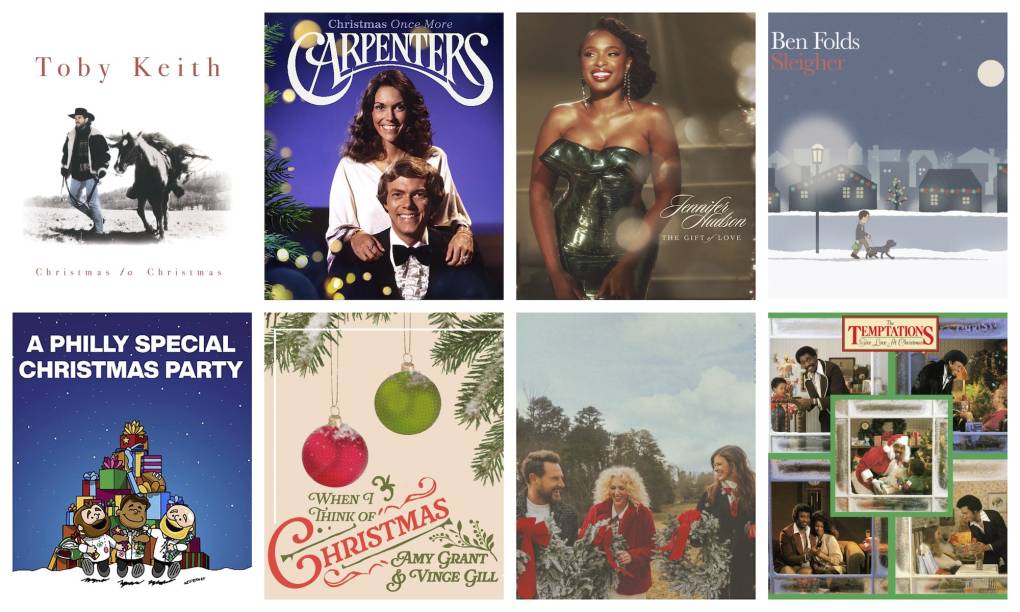
"title": "Holiday albums for the 2024 season.",
"publishDate": 1732040288,
"status": "inherit",
"parent": 13968322,
"modified": 1732040467,
"caption": "Holiday albums for the 2024 season.",
"credit": null,
"altTag": null,
"description": null,
"imgSizes": {
"medium": {
"file": "https://cdn.kqed.org/wp-content/uploads/sites/2/2024/11/xmas-lps-800x480.jpg",
"width": 800,
"height": 480,
"mimeType": "image/jpeg"
},
"large": {
"file": "https://cdn.kqed.org/wp-content/uploads/sites/2/2024/11/xmas-lps-1020x612.jpg",
"width": 1020,
"height": 612,
"mimeType": "image/jpeg"
},
"thumbnail": {
"file": "https://cdn.kqed.org/wp-content/uploads/sites/2/2024/11/xmas-lps-160x96.jpg",
"width": 160,
"height": 96,
"mimeType": "image/jpeg"
},
"medium_large": {
"file": "https://cdn.kqed.org/wp-content/uploads/sites/2/2024/11/xmas-lps-768x461.jpg",
"width": 768,
"height": 461,
"mimeType": "image/jpeg"
},
"1536x1536": {
"file": "https://cdn.kqed.org/wp-content/uploads/sites/2/2024/11/xmas-lps-1536x922.jpg",
"width": 1536,
"height": 922,
"mimeType": "image/jpeg"
},
"post-thumbnail": {
"file": "https://cdn.kqed.org/wp-content/uploads/sites/2/2024/11/xmas-lps-672x372.jpg",
"width": 672,
"height": 372,
"mimeType": "image/jpeg"
},
"twentyfourteen-full-width": {
"file": "https://cdn.kqed.org/wp-content/uploads/sites/2/2024/11/xmas-lps-1038x576.jpg",
"width": 1038,
"height": 576,
"mimeType": "image/jpeg"
},
"full-width": {
"file": "https://cdn.kqed.org/wp-content/uploads/sites/2/2024/11/xmas-lps-1920x1152.jpg",
"width": 1920,
"height": 1152,
"mimeType": "image/jpeg"
},
"kqedFullSize": {
"file": "https://cdn.kqed.org/wp-content/uploads/sites/2/2024/11/xmas-lps.jpg",
"width": 2000,
"height": 1200
}
},
"isLoading": false,
"fetchFailed": false
},
"arts_13968161": {
"type": "attachments",
"id": "arts_13968161",
"meta": {
"index": "attachments_1716263798",
"site": "arts",
"id": "13968161",
"found": true
},
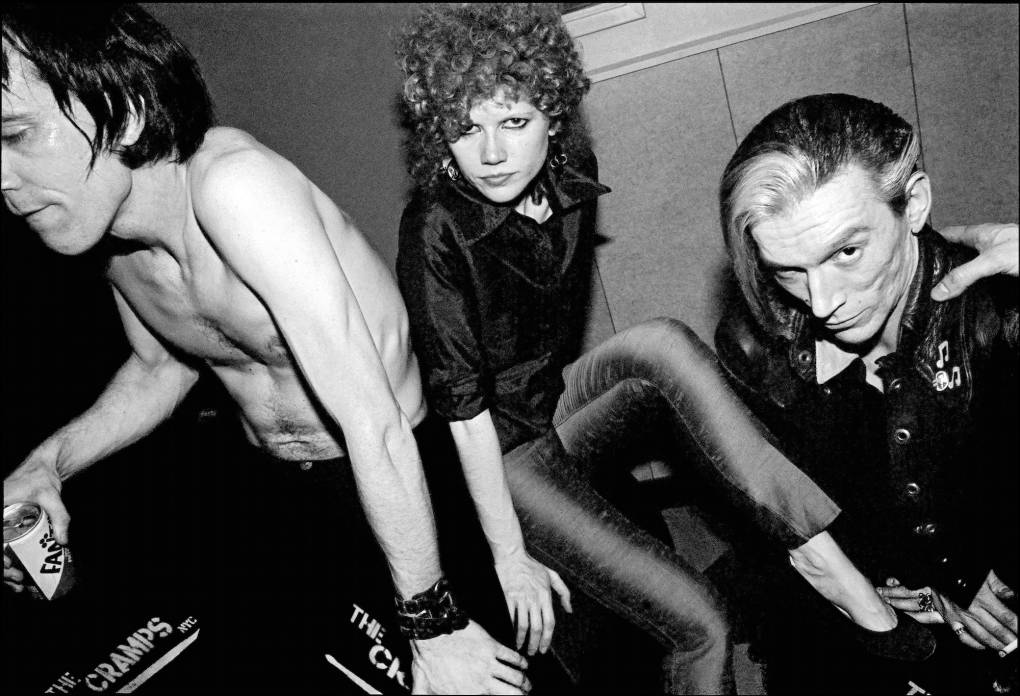
"title": "The Cramps after their outdoor set at Napa State Hospital, on June 13, 1978.",
"publishDate": 1731689271,
"status": "inherit",
"parent": 13967703,
"modified": 1731689467,
"caption": "The Cramps after their outdoor set at Napa State Hospital, on June 13, 1978.",
"credit": "Ruby Ray/Getty Images",
"altTag": "A wiry shirtless man with black hair, a sultry woman in tight shiny pants and black shirt, and a sinister looking man in black gather together in a nondescript room.",
"description": null,
"imgSizes": {
"medium": {
"file": "https://cdn.kqed.org/wp-content/uploads/sites/2/2024/11/cramps-800x546.jpg",
"width": 800,
"height": 546,
"mimeType": "image/jpeg"
},
"large": {
"file": "https://cdn.kqed.org/wp-content/uploads/sites/2/2024/11/cramps-1020x696.jpg",
"width": 1020,
"height": 696,
"mimeType": "image/jpeg"
},
"thumbnail": {
"file": "https://cdn.kqed.org/wp-content/uploads/sites/2/2024/11/cramps-160x109.jpg",
"width": 160,
"height": 109,
"mimeType": "image/jpeg"
},
"medium_large": {
"file": "https://cdn.kqed.org/wp-content/uploads/sites/2/2024/11/cramps-768x524.jpg",
"width": 768,
"height": 524,
"mimeType": "image/jpeg"
},
"1536x1536": {
"file": "https://cdn.kqed.org/wp-content/uploads/sites/2/2024/11/cramps-1536x1048.jpg",
"width": 1536,
"height": 1048,
"mimeType": "image/jpeg"
},
"post-thumbnail": {
"file": "https://cdn.kqed.org/wp-content/uploads/sites/2/2024/11/cramps-672x372.jpg",
"width": 672,
"height": 372,
"mimeType": "image/jpeg"
},
"twentyfourteen-full-width": {
"file": "https://cdn.kqed.org/wp-content/uploads/sites/2/2024/11/cramps-1038x576.jpg",
"width": 1038,
"height": 576,
"mimeType": "image/jpeg"
},
"full-width": {
"file": "https://cdn.kqed.org/wp-content/uploads/sites/2/2024/11/cramps-1920x1310.jpg",
"width": 1920,
"height": 1310,
"mimeType": "image/jpeg"
},
"kqedFullSize": {
"file": "https://cdn.kqed.org/wp-content/uploads/sites/2/2024/11/cramps.jpg",
"width": 2000,
"height": 1365
}
},
"isLoading": false,
"fetchFailed": false
},
"arts_13968023": {
"type": "attachments",
"id": "arts_13968023",
"meta": {
"index": "attachments_1716263798",
"site": "arts",
"id": "13968023",
"found": true
},
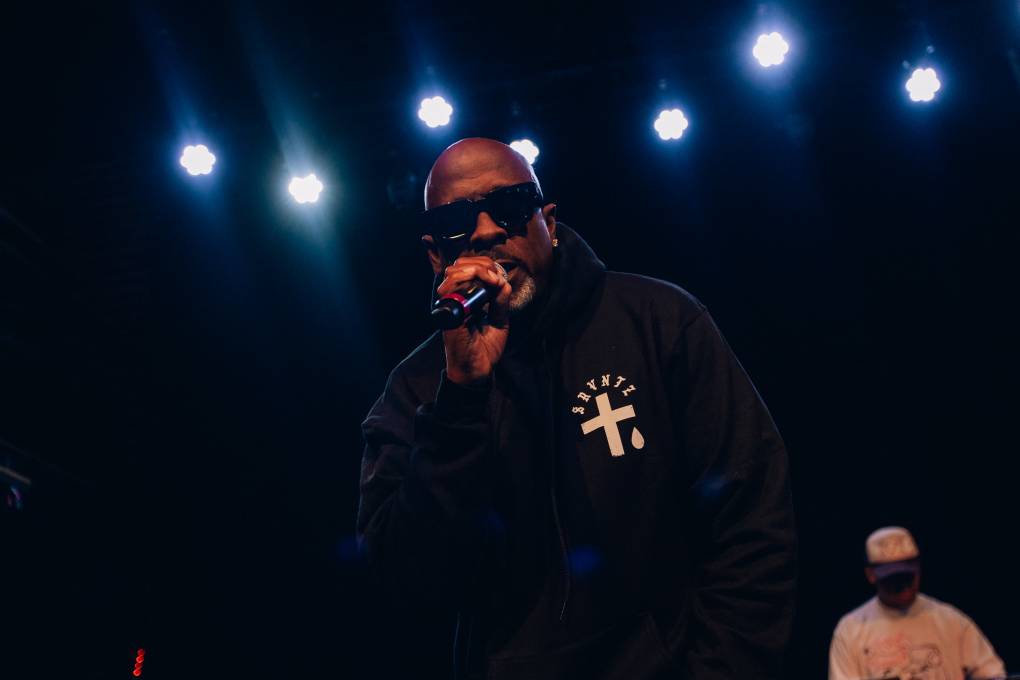
"title": "LaRussell x Richie Rich - New Parish - Richie Rich - 111024-19",
"publishDate": 1731529688,
"status": "inherit",
"parent": 13967973,
"modified": 1731612755,
"caption": "After an onstage fall, 56-year-old Oakland rap legend Richie Rich is proving he's still got plenty of gas in the tank.",
"credit": "Jason Hayes / \u003ca href=\"https://www.instagram.com/j.castae/?hl=en\" target=\"_blank\">J.Castae\u003c/a>",
"altTag": "Richard Serrell, better known as Richie Rich.",
"description": null,
"imgSizes": {
"medium": {
"file": "https://cdn.kqed.org/wp-content/uploads/sites/2/2024/11/LaRussell-x-Richie-Rich-New-Parish-Richie-Rich-111024-19-800x533.jpeg",
"width": 800,
"height": 533,
"mimeType": "image/jpeg"
},
"large": {
"file": "https://cdn.kqed.org/wp-content/uploads/sites/2/2024/11/LaRussell-x-Richie-Rich-New-Parish-Richie-Rich-111024-19-1020x680.jpeg",
"width": 1020,
"height": 680,
"mimeType": "image/jpeg"
},
"thumbnail": {
"file": "https://cdn.kqed.org/wp-content/uploads/sites/2/2024/11/LaRussell-x-Richie-Rich-New-Parish-Richie-Rich-111024-19-160x107.jpeg",
"width": 160,
"height": 107,
"mimeType": "image/jpeg"
},
"medium_large": {
"file": "https://cdn.kqed.org/wp-content/uploads/sites/2/2024/11/LaRussell-x-Richie-Rich-New-Parish-Richie-Rich-111024-19-768x512.jpeg",
"width": 768,
"height": 512,
"mimeType": "image/jpeg"
},
"1536x1536": {
"file": "https://cdn.kqed.org/wp-content/uploads/sites/2/2024/11/LaRussell-x-Richie-Rich-New-Parish-Richie-Rich-111024-19-1536x1024.jpeg",
"width": 1536,
"height": 1024,
"mimeType": "image/jpeg"
},
"2048x2048": {
"file": "https://cdn.kqed.org/wp-content/uploads/sites/2/2024/11/LaRussell-x-Richie-Rich-New-Parish-Richie-Rich-111024-19-2048x1365.jpeg",
"width": 2048,
"height": 1365,
"mimeType": "image/jpeg"
},
"post-thumbnail": {
"file": "https://cdn.kqed.org/wp-content/uploads/sites/2/2024/11/LaRussell-x-Richie-Rich-New-Parish-Richie-Rich-111024-19-672x372.jpeg",
"width": 672,
"height": 372,
"mimeType": "image/jpeg"
},
"twentyfourteen-full-width": {
"file": "https://cdn.kqed.org/wp-content/uploads/sites/2/2024/11/LaRussell-x-Richie-Rich-New-Parish-Richie-Rich-111024-19-1038x576.jpeg",
"width": 1038,
"height": 576,
"mimeType": "image/jpeg"
},
"full-width": {
"file": "https://cdn.kqed.org/wp-content/uploads/sites/2/2024/11/LaRussell-x-Richie-Rich-New-Parish-Richie-Rich-111024-19-1920x1280.jpeg",
"width": 1920,
"height": 1280,
"mimeType": "image/jpeg"
},
"kqedFullSize": {
"file": "https://cdn.kqed.org/wp-content/uploads/sites/2/2024/11/LaRussell-x-Richie-Rich-New-Parish-Richie-Rich-111024-19-scaled.jpeg",
"width": 2560,
"height": 1706
}
},
"isLoading": false,
"fetchFailed": false
},
"arts_13968064": {
"type": "attachments",
"id": "arts_13968064",
"meta": {
"index": "attachments_1716263798",
"site": "arts",
"id": "13968064",
"found": true
},
"title": "2024 Ohana Music Festival",
"publishDate": 1731605810,
"status": "inherit",
"parent": 13968062,
"modified": 1747777736,
"caption": "Gerald Casale, Josh Hager, Mark Mothersbaugh and Bob Mothersbaugh of Devo perform live on stage during Ohana Festival at Doheny State Beach on Sept. 27, 2024 in Dana Point, California. ",
"credit": "Jim Bennett/WireImage",
"altTag": "a band of four men in yellow jumpsuits on stage against pink screen",
"description": null,
"imgSizes": {
"medium": {
"file": "https://cdn.kqed.org/wp-content/uploads/sites/2/2024/11/GettyImages-2175203603-800x533.jpg",
"width": 800,
"height": 533,
"mimeType": "image/jpeg"
},
"large": {
"file": "https://cdn.kqed.org/wp-content/uploads/sites/2/2024/11/GettyImages-2175203603-1020x680.jpg",
"width": 1020,
"height": 680,
"mimeType": "image/jpeg"
},
"thumbnail": {
"file": "https://cdn.kqed.org/wp-content/uploads/sites/2/2024/11/GettyImages-2175203603-160x107.jpg",
"width": 160,
"height": 107,
"mimeType": "image/jpeg"
},
"medium_large": {
"file": "https://cdn.kqed.org/wp-content/uploads/sites/2/2024/11/GettyImages-2175203603-768x512.jpg",
"width": 768,
"height": 512,
"mimeType": "image/jpeg"
},
"1536x1536": {
"file": "https://cdn.kqed.org/wp-content/uploads/sites/2/2024/11/GettyImages-2175203603-1536x1024.jpg",
"width": 1536,
"height": 1024,
"mimeType": "image/jpeg"
},
"2048x2048": {
"file": "https://cdn.kqed.org/wp-content/uploads/sites/2/2024/11/GettyImages-2175203603-2048x1365.jpg",
"width": 2048,
"height": 1365,
"mimeType": "image/jpeg"
},
"post-thumbnail": {
"file": "https://cdn.kqed.org/wp-content/uploads/sites/2/2024/11/GettyImages-2175203603-672x372.jpg",
"width": 672,
"height": 372,
"mimeType": "image/jpeg"
},
"twentyfourteen-full-width": {
"file": "https://cdn.kqed.org/wp-content/uploads/sites/2/2024/11/GettyImages-2175203603-1038x576.jpg",
"width": 1038,
"height": 576,
"mimeType": "image/jpeg"
},
"full-width": {
"file": "https://cdn.kqed.org/wp-content/uploads/sites/2/2024/11/GettyImages-2175203603-1920x1280.jpg",
"width": 1920,
"height": 1280,
"mimeType": "image/jpeg"
},
"kqedFullSize": {
"file": "https://cdn.kqed.org/wp-content/uploads/sites/2/2024/11/GettyImages-2175203603-scaled.jpg",
"width": 2560,
"height": 1707
}
},
"isLoading": false,
"fetchFailed": false
}
},
"audioPlayerReducer": {
"postId": "stream_live",
"isPaused": true,
"isPlaying": false,
"pfsActive": false,
"pledgeModalIsOpen": true,
"playerDrawerIsOpen": false,
"liveAudioPlayStartedAt": 0,
"liveAudioPlayContext": ""
},
"authorsReducer": {
"byline_arts_13968491": {
"type": "authors",
"id": "byline_arts_13968491",
"meta": {
"override": true
},
"slug": "byline_arts_13968491",
"name": "Maria Sherman, Associated Press",
"isLoading": false
},
"byline_arts_13968460": {
"type": "authors",
"id": "byline_arts_13968460",
"meta": {
"override": true
},
"slug": "byline_arts_13968460",
"name": "Philip Marcelo, Associated Press",
"isLoading": false
},
"byline_arts_13968348": {
"type": "authors",
"id": "byline_arts_13968348",
"meta": {
"override": true
},
"slug": "byline_arts_13968348",
"name": "Aisha Harris, NPR",
"isLoading": false
},
"byline_arts_13968335": {
"type": "authors",
"id": "byline_arts_13968335",
"meta": {
"override": true
},
"slug": "byline_arts_13968335",
"name": "Ayana Archie, NPR",
"isLoading": false
},
"byline_arts_13968322": {
"type": "authors",
"id": "byline_arts_13968322",
"meta": {
"override": true
},
"slug": "byline_arts_13968322",
"name": "Maria Sherman, Associated Press",
"isLoading": false
},
"gmeline": {
"type": "authors",
"id": "185",
"meta": {
"index": "authors_1716337520",
"id": "185",
"found": true
},
"name": "Gabe Meline",
"firstName": "Gabe",
"lastName": "Meline",
"slug": "gmeline",
"email": "gmeline@kqed.org",
"display_author_email": true,
"staff_mastheads": [
"arts"
],
"title": "Senior Editor, KQED Arts & Culture",
"bio": "Gabe Meline entered journalism at age 15 making photocopied zines, and has since earned awards from the Edward R. Murrow Awards, the Society for Professional Journalists, the Online Journalism Awards, the Association of Alternative Newsweeklies and the California Newspaper Publishers Association. Prior to KQED, he was the editor of the \u003cem>North Bay Bohemian\u003c/em> and a touring musician. He lives with his wife and daughter in his hometown of Santa Rosa, CA.",
"avatar": "https://secure.gravatar.com/avatar/5bebe57be0d8bc2dd318934feb47299e2d2d10cba28d09d8d7afb389a2ce2bdd?s=600&d=blank&r=g",
"twitter": null,
"bluesky": null,
"facebook": null,
"instagram": null,
"linkedin": null,
"sites": [
{
"site": "",
"roles": [
"editor"
]
},
{
"site": "arts",
"roles": [
"administrator"
]
},
{
"site": "artschool",
"roles": [
"editor"
]
},
{
"site": "news",
"roles": [
"author"
]
},
{
"site": "pop",
"roles": [
"editor"
]
},
{
"site": "bayareabites",
"roles": [
"editor"
]
},
{
"site": "food",
"roles": [
"editor"
]
},
{
"site": "forum",
"roles": [
"administrator"
]
},
{
"site": "liveblog",
"roles": [
"editor"
]
},
{
"site": "hiphop",
"roles": [
"editor"
]
}
],
"headData": {
"title": "Gabe Meline | KQED",
"description": "Senior Editor, KQED Arts & Culture",
"ogImgSrc": "https://secure.gravatar.com/avatar/5bebe57be0d8bc2dd318934feb47299e2d2d10cba28d09d8d7afb389a2ce2bdd?s=600&d=blank&r=g",
"twImgSrc": "https://secure.gravatar.com/avatar/5bebe57be0d8bc2dd318934feb47299e2d2d10cba28d09d8d7afb389a2ce2bdd?s=600&d=blank&r=g"
},
"isLoading": false,
"link": "/author/gmeline"
},
"ralexandra": {
"type": "authors",
"id": "11242",
"meta": {
"index": "authors_1716337520",
"id": "11242",
"found": true
},
"name": "Rae Alexandra",
"firstName": "Rae",
"lastName": "Alexandra",
"slug": "ralexandra",
"email": "ralexandra@kqed.org",
"display_author_email": true,
"staff_mastheads": [],
"title": "Reporter/Producer",
"bio": "Rae Alexandra is a Reporter/Producer for KQED Arts & Culture, and the creator/author of the \u003ca href=\"https://www.kqed.org/arts/program/rebel-girls-from-bay-area-history\">Rebel Girls From Bay Area History\u003c/a> and \u003ca href=\"https://www.kqed.org/bizarrebayarea\">Bizarre Bay Area\u003c/a> series. Her debut book, \u003ca href=\"https://citylights.com/politics-current-events-history/unsung-heroines35-women-who-changed/\">Unsung Heroines: 35 Women Who Changed the Bay Area\u003c/a> was published by City Lights in March 2026. In 2023, Rae was awarded an SPJ Excellence in Journalism Award for Arts & Culture. Rae was born and raised in Wales and subsequently — even after two decades in Northern California — still uses phrases that regularly baffle her coworkers.",
"avatar": "https://secure.gravatar.com/avatar/edfee8176c80cc0a382b051190f5341997df378a934a5774dcb0977732dfd401?s=600&d=blank&r=g",
"twitter": null,
"bluesky": null,
"facebook": null,
"instagram": null,
"linkedin": null,
"sites": [
{
"site": "arts",
"roles": [
"subscriber"
]
},
{
"site": "news",
"roles": [
"subscriber"
]
},
{
"site": "pop",
"roles": [
"subscriber"
]
},
{
"site": "bayareabites",
"roles": [
"subscriber"
]
},
{
"site": "science",
"roles": [
"subscriber"
]
}
],
"headData": {
"title": "Rae Alexandra | KQED",
"description": "Reporter/Producer",
"ogImgSrc": "https://secure.gravatar.com/avatar/edfee8176c80cc0a382b051190f5341997df378a934a5774dcb0977732dfd401?s=600&d=blank&r=g",
"twImgSrc": "https://secure.gravatar.com/avatar/edfee8176c80cc0a382b051190f5341997df378a934a5774dcb0977732dfd401?s=600&d=blank&r=g"
},
"isLoading": false,
"link": "/author/ralexandra"
},
"nvoynovskaya": {
"type": "authors",
"id": "11387",
"meta": {
"index": "authors_1716337520",
"id": "11387",
"found": true
},
"name": "Nastia Voynovskaya",
"firstName": "Nastia",
"lastName": "Voynovskaya",
"slug": "nvoynovskaya",
"email": "nvoynovskaya@kqed.org",
"display_author_email": false,
"staff_mastheads": [
"arts"
],
"title": "Editor and reporter",
"bio": "Nastia Voynovskaya is a reporter, editor and host at KQED Arts & Culture. She's been covering the arts in the Bay Area for over a decade, with a focus on music, queer culture, labor issues and grassroots organizing. She has edited KQED story series such as Trans Bay: A History of San Francisco's Gender-Diverse Community, and co-created KQED's Bay Area hip-hop history project, That's My Word. Nastia's work has been recognized by the Society of Professional Journalists and San Francisco Press Club. She regularly appears on podcasts and radio programs, including NPR's All Songs Considered, and hosts live events where music, culture and conversation meet.",
"avatar": "https://secure.gravatar.com/avatar/5025ee460e5a85d69ca20ea6c6f2f80d7e17795c828f61ea3aecfcd924e9042e?s=600&d=blank&r=g",
"twitter": null,
"bluesky": null,
"facebook": null,
"instagram": "https://www.instagram.com/nananastia/",
"linkedin": null,
"sites": [
{
"site": "",
"roles": [
"editor"
]
},
{
"site": "arts",
"roles": [
"administrator"
]
},
{
"site": "news",
"roles": [
"editor"
]
},
{
"site": "pop",
"roles": [
"administrator"
]
},
{
"site": "bayareabites",
"roles": [
"editor"
]
},
{
"site": "podcasts",
"roles": [
"editor"
]
},
{
"site": "hiphop",
"roles": [
"editor"
]
}
],
"headData": {
"title": "Nastia Voynovskaya | KQED",
"description": "Editor and reporter",
"ogImgSrc": "https://secure.gravatar.com/avatar/5025ee460e5a85d69ca20ea6c6f2f80d7e17795c828f61ea3aecfcd924e9042e?s=600&d=blank&r=g",
"twImgSrc": "https://secure.gravatar.com/avatar/5025ee460e5a85d69ca20ea6c6f2f80d7e17795c828f61ea3aecfcd924e9042e?s=600&d=blank&r=g"
},
"isLoading": false,
"link": "/author/nvoynovskaya"
},
"ogpenn": {
"type": "authors",
"id": "11491",
"meta": {
"index": "authors_1716337520",
"id": "11491",
"found": true
},
"name": "Pendarvis Harshaw",
"firstName": "Pendarvis",
"lastName": "Harshaw",
"slug": "ogpenn",
"email": "ogpenn@gmail.com",
"display_author_email": false,
"staff_mastheads": [
"arts"
],
"title": "Community Engagement Reporter",
"bio": "Pendarvis Harshaw is an educator, host and writer with KQED Arts.",
"avatar": "https://secure.gravatar.com/avatar/972b77ee8e3f346ae2b00622661187fbfabd059b5693bbdc1475ea7a722fd4cd?s=600&d=blank&r=g",
"twitter": null,
"bluesky": null,
"facebook": null,
"instagram": "ogpenn",
"linkedin": null,
"sites": [
{
"site": "arts",
"roles": [
"administrator"
]
},
{
"site": "news",
"roles": [
"editor"
]
},
{
"site": "bayareabites",
"roles": [
"author"
]
},
{
"site": "hiphop",
"roles": [
"editor"
]
}
],
"headData": {
"title": "Pendarvis Harshaw | KQED",
"description": "Community Engagement Reporter",
"ogImgSrc": "https://secure.gravatar.com/avatar/972b77ee8e3f346ae2b00622661187fbfabd059b5693bbdc1475ea7a722fd4cd?s=600&d=blank&r=g",
"twImgSrc": "https://secure.gravatar.com/avatar/972b77ee8e3f346ae2b00622661187fbfabd059b5693bbdc1475ea7a722fd4cd?s=600&d=blank&r=g"
},
"isLoading": false,
"link": "/author/ogpenn"
},
"sfaulise": {
"type": "authors",
"id": "11919",
"meta": {
"index": "authors_1716337520",
"id": "11919",
"found": true
},
"name": "Shannon Faulise",
"firstName": "Shannon",
"lastName": "Faulise",
"slug": "sfaulise",
"email": "sfaulise@kqed.org",
"display_author_email": false,
"staff_mastheads": [],
"title": "Contributor, KQED Arts & Culture",
"bio": "Shannon Faulise is a graduate of the UC Berkeley Graduate School of Journalism, where she concentrated on photojournalism and feature writing. Shannon's photos, audio pieces and written stories have appeared in The Oaklandside, The Redwood City Pulse and KALX. Outside of reporting, Shannon loves kpop, women's sports and concerts. She served as an intern for KQED Arts & Culture in 2024–25.",
"avatar": "https://secure.gravatar.com/avatar/76449df2627a603d6b02f0534ec3c913007029bff4f1c0572071401f9a293a02?s=600&d=blank&r=g",
"twitter": null,
"bluesky": null,
"facebook": null,
"instagram": null,
"linkedin": null,
"sites": [
{
"site": "arts",
"roles": [
"subscriber"
]
}
],
"headData": {
"title": "Shannon Faulise | KQED",
"description": "Contributor, KQED Arts & Culture",
"ogImgSrc": "https://secure.gravatar.com/avatar/76449df2627a603d6b02f0534ec3c913007029bff4f1c0572071401f9a293a02?s=600&d=blank&r=g",
"twImgSrc": "https://secure.gravatar.com/avatar/76449df2627a603d6b02f0534ec3c913007029bff4f1c0572071401f9a293a02?s=600&d=blank&r=g"
},
"isLoading": false,
"link": "/author/sfaulise"
}
},
"pagesReducer": {
"arts_category_music": {
"type": "terms",
"id": "arts_69",
"meta": {
"index": "terms_1716263798",
"site": "arts",
"id": "69",
"score": 10.850678
},
"featImg": null,
"name": "Music",
"description": null,
"taxonomy": "category",
"headData": {
"twImgId": null,
"twTitle": null,
"ogTitle": null,
"ogImgId": null,
"twDescription": null,
"description": null,
"title": "Music Archives | KQED Arts",
"ogDescription": null
},
"ttid": 70,
"slug": "music",
"isLoading": false,
"title": "Music",
"pageMeta": {
"site": "arts",
"WpPageTemplate": "page-topic-editorial",
"currentPage": 38
},
"blocks": [
{
"blockName": "kqed/post-list",
"attrs": {
"layout": "cardArticle2",
"query": "posts/arts?category=music",
"seeMore": false,
"paginated": true,
"page": 38
}
},
{
"blockName": "kqed/ad"
}
]
}
},
"pfsSessionReducer": {},
"postsReducer": {
"stream_live": {
"type": "live",
"id": "stream_live",
"audioUrl": "https://streams.kqed.org/kqedradio",
"title": "Live Stream",
"excerpt": "Live Stream information currently unavailable.",
"link": "/radio",
"featImg": "",
"label": {
"name": "KQED Live",
"link": "/"
}
},
"stream_kqedNewscast": {
"type": "posts",
"id": "stream_kqedNewscast",
"audioUrl": "https://www.kqed.org/.stream/anon/radio/RDnews/newscast.mp3?_=1",
"title": "KQED Newscast",
"featImg": "",
"label": {
"name": "88.5 FM",
"link": "/"
}
},
"arts_13968608": {
"type": "posts",
"id": "arts_13968608",
"meta": {
"index": "posts_1716263798",
"site": "arts",
"id": "13968608",
"score": null,
"sort": [
1732567093000
]
},
"guestAuthors": [],
"slug": "kendrick-lamar-squabble-up-video-turf-dancers-bay-area-oakland",
"title": "Behind the Scenes of Kendrick Lamar’s ‘Squabble Up’ With Bay Area Turf Dancers",
"publishDate": 1732567093,
"format": "standard",
"headTitle": "Behind the Scenes of Kendrick Lamar’s ‘Squabble Up’ With Bay Area Turf Dancers | KQED",
"labelTerm": {
"site": "arts"
},
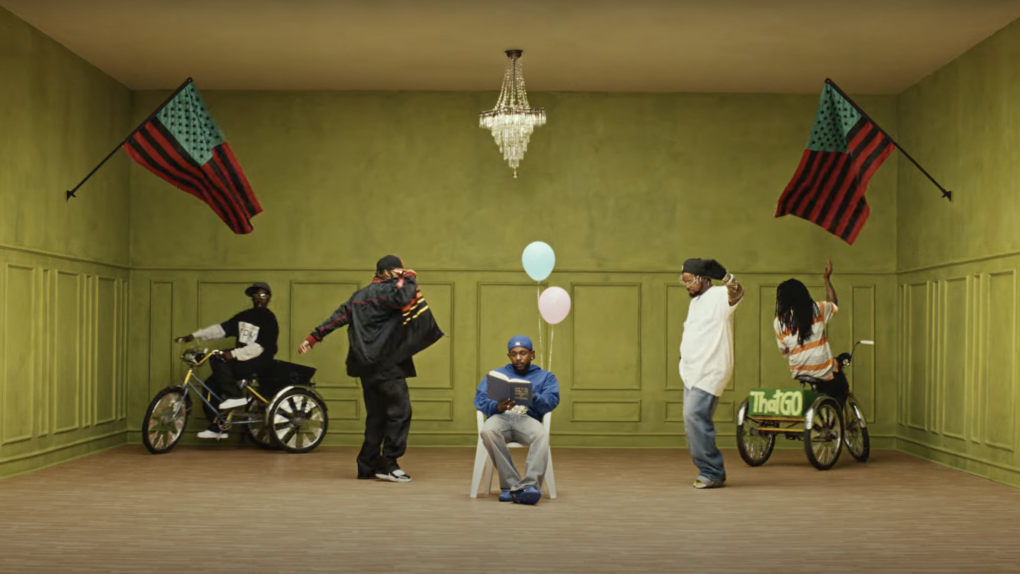
"content": "\u003cp>After uniting the West Coast with “Not Like Us” earlier this year, Kendrick Lamar has arrived with another anthem, “squabble up.” The standout track from K.Dot’s surprise new album, \u003cem>GNX\u003c/em>, which hit streaming last Friday, is a funky flip of Debbie Deb’s freestyle classic, “When I Hear Music.” Its music video arrived Monday morning, and Lamar packed it with hip-hop culture (and history) references that lean heavily into his hometown of Compton, and also include an homage to the Bay Area.\u003c/p>\n\u003cp>https://youtu.be/fuV4yQWdn_4?si=-PoFOJhHqeb7Utga\u003c/p>\n\u003cp>In the video, Lamar posts up in an empty Victorian living room, rapping nonchalantly in a Dodgers-blue hoodie while scenes unfold around him, like \u003ca href=\"https://www.artnews.com/art-news/news/kendrick-lamar-henry-taylor-stage-sets-music-festival-lollapalooza-2023-1234675862/\">Henry Taylor paintings\u003c/a> brought to life. David Hammond’s red, green and black \u003ca href=\"https://www.moma.org/collection/works/222169\">\u003cem>African American Flag\u003c/em>\u003c/a> hangs on the wall. Dancers c-walk; girls pose in front of a mall-style airbrushed backdrop; and a lowrider hits the hydraulics. Lamar also slips in references to Black pop culture staples, including Isaac Hayes, \u003cem>Soul Train\u003c/em> and the 1993 film \u003cem>Menace II Society\u003c/em>, which features the \u003ca href=\"https://www.kqed.org/arts/13968340/saafir-dead-oakland-rapper-dies-at-54\">late Oakland rapper Saafir\u003c/a>.\u003c/p>\n\u003cp>About 50 seconds in, we see Lamar crack open a book called \u003cem>How to Be More Like Kendrick for Dummies\u003c/em> as Bay Area turf dancers go stupid and ride scraper bikes around him. Local fans might recognize \u003ca href=\"https://www.instagram.com/dmonte_fashion/\">Dmonte\u003c/a>, \u003ca href=\"https://www.instagram.com/icecold3000/?hl=en\">Icecold 3000\u003c/a> and \u003ca href=\"https://www.instagram.com/aktivetf/\">Aktive\u003c/a> of Turf Feinz and \u003ca href=\"https://www.instagram.com/pti_allgold/?hl=en\">Kiing Velo\u003c/a> (a.k.a. All Gold Niinoo) of Best Alive Dance Crew.\u003c/p>\n\u003cp>“Thank you for phuckin wit east Oakland, west Oakland and Richmond,” Icecold wrote on Instagram.\u003c/p>\n\u003cp>[ad fullwidth]\u003c/p>\n\u003cp>Icecold 3000 tells KQED the opportunity came about when he least expected it. One day, while playing \u003cem>NBA 2K\u003c/em> with friends, he got an Instagram DM from the video’s director, Calmatic. “He said he needed me to come down to L.A. for something. But he couldn’t tell me what it was because he was on a contract,” Icecold says. [aside postid='arts_13932887,arts_13960019']\u003c/p>\n\u003cp>He and Aktive decided to take a chance and drive down. When they arrived on set, they started to notice it was buzzing with industry figures like L.A. rapper G Perico and dancer Storm DeBarge. Among the many L.A. faces, they ran into Velo and Dmonte, who they knew from the turfing scene in the Bay.\u003c/p>\n\u003cp>“Our chemistry was just so, so electric when we were shooting our takes,” Icecold recalls. “I think we shot like 20 takes almost, and they was asking, ‘Did you just meet each other today? How is the chemistry so high?’ So we had to tell them, we from the same area. We grew up around each other.”\u003c/p>\n\u003cp>As for the \u003ca href=\"https://www.kqed.org/arts/13937384/the-original-scraper-bike-team-cruises-on\">scraper bikes\u003c/a>, they weren’t imported from Oakland. The music video production team recreated their signature colorful wheels. “I think they did a good job with the design, down to the clothes they had us wear. They was really trying to capture the actual essence of the hyphy movement [of the 2000s],” Icecold says.\u003c/p>\n\u003cp>Surprisingly enough, Kendrick Lamar was actually not on set with Icecold and the dancers. He was added into the scene after the fact, in post-production.\u003c/p>\n\u003cp>“So it was basically just everybody else [there], like all the other rappers and artists and people connected to him,” says Icecold.\u003c/p>\n\u003cp>Lamar’s nod to an iconic Bay Area dance style is not the first time the hitmaker has referenced the region in his art. He shot his music video for “Alright,” from his pivotal album \u003cem>To Pimp a Butterfly\u003c/em>, on Treasure Island in 2015. More recently, he tapped Vallejo legend E-40 to host his Juneteenth stadium show in L.A. as he made his victory lap after his beef with Drake. “squabble up” is just his latest show of appreciation for the Bay’s contributions to West Coast hip-hop culture.\u003c/p>\n\u003cp>Icecold 3000, who noted his phone’s been blowing up all day, says he walked away from the experience with a deep sense of gratitude. Not just because Kendrick showed love to the Bay, but because the “squabble up” video reminds audiences that dance is a crucial part of hip-hop. He hopes more artists will include turfing in their videos and keep the art alive.\u003c/p>\n\u003cp>\u003c/p>\n\u003cp>“Just him showing love to the dance community first and foremost — I love and respect that,” Icecold says. “I think people forget how big the dancers is, and how important the dancers have always been\u003ci>.”\u003c/i>\u003c/p>\n\n",
"blocks": [],
"excerpt": "‘Our chemistry was just so, so electric when we were shooting our takes,’ says Icecold 3000. ",
"status": "publish",
"parent": 0,
"modified": 1733435929,
"stats": {
"hasAudio": false,
"hasVideo": false,
"hasChartOrMap": false,
"iframeSrcs": [],
"hasGoogleForm": false,
"hasGallery": false,
"hasHearkenModule": false,
"hasPolis": false,
"paragraphCount": 15,
"wordCount": 779
},
"headData": {
"title": "Filming Kendrick Lamar’s ‘Squabble Up’ With Oakland Turfers | KQED",
"description": "‘Our chemistry was just so, so electric when we were shooting our takes,’ says Icecold 3000. ",
"ogTitle": "Behind the Scenes of Kendrick Lamar’s ‘Squabble Up’ With Bay Area Turf Dancers",
"ogDescription": "",
"ogImgId": "",
"twTitle": "Behind the Scenes of Kendrick Lamar’s ‘Squabble Up’ With Bay Area Turf Dancers",
"twDescription": "",
"twImgId": "",
"socialTitle": "Filming Kendrick Lamar’s ‘Squabble Up’ With Oakland Turfers %%page%% %%sep%% KQED",
"schema": {
"@context": "https://schema.org",
"@type": "Article",
"headline": "Behind the Scenes of Kendrick Lamar’s ‘Squabble Up’ With Bay Area Turf Dancers",
"datePublished": "2024-11-25T12:38:13-08:00",
"dateModified": "2024-12-05T13:58:49-08:00",
"image": "https://cdn.kqed.org/wp-content/uploads/2020/02/KQED-OG-Image@1x.png"
}
},
"sticky": false,
"nprStoryId": "kqed-13968608",
"templateType": "standard",
"featuredImageType": "standard",
"excludeFromSiteSearch": "Include",
"articleAge": "0",
"path": "/arts/13968608/kendrick-lamar-squabble-up-video-turf-dancers-bay-area-oakland",
"audioTrackLength": null,
"parsedContent": [
{
"type": "contentString",
"content": "\u003cdiv class=\"post-body\">\u003cp>\u003cp>After uniting the West Coast with “Not Like Us” earlier this year, Kendrick Lamar has arrived with another anthem, “squabble up.” The standout track from K.Dot’s surprise new album, \u003cem>GNX\u003c/em>, which hit streaming last Friday, is a funky flip of Debbie Deb’s freestyle classic, “When I Hear Music.” Its music video arrived Monday morning, and Lamar packed it with hip-hop culture (and history) references that lean heavily into his hometown of Compton, and also include an homage to the Bay Area.\u003c/p>\u003c/p>\u003cp>\u003cspan class='utils-parseShortcode-shortcodes-__youtubeShortcode__embedYoutube'>\n \u003cspan class='utils-parseShortcode-shortcodes-__youtubeShortcode__embedYoutubeInside'>\n \u003ciframe\n loading='lazy'\n class='utils-parseShortcode-shortcodes-__youtubeShortcode__youtubePlayer'\n type='text/html'\n src='//www.youtube.com/embed/fuV4yQWdn_4'\n title='//www.youtube.com/embed/fuV4yQWdn_4'\n allowfullscreen='true'\n style='border:0;'>\u003c/iframe>\n \u003c/span>\n \u003c/span>\u003c/p>\u003cp>\u003cp>In the video, Lamar posts up in an empty Victorian living room, rapping nonchalantly in a Dodgers-blue hoodie while scenes unfold around him, like \u003ca href=\"https://www.artnews.com/art-news/news/kendrick-lamar-henry-taylor-stage-sets-music-festival-lollapalooza-2023-1234675862/\">Henry Taylor paintings\u003c/a> brought to life. David Hammond’s red, green and black \u003ca href=\"https://www.moma.org/collection/works/222169\">\u003cem>African American Flag\u003c/em>\u003c/a> hangs on the wall. Dancers c-walk; girls pose in front of a mall-style airbrushed backdrop; and a lowrider hits the hydraulics. Lamar also slips in references to Black pop culture staples, including Isaac Hayes, \u003cem>Soul Train\u003c/em> and the 1993 film \u003cem>Menace II Society\u003c/em>, which features the \u003ca href=\"https://www.kqed.org/arts/13968340/saafir-dead-oakland-rapper-dies-at-54\">late Oakland rapper Saafir\u003c/a>.\u003c/p>\n\u003cp>About 50 seconds in, we see Lamar crack open a book called \u003cem>How to Be More Like Kendrick for Dummies\u003c/em> as Bay Area turf dancers go stupid and ride scraper bikes around him. Local fans might recognize \u003ca href=\"https://www.instagram.com/dmonte_fashion/\">Dmonte\u003c/a>, \u003ca href=\"https://www.instagram.com/icecold3000/?hl=en\">Icecold 3000\u003c/a> and \u003ca href=\"https://www.instagram.com/aktivetf/\">Aktive\u003c/a> of Turf Feinz and \u003ca href=\"https://www.instagram.com/pti_allgold/?hl=en\">Kiing Velo\u003c/a> (a.k.a. All Gold Niinoo) of Best Alive Dance Crew.\u003c/p>\n\u003cp>“Thank you for phuckin wit east Oakland, west Oakland and Richmond,” Icecold wrote on Instagram.\u003c/p>\n\u003cp>\u003c/p>\u003c/div>",
"attributes": {
"named": {},
"numeric": []
}
},
{
"type": "component",
"content": "",
"name": "ad",
"attributes": {
"named": {
"label": "fullwidth"
},
"numeric": [
"fullwidth"
]
}
},
{
"type": "contentString",
"content": "\u003cdiv class=\"post-body\">\u003cp>\u003c/p>\n\u003cp>Icecold 3000 tells KQED the opportunity came about when he least expected it. One day, while playing \u003cem>NBA 2K\u003c/em> with friends, he got an Instagram DM from the video’s director, Calmatic. “He said he needed me to come down to L.A. for something. But he couldn’t tell me what it was because he was on a contract,” Icecold says. \u003c/p>\u003c/div>",
"attributes": {
"named": {},
"numeric": []
}
},
{
"type": "component",
"content": "",
"name": "aside",
"attributes": {
"named": {
"postid": "arts_13932887,arts_13960019",
"label": ""
},
"numeric": []
}
},
{
"type": "contentString",
"content": "\u003cdiv class=\"post-body\">\u003cp>\u003c/p>\n\u003cp>He and Aktive decided to take a chance and drive down. When they arrived on set, they started to notice it was buzzing with industry figures like L.A. rapper G Perico and dancer Storm DeBarge. Among the many L.A. faces, they ran into Velo and Dmonte, who they knew from the turfing scene in the Bay.\u003c/p>\n\u003cp>“Our chemistry was just so, so electric when we were shooting our takes,” Icecold recalls. “I think we shot like 20 takes almost, and they was asking, ‘Did you just meet each other today? How is the chemistry so high?’ So we had to tell them, we from the same area. We grew up around each other.”\u003c/p>\n\u003cp>As for the \u003ca href=\"https://www.kqed.org/arts/13937384/the-original-scraper-bike-team-cruises-on\">scraper bikes\u003c/a>, they weren’t imported from Oakland. The music video production team recreated their signature colorful wheels. “I think they did a good job with the design, down to the clothes they had us wear. They was really trying to capture the actual essence of the hyphy movement [of the 2000s],” Icecold says.\u003c/p>\n\u003cp>Surprisingly enough, Kendrick Lamar was actually not on set with Icecold and the dancers. He was added into the scene after the fact, in post-production.\u003c/p>\n\u003cp>“So it was basically just everybody else [there], like all the other rappers and artists and people connected to him,” says Icecold.\u003c/p>\n\u003cp>Lamar’s nod to an iconic Bay Area dance style is not the first time the hitmaker has referenced the region in his art. He shot his music video for “Alright,” from his pivotal album \u003cem>To Pimp a Butterfly\u003c/em>, on Treasure Island in 2015. More recently, he tapped Vallejo legend E-40 to host his Juneteenth stadium show in L.A. as he made his victory lap after his beef with Drake. “squabble up” is just his latest show of appreciation for the Bay’s contributions to West Coast hip-hop culture.\u003c/p>\n\u003cp>Icecold 3000, who noted his phone’s been blowing up all day, says he walked away from the experience with a deep sense of gratitude. Not just because Kendrick showed love to the Bay, but because the “squabble up” video reminds audiences that dance is a crucial part of hip-hop. He hopes more artists will include turfing in their videos and keep the art alive.\u003c/p>\n\u003cp>\u003c/p>\n\u003cp>“Just him showing love to the dance community first and foremost — I love and respect that,” Icecold says. “I think people forget how big the dancers is, and how important the dancers have always been\u003ci>.”\u003c/i>\u003c/p>\n\n\u003c/div>\u003c/p>",
"attributes": {
"named": {},
"numeric": []
}
}
],
"link": "/arts/13968608/kendrick-lamar-squabble-up-video-turf-dancers-bay-area-oakland",
"authors": [
"11387"
],
"categories": [
"arts_1",
"arts_69"
],
"tags": [
"arts_8505",
"arts_10342",
"arts_10278",
"arts_1774",
"arts_22373"
],
"featImg": "arts_13968611",
"label": "arts"
},
"arts_13968491": {
"type": "posts",
"id": "arts_13968491",
"meta": {
"index": "posts_1716263798",
"site": "arts",
"id": "13968491",
"score": null,
"sort": [
1732548376000
]
},
"guestAuthors": [],
"slug": "best-holiday-gifts-for-music-lovers-christmas-2024",
"title": "10 Holiday Gifts to Hit the Right Note for Music Lovers",
"publishDate": 1732548376,
"format": "standard",
"headTitle": "10 Holiday Gifts to Hit the Right Note for Music Lovers | KQED",
"labelTerm": {
"site": "arts"
},
"content": "\u003cp>Music fans should be easy to shop for this holiday season, right?\u003c/p>\n\u003cp>[aside postid='arts_13968478']Wrong! What do you pick up for the friend who knew about that rapper months before the rest of the world? What about the audiophile, whose listening habits are particular and immovable? Your sister loves Taylor Swift, but surely she already owns everything the pop star has ever released, right?\u003c/p>\n\u003cp>Here’s a gift guide for the audio lover in your life — from a can’t-miss box set for the Elvis Costello obsessive to a set of wine glasses that will be music to everyone’s ears.\u003c/p>\n\u003ch2>Play it by … wine\u003c/h2>\n\u003cp>Chances are, you’ve seen someone play water glasses before — rubbing the rim of a glass with a finger can produce musical notes, which change depending on how full the glass is. Uncommon Goods has taken the idea a step further: What if, instead of water glasses, you used wine? And what if there was a way to determine which notes could be produced, by marking each glass like a measuring cup? Well, that’s exactly what they did. Compose a symphony of one with these wine glasses. $68.\u003c/p>\n\u003ch2>Clear the way\u003c/h2>\n\u003cp>A recent trend in venue security is the clear-bag policy. The goal is to streamline bag checks upon entry, making the process safer and faster. If you’re looking for a great gift for a loved one who plans their life around stadium and arena shows, look no further. The clear bag is an alternative to shoving everything in your pockets and clutching your smartphone to your palm. Herschel has a few reasonably priced bags that are practical, stylish and will meet most venue guidelines. $35.\u003c/p>\n\u003ch2>Elvis Costello has entered the building\u003c/h2>\n\u003cfigure id=\"attachment_13968550\" class=\"wp-caption aligncenter\" style=\"max-width: 1124px\">\u003cimg loading=\"lazy\" decoding=\"async\" class=\"size-full wp-image-13968550\" src=\"https://cdn.kqed.org/wp-content/uploads/sites/2/2024/11/Screenshot-2024-11-22-at-2.34.18%E2%80%AFPM.png\" alt=\"An album cover featuring a white man wearing a denim jacket and an elaborate crown.\" width=\"1124\" height=\"1078\" srcset=\"https://cdn.kqed.org/wp-content/uploads/sites/2/2024/11/Screenshot-2024-11-22-at-2.34.18 PM.png 1124w, https://cdn.kqed.org/wp-content/uploads/sites/2/2024/11/Screenshot-2024-11-22-at-2.34.18 PM-800x767.png 800w, https://cdn.kqed.org/wp-content/uploads/sites/2/2024/11/Screenshot-2024-11-22-at-2.34.18 PM-1020x978.png 1020w, https://cdn.kqed.org/wp-content/uploads/sites/2/2024/11/Screenshot-2024-11-22-at-2.34.18 PM-160x153.png 160w, https://cdn.kqed.org/wp-content/uploads/sites/2/2024/11/Screenshot-2024-11-22-at-2.34.18 PM-768x737.png 768w\" sizes=\"(max-width: 1124px) 100vw, 1124px\">\u003cfigcaption class=\"wp-caption-text\">‘King Of America & Other Realms,’ by Elvis Costello. \u003ccite>(UMe)\u003c/cite>\u003c/figcaption>\u003c/figure>\n\u003cp>A new six-disc Elvis Costello box set, \u003cem>King Of America & Other Realms\u003c/em>, has what you’d expect from a revisit to Costello’s 1986 \u003cem>King of America\u003c/em> album — a remastered version of the original, demos of most songs, a live concert from the era, even some newly recorded takes. The \u003cem>Other Realms\u003c/em> is what sets it apart. Building on the original album’s roots-based theme, half of the set explores other Costello recording adventures in the United States — many from the 2000s — with alternate versions and previously unreleased tracks.\u003c/p>\n\u003cp>[ad fullwidth]\u003c/p>\n\u003cp>Highlights are duets with Lucinda Williams and Emmylou Harris, and the often overlooked “April 5th” song with Rosanne Cash and the late Kris Kristofferson. Inventive and full of buried treasures, the box is an enriching look back — and a great gift. $139.98.\u003c/p>\n\u003ch2>Learn Korean!\u003c/h2>\n\u003cp>There’s no better gift to give or receive than one that expands horizons. In \u003cem>Learn! Korean with BTS\u003c/em>, K-pop fans can discover a new language through their love of BTS and members Jin, Suga, J-Hope, RM, Jimin, V and Jungkook. The book package teaches Korean consonants and vowels, using the names and songs of BTS. A workbook is supplemented by video and other media. What could be better — or more rewarding — for the K-pop fan? $44.49.\u003c/p>\n\u003ch2>Loud and proud\u003c/h2>\n\u003cp>A decent pair of headphones is step one on the journey to true bliss for the audiophile. However, carrying around a studio set may not always be in the cards. But a noise-canceling pair? That’s necessary. Bose’s QuietComfort Headphones are a solid investment, all high-fidelity audio perfect for a long plane ride or a daily commute in equal measure. $229.\u003c/p>\n\u003ch2>For the soul\u003c/h2>\n\u003cfigure id=\"attachment_13968549\" class=\"wp-caption aligncenter\" style=\"max-width: 1370px\">\u003cimg loading=\"lazy\" decoding=\"async\" class=\"size-full wp-image-13968549\" src=\"https://cdn.kqed.org/wp-content/uploads/sites/2/2024/11/high-and-rising.png\" alt=\"A yellow book cover featuring the members of De La Soul as they looked in the 1980s.\" width=\"1370\" height=\"2000\" srcset=\"https://cdn.kqed.org/wp-content/uploads/sites/2/2024/11/high-and-rising.png 1370w, https://cdn.kqed.org/wp-content/uploads/sites/2/2024/11/high-and-rising-800x1168.png 800w, https://cdn.kqed.org/wp-content/uploads/sites/2/2024/11/high-and-rising-1020x1489.png 1020w, https://cdn.kqed.org/wp-content/uploads/sites/2/2024/11/high-and-rising-160x234.png 160w, https://cdn.kqed.org/wp-content/uploads/sites/2/2024/11/high-and-rising-768x1121.png 768w, https://cdn.kqed.org/wp-content/uploads/sites/2/2024/11/high-and-rising-1052x1536.png 1052w\" sizes=\"(max-width: 1370px) 100vw, 1370px\">\u003cfigcaption class=\"wp-caption-text\">‘High and Rising: A Book About De La Soul’ by Marcus J. Moore. \u003ccite>(Dey Street Books)\u003c/cite>\u003c/figcaption>\u003c/figure>\n\u003cp>Music books are always a good idea. For the hip-hop expert, a new text from the critic Marcus J. Moore, \u003cem>High and Rising: A Book About De La Soul\u003c/em>, is a necessary cultural history of the hip-hop trio of Kelvin “Posdnuos” Mercer, Dave “Trugoy the Dove” Jolicoeur and Vincent “Maseo” Mason, who changed music forever. The book covers their ascent, and the ways in which the group defied expectations and defined a new Black alternative music, as well as the legal troubles they faced. $27.89.\u003c/p>\n\u003ch2>For the Swifties\u003c/h2>\n\u003cp>Everyone knows someone who loves Taylor Swift. But what do you give the superfan who already owns all her albums in every colorway? Unisex jewelry, maybe? In honor of this year’s release of \u003cem>The Tortured Poets Department\u003c/em>, get them the official gold-plated, stainless-steel, chain-link bracelet featuring the “TTPD” logo on the pop star’s website. It comes in two sizes: a small/medium option, 7.5 inches long, and a large/extra-large option, 8.5 inches long. $40.\u003c/p>\n\u003ch2>Get up and go\u003c/h2>\n\u003cp>Pop-punk band Green Day’s coffee brand, Punk Bunny Coffee, is ideal for fans of their palm-muted power chords and political anthems — and for those who prefer their morning brew to be organic, fair trade and delicious. This holiday season, they’re offering a few limited-edition roasts, including some themed after their best-known albums, like \u003cem>Dookie\u003c/em> and \u003cem>American Idiot\u003c/em>. If coffee isn’t preferable, no worries! They’ve got a limited-edition hot cocoa, too. $13.99-$17.99.\u003c/p>\n\u003ch2>Take a trip to West Germany\u003c/h2>\n\u003cfigure id=\"attachment_13968548\" class=\"wp-caption aligncenter\" style=\"max-width: 1302px\">\u003cimg loading=\"lazy\" decoding=\"async\" class=\"size-full wp-image-13968548\" src=\"https://cdn.kqed.org/wp-content/uploads/sites/2/2024/11/neu.png\" alt=\"A book cover featuring an angular 3-D rectangular shape with two thin tubes within.\" width=\"1302\" height=\"2000\" srcset=\"https://cdn.kqed.org/wp-content/uploads/sites/2/2024/11/neu.png 1302w, https://cdn.kqed.org/wp-content/uploads/sites/2/2024/11/neu-800x1229.png 800w, https://cdn.kqed.org/wp-content/uploads/sites/2/2024/11/neu-1020x1567.png 1020w, https://cdn.kqed.org/wp-content/uploads/sites/2/2024/11/neu-160x246.png 160w, https://cdn.kqed.org/wp-content/uploads/sites/2/2024/11/neu-768x1180.png 768w, https://cdn.kqed.org/wp-content/uploads/sites/2/2024/11/neu-1000x1536.png 1000w\" sizes=\"(max-width: 1302px) 100vw, 1302px\">\u003cfigcaption class=\"wp-caption-text\">‘Neu Klang: The Definitive History of Krautrock’ by Christoph Dallach. \u003ccite>(Faber & Faber via AP)\u003c/cite>\u003c/figcaption>\u003c/figure>\n\u003cp>Let’s be honest: True music lovers enjoy all different genres and styles. Those with the deepest knowledge are insatiable; they want to learn as much as they can about a variety of different subcultures and niches. For those real ones, the best gift this holiday season is the first ever oral history of Krautrock, Christoph Dallach’s \u003cem>Neu Klang: The Definitive History of Krautrock\u003c/em>, featuring German bands like Can, Neu!, Amon Düül, Popul Vuh, Tangerine Dream, Faust, Cluster and, of course, Kraftwerk. $29.80.\u003c/p>\n\u003ch2>Lights out and away we go\u003c/h2>\n\u003cp>[ad floatright]\u003c/p>\n\u003cp>There’s never a wrong time to buy Bad Bunny merchandise. And there’s really never a time to buy Bad Bunny merch when it is themed after his blockbuster single “Monaco” and features Formula 1 iconography. The pinnacle of motorsports is growing in popularity globally, so if you know someone who loves both reggaeton and Sergio “Checo” Pérez — and who doesn’t? — Bad Bunny’s concert T-shirts are at the intersection of both. $55.\u003c/p>\n\n",
"blocks": [],
"excerpt": "Not all music gifts have to be albums. Why not pick up some Green Day coffee, Taylor Swift jewelry or BTS Korean lessons? ",
"status": "publish",
"parent": 0,
"modified": 1732558512,
"stats": {
"hasAudio": false,
"hasVideo": false,
"hasChartOrMap": false,
"iframeSrcs": [],
"hasGoogleForm": false,
"hasGallery": false,
"hasHearkenModule": false,
"hasPolis": false,
"paragraphCount": 16,
"wordCount": 1120
},
"headData": {
"title": "2024’s Best Gifts for the Music Lover in Your Life | KQED",
"description": "Not all music gifts have to be albums. Why not pick up some Green Day coffee, Taylor Swift jewelry or BTS Korean lessons? ",
"ogTitle": "10 Holiday Gifts to Hit the Right Note for Music Lovers",
"ogDescription": "",
"ogImgId": "",
"twTitle": "10 Holiday Gifts to Hit the Right Note for Music Lovers",
"twDescription": "",
"twImgId": "",
"socialTitle": "2024’s Best Gifts for the Music Lover in Your Life%%page%% %%sep%% KQED",
"schema": {
"@context": "https://schema.org",
"@type": "Article",
"headline": "10 Holiday Gifts to Hit the Right Note for Music Lovers",
"datePublished": "2024-11-25T07:26:16-08:00",
"dateModified": "2024-11-25T10:15:12-08:00",
"image": "https://cdn.kqed.org/wp-content/uploads/2020/02/KQED-OG-Image@1x.png"
}
},
"sticky": false,
"nprByline": "Maria Sherman, Associated Press",
"nprStoryId": "kqed-13968491",
"templateType": "standard",
"featuredImageType": "standard",
"excludeFromSiteSearch": "Include",
"showOnAuthorArchivePages": "No",
"articleAge": "0",
"path": "/arts/13968491/best-holiday-gifts-for-music-lovers-christmas-2024",
"audioTrackLength": null,
"parsedContent": [
{
"type": "contentString",
"content": "\u003cdiv class=\"post-body\">\u003cp>\u003cp>Music fans should be easy to shop for this holiday season, right?\u003c/p>\n\u003cp>\u003c/p>\u003c/div>",
"attributes": {
"named": {},
"numeric": []
}
},
{
"type": "component",
"content": "",
"name": "aside",
"attributes": {
"named": {
"postid": "arts_13968478",
"label": ""
},
"numeric": []
}
},
{
"type": "contentString",
"content": "\u003cdiv class=\"post-body\">\u003cp>Wrong! What do you pick up for the friend who knew about that rapper months before the rest of the world? What about the audiophile, whose listening habits are particular and immovable? Your sister loves Taylor Swift, but surely she already owns everything the pop star has ever released, right?\u003c/p>\n\u003cp>Here’s a gift guide for the audio lover in your life — from a can’t-miss box set for the Elvis Costello obsessive to a set of wine glasses that will be music to everyone’s ears.\u003c/p>\n\u003ch2>Play it by … wine\u003c/h2>\n\u003cp>Chances are, you’ve seen someone play water glasses before — rubbing the rim of a glass with a finger can produce musical notes, which change depending on how full the glass is. Uncommon Goods has taken the idea a step further: What if, instead of water glasses, you used wine? And what if there was a way to determine which notes could be produced, by marking each glass like a measuring cup? Well, that’s exactly what they did. Compose a symphony of one with these wine glasses. $68.\u003c/p>\n\u003ch2>Clear the way\u003c/h2>\n\u003cp>A recent trend in venue security is the clear-bag policy. The goal is to streamline bag checks upon entry, making the process safer and faster. If you’re looking for a great gift for a loved one who plans their life around stadium and arena shows, look no further. The clear bag is an alternative to shoving everything in your pockets and clutching your smartphone to your palm. Herschel has a few reasonably priced bags that are practical, stylish and will meet most venue guidelines. $35.\u003c/p>\n\u003ch2>Elvis Costello has entered the building\u003c/h2>\n\u003cfigure id=\"attachment_13968550\" class=\"wp-caption aligncenter\" style=\"max-width: 1124px\">\u003cimg loading=\"lazy\" decoding=\"async\" class=\"size-full wp-image-13968550\" src=\"https://cdn.kqed.org/wp-content/uploads/sites/2/2024/11/Screenshot-2024-11-22-at-2.34.18%E2%80%AFPM.png\" alt=\"An album cover featuring a white man wearing a denim jacket and an elaborate crown.\" width=\"1124\" height=\"1078\" srcset=\"https://cdn.kqed.org/wp-content/uploads/sites/2/2024/11/Screenshot-2024-11-22-at-2.34.18 PM.png 1124w, https://cdn.kqed.org/wp-content/uploads/sites/2/2024/11/Screenshot-2024-11-22-at-2.34.18 PM-800x767.png 800w, https://cdn.kqed.org/wp-content/uploads/sites/2/2024/11/Screenshot-2024-11-22-at-2.34.18 PM-1020x978.png 1020w, https://cdn.kqed.org/wp-content/uploads/sites/2/2024/11/Screenshot-2024-11-22-at-2.34.18 PM-160x153.png 160w, https://cdn.kqed.org/wp-content/uploads/sites/2/2024/11/Screenshot-2024-11-22-at-2.34.18 PM-768x737.png 768w\" sizes=\"(max-width: 1124px) 100vw, 1124px\">\u003cfigcaption class=\"wp-caption-text\">‘King Of America & Other Realms,’ by Elvis Costello. \u003ccite>(UMe)\u003c/cite>\u003c/figcaption>\u003c/figure>\n\u003cp>A new six-disc Elvis Costello box set, \u003cem>King Of America & Other Realms\u003c/em>, has what you’d expect from a revisit to Costello’s 1986 \u003cem>King of America\u003c/em> album — a remastered version of the original, demos of most songs, a live concert from the era, even some newly recorded takes. The \u003cem>Other Realms\u003c/em> is what sets it apart. Building on the original album’s roots-based theme, half of the set explores other Costello recording adventures in the United States — many from the 2000s — with alternate versions and previously unreleased tracks.\u003c/p>\n\u003cp>\u003c/p>\u003c/div>",
"attributes": {
"named": {},
"numeric": []
}
},
{
"type": "component",
"content": "",
"name": "ad",
"attributes": {
"named": {
"label": "fullwidth"
},
"numeric": [
"fullwidth"
]
}
},
{
"type": "contentString",
"content": "\u003cdiv class=\"post-body\">\u003cp>\u003c/p>\n\u003cp>Highlights are duets with Lucinda Williams and Emmylou Harris, and the often overlooked “April 5th” song with Rosanne Cash and the late Kris Kristofferson. Inventive and full of buried treasures, the box is an enriching look back — and a great gift. $139.98.\u003c/p>\n\u003ch2>Learn Korean!\u003c/h2>\n\u003cp>There’s no better gift to give or receive than one that expands horizons. In \u003cem>Learn! Korean with BTS\u003c/em>, K-pop fans can discover a new language through their love of BTS and members Jin, Suga, J-Hope, RM, Jimin, V and Jungkook. The book package teaches Korean consonants and vowels, using the names and songs of BTS. A workbook is supplemented by video and other media. What could be better — or more rewarding — for the K-pop fan? $44.49.\u003c/p>\n\u003ch2>Loud and proud\u003c/h2>\n\u003cp>A decent pair of headphones is step one on the journey to true bliss for the audiophile. However, carrying around a studio set may not always be in the cards. But a noise-canceling pair? That’s necessary. Bose’s QuietComfort Headphones are a solid investment, all high-fidelity audio perfect for a long plane ride or a daily commute in equal measure. $229.\u003c/p>\n\u003ch2>For the soul\u003c/h2>\n\u003cfigure id=\"attachment_13968549\" class=\"wp-caption aligncenter\" style=\"max-width: 1370px\">\u003cimg loading=\"lazy\" decoding=\"async\" class=\"size-full wp-image-13968549\" src=\"https://cdn.kqed.org/wp-content/uploads/sites/2/2024/11/high-and-rising.png\" alt=\"A yellow book cover featuring the members of De La Soul as they looked in the 1980s.\" width=\"1370\" height=\"2000\" srcset=\"https://cdn.kqed.org/wp-content/uploads/sites/2/2024/11/high-and-rising.png 1370w, https://cdn.kqed.org/wp-content/uploads/sites/2/2024/11/high-and-rising-800x1168.png 800w, https://cdn.kqed.org/wp-content/uploads/sites/2/2024/11/high-and-rising-1020x1489.png 1020w, https://cdn.kqed.org/wp-content/uploads/sites/2/2024/11/high-and-rising-160x234.png 160w, https://cdn.kqed.org/wp-content/uploads/sites/2/2024/11/high-and-rising-768x1121.png 768w, https://cdn.kqed.org/wp-content/uploads/sites/2/2024/11/high-and-rising-1052x1536.png 1052w\" sizes=\"(max-width: 1370px) 100vw, 1370px\">\u003cfigcaption class=\"wp-caption-text\">‘High and Rising: A Book About De La Soul’ by Marcus J. Moore. \u003ccite>(Dey Street Books)\u003c/cite>\u003c/figcaption>\u003c/figure>\n\u003cp>Music books are always a good idea. For the hip-hop expert, a new text from the critic Marcus J. Moore, \u003cem>High and Rising: A Book About De La Soul\u003c/em>, is a necessary cultural history of the hip-hop trio of Kelvin “Posdnuos” Mercer, Dave “Trugoy the Dove” Jolicoeur and Vincent “Maseo” Mason, who changed music forever. The book covers their ascent, and the ways in which the group defied expectations and defined a new Black alternative music, as well as the legal troubles they faced. $27.89.\u003c/p>\n\u003ch2>For the Swifties\u003c/h2>\n\u003cp>Everyone knows someone who loves Taylor Swift. But what do you give the superfan who already owns all her albums in every colorway? Unisex jewelry, maybe? In honor of this year’s release of \u003cem>The Tortured Poets Department\u003c/em>, get them the official gold-plated, stainless-steel, chain-link bracelet featuring the “TTPD” logo on the pop star’s website. It comes in two sizes: a small/medium option, 7.5 inches long, and a large/extra-large option, 8.5 inches long. $40.\u003c/p>\n\u003ch2>Get up and go\u003c/h2>\n\u003cp>Pop-punk band Green Day’s coffee brand, Punk Bunny Coffee, is ideal for fans of their palm-muted power chords and political anthems — and for those who prefer their morning brew to be organic, fair trade and delicious. This holiday season, they’re offering a few limited-edition roasts, including some themed after their best-known albums, like \u003cem>Dookie\u003c/em> and \u003cem>American Idiot\u003c/em>. If coffee isn’t preferable, no worries! They’ve got a limited-edition hot cocoa, too. $13.99-$17.99.\u003c/p>\n\u003ch2>Take a trip to West Germany\u003c/h2>\n\u003cfigure id=\"attachment_13968548\" class=\"wp-caption aligncenter\" style=\"max-width: 1302px\">\u003cimg loading=\"lazy\" decoding=\"async\" class=\"size-full wp-image-13968548\" src=\"https://cdn.kqed.org/wp-content/uploads/sites/2/2024/11/neu.png\" alt=\"A book cover featuring an angular 3-D rectangular shape with two thin tubes within.\" width=\"1302\" height=\"2000\" srcset=\"https://cdn.kqed.org/wp-content/uploads/sites/2/2024/11/neu.png 1302w, https://cdn.kqed.org/wp-content/uploads/sites/2/2024/11/neu-800x1229.png 800w, https://cdn.kqed.org/wp-content/uploads/sites/2/2024/11/neu-1020x1567.png 1020w, https://cdn.kqed.org/wp-content/uploads/sites/2/2024/11/neu-160x246.png 160w, https://cdn.kqed.org/wp-content/uploads/sites/2/2024/11/neu-768x1180.png 768w, https://cdn.kqed.org/wp-content/uploads/sites/2/2024/11/neu-1000x1536.png 1000w\" sizes=\"(max-width: 1302px) 100vw, 1302px\">\u003cfigcaption class=\"wp-caption-text\">‘Neu Klang: The Definitive History of Krautrock’ by Christoph Dallach. \u003ccite>(Faber & Faber via AP)\u003c/cite>\u003c/figcaption>\u003c/figure>\n\u003cp>Let’s be honest: True music lovers enjoy all different genres and styles. Those with the deepest knowledge are insatiable; they want to learn as much as they can about a variety of different subcultures and niches. For those real ones, the best gift this holiday season is the first ever oral history of Krautrock, Christoph Dallach’s \u003cem>Neu Klang: The Definitive History of Krautrock\u003c/em>, featuring German bands like Can, Neu!, Amon Düül, Popul Vuh, Tangerine Dream, Faust, Cluster and, of course, Kraftwerk. $29.80.\u003c/p>\n\u003ch2>Lights out and away we go\u003c/h2>\n\u003cp>\u003c/p>\u003c/div>",
"attributes": {
"named": {},
"numeric": []
}
},
{
"type": "component",
"content": "",
"name": "ad",
"attributes": {
"named": {
"label": "floatright"
},
"numeric": [
"floatright"
]
}
},
{
"type": "contentString",
"content": "\u003cdiv class=\"post-body\">\u003cp>\u003c/p>\n\u003cp>There’s never a wrong time to buy Bad Bunny merchandise. And there’s really never a time to buy Bad Bunny merch when it is themed after his blockbuster single “Monaco” and features Formula 1 iconography. The pinnacle of motorsports is growing in popularity globally, so if you know someone who loves both reggaeton and Sergio “Checo” Pérez — and who doesn’t? — Bad Bunny’s concert T-shirts are at the intersection of both. $55.\u003c/p>\n\n\u003c/div>\u003c/p>",
"attributes": {
"named": {},
"numeric": []
}
}
],
"link": "/arts/13968491/best-holiday-gifts-for-music-lovers-christmas-2024",
"authors": [
"byline_arts_13968491"
],
"categories": [
"arts_1",
"arts_69",
"arts_75"
],
"tags": [
"arts_3388",
"arts_1006",
"arts_3247"
],
"featImg": "arts_13968552",
"label": "arts"
},
"arts_13968460": {
"type": "posts",
"id": "arts_13968460",
"meta": {
"index": "posts_1716263798",
"site": "arts",
"id": "13968460",
"score": null,
"sort": [
1732226248000
]
},
"guestAuthors": [],
"slug": "new-frederic-chopin-waltz-sheet-music",
"title": "Has a Waltz Written by Frederic Chopin Been Discovered in an NYC Museum?",
"publishDate": 1732226248,
"format": "standard",
"headTitle": "Has a Waltz Written by Frederic Chopin Been Discovered in an NYC Museum? | KQED",
"labelTerm": {
"site": "arts"
},
"content": "\u003cp>The brooding waltz was carefully composed on a sheet of music roughly the size of an index card. The brief, moody number also bore an intriguing name, written at the top in cursive: “Chopin.”\u003c/p>\n\u003cp>A previously unknown work of music penned by the European master Frederic Chopin appears to have been found at the Morgan Library & Museum in Manhattan.\u003c/p>\n\u003cp>[aside postid='arts_13967421']The untitled and unsigned piece is on display this month at the opulently appointed institution, which had once been the private library of financier J. P. Morgan.\u003c/p>\n\u003cp>Robinson McClellan, the museum curator who uncovered the manuscript, said it’s the first new work associated with the Romantic era composer to be discovered in nearly a century.\u003c/p>\n\u003cp>But McClellan concedes that it may never be known whether it is an original Chopin work or merely one written in his hand.\u003c/p>\n\u003cp>[ad fullwidth]\u003c/p>\n\u003cp>The piece, set in the key of A minor, stands out for its “very stormy, brooding opening section” before transitioning to a melancholy melody more characteristic of Chopin, McClellan explained.\u003c/p>\n\u003cp>“This is his style. This is his essence,” he said during a recent visit to the museum. “It really feels like him.”\u003c/p>\n\u003cp>McClellan said he came across the work in May as he was going through a collection from the late Arthur Satz, a former president of the New York School of Interior Design. Satz had acquired it from A. Sherrill Whiton Jr., an avid autograph collector who had been director of the school.\u003c/p>\n\u003cp>McClellan then worked with experts to verify its authenticity.\u003c/p>\n\u003cp>The paper was found to be consistent with what Chopin favored for manuscripts, and the ink matched a kind typical in the early 19th century when Chopin lived, according to the museum. But a handwriting analysis determined the name “Chopin” written at the top of the sheet was penned by someone else.\u003c/p>\n\u003cp>Born in Poland, Chopin was considered a musical genius from an early age. He lived in Warsaw and Vienna before settling in Paris, where he died in 1849 at the age of 39, likely of tuberculosis.\u003c/p>\n\u003cp>He’s buried among a pantheon of artists at the city’s famed Père Lachaise Cemetery, but his heart, pickled in a jar of alcohol, is housed in a church in Warsaw, in keeping with his deathbed wish for the organ to return to his homeland.\u003c/p>\n\u003cp>[aside postid='arts_13968348']Artur Szklener, director of the Fryderyk Chopin Institute in Warsaw, the Polish capital city where the composer grew up, agreed that the document is consistent with the kinds of ink and paper Chopin used during his early years in Paris.\u003c/p>\n\u003cp>Musically, the piece evokes the “brilliant style” that made Chopin a luminary in his time, but it also has features unusual for his compositions, Szklener said.\u003c/p>\n\u003cp>“First of all, it is not a complete work, but rather a certain musical gesture, a theme laced with rather simple piano tricks alluding to a virtuoso style,” Szklener explained in a lengthy statement released after the document was revealed last month.\u003c/p>\n\u003cp>He and other experts conjecture the piece could have been a work in progress. It may have also been a copy of another’s work, or even co-written with someone else, perhaps a student for a musical exercise.\u003c/p>\n\u003cp>Jeffrey Kallberg, a University of Pennsylvania music professor and Chopin expert who helped authenticate the document, called the piece a “little gem” that Chopin likely intended as a gift for a friend or wealthy acquaintance.\u003c/p>\n\u003cp>“Many of the pieces that he gave as gifts were short — kind of like ‘appetizers’ to a full-blown work,” Kallberg said in an email. “And we don’t know for sure whether he intended the piece to see the light of day because he often wrote out the same waltz more than once as a gift.”\u003c/p>\n\u003cp>David Ludwig, dean of music at The Juilliard School, a performing arts conservatory in Manhattan, agreed the piece has many of the hallmarks of the composer’s style.\u003c/p>\n\u003cp>“It has the Chopin character of something very lyrical and it has a little bit of darkness as well,” said Ludwig, who was not involved in authenticating the document.\u003c/p>\n\u003cp>But Ludwig noted that, if it’s authentic, the tightly composed score would be one of Chopin’s shortest known pieces. The waltz clocks in at under a minute long when played on piano, as many of Chopin’s works were intended.\u003c/p>\n\u003cp>[aside postid='arts_13968322']“In terms of the authenticity of it, in a way it doesn’t matter because it sparks our imaginations,” Ludwig said. “A discovery like this highlights the fact that classical music is very much a living art form.”\u003c/p>\n\u003cp>The Chopin reveal comes after the Leipzig Municipal Libraries in Germany announced in September that it had uncovered a previously unknown piece likely composed by a young Wolfgang Amadeus Mozart in its collections.\u003c/p>\n\u003cp>\u003c/p>\n\u003cp>\u003cem>Associated Press video journalist John Minchillo in New York contributed to this story.\u003c/em>\u003c/p>\n\n",
"blocks": [],
"excerpt": "A previously unknown work of music penned by the European master appears to have been found at the Morgan Library & Museum.",
"status": "publish",
"parent": 0,
"modified": 1732226248,
"stats": {
"hasAudio": false,
"hasVideo": false,
"hasChartOrMap": false,
"iframeSrcs": [],
"hasGoogleForm": false,
"hasGallery": false,
"hasHearkenModule": false,
"hasPolis": false,
"paragraphCount": 26,
"wordCount": 860
},
"headData": {
"title": "Suspected New Chopin Waltz Discovered in New York | KQED",
"description": "A previously unknown work of music penned by the European master appears to have been found at the Morgan Library & Museum.",
"ogTitle": "Has a Waltz Written by Frederic Chopin Been Discovered in an NYC Museum?",
"ogDescription": "",
"ogImgId": "",
"twTitle": "Has a Waltz Written by Frederic Chopin Been Discovered in an NYC Museum?",
"twDescription": "",
"twImgId": "",
"socialTitle": "Suspected New Chopin Waltz Discovered in New York %%page%% %%sep%% KQED",
"schema": {
"@context": "https://schema.org",
"@type": "Article",
"headline": "Has a Waltz Written by Frederic Chopin Been Discovered in an NYC Museum?",
"datePublished": "2024-11-21T13:57:28-08:00",
"dateModified": "2024-11-21T13:57:28-08:00",
"image": "https://cdn.kqed.org/wp-content/uploads/2020/02/KQED-OG-Image@1x.png"
}
},
"sticky": false,
"nprByline": "Philip Marcelo, Associated Press",
"nprStoryId": "kqed-13968460",
"templateType": "standard",
"featuredImageType": "standard",
"excludeFromSiteSearch": "Include",
"showOnAuthorArchivePages": "No",
"articleAge": "0",
"path": "/arts/13968460/new-frederic-chopin-waltz-sheet-music",
"audioTrackLength": null,
"parsedContent": [
{
"type": "contentString",
"content": "\u003cdiv class=\"post-body\">\u003cp>\u003cp>The brooding waltz was carefully composed on a sheet of music roughly the size of an index card. The brief, moody number also bore an intriguing name, written at the top in cursive: “Chopin.”\u003c/p>\n\u003cp>A previously unknown work of music penned by the European master Frederic Chopin appears to have been found at the Morgan Library & Museum in Manhattan.\u003c/p>\n\u003cp>\u003c/p>\u003c/div>",
"attributes": {
"named": {},
"numeric": []
}
},
{
"type": "component",
"content": "",
"name": "aside",
"attributes": {
"named": {
"postid": "arts_13967421",
"label": ""
},
"numeric": []
}
},
{
"type": "contentString",
"content": "\u003cdiv class=\"post-body\">\u003cp>The untitled and unsigned piece is on display this month at the opulently appointed institution, which had once been the private library of financier J. P. Morgan.\u003c/p>\n\u003cp>Robinson McClellan, the museum curator who uncovered the manuscript, said it’s the first new work associated with the Romantic era composer to be discovered in nearly a century.\u003c/p>\n\u003cp>But McClellan concedes that it may never be known whether it is an original Chopin work or merely one written in his hand.\u003c/p>\n\u003cp>\u003c/p>\u003c/div>",
"attributes": {
"named": {},
"numeric": []
}
},
{
"type": "component",
"content": "",
"name": "ad",
"attributes": {
"named": {
"label": "fullwidth"
},
"numeric": [
"fullwidth"
]
}
},
{
"type": "contentString",
"content": "\u003cdiv class=\"post-body\">\u003cp>\u003c/p>\n\u003cp>The piece, set in the key of A minor, stands out for its “very stormy, brooding opening section” before transitioning to a melancholy melody more characteristic of Chopin, McClellan explained.\u003c/p>\n\u003cp>“This is his style. This is his essence,” he said during a recent visit to the museum. “It really feels like him.”\u003c/p>\n\u003cp>McClellan said he came across the work in May as he was going through a collection from the late Arthur Satz, a former president of the New York School of Interior Design. Satz had acquired it from A. Sherrill Whiton Jr., an avid autograph collector who had been director of the school.\u003c/p>\n\u003cp>McClellan then worked with experts to verify its authenticity.\u003c/p>\n\u003cp>The paper was found to be consistent with what Chopin favored for manuscripts, and the ink matched a kind typical in the early 19th century when Chopin lived, according to the museum. But a handwriting analysis determined the name “Chopin” written at the top of the sheet was penned by someone else.\u003c/p>\n\u003cp>Born in Poland, Chopin was considered a musical genius from an early age. He lived in Warsaw and Vienna before settling in Paris, where he died in 1849 at the age of 39, likely of tuberculosis.\u003c/p>\n\u003cp>He’s buried among a pantheon of artists at the city’s famed Père Lachaise Cemetery, but his heart, pickled in a jar of alcohol, is housed in a church in Warsaw, in keeping with his deathbed wish for the organ to return to his homeland.\u003c/p>\n\u003cp>\u003c/p>\u003c/div>",
"attributes": {
"named": {},
"numeric": []
}
},
{
"type": "component",
"content": "",
"name": "aside",
"attributes": {
"named": {
"postid": "arts_13968348",
"label": ""
},
"numeric": []
}
},
{
"type": "contentString",
"content": "\u003cdiv class=\"post-body\">\u003cp>Artur Szklener, director of the Fryderyk Chopin Institute in Warsaw, the Polish capital city where the composer grew up, agreed that the document is consistent with the kinds of ink and paper Chopin used during his early years in Paris.\u003c/p>\n\u003cp>Musically, the piece evokes the “brilliant style” that made Chopin a luminary in his time, but it also has features unusual for his compositions, Szklener said.\u003c/p>\n\u003cp>“First of all, it is not a complete work, but rather a certain musical gesture, a theme laced with rather simple piano tricks alluding to a virtuoso style,” Szklener explained in a lengthy statement released after the document was revealed last month.\u003c/p>\n\u003cp>He and other experts conjecture the piece could have been a work in progress. It may have also been a copy of another’s work, or even co-written with someone else, perhaps a student for a musical exercise.\u003c/p>\n\u003cp>Jeffrey Kallberg, a University of Pennsylvania music professor and Chopin expert who helped authenticate the document, called the piece a “little gem” that Chopin likely intended as a gift for a friend or wealthy acquaintance.\u003c/p>\n\u003cp>“Many of the pieces that he gave as gifts were short — kind of like ‘appetizers’ to a full-blown work,” Kallberg said in an email. “And we don’t know for sure whether he intended the piece to see the light of day because he often wrote out the same waltz more than once as a gift.”\u003c/p>\n\u003cp>David Ludwig, dean of music at The Juilliard School, a performing arts conservatory in Manhattan, agreed the piece has many of the hallmarks of the composer’s style.\u003c/p>\n\u003cp>“It has the Chopin character of something very lyrical and it has a little bit of darkness as well,” said Ludwig, who was not involved in authenticating the document.\u003c/p>\n\u003cp>But Ludwig noted that, if it’s authentic, the tightly composed score would be one of Chopin’s shortest known pieces. The waltz clocks in at under a minute long when played on piano, as many of Chopin’s works were intended.\u003c/p>\n\u003cp>\u003c/p>\u003c/div>",
"attributes": {
"named": {},
"numeric": []
}
},
{
"type": "component",
"content": "",
"name": "aside",
"attributes": {
"named": {
"postid": "arts_13968322",
"label": ""
},
"numeric": []
}
},
{
"type": "contentString",
"content": "\u003cdiv class=\"post-body\">\u003cp>“In terms of the authenticity of it, in a way it doesn’t matter because it sparks our imaginations,” Ludwig said. “A discovery like this highlights the fact that classical music is very much a living art form.”\u003c/p>\n\u003cp>The Chopin reveal comes after the Leipzig Municipal Libraries in Germany announced in September that it had uncovered a previously unknown piece likely composed by a young Wolfgang Amadeus Mozart in its collections.\u003c/p>\n\u003cp>\u003c/p>\n\u003cp>\u003cem>Associated Press video journalist John Minchillo in New York contributed to this story.\u003c/em>\u003c/p>\n\n\u003c/div>\u003c/p>",
"attributes": {
"named": {},
"numeric": []
}
}
],
"link": "/arts/13968460/new-frederic-chopin-waltz-sheet-music",
"authors": [
"byline_arts_13968460"
],
"categories": [
"arts_1",
"arts_69"
],
"tags": [
"arts_1312"
],
"featImg": "arts_13968461",
"label": "arts"
},
"arts_13968396": {
"type": "posts",
"id": "arts_13968396",
"meta": {
"index": "posts_1716263798",
"site": "arts",
"id": "13968396",
"score": null,
"sort": [
1732137361000
]
},
"guestAuthors": [],
"slug": "political-art-2024-trump-presidency",
"title": "What’s the Use of ‘Political Art’ in 2024?",
"publishDate": 1732137361,
"format": "audio",
"headTitle": "What’s the Use of ‘Political Art’ in 2024? | KQED",
"labelTerm": {
"site": "arts"
},
"content": "\u003cp>Who could forget the \u003ca href=\"https://www.glamour.com/story/the-story-behind-the-pussyhats-at-the-womens-march\">pussy hats\u003c/a>, the colorful \u003ca href=\"https://www.glamour.com/gallery/how-to-create-the-best-damn-anti-trump-protest-sign-ever-a-complete-guide\">protest banners\u003c/a>, the \u003ca href=\"https://www.kqed.org/pop/33376/so-theres-a-naked-donald-trump-statue-in-the-castro-now-nsfw\">nude statues\u003c/a> and \u003ca href=\"https://www.bbc.com/culture/article/20160518-what-does-the-trumpputin-kiss-really-mean\">subversive murals\u003c/a> of the first Trump administration?\u003c/p>\n\u003cp>Voters, apparently.\u003c/p>\n\u003cp>[aside postID='news_12014032']Despite a surge in art-as-resistance eight years ago — hailed as crucial in the fight to defeat Trump once and for all — America is back where it started in 2016, give or take a few \u003ca href=\"https://apnews.com/article/trump-charlottesville-college-protests-gaza-biden-antisemitism-b19a1ae593b076d5314f08549b1b0d7b\">racist marches\u003c/a>, \u003ca href=\"https://www.npr.org/2024/11/17/nx-s1-5192608/idahos-abortion-ban-one-of-the-strictest-in-the-u-s-is-being-challenged-in-court\">abortion bans\u003c/a> and \u003ca href=\"https://www.npr.org/2024/05/30/1198912466/in-a-historic-verdict-trump-found-guilty-on-34-felony-counts-in-hush-money-trial\">felony counts\u003c/a>.\u003c/p>\n\u003cp>And while the stakes for the future of the country are unquestionably higher this time around, artist reaction has been conspicuously subdued. Not only are activists organizing \u003ca href=\"https://www.kqed.org/news/12014032/dispirited-and-humbled-the-conspicuous-absence-of-bay-area-protests-after-trumps-win\">far fewer protests\u003c/a>, there’s noticeably less anti-Trump art. Yes, even in the Bay Area.\u003c/p>\n\u003cp>How could that be? Well, it depends on who you ask.\u003c/p>\n\u003cfigure id=\"attachment_13968235\" class=\"wp-caption aligncenter\" style=\"max-width: 2000px\">\u003cimg loading=\"lazy\" decoding=\"async\" class=\"size-full wp-image-13968235\" src=\"https://cdn.kqed.org/wp-content/uploads/sites/2/2024/11/BrentLindsay.Imaginists.jpg\" alt=\"A man in a black hoodie and tan pants stands among a cluttered studio space, looking up at the camera.\" width=\"2000\" height=\"1500\" srcset=\"https://cdn.kqed.org/wp-content/uploads/sites/2/2024/11/BrentLindsay.Imaginists.jpg 2000w, https://cdn.kqed.org/wp-content/uploads/sites/2/2024/11/BrentLindsay.Imaginists-800x600.jpg 800w, https://cdn.kqed.org/wp-content/uploads/sites/2/2024/11/BrentLindsay.Imaginists-1020x765.jpg 1020w, https://cdn.kqed.org/wp-content/uploads/sites/2/2024/11/BrentLindsay.Imaginists-160x120.jpg 160w, https://cdn.kqed.org/wp-content/uploads/sites/2/2024/11/BrentLindsay.Imaginists-768x576.jpg 768w, https://cdn.kqed.org/wp-content/uploads/sites/2/2024/11/BrentLindsay.Imaginists-1536x1152.jpg 1536w, https://cdn.kqed.org/wp-content/uploads/sites/2/2024/11/BrentLindsay.Imaginists-1920x1440.jpg 1920w\" sizes=\"(max-width: 2000px) 100vw, 2000px\">\u003cfigcaption class=\"wp-caption-text\">Brent Lindsay, Artistic Director for the Imaginists Theatre Collective in Santa Rosa, pictured backstage on Nov. 18, 2024. \u003ccite>(Gabe Meline/KQED)\u003c/cite>\u003c/figcaption>\u003c/figure>\n\u003cp>“It feels to me like everyone just got wiped out,” said Brent Lindsay, artistic director of the Imaginists Theatre Collective in Santa Rosa, of the relative quiet from artists, post-election. “Everyone’s just — I don’t know about \u003ci>retreating\u003c/i>, but everyone’s sort of going deep. Having to. And I don’t know what’s on the other side of that.”\u003c/p>\n\u003ch2>A time of reorientation\u003c/h2>\n\u003cp>Lindsay is no stranger to explicitly political art. In 2017, the Imaginists presented \u003ci>Stop That Show!\u003c/i>, a \u003ca href=\"https://theimaginists.org/aimsarchive\">bicycle-powered, bilingual outdoor satire\u003c/a> squarely aimed at the Trump White House. Lindsay played “President Corn,” in a disheveled blonde wig and Russian-branded garb.\u003c/p>\n\u003cp>[ad fullwidth]\u003c/p>\n\u003cp>“It was good in that we all needed to find joy in some darkness, and we all needed to find a way out, shake it off, be entertained,” Lindsay said, acknowledging that the show was more a balm than a weapon of resistance.\u003c/p>\n\u003cp>No one can predict exactly what the next four years will bring from the arts sector. But Lindsay believes that alongside explicitly political art, the world may see more politically informed work based in storytelling and emotional resonance.\u003c/p>\n\u003cp>“You need both,” Lindsay said. “We need the bombastic, the in-your-face, the revolutionary. And this may be a silly analogy, but we need the bunny slope. Because we need new people coming and trying it, and working their way up.”\u003c/p>\n\u003cfigure id=\"attachment_13887378\" class=\"wp-caption aligncenter\" style=\"max-width: 1920px\">\u003cimg loading=\"lazy\" decoding=\"async\" class=\"size-full wp-image-13887378\" src=\"https://cdn.kqed.org/wp-content/uploads/sites/2/2020/10/WKamauBell.MAIN_.JohnNowackCNN.jpg\" alt=\"W. Kamau Bell\" width=\"1920\" height=\"1080\" srcset=\"https://cdn.kqed.org/wp-content/uploads/sites/2/2020/10/WKamauBell.MAIN_.JohnNowackCNN.jpg 1920w, https://cdn.kqed.org/wp-content/uploads/sites/2/2020/10/WKamauBell.MAIN_.JohnNowackCNN-800x450.jpg 800w, https://cdn.kqed.org/wp-content/uploads/sites/2/2020/10/WKamauBell.MAIN_.JohnNowackCNN-1020x574.jpg 1020w, https://cdn.kqed.org/wp-content/uploads/sites/2/2020/10/WKamauBell.MAIN_.JohnNowackCNN-160x90.jpg 160w, https://cdn.kqed.org/wp-content/uploads/sites/2/2020/10/WKamauBell.MAIN_.JohnNowackCNN-768x432.jpg 768w, https://cdn.kqed.org/wp-content/uploads/sites/2/2020/10/WKamauBell.MAIN_.JohnNowackCNN-1536x864.jpg 1536w\" sizes=\"(max-width: 1920px) 100vw, 1920px\">\u003cfigcaption class=\"wp-caption-text\">W. Kamau Bell in 2020. \u003ccite>(John Nowack/CNN)\u003c/cite>\u003c/figcaption>\u003c/figure>\n\u003cp>At \u003ca href=\"https://oaklandside.org/culture-makers/\">Oaklandside’s Culture Makers\u003c/a> panel on Nov. 14, comedian W. Kamau Bell, who endorsed Kamala Harris, was optimistic about the next era of direct political art.\u003c/p>\n\u003cp>“There’s going to be a type of artist now who’s going to be much more clear than they were in the past,” Bell said. “It’s an invitation to be much more clear on what the message is, what your goals are, to have art that actually points towards the change. I think it’s going to be a wave of really classic-era, political [art] — the right side of propaganda, pointing to the right side of history.”\u003c/p>\n\u003cp>Bell’s friend and colleague Favianna Rodriguez is the founder of the \u003ca href=\"https://www.culturalpower.org/\">Center for Cultural Power\u003c/a>, an organization that supports artists and arms people with artistic tools for resistance. In 2017, in opposition to Trump’s Muslim ban, Rodriguez’s series \u003ci>\u003ca href=\"https://favianna.com/artworks/migration-is-beautiful-2018?\">Migration Is Beautiful\u003c/a>\u003c/i> surged in visibility. Climate justice and reproductive rights have also been prominent themes in her work.\u003c/p>\n\u003cp>“I have seen both a moment of reflection, and a moment of reorientation,” Rodriguez said of the weeks following the election. “Our response as artists is going to take some time for us to get organized. But I do trust that artists are going to rise up and create work, and be angry and bold.”\u003c/p>\n\u003cfigure id=\"attachment_13881312\" class=\"wp-caption aligncenter\" style=\"max-width: 1920px\">\u003cimg loading=\"lazy\" decoding=\"async\" class=\"size-full wp-image-13881312\" src=\"https://cdn.kqed.org/wp-content/uploads/sites/2/2020/06/ClimateWoke2019_brookeanderson-42.jpg\" alt=\"Woman in red outfit with microphone\" width=\"1920\" height=\"1282\" srcset=\"https://cdn.kqed.org/wp-content/uploads/sites/2/2020/06/ClimateWoke2019_brookeanderson-42.jpg 1920w, https://cdn.kqed.org/wp-content/uploads/sites/2/2020/06/ClimateWoke2019_brookeanderson-42-160x107.jpg 160w, https://cdn.kqed.org/wp-content/uploads/sites/2/2020/06/ClimateWoke2019_brookeanderson-42-800x534.jpg 800w, https://cdn.kqed.org/wp-content/uploads/sites/2/2020/06/ClimateWoke2019_brookeanderson-42-768x513.jpg 768w, https://cdn.kqed.org/wp-content/uploads/sites/2/2020/06/ClimateWoke2019_brookeanderson-42-1020x681.jpg 1020w\" sizes=\"(max-width: 1920px) 100vw, 1920px\">\u003cfigcaption class=\"wp-caption-text\">Favianna Rodriguez speaking in 2020. \u003ccite>(Brooke Anderson)\u003c/cite>\u003c/figcaption>\u003c/figure>\n\u003cp>Artists, Rodriguez asserts, have the power to change cultural narratives, which in turn shape political narratives.\u003c/p>\n\u003cp>“We can show the humanity,” she says. “We can help normalize things that were once seen as rare. We can help tell human stories that move people’s hearts.”\u003c/p>\n\u003ch2>‘Not just an attack against Trump’\u003c/h2>\n\u003cp>Pianist, hip-hop artist and member of Oakland’s Cultural Affairs Commission Kev Choice says he’s angry and disappointed about Trump winning the presidency. He’s also contending with how many in his community — people who care about social justice and want an end to U.S. military aid to Israel — disengaged from the election.\u003c/p>\n\u003cp>[aside postID='arts_13967557']He sees a disillusionment with the Democratic party’s role in the devastation in Gaza, as well as with the two-party system. Choice was just as disappointed with Trump’s victory as he was with progressive propositions, like rent control, failing in California.\u003c/p>\n\u003cp>“I’ve been sitting with how to address it on all fronts, not just an attack against Trump, but just our general engagement in politics and how we can be more impactful — and have just honest conversations about what it means to even be engaged,” he says.\u003c/p>\n\u003cfigure id=\"attachment_13964204\" class=\"wp-caption aligncenter\" style=\"max-width: 2000px\">\u003cimg loading=\"lazy\" decoding=\"async\" class=\"size-full wp-image-13964204\" src=\"https://cdn.kqed.org/wp-content/uploads/sites/2/2024/09/240912-KEVCHOICE-22-BL-KQED.jpg\" alt=\"\" width=\"2000\" height=\"1333\" srcset=\"https://cdn.kqed.org/wp-content/uploads/sites/2/2024/09/240912-KEVCHOICE-22-BL-KQED.jpg 2000w, https://cdn.kqed.org/wp-content/uploads/sites/2/2024/09/240912-KEVCHOICE-22-BL-KQED-800x533.jpg 800w, https://cdn.kqed.org/wp-content/uploads/sites/2/2024/09/240912-KEVCHOICE-22-BL-KQED-1020x680.jpg 1020w, https://cdn.kqed.org/wp-content/uploads/sites/2/2024/09/240912-KEVCHOICE-22-BL-KQED-160x107.jpg 160w, https://cdn.kqed.org/wp-content/uploads/sites/2/2024/09/240912-KEVCHOICE-22-BL-KQED-768x512.jpg 768w, https://cdn.kqed.org/wp-content/uploads/sites/2/2024/09/240912-KEVCHOICE-22-BL-KQED-1536x1024.jpg 1536w, https://cdn.kqed.org/wp-content/uploads/sites/2/2024/09/240912-KEVCHOICE-22-BL-KQED-1920x1280.jpg 1920w\" sizes=\"(max-width: 2000px) 100vw, 2000px\">\u003cfigcaption class=\"wp-caption-text\">Kev Choice plays the piano at his studio in Oakland on Sept. 12, 2024. \u003ccite>(Beth LaBerge/KQED)\u003c/cite>\u003c/figcaption>\u003c/figure>\n\u003cp>Choice says he’s working on a song that airs out his community’s disappointment and grief over the election results, but he’s also looking beyond music. “Music is one thing, but supporting grassroots organizations to get people to register to vote, who will get people to campaign for certain measures or props — the day to day things that it takes to win a campaign,” he says. “It’s not always the flashy notoriety, like being on TV or releasing a song. It’s phone banking, canvassing, calling, traveling to other areas — and also bringing up those issues constantly in the art that we create.”\u003c/p>\n\u003cp>Filmmaker Josh Healey has advocated for a permanent ceasefire in Gaza with his podcast, \u003ca href=\"https://www.offsidesproductions.org/portfolio/friday-night-semites/\">Friday Night Semites\u003c/a>, and organizing with Jewish Voice for Peace and beyond. His work, including the comedy series \u003ci>The North Pole\u003c/i>, has also addressed class issues such as gentrification.\u003c/p>\n\u003cp>“I think the next couple of years we are going to see — and some of the people in this room are going to make — some of the dopest and most powerful art we’ve seen,” Healey said at Oaklandside’s Culture Makers panel.\u003c/p>\n\u003cfigure id=\"attachment_13808051\" class=\"wp-caption aligncenter\" style=\"max-width: 2048px\">\u003cimg loading=\"lazy\" decoding=\"async\" class=\"size-full wp-image-13808051\" src=\"https://cdn.kqed.org/wp-content/uploads/sites/2/2017/09/ErickaJosh.jpg\" alt=\"woman and man pose with polar bear\" width=\"2048\" height=\"1367\" srcset=\"https://cdn.kqed.org/wp-content/uploads/sites/2/2017/09/ErickaJosh.jpg 2048w, https://cdn.kqed.org/wp-content/uploads/sites/2/2017/09/ErickaJosh-160x107.jpg 160w, https://cdn.kqed.org/wp-content/uploads/sites/2/2017/09/ErickaJosh-800x534.jpg 800w, https://cdn.kqed.org/wp-content/uploads/sites/2/2017/09/ErickaJosh-768x513.jpg 768w, https://cdn.kqed.org/wp-content/uploads/sites/2/2017/09/ErickaJosh-1020x681.jpg 1020w, https://cdn.kqed.org/wp-content/uploads/sites/2/2017/09/ErickaJosh-1920x1282.jpg 1920w, https://cdn.kqed.org/wp-content/uploads/sites/2/2017/09/ErickaJosh-1180x788.jpg 1180w, https://cdn.kqed.org/wp-content/uploads/sites/2/2017/09/ErickaJosh-960x641.jpg 960w, https://cdn.kqed.org/wp-content/uploads/sites/2/2017/09/ErickaJosh-240x160.jpg 240w, https://cdn.kqed.org/wp-content/uploads/sites/2/2017/09/ErickaJosh-375x250.jpg 375w, https://cdn.kqed.org/wp-content/uploads/sites/2/2017/09/ErickaJosh-520x347.jpg 520w\" sizes=\"(max-width: 2048px) 100vw, 2048px\">\u003cfigcaption class=\"wp-caption-text\">Ericka Huggins and producer Josh Healy at the premiere for ‘The North Pole’ at the Grand Lake Theater in Oakland, Sept. 7, 2017. \u003ccite>(Brooke Anderson)\u003c/cite>\u003c/figcaption>\u003c/figure>\n\u003cp>“Where I’m at as a filmmaker is not just ‘fuck Trump’ and whatever local billionaires are running these campaigns,” he continued, “but also, Hollywood is done. And I’m ready to actually celebrate that. And what I mean by that is not the death of filmmaking, but the death of capitalist, consumerist — the normalization. So many of the stories of what is normalized comes from arts and culture. And so that is my responsibility, and our responsibility.”\u003c/p>\n\u003ch2>Artists shifting to the right\u003c/h2>\n\u003cp>Supporting Trump was more taboo among artists during his first administration, but with rappers like Kanye West, Sexyy Red, Kodak Black and Azealia Banks backing Trump, some observers see a rightward turn in the entertainment industry.\u003c/p>\n\u003cfigure id=\"attachment_13968405\" class=\"wp-caption aligncenter\" style=\"max-width: 1000px\">\u003cimg loading=\"lazy\" decoding=\"async\" class=\"size-full wp-image-13968405\" src=\"https://cdn.kqed.org/wp-content/uploads/sites/2/2024/11/maddy-clifford.jpg\" alt=\"\" width=\"1000\" height=\"667\" srcset=\"https://cdn.kqed.org/wp-content/uploads/sites/2/2024/11/maddy-clifford.jpg 1000w, https://cdn.kqed.org/wp-content/uploads/sites/2/2024/11/maddy-clifford-800x534.jpg 800w, https://cdn.kqed.org/wp-content/uploads/sites/2/2024/11/maddy-clifford-160x107.jpg 160w, https://cdn.kqed.org/wp-content/uploads/sites/2/2024/11/maddy-clifford-768x512.jpg 768w\" sizes=\"(max-width: 1000px) 100vw, 1000px\">\u003cfigcaption class=\"wp-caption-text\">Hip-hop artist, writer and TikTok creator Maddy Clifford organizes for student debt abolition with Debt Collective. \u003ccite>(Courtesy Vanessa 'AGANA' Espinoza)\u003c/cite>\u003c/figcaption>\u003c/figure>\n\u003cp>At the Culture Makers panel, hip-hop artist and organizer Maddy Clifford, who campaigns for student debt abolition with Debt Collective, talked about this shift.\u003c/p>\n\u003cp>“I think a lot of the country will go to the right, let’s be honest about that,” said Clifford, who has contributed to KQED as a cultural critic. “And so it’s going to be more important than ever for us to be really righteous and really stand in our solid values, because there’s going to be a lot of pressure to basically sell out, straight up.” [aside postID='arts_13930867']\u003c/p>\n\u003cp>Clifford looked beyond Trump’s candidacy — which made gains with young men — and pointed towards conservative trends in culture, name-checking social media movements that promote conservative gender roles and normalize misogyny. “People are like, ‘How did this happen?’” she said. “Well, what about trad wife content? What about the manosphere? This has been happening for a long time.”\u003c/p>\n\u003ch2>Déjà vu\u003c/h2>\n\u003cp>”We’ve been here before,” says \u003ca href=\"https://www.angelahennessy.com/\">Angela Hennessy\u003c/a>, an Oakland visual artist and California College of the Arts professor. Hennessy, whose work will be shown at the San Francisco Museum of Modern Art in the \u003ca href=\"https://www.kqed.org/arts/13955864/sfmoma-2024-seca-art-award-announcement\">2024 SECA Art Award Exhibition\u003c/a>, says this is déjà vu.\u003c/p>\n\u003cp>She’s more surprised that people are surprised. “This \u003ci>is\u003c/i> America,” Hennessy wrote in an email to KQED.\u003c/p>\n\u003cfigure id=\"attachment_13812676\" class=\"wp-caption aligncenter\" style=\"max-width: 1200px\">\u003cimg loading=\"lazy\" decoding=\"async\" class=\"size-full wp-image-13812676\" src=\"https://cdn.kqed.org/wp-content/uploads/sites/2/2017/10/RZO4135_1200.jpg\" alt=\"Angela Hennessy, 'Black Rainbow,' 2017.\" width=\"1200\" height=\"800\" srcset=\"https://cdn.kqed.org/wp-content/uploads/sites/2/2017/10/RZO4135_1200.jpg 1200w, https://cdn.kqed.org/wp-content/uploads/sites/2/2017/10/RZO4135_1200-160x107.jpg 160w, https://cdn.kqed.org/wp-content/uploads/sites/2/2017/10/RZO4135_1200-800x533.jpg 800w, https://cdn.kqed.org/wp-content/uploads/sites/2/2017/10/RZO4135_1200-768x512.jpg 768w, https://cdn.kqed.org/wp-content/uploads/sites/2/2017/10/RZO4135_1200-1020x680.jpg 1020w, https://cdn.kqed.org/wp-content/uploads/sites/2/2017/10/RZO4135_1200-1180x787.jpg 1180w, https://cdn.kqed.org/wp-content/uploads/sites/2/2017/10/RZO4135_1200-960x640.jpg 960w, https://cdn.kqed.org/wp-content/uploads/sites/2/2017/10/RZO4135_1200-240x160.jpg 240w, https://cdn.kqed.org/wp-content/uploads/sites/2/2017/10/RZO4135_1200-375x250.jpg 375w, https://cdn.kqed.org/wp-content/uploads/sites/2/2017/10/RZO4135_1200-520x347.jpg 520w\" sizes=\"(max-width: 1200px) 100vw, 1200px\">\u003cfigcaption class=\"wp-caption-text\">Angela Hennessy, ‘Black Rainbow,’ 2017. \u003ccite>(Courtesy of the artist and Southern Exposure; photo by Raheleh (Minoosh) Zomorodinia)\u003c/cite>\u003c/figcaption>\u003c/figure>\n\u003cp>[aside postID='arts_13955864']Hennessy, a survivor of gun violence, uses hair weaving and braiding in her artwork as she navigates the connections between loss and liberation, death and despair, grieving and growing. She says that given her subject matter, her art is always political. And in this moment, Hennessy wrote, “My work can be seen as responding to the death machine that is our country.”\u003c/p>\n\u003cp>Hennessy asks people to read beyond the \u003ca href=\"https://www.thenation.com/article/archive/no-place-self-pity-no-room-fear/\">popular Toni Morrison quote\u003c/a>, “This is precisely the time when artists go to work,” and see that the late author was making the connection between chaos and the potential of art as a kind of wisdom.\u003c/p>\n\u003cp>[ad floatright]\u003c/p>\n\u003cp>In this moment, “the opportunity,” Hennessy wrote, “is to be more brave, more unapologetic and articulate in knowing what we know. To make art, music, poetry, etc. as if something was at stake.”\u003c/p>\n\n",
"blocks": [],
"excerpt": "The first Trump presidency spawned an abundance of art-as-resistance. The next four years could look very different. ",
"status": "publish",
"parent": 0,
"modified": 1732223856,
"stats": {
"hasAudio": false,
"hasVideo": false,
"hasChartOrMap": false,
"iframeSrcs": [],
"hasGoogleForm": false,
"hasGallery": false,
"hasHearkenModule": false,
"hasPolis": false,
"paragraphCount": 34,
"wordCount": 1692
},
"headData": {
"title": "What’s the Use of ‘Political Art’ in 2024? | KQED",
"description": "The first Trump presidency spawned an abundance of art-as-resistance. The next four years could look very different. ",
"ogTitle": "",
"ogDescription": "",
"ogImgId": "",
"twTitle": "",
"twDescription": "",
"twImgId": "",
"schema": {
"@context": "https://schema.org",
"@type": "Article",
"headline": "What’s the Use of ‘Political Art’ in 2024?",
"datePublished": "2024-11-20T13:16:01-08:00",
"dateModified": "2024-11-21T13:17:36-08:00",
"image": "https://cdn.kqed.org/wp-content/uploads/2020/02/KQED-OG-Image@1x.png"
}
},
"audioUrl": "https://traffic.omny.fm/d/clips/0af137ef-751e-4b19-a055-aaef00d2d578/ffca7e9f-6831-41c5-bcaf-aaef00f5a073/3e2722ff-74e8-47e3-a460-b22f01120e3a/audio.mp3",
"sticky": false,
"nprStoryId": "kqed-13968396",
"templateType": "standard",
"featuredImageType": "standard",
"excludeFromSiteSearch": "Include",
"articleAge": "0",
"path": "/arts/13968396/political-art-2024-trump-presidency",
"audioTrackLength": null,
"parsedContent": [
{
"type": "contentString",
"content": "\u003cdiv class=\"post-body\">\u003cp>\u003cp>Who could forget the \u003ca href=\"https://www.glamour.com/story/the-story-behind-the-pussyhats-at-the-womens-march\">pussy hats\u003c/a>, the colorful \u003ca href=\"https://www.glamour.com/gallery/how-to-create-the-best-damn-anti-trump-protest-sign-ever-a-complete-guide\">protest banners\u003c/a>, the \u003ca href=\"https://www.kqed.org/pop/33376/so-theres-a-naked-donald-trump-statue-in-the-castro-now-nsfw\">nude statues\u003c/a> and \u003ca href=\"https://www.bbc.com/culture/article/20160518-what-does-the-trumpputin-kiss-really-mean\">subversive murals\u003c/a> of the first Trump administration?\u003c/p>\n\u003cp>Voters, apparently.\u003c/p>\n\u003cp>\u003c/p>\u003c/div>",
"attributes": {
"named": {},
"numeric": []
}
},
{
"type": "component",
"content": "",
"name": "aside",
"attributes": {
"named": {
"postid": "news_12014032",
"label": ""
},
"numeric": []
}
},
{
"type": "contentString",
"content": "\u003cdiv class=\"post-body\">\u003cp>Despite a surge in art-as-resistance eight years ago — hailed as crucial in the fight to defeat Trump once and for all — America is back where it started in 2016, give or take a few \u003ca href=\"https://apnews.com/article/trump-charlottesville-college-protests-gaza-biden-antisemitism-b19a1ae593b076d5314f08549b1b0d7b\">racist marches\u003c/a>, \u003ca href=\"https://www.npr.org/2024/11/17/nx-s1-5192608/idahos-abortion-ban-one-of-the-strictest-in-the-u-s-is-being-challenged-in-court\">abortion bans\u003c/a> and \u003ca href=\"https://www.npr.org/2024/05/30/1198912466/in-a-historic-verdict-trump-found-guilty-on-34-felony-counts-in-hush-money-trial\">felony counts\u003c/a>.\u003c/p>\n\u003cp>And while the stakes for the future of the country are unquestionably higher this time around, artist reaction has been conspicuously subdued. Not only are activists organizing \u003ca href=\"https://www.kqed.org/news/12014032/dispirited-and-humbled-the-conspicuous-absence-of-bay-area-protests-after-trumps-win\">far fewer protests\u003c/a>, there’s noticeably less anti-Trump art. Yes, even in the Bay Area.\u003c/p>\n\u003cp>How could that be? Well, it depends on who you ask.\u003c/p>\n\u003cfigure id=\"attachment_13968235\" class=\"wp-caption aligncenter\" style=\"max-width: 2000px\">\u003cimg loading=\"lazy\" decoding=\"async\" class=\"size-full wp-image-13968235\" src=\"https://cdn.kqed.org/wp-content/uploads/sites/2/2024/11/BrentLindsay.Imaginists.jpg\" alt=\"A man in a black hoodie and tan pants stands among a cluttered studio space, looking up at the camera.\" width=\"2000\" height=\"1500\" srcset=\"https://cdn.kqed.org/wp-content/uploads/sites/2/2024/11/BrentLindsay.Imaginists.jpg 2000w, https://cdn.kqed.org/wp-content/uploads/sites/2/2024/11/BrentLindsay.Imaginists-800x600.jpg 800w, https://cdn.kqed.org/wp-content/uploads/sites/2/2024/11/BrentLindsay.Imaginists-1020x765.jpg 1020w, https://cdn.kqed.org/wp-content/uploads/sites/2/2024/11/BrentLindsay.Imaginists-160x120.jpg 160w, https://cdn.kqed.org/wp-content/uploads/sites/2/2024/11/BrentLindsay.Imaginists-768x576.jpg 768w, https://cdn.kqed.org/wp-content/uploads/sites/2/2024/11/BrentLindsay.Imaginists-1536x1152.jpg 1536w, https://cdn.kqed.org/wp-content/uploads/sites/2/2024/11/BrentLindsay.Imaginists-1920x1440.jpg 1920w\" sizes=\"(max-width: 2000px) 100vw, 2000px\">\u003cfigcaption class=\"wp-caption-text\">Brent Lindsay, Artistic Director for the Imaginists Theatre Collective in Santa Rosa, pictured backstage on Nov. 18, 2024. \u003ccite>(Gabe Meline/KQED)\u003c/cite>\u003c/figcaption>\u003c/figure>\n\u003cp>“It feels to me like everyone just got wiped out,” said Brent Lindsay, artistic director of the Imaginists Theatre Collective in Santa Rosa, of the relative quiet from artists, post-election. “Everyone’s just — I don’t know about \u003ci>retreating\u003c/i>, but everyone’s sort of going deep. Having to. And I don’t know what’s on the other side of that.”\u003c/p>\n\u003ch2>A time of reorientation\u003c/h2>\n\u003cp>Lindsay is no stranger to explicitly political art. In 2017, the Imaginists presented \u003ci>Stop That Show!\u003c/i>, a \u003ca href=\"https://theimaginists.org/aimsarchive\">bicycle-powered, bilingual outdoor satire\u003c/a> squarely aimed at the Trump White House. Lindsay played “President Corn,” in a disheveled blonde wig and Russian-branded garb.\u003c/p>\n\u003cp>\u003c/p>\u003c/div>",
"attributes": {
"named": {},
"numeric": []
}
},
{
"type": "component",
"content": "",
"name": "ad",
"attributes": {
"named": {
"label": "fullwidth"
},
"numeric": [
"fullwidth"
]
}
},
{
"type": "contentString",
"content": "\u003cdiv class=\"post-body\">\u003cp>\u003c/p>\n\u003cp>“It was good in that we all needed to find joy in some darkness, and we all needed to find a way out, shake it off, be entertained,” Lindsay said, acknowledging that the show was more a balm than a weapon of resistance.\u003c/p>\n\u003cp>No one can predict exactly what the next four years will bring from the arts sector. But Lindsay believes that alongside explicitly political art, the world may see more politically informed work based in storytelling and emotional resonance.\u003c/p>\n\u003cp>“You need both,” Lindsay said. “We need the bombastic, the in-your-face, the revolutionary. And this may be a silly analogy, but we need the bunny slope. Because we need new people coming and trying it, and working their way up.”\u003c/p>\n\u003cfigure id=\"attachment_13887378\" class=\"wp-caption aligncenter\" style=\"max-width: 1920px\">\u003cimg loading=\"lazy\" decoding=\"async\" class=\"size-full wp-image-13887378\" src=\"https://cdn.kqed.org/wp-content/uploads/sites/2/2020/10/WKamauBell.MAIN_.JohnNowackCNN.jpg\" alt=\"W. Kamau Bell\" width=\"1920\" height=\"1080\" srcset=\"https://cdn.kqed.org/wp-content/uploads/sites/2/2020/10/WKamauBell.MAIN_.JohnNowackCNN.jpg 1920w, https://cdn.kqed.org/wp-content/uploads/sites/2/2020/10/WKamauBell.MAIN_.JohnNowackCNN-800x450.jpg 800w, https://cdn.kqed.org/wp-content/uploads/sites/2/2020/10/WKamauBell.MAIN_.JohnNowackCNN-1020x574.jpg 1020w, https://cdn.kqed.org/wp-content/uploads/sites/2/2020/10/WKamauBell.MAIN_.JohnNowackCNN-160x90.jpg 160w, https://cdn.kqed.org/wp-content/uploads/sites/2/2020/10/WKamauBell.MAIN_.JohnNowackCNN-768x432.jpg 768w, https://cdn.kqed.org/wp-content/uploads/sites/2/2020/10/WKamauBell.MAIN_.JohnNowackCNN-1536x864.jpg 1536w\" sizes=\"(max-width: 1920px) 100vw, 1920px\">\u003cfigcaption class=\"wp-caption-text\">W. Kamau Bell in 2020. \u003ccite>(John Nowack/CNN)\u003c/cite>\u003c/figcaption>\u003c/figure>\n\u003cp>At \u003ca href=\"https://oaklandside.org/culture-makers/\">Oaklandside’s Culture Makers\u003c/a> panel on Nov. 14, comedian W. Kamau Bell, who endorsed Kamala Harris, was optimistic about the next era of direct political art.\u003c/p>\n\u003cp>“There’s going to be a type of artist now who’s going to be much more clear than they were in the past,” Bell said. “It’s an invitation to be much more clear on what the message is, what your goals are, to have art that actually points towards the change. I think it’s going to be a wave of really classic-era, political [art] — the right side of propaganda, pointing to the right side of history.”\u003c/p>\n\u003cp>Bell’s friend and colleague Favianna Rodriguez is the founder of the \u003ca href=\"https://www.culturalpower.org/\">Center for Cultural Power\u003c/a>, an organization that supports artists and arms people with artistic tools for resistance. In 2017, in opposition to Trump’s Muslim ban, Rodriguez’s series \u003ci>\u003ca href=\"https://favianna.com/artworks/migration-is-beautiful-2018?\">Migration Is Beautiful\u003c/a>\u003c/i> surged in visibility. Climate justice and reproductive rights have also been prominent themes in her work.\u003c/p>\n\u003cp>“I have seen both a moment of reflection, and a moment of reorientation,” Rodriguez said of the weeks following the election. “Our response as artists is going to take some time for us to get organized. But I do trust that artists are going to rise up and create work, and be angry and bold.”\u003c/p>\n\u003cfigure id=\"attachment_13881312\" class=\"wp-caption aligncenter\" style=\"max-width: 1920px\">\u003cimg loading=\"lazy\" decoding=\"async\" class=\"size-full wp-image-13881312\" src=\"https://cdn.kqed.org/wp-content/uploads/sites/2/2020/06/ClimateWoke2019_brookeanderson-42.jpg\" alt=\"Woman in red outfit with microphone\" width=\"1920\" height=\"1282\" srcset=\"https://cdn.kqed.org/wp-content/uploads/sites/2/2020/06/ClimateWoke2019_brookeanderson-42.jpg 1920w, https://cdn.kqed.org/wp-content/uploads/sites/2/2020/06/ClimateWoke2019_brookeanderson-42-160x107.jpg 160w, https://cdn.kqed.org/wp-content/uploads/sites/2/2020/06/ClimateWoke2019_brookeanderson-42-800x534.jpg 800w, https://cdn.kqed.org/wp-content/uploads/sites/2/2020/06/ClimateWoke2019_brookeanderson-42-768x513.jpg 768w, https://cdn.kqed.org/wp-content/uploads/sites/2/2020/06/ClimateWoke2019_brookeanderson-42-1020x681.jpg 1020w\" sizes=\"(max-width: 1920px) 100vw, 1920px\">\u003cfigcaption class=\"wp-caption-text\">Favianna Rodriguez speaking in 2020. \u003ccite>(Brooke Anderson)\u003c/cite>\u003c/figcaption>\u003c/figure>\n\u003cp>Artists, Rodriguez asserts, have the power to change cultural narratives, which in turn shape political narratives.\u003c/p>\n\u003cp>“We can show the humanity,” she says. “We can help normalize things that were once seen as rare. We can help tell human stories that move people’s hearts.”\u003c/p>\n\u003ch2>‘Not just an attack against Trump’\u003c/h2>\n\u003cp>Pianist, hip-hop artist and member of Oakland’s Cultural Affairs Commission Kev Choice says he’s angry and disappointed about Trump winning the presidency. He’s also contending with how many in his community — people who care about social justice and want an end to U.S. military aid to Israel — disengaged from the election.\u003c/p>\n\u003cp>\u003c/p>\u003c/div>",
"attributes": {
"named": {},
"numeric": []
}
},
{
"type": "component",
"content": "",
"name": "aside",
"attributes": {
"named": {
"postid": "arts_13967557",
"label": ""
},
"numeric": []
}
},
{
"type": "contentString",
"content": "\u003cdiv class=\"post-body\">\u003cp>He sees a disillusionment with the Democratic party’s role in the devastation in Gaza, as well as with the two-party system. Choice was just as disappointed with Trump’s victory as he was with progressive propositions, like rent control, failing in California.\u003c/p>\n\u003cp>“I’ve been sitting with how to address it on all fronts, not just an attack against Trump, but just our general engagement in politics and how we can be more impactful — and have just honest conversations about what it means to even be engaged,” he says.\u003c/p>\n\u003cfigure id=\"attachment_13964204\" class=\"wp-caption aligncenter\" style=\"max-width: 2000px\">\u003cimg loading=\"lazy\" decoding=\"async\" class=\"size-full wp-image-13964204\" src=\"https://cdn.kqed.org/wp-content/uploads/sites/2/2024/09/240912-KEVCHOICE-22-BL-KQED.jpg\" alt=\"\" width=\"2000\" height=\"1333\" srcset=\"https://cdn.kqed.org/wp-content/uploads/sites/2/2024/09/240912-KEVCHOICE-22-BL-KQED.jpg 2000w, https://cdn.kqed.org/wp-content/uploads/sites/2/2024/09/240912-KEVCHOICE-22-BL-KQED-800x533.jpg 800w, https://cdn.kqed.org/wp-content/uploads/sites/2/2024/09/240912-KEVCHOICE-22-BL-KQED-1020x680.jpg 1020w, https://cdn.kqed.org/wp-content/uploads/sites/2/2024/09/240912-KEVCHOICE-22-BL-KQED-160x107.jpg 160w, https://cdn.kqed.org/wp-content/uploads/sites/2/2024/09/240912-KEVCHOICE-22-BL-KQED-768x512.jpg 768w, https://cdn.kqed.org/wp-content/uploads/sites/2/2024/09/240912-KEVCHOICE-22-BL-KQED-1536x1024.jpg 1536w, https://cdn.kqed.org/wp-content/uploads/sites/2/2024/09/240912-KEVCHOICE-22-BL-KQED-1920x1280.jpg 1920w\" sizes=\"(max-width: 2000px) 100vw, 2000px\">\u003cfigcaption class=\"wp-caption-text\">Kev Choice plays the piano at his studio in Oakland on Sept. 12, 2024. \u003ccite>(Beth LaBerge/KQED)\u003c/cite>\u003c/figcaption>\u003c/figure>\n\u003cp>Choice says he’s working on a song that airs out his community’s disappointment and grief over the election results, but he’s also looking beyond music. “Music is one thing, but supporting grassroots organizations to get people to register to vote, who will get people to campaign for certain measures or props — the day to day things that it takes to win a campaign,” he says. “It’s not always the flashy notoriety, like being on TV or releasing a song. It’s phone banking, canvassing, calling, traveling to other areas — and also bringing up those issues constantly in the art that we create.”\u003c/p>\n\u003cp>Filmmaker Josh Healey has advocated for a permanent ceasefire in Gaza with his podcast, \u003ca href=\"https://www.offsidesproductions.org/portfolio/friday-night-semites/\">Friday Night Semites\u003c/a>, and organizing with Jewish Voice for Peace and beyond. His work, including the comedy series \u003ci>The North Pole\u003c/i>, has also addressed class issues such as gentrification.\u003c/p>\n\u003cp>“I think the next couple of years we are going to see — and some of the people in this room are going to make — some of the dopest and most powerful art we’ve seen,” Healey said at Oaklandside’s Culture Makers panel.\u003c/p>\n\u003cfigure id=\"attachment_13808051\" class=\"wp-caption aligncenter\" style=\"max-width: 2048px\">\u003cimg loading=\"lazy\" decoding=\"async\" class=\"size-full wp-image-13808051\" src=\"https://cdn.kqed.org/wp-content/uploads/sites/2/2017/09/ErickaJosh.jpg\" alt=\"woman and man pose with polar bear\" width=\"2048\" height=\"1367\" srcset=\"https://cdn.kqed.org/wp-content/uploads/sites/2/2017/09/ErickaJosh.jpg 2048w, https://cdn.kqed.org/wp-content/uploads/sites/2/2017/09/ErickaJosh-160x107.jpg 160w, https://cdn.kqed.org/wp-content/uploads/sites/2/2017/09/ErickaJosh-800x534.jpg 800w, https://cdn.kqed.org/wp-content/uploads/sites/2/2017/09/ErickaJosh-768x513.jpg 768w, https://cdn.kqed.org/wp-content/uploads/sites/2/2017/09/ErickaJosh-1020x681.jpg 1020w, https://cdn.kqed.org/wp-content/uploads/sites/2/2017/09/ErickaJosh-1920x1282.jpg 1920w, https://cdn.kqed.org/wp-content/uploads/sites/2/2017/09/ErickaJosh-1180x788.jpg 1180w, https://cdn.kqed.org/wp-content/uploads/sites/2/2017/09/ErickaJosh-960x641.jpg 960w, https://cdn.kqed.org/wp-content/uploads/sites/2/2017/09/ErickaJosh-240x160.jpg 240w, https://cdn.kqed.org/wp-content/uploads/sites/2/2017/09/ErickaJosh-375x250.jpg 375w, https://cdn.kqed.org/wp-content/uploads/sites/2/2017/09/ErickaJosh-520x347.jpg 520w\" sizes=\"(max-width: 2048px) 100vw, 2048px\">\u003cfigcaption class=\"wp-caption-text\">Ericka Huggins and producer Josh Healy at the premiere for ‘The North Pole’ at the Grand Lake Theater in Oakland, Sept. 7, 2017. \u003ccite>(Brooke Anderson)\u003c/cite>\u003c/figcaption>\u003c/figure>\n\u003cp>“Where I’m at as a filmmaker is not just ‘fuck Trump’ and whatever local billionaires are running these campaigns,” he continued, “but also, Hollywood is done. And I’m ready to actually celebrate that. And what I mean by that is not the death of filmmaking, but the death of capitalist, consumerist — the normalization. So many of the stories of what is normalized comes from arts and culture. And so that is my responsibility, and our responsibility.”\u003c/p>\n\u003ch2>Artists shifting to the right\u003c/h2>\n\u003cp>Supporting Trump was more taboo among artists during his first administration, but with rappers like Kanye West, Sexyy Red, Kodak Black and Azealia Banks backing Trump, some observers see a rightward turn in the entertainment industry.\u003c/p>\n\u003cfigure id=\"attachment_13968405\" class=\"wp-caption aligncenter\" style=\"max-width: 1000px\">\u003cimg loading=\"lazy\" decoding=\"async\" class=\"size-full wp-image-13968405\" src=\"https://cdn.kqed.org/wp-content/uploads/sites/2/2024/11/maddy-clifford.jpg\" alt=\"\" width=\"1000\" height=\"667\" srcset=\"https://cdn.kqed.org/wp-content/uploads/sites/2/2024/11/maddy-clifford.jpg 1000w, https://cdn.kqed.org/wp-content/uploads/sites/2/2024/11/maddy-clifford-800x534.jpg 800w, https://cdn.kqed.org/wp-content/uploads/sites/2/2024/11/maddy-clifford-160x107.jpg 160w, https://cdn.kqed.org/wp-content/uploads/sites/2/2024/11/maddy-clifford-768x512.jpg 768w\" sizes=\"(max-width: 1000px) 100vw, 1000px\">\u003cfigcaption class=\"wp-caption-text\">Hip-hop artist, writer and TikTok creator Maddy Clifford organizes for student debt abolition with Debt Collective. \u003ccite>(Courtesy Vanessa 'AGANA' Espinoza)\u003c/cite>\u003c/figcaption>\u003c/figure>\n\u003cp>At the Culture Makers panel, hip-hop artist and organizer Maddy Clifford, who campaigns for student debt abolition with Debt Collective, talked about this shift.\u003c/p>\n\u003cp>“I think a lot of the country will go to the right, let’s be honest about that,” said Clifford, who has contributed to KQED as a cultural critic. “And so it’s going to be more important than ever for us to be really righteous and really stand in our solid values, because there’s going to be a lot of pressure to basically sell out, straight up.” \u003c/p>\u003c/div>",
"attributes": {
"named": {},
"numeric": []
}
},
{
"type": "component",
"content": "",
"name": "aside",
"attributes": {
"named": {
"postid": "arts_13930867",
"label": ""
},
"numeric": []
}
},
{
"type": "contentString",
"content": "\u003cdiv class=\"post-body\">\u003cp>\u003c/p>\n\u003cp>Clifford looked beyond Trump’s candidacy — which made gains with young men — and pointed towards conservative trends in culture, name-checking social media movements that promote conservative gender roles and normalize misogyny. “People are like, ‘How did this happen?’” she said. “Well, what about trad wife content? What about the manosphere? This has been happening for a long time.”\u003c/p>\n\u003ch2>Déjà vu\u003c/h2>\n\u003cp>”We’ve been here before,” says \u003ca href=\"https://www.angelahennessy.com/\">Angela Hennessy\u003c/a>, an Oakland visual artist and California College of the Arts professor. Hennessy, whose work will be shown at the San Francisco Museum of Modern Art in the \u003ca href=\"https://www.kqed.org/arts/13955864/sfmoma-2024-seca-art-award-announcement\">2024 SECA Art Award Exhibition\u003c/a>, says this is déjà vu.\u003c/p>\n\u003cp>She’s more surprised that people are surprised. “This \u003ci>is\u003c/i> America,” Hennessy wrote in an email to KQED.\u003c/p>\n\u003cfigure id=\"attachment_13812676\" class=\"wp-caption aligncenter\" style=\"max-width: 1200px\">\u003cimg loading=\"lazy\" decoding=\"async\" class=\"size-full wp-image-13812676\" src=\"https://cdn.kqed.org/wp-content/uploads/sites/2/2017/10/RZO4135_1200.jpg\" alt=\"Angela Hennessy, 'Black Rainbow,' 2017.\" width=\"1200\" height=\"800\" srcset=\"https://cdn.kqed.org/wp-content/uploads/sites/2/2017/10/RZO4135_1200.jpg 1200w, https://cdn.kqed.org/wp-content/uploads/sites/2/2017/10/RZO4135_1200-160x107.jpg 160w, https://cdn.kqed.org/wp-content/uploads/sites/2/2017/10/RZO4135_1200-800x533.jpg 800w, https://cdn.kqed.org/wp-content/uploads/sites/2/2017/10/RZO4135_1200-768x512.jpg 768w, https://cdn.kqed.org/wp-content/uploads/sites/2/2017/10/RZO4135_1200-1020x680.jpg 1020w, https://cdn.kqed.org/wp-content/uploads/sites/2/2017/10/RZO4135_1200-1180x787.jpg 1180w, https://cdn.kqed.org/wp-content/uploads/sites/2/2017/10/RZO4135_1200-960x640.jpg 960w, https://cdn.kqed.org/wp-content/uploads/sites/2/2017/10/RZO4135_1200-240x160.jpg 240w, https://cdn.kqed.org/wp-content/uploads/sites/2/2017/10/RZO4135_1200-375x250.jpg 375w, https://cdn.kqed.org/wp-content/uploads/sites/2/2017/10/RZO4135_1200-520x347.jpg 520w\" sizes=\"(max-width: 1200px) 100vw, 1200px\">\u003cfigcaption class=\"wp-caption-text\">Angela Hennessy, ‘Black Rainbow,’ 2017. \u003ccite>(Courtesy of the artist and Southern Exposure; photo by Raheleh (Minoosh) Zomorodinia)\u003c/cite>\u003c/figcaption>\u003c/figure>\n\u003cp>\u003c/p>\u003c/div>",
"attributes": {
"named": {},
"numeric": []
}
},
{
"type": "component",
"content": "",
"name": "aside",
"attributes": {
"named": {
"postid": "arts_13955864",
"label": ""
},
"numeric": []
}
},
{
"type": "contentString",
"content": "\u003cdiv class=\"post-body\">\u003cp>Hennessy, a survivor of gun violence, uses hair weaving and braiding in her artwork as she navigates the connections between loss and liberation, death and despair, grieving and growing. She says that given her subject matter, her art is always political. And in this moment, Hennessy wrote, “My work can be seen as responding to the death machine that is our country.”\u003c/p>\n\u003cp>Hennessy asks people to read beyond the \u003ca href=\"https://www.thenation.com/article/archive/no-place-self-pity-no-room-fear/\">popular Toni Morrison quote\u003c/a>, “This is precisely the time when artists go to work,” and see that the late author was making the connection between chaos and the potential of art as a kind of wisdom.\u003c/p>\n\u003cp>\u003c/p>\u003c/div>",
"attributes": {
"named": {},
"numeric": []
}
},
{
"type": "component",
"content": "",
"name": "ad",
"attributes": {
"named": {
"label": "floatright"
},
"numeric": [
"floatright"
]
}
},
{
"type": "contentString",
"content": "\u003cdiv class=\"post-body\">\u003cp>\u003c/p>\n\u003cp>In this moment, “the opportunity,” Hennessy wrote, “is to be more brave, more unapologetic and articulate in knowing what we know. To make art, music, poetry, etc. as if something was at stake.”\u003c/p>\n\n\u003c/div>\u003c/p>",
"attributes": {
"named": {},
"numeric": []
}
}
],
"link": "/arts/13968396/political-art-2024-trump-presidency",
"authors": [
"185",
"11387",
"11491"
],
"categories": [
"arts_1",
"arts_69",
"arts_235",
"arts_967",
"arts_70"
],
"tags": [
"arts_10342",
"arts_10278"
],
"featImg": "arts_13968401",
"label": "arts"
},
"arts_13968373": {
"type": "posts",
"id": "arts_13968373",
"meta": {
"index": "posts_1716263798",
"site": "arts",
"id": "13968373",
"score": null,
"sort": [
1732126309000
]
},
"guestAuthors": [],
"slug": "stray-kids-dominate-tour-presale-san-francisco",
"title": "Ticket Alert: Stray Kids Are Coming to ‘dominATE’ San Francisco",
"publishDate": 1732126309,
"format": "standard",
"headTitle": "Ticket Alert: Stray Kids Are Coming to ‘dominATE’ San Francisco | KQED",
"labelTerm": {
"term": 140,
"site": "arts"
},
"content": "\u003cp>Calling all Bay Area STAY. K-pop band Stray Kids have just announced the dates for their 2025 dominATE world tour, which will include a stop at Oracle Park in San Francisco on May 28, 2025.\u003c/p>\n\u003cp>It’s been a massive year of music for the eight-member group, who released their ninth EP \u003cem>ATE\u003c/em> in July and their second Japanese-language studio album \u003cem>GIANT\u003c/em> earlier this month. The upcoming tour means fans will have a chance to hear new songs like “Chk Chk Boom” and older hits like “\u003ca href=\"https://www.youtube.com/watch?v=pM-jOfy_1jM\">VENOM\u003c/a>” and “\u003ca href=\"https://youtu.be/TQTlCHxyuu8?si=cnPhJNn7uhu5EzYn\">God’s Menu\u003c/a>” in person.\u003c/p>\n\u003cp>https://youtu.be/T17AR8cVmto?si=4mCamioLtNzgKVgo\u003c/p>\n\u003cp>Tickets go on sale Friday, Nov. 22, at 3 p.m., but there’s a chance to get tickets ahead of the masses if you sign up for the \u003ca href=\"https://signup.ticketmaster.com/straykids\">artist presale\u003c/a> by 7 a.m. on Thursday, Nov. 21. Anyone can sign up for the presale — all you need is a Ticketmaster account. When you sign up, you’ll be able to choose up to three tour stops you’d like to access. The presale itself will take place on Nov. 22 from 11 a.m.–2:30 p.m. local time.\u003c/p>\n\u003cp>The artist presale is the only official presale available for this tour; Stray Kids fan club members will not receive presale codes. Once you sign up, Ticketmaster will follow up with email reminders closer to the presale start time.\u003c/p>\n\u003cp>[ad fullwidth]\u003c/p>\n\u003cp>The tour will likely turn out both veteran fans and newcomers, considering this isn’t Stray Kids’ first Bay Area visit. The group previously performed in San Jose during their first world tour in 2020, and most recently stopped in Oakland on their 2022 Maniac World Tour. This upcoming San Francisco tour stop will mark their largest Bay Area concert to date.\u003c/p>\n\u003cp>\u003c/p>\n\u003cp>For more information about tour stops and ticket information, check out \u003ca href=\"https://www.straykidsworldtour.com/\">Stray Kids’ official concert website\u003c/a>.\u003c/p>\n\n",
"blocks": [],
"excerpt": "Presales begin Nov. 22 for the K-pop giants' tour stop at Oracle Park next year. ",
"status": "publish",
"parent": 0,
"modified": 1732126309,
"stats": {
"hasAudio": false,
"hasVideo": false,
"hasChartOrMap": false,
"iframeSrcs": [],
"hasGoogleForm": false,
"hasGallery": false,
"hasHearkenModule": false,
"hasPolis": false,
"paragraphCount": 8,
"wordCount": 329
},
"headData": {
"title": "Ticket Alert: Stray Kids Are Coming to ‘dominATE’ San Francisco | KQED",
"description": "Presales begin Nov. 22 for the K-pop giants' tour stop at Oracle Park next year. ",
"ogTitle": "",
"ogDescription": "",
"ogImgId": "",
"twTitle": "",
"twDescription": "",
"twImgId": "",
"schema": {
"@context": "https://schema.org",
"@type": "Article",
"headline": "Ticket Alert: Stray Kids Are Coming to ‘dominATE’ San Francisco",
"datePublished": "2024-11-20T10:11:49-08:00",
"dateModified": "2024-11-20T10:11:49-08:00",
"image": "https://cdn.kqed.org/wp-content/uploads/2020/02/KQED-OG-Image@1x.png"
}
},
"sticky": false,
"nprStoryId": "kqed-13968373",
"templateType": "standard",
"featuredImageType": "standard",
"excludeFromSiteSearch": "Include",
"articleAge": "0",
"path": "/arts/13968373/stray-kids-dominate-tour-presale-san-francisco",
"audioTrackLength": null,
"parsedContent": [
{
"type": "contentString",
"content": "\u003cdiv class=\"post-body\">\u003cp>\u003cp>Calling all Bay Area STAY. K-pop band Stray Kids have just announced the dates for their 2025 dominATE world tour, which will include a stop at Oracle Park in San Francisco on May 28, 2025.\u003c/p>\n\u003cp>It’s been a massive year of music for the eight-member group, who released their ninth EP \u003cem>ATE\u003c/em> in July and their second Japanese-language studio album \u003cem>GIANT\u003c/em> earlier this month. The upcoming tour means fans will have a chance to hear new songs like “Chk Chk Boom” and older hits like “\u003ca href=\"https://www.youtube.com/watch?v=pM-jOfy_1jM\">VENOM\u003c/a>” and “\u003ca href=\"https://youtu.be/TQTlCHxyuu8?si=cnPhJNn7uhu5EzYn\">God’s Menu\u003c/a>” in person.\u003c/p>\u003c/p>\u003cp>\u003cspan class='utils-parseShortcode-shortcodes-__youtubeShortcode__embedYoutube'>\n \u003cspan class='utils-parseShortcode-shortcodes-__youtubeShortcode__embedYoutubeInside'>\n \u003ciframe\n loading='lazy'\n class='utils-parseShortcode-shortcodes-__youtubeShortcode__youtubePlayer'\n type='text/html'\n src='//www.youtube.com/embed/T17AR8cVmto'\n title='//www.youtube.com/embed/T17AR8cVmto'\n allowfullscreen='true'\n style='border:0;'>\u003c/iframe>\n \u003c/span>\n \u003c/span>\u003c/p>\u003cp>\u003cp>Tickets go on sale Friday, Nov. 22, at 3 p.m., but there’s a chance to get tickets ahead of the masses if you sign up for the \u003ca href=\"https://signup.ticketmaster.com/straykids\">artist presale\u003c/a> by 7 a.m. on Thursday, Nov. 21. Anyone can sign up for the presale — all you need is a Ticketmaster account. When you sign up, you’ll be able to choose up to three tour stops you’d like to access. The presale itself will take place on Nov. 22 from 11 a.m.–2:30 p.m. local time.\u003c/p>\n\u003cp>The artist presale is the only official presale available for this tour; Stray Kids fan club members will not receive presale codes. Once you sign up, Ticketmaster will follow up with email reminders closer to the presale start time.\u003c/p>\n\u003cp>\u003c/p>\u003c/div>",
"attributes": {
"named": {},
"numeric": []
}
},
{
"type": "component",
"content": "",
"name": "ad",
"attributes": {
"named": {
"label": "fullwidth"
},
"numeric": [
"fullwidth"
]
}
},
{
"type": "contentString",
"content": "\u003cdiv class=\"post-body\">\u003cp>\u003c/p>\n\u003cp>The tour will likely turn out both veteran fans and newcomers, considering this isn’t Stray Kids’ first Bay Area visit. The group previously performed in San Jose during their first world tour in 2020, and most recently stopped in Oakland on their 2022 Maniac World Tour. This upcoming San Francisco tour stop will mark their largest Bay Area concert to date.\u003c/p>\n\u003cp>\u003c/p>\n\u003cp>For more information about tour stops and ticket information, check out \u003ca href=\"https://www.straykidsworldtour.com/\">Stray Kids’ official concert website\u003c/a>.\u003c/p>\n\n\u003c/div>\u003c/p>",
"attributes": {
"named": {},
"numeric": []
}
}
],
"link": "/arts/13968373/stray-kids-dominate-tour-presale-san-francisco",
"authors": [
"11919"
],
"programs": [
"arts_140"
],
"categories": [
"arts_1",
"arts_69"
],
"tags": [
"arts_10278",
"arts_22308",
"arts_585",
"arts_700"
],
"featImg": "arts_13968381",
"label": "arts_140"
},
"arts_13968348": {
"type": "posts",
"id": "arts_13968348",
"meta": {
"index": "posts_1716263798",
"site": "arts",
"id": "13968348",
"score": null,
"sort": [
1732049641000
]
},
"guestAuthors": [],
"slug": "wicked-defies-gravity-if-not-time",
"title": "‘Wicked’ Defies Gravity, if Not Time",
"publishDate": 1732049641,
"format": "standard",
"headTitle": "‘Wicked’ Defies Gravity, if Not Time | KQED",
"labelTerm": {
"term": 140,
"site": "arts"
},
"content": "\u003cp>Goodness knows, it feels as if \u003ca href=\"https://video.kqed.org/video/cynthia-erivo-performs-days-of-wine-and-roses-u7ei8z/\">Cynthia Erivo\u003c/a> and \u003ca href=\"https://www.kqed.org/pop/tag/ariana-grande\">Ariana Grande\u003c/a> have been attached at the hip for the better part of this century, \u003ca href=\"https://www.huffpost.com/entry/ariana-grande-cynthia-erivo-crying_n_673776ade4b04e397bc671af\">crying\u003c/a> and bantering together while adorned in fabulous ensembles of green, black, and pink, the (un?)official colors of \u003cem>\u003ca href=\"https://video.kqed.org/video/reopening-wicked-3v8m0j/\">Wicked\u003c/a>.\u003c/em> The press tour and behind-the-scenes gossip accompanying Jon M. Chu’s long-awaited spectacular have been exhaustingly \u003cem>dramatique\u003c/em> — probably to be expected for the film adaptation of a Broadway musical juggernaut beloved by theater kids all over (I was one of them), and starring one of the era’s biggest pop stars.\u003c/p>\n\u003cp>[aside postid='pop_84656']Ultimately, it’s what lands on the screen that matters. And with regards to \u003cem>Wicked: Part 1 \u003c/em>many things are true at once: the excellent Erivo and Grande couldn’t have been better suited to play Elphaba, the Wicked Witch of the West, and Galinda, who goes on to become Glinda the Good Witch; the movie’s themes are evergreen and relevant; and whoever made the decision to divide the stage show into two separate movies deserves to be cursed by a spell from the book of the \u003ca href=\"https://wicked.fandom.com/wiki/Grimmerie\">Grimmerie\u003c/a>.\u003c/p>\n\u003cp>\u003cem>Wicked\u003c/em>, very loosely based on Gregory Maguire’s \u003cem>Wizard of Oz \u003c/em>revisionist novel \u003cem>Wicked: The Life and Times of the Wicked Witch of the West\u003c/em>, tells the origin story of Elphaba and how she became L. Frank Baum’s emblematic villain. She’s shunned by her father and ostracized by her peers for the mere fact of being born with abnormally green skin, and at a young age discovers that in response to their callousness, her rage manifests uncontrollably as a magic force from within. Years later, that ability comes to the attention of Madame Morrible (\u003ca href=\"https://www.kqed.org/arts/13926277/michelle-yeoh-called-out-sexism-in-hollywood-will-it-help-close-the-gender-gap\">Michelle Yeoh\u003c/a>), the no-nonsense headmistress of Shiz University, who eagerly takes Elphaba under her wing for private tutelage in sorcery.\u003c/p>\n\u003ch3>Two good friends, two best friends\u003c/h3>\n\u003cp>Elphaba is assigned to room with Galinda, the bubbly, supremely vain beauty queen who’s none too happy she now has to share her private suite with the school’s oddball. The two clash for all the expected reasons: if Elphaba’s whole vibe is “emo-goth girl who shops at Hot Topic circa 2003,” Galinda’s is “Barbie.” Galinda’s initially jealous that she herself doesn’t get to study with Madame Morrible. But soon enough, they become friends (best friends, even), just as Oz enters a period of social unrest.\u003c/p>\n\u003cp>https://www.youtube.com/watch?v=6COmYeLsz4c\u003c/p>\n\u003cp>[ad fullwidth]\u003c/p>\n\u003cp>There’s a lot to recommend here, particularly for fans of the show — the humor is punchy, Christopher Scott’s expressive choreography enhances the characterizations, and Paul Tazewell’s costume design details are perfection. But by far the standout of \u003cem>Wicked \u003c/em>is that central relationship between these two enemies-turned-friends. Erivo and Grande have the goods: both come from theater backgrounds (the former has won a Tony) but are also naturals on camera, and so they’re able to bring subtlety and grandiosity as needed. Even under the green makeup and against the backdrop of some hideously overwhelming CGI aesthetics, their chemistry is undeniable, whether they’re bickering during one of the show’s highlights, “What Is This Feeling?” or finding common ground during the show-stopping Act I finale “Denying Gravity.”\u003c/p>\n\u003cp>This is most palpable during the big Ozdust Ballroom sequence, in which Elphaba, once again ostracized by her classmates, defiantly reacts to their laughter with dance, and Galinda, feeling empathy for possibly the first time ever, joins her. It’s both the most musical theater-y thing that could happen in this most musical theater-y of shows, and gets at the essence of the show’s enduring appeal.\u003c/p>\n\u003ch3>A timely allegory — to a tune\u003c/h3>\n\u003cp>Meanwhile, the show’s other central concern is striking to take in at this moment. Gregory Maguire’s 1995 book is a sprawling, bleak meditation on the nature of good vs. evil, and what it means to resist or give over into fascist movements. Oz is a world where animals have evolved to be just as intelligent as humans, with the ability to talk and live just as humans do, though they’ve long faced discrimination for doing so. (In the movie Elphaba’s beloved professor Dr. Dillamond is a goat voiced by Peter Dinklage.) The paternalistic, self-anointed Wizard (Jeff Goldblum, at his Goldblum-iest) is intent on stripping Oz’s animals of their autonomy and rights, and using Elphaba’s powers to do so.\u003c/p>\n\u003cp>[aside postid='arts_13968135']The musical, both on stage and screen, is a significantly diluted and altogether different take on Maguire’s novel. But its parallels to our real world — currently marked by calls for mass deportations, the erosion of abortion rights; etc. — are still unmistakably apparent to anyone reading today’s news.\u003c/p>\n\u003cp>The allegories of minority persecution are rendered even more palpable by casting Erivo, a Black woman, in the role as Wicked Witch of the West. (To date, only one Black actress has played her in an onstage production full-time: Alexia Khadime, in London’s West End over a decade ago.) By coding the outcast-turned-political agitator as Black — her hair is in microbraids, and save for the green makeup, Erivo’s facial features are fully visible — the realities of the world we live in are inescapable.\u003c/p>\n\u003cp>“Her green skin is an outward manifestation of her twisted nature!” a character proclaims to the people of Oz at one point, riling them up to position Elphaba as the common enemy. Arguing that her skin — who she is — is reason enough to demonize her: It isn’t altogether different from, say, \u003ca href=\"https://www.npr.org/2024/10/02/1202966831/haitian-immigrants\">recent rhetoric used to target Haitian immigrants in Ohio\u003c/a>.\u003c/p>\n\u003cfigure class=\"wp-block-image size-large\">\u003cimg decoding=\"async\" src=\"https://npr.brightspotcdn.com/dims3/default/strip/false/crop/7952x5304+0+0/resize/1200/quality/75/format/jpeg/?url=http%3A%2F%2Fnpr-brightspot.s3.amazonaws.com%2F30%2Fdc%2F57c15206467f8940cbd45fe9076e%2F2551-d031-00223r.jpg\" alt=\"Jonathan Bailey dances through life as Prince Fiyero as Boq (Ethan Slater) watches on.\">\u003cfigcaption>Jonathan Bailey dances through life as Prince Fiyero as Boq (Ethan Slater) watches on. \u003ccite> (Giles Keyte | Universal Pictures)\u003c/cite>\u003c/figcaption>\u003c/figure>\n\u003cp>For all its virtues and relevance, however, it’s curious that in this two-hour-41-minute adaptation of \u003cem>the first act\u003c/em> of the show — longer, it should be noted, than the entire stage production without intermission — little of substance was added to justify making this affair a two-parter.\u003c/p>\n\u003cp>[aside postid='arts_13968236']Chu and screenwriters Winnie Holzman and Dana Fox stay quite faithful to the source material (which Holzman also wrote) and there are no new songs to go alongside all of composer Stephen Schwartz’s original ones. (Reportedly Part 2 will have some new songs, which may be for the best considering Act 2’s numbers suffer in comparison to the stacked first half.) There are few attempts to incorporate more of Maguire’s excessive lore from the book, and other secondary characters, like Elphaba’s younger sister Nessarose (Marissa Bode) and romantic interest Fiyero (Jonathan Bailey) aren’t fleshed out any more than they are in show.\u003c/p>\n\u003cp>The result is a movie that, while pleasant and occasionally moving, concludes with its apex (“Defying Gravity”) which also happens to be a cliffhanger. It’s an unusually and exceedingly peculiar state — both complete and incomplete at the same time. The feeling isn’t quite loathing, exactly. But it is a bit tiresome, especially since it likely means we have to expect yet another full year of a \u003cem>Wicked \u003c/em>press tour. Like its predecessor, it’s an imperfect production that has a lot of heart and brains. If it only had the courage to tell a complete story in a reasonable amount of time.\u003c/p>\n\u003chr>\n\u003cp>[ad floatright]\u003c/p>\n\u003cp>\u003cem>‘Wicked’ is released nationwide on Nov. 22, 2024.\u003c/em>\u003c/p>\n\n",
"blocks": [],
"excerpt": "The much-hyped movie adaptation brings a pop superstar and Tony winner together for career-high performances.",
"status": "publish",
"parent": 0,
"modified": 1732049864,
"stats": {
"hasAudio": false,
"hasVideo": true,
"hasChartOrMap": false,
"iframeSrcs": [],
"hasGoogleForm": false,
"hasGallery": false,
"hasHearkenModule": false,
"hasPolis": false,
"paragraphCount": 16,
"wordCount": 1309
},
"headData": {
"title": "Movie Review: ‘Wicked’ Soars With Star Chemistry | KQED",
"description": "The much-hyped movie adaptation brings a pop superstar and Tony winner together for career-high performances.",
"ogTitle": "‘Wicked’ Defies Gravity, if Not Time",
"ogDescription": "",
"ogImgId": "",
"twTitle": "‘Wicked’ Defies Gravity, if Not Time",
"twDescription": "",
"twImgId": "",
"socialTitle": "Movie Review: ‘Wicked’ Soars With Star Chemistry %%page%% %%sep%% KQED",
"schema": {
"@context": "https://schema.org",
"@type": "Article",
"headline": "‘Wicked’ Defies Gravity, if Not Time",
"datePublished": "2024-11-19T12:54:01-08:00",
"dateModified": "2024-11-19T12:57:44-08:00",
"image": "https://cdn.kqed.org/wp-content/uploads/2020/02/KQED-OG-Image@1x.png"
}
},
"sticky": false,
"nprByline": "Aisha Harris, NPR",
"nprStoryId": "nx-s1-5175607",
"nprHtmlLink": "https://www.npr.org/2024/11/19/nx-s1-5175607/wicked-movie-review-ariana-grande-cynthia-erivo",
"nprRetrievedStory": "1",
"nprPubDate": "2024-11-19T15:01:00-05:00",
"nprStoryDate": "2024-11-19T15:01:00-05:00",
"nprLastModifiedDate": "2024-11-19T15:01:05.43-05:00",
"templateType": "standard",
"featuredImageType": "standard",
"excludeFromSiteSearch": "Include",
"showOnAuthorArchivePages": "No",
"articleAge": "0",
"path": "/arts/13968348/wicked-defies-gravity-if-not-time",
"audioTrackLength": null,
"parsedContent": [
{
"type": "contentString",
"content": "\u003cdiv class=\"post-body\">\u003cp>\u003cp>Goodness knows, it feels as if \u003ca href=\"https://video.kqed.org/video/cynthia-erivo-performs-days-of-wine-and-roses-u7ei8z/\">Cynthia Erivo\u003c/a> and \u003ca href=\"https://www.kqed.org/pop/tag/ariana-grande\">Ariana Grande\u003c/a> have been attached at the hip for the better part of this century, \u003ca href=\"https://www.huffpost.com/entry/ariana-grande-cynthia-erivo-crying_n_673776ade4b04e397bc671af\">crying\u003c/a> and bantering together while adorned in fabulous ensembles of green, black, and pink, the (un?)official colors of \u003cem>\u003ca href=\"https://video.kqed.org/video/reopening-wicked-3v8m0j/\">Wicked\u003c/a>.\u003c/em> The press tour and behind-the-scenes gossip accompanying Jon M. Chu’s long-awaited spectacular have been exhaustingly \u003cem>dramatique\u003c/em> — probably to be expected for the film adaptation of a Broadway musical juggernaut beloved by theater kids all over (I was one of them), and starring one of the era’s biggest pop stars.\u003c/p>\n\u003cp>\u003c/p>\u003c/div>",
"attributes": {
"named": {},
"numeric": []
}
},
{
"type": "component",
"content": "",
"name": "aside",
"attributes": {
"named": {
"postid": "pop_84656",
"label": ""
},
"numeric": []
}
},
{
"type": "contentString",
"content": "\u003cdiv class=\"post-body\">\u003cp>Ultimately, it’s what lands on the screen that matters. And with regards to \u003cem>Wicked: Part 1 \u003c/em>many things are true at once: the excellent Erivo and Grande couldn’t have been better suited to play Elphaba, the Wicked Witch of the West, and Galinda, who goes on to become Glinda the Good Witch; the movie’s themes are evergreen and relevant; and whoever made the decision to divide the stage show into two separate movies deserves to be cursed by a spell from the book of the \u003ca href=\"https://wicked.fandom.com/wiki/Grimmerie\">Grimmerie\u003c/a>.\u003c/p>\n\u003cp>\u003cem>Wicked\u003c/em>, very loosely based on Gregory Maguire’s \u003cem>Wizard of Oz \u003c/em>revisionist novel \u003cem>Wicked: The Life and Times of the Wicked Witch of the West\u003c/em>, tells the origin story of Elphaba and how she became L. Frank Baum’s emblematic villain. She’s shunned by her father and ostracized by her peers for the mere fact of being born with abnormally green skin, and at a young age discovers that in response to their callousness, her rage manifests uncontrollably as a magic force from within. Years later, that ability comes to the attention of Madame Morrible (\u003ca href=\"https://www.kqed.org/arts/13926277/michelle-yeoh-called-out-sexism-in-hollywood-will-it-help-close-the-gender-gap\">Michelle Yeoh\u003c/a>), the no-nonsense headmistress of Shiz University, who eagerly takes Elphaba under her wing for private tutelage in sorcery.\u003c/p>\n\u003ch3>Two good friends, two best friends\u003c/h3>\n\u003cp>Elphaba is assigned to room with Galinda, the bubbly, supremely vain beauty queen who’s none too happy she now has to share her private suite with the school’s oddball. The two clash for all the expected reasons: if Elphaba’s whole vibe is “emo-goth girl who shops at Hot Topic circa 2003,” Galinda’s is “Barbie.” Galinda’s initially jealous that she herself doesn’t get to study with Madame Morrible. But soon enough, they become friends (best friends, even), just as Oz enters a period of social unrest.\u003c/p>\u003c/p>\u003cp>\u003cspan class='utils-parseShortcode-shortcodes-__youtubeShortcode__embedYoutube'>\n \u003cspan class='utils-parseShortcode-shortcodes-__youtubeShortcode__embedYoutubeInside'>\n \u003ciframe\n loading='lazy'\n class='utils-parseShortcode-shortcodes-__youtubeShortcode__youtubePlayer'\n type='text/html'\n src='//www.youtube.com/embed/6COmYeLsz4c'\n title='//www.youtube.com/embed/6COmYeLsz4c'\n allowfullscreen='true'\n style='border:0;'>\u003c/iframe>\n \u003c/span>\n \u003c/span>\u003c/p>\u003cp>\u003cp>\u003c/p>\u003c/div>",
"attributes": {
"named": {},
"numeric": []
}
},
{
"type": "component",
"content": "",
"name": "ad",
"attributes": {
"named": {
"label": "fullwidth"
},
"numeric": [
"fullwidth"
]
}
},
{
"type": "contentString",
"content": "\u003cdiv class=\"post-body\">\u003cp>\u003c/p>\n\u003cp>There’s a lot to recommend here, particularly for fans of the show — the humor is punchy, Christopher Scott’s expressive choreography enhances the characterizations, and Paul Tazewell’s costume design details are perfection. But by far the standout of \u003cem>Wicked \u003c/em>is that central relationship between these two enemies-turned-friends. Erivo and Grande have the goods: both come from theater backgrounds (the former has won a Tony) but are also naturals on camera, and so they’re able to bring subtlety and grandiosity as needed. Even under the green makeup and against the backdrop of some hideously overwhelming CGI aesthetics, their chemistry is undeniable, whether they’re bickering during one of the show’s highlights, “What Is This Feeling?” or finding common ground during the show-stopping Act I finale “Denying Gravity.”\u003c/p>\n\u003cp>This is most palpable during the big Ozdust Ballroom sequence, in which Elphaba, once again ostracized by her classmates, defiantly reacts to their laughter with dance, and Galinda, feeling empathy for possibly the first time ever, joins her. It’s both the most musical theater-y thing that could happen in this most musical theater-y of shows, and gets at the essence of the show’s enduring appeal.\u003c/p>\n\u003ch3>A timely allegory — to a tune\u003c/h3>\n\u003cp>Meanwhile, the show’s other central concern is striking to take in at this moment. Gregory Maguire’s 1995 book is a sprawling, bleak meditation on the nature of good vs. evil, and what it means to resist or give over into fascist movements. Oz is a world where animals have evolved to be just as intelligent as humans, with the ability to talk and live just as humans do, though they’ve long faced discrimination for doing so. (In the movie Elphaba’s beloved professor Dr. Dillamond is a goat voiced by Peter Dinklage.) The paternalistic, self-anointed Wizard (Jeff Goldblum, at his Goldblum-iest) is intent on stripping Oz’s animals of their autonomy and rights, and using Elphaba’s powers to do so.\u003c/p>\n\u003cp>\u003c/p>\u003c/div>",
"attributes": {
"named": {},
"numeric": []
}
},
{
"type": "component",
"content": "",
"name": "aside",
"attributes": {
"named": {
"postid": "arts_13968135",
"label": ""
},
"numeric": []
}
},
{
"type": "contentString",
"content": "\u003cdiv class=\"post-body\">\u003cp>The musical, both on stage and screen, is a significantly diluted and altogether different take on Maguire’s novel. But its parallels to our real world — currently marked by calls for mass deportations, the erosion of abortion rights; etc. — are still unmistakably apparent to anyone reading today’s news.\u003c/p>\n\u003cp>The allegories of minority persecution are rendered even more palpable by casting Erivo, a Black woman, in the role as Wicked Witch of the West. (To date, only one Black actress has played her in an onstage production full-time: Alexia Khadime, in London’s West End over a decade ago.) By coding the outcast-turned-political agitator as Black — her hair is in microbraids, and save for the green makeup, Erivo’s facial features are fully visible — the realities of the world we live in are inescapable.\u003c/p>\n\u003cp>“Her green skin is an outward manifestation of her twisted nature!” a character proclaims to the people of Oz at one point, riling them up to position Elphaba as the common enemy. Arguing that her skin — who she is — is reason enough to demonize her: It isn’t altogether different from, say, \u003ca href=\"https://www.npr.org/2024/10/02/1202966831/haitian-immigrants\">recent rhetoric used to target Haitian immigrants in Ohio\u003c/a>.\u003c/p>\n\u003cfigure class=\"wp-block-image size-large\">\u003cimg decoding=\"async\" src=\"https://npr.brightspotcdn.com/dims3/default/strip/false/crop/7952x5304+0+0/resize/1200/quality/75/format/jpeg/?url=http%3A%2F%2Fnpr-brightspot.s3.amazonaws.com%2F30%2Fdc%2F57c15206467f8940cbd45fe9076e%2F2551-d031-00223r.jpg\" alt=\"Jonathan Bailey dances through life as Prince Fiyero as Boq (Ethan Slater) watches on.\">\u003cfigcaption>Jonathan Bailey dances through life as Prince Fiyero as Boq (Ethan Slater) watches on. \u003ccite> (Giles Keyte | Universal Pictures)\u003c/cite>\u003c/figcaption>\u003c/figure>\n\u003cp>For all its virtues and relevance, however, it’s curious that in this two-hour-41-minute adaptation of \u003cem>the first act\u003c/em> of the show — longer, it should be noted, than the entire stage production without intermission — little of substance was added to justify making this affair a two-parter.\u003c/p>\n\u003cp>\u003c/p>\u003c/div>",
"attributes": {
"named": {},
"numeric": []
}
},
{
"type": "component",
"content": "",
"name": "aside",
"attributes": {
"named": {
"postid": "arts_13968236",
"label": ""
},
"numeric": []
}
},
{
"type": "contentString",
"content": "\u003cdiv class=\"post-body\">\u003cp>Chu and screenwriters Winnie Holzman and Dana Fox stay quite faithful to the source material (which Holzman also wrote) and there are no new songs to go alongside all of composer Stephen Schwartz’s original ones. (Reportedly Part 2 will have some new songs, which may be for the best considering Act 2’s numbers suffer in comparison to the stacked first half.) There are few attempts to incorporate more of Maguire’s excessive lore from the book, and other secondary characters, like Elphaba’s younger sister Nessarose (Marissa Bode) and romantic interest Fiyero (Jonathan Bailey) aren’t fleshed out any more than they are in show.\u003c/p>\n\u003cp>The result is a movie that, while pleasant and occasionally moving, concludes with its apex (“Defying Gravity”) which also happens to be a cliffhanger. It’s an unusually and exceedingly peculiar state — both complete and incomplete at the same time. The feeling isn’t quite loathing, exactly. But it is a bit tiresome, especially since it likely means we have to expect yet another full year of a \u003cem>Wicked \u003c/em>press tour. Like its predecessor, it’s an imperfect production that has a lot of heart and brains. If it only had the courage to tell a complete story in a reasonable amount of time.\u003c/p>\n\u003chr>\n\u003cp>\u003c/p>\u003c/div>",
"attributes": {
"named": {},
"numeric": []
}
},
{
"type": "component",
"content": "",
"name": "ad",
"attributes": {
"named": {
"label": "floatright"
},
"numeric": [
"floatright"
]
}
},
{
"type": "contentString",
"content": "\u003cdiv class=\"post-body\">\u003cp>\u003c/p>\n\u003cp>\u003cem>‘Wicked’ is released nationwide on Nov. 22, 2024.\u003c/em>\u003c/p>\n\n\u003c/div>\u003c/p>",
"attributes": {
"named": {},
"numeric": []
}
}
],
"link": "/arts/13968348/wicked-defies-gravity-if-not-time",
"authors": [
"byline_arts_13968348"
],
"programs": [
"arts_140"
],
"categories": [
"arts_1",
"arts_74",
"arts_69",
"arts_75",
"arts_22313"
],
"tags": [
"arts_13825",
"arts_769",
"arts_585"
],
"affiliates": [
"arts_137"
],
"featImg": "arts_13968351",
"label": "arts_140"
},
"arts_13968340": {
"type": "posts",
"id": "arts_13968340",
"meta": {
"index": "posts_1716263798",
"site": "arts",
"id": "13968340",
"score": null,
"sort": [
1732044346000
]
},
"guestAuthors": [],
"slug": "saafir-dead-oakland-rapper-dies-at-54",
"title": "Saafir, Inventive and Dextrous Oakland Rapper, Dies at 54",
"publishDate": 1732044346,
"format": "standard",
"headTitle": "Saafir, Inventive and Dextrous Oakland Rapper, Dies at 54 | KQED",
"labelTerm": {
"site": "arts"
},
"content": "\u003cp>Saafir, the raspy-voiced Oakland rapper who infused the rhythms of avant-garde jazz into his rhymes, died on Tuesday morning, according to family. He was 54.\u003c/p>\n\u003cp>A joint \u003ca href=\"https://www.instagram.com/p/DCj_iNlS5aE/\">Instagram post\u003c/a> by the rapper Xzibit and Saafir’s son explained that the rapper born Reggie Gibson died at 8:45 a.m., surrounded by friends and family.\u003c/p>\n\u003cp>“We surrounded him and let him know how much we loved him,” the post read. “He can rest now.”\u003c/p>\n\u003cp>No cause of death was announced. Saafir had long struggled with complications from a spinal surgery and other health problems.\u003c/p>\n\u003cfigure id=\"attachment_13968341\" class=\"wp-caption aligncenter\" style=\"max-width: 1122px\">\u003cimg loading=\"lazy\" decoding=\"async\" class=\"size-full wp-image-13968341\" src=\"https://cdn.kqed.org/wp-content/uploads/sites/2/2024/11/Saafir.jpg\" alt=\"\" width=\"1122\" height=\"1244\" srcset=\"https://cdn.kqed.org/wp-content/uploads/sites/2/2024/11/Saafir.jpg 1122w, https://cdn.kqed.org/wp-content/uploads/sites/2/2024/11/Saafir-800x887.jpg 800w, https://cdn.kqed.org/wp-content/uploads/sites/2/2024/11/Saafir-1020x1131.jpg 1020w, https://cdn.kqed.org/wp-content/uploads/sites/2/2024/11/Saafir-160x177.jpg 160w, https://cdn.kqed.org/wp-content/uploads/sites/2/2024/11/Saafir-768x852.jpg 768w\" sizes=\"(max-width: 1122px) 100vw, 1122px\">\u003cfigcaption class=\"wp-caption-text\">Saafir.\u003c/figcaption>\u003c/figure>\n\u003cp>With his early 1990s hip-hop group Hobo Junction, Saafir made a name for himself as a lyrically dextrous and inventive rapper with a distinct, guttural style. He is remembered by hip-hop fans nationwide, and especially in the Bay Area, for incandescently propelling a \u003ca href=\"https://www.kqed.org/arts/13924170/the-bay-area-rap-battle-heard-round-the-world\">legendary 1994 on-air freestyle battle\u003c/a> between his Hobo Junction crew and fellow East Bay collective Hieroglyphics that lasted more than 40 minutes.\u003c/p>\n\u003cp>[ad fullwidth]\u003c/p>\n\u003cp>Saafir spent his early teenage years in and out of group homes in Oakland, with at least one stint in jail. Inspired by early rappers like Too Short and LL Cool J, he began writing raps and developing a cadence that frequently avoided the downbeat.\u003c/p>\n\u003cp>While working with \u003ca href=\"https://www.kqed.org/arts/tag/digital-underground\">Digital Underground\u003c/a>, Saafir was onetime roommates with \u003ca href=\"https://www.kqed.org/arts/tag/tupac-shakur\">Tupac Shakur\u003c/a>, who introduced the West Oakland-bred young talent to Hollywood movie directors Albert and Allen Hughes. Saafir appeared in their 1993 film \u003cem>Menace II Society\u003c/em> as the character cousin Harold.\u003c/p>\n\u003cp>Before long, Saafir was offered a major record deal from music industry titan Quincy Jones. The resulting album, \u003cem>Boxcar Sessions\u003c/em>, bridged the dynamism of jazz innovators like Eric Dolphy and Andrew Hill with the streetwise sounds and themes of crack-era Oakland. To celebrate its release, Saafir performed a \u003ca href=\"https://www.youtube.com/watch?v=ww82T3UmSEU\">free show\u003c/a> in front of Leopold’s Records, just off Telegraph Avenue in Berkeley, where Hobo Junction first began selling underground tapes.\u003c/p>\n\u003cp>https://www.youtube.com/watch?v=lfQWH8QsNjA\u003c/p>\n\u003cp>Only a handful of albums followed. In 2013, on the blog of hip-hop historian Davey D, Shock G from Digital Underground explained Saafir’s absence from the scene in a \u003ca href=\"https://hiphopandpolitics.com/2013/02/12/shock-g-of-digital-underground-explains-why-saafir-is-bound-to-a-wheelchair/\">sprawling list of accidents, afflictions and obstacles\u003c/a> that went viral among diehard fans. Saafir later clarified parts of Shock G’s recollection in an interview with the \u003ca href=\"https://sfbgarchive.48hills.org/sfbgarchive/2013/03/27/reality-rap-qa-saafir-saucee-nomad/\">\u003cem>San Francisco Bay Guardian\u003c/em>\u003c/a>, where he detailed the challenges of navigating the healthcare system.\u003c/p>\n\u003cp>[aside postID='arts_13924170']Saafir, who used a wheelchair after his spinal surgery, made very few public appearances over the past 15 years. He often made an exception, however, for \u003ca href=\"https://www.kqed.org/arts/13863999/dream-day-2019-celebrating-mike-dream-franciscos-50th-birthday\">Dream Day\u003c/a> — an annual tribute to his late friend and graffiti artist \u003ca href=\"https://www.kqed.org/arts/10141391/dream-but-dont-sleep-remembering-mike-dream-francisco\">Mike “Dream” Francisco\u003c/a>. In 2014, he appeared onstage in San Francisco to perform his hit “Light Sleeper,” supported by the show’s headliner and his former battle nemesis from Hieroglyphics, Casual.\u003c/p>\n\u003cp>Though their famous freestyle battle hosted by Sway on KMEL’s \u003cem>The Wake Up Show\u003c/em> painted Saafir and Casual as enemies in the public imagination, the two retained their respect for each other.\u003c/p>\n\u003cp>In a short documentary, \u003cem>\u003ca href=\"https://www.youtube.com/watch?v=QC7OtfYxDaQ\">The Battle\u003c/a>\u003c/em>, Saafir commended Casual: “You really brought out the best. You made me wanna be a monster, and I respect it.”\u003c/p>\n\u003cp>\u003c/p>\n\u003cp>Saafir is survived by a son — the rapper known as Lil Saafir — and a brother. No services have yet been announced.\u003c/p>\n\n",
"blocks": [],
"excerpt": "Saafir died on Tuesday morning, according to family — leaving a distinct, creative mark on Bay Area rap.",
"status": "publish",
"parent": 0,
"modified": 1732128010,
"stats": {
"hasAudio": false,
"hasVideo": true,
"hasChartOrMap": false,
"iframeSrcs": [],
"hasGoogleForm": false,
"hasGallery": false,
"hasHearkenModule": false,
"hasPolis": false,
"paragraphCount": 15,
"wordCount": 575
},
"headData": {
"title": "Saafir, Inventive and Dextrous Oakland Rapper, Dies at 54 | KQED",
"description": "Saafir died on Tuesday morning, according to family — leaving a distinct, creative mark on Bay Area rap.",
"ogTitle": "",
"ogDescription": "",
"ogImgId": "",
"twTitle": "",
"twDescription": "",
"twImgId": "",
"schema": {
"@context": "https://schema.org",
"@type": "Article",
"headline": "Saafir, Inventive and Dextrous Oakland Rapper, Dies at 54",
"datePublished": "2024-11-19T11:25:46-08:00",
"dateModified": "2024-11-20T10:40:10-08:00",
"image": "https://cdn.kqed.org/wp-content/uploads/2020/02/KQED-OG-Image@1x.png"
}
},
"sticky": false,
"WpOldSlug": "saafir-inventive-and-dextrous-oakland-rapper-dies-at-54",
"nprStoryId": "kqed-13968340",
"templateType": "standard",
"featuredImageType": "standard",
"excludeFromSiteSearch": "Include",
"articleAge": "0",
"path": "/arts/13968340/saafir-dead-oakland-rapper-dies-at-54",
"audioTrackLength": null,
"parsedContent": [
{
"type": "contentString",
"content": "\u003cdiv class=\"post-body\">\u003cp>\u003cp>Saafir, the raspy-voiced Oakland rapper who infused the rhythms of avant-garde jazz into his rhymes, died on Tuesday morning, according to family. He was 54.\u003c/p>\n\u003cp>A joint \u003ca href=\"https://www.instagram.com/p/DCj_iNlS5aE/\">Instagram post\u003c/a> by the rapper Xzibit and Saafir’s son explained that the rapper born Reggie Gibson died at 8:45 a.m., surrounded by friends and family.\u003c/p>\n\u003cp>“We surrounded him and let him know how much we loved him,” the post read. “He can rest now.”\u003c/p>\n\u003cp>No cause of death was announced. Saafir had long struggled with complications from a spinal surgery and other health problems.\u003c/p>\n\u003cfigure id=\"attachment_13968341\" class=\"wp-caption aligncenter\" style=\"max-width: 1122px\">\u003cimg loading=\"lazy\" decoding=\"async\" class=\"size-full wp-image-13968341\" src=\"https://cdn.kqed.org/wp-content/uploads/sites/2/2024/11/Saafir.jpg\" alt=\"\" width=\"1122\" height=\"1244\" srcset=\"https://cdn.kqed.org/wp-content/uploads/sites/2/2024/11/Saafir.jpg 1122w, https://cdn.kqed.org/wp-content/uploads/sites/2/2024/11/Saafir-800x887.jpg 800w, https://cdn.kqed.org/wp-content/uploads/sites/2/2024/11/Saafir-1020x1131.jpg 1020w, https://cdn.kqed.org/wp-content/uploads/sites/2/2024/11/Saafir-160x177.jpg 160w, https://cdn.kqed.org/wp-content/uploads/sites/2/2024/11/Saafir-768x852.jpg 768w\" sizes=\"(max-width: 1122px) 100vw, 1122px\">\u003cfigcaption class=\"wp-caption-text\">Saafir.\u003c/figcaption>\u003c/figure>\n\u003cp>With his early 1990s hip-hop group Hobo Junction, Saafir made a name for himself as a lyrically dextrous and inventive rapper with a distinct, guttural style. He is remembered by hip-hop fans nationwide, and especially in the Bay Area, for incandescently propelling a \u003ca href=\"https://www.kqed.org/arts/13924170/the-bay-area-rap-battle-heard-round-the-world\">legendary 1994 on-air freestyle battle\u003c/a> between his Hobo Junction crew and fellow East Bay collective Hieroglyphics that lasted more than 40 minutes.\u003c/p>\n\u003cp>\u003c/p>\u003c/div>",
"attributes": {
"named": {},
"numeric": []
}
},
{
"type": "component",
"content": "",
"name": "ad",
"attributes": {
"named": {
"label": "fullwidth"
},
"numeric": [
"fullwidth"
]
}
},
{
"type": "contentString",
"content": "\u003cdiv class=\"post-body\">\u003cp>\u003c/p>\n\u003cp>Saafir spent his early teenage years in and out of group homes in Oakland, with at least one stint in jail. Inspired by early rappers like Too Short and LL Cool J, he began writing raps and developing a cadence that frequently avoided the downbeat.\u003c/p>\n\u003cp>While working with \u003ca href=\"https://www.kqed.org/arts/tag/digital-underground\">Digital Underground\u003c/a>, Saafir was onetime roommates with \u003ca href=\"https://www.kqed.org/arts/tag/tupac-shakur\">Tupac Shakur\u003c/a>, who introduced the West Oakland-bred young talent to Hollywood movie directors Albert and Allen Hughes. Saafir appeared in their 1993 film \u003cem>Menace II Society\u003c/em> as the character cousin Harold.\u003c/p>\n\u003cp>Before long, Saafir was offered a major record deal from music industry titan Quincy Jones. The resulting album, \u003cem>Boxcar Sessions\u003c/em>, bridged the dynamism of jazz innovators like Eric Dolphy and Andrew Hill with the streetwise sounds and themes of crack-era Oakland. To celebrate its release, Saafir performed a \u003ca href=\"https://www.youtube.com/watch?v=ww82T3UmSEU\">free show\u003c/a> in front of Leopold’s Records, just off Telegraph Avenue in Berkeley, where Hobo Junction first began selling underground tapes.\u003c/p>\u003c/p>\u003cp>\u003cspan class='utils-parseShortcode-shortcodes-__youtubeShortcode__embedYoutube'>\n \u003cspan class='utils-parseShortcode-shortcodes-__youtubeShortcode__embedYoutubeInside'>\n \u003ciframe\n loading='lazy'\n class='utils-parseShortcode-shortcodes-__youtubeShortcode__youtubePlayer'\n type='text/html'\n src='//www.youtube.com/embed/lfQWH8QsNjA'\n title='//www.youtube.com/embed/lfQWH8QsNjA'\n allowfullscreen='true'\n style='border:0;'>\u003c/iframe>\n \u003c/span>\n \u003c/span>\u003c/p>\u003cp>\u003cp>Only a handful of albums followed. In 2013, on the blog of hip-hop historian Davey D, Shock G from Digital Underground explained Saafir’s absence from the scene in a \u003ca href=\"https://hiphopandpolitics.com/2013/02/12/shock-g-of-digital-underground-explains-why-saafir-is-bound-to-a-wheelchair/\">sprawling list of accidents, afflictions and obstacles\u003c/a> that went viral among diehard fans. Saafir later clarified parts of Shock G’s recollection in an interview with the \u003ca href=\"https://sfbgarchive.48hills.org/sfbgarchive/2013/03/27/reality-rap-qa-saafir-saucee-nomad/\">\u003cem>San Francisco Bay Guardian\u003c/em>\u003c/a>, where he detailed the challenges of navigating the healthcare system.\u003c/p>\n\u003cp>\u003c/p>\u003c/div>",
"attributes": {
"named": {},
"numeric": []
}
},
{
"type": "component",
"content": "",
"name": "aside",
"attributes": {
"named": {
"postid": "arts_13924170",
"label": ""
},
"numeric": []
}
},
{
"type": "contentString",
"content": "\u003cdiv class=\"post-body\">\u003cp>Saafir, who used a wheelchair after his spinal surgery, made very few public appearances over the past 15 years. He often made an exception, however, for \u003ca href=\"https://www.kqed.org/arts/13863999/dream-day-2019-celebrating-mike-dream-franciscos-50th-birthday\">Dream Day\u003c/a> — an annual tribute to his late friend and graffiti artist \u003ca href=\"https://www.kqed.org/arts/10141391/dream-but-dont-sleep-remembering-mike-dream-francisco\">Mike “Dream” Francisco\u003c/a>. In 2014, he appeared onstage in San Francisco to perform his hit “Light Sleeper,” supported by the show’s headliner and his former battle nemesis from Hieroglyphics, Casual.\u003c/p>\n\u003cp>Though their famous freestyle battle hosted by Sway on KMEL’s \u003cem>The Wake Up Show\u003c/em> painted Saafir and Casual as enemies in the public imagination, the two retained their respect for each other.\u003c/p>\n\u003cp>In a short documentary, \u003cem>\u003ca href=\"https://www.youtube.com/watch?v=QC7OtfYxDaQ\">The Battle\u003c/a>\u003c/em>, Saafir commended Casual: “You really brought out the best. You made me wanna be a monster, and I respect it.”\u003c/p>\n\u003cp>\u003c/p>\n\u003cp>Saafir is survived by a son — the rapper known as Lil Saafir — and a brother. No services have yet been announced.\u003c/p>\n\n\u003c/div>\u003c/p>",
"attributes": {
"named": {},
"numeric": []
}
}
],
"link": "/arts/13968340/saafir-dead-oakland-rapper-dies-at-54",
"authors": [
"185"
],
"categories": [
"arts_1",
"arts_69",
"arts_235",
"arts_1564"
],
"tags": [
"arts_10278",
"arts_2284",
"arts_831",
"arts_1143",
"arts_22370",
"arts_19347"
],
"featImg": "arts_13968344",
"label": "arts"
},
"arts_13968335": {
"type": "posts",
"id": "arts_13968335",
"meta": {
"index": "posts_1716263798",
"site": "arts",
"id": "13968335",
"score": null,
"sort": [
1732044048000
]
},
"guestAuthors": [],
"slug": "beyonce-halftime-show-christmas-day-2024-nfl-game",
"title": "Beyoncé Will Perform a Christmas Day Halftime Show During an NFL Game",
"publishDate": 1732044048,
"format": "standard",
"headTitle": "Beyoncé Will Perform a Christmas Day Halftime Show During an NFL Game | KQED",
"labelTerm": {
"term": 137,
"site": "arts"
},
"content": "\u003cp>\u003ca href=\"https://www.kqed.org/arts/tag/beyonce\">Beyoncé\u003c/a> will perform at a halftime show during one of the NFL’s Christmas Day matchups on Netflix.\u003c/p>\n\u003cp>She will take the stage during a game between her hometown team, the Houston Texans, and the Baltimore Ravens, to perform songs from her latest album, \u003ca href=\"https://www.kqed.org/arts/13955021/beyonces-cowboy-carter-first-impressions\">\u003cem>Cowboy Carter\u003c/em>\u003c/a>.\u003c/p>\n\u003cp>[aside postid='arts_13955633']The project was recently nominated for 11 \u003ca href=\"https://www.kqed.org/arts/tag/grammys\">Grammys\u003c/a>, breaking the record for the most nominations for an album by a female artist, and placed Beyoncé as the artist with the most nominations in history, with 99.\u003c/p>\n\u003cp>Artists featured on the album could make an appearance, some of whom include Miley Cyrus, Post Malone and Shaboozey, \u003ca href=\"https://about.netflix.com/en/news/beyonce-to-perform-at-halftime-of-ravens-texans-during-nfl-christmas-gameday\">Netflix said Sunday\u003c/a>.\u003c/p>\n\u003cp>Beyoncé previously performed at two Super Bowl halftime shows — in 2013 with Michelle Williams and Kelly Rowland, her former Destiny’s Child bandmates, and in 2016 with Coldplay and Bruno Mars.\u003c/p>\n\u003cp>[ad fullwidth]\u003c/p>\n\u003cp>\u003c/p>\n\u003cp>The game will stream on Netflix at 4:30 p.m. ET and be shown on the participating teams’ local broadcast channels. Earlier in the day, Netflix is also streaming a game between the Kansas City Chiefs and the Pittsburgh Steelers. The company says it has also secured holiday games for 2025 and 2026.\u003c/p>\n\n",
"blocks": [],
"excerpt": "Artists featured on ‘Cowboy Carter’ could make an appearance, some of whom include Miley Cyrus, Post Malone and Shaboozey. ",
"status": "publish",
"parent": 0,
"modified": 1732044048,
"stats": {
"hasAudio": false,
"hasVideo": false,
"hasChartOrMap": false,
"iframeSrcs": [],
"hasGoogleForm": false,
"hasGallery": false,
"hasHearkenModule": false,
"hasPolis": false,
"paragraphCount": 8,
"wordCount": 201
},
"headData": {
"title": "Beyoncé to Perform NFL Halftime Show on Christmas Day | KQED",
"description": "Artists featured on ‘Cowboy Carter’ could make an appearance, some of whom include Miley Cyrus, Post Malone and Shaboozey. ",
"ogTitle": "Beyoncé Will Perform a Christmas Day Halftime Show During an NFL Game",
"ogDescription": "",
"ogImgId": "",
"twTitle": "Beyoncé Will Perform a Christmas Day Halftime Show During an NFL Game",
"twDescription": "",
"twImgId": "",
"socialTitle": "Beyoncé to Perform NFL Halftime Show on Christmas Day %%page%% %%sep%% KQED",
"schema": {
"@context": "https://schema.org",
"@type": "Article",
"headline": "Beyoncé Will Perform a Christmas Day Halftime Show During an NFL Game",
"datePublished": "2024-11-19T11:20:48-08:00",
"dateModified": "2024-11-19T11:20:48-08:00",
"image": "https://cdn.kqed.org/wp-content/uploads/2020/02/KQED-OG-Image@1x.png"
}
},
"sticky": false,
"nprByline": "Ayana Archie, NPR",
"nprStoryId": "nx-s1-5196066",
"nprHtmlLink": "https://www.npr.org/2024/11/19/nx-s1-5196066/beyonce-halftime-show-netflix-nfl-christmas",
"nprRetrievedStory": "1",
"nprPubDate": "2024-11-19T05:03:04.59-05:00",
"nprStoryDate": "2024-11-19T05:03:04.59-05:00",
"nprLastModifiedDate": "2024-11-19T09:06:25.047-05:00",
"templateType": "standard",
"featuredImageType": "standard",
"excludeFromSiteSearch": "Include",
"showOnAuthorArchivePages": "No",
"articleAge": "0",
"path": "/arts/13968335/beyonce-halftime-show-christmas-day-2024-nfl-game",
"audioTrackLength": null,
"parsedContent": [
{
"type": "contentString",
"content": "\u003cdiv class=\"post-body\">\u003cp>\u003cp>\u003ca href=\"https://www.kqed.org/arts/tag/beyonce\">Beyoncé\u003c/a> will perform at a halftime show during one of the NFL’s Christmas Day matchups on Netflix.\u003c/p>\n\u003cp>She will take the stage during a game between her hometown team, the Houston Texans, and the Baltimore Ravens, to perform songs from her latest album, \u003ca href=\"https://www.kqed.org/arts/13955021/beyonces-cowboy-carter-first-impressions\">\u003cem>Cowboy Carter\u003c/em>\u003c/a>.\u003c/p>\n\u003cp>\u003c/p>\u003c/div>",
"attributes": {
"named": {},
"numeric": []
}
},
{
"type": "component",
"content": "",
"name": "aside",
"attributes": {
"named": {
"postid": "arts_13955633",
"label": ""
},
"numeric": []
}
},
{
"type": "contentString",
"content": "\u003cdiv class=\"post-body\">\u003cp>The project was recently nominated for 11 \u003ca href=\"https://www.kqed.org/arts/tag/grammys\">Grammys\u003c/a>, breaking the record for the most nominations for an album by a female artist, and placed Beyoncé as the artist with the most nominations in history, with 99.\u003c/p>\n\u003cp>Artists featured on the album could make an appearance, some of whom include Miley Cyrus, Post Malone and Shaboozey, \u003ca href=\"https://about.netflix.com/en/news/beyonce-to-perform-at-halftime-of-ravens-texans-during-nfl-christmas-gameday\">Netflix said Sunday\u003c/a>.\u003c/p>\n\u003cp>Beyoncé previously performed at two Super Bowl halftime shows — in 2013 with Michelle Williams and Kelly Rowland, her former Destiny’s Child bandmates, and in 2016 with Coldplay and Bruno Mars.\u003c/p>\n\u003cp>\u003c/p>\u003c/div>",
"attributes": {
"named": {},
"numeric": []
}
},
{
"type": "component",
"content": "",
"name": "ad",
"attributes": {
"named": {
"label": "fullwidth"
},
"numeric": [
"fullwidth"
]
}
},
{
"type": "contentString",
"content": "\u003cdiv class=\"post-body\">\u003cp>\u003c/p>\n\u003cp>\u003c/p>\n\u003cp>The game will stream on Netflix at 4:30 p.m. ET and be shown on the participating teams’ local broadcast channels. Earlier in the day, Netflix is also streaming a game between the Kansas City Chiefs and the Pittsburgh Steelers. The company says it has also secured holiday games for 2025 and 2026.\u003c/p>\n\n\u003c/div>\u003c/p>",
"attributes": {
"named": {},
"numeric": []
}
}
],
"link": "/arts/13968335/beyonce-halftime-show-christmas-day-2024-nfl-game",
"authors": [
"byline_arts_13968335"
],
"categories": [
"arts_1",
"arts_69",
"arts_75",
"arts_13238"
],
"tags": [
"arts_1686",
"arts_8273",
"arts_3324",
"arts_2565"
],
"affiliates": [
"arts_137"
],
"featImg": "arts_13968336",
"label": "arts_137"
},
"arts_13968322": {
"type": "posts",
"id": "arts_13968322",
"meta": {
"index": "posts_1716263798",
"site": "arts",
"id": "13968322",
"score": null,
"sort": [
1732042052000
]
},
"guestAuthors": [],
"slug": "best-new-christmas-albums-2024-holiday-seasonal-music-hudson-carpenters-fitzgerald-ben-folds",
"title": "11 New Holiday Albums to Get You Into The Festive Spirit",
"publishDate": 1732042052,
"format": "standard",
"headTitle": "11 New Holiday Albums to Get You Into The Festive Spirit | KQED",
"labelTerm": {
"term": 140,
"site": "arts"
},
"content": "\u003cp>It’s not \u003ca href=\"https://www.kqed.org/arts/tag/holidays\">the holiday season\u003c/a> until the house is full of \u003ca href=\"https://www.kqed.org/arts/13871003/christmas-single-cliche-bingo-2019-pop-music-edition\">festive music\u003c/a> across genres, for all to enjoy, be they classics, covers or reimaginations.\u003c/p>\n\u003cp>In honor of the most wonderful time of the year, here are some of the best new holiday releases for the 2024 season.\u003c/p>\n\u003ch2>Vince Gill and Amy Grant, ‘When I Think of Christmas’\u003c/h2>\n\u003cp>\u003cimg loading=\"lazy\" decoding=\"async\" class=\"aligncenter size-full wp-image-13968324\" src=\"https://cdn.kqed.org/wp-content/uploads/sites/2/2024/11/Screenshot-2024-11-19-at-9.58.42%E2%80%AFAM-1.png\" alt=\"\" width=\"1118\" height=\"1078\" srcset=\"https://cdn.kqed.org/wp-content/uploads/sites/2/2024/11/Screenshot-2024-11-19-at-9.58.42 AM-1.png 1118w, https://cdn.kqed.org/wp-content/uploads/sites/2/2024/11/Screenshot-2024-11-19-at-9.58.42 AM-1-800x771.png 800w, https://cdn.kqed.org/wp-content/uploads/sites/2/2024/11/Screenshot-2024-11-19-at-9.58.42 AM-1-1020x984.png 1020w, https://cdn.kqed.org/wp-content/uploads/sites/2/2024/11/Screenshot-2024-11-19-at-9.58.42 AM-1-160x154.png 160w, https://cdn.kqed.org/wp-content/uploads/sites/2/2024/11/Screenshot-2024-11-19-at-9.58.42 AM-1-768x741.png 768w\" sizes=\"(max-width: 1118px) 100vw, 1118px\">\u003c/p>\n\u003cp>When it comes to country music Christmas classics, Vince Gill and Amy Grant immediately come to mind. The couple is no stranger to the world of holiday music, and their latest collection, \u003cem>When I Think of Christmas\u003c/em>, channels the spirit of their popular \u003cem>Christmas at the Ryman\u003c/em> residency in Nashville, with two new recordings: a duet of “’Til the Season Comes Round Again” and Grant’s take on the title track.\u003c/p>\n\u003ch2>Carpenters, ‘Christmas Once More’\u003c/h2>\n\u003cp>Don’t fix what ain’t broke is an expression for a reason: Sometimes the best holiday album listening experience is enjoying the classics, but newly remixed and remastered. Enter the 16-track \u003cem>Christmas Once More\u003c/em> from the Carpenters. Fall in love with “Sleigh Ride” and “(There’s No Place Like) Home For The Holidays” all over again.\u003c/p>\n\u003ch2>Jennifer Hudson, ‘The Gift of Love’\u003c/h2>\n\u003cp>\u003cimg loading=\"lazy\" decoding=\"async\" class=\"aligncenter size-full wp-image-13968325\" src=\"https://cdn.kqed.org/wp-content/uploads/sites/2/2024/11/Screenshot-2024-11-19-at-10.01.36%E2%80%AFAM.png\" alt=\"\" width=\"698\" height=\"698\" srcset=\"https://cdn.kqed.org/wp-content/uploads/sites/2/2024/11/Screenshot-2024-11-19-at-10.01.36 AM.png 698w, https://cdn.kqed.org/wp-content/uploads/sites/2/2024/11/Screenshot-2024-11-19-at-10.01.36 AM-160x160.png 160w\" sizes=\"(max-width: 698px) 100vw, 698px\">\u003c/p>\n\u003cp>[ad fullwidth]\u003c/p>\n\u003cp>Jennifer Hudson has done a ton in her career — including winning an Emmy, Grammy, Oscar and Tony, making her the rare performer to EGOT, as the expression goes — but a holiday album? That’s new territory. \u003cem>The Gift of Love\u003c/em> is her first, full of big-hearted classics like “O Holy Night,” “Winter Wonderland,” “Auld Lang Syne” and “Carol of the Bells,” which features the South African a cappella-meets-Zulu music group The Joy. The album also contains some inventive originals. In that category: “Almost Christmas” with Common. If there is only one album to grab this holiday season, you’d be wise to make it this one.\u003c/p>\n\u003ch2>Little Big Town, ‘The Christmas Record’\u003c/h2>\n\u003cp>Another big name in contemporary music has released their first holiday album. Little Big Town’s \u003cem>The Christmas Record\u003c/em>, produced by the legendary Dave Cobb, is a country music spectacular. Like Hudson’s, this one is a collection of familiar tunes along with originals — like the opener “Glow,” and the cheery vocal harmony of its chorus: “That shine, that shimmer deep inside of you / Find that magic, let the light in you show / Let it go / Let it glow.”\u003c/p>\n\u003ch2>Toby Keith, ‘Christmas to Christmas’\u003c/h2>\n\u003cp>\u003cimg loading=\"lazy\" decoding=\"async\" class=\"aligncenter size-full wp-image-13968326\" src=\"https://cdn.kqed.org/wp-content/uploads/sites/2/2024/11/Screenshot-2024-11-19-at-10.02.57%E2%80%AFAM.png\" alt=\"\" width=\"688\" height=\"674\" srcset=\"https://cdn.kqed.org/wp-content/uploads/sites/2/2024/11/Screenshot-2024-11-19-at-10.02.57 AM.png 688w, https://cdn.kqed.org/wp-content/uploads/sites/2/2024/11/Screenshot-2024-11-19-at-10.02.57 AM-160x157.png 160w\" sizes=\"(max-width: 688px) 100vw, 688px\">\u003c/p>\n\u003cp>In February, country superstar Toby Keith, a hit crafter of pro-American anthems who riled up critics and was loved by millions of fans, died at 62. In the time since, he’s been eulogized and celebrated, and that continues with a newly remastered reissue of his 1995 holiday classic, C\u003cem>hristmas to Christmas\u003c/em>.\u003c/p>\n\u003ch2>Clay Aiken, ‘Christmas Bells Are Ringing’\u003c/h2>\n\u003cp>Clay Aiken — you read that name correctly, the onetime \u003cem>American Idol\u003c/em> runner-up and politician — has returned with his first studio album in over a decade, \u003cem>Christmas Bells Are Ringing\u003c/em>. His voice sounds as sweet and theatrical as ever — a natural partner to holiday classics.\u003c/p>\n\u003ch2>Jimmy Fallon, ‘Holiday Seasoning’\u003c/h2>\n\u003cp>\u003cimg loading=\"lazy\" decoding=\"async\" class=\"aligncenter size-full wp-image-13968327\" src=\"https://cdn.kqed.org/wp-content/uploads/sites/2/2024/11/Screenshot-2024-11-19-at-10.04.11%E2%80%AFAM.png\" alt=\"\" width=\"702\" height=\"722\" srcset=\"https://cdn.kqed.org/wp-content/uploads/sites/2/2024/11/Screenshot-2024-11-19-at-10.04.11 AM.png 702w, https://cdn.kqed.org/wp-content/uploads/sites/2/2024/11/Screenshot-2024-11-19-at-10.04.11 AM-160x165.png 160w\" sizes=\"(max-width: 702px) 100vw, 702px\">\u003c/p>\n\u003cp>At the intersection of Christmas and comedy albums comes Jimmy Fallon’s \u003cem>Holiday Seasoning\u003c/em>. The \u003cem>Tonight Show\u003c/em> host gets into the spirit of the season with jokes — and some A-list guests — included. Check out “Almost Too Early for Christmas” with Dolly Parton, “Hallmark Movie” with Cara Delevingne, and “New Year’s Eve Polka (5-4-3-2-1)” featuring the Roots and Weird Al. It’s exactly what it sounds like.\u003c/p>\n\u003ch2>The Philly Specials, ‘A Philly Special Christmas Party’\u003c/h2>\n\u003cp>For a third year in a row, the Philly Specials — former Philadelphia Eagle Jason Kelce and current Eagles Lane Johnson and Jordan Mailata — have released a holiday album for charity. \u003cem>A Philly Special Christmas Party\u003c/em> benefits a few organizations, including the Children’s Crisis Treatment Center and Children’s Hospital of Philadelphia. If getting NFL stars to sing sounds funny, well, that’s kind of the point. The fun and absurdity are this album’s superpowers: On the Americana “Maybe This Christmas,” Kelce (brother to Travis) and Stevie Nicks duet, singing, “And maybe forgiveness will ask us to call / Someone we love / Someone we’ve lost for reasons we can’t quite recall / Maybe this Christmas.” It’s moving.\u003c/p>\n\u003ch2>Ella Fitzgerald and Louis Armstrong, ‘Ella & Louis Wish You a Swinging Holiday’\u003c/h2>\n\u003cp>\u003cimg loading=\"lazy\" decoding=\"async\" class=\"aligncenter size-full wp-image-13968328\" src=\"https://cdn.kqed.org/wp-content/uploads/sites/2/2024/11/Screenshot-2024-11-19-at-10.05.13%E2%80%AFAM.png\" alt=\"\" width=\"698\" height=\"702\" srcset=\"https://cdn.kqed.org/wp-content/uploads/sites/2/2024/11/Screenshot-2024-11-19-at-10.05.13 AM.png 698w, https://cdn.kqed.org/wp-content/uploads/sites/2/2024/11/Screenshot-2024-11-19-at-10.05.13 AM-160x161.png 160w\" sizes=\"(max-width: 698px) 100vw, 698px\">\u003c/p>\n\u003cp>Let’s be honest here. Around Christmas, everyone wants to hear Ella Fitzgerald and Louis Armstrong. Why not hear them together? \u003cem>Ella & Louis Wish You a Swinging Holiday\u003c/em> is a new boxset, two jazz classics meeting in perfect harmony: \u003cem>Ella Wishes You a Swinging Christmas\u003c/em> and \u003cem>Louis Wishes You A Cool Yule\u003c/em>.\u003c/p>\n\u003ch2>The Temptations, ‘Give Love at Christmas’\u003c/h2>\n\u003cp>The holidays, like every day, are a time for listening to Motown Records’ vocal groups. This year, tuck into a new reissue of the Temptations’ 1980 album, \u003cem>Give Love at Christmas\u003c/em>. It’s for fans of five-part harmonies and soulful renditions of classics.\u003c/p>\n\u003ch2>Ben Folds, ‘Sleigher’\u003c/h2>\n\u003cp>\u003cimg loading=\"lazy\" decoding=\"async\" class=\"aligncenter size-full wp-image-13968329\" src=\"https://cdn.kqed.org/wp-content/uploads/sites/2/2024/11/Screenshot-2024-11-19-at-10.06.21%E2%80%AFAM.png\" alt=\"\" width=\"698\" height=\"704\" srcset=\"https://cdn.kqed.org/wp-content/uploads/sites/2/2024/11/Screenshot-2024-11-19-at-10.06.21 AM.png 698w, https://cdn.kqed.org/wp-content/uploads/sites/2/2024/11/Screenshot-2024-11-19-at-10.06.21 AM-160x161.png 160w\" sizes=\"(max-width: 698px) 100vw, 698px\">\u003c/p>\n\u003cp>\u003c/p>\n\u003cp>Ben Folds might not be an obvious pick for holiday music — \u003cem>Sleigher\u003c/em> is his first Christmas album, after all — but it’s a match made in heaven. His indie piano pop has charmed horn-rimmed glasses wearers for many years; his delicate compositions hit like falling snow. There are seven originals here and three covers.\u003c/p>\n\n",
"blocks": [],
"excerpt": "This year, Jennifer Hudson, Ben Folds and Little Big Town have all released Christmas albums for the first time.",
"status": "publish",
"parent": 0,
"modified": 1732042067,
"stats": {
"hasAudio": false,
"hasVideo": false,
"hasChartOrMap": false,
"iframeSrcs": [],
"hasGoogleForm": false,
"hasGallery": false,
"hasHearkenModule": false,
"hasPolis": false,
"paragraphCount": 21,
"wordCount": 970
},
"headData": {
"title": "‘Tis the Season! 11 New Christmas Albums for 2024 | KQED",
"description": "This year, Jennifer Hudson, Ben Folds and Little Big Town have all released Christmas albums for the first time.",
"ogTitle": "11 New Holiday Albums to Get You Into The Festive Spirit",
"ogDescription": "",
"ogImgId": "",
"twTitle": "11 New Holiday Albums to Get You Into The Festive Spirit",
"twDescription": "",
"twImgId": "",
"socialTitle": "‘Tis the Season! 11 New Christmas Albums for 2024 %%page%% %%sep%% KQED",
"schema": {
"@context": "https://schema.org",
"@type": "Article",
"headline": "11 New Holiday Albums to Get You Into The Festive Spirit",
"datePublished": "2024-11-19T10:47:32-08:00",
"dateModified": "2024-11-19T10:47:47-08:00",
"image": "https://cdn.kqed.org/wp-content/uploads/2020/02/KQED-OG-Image@1x.png"
}
},
"sticky": false,
"nprByline": "Maria Sherman, Associated Press",
"nprStoryId": "kqed-13968322",
"templateType": "standard",
"featuredImageType": "standard",
"excludeFromSiteSearch": "Include",
"showOnAuthorArchivePages": "No",
"articleAge": "0",
"path": "/arts/13968322/best-new-christmas-albums-2024-holiday-seasonal-music-hudson-carpenters-fitzgerald-ben-folds",
"audioTrackLength": null,
"parsedContent": [
{
"type": "contentString",
"content": "\u003cdiv class=\"post-body\">\u003cp>\u003cp>It’s not \u003ca href=\"https://www.kqed.org/arts/tag/holidays\">the holiday season\u003c/a> until the house is full of \u003ca href=\"https://www.kqed.org/arts/13871003/christmas-single-cliche-bingo-2019-pop-music-edition\">festive music\u003c/a> across genres, for all to enjoy, be they classics, covers or reimaginations.\u003c/p>\n\u003cp>In honor of the most wonderful time of the year, here are some of the best new holiday releases for the 2024 season.\u003c/p>\n\u003ch2>Vince Gill and Amy Grant, ‘When I Think of Christmas’\u003c/h2>\n\u003cp>\u003cimg loading=\"lazy\" decoding=\"async\" class=\"aligncenter size-full wp-image-13968324\" src=\"https://cdn.kqed.org/wp-content/uploads/sites/2/2024/11/Screenshot-2024-11-19-at-9.58.42%E2%80%AFAM-1.png\" alt=\"\" width=\"1118\" height=\"1078\" srcset=\"https://cdn.kqed.org/wp-content/uploads/sites/2/2024/11/Screenshot-2024-11-19-at-9.58.42 AM-1.png 1118w, https://cdn.kqed.org/wp-content/uploads/sites/2/2024/11/Screenshot-2024-11-19-at-9.58.42 AM-1-800x771.png 800w, https://cdn.kqed.org/wp-content/uploads/sites/2/2024/11/Screenshot-2024-11-19-at-9.58.42 AM-1-1020x984.png 1020w, https://cdn.kqed.org/wp-content/uploads/sites/2/2024/11/Screenshot-2024-11-19-at-9.58.42 AM-1-160x154.png 160w, https://cdn.kqed.org/wp-content/uploads/sites/2/2024/11/Screenshot-2024-11-19-at-9.58.42 AM-1-768x741.png 768w\" sizes=\"(max-width: 1118px) 100vw, 1118px\">\u003c/p>\n\u003cp>When it comes to country music Christmas classics, Vince Gill and Amy Grant immediately come to mind. The couple is no stranger to the world of holiday music, and their latest collection, \u003cem>When I Think of Christmas\u003c/em>, channels the spirit of their popular \u003cem>Christmas at the Ryman\u003c/em> residency in Nashville, with two new recordings: a duet of “’Til the Season Comes Round Again” and Grant’s take on the title track.\u003c/p>\n\u003ch2>Carpenters, ‘Christmas Once More’\u003c/h2>\n\u003cp>Don’t fix what ain’t broke is an expression for a reason: Sometimes the best holiday album listening experience is enjoying the classics, but newly remixed and remastered. Enter the 16-track \u003cem>Christmas Once More\u003c/em> from the Carpenters. Fall in love with “Sleigh Ride” and “(There’s No Place Like) Home For The Holidays” all over again.\u003c/p>\n\u003ch2>Jennifer Hudson, ‘The Gift of Love’\u003c/h2>\n\u003cp>\u003cimg loading=\"lazy\" decoding=\"async\" class=\"aligncenter size-full wp-image-13968325\" src=\"https://cdn.kqed.org/wp-content/uploads/sites/2/2024/11/Screenshot-2024-11-19-at-10.01.36%E2%80%AFAM.png\" alt=\"\" width=\"698\" height=\"698\" srcset=\"https://cdn.kqed.org/wp-content/uploads/sites/2/2024/11/Screenshot-2024-11-19-at-10.01.36 AM.png 698w, https://cdn.kqed.org/wp-content/uploads/sites/2/2024/11/Screenshot-2024-11-19-at-10.01.36 AM-160x160.png 160w\" sizes=\"(max-width: 698px) 100vw, 698px\">\u003c/p>\n\u003cp>\u003c/p>\u003c/div>",
"attributes": {
"named": {},
"numeric": []
}
},
{
"type": "component",
"content": "",
"name": "ad",
"attributes": {
"named": {
"label": "fullwidth"
},
"numeric": [
"fullwidth"
]
}
},
{
"type": "contentString",
"content": "\u003cdiv class=\"post-body\">\u003cp>\u003c/p>\n\u003cp>Jennifer Hudson has done a ton in her career — including winning an Emmy, Grammy, Oscar and Tony, making her the rare performer to EGOT, as the expression goes — but a holiday album? That’s new territory. \u003cem>The Gift of Love\u003c/em> is her first, full of big-hearted classics like “O Holy Night,” “Winter Wonderland,” “Auld Lang Syne” and “Carol of the Bells,” which features the South African a cappella-meets-Zulu music group The Joy. The album also contains some inventive originals. In that category: “Almost Christmas” with Common. If there is only one album to grab this holiday season, you’d be wise to make it this one.\u003c/p>\n\u003ch2>Little Big Town, ‘The Christmas Record’\u003c/h2>\n\u003cp>Another big name in contemporary music has released their first holiday album. Little Big Town’s \u003cem>The Christmas Record\u003c/em>, produced by the legendary Dave Cobb, is a country music spectacular. Like Hudson’s, this one is a collection of familiar tunes along with originals — like the opener “Glow,” and the cheery vocal harmony of its chorus: “That shine, that shimmer deep inside of you / Find that magic, let the light in you show / Let it go / Let it glow.”\u003c/p>\n\u003ch2>Toby Keith, ‘Christmas to Christmas’\u003c/h2>\n\u003cp>\u003cimg loading=\"lazy\" decoding=\"async\" class=\"aligncenter size-full wp-image-13968326\" src=\"https://cdn.kqed.org/wp-content/uploads/sites/2/2024/11/Screenshot-2024-11-19-at-10.02.57%E2%80%AFAM.png\" alt=\"\" width=\"688\" height=\"674\" srcset=\"https://cdn.kqed.org/wp-content/uploads/sites/2/2024/11/Screenshot-2024-11-19-at-10.02.57 AM.png 688w, https://cdn.kqed.org/wp-content/uploads/sites/2/2024/11/Screenshot-2024-11-19-at-10.02.57 AM-160x157.png 160w\" sizes=\"(max-width: 688px) 100vw, 688px\">\u003c/p>\n\u003cp>In February, country superstar Toby Keith, a hit crafter of pro-American anthems who riled up critics and was loved by millions of fans, died at 62. In the time since, he’s been eulogized and celebrated, and that continues with a newly remastered reissue of his 1995 holiday classic, C\u003cem>hristmas to Christmas\u003c/em>.\u003c/p>\n\u003ch2>Clay Aiken, ‘Christmas Bells Are Ringing’\u003c/h2>\n\u003cp>Clay Aiken — you read that name correctly, the onetime \u003cem>American Idol\u003c/em> runner-up and politician — has returned with his first studio album in over a decade, \u003cem>Christmas Bells Are Ringing\u003c/em>. His voice sounds as sweet and theatrical as ever — a natural partner to holiday classics.\u003c/p>\n\u003ch2>Jimmy Fallon, ‘Holiday Seasoning’\u003c/h2>\n\u003cp>\u003cimg loading=\"lazy\" decoding=\"async\" class=\"aligncenter size-full wp-image-13968327\" src=\"https://cdn.kqed.org/wp-content/uploads/sites/2/2024/11/Screenshot-2024-11-19-at-10.04.11%E2%80%AFAM.png\" alt=\"\" width=\"702\" height=\"722\" srcset=\"https://cdn.kqed.org/wp-content/uploads/sites/2/2024/11/Screenshot-2024-11-19-at-10.04.11 AM.png 702w, https://cdn.kqed.org/wp-content/uploads/sites/2/2024/11/Screenshot-2024-11-19-at-10.04.11 AM-160x165.png 160w\" sizes=\"(max-width: 702px) 100vw, 702px\">\u003c/p>\n\u003cp>At the intersection of Christmas and comedy albums comes Jimmy Fallon’s \u003cem>Holiday Seasoning\u003c/em>. The \u003cem>Tonight Show\u003c/em> host gets into the spirit of the season with jokes — and some A-list guests — included. Check out “Almost Too Early for Christmas” with Dolly Parton, “Hallmark Movie” with Cara Delevingne, and “New Year’s Eve Polka (5-4-3-2-1)” featuring the Roots and Weird Al. It’s exactly what it sounds like.\u003c/p>\n\u003ch2>The Philly Specials, ‘A Philly Special Christmas Party’\u003c/h2>\n\u003cp>For a third year in a row, the Philly Specials — former Philadelphia Eagle Jason Kelce and current Eagles Lane Johnson and Jordan Mailata — have released a holiday album for charity. \u003cem>A Philly Special Christmas Party\u003c/em> benefits a few organizations, including the Children’s Crisis Treatment Center and Children’s Hospital of Philadelphia. If getting NFL stars to sing sounds funny, well, that’s kind of the point. The fun and absurdity are this album’s superpowers: On the Americana “Maybe This Christmas,” Kelce (brother to Travis) and Stevie Nicks duet, singing, “And maybe forgiveness will ask us to call / Someone we love / Someone we’ve lost for reasons we can’t quite recall / Maybe this Christmas.” It’s moving.\u003c/p>\n\u003ch2>Ella Fitzgerald and Louis Armstrong, ‘Ella & Louis Wish You a Swinging Holiday’\u003c/h2>\n\u003cp>\u003cimg loading=\"lazy\" decoding=\"async\" class=\"aligncenter size-full wp-image-13968328\" src=\"https://cdn.kqed.org/wp-content/uploads/sites/2/2024/11/Screenshot-2024-11-19-at-10.05.13%E2%80%AFAM.png\" alt=\"\" width=\"698\" height=\"702\" srcset=\"https://cdn.kqed.org/wp-content/uploads/sites/2/2024/11/Screenshot-2024-11-19-at-10.05.13 AM.png 698w, https://cdn.kqed.org/wp-content/uploads/sites/2/2024/11/Screenshot-2024-11-19-at-10.05.13 AM-160x161.png 160w\" sizes=\"(max-width: 698px) 100vw, 698px\">\u003c/p>\n\u003cp>Let’s be honest here. Around Christmas, everyone wants to hear Ella Fitzgerald and Louis Armstrong. Why not hear them together? \u003cem>Ella & Louis Wish You a Swinging Holiday\u003c/em> is a new boxset, two jazz classics meeting in perfect harmony: \u003cem>Ella Wishes You a Swinging Christmas\u003c/em> and \u003cem>Louis Wishes You A Cool Yule\u003c/em>.\u003c/p>\n\u003ch2>The Temptations, ‘Give Love at Christmas’\u003c/h2>\n\u003cp>The holidays, like every day, are a time for listening to Motown Records’ vocal groups. This year, tuck into a new reissue of the Temptations’ 1980 album, \u003cem>Give Love at Christmas\u003c/em>. It’s for fans of five-part harmonies and soulful renditions of classics.\u003c/p>\n\u003ch2>Ben Folds, ‘Sleigher’\u003c/h2>\n\u003cp>\u003cimg loading=\"lazy\" decoding=\"async\" class=\"aligncenter size-full wp-image-13968329\" src=\"https://cdn.kqed.org/wp-content/uploads/sites/2/2024/11/Screenshot-2024-11-19-at-10.06.21%E2%80%AFAM.png\" alt=\"\" width=\"698\" height=\"704\" srcset=\"https://cdn.kqed.org/wp-content/uploads/sites/2/2024/11/Screenshot-2024-11-19-at-10.06.21 AM.png 698w, https://cdn.kqed.org/wp-content/uploads/sites/2/2024/11/Screenshot-2024-11-19-at-10.06.21 AM-160x161.png 160w\" sizes=\"(max-width: 698px) 100vw, 698px\">\u003c/p>\n\u003cp>\u003c/p>\n\u003cp>Ben Folds might not be an obvious pick for holiday music — \u003cem>Sleigher\u003c/em> is his first Christmas album, after all — but it’s a match made in heaven. His indie piano pop has charmed horn-rimmed glasses wearers for many years; his delicate compositions hit like falling snow. There are seven originals here and three covers.\u003c/p>\n\n\u003c/div>\u003c/p>",
"attributes": {
"named": {},
"numeric": []
}
}
],
"link": "/arts/13968322/best-new-christmas-albums-2024-holiday-seasonal-music-hudson-carpenters-fitzgerald-ben-folds",
"authors": [
"byline_arts_13968322"
],
"programs": [
"arts_140"
],
"categories": [
"arts_1",
"arts_69",
"arts_75",
"arts_22313"
],
"tags": [
"arts_3388",
"arts_9396",
"arts_3247",
"arts_585"
],
"featImg": "arts_13968330",
"label": "arts_140"
},
"arts_13967703": {
"type": "posts",
"id": "arts_13967703",
"meta": {
"index": "posts_1716263798",
"site": "arts",
"id": "13967703",
"score": null,
"sort": [
1731697951000
]
},
"guestAuthors": [],
"slug": "the-cramps-the-mutants-live-at-napa-state-hospital-target-video-streaming",
"title": "In 1978, Napa’s State Psychiatric Hospital Hosted a Now-Legendary Punk Show",
"publishDate": 1731697951,
"format": "standard",
"headTitle": "In 1978, Napa’s State Psychiatric Hospital Hosted a Now-Legendary Punk Show | KQED",
"labelTerm": {
"site": "arts"
},
"content": "\u003cp>On June 13, 1978, Joe Rees, the videographer that ran Mission District live venue/punk rock archive \u003ca href=\"https://www.kqed.org/arts/13938024/old-san-francisco-punk-venues-deaf-club-farm-sound-music-tool-die\">Target Video\u003c/a>, packed up a portable Sony black-and-white camera and drove to Napa with his cohort, Jill Hoffman-Kowal.\u003c/p>\n\u003cp>The two were hitting the road to film a live show — something they did all the time. As documentarians that saw the importance of capturing every grimy little punk show they could, they were accustomed to making things work under chaotic circumstances.\u003c/p>\n\u003cp>Even by Target Video standards, however, this set would be a little bit different.\u003c/p>\n\u003cp>[aside postid='arts_13967161']That sunny June afternoon, The Cramps would play a free concert at Napa State Hospital, a psychiatric facility that had been around since 1875, and which provided mental health services to resident patients. San Francisco’s The Mutants — easily as anarchic as their New York City stagemates — had agreed to perform too.\u003c/p>\n\u003cp>By the time punk rock got to it, the Napa State Hospital already had quite the reputation. It first opened inside a beautiful brick building, complete with elegant arches and towers, to ease overcrowding at the Stockton State Hospital. But by 1891, Napa State itself housed more than 1,300 psychiatric patients — double the population it was designed for. By 1920, wards meant for 26 people were accommodating as many as 64, and \u003ca href=\"https://www.pbs.org/newshour/health/analysis-californias-forced-sterilization-programs-once-harmed-thousands-especially-latinas\">sterilization procedures became common\u003c/a>. In 1950, the hospital’s gorgeous architecture was demolished to build more practical, utilitarian structures.\u003c/p>\n\u003cp>[ad fullwidth]\u003c/p>\n\u003cp>That’s what The Cramps and The Mutants encountered in 1978, as they set up their equipment in the courtyard outside the hospital building, next to the gym. How both bands got there was a series of twists masterminded by music impresario Howie Klein. Back then, Klein was best known as the host of punk rock radio show \u003ci>\u003ca href=\"https://radiothrills.com/outcastes.htm\">The Outcastes\u003c/a> \u003c/i>and the founder of \u003ca href=\"https://www.discogs.com/label/16439-415-Records\">415 Records\u003c/a>. When the San Francisco date of their tour fell through, The Cramps approached Klein and asked for advice. He took it upon himself to book the Napa State show and, already a big fan of the local band’s live antics, invited The Mutants along.\u003c/p>\n\u003cfigure id=\"attachment_13968185\" class=\"wp-caption aligncenter\" style=\"max-width: 2000px\">\u003cimg loading=\"lazy\" decoding=\"async\" class=\"size-full wp-image-13968185\" src=\"https://cdn.kqed.org/wp-content/uploads/sites/2/2024/11/GettyImages-1170592108.jpg\" alt=\"\" width=\"2000\" height=\"1346\" srcset=\"https://cdn.kqed.org/wp-content/uploads/sites/2/2024/11/GettyImages-1170592108.jpg 2000w, https://cdn.kqed.org/wp-content/uploads/sites/2/2024/11/GettyImages-1170592108-800x538.jpg 800w, https://cdn.kqed.org/wp-content/uploads/sites/2/2024/11/GettyImages-1170592108-1020x686.jpg 1020w, https://cdn.kqed.org/wp-content/uploads/sites/2/2024/11/GettyImages-1170592108-160x108.jpg 160w, https://cdn.kqed.org/wp-content/uploads/sites/2/2024/11/GettyImages-1170592108-768x517.jpg 768w, https://cdn.kqed.org/wp-content/uploads/sites/2/2024/11/GettyImages-1170592108-1536x1034.jpg 1536w, https://cdn.kqed.org/wp-content/uploads/sites/2/2024/11/GettyImages-1170592108-1920x1292.jpg 1920w\" sizes=\"auto, (max-width: 2000px) 100vw, 2000px\">\u003cfigcaption class=\"wp-caption-text\">The Mutants perform live at an outdoor show in the courtyard of Napa State Hospital, a psychiatric hospital in Napa, California, on June 13, 1978. \u003ccite>(Ruby Ray/Getty Images)\u003c/cite>\u003c/figcaption>\u003c/figure>\n\u003cp>(Remarkably, there was precedence for this in the North Bay: Sebastopol art-punks $27 Snap On Face had \u003ca href=\"https://bohemian.com/what-happened-to-those-guys-1/\">previously played at Sonoma State Hospital for the developmentally disabled\u003c/a>, and included the applause of patients on 1977’s \u003ca href=\"https://www.discogs.com/release/2778143-27-Snap-On-Face-Heterodyne-State-Hospital\">\u003cem>Heterodyne State Hospital\u003c/em>\u003c/a> album.)\u003c/p>\n\u003cp>Sally Webster of The Mutants later stated in 2021 documentary, \u003ca href=\"https://www.youtube.com/watch?v=KwwRQVgW-0g\">\u003cem>We Were There to Be There\u003c/em>\u003c/a>: “We were not thinking of it as ironic or weird or anything like that at the time. This is just an adventure for everyone.” Webster also admitted that she and a number of friends she brought along that day had taken LSD, which gave her a heightened sense of unity with everyone at the show. “It was just an inclusive situation,” she explained, “where the audience and the band were kinda one.”\u003c/p>\n\u003cp>[aside postid='arts_13845645']She may have been intoxicated at the time, but Webster was not exaggerating. During the Cramps’ eight-song set, hospital patients jumped onstage, mimed along, danced with band members and took over the mic and screamed into it. No one seemed at all concerned that some of those patients had come from a special unit at Napa State that housed individuals considered a danger to themselves or others.\u003c/p>\n\u003cp>“It was a beautiful, beautiful thing,” Rees later said of the show. “I mean, you don’t know who’s who in that video. The band members and the mental patients are the same.”\u003c/p>\n\u003cp>“Some people told me you people are crazy,” vocalist Lux Interior stated after The Cramps’ opening song, “Mystery Plane.” “But I’m not so sure about that. You seem to be alright to me…”\u003c/p>\n\u003cp>https://www.youtube.com/watch?v=-JnkW2JhHJc\u003c/p>\n\u003cp>As can be clearly seen in Rees’ footage above, The Cramps were a hit with the Napa State residents that day.\u003c/p>\n\u003cp>“They were the people that were just discarded,” the filmmaker stated in his \u003cem>We Were There to Be There\u003c/em> interview, “and they were so overwhelmed by someone even caring to put on a show, and they got so into it.”\u003c/p>\n\u003cp>So into it, in fact, that rumors swirled afterward of several successful escape attempts by patients. “I think someone left with us, to be honest,” Webster vaguely recalled.\u003c/p>\n\u003cp>[aside postid='arts_13938024']Klein’s memories of the ride home were more specific. “There was this one woman,” he recalled. “She was basically wearing a nightgown and she was running down the road, and I stopped and she jumped in [the van], and we drove back to San Francisco with her. And she became a stalwart in the San Francisco scene. She became a respected and loved member of the community.”\u003c/p>\n\u003cp>Alan Gill, a psychiatric technician at Napa State throughout the 1970s and ’80s noted that the show was most definitely not a hit with one very specific faction: the administration of the hospital.\u003c/p>\n\u003cp>“There was a lot of pushback,” he remembered. “Administrators obviously are the older folk — the suit-and-tie gang — and they were not at all pleased … I think there might even have been disciplinary action.”\u003c/p>\n\u003chr>\n\u003cp>\u003c/p>\n\u003cp>\u003cem>The Mutants’ set from Napa State is not currently streaming, but can be seen in\u003c/em> ‘\u003cem>\u003ca href=\"https://www.ebay.com/itm/196542461769?chn=ps&norover=1&mkevt=1&mkrid=711-117182-37290-0&mkcid=2&mkscid=101&itemid=196542461769&targetid=2299003535995&device=c&mktype=pla&googleloc=9032200&poi=&campaignid=21203633013&mkgroupid=162035688435&rlsatarget=pla-2299003535995&abcId=9407526&merchantid=101492502&gad_source=1&gclid=Cj0KCQiA_9u5BhCUARIsABbMSPtvlqrnnDOnRx5-MWYhjCC_9kD4bji3zHbAIHVnbFa7k30iRQTNWpcaAqc9EALw_wcB\">The Cramps and the Mutants: The Napa State Tapes\u003c/a>,’ available on DVD.\u003c/em>\u003c/p>\n\n",
"blocks": [],
"excerpt": "That June, The Cramps and The Mutants rocked out with a courtyard of mental patients. Here's what happened.",
"status": "publish",
"parent": 0,
"modified": 1736378982,
"stats": {
"hasAudio": false,
"hasVideo": true,
"hasChartOrMap": false,
"iframeSrcs": [],
"hasGoogleForm": false,
"hasGallery": false,
"hasHearkenModule": false,
"hasPolis": false,
"paragraphCount": 20,
"wordCount": 968
},
"headData": {
"title": "In 1978, The Cramps Slayed ... at Napa State Hospital | KQED",
"description": "That June, The Cramps and The Mutants rocked out with a courtyard of mental patients. Here's what happened.",
"ogTitle": "In 1978, Napa State Psychiatric Hospital Hosted a Now-Legendary Punk Rock Show",
"ogDescription": "",
"ogImgId": "",
"twTitle": "In 1978, Napa State Psychiatric Hospital Hosted a Now-Legendary Punk Rock Show",
"twDescription": "",
"twImgId": "",
"socialTitle": "In 1978, The Cramps Slayed ... at Napa State Hospital %%page%% %%sep%% KQED",
"schema": {
"@context": "https://schema.org",
"@type": "Article",
"headline": "In 1978, Napa’s State Psychiatric Hospital Hosted a Now-Legendary Punk Show",
"datePublished": "2024-11-15T11:12:31-08:00",
"dateModified": "2025-01-08T15:29:42-08:00",
"image": "https://cdn.kqed.org/wp-content/uploads/2020/02/KQED-OG-Image@1x.png"
}
},
"audioUrl": "https://traffic.omny.fm/d/clips/0af137ef-751e-4b19-a055-aaef00d2d578/ffca7e9f-6831-4[…]f-aaef00f5a073/aa5e161a-d249-4db4-9664-b23d01622f32/audio.mp3",
"sticky": false,
"nprStoryId": "kqed-13967703",
"templateType": "standard",
"featuredImageType": "standard",
"excludeFromSiteSearch": "Include",
"articleAge": "0",
"path": "/arts/13967703/the-cramps-the-mutants-live-at-napa-state-hospital-target-video-streaming",
"audioTrackLength": null,
"parsedContent": [
{
"type": "contentString",
"content": "\u003cdiv class=\"post-body\">\u003cp>\u003cp>On June 13, 1978, Joe Rees, the videographer that ran Mission District live venue/punk rock archive \u003ca href=\"https://www.kqed.org/arts/13938024/old-san-francisco-punk-venues-deaf-club-farm-sound-music-tool-die\">Target Video\u003c/a>, packed up a portable Sony black-and-white camera and drove to Napa with his cohort, Jill Hoffman-Kowal.\u003c/p>\n\u003cp>The two were hitting the road to film a live show — something they did all the time. As documentarians that saw the importance of capturing every grimy little punk show they could, they were accustomed to making things work under chaotic circumstances.\u003c/p>\n\u003cp>Even by Target Video standards, however, this set would be a little bit different.\u003c/p>\n\u003cp>\u003c/p>\u003c/div>",
"attributes": {
"named": {},
"numeric": []
}
},
{
"type": "component",
"content": "",
"name": "aside",
"attributes": {
"named": {
"postid": "arts_13967161",
"label": ""
},
"numeric": []
}
},
{
"type": "contentString",
"content": "\u003cdiv class=\"post-body\">\u003cp>That sunny June afternoon, The Cramps would play a free concert at Napa State Hospital, a psychiatric facility that had been around since 1875, and which provided mental health services to resident patients. San Francisco’s The Mutants — easily as anarchic as their New York City stagemates — had agreed to perform too.\u003c/p>\n\u003cp>By the time punk rock got to it, the Napa State Hospital already had quite the reputation. It first opened inside a beautiful brick building, complete with elegant arches and towers, to ease overcrowding at the Stockton State Hospital. But by 1891, Napa State itself housed more than 1,300 psychiatric patients — double the population it was designed for. By 1920, wards meant for 26 people were accommodating as many as 64, and \u003ca href=\"https://www.pbs.org/newshour/health/analysis-californias-forced-sterilization-programs-once-harmed-thousands-especially-latinas\">sterilization procedures became common\u003c/a>. In 1950, the hospital’s gorgeous architecture was demolished to build more practical, utilitarian structures.\u003c/p>\n\u003cp>\u003c/p>\u003c/div>",
"attributes": {
"named": {},
"numeric": []
}
},
{
"type": "component",
"content": "",
"name": "ad",
"attributes": {
"named": {
"label": "fullwidth"
},
"numeric": [
"fullwidth"
]
}
},
{
"type": "contentString",
"content": "\u003cdiv class=\"post-body\">\u003cp>\u003c/p>\n\u003cp>That’s what The Cramps and The Mutants encountered in 1978, as they set up their equipment in the courtyard outside the hospital building, next to the gym. How both bands got there was a series of twists masterminded by music impresario Howie Klein. Back then, Klein was best known as the host of punk rock radio show \u003ci>\u003ca href=\"https://radiothrills.com/outcastes.htm\">The Outcastes\u003c/a> \u003c/i>and the founder of \u003ca href=\"https://www.discogs.com/label/16439-415-Records\">415 Records\u003c/a>. When the San Francisco date of their tour fell through, The Cramps approached Klein and asked for advice. He took it upon himself to book the Napa State show and, already a big fan of the local band’s live antics, invited The Mutants along.\u003c/p>\n\u003cfigure id=\"attachment_13968185\" class=\"wp-caption aligncenter\" style=\"max-width: 2000px\">\u003cimg loading=\"lazy\" decoding=\"async\" class=\"size-full wp-image-13968185\" src=\"https://cdn.kqed.org/wp-content/uploads/sites/2/2024/11/GettyImages-1170592108.jpg\" alt=\"\" width=\"2000\" height=\"1346\" srcset=\"https://cdn.kqed.org/wp-content/uploads/sites/2/2024/11/GettyImages-1170592108.jpg 2000w, https://cdn.kqed.org/wp-content/uploads/sites/2/2024/11/GettyImages-1170592108-800x538.jpg 800w, https://cdn.kqed.org/wp-content/uploads/sites/2/2024/11/GettyImages-1170592108-1020x686.jpg 1020w, https://cdn.kqed.org/wp-content/uploads/sites/2/2024/11/GettyImages-1170592108-160x108.jpg 160w, https://cdn.kqed.org/wp-content/uploads/sites/2/2024/11/GettyImages-1170592108-768x517.jpg 768w, https://cdn.kqed.org/wp-content/uploads/sites/2/2024/11/GettyImages-1170592108-1536x1034.jpg 1536w, https://cdn.kqed.org/wp-content/uploads/sites/2/2024/11/GettyImages-1170592108-1920x1292.jpg 1920w\" sizes=\"auto, (max-width: 2000px) 100vw, 2000px\">\u003cfigcaption class=\"wp-caption-text\">The Mutants perform live at an outdoor show in the courtyard of Napa State Hospital, a psychiatric hospital in Napa, California, on June 13, 1978. \u003ccite>(Ruby Ray/Getty Images)\u003c/cite>\u003c/figcaption>\u003c/figure>\n\u003cp>(Remarkably, there was precedence for this in the North Bay: Sebastopol art-punks $27 Snap On Face had \u003ca href=\"https://bohemian.com/what-happened-to-those-guys-1/\">previously played at Sonoma State Hospital for the developmentally disabled\u003c/a>, and included the applause of patients on 1977’s \u003ca href=\"https://www.discogs.com/release/2778143-27-Snap-On-Face-Heterodyne-State-Hospital\">\u003cem>Heterodyne State Hospital\u003c/em>\u003c/a> album.)\u003c/p>\n\u003cp>Sally Webster of The Mutants later stated in 2021 documentary, \u003ca href=\"https://www.youtube.com/watch?v=KwwRQVgW-0g\">\u003cem>We Were There to Be There\u003c/em>\u003c/a>: “We were not thinking of it as ironic or weird or anything like that at the time. This is just an adventure for everyone.” Webster also admitted that she and a number of friends she brought along that day had taken LSD, which gave her a heightened sense of unity with everyone at the show. “It was just an inclusive situation,” she explained, “where the audience and the band were kinda one.”\u003c/p>\n\u003cp>\u003c/p>\u003c/div>",
"attributes": {
"named": {},
"numeric": []
}
},
{
"type": "component",
"content": "",
"name": "aside",
"attributes": {
"named": {
"postid": "arts_13845645",
"label": ""
},
"numeric": []
}
},
{
"type": "contentString",
"content": "\u003cdiv class=\"post-body\">\u003cp>She may have been intoxicated at the time, but Webster was not exaggerating. During the Cramps’ eight-song set, hospital patients jumped onstage, mimed along, danced with band members and took over the mic and screamed into it. No one seemed at all concerned that some of those patients had come from a special unit at Napa State that housed individuals considered a danger to themselves or others.\u003c/p>\n\u003cp>“It was a beautiful, beautiful thing,” Rees later said of the show. “I mean, you don’t know who’s who in that video. The band members and the mental patients are the same.”\u003c/p>\n\u003cp>“Some people told me you people are crazy,” vocalist Lux Interior stated after The Cramps’ opening song, “Mystery Plane.” “But I’m not so sure about that. You seem to be alright to me…”\u003c/p>\u003c/p>\u003cp>\u003cspan class='utils-parseShortcode-shortcodes-__youtubeShortcode__embedYoutube'>\n \u003cspan class='utils-parseShortcode-shortcodes-__youtubeShortcode__embedYoutubeInside'>\n \u003ciframe\n loading='lazy'\n class='utils-parseShortcode-shortcodes-__youtubeShortcode__youtubePlayer'\n type='text/html'\n src='//www.youtube.com/embed/-JnkW2JhHJc'\n title='//www.youtube.com/embed/-JnkW2JhHJc'\n allowfullscreen='true'\n style='border:0;'>\u003c/iframe>\n \u003c/span>\n \u003c/span>\u003c/p>\u003cp>\u003cp>As can be clearly seen in Rees’ footage above, The Cramps were a hit with the Napa State residents that day.\u003c/p>\n\u003cp>“They were the people that were just discarded,” the filmmaker stated in his \u003cem>We Were There to Be There\u003c/em> interview, “and they were so overwhelmed by someone even caring to put on a show, and they got so into it.”\u003c/p>\n\u003cp>So into it, in fact, that rumors swirled afterward of several successful escape attempts by patients. “I think someone left with us, to be honest,” Webster vaguely recalled.\u003c/p>\n\u003cp>\u003c/p>\u003c/div>",
"attributes": {
"named": {},
"numeric": []
}
},
{
"type": "component",
"content": "",
"name": "aside",
"attributes": {
"named": {
"postid": "arts_13938024",
"label": ""
},
"numeric": []
}
},
{
"type": "contentString",
"content": "\u003cdiv class=\"post-body\">\u003cp>Klein’s memories of the ride home were more specific. “There was this one woman,” he recalled. “She was basically wearing a nightgown and she was running down the road, and I stopped and she jumped in [the van], and we drove back to San Francisco with her. And she became a stalwart in the San Francisco scene. She became a respected and loved member of the community.”\u003c/p>\n\u003cp>Alan Gill, a psychiatric technician at Napa State throughout the 1970s and ’80s noted that the show was most definitely not a hit with one very specific faction: the administration of the hospital.\u003c/p>\n\u003cp>“There was a lot of pushback,” he remembered. “Administrators obviously are the older folk — the suit-and-tie gang — and they were not at all pleased … I think there might even have been disciplinary action.”\u003c/p>\n\u003chr>\n\u003cp>\u003c/p>\n\u003cp>\u003cem>The Mutants’ set from Napa State is not currently streaming, but can be seen in\u003c/em> ‘\u003cem>\u003ca href=\"https://www.ebay.com/itm/196542461769?chn=ps&norover=1&mkevt=1&mkrid=711-117182-37290-0&mkcid=2&mkscid=101&itemid=196542461769&targetid=2299003535995&device=c&mktype=pla&googleloc=9032200&poi=&campaignid=21203633013&mkgroupid=162035688435&rlsatarget=pla-2299003535995&abcId=9407526&merchantid=101492502&gad_source=1&gclid=Cj0KCQiA_9u5BhCUARIsABbMSPtvlqrnnDOnRx5-MWYhjCC_9kD4bji3zHbAIHVnbFa7k30iRQTNWpcaAqc9EALw_wcB\">The Cramps and the Mutants: The Napa State Tapes\u003c/a>,’ available on DVD.\u003c/em>\u003c/p>\n\n\u003c/div>\u003c/p>",
"attributes": {
"named": {},
"numeric": []
}
}
],
"link": "/arts/13967703/the-cramps-the-mutants-live-at-napa-state-hospital-target-video-streaming",
"authors": [
"11242"
],
"categories": [
"arts_1",
"arts_7862",
"arts_69",
"arts_75",
"arts_22189"
],
"tags": [
"arts_1855",
"arts_913",
"arts_22057"
],
"featImg": "arts_13968161",
"label": "arts"
},
"arts_13967973": {
"type": "posts",
"id": "arts_13967973",
"meta": {
"index": "posts_1716263798",
"site": "arts",
"id": "13967973",
"score": null,
"sort": [
1731616116000
]
},
"guestAuthors": [],
"slug": "richie-rich-oakland-rap-larussell-second-act",
"title": "‘Never Underestimate the OG’: Richie Rich's Second Act",
"publishDate": 1731616116,
"format": "standard",
"headTitle": "‘Never Underestimate the OG’: Richie Rich’s Second Act | KQED",
"labelTerm": {
"site": "arts"
},
"content": "\u003cp>[dropcap]O[/dropcap]n a Sunday afternoon in mid-November, \u003ca href=\"https://www.instagram.com/larussell/?hl=en\" target=\"_blank\" rel=\"noopener\">LaRussell\u003c/a> is onstage at The New Parish in Oakland, energetically hurling rhyme pyrotechnics, just days after the premiere of \u003ca href=\"https://www.youtube.com/watch?v=w40XbPyotj8\" target=\"_blank\" rel=\"noopener\">his NPR \u003cem>Tiny Desk\u003c/em> concert\u003c/a>.\u003c/p>\n\u003cp>Known for his clever lyrics, charismatic personality and nonstop production, LaRussell has \u003ca href=\"https://www.kqed.org/arts/13937331/larussell-vallejo-def-jam-record-deal\">refused to sign with a major label\u003c/a>. He hosts sold-out shows at a small venue, The Pergola, built in his backyard. Staunchly independent, he’s paved his own lane in the rap game by investing in himself, his community and his culture.\u003c/p>\n\u003cp>His latest investment: the reintroduction of \u003ca href=\"https://www.instagram.com/tharealrichierich/\" target=\"_blank\" rel=\"noopener\">Richie Rich\u003c/a>.\u003c/p>\n\u003cfigure id=\"attachment_13968024\" class=\"wp-caption aligncenter\" style=\"max-width: 2560px\">\u003cimg loading=\"lazy\" decoding=\"async\" class=\"size-full wp-image-13968024\" src=\"https://cdn.kqed.org/wp-content/uploads/sites/2/2024/11/LaRussell-x-Richie-Rich-New-Parish-Richie-Rich-111024-66-scaled.jpeg\" alt='While on stage with rising Vallejo rap star LaRussell at the New Parish in Oakland, veteran rapper Richie Rich tells the crowd that \"Double R\" now stands for LaRussell and Rich.' width=\"2560\" height=\"1707\" srcset=\"https://cdn.kqed.org/wp-content/uploads/sites/2/2024/11/LaRussell-x-Richie-Rich-New-Parish-Richie-Rich-111024-66-scaled.jpeg 2560w, https://cdn.kqed.org/wp-content/uploads/sites/2/2024/11/LaRussell-x-Richie-Rich-New-Parish-Richie-Rich-111024-66-800x533.jpeg 800w, https://cdn.kqed.org/wp-content/uploads/sites/2/2024/11/LaRussell-x-Richie-Rich-New-Parish-Richie-Rich-111024-66-1020x680.jpeg 1020w, https://cdn.kqed.org/wp-content/uploads/sites/2/2024/11/LaRussell-x-Richie-Rich-New-Parish-Richie-Rich-111024-66-160x107.jpeg 160w, https://cdn.kqed.org/wp-content/uploads/sites/2/2024/11/LaRussell-x-Richie-Rich-New-Parish-Richie-Rich-111024-66-768x512.jpeg 768w, https://cdn.kqed.org/wp-content/uploads/sites/2/2024/11/LaRussell-x-Richie-Rich-New-Parish-Richie-Rich-111024-66-1536x1024.jpeg 1536w, https://cdn.kqed.org/wp-content/uploads/sites/2/2024/11/LaRussell-x-Richie-Rich-New-Parish-Richie-Rich-111024-66-2048x1365.jpeg 2048w, https://cdn.kqed.org/wp-content/uploads/sites/2/2024/11/LaRussell-x-Richie-Rich-New-Parish-Richie-Rich-111024-66-1920x1280.jpeg 1920w\" sizes=\"(max-width: 2560px) 100vw, 2560px\">\u003cfigcaption class=\"wp-caption-text\">At the New Parish in Oakland on Nov. 10, 2024, veteran rapper Richie Rich tells the crowd that “Double R” now stands for LaRussell and Rich. \u003ccite>(Jason Hayes / \u003ca href=\"https://www.instagram.com/j.castae/?hl=en\" target=\"_blank\">J.Castae\u003c/a>)\u003c/cite>\u003c/figcaption>\u003c/figure>\n\u003cp>Minutes into Sunday’s show, after LaRussell warms up the crowd with violinist \u003ca href=\"https://www.instagram.com/michaelprinceviolin/?hl=en\" target=\"_blank\" rel=\"noopener\">Michael Prince\u003c/a> and vocalist \u003ca href=\"https://www.instagram.com/shante_music/\" target=\"_blank\" rel=\"noopener\">Shanté\u003c/a>, Rich walks out on stage.\u003c/p>\n\u003cp>Richie Rich’s pedigree is \u003cem>deep\u003c/em>. He’s a former Def Jam signee who influenced Snoop Dogg and was friends with Tupac. He had songs on \u003ca href=\"https://www.youtube.com/watch?v=YC_RQEby1JQ\" target=\"_blank\" rel=\"noopener\">\u003cem>The Nutty Professor\u003c/em>\u003c/a> and \u003ca href=\"https://open.spotify.com/track/3EcVo3nMBveyqGi7MzTZdM\" target=\"_blank\" rel=\"noopener\">\u003cem>How To Be A Player\u003c/em>\u003c/a> soundtracks. His 1996 album \u003cem>Seasoned Veteran\u003c/em> spawned two singles on the Billboard Top 100. And his verse on \u003ca href=\"http://www.kqed.org/bayareahiphop/timeline#i-got-5-on-it-remix-a-meeting-of-greats-recorded-in-alameda\">the remix to the Luniz’ anthem “I Got 5 On It”\u003c/a> provided the Town with the classic line: “Where you from? Oakland. Smokin’.”\u003c/p>\n\u003cp>[ad fullwidth]\u003c/p>\n\u003cp>Fittingly, at the New Parish, the artist who founded the pioneering rap group 415 enters to the beat of one of his group’s best-known songs, 1990’s “\u003ca href=\"https://www.youtube.com/watch?v=UsOeXoZoYPo\" target=\"_blank\" rel=\"noopener\">Side Show\u003c/a>.”\u003c/p>\n\u003cp>https://www.youtube.com/watch?v=SQGqYHg-uyI\u003c/p>\n\u003cp>Over a stripped-down instrumental on live keyboard, Rich raps bar-for-bar in his raspy, laid-back flow, crisp and clear, without any background vocals. When the chorus hits, LaRussell steps in and remixes it, pulling from \u003ca href=\"https://www.youtube.com/watch?v=h4d7UwaNrIQ\" target=\"_blank\" rel=\"noopener\">the 2006 remake, “The Sideshow,”\u003c/a> by the late Traxamillion, Too Short and Mistah FAB.\u003c/p>\n\u003cp>It becomes clear: this isn’t just a guest appearance of Richie Rich at a LaRussell show. No, this is two emcees, with an age gap of over 20 years, trading bars, innovating on stage and moving the crowd.\u003c/p>\n\u003cp>As the audience recites the lyrics, the energy builds. LaRussell and \u003ca href=\"https://www.instagram.com/splashthakidd/\" target=\"_blank\" rel=\"noopener\">Splash Tha Kidd\u003c/a> are on stage giggin’, jumping as they dance. After the second verse, the crowd is turned up.\u003c/p>\n\u003cp>Richie Rich, grounded, laughs and calmly says, “Na… that’s how you got me last time.”\u003c/p>\n\u003cp>https://www.youtube.com/watch?v=s3TM5WSCvZs\u003c/p>\n\u003cp>[dropcap]F[/dropcap]our months prior in LaRussell’s backyard, onstage at the Pergola, the energy got the best of Rich.\u003c/p>\n\u003cp>During a performance of the song “What We Doin!?” which features Richie Rich alongside LaRussell and \u003ca href=\"https://www.instagram.com/mal4chii/\" target=\"_blank\" rel=\"noopener\">an 18 year-old MC named MALACHI,\u003c/a> Rich was in go mode. The P-Lo–produced track, full of high energy, is the type of song that makes one jump on stage — even if they know damn well they shouldn’t.\u003c/p>\n\u003cp>Under the scorching August sun, Rich was a few bars into his verse when the 56-year-old rapper, bouncing alongside the crowd, turned to his left. Suddenly, his knee popped. Falling to the ground, he kept rapping without missing a beat, freestyling new lyrics to communicate what’d just happened to his leg — “blew my knee actin’ out my age” — and even diagnosing it as a torn lower patella.\u003c/p>\n\u003cp>https://www.youtube.com/watch?v=YGqKGhZkuug\u003c/p>\n\u003cp>All of this could’ve easily become a huge setback. Instead, in a world where the elements of hip-hop have expanded to include viral moments and social media influence, the widely viewed footage of Richie Rich kicking culture while sustaining a painful injury only helped reestablish his footprint in the rap game.\u003c/p>\n\u003cp>I recently caught up with Rich for a long conversation at his home in the East Bay, his leg in a brace as he sat across from me. Rich is a mild-mannered person who was raised by well-to-do parents, but despite his upbringing — and lifelong issues with his knees — he ran the streets.\u003c/p>\n\u003cfigure id=\"attachment_13968025\" class=\"wp-caption aligncenter\" style=\"max-width: 1180px\">\u003cimg loading=\"lazy\" decoding=\"async\" class=\"size-full wp-image-13968025\" src=\"https://cdn.kqed.org/wp-content/uploads/sites/2/2024/11/IMG_6004-e1731530175543.jpg\" alt=\"With a scar on one knee and the other in a brace, you can tell that Richie Rich has had some conversations with his knees-- and they've done most of the talking.\" width=\"1180\" height=\"1554\" srcset=\"https://cdn.kqed.org/wp-content/uploads/sites/2/2024/11/IMG_6004-e1731530175543.jpg 1180w, https://cdn.kqed.org/wp-content/uploads/sites/2/2024/11/IMG_6004-e1731530175543-800x1054.jpg 800w, https://cdn.kqed.org/wp-content/uploads/sites/2/2024/11/IMG_6004-e1731530175543-1020x1343.jpg 1020w, https://cdn.kqed.org/wp-content/uploads/sites/2/2024/11/IMG_6004-e1731530175543-160x211.jpg 160w, https://cdn.kqed.org/wp-content/uploads/sites/2/2024/11/IMG_6004-e1731530175543-768x1011.jpg 768w, https://cdn.kqed.org/wp-content/uploads/sites/2/2024/11/IMG_6004-e1731530175543-1166x1536.jpg 1166w\" sizes=\"(max-width: 1180px) 100vw, 1180px\">\u003cfigcaption class=\"wp-caption-text\">With a scar on one knee and the other in a brace, it’s clear Richie Rich has had some conversations with his knees — and they’ve done most of the talking. \u003ccite>(Courtesy of Richie Rich)\u003c/cite>\u003c/figcaption>\u003c/figure>\n\u003cp>“I’m from up the hill, I’m not even from the flats,” says Rich, explaining his childhood and the topography of Deep East Oakland in one statement. “I went down the hill, and that shit changed me, bro,” he says.\u003c/p>\n\u003cp>“Them spokes that you see on that car out here?” Rich says, pointing to the gold rims of his cognac-colored 1972 Cutlass Oldsmobile. He first saw them, he explains, on a Falcon when he was 12. Little Rich ran to tell the driver how clean they were, but the light turned green and the driver pulled off. A few weeks later, Rich caught the driver at a red light and properly complemented him. The driver thanked him, and suggested he could one day have a car like that, too, before tapping the gas pedal and leaving tire treads in the intersection.\u003c/p>\n\u003cp>“If I live to be 90,” says Rich, fully committed to his cars, “I’ma have some gold ones and Vogues, you better know.”\u003c/p>\n\u003cfigure id=\"attachment_13968026\" class=\"wp-caption aligncenter\" style=\"max-width: 2560px\">\u003cimg loading=\"lazy\" decoding=\"async\" class=\"size-full wp-image-13968026\" src=\"https://cdn.kqed.org/wp-content/uploads/sites/2/2024/11/IMG_6682-scaled.jpg\" alt=\"Rapper Richie Rich poses in a Raiders Bo Jackson jersey, while standing in front of his Cutlass Oldsmobile.\" width=\"2560\" height=\"1920\" srcset=\"https://cdn.kqed.org/wp-content/uploads/sites/2/2024/11/IMG_6682-scaled.jpg 2560w, https://cdn.kqed.org/wp-content/uploads/sites/2/2024/11/IMG_6682-800x600.jpg 800w, https://cdn.kqed.org/wp-content/uploads/sites/2/2024/11/IMG_6682-1020x765.jpg 1020w, https://cdn.kqed.org/wp-content/uploads/sites/2/2024/11/IMG_6682-160x120.jpg 160w, https://cdn.kqed.org/wp-content/uploads/sites/2/2024/11/IMG_6682-768x576.jpg 768w, https://cdn.kqed.org/wp-content/uploads/sites/2/2024/11/IMG_6682-1536x1152.jpg 1536w, https://cdn.kqed.org/wp-content/uploads/sites/2/2024/11/IMG_6682-2048x1536.jpg 2048w, https://cdn.kqed.org/wp-content/uploads/sites/2/2024/11/IMG_6682-1920x1440.jpg 1920w\" sizes=\"(max-width: 2560px) 100vw, 2560px\">\u003cfigcaption class=\"wp-caption-text\">In a Raiders Bo Jackson jersey, Richie Rich poses with his 1972 Oldsmobile Cutlass Supreme. \u003ccite>(Courtesy of Richie Rich)\u003c/cite>\u003c/figcaption>\u003c/figure>\n\u003cp>Rich’s street life and hillside upbringing brought about different perspectives. He had run-ins with the law, though he often evaded them. But the culture had a grip on him.\u003c/p>\n\u003cp>“I was two people,” says Rich, from behind dark sunglasses. “I was Richie Rich and I was Double R.”\u003c/p>\n\u003cp>He elaborates: “Double R was the dude who went down the hill, Richie Rich was the dude who lived up the hill. So Richie Rich wrote ‘Do G’s Get to Go to Heaven,’” he says. “Double R wrote ‘Side Show’ and ‘Snitches and Bitches.'”\u003c/p>\n\u003cp>There’s always been a tug-of-war between these two sides, he says. Fortunately his dad gave him constant reassurance, and his mom gave him spiritual guidance, even if it came in the form of heavy-handed discipline.\u003c/p>\n\u003cp>“My mom was so strict,” Rich reflects, “that when I got caught stealing at Longs Drugs and they told me they was going to call my mom, I said, ‘Na, call the police. Don’t call my momma!'”\u003c/p>\n\u003cp>Once his mother found the Lord, “she brought that spirituality to us and locked us in with it,” says Rich. A sweet woman who was very hard to impress, Rich says he’d get good grades and his mother would remark, “Want to impress me? Show me that you can fly.”\u003c/p>\n\u003cp>When Rich signed with Def Jam, the label sent a car to take him to the airport. Misty-eyed, he reflects on his mother’s reaction. “She knocked on my door, and said, ‘There’s a limousine out front, Richie.’” Fanning out, she asked, “Can I go outside and see?”\u003c/p>\n\u003cp>Rich recalls her floating out the door in her trademark blue robe, sitting in the stretch limo, finally understanding that her son had made something of himself.\u003c/p>\n\u003cfigure id=\"attachment_13968116\" class=\"wp-caption aligncenter\" style=\"max-width: 2000px\">\u003cimg loading=\"lazy\" decoding=\"async\" class=\"size-full wp-image-13968116\" src=\"https://cdn.kqed.org/wp-content/uploads/sites/2/2024/11/GettyImages-1293520518.jpg\" alt=\"\" width=\"2000\" height=\"1353\" srcset=\"https://cdn.kqed.org/wp-content/uploads/sites/2/2024/11/GettyImages-1293520518.jpg 2000w, https://cdn.kqed.org/wp-content/uploads/sites/2/2024/11/GettyImages-1293520518-800x541.jpg 800w, https://cdn.kqed.org/wp-content/uploads/sites/2/2024/11/GettyImages-1293520518-1020x690.jpg 1020w, https://cdn.kqed.org/wp-content/uploads/sites/2/2024/11/GettyImages-1293520518-160x108.jpg 160w, https://cdn.kqed.org/wp-content/uploads/sites/2/2024/11/GettyImages-1293520518-768x520.jpg 768w, https://cdn.kqed.org/wp-content/uploads/sites/2/2024/11/GettyImages-1293520518-1536x1039.jpg 1536w, https://cdn.kqed.org/wp-content/uploads/sites/2/2024/11/GettyImages-1293520518-1920x1299.jpg 1920w\" sizes=\"(max-width: 2000px) 100vw, 2000px\">\u003cfigcaption class=\"wp-caption-text\">Richie Rich pictured in New York City on Aug. 10, 1996, the day he signed with Def Jam Records. \u003ccite>(Al Pereira/Getty Images/Michael Ochs Archives)\u003c/cite>\u003c/figcaption>\u003c/figure>\n\u003cp>[dropcap]R[/dropcap]ich had a conversation with his knees when he was a kid. They told him, “We’re gonna hold you down if the red and blue lights get behind you, or the dogs get to chasing you. Outside of that, don’t be attending those softball games and don’t play no three-on-threes,” he recalls.\u003c/p>\n\u003cp>Years later, Rich still has trouble walking in his own legacy. Almost 35 years since his 1990 debut solo album, \u003cem>Don’t Do It\u003c/em>, he’s on the verge of dropping a new project titled \u003cem>Richard\u003c/em>.\u003c/p>\n\u003cp>The album, set to release on the platform \u003ca href=\"https://get.even.biz/\" target=\"_blank\" rel=\"noopener\">Even\u003c/a> next month and then to all streaming services in January, features \u003ca href=\"https://www.instagram.com/larryjunetfm/?hl=en\" target=\"_blank\" rel=\"noopener\">Larry June\u003c/a>, \u003ca href=\"https://www.instagram.com/youngjr/?hl=en\" target=\"_blank\" rel=\"noopener\">Young JR\u003c/a>, \u003ca href=\"https://www.instagram.com/msjanehandcock/?hl=en\" target=\"_blank\" rel=\"noopener\">Jane Handcock\u003c/a>, \u003ca href=\"https://www.kqed.org/arts/tag/e-40\">E-40\u003c/a> and \u003ca href=\"https://www.instagram.com/thedelinquents86/?hl=en\">V. White of The Delinquents\u003c/a>. There’s a track where Rich pays homage to the slick players who came before him, as well as one with open critiques of current Oakland culture.\u003c/p>\n\u003cfigure id=\"attachment_13968027\" class=\"wp-caption aligncenter\" style=\"max-width: 1920px\">\u003cimg loading=\"lazy\" decoding=\"async\" class=\"size-full wp-image-13968027\" src=\"https://cdn.kqed.org/wp-content/uploads/sites/2/2024/11/IMG_6378-scaled.jpg\" alt='\"Top of the Rolex, top of the Rolex,\" Richie says as he addresses people during his regular social media video check-ins.' width=\"1920\" height=\"2560\" srcset=\"https://cdn.kqed.org/wp-content/uploads/sites/2/2024/11/IMG_6378-scaled.jpg 1920w, https://cdn.kqed.org/wp-content/uploads/sites/2/2024/11/IMG_6378-800x1067.jpg 800w, https://cdn.kqed.org/wp-content/uploads/sites/2/2024/11/IMG_6378-1020x1360.jpg 1020w, https://cdn.kqed.org/wp-content/uploads/sites/2/2024/11/IMG_6378-160x213.jpg 160w, https://cdn.kqed.org/wp-content/uploads/sites/2/2024/11/IMG_6378-768x1024.jpg 768w, https://cdn.kqed.org/wp-content/uploads/sites/2/2024/11/IMG_6378-1152x1536.jpg 1152w, https://cdn.kqed.org/wp-content/uploads/sites/2/2024/11/IMG_6378-1536x2048.jpg 1536w\" sizes=\"(max-width: 1920px) 100vw, 1920px\">\u003cfigcaption class=\"wp-caption-text\">‘Top of the Rolex, top of the Rolex,’ Richie says as he addresses people during regular social media video check-ins. \u003ccite>(Richie Rich)\u003c/cite>\u003c/figcaption>\u003c/figure>\n\u003cp>Rich has been open about his issues with the place that raised him. In January of this year the rapper made headlines for \u003ca href=\"https://www.tmz.com/watch/2024-01-19-011924-richie-rich-1761556-305/\" target=\"_blank\" rel=\"noopener\">a rant he posted on social media\u003c/a>, proclaiming that he was leaving California. “The cost of living here is going up, but the chances of living is going down,” he says in the video.\u003c/p>\n\u003cp>Today, he explains that Oakland losing its pro sports teams and his favorite restaurants hurts. He adds that it’s very clear that the chasm between classes is growing, and when the haves and have-nots are at odds it makes it hard to own nice things without becoming a target. (And being a known rapper from that place adds another layer.)\u003c/p>\n\u003cp>He stands by many of the things he said in the post, but given time to reflect, he says it’s more about where he’s at this point in life than the Golden State. “I think it’s the invisibility that I’m chasing, not so much a disdain for California,” he says.\u003c/p>\n\u003cp>Rich’s California love is motivated by his ties to the people, from family members to world renowned artists.\u003c/p>\n\u003cfigure id=\"attachment_13968115\" class=\"wp-caption aligncenter\" style=\"max-width: 2000px\">\u003cimg loading=\"lazy\" decoding=\"async\" class=\"size-full wp-image-13968115\" src=\"https://cdn.kqed.org/wp-content/uploads/sites/2/2024/11/screenshot_2024-11-13_at_12.52.25___pm.jpg\" alt=\"\" width=\"2000\" height=\"1499\" srcset=\"https://cdn.kqed.org/wp-content/uploads/sites/2/2024/11/screenshot_2024-11-13_at_12.52.25___pm.jpg 2000w, https://cdn.kqed.org/wp-content/uploads/sites/2/2024/11/screenshot_2024-11-13_at_12.52.25___pm-800x600.jpg 800w, https://cdn.kqed.org/wp-content/uploads/sites/2/2024/11/screenshot_2024-11-13_at_12.52.25___pm-1020x764.jpg 1020w, https://cdn.kqed.org/wp-content/uploads/sites/2/2024/11/screenshot_2024-11-13_at_12.52.25___pm-160x120.jpg 160w, https://cdn.kqed.org/wp-content/uploads/sites/2/2024/11/screenshot_2024-11-13_at_12.52.25___pm-768x576.jpg 768w, https://cdn.kqed.org/wp-content/uploads/sites/2/2024/11/screenshot_2024-11-13_at_12.52.25___pm-1536x1151.jpg 1536w, https://cdn.kqed.org/wp-content/uploads/sites/2/2024/11/screenshot_2024-11-13_at_12.52.25___pm-1920x1439.jpg 1920w\" sizes=\"(max-width: 2000px) 100vw, 2000px\">\u003cfigcaption class=\"wp-caption-text\">Richie Rich’s motorcycle, Makaveli, bears a portrait tribute to his late friend, Tupac Shakur. \u003ccite>(Courtesy of Richie Rich )\u003c/cite>\u003c/figcaption>\u003c/figure>\n\u003cp>He says he’s appreciative that his friend, the late Tupac Shakur, has \u003ca href=\"https://www.kqed.org/arts/13929233/tupac-shakur-street-oakland-tupac-shakur-way\" target=\"_blank\" rel=\"noopener\">a street named in his honor\u003c/a> and that there’s been \u003ca href=\"https://www.npr.org/2023/09/29/1202754616/suspect-in-tupac-shakur-murder-arrested\" target=\"_blank\" rel=\"noopener\">an arrest in connection to his murder\u003c/a>. But Rich would prefer to see Pac alive now, enjoying all he accomplished.\u003c/p>\n\u003cp>Rich and Pac met around ’91 through a common friend, and became homies; not making music, just hanging out. As Rich’s career was in full swing and Shakur’s was just getting off the ground, Pac asked to be on a track with Rich. “Na, we’re doing gangsta music,” the rapper from the Rolling Hundreds told the young MC from Marin. “You on that Black Power shit.”\u003c/p>\n\u003cp>[aside postID='arts_13927810']The two stayed in contact, though, and Rich watched Tupac’s career explode. When Pac was incarcerated, they exchanged letters; mail that Rich wishes he would’ve kept. With a custom Harley motorcycle parked behind him, painted with Tupac’s face on it, Rich says, “When it’s your homeboy, you not planning on him dying and being one of the most famous people in the world.”\u003c/p>\n\u003cp>Before his death, Rich saw visible changes in Tupac. “He was moving too fast,” says Rich, who urged him to lead a more private life. But that didn’t happen. Rich had to accept that “my little homie became my big homie,” as he says. So Rich did his best to look out for him in life, and continues to represent for him after his death.\u003c/p>\n\u003cp>In addition to the customized motorcycle — named Makaveli — Rich has photos, a framed plaque of albums commemorating the songs they recorded together, and a set of coat hangers in the form of middle fingers. (Tupac loved flipping people off.) Rich also has a handwritten contract ensuring songwriting royalties for his contribution to the song “Heavy in the Game,” framed and mounted on the wall in his house — signed by Tupac and his late mother, Afeni Shakur, just months before Tupac’s death.\u003c/p>\n\u003cfigure id=\"attachment_13968028\" class=\"wp-caption aligncenter\" style=\"max-width: 1800px\">\u003cimg loading=\"lazy\" decoding=\"async\" class=\"size-full wp-image-13968028\" src=\"https://cdn.kqed.org/wp-content/uploads/sites/2/2024/11/IMG_7651-scaled-e1731531563979.jpg\" alt=\"A handwritten contract by Tupac Shakur, ensuring Richie Rich gets royalties for their work together; written just months before Tupac's death.\" width=\"1800\" height=\"1510\" srcset=\"https://cdn.kqed.org/wp-content/uploads/sites/2/2024/11/IMG_7651-scaled-e1731531563979.jpg 1800w, https://cdn.kqed.org/wp-content/uploads/sites/2/2024/11/IMG_7651-scaled-e1731531563979-800x671.jpg 800w, https://cdn.kqed.org/wp-content/uploads/sites/2/2024/11/IMG_7651-scaled-e1731531563979-1020x856.jpg 1020w, https://cdn.kqed.org/wp-content/uploads/sites/2/2024/11/IMG_7651-scaled-e1731531563979-160x134.jpg 160w, https://cdn.kqed.org/wp-content/uploads/sites/2/2024/11/IMG_7651-scaled-e1731531563979-768x644.jpg 768w, https://cdn.kqed.org/wp-content/uploads/sites/2/2024/11/IMG_7651-scaled-e1731531563979-1536x1289.jpg 1536w\" sizes=\"(max-width: 1800px) 100vw, 1800px\">\u003cfigcaption class=\"wp-caption-text\">A handwritten contract by Tupac Shakur, ensuring that Richie Rich received royalties for their work together, written just months before Tupac’s death. \u003ccite>(Pendarvis Harshaw/KQED)\u003c/cite>\u003c/figcaption>\u003c/figure>\n\u003cp>[dropcap]A[/dropcap]ll of the art in Rich’s house is properly positioned. His crib is well-kept and organized. His cars are pristine and his head is shaved clean. It’s all a reflection of who he is, and an extension of the discipline his mother instilled in him.\u003c/p>\n\u003cp>But there are still times when everything isn’t all put together. Instances when the unpredictable happens, like when he hits the stage and literally breaks a leg. That’s when the cool, calm, collected Rich takes a backseat, and Double R comes out.\u003c/p>\n\u003cp>“I know what happened that day,” says Rich, reflecting on the day he fell at the Pergola. He suspects that someone else showed up inside of him — someone he’s known for a while.\u003c/p>\n\u003cp>“He always shows up when I’m in distress,” says Rich. The persona never stays there long enough to introduce himself, but Rich brags, “He’s raw. He knows how to rap, how to ride motorcycles, he knows how to drive cars. Yeah, he’s good at a lot of things.”\u003c/p>\n\u003cfigure id=\"attachment_13968029\" class=\"wp-caption aligncenter\" style=\"max-width: 2560px\">\u003cimg loading=\"lazy\" decoding=\"async\" class=\"size-full wp-image-13968029\" src=\"https://cdn.kqed.org/wp-content/uploads/sites/2/2024/11/LaRussell-x-Richie-Rich-New-Parish-Richie-Rich-111024-74-scaled.jpeg\" alt=\"LaRussell, excited to see Richie Rich perform again, says this show was extra-special for his mother and father who were in the audience at The New Parish during the show.\" width=\"2560\" height=\"1707\" srcset=\"https://cdn.kqed.org/wp-content/uploads/sites/2/2024/11/LaRussell-x-Richie-Rich-New-Parish-Richie-Rich-111024-74-scaled.jpeg 2560w, https://cdn.kqed.org/wp-content/uploads/sites/2/2024/11/LaRussell-x-Richie-Rich-New-Parish-Richie-Rich-111024-74-800x533.jpeg 800w, https://cdn.kqed.org/wp-content/uploads/sites/2/2024/11/LaRussell-x-Richie-Rich-New-Parish-Richie-Rich-111024-74-1020x680.jpeg 1020w, https://cdn.kqed.org/wp-content/uploads/sites/2/2024/11/LaRussell-x-Richie-Rich-New-Parish-Richie-Rich-111024-74-160x107.jpeg 160w, https://cdn.kqed.org/wp-content/uploads/sites/2/2024/11/LaRussell-x-Richie-Rich-New-Parish-Richie-Rich-111024-74-768x512.jpeg 768w, https://cdn.kqed.org/wp-content/uploads/sites/2/2024/11/LaRussell-x-Richie-Rich-New-Parish-Richie-Rich-111024-74-1536x1024.jpeg 1536w, https://cdn.kqed.org/wp-content/uploads/sites/2/2024/11/LaRussell-x-Richie-Rich-New-Parish-Richie-Rich-111024-74-2048x1365.jpeg 2048w, https://cdn.kqed.org/wp-content/uploads/sites/2/2024/11/LaRussell-x-Richie-Rich-New-Parish-Richie-Rich-111024-74-1920x1280.jpeg 1920w\" sizes=\"(max-width: 2560px) 100vw, 2560px\">\u003cfigcaption class=\"wp-caption-text\">LaRussell, excited to see Richie Rich perform again, says the New Parish show was extra-special for his mother and father, who were in the audience. \u003ccite>(Jason Hayes / \u003ca href=\"https://www.instagram.com/j.castae/?hl=en\" target=\"_blank\">J.Castae\u003c/a>)\u003c/cite>\u003c/figcaption>\u003c/figure>\n\u003cp>The song that started all of this, “What We Doin!?,” was released in June 2024 — with some subtly prophetic lines. On the first verse, recorded weeks before Rich injured his leg while performing the song, LaRussell says “Broke a leg, re-learned how to stand.” In the third verse, Rich advises: “If you know me, never underestimate the OG.” Doctors told him it would take eight months to heal. Four months later he was back on stage.\u003c/p>\n\u003cp>At The New Parish on that Sunday afternoon in Oakland, Rich was sharp throughout the hour-long performance. A few weeks before the show, LaRussell had pulled some of his favorite Richie Rich tracks and asked if he could add them to the setlist. And though they didn’t rehearse beforehand, the two didn’t miss a beat, going through hit after hit, like Rich’s 2000 track “Playboy” and LaRussell’s 2021 song “GT Coupe.” They reimagined songs in never-before-heard iterations, spanning generations.\u003c/p>\n\u003cp>The following day, Rich tells me his leg is doing fine. Talking just after getting off the phone with LaRussell, he adds that the younger rapper discussed future collaborations and offered continued encouragement to the rapper who, nearly 30 years after his Def Jam debut, has more than earned the title \u003cem>Seasoned Veteran\u003c/em>.\u003c/p>\n\u003cp>[ad floatright]\u003c/p>\n\u003cp>“I didn’t know you was a dog like that, Double,” LaRussell told him. “A unc, you still got it.”\u003c/p>\n\n",
"blocks": [],
"excerpt": "After an onstage fall, the 56-year-old Oakland rap legend is proving he's still got plenty of gas in the tank.",
"status": "publish",
"parent": 0,
"modified": 1731623652,
"stats": {
"hasAudio": false,
"hasVideo": true,
"hasChartOrMap": false,
"iframeSrcs": [],
"hasGoogleForm": false,
"hasGallery": false,
"hasHearkenModule": false,
"hasPolis": false,
"paragraphCount": 48,
"wordCount": 2597
},
"headData": {
"title": "How Oakland's Richie Rich Got Back in the Rap Game | KQED",
"description": "After an onstage fall, the 56-year-old legend is proving he's still got plenty of gas left in the tank.",
"ogTitle": "How Oakland's Richie Rich Got Back in the Rap Game",
"ogDescription": "After an onstage fall, the 56-year-old Oakland rap legend is proving he's still got plenty of gas in the tank.",
"ogImgId": "",
"twTitle": "‘Never Underestimate the OG’: Richie Rich's Second Act",
"twDescription": "After an onstage fall, the 56-year-old Oakland rap legend is proving he's still got plenty of gas in the tank.",
"twImgId": "",
"socialTitle": "How Oakland's Richie Rich Got Back in the Rap Game %%page%% %%sep%% KQED",
"socialDescription": "After an onstage fall, the 56-year-old legend is proving he's still got plenty of gas left in the tank.",
"schema": {
"@context": "https://schema.org",
"@type": "Article",
"headline": "‘Never Underestimate the OG’: Richie Rich's Second Act",
"datePublished": "2024-11-14T12:28:36-08:00",
"dateModified": "2024-11-14T14:34:12-08:00",
"image": "https://cdn.kqed.org/wp-content/uploads/2020/02/KQED-OG-Image@1x.png"
}
},
"sticky": false,
"nprStoryId": "kqed-13967973",
"templateType": "standard",
"featuredImageType": "standard",
"excludeFromSiteSearch": "Include",
"articleAge": "0",
"path": "/arts/13967973/richie-rich-oakland-rap-larussell-second-act",
"audioTrackLength": null,
"parsedContent": [
{
"type": "contentString",
"content": "\u003cdiv class=\"post-body\">\u003cp>\u003cp>\u003c/p>\u003cp>\u003cspan class=\"utils-parseShortcode-shortcodes-__dropcapShortcode__dropcap\">O\u003c/span>\u003c/p>\u003cp>n a Sunday afternoon in mid-November, \u003ca href=\"https://www.instagram.com/larussell/?hl=en\" target=\"_blank\" rel=\"noopener\">LaRussell\u003c/a> is onstage at The New Parish in Oakland, energetically hurling rhyme pyrotechnics, just days after the premiere of \u003ca href=\"https://www.youtube.com/watch?v=w40XbPyotj8\" target=\"_blank\" rel=\"noopener\">his NPR \u003cem>Tiny Desk\u003c/em> concert\u003c/a>.\u003c/p>\n\u003cp>Known for his clever lyrics, charismatic personality and nonstop production, LaRussell has \u003ca href=\"https://www.kqed.org/arts/13937331/larussell-vallejo-def-jam-record-deal\">refused to sign with a major label\u003c/a>. He hosts sold-out shows at a small venue, The Pergola, built in his backyard. Staunchly independent, he’s paved his own lane in the rap game by investing in himself, his community and his culture.\u003c/p>\n\u003cp>His latest investment: the reintroduction of \u003ca href=\"https://www.instagram.com/tharealrichierich/\" target=\"_blank\" rel=\"noopener\">Richie Rich\u003c/a>.\u003c/p>\n\u003cfigure id=\"attachment_13968024\" class=\"wp-caption aligncenter\" style=\"max-width: 2560px\">\u003cimg loading=\"lazy\" decoding=\"async\" class=\"size-full wp-image-13968024\" src=\"https://cdn.kqed.org/wp-content/uploads/sites/2/2024/11/LaRussell-x-Richie-Rich-New-Parish-Richie-Rich-111024-66-scaled.jpeg\" alt='While on stage with rising Vallejo rap star LaRussell at the New Parish in Oakland, veteran rapper Richie Rich tells the crowd that \"Double R\" now stands for LaRussell and Rich.' width=\"2560\" height=\"1707\" srcset=\"https://cdn.kqed.org/wp-content/uploads/sites/2/2024/11/LaRussell-x-Richie-Rich-New-Parish-Richie-Rich-111024-66-scaled.jpeg 2560w, https://cdn.kqed.org/wp-content/uploads/sites/2/2024/11/LaRussell-x-Richie-Rich-New-Parish-Richie-Rich-111024-66-800x533.jpeg 800w, https://cdn.kqed.org/wp-content/uploads/sites/2/2024/11/LaRussell-x-Richie-Rich-New-Parish-Richie-Rich-111024-66-1020x680.jpeg 1020w, https://cdn.kqed.org/wp-content/uploads/sites/2/2024/11/LaRussell-x-Richie-Rich-New-Parish-Richie-Rich-111024-66-160x107.jpeg 160w, https://cdn.kqed.org/wp-content/uploads/sites/2/2024/11/LaRussell-x-Richie-Rich-New-Parish-Richie-Rich-111024-66-768x512.jpeg 768w, https://cdn.kqed.org/wp-content/uploads/sites/2/2024/11/LaRussell-x-Richie-Rich-New-Parish-Richie-Rich-111024-66-1536x1024.jpeg 1536w, https://cdn.kqed.org/wp-content/uploads/sites/2/2024/11/LaRussell-x-Richie-Rich-New-Parish-Richie-Rich-111024-66-2048x1365.jpeg 2048w, https://cdn.kqed.org/wp-content/uploads/sites/2/2024/11/LaRussell-x-Richie-Rich-New-Parish-Richie-Rich-111024-66-1920x1280.jpeg 1920w\" sizes=\"(max-width: 2560px) 100vw, 2560px\">\u003cfigcaption class=\"wp-caption-text\">At the New Parish in Oakland on Nov. 10, 2024, veteran rapper Richie Rich tells the crowd that “Double R” now stands for LaRussell and Rich. \u003ccite>(Jason Hayes / \u003ca href=\"https://www.instagram.com/j.castae/?hl=en\" target=\"_blank\">J.Castae\u003c/a>)\u003c/cite>\u003c/figcaption>\u003c/figure>\n\u003cp>Minutes into Sunday’s show, after LaRussell warms up the crowd with violinist \u003ca href=\"https://www.instagram.com/michaelprinceviolin/?hl=en\" target=\"_blank\" rel=\"noopener\">Michael Prince\u003c/a> and vocalist \u003ca href=\"https://www.instagram.com/shante_music/\" target=\"_blank\" rel=\"noopener\">Shanté\u003c/a>, Rich walks out on stage.\u003c/p>\n\u003cp>Richie Rich’s pedigree is \u003cem>deep\u003c/em>. He’s a former Def Jam signee who influenced Snoop Dogg and was friends with Tupac. He had songs on \u003ca href=\"https://www.youtube.com/watch?v=YC_RQEby1JQ\" target=\"_blank\" rel=\"noopener\">\u003cem>The Nutty Professor\u003c/em>\u003c/a> and \u003ca href=\"https://open.spotify.com/track/3EcVo3nMBveyqGi7MzTZdM\" target=\"_blank\" rel=\"noopener\">\u003cem>How To Be A Player\u003c/em>\u003c/a> soundtracks. His 1996 album \u003cem>Seasoned Veteran\u003c/em> spawned two singles on the Billboard Top 100. And his verse on \u003ca href=\"http://www.kqed.org/bayareahiphop/timeline#i-got-5-on-it-remix-a-meeting-of-greats-recorded-in-alameda\">the remix to the Luniz’ anthem “I Got 5 On It”\u003c/a> provided the Town with the classic line: “Where you from? Oakland. Smokin’.”\u003c/p>\n\u003cp>\u003c/p>\u003c/div>",
"attributes": {
"named": {},
"numeric": []
}
},
{
"type": "component",
"content": "",
"name": "ad",
"attributes": {
"named": {
"label": "fullwidth"
},
"numeric": [
"fullwidth"
]
}
},
{
"type": "contentString",
"content": "\u003cdiv class=\"post-body\">\u003cp>\u003c/p>\n\u003cp>Fittingly, at the New Parish, the artist who founded the pioneering rap group 415 enters to the beat of one of his group’s best-known songs, 1990’s “\u003ca href=\"https://www.youtube.com/watch?v=UsOeXoZoYPo\" target=\"_blank\" rel=\"noopener\">Side Show\u003c/a>.”\u003c/p>\u003c/p>\u003cp>\u003cspan class='utils-parseShortcode-shortcodes-__youtubeShortcode__embedYoutube'>\n \u003cspan class='utils-parseShortcode-shortcodes-__youtubeShortcode__embedYoutubeInside'>\n \u003ciframe\n loading='lazy'\n class='utils-parseShortcode-shortcodes-__youtubeShortcode__youtubePlayer'\n type='text/html'\n src='//www.youtube.com/embed/SQGqYHg-uyI'\n title='//www.youtube.com/embed/SQGqYHg-uyI'\n allowfullscreen='true'\n style='border:0;'>\u003c/iframe>\n \u003c/span>\n \u003c/span>\u003c/p>\u003cp>\u003cp>Over a stripped-down instrumental on live keyboard, Rich raps bar-for-bar in his raspy, laid-back flow, crisp and clear, without any background vocals. When the chorus hits, LaRussell steps in and remixes it, pulling from \u003ca href=\"https://www.youtube.com/watch?v=h4d7UwaNrIQ\" target=\"_blank\" rel=\"noopener\">the 2006 remake, “The Sideshow,”\u003c/a> by the late Traxamillion, Too Short and Mistah FAB.\u003c/p>\n\u003cp>It becomes clear: this isn’t just a guest appearance of Richie Rich at a LaRussell show. No, this is two emcees, with an age gap of over 20 years, trading bars, innovating on stage and moving the crowd.\u003c/p>\n\u003cp>As the audience recites the lyrics, the energy builds. LaRussell and \u003ca href=\"https://www.instagram.com/splashthakidd/\" target=\"_blank\" rel=\"noopener\">Splash Tha Kidd\u003c/a> are on stage giggin’, jumping as they dance. After the second verse, the crowd is turned up.\u003c/p>\n\u003cp>Richie Rich, grounded, laughs and calmly says, “Na… that’s how you got me last time.”\u003c/p>\u003c/p>\u003cp>\u003cspan class='utils-parseShortcode-shortcodes-__youtubeShortcode__embedYoutube'>\n \u003cspan class='utils-parseShortcode-shortcodes-__youtubeShortcode__embedYoutubeInside'>\n \u003ciframe\n loading='lazy'\n class='utils-parseShortcode-shortcodes-__youtubeShortcode__youtubePlayer'\n type='text/html'\n src='//www.youtube.com/embed/s3TM5WSCvZs'\n title='//www.youtube.com/embed/s3TM5WSCvZs'\n allowfullscreen='true'\n style='border:0;'>\u003c/iframe>\n \u003c/span>\n \u003c/span>\u003c/p>\u003cp>\u003cp>\u003c/p>\u003cp>\u003cspan class=\"utils-parseShortcode-shortcodes-__dropcapShortcode__dropcap\">F\u003c/span>\u003c/p>\u003cp>our months prior in LaRussell’s backyard, onstage at the Pergola, the energy got the best of Rich.\u003c/p>\n\u003cp>During a performance of the song “What We Doin!?” which features Richie Rich alongside LaRussell and \u003ca href=\"https://www.instagram.com/mal4chii/\" target=\"_blank\" rel=\"noopener\">an 18 year-old MC named MALACHI,\u003c/a> Rich was in go mode. The P-Lo–produced track, full of high energy, is the type of song that makes one jump on stage — even if they know damn well they shouldn’t.\u003c/p>\n\u003cp>Under the scorching August sun, Rich was a few bars into his verse when the 56-year-old rapper, bouncing alongside the crowd, turned to his left. Suddenly, his knee popped. Falling to the ground, he kept rapping without missing a beat, freestyling new lyrics to communicate what’d just happened to his leg — “blew my knee actin’ out my age” — and even diagnosing it as a torn lower patella.\u003c/p>\u003c/p>\u003cp>\u003cspan class='utils-parseShortcode-shortcodes-__youtubeShortcode__embedYoutube'>\n \u003cspan class='utils-parseShortcode-shortcodes-__youtubeShortcode__embedYoutubeInside'>\n \u003ciframe\n loading='lazy'\n class='utils-parseShortcode-shortcodes-__youtubeShortcode__youtubePlayer'\n type='text/html'\n src='//www.youtube.com/embed/YGqKGhZkuug'\n title='//www.youtube.com/embed/YGqKGhZkuug'\n allowfullscreen='true'\n style='border:0;'>\u003c/iframe>\n \u003c/span>\n \u003c/span>\u003c/p>\u003cp>\u003cp>All of this could’ve easily become a huge setback. Instead, in a world where the elements of hip-hop have expanded to include viral moments and social media influence, the widely viewed footage of Richie Rich kicking culture while sustaining a painful injury only helped reestablish his footprint in the rap game.\u003c/p>\n\u003cp>I recently caught up with Rich for a long conversation at his home in the East Bay, his leg in a brace as he sat across from me. Rich is a mild-mannered person who was raised by well-to-do parents, but despite his upbringing — and lifelong issues with his knees — he ran the streets.\u003c/p>\n\u003cfigure id=\"attachment_13968025\" class=\"wp-caption aligncenter\" style=\"max-width: 1180px\">\u003cimg loading=\"lazy\" decoding=\"async\" class=\"size-full wp-image-13968025\" src=\"https://cdn.kqed.org/wp-content/uploads/sites/2/2024/11/IMG_6004-e1731530175543.jpg\" alt=\"With a scar on one knee and the other in a brace, you can tell that Richie Rich has had some conversations with his knees-- and they've done most of the talking.\" width=\"1180\" height=\"1554\" srcset=\"https://cdn.kqed.org/wp-content/uploads/sites/2/2024/11/IMG_6004-e1731530175543.jpg 1180w, https://cdn.kqed.org/wp-content/uploads/sites/2/2024/11/IMG_6004-e1731530175543-800x1054.jpg 800w, https://cdn.kqed.org/wp-content/uploads/sites/2/2024/11/IMG_6004-e1731530175543-1020x1343.jpg 1020w, https://cdn.kqed.org/wp-content/uploads/sites/2/2024/11/IMG_6004-e1731530175543-160x211.jpg 160w, https://cdn.kqed.org/wp-content/uploads/sites/2/2024/11/IMG_6004-e1731530175543-768x1011.jpg 768w, https://cdn.kqed.org/wp-content/uploads/sites/2/2024/11/IMG_6004-e1731530175543-1166x1536.jpg 1166w\" sizes=\"(max-width: 1180px) 100vw, 1180px\">\u003cfigcaption class=\"wp-caption-text\">With a scar on one knee and the other in a brace, it’s clear Richie Rich has had some conversations with his knees — and they’ve done most of the talking. \u003ccite>(Courtesy of Richie Rich)\u003c/cite>\u003c/figcaption>\u003c/figure>\n\u003cp>“I’m from up the hill, I’m not even from the flats,” says Rich, explaining his childhood and the topography of Deep East Oakland in one statement. “I went down the hill, and that shit changed me, bro,” he says.\u003c/p>\n\u003cp>“Them spokes that you see on that car out here?” Rich says, pointing to the gold rims of his cognac-colored 1972 Cutlass Oldsmobile. He first saw them, he explains, on a Falcon when he was 12. Little Rich ran to tell the driver how clean they were, but the light turned green and the driver pulled off. A few weeks later, Rich caught the driver at a red light and properly complemented him. The driver thanked him, and suggested he could one day have a car like that, too, before tapping the gas pedal and leaving tire treads in the intersection.\u003c/p>\n\u003cp>“If I live to be 90,” says Rich, fully committed to his cars, “I’ma have some gold ones and Vogues, you better know.”\u003c/p>\n\u003cfigure id=\"attachment_13968026\" class=\"wp-caption aligncenter\" style=\"max-width: 2560px\">\u003cimg loading=\"lazy\" decoding=\"async\" class=\"size-full wp-image-13968026\" src=\"https://cdn.kqed.org/wp-content/uploads/sites/2/2024/11/IMG_6682-scaled.jpg\" alt=\"Rapper Richie Rich poses in a Raiders Bo Jackson jersey, while standing in front of his Cutlass Oldsmobile.\" width=\"2560\" height=\"1920\" srcset=\"https://cdn.kqed.org/wp-content/uploads/sites/2/2024/11/IMG_6682-scaled.jpg 2560w, https://cdn.kqed.org/wp-content/uploads/sites/2/2024/11/IMG_6682-800x600.jpg 800w, https://cdn.kqed.org/wp-content/uploads/sites/2/2024/11/IMG_6682-1020x765.jpg 1020w, https://cdn.kqed.org/wp-content/uploads/sites/2/2024/11/IMG_6682-160x120.jpg 160w, https://cdn.kqed.org/wp-content/uploads/sites/2/2024/11/IMG_6682-768x576.jpg 768w, https://cdn.kqed.org/wp-content/uploads/sites/2/2024/11/IMG_6682-1536x1152.jpg 1536w, https://cdn.kqed.org/wp-content/uploads/sites/2/2024/11/IMG_6682-2048x1536.jpg 2048w, https://cdn.kqed.org/wp-content/uploads/sites/2/2024/11/IMG_6682-1920x1440.jpg 1920w\" sizes=\"(max-width: 2560px) 100vw, 2560px\">\u003cfigcaption class=\"wp-caption-text\">In a Raiders Bo Jackson jersey, Richie Rich poses with his 1972 Oldsmobile Cutlass Supreme. \u003ccite>(Courtesy of Richie Rich)\u003c/cite>\u003c/figcaption>\u003c/figure>\n\u003cp>Rich’s street life and hillside upbringing brought about different perspectives. He had run-ins with the law, though he often evaded them. But the culture had a grip on him.\u003c/p>\n\u003cp>“I was two people,” says Rich, from behind dark sunglasses. “I was Richie Rich and I was Double R.”\u003c/p>\n\u003cp>He elaborates: “Double R was the dude who went down the hill, Richie Rich was the dude who lived up the hill. So Richie Rich wrote ‘Do G’s Get to Go to Heaven,’” he says. “Double R wrote ‘Side Show’ and ‘Snitches and Bitches.'”\u003c/p>\n\u003cp>There’s always been a tug-of-war between these two sides, he says. Fortunately his dad gave him constant reassurance, and his mom gave him spiritual guidance, even if it came in the form of heavy-handed discipline.\u003c/p>\n\u003cp>“My mom was so strict,” Rich reflects, “that when I got caught stealing at Longs Drugs and they told me they was going to call my mom, I said, ‘Na, call the police. Don’t call my momma!'”\u003c/p>\n\u003cp>Once his mother found the Lord, “she brought that spirituality to us and locked us in with it,” says Rich. A sweet woman who was very hard to impress, Rich says he’d get good grades and his mother would remark, “Want to impress me? Show me that you can fly.”\u003c/p>\n\u003cp>When Rich signed with Def Jam, the label sent a car to take him to the airport. Misty-eyed, he reflects on his mother’s reaction. “She knocked on my door, and said, ‘There’s a limousine out front, Richie.’” Fanning out, she asked, “Can I go outside and see?”\u003c/p>\n\u003cp>Rich recalls her floating out the door in her trademark blue robe, sitting in the stretch limo, finally understanding that her son had made something of himself.\u003c/p>\n\u003cfigure id=\"attachment_13968116\" class=\"wp-caption aligncenter\" style=\"max-width: 2000px\">\u003cimg loading=\"lazy\" decoding=\"async\" class=\"size-full wp-image-13968116\" src=\"https://cdn.kqed.org/wp-content/uploads/sites/2/2024/11/GettyImages-1293520518.jpg\" alt=\"\" width=\"2000\" height=\"1353\" srcset=\"https://cdn.kqed.org/wp-content/uploads/sites/2/2024/11/GettyImages-1293520518.jpg 2000w, https://cdn.kqed.org/wp-content/uploads/sites/2/2024/11/GettyImages-1293520518-800x541.jpg 800w, https://cdn.kqed.org/wp-content/uploads/sites/2/2024/11/GettyImages-1293520518-1020x690.jpg 1020w, https://cdn.kqed.org/wp-content/uploads/sites/2/2024/11/GettyImages-1293520518-160x108.jpg 160w, https://cdn.kqed.org/wp-content/uploads/sites/2/2024/11/GettyImages-1293520518-768x520.jpg 768w, https://cdn.kqed.org/wp-content/uploads/sites/2/2024/11/GettyImages-1293520518-1536x1039.jpg 1536w, https://cdn.kqed.org/wp-content/uploads/sites/2/2024/11/GettyImages-1293520518-1920x1299.jpg 1920w\" sizes=\"(max-width: 2000px) 100vw, 2000px\">\u003cfigcaption class=\"wp-caption-text\">Richie Rich pictured in New York City on Aug. 10, 1996, the day he signed with Def Jam Records. \u003ccite>(Al Pereira/Getty Images/Michael Ochs Archives)\u003c/cite>\u003c/figcaption>\u003c/figure>\n\u003cp>\u003c/p>\u003cp>\u003cspan class=\"utils-parseShortcode-shortcodes-__dropcapShortcode__dropcap\">R\u003c/span>\u003c/p>\u003cp>ich had a conversation with his knees when he was a kid. They told him, “We’re gonna hold you down if the red and blue lights get behind you, or the dogs get to chasing you. Outside of that, don’t be attending those softball games and don’t play no three-on-threes,” he recalls.\u003c/p>\n\u003cp>Years later, Rich still has trouble walking in his own legacy. Almost 35 years since his 1990 debut solo album, \u003cem>Don’t Do It\u003c/em>, he’s on the verge of dropping a new project titled \u003cem>Richard\u003c/em>.\u003c/p>\n\u003cp>The album, set to release on the platform \u003ca href=\"https://get.even.biz/\" target=\"_blank\" rel=\"noopener\">Even\u003c/a> next month and then to all streaming services in January, features \u003ca href=\"https://www.instagram.com/larryjunetfm/?hl=en\" target=\"_blank\" rel=\"noopener\">Larry June\u003c/a>, \u003ca href=\"https://www.instagram.com/youngjr/?hl=en\" target=\"_blank\" rel=\"noopener\">Young JR\u003c/a>, \u003ca href=\"https://www.instagram.com/msjanehandcock/?hl=en\" target=\"_blank\" rel=\"noopener\">Jane Handcock\u003c/a>, \u003ca href=\"https://www.kqed.org/arts/tag/e-40\">E-40\u003c/a> and \u003ca href=\"https://www.instagram.com/thedelinquents86/?hl=en\">V. White of The Delinquents\u003c/a>. There’s a track where Rich pays homage to the slick players who came before him, as well as one with open critiques of current Oakland culture.\u003c/p>\n\u003cfigure id=\"attachment_13968027\" class=\"wp-caption aligncenter\" style=\"max-width: 1920px\">\u003cimg loading=\"lazy\" decoding=\"async\" class=\"size-full wp-image-13968027\" src=\"https://cdn.kqed.org/wp-content/uploads/sites/2/2024/11/IMG_6378-scaled.jpg\" alt='\"Top of the Rolex, top of the Rolex,\" Richie says as he addresses people during his regular social media video check-ins.' width=\"1920\" height=\"2560\" srcset=\"https://cdn.kqed.org/wp-content/uploads/sites/2/2024/11/IMG_6378-scaled.jpg 1920w, https://cdn.kqed.org/wp-content/uploads/sites/2/2024/11/IMG_6378-800x1067.jpg 800w, https://cdn.kqed.org/wp-content/uploads/sites/2/2024/11/IMG_6378-1020x1360.jpg 1020w, https://cdn.kqed.org/wp-content/uploads/sites/2/2024/11/IMG_6378-160x213.jpg 160w, https://cdn.kqed.org/wp-content/uploads/sites/2/2024/11/IMG_6378-768x1024.jpg 768w, https://cdn.kqed.org/wp-content/uploads/sites/2/2024/11/IMG_6378-1152x1536.jpg 1152w, https://cdn.kqed.org/wp-content/uploads/sites/2/2024/11/IMG_6378-1536x2048.jpg 1536w\" sizes=\"(max-width: 1920px) 100vw, 1920px\">\u003cfigcaption class=\"wp-caption-text\">‘Top of the Rolex, top of the Rolex,’ Richie says as he addresses people during regular social media video check-ins. \u003ccite>(Richie Rich)\u003c/cite>\u003c/figcaption>\u003c/figure>\n\u003cp>Rich has been open about his issues with the place that raised him. In January of this year the rapper made headlines for \u003ca href=\"https://www.tmz.com/watch/2024-01-19-011924-richie-rich-1761556-305/\" target=\"_blank\" rel=\"noopener\">a rant he posted on social media\u003c/a>, proclaiming that he was leaving California. “The cost of living here is going up, but the chances of living is going down,” he says in the video.\u003c/p>\n\u003cp>Today, he explains that Oakland losing its pro sports teams and his favorite restaurants hurts. He adds that it’s very clear that the chasm between classes is growing, and when the haves and have-nots are at odds it makes it hard to own nice things without becoming a target. (And being a known rapper from that place adds another layer.)\u003c/p>\n\u003cp>He stands by many of the things he said in the post, but given time to reflect, he says it’s more about where he’s at this point in life than the Golden State. “I think it’s the invisibility that I’m chasing, not so much a disdain for California,” he says.\u003c/p>\n\u003cp>Rich’s California love is motivated by his ties to the people, from family members to world renowned artists.\u003c/p>\n\u003cfigure id=\"attachment_13968115\" class=\"wp-caption aligncenter\" style=\"max-width: 2000px\">\u003cimg loading=\"lazy\" decoding=\"async\" class=\"size-full wp-image-13968115\" src=\"https://cdn.kqed.org/wp-content/uploads/sites/2/2024/11/screenshot_2024-11-13_at_12.52.25___pm.jpg\" alt=\"\" width=\"2000\" height=\"1499\" srcset=\"https://cdn.kqed.org/wp-content/uploads/sites/2/2024/11/screenshot_2024-11-13_at_12.52.25___pm.jpg 2000w, https://cdn.kqed.org/wp-content/uploads/sites/2/2024/11/screenshot_2024-11-13_at_12.52.25___pm-800x600.jpg 800w, https://cdn.kqed.org/wp-content/uploads/sites/2/2024/11/screenshot_2024-11-13_at_12.52.25___pm-1020x764.jpg 1020w, https://cdn.kqed.org/wp-content/uploads/sites/2/2024/11/screenshot_2024-11-13_at_12.52.25___pm-160x120.jpg 160w, https://cdn.kqed.org/wp-content/uploads/sites/2/2024/11/screenshot_2024-11-13_at_12.52.25___pm-768x576.jpg 768w, https://cdn.kqed.org/wp-content/uploads/sites/2/2024/11/screenshot_2024-11-13_at_12.52.25___pm-1536x1151.jpg 1536w, https://cdn.kqed.org/wp-content/uploads/sites/2/2024/11/screenshot_2024-11-13_at_12.52.25___pm-1920x1439.jpg 1920w\" sizes=\"(max-width: 2000px) 100vw, 2000px\">\u003cfigcaption class=\"wp-caption-text\">Richie Rich’s motorcycle, Makaveli, bears a portrait tribute to his late friend, Tupac Shakur. \u003ccite>(Courtesy of Richie Rich )\u003c/cite>\u003c/figcaption>\u003c/figure>\n\u003cp>He says he’s appreciative that his friend, the late Tupac Shakur, has \u003ca href=\"https://www.kqed.org/arts/13929233/tupac-shakur-street-oakland-tupac-shakur-way\" target=\"_blank\" rel=\"noopener\">a street named in his honor\u003c/a> and that there’s been \u003ca href=\"https://www.npr.org/2023/09/29/1202754616/suspect-in-tupac-shakur-murder-arrested\" target=\"_blank\" rel=\"noopener\">an arrest in connection to his murder\u003c/a>. But Rich would prefer to see Pac alive now, enjoying all he accomplished.\u003c/p>\n\u003cp>Rich and Pac met around ’91 through a common friend, and became homies; not making music, just hanging out. As Rich’s career was in full swing and Shakur’s was just getting off the ground, Pac asked to be on a track with Rich. “Na, we’re doing gangsta music,” the rapper from the Rolling Hundreds told the young MC from Marin. “You on that Black Power shit.”\u003c/p>\n\u003cp>\u003c/p>\u003c/div>",
"attributes": {
"named": {},
"numeric": []
}
},
{
"type": "component",
"content": "",
"name": "aside",
"attributes": {
"named": {
"postid": "arts_13927810",
"label": ""
},
"numeric": []
}
},
{
"type": "contentString",
"content": "\u003cdiv class=\"post-body\">\u003cp>The two stayed in contact, though, and Rich watched Tupac’s career explode. When Pac was incarcerated, they exchanged letters; mail that Rich wishes he would’ve kept. With a custom Harley motorcycle parked behind him, painted with Tupac’s face on it, Rich says, “When it’s your homeboy, you not planning on him dying and being one of the most famous people in the world.”\u003c/p>\n\u003cp>Before his death, Rich saw visible changes in Tupac. “He was moving too fast,” says Rich, who urged him to lead a more private life. But that didn’t happen. Rich had to accept that “my little homie became my big homie,” as he says. So Rich did his best to look out for him in life, and continues to represent for him after his death.\u003c/p>\n\u003cp>In addition to the customized motorcycle — named Makaveli — Rich has photos, a framed plaque of albums commemorating the songs they recorded together, and a set of coat hangers in the form of middle fingers. (Tupac loved flipping people off.) Rich also has a handwritten contract ensuring songwriting royalties for his contribution to the song “Heavy in the Game,” framed and mounted on the wall in his house — signed by Tupac and his late mother, Afeni Shakur, just months before Tupac’s death.\u003c/p>\n\u003cfigure id=\"attachment_13968028\" class=\"wp-caption aligncenter\" style=\"max-width: 1800px\">\u003cimg loading=\"lazy\" decoding=\"async\" class=\"size-full wp-image-13968028\" src=\"https://cdn.kqed.org/wp-content/uploads/sites/2/2024/11/IMG_7651-scaled-e1731531563979.jpg\" alt=\"A handwritten contract by Tupac Shakur, ensuring Richie Rich gets royalties for their work together; written just months before Tupac's death.\" width=\"1800\" height=\"1510\" srcset=\"https://cdn.kqed.org/wp-content/uploads/sites/2/2024/11/IMG_7651-scaled-e1731531563979.jpg 1800w, https://cdn.kqed.org/wp-content/uploads/sites/2/2024/11/IMG_7651-scaled-e1731531563979-800x671.jpg 800w, https://cdn.kqed.org/wp-content/uploads/sites/2/2024/11/IMG_7651-scaled-e1731531563979-1020x856.jpg 1020w, https://cdn.kqed.org/wp-content/uploads/sites/2/2024/11/IMG_7651-scaled-e1731531563979-160x134.jpg 160w, https://cdn.kqed.org/wp-content/uploads/sites/2/2024/11/IMG_7651-scaled-e1731531563979-768x644.jpg 768w, https://cdn.kqed.org/wp-content/uploads/sites/2/2024/11/IMG_7651-scaled-e1731531563979-1536x1289.jpg 1536w\" sizes=\"(max-width: 1800px) 100vw, 1800px\">\u003cfigcaption class=\"wp-caption-text\">A handwritten contract by Tupac Shakur, ensuring that Richie Rich received royalties for their work together, written just months before Tupac’s death. \u003ccite>(Pendarvis Harshaw/KQED)\u003c/cite>\u003c/figcaption>\u003c/figure>\n\u003cp>\u003c/p>\u003cp>\u003cspan class=\"utils-parseShortcode-shortcodes-__dropcapShortcode__dropcap\">A\u003c/span>\u003c/p>\u003cp>ll of the art in Rich’s house is properly positioned. His crib is well-kept and organized. His cars are pristine and his head is shaved clean. It’s all a reflection of who he is, and an extension of the discipline his mother instilled in him.\u003c/p>\n\u003cp>But there are still times when everything isn’t all put together. Instances when the unpredictable happens, like when he hits the stage and literally breaks a leg. That’s when the cool, calm, collected Rich takes a backseat, and Double R comes out.\u003c/p>\n\u003cp>“I know what happened that day,” says Rich, reflecting on the day he fell at the Pergola. He suspects that someone else showed up inside of him — someone he’s known for a while.\u003c/p>\n\u003cp>“He always shows up when I’m in distress,” says Rich. The persona never stays there long enough to introduce himself, but Rich brags, “He’s raw. He knows how to rap, how to ride motorcycles, he knows how to drive cars. Yeah, he’s good at a lot of things.”\u003c/p>\n\u003cfigure id=\"attachment_13968029\" class=\"wp-caption aligncenter\" style=\"max-width: 2560px\">\u003cimg loading=\"lazy\" decoding=\"async\" class=\"size-full wp-image-13968029\" src=\"https://cdn.kqed.org/wp-content/uploads/sites/2/2024/11/LaRussell-x-Richie-Rich-New-Parish-Richie-Rich-111024-74-scaled.jpeg\" alt=\"LaRussell, excited to see Richie Rich perform again, says this show was extra-special for his mother and father who were in the audience at The New Parish during the show.\" width=\"2560\" height=\"1707\" srcset=\"https://cdn.kqed.org/wp-content/uploads/sites/2/2024/11/LaRussell-x-Richie-Rich-New-Parish-Richie-Rich-111024-74-scaled.jpeg 2560w, https://cdn.kqed.org/wp-content/uploads/sites/2/2024/11/LaRussell-x-Richie-Rich-New-Parish-Richie-Rich-111024-74-800x533.jpeg 800w, https://cdn.kqed.org/wp-content/uploads/sites/2/2024/11/LaRussell-x-Richie-Rich-New-Parish-Richie-Rich-111024-74-1020x680.jpeg 1020w, https://cdn.kqed.org/wp-content/uploads/sites/2/2024/11/LaRussell-x-Richie-Rich-New-Parish-Richie-Rich-111024-74-160x107.jpeg 160w, https://cdn.kqed.org/wp-content/uploads/sites/2/2024/11/LaRussell-x-Richie-Rich-New-Parish-Richie-Rich-111024-74-768x512.jpeg 768w, https://cdn.kqed.org/wp-content/uploads/sites/2/2024/11/LaRussell-x-Richie-Rich-New-Parish-Richie-Rich-111024-74-1536x1024.jpeg 1536w, https://cdn.kqed.org/wp-content/uploads/sites/2/2024/11/LaRussell-x-Richie-Rich-New-Parish-Richie-Rich-111024-74-2048x1365.jpeg 2048w, https://cdn.kqed.org/wp-content/uploads/sites/2/2024/11/LaRussell-x-Richie-Rich-New-Parish-Richie-Rich-111024-74-1920x1280.jpeg 1920w\" sizes=\"(max-width: 2560px) 100vw, 2560px\">\u003cfigcaption class=\"wp-caption-text\">LaRussell, excited to see Richie Rich perform again, says the New Parish show was extra-special for his mother and father, who were in the audience. \u003ccite>(Jason Hayes / \u003ca href=\"https://www.instagram.com/j.castae/?hl=en\" target=\"_blank\">J.Castae\u003c/a>)\u003c/cite>\u003c/figcaption>\u003c/figure>\n\u003cp>The song that started all of this, “What We Doin!?,” was released in June 2024 — with some subtly prophetic lines. On the first verse, recorded weeks before Rich injured his leg while performing the song, LaRussell says “Broke a leg, re-learned how to stand.” In the third verse, Rich advises: “If you know me, never underestimate the OG.” Doctors told him it would take eight months to heal. Four months later he was back on stage.\u003c/p>\n\u003cp>At The New Parish on that Sunday afternoon in Oakland, Rich was sharp throughout the hour-long performance. A few weeks before the show, LaRussell had pulled some of his favorite Richie Rich tracks and asked if he could add them to the setlist. And though they didn’t rehearse beforehand, the two didn’t miss a beat, going through hit after hit, like Rich’s 2000 track “Playboy” and LaRussell’s 2021 song “GT Coupe.” They reimagined songs in never-before-heard iterations, spanning generations.\u003c/p>\n\u003cp>The following day, Rich tells me his leg is doing fine. Talking just after getting off the phone with LaRussell, he adds that the younger rapper discussed future collaborations and offered continued encouragement to the rapper who, nearly 30 years after his Def Jam debut, has more than earned the title \u003cem>Seasoned Veteran\u003c/em>.\u003c/p>\n\u003cp>\u003c/p>\u003c/div>",
"attributes": {
"named": {},
"numeric": []
}
},
{
"type": "component",
"content": "",
"name": "ad",
"attributes": {
"named": {
"label": "floatright"
},
"numeric": [
"floatright"
]
}
},
{
"type": "contentString",
"content": "\u003cdiv class=\"post-body\">\u003cp>\u003c/p>\n\u003cp>“I didn’t know you was a dog like that, Double,” LaRussell told him. “A unc, you still got it.”\u003c/p>\n\n\u003c/div>\u003c/p>",
"attributes": {
"named": {},
"numeric": []
}
}
],
"link": "/arts/13967973/richie-rich-oakland-rap-larussell-second-act",
"authors": [
"11491"
],
"categories": [
"arts_1",
"arts_69"
],
"tags": [
"arts_10342",
"arts_10278",
"arts_831",
"arts_13246",
"arts_1143",
"arts_974",
"arts_19347",
"arts_4269",
"arts_3800"
],
"featImg": "arts_13968023",
"label": "arts"
},
"arts_13968062": {
"type": "posts",
"id": "arts_13968062",
"meta": {
"index": "posts_1716263798",
"site": "arts",
"id": "13968062",
"score": null,
"sort": [
1731607517000
]
},
"guestAuthors": [],
"slug": "mosswood-meltdown-oakland-lineup-2025",
"title": "Mosswood Meltdown Returns with Devo, Kreayshawn and More in 2025",
"publishDate": 1731607517,
"format": "standard",
"headTitle": "Mosswood Meltdown Returns with Devo, Kreayshawn and More in 2025 | KQED",
"labelTerm": {},
"content": "\u003cp>New wave icons Devo will headline \u003ca href=\"https://mosswoodmeltdown.com/\">Mosswood Meltdown\u003c/a> when the festival returns to Oakland’s Mosswood Park July 19–20, 2025. The off-kilter hitmakers have enjoyed a strong 2024: Earlier this year, they released \u003ci>Art Devo\u003c/i>, a compilation of early, out-there tracks from 1973-1977, years before “Whip It” catapulted them into international fame. Hot off a \u003ca href=\"https://www.youtube.com/watch?v=VKvYRDhPt_0\">Tiny Desk concert\u003c/a> that showed the group in top form and playful as ever, Devo will make their Mosswood appearance between tour stops with My Chemical Romance.\u003c/p>\n\u003cp>Also announced on the Mosswood Meltdown lineup is “\u003ca href=\"https://youtu.be/6WJFjXtHcy4?si=RCxrzDm19FlOl0O9\">Gucci Gucci\u003c/a>” rapper Kreayshawn, who will perform live in her hometown for the first time in 10 years. Joining her are Osees, the ever-shifting indie rock band that got their start in San Francisco in the late ’90s and recently released the sci-fi punk album \u003ca href=\"https://ohsees.bandcamp.com/album/sorcs-80\">\u003ci>Sorcs 80\u003c/i>\u003c/a>.\u003c/p>\n\u003cp>Belgian punk band The Kids, who came onto the scene in the ’70s, and 2000s punk band The Exploding Hearts are also on the bill. Mosswood Meltdown will once again be hosted by filmmaker-provocateur John Waters. More acts will soon be announced, and \u003ca href=\"https://wl.seetickets.us/event/Mosswood-Meltdown-2025-Early-Bird-Tickets/608893?afflky=MosswoodMeltdown&utm_source=hive&utm_medium=email&utm_campaign=hive_email_id_318862_mosswood-meltdown-early-birds&h_sid=f92278aaac-863d2e3a2d3d345cc113439d&h_slt=eyJoYXNoIjoiZjgxYzk0YTlhZWE0NTMyIiwiaGl2ZV91c2VyX2lkIjoyMzY5MDQ4Nn0%3D'\">early bird tickets\u003c/a> are on sale starting at $119.\u003c/p>\n\u003cp>[ad fullwidth]\u003c/p>\u003cp>\u003c/p>\n",
"blocks": [],
"excerpt": "The beloved Oakland punk and alternative music festival announced its initial lineup for July 19–20, 2025.",
"status": "publish",
"parent": 0,
"modified": 1752688128,
"stats": {
"hasAudio": false,
"hasVideo": false,
"hasChartOrMap": false,
"iframeSrcs": [],
"hasGoogleForm": false,
"hasGallery": false,
"hasHearkenModule": false,
"hasPolis": false,
"paragraphCount": 5,
"wordCount": 206
},
"headData": {
"title": "Mosswood Meltdown Returns with Devo, Kreayshawn and More in 2025 | KQED",
"description": "The beloved Oakland punk and alternative music festival announced its initial lineup for July 19–20, 2025.",
"ogTitle": "",
"ogDescription": "",
"ogImgId": "",
"twTitle": "",
"twDescription": "",
"twImgId": "",
"schema": {
"@context": "https://schema.org",
"@type": "Article",
"headline": "Mosswood Meltdown Returns with Devo, Kreayshawn and More in 2025",
"datePublished": "2024-11-14T10:05:17-08:00",
"dateModified": "2025-07-16T10:48:48-07:00",
"image": "https://cdn.kqed.org/wp-content/uploads/2020/02/KQED-OG-Image@1x.png"
}
},
"primaryCategory": {
"termId": 1,
"slug": "arts",
"name": "Arts"
},
"source": "The Do List",
"sourceUrl": "https://www.kqed.org/thedolist",
"sticky": false,
"nprStoryId": "kqed-13968062",
"templateType": "standard",
"featuredImageType": "standard",
"excludeFromSiteSearch": "Include",
"articleAge": "0",
"path": "/arts/13968062/mosswood-meltdown-oakland-lineup-2025",
"audioTrackLength": null,
"parsedContent": [
{
"type": "contentString",
"content": "\u003cdiv class=\"post-body\">\u003cp>\u003cp>New wave icons Devo will headline \u003ca href=\"https://mosswoodmeltdown.com/\">Mosswood Meltdown\u003c/a> when the festival returns to Oakland’s Mosswood Park July 19–20, 2025. The off-kilter hitmakers have enjoyed a strong 2024: Earlier this year, they released \u003ci>Art Devo\u003c/i>, a compilation of early, out-there tracks from 1973-1977, years before “Whip It” catapulted them into international fame. Hot off a \u003ca href=\"https://www.youtube.com/watch?v=VKvYRDhPt_0\">Tiny Desk concert\u003c/a> that showed the group in top form and playful as ever, Devo will make their Mosswood appearance between tour stops with My Chemical Romance.\u003c/p>\n\u003cp>Also announced on the Mosswood Meltdown lineup is “\u003ca href=\"https://youtu.be/6WJFjXtHcy4?si=RCxrzDm19FlOl0O9\">Gucci Gucci\u003c/a>” rapper Kreayshawn, who will perform live in her hometown for the first time in 10 years. Joining her are Osees, the ever-shifting indie rock band that got their start in San Francisco in the late ’90s and recently released the sci-fi punk album \u003ca href=\"https://ohsees.bandcamp.com/album/sorcs-80\">\u003ci>Sorcs 80\u003c/i>\u003c/a>.\u003c/p>\n\u003cp>Belgian punk band The Kids, who came onto the scene in the ’70s, and 2000s punk band The Exploding Hearts are also on the bill. Mosswood Meltdown will once again be hosted by filmmaker-provocateur John Waters. More acts will soon be announced, and \u003ca href=\"https://wl.seetickets.us/event/Mosswood-Meltdown-2025-Early-Bird-Tickets/608893?afflky=MosswoodMeltdown&utm_source=hive&utm_medium=email&utm_campaign=hive_email_id_318862_mosswood-meltdown-early-birds&h_sid=f92278aaac-863d2e3a2d3d345cc113439d&h_slt=eyJoYXNoIjoiZjgxYzk0YTlhZWE0NTMyIiwiaGl2ZV91c2VyX2lkIjoyMzY5MDQ4Nn0%3D'\">early bird tickets\u003c/a> are on sale starting at $119.\u003c/p>\n\u003cp>\u003c/p>\u003c/div>",
"attributes": {
"named": {},
"numeric": []
}
},
{
"type": "component",
"content": "",
"name": "ad",
"attributes": {
"named": {
"label": "fullwidth"
},
"numeric": [
"fullwidth"
]
}
},
{
"type": "contentString",
"content": "\u003cdiv class=\"post-body\">\u003cp>\u003c/p>\u003cp>\u003c/p>\n\u003c/div>\u003c/p>",
"attributes": {
"named": {},
"numeric": []
}
}
],
"link": "/arts/13968062/mosswood-meltdown-oakland-lineup-2025",
"authors": [
"11387"
],
"programs": [
"arts_140"
],
"categories": [
"arts_1",
"arts_69",
"arts_22313"
],
"tags": [
"arts_10278",
"arts_3541",
"arts_21910",
"arts_1143",
"arts_585"
],
"featImg": "arts_13968064",
"label": "source_arts_13968062"
}
},
"podcastsReducer": {
"isFetching": false,
"fetchFailed": false,
"hasFetched": false,
"podcasts": {}
},
"radioProgramsReducer": {
"isFetching": false,
"fetchFailed": false,
"hasFetched": false,
"radioPrograms": {}
},
"radioSearchSegmentsReducer": {},
"programsReducer": {
"all-things-considered": {
"id": "all-things-considered",
"title": "All Things Considered",
"info": "Every weekday, \u003cem>All Things Considered\u003c/em> hosts Robert Siegel, Audie Cornish, Ari Shapiro, and Kelly McEvers present the program's trademark mix of news, interviews, commentaries, reviews, and offbeat features. Michel Martin hosts on the weekends.",
"airtime": "MON-FRI 1pm-2pm, 4:30pm-6:30pm\u003cbr />SAT-SUN 5pm-6pm",
"imageSrc": "https://cdn.kqed.org/wp-content/uploads/2024/04/All-Things-Considered-Podcast-Tile-360x360-1.jpg",
"officialWebsiteLink": "https://www.npr.org/programs/all-things-considered/",
"meta": {
"site": "news",
"source": "npr"
},
"link": "/radio/program/all-things-considered"
},
"american-suburb-podcast": {
"id": "american-suburb-podcast",
"title": "American Suburb: The Podcast",
"tagline": "The flip side of gentrification, told through one town",
"info": "Gentrification is changing cities across America, forcing people from neighborhoods they have long called home. Call them the displaced. Now those priced out of the Bay Area are looking for a better life in an unlikely place. American Suburb follows this migration to one California town along the Delta, 45 miles from San Francisco. But is this once sleepy suburb ready for them?",
"imageSrc": "https://cdn.kqed.org/wp-content/uploads/2024/04/American-Suburb-Podcast-Tile-703x703-1.jpg",
"officialWebsiteLink": "/news/series/american-suburb-podcast",
"meta": {
"site": "news",
"source": "kqed",
"order": 19
},
"link": "/news/series/american-suburb-podcast/",
"subscribe": {
"npr": "https://rpb3r.app.goo.gl/RBrW",
"apple": "https://itunes.apple.com/WebObjects/MZStore.woa/wa/viewPodcast?mt=2&id=1287748328",
"tuneIn": "https://tunein.com/radio/American-Suburb-p1086805/",
"rss": "https://ww2.kqed.org/news/series/american-suburb-podcast/feed/podcast",
"google": "https://podcasts.google.com/feed/aHR0cHM6Ly9mZWVkcy5tZWdhcGhvbmUuZm0vS1FJTkMzMDExODgxNjA5"
}
},
"baycurious": {
"id": "baycurious",
"title": "Bay Curious",
"tagline": "Exploring the Bay Area, one question at a time",
"info": "KQED’s new podcast, Bay Curious, gets to the bottom of the mysteries — both profound and peculiar — that give the Bay Area its unique identity. And we’ll do it with your help! You ask the questions. You decide what Bay Curious investigates. And you join us on the journey to find the answers.",
"imageSrc": "https://cdn.kqed.org/wp-content/uploads/2024/04/Bay-Curious-Podcast-Tile-703x703-1.jpg",
"imageAlt": "KQED Bay Curious",
"officialWebsiteLink": "/news/series/baycurious",
"meta": {
"site": "news",
"source": "kqed",
"order": 3
},
"link": "/podcasts/baycurious",
"subscribe": {
"apple": "https://podcasts.apple.com/us/podcast/bay-curious/id1172473406",
"npr": "https://www.npr.org/podcasts/500557090/bay-curious",
"rss": "https://ww2.kqed.org/news/category/bay-curious-podcast/feed/podcast",
"amazon": "https://music.amazon.com/podcasts/9a90d476-aa04-455d-9a4c-0871ed6216d4/bay-curious",
"stitcher": "https://www.stitcher.com/podcast/kqed/bay-curious",
"spotify": "https://open.spotify.com/show/6O76IdmhixfijmhTZLIJ8k"
}
},
"bbc-world-service": {
"id": "bbc-world-service",
"title": "BBC World Service",
"info": "The day's top stories from BBC News compiled twice daily in the week, once at weekends.",
"airtime": "MON-FRI 9pm-10pm, TUE-FRI 1am-2am",
"imageSrc": "https://cdn.kqed.org/wp-content/uploads/2024/04/BBC-World-Service-Podcast-Tile-360x360-1.jpg",
"officialWebsiteLink": "https://www.bbc.co.uk/sounds/play/live:bbc_world_service",
"meta": {
"site": "news",
"source": "BBC World Service"
},
"link": "/radio/program/bbc-world-service",
"subscribe": {
"apple": "https://itunes.apple.com/us/podcast/global-news-podcast/id135067274?mt=2",
"tuneIn": "https://tunein.com/radio/BBC-World-Service-p455581/",
"rss": "https://podcasts.files.bbci.co.uk/p02nq0gn.rss"
}
},
"californiareport": {
"id": "californiareport",
"title": "The California Report",
"tagline": "California, day by day",
"info": "KQED’s statewide radio news program providing daily coverage of issues, trends and public policy decisions.",
"imageSrc": "https://cdn.kqed.org/wp-content/uploads/2024/04/The-California-Report-Podcast-Tile-703x703-1.jpg",
"imageAlt": "KQED The California Report",
"officialWebsiteLink": "/californiareport",
"meta": {
"site": "news",
"source": "kqed",
"order": 8
},
"link": "/californiareport",
"subscribe": {
"apple": "https://podcasts.apple.com/us/podcast/kqeds-the-california-report/id79681292",
"amazon": "https://music.amazon.com/podcasts/26099305-72af-4542-9dde-ac1807fe36d5/kqed-s-the-california-report",
"npr": "https://www.npr.org/podcasts/432285393/the-california-report",
"stitcher": "https://www.stitcher.com/podcast/kqedfm-kqeds-the-california-report-podcast-8838",
"rss": "https://ww2.kqed.org/news/tag/tcram/feed/podcast"
}
},
"californiareportmagazine": {
"id": "californiareportmagazine",
"title": "The California Report Magazine",
"tagline": "Your state, your stories",
"info": "Every week, The California Report Magazine takes you on a road trip for the ears: to visit the places and meet the people who make California unique. The in-depth storytelling podcast from the California Report.",
"airtime": "FRI 4:30pm-5pm, 6:30pm-7pm, 11pm-11:30pm",
"imageSrc": "https://cdn.kqed.org/wp-content/uploads/2024/04/The-California-Report-Magazine-Podcast-Tile-703x703-1.jpg",
"imageAlt": "KQED The California Report Magazine",
"officialWebsiteLink": "/californiareportmagazine",
"meta": {
"site": "news",
"source": "kqed",
"order": 10
},
"link": "/californiareportmagazine",
"subscribe": {
"apple": "https://podcasts.apple.com/us/podcast/the-california-report-magazine/id1314750545",
"google": "https://podcasts.google.com/feed/aHR0cHM6Ly9mZWVkcy5tZWdhcGhvbmUuZm0vS1FJTkM3NjkwNjk1OTAz",
"npr": "https://www.npr.org/podcasts/564733126/the-california-report-magazine",
"stitcher": "https://www.stitcher.com/podcast/kqed/the-california-report-magazine",
"rss": "https://ww2.kqed.org/news/tag/tcrmag/feed/podcast"
}
},
"city-arts": {
"id": "city-arts",
"title": "City Arts & Lectures",
"info": "A one-hour radio program to hear celebrated writers, artists and thinkers address contemporary ideas and values, often discussing the creative process. Please note: tapes or transcripts are not available",
"imageSrc": "https://ww2.kqed.org/radio/wp-content/uploads/sites/50/2018/05/cityartsandlecture-300x300.jpg",
"officialWebsiteLink": "https://www.cityarts.net/",
"airtime": "SUN 1pm-2pm, TUE 10pm, WED 1am",
"meta": {
"site": "news",
"source": "City Arts & Lectures"
},
"link": "https://www.cityarts.net",
"subscribe": {
"tuneIn": "https://tunein.com/radio/City-Arts-and-Lectures-p692/",
"rss": "https://www.cityarts.net/feed/"
}
},
"closealltabs": {
"id": "closealltabs",
"title": "Close All Tabs",
"tagline": "Your irreverent guide to the trends redefining our world",
"info": "Close All Tabs breaks down how digital culture shapes our world through thoughtful insights and irreverent humor.",
"imageSrc": "https://cdn.kqed.org/wp-content/uploads/2025/02/CAT_2_Tile-scaled.jpg",
"imageAlt": "KQED Close All Tabs",
"officialWebsiteLink": "/podcasts/closealltabs",
"meta": {
"site": "news",
"source": "kqed",
"order": 1
},
"link": "/podcasts/closealltabs",
"subscribe": {
"apple": "https://podcasts.apple.com/us/podcast/close-all-tabs/id214663465",
"rss": "https://feeds.megaphone.fm/KQINC6993880386",
"amazon": "https://music.amazon.com/podcasts/92d9d4ac-67a3-4eed-b10a-fb45d45b1ef2/close-all-tabs",
"spotify": "https://open.spotify.com/show/6LAJFHnGK1pYXYzv6SIol6?si=deb0cae19813417c"
}
},
"code-switch-life-kit": {
"id": "code-switch-life-kit",
"title": "Code Switch / Life Kit",
"info": "\u003cem>Code Switch\u003c/em>, which listeners will hear in the first part of the hour, has fearless and much-needed conversations about race. Hosted by journalists of color, the show tackles the subject of race head-on, exploring how it impacts every part of society — from politics and pop culture to history, sports and more.\u003cbr />\u003cbr />\u003cem>Life Kit\u003c/em>, which will be in the second part of the hour, guides you through spaces and feelings no one prepares you for — from finances to mental health, from workplace microaggressions to imposter syndrome, from relationships to parenting. The show features experts with real world experience and shares their knowledge. Because everyone needs a little help being human.\u003cbr />\u003cbr />\u003ca href=\"https://www.npr.org/podcasts/510312/codeswitch\">\u003cem>Code Switch\u003c/em> offical site and podcast\u003c/a>\u003cbr />\u003ca href=\"https://www.npr.org/lifekit\">\u003cem>Life Kit\u003c/em> offical site and podcast\u003c/a>\u003cbr />",
"airtime": "SUN 9pm-10pm",
"imageSrc": "https://cdn.kqed.org/wp-content/uploads/2024/04/Code-Switch-Life-Kit-Podcast-Tile-360x360-1.jpg",
"meta": {
"site": "radio",
"source": "npr"
},
"link": "/radio/program/code-switch-life-kit",
"subscribe": {
"apple": "https://podcasts.apple.com/podcast/1112190608?mt=2&at=11l79Y&ct=nprdirectory",
"google": "https://podcasts.google.com/feed/aHR0cHM6Ly93d3cubnByLm9yZy9yc3MvcG9kY2FzdC5waHA_aWQ9NTEwMzEy",
"spotify": "https://open.spotify.com/show/3bExJ9JQpkwNhoHvaIIuyV",
"rss": "https://feeds.npr.org/510312/podcast.xml"
}
},
"commonwealth-club": {
"id": "commonwealth-club",
"title": "Commonwealth Club of California Podcast",
"info": "The Commonwealth Club of California is the nation's oldest and largest public affairs forum. As a non-partisan forum, The Club brings to the public airwaves diverse viewpoints on important topics. The Club's weekly radio broadcast - the oldest in the U.S., dating back to 1924 - is carried across the nation on public radio stations and is now podcasting. Our website archive features audio of our recent programs, as well as selected speeches from our long and distinguished history. This podcast feed is usually updated twice a week and is always un-edited.",
"airtime": "THU 10pm, FRI 1am",
"imageSrc": "https://cdn.kqed.org/wp-content/uploads/2024/04/Commonwealth-Club-Podcast-Tile-360x360-1.jpg",
"officialWebsiteLink": "https://www.commonwealthclub.org/podcasts",
"meta": {
"site": "news",
"source": "Commonwealth Club of California"
},
"link": "/radio/program/commonwealth-club",
"subscribe": {
"apple": "https://itunes.apple.com/us/podcast/commonwealth-club-of-california-podcast/id976334034?mt=2",
"google": "https://podcasts.google.com/feed/aHR0cDovL3d3dy5jb21tb253ZWFsdGhjbHViLm9yZy9hdWRpby9wb2RjYXN0L3dlZWtseS54bWw",
"tuneIn": "https://tunein.com/radio/Commonwealth-Club-of-California-p1060/"
}
},
"forum": {
"id": "forum",
"title": "Forum",
"tagline": "The conversation starts here",
"info": "KQED’s live call-in program discussing local, state, national and international issues, as well as in-depth interviews.",
"airtime": "MON-FRI 9am-11am, 10pm-11pm",
"imageSrc": "https://cdn.kqed.org/wp-content/uploads/2024/04/Forum-Podcast-Tile-703x703-1.jpg",
"imageAlt": "KQED Forum with Mina Kim and Alexis Madrigal",
"officialWebsiteLink": "/forum",
"meta": {
"site": "news",
"source": "kqed",
"order": 9
},
"link": "/forum",
"subscribe": {
"apple": "https://podcasts.apple.com/us/podcast/kqeds-forum/id73329719",
"google": "https://podcasts.google.com/feed/aHR0cHM6Ly9mZWVkcy5tZWdhcGhvbmUuZm0vS1FJTkM5NTU3MzgxNjMz",
"npr": "https://www.npr.org/podcasts/432307980/forum",
"stitcher": "https://www.stitcher.com/podcast/kqedfm-kqeds-forum-podcast",
"rss": "https://feeds.megaphone.fm/KQINC9557381633"
}
},
"freakonomics-radio": {
"id": "freakonomics-radio",
"title": "Freakonomics Radio",
"info": "Freakonomics Radio is a one-hour award-winning podcast and public-radio project hosted by Stephen Dubner, with co-author Steve Levitt as a regular guest. It is produced in partnership with WNYC.",
"imageSrc": "https://ww2.kqed.org/news/wp-content/uploads/sites/10/2018/05/freakonomicsRadio.png",
"officialWebsiteLink": "http://freakonomics.com/",
"airtime": "SUN 1am-2am, SAT 3pm-4pm",
"meta": {
"site": "radio",
"source": "WNYC"
},
"link": "/radio/program/freakonomics-radio",
"subscribe": {
"npr": "https://rpb3r.app.goo.gl/4s8b",
"apple": "https://itunes.apple.com/us/podcast/freakonomics-radio/id354668519",
"tuneIn": "https://tunein.com/podcasts/WNYC-Podcasts/Freakonomics-Radio-p272293/",
"rss": "https://feeds.feedburner.com/freakonomicsradio"
}
},
"fresh-air": {
"id": "fresh-air",
"title": "Fresh Air",
"info": "Hosted by Terry Gross, \u003cem>Fresh Air from WHYY\u003c/em> is the Peabody Award-winning weekday magazine of contemporary arts and issues. One of public radio's most popular programs, Fresh Air features intimate conversations with today's biggest luminaries.",
"airtime": "MON-FRI 7pm-8pm",
"imageSrc": "https://cdn.kqed.org/wp-content/uploads/2024/04/Fresh-Air-Podcast-Tile-360x360-1.jpg",
"officialWebsiteLink": "https://www.npr.org/programs/fresh-air/",
"meta": {
"site": "radio",
"source": "npr"
},
"link": "/radio/program/fresh-air",
"subscribe": {
"npr": "https://rpb3r.app.goo.gl/4s8b",
"apple": "https://itunes.apple.com/WebObjects/MZStore.woa/wa/viewPodcast?s=143441&mt=2&id=214089682&at=11l79Y&ct=nprdirectory",
"tuneIn": "https://tunein.com/radio/Fresh-Air-p17/",
"rss": "https://feeds.npr.org/381444908/podcast.xml"
}
},
"here-and-now": {
"id": "here-and-now",
"title": "Here & Now",
"info": "A live production of NPR and WBUR Boston, in collaboration with stations across the country, Here & Now reflects the fluid world of news as it's happening in the middle of the day, with timely, in-depth news, interviews and conversation. Hosted by Robin Young, Jeremy Hobson and Tonya Mosley.",
"airtime": "MON-THU 11am-12pm",
"imageSrc": "https://cdn.kqed.org/wp-content/uploads/2024/04/Here-And-Now-Podcast-Tile-360x360-1.jpg",
"officialWebsiteLink": "http://www.wbur.org/hereandnow",
"meta": {
"site": "news",
"source": "npr"
},
"link": "/radio/program/here-and-now",
"subsdcribe": {
"apple": "https://itunes.apple.com/WebObjects/MZStore.woa/wa/viewPodcast?mt=2&id=426698661",
"tuneIn": "https://tunein.com/radio/Here--Now-p211/",
"rss": "https://feeds.npr.org/510051/podcast.xml"
}
},
"hidden-brain": {
"id": "hidden-brain",
"title": "Hidden Brain",
"info": "Shankar Vedantam uses science and storytelling to reveal the unconscious patterns that drive human behavior, shape our choices and direct our relationships.",
"imageSrc": "https://ww2.kqed.org/radio/wp-content/uploads/sites/50/2018/05/hiddenbrain.jpg",
"officialWebsiteLink": "https://www.npr.org/series/423302056/hidden-brain",
"airtime": "SUN 7pm-8pm",
"meta": {
"site": "news",
"source": "NPR"
},
"link": "/radio/program/hidden-brain",
"subscribe": {
"apple": "https://itunes.apple.com/us/podcast/hidden-brain/id1028908750?mt=2",
"tuneIn": "https://tunein.com/podcasts/Science-Podcasts/Hidden-Brain-p787503/",
"rss": "https://feeds.npr.org/510308/podcast.xml"
}
},
"how-i-built-this": {
"id": "how-i-built-this",
"title": "How I Built This with Guy Raz",
"info": "Guy Raz dives into the stories behind some of the world's best known companies. How I Built This weaves a narrative journey about innovators, entrepreneurs and idealists—and the movements they built.",
"imageSrc": "https://ww2.kqed.org/news/wp-content/uploads/sites/10/2018/05/howIBuiltThis.png",
"officialWebsiteLink": "https://www.npr.org/podcasts/510313/how-i-built-this",
"airtime": "SUN 7:30pm-8pm",
"meta": {
"site": "news",
"source": "npr"
},
"link": "/radio/program/how-i-built-this",
"subscribe": {
"npr": "https://rpb3r.app.goo.gl/3zxy",
"apple": "https://itunes.apple.com/us/podcast/how-i-built-this-with-guy-raz/id1150510297?mt=2",
"tuneIn": "https://tunein.com/podcasts/Arts--Culture-Podcasts/How-I-Built-This-p910896/",
"rss": "https://feeds.npr.org/510313/podcast.xml"
}
},
"hyphenacion": {
"id": "hyphenacion",
"title": "Hyphenación",
"tagline": "Where conversation and cultura meet",
"info": "What kind of no sabo word is Hyphenación? For us, it’s about living within a hyphenation. Like being a third-gen Mexican-American from the Texas border now living that Bay Area Chicano life. Like Xorje! Each week we bring together a couple of hyphenated Latinos to talk all about personal life choices: family, careers, relationships, belonging … everything is on the table. ",
"imageSrc": "https://cdn.kqed.org/wp-content/uploads/2025/03/Hyphenacion_FinalAssets_PodcastTile.png",
"imageAlt": "KQED Hyphenación",
"officialWebsiteLink": "/podcasts/hyphenacion",
"meta": {
"site": "news",
"source": "kqed",
"order": 15
},
"link": "/podcasts/hyphenacion",
"subscribe": {
"apple": "https://podcasts.apple.com/us/podcast/hyphenaci%C3%B3n/id1191591838",
"spotify": "https://open.spotify.com/show/2p3Fifq96nw9BPcmFdIq0o?si=39209f7b25774f38",
"youtube": "https://www.youtube.com/c/kqedarts",
"amazon": "https://music.amazon.com/podcasts/6c3dd23c-93fb-4aab-97ba-1725fa6315f1/hyphenaci%C3%B3n",
"rss": "https://feeds.megaphone.fm/KQINC2275451163"
}
},
"jerrybrown": {
"id": "jerrybrown",
"title": "The Political Mind of Jerry Brown",
"tagline": "Lessons from a lifetime in politics",
"info": "The Political Mind of Jerry Brown brings listeners the wisdom of the former Governor, Mayor, and presidential candidate. Scott Shafer interviewed Brown for more than 40 hours, covering the former governor's life and half-century in the political game – and Brown has some lessons he'd like to share. ",
"imageSrc": "https://cdn.kqed.org/wp-content/uploads/2024/04/The-Political-Mind-of-Jerry-Brown-Podcast-Tile-703x703-1.jpg",
"imageAlt": "KQED The Political Mind of Jerry Brown",
"officialWebsiteLink": "/podcasts/jerrybrown",
"meta": {
"site": "news",
"source": "kqed",
"order": 18
},
"link": "/podcasts/jerrybrown",
"subscribe": {
"npr": "https://www.npr.org/podcasts/790253322/the-political-mind-of-jerry-brown",
"apple": "https://itunes.apple.com/us/podcast/id1492194549",
"rss": "https://ww2.kqed.org/news/series/jerrybrown/feed/podcast/",
"tuneIn": "http://tun.in/pjGcK",
"stitcher": "https://www.stitcher.com/podcast/kqed/the-political-mind-of-jerry-brown",
"spotify": "https://open.spotify.com/show/54C1dmuyFyKMFttY6X2j6r?si=K8SgRCoISNK6ZbjpXrX5-w",
"amazon": "https://music.amazon.com/podcasts/44420f75-3b0e-4301-ab3b-16da6b09e543/the-political-mind-of-jerry-brown"
}
},
"latino-usa": {
"id": "latino-usa",
"title": "Latino USA",
"airtime": "MON 1am-2am, SUN 6pm-7pm",
"info": "Latino USA, the radio journal of news and culture, is the only national, English-language radio program produced from a Latino perspective.",
"imageSrc": "https://ww2.kqed.org/radio/wp-content/uploads/sites/50/2018/04/latinoUsa.jpg",
"officialWebsiteLink": "http://latinousa.org/",
"meta": {
"site": "news",
"source": "npr"
},
"link": "/radio/program/latino-usa",
"subscribe": {
"npr": "https://rpb3r.app.goo.gl/xtTd",
"apple": "https://itunes.apple.com/WebObjects/MZStore.woa/wa/viewPodcast?s=143441&mt=2&id=79681317&at=11l79Y&ct=nprdirectory",
"tuneIn": "https://tunein.com/radio/Latino-USA-p621/",
"rss": "https://feeds.npr.org/510016/podcast.xml"
}
},
"marketplace": {
"id": "marketplace",
"title": "Marketplace",
"info": "Our flagship program, helmed by Kai Ryssdal, examines what the day in money delivered, through stories, conversations, newsworthy numbers and more. Updated Monday through Friday at about 3:30 p.m. PT.",
"airtime": "MON-FRI 4pm-4:30pm, MON-WED 6:30pm-7pm",
"imageSrc": "https://cdn.kqed.org/wp-content/uploads/2024/04/Marketplace-Podcast-Tile-360x360-1.jpg",
"officialWebsiteLink": "https://www.marketplace.org/",
"meta": {
"site": "news",
"source": "American Public Media"
},
"link": "/radio/program/marketplace",
"subscribe": {
"apple": "https://itunes.apple.com/WebObjects/MZStore.woa/wa/viewPodcast?s=143441&mt=2&id=201853034&at=11l79Y&ct=nprdirectory",
"tuneIn": "https://tunein.com/radio/APM-Marketplace-p88/",
"rss": "https://feeds.publicradio.org/public_feeds/marketplace-pm/rss/rss"
}
},
"masters-of-scale": {
"id": "masters-of-scale",
"title": "Masters of Scale",
"info": "Masters of Scale is an original podcast in which LinkedIn co-founder and Greylock Partner Reid Hoffman sets out to describe and prove theories that explain how great entrepreneurs take their companies from zero to a gazillion in ingenious fashion.",
"airtime": "Every other Wednesday June 12 through October 16 at 8pm (repeats Thursdays at 2am)",
"imageSrc": "https://cdn.kqed.org/wp-content/uploads/2024/04/Masters-of-Scale-Podcast-Tile-360x360-1.jpg",
"officialWebsiteLink": "https://mastersofscale.com/",
"meta": {
"site": "radio",
"source": "WaitWhat"
},
"link": "/radio/program/masters-of-scale",
"subscribe": {
"apple": "http://mastersofscale.app.link/",
"rss": "https://rss.art19.com/masters-of-scale"
}
},
"mindshift": {
"id": "mindshift",
"title": "MindShift",
"tagline": "A podcast about the future of learning and how we raise our kids",
"info": "The MindShift podcast explores the innovations in education that are shaping how kids learn. Hosts Ki Sung and Katrina Schwartz introduce listeners to educators, researchers, parents and students who are developing effective ways to improve how kids learn. We cover topics like how fed-up administrators are developing surprising tactics to deal with classroom disruptions; how listening to podcasts are helping kids develop reading skills; the consequences of overparenting; and why interdisciplinary learning can engage students on all ends of the traditional achievement spectrum. This podcast is part of the MindShift education site, a division of KQED News. KQED is an NPR/PBS member station based in San Francisco. You can also visit the MindShift website for episodes and supplemental blog posts or tweet us \u003ca href=\"https://twitter.com/MindShiftKQED\">@MindShiftKQED\u003c/a> or visit us at \u003ca href=\"/mindshift\">MindShift.KQED.org\u003c/a>",
"imageSrc": "https://cdn.kqed.org/wp-content/uploads/2024/04/Mindshift-Podcast-Tile-703x703-1.jpg",
"imageAlt": "KQED MindShift: How We Will Learn",
"officialWebsiteLink": "/mindshift/",
"meta": {
"site": "news",
"source": "kqed",
"order": 12
},
"link": "/podcasts/mindshift",
"subscribe": {
"apple": "https://podcasts.apple.com/us/podcast/mindshift-podcast/id1078765985",
"google": "https://podcasts.google.com/feed/aHR0cHM6Ly9mZWVkcy5tZWdhcGhvbmUuZm0vS1FJTkM1NzY0NjAwNDI5",
"npr": "https://www.npr.org/podcasts/464615685/mind-shift-podcast",
"stitcher": "https://www.stitcher.com/podcast/kqed/stories-teachers-share",
"spotify": "https://open.spotify.com/show/0MxSpNYZKNprFLCl7eEtyx"
}
},
"morning-edition": {
"id": "morning-edition",
"title": "Morning Edition",
"info": "\u003cem>Morning Edition\u003c/em> takes listeners around the country and the world with multi-faceted stories and commentaries every weekday. Hosts Steve Inskeep, David Greene and Rachel Martin bring you the latest breaking news and features to prepare you for the day.",
"airtime": "MON-FRI 3am-9am",
"imageSrc": "https://cdn.kqed.org/wp-content/uploads/2024/04/Morning-Edition-Podcast-Tile-360x360-1.jpg",
"officialWebsiteLink": "https://www.npr.org/programs/morning-edition/",
"meta": {
"site": "news",
"source": "npr"
},
"link": "/radio/program/morning-edition"
},
"onourwatch": {
"id": "onourwatch",
"title": "On Our Watch",
"tagline": "Deeply-reported investigative journalism",
"info": "For decades, the process for how police police themselves has been inconsistent – if not opaque. In some states, like California, these proceedings were completely hidden. After a new police transparency law unsealed scores of internal affairs files, our reporters set out to examine these cases and the shadow world of police discipline. On Our Watch brings listeners into the rooms where officers are questioned and witnesses are interrogated to find out who this system is really protecting. Is it the officers, or the public they've sworn to serve?",
"imageSrc": "https://cdn.kqed.org/wp-content/uploads/2024/04/On-Our-Watch-Podcast-Tile-703x703-1.jpg",
"imageAlt": "On Our Watch from NPR and KQED",
"officialWebsiteLink": "/podcasts/onourwatch",
"meta": {
"site": "news",
"source": "kqed",
"order": 11
},
"link": "/podcasts/onourwatch",
"subscribe": {
"apple": "https://podcasts.apple.com/podcast/id1567098962",
"google": "https://podcasts.google.com/feed/aHR0cHM6Ly9mZWVkcy5ucHIub3JnLzUxMDM2MC9wb2RjYXN0LnhtbD9zYz1nb29nbGVwb2RjYXN0cw",
"npr": "https://rpb3r.app.goo.gl/onourwatch",
"spotify": "https://open.spotify.com/show/0OLWoyizopu6tY1XiuX70x",
"tuneIn": "https://tunein.com/radio/On-Our-Watch-p1436229/",
"stitcher": "https://www.stitcher.com/show/on-our-watch",
"rss": "https://feeds.npr.org/510360/podcast.xml"
}
},
"on-the-media": {
"id": "on-the-media",
"title": "On The Media",
"info": "Our weekly podcast explores how the media 'sausage' is made, casts an incisive eye on fluctuations in the marketplace of ideas, and examines threats to the freedom of information and expression in America and abroad. For one hour a week, the show tries to lift the veil from the process of \"making media,\" especially news media, because it's through that lens that we see the world and the world sees us",
"airtime": "SUN 2pm-3pm, MON 12am-1am",
"imageSrc": "https://ww2.kqed.org/radio/wp-content/uploads/sites/50/2018/04/onTheMedia.png",
"officialWebsiteLink": "https://www.wnycstudios.org/shows/otm",
"meta": {
"site": "news",
"source": "wnyc"
},
"link": "/radio/program/on-the-media",
"subscribe": {
"apple": "https://itunes.apple.com/us/podcast/on-the-media/id73330715?mt=2",
"tuneIn": "https://tunein.com/radio/On-the-Media-p69/",
"rss": "http://feeds.wnyc.org/onthemedia"
}
},
"pbs-newshour": {
"id": "pbs-newshour",
"title": "PBS NewsHour",
"info": "Analysis, background reports and updates from the PBS NewsHour putting today's news in context.",
"airtime": "MON-FRI 3pm-4pm",
"imageSrc": "https://cdn.kqed.org/wp-content/uploads/2024/04/PBS-News-Hour-Podcast-Tile-360x360-1.jpg",
"officialWebsiteLink": "https://www.pbs.org/newshour/",
"meta": {
"site": "news",
"source": "pbs"
},
"link": "/radio/program/pbs-newshour",
"subscribe": {
"apple": "https://itunes.apple.com/us/podcast/pbs-newshour-full-show/id394432287?mt=2",
"tuneIn": "https://tunein.com/radio/PBS-NewsHour---Full-Show-p425698/",
"rss": "https://www.pbs.org/newshour/feeds/rss/podcasts/show"
}
},
"perspectives": {
"id": "perspectives",
"title": "Perspectives",
"tagline": "KQED's series of daily listener commentaries since 1991",
"info": "KQED's series of daily listener commentaries since 1991.",
"imageSrc": "https://cdn.kqed.org/wp-content/uploads/2025/01/Perspectives_Tile_Final.jpg",
"imageAlt": "KQED Perspectives",
"officialWebsiteLink": "/perspectives/",
"meta": {
"site": "radio",
"source": "kqed",
"order": 14
},
"link": "/perspectives",
"subscribe": {
"apple": "https://podcasts.apple.com/us/podcast/id73801135",
"npr": "https://www.npr.org/podcasts/432309616/perspectives",
"rss": "https://ww2.kqed.org/perspectives/category/perspectives/feed/",
"google": "https://podcasts.google.com/feed/aHR0cHM6Ly93dzIua3FlZC5vcmcvcGVyc3BlY3RpdmVzL2NhdGVnb3J5L3BlcnNwZWN0aXZlcy9mZWVkLw"
}
},
"planet-money": {
"id": "planet-money",
"title": "Planet Money",
"info": "The economy explained. Imagine you could call up a friend and say, Meet me at the bar and tell me what's going on with the economy. Now imagine that's actually a fun evening.",
"airtime": "SUN 3pm-4pm",
"imageSrc": "https://ww2.kqed.org/radio/wp-content/uploads/sites/50/2018/04/planetmoney.jpg",
"officialWebsiteLink": "https://www.npr.org/sections/money/",
"meta": {
"site": "news",
"source": "npr"
},
"link": "/radio/program/planet-money",
"subscribe": {
"npr": "https://rpb3r.app.goo.gl/M4f5",
"apple": "https://itunes.apple.com/us/podcast/planet-money/id290783428?mt=2",
"tuneIn": "https://tunein.com/podcasts/Business--Economics-Podcasts/Planet-Money-p164680/",
"rss": "https://feeds.npr.org/510289/podcast.xml"
}
},
"politicalbreakdown": {
"id": "politicalbreakdown",
"title": "Political Breakdown",
"tagline": "Politics from a personal perspective",
"info": "Political Breakdown is a new series that explores the political intersection of California and the nation. Each week hosts Scott Shafer and Marisa Lagos are joined with a new special guest to unpack politics -- with personality — and offer an insider’s glimpse at how politics happens.",
"airtime": "THU 6:30pm-7pm",
"imageSrc": "https://cdn.kqed.org/wp-content/uploads/2024/04/Political-Breakdown-2024-Podcast-Tile-703x703-1.jpg",
"imageAlt": "KQED Political Breakdown",
"officialWebsiteLink": "/podcasts/politicalbreakdown",
"meta": {
"site": "radio",
"source": "kqed",
"order": 5
},
"link": "/podcasts/politicalbreakdown",
"subscribe": {
"apple": "https://podcasts.apple.com/us/podcast/political-breakdown/id1327641087",
"amazon": "https://music.amazon.com/podcasts/e0c2d153-ad36-4c8d-901d-f1da6a724824/political-breakdown",
"npr": "https://www.npr.org/podcasts/572155894/political-breakdown",
"stitcher": "https://www.stitcher.com/podcast/kqed/political-breakdown",
"spotify": "https://open.spotify.com/show/07RVyIjIdk2WDuVehvBMoN",
"rss": "https://ww2.kqed.org/news/tag/political-breakdown/feed/podcast"
}
},
"possible": {
"id": "possible",
"title": "Possible",
"info": "Possible is hosted by entrepreneur Reid Hoffman and writer Aria Finger. Together in Possible, Hoffman and Finger lead enlightening discussions about building a brighter collective future. The show features interviews with visionary guests like Trevor Noah, Sam Altman and Janette Sadik-Khan. Possible paints an optimistic portrait of the world we can create through science, policy, business, art and our shared humanity. It asks: What if everything goes right for once? How can we get there? Each episode also includes a short fiction story generated by advanced AI GPT-4, serving as a thought-provoking springboard to speculate how humanity could leverage technology for good.",
"airtime": "SUN 2pm",
"imageSrc": "https://cdn.kqed.org/wp-content/uploads/2024/04/Possible-Podcast-Tile-360x360-1.jpg",
"officialWebsiteLink": "https://www.possible.fm/",
"meta": {
"site": "news",
"source": "Possible"
},
"link": "/radio/program/possible",
"subscribe": {
"apple": "https://podcasts.apple.com/us/podcast/possible/id1677184070",
"spotify": "https://open.spotify.com/show/730YpdUSNlMyPQwNnyjp4k"
}
},
"pri-the-world": {
"id": "pri-the-world",
"title": "PRI's The World: Latest Edition",
"info": "Each weekday, host Marco Werman and his team of producers bring you the world's most interesting stories in an hour of radio that reminds us just how small our planet really is.",
"airtime": "MON-FRI 2pm-3pm",
"imageSrc": "https://cdn.kqed.org/wp-content/uploads/2024/04/The-World-Podcast-Tile-360x360-1.jpg",
"officialWebsiteLink": "https://www.pri.org/programs/the-world",
"meta": {
"site": "news",
"source": "PRI"
},
"link": "/radio/program/pri-the-world",
"subscribe": {
"apple": "https://itunes.apple.com/us/podcast/pris-the-world-latest-edition/id278196007?mt=2",
"tuneIn": "https://tunein.com/podcasts/News--Politics-Podcasts/PRIs-The-World-p24/",
"rss": "http://feeds.feedburner.com/pri/theworld"
}
},
"radiolab": {
"id": "radiolab",
"title": "Radiolab",
"info": "A two-time Peabody Award-winner, Radiolab is an investigation told through sounds and stories, and centered around one big idea. In the Radiolab world, information sounds like music and science and culture collide. Hosted by Jad Abumrad and Robert Krulwich, the show is designed for listeners who demand skepticism, but appreciate wonder. WNYC Studios is the producer of other leading podcasts including Freakonomics Radio, Death, Sex & Money, On the Media and many more.",
"airtime": "SUN 12am-1am, SAT 2pm-3pm",
"imageSrc": "https://ww2.kqed.org/radio/wp-content/uploads/sites/50/2018/04/radiolab1400.png",
"officialWebsiteLink": "https://www.wnycstudios.org/shows/radiolab/",
"meta": {
"site": "science",
"source": "WNYC"
},
"link": "/radio/program/radiolab",
"subscribe": {
"apple": "https://itunes.apple.com/us/podcast/radiolab/id152249110?mt=2",
"tuneIn": "https://tunein.com/radio/RadioLab-p68032/",
"rss": "https://feeds.wnyc.org/radiolab"
}
},
"reveal": {
"id": "reveal",
"title": "Reveal",
"info": "Created by The Center for Investigative Reporting and PRX, Reveal is public radios first one-hour weekly radio show and podcast dedicated to investigative reporting. Credible, fact based and without a partisan agenda, Reveal combines the power and artistry of driveway moment storytelling with data-rich reporting on critically important issues. The result is stories that inform and inspire, arming our listeners with information to right injustices, hold the powerful accountable and improve lives.Reveal is hosted by Al Letson and showcases the award-winning work of CIR and newsrooms large and small across the nation. In a radio and podcast market crowded with choices, Reveal focuses on important and often surprising stories that illuminate the world for our listeners.",
"airtime": "SAT 4pm-5pm",
"imageSrc": "https://ww2.kqed.org/radio/wp-content/uploads/sites/50/2018/04/reveal300px.png",
"officialWebsiteLink": "https://www.revealnews.org/episodes/",
"meta": {
"site": "news",
"source": "npr"
},
"link": "/radio/program/reveal",
"subscribe": {
"apple": "https://itunes.apple.com/us/podcast/reveal/id886009669",
"tuneIn": "https://tunein.com/radio/Reveal-p679597/",
"rss": "http://feeds.revealradio.org/revealpodcast"
}
},
"rightnowish": {
"id": "rightnowish",
"title": "Rightnowish",
"tagline": "Art is where you find it",
"info": "Rightnowish digs into life in the Bay Area right now… ish. Journalist Pendarvis Harshaw takes us to galleries painted on the sides of liquor stores in West Oakland. We'll dance in warehouses in the Bayview, make smoothies with kids in South Berkeley, and listen to classical music in a 1984 Cutlass Supreme in Richmond. Every week, Pen talks to movers and shakers about how the Bay Area shapes what they create, and how they shape the place we call home.",
"imageSrc": "https://cdn.kqed.org/wp-content/uploads/2024/04/Rightnowish-Podcast-Tile-500x500-1.jpg",
"imageAlt": "KQED Rightnowish with Pendarvis Harshaw",
"officialWebsiteLink": "/podcasts/rightnowish",
"meta": {
"site": "arts",
"source": "kqed",
"order": 16
},
"link": "/podcasts/rightnowish",
"subscribe": {
"npr": "https://www.npr.org/podcasts/721590300/rightnowish",
"rss": "https://ww2.kqed.org/arts/programs/rightnowish/feed/podcast",
"apple": "https://podcasts.apple.com/us/podcast/rightnowish/id1482187648",
"stitcher": "https://www.stitcher.com/podcast/kqed/rightnowish",
"google": "https://podcasts.google.com/feed/aHR0cHM6Ly9mZWVkcy5tZWdhcGhvbmUuZm0vS1FJTkMxMjU5MTY3NDc4",
"spotify": "https://open.spotify.com/show/7kEJuafTzTVan7B78ttz1I"
}
},
"science-friday": {
"id": "science-friday",
"title": "Science Friday",
"info": "Science Friday is a weekly science talk show, broadcast live over public radio stations nationwide. Each week, the show focuses on science topics that are in the news and tries to bring an educated, balanced discussion to bear on the scientific issues at hand. Panels of expert guests join host Ira Flatow, a veteran science journalist, to discuss science and to take questions from listeners during the call-in portion of the program.",
"airtime": "FRI 11am-1pm",
"imageSrc": "https://cdn.kqed.org/wp-content/uploads/2024/04/Science-Friday-Podcast-Tile-360x360-1.jpg",
"officialWebsiteLink": "https://www.wnycstudios.org/shows/science-friday",
"meta": {
"site": "news",
"source": "npr"
},
"link": "/radio/program/science-friday",
"subscribe": {
"apple": "https://itunes.apple.com/WebObjects/MZStore.woa/wa/viewPodcast?s=143441&mt=2&id=73329284&at=11l79Y&ct=nprdirectory",
"tuneIn": "https://tunein.com/radio/Science-Friday-p394/",
"rss": "http://feeds.wnyc.org/science-friday"
}
},
"snap-judgment": {
"id": "snap-judgment",
"title": "Snap Judgment",
"tagline": "Real stories with killer beats",
"info": "The Snap Judgment radio show and podcast mixes real stories with killer beats to produce cinematic, dramatic radio. Snap's musical brand of storytelling dares listeners to see the world through the eyes of another. This is storytelling... with a BEAT!! Snap first aired on public radio stations nationwide in July 2010. Today, Snap Judgment airs on over 450 public radio stations and is brought to the airwaves by KQED & PRX.",
"airtime": "SAT 1pm-2pm, 9pm-10pm",
"imageSrc": "https://cdn.kqed.org/wp-content/uploads/2024/05/Snap-Judgment-Podcast-Tile-703x703-1.jpg",
"imageAlt": "KQED Snap Judgment",
"officialWebsiteLink": "https://snapjudgment.org",
"meta": {
"site": "arts",
"source": "kqed",
"order": 4
},
"link": "https://snapjudgment.org",
"subscribe": {
"apple": "https://podcasts.apple.com/us/podcast/snap-judgment/id283657561",
"npr": "https://www.npr.org/podcasts/449018144/snap-judgment",
"stitcher": "https://www.pandora.com/podcast/snap-judgment/PC:241?source=stitcher-sunset",
"spotify": "https://open.spotify.com/show/3Cct7ZWmxHNAtLgBTqjC5v",
"rss": "https://snap.feed.snapjudgment.org/"
}
},
"soldout": {
"id": "soldout",
"title": "SOLD OUT: Rethinking Housing in America",
"tagline": "A new future for housing",
"info": "Sold Out: Rethinking Housing in America",
"imageSrc": "https://cdn.kqed.org/wp-content/uploads/2024/04/Sold-Out-Podcast-Tile-703x703-1.jpg",
"imageAlt": "KQED Sold Out: Rethinking Housing in America",
"officialWebsiteLink": "/podcasts/soldout",
"meta": {
"site": "news",
"source": "kqed",
"order": 13
},
"link": "/podcasts/soldout",
"subscribe": {
"npr": "https://www.npr.org/podcasts/911586047/s-o-l-d-o-u-t-a-new-future-for-housing",
"apple": "https://podcasts.apple.com/us/podcast/introducing-sold-out-rethinking-housing-in-america/id1531354937",
"rss": "https://feeds.megaphone.fm/soldout",
"spotify": "https://open.spotify.com/show/38dTBSk2ISFoPiyYNoKn1X",
"stitcher": "https://www.stitcher.com/podcast/kqed/sold-out-rethinking-housing-in-america",
"tunein": "https://tunein.com/radio/SOLD-OUT-Rethinking-Housing-in-America-p1365871/"
}
},
"spooked": {
"id": "spooked",
"title": "Spooked",
"tagline": "True-life supernatural stories",
"info": "",
"imageSrc": "https://cdn.kqed.org/wp-content/uploads/2024/10/Spooked-Podcast-Tile-703x703-1.jpg",
"imageAlt": "KQED Spooked",
"officialWebsiteLink": "https://spookedpodcast.org/",
"meta": {
"site": "news",
"source": "kqed",
"order": 7
},
"link": "https://spookedpodcast.org/",
"subscribe": {
"apple": "https://podcasts.apple.com/us/podcast/spooked/id1279361017",
"npr": "https://www.npr.org/podcasts/549547848/snap-judgment-presents-spooked",
"spotify": "https://open.spotify.com/show/76571Rfl3m7PLJQZKQIGCT",
"rss": "https://feeds.simplecast.com/TBotaapn"
}
},
"tech-nation": {
"id": "tech-nation",
"title": "Tech Nation Radio Podcast",
"info": "Tech Nation is a weekly public radio program, hosted by Dr. Moira Gunn. Founded in 1993, it has grown from a simple interview show to a multi-faceted production, featuring conversations with noted technology and science leaders, and a weekly science and technology-related commentary.",
"airtime": "FRI 10pm",
"imageSrc": "https://cdn.kqed.org/wp-content/uploads/2024/04/Tech-Nation-Radio-Podcast-Tile-360x360-1.jpg",
"officialWebsiteLink": "http://technation.podomatic.com/",
"meta": {
"site": "science",
"source": "Tech Nation Media"
},
"link": "/radio/program/tech-nation",
"subscribe": {
"rss": "https://technation.podomatic.com/rss2.xml"
}
},
"ted-radio-hour": {
"id": "ted-radio-hour",
"title": "TED Radio Hour",
"info": "The TED Radio Hour is a journey through fascinating ideas, astonishing inventions, fresh approaches to old problems, and new ways to think and create.",
"airtime": "SUN 3pm-4pm, SAT 10pm-11pm",
"imageSrc": "https://ww2.kqed.org/radio/wp-content/uploads/sites/50/2018/04/tedRadioHour.jpg",
"officialWebsiteLink": "https://www.npr.org/programs/ted-radio-hour/?showDate=2018-06-22",
"meta": {
"site": "news",
"source": "npr"
},
"link": "/radio/program/ted-radio-hour",
"subscribe": {
"npr": "https://rpb3r.app.goo.gl/8vsS",
"apple": "https://itunes.apple.com/WebObjects/MZStore.woa/wa/viewPodcast?s=143441&mt=2&id=523121474&at=11l79Y&ct=nprdirectory",
"tuneIn": "https://tunein.com/radio/TED-Radio-Hour-p418021/",
"rss": "https://feeds.npr.org/510298/podcast.xml"
}
},
"thebay": {
"id": "thebay",
"title": "The Bay",
"tagline": "Local news to keep you rooted",
"info": "Host Devin Katayama walks you through the biggest story of the day with reporters and newsmakers.",
"imageSrc": "https://cdn.kqed.org/wp-content/uploads/2024/04/The-Bay-Podcast-Tile-703x703-1.jpg",
"imageAlt": "KQED The Bay",
"officialWebsiteLink": "/podcasts/thebay",
"meta": {
"site": "radio",
"source": "kqed",
"order": 2
},
"link": "/podcasts/thebay",
"subscribe": {
"apple": "https://podcasts.apple.com/us/podcast/the-bay/id1350043452",
"amazon": "https://music.amazon.com/podcasts/d800ea4c-7a2c-42f2-b861-edaf78a5db0b/the-bay",
"npr": "https://www.npr.org/podcasts/586725995/the-bay",
"stitcher": "https://www.stitcher.com/podcast/kqed/the-bay",
"spotify": "https://open.spotify.com/show/4BIKBKIujizLHlIlBNaAqQ",
"rss": "https://feeds.megaphone.fm/KQINC8259786327"
}
},
"thelatest": {
"id": "thelatest",
"title": "The Latest",
"tagline": "Trusted local news in real time",
"info": "",
"imageSrc": "https://cdn.kqed.org/wp-content/uploads/2025/05/The-Latest-2025-Podcast-Tile-703x703-1.jpg",
"imageAlt": "KQED The Latest",
"officialWebsiteLink": "/thelatest",
"meta": {
"site": "news",
"source": "kqed",
"order": 6
},
"link": "/thelatest",
"subscribe": {
"apple": "https://podcasts.apple.com/us/podcast/the-latest-from-kqed/id1197721799",
"npr": "https://www.npr.org/podcasts/1257949365/the-latest-from-k-q-e-d",
"spotify": "https://open.spotify.com/show/5KIIXMgM9GTi5AepwOYvIZ?si=bd3053fec7244dba",
"rss": "https://feeds.megaphone.fm/KQINC9137121918"
}
},
"theleap": {
"id": "theleap",
"title": "The Leap",
"tagline": "What if you closed your eyes, and jumped?",
"info": "Stories about people making dramatic, risky changes, told by award-winning public radio reporter Judy Campbell.",
"imageSrc": "https://cdn.kqed.org/wp-content/uploads/2024/04/The-Leap-Podcast-Tile-703x703-1.jpg",
"imageAlt": "KQED The Leap",
"officialWebsiteLink": "/podcasts/theleap",
"meta": {
"site": "news",
"source": "kqed",
"order": 17
},
"link": "/podcasts/theleap",
"subscribe": {
"apple": "https://podcasts.apple.com/us/podcast/the-leap/id1046668171",
"npr": "https://www.npr.org/podcasts/447248267/the-leap",
"stitcher": "https://www.stitcher.com/podcast/kqed/the-leap",
"spotify": "https://open.spotify.com/show/3sSlVHHzU0ytLwuGs1SD1U",
"rss": "https://ww2.kqed.org/news/programs/the-leap/feed/podcast"
}
},
"the-moth-radio-hour": {
"id": "the-moth-radio-hour",
"title": "The Moth Radio Hour",
"info": "Since its launch in 1997, The Moth has presented thousands of true stories, told live and without notes, to standing-room-only crowds worldwide. Moth storytellers stand alone, under a spotlight, with only a microphone and a roomful of strangers. The storyteller and the audience embark on a high-wire act of shared experience which is both terrifying and exhilarating. Since 2008, The Moth podcast has featured many of our favorite stories told live on Moth stages around the country. For information on all of our programs and live events, visit themoth.org.",
"airtime": "SAT 8pm-9pm and SUN 11am-12pm",
"imageSrc": "https://ww2.kqed.org/radio/wp-content/uploads/sites/50/2018/04/theMoth.jpg",
"officialWebsiteLink": "https://themoth.org/",
"meta": {
"site": "arts",
"source": "prx"
},
"link": "/radio/program/the-moth-radio-hour",
"subscribe": {
"apple": "https://itunes.apple.com/us/podcast/the-moth-podcast/id275699983?mt=2",
"tuneIn": "https://tunein.com/radio/The-Moth-p273888/",
"rss": "http://feeds.themoth.org/themothpodcast"
}
},
"the-new-yorker-radio-hour": {
"id": "the-new-yorker-radio-hour",
"title": "The New Yorker Radio Hour",
"info": "The New Yorker Radio Hour is a weekly program presented by the magazine's editor, David Remnick, and produced by WNYC Studios and The New Yorker. Each episode features a diverse mix of interviews, profiles, storytelling, and an occasional burst of humor inspired by the magazine, and shaped by its writers, artists, and editors. This isn't a radio version of a magazine, but something all its own, reflecting the rich possibilities of audio storytelling and conversation. Theme music for the show was composed and performed by Merrill Garbus of tUnE-YArDs.",
"airtime": "SAT 10am-11am",
"imageSrc": "https://cdn.kqed.org/wp-content/uploads/2024/04/The-New-Yorker-Podcast-Tile-360x360-1.jpg",
"officialWebsiteLink": "https://www.wnycstudios.org/shows/tnyradiohour",
"meta": {
"site": "arts",
"source": "WNYC"
},
"link": "/radio/program/the-new-yorker-radio-hour",
"subscribe": {
"apple": "https://itunes.apple.com/us/podcast/id1050430296",
"tuneIn": "https://tunein.com/podcasts/WNYC-Podcasts/New-Yorker-Radio-Hour-p803804/",
"rss": "https://feeds.feedburner.com/newyorkerradiohour"
}
},
"the-sam-sanders-show": {
"id": "the-sam-sanders-show",
"title": "The Sam Sanders Show",
"info": "One of public radio's most dynamic voices, Sam Sanders helped launch The NPR Politics Podcast and hosted NPR's hit show It's Been A Minute. Now, the award-winning host returns with something brand new, The Sam Sanders Show. Every week, Sam Sanders and friends dig into the culture that shapes our lives: what's driving the biggest trends, how artists really think, and even the memes you can't stop scrolling past. Sam is beloved for his way of unpacking the world and bringing you up close to fresh currents and engaging conversations. The Sam Sanders Show is smart, funny and always a good time.",
"airtime": "FRI 12-1pm AND SAT 11am-12pm",
"imageSrc": "https://cdn.kqed.org/wp-content/uploads/2025/11/The-Sam-Sanders-Show-Podcast-Tile-400x400-1.jpg",
"officialWebsiteLink": "https://www.kcrw.com/shows/the-sam-sanders-show/latest",
"meta": {
"site": "arts",
"source": "KCRW"
},
"link": "https://www.kcrw.com/shows/the-sam-sanders-show/latest",
"subscribe": {
"rss": "https://feed.cdnstream1.com/zjb/feed/download/ac/28/59/ac28594c-e1d0-4231-8728-61865cdc80e8.xml"
}
},
"the-splendid-table": {
"id": "the-splendid-table",
"title": "The Splendid Table",
"info": "\u003cem>The Splendid Table\u003c/em> hosts our nation's conversations about cooking, sustainability and food culture.",
"imageSrc": "https://cdn.kqed.org/wp-content/uploads/2024/04/The-Splendid-Table-Podcast-Tile-360x360-1.jpg",
"officialWebsiteLink": "https://www.splendidtable.org/",
"airtime": "SUN 10-11 pm",
"meta": {
"site": "radio",
"source": "npr"
},
"link": "/radio/program/the-splendid-table"
},
"this-american-life": {
"id": "this-american-life",
"title": "This American Life",
"info": "This American Life is a weekly public radio show, heard by 2.2 million people on more than 500 stations. Another 2.5 million people download the weekly podcast. It is hosted by Ira Glass, produced in collaboration with Chicago Public Media, delivered to stations by PRX The Public Radio Exchange, and has won all of the major broadcasting awards.",
"airtime": "SAT 12pm-1pm, 7pm-8pm",
"imageSrc": "https://ww2.kqed.org/radio/wp-content/uploads/sites/50/2018/04/thisAmericanLife.png",
"officialWebsiteLink": "https://www.thisamericanlife.org/",
"meta": {
"site": "news",
"source": "wbez"
},
"link": "/radio/program/this-american-life",
"subscribe": {
"apple": "https://itunes.apple.com/WebObjects/MZStore.woa/wa/viewPodcast?s=143441&mt=2&id=201671138&at=11l79Y&ct=nprdirectory",
"rss": "https://www.thisamericanlife.org/podcast/rss.xml"
}
},
"tinydeskradio": {
"id": "tinydeskradio",
"title": "Tiny Desk Radio",
"info": "We're bringing the best of Tiny Desk to the airwaves, only on public radio.",
"airtime": "SUN 8pm and SAT 9pm",
"imageSrc": "https://cdn.kqed.org/wp-content/uploads/2025/04/300x300-For-Member-Station-Logo-Tiny-Desk-Radio-@2x.png",
"officialWebsiteLink": "https://www.npr.org/series/g-s1-52030/tiny-desk-radio",
"meta": {
"site": "news",
"source": "npr"
},
"link": "/radio/program/tinydeskradio",
"subscribe": {
"rss": "https://feeds.npr.org/g-s1-52030/rss.xml"
}
},
"wait-wait-dont-tell-me": {
"id": "wait-wait-dont-tell-me",
"title": "Wait Wait... Don't Tell Me!",
"info": "Peter Sagal and Bill Kurtis host the weekly NPR News quiz show alongside some of the best and brightest news and entertainment personalities.",
"airtime": "SUN 10am-11am, SAT 11am-12pm, SAT 6pm-7pm",
"imageSrc": "https://cdn.kqed.org/wp-content/uploads/2024/04/Wait-Wait-Podcast-Tile-300x300-1.jpg",
"officialWebsiteLink": "https://www.npr.org/programs/wait-wait-dont-tell-me/",
"meta": {
"site": "news",
"source": "npr"
},
"link": "/radio/program/wait-wait-dont-tell-me",
"subscribe": {
"npr": "https://rpb3r.app.goo.gl/Xogv",
"apple": "https://itunes.apple.com/WebObjects/MZStore.woa/wa/viewPodcast?s=143441&mt=2&id=121493804&at=11l79Y&ct=nprdirectory",
"tuneIn": "https://tunein.com/radio/Wait-Wait-Dont-Tell-Me-p46/",
"rss": "https://feeds.npr.org/344098539/podcast.xml"
}
},
"weekend-edition-saturday": {
"id": "weekend-edition-saturday",
"title": "Weekend Edition Saturday",
"info": "Weekend Edition Saturday wraps up the week's news and offers a mix of analysis and features on a wide range of topics, including arts, sports, entertainment, and human interest stories. The two-hour program is hosted by NPR's Peabody Award-winning Scott Simon.",
"airtime": "SAT 5am-10am",
"imageSrc": "https://cdn.kqed.org/wp-content/uploads/2024/04/Weekend-Edition-Podcast-Tile-360x360-1.jpg",
"officialWebsiteLink": "https://www.npr.org/programs/weekend-edition-saturday/",
"meta": {
"site": "news",
"source": "npr"
},
"link": "/radio/program/weekend-edition-saturday"
},
"weekend-edition-sunday": {
"id": "weekend-edition-sunday",
"title": "Weekend Edition Sunday",
"info": "Weekend Edition Sunday features interviews with newsmakers, artists, scientists, politicians, musicians, writers, theologians and historians. The program has covered news events from Nelson Mandela's 1990 release from a South African prison to the capture of Saddam Hussein.",
"airtime": "SUN 5am-10am",
"imageSrc": "https://cdn.kqed.org/wp-content/uploads/2024/04/Weekend-Edition-Podcast-Tile-360x360-1.jpg",
"officialWebsiteLink": "https://www.npr.org/programs/weekend-edition-sunday/",
"meta": {
"site": "news",
"source": "npr"
},
"link": "/radio/program/weekend-edition-sunday"
}
},
"racesReducer": {},
"racesGenElectionReducer": {},
"racesGenElection2026Reducer": {},
"radioSchedulesReducer": {},
"listsReducer": {
"posts/arts?category=music": {
"isFetching": false,
"latestQuery": {
"from": 444,
"size": 12
},
"vitalsOnly": false,
"totalRequested": 12,
"isLoading": false,
"isLoadingMore": true,
"total": {
"value": 4928,
"relation": "eq"
},
"items": [
"arts_13968608",
"arts_13968491",
"arts_13968460",
"arts_13968396",
"arts_13968373",
"arts_13968348",
"arts_13968340",
"arts_13968335",
"arts_13968322",
"arts_13967703",
"arts_13967973",
"arts_13968062"
],
"complete": true
}
},
"recallGuideReducer": {
"intros": {},
"policy": {},
"candidates": {}
},
"savedArticleReducer": {
"articles": [],
"status": {}
},
"newslettersReducer": {
"isFetching": false,
"fetchFailed": false,
"hasFetched": false,
"newsletters": {},
"isSubscribing": false,
"isUnsubscribing": false,
"subscribedNewsletters": {}
},
"termsReducer": {
"about": {
"name": "About",
"type": "terms",
"id": "about",
"slug": "about",
"link": "/about",
"taxonomy": "site"
},
"arts": {
"name": "Arts & Culture",
"grouping": [
"arts",
"pop",
"trulyca"
],
"description": "KQED Arts provides daily in-depth coverage of the Bay Area's music, art, film, performing arts, literature and arts news, as well as cultural commentary and criticism.",
"type": "terms",
"id": "arts",
"slug": "arts",
"link": "/arts",
"taxonomy": "site"
},
"artschool": {
"name": "Art School",
"parent": "arts",
"type": "terms",
"id": "artschool",
"slug": "artschool",
"link": "/artschool",
"taxonomy": "site"
},
"bayareabites": {
"name": "KQED food",
"grouping": [
"food",
"bayareabites",
"checkplease"
],
"parent": "food",
"type": "terms",
"id": "bayareabites",
"slug": "bayareabites",
"link": "/food",
"taxonomy": "site"
},
"bayareahiphop": {
"name": "Bay Area Hiphop",
"type": "terms",
"id": "bayareahiphop",
"slug": "bayareahiphop",
"link": "/bayareahiphop",
"taxonomy": "site"
},
"campaign21": {
"name": "Campaign 21",
"type": "terms",
"id": "campaign21",
"slug": "campaign21",
"link": "/campaign21",
"taxonomy": "site"
},
"careers": {
"name": "Careers",
"type": "terms",
"id": "careers",
"slug": "careers",
"link": "/careers",
"taxonomy": "site"
},
"checkplease": {
"name": "KQED food",
"grouping": [
"food",
"bayareabites",
"checkplease"
],
"parent": "food",
"type": "terms",
"id": "checkplease",
"slug": "checkplease",
"link": "/food",
"taxonomy": "site"
},
"education": {
"name": "Education",
"grouping": [
"education"
],
"type": "terms",
"id": "education",
"slug": "education",
"link": "/education",
"taxonomy": "site"
},
"elections": {
"name": "Elections",
"type": "terms",
"id": "elections",
"slug": "elections",
"link": "/elections",
"taxonomy": "site"
},
"events": {
"name": "Events",
"type": "terms",
"id": "events",
"slug": "events",
"link": "/events",
"taxonomy": "site"
},
"event": {
"name": "Event",
"alias": "events",
"type": "terms",
"id": "event",
"slug": "event",
"link": "/event",
"taxonomy": "site"
},
"filmschoolshorts": {
"name": "Film School Shorts",
"type": "terms",
"id": "filmschoolshorts",
"slug": "filmschoolshorts",
"link": "/filmschoolshorts",
"taxonomy": "site"
},
"food": {
"name": "KQED food",
"grouping": [
"food",
"bayareabites",
"checkplease"
],
"type": "terms",
"id": "food",
"slug": "food",
"link": "/food",
"taxonomy": "site"
},
"forum": {
"name": "Forum",
"relatedContentQuery": "posts/forum?",
"parent": "news",
"type": "terms",
"id": "forum",
"slug": "forum",
"link": "/forum",
"taxonomy": "site"
},
"futureofyou": {
"name": "Future of You",
"grouping": [
"science",
"futureofyou"
],
"parent": "science",
"type": "terms",
"id": "futureofyou",
"slug": "futureofyou",
"link": "/futureofyou",
"taxonomy": "site"
},
"jpepinheart": {
"name": "KQED food",
"relatedContentQuery": "posts/food,bayareabites,checkplease",
"parent": "food",
"type": "terms",
"id": "jpepinheart",
"slug": "jpepinheart",
"link": "/food",
"taxonomy": "site"
},
"liveblog": {
"name": "Live Blog",
"type": "terms",
"id": "liveblog",
"slug": "liveblog",
"link": "/liveblog",
"taxonomy": "site"
},
"livetv": {
"name": "Live TV",
"parent": "tv",
"type": "terms",
"id": "livetv",
"slug": "livetv",
"link": "/livetv",
"taxonomy": "site"
},
"lowdown": {
"name": "The Lowdown",
"relatedContentQuery": "posts/lowdown?",
"parent": "news",
"type": "terms",
"id": "lowdown",
"slug": "lowdown",
"link": "/lowdown",
"taxonomy": "site"
},
"mindshift": {
"name": "Mindshift",
"parent": "news",
"description": "MindShift explores the future of education by highlighting the innovative – and sometimes counterintuitive – ways educators and parents are helping all children succeed.",
"type": "terms",
"id": "mindshift",
"slug": "mindshift",
"link": "/mindshift",
"taxonomy": "site"
},
"news": {
"name": "News",
"grouping": [
"news",
"forum"
],
"type": "terms",
"id": "news",
"slug": "news",
"link": "/news",
"taxonomy": "site"
},
"newsletters": {
"name": "newsletters",
"type": "terms",
"id": "newsletters",
"slug": "newsletters",
"link": "/newsletters",
"taxonomy": "site"
},
"perspectives": {
"name": "Perspectives",
"parent": "radio",
"type": "terms",
"id": "perspectives",
"slug": "perspectives",
"link": "/perspectives",
"taxonomy": "site"
},
"podcasts": {
"name": "Podcasts",
"type": "terms",
"id": "podcasts",
"slug": "podcasts",
"link": "/podcasts",
"taxonomy": "site"
},
"pop": {
"name": "Pop",
"parent": "arts",
"type": "terms",
"id": "pop",
"slug": "pop",
"link": "/pop",
"taxonomy": "site"
},
"pressroom": {
"name": "Pressroom",
"type": "terms",
"id": "pressroom",
"slug": "pressroom",
"link": "/pressroom",
"taxonomy": "site"
},
"quest": {
"name": "Quest",
"parent": "science",
"type": "terms",
"id": "quest",
"slug": "quest",
"link": "/quest",
"taxonomy": "site"
},
"radio": {
"name": "Radio",
"grouping": [
"forum",
"perspectives"
],
"description": "Listen to KQED Public Radio – home of Forum and The California Report – on 88.5 FM in San Francisco, 89.3 FM in Sacramento, 88.3 FM in Santa Rosa and 88.1 FM in Martinez.",
"type": "terms",
"id": "radio",
"slug": "radio",
"link": "/radio",
"taxonomy": "site"
},
"root": {
"name": "KQED",
"image": "https://ww2.kqed.org/app/uploads/2020/02/KQED-OG-Image@1x.png",
"imageWidth": 1200,
"imageHeight": 630,
"headData": {
"title": "KQED | News, Radio, Podcasts, TV | Public Media for Northern California",
"description": "KQED provides public radio, television, and independent reporting on issues that matter to the Bay Area. We’re the NPR and PBS member station for Northern California."
},
"type": "terms",
"id": "root",
"slug": "root",
"link": "/root",
"taxonomy": "site"
},
"science": {
"name": "Science",
"grouping": [
"science",
"futureofyou"
],
"description": "KQED Science brings you award-winning science and environment coverage from the Bay Area and beyond.",
"type": "terms",
"id": "science",
"slug": "science",
"link": "/science",
"taxonomy": "site"
},
"stateofhealth": {
"name": "State of Health",
"parent": "science",
"type": "terms",
"id": "stateofhealth",
"slug": "stateofhealth",
"link": "/stateofhealth",
"taxonomy": "site"
},
"support": {
"name": "Support",
"type": "terms",
"id": "support",
"slug": "support",
"link": "/support",
"taxonomy": "site"
},
"thedolist": {
"name": "The Do List",
"parent": "arts",
"type": "terms",
"id": "thedolist",
"slug": "thedolist",
"link": "/thedolist",
"taxonomy": "site"
},
"trulyca": {
"name": "Truly CA",
"grouping": [
"arts",
"pop",
"trulyca"
],
"parent": "arts",
"type": "terms",
"id": "trulyca",
"slug": "trulyca",
"link": "/trulyca",
"taxonomy": "site"
},
"tv": {
"name": "TV",
"type": "terms",
"id": "tv",
"slug": "tv",
"link": "/tv",
"taxonomy": "site"
},
"voterguide": {
"name": "Voter Guide",
"parent": "elections",
"alias": "elections",
"type": "terms",
"id": "voterguide",
"slug": "voterguide",
"link": "/voterguide",
"taxonomy": "site"
},
"guiaelectoral": {
"name": "Guia Electoral",
"parent": "elections",
"alias": "elections",
"type": "terms",
"id": "guiaelectoral",
"slug": "guiaelectoral",
"link": "/guiaelectoral",
"taxonomy": "site"
},
"arts_category_music": {
"isLoading": true
},
"arts_69": {
"type": "terms",
"id": "arts_69",
"meta": {
"index": "terms_1716263798",
"site": "arts",
"id": "69",
"found": true
},
"relationships": {},
"featImg": null,
"name": "Music",
"description": null,
"taxonomy": "category",
"headData": {
"twImgId": null,
"twTitle": null,
"ogTitle": null,
"ogImgId": null,
"twDescription": null,
"description": null,
"title": "Music Archives | KQED Arts",
"ogDescription": null
},
"ttid": 70,
"slug": "music",
"isLoading": false,
"link": "/arts/category/music"
},
"source_arts_13968062": {
"type": "terms",
"id": "source_arts_13968062",
"meta": {
"override": true
},
"name": "The Do List",
"link": "https://www.kqed.org/thedolist",
"isLoading": false
},
"arts_1": {
"type": "terms",
"id": "arts_1",
"meta": {
"index": "terms_1716263798",
"site": "arts",
"id": "1",
"found": true
},
"relationships": {},
"featImg": null,
"name": "Arts",
"description": null,
"taxonomy": "category",
"headData": {
"twImgId": null,
"twTitle": null,
"ogTitle": null,
"ogImgId": null,
"twDescription": null,
"description": null,
"title": "Arts Archives | KQED Arts",
"ogDescription": null
},
"ttid": 1,
"slug": "arts",
"isLoading": false,
"link": "/arts/category/arts"
},
"arts_8505": {
"type": "terms",
"id": "arts_8505",
"meta": {
"index": "terms_1716263798",
"site": "arts",
"id": "8505",
"found": true
},
"relationships": {},
"featImg": null,
"name": "bay area hip-hop",
"description": null,
"taxonomy": "tag",
"headData": {
"twImgId": null,
"twTitle": null,
"ogTitle": null,
"ogImgId": null,
"twDescription": null,
"description": null,
"title": "bay area hip-hop Archives | KQED Arts",
"ogDescription": null
},
"ttid": 8517,
"slug": "bay-area-hip-hop",
"isLoading": false,
"link": "/arts/tag/bay-area-hip-hop"
},
"arts_10342": {
"type": "terms",
"id": "arts_10342",
"meta": {
"index": "terms_1716263798",
"site": "arts",
"id": "10342",
"found": true
},
"relationships": {},
"featImg": null,
"name": "editorspick",
"description": null,
"taxonomy": "tag",
"headData": {
"twImgId": null,
"twTitle": null,
"ogTitle": null,
"ogImgId": null,
"twDescription": null,
"description": null,
"title": "editorspick Archives | KQED Arts",
"ogDescription": null
},
"ttid": 10354,
"slug": "editorspick",
"isLoading": false,
"link": "/arts/tag/editorspick"
},
"arts_10278": {
"type": "terms",
"id": "arts_10278",
"meta": {
"index": "terms_1716263798",
"site": "arts",
"id": "10278",
"found": true
},
"relationships": {},
"featImg": null,
"name": "featured-arts",
"description": null,
"taxonomy": "tag",
"headData": {
"twImgId": null,
"twTitle": null,
"ogTitle": null,
"ogImgId": null,
"twDescription": null,
"description": null,
"title": "featured-arts Archives | KQED Arts",
"ogDescription": null
},
"ttid": 10290,
"slug": "featured-arts",
"isLoading": false,
"link": "/arts/tag/featured-arts"
},
"arts_1774": {
"type": "terms",
"id": "arts_1774",
"meta": {
"index": "terms_1716263798",
"site": "arts",
"id": "1774",
"found": true
},
"relationships": {},
"featImg": null,
"name": "kendrick lamar",
"description": null,
"taxonomy": "tag",
"headData": {
"twImgId": null,
"twTitle": null,
"ogTitle": null,
"ogImgId": null,
"twDescription": null,
"description": null,
"title": "kendrick lamar Archives | KQED Arts",
"ogDescription": null
},
"ttid": 1786,
"slug": "kendrick-lamar",
"isLoading": false,
"link": "/arts/tag/kendrick-lamar"
},
"arts_22373": {
"type": "terms",
"id": "arts_22373",
"meta": {
"index": "terms_1716263798",
"site": "arts",
"id": "22373",
"found": true
},
"relationships": {},
"name": "turfing",
"slug": "turfing",
"taxonomy": "tag",
"description": null,
"featImg": null,
"headData": {
"title": "turfing | KQED Arts",
"description": null,
"ogTitle": null,
"ogDescription": null,
"ogImgId": null,
"twTitle": null,
"twDescription": null,
"twImgId": null
},
"ttid": 22385,
"isLoading": false,
"link": "/arts/tag/turfing"
},
"arts_21866": {
"type": "terms",
"id": "arts_21866",
"meta": {
"index": "terms_1716263798",
"site": "arts",
"id": "21866",
"found": true
},
"relationships": {},
"featImg": null,
"name": "Arts and Culture",
"description": null,
"taxonomy": "interest",
"headData": {
"twImgId": null,
"twTitle": null,
"ogTitle": null,
"ogImgId": null,
"twDescription": null,
"description": null,
"title": "Arts and Culture Archives | KQED Arts",
"ogDescription": null
},
"ttid": 21878,
"slug": "arts-and-culture",
"isLoading": false,
"link": "/arts/interest/arts-and-culture"
},
"arts_21871": {
"type": "terms",
"id": "arts_21871",
"meta": {
"index": "terms_1716263798",
"site": "arts",
"id": "21871",
"found": true
},
"relationships": {},
"featImg": null,
"name": "East Bay",
"description": null,
"taxonomy": "interest",
"headData": {
"twImgId": null,
"twTitle": null,
"ogTitle": null,
"ogImgId": null,
"twDescription": null,
"description": null,
"title": "East Bay Archives | KQED Arts",
"ogDescription": null
},
"ttid": 21883,
"slug": "east-bay",
"isLoading": false,
"link": "/arts/interest/east-bay"
},
"arts_21879": {
"type": "terms",
"id": "arts_21879",
"meta": {
"index": "terms_1716263798",
"site": "arts",
"id": "21879",
"found": true
},
"relationships": {},
"featImg": null,
"name": "Entertainment",
"description": null,
"taxonomy": "interest",
"headData": {
"twImgId": null,
"twTitle": null,
"ogTitle": null,
"ogImgId": null,
"twDescription": null,
"description": null,
"title": "Entertainment Archives | KQED Arts",
"ogDescription": null
},
"ttid": 21891,
"slug": "entertainment",
"isLoading": false,
"link": "/arts/interest/entertainment"
},
"arts_21860": {
"type": "terms",
"id": "arts_21860",
"meta": {
"index": "terms_1716263798",
"site": "arts",
"id": "21860",
"found": true
},
"relationships": {},
"featImg": null,
"name": "Oakland",
"description": null,
"taxonomy": "interest",
"headData": {
"twImgId": null,
"twTitle": null,
"ogTitle": null,
"ogImgId": null,
"twDescription": null,
"description": null,
"title": "Oakland Archives | KQED Arts",
"ogDescription": null
},
"ttid": 21872,
"slug": "oakland",
"isLoading": false,
"link": "/arts/interest/oakland"
},
"arts_75": {
"type": "terms",
"id": "arts_75",
"meta": {
"index": "terms_1716263798",
"site": "arts",
"id": "75",
"found": true
},
"relationships": {},
"featImg": null,
"name": "Pop Culture",
"description": null,
"taxonomy": "category",
"headData": {
"twImgId": null,
"twTitle": null,
"ogTitle": null,
"ogImgId": null,
"twDescription": null,
"description": null,
"title": "Pop Culture Archives | KQED Arts",
"ogDescription": null
},
"ttid": 76,
"slug": "popculture",
"isLoading": false,
"link": "/arts/category/popculture"
},
"arts_3388": {
"type": "terms",
"id": "arts_3388",
"meta": {
"index": "terms_1716263798",
"site": "arts",
"id": "3388",
"found": true
},
"relationships": {},
"featImg": null,
"name": "christmas",
"description": null,
"taxonomy": "tag",
"headData": {
"twImgId": null,
"twTitle": null,
"ogTitle": null,
"ogImgId": null,
"twDescription": null,
"description": null,
"title": "christmas Archives | KQED Arts",
"ogDescription": null
},
"ttid": 3400,
"slug": "christmas",
"isLoading": false,
"link": "/arts/tag/christmas"
},
"arts_1006": {
"type": "terms",
"id": "arts_1006",
"meta": {
"index": "terms_1716263798",
"site": "arts",
"id": "1006",
"found": true
},
"relationships": {},
"featImg": null,
"name": "guide",
"description": null,
"taxonomy": "tag",
"headData": {
"twImgId": null,
"twTitle": null,
"ogTitle": null,
"ogImgId": null,
"twDescription": null,
"description": null,
"title": "guide Archives | KQED Arts",
"ogDescription": null
},
"ttid": 1023,
"slug": "guide",
"isLoading": false,
"link": "/arts/tag/guide"
},
"arts_3247": {
"type": "terms",
"id": "arts_3247",
"meta": {
"index": "terms_1716263798",
"site": "arts",
"id": "3247",
"found": true
},
"relationships": {},
"featImg": null,
"name": "holidays",
"description": null,
"taxonomy": "tag",
"headData": {
"twImgId": null,
"twTitle": null,
"ogTitle": null,
"ogImgId": null,
"twDescription": null,
"description": null,
"title": "holidays Archives | KQED Arts",
"ogDescription": null
},
"ttid": 3259,
"slug": "holidays",
"isLoading": false,
"link": "/arts/tag/holidays"
},
"arts_1312": {
"type": "terms",
"id": "arts_1312",
"meta": {
"index": "terms_1716263798",
"site": "arts",
"id": "1312",
"found": true
},
"relationships": {},
"featImg": null,
"name": "classical music",
"description": null,
"taxonomy": "tag",
"headData": {
"twImgId": null,
"twTitle": null,
"socialTitle": "From Symphony Hall to Hidden Gems: Bay Area's Classical Music Stories",
"ogTitle": null,
"ogImgId": null,
"twDescription": null,
"description": "Immerse yourself in the Bay Area's rich classical music world! KQED brings you news, educational resources, and event listings.",
"metaRobotsNoIndex": "index",
"title": "From Symphony Hall to Hidden Gems: Bay Area's Classical Music Stories",
"ogDescription": null
},
"ttid": 1324,
"slug": "classical-music",
"isLoading": false,
"link": "/arts/tag/classical-music"
},
"arts_235": {
"type": "terms",
"id": "arts_235",
"meta": {
"index": "terms_1716263798",
"site": "arts",
"id": "235",
"found": true
},
"relationships": {},
"featImg": null,
"name": "News",
"description": null,
"taxonomy": "category",
"headData": {
"twImgId": null,
"twTitle": null,
"ogTitle": null,
"ogImgId": null,
"twDescription": null,
"description": null,
"title": "News Archives | KQED Arts",
"ogDescription": null
},
"ttid": 236,
"slug": "news",
"isLoading": false,
"link": "/arts/category/news"
},
"arts_967": {
"type": "terms",
"id": "arts_967",
"meta": {
"index": "terms_1716263798",
"site": "arts",
"id": "967",
"found": true
},
"relationships": {},
"featImg": null,
"name": "Theater",
"description": null,
"taxonomy": "category",
"headData": {
"twImgId": null,
"twTitle": null,
"ogTitle": null,
"ogImgId": null,
"twDescription": null,
"description": null,
"title": "Theater Archives | KQED Arts",
"ogDescription": null
},
"ttid": 985,
"slug": "theater",
"isLoading": false,
"link": "/arts/category/theater"
},
"arts_70": {
"type": "terms",
"id": "arts_70",
"meta": {
"index": "terms_1716263798",
"site": "arts",
"id": "70",
"found": true
},
"relationships": {},
"featImg": null,
"name": "Visual Arts",
"description": null,
"taxonomy": "category",
"headData": {
"twImgId": null,
"twTitle": null,
"ogTitle": null,
"ogImgId": null,
"twDescription": null,
"description": null,
"title": "Visual Arts Archives | KQED Arts",
"ogDescription": null
},
"ttid": 71,
"slug": "visualarts",
"isLoading": false,
"link": "/arts/category/visualarts"
},
"arts_21863": {
"type": "terms",
"id": "arts_21863",
"meta": {
"index": "terms_1716263798",
"site": "arts",
"id": "21863",
"found": true
},
"relationships": {},
"featImg": null,
"name": "News",
"description": null,
"taxonomy": "interest",
"headData": {
"twImgId": null,
"twTitle": null,
"ogTitle": null,
"ogImgId": null,
"twDescription": null,
"description": null,
"title": "News Archives | KQED Arts",
"ogDescription": null
},
"ttid": 21875,
"slug": "news",
"isLoading": false,
"link": "/arts/interest/news"
},
"arts_21859": {
"type": "terms",
"id": "arts_21859",
"meta": {
"index": "terms_1716263798",
"site": "arts",
"id": "21859",
"found": true
},
"relationships": {},
"featImg": null,
"name": "San Francisco",
"description": null,
"taxonomy": "interest",
"headData": {
"twImgId": null,
"twTitle": null,
"ogTitle": null,
"ogImgId": null,
"twDescription": null,
"description": null,
"title": "San Francisco Archives | KQED Arts",
"ogDescription": null
},
"ttid": 21871,
"slug": "san-francisco",
"isLoading": false,
"link": "/arts/interest/san-francisco"
},
"arts_140": {
"type": "terms",
"id": "arts_140",
"meta": {
"index": "terms_1716263798",
"site": "arts",
"id": "140",
"found": true
},
"relationships": {},
"name": "The Do List",
"slug": "the-do-list",
"taxonomy": "program",
"description": null,
"featImg": "https://cdn.kqed.org/wp-content/uploads/sites/2/2015/11/The-Do-LIst-logo-2014-horizontal-015.png",
"headData": {
"title": "The Do List Archives | KQED Arts",
"description": null,
"ogTitle": null,
"ogDescription": null,
"ogImgId": null,
"twTitle": null,
"twDescription": null,
"twImgId": null
},
"ttid": 141,
"isLoading": false,
"link": "/arts/program/the-do-list"
},
"arts_22308": {
"type": "terms",
"id": "arts_22308",
"meta": {
"index": "terms_1716263798",
"site": "arts",
"id": "22308",
"found": true
},
"relationships": {},
"name": "k-pop",
"slug": "k-pop",
"taxonomy": "tag",
"description": null,
"featImg": null,
"headData": {
"title": "k-pop | KQED Arts",
"description": null,
"ogTitle": null,
"ogDescription": null,
"ogImgId": null,
"twTitle": null,
"twDescription": null,
"twImgId": null
},
"ttid": 22320,
"isLoading": false,
"link": "/arts/tag/k-pop"
},
"arts_585": {
"type": "terms",
"id": "arts_585",
"meta": {
"index": "terms_1716263798",
"site": "arts",
"id": "585",
"found": true
},
"relationships": {},
"featImg": null,
"name": "thedolist",
"description": null,
"taxonomy": "tag",
"headData": {
"twImgId": null,
"twTitle": null,
"ogTitle": null,
"ogImgId": null,
"twDescription": null,
"description": null,
"title": "thedolist Archives | KQED Arts",
"ogDescription": null
},
"ttid": 590,
"slug": "thedolist",
"isLoading": false,
"link": "/arts/tag/thedolist"
},
"arts_700": {
"type": "terms",
"id": "arts_700",
"meta": {
"index": "terms_1716263798",
"site": "arts",
"id": "700",
"found": true
},
"relationships": {},
"featImg": null,
"name": "ticket alert",
"description": null,
"taxonomy": "tag",
"headData": {
"twImgId": null,
"twTitle": null,
"ogTitle": null,
"ogImgId": null,
"twDescription": null,
"description": null,
"title": "ticket alert Archives | KQED Arts",
"ogDescription": null
},
"ttid": 711,
"slug": "ticket-alert",
"isLoading": false,
"link": "/arts/tag/ticket-alert"
},
"arts_74": {
"type": "terms",
"id": "arts_74",
"meta": {
"index": "terms_1716263798",
"site": "arts",
"id": "74",
"found": true
},
"relationships": {},
"featImg": null,
"name": "Movies",
"description": null,
"taxonomy": "category",
"headData": {
"twImgId": null,
"twTitle": null,
"ogTitle": null,
"ogImgId": null,
"twDescription": null,
"description": null,
"title": "Movies Archives | KQED Arts",
"ogDescription": null
},
"ttid": 75,
"slug": "movies",
"isLoading": false,
"link": "/arts/category/movies"
},
"arts_22313": {
"type": "terms",
"id": "arts_22313",
"meta": {
"index": "terms_1716263798",
"site": "arts",
"id": "22313",
"found": true
},
"relationships": {},
"name": "The Do List",
"slug": "the-do-list",
"taxonomy": "category",
"description": null,
"featImg": null,
"headData": {
"title": "The Do List | KQED Arts",
"description": null,
"ogTitle": null,
"ogDescription": null,
"ogImgId": null,
"twTitle": null,
"twDescription": null,
"twImgId": null
},
"ttid": 22325,
"isLoading": false,
"link": "/arts/category/the-do-list"
},
"arts_13825": {
"type": "terms",
"id": "arts_13825",
"meta": {
"index": "terms_1716263798",
"site": "arts",
"id": "13825",
"found": true
},
"relationships": {},
"featImg": null,
"name": "musicals",
"description": null,
"taxonomy": "tag",
"headData": {
"twImgId": null,
"twTitle": null,
"ogTitle": null,
"ogImgId": null,
"twDescription": null,
"description": null,
"title": "musicals Archives | KQED Arts",
"ogDescription": null
},
"ttid": 13837,
"slug": "musicals",
"isLoading": false,
"link": "/arts/tag/musicals"
},
"arts_769": {
"type": "terms",
"id": "arts_769",
"meta": {
"index": "terms_1716263798",
"site": "arts",
"id": "769",
"found": true
},
"relationships": {},
"featImg": null,
"name": "review",
"description": null,
"taxonomy": "tag",
"headData": {
"twImgId": null,
"twTitle": null,
"ogTitle": null,
"ogImgId": null,
"twDescription": null,
"description": null,
"title": "review Archives | KQED Arts",
"ogDescription": null
},
"ttid": 787,
"slug": "review",
"isLoading": false,
"link": "/arts/tag/review"
},
"arts_137": {
"type": "terms",
"id": "arts_137",
"meta": {
"index": "terms_1716263798",
"site": "arts",
"id": "137",
"found": true
},
"relationships": {},
"featImg": "https://ww2.kqed.org/app/uploads/sites/2/2014/04/logo-npr-lg1.png",
"name": "NPR",
"description": null,
"taxonomy": "affiliate",
"headData": {
"twImgId": null,
"twTitle": null,
"ogTitle": null,
"ogImgId": null,
"twDescription": null,
"description": null,
"title": "NPR Archives | KQED Arts",
"ogDescription": null
},
"ttid": 138,
"slug": "npr",
"isLoading": false,
"link": "/arts/affiliate/npr"
},
"arts_1564": {
"type": "terms",
"id": "arts_1564",
"meta": {
"index": "terms_1716263798",
"site": "arts",
"id": "1564",
"found": true
},
"relationships": {},
"featImg": null,
"name": "Remembrance",
"description": null,
"taxonomy": "category",
"headData": {
"twImgId": null,
"twTitle": null,
"ogTitle": null,
"ogImgId": null,
"twDescription": null,
"description": null,
"title": "Remembrance Archives | KQED Arts",
"ogDescription": null
},
"ttid": 1576,
"slug": "remembrance",
"isLoading": false,
"link": "/arts/category/remembrance"
},
"arts_2284": {
"type": "terms",
"id": "arts_2284",
"meta": {
"index": "terms_1716263798",
"site": "arts",
"id": "2284",
"found": true
},
"relationships": {},
"featImg": null,
"name": "Hieroglyphics",
"description": null,
"taxonomy": "tag",
"headData": {
"twImgId": null,
"twTitle": null,
"ogTitle": null,
"ogImgId": null,
"twDescription": null,
"description": null,
"title": "Hieroglyphics Archives | KQED Arts",
"ogDescription": null
},
"ttid": 2296,
"slug": "hieroglyphics",
"isLoading": false,
"link": "/arts/tag/hieroglyphics"
},
"arts_831": {
"type": "terms",
"id": "arts_831",
"meta": {
"index": "terms_1716263798",
"site": "arts",
"id": "831",
"found": true
},
"relationships": {},
"featImg": null,
"name": "Hip Hop",
"description": null,
"taxonomy": "tag",
"headData": {
"twImgId": null,
"twTitle": null,
"socialTitle": "Fresh Off the Streets: Get Amped by the Bay's Hottest Hip-Hop Stories",
"ogTitle": null,
"ogImgId": null,
"twDescription": null,
"description": "Discover rising stars, hidden gems, and live events that'll keep your head nodding. Find your next favorite local hip hop artist right here.",
"metaRobotsNoIndex": "index",
"title": "Fresh Off the Streets: Get Amped by the Bay's Hottest Hip-Hop Stories",
"ogDescription": null
},
"ttid": 849,
"slug": "hip-hop",
"isLoading": false,
"link": "/arts/tag/hip-hop"
},
"arts_1143": {
"type": "terms",
"id": "arts_1143",
"meta": {
"index": "terms_1716263798",
"site": "arts",
"id": "1143",
"found": true
},
"relationships": {},
"featImg": null,
"name": "Oakland",
"description": null,
"taxonomy": "tag",
"headData": {
"twImgId": null,
"twTitle": null,
"ogTitle": null,
"ogImgId": null,
"twDescription": null,
"description": null,
"title": "Oakland Archives | KQED Arts",
"ogDescription": null
},
"ttid": 692,
"slug": "oakland",
"isLoading": false,
"link": "/arts/tag/oakland"
},
"arts_22370": {
"type": "terms",
"id": "arts_22370",
"meta": {
"index": "terms_1716263798",
"site": "arts",
"id": "22370",
"found": true
},
"relationships": {},
"name": "saafir",
"slug": "saafir",
"taxonomy": "tag",
"description": null,
"featImg": null,
"headData": {
"title": "saafir | KQED Arts",
"description": null,
"ogTitle": null,
"ogDescription": null,
"ogImgId": null,
"twTitle": null,
"twDescription": null,
"twImgId": null
},
"ttid": 22382,
"isLoading": false,
"link": "/arts/tag/saafir"
},
"arts_19347": {
"type": "terms",
"id": "arts_19347",
"meta": {
"index": "terms_1716263798",
"site": "arts",
"id": "19347",
"found": true
},
"relationships": {},
"featImg": null,
"name": "tmw-latest",
"description": null,
"taxonomy": "tag",
"headData": {
"twImgId": null,
"twTitle": null,
"ogTitle": null,
"ogImgId": null,
"twDescription": null,
"description": null,
"title": "tmw-latest Archives | KQED Arts",
"ogDescription": null
},
"ttid": 19359,
"slug": "tmw-latest",
"isLoading": false,
"link": "/arts/tag/tmw-latest"
},
"arts_13238": {
"type": "terms",
"id": "arts_13238",
"meta": {
"index": "terms_1716263798",
"site": "arts",
"id": "13238",
"found": true
},
"relationships": {},
"featImg": null,
"name": "Sports",
"description": null,
"taxonomy": "category",
"headData": {
"twImgId": null,
"twTitle": null,
"ogTitle": null,
"ogImgId": null,
"twDescription": null,
"description": null,
"title": "Sports Archives | KQED Arts",
"ogDescription": null
},
"ttid": 13250,
"slug": "sports",
"isLoading": false,
"link": "/arts/category/sports"
},
"arts_1686": {
"type": "terms",
"id": "arts_1686",
"meta": {
"index": "terms_1716263798",
"site": "arts",
"id": "1686",
"found": true
},
"relationships": {},
"featImg": null,
"name": "beyonce",
"description": null,
"taxonomy": "tag",
"headData": {
"twImgId": null,
"twTitle": null,
"ogTitle": null,
"ogImgId": null,
"twDescription": null,
"description": null,
"title": "beyonce Archives | KQED Arts",
"ogDescription": null
},
"ttid": 1698,
"slug": "beyonce",
"isLoading": false,
"link": "/arts/tag/beyonce"
},
"arts_8273": {
"type": "terms",
"id": "arts_8273",
"meta": {
"index": "terms_1716263798",
"site": "arts",
"id": "8273",
"found": true
},
"relationships": {},
"featImg": null,
"name": "football",
"description": null,
"taxonomy": "tag",
"headData": {
"twImgId": null,
"twTitle": null,
"ogTitle": null,
"ogImgId": null,
"twDescription": null,
"description": null,
"title": "football Archives | KQED Arts",
"ogDescription": null
},
"ttid": 8285,
"slug": "football",
"isLoading": false,
"link": "/arts/tag/football"
},
"arts_3324": {
"type": "terms",
"id": "arts_3324",
"meta": {
"index": "terms_1716263798",
"site": "arts",
"id": "3324",
"found": true
},
"relationships": {},
"featImg": null,
"name": "Netflix",
"description": null,
"taxonomy": "tag",
"headData": {
"twImgId": null,
"twTitle": null,
"ogTitle": null,
"ogImgId": null,
"twDescription": null,
"description": null,
"title": "Netflix Archives | KQED Arts",
"ogDescription": null
},
"ttid": 3336,
"slug": "netflix",
"isLoading": false,
"link": "/arts/tag/netflix"
},
"arts_2565": {
"type": "terms",
"id": "arts_2565",
"meta": {
"index": "terms_1716263798",
"site": "arts",
"id": "2565",
"found": true
},
"relationships": {},
"featImg": null,
"name": "nfl",
"description": null,
"taxonomy": "tag",
"headData": {
"twImgId": null,
"twTitle": null,
"ogTitle": null,
"ogImgId": null,
"twDescription": null,
"description": null,
"title": "nfl Archives | KQED Arts",
"ogDescription": null
},
"ttid": 2577,
"slug": "nfl",
"isLoading": false,
"link": "/arts/tag/nfl"
},
"arts_9396": {
"type": "terms",
"id": "arts_9396",
"meta": {
"index": "terms_1716263798",
"site": "arts",
"id": "9396",
"found": true
},
"relationships": {},
"featImg": null,
"name": "christmas songs",
"description": null,
"taxonomy": "tag",
"headData": {
"twImgId": null,
"twTitle": null,
"ogTitle": null,
"ogImgId": null,
"twDescription": null,
"description": null,
"title": "christmas songs Archives | KQED Arts",
"ogDescription": null
},
"ttid": 9408,
"slug": "christmas-songs",
"isLoading": false,
"link": "/arts/tag/christmas-songs"
},
"arts_7862": {
"type": "terms",
"id": "arts_7862",
"meta": {
"index": "terms_1716263798",
"site": "arts",
"id": "7862",
"found": true
},
"relationships": {},
"featImg": null,
"name": "History",
"description": null,
"taxonomy": "category",
"headData": {
"twImgId": null,
"twTitle": null,
"ogTitle": null,
"ogImgId": null,
"twDescription": null,
"description": null,
"title": "History Archives | KQED Arts",
"ogDescription": null
},
"ttid": 7874,
"slug": "history",
"isLoading": false,
"link": "/arts/category/history"
},
"arts_22189": {
"type": "terms",
"id": "arts_22189",
"meta": {
"index": "terms_1716263798",
"site": "arts",
"id": "22189",
"found": true
},
"relationships": {},
"name": "Video",
"slug": "video",
"taxonomy": "category",
"description": null,
"featImg": null,
"headData": {
"title": "Video Archives | KQED Arts",
"description": null,
"ogTitle": null,
"ogDescription": null,
"ogImgId": null,
"twTitle": null,
"twDescription": null,
"twImgId": null
},
"ttid": 22201,
"isLoading": false,
"link": "/arts/category/video"
},
"arts_1855": {
"type": "terms",
"id": "arts_1855",
"meta": {
"index": "terms_1716263798",
"site": "arts",
"id": "1855",
"found": true
},
"relationships": {},
"featImg": null,
"name": "napa",
"description": null,
"taxonomy": "tag",
"headData": {
"twImgId": null,
"twTitle": null,
"ogTitle": null,
"ogImgId": null,
"twDescription": null,
"description": null,
"title": "napa Archives | KQED Arts",
"ogDescription": null
},
"ttid": 1867,
"slug": "napa",
"isLoading": false,
"link": "/arts/tag/napa"
},
"arts_913": {
"type": "terms",
"id": "arts_913",
"meta": {
"index": "terms_1716263798",
"site": "arts",
"id": "913",
"found": true
},
"relationships": {},
"featImg": null,
"name": "punk",
"description": null,
"taxonomy": "tag",
"headData": {
"twImgId": null,
"twTitle": null,
"ogTitle": null,
"ogImgId": null,
"twDescription": null,
"description": null,
"title": "punk Archives | KQED Arts",
"ogDescription": null
},
"ttid": 931,
"slug": "punk",
"isLoading": false,
"link": "/arts/tag/punk"
},
"arts_22057": {
"type": "terms",
"id": "arts_22057",
"meta": {
"index": "terms_1716263798",
"site": "arts",
"id": "22057",
"found": true
},
"relationships": {},
"featImg": null,
"name": "punk rock",
"description": null,
"taxonomy": "tag",
"headData": {
"twImgId": null,
"twTitle": null,
"ogTitle": null,
"ogImgId": null,
"twDescription": null,
"description": null,
"title": "punk rock Archives | KQED Arts",
"ogDescription": null
},
"ttid": 22069,
"slug": "punk-rock",
"isLoading": false,
"link": "/arts/tag/punk-rock"
},
"arts_21868": {
"type": "terms",
"id": "arts_21868",
"meta": {
"index": "terms_1716263798",
"site": "arts",
"id": "21868",
"found": true
},
"relationships": {},
"featImg": null,
"name": "California",
"description": null,
"taxonomy": "interest",
"headData": {
"twImgId": null,
"twTitle": null,
"ogTitle": null,
"ogImgId": null,
"twDescription": null,
"description": null,
"title": "California Archives | KQED Arts",
"ogDescription": null
},
"ttid": 21880,
"slug": "california",
"isLoading": false,
"link": "/arts/interest/california"
},
"arts_21873": {
"type": "terms",
"id": "arts_21873",
"meta": {
"index": "terms_1716263798",
"site": "arts",
"id": "21873",
"found": true
},
"relationships": {},
"featImg": null,
"name": "North Bay",
"description": null,
"taxonomy": "interest",
"headData": {
"twImgId": null,
"twTitle": null,
"ogTitle": null,
"ogImgId": null,
"twDescription": null,
"description": null,
"title": "North Bay Archives | KQED Arts",
"ogDescription": null
},
"ttid": 21885,
"slug": "north-bay",
"isLoading": false,
"link": "/arts/interest/north-bay"
},
"arts_13246": {
"type": "terms",
"id": "arts_13246",
"meta": {
"index": "terms_1716263798",
"site": "arts",
"id": "13246",
"found": true
},
"relationships": {},
"featImg": null,
"name": "LaRussell",
"description": null,
"taxonomy": "tag",
"headData": {
"twImgId": null,
"twTitle": null,
"ogTitle": null,
"ogImgId": null,
"twDescription": null,
"description": null,
"title": "LaRussell Archives | KQED Arts",
"ogDescription": null
},
"ttid": 13258,
"slug": "larussell",
"isLoading": false,
"link": "/arts/tag/larussell"
},
"arts_974": {
"type": "terms",
"id": "arts_974",
"meta": {
"index": "terms_1716263798",
"site": "arts",
"id": "974",
"found": true
},
"relationships": {},
"featImg": null,
"name": "rap",
"description": null,
"taxonomy": "tag",
"headData": {
"twImgId": null,
"twTitle": null,
"ogTitle": null,
"ogImgId": null,
"twDescription": null,
"description": null,
"title": "rap Archives | KQED Arts",
"ogDescription": null
},
"ttid": 992,
"slug": "rap",
"isLoading": false,
"link": "/arts/tag/rap"
},
"arts_4269": {
"type": "terms",
"id": "arts_4269",
"meta": {
"index": "terms_1716263798",
"site": "arts",
"id": "4269",
"found": true
},
"relationships": {},
"featImg": null,
"name": "tupac shakur",
"description": null,
"taxonomy": "tag",
"headData": {
"twImgId": null,
"twTitle": null,
"ogTitle": null,
"ogImgId": null,
"twDescription": null,
"description": null,
"title": "tupac shakur Archives | KQED Arts",
"ogDescription": null
},
"ttid": 4281,
"slug": "tupac-shakur",
"isLoading": false,
"link": "/arts/tag/tupac-shakur"
},
"arts_3800": {
"type": "terms",
"id": "arts_3800",
"meta": {
"index": "terms_1716263798",
"site": "arts",
"id": "3800",
"found": true
},
"relationships": {},
"featImg": null,
"name": "vallejo",
"description": null,
"taxonomy": "tag",
"headData": {
"twImgId": null,
"twTitle": null,
"ogTitle": null,
"ogImgId": null,
"twDescription": null,
"description": null,
"title": "vallejo Archives | KQED Arts",
"ogDescription": null
},
"ttid": 3812,
"slug": "vallejo",
"isLoading": false,
"link": "/arts/tag/vallejo"
},
"arts_3541": {
"type": "terms",
"id": "arts_3541",
"meta": {
"index": "terms_1716263798",
"site": "arts",
"id": "3541",
"found": true
},
"relationships": {},
"featImg": null,
"name": "lineup announcement",
"description": null,
"taxonomy": "tag",
"headData": {
"twImgId": null,
"twTitle": null,
"ogTitle": null,
"ogImgId": null,
"twDescription": null,
"description": null,
"title": "lineup announcement Archives | KQED Arts",
"ogDescription": null
},
"ttid": 3553,
"slug": "lineup-announcement",
"isLoading": false,
"link": "/arts/tag/lineup-announcement"
},
"arts_21910": {
"type": "terms",
"id": "arts_21910",
"meta": {
"index": "terms_1716263798",
"site": "arts",
"id": "21910",
"found": true
},
"relationships": {},
"featImg": null,
"name": "Mosswood Meltdown",
"description": null,
"taxonomy": "tag",
"headData": {
"twImgId": null,
"twTitle": null,
"ogTitle": null,
"ogImgId": null,
"twDescription": null,
"description": null,
"title": "Mosswood Meltdown Archives | KQED Arts",
"ogDescription": null
},
"ttid": 21922,
"slug": "mosswood-meltdown",
"isLoading": false,
"link": "/arts/tag/mosswood-meltdown"
},
"arts_21870": {
"type": "terms",
"id": "arts_21870",
"meta": {
"index": "terms_1716263798",
"site": "arts",
"id": "21870",
"found": true
},
"relationships": {},
"featImg": null,
"name": "Events",
"description": null,
"taxonomy": "interest",
"headData": {
"twImgId": null,
"twTitle": null,
"ogTitle": null,
"ogImgId": null,
"twDescription": null,
"description": null,
"title": "Events Archives | KQED Arts",
"ogDescription": null
},
"ttid": 21882,
"slug": "events",
"isLoading": false,
"link": "/arts/interest/events"
}
},
"userPermissionsReducer": {
"wpLoggedIn": false
},
"eventsReducer": {},
"fssReducer": {},
"tvDailyScheduleReducer": {},
"tvWeeklyScheduleReducer": {},
"tvPrimetimeScheduleReducer": {},
"tvMonthlyScheduleReducer": {},
"userAccountReducer": {
"user": {
"email": null,
"emailStatus": "EMAIL_UNVALIDATED",
"loggedStatus": "LOGGED_OUT",
"loggingChecked": false,
"articles": [],
"firstName": null,
"lastName": null,
"phoneNumber": null,
"fetchingMembership": false,
"membershipError": false,
"memberships": [
{
"id": null,
"startDate": null,
"firstName": null,
"lastName": null,
"familyNumber": null,
"memberNumber": null,
"memberSince": null,
"expirationDate": null,
"pfsEligible": false,
"isSustaining": false,
"membershipLevel": "Prospect",
"membershipStatus": "Non Member",
"lastGiftDate": null,
"renewalDate": null,
"lastDonationAmount": null
}
]
},
"authModal": {
"isOpen": false,
"view": "LANDING_VIEW"
},
"error": null
},
"youthMediaReducer": {},
"checkPleaseReducer": {
"filterData": {
"region": {
"key": "Restaurant Region",
"filters": [
"Any Region"
]
},
"cuisine": {
"key": "Restaurant Cuisine",
"filters": [
"Any Cuisine"
]
}
},
"restaurantDataById": {},
"restaurantIdsSorted": [],
"error": null
},
"userAgentReducer": {
"userAgent": "Mozilla/5.0 AppleWebKit/537.36 (KHTML, like Gecko; compatible; ClaudeBot/1.0; +claudebot@anthropic.com)",
"isBot": true
},
"requestOutcomesReducer": {
"notFound": []
}
}