window.__IS_SSR__=true
window.__INITIAL_STATE__={
"attachmentsReducer": {
"audio_0": {
"type": "attachments",
"id": "audio_0",
"imgSizes": {
"kqedFullSize": {
"file": "https://ww2.kqed.org/news/wp-content/themes/KQED-unified/img/audio_bgs/background0.jpg"
}
}
},
"audio_1": {
"type": "attachments",
"id": "audio_1",
"imgSizes": {
"kqedFullSize": {
"file": "https://ww2.kqed.org/news/wp-content/themes/KQED-unified/img/audio_bgs/background1.jpg"
}
}
},
"audio_2": {
"type": "attachments",
"id": "audio_2",
"imgSizes": {
"kqedFullSize": {
"file": "https://ww2.kqed.org/news/wp-content/themes/KQED-unified/img/audio_bgs/background2.jpg"
}
}
},
"audio_3": {
"type": "attachments",
"id": "audio_3",
"imgSizes": {
"kqedFullSize": {
"file": "https://ww2.kqed.org/news/wp-content/themes/KQED-unified/img/audio_bgs/background3.jpg"
}
}
},
"audio_4": {
"type": "attachments",
"id": "audio_4",
"imgSizes": {
"kqedFullSize": {
"file": "https://ww2.kqed.org/news/wp-content/themes/KQED-unified/img/audio_bgs/background4.jpg"
}
}
},
"placeholder": {
"type": "attachments",
"id": "placeholder",
"imgSizes": {
"thumbnail": {
"file": "https://cdn.kqed.org/wp-content/uploads/2024/12/KQED-Default-Image-816638274-2000x1333-1-160x107.jpg",
"width": 160,
"height": 107,
"mimeType": "image/jpeg"
},
"medium": {
"file": "https://cdn.kqed.org/wp-content/uploads/2024/12/KQED-Default-Image-816638274-2000x1333-1-800x533.jpg",
"width": 800,
"height": 533,
"mimeType": "image/jpeg"
},
"medium_large": {
"file": "https://cdn.kqed.org/wp-content/uploads/2024/12/KQED-Default-Image-816638274-2000x1333-1-768x512.jpg",
"width": 768,
"height": 512,
"mimeType": "image/jpeg"
},
"large": {
"file": "https://cdn.kqed.org/wp-content/uploads/2024/12/KQED-Default-Image-816638274-2000x1333-1-1020x680.jpg",
"width": 1020,
"height": 680,
"mimeType": "image/jpeg"
},
"1536x1536": {
"file": "https://cdn.kqed.org/wp-content/uploads/2024/12/KQED-Default-Image-816638274-2000x1333-1-1536x1024.jpg",
"width": 1536,
"height": 1024,
"mimeType": "image/jpeg"
},
"fd-lrg": {
"file": "https://cdn.kqed.org/wp-content/uploads/2024/12/KQED-Default-Image-816638274-2000x1333-1-1536x1024.jpg",
"width": 1536,
"height": 1024,
"mimeType": "image/jpeg"
},
"fd-med": {
"file": "https://cdn.kqed.org/wp-content/uploads/2024/12/KQED-Default-Image-816638274-2000x1333-1-1020x680.jpg",
"width": 1020,
"height": 680,
"mimeType": "image/jpeg"
},
"fd-sm": {
"file": "https://cdn.kqed.org/wp-content/uploads/2024/12/KQED-Default-Image-816638274-2000x1333-1-800x533.jpg",
"width": 800,
"height": 533,
"mimeType": "image/jpeg"
},
"post-thumbnail": {
"file": "https://cdn.kqed.org/wp-content/uploads/2024/12/KQED-Default-Image-816638274-2000x1333-1-672x372.jpg",
"width": 672,
"height": 372,
"mimeType": "image/jpeg"
},
"twentyfourteen-full-width": {
"file": "https://cdn.kqed.org/wp-content/uploads/2024/12/KQED-Default-Image-816638274-2000x1333-1-1038x576.jpg",
"width": 1038,
"height": 576,
"mimeType": "image/jpeg"
},
"xxsmall": {
"file": "https://cdn.kqed.org/wp-content/uploads/2024/12/KQED-Default-Image-816638274-2000x1333-1-160x107.jpg",
"width": 160,
"height": 107,
"mimeType": "image/jpeg"
},
"xsmall": {
"file": "https://cdn.kqed.org/wp-content/uploads/2024/12/KQED-Default-Image-816638274-2000x1333-1-672x372.jpg",
"width": 672,
"height": 372,
"mimeType": "image/jpeg"
},
"small": {
"file": "https://cdn.kqed.org/wp-content/uploads/2024/12/KQED-Default-Image-816638274-2000x1333-1-672x372.jpg",
"width": 672,
"height": 372,
"mimeType": "image/jpeg"
},
"xlarge": {
"file": "https://cdn.kqed.org/wp-content/uploads/2024/12/KQED-Default-Image-816638274-2000x1333-1-1020x680.jpg",
"width": 1020,
"height": 680,
"mimeType": "image/jpeg"
},
"full-width": {
"file": "https://cdn.kqed.org/wp-content/uploads/2024/12/KQED-Default-Image-816638274-2000x1333-1-1920x1280.jpg",
"width": 1920,
"height": 1280,
"mimeType": "image/jpeg"
},
"guest-author-32": {
"file": "https://cdn.kqed.org/wp-content/uploads/2025/01/KQED-Default-Image-816638274-1333x1333-1-160x160.jpg",
"width": 32,
"height": 32,
"mimeType": "image/jpeg"
},
"guest-author-50": {
"file": "https://cdn.kqed.org/wp-content/uploads/2025/01/KQED-Default-Image-816638274-1333x1333-1-160x160.jpg",
"width": 50,
"height": 50,
"mimeType": "image/jpeg"
},
"guest-author-64": {
"file": "https://cdn.kqed.org/wp-content/uploads/2025/01/KQED-Default-Image-816638274-1333x1333-1-160x160.jpg",
"width": 64,
"height": 64,
"mimeType": "image/jpeg"
},
"guest-author-96": {
"file": "https://cdn.kqed.org/wp-content/uploads/2025/01/KQED-Default-Image-816638274-1333x1333-1-160x160.jpg",
"width": 96,
"height": 96,
"mimeType": "image/jpeg"
},
"guest-author-128": {
"file": "https://cdn.kqed.org/wp-content/uploads/2025/01/KQED-Default-Image-816638274-1333x1333-1-160x160.jpg",
"width": 128,
"height": 128,
"mimeType": "image/jpeg"
},
"detail": {
"file": "https://cdn.kqed.org/wp-content/uploads/2025/01/KQED-Default-Image-816638274-1333x1333-1-160x160.jpg",
"width": 160,
"height": 160,
"mimeType": "image/jpeg"
},
"kqedFullSize": {
"file": "https://cdn.kqed.org/wp-content/uploads/2024/12/KQED-Default-Image-816638274-2000x1333-1.jpg",
"width": 2000,
"height": 1333
}
}
},
"arts_13969303": {
"type": "attachments",
"id": "arts_13969303",
"meta": {
"index": "attachments_1716263798",
"site": "arts",
"id": "13969303",
"found": true
},
"title": "Daily Life",
"publishDate": 1733896549,
"status": "inherit",
"parent": 13969210,
"modified": 1733896654,
"caption": "A baby is held in the air as people dance during the music video shoot for Kendrick Lamar's song 'Not Like Us' in Compton on June 22, 2024.",
"credit": "Michael Blackshire / Los Angeles Times via Getty Images",
"altTag": "a smiling little girl with brown skin, a black t-shirt and white shorts is hoisted above a crowd during a music video shoot",
"description": null,
"imgSizes": {
"medium": {
"file": "https://cdn.kqed.org/wp-content/uploads/sites/2/2024/12/GettyImages-2158540893-1-800x534.jpg",
"width": 800,
"height": 534,
"mimeType": "image/jpeg"
},
"large": {
"file": "https://cdn.kqed.org/wp-content/uploads/sites/2/2024/12/GettyImages-2158540893-1-1020x680.jpg",
"width": 1020,
"height": 680,
"mimeType": "image/jpeg"
},
"thumbnail": {
"file": "https://cdn.kqed.org/wp-content/uploads/sites/2/2024/12/GettyImages-2158540893-1-160x107.jpg",
"width": 160,
"height": 107,
"mimeType": "image/jpeg"
},
"medium_large": {
"file": "https://cdn.kqed.org/wp-content/uploads/sites/2/2024/12/GettyImages-2158540893-1-768x512.jpg",
"width": 768,
"height": 512,
"mimeType": "image/jpeg"
},
"post-thumbnail": {
"file": "https://cdn.kqed.org/wp-content/uploads/sites/2/2024/12/GettyImages-2158540893-1-672x372.jpg",
"width": 672,
"height": 372,
"mimeType": "image/jpeg"
},
"twentyfourteen-full-width": {
"file": "https://cdn.kqed.org/wp-content/uploads/sites/2/2024/12/GettyImages-2158540893-1-1024x576.jpg",
"width": 1024,
"height": 576,
"mimeType": "image/jpeg"
},
"kqedFullSize": {
"file": "https://cdn.kqed.org/wp-content/uploads/sites/2/2024/12/GettyImages-2158540893-1.jpg",
"width": 1024,
"height": 683
}
},
"isLoading": false,
"fetchFailed": false
},
"arts_13969243": {
"type": "attachments",
"id": "arts_13969243",
"meta": {
"index": "attachments_1716263798",
"site": "arts",
"id": "13969243",
"found": true
},
"title": "PL-Raul-Urias_GabrielaOrtiz-RevolucionDiamantina-NoCopy-crop-fix.jpg",
"publishDate": 1733805259,
"status": "inherit",
"parent": 13969242,
"modified": 1733806930,
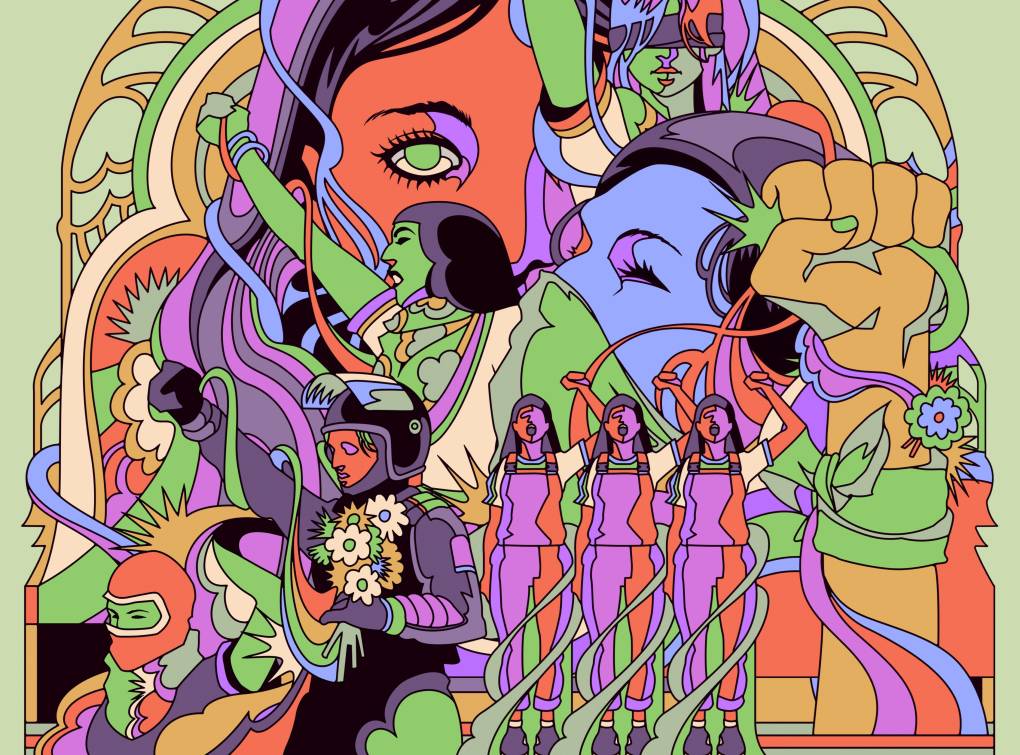
"caption": "The album ‘Revolución Diamantina,’ with Gustavo Dudamel conducting the Los Angeles Philharmonic, is devoted to the music of Mexican composer Gabriela Ortiz.",
"credit": "Cover art by Raul Urias/Platoon",
"altTag": "A psychedelic multi-colored illustration featuring stationary figures and the faces of performers.",
"description": null,
"imgSizes": {
"medium": {
"file": "https://cdn.kqed.org/wp-content/uploads/sites/2/2024/12/pl-raul-urias-gabrielaortiz-revoluciondiamantina-nocopy-crop-fix-800x592.jpeg",
"width": 800,
"height": 592,
"mimeType": "image/jpeg"
},
"large": {
"file": "https://cdn.kqed.org/wp-content/uploads/sites/2/2024/12/pl-raul-urias-gabrielaortiz-revoluciondiamantina-nocopy-crop-fix-1020x755.jpeg",
"width": 1020,
"height": 755,
"mimeType": "image/jpeg"
},
"thumbnail": {
"file": "https://cdn.kqed.org/wp-content/uploads/sites/2/2024/12/pl-raul-urias-gabrielaortiz-revoluciondiamantina-nocopy-crop-fix-160x118.jpeg",
"width": 160,
"height": 118,
"mimeType": "image/jpeg"
},
"medium_large": {
"file": "https://cdn.kqed.org/wp-content/uploads/sites/2/2024/12/pl-raul-urias-gabrielaortiz-revoluciondiamantina-nocopy-crop-fix-768x568.jpeg",
"width": 768,
"height": 568,
"mimeType": "image/jpeg"
},
"1536x1536": {
"file": "https://cdn.kqed.org/wp-content/uploads/sites/2/2024/12/pl-raul-urias-gabrielaortiz-revoluciondiamantina-nocopy-crop-fix-1536x1137.jpeg",
"width": 1536,
"height": 1137,
"mimeType": "image/jpeg"
},
"2048x2048": {
"file": "https://cdn.kqed.org/wp-content/uploads/sites/2/2024/12/pl-raul-urias-gabrielaortiz-revoluciondiamantina-nocopy-crop-fix-2048x1515.jpeg",
"width": 2048,
"height": 1515,
"mimeType": "image/jpeg"
},
"post-thumbnail": {
"file": "https://cdn.kqed.org/wp-content/uploads/sites/2/2024/12/pl-raul-urias-gabrielaortiz-revoluciondiamantina-nocopy-crop-fix-672x372.jpeg",
"width": 672,
"height": 372,
"mimeType": "image/jpeg"
},
"twentyfourteen-full-width": {
"file": "https://cdn.kqed.org/wp-content/uploads/sites/2/2024/12/pl-raul-urias-gabrielaortiz-revoluciondiamantina-nocopy-crop-fix-1038x576.jpeg",
"width": 1038,
"height": 576,
"mimeType": "image/jpeg"
},
"full-width": {
"file": "https://cdn.kqed.org/wp-content/uploads/sites/2/2024/12/pl-raul-urias-gabrielaortiz-revoluciondiamantina-nocopy-crop-fix-1920x1421.jpeg",
"width": 1920,
"height": 1421,
"mimeType": "image/jpeg"
},
"kqedFullSize": {
"file": "https://cdn.kqed.org/wp-content/uploads/sites/2/2024/12/pl-raul-urias-gabrielaortiz-revoluciondiamantina-nocopy-crop-fix-scaled-e1733806832789.jpeg",
"width": 1920,
"height": 1421
}
},
"isLoading": false,
"fetchFailed": false
},
"arts_13969228": {
"type": "attachments",
"id": "arts_13969228",
"meta": {
"index": "attachments_1716263798",
"site": "arts",
"id": "13969228",
"found": true
},
"title": "Lannon_COVER",
"publishDate": 1733790449,
"status": "inherit",
"parent": 13969221,
"modified": 1733790633,
"caption": "We may no longer be the same college kids we once were, but our friendship has been a constant.",
"credit": "Quiin Latifah/iStock",
"altTag": "shadows of two people making peace signs on paved ground",
"description": null,
"imgSizes": {
"medium": {
"file": "https://cdn.kqed.org/wp-content/uploads/sites/2/2024/12/Lannon_COVER-1-800x450.jpg",
"width": 800,
"height": 450,
"mimeType": "image/jpeg"
},
"large": {
"file": "https://cdn.kqed.org/wp-content/uploads/sites/2/2024/12/Lannon_COVER-1-1020x574.jpg",
"width": 1020,
"height": 574,
"mimeType": "image/jpeg"
},
"thumbnail": {
"file": "https://cdn.kqed.org/wp-content/uploads/sites/2/2024/12/Lannon_COVER-1-160x90.jpg",
"width": 160,
"height": 90,
"mimeType": "image/jpeg"
},
"medium_large": {
"file": "https://cdn.kqed.org/wp-content/uploads/sites/2/2024/12/Lannon_COVER-1-768x432.jpg",
"width": 768,
"height": 432,
"mimeType": "image/jpeg"
},
"1536x1536": {
"file": "https://cdn.kqed.org/wp-content/uploads/sites/2/2024/12/Lannon_COVER-1-1536x864.jpg",
"width": 1536,
"height": 864,
"mimeType": "image/jpeg"
},
"post-thumbnail": {
"file": "https://cdn.kqed.org/wp-content/uploads/sites/2/2024/12/Lannon_COVER-1-672x372.jpg",
"width": 672,
"height": 372,
"mimeType": "image/jpeg"
},
"twentyfourteen-full-width": {
"file": "https://cdn.kqed.org/wp-content/uploads/sites/2/2024/12/Lannon_COVER-1-1038x576.jpg",
"width": 1038,
"height": 576,
"mimeType": "image/jpeg"
},
"full-width": {
"file": "https://cdn.kqed.org/wp-content/uploads/sites/2/2024/12/Lannon_COVER-1-1920x1080.jpg",
"width": 1920,
"height": 1080,
"mimeType": "image/jpeg"
},
"kqedFullSize": {
"file": "https://cdn.kqed.org/wp-content/uploads/sites/2/2024/12/Lannon_COVER-1.jpg",
"width": 2000,
"height": 1125
}
},
"isLoading": false,
"fetchFailed": false
},
"arts_13969214": {
"type": "attachments",
"id": "arts_13969214",
"meta": {
"index": "attachments_1716263798",
"site": "arts",
"id": "13969214",
"found": true
},
"title": "PianoLessons_COVER",
"publishDate": 1733771252,
"status": "inherit",
"parent": 13968532,
"modified": 1733771375,
"caption": "At San Francisco's Community Music Center, it's me and a small army of children taking cacophonous music classes.",
"credit": "Alexey Yaremenko/iStock",
"altTag": "illustration of woman sitting at grand piano with music notes around her",
"description": null,
"imgSizes": {
"medium": {
"file": "https://cdn.kqed.org/wp-content/uploads/sites/2/2024/12/PianoLessons_COVER-800x450.jpg",
"width": 800,
"height": 450,
"mimeType": "image/jpeg"
},
"large": {
"file": "https://cdn.kqed.org/wp-content/uploads/sites/2/2024/12/PianoLessons_COVER-1020x574.jpg",
"width": 1020,
"height": 574,
"mimeType": "image/jpeg"
},
"thumbnail": {
"file": "https://cdn.kqed.org/wp-content/uploads/sites/2/2024/12/PianoLessons_COVER-160x90.jpg",
"width": 160,
"height": 90,
"mimeType": "image/jpeg"
},
"medium_large": {
"file": "https://cdn.kqed.org/wp-content/uploads/sites/2/2024/12/PianoLessons_COVER-768x432.jpg",
"width": 768,
"height": 432,
"mimeType": "image/jpeg"
},
"1536x1536": {
"file": "https://cdn.kqed.org/wp-content/uploads/sites/2/2024/12/PianoLessons_COVER-1536x864.jpg",
"width": 1536,
"height": 864,
"mimeType": "image/jpeg"
},
"post-thumbnail": {
"file": "https://cdn.kqed.org/wp-content/uploads/sites/2/2024/12/PianoLessons_COVER-672x372.jpg",
"width": 672,
"height": 372,
"mimeType": "image/jpeg"
},
"twentyfourteen-full-width": {
"file": "https://cdn.kqed.org/wp-content/uploads/sites/2/2024/12/PianoLessons_COVER-1038x576.jpg",
"width": 1038,
"height": 576,
"mimeType": "image/jpeg"
},
"full-width": {
"file": "https://cdn.kqed.org/wp-content/uploads/sites/2/2024/12/PianoLessons_COVER-1920x1080.jpg",
"width": 1920,
"height": 1080,
"mimeType": "image/jpeg"
},
"kqedFullSize": {
"file": "https://cdn.kqed.org/wp-content/uploads/sites/2/2024/12/PianoLessons_COVER.jpg",
"width": 2000,
"height": 1125
}
},
"isLoading": false,
"fetchFailed": false
},
"arts_13969147": {
"type": "attachments",
"id": "arts_13969147",
"meta": {
"index": "attachments_1716263798",
"site": "arts",
"id": "13969147",
"found": true
},
"title": "Live Music2024",
"publishDate": 1733467079,
"status": "inherit",
"parent": 0,
"modified": 1733467139,
"caption": "Clockwise from top left: Yolanda Adams, Miss Minor, Too Short, the Linda LIndas, Houston Person and D.R.I.",
"credit": "Gabe Meline/KQED",
"altTag": null,
"description": null,
"imgSizes": {
"medium": {
"file": "https://cdn.kqed.org/wp-content/uploads/sites/2/2024/12/Live-Music2024-800x450.jpg",
"width": 800,
"height": 450,
"mimeType": "image/jpeg"
},
"large": {
"file": "https://cdn.kqed.org/wp-content/uploads/sites/2/2024/12/Live-Music2024-1020x574.jpg",
"width": 1020,
"height": 574,
"mimeType": "image/jpeg"
},
"thumbnail": {
"file": "https://cdn.kqed.org/wp-content/uploads/sites/2/2024/12/Live-Music2024-160x90.jpg",
"width": 160,
"height": 90,
"mimeType": "image/jpeg"
},
"medium_large": {
"file": "https://cdn.kqed.org/wp-content/uploads/sites/2/2024/12/Live-Music2024-768x432.jpg",
"width": 768,
"height": 432,
"mimeType": "image/jpeg"
},
"1536x1536": {
"file": "https://cdn.kqed.org/wp-content/uploads/sites/2/2024/12/Live-Music2024-1536x864.jpg",
"width": 1536,
"height": 864,
"mimeType": "image/jpeg"
},
"post-thumbnail": {
"file": "https://cdn.kqed.org/wp-content/uploads/sites/2/2024/12/Live-Music2024-672x372.jpg",
"width": 672,
"height": 372,
"mimeType": "image/jpeg"
},
"twentyfourteen-full-width": {
"file": "https://cdn.kqed.org/wp-content/uploads/sites/2/2024/12/Live-Music2024-1038x576.jpg",
"width": 1038,
"height": 576,
"mimeType": "image/jpeg"
},
"kqedFullSize": {
"file": "https://cdn.kqed.org/wp-content/uploads/sites/2/2024/12/Live-Music2024.jpg",
"width": 1920,
"height": 1080
}
},
"isLoading": false,
"fetchFailed": false
},
"arts_13968881": {
"type": "attachments",
"id": "arts_13968881",
"meta": {
"index": "attachments_1716263798",
"site": "arts",
"id": "13968881",
"found": true
},
"title": "9780867199277 Hail Murray sampler_Page_03",
"publishDate": 1733170931,
"status": "inherit",
"parent": 13968840,
"modified": 1733332403,
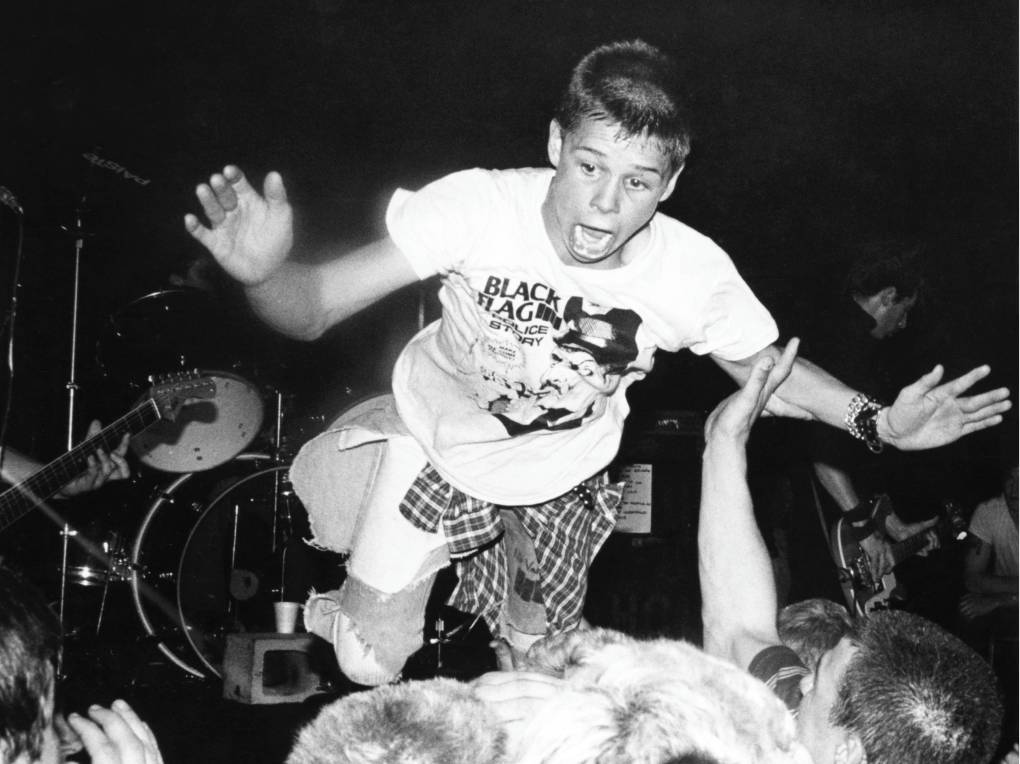
"caption": "Hundreds of photos are collected in ‘Hail Murray!: The Bay Area Punk Photography of Murray Bowles, 1982–1995.’ Above, a show at the On Broadway, San Francisco, 1983.",
"credit": "Murray Bowles",
"altTag": null,
"description": null,
"imgSizes": {
"medium": {
"file": "https://cdn.kqed.org/wp-content/uploads/sites/2/2024/12/9780867199277-Hail-Murray-sampler_Page_03-800x599.jpg",
"width": 800,
"height": 599,
"mimeType": "image/jpeg"
},
"large": {
"file": "https://cdn.kqed.org/wp-content/uploads/sites/2/2024/12/9780867199277-Hail-Murray-sampler_Page_03-1020x764.jpg",
"width": 1020,
"height": 764,
"mimeType": "image/jpeg"
},
"thumbnail": {
"file": "https://cdn.kqed.org/wp-content/uploads/sites/2/2024/12/9780867199277-Hail-Murray-sampler_Page_03-160x120.jpg",
"width": 160,
"height": 120,
"mimeType": "image/jpeg"
},
"medium_large": {
"file": "https://cdn.kqed.org/wp-content/uploads/sites/2/2024/12/9780867199277-Hail-Murray-sampler_Page_03-768x575.jpg",
"width": 768,
"height": 575,
"mimeType": "image/jpeg"
},
"1536x1536": {
"file": "https://cdn.kqed.org/wp-content/uploads/sites/2/2024/12/9780867199277-Hail-Murray-sampler_Page_03-1536x1150.jpg",
"width": 1536,
"height": 1150,
"mimeType": "image/jpeg"
},
"2048x2048": {
"file": "https://cdn.kqed.org/wp-content/uploads/sites/2/2024/12/9780867199277-Hail-Murray-sampler_Page_03-2048x1534.jpg",
"width": 2048,
"height": 1534,
"mimeType": "image/jpeg"
},
"post-thumbnail": {
"file": "https://cdn.kqed.org/wp-content/uploads/sites/2/2024/12/9780867199277-Hail-Murray-sampler_Page_03-672x372.jpg",
"width": 672,
"height": 372,
"mimeType": "image/jpeg"
},
"twentyfourteen-full-width": {
"file": "https://cdn.kqed.org/wp-content/uploads/sites/2/2024/12/9780867199277-Hail-Murray-sampler_Page_03-1038x576.jpg",
"width": 1038,
"height": 576,
"mimeType": "image/jpeg"
},
"full-width": {
"file": "https://cdn.kqed.org/wp-content/uploads/sites/2/2024/12/9780867199277-Hail-Murray-sampler_Page_03-1920x1438.jpg",
"width": 1920,
"height": 1438,
"mimeType": "image/jpeg"
},
"kqedFullSize": {
"file": "https://cdn.kqed.org/wp-content/uploads/sites/2/2024/12/9780867199277-Hail-Murray-sampler_Page_03-scaled.jpg",
"width": 2560,
"height": 1917
}
},
"isLoading": false,
"fetchFailed": false
},
"arts_13863996": {
"type": "attachments",
"id": "arts_13863996",
"meta": {
"index": "attachments_1716263798",
"site": "arts",
"id": "13863996",
"found": true
},
"title": "Jay-Z, April 27, 2019, Virginia Beach City.",
"publishDate": 1565733914,
"status": "inherit",
"parent": 13863975,
"modified": 1733288955,
"caption": "Jay-Z performing in Virginia Beach City on April 27, 2019. ",
"credit": "Craig Barritt/Getty Images for Something in the Water",
"altTag": "A Black man with short dreadlocks stands on stage under a blue light.",
"description": "Jay-Z, April 27, 2019, Virginia Beach City. ",
"imgSizes": {
"thumbnail": {
"file": "https://cdn.kqed.org/wp-content/uploads/sites/2/2019/08/GettyImages-1145571222-160x107.jpg",
"width": 160,
"height": 107,
"mimeType": "image/jpeg"
},
"medium": {
"file": "https://cdn.kqed.org/wp-content/uploads/sites/2/2019/08/GettyImages-1145571222-800x535.jpg",
"width": 800,
"height": 535,
"mimeType": "image/jpeg"
},
"medium_large": {
"file": "https://cdn.kqed.org/wp-content/uploads/sites/2/2019/08/GettyImages-1145571222-768x514.jpg",
"width": 768,
"height": 514,
"mimeType": "image/jpeg"
},
"large": {
"file": "https://cdn.kqed.org/wp-content/uploads/sites/2/2019/08/GettyImages-1145571222-1020x682.jpg",
"width": 1020,
"height": 682,
"mimeType": "image/jpeg"
},
"post-thumbnail": {
"file": "https://cdn.kqed.org/wp-content/uploads/sites/2/2019/08/GettyImages-1145571222-672x372.jpg",
"width": 672,
"height": 372,
"mimeType": "image/jpeg"
},
"twentyfourteen-full-width": {
"file": "https://cdn.kqed.org/wp-content/uploads/sites/2/2019/08/GettyImages-1145571222-1024x576.jpg",
"width": 1024,
"height": 576,
"mimeType": "image/jpeg"
},
"kqedFullSize": {
"file": "https://cdn.kqed.org/wp-content/uploads/sites/2/2019/08/GettyImages-1145571222.jpg",
"width": 1024,
"height": 685
}
},
"isLoading": false,
"fetchFailed": false
},
"arts_13968929": {
"type": "attachments",
"id": "arts_13968929",
"meta": {
"index": "attachments_1716263798",
"site": "arts",
"id": "13968929",
"found": true
},
"title": "best albums 2024",
"publishDate": 1733250104,
"status": "inherit",
"parent": 13968679,
"modified": 1733250266,
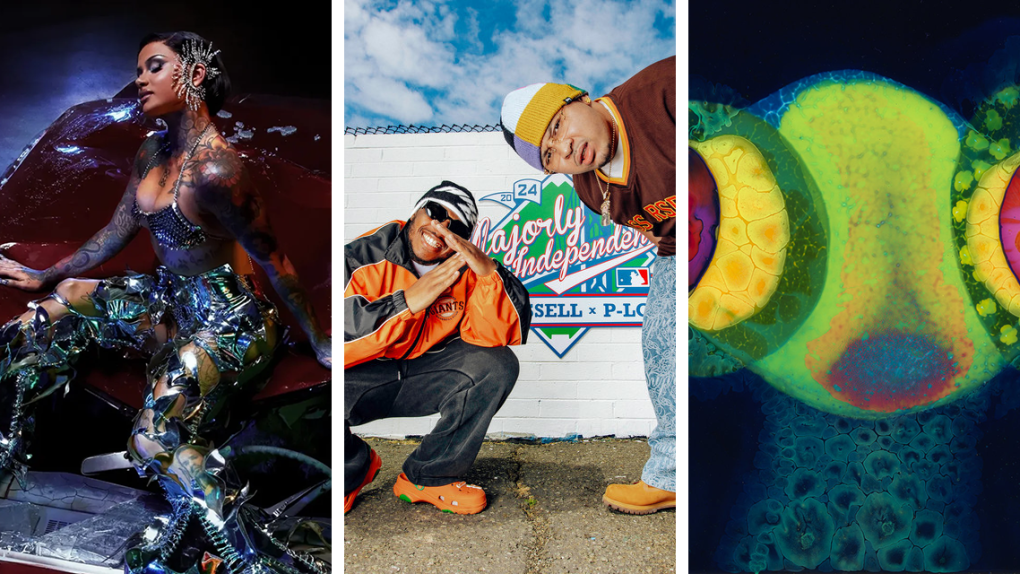
"caption": "Kehlani’s ‘Crash,’ LaRussell and P-Lo’s ‘Majorly Independent’ and Osees’ ’Sorcs 80’ are three of KQED Arts & Culture’s favorite albums of 2024. ",
"credit": "Atlantic/Good Compenny/Castle Face",
"altTag": null,
"description": null,
"imgSizes": {
"medium": {
"file": "https://cdn.kqed.org/wp-content/uploads/sites/2/2024/12/best-albums-2024-800x450.png",
"width": 800,
"height": 450,
"mimeType": "image/png"
},
"large": {
"file": "https://cdn.kqed.org/wp-content/uploads/sites/2/2024/12/best-albums-2024-1020x574.png",
"width": 1020,
"height": 574,
"mimeType": "image/png"
},
"thumbnail": {
"file": "https://cdn.kqed.org/wp-content/uploads/sites/2/2024/12/best-albums-2024-160x90.png",
"width": 160,
"height": 90,
"mimeType": "image/png"
},
"medium_large": {
"file": "https://cdn.kqed.org/wp-content/uploads/sites/2/2024/12/best-albums-2024-768x432.png",
"width": 768,
"height": 432,
"mimeType": "image/png"
},
"post-thumbnail": {
"file": "https://cdn.kqed.org/wp-content/uploads/sites/2/2024/12/best-albums-2024-672x372.png",
"width": 672,
"height": 372,
"mimeType": "image/png"
},
"twentyfourteen-full-width": {
"file": "https://cdn.kqed.org/wp-content/uploads/sites/2/2024/12/best-albums-2024-1038x576.png",
"width": 1038,
"height": 576,
"mimeType": "image/png"
},
"kqedFullSize": {
"file": "https://cdn.kqed.org/wp-content/uploads/sites/2/2024/12/best-albums-2024.png",
"width": 1138,
"height": 640
}
},
"isLoading": false,
"fetchFailed": false
},
"arts_13956955": {
"type": "attachments",
"id": "arts_13956955",
"meta": {
"index": "attachments_1716263798",
"site": "arts",
"id": "13956955",
"found": true
},
"title": "Kendrick Lamar",
"publishDate": 1714585565,
"status": "inherit",
"parent": 13956954,
"modified": 1733247390,
"caption": "Kendrick Lamar.",
"credit": "Ricardo Rubio/ Europa Press via Getty Images",
"altTag": "A bearded Black man in a red track suit and white t-shirt performs on stage.",
"description": null,
"imgSizes": {
"medium": {
"file": "https://cdn.kqed.org/wp-content/uploads/sites/2/2024/04/gettyimages-1497275788_wide-6f9dc4de302d4257deb6307f7ae1d74cceaff3ee-800x450.jpg",
"width": 800,
"height": 450,
"mimeType": "image/jpeg"
},
"large": {
"file": "https://cdn.kqed.org/wp-content/uploads/sites/2/2024/04/gettyimages-1497275788_wide-6f9dc4de302d4257deb6307f7ae1d74cceaff3ee-1020x574.jpg",
"width": 1020,
"height": 574,
"mimeType": "image/jpeg"
},
"thumbnail": {
"file": "https://cdn.kqed.org/wp-content/uploads/sites/2/2024/04/gettyimages-1497275788_wide-6f9dc4de302d4257deb6307f7ae1d74cceaff3ee-160x90.jpg",
"width": 160,
"height": 90,
"mimeType": "image/jpeg"
},
"medium_large": {
"file": "https://cdn.kqed.org/wp-content/uploads/sites/2/2024/04/gettyimages-1497275788_wide-6f9dc4de302d4257deb6307f7ae1d74cceaff3ee-768x432.jpg",
"width": 768,
"height": 432,
"mimeType": "image/jpeg"
},
"1536x1536": {
"file": "https://cdn.kqed.org/wp-content/uploads/sites/2/2024/04/gettyimages-1497275788_wide-6f9dc4de302d4257deb6307f7ae1d74cceaff3ee-1536x864.jpg",
"width": 1536,
"height": 864,
"mimeType": "image/jpeg"
},
"2048x2048": {
"file": "https://cdn.kqed.org/wp-content/uploads/sites/2/2024/04/gettyimages-1497275788_wide-6f9dc4de302d4257deb6307f7ae1d74cceaff3ee-2048x1152.jpg",
"width": 2048,
"height": 1152,
"mimeType": "image/jpeg"
},
"post-thumbnail": {
"file": "https://cdn.kqed.org/wp-content/uploads/sites/2/2024/04/gettyimages-1497275788_wide-6f9dc4de302d4257deb6307f7ae1d74cceaff3ee-672x372.jpg",
"width": 672,
"height": 372,
"mimeType": "image/jpeg"
},
"twentyfourteen-full-width": {
"file": "https://cdn.kqed.org/wp-content/uploads/sites/2/2024/04/gettyimages-1497275788_wide-6f9dc4de302d4257deb6307f7ae1d74cceaff3ee-1038x576.jpg",
"width": 1038,
"height": 576,
"mimeType": "image/jpeg"
},
"full-width": {
"file": "https://cdn.kqed.org/wp-content/uploads/sites/2/2024/04/gettyimages-1497275788_wide-6f9dc4de302d4257deb6307f7ae1d74cceaff3ee-1920x1080.jpg",
"width": 1920,
"height": 1080,
"mimeType": "image/jpeg"
},
"kqedFullSize": {
"file": "https://cdn.kqed.org/wp-content/uploads/sites/2/2024/04/gettyimages-1497275788_wide-6f9dc4de302d4257deb6307f7ae1d74cceaff3ee-scaled-e1714585950137.jpg",
"width": 1920,
"height": 1079
}
},
"isLoading": false,
"fetchFailed": false
},
"arts_13968777": {
"type": "attachments",
"id": "arts_13968777",
"meta": {
"index": "attachments_1716263798",
"site": "arts",
"id": "13968777",
"found": true
},
"title": "Cyndi.Fans.MAIN",
"publishDate": 1732734166,
"status": "inherit",
"parent": 13968756,
"modified": 1732734212,
"caption": "Best friends Anndrea Miller, left, and Krista Ball pose for a photo ahead of Cyndi Lauper’s concert for her Girls Just Wanna Have Fun Farewell Tour at the Chase Center in San Francisco on Nov. 26, 2024.",
"credit": "Gina Castro/KQED",
"altTag": "Two women in neon pink and purple outfits reminiscent of the 1980s pose together in front of a Christmas tree.",
"description": null,
"imgSizes": {
"medium": {
"file": "https://cdn.kqed.org/wp-content/uploads/sites/2/2024/11/Cyndi.Fans_.MAIN_-800x450.jpg",
"width": 800,
"height": 450,
"mimeType": "image/jpeg"
},
"large": {
"file": "https://cdn.kqed.org/wp-content/uploads/sites/2/2024/11/Cyndi.Fans_.MAIN_-1020x574.jpg",
"width": 1020,
"height": 574,
"mimeType": "image/jpeg"
},
"thumbnail": {
"file": "https://cdn.kqed.org/wp-content/uploads/sites/2/2024/11/Cyndi.Fans_.MAIN_-160x90.jpg",
"width": 160,
"height": 90,
"mimeType": "image/jpeg"
},
"medium_large": {
"file": "https://cdn.kqed.org/wp-content/uploads/sites/2/2024/11/Cyndi.Fans_.MAIN_-768x432.jpg",
"width": 768,
"height": 432,
"mimeType": "image/jpeg"
},
"1536x1536": {
"file": "https://cdn.kqed.org/wp-content/uploads/sites/2/2024/11/Cyndi.Fans_.MAIN_-1536x864.jpg",
"width": 1536,
"height": 864,
"mimeType": "image/jpeg"
},
"post-thumbnail": {
"file": "https://cdn.kqed.org/wp-content/uploads/sites/2/2024/11/Cyndi.Fans_.MAIN_-672x372.jpg",
"width": 672,
"height": 372,
"mimeType": "image/jpeg"
},
"twentyfourteen-full-width": {
"file": "https://cdn.kqed.org/wp-content/uploads/sites/2/2024/11/Cyndi.Fans_.MAIN_-1038x576.jpg",
"width": 1038,
"height": 576,
"mimeType": "image/jpeg"
},
"full-width": {
"file": "https://cdn.kqed.org/wp-content/uploads/sites/2/2024/11/Cyndi.Fans_.MAIN_-1920x1080.jpg",
"width": 1920,
"height": 1080,
"mimeType": "image/jpeg"
},
"kqedFullSize": {
"file": "https://cdn.kqed.org/wp-content/uploads/sites/2/2024/11/Cyndi.Fans_.MAIN_.jpg",
"width": 2000,
"height": 1125
}
},
"isLoading": false,
"fetchFailed": false
},
"arts_13968731": {
"type": "attachments",
"id": "arts_13968731",
"meta": {
"index": "attachments_1716263798",
"site": "arts",
"id": "13968731",
"found": true
},
"title": "20241127_CyndiLauper_GC-36_qed",
"publishDate": 1732723430,
"status": "inherit",
"parent": 0,
"modified": 1732730981,
"caption": "Cyndi Lauper performs during her Girls Just Wanna Have Fun Farewell Tour at the Chase Center in San Francisco on Nov. 26, 2024. Named after her 1983 hit ‘Girls Just Wanna Have Fun,’ it is said to be her last major tour.",
"credit": "Gina Castro/KQED",
"altTag": "A woman with platinum hair and a grey silver suit sings into a microphone against a multicolored abstract backdrop",
"description": null,
"imgSizes": {
"medium": {
"file": "https://cdn.kqed.org/wp-content/uploads/sites/2/2024/11/20241127_CyndiLauper_GC-36_qed-800x513.jpg",
"width": 800,
"height": 513,
"mimeType": "image/jpeg"
},
"large": {
"file": "https://cdn.kqed.org/wp-content/uploads/sites/2/2024/11/20241127_CyndiLauper_GC-36_qed-1020x654.jpg",
"width": 1020,
"height": 654,
"mimeType": "image/jpeg"
},
"thumbnail": {
"file": "https://cdn.kqed.org/wp-content/uploads/sites/2/2024/11/20241127_CyndiLauper_GC-36_qed-160x103.jpg",
"width": 160,
"height": 103,
"mimeType": "image/jpeg"
},
"medium_large": {
"file": "https://cdn.kqed.org/wp-content/uploads/sites/2/2024/11/20241127_CyndiLauper_GC-36_qed-768x492.jpg",
"width": 768,
"height": 492,
"mimeType": "image/jpeg"
},
"1536x1536": {
"file": "https://cdn.kqed.org/wp-content/uploads/sites/2/2024/11/20241127_CyndiLauper_GC-36_qed-1536x985.jpg",
"width": 1536,
"height": 985,
"mimeType": "image/jpeg"
},
"post-thumbnail": {
"file": "https://cdn.kqed.org/wp-content/uploads/sites/2/2024/11/20241127_CyndiLauper_GC-36_qed-672x372.jpg",
"width": 672,
"height": 372,
"mimeType": "image/jpeg"
},
"twentyfourteen-full-width": {
"file": "https://cdn.kqed.org/wp-content/uploads/sites/2/2024/11/20241127_CyndiLauper_GC-36_qed-1038x576.jpg",
"width": 1038,
"height": 576,
"mimeType": "image/jpeg"
},
"full-width": {
"file": "https://cdn.kqed.org/wp-content/uploads/sites/2/2024/11/20241127_CyndiLauper_GC-36_qed-1920x1231.jpg",
"width": 1920,
"height": 1231,
"mimeType": "image/jpeg"
},
"kqedFullSize": {
"file": "https://cdn.kqed.org/wp-content/uploads/sites/2/2024/11/20241127_CyndiLauper_GC-36_qed.jpg",
"width": 2000,
"height": 1282
}
},
"isLoading": false,
"fetchFailed": false
},
"arts_13968741": {
"type": "attachments",
"id": "arts_13968741",
"meta": {
"index": "attachments_1716263798",
"site": "arts",
"id": "13968741",
"found": true
},
"title": "maria",
"publishDate": 1732727076,
"status": "inherit",
"parent": 13968738,
"modified": 1732727164,
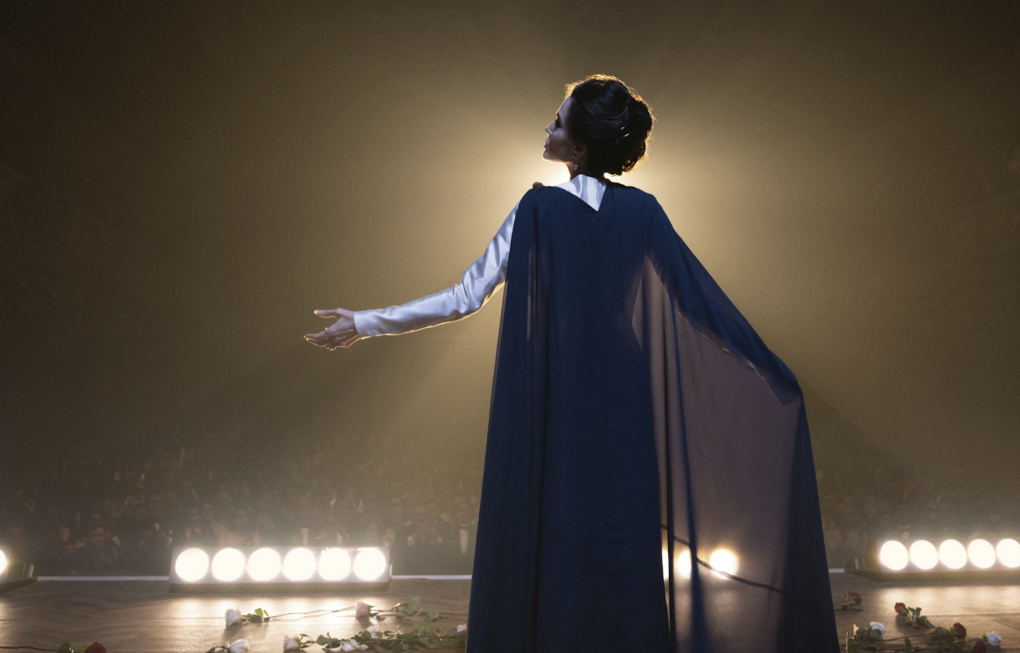
"caption": "Angelina Jolie as Maria Callas in a scene from ‘Maria.’",
"credit": "Pablo Larrain/Netflix via AP",
"altTag": "A slender woman viewed from behind, stands on a stage wearing a sheer cape in front of a spotlight.",
"description": null,
"imgSizes": {
"medium": {
"file": "https://cdn.kqed.org/wp-content/uploads/sites/2/2024/11/maria-800x512.png",
"width": 800,
"height": 512,
"mimeType": "image/png"
},
"large": {
"file": "https://cdn.kqed.org/wp-content/uploads/sites/2/2024/11/maria-1020x653.png",
"width": 1020,
"height": 653,
"mimeType": "image/png"
},
"thumbnail": {
"file": "https://cdn.kqed.org/wp-content/uploads/sites/2/2024/11/maria-160x102.png",
"width": 160,
"height": 102,
"mimeType": "image/png"
},
"medium_large": {
"file": "https://cdn.kqed.org/wp-content/uploads/sites/2/2024/11/maria-768x492.png",
"width": 768,
"height": 492,
"mimeType": "image/png"
},
"1536x1536": {
"file": "https://cdn.kqed.org/wp-content/uploads/sites/2/2024/11/maria-1536x983.png",
"width": 1536,
"height": 983,
"mimeType": "image/png"
},
"post-thumbnail": {
"file": "https://cdn.kqed.org/wp-content/uploads/sites/2/2024/11/maria-672x372.png",
"width": 672,
"height": 372,
"mimeType": "image/png"
},
"twentyfourteen-full-width": {
"file": "https://cdn.kqed.org/wp-content/uploads/sites/2/2024/11/maria-1038x576.png",
"width": 1038,
"height": 576,
"mimeType": "image/png"
},
"full-width": {
"file": "https://cdn.kqed.org/wp-content/uploads/sites/2/2024/11/maria-1920x1229.png",
"width": 1920,
"height": 1229,
"mimeType": "image/png"
},
"kqedFullSize": {
"file": "https://cdn.kqed.org/wp-content/uploads/sites/2/2024/11/maria.png",
"width": 2000,
"height": 1280
}
},
"isLoading": false,
"fetchFailed": false
}
},
"audioPlayerReducer": {
"postId": "stream_live",
"isPaused": true,
"isPlaying": false,
"pfsActive": false,
"pledgeModalIsOpen": true,
"playerDrawerIsOpen": false,
"liveAudioPlayStartedAt": 0,
"liveAudioPlayContext": ""
},
"authorsReducer": {
"byline_arts_13969242": {
"type": "authors",
"id": "byline_arts_13969242",
"meta": {
"override": true
},
"slug": "byline_arts_13969242",
"name": "Tom Huizenga, NPR",
"isLoading": false
},
"byline_arts_13968980": {
"type": "authors",
"id": "byline_arts_13968980",
"meta": {
"override": true
},
"slug": "byline_arts_13968980",
"name": "Jonathan Landrum Jr., Associated Press",
"isLoading": false
},
"byline_arts_13968679": {
"type": "authors",
"id": "byline_arts_13968679",
"meta": {
"override": true
},
"slug": "byline_arts_13968679",
"name": "KQED Arts & Culture",
"isLoading": false
},
"byline_arts_13968756": {
"type": "authors",
"id": "byline_arts_13968756",
"meta": {
"override": true
},
"slug": "byline_arts_13968756",
"name": "Gina Castro",
"isLoading": false
},
"byline_arts_13968738": {
"type": "authors",
"id": "byline_arts_13968738",
"meta": {
"override": true
},
"slug": "byline_arts_13968738",
"name": "Lindsey Bahr, Associated Press",
"isLoading": false
},
"shotchkiss": {
"type": "authors",
"id": "61",
"meta": {
"index": "authors_1716337520",
"id": "61",
"found": true
},
"name": "Sarah Hotchkiss",
"firstName": "Sarah",
"lastName": "Hotchkiss",
"slug": "shotchkiss",
"email": "shotchkiss@kqed.org",
"display_author_email": true,
"staff_mastheads": [
"arts"
],
"title": "Senior Editor",
"bio": "Sarah Hotchkiss is a San Francisco \u003ca href=\"http://www.sarahhotchkiss.com\">artist\u003c/a> and arts writer. In 2019, she received the Dorothea & Leo Rabkin Foundation grant for visual art journalism and in 2020 she received a Society of Professional Journalists, Northern California award for excellence in arts and culture reporting.",
"avatar": "https://secure.gravatar.com/avatar/bc662df144b3d27fd8b1b6f1c2a420d34e91e53154d411bb7ad353cc8b6cea8d?s=600&d=blank&r=g",
"twitter": null,
"bluesky": null,
"facebook": null,
"instagram": null,
"linkedin": null,
"sites": [
{
"site": "",
"roles": [
"editor"
]
},
{
"site": "arts",
"roles": [
"Contributor",
"administrator"
]
},
{
"site": "artschool",
"roles": [
"administrator"
]
},
{
"site": "news",
"roles": [
"editor"
]
},
{
"site": "pop",
"roles": [
"administrator"
]
},
{
"site": "bayareabites",
"roles": [
"editor"
]
},
{
"site": "spark",
"roles": [
"editor"
]
},
{
"site": "checkplease",
"roles": [
"editor"
]
}
],
"headData": {
"title": "Sarah Hotchkiss | KQED",
"description": "Senior Editor",
"ogImgSrc": "https://secure.gravatar.com/avatar/bc662df144b3d27fd8b1b6f1c2a420d34e91e53154d411bb7ad353cc8b6cea8d?s=600&d=blank&r=g",
"twImgSrc": "https://secure.gravatar.com/avatar/bc662df144b3d27fd8b1b6f1c2a420d34e91e53154d411bb7ad353cc8b6cea8d?s=600&d=blank&r=g"
},
"isLoading": false,
"link": "/author/shotchkiss"
},
"gmeline": {
"type": "authors",
"id": "185",
"meta": {
"index": "authors_1716337520",
"id": "185",
"found": true
},
"name": "Gabe Meline",
"firstName": "Gabe",
"lastName": "Meline",
"slug": "gmeline",
"email": "gmeline@kqed.org",
"display_author_email": true,
"staff_mastheads": [
"arts"
],
"title": "Senior Editor, KQED Arts & Culture",
"bio": "Gabe Meline entered journalism at age 15 making photocopied zines, and has since earned awards from the Edward R. Murrow Awards, the Society for Professional Journalists, the Online Journalism Awards, the Association of Alternative Newsweeklies and the California Newspaper Publishers Association. Prior to KQED, he was the editor of the \u003cem>North Bay Bohemian\u003c/em> and a touring musician. He lives with his wife and daughter in his hometown of Santa Rosa, CA.",
"avatar": "https://secure.gravatar.com/avatar/5bebe57be0d8bc2dd318934feb47299e2d2d10cba28d09d8d7afb389a2ce2bdd?s=600&d=blank&r=g",
"twitter": null,
"bluesky": null,
"facebook": null,
"instagram": null,
"linkedin": null,
"sites": [
{
"site": "",
"roles": [
"editor"
]
},
{
"site": "arts",
"roles": [
"administrator"
]
},
{
"site": "artschool",
"roles": [
"editor"
]
},
{
"site": "news",
"roles": [
"author"
]
},
{
"site": "pop",
"roles": [
"editor"
]
},
{
"site": "bayareabites",
"roles": [
"editor"
]
},
{
"site": "food",
"roles": [
"editor"
]
},
{
"site": "forum",
"roles": [
"administrator"
]
},
{
"site": "liveblog",
"roles": [
"editor"
]
},
{
"site": "hiphop",
"roles": [
"editor"
]
}
],
"headData": {
"title": "Gabe Meline | KQED",
"description": "Senior Editor, KQED Arts & Culture",
"ogImgSrc": "https://secure.gravatar.com/avatar/5bebe57be0d8bc2dd318934feb47299e2d2d10cba28d09d8d7afb389a2ce2bdd?s=600&d=blank&r=g",
"twImgSrc": "https://secure.gravatar.com/avatar/5bebe57be0d8bc2dd318934feb47299e2d2d10cba28d09d8d7afb389a2ce2bdd?s=600&d=blank&r=g"
},
"isLoading": false,
"link": "/author/gmeline"
},
"jhesig": {
"type": "authors",
"id": "11333",
"meta": {
"index": "authors_1716337520",
"id": "11333",
"found": true
},
"name": "Janelle Hessig",
"firstName": "Janelle",
"lastName": "Hessig",
"slug": "jhesig",
"email": "jhessig@kqed.org",
"display_author_email": false,
"staff_mastheads": [],
"title": "KQED Contributor",
"bio": null,
"avatar": "https://secure.gravatar.com/avatar/27dd6e3cd88f82541593bd6d8f2aec4a?s=600&d=mm&r=g",
"twitter": null,
"facebook": null,
"instagram": null,
"linkedin": null,
"sites": [
{
"site": "arts",
"roles": []
},
{
"site": "food",
"roles": []
},
{
"site": "filmschoolshorts",
"roles": [
"editor"
]
}
],
"headData": {
"title": "Janelle Hessig | KQED",
"description": "KQED Contributor",
"ogImgSrc": "https://secure.gravatar.com/avatar/27dd6e3cd88f82541593bd6d8f2aec4a?s=600&d=mm&r=g",
"twImgSrc": "https://secure.gravatar.com/avatar/27dd6e3cd88f82541593bd6d8f2aec4a?s=600&d=mm&r=g"
},
"isLoading": false,
"link": "/author/jhesig"
},
"ogpenn": {
"type": "authors",
"id": "11491",
"meta": {
"index": "authors_1716337520",
"id": "11491",
"found": true
},
"name": "Pendarvis Harshaw",
"firstName": "Pendarvis",
"lastName": "Harshaw",
"slug": "ogpenn",
"email": "ogpenn@gmail.com",
"display_author_email": false,
"staff_mastheads": [
"arts"
],
"title": "Community Engagement Reporter",
"bio": "Pendarvis Harshaw is an educator, host and writer with KQED Arts.",
"avatar": "https://secure.gravatar.com/avatar/972b77ee8e3f346ae2b00622661187fbfabd059b5693bbdc1475ea7a722fd4cd?s=600&d=blank&r=g",
"twitter": null,
"bluesky": null,
"facebook": null,
"instagram": "ogpenn",
"linkedin": null,
"sites": [
{
"site": "arts",
"roles": [
"administrator"
]
},
{
"site": "news",
"roles": [
"editor"
]
},
{
"site": "bayareabites",
"roles": [
"author"
]
},
{
"site": "hiphop",
"roles": [
"editor"
]
}
],
"headData": {
"title": "Pendarvis Harshaw | KQED",
"description": "Community Engagement Reporter",
"ogImgSrc": "https://secure.gravatar.com/avatar/972b77ee8e3f346ae2b00622661187fbfabd059b5693bbdc1475ea7a722fd4cd?s=600&d=blank&r=g",
"twImgSrc": "https://secure.gravatar.com/avatar/972b77ee8e3f346ae2b00622661187fbfabd059b5693bbdc1475ea7a722fd4cd?s=600&d=blank&r=g"
},
"isLoading": false,
"link": "/author/ogpenn"
},
"sfaulise": {
"type": "authors",
"id": "11919",
"meta": {
"index": "authors_1716337520",
"id": "11919",
"found": true
},
"name": "Shannon Faulise",
"firstName": "Shannon",
"lastName": "Faulise",
"slug": "sfaulise",
"email": "sfaulise@kqed.org",
"display_author_email": false,
"staff_mastheads": [],
"title": "Contributor, KQED Arts & Culture",
"bio": "Shannon Faulise is a graduate of the UC Berkeley Graduate School of Journalism, where she concentrated on photojournalism and feature writing. Shannon's photos, audio pieces and written stories have appeared in The Oaklandside, The Redwood City Pulse and KALX. Outside of reporting, Shannon loves kpop, women's sports and concerts. She served as an intern for KQED Arts & Culture in 2024–25.",
"avatar": "https://secure.gravatar.com/avatar/76449df2627a603d6b02f0534ec3c913007029bff4f1c0572071401f9a293a02?s=600&d=blank&r=g",
"twitter": null,
"bluesky": null,
"facebook": null,
"instagram": null,
"linkedin": null,
"sites": [
{
"site": "arts",
"roles": [
"subscriber"
]
}
],
"headData": {
"title": "Shannon Faulise | KQED",
"description": "Contributor, KQED Arts & Culture",
"ogImgSrc": "https://secure.gravatar.com/avatar/76449df2627a603d6b02f0534ec3c913007029bff4f1c0572071401f9a293a02?s=600&d=blank&r=g",
"twImgSrc": "https://secure.gravatar.com/avatar/76449df2627a603d6b02f0534ec3c913007029bff4f1c0572071401f9a293a02?s=600&d=blank&r=g"
},
"isLoading": false,
"link": "/author/sfaulise"
}
},
"pagesReducer": {
"arts_category_music": {
"type": "terms",
"id": "arts_69",
"meta": {
"index": "terms_1716263798",
"site": "arts",
"id": "69",
"score": 10.850678
},
"featImg": null,
"name": "Music",
"description": null,
"taxonomy": "category",
"headData": {
"twImgId": null,
"twTitle": null,
"ogTitle": null,
"ogImgId": null,
"twDescription": null,
"description": null,
"title": "Music Archives | KQED Arts",
"ogDescription": null
},
"ttid": 70,
"slug": "music",
"isLoading": false,
"title": "Music",
"pageMeta": {
"site": "arts",
"WpPageTemplate": "page-topic-editorial",
"currentPage": 37
},
"blocks": [
{
"blockName": "kqed/post-list",
"attrs": {
"layout": "cardArticle2",
"query": "posts/arts?category=music",
"seeMore": false,
"paginated": true,
"page": 37
}
},
{
"blockName": "kqed/ad"
}
]
}
},
"pfsSessionReducer": {},
"postsReducer": {
"stream_live": {
"type": "live",
"id": "stream_live",
"audioUrl": "https://streams.kqed.org/kqedradio",
"title": "Live Stream",
"excerpt": "Live Stream information currently unavailable.",
"link": "/radio",
"featImg": "",
"label": {
"name": "KQED Live",
"link": "/"
}
},
"stream_kqedNewscast": {
"type": "posts",
"id": "stream_kqedNewscast",
"audioUrl": "https://www.kqed.org/.stream/anon/radio/RDnews/newscast.mp3?_=1",
"title": "KQED Newscast",
"featImg": "",
"label": {
"name": "88.5 FM",
"link": "/"
}
},
"arts_13969210": {
"type": "posts",
"id": "arts_13969210",
"meta": {
"index": "posts_1716263798",
"site": "arts",
"id": "13969210",
"score": null,
"sort": [
1733937249000
]
},
"guestAuthors": [],
"slug": "kendrick-lamar-west-coast-hip-hop-culture",
"title": "How Kendrick Lifted Us Up in 2024",
"publishDate": 1733937249,
"format": "standard",
"headTitle": "How Kendrick Lifted Us Up in 2024 | KQED",
"labelTerm": {},
"content": "\u003cp>\u003cem>This week, as we near the end of 2024, the writers and editors of KQED Arts & Culture are reflecting on \u003ca href=\"https://www.kqed.org/arts/tag/one-beautiful-thing\">One Beautiful Thing\u003c/a> from the year.\u003c/em>\u003c/p>\n\u003cp>[dropcap]I[/dropcap]t’s just after 11 a.m. on Nov. 25, and inside Little Caesars I hear an employee standing next to the oven in the back, screaming, “MUSTARRRRRRRD!”\u003c/p>\n\u003cp>At the register, my 8-year-old daughter is next to me, hungry and confused. I smile and say softly, “It’s happening.”\u003c/p>\n\u003cp>She doesn’t understand. \u003cem>What does mustard have to do with pizza? What’s happening? Why is my dad smiling? \u003c/em>\u003c/p>\n\u003cp>Maybe it’s too much for her to understand, but I’m sure you will. The sound of a low-wage hourly employee, working at a billion-dollar food chain, momentarily liberating themselves by bellowing lyrics from the top rapper in the game.\u003c/p>\n\u003cp>[ad fullwidth]\u003c/p>\n\u003cp>That’s a beautiful thing.\u003c/p>\n\u003cp>It’s art, it’s culture, it’s the reason hip-hop was created. It’s a taste of self-determination over the thunderous drums of the day-to-day struggle. It’s the sound of freedom, however fleeting.\u003c/p>\n\u003cdiv style=\"width: 100%\" align=\"center\">\n\u003c!-- iframe plugin v.4.3 wordpress.org/plugins/iframe/ -->\u003cbr>\n\u003ciframe loading=\"lazy\" width=\"700\" height=\"800\" src=\"https://www.instagram.com/p/DC4zqmZTdcw/embed\" frameborder=\"0\" scrolling=\"yes\" class=\"iframe-class\">\u003c/iframe>\n\u003c/div>\n\u003cp>\u003cspan style=\"color: #ffffff\">b\u003c/span>\u003cbr>\nThe roar of “MUSTARD!!!” comes from “tv off,” a standout track on Kendrick Lamar’s latest album, \u003ci>GNX\u003c/i>. Partway through the song, the beat switches to a menacing tempo, and Kendrick shouts producer DJ Mustard’s name in such a tone that he etches it directly into the listener’s central nervous system — causing the word to sporadically spring from a person’s throat at a later date, even when the song isn’t playing.\u003c/p>\n\u003cp>The pizza-making homie was joking on the job, referencing popular culture, but for me it could’ve just as well been a call to an Orisha. His guttural utterance brought one very beautiful thing to mind about this past year: the culture is alive and well.\u003c/p>\n\u003cfigure id=\"attachment_13960077\" class=\"wp-caption aligncenter\" style=\"max-width: 1920px\">\u003ca href=\"https://cdn.kqed.org/wp-content/uploads/sites/2/2024/06/Kendrick.Timothy-Norris-Getty-Images.jpg\">\u003cimg loading=\"lazy\" decoding=\"async\" class=\"size-full wp-image-13960077\" src=\"https://cdn.kqed.org/wp-content/uploads/sites/2/2024/06/Kendrick.Timothy-Norris-Getty-Images.jpg\" alt=\"A Black man in a red hoodie raps on the mic and holds one finger aloft while an arena ceiling bathed in golden light is in the background\" width=\"1920\" height=\"1080\" srcset=\"https://cdn.kqed.org/wp-content/uploads/sites/2/2024/06/Kendrick.Timothy-Norris-Getty-Images.jpg 1920w, https://cdn.kqed.org/wp-content/uploads/sites/2/2024/06/Kendrick.Timothy-Norris-Getty-Images-800x450.jpg 800w, https://cdn.kqed.org/wp-content/uploads/sites/2/2024/06/Kendrick.Timothy-Norris-Getty-Images-1020x574.jpg 1020w, https://cdn.kqed.org/wp-content/uploads/sites/2/2024/06/Kendrick.Timothy-Norris-Getty-Images-160x90.jpg 160w, https://cdn.kqed.org/wp-content/uploads/sites/2/2024/06/Kendrick.Timothy-Norris-Getty-Images-768x432.jpg 768w, https://cdn.kqed.org/wp-content/uploads/sites/2/2024/06/Kendrick.Timothy-Norris-Getty-Images-1536x864.jpg 1536w\" sizes=\"auto, (max-width: 1920px) 100vw, 1920px\">\u003c/a>\u003cfigcaption class=\"wp-caption-text\">Kendrick Lamar performs during ‘The Pop Out – Ken & Friends’ at the Forum on June 19, 2024 in Inglewood, California. \u003ccite>(Timothy Norris/Getty Images)\u003c/cite>\u003c/figcaption>\u003c/figure>\n\u003cp>West Coast hip-hop is currently abuzz, and Kendrick is at the top of the pack. After emerging as the clear winner of an epic rap battle against Canadian rapper Drake, which brought arguably the song of the year “Not Like Us,” on Juneteenth Kendrick Lamar hosted \u003cem>The Pop Out: Ken & Friends,\u003c/em> a one-day festival featuring a host of artists from the greater Los Angeles area under the bright lights at The Forum. With narration from the Bay Area’s ambassador E-40, the show was an authentic display of unity and regional talent, livestreamed to the masses. Weeks later, Kendrick was announced as next year’s Super Bowl halftime headliner.\u003c/p>\n\u003cp>All told, 2024 was an immaculate year for the Pulitzer-Prize winning rapper, who I’ve followed since I was downloading his early mixtapes from DatPiff in my college dorm during President Obama’s first term. Kendrick is an artist I’ve only seen once in concert — \u003ca href=\"https://www.youtube.com/watch?v=v7JC3_XH5Kc\">at The New Parish in Oakland\u003c/a>, in 2011 — and yet I identify with his story. We’re both short kids from California, born in 1987 and raised on Tupac. I too am from a “mad city,” but I wasn’t in \u003cem>the game\u003c/em>, just \u003cem>game-\u003c/em>adjacent.\u003c/p>\n\u003cp>And I’m just one of many who can relate. That widespread ability to identify with Kendrick’s story means that this year’s success wasn’t just Kendrick’s. His rise is intertwined with a culture, a coast, a class of people. His listeners are a generation of folks who know what it’s like to sing songs that make ’em feel like a million bucks, despite the economic chasm between \u003cem>the pursuit\u003c/em> and \u003cem>the happiness\u003c/em> growing, exponentially.\u003c/p>\n\u003cfigure id=\"attachment_13969282\" class=\"wp-caption aligncenter\" style=\"max-width: 2000px\">\u003cimg loading=\"lazy\" decoding=\"async\" class=\"size-full wp-image-13969282\" src=\"https://cdn.kqed.org/wp-content/uploads/sites/2/2024/12/Kendrick.Credit_-Andre-D.-Wagner-.jpg\" alt=\"\" width=\"2000\" height=\"1125\" srcset=\"https://cdn.kqed.org/wp-content/uploads/sites/2/2024/12/Kendrick.Credit_-Andre-D.-Wagner-.jpg 2000w, https://cdn.kqed.org/wp-content/uploads/sites/2/2024/12/Kendrick.Credit_-Andre-D.-Wagner--800x450.jpg 800w, https://cdn.kqed.org/wp-content/uploads/sites/2/2024/12/Kendrick.Credit_-Andre-D.-Wagner--1020x574.jpg 1020w, https://cdn.kqed.org/wp-content/uploads/sites/2/2024/12/Kendrick.Credit_-Andre-D.-Wagner--160x90.jpg 160w, https://cdn.kqed.org/wp-content/uploads/sites/2/2024/12/Kendrick.Credit_-Andre-D.-Wagner--768x432.jpg 768w, https://cdn.kqed.org/wp-content/uploads/sites/2/2024/12/Kendrick.Credit_-Andre-D.-Wagner--1536x864.jpg 1536w, https://cdn.kqed.org/wp-content/uploads/sites/2/2024/12/Kendrick.Credit_-Andre-D.-Wagner--1920x1080.jpg 1920w\" sizes=\"auto, (max-width: 2000px) 100vw, 2000px\">\u003cfigcaption class=\"wp-caption-text\">Kendrick Lamar. \u003ccite>(Andre D. Wagner)\u003c/cite>\u003c/figcaption>\u003c/figure>\n\u003cp>Since I first heard his song “\u003ca href=\"https://www.youtube.com/watch?v=wHbr0Oe2u3Q\" target=\"_blank\" rel=\"noopener\">Heaven & Hell\u003c/a>” during the blog era, I’ve watched K. Dot’s influence grow. Parallel to his tale is my ever-increasing interest in West Coast hip-hop. Last year, I worked with my colleagues at KQED to produce \u003ca href=\"https://www.kqed.org/bayareahiphop%20\">That’s My Word\u003c/a>, a multimedia project inspired by hip-hop’s 50th anniversary, for which we unearthed some of the deepest, dopest parts of the Bay Area’s contributions to hip-hop.\u003c/p>\n\u003cp>After spending a year blowing dust off classic albums and talking to folks about hip-hop history, this year was about understanding the current wave, starting with the Bay and expanding out from there.\u003c/p>\n\u003cp>Over the past year I’ve written about \u003ca href=\"https://www.kqed.org/arts/13956365/larry-june-stanford-blackfest-free\">Larry June\u003c/a>’s free concert at Stanford University (good job), and the rise in popularity of San Francisco’s battle rapping-comedic-bar spitter \u003ca href=\"https://www.kqed.org/arts/13963964/san-franciscos-frak-has-been-wild-n-out\">Frak\u003c/a> (who is also a person). I wrote about being uplifted by the \u003cem>Black Love\u003c/em> album from\u003ca href=\"https://www.kqed.org/arts/13966594/oaklands-kingmakers-black-love-album\" target=\"_blank\" rel=\"noopener\"> Oakland’s Kingmakers Music\u003c/a>, and noted my nostalgia as I covered Oakland’s rising star \u003ca href=\"https://www.kqed.org/arts/13967001/paris-nights-east-oakland-rapper-videos-90s-throwbacks\">Paris Nights\u003c/a> and her ability to remake classic music videos and films. Berkeley’s \u003ca href=\"https://www.kqed.org/arts/13953009/loe-gino-berkeley-birkenstocks-and-bars\">LOE Gino\u003c/a> told me about bringing his authentic Birkenstock-wearing self into his raps, and San Francisco’s \u003ca href=\"https://www.kqed.org/arts/13957335/queens-of-the-underground-latina-takeover-hip-hop\">Lil MC\u003c/a> shared insight on carving out a safe space for women and queer MCs in the Bay.\u003c/p>\n\u003cfigure id=\"attachment_13957337\" class=\"wp-caption aligncenter\" style=\"max-width: 1170px\">\u003ca href=\"https://cdn.kqed.org/wp-content/uploads/sites/2/2024/05/unnamed.jpg\">\u003cimg loading=\"lazy\" decoding=\"async\" class=\"size-full wp-image-13957337\" src=\"https://cdn.kqed.org/wp-content/uploads/sites/2/2024/05/unnamed.jpg\" alt=\"\" width=\"1170\" height=\"658\" srcset=\"https://cdn.kqed.org/wp-content/uploads/sites/2/2024/05/unnamed.jpg 1170w, https://cdn.kqed.org/wp-content/uploads/sites/2/2024/05/unnamed-800x450.jpg 800w, https://cdn.kqed.org/wp-content/uploads/sites/2/2024/05/unnamed-1020x574.jpg 1020w, https://cdn.kqed.org/wp-content/uploads/sites/2/2024/05/unnamed-160x90.jpg 160w, https://cdn.kqed.org/wp-content/uploads/sites/2/2024/05/unnamed-768x432.jpg 768w\" sizes=\"auto, (max-width: 1170px) 100vw, 1170px\">\u003c/a>\u003cfigcaption class=\"wp-caption-text\">LiL MC and members of Iron Lotus Street Dance rock the stage at a Queens of The Underground event. \u003ccite>(Sarah Arnold)\u003c/cite>\u003c/figcaption>\u003c/figure>\n\u003cp>In \u003ca href=\"https://www.kqed.org/arts/13965374/east-side-san-jose-rap-hustle\">East Side San Jose\u003c/a>, I talked to a handful of artists who simply want to make sure their culture isn’t overshadowed by the tech scions of Silicon Valley, so they make music about their side of town. Authentic artistic expression, despite the big banks down in the shark tank.\u003c/p>\n\u003cp>But what’s been published is just a small sample of what I’ve absorbed. This past summer I took in a LaRussell show at the Pergola in Vallejo, and hit History of the Bay Day in San Francisco. I drove all around the Bay listening to new music from Stockton’s EBK Jaaybo, Oakland’s Kamaiyah and San Francisco’s Lil Bean.\u003c/p>\n\u003cp>My playlists have a bunch of new music from Southern Californian talent too, like 03 Greedo and Vince Staples, as well as Big Sad 1900, BlueBucksClan, Buddy, Blu and even new music from Dre & Snoop. Kendrick’s former label mates Ab-Soul and ScHoolboy Q both dropped projects that should be in the conversation for album of the year, right next to Tyler, The Creator’s.\u003c/p>\n\u003cp>I knew West Coast hip-hop was active before I entered the pizza place on that November day, but the significance of its influence wasn’t clear until after I left.\u003c/p>\n\u003cfigure id=\"attachment_13968611\" class=\"wp-caption aligncenter\" style=\"max-width: 2935px\">\u003ca href=\"https://cdn.kqed.org/wp-content/uploads/sites/2/2024/11/squabble-up-still.png\">\u003cimg loading=\"lazy\" decoding=\"async\" class=\"size-full wp-image-13968611\" src=\"https://cdn.kqed.org/wp-content/uploads/sites/2/2024/11/squabble-up-still.png\" alt=\"man sits on chair while people dance and bike around him\" width=\"2935\" height=\"1651\" srcset=\"https://cdn.kqed.org/wp-content/uploads/sites/2/2024/11/squabble-up-still.png 2935w, https://cdn.kqed.org/wp-content/uploads/sites/2/2024/11/squabble-up-still-800x450.png 800w, https://cdn.kqed.org/wp-content/uploads/sites/2/2024/11/squabble-up-still-1020x574.png 1020w, https://cdn.kqed.org/wp-content/uploads/sites/2/2024/11/squabble-up-still-160x90.png 160w, https://cdn.kqed.org/wp-content/uploads/sites/2/2024/11/squabble-up-still-768x432.png 768w, https://cdn.kqed.org/wp-content/uploads/sites/2/2024/11/squabble-up-still-1536x864.png 1536w, https://cdn.kqed.org/wp-content/uploads/sites/2/2024/11/squabble-up-still-2048x1152.png 2048w, https://cdn.kqed.org/wp-content/uploads/sites/2/2024/11/squabble-up-still-1920x1080.png 1920w\" sizes=\"auto, (max-width: 2935px) 100vw, 2935px\">\u003c/a>\u003cfigcaption class=\"wp-caption-text\">Velo, Dmonte, Icecold 3000 and Aktive (left to right) ride scraper bikes and go dumb in Kendrick Lamar’s ‘squabble up’ video. \u003ccite>(Kendrick Lamar/YouTube)\u003c/cite>\u003c/figcaption>\u003c/figure>\n\u003cp>That same morning, Kendrick Lamar released the video for the song “squabble up,” the first single from his latest album. Saturated with cultural references, the video shows a Black Panther statuette and a painting of Black Jesus; a Pan-African flag, visuals inspired by Ice T’s \u003cem>Power\u003c/em> album cover and a reference to a character from 1993 film \u003cem>Menace II Society\u003c/em>. There’s also a scraper bike and a few turf dancers, nods to the hyphy movement, a topic I spent the bulk of last year untangling in a very personal podcast series “\u003ca href=\"https://www.kqed.org/arts/13934874/hyphy-kids-got-trauma\" target=\"_blank\" rel=\"noopener\">Hyphy Kids Got Trauma\u003c/a>,” about my coming of age and the commodification of my culture.\u003c/p>\n\u003cp>Kendrick Lamar’s latest music video, the album itself and the many threads that flow through his art speak to what I see as four generations of existence. He honors those who’ve passed on, shouts out the elders who made it happen, checks in with peers and provides space for the next generation. Culture is passed along.\u003c/p>\n\u003cp>The dances, the fashion, the slang and the teachings over dope beats — it’s all so simple, and yet so spiritual. It’s from the dirt and the have-nots, often shared across the internet and sold online.\u003c/p>\n\u003cp>[ad floatright]\u003c/p>\n\u003cp>And as the big business of Amazon, Spotify, Apple, Cash App, Ticketmaster and others rake in the dough, a pizza-maker reminds me that culture is still free.\u003c/p>\n\n",
"blocks": [],
"excerpt": "Despite big business’ attempts to intervene, West Coast hip-hop culture still reached the people.",
"status": "publish",
"parent": 0,
"modified": 1734114318,
"stats": {
"hasAudio": false,
"hasVideo": false,
"hasChartOrMap": true,
"iframeSrcs": [
"https://www.instagram.com/p/DC4zqmZTdcw/embed"
],
"hasGoogleForm": false,
"hasGallery": false,
"hasHearkenModule": false,
"hasPolis": false,
"paragraphCount": 25,
"wordCount": 1434
},
"headData": {
"title": "How Kendrick Lifted Us Up in 2024 | KQED",
"description": "Despite big business’ attempts to intervene, West Coast hip-hop culture still reached the people.",
"ogTitle": "",
"ogDescription": "",
"ogImgId": "",
"twTitle": "",
"twDescription": "",
"twImgId": "",
"schema": {
"@context": "https://schema.org",
"@type": "Article",
"headline": "How Kendrick Lifted Us Up in 2024",
"datePublished": "2024-12-11T09:14:09-08:00",
"dateModified": "2024-12-13T10:25:18-08:00",
"image": "https://cdn.kqed.org/wp-content/uploads/2020/02/KQED-OG-Image@1x.png"
}
},
"source": "One Beautiful Thing ",
"sourceUrl": "https://www.kqed.org/arts/tag/one-beautiful-thing",
"sticky": false,
"nprStoryId": "kqed-13969210",
"templateType": "standard",
"featuredImageType": "standard",
"excludeFromSiteSearch": "Include",
"articleAge": "0",
"path": "/arts/13969210/kendrick-lamar-west-coast-hip-hop-culture",
"audioTrackLength": null,
"parsedContent": [
{
"type": "contentString",
"content": "\u003cdiv class=\"post-body\">\u003cp>\u003cp>\u003cem>This week, as we near the end of 2024, the writers and editors of KQED Arts & Culture are reflecting on \u003ca href=\"https://www.kqed.org/arts/tag/one-beautiful-thing\">One Beautiful Thing\u003c/a> from the year.\u003c/em>\u003c/p>\n\u003cp>\u003c/p>\u003cp>\u003cspan class=\"utils-parseShortcode-shortcodes-__dropcapShortcode__dropcap\">I\u003c/span>\u003c/p>\u003cp>t’s just after 11 a.m. on Nov. 25, and inside Little Caesars I hear an employee standing next to the oven in the back, screaming, “MUSTARRRRRRRD!”\u003c/p>\n\u003cp>At the register, my 8-year-old daughter is next to me, hungry and confused. I smile and say softly, “It’s happening.”\u003c/p>\n\u003cp>She doesn’t understand. \u003cem>What does mustard have to do with pizza? What’s happening? Why is my dad smiling? \u003c/em>\u003c/p>\n\u003cp>Maybe it’s too much for her to understand, but I’m sure you will. The sound of a low-wage hourly employee, working at a billion-dollar food chain, momentarily liberating themselves by bellowing lyrics from the top rapper in the game.\u003c/p>\n\u003cp>\u003c/p>\u003c/div>",
"attributes": {
"named": {},
"numeric": []
}
},
{
"type": "component",
"content": "",
"name": "ad",
"attributes": {
"named": {
"label": "fullwidth"
},
"numeric": [
"fullwidth"
]
}
},
{
"type": "contentString",
"content": "\u003cdiv class=\"post-body\">\u003cp>\u003c/p>\n\u003cp>That’s a beautiful thing.\u003c/p>\n\u003cp>It’s art, it’s culture, it’s the reason hip-hop was created. It’s a taste of self-determination over the thunderous drums of the day-to-day struggle. It’s the sound of freedom, however fleeting.\u003c/p>\n\u003cdiv style=\"width: 100%\" align=\"center\">\n\u003c!-- iframe plugin v.4.3 wordpress.org/plugins/iframe/ -->\u003cbr>\n\u003ciframe loading=\"lazy\" width=\"700\" height=\"800\" src=\"https://www.instagram.com/p/DC4zqmZTdcw/embed\" frameborder=\"0\" scrolling=\"yes\" class=\"iframe-class\">\u003c/iframe>\n\u003c/div>\n\u003cp>\u003cspan style=\"color: #ffffff\">b\u003c/span>\u003cbr>\nThe roar of “MUSTARD!!!” comes from “tv off,” a standout track on Kendrick Lamar’s latest album, \u003ci>GNX\u003c/i>. Partway through the song, the beat switches to a menacing tempo, and Kendrick shouts producer DJ Mustard’s name in such a tone that he etches it directly into the listener’s central nervous system — causing the word to sporadically spring from a person’s throat at a later date, even when the song isn’t playing.\u003c/p>\n\u003cp>The pizza-making homie was joking on the job, referencing popular culture, but for me it could’ve just as well been a call to an Orisha. His guttural utterance brought one very beautiful thing to mind about this past year: the culture is alive and well.\u003c/p>\n\u003cfigure id=\"attachment_13960077\" class=\"wp-caption aligncenter\" style=\"max-width: 1920px\">\u003ca href=\"https://cdn.kqed.org/wp-content/uploads/sites/2/2024/06/Kendrick.Timothy-Norris-Getty-Images.jpg\">\u003cimg loading=\"lazy\" decoding=\"async\" class=\"size-full wp-image-13960077\" src=\"https://cdn.kqed.org/wp-content/uploads/sites/2/2024/06/Kendrick.Timothy-Norris-Getty-Images.jpg\" alt=\"A Black man in a red hoodie raps on the mic and holds one finger aloft while an arena ceiling bathed in golden light is in the background\" width=\"1920\" height=\"1080\" srcset=\"https://cdn.kqed.org/wp-content/uploads/sites/2/2024/06/Kendrick.Timothy-Norris-Getty-Images.jpg 1920w, https://cdn.kqed.org/wp-content/uploads/sites/2/2024/06/Kendrick.Timothy-Norris-Getty-Images-800x450.jpg 800w, https://cdn.kqed.org/wp-content/uploads/sites/2/2024/06/Kendrick.Timothy-Norris-Getty-Images-1020x574.jpg 1020w, https://cdn.kqed.org/wp-content/uploads/sites/2/2024/06/Kendrick.Timothy-Norris-Getty-Images-160x90.jpg 160w, https://cdn.kqed.org/wp-content/uploads/sites/2/2024/06/Kendrick.Timothy-Norris-Getty-Images-768x432.jpg 768w, https://cdn.kqed.org/wp-content/uploads/sites/2/2024/06/Kendrick.Timothy-Norris-Getty-Images-1536x864.jpg 1536w\" sizes=\"auto, (max-width: 1920px) 100vw, 1920px\">\u003c/a>\u003cfigcaption class=\"wp-caption-text\">Kendrick Lamar performs during ‘The Pop Out – Ken & Friends’ at the Forum on June 19, 2024 in Inglewood, California. \u003ccite>(Timothy Norris/Getty Images)\u003c/cite>\u003c/figcaption>\u003c/figure>\n\u003cp>West Coast hip-hop is currently abuzz, and Kendrick is at the top of the pack. After emerging as the clear winner of an epic rap battle against Canadian rapper Drake, which brought arguably the song of the year “Not Like Us,” on Juneteenth Kendrick Lamar hosted \u003cem>The Pop Out: Ken & Friends,\u003c/em> a one-day festival featuring a host of artists from the greater Los Angeles area under the bright lights at The Forum. With narration from the Bay Area’s ambassador E-40, the show was an authentic display of unity and regional talent, livestreamed to the masses. Weeks later, Kendrick was announced as next year’s Super Bowl halftime headliner.\u003c/p>\n\u003cp>All told, 2024 was an immaculate year for the Pulitzer-Prize winning rapper, who I’ve followed since I was downloading his early mixtapes from DatPiff in my college dorm during President Obama’s first term. Kendrick is an artist I’ve only seen once in concert — \u003ca href=\"https://www.youtube.com/watch?v=v7JC3_XH5Kc\">at The New Parish in Oakland\u003c/a>, in 2011 — and yet I identify with his story. We’re both short kids from California, born in 1987 and raised on Tupac. I too am from a “mad city,” but I wasn’t in \u003cem>the game\u003c/em>, just \u003cem>game-\u003c/em>adjacent.\u003c/p>\n\u003cp>And I’m just one of many who can relate. That widespread ability to identify with Kendrick’s story means that this year’s success wasn’t just Kendrick’s. His rise is intertwined with a culture, a coast, a class of people. His listeners are a generation of folks who know what it’s like to sing songs that make ’em feel like a million bucks, despite the economic chasm between \u003cem>the pursuit\u003c/em> and \u003cem>the happiness\u003c/em> growing, exponentially.\u003c/p>\n\u003cfigure id=\"attachment_13969282\" class=\"wp-caption aligncenter\" style=\"max-width: 2000px\">\u003cimg loading=\"lazy\" decoding=\"async\" class=\"size-full wp-image-13969282\" src=\"https://cdn.kqed.org/wp-content/uploads/sites/2/2024/12/Kendrick.Credit_-Andre-D.-Wagner-.jpg\" alt=\"\" width=\"2000\" height=\"1125\" srcset=\"https://cdn.kqed.org/wp-content/uploads/sites/2/2024/12/Kendrick.Credit_-Andre-D.-Wagner-.jpg 2000w, https://cdn.kqed.org/wp-content/uploads/sites/2/2024/12/Kendrick.Credit_-Andre-D.-Wagner--800x450.jpg 800w, https://cdn.kqed.org/wp-content/uploads/sites/2/2024/12/Kendrick.Credit_-Andre-D.-Wagner--1020x574.jpg 1020w, https://cdn.kqed.org/wp-content/uploads/sites/2/2024/12/Kendrick.Credit_-Andre-D.-Wagner--160x90.jpg 160w, https://cdn.kqed.org/wp-content/uploads/sites/2/2024/12/Kendrick.Credit_-Andre-D.-Wagner--768x432.jpg 768w, https://cdn.kqed.org/wp-content/uploads/sites/2/2024/12/Kendrick.Credit_-Andre-D.-Wagner--1536x864.jpg 1536w, https://cdn.kqed.org/wp-content/uploads/sites/2/2024/12/Kendrick.Credit_-Andre-D.-Wagner--1920x1080.jpg 1920w\" sizes=\"auto, (max-width: 2000px) 100vw, 2000px\">\u003cfigcaption class=\"wp-caption-text\">Kendrick Lamar. \u003ccite>(Andre D. Wagner)\u003c/cite>\u003c/figcaption>\u003c/figure>\n\u003cp>Since I first heard his song “\u003ca href=\"https://www.youtube.com/watch?v=wHbr0Oe2u3Q\" target=\"_blank\" rel=\"noopener\">Heaven & Hell\u003c/a>” during the blog era, I’ve watched K. Dot’s influence grow. Parallel to his tale is my ever-increasing interest in West Coast hip-hop. Last year, I worked with my colleagues at KQED to produce \u003ca href=\"https://www.kqed.org/bayareahiphop%20\">That’s My Word\u003c/a>, a multimedia project inspired by hip-hop’s 50th anniversary, for which we unearthed some of the deepest, dopest parts of the Bay Area’s contributions to hip-hop.\u003c/p>\n\u003cp>After spending a year blowing dust off classic albums and talking to folks about hip-hop history, this year was about understanding the current wave, starting with the Bay and expanding out from there.\u003c/p>\n\u003cp>Over the past year I’ve written about \u003ca href=\"https://www.kqed.org/arts/13956365/larry-june-stanford-blackfest-free\">Larry June\u003c/a>’s free concert at Stanford University (good job), and the rise in popularity of San Francisco’s battle rapping-comedic-bar spitter \u003ca href=\"https://www.kqed.org/arts/13963964/san-franciscos-frak-has-been-wild-n-out\">Frak\u003c/a> (who is also a person). I wrote about being uplifted by the \u003cem>Black Love\u003c/em> album from\u003ca href=\"https://www.kqed.org/arts/13966594/oaklands-kingmakers-black-love-album\" target=\"_blank\" rel=\"noopener\"> Oakland’s Kingmakers Music\u003c/a>, and noted my nostalgia as I covered Oakland’s rising star \u003ca href=\"https://www.kqed.org/arts/13967001/paris-nights-east-oakland-rapper-videos-90s-throwbacks\">Paris Nights\u003c/a> and her ability to remake classic music videos and films. Berkeley’s \u003ca href=\"https://www.kqed.org/arts/13953009/loe-gino-berkeley-birkenstocks-and-bars\">LOE Gino\u003c/a> told me about bringing his authentic Birkenstock-wearing self into his raps, and San Francisco’s \u003ca href=\"https://www.kqed.org/arts/13957335/queens-of-the-underground-latina-takeover-hip-hop\">Lil MC\u003c/a> shared insight on carving out a safe space for women and queer MCs in the Bay.\u003c/p>\n\u003cfigure id=\"attachment_13957337\" class=\"wp-caption aligncenter\" style=\"max-width: 1170px\">\u003ca href=\"https://cdn.kqed.org/wp-content/uploads/sites/2/2024/05/unnamed.jpg\">\u003cimg loading=\"lazy\" decoding=\"async\" class=\"size-full wp-image-13957337\" src=\"https://cdn.kqed.org/wp-content/uploads/sites/2/2024/05/unnamed.jpg\" alt=\"\" width=\"1170\" height=\"658\" srcset=\"https://cdn.kqed.org/wp-content/uploads/sites/2/2024/05/unnamed.jpg 1170w, https://cdn.kqed.org/wp-content/uploads/sites/2/2024/05/unnamed-800x450.jpg 800w, https://cdn.kqed.org/wp-content/uploads/sites/2/2024/05/unnamed-1020x574.jpg 1020w, https://cdn.kqed.org/wp-content/uploads/sites/2/2024/05/unnamed-160x90.jpg 160w, https://cdn.kqed.org/wp-content/uploads/sites/2/2024/05/unnamed-768x432.jpg 768w\" sizes=\"auto, (max-width: 1170px) 100vw, 1170px\">\u003c/a>\u003cfigcaption class=\"wp-caption-text\">LiL MC and members of Iron Lotus Street Dance rock the stage at a Queens of The Underground event. \u003ccite>(Sarah Arnold)\u003c/cite>\u003c/figcaption>\u003c/figure>\n\u003cp>In \u003ca href=\"https://www.kqed.org/arts/13965374/east-side-san-jose-rap-hustle\">East Side San Jose\u003c/a>, I talked to a handful of artists who simply want to make sure their culture isn’t overshadowed by the tech scions of Silicon Valley, so they make music about their side of town. Authentic artistic expression, despite the big banks down in the shark tank.\u003c/p>\n\u003cp>But what’s been published is just a small sample of what I’ve absorbed. This past summer I took in a LaRussell show at the Pergola in Vallejo, and hit History of the Bay Day in San Francisco. I drove all around the Bay listening to new music from Stockton’s EBK Jaaybo, Oakland’s Kamaiyah and San Francisco’s Lil Bean.\u003c/p>\n\u003cp>My playlists have a bunch of new music from Southern Californian talent too, like 03 Greedo and Vince Staples, as well as Big Sad 1900, BlueBucksClan, Buddy, Blu and even new music from Dre & Snoop. Kendrick’s former label mates Ab-Soul and ScHoolboy Q both dropped projects that should be in the conversation for album of the year, right next to Tyler, The Creator’s.\u003c/p>\n\u003cp>I knew West Coast hip-hop was active before I entered the pizza place on that November day, but the significance of its influence wasn’t clear until after I left.\u003c/p>\n\u003cfigure id=\"attachment_13968611\" class=\"wp-caption aligncenter\" style=\"max-width: 2935px\">\u003ca href=\"https://cdn.kqed.org/wp-content/uploads/sites/2/2024/11/squabble-up-still.png\">\u003cimg loading=\"lazy\" decoding=\"async\" class=\"size-full wp-image-13968611\" src=\"https://cdn.kqed.org/wp-content/uploads/sites/2/2024/11/squabble-up-still.png\" alt=\"man sits on chair while people dance and bike around him\" width=\"2935\" height=\"1651\" srcset=\"https://cdn.kqed.org/wp-content/uploads/sites/2/2024/11/squabble-up-still.png 2935w, https://cdn.kqed.org/wp-content/uploads/sites/2/2024/11/squabble-up-still-800x450.png 800w, https://cdn.kqed.org/wp-content/uploads/sites/2/2024/11/squabble-up-still-1020x574.png 1020w, https://cdn.kqed.org/wp-content/uploads/sites/2/2024/11/squabble-up-still-160x90.png 160w, https://cdn.kqed.org/wp-content/uploads/sites/2/2024/11/squabble-up-still-768x432.png 768w, https://cdn.kqed.org/wp-content/uploads/sites/2/2024/11/squabble-up-still-1536x864.png 1536w, https://cdn.kqed.org/wp-content/uploads/sites/2/2024/11/squabble-up-still-2048x1152.png 2048w, https://cdn.kqed.org/wp-content/uploads/sites/2/2024/11/squabble-up-still-1920x1080.png 1920w\" sizes=\"auto, (max-width: 2935px) 100vw, 2935px\">\u003c/a>\u003cfigcaption class=\"wp-caption-text\">Velo, Dmonte, Icecold 3000 and Aktive (left to right) ride scraper bikes and go dumb in Kendrick Lamar’s ‘squabble up’ video. \u003ccite>(Kendrick Lamar/YouTube)\u003c/cite>\u003c/figcaption>\u003c/figure>\n\u003cp>That same morning, Kendrick Lamar released the video for the song “squabble up,” the first single from his latest album. Saturated with cultural references, the video shows a Black Panther statuette and a painting of Black Jesus; a Pan-African flag, visuals inspired by Ice T’s \u003cem>Power\u003c/em> album cover and a reference to a character from 1993 film \u003cem>Menace II Society\u003c/em>. There’s also a scraper bike and a few turf dancers, nods to the hyphy movement, a topic I spent the bulk of last year untangling in a very personal podcast series “\u003ca href=\"https://www.kqed.org/arts/13934874/hyphy-kids-got-trauma\" target=\"_blank\" rel=\"noopener\">Hyphy Kids Got Trauma\u003c/a>,” about my coming of age and the commodification of my culture.\u003c/p>\n\u003cp>Kendrick Lamar’s latest music video, the album itself and the many threads that flow through his art speak to what I see as four generations of existence. He honors those who’ve passed on, shouts out the elders who made it happen, checks in with peers and provides space for the next generation. Culture is passed along.\u003c/p>\n\u003cp>The dances, the fashion, the slang and the teachings over dope beats — it’s all so simple, and yet so spiritual. It’s from the dirt and the have-nots, often shared across the internet and sold online.\u003c/p>\n\u003cp>\u003c/p>\u003c/div>",
"attributes": {
"named": {},
"numeric": []
}
},
{
"type": "component",
"content": "",
"name": "ad",
"attributes": {
"named": {
"label": "floatright"
},
"numeric": [
"floatright"
]
}
},
{
"type": "contentString",
"content": "\u003cdiv class=\"post-body\">\u003cp>\u003c/p>\n\u003cp>And as the big business of Amazon, Spotify, Apple, Cash App, Ticketmaster and others rake in the dough, a pizza-maker reminds me that culture is still free.\u003c/p>\n\n\u003c/div>\u003c/p>",
"attributes": {
"named": {},
"numeric": []
}
}
],
"link": "/arts/13969210/kendrick-lamar-west-coast-hip-hop-culture",
"authors": [
"11491"
],
"categories": [
"arts_1",
"arts_966",
"arts_76",
"arts_69",
"arts_75"
],
"tags": [
"arts_10342",
"arts_10278",
"arts_831",
"arts_1774",
"arts_19127",
"arts_22382"
],
"featImg": "arts_13969303",
"label": "source_arts_13969210"
},
"arts_13969242": {
"type": "posts",
"id": "arts_13969242",
"meta": {
"index": "posts_1716263798",
"site": "arts",
"id": "13969242",
"score": null,
"sort": [
1733862935000
]
},
"guestAuthors": [],
"slug": "the-10-best-classical-albums-of-2024",
"title": "The 10 Best Classical Albums of 2024",
"publishDate": 1733862935,
"format": "standard",
"headTitle": "The 10 Best Classical Albums of 2024 | KQED",
"labelTerm": {
"term": 137,
"site": "arts"
},
"content": "\u003cp>The year 2024 was an emotional roller coaster. Wars kept rampaging, a tortured election season further divided an already polarized nation and climate change served up the most scorching summer on record. Still, in the midst of the chaos, I found astonishing beauty in many places: Simone Biles’ performances at the Paris Olympics, the kaleidoscopic late-night aurora borealis light shows and in much soul-nourishing music that helped mitigate those low points in what remains a wild ride.\u003c/p>\n\u003cp>I witnessed astounding performances this year, too many to describe in total. The \u003ca href=\"https://www.npr.org/artists/16354188/berlin-philharmonic-orchestra\">Berlin Philharmonic\u003c/a> proved that \u003ca href=\"https://www.npr.org/artists/15033227/antonin-dvorak\">Dvorak\u003c/a>‘s Seventh Symphony is the jewel in his crown, while the Royal Concertgebouw Orchestra luxuriated in \u003ca href=\"https://www.npr.org/artists/15438778/sergey-rachmaninov\">Rachmaninoff\u003c/a>‘s Second. Pianist \u003ca href=\"https://www.npr.org/artists/112055562/marc-andre-hamelin\">Marc-André Hamelin\u003c/a> paid homage to the \u003ca href=\"https://www.npr.org/artists/90901153/charles-ives\">Charles Ives\u003c/a> sesquicentennial with an uncanny performance of the knuckle-twisting “Concord” Sonata, and the redoubtable Evgeny Kissin offered electrifying \u003ca href=\"https://www.npr.org/artists/15866095/sergey-prokofiev\">Prokofiev\u003c/a> and \u003ca href=\"https://www.npr.org/artists/15379968/frederic-chopin\">Chopin\u003c/a>. \u003ca href=\"https://www.npr.org/artists/89532661/meredith-monk\">Meredith Monk\u003c/a>, still spry in her 80s, danced and sang in her restorative theatre work \u003cem>Indra’s Net\u003c/em>. Soprano \u003ca href=\"https://www.npr.org/artists/940390176/julia-bullock\">Julia Bullock\u003c/a> delivered a diverse range of songs from \u003ca href=\"https://www.npr.org/artists/15193203/bob-dylan\">Bob Dylan\u003c/a> to \u003ca href=\"https://www.npr.org/artists/89529197/francis-poulenc\">Francis Poulenc\u003c/a> in recital, and took the lead in a colorful version of \u003ca href=\"https://www.npr.org/artists/14996733/john-adams\">John Adams\u003c/a>‘ \u003cem>El Niño\u003c/em> at the \u003ca href=\"https://www.npr.org/artists/869938581/metropolitan-opera\">Metropolitan Opera\u003c/a>. \u003ca href=\"https://www.npr.org/artists/15189623/sigur-r-s\">Sigur Rós\u003c/a> toured with a full orchestra. And then, there was the seamless blend of the \u003ca href=\"https://www.npr.org/artists/570269172/estonian-philharmonic-chamber-choir\">Estonian Philharmonic Chamber Choir\u003c/a>, pairing \u003ca href=\"https://www.npr.org/artists/91476506/giovanni-pierluigi-da-palestrina\">Palestrina\u003c/a> with \u003ca href=\"https://www.npr.org/artists/16070552/arvo-part\">Arvo Pärt\u003c/a> in an unforgettable evening in a small church.\u003c/p>\n\u003cp>[aside postid='arts_13967712']Naturally, not all of my favorite artists were touring this year, but many were in the studio, making terrific albums. The 10 recordings below, plus a few honorable mentions, kept my ears focused and delighted throughout the year. Opera singers Aigul Akhmetshina and \u003ca href=\"https://www.npr.org/artists/1050164280/emily-dangelo\">Emily D’Angelo\u003c/a> submitted two satisfying approaches — Akhmetshina releasing a standard arias album while D’Angelo filled hers mostly with folk and pop songs, imaginatively arranged.\u003c/p>\n\u003cp>Women composers, still too often overlooked in concert halls, have released amazing albums this year — a glittering symphonic tour-de-force from Mexico’s \u003ca href=\"https://www.npr.org/2024/10/04/nx-s1-5081260/the-borderless-music-of-gabriela-ortiz\">Gabriela Ortiz\u003c/a>, ethereal choral works by Lithuania’s Žibuoklė Martinaitytė and warm-hearted melodies for soloists and chamber orchestra from the Brit \u003ca href=\"https://www.npr.org/artists/884906471/anna-clyne\">Anna Clyne\u003c/a>. Lutenist Jakob Lindberg lowered my stubbornly high blood pressure, as did a shimmering ambient adventure from Christopher Rountree.\u003c/p>\n\u003cp>The albums below were sources of joy, introspection and hope for me this year. Perhaps they’ll do the same for you.\u003c/p>\n\u003cp>[ad fullwidth]\u003c/p>\n\u003cp>https://www.youtube.com/watch?v=rmnH7iFEYLk\u003c/p>\n\u003cp>\u003cspan style=\"font-size: 22px;font-weight: bold\">Gabriela Ortiz, \u003c/span>\u003cem style=\"font-size: 22px;font-weight: bold\">Revolución Diamantina\u003c/em>\u003c/p>\n\u003cp>\u003cstrong>For Those Who Like: \u003c/strong>Stravinsky, social justice, Mexico\u003c/p>\n\u003cp>\u003cstrong>The Story:\u003c/strong> With a colorful family history in her native Mexico — including a grandfather who worked as Pancho Villa’s physician and parents who founded a popular Latin American folk group — Gabriela Ortiz has slowly emerged as one of today’s must-hear composers. Luckily, hearing her is easier than ever, as she’s in residence this season at Carnegie Hall. Her luminous orchestral works have been championed by star conductor Gustavo Dudamel, who calls her one of the most talented composers in the world and leads the Los Angeles Philharmonic on this dazzling album.\u003c/p>\n\u003cp>\u003cstrong>The Music: \u003c/strong>Ortiz says \u003ca href=\"https://www.npr.org/2024/10/04/nx-s1-5081260/the-borderless-music-of-gabriela-ortiz\">music has no borders\u003c/a>, and she practices what she preaches. Her compositional voice is singular, but the jagged rhythms in Act IV of this politically charged ballet almost out-Stravinsky Stravinsky, just moments after oscillating figures in the winds channel John Adams. A Huichol folk melody from Mexico’s western Sierra Madres inspires the colorful symphonic showpiece \u003cem>Kauyumari\u003c/em>, and in \u003cem>Altar de Cuerda\u003c/em>, an atmospheric violin concerto played with precision and passion by Maria Dueñas, you might hear the ghosts of 20th century modernists György Ligeti and Olivier Messiaen. With this album, the distinctive, hardworking composer finally relishes the spotlight she has deserved for years.\u003c/p>\n\u003cp>https://www.youtube.com/watch?v=F3e0Nim9XuM\u003c/p>\n\u003ch3>Maya Beiser, \u003cem>Maya Beiser x Terry Riley: In C\u003c/em>\u003c/h3>\n\u003cp>\u003cstrong>For Those Who Like: \u003c/strong>Steve Reich, cellos, magic mushrooms\u003c/p>\n\u003cp>\u003cstrong>The Story:\u003c/strong> It’s pretty gutsy to take on a revered, pioneering piece of minimalism designed for a couple dozen people to play and reduce it to only a stack of cello loops and a pair of percussionists. But cellist Maya Beiser has triumphed, releasing one of the most groove-laden and listenable renditions of \u003ca href=\"https://www.kqed.org/arts/13967712/in-c-terry-riley-minimalism-music-history-maya-beiser\">\u003cem>In C\u003c/em>, Terry Riley\u003c/a>‘s enduring 60-year-old score. And it’s fitting that Beiser deploys loops for her version, given that the seeds of \u003cem>In C\u003c/em> were sown in Riley’s earlier experiments in cutting and looping tape.\u003c/p>\n\u003cp>\u003cstrong>The Music: \u003c/strong>Beiser’s vision is all about pulses, drones and the low C string of her instrument, which tends to ricochet off drummers Shane Shanahan and Matt Kilmer. She likes to unfurl long, singing cello lines over oscillating beats, creating grooves with the power to intoxicate or get you wired for an all-night road trip. In one section, she interleaves her voice with cello in a nod to the medieval vocal technique of hocketing. In another, she distorts her instrument and amps up the beat, creating a kind of headbanging grunge moment. Along the way, Beiser cuts the engine to provide a couple of calming rest stops.\u003c/p>\n\u003cp>https://www.youtube.com/watch?v=MBqsViTL1G8\u003c/p>\n\u003ch3>Emily D’Angelo, \u003cem>Freezing\u003c/em>\u003c/h3>\n\u003cp>\u003cstrong>For Those Who Like: \u003c/strong>June Tabor, Kathleen Ferrier, voluptuous voices\u003c/p>\n\u003cp>\u003cstrong>The Story: \u003c/strong>Emerging opera stars aren’t supposed to release albums stuffed with folk and pop songs, but the velvet-voiced Canadian mezzo-soprano has done just that, tossing off old British ballads and a Randy Newman number with supreme beauty and homespun confidence. She can sing Mozart and Rossini as well as anyone today, and never mind at all that she opened the Metropolitan Opera season this fall — her curious mind, smart curation and inherently gorgeous instrument are enough to render this decidedly non-operatic album essential listening.\u003c/p>\n\u003cp>\u003cstrong>The Music: \u003c/strong>Spanning five centuries, D’Angelo’s eclectic vocal mixtape ranges from \u003cem>Grounded\u003c/em>, the brand new opera written for her by Jeanine Tesori, to a song by Elizabethan gloom master John Dowland, to a synth-laden arrangement of the English ballad “Cold Blows the Wind,” inspired by \u003ca href=\"https://www.npr.org/artists/16518232/ween\">Ween\u003c/a>. The title track is a fresh take of a Philip Glass/Suzanne Vega collaboration that unleashes a molten electric guitar. The mood of \u003cem>Freezing\u003c/em> is wistful, lovelorn and a little chilly, but D’Angelo’s buttery, burgundy-colored voice, concise diction and luxurious phrasing is your warm fire to keep away the cold.\u003c/p>\n\u003cp>https://www.youtube.com/watch?v=4MkoTjjs1jg\u003c/p>\n\u003ch3>Christopher Rountree, \u003cem>3 BPM\u003c/em>\u003c/h3>\n\u003cp>\u003cstrong>For Those Who Like: \u003c/strong>Brian Eno, Julius Eastman, chill rooms\u003c/p>\n\u003cp>\u003cstrong>The Story:\u003c/strong> Composer-conductor Christopher Rountree is perhaps best known as the founder and leader of Wild Up, the Los Angeles-based new music outfit responsible for resuscitating (on four extraordinary albums) the lost music of Julius Eastman. This year, with help from his band, the piano duo Hocket and intrepid violist Nadia Sirota, Rountree released \u003cem>3 BPM\u003c/em>, a 28-minute safe haven for calming reflection. The music also serves as a lasting tribute to pianist and composer Sarah Gibson (one half of Hocket), \u003ca href=\"https://www.washingtonpost.com/obituaries/2024/07/19/sarah-gibson-composer-dead-obituary/\">who died\u003c/a> in July at 38 — a cruel gut punch to the new music community.\u003c/p>\n\u003cp>\u003cstrong>The Music: \u003c/strong>\u003cem>3 BPM \u003c/em>(three beats per minute) is a flight through tranquil spaces marked with little episodes of euphoria. Brian Eno’s ambient music may come to mind, and Eastman’s jubilance. But Rountree has crafted his own musical language here, one he’s called a musical framework for togetherness. A tolling piano and a whoosh of air usher us into the piece; by the time we reach our final stop with “Almanac,” a wheezy viola emerges and gently rolled piano chords bloom like a celestial portal opening, calling you to travel beyond yourself.\u003c/p>\n\u003cp>https://www.youtube.com/watch?v=8RkhxEiXLtw\u003c/p>\n\u003ch3>Experiential Orchestra, \u003cem>American Counterpoints\u003c/em>\u003c/h3>\n\u003cp>\u003cstrong>For those Who Like: \u003c/strong>Bartók, violin concertos, musical archeology\u003c/p>\n\u003cp>\u003cstrong>The Story: \u003c/strong>This long overdue release spotlights two singular Black American composers whose music had fallen into neglect. Julia Perry found success in the 1950s after her \u003cem>Stabat Mater\u003c/em> debuted and a Guggenheim Fellowship funded her study with Nadia Boulanger in Paris. But the 1960s brought health and financial problems, and when she died in 1979 her music was all but forgotten. Coleridge-Taylor Perkinson’s music was also overlooked until after his death in 2004. A versatile pianist who collaborated with Marvin Gaye and Max Roach, Perkinson composed in a variety of idioms for television, film and the concert hall. He co-founded an orchestra and was a key figure at the Center for Black Music Research at Chicago’s Columbia College.\u003c/p>\n\u003cp>\u003cstrong>The Music:\u003c/strong> The album is anchored by Perry’s austere, sometimes Bartók-leaning Violin Concerto from 1968, whose score was left in disarray. This newly reconstructed version receives a probing performance by soloist Curtis Stewart and the Experiential Orchestra. Perry’s experimental style emerges in the darkly hued \u003cem>Symphony in One Movement for Violas and Basses\u003c/em>, while an almost Copland-like freshness pervades her Prelude for Strings. Perkinson proves a formidable presence in his Sinfonietta No. 1, composed when he was all of 22, the opening movement of which elegantly weaves strands of baroque counterpoint that would make Handel jealous. Stewart gets down and gritty for Perkinson’s \u003cem>Louisiana Blues Strut: A Cakewalk\u003c/em>, which, in its slurred and syncopated lines, conjures Black music from before the Civil War.\u003c/p>\n\u003cp>https://www.youtube.com/watch?v=PiZftXoSL3o\u003c/p>\n\u003ch3>Žibuoklė Martinaitytė, \u003cem>Aletheia\u003c/em>\u003c/h3>\n\u003cp>\u003cstrong>For Those Who Like: \u003c/strong>Björk, Tanya Tagaq, choirs\u003c/p>\n\u003cp>\u003cstrong>The Story:\u003c/strong> Žibuoklė Martinaitytė, raised in Soviet-era Lithuania and now a denizen of New York, has emerged as a composer poised for maximum visibility. Those following her career understand her command of a symphony orchestra, via recordings released on the Finnish Ondine label. Her latest proves she may also be one of the leading choral composers of our time — a sonically shimmering album for unaccompanied chorus featuring magnificent performances by the Latvian Radio Choir, which continues to assert itself as perhaps the finest chorus singing today.\u003c/p>\n\u003cp>\u003cstrong>The Music:\u003c/strong> No actual words are sung on \u003cem>Aletheia\u003c/em>. Martinaitytė trusts in styles of vocalizing that communicate beyond language, not unlike Meredith Monk. The title track, composed during the onset of the war in Ukraine, gives voice to resilient people under siege in passages of bottled claustrophobia and joyous “whooping.” \u003cem>Chant des Voyelles\u003c/em>, where only vowels are sung, evokes clouds of heavenly synthesizers, radiant and breathtaking when the choir is in full cry. \u003cem>Ululations\u003c/em> is at once beautiful and terrifying, a symphonic weave of vocalizing that is halfway between howling and yodeling. In this complex music, the choir offers its signature unified blend of sounds, transparent and seemingly limitless in color and lighting.\u003c/p>\n\u003cp>https://www.youtube.com/watch?v=pNPYRprKQ6Q\u003c/p>\n\u003ch3>Anna Clyne, \u003cem>Shorthand\u003c/em>\u003c/h3>\n\u003cp>\u003cstrong>For Those Who Like: \u003c/strong>Yo-Yo Ma, strings, mandolins\u003c/p>\n\u003cp>\u003cstrong>The Story: \u003c/strong>In college, British composer Anna Clyne made a last-minute pivot from literature to music. She was already 20 when she took up her first formal composition lessons, and after she moved to New York in 2002, she spent time as a florist and even contemplated investment banking. It was a glowing email from Steve Reich, telling her she was “the real deal” after looking over one of her pieces, that helped Clyne’s career to fully blossom. Today, she’s one of the most commissioned composers, writing music that can be experimental — she’s developed software to shapeshift the sounds of individual instruments in live symphonic performances — but always unapologetically melodic.\u003c/p>\n\u003cp>\u003cstrong>The Music: \u003c/strong>Yo-Yo Ma’s burnished cello tone caresses the lachrymose theme of the title track, a miniature cello concerto inspired by Tolstoy’s quote that “Music is the shorthand of emotion.” Clyne isn’t afraid to spin opulent, wistful melodies, nowhere more so than in the album’s impassioned centerpiece, \u003cem>Within Her Arms\u003c/em>, an elegy for strings written in response to the death of her mother. Mandolinist Avi Avital twinkles, shreds and sweetly serenades in the concerto \u003cem>Three Sisters\u003c/em>, inspired by the stars in Orion’s belt. \u003cem>Prince of Clouds\u003c/em>, a sensuous double concerto for two violins, finds committed soloists in Colin Jacobsen and Pekka Kuusisto. And throughout, the New York-based orchestra The Knights plays the music like it was written just for them.\u003c/p>\n\u003cp>https://www.youtube.com/watch?v=Q3MFRRF189Q\u003c/p>\n\u003ch3>Aigul Akhmetshina, \u003cem>Aigul\u003c/em>\u003c/h3>\n\u003cp>\u003cstrong>For Those Who Like: \u003c/strong>Bizet’s \u003cem>Carmen\u003c/em>, the Republic of Bashkortostan, fresh opera stars\u003c/p>\n\u003cp>\u003cstrong>The Story: \u003c/strong>Mezzo-soprano Aigul Akhmetshina’s rise to fame reads like a fairy tale. Raised by a single mom in a rural village in Bashkortostan, she learned music on her grandfather’s accordion because space and finances precluded a piano in their small apartment. At just 14, she moved away to study, supporting herself by entertaining as a stilt walker and waiting tables. After being denied admission to a Moscow conservatory, and then suffering a debilitating car accident, she tossed all her singing awards in a box she labeled “Aigul’s Bulls***” and called it quits. But her teacher was persuasive. Akhmetshina rehabilitated her voice, landed in a young artists program in London (without speaking English) and, at 21, got her big break singing \u003cem>Carmen\u003c/em> at London’s storied Covent Garden.\u003c/p>\n\u003cp>\u003cstrong>The Music: \u003c/strong>Naturally, scenes from \u003cem>Carmen\u003c/em> dominate this debut album. Hearing her plush, aubergine-colored voice, coquettish and confident in the drama, one understands why she’s in top demand for the role. Better still are two arias from Massenet’s emotionally fraught \u003cem>Werther\u003c/em>. In the “Letter Scene,” where the character nervously reads letters from her troubled lover, you can hear a complex swirl of regret, fear and guilt in Akhmetshina’s voice. Selections from Bellini’s \u003cem>I Capuleti e I Montecchi\u003c/em> and Rossini’s \u003cem>La Cenerentola\u003c/em> and \u003cem>The Barber of Seville\u003c/em> show off her seamless agility throughout the registers, with ringing top notes and smoldering low ones. At 28, the young mezzo has a full career ahead, and opera fans will want to keep their ears open.\u003c/p>\n\u003cp>https://www.youtube.com/watch?v=spaekeaBiVE\u003c/p>\n\u003ch3>Jakob Lindberg, \u003cem>Robert De Visée: Theorbo Solos\u003c/em>\u003c/h3>\n\u003cp>\u003cstrong>For Those Who Like: \u003c/strong>guitars, Baroque elegance, quiet cups of tea\u003c/p>\n\u003cp>\u003cstrong>The Story:\u003c/strong> The French lutenist and composer Robert de Visée could often be found serenading his boss, Louis XIV, at his bedside. He also taught the monarch how to play the guitar. Fast forward about 300 years to the Swedish musician Jakob Lindberg, who as a teen picked up the guitar after hearing The Beatles, then turned to early music and studied in London. Now, in his early 70s, Lindberg is a lute magus who performs on his various instruments around the world.\u003c/p>\n\u003cp>\u003cstrong>The Music: \u003c/strong>In this collection of suites and pieces by de Visée, Lindberg deploys a particularly large theorbo — a member of the lute family, in this case a spectacular five-footer that boasts a kaleidoscope of colors and luxurious low bass strings. The “Musette” from the G-major suite offers a sparkling melody, steady bass line and strumming to imitate a bagpipe. But not all is delicate and rosy; deep pain is found in the low, thrumming strings in the “Tombeau” that de Visée wrote to mourn the deaths of his two daughters. This is an exquisite, quiet album for our very loud world.\u003c/p>\n\u003cp>https://www.youtube.com/watch?v=ZCbFcAG0jJY\u003c/p>\n\u003ch3>Timo Andres, \u003cem>The Blind Banister\u003c/em>\u003c/h3>\n\u003cp>\u003cstrong>For Those Who Like: \u003c/strong>Nico Muhly, piano concertos, Pulitzer finalists\u003c/p>\n\u003cp>\u003cstrong>The Story:\u003c/strong> Timo Andres, a thoughtful pianist-composer who turns 40 next year, has his agile fingers in many pies. Last year, he edited \u003cem>Philip Glass Piano Etudes\u003c/em>, a new edition of the music, which he performed in various venues. Earlier this year, his orchestrations graced the Sufjan Stevens-inspired Broadway show \u003cem>Illinoise\u003c/em>. And the title work of his third album, a piano concerto called \u003cem>The Blind Banister\u003c/em>, earned much-deserved street cred after it became a Pulitzer Prize finalist in 2016. This is the work’s recorded debut, with the composer as soloist and tailor-made accompaniment by the Metropolis Ensemble.\u003c/p>\n\u003cp>\u003cstrong>The Music: \u003c/strong>What goes up must come down in \u003cem>The Blind Banister\u003c/em>. The 20-minute concerto, inspired by Beethoven, presents a series of variations on a descending scale, which gets built up again, only to fall even harder — and lower on the keyboard — by the time warm string figures emerge in the coda. Often mesmerizing, \u003cem>Banister\u003c/em> is a beautiful journey that concludes with a satisfying jolt of release. \u003cem>Colorful History\u003c/em> is a darkly textured, cyclically driven solo piano work played by Andres, while \u003cem>Upstate Obscura\u003c/em>, a cello concerto, offers the attentive soloist Inbal Segev opportunities to soar at the top of her instrument’s register, chase themes in strings and winds and, finally, guide us through open spaces, pensive yet filled with promise.\u003c/p>\n\u003chr>\n\u003ch2>10 (Very) Honorable Mentions:\u003c/h2>\n\u003cp>\u003cstrong>Patricia Kopatchinskaja, Reto Bieri, Polina Leschenko:\u003c/strong> \u003cem>Take 3\u003c/em>\u003c/p>\n\u003cp>\u003cstrong>John Luther Adams:\u003c/strong> \u003cem>An Atlas of Deep Time\u003c/em> (South Dakota Symphony)\u003c/p>\n\u003cp>\u003cstrong>Yuja Wang:\u003c/strong> \u003cem>The\u003c/em> \u003cem>Vienna Recital\u003c/em>\u003c/p>\n\u003cp>\u003cstrong>Yunchan Lim:\u003c/strong> \u003cem>Chopin Etudes\u003c/em>\u003c/p>\n\u003cp>\u003cstrong>Christopher Cerrone:\u003c/strong> \u003cem>Beaufort Scales \u003c/em>(Lorelei Ensemble)\u003c/p>\n\u003cp>\u003cstrong>C.P.E. Bach:\u003c/strong> \u003cem>Symphonies — From Berlin to Hamburg\u003c/em> (Akademie fur Alte Musik Berlin)\u003c/p>\n\u003cp>\u003cstrong>Valentin Silvestrov:\u003c/strong> \u003cem>Postludium & Dedication\u003c/em> (Lithuanian National Symphony Orchestra)\u003c/p>\n\u003cp>\u003cstrong>Kurt Weill:\u003c/strong> \u003cem>The Kurt Weill Album\u003c/em> (Konzerthausorchester Berlin)\u003c/p>\n\u003cp>\u003cstrong>Danish String Quartet:\u003c/strong> \u003cem>Keel Road\u003c/em>\u003c/p>\n\u003cp>[ad floatright]\u003c/p>\n\u003cp>\u003cstrong>John Zorn:\u003c/strong> \u003cem>Hannigan Sings Zorn, Volume One\u003c/em> (Barbara Hannigan)\u003c/p>\n\n",
"blocks": [],
"excerpt": "Discover a wide range of this year’s most compelling classical music — delicate baroque suites and ambient adventures included.",
"status": "publish",
"parent": 0,
"modified": 1733807207,
"stats": {
"hasAudio": false,
"hasVideo": true,
"hasChartOrMap": false,
"iframeSrcs": [],
"hasGoogleForm": false,
"hasGallery": false,
"hasHearkenModule": false,
"hasPolis": false,
"paragraphCount": 48,
"wordCount": 2973
},
"headData": {
"title": "The 10 Best Classical Albums of 2024 | KQED",
"description": "Discover a wide range of this year’s most compelling classical music — delicate baroque suites and ambient adventures included.",
"ogTitle": "",
"ogDescription": "",
"ogImgId": "",
"twTitle": "",
"twDescription": "",
"twImgId": "",
"schema": {
"@context": "https://schema.org",
"@type": "Article",
"headline": "The 10 Best Classical Albums of 2024",
"datePublished": "2024-12-10T12:35:35-08:00",
"dateModified": "2024-12-09T21:06:47-08:00",
"image": "https://cdn.kqed.org/wp-content/uploads/2020/02/KQED-OG-Image@1x.png"
}
},
"sticky": false,
"nprByline": "Tom Huizenga, NPR",
"nprStoryId": "nx-s1-5220085",
"nprHtmlLink": "https://www.npr.org/2024/12/06/nx-s1-5220085/npr-best-classical-albums-2024",
"nprRetrievedStory": "1",
"nprPubDate": "2024-12-09T05:00:00-05:00",
"nprStoryDate": "2024-12-09T05:00:00-05:00",
"nprLastModifiedDate": "2024-12-09T10:46:58.447-05:00",
"templateType": "standard",
"featuredImageType": "standard",
"excludeFromSiteSearch": "Include",
"showOnAuthorArchivePages": "No",
"articleAge": "0",
"path": "/arts/13969242/the-10-best-classical-albums-of-2024",
"audioTrackLength": null,
"parsedContent": [
{
"type": "contentString",
"content": "\u003cdiv class=\"post-body\">\u003cp>\u003cp>The year 2024 was an emotional roller coaster. Wars kept rampaging, a tortured election season further divided an already polarized nation and climate change served up the most scorching summer on record. Still, in the midst of the chaos, I found astonishing beauty in many places: Simone Biles’ performances at the Paris Olympics, the kaleidoscopic late-night aurora borealis light shows and in much soul-nourishing music that helped mitigate those low points in what remains a wild ride.\u003c/p>\n\u003cp>I witnessed astounding performances this year, too many to describe in total. The \u003ca href=\"https://www.npr.org/artists/16354188/berlin-philharmonic-orchestra\">Berlin Philharmonic\u003c/a> proved that \u003ca href=\"https://www.npr.org/artists/15033227/antonin-dvorak\">Dvorak\u003c/a>‘s Seventh Symphony is the jewel in his crown, while the Royal Concertgebouw Orchestra luxuriated in \u003ca href=\"https://www.npr.org/artists/15438778/sergey-rachmaninov\">Rachmaninoff\u003c/a>‘s Second. Pianist \u003ca href=\"https://www.npr.org/artists/112055562/marc-andre-hamelin\">Marc-André Hamelin\u003c/a> paid homage to the \u003ca href=\"https://www.npr.org/artists/90901153/charles-ives\">Charles Ives\u003c/a> sesquicentennial with an uncanny performance of the knuckle-twisting “Concord” Sonata, and the redoubtable Evgeny Kissin offered electrifying \u003ca href=\"https://www.npr.org/artists/15866095/sergey-prokofiev\">Prokofiev\u003c/a> and \u003ca href=\"https://www.npr.org/artists/15379968/frederic-chopin\">Chopin\u003c/a>. \u003ca href=\"https://www.npr.org/artists/89532661/meredith-monk\">Meredith Monk\u003c/a>, still spry in her 80s, danced and sang in her restorative theatre work \u003cem>Indra’s Net\u003c/em>. Soprano \u003ca href=\"https://www.npr.org/artists/940390176/julia-bullock\">Julia Bullock\u003c/a> delivered a diverse range of songs from \u003ca href=\"https://www.npr.org/artists/15193203/bob-dylan\">Bob Dylan\u003c/a> to \u003ca href=\"https://www.npr.org/artists/89529197/francis-poulenc\">Francis Poulenc\u003c/a> in recital, and took the lead in a colorful version of \u003ca href=\"https://www.npr.org/artists/14996733/john-adams\">John Adams\u003c/a>‘ \u003cem>El Niño\u003c/em> at the \u003ca href=\"https://www.npr.org/artists/869938581/metropolitan-opera\">Metropolitan Opera\u003c/a>. \u003ca href=\"https://www.npr.org/artists/15189623/sigur-r-s\">Sigur Rós\u003c/a> toured with a full orchestra. And then, there was the seamless blend of the \u003ca href=\"https://www.npr.org/artists/570269172/estonian-philharmonic-chamber-choir\">Estonian Philharmonic Chamber Choir\u003c/a>, pairing \u003ca href=\"https://www.npr.org/artists/91476506/giovanni-pierluigi-da-palestrina\">Palestrina\u003c/a> with \u003ca href=\"https://www.npr.org/artists/16070552/arvo-part\">Arvo Pärt\u003c/a> in an unforgettable evening in a small church.\u003c/p>\n\u003cp>\u003c/p>\u003c/div>",
"attributes": {
"named": {},
"numeric": []
}
},
{
"type": "component",
"content": "",
"name": "aside",
"attributes": {
"named": {
"postid": "arts_13967712",
"label": ""
},
"numeric": []
}
},
{
"type": "contentString",
"content": "\u003cdiv class=\"post-body\">\u003cp>Naturally, not all of my favorite artists were touring this year, but many were in the studio, making terrific albums. The 10 recordings below, plus a few honorable mentions, kept my ears focused and delighted throughout the year. Opera singers Aigul Akhmetshina and \u003ca href=\"https://www.npr.org/artists/1050164280/emily-dangelo\">Emily D’Angelo\u003c/a> submitted two satisfying approaches — Akhmetshina releasing a standard arias album while D’Angelo filled hers mostly with folk and pop songs, imaginatively arranged.\u003c/p>\n\u003cp>Women composers, still too often overlooked in concert halls, have released amazing albums this year — a glittering symphonic tour-de-force from Mexico’s \u003ca href=\"https://www.npr.org/2024/10/04/nx-s1-5081260/the-borderless-music-of-gabriela-ortiz\">Gabriela Ortiz\u003c/a>, ethereal choral works by Lithuania’s Žibuoklė Martinaitytė and warm-hearted melodies for soloists and chamber orchestra from the Brit \u003ca href=\"https://www.npr.org/artists/884906471/anna-clyne\">Anna Clyne\u003c/a>. Lutenist Jakob Lindberg lowered my stubbornly high blood pressure, as did a shimmering ambient adventure from Christopher Rountree.\u003c/p>\n\u003cp>The albums below were sources of joy, introspection and hope for me this year. Perhaps they’ll do the same for you.\u003c/p>\n\u003cp>\u003c/p>\u003c/div>",
"attributes": {
"named": {},
"numeric": []
}
},
{
"type": "component",
"content": "",
"name": "ad",
"attributes": {
"named": {
"label": "fullwidth"
},
"numeric": [
"fullwidth"
]
}
},
{
"type": "contentString",
"content": "\u003cdiv class=\"post-body\">\u003cp>\u003c/p>\u003c/p>\u003cp>\u003cspan class='utils-parseShortcode-shortcodes-__youtubeShortcode__embedYoutube'>\n \u003cspan class='utils-parseShortcode-shortcodes-__youtubeShortcode__embedYoutubeInside'>\n \u003ciframe\n loading='lazy'\n class='utils-parseShortcode-shortcodes-__youtubeShortcode__youtubePlayer'\n type='text/html'\n src='//www.youtube.com/embed/rmnH7iFEYLk'\n title='//www.youtube.com/embed/rmnH7iFEYLk'\n allowfullscreen='true'\n style='border:0;'>\u003c/iframe>\n \u003c/span>\n \u003c/span>\u003c/p>\u003cp>\u003cp>\u003cspan style=\"font-size: 22px;font-weight: bold\">Gabriela Ortiz, \u003c/span>\u003cem style=\"font-size: 22px;font-weight: bold\">Revolución Diamantina\u003c/em>\u003c/p>\n\u003cp>\u003cstrong>For Those Who Like: \u003c/strong>Stravinsky, social justice, Mexico\u003c/p>\n\u003cp>\u003cstrong>The Story:\u003c/strong> With a colorful family history in her native Mexico — including a grandfather who worked as Pancho Villa’s physician and parents who founded a popular Latin American folk group — Gabriela Ortiz has slowly emerged as one of today’s must-hear composers. Luckily, hearing her is easier than ever, as she’s in residence this season at Carnegie Hall. Her luminous orchestral works have been championed by star conductor Gustavo Dudamel, who calls her one of the most talented composers in the world and leads the Los Angeles Philharmonic on this dazzling album.\u003c/p>\n\u003cp>\u003cstrong>The Music: \u003c/strong>Ortiz says \u003ca href=\"https://www.npr.org/2024/10/04/nx-s1-5081260/the-borderless-music-of-gabriela-ortiz\">music has no borders\u003c/a>, and she practices what she preaches. Her compositional voice is singular, but the jagged rhythms in Act IV of this politically charged ballet almost out-Stravinsky Stravinsky, just moments after oscillating figures in the winds channel John Adams. A Huichol folk melody from Mexico’s western Sierra Madres inspires the colorful symphonic showpiece \u003cem>Kauyumari\u003c/em>, and in \u003cem>Altar de Cuerda\u003c/em>, an atmospheric violin concerto played with precision and passion by Maria Dueñas, you might hear the ghosts of 20th century modernists György Ligeti and Olivier Messiaen. With this album, the distinctive, hardworking composer finally relishes the spotlight she has deserved for years.\u003c/p>\u003c/p>\u003cp>\u003cspan class='utils-parseShortcode-shortcodes-__youtubeShortcode__embedYoutube'>\n \u003cspan class='utils-parseShortcode-shortcodes-__youtubeShortcode__embedYoutubeInside'>\n \u003ciframe\n loading='lazy'\n class='utils-parseShortcode-shortcodes-__youtubeShortcode__youtubePlayer'\n type='text/html'\n src='//www.youtube.com/embed/F3e0Nim9XuM'\n title='//www.youtube.com/embed/F3e0Nim9XuM'\n allowfullscreen='true'\n style='border:0;'>\u003c/iframe>\n \u003c/span>\n \u003c/span>\u003c/p>\u003cp>\u003ch3>Maya Beiser, \u003cem>Maya Beiser x Terry Riley: In C\u003c/em>\u003c/h3>\n\u003cp>\u003cstrong>For Those Who Like: \u003c/strong>Steve Reich, cellos, magic mushrooms\u003c/p>\n\u003cp>\u003cstrong>The Story:\u003c/strong> It’s pretty gutsy to take on a revered, pioneering piece of minimalism designed for a couple dozen people to play and reduce it to only a stack of cello loops and a pair of percussionists. But cellist Maya Beiser has triumphed, releasing one of the most groove-laden and listenable renditions of \u003ca href=\"https://www.kqed.org/arts/13967712/in-c-terry-riley-minimalism-music-history-maya-beiser\">\u003cem>In C\u003c/em>, Terry Riley\u003c/a>‘s enduring 60-year-old score. And it’s fitting that Beiser deploys loops for her version, given that the seeds of \u003cem>In C\u003c/em> were sown in Riley’s earlier experiments in cutting and looping tape.\u003c/p>\n\u003cp>\u003cstrong>The Music: \u003c/strong>Beiser’s vision is all about pulses, drones and the low C string of her instrument, which tends to ricochet off drummers Shane Shanahan and Matt Kilmer. She likes to unfurl long, singing cello lines over oscillating beats, creating grooves with the power to intoxicate or get you wired for an all-night road trip. In one section, she interleaves her voice with cello in a nod to the medieval vocal technique of hocketing. In another, she distorts her instrument and amps up the beat, creating a kind of headbanging grunge moment. Along the way, Beiser cuts the engine to provide a couple of calming rest stops.\u003c/p>\u003c/p>\u003cp>\u003cspan class='utils-parseShortcode-shortcodes-__youtubeShortcode__embedYoutube'>\n \u003cspan class='utils-parseShortcode-shortcodes-__youtubeShortcode__embedYoutubeInside'>\n \u003ciframe\n loading='lazy'\n class='utils-parseShortcode-shortcodes-__youtubeShortcode__youtubePlayer'\n type='text/html'\n src='//www.youtube.com/embed/MBqsViTL1G8'\n title='//www.youtube.com/embed/MBqsViTL1G8'\n allowfullscreen='true'\n style='border:0;'>\u003c/iframe>\n \u003c/span>\n \u003c/span>\u003c/p>\u003cp>\u003ch3>Emily D’Angelo, \u003cem>Freezing\u003c/em>\u003c/h3>\n\u003cp>\u003cstrong>For Those Who Like: \u003c/strong>June Tabor, Kathleen Ferrier, voluptuous voices\u003c/p>\n\u003cp>\u003cstrong>The Story: \u003c/strong>Emerging opera stars aren’t supposed to release albums stuffed with folk and pop songs, but the velvet-voiced Canadian mezzo-soprano has done just that, tossing off old British ballads and a Randy Newman number with supreme beauty and homespun confidence. She can sing Mozart and Rossini as well as anyone today, and never mind at all that she opened the Metropolitan Opera season this fall — her curious mind, smart curation and inherently gorgeous instrument are enough to render this decidedly non-operatic album essential listening.\u003c/p>\n\u003cp>\u003cstrong>The Music: \u003c/strong>Spanning five centuries, D’Angelo’s eclectic vocal mixtape ranges from \u003cem>Grounded\u003c/em>, the brand new opera written for her by Jeanine Tesori, to a song by Elizabethan gloom master John Dowland, to a synth-laden arrangement of the English ballad “Cold Blows the Wind,” inspired by \u003ca href=\"https://www.npr.org/artists/16518232/ween\">Ween\u003c/a>. The title track is a fresh take of a Philip Glass/Suzanne Vega collaboration that unleashes a molten electric guitar. The mood of \u003cem>Freezing\u003c/em> is wistful, lovelorn and a little chilly, but D’Angelo’s buttery, burgundy-colored voice, concise diction and luxurious phrasing is your warm fire to keep away the cold.\u003c/p>\u003c/p>\u003cp>\u003cspan class='utils-parseShortcode-shortcodes-__youtubeShortcode__embedYoutube'>\n \u003cspan class='utils-parseShortcode-shortcodes-__youtubeShortcode__embedYoutubeInside'>\n \u003ciframe\n loading='lazy'\n class='utils-parseShortcode-shortcodes-__youtubeShortcode__youtubePlayer'\n type='text/html'\n src='//www.youtube.com/embed/4MkoTjjs1jg'\n title='//www.youtube.com/embed/4MkoTjjs1jg'\n allowfullscreen='true'\n style='border:0;'>\u003c/iframe>\n \u003c/span>\n \u003c/span>\u003c/p>\u003cp>\u003ch3>Christopher Rountree, \u003cem>3 BPM\u003c/em>\u003c/h3>\n\u003cp>\u003cstrong>For Those Who Like: \u003c/strong>Brian Eno, Julius Eastman, chill rooms\u003c/p>\n\u003cp>\u003cstrong>The Story:\u003c/strong> Composer-conductor Christopher Rountree is perhaps best known as the founder and leader of Wild Up, the Los Angeles-based new music outfit responsible for resuscitating (on four extraordinary albums) the lost music of Julius Eastman. This year, with help from his band, the piano duo Hocket and intrepid violist Nadia Sirota, Rountree released \u003cem>3 BPM\u003c/em>, a 28-minute safe haven for calming reflection. The music also serves as a lasting tribute to pianist and composer Sarah Gibson (one half of Hocket), \u003ca href=\"https://www.washingtonpost.com/obituaries/2024/07/19/sarah-gibson-composer-dead-obituary/\">who died\u003c/a> in July at 38 — a cruel gut punch to the new music community.\u003c/p>\n\u003cp>\u003cstrong>The Music: \u003c/strong>\u003cem>3 BPM \u003c/em>(three beats per minute) is a flight through tranquil spaces marked with little episodes of euphoria. Brian Eno’s ambient music may come to mind, and Eastman’s jubilance. But Rountree has crafted his own musical language here, one he’s called a musical framework for togetherness. A tolling piano and a whoosh of air usher us into the piece; by the time we reach our final stop with “Almanac,” a wheezy viola emerges and gently rolled piano chords bloom like a celestial portal opening, calling you to travel beyond yourself.\u003c/p>\u003c/p>\u003cp>\u003cspan class='utils-parseShortcode-shortcodes-__youtubeShortcode__embedYoutube'>\n \u003cspan class='utils-parseShortcode-shortcodes-__youtubeShortcode__embedYoutubeInside'>\n \u003ciframe\n loading='lazy'\n class='utils-parseShortcode-shortcodes-__youtubeShortcode__youtubePlayer'\n type='text/html'\n src='//www.youtube.com/embed/8RkhxEiXLtw'\n title='//www.youtube.com/embed/8RkhxEiXLtw'\n allowfullscreen='true'\n style='border:0;'>\u003c/iframe>\n \u003c/span>\n \u003c/span>\u003c/p>\u003cp>\u003ch3>Experiential Orchestra, \u003cem>American Counterpoints\u003c/em>\u003c/h3>\n\u003cp>\u003cstrong>For those Who Like: \u003c/strong>Bartók, violin concertos, musical archeology\u003c/p>\n\u003cp>\u003cstrong>The Story: \u003c/strong>This long overdue release spotlights two singular Black American composers whose music had fallen into neglect. Julia Perry found success in the 1950s after her \u003cem>Stabat Mater\u003c/em> debuted and a Guggenheim Fellowship funded her study with Nadia Boulanger in Paris. But the 1960s brought health and financial problems, and when she died in 1979 her music was all but forgotten. Coleridge-Taylor Perkinson’s music was also overlooked until after his death in 2004. A versatile pianist who collaborated with Marvin Gaye and Max Roach, Perkinson composed in a variety of idioms for television, film and the concert hall. He co-founded an orchestra and was a key figure at the Center for Black Music Research at Chicago’s Columbia College.\u003c/p>\n\u003cp>\u003cstrong>The Music:\u003c/strong> The album is anchored by Perry’s austere, sometimes Bartók-leaning Violin Concerto from 1968, whose score was left in disarray. This newly reconstructed version receives a probing performance by soloist Curtis Stewart and the Experiential Orchestra. Perry’s experimental style emerges in the darkly hued \u003cem>Symphony in One Movement for Violas and Basses\u003c/em>, while an almost Copland-like freshness pervades her Prelude for Strings. Perkinson proves a formidable presence in his Sinfonietta No. 1, composed when he was all of 22, the opening movement of which elegantly weaves strands of baroque counterpoint that would make Handel jealous. Stewart gets down and gritty for Perkinson’s \u003cem>Louisiana Blues Strut: A Cakewalk\u003c/em>, which, in its slurred and syncopated lines, conjures Black music from before the Civil War.\u003c/p>\u003c/p>\u003cp>\u003cspan class='utils-parseShortcode-shortcodes-__youtubeShortcode__embedYoutube'>\n \u003cspan class='utils-parseShortcode-shortcodes-__youtubeShortcode__embedYoutubeInside'>\n \u003ciframe\n loading='lazy'\n class='utils-parseShortcode-shortcodes-__youtubeShortcode__youtubePlayer'\n type='text/html'\n src='//www.youtube.com/embed/PiZftXoSL3o'\n title='//www.youtube.com/embed/PiZftXoSL3o'\n allowfullscreen='true'\n style='border:0;'>\u003c/iframe>\n \u003c/span>\n \u003c/span>\u003c/p>\u003cp>\u003ch3>Žibuoklė Martinaitytė, \u003cem>Aletheia\u003c/em>\u003c/h3>\n\u003cp>\u003cstrong>For Those Who Like: \u003c/strong>Björk, Tanya Tagaq, choirs\u003c/p>\n\u003cp>\u003cstrong>The Story:\u003c/strong> Žibuoklė Martinaitytė, raised in Soviet-era Lithuania and now a denizen of New York, has emerged as a composer poised for maximum visibility. Those following her career understand her command of a symphony orchestra, via recordings released on the Finnish Ondine label. Her latest proves she may also be one of the leading choral composers of our time — a sonically shimmering album for unaccompanied chorus featuring magnificent performances by the Latvian Radio Choir, which continues to assert itself as perhaps the finest chorus singing today.\u003c/p>\n\u003cp>\u003cstrong>The Music:\u003c/strong> No actual words are sung on \u003cem>Aletheia\u003c/em>. Martinaitytė trusts in styles of vocalizing that communicate beyond language, not unlike Meredith Monk. The title track, composed during the onset of the war in Ukraine, gives voice to resilient people under siege in passages of bottled claustrophobia and joyous “whooping.” \u003cem>Chant des Voyelles\u003c/em>, where only vowels are sung, evokes clouds of heavenly synthesizers, radiant and breathtaking when the choir is in full cry. \u003cem>Ululations\u003c/em> is at once beautiful and terrifying, a symphonic weave of vocalizing that is halfway between howling and yodeling. In this complex music, the choir offers its signature unified blend of sounds, transparent and seemingly limitless in color and lighting.\u003c/p>\u003c/p>\u003cp>\u003cspan class='utils-parseShortcode-shortcodes-__youtubeShortcode__embedYoutube'>\n \u003cspan class='utils-parseShortcode-shortcodes-__youtubeShortcode__embedYoutubeInside'>\n \u003ciframe\n loading='lazy'\n class='utils-parseShortcode-shortcodes-__youtubeShortcode__youtubePlayer'\n type='text/html'\n src='//www.youtube.com/embed/pNPYRprKQ6Q'\n title='//www.youtube.com/embed/pNPYRprKQ6Q'\n allowfullscreen='true'\n style='border:0;'>\u003c/iframe>\n \u003c/span>\n \u003c/span>\u003c/p>\u003cp>\u003ch3>Anna Clyne, \u003cem>Shorthand\u003c/em>\u003c/h3>\n\u003cp>\u003cstrong>For Those Who Like: \u003c/strong>Yo-Yo Ma, strings, mandolins\u003c/p>\n\u003cp>\u003cstrong>The Story: \u003c/strong>In college, British composer Anna Clyne made a last-minute pivot from literature to music. She was already 20 when she took up her first formal composition lessons, and after she moved to New York in 2002, she spent time as a florist and even contemplated investment banking. It was a glowing email from Steve Reich, telling her she was “the real deal” after looking over one of her pieces, that helped Clyne’s career to fully blossom. Today, she’s one of the most commissioned composers, writing music that can be experimental — she’s developed software to shapeshift the sounds of individual instruments in live symphonic performances — but always unapologetically melodic.\u003c/p>\n\u003cp>\u003cstrong>The Music: \u003c/strong>Yo-Yo Ma’s burnished cello tone caresses the lachrymose theme of the title track, a miniature cello concerto inspired by Tolstoy’s quote that “Music is the shorthand of emotion.” Clyne isn’t afraid to spin opulent, wistful melodies, nowhere more so than in the album’s impassioned centerpiece, \u003cem>Within Her Arms\u003c/em>, an elegy for strings written in response to the death of her mother. Mandolinist Avi Avital twinkles, shreds and sweetly serenades in the concerto \u003cem>Three Sisters\u003c/em>, inspired by the stars in Orion’s belt. \u003cem>Prince of Clouds\u003c/em>, a sensuous double concerto for two violins, finds committed soloists in Colin Jacobsen and Pekka Kuusisto. And throughout, the New York-based orchestra The Knights plays the music like it was written just for them.\u003c/p>\u003c/p>\u003cp>\u003cspan class='utils-parseShortcode-shortcodes-__youtubeShortcode__embedYoutube'>\n \u003cspan class='utils-parseShortcode-shortcodes-__youtubeShortcode__embedYoutubeInside'>\n \u003ciframe\n loading='lazy'\n class='utils-parseShortcode-shortcodes-__youtubeShortcode__youtubePlayer'\n type='text/html'\n src='//www.youtube.com/embed/Q3MFRRF189Q'\n title='//www.youtube.com/embed/Q3MFRRF189Q'\n allowfullscreen='true'\n style='border:0;'>\u003c/iframe>\n \u003c/span>\n \u003c/span>\u003c/p>\u003cp>\u003ch3>Aigul Akhmetshina, \u003cem>Aigul\u003c/em>\u003c/h3>\n\u003cp>\u003cstrong>For Those Who Like: \u003c/strong>Bizet’s \u003cem>Carmen\u003c/em>, the Republic of Bashkortostan, fresh opera stars\u003c/p>\n\u003cp>\u003cstrong>The Story: \u003c/strong>Mezzo-soprano Aigul Akhmetshina’s rise to fame reads like a fairy tale. Raised by a single mom in a rural village in Bashkortostan, she learned music on her grandfather’s accordion because space and finances precluded a piano in their small apartment. At just 14, she moved away to study, supporting herself by entertaining as a stilt walker and waiting tables. After being denied admission to a Moscow conservatory, and then suffering a debilitating car accident, she tossed all her singing awards in a box she labeled “Aigul’s Bulls***” and called it quits. But her teacher was persuasive. Akhmetshina rehabilitated her voice, landed in a young artists program in London (without speaking English) and, at 21, got her big break singing \u003cem>Carmen\u003c/em> at London’s storied Covent Garden.\u003c/p>\n\u003cp>\u003cstrong>The Music: \u003c/strong>Naturally, scenes from \u003cem>Carmen\u003c/em> dominate this debut album. Hearing her plush, aubergine-colored voice, coquettish and confident in the drama, one understands why she’s in top demand for the role. Better still are two arias from Massenet’s emotionally fraught \u003cem>Werther\u003c/em>. In the “Letter Scene,” where the character nervously reads letters from her troubled lover, you can hear a complex swirl of regret, fear and guilt in Akhmetshina’s voice. Selections from Bellini’s \u003cem>I Capuleti e I Montecchi\u003c/em> and Rossini’s \u003cem>La Cenerentola\u003c/em> and \u003cem>The Barber of Seville\u003c/em> show off her seamless agility throughout the registers, with ringing top notes and smoldering low ones. At 28, the young mezzo has a full career ahead, and opera fans will want to keep their ears open.\u003c/p>\u003c/p>\u003cp>\u003cspan class='utils-parseShortcode-shortcodes-__youtubeShortcode__embedYoutube'>\n \u003cspan class='utils-parseShortcode-shortcodes-__youtubeShortcode__embedYoutubeInside'>\n \u003ciframe\n loading='lazy'\n class='utils-parseShortcode-shortcodes-__youtubeShortcode__youtubePlayer'\n type='text/html'\n src='//www.youtube.com/embed/spaekeaBiVE'\n title='//www.youtube.com/embed/spaekeaBiVE'\n allowfullscreen='true'\n style='border:0;'>\u003c/iframe>\n \u003c/span>\n \u003c/span>\u003c/p>\u003cp>\u003ch3>Jakob Lindberg, \u003cem>Robert De Visée: Theorbo Solos\u003c/em>\u003c/h3>\n\u003cp>\u003cstrong>For Those Who Like: \u003c/strong>guitars, Baroque elegance, quiet cups of tea\u003c/p>\n\u003cp>\u003cstrong>The Story:\u003c/strong> The French lutenist and composer Robert de Visée could often be found serenading his boss, Louis XIV, at his bedside. He also taught the monarch how to play the guitar. Fast forward about 300 years to the Swedish musician Jakob Lindberg, who as a teen picked up the guitar after hearing The Beatles, then turned to early music and studied in London. Now, in his early 70s, Lindberg is a lute magus who performs on his various instruments around the world.\u003c/p>\n\u003cp>\u003cstrong>The Music: \u003c/strong>In this collection of suites and pieces by de Visée, Lindberg deploys a particularly large theorbo — a member of the lute family, in this case a spectacular five-footer that boasts a kaleidoscope of colors and luxurious low bass strings. The “Musette” from the G-major suite offers a sparkling melody, steady bass line and strumming to imitate a bagpipe. But not all is delicate and rosy; deep pain is found in the low, thrumming strings in the “Tombeau” that de Visée wrote to mourn the deaths of his two daughters. This is an exquisite, quiet album for our very loud world.\u003c/p>\u003c/p>\u003cp>\u003cspan class='utils-parseShortcode-shortcodes-__youtubeShortcode__embedYoutube'>\n \u003cspan class='utils-parseShortcode-shortcodes-__youtubeShortcode__embedYoutubeInside'>\n \u003ciframe\n loading='lazy'\n class='utils-parseShortcode-shortcodes-__youtubeShortcode__youtubePlayer'\n type='text/html'\n src='//www.youtube.com/embed/ZCbFcAG0jJY'\n title='//www.youtube.com/embed/ZCbFcAG0jJY'\n allowfullscreen='true'\n style='border:0;'>\u003c/iframe>\n \u003c/span>\n \u003c/span>\u003c/p>\u003cp>\u003ch3>Timo Andres, \u003cem>The Blind Banister\u003c/em>\u003c/h3>\n\u003cp>\u003cstrong>For Those Who Like: \u003c/strong>Nico Muhly, piano concertos, Pulitzer finalists\u003c/p>\n\u003cp>\u003cstrong>The Story:\u003c/strong> Timo Andres, a thoughtful pianist-composer who turns 40 next year, has his agile fingers in many pies. Last year, he edited \u003cem>Philip Glass Piano Etudes\u003c/em>, a new edition of the music, which he performed in various venues. Earlier this year, his orchestrations graced the Sufjan Stevens-inspired Broadway show \u003cem>Illinoise\u003c/em>. And the title work of his third album, a piano concerto called \u003cem>The Blind Banister\u003c/em>, earned much-deserved street cred after it became a Pulitzer Prize finalist in 2016. This is the work’s recorded debut, with the composer as soloist and tailor-made accompaniment by the Metropolis Ensemble.\u003c/p>\n\u003cp>\u003cstrong>The Music: \u003c/strong>What goes up must come down in \u003cem>The Blind Banister\u003c/em>. The 20-minute concerto, inspired by Beethoven, presents a series of variations on a descending scale, which gets built up again, only to fall even harder — and lower on the keyboard — by the time warm string figures emerge in the coda. Often mesmerizing, \u003cem>Banister\u003c/em> is a beautiful journey that concludes with a satisfying jolt of release. \u003cem>Colorful History\u003c/em> is a darkly textured, cyclically driven solo piano work played by Andres, while \u003cem>Upstate Obscura\u003c/em>, a cello concerto, offers the attentive soloist Inbal Segev opportunities to soar at the top of her instrument’s register, chase themes in strings and winds and, finally, guide us through open spaces, pensive yet filled with promise.\u003c/p>\n\u003chr>\n\u003ch2>10 (Very) Honorable Mentions:\u003c/h2>\n\u003cp>\u003cstrong>Patricia Kopatchinskaja, Reto Bieri, Polina Leschenko:\u003c/strong> \u003cem>Take 3\u003c/em>\u003c/p>\n\u003cp>\u003cstrong>John Luther Adams:\u003c/strong> \u003cem>An Atlas of Deep Time\u003c/em> (South Dakota Symphony)\u003c/p>\n\u003cp>\u003cstrong>Yuja Wang:\u003c/strong> \u003cem>The\u003c/em> \u003cem>Vienna Recital\u003c/em>\u003c/p>\n\u003cp>\u003cstrong>Yunchan Lim:\u003c/strong> \u003cem>Chopin Etudes\u003c/em>\u003c/p>\n\u003cp>\u003cstrong>Christopher Cerrone:\u003c/strong> \u003cem>Beaufort Scales \u003c/em>(Lorelei Ensemble)\u003c/p>\n\u003cp>\u003cstrong>C.P.E. Bach:\u003c/strong> \u003cem>Symphonies — From Berlin to Hamburg\u003c/em> (Akademie fur Alte Musik Berlin)\u003c/p>\n\u003cp>\u003cstrong>Valentin Silvestrov:\u003c/strong> \u003cem>Postludium & Dedication\u003c/em> (Lithuanian National Symphony Orchestra)\u003c/p>\n\u003cp>\u003cstrong>Kurt Weill:\u003c/strong> \u003cem>The Kurt Weill Album\u003c/em> (Konzerthausorchester Berlin)\u003c/p>\n\u003cp>\u003cstrong>Danish String Quartet:\u003c/strong> \u003cem>Keel Road\u003c/em>\u003c/p>\n\u003cp>\u003c/p>\u003c/div>",
"attributes": {
"named": {},
"numeric": []
}
},
{
"type": "component",
"content": "",
"name": "ad",
"attributes": {
"named": {
"label": "floatright"
},
"numeric": [
"floatright"
]
}
},
{
"type": "contentString",
"content": "\u003cdiv class=\"post-body\">\u003cp>\u003c/p>\n\u003cp>\u003cstrong>John Zorn:\u003c/strong> \u003cem>Hannigan Sings Zorn, Volume One\u003c/em> (Barbara Hannigan)\u003c/p>\n\n\u003c/div>\u003c/p>",
"attributes": {
"named": {},
"numeric": []
}
}
],
"link": "/arts/13969242/the-10-best-classical-albums-of-2024",
"authors": [
"byline_arts_13969242"
],
"categories": [
"arts_1",
"arts_69",
"arts_22313"
],
"tags": [
"arts_22377",
"arts_1312",
"arts_1006",
"arts_769",
"arts_585"
],
"affiliates": [
"arts_137"
],
"featImg": "arts_13969243",
"label": "arts_137"
},
"arts_13969221": {
"type": "posts",
"id": "arts_13969221",
"meta": {
"index": "posts_1716263798",
"site": "arts",
"id": "13969221",
"score": null,
"sort": [
1733846445000
]
},
"guestAuthors": [],
"slug": "celebrating-10-years-of-friendship",
"title": "Celebrating 10 Years of a Life-Altering Friendship",
"publishDate": 1733846445,
"format": "standard",
"headTitle": "Celebrating 10 Years of a Life-Altering Friendship | KQED",
"labelTerm": {},
"content": "\u003cp>\u003ci>This week, as we near the end of 2024, the writers and editors of KQED Arts & Culture are reflecting on \u003ca href=\"https://www.kqed.org/arts/tag/one-beautiful-thing\">One Beautiful Thing\u003c/a> from the year.\u003c/i>\u003c/p>\n\u003cp>[dropcap]T[/dropcap]en years ago I was a junior in college, back when YikYak was still relevant and Schoolboy Q’s \u003cem>Oxymoron\u003c/em> album was brand new. Twice a week, I made my ritual trek along Chicago’s Fullerton Avenue to campus for my intro to American foreign policy class. It was only a handful of blocks from my apartment, but the cold wave that hit the city that winter made those blocks feel like miles, especially when it snowed. But the walk was worth it, because every week I got to periodically glance at the incredibly cool, cute, turquoise-haired stranger that sat one seat away from me: L. \u003c/p>\n\u003cp>L was every professor’s dream student to have in class. They were always ready to go when class started, spoke at least once during the discussions and took immaculate notes, and I, on the other hand, dreaded speaking up and was perpetually late thanks to an embarrassing combination of then-undiagnosed ADHD and ongoing sorority obligations. Every week I came to class intending to sit next to L so I could try and befriend them, and every week the seat was claimed before I arrived, already taken by some red-headed kid. To my annoyance, he had an absolutely glowing attendance record until finally, one class before the final exam, he was gone and the seat next to L was mine. \u003c/p>\n\u003cp>[aside postID='arts_13968532']It was one of those minuscule moments that wound up deeply altering my future. L and I just clicked. Our relationship has changed over the course of time (friends first, followed by a brief stint as partners, then back to friends), but so long as L is in my life, I don’t care what form it takes. L has been such a monumental source of joy that when they suggested flying out to the Bay Area in March so we could reunite to celebrate our decade of love and friendship, I immediately cleared my grad school calendar. \u003c/p>\n\u003cp>Our friendship has endured many twists and turns, including the pandemic, cross-country moves (L to Texas, me to California), and two master’s programs (one apiece). Between in-person hang outs over the years, we’ve visited each other’s islands on Animal Crossing, FaceTimed, and exchanged birthday cards, Christmas cards, Halloween cards, and plenty of ‘just because’ cards. Once, after helping me pack up my old Chicago apartment in the early days of COVID lockdown, my dad even let me take a detour on our way back to Minnesota, just so we could wave at each other from six feet apart. \u003c/p>\n\u003cp>[ad fullwidth]\u003c/p>\n\u003cp>We’ve never run out of things to talk about or learn from each other. I’ve always admired, for example, the way L carries themself. In 2014, L was totally unapologetic about the pieces of pop culture they loved, like One Direction and Captain America, and about their personal style, which included piercings and tattoos my parents would have burnt me at the stake for even thinking of getting. Today, L still encourages me to reject cringe culture, to enjoy the things I enjoy without caring what others think. So when they came out to visit, we indulged in all of our shared interests, cringe or not, including history, horror and K-pop. \u003c/p>\n\u003cfigure id=\"attachment_13969226\" class=\"wp-caption aligncenter\" style=\"max-width: 2000px\">\u003cimg loading=\"lazy\" decoding=\"async\" src=\"https://cdn.kqed.org/wp-content/uploads/sites/2/2024/12/photocards_2000.jpg\" alt=\"two pictures of hands holding small photo frames in front of Victorian mansion\" width=\"2000\" height=\"1360\" class=\"size-full wp-image-13969226\" srcset=\"https://cdn.kqed.org/wp-content/uploads/sites/2/2024/12/photocards_2000.jpg 2000w, https://cdn.kqed.org/wp-content/uploads/sites/2/2024/12/photocards_2000-800x544.jpg 800w, https://cdn.kqed.org/wp-content/uploads/sites/2/2024/12/photocards_2000-1020x694.jpg 1020w, https://cdn.kqed.org/wp-content/uploads/sites/2/2024/12/photocards_2000-160x109.jpg 160w, https://cdn.kqed.org/wp-content/uploads/sites/2/2024/12/photocards_2000-768x522.jpg 768w, https://cdn.kqed.org/wp-content/uploads/sites/2/2024/12/photocards_2000-1536x1044.jpg 1536w, https://cdn.kqed.org/wp-content/uploads/sites/2/2024/12/photocards_2000-1920x1306.jpg 1920w\" sizes=\"auto, (max-width: 2000px) 100vw, 2000px\">\u003cfigcaption class=\"wp-caption-text\">With our K-pop photocards at the Winchester Mystery House in San José. \u003ccite>(Shannon Faulise/KQED)\u003c/cite>\u003c/figcaption>\u003c/figure>\n\u003cp>We brought our favorite K-pop photocard holders along for a tour of the Winchester Mystery House in San José, drove to San Francisco and then Concord to scope out the selections at local K-pop stores, and ate takeout on my Berkeley apartment’s rooftop while the sun set. \u003c/p>\n\u003cp>We reminisced about the people we used to be and the things we used to do together, like attending protests and celebrating pride at Chicago’s Dyke March. We giggled about the time we ran into \u003cem>Drag Race\u003c/em> legend Naomi Smalls (L was so overwhelmed they forgot how to smile when we took a selfie with her), and the time L graciously agreed to be my date to the Chi Omega spring formal (the first, but not the last Greek life event I dragged them to). We reflected on the American foreign policy class that brought us together in the first place, and even clinked our glasses of soju to toast the red-headed kid for missing that last week of class. \u003c/p>\n\u003cp>L’s impact on me is emotional and very tactile. I keep two framed photos of their childhood self dressed as a witch for Halloween in my living room, and one of their old hoodies hangs in my closet. We have matching K-pop-related keychains and still sometimes refer to ourselves as “LANNON” (a combination of our names). We even have disgustingly cute matching friendship tattoos that we got last year: L has a pink-frosted doughnut to represent me, and I have an orange-frosted doughnut on my right arm to represent them. In the Instagram post L made after visiting me, someone in the comments even wished us a “happy LANNON decade!” \u003c/p>\n\u003cp>\u003c/p>\n\u003cp>There just aren’t enough words to describe how stupidly lucky I am to have someone in my life who makes that life so much brighter and fun. We may no longer be the same Captain America-loving (L) and \u003cem>Pretty Little Liars\u003c/em>-obsessed (me) college kids we once were, but we’ve been, and will continue to be, together for all of our rebirths and revivals, through new hair colors, music obsessions and other lifestyle changes. The future is something that still haunts me when I think deeply about it, but at least I won’t have to face it alone. As 2024 comes to a close, I feel less scared and more excited to step into a new decade with L by my side, to see where and how we’ll continue to grow together. \u003c/p>\n\n",
"blocks": [],
"excerpt": "How my best friend — and the constancy of our relationship — makes me feel less afraid about the future.",
"status": "publish",
"parent": 0,
"modified": 1733791173,
"stats": {
"hasAudio": false,
"hasVideo": false,
"hasChartOrMap": false,
"iframeSrcs": [],
"hasGoogleForm": false,
"hasGallery": false,
"hasHearkenModule": false,
"hasPolis": false,
"paragraphCount": 12,
"wordCount": 1043
},
"headData": {
"title": "Celebrating 10 Years of a Life-Altering Friendship | KQED",
"description": "How my best friend — and the constancy of our relationship — makes me feel less afraid about the future.",
"ogTitle": "",
"ogDescription": "",
"ogImgId": "",
"twTitle": "",
"twDescription": "",
"twImgId": "",
"schema": {
"@context": "https://schema.org",
"@type": "Article",
"headline": "Celebrating 10 Years of a Life-Altering Friendship",
"datePublished": "2024-12-10T08:00:45-08:00",
"dateModified": "2024-12-09T16:39:33-08:00",
"image": "https://cdn.kqed.org/wp-content/uploads/2020/02/KQED-OG-Image@1x.png"
}
},
"source": "One Beautiful Thing",
"sourceUrl": "https://www.kqed.org/arts/tag/one-beautiful-thing",
"sticky": false,
"templateType": "standard",
"featuredImageType": "standard",
"excludeFromSiteSearch": "Include",
"articleAge": "0",
"path": "/arts/13969221/celebrating-10-years-of-friendship",
"audioTrackLength": null,
"parsedContent": [
{
"type": "contentString",
"content": "\u003cdiv class=\"post-body\">\u003cp>\u003cp>\u003ci>This week, as we near the end of 2024, the writers and editors of KQED Arts & Culture are reflecting on \u003ca href=\"https://www.kqed.org/arts/tag/one-beautiful-thing\">One Beautiful Thing\u003c/a> from the year.\u003c/i>\u003c/p>\n\u003cp>\u003c/p>\u003cp>\u003cspan class=\"utils-parseShortcode-shortcodes-__dropcapShortcode__dropcap\">T\u003c/span>\u003c/p>\u003cp>en years ago I was a junior in college, back when YikYak was still relevant and Schoolboy Q’s \u003cem>Oxymoron\u003c/em> album was brand new. Twice a week, I made my ritual trek along Chicago’s Fullerton Avenue to campus for my intro to American foreign policy class. It was only a handful of blocks from my apartment, but the cold wave that hit the city that winter made those blocks feel like miles, especially when it snowed. But the walk was worth it, because every week I got to periodically glance at the incredibly cool, cute, turquoise-haired stranger that sat one seat away from me: L. \u003c/p>\n\u003cp>L was every professor’s dream student to have in class. They were always ready to go when class started, spoke at least once during the discussions and took immaculate notes, and I, on the other hand, dreaded speaking up and was perpetually late thanks to an embarrassing combination of then-undiagnosed ADHD and ongoing sorority obligations. Every week I came to class intending to sit next to L so I could try and befriend them, and every week the seat was claimed before I arrived, already taken by some red-headed kid. To my annoyance, he had an absolutely glowing attendance record until finally, one class before the final exam, he was gone and the seat next to L was mine. \u003c/p>\n\u003cp>\u003c/p>\u003c/div>",
"attributes": {
"named": {},
"numeric": []
}
},
{
"type": "component",
"content": "",
"name": "aside",
"attributes": {
"named": {
"postid": "arts_13968532",
"label": ""
},
"numeric": []
}
},
{
"type": "contentString",
"content": "\u003cdiv class=\"post-body\">\u003cp>It was one of those minuscule moments that wound up deeply altering my future. L and I just clicked. Our relationship has changed over the course of time (friends first, followed by a brief stint as partners, then back to friends), but so long as L is in my life, I don’t care what form it takes. L has been such a monumental source of joy that when they suggested flying out to the Bay Area in March so we could reunite to celebrate our decade of love and friendship, I immediately cleared my grad school calendar. \u003c/p>\n\u003cp>Our friendship has endured many twists and turns, including the pandemic, cross-country moves (L to Texas, me to California), and two master’s programs (one apiece). Between in-person hang outs over the years, we’ve visited each other’s islands on Animal Crossing, FaceTimed, and exchanged birthday cards, Christmas cards, Halloween cards, and plenty of ‘just because’ cards. Once, after helping me pack up my old Chicago apartment in the early days of COVID lockdown, my dad even let me take a detour on our way back to Minnesota, just so we could wave at each other from six feet apart. \u003c/p>\n\u003cp>\u003c/p>\u003c/div>",
"attributes": {
"named": {},
"numeric": []
}
},
{
"type": "component",
"content": "",
"name": "ad",
"attributes": {
"named": {
"label": "fullwidth"
},
"numeric": [
"fullwidth"
]
}
},
{
"type": "contentString",
"content": "\u003cdiv class=\"post-body\">\u003cp>\u003c/p>\n\u003cp>We’ve never run out of things to talk about or learn from each other. I’ve always admired, for example, the way L carries themself. In 2014, L was totally unapologetic about the pieces of pop culture they loved, like One Direction and Captain America, and about their personal style, which included piercings and tattoos my parents would have burnt me at the stake for even thinking of getting. Today, L still encourages me to reject cringe culture, to enjoy the things I enjoy without caring what others think. So when they came out to visit, we indulged in all of our shared interests, cringe or not, including history, horror and K-pop. \u003c/p>\n\u003cfigure id=\"attachment_13969226\" class=\"wp-caption aligncenter\" style=\"max-width: 2000px\">\u003cimg loading=\"lazy\" decoding=\"async\" src=\"https://cdn.kqed.org/wp-content/uploads/sites/2/2024/12/photocards_2000.jpg\" alt=\"two pictures of hands holding small photo frames in front of Victorian mansion\" width=\"2000\" height=\"1360\" class=\"size-full wp-image-13969226\" srcset=\"https://cdn.kqed.org/wp-content/uploads/sites/2/2024/12/photocards_2000.jpg 2000w, https://cdn.kqed.org/wp-content/uploads/sites/2/2024/12/photocards_2000-800x544.jpg 800w, https://cdn.kqed.org/wp-content/uploads/sites/2/2024/12/photocards_2000-1020x694.jpg 1020w, https://cdn.kqed.org/wp-content/uploads/sites/2/2024/12/photocards_2000-160x109.jpg 160w, https://cdn.kqed.org/wp-content/uploads/sites/2/2024/12/photocards_2000-768x522.jpg 768w, https://cdn.kqed.org/wp-content/uploads/sites/2/2024/12/photocards_2000-1536x1044.jpg 1536w, https://cdn.kqed.org/wp-content/uploads/sites/2/2024/12/photocards_2000-1920x1306.jpg 1920w\" sizes=\"auto, (max-width: 2000px) 100vw, 2000px\">\u003cfigcaption class=\"wp-caption-text\">With our K-pop photocards at the Winchester Mystery House in San José. \u003ccite>(Shannon Faulise/KQED)\u003c/cite>\u003c/figcaption>\u003c/figure>\n\u003cp>We brought our favorite K-pop photocard holders along for a tour of the Winchester Mystery House in San José, drove to San Francisco and then Concord to scope out the selections at local K-pop stores, and ate takeout on my Berkeley apartment’s rooftop while the sun set. \u003c/p>\n\u003cp>We reminisced about the people we used to be and the things we used to do together, like attending protests and celebrating pride at Chicago’s Dyke March. We giggled about the time we ran into \u003cem>Drag Race\u003c/em> legend Naomi Smalls (L was so overwhelmed they forgot how to smile when we took a selfie with her), and the time L graciously agreed to be my date to the Chi Omega spring formal (the first, but not the last Greek life event I dragged them to). We reflected on the American foreign policy class that brought us together in the first place, and even clinked our glasses of soju to toast the red-headed kid for missing that last week of class. \u003c/p>\n\u003cp>L’s impact on me is emotional and very tactile. I keep two framed photos of their childhood self dressed as a witch for Halloween in my living room, and one of their old hoodies hangs in my closet. We have matching K-pop-related keychains and still sometimes refer to ourselves as “LANNON” (a combination of our names). We even have disgustingly cute matching friendship tattoos that we got last year: L has a pink-frosted doughnut to represent me, and I have an orange-frosted doughnut on my right arm to represent them. In the Instagram post L made after visiting me, someone in the comments even wished us a “happy LANNON decade!” \u003c/p>\n\u003cp>\u003c/p>\n\u003cp>There just aren’t enough words to describe how stupidly lucky I am to have someone in my life who makes that life so much brighter and fun. We may no longer be the same Captain America-loving (L) and \u003cem>Pretty Little Liars\u003c/em>-obsessed (me) college kids we once were, but we’ve been, and will continue to be, together for all of our rebirths and revivals, through new hair colors, music obsessions and other lifestyle changes. The future is something that still haunts me when I think deeply about it, but at least I won’t have to face it alone. As 2024 comes to a close, I feel less scared and more excited to step into a new decade with L by my side, to see where and how we’ll continue to grow together. \u003c/p>\n\n\u003c/div>\u003c/p>",
"attributes": {
"named": {},
"numeric": []
}
}
],
"link": "/arts/13969221/celebrating-10-years-of-friendship",
"authors": [
"11919"
],
"categories": [
"arts_1",
"arts_69",
"arts_75"
],
"tags": [
"arts_10278",
"arts_22308",
"arts_19127"
],
"featImg": "arts_13969228",
"label": "source_arts_13969221"
},
"arts_13968532": {
"type": "posts",
"id": "arts_13968532",
"meta": {
"index": "posts_1716263798",
"site": "arts",
"id": "13968532",
"score": null,
"sort": [
1733772130000
]
},
"guestAuthors": [],
"slug": "adult-piano-lessons-amateur-music",
"title": "The Cliché Is Real! Taking Piano Lessons Is Good For You",
"publishDate": 1733772130,
"format": "standard",
"headTitle": "The Cliché Is Real! Taking Piano Lessons Is Good For You | KQED",
"labelTerm": {},
"content": "\u003cp>\u003ci>This week, as we near the end of 2024, the writers and editors of KQED Arts & Culture are reflecting on \u003ca href=\"https://www.kqed.org/arts/tag/one-beautiful-thing\">One Beautiful Thing\u003c/a> from the year.\u003c/i>\u003c/p>\n\u003cp>[dropcap]I[/dropcap]n June, after a three-decade rest, I started playing the piano again. I like to imagine the years of sheet music marking the time between 1995 and now. They show a repeated, interminable black bar, measure after measure of counted-out anticipation. \u003c/p>\n\u003cp>In high school, I switched to percussion in the school orchestra mainly because it was easy, and let me spend extra time with my more musically accomplished friends. When not crashing cymbals, ringing a triangle or pounding on kettle drums, much of my time in orchestra was spent in this way: waiting out measure after measure of rests. \u003c/p>\n\u003cp>But 29 years? Even \u003ca href=\"https://en.wikipedia.org/wiki/4%E2%80%B233%E2%80%B3\">John Cage\u003c/a> would never. \u003c/p>\n\u003cp>The desire to break that sustained silence came from a feeling that if I didn’t add something like piano to my life, everything might keep being totally fine, but also \u003ci>the same\u003c/i> forever. So here I am, lifting the cover, pulling up my little bench and hovering my hands over the black and white keys. My piano lessons are 30 minutes once a week at the \u003ca href=\"https://sfcmc.org/\">Community Music Center\u003c/a> in the Mission. I walk over after work, carrying \u003ci>Adult Piano Adventures Book 2\u003c/i> and humming my practiced assignments. \u003c/p>\n\u003cp>[ad fullwidth]\u003c/p>\n\u003cp>It’s me and a small army of children roaming the music center’s campus, a recently expanded complex of two Victorians stuffed with practice rooms, offices and a recital hall. The other adults are mostly instructors, staff and parents. I love the bustle. It’s as cacophonous as you would imagine: irregular taps on snare drums, shrill woodwinds piercing closed doors, jazz ensembles stopping and starting sporadically. \u003c/p>\n\u003cp>Along with getting a check mark from my teacher on a well-performed piece (emotionally, I am still 10, it seems), one of the things I enjoy most in these weekly sessions is talking out musical notation with him, wrapping my head around keys, chords and their variations. I want to understand this rediscovered language of symbols, its rules and conventions. At home, I lose myself in hours of practice.\u003c/p>\n\u003cp>This, I’ll admit, is somewhat new for me. I have not always been the best at sticking with the harder stuff. As a sporty kid with good eye-hand coordination, I expected all things in life to come to me as easily as basketball and softball did. \u003c/p>\n\u003cp>I barely remember practicing the piano in elementary school. I definitely remember barely practicing percussion in high school. Academically, languages, especially, did not click — and I failed to work at them. I ditched French as soon as I could in high school, picking up statistics as a far more agreeable extra math credit.\u003c/p>\n\u003cp>For some reason — age, or the pressure of a significant monetary commitment — it’s different this time around. To go from plunking around awkwardly, feeling out a piece, to faithfully (if slowly) performing it all the way through brings me an immense sense of accomplishment. Every week, I thrill at my check mark. But I also don’t \u003ci>need\u003c/i> the check. The pleasure of practicing, of marking my own progress, is, as hokey as it sounds, its own reward. \u003c/p>\n\u003cp>None of this is really a surprise. Studies show that engaging in artistic, expressive hobbies has clear mental health benefits. And yet much of my life has been shaped by narrowly focused professionalism. I am a professional arts writer and a professional visual artist. I take pride in doing these things well — and working hard to do them better. Sometimes I feel like even to have those \u003ci>two\u003c/i> identities is holding me back in one or the other field. Should I narrow my focus even more? \u003c/p>\n\u003cp>Amateurism is freeing. Bumbling along, learning a skill, recognizing the vast distance between your current abilities and wherever you might want to be in the future adds an immeasurable richness to daily life. Not only does it give me something to talk to people about (“I started taking piano lessons!”), it breaks me out of the monotony of what can sometimes feel like a plateaued mid-life existence.\u003c/p>\n\u003cp>\u003c/p>\n\u003cp>I’m not sure where my piano lessons will take me, or how long this particular musical interlude will last. But I do know that tonight I’ll sit down at my electric piano and simply … play.\u003c/p>\n\n",
"blocks": [],
"excerpt": "After decades of avoiding steep learning curves, being an amateur is a true delight.",
"status": "publish",
"parent": 0,
"modified": 1734114272,
"stats": {
"hasAudio": false,
"hasVideo": false,
"hasChartOrMap": false,
"iframeSrcs": [],
"hasGoogleForm": false,
"hasGallery": false,
"hasHearkenModule": false,
"hasPolis": false,
"paragraphCount": 15,
"wordCount": 755
},
"headData": {
"title": "The Cliché Is Real! Taking Piano Lessons Is Good For You | KQED",
"description": "After decades of avoiding steep learning curves, being an amateur is a true delight.",
"ogTitle": "",
"ogDescription": "",
"ogImgId": "",
"twTitle": "",
"twDescription": "",
"twImgId": "",
"schema": {
"@context": "https://schema.org",
"@type": "Article",
"headline": "The Cliché Is Real! Taking Piano Lessons Is Good For You",
"datePublished": "2024-12-09T11:22:10-08:00",
"dateModified": "2024-12-13T10:24:32-08:00",
"image": "https://cdn.kqed.org/wp-content/uploads/2020/02/KQED-OG-Image@1x.png"
}
},
"source": "One Beautiful Thing",
"sourceUrl": "https://www.kqed.org/arts/tag/one-beautiful-thing",
"sticky": false,
"nprStoryId": "kqed-13968532",
"templateType": "standard",
"featuredImageType": "standard",
"excludeFromSiteSearch": "Include",
"articleAge": "0",
"path": "/arts/13968532/adult-piano-lessons-amateur-music",
"audioTrackLength": null,
"parsedContent": [
{
"type": "contentString",
"content": "\u003cdiv class=\"post-body\">\u003cp>\u003cp>\u003ci>This week, as we near the end of 2024, the writers and editors of KQED Arts & Culture are reflecting on \u003ca href=\"https://www.kqed.org/arts/tag/one-beautiful-thing\">One Beautiful Thing\u003c/a> from the year.\u003c/i>\u003c/p>\n\u003cp>\u003c/p>\u003cp>\u003cspan class=\"utils-parseShortcode-shortcodes-__dropcapShortcode__dropcap\">I\u003c/span>\u003c/p>\u003cp>n June, after a three-decade rest, I started playing the piano again. I like to imagine the years of sheet music marking the time between 1995 and now. They show a repeated, interminable black bar, measure after measure of counted-out anticipation. \u003c/p>\n\u003cp>In high school, I switched to percussion in the school orchestra mainly because it was easy, and let me spend extra time with my more musically accomplished friends. When not crashing cymbals, ringing a triangle or pounding on kettle drums, much of my time in orchestra was spent in this way: waiting out measure after measure of rests. \u003c/p>\n\u003cp>But 29 years? Even \u003ca href=\"https://en.wikipedia.org/wiki/4%E2%80%B233%E2%80%B3\">John Cage\u003c/a> would never. \u003c/p>\n\u003cp>The desire to break that sustained silence came from a feeling that if I didn’t add something like piano to my life, everything might keep being totally fine, but also \u003ci>the same\u003c/i> forever. So here I am, lifting the cover, pulling up my little bench and hovering my hands over the black and white keys. My piano lessons are 30 minutes once a week at the \u003ca href=\"https://sfcmc.org/\">Community Music Center\u003c/a> in the Mission. I walk over after work, carrying \u003ci>Adult Piano Adventures Book 2\u003c/i> and humming my practiced assignments. \u003c/p>\n\u003cp>\u003c/p>\u003c/div>",
"attributes": {
"named": {},
"numeric": []
}
},
{
"type": "component",
"content": "",
"name": "ad",
"attributes": {
"named": {
"label": "fullwidth"
},
"numeric": [
"fullwidth"
]
}
},
{
"type": "contentString",
"content": "\u003cdiv class=\"post-body\">\u003cp>\u003c/p>\n\u003cp>It’s me and a small army of children roaming the music center’s campus, a recently expanded complex of two Victorians stuffed with practice rooms, offices and a recital hall. The other adults are mostly instructors, staff and parents. I love the bustle. It’s as cacophonous as you would imagine: irregular taps on snare drums, shrill woodwinds piercing closed doors, jazz ensembles stopping and starting sporadically. \u003c/p>\n\u003cp>Along with getting a check mark from my teacher on a well-performed piece (emotionally, I am still 10, it seems), one of the things I enjoy most in these weekly sessions is talking out musical notation with him, wrapping my head around keys, chords and their variations. I want to understand this rediscovered language of symbols, its rules and conventions. At home, I lose myself in hours of practice.\u003c/p>\n\u003cp>This, I’ll admit, is somewhat new for me. I have not always been the best at sticking with the harder stuff. As a sporty kid with good eye-hand coordination, I expected all things in life to come to me as easily as basketball and softball did. \u003c/p>\n\u003cp>I barely remember practicing the piano in elementary school. I definitely remember barely practicing percussion in high school. Academically, languages, especially, did not click — and I failed to work at them. I ditched French as soon as I could in high school, picking up statistics as a far more agreeable extra math credit.\u003c/p>\n\u003cp>For some reason — age, or the pressure of a significant monetary commitment — it’s different this time around. To go from plunking around awkwardly, feeling out a piece, to faithfully (if slowly) performing it all the way through brings me an immense sense of accomplishment. Every week, I thrill at my check mark. But I also don’t \u003ci>need\u003c/i> the check. The pleasure of practicing, of marking my own progress, is, as hokey as it sounds, its own reward. \u003c/p>\n\u003cp>None of this is really a surprise. Studies show that engaging in artistic, expressive hobbies has clear mental health benefits. And yet much of my life has been shaped by narrowly focused professionalism. I am a professional arts writer and a professional visual artist. I take pride in doing these things well — and working hard to do them better. Sometimes I feel like even to have those \u003ci>two\u003c/i> identities is holding me back in one or the other field. Should I narrow my focus even more? \u003c/p>\n\u003cp>Amateurism is freeing. Bumbling along, learning a skill, recognizing the vast distance between your current abilities and wherever you might want to be in the future adds an immeasurable richness to daily life. Not only does it give me something to talk to people about (“I started taking piano lessons!”), it breaks me out of the monotony of what can sometimes feel like a plateaued mid-life existence.\u003c/p>\n\u003cp>\u003c/p>\n\u003cp>I’m not sure where my piano lessons will take me, or how long this particular musical interlude will last. But I do know that tonight I’ll sit down at my electric piano and simply … play.\u003c/p>\n\n\u003c/div>\u003c/p>",
"attributes": {
"named": {},
"numeric": []
}
}
],
"link": "/arts/13968532/adult-piano-lessons-amateur-music",
"authors": [
"61"
],
"categories": [
"arts_1",
"arts_69"
],
"tags": [
"arts_10342",
"arts_10278",
"arts_19127",
"arts_5337"
],
"featImg": "arts_13969214",
"label": "source_arts_13968532"
},
"arts_13969081": {
"type": "posts",
"id": "arts_13969081",
"meta": {
"index": "posts_1716263798",
"site": "arts",
"id": "13969081",
"score": null,
"sort": [
1733500820000
]
},
"guestAuthors": [],
"slug": "best-live-music-bay-area-2024",
"title": "The Best Live Music I Saw But Didn’t Get to Review in 2024",
"publishDate": 1733500820,
"format": "standard",
"headTitle": "The Best Live Music I Saw But Didn’t Get to Review in 2024 | KQED",
"labelTerm": {
"site": "arts"
},
"content": "\u003cp>Maybe it was the election anxiety. I went to see live music \u003cem>compulsively\u003c/em> in 2024 — over 50 shows, and that’s on top of another 20-odd plays, art exhibits, movies and events. Yes, it’s part of my job, but it’s also my connection to others, my spiritual practice, my therapy. And while I was able to review 15 live music shows for KQED by stars of \u003ca href=\"https://www.kqed.org/arts/13953284/nicki-minaj-review-oakland-arena-pink-friday-2-tour\">rap\u003c/a>, \u003ca href=\"https://www.kqed.org/arts/13962051/review-olivia-rodrigo-san-francisco-chase-center-guts-tour\">pop\u003c/a>, \u003ca href=\"https://www.kqed.org/arts/13955312/review-green-day-fillmore-photos-san-francisco\">rock\u003c/a>, \u003ca href=\"https://www.kqed.org/arts/13951043/review-michael-tilson-thomas-mahler-5-san-francisco-symphony\">classical\u003c/a> and \u003ca href=\"https://www.kqed.org/arts/13953845/review-brandee-younger-alice-coltrane-san-francisco-sfjazz\">jazz\u003c/a>, many others went unnoted.\u003c/p>\n\u003cp>There are dozens of reasons for all of us to see live music, and to especially \u003ca href=\"https://www.kqed.org/arts/11027790/keep-listening-notes-on-turning-40-and-still-seeking-out-new-music\">seek out new music, no matter your age\u003c/a>. But in 2024, you’ll notice below, I also allowed myself the guilty pleasure of nostalgia. Here, then, are 30 shows I saw in 2024 which I didn’t review, now reviewed in just one sentence each — complete with bad photos from my phone.\u003c/p>\n\u003cp>\u003cimg loading=\"lazy\" decoding=\"async\" src=\"https://cdn.kqed.org/wp-content/uploads/sites/2/2024/12/IMG_4637-scaled-e1733464046796.jpeg\" alt=\"\" width=\"1920\" height=\"1472\" class=\"aligncenter size-full wp-image-13969134\" srcset=\"https://cdn.kqed.org/wp-content/uploads/sites/2/2024/12/IMG_4637-scaled-e1733464046796.jpeg 1920w, https://cdn.kqed.org/wp-content/uploads/sites/2/2024/12/IMG_4637-scaled-e1733464046796-800x613.jpeg 800w, https://cdn.kqed.org/wp-content/uploads/sites/2/2024/12/IMG_4637-scaled-e1733464046796-1020x782.jpeg 1020w, https://cdn.kqed.org/wp-content/uploads/sites/2/2024/12/IMG_4637-scaled-e1733464046796-160x123.jpeg 160w, https://cdn.kqed.org/wp-content/uploads/sites/2/2024/12/IMG_4637-scaled-e1733464046796-768x589.jpeg 768w, https://cdn.kqed.org/wp-content/uploads/sites/2/2024/12/IMG_4637-scaled-e1733464046796-1536x1178.jpeg 1536w\" sizes=\"auto, (max-width: 1920px) 100vw, 1920px\">\u003c/p>\n\u003cp>Jan. 14\u003cbr>\n\u003cstrong>David Hegarty\u003cbr>\nCastro Theatre, San Francisco\u003c/strong>\u003cbr>\nBefore the double feature of \u003cem>Blade Runner\u003c/em> and \u003cem>Robocop\u003c/em>, I made a point of writing down the beloved organist’s setlist: “Consider Yourself,” “S’Wonderful,” “This Could Be the Start of Something Big,” “A Wonderful Guy,” “Cheek to Cheek,” “That’s Entertainment” and, naturally, “San Francisco” (two weeks later, before a screening of \u003cem>2001\u003c/em>, he played “Also Sprach Zarathustra”).\u003c/p>\n\u003cp>\u003cimg loading=\"lazy\" decoding=\"async\" src=\"https://cdn.kqed.org/wp-content/uploads/sites/2/2024/12/Screenshot-2024-12-05-at-8.41.41-PM.png\" alt=\"\" width=\"1294\" height=\"1126\" class=\"aligncenter size-full wp-image-13969132\" srcset=\"https://cdn.kqed.org/wp-content/uploads/sites/2/2024/12/Screenshot-2024-12-05-at-8.41.41-PM.png 1294w, https://cdn.kqed.org/wp-content/uploads/sites/2/2024/12/Screenshot-2024-12-05-at-8.41.41-PM-800x696.png 800w, https://cdn.kqed.org/wp-content/uploads/sites/2/2024/12/Screenshot-2024-12-05-at-8.41.41-PM-1020x888.png 1020w, https://cdn.kqed.org/wp-content/uploads/sites/2/2024/12/Screenshot-2024-12-05-at-8.41.41-PM-160x139.png 160w, https://cdn.kqed.org/wp-content/uploads/sites/2/2024/12/Screenshot-2024-12-05-at-8.41.41-PM-768x668.png 768w\" sizes=\"auto, (max-width: 1294px) 100vw, 1294px\">\u003c/p>\n\u003cp>[ad fullwidth]\u003c/p>\n\u003cp>Feb. 3\u003cbr>\n\u003cstrong>Howard Wiley\u003cbr>\nSFJAZZ, San Francisco\u003c/strong>\u003cbr>\nGod bless saxophonist Howard Wiley, who advertised a gospel music show and then opened his set with Ornette Coleman’s “The Face of the Bass.” \u003c/p>\n\u003cp>\u003cimg loading=\"lazy\" decoding=\"async\" src=\"https://cdn.kqed.org/wp-content/uploads/sites/2/2024/12/IMG_5133-scaled-e1733463947410.jpeg\" alt=\"\" width=\"1920\" height=\"1590\" class=\"aligncenter size-full wp-image-13969143\" srcset=\"https://cdn.kqed.org/wp-content/uploads/sites/2/2024/12/IMG_5133-scaled-e1733463947410.jpeg 1920w, https://cdn.kqed.org/wp-content/uploads/sites/2/2024/12/IMG_5133-scaled-e1733463947410-800x663.jpeg 800w, https://cdn.kqed.org/wp-content/uploads/sites/2/2024/12/IMG_5133-scaled-e1733463947410-1020x845.jpeg 1020w, https://cdn.kqed.org/wp-content/uploads/sites/2/2024/12/IMG_5133-scaled-e1733463947410-160x133.jpeg 160w, https://cdn.kqed.org/wp-content/uploads/sites/2/2024/12/IMG_5133-scaled-e1733463947410-768x636.jpeg 768w, https://cdn.kqed.org/wp-content/uploads/sites/2/2024/12/IMG_5133-scaled-e1733463947410-1536x1272.jpeg 1536w\" sizes=\"auto, (max-width: 1920px) 100vw, 1920px\">\u003c/p>\n\u003cp>Feb. 10\u003cbr>\n\u003cstrong>MDC\u003cbr>\nThe Ivy Room, Albany \u003c/strong>\u003cbr>\nThis San Francisco punk band once \u003ca href=\"https://www.kqed.org/arts/12454758/bay-area-warehouse-scene-threatened-after-decades-of-incubating-art\">squatted inside the giant underground beer vats\u003c/a> of the former Hamm’s brewery on Bryant Street, just two and a half blocks from KQED’s current headquarters; at this haywire show, “Born to Die” still sounded tremendous, 43 years later. \u003c/p>\n\u003cp>\u003cimg loading=\"lazy\" decoding=\"async\" src=\"https://cdn.kqed.org/wp-content/uploads/sites/2/2024/12/Screenshot-2024-12-05-at-8.45.07-PM.png\" alt=\"\" width=\"1292\" height=\"1096\" class=\"aligncenter size-full wp-image-13969129\" srcset=\"https://cdn.kqed.org/wp-content/uploads/sites/2/2024/12/Screenshot-2024-12-05-at-8.45.07-PM.png 1292w, https://cdn.kqed.org/wp-content/uploads/sites/2/2024/12/Screenshot-2024-12-05-at-8.45.07-PM-800x679.png 800w, https://cdn.kqed.org/wp-content/uploads/sites/2/2024/12/Screenshot-2024-12-05-at-8.45.07-PM-1020x865.png 1020w, https://cdn.kqed.org/wp-content/uploads/sites/2/2024/12/Screenshot-2024-12-05-at-8.45.07-PM-160x136.png 160w, https://cdn.kqed.org/wp-content/uploads/sites/2/2024/12/Screenshot-2024-12-05-at-8.45.07-PM-768x651.png 768w\" sizes=\"auto, (max-width: 1292px) 100vw, 1292px\">\u003c/p>\n\u003cp>Feb. 10\u003cbr>\n\u003cstrong>Deltrice\u003cbr>\nChris Club, Vallejo \u003c/strong>\u003cbr>\nI want Deltrice to sing the hook on almost every Bay Area rap song I hear.\u003c/p>\n\u003cp>\u003cimg loading=\"lazy\" decoding=\"async\" src=\"https://cdn.kqed.org/wp-content/uploads/sites/2/2024/06/cellski.main_.jpg\" width=\"1286\" height=\"866\" class=\"size-full wp-image-13959762\">\u003c/p>\n\u003cp>Feb. 22\u003cbr>\n\u003cstrong>Cellski with the Top Chefs\u003cbr>\nBrick & Mortar Music Hall, San Francisco \u003c/strong>\u003cbr>\nThere is nothing like a whole city turning out to shower love on one of its own, who performed \u003ca href=\"https://www.instagram.com/p/C3rqbZIraS_/\">every single song\u003c/a> from \u003cem>Mr. Predicter\u003c/em> for its 30th anniversary.\u003c/p>\n\u003cp>\u003cimg loading=\"lazy\" decoding=\"async\" src=\"https://cdn.kqed.org/wp-content/uploads/sites/2/2024/12/Screenshot-2024-12-05-at-8.48.20-PM.png\" alt=\"\" width=\"1286\" height=\"866\" class=\"aligncenter size-full wp-image-13969135\" srcset=\"https://cdn.kqed.org/wp-content/uploads/sites/2/2024/12/Screenshot-2024-12-05-at-8.48.20-PM.png 1286w, https://cdn.kqed.org/wp-content/uploads/sites/2/2024/12/Screenshot-2024-12-05-at-8.48.20-PM-800x539.png 800w, https://cdn.kqed.org/wp-content/uploads/sites/2/2024/12/Screenshot-2024-12-05-at-8.48.20-PM-1020x687.png 1020w, https://cdn.kqed.org/wp-content/uploads/sites/2/2024/12/Screenshot-2024-12-05-at-8.48.20-PM-160x108.png 160w, https://cdn.kqed.org/wp-content/uploads/sites/2/2024/12/Screenshot-2024-12-05-at-8.48.20-PM-768x517.png 768w\" sizes=\"auto, (max-width: 1286px) 100vw, 1286px\">\u003c/p>\n\u003cp>March 24\u003cbr>\n\u003cstrong>Lil Kayla\u003cbr>\nPhoenix Theatre, Petaluma\u003c/strong>\u003cbr>\nDear Lil Kayla, I apologize on behalf of Sonoma County that only 85 people came to your show, hope you give us another shot someday.\u003c/p>\n\u003cp>\u003cimg loading=\"lazy\" decoding=\"async\" src=\"https://cdn.kqed.org/wp-content/uploads/sites/2/2024/12/IMG_6004.jpg\" alt=\"\" width=\"1920\" height=\"1320\" class=\"aligncenter size-full wp-image-13969128\" srcset=\"https://cdn.kqed.org/wp-content/uploads/sites/2/2024/12/IMG_6004.jpg 1920w, https://cdn.kqed.org/wp-content/uploads/sites/2/2024/12/IMG_6004-800x550.jpg 800w, https://cdn.kqed.org/wp-content/uploads/sites/2/2024/12/IMG_6004-1020x701.jpg 1020w, https://cdn.kqed.org/wp-content/uploads/sites/2/2024/12/IMG_6004-160x110.jpg 160w, https://cdn.kqed.org/wp-content/uploads/sites/2/2024/12/IMG_6004-768x528.jpg 768w, https://cdn.kqed.org/wp-content/uploads/sites/2/2024/12/IMG_6004-1536x1056.jpg 1536w\" sizes=\"auto, (max-width: 1920px) 100vw, 1920px\">\u003c/p>\n\u003cp>March 28 (and 31)\u003cbr>\n\u003cstrong>Bruce Springsteen and the E Street Band\u003cbr>\nChase Center, San Francisco\u003c/strong>\u003cbr>\nI am not allowed to talk about Bruce Springsteen in public, because eventually someone spins their forefinger around their ear in the universal sign for “this guy’s crazy,” but suffice it to say, he opened with “Something In the Night” (!!) and when I got home I immediately bought a solo ticket to the second show. \u003c/p>\n\u003cp>\u003cimg loading=\"lazy\" decoding=\"async\" src=\"https://cdn.kqed.org/wp-content/uploads/sites/2/2024/12/Screenshot-2024-12-05-at-8.51.05-PM.png\" alt=\"\" width=\"1290\" height=\"994\" class=\"aligncenter size-full wp-image-13969136\" srcset=\"https://cdn.kqed.org/wp-content/uploads/sites/2/2024/12/Screenshot-2024-12-05-at-8.51.05-PM.png 1290w, https://cdn.kqed.org/wp-content/uploads/sites/2/2024/12/Screenshot-2024-12-05-at-8.51.05-PM-800x616.png 800w, https://cdn.kqed.org/wp-content/uploads/sites/2/2024/12/Screenshot-2024-12-05-at-8.51.05-PM-1020x786.png 1020w, https://cdn.kqed.org/wp-content/uploads/sites/2/2024/12/Screenshot-2024-12-05-at-8.51.05-PM-160x123.png 160w, https://cdn.kqed.org/wp-content/uploads/sites/2/2024/12/Screenshot-2024-12-05-at-8.51.05-PM-768x592.png 768w\" sizes=\"auto, (max-width: 1290px) 100vw, 1290px\">\u003c/p>\n\u003cp>April 3\u003cbr>\n\u003cstrong>Danny Brown\u003cbr>\nRegency Ballroom, San Francisco\u003c/strong>\u003cbr>\nOpener Alice Longyu Gao bent minds with “Let’s Hope Heteros Fail, Learn and Retire” and Bruiser Wolf melted hearts with “Momma Was a Dopefiend,” but it’s Detroit’s era in rap, and Danny Brown still brought the heat (speaketh the forefather: “\u003ca href=\"https://www.youtube.com/watch?v=PUv_OIFmLwg\">My hoe got tats on her face, sell me them cookies from Oakland\u003c/a>”). \u003c/p>\n\u003cp>\u003cimg loading=\"lazy\" decoding=\"async\" src=\"https://cdn.kqed.org/wp-content/uploads/sites/2/2024/12/Screenshot-2024-12-05-at-8.54.04-PM-e1733464012147.png\" alt=\"\" width=\"1715\" height=\"1638\" class=\"aligncenter size-full wp-image-13969137\" srcset=\"https://cdn.kqed.org/wp-content/uploads/sites/2/2024/12/Screenshot-2024-12-05-at-8.54.04-PM-e1733464012147.png 1715w, https://cdn.kqed.org/wp-content/uploads/sites/2/2024/12/Screenshot-2024-12-05-at-8.54.04-PM-e1733464012147-800x764.png 800w, https://cdn.kqed.org/wp-content/uploads/sites/2/2024/12/Screenshot-2024-12-05-at-8.54.04-PM-e1733464012147-1020x974.png 1020w, https://cdn.kqed.org/wp-content/uploads/sites/2/2024/12/Screenshot-2024-12-05-at-8.54.04-PM-e1733464012147-160x153.png 160w, https://cdn.kqed.org/wp-content/uploads/sites/2/2024/12/Screenshot-2024-12-05-at-8.54.04-PM-e1733464012147-768x734.png 768w, https://cdn.kqed.org/wp-content/uploads/sites/2/2024/12/Screenshot-2024-12-05-at-8.54.04-PM-e1733464012147-1536x1467.png 1536w\" sizes=\"auto, (max-width: 1715px) 100vw, 1715px\">\u003c/p>\n\u003cp>May 8\u003cbr>\n\u003cstrong>454\u003cbr>\nThe Independent, San Francisco\u003c/strong>\u003cbr>\nLet us all have the energy of 10 bowls of Frosted Flakes before we bound onstage and bounce, weave, skitter and float about for 40 minutes of unfiltered joy. \u003c/p>\n\u003cp>\u003cimg loading=\"lazy\" decoding=\"async\" src=\"https://cdn.kqed.org/wp-content/uploads/sites/2/2024/12/Screenshot-2024-12-05-at-8.54.36-PM.png\" alt=\"\" width=\"1526\" height=\"1384\" class=\"aligncenter size-full wp-image-13969138\" srcset=\"https://cdn.kqed.org/wp-content/uploads/sites/2/2024/12/Screenshot-2024-12-05-at-8.54.36-PM.png 1526w, https://cdn.kqed.org/wp-content/uploads/sites/2/2024/12/Screenshot-2024-12-05-at-8.54.36-PM-800x726.png 800w, https://cdn.kqed.org/wp-content/uploads/sites/2/2024/12/Screenshot-2024-12-05-at-8.54.36-PM-1020x925.png 1020w, https://cdn.kqed.org/wp-content/uploads/sites/2/2024/12/Screenshot-2024-12-05-at-8.54.36-PM-160x145.png 160w, https://cdn.kqed.org/wp-content/uploads/sites/2/2024/12/Screenshot-2024-12-05-at-8.54.36-PM-768x697.png 768w\" sizes=\"auto, (max-width: 1526px) 100vw, 1526px\">\u003c/p>\n\u003cp>May 18\u003cbr>\n\u003cstrong>The Piner High School Band\u003cbr>\nRose Parade, Santa Rosa\u003c/strong>\u003cbr>\nIt should be considered cruel and unusual punishment to force high school music students into military marching rituals, and yet I, a former band kid, still felt a strange sort of pride to see my alma mater persisting against brutal budget cuts to public school music programs.\u003c/p>\n\u003cp>\u003cimg loading=\"lazy\" decoding=\"async\" src=\"https://cdn.kqed.org/wp-content/uploads/sites/2/2024/12/Screenshot-2024-12-05-at-8.57.10-PM.png\" alt=\"\" width=\"1298\" height=\"1276\" class=\"aligncenter size-full wp-image-13969140\" srcset=\"https://cdn.kqed.org/wp-content/uploads/sites/2/2024/12/Screenshot-2024-12-05-at-8.57.10-PM.png 1298w, https://cdn.kqed.org/wp-content/uploads/sites/2/2024/12/Screenshot-2024-12-05-at-8.57.10-PM-800x786.png 800w, https://cdn.kqed.org/wp-content/uploads/sites/2/2024/12/Screenshot-2024-12-05-at-8.57.10-PM-1020x1003.png 1020w, https://cdn.kqed.org/wp-content/uploads/sites/2/2024/12/Screenshot-2024-12-05-at-8.57.10-PM-160x157.png 160w, https://cdn.kqed.org/wp-content/uploads/sites/2/2024/12/Screenshot-2024-12-05-at-8.57.10-PM-768x755.png 768w\" sizes=\"auto, (max-width: 1298px) 100vw, 1298px\">\u003c/p>\n\u003cp>May 21\u003cbr>\n\u003cstrong>Too Short\u003cbr>\nLake Merritt Bandstand, Oakland\u003c/strong>\u003cbr>\nOakland Is the Most Amazing City In the World, Chapter 3,276: Too Short agreeing to this free afternoon show on the shore of the lake for thousands of people on a random Tuesday … to promote \u003cem>voter registration\u003c/em>.\u003c/p>\n\u003cp>\u003cimg loading=\"lazy\" decoding=\"async\" src=\"https://cdn.kqed.org/wp-content/uploads/sites/2/2024/12/Screenshot-2024-12-05-at-9.01.34-PM-e1733463982971.png\" alt=\"\" width=\"1275\" height=\"1162\" class=\"aligncenter size-full wp-image-13969141\" srcset=\"https://cdn.kqed.org/wp-content/uploads/sites/2/2024/12/Screenshot-2024-12-05-at-9.01.34-PM-e1733463982971.png 1275w, https://cdn.kqed.org/wp-content/uploads/sites/2/2024/12/Screenshot-2024-12-05-at-9.01.34-PM-e1733463982971-800x729.png 800w, https://cdn.kqed.org/wp-content/uploads/sites/2/2024/12/Screenshot-2024-12-05-at-9.01.34-PM-e1733463982971-1020x930.png 1020w, https://cdn.kqed.org/wp-content/uploads/sites/2/2024/12/Screenshot-2024-12-05-at-9.01.34-PM-e1733463982971-160x146.png 160w, https://cdn.kqed.org/wp-content/uploads/sites/2/2024/12/Screenshot-2024-12-05-at-9.01.34-PM-e1733463982971-768x700.png 768w\" sizes=\"auto, (max-width: 1275px) 100vw, 1275px\">\u003c/p>\n\u003cp>May 29\u003cbr>\n\u003cstrong>Los Alegres del Barranco\u003cbr>\nJuilliard Park, Santa Rosa\u003c/strong>\u003cbr>\nThere is an attraction in \u003ca href=\"https://bohemian.com/listening-to-huey-lewis-outside-the-fence-at-the-sonoma-county-fair-isnt-all-that-bad/\">listening to concerts from outside the fence\u003c/a> — and just a few nights after watching Los Alegres del Barranco’s norteño corridos through the chain link, my daughter and I stood outside City Hall in San Francisco to hear Skrillex’s set wafting through the nighttime air.\u003c/p>\n\u003cp>\u003cimg loading=\"lazy\" decoding=\"async\" src=\"https://cdn.kqed.org/wp-content/uploads/sites/2/2024/12/Screenshot-2024-12-05-at-9.02.29-PM.png\" alt=\"\" width=\"1288\" height=\"1102\" class=\"aligncenter size-full wp-image-13969117\" srcset=\"https://cdn.kqed.org/wp-content/uploads/sites/2/2024/12/Screenshot-2024-12-05-at-9.02.29-PM.png 1288w, https://cdn.kqed.org/wp-content/uploads/sites/2/2024/12/Screenshot-2024-12-05-at-9.02.29-PM-800x684.png 800w, https://cdn.kqed.org/wp-content/uploads/sites/2/2024/12/Screenshot-2024-12-05-at-9.02.29-PM-1020x873.png 1020w, https://cdn.kqed.org/wp-content/uploads/sites/2/2024/12/Screenshot-2024-12-05-at-9.02.29-PM-160x137.png 160w, https://cdn.kqed.org/wp-content/uploads/sites/2/2024/12/Screenshot-2024-12-05-at-9.02.29-PM-768x657.png 768w\" sizes=\"auto, (max-width: 1288px) 100vw, 1288px\">\u003c/p>\n\u003cp>June 9\u003cbr>\n\u003cstrong>Gary Bartz\u003cbr>\nSFJAZZ, San Francisco \u003c/strong>\u003cbr>\nTruly (and I imagine guest trumpeter Ambrose Akinmusire agrees) all of us can only hope to be one-tenth as funny and creative as Gary Bartz when we, too, are 83. \u003c/p>\n\u003cp>\u003cimg loading=\"lazy\" decoding=\"async\" src=\"https://cdn.kqed.org/wp-content/uploads/sites/2/2024/12/Screenshot-2024-12-05-at-9.03.23-PM.png\" alt=\"\" width=\"1722\" height=\"1324\" class=\"aligncenter size-full wp-image-13969118\" srcset=\"https://cdn.kqed.org/wp-content/uploads/sites/2/2024/12/Screenshot-2024-12-05-at-9.03.23-PM.png 1722w, https://cdn.kqed.org/wp-content/uploads/sites/2/2024/12/Screenshot-2024-12-05-at-9.03.23-PM-800x615.png 800w, https://cdn.kqed.org/wp-content/uploads/sites/2/2024/12/Screenshot-2024-12-05-at-9.03.23-PM-1020x784.png 1020w, https://cdn.kqed.org/wp-content/uploads/sites/2/2024/12/Screenshot-2024-12-05-at-9.03.23-PM-160x123.png 160w, https://cdn.kqed.org/wp-content/uploads/sites/2/2024/12/Screenshot-2024-12-05-at-9.03.23-PM-768x590.png 768w, https://cdn.kqed.org/wp-content/uploads/sites/2/2024/12/Screenshot-2024-12-05-at-9.03.23-PM-1536x1181.png 1536w\" sizes=\"auto, (max-width: 1722px) 100vw, 1722px\">\u003c/p>\n\u003cp>June 15\u003cbr>\n\u003cstrong>Houston Person\u003cbr>\nTown Plaza, Healdsburg \u003c/strong>\u003cbr>\nI played his version of “\u003ca href=\"https://www.youtube.com/watch?v=lR3K7msLNes\">Young, Gifted and Black\u003c/a>” for a week straight afterward.\u003c/p>\n\u003cp>\u003cimg loading=\"lazy\" decoding=\"async\" src=\"https://cdn.kqed.org/wp-content/uploads/sites/2/2024/12/E99FCECE-8347-4F39-87B5-E3D5B50892F3_1_201_a.jpg\" alt=\"\" width=\"1920\" height=\"1394\" class=\"aligncenter size-full wp-image-13969116\" srcset=\"https://cdn.kqed.org/wp-content/uploads/sites/2/2024/12/E99FCECE-8347-4F39-87B5-E3D5B50892F3_1_201_a.jpg 1920w, https://cdn.kqed.org/wp-content/uploads/sites/2/2024/12/E99FCECE-8347-4F39-87B5-E3D5B50892F3_1_201_a-800x581.jpg 800w, https://cdn.kqed.org/wp-content/uploads/sites/2/2024/12/E99FCECE-8347-4F39-87B5-E3D5B50892F3_1_201_a-1020x741.jpg 1020w, https://cdn.kqed.org/wp-content/uploads/sites/2/2024/12/E99FCECE-8347-4F39-87B5-E3D5B50892F3_1_201_a-160x116.jpg 160w, https://cdn.kqed.org/wp-content/uploads/sites/2/2024/12/E99FCECE-8347-4F39-87B5-E3D5B50892F3_1_201_a-768x558.jpg 768w, https://cdn.kqed.org/wp-content/uploads/sites/2/2024/12/E99FCECE-8347-4F39-87B5-E3D5B50892F3_1_201_a-1536x1115.jpg 1536w\" sizes=\"auto, (max-width: 1920px) 100vw, 1920px\">\u003c/p>\n\u003cp>July 6\u003cbr>\n\u003cstrong>Standing on the Corner\u003cbr>\nSFJAZZ, San Francisco\u003c/strong>\u003cbr>\nAcross a 13-song set of spaced-out songs like “Angel,” “Get Out the Ghetto” and “Genocide,” Gio Escobar recited original poetry, covered Chuck Berry and showed that New York, though it historically looks down on the Bay Area, has a bit of our experimental, political bent after all.\u003c/p>\n\u003cp>\u003cimg loading=\"lazy\" decoding=\"async\" src=\"https://cdn.kqed.org/wp-content/uploads/sites/2/2024/12/A054A4D5-A61A-45BA-9A0B-F51B003D27C5_1_105_c.jpg\" alt=\"\" width=\"1920\" height=\"1522\" class=\"aligncenter size-full wp-image-13969121\" srcset=\"https://cdn.kqed.org/wp-content/uploads/sites/2/2024/12/A054A4D5-A61A-45BA-9A0B-F51B003D27C5_1_105_c.jpg 1920w, https://cdn.kqed.org/wp-content/uploads/sites/2/2024/12/A054A4D5-A61A-45BA-9A0B-F51B003D27C5_1_105_c-800x634.jpg 800w, https://cdn.kqed.org/wp-content/uploads/sites/2/2024/12/A054A4D5-A61A-45BA-9A0B-F51B003D27C5_1_105_c-1020x809.jpg 1020w, https://cdn.kqed.org/wp-content/uploads/sites/2/2024/12/A054A4D5-A61A-45BA-9A0B-F51B003D27C5_1_105_c-160x127.jpg 160w, https://cdn.kqed.org/wp-content/uploads/sites/2/2024/12/A054A4D5-A61A-45BA-9A0B-F51B003D27C5_1_105_c-768x609.jpg 768w, https://cdn.kqed.org/wp-content/uploads/sites/2/2024/12/A054A4D5-A61A-45BA-9A0B-F51B003D27C5_1_105_c-1536x1218.jpg 1536w\" sizes=\"auto, (max-width: 1920px) 100vw, 1920px\">\u003c/p>\n\u003cp>Aug. 20\u003cbr>\n\u003cstrong>X\u003cbr>\nGuild Theatre, Menlo Park\u003c/strong>\u003cbr>\nI danced and danced and danced and danced and danced, and did not stop until an acoustic duet of John and Exene singing “\u003ca href=\"https://www.youtube.com/watch?v=V9zfrW0F2K8\">See How We Are\u003c/a>,” and only because it rendered my knees too weak to move. \u003c/p>\n\u003cp>\u003cimg loading=\"lazy\" decoding=\"async\" src=\"https://cdn.kqed.org/wp-content/uploads/sites/2/2024/12/Screenshot-2024-12-05-at-9.09.39-PM.png\" alt=\"\" width=\"1144\" height=\"936\" class=\"aligncenter size-full wp-image-13969119\" srcset=\"https://cdn.kqed.org/wp-content/uploads/sites/2/2024/12/Screenshot-2024-12-05-at-9.09.39-PM.png 1144w, https://cdn.kqed.org/wp-content/uploads/sites/2/2024/12/Screenshot-2024-12-05-at-9.09.39-PM-800x655.png 800w, https://cdn.kqed.org/wp-content/uploads/sites/2/2024/12/Screenshot-2024-12-05-at-9.09.39-PM-1020x835.png 1020w, https://cdn.kqed.org/wp-content/uploads/sites/2/2024/12/Screenshot-2024-12-05-at-9.09.39-PM-160x131.png 160w, https://cdn.kqed.org/wp-content/uploads/sites/2/2024/12/Screenshot-2024-12-05-at-9.09.39-PM-768x628.png 768w\" sizes=\"auto, (max-width: 1144px) 100vw, 1144px\">\u003c/p>\n\u003cp>Sept. 1\u003cbr>\n\u003cstrong>Fifteen\u003cbr>\nArlene Francis Center, Santa Rosa\u003c/strong>\u003cbr>\nThe lines “\u003ca href=\"https://youtu.be/fv5ZFuiGiXQ?si=UqRQ4WULyM6Qv2Gy&t=165\">I was born a little too late to see the dream that they called America / See I only wanna be a free man but it’s against the law to sleep on the ground in God’s land\u003c/a>” felt more relevant than ever after the \u003ca href=\"https://www.kqed.org/news/11991340/supreme-court-says-laws-criminalizing-homeless-camping-do-not-violate-constitution\">Supreme Court’s Grants Pass decision criminalizing camping on public property\u003c/a>.\u003c/p>\n\u003cp>\u003cimg loading=\"lazy\" decoding=\"async\" src=\"https://cdn.kqed.org/wp-content/uploads/sites/2/2024/12/Screenshot-2024-12-05-at-9.11.28-PM.png\" alt=\"\" width=\"1042\" height=\"776\" class=\"aligncenter size-full wp-image-13969123\" srcset=\"https://cdn.kqed.org/wp-content/uploads/sites/2/2024/12/Screenshot-2024-12-05-at-9.11.28-PM.png 1042w, https://cdn.kqed.org/wp-content/uploads/sites/2/2024/12/Screenshot-2024-12-05-at-9.11.28-PM-800x596.png 800w, https://cdn.kqed.org/wp-content/uploads/sites/2/2024/12/Screenshot-2024-12-05-at-9.11.28-PM-1020x760.png 1020w, https://cdn.kqed.org/wp-content/uploads/sites/2/2024/12/Screenshot-2024-12-05-at-9.11.28-PM-160x119.png 160w, https://cdn.kqed.org/wp-content/uploads/sites/2/2024/12/Screenshot-2024-12-05-at-9.11.28-PM-768x572.png 768w\" sizes=\"auto, (max-width: 1042px) 100vw, 1042px\">\u003c/p>\n\u003cp>Sept. 3\u003cbr>\n\u003cstrong>Smoking Popes\u003cbr>\nGreat American Music Hall, San Francisco\u003c/strong>\u003cbr>\nThey dropped a minute or so of the Replacements’ “Can’t Hardly Wait” into the middle of “Gotta Know Right Now,” and I died right then and there.\u003c/p>\n\u003cp>\u003cimg loading=\"lazy\" decoding=\"async\" src=\"https://cdn.kqed.org/wp-content/uploads/sites/2/2024/12/Screenshot-2024-12-05-at-9.14.15-PM.png\" alt=\"\" width=\"1144\" height=\"1002\" class=\"aligncenter size-full wp-image-13969125\" srcset=\"https://cdn.kqed.org/wp-content/uploads/sites/2/2024/12/Screenshot-2024-12-05-at-9.14.15-PM.png 1144w, https://cdn.kqed.org/wp-content/uploads/sites/2/2024/12/Screenshot-2024-12-05-at-9.14.15-PM-800x701.png 800w, https://cdn.kqed.org/wp-content/uploads/sites/2/2024/12/Screenshot-2024-12-05-at-9.14.15-PM-1020x893.png 1020w, https://cdn.kqed.org/wp-content/uploads/sites/2/2024/12/Screenshot-2024-12-05-at-9.14.15-PM-160x140.png 160w, https://cdn.kqed.org/wp-content/uploads/sites/2/2024/12/Screenshot-2024-12-05-at-9.14.15-PM-768x673.png 768w\" sizes=\"auto, (max-width: 1144px) 100vw, 1144px\">\u003c/p>\n\u003cp>Sept. 5\u003cbr>\n\u003cstrong>Future and Metro Boomin\u003cbr>\nOakland Arena, Oakland\u003c/strong>\u003cbr>\nWhile Future isn’t a rap dinosaur by any means, when the transcendence of “March Madness” filled the arena, I had a sobering realization that the song is now nearly 10 years old. \u003c/p>\n\u003cp>\u003cimg loading=\"lazy\" decoding=\"async\" src=\"https://cdn.kqed.org/wp-content/uploads/sites/2/2024/12/Screenshot-2024-12-05-at-9.17.27-PM.png\" alt=\"\" width=\"1140\" height=\"784\" class=\"aligncenter size-full wp-image-13969126\" srcset=\"https://cdn.kqed.org/wp-content/uploads/sites/2/2024/12/Screenshot-2024-12-05-at-9.17.27-PM.png 1140w, https://cdn.kqed.org/wp-content/uploads/sites/2/2024/12/Screenshot-2024-12-05-at-9.17.27-PM-800x550.png 800w, https://cdn.kqed.org/wp-content/uploads/sites/2/2024/12/Screenshot-2024-12-05-at-9.17.27-PM-1020x701.png 1020w, https://cdn.kqed.org/wp-content/uploads/sites/2/2024/12/Screenshot-2024-12-05-at-9.17.27-PM-160x110.png 160w, https://cdn.kqed.org/wp-content/uploads/sites/2/2024/12/Screenshot-2024-12-05-at-9.17.27-PM-768x528.png 768w\" sizes=\"auto, (max-width: 1140px) 100vw, 1140px\">\u003c/p>\n\u003cp>Sept. 16\u003cbr>\n\u003cstrong>Pulp\u003cbr>\nBill Graham Civic Auditorium, San Francisco\u003c/strong>\u003cbr>\nIt was a Monday night, tickets on Stubhub were literally $9, and Jarvis Cocker talked about Richard Brautigan living on Geary Street before soaring through “This Is Hardcore,” a perfect song.\u003c/p>\n\u003cp>\u003cimg loading=\"lazy\" decoding=\"async\" src=\"https://cdn.kqed.org/wp-content/uploads/sites/2/2024/12/F3AE3AD0-48A6-482E-8102-017383C095FB_1_105_c.jpg\" alt=\"\" width=\"1920\" height=\"1582\" class=\"aligncenter size-full wp-image-13969114\" srcset=\"https://cdn.kqed.org/wp-content/uploads/sites/2/2024/12/F3AE3AD0-48A6-482E-8102-017383C095FB_1_105_c.jpg 1920w, https://cdn.kqed.org/wp-content/uploads/sites/2/2024/12/F3AE3AD0-48A6-482E-8102-017383C095FB_1_105_c-800x659.jpg 800w, https://cdn.kqed.org/wp-content/uploads/sites/2/2024/12/F3AE3AD0-48A6-482E-8102-017383C095FB_1_105_c-1020x840.jpg 1020w, https://cdn.kqed.org/wp-content/uploads/sites/2/2024/12/F3AE3AD0-48A6-482E-8102-017383C095FB_1_105_c-160x132.jpg 160w, https://cdn.kqed.org/wp-content/uploads/sites/2/2024/12/F3AE3AD0-48A6-482E-8102-017383C095FB_1_105_c-768x633.jpg 768w, https://cdn.kqed.org/wp-content/uploads/sites/2/2024/12/F3AE3AD0-48A6-482E-8102-017383C095FB_1_105_c-1536x1266.jpg 1536w\" sizes=\"auto, (max-width: 1920px) 100vw, 1920px\">\u003c/p>\n\u003cp>Sept. 21\u003cbr>\n\u003cstrong>The Linda Lindas\u003cbr>\n924 Gilman, Berkeley\u003c/strong>\u003cbr>\nPerhaps the most wholesome punk show I’ve ever seen; I lost count of how many parents I ran into in the packed crowd, bringing their children to Gilman for the first time. \u003c/p>\n\u003cp>\u003cimg loading=\"lazy\" decoding=\"async\" src=\"https://cdn.kqed.org/wp-content/uploads/sites/2/2024/12/Screenshot-2024-12-05-at-9.25.55-PM.png\" alt=\"\" width=\"1146\" height=\"828\" class=\"aligncenter size-full wp-image-13969112\" srcset=\"https://cdn.kqed.org/wp-content/uploads/sites/2/2024/12/Screenshot-2024-12-05-at-9.25.55-PM.png 1146w, https://cdn.kqed.org/wp-content/uploads/sites/2/2024/12/Screenshot-2024-12-05-at-9.25.55-PM-800x578.png 800w, https://cdn.kqed.org/wp-content/uploads/sites/2/2024/12/Screenshot-2024-12-05-at-9.25.55-PM-1020x737.png 1020w, https://cdn.kqed.org/wp-content/uploads/sites/2/2024/12/Screenshot-2024-12-05-at-9.25.55-PM-160x116.png 160w, https://cdn.kqed.org/wp-content/uploads/sites/2/2024/12/Screenshot-2024-12-05-at-9.25.55-PM-768x555.png 768w\" sizes=\"auto, (max-width: 1146px) 100vw, 1146px\">\u003c/p>\n\u003cp>Sept. 23\u003cbr>\n\u003cstrong>Nicki Minaj\u003cbr>\nChase Center, San Francisco\u003c/strong>\u003cbr>\nI WISH I COULD QUIT YOU NICKI 🤷♂️\u003c/p>\n\u003cp>\u003cimg loading=\"lazy\" decoding=\"async\" src=\"https://cdn.kqed.org/wp-content/uploads/sites/2/2024/12/Screenshot-2024-12-05-at-9.27.28-PM.png\" alt=\"\" width=\"1138\" height=\"770\" class=\"aligncenter size-full wp-image-13969113\" srcset=\"https://cdn.kqed.org/wp-content/uploads/sites/2/2024/12/Screenshot-2024-12-05-at-9.27.28-PM.png 1138w, https://cdn.kqed.org/wp-content/uploads/sites/2/2024/12/Screenshot-2024-12-05-at-9.27.28-PM-800x541.png 800w, https://cdn.kqed.org/wp-content/uploads/sites/2/2024/12/Screenshot-2024-12-05-at-9.27.28-PM-1020x690.png 1020w, https://cdn.kqed.org/wp-content/uploads/sites/2/2024/12/Screenshot-2024-12-05-at-9.27.28-PM-160x108.png 160w, https://cdn.kqed.org/wp-content/uploads/sites/2/2024/12/Screenshot-2024-12-05-at-9.27.28-PM-768x520.png 768w\" sizes=\"auto, (max-width: 1138px) 100vw, 1138px\">\u003c/p>\n\u003cp>Sept. 28\u003cbr>\n\u003cstrong>Built to Spill\u003cbr>\nThe Fillmore, San Francisco\u003c/strong>\u003cbr>\nThe new rhythm section shreds, the transition from “Twin Falls” into “Some” is better than hospital painkillers, and Doug Martsch’s beard has grown capable of knocking over tall buildings.\u003c/p>\n\u003cp>\u003cimg loading=\"lazy\" decoding=\"async\" src=\"https://cdn.kqed.org/wp-content/uploads/sites/2/2024/12/Screenshot-2024-12-05-at-9.28.28-PM.png\" alt=\"\" width=\"1144\" height=\"846\" class=\"aligncenter size-full wp-image-13969115\" srcset=\"https://cdn.kqed.org/wp-content/uploads/sites/2/2024/12/Screenshot-2024-12-05-at-9.28.28-PM.png 1144w, https://cdn.kqed.org/wp-content/uploads/sites/2/2024/12/Screenshot-2024-12-05-at-9.28.28-PM-800x592.png 800w, https://cdn.kqed.org/wp-content/uploads/sites/2/2024/12/Screenshot-2024-12-05-at-9.28.28-PM-1020x754.png 1020w, https://cdn.kqed.org/wp-content/uploads/sites/2/2024/12/Screenshot-2024-12-05-at-9.28.28-PM-160x118.png 160w, https://cdn.kqed.org/wp-content/uploads/sites/2/2024/12/Screenshot-2024-12-05-at-9.28.28-PM-768x568.png 768w\" sizes=\"auto, (max-width: 1144px) 100vw, 1144px\">\u003c/p>\n\u003cp>Oct. 6\u003cbr>\n\u003cstrong>Billy Ocean\u003cbr>\nGraton Casino, Rohnert Park\u003c/strong>\u003cbr>\nA very long-overdue show in the Bay Area; Billy Ocean basically has six hits, but they are really, really good hits, and he still has \u003cem>that voice\u003c/em> — let’s hope we don’t have to wait another 20 years for him to return. \u003c/p>\n\u003cp>\u003cimg loading=\"lazy\" decoding=\"async\" src=\"https://cdn.kqed.org/wp-content/uploads/sites/2/2024/12/Screenshot-2024-12-05-at-9.29.39-PM.png\" alt=\"\" width=\"1134\" height=\"810\" class=\"aligncenter size-full wp-image-13969120\" srcset=\"https://cdn.kqed.org/wp-content/uploads/sites/2/2024/12/Screenshot-2024-12-05-at-9.29.39-PM.png 1134w, https://cdn.kqed.org/wp-content/uploads/sites/2/2024/12/Screenshot-2024-12-05-at-9.29.39-PM-800x571.png 800w, https://cdn.kqed.org/wp-content/uploads/sites/2/2024/12/Screenshot-2024-12-05-at-9.29.39-PM-1020x729.png 1020w, https://cdn.kqed.org/wp-content/uploads/sites/2/2024/12/Screenshot-2024-12-05-at-9.29.39-PM-160x114.png 160w, https://cdn.kqed.org/wp-content/uploads/sites/2/2024/12/Screenshot-2024-12-05-at-9.29.39-PM-768x549.png 768w\" sizes=\"auto, (max-width: 1134px) 100vw, 1134px\">\u003c/p>\n\u003cp>Oct. 10\u003cbr>\n\u003cstrong>Bladee\u003cbr>\nThe Warfield, San Francisco\u003c/strong>\u003cbr>\nTwo years ago, with ecco2k, Bladee delivered a beautiful, joyful show at Complex in Oakland, and maybe fame really does curdle people, or else Bladee was simply leaning hard into the concept of \u003cem>Cold Visions\u003c/em>, because this time around, bleakness reigned.\u003c/p>\n\u003cp>\u003cimg loading=\"lazy\" decoding=\"async\" src=\"https://cdn.kqed.org/wp-content/uploads/sites/2/2024/12/Screenshot-2024-12-05-at-9.31.18-PM.png\" alt=\"\" width=\"1140\" height=\"1006\" class=\"aligncenter size-full wp-image-13969122\" srcset=\"https://cdn.kqed.org/wp-content/uploads/sites/2/2024/12/Screenshot-2024-12-05-at-9.31.18-PM.png 1140w, https://cdn.kqed.org/wp-content/uploads/sites/2/2024/12/Screenshot-2024-12-05-at-9.31.18-PM-800x706.png 800w, https://cdn.kqed.org/wp-content/uploads/sites/2/2024/12/Screenshot-2024-12-05-at-9.31.18-PM-1020x900.png 1020w, https://cdn.kqed.org/wp-content/uploads/sites/2/2024/12/Screenshot-2024-12-05-at-9.31.18-PM-160x141.png 160w, https://cdn.kqed.org/wp-content/uploads/sites/2/2024/12/Screenshot-2024-12-05-at-9.31.18-PM-768x678.png 768w\" sizes=\"auto, (max-width: 1140px) 100vw, 1140px\">\u003c/p>\n\u003cp>Oct. 19\u003cbr>\n\u003cstrong>History of the Bay\u003cbr>\nThe Midway, San Francisco\u003c/strong>\u003cbr>\nThe Bay Area has an eternally deep well of unsung rap heroes, which means that as monumental as it is to get B-Legit, Kamaiyah, Souls of Mischief, Rick Rock and Mob Figaz on stage together, it still feels like a mere sliver of talent; shout out to Dregs One for playing the long game and building the history piece by piece. \u003c/p>\n\u003cp>\u003cimg loading=\"lazy\" decoding=\"async\" src=\"https://cdn.kqed.org/wp-content/uploads/sites/2/2024/12/Screenshot-2024-12-05-at-9.34.02-PM.png\" alt=\"\" width=\"1144\" height=\"972\" class=\"aligncenter size-full wp-image-13969124\" srcset=\"https://cdn.kqed.org/wp-content/uploads/sites/2/2024/12/Screenshot-2024-12-05-at-9.34.02-PM.png 1144w, https://cdn.kqed.org/wp-content/uploads/sites/2/2024/12/Screenshot-2024-12-05-at-9.34.02-PM-800x680.png 800w, https://cdn.kqed.org/wp-content/uploads/sites/2/2024/12/Screenshot-2024-12-05-at-9.34.02-PM-1020x867.png 1020w, https://cdn.kqed.org/wp-content/uploads/sites/2/2024/12/Screenshot-2024-12-05-at-9.34.02-PM-160x136.png 160w, https://cdn.kqed.org/wp-content/uploads/sites/2/2024/12/Screenshot-2024-12-05-at-9.34.02-PM-768x653.png 768w\" sizes=\"auto, (max-width: 1144px) 100vw, 1144px\">\u003c/p>\n\u003cp>Oct. 19\u003cbr>\n\u003cstrong>D.R.I.\u003cbr>\nNeck of the Woods, San Francisco\u003c/strong>\u003cbr>\nTwo people got thrown out, girls crowdsurfed over the pit, someone fell asleep on the stage, and afterward, talking to singer Kurt Brecht with swirling thoughts of 500 things to say, all I could muster was “Thank you for the great art you have given the world.”\u003c/p>\n\u003cp>\u003cimg loading=\"lazy\" decoding=\"async\" src=\"https://cdn.kqed.org/wp-content/uploads/sites/2/2024/12/Screenshot-2024-12-05-at-9.36.36-PM.png\" alt=\"\" width=\"1142\" height=\"950\" class=\"aligncenter size-full wp-image-13969130\" srcset=\"https://cdn.kqed.org/wp-content/uploads/sites/2/2024/12/Screenshot-2024-12-05-at-9.36.36-PM.png 1142w, https://cdn.kqed.org/wp-content/uploads/sites/2/2024/12/Screenshot-2024-12-05-at-9.36.36-PM-800x665.png 800w, https://cdn.kqed.org/wp-content/uploads/sites/2/2024/12/Screenshot-2024-12-05-at-9.36.36-PM-1020x849.png 1020w, https://cdn.kqed.org/wp-content/uploads/sites/2/2024/12/Screenshot-2024-12-05-at-9.36.36-PM-160x133.png 160w, https://cdn.kqed.org/wp-content/uploads/sites/2/2024/12/Screenshot-2024-12-05-at-9.36.36-PM-768x639.png 768w\" sizes=\"auto, (max-width: 1142px) 100vw, 1142px\">\u003c/p>\n\u003cp>Oct. 27\u003cbr>\n\u003cstrong>Phoenix Halloween Show\u003cbr>\nPhoenix Theatre, Petaluma\u003c/strong>\u003cbr>\nA classic Halloween-covers night, except this year at the Phoenix, Miss Minor’s insanely elaborate Britney Spears tribute — period-correct in wardrobe, set and choreography — capped the night, along with a giant balloon drop.\u003c/p>\n\u003cp>\u003cimg loading=\"lazy\" decoding=\"async\" src=\"https://cdn.kqed.org/wp-content/uploads/sites/2/2024/12/Screenshot-2024-12-05-at-9.38.28-PM.png\" alt=\"\" width=\"1142\" height=\"1016\" class=\"aligncenter size-full wp-image-13969133\" srcset=\"https://cdn.kqed.org/wp-content/uploads/sites/2/2024/12/Screenshot-2024-12-05-at-9.38.28-PM.png 1142w, https://cdn.kqed.org/wp-content/uploads/sites/2/2024/12/Screenshot-2024-12-05-at-9.38.28-PM-800x712.png 800w, https://cdn.kqed.org/wp-content/uploads/sites/2/2024/12/Screenshot-2024-12-05-at-9.38.28-PM-1020x907.png 1020w, https://cdn.kqed.org/wp-content/uploads/sites/2/2024/12/Screenshot-2024-12-05-at-9.38.28-PM-160x142.png 160w, https://cdn.kqed.org/wp-content/uploads/sites/2/2024/12/Screenshot-2024-12-05-at-9.38.28-PM-768x683.png 768w\" sizes=\"auto, (max-width: 1142px) 100vw, 1142px\">\u003c/p>\n\u003cp>Nov. 2\u003cbr>\n\u003cstrong>Kirk Franklin’s Reunion Tour\u003cbr>\nOakland Arena, Oakland\u003c/strong>\u003cbr>\nI went for the Clark Sisters, but the surprise of the night was Yolanda Adams, who, at 63, sent shivers down the spine; meanwhile, Kirk Franklin only had to play two piano notes before a spontaneous mass acapella sing-along of “Silver & Gold” broke out around the arena.\u003c/p>\n\u003cp>\u003cimg loading=\"lazy\" decoding=\"async\" src=\"https://cdn.kqed.org/wp-content/uploads/sites/2/2024/12/img_1409_720.jpg\" alt=\"\" width=\"1920\" height=\"1996\" class=\"aligncenter size-full wp-image-13969144\" srcset=\"https://cdn.kqed.org/wp-content/uploads/sites/2/2024/12/img_1409_720.jpg 1920w, https://cdn.kqed.org/wp-content/uploads/sites/2/2024/12/img_1409_720-800x832.jpg 800w, https://cdn.kqed.org/wp-content/uploads/sites/2/2024/12/img_1409_720-1020x1060.jpg 1020w, https://cdn.kqed.org/wp-content/uploads/sites/2/2024/12/img_1409_720-160x166.jpg 160w, https://cdn.kqed.org/wp-content/uploads/sites/2/2024/12/img_1409_720-768x798.jpg 768w, https://cdn.kqed.org/wp-content/uploads/sites/2/2024/12/img_1409_720-1478x1536.jpg 1478w\" sizes=\"auto, (max-width: 1920px) 100vw, 1920px\">\u003c/p>\n\u003cp>[ad floatright]\u003c/p>\n\u003cp>Nov. 30\u003cbr>\n\u003cstrong>Victims Family\u003cbr>\nThe Big Easy, Petaluma\u003c/strong>\u003cbr>\nAfter Victims Family’s epic 40-song set to celebrate their 40th anniversary, I genuinely worried that I had permanent hearing loss, but you know, I wouldn’t have complained if this life-affirming show had been the last music I ever heard.\u003c/p>\n\n",
"blocks": [],
"excerpt": "One can only review so many concerts. Here's a roundup of 30 stellar shows that didn't make the cut this year.",
"status": "publish",
"parent": 0,
"modified": 1733469472,
"stats": {
"hasAudio": false,
"hasVideo": false,
"hasChartOrMap": false,
"iframeSrcs": [],
"hasGoogleForm": false,
"hasGallery": false,
"hasHearkenModule": false,
"hasPolis": false,
"paragraphCount": 64,
"wordCount": 1664
},
"headData": {
"title": "The Best Live Music I Saw But Didn’t Get to Review in 2024 | KQED",
"description": "One can only review so many concerts. Here's a roundup of 30 stellar shows that didn't make the cut this year.",
"ogTitle": "",
"ogDescription": "",
"ogImgId": "",
"twTitle": "",
"twDescription": "",
"twImgId": "",
"schema": {
"@context": "https://schema.org",
"@type": "Article",
"headline": "The Best Live Music I Saw But Didn’t Get to Review in 2024",
"datePublished": "2024-12-06T08:00:20-08:00",
"dateModified": "2024-12-05T23:17:52-08:00",
"image": "https://cdn.kqed.org/wp-content/uploads/2020/02/KQED-OG-Image@1x.png"
}
},
"sticky": false,
"templateType": "standard",
"featuredImageType": "standard",
"excludeFromSiteSearch": "Include",
"articleAge": "0",
"path": "/arts/13969081/best-live-music-bay-area-2024",
"audioTrackLength": null,
"parsedContent": [
{
"type": "contentString",
"content": "\u003cdiv class=\"post-body\">\u003cp>\u003cp>Maybe it was the election anxiety. I went to see live music \u003cem>compulsively\u003c/em> in 2024 — over 50 shows, and that’s on top of another 20-odd plays, art exhibits, movies and events. Yes, it’s part of my job, but it’s also my connection to others, my spiritual practice, my therapy. And while I was able to review 15 live music shows for KQED by stars of \u003ca href=\"https://www.kqed.org/arts/13953284/nicki-minaj-review-oakland-arena-pink-friday-2-tour\">rap\u003c/a>, \u003ca href=\"https://www.kqed.org/arts/13962051/review-olivia-rodrigo-san-francisco-chase-center-guts-tour\">pop\u003c/a>, \u003ca href=\"https://www.kqed.org/arts/13955312/review-green-day-fillmore-photos-san-francisco\">rock\u003c/a>, \u003ca href=\"https://www.kqed.org/arts/13951043/review-michael-tilson-thomas-mahler-5-san-francisco-symphony\">classical\u003c/a> and \u003ca href=\"https://www.kqed.org/arts/13953845/review-brandee-younger-alice-coltrane-san-francisco-sfjazz\">jazz\u003c/a>, many others went unnoted.\u003c/p>\n\u003cp>There are dozens of reasons for all of us to see live music, and to especially \u003ca href=\"https://www.kqed.org/arts/11027790/keep-listening-notes-on-turning-40-and-still-seeking-out-new-music\">seek out new music, no matter your age\u003c/a>. But in 2024, you’ll notice below, I also allowed myself the guilty pleasure of nostalgia. Here, then, are 30 shows I saw in 2024 which I didn’t review, now reviewed in just one sentence each — complete with bad photos from my phone.\u003c/p>\n\u003cp>\u003cimg loading=\"lazy\" decoding=\"async\" src=\"https://cdn.kqed.org/wp-content/uploads/sites/2/2024/12/IMG_4637-scaled-e1733464046796.jpeg\" alt=\"\" width=\"1920\" height=\"1472\" class=\"aligncenter size-full wp-image-13969134\" srcset=\"https://cdn.kqed.org/wp-content/uploads/sites/2/2024/12/IMG_4637-scaled-e1733464046796.jpeg 1920w, https://cdn.kqed.org/wp-content/uploads/sites/2/2024/12/IMG_4637-scaled-e1733464046796-800x613.jpeg 800w, https://cdn.kqed.org/wp-content/uploads/sites/2/2024/12/IMG_4637-scaled-e1733464046796-1020x782.jpeg 1020w, https://cdn.kqed.org/wp-content/uploads/sites/2/2024/12/IMG_4637-scaled-e1733464046796-160x123.jpeg 160w, https://cdn.kqed.org/wp-content/uploads/sites/2/2024/12/IMG_4637-scaled-e1733464046796-768x589.jpeg 768w, https://cdn.kqed.org/wp-content/uploads/sites/2/2024/12/IMG_4637-scaled-e1733464046796-1536x1178.jpeg 1536w\" sizes=\"auto, (max-width: 1920px) 100vw, 1920px\">\u003c/p>\n\u003cp>Jan. 14\u003cbr>\n\u003cstrong>David Hegarty\u003cbr>\nCastro Theatre, San Francisco\u003c/strong>\u003cbr>\nBefore the double feature of \u003cem>Blade Runner\u003c/em> and \u003cem>Robocop\u003c/em>, I made a point of writing down the beloved organist’s setlist: “Consider Yourself,” “S’Wonderful,” “This Could Be the Start of Something Big,” “A Wonderful Guy,” “Cheek to Cheek,” “That’s Entertainment” and, naturally, “San Francisco” (two weeks later, before a screening of \u003cem>2001\u003c/em>, he played “Also Sprach Zarathustra”).\u003c/p>\n\u003cp>\u003cimg loading=\"lazy\" decoding=\"async\" src=\"https://cdn.kqed.org/wp-content/uploads/sites/2/2024/12/Screenshot-2024-12-05-at-8.41.41-PM.png\" alt=\"\" width=\"1294\" height=\"1126\" class=\"aligncenter size-full wp-image-13969132\" srcset=\"https://cdn.kqed.org/wp-content/uploads/sites/2/2024/12/Screenshot-2024-12-05-at-8.41.41-PM.png 1294w, https://cdn.kqed.org/wp-content/uploads/sites/2/2024/12/Screenshot-2024-12-05-at-8.41.41-PM-800x696.png 800w, https://cdn.kqed.org/wp-content/uploads/sites/2/2024/12/Screenshot-2024-12-05-at-8.41.41-PM-1020x888.png 1020w, https://cdn.kqed.org/wp-content/uploads/sites/2/2024/12/Screenshot-2024-12-05-at-8.41.41-PM-160x139.png 160w, https://cdn.kqed.org/wp-content/uploads/sites/2/2024/12/Screenshot-2024-12-05-at-8.41.41-PM-768x668.png 768w\" sizes=\"auto, (max-width: 1294px) 100vw, 1294px\">\u003c/p>\n\u003cp>\u003c/p>\u003c/div>",
"attributes": {
"named": {},
"numeric": []
}
},
{
"type": "component",
"content": "",
"name": "ad",
"attributes": {
"named": {
"label": "fullwidth"
},
"numeric": [
"fullwidth"
]
}
},
{
"type": "contentString",
"content": "\u003cdiv class=\"post-body\">\u003cp>\u003c/p>\n\u003cp>Feb. 3\u003cbr>\n\u003cstrong>Howard Wiley\u003cbr>\nSFJAZZ, San Francisco\u003c/strong>\u003cbr>\nGod bless saxophonist Howard Wiley, who advertised a gospel music show and then opened his set with Ornette Coleman’s “The Face of the Bass.” \u003c/p>\n\u003cp>\u003cimg loading=\"lazy\" decoding=\"async\" src=\"https://cdn.kqed.org/wp-content/uploads/sites/2/2024/12/IMG_5133-scaled-e1733463947410.jpeg\" alt=\"\" width=\"1920\" height=\"1590\" class=\"aligncenter size-full wp-image-13969143\" srcset=\"https://cdn.kqed.org/wp-content/uploads/sites/2/2024/12/IMG_5133-scaled-e1733463947410.jpeg 1920w, https://cdn.kqed.org/wp-content/uploads/sites/2/2024/12/IMG_5133-scaled-e1733463947410-800x663.jpeg 800w, https://cdn.kqed.org/wp-content/uploads/sites/2/2024/12/IMG_5133-scaled-e1733463947410-1020x845.jpeg 1020w, https://cdn.kqed.org/wp-content/uploads/sites/2/2024/12/IMG_5133-scaled-e1733463947410-160x133.jpeg 160w, https://cdn.kqed.org/wp-content/uploads/sites/2/2024/12/IMG_5133-scaled-e1733463947410-768x636.jpeg 768w, https://cdn.kqed.org/wp-content/uploads/sites/2/2024/12/IMG_5133-scaled-e1733463947410-1536x1272.jpeg 1536w\" sizes=\"auto, (max-width: 1920px) 100vw, 1920px\">\u003c/p>\n\u003cp>Feb. 10\u003cbr>\n\u003cstrong>MDC\u003cbr>\nThe Ivy Room, Albany \u003c/strong>\u003cbr>\nThis San Francisco punk band once \u003ca href=\"https://www.kqed.org/arts/12454758/bay-area-warehouse-scene-threatened-after-decades-of-incubating-art\">squatted inside the giant underground beer vats\u003c/a> of the former Hamm’s brewery on Bryant Street, just two and a half blocks from KQED’s current headquarters; at this haywire show, “Born to Die” still sounded tremendous, 43 years later. \u003c/p>\n\u003cp>\u003cimg loading=\"lazy\" decoding=\"async\" src=\"https://cdn.kqed.org/wp-content/uploads/sites/2/2024/12/Screenshot-2024-12-05-at-8.45.07-PM.png\" alt=\"\" width=\"1292\" height=\"1096\" class=\"aligncenter size-full wp-image-13969129\" srcset=\"https://cdn.kqed.org/wp-content/uploads/sites/2/2024/12/Screenshot-2024-12-05-at-8.45.07-PM.png 1292w, https://cdn.kqed.org/wp-content/uploads/sites/2/2024/12/Screenshot-2024-12-05-at-8.45.07-PM-800x679.png 800w, https://cdn.kqed.org/wp-content/uploads/sites/2/2024/12/Screenshot-2024-12-05-at-8.45.07-PM-1020x865.png 1020w, https://cdn.kqed.org/wp-content/uploads/sites/2/2024/12/Screenshot-2024-12-05-at-8.45.07-PM-160x136.png 160w, https://cdn.kqed.org/wp-content/uploads/sites/2/2024/12/Screenshot-2024-12-05-at-8.45.07-PM-768x651.png 768w\" sizes=\"auto, (max-width: 1292px) 100vw, 1292px\">\u003c/p>\n\u003cp>Feb. 10\u003cbr>\n\u003cstrong>Deltrice\u003cbr>\nChris Club, Vallejo \u003c/strong>\u003cbr>\nI want Deltrice to sing the hook on almost every Bay Area rap song I hear.\u003c/p>\n\u003cp>\u003cimg loading=\"lazy\" decoding=\"async\" src=\"https://cdn.kqed.org/wp-content/uploads/sites/2/2024/06/cellski.main_.jpg\" width=\"1286\" height=\"866\" class=\"size-full wp-image-13959762\">\u003c/p>\n\u003cp>Feb. 22\u003cbr>\n\u003cstrong>Cellski with the Top Chefs\u003cbr>\nBrick & Mortar Music Hall, San Francisco \u003c/strong>\u003cbr>\nThere is nothing like a whole city turning out to shower love on one of its own, who performed \u003ca href=\"https://www.instagram.com/p/C3rqbZIraS_/\">every single song\u003c/a> from \u003cem>Mr. Predicter\u003c/em> for its 30th anniversary.\u003c/p>\n\u003cp>\u003cimg loading=\"lazy\" decoding=\"async\" src=\"https://cdn.kqed.org/wp-content/uploads/sites/2/2024/12/Screenshot-2024-12-05-at-8.48.20-PM.png\" alt=\"\" width=\"1286\" height=\"866\" class=\"aligncenter size-full wp-image-13969135\" srcset=\"https://cdn.kqed.org/wp-content/uploads/sites/2/2024/12/Screenshot-2024-12-05-at-8.48.20-PM.png 1286w, https://cdn.kqed.org/wp-content/uploads/sites/2/2024/12/Screenshot-2024-12-05-at-8.48.20-PM-800x539.png 800w, https://cdn.kqed.org/wp-content/uploads/sites/2/2024/12/Screenshot-2024-12-05-at-8.48.20-PM-1020x687.png 1020w, https://cdn.kqed.org/wp-content/uploads/sites/2/2024/12/Screenshot-2024-12-05-at-8.48.20-PM-160x108.png 160w, https://cdn.kqed.org/wp-content/uploads/sites/2/2024/12/Screenshot-2024-12-05-at-8.48.20-PM-768x517.png 768w\" sizes=\"auto, (max-width: 1286px) 100vw, 1286px\">\u003c/p>\n\u003cp>March 24\u003cbr>\n\u003cstrong>Lil Kayla\u003cbr>\nPhoenix Theatre, Petaluma\u003c/strong>\u003cbr>\nDear Lil Kayla, I apologize on behalf of Sonoma County that only 85 people came to your show, hope you give us another shot someday.\u003c/p>\n\u003cp>\u003cimg loading=\"lazy\" decoding=\"async\" src=\"https://cdn.kqed.org/wp-content/uploads/sites/2/2024/12/IMG_6004.jpg\" alt=\"\" width=\"1920\" height=\"1320\" class=\"aligncenter size-full wp-image-13969128\" srcset=\"https://cdn.kqed.org/wp-content/uploads/sites/2/2024/12/IMG_6004.jpg 1920w, https://cdn.kqed.org/wp-content/uploads/sites/2/2024/12/IMG_6004-800x550.jpg 800w, https://cdn.kqed.org/wp-content/uploads/sites/2/2024/12/IMG_6004-1020x701.jpg 1020w, https://cdn.kqed.org/wp-content/uploads/sites/2/2024/12/IMG_6004-160x110.jpg 160w, https://cdn.kqed.org/wp-content/uploads/sites/2/2024/12/IMG_6004-768x528.jpg 768w, https://cdn.kqed.org/wp-content/uploads/sites/2/2024/12/IMG_6004-1536x1056.jpg 1536w\" sizes=\"auto, (max-width: 1920px) 100vw, 1920px\">\u003c/p>\n\u003cp>March 28 (and 31)\u003cbr>\n\u003cstrong>Bruce Springsteen and the E Street Band\u003cbr>\nChase Center, San Francisco\u003c/strong>\u003cbr>\nI am not allowed to talk about Bruce Springsteen in public, because eventually someone spins their forefinger around their ear in the universal sign for “this guy’s crazy,” but suffice it to say, he opened with “Something In the Night” (!!) and when I got home I immediately bought a solo ticket to the second show. \u003c/p>\n\u003cp>\u003cimg loading=\"lazy\" decoding=\"async\" src=\"https://cdn.kqed.org/wp-content/uploads/sites/2/2024/12/Screenshot-2024-12-05-at-8.51.05-PM.png\" alt=\"\" width=\"1290\" height=\"994\" class=\"aligncenter size-full wp-image-13969136\" srcset=\"https://cdn.kqed.org/wp-content/uploads/sites/2/2024/12/Screenshot-2024-12-05-at-8.51.05-PM.png 1290w, https://cdn.kqed.org/wp-content/uploads/sites/2/2024/12/Screenshot-2024-12-05-at-8.51.05-PM-800x616.png 800w, https://cdn.kqed.org/wp-content/uploads/sites/2/2024/12/Screenshot-2024-12-05-at-8.51.05-PM-1020x786.png 1020w, https://cdn.kqed.org/wp-content/uploads/sites/2/2024/12/Screenshot-2024-12-05-at-8.51.05-PM-160x123.png 160w, https://cdn.kqed.org/wp-content/uploads/sites/2/2024/12/Screenshot-2024-12-05-at-8.51.05-PM-768x592.png 768w\" sizes=\"auto, (max-width: 1290px) 100vw, 1290px\">\u003c/p>\n\u003cp>April 3\u003cbr>\n\u003cstrong>Danny Brown\u003cbr>\nRegency Ballroom, San Francisco\u003c/strong>\u003cbr>\nOpener Alice Longyu Gao bent minds with “Let’s Hope Heteros Fail, Learn and Retire” and Bruiser Wolf melted hearts with “Momma Was a Dopefiend,” but it’s Detroit’s era in rap, and Danny Brown still brought the heat (speaketh the forefather: “\u003ca href=\"https://www.youtube.com/watch?v=PUv_OIFmLwg\">My hoe got tats on her face, sell me them cookies from Oakland\u003c/a>”). \u003c/p>\n\u003cp>\u003cimg loading=\"lazy\" decoding=\"async\" src=\"https://cdn.kqed.org/wp-content/uploads/sites/2/2024/12/Screenshot-2024-12-05-at-8.54.04-PM-e1733464012147.png\" alt=\"\" width=\"1715\" height=\"1638\" class=\"aligncenter size-full wp-image-13969137\" srcset=\"https://cdn.kqed.org/wp-content/uploads/sites/2/2024/12/Screenshot-2024-12-05-at-8.54.04-PM-e1733464012147.png 1715w, https://cdn.kqed.org/wp-content/uploads/sites/2/2024/12/Screenshot-2024-12-05-at-8.54.04-PM-e1733464012147-800x764.png 800w, https://cdn.kqed.org/wp-content/uploads/sites/2/2024/12/Screenshot-2024-12-05-at-8.54.04-PM-e1733464012147-1020x974.png 1020w, https://cdn.kqed.org/wp-content/uploads/sites/2/2024/12/Screenshot-2024-12-05-at-8.54.04-PM-e1733464012147-160x153.png 160w, https://cdn.kqed.org/wp-content/uploads/sites/2/2024/12/Screenshot-2024-12-05-at-8.54.04-PM-e1733464012147-768x734.png 768w, https://cdn.kqed.org/wp-content/uploads/sites/2/2024/12/Screenshot-2024-12-05-at-8.54.04-PM-e1733464012147-1536x1467.png 1536w\" sizes=\"auto, (max-width: 1715px) 100vw, 1715px\">\u003c/p>\n\u003cp>May 8\u003cbr>\n\u003cstrong>454\u003cbr>\nThe Independent, San Francisco\u003c/strong>\u003cbr>\nLet us all have the energy of 10 bowls of Frosted Flakes before we bound onstage and bounce, weave, skitter and float about for 40 minutes of unfiltered joy. \u003c/p>\n\u003cp>\u003cimg loading=\"lazy\" decoding=\"async\" src=\"https://cdn.kqed.org/wp-content/uploads/sites/2/2024/12/Screenshot-2024-12-05-at-8.54.36-PM.png\" alt=\"\" width=\"1526\" height=\"1384\" class=\"aligncenter size-full wp-image-13969138\" srcset=\"https://cdn.kqed.org/wp-content/uploads/sites/2/2024/12/Screenshot-2024-12-05-at-8.54.36-PM.png 1526w, https://cdn.kqed.org/wp-content/uploads/sites/2/2024/12/Screenshot-2024-12-05-at-8.54.36-PM-800x726.png 800w, https://cdn.kqed.org/wp-content/uploads/sites/2/2024/12/Screenshot-2024-12-05-at-8.54.36-PM-1020x925.png 1020w, https://cdn.kqed.org/wp-content/uploads/sites/2/2024/12/Screenshot-2024-12-05-at-8.54.36-PM-160x145.png 160w, https://cdn.kqed.org/wp-content/uploads/sites/2/2024/12/Screenshot-2024-12-05-at-8.54.36-PM-768x697.png 768w\" sizes=\"auto, (max-width: 1526px) 100vw, 1526px\">\u003c/p>\n\u003cp>May 18\u003cbr>\n\u003cstrong>The Piner High School Band\u003cbr>\nRose Parade, Santa Rosa\u003c/strong>\u003cbr>\nIt should be considered cruel and unusual punishment to force high school music students into military marching rituals, and yet I, a former band kid, still felt a strange sort of pride to see my alma mater persisting against brutal budget cuts to public school music programs.\u003c/p>\n\u003cp>\u003cimg loading=\"lazy\" decoding=\"async\" src=\"https://cdn.kqed.org/wp-content/uploads/sites/2/2024/12/Screenshot-2024-12-05-at-8.57.10-PM.png\" alt=\"\" width=\"1298\" height=\"1276\" class=\"aligncenter size-full wp-image-13969140\" srcset=\"https://cdn.kqed.org/wp-content/uploads/sites/2/2024/12/Screenshot-2024-12-05-at-8.57.10-PM.png 1298w, https://cdn.kqed.org/wp-content/uploads/sites/2/2024/12/Screenshot-2024-12-05-at-8.57.10-PM-800x786.png 800w, https://cdn.kqed.org/wp-content/uploads/sites/2/2024/12/Screenshot-2024-12-05-at-8.57.10-PM-1020x1003.png 1020w, https://cdn.kqed.org/wp-content/uploads/sites/2/2024/12/Screenshot-2024-12-05-at-8.57.10-PM-160x157.png 160w, https://cdn.kqed.org/wp-content/uploads/sites/2/2024/12/Screenshot-2024-12-05-at-8.57.10-PM-768x755.png 768w\" sizes=\"auto, (max-width: 1298px) 100vw, 1298px\">\u003c/p>\n\u003cp>May 21\u003cbr>\n\u003cstrong>Too Short\u003cbr>\nLake Merritt Bandstand, Oakland\u003c/strong>\u003cbr>\nOakland Is the Most Amazing City In the World, Chapter 3,276: Too Short agreeing to this free afternoon show on the shore of the lake for thousands of people on a random Tuesday … to promote \u003cem>voter registration\u003c/em>.\u003c/p>\n\u003cp>\u003cimg loading=\"lazy\" decoding=\"async\" src=\"https://cdn.kqed.org/wp-content/uploads/sites/2/2024/12/Screenshot-2024-12-05-at-9.01.34-PM-e1733463982971.png\" alt=\"\" width=\"1275\" height=\"1162\" class=\"aligncenter size-full wp-image-13969141\" srcset=\"https://cdn.kqed.org/wp-content/uploads/sites/2/2024/12/Screenshot-2024-12-05-at-9.01.34-PM-e1733463982971.png 1275w, https://cdn.kqed.org/wp-content/uploads/sites/2/2024/12/Screenshot-2024-12-05-at-9.01.34-PM-e1733463982971-800x729.png 800w, https://cdn.kqed.org/wp-content/uploads/sites/2/2024/12/Screenshot-2024-12-05-at-9.01.34-PM-e1733463982971-1020x930.png 1020w, https://cdn.kqed.org/wp-content/uploads/sites/2/2024/12/Screenshot-2024-12-05-at-9.01.34-PM-e1733463982971-160x146.png 160w, https://cdn.kqed.org/wp-content/uploads/sites/2/2024/12/Screenshot-2024-12-05-at-9.01.34-PM-e1733463982971-768x700.png 768w\" sizes=\"auto, (max-width: 1275px) 100vw, 1275px\">\u003c/p>\n\u003cp>May 29\u003cbr>\n\u003cstrong>Los Alegres del Barranco\u003cbr>\nJuilliard Park, Santa Rosa\u003c/strong>\u003cbr>\nThere is an attraction in \u003ca href=\"https://bohemian.com/listening-to-huey-lewis-outside-the-fence-at-the-sonoma-county-fair-isnt-all-that-bad/\">listening to concerts from outside the fence\u003c/a> — and just a few nights after watching Los Alegres del Barranco’s norteño corridos through the chain link, my daughter and I stood outside City Hall in San Francisco to hear Skrillex’s set wafting through the nighttime air.\u003c/p>\n\u003cp>\u003cimg loading=\"lazy\" decoding=\"async\" src=\"https://cdn.kqed.org/wp-content/uploads/sites/2/2024/12/Screenshot-2024-12-05-at-9.02.29-PM.png\" alt=\"\" width=\"1288\" height=\"1102\" class=\"aligncenter size-full wp-image-13969117\" srcset=\"https://cdn.kqed.org/wp-content/uploads/sites/2/2024/12/Screenshot-2024-12-05-at-9.02.29-PM.png 1288w, https://cdn.kqed.org/wp-content/uploads/sites/2/2024/12/Screenshot-2024-12-05-at-9.02.29-PM-800x684.png 800w, https://cdn.kqed.org/wp-content/uploads/sites/2/2024/12/Screenshot-2024-12-05-at-9.02.29-PM-1020x873.png 1020w, https://cdn.kqed.org/wp-content/uploads/sites/2/2024/12/Screenshot-2024-12-05-at-9.02.29-PM-160x137.png 160w, https://cdn.kqed.org/wp-content/uploads/sites/2/2024/12/Screenshot-2024-12-05-at-9.02.29-PM-768x657.png 768w\" sizes=\"auto, (max-width: 1288px) 100vw, 1288px\">\u003c/p>\n\u003cp>June 9\u003cbr>\n\u003cstrong>Gary Bartz\u003cbr>\nSFJAZZ, San Francisco \u003c/strong>\u003cbr>\nTruly (and I imagine guest trumpeter Ambrose Akinmusire agrees) all of us can only hope to be one-tenth as funny and creative as Gary Bartz when we, too, are 83. \u003c/p>\n\u003cp>\u003cimg loading=\"lazy\" decoding=\"async\" src=\"https://cdn.kqed.org/wp-content/uploads/sites/2/2024/12/Screenshot-2024-12-05-at-9.03.23-PM.png\" alt=\"\" width=\"1722\" height=\"1324\" class=\"aligncenter size-full wp-image-13969118\" srcset=\"https://cdn.kqed.org/wp-content/uploads/sites/2/2024/12/Screenshot-2024-12-05-at-9.03.23-PM.png 1722w, https://cdn.kqed.org/wp-content/uploads/sites/2/2024/12/Screenshot-2024-12-05-at-9.03.23-PM-800x615.png 800w, https://cdn.kqed.org/wp-content/uploads/sites/2/2024/12/Screenshot-2024-12-05-at-9.03.23-PM-1020x784.png 1020w, https://cdn.kqed.org/wp-content/uploads/sites/2/2024/12/Screenshot-2024-12-05-at-9.03.23-PM-160x123.png 160w, https://cdn.kqed.org/wp-content/uploads/sites/2/2024/12/Screenshot-2024-12-05-at-9.03.23-PM-768x590.png 768w, https://cdn.kqed.org/wp-content/uploads/sites/2/2024/12/Screenshot-2024-12-05-at-9.03.23-PM-1536x1181.png 1536w\" sizes=\"auto, (max-width: 1722px) 100vw, 1722px\">\u003c/p>\n\u003cp>June 15\u003cbr>\n\u003cstrong>Houston Person\u003cbr>\nTown Plaza, Healdsburg \u003c/strong>\u003cbr>\nI played his version of “\u003ca href=\"https://www.youtube.com/watch?v=lR3K7msLNes\">Young, Gifted and Black\u003c/a>” for a week straight afterward.\u003c/p>\n\u003cp>\u003cimg loading=\"lazy\" decoding=\"async\" src=\"https://cdn.kqed.org/wp-content/uploads/sites/2/2024/12/E99FCECE-8347-4F39-87B5-E3D5B50892F3_1_201_a.jpg\" alt=\"\" width=\"1920\" height=\"1394\" class=\"aligncenter size-full wp-image-13969116\" srcset=\"https://cdn.kqed.org/wp-content/uploads/sites/2/2024/12/E99FCECE-8347-4F39-87B5-E3D5B50892F3_1_201_a.jpg 1920w, https://cdn.kqed.org/wp-content/uploads/sites/2/2024/12/E99FCECE-8347-4F39-87B5-E3D5B50892F3_1_201_a-800x581.jpg 800w, https://cdn.kqed.org/wp-content/uploads/sites/2/2024/12/E99FCECE-8347-4F39-87B5-E3D5B50892F3_1_201_a-1020x741.jpg 1020w, https://cdn.kqed.org/wp-content/uploads/sites/2/2024/12/E99FCECE-8347-4F39-87B5-E3D5B50892F3_1_201_a-160x116.jpg 160w, https://cdn.kqed.org/wp-content/uploads/sites/2/2024/12/E99FCECE-8347-4F39-87B5-E3D5B50892F3_1_201_a-768x558.jpg 768w, https://cdn.kqed.org/wp-content/uploads/sites/2/2024/12/E99FCECE-8347-4F39-87B5-E3D5B50892F3_1_201_a-1536x1115.jpg 1536w\" sizes=\"auto, (max-width: 1920px) 100vw, 1920px\">\u003c/p>\n\u003cp>July 6\u003cbr>\n\u003cstrong>Standing on the Corner\u003cbr>\nSFJAZZ, San Francisco\u003c/strong>\u003cbr>\nAcross a 13-song set of spaced-out songs like “Angel,” “Get Out the Ghetto” and “Genocide,” Gio Escobar recited original poetry, covered Chuck Berry and showed that New York, though it historically looks down on the Bay Area, has a bit of our experimental, political bent after all.\u003c/p>\n\u003cp>\u003cimg loading=\"lazy\" decoding=\"async\" src=\"https://cdn.kqed.org/wp-content/uploads/sites/2/2024/12/A054A4D5-A61A-45BA-9A0B-F51B003D27C5_1_105_c.jpg\" alt=\"\" width=\"1920\" height=\"1522\" class=\"aligncenter size-full wp-image-13969121\" srcset=\"https://cdn.kqed.org/wp-content/uploads/sites/2/2024/12/A054A4D5-A61A-45BA-9A0B-F51B003D27C5_1_105_c.jpg 1920w, https://cdn.kqed.org/wp-content/uploads/sites/2/2024/12/A054A4D5-A61A-45BA-9A0B-F51B003D27C5_1_105_c-800x634.jpg 800w, https://cdn.kqed.org/wp-content/uploads/sites/2/2024/12/A054A4D5-A61A-45BA-9A0B-F51B003D27C5_1_105_c-1020x809.jpg 1020w, https://cdn.kqed.org/wp-content/uploads/sites/2/2024/12/A054A4D5-A61A-45BA-9A0B-F51B003D27C5_1_105_c-160x127.jpg 160w, https://cdn.kqed.org/wp-content/uploads/sites/2/2024/12/A054A4D5-A61A-45BA-9A0B-F51B003D27C5_1_105_c-768x609.jpg 768w, https://cdn.kqed.org/wp-content/uploads/sites/2/2024/12/A054A4D5-A61A-45BA-9A0B-F51B003D27C5_1_105_c-1536x1218.jpg 1536w\" sizes=\"auto, (max-width: 1920px) 100vw, 1920px\">\u003c/p>\n\u003cp>Aug. 20\u003cbr>\n\u003cstrong>X\u003cbr>\nGuild Theatre, Menlo Park\u003c/strong>\u003cbr>\nI danced and danced and danced and danced and danced, and did not stop until an acoustic duet of John and Exene singing “\u003ca href=\"https://www.youtube.com/watch?v=V9zfrW0F2K8\">See How We Are\u003c/a>,” and only because it rendered my knees too weak to move. \u003c/p>\n\u003cp>\u003cimg loading=\"lazy\" decoding=\"async\" src=\"https://cdn.kqed.org/wp-content/uploads/sites/2/2024/12/Screenshot-2024-12-05-at-9.09.39-PM.png\" alt=\"\" width=\"1144\" height=\"936\" class=\"aligncenter size-full wp-image-13969119\" srcset=\"https://cdn.kqed.org/wp-content/uploads/sites/2/2024/12/Screenshot-2024-12-05-at-9.09.39-PM.png 1144w, https://cdn.kqed.org/wp-content/uploads/sites/2/2024/12/Screenshot-2024-12-05-at-9.09.39-PM-800x655.png 800w, https://cdn.kqed.org/wp-content/uploads/sites/2/2024/12/Screenshot-2024-12-05-at-9.09.39-PM-1020x835.png 1020w, https://cdn.kqed.org/wp-content/uploads/sites/2/2024/12/Screenshot-2024-12-05-at-9.09.39-PM-160x131.png 160w, https://cdn.kqed.org/wp-content/uploads/sites/2/2024/12/Screenshot-2024-12-05-at-9.09.39-PM-768x628.png 768w\" sizes=\"auto, (max-width: 1144px) 100vw, 1144px\">\u003c/p>\n\u003cp>Sept. 1\u003cbr>\n\u003cstrong>Fifteen\u003cbr>\nArlene Francis Center, Santa Rosa\u003c/strong>\u003cbr>\nThe lines “\u003ca href=\"https://youtu.be/fv5ZFuiGiXQ?si=UqRQ4WULyM6Qv2Gy&t=165\">I was born a little too late to see the dream that they called America / See I only wanna be a free man but it’s against the law to sleep on the ground in God’s land\u003c/a>” felt more relevant than ever after the \u003ca href=\"https://www.kqed.org/news/11991340/supreme-court-says-laws-criminalizing-homeless-camping-do-not-violate-constitution\">Supreme Court’s Grants Pass decision criminalizing camping on public property\u003c/a>.\u003c/p>\n\u003cp>\u003cimg loading=\"lazy\" decoding=\"async\" src=\"https://cdn.kqed.org/wp-content/uploads/sites/2/2024/12/Screenshot-2024-12-05-at-9.11.28-PM.png\" alt=\"\" width=\"1042\" height=\"776\" class=\"aligncenter size-full wp-image-13969123\" srcset=\"https://cdn.kqed.org/wp-content/uploads/sites/2/2024/12/Screenshot-2024-12-05-at-9.11.28-PM.png 1042w, https://cdn.kqed.org/wp-content/uploads/sites/2/2024/12/Screenshot-2024-12-05-at-9.11.28-PM-800x596.png 800w, https://cdn.kqed.org/wp-content/uploads/sites/2/2024/12/Screenshot-2024-12-05-at-9.11.28-PM-1020x760.png 1020w, https://cdn.kqed.org/wp-content/uploads/sites/2/2024/12/Screenshot-2024-12-05-at-9.11.28-PM-160x119.png 160w, https://cdn.kqed.org/wp-content/uploads/sites/2/2024/12/Screenshot-2024-12-05-at-9.11.28-PM-768x572.png 768w\" sizes=\"auto, (max-width: 1042px) 100vw, 1042px\">\u003c/p>\n\u003cp>Sept. 3\u003cbr>\n\u003cstrong>Smoking Popes\u003cbr>\nGreat American Music Hall, San Francisco\u003c/strong>\u003cbr>\nThey dropped a minute or so of the Replacements’ “Can’t Hardly Wait” into the middle of “Gotta Know Right Now,” and I died right then and there.\u003c/p>\n\u003cp>\u003cimg loading=\"lazy\" decoding=\"async\" src=\"https://cdn.kqed.org/wp-content/uploads/sites/2/2024/12/Screenshot-2024-12-05-at-9.14.15-PM.png\" alt=\"\" width=\"1144\" height=\"1002\" class=\"aligncenter size-full wp-image-13969125\" srcset=\"https://cdn.kqed.org/wp-content/uploads/sites/2/2024/12/Screenshot-2024-12-05-at-9.14.15-PM.png 1144w, https://cdn.kqed.org/wp-content/uploads/sites/2/2024/12/Screenshot-2024-12-05-at-9.14.15-PM-800x701.png 800w, https://cdn.kqed.org/wp-content/uploads/sites/2/2024/12/Screenshot-2024-12-05-at-9.14.15-PM-1020x893.png 1020w, https://cdn.kqed.org/wp-content/uploads/sites/2/2024/12/Screenshot-2024-12-05-at-9.14.15-PM-160x140.png 160w, https://cdn.kqed.org/wp-content/uploads/sites/2/2024/12/Screenshot-2024-12-05-at-9.14.15-PM-768x673.png 768w\" sizes=\"auto, (max-width: 1144px) 100vw, 1144px\">\u003c/p>\n\u003cp>Sept. 5\u003cbr>\n\u003cstrong>Future and Metro Boomin\u003cbr>\nOakland Arena, Oakland\u003c/strong>\u003cbr>\nWhile Future isn’t a rap dinosaur by any means, when the transcendence of “March Madness” filled the arena, I had a sobering realization that the song is now nearly 10 years old. \u003c/p>\n\u003cp>\u003cimg loading=\"lazy\" decoding=\"async\" src=\"https://cdn.kqed.org/wp-content/uploads/sites/2/2024/12/Screenshot-2024-12-05-at-9.17.27-PM.png\" alt=\"\" width=\"1140\" height=\"784\" class=\"aligncenter size-full wp-image-13969126\" srcset=\"https://cdn.kqed.org/wp-content/uploads/sites/2/2024/12/Screenshot-2024-12-05-at-9.17.27-PM.png 1140w, https://cdn.kqed.org/wp-content/uploads/sites/2/2024/12/Screenshot-2024-12-05-at-9.17.27-PM-800x550.png 800w, https://cdn.kqed.org/wp-content/uploads/sites/2/2024/12/Screenshot-2024-12-05-at-9.17.27-PM-1020x701.png 1020w, https://cdn.kqed.org/wp-content/uploads/sites/2/2024/12/Screenshot-2024-12-05-at-9.17.27-PM-160x110.png 160w, https://cdn.kqed.org/wp-content/uploads/sites/2/2024/12/Screenshot-2024-12-05-at-9.17.27-PM-768x528.png 768w\" sizes=\"auto, (max-width: 1140px) 100vw, 1140px\">\u003c/p>\n\u003cp>Sept. 16\u003cbr>\n\u003cstrong>Pulp\u003cbr>\nBill Graham Civic Auditorium, San Francisco\u003c/strong>\u003cbr>\nIt was a Monday night, tickets on Stubhub were literally $9, and Jarvis Cocker talked about Richard Brautigan living on Geary Street before soaring through “This Is Hardcore,” a perfect song.\u003c/p>\n\u003cp>\u003cimg loading=\"lazy\" decoding=\"async\" src=\"https://cdn.kqed.org/wp-content/uploads/sites/2/2024/12/F3AE3AD0-48A6-482E-8102-017383C095FB_1_105_c.jpg\" alt=\"\" width=\"1920\" height=\"1582\" class=\"aligncenter size-full wp-image-13969114\" srcset=\"https://cdn.kqed.org/wp-content/uploads/sites/2/2024/12/F3AE3AD0-48A6-482E-8102-017383C095FB_1_105_c.jpg 1920w, https://cdn.kqed.org/wp-content/uploads/sites/2/2024/12/F3AE3AD0-48A6-482E-8102-017383C095FB_1_105_c-800x659.jpg 800w, https://cdn.kqed.org/wp-content/uploads/sites/2/2024/12/F3AE3AD0-48A6-482E-8102-017383C095FB_1_105_c-1020x840.jpg 1020w, https://cdn.kqed.org/wp-content/uploads/sites/2/2024/12/F3AE3AD0-48A6-482E-8102-017383C095FB_1_105_c-160x132.jpg 160w, https://cdn.kqed.org/wp-content/uploads/sites/2/2024/12/F3AE3AD0-48A6-482E-8102-017383C095FB_1_105_c-768x633.jpg 768w, https://cdn.kqed.org/wp-content/uploads/sites/2/2024/12/F3AE3AD0-48A6-482E-8102-017383C095FB_1_105_c-1536x1266.jpg 1536w\" sizes=\"auto, (max-width: 1920px) 100vw, 1920px\">\u003c/p>\n\u003cp>Sept. 21\u003cbr>\n\u003cstrong>The Linda Lindas\u003cbr>\n924 Gilman, Berkeley\u003c/strong>\u003cbr>\nPerhaps the most wholesome punk show I’ve ever seen; I lost count of how many parents I ran into in the packed crowd, bringing their children to Gilman for the first time. \u003c/p>\n\u003cp>\u003cimg loading=\"lazy\" decoding=\"async\" src=\"https://cdn.kqed.org/wp-content/uploads/sites/2/2024/12/Screenshot-2024-12-05-at-9.25.55-PM.png\" alt=\"\" width=\"1146\" height=\"828\" class=\"aligncenter size-full wp-image-13969112\" srcset=\"https://cdn.kqed.org/wp-content/uploads/sites/2/2024/12/Screenshot-2024-12-05-at-9.25.55-PM.png 1146w, https://cdn.kqed.org/wp-content/uploads/sites/2/2024/12/Screenshot-2024-12-05-at-9.25.55-PM-800x578.png 800w, https://cdn.kqed.org/wp-content/uploads/sites/2/2024/12/Screenshot-2024-12-05-at-9.25.55-PM-1020x737.png 1020w, https://cdn.kqed.org/wp-content/uploads/sites/2/2024/12/Screenshot-2024-12-05-at-9.25.55-PM-160x116.png 160w, https://cdn.kqed.org/wp-content/uploads/sites/2/2024/12/Screenshot-2024-12-05-at-9.25.55-PM-768x555.png 768w\" sizes=\"auto, (max-width: 1146px) 100vw, 1146px\">\u003c/p>\n\u003cp>Sept. 23\u003cbr>\n\u003cstrong>Nicki Minaj\u003cbr>\nChase Center, San Francisco\u003c/strong>\u003cbr>\nI WISH I COULD QUIT YOU NICKI 🤷♂️\u003c/p>\n\u003cp>\u003cimg loading=\"lazy\" decoding=\"async\" src=\"https://cdn.kqed.org/wp-content/uploads/sites/2/2024/12/Screenshot-2024-12-05-at-9.27.28-PM.png\" alt=\"\" width=\"1138\" height=\"770\" class=\"aligncenter size-full wp-image-13969113\" srcset=\"https://cdn.kqed.org/wp-content/uploads/sites/2/2024/12/Screenshot-2024-12-05-at-9.27.28-PM.png 1138w, https://cdn.kqed.org/wp-content/uploads/sites/2/2024/12/Screenshot-2024-12-05-at-9.27.28-PM-800x541.png 800w, https://cdn.kqed.org/wp-content/uploads/sites/2/2024/12/Screenshot-2024-12-05-at-9.27.28-PM-1020x690.png 1020w, https://cdn.kqed.org/wp-content/uploads/sites/2/2024/12/Screenshot-2024-12-05-at-9.27.28-PM-160x108.png 160w, https://cdn.kqed.org/wp-content/uploads/sites/2/2024/12/Screenshot-2024-12-05-at-9.27.28-PM-768x520.png 768w\" sizes=\"auto, (max-width: 1138px) 100vw, 1138px\">\u003c/p>\n\u003cp>Sept. 28\u003cbr>\n\u003cstrong>Built to Spill\u003cbr>\nThe Fillmore, San Francisco\u003c/strong>\u003cbr>\nThe new rhythm section shreds, the transition from “Twin Falls” into “Some” is better than hospital painkillers, and Doug Martsch’s beard has grown capable of knocking over tall buildings.\u003c/p>\n\u003cp>\u003cimg loading=\"lazy\" decoding=\"async\" src=\"https://cdn.kqed.org/wp-content/uploads/sites/2/2024/12/Screenshot-2024-12-05-at-9.28.28-PM.png\" alt=\"\" width=\"1144\" height=\"846\" class=\"aligncenter size-full wp-image-13969115\" srcset=\"https://cdn.kqed.org/wp-content/uploads/sites/2/2024/12/Screenshot-2024-12-05-at-9.28.28-PM.png 1144w, https://cdn.kqed.org/wp-content/uploads/sites/2/2024/12/Screenshot-2024-12-05-at-9.28.28-PM-800x592.png 800w, https://cdn.kqed.org/wp-content/uploads/sites/2/2024/12/Screenshot-2024-12-05-at-9.28.28-PM-1020x754.png 1020w, https://cdn.kqed.org/wp-content/uploads/sites/2/2024/12/Screenshot-2024-12-05-at-9.28.28-PM-160x118.png 160w, https://cdn.kqed.org/wp-content/uploads/sites/2/2024/12/Screenshot-2024-12-05-at-9.28.28-PM-768x568.png 768w\" sizes=\"auto, (max-width: 1144px) 100vw, 1144px\">\u003c/p>\n\u003cp>Oct. 6\u003cbr>\n\u003cstrong>Billy Ocean\u003cbr>\nGraton Casino, Rohnert Park\u003c/strong>\u003cbr>\nA very long-overdue show in the Bay Area; Billy Ocean basically has six hits, but they are really, really good hits, and he still has \u003cem>that voice\u003c/em> — let’s hope we don’t have to wait another 20 years for him to return. \u003c/p>\n\u003cp>\u003cimg loading=\"lazy\" decoding=\"async\" src=\"https://cdn.kqed.org/wp-content/uploads/sites/2/2024/12/Screenshot-2024-12-05-at-9.29.39-PM.png\" alt=\"\" width=\"1134\" height=\"810\" class=\"aligncenter size-full wp-image-13969120\" srcset=\"https://cdn.kqed.org/wp-content/uploads/sites/2/2024/12/Screenshot-2024-12-05-at-9.29.39-PM.png 1134w, https://cdn.kqed.org/wp-content/uploads/sites/2/2024/12/Screenshot-2024-12-05-at-9.29.39-PM-800x571.png 800w, https://cdn.kqed.org/wp-content/uploads/sites/2/2024/12/Screenshot-2024-12-05-at-9.29.39-PM-1020x729.png 1020w, https://cdn.kqed.org/wp-content/uploads/sites/2/2024/12/Screenshot-2024-12-05-at-9.29.39-PM-160x114.png 160w, https://cdn.kqed.org/wp-content/uploads/sites/2/2024/12/Screenshot-2024-12-05-at-9.29.39-PM-768x549.png 768w\" sizes=\"auto, (max-width: 1134px) 100vw, 1134px\">\u003c/p>\n\u003cp>Oct. 10\u003cbr>\n\u003cstrong>Bladee\u003cbr>\nThe Warfield, San Francisco\u003c/strong>\u003cbr>\nTwo years ago, with ecco2k, Bladee delivered a beautiful, joyful show at Complex in Oakland, and maybe fame really does curdle people, or else Bladee was simply leaning hard into the concept of \u003cem>Cold Visions\u003c/em>, because this time around, bleakness reigned.\u003c/p>\n\u003cp>\u003cimg loading=\"lazy\" decoding=\"async\" src=\"https://cdn.kqed.org/wp-content/uploads/sites/2/2024/12/Screenshot-2024-12-05-at-9.31.18-PM.png\" alt=\"\" width=\"1140\" height=\"1006\" class=\"aligncenter size-full wp-image-13969122\" srcset=\"https://cdn.kqed.org/wp-content/uploads/sites/2/2024/12/Screenshot-2024-12-05-at-9.31.18-PM.png 1140w, https://cdn.kqed.org/wp-content/uploads/sites/2/2024/12/Screenshot-2024-12-05-at-9.31.18-PM-800x706.png 800w, https://cdn.kqed.org/wp-content/uploads/sites/2/2024/12/Screenshot-2024-12-05-at-9.31.18-PM-1020x900.png 1020w, https://cdn.kqed.org/wp-content/uploads/sites/2/2024/12/Screenshot-2024-12-05-at-9.31.18-PM-160x141.png 160w, https://cdn.kqed.org/wp-content/uploads/sites/2/2024/12/Screenshot-2024-12-05-at-9.31.18-PM-768x678.png 768w\" sizes=\"auto, (max-width: 1140px) 100vw, 1140px\">\u003c/p>\n\u003cp>Oct. 19\u003cbr>\n\u003cstrong>History of the Bay\u003cbr>\nThe Midway, San Francisco\u003c/strong>\u003cbr>\nThe Bay Area has an eternally deep well of unsung rap heroes, which means that as monumental as it is to get B-Legit, Kamaiyah, Souls of Mischief, Rick Rock and Mob Figaz on stage together, it still feels like a mere sliver of talent; shout out to Dregs One for playing the long game and building the history piece by piece. \u003c/p>\n\u003cp>\u003cimg loading=\"lazy\" decoding=\"async\" src=\"https://cdn.kqed.org/wp-content/uploads/sites/2/2024/12/Screenshot-2024-12-05-at-9.34.02-PM.png\" alt=\"\" width=\"1144\" height=\"972\" class=\"aligncenter size-full wp-image-13969124\" srcset=\"https://cdn.kqed.org/wp-content/uploads/sites/2/2024/12/Screenshot-2024-12-05-at-9.34.02-PM.png 1144w, https://cdn.kqed.org/wp-content/uploads/sites/2/2024/12/Screenshot-2024-12-05-at-9.34.02-PM-800x680.png 800w, https://cdn.kqed.org/wp-content/uploads/sites/2/2024/12/Screenshot-2024-12-05-at-9.34.02-PM-1020x867.png 1020w, https://cdn.kqed.org/wp-content/uploads/sites/2/2024/12/Screenshot-2024-12-05-at-9.34.02-PM-160x136.png 160w, https://cdn.kqed.org/wp-content/uploads/sites/2/2024/12/Screenshot-2024-12-05-at-9.34.02-PM-768x653.png 768w\" sizes=\"auto, (max-width: 1144px) 100vw, 1144px\">\u003c/p>\n\u003cp>Oct. 19\u003cbr>\n\u003cstrong>D.R.I.\u003cbr>\nNeck of the Woods, San Francisco\u003c/strong>\u003cbr>\nTwo people got thrown out, girls crowdsurfed over the pit, someone fell asleep on the stage, and afterward, talking to singer Kurt Brecht with swirling thoughts of 500 things to say, all I could muster was “Thank you for the great art you have given the world.”\u003c/p>\n\u003cp>\u003cimg loading=\"lazy\" decoding=\"async\" src=\"https://cdn.kqed.org/wp-content/uploads/sites/2/2024/12/Screenshot-2024-12-05-at-9.36.36-PM.png\" alt=\"\" width=\"1142\" height=\"950\" class=\"aligncenter size-full wp-image-13969130\" srcset=\"https://cdn.kqed.org/wp-content/uploads/sites/2/2024/12/Screenshot-2024-12-05-at-9.36.36-PM.png 1142w, https://cdn.kqed.org/wp-content/uploads/sites/2/2024/12/Screenshot-2024-12-05-at-9.36.36-PM-800x665.png 800w, https://cdn.kqed.org/wp-content/uploads/sites/2/2024/12/Screenshot-2024-12-05-at-9.36.36-PM-1020x849.png 1020w, https://cdn.kqed.org/wp-content/uploads/sites/2/2024/12/Screenshot-2024-12-05-at-9.36.36-PM-160x133.png 160w, https://cdn.kqed.org/wp-content/uploads/sites/2/2024/12/Screenshot-2024-12-05-at-9.36.36-PM-768x639.png 768w\" sizes=\"auto, (max-width: 1142px) 100vw, 1142px\">\u003c/p>\n\u003cp>Oct. 27\u003cbr>\n\u003cstrong>Phoenix Halloween Show\u003cbr>\nPhoenix Theatre, Petaluma\u003c/strong>\u003cbr>\nA classic Halloween-covers night, except this year at the Phoenix, Miss Minor’s insanely elaborate Britney Spears tribute — period-correct in wardrobe, set and choreography — capped the night, along with a giant balloon drop.\u003c/p>\n\u003cp>\u003cimg loading=\"lazy\" decoding=\"async\" src=\"https://cdn.kqed.org/wp-content/uploads/sites/2/2024/12/Screenshot-2024-12-05-at-9.38.28-PM.png\" alt=\"\" width=\"1142\" height=\"1016\" class=\"aligncenter size-full wp-image-13969133\" srcset=\"https://cdn.kqed.org/wp-content/uploads/sites/2/2024/12/Screenshot-2024-12-05-at-9.38.28-PM.png 1142w, https://cdn.kqed.org/wp-content/uploads/sites/2/2024/12/Screenshot-2024-12-05-at-9.38.28-PM-800x712.png 800w, https://cdn.kqed.org/wp-content/uploads/sites/2/2024/12/Screenshot-2024-12-05-at-9.38.28-PM-1020x907.png 1020w, https://cdn.kqed.org/wp-content/uploads/sites/2/2024/12/Screenshot-2024-12-05-at-9.38.28-PM-160x142.png 160w, https://cdn.kqed.org/wp-content/uploads/sites/2/2024/12/Screenshot-2024-12-05-at-9.38.28-PM-768x683.png 768w\" sizes=\"auto, (max-width: 1142px) 100vw, 1142px\">\u003c/p>\n\u003cp>Nov. 2\u003cbr>\n\u003cstrong>Kirk Franklin’s Reunion Tour\u003cbr>\nOakland Arena, Oakland\u003c/strong>\u003cbr>\nI went for the Clark Sisters, but the surprise of the night was Yolanda Adams, who, at 63, sent shivers down the spine; meanwhile, Kirk Franklin only had to play two piano notes before a spontaneous mass acapella sing-along of “Silver & Gold” broke out around the arena.\u003c/p>\n\u003cp>\u003cimg loading=\"lazy\" decoding=\"async\" src=\"https://cdn.kqed.org/wp-content/uploads/sites/2/2024/12/img_1409_720.jpg\" alt=\"\" width=\"1920\" height=\"1996\" class=\"aligncenter size-full wp-image-13969144\" srcset=\"https://cdn.kqed.org/wp-content/uploads/sites/2/2024/12/img_1409_720.jpg 1920w, https://cdn.kqed.org/wp-content/uploads/sites/2/2024/12/img_1409_720-800x832.jpg 800w, https://cdn.kqed.org/wp-content/uploads/sites/2/2024/12/img_1409_720-1020x1060.jpg 1020w, https://cdn.kqed.org/wp-content/uploads/sites/2/2024/12/img_1409_720-160x166.jpg 160w, https://cdn.kqed.org/wp-content/uploads/sites/2/2024/12/img_1409_720-768x798.jpg 768w, https://cdn.kqed.org/wp-content/uploads/sites/2/2024/12/img_1409_720-1478x1536.jpg 1478w\" sizes=\"auto, (max-width: 1920px) 100vw, 1920px\">\u003c/p>\n\u003cp>\u003c/p>\u003c/div>",
"attributes": {
"named": {},
"numeric": []
}
},
{
"type": "component",
"content": "",
"name": "ad",
"attributes": {
"named": {
"label": "floatright"
},
"numeric": [
"floatright"
]
}
},
{
"type": "contentString",
"content": "\u003cdiv class=\"post-body\">\u003cp>\u003c/p>\n\u003cp>Nov. 30\u003cbr>\n\u003cstrong>Victims Family\u003cbr>\nThe Big Easy, Petaluma\u003c/strong>\u003cbr>\nAfter Victims Family’s epic 40-song set to celebrate their 40th anniversary, I genuinely worried that I had permanent hearing loss, but you know, I wouldn’t have complained if this life-affirming show had been the last music I ever heard.\u003c/p>\n\n\u003c/div>\u003c/p>",
"attributes": {
"named": {},
"numeric": []
}
}
],
"link": "/arts/13969081/best-live-music-bay-area-2024",
"authors": [
"185"
],
"categories": [
"arts_1",
"arts_69"
],
"tags": [
"arts_21795",
"arts_22377",
"arts_6926",
"arts_10278",
"arts_2187",
"arts_21988",
"arts_22378",
"arts_2048",
"arts_2996"
],
"featImg": "arts_13969147",
"label": "arts"
},
"arts_13968840": {
"type": "posts",
"id": "arts_13968840",
"meta": {
"index": "posts_1716263798",
"site": "arts",
"id": "13968840",
"score": null,
"sort": [
1733328015000
]
},
"guestAuthors": [],
"slug": "murray-bowles-punk-photography-book-hail-murray",
"title": "No One Is a Spectator in Murray Bowles’ Punk Photography",
"publishDate": 1733328015,
"format": "standard",
"headTitle": "No One Is a Spectator in Murray Bowles’ Punk Photography | KQED",
"labelTerm": {
"site": "arts"
},
"content": "\u003cp>Stand at the back of a punk club like Berkeley’s \u003ca href=\"https://www.kqed.org/arts/tag/924-gilman\">924 Gilman\u003c/a> nowadays, and the entire crowd will invariably be lit up with a hundred little screens, all recording a moment in time to share online later. But at the primordial 924 Gilman of yesteryear, there was often just a single camera in the crowd, held in Murray Bowles’ hand flicking out far above his head, followed by a quick flash.\u003c/p>\n\u003cfigure id=\"attachment_13968871\" class=\"wp-caption aligncenter\" style=\"max-width: 2560px\">\u003cimg loading=\"lazy\" decoding=\"async\" class=\"size-full wp-image-13968871\" src=\"https://cdn.kqed.org/wp-content/uploads/sites/2/2024/12/9780867199277-Hail-Murray-sampler_Page_02-scaled.jpg\" alt=\"A black and white crowd shot at a punk show. Photographer Murray Bowles, a bearded white man in a flannel shirt, is featured mid-frame with his camera raised above his head.\" width=\"2560\" height=\"1917\" srcset=\"https://cdn.kqed.org/wp-content/uploads/sites/2/2024/12/9780867199277-Hail-Murray-sampler_Page_02-scaled.jpg 2560w, https://cdn.kqed.org/wp-content/uploads/sites/2/2024/12/9780867199277-Hail-Murray-sampler_Page_02-800x599.jpg 800w, https://cdn.kqed.org/wp-content/uploads/sites/2/2024/12/9780867199277-Hail-Murray-sampler_Page_02-1020x764.jpg 1020w, https://cdn.kqed.org/wp-content/uploads/sites/2/2024/12/9780867199277-Hail-Murray-sampler_Page_02-160x120.jpg 160w, https://cdn.kqed.org/wp-content/uploads/sites/2/2024/12/9780867199277-Hail-Murray-sampler_Page_02-768x575.jpg 768w, https://cdn.kqed.org/wp-content/uploads/sites/2/2024/12/9780867199277-Hail-Murray-sampler_Page_02-1536x1150.jpg 1536w, https://cdn.kqed.org/wp-content/uploads/sites/2/2024/12/9780867199277-Hail-Murray-sampler_Page_02-2048x1534.jpg 2048w, https://cdn.kqed.org/wp-content/uploads/sites/2/2024/12/9780867199277-Hail-Murray-sampler_Page_02-1920x1438.jpg 1920w\" sizes=\"(max-width: 2560px) 100vw, 2560px\">\u003cfigcaption class=\"wp-caption-text\">Murray Bowles’ signature ‘Hail Mary’ shooting style. \u003ccite>(Christian Larsen)\u003c/cite>\u003c/figcaption>\u003c/figure>\n\u003cp>\u003ca href=\"https://lastgasp.com/products/hail-murray\">\u003ci>Hail Murray!: The Bay Area Punk Photography of Murray Bowles, 1982–1995\u003c/i>\u003c/a> (Last Gasp; $39.95) is a sprawling, 270-page monograph of black and white photos representing a wildly creative and supercharged era of local underground music. If you attended any \u003ca href=\"https://www.kqed.org/arts/tag/punk\">Bay Area punk\u003c/a> shows from the 1980s through the 1990s, you likely crossed paths with Murray, its de facto chronicler. Wrapped in a decidedly civilian package — an older man with floppy brown hair, bearded, and bespectacled — he looked more like a computer programmer than a punk (and, unbeknownst to many, he actually \u003ci>was\u003c/i> a programmer of note in early Silicon Valley). At first glance, one might be surprised to learn that this understated character was an essential contributor to the chaotic music scene that birthed bands like Operation Ivy, Blatz and Green Day.\u003c/p>\n\u003cfigure id=\"attachment_13968865\" class=\"wp-caption aligncenter\" style=\"max-width: 1600px\">\u003cimg loading=\"lazy\" decoding=\"async\" class=\"size-full wp-image-13968865\" src=\"https://cdn.kqed.org/wp-content/uploads/sites/2/2024/12/9780867199277-Hail-Murray-sampler_Page_01.jpg\" alt=\"A book cover featuring a black and white crowd photo of punk dancing at an outside show. The book title Hail Murray is in red font at the top.\" width=\"1600\" height=\"1200\" srcset=\"https://cdn.kqed.org/wp-content/uploads/sites/2/2024/12/9780867199277-Hail-Murray-sampler_Page_01.jpg 1600w, https://cdn.kqed.org/wp-content/uploads/sites/2/2024/12/9780867199277-Hail-Murray-sampler_Page_01-800x600.jpg 800w, https://cdn.kqed.org/wp-content/uploads/sites/2/2024/12/9780867199277-Hail-Murray-sampler_Page_01-1020x765.jpg 1020w, https://cdn.kqed.org/wp-content/uploads/sites/2/2024/12/9780867199277-Hail-Murray-sampler_Page_01-160x120.jpg 160w, https://cdn.kqed.org/wp-content/uploads/sites/2/2024/12/9780867199277-Hail-Murray-sampler_Page_01-768x576.jpg 768w, https://cdn.kqed.org/wp-content/uploads/sites/2/2024/12/9780867199277-Hail-Murray-sampler_Page_01-1536x1152.jpg 1536w\" sizes=\"(max-width: 1600px) 100vw, 1600px\">\u003cfigcaption class=\"wp-caption-text\">‘Hail Murray!: The Punk Photography of Murray Bowles, 1982-1995.’ \u003ccite>(Murray Bowles)\u003c/cite>\u003c/figcaption>\u003c/figure>\n\u003cp>After the show had ended, while everyone else slept off their hangovers or rotted all night at the 24-hour donut shop, Murray would be hunkered down in the makeshift darkroom set up in his kitchen, spending hours developing pictures of bands. He would later gather up all of the prints and shove them into a shoebox to bring to shows to share and sell for 15¢ a piece, the cost of the paper. (This was later raised to a quarter. Inflation, y’all.) While rifling through Murray’s shoebox, eager eyeballs went on the lookout for pictures of favorite bands or secret crushes, but more than anything else, people were hoping to find a photo of themselves. Being captured in a Murray picture was a stamp of approval. It was a confirmation that you had indeed been there. That you belonged.\u003c/p>\n\u003cp>That manifestation of belonging takes on various forms in the punk scene. It doesn’t matter how shy a person is, or how lacking in musical ability. Everyone has a role. And while bands have always enjoyed the spotlight, they’re just one part of a complex ecosystem. There are zine editors, promoters, the people who feed and house the touring bands, \u003ca href=\"https://www.kqed.org/arts/13830408/going-strong-since-1990-this-low-budget-newsletter-is-a-punk-institution\">Steve List\u003c/a>, the volunteers who sweep the floors and clean the toilets. These often unsung community heroes are the reason the punk scene has been able to function and evolve.\u003c/p>\n\u003cfigure id=\"attachment_13968882\" class=\"wp-caption alignnone\" style=\"max-width: 800px\">\u003cimg loading=\"lazy\" decoding=\"async\" class=\"wp-image-13968882 size-medium\" src=\"https://cdn.kqed.org/wp-content/uploads/sites/2/2024/12/9780867199277-Hail-Murray-sampler_Page_11-800x599.jpg\" alt=\"A young white girl with long brown hair plays a Gibson guitar\" width=\"800\" height=\"599\" srcset=\"https://cdn.kqed.org/wp-content/uploads/sites/2/2024/12/9780867199277-Hail-Murray-sampler_Page_11-800x599.jpg 800w, https://cdn.kqed.org/wp-content/uploads/sites/2/2024/12/9780867199277-Hail-Murray-sampler_Page_11-1020x764.jpg 1020w, https://cdn.kqed.org/wp-content/uploads/sites/2/2024/12/9780867199277-Hail-Murray-sampler_Page_11-160x120.jpg 160w, https://cdn.kqed.org/wp-content/uploads/sites/2/2024/12/9780867199277-Hail-Murray-sampler_Page_11-768x575.jpg 768w, https://cdn.kqed.org/wp-content/uploads/sites/2/2024/12/9780867199277-Hail-Murray-sampler_Page_11-1536x1150.jpg 1536w, https://cdn.kqed.org/wp-content/uploads/sites/2/2024/12/9780867199277-Hail-Murray-sampler_Page_11-2048x1534.jpg 2048w, https://cdn.kqed.org/wp-content/uploads/sites/2/2024/12/9780867199277-Hail-Murray-sampler_Page_11-1920x1438.jpg 1920w\" sizes=\"(max-width: 800px) 100vw, 800px\">\u003cfigcaption class=\"wp-caption-text\">Squat, Nightbreak, San Francisco, 1995. \u003ccite>(Murray Bowles)\u003c/cite>\u003c/figcaption>\u003c/figure>\n\u003cp>Why do this work that is neither glamorous nor rewarded? Sometimes community service is a calling. As Murray famously said, “I wanted to be more than just a spectator.” There are those people who see something that needs to be done and are compelled to do it. Surely no one embodies this more than Anna Brown, teacher, longtime East Bay punk, and Murray’s most bulldogged advocate, the person who consented to take on the monumental task of compiling, designing, and editing \u003ci>Hail Murray!\u003c/i>\u003c/p>\n\u003cp>[ad fullwidth]\u003c/p>\n\u003cp>Anna first met Murray at a show in 1987; the next thing she knew, she was a regular passenger in his Rabbit Cabriolet, on the way to film screenings, art openings, punk shows and hikes. Murray was notoriously inscrutable, and didn’t often talk about himself. Anna, on the other hand, was articulate, outgoing and tough. Their personalities complementing each other, they became lifelong friends.\u003c/p>\n\u003cfigure id=\"attachment_13968961\" class=\"wp-caption aligncenter\" style=\"max-width: 1277px\">\u003cimg loading=\"lazy\" decoding=\"async\" class=\"size-full wp-image-13968961\" src=\"https://cdn.kqed.org/wp-content/uploads/sites/2/2024/12/Anna.Aaron_.1993.MurrayBowles.jpg\" alt=\"\" width=\"1277\" height=\"800\" srcset=\"https://cdn.kqed.org/wp-content/uploads/sites/2/2024/12/Anna.Aaron_.1993.MurrayBowles.jpg 1277w, https://cdn.kqed.org/wp-content/uploads/sites/2/2024/12/Anna.Aaron_.1993.MurrayBowles-800x501.jpg 800w, https://cdn.kqed.org/wp-content/uploads/sites/2/2024/12/Anna.Aaron_.1993.MurrayBowles-1020x639.jpg 1020w, https://cdn.kqed.org/wp-content/uploads/sites/2/2024/12/Anna.Aaron_.1993.MurrayBowles-160x100.jpg 160w, https://cdn.kqed.org/wp-content/uploads/sites/2/2024/12/Anna.Aaron_.1993.MurrayBowles-768x481.jpg 768w\" sizes=\"(max-width: 1277px) 100vw, 1277px\">\u003cfigcaption class=\"wp-caption-text\">Anna Brown with friend Aaron, 1993. \u003ccite>(Murray Bowles)\u003c/cite>\u003c/figcaption>\u003c/figure>\n\u003cp>When I ask Anna how long she’s been working on this book, she gets a faraway look in her eye. “I’d always wanted to make this book, ever since I was a teenager,” she tells me. “Murray was into the idea but he was very passive in general.”\u003c/p>\n\u003cp>Around 2010, the two began to tackle the project, mind-boggling in its scope. Murray took dozens of photos, every single weekend, for almost 40 years. What would a body of work of that magnitude look like? How could you even begin to catalog and curate it? They caught a break in 2017 when the documentary team behind \u003ci>\u003ca href=\"https://www.kqed.org/arts/13239750/the-definitive-documentary-on-east-bay-punk-is-coming-pit-warning\">Turn It Around: The Story of East Bay Punk\u003c/a>\u003c/i> digitized thousands of Murray’s photos, but that still left thousands \u003cem>more\u003c/em> to sift through.\u003c/p>\n\u003cp>[aside postid='arts_13938024']Then in 2019, Murray Bowles died unexpectedly.\u003c/p>\n\u003cp>“When he died, I felt super guilty because we had this whole plan,” Anna tells me. The two friends had planned to spend Murray’s retirement years going around the country doing book tours and gallery shows, the culmination of a life’s work.\u003c/p>\n\u003cp>“I felt really bad that he didn’t get a chance to do any of that stuff, or to see the book,” Anna says. “So I became extremely determined.”\u003c/p>\n\u003cfigure id=\"attachment_13968952\" class=\"wp-caption aligncenter\" style=\"max-width: 1428px\">\u003cimg loading=\"lazy\" decoding=\"async\" class=\"size-full wp-image-13968952\" src=\"https://cdn.kqed.org/wp-content/uploads/sites/2/2024/12/Hail-Murray-sampler_Page_06.OpIvy_.jpg\" alt=\"\" width=\"1428\" height=\"906\" srcset=\"https://cdn.kqed.org/wp-content/uploads/sites/2/2024/12/Hail-Murray-sampler_Page_06.OpIvy_.jpg 1428w, https://cdn.kqed.org/wp-content/uploads/sites/2/2024/12/Hail-Murray-sampler_Page_06.OpIvy_-800x508.jpg 800w, https://cdn.kqed.org/wp-content/uploads/sites/2/2024/12/Hail-Murray-sampler_Page_06.OpIvy_-1020x647.jpg 1020w, https://cdn.kqed.org/wp-content/uploads/sites/2/2024/12/Hail-Murray-sampler_Page_06.OpIvy_-160x102.jpg 160w, https://cdn.kqed.org/wp-content/uploads/sites/2/2024/12/Hail-Murray-sampler_Page_06.OpIvy_-768x487.jpg 768w\" sizes=\"(max-width: 1428px) 100vw, 1428px\">\u003cfigcaption class=\"wp-caption-text\">Operation Ivy, Gilman Street, Berkeley, 1988. \u003ccite>(Murray Bowles)\u003c/cite>\u003c/figcaption>\u003c/figure>\n\u003cp>Anna transcribed interviews, received feedback, taught herself Photoshop and InDesign, solicited funding and found a publisher. Along the way, she experimented with different layouts, and how to best encapsulate the life’s work of her friend.\u003c/p>\n\u003cp>“I felt a lot of anxiety about these pictures that are sacred to our people,” she explains. “They mean so much to everyone. It felt like I was handling an incredibly fragile, delicate thing. I knew that everyone was going to have their own ideas about how they wanted the book to be.”\u003c/p>\n\u003cp>[aside postID='arts_13871151']In the end, Anna decided that Bowles’ aesthetic would be best captured as a monograph. Punk may be messy, but \u003cem>Hail Murray!\u003c/em> is impeccably clean and gorgeous. Each 12” x 9” landscape page is devoted to a single black and white photograph, giving it ample space to breathe.\u003c/p>\n\u003cp>Though there’s a multitude of band photos in the book — from lesser-known entities like thrash band Sluglords to well-known groups like Rancid — many of its most compelling images are moments captured between friends. Young people sprawled on the hoods of cars, friends drinking beer on couches or hunkered down in a stairwell, girls carrying other girls through the pit, inexplicable configurations of body parts at a crowded house show where you’re not even sure where one person ends and the next person begins. There is an implied intimacy to the work, underscored by a minimalist approach to titles and descriptions.\u003c/p>\n\u003cfigure id=\"attachment_13968877\" class=\"wp-caption alignnone\" style=\"max-width: 800px\">\u003cimg loading=\"lazy\" decoding=\"async\" class=\"wp-image-13968877 size-medium\" src=\"https://cdn.kqed.org/wp-content/uploads/sites/2/2024/12/9780867199277-Hail-Murray-sampler_Page_04-800x599.jpg\" alt=\"Punk band Special Forces plays at UC Berkeley's Sproul Plaza. Orlando, a tall Black man with a mohawk, stands in front with a microphone.\" width=\"800\" height=\"599\" srcset=\"https://cdn.kqed.org/wp-content/uploads/sites/2/2024/12/9780867199277-Hail-Murray-sampler_Page_04-800x599.jpg 800w, https://cdn.kqed.org/wp-content/uploads/sites/2/2024/12/9780867199277-Hail-Murray-sampler_Page_04-1020x764.jpg 1020w, https://cdn.kqed.org/wp-content/uploads/sites/2/2024/12/9780867199277-Hail-Murray-sampler_Page_04-160x120.jpg 160w, https://cdn.kqed.org/wp-content/uploads/sites/2/2024/12/9780867199277-Hail-Murray-sampler_Page_04-768x575.jpg 768w, https://cdn.kqed.org/wp-content/uploads/sites/2/2024/12/9780867199277-Hail-Murray-sampler_Page_04-1536x1150.jpg 1536w, https://cdn.kqed.org/wp-content/uploads/sites/2/2024/12/9780867199277-Hail-Murray-sampler_Page_04-2048x1534.jpg 2048w, https://cdn.kqed.org/wp-content/uploads/sites/2/2024/12/9780867199277-Hail-Murray-sampler_Page_04-1920x1438.jpg 1920w\" sizes=\"(max-width: 800px) 100vw, 800px\">\u003cfigcaption class=\"wp-caption-text\">Special Forces, Sproul Plaza, UC Berkeley, 1985. \u003ccite>(Murray Bowles)\u003c/cite>\u003c/figcaption>\u003c/figure>\n\u003cp>In the absence of elaborate captions or other explicit context cues, one might ask how \u003cem>Hail Murray!\u003c/em> will be perceived by those outside of the community it chronicles. For punks, part of the excitement was digging through Murray’s photo box, scanning the faces in the crowd and wondering: “Am I in here?” But outsiders to the punk scene may be surprised to see themselves here, too, reflected in the universal quest for fun and belonging.\u003c/p>\n\u003cp>“If Murray’s work is ‘about’ anything, it’s about the joy of punk,” Anna says. “Going through his archives, you come away feeling that Murray’s mission, in simplest terms, was to celebrate the feeling of being there on any given night or afternoon — the collective energy of a singular moment.”\u003c/p>\n\u003chr>\n\u003cp>[ad floatright]\u003c/p>\n\u003cp>\u003cem>‘Hail Murray!: The Bay Area Punk Photography of Murray Bowles 1982–1995’ is celebrated in a release party with live music by Smokers and Nasty World on Sunday, Dec. 8, at 111 Minna Gallery in San Francisco. 4pm–9pm. \u003ca href=\"https://111minnagallery.com/event/hail-murray-book-party/\">Details here\u003c/a>.\u003c/em>\u003c/p>\n\n",
"blocks": [],
"excerpt": "The new book ‘Hail Murray!’ collects hundreds of Murray Bowles’ photos of the Bay Area punk scene.",
"status": "publish",
"parent": 0,
"modified": 1733435781,
"stats": {
"hasAudio": false,
"hasVideo": false,
"hasChartOrMap": false,
"iframeSrcs": [],
"hasGoogleForm": false,
"hasGallery": false,
"hasHearkenModule": false,
"hasPolis": false,
"paragraphCount": 20,
"wordCount": 1340
},
"headData": {
"title": "Finally, a Book of Murray Bowles’ Bay Area Punk Photography | KQED",
"description": "‘Hail Murray!’ collects hundreds of Murray Bowles’ photos of bands, people and shows across 14 years of Bay Area punk.",
"ogTitle": "",
"ogDescription": "",
"ogImgId": "",
"twTitle": "",
"twDescription": "",
"twImgId": "",
"socialTitle": "Finally, a Book of Murray Bowles’ Bay Area Punk Photography %%page%% %%sep%% KQED",
"socialDescription": "‘Hail Murray!’ collects hundreds of Murray Bowles’ photos of bands, people and shows across 14 years of Bay Area punk.",
"schema": {
"@context": "https://schema.org",
"@type": "Article",
"headline": "No One Is a Spectator in Murray Bowles’ Punk Photography",
"datePublished": "2024-12-04T08:00:15-08:00",
"dateModified": "2024-12-05T13:56:21-08:00",
"image": "https://cdn.kqed.org/wp-content/uploads/2020/02/KQED-OG-Image@1x.png"
}
},
"sticky": false,
"nprStoryId": "kqed-13968840",
"templateType": "standard",
"featuredImageType": "standard",
"excludeFromSiteSearch": "Include",
"articleAge": "0",
"path": "/arts/13968840/murray-bowles-punk-photography-book-hail-murray",
"audioTrackLength": null,
"parsedContent": [
{
"type": "contentString",
"content": "\u003cdiv class=\"post-body\">\u003cp>\u003cp>Stand at the back of a punk club like Berkeley’s \u003ca href=\"https://www.kqed.org/arts/tag/924-gilman\">924 Gilman\u003c/a> nowadays, and the entire crowd will invariably be lit up with a hundred little screens, all recording a moment in time to share online later. But at the primordial 924 Gilman of yesteryear, there was often just a single camera in the crowd, held in Murray Bowles’ hand flicking out far above his head, followed by a quick flash.\u003c/p>\n\u003cfigure id=\"attachment_13968871\" class=\"wp-caption aligncenter\" style=\"max-width: 2560px\">\u003cimg loading=\"lazy\" decoding=\"async\" class=\"size-full wp-image-13968871\" src=\"https://cdn.kqed.org/wp-content/uploads/sites/2/2024/12/9780867199277-Hail-Murray-sampler_Page_02-scaled.jpg\" alt=\"A black and white crowd shot at a punk show. Photographer Murray Bowles, a bearded white man in a flannel shirt, is featured mid-frame with his camera raised above his head.\" width=\"2560\" height=\"1917\" srcset=\"https://cdn.kqed.org/wp-content/uploads/sites/2/2024/12/9780867199277-Hail-Murray-sampler_Page_02-scaled.jpg 2560w, https://cdn.kqed.org/wp-content/uploads/sites/2/2024/12/9780867199277-Hail-Murray-sampler_Page_02-800x599.jpg 800w, https://cdn.kqed.org/wp-content/uploads/sites/2/2024/12/9780867199277-Hail-Murray-sampler_Page_02-1020x764.jpg 1020w, https://cdn.kqed.org/wp-content/uploads/sites/2/2024/12/9780867199277-Hail-Murray-sampler_Page_02-160x120.jpg 160w, https://cdn.kqed.org/wp-content/uploads/sites/2/2024/12/9780867199277-Hail-Murray-sampler_Page_02-768x575.jpg 768w, https://cdn.kqed.org/wp-content/uploads/sites/2/2024/12/9780867199277-Hail-Murray-sampler_Page_02-1536x1150.jpg 1536w, https://cdn.kqed.org/wp-content/uploads/sites/2/2024/12/9780867199277-Hail-Murray-sampler_Page_02-2048x1534.jpg 2048w, https://cdn.kqed.org/wp-content/uploads/sites/2/2024/12/9780867199277-Hail-Murray-sampler_Page_02-1920x1438.jpg 1920w\" sizes=\"(max-width: 2560px) 100vw, 2560px\">\u003cfigcaption class=\"wp-caption-text\">Murray Bowles’ signature ‘Hail Mary’ shooting style. \u003ccite>(Christian Larsen)\u003c/cite>\u003c/figcaption>\u003c/figure>\n\u003cp>\u003ca href=\"https://lastgasp.com/products/hail-murray\">\u003ci>Hail Murray!: The Bay Area Punk Photography of Murray Bowles, 1982–1995\u003c/i>\u003c/a> (Last Gasp; $39.95) is a sprawling, 270-page monograph of black and white photos representing a wildly creative and supercharged era of local underground music. If you attended any \u003ca href=\"https://www.kqed.org/arts/tag/punk\">Bay Area punk\u003c/a> shows from the 1980s through the 1990s, you likely crossed paths with Murray, its de facto chronicler. Wrapped in a decidedly civilian package — an older man with floppy brown hair, bearded, and bespectacled — he looked more like a computer programmer than a punk (and, unbeknownst to many, he actually \u003ci>was\u003c/i> a programmer of note in early Silicon Valley). At first glance, one might be surprised to learn that this understated character was an essential contributor to the chaotic music scene that birthed bands like Operation Ivy, Blatz and Green Day.\u003c/p>\n\u003cfigure id=\"attachment_13968865\" class=\"wp-caption aligncenter\" style=\"max-width: 1600px\">\u003cimg loading=\"lazy\" decoding=\"async\" class=\"size-full wp-image-13968865\" src=\"https://cdn.kqed.org/wp-content/uploads/sites/2/2024/12/9780867199277-Hail-Murray-sampler_Page_01.jpg\" alt=\"A book cover featuring a black and white crowd photo of punk dancing at an outside show. The book title Hail Murray is in red font at the top.\" width=\"1600\" height=\"1200\" srcset=\"https://cdn.kqed.org/wp-content/uploads/sites/2/2024/12/9780867199277-Hail-Murray-sampler_Page_01.jpg 1600w, https://cdn.kqed.org/wp-content/uploads/sites/2/2024/12/9780867199277-Hail-Murray-sampler_Page_01-800x600.jpg 800w, https://cdn.kqed.org/wp-content/uploads/sites/2/2024/12/9780867199277-Hail-Murray-sampler_Page_01-1020x765.jpg 1020w, https://cdn.kqed.org/wp-content/uploads/sites/2/2024/12/9780867199277-Hail-Murray-sampler_Page_01-160x120.jpg 160w, https://cdn.kqed.org/wp-content/uploads/sites/2/2024/12/9780867199277-Hail-Murray-sampler_Page_01-768x576.jpg 768w, https://cdn.kqed.org/wp-content/uploads/sites/2/2024/12/9780867199277-Hail-Murray-sampler_Page_01-1536x1152.jpg 1536w\" sizes=\"(max-width: 1600px) 100vw, 1600px\">\u003cfigcaption class=\"wp-caption-text\">‘Hail Murray!: The Punk Photography of Murray Bowles, 1982-1995.’ \u003ccite>(Murray Bowles)\u003c/cite>\u003c/figcaption>\u003c/figure>\n\u003cp>After the show had ended, while everyone else slept off their hangovers or rotted all night at the 24-hour donut shop, Murray would be hunkered down in the makeshift darkroom set up in his kitchen, spending hours developing pictures of bands. He would later gather up all of the prints and shove them into a shoebox to bring to shows to share and sell for 15¢ a piece, the cost of the paper. (This was later raised to a quarter. Inflation, y’all.) While rifling through Murray’s shoebox, eager eyeballs went on the lookout for pictures of favorite bands or secret crushes, but more than anything else, people were hoping to find a photo of themselves. Being captured in a Murray picture was a stamp of approval. It was a confirmation that you had indeed been there. That you belonged.\u003c/p>\n\u003cp>That manifestation of belonging takes on various forms in the punk scene. It doesn’t matter how shy a person is, or how lacking in musical ability. Everyone has a role. And while bands have always enjoyed the spotlight, they’re just one part of a complex ecosystem. There are zine editors, promoters, the people who feed and house the touring bands, \u003ca href=\"https://www.kqed.org/arts/13830408/going-strong-since-1990-this-low-budget-newsletter-is-a-punk-institution\">Steve List\u003c/a>, the volunteers who sweep the floors and clean the toilets. These often unsung community heroes are the reason the punk scene has been able to function and evolve.\u003c/p>\n\u003cfigure id=\"attachment_13968882\" class=\"wp-caption alignnone\" style=\"max-width: 800px\">\u003cimg loading=\"lazy\" decoding=\"async\" class=\"wp-image-13968882 size-medium\" src=\"https://cdn.kqed.org/wp-content/uploads/sites/2/2024/12/9780867199277-Hail-Murray-sampler_Page_11-800x599.jpg\" alt=\"A young white girl with long brown hair plays a Gibson guitar\" width=\"800\" height=\"599\" srcset=\"https://cdn.kqed.org/wp-content/uploads/sites/2/2024/12/9780867199277-Hail-Murray-sampler_Page_11-800x599.jpg 800w, https://cdn.kqed.org/wp-content/uploads/sites/2/2024/12/9780867199277-Hail-Murray-sampler_Page_11-1020x764.jpg 1020w, https://cdn.kqed.org/wp-content/uploads/sites/2/2024/12/9780867199277-Hail-Murray-sampler_Page_11-160x120.jpg 160w, https://cdn.kqed.org/wp-content/uploads/sites/2/2024/12/9780867199277-Hail-Murray-sampler_Page_11-768x575.jpg 768w, https://cdn.kqed.org/wp-content/uploads/sites/2/2024/12/9780867199277-Hail-Murray-sampler_Page_11-1536x1150.jpg 1536w, https://cdn.kqed.org/wp-content/uploads/sites/2/2024/12/9780867199277-Hail-Murray-sampler_Page_11-2048x1534.jpg 2048w, https://cdn.kqed.org/wp-content/uploads/sites/2/2024/12/9780867199277-Hail-Murray-sampler_Page_11-1920x1438.jpg 1920w\" sizes=\"(max-width: 800px) 100vw, 800px\">\u003cfigcaption class=\"wp-caption-text\">Squat, Nightbreak, San Francisco, 1995. \u003ccite>(Murray Bowles)\u003c/cite>\u003c/figcaption>\u003c/figure>\n\u003cp>Why do this work that is neither glamorous nor rewarded? Sometimes community service is a calling. As Murray famously said, “I wanted to be more than just a spectator.” There are those people who see something that needs to be done and are compelled to do it. Surely no one embodies this more than Anna Brown, teacher, longtime East Bay punk, and Murray’s most bulldogged advocate, the person who consented to take on the monumental task of compiling, designing, and editing \u003ci>Hail Murray!\u003c/i>\u003c/p>\n\u003cp>\u003c/p>\u003c/div>",
"attributes": {
"named": {},
"numeric": []
}
},
{
"type": "component",
"content": "",
"name": "ad",
"attributes": {
"named": {
"label": "fullwidth"
},
"numeric": [
"fullwidth"
]
}
},
{
"type": "contentString",
"content": "\u003cdiv class=\"post-body\">\u003cp>\u003c/p>\n\u003cp>Anna first met Murray at a show in 1987; the next thing she knew, she was a regular passenger in his Rabbit Cabriolet, on the way to film screenings, art openings, punk shows and hikes. Murray was notoriously inscrutable, and didn’t often talk about himself. Anna, on the other hand, was articulate, outgoing and tough. Their personalities complementing each other, they became lifelong friends.\u003c/p>\n\u003cfigure id=\"attachment_13968961\" class=\"wp-caption aligncenter\" style=\"max-width: 1277px\">\u003cimg loading=\"lazy\" decoding=\"async\" class=\"size-full wp-image-13968961\" src=\"https://cdn.kqed.org/wp-content/uploads/sites/2/2024/12/Anna.Aaron_.1993.MurrayBowles.jpg\" alt=\"\" width=\"1277\" height=\"800\" srcset=\"https://cdn.kqed.org/wp-content/uploads/sites/2/2024/12/Anna.Aaron_.1993.MurrayBowles.jpg 1277w, https://cdn.kqed.org/wp-content/uploads/sites/2/2024/12/Anna.Aaron_.1993.MurrayBowles-800x501.jpg 800w, https://cdn.kqed.org/wp-content/uploads/sites/2/2024/12/Anna.Aaron_.1993.MurrayBowles-1020x639.jpg 1020w, https://cdn.kqed.org/wp-content/uploads/sites/2/2024/12/Anna.Aaron_.1993.MurrayBowles-160x100.jpg 160w, https://cdn.kqed.org/wp-content/uploads/sites/2/2024/12/Anna.Aaron_.1993.MurrayBowles-768x481.jpg 768w\" sizes=\"(max-width: 1277px) 100vw, 1277px\">\u003cfigcaption class=\"wp-caption-text\">Anna Brown with friend Aaron, 1993. \u003ccite>(Murray Bowles)\u003c/cite>\u003c/figcaption>\u003c/figure>\n\u003cp>When I ask Anna how long she’s been working on this book, she gets a faraway look in her eye. “I’d always wanted to make this book, ever since I was a teenager,” she tells me. “Murray was into the idea but he was very passive in general.”\u003c/p>\n\u003cp>Around 2010, the two began to tackle the project, mind-boggling in its scope. Murray took dozens of photos, every single weekend, for almost 40 years. What would a body of work of that magnitude look like? How could you even begin to catalog and curate it? They caught a break in 2017 when the documentary team behind \u003ci>\u003ca href=\"https://www.kqed.org/arts/13239750/the-definitive-documentary-on-east-bay-punk-is-coming-pit-warning\">Turn It Around: The Story of East Bay Punk\u003c/a>\u003c/i> digitized thousands of Murray’s photos, but that still left thousands \u003cem>more\u003c/em> to sift through.\u003c/p>\n\u003cp>\u003c/p>\u003c/div>",
"attributes": {
"named": {},
"numeric": []
}
},
{
"type": "component",
"content": "",
"name": "aside",
"attributes": {
"named": {
"postid": "arts_13938024",
"label": ""
},
"numeric": []
}
},
{
"type": "contentString",
"content": "\u003cdiv class=\"post-body\">\u003cp>Then in 2019, Murray Bowles died unexpectedly.\u003c/p>\n\u003cp>“When he died, I felt super guilty because we had this whole plan,” Anna tells me. The two friends had planned to spend Murray’s retirement years going around the country doing book tours and gallery shows, the culmination of a life’s work.\u003c/p>\n\u003cp>“I felt really bad that he didn’t get a chance to do any of that stuff, or to see the book,” Anna says. “So I became extremely determined.”\u003c/p>\n\u003cfigure id=\"attachment_13968952\" class=\"wp-caption aligncenter\" style=\"max-width: 1428px\">\u003cimg loading=\"lazy\" decoding=\"async\" class=\"size-full wp-image-13968952\" src=\"https://cdn.kqed.org/wp-content/uploads/sites/2/2024/12/Hail-Murray-sampler_Page_06.OpIvy_.jpg\" alt=\"\" width=\"1428\" height=\"906\" srcset=\"https://cdn.kqed.org/wp-content/uploads/sites/2/2024/12/Hail-Murray-sampler_Page_06.OpIvy_.jpg 1428w, https://cdn.kqed.org/wp-content/uploads/sites/2/2024/12/Hail-Murray-sampler_Page_06.OpIvy_-800x508.jpg 800w, https://cdn.kqed.org/wp-content/uploads/sites/2/2024/12/Hail-Murray-sampler_Page_06.OpIvy_-1020x647.jpg 1020w, https://cdn.kqed.org/wp-content/uploads/sites/2/2024/12/Hail-Murray-sampler_Page_06.OpIvy_-160x102.jpg 160w, https://cdn.kqed.org/wp-content/uploads/sites/2/2024/12/Hail-Murray-sampler_Page_06.OpIvy_-768x487.jpg 768w\" sizes=\"(max-width: 1428px) 100vw, 1428px\">\u003cfigcaption class=\"wp-caption-text\">Operation Ivy, Gilman Street, Berkeley, 1988. \u003ccite>(Murray Bowles)\u003c/cite>\u003c/figcaption>\u003c/figure>\n\u003cp>Anna transcribed interviews, received feedback, taught herself Photoshop and InDesign, solicited funding and found a publisher. Along the way, she experimented with different layouts, and how to best encapsulate the life’s work of her friend.\u003c/p>\n\u003cp>“I felt a lot of anxiety about these pictures that are sacred to our people,” she explains. “They mean so much to everyone. It felt like I was handling an incredibly fragile, delicate thing. I knew that everyone was going to have their own ideas about how they wanted the book to be.”\u003c/p>\n\u003cp>\u003c/p>\u003c/div>",
"attributes": {
"named": {},
"numeric": []
}
},
{
"type": "component",
"content": "",
"name": "aside",
"attributes": {
"named": {
"postid": "arts_13871151",
"label": ""
},
"numeric": []
}
},
{
"type": "contentString",
"content": "\u003cdiv class=\"post-body\">\u003cp>In the end, Anna decided that Bowles’ aesthetic would be best captured as a monograph. Punk may be messy, but \u003cem>Hail Murray!\u003c/em> is impeccably clean and gorgeous. Each 12” x 9” landscape page is devoted to a single black and white photograph, giving it ample space to breathe.\u003c/p>\n\u003cp>Though there’s a multitude of band photos in the book — from lesser-known entities like thrash band Sluglords to well-known groups like Rancid — many of its most compelling images are moments captured between friends. Young people sprawled on the hoods of cars, friends drinking beer on couches or hunkered down in a stairwell, girls carrying other girls through the pit, inexplicable configurations of body parts at a crowded house show where you’re not even sure where one person ends and the next person begins. There is an implied intimacy to the work, underscored by a minimalist approach to titles and descriptions.\u003c/p>\n\u003cfigure id=\"attachment_13968877\" class=\"wp-caption alignnone\" style=\"max-width: 800px\">\u003cimg loading=\"lazy\" decoding=\"async\" class=\"wp-image-13968877 size-medium\" src=\"https://cdn.kqed.org/wp-content/uploads/sites/2/2024/12/9780867199277-Hail-Murray-sampler_Page_04-800x599.jpg\" alt=\"Punk band Special Forces plays at UC Berkeley's Sproul Plaza. Orlando, a tall Black man with a mohawk, stands in front with a microphone.\" width=\"800\" height=\"599\" srcset=\"https://cdn.kqed.org/wp-content/uploads/sites/2/2024/12/9780867199277-Hail-Murray-sampler_Page_04-800x599.jpg 800w, https://cdn.kqed.org/wp-content/uploads/sites/2/2024/12/9780867199277-Hail-Murray-sampler_Page_04-1020x764.jpg 1020w, https://cdn.kqed.org/wp-content/uploads/sites/2/2024/12/9780867199277-Hail-Murray-sampler_Page_04-160x120.jpg 160w, https://cdn.kqed.org/wp-content/uploads/sites/2/2024/12/9780867199277-Hail-Murray-sampler_Page_04-768x575.jpg 768w, https://cdn.kqed.org/wp-content/uploads/sites/2/2024/12/9780867199277-Hail-Murray-sampler_Page_04-1536x1150.jpg 1536w, https://cdn.kqed.org/wp-content/uploads/sites/2/2024/12/9780867199277-Hail-Murray-sampler_Page_04-2048x1534.jpg 2048w, https://cdn.kqed.org/wp-content/uploads/sites/2/2024/12/9780867199277-Hail-Murray-sampler_Page_04-1920x1438.jpg 1920w\" sizes=\"(max-width: 800px) 100vw, 800px\">\u003cfigcaption class=\"wp-caption-text\">Special Forces, Sproul Plaza, UC Berkeley, 1985. \u003ccite>(Murray Bowles)\u003c/cite>\u003c/figcaption>\u003c/figure>\n\u003cp>In the absence of elaborate captions or other explicit context cues, one might ask how \u003cem>Hail Murray!\u003c/em> will be perceived by those outside of the community it chronicles. For punks, part of the excitement was digging through Murray’s photo box, scanning the faces in the crowd and wondering: “Am I in here?” But outsiders to the punk scene may be surprised to see themselves here, too, reflected in the universal quest for fun and belonging.\u003c/p>\n\u003cp>“If Murray’s work is ‘about’ anything, it’s about the joy of punk,” Anna says. “Going through his archives, you come away feeling that Murray’s mission, in simplest terms, was to celebrate the feeling of being there on any given night or afternoon — the collective energy of a singular moment.”\u003c/p>\n\u003chr>\n\u003cp>\u003c/p>\u003c/div>",
"attributes": {
"named": {},
"numeric": []
}
},
{
"type": "component",
"content": "",
"name": "ad",
"attributes": {
"named": {
"label": "floatright"
},
"numeric": [
"floatright"
]
}
},
{
"type": "contentString",
"content": "\u003cdiv class=\"post-body\">\u003cp>\u003c/p>\n\u003cp>\u003cem>‘Hail Murray!: The Bay Area Punk Photography of Murray Bowles 1982–1995’ is celebrated in a release party with live music by Smokers and Nasty World on Sunday, Dec. 8, at 111 Minna Gallery in San Francisco. 4pm–9pm. \u003ca href=\"https://111minnagallery.com/event/hail-murray-book-party/\">Details here\u003c/a>.\u003c/em>\u003c/p>\n\n\u003c/div>\u003c/p>",
"attributes": {
"named": {},
"numeric": []
}
}
],
"link": "/arts/13968840/murray-bowles-punk-photography-book-hail-murray",
"authors": [
"11333"
],
"categories": [
"arts_1",
"arts_73",
"arts_69"
],
"tags": [
"arts_21795",
"arts_1270",
"arts_10342",
"arts_10278",
"arts_822",
"arts_913",
"arts_769"
],
"featImg": "arts_13968881",
"label": "arts"
},
"arts_13968980": {
"type": "posts",
"id": "arts_13968980",
"meta": {
"index": "posts_1716263798",
"site": "arts",
"id": "13968980",
"score": null,
"sort": [
1733325313000
]
},
"guestAuthors": [],
"slug": "jay-zs-the-book-of-hov-exhibit-lives-up-to-its-name-and-becomes-a-book",
"title": "Jay-Z’s ‘The Book of Hov’ Exhibit Lives Up to Its Name and Becomes a Book",
"publishDate": 1733325313,
"format": "standard",
"headTitle": "Jay-Z’s ‘The Book of Hov’ Exhibit Lives Up to Its Name and Becomes a Book | KQED",
"labelTerm": {},
"content": "\u003cp>\u003ca href=\"https://www.kqed.org/arts/tag/jay-z\">Jay-Z\u003c/a> ’s popular exhibit \u003ca href=\"https://www.thebookofhov.com/\">\u003cem>The Book of Hov\u003c/em>\u003c/a> in New York is about to live up to its name by becoming an actual book.\u003c/p>\n\u003cp>[aside postid='arts_13968608']\u003cem>The Book of Hov: A Tribute to Jay-Z\u003c/em> debuts Wednesday, following the success of Jay-Z’s free immersive exhibit at the Brooklyn Public Library, which drew more than 600,000 visitors in a six-month span last year. The 432-page book, released by Assouline, goes on pre-sale Tuesday.\u003c/p>\n\u003cp>The book serves as both a commemoration and a time capsule of the exhibition that celebrated the life and work of the 24-time Grammy winner, bringing together thousands of archived artifacts from his illustrious career. There are nearly 700 images. In the eight chapters, readers will find everything from iconic stage outfits to rare interviews, awards and never-before-seen photographs.\u003c/p>\n\u003cfigure id=\"attachment_13968981\" class=\"wp-caption aligncenter\" style=\"max-width: 2000px\">\u003cimg loading=\"lazy\" decoding=\"async\" class=\"size-full wp-image-13968981\" src=\"https://cdn.kqed.org/wp-content/uploads/sites/2/2024/12/HOV.png\" alt=\"A blue book cover with white lettering on the front.\" width=\"2000\" height=\"1711\" srcset=\"https://cdn.kqed.org/wp-content/uploads/sites/2/2024/12/HOV.png 2000w, https://cdn.kqed.org/wp-content/uploads/sites/2/2024/12/HOV-800x684.png 800w, https://cdn.kqed.org/wp-content/uploads/sites/2/2024/12/HOV-1020x873.png 1020w, https://cdn.kqed.org/wp-content/uploads/sites/2/2024/12/HOV-160x137.png 160w, https://cdn.kqed.org/wp-content/uploads/sites/2/2024/12/HOV-768x657.png 768w, https://cdn.kqed.org/wp-content/uploads/sites/2/2024/12/HOV-1536x1314.png 1536w, https://cdn.kqed.org/wp-content/uploads/sites/2/2024/12/HOV-1920x1643.png 1920w\" sizes=\"auto, (max-width: 2000px) 100vw, 2000px\">\u003cfigcaption class=\"wp-caption-text\">‘The Book of Hov: A Tribute to Jay-Z.’ \u003ccite>(Assouline)\u003c/cite>\u003c/figcaption>\u003c/figure>\n\u003cp>The chapter titles are drawn from Jay-Z’s lyrics.\u003c/p>\n\u003cp>\u003cem>The Book of Hov: A Tribute to Jay-Z\u003c/em> unveils Jay-Z’s deep connection with the art world and his rising business ventures, reveals his unique method of composing rhymes mentally and his criminal and social justice activism. It offers a tribute to Baseline Studios where \u003cem>The Blueprint\u003c/em> and \u003cem>The Black Album\u003c/em> were birthed. The book also captures him articulating his vision and manifesting his future through a series of interviews spanning several years.\u003c/p>\n\u003cp>[ad fullwidth]\u003c/p>\n\u003cp>Some of the book’s other highlights include the guitar Jay-Z played at the Glastonbury Festival; Daniel Arsham’s sculpture of the iconic \u003cem>HOV Hands\u003c/em>; his Rock & Roll Hall of Fame award; and hundreds of paper planes, which were created by New York City schoolchildren who wrote their dreams inside.\u003c/p>\n\u003cp>[aside postid='arts_13968679']\u003cem>The Book of Hov: A Tribute to Jay-Z\u003c/em> will be available in three editions: The classic version for $120, the ultimate for $2,000 and price upon request for five special limited- edition copies with a tri-fold each housed in a bronze slipcase artwork by Arsham.\u003c/p>\n\u003cp>A portion of the proceeds from the sale of the special limited edition will be donated to the Brooklyn Public Library.\u003c/p>\n\u003chr>\n\u003cp>\u003c/p>\n\u003cp>\u003cem>‘The Book of Hov: A Tribute to Jay-Z’ is released on Dec. 4, 2024 via Assouline. \u003c/em>\u003c/p>\n\n",
"blocks": [],
"excerpt": "The book serves as a time capsule of the New York City exhibition that celebrated Jay-Z’s life and work.",
"status": "publish",
"parent": 0,
"modified": 1744678950,
"stats": {
"hasAudio": false,
"hasVideo": false,
"hasChartOrMap": false,
"iframeSrcs": [],
"hasGoogleForm": false,
"hasGallery": false,
"hasHearkenModule": false,
"hasPolis": false,
"paragraphCount": 11,
"wordCount": 391
},
"headData": {
"title": "Review: ‘The Book of Hov: A Tribute to Jay-Z’ | KQED",
"description": "The book serves as a time capsule of the New York City exhibition that celebrated Jay-Z’s life and work.",
"ogTitle": "",
"ogDescription": "",
"ogImgId": "",
"twTitle": "",
"twDescription": "",
"twImgId": "",
"socialTitle": "Review: ‘The Book of Hov: A Tribute to Jay-Z’ %%page%% %%sep%% KQED",
"schema": {
"@context": "https://schema.org",
"@type": "Article",
"headline": "Jay-Z’s ‘The Book of Hov’ Exhibit Lives Up to Its Name and Becomes a Book",
"datePublished": "2024-12-04T07:15:13-08:00",
"dateModified": "2025-04-14T18:02:30-07:00",
"image": "https://cdn.kqed.org/wp-content/uploads/2020/02/KQED-OG-Image@1x.png"
}
},
"source": "The Do List",
"sourceUrl": "https://www.kqed.org/thedolist",
"sticky": false,
"nprByline": "Jonathan Landrum Jr., Associated Press",
"nprStoryId": "kqed-13968980",
"templateType": "standard",
"featuredImageType": "standard",
"excludeFromSiteSearch": "Include",
"showOnAuthorArchivePages": "No",
"articleAge": "0",
"path": "/arts/13968980/jay-zs-the-book-of-hov-exhibit-lives-up-to-its-name-and-becomes-a-book",
"audioTrackLength": null,
"parsedContent": [
{
"type": "contentString",
"content": "\u003cdiv class=\"post-body\">\u003cp>\u003cp>\u003ca href=\"https://www.kqed.org/arts/tag/jay-z\">Jay-Z\u003c/a> ’s popular exhibit \u003ca href=\"https://www.thebookofhov.com/\">\u003cem>The Book of Hov\u003c/em>\u003c/a> in New York is about to live up to its name by becoming an actual book.\u003c/p>\n\u003cp>\u003c/p>\u003c/div>",
"attributes": {
"named": {},
"numeric": []
}
},
{
"type": "component",
"content": "",
"name": "aside",
"attributes": {
"named": {
"postid": "arts_13968608",
"label": ""
},
"numeric": []
}
},
{
"type": "contentString",
"content": "\u003cdiv class=\"post-body\">\u003cp>\u003cem>The Book of Hov: A Tribute to Jay-Z\u003c/em> debuts Wednesday, following the success of Jay-Z’s free immersive exhibit at the Brooklyn Public Library, which drew more than 600,000 visitors in a six-month span last year. The 432-page book, released by Assouline, goes on pre-sale Tuesday.\u003c/p>\n\u003cp>The book serves as both a commemoration and a time capsule of the exhibition that celebrated the life and work of the 24-time Grammy winner, bringing together thousands of archived artifacts from his illustrious career. There are nearly 700 images. In the eight chapters, readers will find everything from iconic stage outfits to rare interviews, awards and never-before-seen photographs.\u003c/p>\n\u003cfigure id=\"attachment_13968981\" class=\"wp-caption aligncenter\" style=\"max-width: 2000px\">\u003cimg loading=\"lazy\" decoding=\"async\" class=\"size-full wp-image-13968981\" src=\"https://cdn.kqed.org/wp-content/uploads/sites/2/2024/12/HOV.png\" alt=\"A blue book cover with white lettering on the front.\" width=\"2000\" height=\"1711\" srcset=\"https://cdn.kqed.org/wp-content/uploads/sites/2/2024/12/HOV.png 2000w, https://cdn.kqed.org/wp-content/uploads/sites/2/2024/12/HOV-800x684.png 800w, https://cdn.kqed.org/wp-content/uploads/sites/2/2024/12/HOV-1020x873.png 1020w, https://cdn.kqed.org/wp-content/uploads/sites/2/2024/12/HOV-160x137.png 160w, https://cdn.kqed.org/wp-content/uploads/sites/2/2024/12/HOV-768x657.png 768w, https://cdn.kqed.org/wp-content/uploads/sites/2/2024/12/HOV-1536x1314.png 1536w, https://cdn.kqed.org/wp-content/uploads/sites/2/2024/12/HOV-1920x1643.png 1920w\" sizes=\"auto, (max-width: 2000px) 100vw, 2000px\">\u003cfigcaption class=\"wp-caption-text\">‘The Book of Hov: A Tribute to Jay-Z.’ \u003ccite>(Assouline)\u003c/cite>\u003c/figcaption>\u003c/figure>\n\u003cp>The chapter titles are drawn from Jay-Z’s lyrics.\u003c/p>\n\u003cp>\u003cem>The Book of Hov: A Tribute to Jay-Z\u003c/em> unveils Jay-Z’s deep connection with the art world and his rising business ventures, reveals his unique method of composing rhymes mentally and his criminal and social justice activism. It offers a tribute to Baseline Studios where \u003cem>The Blueprint\u003c/em> and \u003cem>The Black Album\u003c/em> were birthed. The book also captures him articulating his vision and manifesting his future through a series of interviews spanning several years.\u003c/p>\n\u003cp>\u003c/p>\u003c/div>",
"attributes": {
"named": {},
"numeric": []
}
},
{
"type": "component",
"content": "",
"name": "ad",
"attributes": {
"named": {
"label": "fullwidth"
},
"numeric": [
"fullwidth"
]
}
},
{
"type": "contentString",
"content": "\u003cdiv class=\"post-body\">\u003cp>\u003c/p>\n\u003cp>Some of the book’s other highlights include the guitar Jay-Z played at the Glastonbury Festival; Daniel Arsham’s sculpture of the iconic \u003cem>HOV Hands\u003c/em>; his Rock & Roll Hall of Fame award; and hundreds of paper planes, which were created by New York City schoolchildren who wrote their dreams inside.\u003c/p>\n\u003cp>\u003c/p>\u003c/div>",
"attributes": {
"named": {},
"numeric": []
}
},
{
"type": "component",
"content": "",
"name": "aside",
"attributes": {
"named": {
"postid": "arts_13968679",
"label": ""
},
"numeric": []
}
},
{
"type": "contentString",
"content": "\u003cdiv class=\"post-body\">\u003cp>\u003cem>The Book of Hov: A Tribute to Jay-Z\u003c/em> will be available in three editions: The classic version for $120, the ultimate for $2,000 and price upon request for five special limited- edition copies with a tri-fold each housed in a bronze slipcase artwork by Arsham.\u003c/p>\n\u003cp>A portion of the proceeds from the sale of the special limited edition will be donated to the Brooklyn Public Library.\u003c/p>\n\u003chr>\n\u003cp>\u003c/p>\n\u003cp>\u003cem>‘The Book of Hov: A Tribute to Jay-Z’ is released on Dec. 4, 2024 via Assouline. \u003c/em>\u003c/p>\n\n\u003c/div>\u003c/p>",
"attributes": {
"named": {},
"numeric": []
}
}
],
"link": "/arts/13968980/jay-zs-the-book-of-hov-exhibit-lives-up-to-its-name-and-becomes-a-book",
"authors": [
"byline_arts_13968980"
],
"programs": [
"arts_140"
],
"categories": [
"arts_1",
"arts_73",
"arts_69",
"arts_75",
"arts_22313"
],
"tags": [
"arts_831",
"arts_22296",
"arts_769",
"arts_585"
],
"featImg": "arts_13863996",
"label": "source_arts_13968980"
},
"arts_13968679": {
"type": "posts",
"id": "arts_13968679",
"meta": {
"index": "posts_1716263798",
"site": "arts",
"id": "13968679",
"score": null,
"sort": [
1733257056000
]
},
"guestAuthors": [],
"slug": "the-best-bay-area-music-of-2024",
"title": "The Best Bay Area Music of 2024",
"publishDate": 1733257056,
"format": "standard",
"headTitle": "The Best Bay Area Music of 2024 | KQED",
"labelTerm": {
"site": "arts"
},
"content": "\u003cp>As the year winds down, we at KQED Arts & Culture have been combing through our playlists, looking back at the local releases that impressed, surprised and inspired us — that made us dance and made us feel. Below, in no particular order, you’ll find 20 of our staff and contributors’ favorite albums and EPs of the year.\u003c/p>\n\u003cp>Just like the eclectic Bay Area scene, this list traverses genres as wide-ranging as hyphy, jazz, dance punk, cumbia and more. We hope you get to the end of it with something you’ve never heard before. Listen to our selections in full below, or check out our \u003ca href=\"https://open.spotify.com/playlist/6LakXNEvGqCJFpv9059e3m\">Spotify playlist\u003c/a>.\u003cem>—Nastia Voynovskaya\u003c/em>\u003c/p>\n\u003cp>\u003c!-- iframe plugin v.4.3 wordpress.org/plugins/iframe/ -->\u003cbr>\n\u003ciframe style=\"border-radius:12px\" src=\"https://open.spotify.com/embed/album/6GF5uzX2s0GsS4eGlM4h3m?utm_source=generator\" width=\"100%\" height=\"352\" frameborder=\"0\" allowfullscreen allow=\"autoplay; clipboard-write; encrypted-media; fullscreen; picture-in-picture\" loading=\"lazy\" scrolling=\"yes\" class=\"iframe-class\">\u003c/iframe>\u003c/p>\n\u003ch2>Kehlani, \u003cem>Crash\u003c/em> (Atlantic Records)\u003c/h2>\n\u003cp>Kehlani’s sexy banger “After Hours” revived a classic dancehall riddim that propelled 2000s hits by Nina Sky and Pitbull, but her album \u003ci>Crash\u003c/i> has range that goes far beyond the club. On ballads like “Chapel” and the title track (where she belts, “You kiss me like you wanna make love / to all my fuckin’ demons”), Kehlani yearns to be swallowed whole by an all-consuming love. On “Lose My Wife,” there’s a devil on her shoulder as she confesses to messy after-dark behavior. Yet the true jewel of the album is the unexpected collaboration “Sucia,” which pairs Kehlani with R&B veteran Jill Scott and queer reggaetonera Young Miko for poetic seduction with enchanting intensity.\u003cem>—Nastia Voynovskaya\u003c/em>\u003c/p>\n\u003cp>\u003c!-- iframe plugin v.4.3 wordpress.org/plugins/iframe/ -->\u003cbr>\n\u003ciframe style=\"border-radius:12px\" src=\"https://open.spotify.com/embed/album/39wP7bJBE7c61XHR4Sgp1N?utm_source=generator\" width=\"100%\" height=\"352\" frameborder=\"0\" allowfullscreen allow=\"autoplay; clipboard-write; encrypted-media; fullscreen; picture-in-picture\" loading=\"lazy\" scrolling=\"yes\" class=\"iframe-class\">\u003c/iframe>\u003c/p>\n\u003ch2>Ovrkast., \u003cem>Kast Got Wings\u003c/em> (IIIXL Studio)\u003c/h2>\n\u003cp>Over the past year Ovrkast. has produced tracks for Canadian superstar Drake, toured with rising DMV artist Mavi and rocked shows in his hometown of Oakland. On \u003cem>Kast Got Wings\u003c/em>, he joins forces with longtime hip-hop producer Cardo Got Wings for a fifteen-minute tape full of head nodding bars and murky beats. “PAYMEAGRIP” and “Up” are two of the more notable tracks, but nothing holds a candle to the song “Cut Up.” Its dark, cutty sample of a rolling piano is an Ovrkast. staple. Combined with drums that echo the funky, mobby, hyphy energy that emanates from the Bay, and served at the perfect tempo, it makes for a winning combination. On the track Ovrkast. says, “Niggas wanted something to go dumb to, so I gave it.” Meaning: if you like Bay Area hip-hop, this is for you.\u003cem>—Pendarvis Harshaw\u003c/em>\u003c/p>\n\u003cp>[ad fullwidth]\u003c/p>\n\u003cp>\u003c!-- iframe plugin v.4.3 wordpress.org/plugins/iframe/ -->\u003cbr>\n\u003ciframe style=\"border-radius:12px\" src=\"https://open.spotify.com/embed/album/5iXgFaNRHYGLj7GFVdN033?utm_source=generator\" width=\"100%\" height=\"352\" frameborder=\"0\" allowfullscreen allow=\"autoplay; clipboard-write; encrypted-media; fullscreen; picture-in-picture\" loading=\"lazy\" scrolling=\"yes\" class=\"iframe-class\">\u003c/iframe>\u003c/p>\n\u003ch2>Sammy Shiblaq, \u003cem>The Project of Liberation\u003c/em> (Empire)\u003c/h2>\n\u003cp>On \u003ci>The Project of Liberation\u003c/i>, Sammy Shiblaq offers 16 soul-stirring tracks about the Palestinian struggle — and they all slap. The Detroit-raised, San José-based rapper puts listeners into the minds of everyday Palestinian people yearning for a normal life, who’ve had their homes bombed or stolen, and whose families and communities have been destroyed by Israel’s bombardment. Trunk-shaking anthems like “Gaza Strip 2 Detroit” and “48 Mile” hit the gas, with taut verses full of pride, indigence and defiance. Meanwhile, with their mournful melodies, “LLTR” and “Peace Without Freedom” make space for grief and heartbreak. Yet even as he takes in the horrors of Gaza’s humanitarian crisis, which human rights groups world-over have called a genocide, Shiblaq doesn’t leave listeners paralyzed with despair, but rather full of determination to work towards a more just world.\u003cem>—Nastia Voynovskaya\u003c/em>\u003c/p>\n\u003cp>\u003c!-- iframe plugin v.4.3 wordpress.org/plugins/iframe/ -->\u003cbr>\n\u003ciframe style=\"border-radius:12px\" src=\"https://open.spotify.com/embed/album/02UIYqY314ZBQyRq6YRsgS?utm_source=generator\" width=\"100%\" height=\"352\" frameborder=\"0\" allowfullscreen allow=\"autoplay; clipboard-write; encrypted-media; fullscreen; picture-in-picture\" loading=\"lazy\" scrolling=\"yes\" class=\"iframe-class\">\u003c/iframe>\u003c/p>\n\u003ch2>Shannon & The Clams, \u003cem>The Moon Is In the Wrong Place\u003c/em> (Easy Eye Sound)\u003c/h2>\n\u003cp>This is a gorgeous, gut-wrenching, love-soaked dream of an album born from a waking nightmare. When her fiancé died suddenly in a tragic 2022 accident, the world would have forgiven Shannon Shaw for taking some time away from the stage to heal and recalibrate. Instead, she and her band grieved the loss of Joe Haener by creating 14 gorgeous, multilayered tracks that successfully capture the beauty and wonder of true love, as well as all of the discombobulating darkness that lies in the depths of grief.\u003c/p>\n\u003cp>\u003cem>The Moon Is in the Wrong Place\u003c/em> catapulted Shannon & The Clams into space, adding a layer of otherworldliness to the classic retro rock ‘n’ roll sparkle that the band was already beloved for. Not only is the album the perfect tribute to Haener and his relationship with Shaw, it now stands as a source of comfort for anyone who’s ever lost the love of their life.\u003cem>—Rae Alexandra\u003c/em>\u003c/p>\n\u003cp>\u003c!-- iframe plugin v.4.3 wordpress.org/plugins/iframe/ -->\u003cbr>\n\u003ciframe style=\"border-radius:12px\" src=\"https://open.spotify.com/embed/album/5u1hWyjcalS7ItSE8CVorn?utm_source=generator\" width=\"100%\" height=\"352\" frameborder=\"0\" allowfullscreen allow=\"autoplay; clipboard-write; encrypted-media; fullscreen; picture-in-picture\" loading=\"lazy\" scrolling=\"yes\" class=\"iframe-class\">\u003c/iframe>\u003c/p>\n\u003ch2>Siaira Shawn, \u003cem>Ephemera\u003c/em> (Over Everything)\u003c/h2>\n\u003cp>The latest album from this San Francisco-raised, Southern California-based R&B artist is a kaleidoscope of sultry soul and new funk. Shawn’s ability to combine pithy, poetic lyrics with heavenly vocal melodies is forefront in this project. On the song “Racing Home,” Shawn’s storytelling shines as she sings “Where’s the fire?” while passionately rushing home to a lover. Shawn floats on the standout track “Jujitsu,” singing about the dance that one does when they’re learning to properly love. And on the album’s first single, “What’s Better,” produced by Grammy-nominated Bay Area musician Mars Today, Shawn pauses time by speaking to the heart of anyone who has been so caught up in the throes of love that they’ve given jewelry to their partner in an effort to symbolize the depth of the connection. “My initials around your neck / But you don’t belong to me / But you belong to me,” sings Shawn. And in that, there’s a plea to the possessive lover in all of us.\u003cem>—Pendarvis Harshaw\u003c/em>\u003c/p>\n\u003cp>\u003c!-- iframe plugin v.4.3 wordpress.org/plugins/iframe/ -->\u003cbr>\n\u003ciframe style=\"border-radius:12px\" src=\"https://open.spotify.com/embed/album/7b8f4dCFRTPXc0YL0zjuEn?utm_source=generator\" width=\"100%\" height=\"352\" frameborder=\"0\" allowfullscreen allow=\"autoplay; clipboard-write; encrypted-media; fullscreen; picture-in-picture\" loading=\"lazy\" scrolling=\"yes\" class=\"iframe-class\">\u003c/iframe>\u003c/p>\n\u003ch2>Paris Nights, \u003cem>Full Package: Act 2\u003c/em> (PlayTooMuch Entertainment)\u003c/h2>\n\u003cp>Unless you’ve been hibernating 24/7 in Siberia, you’ve likely seen “How’s It Goin’ Down,” an instantly hypnotic short video of East Oakland rapper Paris Nights flipping DMX’s classic track. Or you might have even seen her throwbacks to D’Angelo or Lauryn Hill. These viral hits helped her sell out Yoshi’s last month, but it was Paris Nights’ own music that sold me on her star quality. \u003cem>Full Package: Act 2\u003c/em> proves the East Oakland rapper’s skill and finesse on tracks like the fiancé-that-got-away ode “Love of My Life” and the flirtatious “My Way,” in which she raps circles around Kamaiyah. Meanwhile, Paris Nights’ heart is front and center in “From, Your Daughter,” an honest address to her mother reminiscent of Kehlani’s “The Letter.” EP closer “Proud” gives an emotional shoutout to everyone in her close circle. As long as she doesn’t lose that heart on her inevitable path upward, she’ll get the staying power her talent deserves.\u003cem>—Gabe Meline\u003c/em>\u003c/p>\n\u003cp>\u003c!-- iframe plugin v.4.3 wordpress.org/plugins/iframe/ -->\u003cbr>\n\u003ciframe style=\"border-radius:12px\" src=\"https://open.spotify.com/embed/album/3xeBFfWmIJR0mfR1cGCfUd?utm_source=generator\" width=\"100%\" height=\"352\" frameborder=\"0\" allowfullscreen allow=\"autoplay; clipboard-write; encrypted-media; fullscreen; picture-in-picture\" loading=\"lazy\" scrolling=\"yes\" class=\"iframe-class\">\u003c/iframe>\u003c/p>\n\u003ch2>Fake Fruit, \u003cem>Mucho Mistrust\u003c/em> (Carpark Records)\u003c/h2>\n\u003cp>I first encountered Fake Fruit opening for the iconic South Bronx sister act ESG. Tasked with hyping a mostly past-middle-age crew of old punks and hip-hop aficionados, Hannah D’Amato, Alex Post and Miles MacDiarmid more than delivered, bringing high-energy, propulsive rock and no small amount of fun to the stage.\u003c/p>\n\u003cp>\u003ci>Mucho Mistrust\u003c/i>, their sophomore album, maintains that intensity, with choruses meant to be screamed back from a sweaty, ecstatically dancing crowd. D’Amato deploys sweetness and raw acidity in equal measure, chronicling what sounds like a rough year. “I hope you had a good time on your sympathy tour,” she deadpans on “Más O Menos,” ramping up the repeated lines to a shriek.\u003c/p>\n\u003cp>The album settles into mellow introspection, exchanging shreds for gentle, dreamy guitar and some well-deployed sax. By the final track, we’ve reached a shaky resolution: Progress isn’t always linear, go easy on yourself.\u003cem>—Sarah Hotchkiss\u003c/em>\u003c/p>\n\u003cp>\u003c!-- iframe plugin v.4.3 wordpress.org/plugins/iframe/ -->\u003cbr>\n\u003ciframe loading=\"lazy\" style=\"border: 0; width: 100%; height: 120px;\" src=\"https://bandcamp.com/EmbeddedPlayer/album=3719145396/size=large/bgcol=ffffff/linkcol=0687f5/tracklist=false/artwork=small/transparent=true/\" width=\"100%\" height=\"500\" scrolling=\"yes\" class=\"iframe-class\" frameborder=\"0\">\u003c/iframe>\u003c/p>\n\u003ch2>Esotérica Tropical, \u003cem>Esotérica Tropical\u003c/em> (Self-released)\u003c/h2>\n\u003cp>A shaman and healer from Puerto Rico who found her musical identity in the East Bay, Maria Jose Montijo is known as Majo to friends and Esotérica Tropical on the bandstand. Her eponymous debut album is a wondrous collection of 10 songs and bomba-powered incantations, laced with love, longing and obeisance to ancestral ties, celebrating the natural world and her homeland. Part of what makes the album so enthralling is her fusion of folkloric instruments (harp and drums) with contemporary production via Luis Maurette, Heidi Lewandowski and Adam Partridge. Montijo’s voice is often set amidst an entrancing welter of Afro-Puerto Rican percussion from Julia Cepeda and Denise Solis. Tune-Yards’ Merrill Garbus contributes on “Realismo Mágico,” a song that combines metallic Tom Waits-ian clanks with soaring vocals. She’s not the first to ply these avant-folkloric waters, but Esotérica Tropical flows with a clarity and quenching succor all its own.\u003cem>—Andrew Gilbert\u003c/em>\u003c/p>\n\u003cp>\u003c!-- iframe plugin v.4.3 wordpress.org/plugins/iframe/ -->\u003cbr>\n\u003ciframe style=\"border-radius:12px\" src=\"https://open.spotify.com/embed/album/2dKS8Oj7T9u7U3UzAtVbJk?utm_source=generator\" width=\"100%\" height=\"352\" frameborder=\"0\" allowfullscreen allow=\"autoplay; clipboard-write; encrypted-media; fullscreen; picture-in-picture\" loading=\"lazy\" scrolling=\"yes\" class=\"iframe-class\">\u003c/iframe>\u003c/p>\n\u003ch2>Seiji Oda, \u003cem>a gentle gigg…\u003c/em> (UKNOWME!)\u003c/h2>\n\u003cp>Seiji Oda’s \u003ci>a gentle gigg…\u003c/i> sounds like doing tai chi in a park while an old-school Chevy drives by slapping “Tell Me When To Go.” With fat 808s, gentle xylophone and a whispered cadence, the Oakland rapper taps into a very Bay Area cultural intersection of going dumb at the club Saturday night and waking up to do a mindfulness practice on Sunday. I mean, if you think about it, there’s a strong overlap between the dances of the hyphy movement and age-old somatic healing techniques, or as Oda sagely puts it on the title track, “When I gig all my problems leave through my limbs.”\u003c/p>\n\u003cp>That intuitive Baydrestrian wisdom captivated listeners all over the world. But the three EPs Oda released this year — \u003ci>a gentle gigg…\u003c/i>, \u003ca href=\"https://open.spotify.com/album/1226jmllv5To2StZyFzqK1?si=4qS4ys0WTyS9yPu_R7a2Tw\">\u003ci>Last Summer\u003c/i>\u003c/a> and \u003ca href=\"https://open.spotify.com/album/219hcVDmTTwKVs2FAEy1xZ?si=_ptPYLNjSN6DZ62TuIZMUw\">\u003ci>peace + chaos\u003c/i>\u003c/a> — show he’s not just a viral gimmick, but a talented musician with range who skillfully weaves hyphy, jazz, indie rock and Japanese city pop into a signature sound.\u003cem>—Nastia Voynovskaya\u003c/em>\u003c/p>\n\u003cp>\u003c!-- iframe plugin v.4.3 wordpress.org/plugins/iframe/ -->\u003cbr>\n\u003ciframe loading=\"lazy\" style=\"border: 0; width: 100%; height: 120px;\" src=\"https://bandcamp.com/EmbeddedPlayer/album=1637895938/size=large/bgcol=ffffff/linkcol=0687f5/license_id=3759/tracklist=false/artwork=small/transparent=true/\" width=\"100%\" height=\"500\" scrolling=\"yes\" class=\"iframe-class\" frameborder=\"0\">\u003c/iframe>\u003c/p>\n\u003ch2>Sour Widows, \u003cem>Revival of a Friend\u003c/em> (Exploding In Sound Records)\u003c/h2>\n\u003cp>A functional, touring indie rock band out of the Bay Area is rare these days. Simply being able to headline a bicoastal tour behind a new album places you in an elite class. So you really gotta hand it to Oakland’s Sour Widows, who’ve never wavered from making music they love and releasing and touring it exactly how they envisioned it. I remember how they fawned over Boston’s Pile as one of their favorite bands in 2019. Before long, they were on tour with Pile and then eventually, became labelmates on Exploding In Sound Records.\u003c/p>\n\u003cp>Fast forward to 2024, where Maia Sinaiko and Susanna Thomson have dealt with far more loss and tragedy than anyone oughta have to, and along with drummer Max Edelman, have beautifully distilled it into an album about the magic of friendship and the little things in life that get us through the most painful moments. All throughout \u003ci>Revival of a Friend\u003c/i>, they’ve harnessed their desire to write lasting songs, while also wanting to zone out and shred for a minute or two. You feel their catharsis when they see-saw vocally on “Witness” and on “I-90,” which might just be the best song they’ve ever written — filled with idealism, hope and unbridled love for what you desperately wish you could hold onto again.\u003ci>—Adrian Spinelli\u003c/i>\u003c/p>\n\u003cp>\u003c!-- iframe plugin v.4.3 wordpress.org/plugins/iframe/ -->\u003cbr>\n\u003ciframe style=\"border-radius:12px\" src=\"https://open.spotify.com/embed/album/4IczTorllzYqLnPNooQeUM?utm_source=generator\" width=\"100%\" height=\"352\" frameborder=\"0\" allowfullscreen allow=\"autoplay; clipboard-write; encrypted-media; fullscreen; picture-in-picture\" loading=\"lazy\" scrolling=\"yes\" class=\"iframe-class\">\u003c/iframe>\u003c/p>\n\u003ch2>La Doña, \u003cem>Los Altos de la Soledad\u003c/em> (Self-released)\u003c/h2>\n\u003cp>La Doña embraced her boldest ideas on \u003cem>Los Altos de la Soledad\u003c/em>. The ambitious album sees the singer and multi-instrumentalist ascend as a producer, bandleader and storyteller, creating a mosaic of Latin American styles and traditions in her ode to working class, immigrant San Francisco. For the sumptuous bolero “El Regreso,” a cinematic string section and jazz flute by Elena Pinderhughes underscore a sense of longing as La Doña sings the real-life story of her music student who migrated to the U.S. from Guatemala alone. That sensibility of music as oral history continues on protest anthem “Corrido Palestina,” where La Doña affirms the irrepressible determination of anti-war artists and activists. And just as she and her homegirls might go from the protest to the club, she rounds out the album with the reggaeton-meets-cumbia dance floor track “Mejor Que Matarte” and off-kilter party anthem “Cumbia Bellaka.”\u003cem>—Nastia Voynovskaya\u003c/em>\u003c/p>\n\u003cp>\u003c!-- iframe plugin v.4.3 wordpress.org/plugins/iframe/ -->\u003cbr>\n\u003ciframe style=\"border-radius:12px\" src=\"https://open.spotify.com/embed/album/73tUZvr1SKfltx3RgZxXVf?utm_source=generator\" width=\"100%\" height=\"352\" frameborder=\"0\" allowfullscreen allow=\"autoplay; clipboard-write; encrypted-media; fullscreen; picture-in-picture\" loading=\"lazy\" scrolling=\"yes\" class=\"iframe-class\">\u003c/iframe>\u003c/p>\n\u003ch2>Ramirez, \u003ci>The Warlock and the Gorilla\u003c/i> (G59 Records)\u003c/h2>\n\u003cp>Ramirez’s \u003cem>The Warlock and the Gorilla\u003c/em> sounds like a smooth ride through a thunderstorm in hell. The San Francisco MC, whose rap style descends from Memphis’ Three 6 Mafia, has an affinity for the dark side. On his latest project, he does two things really well: He pays tribute to rap classics and adds his own twisted lyrical flavor to the mix. The album contains a refreshingly grimy new interpolation of Silkk the Shocker’s “It Ain’t My Fault,” as well as songs that sample Too Short’s “Freaky Tales,” and King Chip’s “Interior Crocodile Alligator.” The aggressive, uptempo title track could be the soundtrack to a nightmare, and much of his album has demonic tones and references to violence. Yet Ramirez finds time to slip in a message about overcoming oppressive forces on “Casket Dreams,” featuring Pouya. He ends his second verse with the line “Always keep your head up when shit’s feeling too painful,” a reminder that even on a smooth ride through the underworld there’s room for some benevolence to emerge.\u003ci>—Pendarvis Harshaw\u003c/i>\u003c/p>\n\u003cp>\u003c!-- iframe plugin v.4.3 wordpress.org/plugins/iframe/ -->\u003cbr>\n\u003ciframe loading=\"lazy\" style=\"border: 0; width: 100%; height: 120px;\" src=\"https://bandcamp.com/EmbeddedPlayer/album=3500570471/size=large/bgcol=ffffff/linkcol=0687f5/tracklist=false/artwork=small/transparent=true/\" width=\"100%\" height=\"500\" scrolling=\"yes\" class=\"iframe-class\" frameborder=\"0\">\u003c/iframe>\u003c/p>\n\u003ch2>Sam Reider and the Human Hands, \u003cem>The Golem and Other Tales\u003c/em> (Human Hands Music)\u003c/h2>\n\u003cp>A precociously gifted jazz pianist from San Francisco, Sam Reider fell in love with folk music and the accordion as an undergrad in New York City. Today, the Oakland-based artist is one of the most consistently interesting composers working in the unplugged realm where jazz, chamber music and various American folk idioms converge. His most ambitious project yet for his all-star Human Hands, \u003cem>The Golem and Other Tales\u003c/em>, centers on a narrative suite inspired by the Jewish legend of a supernatural creature that a rabbi conjures to life to protect the endangered Jews of Prague. Assigning each instrument to a different character, à la Prokofiev’s \u003cem>Peter and the Wolf\u003c/em>, Reider makes brilliant use of a stellar cast of players, including violinist Alex Hargreaves, alto saxophonist Eddie Barbash and Rising Appalachia fiddler and cellist Duncan Wickel, while artfully deploying an array of influences, from Duke Ellington and Astor Piazzolla to Bernard Herrmann and Raymond Scott.\u003cem>—Andrew Gilbert\u003c/em>\u003c/p>\n\u003cp>\u003c!-- iframe plugin v.4.3 wordpress.org/plugins/iframe/ -->\u003cbr>\n\u003ciframe style=\"border-radius:12px\" src=\"https://open.spotify.com/embed/album/6ACmRG5RiVmB0S9Pwqpi1b?utm_source=generator\" width=\"100%\" height=\"352\" frameborder=\"0\" allowfullscreen allow=\"autoplay; clipboard-write; encrypted-media; fullscreen; picture-in-picture\" loading=\"lazy\" scrolling=\"yes\" class=\"iframe-class\">\u003c/iframe>\u003c/p>\n\u003ch2>LaRussell and P-Lo, \u003cem>Majorly Independent\u003c/em> (Good Compenny)\u003c/h2>\n\u003cp>Who knew that a jazz-rap flip of D-Lo’s “No Hoe” was what the Bay Area needed in 2024? Just as I streamed the original track every day on MySpace in 2009, I’ve had LaRussell’s “Yankin’” on repeat in my headphones as I walk out the door to face the day. Delicate keys prance over pounding 808s as LaRussell, young up-and-comer Malachi and hyphy vet D-Lo trade bars that are cocky, comedic and just out-there enough to keep you hanging on every word. That playful spirit is evident in the rest of the project, produced by P-Lo, as LaRussell pays homage to the lineage of Bay Area rap. Richie Rich slides through with an ice-old verse on “What We Doin’.” (His answer? “Smokin’ on herb that’s superb.”) “Lil Lad” is another standout, where LaRussell raps about Bay Area hip-hop as the soundtrack to memories with his dad. \u003ci>Majorly Independent\u003c/i> asserts his place in that legacy.\u003cem>—Nastia Voynovskaya\u003c/em>\u003c/p>\n\u003cp>\u003c!-- iframe plugin v.4.3 wordpress.org/plugins/iframe/ -->\u003cbr>\n\u003ciframe loading=\"lazy\" style=\"border: 0; width: 100%; height: 120px;\" src=\"https://bandcamp.com/EmbeddedPlayer/album=2436567542/size=large/bgcol=ffffff/linkcol=0687f5/tracklist=false/artwork=small/transparent=true/\" width=\"100%\" height=\"500\" scrolling=\"yes\" class=\"iframe-class\" frameborder=\"0\">\u003c/iframe>\u003c/p>\n\u003ch2>Tall Tee, \u003cem>Talk To Me\u003c/em> (Self-released)\u003c/h2>\n\u003cp>If you’ve ever found yourself cutting a rug to funk and boogie records from Egyptian Lover to Sandra de Sá at the cultish monthly Sweater Funk parties at the Knockout in the Mission, then \u003cem>Talk To Me\u003c/em> is for you. Dammit, if you just want to listen to music that’s fun as hell, then Tall Tee’s debut album is for you, too. The duo of Joog (from Vallejo) and Flex (from Frisco) have put down a record ripe for all sorts of celebrations. At times they come across like a Fil-Am Chromeo, funkifying their way through the back-and-forth vocals on “Gimme That” and two-step harmonizing on “Distant Lover.” “So Fly” comes with disco panache and yacht rock synths, before delivering a lyrical boogie-breakdown in the shape of “Rapper’s Delight.” There’s a lot to rally behind on \u003cem>Talk To Me\u003c/em>, an apt companion for feeling great.\u003cem>—Adrian Spinelli\u003c/em>\u003c/p>\n\u003cp>\u003c!-- iframe plugin v.4.3 wordpress.org/plugins/iframe/ -->\u003cbr>\n\u003ciframe loading=\"lazy\" style=\"border: 0; width: 100%; height: 120px;\" src=\"https://bandcamp.com/EmbeddedPlayer/album=2471383117/size=large/bgcol=ffffff/linkcol=0687f5/tracklist=false/artwork=small/transparent=true/\" width=\"100%\" height=\"500\" scrolling=\"yes\" class=\"iframe-class\" frameborder=\"0\">\u003c/iframe>\u003c/p>\n\u003ch2>Naked Roommate, \u003cem>Pass the Loofah\u003c/em> (Self-released)\u003c/h2>\n\u003cp>In their second studio album \u003cem>Pass the Loofah\u003c/em>, Naked Roommate return with a distinct blend of sounds that blur the line between dance punk and ’80s electro pop. Every instrumental choice in the album feels intentional yet haphazard, like the rich tenor sax in “Fight Flight” and the grainy, wavy static at the start of “Ducky & Viv.” Nostalgia bleeds through each song in some way or another, and if you listen closely, you can hear how every song is connected as the album progresses. There’s something inherently Bay Area, too, about songs like “Bus.” Beyond the fact that the song is a four-minute, grooving ode to public transportation, its lyrics echo a communal call to journey together, wherever life takes us: “Will you stay still as the world passes by? / Passes by / Passes on by / We take the bus.”\u003cem>—Shannon Faulise\u003c/em>\u003c/p>\n\u003cp>\u003c!-- iframe plugin v.4.3 wordpress.org/plugins/iframe/ -->\u003cbr>\n\u003ciframe style=\"border-radius:12px\" src=\"https://open.spotify.com/embed/album/0uyOPmxwf90ZetNWcyE1Gd?utm_source=generator\" width=\"100%\" height=\"352\" frameborder=\"0\" allowfullscreen allow=\"autoplay; clipboard-write; encrypted-media; fullscreen; picture-in-picture\" loading=\"lazy\" scrolling=\"yes\" class=\"iframe-class\">\u003c/iframe>\u003c/p>\n\u003ch2>John Mackk, \u003cem>Signing Day\u003c/em> (10K Projects)\u003c/h2>\n\u003cp>After it dropped in January, John Mackk’s \u003cem>Signing Day\u003c/em> sent ripple effects through the streets and across social media platforms. The high-octane Oakland rapper’s “Slow It Down,” which features a Bobby Valentino sample, has been one of the most popular songs out of the region over the past calendar year, and has been remixed multiple times with verses from the likes of Mozzy, Mike Sherm, 310babii and more. Produced by Denero “N3ro” Johnson, its combination of quaking bass and heavenly strings creates a catchy dynamic, especially when paired with Mackk’s lyrics. The song’s popularity might only be overshadowed by Mackk’s other 2024 single, “Pose For Me,” (which isn’t on his latest album).\u003cem>—Pendarvis Harshaw\u003c/em>\u003c/p>\n\u003cp>\u003c!-- iframe plugin v.4.3 wordpress.org/plugins/iframe/ -->\u003cbr>\n\u003ciframe loading=\"lazy\" style=\"border: 0; width: 100%; height: 120px;\" src=\"https://bandcamp.com/EmbeddedPlayer/album=1423688760/size=large/bgcol=ffffff/linkcol=0687f5/tracklist=false/artwork=small/transparent=true/\" width=\"100%\" height=\"500\" scrolling=\"yes\" class=\"iframe-class\" frameborder=\"0\">\u003c/iframe>\u003c/p>\n\u003ch2>Osees, \u003cem>Sorcs 80\u003c/em> (Castle Face)\u003c/h2>\n\u003cp>Osees have put out so many albums and changed their name so many times (you might know them for their imperial San Francisco-based run as Thee Oh Sees), you’d imagine fans and critics would’ve gotten fatigue many times over. Yet John Dwyer’s ever-shifting garage-rock project seems to attract a new generation of fans with every new incarnation. Though they’ve been based in L.A. for a decade, you don’t have to look far in the Bay Area music scene to see bands barely of drinking age imitating Dwyer’s jerky presence and jarring whoops. It’s a testament to Osees’ malleability that \u003cem>Sorcs 80\u003c/em> lacks a single guitar and still feels essential. Hearing Dwyer and crew coax such brain-zapping sounds out of their synths is enough to give you faith in the future of rock as a fertile breeding ground for out-there ideas — especially if enough young punks rip off this record.\u003cem>—Daniel Bromfield\u003c/em>\u003c/p>\n\u003cp>\u003c!-- iframe plugin v.4.3 wordpress.org/plugins/iframe/ -->\u003cbr>\n\u003ciframe loading=\"lazy\" style=\"border: 0; width: 100%; height: 120px;\" src=\"https://bandcamp.com/EmbeddedPlayer/album=2418799346/size=large/bgcol=ffffff/linkcol=0687f5/tracklist=false/artwork=small/transparent=true/\" width=\"100%\" height=\"500\" scrolling=\"yes\" class=\"iframe-class\" frameborder=\"0\">\u003c/iframe>\u003c/p>\n\u003ch2>Quinn DeVeaux, \u003cem>Leisure\u003c/em> (Self-released)\u003c/h2>\n\u003cp>Quinn DeVeaux, a longtime singer and guitarist from Oakland, has always rooted his repertoire in blues, R&B, soul and gospel traditions. July’s \u003cem>Leisure\u003c/em> found him once again harnessing those distinctly American genres: A grab bag of styles like soul, rock and country, \u003cem>Leisure\u003c/em> is a rollicking good time that almost jumps out of your speakers. There’s so much energy packed into it, you almost feel like you’re seeing it live.\u003c/p>\n\u003cp>When it was first released, \u003cem>Leisure\u003c/em> felt like a crowd-pleasing record for barbecues and house parties. Recently, however, it has taken on new meaning for me. The way it pays respect to the very best of American music stirs up a strange patriotism: Though many of us may be losing faith in American institutions, \u003cem>Leisure\u003c/em> is a pointed reminder of one of our greatest cultural contributions to the world. Our artistic heritage is something we can’t afford to abandon, and something no one can truly take away — not so long as people like Quinn DeVeaux are keeping it alive.\u003cem>—Jody Amable\u003c/em>\u003c/p>\n\u003cp>\u003c!-- iframe plugin v.4.3 wordpress.org/plugins/iframe/ -->\u003cbr>\n\u003ciframe loading=\"lazy\" style=\"border: 0; width: 100%; height: 120px;\" src=\"https://bandcamp.com/EmbeddedPlayer/album=1552304739/size=large/bgcol=ffffff/linkcol=0687f5/tracklist=false/artwork=small/transparent=true/\" width=\"100%\" height=\"500\" scrolling=\"yes\" class=\"iframe-class\" frameborder=\"0\">\u003c/iframe>\u003c/p>\n\u003ch2>Ian Carey & Wood Metal Plastic, \u003cem>Strange Arts\u003c/em> (Kabocha)\u003c/h2>\n\u003cp>[ad floatright]\u003c/p>\n\u003cp>\u003cem>Strange Arts\u003c/em>, the new album by El Cerrito trumpeter Ian Carey, is less a soundtrack for the visual feast left by his father than a fruitful preliminary dialogue. A maestro of assemblage and collage, Philip Carey created strange and captivating works out of everyday materials. While sorting and archiving the estate after his father’s death in 2022, Ian came to evoke the art’s insistent patterns in the music he wrote for Wood Metal Plastic. Featuring alto saxophonist Kasey Knudsen, bassist Lisa Mezzacappa, drummer Jon Arkin, cellist Jessica Ivry and violinists Alisa Rose and Mia Bella d’Augelli, the seven-piece combo works as a unified ensemble rather than jazz quartet plus strings. Flowing from lush, thickly orchestrated harmonies and quicksilver counterpoint to dissonant undercurrents and skittering cross-section voicings, Carey’s writing unfolds in a bright, liminal dominion where post-bop, free improv and chamber music cavort in playful sympathy.\u003cem>—Andrew Gilbert\u003c/em>\u003c/p>\n\n",
"blocks": [],
"excerpt": "KQED Arts staff and contributors share our 20 favorite albums and EPs of the year. ",
"status": "publish",
"parent": 0,
"modified": 1733435871,
"stats": {
"hasAudio": false,
"hasVideo": false,
"hasChartOrMap": true,
"iframeSrcs": [
"https://bandcamp.com/EmbeddedPlayer/album=3719145396/size=large/bgcol=ffffff/linkcol=0687f5/tracklist=false/artwork=small/transparent=true/",
"https://bandcamp.com/EmbeddedPlayer/album=1637895938/size=large/bgcol=ffffff/linkcol=0687f5/license_id=3759/tracklist=false/artwork=small/transparent=true/",
"https://bandcamp.com/EmbeddedPlayer/album=3500570471/size=large/bgcol=ffffff/linkcol=0687f5/tracklist=false/artwork=small/transparent=true/",
"https://bandcamp.com/EmbeddedPlayer/album=2436567542/size=large/bgcol=ffffff/linkcol=0687f5/tracklist=false/artwork=small/transparent=true/",
"https://bandcamp.com/EmbeddedPlayer/album=2471383117/size=large/bgcol=ffffff/linkcol=0687f5/tracklist=false/artwork=small/transparent=true/",
"https://bandcamp.com/EmbeddedPlayer/album=1423688760/size=large/bgcol=ffffff/linkcol=0687f5/tracklist=false/artwork=small/transparent=true/",
"https://bandcamp.com/EmbeddedPlayer/album=2418799346/size=large/bgcol=ffffff/linkcol=0687f5/tracklist=false/artwork=small/transparent=true/",
"https://bandcamp.com/EmbeddedPlayer/album=1552304739/size=large/bgcol=ffffff/linkcol=0687f5/tracklist=false/artwork=small/transparent=true/"
],
"hasGoogleForm": false,
"hasGallery": false,
"hasHearkenModule": false,
"hasPolis": false,
"paragraphCount": 50,
"wordCount": 3733
},
"headData": {
"title": "The Best Bay Area Music of 2024 | KQED",
"description": "KQED Arts staff and contributors share our 20 favorite albums and EPs of the year. ",
"ogTitle": "",
"ogDescription": "",
"ogImgId": "",
"twTitle": "",
"twDescription": "",
"twImgId": "",
"schema": {
"@context": "https://schema.org",
"@type": "Article",
"headline": "The Best Bay Area Music of 2024",
"datePublished": "2024-12-03T12:17:36-08:00",
"dateModified": "2024-12-05T13:57:51-08:00",
"image": "https://cdn.kqed.org/wp-content/uploads/2020/02/KQED-OG-Image@1x.png"
}
},
"sticky": false,
"nprByline": "KQED Arts & Culture",
"nprStoryId": "kqed-13968679",
"templateType": "standard",
"featuredImageType": "standard",
"excludeFromSiteSearch": "Include",
"showOnAuthorArchivePages": "Yes",
"articleAge": "0",
"path": "/arts/13968679/the-best-bay-area-music-of-2024",
"audioTrackLength": null,
"parsedContent": [
{
"type": "contentString",
"content": "\u003cdiv class=\"post-body\">\u003cp>\u003cp>As the year winds down, we at KQED Arts & Culture have been combing through our playlists, looking back at the local releases that impressed, surprised and inspired us — that made us dance and made us feel. Below, in no particular order, you’ll find 20 of our staff and contributors’ favorite albums and EPs of the year.\u003c/p>\n\u003cp>Just like the eclectic Bay Area scene, this list traverses genres as wide-ranging as hyphy, jazz, dance punk, cumbia and more. We hope you get to the end of it with something you’ve never heard before. Listen to our selections in full below, or check out our \u003ca href=\"https://open.spotify.com/playlist/6LakXNEvGqCJFpv9059e3m\">Spotify playlist\u003c/a>.\u003cem>—Nastia Voynovskaya\u003c/em>\u003c/p>\n\u003cp>\u003c!-- iframe plugin v.4.3 wordpress.org/plugins/iframe/ -->\u003cbr>\n\u003ciframe style=\"border-radius:12px\" src=\"https://open.spotify.com/embed/album/6GF5uzX2s0GsS4eGlM4h3m?utm_source=generator\" width=\"100%\" height=\"352\" frameborder=\"0\" allowfullscreen allow=\"autoplay; clipboard-write; encrypted-media; fullscreen; picture-in-picture\" loading=\"lazy\" scrolling=\"yes\" class=\"iframe-class\">\u003c/iframe>\u003c/p>\n\u003ch2>Kehlani, \u003cem>Crash\u003c/em> (Atlantic Records)\u003c/h2>\n\u003cp>Kehlani’s sexy banger “After Hours” revived a classic dancehall riddim that propelled 2000s hits by Nina Sky and Pitbull, but her album \u003ci>Crash\u003c/i> has range that goes far beyond the club. On ballads like “Chapel” and the title track (where she belts, “You kiss me like you wanna make love / to all my fuckin’ demons”), Kehlani yearns to be swallowed whole by an all-consuming love. On “Lose My Wife,” there’s a devil on her shoulder as she confesses to messy after-dark behavior. Yet the true jewel of the album is the unexpected collaboration “Sucia,” which pairs Kehlani with R&B veteran Jill Scott and queer reggaetonera Young Miko for poetic seduction with enchanting intensity.\u003cem>—Nastia Voynovskaya\u003c/em>\u003c/p>\n\u003cp>\u003c!-- iframe plugin v.4.3 wordpress.org/plugins/iframe/ -->\u003cbr>\n\u003ciframe style=\"border-radius:12px\" src=\"https://open.spotify.com/embed/album/39wP7bJBE7c61XHR4Sgp1N?utm_source=generator\" width=\"100%\" height=\"352\" frameborder=\"0\" allowfullscreen allow=\"autoplay; clipboard-write; encrypted-media; fullscreen; picture-in-picture\" loading=\"lazy\" scrolling=\"yes\" class=\"iframe-class\">\u003c/iframe>\u003c/p>\n\u003ch2>Ovrkast., \u003cem>Kast Got Wings\u003c/em> (IIIXL Studio)\u003c/h2>\n\u003cp>Over the past year Ovrkast. has produced tracks for Canadian superstar Drake, toured with rising DMV artist Mavi and rocked shows in his hometown of Oakland. On \u003cem>Kast Got Wings\u003c/em>, he joins forces with longtime hip-hop producer Cardo Got Wings for a fifteen-minute tape full of head nodding bars and murky beats. “PAYMEAGRIP” and “Up” are two of the more notable tracks, but nothing holds a candle to the song “Cut Up.” Its dark, cutty sample of a rolling piano is an Ovrkast. staple. Combined with drums that echo the funky, mobby, hyphy energy that emanates from the Bay, and served at the perfect tempo, it makes for a winning combination. On the track Ovrkast. says, “Niggas wanted something to go dumb to, so I gave it.” Meaning: if you like Bay Area hip-hop, this is for you.\u003cem>—Pendarvis Harshaw\u003c/em>\u003c/p>\n\u003cp>\u003c/p>\u003c/div>",
"attributes": {
"named": {},
"numeric": []
}
},
{
"type": "component",
"content": "",
"name": "ad",
"attributes": {
"named": {
"label": "fullwidth"
},
"numeric": [
"fullwidth"
]
}
},
{
"type": "contentString",
"content": "\u003cdiv class=\"post-body\">\u003cp>\u003c/p>\n\u003cp>\u003c!-- iframe plugin v.4.3 wordpress.org/plugins/iframe/ -->\u003cbr>\n\u003ciframe style=\"border-radius:12px\" src=\"https://open.spotify.com/embed/album/5iXgFaNRHYGLj7GFVdN033?utm_source=generator\" width=\"100%\" height=\"352\" frameborder=\"0\" allowfullscreen allow=\"autoplay; clipboard-write; encrypted-media; fullscreen; picture-in-picture\" loading=\"lazy\" scrolling=\"yes\" class=\"iframe-class\">\u003c/iframe>\u003c/p>\n\u003ch2>Sammy Shiblaq, \u003cem>The Project of Liberation\u003c/em> (Empire)\u003c/h2>\n\u003cp>On \u003ci>The Project of Liberation\u003c/i>, Sammy Shiblaq offers 16 soul-stirring tracks about the Palestinian struggle — and they all slap. The Detroit-raised, San José-based rapper puts listeners into the minds of everyday Palestinian people yearning for a normal life, who’ve had their homes bombed or stolen, and whose families and communities have been destroyed by Israel’s bombardment. Trunk-shaking anthems like “Gaza Strip 2 Detroit” and “48 Mile” hit the gas, with taut verses full of pride, indigence and defiance. Meanwhile, with their mournful melodies, “LLTR” and “Peace Without Freedom” make space for grief and heartbreak. Yet even as he takes in the horrors of Gaza’s humanitarian crisis, which human rights groups world-over have called a genocide, Shiblaq doesn’t leave listeners paralyzed with despair, but rather full of determination to work towards a more just world.\u003cem>—Nastia Voynovskaya\u003c/em>\u003c/p>\n\u003cp>\u003c!-- iframe plugin v.4.3 wordpress.org/plugins/iframe/ -->\u003cbr>\n\u003ciframe style=\"border-radius:12px\" src=\"https://open.spotify.com/embed/album/02UIYqY314ZBQyRq6YRsgS?utm_source=generator\" width=\"100%\" height=\"352\" frameborder=\"0\" allowfullscreen allow=\"autoplay; clipboard-write; encrypted-media; fullscreen; picture-in-picture\" loading=\"lazy\" scrolling=\"yes\" class=\"iframe-class\">\u003c/iframe>\u003c/p>\n\u003ch2>Shannon & The Clams, \u003cem>The Moon Is In the Wrong Place\u003c/em> (Easy Eye Sound)\u003c/h2>\n\u003cp>This is a gorgeous, gut-wrenching, love-soaked dream of an album born from a waking nightmare. When her fiancé died suddenly in a tragic 2022 accident, the world would have forgiven Shannon Shaw for taking some time away from the stage to heal and recalibrate. Instead, she and her band grieved the loss of Joe Haener by creating 14 gorgeous, multilayered tracks that successfully capture the beauty and wonder of true love, as well as all of the discombobulating darkness that lies in the depths of grief.\u003c/p>\n\u003cp>\u003cem>The Moon Is in the Wrong Place\u003c/em> catapulted Shannon & The Clams into space, adding a layer of otherworldliness to the classic retro rock ‘n’ roll sparkle that the band was already beloved for. Not only is the album the perfect tribute to Haener and his relationship with Shaw, it now stands as a source of comfort for anyone who’s ever lost the love of their life.\u003cem>—Rae Alexandra\u003c/em>\u003c/p>\n\u003cp>\u003c!-- iframe plugin v.4.3 wordpress.org/plugins/iframe/ -->\u003cbr>\n\u003ciframe style=\"border-radius:12px\" src=\"https://open.spotify.com/embed/album/5u1hWyjcalS7ItSE8CVorn?utm_source=generator\" width=\"100%\" height=\"352\" frameborder=\"0\" allowfullscreen allow=\"autoplay; clipboard-write; encrypted-media; fullscreen; picture-in-picture\" loading=\"lazy\" scrolling=\"yes\" class=\"iframe-class\">\u003c/iframe>\u003c/p>\n\u003ch2>Siaira Shawn, \u003cem>Ephemera\u003c/em> (Over Everything)\u003c/h2>\n\u003cp>The latest album from this San Francisco-raised, Southern California-based R&B artist is a kaleidoscope of sultry soul and new funk. Shawn’s ability to combine pithy, poetic lyrics with heavenly vocal melodies is forefront in this project. On the song “Racing Home,” Shawn’s storytelling shines as she sings “Where’s the fire?” while passionately rushing home to a lover. Shawn floats on the standout track “Jujitsu,” singing about the dance that one does when they’re learning to properly love. And on the album’s first single, “What’s Better,” produced by Grammy-nominated Bay Area musician Mars Today, Shawn pauses time by speaking to the heart of anyone who has been so caught up in the throes of love that they’ve given jewelry to their partner in an effort to symbolize the depth of the connection. “My initials around your neck / But you don’t belong to me / But you belong to me,” sings Shawn. And in that, there’s a plea to the possessive lover in all of us.\u003cem>—Pendarvis Harshaw\u003c/em>\u003c/p>\n\u003cp>\u003c!-- iframe plugin v.4.3 wordpress.org/plugins/iframe/ -->\u003cbr>\n\u003ciframe style=\"border-radius:12px\" src=\"https://open.spotify.com/embed/album/7b8f4dCFRTPXc0YL0zjuEn?utm_source=generator\" width=\"100%\" height=\"352\" frameborder=\"0\" allowfullscreen allow=\"autoplay; clipboard-write; encrypted-media; fullscreen; picture-in-picture\" loading=\"lazy\" scrolling=\"yes\" class=\"iframe-class\">\u003c/iframe>\u003c/p>\n\u003ch2>Paris Nights, \u003cem>Full Package: Act 2\u003c/em> (PlayTooMuch Entertainment)\u003c/h2>\n\u003cp>Unless you’ve been hibernating 24/7 in Siberia, you’ve likely seen “How’s It Goin’ Down,” an instantly hypnotic short video of East Oakland rapper Paris Nights flipping DMX’s classic track. Or you might have even seen her throwbacks to D’Angelo or Lauryn Hill. These viral hits helped her sell out Yoshi’s last month, but it was Paris Nights’ own music that sold me on her star quality. \u003cem>Full Package: Act 2\u003c/em> proves the East Oakland rapper’s skill and finesse on tracks like the fiancé-that-got-away ode “Love of My Life” and the flirtatious “My Way,” in which she raps circles around Kamaiyah. Meanwhile, Paris Nights’ heart is front and center in “From, Your Daughter,” an honest address to her mother reminiscent of Kehlani’s “The Letter.” EP closer “Proud” gives an emotional shoutout to everyone in her close circle. As long as she doesn’t lose that heart on her inevitable path upward, she’ll get the staying power her talent deserves.\u003cem>—Gabe Meline\u003c/em>\u003c/p>\n\u003cp>\u003c!-- iframe plugin v.4.3 wordpress.org/plugins/iframe/ -->\u003cbr>\n\u003ciframe style=\"border-radius:12px\" src=\"https://open.spotify.com/embed/album/3xeBFfWmIJR0mfR1cGCfUd?utm_source=generator\" width=\"100%\" height=\"352\" frameborder=\"0\" allowfullscreen allow=\"autoplay; clipboard-write; encrypted-media; fullscreen; picture-in-picture\" loading=\"lazy\" scrolling=\"yes\" class=\"iframe-class\">\u003c/iframe>\u003c/p>\n\u003ch2>Fake Fruit, \u003cem>Mucho Mistrust\u003c/em> (Carpark Records)\u003c/h2>\n\u003cp>I first encountered Fake Fruit opening for the iconic South Bronx sister act ESG. Tasked with hyping a mostly past-middle-age crew of old punks and hip-hop aficionados, Hannah D’Amato, Alex Post and Miles MacDiarmid more than delivered, bringing high-energy, propulsive rock and no small amount of fun to the stage.\u003c/p>\n\u003cp>\u003ci>Mucho Mistrust\u003c/i>, their sophomore album, maintains that intensity, with choruses meant to be screamed back from a sweaty, ecstatically dancing crowd. D’Amato deploys sweetness and raw acidity in equal measure, chronicling what sounds like a rough year. “I hope you had a good time on your sympathy tour,” she deadpans on “Más O Menos,” ramping up the repeated lines to a shriek.\u003c/p>\n\u003cp>The album settles into mellow introspection, exchanging shreds for gentle, dreamy guitar and some well-deployed sax. By the final track, we’ve reached a shaky resolution: Progress isn’t always linear, go easy on yourself.\u003cem>—Sarah Hotchkiss\u003c/em>\u003c/p>\n\u003cp>\u003c!-- iframe plugin v.4.3 wordpress.org/plugins/iframe/ -->\u003cbr>\n\u003ciframe loading=\"lazy\" style=\"border: 0; width: 100%; height: 120px;\" src=\"https://bandcamp.com/EmbeddedPlayer/album=3719145396/size=large/bgcol=ffffff/linkcol=0687f5/tracklist=false/artwork=small/transparent=true/\" width=\"100%\" height=\"500\" scrolling=\"yes\" class=\"iframe-class\" frameborder=\"0\">\u003c/iframe>\u003c/p>\n\u003ch2>Esotérica Tropical, \u003cem>Esotérica Tropical\u003c/em> (Self-released)\u003c/h2>\n\u003cp>A shaman and healer from Puerto Rico who found her musical identity in the East Bay, Maria Jose Montijo is known as Majo to friends and Esotérica Tropical on the bandstand. Her eponymous debut album is a wondrous collection of 10 songs and bomba-powered incantations, laced with love, longing and obeisance to ancestral ties, celebrating the natural world and her homeland. Part of what makes the album so enthralling is her fusion of folkloric instruments (harp and drums) with contemporary production via Luis Maurette, Heidi Lewandowski and Adam Partridge. Montijo’s voice is often set amidst an entrancing welter of Afro-Puerto Rican percussion from Julia Cepeda and Denise Solis. Tune-Yards’ Merrill Garbus contributes on “Realismo Mágico,” a song that combines metallic Tom Waits-ian clanks with soaring vocals. She’s not the first to ply these avant-folkloric waters, but Esotérica Tropical flows with a clarity and quenching succor all its own.\u003cem>—Andrew Gilbert\u003c/em>\u003c/p>\n\u003cp>\u003c!-- iframe plugin v.4.3 wordpress.org/plugins/iframe/ -->\u003cbr>\n\u003ciframe style=\"border-radius:12px\" src=\"https://open.spotify.com/embed/album/2dKS8Oj7T9u7U3UzAtVbJk?utm_source=generator\" width=\"100%\" height=\"352\" frameborder=\"0\" allowfullscreen allow=\"autoplay; clipboard-write; encrypted-media; fullscreen; picture-in-picture\" loading=\"lazy\" scrolling=\"yes\" class=\"iframe-class\">\u003c/iframe>\u003c/p>\n\u003ch2>Seiji Oda, \u003cem>a gentle gigg…\u003c/em> (UKNOWME!)\u003c/h2>\n\u003cp>Seiji Oda’s \u003ci>a gentle gigg…\u003c/i> sounds like doing tai chi in a park while an old-school Chevy drives by slapping “Tell Me When To Go.” With fat 808s, gentle xylophone and a whispered cadence, the Oakland rapper taps into a very Bay Area cultural intersection of going dumb at the club Saturday night and waking up to do a mindfulness practice on Sunday. I mean, if you think about it, there’s a strong overlap between the dances of the hyphy movement and age-old somatic healing techniques, or as Oda sagely puts it on the title track, “When I gig all my problems leave through my limbs.”\u003c/p>\n\u003cp>That intuitive Baydrestrian wisdom captivated listeners all over the world. But the three EPs Oda released this year — \u003ci>a gentle gigg…\u003c/i>, \u003ca href=\"https://open.spotify.com/album/1226jmllv5To2StZyFzqK1?si=4qS4ys0WTyS9yPu_R7a2Tw\">\u003ci>Last Summer\u003c/i>\u003c/a> and \u003ca href=\"https://open.spotify.com/album/219hcVDmTTwKVs2FAEy1xZ?si=_ptPYLNjSN6DZ62TuIZMUw\">\u003ci>peace + chaos\u003c/i>\u003c/a> — show he’s not just a viral gimmick, but a talented musician with range who skillfully weaves hyphy, jazz, indie rock and Japanese city pop into a signature sound.\u003cem>—Nastia Voynovskaya\u003c/em>\u003c/p>\n\u003cp>\u003c!-- iframe plugin v.4.3 wordpress.org/plugins/iframe/ -->\u003cbr>\n\u003ciframe loading=\"lazy\" style=\"border: 0; width: 100%; height: 120px;\" src=\"https://bandcamp.com/EmbeddedPlayer/album=1637895938/size=large/bgcol=ffffff/linkcol=0687f5/license_id=3759/tracklist=false/artwork=small/transparent=true/\" width=\"100%\" height=\"500\" scrolling=\"yes\" class=\"iframe-class\" frameborder=\"0\">\u003c/iframe>\u003c/p>\n\u003ch2>Sour Widows, \u003cem>Revival of a Friend\u003c/em> (Exploding In Sound Records)\u003c/h2>\n\u003cp>A functional, touring indie rock band out of the Bay Area is rare these days. Simply being able to headline a bicoastal tour behind a new album places you in an elite class. So you really gotta hand it to Oakland’s Sour Widows, who’ve never wavered from making music they love and releasing and touring it exactly how they envisioned it. I remember how they fawned over Boston’s Pile as one of their favorite bands in 2019. Before long, they were on tour with Pile and then eventually, became labelmates on Exploding In Sound Records.\u003c/p>\n\u003cp>Fast forward to 2024, where Maia Sinaiko and Susanna Thomson have dealt with far more loss and tragedy than anyone oughta have to, and along with drummer Max Edelman, have beautifully distilled it into an album about the magic of friendship and the little things in life that get us through the most painful moments. All throughout \u003ci>Revival of a Friend\u003c/i>, they’ve harnessed their desire to write lasting songs, while also wanting to zone out and shred for a minute or two. You feel their catharsis when they see-saw vocally on “Witness” and on “I-90,” which might just be the best song they’ve ever written — filled with idealism, hope and unbridled love for what you desperately wish you could hold onto again.\u003ci>—Adrian Spinelli\u003c/i>\u003c/p>\n\u003cp>\u003c!-- iframe plugin v.4.3 wordpress.org/plugins/iframe/ -->\u003cbr>\n\u003ciframe style=\"border-radius:12px\" src=\"https://open.spotify.com/embed/album/4IczTorllzYqLnPNooQeUM?utm_source=generator\" width=\"100%\" height=\"352\" frameborder=\"0\" allowfullscreen allow=\"autoplay; clipboard-write; encrypted-media; fullscreen; picture-in-picture\" loading=\"lazy\" scrolling=\"yes\" class=\"iframe-class\">\u003c/iframe>\u003c/p>\n\u003ch2>La Doña, \u003cem>Los Altos de la Soledad\u003c/em> (Self-released)\u003c/h2>\n\u003cp>La Doña embraced her boldest ideas on \u003cem>Los Altos de la Soledad\u003c/em>. The ambitious album sees the singer and multi-instrumentalist ascend as a producer, bandleader and storyteller, creating a mosaic of Latin American styles and traditions in her ode to working class, immigrant San Francisco. For the sumptuous bolero “El Regreso,” a cinematic string section and jazz flute by Elena Pinderhughes underscore a sense of longing as La Doña sings the real-life story of her music student who migrated to the U.S. from Guatemala alone. That sensibility of music as oral history continues on protest anthem “Corrido Palestina,” where La Doña affirms the irrepressible determination of anti-war artists and activists. And just as she and her homegirls might go from the protest to the club, she rounds out the album with the reggaeton-meets-cumbia dance floor track “Mejor Que Matarte” and off-kilter party anthem “Cumbia Bellaka.”\u003cem>—Nastia Voynovskaya\u003c/em>\u003c/p>\n\u003cp>\u003c!-- iframe plugin v.4.3 wordpress.org/plugins/iframe/ -->\u003cbr>\n\u003ciframe style=\"border-radius:12px\" src=\"https://open.spotify.com/embed/album/73tUZvr1SKfltx3RgZxXVf?utm_source=generator\" width=\"100%\" height=\"352\" frameborder=\"0\" allowfullscreen allow=\"autoplay; clipboard-write; encrypted-media; fullscreen; picture-in-picture\" loading=\"lazy\" scrolling=\"yes\" class=\"iframe-class\">\u003c/iframe>\u003c/p>\n\u003ch2>Ramirez, \u003ci>The Warlock and the Gorilla\u003c/i> (G59 Records)\u003c/h2>\n\u003cp>Ramirez’s \u003cem>The Warlock and the Gorilla\u003c/em> sounds like a smooth ride through a thunderstorm in hell. The San Francisco MC, whose rap style descends from Memphis’ Three 6 Mafia, has an affinity for the dark side. On his latest project, he does two things really well: He pays tribute to rap classics and adds his own twisted lyrical flavor to the mix. The album contains a refreshingly grimy new interpolation of Silkk the Shocker’s “It Ain’t My Fault,” as well as songs that sample Too Short’s “Freaky Tales,” and King Chip’s “Interior Crocodile Alligator.” The aggressive, uptempo title track could be the soundtrack to a nightmare, and much of his album has demonic tones and references to violence. Yet Ramirez finds time to slip in a message about overcoming oppressive forces on “Casket Dreams,” featuring Pouya. He ends his second verse with the line “Always keep your head up when shit’s feeling too painful,” a reminder that even on a smooth ride through the underworld there’s room for some benevolence to emerge.\u003ci>—Pendarvis Harshaw\u003c/i>\u003c/p>\n\u003cp>\u003c!-- iframe plugin v.4.3 wordpress.org/plugins/iframe/ -->\u003cbr>\n\u003ciframe loading=\"lazy\" style=\"border: 0; width: 100%; height: 120px;\" src=\"https://bandcamp.com/EmbeddedPlayer/album=3500570471/size=large/bgcol=ffffff/linkcol=0687f5/tracklist=false/artwork=small/transparent=true/\" width=\"100%\" height=\"500\" scrolling=\"yes\" class=\"iframe-class\" frameborder=\"0\">\u003c/iframe>\u003c/p>\n\u003ch2>Sam Reider and the Human Hands, \u003cem>The Golem and Other Tales\u003c/em> (Human Hands Music)\u003c/h2>\n\u003cp>A precociously gifted jazz pianist from San Francisco, Sam Reider fell in love with folk music and the accordion as an undergrad in New York City. Today, the Oakland-based artist is one of the most consistently interesting composers working in the unplugged realm where jazz, chamber music and various American folk idioms converge. His most ambitious project yet for his all-star Human Hands, \u003cem>The Golem and Other Tales\u003c/em>, centers on a narrative suite inspired by the Jewish legend of a supernatural creature that a rabbi conjures to life to protect the endangered Jews of Prague. Assigning each instrument to a different character, à la Prokofiev’s \u003cem>Peter and the Wolf\u003c/em>, Reider makes brilliant use of a stellar cast of players, including violinist Alex Hargreaves, alto saxophonist Eddie Barbash and Rising Appalachia fiddler and cellist Duncan Wickel, while artfully deploying an array of influences, from Duke Ellington and Astor Piazzolla to Bernard Herrmann and Raymond Scott.\u003cem>—Andrew Gilbert\u003c/em>\u003c/p>\n\u003cp>\u003c!-- iframe plugin v.4.3 wordpress.org/plugins/iframe/ -->\u003cbr>\n\u003ciframe style=\"border-radius:12px\" src=\"https://open.spotify.com/embed/album/6ACmRG5RiVmB0S9Pwqpi1b?utm_source=generator\" width=\"100%\" height=\"352\" frameborder=\"0\" allowfullscreen allow=\"autoplay; clipboard-write; encrypted-media; fullscreen; picture-in-picture\" loading=\"lazy\" scrolling=\"yes\" class=\"iframe-class\">\u003c/iframe>\u003c/p>\n\u003ch2>LaRussell and P-Lo, \u003cem>Majorly Independent\u003c/em> (Good Compenny)\u003c/h2>\n\u003cp>Who knew that a jazz-rap flip of D-Lo’s “No Hoe” was what the Bay Area needed in 2024? Just as I streamed the original track every day on MySpace in 2009, I’ve had LaRussell’s “Yankin’” on repeat in my headphones as I walk out the door to face the day. Delicate keys prance over pounding 808s as LaRussell, young up-and-comer Malachi and hyphy vet D-Lo trade bars that are cocky, comedic and just out-there enough to keep you hanging on every word. That playful spirit is evident in the rest of the project, produced by P-Lo, as LaRussell pays homage to the lineage of Bay Area rap. Richie Rich slides through with an ice-old verse on “What We Doin’.” (His answer? “Smokin’ on herb that’s superb.”) “Lil Lad” is another standout, where LaRussell raps about Bay Area hip-hop as the soundtrack to memories with his dad. \u003ci>Majorly Independent\u003c/i> asserts his place in that legacy.\u003cem>—Nastia Voynovskaya\u003c/em>\u003c/p>\n\u003cp>\u003c!-- iframe plugin v.4.3 wordpress.org/plugins/iframe/ -->\u003cbr>\n\u003ciframe loading=\"lazy\" style=\"border: 0; width: 100%; height: 120px;\" src=\"https://bandcamp.com/EmbeddedPlayer/album=2436567542/size=large/bgcol=ffffff/linkcol=0687f5/tracklist=false/artwork=small/transparent=true/\" width=\"100%\" height=\"500\" scrolling=\"yes\" class=\"iframe-class\" frameborder=\"0\">\u003c/iframe>\u003c/p>\n\u003ch2>Tall Tee, \u003cem>Talk To Me\u003c/em> (Self-released)\u003c/h2>\n\u003cp>If you’ve ever found yourself cutting a rug to funk and boogie records from Egyptian Lover to Sandra de Sá at the cultish monthly Sweater Funk parties at the Knockout in the Mission, then \u003cem>Talk To Me\u003c/em> is for you. Dammit, if you just want to listen to music that’s fun as hell, then Tall Tee’s debut album is for you, too. The duo of Joog (from Vallejo) and Flex (from Frisco) have put down a record ripe for all sorts of celebrations. At times they come across like a Fil-Am Chromeo, funkifying their way through the back-and-forth vocals on “Gimme That” and two-step harmonizing on “Distant Lover.” “So Fly” comes with disco panache and yacht rock synths, before delivering a lyrical boogie-breakdown in the shape of “Rapper’s Delight.” There’s a lot to rally behind on \u003cem>Talk To Me\u003c/em>, an apt companion for feeling great.\u003cem>—Adrian Spinelli\u003c/em>\u003c/p>\n\u003cp>\u003c!-- iframe plugin v.4.3 wordpress.org/plugins/iframe/ -->\u003cbr>\n\u003ciframe loading=\"lazy\" style=\"border: 0; width: 100%; height: 120px;\" src=\"https://bandcamp.com/EmbeddedPlayer/album=2471383117/size=large/bgcol=ffffff/linkcol=0687f5/tracklist=false/artwork=small/transparent=true/\" width=\"100%\" height=\"500\" scrolling=\"yes\" class=\"iframe-class\" frameborder=\"0\">\u003c/iframe>\u003c/p>\n\u003ch2>Naked Roommate, \u003cem>Pass the Loofah\u003c/em> (Self-released)\u003c/h2>\n\u003cp>In their second studio album \u003cem>Pass the Loofah\u003c/em>, Naked Roommate return with a distinct blend of sounds that blur the line between dance punk and ’80s electro pop. Every instrumental choice in the album feels intentional yet haphazard, like the rich tenor sax in “Fight Flight” and the grainy, wavy static at the start of “Ducky & Viv.” Nostalgia bleeds through each song in some way or another, and if you listen closely, you can hear how every song is connected as the album progresses. There’s something inherently Bay Area, too, about songs like “Bus.” Beyond the fact that the song is a four-minute, grooving ode to public transportation, its lyrics echo a communal call to journey together, wherever life takes us: “Will you stay still as the world passes by? / Passes by / Passes on by / We take the bus.”\u003cem>—Shannon Faulise\u003c/em>\u003c/p>\n\u003cp>\u003c!-- iframe plugin v.4.3 wordpress.org/plugins/iframe/ -->\u003cbr>\n\u003ciframe style=\"border-radius:12px\" src=\"https://open.spotify.com/embed/album/0uyOPmxwf90ZetNWcyE1Gd?utm_source=generator\" width=\"100%\" height=\"352\" frameborder=\"0\" allowfullscreen allow=\"autoplay; clipboard-write; encrypted-media; fullscreen; picture-in-picture\" loading=\"lazy\" scrolling=\"yes\" class=\"iframe-class\">\u003c/iframe>\u003c/p>\n\u003ch2>John Mackk, \u003cem>Signing Day\u003c/em> (10K Projects)\u003c/h2>\n\u003cp>After it dropped in January, John Mackk’s \u003cem>Signing Day\u003c/em> sent ripple effects through the streets and across social media platforms. The high-octane Oakland rapper’s “Slow It Down,” which features a Bobby Valentino sample, has been one of the most popular songs out of the region over the past calendar year, and has been remixed multiple times with verses from the likes of Mozzy, Mike Sherm, 310babii and more. Produced by Denero “N3ro” Johnson, its combination of quaking bass and heavenly strings creates a catchy dynamic, especially when paired with Mackk’s lyrics. The song’s popularity might only be overshadowed by Mackk’s other 2024 single, “Pose For Me,” (which isn’t on his latest album).\u003cem>—Pendarvis Harshaw\u003c/em>\u003c/p>\n\u003cp>\u003c!-- iframe plugin v.4.3 wordpress.org/plugins/iframe/ -->\u003cbr>\n\u003ciframe loading=\"lazy\" style=\"border: 0; width: 100%; height: 120px;\" src=\"https://bandcamp.com/EmbeddedPlayer/album=1423688760/size=large/bgcol=ffffff/linkcol=0687f5/tracklist=false/artwork=small/transparent=true/\" width=\"100%\" height=\"500\" scrolling=\"yes\" class=\"iframe-class\" frameborder=\"0\">\u003c/iframe>\u003c/p>\n\u003ch2>Osees, \u003cem>Sorcs 80\u003c/em> (Castle Face)\u003c/h2>\n\u003cp>Osees have put out so many albums and changed their name so many times (you might know them for their imperial San Francisco-based run as Thee Oh Sees), you’d imagine fans and critics would’ve gotten fatigue many times over. Yet John Dwyer’s ever-shifting garage-rock project seems to attract a new generation of fans with every new incarnation. Though they’ve been based in L.A. for a decade, you don’t have to look far in the Bay Area music scene to see bands barely of drinking age imitating Dwyer’s jerky presence and jarring whoops. It’s a testament to Osees’ malleability that \u003cem>Sorcs 80\u003c/em> lacks a single guitar and still feels essential. Hearing Dwyer and crew coax such brain-zapping sounds out of their synths is enough to give you faith in the future of rock as a fertile breeding ground for out-there ideas — especially if enough young punks rip off this record.\u003cem>—Daniel Bromfield\u003c/em>\u003c/p>\n\u003cp>\u003c!-- iframe plugin v.4.3 wordpress.org/plugins/iframe/ -->\u003cbr>\n\u003ciframe loading=\"lazy\" style=\"border: 0; width: 100%; height: 120px;\" src=\"https://bandcamp.com/EmbeddedPlayer/album=2418799346/size=large/bgcol=ffffff/linkcol=0687f5/tracklist=false/artwork=small/transparent=true/\" width=\"100%\" height=\"500\" scrolling=\"yes\" class=\"iframe-class\" frameborder=\"0\">\u003c/iframe>\u003c/p>\n\u003ch2>Quinn DeVeaux, \u003cem>Leisure\u003c/em> (Self-released)\u003c/h2>\n\u003cp>Quinn DeVeaux, a longtime singer and guitarist from Oakland, has always rooted his repertoire in blues, R&B, soul and gospel traditions. July’s \u003cem>Leisure\u003c/em> found him once again harnessing those distinctly American genres: A grab bag of styles like soul, rock and country, \u003cem>Leisure\u003c/em> is a rollicking good time that almost jumps out of your speakers. There’s so much energy packed into it, you almost feel like you’re seeing it live.\u003c/p>\n\u003cp>When it was first released, \u003cem>Leisure\u003c/em> felt like a crowd-pleasing record for barbecues and house parties. Recently, however, it has taken on new meaning for me. The way it pays respect to the very best of American music stirs up a strange patriotism: Though many of us may be losing faith in American institutions, \u003cem>Leisure\u003c/em> is a pointed reminder of one of our greatest cultural contributions to the world. Our artistic heritage is something we can’t afford to abandon, and something no one can truly take away — not so long as people like Quinn DeVeaux are keeping it alive.\u003cem>—Jody Amable\u003c/em>\u003c/p>\n\u003cp>\u003c!-- iframe plugin v.4.3 wordpress.org/plugins/iframe/ -->\u003cbr>\n\u003ciframe loading=\"lazy\" style=\"border: 0; width: 100%; height: 120px;\" src=\"https://bandcamp.com/EmbeddedPlayer/album=1552304739/size=large/bgcol=ffffff/linkcol=0687f5/tracklist=false/artwork=small/transparent=true/\" width=\"100%\" height=\"500\" scrolling=\"yes\" class=\"iframe-class\" frameborder=\"0\">\u003c/iframe>\u003c/p>\n\u003ch2>Ian Carey & Wood Metal Plastic, \u003cem>Strange Arts\u003c/em> (Kabocha)\u003c/h2>\n\u003cp>\u003c/p>\u003c/div>",
"attributes": {
"named": {},
"numeric": []
}
},
{
"type": "component",
"content": "",
"name": "ad",
"attributes": {
"named": {
"label": "floatright"
},
"numeric": [
"floatright"
]
}
},
{
"type": "contentString",
"content": "\u003cdiv class=\"post-body\">\u003cp>\u003c/p>\n\u003cp>\u003cem>Strange Arts\u003c/em>, the new album by El Cerrito trumpeter Ian Carey, is less a soundtrack for the visual feast left by his father than a fruitful preliminary dialogue. A maestro of assemblage and collage, Philip Carey created strange and captivating works out of everyday materials. While sorting and archiving the estate after his father’s death in 2022, Ian came to evoke the art’s insistent patterns in the music he wrote for Wood Metal Plastic. Featuring alto saxophonist Kasey Knudsen, bassist Lisa Mezzacappa, drummer Jon Arkin, cellist Jessica Ivry and violinists Alisa Rose and Mia Bella d’Augelli, the seven-piece combo works as a unified ensemble rather than jazz quartet plus strings. Flowing from lush, thickly orchestrated harmonies and quicksilver counterpoint to dissonant undercurrents and skittering cross-section voicings, Carey’s writing unfolds in a bright, liminal dominion where post-bop, free improv and chamber music cavort in playful sympathy.\u003cem>—Andrew Gilbert\u003c/em>\u003c/p>\n\n\u003c/div>\u003c/p>",
"attributes": {
"named": {},
"numeric": []
}
}
],
"link": "/arts/13968679/the-best-bay-area-music-of-2024",
"authors": [
"byline_arts_13968679"
],
"categories": [
"arts_1",
"arts_69"
],
"tags": [
"arts_8505",
"arts_22377",
"arts_10342"
],
"featImg": "arts_13968929",
"label": "arts"
},
"arts_13968922": {
"type": "posts",
"id": "arts_13968922",
"meta": {
"index": "posts_1716263798",
"site": "arts",
"id": "13968922",
"score": null,
"sort": [
1733252784000
]
},
"guestAuthors": [],
"slug": "kendrick-tickets-presale-code-san-francisco-oracle-park",
"title": "Ticket Alert: Kendrick Lamar at Oracle Park in San Francisco",
"publishDate": 1733252784,
"format": "standard",
"headTitle": "Ticket Alert: Kendrick Lamar at Oracle Park in San Francisco | KQED",
"labelTerm": {
"term": 140,
"site": "arts"
},
"content": "\u003cp>\u003ca href=\"https://www.kqed.org/arts/tag/kendrick-lamar\">Kendrick Lamar\u003c/a> has announced \u003ca href=\"https://grandnationaltour.com/\">a show with SZA in San Francisco on May 29, 2025\u003c/a>, in yet another victory lap after scoring the \u003ca href=\"https://pitchfork.com/features/lists-and-guides/best-songs-2024/\">song of the year\u003c/a>. Tickets go on sale this week, including an early onsale with a presale code. Here’s how to get them. \u003c/p>\n\u003cp>Presale tickets for Kendrick go on sale \u003ca href=\"https://www.ticketmaster.com/event/1C00617ABDC22B88\">Wednesday, Dec. 4, at 10 a.m. Pacific Time\u003c/a>, and because we live in a corporate dystopia, they’re only available to Cash App Visa cardholders. Ticketmaster, as usual, doesn’t provide details about what that means.\u003c/p>\n\u003cp>Here’s what to know.\u003c/p>\n\u003cp>[aside postID='arts_13968608']You can get a Cash App Visa card by opening the Cash App app and selecting the rectangular card icon at the bottom, second from the left. Select “Get Your Free Card.” Choose the free option, enter your street address, and — because we live in a \u003cem>surveillance\u003c/em> dystopia — enter your social security number. Scroll past a bunch of terms and conditions that nobody reads, hit “continue,” and you’re done. \u003c/p>\n\u003cp>Your physical card will show up in the mail later, but you can still use your card number to buy tickets. Select the card icon at the bottom of the app again, and your virtual card will be displayed. Tap the “eye” icon in the upper right of the card to show the full card number. \u003c/p>\n\u003cp>[ad fullwidth]\u003c/p>\n\u003cp>Then, about 10-15 minutes before 10 a.m. Pacific Time, go to \u003ca href=\"https://www.ticketmaster.com/event/1C00617ABDC22B88\">the San Francisco show ticket link\u003c/a> (you may be put in a “waiting room”) and enter the first nine digits of your Cash App Visa card. That is your presale code which will unlock the presale, and when you finally see a seat map and select the tickets you want, you’ll have to buy the tickets using your Cash App card number.\u003c/p>\n\u003cp>[aside postID='arts_13960019']You will also need to \u003ca href=\"https://cash.app/exclusives/kendrickandsza\">active your card and pre-load money into your Cash App balance\u003c/a> before this entire process; the card is not a conventional credit card, and works more like a debit card. How much money, you may wonder? Who knows, because we live in a \u003cem>consumerist\u003c/em> dystopia, and Ticketmaster refuses to advertise ticket prices before the onsale, while Cash App will be happy for you to anxiously pre-load $1,000 on their card and then forget about your remaining balance afterward. \u003c/p>\n\u003cp>\u003c/p>\n\u003cp>If you want to skip this labyrinthian nonsense and take your chances with the general public onsale, that happens on \u003ca href=\"https://www.ticketmaster.com/event/1C00617ABDC22B88\">Friday, Dec. 6, at 10 a.m. Pacific Time\u003c/a>. Oracle Park holds over 40,000 people. If you’re okay with sitting in the stands, you might be good. \u003c/p>\n\n",
"blocks": [],
"excerpt": "Kendrick and SZA will play in San Francisco on May 29, 2025. Here's how to get tickets. ",
"status": "publish",
"parent": 0,
"modified": 1733252925,
"stats": {
"hasAudio": false,
"hasVideo": false,
"hasChartOrMap": false,
"iframeSrcs": [],
"hasGoogleForm": false,
"hasGallery": false,
"hasHearkenModule": false,
"hasPolis": false,
"paragraphCount": 10,
"wordCount": 458
},
"headData": {
"title": "How to Get Kendrick Lamar Tickets: Presale Code and Cash App Onsale | KQED",
"description": "Kendrick and SZA will play in San Francisco on May 29, 2025. Here's how to get tickets. ",
"ogTitle": "How to Get Kendrick Lamar Tickets for His San Francisco Show",
"ogDescription": "",
"ogImgId": "",
"twTitle": "How to Get Kendrick Lamar Tickets: Presale Code and Cash App Onsale",
"twDescription": "",
"twImgId": "",
"socialTitle": "How to Get Kendrick Lamar Tickets: Presale Code and Cash App Onsale %%page%% %%sep%% KQED",
"schema": {
"@context": "https://schema.org",
"@type": "Article",
"headline": "Ticket Alert: Kendrick Lamar at Oracle Park in San Francisco",
"datePublished": "2024-12-03T11:06:24-08:00",
"dateModified": "2024-12-03T11:08:45-08:00",
"image": "https://cdn.kqed.org/wp-content/uploads/2020/02/KQED-OG-Image@1x.png"
}
},
"sticky": false,
"nprStoryId": "kqed-13968922",
"templateType": "standard",
"featuredImageType": "standard",
"excludeFromSiteSearch": "Include",
"articleAge": "0",
"path": "/arts/13968922/kendrick-tickets-presale-code-san-francisco-oracle-park",
"audioTrackLength": null,
"parsedContent": [
{
"type": "contentString",
"content": "\u003cdiv class=\"post-body\">\u003cp>\u003cp>\u003ca href=\"https://www.kqed.org/arts/tag/kendrick-lamar\">Kendrick Lamar\u003c/a> has announced \u003ca href=\"https://grandnationaltour.com/\">a show with SZA in San Francisco on May 29, 2025\u003c/a>, in yet another victory lap after scoring the \u003ca href=\"https://pitchfork.com/features/lists-and-guides/best-songs-2024/\">song of the year\u003c/a>. Tickets go on sale this week, including an early onsale with a presale code. Here’s how to get them. \u003c/p>\n\u003cp>Presale tickets for Kendrick go on sale \u003ca href=\"https://www.ticketmaster.com/event/1C00617ABDC22B88\">Wednesday, Dec. 4, at 10 a.m. Pacific Time\u003c/a>, and because we live in a corporate dystopia, they’re only available to Cash App Visa cardholders. Ticketmaster, as usual, doesn’t provide details about what that means.\u003c/p>\n\u003cp>Here’s what to know.\u003c/p>\n\u003cp>\u003c/p>\u003c/div>",
"attributes": {
"named": {},
"numeric": []
}
},
{
"type": "component",
"content": "",
"name": "aside",
"attributes": {
"named": {
"postid": "arts_13968608",
"label": ""
},
"numeric": []
}
},
{
"type": "contentString",
"content": "\u003cdiv class=\"post-body\">\u003cp>You can get a Cash App Visa card by opening the Cash App app and selecting the rectangular card icon at the bottom, second from the left. Select “Get Your Free Card.” Choose the free option, enter your street address, and — because we live in a \u003cem>surveillance\u003c/em> dystopia — enter your social security number. Scroll past a bunch of terms and conditions that nobody reads, hit “continue,” and you’re done. \u003c/p>\n\u003cp>Your physical card will show up in the mail later, but you can still use your card number to buy tickets. Select the card icon at the bottom of the app again, and your virtual card will be displayed. Tap the “eye” icon in the upper right of the card to show the full card number. \u003c/p>\n\u003cp>\u003c/p>\u003c/div>",
"attributes": {
"named": {},
"numeric": []
}
},
{
"type": "component",
"content": "",
"name": "ad",
"attributes": {
"named": {
"label": "fullwidth"
},
"numeric": [
"fullwidth"
]
}
},
{
"type": "contentString",
"content": "\u003cdiv class=\"post-body\">\u003cp>\u003c/p>\n\u003cp>Then, about 10-15 minutes before 10 a.m. Pacific Time, go to \u003ca href=\"https://www.ticketmaster.com/event/1C00617ABDC22B88\">the San Francisco show ticket link\u003c/a> (you may be put in a “waiting room”) and enter the first nine digits of your Cash App Visa card. That is your presale code which will unlock the presale, and when you finally see a seat map and select the tickets you want, you’ll have to buy the tickets using your Cash App card number.\u003c/p>\n\u003cp>\u003c/p>\u003c/div>",
"attributes": {
"named": {},
"numeric": []
}
},
{
"type": "component",
"content": "",
"name": "aside",
"attributes": {
"named": {
"postid": "arts_13960019",
"label": ""
},
"numeric": []
}
},
{
"type": "contentString",
"content": "\u003cdiv class=\"post-body\">\u003cp>You will also need to \u003ca href=\"https://cash.app/exclusives/kendrickandsza\">active your card and pre-load money into your Cash App balance\u003c/a> before this entire process; the card is not a conventional credit card, and works more like a debit card. How much money, you may wonder? Who knows, because we live in a \u003cem>consumerist\u003c/em> dystopia, and Ticketmaster refuses to advertise ticket prices before the onsale, while Cash App will be happy for you to anxiously pre-load $1,000 on their card and then forget about your remaining balance afterward. \u003c/p>\n\u003cp>\u003c/p>\n\u003cp>If you want to skip this labyrinthian nonsense and take your chances with the general public onsale, that happens on \u003ca href=\"https://www.ticketmaster.com/event/1C00617ABDC22B88\">Friday, Dec. 6, at 10 a.m. Pacific Time\u003c/a>. Oracle Park holds over 40,000 people. If you’re okay with sitting in the stands, you might be good. \u003c/p>\n\n\u003c/div>\u003c/p>",
"attributes": {
"named": {},
"numeric": []
}
}
],
"link": "/arts/13968922/kendrick-tickets-presale-code-san-francisco-oracle-park",
"authors": [
"185"
],
"programs": [
"arts_140"
],
"categories": [
"arts_1",
"arts_69",
"arts_22313"
],
"tags": [
"arts_1774",
"arts_11466",
"arts_585",
"arts_700",
"arts_4802",
"arts_4798"
],
"featImg": "arts_13956955",
"label": "arts_140"
},
"arts_13968756": {
"type": "posts",
"id": "arts_13968756",
"meta": {
"index": "posts_1716263798",
"site": "arts",
"id": "13968756",
"score": null,
"sort": [
1732735491000
]
},
"guestAuthors": [],
"slug": "photos-cyndi-lauper-fans-fashion-outfits-style-san-francisco",
"title": "Photos: Cyndi Lauper Fans Show Their True Colors in San Francisco",
"publishDate": 1732735491,
"format": "aside",
"headTitle": "Photos: Cyndi Lauper Fans Show Their True Colors in San Francisco | KQED",
"labelTerm": {
"site": "arts"
},
"content": "\u003cfigure id=\"attachment_13968772\" class=\"wp-caption aligncenter\" style=\"max-width: 2000px\">\u003cimg loading=\"lazy\" decoding=\"async\" src=\"https://cdn.kqed.org/wp-content/uploads/sites/2/2024/11/20241127_CyndiLauper_GC-12_qed.jpg\" alt=\"Two women in neon pink and purple outfits reminiscent of the 1980s pose together in front of a Christmas tree.\" width=\"2000\" height=\"1333\" class=\"size-full wp-image-13968772\" srcset=\"https://cdn.kqed.org/wp-content/uploads/sites/2/2024/11/20241127_CyndiLauper_GC-12_qed.jpg 2000w, https://cdn.kqed.org/wp-content/uploads/sites/2/2024/11/20241127_CyndiLauper_GC-12_qed-800x533.jpg 800w, https://cdn.kqed.org/wp-content/uploads/sites/2/2024/11/20241127_CyndiLauper_GC-12_qed-1020x680.jpg 1020w, https://cdn.kqed.org/wp-content/uploads/sites/2/2024/11/20241127_CyndiLauper_GC-12_qed-160x107.jpg 160w, https://cdn.kqed.org/wp-content/uploads/sites/2/2024/11/20241127_CyndiLauper_GC-12_qed-768x512.jpg 768w, https://cdn.kqed.org/wp-content/uploads/sites/2/2024/11/20241127_CyndiLauper_GC-12_qed-1536x1024.jpg 1536w, https://cdn.kqed.org/wp-content/uploads/sites/2/2024/11/20241127_CyndiLauper_GC-12_qed-1920x1280.jpg 1920w\" sizes=\"(max-width: 2000px) 100vw, 2000px\">\u003cfigcaption class=\"wp-caption-text\">Best friends Anndrea Miller, left, and Krista Ball pose for a photo ahead of Cyndi Lauper’s concert for her Girls Just Wanna Have Fun Farewell Tour at the Chase Center in San Francisco on Nov. 26, 2024. \u003ccite>(Gina Castro/KQED)\u003c/cite>\u003c/figcaption>\u003c/figure>\n\u003cp>Cyndi Lauper came to San Francisco Tuesday night on what she’s promising is her final tour — and her fans came appropriately dressed in style. \u003c/p>\n\u003cp>KQED’s Gina Castro was there to document the looks. \u003ca href=\"https://www.kqed.org/arts/13968734/review-cyndi-lauper-san-francisco-farewell-tour-chase-center\">Read our review of the show here\u003c/a>, and see photos of fan fashions at the Chase Center below.\u003c/p>\n\u003cfigure id=\"attachment_13968776\" class=\"wp-caption aligncenter\" style=\"max-width: 2000px\">\u003cimg loading=\"lazy\" decoding=\"async\" src=\"https://cdn.kqed.org/wp-content/uploads/sites/2/2024/11/20241127_CyndiLauper_GC-22_qed.jpg\" alt=\"\" width=\"2000\" height=\"1333\" class=\"size-full wp-image-13968776\" srcset=\"https://cdn.kqed.org/wp-content/uploads/sites/2/2024/11/20241127_CyndiLauper_GC-22_qed.jpg 2000w, https://cdn.kqed.org/wp-content/uploads/sites/2/2024/11/20241127_CyndiLauper_GC-22_qed-800x533.jpg 800w, https://cdn.kqed.org/wp-content/uploads/sites/2/2024/11/20241127_CyndiLauper_GC-22_qed-1020x680.jpg 1020w, https://cdn.kqed.org/wp-content/uploads/sites/2/2024/11/20241127_CyndiLauper_GC-22_qed-160x107.jpg 160w, https://cdn.kqed.org/wp-content/uploads/sites/2/2024/11/20241127_CyndiLauper_GC-22_qed-768x512.jpg 768w, https://cdn.kqed.org/wp-content/uploads/sites/2/2024/11/20241127_CyndiLauper_GC-22_qed-1536x1024.jpg 1536w, https://cdn.kqed.org/wp-content/uploads/sites/2/2024/11/20241127_CyndiLauper_GC-22_qed-1920x1280.jpg 1920w\" sizes=\"(max-width: 2000px) 100vw, 2000px\">\u003cfigcaption class=\"wp-caption-text\">An attendee of the Cyndi Lauper concert holds up a pink glove during the Girls Just Wanna Have Fun Farewell Tour at the Chase Center in San Francisco on Nov. 26, 2024. \u003ccite>(Gina Castro/KQED)\u003c/cite>\u003c/figcaption>\u003c/figure>\n\u003cfigure id=\"attachment_13968771\" class=\"wp-caption aligncenter\" style=\"max-width: 2000px\">\u003cimg loading=\"lazy\" decoding=\"async\" src=\"https://cdn.kqed.org/wp-content/uploads/sites/2/2024/11/20241127_CyndiLauper_GC-14_qed.jpg\" alt=\"\" width=\"2000\" height=\"1333\" class=\"size-full wp-image-13968771\" srcset=\"https://cdn.kqed.org/wp-content/uploads/sites/2/2024/11/20241127_CyndiLauper_GC-14_qed.jpg 2000w, https://cdn.kqed.org/wp-content/uploads/sites/2/2024/11/20241127_CyndiLauper_GC-14_qed-800x533.jpg 800w, https://cdn.kqed.org/wp-content/uploads/sites/2/2024/11/20241127_CyndiLauper_GC-14_qed-1020x680.jpg 1020w, https://cdn.kqed.org/wp-content/uploads/sites/2/2024/11/20241127_CyndiLauper_GC-14_qed-160x107.jpg 160w, https://cdn.kqed.org/wp-content/uploads/sites/2/2024/11/20241127_CyndiLauper_GC-14_qed-768x512.jpg 768w, https://cdn.kqed.org/wp-content/uploads/sites/2/2024/11/20241127_CyndiLauper_GC-14_qed-1536x1024.jpg 1536w, https://cdn.kqed.org/wp-content/uploads/sites/2/2024/11/20241127_CyndiLauper_GC-14_qed-1920x1280.jpg 1920w\" sizes=\"(max-width: 2000px) 100vw, 2000px\">\u003cfigcaption class=\"wp-caption-text\">Shannon McVey, left, and her daughter Bridget McVey, 16, pose for a photo ahead of Cyndi Lauper’s concert for her Girls Just Wanna Have Fun Farewell Tour at the Chase Center in San Francisco on Nov. 26, 2024. \u003ccite>(Gina Castro/KQED)\u003c/cite>\u003c/figcaption>\u003c/figure>\n\u003cfigure id=\"attachment_13968768\" class=\"wp-caption aligncenter\" style=\"max-width: 889px\">\u003cimg loading=\"lazy\" decoding=\"async\" src=\"https://cdn.kqed.org/wp-content/uploads/sites/2/2024/11/20241127_CyndiLauper_GC-6_qed.jpg\" alt=\"\" width=\"889\" height=\"1333\" class=\"size-full wp-image-13968768\" srcset=\"https://cdn.kqed.org/wp-content/uploads/sites/2/2024/11/20241127_CyndiLauper_GC-6_qed.jpg 889w, https://cdn.kqed.org/wp-content/uploads/sites/2/2024/11/20241127_CyndiLauper_GC-6_qed-800x1200.jpg 800w, https://cdn.kqed.org/wp-content/uploads/sites/2/2024/11/20241127_CyndiLauper_GC-6_qed-160x240.jpg 160w, https://cdn.kqed.org/wp-content/uploads/sites/2/2024/11/20241127_CyndiLauper_GC-6_qed-768x1152.jpg 768w\" sizes=\"(max-width: 889px) 100vw, 889px\">\u003cfigcaption class=\"wp-caption-text\">Dione Zumbach, of Reno, NV, poses for a photo ahead of Cyndi Lauper’s concert for her Girls Just Wanna Have Fun Farewell Tour at the Chase Center in San Francisco on Nov. 26, 2024. Dione became a fan when her father gifted her Cyndi’s record ‘She’s So Unusual’ when she was around 7 years old. Her mom made her a custom red dress similar to Cyndi Lauper’s dress on the cover of album. For Dione, Cyndi represents power, love and the freedom to be whoever you want to be. \u003ccite>(Gina Castro/KQED)\u003c/cite>\u003c/figcaption>\u003c/figure>\n\u003cfigure id=\"attachment_13968765\" class=\"wp-caption aligncenter\" style=\"max-width: 2000px\">\u003cimg loading=\"lazy\" decoding=\"async\" src=\"https://cdn.kqed.org/wp-content/uploads/sites/2/2024/11/20241127_CyndiLauper_GC-7_qed.jpg\" alt=\"\" width=\"2000\" height=\"1318\" class=\"size-full wp-image-13968765\" srcset=\"https://cdn.kqed.org/wp-content/uploads/sites/2/2024/11/20241127_CyndiLauper_GC-7_qed.jpg 2000w, https://cdn.kqed.org/wp-content/uploads/sites/2/2024/11/20241127_CyndiLauper_GC-7_qed-800x527.jpg 800w, https://cdn.kqed.org/wp-content/uploads/sites/2/2024/11/20241127_CyndiLauper_GC-7_qed-1020x672.jpg 1020w, https://cdn.kqed.org/wp-content/uploads/sites/2/2024/11/20241127_CyndiLauper_GC-7_qed-160x105.jpg 160w, https://cdn.kqed.org/wp-content/uploads/sites/2/2024/11/20241127_CyndiLauper_GC-7_qed-768x506.jpg 768w, https://cdn.kqed.org/wp-content/uploads/sites/2/2024/11/20241127_CyndiLauper_GC-7_qed-1536x1012.jpg 1536w, https://cdn.kqed.org/wp-content/uploads/sites/2/2024/11/20241127_CyndiLauper_GC-7_qed-1920x1265.jpg 1920w\" sizes=\"(max-width: 2000px) 100vw, 2000px\">\u003cfigcaption class=\"wp-caption-text\">Dione Zumbach wears a Cyndi Lauper pin for the concert during the Girls Just Wanna Have Fun Farewell Tour at the Chase Center in San Francisco on Nov. 27, 2024. Dione became a fan when her father gifted her the album ‘She’s So Unusual’ when she was around 7 years old. \u003ccite>(Gina Castro/KQED)\u003c/cite>\u003c/figcaption>\u003c/figure>\n\u003cfigure id=\"attachment_13968764\" class=\"wp-caption aligncenter\" style=\"max-width: 2000px\">\u003cimg loading=\"lazy\" decoding=\"async\" src=\"https://cdn.kqed.org/wp-content/uploads/sites/2/2024/11/20241127_CyndiLauper_GC-4_qed.jpg\" alt=\"\" width=\"2000\" height=\"1333\" class=\"size-full wp-image-13968764\" srcset=\"https://cdn.kqed.org/wp-content/uploads/sites/2/2024/11/20241127_CyndiLauper_GC-4_qed.jpg 2000w, https://cdn.kqed.org/wp-content/uploads/sites/2/2024/11/20241127_CyndiLauper_GC-4_qed-800x533.jpg 800w, https://cdn.kqed.org/wp-content/uploads/sites/2/2024/11/20241127_CyndiLauper_GC-4_qed-1020x680.jpg 1020w, https://cdn.kqed.org/wp-content/uploads/sites/2/2024/11/20241127_CyndiLauper_GC-4_qed-160x107.jpg 160w, https://cdn.kqed.org/wp-content/uploads/sites/2/2024/11/20241127_CyndiLauper_GC-4_qed-768x512.jpg 768w, https://cdn.kqed.org/wp-content/uploads/sites/2/2024/11/20241127_CyndiLauper_GC-4_qed-1536x1024.jpg 1536w, https://cdn.kqed.org/wp-content/uploads/sites/2/2024/11/20241127_CyndiLauper_GC-4_qed-1920x1280.jpg 1920w\" sizes=\"(max-width: 2000px) 100vw, 2000px\">\u003cfigcaption class=\"wp-caption-text\">Friends Rebecca Lee, of Grass Valley, and Tangerine Gyi pose for a photo ahead of Cyndi Lauper’s concert for her Girls Just Wanna Have Fun Farewell Tour at the Chase Center in San Francisco on Nov. 26, 2024. \u003ccite>(Gina Castro/KQED)\u003c/cite>\u003c/figcaption>\u003c/figure>\n\u003cfigure id=\"attachment_13968773\" class=\"wp-caption aligncenter\" style=\"max-width: 2000px\">\u003cimg loading=\"lazy\" decoding=\"async\" src=\"https://cdn.kqed.org/wp-content/uploads/sites/2/2024/11/20241127_CyndiLauper_GC-13_qed.jpg\" alt=\"\" width=\"2000\" height=\"1333\" class=\"size-full wp-image-13968773\" srcset=\"https://cdn.kqed.org/wp-content/uploads/sites/2/2024/11/20241127_CyndiLauper_GC-13_qed.jpg 2000w, https://cdn.kqed.org/wp-content/uploads/sites/2/2024/11/20241127_CyndiLauper_GC-13_qed-800x533.jpg 800w, https://cdn.kqed.org/wp-content/uploads/sites/2/2024/11/20241127_CyndiLauper_GC-13_qed-1020x680.jpg 1020w, https://cdn.kqed.org/wp-content/uploads/sites/2/2024/11/20241127_CyndiLauper_GC-13_qed-160x107.jpg 160w, https://cdn.kqed.org/wp-content/uploads/sites/2/2024/11/20241127_CyndiLauper_GC-13_qed-768x512.jpg 768w, https://cdn.kqed.org/wp-content/uploads/sites/2/2024/11/20241127_CyndiLauper_GC-13_qed-1536x1024.jpg 1536w, https://cdn.kqed.org/wp-content/uploads/sites/2/2024/11/20241127_CyndiLauper_GC-13_qed-1920x1280.jpg 1920w\" sizes=\"(max-width: 2000px) 100vw, 2000px\">\u003cfigcaption class=\"wp-caption-text\">From left, Erwin Kunnen, from the Netherlands, Shannon Spicer and Greg Phelps pose for a photo ahead of Cyndi Lauper’s concert for her Girls Just Wanna Have Fun Farewell Tour at the Chase Center in San Francisco on Nov. 26, 2024. \u003ccite>(Gina Castro/KQED)\u003c/cite>\u003c/figcaption>\u003c/figure>\n\u003cfigure id=\"attachment_13968767\" class=\"wp-caption aligncenter\" style=\"max-width: 2000px\">\u003cimg loading=\"lazy\" decoding=\"async\" src=\"https://cdn.kqed.org/wp-content/uploads/sites/2/2024/11/20241127_CyndiLauper_GC-8_qed.jpg\" alt=\"\" width=\"2000\" height=\"1333\" class=\"size-full wp-image-13968767\" srcset=\"https://cdn.kqed.org/wp-content/uploads/sites/2/2024/11/20241127_CyndiLauper_GC-8_qed.jpg 2000w, https://cdn.kqed.org/wp-content/uploads/sites/2/2024/11/20241127_CyndiLauper_GC-8_qed-800x533.jpg 800w, https://cdn.kqed.org/wp-content/uploads/sites/2/2024/11/20241127_CyndiLauper_GC-8_qed-1020x680.jpg 1020w, https://cdn.kqed.org/wp-content/uploads/sites/2/2024/11/20241127_CyndiLauper_GC-8_qed-160x107.jpg 160w, https://cdn.kqed.org/wp-content/uploads/sites/2/2024/11/20241127_CyndiLauper_GC-8_qed-768x512.jpg 768w, https://cdn.kqed.org/wp-content/uploads/sites/2/2024/11/20241127_CyndiLauper_GC-8_qed-1536x1024.jpg 1536w, https://cdn.kqed.org/wp-content/uploads/sites/2/2024/11/20241127_CyndiLauper_GC-8_qed-1920x1280.jpg 1920w\" sizes=\"(max-width: 2000px) 100vw, 2000px\">\u003cfigcaption class=\"wp-caption-text\">Kevin Tan poses for a photo ahead of Cyndi Lauper’s concert for her Girls Just Wanna Have Fun Farewell Tour at the Chase Center in San Francisco on Nov. 26, 2024. \u003ccite>(Gina Castro/KQED)\u003c/cite>\u003c/figcaption>\u003c/figure>\n\u003cfigure id=\"attachment_13968774\" class=\"wp-caption aligncenter\" style=\"max-width: 1910px\">\u003cimg loading=\"lazy\" decoding=\"async\" src=\"https://cdn.kqed.org/wp-content/uploads/sites/2/2024/11/20241127_CyndiLauper_GC-18_qed.jpg\" alt=\"\" width=\"1910\" height=\"1333\" class=\"size-full wp-image-13968774\" srcset=\"https://cdn.kqed.org/wp-content/uploads/sites/2/2024/11/20241127_CyndiLauper_GC-18_qed.jpg 1910w, https://cdn.kqed.org/wp-content/uploads/sites/2/2024/11/20241127_CyndiLauper_GC-18_qed-800x558.jpg 800w, https://cdn.kqed.org/wp-content/uploads/sites/2/2024/11/20241127_CyndiLauper_GC-18_qed-1020x712.jpg 1020w, https://cdn.kqed.org/wp-content/uploads/sites/2/2024/11/20241127_CyndiLauper_GC-18_qed-160x112.jpg 160w, https://cdn.kqed.org/wp-content/uploads/sites/2/2024/11/20241127_CyndiLauper_GC-18_qed-768x536.jpg 768w, https://cdn.kqed.org/wp-content/uploads/sites/2/2024/11/20241127_CyndiLauper_GC-18_qed-1536x1072.jpg 1536w\" sizes=\"(max-width: 1910px) 100vw, 1910px\">\u003cfigcaption class=\"wp-caption-text\">Trixie Mattel, drag queen, DJ and TV personality, opens for Cyndi Lauper during the Girls Just Wanna Have Fun Farewell Tour at the Chase Center in San Francisco on Nov. 26, 2024. \u003ccite>(Gina Castro/KQED)\u003c/cite>\u003c/figcaption>\u003c/figure>\n\u003cfigure id=\"attachment_13968769\" class=\"wp-caption aligncenter\" style=\"max-width: 889px\">\u003cimg loading=\"lazy\" decoding=\"async\" src=\"https://cdn.kqed.org/wp-content/uploads/sites/2/2024/11/20241127_CyndiLauper_GC-9_qed.jpg\" alt=\"\" width=\"889\" height=\"1333\" class=\"size-full wp-image-13968769\" srcset=\"https://cdn.kqed.org/wp-content/uploads/sites/2/2024/11/20241127_CyndiLauper_GC-9_qed.jpg 889w, https://cdn.kqed.org/wp-content/uploads/sites/2/2024/11/20241127_CyndiLauper_GC-9_qed-800x1200.jpg 800w, https://cdn.kqed.org/wp-content/uploads/sites/2/2024/11/20241127_CyndiLauper_GC-9_qed-160x240.jpg 160w, https://cdn.kqed.org/wp-content/uploads/sites/2/2024/11/20241127_CyndiLauper_GC-9_qed-768x1152.jpg 768w\" sizes=\"(max-width: 889px) 100vw, 889px\">\u003cfigcaption class=\"wp-caption-text\">Cousins Elaina Hernandez, left, and Karista Cavasos, right, pose for a photo ahead of Cyndi Lauper’s concert for her Girls Just Wanna Have Fun Farewell Tour at the Chase Center in San Francisco on Nov. 26, 2024. Elaina remembers rollerblading while listening to Cyndi Lauper in the ’80s. \u003ccite>(Gina Castro/KQED)\u003c/cite>\u003c/figcaption>\u003c/figure>\n\u003cfigure id=\"attachment_13968779\" class=\"wp-caption aligncenter\" style=\"max-width: 2000px\">\u003cimg loading=\"lazy\" decoding=\"async\" src=\"https://cdn.kqed.org/wp-content/uploads/sites/2/2024/11/20241127_CyndiLauper_GC-23_qed.jpg\" alt=\"\" width=\"2000\" height=\"1333\" class=\"size-full wp-image-13968779\" srcset=\"https://cdn.kqed.org/wp-content/uploads/sites/2/2024/11/20241127_CyndiLauper_GC-23_qed.jpg 2000w, https://cdn.kqed.org/wp-content/uploads/sites/2/2024/11/20241127_CyndiLauper_GC-23_qed-800x533.jpg 800w, https://cdn.kqed.org/wp-content/uploads/sites/2/2024/11/20241127_CyndiLauper_GC-23_qed-1020x680.jpg 1020w, https://cdn.kqed.org/wp-content/uploads/sites/2/2024/11/20241127_CyndiLauper_GC-23_qed-160x107.jpg 160w, https://cdn.kqed.org/wp-content/uploads/sites/2/2024/11/20241127_CyndiLauper_GC-23_qed-768x512.jpg 768w, https://cdn.kqed.org/wp-content/uploads/sites/2/2024/11/20241127_CyndiLauper_GC-23_qed-1536x1024.jpg 1536w, https://cdn.kqed.org/wp-content/uploads/sites/2/2024/11/20241127_CyndiLauper_GC-23_qed-1920x1280.jpg 1920w\" sizes=\"(max-width: 2000px) 100vw, 2000px\">\u003cfigcaption class=\"wp-caption-text\">Sister Shalita, left, and Sister Roma, right, both with the Sisters of Perpetual Indulgence, attend the Cyndi Lauper concert for her Girls Just Wanna Have Fun Farewell Tour at the Chase Center in San Francisco on Nov. 27, 2024. \u003ccite>(Gina Castro/KQED)\u003c/cite>\u003c/figcaption>\u003c/figure>\n\u003cfigure id=\"attachment_13968766\" class=\"wp-caption aligncenter\" style=\"max-width: 889px\">\u003cimg loading=\"lazy\" decoding=\"async\" src=\"https://cdn.kqed.org/wp-content/uploads/sites/2/2024/11/20241127_CyndiLauper_GC-5_qed.jpg\" alt=\"\" width=\"889\" height=\"1333\" class=\"size-full wp-image-13968766\" srcset=\"https://cdn.kqed.org/wp-content/uploads/sites/2/2024/11/20241127_CyndiLauper_GC-5_qed.jpg 889w, https://cdn.kqed.org/wp-content/uploads/sites/2/2024/11/20241127_CyndiLauper_GC-5_qed-800x1200.jpg 800w, https://cdn.kqed.org/wp-content/uploads/sites/2/2024/11/20241127_CyndiLauper_GC-5_qed-160x240.jpg 160w, https://cdn.kqed.org/wp-content/uploads/sites/2/2024/11/20241127_CyndiLauper_GC-5_qed-768x1152.jpg 768w\" sizes=\"(max-width: 889px) 100vw, 889px\">\u003cfigcaption class=\"wp-caption-text\">Mikey Medrano poses for a photo ahead of Cyndi Lauper’s concert for her Girls Just Wanna Have Fun Farewell Tour at the Chase Center in San Francisco on Nov. 26, 2024. Mikey’s mom played Cyndi’s music when he was young, and he’s been a fan ever since. \u003ccite>(Gina Castro/KQED)\u003c/cite>\u003c/figcaption>\u003c/figure>\n\u003cfigure id=\"attachment_13968778\" class=\"wp-caption aligncenter\" style=\"max-width: 1936px\">\u003cimg loading=\"lazy\" decoding=\"async\" src=\"https://cdn.kqed.org/wp-content/uploads/sites/2/2024/11/20241127_CyndiLauper_GC-11_qed.jpg\" alt=\"\" width=\"1936\" height=\"1333\" class=\"size-full wp-image-13968778\" srcset=\"https://cdn.kqed.org/wp-content/uploads/sites/2/2024/11/20241127_CyndiLauper_GC-11_qed.jpg 1936w, https://cdn.kqed.org/wp-content/uploads/sites/2/2024/11/20241127_CyndiLauper_GC-11_qed-800x551.jpg 800w, https://cdn.kqed.org/wp-content/uploads/sites/2/2024/11/20241127_CyndiLauper_GC-11_qed-1020x702.jpg 1020w, https://cdn.kqed.org/wp-content/uploads/sites/2/2024/11/20241127_CyndiLauper_GC-11_qed-160x110.jpg 160w, https://cdn.kqed.org/wp-content/uploads/sites/2/2024/11/20241127_CyndiLauper_GC-11_qed-768x529.jpg 768w, https://cdn.kqed.org/wp-content/uploads/sites/2/2024/11/20241127_CyndiLauper_GC-11_qed-1536x1058.jpg 1536w, https://cdn.kqed.org/wp-content/uploads/sites/2/2024/11/20241127_CyndiLauper_GC-11_qed-1920x1322.jpg 1920w\" sizes=\"(max-width: 1936px) 100vw, 1936px\">\u003cfigcaption class=\"wp-caption-text\">From left, friends Adrianne Adams, Heather Parker, Pamela Collver and Jennifer Bernstein, all coming from Eureka, pose for a photo ahead of Cyndi Lauper’s concert for her Girls Just Wanna Have Fun Farewell Tour at the Chase Center in San Francisco on Nov. 27, 2024. \u003ccite>(Gina Castro/KQED)\u003c/cite>\u003c/figcaption>\u003c/figure>\n\u003cfigure id=\"attachment_13968775\" class=\"wp-caption aligncenter\" style=\"max-width: 2000px\">\u003cimg loading=\"lazy\" decoding=\"async\" src=\"https://cdn.kqed.org/wp-content/uploads/sites/2/2024/11/20241127_CyndiLauper_GC-21_qed.jpg\" alt=\"\" width=\"2000\" height=\"1333\" class=\"size-full wp-image-13968775\" srcset=\"https://cdn.kqed.org/wp-content/uploads/sites/2/2024/11/20241127_CyndiLauper_GC-21_qed.jpg 2000w, https://cdn.kqed.org/wp-content/uploads/sites/2/2024/11/20241127_CyndiLauper_GC-21_qed-800x533.jpg 800w, https://cdn.kqed.org/wp-content/uploads/sites/2/2024/11/20241127_CyndiLauper_GC-21_qed-1020x680.jpg 1020w, https://cdn.kqed.org/wp-content/uploads/sites/2/2024/11/20241127_CyndiLauper_GC-21_qed-160x107.jpg 160w, https://cdn.kqed.org/wp-content/uploads/sites/2/2024/11/20241127_CyndiLauper_GC-21_qed-768x512.jpg 768w, https://cdn.kqed.org/wp-content/uploads/sites/2/2024/11/20241127_CyndiLauper_GC-21_qed-1536x1024.jpg 1536w, https://cdn.kqed.org/wp-content/uploads/sites/2/2024/11/20241127_CyndiLauper_GC-21_qed-1920x1280.jpg 1920w\" sizes=\"(max-width: 2000px) 100vw, 2000px\">\u003cfigcaption class=\"wp-caption-text\">Trixie Carr looks out across the crowd during the Girls Just Wanna Have Fun Farewell Tour at the Chase Center in San Francisco on Nov. 26, 2024. \u003ccite>(Gina Castro/KQED)\u003c/cite>\u003c/figcaption>\u003c/figure>\n\u003cfigure id=\"attachment_13968763\" class=\"wp-caption aligncenter\" style=\"max-width: 2000px\">\u003cimg loading=\"lazy\" decoding=\"async\" src=\"https://cdn.kqed.org/wp-content/uploads/sites/2/2024/11/20241127_CyndiLauper_GC-2_qed.jpg\" alt=\"\" width=\"2000\" height=\"1333\" class=\"size-full wp-image-13968763\" srcset=\"https://cdn.kqed.org/wp-content/uploads/sites/2/2024/11/20241127_CyndiLauper_GC-2_qed.jpg 2000w, https://cdn.kqed.org/wp-content/uploads/sites/2/2024/11/20241127_CyndiLauper_GC-2_qed-800x533.jpg 800w, https://cdn.kqed.org/wp-content/uploads/sites/2/2024/11/20241127_CyndiLauper_GC-2_qed-1020x680.jpg 1020w, https://cdn.kqed.org/wp-content/uploads/sites/2/2024/11/20241127_CyndiLauper_GC-2_qed-160x107.jpg 160w, https://cdn.kqed.org/wp-content/uploads/sites/2/2024/11/20241127_CyndiLauper_GC-2_qed-768x512.jpg 768w, https://cdn.kqed.org/wp-content/uploads/sites/2/2024/11/20241127_CyndiLauper_GC-2_qed-1536x1024.jpg 1536w, https://cdn.kqed.org/wp-content/uploads/sites/2/2024/11/20241127_CyndiLauper_GC-2_qed-1920x1280.jpg 1920w\" sizes=\"(max-width: 2000px) 100vw, 2000px\">\u003cfigcaption class=\"wp-caption-text\">Janelle Graves of Palo Alto, a Cyndi Lauper fan since the early ’80s, poses for a photo ahead of Cyndi Lauper’s concert for her Girls Just Wanna Have Fun Farewell Tour at the Chase Center in San Francisco on Nov. 27, 2024. \u003ccite>(Gina Castro/KQED)\u003c/cite>\u003c/figcaption>\u003c/figure>\n\u003cp>[ad fullwidth]\u003c/p>\u003cp>\u003c/p>\n",
"blocks": [],
"excerpt": "Cyndi Lauper fans dressed up in style for her tour stop at the Chase Center on Tuesday night. ",
"status": "publish",
"parent": 0,
"modified": 1733159926,
"stats": {
"hasAudio": false,
"hasVideo": false,
"hasChartOrMap": false,
"iframeSrcs": [],
"hasGoogleForm": false,
"hasGallery": false,
"hasHearkenModule": false,
"hasPolis": false,
"paragraphCount": 4,
"wordCount": 780
},
"headData": {
"title": "Photos: Cyndi Lauper Fans Show Their True Colors in San Francisco | KQED",
"description": "Cyndi Lauper fans dressed up in style for her tour stop at the Chase Center on Tuesday night. ",
"ogTitle": "",
"ogDescription": "",
"ogImgId": "",
"twTitle": "",
"twDescription": "",
"twImgId": "",
"schema": {
"@context": "https://schema.org",
"@type": "Article",
"headline": "Photos: Cyndi Lauper Fans Show Their True Colors in San Francisco",
"datePublished": "2024-11-27T11:24:51-08:00",
"dateModified": "2024-12-02T09:18:46-08:00",
"image": "https://cdn.kqed.org/wp-content/uploads/2020/02/KQED-OG-Image@1x.png"
}
},
"sticky": false,
"nprByline": "Gina Castro",
"nprStoryId": "kqed-13968756",
"templateType": "standard",
"featuredImageType": "standard",
"excludeFromSiteSearch": "Include",
"showOnAuthorArchivePages": "No",
"articleAge": "0",
"path": "/arts/13968756/photos-cyndi-lauper-fans-fashion-outfits-style-san-francisco",
"audioTrackLength": null,
"parsedContent": [
{
"type": "contentString",
"content": "\u003cdiv class=\"post-body\">\u003cp>\u003cfigure id=\"attachment_13968772\" class=\"wp-caption aligncenter\" style=\"max-width: 2000px\">\u003cimg loading=\"lazy\" decoding=\"async\" src=\"https://cdn.kqed.org/wp-content/uploads/sites/2/2024/11/20241127_CyndiLauper_GC-12_qed.jpg\" alt=\"Two women in neon pink and purple outfits reminiscent of the 1980s pose together in front of a Christmas tree.\" width=\"2000\" height=\"1333\" class=\"size-full wp-image-13968772\" srcset=\"https://cdn.kqed.org/wp-content/uploads/sites/2/2024/11/20241127_CyndiLauper_GC-12_qed.jpg 2000w, https://cdn.kqed.org/wp-content/uploads/sites/2/2024/11/20241127_CyndiLauper_GC-12_qed-800x533.jpg 800w, https://cdn.kqed.org/wp-content/uploads/sites/2/2024/11/20241127_CyndiLauper_GC-12_qed-1020x680.jpg 1020w, https://cdn.kqed.org/wp-content/uploads/sites/2/2024/11/20241127_CyndiLauper_GC-12_qed-160x107.jpg 160w, https://cdn.kqed.org/wp-content/uploads/sites/2/2024/11/20241127_CyndiLauper_GC-12_qed-768x512.jpg 768w, https://cdn.kqed.org/wp-content/uploads/sites/2/2024/11/20241127_CyndiLauper_GC-12_qed-1536x1024.jpg 1536w, https://cdn.kqed.org/wp-content/uploads/sites/2/2024/11/20241127_CyndiLauper_GC-12_qed-1920x1280.jpg 1920w\" sizes=\"(max-width: 2000px) 100vw, 2000px\">\u003cfigcaption class=\"wp-caption-text\">Best friends Anndrea Miller, left, and Krista Ball pose for a photo ahead of Cyndi Lauper’s concert for her Girls Just Wanna Have Fun Farewell Tour at the Chase Center in San Francisco on Nov. 26, 2024. \u003ccite>(Gina Castro/KQED)\u003c/cite>\u003c/figcaption>\u003c/figure>\n\u003cp>Cyndi Lauper came to San Francisco Tuesday night on what she’s promising is her final tour — and her fans came appropriately dressed in style. \u003c/p>\n\u003cp>KQED’s Gina Castro was there to document the looks. \u003ca href=\"https://www.kqed.org/arts/13968734/review-cyndi-lauper-san-francisco-farewell-tour-chase-center\">Read our review of the show here\u003c/a>, and see photos of fan fashions at the Chase Center below.\u003c/p>\n\u003cfigure id=\"attachment_13968776\" class=\"wp-caption aligncenter\" style=\"max-width: 2000px\">\u003cimg loading=\"lazy\" decoding=\"async\" src=\"https://cdn.kqed.org/wp-content/uploads/sites/2/2024/11/20241127_CyndiLauper_GC-22_qed.jpg\" alt=\"\" width=\"2000\" height=\"1333\" class=\"size-full wp-image-13968776\" srcset=\"https://cdn.kqed.org/wp-content/uploads/sites/2/2024/11/20241127_CyndiLauper_GC-22_qed.jpg 2000w, https://cdn.kqed.org/wp-content/uploads/sites/2/2024/11/20241127_CyndiLauper_GC-22_qed-800x533.jpg 800w, https://cdn.kqed.org/wp-content/uploads/sites/2/2024/11/20241127_CyndiLauper_GC-22_qed-1020x680.jpg 1020w, https://cdn.kqed.org/wp-content/uploads/sites/2/2024/11/20241127_CyndiLauper_GC-22_qed-160x107.jpg 160w, https://cdn.kqed.org/wp-content/uploads/sites/2/2024/11/20241127_CyndiLauper_GC-22_qed-768x512.jpg 768w, https://cdn.kqed.org/wp-content/uploads/sites/2/2024/11/20241127_CyndiLauper_GC-22_qed-1536x1024.jpg 1536w, https://cdn.kqed.org/wp-content/uploads/sites/2/2024/11/20241127_CyndiLauper_GC-22_qed-1920x1280.jpg 1920w\" sizes=\"(max-width: 2000px) 100vw, 2000px\">\u003cfigcaption class=\"wp-caption-text\">An attendee of the Cyndi Lauper concert holds up a pink glove during the Girls Just Wanna Have Fun Farewell Tour at the Chase Center in San Francisco on Nov. 26, 2024. \u003ccite>(Gina Castro/KQED)\u003c/cite>\u003c/figcaption>\u003c/figure>\n\u003cfigure id=\"attachment_13968771\" class=\"wp-caption aligncenter\" style=\"max-width: 2000px\">\u003cimg loading=\"lazy\" decoding=\"async\" src=\"https://cdn.kqed.org/wp-content/uploads/sites/2/2024/11/20241127_CyndiLauper_GC-14_qed.jpg\" alt=\"\" width=\"2000\" height=\"1333\" class=\"size-full wp-image-13968771\" srcset=\"https://cdn.kqed.org/wp-content/uploads/sites/2/2024/11/20241127_CyndiLauper_GC-14_qed.jpg 2000w, https://cdn.kqed.org/wp-content/uploads/sites/2/2024/11/20241127_CyndiLauper_GC-14_qed-800x533.jpg 800w, https://cdn.kqed.org/wp-content/uploads/sites/2/2024/11/20241127_CyndiLauper_GC-14_qed-1020x680.jpg 1020w, https://cdn.kqed.org/wp-content/uploads/sites/2/2024/11/20241127_CyndiLauper_GC-14_qed-160x107.jpg 160w, https://cdn.kqed.org/wp-content/uploads/sites/2/2024/11/20241127_CyndiLauper_GC-14_qed-768x512.jpg 768w, https://cdn.kqed.org/wp-content/uploads/sites/2/2024/11/20241127_CyndiLauper_GC-14_qed-1536x1024.jpg 1536w, https://cdn.kqed.org/wp-content/uploads/sites/2/2024/11/20241127_CyndiLauper_GC-14_qed-1920x1280.jpg 1920w\" sizes=\"(max-width: 2000px) 100vw, 2000px\">\u003cfigcaption class=\"wp-caption-text\">Shannon McVey, left, and her daughter Bridget McVey, 16, pose for a photo ahead of Cyndi Lauper’s concert for her Girls Just Wanna Have Fun Farewell Tour at the Chase Center in San Francisco on Nov. 26, 2024. \u003ccite>(Gina Castro/KQED)\u003c/cite>\u003c/figcaption>\u003c/figure>\n\u003cfigure id=\"attachment_13968768\" class=\"wp-caption aligncenter\" style=\"max-width: 889px\">\u003cimg loading=\"lazy\" decoding=\"async\" src=\"https://cdn.kqed.org/wp-content/uploads/sites/2/2024/11/20241127_CyndiLauper_GC-6_qed.jpg\" alt=\"\" width=\"889\" height=\"1333\" class=\"size-full wp-image-13968768\" srcset=\"https://cdn.kqed.org/wp-content/uploads/sites/2/2024/11/20241127_CyndiLauper_GC-6_qed.jpg 889w, https://cdn.kqed.org/wp-content/uploads/sites/2/2024/11/20241127_CyndiLauper_GC-6_qed-800x1200.jpg 800w, https://cdn.kqed.org/wp-content/uploads/sites/2/2024/11/20241127_CyndiLauper_GC-6_qed-160x240.jpg 160w, https://cdn.kqed.org/wp-content/uploads/sites/2/2024/11/20241127_CyndiLauper_GC-6_qed-768x1152.jpg 768w\" sizes=\"(max-width: 889px) 100vw, 889px\">\u003cfigcaption class=\"wp-caption-text\">Dione Zumbach, of Reno, NV, poses for a photo ahead of Cyndi Lauper’s concert for her Girls Just Wanna Have Fun Farewell Tour at the Chase Center in San Francisco on Nov. 26, 2024. Dione became a fan when her father gifted her Cyndi’s record ‘She’s So Unusual’ when she was around 7 years old. Her mom made her a custom red dress similar to Cyndi Lauper’s dress on the cover of album. For Dione, Cyndi represents power, love and the freedom to be whoever you want to be. \u003ccite>(Gina Castro/KQED)\u003c/cite>\u003c/figcaption>\u003c/figure>\n\u003cfigure id=\"attachment_13968765\" class=\"wp-caption aligncenter\" style=\"max-width: 2000px\">\u003cimg loading=\"lazy\" decoding=\"async\" src=\"https://cdn.kqed.org/wp-content/uploads/sites/2/2024/11/20241127_CyndiLauper_GC-7_qed.jpg\" alt=\"\" width=\"2000\" height=\"1318\" class=\"size-full wp-image-13968765\" srcset=\"https://cdn.kqed.org/wp-content/uploads/sites/2/2024/11/20241127_CyndiLauper_GC-7_qed.jpg 2000w, https://cdn.kqed.org/wp-content/uploads/sites/2/2024/11/20241127_CyndiLauper_GC-7_qed-800x527.jpg 800w, https://cdn.kqed.org/wp-content/uploads/sites/2/2024/11/20241127_CyndiLauper_GC-7_qed-1020x672.jpg 1020w, https://cdn.kqed.org/wp-content/uploads/sites/2/2024/11/20241127_CyndiLauper_GC-7_qed-160x105.jpg 160w, https://cdn.kqed.org/wp-content/uploads/sites/2/2024/11/20241127_CyndiLauper_GC-7_qed-768x506.jpg 768w, https://cdn.kqed.org/wp-content/uploads/sites/2/2024/11/20241127_CyndiLauper_GC-7_qed-1536x1012.jpg 1536w, https://cdn.kqed.org/wp-content/uploads/sites/2/2024/11/20241127_CyndiLauper_GC-7_qed-1920x1265.jpg 1920w\" sizes=\"(max-width: 2000px) 100vw, 2000px\">\u003cfigcaption class=\"wp-caption-text\">Dione Zumbach wears a Cyndi Lauper pin for the concert during the Girls Just Wanna Have Fun Farewell Tour at the Chase Center in San Francisco on Nov. 27, 2024. Dione became a fan when her father gifted her the album ‘She’s So Unusual’ when she was around 7 years old. \u003ccite>(Gina Castro/KQED)\u003c/cite>\u003c/figcaption>\u003c/figure>\n\u003cfigure id=\"attachment_13968764\" class=\"wp-caption aligncenter\" style=\"max-width: 2000px\">\u003cimg loading=\"lazy\" decoding=\"async\" src=\"https://cdn.kqed.org/wp-content/uploads/sites/2/2024/11/20241127_CyndiLauper_GC-4_qed.jpg\" alt=\"\" width=\"2000\" height=\"1333\" class=\"size-full wp-image-13968764\" srcset=\"https://cdn.kqed.org/wp-content/uploads/sites/2/2024/11/20241127_CyndiLauper_GC-4_qed.jpg 2000w, https://cdn.kqed.org/wp-content/uploads/sites/2/2024/11/20241127_CyndiLauper_GC-4_qed-800x533.jpg 800w, https://cdn.kqed.org/wp-content/uploads/sites/2/2024/11/20241127_CyndiLauper_GC-4_qed-1020x680.jpg 1020w, https://cdn.kqed.org/wp-content/uploads/sites/2/2024/11/20241127_CyndiLauper_GC-4_qed-160x107.jpg 160w, https://cdn.kqed.org/wp-content/uploads/sites/2/2024/11/20241127_CyndiLauper_GC-4_qed-768x512.jpg 768w, https://cdn.kqed.org/wp-content/uploads/sites/2/2024/11/20241127_CyndiLauper_GC-4_qed-1536x1024.jpg 1536w, https://cdn.kqed.org/wp-content/uploads/sites/2/2024/11/20241127_CyndiLauper_GC-4_qed-1920x1280.jpg 1920w\" sizes=\"(max-width: 2000px) 100vw, 2000px\">\u003cfigcaption class=\"wp-caption-text\">Friends Rebecca Lee, of Grass Valley, and Tangerine Gyi pose for a photo ahead of Cyndi Lauper’s concert for her Girls Just Wanna Have Fun Farewell Tour at the Chase Center in San Francisco on Nov. 26, 2024. \u003ccite>(Gina Castro/KQED)\u003c/cite>\u003c/figcaption>\u003c/figure>\n\u003cfigure id=\"attachment_13968773\" class=\"wp-caption aligncenter\" style=\"max-width: 2000px\">\u003cimg loading=\"lazy\" decoding=\"async\" src=\"https://cdn.kqed.org/wp-content/uploads/sites/2/2024/11/20241127_CyndiLauper_GC-13_qed.jpg\" alt=\"\" width=\"2000\" height=\"1333\" class=\"size-full wp-image-13968773\" srcset=\"https://cdn.kqed.org/wp-content/uploads/sites/2/2024/11/20241127_CyndiLauper_GC-13_qed.jpg 2000w, https://cdn.kqed.org/wp-content/uploads/sites/2/2024/11/20241127_CyndiLauper_GC-13_qed-800x533.jpg 800w, https://cdn.kqed.org/wp-content/uploads/sites/2/2024/11/20241127_CyndiLauper_GC-13_qed-1020x680.jpg 1020w, https://cdn.kqed.org/wp-content/uploads/sites/2/2024/11/20241127_CyndiLauper_GC-13_qed-160x107.jpg 160w, https://cdn.kqed.org/wp-content/uploads/sites/2/2024/11/20241127_CyndiLauper_GC-13_qed-768x512.jpg 768w, https://cdn.kqed.org/wp-content/uploads/sites/2/2024/11/20241127_CyndiLauper_GC-13_qed-1536x1024.jpg 1536w, https://cdn.kqed.org/wp-content/uploads/sites/2/2024/11/20241127_CyndiLauper_GC-13_qed-1920x1280.jpg 1920w\" sizes=\"(max-width: 2000px) 100vw, 2000px\">\u003cfigcaption class=\"wp-caption-text\">From left, Erwin Kunnen, from the Netherlands, Shannon Spicer and Greg Phelps pose for a photo ahead of Cyndi Lauper’s concert for her Girls Just Wanna Have Fun Farewell Tour at the Chase Center in San Francisco on Nov. 26, 2024. \u003ccite>(Gina Castro/KQED)\u003c/cite>\u003c/figcaption>\u003c/figure>\n\u003cfigure id=\"attachment_13968767\" class=\"wp-caption aligncenter\" style=\"max-width: 2000px\">\u003cimg loading=\"lazy\" decoding=\"async\" src=\"https://cdn.kqed.org/wp-content/uploads/sites/2/2024/11/20241127_CyndiLauper_GC-8_qed.jpg\" alt=\"\" width=\"2000\" height=\"1333\" class=\"size-full wp-image-13968767\" srcset=\"https://cdn.kqed.org/wp-content/uploads/sites/2/2024/11/20241127_CyndiLauper_GC-8_qed.jpg 2000w, https://cdn.kqed.org/wp-content/uploads/sites/2/2024/11/20241127_CyndiLauper_GC-8_qed-800x533.jpg 800w, https://cdn.kqed.org/wp-content/uploads/sites/2/2024/11/20241127_CyndiLauper_GC-8_qed-1020x680.jpg 1020w, https://cdn.kqed.org/wp-content/uploads/sites/2/2024/11/20241127_CyndiLauper_GC-8_qed-160x107.jpg 160w, https://cdn.kqed.org/wp-content/uploads/sites/2/2024/11/20241127_CyndiLauper_GC-8_qed-768x512.jpg 768w, https://cdn.kqed.org/wp-content/uploads/sites/2/2024/11/20241127_CyndiLauper_GC-8_qed-1536x1024.jpg 1536w, https://cdn.kqed.org/wp-content/uploads/sites/2/2024/11/20241127_CyndiLauper_GC-8_qed-1920x1280.jpg 1920w\" sizes=\"(max-width: 2000px) 100vw, 2000px\">\u003cfigcaption class=\"wp-caption-text\">Kevin Tan poses for a photo ahead of Cyndi Lauper’s concert for her Girls Just Wanna Have Fun Farewell Tour at the Chase Center in San Francisco on Nov. 26, 2024. \u003ccite>(Gina Castro/KQED)\u003c/cite>\u003c/figcaption>\u003c/figure>\n\u003cfigure id=\"attachment_13968774\" class=\"wp-caption aligncenter\" style=\"max-width: 1910px\">\u003cimg loading=\"lazy\" decoding=\"async\" src=\"https://cdn.kqed.org/wp-content/uploads/sites/2/2024/11/20241127_CyndiLauper_GC-18_qed.jpg\" alt=\"\" width=\"1910\" height=\"1333\" class=\"size-full wp-image-13968774\" srcset=\"https://cdn.kqed.org/wp-content/uploads/sites/2/2024/11/20241127_CyndiLauper_GC-18_qed.jpg 1910w, https://cdn.kqed.org/wp-content/uploads/sites/2/2024/11/20241127_CyndiLauper_GC-18_qed-800x558.jpg 800w, https://cdn.kqed.org/wp-content/uploads/sites/2/2024/11/20241127_CyndiLauper_GC-18_qed-1020x712.jpg 1020w, https://cdn.kqed.org/wp-content/uploads/sites/2/2024/11/20241127_CyndiLauper_GC-18_qed-160x112.jpg 160w, https://cdn.kqed.org/wp-content/uploads/sites/2/2024/11/20241127_CyndiLauper_GC-18_qed-768x536.jpg 768w, https://cdn.kqed.org/wp-content/uploads/sites/2/2024/11/20241127_CyndiLauper_GC-18_qed-1536x1072.jpg 1536w\" sizes=\"(max-width: 1910px) 100vw, 1910px\">\u003cfigcaption class=\"wp-caption-text\">Trixie Mattel, drag queen, DJ and TV personality, opens for Cyndi Lauper during the Girls Just Wanna Have Fun Farewell Tour at the Chase Center in San Francisco on Nov. 26, 2024. \u003ccite>(Gina Castro/KQED)\u003c/cite>\u003c/figcaption>\u003c/figure>\n\u003cfigure id=\"attachment_13968769\" class=\"wp-caption aligncenter\" style=\"max-width: 889px\">\u003cimg loading=\"lazy\" decoding=\"async\" src=\"https://cdn.kqed.org/wp-content/uploads/sites/2/2024/11/20241127_CyndiLauper_GC-9_qed.jpg\" alt=\"\" width=\"889\" height=\"1333\" class=\"size-full wp-image-13968769\" srcset=\"https://cdn.kqed.org/wp-content/uploads/sites/2/2024/11/20241127_CyndiLauper_GC-9_qed.jpg 889w, https://cdn.kqed.org/wp-content/uploads/sites/2/2024/11/20241127_CyndiLauper_GC-9_qed-800x1200.jpg 800w, https://cdn.kqed.org/wp-content/uploads/sites/2/2024/11/20241127_CyndiLauper_GC-9_qed-160x240.jpg 160w, https://cdn.kqed.org/wp-content/uploads/sites/2/2024/11/20241127_CyndiLauper_GC-9_qed-768x1152.jpg 768w\" sizes=\"(max-width: 889px) 100vw, 889px\">\u003cfigcaption class=\"wp-caption-text\">Cousins Elaina Hernandez, left, and Karista Cavasos, right, pose for a photo ahead of Cyndi Lauper’s concert for her Girls Just Wanna Have Fun Farewell Tour at the Chase Center in San Francisco on Nov. 26, 2024. Elaina remembers rollerblading while listening to Cyndi Lauper in the ’80s. \u003ccite>(Gina Castro/KQED)\u003c/cite>\u003c/figcaption>\u003c/figure>\n\u003cfigure id=\"attachment_13968779\" class=\"wp-caption aligncenter\" style=\"max-width: 2000px\">\u003cimg loading=\"lazy\" decoding=\"async\" src=\"https://cdn.kqed.org/wp-content/uploads/sites/2/2024/11/20241127_CyndiLauper_GC-23_qed.jpg\" alt=\"\" width=\"2000\" height=\"1333\" class=\"size-full wp-image-13968779\" srcset=\"https://cdn.kqed.org/wp-content/uploads/sites/2/2024/11/20241127_CyndiLauper_GC-23_qed.jpg 2000w, https://cdn.kqed.org/wp-content/uploads/sites/2/2024/11/20241127_CyndiLauper_GC-23_qed-800x533.jpg 800w, https://cdn.kqed.org/wp-content/uploads/sites/2/2024/11/20241127_CyndiLauper_GC-23_qed-1020x680.jpg 1020w, https://cdn.kqed.org/wp-content/uploads/sites/2/2024/11/20241127_CyndiLauper_GC-23_qed-160x107.jpg 160w, https://cdn.kqed.org/wp-content/uploads/sites/2/2024/11/20241127_CyndiLauper_GC-23_qed-768x512.jpg 768w, https://cdn.kqed.org/wp-content/uploads/sites/2/2024/11/20241127_CyndiLauper_GC-23_qed-1536x1024.jpg 1536w, https://cdn.kqed.org/wp-content/uploads/sites/2/2024/11/20241127_CyndiLauper_GC-23_qed-1920x1280.jpg 1920w\" sizes=\"(max-width: 2000px) 100vw, 2000px\">\u003cfigcaption class=\"wp-caption-text\">Sister Shalita, left, and Sister Roma, right, both with the Sisters of Perpetual Indulgence, attend the Cyndi Lauper concert for her Girls Just Wanna Have Fun Farewell Tour at the Chase Center in San Francisco on Nov. 27, 2024. \u003ccite>(Gina Castro/KQED)\u003c/cite>\u003c/figcaption>\u003c/figure>\n\u003cfigure id=\"attachment_13968766\" class=\"wp-caption aligncenter\" style=\"max-width: 889px\">\u003cimg loading=\"lazy\" decoding=\"async\" src=\"https://cdn.kqed.org/wp-content/uploads/sites/2/2024/11/20241127_CyndiLauper_GC-5_qed.jpg\" alt=\"\" width=\"889\" height=\"1333\" class=\"size-full wp-image-13968766\" srcset=\"https://cdn.kqed.org/wp-content/uploads/sites/2/2024/11/20241127_CyndiLauper_GC-5_qed.jpg 889w, https://cdn.kqed.org/wp-content/uploads/sites/2/2024/11/20241127_CyndiLauper_GC-5_qed-800x1200.jpg 800w, https://cdn.kqed.org/wp-content/uploads/sites/2/2024/11/20241127_CyndiLauper_GC-5_qed-160x240.jpg 160w, https://cdn.kqed.org/wp-content/uploads/sites/2/2024/11/20241127_CyndiLauper_GC-5_qed-768x1152.jpg 768w\" sizes=\"(max-width: 889px) 100vw, 889px\">\u003cfigcaption class=\"wp-caption-text\">Mikey Medrano poses for a photo ahead of Cyndi Lauper’s concert for her Girls Just Wanna Have Fun Farewell Tour at the Chase Center in San Francisco on Nov. 26, 2024. Mikey’s mom played Cyndi’s music when he was young, and he’s been a fan ever since. \u003ccite>(Gina Castro/KQED)\u003c/cite>\u003c/figcaption>\u003c/figure>\n\u003cfigure id=\"attachment_13968778\" class=\"wp-caption aligncenter\" style=\"max-width: 1936px\">\u003cimg loading=\"lazy\" decoding=\"async\" src=\"https://cdn.kqed.org/wp-content/uploads/sites/2/2024/11/20241127_CyndiLauper_GC-11_qed.jpg\" alt=\"\" width=\"1936\" height=\"1333\" class=\"size-full wp-image-13968778\" srcset=\"https://cdn.kqed.org/wp-content/uploads/sites/2/2024/11/20241127_CyndiLauper_GC-11_qed.jpg 1936w, https://cdn.kqed.org/wp-content/uploads/sites/2/2024/11/20241127_CyndiLauper_GC-11_qed-800x551.jpg 800w, https://cdn.kqed.org/wp-content/uploads/sites/2/2024/11/20241127_CyndiLauper_GC-11_qed-1020x702.jpg 1020w, https://cdn.kqed.org/wp-content/uploads/sites/2/2024/11/20241127_CyndiLauper_GC-11_qed-160x110.jpg 160w, https://cdn.kqed.org/wp-content/uploads/sites/2/2024/11/20241127_CyndiLauper_GC-11_qed-768x529.jpg 768w, https://cdn.kqed.org/wp-content/uploads/sites/2/2024/11/20241127_CyndiLauper_GC-11_qed-1536x1058.jpg 1536w, https://cdn.kqed.org/wp-content/uploads/sites/2/2024/11/20241127_CyndiLauper_GC-11_qed-1920x1322.jpg 1920w\" sizes=\"(max-width: 1936px) 100vw, 1936px\">\u003cfigcaption class=\"wp-caption-text\">From left, friends Adrianne Adams, Heather Parker, Pamela Collver and Jennifer Bernstein, all coming from Eureka, pose for a photo ahead of Cyndi Lauper’s concert for her Girls Just Wanna Have Fun Farewell Tour at the Chase Center in San Francisco on Nov. 27, 2024. \u003ccite>(Gina Castro/KQED)\u003c/cite>\u003c/figcaption>\u003c/figure>\n\u003cfigure id=\"attachment_13968775\" class=\"wp-caption aligncenter\" style=\"max-width: 2000px\">\u003cimg loading=\"lazy\" decoding=\"async\" src=\"https://cdn.kqed.org/wp-content/uploads/sites/2/2024/11/20241127_CyndiLauper_GC-21_qed.jpg\" alt=\"\" width=\"2000\" height=\"1333\" class=\"size-full wp-image-13968775\" srcset=\"https://cdn.kqed.org/wp-content/uploads/sites/2/2024/11/20241127_CyndiLauper_GC-21_qed.jpg 2000w, https://cdn.kqed.org/wp-content/uploads/sites/2/2024/11/20241127_CyndiLauper_GC-21_qed-800x533.jpg 800w, https://cdn.kqed.org/wp-content/uploads/sites/2/2024/11/20241127_CyndiLauper_GC-21_qed-1020x680.jpg 1020w, https://cdn.kqed.org/wp-content/uploads/sites/2/2024/11/20241127_CyndiLauper_GC-21_qed-160x107.jpg 160w, https://cdn.kqed.org/wp-content/uploads/sites/2/2024/11/20241127_CyndiLauper_GC-21_qed-768x512.jpg 768w, https://cdn.kqed.org/wp-content/uploads/sites/2/2024/11/20241127_CyndiLauper_GC-21_qed-1536x1024.jpg 1536w, https://cdn.kqed.org/wp-content/uploads/sites/2/2024/11/20241127_CyndiLauper_GC-21_qed-1920x1280.jpg 1920w\" sizes=\"(max-width: 2000px) 100vw, 2000px\">\u003cfigcaption class=\"wp-caption-text\">Trixie Carr looks out across the crowd during the Girls Just Wanna Have Fun Farewell Tour at the Chase Center in San Francisco on Nov. 26, 2024. \u003ccite>(Gina Castro/KQED)\u003c/cite>\u003c/figcaption>\u003c/figure>\n\u003cfigure id=\"attachment_13968763\" class=\"wp-caption aligncenter\" style=\"max-width: 2000px\">\u003cimg loading=\"lazy\" decoding=\"async\" src=\"https://cdn.kqed.org/wp-content/uploads/sites/2/2024/11/20241127_CyndiLauper_GC-2_qed.jpg\" alt=\"\" width=\"2000\" height=\"1333\" class=\"size-full wp-image-13968763\" srcset=\"https://cdn.kqed.org/wp-content/uploads/sites/2/2024/11/20241127_CyndiLauper_GC-2_qed.jpg 2000w, https://cdn.kqed.org/wp-content/uploads/sites/2/2024/11/20241127_CyndiLauper_GC-2_qed-800x533.jpg 800w, https://cdn.kqed.org/wp-content/uploads/sites/2/2024/11/20241127_CyndiLauper_GC-2_qed-1020x680.jpg 1020w, https://cdn.kqed.org/wp-content/uploads/sites/2/2024/11/20241127_CyndiLauper_GC-2_qed-160x107.jpg 160w, https://cdn.kqed.org/wp-content/uploads/sites/2/2024/11/20241127_CyndiLauper_GC-2_qed-768x512.jpg 768w, https://cdn.kqed.org/wp-content/uploads/sites/2/2024/11/20241127_CyndiLauper_GC-2_qed-1536x1024.jpg 1536w, https://cdn.kqed.org/wp-content/uploads/sites/2/2024/11/20241127_CyndiLauper_GC-2_qed-1920x1280.jpg 1920w\" sizes=\"(max-width: 2000px) 100vw, 2000px\">\u003cfigcaption class=\"wp-caption-text\">Janelle Graves of Palo Alto, a Cyndi Lauper fan since the early ’80s, poses for a photo ahead of Cyndi Lauper’s concert for her Girls Just Wanna Have Fun Farewell Tour at the Chase Center in San Francisco on Nov. 27, 2024. \u003ccite>(Gina Castro/KQED)\u003c/cite>\u003c/figcaption>\u003c/figure>\n\u003cp>\u003c/p>\u003c/div>",
"attributes": {
"named": {},
"numeric": []
}
},
{
"type": "component",
"content": "",
"name": "ad",
"attributes": {
"named": {
"label": "fullwidth"
},
"numeric": [
"fullwidth"
]
}
},
{
"type": "contentString",
"content": "\u003cdiv class=\"post-body\">\u003cp>\u003c/p>\u003cp>\u003c/p>\n\u003c/div>\u003c/p>",
"attributes": {
"named": {},
"numeric": []
}
}
],
"link": "/arts/13968756/photos-cyndi-lauper-fans-fashion-outfits-style-san-francisco",
"authors": [
"byline_arts_13968756"
],
"categories": [
"arts_1",
"arts_76",
"arts_69"
],
"tags": [
"arts_10493",
"arts_6926",
"arts_6012",
"arts_1146"
],
"featImg": "arts_13968777",
"label": "arts"
},
"arts_13968734": {
"type": "posts",
"id": "arts_13968734",
"meta": {
"index": "posts_1716263798",
"site": "arts",
"id": "13968734",
"score": null,
"sort": [
1732732419000
]
},
"guestAuthors": [],
"slug": "review-cyndi-lauper-san-francisco-farewell-tour-chase-center",
"title": "Cyndi Lauper Consoles a Post-Election Crowd in San Francisco",
"publishDate": 1732732419,
"format": "standard",
"headTitle": "Cyndi Lauper Consoles a Post-Election Crowd in San Francisco | KQED",
"labelTerm": {
"site": "arts"
},
"content": "\u003cp>Cyndi Lauper didn’t once mention the election Tuesday night, but it hung in the air so clearly that she didn’t need to. For a San Francisco crowd that included Nancy Pelosi in the third row, Lauper acknowledged the past three weeks without once saying the E-word or, God forbid, the T-word. \u003c/p>\n\u003cp>“I never thought I’d be a second-class citizen again, and not have autonomy over my own body because of my gender,” she said at one point. She talked about rock bands full of “men, men, men, men, men”; she spoke of the power in a woman driving herself somewhere, or writing her own songs. \u003c/p>\n\u003cfigure id=\"attachment_13968723\" class=\"wp-caption aligncenter\" style=\"max-width: 2000px\">\u003cimg loading=\"lazy\" decoding=\"async\" src=\"https://cdn.kqed.org/wp-content/uploads/sites/2/2024/11/20241127_CyndiLauper_GC-27.jpg\" alt=\"\" width=\"2000\" height=\"1280\" class=\"size-full wp-image-13968723\" srcset=\"https://cdn.kqed.org/wp-content/uploads/sites/2/2024/11/20241127_CyndiLauper_GC-27.jpg 2000w, https://cdn.kqed.org/wp-content/uploads/sites/2/2024/11/20241127_CyndiLauper_GC-27-800x512.jpg 800w, https://cdn.kqed.org/wp-content/uploads/sites/2/2024/11/20241127_CyndiLauper_GC-27-1020x653.jpg 1020w, https://cdn.kqed.org/wp-content/uploads/sites/2/2024/11/20241127_CyndiLauper_GC-27-160x102.jpg 160w, https://cdn.kqed.org/wp-content/uploads/sites/2/2024/11/20241127_CyndiLauper_GC-27-768x492.jpg 768w, https://cdn.kqed.org/wp-content/uploads/sites/2/2024/11/20241127_CyndiLauper_GC-27-1536x983.jpg 1536w, https://cdn.kqed.org/wp-content/uploads/sites/2/2024/11/20241127_CyndiLauper_GC-27-1920x1229.jpg 1920w\" sizes=\"(max-width: 2000px) 100vw, 2000px\">\u003cfigcaption class=\"wp-caption-text\">Cyndi Lauper performs during her Girls Just Wanna Have Fun Farewell Tour at the Chase Center in San Francisco on Nov. 26, 2024. \u003ccite>(Gina Castro/KQED)\u003c/cite>\u003c/figcaption>\u003c/figure>\n\u003cp>And, after opener “She Bop” — a once-scandalous ode to (gasp!) female masturbation that underscored just how far American society has progressed since the 1980s — she talked about pretty much anything on her mind, like the ways American society has moved backward, particularly on women’s equal rights.\u003c/p>\n\u003cp>Lauper is on what she’s promising is her final tour, and she’s so beloved by fans that she padded an hour-and-45-minute farewell set with these extended, off-the-cuff monologues. But it was the songs that got the people to their feet, from the belting Gene Pitney torch ballad “I’m Gonna Be Strong’ to the No. 1 single “Time After Time,” performed to an arena bathed in phone lights. \u003c/p>\n\u003cfigure id=\"attachment_13968725\" class=\"wp-caption aligncenter\" style=\"max-width: 2000px\">\u003cimg loading=\"lazy\" decoding=\"async\" src=\"https://cdn.kqed.org/wp-content/uploads/sites/2/2024/11/20241127_CyndiLauper_GC-44.jpg\" alt=\"\" width=\"2000\" height=\"1400\" class=\"size-full wp-image-13968725\" srcset=\"https://cdn.kqed.org/wp-content/uploads/sites/2/2024/11/20241127_CyndiLauper_GC-44.jpg 2000w, https://cdn.kqed.org/wp-content/uploads/sites/2/2024/11/20241127_CyndiLauper_GC-44-800x560.jpg 800w, https://cdn.kqed.org/wp-content/uploads/sites/2/2024/11/20241127_CyndiLauper_GC-44-1020x714.jpg 1020w, https://cdn.kqed.org/wp-content/uploads/sites/2/2024/11/20241127_CyndiLauper_GC-44-160x112.jpg 160w, https://cdn.kqed.org/wp-content/uploads/sites/2/2024/11/20241127_CyndiLauper_GC-44-768x538.jpg 768w, https://cdn.kqed.org/wp-content/uploads/sites/2/2024/11/20241127_CyndiLauper_GC-44-1536x1075.jpg 1536w, https://cdn.kqed.org/wp-content/uploads/sites/2/2024/11/20241127_CyndiLauper_GC-44-1920x1344.jpg 1920w\" sizes=\"(max-width: 2000px) 100vw, 2000px\">\u003cfigcaption class=\"wp-caption-text\">Cyndi Lauper performs during her Girls Just Wanna Have Fun Farewell Tour at the Chase Center in San Francisco on Nov. 26, 2024. \u003ccite>(Gina Castro/KQED)\u003c/cite>\u003c/figcaption>\u003c/figure>\n\u003cp>It is an odd artifact of the 1980s that both Cyndi Lauper and Donald Trump advocated for and \u003ca href=\"https://www.youtube.com/watch?v=JsKMb899g2Y\">participated in\u003c/a> pro wrestling. “The Goonies ‘R’ Good Enough” and its attendant film montage gave Lauper a reason to shout out wrestlers like Lou Albano, Fred Blassie and Rowdy Roddy Piper. \u003c/p>\n\u003cp>[ad fullwidth]\u003c/p>\n\u003cp>How Trump used pro wrestling’s playbook and a reality TV show (on which Lauper \u003ca href=\"https://www.youtube.com/watch?v=k_Ie5B6utUA\">appeared\u003c/a>) to commandeer a political party and twice take over a nation will be studied for decades. For her part, Lauper on Tuesday night introduced a song that, as she said, seemed more true than ever: “Money Changes Everything.”\u003c/p>\n\u003cfigure id=\"attachment_13968726\" class=\"wp-caption aligncenter\" style=\"max-width: 1480px\">\u003cimg loading=\"lazy\" decoding=\"async\" src=\"https://cdn.kqed.org/wp-content/uploads/sites/2/2024/11/20241127_CyndiLauper_GC-46.jpg\" alt=\"\" width=\"1480\" height=\"2000\" class=\"size-full wp-image-13968726\" srcset=\"https://cdn.kqed.org/wp-content/uploads/sites/2/2024/11/20241127_CyndiLauper_GC-46.jpg 1480w, https://cdn.kqed.org/wp-content/uploads/sites/2/2024/11/20241127_CyndiLauper_GC-46-800x1081.jpg 800w, https://cdn.kqed.org/wp-content/uploads/sites/2/2024/11/20241127_CyndiLauper_GC-46-1020x1378.jpg 1020w, https://cdn.kqed.org/wp-content/uploads/sites/2/2024/11/20241127_CyndiLauper_GC-46-160x216.jpg 160w, https://cdn.kqed.org/wp-content/uploads/sites/2/2024/11/20241127_CyndiLauper_GC-46-768x1038.jpg 768w, https://cdn.kqed.org/wp-content/uploads/sites/2/2024/11/20241127_CyndiLauper_GC-46-1137x1536.jpg 1137w\" sizes=\"(max-width: 1480px) 100vw, 1480px\">\u003cfigcaption class=\"wp-caption-text\">Cyndi Lauper performs during her Girls Just Wanna Have Fun Farewell Tour at the Chase Center in San Francisco on Nov. 26, 2024. \u003ccite>(Gina Castro/KQED)\u003c/cite>\u003c/figcaption>\u003c/figure>\n\u003cp>In fact, just about any song from Lauper’s smash album \u003cem>She’s So Unusual\u003c/em> won over the mostly 40-and-up crowd. During “When You Were Mine,” the masterwork by Prince about the aftermath of a situationship, you could feel the energy of thousands of people remembering what the song once meant to them, or who they shared it with, and where, long ago. \u003c/p>\n\u003cp>That connection persisted for “True Colors,” the enduring LGBTQ anthem which Lauper performed on a small stage in the center of the arena, a sheer rainbow fabric rippling in the air above. The moment was so strong, nearly reverent, that the following set closer arrived as a foregone afterthought.\u003c/p>\n\u003cfigure id=\"attachment_13968728\" class=\"wp-caption aligncenter\" style=\"max-width: 1999px\">\u003cimg loading=\"lazy\" decoding=\"async\" src=\"https://cdn.kqed.org/wp-content/uploads/sites/2/2024/11/20241127_CyndiLauper_GC-29_qed.jpg\" alt=\"\" width=\"1999\" height=\"1333\" class=\"size-full wp-image-13968728\" srcset=\"https://cdn.kqed.org/wp-content/uploads/sites/2/2024/11/20241127_CyndiLauper_GC-29_qed.jpg 1999w, https://cdn.kqed.org/wp-content/uploads/sites/2/2024/11/20241127_CyndiLauper_GC-29_qed-800x533.jpg 800w, https://cdn.kqed.org/wp-content/uploads/sites/2/2024/11/20241127_CyndiLauper_GC-29_qed-1020x680.jpg 1020w, https://cdn.kqed.org/wp-content/uploads/sites/2/2024/11/20241127_CyndiLauper_GC-29_qed-160x107.jpg 160w, https://cdn.kqed.org/wp-content/uploads/sites/2/2024/11/20241127_CyndiLauper_GC-29_qed-768x512.jpg 768w, https://cdn.kqed.org/wp-content/uploads/sites/2/2024/11/20241127_CyndiLauper_GC-29_qed-1536x1024.jpg 1536w, https://cdn.kqed.org/wp-content/uploads/sites/2/2024/11/20241127_CyndiLauper_GC-29_qed-1920x1280.jpg 1920w\" sizes=\"(max-width: 1999px) 100vw, 1999px\">\u003cfigcaption class=\"wp-caption-text\">Cyndi Lauper performs during her Girls Just Wanna Have Fun Farewell Tour at the Chase Center in San Francisco on Nov. 26, 2024. \u003ccite>(Gina Castro/KQED)\u003c/cite>\u003c/figcaption>\u003c/figure>\n\u003cp>“Girls Just Wanna Have Fun” is so ubiquitous, so universal, that Lauper often finds new ways to perform it. On Tuesday night, oddly, that meant three giant portraits of the artist Yayoi Kusama, stern and unsmiling, on the giant stage backdrop, and a set and wardrobe bathed in Kusama’s red-and-white polka dots.\u003c/p>\n\u003cp>\u003c/p>\n\u003cp>Cyndi Lauper hugged Nancy Pelosi. Opener Trixie Mattel came back out to sing the second verse. Confetti ribbons shot into the air. If this truly was the last time San Francisco will see Lauper sing her hits, it left a memorable image. \u003c/p>\n\n",
"blocks": [],
"excerpt": "The pop icon showed how American society has progressed since the 1980s — and how it’s gone backward.",
"status": "publish",
"parent": 0,
"modified": 1732736745,
"stats": {
"hasAudio": false,
"hasVideo": false,
"hasChartOrMap": false,
"iframeSrcs": [],
"hasGoogleForm": false,
"hasGallery": false,
"hasHearkenModule": false,
"hasPolis": false,
"paragraphCount": 12,
"wordCount": 689
},
"headData": {
"title": "Review: Cyndi Lauper at Chase Center for Farewell Tour | KQED",
"description": "The pop icon showed how American society has progressed since the 1980s — and how it’s gone backward.",
"ogTitle": "Cyndi Lauper Consoles a Post-Election Crowd in San Francisco",
"ogDescription": "",
"ogImgId": "",
"twTitle": "Cyndi Lauper Consoles a Post-Election Crowd in San Francisco",
"twDescription": "",
"twImgId": "",
"socialTitle": "Review: Cyndi Lauper at Chase Center for Farewell Tour %%page%% %%sep%% KQED",
"schema": {
"@context": "https://schema.org",
"@type": "Article",
"headline": "Cyndi Lauper Consoles a Post-Election Crowd in San Francisco",
"datePublished": "2024-11-27T10:33:39-08:00",
"dateModified": "2024-11-27T11:45:45-08:00",
"image": "https://cdn.kqed.org/wp-content/uploads/2020/02/KQED-OG-Image@1x.png"
}
},
"sticky": false,
"nprStoryId": "kqed-13968734",
"templateType": "standard",
"featuredImageType": "standard",
"excludeFromSiteSearch": "Include",
"articleAge": "0",
"path": "/arts/13968734/review-cyndi-lauper-san-francisco-farewell-tour-chase-center",
"audioTrackLength": null,
"parsedContent": [
{
"type": "contentString",
"content": "\u003cdiv class=\"post-body\">\u003cp>\u003cp>Cyndi Lauper didn’t once mention the election Tuesday night, but it hung in the air so clearly that she didn’t need to. For a San Francisco crowd that included Nancy Pelosi in the third row, Lauper acknowledged the past three weeks without once saying the E-word or, God forbid, the T-word. \u003c/p>\n\u003cp>“I never thought I’d be a second-class citizen again, and not have autonomy over my own body because of my gender,” she said at one point. She talked about rock bands full of “men, men, men, men, men”; she spoke of the power in a woman driving herself somewhere, or writing her own songs. \u003c/p>\n\u003cfigure id=\"attachment_13968723\" class=\"wp-caption aligncenter\" style=\"max-width: 2000px\">\u003cimg loading=\"lazy\" decoding=\"async\" src=\"https://cdn.kqed.org/wp-content/uploads/sites/2/2024/11/20241127_CyndiLauper_GC-27.jpg\" alt=\"\" width=\"2000\" height=\"1280\" class=\"size-full wp-image-13968723\" srcset=\"https://cdn.kqed.org/wp-content/uploads/sites/2/2024/11/20241127_CyndiLauper_GC-27.jpg 2000w, https://cdn.kqed.org/wp-content/uploads/sites/2/2024/11/20241127_CyndiLauper_GC-27-800x512.jpg 800w, https://cdn.kqed.org/wp-content/uploads/sites/2/2024/11/20241127_CyndiLauper_GC-27-1020x653.jpg 1020w, https://cdn.kqed.org/wp-content/uploads/sites/2/2024/11/20241127_CyndiLauper_GC-27-160x102.jpg 160w, https://cdn.kqed.org/wp-content/uploads/sites/2/2024/11/20241127_CyndiLauper_GC-27-768x492.jpg 768w, https://cdn.kqed.org/wp-content/uploads/sites/2/2024/11/20241127_CyndiLauper_GC-27-1536x983.jpg 1536w, https://cdn.kqed.org/wp-content/uploads/sites/2/2024/11/20241127_CyndiLauper_GC-27-1920x1229.jpg 1920w\" sizes=\"(max-width: 2000px) 100vw, 2000px\">\u003cfigcaption class=\"wp-caption-text\">Cyndi Lauper performs during her Girls Just Wanna Have Fun Farewell Tour at the Chase Center in San Francisco on Nov. 26, 2024. \u003ccite>(Gina Castro/KQED)\u003c/cite>\u003c/figcaption>\u003c/figure>\n\u003cp>And, after opener “She Bop” — a once-scandalous ode to (gasp!) female masturbation that underscored just how far American society has progressed since the 1980s — she talked about pretty much anything on her mind, like the ways American society has moved backward, particularly on women’s equal rights.\u003c/p>\n\u003cp>Lauper is on what she’s promising is her final tour, and she’s so beloved by fans that she padded an hour-and-45-minute farewell set with these extended, off-the-cuff monologues. But it was the songs that got the people to their feet, from the belting Gene Pitney torch ballad “I’m Gonna Be Strong’ to the No. 1 single “Time After Time,” performed to an arena bathed in phone lights. \u003c/p>\n\u003cfigure id=\"attachment_13968725\" class=\"wp-caption aligncenter\" style=\"max-width: 2000px\">\u003cimg loading=\"lazy\" decoding=\"async\" src=\"https://cdn.kqed.org/wp-content/uploads/sites/2/2024/11/20241127_CyndiLauper_GC-44.jpg\" alt=\"\" width=\"2000\" height=\"1400\" class=\"size-full wp-image-13968725\" srcset=\"https://cdn.kqed.org/wp-content/uploads/sites/2/2024/11/20241127_CyndiLauper_GC-44.jpg 2000w, https://cdn.kqed.org/wp-content/uploads/sites/2/2024/11/20241127_CyndiLauper_GC-44-800x560.jpg 800w, https://cdn.kqed.org/wp-content/uploads/sites/2/2024/11/20241127_CyndiLauper_GC-44-1020x714.jpg 1020w, https://cdn.kqed.org/wp-content/uploads/sites/2/2024/11/20241127_CyndiLauper_GC-44-160x112.jpg 160w, https://cdn.kqed.org/wp-content/uploads/sites/2/2024/11/20241127_CyndiLauper_GC-44-768x538.jpg 768w, https://cdn.kqed.org/wp-content/uploads/sites/2/2024/11/20241127_CyndiLauper_GC-44-1536x1075.jpg 1536w, https://cdn.kqed.org/wp-content/uploads/sites/2/2024/11/20241127_CyndiLauper_GC-44-1920x1344.jpg 1920w\" sizes=\"(max-width: 2000px) 100vw, 2000px\">\u003cfigcaption class=\"wp-caption-text\">Cyndi Lauper performs during her Girls Just Wanna Have Fun Farewell Tour at the Chase Center in San Francisco on Nov. 26, 2024. \u003ccite>(Gina Castro/KQED)\u003c/cite>\u003c/figcaption>\u003c/figure>\n\u003cp>It is an odd artifact of the 1980s that both Cyndi Lauper and Donald Trump advocated for and \u003ca href=\"https://www.youtube.com/watch?v=JsKMb899g2Y\">participated in\u003c/a> pro wrestling. “The Goonies ‘R’ Good Enough” and its attendant film montage gave Lauper a reason to shout out wrestlers like Lou Albano, Fred Blassie and Rowdy Roddy Piper. \u003c/p>\n\u003cp>\u003c/p>\u003c/div>",
"attributes": {
"named": {},
"numeric": []
}
},
{
"type": "component",
"content": "",
"name": "ad",
"attributes": {
"named": {
"label": "fullwidth"
},
"numeric": [
"fullwidth"
]
}
},
{
"type": "contentString",
"content": "\u003cdiv class=\"post-body\">\u003cp>\u003c/p>\n\u003cp>How Trump used pro wrestling’s playbook and a reality TV show (on which Lauper \u003ca href=\"https://www.youtube.com/watch?v=k_Ie5B6utUA\">appeared\u003c/a>) to commandeer a political party and twice take over a nation will be studied for decades. For her part, Lauper on Tuesday night introduced a song that, as she said, seemed more true than ever: “Money Changes Everything.”\u003c/p>\n\u003cfigure id=\"attachment_13968726\" class=\"wp-caption aligncenter\" style=\"max-width: 1480px\">\u003cimg loading=\"lazy\" decoding=\"async\" src=\"https://cdn.kqed.org/wp-content/uploads/sites/2/2024/11/20241127_CyndiLauper_GC-46.jpg\" alt=\"\" width=\"1480\" height=\"2000\" class=\"size-full wp-image-13968726\" srcset=\"https://cdn.kqed.org/wp-content/uploads/sites/2/2024/11/20241127_CyndiLauper_GC-46.jpg 1480w, https://cdn.kqed.org/wp-content/uploads/sites/2/2024/11/20241127_CyndiLauper_GC-46-800x1081.jpg 800w, https://cdn.kqed.org/wp-content/uploads/sites/2/2024/11/20241127_CyndiLauper_GC-46-1020x1378.jpg 1020w, https://cdn.kqed.org/wp-content/uploads/sites/2/2024/11/20241127_CyndiLauper_GC-46-160x216.jpg 160w, https://cdn.kqed.org/wp-content/uploads/sites/2/2024/11/20241127_CyndiLauper_GC-46-768x1038.jpg 768w, https://cdn.kqed.org/wp-content/uploads/sites/2/2024/11/20241127_CyndiLauper_GC-46-1137x1536.jpg 1137w\" sizes=\"(max-width: 1480px) 100vw, 1480px\">\u003cfigcaption class=\"wp-caption-text\">Cyndi Lauper performs during her Girls Just Wanna Have Fun Farewell Tour at the Chase Center in San Francisco on Nov. 26, 2024. \u003ccite>(Gina Castro/KQED)\u003c/cite>\u003c/figcaption>\u003c/figure>\n\u003cp>In fact, just about any song from Lauper’s smash album \u003cem>She’s So Unusual\u003c/em> won over the mostly 40-and-up crowd. During “When You Were Mine,” the masterwork by Prince about the aftermath of a situationship, you could feel the energy of thousands of people remembering what the song once meant to them, or who they shared it with, and where, long ago. \u003c/p>\n\u003cp>That connection persisted for “True Colors,” the enduring LGBTQ anthem which Lauper performed on a small stage in the center of the arena, a sheer rainbow fabric rippling in the air above. The moment was so strong, nearly reverent, that the following set closer arrived as a foregone afterthought.\u003c/p>\n\u003cfigure id=\"attachment_13968728\" class=\"wp-caption aligncenter\" style=\"max-width: 1999px\">\u003cimg loading=\"lazy\" decoding=\"async\" src=\"https://cdn.kqed.org/wp-content/uploads/sites/2/2024/11/20241127_CyndiLauper_GC-29_qed.jpg\" alt=\"\" width=\"1999\" height=\"1333\" class=\"size-full wp-image-13968728\" srcset=\"https://cdn.kqed.org/wp-content/uploads/sites/2/2024/11/20241127_CyndiLauper_GC-29_qed.jpg 1999w, https://cdn.kqed.org/wp-content/uploads/sites/2/2024/11/20241127_CyndiLauper_GC-29_qed-800x533.jpg 800w, https://cdn.kqed.org/wp-content/uploads/sites/2/2024/11/20241127_CyndiLauper_GC-29_qed-1020x680.jpg 1020w, https://cdn.kqed.org/wp-content/uploads/sites/2/2024/11/20241127_CyndiLauper_GC-29_qed-160x107.jpg 160w, https://cdn.kqed.org/wp-content/uploads/sites/2/2024/11/20241127_CyndiLauper_GC-29_qed-768x512.jpg 768w, https://cdn.kqed.org/wp-content/uploads/sites/2/2024/11/20241127_CyndiLauper_GC-29_qed-1536x1024.jpg 1536w, https://cdn.kqed.org/wp-content/uploads/sites/2/2024/11/20241127_CyndiLauper_GC-29_qed-1920x1280.jpg 1920w\" sizes=\"(max-width: 1999px) 100vw, 1999px\">\u003cfigcaption class=\"wp-caption-text\">Cyndi Lauper performs during her Girls Just Wanna Have Fun Farewell Tour at the Chase Center in San Francisco on Nov. 26, 2024. \u003ccite>(Gina Castro/KQED)\u003c/cite>\u003c/figcaption>\u003c/figure>\n\u003cp>“Girls Just Wanna Have Fun” is so ubiquitous, so universal, that Lauper often finds new ways to perform it. On Tuesday night, oddly, that meant three giant portraits of the artist Yayoi Kusama, stern and unsmiling, on the giant stage backdrop, and a set and wardrobe bathed in Kusama’s red-and-white polka dots.\u003c/p>\n\u003cp>\u003c/p>\n\u003cp>Cyndi Lauper hugged Nancy Pelosi. Opener Trixie Mattel came back out to sing the second verse. Confetti ribbons shot into the air. If this truly was the last time San Francisco will see Lauper sing her hits, it left a memorable image. \u003c/p>\n\n\u003c/div>\u003c/p>",
"attributes": {
"named": {},
"numeric": []
}
}
],
"link": "/arts/13968734/review-cyndi-lauper-san-francisco-farewell-tour-chase-center",
"authors": [
"185"
],
"categories": [
"arts_1",
"arts_69",
"arts_75"
],
"tags": [
"arts_10493",
"arts_6926",
"arts_10278",
"arts_6012",
"arts_769",
"arts_1146"
],
"featImg": "arts_13968731",
"label": "arts"
},
"arts_13968738": {
"type": "posts",
"id": "arts_13968738",
"meta": {
"index": "posts_1716263798",
"site": "arts",
"id": "13968738",
"score": null,
"sort": [
1732727500000
]
},
"guestAuthors": [],
"slug": "maria-callas-biopic-movie-review-netflix-streaming-angelina-jolie",
"title": "Angelina Jolie Is Graceful and Sharp as Opera Star Maria Callas in ‘Maria’",
"publishDate": 1732727500,
"format": "standard",
"headTitle": "Angelina Jolie Is Graceful and Sharp as Opera Star Maria Callas in ‘Maria’ | KQED",
"labelTerm": {
"term": 140,
"site": "arts"
},
"content": "\u003cp>Angelina Jolie glides through the final days of Maria Callas’ short life in Pablo Larraín’s \u003cem>Maria\u003c/em>, a dramatic, evocative elegy to the famed soprano. It’s an affair that’s at turns melancholy, biting and grandly theatrical, an aria for a once in a generation star.\u003c/p>\n\u003cp>Reality is of little consequence on the stage and in \u003cem>Maria\u003c/em>. It’s all about the raw feeling, which serves the movie well, more dream than history lesson about La Callas. Early on, she pops some Mandrax and tells her devoted butler Ferruccio (a simply wonderful Pierfrancesco Favino) that a television crew is on the way. Are they real, he wonders.\u003c/p>\n\u003cp>[aside postid='arts_13968359']“As of this morning, what is real and what is not real is my business,” she says calmly and definitively, making a feast out of Steven Knight’s sharp script. It’s one of many great lines and moments for Jolie, whose intensity and resolve belie her fragile appearance. And it’s a signal to the audience as well: Don’t fret about dull facts or that Jolie doesn’t really resemble Callas all that much. This is a biopic as opera — an emotional journey fitting of the great diva, full of flair, beauty, betrayal, revelations and sorrow.\u003c/p>\n\u003cp>In \u003cem>Maria\u003c/em>, we are the companion to a protagonist with an ever-loosening grip on reality, walking with her through Paris, and her life, for one week in September 1977.\u003c/p>\n\u003cp>The images from cinematographer Ed Lachman, playfully shifting in form and style, take us on a scattershot journey through her triumphs on stage, her scandalous romance with Aristotle Onassis (Haluk Bilginer) and her traumatic youth. In the present, at age 53, she sleeps till midday, drinks the minimal calories she ingests, goes to restaurants where the waiters know her name looking for adulation and has visions of performances staged just for her all around the city.\u003c/p>\n\u003cp>[ad fullwidth]\u003c/p>\n\u003cp>Callas is always immaculately dressed and assured, whether reflecting to the imagined news crew (led by Kodi Smit-McPhee) or attempting to find her voice again. Her instrument had famously diminished, leaving her wondering what’s left to live for. The only consistent praise she gets is from her obedient housemaid Bruna (Alba Rohrwacher). It’s no secret that the destination is death. And you suspect that she knows quite well that everything will be a big dimmer when her spotlight is turned off.\u003c/p>\n\u003cp>https://www.youtube.com/watch?v=_7_ze9palm0\u003c/p>\n\u003cp>Larraín has made a lasting mark on cinema with his unofficial trilogy about these famous women with tragic narratives. With \u003cem>Jackie\u003c/em>, \u003cem>Spencer\u003c/em> and now \u003cem>Maria\u003c/em>, his films are also an unintentional antidote to Ryan Murphy’s stranglehold of the grand dames of recent history, which are all style and scandal and little substance. And yet Larraín’s films are not for everyone. If \u003cem>Jackie\u003c/em> and \u003cem>Spencer\u003c/em> did not speak to you, did not show those women as you hoped they would, \u003cem>Maria\u003c/em> will not turn you into a believer. Three movies in, it seems that audiences are either very on board with his vision or not. There is little room for an in between.\u003c/p>\n\u003cp>And yet it’s hard to deny that his films are incredible showcases for actors. Jolie as a movie star is somehow both omnipresent and elusive, and lately she chooses to step in front of the camera all too infrequently. Sometimes you wish she could just follow in Nicole Kidman’s footsteps, for whom quantity does not seem to ever jeopardize quality, and she seems to be having fun doing it all, all the time. Perhaps it’s because performances like Jolie’s in \u003cem>Maria\u003c/em> look so all-consuming.\u003c/p>\n\u003cp>[aside postid='arts_13968437']In the film, Maria scolds a fan for daring to question that she faked sickness to miss a performance. He doesn’t understand the total commitment of body and soul required to make it look effortless, which is probably true. Jolie is not so dramatic, at least publicly, about what it takes to create art. But here the lines blur: Character and actor blend so seamlessly, so ferociously, that you leave not just with heightened empathy for La Callas but Jolie as well.\u003c/p>\n\u003cp>In one of the film’s few regrettable scenes, she’s put face to face with John F. Kennedy (no fault of Caspar Phillipson), whose wife has caught the greedy eye of Onassis. As a testament to the power of Jolie and the script, you almost forgive yet another JFK impersonation for giving her one of the great brushoffs to utter, romantic and withering all at once. Is it all a little much? Of course, but that’s kind of the point of Maria.\u003c/p>\n\u003chr>\n\u003cp>\u003c/p>\n\u003cp>\u003cem>‘Maria’ is out in Bay Area theaters on Nov. 27, 2024, and begins streaming on Netflix on Dec. 11.\u003c/em>\u003c/p>\n\n",
"blocks": [],
"excerpt": "Pablo Larraín follows ‘Jackie’ and ‘Spencer’ with this meditative and melancholy biopic.",
"status": "publish",
"parent": 0,
"modified": 1732727500,
"stats": {
"hasAudio": false,
"hasVideo": true,
"hasChartOrMap": false,
"iframeSrcs": [],
"hasGoogleForm": false,
"hasGallery": false,
"hasHearkenModule": false,
"hasPolis": false,
"paragraphCount": 13,
"wordCount": 833
},
"headData": {
"title": "Movie Review: Angelina Jolie Stars in Netflix’s ‘Maria’ | KQED",
"description": "Pablo Larraín follows ‘Jackie’ and ‘Spencer’ with this meditative and melancholy biopic.",
"ogTitle": "Angelina Jolie Is Graceful and Sharp as Opera Star Maria Callas in ‘Maria’",
"ogDescription": "",
"ogImgId": "",
"twTitle": "Angelina Jolie Is Graceful and Sharp as Opera Star Maria Callas in ‘Maria’",
"twDescription": "",
"twImgId": "",
"socialTitle": "Movie Review: Angelina Jolie Stars in Netflix’s ‘Maria’ %%page%% %%sep%% KQED",
"schema": {
"@context": "https://schema.org",
"@type": "Article",
"headline": "Angelina Jolie Is Graceful and Sharp as Opera Star Maria Callas in ‘Maria’",
"datePublished": "2024-11-27T09:11:40-08:00",
"dateModified": "2024-11-27T09:11:40-08:00",
"image": "https://cdn.kqed.org/wp-content/uploads/2020/02/KQED-OG-Image@1x.png"
}
},
"sticky": false,
"nprByline": "Lindsey Bahr, Associated Press",
"nprStoryId": "kqed-13968738",
"templateType": "standard",
"featuredImageType": "standard",
"excludeFromSiteSearch": "Include",
"showOnAuthorArchivePages": "No",
"articleAge": "0",
"path": "/arts/13968738/maria-callas-biopic-movie-review-netflix-streaming-angelina-jolie",
"audioTrackLength": null,
"parsedContent": [
{
"type": "contentString",
"content": "\u003cdiv class=\"post-body\">\u003cp>\u003cp>Angelina Jolie glides through the final days of Maria Callas’ short life in Pablo Larraín’s \u003cem>Maria\u003c/em>, a dramatic, evocative elegy to the famed soprano. It’s an affair that’s at turns melancholy, biting and grandly theatrical, an aria for a once in a generation star.\u003c/p>\n\u003cp>Reality is of little consequence on the stage and in \u003cem>Maria\u003c/em>. It’s all about the raw feeling, which serves the movie well, more dream than history lesson about La Callas. Early on, she pops some Mandrax and tells her devoted butler Ferruccio (a simply wonderful Pierfrancesco Favino) that a television crew is on the way. Are they real, he wonders.\u003c/p>\n\u003cp>\u003c/p>\u003c/div>",
"attributes": {
"named": {},
"numeric": []
}
},
{
"type": "component",
"content": "",
"name": "aside",
"attributes": {
"named": {
"postid": "arts_13968359",
"label": ""
},
"numeric": []
}
},
{
"type": "contentString",
"content": "\u003cdiv class=\"post-body\">\u003cp>“As of this morning, what is real and what is not real is my business,” she says calmly and definitively, making a feast out of Steven Knight’s sharp script. It’s one of many great lines and moments for Jolie, whose intensity and resolve belie her fragile appearance. And it’s a signal to the audience as well: Don’t fret about dull facts or that Jolie doesn’t really resemble Callas all that much. This is a biopic as opera — an emotional journey fitting of the great diva, full of flair, beauty, betrayal, revelations and sorrow.\u003c/p>\n\u003cp>In \u003cem>Maria\u003c/em>, we are the companion to a protagonist with an ever-loosening grip on reality, walking with her through Paris, and her life, for one week in September 1977.\u003c/p>\n\u003cp>The images from cinematographer Ed Lachman, playfully shifting in form and style, take us on a scattershot journey through her triumphs on stage, her scandalous romance with Aristotle Onassis (Haluk Bilginer) and her traumatic youth. In the present, at age 53, she sleeps till midday, drinks the minimal calories she ingests, goes to restaurants where the waiters know her name looking for adulation and has visions of performances staged just for her all around the city.\u003c/p>\n\u003cp>\u003c/p>\u003c/div>",
"attributes": {
"named": {},
"numeric": []
}
},
{
"type": "component",
"content": "",
"name": "ad",
"attributes": {
"named": {
"label": "fullwidth"
},
"numeric": [
"fullwidth"
]
}
},
{
"type": "contentString",
"content": "\u003cdiv class=\"post-body\">\u003cp>\u003c/p>\n\u003cp>Callas is always immaculately dressed and assured, whether reflecting to the imagined news crew (led by Kodi Smit-McPhee) or attempting to find her voice again. Her instrument had famously diminished, leaving her wondering what’s left to live for. The only consistent praise she gets is from her obedient housemaid Bruna (Alba Rohrwacher). It’s no secret that the destination is death. And you suspect that she knows quite well that everything will be a big dimmer when her spotlight is turned off.\u003c/p>\u003c/p>\u003cp>\u003cspan class='utils-parseShortcode-shortcodes-__youtubeShortcode__embedYoutube'>\n \u003cspan class='utils-parseShortcode-shortcodes-__youtubeShortcode__embedYoutubeInside'>\n \u003ciframe\n loading='lazy'\n class='utils-parseShortcode-shortcodes-__youtubeShortcode__youtubePlayer'\n type='text/html'\n src='//www.youtube.com/embed/_7_ze9palm0'\n title='//www.youtube.com/embed/_7_ze9palm0'\n allowfullscreen='true'\n style='border:0;'>\u003c/iframe>\n \u003c/span>\n \u003c/span>\u003c/p>\u003cp>\u003cp>Larraín has made a lasting mark on cinema with his unofficial trilogy about these famous women with tragic narratives. With \u003cem>Jackie\u003c/em>, \u003cem>Spencer\u003c/em> and now \u003cem>Maria\u003c/em>, his films are also an unintentional antidote to Ryan Murphy’s stranglehold of the grand dames of recent history, which are all style and scandal and little substance. And yet Larraín’s films are not for everyone. If \u003cem>Jackie\u003c/em> and \u003cem>Spencer\u003c/em> did not speak to you, did not show those women as you hoped they would, \u003cem>Maria\u003c/em> will not turn you into a believer. Three movies in, it seems that audiences are either very on board with his vision or not. There is little room for an in between.\u003c/p>\n\u003cp>And yet it’s hard to deny that his films are incredible showcases for actors. Jolie as a movie star is somehow both omnipresent and elusive, and lately she chooses to step in front of the camera all too infrequently. Sometimes you wish she could just follow in Nicole Kidman’s footsteps, for whom quantity does not seem to ever jeopardize quality, and she seems to be having fun doing it all, all the time. Perhaps it’s because performances like Jolie’s in \u003cem>Maria\u003c/em> look so all-consuming.\u003c/p>\n\u003cp>\u003c/p>\u003c/div>",
"attributes": {
"named": {},
"numeric": []
}
},
{
"type": "component",
"content": "",
"name": "aside",
"attributes": {
"named": {
"postid": "arts_13968437",
"label": ""
},
"numeric": []
}
},
{
"type": "contentString",
"content": "\u003cdiv class=\"post-body\">\u003cp>In the film, Maria scolds a fan for daring to question that she faked sickness to miss a performance. He doesn’t understand the total commitment of body and soul required to make it look effortless, which is probably true. Jolie is not so dramatic, at least publicly, about what it takes to create art. But here the lines blur: Character and actor blend so seamlessly, so ferociously, that you leave not just with heightened empathy for La Callas but Jolie as well.\u003c/p>\n\u003cp>In one of the film’s few regrettable scenes, she’s put face to face with John F. Kennedy (no fault of Caspar Phillipson), whose wife has caught the greedy eye of Onassis. As a testament to the power of Jolie and the script, you almost forgive yet another JFK impersonation for giving her one of the great brushoffs to utter, romantic and withering all at once. Is it all a little much? Of course, but that’s kind of the point of Maria.\u003c/p>\n\u003chr>\n\u003cp>\u003c/p>\n\u003cp>\u003cem>‘Maria’ is out in Bay Area theaters on Nov. 27, 2024, and begins streaming on Netflix on Dec. 11.\u003c/em>\u003c/p>\n\n\u003c/div>\u003c/p>",
"attributes": {
"named": {},
"numeric": []
}
}
],
"link": "/arts/13968738/maria-callas-biopic-movie-review-netflix-streaming-angelina-jolie",
"authors": [
"byline_arts_13968738"
],
"programs": [
"arts_140"
],
"categories": [
"arts_1",
"arts_74",
"arts_69",
"arts_75"
],
"tags": [
"arts_21748",
"arts_763",
"arts_769",
"arts_585"
],
"featImg": "arts_13968741",
"label": "arts_140"
}
},
"podcastsReducer": {
"isFetching": false,
"fetchFailed": false,
"hasFetched": false,
"podcasts": {}
},
"radioProgramsReducer": {
"isFetching": false,
"fetchFailed": false,
"hasFetched": false,
"radioPrograms": {}
},
"radioSearchSegmentsReducer": {},
"programsReducer": {
"all-things-considered": {
"id": "all-things-considered",
"title": "All Things Considered",
"info": "Every weekday, \u003cem>All Things Considered\u003c/em> hosts Robert Siegel, Audie Cornish, Ari Shapiro, and Kelly McEvers present the program's trademark mix of news, interviews, commentaries, reviews, and offbeat features. Michel Martin hosts on the weekends.",
"airtime": "MON-FRI 1pm-2pm, 4:30pm-6:30pm\u003cbr />SAT-SUN 5pm-6pm",
"imageSrc": "https://cdn.kqed.org/wp-content/uploads/2024/04/All-Things-Considered-Podcast-Tile-360x360-1.jpg",
"officialWebsiteLink": "https://www.npr.org/programs/all-things-considered/",
"meta": {
"site": "news",
"source": "npr"
},
"link": "/radio/program/all-things-considered"
},
"american-suburb-podcast": {
"id": "american-suburb-podcast",
"title": "American Suburb: The Podcast",
"tagline": "The flip side of gentrification, told through one town",
"info": "Gentrification is changing cities across America, forcing people from neighborhoods they have long called home. Call them the displaced. Now those priced out of the Bay Area are looking for a better life in an unlikely place. American Suburb follows this migration to one California town along the Delta, 45 miles from San Francisco. But is this once sleepy suburb ready for them?",
"imageSrc": "https://cdn.kqed.org/wp-content/uploads/2024/04/American-Suburb-Podcast-Tile-703x703-1.jpg",
"officialWebsiteLink": "/news/series/american-suburb-podcast",
"meta": {
"site": "news",
"source": "kqed",
"order": 19
},
"link": "/news/series/american-suburb-podcast/",
"subscribe": {
"npr": "https://rpb3r.app.goo.gl/RBrW",
"apple": "https://itunes.apple.com/WebObjects/MZStore.woa/wa/viewPodcast?mt=2&id=1287748328",
"tuneIn": "https://tunein.com/radio/American-Suburb-p1086805/",
"rss": "https://ww2.kqed.org/news/series/american-suburb-podcast/feed/podcast",
"google": "https://podcasts.google.com/feed/aHR0cHM6Ly9mZWVkcy5tZWdhcGhvbmUuZm0vS1FJTkMzMDExODgxNjA5"
}
},
"baycurious": {
"id": "baycurious",
"title": "Bay Curious",
"tagline": "Exploring the Bay Area, one question at a time",
"info": "KQED’s new podcast, Bay Curious, gets to the bottom of the mysteries — both profound and peculiar — that give the Bay Area its unique identity. And we’ll do it with your help! You ask the questions. You decide what Bay Curious investigates. And you join us on the journey to find the answers.",
"imageSrc": "https://cdn.kqed.org/wp-content/uploads/2024/04/Bay-Curious-Podcast-Tile-703x703-1.jpg",
"imageAlt": "KQED Bay Curious",
"officialWebsiteLink": "/news/series/baycurious",
"meta": {
"site": "news",
"source": "kqed",
"order": 3
},
"link": "/podcasts/baycurious",
"subscribe": {
"apple": "https://podcasts.apple.com/us/podcast/bay-curious/id1172473406",
"npr": "https://www.npr.org/podcasts/500557090/bay-curious",
"rss": "https://ww2.kqed.org/news/category/bay-curious-podcast/feed/podcast",
"amazon": "https://music.amazon.com/podcasts/9a90d476-aa04-455d-9a4c-0871ed6216d4/bay-curious",
"stitcher": "https://www.stitcher.com/podcast/kqed/bay-curious",
"spotify": "https://open.spotify.com/show/6O76IdmhixfijmhTZLIJ8k"
}
},
"bbc-world-service": {
"id": "bbc-world-service",
"title": "BBC World Service",
"info": "The day's top stories from BBC News compiled twice daily in the week, once at weekends.",
"airtime": "MON-FRI 9pm-10pm, TUE-FRI 1am-2am",
"imageSrc": "https://cdn.kqed.org/wp-content/uploads/2024/04/BBC-World-Service-Podcast-Tile-360x360-1.jpg",
"officialWebsiteLink": "https://www.bbc.co.uk/sounds/play/live:bbc_world_service",
"meta": {
"site": "news",
"source": "BBC World Service"
},
"link": "/radio/program/bbc-world-service",
"subscribe": {
"apple": "https://itunes.apple.com/us/podcast/global-news-podcast/id135067274?mt=2",
"tuneIn": "https://tunein.com/radio/BBC-World-Service-p455581/",
"rss": "https://podcasts.files.bbci.co.uk/p02nq0gn.rss"
}
},
"californiareport": {
"id": "californiareport",
"title": "The California Report",
"tagline": "California, day by day",
"info": "KQED’s statewide radio news program providing daily coverage of issues, trends and public policy decisions.",
"imageSrc": "https://cdn.kqed.org/wp-content/uploads/2024/04/The-California-Report-Podcast-Tile-703x703-1.jpg",
"imageAlt": "KQED The California Report",
"officialWebsiteLink": "/californiareport",
"meta": {
"site": "news",
"source": "kqed",
"order": 8
},
"link": "/californiareport",
"subscribe": {
"apple": "https://podcasts.apple.com/us/podcast/kqeds-the-california-report/id79681292",
"amazon": "https://music.amazon.com/podcasts/26099305-72af-4542-9dde-ac1807fe36d5/kqed-s-the-california-report",
"npr": "https://www.npr.org/podcasts/432285393/the-california-report",
"stitcher": "https://www.stitcher.com/podcast/kqedfm-kqeds-the-california-report-podcast-8838",
"rss": "https://ww2.kqed.org/news/tag/tcram/feed/podcast"
}
},
"californiareportmagazine": {
"id": "californiareportmagazine",
"title": "The California Report Magazine",
"tagline": "Your state, your stories",
"info": "Every week, The California Report Magazine takes you on a road trip for the ears: to visit the places and meet the people who make California unique. The in-depth storytelling podcast from the California Report.",
"airtime": "FRI 4:30pm-5pm, 6:30pm-7pm, 11pm-11:30pm",
"imageSrc": "https://cdn.kqed.org/wp-content/uploads/2024/04/The-California-Report-Magazine-Podcast-Tile-703x703-1.jpg",
"imageAlt": "KQED The California Report Magazine",
"officialWebsiteLink": "/californiareportmagazine",
"meta": {
"site": "news",
"source": "kqed",
"order": 10
},
"link": "/californiareportmagazine",
"subscribe": {
"apple": "https://podcasts.apple.com/us/podcast/the-california-report-magazine/id1314750545",
"google": "https://podcasts.google.com/feed/aHR0cHM6Ly9mZWVkcy5tZWdhcGhvbmUuZm0vS1FJTkM3NjkwNjk1OTAz",
"npr": "https://www.npr.org/podcasts/564733126/the-california-report-magazine",
"stitcher": "https://www.stitcher.com/podcast/kqed/the-california-report-magazine",
"rss": "https://ww2.kqed.org/news/tag/tcrmag/feed/podcast"
}
},
"city-arts": {
"id": "city-arts",
"title": "City Arts & Lectures",
"info": "A one-hour radio program to hear celebrated writers, artists and thinkers address contemporary ideas and values, often discussing the creative process. Please note: tapes or transcripts are not available",
"imageSrc": "https://ww2.kqed.org/radio/wp-content/uploads/sites/50/2018/05/cityartsandlecture-300x300.jpg",
"officialWebsiteLink": "https://www.cityarts.net/",
"airtime": "SUN 1pm-2pm, TUE 10pm, WED 1am",
"meta": {
"site": "news",
"source": "City Arts & Lectures"
},
"link": "https://www.cityarts.net",
"subscribe": {
"tuneIn": "https://tunein.com/radio/City-Arts-and-Lectures-p692/",
"rss": "https://www.cityarts.net/feed/"
}
},
"closealltabs": {
"id": "closealltabs",
"title": "Close All Tabs",
"tagline": "Your irreverent guide to the trends redefining our world",
"info": "Close All Tabs breaks down how digital culture shapes our world through thoughtful insights and irreverent humor.",
"imageSrc": "https://cdn.kqed.org/wp-content/uploads/2025/02/CAT_2_Tile-scaled.jpg",
"imageAlt": "KQED Close All Tabs",
"officialWebsiteLink": "/podcasts/closealltabs",
"meta": {
"site": "news",
"source": "kqed",
"order": 1
},
"link": "/podcasts/closealltabs",
"subscribe": {
"apple": "https://podcasts.apple.com/us/podcast/close-all-tabs/id214663465",
"rss": "https://feeds.megaphone.fm/KQINC6993880386",
"amazon": "https://music.amazon.com/podcasts/92d9d4ac-67a3-4eed-b10a-fb45d45b1ef2/close-all-tabs",
"spotify": "https://open.spotify.com/show/6LAJFHnGK1pYXYzv6SIol6?si=deb0cae19813417c"
}
},
"code-switch-life-kit": {
"id": "code-switch-life-kit",
"title": "Code Switch / Life Kit",
"info": "\u003cem>Code Switch\u003c/em>, which listeners will hear in the first part of the hour, has fearless and much-needed conversations about race. Hosted by journalists of color, the show tackles the subject of race head-on, exploring how it impacts every part of society — from politics and pop culture to history, sports and more.\u003cbr />\u003cbr />\u003cem>Life Kit\u003c/em>, which will be in the second part of the hour, guides you through spaces and feelings no one prepares you for — from finances to mental health, from workplace microaggressions to imposter syndrome, from relationships to parenting. The show features experts with real world experience and shares their knowledge. Because everyone needs a little help being human.\u003cbr />\u003cbr />\u003ca href=\"https://www.npr.org/podcasts/510312/codeswitch\">\u003cem>Code Switch\u003c/em> offical site and podcast\u003c/a>\u003cbr />\u003ca href=\"https://www.npr.org/lifekit\">\u003cem>Life Kit\u003c/em> offical site and podcast\u003c/a>\u003cbr />",
"airtime": "SUN 9pm-10pm",
"imageSrc": "https://cdn.kqed.org/wp-content/uploads/2024/04/Code-Switch-Life-Kit-Podcast-Tile-360x360-1.jpg",
"meta": {
"site": "radio",
"source": "npr"
},
"link": "/radio/program/code-switch-life-kit",
"subscribe": {
"apple": "https://podcasts.apple.com/podcast/1112190608?mt=2&at=11l79Y&ct=nprdirectory",
"google": "https://podcasts.google.com/feed/aHR0cHM6Ly93d3cubnByLm9yZy9yc3MvcG9kY2FzdC5waHA_aWQ9NTEwMzEy",
"spotify": "https://open.spotify.com/show/3bExJ9JQpkwNhoHvaIIuyV",
"rss": "https://feeds.npr.org/510312/podcast.xml"
}
},
"commonwealth-club": {
"id": "commonwealth-club",
"title": "Commonwealth Club of California Podcast",
"info": "The Commonwealth Club of California is the nation's oldest and largest public affairs forum. As a non-partisan forum, The Club brings to the public airwaves diverse viewpoints on important topics. The Club's weekly radio broadcast - the oldest in the U.S., dating back to 1924 - is carried across the nation on public radio stations and is now podcasting. Our website archive features audio of our recent programs, as well as selected speeches from our long and distinguished history. This podcast feed is usually updated twice a week and is always un-edited.",
"airtime": "THU 10pm, FRI 1am",
"imageSrc": "https://cdn.kqed.org/wp-content/uploads/2024/04/Commonwealth-Club-Podcast-Tile-360x360-1.jpg",
"officialWebsiteLink": "https://www.commonwealthclub.org/podcasts",
"meta": {
"site": "news",
"source": "Commonwealth Club of California"
},
"link": "/radio/program/commonwealth-club",
"subscribe": {
"apple": "https://itunes.apple.com/us/podcast/commonwealth-club-of-california-podcast/id976334034?mt=2",
"google": "https://podcasts.google.com/feed/aHR0cDovL3d3dy5jb21tb253ZWFsdGhjbHViLm9yZy9hdWRpby9wb2RjYXN0L3dlZWtseS54bWw",
"tuneIn": "https://tunein.com/radio/Commonwealth-Club-of-California-p1060/"
}
},
"forum": {
"id": "forum",
"title": "Forum",
"tagline": "The conversation starts here",
"info": "KQED’s live call-in program discussing local, state, national and international issues, as well as in-depth interviews.",
"airtime": "MON-FRI 9am-11am, 10pm-11pm",
"imageSrc": "https://cdn.kqed.org/wp-content/uploads/2024/04/Forum-Podcast-Tile-703x703-1.jpg",
"imageAlt": "KQED Forum with Mina Kim and Alexis Madrigal",
"officialWebsiteLink": "/forum",
"meta": {
"site": "news",
"source": "kqed",
"order": 9
},
"link": "/forum",
"subscribe": {
"apple": "https://podcasts.apple.com/us/podcast/kqeds-forum/id73329719",
"google": "https://podcasts.google.com/feed/aHR0cHM6Ly9mZWVkcy5tZWdhcGhvbmUuZm0vS1FJTkM5NTU3MzgxNjMz",
"npr": "https://www.npr.org/podcasts/432307980/forum",
"stitcher": "https://www.stitcher.com/podcast/kqedfm-kqeds-forum-podcast",
"rss": "https://feeds.megaphone.fm/KQINC9557381633"
}
},
"freakonomics-radio": {
"id": "freakonomics-radio",
"title": "Freakonomics Radio",
"info": "Freakonomics Radio is a one-hour award-winning podcast and public-radio project hosted by Stephen Dubner, with co-author Steve Levitt as a regular guest. It is produced in partnership with WNYC.",
"imageSrc": "https://ww2.kqed.org/news/wp-content/uploads/sites/10/2018/05/freakonomicsRadio.png",
"officialWebsiteLink": "http://freakonomics.com/",
"airtime": "SUN 1am-2am, SAT 3pm-4pm",
"meta": {
"site": "radio",
"source": "WNYC"
},
"link": "/radio/program/freakonomics-radio",
"subscribe": {
"npr": "https://rpb3r.app.goo.gl/4s8b",
"apple": "https://itunes.apple.com/us/podcast/freakonomics-radio/id354668519",
"tuneIn": "https://tunein.com/podcasts/WNYC-Podcasts/Freakonomics-Radio-p272293/",
"rss": "https://feeds.feedburner.com/freakonomicsradio"
}
},
"fresh-air": {
"id": "fresh-air",
"title": "Fresh Air",
"info": "Hosted by Terry Gross, \u003cem>Fresh Air from WHYY\u003c/em> is the Peabody Award-winning weekday magazine of contemporary arts and issues. One of public radio's most popular programs, Fresh Air features intimate conversations with today's biggest luminaries.",
"airtime": "MON-FRI 7pm-8pm",
"imageSrc": "https://cdn.kqed.org/wp-content/uploads/2024/04/Fresh-Air-Podcast-Tile-360x360-1.jpg",
"officialWebsiteLink": "https://www.npr.org/programs/fresh-air/",
"meta": {
"site": "radio",
"source": "npr"
},
"link": "/radio/program/fresh-air",
"subscribe": {
"npr": "https://rpb3r.app.goo.gl/4s8b",
"apple": "https://itunes.apple.com/WebObjects/MZStore.woa/wa/viewPodcast?s=143441&mt=2&id=214089682&at=11l79Y&ct=nprdirectory",
"tuneIn": "https://tunein.com/radio/Fresh-Air-p17/",
"rss": "https://feeds.npr.org/381444908/podcast.xml"
}
},
"here-and-now": {
"id": "here-and-now",
"title": "Here & Now",
"info": "A live production of NPR and WBUR Boston, in collaboration with stations across the country, Here & Now reflects the fluid world of news as it's happening in the middle of the day, with timely, in-depth news, interviews and conversation. Hosted by Robin Young, Jeremy Hobson and Tonya Mosley.",
"airtime": "MON-THU 11am-12pm",
"imageSrc": "https://cdn.kqed.org/wp-content/uploads/2024/04/Here-And-Now-Podcast-Tile-360x360-1.jpg",
"officialWebsiteLink": "http://www.wbur.org/hereandnow",
"meta": {
"site": "news",
"source": "npr"
},
"link": "/radio/program/here-and-now",
"subsdcribe": {
"apple": "https://itunes.apple.com/WebObjects/MZStore.woa/wa/viewPodcast?mt=2&id=426698661",
"tuneIn": "https://tunein.com/radio/Here--Now-p211/",
"rss": "https://feeds.npr.org/510051/podcast.xml"
}
},
"hidden-brain": {
"id": "hidden-brain",
"title": "Hidden Brain",
"info": "Shankar Vedantam uses science and storytelling to reveal the unconscious patterns that drive human behavior, shape our choices and direct our relationships.",
"imageSrc": "https://ww2.kqed.org/radio/wp-content/uploads/sites/50/2018/05/hiddenbrain.jpg",
"officialWebsiteLink": "https://www.npr.org/series/423302056/hidden-brain",
"airtime": "SUN 7pm-8pm",
"meta": {
"site": "news",
"source": "NPR"
},
"link": "/radio/program/hidden-brain",
"subscribe": {
"apple": "https://itunes.apple.com/us/podcast/hidden-brain/id1028908750?mt=2",
"tuneIn": "https://tunein.com/podcasts/Science-Podcasts/Hidden-Brain-p787503/",
"rss": "https://feeds.npr.org/510308/podcast.xml"
}
},
"how-i-built-this": {
"id": "how-i-built-this",
"title": "How I Built This with Guy Raz",
"info": "Guy Raz dives into the stories behind some of the world's best known companies. How I Built This weaves a narrative journey about innovators, entrepreneurs and idealists—and the movements they built.",
"imageSrc": "https://ww2.kqed.org/news/wp-content/uploads/sites/10/2018/05/howIBuiltThis.png",
"officialWebsiteLink": "https://www.npr.org/podcasts/510313/how-i-built-this",
"airtime": "SUN 7:30pm-8pm",
"meta": {
"site": "news",
"source": "npr"
},
"link": "/radio/program/how-i-built-this",
"subscribe": {
"npr": "https://rpb3r.app.goo.gl/3zxy",
"apple": "https://itunes.apple.com/us/podcast/how-i-built-this-with-guy-raz/id1150510297?mt=2",
"tuneIn": "https://tunein.com/podcasts/Arts--Culture-Podcasts/How-I-Built-This-p910896/",
"rss": "https://feeds.npr.org/510313/podcast.xml"
}
},
"hyphenacion": {
"id": "hyphenacion",
"title": "Hyphenación",
"tagline": "Where conversation and cultura meet",
"info": "What kind of no sabo word is Hyphenación? For us, it’s about living within a hyphenation. Like being a third-gen Mexican-American from the Texas border now living that Bay Area Chicano life. Like Xorje! Each week we bring together a couple of hyphenated Latinos to talk all about personal life choices: family, careers, relationships, belonging … everything is on the table. ",
"imageSrc": "https://cdn.kqed.org/wp-content/uploads/2025/03/Hyphenacion_FinalAssets_PodcastTile.png",
"imageAlt": "KQED Hyphenación",
"officialWebsiteLink": "/podcasts/hyphenacion",
"meta": {
"site": "news",
"source": "kqed",
"order": 15
},
"link": "/podcasts/hyphenacion",
"subscribe": {
"apple": "https://podcasts.apple.com/us/podcast/hyphenaci%C3%B3n/id1191591838",
"spotify": "https://open.spotify.com/show/2p3Fifq96nw9BPcmFdIq0o?si=39209f7b25774f38",
"youtube": "https://www.youtube.com/c/kqedarts",
"amazon": "https://music.amazon.com/podcasts/6c3dd23c-93fb-4aab-97ba-1725fa6315f1/hyphenaci%C3%B3n",
"rss": "https://feeds.megaphone.fm/KQINC2275451163"
}
},
"jerrybrown": {
"id": "jerrybrown",
"title": "The Political Mind of Jerry Brown",
"tagline": "Lessons from a lifetime in politics",
"info": "The Political Mind of Jerry Brown brings listeners the wisdom of the former Governor, Mayor, and presidential candidate. Scott Shafer interviewed Brown for more than 40 hours, covering the former governor's life and half-century in the political game – and Brown has some lessons he'd like to share. ",
"imageSrc": "https://cdn.kqed.org/wp-content/uploads/2024/04/The-Political-Mind-of-Jerry-Brown-Podcast-Tile-703x703-1.jpg",
"imageAlt": "KQED The Political Mind of Jerry Brown",
"officialWebsiteLink": "/podcasts/jerrybrown",
"meta": {
"site": "news",
"source": "kqed",
"order": 18
},
"link": "/podcasts/jerrybrown",
"subscribe": {
"npr": "https://www.npr.org/podcasts/790253322/the-political-mind-of-jerry-brown",
"apple": "https://itunes.apple.com/us/podcast/id1492194549",
"rss": "https://ww2.kqed.org/news/series/jerrybrown/feed/podcast/",
"tuneIn": "http://tun.in/pjGcK",
"stitcher": "https://www.stitcher.com/podcast/kqed/the-political-mind-of-jerry-brown",
"spotify": "https://open.spotify.com/show/54C1dmuyFyKMFttY6X2j6r?si=K8SgRCoISNK6ZbjpXrX5-w",
"amazon": "https://music.amazon.com/podcasts/44420f75-3b0e-4301-ab3b-16da6b09e543/the-political-mind-of-jerry-brown"
}
},
"latino-usa": {
"id": "latino-usa",
"title": "Latino USA",
"airtime": "MON 1am-2am, SUN 6pm-7pm",
"info": "Latino USA, the radio journal of news and culture, is the only national, English-language radio program produced from a Latino perspective.",
"imageSrc": "https://ww2.kqed.org/radio/wp-content/uploads/sites/50/2018/04/latinoUsa.jpg",
"officialWebsiteLink": "http://latinousa.org/",
"meta": {
"site": "news",
"source": "npr"
},
"link": "/radio/program/latino-usa",
"subscribe": {
"npr": "https://rpb3r.app.goo.gl/xtTd",
"apple": "https://itunes.apple.com/WebObjects/MZStore.woa/wa/viewPodcast?s=143441&mt=2&id=79681317&at=11l79Y&ct=nprdirectory",
"tuneIn": "https://tunein.com/radio/Latino-USA-p621/",
"rss": "https://feeds.npr.org/510016/podcast.xml"
}
},
"marketplace": {
"id": "marketplace",
"title": "Marketplace",
"info": "Our flagship program, helmed by Kai Ryssdal, examines what the day in money delivered, through stories, conversations, newsworthy numbers and more. Updated Monday through Friday at about 3:30 p.m. PT.",
"airtime": "MON-FRI 4pm-4:30pm, MON-WED 6:30pm-7pm",
"imageSrc": "https://cdn.kqed.org/wp-content/uploads/2024/04/Marketplace-Podcast-Tile-360x360-1.jpg",
"officialWebsiteLink": "https://www.marketplace.org/",
"meta": {
"site": "news",
"source": "American Public Media"
},
"link": "/radio/program/marketplace",
"subscribe": {
"apple": "https://itunes.apple.com/WebObjects/MZStore.woa/wa/viewPodcast?s=143441&mt=2&id=201853034&at=11l79Y&ct=nprdirectory",
"tuneIn": "https://tunein.com/radio/APM-Marketplace-p88/",
"rss": "https://feeds.publicradio.org/public_feeds/marketplace-pm/rss/rss"
}
},
"masters-of-scale": {
"id": "masters-of-scale",
"title": "Masters of Scale",
"info": "Masters of Scale is an original podcast in which LinkedIn co-founder and Greylock Partner Reid Hoffman sets out to describe and prove theories that explain how great entrepreneurs take their companies from zero to a gazillion in ingenious fashion.",
"airtime": "Every other Wednesday June 12 through October 16 at 8pm (repeats Thursdays at 2am)",
"imageSrc": "https://cdn.kqed.org/wp-content/uploads/2024/04/Masters-of-Scale-Podcast-Tile-360x360-1.jpg",
"officialWebsiteLink": "https://mastersofscale.com/",
"meta": {
"site": "radio",
"source": "WaitWhat"
},
"link": "/radio/program/masters-of-scale",
"subscribe": {
"apple": "http://mastersofscale.app.link/",
"rss": "https://rss.art19.com/masters-of-scale"
}
},
"mindshift": {
"id": "mindshift",
"title": "MindShift",
"tagline": "A podcast about the future of learning and how we raise our kids",
"info": "The MindShift podcast explores the innovations in education that are shaping how kids learn. Hosts Ki Sung and Katrina Schwartz introduce listeners to educators, researchers, parents and students who are developing effective ways to improve how kids learn. We cover topics like how fed-up administrators are developing surprising tactics to deal with classroom disruptions; how listening to podcasts are helping kids develop reading skills; the consequences of overparenting; and why interdisciplinary learning can engage students on all ends of the traditional achievement spectrum. This podcast is part of the MindShift education site, a division of KQED News. KQED is an NPR/PBS member station based in San Francisco. You can also visit the MindShift website for episodes and supplemental blog posts or tweet us \u003ca href=\"https://twitter.com/MindShiftKQED\">@MindShiftKQED\u003c/a> or visit us at \u003ca href=\"/mindshift\">MindShift.KQED.org\u003c/a>",
"imageSrc": "https://cdn.kqed.org/wp-content/uploads/2024/04/Mindshift-Podcast-Tile-703x703-1.jpg",
"imageAlt": "KQED MindShift: How We Will Learn",
"officialWebsiteLink": "/mindshift/",
"meta": {
"site": "news",
"source": "kqed",
"order": 12
},
"link": "/podcasts/mindshift",
"subscribe": {
"apple": "https://podcasts.apple.com/us/podcast/mindshift-podcast/id1078765985",
"google": "https://podcasts.google.com/feed/aHR0cHM6Ly9mZWVkcy5tZWdhcGhvbmUuZm0vS1FJTkM1NzY0NjAwNDI5",
"npr": "https://www.npr.org/podcasts/464615685/mind-shift-podcast",
"stitcher": "https://www.stitcher.com/podcast/kqed/stories-teachers-share",
"spotify": "https://open.spotify.com/show/0MxSpNYZKNprFLCl7eEtyx"
}
},
"morning-edition": {
"id": "morning-edition",
"title": "Morning Edition",
"info": "\u003cem>Morning Edition\u003c/em> takes listeners around the country and the world with multi-faceted stories and commentaries every weekday. Hosts Steve Inskeep, David Greene and Rachel Martin bring you the latest breaking news and features to prepare you for the day.",
"airtime": "MON-FRI 3am-9am",
"imageSrc": "https://cdn.kqed.org/wp-content/uploads/2024/04/Morning-Edition-Podcast-Tile-360x360-1.jpg",
"officialWebsiteLink": "https://www.npr.org/programs/morning-edition/",
"meta": {
"site": "news",
"source": "npr"
},
"link": "/radio/program/morning-edition"
},
"onourwatch": {
"id": "onourwatch",
"title": "On Our Watch",
"tagline": "Deeply-reported investigative journalism",
"info": "For decades, the process for how police police themselves has been inconsistent – if not opaque. In some states, like California, these proceedings were completely hidden. After a new police transparency law unsealed scores of internal affairs files, our reporters set out to examine these cases and the shadow world of police discipline. On Our Watch brings listeners into the rooms where officers are questioned and witnesses are interrogated to find out who this system is really protecting. Is it the officers, or the public they've sworn to serve?",
"imageSrc": "https://cdn.kqed.org/wp-content/uploads/2024/04/On-Our-Watch-Podcast-Tile-703x703-1.jpg",
"imageAlt": "On Our Watch from NPR and KQED",
"officialWebsiteLink": "/podcasts/onourwatch",
"meta": {
"site": "news",
"source": "kqed",
"order": 11
},
"link": "/podcasts/onourwatch",
"subscribe": {
"apple": "https://podcasts.apple.com/podcast/id1567098962",
"google": "https://podcasts.google.com/feed/aHR0cHM6Ly9mZWVkcy5ucHIub3JnLzUxMDM2MC9wb2RjYXN0LnhtbD9zYz1nb29nbGVwb2RjYXN0cw",
"npr": "https://rpb3r.app.goo.gl/onourwatch",
"spotify": "https://open.spotify.com/show/0OLWoyizopu6tY1XiuX70x",
"tuneIn": "https://tunein.com/radio/On-Our-Watch-p1436229/",
"stitcher": "https://www.stitcher.com/show/on-our-watch",
"rss": "https://feeds.npr.org/510360/podcast.xml"
}
},
"on-the-media": {
"id": "on-the-media",
"title": "On The Media",
"info": "Our weekly podcast explores how the media 'sausage' is made, casts an incisive eye on fluctuations in the marketplace of ideas, and examines threats to the freedom of information and expression in America and abroad. For one hour a week, the show tries to lift the veil from the process of \"making media,\" especially news media, because it's through that lens that we see the world and the world sees us",
"airtime": "SUN 2pm-3pm, MON 12am-1am",
"imageSrc": "https://ww2.kqed.org/radio/wp-content/uploads/sites/50/2018/04/onTheMedia.png",
"officialWebsiteLink": "https://www.wnycstudios.org/shows/otm",
"meta": {
"site": "news",
"source": "wnyc"
},
"link": "/radio/program/on-the-media",
"subscribe": {
"apple": "https://itunes.apple.com/us/podcast/on-the-media/id73330715?mt=2",
"tuneIn": "https://tunein.com/radio/On-the-Media-p69/",
"rss": "http://feeds.wnyc.org/onthemedia"
}
},
"pbs-newshour": {
"id": "pbs-newshour",
"title": "PBS NewsHour",
"info": "Analysis, background reports and updates from the PBS NewsHour putting today's news in context.",
"airtime": "MON-FRI 3pm-4pm",
"imageSrc": "https://cdn.kqed.org/wp-content/uploads/2024/04/PBS-News-Hour-Podcast-Tile-360x360-1.jpg",
"officialWebsiteLink": "https://www.pbs.org/newshour/",
"meta": {
"site": "news",
"source": "pbs"
},
"link": "/radio/program/pbs-newshour",
"subscribe": {
"apple": "https://itunes.apple.com/us/podcast/pbs-newshour-full-show/id394432287?mt=2",
"tuneIn": "https://tunein.com/radio/PBS-NewsHour---Full-Show-p425698/",
"rss": "https://www.pbs.org/newshour/feeds/rss/podcasts/show"
}
},
"perspectives": {
"id": "perspectives",
"title": "Perspectives",
"tagline": "KQED's series of daily listener commentaries since 1991",
"info": "KQED's series of daily listener commentaries since 1991.",
"imageSrc": "https://cdn.kqed.org/wp-content/uploads/2025/01/Perspectives_Tile_Final.jpg",
"imageAlt": "KQED Perspectives",
"officialWebsiteLink": "/perspectives/",
"meta": {
"site": "radio",
"source": "kqed",
"order": 14
},
"link": "/perspectives",
"subscribe": {
"apple": "https://podcasts.apple.com/us/podcast/id73801135",
"npr": "https://www.npr.org/podcasts/432309616/perspectives",
"rss": "https://ww2.kqed.org/perspectives/category/perspectives/feed/",
"google": "https://podcasts.google.com/feed/aHR0cHM6Ly93dzIua3FlZC5vcmcvcGVyc3BlY3RpdmVzL2NhdGVnb3J5L3BlcnNwZWN0aXZlcy9mZWVkLw"
}
},
"planet-money": {
"id": "planet-money",
"title": "Planet Money",
"info": "The economy explained. Imagine you could call up a friend and say, Meet me at the bar and tell me what's going on with the economy. Now imagine that's actually a fun evening.",
"airtime": "SUN 3pm-4pm",
"imageSrc": "https://ww2.kqed.org/radio/wp-content/uploads/sites/50/2018/04/planetmoney.jpg",
"officialWebsiteLink": "https://www.npr.org/sections/money/",
"meta": {
"site": "news",
"source": "npr"
},
"link": "/radio/program/planet-money",
"subscribe": {
"npr": "https://rpb3r.app.goo.gl/M4f5",
"apple": "https://itunes.apple.com/us/podcast/planet-money/id290783428?mt=2",
"tuneIn": "https://tunein.com/podcasts/Business--Economics-Podcasts/Planet-Money-p164680/",
"rss": "https://feeds.npr.org/510289/podcast.xml"
}
},
"politicalbreakdown": {
"id": "politicalbreakdown",
"title": "Political Breakdown",
"tagline": "Politics from a personal perspective",
"info": "Political Breakdown is a new series that explores the political intersection of California and the nation. Each week hosts Scott Shafer and Marisa Lagos are joined with a new special guest to unpack politics -- with personality — and offer an insider’s glimpse at how politics happens.",
"airtime": "THU 6:30pm-7pm",
"imageSrc": "https://cdn.kqed.org/wp-content/uploads/2024/04/Political-Breakdown-2024-Podcast-Tile-703x703-1.jpg",
"imageAlt": "KQED Political Breakdown",
"officialWebsiteLink": "/podcasts/politicalbreakdown",
"meta": {
"site": "radio",
"source": "kqed",
"order": 5
},
"link": "/podcasts/politicalbreakdown",
"subscribe": {
"apple": "https://podcasts.apple.com/us/podcast/political-breakdown/id1327641087",
"amazon": "https://music.amazon.com/podcasts/e0c2d153-ad36-4c8d-901d-f1da6a724824/political-breakdown",
"npr": "https://www.npr.org/podcasts/572155894/political-breakdown",
"stitcher": "https://www.stitcher.com/podcast/kqed/political-breakdown",
"spotify": "https://open.spotify.com/show/07RVyIjIdk2WDuVehvBMoN",
"rss": "https://ww2.kqed.org/news/tag/political-breakdown/feed/podcast"
}
},
"possible": {
"id": "possible",
"title": "Possible",
"info": "Possible is hosted by entrepreneur Reid Hoffman and writer Aria Finger. Together in Possible, Hoffman and Finger lead enlightening discussions about building a brighter collective future. The show features interviews with visionary guests like Trevor Noah, Sam Altman and Janette Sadik-Khan. Possible paints an optimistic portrait of the world we can create through science, policy, business, art and our shared humanity. It asks: What if everything goes right for once? How can we get there? Each episode also includes a short fiction story generated by advanced AI GPT-4, serving as a thought-provoking springboard to speculate how humanity could leverage technology for good.",
"airtime": "SUN 2pm",
"imageSrc": "https://cdn.kqed.org/wp-content/uploads/2024/04/Possible-Podcast-Tile-360x360-1.jpg",
"officialWebsiteLink": "https://www.possible.fm/",
"meta": {
"site": "news",
"source": "Possible"
},
"link": "/radio/program/possible",
"subscribe": {
"apple": "https://podcasts.apple.com/us/podcast/possible/id1677184070",
"spotify": "https://open.spotify.com/show/730YpdUSNlMyPQwNnyjp4k"
}
},
"pri-the-world": {
"id": "pri-the-world",
"title": "PRI's The World: Latest Edition",
"info": "Each weekday, host Marco Werman and his team of producers bring you the world's most interesting stories in an hour of radio that reminds us just how small our planet really is.",
"airtime": "MON-FRI 2pm-3pm",
"imageSrc": "https://cdn.kqed.org/wp-content/uploads/2024/04/The-World-Podcast-Tile-360x360-1.jpg",
"officialWebsiteLink": "https://www.pri.org/programs/the-world",
"meta": {
"site": "news",
"source": "PRI"
},
"link": "/radio/program/pri-the-world",
"subscribe": {
"apple": "https://itunes.apple.com/us/podcast/pris-the-world-latest-edition/id278196007?mt=2",
"tuneIn": "https://tunein.com/podcasts/News--Politics-Podcasts/PRIs-The-World-p24/",
"rss": "http://feeds.feedburner.com/pri/theworld"
}
},
"radiolab": {
"id": "radiolab",
"title": "Radiolab",
"info": "A two-time Peabody Award-winner, Radiolab is an investigation told through sounds and stories, and centered around one big idea. In the Radiolab world, information sounds like music and science and culture collide. Hosted by Jad Abumrad and Robert Krulwich, the show is designed for listeners who demand skepticism, but appreciate wonder. WNYC Studios is the producer of other leading podcasts including Freakonomics Radio, Death, Sex & Money, On the Media and many more.",
"airtime": "SUN 12am-1am, SAT 2pm-3pm",
"imageSrc": "https://ww2.kqed.org/radio/wp-content/uploads/sites/50/2018/04/radiolab1400.png",
"officialWebsiteLink": "https://www.wnycstudios.org/shows/radiolab/",
"meta": {
"site": "science",
"source": "WNYC"
},
"link": "/radio/program/radiolab",
"subscribe": {
"apple": "https://itunes.apple.com/us/podcast/radiolab/id152249110?mt=2",
"tuneIn": "https://tunein.com/radio/RadioLab-p68032/",
"rss": "https://feeds.wnyc.org/radiolab"
}
},
"reveal": {
"id": "reveal",
"title": "Reveal",
"info": "Created by The Center for Investigative Reporting and PRX, Reveal is public radios first one-hour weekly radio show and podcast dedicated to investigative reporting. Credible, fact based and without a partisan agenda, Reveal combines the power and artistry of driveway moment storytelling with data-rich reporting on critically important issues. The result is stories that inform and inspire, arming our listeners with information to right injustices, hold the powerful accountable and improve lives.Reveal is hosted by Al Letson and showcases the award-winning work of CIR and newsrooms large and small across the nation. In a radio and podcast market crowded with choices, Reveal focuses on important and often surprising stories that illuminate the world for our listeners.",
"airtime": "SAT 4pm-5pm",
"imageSrc": "https://ww2.kqed.org/radio/wp-content/uploads/sites/50/2018/04/reveal300px.png",
"officialWebsiteLink": "https://www.revealnews.org/episodes/",
"meta": {
"site": "news",
"source": "npr"
},
"link": "/radio/program/reveal",
"subscribe": {
"apple": "https://itunes.apple.com/us/podcast/reveal/id886009669",
"tuneIn": "https://tunein.com/radio/Reveal-p679597/",
"rss": "http://feeds.revealradio.org/revealpodcast"
}
},
"rightnowish": {
"id": "rightnowish",
"title": "Rightnowish",
"tagline": "Art is where you find it",
"info": "Rightnowish digs into life in the Bay Area right now… ish. Journalist Pendarvis Harshaw takes us to galleries painted on the sides of liquor stores in West Oakland. We'll dance in warehouses in the Bayview, make smoothies with kids in South Berkeley, and listen to classical music in a 1984 Cutlass Supreme in Richmond. Every week, Pen talks to movers and shakers about how the Bay Area shapes what they create, and how they shape the place we call home.",
"imageSrc": "https://cdn.kqed.org/wp-content/uploads/2024/04/Rightnowish-Podcast-Tile-500x500-1.jpg",
"imageAlt": "KQED Rightnowish with Pendarvis Harshaw",
"officialWebsiteLink": "/podcasts/rightnowish",
"meta": {
"site": "arts",
"source": "kqed",
"order": 16
},
"link": "/podcasts/rightnowish",
"subscribe": {
"npr": "https://www.npr.org/podcasts/721590300/rightnowish",
"rss": "https://ww2.kqed.org/arts/programs/rightnowish/feed/podcast",
"apple": "https://podcasts.apple.com/us/podcast/rightnowish/id1482187648",
"stitcher": "https://www.stitcher.com/podcast/kqed/rightnowish",
"google": "https://podcasts.google.com/feed/aHR0cHM6Ly9mZWVkcy5tZWdhcGhvbmUuZm0vS1FJTkMxMjU5MTY3NDc4",
"spotify": "https://open.spotify.com/show/7kEJuafTzTVan7B78ttz1I"
}
},
"science-friday": {
"id": "science-friday",
"title": "Science Friday",
"info": "Science Friday is a weekly science talk show, broadcast live over public radio stations nationwide. Each week, the show focuses on science topics that are in the news and tries to bring an educated, balanced discussion to bear on the scientific issues at hand. Panels of expert guests join host Ira Flatow, a veteran science journalist, to discuss science and to take questions from listeners during the call-in portion of the program.",
"airtime": "FRI 11am-1pm",
"imageSrc": "https://cdn.kqed.org/wp-content/uploads/2024/04/Science-Friday-Podcast-Tile-360x360-1.jpg",
"officialWebsiteLink": "https://www.wnycstudios.org/shows/science-friday",
"meta": {
"site": "news",
"source": "npr"
},
"link": "/radio/program/science-friday",
"subscribe": {
"apple": "https://itunes.apple.com/WebObjects/MZStore.woa/wa/viewPodcast?s=143441&mt=2&id=73329284&at=11l79Y&ct=nprdirectory",
"tuneIn": "https://tunein.com/radio/Science-Friday-p394/",
"rss": "http://feeds.wnyc.org/science-friday"
}
},
"snap-judgment": {
"id": "snap-judgment",
"title": "Snap Judgment",
"tagline": "Real stories with killer beats",
"info": "The Snap Judgment radio show and podcast mixes real stories with killer beats to produce cinematic, dramatic radio. Snap's musical brand of storytelling dares listeners to see the world through the eyes of another. This is storytelling... with a BEAT!! Snap first aired on public radio stations nationwide in July 2010. Today, Snap Judgment airs on over 450 public radio stations and is brought to the airwaves by KQED & PRX.",
"airtime": "SAT 1pm-2pm, 9pm-10pm",
"imageSrc": "https://cdn.kqed.org/wp-content/uploads/2024/05/Snap-Judgment-Podcast-Tile-703x703-1.jpg",
"imageAlt": "KQED Snap Judgment",
"officialWebsiteLink": "https://snapjudgment.org",
"meta": {
"site": "arts",
"source": "kqed",
"order": 4
},
"link": "https://snapjudgment.org",
"subscribe": {
"apple": "https://podcasts.apple.com/us/podcast/snap-judgment/id283657561",
"npr": "https://www.npr.org/podcasts/449018144/snap-judgment",
"stitcher": "https://www.pandora.com/podcast/snap-judgment/PC:241?source=stitcher-sunset",
"spotify": "https://open.spotify.com/show/3Cct7ZWmxHNAtLgBTqjC5v",
"rss": "https://snap.feed.snapjudgment.org/"
}
},
"soldout": {
"id": "soldout",
"title": "SOLD OUT: Rethinking Housing in America",
"tagline": "A new future for housing",
"info": "Sold Out: Rethinking Housing in America",
"imageSrc": "https://cdn.kqed.org/wp-content/uploads/2024/04/Sold-Out-Podcast-Tile-703x703-1.jpg",
"imageAlt": "KQED Sold Out: Rethinking Housing in America",
"officialWebsiteLink": "/podcasts/soldout",
"meta": {
"site": "news",
"source": "kqed",
"order": 13
},
"link": "/podcasts/soldout",
"subscribe": {
"npr": "https://www.npr.org/podcasts/911586047/s-o-l-d-o-u-t-a-new-future-for-housing",
"apple": "https://podcasts.apple.com/us/podcast/introducing-sold-out-rethinking-housing-in-america/id1531354937",
"rss": "https://feeds.megaphone.fm/soldout",
"spotify": "https://open.spotify.com/show/38dTBSk2ISFoPiyYNoKn1X",
"stitcher": "https://www.stitcher.com/podcast/kqed/sold-out-rethinking-housing-in-america",
"tunein": "https://tunein.com/radio/SOLD-OUT-Rethinking-Housing-in-America-p1365871/"
}
},
"spooked": {
"id": "spooked",
"title": "Spooked",
"tagline": "True-life supernatural stories",
"info": "",
"imageSrc": "https://cdn.kqed.org/wp-content/uploads/2024/10/Spooked-Podcast-Tile-703x703-1.jpg",
"imageAlt": "KQED Spooked",
"officialWebsiteLink": "https://spookedpodcast.org/",
"meta": {
"site": "news",
"source": "kqed",
"order": 7
},
"link": "https://spookedpodcast.org/",
"subscribe": {
"apple": "https://podcasts.apple.com/us/podcast/spooked/id1279361017",
"npr": "https://www.npr.org/podcasts/549547848/snap-judgment-presents-spooked",
"spotify": "https://open.spotify.com/show/76571Rfl3m7PLJQZKQIGCT",
"rss": "https://feeds.simplecast.com/TBotaapn"
}
},
"tech-nation": {
"id": "tech-nation",
"title": "Tech Nation Radio Podcast",
"info": "Tech Nation is a weekly public radio program, hosted by Dr. Moira Gunn. Founded in 1993, it has grown from a simple interview show to a multi-faceted production, featuring conversations with noted technology and science leaders, and a weekly science and technology-related commentary.",
"airtime": "FRI 10pm",
"imageSrc": "https://cdn.kqed.org/wp-content/uploads/2024/04/Tech-Nation-Radio-Podcast-Tile-360x360-1.jpg",
"officialWebsiteLink": "http://technation.podomatic.com/",
"meta": {
"site": "science",
"source": "Tech Nation Media"
},
"link": "/radio/program/tech-nation",
"subscribe": {
"rss": "https://technation.podomatic.com/rss2.xml"
}
},
"ted-radio-hour": {
"id": "ted-radio-hour",
"title": "TED Radio Hour",
"info": "The TED Radio Hour is a journey through fascinating ideas, astonishing inventions, fresh approaches to old problems, and new ways to think and create.",
"airtime": "SUN 3pm-4pm, SAT 10pm-11pm",
"imageSrc": "https://ww2.kqed.org/radio/wp-content/uploads/sites/50/2018/04/tedRadioHour.jpg",
"officialWebsiteLink": "https://www.npr.org/programs/ted-radio-hour/?showDate=2018-06-22",
"meta": {
"site": "news",
"source": "npr"
},
"link": "/radio/program/ted-radio-hour",
"subscribe": {
"npr": "https://rpb3r.app.goo.gl/8vsS",
"apple": "https://itunes.apple.com/WebObjects/MZStore.woa/wa/viewPodcast?s=143441&mt=2&id=523121474&at=11l79Y&ct=nprdirectory",
"tuneIn": "https://tunein.com/radio/TED-Radio-Hour-p418021/",
"rss": "https://feeds.npr.org/510298/podcast.xml"
}
},
"thebay": {
"id": "thebay",
"title": "The Bay",
"tagline": "Local news to keep you rooted",
"info": "Host Devin Katayama walks you through the biggest story of the day with reporters and newsmakers.",
"imageSrc": "https://cdn.kqed.org/wp-content/uploads/2024/04/The-Bay-Podcast-Tile-703x703-1.jpg",
"imageAlt": "KQED The Bay",
"officialWebsiteLink": "/podcasts/thebay",
"meta": {
"site": "radio",
"source": "kqed",
"order": 2
},
"link": "/podcasts/thebay",
"subscribe": {
"apple": "https://podcasts.apple.com/us/podcast/the-bay/id1350043452",
"amazon": "https://music.amazon.com/podcasts/d800ea4c-7a2c-42f2-b861-edaf78a5db0b/the-bay",
"npr": "https://www.npr.org/podcasts/586725995/the-bay",
"stitcher": "https://www.stitcher.com/podcast/kqed/the-bay",
"spotify": "https://open.spotify.com/show/4BIKBKIujizLHlIlBNaAqQ",
"rss": "https://feeds.megaphone.fm/KQINC8259786327"
}
},
"thelatest": {
"id": "thelatest",
"title": "The Latest",
"tagline": "Trusted local news in real time",
"info": "",
"imageSrc": "https://cdn.kqed.org/wp-content/uploads/2025/05/The-Latest-2025-Podcast-Tile-703x703-1.jpg",
"imageAlt": "KQED The Latest",
"officialWebsiteLink": "/thelatest",
"meta": {
"site": "news",
"source": "kqed",
"order": 6
},
"link": "/thelatest",
"subscribe": {
"apple": "https://podcasts.apple.com/us/podcast/the-latest-from-kqed/id1197721799",
"npr": "https://www.npr.org/podcasts/1257949365/the-latest-from-k-q-e-d",
"spotify": "https://open.spotify.com/show/5KIIXMgM9GTi5AepwOYvIZ?si=bd3053fec7244dba",
"rss": "https://feeds.megaphone.fm/KQINC9137121918"
}
},
"theleap": {
"id": "theleap",
"title": "The Leap",
"tagline": "What if you closed your eyes, and jumped?",
"info": "Stories about people making dramatic, risky changes, told by award-winning public radio reporter Judy Campbell.",
"imageSrc": "https://cdn.kqed.org/wp-content/uploads/2024/04/The-Leap-Podcast-Tile-703x703-1.jpg",
"imageAlt": "KQED The Leap",
"officialWebsiteLink": "/podcasts/theleap",
"meta": {
"site": "news",
"source": "kqed",
"order": 17
},
"link": "/podcasts/theleap",
"subscribe": {
"apple": "https://podcasts.apple.com/us/podcast/the-leap/id1046668171",
"npr": "https://www.npr.org/podcasts/447248267/the-leap",
"stitcher": "https://www.stitcher.com/podcast/kqed/the-leap",
"spotify": "https://open.spotify.com/show/3sSlVHHzU0ytLwuGs1SD1U",
"rss": "https://ww2.kqed.org/news/programs/the-leap/feed/podcast"
}
},
"the-moth-radio-hour": {
"id": "the-moth-radio-hour",
"title": "The Moth Radio Hour",
"info": "Since its launch in 1997, The Moth has presented thousands of true stories, told live and without notes, to standing-room-only crowds worldwide. Moth storytellers stand alone, under a spotlight, with only a microphone and a roomful of strangers. The storyteller and the audience embark on a high-wire act of shared experience which is both terrifying and exhilarating. Since 2008, The Moth podcast has featured many of our favorite stories told live on Moth stages around the country. For information on all of our programs and live events, visit themoth.org.",
"airtime": "SAT 8pm-9pm and SUN 11am-12pm",
"imageSrc": "https://ww2.kqed.org/radio/wp-content/uploads/sites/50/2018/04/theMoth.jpg",
"officialWebsiteLink": "https://themoth.org/",
"meta": {
"site": "arts",
"source": "prx"
},
"link": "/radio/program/the-moth-radio-hour",
"subscribe": {
"apple": "https://itunes.apple.com/us/podcast/the-moth-podcast/id275699983?mt=2",
"tuneIn": "https://tunein.com/radio/The-Moth-p273888/",
"rss": "http://feeds.themoth.org/themothpodcast"
}
},
"the-new-yorker-radio-hour": {
"id": "the-new-yorker-radio-hour",
"title": "The New Yorker Radio Hour",
"info": "The New Yorker Radio Hour is a weekly program presented by the magazine's editor, David Remnick, and produced by WNYC Studios and The New Yorker. Each episode features a diverse mix of interviews, profiles, storytelling, and an occasional burst of humor inspired by the magazine, and shaped by its writers, artists, and editors. This isn't a radio version of a magazine, but something all its own, reflecting the rich possibilities of audio storytelling and conversation. Theme music for the show was composed and performed by Merrill Garbus of tUnE-YArDs.",
"airtime": "SAT 10am-11am",
"imageSrc": "https://cdn.kqed.org/wp-content/uploads/2024/04/The-New-Yorker-Podcast-Tile-360x360-1.jpg",
"officialWebsiteLink": "https://www.wnycstudios.org/shows/tnyradiohour",
"meta": {
"site": "arts",
"source": "WNYC"
},
"link": "/radio/program/the-new-yorker-radio-hour",
"subscribe": {
"apple": "https://itunes.apple.com/us/podcast/id1050430296",
"tuneIn": "https://tunein.com/podcasts/WNYC-Podcasts/New-Yorker-Radio-Hour-p803804/",
"rss": "https://feeds.feedburner.com/newyorkerradiohour"
}
},
"the-sam-sanders-show": {
"id": "the-sam-sanders-show",
"title": "The Sam Sanders Show",
"info": "One of public radio's most dynamic voices, Sam Sanders helped launch The NPR Politics Podcast and hosted NPR's hit show It's Been A Minute. Now, the award-winning host returns with something brand new, The Sam Sanders Show. Every week, Sam Sanders and friends dig into the culture that shapes our lives: what's driving the biggest trends, how artists really think, and even the memes you can't stop scrolling past. Sam is beloved for his way of unpacking the world and bringing you up close to fresh currents and engaging conversations. The Sam Sanders Show is smart, funny and always a good time.",
"airtime": "FRI 12-1pm AND SAT 11am-12pm",
"imageSrc": "https://cdn.kqed.org/wp-content/uploads/2025/11/The-Sam-Sanders-Show-Podcast-Tile-400x400-1.jpg",
"officialWebsiteLink": "https://www.kcrw.com/shows/the-sam-sanders-show/latest",
"meta": {
"site": "arts",
"source": "KCRW"
},
"link": "https://www.kcrw.com/shows/the-sam-sanders-show/latest",
"subscribe": {
"rss": "https://feed.cdnstream1.com/zjb/feed/download/ac/28/59/ac28594c-e1d0-4231-8728-61865cdc80e8.xml"
}
},
"the-splendid-table": {
"id": "the-splendid-table",
"title": "The Splendid Table",
"info": "\u003cem>The Splendid Table\u003c/em> hosts our nation's conversations about cooking, sustainability and food culture.",
"imageSrc": "https://cdn.kqed.org/wp-content/uploads/2024/04/The-Splendid-Table-Podcast-Tile-360x360-1.jpg",
"officialWebsiteLink": "https://www.splendidtable.org/",
"airtime": "SUN 10-11 pm",
"meta": {
"site": "radio",
"source": "npr"
},
"link": "/radio/program/the-splendid-table"
},
"this-american-life": {
"id": "this-american-life",
"title": "This American Life",
"info": "This American Life is a weekly public radio show, heard by 2.2 million people on more than 500 stations. Another 2.5 million people download the weekly podcast. It is hosted by Ira Glass, produced in collaboration with Chicago Public Media, delivered to stations by PRX The Public Radio Exchange, and has won all of the major broadcasting awards.",
"airtime": "SAT 12pm-1pm, 7pm-8pm",
"imageSrc": "https://ww2.kqed.org/radio/wp-content/uploads/sites/50/2018/04/thisAmericanLife.png",
"officialWebsiteLink": "https://www.thisamericanlife.org/",
"meta": {
"site": "news",
"source": "wbez"
},
"link": "/radio/program/this-american-life",
"subscribe": {
"apple": "https://itunes.apple.com/WebObjects/MZStore.woa/wa/viewPodcast?s=143441&mt=2&id=201671138&at=11l79Y&ct=nprdirectory",
"rss": "https://www.thisamericanlife.org/podcast/rss.xml"
}
},
"tinydeskradio": {
"id": "tinydeskradio",
"title": "Tiny Desk Radio",
"info": "We're bringing the best of Tiny Desk to the airwaves, only on public radio.",
"airtime": "SUN 8pm and SAT 9pm",
"imageSrc": "https://cdn.kqed.org/wp-content/uploads/2025/04/300x300-For-Member-Station-Logo-Tiny-Desk-Radio-@2x.png",
"officialWebsiteLink": "https://www.npr.org/series/g-s1-52030/tiny-desk-radio",
"meta": {
"site": "news",
"source": "npr"
},
"link": "/radio/program/tinydeskradio",
"subscribe": {
"rss": "https://feeds.npr.org/g-s1-52030/rss.xml"
}
},
"wait-wait-dont-tell-me": {
"id": "wait-wait-dont-tell-me",
"title": "Wait Wait... Don't Tell Me!",
"info": "Peter Sagal and Bill Kurtis host the weekly NPR News quiz show alongside some of the best and brightest news and entertainment personalities.",
"airtime": "SUN 10am-11am, SAT 11am-12pm, SAT 6pm-7pm",
"imageSrc": "https://cdn.kqed.org/wp-content/uploads/2024/04/Wait-Wait-Podcast-Tile-300x300-1.jpg",
"officialWebsiteLink": "https://www.npr.org/programs/wait-wait-dont-tell-me/",
"meta": {
"site": "news",
"source": "npr"
},
"link": "/radio/program/wait-wait-dont-tell-me",
"subscribe": {
"npr": "https://rpb3r.app.goo.gl/Xogv",
"apple": "https://itunes.apple.com/WebObjects/MZStore.woa/wa/viewPodcast?s=143441&mt=2&id=121493804&at=11l79Y&ct=nprdirectory",
"tuneIn": "https://tunein.com/radio/Wait-Wait-Dont-Tell-Me-p46/",
"rss": "https://feeds.npr.org/344098539/podcast.xml"
}
},
"weekend-edition-saturday": {
"id": "weekend-edition-saturday",
"title": "Weekend Edition Saturday",
"info": "Weekend Edition Saturday wraps up the week's news and offers a mix of analysis and features on a wide range of topics, including arts, sports, entertainment, and human interest stories. The two-hour program is hosted by NPR's Peabody Award-winning Scott Simon.",
"airtime": "SAT 5am-10am",
"imageSrc": "https://cdn.kqed.org/wp-content/uploads/2024/04/Weekend-Edition-Podcast-Tile-360x360-1.jpg",
"officialWebsiteLink": "https://www.npr.org/programs/weekend-edition-saturday/",
"meta": {
"site": "news",
"source": "npr"
},
"link": "/radio/program/weekend-edition-saturday"
},
"weekend-edition-sunday": {
"id": "weekend-edition-sunday",
"title": "Weekend Edition Sunday",
"info": "Weekend Edition Sunday features interviews with newsmakers, artists, scientists, politicians, musicians, writers, theologians and historians. The program has covered news events from Nelson Mandela's 1990 release from a South African prison to the capture of Saddam Hussein.",
"airtime": "SUN 5am-10am",
"imageSrc": "https://cdn.kqed.org/wp-content/uploads/2024/04/Weekend-Edition-Podcast-Tile-360x360-1.jpg",
"officialWebsiteLink": "https://www.npr.org/programs/weekend-edition-sunday/",
"meta": {
"site": "news",
"source": "npr"
},
"link": "/radio/program/weekend-edition-sunday"
}
},
"racesReducer": {},
"racesGenElectionReducer": {},
"racesGenElection2026Reducer": {},
"radioSchedulesReducer": {},
"listsReducer": {
"posts/arts?category=music": {
"isFetching": false,
"latestQuery": {
"from": 432,
"size": 12
},
"vitalsOnly": false,
"totalRequested": 12,
"isLoading": false,
"isLoadingMore": true,
"total": {
"value": 4928,
"relation": "eq"
},
"items": [
"arts_13969210",
"arts_13969242",
"arts_13969221",
"arts_13968532",
"arts_13969081",
"arts_13968840",
"arts_13968980",
"arts_13968679",
"arts_13968922",
"arts_13968756",
"arts_13968734",
"arts_13968738"
],
"complete": true
}
},
"recallGuideReducer": {
"intros": {},
"policy": {},
"candidates": {}
},
"savedArticleReducer": {
"articles": [],
"status": {}
},
"newslettersReducer": {
"isFetching": false,
"fetchFailed": false,
"hasFetched": false,
"newsletters": {},
"isSubscribing": false,
"isUnsubscribing": false,
"subscribedNewsletters": {}
},
"termsReducer": {
"about": {
"name": "About",
"type": "terms",
"id": "about",
"slug": "about",
"link": "/about",
"taxonomy": "site"
},
"arts": {
"name": "Arts & Culture",
"grouping": [
"arts",
"pop",
"trulyca"
],
"description": "KQED Arts provides daily in-depth coverage of the Bay Area's music, art, film, performing arts, literature and arts news, as well as cultural commentary and criticism.",
"type": "terms",
"id": "arts",
"slug": "arts",
"link": "/arts",
"taxonomy": "site"
},
"artschool": {
"name": "Art School",
"parent": "arts",
"type": "terms",
"id": "artschool",
"slug": "artschool",
"link": "/artschool",
"taxonomy": "site"
},
"bayareabites": {
"name": "KQED food",
"grouping": [
"food",
"bayareabites",
"checkplease"
],
"parent": "food",
"type": "terms",
"id": "bayareabites",
"slug": "bayareabites",
"link": "/food",
"taxonomy": "site"
},
"bayareahiphop": {
"name": "Bay Area Hiphop",
"type": "terms",
"id": "bayareahiphop",
"slug": "bayareahiphop",
"link": "/bayareahiphop",
"taxonomy": "site"
},
"campaign21": {
"name": "Campaign 21",
"type": "terms",
"id": "campaign21",
"slug": "campaign21",
"link": "/campaign21",
"taxonomy": "site"
},
"careers": {
"name": "Careers",
"type": "terms",
"id": "careers",
"slug": "careers",
"link": "/careers",
"taxonomy": "site"
},
"checkplease": {
"name": "KQED food",
"grouping": [
"food",
"bayareabites",
"checkplease"
],
"parent": "food",
"type": "terms",
"id": "checkplease",
"slug": "checkplease",
"link": "/food",
"taxonomy": "site"
},
"education": {
"name": "Education",
"grouping": [
"education"
],
"type": "terms",
"id": "education",
"slug": "education",
"link": "/education",
"taxonomy": "site"
},
"elections": {
"name": "Elections",
"type": "terms",
"id": "elections",
"slug": "elections",
"link": "/elections",
"taxonomy": "site"
},
"events": {
"name": "Events",
"type": "terms",
"id": "events",
"slug": "events",
"link": "/events",
"taxonomy": "site"
},
"event": {
"name": "Event",
"alias": "events",
"type": "terms",
"id": "event",
"slug": "event",
"link": "/event",
"taxonomy": "site"
},
"filmschoolshorts": {
"name": "Film School Shorts",
"type": "terms",
"id": "filmschoolshorts",
"slug": "filmschoolshorts",
"link": "/filmschoolshorts",
"taxonomy": "site"
},
"food": {
"name": "KQED food",
"grouping": [
"food",
"bayareabites",
"checkplease"
],
"type": "terms",
"id": "food",
"slug": "food",
"link": "/food",
"taxonomy": "site"
},
"forum": {
"name": "Forum",
"relatedContentQuery": "posts/forum?",
"parent": "news",
"type": "terms",
"id": "forum",
"slug": "forum",
"link": "/forum",
"taxonomy": "site"
},
"futureofyou": {
"name": "Future of You",
"grouping": [
"science",
"futureofyou"
],
"parent": "science",
"type": "terms",
"id": "futureofyou",
"slug": "futureofyou",
"link": "/futureofyou",
"taxonomy": "site"
},
"jpepinheart": {
"name": "KQED food",
"relatedContentQuery": "posts/food,bayareabites,checkplease",
"parent": "food",
"type": "terms",
"id": "jpepinheart",
"slug": "jpepinheart",
"link": "/food",
"taxonomy": "site"
},
"liveblog": {
"name": "Live Blog",
"type": "terms",
"id": "liveblog",
"slug": "liveblog",
"link": "/liveblog",
"taxonomy": "site"
},
"livetv": {
"name": "Live TV",
"parent": "tv",
"type": "terms",
"id": "livetv",
"slug": "livetv",
"link": "/livetv",
"taxonomy": "site"
},
"lowdown": {
"name": "The Lowdown",
"relatedContentQuery": "posts/lowdown?",
"parent": "news",
"type": "terms",
"id": "lowdown",
"slug": "lowdown",
"link": "/lowdown",
"taxonomy": "site"
},
"mindshift": {
"name": "Mindshift",
"parent": "news",
"description": "MindShift explores the future of education by highlighting the innovative – and sometimes counterintuitive – ways educators and parents are helping all children succeed.",
"type": "terms",
"id": "mindshift",
"slug": "mindshift",
"link": "/mindshift",
"taxonomy": "site"
},
"news": {
"name": "News",
"grouping": [
"news",
"forum"
],
"type": "terms",
"id": "news",
"slug": "news",
"link": "/news",
"taxonomy": "site"
},
"newsletters": {
"name": "newsletters",
"type": "terms",
"id": "newsletters",
"slug": "newsletters",
"link": "/newsletters",
"taxonomy": "site"
},
"perspectives": {
"name": "Perspectives",
"parent": "radio",
"type": "terms",
"id": "perspectives",
"slug": "perspectives",
"link": "/perspectives",
"taxonomy": "site"
},
"podcasts": {
"name": "Podcasts",
"type": "terms",
"id": "podcasts",
"slug": "podcasts",
"link": "/podcasts",
"taxonomy": "site"
},
"pop": {
"name": "Pop",
"parent": "arts",
"type": "terms",
"id": "pop",
"slug": "pop",
"link": "/pop",
"taxonomy": "site"
},
"pressroom": {
"name": "Pressroom",
"type": "terms",
"id": "pressroom",
"slug": "pressroom",
"link": "/pressroom",
"taxonomy": "site"
},
"quest": {
"name": "Quest",
"parent": "science",
"type": "terms",
"id": "quest",
"slug": "quest",
"link": "/quest",
"taxonomy": "site"
},
"radio": {
"name": "Radio",
"grouping": [
"forum",
"perspectives"
],
"description": "Listen to KQED Public Radio – home of Forum and The California Report – on 88.5 FM in San Francisco, 89.3 FM in Sacramento, 88.3 FM in Santa Rosa and 88.1 FM in Martinez.",
"type": "terms",
"id": "radio",
"slug": "radio",
"link": "/radio",
"taxonomy": "site"
},
"root": {
"name": "KQED",
"image": "https://ww2.kqed.org/app/uploads/2020/02/KQED-OG-Image@1x.png",
"imageWidth": 1200,
"imageHeight": 630,
"headData": {
"title": "KQED | News, Radio, Podcasts, TV | Public Media for Northern California",
"description": "KQED provides public radio, television, and independent reporting on issues that matter to the Bay Area. We’re the NPR and PBS member station for Northern California."
},
"type": "terms",
"id": "root",
"slug": "root",
"link": "/root",
"taxonomy": "site"
},
"science": {
"name": "Science",
"grouping": [
"science",
"futureofyou"
],
"description": "KQED Science brings you award-winning science and environment coverage from the Bay Area and beyond.",
"type": "terms",
"id": "science",
"slug": "science",
"link": "/science",
"taxonomy": "site"
},
"stateofhealth": {
"name": "State of Health",
"parent": "science",
"type": "terms",
"id": "stateofhealth",
"slug": "stateofhealth",
"link": "/stateofhealth",
"taxonomy": "site"
},
"support": {
"name": "Support",
"type": "terms",
"id": "support",
"slug": "support",
"link": "/support",
"taxonomy": "site"
},
"thedolist": {
"name": "The Do List",
"parent": "arts",
"type": "terms",
"id": "thedolist",
"slug": "thedolist",
"link": "/thedolist",
"taxonomy": "site"
},
"trulyca": {
"name": "Truly CA",
"grouping": [
"arts",
"pop",
"trulyca"
],
"parent": "arts",
"type": "terms",
"id": "trulyca",
"slug": "trulyca",
"link": "/trulyca",
"taxonomy": "site"
},
"tv": {
"name": "TV",
"type": "terms",
"id": "tv",
"slug": "tv",
"link": "/tv",
"taxonomy": "site"
},
"voterguide": {
"name": "Voter Guide",
"parent": "elections",
"alias": "elections",
"type": "terms",
"id": "voterguide",
"slug": "voterguide",
"link": "/voterguide",
"taxonomy": "site"
},
"guiaelectoral": {
"name": "Guia Electoral",
"parent": "elections",
"alias": "elections",
"type": "terms",
"id": "guiaelectoral",
"slug": "guiaelectoral",
"link": "/guiaelectoral",
"taxonomy": "site"
},
"arts_category_music": {
"isLoading": true
},
"arts_69": {
"type": "terms",
"id": "arts_69",
"meta": {
"index": "terms_1716263798",
"site": "arts",
"id": "69",
"found": true
},
"relationships": {},
"featImg": null,
"name": "Music",
"description": null,
"taxonomy": "category",
"headData": {
"twImgId": null,
"twTitle": null,
"ogTitle": null,
"ogImgId": null,
"twDescription": null,
"description": null,
"title": "Music Archives | KQED Arts",
"ogDescription": null
},
"ttid": 70,
"slug": "music",
"isLoading": false,
"link": "/arts/category/music"
},
"source_arts_13969210": {
"type": "terms",
"id": "source_arts_13969210",
"meta": {
"override": true
},
"name": "One Beautiful Thing ",
"link": "https://www.kqed.org/arts/tag/one-beautiful-thing",
"isLoading": false
},
"source_arts_13969221": {
"type": "terms",
"id": "source_arts_13969221",
"meta": {
"override": true
},
"name": "One Beautiful Thing",
"link": "https://www.kqed.org/arts/tag/one-beautiful-thing",
"isLoading": false
},
"source_arts_13968532": {
"type": "terms",
"id": "source_arts_13968532",
"meta": {
"override": true
},
"name": "One Beautiful Thing",
"link": "https://www.kqed.org/arts/tag/one-beautiful-thing",
"isLoading": false
},
"source_arts_13968980": {
"type": "terms",
"id": "source_arts_13968980",
"meta": {
"override": true
},
"name": "The Do List",
"link": "https://www.kqed.org/thedolist",
"isLoading": false
},
"arts_1": {
"type": "terms",
"id": "arts_1",
"meta": {
"index": "terms_1716263798",
"site": "arts",
"id": "1",
"found": true
},
"relationships": {},
"featImg": null,
"name": "Arts",
"description": null,
"taxonomy": "category",
"headData": {
"twImgId": null,
"twTitle": null,
"ogTitle": null,
"ogImgId": null,
"twDescription": null,
"description": null,
"title": "Arts Archives | KQED Arts",
"ogDescription": null
},
"ttid": 1,
"slug": "arts",
"isLoading": false,
"link": "/arts/category/arts"
},
"arts_966": {
"type": "terms",
"id": "arts_966",
"meta": {
"index": "terms_1716263798",
"site": "arts",
"id": "966",
"found": true
},
"relationships": {},
"featImg": null,
"name": "Dance",
"description": null,
"taxonomy": "category",
"headData": {
"twImgId": null,
"twTitle": null,
"ogTitle": null,
"ogImgId": null,
"twDescription": null,
"description": null,
"title": "Dance Archives | KQED Arts",
"ogDescription": null
},
"ttid": 984,
"slug": "dance",
"isLoading": false,
"link": "/arts/category/dance"
},
"arts_76": {
"type": "terms",
"id": "arts_76",
"meta": {
"index": "terms_1716263798",
"site": "arts",
"id": "76",
"found": true
},
"relationships": {},
"featImg": null,
"name": "Fashion/Design",
"description": null,
"taxonomy": "category",
"headData": {
"twImgId": null,
"twTitle": null,
"ogTitle": null,
"ogImgId": null,
"twDescription": null,
"description": null,
"title": "Fashion/Design Archives | KQED Arts",
"ogDescription": null
},
"ttid": 77,
"slug": "design",
"isLoading": false,
"link": "/arts/category/design"
},
"arts_75": {
"type": "terms",
"id": "arts_75",
"meta": {
"index": "terms_1716263798",
"site": "arts",
"id": "75",
"found": true
},
"relationships": {},
"featImg": null,
"name": "Pop Culture",
"description": null,
"taxonomy": "category",
"headData": {
"twImgId": null,
"twTitle": null,
"ogTitle": null,
"ogImgId": null,
"twDescription": null,
"description": null,
"title": "Pop Culture Archives | KQED Arts",
"ogDescription": null
},
"ttid": 76,
"slug": "popculture",
"isLoading": false,
"link": "/arts/category/popculture"
},
"arts_10342": {
"type": "terms",
"id": "arts_10342",
"meta": {
"index": "terms_1716263798",
"site": "arts",
"id": "10342",
"found": true
},
"relationships": {},
"featImg": null,
"name": "editorspick",
"description": null,
"taxonomy": "tag",
"headData": {
"twImgId": null,
"twTitle": null,
"ogTitle": null,
"ogImgId": null,
"twDescription": null,
"description": null,
"title": "editorspick Archives | KQED Arts",
"ogDescription": null
},
"ttid": 10354,
"slug": "editorspick",
"isLoading": false,
"link": "/arts/tag/editorspick"
},
"arts_10278": {
"type": "terms",
"id": "arts_10278",
"meta": {
"index": "terms_1716263798",
"site": "arts",
"id": "10278",
"found": true
},
"relationships": {},
"featImg": null,
"name": "featured-arts",
"description": null,
"taxonomy": "tag",
"headData": {
"twImgId": null,
"twTitle": null,
"ogTitle": null,
"ogImgId": null,
"twDescription": null,
"description": null,
"title": "featured-arts Archives | KQED Arts",
"ogDescription": null
},
"ttid": 10290,
"slug": "featured-arts",
"isLoading": false,
"link": "/arts/tag/featured-arts"
},
"arts_831": {
"type": "terms",
"id": "arts_831",
"meta": {
"index": "terms_1716263798",
"site": "arts",
"id": "831",
"found": true
},
"relationships": {},
"featImg": null,
"name": "Hip Hop",
"description": null,
"taxonomy": "tag",
"headData": {
"twImgId": null,
"twTitle": null,
"socialTitle": "Fresh Off the Streets: Get Amped by the Bay's Hottest Hip-Hop Stories",
"ogTitle": null,
"ogImgId": null,
"twDescription": null,
"description": "Discover rising stars, hidden gems, and live events that'll keep your head nodding. Find your next favorite local hip hop artist right here.",
"metaRobotsNoIndex": "index",
"title": "Fresh Off the Streets: Get Amped by the Bay's Hottest Hip-Hop Stories",
"ogDescription": null
},
"ttid": 849,
"slug": "hip-hop",
"isLoading": false,
"link": "/arts/tag/hip-hop"
},
"arts_1774": {
"type": "terms",
"id": "arts_1774",
"meta": {
"index": "terms_1716263798",
"site": "arts",
"id": "1774",
"found": true
},
"relationships": {},
"featImg": null,
"name": "kendrick lamar",
"description": null,
"taxonomy": "tag",
"headData": {
"twImgId": null,
"twTitle": null,
"ogTitle": null,
"ogImgId": null,
"twDescription": null,
"description": null,
"title": "kendrick lamar Archives | KQED Arts",
"ogDescription": null
},
"ttid": 1786,
"slug": "kendrick-lamar",
"isLoading": false,
"link": "/arts/tag/kendrick-lamar"
},
"arts_19127": {
"type": "terms",
"id": "arts_19127",
"meta": {
"index": "terms_1716263798",
"site": "arts",
"id": "19127",
"found": true
},
"relationships": {},
"name": "One Beautiful Thing",
"slug": "one-beautiful-thing",
"taxonomy": "tag",
"description": null,
"featImg": null,
"headData": {
"title": "One Beautiful Thing | KQED Arts",
"description": null,
"ogTitle": null,
"ogDescription": null,
"ogImgId": null,
"twTitle": null,
"twDescription": null,
"twImgId": null
},
"ttid": 19139,
"isLoading": false,
"link": "/arts/tag/one-beautiful-thing"
},
"arts_22382": {
"type": "terms",
"id": "arts_22382",
"meta": {
"index": "terms_1716263798",
"site": "arts",
"id": "22382",
"found": true
},
"relationships": {},
"name": "rap music",
"slug": "rap-music",
"taxonomy": "tag",
"description": null,
"featImg": null,
"headData": {
"title": "rap music | KQED Arts",
"description": null,
"ogTitle": null,
"ogDescription": null,
"ogImgId": null,
"twTitle": null,
"twDescription": null,
"twImgId": null
},
"ttid": 22394,
"isLoading": false,
"link": "/arts/tag/rap-music"
},
"arts_21866": {
"type": "terms",
"id": "arts_21866",
"meta": {
"index": "terms_1716263798",
"site": "arts",
"id": "21866",
"found": true
},
"relationships": {},
"featImg": null,
"name": "Arts and Culture",
"description": null,
"taxonomy": "interest",
"headData": {
"twImgId": null,
"twTitle": null,
"ogTitle": null,
"ogImgId": null,
"twDescription": null,
"description": null,
"title": "Arts and Culture Archives | KQED Arts",
"ogDescription": null
},
"ttid": 21878,
"slug": "arts-and-culture",
"isLoading": false,
"link": "/arts/interest/arts-and-culture"
},
"arts_21860": {
"type": "terms",
"id": "arts_21860",
"meta": {
"index": "terms_1716263798",
"site": "arts",
"id": "21860",
"found": true
},
"relationships": {},
"featImg": null,
"name": "Oakland",
"description": null,
"taxonomy": "interest",
"headData": {
"twImgId": null,
"twTitle": null,
"ogTitle": null,
"ogImgId": null,
"twDescription": null,
"description": null,
"title": "Oakland Archives | KQED Arts",
"ogDescription": null
},
"ttid": 21872,
"slug": "oakland",
"isLoading": false,
"link": "/arts/interest/oakland"
},
"arts_21859": {
"type": "terms",
"id": "arts_21859",
"meta": {
"index": "terms_1716263798",
"site": "arts",
"id": "21859",
"found": true
},
"relationships": {},
"featImg": null,
"name": "San Francisco",
"description": null,
"taxonomy": "interest",
"headData": {
"twImgId": null,
"twTitle": null,
"ogTitle": null,
"ogImgId": null,
"twDescription": null,
"description": null,
"title": "San Francisco Archives | KQED Arts",
"ogDescription": null
},
"ttid": 21871,
"slug": "san-francisco",
"isLoading": false,
"link": "/arts/interest/san-francisco"
},
"arts_21861": {
"type": "terms",
"id": "arts_21861",
"meta": {
"index": "terms_1716263798",
"site": "arts",
"id": "21861",
"found": true
},
"relationships": {},
"featImg": null,
"name": "South Bay",
"description": null,
"taxonomy": "interest",
"headData": {
"twImgId": null,
"twTitle": null,
"ogTitle": null,
"ogImgId": null,
"twDescription": null,
"description": null,
"title": "South Bay Archives | KQED Arts",
"ogDescription": null
},
"ttid": 21873,
"slug": "south-bay",
"isLoading": false,
"link": "/arts/interest/south-bay"
},
"arts_22313": {
"type": "terms",
"id": "arts_22313",
"meta": {
"index": "terms_1716263798",
"site": "arts",
"id": "22313",
"found": true
},
"relationships": {},
"name": "The Do List",
"slug": "the-do-list",
"taxonomy": "category",
"description": null,
"featImg": null,
"headData": {
"title": "The Do List | KQED Arts",
"description": null,
"ogTitle": null,
"ogDescription": null,
"ogImgId": null,
"twTitle": null,
"twDescription": null,
"twImgId": null
},
"ttid": 22325,
"isLoading": false,
"link": "/arts/category/the-do-list"
},
"arts_22377": {
"type": "terms",
"id": "arts_22377",
"meta": {
"index": "terms_1716263798",
"site": "arts",
"id": "22377",
"found": true
},
"relationships": {},
"name": "Best of 2024",
"slug": "best-of-2024",
"taxonomy": "tag",
"description": null,
"featImg": null,
"headData": {
"title": "Best of 2024 | KQED Arts",
"description": null,
"ogTitle": null,
"ogDescription": null,
"ogImgId": null,
"twTitle": null,
"twDescription": null,
"twImgId": null
},
"ttid": 22389,
"isLoading": false,
"link": "/arts/tag/best-of-2024"
},
"arts_1312": {
"type": "terms",
"id": "arts_1312",
"meta": {
"index": "terms_1716263798",
"site": "arts",
"id": "1312",
"found": true
},
"relationships": {},
"featImg": null,
"name": "classical music",
"description": null,
"taxonomy": "tag",
"headData": {
"twImgId": null,
"twTitle": null,
"socialTitle": "From Symphony Hall to Hidden Gems: Bay Area's Classical Music Stories",
"ogTitle": null,
"ogImgId": null,
"twDescription": null,
"description": "Immerse yourself in the Bay Area's rich classical music world! KQED brings you news, educational resources, and event listings.",
"metaRobotsNoIndex": "index",
"title": "From Symphony Hall to Hidden Gems: Bay Area's Classical Music Stories",
"ogDescription": null
},
"ttid": 1324,
"slug": "classical-music",
"isLoading": false,
"link": "/arts/tag/classical-music"
},
"arts_1006": {
"type": "terms",
"id": "arts_1006",
"meta": {
"index": "terms_1716263798",
"site": "arts",
"id": "1006",
"found": true
},
"relationships": {},
"featImg": null,
"name": "guide",
"description": null,
"taxonomy": "tag",
"headData": {
"twImgId": null,
"twTitle": null,
"ogTitle": null,
"ogImgId": null,
"twDescription": null,
"description": null,
"title": "guide Archives | KQED Arts",
"ogDescription": null
},
"ttid": 1023,
"slug": "guide",
"isLoading": false,
"link": "/arts/tag/guide"
},
"arts_769": {
"type": "terms",
"id": "arts_769",
"meta": {
"index": "terms_1716263798",
"site": "arts",
"id": "769",
"found": true
},
"relationships": {},
"featImg": null,
"name": "review",
"description": null,
"taxonomy": "tag",
"headData": {
"twImgId": null,
"twTitle": null,
"ogTitle": null,
"ogImgId": null,
"twDescription": null,
"description": null,
"title": "review Archives | KQED Arts",
"ogDescription": null
},
"ttid": 787,
"slug": "review",
"isLoading": false,
"link": "/arts/tag/review"
},
"arts_585": {
"type": "terms",
"id": "arts_585",
"meta": {
"index": "terms_1716263798",
"site": "arts",
"id": "585",
"found": true
},
"relationships": {},
"featImg": null,
"name": "thedolist",
"description": null,
"taxonomy": "tag",
"headData": {
"twImgId": null,
"twTitle": null,
"ogTitle": null,
"ogImgId": null,
"twDescription": null,
"description": null,
"title": "thedolist Archives | KQED Arts",
"ogDescription": null
},
"ttid": 590,
"slug": "thedolist",
"isLoading": false,
"link": "/arts/tag/thedolist"
},
"arts_137": {
"type": "terms",
"id": "arts_137",
"meta": {
"index": "terms_1716263798",
"site": "arts",
"id": "137",
"found": true
},
"relationships": {},
"featImg": "https://ww2.kqed.org/app/uploads/sites/2/2014/04/logo-npr-lg1.png",
"name": "NPR",
"description": null,
"taxonomy": "affiliate",
"headData": {
"twImgId": null,
"twTitle": null,
"ogTitle": null,
"ogImgId": null,
"twDescription": null,
"description": null,
"title": "NPR Archives | KQED Arts",
"ogDescription": null
},
"ttid": 138,
"slug": "npr",
"isLoading": false,
"link": "/arts/affiliate/npr"
},
"arts_21879": {
"type": "terms",
"id": "arts_21879",
"meta": {
"index": "terms_1716263798",
"site": "arts",
"id": "21879",
"found": true
},
"relationships": {},
"featImg": null,
"name": "Entertainment",
"description": null,
"taxonomy": "interest",
"headData": {
"twImgId": null,
"twTitle": null,
"ogTitle": null,
"ogImgId": null,
"twDescription": null,
"description": null,
"title": "Entertainment Archives | KQED Arts",
"ogDescription": null
},
"ttid": 21891,
"slug": "entertainment",
"isLoading": false,
"link": "/arts/interest/entertainment"
},
"arts_22308": {
"type": "terms",
"id": "arts_22308",
"meta": {
"index": "terms_1716263798",
"site": "arts",
"id": "22308",
"found": true
},
"relationships": {},
"name": "k-pop",
"slug": "k-pop",
"taxonomy": "tag",
"description": null,
"featImg": null,
"headData": {
"title": "k-pop | KQED Arts",
"description": null,
"ogTitle": null,
"ogDescription": null,
"ogImgId": null,
"twTitle": null,
"twDescription": null,
"twImgId": null
},
"ttid": 22320,
"isLoading": false,
"link": "/arts/tag/k-pop"
},
"arts_5337": {
"type": "terms",
"id": "arts_5337",
"meta": {
"index": "terms_1716263798",
"site": "arts",
"id": "5337",
"found": true
},
"relationships": {},
"featImg": null,
"name": "piano",
"description": null,
"taxonomy": "tag",
"headData": {
"twImgId": null,
"twTitle": null,
"ogTitle": null,
"ogImgId": null,
"twDescription": null,
"description": null,
"title": "piano Archives | KQED Arts",
"ogDescription": null
},
"ttid": 5349,
"slug": "piano",
"isLoading": false,
"link": "/arts/tag/piano"
},
"arts_21795": {
"type": "terms",
"id": "arts_21795",
"meta": {
"index": "terms_1716263798",
"site": "arts",
"id": "21795",
"found": true
},
"relationships": {},
"featImg": null,
"name": "924 gilman",
"description": null,
"taxonomy": "tag",
"headData": {
"twImgId": null,
"twTitle": null,
"ogTitle": null,
"ogImgId": null,
"twDescription": null,
"description": null,
"title": "924 gilman Archives | KQED Arts",
"ogDescription": null
},
"ttid": 21807,
"slug": "924-gilman",
"isLoading": false,
"link": "/arts/tag/924-gilman"
},
"arts_6926": {
"type": "terms",
"id": "arts_6926",
"meta": {
"index": "terms_1716263798",
"site": "arts",
"id": "6926",
"found": true
},
"relationships": {},
"featImg": null,
"name": "chase center",
"description": null,
"taxonomy": "tag",
"headData": {
"twImgId": null,
"twTitle": null,
"ogTitle": null,
"ogImgId": null,
"twDescription": null,
"description": null,
"title": "chase center Archives | KQED Arts",
"ogDescription": null
},
"ttid": 6938,
"slug": "chase-center",
"isLoading": false,
"link": "/arts/tag/chase-center"
},
"arts_2187": {
"type": "terms",
"id": "arts_2187",
"meta": {
"index": "terms_1716263798",
"site": "arts",
"id": "2187",
"found": true
},
"relationships": {},
"featImg": null,
"name": "Great American Music Hall",
"description": null,
"taxonomy": "tag",
"headData": {
"twImgId": null,
"twTitle": null,
"ogTitle": null,
"ogImgId": null,
"twDescription": null,
"description": null,
"title": "Great American Music Hall Archives | KQED Arts",
"ogDescription": null
},
"ttid": 2199,
"slug": "great-american-music-hall",
"isLoading": false,
"link": "/arts/tag/great-american-music-hall"
},
"arts_21988": {
"type": "terms",
"id": "arts_21988",
"meta": {
"index": "terms_1716263798",
"site": "arts",
"id": "21988",
"found": true
},
"relationships": {},
"featImg": null,
"name": "oakland arena",
"description": null,
"taxonomy": "tag",
"headData": {
"twImgId": null,
"twTitle": null,
"ogTitle": null,
"ogImgId": null,
"twDescription": null,
"description": null,
"title": "oakland arena Archives | KQED Arts",
"ogDescription": null
},
"ttid": 22000,
"slug": "oakland-arena",
"isLoading": false,
"link": "/arts/tag/oakland-arena"
},
"arts_22378": {
"type": "terms",
"id": "arts_22378",
"meta": {
"index": "terms_1716263798",
"site": "arts",
"id": "22378",
"found": true
},
"relationships": {},
"name": "phoenix theatre",
"slug": "phoenix-theatre",
"taxonomy": "tag",
"description": null,
"featImg": null,
"headData": {
"title": "phoenix theatre | KQED Arts",
"description": null,
"ogTitle": null,
"ogDescription": null,
"ogImgId": null,
"twTitle": null,
"twDescription": null,
"twImgId": null
},
"ttid": 22390,
"isLoading": false,
"link": "/arts/tag/phoenix-theatre"
},
"arts_2048": {
"type": "terms",
"id": "arts_2048",
"meta": {
"index": "terms_1716263798",
"site": "arts",
"id": "2048",
"found": true
},
"relationships": {},
"featImg": null,
"name": "SFJAZZ",
"description": null,
"taxonomy": "tag",
"headData": {
"twImgId": null,
"twTitle": null,
"ogTitle": null,
"ogImgId": null,
"twDescription": null,
"description": null,
"title": "SFJAZZ Archives | KQED Arts",
"ogDescription": null
},
"ttid": 2060,
"slug": "sfjazz",
"isLoading": false,
"link": "/arts/tag/sfjazz"
},
"arts_2996": {
"type": "terms",
"id": "arts_2996",
"meta": {
"index": "terms_1716263798",
"site": "arts",
"id": "2996",
"found": true
},
"relationships": {},
"featImg": null,
"name": "the fillmore",
"description": null,
"taxonomy": "tag",
"headData": {
"twImgId": null,
"twTitle": null,
"ogTitle": null,
"ogImgId": null,
"twDescription": null,
"description": null,
"title": "the fillmore Archives | KQED Arts",
"ogDescription": null
},
"ttid": 3008,
"slug": "the-fillmore",
"isLoading": false,
"link": "/arts/tag/the-fillmore"
},
"arts_21872": {
"type": "terms",
"id": "arts_21872",
"meta": {
"index": "terms_1716263798",
"site": "arts",
"id": "21872",
"found": true
},
"relationships": {},
"featImg": null,
"name": "Berkeley",
"description": null,
"taxonomy": "interest",
"headData": {
"twImgId": null,
"twTitle": null,
"ogTitle": null,
"ogImgId": null,
"twDescription": null,
"description": null,
"title": "Berkeley Archives | KQED Arts",
"ogDescription": null
},
"ttid": 21884,
"slug": "berkeley",
"isLoading": false,
"link": "/arts/interest/berkeley"
},
"arts_21871": {
"type": "terms",
"id": "arts_21871",
"meta": {
"index": "terms_1716263798",
"site": "arts",
"id": "21871",
"found": true
},
"relationships": {},
"featImg": null,
"name": "East Bay",
"description": null,
"taxonomy": "interest",
"headData": {
"twImgId": null,
"twTitle": null,
"ogTitle": null,
"ogImgId": null,
"twDescription": null,
"description": null,
"title": "East Bay Archives | KQED Arts",
"ogDescription": null
},
"ttid": 21883,
"slug": "east-bay",
"isLoading": false,
"link": "/arts/interest/east-bay"
},
"arts_21873": {
"type": "terms",
"id": "arts_21873",
"meta": {
"index": "terms_1716263798",
"site": "arts",
"id": "21873",
"found": true
},
"relationships": {},
"featImg": null,
"name": "North Bay",
"description": null,
"taxonomy": "interest",
"headData": {
"twImgId": null,
"twTitle": null,
"ogTitle": null,
"ogImgId": null,
"twDescription": null,
"description": null,
"title": "North Bay Archives | KQED Arts",
"ogDescription": null
},
"ttid": 21885,
"slug": "north-bay",
"isLoading": false,
"link": "/arts/interest/north-bay"
},
"arts_73": {
"type": "terms",
"id": "arts_73",
"meta": {
"index": "terms_1716263798",
"site": "arts",
"id": "73",
"found": true
},
"relationships": {},
"featImg": null,
"name": "Books",
"description": null,
"taxonomy": "category",
"headData": {
"twImgId": null,
"twTitle": null,
"ogTitle": null,
"ogImgId": null,
"twDescription": null,
"description": null,
"title": "Books Archives | KQED Arts",
"ogDescription": null
},
"ttid": 74,
"slug": "literature",
"isLoading": false,
"link": "/arts/category/literature"
},
"arts_1270": {
"type": "terms",
"id": "arts_1270",
"meta": {
"index": "terms_1716263798",
"site": "arts",
"id": "1270",
"found": true
},
"relationships": {},
"featImg": null,
"name": "Berkeley",
"description": null,
"taxonomy": "tag",
"headData": {
"twImgId": null,
"twTitle": null,
"ogTitle": null,
"ogImgId": null,
"twDescription": null,
"description": null,
"title": "Berkeley Archives | KQED Arts",
"ogDescription": null
},
"ttid": 1282,
"slug": "berkeley",
"isLoading": false,
"link": "/arts/tag/berkeley"
},
"arts_822": {
"type": "terms",
"id": "arts_822",
"meta": {
"index": "terms_1716263798",
"site": "arts",
"id": "822",
"found": true
},
"relationships": {},
"featImg": null,
"name": "photography",
"description": null,
"taxonomy": "tag",
"headData": {
"twImgId": null,
"twTitle": null,
"ogTitle": null,
"ogImgId": null,
"twDescription": null,
"description": null,
"title": "photography Archives | KQED Arts",
"ogDescription": null
},
"ttid": 840,
"slug": "photography",
"isLoading": false,
"link": "/arts/tag/photography"
},
"arts_913": {
"type": "terms",
"id": "arts_913",
"meta": {
"index": "terms_1716263798",
"site": "arts",
"id": "913",
"found": true
},
"relationships": {},
"featImg": null,
"name": "punk",
"description": null,
"taxonomy": "tag",
"headData": {
"twImgId": null,
"twTitle": null,
"ogTitle": null,
"ogImgId": null,
"twDescription": null,
"description": null,
"title": "punk Archives | KQED Arts",
"ogDescription": null
},
"ttid": 931,
"slug": "punk",
"isLoading": false,
"link": "/arts/tag/punk"
},
"arts_140": {
"type": "terms",
"id": "arts_140",
"meta": {
"index": "terms_1716263798",
"site": "arts",
"id": "140",
"found": true
},
"relationships": {},
"name": "The Do List",
"slug": "the-do-list",
"taxonomy": "program",
"description": null,
"featImg": "https://cdn.kqed.org/wp-content/uploads/sites/2/2015/11/The-Do-LIst-logo-2014-horizontal-015.png",
"headData": {
"title": "The Do List Archives | KQED Arts",
"description": null,
"ogTitle": null,
"ogDescription": null,
"ogImgId": null,
"twTitle": null,
"twDescription": null,
"twImgId": null
},
"ttid": 141,
"isLoading": false,
"link": "/arts/program/the-do-list"
},
"arts_22296": {
"type": "terms",
"id": "arts_22296",
"meta": {
"index": "terms_1716263798",
"site": "arts",
"id": "22296",
"found": true
},
"relationships": {},
"name": "nonfiction",
"slug": "nonfiction",
"taxonomy": "tag",
"description": null,
"featImg": null,
"headData": {
"title": "nonfiction | KQED Arts",
"description": null,
"ogTitle": null,
"ogDescription": null,
"ogImgId": null,
"twTitle": null,
"twDescription": null,
"twImgId": null
},
"ttid": 22308,
"isLoading": false,
"link": "/arts/tag/nonfiction"
},
"arts_8505": {
"type": "terms",
"id": "arts_8505",
"meta": {
"index": "terms_1716263798",
"site": "arts",
"id": "8505",
"found": true
},
"relationships": {},
"featImg": null,
"name": "bay area hip-hop",
"description": null,
"taxonomy": "tag",
"headData": {
"twImgId": null,
"twTitle": null,
"ogTitle": null,
"ogImgId": null,
"twDescription": null,
"description": null,
"title": "bay area hip-hop Archives | KQED Arts",
"ogDescription": null
},
"ttid": 8517,
"slug": "bay-area-hip-hop",
"isLoading": false,
"link": "/arts/tag/bay-area-hip-hop"
},
"arts_11466": {
"type": "terms",
"id": "arts_11466",
"meta": {
"index": "terms_1716263798",
"site": "arts",
"id": "11466",
"found": true
},
"relationships": {},
"featImg": null,
"name": "Oracle Park",
"description": null,
"taxonomy": "tag",
"headData": {
"twImgId": null,
"twTitle": null,
"ogTitle": null,
"ogImgId": null,
"twDescription": null,
"description": null,
"title": "Oracle Park Archives | KQED Arts",
"ogDescription": null
},
"ttid": 11478,
"slug": "oracle-park",
"isLoading": false,
"link": "/arts/tag/oracle-park"
},
"arts_700": {
"type": "terms",
"id": "arts_700",
"meta": {
"index": "terms_1716263798",
"site": "arts",
"id": "700",
"found": true
},
"relationships": {},
"featImg": null,
"name": "ticket alert",
"description": null,
"taxonomy": "tag",
"headData": {
"twImgId": null,
"twTitle": null,
"ogTitle": null,
"ogImgId": null,
"twDescription": null,
"description": null,
"title": "ticket alert Archives | KQED Arts",
"ogDescription": null
},
"ttid": 711,
"slug": "ticket-alert",
"isLoading": false,
"link": "/arts/tag/ticket-alert"
},
"arts_4802": {
"type": "terms",
"id": "arts_4802",
"meta": {
"index": "terms_1716263798",
"site": "arts",
"id": "4802",
"found": true
},
"relationships": {},
"featImg": null,
"name": "ticketmaster",
"description": null,
"taxonomy": "tag",
"headData": {
"twImgId": null,
"twTitle": null,
"ogTitle": null,
"ogImgId": null,
"twDescription": null,
"description": null,
"title": "ticketmaster Archives | KQED Arts",
"ogDescription": null
},
"ttid": 4814,
"slug": "ticketmaster",
"isLoading": false,
"link": "/arts/tag/ticketmaster"
},
"arts_4798": {
"type": "terms",
"id": "arts_4798",
"meta": {
"index": "terms_1716263798",
"site": "arts",
"id": "4798",
"found": true
},
"relationships": {},
"featImg": null,
"name": "tickets",
"description": null,
"taxonomy": "tag",
"headData": {
"twImgId": null,
"twTitle": null,
"ogTitle": null,
"ogImgId": null,
"twDescription": null,
"description": null,
"title": "tickets Archives | KQED Arts",
"ogDescription": null
},
"ttid": 4810,
"slug": "tickets",
"isLoading": false,
"link": "/arts/tag/tickets"
},
"arts_10493": {
"type": "terms",
"id": "arts_10493",
"meta": {
"index": "terms_1716263798",
"site": "arts",
"id": "10493",
"found": true
},
"relationships": {},
"featImg": null,
"name": "1980s",
"description": null,
"taxonomy": "tag",
"headData": {
"twImgId": null,
"twTitle": null,
"ogTitle": null,
"ogImgId": null,
"twDescription": null,
"description": null,
"title": "1980s Archives | KQED Arts",
"ogDescription": null
},
"ttid": 10505,
"slug": "1980s",
"isLoading": false,
"link": "/arts/tag/1980s"
},
"arts_6012": {
"type": "terms",
"id": "arts_6012",
"meta": {
"index": "terms_1716263798",
"site": "arts",
"id": "6012",
"found": true
},
"relationships": {},
"featImg": null,
"name": "pop music",
"description": null,
"taxonomy": "tag",
"headData": {
"twImgId": null,
"twTitle": null,
"ogTitle": null,
"ogImgId": null,
"twDescription": null,
"description": null,
"title": "pop music Archives | KQED Arts",
"ogDescription": null
},
"ttid": 6024,
"slug": "pop-music",
"isLoading": false,
"link": "/arts/tag/pop-music"
},
"arts_1146": {
"type": "terms",
"id": "arts_1146",
"meta": {
"index": "terms_1716263798",
"site": "arts",
"id": "1146",
"found": true
},
"relationships": {},
"featImg": null,
"name": "San Francisco",
"description": null,
"taxonomy": "tag",
"headData": {
"twImgId": null,
"twTitle": null,
"ogTitle": null,
"ogImgId": null,
"twDescription": null,
"description": null,
"title": "San Francisco Archives | KQED Arts",
"ogDescription": null
},
"ttid": 701,
"slug": "san-francisco",
"isLoading": false,
"link": "/arts/tag/san-francisco"
},
"arts_74": {
"type": "terms",
"id": "arts_74",
"meta": {
"index": "terms_1716263798",
"site": "arts",
"id": "74",
"found": true
},
"relationships": {},
"featImg": null,
"name": "Movies",
"description": null,
"taxonomy": "category",
"headData": {
"twImgId": null,
"twTitle": null,
"ogTitle": null,
"ogImgId": null,
"twDescription": null,
"description": null,
"title": "Movies Archives | KQED Arts",
"ogDescription": null
},
"ttid": 75,
"slug": "movies",
"isLoading": false,
"link": "/arts/category/movies"
},
"arts_21748": {
"type": "terms",
"id": "arts_21748",
"meta": {
"index": "terms_1716263798",
"site": "arts",
"id": "21748",
"found": true
},
"relationships": {},
"featImg": null,
"name": "biopic",
"description": null,
"taxonomy": "tag",
"headData": {
"twImgId": null,
"twTitle": null,
"ogTitle": null,
"ogImgId": null,
"twDescription": null,
"description": null,
"title": "biopic Archives | KQED Arts",
"ogDescription": null
},
"ttid": 21760,
"slug": "biopic",
"isLoading": false,
"link": "/arts/tag/biopic"
},
"arts_763": {
"type": "terms",
"id": "arts_763",
"meta": {
"index": "terms_1716263798",
"site": "arts",
"id": "763",
"found": true
},
"relationships": {},
"featImg": null,
"name": "Opera",
"description": null,
"taxonomy": "tag",
"headData": {
"twImgId": null,
"twTitle": null,
"ogTitle": null,
"ogImgId": null,
"twDescription": null,
"description": null,
"title": "Opera Archives | KQED Arts",
"ogDescription": null
},
"ttid": 781,
"slug": "opera",
"isLoading": false,
"link": "/arts/tag/opera"
}
},
"userPermissionsReducer": {
"wpLoggedIn": false
},
"eventsReducer": {},
"fssReducer": {},
"tvDailyScheduleReducer": {},
"tvWeeklyScheduleReducer": {},
"tvPrimetimeScheduleReducer": {},
"tvMonthlyScheduleReducer": {},
"userAccountReducer": {
"user": {
"email": null,
"emailStatus": "EMAIL_UNVALIDATED",
"loggedStatus": "LOGGED_OUT",
"loggingChecked": false,
"articles": [],
"firstName": null,
"lastName": null,
"phoneNumber": null,
"fetchingMembership": false,
"membershipError": false,
"memberships": [
{
"id": null,
"startDate": null,
"firstName": null,
"lastName": null,
"familyNumber": null,
"memberNumber": null,
"memberSince": null,
"expirationDate": null,
"pfsEligible": false,
"isSustaining": false,
"membershipLevel": "Prospect",
"membershipStatus": "Non Member",
"lastGiftDate": null,
"renewalDate": null,
"lastDonationAmount": null
}
]
},
"authModal": {
"isOpen": false,
"view": "LANDING_VIEW"
},
"error": null
},
"youthMediaReducer": {},
"checkPleaseReducer": {
"filterData": {
"region": {
"key": "Restaurant Region",
"filters": [
"Any Region"
]
},
"cuisine": {
"key": "Restaurant Cuisine",
"filters": [
"Any Cuisine"
]
}
},
"restaurantDataById": {},
"restaurantIdsSorted": [],
"error": null
},
"userAgentReducer": {
"userAgent": "Mozilla/5.0 AppleWebKit/537.36 (KHTML, like Gecko; compatible; ClaudeBot/1.0; +claudebot@anthropic.com)",
"isBot": true
},
"requestOutcomesReducer": {
"notFound": []
}
}