window.__IS_SSR__=true
window.__INITIAL_STATE__={
"attachmentsReducer": {
"audio_0": {
"type": "attachments",
"id": "audio_0",
"imgSizes": {
"kqedFullSize": {
"file": "https://ww2.kqed.org/news/wp-content/themes/KQED-unified/img/audio_bgs/background0.jpg"
}
}
},
"audio_1": {
"type": "attachments",
"id": "audio_1",
"imgSizes": {
"kqedFullSize": {
"file": "https://ww2.kqed.org/news/wp-content/themes/KQED-unified/img/audio_bgs/background1.jpg"
}
}
},
"audio_2": {
"type": "attachments",
"id": "audio_2",
"imgSizes": {
"kqedFullSize": {
"file": "https://ww2.kqed.org/news/wp-content/themes/KQED-unified/img/audio_bgs/background2.jpg"
}
}
},
"audio_3": {
"type": "attachments",
"id": "audio_3",
"imgSizes": {
"kqedFullSize": {
"file": "https://ww2.kqed.org/news/wp-content/themes/KQED-unified/img/audio_bgs/background3.jpg"
}
}
},
"audio_4": {
"type": "attachments",
"id": "audio_4",
"imgSizes": {
"kqedFullSize": {
"file": "https://ww2.kqed.org/news/wp-content/themes/KQED-unified/img/audio_bgs/background4.jpg"
}
}
},
"placeholder": {
"type": "attachments",
"id": "placeholder",
"imgSizes": {
"thumbnail": {
"file": "https://cdn.kqed.org/wp-content/uploads/2024/12/KQED-Default-Image-816638274-2000x1333-1-160x107.jpg",
"width": 160,
"height": 107,
"mimeType": "image/jpeg"
},
"medium": {
"file": "https://cdn.kqed.org/wp-content/uploads/2024/12/KQED-Default-Image-816638274-2000x1333-1-800x533.jpg",
"width": 800,
"height": 533,
"mimeType": "image/jpeg"
},
"medium_large": {
"file": "https://cdn.kqed.org/wp-content/uploads/2024/12/KQED-Default-Image-816638274-2000x1333-1-768x512.jpg",
"width": 768,
"height": 512,
"mimeType": "image/jpeg"
},
"large": {
"file": "https://cdn.kqed.org/wp-content/uploads/2024/12/KQED-Default-Image-816638274-2000x1333-1-1020x680.jpg",
"width": 1020,
"height": 680,
"mimeType": "image/jpeg"
},
"1536x1536": {
"file": "https://cdn.kqed.org/wp-content/uploads/2024/12/KQED-Default-Image-816638274-2000x1333-1-1536x1024.jpg",
"width": 1536,
"height": 1024,
"mimeType": "image/jpeg"
},
"fd-lrg": {
"file": "https://cdn.kqed.org/wp-content/uploads/2024/12/KQED-Default-Image-816638274-2000x1333-1-1536x1024.jpg",
"width": 1536,
"height": 1024,
"mimeType": "image/jpeg"
},
"fd-med": {
"file": "https://cdn.kqed.org/wp-content/uploads/2024/12/KQED-Default-Image-816638274-2000x1333-1-1020x680.jpg",
"width": 1020,
"height": 680,
"mimeType": "image/jpeg"
},
"fd-sm": {
"file": "https://cdn.kqed.org/wp-content/uploads/2024/12/KQED-Default-Image-816638274-2000x1333-1-800x533.jpg",
"width": 800,
"height": 533,
"mimeType": "image/jpeg"
},
"post-thumbnail": {
"file": "https://cdn.kqed.org/wp-content/uploads/2024/12/KQED-Default-Image-816638274-2000x1333-1-672x372.jpg",
"width": 672,
"height": 372,
"mimeType": "image/jpeg"
},
"twentyfourteen-full-width": {
"file": "https://cdn.kqed.org/wp-content/uploads/2024/12/KQED-Default-Image-816638274-2000x1333-1-1038x576.jpg",
"width": 1038,
"height": 576,
"mimeType": "image/jpeg"
},
"xxsmall": {
"file": "https://cdn.kqed.org/wp-content/uploads/2024/12/KQED-Default-Image-816638274-2000x1333-1-160x107.jpg",
"width": 160,
"height": 107,
"mimeType": "image/jpeg"
},
"xsmall": {
"file": "https://cdn.kqed.org/wp-content/uploads/2024/12/KQED-Default-Image-816638274-2000x1333-1-672x372.jpg",
"width": 672,
"height": 372,
"mimeType": "image/jpeg"
},
"small": {
"file": "https://cdn.kqed.org/wp-content/uploads/2024/12/KQED-Default-Image-816638274-2000x1333-1-672x372.jpg",
"width": 672,
"height": 372,
"mimeType": "image/jpeg"
},
"xlarge": {
"file": "https://cdn.kqed.org/wp-content/uploads/2024/12/KQED-Default-Image-816638274-2000x1333-1-1020x680.jpg",
"width": 1020,
"height": 680,
"mimeType": "image/jpeg"
},
"full-width": {
"file": "https://cdn.kqed.org/wp-content/uploads/2024/12/KQED-Default-Image-816638274-2000x1333-1-1920x1280.jpg",
"width": 1920,
"height": 1280,
"mimeType": "image/jpeg"
},
"guest-author-32": {
"file": "https://cdn.kqed.org/wp-content/uploads/2025/01/KQED-Default-Image-816638274-1333x1333-1-160x160.jpg",
"width": 32,
"height": 32,
"mimeType": "image/jpeg"
},
"guest-author-50": {
"file": "https://cdn.kqed.org/wp-content/uploads/2025/01/KQED-Default-Image-816638274-1333x1333-1-160x160.jpg",
"width": 50,
"height": 50,
"mimeType": "image/jpeg"
},
"guest-author-64": {
"file": "https://cdn.kqed.org/wp-content/uploads/2025/01/KQED-Default-Image-816638274-1333x1333-1-160x160.jpg",
"width": 64,
"height": 64,
"mimeType": "image/jpeg"
},
"guest-author-96": {
"file": "https://cdn.kqed.org/wp-content/uploads/2025/01/KQED-Default-Image-816638274-1333x1333-1-160x160.jpg",
"width": 96,
"height": 96,
"mimeType": "image/jpeg"
},
"guest-author-128": {
"file": "https://cdn.kqed.org/wp-content/uploads/2025/01/KQED-Default-Image-816638274-1333x1333-1-160x160.jpg",
"width": 128,
"height": 128,
"mimeType": "image/jpeg"
},
"detail": {
"file": "https://cdn.kqed.org/wp-content/uploads/2025/01/KQED-Default-Image-816638274-1333x1333-1-160x160.jpg",
"width": 160,
"height": 160,
"mimeType": "image/jpeg"
},
"kqedFullSize": {
"file": "https://cdn.kqed.org/wp-content/uploads/2024/12/KQED-Default-Image-816638274-2000x1333-1.jpg",
"width": 2000,
"height": 1333
}
}
},
"arts_10135252": {
"type": "attachments",
"id": "arts_10135252",
"meta": {
"index": "attachments_1716263798",
"site": "arts",
"id": "10135252",
"found": true
},
"parent": 10135251,
"imgSizes": {
"thumbnail": {
"file": "https://ww2.kqed.org/app/uploads/sites/2/2014/04/10135251-thumb-400x225.jpg",
"width": 400,
"mimeType": "image/jpeg",
"height": 225
},
"kqedFullSize": {
"file": "https://ww2.kqed.org/app/uploads/sites/2/2014/04/10135251-thumb.jpg",
"width": 640,
"height": 360
},
"guest-author-96": {
"file": "https://ww2.kqed.org/app/uploads/sites/2/2014/04/10135251-thumb-96x96.jpg",
"width": 96,
"mimeType": "image/jpeg",
"height": 96
},
"medium": {
"file": "https://ww2.kqed.org/app/uploads/sites/2/2014/04/10135251-thumb-300x168.jpg",
"width": 300,
"mimeType": "image/jpeg",
"height": 168
},
"guest-author-64": {
"file": "https://ww2.kqed.org/app/uploads/sites/2/2014/04/10135251-thumb-64x64.jpg",
"width": 64,
"mimeType": "image/jpeg",
"height": 64
},
"detail": {
"file": "https://ww2.kqed.org/app/uploads/sites/2/2014/04/10135251-thumb-75x75.jpg",
"width": 75,
"mimeType": "image/jpeg",
"height": 75
},
"guest-author-32": {
"file": "https://ww2.kqed.org/app/uploads/sites/2/2014/04/10135251-thumb-32x32.jpg",
"width": 32,
"mimeType": "image/jpeg",
"height": 32
},
"guest-author-128": {
"file": "https://ww2.kqed.org/app/uploads/sites/2/2014/04/10135251-thumb-128x128.jpg",
"width": 128,
"mimeType": "image/jpeg",
"height": 128
}
},
"publishDate": 1398470701,
"modified": 1398470701,
"caption": null,
"description": null,
"title": "Thumbnail for 10135251",
"credit": null,
"status": "inherit",
"isLoading": false,
"fetchFailed": false
},
"arts_10135156": {
"type": "attachments",
"id": "arts_10135156",
"meta": {
"index": "attachments_1716263798",
"site": "arts",
"id": "10135156",
"found": true
},
"parent": 10135150,
"imgSizes": {
"twentyfourteen-full-width": {
"file": "https://ww2.kqed.org/app/uploads/sites/2/2014/04/shelby-playing-bass-1038x576.jpg",
"width": 1038,
"mimeType": "image/jpeg",
"height": 576
},
"thumbnail": {
"file": "https://ww2.kqed.org/app/uploads/sites/2/2014/04/shelby-playing-bass-400x225.jpg",
"width": 400,
"mimeType": "image/jpeg",
"height": 225
},
"post-thumbnail": {
"file": "https://ww2.kqed.org/app/uploads/sites/2/2014/04/shelby-playing-bass-672x372.jpg",
"width": 672,
"mimeType": "image/jpeg",
"height": 372
},
"kqedFullSize": {
"file": "https://ww2.kqed.org/app/uploads/sites/2/2014/04/shelby-playing-bass.jpg",
"width": 1920,
"height": 1080
},
"large": {
"file": "https://ww2.kqed.org/app/uploads/sites/2/2014/04/shelby-playing-bass-1440x810.jpg",
"width": 1440,
"mimeType": "image/jpeg",
"height": 810
},
"guest-author-96": {
"file": "https://ww2.kqed.org/app/uploads/sites/2/2014/04/shelby-playing-bass-96x96.jpg",
"width": 96,
"mimeType": "image/jpeg",
"height": 96
},
"medium": {
"file": "https://ww2.kqed.org/app/uploads/sites/2/2014/04/shelby-playing-bass-300x168.jpg",
"width": 300,
"mimeType": "image/jpeg",
"height": 168
},
"guest-author-64": {
"file": "https://ww2.kqed.org/app/uploads/sites/2/2014/04/shelby-playing-bass-64x64.jpg",
"width": 64,
"mimeType": "image/jpeg",
"height": 64
},
"detail": {
"file": "https://ww2.kqed.org/app/uploads/sites/2/2014/04/shelby-playing-bass-75x75.jpg",
"width": 75,
"mimeType": "image/jpeg",
"height": 75
},
"guest-author-32": {
"file": "https://ww2.kqed.org/app/uploads/sites/2/2014/04/shelby-playing-bass-32x32.jpg",
"width": 32,
"mimeType": "image/jpeg",
"height": 32
},
"guest-author-128": {
"file": "https://ww2.kqed.org/app/uploads/sites/2/2014/04/shelby-playing-bass-128x128.jpg",
"width": 128,
"mimeType": "image/jpeg",
"height": 128
}
},
"publishDate": 1398277722,
"modified": 1398277722,
"caption": null,
"description": null,
"title": "shelby-playing-bass",
"credit": null,
"status": "inherit",
"isLoading": false,
"fetchFailed": false
},
"arts_10135091": {
"type": "attachments",
"id": "arts_10135091",
"meta": {
"index": "attachments_1716263798",
"site": "arts",
"id": "10135091",
"found": true
},
"parent": 10135090,
"imgSizes": {
"twentyfourteen-full-width": {
"file": "https://ww2.kqed.org/app/uploads/sites/2/2014/04/TSWS-Main-1038x576.jpg",
"width": 1038,
"mimeType": "image/jpeg",
"height": 576
},
"thumbnail": {
"file": "https://ww2.kqed.org/app/uploads/sites/2/2014/04/TSWS-Main-400x293.jpg",
"width": 400,
"mimeType": "image/jpeg",
"height": 293
},
"post-thumbnail": {
"file": "https://ww2.kqed.org/app/uploads/sites/2/2014/04/TSWS-Main-672x372.jpg",
"width": 672,
"mimeType": "image/jpeg",
"height": 372
},
"kqedFullSize": {
"file": "https://ww2.kqed.org/app/uploads/sites/2/2014/04/TSWS-Main.jpg",
"width": 1152,
"height": 844
},
"guest-author-96": {
"file": "https://ww2.kqed.org/app/uploads/sites/2/2014/04/TSWS-Main-96x96.jpg",
"width": 96,
"mimeType": "image/jpeg",
"height": 96
},
"medium": {
"file": "https://ww2.kqed.org/app/uploads/sites/2/2014/04/TSWS-Main-300x219.jpg",
"width": 300,
"mimeType": "image/jpeg",
"height": 219
},
"guest-author-64": {
"file": "https://ww2.kqed.org/app/uploads/sites/2/2014/04/TSWS-Main-64x64.jpg",
"width": 64,
"mimeType": "image/jpeg",
"height": 64
},
"detail": {
"file": "https://ww2.kqed.org/app/uploads/sites/2/2014/04/TSWS-Main-75x75.jpg",
"width": 75,
"mimeType": "image/jpeg",
"height": 75
},
"guest-author-32": {
"file": "https://ww2.kqed.org/app/uploads/sites/2/2014/04/TSWS-Main-32x32.jpg",
"width": 32,
"mimeType": "image/jpeg",
"height": 32
},
"guest-author-128": {
"file": "https://ww2.kqed.org/app/uploads/sites/2/2014/04/TSWS-Main-128x128.jpg",
"width": 128,
"mimeType": "image/jpeg",
"height": 128
}
},
"publishDate": 1398112699,
"modified": 1398112699,
"caption": null,
"description": null,
"title": "TSWS Main",
"credit": "Andrew Braswell",
"status": "inherit",
"isLoading": false,
"fetchFailed": false
},
"arts_10135139": {
"type": "attachments",
"id": "arts_10135139",
"meta": {
"index": "attachments_1716263798",
"site": "arts",
"id": "10135139",
"found": true
},
"parent": 10135138,
"imgSizes": {
"thumbnail": {
"file": "https://ww2.kqed.org/app/uploads/sites/2/2014/04/Rupa-the-April-Fishes-400x225.jpg",
"width": 400,
"mimeType": "image/jpeg",
"height": 225
},
"post-thumbnail": {
"file": "https://ww2.kqed.org/app/uploads/sites/2/2014/04/Rupa-the-April-Fishes-672x372.jpg",
"width": 672,
"mimeType": "image/jpeg",
"height": 372
},
"kqedFullSize": {
"file": "https://ww2.kqed.org/app/uploads/sites/2/2014/04/Rupa-the-April-Fishes.jpg",
"width": 800,
"height": 450
},
"guest-author-96": {
"file": "https://ww2.kqed.org/app/uploads/sites/2/2014/04/Rupa-the-April-Fishes-96x96.jpg",
"width": 96,
"mimeType": "image/jpeg",
"height": 96
},
"medium": {
"file": "https://ww2.kqed.org/app/uploads/sites/2/2014/04/Rupa-the-April-Fishes-300x168.jpg",
"width": 300,
"mimeType": "image/jpeg",
"height": 168
},
"guest-author-64": {
"file": "https://ww2.kqed.org/app/uploads/sites/2/2014/04/Rupa-the-April-Fishes-64x64.jpg",
"width": 64,
"mimeType": "image/jpeg",
"height": 64
},
"detail": {
"file": "https://ww2.kqed.org/app/uploads/sites/2/2014/04/Rupa-the-April-Fishes-75x75.jpg",
"width": 75,
"mimeType": "image/jpeg",
"height": 75
},
"guest-author-32": {
"file": "https://ww2.kqed.org/app/uploads/sites/2/2014/04/Rupa-the-April-Fishes-32x32.jpg",
"width": 32,
"mimeType": "image/jpeg",
"height": 32
},
"guest-author-128": {
"file": "https://ww2.kqed.org/app/uploads/sites/2/2014/04/Rupa-the-April-Fishes-128x128.jpg",
"width": 128,
"mimeType": "image/jpeg",
"height": 128
}
},
"publishDate": 1398200046,
"modified": 1398200046,
"caption": "Rupa and the April Fishes",
"description": "Rupa and the April Fishes at Montreal on September 30, 2012.\n\nDenis Beaumont",
"title": "Rupa and the April Fishes at Montreal on September 30, 2012.Denis Beaumont",
"credit": "Denis Beaumont",
"status": "inherit",
"isLoading": false,
"fetchFailed": false
},
"arts_10135132": {
"type": "attachments",
"id": "arts_10135132",
"meta": {
"index": "attachments_1716263798",
"site": "arts",
"id": "10135132",
"found": true
},
"parent": 10135131,
"imgSizes": {
"thumbnail": {
"file": "https://ww2.kqed.org/app/uploads/sites/2/2014/04/10135131-thumb-400x225.jpg",
"width": 400,
"mimeType": "image/jpeg",
"height": 225
},
"kqedFullSize": {
"file": "https://ww2.kqed.org/app/uploads/sites/2/2014/04/10135131-thumb.jpg",
"width": 640,
"height": 360
},
"guest-author-96": {
"file": "https://ww2.kqed.org/app/uploads/sites/2/2014/04/10135131-thumb-96x96.jpg",
"width": 96,
"mimeType": "image/jpeg",
"height": 96
},
"medium": {
"file": "https://ww2.kqed.org/app/uploads/sites/2/2014/04/10135131-thumb-300x168.jpg",
"width": 300,
"mimeType": "image/jpeg",
"height": 168
},
"guest-author-64": {
"file": "https://ww2.kqed.org/app/uploads/sites/2/2014/04/10135131-thumb-64x64.jpg",
"width": 64,
"mimeType": "image/jpeg",
"height": 64
},
"detail": {
"file": "https://ww2.kqed.org/app/uploads/sites/2/2014/04/10135131-thumb-75x75.jpg",
"width": 75,
"mimeType": "image/jpeg",
"height": 75
},
"guest-author-32": {
"file": "https://ww2.kqed.org/app/uploads/sites/2/2014/04/10135131-thumb-32x32.jpg",
"width": 32,
"mimeType": "image/jpeg",
"height": 32
},
"guest-author-128": {
"file": "https://ww2.kqed.org/app/uploads/sites/2/2014/04/10135131-thumb-128x128.jpg",
"width": 128,
"mimeType": "image/jpeg",
"height": 128
}
},
"publishDate": 1398192646,
"modified": 1398192646,
"caption": null,
"description": null,
"title": "Thumbnail for 10135131",
"credit": null,
"status": "inherit",
"isLoading": false,
"fetchFailed": false
},
"arts_10135137": {
"type": "attachments",
"id": "arts_10135137",
"meta": {
"index": "attachments_1716263798",
"site": "arts",
"id": "10135137",
"found": true
},
"parent": 10135036,
"imgSizes": {
"thumbnail": {
"file": "https://ww2.kqed.org/app/uploads/sites/2/2014/04/Dynamite-Hemorrhage-cropped-400x225.jpg",
"width": 400,
"mimeType": "image/jpeg",
"height": 225
},
"post-thumbnail": {
"file": "https://ww2.kqed.org/app/uploads/sites/2/2014/04/Dynamite-Hemorrhage-cropped-672x372.jpg",
"width": 672,
"mimeType": "image/jpeg",
"height": 372
},
"kqedFullSize": {
"file": "https://ww2.kqed.org/app/uploads/sites/2/2014/04/Dynamite-Hemorrhage-cropped.jpg",
"width": 800,
"height": 450
},
"guest-author-96": {
"file": "https://ww2.kqed.org/app/uploads/sites/2/2014/04/Dynamite-Hemorrhage-cropped-96x96.jpg",
"width": 96,
"mimeType": "image/jpeg",
"height": 96
},
"medium": {
"file": "https://ww2.kqed.org/app/uploads/sites/2/2014/04/Dynamite-Hemorrhage-cropped-300x168.jpg",
"width": 300,
"mimeType": "image/jpeg",
"height": 168
},
"guest-author-64": {
"file": "https://ww2.kqed.org/app/uploads/sites/2/2014/04/Dynamite-Hemorrhage-cropped-64x64.jpg",
"width": 64,
"mimeType": "image/jpeg",
"height": 64
},
"detail": {
"file": "https://ww2.kqed.org/app/uploads/sites/2/2014/04/Dynamite-Hemorrhage-cropped-75x75.jpg",
"width": 75,
"mimeType": "image/jpeg",
"height": 75
},
"guest-author-32": {
"file": "https://ww2.kqed.org/app/uploads/sites/2/2014/04/Dynamite-Hemorrhage-cropped-32x32.jpg",
"width": 32,
"mimeType": "image/jpeg",
"height": 32
},
"guest-author-128": {
"file": "https://ww2.kqed.org/app/uploads/sites/2/2014/04/Dynamite-Hemorrhage-cropped-128x128.jpg",
"width": 128,
"mimeType": "image/jpeg",
"height": 128
}
},
"publishDate": 1398197691,
"modified": 1398197691,
"caption": "Issue #1 of Dynamite Hemorrhage",
"description": null,
"title": "Dynamite-Hemorrhage-cropped",
"credit": null,
"status": "inherit",
"isLoading": false,
"fetchFailed": false
},
"arts_10135032": {
"type": "attachments",
"id": "arts_10135032",
"meta": {
"index": "attachments_1716263798",
"site": "arts",
"id": "10135032",
"found": true
},
"parent": 10135011,
"imgSizes": {
"thumbnail": {
"file": "https://ww2.kqed.org/app/uploads/sites/2/2014/04/recordstoreday-e1397920766530-400x207.jpg",
"width": 400,
"mimeType": "image/jpeg",
"height": 207
},
"post-thumbnail": {
"file": "https://ww2.kqed.org/app/uploads/sites/2/2014/04/recordstoreday-640x372.jpg",
"width": 640,
"mimeType": "image/jpeg",
"height": 372
},
"kqedFullSize": {
"file": "https://ww2.kqed.org/app/uploads/sites/2/2014/04/recordstoreday.jpg",
"width": 640,
"height": 488
},
"guest-author-96": {
"file": "https://ww2.kqed.org/app/uploads/sites/2/2014/04/recordstoreday-96x96.jpg",
"width": 96,
"mimeType": "image/jpeg",
"height": 96
},
"medium": {
"file": "https://ww2.kqed.org/app/uploads/sites/2/2014/04/recordstoreday-300x228.jpg",
"width": 300,
"mimeType": "image/jpeg",
"height": 228
},
"guest-author-64": {
"file": "https://ww2.kqed.org/app/uploads/sites/2/2014/04/recordstoreday-64x64.jpg",
"width": 64,
"mimeType": "image/jpeg",
"height": 64
},
"detail": {
"file": "https://ww2.kqed.org/app/uploads/sites/2/2014/04/recordstoreday-75x75.jpg",
"width": 75,
"mimeType": "image/jpeg",
"height": 75
},
"guest-author-32": {
"file": "https://ww2.kqed.org/app/uploads/sites/2/2014/04/recordstoreday-32x32.jpg",
"width": 32,
"mimeType": "image/jpeg",
"height": 32
},
"guest-author-128": {
"file": "https://ww2.kqed.org/app/uploads/sites/2/2014/04/recordstoreday-128x128.jpg",
"width": 128,
"mimeType": "image/jpeg",
"height": 128
}
},
"publishDate": 1397920683,
"modified": 1397920683,
"caption": null,
"description": null,
"title": "recordstoreday",
"credit": null,
"status": "inherit",
"isLoading": false,
"fetchFailed": false
},
"arts_10134916": {
"type": "attachments",
"id": "arts_10134916",
"meta": {
"index": "attachments_1716263798",
"site": "arts",
"id": "10134916",
"found": true
},
"parent": 10134907,
"imgSizes": {
"thumbnail": {
"file": "https://ww2.kqed.org/app/uploads/sites/2/2014/04/bb-generationloss-400x311.jpg",
"width": 400,
"mimeType": "image/jpeg",
"height": 311
},
"post-thumbnail": {
"file": "https://ww2.kqed.org/app/uploads/sites/2/2014/04/bb-generationloss-640x372.jpg",
"width": 640,
"mimeType": "image/jpeg",
"height": 372
},
"kqedFullSize": {
"file": "https://ww2.kqed.org/app/uploads/sites/2/2014/04/bb-generationloss-e1397685950880.jpg",
"width": 640,
"height": 340
},
"guest-author-96": {
"file": "https://ww2.kqed.org/app/uploads/sites/2/2014/04/bb-generationloss-96x96.jpg",
"width": 96,
"mimeType": "image/jpeg",
"height": 96
},
"medium": {
"file": "https://ww2.kqed.org/app/uploads/sites/2/2014/04/bb-generationloss-e1397685950880-300x159.jpg",
"width": 300,
"mimeType": "image/jpeg",
"height": 159
},
"guest-author-64": {
"file": "https://ww2.kqed.org/app/uploads/sites/2/2014/04/bb-generationloss-64x64.jpg",
"width": 64,
"mimeType": "image/jpeg",
"height": 64
},
"detail": {
"file": "https://ww2.kqed.org/app/uploads/sites/2/2014/04/bb-generationloss-75x75.jpg",
"width": 75,
"mimeType": "image/jpeg",
"height": 75
},
"guest-author-32": {
"file": "https://ww2.kqed.org/app/uploads/sites/2/2014/04/bb-generationloss-32x32.jpg",
"width": 32,
"mimeType": "image/jpeg",
"height": 32
},
"guest-author-128": {
"file": "https://ww2.kqed.org/app/uploads/sites/2/2014/04/bb-generationloss-128x128.jpg",
"width": 128,
"mimeType": "image/jpeg",
"height": 128
}
},
"publishDate": 1397685633,
"modified": 1397685633,
"caption": "Generation Loss",
"description": null,
"title": "bb-generationloss",
"credit": null,
"status": "inherit",
"isLoading": false,
"fetchFailed": false
},
"arts_10134780": {
"type": "attachments",
"id": "arts_10134780",
"meta": {
"index": "attachments_1716263798",
"site": "arts",
"id": "10134780",
"found": true
},
"parent": 10134779,
"imgSizes": {
"thumbnail": {
"file": "https://ww2.kqed.org/app/uploads/sites/2/2014/04/np-taxes-360-400x225.jpg",
"width": 400,
"mimeType": "image/jpeg",
"height": 225
},
"kqedFullSize": {
"file": "https://ww2.kqed.org/app/uploads/sites/2/2014/04/np-taxes-360.jpg",
"width": 640,
"height": 360
},
"guest-author-96": {
"file": "https://ww2.kqed.org/app/uploads/sites/2/2014/04/np-taxes-360-96x96.jpg",
"width": 96,
"mimeType": "image/jpeg",
"height": 96
},
"medium": {
"file": "https://ww2.kqed.org/app/uploads/sites/2/2014/04/np-taxes-360-300x168.jpg",
"width": 300,
"mimeType": "image/jpeg",
"height": 168
},
"guest-author-64": {
"file": "https://ww2.kqed.org/app/uploads/sites/2/2014/04/np-taxes-360-64x64.jpg",
"width": 64,
"mimeType": "image/jpeg",
"height": 64
},
"detail": {
"file": "https://ww2.kqed.org/app/uploads/sites/2/2014/04/np-taxes-360-75x75.jpg",
"width": 75,
"mimeType": "image/jpeg",
"height": 75
},
"guest-author-32": {
"file": "https://ww2.kqed.org/app/uploads/sites/2/2014/04/np-taxes-360-32x32.jpg",
"width": 32,
"mimeType": "image/jpeg",
"height": 32
},
"guest-author-128": {
"file": "https://ww2.kqed.org/app/uploads/sites/2/2014/04/np-taxes-360-128x128.jpg",
"width": 128,
"mimeType": "image/jpeg",
"height": 128
}
},
"publishDate": 1397585216,
"modified": 1397585216,
"caption": "April 22, 2013: Singer Lauryn Hill is seen leaving court after a judge postponed her sentencing and gave her two weeks to pay back taxes in Newark, New Jersey. Hill pleaded guilty to tax evasion charges in June 2012 for failure to pay federal taxes on USD 1.8 million earned from 2005-2007.",
"description": null,
"title": "np-taxes-360",
"credit": "Kena Betancur/Getty Images",
"status": "inherit",
"isLoading": false,
"fetchFailed": false
},
"arts_10136296": {
"type": "attachments",
"id": "arts_10136296",
"meta": {
"index": "attachments_1716263798",
"site": "arts",
"id": "10136296",
"found": true
},
"parent": 10136295,
"imgSizes": {
"thumbnail": {
"file": "https://ww2.kqed.org/app/uploads/sites/2/2014/05/10136295-thumb-400x225.jpg",
"width": 400,
"mimeType": "image/jpeg",
"height": 225
},
"kqedFullSize": {
"file": "https://ww2.kqed.org/app/uploads/sites/2/2014/05/10136295-thumb.jpg",
"width": 640,
"height": 360
},
"guest-author-96": {
"file": "https://ww2.kqed.org/app/uploads/sites/2/2014/05/10136295-thumb-96x96.jpg",
"width": 96,
"mimeType": "image/jpeg",
"height": 96
},
"medium": {
"file": "https://ww2.kqed.org/app/uploads/sites/2/2014/05/10136295-thumb-300x168.jpg",
"width": 300,
"mimeType": "image/jpeg",
"height": 168
},
"guest-author-64": {
"file": "https://ww2.kqed.org/app/uploads/sites/2/2014/05/10136295-thumb-64x64.jpg",
"width": 64,
"mimeType": "image/jpeg",
"height": 64
},
"detail": {
"file": "https://ww2.kqed.org/app/uploads/sites/2/2014/05/10136295-thumb-75x75.jpg",
"width": 75,
"mimeType": "image/jpeg",
"height": 75
},
"guest-author-32": {
"file": "https://ww2.kqed.org/app/uploads/sites/2/2014/05/10136295-thumb-32x32.jpg",
"width": 32,
"mimeType": "image/jpeg",
"height": 32
},
"guest-author-128": {
"file": "https://ww2.kqed.org/app/uploads/sites/2/2014/05/10136295-thumb-128x128.jpg",
"width": 128,
"mimeType": "image/jpeg",
"height": 128
}
},
"publishDate": 1400306828,
"modified": 1400306828,
"caption": null,
"description": null,
"title": "Thumbnail for 10136295",
"credit": null,
"status": "inherit",
"isLoading": false,
"fetchFailed": false
},
"arts_10134576": {
"type": "attachments",
"id": "arts_10134576",
"meta": {
"index": "attachments_1716263798",
"site": "arts",
"id": "10134576",
"found": true
},
"parent": 10134575,
"imgSizes": {
"thumbnail": {
"file": "https://ww2.kqed.org/app/uploads/sites/2/2014/04/sickafoose360-400x224.jpg",
"width": 400,
"mimeType": "image/jpeg",
"height": 224
},
"kqedFullSize": {
"file": "https://ww2.kqed.org/app/uploads/sites/2/2014/04/sickafoose360.jpg",
"width": 619,
"height": 348
},
"guest-author-96": {
"file": "https://ww2.kqed.org/app/uploads/sites/2/2014/04/sickafoose360-96x96.jpg",
"width": 96,
"mimeType": "image/jpeg",
"height": 96
},
"medium": {
"file": "https://ww2.kqed.org/app/uploads/sites/2/2014/04/sickafoose360-300x168.jpg",
"width": 300,
"mimeType": "image/jpeg",
"height": 168
},
"guest-author-64": {
"file": "https://ww2.kqed.org/app/uploads/sites/2/2014/04/sickafoose360-64x64.jpg",
"width": 64,
"mimeType": "image/jpeg",
"height": 64
},
"detail": {
"file": "https://ww2.kqed.org/app/uploads/sites/2/2014/04/sickafoose360-75x75.jpg",
"width": 75,
"mimeType": "image/jpeg",
"height": 75
},
"guest-author-32": {
"file": "https://ww2.kqed.org/app/uploads/sites/2/2014/04/sickafoose360-32x32.jpg",
"width": 32,
"mimeType": "image/jpeg",
"height": 32
},
"guest-author-128": {
"file": "https://ww2.kqed.org/app/uploads/sites/2/2014/04/sickafoose360-128x128.jpg",
"width": 128,
"mimeType": "image/jpeg",
"height": 128
}
},
"publishDate": 1397066880,
"modified": 1397066880,
"caption": null,
"description": null,
"title": "sickafoose360",
"credit": null,
"status": "inherit",
"isLoading": false,
"fetchFailed": false
},
"arts_10134605": {
"type": "attachments",
"id": "arts_10134605",
"meta": {
"index": "attachments_1716263798",
"site": "arts",
"id": "10134605",
"found": true
},
"parent": 10134604,
"imgSizes": {
"thumbnail": {
"file": "https://ww2.kqed.org/app/uploads/sites/2/2014/04/temples360-400x225.jpg",
"width": 400,
"mimeType": "image/jpeg",
"height": 225
},
"kqedFullSize": {
"file": "https://ww2.kqed.org/app/uploads/sites/2/2014/04/temples360.jpg",
"width": 640,
"height": 360
},
"guest-author-96": {
"file": "https://ww2.kqed.org/app/uploads/sites/2/2014/04/temples360-96x96.jpg",
"width": 96,
"mimeType": "image/jpeg",
"height": 96
},
"medium": {
"file": "https://ww2.kqed.org/app/uploads/sites/2/2014/04/temples360-300x168.jpg",
"width": 300,
"mimeType": "image/jpeg",
"height": 168
},
"guest-author-64": {
"file": "https://ww2.kqed.org/app/uploads/sites/2/2014/04/temples360-64x64.jpg",
"width": 64,
"mimeType": "image/jpeg",
"height": 64
},
"detail": {
"file": "https://ww2.kqed.org/app/uploads/sites/2/2014/04/temples360-75x75.jpg",
"width": 75,
"mimeType": "image/jpeg",
"height": 75
},
"guest-author-32": {
"file": "https://ww2.kqed.org/app/uploads/sites/2/2014/04/temples360-32x32.jpg",
"width": 32,
"mimeType": "image/jpeg",
"height": 32
},
"guest-author-128": {
"file": "https://ww2.kqed.org/app/uploads/sites/2/2014/04/temples360-128x128.jpg",
"width": 128,
"mimeType": "image/jpeg",
"height": 128
}
},
"publishDate": 1397085992,
"modified": 1397085992,
"caption": "Temples",
"description": null,
"title": "temples360",
"credit": null,
"status": "inherit",
"isLoading": false,
"fetchFailed": false
}
},
"audioPlayerReducer": {
"postId": "stream_live",
"isPaused": true,
"isPlaying": false,
"pfsActive": false,
"pledgeModalIsOpen": true,
"playerDrawerIsOpen": false,
"liveAudioPlayStartedAt": 0,
"liveAudioPlayContext": ""
},
"authorsReducer": {
"bvanhouten": {
"type": "authors",
"id": "33",
"meta": {
"index": "authors_1716337520",
"id": "33",
"found": true
},
"name": "Ben Van Houten",
"firstName": "Ben",
"lastName": "Van Houten",
"slug": "bvanhouten",
"email": "ben@thebaybridged.com",
"display_author_email": false,
"staff_mastheads": [],
"title": null,
"bio": "A San Francisco native, Ben Van Houten co-founded \u003ca href=\"http://www.thebaybridged.com\">TheBayBridged.com\u003c/a> in January 2006 and has served as the site's Content Editor since its inception. In this capacity, he co-hosts and co-produces the site's acclaimed weekly podcast, oversees and contributes to its daily blog, and helps book the \u003cb>Bay Bridged Presents\u003c/b> series of concerts. In just two years, sources as varied as the \u003ci>SF Weekly\u003c/i>, KALW and the \u003ci>San Francisco Chronicle\u003c/i> have recognized the site as the leading source for news and interviews with San Francisco's best undiscovered and up-and-coming musicians.Ben has had a longtime love for noncommercial radio and independent music journalism. While a student at UC Berkeley, he was a news anchor and writer for KALX's morning news; while at Columbia Law School, he created, hosted and produced a weekly music and talk show on WBAR. Until recently, Ben was a securities litigator in the San Francisco office of a prominent international law firm, a practice he left to pursue other legal and artistic interests.",
"avatar": "https://secure.gravatar.com/avatar/06d20952a907310416de4e8b2ea429f8?s=600&d=blank&r=g",
"twitter": null,
"facebook": null,
"instagram": null,
"linkedin": null,
"sites": [
{
"site": "arts",
"roles": [
"Contributor",
"contributor"
]
}
],
"headData": {
"title": "Ben Van Houten | KQED",
"description": null,
"ogImgSrc": "https://secure.gravatar.com/avatar/06d20952a907310416de4e8b2ea429f8?s=600&d=blank&r=g",
"twImgSrc": "https://secure.gravatar.com/avatar/06d20952a907310416de4e8b2ea429f8?s=600&d=blank&r=g"
},
"isLoading": false,
"link": "/author/bvanhouten"
},
"agilbert": {
"type": "authors",
"id": "86",
"meta": {
"index": "authors_1716337520",
"id": "86",
"found": true
},
"name": "Andrew Gilbert",
"firstName": "Andrew",
"lastName": "Gilbert",
"slug": "agilbert",
"email": "jazzscribe@aol.com",
"display_author_email": false,
"staff_mastheads": [],
"title": "KQED Contributor",
"bio": "A Los Angeles native based in the Berkeley area since 1996, Andrew Gilbert covers jazz, international music and dance for KQED's \u003ci>California Report, \u003c/i>the\u003ci> Mercury News\u003c/i>, \u003ci>San Francisco Chronicle\u003c/i>, \u003ci>Berkeleyside.com\u003c/i>, and other publications. He is available for weddings and bar and bat mitzvahs. #jazzscribe",
"avatar": "https://secure.gravatar.com/avatar/d7bcafdbefdd39e9a68f88724ca616eb4e7a5a6bff9cdfb62de652a1e1751471?s=600&d=blank&r=g",
"twitter": null,
"bluesky": null,
"facebook": null,
"instagram": null,
"linkedin": null,
"sites": [
{
"site": "arts",
"roles": [
"Contributor",
"author"
]
},
{
"site": "news",
"roles": [
"author"
]
}
],
"headData": {
"title": "Andrew Gilbert | KQED",
"description": "KQED Contributor",
"ogImgSrc": "https://secure.gravatar.com/avatar/d7bcafdbefdd39e9a68f88724ca616eb4e7a5a6bff9cdfb62de652a1e1751471?s=600&d=blank&r=g",
"twImgSrc": "https://secure.gravatar.com/avatar/d7bcafdbefdd39e9a68f88724ca616eb4e7a5a6bff9cdfb62de652a1e1751471?s=600&d=blank&r=g"
},
"isLoading": false,
"link": "/author/agilbert"
},
"cstone": {
"type": "authors",
"id": "90",
"meta": {
"index": "authors_1716337520",
"id": "90",
"found": true
},
"name": "Cynthia Stone",
"firstName": "Cynthia",
"lastName": "Stone",
"slug": "cstone",
"email": "cynthiamstone@hotmail.com",
"display_author_email": false,
"staff_mastheads": [],
"title": null,
"bio": "Cynthia Stone is an Emmy Award winning writer and producer dedicated to telling the stories of people and programs making a difference. Her television and radio documentary and feature work has focused on a variety of issues including education, the environment, trafficking, transformative programs that help children at risk, science and the arts. In addition to here at KQED, her work has appeared on Discovery, PBS, CNBC, Public Radio International/BBC among others.",
"avatar": "https://secure.gravatar.com/avatar/c0481a3d0e38bbaf8851acf123a78f38?s=600&d=blank&r=g",
"twitter": null,
"facebook": null,
"instagram": null,
"linkedin": null,
"sites": [
{
"site": "arts",
"roles": [
"Contributor",
"contributor"
]
}
],
"headData": {
"title": "Cynthia Stone | KQED",
"description": null,
"ogImgSrc": "https://secure.gravatar.com/avatar/c0481a3d0e38bbaf8851acf123a78f38?s=600&d=blank&r=g",
"twImgSrc": "https://secure.gravatar.com/avatar/c0481a3d0e38bbaf8851acf123a78f38?s=600&d=blank&r=g"
},
"isLoading": false,
"link": "/author/cstone"
},
"kqedarts": {
"type": "authors",
"id": "92",
"meta": {
"index": "authors_1716337520",
"id": "92",
"found": true
},
"name": "KQED Arts",
"firstName": "KQED",
"lastName": "Arts",
"slug": "kqedarts",
"email": "arts@kqed.org",
"display_author_email": false,
"staff_mastheads": [],
"title": "KQED Staff",
"bio": null,
"avatar": "https://secure.gravatar.com/avatar/321c9ebfeb7736f9e55366a6d3399ab0?s=600&d=blank&r=g",
"twitter": null,
"facebook": null,
"instagram": "https://www.instagram.com/kqed_arts/",
"linkedin": null,
"sites": [
{
"site": "arts",
"roles": [
"contributor"
]
},
{
"site": "pop",
"roles": [
"contributor"
]
},
{
"site": "science",
"roles": [
"author"
]
},
{
"site": "food",
"roles": [
"contributor"
]
}
],
"headData": {
"title": "KQED Arts | KQED",
"description": "KQED Staff",
"ogImgSrc": "https://secure.gravatar.com/avatar/321c9ebfeb7736f9e55366a6d3399ab0?s=600&d=blank&r=g",
"twImgSrc": "https://secure.gravatar.com/avatar/321c9ebfeb7736f9e55366a6d3399ab0?s=600&d=blank&r=g"
},
"isLoading": false,
"link": "/author/kqedarts"
},
"kjones": {
"type": "authors",
"id": "93",
"meta": {
"index": "authors_1716337520",
"id": "93",
"found": true
},
"name": "Kevin L. Jones",
"firstName": "Kevin",
"lastName": "Jones",
"slug": "kjones",
"email": "kjones@kqed.org",
"display_author_email": false,
"staff_mastheads": [],
"title": null,
"bio": null,
"avatar": "https://secure.gravatar.com/avatar/12c65b5633ed39d0a59bb7f497eff645?s=600&d=blank&r=g",
"twitter": null,
"facebook": null,
"instagram": null,
"linkedin": null,
"sites": [
{
"site": "arts",
"roles": [
"subscriber"
]
},
{
"site": "styleguide",
"roles": [
"contributor"
]
},
{
"site": "artschool",
"roles": [
"subscriber"
]
},
{
"site": "news",
"roles": [
"subscriber"
]
},
{
"site": "pop",
"roles": [
"subscriber"
]
}
],
"headData": {
"title": "Kevin L. Jones | KQED",
"description": null,
"ogImgSrc": "https://secure.gravatar.com/avatar/12c65b5633ed39d0a59bb7f497eff645?s=600&d=blank&r=g",
"twImgSrc": "https://secure.gravatar.com/avatar/12c65b5633ed39d0a59bb7f497eff645?s=600&d=blank&r=g"
},
"isLoading": false,
"link": "/author/kjones"
},
"tmimbs": {
"type": "authors",
"id": "105",
"meta": {
"index": "authors_1716337520",
"id": "105",
"found": true
},
"name": "T.J. Mimbs",
"firstName": "T.J.",
"lastName": "Mimbs",
"slug": "tmimbs",
"email": "tjmimbs@gmail.com",
"display_author_email": false,
"staff_mastheads": [],
"title": null,
"bio": "T.J. Mimbs is a freelance writer, songwriter, musician and recording engineer based in San Francisco by way of Athens, GA. \u003cspan style=\"line-height: 1.5;\">T.J. fronts Bay Area band, Surf Bored, works with other local bands as an audio engineer and has an addiction to live music. He is a disciple of the open-minded yet still a Southerner at heart.\u003c/span>\r\n\u003cdiv>\u003c/div>",
"avatar": "https://secure.gravatar.com/avatar/3d3d4ac09a331e77af28efcfaf7e593e?s=600&d=blank&r=g",
"twitter": null,
"facebook": null,
"instagram": null,
"linkedin": null,
"sites": [
{
"site": "arts",
"roles": [
"contributor"
]
}
],
"headData": {
"title": "T.J. Mimbs | KQED",
"description": null,
"ogImgSrc": "https://secure.gravatar.com/avatar/3d3d4ac09a331e77af28efcfaf7e593e?s=600&d=blank&r=g",
"twImgSrc": "https://secure.gravatar.com/avatar/3d3d4ac09a331e77af28efcfaf7e593e?s=600&d=blank&r=g"
},
"isLoading": false,
"link": "/author/tmimbs"
},
"abedard": {
"type": "authors",
"id": "106",
"meta": {
"index": "authors_1716337520",
"id": "106",
"found": true
},
"name": "Anthony Bedard",
"firstName": "Anthony",
"lastName": "Bedard",
"slug": "abedard",
"email": "nodshot@gmail.com",
"display_author_email": false,
"staff_mastheads": [],
"title": null,
"bio": "A long-time denizen of the San Francisco rock underground, Anthony Bedard is the live music booker for the \u003cstrong>Hemlock Tavern\u003c/strong>, drummer for the \u003cstrong>Icky Boyfriends\u003c/strong>, and guitarist for \u003cstrong>Hank IV\u003c/strong>. He produces the monthly \u003cstrong>Club Chuckles\u003c/strong> comedy show. He's a frequent storyteller at SF's monthly \u003cstrong>Porchlight\u003c/strong> series. His writing has appeared on \u003cem>The Bay Bridged\u003c/em>, \u003cem>Low Times\u003c/em>, and in \u003cem>Your Flesh\u003c/em> Magazine.",
"avatar": "https://secure.gravatar.com/avatar/f20b12114d165f70475e736de8735c2e?s=600&d=blank&r=g",
"twitter": null,
"facebook": null,
"instagram": null,
"linkedin": null,
"sites": [
{
"site": "arts",
"roles": [
"contributor"
]
}
],
"headData": {
"title": "Anthony Bedard | KQED",
"description": null,
"ogImgSrc": "https://secure.gravatar.com/avatar/f20b12114d165f70475e736de8735c2e?s=600&d=blank&r=g",
"twImgSrc": "https://secure.gravatar.com/avatar/f20b12114d165f70475e736de8735c2e?s=600&d=blank&r=g"
},
"isLoading": false,
"link": "/author/abedard"
},
"noisepop": {
"type": "authors",
"id": "177",
"meta": {
"index": "authors_1716337520",
"id": "177",
"found": true
},
"name": "Noise Pop",
"firstName": "Noise",
"lastName": "Pop",
"slug": "noisepop",
"email": "dawson@noisepop.com",
"display_author_email": false,
"staff_mastheads": [],
"title": null,
"bio": "The Noise Pop Podcast is a bi-monthly series that showcases the most noteworthy and soon-to-be-buzzing music. Hosts, Olivia LaRoche and Dawson Ludwig provide witty and interesting context behind the songs played on the podcast.",
"avatar": "https://secure.gravatar.com/avatar/5f453b166405b70819c53d7e1ef223bc?s=600&d=blank&r=g",
"twitter": null,
"facebook": null,
"instagram": null,
"linkedin": null,
"sites": [
{
"site": "arts",
"roles": [
"contributor"
]
}
],
"headData": {
"title": "Noise Pop | KQED",
"description": null,
"ogImgSrc": "https://secure.gravatar.com/avatar/5f453b166405b70819c53d7e1ef223bc?s=600&d=blank&r=g",
"twImgSrc": "https://secure.gravatar.com/avatar/5f453b166405b70819c53d7e1ef223bc?s=600&d=blank&r=g"
},
"isLoading": false,
"link": "/author/noisepop"
},
"baybridged": {
"type": "authors",
"id": "178",
"meta": {
"index": "authors_1716337520",
"id": "178",
"found": true
},
"name": "The Bay Bridged",
"firstName": "The Bay",
"lastName": "Bridged",
"slug": "baybridged",
"email": "thebaybridged@gmail.com",
"display_author_email": false,
"staff_mastheads": [],
"title": "KQED Contributor",
"bio": null,
"avatar": "https://secure.gravatar.com/avatar/211daad5386ad504c39c31f3e16cfae45ec7b0ad32ecca7ee64cfd9b7eb76609?s=600&d=blank&r=g",
"twitter": null,
"bluesky": null,
"facebook": null,
"instagram": null,
"linkedin": null,
"sites": [
{
"site": "arts",
"roles": [
"subscriber"
]
}
],
"headData": {
"title": "The Bay Bridged | KQED",
"description": "KQED Contributor",
"ogImgSrc": "https://secure.gravatar.com/avatar/211daad5386ad504c39c31f3e16cfae45ec7b0ad32ecca7ee64cfd9b7eb76609?s=600&d=blank&r=g",
"twImgSrc": "https://secure.gravatar.com/avatar/211daad5386ad504c39c31f3e16cfae45ec7b0ad32ecca7ee64cfd9b7eb76609?s=600&d=blank&r=g"
},
"isLoading": false,
"link": "/author/baybridged"
}
},
"pagesReducer": {
"arts_category_music": {
"type": "terms",
"id": "arts_69",
"meta": {
"index": "terms_1716263798",
"site": "arts",
"id": "69",
"score": 10.85072
},
"featImg": null,
"name": "Music",
"description": null,
"taxonomy": "category",
"headData": {
"twImgId": null,
"twTitle": null,
"ogTitle": null,
"ogImgId": null,
"twDescription": null,
"description": null,
"title": "Music Archives | KQED Arts",
"ogDescription": null
},
"ttid": 70,
"slug": "music",
"isLoading": false,
"title": "Music",
"pageMeta": {
"site": "arts",
"WpPageTemplate": "page-topic-editorial",
"currentPage": 364
},
"blocks": [
{
"blockName": "kqed/post-list",
"attrs": {
"layout": "cardArticle2",
"query": "posts/arts?category=music",
"seeMore": false,
"paginated": true,
"page": 364
}
},
{
"blockName": "kqed/ad"
}
]
}
},
"pfsSessionReducer": {},
"postsReducer": {
"stream_live": {
"type": "live",
"id": "stream_live",
"audioUrl": "https://streams.kqed.org/kqedradio",
"title": "Live Stream",
"excerpt": "Live Stream information currently unavailable.",
"link": "/radio",
"featImg": "",
"label": {
"name": "KQED Live",
"link": "/"
}
},
"stream_kqedNewscast": {
"type": "posts",
"id": "stream_kqedNewscast",
"audioUrl": "https://www.kqed.org/.stream/anon/radio/RDnews/newscast.mp3?_=1",
"title": "KQED Newscast",
"featImg": "",
"label": {
"name": "88.5 FM",
"link": "/"
}
},
"arts_10135251": {
"type": "posts",
"id": "arts_10135251",
"meta": {
"index": "posts_1716263798",
"site": "arts",
"id": "10135251",
"score": null,
"sort": [
1398470681000
]
},
"parent": 0,
"labelTerm": {},
"blocks": [],
"publishDate": 1398470681,
"format": "standard",
"title": "Thee Oh Sees' Hiatus Comes to an End With 'Drop'",
"headTitle": "Thee Oh Sees’ Hiatus Comes to an End With ‘Drop’ | KQED",
"content": "\u003cp>\n\tThe Golden Age of California garage rock? That was the ‘60s, of course — The Standells and the Count Five and all that. And there was a second Golden Age in the punk-new wave-roots-psychedelic-whatever resurgence in the late ‘70s and early ‘80s. Well, we are currently in a third Golden \u003ca href=\"http://www.californiareport.org/archive/R201404251630/d\" target=\"_self\" class=\"rssmi_more\" rel=\"noopener\"> …read more\u003c/a> \u003c/p>\n\u003cp>Source: \u003ca href=\"http://www.californiareport.org/archive/R201404251630/d\" target=\"_self\" title=\"Thee Oh Sees' Hiatus Comes to an End With 'Drop'\" rel=\"noopener\">Forum Music\u003c/a>\u003c/p>\n\u003cp>[ad fullwidth]\u003c/p>\u003cp>\u003c/p>\n",
"stats": {
"hasVideo": false,
"hasChartOrMap": false,
"hasAudio": false,
"hasPolis": false,
"wordCount": 65,
"hasGoogleForm": false,
"hasGallery": false,
"hasHearkenModule": false,
"iframeSrcs": [],
"paragraphCount": 4
},
"modified": 1705049065,
"excerpt": "\u003cp>\r\n\tThe Golden Age of California garage rock? That was the ‘60s, of course — The Standells and the Count Five and all that. And there was a second Golden Age in the punk-new wave-roots-psychedelic-whatever resurgence in the late ‘70s and early ‘80s. Well, we are currently in a third Golden \u003ca href=\"http://www.californiareport.org/archive/R201404251630/d\" target=\"_self\" class=\"rssmi_more\" rel=\"noopener\"> ...read more\u003c/a>",
"headData": {
"twImgId": "",
"twTitle": "",
"ogTitle": "",
"ogImgId": "",
"twDescription": "",
"description": "\r\n\tThe Golden Age of California garage rock? That was the ‘60s, of course — The Standells and the Count Five and all that. And there was a second Golden Age in the punk-new wave-roots-psychedelic-whatever resurgence in the late ‘70s and early ‘80s. Well, we are currently in a third Golden ...read more",
"title": "Thee Oh Sees' Hiatus Comes to an End With 'Drop' | KQED",
"ogDescription": "",
"schema": {
"@context": "https://schema.org",
"@type": "Article",
"headline": "Thee Oh Sees' Hiatus Comes to an End With 'Drop'",
"datePublished": "2014-04-25T17:04:41-07:00",
"dateModified": "2024-01-12T00:44:25-08:00",
"image": "https://cdn.kqed.org/wp-content/uploads/2020/02/KQED-OG-Image@1x.png"
}
},
"guestAuthors": [],
"slug": "thee-oh-sees-hiatus-comes-to-an-end-with-drop",
"status": "publish",
"redirect": {
"type": "external",
"url": "http://www.californiareport.org/archive/R201404251630/d"
},
"rssmiSourceLink": "http://www.californiareport.org/archive/R201404251630/d",
"sticky": false,
"path": "/arts/10135251/thee-oh-sees-hiatus-comes-to-an-end-with-drop",
"audioTrackLength": null,
"parsedContent": [
{
"type": "contentString",
"content": "\u003cdiv class=\"post-body\">\u003cp>\u003cp>\n\tThe Golden Age of California garage rock? That was the ‘60s, of course — The Standells and the Count Five and all that. And there was a second Golden Age in the punk-new wave-roots-psychedelic-whatever resurgence in the late ‘70s and early ‘80s. Well, we are currently in a third Golden \u003ca href=\"http://www.californiareport.org/archive/R201404251630/d\" target=\"_self\" class=\"rssmi_more\" rel=\"noopener\"> …read more\u003c/a> \u003c/p>\n\u003cp>Source: \u003ca href=\"http://www.californiareport.org/archive/R201404251630/d\" target=\"_self\" title=\"Thee Oh Sees' Hiatus Comes to an End With 'Drop'\" rel=\"noopener\">Forum Music\u003c/a>\u003c/p>\n\u003cp>\u003c/p>\u003c/div>",
"attributes": {
"named": {},
"numeric": []
}
},
{
"type": "component",
"content": "",
"name": "ad",
"attributes": {
"named": {
"label": "fullwidth"
},
"numeric": [
"fullwidth"
]
}
},
{
"type": "contentString",
"content": "\u003cdiv class=\"post-body\">\u003cp>\u003c/p>\u003cp>\u003c/p>\n\u003c/div>\u003c/p>",
"attributes": {
"named": {},
"numeric": []
}
}
],
"link": "http://www.californiareport.org/archive/R201404251630/d",
"authors": [
"92"
],
"categories": [
"arts_69"
],
"featImg": "arts_10135252",
"label": "arts"
},
"arts_10135150": {
"type": "posts",
"id": "arts_10135150",
"meta": {
"index": "posts_1716263798",
"site": "arts",
"id": "10135150",
"score": null,
"sort": [
1398344443000
]
},
"guestAuthors": [],
"slug": "bassist-marcus-shelby-finding-freedoms-message-in-the-music",
"title": "Bassist Marcus Shelby Finds Freedom’s Message in the Music",
"publishDate": 1398344443,
"format": "video",
"headTitle": "Bassist Marcus Shelby Finds Freedom’s Message in the Music | KQED",
"labelTerm": {
"site": "arts"
},
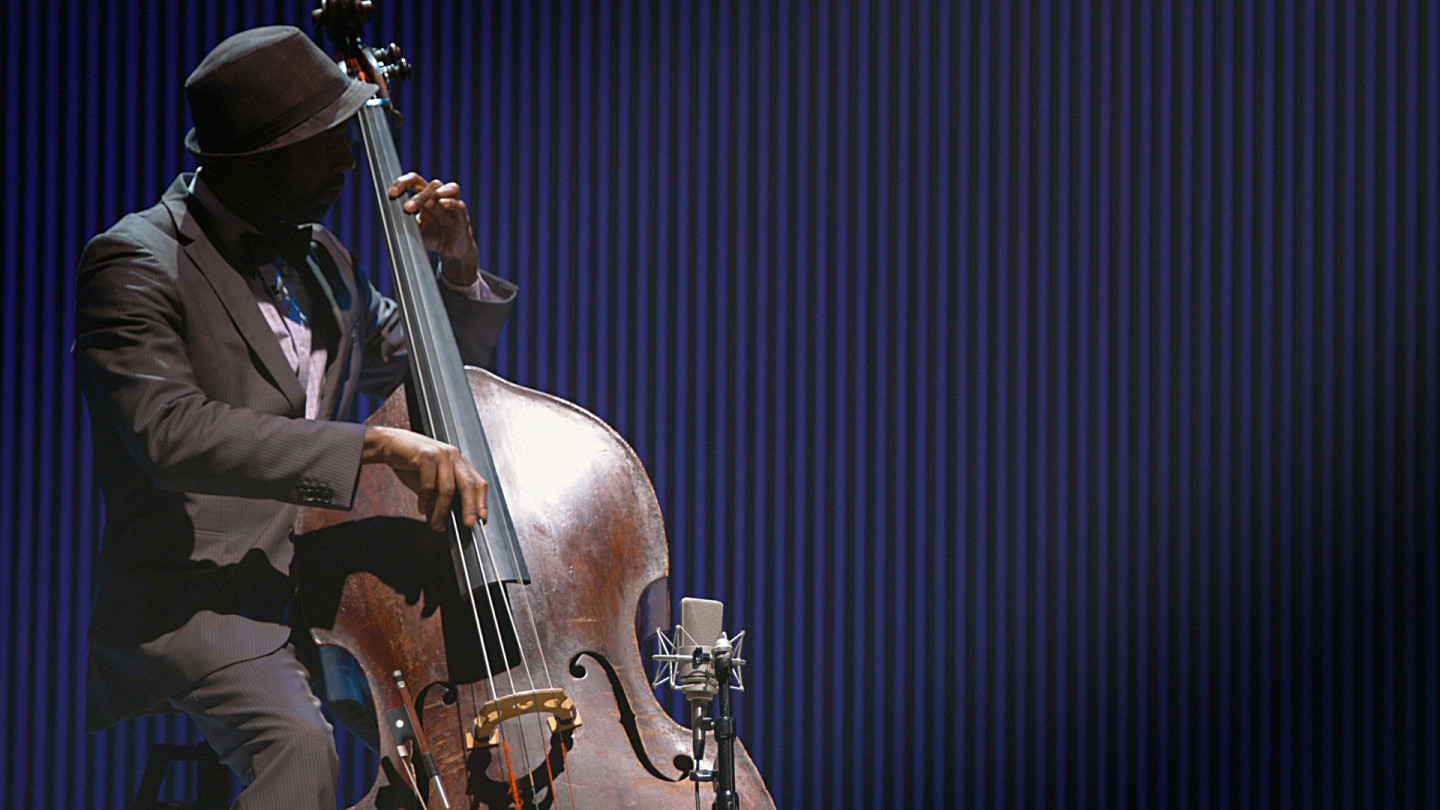
"content": "\u003cp>When he was 13 Marcus Shelby’s mom gave him a choice: either play bass with the church choir or be an usher. Determined never to wear an usher’s uniform, he chose the choir and thus began his public life in music. He played bass casually in high school, but it wasn’t until he was 20 and saw Wynton Marsalis perform that he knew he wanted to be a professional musician. “I saw in Wynton Marsalis everything I wanted to be,” Shelby says. “So from that moment till today, it’s been walking towards this sort of light, if you will, towards the music.”\u003c/p>\n\u003cp>\u003ca href=\"http://ww2.kqed.org/arts/series/culturecreatescommunity/\">\u003cimg loading=\"lazy\" decoding=\"async\" class=\"alignright size-full wp-image-129114\" src=\"http://ww2.kqed.org/arts/wp-content/uploads/sites/2/2014/04/sparkcc.jpg\" alt=\"Spark: Culture Creates Community - A special KQED Arts series\" width=\"300\" height=\"250\">\u003c/a>That walk has been a swift one since Shelby won both the Charles Mingus Scholarship to the California Institute of the Arts and the John Coltrane Young Musicians & Artists Competition in the same year, 1991. Over the last two decades Shelby – who leads the \u003ca href=\"http://www.marcusshelby.com/index.htm\" target=\"_blank\" rel=\"noopener\">Marcus Shelby Jazz Orchestra\u003c/a>, the Marcus Shelby Hot 7, the Marcus Shelby Quintet and the Marcus Shelby Trio — has become a fixture of the San Francisco blues and jazz scene. Voted best jazz musician by numerous Bay Area publications, Shelby is a San Francisco Arts Commissioner and an artist in residence at the Yerba Buena Gardens Festival. The organization funds many of Shelby’s projects that bring music to underserved communities and has commissioned a number of Shelby’s extended compositions.\u003c/p>\n\u003cfigure id=\"attachment_10135152\" class=\"wp-caption alignleft\" style=\"max-width: 640px\">\u003ca href=\"http://ww2.kqed.org/arts/wp-content/uploads/sites/2/2014/04/shelby-theater.jpg\">\u003cimg loading=\"lazy\" decoding=\"async\" class=\"size-large wp-image-10135152\" src=\"http://ww2.kqed.org/arts/wp-content/uploads/sites/2/2014/04/shelby-theater-1440x810.jpg\" alt=\"Marcus Shelby in SF Jazz\" width=\"640\" height=\"360\" srcset=\"https://cdn.kqed.org/wp-content/uploads/sites/2/2014/04/shelby-theater-1440x810.jpg 1440w, https://cdn.kqed.org/wp-content/uploads/sites/2/2014/04/shelby-theater-400x225.jpg 400w, https://cdn.kqed.org/wp-content/uploads/sites/2/2014/04/shelby-theater-300x168.jpg 300w, https://cdn.kqed.org/wp-content/uploads/sites/2/2014/04/shelby-theater.jpg 1664w\" sizes=\"(max-width: 640px) 100vw, 640px\">\u003c/a>\u003cfigcaption class=\"wp-caption-text\">“The bass is like the heartbeat,” says bandleader and composer Marcus Shelby. “It’s that sound — that resonant wood, the tree of life — that has always attracted me.”\u003c/figcaption>\u003c/figure>\n\u003cp>As a composer, Shelby is perhaps best known for telling the story of the African American experience through compositions like “Soul of the Movement,” “Harriet Tubman” and “\u003ca href=\"http://en.wikipedia.org/wiki/Port_Chicago_disaster\" target=\"_blank\" rel=\"noopener\">Port Chicago\u003c/a>.” Shelby says diving into the research necessary to create these pieces allows him to grow artistically and personally. For a piece about Emmett Till, for example, he traveled to where Till’s body was thrown into the Tallahatchie River and read multiple books on Till’s life and times. Because of the music, he came to a new understanding of how Till’s death lent urgency to the civil rights movement: “When Rosa Parks refused to give up her seat on the bus,” Shelby recalls, “they asked her why. She said, ‘I was thinking about Emmett Till and I couldn’t turn back.’\u003c/p>\n\u003cfigure id=\"attachment_10135153\" class=\"wp-caption alignright\" style=\"max-width: 640px\">\u003ca href=\"http://ww2.kqed.org/arts/wp-content/uploads/sites/2/2014/04/shelby_group.jpg\">\u003cimg loading=\"lazy\" decoding=\"async\" class=\"size-large wp-image-10135153\" src=\"http://ww2.kqed.org/arts/wp-content/uploads/sites/2/2014/04/shelby_group-1440x810.jpg\" alt=\"The Marcus Shelby Quintet\" width=\"640\" height=\"360\" srcset=\"https://cdn.kqed.org/wp-content/uploads/sites/2/2014/04/shelby_group-1440x810.jpg 1440w, https://cdn.kqed.org/wp-content/uploads/sites/2/2014/04/shelby_group-400x225.jpg 400w, https://cdn.kqed.org/wp-content/uploads/sites/2/2014/04/shelby_group-300x168.jpg 300w, https://cdn.kqed.org/wp-content/uploads/sites/2/2014/04/shelby_group.jpg 1454w\" sizes=\"(max-width: 640px) 100vw, 640px\">\u003c/a>\u003cfigcaption class=\"wp-caption-text\">Marcus Shelby performs at the \u003ca href=\"https://www.sfjazz.org/\" target=\"_blank\" rel=\"noopener\">SFJAZZ Center\u003c/a>, where he has played for many years with the Family Matinee Program and on the main stage, Miner Auditorium — which SFJAZZ donated for the filming of the accompanying video. Here the Marcus Shelby Quintet performs, with Tiffany Austin on vocals, Joe Warner at piano, Ila Cantor on guitar, Geechi Taylor on drums and Marcus Shelby on bass.\u003c/figcaption>\u003c/figure>\n\u003cp>“So because you want to write some music about this history, you learn about it and you are able to share it in a different way,” Shelby says. “And, hopefully, it changes you.”\u003c/p>\n\u003cp>Shelby says sharing these stories with young people adds a heightened meaning to his music. “When I’m talking to young people, I’m not just regurgitating the history, but I’m talking about a time in our history where people had to do great things,” Shelby says. “I try to connect their feelings with this musical power. I tell them they have that power.” Over the years Shelby has worked with youths of all ages, from preschoolers to university students, at such places as the Rooftop Alternative School in San Francisco, the Community Music Center in the Mission, and the Stanford Jazz Workshop, at Stanford University. Shelby also performs and gives workshops in juvenile halls like the Juvenile Justice Center in San Francisco (shown in the accompanying video), where he says he strives to inspire and build relationships with young people while encouraging their natural creative talents.\u003c/p>\n\u003cfigure id=\"attachment_10135154\" class=\"wp-caption alignleft\" style=\"max-width: 640px\">\u003ca href=\"http://ww2.kqed.org/arts/wp-content/uploads/sites/2/2014/04/shelby_juvenile-hall.jpg\">\u003cimg loading=\"lazy\" decoding=\"async\" class=\"wp-image-10135154 size-large\" src=\"http://ww2.kqed.org/arts/wp-content/uploads/sites/2/2014/04/shelby_juvenile-hall-1440x809.jpg\" alt=\"Marcus Shelby and band in Juvenile Justice Center\" width=\"640\" height=\"359\" srcset=\"https://cdn.kqed.org/wp-content/uploads/sites/2/2014/04/shelby_juvenile-hall-1440x809.jpg 1440w, https://cdn.kqed.org/wp-content/uploads/sites/2/2014/04/shelby_juvenile-hall-400x224.jpg 400w, https://cdn.kqed.org/wp-content/uploads/sites/2/2014/04/shelby_juvenile-hall-300x168.jpg 300w, https://cdn.kqed.org/wp-content/uploads/sites/2/2014/04/shelby_juvenile-hall.jpg 1668w\" sizes=\"(max-width: 640px) 100vw, 640px\">\u003c/a>\u003cfigcaption class=\"wp-caption-text\">Shelby and his fellow musicians encourage young people in San Francisco’s Juvenile Justice Center to express their creativity. In his talks with kids he reminds them that Louis Armstrong got his musical start in reform school.\u003c/figcaption>\u003c/figure>\n\u003cp>Shelby believes he’s following the example of musicians like Charles Mingus, Duke Ellington and Nina Simone — artists who used their music to highlight the issues of the day. “In every freedom and social movement, music has been at the center as a tool for communication,” Shelby says. “So I think that it has a power that extends outside of just performance or entertainment.” Shelby’s next project is to compose the music for \u003ca href=\"http://en.wikipedia.org/wiki/Anna_Deavere_Smith\" target=\"_blank\" rel=\"noopener\">Anna Deavere Smith\u003c/a>’s one-woman show about the school-to-prison pipeline.\u003c/p>\n\u003cp>[ad fullwidth]\u003c/p>\u003cp>\u003c/p>\n",
"blocks": [],
"excerpt": "Bassist and bandleader Marcus Shelby is a perennial Bay Area jazz favorite whose compositions explore the African American experience. Shelby finds deeper meaning for his work sharing the music he loves and its history with young people in schools and juvenile halls.",
"status": "publish",
"parent": 0,
"modified": 1726702405,
"stats": {
"hasAudio": false,
"hasVideo": false,
"hasChartOrMap": false,
"iframeSrcs": [],
"hasGoogleForm": false,
"hasGallery": false,
"hasHearkenModule": false,
"hasPolis": false,
"paragraphCount": 8,
"wordCount": 818
},
"headData": {
"title": "Bassist Marcus Shelby Finds Freedom’s Message in the Music | KQED",
"description": "Bassist and bandleader Marcus Shelby is a perennial Bay Area jazz favorite whose compositions explore the African American experience. Shelby finds deeper meaning for his work sharing the music he loves and its history with young people in schools and juvenile halls.",
"ogTitle": "",
"ogDescription": "",
"ogImgId": "",
"twTitle": "",
"twDescription": "",
"twImgId": "",
"schema": {
"@context": "https://schema.org",
"@type": "Article",
"headline": "Bassist Marcus Shelby Finds Freedom’s Message in the Music",
"datePublished": "2014-04-24T06:00:43-07:00",
"dateModified": "2024-09-18T16:33:25-07:00",
"image": "https://cdn.kqed.org/wp-content/uploads/2020/02/KQED-OG-Image@1x.png"
}
},
"videoEmbed": "http://youtu.be/CwOZkMm3uGc",
"sticky": false,
"path": "/arts/10135150/bassist-marcus-shelby-finding-freedoms-message-in-the-music",
"audioTrackLength": null,
"parsedContent": [
{
"type": "contentString",
"content": "\u003cdiv class=\"post-body\">\u003cp>\u003cp>When he was 13 Marcus Shelby’s mom gave him a choice: either play bass with the church choir or be an usher. Determined never to wear an usher’s uniform, he chose the choir and thus began his public life in music. He played bass casually in high school, but it wasn’t until he was 20 and saw Wynton Marsalis perform that he knew he wanted to be a professional musician. “I saw in Wynton Marsalis everything I wanted to be,” Shelby says. “So from that moment till today, it’s been walking towards this sort of light, if you will, towards the music.”\u003c/p>\n\u003cp>\u003ca href=\"http://ww2.kqed.org/arts/series/culturecreatescommunity/\">\u003cimg loading=\"lazy\" decoding=\"async\" class=\"alignright size-full wp-image-129114\" src=\"http://ww2.kqed.org/arts/wp-content/uploads/sites/2/2014/04/sparkcc.jpg\" alt=\"Spark: Culture Creates Community - A special KQED Arts series\" width=\"300\" height=\"250\">\u003c/a>That walk has been a swift one since Shelby won both the Charles Mingus Scholarship to the California Institute of the Arts and the John Coltrane Young Musicians & Artists Competition in the same year, 1991. Over the last two decades Shelby – who leads the \u003ca href=\"http://www.marcusshelby.com/index.htm\" target=\"_blank\" rel=\"noopener\">Marcus Shelby Jazz Orchestra\u003c/a>, the Marcus Shelby Hot 7, the Marcus Shelby Quintet and the Marcus Shelby Trio — has become a fixture of the San Francisco blues and jazz scene. Voted best jazz musician by numerous Bay Area publications, Shelby is a San Francisco Arts Commissioner and an artist in residence at the Yerba Buena Gardens Festival. The organization funds many of Shelby’s projects that bring music to underserved communities and has commissioned a number of Shelby’s extended compositions.\u003c/p>\n\u003cfigure id=\"attachment_10135152\" class=\"wp-caption alignleft\" style=\"max-width: 640px\">\u003ca href=\"http://ww2.kqed.org/arts/wp-content/uploads/sites/2/2014/04/shelby-theater.jpg\">\u003cimg loading=\"lazy\" decoding=\"async\" class=\"size-large wp-image-10135152\" src=\"http://ww2.kqed.org/arts/wp-content/uploads/sites/2/2014/04/shelby-theater-1440x810.jpg\" alt=\"Marcus Shelby in SF Jazz\" width=\"640\" height=\"360\" srcset=\"https://cdn.kqed.org/wp-content/uploads/sites/2/2014/04/shelby-theater-1440x810.jpg 1440w, https://cdn.kqed.org/wp-content/uploads/sites/2/2014/04/shelby-theater-400x225.jpg 400w, https://cdn.kqed.org/wp-content/uploads/sites/2/2014/04/shelby-theater-300x168.jpg 300w, https://cdn.kqed.org/wp-content/uploads/sites/2/2014/04/shelby-theater.jpg 1664w\" sizes=\"(max-width: 640px) 100vw, 640px\">\u003c/a>\u003cfigcaption class=\"wp-caption-text\">“The bass is like the heartbeat,” says bandleader and composer Marcus Shelby. “It’s that sound — that resonant wood, the tree of life — that has always attracted me.”\u003c/figcaption>\u003c/figure>\n\u003cp>As a composer, Shelby is perhaps best known for telling the story of the African American experience through compositions like “Soul of the Movement,” “Harriet Tubman” and “\u003ca href=\"http://en.wikipedia.org/wiki/Port_Chicago_disaster\" target=\"_blank\" rel=\"noopener\">Port Chicago\u003c/a>.” Shelby says diving into the research necessary to create these pieces allows him to grow artistically and personally. For a piece about Emmett Till, for example, he traveled to where Till’s body was thrown into the Tallahatchie River and read multiple books on Till’s life and times. Because of the music, he came to a new understanding of how Till’s death lent urgency to the civil rights movement: “When Rosa Parks refused to give up her seat on the bus,” Shelby recalls, “they asked her why. She said, ‘I was thinking about Emmett Till and I couldn’t turn back.’\u003c/p>\n\u003cfigure id=\"attachment_10135153\" class=\"wp-caption alignright\" style=\"max-width: 640px\">\u003ca href=\"http://ww2.kqed.org/arts/wp-content/uploads/sites/2/2014/04/shelby_group.jpg\">\u003cimg loading=\"lazy\" decoding=\"async\" class=\"size-large wp-image-10135153\" src=\"http://ww2.kqed.org/arts/wp-content/uploads/sites/2/2014/04/shelby_group-1440x810.jpg\" alt=\"The Marcus Shelby Quintet\" width=\"640\" height=\"360\" srcset=\"https://cdn.kqed.org/wp-content/uploads/sites/2/2014/04/shelby_group-1440x810.jpg 1440w, https://cdn.kqed.org/wp-content/uploads/sites/2/2014/04/shelby_group-400x225.jpg 400w, https://cdn.kqed.org/wp-content/uploads/sites/2/2014/04/shelby_group-300x168.jpg 300w, https://cdn.kqed.org/wp-content/uploads/sites/2/2014/04/shelby_group.jpg 1454w\" sizes=\"(max-width: 640px) 100vw, 640px\">\u003c/a>\u003cfigcaption class=\"wp-caption-text\">Marcus Shelby performs at the \u003ca href=\"https://www.sfjazz.org/\" target=\"_blank\" rel=\"noopener\">SFJAZZ Center\u003c/a>, where he has played for many years with the Family Matinee Program and on the main stage, Miner Auditorium — which SFJAZZ donated for the filming of the accompanying video. Here the Marcus Shelby Quintet performs, with Tiffany Austin on vocals, Joe Warner at piano, Ila Cantor on guitar, Geechi Taylor on drums and Marcus Shelby on bass.\u003c/figcaption>\u003c/figure>\n\u003cp>“So because you want to write some music about this history, you learn about it and you are able to share it in a different way,” Shelby says. “And, hopefully, it changes you.”\u003c/p>\n\u003cp>Shelby says sharing these stories with young people adds a heightened meaning to his music. “When I’m talking to young people, I’m not just regurgitating the history, but I’m talking about a time in our history where people had to do great things,” Shelby says. “I try to connect their feelings with this musical power. I tell them they have that power.” Over the years Shelby has worked with youths of all ages, from preschoolers to university students, at such places as the Rooftop Alternative School in San Francisco, the Community Music Center in the Mission, and the Stanford Jazz Workshop, at Stanford University. Shelby also performs and gives workshops in juvenile halls like the Juvenile Justice Center in San Francisco (shown in the accompanying video), where he says he strives to inspire and build relationships with young people while encouraging their natural creative talents.\u003c/p>\n\u003cfigure id=\"attachment_10135154\" class=\"wp-caption alignleft\" style=\"max-width: 640px\">\u003ca href=\"http://ww2.kqed.org/arts/wp-content/uploads/sites/2/2014/04/shelby_juvenile-hall.jpg\">\u003cimg loading=\"lazy\" decoding=\"async\" class=\"wp-image-10135154 size-large\" src=\"http://ww2.kqed.org/arts/wp-content/uploads/sites/2/2014/04/shelby_juvenile-hall-1440x809.jpg\" alt=\"Marcus Shelby and band in Juvenile Justice Center\" width=\"640\" height=\"359\" srcset=\"https://cdn.kqed.org/wp-content/uploads/sites/2/2014/04/shelby_juvenile-hall-1440x809.jpg 1440w, https://cdn.kqed.org/wp-content/uploads/sites/2/2014/04/shelby_juvenile-hall-400x224.jpg 400w, https://cdn.kqed.org/wp-content/uploads/sites/2/2014/04/shelby_juvenile-hall-300x168.jpg 300w, https://cdn.kqed.org/wp-content/uploads/sites/2/2014/04/shelby_juvenile-hall.jpg 1668w\" sizes=\"(max-width: 640px) 100vw, 640px\">\u003c/a>\u003cfigcaption class=\"wp-caption-text\">Shelby and his fellow musicians encourage young people in San Francisco’s Juvenile Justice Center to express their creativity. In his talks with kids he reminds them that Louis Armstrong got his musical start in reform school.\u003c/figcaption>\u003c/figure>\n\u003cp>Shelby believes he’s following the example of musicians like Charles Mingus, Duke Ellington and Nina Simone — artists who used their music to highlight the issues of the day. “In every freedom and social movement, music has been at the center as a tool for communication,” Shelby says. “So I think that it has a power that extends outside of just performance or entertainment.” Shelby’s next project is to compose the music for \u003ca href=\"http://en.wikipedia.org/wiki/Anna_Deavere_Smith\" target=\"_blank\" rel=\"noopener\">Anna Deavere Smith\u003c/a>’s one-woman show about the school-to-prison pipeline.\u003c/p>\n\u003cp>\u003c/p>\u003c/div>",
"attributes": {
"named": {},
"numeric": []
}
},
{
"type": "component",
"content": "",
"name": "ad",
"attributes": {
"named": {
"label": "fullwidth"
},
"numeric": [
"fullwidth"
]
}
},
{
"type": "contentString",
"content": "\u003cdiv class=\"post-body\">\u003cp>\u003c/p>\u003cp>\u003c/p>\n\u003c/div>\u003c/p>",
"attributes": {
"named": {},
"numeric": []
}
}
],
"link": "/arts/10135150/bassist-marcus-shelby-finding-freedoms-message-in-the-music",
"authors": [
"90"
],
"categories": [
"arts_69"
],
"featImg": "arts_10135156",
"label": "arts"
},
"arts_10135090": {
"type": "posts",
"id": "arts_10135090",
"meta": {
"index": "posts_1716263798",
"site": "arts",
"id": "10135090",
"score": null,
"sort": [
1398258013000
]
},
"parent": 0,
"labelTerm": {
"site": "arts"
},
"blocks": [],
"publishDate": 1398258013,
"format": "standard",
"title": "The Soft White Sixties' Working Class Soul",
"headTitle": "The Soft White Sixties’ Working Class Soul | KQED",
"content": "\u003cp>One of the defining characteristics of the Bay Area is its overwhelming diversity. Diversity of race, ethnicity, region of origin, country of origin, socio-economic status — it’s all here and it’s all vibrant. \u003ca href=\"http://thesoftwhitesixties.com/\">The Soft White Sixties\u003c/a> is a band representing a microcosm of this diversity, a fact that has played a huge role in the group’s early success.\u003c/p>\n\u003caside class=\"event-info alignright\">\n\u003ch3>Event Information\u003c/h3>\n\u003cdiv class=\"event-map\">[googlemaps https://maps.google.com/maps/embed?pb=!1m18!1m12!1m3!1d3153.7925996286876!2d-122.41324999999999!3d37.77146099999994!2m3!1f0!2f0!3f0!3m2!1i1024!2i768!4f13.1!3m3!1m2!1s0x808f7e262d103531%3A0x8321bac420240bf4!2sSlim’s!5e0!3m2!1sen!2sus!4v1398287551216&w=400&h=300]\u003c/div>\n\u003cdiv class=\"event-desc\">\n\u003cp>The Soft White Sixties play Friday, April 25, 2014 at Slim’s in San Francisco. For tickets and information visit: \u003ca href=\"http://www.slimspresents.com/events/2014-04-25/the-soft-white-sixties-2/\" target=\"_blank\" rel=\"noopener\">slimspresents.com\u003c/a>.\u003c/p>\n\u003c/div>\n\u003cdiv class=\"event-dates\">\n\u003ch4>Friday, April 25, 2014\u003c/h4>\n\u003cp>Doors open: 8pm. Show: 9pm\u003c/p>\n\u003c/div>\n\u003cdiv class=\"event-venue\">Slim’s\u003cbr>\n333 11th St.\u003cbr>\nSan Francisco, CA 94103\u003cbr>\nTel: 415.255.0333\u003cbr>\n\u003ca href=\"https://goo.gl/maps/mZJkq\" target=\"_blank\" rel=\"noopener\">MAP\u003c/a>\u003c/div>\n\u003c/aside>\n\u003cp>One look at Octavio, Aaron, Ryan and Joey will tell you that this crew brings influences from a range of backgrounds. The band’s music has a skeleton of rock and roll whose muscles, tissues and veins are filled in with punk, pop and a whole lot of soul. The “\u003ca href=\"http://thebaybridged.com/2014/02/19/interview-hard-work-paying-off-for-the-soft-white-sixties/#.U1XvPeZdUjB\">working class soul\u003c/a>” that The Sixties create is reminiscent of “American” cuisine. It takes a little from here, steals a little from there, and ends up with delicious morsels that almost everyone will enjoy.\u003c/p>\n\u003cp>The multiplicity of genres and inspirations that come across in the band’s music can be directly traced to the array of music they were introduced to as children. The boys each credit their parents’ record collections with sowing the seeds that have grown into what they write and play today.\u003c/p>\n\u003cp>“My Pops was really into Black Sabbath, Led Zeppelin, Frank Zappa… and my mom was into Tom Petty \u003cem>big time,\u003c/em>” bassist Ryan Noble informs me. Ryan’s mother also introduced him to strong female pop stars Stevie Nicks and Pat Benatar.\u003c/p>\n\u003cfigure id=\"attachment_10135097\" class=\"wp-caption alignright\" style=\"max-width: 400px\">\u003ca href=\"http://ww2.kqed.org/arts/wp-content/uploads/sites/2/2014/04/TSWS-Live-4.jpg\">\u003cimg loading=\"lazy\" decoding=\"async\" class=\"size-medium wp-image-10135097 \" alt=\"The Soft White Sixties performing at The Fillmore.\" src=\"http://ww2.kqed.org/arts/wp-content/uploads/sites/2/2014/04/TSWS-Live-4-300x199.jpg\" width=\"400\" height=\"265\" srcset=\"https://cdn.kqed.org/wp-content/uploads/sites/2/2014/04/TSWS-Live-4-300x199.jpg 300w, https://cdn.kqed.org/wp-content/uploads/sites/2/2014/04/TSWS-Live-4-400x266.jpg 400w\" sizes=\"(max-width: 400px) 100vw, 400px\">\u003c/a>\u003cfigcaption class=\"wp-caption-text\">The Soft White Sixties performing at The Fillmore; photo by Mat Dunlap \u003ccite>(Mat Dunlap)\u003c/cite>\u003c/figcaption>\u003c/figure>\n\u003cp>Vocalist Octavio Genera shares a similar story — Tom Petty as his first live music experience. However, Octavio also boasts a unique influence. “I grew up hearing a lot of Motown, Creedence Clearwater, Rolling Stones and Mexican \u003ca href=\"http://artsedge.kennedy-center.org/~/media/ArtsEdge/LessonPrintables/grade-9-12/form_and_theme_mex_cor_what_is_a_corrido.ashx\">corridos\u003c/a>,” Octavio tells me, showing just how diverse the makeup of his band really is.\u003c/p>\n\u003cp>[ad fullwidth]\u003c/p>\n\u003cp>Guitarist/keyboardist Aaron Eisenberg owns the most unique first concert story, having witnessed The Grateful Dead at Stanford in 1988 at the ripe age of \u003cem>three months\u003c/em>. The band’s motif of diversity rears its head once again when Aaron reveals to me that the first song he learned on guitar wasn’t “Casey Jones” or “Truckin,” but “Dammit” by Blink 182. “I still got it,” he adds.\u003c/p>\n\u003cp>Drummer Joey Bustos brings a punk rock element to the group, having been introduced to, and falling in love with, the genre at the age of 11. “I bought a drum kit for $70 when I was 13, started a band soon after and was playing shows around the Bay Area at 14,” he recalls.\u003c/p>\n\u003cfigure id=\"attachment_101351\" class=\"wp-caption aligncenter\" style=\"max-width: 800px\">\u003ca href=\"http://ww2.kqed.org/arts/wp-content/uploads/sites/2/2014/04/TSWS-Live-5.jpg\">\u003cimg loading=\"lazy\" decoding=\"async\" class=\" wp-image-10135104\" alt=\"\" src=\"http://ww2.kqed.org/arts/wp-content/uploads/sites/2/2014/04/TSWS-Live-5.jpg\" width=\"800\" height=\"533\" srcset=\"https://cdn.kqed.org/wp-content/uploads/sites/2/2014/04/TSWS-Live-5.jpg 800w, https://cdn.kqed.org/wp-content/uploads/sites/2/2014/04/TSWS-Live-5-400x266.jpg 400w, https://cdn.kqed.org/wp-content/uploads/sites/2/2014/04/TSWS-Live-5-300x199.jpg 300w\" sizes=\"(max-width: 800px) 100vw, 800px\">\u003c/a>\u003cfigcaption class=\"wp-caption-text\">Photo: Mat Dunlap\u003c/figcaption>\u003c/figure>\n\u003cp>Joey is the sole Bay Area native in The Soft White Sixties, having been born in San Francisco and raised in Richmond. While not a native, Ryan is a veteran of the area. He moved to Oakland in 2001. Aaron and Octavio are more recent additions to the Bay’s ranks, both having relocated here back in 2008.\u003c/p>\n\u003cp>The band originally came together through what they describe as “a serendipitous series of run-ins.” This seems to be a pretty standard band formation story. The members’ previous groups break up, there is a fateful meeting, ideas are exchanged and bonds are forged. From the beginning, though, the guys knew there was nothing standard about their new alliance. They felt “a real brotherhood, [with] songs that felt good to play and a mutual focus on doing something big.”\u003c/p>\n\u003cp>\u003cem>Big\u003c/em> is what The Soft White Sixties are on the verge of becoming. After selling out their record release show last year at The Independent and their recent Noise Pop performance at The Chapel, it’s not such a stretch to see them headlining and selling out much larger venues in the near future. The band is certainly no stranger to large venues after gracing the main stage of Outside Lands in 2013. The guys point to this event as a surreal moment of their journey thus far. “It was a dream come true for us and we realized that something very special was starting to unfold,” Ryan divulges.\u003c/p>\n\u003cfigure id=\"attachment_101351\" class=\"wp-caption aligncenter\" style=\"max-width: 1280px\">\u003ca href=\"http://ww2.kqed.org/arts/wp-content/uploads/sites/2/2014/04/tumblr_n1w4wxhmBx1ql80o1o3_1280.jpg\">\u003cimg loading=\"lazy\" decoding=\"async\" class=\" wp-image-10135116\" alt=\"\" src=\"http://ww2.kqed.org/arts/wp-content/uploads/sites/2/2014/04/tumblr_n1w4wxhmBx1ql80o1o3_1280.jpg\" width=\"1280\" height=\"854\" srcset=\"https://cdn.kqed.org/wp-content/uploads/sites/2/2014/04/tumblr_n1w4wxhmBx1ql80o1o3_1280.jpg 1280w, https://cdn.kqed.org/wp-content/uploads/sites/2/2014/04/tumblr_n1w4wxhmBx1ql80o1o3_1280-400x266.jpg 400w, https://cdn.kqed.org/wp-content/uploads/sites/2/2014/04/tumblr_n1w4wxhmBx1ql80o1o3_1280-300x200.jpg 300w\" sizes=\"(max-width: 1280px) 100vw, 1280px\">\u003c/a>\u003cfigcaption class=\"wp-caption-text\">Photo: Karen Goldman\u003c/figcaption>\u003c/figure>\n\u003cp>The Sixties’ noteworthy live shows aren’t alone in creating anticipation for even greater success. The band’s debut album, \u003cem>Get Right\u003c/em>, is littered with hooks and riffs that are polished yet wonderfully raw. Octavio Genera’s vocals are simultaneously sugary smooth and spicily gritty. These are juxtapositions that the band seems to embrace warmly and readily.\u003c/p>\n\u003cp>Jim Greer (of \u003ca href=\"http://rondobrothers.com/\">The Rondo Brothers\u003c/a>)\u003ca href=\"http://www.sfgate.com/entertainment/article/Jim-Greer-Ginger-Vision-clouded-by-reality-2388358.php\"> \u003c/a>is credited with producing the record and took his duties seriously. “He would come to practices and listen to the songs over and over, then we would discuss arrangement options,” Octavio tells me. “The band already had the songs about 90% there, but Jim had some really cool ideas that ended up making the cut and, we believe, making the songs better.”\u003c/p>\n\u003cp>https://www.youtube.com/watch?v=1pfeICEeVpI\u003c/p>\n\u003cp>For the more discerning listener, \u003cem>Get Right \u003c/em>reveals that The Soft White Sixties is comprised of unabashed tone nerds. “I was always the kid at shows that would go up and check out bands’ pedalboards after their set,” Aaron concedes. He goes on to tell me, “Tone is the most important element, in my opinion, when it comes to defining a band’s genre. Most of my favorite players are favorites because of the sounds they made more so than their technical prowess. My process is just a lot of trial and error and experimentation.”\u003c/p>\n\u003cfigure id=\"attachment_101351\" class=\"wp-caption aligncenter\" style=\"max-width: 800px\">\u003ca href=\"http://ww2.kqed.org/arts/wp-content/uploads/sites/2/2014/04/TSWS-Live-1.jpg\">\u003cimg loading=\"lazy\" decoding=\"async\" class=\" wp-image-10135114\" alt=\"\" src=\"http://ww2.kqed.org/arts/wp-content/uploads/sites/2/2014/04/TSWS-Live-1.jpg\" width=\"800\" height=\"533\" srcset=\"https://cdn.kqed.org/wp-content/uploads/sites/2/2014/04/TSWS-Live-1.jpg 800w, https://cdn.kqed.org/wp-content/uploads/sites/2/2014/04/TSWS-Live-1-400x266.jpg 400w, https://cdn.kqed.org/wp-content/uploads/sites/2/2014/04/TSWS-Live-1-300x199.jpg 300w\" sizes=\"(max-width: 800px) 100vw, 800px\">\u003c/a>\u003cfigcaption class=\"wp-caption-text\">Photo: Mat Dunlap\u003c/figcaption>\u003c/figure>\n\u003cp>Tone, talent, allure, desire — it’s all there for The Soft White Sixties. The band hopes to continue the trend of successful hometown shows this Friday, April 25, when it headlines Slim’s. The guys will have just ended a jaunt on the road that took them through Texas and the Southwest, so expect them to be on top of their game.\u003c/p>\n\u003cp>[ad floatright]\u003c/p>\n\u003cp>The Soft White Sixties play Friday, April 25, 2014 at Slim’s in San Francisco. For \u003ca href=\"http://www.slimspresents.com/events/2014-04-25/the-soft-white-sixties-2/\">tickets and information\u003c/a> visit slimspresents.com.\u003c/p>\n\n",
"stats": {
"hasVideo": true,
"hasChartOrMap": true,
"hasAudio": false,
"hasPolis": false,
"wordCount": 1156,
"hasGoogleForm": false,
"hasGallery": false,
"hasHearkenModule": false,
"iframeSrcs": [
"https://maps.google.com/maps/embed"
],
"paragraphCount": 19
},
"modified": 1705049085,
"excerpt": "After selling out their record release show (for \u003ci>Get Right\u003c/i>) last year at The Independent and their recent Noise Pop performance at The Chapel, The Soft White Sixties return to the Bay from a tour of Texas and the Southwest to play Slim's this Friday. Their music has a skeleton of rock and roll whose muscles, tissues and veins are filled in with punk, pop and a whole lot of soul. ",
"headData": {
"twImgId": "",
"twTitle": "",
"ogTitle": "",
"ogImgId": "",
"twDescription": "",
"description": "After selling out their record release show (for Get Right) last year at The Independent and their recent Noise Pop performance at The Chapel, The Soft White Sixties return to the Bay from a tour of Texas and the Southwest to play Slim's this Friday. Their music has a skeleton of rock and roll whose muscles, tissues and veins are filled in with punk, pop and a whole lot of soul. ",
"title": "The Soft White Sixties' Working Class Soul | KQED",
"ogDescription": "",
"schema": {
"@context": "https://schema.org",
"@type": "Article",
"headline": "The Soft White Sixties' Working Class Soul",
"datePublished": "2014-04-23T06:00:13-07:00",
"dateModified": "2024-01-12T00:44:45-08:00",
"image": "https://cdn.kqed.org/wp-content/uploads/2020/02/KQED-OG-Image@1x.png"
}
},
"guestAuthors": [],
"slug": "the-soft-white-sixties-working-class-soul",
"status": "publish",
"sticky": false,
"path": "/arts/10135090/the-soft-white-sixties-working-class-soul",
"audioTrackLength": null,
"parsedContent": [
{
"type": "contentString",
"content": "\u003cdiv class=\"post-body\">\u003cp>\u003cp>One of the defining characteristics of the Bay Area is its overwhelming diversity. Diversity of race, ethnicity, region of origin, country of origin, socio-economic status — it’s all here and it’s all vibrant. \u003ca href=\"http://thesoftwhitesixties.com/\">The Soft White Sixties\u003c/a> is a band representing a microcosm of this diversity, a fact that has played a huge role in the group’s early success.\u003c/p>\n\u003caside class=\"event-info alignright\">\n\u003ch3>Event Information\u003c/h3>\n\u003cdiv class=\"event-map\">\u003c/p>\u003cp>\u003ciframe\n src='https://maps.google.com/maps/embed?pb=!1m18!1m12!1m3!1d3153.7925996286876!2d-122.41324999999999!3d37.77146099999994!2m3!1f0!2f0!3f0!3m2!1i1024!2i768!4f13.1!3m3!1m2!1s0x808f7e262d103531%3A0x8321bac420240bf4!2sSlim’s!5e0!3m2!1sen!2sus!4v1398287551216&w=400&h=300'\n title='https://maps.google.com/maps/embed?pb=!1m18!1m12!1m3!1d3153.7925996286876!2d-122.41324999999999!3d37.77146099999994!2m3!1f0!2f0!3f0!3m2!1i1024!2i768!4f13.1!3m3!1m2!1s0x808f7e262d103531%3A0x8321bac420240bf4!2sSlim’s!5e0!3m2!1sen!2sus!4v1398287551216&w=400&h=300'\n width='400'\n height='300'\n scrolling='no'\n frameborder='no'>\u003c/iframe>\u003c/p>\u003cp>\u003c/div>\n\u003cdiv class=\"event-desc\">\n\u003cp>The Soft White Sixties play Friday, April 25, 2014 at Slim’s in San Francisco. For tickets and information visit: \u003ca href=\"http://www.slimspresents.com/events/2014-04-25/the-soft-white-sixties-2/\" target=\"_blank\" rel=\"noopener\">slimspresents.com\u003c/a>.\u003c/p>\n\u003c/div>\n\u003cdiv class=\"event-dates\">\n\u003ch4>Friday, April 25, 2014\u003c/h4>\n\u003cp>Doors open: 8pm. Show: 9pm\u003c/p>\n\u003c/div>\n\u003cdiv class=\"event-venue\">Slim’s\u003cbr>\n333 11th St.\u003cbr>\nSan Francisco, CA 94103\u003cbr>\nTel: 415.255.0333\u003cbr>\n\u003ca href=\"https://goo.gl/maps/mZJkq\" target=\"_blank\" rel=\"noopener\">MAP\u003c/a>\u003c/div>\n\u003c/aside>\n\u003cp>One look at Octavio, Aaron, Ryan and Joey will tell you that this crew brings influences from a range of backgrounds. The band’s music has a skeleton of rock and roll whose muscles, tissues and veins are filled in with punk, pop and a whole lot of soul. The “\u003ca href=\"http://thebaybridged.com/2014/02/19/interview-hard-work-paying-off-for-the-soft-white-sixties/#.U1XvPeZdUjB\">working class soul\u003c/a>” that The Sixties create is reminiscent of “American” cuisine. It takes a little from here, steals a little from there, and ends up with delicious morsels that almost everyone will enjoy.\u003c/p>\n\u003cp>The multiplicity of genres and inspirations that come across in the band’s music can be directly traced to the array of music they were introduced to as children. The boys each credit their parents’ record collections with sowing the seeds that have grown into what they write and play today.\u003c/p>\n\u003cp>“My Pops was really into Black Sabbath, Led Zeppelin, Frank Zappa… and my mom was into Tom Petty \u003cem>big time,\u003c/em>” bassist Ryan Noble informs me. Ryan’s mother also introduced him to strong female pop stars Stevie Nicks and Pat Benatar.\u003c/p>\n\u003cfigure id=\"attachment_10135097\" class=\"wp-caption alignright\" style=\"max-width: 400px\">\u003ca href=\"http://ww2.kqed.org/arts/wp-content/uploads/sites/2/2014/04/TSWS-Live-4.jpg\">\u003cimg loading=\"lazy\" decoding=\"async\" class=\"size-medium wp-image-10135097 \" alt=\"The Soft White Sixties performing at The Fillmore.\" src=\"http://ww2.kqed.org/arts/wp-content/uploads/sites/2/2014/04/TSWS-Live-4-300x199.jpg\" width=\"400\" height=\"265\" srcset=\"https://cdn.kqed.org/wp-content/uploads/sites/2/2014/04/TSWS-Live-4-300x199.jpg 300w, https://cdn.kqed.org/wp-content/uploads/sites/2/2014/04/TSWS-Live-4-400x266.jpg 400w\" sizes=\"(max-width: 400px) 100vw, 400px\">\u003c/a>\u003cfigcaption class=\"wp-caption-text\">The Soft White Sixties performing at The Fillmore; photo by Mat Dunlap \u003ccite>(Mat Dunlap)\u003c/cite>\u003c/figcaption>\u003c/figure>\n\u003cp>Vocalist Octavio Genera shares a similar story — Tom Petty as his first live music experience. However, Octavio also boasts a unique influence. “I grew up hearing a lot of Motown, Creedence Clearwater, Rolling Stones and Mexican \u003ca href=\"http://artsedge.kennedy-center.org/~/media/ArtsEdge/LessonPrintables/grade-9-12/form_and_theme_mex_cor_what_is_a_corrido.ashx\">corridos\u003c/a>,” Octavio tells me, showing just how diverse the makeup of his band really is.\u003c/p>\n\u003cp>\u003c/p>\u003c/div>",
"attributes": {
"named": {},
"numeric": []
}
},
{
"type": "component",
"content": "",
"name": "ad",
"attributes": {
"named": {
"label": "fullwidth"
},
"numeric": [
"fullwidth"
]
}
},
{
"type": "contentString",
"content": "\u003cdiv class=\"post-body\">\u003cp>\u003c/p>\n\u003cp>Guitarist/keyboardist Aaron Eisenberg owns the most unique first concert story, having witnessed The Grateful Dead at Stanford in 1988 at the ripe age of \u003cem>three months\u003c/em>. The band’s motif of diversity rears its head once again when Aaron reveals to me that the first song he learned on guitar wasn’t “Casey Jones” or “Truckin,” but “Dammit” by Blink 182. “I still got it,” he adds.\u003c/p>\n\u003cp>Drummer Joey Bustos brings a punk rock element to the group, having been introduced to, and falling in love with, the genre at the age of 11. “I bought a drum kit for $70 when I was 13, started a band soon after and was playing shows around the Bay Area at 14,” he recalls.\u003c/p>\n\u003cfigure id=\"attachment_101351\" class=\"wp-caption aligncenter\" style=\"max-width: 800px\">\u003ca href=\"http://ww2.kqed.org/arts/wp-content/uploads/sites/2/2014/04/TSWS-Live-5.jpg\">\u003cimg loading=\"lazy\" decoding=\"async\" class=\" wp-image-10135104\" alt=\"\" src=\"http://ww2.kqed.org/arts/wp-content/uploads/sites/2/2014/04/TSWS-Live-5.jpg\" width=\"800\" height=\"533\" srcset=\"https://cdn.kqed.org/wp-content/uploads/sites/2/2014/04/TSWS-Live-5.jpg 800w, https://cdn.kqed.org/wp-content/uploads/sites/2/2014/04/TSWS-Live-5-400x266.jpg 400w, https://cdn.kqed.org/wp-content/uploads/sites/2/2014/04/TSWS-Live-5-300x199.jpg 300w\" sizes=\"(max-width: 800px) 100vw, 800px\">\u003c/a>\u003cfigcaption class=\"wp-caption-text\">Photo: Mat Dunlap\u003c/figcaption>\u003c/figure>\n\u003cp>Joey is the sole Bay Area native in The Soft White Sixties, having been born in San Francisco and raised in Richmond. While not a native, Ryan is a veteran of the area. He moved to Oakland in 2001. Aaron and Octavio are more recent additions to the Bay’s ranks, both having relocated here back in 2008.\u003c/p>\n\u003cp>The band originally came together through what they describe as “a serendipitous series of run-ins.” This seems to be a pretty standard band formation story. The members’ previous groups break up, there is a fateful meeting, ideas are exchanged and bonds are forged. From the beginning, though, the guys knew there was nothing standard about their new alliance. They felt “a real brotherhood, [with] songs that felt good to play and a mutual focus on doing something big.”\u003c/p>\n\u003cp>\u003cem>Big\u003c/em> is what The Soft White Sixties are on the verge of becoming. After selling out their record release show last year at The Independent and their recent Noise Pop performance at The Chapel, it’s not such a stretch to see them headlining and selling out much larger venues in the near future. The band is certainly no stranger to large venues after gracing the main stage of Outside Lands in 2013. The guys point to this event as a surreal moment of their journey thus far. “It was a dream come true for us and we realized that something very special was starting to unfold,” Ryan divulges.\u003c/p>\n\u003cfigure id=\"attachment_101351\" class=\"wp-caption aligncenter\" style=\"max-width: 1280px\">\u003ca href=\"http://ww2.kqed.org/arts/wp-content/uploads/sites/2/2014/04/tumblr_n1w4wxhmBx1ql80o1o3_1280.jpg\">\u003cimg loading=\"lazy\" decoding=\"async\" class=\" wp-image-10135116\" alt=\"\" src=\"http://ww2.kqed.org/arts/wp-content/uploads/sites/2/2014/04/tumblr_n1w4wxhmBx1ql80o1o3_1280.jpg\" width=\"1280\" height=\"854\" srcset=\"https://cdn.kqed.org/wp-content/uploads/sites/2/2014/04/tumblr_n1w4wxhmBx1ql80o1o3_1280.jpg 1280w, https://cdn.kqed.org/wp-content/uploads/sites/2/2014/04/tumblr_n1w4wxhmBx1ql80o1o3_1280-400x266.jpg 400w, https://cdn.kqed.org/wp-content/uploads/sites/2/2014/04/tumblr_n1w4wxhmBx1ql80o1o3_1280-300x200.jpg 300w\" sizes=\"(max-width: 1280px) 100vw, 1280px\">\u003c/a>\u003cfigcaption class=\"wp-caption-text\">Photo: Karen Goldman\u003c/figcaption>\u003c/figure>\n\u003cp>The Sixties’ noteworthy live shows aren’t alone in creating anticipation for even greater success. The band’s debut album, \u003cem>Get Right\u003c/em>, is littered with hooks and riffs that are polished yet wonderfully raw. Octavio Genera’s vocals are simultaneously sugary smooth and spicily gritty. These are juxtapositions that the band seems to embrace warmly and readily.\u003c/p>\n\u003cp>Jim Greer (of \u003ca href=\"http://rondobrothers.com/\">The Rondo Brothers\u003c/a>)\u003ca href=\"http://www.sfgate.com/entertainment/article/Jim-Greer-Ginger-Vision-clouded-by-reality-2388358.php\"> \u003c/a>is credited with producing the record and took his duties seriously. “He would come to practices and listen to the songs over and over, then we would discuss arrangement options,” Octavio tells me. “The band already had the songs about 90% there, but Jim had some really cool ideas that ended up making the cut and, we believe, making the songs better.”\u003c/p>\u003c/p>\u003cp>\u003cspan class='utils-parseShortcode-shortcodes-__youtubeShortcode__embedYoutube'>\n \u003cspan class='utils-parseShortcode-shortcodes-__youtubeShortcode__embedYoutubeInside'>\n \u003ciframe\n loading='lazy'\n class='utils-parseShortcode-shortcodes-__youtubeShortcode__youtubePlayer'\n type='text/html'\n src='//www.youtube.com/embed/1pfeICEeVpI'\n title='//www.youtube.com/embed/1pfeICEeVpI'\n allowfullscreen='true'\n style='border:0;'>\u003c/iframe>\n \u003c/span>\n \u003c/span>\u003c/p>\u003cp>\u003cp>For the more discerning listener, \u003cem>Get Right \u003c/em>reveals that The Soft White Sixties is comprised of unabashed tone nerds. “I was always the kid at shows that would go up and check out bands’ pedalboards after their set,” Aaron concedes. He goes on to tell me, “Tone is the most important element, in my opinion, when it comes to defining a band’s genre. Most of my favorite players are favorites because of the sounds they made more so than their technical prowess. My process is just a lot of trial and error and experimentation.”\u003c/p>\n\u003cfigure id=\"attachment_101351\" class=\"wp-caption aligncenter\" style=\"max-width: 800px\">\u003ca href=\"http://ww2.kqed.org/arts/wp-content/uploads/sites/2/2014/04/TSWS-Live-1.jpg\">\u003cimg loading=\"lazy\" decoding=\"async\" class=\" wp-image-10135114\" alt=\"\" src=\"http://ww2.kqed.org/arts/wp-content/uploads/sites/2/2014/04/TSWS-Live-1.jpg\" width=\"800\" height=\"533\" srcset=\"https://cdn.kqed.org/wp-content/uploads/sites/2/2014/04/TSWS-Live-1.jpg 800w, https://cdn.kqed.org/wp-content/uploads/sites/2/2014/04/TSWS-Live-1-400x266.jpg 400w, https://cdn.kqed.org/wp-content/uploads/sites/2/2014/04/TSWS-Live-1-300x199.jpg 300w\" sizes=\"(max-width: 800px) 100vw, 800px\">\u003c/a>\u003cfigcaption class=\"wp-caption-text\">Photo: Mat Dunlap\u003c/figcaption>\u003c/figure>\n\u003cp>Tone, talent, allure, desire — it’s all there for The Soft White Sixties. The band hopes to continue the trend of successful hometown shows this Friday, April 25, when it headlines Slim’s. The guys will have just ended a jaunt on the road that took them through Texas and the Southwest, so expect them to be on top of their game.\u003c/p>\n\u003cp>\u003c/p>\u003c/div>",
"attributes": {
"named": {},
"numeric": []
}
},
{
"type": "component",
"content": "",
"name": "ad",
"attributes": {
"named": {
"label": "floatright"
},
"numeric": [
"floatright"
]
}
},
{
"type": "contentString",
"content": "\u003cdiv class=\"post-body\">\u003cp>\u003c/p>\n\u003cp>The Soft White Sixties play Friday, April 25, 2014 at Slim’s in San Francisco. For \u003ca href=\"http://www.slimspresents.com/events/2014-04-25/the-soft-white-sixties-2/\">tickets and information\u003c/a> visit slimspresents.com.\u003c/p>\n\n\u003c/div>\u003c/p>",
"attributes": {
"named": {},
"numeric": []
}
}
],
"link": "/arts/10135090/the-soft-white-sixties-working-class-soul",
"authors": [
"105"
],
"categories": [
"arts_69"
],
"featImg": "arts_10135091",
"label": "arts"
},
"arts_10135138": {
"type": "posts",
"id": "arts_10135138",
"meta": {
"index": "posts_1716263798",
"site": "arts",
"id": "10135138",
"score": null,
"sort": [
1398200684000
]
},
"parent": 0,
"labelTerm": {
"site": "arts"
},
"blocks": [],
"publishDate": 1398200684,
"format": "standard",
"title": "The April Fishes Sing Songs About the Struggle Upstream",
"headTitle": "The April Fishes Sing Songs About the Struggle Upstream | KQED",
"content": "\u003cp>Singer/songwriter Rupa Marya has always been acutely sensitive to issues of life and death. A doctor by trade, she no longer works in the intensive care unit at the UCSF Medical Center but she has spent a lot of time with patients in their final days, and many of her songs have been inspired by what she’s witnessed. \u003c/p>\n\u003cp>When she launched her polyglot band \u003ca href=\"http://theaprilfishes.com/home.html\" target=\"_blank\" rel=\"noopener\">Rupa and the April Fishes\u003c/a> about eight years ago, Marya was breaking through two years of musical silence following the death of her father. The result was a remarkable collection of songs — mostly written in French — that ended up on the band’s 2008 acclaimed debut album Extraordinary Rendition (Cumbancha).\u003c/p>\n\u003cp>After taking a break following the birth of her son Bija Milagro last July, Marya is back in action and will be returning to the stage Friday for a concert at The Independent. The show also marks the release of the band’s latest album, \u003ci>Live at The Independent\u003c/i>, a recording of a rip-roaring set that captures her mix of communal ecstasy and righteous anger, like on an incendiary cover of The Clash’s “The Guns of Brixton.” She hasn’t lost her activist edge, but Marya is definitely in a different frame of mind these days.\u003c/p>\n\u003cp>“This is my inauguration as a mom, and I’ve been in this other zone and world since last July,” she says. “We’re going through our songbook, picking the pieces we haven’t played out very much and reworking some songs. It’s been an opportunity to recollect and enjoy where we’ve been.”\u003c/p>\n\u003cp>Consisting of bassist Safa Shokrai, drummer Aaron Kierbel, trumpeter Mario Silva, cellist Misha Khalikulov, and Rupa on guitar and vocals, the April Fishes combine the topical urgency and sensual lyricism of Latin American nueva trova with an array of enticing grooves that draw from styles like reggae, cumbia, jazz, funk, and beyond. Each of the band’s three studio albums document Marya’s evolving consciousness, with 2012’s Build inspired by her growing connections to indigenous people, and their push for self-determination and sustainable farming. Writer and activist \u003ca href=\"http://rebeccasolnit.tumblr.com/\" target=\"_blank\" rel=\"noopener\">Rebecca Solnit\u003c/a> wrote the liner notes for \u003ci>Build\u003c/i>, and she’ll be on hand at the Independent Friday to preside as the evening’s guiding spirit.\u003c/p>\n\u003cp>[ad fullwidth]\u003c/p>\n\u003cp>“Rebecca Solnit wrote \u003ci>Infinite City: A San Francisco Atlas\u003c/i> and she’ll be showing maps of the city during the show, talking about shifting landscapes. In a culture where the free market dominates, the most tenderly valued thing, your home, can go up for sale in an instant,” says Marya, who notes there will be free tickets set aside for the first 10 people who present their San Francisco eviction notice at the ticket window. \u003c/p>\n\u003cp>The lifecycle of cities and neighborhoods has become a central focus for Marya, who has watched the diverse community of artists and musicians in the Mission District that gave birth to the April Fishes disperse throughout the region. Even Marya herself ended up being priced out of The City, which resulted in her moving about 20 miles south, down along the San Mateo coast. \u003c/p>\n\u003cp>Marya says that she’s felt the impact of the affordable housing crisis in the Bay Area in both the music world and her job. \u003c/p>\n\u003cp>“People get sick and end up getting evicted and sit in the hospital for months with nowhere to go,” she says. “When you remove an older person from their home their life starts to unravel. I call it economic violence. It’s no one’s fault. You can’t blame a person for coming into a neighborhood they like, but when it comes without protections for people it’s so horrendous and wrong.”\u003c/p>\n\u003cp>Motherhood has fueled her thirst for justice, but it has also changed the trajectory of her music. She’s deep at work on her next project: a collaboration with bassist/producer Todd Sickafoose that features string arrangements for the Grammy-nominated Quartet San Francisco by composer Mark Orton. (Orton is a founder of the beloved Bay Area roots chamber ensemble Tin Hat, who recently gained widespread recognition with his score for Alexander Payne’s film Nebraska). \u003c/p>\n\u003cp>During Marya’s stage hiatus these past several months, she says she’s been taking stock, and thinking deeply about finding a new balance between the personal and the political.\u003c/p>\n\u003cp>“Now when I’m working on music I’m thinking that this song will be in my son’s world, and what sounds do I want to bring to him?” Marya says. \u003c/p>\n\u003cp>Born in San Francisco to Punjabi Indian parents and raised for several years in the south of France, Marya grew up in a striving immigrant family with all the usual pressure to pursue a professional career. At the same time, she burned with creative energy that she longed to channel through her love of music. \u003c/p>\n\u003cp>She’s pulled off the difficult feat of meeting her parents’ expectations while also living out the Bohemian idyll as a musician. As a teenager she attended Castilleja in Palo Alto, and like many other high-achieving women she credits her experience in an elite all-girls school with seeding her expansive ambition.\u003c/p>\n\u003cp>“They sent me to an all-girls school hoping I would become a very quiet-spoken, proper Indian girl,” Marya said with a laugh. “And I think it backfired a little bit.” \u003c/p>\n\u003cp>\u003c/p>\n\u003cp>\u003cb>Rupa and the April Fishes\u003c/b> play the Independent on Friday, April 25, 2014 at 9 p.m. Tickets are $20. For tickets and more information, visit \u003ca href=\"http://www.theindependentsf.com\" target=\"_blank\" rel=\"noopener\">theindependentsf.com.\u003c/a>\u003c/p>\n\n",
"stats": {
"hasVideo": false,
"hasChartOrMap": false,
"hasAudio": false,
"hasPolis": false,
"wordCount": 979,
"hasGoogleForm": false,
"hasGallery": false,
"hasHearkenModule": false,
"iframeSrcs": [],
"paragraphCount": 18
},
"modified": 1705049087,
"excerpt": "Rupa & the April Fishes return to the stage Friday after several-month hiatus with new songs about life and the Bay Area's affordable housing crisis.",
"headData": {
"twImgId": "",
"twTitle": "",
"ogTitle": "",
"ogImgId": "",
"twDescription": "",
"description": "Rupa & the April Fishes return to the stage Friday after several-month hiatus with new songs about life and the Bay Area's affordable housing crisis.",
"title": "The April Fishes Sing Songs About the Struggle Upstream | KQED",
"ogDescription": "",
"schema": {
"@context": "https://schema.org",
"@type": "Article",
"headline": "The April Fishes Sing Songs About the Struggle Upstream",
"datePublished": "2014-04-22T14:04:44-07:00",
"dateModified": "2024-01-12T00:44:47-08:00",
"image": "https://cdn.kqed.org/wp-content/uploads/2020/02/KQED-OG-Image@1x.png"
}
},
"guestAuthors": [],
"slug": "the-april-fishes-sing-songs-about-the-struggle-upstream",
"status": "publish",
"sticky": false,
"path": "/arts/10135138/the-april-fishes-sing-songs-about-the-struggle-upstream",
"audioTrackLength": null,
"parsedContent": [
{
"type": "contentString",
"content": "\u003cdiv class=\"post-body\">\u003cp>\u003cp>Singer/songwriter Rupa Marya has always been acutely sensitive to issues of life and death. A doctor by trade, she no longer works in the intensive care unit at the UCSF Medical Center but she has spent a lot of time with patients in their final days, and many of her songs have been inspired by what she’s witnessed. \u003c/p>\n\u003cp>When she launched her polyglot band \u003ca href=\"http://theaprilfishes.com/home.html\" target=\"_blank\" rel=\"noopener\">Rupa and the April Fishes\u003c/a> about eight years ago, Marya was breaking through two years of musical silence following the death of her father. The result was a remarkable collection of songs — mostly written in French — that ended up on the band’s 2008 acclaimed debut album Extraordinary Rendition (Cumbancha).\u003c/p>\n\u003cp>After taking a break following the birth of her son Bija Milagro last July, Marya is back in action and will be returning to the stage Friday for a concert at The Independent. The show also marks the release of the band’s latest album, \u003ci>Live at The Independent\u003c/i>, a recording of a rip-roaring set that captures her mix of communal ecstasy and righteous anger, like on an incendiary cover of The Clash’s “The Guns of Brixton.” She hasn’t lost her activist edge, but Marya is definitely in a different frame of mind these days.\u003c/p>\n\u003cp>“This is my inauguration as a mom, and I’ve been in this other zone and world since last July,” she says. “We’re going through our songbook, picking the pieces we haven’t played out very much and reworking some songs. It’s been an opportunity to recollect and enjoy where we’ve been.”\u003c/p>\n\u003cp>Consisting of bassist Safa Shokrai, drummer Aaron Kierbel, trumpeter Mario Silva, cellist Misha Khalikulov, and Rupa on guitar and vocals, the April Fishes combine the topical urgency and sensual lyricism of Latin American nueva trova with an array of enticing grooves that draw from styles like reggae, cumbia, jazz, funk, and beyond. Each of the band’s three studio albums document Marya’s evolving consciousness, with 2012’s Build inspired by her growing connections to indigenous people, and their push for self-determination and sustainable farming. Writer and activist \u003ca href=\"http://rebeccasolnit.tumblr.com/\" target=\"_blank\" rel=\"noopener\">Rebecca Solnit\u003c/a> wrote the liner notes for \u003ci>Build\u003c/i>, and she’ll be on hand at the Independent Friday to preside as the evening’s guiding spirit.\u003c/p>\n\u003cp>\u003c/p>\u003c/div>",
"attributes": {
"named": {},
"numeric": []
}
},
{
"type": "component",
"content": "",
"name": "ad",
"attributes": {
"named": {
"label": "fullwidth"
},
"numeric": [
"fullwidth"
]
}
},
{
"type": "contentString",
"content": "\u003cdiv class=\"post-body\">\u003cp>\u003c/p>\n\u003cp>“Rebecca Solnit wrote \u003ci>Infinite City: A San Francisco Atlas\u003c/i> and she’ll be showing maps of the city during the show, talking about shifting landscapes. In a culture where the free market dominates, the most tenderly valued thing, your home, can go up for sale in an instant,” says Marya, who notes there will be free tickets set aside for the first 10 people who present their San Francisco eviction notice at the ticket window. \u003c/p>\n\u003cp>The lifecycle of cities and neighborhoods has become a central focus for Marya, who has watched the diverse community of artists and musicians in the Mission District that gave birth to the April Fishes disperse throughout the region. Even Marya herself ended up being priced out of The City, which resulted in her moving about 20 miles south, down along the San Mateo coast. \u003c/p>\n\u003cp>Marya says that she’s felt the impact of the affordable housing crisis in the Bay Area in both the music world and her job. \u003c/p>\n\u003cp>“People get sick and end up getting evicted and sit in the hospital for months with nowhere to go,” she says. “When you remove an older person from their home their life starts to unravel. I call it economic violence. It’s no one’s fault. You can’t blame a person for coming into a neighborhood they like, but when it comes without protections for people it’s so horrendous and wrong.”\u003c/p>\n\u003cp>Motherhood has fueled her thirst for justice, but it has also changed the trajectory of her music. She’s deep at work on her next project: a collaboration with bassist/producer Todd Sickafoose that features string arrangements for the Grammy-nominated Quartet San Francisco by composer Mark Orton. (Orton is a founder of the beloved Bay Area roots chamber ensemble Tin Hat, who recently gained widespread recognition with his score for Alexander Payne’s film Nebraska). \u003c/p>\n\u003cp>During Marya’s stage hiatus these past several months, she says she’s been taking stock, and thinking deeply about finding a new balance between the personal and the political.\u003c/p>\n\u003cp>“Now when I’m working on music I’m thinking that this song will be in my son’s world, and what sounds do I want to bring to him?” Marya says. \u003c/p>\n\u003cp>Born in San Francisco to Punjabi Indian parents and raised for several years in the south of France, Marya grew up in a striving immigrant family with all the usual pressure to pursue a professional career. At the same time, she burned with creative energy that she longed to channel through her love of music. \u003c/p>\n\u003cp>She’s pulled off the difficult feat of meeting her parents’ expectations while also living out the Bohemian idyll as a musician. As a teenager she attended Castilleja in Palo Alto, and like many other high-achieving women she credits her experience in an elite all-girls school with seeding her expansive ambition.\u003c/p>\n\u003cp>“They sent me to an all-girls school hoping I would become a very quiet-spoken, proper Indian girl,” Marya said with a laugh. “And I think it backfired a little bit.” \u003c/p>\n\u003cp>\u003c/p>\n\u003cp>\u003cb>Rupa and the April Fishes\u003c/b> play the Independent on Friday, April 25, 2014 at 9 p.m. Tickets are $20. For tickets and more information, visit \u003ca href=\"http://www.theindependentsf.com\" target=\"_blank\" rel=\"noopener\">theindependentsf.com.\u003c/a>\u003c/p>\n\n\u003c/div>\u003c/p>",
"attributes": {
"named": {},
"numeric": []
}
}
],
"link": "/arts/10135138/the-april-fishes-sing-songs-about-the-struggle-upstream",
"authors": [
"86"
],
"categories": [
"arts_69"
],
"featImg": "arts_10135139",
"label": "arts"
},
"arts_10135131": {
"type": "posts",
"id": "arts_10135131",
"meta": {
"index": "posts_1716263798",
"site": "arts",
"id": "10135131",
"score": null,
"sort": [
1398192631000
]
},
"parent": 0,
"labelTerm": {},
"blocks": [],
"publishDate": 1398192631,
"format": "standard",
"title": "High-Fidelity: Oakland Museum Explores Sound and Culture of Vinyl",
"headTitle": "High-Fidelity: Oakland Museum Explores Sound and Culture of Vinyl | KQED",
"content": "\u003cp>\n\tAny record lover will tell you there’s just something about that sound. The needle drop, the crackle, the way you can almost hear the music starting before it’s really there. Listening to records is a shared experience. And that’s exactly what the Oakland Museum of California hopes to celebrate with \u003ca href=\"http://www.californiareport.org/archive/R201404181630/d\" target=\"_self\" class=\"rssmi_more\" rel=\"noopener\"> …read more\u003c/a> \u003c/p>\n\u003cp>Source: \u003ca href=\"http://www.californiareport.org/archive/R201404181630/d\" target=\"_self\" title=\"High-Fidelity: Oakland Museum Explores Sound and Culture of Vinyl\" rel=\"noopener\">Forum Music\u003c/a>\u003c/p>\n\u003cp>[ad fullwidth]\u003c/p>\u003cp>\u003c/p>\n",
"stats": {
"hasVideo": false,
"hasChartOrMap": false,
"hasAudio": false,
"hasPolis": false,
"wordCount": 64,
"hasGoogleForm": false,
"hasGallery": false,
"hasHearkenModule": false,
"iframeSrcs": [],
"paragraphCount": 4
},
"modified": 1705049088,
"excerpt": "\u003cp>\r\n\tAny record lover will tell you there's just something about that sound. The needle drop, the crackle, the way you can almost hear the music starting before it's really there. Listening to records is a shared experience. And that's exactly what the Oakland Museum of California hopes to celebrate with \u003ca href=\"http://www.californiareport.org/archive/R201404181630/d\" target=\"_self\" class=\"rssmi_more\" rel=\"noopener\"> ...read more\u003c/a>",
"headData": {
"twImgId": "",
"twTitle": "",
"ogTitle": "",
"ogImgId": "",
"twDescription": "",
"description": "\r\n\tAny record lover will tell you there's just something about that sound. The needle drop, the crackle, the way you can almost hear the music starting before it's really there. Listening to records is a shared experience. And that's exactly what the Oakland Museum of California hopes to celebrate with ...read more",
"title": "High-Fidelity: Oakland Museum Explores Sound and Culture of Vinyl | KQED",
"ogDescription": "",
"schema": {
"@context": "https://schema.org",
"@type": "Article",
"headline": "High-Fidelity: Oakland Museum Explores Sound and Culture of Vinyl",
"datePublished": "2014-04-22T11:50:31-07:00",
"dateModified": "2024-01-12T00:44:48-08:00",
"image": "https://cdn.kqed.org/wp-content/uploads/2020/02/KQED-OG-Image@1x.png"
}
},
"guestAuthors": [],
"slug": "high-fidelity-oakland-museum-explores-sound-and-culture-of-vinyl",
"status": "publish",
"redirect": {
"type": "external",
"url": "http://www.californiareport.org/archive/R201404181630/d"
},
"rssmiSourceLink": "http://www.californiareport.org/archive/R201404181630/d",
"sticky": false,
"path": "/arts/10135131/high-fidelity-oakland-museum-explores-sound-and-culture-of-vinyl",
"audioTrackLength": null,
"parsedContent": [
{
"type": "contentString",
"content": "\u003cdiv class=\"post-body\">\u003cp>\u003cp>\n\tAny record lover will tell you there’s just something about that sound. The needle drop, the crackle, the way you can almost hear the music starting before it’s really there. Listening to records is a shared experience. And that’s exactly what the Oakland Museum of California hopes to celebrate with \u003ca href=\"http://www.californiareport.org/archive/R201404181630/d\" target=\"_self\" class=\"rssmi_more\" rel=\"noopener\"> …read more\u003c/a> \u003c/p>\n\u003cp>Source: \u003ca href=\"http://www.californiareport.org/archive/R201404181630/d\" target=\"_self\" title=\"High-Fidelity: Oakland Museum Explores Sound and Culture of Vinyl\" rel=\"noopener\">Forum Music\u003c/a>\u003c/p>\n\u003cp>\u003c/p>\u003c/div>",
"attributes": {
"named": {},
"numeric": []
}
},
{
"type": "component",
"content": "",
"name": "ad",
"attributes": {
"named": {
"label": "fullwidth"
},
"numeric": [
"fullwidth"
]
}
},
{
"type": "contentString",
"content": "\u003cdiv class=\"post-body\">\u003cp>\u003c/p>\u003cp>\u003c/p>\n\u003c/div>\u003c/p>",
"attributes": {
"named": {},
"numeric": []
}
}
],
"link": "http://www.californiareport.org/archive/R201404181630/d",
"authors": [
"92"
],
"categories": [
"arts_69"
],
"featImg": "arts_10135132",
"label": "arts"
},
"arts_10135036": {
"type": "posts",
"id": "arts_10135036",
"meta": {
"index": "posts_1716263798",
"site": "arts",
"id": "10135036",
"score": null,
"sort": [
1398171613000
]
},
"parent": 0,
"labelTerm": {
"site": "arts"
},
"blocks": [],
"publishDate": 1398171613,
"format": "standard",
"title": "Analog Culture: Jay Hinman Discusses His New 'Dynamite Hemorrhage' Zine",
"headTitle": "Analog Culture: Jay Hinman Discusses His New ‘Dynamite Hemorrhage’ Zine | KQED",
"content": "\u003cp>\u003ci>Dynamite Hemorrhage\u003c/i> isn’t some recently excavated fanzine obscurity from the days of punk yore. It’s a brand new obscurity from 2014 with each one of its 68 pages existing in the physical realm — \u003ci>on paper\u003c/i>. Yes, the stuff used to craft artisinal wastepaper basketballs is being put to use by a music-obsessed individual determined to infect the world with his love of underground music from the past 50 years. So, my second thought — right after “How can I get a copy?” — was “What could possibly compel someone undertake such a brazen act of digital-era hubris?”\u003c/p>\n\u003cp>Jay Hinman, the writer and publisher of \u003ci>Dynamite Hemorrhage,\u003c/i> is a long time San Francisco resident and San Jose native. He’s been unceasingly active in local and national music circles during the past 30 years as a college radio DJ, music writer, fanzine publisher, blogger, and podcaster. No cyber-luddite, Jay’s willingly adopted new technologies to spread the gospels of everything from “panic rock” to “brutarian thud plod.” He combines a deep historical knowledge of rocknroll from “punks, pop merchants, artpunks and garage rock heathens,” with a discerning ear for the proto-contemporary, which delivers to an audience of steely-eared, micro-scene denizens in his action-packed, inimitable prose style. Trust me, there’s no need to disambiguate his phrase, “\u003ci>Aussie dope-scuzz minimalists.\u003c/i>” \u003ci>Dynamite Hemorrhage\u003c/i> is a solid read no matter which room in the house you do your light reading in.\u003c/p>\n\u003cp>Though the world is lousy with ahistorical, publicist-debauched music mags, \u003ci>Dynamite Hemorrhage\u003c/i> is a recommended, top-shelf read for fans of new and archival real-deal raw rock. The debut issue features a substantial interview with Chris D., singer of LA punk legends, \u003ca href=\"http://www.flesheaters.com/\">The Flesh Eaters \u003c/a>and writer for \u003cem>Slash \u003c/em> magazine); a retrospective and interview with the “criminally forgotten” mid-90s all-female Scottish garage art punks, Sally Skull; chats with current bands such as NYC’s minimal art punks, Household, and Columbus, Ohio’s warped no-fi primitivists, Sex Tide; plus 56 record reviews (Spray Paint, Cold Beat, Veronica Falls, Venom P. Stinger, Clothilde, among others) and 17 hefty book reviews that add a whole other dimension to this undertaking. I knew about already a number of the bands covered within, but several I hadn’t heard of, and Jay’s reviews spurred me to further investigation — in some cases actual consumer action — and now I’ve got some new favorites.\u003c/p>\n\u003cfigure id=\"attachment_10135098\" class=\"wp-caption aligncenter\" style=\"max-width: 640px\">\u003ca href=\"http://ww2.kqed.org/arts/wp-content/uploads/sites/2/2014/04/DH-FleshEaters1.jpg\">\u003cimg decoding=\"async\" src=\"http://ww2.kqed.org/arts/wp-content/uploads/sites/2/2014/04/DH-FleshEaters1.jpg\" alt=\"The Flesh Eaters\" width=\"640\" class=\"size-full wp-image-10135098\" srcset=\"https://cdn.kqed.org/wp-content/uploads/sites/2/2014/04/DH-FleshEaters1.jpg 800w, https://cdn.kqed.org/wp-content/uploads/sites/2/2014/04/DH-FleshEaters1-400x258.jpg 400w, https://cdn.kqed.org/wp-content/uploads/sites/2/2014/04/DH-FleshEaters1-300x193.jpg 300w\" sizes=\"(max-width: 800px) 100vw, 800px\">\u003c/a>\u003cfigcaption class=\"wp-caption-text\">The Flesh Eaters\u003c/figcaption>\u003c/figure>\n\u003cp>The thing is, Jay published the last issue of his prescient \u003ca href=\"http://www.hedonistjive.com/2012/12/superdope-6-summer-1993.html\">\u003cem>Superdope\u003c/em>\u003c/a> fanzine way back in the late 1990s. It would’ve been \u003cem>so much easier\u003c/em> for him to unload all of his new material onto some fetid online message board or strip mall of a blog, but instead he chose to get all future pastoral on us. We recently sat down across a kitchen table from each other to discuss his momentous decision behind suiting up and re-enlisting in the zine wars.\u003c/p>\n\u003cp>\u003cb>Jay, what have you been up to since the last issue \u003ci>Superdope\u003c/i>?\u003c/b>\u003c/p>\n\u003cfigure id=\"attachment_10135098\" class=\"wp-caption alignright\" style=\"max-width: 640px\">\u003ca href=\"http://ww2.kqed.org/arts/wp-content/uploads/sites/2/2014/04/superdope5.jpg\">\u003cimg decoding=\"async\" src=\"http://ww2.kqed.org/arts/wp-content/uploads/sites/2/2014/04/superdope5.jpg\" alt=\"superdope5\" width=\"640\" class=\"alignright size-full wp-image-10135099\" srcset=\"https://cdn.kqed.org/wp-content/uploads/sites/2/2014/04/superdope5.jpg 603w, https://cdn.kqed.org/wp-content/uploads/sites/2/2014/04/superdope5-400x530.jpg 400w, https://cdn.kqed.org/wp-content/uploads/sites/2/2014/04/superdope5-226x300.jpg 226w\" sizes=\"(max-width: 603px) 100vw, 603px\">\u003c/a>\u003cfigcaption class=\"wp-caption-text\">Superdope #5\u003c/figcaption>\u003c/figure>\n\u003cp>I’ve always tried to stay active and involved in the low culture, the high culture not so much. The last issue of \u003ci>Superdope\u003c/i> was in 1998, then I did an online radio show called \u003ci>No Count Dance Party\u003c/i>, then I wrote for the online magazine \u003ci>\u003ca href=\"http://www.furious.com/perfect%E2%80%8E\">Perfect Sound Forever\u003c/a>,\u003c/i> then in 2003 the blogging platforms started coming out and I began blogging with \u003ci>\u003ca href=\"http://www.agonyshorthand.blogspot.com\">Agony Shorthand.\u003c/a> \u003c/i>Almost no one was blogging about music at that time, maybe 5 or so blogs covering independent rock music. Then a bunch came out after that. I’ve done about 8 different blogs at this point, half of which have been about music, including a generalist blog called \u003ca href=\"http://www.hedonistjive.com\">\u003ci>Hedonist Jive\u003c/i>\u003c/a> that encompasses books, film and music. But I’ve noticed that readership plummets if your content is not targeted to a community of enthusiasts. Last year I started \u003cem>Dynamite Hemorrhage \u003c/em>as a \u003ca href=\"https://itunes.apple.com/us/podcast/dynamite-hemorrhage-radio/id703647207?mt=2\">bi-weekly podcast radio show\u003c/a> and it’s now available through iTunes.\u003c/p>\n\u003cp>[ad fullwidth]\u003c/p>\n\u003cp>\u003cb>Why did you decide to publish \u003ci>Dynamite Hemorrhage\u003c/i> in a physical format? And why now?\u003c/b>\u003c/p>\n\u003cp>I got fascinated and flabbergasted by the return of analog culture, which caught me completely off-guard. \u003ca href=\"http://www.slate.com/blogs/future_tense/2014/01/06/vinyl_lp_sales_hit_22_year_record_in_2013_digital_music_sales_down_chart.html\">Vinyl sales are up\u003c/a>, record stores are opening, there are viable cassette labels, and even \u003ca href=\"http://www.piratespress.com/cms/flexi-records\">flexi-discs\u003c/a> are once again being made. It seemed the infrastructure had somehow reassembled in a way that that might support a new music fanzine as well.\u003c/p>\n\u003cp>\u003cb>The revenge of the archaic formats.\u003c/b>\u003c/p>\n\u003cp>Right. Frankly, this all happened after I’d sold off the bulk of my vinyl [laughs]. And then I was starting to watch CDs die as well. I really thought a lot of this was a lost cause. I thought everything was going to be in pure digital format. So when you start seeing that flip on its head and not by old people like myself but from people who are young and are just getting into music and getting enthusiastic about it, that’s great.\u003c/p>\n\u003cp>I never stopped listening to music or being interested in new & archival rocknroll. And for some reason, I have always felt the need to try and get people to listen to what I enjoy. I like to have the physical thing rather than the ephemeral online thing that you check once and then never see again. With the physical thing you always have it there, it maintains some psychic value and possibly even some real value as well.\u003c/p>\n\u003cp>\u003cb>Collector value?\u003c/b>\u003c/p>\n\u003cfigure id=\"attachment_10135100\" class=\"wp-caption alignright\" style=\"max-width: 640px\">\u003ca href=\"http://ww2.kqed.org/arts/wp-content/uploads/sites/2/2014/04/superdope3.jpg\">\u003cimg decoding=\"async\" src=\"http://ww2.kqed.org/arts/wp-content/uploads/sites/2/2014/04/superdope3.jpg\" alt=\"Superdope #3\" width=\"640\" class=\"size-full wp-image-10135100\" srcset=\"https://cdn.kqed.org/wp-content/uploads/sites/2/2014/04/superdope3.jpg 800w, https://cdn.kqed.org/wp-content/uploads/sites/2/2014/04/superdope3-400x623.jpg 400w, https://cdn.kqed.org/wp-content/uploads/sites/2/2014/04/superdope3-192x300.jpg 192w\" sizes=\"(max-width: 800px) 100vw, 800px\">\u003c/a>\u003cfigcaption class=\"wp-caption-text\">Superdope #3\u003c/figcaption>\u003c/figure>\n\u003cp>I’d already started working on \u003ci>DH \u003c/i>when another thing happened that sort of validated my decision to do it in the first place: [author] \u003ca href=\"http://articles.latimes.com/2014/feb/12/entertainment/la-et-jc-kim-cooper-the-kept-girl-her-1920s-la-noir-20140211\">Kim Cooper\u003c/a> told me that at the LA Book Fair there was a guy who’d gone out and bought every issue of \u003ci>Superdope\u003c/i>, cobbled together a complete set (1-8) and was selling it at the fair for $800.\u003c/p>\n\u003cp>\u003cb>$800?!\u003c/b>\u003c/p>\n\u003cp>I picked my jaw up off the floor and thought that even if it had been selling for 1/8\u003csup>th\u003c/sup> that amount, I still would’ve been surprised. But it also says something about what people are valuing these days.\u003c/p>\n\u003cp>\u003cb>Did it sell?\u003c/b>\u003c/p>\n\u003cp>Of course not [laughs].\u003c/p>\n\u003cp>\u003cb>How easy/difficult was it to put together this magazine compared to doing a fanzine 20 years ago?\u003cbr>\n\u003c/b>\u003c/p>\n\u003cp>It was way easier than 20 years ago in terms of the digital tools available now. Back in the day, I would send a band a blank cassette tape along with a list of hand-typed questions, then the band would get together at their practice space and record their answers, then they would mail me back the cassette and I would transcribe it. I don’t have to do any of that anymore. As far as layout, back then, I’d print and cut and glue with multiple trips to the copy shop. Labels’ ads were hand-assembled and hand-drawn as well.\u003c/p>\n\u003cp>\u003cb>People in the pre-digital era were forced to develop detective skills to find out about non-mainstream culture. What’s it like now doing cyber-detective work tracking down musicians from obscure or long-forgotten bands? \u003c/b>\u003c/p>\n\u003cp>Depends on when the band ceased existing and whether they ever had any digital footprint. Finding a modern band that wants attention is the easiest thing in the world. But finding Scottish band Sally Skull, who put out 2 obscure 45s just before the Internet, was extremely difficult. They ended their career in 1997 before a lot of digital tools came into existence and they never put stuff on Myspace or had songs up on illegal file sharing networks.\u003c/p>\n\u003cfigure id=\"attachment_10135101\" class=\"wp-caption aligncenter\" style=\"max-width: 796px\">\u003ca href=\"http://ww2.kqed.org/arts/wp-content/uploads/sites/2/2014/04/DH-SallySkull1.jpg\">\u003cimg loading=\"lazy\" decoding=\"async\" src=\"http://ww2.kqed.org/arts/wp-content/uploads/sites/2/2014/04/DH-SallySkull1.jpg\" alt=\"Sally Skull\" width=\"796\" height=\"535\" class=\"size-full wp-image-10135101\" srcset=\"https://cdn.kqed.org/wp-content/uploads/sites/2/2014/04/DH-SallySkull1.jpg 796w, https://cdn.kqed.org/wp-content/uploads/sites/2/2014/04/DH-SallySkull1-400x268.jpg 400w, https://cdn.kqed.org/wp-content/uploads/sites/2/2014/04/DH-SallySkull1-300x201.jpg 300w\" sizes=\"(max-width: 796px) 100vw, 796px\">\u003c/a>\u003cfigcaption class=\"wp-caption-text\">Sally Skull\u003c/figcaption>\u003c/figure>\n\u003cp>\u003cb>What have been some influential zines for you?\u003c/b>\u003c/p>\n\u003cp>I was always turned onto bands by fanzines like \u003ca href=\"http://www.lostinthegrooves.com/forced-exposure-magazine-6\">\u003ci>Forced Exposure\u003c/i>\u003c/a> and [Gerard Cosloy’s] \u003ci>Conflict\u003c/i> and used them as buying guides. If those guys described a record that I was interested in — of course, back then you couldn’t go and listen to it instantly on the Internet — if it sounded good enough from the review, I would go out and buy it.\u003c/p>\n\u003cp>\u003cb>Your Chris D. (of The Flesh Eaters) interview covers some of his involvement with the almighty \u003ci>\u003ca href=\"http://en.wikipedia.org/wiki/Slash_%28fanzine%29?click=inbody\">Slash\u003c/a> \u003c/i>magazine (1977-1980).\u003c/b>\u003c/p>\n\u003cp>Talking to Chris D. it became apparent that there have been people talking about and interested in compiling all the back issues of \u003ci>Slash \u003c/i>into an anthology but no one’s done it yet. And I actually fret about that not happening. \u003ci>Slash \u003c/i>was a newspaper and newspapers wither and yellow, and people die, and collections get thrown out. I wanted to at least talk to somebody who was involved with it. The main guy behind it, Claude Bessy (aka Kickboy Face) is dead, but Chris is still around, so I made sure to ask him questions about that. \u003ci>Slash \u003c/i>is one of the best-written, most interesting magazines I’ve ever read, beyond its coverage of cool bands. It’s about its place in the culture and the fact that these guys were on the front lines when it was all this stuff going down, they were connecting all the dots and marveling at it all. So good. I cannot even pretend to be that good.\u003c/p>\n\u003cp>\u003ca href=\"http://ww2.kqed.org/arts/wp-content/uploads/sites/2/2014/04/DH-Slash11.jpg\">\u003cimg loading=\"lazy\" decoding=\"async\" src=\"http://ww2.kqed.org/arts/wp-content/uploads/sites/2/2014/04/DH-Slash11.jpg\" alt=\"Slash Magazine\" width=\"610\" height=\"800\" class=\"aligncenter size-full wp-image-10135102\" srcset=\"https://cdn.kqed.org/wp-content/uploads/sites/2/2014/04/DH-Slash11.jpg 610w, https://cdn.kqed.org/wp-content/uploads/sites/2/2014/04/DH-Slash11-400x524.jpg 400w, https://cdn.kqed.org/wp-content/uploads/sites/2/2014/04/DH-Slash11-228x300.jpg 228w\" sizes=\"(max-width: 610px) 100vw, 610px\">\u003c/a>\u003c/p>\n\u003cp>\u003cb>How did the book reviews come to be such a significant part of \u003ci>DH\u003c/i>? \u003c/b>\u003c/p>\n\u003cp>I always admired the fanzines in which the person who wrote them explored other aspects of culture and showed that they were more than some knuckle-dragging punk rock alcoholic. The typical punk rock fanzine is great if it’s well done, but the ones with somebody reviewing films, art and books were the ones I liked a bit more — \u003ci>Forced Exposure \u003c/i>being the main one that used to do that.\u003c/p>\n\u003cp>\u003cb>Where do you look for and/or how do you acquire information about new music these days? \u003c/b>\u003c/p>\n\u003cp>\u003ca href=\"http://bandcamp.com\">Bandcamp\u003c/a> scouring is a lot of fun. If I spend 30 minutes on Bandcamp, I can find 3 bands I’m really excited about. I also love online radio. I’ve discovered a lot of cool shows like \u003ca href=\"http://awkward-noise.blogspot.com/\">Erica Elizabeth’s \u003ci>Expresway to Yr Skull\u003c/i>\u003c/a>. That’s the show that kicked me into enthusiasm for a lot of modern pop and post-punk bands. There are other curators out there with really small, cool, on the down-low blogs. I use an RSS reader for those. And if a particular blog starts getting boring and not posting anything I like, I just delete it from my RSS feed.\u003c/p>\n\u003cp>\u003cb>Do you read Pitchfork?\u003c/b>\u003c/p>\n\u003cp>No. If they were to put forth music I like, then I would. But if [Pitchfork writer] \u003ca href=\"https://twitter.com/Marcissist\">Marc Masters\u003c/a>, who I follow on Twitter, posts about something he wrote, I’ll read that, otherwise I wouldn’t bother with it.\u003c/p>\n\u003cp>\u003cb>Is \u003ci>Dynamite Hemorrhage\u003c/i> a break-even proposition?\u003c/b>\u003c/p>\n\u003cp>Yes, it’s strictly break even with 50% ad sales and 50% issue sales. 10 years ago, I don’t think breaking even would’ve been possible. Not that this has anything to do with making money on it. Rather, it was, ‘If I publish this will people buy it and read it?’ If I had asked that 10 years ago the answer would’ve been ‘no way’ and I would’ve done a blog instead. But I asked myself the question again and thought ‘yes they will,’ and they have. I’m almost sold out.\u003c/p>\n\u003cp>\u003cb>Were you breaking even on \u003ci>Superdope \u003c/i>in the ’90s?\u003c/b>\u003c/p>\n\u003cp>The incredible promo gravy train of records and CDs from bands and labels paid for that zine and made it profitable. Most of which I didn’t like and didn’t want to hold onto and couldn’t hold onto because of the limited space in my San Francisco apartment.\u003c/p>\n\u003cp>\u003cb>What’s your policy about accepting promos from labels and bands nowadays? \u003c/b>\u003c/p>\n\u003cp>Now, I explicitly tell people not to send me physical product and to send MP3s instead. In the early ’90s I loved receiving promos, but it also carried a certain amount of mental burden that I had to review something a respected label sent me, while selling the Primus and Alice In Chains CDs to Amoeba. Now I dispatch with that burden by not accepting promos at all, and I can review and write about whatever I want, guilt-free.\u003c/p>\n\u003cp>\u003cb>How about the distribution for \u003ci>Dynamite Hemorrhage\u003c/i>? \u003c/b>\u003c/p>\n\u003cp>20 years ago, \u003ci>Superdope\u003c/i> was distributed via Tower Records, Cargo, See-Hear. I knew all the distributors but they’re now all out of business. The only ones still in business were \u003ca href=\"http://www.midheaven.com\">Midheaven\u003c/a> and \u003ca href=\"http://www.forcedexposure.com\">Forced Exposure mailorder\u003c/a> and they are now the two biggest distributors for the magazine. What was really great is that after it came out, stores were getting in touch saying they wanted to carry it, and not on consignment. These stores are willing to pay in advance and pay the true shipping cost. So the model is better now. The only thing much worse is how ridiculous postage costs became. I felt like Rip Van Winkle heading to the post office to mail a copy to Australia. I expected maybe $5 for my 68-page zine and was shocked when it was $11. Had to raise the price and issue a big \u003ci>mea culpa\u003c/i> on the blog.\u003c/p>\n\u003cp>\u003cb>Back in the \u003cem>Superdope\u003c/em> day, you were seeing lots of shows as well as listening to tons of recorded music. How often do you see live shows these days? Is it mostly just recorded music for you now? \u003c/b>\u003c/p>\n\u003cp>My live music attendance dropped precipitously in the 2000s; I had a kid, a serious job with a 5:30am wake-up time, etc. I’ll still make it out to see bands every now and again. I saw \u003ca href=\"https://soundcloud.com/cold-beat-2/worms\">Cold Beat\u003c/a> and \u003ca href=\"http://pangbandsf.bandcamp.com\">Pang\u003c/a> at Bottom of the Hill two days ago. I’m most into seeing bills of new bands in small clubs.\u003c/p>\n\u003cp>\u003cb>Were you going to punk shows as a teen?\u003c/b>\u003c/p>\n\u003cp>No, I was more interested in listening to the radio in my teenage high school bedroom. Just being super entertained by the on-air personalities and all the weird music they were playing in the ’80s. I was a kid and lived in San Jose. San Francisco was an hour away and I didn’t have a car.\u003c/p>\n\u003cp>\u003cb>What radio station did you listen to?\u003c/b>\u003c/p>\n\u003cp>\u003ca href=\"http://www.kfjc.org\">KFJC\u003c/a>. It was extremely formative for me. That’s pretty much where I discovered all the music I like today and everything that’s some derivative of that. It’s burned into my psyche. Most of the bands I play on my show are probably derivatives of that somehow, because a lot of that musical template was being formed in the late ’70s and early ’80s.\u003c/p>\n\u003cp>\u003cb>You were a deejay on KCSB in Santa Barbara back in the ’80s. Now you’ve got your \u003ci>Dynamite Hemorrhage \u003c/i>bi-weekly podcast on iTunes. How much time and effort goes into putting one of those episodes together?\u003c/b>\u003c/p>\n\u003cp>It takes about 2 hours of time to put together a one-hour show. I do it all in GarageBand by dragging and dropping files. I add my stupid commentary on top of that and that’s it. It’s way easier than driving to a radio studio and physically DJing records, though there’s a lot more romance in that. Back when I was thinking that analog was basically dead, I made a point of digitizing my entire record collection. That took a \u003ci>long\u003c/i> time. And then I started selling my records on eBay, but consequently I have an amazing MP3 and digital collection. But putting the podcast up on iTunes was the smartest move I made with it. The audience is growing with every episode.\u003c/p>\n\u003cp>\u003cb>Can you name check some of your current cultural obsessions? \u003c/b>\u003c/p>\n\u003cp>As far as raw rock bands go, the aforementioned Cold Beat (SF), \u003ca href=\"http://sextide.bandcamp.com\">Sex Tide\u003c/a> (Columbus, OH), \u003ca href=\"http://pamps.bandcamp.com\">Pampers\u003c/a> (NYC), \u003ca href=\"http://sprayingpaint.biz/\">Spray Paint\u003c/a> (Austin), \u003ca href=\"http://growth.bandcamp.com/track/the-flood\">Growth\u003c/a> (from Sweden, another Bandcamp discovery, they’re along the lines of Teenage Jesus and the Jerks and Little Claw), \u003ca href=\"http://http://still-single.tumblr.com/post/67444231788/roachclip-discovery-park-lp-all-gone\">Roachclip\u003c/a> (Detroit), \u003ca href=\"http://household.bandcamp.com\">Household\u003c/a> (NYC), \u003ca href=\"http://finestkiss.wordpress.com/2013/12/18/slum-of-legs/\">Slum of Legs\u003c/a> (Brighton, England).\u003c/p>\n\u003cp>In the past few years, I’ve gotten into more pop stuff. I always liked the New Zealand jangle pop, but had resisted the \u003ca href=\"http://en.wikipedia.org/wiki/C86_%28album%29?click=inbody\">C-86\u003c/a> thing. I’ve finally opened up to it in recent years. Now I like bands like \u003ca href=\"http://veronicafalls.com\">Veronica Falls\u003c/a>, \u003ca href=\"http://trickmammoth.bandcamp.com\">Trick Mammoth\u003c/a> (a new band from New Zealand who I’m really into), also \u003ca href=\"http://saunayouth.bandcamp.com\">Sauna Youth\u003c/a> and \u003ca href=\"http://laluz.bandcamp.com\">La Luz\u003c/a>. But I do have a line that if you cross it and get too precious or fey I don’t like it.\u003c/p>\n\u003cp>I’ve been listening to the \u003ca href=\"http://www.analogafrica.com\">Analog Africa\u003c/a> label of ’70s afrobeat and Colombian music reissues and Jamaican dub from the ’70s. And recent books include Jodi Angel’s \u003ca href=\"http://www.amazon.com/You-Only-Get-Letters-Jail/dp/1935639579\">\u003cem>You Only Get Letters From Jail\u003c/em>\u003c/a> (short stories about young men in trouble); books about Russia and Russians — \u003ca href=\"http://www.oliverbullough.com/\">Oliver Bullough\u003c/a>’s \u003ci>The Last Man in Russia\u003c/i> and \u003ci>Russians\u003c/i> by \u003ca href=\"https://www.kirkusreviews.com/book-reviews/gregory-feifer/russians/\">Gregory Feifer\u003c/a>.\u003c/p>\n\u003cfigure id=\"attachment_10135122\" class=\"wp-caption aligncenter\" style=\"max-width: 640px\">\u003ca href=\"http://ww2.kqed.org/arts/wp-content/uploads/sites/2/2014/04/Degenerate2.jpg\">\u003cimg loading=\"lazy\" decoding=\"async\" src=\"http://ww2.kqed.org/arts/wp-content/uploads/sites/2/2014/04/Degenerate2-1113x1440.jpg\" alt=\"Degenerate Zine\" width=\"640\" height=\"828\" class=\"size-large wp-image-10135122\" srcset=\"https://cdn.kqed.org/wp-content/uploads/sites/2/2014/04/Degenerate2-1113x1440.jpg 1113w, https://cdn.kqed.org/wp-content/uploads/sites/2/2014/04/Degenerate2-400x517.jpg 400w, https://cdn.kqed.org/wp-content/uploads/sites/2/2014/04/Degenerate2-231x300.jpg 231w, https://cdn.kqed.org/wp-content/uploads/sites/2/2014/04/Degenerate2.jpg 1280w\" sizes=\"(max-width: 640px) 100vw, 640px\">\u003c/a>\u003cfigcaption class=\"wp-caption-text\">Degenerate\u003c/figcaption>\u003c/figure>\n\u003cp>\u003cb>Anybody else is in the music zine print game these days?\u003c/b>\u003c/p>\n\u003cp>There are a few. There’s a really cool one called \u003ca href=\"http://mwzine.tumblr.com\">\u003ci>Making Waves\u003c/i>\u003c/a>, covering female-fronted bands of the ’70s and ’80s lost to time. They did it in cut and paste style, but in a very nice-looking book form, almost something you’d buy in an art gallery. Another one from Montreal called \u003ci>\u003ca href=\"http://onlydeathisfatal.blogspot.com/p/buy-zine.html%E2%80%8E\">Only Death is Fatal\u003c/a>. \u003c/i>\u003ca href=\"https://twitter.com/Lefebvre_Sam\">Sam Lefebvre\u003c/a>’s \u003ci>Degenerate\u003c/i> from Oakland. \u003ca href=\"http://catalog.1234gorecords.com/index.php?main_page=product_info&products_id=8598\">\u003ci>Savage Damage\u003c/i>\u003c/a> from here in SF.\u003c/p>\n\u003cp>\u003cb>Will there be an issue #2 of \u003ci>DH\u003c/i>?\u003c/b>\u003c/p>\n\u003cp>Yes. I’m moving to Norway to work all summer and plan to put a new issue of the magazine out when I get back. I go batty if I’m not contributing in some way.\u003c/p>\n\u003cp>[ad floatright]\u003c/p>\n\u003cp>I’ve always gravitated towards the curator, anybody who’s a really great curator of stuff, anybody who’s done their homework, who has a past but is looking towards the future of where music, film and books are going. We need those people because the Internet is a mile wide and an inch deep. I want to be one of those curators and thankfully I am to some people.\u003c/p>\n\n",
"stats": {
"hasVideo": false,
"hasChartOrMap": false,
"hasAudio": false,
"hasPolis": false,
"wordCount": 3119,
"hasGoogleForm": false,
"hasGallery": false,
"hasHearkenModule": false,
"iframeSrcs": [],
"paragraphCount": 59
},
"modified": 1705049090,
"excerpt": "Famous for his '90s zine, \u003ci>Superdope\u003c/i>, long-time SF resident and San Jose Native Jay Hinman has written for the online magazine \u003ci>Perfect Sound Forever\u003c/i> and blogged about music (\u003ci>Agony Shorthand\u003c/i>, \u003ci>Hedonist Jive\u003c/i>). Hinman talks about his return to paper with \u003ci>Dynamite Hemorrhage\u003c/i>.",
"headData": {
"twImgId": "",
"twTitle": "",
"ogTitle": "",
"ogImgId": "",
"twDescription": "",
"description": "Famous for his '90s zine, Superdope, long-time SF resident and San Jose Native Jay Hinman has written for the online magazine Perfect Sound Forever and blogged about music (Agony Shorthand, Hedonist Jive). Hinman talks about his return to paper with Dynamite Hemorrhage.",
"title": "Analog Culture: Jay Hinman Discusses His New 'Dynamite Hemorrhage' Zine | KQED",
"ogDescription": "",
"schema": {
"@context": "https://schema.org",
"@type": "Article",
"headline": "Analog Culture: Jay Hinman Discusses His New 'Dynamite Hemorrhage' Zine",
"datePublished": "2014-04-22T06:00:13-07:00",
"dateModified": "2024-01-12T00:44:50-08:00",
"image": "https://cdn.kqed.org/wp-content/uploads/2020/02/KQED-OG-Image@1x.png"
}
},
"guestAuthors": [],
"slug": "analog-culture-jay-hinman-discusses-his-new-dynamite-hemorrhage-zine",
"status": "publish",
"sticky": false,
"WpOldSlug": "blast-radius",
"path": "/arts/10135036/analog-culture-jay-hinman-discusses-his-new-dynamite-hemorrhage-zine",
"audioTrackLength": null,
"parsedContent": [
{
"type": "contentString",
"content": "\u003cdiv class=\"post-body\">\u003cp>\u003cp>\u003ci>Dynamite Hemorrhage\u003c/i> isn’t some recently excavated fanzine obscurity from the days of punk yore. It’s a brand new obscurity from 2014 with each one of its 68 pages existing in the physical realm — \u003ci>on paper\u003c/i>. Yes, the stuff used to craft artisinal wastepaper basketballs is being put to use by a music-obsessed individual determined to infect the world with his love of underground music from the past 50 years. So, my second thought — right after “How can I get a copy?” — was “What could possibly compel someone undertake such a brazen act of digital-era hubris?”\u003c/p>\n\u003cp>Jay Hinman, the writer and publisher of \u003ci>Dynamite Hemorrhage,\u003c/i> is a long time San Francisco resident and San Jose native. He’s been unceasingly active in local and national music circles during the past 30 years as a college radio DJ, music writer, fanzine publisher, blogger, and podcaster. No cyber-luddite, Jay’s willingly adopted new technologies to spread the gospels of everything from “panic rock” to “brutarian thud plod.” He combines a deep historical knowledge of rocknroll from “punks, pop merchants, artpunks and garage rock heathens,” with a discerning ear for the proto-contemporary, which delivers to an audience of steely-eared, micro-scene denizens in his action-packed, inimitable prose style. Trust me, there’s no need to disambiguate his phrase, “\u003ci>Aussie dope-scuzz minimalists.\u003c/i>” \u003ci>Dynamite Hemorrhage\u003c/i> is a solid read no matter which room in the house you do your light reading in.\u003c/p>\n\u003cp>Though the world is lousy with ahistorical, publicist-debauched music mags, \u003ci>Dynamite Hemorrhage\u003c/i> is a recommended, top-shelf read for fans of new and archival real-deal raw rock. The debut issue features a substantial interview with Chris D., singer of LA punk legends, \u003ca href=\"http://www.flesheaters.com/\">The Flesh Eaters \u003c/a>and writer for \u003cem>Slash \u003c/em> magazine); a retrospective and interview with the “criminally forgotten” mid-90s all-female Scottish garage art punks, Sally Skull; chats with current bands such as NYC’s minimal art punks, Household, and Columbus, Ohio’s warped no-fi primitivists, Sex Tide; plus 56 record reviews (Spray Paint, Cold Beat, Veronica Falls, Venom P. Stinger, Clothilde, among others) and 17 hefty book reviews that add a whole other dimension to this undertaking. I knew about already a number of the bands covered within, but several I hadn’t heard of, and Jay’s reviews spurred me to further investigation — in some cases actual consumer action — and now I’ve got some new favorites.\u003c/p>\n\u003cfigure id=\"attachment_10135098\" class=\"wp-caption aligncenter\" style=\"max-width: 640px\">\u003ca href=\"http://ww2.kqed.org/arts/wp-content/uploads/sites/2/2014/04/DH-FleshEaters1.jpg\">\u003cimg decoding=\"async\" src=\"http://ww2.kqed.org/arts/wp-content/uploads/sites/2/2014/04/DH-FleshEaters1.jpg\" alt=\"The Flesh Eaters\" width=\"640\" class=\"size-full wp-image-10135098\" srcset=\"https://cdn.kqed.org/wp-content/uploads/sites/2/2014/04/DH-FleshEaters1.jpg 800w, https://cdn.kqed.org/wp-content/uploads/sites/2/2014/04/DH-FleshEaters1-400x258.jpg 400w, https://cdn.kqed.org/wp-content/uploads/sites/2/2014/04/DH-FleshEaters1-300x193.jpg 300w\" sizes=\"(max-width: 800px) 100vw, 800px\">\u003c/a>\u003cfigcaption class=\"wp-caption-text\">The Flesh Eaters\u003c/figcaption>\u003c/figure>\n\u003cp>The thing is, Jay published the last issue of his prescient \u003ca href=\"http://www.hedonistjive.com/2012/12/superdope-6-summer-1993.html\">\u003cem>Superdope\u003c/em>\u003c/a> fanzine way back in the late 1990s. It would’ve been \u003cem>so much easier\u003c/em> for him to unload all of his new material onto some fetid online message board or strip mall of a blog, but instead he chose to get all future pastoral on us. We recently sat down across a kitchen table from each other to discuss his momentous decision behind suiting up and re-enlisting in the zine wars.\u003c/p>\n\u003cp>\u003cb>Jay, what have you been up to since the last issue \u003ci>Superdope\u003c/i>?\u003c/b>\u003c/p>\n\u003cfigure id=\"attachment_10135098\" class=\"wp-caption alignright\" style=\"max-width: 640px\">\u003ca href=\"http://ww2.kqed.org/arts/wp-content/uploads/sites/2/2014/04/superdope5.jpg\">\u003cimg decoding=\"async\" src=\"http://ww2.kqed.org/arts/wp-content/uploads/sites/2/2014/04/superdope5.jpg\" alt=\"superdope5\" width=\"640\" class=\"alignright size-full wp-image-10135099\" srcset=\"https://cdn.kqed.org/wp-content/uploads/sites/2/2014/04/superdope5.jpg 603w, https://cdn.kqed.org/wp-content/uploads/sites/2/2014/04/superdope5-400x530.jpg 400w, https://cdn.kqed.org/wp-content/uploads/sites/2/2014/04/superdope5-226x300.jpg 226w\" sizes=\"(max-width: 603px) 100vw, 603px\">\u003c/a>\u003cfigcaption class=\"wp-caption-text\">Superdope #5\u003c/figcaption>\u003c/figure>\n\u003cp>I’ve always tried to stay active and involved in the low culture, the high culture not so much. The last issue of \u003ci>Superdope\u003c/i> was in 1998, then I did an online radio show called \u003ci>No Count Dance Party\u003c/i>, then I wrote for the online magazine \u003ci>\u003ca href=\"http://www.furious.com/perfect%E2%80%8E\">Perfect Sound Forever\u003c/a>,\u003c/i> then in 2003 the blogging platforms started coming out and I began blogging with \u003ci>\u003ca href=\"http://www.agonyshorthand.blogspot.com\">Agony Shorthand.\u003c/a> \u003c/i>Almost no one was blogging about music at that time, maybe 5 or so blogs covering independent rock music. Then a bunch came out after that. I’ve done about 8 different blogs at this point, half of which have been about music, including a generalist blog called \u003ca href=\"http://www.hedonistjive.com\">\u003ci>Hedonist Jive\u003c/i>\u003c/a> that encompasses books, film and music. But I’ve noticed that readership plummets if your content is not targeted to a community of enthusiasts. Last year I started \u003cem>Dynamite Hemorrhage \u003c/em>as a \u003ca href=\"https://itunes.apple.com/us/podcast/dynamite-hemorrhage-radio/id703647207?mt=2\">bi-weekly podcast radio show\u003c/a> and it’s now available through iTunes.\u003c/p>\n\u003cp>\u003c/p>\u003c/div>",
"attributes": {
"named": {},
"numeric": []
}
},
{
"type": "component",
"content": "",
"name": "ad",
"attributes": {
"named": {
"label": "fullwidth"
},
"numeric": [
"fullwidth"
]
}
},
{
"type": "contentString",
"content": "\u003cdiv class=\"post-body\">\u003cp>\u003c/p>\n\u003cp>\u003cb>Why did you decide to publish \u003ci>Dynamite Hemorrhage\u003c/i> in a physical format? And why now?\u003c/b>\u003c/p>\n\u003cp>I got fascinated and flabbergasted by the return of analog culture, which caught me completely off-guard. \u003ca href=\"http://www.slate.com/blogs/future_tense/2014/01/06/vinyl_lp_sales_hit_22_year_record_in_2013_digital_music_sales_down_chart.html\">Vinyl sales are up\u003c/a>, record stores are opening, there are viable cassette labels, and even \u003ca href=\"http://www.piratespress.com/cms/flexi-records\">flexi-discs\u003c/a> are once again being made. It seemed the infrastructure had somehow reassembled in a way that that might support a new music fanzine as well.\u003c/p>\n\u003cp>\u003cb>The revenge of the archaic formats.\u003c/b>\u003c/p>\n\u003cp>Right. Frankly, this all happened after I’d sold off the bulk of my vinyl [laughs]. And then I was starting to watch CDs die as well. I really thought a lot of this was a lost cause. I thought everything was going to be in pure digital format. So when you start seeing that flip on its head and not by old people like myself but from people who are young and are just getting into music and getting enthusiastic about it, that’s great.\u003c/p>\n\u003cp>I never stopped listening to music or being interested in new & archival rocknroll. And for some reason, I have always felt the need to try and get people to listen to what I enjoy. I like to have the physical thing rather than the ephemeral online thing that you check once and then never see again. With the physical thing you always have it there, it maintains some psychic value and possibly even some real value as well.\u003c/p>\n\u003cp>\u003cb>Collector value?\u003c/b>\u003c/p>\n\u003cfigure id=\"attachment_10135100\" class=\"wp-caption alignright\" style=\"max-width: 640px\">\u003ca href=\"http://ww2.kqed.org/arts/wp-content/uploads/sites/2/2014/04/superdope3.jpg\">\u003cimg decoding=\"async\" src=\"http://ww2.kqed.org/arts/wp-content/uploads/sites/2/2014/04/superdope3.jpg\" alt=\"Superdope #3\" width=\"640\" class=\"size-full wp-image-10135100\" srcset=\"https://cdn.kqed.org/wp-content/uploads/sites/2/2014/04/superdope3.jpg 800w, https://cdn.kqed.org/wp-content/uploads/sites/2/2014/04/superdope3-400x623.jpg 400w, https://cdn.kqed.org/wp-content/uploads/sites/2/2014/04/superdope3-192x300.jpg 192w\" sizes=\"(max-width: 800px) 100vw, 800px\">\u003c/a>\u003cfigcaption class=\"wp-caption-text\">Superdope #3\u003c/figcaption>\u003c/figure>\n\u003cp>I’d already started working on \u003ci>DH \u003c/i>when another thing happened that sort of validated my decision to do it in the first place: [author] \u003ca href=\"http://articles.latimes.com/2014/feb/12/entertainment/la-et-jc-kim-cooper-the-kept-girl-her-1920s-la-noir-20140211\">Kim Cooper\u003c/a> told me that at the LA Book Fair there was a guy who’d gone out and bought every issue of \u003ci>Superdope\u003c/i>, cobbled together a complete set (1-8) and was selling it at the fair for $800.\u003c/p>\n\u003cp>\u003cb>$800?!\u003c/b>\u003c/p>\n\u003cp>I picked my jaw up off the floor and thought that even if it had been selling for 1/8\u003csup>th\u003c/sup> that amount, I still would’ve been surprised. But it also says something about what people are valuing these days.\u003c/p>\n\u003cp>\u003cb>Did it sell?\u003c/b>\u003c/p>\n\u003cp>Of course not [laughs].\u003c/p>\n\u003cp>\u003cb>How easy/difficult was it to put together this magazine compared to doing a fanzine 20 years ago?\u003cbr>\n\u003c/b>\u003c/p>\n\u003cp>It was way easier than 20 years ago in terms of the digital tools available now. Back in the day, I would send a band a blank cassette tape along with a list of hand-typed questions, then the band would get together at their practice space and record their answers, then they would mail me back the cassette and I would transcribe it. I don’t have to do any of that anymore. As far as layout, back then, I’d print and cut and glue with multiple trips to the copy shop. Labels’ ads were hand-assembled and hand-drawn as well.\u003c/p>\n\u003cp>\u003cb>People in the pre-digital era were forced to develop detective skills to find out about non-mainstream culture. What’s it like now doing cyber-detective work tracking down musicians from obscure or long-forgotten bands? \u003c/b>\u003c/p>\n\u003cp>Depends on when the band ceased existing and whether they ever had any digital footprint. Finding a modern band that wants attention is the easiest thing in the world. But finding Scottish band Sally Skull, who put out 2 obscure 45s just before the Internet, was extremely difficult. They ended their career in 1997 before a lot of digital tools came into existence and they never put stuff on Myspace or had songs up on illegal file sharing networks.\u003c/p>\n\u003cfigure id=\"attachment_10135101\" class=\"wp-caption aligncenter\" style=\"max-width: 796px\">\u003ca href=\"http://ww2.kqed.org/arts/wp-content/uploads/sites/2/2014/04/DH-SallySkull1.jpg\">\u003cimg loading=\"lazy\" decoding=\"async\" src=\"http://ww2.kqed.org/arts/wp-content/uploads/sites/2/2014/04/DH-SallySkull1.jpg\" alt=\"Sally Skull\" width=\"796\" height=\"535\" class=\"size-full wp-image-10135101\" srcset=\"https://cdn.kqed.org/wp-content/uploads/sites/2/2014/04/DH-SallySkull1.jpg 796w, https://cdn.kqed.org/wp-content/uploads/sites/2/2014/04/DH-SallySkull1-400x268.jpg 400w, https://cdn.kqed.org/wp-content/uploads/sites/2/2014/04/DH-SallySkull1-300x201.jpg 300w\" sizes=\"(max-width: 796px) 100vw, 796px\">\u003c/a>\u003cfigcaption class=\"wp-caption-text\">Sally Skull\u003c/figcaption>\u003c/figure>\n\u003cp>\u003cb>What have been some influential zines for you?\u003c/b>\u003c/p>\n\u003cp>I was always turned onto bands by fanzines like \u003ca href=\"http://www.lostinthegrooves.com/forced-exposure-magazine-6\">\u003ci>Forced Exposure\u003c/i>\u003c/a> and [Gerard Cosloy’s] \u003ci>Conflict\u003c/i> and used them as buying guides. If those guys described a record that I was interested in — of course, back then you couldn’t go and listen to it instantly on the Internet — if it sounded good enough from the review, I would go out and buy it.\u003c/p>\n\u003cp>\u003cb>Your Chris D. (of The Flesh Eaters) interview covers some of his involvement with the almighty \u003ci>\u003ca href=\"http://en.wikipedia.org/wiki/Slash_%28fanzine%29?click=inbody\">Slash\u003c/a> \u003c/i>magazine (1977-1980).\u003c/b>\u003c/p>\n\u003cp>Talking to Chris D. it became apparent that there have been people talking about and interested in compiling all the back issues of \u003ci>Slash \u003c/i>into an anthology but no one’s done it yet. And I actually fret about that not happening. \u003ci>Slash \u003c/i>was a newspaper and newspapers wither and yellow, and people die, and collections get thrown out. I wanted to at least talk to somebody who was involved with it. The main guy behind it, Claude Bessy (aka Kickboy Face) is dead, but Chris is still around, so I made sure to ask him questions about that. \u003ci>Slash \u003c/i>is one of the best-written, most interesting magazines I’ve ever read, beyond its coverage of cool bands. It’s about its place in the culture and the fact that these guys were on the front lines when it was all this stuff going down, they were connecting all the dots and marveling at it all. So good. I cannot even pretend to be that good.\u003c/p>\n\u003cp>\u003ca href=\"http://ww2.kqed.org/arts/wp-content/uploads/sites/2/2014/04/DH-Slash11.jpg\">\u003cimg loading=\"lazy\" decoding=\"async\" src=\"http://ww2.kqed.org/arts/wp-content/uploads/sites/2/2014/04/DH-Slash11.jpg\" alt=\"Slash Magazine\" width=\"610\" height=\"800\" class=\"aligncenter size-full wp-image-10135102\" srcset=\"https://cdn.kqed.org/wp-content/uploads/sites/2/2014/04/DH-Slash11.jpg 610w, https://cdn.kqed.org/wp-content/uploads/sites/2/2014/04/DH-Slash11-400x524.jpg 400w, https://cdn.kqed.org/wp-content/uploads/sites/2/2014/04/DH-Slash11-228x300.jpg 228w\" sizes=\"(max-width: 610px) 100vw, 610px\">\u003c/a>\u003c/p>\n\u003cp>\u003cb>How did the book reviews come to be such a significant part of \u003ci>DH\u003c/i>? \u003c/b>\u003c/p>\n\u003cp>I always admired the fanzines in which the person who wrote them explored other aspects of culture and showed that they were more than some knuckle-dragging punk rock alcoholic. The typical punk rock fanzine is great if it’s well done, but the ones with somebody reviewing films, art and books were the ones I liked a bit more — \u003ci>Forced Exposure \u003c/i>being the main one that used to do that.\u003c/p>\n\u003cp>\u003cb>Where do you look for and/or how do you acquire information about new music these days? \u003c/b>\u003c/p>\n\u003cp>\u003ca href=\"http://bandcamp.com\">Bandcamp\u003c/a> scouring is a lot of fun. If I spend 30 minutes on Bandcamp, I can find 3 bands I’m really excited about. I also love online radio. I’ve discovered a lot of cool shows like \u003ca href=\"http://awkward-noise.blogspot.com/\">Erica Elizabeth’s \u003ci>Expresway to Yr Skull\u003c/i>\u003c/a>. That’s the show that kicked me into enthusiasm for a lot of modern pop and post-punk bands. There are other curators out there with really small, cool, on the down-low blogs. I use an RSS reader for those. And if a particular blog starts getting boring and not posting anything I like, I just delete it from my RSS feed.\u003c/p>\n\u003cp>\u003cb>Do you read Pitchfork?\u003c/b>\u003c/p>\n\u003cp>No. If they were to put forth music I like, then I would. But if [Pitchfork writer] \u003ca href=\"https://twitter.com/Marcissist\">Marc Masters\u003c/a>, who I follow on Twitter, posts about something he wrote, I’ll read that, otherwise I wouldn’t bother with it.\u003c/p>\n\u003cp>\u003cb>Is \u003ci>Dynamite Hemorrhage\u003c/i> a break-even proposition?\u003c/b>\u003c/p>\n\u003cp>Yes, it’s strictly break even with 50% ad sales and 50% issue sales. 10 years ago, I don’t think breaking even would’ve been possible. Not that this has anything to do with making money on it. Rather, it was, ‘If I publish this will people buy it and read it?’ If I had asked that 10 years ago the answer would’ve been ‘no way’ and I would’ve done a blog instead. But I asked myself the question again and thought ‘yes they will,’ and they have. I’m almost sold out.\u003c/p>\n\u003cp>\u003cb>Were you breaking even on \u003ci>Superdope \u003c/i>in the ’90s?\u003c/b>\u003c/p>\n\u003cp>The incredible promo gravy train of records and CDs from bands and labels paid for that zine and made it profitable. Most of which I didn’t like and didn’t want to hold onto and couldn’t hold onto because of the limited space in my San Francisco apartment.\u003c/p>\n\u003cp>\u003cb>What’s your policy about accepting promos from labels and bands nowadays? \u003c/b>\u003c/p>\n\u003cp>Now, I explicitly tell people not to send me physical product and to send MP3s instead. In the early ’90s I loved receiving promos, but it also carried a certain amount of mental burden that I had to review something a respected label sent me, while selling the Primus and Alice In Chains CDs to Amoeba. Now I dispatch with that burden by not accepting promos at all, and I can review and write about whatever I want, guilt-free.\u003c/p>\n\u003cp>\u003cb>How about the distribution for \u003ci>Dynamite Hemorrhage\u003c/i>? \u003c/b>\u003c/p>\n\u003cp>20 years ago, \u003ci>Superdope\u003c/i> was distributed via Tower Records, Cargo, See-Hear. I knew all the distributors but they’re now all out of business. The only ones still in business were \u003ca href=\"http://www.midheaven.com\">Midheaven\u003c/a> and \u003ca href=\"http://www.forcedexposure.com\">Forced Exposure mailorder\u003c/a> and they are now the two biggest distributors for the magazine. What was really great is that after it came out, stores were getting in touch saying they wanted to carry it, and not on consignment. These stores are willing to pay in advance and pay the true shipping cost. So the model is better now. The only thing much worse is how ridiculous postage costs became. I felt like Rip Van Winkle heading to the post office to mail a copy to Australia. I expected maybe $5 for my 68-page zine and was shocked when it was $11. Had to raise the price and issue a big \u003ci>mea culpa\u003c/i> on the blog.\u003c/p>\n\u003cp>\u003cb>Back in the \u003cem>Superdope\u003c/em> day, you were seeing lots of shows as well as listening to tons of recorded music. How often do you see live shows these days? Is it mostly just recorded music for you now? \u003c/b>\u003c/p>\n\u003cp>My live music attendance dropped precipitously in the 2000s; I had a kid, a serious job with a 5:30am wake-up time, etc. I’ll still make it out to see bands every now and again. I saw \u003ca href=\"https://soundcloud.com/cold-beat-2/worms\">Cold Beat\u003c/a> and \u003ca href=\"http://pangbandsf.bandcamp.com\">Pang\u003c/a> at Bottom of the Hill two days ago. I’m most into seeing bills of new bands in small clubs.\u003c/p>\n\u003cp>\u003cb>Were you going to punk shows as a teen?\u003c/b>\u003c/p>\n\u003cp>No, I was more interested in listening to the radio in my teenage high school bedroom. Just being super entertained by the on-air personalities and all the weird music they were playing in the ’80s. I was a kid and lived in San Jose. San Francisco was an hour away and I didn’t have a car.\u003c/p>\n\u003cp>\u003cb>What radio station did you listen to?\u003c/b>\u003c/p>\n\u003cp>\u003ca href=\"http://www.kfjc.org\">KFJC\u003c/a>. It was extremely formative for me. That’s pretty much where I discovered all the music I like today and everything that’s some derivative of that. It’s burned into my psyche. Most of the bands I play on my show are probably derivatives of that somehow, because a lot of that musical template was being formed in the late ’70s and early ’80s.\u003c/p>\n\u003cp>\u003cb>You were a deejay on KCSB in Santa Barbara back in the ’80s. Now you’ve got your \u003ci>Dynamite Hemorrhage \u003c/i>bi-weekly podcast on iTunes. How much time and effort goes into putting one of those episodes together?\u003c/b>\u003c/p>\n\u003cp>It takes about 2 hours of time to put together a one-hour show. I do it all in GarageBand by dragging and dropping files. I add my stupid commentary on top of that and that’s it. It’s way easier than driving to a radio studio and physically DJing records, though there’s a lot more romance in that. Back when I was thinking that analog was basically dead, I made a point of digitizing my entire record collection. That took a \u003ci>long\u003c/i> time. And then I started selling my records on eBay, but consequently I have an amazing MP3 and digital collection. But putting the podcast up on iTunes was the smartest move I made with it. The audience is growing with every episode.\u003c/p>\n\u003cp>\u003cb>Can you name check some of your current cultural obsessions? \u003c/b>\u003c/p>\n\u003cp>As far as raw rock bands go, the aforementioned Cold Beat (SF), \u003ca href=\"http://sextide.bandcamp.com\">Sex Tide\u003c/a> (Columbus, OH), \u003ca href=\"http://pamps.bandcamp.com\">Pampers\u003c/a> (NYC), \u003ca href=\"http://sprayingpaint.biz/\">Spray Paint\u003c/a> (Austin), \u003ca href=\"http://growth.bandcamp.com/track/the-flood\">Growth\u003c/a> (from Sweden, another Bandcamp discovery, they’re along the lines of Teenage Jesus and the Jerks and Little Claw), \u003ca href=\"http://http://still-single.tumblr.com/post/67444231788/roachclip-discovery-park-lp-all-gone\">Roachclip\u003c/a> (Detroit), \u003ca href=\"http://household.bandcamp.com\">Household\u003c/a> (NYC), \u003ca href=\"http://finestkiss.wordpress.com/2013/12/18/slum-of-legs/\">Slum of Legs\u003c/a> (Brighton, England).\u003c/p>\n\u003cp>In the past few years, I’ve gotten into more pop stuff. I always liked the New Zealand jangle pop, but had resisted the \u003ca href=\"http://en.wikipedia.org/wiki/C86_%28album%29?click=inbody\">C-86\u003c/a> thing. I’ve finally opened up to it in recent years. Now I like bands like \u003ca href=\"http://veronicafalls.com\">Veronica Falls\u003c/a>, \u003ca href=\"http://trickmammoth.bandcamp.com\">Trick Mammoth\u003c/a> (a new band from New Zealand who I’m really into), also \u003ca href=\"http://saunayouth.bandcamp.com\">Sauna Youth\u003c/a> and \u003ca href=\"http://laluz.bandcamp.com\">La Luz\u003c/a>. But I do have a line that if you cross it and get too precious or fey I don’t like it.\u003c/p>\n\u003cp>I’ve been listening to the \u003ca href=\"http://www.analogafrica.com\">Analog Africa\u003c/a> label of ’70s afrobeat and Colombian music reissues and Jamaican dub from the ’70s. And recent books include Jodi Angel’s \u003ca href=\"http://www.amazon.com/You-Only-Get-Letters-Jail/dp/1935639579\">\u003cem>You Only Get Letters From Jail\u003c/em>\u003c/a> (short stories about young men in trouble); books about Russia and Russians — \u003ca href=\"http://www.oliverbullough.com/\">Oliver Bullough\u003c/a>’s \u003ci>The Last Man in Russia\u003c/i> and \u003ci>Russians\u003c/i> by \u003ca href=\"https://www.kirkusreviews.com/book-reviews/gregory-feifer/russians/\">Gregory Feifer\u003c/a>.\u003c/p>\n\u003cfigure id=\"attachment_10135122\" class=\"wp-caption aligncenter\" style=\"max-width: 640px\">\u003ca href=\"http://ww2.kqed.org/arts/wp-content/uploads/sites/2/2014/04/Degenerate2.jpg\">\u003cimg loading=\"lazy\" decoding=\"async\" src=\"http://ww2.kqed.org/arts/wp-content/uploads/sites/2/2014/04/Degenerate2-1113x1440.jpg\" alt=\"Degenerate Zine\" width=\"640\" height=\"828\" class=\"size-large wp-image-10135122\" srcset=\"https://cdn.kqed.org/wp-content/uploads/sites/2/2014/04/Degenerate2-1113x1440.jpg 1113w, https://cdn.kqed.org/wp-content/uploads/sites/2/2014/04/Degenerate2-400x517.jpg 400w, https://cdn.kqed.org/wp-content/uploads/sites/2/2014/04/Degenerate2-231x300.jpg 231w, https://cdn.kqed.org/wp-content/uploads/sites/2/2014/04/Degenerate2.jpg 1280w\" sizes=\"(max-width: 640px) 100vw, 640px\">\u003c/a>\u003cfigcaption class=\"wp-caption-text\">Degenerate\u003c/figcaption>\u003c/figure>\n\u003cp>\u003cb>Anybody else is in the music zine print game these days?\u003c/b>\u003c/p>\n\u003cp>There are a few. There’s a really cool one called \u003ca href=\"http://mwzine.tumblr.com\">\u003ci>Making Waves\u003c/i>\u003c/a>, covering female-fronted bands of the ’70s and ’80s lost to time. They did it in cut and paste style, but in a very nice-looking book form, almost something you’d buy in an art gallery. Another one from Montreal called \u003ci>\u003ca href=\"http://onlydeathisfatal.blogspot.com/p/buy-zine.html%E2%80%8E\">Only Death is Fatal\u003c/a>. \u003c/i>\u003ca href=\"https://twitter.com/Lefebvre_Sam\">Sam Lefebvre\u003c/a>’s \u003ci>Degenerate\u003c/i> from Oakland. \u003ca href=\"http://catalog.1234gorecords.com/index.php?main_page=product_info&products_id=8598\">\u003ci>Savage Damage\u003c/i>\u003c/a> from here in SF.\u003c/p>\n\u003cp>\u003cb>Will there be an issue #2 of \u003ci>DH\u003c/i>?\u003c/b>\u003c/p>\n\u003cp>Yes. I’m moving to Norway to work all summer and plan to put a new issue of the magazine out when I get back. I go batty if I’m not contributing in some way.\u003c/p>\n\u003cp>\u003c/p>\u003c/div>",
"attributes": {
"named": {},
"numeric": []
}
},
{
"type": "component",
"content": "",
"name": "ad",
"attributes": {
"named": {
"label": "floatright"
},
"numeric": [
"floatright"
]
}
},
{
"type": "contentString",
"content": "\u003cdiv class=\"post-body\">\u003cp>\u003c/p>\n\u003cp>I’ve always gravitated towards the curator, anybody who’s a really great curator of stuff, anybody who’s done their homework, who has a past but is looking towards the future of where music, film and books are going. We need those people because the Internet is a mile wide and an inch deep. I want to be one of those curators and thankfully I am to some people.\u003c/p>\n\n\u003c/div>\u003c/p>",
"attributes": {
"named": {},
"numeric": []
}
}
],
"link": "/arts/10135036/analog-culture-jay-hinman-discusses-his-new-dynamite-hemorrhage-zine",
"authors": [
"106"
],
"categories": [
"arts_69"
],
"featImg": "arts_10135137",
"label": "arts"
},
"arts_10135011": {
"type": "posts",
"id": "arts_10135011",
"meta": {
"index": "posts_1716263798",
"site": "arts",
"id": "10135011",
"score": null,
"sort": [
1397912437000
]
},
"parent": 0,
"labelTerm": {
"site": "arts"
},
"blocks": [],
"publishDate": 1397912437,
"format": "standard",
"title": "Do Record Collectors Like Record Store Day?",
"headTitle": "Do Record Collectors Like Record Store Day? | KQED",
"content": "\u003cp>It was two days before Record Store Day, and Missy Hennings had turned to publicly begging for one of the “\u003ca href=\"http://www.urbandictionary.com/define.php?term=raers\">raers\u003c/a>” (limited issue records) that wouldn’t be available until then.\u003c/p>\n\u003cp>“I, too, would like a Milk N Cookies RSD reissue. Hook a girl up!” posted Hennings on Facebook.\u003c/p>\n\u003cp>She was after one of about 425 special releases listed on the event’s website (there are probably several more not listed), but don’t feel bad if the band is unfamiliar; Milk N Cookies, a New York-based power pop group from the early ‘70s released only one album, which has been reissued twice since its debut in 1975.\u003c/p>\n\u003cfigure id=\"attachment_10135017\" class=\"wp-caption alignright\" style=\"max-width: 400px\">\u003ca href=\"http://ww2.kqed.org/arts/wp-content/uploads/sites/2/2014/04/Milk-N-Cookies.jpg\">\u003cimg loading=\"lazy\" decoding=\"async\" src=\"http://ww2.kqed.org/arts/wp-content/uploads/sites/2/2014/04/Milk-N-Cookies-400x400.jpg\" alt='Milk n Cookies 7\" release for Record Store Day' width=\"400\" height=\"400\" class=\"size-thumbnail wp-image-10135017\" srcset=\"https://cdn.kqed.org/wp-content/uploads/sites/2/2014/04/Milk-N-Cookies-400x400.jpg 400w, https://cdn.kqed.org/wp-content/uploads/sites/2/2014/04/Milk-N-Cookies-300x300.jpg 300w, https://cdn.kqed.org/wp-content/uploads/sites/2/2014/04/Milk-N-Cookies-32x32.jpg 32w, https://cdn.kqed.org/wp-content/uploads/sites/2/2014/04/Milk-N-Cookies-64x64.jpg 64w, https://cdn.kqed.org/wp-content/uploads/sites/2/2014/04/Milk-N-Cookies-96x96.jpg 96w, https://cdn.kqed.org/wp-content/uploads/sites/2/2014/04/Milk-N-Cookies-128x128.jpg 128w, https://cdn.kqed.org/wp-content/uploads/sites/2/2014/04/Milk-N-Cookies-75x75.jpg 75w, https://cdn.kqed.org/wp-content/uploads/sites/2/2014/04/Milk-N-Cookies.jpg 1400w\" sizes=\"(max-width: 400px) 100vw, 400px\">\u003c/a>\u003cfigcaption class=\"wp-caption-text\">Milk n Cookies 7″ release for Record Store Day. All photos in this article are covers from titles being made available this RSD. \u003ccite>(Captured Tracks)\u003c/cite>\u003c/figcaption>\u003c/figure>\n\u003cp>A self-described bottom-of-the-barrel collector — “[I’m] OK with picking up reissues rather than hunting down the originals,” she says — Hennings didn’t need to be prompted about why she was turning to social media to obtain the record.\u003c/p>\n\u003cp>“I stand in line for nobody!”\u003c/p>\n\u003cp>[ad fullwidth]\u003c/p>\n\u003cp>She was, of course, referring to the inevitable crowding both inside and out of records stores on what could best be described as the globally-coordinated annual sales event called Record Store Day. A boon to record stores and labels alike, the long-running celebration has morphed over the years into a Black Friday-like spectacle, turning a routine visit for the record collector completely on its head.\u003c/p>\n\u003ch2>A collector’s temperament\u003c/h2>\n\u003cp>Do a quick scan of online discussion boards that concentrate on vinyl releases and you’ll stumble upon quite a few angry criticisms of Record Store Day. \u003c/p>\n\u003cp>\u003ca href=\"http://ww2.kqed.org/arts/wp-content/uploads/sites/2/2014/04/Little-Dragon.jpeg\">\u003cimg loading=\"lazy\" decoding=\"async\" src=\"http://ww2.kqed.org/arts/wp-content/uploads/sites/2/2014/04/Little-Dragon-300x300.jpeg\" alt=\"Little Dragon\" width=\"300\" height=\"300\" class=\"alignleft size-medium wp-image-10135025\" srcset=\"https://cdn.kqed.org/wp-content/uploads/sites/2/2014/04/Little-Dragon-300x300.jpeg 300w, https://cdn.kqed.org/wp-content/uploads/sites/2/2014/04/Little-Dragon-400x400.jpeg 400w, https://cdn.kqed.org/wp-content/uploads/sites/2/2014/04/Little-Dragon-1440x1440.jpeg 1440w, https://cdn.kqed.org/wp-content/uploads/sites/2/2014/04/Little-Dragon-32x32.jpeg 32w, https://cdn.kqed.org/wp-content/uploads/sites/2/2014/04/Little-Dragon-64x64.jpeg 64w, https://cdn.kqed.org/wp-content/uploads/sites/2/2014/04/Little-Dragon-96x96.jpeg 96w, https://cdn.kqed.org/wp-content/uploads/sites/2/2014/04/Little-Dragon-128x128.jpeg 128w, https://cdn.kqed.org/wp-content/uploads/sites/2/2014/04/Little-Dragon-75x75.jpeg 75w, https://cdn.kqed.org/wp-content/uploads/sites/2/2014/04/Little-Dragon.jpeg 1500w\" sizes=\"(max-width: 300px) 100vw, 300px\">\u003c/a>\u003c/p>\n\u003cp>“In my dumb life record stores are about talking to people and asking questions and blustery debates and taking one’s time and wandering around,” wrote Terminal Boredom user LexDexter back in 2012. “Record Store Day is like hurrying up and waiting to stand in a breadline.”\u003c/p>\n\u003cp>“I’m so sick of RSD. A lot of this is attributable to the fact that the stores I go to set them up for it in the absolute worst possible way. Putting all of the RSD records into a couple of bins where at most 3 people can actually see them and then there’s a sea of 50-100 people behind them elbowing each other for a half hour is infuriating,” wrote Vinyl Collective user Thrift Store in January of this year. “I’ve been in violent mosh pits that were more enjoyable.”\u003c/p>\n\u003cp>Then again, these are record collectors we’re talking about, a group known for being both critical and anti-social.\u003c/p>\n\u003cp>So why not just ignore their whining, continue to enjoy the festivities and, if you’re in the record business, reap the rewards? Because on the other 364 days of the year, record geeks are brick and mortar stores’ bread and butter, and if the popularity of the event ever begins to drop — perish the thought — they also have the most potential for keeping the event economically viable.\u003c/p>\n\u003cp>\u003ca href=\"http://ww2.kqed.org/arts/wp-content/uploads/sites/2/2014/04/DEVO-live.jpeg\">\u003cimg loading=\"lazy\" decoding=\"async\" src=\"http://ww2.kqed.org/arts/wp-content/uploads/sites/2/2014/04/DEVO-live-298x300.jpeg\" alt=\"Devo live\" width=\"298\" height=\"300\" class=\"alignright size-medium wp-image-10135028\" srcset=\"https://cdn.kqed.org/wp-content/uploads/sites/2/2014/04/DEVO-live-298x300.jpeg 298w, https://cdn.kqed.org/wp-content/uploads/sites/2/2014/04/DEVO-live-400x402.jpeg 400w, https://cdn.kqed.org/wp-content/uploads/sites/2/2014/04/DEVO-live-32x32.jpeg 32w, https://cdn.kqed.org/wp-content/uploads/sites/2/2014/04/DEVO-live-64x64.jpeg 64w, https://cdn.kqed.org/wp-content/uploads/sites/2/2014/04/DEVO-live-96x96.jpeg 96w, https://cdn.kqed.org/wp-content/uploads/sites/2/2014/04/DEVO-live-128x128.jpeg 128w, https://cdn.kqed.org/wp-content/uploads/sites/2/2014/04/DEVO-live-75x75.jpeg 75w, https://cdn.kqed.org/wp-content/uploads/sites/2/2014/04/DEVO-live.jpeg 886w\" sizes=\"(max-width: 298px) 100vw, 298px\">\u003c/a>\u003c/p>\n\u003cp>A complete collector exodus from the event is far from happening, as labels continue to release and reissue major wants for many who collect records. But the word going around is that Record Store Day’s vinyl ambrosia – the $50-$200 records being reissued and released just for this special occasion – are typically in-supply at stores long after Record Store Day is over, sometimes at much lower prices, making mandatory attendance moot for those seeking to expand their collections.\u003c/p>\n\u003ch2>Gripe #1 – The Crowds\u003c/h2>\n\u003cp>The issues of long lines and big crowds are the biggest problem for avid collectors on Record Store Day. They turn a normally leisurely trip into a high pressure mission for collectors who are forced to face crowded conditions due to the annual event’s increasing popularity. \u003c/p>\n\u003cp>\u003ca href=\"http://ww2.kqed.org/arts/wp-content/uploads/sites/2/2014/04/Pussy-Galore-5000.jpeg\">\u003cimg loading=\"lazy\" decoding=\"async\" src=\"http://ww2.kqed.org/arts/wp-content/uploads/sites/2/2014/04/Pussy-Galore-5000-300x300.jpeg\" alt=\"Pussy Galore 5000\" width=\"300\" height=\"300\" class=\"alignleft size-medium wp-image-10135026\" srcset=\"https://cdn.kqed.org/wp-content/uploads/sites/2/2014/04/Pussy-Galore-5000-300x300.jpeg 300w, https://cdn.kqed.org/wp-content/uploads/sites/2/2014/04/Pussy-Galore-5000-400x400.jpeg 400w, https://cdn.kqed.org/wp-content/uploads/sites/2/2014/04/Pussy-Galore-5000-32x32.jpeg 32w, https://cdn.kqed.org/wp-content/uploads/sites/2/2014/04/Pussy-Galore-5000-64x64.jpeg 64w, https://cdn.kqed.org/wp-content/uploads/sites/2/2014/04/Pussy-Galore-5000-96x96.jpeg 96w, https://cdn.kqed.org/wp-content/uploads/sites/2/2014/04/Pussy-Galore-5000-128x128.jpeg 128w, https://cdn.kqed.org/wp-content/uploads/sites/2/2014/04/Pussy-Galore-5000-75x75.jpeg 75w, https://cdn.kqed.org/wp-content/uploads/sites/2/2014/04/Pussy-Galore-5000.jpeg 900w\" sizes=\"(max-width: 300px) 100vw, 300px\">\u003c/a>\u003c/p>\n\u003cp>“It reminds me of every other shopping holiday,” says Hennings. “Lines down the block to get into stores, people acting rude and crazy… It’s next to impossible to flip through the bins during the feeding frenzy.”\u003c/p>\n\u003cp>Obviously the crowds are a sign of a good thing; the event is successful and benefiting the record stores that need it most. If record geeks have a problem with such conditions, they could always wait until later in the day to shop, after the crowds have died down.\u003c/p>\n\u003cp>But if there’s a record from a particular artist that is guaranteed to sell out and you want that release for your collection bad enough, you’ll brave the crowds, which are mostly made up of “flippers.”\u003c/p>\n\u003ch2>Gripe #2 – Flippers\u003c/h2>\n\u003cp>\u003ca href=\"http://ww2.kqed.org/arts/wp-content/uploads/sites/2/2014/04/Sam-Cook-album.jpeg\">\u003cimg loading=\"lazy\" decoding=\"async\" src=\"http://ww2.kqed.org/arts/wp-content/uploads/sites/2/2014/04/Sam-Cook-album-300x300.jpeg\" alt=\"Sam Cooke album\" width=\"300\" height=\"300\" class=\"alignright size-medium wp-image-10135027\" srcset=\"https://cdn.kqed.org/wp-content/uploads/sites/2/2014/04/Sam-Cook-album-300x300.jpeg 300w, https://cdn.kqed.org/wp-content/uploads/sites/2/2014/04/Sam-Cook-album-400x400.jpeg 400w, https://cdn.kqed.org/wp-content/uploads/sites/2/2014/04/Sam-Cook-album-1440x1440.jpeg 1440w, https://cdn.kqed.org/wp-content/uploads/sites/2/2014/04/Sam-Cook-album-32x32.jpeg 32w, https://cdn.kqed.org/wp-content/uploads/sites/2/2014/04/Sam-Cook-album-64x64.jpeg 64w, https://cdn.kqed.org/wp-content/uploads/sites/2/2014/04/Sam-Cook-album-96x96.jpeg 96w, https://cdn.kqed.org/wp-content/uploads/sites/2/2014/04/Sam-Cook-album-128x128.jpeg 128w, https://cdn.kqed.org/wp-content/uploads/sites/2/2014/04/Sam-Cook-album-75x75.jpeg 75w, https://cdn.kqed.org/wp-content/uploads/sites/2/2014/04/Sam-Cook-album.jpeg 1500w\" sizes=\"(max-width: 300px) 100vw, 300px\">\u003c/a>\u003c/p>\n\u003cp>After last year’s Record Store Day, the \u003ci>SF Weekly\u003c/i> published a \u003ca href=\"http://blogs.sfweekly.com/shookdown/2013/04/record_peddler_speculators_mak.php\" target=\"_blank\" rel=\"noopener\">blog post\u003c/a> from writer and record store employee Sam Lefebvre about the experience of working during the event. In it, he describes a crowd of zealous record resellers, also known as “flippers,” beginning as early as 4am to line up outside his store. After the doors opened, Lefebvre notes that the stream of customers scrambling into the store to get the most wanted releases were like “dozens of seals jockeying for position, rolling over and jostling one another.” \u003c/p>\n\u003cp>He goes on in the piece to describe those using the sale to benefit financially as being blatant in their exploitation.\u003c/p>\n\u003cp>“Many of them grabbed an armful of titles and proceeded to research their potential cash gain with a smartphone before deciding what to invest in,” he wrote.\u003c/p>\n\u003cp>Days after the article was published, Lefebvre says he was given an ultimatum: have the article removed or be fired. He quit his job at the record store 1234Go! not long afteward.\u003c/p>\n\u003cp>\u003ca href=\"http://ww2.kqed.org/arts/wp-content/uploads/sites/2/2014/04/Regina-Spektor.jpeg\">\u003cimg loading=\"lazy\" decoding=\"async\" src=\"http://ww2.kqed.org/arts/wp-content/uploads/sites/2/2014/04/Regina-Spektor-300x300.jpeg\" alt=\"Regina Spektor\" width=\"300\" height=\"300\" class=\"alignleft size-medium wp-image-10135029\" srcset=\"https://cdn.kqed.org/wp-content/uploads/sites/2/2014/04/Regina-Spektor-300x300.jpeg 300w, https://cdn.kqed.org/wp-content/uploads/sites/2/2014/04/Regina-Spektor-400x400.jpeg 400w, https://cdn.kqed.org/wp-content/uploads/sites/2/2014/04/Regina-Spektor-32x32.jpeg 32w, https://cdn.kqed.org/wp-content/uploads/sites/2/2014/04/Regina-Spektor-64x64.jpeg 64w, https://cdn.kqed.org/wp-content/uploads/sites/2/2014/04/Regina-Spektor-96x96.jpeg 96w, https://cdn.kqed.org/wp-content/uploads/sites/2/2014/04/Regina-Spektor-128x128.jpeg 128w, https://cdn.kqed.org/wp-content/uploads/sites/2/2014/04/Regina-Spektor-75x75.jpeg 75w, https://cdn.kqed.org/wp-content/uploads/sites/2/2014/04/Regina-Spektor.jpeg 1425w\" sizes=\"(max-width: 300px) 100vw, 300px\">\u003c/a>\u003c/p>\n\u003cp>It is understandable why he would be threatened with losing his job for writing such a piece, in which he described Record Store Day as “a travesty of fandom.” According to owner Steve Stevenson, the store made $40,000 that day — equivalent to what it makes in three months during the rest of the year — and much of that is due to the activities of flippers.\u003c/p>\n\u003cp>“I’m of the opinion that once you’ve paid for it and it leaves my store, it’s your business what happens next,” wrote Stevenson in the comment section of the article. “If you feel like you can make rent flipping a few RSD records you bought from me, more power to you I suppose. It’s not really the spirit of the day, but then again my store signed a pledge to keep that spirit; the customers did not.”\u003c/p>\n\u003cp>Stevenson is right, of course; as far as Record Store Day goes, the rules only apply to the labels and the stores. But what isn’t being pointed out by those affiliated with the event is that the flipping of Record Store Day releases is equivalent to scalping tickets, an act of arbitrage that is illegal in many states and countries because it unfairly takes advantage of music fans. Basically, when flippers are allowed to crowd out regular customers and buy up all the merchandise before it can be reached by those who actually want to own the music, real fans suffer.\u003c/p>\n\u003cp>“These are not customers; they are simply the scummy cream of the capitalist crop that, along with the major labels’ cooperation, will continue to cause feeding frenzies like the [Dave Matthews Band]* eBay flood last year,” writes one store employee who chose to remain anonymous. “Customers are the people who don’t rush in with iPhones buzzing and complain that they can only purchase one copy of any given title, being rude to staff and other patrons to get their flip material. Customers are the ones who drop by and hang out later, after all the insanely limited edition shit is already picked over.” \u003c/p>\n\u003cp>At the same time, music stores are also getting the shaft. Store owners could increase the prices of limited edition releases to bring them more in line with market values and avoid the drama. But rules imposed by the organization behind Record Store Day ensure that the prices are determined by the labels, not what the market could support.\u003c/p>\n\u003ch2>Gripe #3 – Unwanted Product\u003c/h2>\n\u003cp>The dirty, \u003ca href=\"http://en.wikipedia.org/wiki/Soylent_Green\">\u003ci>Soylent Green\u003c/i>\u003c/a>-like secret behind Record Store Day is that it’s supported on the backs of record store owners, who carry all the risk of an event meant to support and celebrate their work.\u003c/p>\n\u003cp>\u003ca href=\"http://ww2.kqed.org/arts/wp-content/uploads/sites/2/2014/04/Eric-Church-Outsiders.jpeg\">\u003cimg loading=\"lazy\" decoding=\"async\" src=\"http://ww2.kqed.org/arts/wp-content/uploads/sites/2/2014/04/Eric-Church-Outsiders-300x300.jpeg\" alt=\"Eric Church Outsiders\" width=\"300\" height=\"300\" class=\"alignright size-medium wp-image-10135030\" srcset=\"https://cdn.kqed.org/wp-content/uploads/sites/2/2014/04/Eric-Church-Outsiders-300x300.jpeg 300w, https://cdn.kqed.org/wp-content/uploads/sites/2/2014/04/Eric-Church-Outsiders-400x400.jpeg 400w, https://cdn.kqed.org/wp-content/uploads/sites/2/2014/04/Eric-Church-Outsiders-1440x1440.jpeg 1440w, https://cdn.kqed.org/wp-content/uploads/sites/2/2014/04/Eric-Church-Outsiders-32x32.jpeg 32w, https://cdn.kqed.org/wp-content/uploads/sites/2/2014/04/Eric-Church-Outsiders-64x64.jpeg 64w, https://cdn.kqed.org/wp-content/uploads/sites/2/2014/04/Eric-Church-Outsiders-96x96.jpeg 96w, https://cdn.kqed.org/wp-content/uploads/sites/2/2014/04/Eric-Church-Outsiders-128x128.jpeg 128w, https://cdn.kqed.org/wp-content/uploads/sites/2/2014/04/Eric-Church-Outsiders-75x75.jpeg 75w, https://cdn.kqed.org/wp-content/uploads/sites/2/2014/04/Eric-Church-Outsiders.jpeg 1500w\" sizes=\"(max-width: 300px) 100vw, 300px\">\u003c/a>\u003c/p>\n\u003cp>When a store agrees to participate in Record Store Day, it pledges to sell RSD releases on the determined date at prices not much higher than the wholesale costs set by the labels. Along with that, the stores have little control over what exclusive titles they get to sell; they’ll order what they want from the distributor, but that doesn’t mean they’ll receive what they requested. Often stores are saddled with product they wouldn’t want in the first place; many stores are known for their stock in specific genres, IE punk, hip hop, reggae, etc., but they’ll order records for RSD they traditionally wouldn’t carry on the chance they’ll still sell during the event.\u003c/p>\n\u003cp>\u003ca href=\"http://ww2.kqed.org/arts/wp-content/uploads/sites/2/2014/04/Muppet-Movie.jpeg\">\u003cimg loading=\"lazy\" decoding=\"async\" src=\"http://ww2.kqed.org/arts/wp-content/uploads/sites/2/2014/04/Muppet-Movie-300x300.jpeg\" alt=\"Muppet Movie\" width=\"300\" height=\"300\" class=\"alignleft size-medium wp-image-10135031\" srcset=\"https://cdn.kqed.org/wp-content/uploads/sites/2/2014/04/Muppet-Movie-300x300.jpeg 300w, https://cdn.kqed.org/wp-content/uploads/sites/2/2014/04/Muppet-Movie-400x400.jpeg 400w, https://cdn.kqed.org/wp-content/uploads/sites/2/2014/04/Muppet-Movie-1440x1440.jpeg 1440w, https://cdn.kqed.org/wp-content/uploads/sites/2/2014/04/Muppet-Movie-32x32.jpeg 32w, https://cdn.kqed.org/wp-content/uploads/sites/2/2014/04/Muppet-Movie-64x64.jpeg 64w, https://cdn.kqed.org/wp-content/uploads/sites/2/2014/04/Muppet-Movie-96x96.jpeg 96w, https://cdn.kqed.org/wp-content/uploads/sites/2/2014/04/Muppet-Movie-128x128.jpeg 128w, https://cdn.kqed.org/wp-content/uploads/sites/2/2014/04/Muppet-Movie-75x75.jpeg 75w\" sizes=\"(max-width: 300px) 100vw, 300px\">\u003c/a>\u003c/p>\n\u003cp>Frankly, much of what is released on Record Store Day is just repackaged versions of records of readily available material (for example, this year’s reissues of Aerosmith’s early albums, which can easily be found at every thrift store and garage sale in America.)\u003c/p>\n\u003cp>Though a lot of what is released on Record Store Day is in high demand — hence the existence of flippers — a massive chunk is left over year after year to languish in cutout bins, building up in a pile of sad, ignored records at participating stores.\u003c/p>\n\u003cp>“I’d offer the observation that most record stores are still holding stock from last year’s RSD,” said Lefebvre in a recent email.\u003c/p>\n\u003cp>Sure, it’s not like there are expiration dates on records (or at least not explicitly), so stores can still make a profit on them years after the event, if they so choose. But this means that, until those records sell, they take up precious rack space that could be put to better use.\u003c/p>\n\u003ch2>In conclusion, it probably doesn’t matter…\u003c/h2>\n\u003cp>With all that being said, there is much for record collectors to love about Record Store Day, especially after the early morning frenzy. Take for example 1234Go!’s plans for \u003ca href=\"https://www.facebook.com/events/277623082389848/309433922542097\">this year’s event,\u003c/a> which include live music by Ghoul and Occultist, a raffle for a copy of Green Day’s \u003ci>Demolicious\u003c/i> signed by frontman Billy Joe Armstrong, and in-store signing by famed Stooges guitarist James Williamson – an event worthy of press on its own merits.\u003c/p>\n\u003cp>As for record collectors like Hennings, even with all of its downsides, Record Store Day is still worth marking on her calendar.\u003c/p>\n\u003cp>“I try to avoid it every year, but there’s always one or two random “raers” that send me out on a hunt after the main rush is over (I’ve got a couple on my list this year),” said Hennings. “But if RSD helps keep my local record stores thriving, I hope it continues.”\u003c/p>\n\u003cp>\u003ci>All images used in this piece are of titles being made available on Record Store Day 2014.\u003c/i>\u003c/p>\n\u003cp>[ad floatright]\u003c/p>\n\u003cp>\u003ci>*A Dave Matthews Band box set was released on Record Store Day 2013. There were only 500 of them made available on that day; many of them ended up listed on eBay for three-times the original price or more, well before the shopping day had concluded.\u003c/i>\u003c/p>\n\n",
"stats": {
"hasVideo": false,
"hasChartOrMap": false,
"hasAudio": false,
"hasPolis": false,
"wordCount": 2021,
"hasGoogleForm": false,
"hasGallery": false,
"hasHearkenModule": false,
"iframeSrcs": [],
"paragraphCount": 45
},
"modified": 1705049097,
"excerpt": "Today is Record Store Day, your chance to support and celebrate your local indie record shop, and maybe scoop up a limited-edition release or two specially available for the occasion -- if the flippers don't get there first.",
"headData": {
"twImgId": "",
"twTitle": "",
"ogTitle": "",
"ogImgId": "",
"twDescription": "",
"description": "Today is Record Store Day, your chance to support and celebrate your local indie record shop, and maybe scoop up a limited-edition release or two specially available for the occasion -- if the flippers don't get there first.",
"title": "Do Record Collectors Like Record Store Day? | KQED",
"ogDescription": "",
"schema": {
"@context": "https://schema.org",
"@type": "Article",
"headline": "Do Record Collectors Like Record Store Day?",
"datePublished": "2014-04-19T06:00:37-07:00",
"dateModified": "2024-01-12T00:44:57-08:00",
"image": "https://cdn.kqed.org/wp-content/uploads/2020/02/KQED-OG-Image@1x.png"
}
},
"guestAuthors": [],
"slug": "do-record-collectors-like-record-store-day",
"status": "publish",
"sticky": false,
"path": "/arts/10135011/do-record-collectors-like-record-store-day",
"audioTrackLength": null,
"parsedContent": [
{
"type": "contentString",
"content": "\u003cdiv class=\"post-body\">\u003cp>\u003cp>It was two days before Record Store Day, and Missy Hennings had turned to publicly begging for one of the “\u003ca href=\"http://www.urbandictionary.com/define.php?term=raers\">raers\u003c/a>” (limited issue records) that wouldn’t be available until then.\u003c/p>\n\u003cp>“I, too, would like a Milk N Cookies RSD reissue. Hook a girl up!” posted Hennings on Facebook.\u003c/p>\n\u003cp>She was after one of about 425 special releases listed on the event’s website (there are probably several more not listed), but don’t feel bad if the band is unfamiliar; Milk N Cookies, a New York-based power pop group from the early ‘70s released only one album, which has been reissued twice since its debut in 1975.\u003c/p>\n\u003cfigure id=\"attachment_10135017\" class=\"wp-caption alignright\" style=\"max-width: 400px\">\u003ca href=\"http://ww2.kqed.org/arts/wp-content/uploads/sites/2/2014/04/Milk-N-Cookies.jpg\">\u003cimg loading=\"lazy\" decoding=\"async\" src=\"http://ww2.kqed.org/arts/wp-content/uploads/sites/2/2014/04/Milk-N-Cookies-400x400.jpg\" alt='Milk n Cookies 7\" release for Record Store Day' width=\"400\" height=\"400\" class=\"size-thumbnail wp-image-10135017\" srcset=\"https://cdn.kqed.org/wp-content/uploads/sites/2/2014/04/Milk-N-Cookies-400x400.jpg 400w, https://cdn.kqed.org/wp-content/uploads/sites/2/2014/04/Milk-N-Cookies-300x300.jpg 300w, https://cdn.kqed.org/wp-content/uploads/sites/2/2014/04/Milk-N-Cookies-32x32.jpg 32w, https://cdn.kqed.org/wp-content/uploads/sites/2/2014/04/Milk-N-Cookies-64x64.jpg 64w, https://cdn.kqed.org/wp-content/uploads/sites/2/2014/04/Milk-N-Cookies-96x96.jpg 96w, https://cdn.kqed.org/wp-content/uploads/sites/2/2014/04/Milk-N-Cookies-128x128.jpg 128w, https://cdn.kqed.org/wp-content/uploads/sites/2/2014/04/Milk-N-Cookies-75x75.jpg 75w, https://cdn.kqed.org/wp-content/uploads/sites/2/2014/04/Milk-N-Cookies.jpg 1400w\" sizes=\"(max-width: 400px) 100vw, 400px\">\u003c/a>\u003cfigcaption class=\"wp-caption-text\">Milk n Cookies 7″ release for Record Store Day. All photos in this article are covers from titles being made available this RSD. \u003ccite>(Captured Tracks)\u003c/cite>\u003c/figcaption>\u003c/figure>\n\u003cp>A self-described bottom-of-the-barrel collector — “[I’m] OK with picking up reissues rather than hunting down the originals,” she says — Hennings didn’t need to be prompted about why she was turning to social media to obtain the record.\u003c/p>\n\u003cp>“I stand in line for nobody!”\u003c/p>\n\u003cp>\u003c/p>\u003c/div>",
"attributes": {
"named": {},
"numeric": []
}
},
{
"type": "component",
"content": "",
"name": "ad",
"attributes": {
"named": {
"label": "fullwidth"
},
"numeric": [
"fullwidth"
]
}
},
{
"type": "contentString",
"content": "\u003cdiv class=\"post-body\">\u003cp>\u003c/p>\n\u003cp>She was, of course, referring to the inevitable crowding both inside and out of records stores on what could best be described as the globally-coordinated annual sales event called Record Store Day. A boon to record stores and labels alike, the long-running celebration has morphed over the years into a Black Friday-like spectacle, turning a routine visit for the record collector completely on its head.\u003c/p>\n\u003ch2>A collector’s temperament\u003c/h2>\n\u003cp>Do a quick scan of online discussion boards that concentrate on vinyl releases and you’ll stumble upon quite a few angry criticisms of Record Store Day. \u003c/p>\n\u003cp>\u003ca href=\"http://ww2.kqed.org/arts/wp-content/uploads/sites/2/2014/04/Little-Dragon.jpeg\">\u003cimg loading=\"lazy\" decoding=\"async\" src=\"http://ww2.kqed.org/arts/wp-content/uploads/sites/2/2014/04/Little-Dragon-300x300.jpeg\" alt=\"Little Dragon\" width=\"300\" height=\"300\" class=\"alignleft size-medium wp-image-10135025\" srcset=\"https://cdn.kqed.org/wp-content/uploads/sites/2/2014/04/Little-Dragon-300x300.jpeg 300w, https://cdn.kqed.org/wp-content/uploads/sites/2/2014/04/Little-Dragon-400x400.jpeg 400w, https://cdn.kqed.org/wp-content/uploads/sites/2/2014/04/Little-Dragon-1440x1440.jpeg 1440w, https://cdn.kqed.org/wp-content/uploads/sites/2/2014/04/Little-Dragon-32x32.jpeg 32w, https://cdn.kqed.org/wp-content/uploads/sites/2/2014/04/Little-Dragon-64x64.jpeg 64w, https://cdn.kqed.org/wp-content/uploads/sites/2/2014/04/Little-Dragon-96x96.jpeg 96w, https://cdn.kqed.org/wp-content/uploads/sites/2/2014/04/Little-Dragon-128x128.jpeg 128w, https://cdn.kqed.org/wp-content/uploads/sites/2/2014/04/Little-Dragon-75x75.jpeg 75w, https://cdn.kqed.org/wp-content/uploads/sites/2/2014/04/Little-Dragon.jpeg 1500w\" sizes=\"(max-width: 300px) 100vw, 300px\">\u003c/a>\u003c/p>\n\u003cp>“In my dumb life record stores are about talking to people and asking questions and blustery debates and taking one’s time and wandering around,” wrote Terminal Boredom user LexDexter back in 2012. “Record Store Day is like hurrying up and waiting to stand in a breadline.”\u003c/p>\n\u003cp>“I’m so sick of RSD. A lot of this is attributable to the fact that the stores I go to set them up for it in the absolute worst possible way. Putting all of the RSD records into a couple of bins where at most 3 people can actually see them and then there’s a sea of 50-100 people behind them elbowing each other for a half hour is infuriating,” wrote Vinyl Collective user Thrift Store in January of this year. “I’ve been in violent mosh pits that were more enjoyable.”\u003c/p>\n\u003cp>Then again, these are record collectors we’re talking about, a group known for being both critical and anti-social.\u003c/p>\n\u003cp>So why not just ignore their whining, continue to enjoy the festivities and, if you’re in the record business, reap the rewards? Because on the other 364 days of the year, record geeks are brick and mortar stores’ bread and butter, and if the popularity of the event ever begins to drop — perish the thought — they also have the most potential for keeping the event economically viable.\u003c/p>\n\u003cp>\u003ca href=\"http://ww2.kqed.org/arts/wp-content/uploads/sites/2/2014/04/DEVO-live.jpeg\">\u003cimg loading=\"lazy\" decoding=\"async\" src=\"http://ww2.kqed.org/arts/wp-content/uploads/sites/2/2014/04/DEVO-live-298x300.jpeg\" alt=\"Devo live\" width=\"298\" height=\"300\" class=\"alignright size-medium wp-image-10135028\" srcset=\"https://cdn.kqed.org/wp-content/uploads/sites/2/2014/04/DEVO-live-298x300.jpeg 298w, https://cdn.kqed.org/wp-content/uploads/sites/2/2014/04/DEVO-live-400x402.jpeg 400w, https://cdn.kqed.org/wp-content/uploads/sites/2/2014/04/DEVO-live-32x32.jpeg 32w, https://cdn.kqed.org/wp-content/uploads/sites/2/2014/04/DEVO-live-64x64.jpeg 64w, https://cdn.kqed.org/wp-content/uploads/sites/2/2014/04/DEVO-live-96x96.jpeg 96w, https://cdn.kqed.org/wp-content/uploads/sites/2/2014/04/DEVO-live-128x128.jpeg 128w, https://cdn.kqed.org/wp-content/uploads/sites/2/2014/04/DEVO-live-75x75.jpeg 75w, https://cdn.kqed.org/wp-content/uploads/sites/2/2014/04/DEVO-live.jpeg 886w\" sizes=\"(max-width: 298px) 100vw, 298px\">\u003c/a>\u003c/p>\n\u003cp>A complete collector exodus from the event is far from happening, as labels continue to release and reissue major wants for many who collect records. But the word going around is that Record Store Day’s vinyl ambrosia – the $50-$200 records being reissued and released just for this special occasion – are typically in-supply at stores long after Record Store Day is over, sometimes at much lower prices, making mandatory attendance moot for those seeking to expand their collections.\u003c/p>\n\u003ch2>Gripe #1 – The Crowds\u003c/h2>\n\u003cp>The issues of long lines and big crowds are the biggest problem for avid collectors on Record Store Day. They turn a normally leisurely trip into a high pressure mission for collectors who are forced to face crowded conditions due to the annual event’s increasing popularity. \u003c/p>\n\u003cp>\u003ca href=\"http://ww2.kqed.org/arts/wp-content/uploads/sites/2/2014/04/Pussy-Galore-5000.jpeg\">\u003cimg loading=\"lazy\" decoding=\"async\" src=\"http://ww2.kqed.org/arts/wp-content/uploads/sites/2/2014/04/Pussy-Galore-5000-300x300.jpeg\" alt=\"Pussy Galore 5000\" width=\"300\" height=\"300\" class=\"alignleft size-medium wp-image-10135026\" srcset=\"https://cdn.kqed.org/wp-content/uploads/sites/2/2014/04/Pussy-Galore-5000-300x300.jpeg 300w, https://cdn.kqed.org/wp-content/uploads/sites/2/2014/04/Pussy-Galore-5000-400x400.jpeg 400w, https://cdn.kqed.org/wp-content/uploads/sites/2/2014/04/Pussy-Galore-5000-32x32.jpeg 32w, https://cdn.kqed.org/wp-content/uploads/sites/2/2014/04/Pussy-Galore-5000-64x64.jpeg 64w, https://cdn.kqed.org/wp-content/uploads/sites/2/2014/04/Pussy-Galore-5000-96x96.jpeg 96w, https://cdn.kqed.org/wp-content/uploads/sites/2/2014/04/Pussy-Galore-5000-128x128.jpeg 128w, https://cdn.kqed.org/wp-content/uploads/sites/2/2014/04/Pussy-Galore-5000-75x75.jpeg 75w, https://cdn.kqed.org/wp-content/uploads/sites/2/2014/04/Pussy-Galore-5000.jpeg 900w\" sizes=\"(max-width: 300px) 100vw, 300px\">\u003c/a>\u003c/p>\n\u003cp>“It reminds me of every other shopping holiday,” says Hennings. “Lines down the block to get into stores, people acting rude and crazy… It’s next to impossible to flip through the bins during the feeding frenzy.”\u003c/p>\n\u003cp>Obviously the crowds are a sign of a good thing; the event is successful and benefiting the record stores that need it most. If record geeks have a problem with such conditions, they could always wait until later in the day to shop, after the crowds have died down.\u003c/p>\n\u003cp>But if there’s a record from a particular artist that is guaranteed to sell out and you want that release for your collection bad enough, you’ll brave the crowds, which are mostly made up of “flippers.”\u003c/p>\n\u003ch2>Gripe #2 – Flippers\u003c/h2>\n\u003cp>\u003ca href=\"http://ww2.kqed.org/arts/wp-content/uploads/sites/2/2014/04/Sam-Cook-album.jpeg\">\u003cimg loading=\"lazy\" decoding=\"async\" src=\"http://ww2.kqed.org/arts/wp-content/uploads/sites/2/2014/04/Sam-Cook-album-300x300.jpeg\" alt=\"Sam Cooke album\" width=\"300\" height=\"300\" class=\"alignright size-medium wp-image-10135027\" srcset=\"https://cdn.kqed.org/wp-content/uploads/sites/2/2014/04/Sam-Cook-album-300x300.jpeg 300w, https://cdn.kqed.org/wp-content/uploads/sites/2/2014/04/Sam-Cook-album-400x400.jpeg 400w, https://cdn.kqed.org/wp-content/uploads/sites/2/2014/04/Sam-Cook-album-1440x1440.jpeg 1440w, https://cdn.kqed.org/wp-content/uploads/sites/2/2014/04/Sam-Cook-album-32x32.jpeg 32w, https://cdn.kqed.org/wp-content/uploads/sites/2/2014/04/Sam-Cook-album-64x64.jpeg 64w, https://cdn.kqed.org/wp-content/uploads/sites/2/2014/04/Sam-Cook-album-96x96.jpeg 96w, https://cdn.kqed.org/wp-content/uploads/sites/2/2014/04/Sam-Cook-album-128x128.jpeg 128w, https://cdn.kqed.org/wp-content/uploads/sites/2/2014/04/Sam-Cook-album-75x75.jpeg 75w, https://cdn.kqed.org/wp-content/uploads/sites/2/2014/04/Sam-Cook-album.jpeg 1500w\" sizes=\"(max-width: 300px) 100vw, 300px\">\u003c/a>\u003c/p>\n\u003cp>After last year’s Record Store Day, the \u003ci>SF Weekly\u003c/i> published a \u003ca href=\"http://blogs.sfweekly.com/shookdown/2013/04/record_peddler_speculators_mak.php\" target=\"_blank\" rel=\"noopener\">blog post\u003c/a> from writer and record store employee Sam Lefebvre about the experience of working during the event. In it, he describes a crowd of zealous record resellers, also known as “flippers,” beginning as early as 4am to line up outside his store. After the doors opened, Lefebvre notes that the stream of customers scrambling into the store to get the most wanted releases were like “dozens of seals jockeying for position, rolling over and jostling one another.” \u003c/p>\n\u003cp>He goes on in the piece to describe those using the sale to benefit financially as being blatant in their exploitation.\u003c/p>\n\u003cp>“Many of them grabbed an armful of titles and proceeded to research their potential cash gain with a smartphone before deciding what to invest in,” he wrote.\u003c/p>\n\u003cp>Days after the article was published, Lefebvre says he was given an ultimatum: have the article removed or be fired. He quit his job at the record store 1234Go! not long afteward.\u003c/p>\n\u003cp>\u003ca href=\"http://ww2.kqed.org/arts/wp-content/uploads/sites/2/2014/04/Regina-Spektor.jpeg\">\u003cimg loading=\"lazy\" decoding=\"async\" src=\"http://ww2.kqed.org/arts/wp-content/uploads/sites/2/2014/04/Regina-Spektor-300x300.jpeg\" alt=\"Regina Spektor\" width=\"300\" height=\"300\" class=\"alignleft size-medium wp-image-10135029\" srcset=\"https://cdn.kqed.org/wp-content/uploads/sites/2/2014/04/Regina-Spektor-300x300.jpeg 300w, https://cdn.kqed.org/wp-content/uploads/sites/2/2014/04/Regina-Spektor-400x400.jpeg 400w, https://cdn.kqed.org/wp-content/uploads/sites/2/2014/04/Regina-Spektor-32x32.jpeg 32w, https://cdn.kqed.org/wp-content/uploads/sites/2/2014/04/Regina-Spektor-64x64.jpeg 64w, https://cdn.kqed.org/wp-content/uploads/sites/2/2014/04/Regina-Spektor-96x96.jpeg 96w, https://cdn.kqed.org/wp-content/uploads/sites/2/2014/04/Regina-Spektor-128x128.jpeg 128w, https://cdn.kqed.org/wp-content/uploads/sites/2/2014/04/Regina-Spektor-75x75.jpeg 75w, https://cdn.kqed.org/wp-content/uploads/sites/2/2014/04/Regina-Spektor.jpeg 1425w\" sizes=\"(max-width: 300px) 100vw, 300px\">\u003c/a>\u003c/p>\n\u003cp>It is understandable why he would be threatened with losing his job for writing such a piece, in which he described Record Store Day as “a travesty of fandom.” According to owner Steve Stevenson, the store made $40,000 that day — equivalent to what it makes in three months during the rest of the year — and much of that is due to the activities of flippers.\u003c/p>\n\u003cp>“I’m of the opinion that once you’ve paid for it and it leaves my store, it’s your business what happens next,” wrote Stevenson in the comment section of the article. “If you feel like you can make rent flipping a few RSD records you bought from me, more power to you I suppose. It’s not really the spirit of the day, but then again my store signed a pledge to keep that spirit; the customers did not.”\u003c/p>\n\u003cp>Stevenson is right, of course; as far as Record Store Day goes, the rules only apply to the labels and the stores. But what isn’t being pointed out by those affiliated with the event is that the flipping of Record Store Day releases is equivalent to scalping tickets, an act of arbitrage that is illegal in many states and countries because it unfairly takes advantage of music fans. Basically, when flippers are allowed to crowd out regular customers and buy up all the merchandise before it can be reached by those who actually want to own the music, real fans suffer.\u003c/p>\n\u003cp>“These are not customers; they are simply the scummy cream of the capitalist crop that, along with the major labels’ cooperation, will continue to cause feeding frenzies like the [Dave Matthews Band]* eBay flood last year,” writes one store employee who chose to remain anonymous. “Customers are the people who don’t rush in with iPhones buzzing and complain that they can only purchase one copy of any given title, being rude to staff and other patrons to get their flip material. Customers are the ones who drop by and hang out later, after all the insanely limited edition shit is already picked over.” \u003c/p>\n\u003cp>At the same time, music stores are also getting the shaft. Store owners could increase the prices of limited edition releases to bring them more in line with market values and avoid the drama. But rules imposed by the organization behind Record Store Day ensure that the prices are determined by the labels, not what the market could support.\u003c/p>\n\u003ch2>Gripe #3 – Unwanted Product\u003c/h2>\n\u003cp>The dirty, \u003ca href=\"http://en.wikipedia.org/wiki/Soylent_Green\">\u003ci>Soylent Green\u003c/i>\u003c/a>-like secret behind Record Store Day is that it’s supported on the backs of record store owners, who carry all the risk of an event meant to support and celebrate their work.\u003c/p>\n\u003cp>\u003ca href=\"http://ww2.kqed.org/arts/wp-content/uploads/sites/2/2014/04/Eric-Church-Outsiders.jpeg\">\u003cimg loading=\"lazy\" decoding=\"async\" src=\"http://ww2.kqed.org/arts/wp-content/uploads/sites/2/2014/04/Eric-Church-Outsiders-300x300.jpeg\" alt=\"Eric Church Outsiders\" width=\"300\" height=\"300\" class=\"alignright size-medium wp-image-10135030\" srcset=\"https://cdn.kqed.org/wp-content/uploads/sites/2/2014/04/Eric-Church-Outsiders-300x300.jpeg 300w, https://cdn.kqed.org/wp-content/uploads/sites/2/2014/04/Eric-Church-Outsiders-400x400.jpeg 400w, https://cdn.kqed.org/wp-content/uploads/sites/2/2014/04/Eric-Church-Outsiders-1440x1440.jpeg 1440w, https://cdn.kqed.org/wp-content/uploads/sites/2/2014/04/Eric-Church-Outsiders-32x32.jpeg 32w, https://cdn.kqed.org/wp-content/uploads/sites/2/2014/04/Eric-Church-Outsiders-64x64.jpeg 64w, https://cdn.kqed.org/wp-content/uploads/sites/2/2014/04/Eric-Church-Outsiders-96x96.jpeg 96w, https://cdn.kqed.org/wp-content/uploads/sites/2/2014/04/Eric-Church-Outsiders-128x128.jpeg 128w, https://cdn.kqed.org/wp-content/uploads/sites/2/2014/04/Eric-Church-Outsiders-75x75.jpeg 75w, https://cdn.kqed.org/wp-content/uploads/sites/2/2014/04/Eric-Church-Outsiders.jpeg 1500w\" sizes=\"(max-width: 300px) 100vw, 300px\">\u003c/a>\u003c/p>\n\u003cp>When a store agrees to participate in Record Store Day, it pledges to sell RSD releases on the determined date at prices not much higher than the wholesale costs set by the labels. Along with that, the stores have little control over what exclusive titles they get to sell; they’ll order what they want from the distributor, but that doesn’t mean they’ll receive what they requested. Often stores are saddled with product they wouldn’t want in the first place; many stores are known for their stock in specific genres, IE punk, hip hop, reggae, etc., but they’ll order records for RSD they traditionally wouldn’t carry on the chance they’ll still sell during the event.\u003c/p>\n\u003cp>\u003ca href=\"http://ww2.kqed.org/arts/wp-content/uploads/sites/2/2014/04/Muppet-Movie.jpeg\">\u003cimg loading=\"lazy\" decoding=\"async\" src=\"http://ww2.kqed.org/arts/wp-content/uploads/sites/2/2014/04/Muppet-Movie-300x300.jpeg\" alt=\"Muppet Movie\" width=\"300\" height=\"300\" class=\"alignleft size-medium wp-image-10135031\" srcset=\"https://cdn.kqed.org/wp-content/uploads/sites/2/2014/04/Muppet-Movie-300x300.jpeg 300w, https://cdn.kqed.org/wp-content/uploads/sites/2/2014/04/Muppet-Movie-400x400.jpeg 400w, https://cdn.kqed.org/wp-content/uploads/sites/2/2014/04/Muppet-Movie-1440x1440.jpeg 1440w, https://cdn.kqed.org/wp-content/uploads/sites/2/2014/04/Muppet-Movie-32x32.jpeg 32w, https://cdn.kqed.org/wp-content/uploads/sites/2/2014/04/Muppet-Movie-64x64.jpeg 64w, https://cdn.kqed.org/wp-content/uploads/sites/2/2014/04/Muppet-Movie-96x96.jpeg 96w, https://cdn.kqed.org/wp-content/uploads/sites/2/2014/04/Muppet-Movie-128x128.jpeg 128w, https://cdn.kqed.org/wp-content/uploads/sites/2/2014/04/Muppet-Movie-75x75.jpeg 75w\" sizes=\"(max-width: 300px) 100vw, 300px\">\u003c/a>\u003c/p>\n\u003cp>Frankly, much of what is released on Record Store Day is just repackaged versions of records of readily available material (for example, this year’s reissues of Aerosmith’s early albums, which can easily be found at every thrift store and garage sale in America.)\u003c/p>\n\u003cp>Though a lot of what is released on Record Store Day is in high demand — hence the existence of flippers — a massive chunk is left over year after year to languish in cutout bins, building up in a pile of sad, ignored records at participating stores.\u003c/p>\n\u003cp>“I’d offer the observation that most record stores are still holding stock from last year’s RSD,” said Lefebvre in a recent email.\u003c/p>\n\u003cp>Sure, it’s not like there are expiration dates on records (or at least not explicitly), so stores can still make a profit on them years after the event, if they so choose. But this means that, until those records sell, they take up precious rack space that could be put to better use.\u003c/p>\n\u003ch2>In conclusion, it probably doesn’t matter…\u003c/h2>\n\u003cp>With all that being said, there is much for record collectors to love about Record Store Day, especially after the early morning frenzy. Take for example 1234Go!’s plans for \u003ca href=\"https://www.facebook.com/events/277623082389848/309433922542097\">this year’s event,\u003c/a> which include live music by Ghoul and Occultist, a raffle for a copy of Green Day’s \u003ci>Demolicious\u003c/i> signed by frontman Billy Joe Armstrong, and in-store signing by famed Stooges guitarist James Williamson – an event worthy of press on its own merits.\u003c/p>\n\u003cp>As for record collectors like Hennings, even with all of its downsides, Record Store Day is still worth marking on her calendar.\u003c/p>\n\u003cp>“I try to avoid it every year, but there’s always one or two random “raers” that send me out on a hunt after the main rush is over (I’ve got a couple on my list this year),” said Hennings. “But if RSD helps keep my local record stores thriving, I hope it continues.”\u003c/p>\n\u003cp>\u003ci>All images used in this piece are of titles being made available on Record Store Day 2014.\u003c/i>\u003c/p>\n\u003cp>\u003c/p>\u003c/div>",
"attributes": {
"named": {},
"numeric": []
}
},
{
"type": "component",
"content": "",
"name": "ad",
"attributes": {
"named": {
"label": "floatright"
},
"numeric": [
"floatright"
]
}
},
{
"type": "contentString",
"content": "\u003cdiv class=\"post-body\">\u003cp>\u003c/p>\n\u003cp>\u003ci>*A Dave Matthews Band box set was released on Record Store Day 2013. There were only 500 of them made available on that day; many of them ended up listed on eBay for three-times the original price or more, well before the shopping day had concluded.\u003c/i>\u003c/p>\n\n\u003c/div>\u003c/p>",
"attributes": {
"named": {},
"numeric": []
}
}
],
"link": "/arts/10135011/do-record-collectors-like-record-store-day",
"authors": [
"93"
],
"categories": [
"arts_69"
],
"featImg": "arts_10135032",
"label": "arts"
},
"arts_10134907": {
"type": "posts",
"id": "arts_10134907",
"meta": {
"index": "posts_1716263798",
"site": "arts",
"id": "10134907",
"score": null,
"sort": [
1397685988000
]
},
"parent": 0,
"labelTerm": {
"site": "arts",
"term": 147
},
"blocks": [],
"publishDate": 1397685988,
"format": "audio",
"title": "Mixtape: 22 Bay Area Punk Bands That'll Spike Your Hair in 2014",
"headTitle": "Mixtape: 22 Bay Area Punk Bands That’ll Spike Your Hair in 2014 | KQED",
"content": "\u003caside class=\"aligncenter\">\n\u003ch4>Listen to the Bay Bridged mix of the latest crop of Bay Area punk, hardcore and post-punk bands, including: Never Young, Generation Loss, Hard Girls, Joyride!, Scalped, Male Gaze and more:\u003c/h4>\n\u003cp>http://media.libsyn.com/media/thebaybridged/Punk_Mix_2014.mp3\u003cbr>\n\u003c/p>\u003c/aside>\n\u003cp>In 2012, ancient by Internet standards, \u003ca href=\"http://thebaybridged.com/2012/10/17/mixtape-highlights-from-san-francisco-bay-area-punk-post-punk-and-hardcore-podcast-290/\">we showcased a mixtape of local punk, post-punk and hardcore bands\u003c/a> that featured terrific groups like Ceremony, Loma Prieta, Terry Malts, Wild Moth, and Synthetic ID. Since then, we’ve seen a number of promising new bands emerge — Scraper, Creative Adult, and others we’ve showcased on the podcast in the interim — but it felt like high time to do a deeper dive back into Bay Area punk.\u003c/p>\n\u003cp>This mix includes twenty-two Bay Area punk, post-punk and hardcore bands that we haven’t included in past podcast episodes. It’s a diverse and eclectic mix, from the poppy \u003ca href=\"http://joyride-sf.bandcamp.com\">Joyride!\u003c/a> to the searing \u003ca href=\"http://scalped415.bandcamp.com\">Scalped\u003c/a>, but it speaks to the continued vitality of local punk music. We didn’t originally intend for this mix to be this long; there’s just simply too much good stuff that’s been released in the past few years. Besides, it’s still under an hour — thank you, punk brevity.\u003c/p>\n\u003cp>Of special note: we’ve included a new song from \u003ca href=\"https://www.facebook.com/pages/Hard-Girls/204783296927\">Hard Girls\u003c/a>‘ forthcoming album, \u003cem>A Thousand Surfaces\u003c/em>, which arrives later this year on Asian Man Records. Also, there’s a demo from \u003ca href=\"http://unpianomusic.com/male-gaze.html\">Male Gaze\u003c/a>, a band that includes members of Mayyors, The Mall and Blasted Canyons, and one from \u003ca href=\"https://www.facebook.com/thedownhouseCA\">The Down House\u003c/a>, featuring individuals from Ceremony and No Sir. But that only scratches the surface — there’s a ton of great music in here.\u003c/p>\n\u003cp>Enjoy the mix!\u003c/p>\n\u003cp>\u003cspan style=\"text-decoration: underline\">Track Listing:\u003c/span>\u003c/p>\n\u003col>\n\u003cli>\u003ca href=\"https://generationlosss.bandcamp.com/\">Generation Loss\u003c/a> — “Hostage”\u003c/li>\n\u003cli>\u003ca href=\"http://www.hasnotongue.com/\">No Tongue\u003c/a> — “Shop Talk”\u003c/li>\n\u003cli>\u003ca href=\"https://www.facebook.com/neveryoung1mil\">Never Young\u003c/a> — “Full Body Mirror”\u003c/li>\n\u003cli>\u003ca href=\"https://www.facebook.com/straightcrimes\">Straight Crimes\u003c/a> — “Almost Summer”\u003c/li>\n\u003cli>\u003ca href=\"https://www.facebook.com/pages/Hard-Girls/204783296927\">Hard Girls\u003c/a> — “Plan”\u003c/li>\n\u003cli>\u003ca href=\"http://joyride-sf.bandcamp.com\">Joyride!\u003c/a> — “Shot In The Dark”\u003c/li>\n\u003cli>\u003ca href=\"https://www.facebook.com/greatapessf\">Great Apes\u003c/a> — “Yellow Ribbon (Live at Thee Parkside, 1/4/14)”\u003c/li>\n\u003cli>\u003ca href=\"http://ritual-control.bandcamp.com\">Ritual Control\u003c/a> — “Probability of Survival”\u003c/li>\n\u003cli>\u003ca href=\"http://scalped415.bandcamp.com\">Scalped\u003c/a> — “Stranger”\u003c/li>\n\u003cli>\u003ca href=\"http://thenewflesh.bandcamp.com\">The New Flesh\u003c/a> — “Being and Nothingness”\u003c/li>\n\u003cli>\u003ca href=\"http://unpianomusic.com/male-gaze.html\">Male Gaze\u003c/a> — “Think Twice (Demo)”\u003c/li>\n\u003cli>\u003ca href=\"https://www.facebook.com/knowsecrets\">Know Secrets\u003c/a> — “Know Secrets”\u003c/li>\n\u003cli>\u003ca href=\"https://www.facebook.com/Vcreeps\">Violence Creeps\u003c/a> — “Amber Alert”\u003c/li>\n\u003cli>\u003ca href=\"https://www.facebook.com/bausguitar\">Baus\u003c/a> — “Modern Man”\u003c/li>\n\u003cli>\u003ca href=\"http://wetdrag.bandcamp.com/\">Wet Drag\u003c/a> — “The Cream and the Clear”\u003c/li>\n\u003cli>\u003ca href=\"https://www.facebook.com/nervoussongs\">Nervous\u003c/a> — “Satire About A Vampire”\u003c/li>\n\u003cli>\u003ca href=\"http://provos.bandcamp.com\">Provos\u003c/a> — “The Troubles”\u003c/li>\n\u003cli>\u003ca href=\"http://r-e-p-l-i-c-a.bandcamp.com/\">Replica\u003c/a> — “Strings”\u003c/li>\n\u003cli>\u003ca href=\"https://www.facebook.com/VoidBoys\">Void Boys\u003c/a> — “Animal”\u003c/li>\n\u003cli>\u003ca href=\"https://www.facebook.com/pages/Useless-Eaters/185004331543196\">Useless Eaters\u003c/a> — “Hypertension”\u003c/li>\n\u003cli>\u003ca href=\"https://www.facebook.com/crabapplesf\">Crabapple\u003c/a> — “All the Things”\u003c/li>\n\u003cli>\u003ca href=\"https://www.facebook.com/thedownhouseCA\">The Down House\u003c/a> — “Bliss”\u003c/li>\n\u003c/ol>\n\u003cp>[ad fullwidth]\u003c/p>\u003cp>\u003c/p>\n",
"stats": {
"hasVideo": false,
"hasChartOrMap": false,
"hasAudio": false,
"hasPolis": false,
"wordCount": 461,
"hasGoogleForm": false,
"hasGallery": false,
"hasHearkenModule": false,
"iframeSrcs": [],
"paragraphCount": 7
},
"modified": 1705049113,
"excerpt": "Listen to the Bay Bridged mix of the latest crop of Bay Area punk, hardcore and post-punk bands, including: Never Young, Generation Loss, Hard Girls, Joyride!, Scalped, Male Gaze and more.",
"headData": {
"twImgId": "",
"twTitle": "",
"ogTitle": "",
"ogImgId": "",
"twDescription": "",
"description": "Listen to the Bay Bridged mix of the latest crop of Bay Area punk, hardcore and post-punk bands, including: Never Young, Generation Loss, Hard Girls, Joyride!, Scalped, Male Gaze and more.",
"title": "Mixtape: 22 Bay Area Punk Bands That'll Spike Your Hair in 2014 | KQED",
"ogDescription": "",
"schema": {
"@context": "https://schema.org",
"@type": "Article",
"headline": "Mixtape: 22 Bay Area Punk Bands That'll Spike Your Hair in 2014",
"datePublished": "2014-04-16T15:06:28-07:00",
"dateModified": "2024-01-12T00:45:13-08:00",
"image": "https://cdn.kqed.org/wp-content/uploads/2020/02/KQED-OG-Image@1x.png"
}
},
"guestAuthors": [],
"slug": "mixtape-22-bay-area-punk-bands-thatll-spike-your-hair-in-2014",
"status": "publish",
"sticky": false,
"path": "/arts/10134907/mixtape-22-bay-area-punk-bands-thatll-spike-your-hair-in-2014",
"audioUrl": "http://media.libsyn.com/media/thebaybridged/Punk_Mix_2014.mp3",
"audioDuration": null,
"audioTrackLength": null,
"parsedContent": [
{
"type": "contentString",
"content": "\u003cdiv class=\"post-body\">\u003cp>\u003caside class=\"aligncenter\">\n\u003ch4>Listen to the Bay Bridged mix of the latest crop of Bay Area punk, hardcore and post-punk bands, including: Never Young, Generation Loss, Hard Girls, Joyride!, Scalped, Male Gaze and more:\u003c/h4>\n\u003cp>http://media.libsyn.com/media/thebaybridged/Punk_Mix_2014.mp3\u003cbr>\n\u003c/p>\u003c/aside>\n\u003cp>In 2012, ancient by Internet standards, \u003ca href=\"http://thebaybridged.com/2012/10/17/mixtape-highlights-from-san-francisco-bay-area-punk-post-punk-and-hardcore-podcast-290/\">we showcased a mixtape of local punk, post-punk and hardcore bands\u003c/a> that featured terrific groups like Ceremony, Loma Prieta, Terry Malts, Wild Moth, and Synthetic ID. Since then, we’ve seen a number of promising new bands emerge — Scraper, Creative Adult, and others we’ve showcased on the podcast in the interim — but it felt like high time to do a deeper dive back into Bay Area punk.\u003c/p>\n\u003cp>This mix includes twenty-two Bay Area punk, post-punk and hardcore bands that we haven’t included in past podcast episodes. It’s a diverse and eclectic mix, from the poppy \u003ca href=\"http://joyride-sf.bandcamp.com\">Joyride!\u003c/a> to the searing \u003ca href=\"http://scalped415.bandcamp.com\">Scalped\u003c/a>, but it speaks to the continued vitality of local punk music. We didn’t originally intend for this mix to be this long; there’s just simply too much good stuff that’s been released in the past few years. Besides, it’s still under an hour — thank you, punk brevity.\u003c/p>\n\u003cp>Of special note: we’ve included a new song from \u003ca href=\"https://www.facebook.com/pages/Hard-Girls/204783296927\">Hard Girls\u003c/a>‘ forthcoming album, \u003cem>A Thousand Surfaces\u003c/em>, which arrives later this year on Asian Man Records. Also, there’s a demo from \u003ca href=\"http://unpianomusic.com/male-gaze.html\">Male Gaze\u003c/a>, a band that includes members of Mayyors, The Mall and Blasted Canyons, and one from \u003ca href=\"https://www.facebook.com/thedownhouseCA\">The Down House\u003c/a>, featuring individuals from Ceremony and No Sir. But that only scratches the surface — there’s a ton of great music in here.\u003c/p>\n\u003cp>Enjoy the mix!\u003c/p>\n\u003cp>\u003cspan style=\"text-decoration: underline\">Track Listing:\u003c/span>\u003c/p>\n\u003col>\n\u003cli>\u003ca href=\"https://generationlosss.bandcamp.com/\">Generation Loss\u003c/a> — “Hostage”\u003c/li>\n\u003cli>\u003ca href=\"http://www.hasnotongue.com/\">No Tongue\u003c/a> — “Shop Talk”\u003c/li>\n\u003cli>\u003ca href=\"https://www.facebook.com/neveryoung1mil\">Never Young\u003c/a> — “Full Body Mirror”\u003c/li>\n\u003cli>\u003ca href=\"https://www.facebook.com/straightcrimes\">Straight Crimes\u003c/a> — “Almost Summer”\u003c/li>\n\u003cli>\u003ca href=\"https://www.facebook.com/pages/Hard-Girls/204783296927\">Hard Girls\u003c/a> — “Plan”\u003c/li>\n\u003cli>\u003ca href=\"http://joyride-sf.bandcamp.com\">Joyride!\u003c/a> — “Shot In The Dark”\u003c/li>\n\u003cli>\u003ca href=\"https://www.facebook.com/greatapessf\">Great Apes\u003c/a> — “Yellow Ribbon (Live at Thee Parkside, 1/4/14)”\u003c/li>\n\u003cli>\u003ca href=\"http://ritual-control.bandcamp.com\">Ritual Control\u003c/a> — “Probability of Survival”\u003c/li>\n\u003cli>\u003ca href=\"http://scalped415.bandcamp.com\">Scalped\u003c/a> — “Stranger”\u003c/li>\n\u003cli>\u003ca href=\"http://thenewflesh.bandcamp.com\">The New Flesh\u003c/a> — “Being and Nothingness”\u003c/li>\n\u003cli>\u003ca href=\"http://unpianomusic.com/male-gaze.html\">Male Gaze\u003c/a> — “Think Twice (Demo)”\u003c/li>\n\u003cli>\u003ca href=\"https://www.facebook.com/knowsecrets\">Know Secrets\u003c/a> — “Know Secrets”\u003c/li>\n\u003cli>\u003ca href=\"https://www.facebook.com/Vcreeps\">Violence Creeps\u003c/a> — “Amber Alert”\u003c/li>\n\u003cli>\u003ca href=\"https://www.facebook.com/bausguitar\">Baus\u003c/a> — “Modern Man”\u003c/li>\n\u003cli>\u003ca href=\"http://wetdrag.bandcamp.com/\">Wet Drag\u003c/a> — “The Cream and the Clear”\u003c/li>\n\u003cli>\u003ca href=\"https://www.facebook.com/nervoussongs\">Nervous\u003c/a> — “Satire About A Vampire”\u003c/li>\n\u003cli>\u003ca href=\"http://provos.bandcamp.com\">Provos\u003c/a> — “The Troubles”\u003c/li>\n\u003cli>\u003ca href=\"http://r-e-p-l-i-c-a.bandcamp.com/\">Replica\u003c/a> — “Strings”\u003c/li>\n\u003cli>\u003ca href=\"https://www.facebook.com/VoidBoys\">Void Boys\u003c/a> — “Animal”\u003c/li>\n\u003cli>\u003ca href=\"https://www.facebook.com/pages/Useless-Eaters/185004331543196\">Useless Eaters\u003c/a> — “Hypertension”\u003c/li>\n\u003cli>\u003ca href=\"https://www.facebook.com/crabapplesf\">Crabapple\u003c/a> — “All the Things”\u003c/li>\n\u003cli>\u003ca href=\"https://www.facebook.com/thedownhouseCA\">The Down House\u003c/a> — “Bliss”\u003c/li>\n\u003c/ol>\n\u003cp>\u003c/p>\u003c/div>",
"attributes": {
"named": {},
"numeric": []
}
},
{
"type": "component",
"content": "",
"name": "ad",
"attributes": {
"named": {
"label": "fullwidth"
},
"numeric": [
"fullwidth"
]
}
},
{
"type": "contentString",
"content": "\u003cdiv class=\"post-body\">\u003cp>\u003c/p>\u003cp>\u003c/p>\n\u003c/div>\u003c/p>",
"attributes": {
"named": {},
"numeric": []
}
}
],
"link": "/arts/10134907/mixtape-22-bay-area-punk-bands-thatll-spike-your-hair-in-2014",
"authors": [
"178"
],
"categories": [
"arts_69"
],
"affiliates": [
"arts_147"
],
"featImg": "arts_10134916",
"label": "arts_147"
},
"arts_10134779": {
"type": "posts",
"id": "arts_10134779",
"meta": {
"index": "posts_1716263798",
"site": "arts",
"id": "10134779",
"score": null,
"sort": [
1397584824000
]
},
"parent": 0,
"labelTerm": {
"site": "arts",
"term": 146
},
"blocks": [],
"publishDate": 1397584824,
"format": "audio",
"title": "A Taxing Time of Year: Music About Money",
"headTitle": "A Taxing Time of Year: Music About Money | KQED",
"content": "\u003caside class=\"aligncenter\">\n\u003ch4>Listen to Noise Pop’s tax day mix about money, featuring tunes by The Beatles, Lauryn Hill, Willie Nelson, Dolly Parton, Sharon Jones and the Dap Kings, and more:\u003c/h4>\n\u003cp>http://traffic.libsyn.com/noisepop/Taxes_2014.mp3\u003c/p>\n\u003c/aside>\n\u003cp>Ah tax season. It’s dramatic for most Americans — the dread, the procrastination, the thrill of a refund, the defeat of an audit. We’ve rounded up some of our favorite tax and money themed songs to get you through April 15 and to let you know you aren’t alone. In fact, we’ve even thrown in some tales of a few artists who may hate tax time even more than you do.\u003c/p>\n\u003cp>\u003cb>Track list:\u003c/b>\u003c/p>\n\u003col>\n\u003cli>“Taxman” — The Beatles, \u003ci>Revolver\u003c/i>\u003c/li>\n\u003cli>“What If We All Stopped Paying Taxes” — Sharon Jones and the Dap Kings, \u003ci>Impeach the Precedent\u003c/i>\u003c/li>\n\u003cli>“Gonna Make My Own Money” — Deap Vally, \u003ci>Get Deap!\u003c/i>\u003c/li>\n\u003cli>“1040 Blues” — Robert Cray, \u003ci>Shame + A Sin\u003c/i>\u003c/li>\n\u003cli>“Consumerism” — Lauryn Hill, Single\u003c/li>\n\u003cli>“Who’ll Buy My Memories” — Willie Nelson, \u003ci>The IRS Tapes: Who’ll Buy My Memories\u003c/i>\u003c/li>\n\u003cli>“Free Money” — Patti Smith, \u003ci>Horses\u003c/i>\u003c/li>\n\u003cli>“Blame It On Cain ” — Elvis Costello, \u003ci>My Aim Is True\u003c/i>\u003c/li>\n\u003cli>“Money Trees” — Kendrick Lamar, \u003ci>good kid, m.A.A.d city\u003c/i>\u003c/li>\n\u003cli>“Sunny Afternoon” — The Kinks, \u003ci>Face to Face\u003c/i>\u003c/li>\n\u003cli>“9 to 5” — Dolly Parton, \u003ci>9 to 5 and Odd Jobs\u003c/i>\u003c/li>\n\u003c/ol>\n\u003cp>[ad fullwidth]\u003c/p>\u003cp>\u003c/p>\n",
"stats": {
"hasVideo": false,
"hasChartOrMap": false,
"hasAudio": false,
"hasPolis": false,
"wordCount": 254,
"hasGoogleForm": false,
"hasGallery": false,
"hasHearkenModule": false,
"iframeSrcs": [],
"paragraphCount": 4
},
"modified": 1705049120,
"excerpt": "Listen to Noise Pop's tax day mix about money, featuring tunes by The Beatles, Lauryn Hill, Willie Nelson, Dolly Parton, Sharon Jones and the Dap Kings, and more. ",
"headData": {
"twImgId": "",
"twTitle": "",
"ogTitle": "",
"ogImgId": "",
"twDescription": "",
"description": "Listen to Noise Pop's tax day mix about money, featuring tunes by The Beatles, Lauryn Hill, Willie Nelson, Dolly Parton, Sharon Jones and the Dap Kings, and more. ",
"title": "A Taxing Time of Year: Music About Money | KQED",
"ogDescription": "",
"schema": {
"@context": "https://schema.org",
"@type": "Article",
"headline": "A Taxing Time of Year: Music About Money",
"datePublished": "2014-04-15T11:00:24-07:00",
"dateModified": "2024-01-12T00:45:20-08:00",
"image": "https://cdn.kqed.org/wp-content/uploads/2020/02/KQED-OG-Image@1x.png"
}
},
"guestAuthors": [],
"slug": "a-taxing-time-of-year-music-about-money",
"status": "publish",
"sticky": false,
"path": "/arts/10134779/a-taxing-time-of-year-music-about-money",
"audioUrl": "http://traffic.libsyn.com/noisepop/Taxes_2014.mp3",
"audioDuration": null,
"audioTrackLength": null,
"parsedContent": [
{
"type": "contentString",
"content": "\u003cdiv class=\"post-body\">\u003cp>\u003caside class=\"aligncenter\">\n\u003ch4>Listen to Noise Pop’s tax day mix about money, featuring tunes by The Beatles, Lauryn Hill, Willie Nelson, Dolly Parton, Sharon Jones and the Dap Kings, and more:\u003c/h4>\n\u003cp>http://traffic.libsyn.com/noisepop/Taxes_2014.mp3\u003c/p>\n\u003c/aside>\n\u003cp>Ah tax season. It’s dramatic for most Americans — the dread, the procrastination, the thrill of a refund, the defeat of an audit. We’ve rounded up some of our favorite tax and money themed songs to get you through April 15 and to let you know you aren’t alone. In fact, we’ve even thrown in some tales of a few artists who may hate tax time even more than you do.\u003c/p>\n\u003cp>\u003cb>Track list:\u003c/b>\u003c/p>\n\u003col>\n\u003cli>“Taxman” — The Beatles, \u003ci>Revolver\u003c/i>\u003c/li>\n\u003cli>“What If We All Stopped Paying Taxes” — Sharon Jones and the Dap Kings, \u003ci>Impeach the Precedent\u003c/i>\u003c/li>\n\u003cli>“Gonna Make My Own Money” — Deap Vally, \u003ci>Get Deap!\u003c/i>\u003c/li>\n\u003cli>“1040 Blues” — Robert Cray, \u003ci>Shame + A Sin\u003c/i>\u003c/li>\n\u003cli>“Consumerism” — Lauryn Hill, Single\u003c/li>\n\u003cli>“Who’ll Buy My Memories” — Willie Nelson, \u003ci>The IRS Tapes: Who’ll Buy My Memories\u003c/i>\u003c/li>\n\u003cli>“Free Money” — Patti Smith, \u003ci>Horses\u003c/i>\u003c/li>\n\u003cli>“Blame It On Cain ” — Elvis Costello, \u003ci>My Aim Is True\u003c/i>\u003c/li>\n\u003cli>“Money Trees” — Kendrick Lamar, \u003ci>good kid, m.A.A.d city\u003c/i>\u003c/li>\n\u003cli>“Sunny Afternoon” — The Kinks, \u003ci>Face to Face\u003c/i>\u003c/li>\n\u003cli>“9 to 5” — Dolly Parton, \u003ci>9 to 5 and Odd Jobs\u003c/i>\u003c/li>\n\u003c/ol>\n\u003cp>\u003c/p>\u003c/div>",
"attributes": {
"named": {},
"numeric": []
}
},
{
"type": "component",
"content": "",
"name": "ad",
"attributes": {
"named": {
"label": "fullwidth"
},
"numeric": [
"fullwidth"
]
}
},
{
"type": "contentString",
"content": "\u003cdiv class=\"post-body\">\u003cp>\u003c/p>\u003cp>\u003c/p>\n\u003c/div>\u003c/p>",
"attributes": {
"named": {},
"numeric": []
}
}
],
"link": "/arts/10134779/a-taxing-time-of-year-music-about-money",
"authors": [
"177"
],
"categories": [
"arts_69"
],
"affiliates": [
"arts_146"
],
"featImg": "arts_10134780",
"label": "arts_146"
},
"arts_10136295": {
"type": "posts",
"id": "arts_10136295",
"meta": {
"index": "posts_1716263798",
"site": "arts",
"id": "10136295",
"score": null,
"sort": [
1397149250000
]
},
"parent": 0,
"labelTerm": {
"site": "forum"
},
"blocks": [],
"publishDate": 1397149250,
"format": "standard",
"title": "Rosanne Cash Returns to Roots With 'The River and The Thread'",
"headTitle": "Rosanne Cash Returns to Roots With ‘The River and The Thread’ | KQED",
"content": "\u003cp>Grammy-winning singer-songwriter and author Rosanne Cash joins us in the studio. Cash’s latest album, “The River and the Thread,” was inspired by her travels through the South to raise money for the restoration of her father Johnny’s childhood home. We’ll talk to Cash about the new album, her career and \u003ca href=\"http://www.kqed.org/epArchive/R201404101000?pid=RD19\" target=\"_self\" class=\"rssmi_more\" rel=\"noopener\"> …read more\u003c/a> \u003c/p>\n\u003cp>Source: \u003ca href=\"http://www.kqed.org/epArchive/R201404101000?pid=RD19\" target=\"_self\" title=\"Rosanne Cash Returns to Roots With 'The River and The Thread'\" rel=\"noopener\">Forum Music\u003c/a>\u003c/p>\n\u003cp>[ad fullwidth]\u003c/p>\u003cp>\u003c/p>\n",
"stats": {
"hasVideo": false,
"hasChartOrMap": false,
"hasAudio": false,
"hasPolis": false,
"wordCount": 68,
"hasGoogleForm": false,
"hasGallery": false,
"hasHearkenModule": false,
"iframeSrcs": [],
"paragraphCount": 4
},
"modified": 1705049135,
"excerpt": "Grammy-winning singer-songwriter and author Rosanne Cash joins us in the studio. Cash's latest album, \"The River and the Thread,\" was inspired by her travels through the South to raise money for the restoration of her father Johnny's childhood home. We'll talk to Cash about the new album, her career and \u003ca href=\"http://www.kqed.org/epArchive/R201404101000?pid=RD19\" target=\"_self\" class=\"rssmi_more\" rel=\"noopener\"> ...read more\u003c/a>",
"headData": {
"twImgId": "",
"twTitle": "",
"ogTitle": "",
"ogImgId": "",
"twDescription": "",
"description": "Grammy-winning singer-songwriter and author Rosanne Cash joins us in the studio. Cash's latest album, "The River and the Thread," was inspired by her travels through the South to raise money for the restoration of her father Johnny's childhood home. We'll talk to Cash about the new album, her career and ...read more",
"title": "Rosanne Cash Returns to Roots With 'The River and The Thread' | KQED",
"ogDescription": "",
"schema": {
"@context": "https://schema.org",
"@type": "Article",
"headline": "Rosanne Cash Returns to Roots With 'The River and The Thread'",
"datePublished": "2014-04-10T10:00:50-07:00",
"dateModified": "2024-01-12T00:45:35-08:00",
"image": "https://cdn.kqed.org/wp-content/uploads/2020/02/KQED-OG-Image@1x.png"
}
},
"guestAuthors": [],
"slug": "rosanne-cash-returns-to-roots-with-the-river-and-the-thread",
"status": "publish",
"redirect": {
"type": "external",
"url": "http://www.kqed.org/epArchive/R201404101000?pid=RD19"
},
"rssmiSourceLink": "http://www.kqed.org/epArchive/R201404101000?pid=RD19",
"sticky": false,
"path": "/arts/10136295/rosanne-cash-returns-to-roots-with-the-river-and-the-thread",
"audioTrackLength": null,
"parsedContent": [
{
"type": "contentString",
"content": "\u003cdiv class=\"post-body\">\u003cp>\u003cp>Grammy-winning singer-songwriter and author Rosanne Cash joins us in the studio. Cash’s latest album, “The River and the Thread,” was inspired by her travels through the South to raise money for the restoration of her father Johnny’s childhood home. We’ll talk to Cash about the new album, her career and \u003ca href=\"http://www.kqed.org/epArchive/R201404101000?pid=RD19\" target=\"_self\" class=\"rssmi_more\" rel=\"noopener\"> …read more\u003c/a> \u003c/p>\n\u003cp>Source: \u003ca href=\"http://www.kqed.org/epArchive/R201404101000?pid=RD19\" target=\"_self\" title=\"Rosanne Cash Returns to Roots With 'The River and The Thread'\" rel=\"noopener\">Forum Music\u003c/a>\u003c/p>\n\u003cp>\u003c/p>\u003c/div>",
"attributes": {
"named": {},
"numeric": []
}
},
{
"type": "component",
"content": "",
"name": "ad",
"attributes": {
"named": {
"label": "fullwidth"
},
"numeric": [
"fullwidth"
]
}
},
{
"type": "contentString",
"content": "\u003cdiv class=\"post-body\">\u003cp>\u003c/p>\u003cp>\u003c/p>\n\u003c/div>\u003c/p>",
"attributes": {
"named": {},
"numeric": []
}
}
],
"link": "http://www.kqed.org/epArchive/R201404101000?pid=RD19",
"authors": [
"92"
],
"categories": [
"arts_69"
],
"featImg": "arts_10136296",
"label": "arts"
},
"arts_10134575": {
"type": "posts",
"id": "arts_10134575",
"meta": {
"index": "posts_1716263798",
"site": "arts",
"id": "10134575",
"score": null,
"sort": [
1396962017000
]
},
"parent": 0,
"labelTerm": {
"site": "arts"
},
"blocks": [],
"publishDate": 1396962017,
"format": "standard",
"title": "Todd Sickafoose's Tiny Resistors present 'Bear Proof'",
"headTitle": "Todd Sickafoose’s Tiny Resistors present ‘Bear Proof’ | KQED",
"content": "\u003cp>Attempting to capture the dizzying, mutable and ever volatile reality of California is not a task for the faint of heart, but no one’s ever accused Todd Sickafoose of lacking fortitude. As a bassist, improviser and bandleader, he’s a dependably intrepid artist, whether he’s playing muscular lines with Ani DiFranco, blithely ignoring stylistic conventions with Andrew Bird, or laying down slinky grooves with Tiny Resistors, his primary vehicle as composer.\u003c/p>\n\u003cp>On Friday Sickafoose premieres his Chamber Music America–commissioned piece \u003ci>Bear Proof\u003c/i> at Berkeley’s Freight & Salvage, an hour-long work for an expanded, talent-laden version of his band. Featuring guitarist Adam Levy, violinist Jenny Scheinman, pianist Erik Deutsch, drummer Allison Miller, cornetist Kirk Knuffke, clarinetist Ben Goldberg, and accordionist Rob Reich, it’s a conspicuously bi-coastal ensemble though most of the players share intimate Golden State ties. (Sickafoose previews the music Thursday at 10pm on Derk Richardson’s KPFA show \u003ca href=\"http://www.kpfa.org/hear-now\">\u003ci>The Hear and Now\u003c/i>\u003c/a>).\u003c/p>\n\u003cp>The Danville-raised bassist first gained attention on the Bay Area scene during the 1990’s Internet bubble as an invaluable collaborator with artists like Scheinman, drummer Scott Amendola, singer/songwriter Noe Venable, and \u003ci>Bear Proof\u003c/i> reflects his abiding fascination with the way that California has been shaped and reshaped by a series of radical booms and busts. He’s not interested in writing programmatic themes so much as evoking California’s epochal shifts dating back to the Gold Rush, through sly changes of meter and unexpected transitions.\u003c/p>\n\u003cp>“I think the cool thing about instrumental music is that you can write about things you can’t describe in other ways,” Sickafoose says from his home in Oakland. “Crazy things happen everywhere, but this was a pretty spectacular thing that happened in San Francisco, the rush of people who came and made this place. There’s a feeling that informs what this place is, and it’s a big reason why it’s different than the East Coast.”\u003c/p>\n\u003cp>It would take an eight-dimensional Venn diagram to capture the manifold interlocking musical relationships that bind Tiny Resistors together. For starters, Sickafoose anchors Scheinman’s powerhouse quartet Mischief & Mayhem with Wilco guitarist Nels Cline and drummer Jim Black. He’s the sparkplug of Allison Miller’s Boom Tic Boom, and produced the formidable quartet’s latest album \u003ci>No Morphine No Lilies\u003c/i>. And he anchors the Rob Reich Trio, a more recent musical development.\u003c/p>\n\u003cp>[ad fullwidth]\u003c/p>\n\u003cp>Reich recalls hearing about the bassist a few years ago after Sickafoose produced Rupa and the April Fishes’ latest album \u003ci>Build\u003c/i> “and Rupa was raving about him,” says Reich, who also performs in the Gypsy jazz combo Gaucho, which celebrates the release of the new album \u003ci>Thinking of You\u003c/i> at Yoshi’s on April 17. “The first time I played with him was with Rupa in a trio at the Red Poppy Art House doing her music, and was blown away by how good and strong his grooves were. It’s rare to find such a strong, rhythmic player who’s also a super sweet and mellow guy.”\u003c/p>\n\u003cp>One reason that Sickafoose attracts so many singular musicians is that he’s honed an Ellingtonian aesthetic. No matter what components he assembles for Tiny Resistors, the music is unmistakably his own, but he designs it with specific musicians in mind. While some sections of \u003ci>Bear Proof\u003c/i> are intricately arranged and other parts are fully notated, the music depends upon the particular instrumental voices at his disposal.\u003c/p>\n\u003cp>“As a kid when they teach you build a fire that you can light with one match, you build it with all this space so the oxygen can come in,” Sickafoose says. “I want to do the same thing with music, build it with all this space so you can invite everyone’s personalities in, and then throw in that match. This theme is all about flow and transition. There’s silence, musical silence, but every part flows into the next.”\u003c/p>\n\u003cp>While Sickafoose returned to the East Bay from Brooklyn about three years ago after nearly a decade on the East Coast, Friday’s gig is sort of a homecoming party. Between the birth of his first child and extensive studio commitments producing or mixing albums by artists like DiFranco, Kneebody, Erin McKeown, and Anaïs Mitchell, he kept a low profile at first. Since Duende opened a year ago in Oakland’s burgeoning Uptown district he’s been a regular presence in an array of contexts, most recently a sensational encounter between reed masters Marty Ehrlich and Ben Goldberg last week.\u003c/p>\n\u003cp>As is so often the case, the time spent away from home provided a new perspective on his identity as a Californian. He greatly expanded his web of musical connections in New York, a place he also calls home now, but many of his closest musical collaborators were artists he came up with on the Bay Area scene, like Jenny Scheinman (who’s back in Humboldt, where she grew up, after more than a decade in Brooklyn).\u003c/p>\n\u003cp>“That stuff can be meaningless, but it can mean everything,” Sickafoose says. “It’s the reason behind so many connections between people. I remember the first time Jenny came back after she had been hustling in New York and we were approaching Arcata. She was getting quieter and quieter and finally said stop the car. She just run into the redwoods and disappeared into the trees for 15 minutes, then came back covered with mud and a huge smile on her face.”\u003c/p>\n\u003cp>\u003c/p>\n\u003cp>Todd Sickafoose’s Tiny Resistors present \u003ci>Bear Proof\u003c/i>, Friday, April 11 at Freight & Salvage in Berkeley. For \u003ca href=\"http://www.thefreight.org\">tickets and information\u003c/a> visit thefreight.org.\u003c/p>\n\n",
"stats": {
"hasVideo": false,
"hasChartOrMap": false,
"hasAudio": false,
"hasPolis": false,
"wordCount": 993,
"hasGoogleForm": false,
"hasGallery": false,
"hasHearkenModule": false,
"iframeSrcs": [],
"paragraphCount": 14
},
"modified": 1705049140,
"excerpt": "East Bay bassist/composer Todd Sickafoose presents the world premiere of \u003ci>Bear Proof\u003c/i>, an hour-long, \"wordless portrait of booms and busts in the Golden State\" composed for his Tiny Resistors octet.",
"headData": {
"twImgId": "",
"twTitle": "",
"ogTitle": "",
"ogImgId": "",
"twDescription": "",
"description": "East Bay bassist/composer Todd Sickafoose presents the world premiere of Bear Proof, an hour-long, "wordless portrait of booms and busts in the Golden State" composed for his Tiny Resistors octet.",
"title": "Todd Sickafoose's Tiny Resistors present 'Bear Proof' | KQED",
"ogDescription": "",
"schema": {
"@context": "https://schema.org",
"@type": "Article",
"headline": "Todd Sickafoose's Tiny Resistors present 'Bear Proof'",
"datePublished": "2014-04-08T06:00:17-07:00",
"dateModified": "2024-01-12T00:45:40-08:00",
"image": "https://cdn.kqed.org/wp-content/uploads/2020/02/KQED-OG-Image@1x.png"
}
},
"guestAuthors": [],
"slug": "todd-sickafooses-tiny-resistors-present-bear-proof",
"status": "publish",
"sticky": false,
"path": "/arts/10134575/todd-sickafooses-tiny-resistors-present-bear-proof",
"audioTrackLength": null,
"parsedContent": [
{
"type": "contentString",
"content": "\u003cdiv class=\"post-body\">\u003cp>\u003cp>Attempting to capture the dizzying, mutable and ever volatile reality of California is not a task for the faint of heart, but no one’s ever accused Todd Sickafoose of lacking fortitude. As a bassist, improviser and bandleader, he’s a dependably intrepid artist, whether he’s playing muscular lines with Ani DiFranco, blithely ignoring stylistic conventions with Andrew Bird, or laying down slinky grooves with Tiny Resistors, his primary vehicle as composer.\u003c/p>\n\u003cp>On Friday Sickafoose premieres his Chamber Music America–commissioned piece \u003ci>Bear Proof\u003c/i> at Berkeley’s Freight & Salvage, an hour-long work for an expanded, talent-laden version of his band. Featuring guitarist Adam Levy, violinist Jenny Scheinman, pianist Erik Deutsch, drummer Allison Miller, cornetist Kirk Knuffke, clarinetist Ben Goldberg, and accordionist Rob Reich, it’s a conspicuously bi-coastal ensemble though most of the players share intimate Golden State ties. (Sickafoose previews the music Thursday at 10pm on Derk Richardson’s KPFA show \u003ca href=\"http://www.kpfa.org/hear-now\">\u003ci>The Hear and Now\u003c/i>\u003c/a>).\u003c/p>\n\u003cp>The Danville-raised bassist first gained attention on the Bay Area scene during the 1990’s Internet bubble as an invaluable collaborator with artists like Scheinman, drummer Scott Amendola, singer/songwriter Noe Venable, and \u003ci>Bear Proof\u003c/i> reflects his abiding fascination with the way that California has been shaped and reshaped by a series of radical booms and busts. He’s not interested in writing programmatic themes so much as evoking California’s epochal shifts dating back to the Gold Rush, through sly changes of meter and unexpected transitions.\u003c/p>\n\u003cp>“I think the cool thing about instrumental music is that you can write about things you can’t describe in other ways,” Sickafoose says from his home in Oakland. “Crazy things happen everywhere, but this was a pretty spectacular thing that happened in San Francisco, the rush of people who came and made this place. There’s a feeling that informs what this place is, and it’s a big reason why it’s different than the East Coast.”\u003c/p>\n\u003cp>It would take an eight-dimensional Venn diagram to capture the manifold interlocking musical relationships that bind Tiny Resistors together. For starters, Sickafoose anchors Scheinman’s powerhouse quartet Mischief & Mayhem with Wilco guitarist Nels Cline and drummer Jim Black. He’s the sparkplug of Allison Miller’s Boom Tic Boom, and produced the formidable quartet’s latest album \u003ci>No Morphine No Lilies\u003c/i>. And he anchors the Rob Reich Trio, a more recent musical development.\u003c/p>\n\u003cp>\u003c/p>\u003c/div>",
"attributes": {
"named": {},
"numeric": []
}
},
{
"type": "component",
"content": "",
"name": "ad",
"attributes": {
"named": {
"label": "fullwidth"
},
"numeric": [
"fullwidth"
]
}
},
{
"type": "contentString",
"content": "\u003cdiv class=\"post-body\">\u003cp>\u003c/p>\n\u003cp>Reich recalls hearing about the bassist a few years ago after Sickafoose produced Rupa and the April Fishes’ latest album \u003ci>Build\u003c/i> “and Rupa was raving about him,” says Reich, who also performs in the Gypsy jazz combo Gaucho, which celebrates the release of the new album \u003ci>Thinking of You\u003c/i> at Yoshi’s on April 17. “The first time I played with him was with Rupa in a trio at the Red Poppy Art House doing her music, and was blown away by how good and strong his grooves were. It’s rare to find such a strong, rhythmic player who’s also a super sweet and mellow guy.”\u003c/p>\n\u003cp>One reason that Sickafoose attracts so many singular musicians is that he’s honed an Ellingtonian aesthetic. No matter what components he assembles for Tiny Resistors, the music is unmistakably his own, but he designs it with specific musicians in mind. While some sections of \u003ci>Bear Proof\u003c/i> are intricately arranged and other parts are fully notated, the music depends upon the particular instrumental voices at his disposal.\u003c/p>\n\u003cp>“As a kid when they teach you build a fire that you can light with one match, you build it with all this space so the oxygen can come in,” Sickafoose says. “I want to do the same thing with music, build it with all this space so you can invite everyone’s personalities in, and then throw in that match. This theme is all about flow and transition. There’s silence, musical silence, but every part flows into the next.”\u003c/p>\n\u003cp>While Sickafoose returned to the East Bay from Brooklyn about three years ago after nearly a decade on the East Coast, Friday’s gig is sort of a homecoming party. Between the birth of his first child and extensive studio commitments producing or mixing albums by artists like DiFranco, Kneebody, Erin McKeown, and Anaïs Mitchell, he kept a low profile at first. Since Duende opened a year ago in Oakland’s burgeoning Uptown district he’s been a regular presence in an array of contexts, most recently a sensational encounter between reed masters Marty Ehrlich and Ben Goldberg last week.\u003c/p>\n\u003cp>As is so often the case, the time spent away from home provided a new perspective on his identity as a Californian. He greatly expanded his web of musical connections in New York, a place he also calls home now, but many of his closest musical collaborators were artists he came up with on the Bay Area scene, like Jenny Scheinman (who’s back in Humboldt, where she grew up, after more than a decade in Brooklyn).\u003c/p>\n\u003cp>“That stuff can be meaningless, but it can mean everything,” Sickafoose says. “It’s the reason behind so many connections between people. I remember the first time Jenny came back after she had been hustling in New York and we were approaching Arcata. She was getting quieter and quieter and finally said stop the car. She just run into the redwoods and disappeared into the trees for 15 minutes, then came back covered with mud and a huge smile on her face.”\u003c/p>\n\u003cp>\u003c/p>\n\u003cp>Todd Sickafoose’s Tiny Resistors present \u003ci>Bear Proof\u003c/i>, Friday, April 11 at Freight & Salvage in Berkeley. For \u003ca href=\"http://www.thefreight.org\">tickets and information\u003c/a> visit thefreight.org.\u003c/p>\n\n\u003c/div>\u003c/p>",
"attributes": {
"named": {},
"numeric": []
}
}
],
"link": "/arts/10134575/todd-sickafooses-tiny-resistors-present-bear-proof",
"authors": [
"86"
],
"categories": [
"arts_69"
],
"featImg": "arts_10134576",
"label": "arts"
},
"arts_10134604": {
"type": "posts",
"id": "arts_10134604",
"meta": {
"index": "posts_1716263798",
"site": "arts",
"id": "10134604",
"score": null,
"sort": [
1396616416000
]
},
"parent": 0,
"labelTerm": {
"site": "arts",
"term": 147
},
"blocks": [],
"publishDate": 1396616416,
"format": "audio",
"title": "Live This Month: April 2014",
"headTitle": "Live This Month: April 2014 | KQED",
"content": "\u003caside class=\"aligncenter\">\n\u003ch4>Listen to \u003ci>The Bay Bridged\u003c/i> mix of bands playing the Bay Area in April 2014, including music by Temples, The She’s, Factory Floor, Future Islands, Blood Orange, Burnt Ones, and more:\u003c/h4>\n\u003cp>http://media.libsyn.com/media/thebaybridged/LTM_April_2014.mp3\u003cbr>\n\u003c/p>\u003c/aside>\n\u003cp>Truth be told, a couple of the concerts highlighted this month are already sold out, but their inclusion here is meant to inspire you to do what it takes (hopefully just look on Craigslist?) to find tickets. One of those shows features \u003ca href=\"https://www.facebook.com/pages/Blood-Orange/141094315950968\">Blood Orange\u003c/a>, the latest project of Devonté Hynes. As a writer/producer, Hynes has worked with the likes of Sky Ferriera and Solange Knowles, and his acclaimed 2013 LP \u003cem>Cupid Deluxe\u003c/em> is an enchanting and incredibly varied collection of weird pop songs. Also on the sold-out front: \u003ca href=\"https://www.facebook.com/pages/Future-Islands/161555136568\">Future Islands\u003c/a>. As we mentioned in \u003ca href=\"http://thebaybridged.com/2014/03/18/mixtape-highlights-south-by-southwest-2014/\">our SXSW mixtape\u003c/a>, the band was one of our Austin highlights, and the opportunity to see them at The Chapel is simply too good to miss. The song we’ve included here comes from \u003cem>Singles\u003c/em>, the group’s latest collection of emotionally charged electronic pop.\u003c/p>\n\u003cp>As this mix shows, though, there are also plenty of great shows this month that aren’t sold out! On the local front, it’s been about two-and-a-half years since SF surf-pop band \u003ca href=\"https://www.facebook.com/theshesmusic\">The She’s\u003c/a> released their first full length, which makes the new \u003cem>Dreamers\u003c/em> EP both anticipated and overdue. The band’s \u003ca href=\"http://www.rickshawstop.com/event/535909-tv-girl-shes-ep-release-san-francisco/\">record release party\u003c/a> is a four-band affair, and you should get there early to see Bay Bridged favorites Cocktails. \u003ca href=\"https://www.facebook.com/burntones\">Burnt Ones\u003c/a> are also releasing a new album this month. Castle Face Records promises that \u003cem>Gift\u003c/em> is the most psychedelic record yet from this SF band, and the song we’ve included, “Spell Breakers,” offers a hazy, sound collage-informed take on garage rock stomp.\u003c/p>\n\u003cp>Enjoy the podcast and then go see some concerts!\u003c/p>\n\u003cp>\u003cspan style=\"text-decoration: underline\">About the bands:\u003c/span>\u003c/p>\n\u003cp>\u003ca href=\"http://newbums.tumblr.com/\">New Bums\u003c/a> — “Black Bough”\u003cbr>\nPerforming on April 13 at \u003ca href=\"http://www.thechapelsf.com/\">The Chapel.\u003c/a>\u003c/p>\n\u003cp>[ad fullwidth]\u003c/p>\n\u003cp>\u003ca href=\"https://www.facebook.com/pages/Blood-Orange/141094315950968\">Blood Orange\u003c/a> — “You’re Not Good Enough”\u003cbr>\nDevonte Hynes’s Blood Orange performs at the \u003ca href=\"http://www.slimspresents.com/\">Great American Music Hall\u003c/a> on April 15.\u003c/p>\n\u003cp>\u003ca href=\"https://www.facebook.com/templesofficial\">Temples\u003c/a> — “Shelter Song”\u003cbr>\nOn April 14, Temples join Drowners and DJ Omar Perez at the \u003ca href=\"http://www.slimspresents.com/\">Great American Music Hall\u003c/a>.\u003c/p>\n\u003cp>\u003ca href=\"https://www.facebook.com/burntones\">Burnt Ones\u003c/a> — “Spell Breakers”\u003cbr>\nBringing the new \u003cem>Gift\u003c/em> LP to the \u003ca href=\"http://www.brickandmortarmusic.com/\">Brick & Mortar Music Hall\u003c/a>; Useless Eaters, Violent Change, Al Lover and DJ William Keihn join the band on April 12.\u003c/p>\n\u003cp>\u003ca href=\"https://www.facebook.com/maxportermusic\">M. Lockwood Porter\u003c/a> — “Secrets”\u003cbr>\nPlaying at \u003ca href=\"http://www.thechapelsf.com/\">The Chapel\u003c/a> on April 12 and \u003ca href=\"http://amnesiathebar.com\">Amnesia\u003c/a> on April 15.\u003c/p>\n\u003cp>\u003ca href=\"https://www.facebook.com/pages/Higgins-Waterproof-Black-Magic-Band/522837871122592\">Higgins Waterproof Black Magic Band\u003c/a> — “WPIC (3D Remix)”\u003cbr>\nTara Jane O’Neil supports this band at \u003ca href=\"http://www.theindependentsf.com/\">The Independent\u003c/a> on April 30.\u003c/p>\n\u003cp>\u003ca href=\"https://www.facebook.com/pages/Future-Islands/161555136568\">Future Islands\u003c/a> — “Star Stamp”\u003cbr>\nThe band’s tour with Ed Schrader’s Music Beat stops at \u003ca href=\"http://www.thechapelsf.com/\">The Chapel\u003c/a> on April 10.\u003c/p>\n\u003cp>\u003ca href=\"https://www.facebook.com/folisound\">Foli\u003c/a> — “Figure Eight”\u003cbr>\nPerforming at the \u003ca href=\"http://www.hemlocktavern.com/\">Hemlock Tavern\u003c/a> on April 22 with Upstairs Downstairs.\u003c/p>\n\u003cp>\u003ca href=\"https://www.facebook.com/JagwarMa\">Jagwar Ma\u003c/a> — “Uncertainty”\u003cbr>\nSupporting MS MR at \u003ca href=\"http://thefillmore.com/calendar/\">The Fillmore\u003c/a> on April 14 and 15.\u003c/p>\n\u003cp>\u003ca href=\"https://www.facebook.com/factoryfloor\">Factory Floor\u003c/a> — “Turn It Up”\u003cbr>\nComing to \u003ca href=\"http://www.theindependentsf.com/\">The Independent\u003c/a> with DVA Damas on April 16.\u003c/p>\n\u003cp>\u003ca href=\"https://www.facebook.com/pages/DAHGA-BLOOM/118375341529984\">Dahga Bloom\u003c/a> — “Space is the Place”\u003cbr>\nPlaying alongside Dead Meadow on April 20 at \u003ca href=\"http://www.thechapelsf.com/\">The Chapel\u003c/a>.\u003c/p>\n\u003cp>\u003ca href=\"https://www.facebook.com/DumDumGirls\">Dum Dum Girls\u003c/a> — “Lost Boys & Girls Club”\u003cbr>\nHeadlining \u003ca href=\"http://www.theindependentsf.com/\">The Independent\u003c/a> on April 8; Blouse and Some Ember support.\u003c/p>\n\u003cp>\u003ca href=\"https://www.facebook.com/theshesmusic\">The She’s\u003c/a> — “My Secret to Keep”\u003cbr>\nCelebrating the release the \u003cem>Dreamers\u003c/em> EP on April 18 at the \u003ca href=\"http://www.rickshawstop.com/calendar/\">Rickshaw Stop\u003c/a>.\u003c/p>\n\u003cp>\u003ca href=\"https://www.facebook.com/WLLWLL\">WL\u003c/a> — “You’re Not Really Here”\u003cbr>\nAppearing at \u003ca href=\"http://thenightlightoakland.com\">The Night Light\u003c/a> on April 21 with Surf Club and There’s Talk.\u003c/p>\n\u003cp>\u003c/p>\n\u003cp>\u003ca href=\"https://www.facebook.com/Theyellowdress\">The Yellow Dress\u003c/a> — “A Complete List of Fears Ages 5-28 (aprox)”\u003cbr>\nThe SF band headlines \u003ca href=\"http://www.bottomofthehill.com/calendar.html#sthash.wvAeXO7r.dpbs\">Bottom of the Hill\u003c/a> on April 19 with Rags & Ribbons and Should We Run.\u003c/p>\n\n",
"stats": {
"hasVideo": false,
"hasChartOrMap": false,
"hasAudio": false,
"hasPolis": false,
"wordCount": 674,
"hasGoogleForm": false,
"hasGallery": false,
"hasHearkenModule": false,
"iframeSrcs": [],
"paragraphCount": 21
},
"modified": 1705049159,
"excerpt": "Listen to \u003ci>The Bay Bridged\u003c/i> mix of bands playing the Bay Area in April 2014, including music by Temples, The She's, Factory Floor, Future Islands, Blood Orange, Burnt Ones, and more.",
"headData": {
"twImgId": "",
"twTitle": "",
"ogTitle": "",
"ogImgId": "",
"twDescription": "",
"description": "Listen to The Bay Bridged mix of bands playing the Bay Area in April 2014, including music by Temples, The She's, Factory Floor, Future Islands, Blood Orange, Burnt Ones, and more.",
"title": "Live This Month: April 2014 | KQED",
"ogDescription": "",
"schema": {
"@context": "https://schema.org",
"@type": "Article",
"headline": "Live This Month: April 2014",
"datePublished": "2014-04-04T06:00:16-07:00",
"dateModified": "2024-01-12T00:45:59-08:00",
"image": "https://cdn.kqed.org/wp-content/uploads/2020/02/KQED-OG-Image@1x.png"
}
},
"guestAuthors": [],
"slug": "live-this-month-april-2014",
"status": "publish",
"sticky": false,
"path": "/arts/10134604/live-this-month-april-2014",
"audioUrl": "http://media.libsyn.com/media/thebaybridged/LTM_April_2014.mp3",
"audioDuration": null,
"audioTrackLength": null,
"parsedContent": [
{
"type": "contentString",
"content": "\u003cdiv class=\"post-body\">\u003cp>\u003caside class=\"aligncenter\">\n\u003ch4>Listen to \u003ci>The Bay Bridged\u003c/i> mix of bands playing the Bay Area in April 2014, including music by Temples, The She’s, Factory Floor, Future Islands, Blood Orange, Burnt Ones, and more:\u003c/h4>\n\u003cp>http://media.libsyn.com/media/thebaybridged/LTM_April_2014.mp3\u003cbr>\n\u003c/p>\u003c/aside>\n\u003cp>Truth be told, a couple of the concerts highlighted this month are already sold out, but their inclusion here is meant to inspire you to do what it takes (hopefully just look on Craigslist?) to find tickets. One of those shows features \u003ca href=\"https://www.facebook.com/pages/Blood-Orange/141094315950968\">Blood Orange\u003c/a>, the latest project of Devonté Hynes. As a writer/producer, Hynes has worked with the likes of Sky Ferriera and Solange Knowles, and his acclaimed 2013 LP \u003cem>Cupid Deluxe\u003c/em> is an enchanting and incredibly varied collection of weird pop songs. Also on the sold-out front: \u003ca href=\"https://www.facebook.com/pages/Future-Islands/161555136568\">Future Islands\u003c/a>. As we mentioned in \u003ca href=\"http://thebaybridged.com/2014/03/18/mixtape-highlights-south-by-southwest-2014/\">our SXSW mixtape\u003c/a>, the band was one of our Austin highlights, and the opportunity to see them at The Chapel is simply too good to miss. The song we’ve included here comes from \u003cem>Singles\u003c/em>, the group’s latest collection of emotionally charged electronic pop.\u003c/p>\n\u003cp>As this mix shows, though, there are also plenty of great shows this month that aren’t sold out! On the local front, it’s been about two-and-a-half years since SF surf-pop band \u003ca href=\"https://www.facebook.com/theshesmusic\">The She’s\u003c/a> released their first full length, which makes the new \u003cem>Dreamers\u003c/em> EP both anticipated and overdue. The band’s \u003ca href=\"http://www.rickshawstop.com/event/535909-tv-girl-shes-ep-release-san-francisco/\">record release party\u003c/a> is a four-band affair, and you should get there early to see Bay Bridged favorites Cocktails. \u003ca href=\"https://www.facebook.com/burntones\">Burnt Ones\u003c/a> are also releasing a new album this month. Castle Face Records promises that \u003cem>Gift\u003c/em> is the most psychedelic record yet from this SF band, and the song we’ve included, “Spell Breakers,” offers a hazy, sound collage-informed take on garage rock stomp.\u003c/p>\n\u003cp>Enjoy the podcast and then go see some concerts!\u003c/p>\n\u003cp>\u003cspan style=\"text-decoration: underline\">About the bands:\u003c/span>\u003c/p>\n\u003cp>\u003ca href=\"http://newbums.tumblr.com/\">New Bums\u003c/a> — “Black Bough”\u003cbr>\nPerforming on April 13 at \u003ca href=\"http://www.thechapelsf.com/\">The Chapel.\u003c/a>\u003c/p>\n\u003cp>\u003c/p>\u003c/div>",
"attributes": {
"named": {},
"numeric": []
}
},
{
"type": "component",
"content": "",
"name": "ad",
"attributes": {
"named": {
"label": "fullwidth"
},
"numeric": [
"fullwidth"
]
}
},
{
"type": "contentString",
"content": "\u003cdiv class=\"post-body\">\u003cp>\u003c/p>\n\u003cp>\u003ca href=\"https://www.facebook.com/pages/Blood-Orange/141094315950968\">Blood Orange\u003c/a> — “You’re Not Good Enough”\u003cbr>\nDevonte Hynes’s Blood Orange performs at the \u003ca href=\"http://www.slimspresents.com/\">Great American Music Hall\u003c/a> on April 15.\u003c/p>\n\u003cp>\u003ca href=\"https://www.facebook.com/templesofficial\">Temples\u003c/a> — “Shelter Song”\u003cbr>\nOn April 14, Temples join Drowners and DJ Omar Perez at the \u003ca href=\"http://www.slimspresents.com/\">Great American Music Hall\u003c/a>.\u003c/p>\n\u003cp>\u003ca href=\"https://www.facebook.com/burntones\">Burnt Ones\u003c/a> — “Spell Breakers”\u003cbr>\nBringing the new \u003cem>Gift\u003c/em> LP to the \u003ca href=\"http://www.brickandmortarmusic.com/\">Brick & Mortar Music Hall\u003c/a>; Useless Eaters, Violent Change, Al Lover and DJ William Keihn join the band on April 12.\u003c/p>\n\u003cp>\u003ca href=\"https://www.facebook.com/maxportermusic\">M. Lockwood Porter\u003c/a> — “Secrets”\u003cbr>\nPlaying at \u003ca href=\"http://www.thechapelsf.com/\">The Chapel\u003c/a> on April 12 and \u003ca href=\"http://amnesiathebar.com\">Amnesia\u003c/a> on April 15.\u003c/p>\n\u003cp>\u003ca href=\"https://www.facebook.com/pages/Higgins-Waterproof-Black-Magic-Band/522837871122592\">Higgins Waterproof Black Magic Band\u003c/a> — “WPIC (3D Remix)”\u003cbr>\nTara Jane O’Neil supports this band at \u003ca href=\"http://www.theindependentsf.com/\">The Independent\u003c/a> on April 30.\u003c/p>\n\u003cp>\u003ca href=\"https://www.facebook.com/pages/Future-Islands/161555136568\">Future Islands\u003c/a> — “Star Stamp”\u003cbr>\nThe band’s tour with Ed Schrader’s Music Beat stops at \u003ca href=\"http://www.thechapelsf.com/\">The Chapel\u003c/a> on April 10.\u003c/p>\n\u003cp>\u003ca href=\"https://www.facebook.com/folisound\">Foli\u003c/a> — “Figure Eight”\u003cbr>\nPerforming at the \u003ca href=\"http://www.hemlocktavern.com/\">Hemlock Tavern\u003c/a> on April 22 with Upstairs Downstairs.\u003c/p>\n\u003cp>\u003ca href=\"https://www.facebook.com/JagwarMa\">Jagwar Ma\u003c/a> — “Uncertainty”\u003cbr>\nSupporting MS MR at \u003ca href=\"http://thefillmore.com/calendar/\">The Fillmore\u003c/a> on April 14 and 15.\u003c/p>\n\u003cp>\u003ca href=\"https://www.facebook.com/factoryfloor\">Factory Floor\u003c/a> — “Turn It Up”\u003cbr>\nComing to \u003ca href=\"http://www.theindependentsf.com/\">The Independent\u003c/a> with DVA Damas on April 16.\u003c/p>\n\u003cp>\u003ca href=\"https://www.facebook.com/pages/DAHGA-BLOOM/118375341529984\">Dahga Bloom\u003c/a> — “Space is the Place”\u003cbr>\nPlaying alongside Dead Meadow on April 20 at \u003ca href=\"http://www.thechapelsf.com/\">The Chapel\u003c/a>.\u003c/p>\n\u003cp>\u003ca href=\"https://www.facebook.com/DumDumGirls\">Dum Dum Girls\u003c/a> — “Lost Boys & Girls Club”\u003cbr>\nHeadlining \u003ca href=\"http://www.theindependentsf.com/\">The Independent\u003c/a> on April 8; Blouse and Some Ember support.\u003c/p>\n\u003cp>\u003ca href=\"https://www.facebook.com/theshesmusic\">The She’s\u003c/a> — “My Secret to Keep”\u003cbr>\nCelebrating the release the \u003cem>Dreamers\u003c/em> EP on April 18 at the \u003ca href=\"http://www.rickshawstop.com/calendar/\">Rickshaw Stop\u003c/a>.\u003c/p>\n\u003cp>\u003ca href=\"https://www.facebook.com/WLLWLL\">WL\u003c/a> — “You’re Not Really Here”\u003cbr>\nAppearing at \u003ca href=\"http://thenightlightoakland.com\">The Night Light\u003c/a> on April 21 with Surf Club and There’s Talk.\u003c/p>\n\u003cp>\u003c/p>\n\u003cp>\u003ca href=\"https://www.facebook.com/Theyellowdress\">The Yellow Dress\u003c/a> — “A Complete List of Fears Ages 5-28 (aprox)”\u003cbr>\nThe SF band headlines \u003ca href=\"http://www.bottomofthehill.com/calendar.html#sthash.wvAeXO7r.dpbs\">Bottom of the Hill\u003c/a> on April 19 with Rags & Ribbons and Should We Run.\u003c/p>\n\n\u003c/div>\u003c/p>",
"attributes": {
"named": {},
"numeric": []
}
}
],
"link": "/arts/10134604/live-this-month-april-2014",
"authors": [
"33"
],
"categories": [
"arts_69"
],
"affiliates": [
"arts_147"
],
"featImg": "arts_10134605",
"label": "arts_147"
}
},
"podcastsReducer": {
"isFetching": false,
"fetchFailed": false,
"hasFetched": false,
"podcasts": {}
},
"radioProgramsReducer": {
"isFetching": false,
"fetchFailed": false,
"hasFetched": false,
"radioPrograms": {}
},
"radioSearchSegmentsReducer": {},
"programsReducer": {
"all-things-considered": {
"id": "all-things-considered",
"title": "All Things Considered",
"info": "Every weekday, \u003cem>All Things Considered\u003c/em> hosts Robert Siegel, Audie Cornish, Ari Shapiro, and Kelly McEvers present the program's trademark mix of news, interviews, commentaries, reviews, and offbeat features. Michel Martin hosts on the weekends.",
"airtime": "MON-FRI 1pm-2pm, 4:30pm-6:30pm\u003cbr />SAT-SUN 5pm-6pm",
"imageSrc": "https://cdn.kqed.org/wp-content/uploads/2024/04/All-Things-Considered-Podcast-Tile-360x360-1.jpg",
"officialWebsiteLink": "https://www.npr.org/programs/all-things-considered/",
"meta": {
"site": "news",
"source": "npr"
},
"link": "/radio/program/all-things-considered"
},
"american-suburb-podcast": {
"id": "american-suburb-podcast",
"title": "American Suburb: The Podcast",
"tagline": "The flip side of gentrification, told through one town",
"info": "Gentrification is changing cities across America, forcing people from neighborhoods they have long called home. Call them the displaced. Now those priced out of the Bay Area are looking for a better life in an unlikely place. American Suburb follows this migration to one California town along the Delta, 45 miles from San Francisco. But is this once sleepy suburb ready for them?",
"imageSrc": "https://cdn.kqed.org/wp-content/uploads/2024/04/American-Suburb-Podcast-Tile-703x703-1.jpg",
"officialWebsiteLink": "/news/series/american-suburb-podcast",
"meta": {
"site": "news",
"source": "kqed",
"order": 19
},
"link": "/news/series/american-suburb-podcast/",
"subscribe": {
"npr": "https://rpb3r.app.goo.gl/RBrW",
"apple": "https://itunes.apple.com/WebObjects/MZStore.woa/wa/viewPodcast?mt=2&id=1287748328",
"tuneIn": "https://tunein.com/radio/American-Suburb-p1086805/",
"rss": "https://ww2.kqed.org/news/series/american-suburb-podcast/feed/podcast",
"google": "https://podcasts.google.com/feed/aHR0cHM6Ly9mZWVkcy5tZWdhcGhvbmUuZm0vS1FJTkMzMDExODgxNjA5"
}
},
"baycurious": {
"id": "baycurious",
"title": "Bay Curious",
"tagline": "Exploring the Bay Area, one question at a time",
"info": "KQED’s new podcast, Bay Curious, gets to the bottom of the mysteries — both profound and peculiar — that give the Bay Area its unique identity. And we’ll do it with your help! You ask the questions. You decide what Bay Curious investigates. And you join us on the journey to find the answers.",
"imageSrc": "https://cdn.kqed.org/wp-content/uploads/2024/04/Bay-Curious-Podcast-Tile-703x703-1.jpg",
"imageAlt": "KQED Bay Curious",
"officialWebsiteLink": "/news/series/baycurious",
"meta": {
"site": "news",
"source": "kqed",
"order": 3
},
"link": "/podcasts/baycurious",
"subscribe": {
"apple": "https://podcasts.apple.com/us/podcast/bay-curious/id1172473406",
"npr": "https://www.npr.org/podcasts/500557090/bay-curious",
"rss": "https://ww2.kqed.org/news/category/bay-curious-podcast/feed/podcast",
"amazon": "https://music.amazon.com/podcasts/9a90d476-aa04-455d-9a4c-0871ed6216d4/bay-curious",
"stitcher": "https://www.stitcher.com/podcast/kqed/bay-curious",
"spotify": "https://open.spotify.com/show/6O76IdmhixfijmhTZLIJ8k"
}
},
"bbc-world-service": {
"id": "bbc-world-service",
"title": "BBC World Service",
"info": "The day's top stories from BBC News compiled twice daily in the week, once at weekends.",
"airtime": "MON-FRI 9pm-10pm, TUE-FRI 1am-2am",
"imageSrc": "https://cdn.kqed.org/wp-content/uploads/2024/04/BBC-World-Service-Podcast-Tile-360x360-1.jpg",
"officialWebsiteLink": "https://www.bbc.co.uk/sounds/play/live:bbc_world_service",
"meta": {
"site": "news",
"source": "BBC World Service"
},
"link": "/radio/program/bbc-world-service",
"subscribe": {
"apple": "https://itunes.apple.com/us/podcast/global-news-podcast/id135067274?mt=2",
"tuneIn": "https://tunein.com/radio/BBC-World-Service-p455581/",
"rss": "https://podcasts.files.bbci.co.uk/p02nq0gn.rss"
}
},
"californiareport": {
"id": "californiareport",
"title": "The California Report",
"tagline": "California, day by day",
"info": "KQED’s statewide radio news program providing daily coverage of issues, trends and public policy decisions.",
"imageSrc": "https://cdn.kqed.org/wp-content/uploads/2024/04/The-California-Report-Podcast-Tile-703x703-1.jpg",
"imageAlt": "KQED The California Report",
"officialWebsiteLink": "/californiareport",
"meta": {
"site": "news",
"source": "kqed",
"order": 8
},
"link": "/californiareport",
"subscribe": {
"apple": "https://podcasts.apple.com/us/podcast/kqeds-the-california-report/id79681292",
"amazon": "https://music.amazon.com/podcasts/26099305-72af-4542-9dde-ac1807fe36d5/kqed-s-the-california-report",
"npr": "https://www.npr.org/podcasts/432285393/the-california-report",
"stitcher": "https://www.stitcher.com/podcast/kqedfm-kqeds-the-california-report-podcast-8838",
"rss": "https://ww2.kqed.org/news/tag/tcram/feed/podcast"
}
},
"californiareportmagazine": {
"id": "californiareportmagazine",
"title": "The California Report Magazine",
"tagline": "Your state, your stories",
"info": "Every week, The California Report Magazine takes you on a road trip for the ears: to visit the places and meet the people who make California unique. The in-depth storytelling podcast from the California Report.",
"airtime": "FRI 4:30pm-5pm, 6:30pm-7pm, 11pm-11:30pm",
"imageSrc": "https://cdn.kqed.org/wp-content/uploads/2024/04/The-California-Report-Magazine-Podcast-Tile-703x703-1.jpg",
"imageAlt": "KQED The California Report Magazine",
"officialWebsiteLink": "/californiareportmagazine",
"meta": {
"site": "news",
"source": "kqed",
"order": 10
},
"link": "/californiareportmagazine",
"subscribe": {
"apple": "https://podcasts.apple.com/us/podcast/the-california-report-magazine/id1314750545",
"google": "https://podcasts.google.com/feed/aHR0cHM6Ly9mZWVkcy5tZWdhcGhvbmUuZm0vS1FJTkM3NjkwNjk1OTAz",
"npr": "https://www.npr.org/podcasts/564733126/the-california-report-magazine",
"stitcher": "https://www.stitcher.com/podcast/kqed/the-california-report-magazine",
"rss": "https://ww2.kqed.org/news/tag/tcrmag/feed/podcast"
}
},
"city-arts": {
"id": "city-arts",
"title": "City Arts & Lectures",
"info": "A one-hour radio program to hear celebrated writers, artists and thinkers address contemporary ideas and values, often discussing the creative process. Please note: tapes or transcripts are not available",
"imageSrc": "https://ww2.kqed.org/radio/wp-content/uploads/sites/50/2018/05/cityartsandlecture-300x300.jpg",
"officialWebsiteLink": "https://www.cityarts.net/",
"airtime": "SUN 1pm-2pm, TUE 10pm, WED 1am",
"meta": {
"site": "news",
"source": "City Arts & Lectures"
},
"link": "https://www.cityarts.net",
"subscribe": {
"tuneIn": "https://tunein.com/radio/City-Arts-and-Lectures-p692/",
"rss": "https://www.cityarts.net/feed/"
}
},
"closealltabs": {
"id": "closealltabs",
"title": "Close All Tabs",
"tagline": "Your irreverent guide to the trends redefining our world",
"info": "Close All Tabs breaks down how digital culture shapes our world through thoughtful insights and irreverent humor.",
"imageSrc": "https://cdn.kqed.org/wp-content/uploads/2025/02/CAT_2_Tile-scaled.jpg",
"imageAlt": "KQED Close All Tabs",
"officialWebsiteLink": "/podcasts/closealltabs",
"meta": {
"site": "news",
"source": "kqed",
"order": 1
},
"link": "/podcasts/closealltabs",
"subscribe": {
"apple": "https://podcasts.apple.com/us/podcast/close-all-tabs/id214663465",
"rss": "https://feeds.megaphone.fm/KQINC6993880386",
"amazon": "https://music.amazon.com/podcasts/92d9d4ac-67a3-4eed-b10a-fb45d45b1ef2/close-all-tabs",
"spotify": "https://open.spotify.com/show/6LAJFHnGK1pYXYzv6SIol6?si=deb0cae19813417c"
}
},
"code-switch-life-kit": {
"id": "code-switch-life-kit",
"title": "Code Switch / Life Kit",
"info": "\u003cem>Code Switch\u003c/em>, which listeners will hear in the first part of the hour, has fearless and much-needed conversations about race. Hosted by journalists of color, the show tackles the subject of race head-on, exploring how it impacts every part of society — from politics and pop culture to history, sports and more.\u003cbr />\u003cbr />\u003cem>Life Kit\u003c/em>, which will be in the second part of the hour, guides you through spaces and feelings no one prepares you for — from finances to mental health, from workplace microaggressions to imposter syndrome, from relationships to parenting. The show features experts with real world experience and shares their knowledge. Because everyone needs a little help being human.\u003cbr />\u003cbr />\u003ca href=\"https://www.npr.org/podcasts/510312/codeswitch\">\u003cem>Code Switch\u003c/em> offical site and podcast\u003c/a>\u003cbr />\u003ca href=\"https://www.npr.org/lifekit\">\u003cem>Life Kit\u003c/em> offical site and podcast\u003c/a>\u003cbr />",
"airtime": "SUN 9pm-10pm",
"imageSrc": "https://cdn.kqed.org/wp-content/uploads/2024/04/Code-Switch-Life-Kit-Podcast-Tile-360x360-1.jpg",
"meta": {
"site": "radio",
"source": "npr"
},
"link": "/radio/program/code-switch-life-kit",
"subscribe": {
"apple": "https://podcasts.apple.com/podcast/1112190608?mt=2&at=11l79Y&ct=nprdirectory",
"google": "https://podcasts.google.com/feed/aHR0cHM6Ly93d3cubnByLm9yZy9yc3MvcG9kY2FzdC5waHA_aWQ9NTEwMzEy",
"spotify": "https://open.spotify.com/show/3bExJ9JQpkwNhoHvaIIuyV",
"rss": "https://feeds.npr.org/510312/podcast.xml"
}
},
"commonwealth-club": {
"id": "commonwealth-club",
"title": "Commonwealth Club of California Podcast",
"info": "The Commonwealth Club of California is the nation's oldest and largest public affairs forum. As a non-partisan forum, The Club brings to the public airwaves diverse viewpoints on important topics. The Club's weekly radio broadcast - the oldest in the U.S., dating back to 1924 - is carried across the nation on public radio stations and is now podcasting. Our website archive features audio of our recent programs, as well as selected speeches from our long and distinguished history. This podcast feed is usually updated twice a week and is always un-edited.",
"airtime": "THU 10pm, FRI 1am",
"imageSrc": "https://cdn.kqed.org/wp-content/uploads/2024/04/Commonwealth-Club-Podcast-Tile-360x360-1.jpg",
"officialWebsiteLink": "https://www.commonwealthclub.org/podcasts",
"meta": {
"site": "news",
"source": "Commonwealth Club of California"
},
"link": "/radio/program/commonwealth-club",
"subscribe": {
"apple": "https://itunes.apple.com/us/podcast/commonwealth-club-of-california-podcast/id976334034?mt=2",
"google": "https://podcasts.google.com/feed/aHR0cDovL3d3dy5jb21tb253ZWFsdGhjbHViLm9yZy9hdWRpby9wb2RjYXN0L3dlZWtseS54bWw",
"tuneIn": "https://tunein.com/radio/Commonwealth-Club-of-California-p1060/"
}
},
"forum": {
"id": "forum",
"title": "Forum",
"tagline": "The conversation starts here",
"info": "KQED’s live call-in program discussing local, state, national and international issues, as well as in-depth interviews.",
"airtime": "MON-FRI 9am-11am, 10pm-11pm",
"imageSrc": "https://cdn.kqed.org/wp-content/uploads/2024/04/Forum-Podcast-Tile-703x703-1.jpg",
"imageAlt": "KQED Forum with Mina Kim and Alexis Madrigal",
"officialWebsiteLink": "/forum",
"meta": {
"site": "news",
"source": "kqed",
"order": 9
},
"link": "/forum",
"subscribe": {
"apple": "https://podcasts.apple.com/us/podcast/kqeds-forum/id73329719",
"google": "https://podcasts.google.com/feed/aHR0cHM6Ly9mZWVkcy5tZWdhcGhvbmUuZm0vS1FJTkM5NTU3MzgxNjMz",
"npr": "https://www.npr.org/podcasts/432307980/forum",
"stitcher": "https://www.stitcher.com/podcast/kqedfm-kqeds-forum-podcast",
"rss": "https://feeds.megaphone.fm/KQINC9557381633"
}
},
"freakonomics-radio": {
"id": "freakonomics-radio",
"title": "Freakonomics Radio",
"info": "Freakonomics Radio is a one-hour award-winning podcast and public-radio project hosted by Stephen Dubner, with co-author Steve Levitt as a regular guest. It is produced in partnership with WNYC.",
"imageSrc": "https://ww2.kqed.org/news/wp-content/uploads/sites/10/2018/05/freakonomicsRadio.png",
"officialWebsiteLink": "http://freakonomics.com/",
"airtime": "SUN 1am-2am, SAT 3pm-4pm",
"meta": {
"site": "radio",
"source": "WNYC"
},
"link": "/radio/program/freakonomics-radio",
"subscribe": {
"npr": "https://rpb3r.app.goo.gl/4s8b",
"apple": "https://itunes.apple.com/us/podcast/freakonomics-radio/id354668519",
"tuneIn": "https://tunein.com/podcasts/WNYC-Podcasts/Freakonomics-Radio-p272293/",
"rss": "https://feeds.feedburner.com/freakonomicsradio"
}
},
"fresh-air": {
"id": "fresh-air",
"title": "Fresh Air",
"info": "Hosted by Terry Gross, \u003cem>Fresh Air from WHYY\u003c/em> is the Peabody Award-winning weekday magazine of contemporary arts and issues. One of public radio's most popular programs, Fresh Air features intimate conversations with today's biggest luminaries.",
"airtime": "MON-FRI 7pm-8pm",
"imageSrc": "https://cdn.kqed.org/wp-content/uploads/2024/04/Fresh-Air-Podcast-Tile-360x360-1.jpg",
"officialWebsiteLink": "https://www.npr.org/programs/fresh-air/",
"meta": {
"site": "radio",
"source": "npr"
},
"link": "/radio/program/fresh-air",
"subscribe": {
"npr": "https://rpb3r.app.goo.gl/4s8b",
"apple": "https://itunes.apple.com/WebObjects/MZStore.woa/wa/viewPodcast?s=143441&mt=2&id=214089682&at=11l79Y&ct=nprdirectory",
"tuneIn": "https://tunein.com/radio/Fresh-Air-p17/",
"rss": "https://feeds.npr.org/381444908/podcast.xml"
}
},
"here-and-now": {
"id": "here-and-now",
"title": "Here & Now",
"info": "A live production of NPR and WBUR Boston, in collaboration with stations across the country, Here & Now reflects the fluid world of news as it's happening in the middle of the day, with timely, in-depth news, interviews and conversation. Hosted by Robin Young, Jeremy Hobson and Tonya Mosley.",
"airtime": "MON-THU 11am-12pm",
"imageSrc": "https://cdn.kqed.org/wp-content/uploads/2024/04/Here-And-Now-Podcast-Tile-360x360-1.jpg",
"officialWebsiteLink": "http://www.wbur.org/hereandnow",
"meta": {
"site": "news",
"source": "npr"
},
"link": "/radio/program/here-and-now",
"subsdcribe": {
"apple": "https://itunes.apple.com/WebObjects/MZStore.woa/wa/viewPodcast?mt=2&id=426698661",
"tuneIn": "https://tunein.com/radio/Here--Now-p211/",
"rss": "https://feeds.npr.org/510051/podcast.xml"
}
},
"hidden-brain": {
"id": "hidden-brain",
"title": "Hidden Brain",
"info": "Shankar Vedantam uses science and storytelling to reveal the unconscious patterns that drive human behavior, shape our choices and direct our relationships.",
"imageSrc": "https://ww2.kqed.org/radio/wp-content/uploads/sites/50/2018/05/hiddenbrain.jpg",
"officialWebsiteLink": "https://www.npr.org/series/423302056/hidden-brain",
"airtime": "SUN 7pm-8pm",
"meta": {
"site": "news",
"source": "NPR"
},
"link": "/radio/program/hidden-brain",
"subscribe": {
"apple": "https://itunes.apple.com/us/podcast/hidden-brain/id1028908750?mt=2",
"tuneIn": "https://tunein.com/podcasts/Science-Podcasts/Hidden-Brain-p787503/",
"rss": "https://feeds.npr.org/510308/podcast.xml"
}
},
"how-i-built-this": {
"id": "how-i-built-this",
"title": "How I Built This with Guy Raz",
"info": "Guy Raz dives into the stories behind some of the world's best known companies. How I Built This weaves a narrative journey about innovators, entrepreneurs and idealists—and the movements they built.",
"imageSrc": "https://ww2.kqed.org/news/wp-content/uploads/sites/10/2018/05/howIBuiltThis.png",
"officialWebsiteLink": "https://www.npr.org/podcasts/510313/how-i-built-this",
"airtime": "SUN 7:30pm-8pm",
"meta": {
"site": "news",
"source": "npr"
},
"link": "/radio/program/how-i-built-this",
"subscribe": {
"npr": "https://rpb3r.app.goo.gl/3zxy",
"apple": "https://itunes.apple.com/us/podcast/how-i-built-this-with-guy-raz/id1150510297?mt=2",
"tuneIn": "https://tunein.com/podcasts/Arts--Culture-Podcasts/How-I-Built-This-p910896/",
"rss": "https://feeds.npr.org/510313/podcast.xml"
}
},
"hyphenacion": {
"id": "hyphenacion",
"title": "Hyphenación",
"tagline": "Where conversation and cultura meet",
"info": "What kind of no sabo word is Hyphenación? For us, it’s about living within a hyphenation. Like being a third-gen Mexican-American from the Texas border now living that Bay Area Chicano life. Like Xorje! Each week we bring together a couple of hyphenated Latinos to talk all about personal life choices: family, careers, relationships, belonging … everything is on the table. ",
"imageSrc": "https://cdn.kqed.org/wp-content/uploads/2025/03/Hyphenacion_FinalAssets_PodcastTile.png",
"imageAlt": "KQED Hyphenación",
"officialWebsiteLink": "/podcasts/hyphenacion",
"meta": {
"site": "news",
"source": "kqed",
"order": 15
},
"link": "/podcasts/hyphenacion",
"subscribe": {
"apple": "https://podcasts.apple.com/us/podcast/hyphenaci%C3%B3n/id1191591838",
"spotify": "https://open.spotify.com/show/2p3Fifq96nw9BPcmFdIq0o?si=39209f7b25774f38",
"youtube": "https://www.youtube.com/c/kqedarts",
"amazon": "https://music.amazon.com/podcasts/6c3dd23c-93fb-4aab-97ba-1725fa6315f1/hyphenaci%C3%B3n",
"rss": "https://feeds.megaphone.fm/KQINC2275451163"
}
},
"jerrybrown": {
"id": "jerrybrown",
"title": "The Political Mind of Jerry Brown",
"tagline": "Lessons from a lifetime in politics",
"info": "The Political Mind of Jerry Brown brings listeners the wisdom of the former Governor, Mayor, and presidential candidate. Scott Shafer interviewed Brown for more than 40 hours, covering the former governor's life and half-century in the political game – and Brown has some lessons he'd like to share. ",
"imageSrc": "https://cdn.kqed.org/wp-content/uploads/2024/04/The-Political-Mind-of-Jerry-Brown-Podcast-Tile-703x703-1.jpg",
"imageAlt": "KQED The Political Mind of Jerry Brown",
"officialWebsiteLink": "/podcasts/jerrybrown",
"meta": {
"site": "news",
"source": "kqed",
"order": 18
},
"link": "/podcasts/jerrybrown",
"subscribe": {
"npr": "https://www.npr.org/podcasts/790253322/the-political-mind-of-jerry-brown",
"apple": "https://itunes.apple.com/us/podcast/id1492194549",
"rss": "https://ww2.kqed.org/news/series/jerrybrown/feed/podcast/",
"tuneIn": "http://tun.in/pjGcK",
"stitcher": "https://www.stitcher.com/podcast/kqed/the-political-mind-of-jerry-brown",
"spotify": "https://open.spotify.com/show/54C1dmuyFyKMFttY6X2j6r?si=K8SgRCoISNK6ZbjpXrX5-w",
"amazon": "https://music.amazon.com/podcasts/44420f75-3b0e-4301-ab3b-16da6b09e543/the-political-mind-of-jerry-brown"
}
},
"latino-usa": {
"id": "latino-usa",
"title": "Latino USA",
"airtime": "MON 1am-2am, SUN 6pm-7pm",
"info": "Latino USA, the radio journal of news and culture, is the only national, English-language radio program produced from a Latino perspective.",
"imageSrc": "https://ww2.kqed.org/radio/wp-content/uploads/sites/50/2018/04/latinoUsa.jpg",
"officialWebsiteLink": "http://latinousa.org/",
"meta": {
"site": "news",
"source": "npr"
},
"link": "/radio/program/latino-usa",
"subscribe": {
"npr": "https://rpb3r.app.goo.gl/xtTd",
"apple": "https://itunes.apple.com/WebObjects/MZStore.woa/wa/viewPodcast?s=143441&mt=2&id=79681317&at=11l79Y&ct=nprdirectory",
"tuneIn": "https://tunein.com/radio/Latino-USA-p621/",
"rss": "https://feeds.npr.org/510016/podcast.xml"
}
},
"marketplace": {
"id": "marketplace",
"title": "Marketplace",
"info": "Our flagship program, helmed by Kai Ryssdal, examines what the day in money delivered, through stories, conversations, newsworthy numbers and more. Updated Monday through Friday at about 3:30 p.m. PT.",
"airtime": "MON-FRI 4pm-4:30pm, MON-WED 6:30pm-7pm",
"imageSrc": "https://cdn.kqed.org/wp-content/uploads/2024/04/Marketplace-Podcast-Tile-360x360-1.jpg",
"officialWebsiteLink": "https://www.marketplace.org/",
"meta": {
"site": "news",
"source": "American Public Media"
},
"link": "/radio/program/marketplace",
"subscribe": {
"apple": "https://itunes.apple.com/WebObjects/MZStore.woa/wa/viewPodcast?s=143441&mt=2&id=201853034&at=11l79Y&ct=nprdirectory",
"tuneIn": "https://tunein.com/radio/APM-Marketplace-p88/",
"rss": "https://feeds.publicradio.org/public_feeds/marketplace-pm/rss/rss"
}
},
"masters-of-scale": {
"id": "masters-of-scale",
"title": "Masters of Scale",
"info": "Masters of Scale is an original podcast in which LinkedIn co-founder and Greylock Partner Reid Hoffman sets out to describe and prove theories that explain how great entrepreneurs take their companies from zero to a gazillion in ingenious fashion.",
"airtime": "Every other Wednesday June 12 through October 16 at 8pm (repeats Thursdays at 2am)",
"imageSrc": "https://cdn.kqed.org/wp-content/uploads/2024/04/Masters-of-Scale-Podcast-Tile-360x360-1.jpg",
"officialWebsiteLink": "https://mastersofscale.com/",
"meta": {
"site": "radio",
"source": "WaitWhat"
},
"link": "/radio/program/masters-of-scale",
"subscribe": {
"apple": "http://mastersofscale.app.link/",
"rss": "https://rss.art19.com/masters-of-scale"
}
},
"mindshift": {
"id": "mindshift",
"title": "MindShift",
"tagline": "A podcast about the future of learning and how we raise our kids",
"info": "The MindShift podcast explores the innovations in education that are shaping how kids learn. Hosts Ki Sung and Katrina Schwartz introduce listeners to educators, researchers, parents and students who are developing effective ways to improve how kids learn. We cover topics like how fed-up administrators are developing surprising tactics to deal with classroom disruptions; how listening to podcasts are helping kids develop reading skills; the consequences of overparenting; and why interdisciplinary learning can engage students on all ends of the traditional achievement spectrum. This podcast is part of the MindShift education site, a division of KQED News. KQED is an NPR/PBS member station based in San Francisco. You can also visit the MindShift website for episodes and supplemental blog posts or tweet us \u003ca href=\"https://twitter.com/MindShiftKQED\">@MindShiftKQED\u003c/a> or visit us at \u003ca href=\"/mindshift\">MindShift.KQED.org\u003c/a>",
"imageSrc": "https://cdn.kqed.org/wp-content/uploads/2024/04/Mindshift-Podcast-Tile-703x703-1.jpg",
"imageAlt": "KQED MindShift: How We Will Learn",
"officialWebsiteLink": "/mindshift/",
"meta": {
"site": "news",
"source": "kqed",
"order": 12
},
"link": "/podcasts/mindshift",
"subscribe": {
"apple": "https://podcasts.apple.com/us/podcast/mindshift-podcast/id1078765985",
"google": "https://podcasts.google.com/feed/aHR0cHM6Ly9mZWVkcy5tZWdhcGhvbmUuZm0vS1FJTkM1NzY0NjAwNDI5",
"npr": "https://www.npr.org/podcasts/464615685/mind-shift-podcast",
"stitcher": "https://www.stitcher.com/podcast/kqed/stories-teachers-share",
"spotify": "https://open.spotify.com/show/0MxSpNYZKNprFLCl7eEtyx"
}
},
"morning-edition": {
"id": "morning-edition",
"title": "Morning Edition",
"info": "\u003cem>Morning Edition\u003c/em> takes listeners around the country and the world with multi-faceted stories and commentaries every weekday. Hosts Steve Inskeep, David Greene and Rachel Martin bring you the latest breaking news and features to prepare you for the day.",
"airtime": "MON-FRI 3am-9am",
"imageSrc": "https://cdn.kqed.org/wp-content/uploads/2024/04/Morning-Edition-Podcast-Tile-360x360-1.jpg",
"officialWebsiteLink": "https://www.npr.org/programs/morning-edition/",
"meta": {
"site": "news",
"source": "npr"
},
"link": "/radio/program/morning-edition"
},
"onourwatch": {
"id": "onourwatch",
"title": "On Our Watch",
"tagline": "Deeply-reported investigative journalism",
"info": "For decades, the process for how police police themselves has been inconsistent – if not opaque. In some states, like California, these proceedings were completely hidden. After a new police transparency law unsealed scores of internal affairs files, our reporters set out to examine these cases and the shadow world of police discipline. On Our Watch brings listeners into the rooms where officers are questioned and witnesses are interrogated to find out who this system is really protecting. Is it the officers, or the public they've sworn to serve?",
"imageSrc": "https://cdn.kqed.org/wp-content/uploads/2024/04/On-Our-Watch-Podcast-Tile-703x703-1.jpg",
"imageAlt": "On Our Watch from NPR and KQED",
"officialWebsiteLink": "/podcasts/onourwatch",
"meta": {
"site": "news",
"source": "kqed",
"order": 11
},
"link": "/podcasts/onourwatch",
"subscribe": {
"apple": "https://podcasts.apple.com/podcast/id1567098962",
"google": "https://podcasts.google.com/feed/aHR0cHM6Ly9mZWVkcy5ucHIub3JnLzUxMDM2MC9wb2RjYXN0LnhtbD9zYz1nb29nbGVwb2RjYXN0cw",
"npr": "https://rpb3r.app.goo.gl/onourwatch",
"spotify": "https://open.spotify.com/show/0OLWoyizopu6tY1XiuX70x",
"tuneIn": "https://tunein.com/radio/On-Our-Watch-p1436229/",
"stitcher": "https://www.stitcher.com/show/on-our-watch",
"rss": "https://feeds.npr.org/510360/podcast.xml"
}
},
"on-the-media": {
"id": "on-the-media",
"title": "On The Media",
"info": "Our weekly podcast explores how the media 'sausage' is made, casts an incisive eye on fluctuations in the marketplace of ideas, and examines threats to the freedom of information and expression in America and abroad. For one hour a week, the show tries to lift the veil from the process of \"making media,\" especially news media, because it's through that lens that we see the world and the world sees us",
"airtime": "SUN 2pm-3pm, MON 12am-1am",
"imageSrc": "https://ww2.kqed.org/radio/wp-content/uploads/sites/50/2018/04/onTheMedia.png",
"officialWebsiteLink": "https://www.wnycstudios.org/shows/otm",
"meta": {
"site": "news",
"source": "wnyc"
},
"link": "/radio/program/on-the-media",
"subscribe": {
"apple": "https://itunes.apple.com/us/podcast/on-the-media/id73330715?mt=2",
"tuneIn": "https://tunein.com/radio/On-the-Media-p69/",
"rss": "http://feeds.wnyc.org/onthemedia"
}
},
"pbs-newshour": {
"id": "pbs-newshour",
"title": "PBS NewsHour",
"info": "Analysis, background reports and updates from the PBS NewsHour putting today's news in context.",
"airtime": "MON-FRI 3pm-4pm",
"imageSrc": "https://cdn.kqed.org/wp-content/uploads/2024/04/PBS-News-Hour-Podcast-Tile-360x360-1.jpg",
"officialWebsiteLink": "https://www.pbs.org/newshour/",
"meta": {
"site": "news",
"source": "pbs"
},
"link": "/radio/program/pbs-newshour",
"subscribe": {
"apple": "https://itunes.apple.com/us/podcast/pbs-newshour-full-show/id394432287?mt=2",
"tuneIn": "https://tunein.com/radio/PBS-NewsHour---Full-Show-p425698/",
"rss": "https://www.pbs.org/newshour/feeds/rss/podcasts/show"
}
},
"perspectives": {
"id": "perspectives",
"title": "Perspectives",
"tagline": "KQED's series of daily listener commentaries since 1991",
"info": "KQED's series of daily listener commentaries since 1991.",
"imageSrc": "https://cdn.kqed.org/wp-content/uploads/2025/01/Perspectives_Tile_Final.jpg",
"imageAlt": "KQED Perspectives",
"officialWebsiteLink": "/perspectives/",
"meta": {
"site": "radio",
"source": "kqed",
"order": 14
},
"link": "/perspectives",
"subscribe": {
"apple": "https://podcasts.apple.com/us/podcast/id73801135",
"npr": "https://www.npr.org/podcasts/432309616/perspectives",
"rss": "https://ww2.kqed.org/perspectives/category/perspectives/feed/",
"google": "https://podcasts.google.com/feed/aHR0cHM6Ly93dzIua3FlZC5vcmcvcGVyc3BlY3RpdmVzL2NhdGVnb3J5L3BlcnNwZWN0aXZlcy9mZWVkLw"
}
},
"planet-money": {
"id": "planet-money",
"title": "Planet Money",
"info": "The economy explained. Imagine you could call up a friend and say, Meet me at the bar and tell me what's going on with the economy. Now imagine that's actually a fun evening.",
"airtime": "SUN 3pm-4pm",
"imageSrc": "https://ww2.kqed.org/radio/wp-content/uploads/sites/50/2018/04/planetmoney.jpg",
"officialWebsiteLink": "https://www.npr.org/sections/money/",
"meta": {
"site": "news",
"source": "npr"
},
"link": "/radio/program/planet-money",
"subscribe": {
"npr": "https://rpb3r.app.goo.gl/M4f5",
"apple": "https://itunes.apple.com/us/podcast/planet-money/id290783428?mt=2",
"tuneIn": "https://tunein.com/podcasts/Business--Economics-Podcasts/Planet-Money-p164680/",
"rss": "https://feeds.npr.org/510289/podcast.xml"
}
},
"politicalbreakdown": {
"id": "politicalbreakdown",
"title": "Political Breakdown",
"tagline": "Politics from a personal perspective",
"info": "Political Breakdown is a new series that explores the political intersection of California and the nation. Each week hosts Scott Shafer and Marisa Lagos are joined with a new special guest to unpack politics -- with personality — and offer an insider’s glimpse at how politics happens.",
"airtime": "THU 6:30pm-7pm",
"imageSrc": "https://cdn.kqed.org/wp-content/uploads/2024/04/Political-Breakdown-2024-Podcast-Tile-703x703-1.jpg",
"imageAlt": "KQED Political Breakdown",
"officialWebsiteLink": "/podcasts/politicalbreakdown",
"meta": {
"site": "radio",
"source": "kqed",
"order": 5
},
"link": "/podcasts/politicalbreakdown",
"subscribe": {
"apple": "https://podcasts.apple.com/us/podcast/political-breakdown/id1327641087",
"amazon": "https://music.amazon.com/podcasts/e0c2d153-ad36-4c8d-901d-f1da6a724824/political-breakdown",
"npr": "https://www.npr.org/podcasts/572155894/political-breakdown",
"stitcher": "https://www.stitcher.com/podcast/kqed/political-breakdown",
"spotify": "https://open.spotify.com/show/07RVyIjIdk2WDuVehvBMoN",
"rss": "https://ww2.kqed.org/news/tag/political-breakdown/feed/podcast"
}
},
"possible": {
"id": "possible",
"title": "Possible",
"info": "Possible is hosted by entrepreneur Reid Hoffman and writer Aria Finger. Together in Possible, Hoffman and Finger lead enlightening discussions about building a brighter collective future. The show features interviews with visionary guests like Trevor Noah, Sam Altman and Janette Sadik-Khan. Possible paints an optimistic portrait of the world we can create through science, policy, business, art and our shared humanity. It asks: What if everything goes right for once? How can we get there? Each episode also includes a short fiction story generated by advanced AI GPT-4, serving as a thought-provoking springboard to speculate how humanity could leverage technology for good.",
"airtime": "SUN 2pm",
"imageSrc": "https://cdn.kqed.org/wp-content/uploads/2024/04/Possible-Podcast-Tile-360x360-1.jpg",
"officialWebsiteLink": "https://www.possible.fm/",
"meta": {
"site": "news",
"source": "Possible"
},
"link": "/radio/program/possible",
"subscribe": {
"apple": "https://podcasts.apple.com/us/podcast/possible/id1677184070",
"spotify": "https://open.spotify.com/show/730YpdUSNlMyPQwNnyjp4k"
}
},
"pri-the-world": {
"id": "pri-the-world",
"title": "PRI's The World: Latest Edition",
"info": "Each weekday, host Marco Werman and his team of producers bring you the world's most interesting stories in an hour of radio that reminds us just how small our planet really is.",
"airtime": "MON-FRI 2pm-3pm",
"imageSrc": "https://cdn.kqed.org/wp-content/uploads/2024/04/The-World-Podcast-Tile-360x360-1.jpg",
"officialWebsiteLink": "https://www.pri.org/programs/the-world",
"meta": {
"site": "news",
"source": "PRI"
},
"link": "/radio/program/pri-the-world",
"subscribe": {
"apple": "https://itunes.apple.com/us/podcast/pris-the-world-latest-edition/id278196007?mt=2",
"tuneIn": "https://tunein.com/podcasts/News--Politics-Podcasts/PRIs-The-World-p24/",
"rss": "http://feeds.feedburner.com/pri/theworld"
}
},
"radiolab": {
"id": "radiolab",
"title": "Radiolab",
"info": "A two-time Peabody Award-winner, Radiolab is an investigation told through sounds and stories, and centered around one big idea. In the Radiolab world, information sounds like music and science and culture collide. Hosted by Jad Abumrad and Robert Krulwich, the show is designed for listeners who demand skepticism, but appreciate wonder. WNYC Studios is the producer of other leading podcasts including Freakonomics Radio, Death, Sex & Money, On the Media and many more.",
"airtime": "SUN 12am-1am, SAT 2pm-3pm",
"imageSrc": "https://ww2.kqed.org/radio/wp-content/uploads/sites/50/2018/04/radiolab1400.png",
"officialWebsiteLink": "https://www.wnycstudios.org/shows/radiolab/",
"meta": {
"site": "science",
"source": "WNYC"
},
"link": "/radio/program/radiolab",
"subscribe": {
"apple": "https://itunes.apple.com/us/podcast/radiolab/id152249110?mt=2",
"tuneIn": "https://tunein.com/radio/RadioLab-p68032/",
"rss": "https://feeds.wnyc.org/radiolab"
}
},
"reveal": {
"id": "reveal",
"title": "Reveal",
"info": "Created by The Center for Investigative Reporting and PRX, Reveal is public radios first one-hour weekly radio show and podcast dedicated to investigative reporting. Credible, fact based and without a partisan agenda, Reveal combines the power and artistry of driveway moment storytelling with data-rich reporting on critically important issues. The result is stories that inform and inspire, arming our listeners with information to right injustices, hold the powerful accountable and improve lives.Reveal is hosted by Al Letson and showcases the award-winning work of CIR and newsrooms large and small across the nation. In a radio and podcast market crowded with choices, Reveal focuses on important and often surprising stories that illuminate the world for our listeners.",
"airtime": "SAT 4pm-5pm",
"imageSrc": "https://ww2.kqed.org/radio/wp-content/uploads/sites/50/2018/04/reveal300px.png",
"officialWebsiteLink": "https://www.revealnews.org/episodes/",
"meta": {
"site": "news",
"source": "npr"
},
"link": "/radio/program/reveal",
"subscribe": {
"apple": "https://itunes.apple.com/us/podcast/reveal/id886009669",
"tuneIn": "https://tunein.com/radio/Reveal-p679597/",
"rss": "http://feeds.revealradio.org/revealpodcast"
}
},
"rightnowish": {
"id": "rightnowish",
"title": "Rightnowish",
"tagline": "Art is where you find it",
"info": "Rightnowish digs into life in the Bay Area right now… ish. Journalist Pendarvis Harshaw takes us to galleries painted on the sides of liquor stores in West Oakland. We'll dance in warehouses in the Bayview, make smoothies with kids in South Berkeley, and listen to classical music in a 1984 Cutlass Supreme in Richmond. Every week, Pen talks to movers and shakers about how the Bay Area shapes what they create, and how they shape the place we call home.",
"imageSrc": "https://cdn.kqed.org/wp-content/uploads/2024/04/Rightnowish-Podcast-Tile-500x500-1.jpg",
"imageAlt": "KQED Rightnowish with Pendarvis Harshaw",
"officialWebsiteLink": "/podcasts/rightnowish",
"meta": {
"site": "arts",
"source": "kqed",
"order": 16
},
"link": "/podcasts/rightnowish",
"subscribe": {
"npr": "https://www.npr.org/podcasts/721590300/rightnowish",
"rss": "https://ww2.kqed.org/arts/programs/rightnowish/feed/podcast",
"apple": "https://podcasts.apple.com/us/podcast/rightnowish/id1482187648",
"stitcher": "https://www.stitcher.com/podcast/kqed/rightnowish",
"google": "https://podcasts.google.com/feed/aHR0cHM6Ly9mZWVkcy5tZWdhcGhvbmUuZm0vS1FJTkMxMjU5MTY3NDc4",
"spotify": "https://open.spotify.com/show/7kEJuafTzTVan7B78ttz1I"
}
},
"science-friday": {
"id": "science-friday",
"title": "Science Friday",
"info": "Science Friday is a weekly science talk show, broadcast live over public radio stations nationwide. Each week, the show focuses on science topics that are in the news and tries to bring an educated, balanced discussion to bear on the scientific issues at hand. Panels of expert guests join host Ira Flatow, a veteran science journalist, to discuss science and to take questions from listeners during the call-in portion of the program.",
"airtime": "FRI 11am-1pm",
"imageSrc": "https://cdn.kqed.org/wp-content/uploads/2024/04/Science-Friday-Podcast-Tile-360x360-1.jpg",
"officialWebsiteLink": "https://www.wnycstudios.org/shows/science-friday",
"meta": {
"site": "news",
"source": "npr"
},
"link": "/radio/program/science-friday",
"subscribe": {
"apple": "https://itunes.apple.com/WebObjects/MZStore.woa/wa/viewPodcast?s=143441&mt=2&id=73329284&at=11l79Y&ct=nprdirectory",
"tuneIn": "https://tunein.com/radio/Science-Friday-p394/",
"rss": "http://feeds.wnyc.org/science-friday"
}
},
"snap-judgment": {
"id": "snap-judgment",
"title": "Snap Judgment",
"tagline": "Real stories with killer beats",
"info": "The Snap Judgment radio show and podcast mixes real stories with killer beats to produce cinematic, dramatic radio. Snap's musical brand of storytelling dares listeners to see the world through the eyes of another. This is storytelling... with a BEAT!! Snap first aired on public radio stations nationwide in July 2010. Today, Snap Judgment airs on over 450 public radio stations and is brought to the airwaves by KQED & PRX.",
"airtime": "SAT 1pm-2pm, 9pm-10pm",
"imageSrc": "https://cdn.kqed.org/wp-content/uploads/2024/05/Snap-Judgment-Podcast-Tile-703x703-1.jpg",
"imageAlt": "KQED Snap Judgment",
"officialWebsiteLink": "https://snapjudgment.org",
"meta": {
"site": "arts",
"source": "kqed",
"order": 4
},
"link": "https://snapjudgment.org",
"subscribe": {
"apple": "https://podcasts.apple.com/us/podcast/snap-judgment/id283657561",
"npr": "https://www.npr.org/podcasts/449018144/snap-judgment",
"stitcher": "https://www.pandora.com/podcast/snap-judgment/PC:241?source=stitcher-sunset",
"spotify": "https://open.spotify.com/show/3Cct7ZWmxHNAtLgBTqjC5v",
"rss": "https://snap.feed.snapjudgment.org/"
}
},
"soldout": {
"id": "soldout",
"title": "SOLD OUT: Rethinking Housing in America",
"tagline": "A new future for housing",
"info": "Sold Out: Rethinking Housing in America",
"imageSrc": "https://cdn.kqed.org/wp-content/uploads/2024/04/Sold-Out-Podcast-Tile-703x703-1.jpg",
"imageAlt": "KQED Sold Out: Rethinking Housing in America",
"officialWebsiteLink": "/podcasts/soldout",
"meta": {
"site": "news",
"source": "kqed",
"order": 13
},
"link": "/podcasts/soldout",
"subscribe": {
"npr": "https://www.npr.org/podcasts/911586047/s-o-l-d-o-u-t-a-new-future-for-housing",
"apple": "https://podcasts.apple.com/us/podcast/introducing-sold-out-rethinking-housing-in-america/id1531354937",
"rss": "https://feeds.megaphone.fm/soldout",
"spotify": "https://open.spotify.com/show/38dTBSk2ISFoPiyYNoKn1X",
"stitcher": "https://www.stitcher.com/podcast/kqed/sold-out-rethinking-housing-in-america",
"tunein": "https://tunein.com/radio/SOLD-OUT-Rethinking-Housing-in-America-p1365871/"
}
},
"spooked": {
"id": "spooked",
"title": "Spooked",
"tagline": "True-life supernatural stories",
"info": "",
"imageSrc": "https://cdn.kqed.org/wp-content/uploads/2024/10/Spooked-Podcast-Tile-703x703-1.jpg",
"imageAlt": "KQED Spooked",
"officialWebsiteLink": "https://spookedpodcast.org/",
"meta": {
"site": "news",
"source": "kqed",
"order": 7
},
"link": "https://spookedpodcast.org/",
"subscribe": {
"apple": "https://podcasts.apple.com/us/podcast/spooked/id1279361017",
"npr": "https://www.npr.org/podcasts/549547848/snap-judgment-presents-spooked",
"spotify": "https://open.spotify.com/show/76571Rfl3m7PLJQZKQIGCT",
"rss": "https://feeds.simplecast.com/TBotaapn"
}
},
"tech-nation": {
"id": "tech-nation",
"title": "Tech Nation Radio Podcast",
"info": "Tech Nation is a weekly public radio program, hosted by Dr. Moira Gunn. Founded in 1993, it has grown from a simple interview show to a multi-faceted production, featuring conversations with noted technology and science leaders, and a weekly science and technology-related commentary.",
"airtime": "FRI 10pm",
"imageSrc": "https://cdn.kqed.org/wp-content/uploads/2024/04/Tech-Nation-Radio-Podcast-Tile-360x360-1.jpg",
"officialWebsiteLink": "http://technation.podomatic.com/",
"meta": {
"site": "science",
"source": "Tech Nation Media"
},
"link": "/radio/program/tech-nation",
"subscribe": {
"rss": "https://technation.podomatic.com/rss2.xml"
}
},
"ted-radio-hour": {
"id": "ted-radio-hour",
"title": "TED Radio Hour",
"info": "The TED Radio Hour is a journey through fascinating ideas, astonishing inventions, fresh approaches to old problems, and new ways to think and create.",
"airtime": "SUN 3pm-4pm, SAT 10pm-11pm",
"imageSrc": "https://ww2.kqed.org/radio/wp-content/uploads/sites/50/2018/04/tedRadioHour.jpg",
"officialWebsiteLink": "https://www.npr.org/programs/ted-radio-hour/?showDate=2018-06-22",
"meta": {
"site": "news",
"source": "npr"
},
"link": "/radio/program/ted-radio-hour",
"subscribe": {
"npr": "https://rpb3r.app.goo.gl/8vsS",
"apple": "https://itunes.apple.com/WebObjects/MZStore.woa/wa/viewPodcast?s=143441&mt=2&id=523121474&at=11l79Y&ct=nprdirectory",
"tuneIn": "https://tunein.com/radio/TED-Radio-Hour-p418021/",
"rss": "https://feeds.npr.org/510298/podcast.xml"
}
},
"thebay": {
"id": "thebay",
"title": "The Bay",
"tagline": "Local news to keep you rooted",
"info": "Host Devin Katayama walks you through the biggest story of the day with reporters and newsmakers.",
"imageSrc": "https://cdn.kqed.org/wp-content/uploads/2024/04/The-Bay-Podcast-Tile-703x703-1.jpg",
"imageAlt": "KQED The Bay",
"officialWebsiteLink": "/podcasts/thebay",
"meta": {
"site": "radio",
"source": "kqed",
"order": 2
},
"link": "/podcasts/thebay",
"subscribe": {
"apple": "https://podcasts.apple.com/us/podcast/the-bay/id1350043452",
"amazon": "https://music.amazon.com/podcasts/d800ea4c-7a2c-42f2-b861-edaf78a5db0b/the-bay",
"npr": "https://www.npr.org/podcasts/586725995/the-bay",
"stitcher": "https://www.stitcher.com/podcast/kqed/the-bay",
"spotify": "https://open.spotify.com/show/4BIKBKIujizLHlIlBNaAqQ",
"rss": "https://feeds.megaphone.fm/KQINC8259786327"
}
},
"thelatest": {
"id": "thelatest",
"title": "The Latest",
"tagline": "Trusted local news in real time",
"info": "",
"imageSrc": "https://cdn.kqed.org/wp-content/uploads/2025/05/The-Latest-2025-Podcast-Tile-703x703-1.jpg",
"imageAlt": "KQED The Latest",
"officialWebsiteLink": "/thelatest",
"meta": {
"site": "news",
"source": "kqed",
"order": 6
},
"link": "/thelatest",
"subscribe": {
"apple": "https://podcasts.apple.com/us/podcast/the-latest-from-kqed/id1197721799",
"npr": "https://www.npr.org/podcasts/1257949365/the-latest-from-k-q-e-d",
"spotify": "https://open.spotify.com/show/5KIIXMgM9GTi5AepwOYvIZ?si=bd3053fec7244dba",
"rss": "https://feeds.megaphone.fm/KQINC9137121918"
}
},
"theleap": {
"id": "theleap",
"title": "The Leap",
"tagline": "What if you closed your eyes, and jumped?",
"info": "Stories about people making dramatic, risky changes, told by award-winning public radio reporter Judy Campbell.",
"imageSrc": "https://cdn.kqed.org/wp-content/uploads/2024/04/The-Leap-Podcast-Tile-703x703-1.jpg",
"imageAlt": "KQED The Leap",
"officialWebsiteLink": "/podcasts/theleap",
"meta": {
"site": "news",
"source": "kqed",
"order": 17
},
"link": "/podcasts/theleap",
"subscribe": {
"apple": "https://podcasts.apple.com/us/podcast/the-leap/id1046668171",
"npr": "https://www.npr.org/podcasts/447248267/the-leap",
"stitcher": "https://www.stitcher.com/podcast/kqed/the-leap",
"spotify": "https://open.spotify.com/show/3sSlVHHzU0ytLwuGs1SD1U",
"rss": "https://ww2.kqed.org/news/programs/the-leap/feed/podcast"
}
},
"the-moth-radio-hour": {
"id": "the-moth-radio-hour",
"title": "The Moth Radio Hour",
"info": "Since its launch in 1997, The Moth has presented thousands of true stories, told live and without notes, to standing-room-only crowds worldwide. Moth storytellers stand alone, under a spotlight, with only a microphone and a roomful of strangers. The storyteller and the audience embark on a high-wire act of shared experience which is both terrifying and exhilarating. Since 2008, The Moth podcast has featured many of our favorite stories told live on Moth stages around the country. For information on all of our programs and live events, visit themoth.org.",
"airtime": "SAT 8pm-9pm and SUN 11am-12pm",
"imageSrc": "https://ww2.kqed.org/radio/wp-content/uploads/sites/50/2018/04/theMoth.jpg",
"officialWebsiteLink": "https://themoth.org/",
"meta": {
"site": "arts",
"source": "prx"
},
"link": "/radio/program/the-moth-radio-hour",
"subscribe": {
"apple": "https://itunes.apple.com/us/podcast/the-moth-podcast/id275699983?mt=2",
"tuneIn": "https://tunein.com/radio/The-Moth-p273888/",
"rss": "http://feeds.themoth.org/themothpodcast"
}
},
"the-new-yorker-radio-hour": {
"id": "the-new-yorker-radio-hour",
"title": "The New Yorker Radio Hour",
"info": "The New Yorker Radio Hour is a weekly program presented by the magazine's editor, David Remnick, and produced by WNYC Studios and The New Yorker. Each episode features a diverse mix of interviews, profiles, storytelling, and an occasional burst of humor inspired by the magazine, and shaped by its writers, artists, and editors. This isn't a radio version of a magazine, but something all its own, reflecting the rich possibilities of audio storytelling and conversation. Theme music for the show was composed and performed by Merrill Garbus of tUnE-YArDs.",
"airtime": "SAT 10am-11am",
"imageSrc": "https://cdn.kqed.org/wp-content/uploads/2024/04/The-New-Yorker-Podcast-Tile-360x360-1.jpg",
"officialWebsiteLink": "https://www.wnycstudios.org/shows/tnyradiohour",
"meta": {
"site": "arts",
"source": "WNYC"
},
"link": "/radio/program/the-new-yorker-radio-hour",
"subscribe": {
"apple": "https://itunes.apple.com/us/podcast/id1050430296",
"tuneIn": "https://tunein.com/podcasts/WNYC-Podcasts/New-Yorker-Radio-Hour-p803804/",
"rss": "https://feeds.feedburner.com/newyorkerradiohour"
}
},
"the-sam-sanders-show": {
"id": "the-sam-sanders-show",
"title": "The Sam Sanders Show",
"info": "One of public radio's most dynamic voices, Sam Sanders helped launch The NPR Politics Podcast and hosted NPR's hit show It's Been A Minute. Now, the award-winning host returns with something brand new, The Sam Sanders Show. Every week, Sam Sanders and friends dig into the culture that shapes our lives: what's driving the biggest trends, how artists really think, and even the memes you can't stop scrolling past. Sam is beloved for his way of unpacking the world and bringing you up close to fresh currents and engaging conversations. The Sam Sanders Show is smart, funny and always a good time.",
"airtime": "FRI 12-1pm AND SAT 11am-12pm",
"imageSrc": "https://cdn.kqed.org/wp-content/uploads/2025/11/The-Sam-Sanders-Show-Podcast-Tile-400x400-1.jpg",
"officialWebsiteLink": "https://www.kcrw.com/shows/the-sam-sanders-show/latest",
"meta": {
"site": "arts",
"source": "KCRW"
},
"link": "https://www.kcrw.com/shows/the-sam-sanders-show/latest",
"subscribe": {
"rss": "https://feed.cdnstream1.com/zjb/feed/download/ac/28/59/ac28594c-e1d0-4231-8728-61865cdc80e8.xml"
}
},
"the-splendid-table": {
"id": "the-splendid-table",
"title": "The Splendid Table",
"info": "\u003cem>The Splendid Table\u003c/em> hosts our nation's conversations about cooking, sustainability and food culture.",
"imageSrc": "https://cdn.kqed.org/wp-content/uploads/2024/04/The-Splendid-Table-Podcast-Tile-360x360-1.jpg",
"officialWebsiteLink": "https://www.splendidtable.org/",
"airtime": "SUN 10-11 pm",
"meta": {
"site": "radio",
"source": "npr"
},
"link": "/radio/program/the-splendid-table"
},
"this-american-life": {
"id": "this-american-life",
"title": "This American Life",
"info": "This American Life is a weekly public radio show, heard by 2.2 million people on more than 500 stations. Another 2.5 million people download the weekly podcast. It is hosted by Ira Glass, produced in collaboration with Chicago Public Media, delivered to stations by PRX The Public Radio Exchange, and has won all of the major broadcasting awards.",
"airtime": "SAT 12pm-1pm, 7pm-8pm",
"imageSrc": "https://ww2.kqed.org/radio/wp-content/uploads/sites/50/2018/04/thisAmericanLife.png",
"officialWebsiteLink": "https://www.thisamericanlife.org/",
"meta": {
"site": "news",
"source": "wbez"
},
"link": "/radio/program/this-american-life",
"subscribe": {
"apple": "https://itunes.apple.com/WebObjects/MZStore.woa/wa/viewPodcast?s=143441&mt=2&id=201671138&at=11l79Y&ct=nprdirectory",
"rss": "https://www.thisamericanlife.org/podcast/rss.xml"
}
},
"tinydeskradio": {
"id": "tinydeskradio",
"title": "Tiny Desk Radio",
"info": "We're bringing the best of Tiny Desk to the airwaves, only on public radio.",
"airtime": "SUN 8pm and SAT 9pm",
"imageSrc": "https://cdn.kqed.org/wp-content/uploads/2025/04/300x300-For-Member-Station-Logo-Tiny-Desk-Radio-@2x.png",
"officialWebsiteLink": "https://www.npr.org/series/g-s1-52030/tiny-desk-radio",
"meta": {
"site": "news",
"source": "npr"
},
"link": "/radio/program/tinydeskradio",
"subscribe": {
"rss": "https://feeds.npr.org/g-s1-52030/rss.xml"
}
},
"wait-wait-dont-tell-me": {
"id": "wait-wait-dont-tell-me",
"title": "Wait Wait... Don't Tell Me!",
"info": "Peter Sagal and Bill Kurtis host the weekly NPR News quiz show alongside some of the best and brightest news and entertainment personalities.",
"airtime": "SUN 10am-11am, SAT 11am-12pm, SAT 6pm-7pm",
"imageSrc": "https://cdn.kqed.org/wp-content/uploads/2024/04/Wait-Wait-Podcast-Tile-300x300-1.jpg",
"officialWebsiteLink": "https://www.npr.org/programs/wait-wait-dont-tell-me/",
"meta": {
"site": "news",
"source": "npr"
},
"link": "/radio/program/wait-wait-dont-tell-me",
"subscribe": {
"npr": "https://rpb3r.app.goo.gl/Xogv",
"apple": "https://itunes.apple.com/WebObjects/MZStore.woa/wa/viewPodcast?s=143441&mt=2&id=121493804&at=11l79Y&ct=nprdirectory",
"tuneIn": "https://tunein.com/radio/Wait-Wait-Dont-Tell-Me-p46/",
"rss": "https://feeds.npr.org/344098539/podcast.xml"
}
},
"weekend-edition-saturday": {
"id": "weekend-edition-saturday",
"title": "Weekend Edition Saturday",
"info": "Weekend Edition Saturday wraps up the week's news and offers a mix of analysis and features on a wide range of topics, including arts, sports, entertainment, and human interest stories. The two-hour program is hosted by NPR's Peabody Award-winning Scott Simon.",
"airtime": "SAT 5am-10am",
"imageSrc": "https://cdn.kqed.org/wp-content/uploads/2024/04/Weekend-Edition-Podcast-Tile-360x360-1.jpg",
"officialWebsiteLink": "https://www.npr.org/programs/weekend-edition-saturday/",
"meta": {
"site": "news",
"source": "npr"
},
"link": "/radio/program/weekend-edition-saturday"
},
"weekend-edition-sunday": {
"id": "weekend-edition-sunday",
"title": "Weekend Edition Sunday",
"info": "Weekend Edition Sunday features interviews with newsmakers, artists, scientists, politicians, musicians, writers, theologians and historians. The program has covered news events from Nelson Mandela's 1990 release from a South African prison to the capture of Saddam Hussein.",
"airtime": "SUN 5am-10am",
"imageSrc": "https://cdn.kqed.org/wp-content/uploads/2024/04/Weekend-Edition-Podcast-Tile-360x360-1.jpg",
"officialWebsiteLink": "https://www.npr.org/programs/weekend-edition-sunday/",
"meta": {
"site": "news",
"source": "npr"
},
"link": "/radio/program/weekend-edition-sunday"
}
},
"racesReducer": {},
"racesGenElectionReducer": {},
"racesGenElection2026Reducer": {},
"radioSchedulesReducer": {},
"listsReducer": {
"posts/arts?category=music": {
"isFetching": false,
"latestQuery": {
"from": 4356,
"size": 12
},
"vitalsOnly": false,
"totalRequested": 12,
"isLoading": false,
"isLoadingMore": true,
"total": {
"value": 4929,
"relation": "eq"
},
"items": [
"arts_10135251",
"arts_10135150",
"arts_10135090",
"arts_10135138",
"arts_10135131",
"arts_10135036",
"arts_10135011",
"arts_10134907",
"arts_10134779",
"arts_10136295",
"arts_10134575",
"arts_10134604"
],
"complete": true
}
},
"recallGuideReducer": {
"intros": {},
"policy": {},
"candidates": {}
},
"savedArticleReducer": {
"articles": [],
"status": {}
},
"newslettersReducer": {
"isFetching": false,
"fetchFailed": false,
"hasFetched": false,
"newsletters": {},
"isSubscribing": false,
"isUnsubscribing": false,
"subscribedNewsletters": {}
},
"termsReducer": {
"about": {
"name": "About",
"type": "terms",
"id": "about",
"slug": "about",
"link": "/about",
"taxonomy": "site"
},
"arts": {
"name": "Arts & Culture",
"grouping": [
"arts",
"pop",
"trulyca"
],
"description": "KQED Arts provides daily in-depth coverage of the Bay Area's music, art, film, performing arts, literature and arts news, as well as cultural commentary and criticism.",
"type": "terms",
"id": "arts",
"slug": "arts",
"link": "/arts",
"taxonomy": "site"
},
"artschool": {
"name": "Art School",
"parent": "arts",
"type": "terms",
"id": "artschool",
"slug": "artschool",
"link": "/artschool",
"taxonomy": "site"
},
"bayareabites": {
"name": "KQED food",
"grouping": [
"food",
"bayareabites",
"checkplease"
],
"parent": "food",
"type": "terms",
"id": "bayareabites",
"slug": "bayareabites",
"link": "/food",
"taxonomy": "site"
},
"bayareahiphop": {
"name": "Bay Area Hiphop",
"type": "terms",
"id": "bayareahiphop",
"slug": "bayareahiphop",
"link": "/bayareahiphop",
"taxonomy": "site"
},
"campaign21": {
"name": "Campaign 21",
"type": "terms",
"id": "campaign21",
"slug": "campaign21",
"link": "/campaign21",
"taxonomy": "site"
},
"careers": {
"name": "Careers",
"type": "terms",
"id": "careers",
"slug": "careers",
"link": "/careers",
"taxonomy": "site"
},
"checkplease": {
"name": "KQED food",
"grouping": [
"food",
"bayareabites",
"checkplease"
],
"parent": "food",
"type": "terms",
"id": "checkplease",
"slug": "checkplease",
"link": "/food",
"taxonomy": "site"
},
"education": {
"name": "Education",
"grouping": [
"education"
],
"type": "terms",
"id": "education",
"slug": "education",
"link": "/education",
"taxonomy": "site"
},
"elections": {
"name": "Elections",
"type": "terms",
"id": "elections",
"slug": "elections",
"link": "/elections",
"taxonomy": "site"
},
"events": {
"name": "Events",
"type": "terms",
"id": "events",
"slug": "events",
"link": "/events",
"taxonomy": "site"
},
"event": {
"name": "Event",
"alias": "events",
"type": "terms",
"id": "event",
"slug": "event",
"link": "/event",
"taxonomy": "site"
},
"filmschoolshorts": {
"name": "Film School Shorts",
"type": "terms",
"id": "filmschoolshorts",
"slug": "filmschoolshorts",
"link": "/filmschoolshorts",
"taxonomy": "site"
},
"food": {
"name": "KQED food",
"grouping": [
"food",
"bayareabites",
"checkplease"
],
"type": "terms",
"id": "food",
"slug": "food",
"link": "/food",
"taxonomy": "site"
},
"forum": {
"name": "Forum",
"relatedContentQuery": "posts/forum?",
"parent": "news",
"type": "terms",
"id": "forum",
"slug": "forum",
"link": "/forum",
"taxonomy": "site"
},
"futureofyou": {
"name": "Future of You",
"grouping": [
"science",
"futureofyou"
],
"parent": "science",
"type": "terms",
"id": "futureofyou",
"slug": "futureofyou",
"link": "/futureofyou",
"taxonomy": "site"
},
"jpepinheart": {
"name": "KQED food",
"relatedContentQuery": "posts/food,bayareabites,checkplease",
"parent": "food",
"type": "terms",
"id": "jpepinheart",
"slug": "jpepinheart",
"link": "/food",
"taxonomy": "site"
},
"liveblog": {
"name": "Live Blog",
"type": "terms",
"id": "liveblog",
"slug": "liveblog",
"link": "/liveblog",
"taxonomy": "site"
},
"livetv": {
"name": "Live TV",
"parent": "tv",
"type": "terms",
"id": "livetv",
"slug": "livetv",
"link": "/livetv",
"taxonomy": "site"
},
"lowdown": {
"name": "The Lowdown",
"relatedContentQuery": "posts/lowdown?",
"parent": "news",
"type": "terms",
"id": "lowdown",
"slug": "lowdown",
"link": "/lowdown",
"taxonomy": "site"
},
"mindshift": {
"name": "Mindshift",
"parent": "news",
"description": "MindShift explores the future of education by highlighting the innovative – and sometimes counterintuitive – ways educators and parents are helping all children succeed.",
"type": "terms",
"id": "mindshift",
"slug": "mindshift",
"link": "/mindshift",
"taxonomy": "site"
},
"news": {
"name": "News",
"grouping": [
"news",
"forum"
],
"type": "terms",
"id": "news",
"slug": "news",
"link": "/news",
"taxonomy": "site"
},
"newsletters": {
"name": "newsletters",
"type": "terms",
"id": "newsletters",
"slug": "newsletters",
"link": "/newsletters",
"taxonomy": "site"
},
"perspectives": {
"name": "Perspectives",
"parent": "radio",
"type": "terms",
"id": "perspectives",
"slug": "perspectives",
"link": "/perspectives",
"taxonomy": "site"
},
"podcasts": {
"name": "Podcasts",
"type": "terms",
"id": "podcasts",
"slug": "podcasts",
"link": "/podcasts",
"taxonomy": "site"
},
"pop": {
"name": "Pop",
"parent": "arts",
"type": "terms",
"id": "pop",
"slug": "pop",
"link": "/pop",
"taxonomy": "site"
},
"pressroom": {
"name": "Pressroom",
"type": "terms",
"id": "pressroom",
"slug": "pressroom",
"link": "/pressroom",
"taxonomy": "site"
},
"quest": {
"name": "Quest",
"parent": "science",
"type": "terms",
"id": "quest",
"slug": "quest",
"link": "/quest",
"taxonomy": "site"
},
"radio": {
"name": "Radio",
"grouping": [
"forum",
"perspectives"
],
"description": "Listen to KQED Public Radio – home of Forum and The California Report – on 88.5 FM in San Francisco, 89.3 FM in Sacramento, 88.3 FM in Santa Rosa and 88.1 FM in Martinez.",
"type": "terms",
"id": "radio",
"slug": "radio",
"link": "/radio",
"taxonomy": "site"
},
"root": {
"name": "KQED",
"image": "https://ww2.kqed.org/app/uploads/2020/02/KQED-OG-Image@1x.png",
"imageWidth": 1200,
"imageHeight": 630,
"headData": {
"title": "KQED | News, Radio, Podcasts, TV | Public Media for Northern California",
"description": "KQED provides public radio, television, and independent reporting on issues that matter to the Bay Area. We’re the NPR and PBS member station for Northern California."
},
"type": "terms",
"id": "root",
"slug": "root",
"link": "/root",
"taxonomy": "site"
},
"science": {
"name": "Science",
"grouping": [
"science",
"futureofyou"
],
"description": "KQED Science brings you award-winning science and environment coverage from the Bay Area and beyond.",
"type": "terms",
"id": "science",
"slug": "science",
"link": "/science",
"taxonomy": "site"
},
"stateofhealth": {
"name": "State of Health",
"parent": "science",
"type": "terms",
"id": "stateofhealth",
"slug": "stateofhealth",
"link": "/stateofhealth",
"taxonomy": "site"
},
"support": {
"name": "Support",
"type": "terms",
"id": "support",
"slug": "support",
"link": "/support",
"taxonomy": "site"
},
"thedolist": {
"name": "The Do List",
"parent": "arts",
"type": "terms",
"id": "thedolist",
"slug": "thedolist",
"link": "/thedolist",
"taxonomy": "site"
},
"trulyca": {
"name": "Truly CA",
"grouping": [
"arts",
"pop",
"trulyca"
],
"parent": "arts",
"type": "terms",
"id": "trulyca",
"slug": "trulyca",
"link": "/trulyca",
"taxonomy": "site"
},
"tv": {
"name": "TV",
"type": "terms",
"id": "tv",
"slug": "tv",
"link": "/tv",
"taxonomy": "site"
},
"voterguide": {
"name": "Voter Guide",
"parent": "elections",
"alias": "elections",
"type": "terms",
"id": "voterguide",
"slug": "voterguide",
"link": "/voterguide",
"taxonomy": "site"
},
"guiaelectoral": {
"name": "Guia Electoral",
"parent": "elections",
"alias": "elections",
"type": "terms",
"id": "guiaelectoral",
"slug": "guiaelectoral",
"link": "/guiaelectoral",
"taxonomy": "site"
},
"arts_category_music": {
"isLoading": true
},
"arts_69": {
"type": "terms",
"id": "arts_69",
"meta": {
"index": "terms_1716263798",
"site": "arts",
"id": "69",
"found": true
},
"relationships": {},
"featImg": null,
"name": "Music",
"description": null,
"taxonomy": "category",
"headData": {
"twImgId": null,
"twTitle": null,
"ogTitle": null,
"ogImgId": null,
"twDescription": null,
"description": null,
"title": "Music Archives | KQED Arts",
"ogDescription": null
},
"ttid": 70,
"slug": "music",
"isLoading": false,
"link": "/arts/category/music"
},
"arts_147": {
"type": "terms",
"id": "arts_147",
"meta": {
"index": "terms_1716263798",
"site": "arts",
"id": "147",
"found": true
},
"relationships": {},
"featImg": "https://ww2.kqed.org/app/uploads/sites/2/2014/04/logo-thebaybridged1.png",
"name": "The Bay Bridged",
"description": null,
"taxonomy": "affiliate",
"headData": {
"twImgId": null,
"twTitle": null,
"ogTitle": null,
"ogImgId": null,
"twDescription": null,
"description": null,
"title": "The Bay Bridged Archives | KQED Arts",
"ogDescription": null
},
"ttid": 148,
"slug": "the-bay-bridged",
"isLoading": false,
"link": "/arts/affiliate/the-bay-bridged"
},
"arts_146": {
"type": "terms",
"id": "arts_146",
"meta": {
"index": "terms_1716263798",
"site": "arts",
"id": "146",
"found": true
},
"relationships": {},
"featImg": "https://ww2.kqed.org/app/uploads/sites/2/2014/04/masthead-noisepop1.png",
"name": "Noise Pop",
"description": "The Noise Pop Podcast is a bi-monthly series showcasing noteworthy new releases from the independent and underground music scene, produced by Noise Pop: San Francisco’s favorite indie music, arts and film festival. KQED Arts has discontinued distributing the podcast, but you can find it \u003ca href=\"http://www.noisepop.com/podcast/\" target=\"_blank\">on their website\u003c/a>. ",
"taxonomy": "affiliate",
"headData": {
"twImgId": null,
"twTitle": null,
"ogTitle": null,
"ogImgId": null,
"twDescription": null,
"description": "The Noise Pop Podcast is a bi-monthly series showcasing noteworthy new releases from the independent and underground music scene, produced by Noise Pop: San Francisco’s favorite indie music, arts and film festival. KQED Arts has discontinued distributing the podcast, but you can find it on their website.",
"title": "Noise Pop Archives | KQED Arts",
"ogDescription": null
},
"ttid": 147,
"slug": "noise-pop",
"isLoading": false,
"link": "/arts/affiliate/noise-pop"
}
},
"userPermissionsReducer": {
"wpLoggedIn": false
},
"eventsReducer": {},
"fssReducer": {},
"tvDailyScheduleReducer": {},
"tvWeeklyScheduleReducer": {},
"tvPrimetimeScheduleReducer": {},
"tvMonthlyScheduleReducer": {},
"userAccountReducer": {
"user": {
"email": null,
"emailStatus": "EMAIL_UNVALIDATED",
"loggedStatus": "LOGGED_OUT",
"loggingChecked": false,
"articles": [],
"firstName": null,
"lastName": null,
"phoneNumber": null,
"fetchingMembership": false,
"membershipError": false,
"memberships": [
{
"id": null,
"startDate": null,
"firstName": null,
"lastName": null,
"familyNumber": null,
"memberNumber": null,
"memberSince": null,
"expirationDate": null,
"pfsEligible": false,
"isSustaining": false,
"membershipLevel": "Prospect",
"membershipStatus": "Non Member",
"lastGiftDate": null,
"renewalDate": null,
"lastDonationAmount": null
}
]
},
"authModal": {
"isOpen": false,
"view": "LANDING_VIEW"
},
"error": null
},
"youthMediaReducer": {},
"checkPleaseReducer": {
"filterData": {
"region": {
"key": "Restaurant Region",
"filters": [
"Any Region"
]
},
"cuisine": {
"key": "Restaurant Cuisine",
"filters": [
"Any Cuisine"
]
}
},
"restaurantDataById": {},
"restaurantIdsSorted": [],
"error": null
},
"userAgentReducer": {
"userAgent": "Mozilla/5.0 AppleWebKit/537.36 (KHTML, like Gecko; compatible; ClaudeBot/1.0; +claudebot@anthropic.com)",
"isBot": true
},
"requestOutcomesReducer": {
"notFound": []
}
}