window.__IS_SSR__=true
window.__INITIAL_STATE__={
"attachmentsReducer": {
"audio_0": {
"type": "attachments",
"id": "audio_0",
"imgSizes": {
"kqedFullSize": {
"file": "https://ww2.kqed.org/news/wp-content/themes/KQED-unified/img/audio_bgs/background0.jpg"
}
}
},
"audio_1": {
"type": "attachments",
"id": "audio_1",
"imgSizes": {
"kqedFullSize": {
"file": "https://ww2.kqed.org/news/wp-content/themes/KQED-unified/img/audio_bgs/background1.jpg"
}
}
},
"audio_2": {
"type": "attachments",
"id": "audio_2",
"imgSizes": {
"kqedFullSize": {
"file": "https://ww2.kqed.org/news/wp-content/themes/KQED-unified/img/audio_bgs/background2.jpg"
}
}
},
"audio_3": {
"type": "attachments",
"id": "audio_3",
"imgSizes": {
"kqedFullSize": {
"file": "https://ww2.kqed.org/news/wp-content/themes/KQED-unified/img/audio_bgs/background3.jpg"
}
}
},
"audio_4": {
"type": "attachments",
"id": "audio_4",
"imgSizes": {
"kqedFullSize": {
"file": "https://ww2.kqed.org/news/wp-content/themes/KQED-unified/img/audio_bgs/background4.jpg"
}
}
},
"placeholder": {
"type": "attachments",
"id": "placeholder",
"imgSizes": {
"thumbnail": {
"file": "https://cdn.kqed.org/wp-content/uploads/2024/12/KQED-Default-Image-816638274-2000x1333-1-160x107.jpg",
"width": 160,
"height": 107,
"mimeType": "image/jpeg"
},
"medium": {
"file": "https://cdn.kqed.org/wp-content/uploads/2024/12/KQED-Default-Image-816638274-2000x1333-1-800x533.jpg",
"width": 800,
"height": 533,
"mimeType": "image/jpeg"
},
"medium_large": {
"file": "https://cdn.kqed.org/wp-content/uploads/2024/12/KQED-Default-Image-816638274-2000x1333-1-768x512.jpg",
"width": 768,
"height": 512,
"mimeType": "image/jpeg"
},
"large": {
"file": "https://cdn.kqed.org/wp-content/uploads/2024/12/KQED-Default-Image-816638274-2000x1333-1-1020x680.jpg",
"width": 1020,
"height": 680,
"mimeType": "image/jpeg"
},
"1536x1536": {
"file": "https://cdn.kqed.org/wp-content/uploads/2024/12/KQED-Default-Image-816638274-2000x1333-1-1536x1024.jpg",
"width": 1536,
"height": 1024,
"mimeType": "image/jpeg"
},
"fd-lrg": {
"file": "https://cdn.kqed.org/wp-content/uploads/2024/12/KQED-Default-Image-816638274-2000x1333-1-1536x1024.jpg",
"width": 1536,
"height": 1024,
"mimeType": "image/jpeg"
},
"fd-med": {
"file": "https://cdn.kqed.org/wp-content/uploads/2024/12/KQED-Default-Image-816638274-2000x1333-1-1020x680.jpg",
"width": 1020,
"height": 680,
"mimeType": "image/jpeg"
},
"fd-sm": {
"file": "https://cdn.kqed.org/wp-content/uploads/2024/12/KQED-Default-Image-816638274-2000x1333-1-800x533.jpg",
"width": 800,
"height": 533,
"mimeType": "image/jpeg"
},
"post-thumbnail": {
"file": "https://cdn.kqed.org/wp-content/uploads/2024/12/KQED-Default-Image-816638274-2000x1333-1-672x372.jpg",
"width": 672,
"height": 372,
"mimeType": "image/jpeg"
},
"twentyfourteen-full-width": {
"file": "https://cdn.kqed.org/wp-content/uploads/2024/12/KQED-Default-Image-816638274-2000x1333-1-1038x576.jpg",
"width": 1038,
"height": 576,
"mimeType": "image/jpeg"
},
"xxsmall": {
"file": "https://cdn.kqed.org/wp-content/uploads/2024/12/KQED-Default-Image-816638274-2000x1333-1-160x107.jpg",
"width": 160,
"height": 107,
"mimeType": "image/jpeg"
},
"xsmall": {
"file": "https://cdn.kqed.org/wp-content/uploads/2024/12/KQED-Default-Image-816638274-2000x1333-1-672x372.jpg",
"width": 672,
"height": 372,
"mimeType": "image/jpeg"
},
"small": {
"file": "https://cdn.kqed.org/wp-content/uploads/2024/12/KQED-Default-Image-816638274-2000x1333-1-672x372.jpg",
"width": 672,
"height": 372,
"mimeType": "image/jpeg"
},
"xlarge": {
"file": "https://cdn.kqed.org/wp-content/uploads/2024/12/KQED-Default-Image-816638274-2000x1333-1-1020x680.jpg",
"width": 1020,
"height": 680,
"mimeType": "image/jpeg"
},
"full-width": {
"file": "https://cdn.kqed.org/wp-content/uploads/2024/12/KQED-Default-Image-816638274-2000x1333-1-1920x1280.jpg",
"width": 1920,
"height": 1280,
"mimeType": "image/jpeg"
},
"guest-author-32": {
"file": "https://cdn.kqed.org/wp-content/uploads/2025/01/KQED-Default-Image-816638274-1333x1333-1-160x160.jpg",
"width": 32,
"height": 32,
"mimeType": "image/jpeg"
},
"guest-author-50": {
"file": "https://cdn.kqed.org/wp-content/uploads/2025/01/KQED-Default-Image-816638274-1333x1333-1-160x160.jpg",
"width": 50,
"height": 50,
"mimeType": "image/jpeg"
},
"guest-author-64": {
"file": "https://cdn.kqed.org/wp-content/uploads/2025/01/KQED-Default-Image-816638274-1333x1333-1-160x160.jpg",
"width": 64,
"height": 64,
"mimeType": "image/jpeg"
},
"guest-author-96": {
"file": "https://cdn.kqed.org/wp-content/uploads/2025/01/KQED-Default-Image-816638274-1333x1333-1-160x160.jpg",
"width": 96,
"height": 96,
"mimeType": "image/jpeg"
},
"guest-author-128": {
"file": "https://cdn.kqed.org/wp-content/uploads/2025/01/KQED-Default-Image-816638274-1333x1333-1-160x160.jpg",
"width": 128,
"height": 128,
"mimeType": "image/jpeg"
},
"detail": {
"file": "https://cdn.kqed.org/wp-content/uploads/2025/01/KQED-Default-Image-816638274-1333x1333-1-160x160.jpg",
"width": 160,
"height": 160,
"mimeType": "image/jpeg"
},
"kqedFullSize": {
"file": "https://cdn.kqed.org/wp-content/uploads/2024/12/KQED-Default-Image-816638274-2000x1333-1.jpg",
"width": 2000,
"height": 1333
}
}
},
"arts_10434334": {
"type": "attachments",
"id": "arts_10434334",
"meta": {
"index": "attachments_1716263798",
"site": "arts",
"id": "10434334",
"found": true
},
"parent": 10428057,
"imgSizes": {
"thumbnail": {
"file": "https://ww2.kqed.org/app/uploads/sites/2/2015/03/Keepnews-400x245.jpg",
"width": 400,
"mimeType": "image/jpeg",
"height": 245
},
"fd-sm": {
"file": "https://ww2.kqed.org/app/uploads/sites/2/2015/03/Keepnews-320x196.jpg",
"width": 320,
"mimeType": "image/jpeg",
"height": 196
},
"post-thumbnail": {
"file": "https://ww2.kqed.org/app/uploads/sites/2/2015/03/Keepnews-672x372.jpg",
"width": 672,
"mimeType": "image/jpeg",
"height": 372
},
"kqedFullSize": {
"file": "https://ww2.kqed.org/app/uploads/sites/2/2015/03/Keepnews.jpg",
"width": 800,
"height": 489
},
"fd-med": {
"file": "https://ww2.kqed.org/app/uploads/sites/2/2015/03/Keepnews-768x469.jpg",
"width": 768,
"mimeType": "image/jpeg",
"height": 469
},
"guest-author-96": {
"file": "https://ww2.kqed.org/app/uploads/sites/2/2015/03/Keepnews-96x96.jpg",
"width": 96,
"mimeType": "image/jpeg",
"height": 96
},
"medium": {
"file": "https://ww2.kqed.org/app/uploads/sites/2/2015/03/Keepnews-800x489.jpg",
"width": 800,
"mimeType": "image/jpeg",
"height": 489
},
"guest-author-64": {
"file": "https://ww2.kqed.org/app/uploads/sites/2/2015/03/Keepnews-64x64.jpg",
"width": 64,
"mimeType": "image/jpeg",
"height": 64
},
"detail": {
"file": "https://ww2.kqed.org/app/uploads/sites/2/2015/03/Keepnews-75x75.jpg",
"width": 75,
"mimeType": "image/jpeg",
"height": 75
},
"guest-author-32": {
"file": "https://ww2.kqed.org/app/uploads/sites/2/2015/03/Keepnews-32x32.jpg",
"width": 32,
"mimeType": "image/jpeg",
"height": 32
},
"guest-author-128": {
"file": "https://ww2.kqed.org/app/uploads/sites/2/2015/03/Keepnews-128x128.jpg",
"width": 128,
"mimeType": "image/jpeg",
"height": 128
}
},
"publishDate": 1425262901,
"modified": 1425262974,
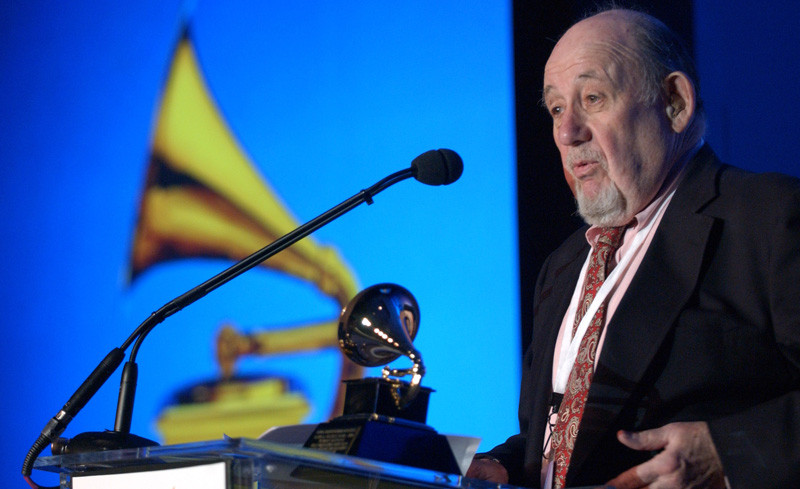
"caption": "Orrin Keepnews in 2004, at the nominee reception for the 46th Annual Grammy Awards. (Photo: R. Diamond/WireImage)",
"description": null,
"title": "Keepnews",
"credit": null,
"status": "inherit",
"isLoading": false,
"fetchFailed": false
},
"arts_10425325": {
"type": "attachments",
"id": "arts_10425325",
"meta": {
"index": "attachments_1716263798",
"site": "arts",
"id": "10425325",
"found": true
},
"parent": 10423506,
"imgSizes": {
"thumbnail": {
"file": "https://ww2.kqed.org/app/uploads/sites/2/2015/02/RhinannaPaulKanye-400x225.jpg",
"width": 400,
"mimeType": "image/jpeg",
"height": 225
},
"fd-sm": {
"file": "https://ww2.kqed.org/app/uploads/sites/2/2015/02/RhinannaPaulKanye-320x180.jpg",
"width": 320,
"mimeType": "image/jpeg",
"height": 180
},
"post-thumbnail": {
"file": "https://ww2.kqed.org/app/uploads/sites/2/2015/02/RhinannaPaulKanye-672x372.jpg",
"width": 672,
"mimeType": "image/jpeg",
"height": 372
},
"kqedFullSize": {
"file": "https://ww2.kqed.org/app/uploads/sites/2/2015/02/RhinannaPaulKanye.jpg",
"width": 800,
"height": 450
},
"fd-med": {
"file": "https://ww2.kqed.org/app/uploads/sites/2/2015/02/RhinannaPaulKanye-768x432.jpg",
"width": 768,
"mimeType": "image/jpeg",
"height": 432
},
"guest-author-96": {
"file": "https://ww2.kqed.org/app/uploads/sites/2/2015/02/RhinannaPaulKanye-96x96.jpg",
"width": 96,
"mimeType": "image/jpeg",
"height": 96
},
"medium": {
"file": "https://ww2.kqed.org/app/uploads/sites/2/2015/02/RhinannaPaulKanye-800x450.jpg",
"width": 800,
"mimeType": "image/jpeg",
"height": 450
},
"guest-author-64": {
"file": "https://ww2.kqed.org/app/uploads/sites/2/2015/02/RhinannaPaulKanye-64x64.jpg",
"width": 64,
"mimeType": "image/jpeg",
"height": 64
},
"detail": {
"file": "https://ww2.kqed.org/app/uploads/sites/2/2015/02/RhinannaPaulKanye-75x75.jpg",
"width": 75,
"mimeType": "image/jpeg",
"height": 75
},
"guest-author-32": {
"file": "https://ww2.kqed.org/app/uploads/sites/2/2015/02/RhinannaPaulKanye-32x32.jpg",
"width": 32,
"mimeType": "image/jpeg",
"height": 32
},
"guest-author-128": {
"file": "https://ww2.kqed.org/app/uploads/sites/2/2015/02/RhinannaPaulKanye-128x128.jpg",
"width": 128,
"mimeType": "image/jpeg",
"height": 128
}
},
"publishDate": 1424975414,
"modified": 1424975414,
"caption": null,
"description": null,
"title": "RhinannaPaulKanye",
"credit": null,
"status": "inherit",
"isLoading": false,
"fetchFailed": false
},
"arts_10421415": {
"type": "attachments",
"id": "arts_10421415",
"meta": {
"index": "attachments_1716263798",
"site": "arts",
"id": "10421415",
"found": true
},
"parent": 10419787,
"imgSizes": {
"thumbnail": {
"file": "https://ww2.kqed.org/app/uploads/sites/2/2015/02/Ariel-400x225.jpg",
"width": 400,
"mimeType": "image/jpeg",
"height": 225
},
"post-thumbnail": {
"file": "https://ww2.kqed.org/app/uploads/sites/2/2015/02/Ariel-672x372.jpg",
"width": 672,
"mimeType": "image/jpeg",
"height": 372
},
"kqedFullSize": {
"file": "https://ww2.kqed.org/app/uploads/sites/2/2015/02/Ariel.jpg",
"width": 800,
"height": 450
},
"guest-author-96": {
"file": "https://ww2.kqed.org/app/uploads/sites/2/2015/02/Ariel-96x96.jpg",
"width": 96,
"mimeType": "image/jpeg",
"height": 96
},
"medium": {
"file": "https://ww2.kqed.org/app/uploads/sites/2/2015/02/Ariel-800x450.jpg",
"width": 800,
"mimeType": "image/jpeg",
"height": 450
},
"guest-author-64": {
"file": "https://ww2.kqed.org/app/uploads/sites/2/2015/02/Ariel-64x64.jpg",
"width": 64,
"mimeType": "image/jpeg",
"height": 64
},
"detail": {
"file": "https://ww2.kqed.org/app/uploads/sites/2/2015/02/Ariel-75x75.jpg",
"width": 75,
"mimeType": "image/jpeg",
"height": 75
},
"guest-author-32": {
"file": "https://ww2.kqed.org/app/uploads/sites/2/2015/02/Ariel-32x32.jpg",
"width": 32,
"mimeType": "image/jpeg",
"height": 32
},
"guest-author-128": {
"file": "https://ww2.kqed.org/app/uploads/sites/2/2015/02/Ariel-128x128.jpg",
"width": 128,
"mimeType": "image/jpeg",
"height": 128
}
},
"publishDate": 1424852360,
"modified": 1424852419,
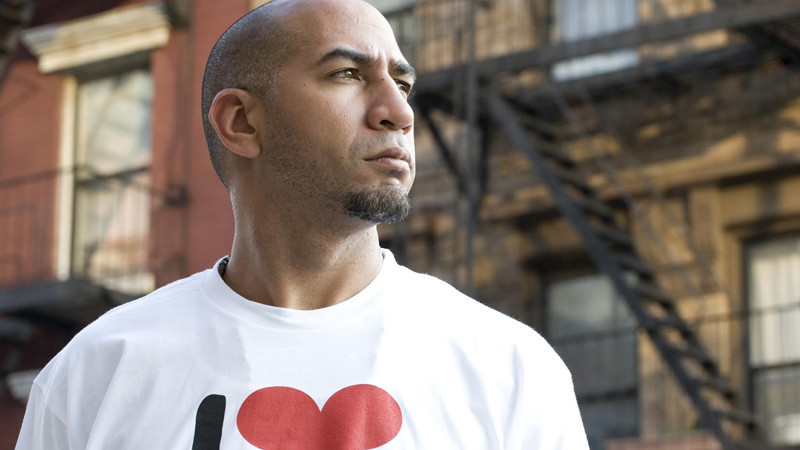
"caption": "DJ Asho (Ariel Fernandez) brings his Afrocuba! project to Berkeley this Thursday at Guerilla Cafe.",
"description": null,
"title": "Ariel",
"credit": null,
"status": "inherit",
"isLoading": false,
"fetchFailed": false
},
"arts_10398159": {
"type": "attachments",
"id": "arts_10398159",
"meta": {
"index": "attachments_1716263798",
"site": "arts",
"id": "10398159",
"found": true
},
"parent": 10398158,
"imgSizes": {
"twentyfourteen-full-width": {
"file": "https://ww2.kqed.org/app/uploads/sites/2/2015/02/tumblr_mto4qspOPi1rhbfzqo1_1280-900x576.jpg",
"width": 900,
"mimeType": "image/jpeg",
"height": 576
},
"thumbnail": {
"file": "https://ww2.kqed.org/app/uploads/sites/2/2015/02/tumblr_mto4qspOPi1rhbfzqo1_1280-400x265.jpg",
"width": 400,
"mimeType": "image/jpeg",
"height": 265
},
"post-thumbnail": {
"file": "https://ww2.kqed.org/app/uploads/sites/2/2015/02/tumblr_mto4qspOPi1rhbfzqo1_1280-672x372.jpg",
"width": 672,
"mimeType": "image/jpeg",
"height": 372
},
"kqedFullSize": {
"file": "https://ww2.kqed.org/app/uploads/sites/2/2015/02/tumblr_mto4qspOPi1rhbfzqo1_1280.jpg",
"width": 900,
"height": 597
},
"guest-author-96": {
"file": "https://ww2.kqed.org/app/uploads/sites/2/2015/02/tumblr_mto4qspOPi1rhbfzqo1_1280-96x96.jpg",
"width": 96,
"mimeType": "image/jpeg",
"height": 96
},
"medium": {
"file": "https://ww2.kqed.org/app/uploads/sites/2/2015/02/tumblr_mto4qspOPi1rhbfzqo1_1280-800x531.jpg",
"width": 800,
"mimeType": "image/jpeg",
"height": 531
},
"guest-author-64": {
"file": "https://ww2.kqed.org/app/uploads/sites/2/2015/02/tumblr_mto4qspOPi1rhbfzqo1_1280-64x64.jpg",
"width": 64,
"mimeType": "image/jpeg",
"height": 64
},
"detail": {
"file": "https://ww2.kqed.org/app/uploads/sites/2/2015/02/tumblr_mto4qspOPi1rhbfzqo1_1280-75x75.jpg",
"width": 75,
"mimeType": "image/jpeg",
"height": 75
},
"guest-author-32": {
"file": "https://ww2.kqed.org/app/uploads/sites/2/2015/02/tumblr_mto4qspOPi1rhbfzqo1_1280-32x32.jpg",
"width": 32,
"mimeType": "image/jpeg",
"height": 32
},
"guest-author-128": {
"file": "https://ww2.kqed.org/app/uploads/sites/2/2015/02/tumblr_mto4qspOPi1rhbfzqo1_1280-128x128.jpg",
"width": 128,
"mimeType": "image/jpeg",
"height": 128
}
},
"publishDate": 1424155259,
"modified": 1424334029,
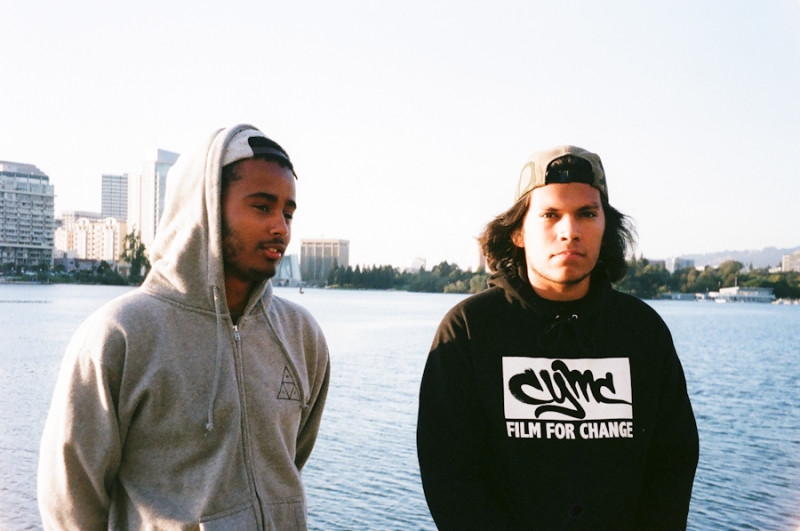
"caption": "Sam Gebru and Kristian Contreras started Youthful Kinfolk in 2010. (Photo credit: DAGHE)",
"description": null,
"title": "tumblr_mto4qspOPi1rhbfzqo1_1280",
"credit": null,
"status": "inherit",
"isLoading": false,
"fetchFailed": false
},
"arts_10414134": {
"type": "attachments",
"id": "arts_10414134",
"meta": {
"index": "attachments_1716263798",
"site": "arts",
"id": "10414134",
"found": true
},
"parent": 10408951,
"imgSizes": {
"thumbnail": {
"file": "https://ww2.kqed.org/app/uploads/sites/2/2015/02/JenkinsMain-400x249.jpg",
"width": 400,
"mimeType": "image/jpeg",
"height": 249
},
"post-thumbnail": {
"file": "https://ww2.kqed.org/app/uploads/sites/2/2015/02/JenkinsMain-672x372.jpg",
"width": 672,
"mimeType": "image/jpeg",
"height": 372
},
"kqedFullSize": {
"file": "https://ww2.kqed.org/app/uploads/sites/2/2015/02/JenkinsMain.jpg",
"width": 800,
"height": 498
},
"guest-author-96": {
"file": "https://ww2.kqed.org/app/uploads/sites/2/2015/02/JenkinsMain-96x96.jpg",
"width": 96,
"mimeType": "image/jpeg",
"height": 96
},
"medium": {
"file": "https://ww2.kqed.org/app/uploads/sites/2/2015/02/JenkinsMain-800x498.jpg",
"width": 800,
"mimeType": "image/jpeg",
"height": 498
},
"guest-author-64": {
"file": "https://ww2.kqed.org/app/uploads/sites/2/2015/02/JenkinsMain-64x64.jpg",
"width": 64,
"mimeType": "image/jpeg",
"height": 64
},
"detail": {
"file": "https://ww2.kqed.org/app/uploads/sites/2/2015/02/JenkinsMain-75x75.jpg",
"width": 75,
"mimeType": "image/jpeg",
"height": 75
},
"guest-author-32": {
"file": "https://ww2.kqed.org/app/uploads/sites/2/2015/02/JenkinsMain-32x32.jpg",
"width": 32,
"mimeType": "image/jpeg",
"height": 32
},
"guest-author-128": {
"file": "https://ww2.kqed.org/app/uploads/sites/2/2015/02/JenkinsMain-128x128.jpg",
"width": 128,
"mimeType": "image/jpeg",
"height": 128
}
},
"publishDate": 1424630187,
"modified": 1424630202,
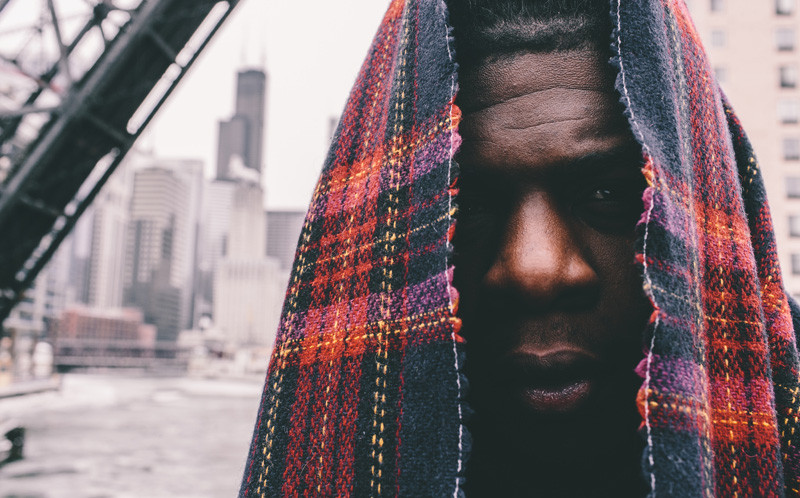
"caption": "Mick Jenkins. (Photo: Trash Hand)",
"description": null,
"title": "JenkinsMain",
"credit": null,
"status": "inherit",
"isLoading": false,
"fetchFailed": false
},
"arts_10399672": {
"type": "attachments",
"id": "arts_10399672",
"meta": {
"index": "attachments_1716263798",
"site": "arts",
"id": "10399672",
"found": true
},
"parent": 10399671,
"imgSizes": {
"thumbnail": {
"file": "https://ww2.kqed.org/app/uploads/sites/2/2015/02/Sarah-Bethe-Nelson-400x225.jpg",
"width": 400,
"mimeType": "image/jpeg",
"height": 225
},
"post-thumbnail": {
"file": "https://ww2.kqed.org/app/uploads/sites/2/2015/02/Sarah-Bethe-Nelson-672x372.jpg",
"width": 672,
"mimeType": "image/jpeg",
"height": 372
},
"kqedFullSize": {
"file": "https://ww2.kqed.org/app/uploads/sites/2/2015/02/Sarah-Bethe-Nelson.jpg",
"width": 800,
"height": 450
},
"guest-author-96": {
"file": "https://ww2.kqed.org/app/uploads/sites/2/2015/02/Sarah-Bethe-Nelson-96x96.jpg",
"width": 96,
"mimeType": "image/jpeg",
"height": 96
},
"medium": {
"file": "https://ww2.kqed.org/app/uploads/sites/2/2015/02/Sarah-Bethe-Nelson-800x450.jpg",
"width": 800,
"mimeType": "image/jpeg",
"height": 450
},
"guest-author-64": {
"file": "https://ww2.kqed.org/app/uploads/sites/2/2015/02/Sarah-Bethe-Nelson-64x64.jpg",
"width": 64,
"mimeType": "image/jpeg",
"height": 64
},
"detail": {
"file": "https://ww2.kqed.org/app/uploads/sites/2/2015/02/Sarah-Bethe-Nelson-75x75.jpg",
"width": 75,
"mimeType": "image/jpeg",
"height": 75
},
"guest-author-32": {
"file": "https://ww2.kqed.org/app/uploads/sites/2/2015/02/Sarah-Bethe-Nelson-32x32.jpg",
"width": 32,
"mimeType": "image/jpeg",
"height": 32
},
"guest-author-128": {
"file": "https://ww2.kqed.org/app/uploads/sites/2/2015/02/Sarah-Bethe-Nelson-128x128.jpg",
"width": 128,
"mimeType": "image/jpeg",
"height": 128
}
},
"publishDate": 1424203705,
"modified": 1424420703,
"caption": "Sarah Bethe Nelson.",
"description": null,
"title": "Sarah Bethe Nelson",
"credit": null,
"status": "inherit",
"isLoading": false,
"fetchFailed": false
},
"arts_10405767": {
"type": "attachments",
"id": "arts_10405767",
"meta": {
"index": "attachments_1716263798",
"site": "arts",
"id": "10405767",
"found": true
},
"parent": 10403043,
"imgSizes": {
"thumbnail": {
"file": "https://ww2.kqed.org/app/uploads/sites/2/2015/02/KhanPerformance800-400x254.jpg",
"width": 400,
"mimeType": "image/jpeg",
"height": 254
},
"post-thumbnail": {
"file": "https://ww2.kqed.org/app/uploads/sites/2/2015/02/KhanPerformance800-672x372.jpg",
"width": 672,
"mimeType": "image/jpeg",
"height": 372
},
"kqedFullSize": {
"file": "https://ww2.kqed.org/app/uploads/sites/2/2015/02/KhanPerformance800.jpg",
"width": 800,
"height": 507
},
"guest-author-96": {
"file": "https://ww2.kqed.org/app/uploads/sites/2/2015/02/KhanPerformance800-96x96.jpg",
"width": 96,
"mimeType": "image/jpeg",
"height": 96
},
"medium": {
"file": "https://ww2.kqed.org/app/uploads/sites/2/2015/02/KhanPerformance800-800x507.jpg",
"width": 800,
"mimeType": "image/jpeg",
"height": 507
},
"guest-author-64": {
"file": "https://ww2.kqed.org/app/uploads/sites/2/2015/02/KhanPerformance800-64x64.jpg",
"width": 64,
"mimeType": "image/jpeg",
"height": 64
},
"detail": {
"file": "https://ww2.kqed.org/app/uploads/sites/2/2015/02/KhanPerformance800-75x75.jpg",
"width": 75,
"mimeType": "image/jpeg",
"height": 75
},
"guest-author-32": {
"file": "https://ww2.kqed.org/app/uploads/sites/2/2015/02/KhanPerformance800-32x32.jpg",
"width": 32,
"mimeType": "image/jpeg",
"height": 32
},
"guest-author-128": {
"file": "https://ww2.kqed.org/app/uploads/sites/2/2015/02/KhanPerformance800-128x128.jpg",
"width": 128,
"mimeType": "image/jpeg",
"height": 128
}
},
"publishDate": 1424383265,
"modified": 1424383265,
"caption": null,
"description": null,
"title": "KhanPerformance800",
"credit": null,
"status": "inherit",
"isLoading": false,
"fetchFailed": false
},
"arts_10406683": {
"type": "attachments",
"id": "arts_10406683",
"meta": {
"index": "attachments_1716263798",
"site": "arts",
"id": "10406683",
"found": true
},
"parent": 10406145,
"imgSizes": {
"thumbnail": {
"file": "https://ww2.kqed.org/app/uploads/sites/2/2015/02/HiramBellMain-400x260.jpg",
"width": 400,
"mimeType": "image/jpeg",
"height": 260
},
"post-thumbnail": {
"file": "https://ww2.kqed.org/app/uploads/sites/2/2015/02/HiramBellMain-672x372.jpg",
"width": 672,
"mimeType": "image/jpeg",
"height": 372
},
"kqedFullSize": {
"file": "https://ww2.kqed.org/app/uploads/sites/2/2015/02/HiramBellMain.jpg",
"width": 800,
"height": 519
},
"guest-author-96": {
"file": "https://ww2.kqed.org/app/uploads/sites/2/2015/02/HiramBellMain-96x96.jpg",
"width": 96,
"mimeType": "image/jpeg",
"height": 96
},
"medium": {
"file": "https://ww2.kqed.org/app/uploads/sites/2/2015/02/HiramBellMain-800x519.jpg",
"width": 800,
"mimeType": "image/jpeg",
"height": 519
},
"guest-author-64": {
"file": "https://ww2.kqed.org/app/uploads/sites/2/2015/02/HiramBellMain-64x64.jpg",
"width": 64,
"mimeType": "image/jpeg",
"height": 64
},
"detail": {
"file": "https://ww2.kqed.org/app/uploads/sites/2/2015/02/HiramBellMain-75x75.jpg",
"width": 75,
"mimeType": "image/jpeg",
"height": 75
},
"guest-author-32": {
"file": "https://ww2.kqed.org/app/uploads/sites/2/2015/02/HiramBellMain-32x32.jpg",
"width": 32,
"mimeType": "image/jpeg",
"height": 32
},
"guest-author-128": {
"file": "https://ww2.kqed.org/app/uploads/sites/2/2015/02/HiramBellMain-128x128.jpg",
"width": 128,
"mimeType": "image/jpeg",
"height": 128
}
},
"publishDate": 1424408067,
"modified": 1424408074,
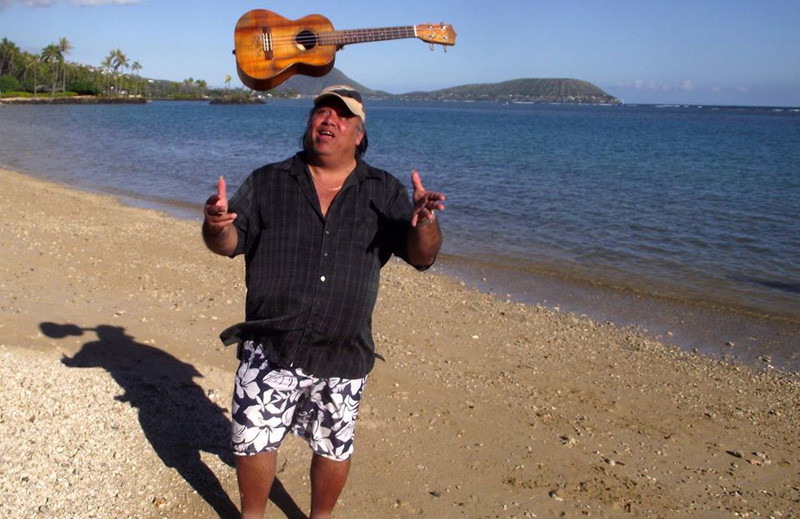
"caption": "Hawaiian ukelele maestro Hiram Kaailau Bell.",
"description": null,
"title": "HiramBellMain",
"credit": null,
"status": "inherit",
"isLoading": false,
"fetchFailed": false
},
"arts_10405260": {
"type": "attachments",
"id": "arts_10405260",
"meta": {
"index": "attachments_1716263798",
"site": "arts",
"id": "10405260",
"found": true
},
"parent": 10359562,
"imgSizes": {
"thumbnail": {
"file": "https://ww2.kqed.org/app/uploads/sites/2/2015/02/NagleMain-400x246.jpg",
"width": 400,
"mimeType": "image/jpeg",
"height": 246
},
"post-thumbnail": {
"file": "https://ww2.kqed.org/app/uploads/sites/2/2015/02/NagleMain-672x372.jpg",
"width": 672,
"mimeType": "image/jpeg",
"height": 372
},
"kqedFullSize": {
"file": "https://ww2.kqed.org/app/uploads/sites/2/2015/02/NagleMain.jpg",
"width": 800,
"height": 492
},
"guest-author-96": {
"file": "https://ww2.kqed.org/app/uploads/sites/2/2015/02/NagleMain-96x96.jpg",
"width": 96,
"mimeType": "image/jpeg",
"height": 96
},
"medium": {
"file": "https://ww2.kqed.org/app/uploads/sites/2/2015/02/NagleMain-800x492.jpg",
"width": 800,
"mimeType": "image/jpeg",
"height": 492
},
"guest-author-64": {
"file": "https://ww2.kqed.org/app/uploads/sites/2/2015/02/NagleMain-64x64.jpg",
"width": 64,
"mimeType": "image/jpeg",
"height": 64
},
"detail": {
"file": "https://ww2.kqed.org/app/uploads/sites/2/2015/02/NagleMain-75x75.jpg",
"width": 75,
"mimeType": "image/jpeg",
"height": 75
},
"guest-author-32": {
"file": "https://ww2.kqed.org/app/uploads/sites/2/2015/02/NagleMain-32x32.jpg",
"width": 32,
"mimeType": "image/jpeg",
"height": 32
},
"guest-author-128": {
"file": "https://ww2.kqed.org/app/uploads/sites/2/2015/02/NagleMain-128x128.jpg",
"width": 128,
"mimeType": "image/jpeg",
"height": 128
}
},
"publishDate": 1424367526,
"modified": 1424367559,
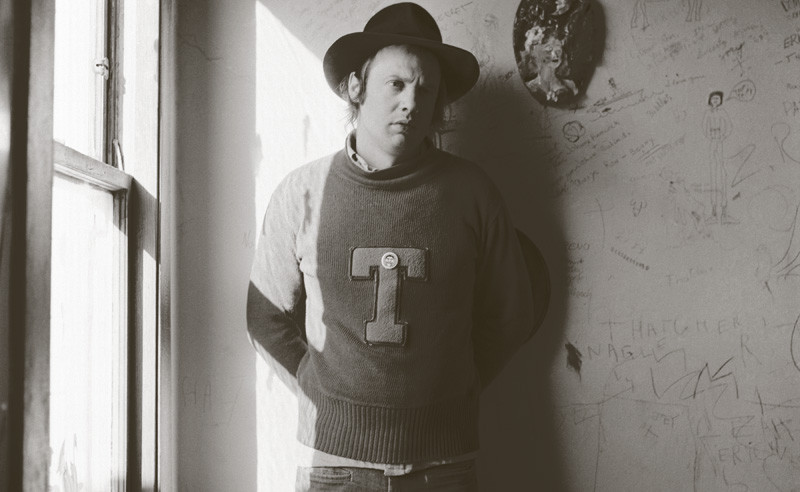
"caption": "Ron Nagle in 1970. (Photo: Bill Brach)",
"description": null,
"title": "NagleMain",
"credit": null,
"status": "inherit",
"isLoading": false,
"fetchFailed": false
},
"arts_10400284": {
"type": "attachments",
"id": "arts_10400284",
"meta": {
"index": "attachments_1716263798",
"site": "arts",
"id": "10400284",
"found": true
},
"parent": 10397265,
"imgSizes": {
"twentyfourteen-full-width": {
"file": "https://ww2.kqed.org/app/uploads/sites/2/2015/02/Kawehi1-1032x576.jpg",
"width": 1032,
"mimeType": "image/jpeg",
"height": 576
},
"thumbnail": {
"file": "https://ww2.kqed.org/app/uploads/sites/2/2015/02/Kawehi1-400x266.jpg",
"width": 400,
"mimeType": "image/jpeg",
"height": 266
},
"post-thumbnail": {
"file": "https://ww2.kqed.org/app/uploads/sites/2/2015/02/Kawehi1-672x372.jpg",
"width": 672,
"mimeType": "image/jpeg",
"height": 372
},
"kqedFullSize": {
"file": "https://ww2.kqed.org/app/uploads/sites/2/2015/02/Kawehi1.jpg",
"width": 1032,
"height": 686
},
"guest-author-96": {
"file": "https://ww2.kqed.org/app/uploads/sites/2/2015/02/Kawehi1-96x96.jpg",
"width": 96,
"mimeType": "image/jpeg",
"height": 96
},
"medium": {
"file": "https://ww2.kqed.org/app/uploads/sites/2/2015/02/Kawehi1-800x532.jpg",
"width": 800,
"mimeType": "image/jpeg",
"height": 532
},
"guest-author-64": {
"file": "https://ww2.kqed.org/app/uploads/sites/2/2015/02/Kawehi1-64x64.jpg",
"width": 64,
"mimeType": "image/jpeg",
"height": 64
},
"detail": {
"file": "https://ww2.kqed.org/app/uploads/sites/2/2015/02/Kawehi1-75x75.jpg",
"width": 75,
"mimeType": "image/jpeg",
"height": 75
},
"guest-author-32": {
"file": "https://ww2.kqed.org/app/uploads/sites/2/2015/02/Kawehi1-32x32.jpg",
"width": 32,
"mimeType": "image/jpeg",
"height": 32
},
"guest-author-128": {
"file": "https://ww2.kqed.org/app/uploads/sites/2/2015/02/Kawehi1-128x128.jpg",
"width": 128,
"mimeType": "image/jpeg",
"height": 128
}
},
"publishDate": 1424219100,
"modified": 1424219112,
"caption": "(Photo: Michael Lerner)",
"description": null,
"title": "Kawehi",
"credit": null,
"status": "inherit",
"isLoading": false,
"fetchFailed": false
},
"arts_10402548": {
"type": "attachments",
"id": "arts_10402548",
"meta": {
"index": "attachments_1716263798",
"site": "arts",
"id": "10402548",
"found": true
},
"parent": 10397385,
"imgSizes": {
"thumbnail": {
"file": "https://ww2.kqed.org/app/uploads/sites/2/2015/02/SonnyMain-400x225.jpg",
"width": 400,
"mimeType": "image/jpeg",
"height": 225
},
"post-thumbnail": {
"file": "https://ww2.kqed.org/app/uploads/sites/2/2015/02/SonnyMain-672x372.jpg",
"width": 672,
"mimeType": "image/jpeg",
"height": 372
},
"kqedFullSize": {
"file": "https://ww2.kqed.org/app/uploads/sites/2/2015/02/SonnyMain.jpg",
"width": 800,
"height": 450
},
"guest-author-96": {
"file": "https://ww2.kqed.org/app/uploads/sites/2/2015/02/SonnyMain-96x96.jpg",
"width": 96,
"mimeType": "image/jpeg",
"height": 96
},
"medium": {
"file": "https://ww2.kqed.org/app/uploads/sites/2/2015/02/SonnyMain-800x450.jpg",
"width": 800,
"mimeType": "image/jpeg",
"height": 450
},
"guest-author-64": {
"file": "https://ww2.kqed.org/app/uploads/sites/2/2015/02/SonnyMain-64x64.jpg",
"width": 64,
"mimeType": "image/jpeg",
"height": 64
},
"detail": {
"file": "https://ww2.kqed.org/app/uploads/sites/2/2015/02/SonnyMain-75x75.jpg",
"width": 75,
"mimeType": "image/jpeg",
"height": 75
},
"guest-author-32": {
"file": "https://ww2.kqed.org/app/uploads/sites/2/2015/02/SonnyMain-32x32.jpg",
"width": 32,
"mimeType": "image/jpeg",
"height": 32
},
"guest-author-128": {
"file": "https://ww2.kqed.org/app/uploads/sites/2/2015/02/SonnyMain-128x128.jpg",
"width": 128,
"mimeType": "image/jpeg",
"height": 128
}
},
"publishDate": 1424287369,
"modified": 1424287405,
"caption": "Sonny and the Sunsets: Ian McBrayer, Sonny Smith, and Shayde Sartin (L-R). (Photo: Alice Shaw)",
"description": null,
"title": "SonnyMain",
"credit": null,
"status": "inherit",
"isLoading": false,
"fetchFailed": false
},
"arts_10386966": {
"type": "attachments",
"id": "arts_10386966",
"meta": {
"index": "attachments_1716263798",
"site": "arts",
"id": "10386966",
"found": true
},
"parent": 10386836,
"imgSizes": {
"thumbnail": {
"file": "https://ww2.kqed.org/app/uploads/sites/2/2015/02/Nile-project-400x266.jpg",
"width": 400,
"mimeType": "image/jpeg",
"height": 266
},
"post-thumbnail": {
"file": "https://ww2.kqed.org/app/uploads/sites/2/2015/02/Nile-project-672x372.jpg",
"width": 672,
"mimeType": "image/jpeg",
"height": 372
},
"kqedFullSize": {
"file": "https://ww2.kqed.org/app/uploads/sites/2/2015/02/Nile-project.jpg",
"width": 800,
"height": 532
},
"guest-author-96": {
"file": "https://ww2.kqed.org/app/uploads/sites/2/2015/02/Nile-project-96x96.jpg",
"width": 96,
"mimeType": "image/jpeg",
"height": 96
},
"medium": {
"file": "https://ww2.kqed.org/app/uploads/sites/2/2015/02/Nile-project-800x532.jpg",
"width": 800,
"mimeType": "image/jpeg",
"height": 532
},
"guest-author-64": {
"file": "https://ww2.kqed.org/app/uploads/sites/2/2015/02/Nile-project-64x64.jpg",
"width": 64,
"mimeType": "image/jpeg",
"height": 64
},
"detail": {
"file": "https://ww2.kqed.org/app/uploads/sites/2/2015/02/Nile-project-75x75.jpg",
"width": 75,
"mimeType": "image/jpeg",
"height": 75
},
"guest-author-32": {
"file": "https://ww2.kqed.org/app/uploads/sites/2/2015/02/Nile-project-32x32.jpg",
"width": 32,
"mimeType": "image/jpeg",
"height": 32
},
"guest-author-128": {
"file": "https://ww2.kqed.org/app/uploads/sites/2/2015/02/Nile-project-128x128.jpg",
"width": 128,
"mimeType": "image/jpeg",
"height": 128
}
},
"publishDate": 1423815790,
"modified": 1424204770,
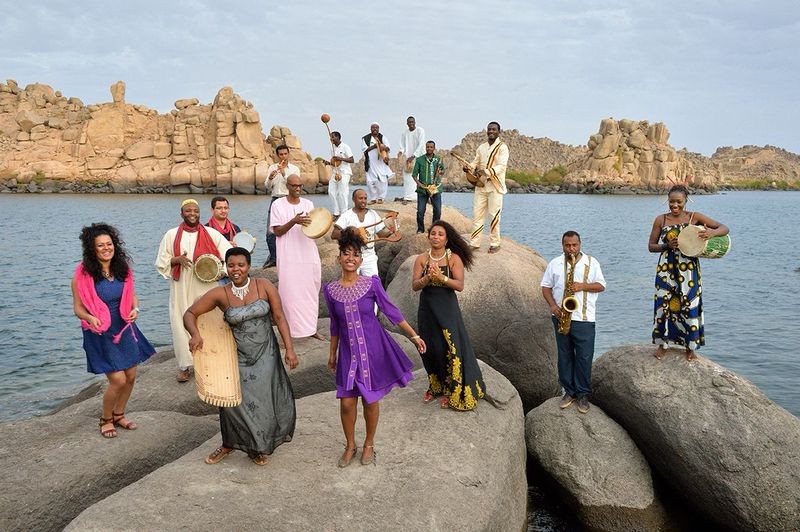
"caption": "Musicians from the Nile Project. (Photo: Matjaz Kacicnik/The Nile Project)",
"description": null,
"title": "Nile project",
"credit": null,
"status": "inherit",
"isLoading": false,
"fetchFailed": false
}
},
"audioPlayerReducer": {
"postId": "stream_live",
"isPaused": true,
"isPlaying": false,
"pfsActive": false,
"pledgeModalIsOpen": true,
"playerDrawerIsOpen": false,
"liveAudioPlayStartedAt": 0,
"liveAudioPlayContext": ""
},
"authorsReducer": {
"128435": {
"type": "authors",
"id": "128435",
"meta": {
"override": true
},
"slug": "128435",
"name": "Jonathan Curiel",
"firstName": "Jonathan",
"lastName": "Curiel",
"bio": "Jonathan Curiel has written widely about music, film, books, art, photography and other cultural subjects. \u003ci>SF Weekly's\u003c/i> art critic, he is a former staff writer with the \u003ci>San Francisco Chronicle\u003c/i>, and has also written on the arts for \u003ca href=\"http://www.salon.com/\">Salon\u003c/a>, the \u003ci>Christian Science Monitor\u003c/i>, \u003ci>The Wire\u003c/i> (a London music magazine), \u003ci>Tablet\u003c/i> and \u003ci>GlobalPost\u003c/i>. He has researched architecture at England's Oxford University, taught music journalism at the UCLA Herb Alpert School of Music, and been a juror at the San Francisco International Film Festival.",
"email": "jonathancuriel@hotmail.com",
"isLoading": false
},
"byline_arts_10408951": {
"type": "authors",
"id": "byline_arts_10408951",
"meta": {
"override": true
},
"slug": "byline_arts_10408951",
"name": "Rachel Dovey ",
"isLoading": false
},
"byline_arts_10397265": {
"type": "authors",
"id": "byline_arts_10397265",
"meta": {
"override": true
},
"slug": "byline_arts_10397265",
"name": "Rachel Dovey ",
"isLoading": false
},
"cmusiker": {
"type": "authors",
"id": "32",
"meta": {
"index": "authors_1716337520",
"id": "32",
"found": true
},
"name": "Cy Musiker",
"firstName": "Cy",
"lastName": "Musiker",
"slug": "cmusiker",
"email": "cmusiker@kqed.org",
"display_author_email": false,
"staff_mastheads": [],
"title": "KQED Contributor",
"bio": "Cy Musiker is a former co-host of The Do List and a former reporter covering the arts for KQED News and The California Report. He loves live performance, especially great theater, jazz, roots music, anything by Mahler. Cy has an MJ from UC Berkeley's School of Journalism, and got his BA from Hampshire College. His work has been recognized by the Society for Professional Journalists with their Sigma Delta Chi Award for Public Service in Journalism. When he can, Cy likes to swim in Tomales Bay, run with his dog in the East Bay Hills, and hike the Sierra.",
"avatar": "https://secure.gravatar.com/avatar/05eaba5c5696ce8f062e4ea2df428a43?s=600&d=blank&r=g",
"twitter": null,
"facebook": null,
"instagram": null,
"linkedin": null,
"sites": [
{
"site": "arts",
"roles": [
"Contributor",
"subscriber"
]
},
{
"site": "news",
"roles": [
"author"
]
},
{
"site": "bayareabites",
"roles": [
"contributor"
]
}
],
"headData": {
"title": "Cy Musiker | KQED",
"description": "KQED Contributor",
"ogImgSrc": "https://secure.gravatar.com/avatar/05eaba5c5696ce8f062e4ea2df428a43?s=600&d=blank&r=g",
"twImgSrc": "https://secure.gravatar.com/avatar/05eaba5c5696ce8f062e4ea2df428a43?s=600&d=blank&r=g"
},
"isLoading": false,
"link": "/author/cmusiker"
},
"agilbert": {
"type": "authors",
"id": "86",
"meta": {
"index": "authors_1716337520",
"id": "86",
"found": true
},
"name": "Andrew Gilbert",
"firstName": "Andrew",
"lastName": "Gilbert",
"slug": "agilbert",
"email": "jazzscribe@aol.com",
"display_author_email": false,
"staff_mastheads": [],
"title": "KQED Contributor",
"bio": "A Los Angeles native based in the Berkeley area since 1996, Andrew Gilbert covers jazz, international music and dance for KQED's \u003ci>California Report, \u003c/i>the\u003ci> Mercury News\u003c/i>, \u003ci>San Francisco Chronicle\u003c/i>, \u003ci>Berkeleyside.com\u003c/i>, and other publications. He is available for weddings and bar and bat mitzvahs. #jazzscribe",
"avatar": "https://secure.gravatar.com/avatar/d7bcafdbefdd39e9a68f88724ca616eb4e7a5a6bff9cdfb62de652a1e1751471?s=600&d=blank&r=g",
"twitter": null,
"bluesky": null,
"facebook": null,
"instagram": null,
"linkedin": null,
"sites": [
{
"site": "arts",
"roles": [
"Contributor",
"author"
]
},
{
"site": "news",
"roles": [
"author"
]
}
],
"headData": {
"title": "Andrew Gilbert | KQED",
"description": "KQED Contributor",
"ogImgSrc": "https://secure.gravatar.com/avatar/d7bcafdbefdd39e9a68f88724ca616eb4e7a5a6bff9cdfb62de652a1e1751471?s=600&d=blank&r=g",
"twImgSrc": "https://secure.gravatar.com/avatar/d7bcafdbefdd39e9a68f88724ca616eb4e7a5a6bff9cdfb62de652a1e1751471?s=600&d=blank&r=g"
},
"isLoading": false,
"link": "/author/agilbert"
},
"shochman": {
"type": "authors",
"id": "87",
"meta": {
"index": "authors_1716337520",
"id": "87",
"found": true
},
"name": "Steve Hochman",
"firstName": "Steve",
"lastName": "Hochman",
"slug": "shochman",
"email": "sehochman@me.com",
"display_author_email": false,
"staff_mastheads": [],
"title": "KQED Contributor",
"bio": "Steve Hochman has covered popular, and unpopular, music for more than 30 years, most of that time as a key member of the \u003ci>Los Angeles Times\u003c/i>' music team. In that capacity he wrote about the full range of music and musicians, from Hungarian folk to industrial noise, and from 1991 through 2005 wrote the \u003ci>Times\u003c/i>' widely read weekly \"Pop Eye\" column. In addition to his role with \u003ci>The California Report\u003c/i>, he's a music critic for Pasadena station KPCC's morning magazine \u003ci>Take Two\u003c/i> and a regular contributor to Grammy.com, Fender.com and other outlets. His byline has appeared through the years in an array of major publications, including \u003ci>Rolling Stone\u003c/i>, \u003ci>Billboard\u003c/i> and \u003ci>Entertainment Weekly\u003c/i> and New Orleans' \u003ci>Offbeat\u003c/i>.",
"avatar": "https://secure.gravatar.com/avatar/37fbddee9db232a05a1be3b065171301e8baa142626c45b0caa6fc61c25a8c8d?s=600&d=blank&r=g",
"twitter": null,
"bluesky": null,
"facebook": null,
"instagram": null,
"linkedin": null,
"sites": [
{
"site": "arts",
"roles": [
"Contributor",
"subscriber"
]
},
{
"site": "news",
"roles": [
"subscriber"
]
}
],
"headData": {
"title": "Steve Hochman | KQED",
"description": "KQED Contributor",
"ogImgSrc": "https://secure.gravatar.com/avatar/37fbddee9db232a05a1be3b065171301e8baa142626c45b0caa6fc61c25a8c8d?s=600&d=blank&r=g",
"twImgSrc": "https://secure.gravatar.com/avatar/37fbddee9db232a05a1be3b065171301e8baa142626c45b0caa6fc61c25a8c8d?s=600&d=blank&r=g"
},
"isLoading": false,
"link": "/author/shochman"
},
"mvillalobos": {
"type": "authors",
"id": "103",
"meta": {
"index": "authors_1716337520",
"id": "103",
"found": true
},
"name": "Villalobos",
"firstName": "Marco",
"lastName": "Villalobos",
"slug": "mvillalobos",
"email": "marco@flywitnessfilms.com",
"display_author_email": false,
"staff_mastheads": [],
"title": null,
"bio": null,
"avatar": "https://secure.gravatar.com/avatar/1ade645d12359842b7b62b30a4691366?s=600&d=blank&r=g",
"twitter": null,
"facebook": null,
"instagram": null,
"linkedin": null,
"sites": [
{
"site": "arts",
"roles": [
"contributor"
]
}
],
"headData": {
"title": "Villalobos | KQED",
"description": null,
"ogImgSrc": "https://secure.gravatar.com/avatar/1ade645d12359842b7b62b30a4691366?s=600&d=blank&r=g",
"twImgSrc": "https://secure.gravatar.com/avatar/1ade645d12359842b7b62b30a4691366?s=600&d=blank&r=g"
},
"isLoading": false,
"link": "/author/mvillalobos"
},
"noisepop": {
"type": "authors",
"id": "177",
"meta": {
"index": "authors_1716337520",
"id": "177",
"found": true
},
"name": "Noise Pop",
"firstName": "Noise",
"lastName": "Pop",
"slug": "noisepop",
"email": "dawson@noisepop.com",
"display_author_email": false,
"staff_mastheads": [],
"title": null,
"bio": "The Noise Pop Podcast is a bi-monthly series that showcases the most noteworthy and soon-to-be-buzzing music. Hosts, Olivia LaRoche and Dawson Ludwig provide witty and interesting context behind the songs played on the podcast.",
"avatar": "https://secure.gravatar.com/avatar/5f453b166405b70819c53d7e1ef223bc?s=600&d=blank&r=g",
"twitter": null,
"facebook": null,
"instagram": null,
"linkedin": null,
"sites": [
{
"site": "arts",
"roles": [
"contributor"
]
}
],
"headData": {
"title": "Noise Pop | KQED",
"description": null,
"ogImgSrc": "https://secure.gravatar.com/avatar/5f453b166405b70819c53d7e1ef223bc?s=600&d=blank&r=g",
"twImgSrc": "https://secure.gravatar.com/avatar/5f453b166405b70819c53d7e1ef223bc?s=600&d=blank&r=g"
},
"isLoading": false,
"link": "/author/noisepop"
},
"baybridged": {
"type": "authors",
"id": "178",
"meta": {
"index": "authors_1716337520",
"id": "178",
"found": true
},
"name": "The Bay Bridged",
"firstName": "The Bay",
"lastName": "Bridged",
"slug": "baybridged",
"email": "thebaybridged@gmail.com",
"display_author_email": false,
"staff_mastheads": [],
"title": "KQED Contributor",
"bio": null,
"avatar": "https://secure.gravatar.com/avatar/211daad5386ad504c39c31f3e16cfae45ec7b0ad32ecca7ee64cfd9b7eb76609?s=600&d=blank&r=g",
"twitter": null,
"bluesky": null,
"facebook": null,
"instagram": null,
"linkedin": null,
"sites": [
{
"site": "arts",
"roles": [
"subscriber"
]
}
],
"headData": {
"title": "The Bay Bridged | KQED",
"description": "KQED Contributor",
"ogImgSrc": "https://secure.gravatar.com/avatar/211daad5386ad504c39c31f3e16cfae45ec7b0ad32ecca7ee64cfd9b7eb76609?s=600&d=blank&r=g",
"twImgSrc": "https://secure.gravatar.com/avatar/211daad5386ad504c39c31f3e16cfae45ec7b0ad32ecca7ee64cfd9b7eb76609?s=600&d=blank&r=g"
},
"isLoading": false,
"link": "/author/baybridged"
},
"aeghan": {
"type": "authors",
"id": "195",
"meta": {
"index": "authors_1716337520",
"id": "195",
"found": true
},
"name": "Adizah Eghan",
"firstName": "Adizah",
"lastName": "Eghan",
"slug": "aeghan",
"email": "adizah.e@gmail.com",
"display_author_email": false,
"staff_mastheads": [],
"title": "KQED Contributor",
"bio": "Adizah Eghan is a former reporter at KQED News and writer for KQED Arts. She caught the radio bug as an intern for PRI's The World and landed in KQED's newsroom after a stint teaching English in India. She covers culture, the arts, and global music in the Bay Area. This is where she tweets: \u003ca class=\"ProfileHeaderCard-screennameLink u-linkComplex js-nav\" style=\"color: #8899a6;\" href=\"https://twitter.com/Adizah_E\">@\u003cspan class=\"u-linkComplex-target\">Adizah_E\u003c/span>\u003c/a>",
"avatar": "https://secure.gravatar.com/avatar/d6e30ed9ca504243b4d8ee5d7ca32324?s=600&d=blank&r=g",
"twitter": "Adizah_E",
"facebook": null,
"instagram": null,
"linkedin": null,
"sites": [
{
"site": "arts",
"roles": [
"contributor"
]
},
{
"site": "news",
"roles": [
"subscriber"
]
},
{
"site": "stateofhealth",
"roles": [
"author"
]
}
],
"headData": {
"title": "Adizah Eghan | KQED",
"description": "KQED Contributor",
"ogImgSrc": "https://secure.gravatar.com/avatar/d6e30ed9ca504243b4d8ee5d7ca32324?s=600&d=blank&r=g",
"twImgSrc": "https://secure.gravatar.com/avatar/d6e30ed9ca504243b4d8ee5d7ca32324?s=600&d=blank&r=g"
},
"isLoading": false,
"link": "/author/aeghan"
},
"lclark": {
"type": "authors",
"id": "3224",
"meta": {
"index": "authors_1716337520",
"id": "3224",
"found": true
},
"name": "Leilani Clark",
"firstName": "Leilani",
"lastName": "Clark",
"slug": "lclark",
"email": "clark.leil@gmail.com",
"display_author_email": false,
"staff_mastheads": [],
"title": null,
"bio": "Leilani Clark writes about books for KQED Arts. Her writing has been published at Mother Jones, The Guardian, Civil Eats, Time Magazine, Food & Wine, Edible Marin & Wine Country, and The Rumpus. She is the editor of Made Local magazine in Sonoma County. Find her on Twitter \u003ca href=\"https://twitter.com/leilclark\">@leilclark\u003c/a>.",
"avatar": "https://secure.gravatar.com/avatar/7f691fdc52ed2e3f4cf164d1f4ec0889?s=600&d=blank&r=g",
"twitter": null,
"facebook": null,
"instagram": null,
"linkedin": null,
"sites": [
{
"site": "arts",
"roles": [
"contributor"
]
},
{
"site": "bayareabites",
"roles": [
"contributor"
]
},
{
"site": "food",
"roles": [
"contributor"
]
}
],
"headData": {
"title": "Leilani Clark | KQED",
"description": null,
"ogImgSrc": "https://secure.gravatar.com/avatar/7f691fdc52ed2e3f4cf164d1f4ec0889?s=600&d=blank&r=g",
"twImgSrc": "https://secure.gravatar.com/avatar/7f691fdc52ed2e3f4cf164d1f4ec0889?s=600&d=blank&r=g"
},
"isLoading": false,
"link": "/author/lclark"
}
},
"pagesReducer": {
"arts_category_music": {
"type": "terms",
"id": "arts_69",
"meta": {
"index": "terms_1716263798",
"site": "arts",
"id": "69",
"score": 10.850847
},
"featImg": null,
"name": "Music",
"description": null,
"taxonomy": "category",
"headData": {
"twImgId": null,
"twTitle": null,
"ogTitle": null,
"ogImgId": null,
"twDescription": null,
"description": null,
"title": "Music Archives | KQED Arts",
"ogDescription": null
},
"ttid": 70,
"slug": "music",
"isLoading": false,
"title": "Music",
"pageMeta": {
"site": "arts",
"WpPageTemplate": "page-topic-editorial",
"currentPage": 344
},
"blocks": [
{
"blockName": "kqed/post-list",
"attrs": {
"layout": "cardArticle2",
"query": "posts/arts?category=music",
"seeMore": false,
"paginated": true,
"page": 344
}
},
{
"blockName": "kqed/ad"
}
]
}
},
"pfsSessionReducer": {},
"postsReducer": {
"stream_live": {
"type": "live",
"id": "stream_live",
"audioUrl": "https://streams.kqed.org/kqedradio",
"title": "Live Stream",
"excerpt": "Live Stream information currently unavailable.",
"link": "/radio",
"featImg": "",
"label": {
"name": "KQED Live",
"link": "/"
}
},
"stream_kqedNewscast": {
"type": "posts",
"id": "stream_kqedNewscast",
"audioUrl": "https://www.kqed.org/.stream/anon/radio/RDnews/newscast.mp3?_=1",
"title": "KQED Newscast",
"featImg": "",
"label": {
"name": "88.5 FM",
"link": "/"
}
},
"arts_10428057": {
"type": "posts",
"id": "arts_10428057",
"meta": {
"index": "posts_1716263798",
"site": "arts",
"id": "10428057",
"score": null,
"sort": [
1425264346000
]
},
"parent": 0,
"labelTerm": {
"site": "arts"
},
"blocks": [],
"publishDate": 1425264346,
"format": "standard",
"title": "Swinging Through the 20th Century: An Appreciation of Orrin Keepnews",
"headTitle": "Swinging Through the 20th Century: An Appreciation of Orrin Keepnews | KQED",
"content": "\u003cp>In a business replete with boasters, scammers, hustlers and thieves, Orrin Keepnews was a mensch and a legend.\u003c/p>\n\u003cp>By the time he moved to San Francisco in the early 1970s, Keepnews was already recognized as one of the most influential producers in jazz history, responsible for overseeing classic recordings by many of the music’s most creative figures, including pianists Thelonious Monk and Bill Evans, guitarist Wes Montgomery, vibraphonist Milt Jackson, and saxophonists Cannonball Adderley, Sonny Rollins, Benny Golson, and Jimmy Heath, just to name a few. His death on March 1, one day shy of his 92nd birthday, leaves only one man left from the small cadre of pioneering producers responsible for ushering jazz into the age of the LP (Columbia Records’ \u003ca href=\"http://en.wikipedia.org/wiki/George_Avakian\" target=\"_blank\" rel=\"noopener\">George Avakian\u003c/a> turned 95 last month). \u003c/p>\n\u003cp>A daring entrepreneur, incisive writer, and close ally of numerous musicians, Keepnews won an NEA Jazz Masters Award and four Grammys — including a Grammy Trustees Award for non-performers, which he received with his characteristic growl, declining the career-capping implications of the honor. He founded three record labels: Landmark, Milestone, and most importantly \u003ca href=\"http://en.wikipedia.org/wiki/Riverside_Records\" target=\"_blank\" rel=\"noopener\">Riverside\u003c/a>, which from 1953-1964 was surpassed only by Blue Note as the era’s definitive independent outlet for modern jazz. In the ’70s and ’80s, when his peer producers were gone or retired, he did some of his most important work out of the \u003ca href=\"http://www.fantasystudios.com/about.html\" target=\"_blank\" rel=\"noopener\">Fantasy building in Berkeley\u003c/a>, overseeing a series of great albums by McCoy Tyner and Joe Henderson (on Milestone) and Bobby Hutcherson (on Landmark). \u003c/p>\n\u003cfigure id=\"attachment_10434911\" class=\"wp-caption alignright\" style=\"max-width: 400px\">\u003cimg loading=\"lazy\" decoding=\"async\" src=\"http://ww2.kqed.org/arts/wp-content/uploads/sites/2/2015/03/Addelrley.jpg\" alt=\"Cannonball Adderley's Live in San Francisco.\" width=\"400\" height=\"402\" class=\"size-full wp-image-10434911\" srcset=\"https://cdn.kqed.org/wp-content/uploads/sites/2/2015/03/Addelrley.jpg 400w, https://cdn.kqed.org/wp-content/uploads/sites/2/2015/03/Addelrley-320x322.jpg 320w, https://cdn.kqed.org/wp-content/uploads/sites/2/2015/03/Addelrley-32x32.jpg 32w, https://cdn.kqed.org/wp-content/uploads/sites/2/2015/03/Addelrley-64x64.jpg 64w, https://cdn.kqed.org/wp-content/uploads/sites/2/2015/03/Addelrley-96x96.jpg 96w, https://cdn.kqed.org/wp-content/uploads/sites/2/2015/03/Addelrley-128x128.jpg 128w, https://cdn.kqed.org/wp-content/uploads/sites/2/2015/03/Addelrley-75x75.jpg 75w\" sizes=\"(max-width: 400px) 100vw, 400px\">\u003cfigcaption class=\"wp-caption-text\">Cannonball Adderley’s \u003cem>Live in San Francisco\u003c/em>.\u003c/figcaption>\u003c/figure>\n\u003cp>By listening to the advice of musicians, Keepnews was often able to sign brilliant players overlooked by other labels. Trumpeter Kenny Dorham tipped him off about tenor saxophonist, arranger and composer Jimmy Heath. The trumpeter Clark Terry, who died last month at 94 and also recorded memorable sessions for Riverside, introduced him to Julian “Cannonball” and Nat Adderley, brothers who became jazz stars with the release of the blazing 1959 Riverside album recorded at North Beach’s Jazz Workshop, \u003cem>\u003ca href=\"https://www.youtube.com/watch?v=lEnbXVqQ1go&list=PLB0F41080AA82D45B\" target=\"_blank\" rel=\"noopener\">The Cannonball Adderley Quintet Live in San Francisco\u003c/a>\u003c/em>. And it was Cannonball who turned Keepnews on to a little-known guitarist living in Indianapolis. \u003c/p>\n\u003cp>“Cannonball came busting into my office and said, ‘I heard this incredible guitar player Wes Montgomery and we’ve got to get him on the label,’” Keepnews recalled. For Keepnews, the fact that the saxophonist referred to Riverside as a collective endeavor was the real triumph: “My principal artist referred to the label as ‘we’! That’s what it’s all about.” \u003c/p>\n\u003cp>[ad fullwidth]\u003c/p>\n\u003cp>Jimmy Heath had been off the scene for several years when Keepnews signed him to Riverside in 1959. He had been courted by Blue Note, but Heath decided to go with Keepnews because he offered Heath opportunities to work as an arranger. Heath, who often recorded with his brothers, bassist Percy Heath and drummer Albert “Tootie” Heath, appreciated that Keepnews treated Riverside artists like family. \u003c/p>\n\u003cp>“The thing that strikes me as unique about Orrin is that he allowed me to choose my material and instrumentation — in other words, artistic freedom,” Heath said. “He was also a good friend of my whole family, my mom and pop. My wife Mona was close with his wife Lucy.” \u003c/p>\n\u003cfigure id=\"attachment_10434912\" class=\"wp-caption alignright\" style=\"max-width: 400px\">\u003cimg loading=\"lazy\" decoding=\"async\" src=\"http://ww2.kqed.org/arts/wp-content/uploads/sites/2/2015/03/monk.jpg\" alt=\"Thelonious Monk Plays the Music of Duke Ellington.\" width=\"400\" height=\"396\" class=\"size-full wp-image-10434912\" srcset=\"https://cdn.kqed.org/wp-content/uploads/sites/2/2015/03/monk.jpg 400w, https://cdn.kqed.org/wp-content/uploads/sites/2/2015/03/monk-320x317.jpg 320w, https://cdn.kqed.org/wp-content/uploads/sites/2/2015/03/monk-32x32.jpg 32w, https://cdn.kqed.org/wp-content/uploads/sites/2/2015/03/monk-64x64.jpg 64w, https://cdn.kqed.org/wp-content/uploads/sites/2/2015/03/monk-96x96.jpg 96w, https://cdn.kqed.org/wp-content/uploads/sites/2/2015/03/monk-128x128.jpg 128w, https://cdn.kqed.org/wp-content/uploads/sites/2/2015/03/monk-75x75.jpg 75w\" sizes=\"(max-width: 400px) 100vw, 400px\">\u003cfigcaption class=\"wp-caption-text\">\u003cem>Thelonious Monk Plays the Music of Duke Ellington\u003c/em>.\u003c/figcaption>\u003c/figure>\n\u003cp>With his wry, side-of-the-mouth delivery, Keepnews often said that he was an unlikely person to turn into one of the preeminent producers of modern jazz’s golden age. He grew up with “not a drop of music” in a middle-class Jewish household in upper Manhattan. His mother was a public school teacher and his father worked for the Department of Welfare, civil-service jobs that shielded the family from the brunt of the Great Depression. \u003c/p>\n\u003cp>After graduating from Columbia University and serving in the Army during World War II flying bomber missions in the Pacific theatre, he returned to New York City and took a job as a junior editor in a publishing firm. When his college buddy Bill Grauer took over \u003cem>\u003ca href=\"https://www.facebook.com/media/set/?set=a.139230360522.231836.127181040522&type=3\" target=\"_blank\" rel=\"noopener\">The Record Changer\u003c/a>\u003c/em>, a publication in 1948 that specialized in jazz, Keepnews came on board as editor, following his passion for 1920s jazz. \u003c/p>\n\u003cp>Though at first unimpressed with bebop, the modern jazz movement that had come to the fore during the war years, Keepnews had the musical insight to champion an obscure pianist/composer named Thelonious Monk when Blue Note producer Alfred Lion introduced him to the artist and played him Monk’s first recordings as a leader. His prescient 1948 \u003cem>Record Changer\u003c/em> piece was one of the first ever written on Monk, and in comparing the pianist to Jelly Roll Morton and Duke Ellington he was certainly the first non-musician to foresee the central role that Monk would play in post-war jazz. \u003c/p>\n\u003cp>Keepnews made the leap from journalist to active participant in the music business after writing an expose detailing how RCA Victor was allowing a label aptly named Jolly Roger to press bootleg copies of out-of-print 1920s and ’30s jazz recordings owned by rival labels. The story led to the creation of Riverside Records in 1952, which he and Grauer founded as a vehicle for reissuing classic recordings by early jazz stars like Jelly Roll Morton and Louis Armstrong. By 1954, the two were ready to start producing new music, signing pianist and budding composer Randy Weston as their first artist.\u003c/p>\n\u003cp>But Riverside really made its mark by signing Monk, who had been languishing unhappily at Prestige, a rival indie, after his epochal stint at Blue Note. \u003c/p>\n\u003cp>“We were more than a little unhappy with our traditionalist reputation,” Keepnews said. “We said to ourselves, if we can come up with Monk it’s going to mean either we’re crazy or we’re serious about wanting to be on the contemporary scene, or maybe both. When we set up a meeting, Monk informed me that the the \u003cem>Record Changer\u003c/em> piece I had written was the first article about him that had ever appeared in a national magazine.”\u003c/p>\n\u003cfigure id=\"attachment_10434913\" class=\"wp-caption alignright\" style=\"max-width: 400px\">\u003cimg loading=\"lazy\" decoding=\"async\" src=\"http://ww2.kqed.org/arts/wp-content/uploads/sites/2/2015/03/evans.jpg\" alt=\"Bill Evans' Sunday at the Village Vanguard.\" width=\"400\" height=\"402\" class=\"size-full wp-image-10434913\" srcset=\"https://cdn.kqed.org/wp-content/uploads/sites/2/2015/03/evans.jpg 400w, https://cdn.kqed.org/wp-content/uploads/sites/2/2015/03/evans-320x322.jpg 320w, https://cdn.kqed.org/wp-content/uploads/sites/2/2015/03/evans-32x32.jpg 32w, https://cdn.kqed.org/wp-content/uploads/sites/2/2015/03/evans-64x64.jpg 64w, https://cdn.kqed.org/wp-content/uploads/sites/2/2015/03/evans-96x96.jpg 96w, https://cdn.kqed.org/wp-content/uploads/sites/2/2015/03/evans-128x128.jpg 128w, https://cdn.kqed.org/wp-content/uploads/sites/2/2015/03/evans-75x75.jpg 75w\" sizes=\"(max-width: 400px) 100vw, 400px\">\u003cfigcaption class=\"wp-caption-text\">Bill Evans’ \u003cem>Sunday at the Village Vanguard\u003c/em>.\u003c/figcaption>\u003c/figure>\n\u003cp>In the early 1950s, most jazz critics regarded Monk as an interesting composer with deficient keyboard technique. In a brilliant stroke of marketing, Keepnews successfully orchestrated Monk’s reintroduction to the public on Riverside with two trio recordings, 1955’s \u003cem>Thelonious Monk Plays Duke Ellington\u003c/em>, and the 1956 standards project \u003cem>The Unique Thelonious Monk\u003c/em>. Applied to familiar melodies, Monk’s knotty touch and thick harmonies became much more approachable, and opened many listeners’ ears to later recordings of his ingenious original compositions.\u003c/p>\n\u003cp>By the time Monk left Riverside for major label digs at Columbia in 1961, he was recognized as a giant of 20th century music, a pervasively influential pianist and a composer of invigorating musical riddles that resisted pat solutions. \u003c/p>\n\u003cp>Like many artists associated with Riverside, Monk did much of his finest work for the label. Keepnews was also instrumental in convincing a reluctant, largely unknown pianist named Bill Evans to make his \u003ca href=\"http://www.allmusic.com/album/new-jazz-conceptions-mw0002376242\" target=\"_blank\" rel=\"noopener\">first recording as a leader\u003c/a> in 1956. By the time he returned to the studio in 1958, Evans was a rising star with the Miles Davis Sextet, and he started recording a string of hugely influential albums that culminated with \u003cem>Sunday at the Village Vanguard\u003c/em>, a session that became a beacon of telepathic interplay. \u003c/p>\n\u003cp>Sonny Rollins was the most influential tenor saxophonist in jazz when he started recording for Riverside as a freelance artist. One project was his politically charged 1958 album \u003cem>The Freedom Suite\u003c/em>, which included \u003ca href=\"http://www.allaboutjazz.com/freedom-suite-revisited-by-aaj-staff.php\" target=\"_blank\" rel=\"noopener\">liner notes\u003c/a> making it clear Rollins was protesting American society’s endemic racism. \u003c/p>\n\u003cfigure id=\"attachment_10434914\" class=\"wp-caption alignright\" style=\"max-width: 400px\">\u003cimg loading=\"lazy\" decoding=\"async\" src=\"http://ww2.kqed.org/arts/wp-content/uploads/sites/2/2015/03/rollins.jpg\" alt=\"Sonny Rollins, The Freedom Suite.\" width=\"400\" height=\"412\" class=\"size-full wp-image-10434914\" srcset=\"https://cdn.kqed.org/wp-content/uploads/sites/2/2015/03/rollins.jpg 400w, https://cdn.kqed.org/wp-content/uploads/sites/2/2015/03/rollins-320x330.jpg 320w, https://cdn.kqed.org/wp-content/uploads/sites/2/2015/03/rollins-32x32.jpg 32w\" sizes=\"(max-width: 400px) 100vw, 400px\">\u003cfigcaption class=\"wp-caption-text\">Sonny Rollins, \u003cem>The Freedom Suite\u003c/em>.\u003c/figcaption>\u003c/figure>\n\u003cp>“At the time it was a \u003ca href=\"http://forums.stevehoffman.tv/threads/why-was-sonny-rollins-freedom-suite-lp-quickly-renamed-shadow-waltz.189482/\" target=\"_blank\" rel=\"noopener\">somewhat controversial\u003c/a> record,” Rollins told me several years ago. “It was sort of a black consciousness record made before the civil rights movement took off, and I’m not sure that a lot of other producers would have allowed that record to be made with the sentiments that I expressed. I thought Orrin had to be a standup guy to do that, and that’s some extra added respect I’ve had for him all these years.” Rollins later signed with Keepnews’ second label, and he recorded for Milestone under that contract until launching his own label, Doxy, in 2006.\u003c/p>\n\u003cp>Keepnews and his wife Lucy, who passed away in 1989, moved to San Francisco in 1972, when Fantasy bought Milestone and hired him as head of jazz A&R. For the past decade or so he lived in El Cerrito with his second wife, the clothing designer Martha Egan. In many ways, he spread his wings as a producer even further in the Bay Area, working with new-music champions Kronos Quartet and jazz/cabaret vocalist Wesla Whitfield. \u003c/p>\n\u003cp>I interviewed Keepnews numerous times over the years in various settings, and he was a skillful, if not concise, raconteur with a vast trove of stories about the artists with whom he worked closely. While he didn’t downplay his role in the creation of pivotal recordings, he never tried to take credit for an artist’s accomplishments. \u003c/p>\n\u003cp>“I’m not walking around claiming something or somebody happened because of what I did,” Keepnews said. “There are cases, however, where I’m not going to be bashful about the fact that what I did and the way I did it certainly contributed to what happened. Whether it’s the only way it could have happened, or I made it easier or even harder, I don’t know. But I do know that I did it and in a certain number of cases it worked.” \u003c/p>\n\u003cp> \u003c/p>\n\u003cfigure id=\"attachment_10434919\" class=\"wp-caption alignright\" style=\"max-width: 400px\">\u003cimg loading=\"lazy\" decoding=\"async\" src=\"http://ww2.kqed.org/arts/wp-content/uploads/sites/2/2015/03/monksmusic.jpg\" alt=\"Thelonious Monk, Monk's Music.\" width=\"400\" height=\"400\" class=\"size-full wp-image-10434919\" srcset=\"https://cdn.kqed.org/wp-content/uploads/sites/2/2015/03/monksmusic.jpg 400w, https://cdn.kqed.org/wp-content/uploads/sites/2/2015/03/monksmusic-320x320.jpg 320w, https://cdn.kqed.org/wp-content/uploads/sites/2/2015/03/monksmusic-32x32.jpg 32w, https://cdn.kqed.org/wp-content/uploads/sites/2/2015/03/monksmusic-64x64.jpg 64w, https://cdn.kqed.org/wp-content/uploads/sites/2/2015/03/monksmusic-96x96.jpg 96w, https://cdn.kqed.org/wp-content/uploads/sites/2/2015/03/monksmusic-128x128.jpg 128w, https://cdn.kqed.org/wp-content/uploads/sites/2/2015/03/monksmusic-75x75.jpg 75w\" sizes=\"(max-width: 400px) 100vw, 400px\">\u003cfigcaption class=\"wp-caption-text\">Thelonious Monk, \u003cem>Monk’s Music\u003c/em>.\u003c/figcaption>\u003c/figure>\n\u003ch2>Keepnews’ Legacy: The Top 10\u003c/h2>\n\u003cp>Keepnews selected among his favorite albums for Concord Music’s “\u003ca href=\"http://www.concordmusicgroup.com/promos/keepnews/\" target=\"_blank\" rel=\"noopener\">Keepnews Collection\u003c/a>” reissue series, while the four-disc box set, \u003cem>\u003ca href=\"http://www.allmusic.com/album/the-riverside-records-story-mw0000030339\" target=\"_blank\" rel=\"noopener\">The Riverside Records Story\u003c/a>\u003c/em>, provides a highly satisfying overview of his early career highlights. Here’s my list of Keepnews-produced albums that should be part of any well-stocked music collection. \u003c/p>\n\u003cp>[ad floatright]\u003c/p>\n\u003cp>1) Thelonious Monk, \u003cem>Monk’s Music\u003c/em>, 1957\u003cbr>\n2) Bill Evans, \u003cem>Sunday at the Village Vanguard\u003c/em>, 1961\u003cbr>\n3) Wes Montgomery, \u003cem>The Incredible Jazz Guitar of Wes Montgomery\u003c/em>, 1961\u003cbr>\n4) McCoy Tyner, \u003cem>Song For My Lady\u003c/em>, 1973\u003cbr>\n5) The Cannonball Adderley Sextet – \u003cem>In New York\u003c/em>, 1962\u003cbr>\n6) Sonny Rollins, \u003cem>The Freedom Suite\u003c/em>, 1958\u003cbr>\n7) Joe Henderson, \u003cem>The Kicker\u003c/em>, 1967\u003cbr>\n8) Clark Terry, \u003cem>In Orbit\u003c/em>, 1958\u003cbr>\n9) Milt Jackson, \u003cem>Invitation\u003c/em>, 1962\u003cbr>\n10) McCoy Tyner, \u003cem>Horizon\u003c/em>, 1979\u003c/p>\n\n",
"stats": {
"hasVideo": false,
"hasChartOrMap": false,
"hasAudio": false,
"hasPolis": false,
"wordCount": 1812,
"hasGoogleForm": false,
"hasGallery": false,
"hasHearkenModule": false,
"iframeSrcs": [],
"paragraphCount": 25
},
"modified": 1705047492,
"excerpt": "Orrin Keepnews, who died Sunday in his El Cerrito home, played a pivotal role in the development of modern jazz by producing some of its biggest names.",
"headData": {
"twImgId": "",
"twTitle": "",
"ogTitle": "",
"ogImgId": "",
"twDescription": "",
"description": "Orrin Keepnews, who died Sunday in his El Cerrito home, played a pivotal role in the development of modern jazz by producing some of its biggest names.",
"title": "Swinging Through the 20th Century: An Appreciation of Orrin Keepnews | KQED",
"ogDescription": "",
"schema": {
"@context": "https://schema.org",
"@type": "Article",
"headline": "Swinging Through the 20th Century: An Appreciation of Orrin Keepnews",
"datePublished": "2015-03-01T18:45:46-08:00",
"dateModified": "2024-01-12T00:18:12-08:00",
"image": "https://cdn.kqed.org/wp-content/uploads/2020/02/KQED-OG-Image@1x.png"
}
},
"guestAuthors": [],
"slug": "swinging-through-the-20th-century-an-appreciation-of-orrin-keepnews",
"status": "publish",
"sticky": false,
"path": "/arts/10428057/swinging-through-the-20th-century-an-appreciation-of-orrin-keepnews",
"audioTrackLength": null,
"parsedContent": [
{
"type": "contentString",
"content": "\u003cdiv class=\"post-body\">\u003cp>\u003cp>In a business replete with boasters, scammers, hustlers and thieves, Orrin Keepnews was a mensch and a legend.\u003c/p>\n\u003cp>By the time he moved to San Francisco in the early 1970s, Keepnews was already recognized as one of the most influential producers in jazz history, responsible for overseeing classic recordings by many of the music’s most creative figures, including pianists Thelonious Monk and Bill Evans, guitarist Wes Montgomery, vibraphonist Milt Jackson, and saxophonists Cannonball Adderley, Sonny Rollins, Benny Golson, and Jimmy Heath, just to name a few. His death on March 1, one day shy of his 92nd birthday, leaves only one man left from the small cadre of pioneering producers responsible for ushering jazz into the age of the LP (Columbia Records’ \u003ca href=\"http://en.wikipedia.org/wiki/George_Avakian\" target=\"_blank\" rel=\"noopener\">George Avakian\u003c/a> turned 95 last month). \u003c/p>\n\u003cp>A daring entrepreneur, incisive writer, and close ally of numerous musicians, Keepnews won an NEA Jazz Masters Award and four Grammys — including a Grammy Trustees Award for non-performers, which he received with his characteristic growl, declining the career-capping implications of the honor. He founded three record labels: Landmark, Milestone, and most importantly \u003ca href=\"http://en.wikipedia.org/wiki/Riverside_Records\" target=\"_blank\" rel=\"noopener\">Riverside\u003c/a>, which from 1953-1964 was surpassed only by Blue Note as the era’s definitive independent outlet for modern jazz. In the ’70s and ’80s, when his peer producers were gone or retired, he did some of his most important work out of the \u003ca href=\"http://www.fantasystudios.com/about.html\" target=\"_blank\" rel=\"noopener\">Fantasy building in Berkeley\u003c/a>, overseeing a series of great albums by McCoy Tyner and Joe Henderson (on Milestone) and Bobby Hutcherson (on Landmark). \u003c/p>\n\u003cfigure id=\"attachment_10434911\" class=\"wp-caption alignright\" style=\"max-width: 400px\">\u003cimg loading=\"lazy\" decoding=\"async\" src=\"http://ww2.kqed.org/arts/wp-content/uploads/sites/2/2015/03/Addelrley.jpg\" alt=\"Cannonball Adderley's Live in San Francisco.\" width=\"400\" height=\"402\" class=\"size-full wp-image-10434911\" srcset=\"https://cdn.kqed.org/wp-content/uploads/sites/2/2015/03/Addelrley.jpg 400w, https://cdn.kqed.org/wp-content/uploads/sites/2/2015/03/Addelrley-320x322.jpg 320w, https://cdn.kqed.org/wp-content/uploads/sites/2/2015/03/Addelrley-32x32.jpg 32w, https://cdn.kqed.org/wp-content/uploads/sites/2/2015/03/Addelrley-64x64.jpg 64w, https://cdn.kqed.org/wp-content/uploads/sites/2/2015/03/Addelrley-96x96.jpg 96w, https://cdn.kqed.org/wp-content/uploads/sites/2/2015/03/Addelrley-128x128.jpg 128w, https://cdn.kqed.org/wp-content/uploads/sites/2/2015/03/Addelrley-75x75.jpg 75w\" sizes=\"(max-width: 400px) 100vw, 400px\">\u003cfigcaption class=\"wp-caption-text\">Cannonball Adderley’s \u003cem>Live in San Francisco\u003c/em>.\u003c/figcaption>\u003c/figure>\n\u003cp>By listening to the advice of musicians, Keepnews was often able to sign brilliant players overlooked by other labels. Trumpeter Kenny Dorham tipped him off about tenor saxophonist, arranger and composer Jimmy Heath. The trumpeter Clark Terry, who died last month at 94 and also recorded memorable sessions for Riverside, introduced him to Julian “Cannonball” and Nat Adderley, brothers who became jazz stars with the release of the blazing 1959 Riverside album recorded at North Beach’s Jazz Workshop, \u003cem>\u003ca href=\"https://www.youtube.com/watch?v=lEnbXVqQ1go&list=PLB0F41080AA82D45B\" target=\"_blank\" rel=\"noopener\">The Cannonball Adderley Quintet Live in San Francisco\u003c/a>\u003c/em>. And it was Cannonball who turned Keepnews on to a little-known guitarist living in Indianapolis. \u003c/p>\n\u003cp>“Cannonball came busting into my office and said, ‘I heard this incredible guitar player Wes Montgomery and we’ve got to get him on the label,’” Keepnews recalled. For Keepnews, the fact that the saxophonist referred to Riverside as a collective endeavor was the real triumph: “My principal artist referred to the label as ‘we’! That’s what it’s all about.” \u003c/p>\n\u003cp>\u003c/p>\u003c/div>",
"attributes": {
"named": {},
"numeric": []
}
},
{
"type": "component",
"content": "",
"name": "ad",
"attributes": {
"named": {
"label": "fullwidth"
},
"numeric": [
"fullwidth"
]
}
},
{
"type": "contentString",
"content": "\u003cdiv class=\"post-body\">\u003cp>\u003c/p>\n\u003cp>Jimmy Heath had been off the scene for several years when Keepnews signed him to Riverside in 1959. He had been courted by Blue Note, but Heath decided to go with Keepnews because he offered Heath opportunities to work as an arranger. Heath, who often recorded with his brothers, bassist Percy Heath and drummer Albert “Tootie” Heath, appreciated that Keepnews treated Riverside artists like family. \u003c/p>\n\u003cp>“The thing that strikes me as unique about Orrin is that he allowed me to choose my material and instrumentation — in other words, artistic freedom,” Heath said. “He was also a good friend of my whole family, my mom and pop. My wife Mona was close with his wife Lucy.” \u003c/p>\n\u003cfigure id=\"attachment_10434912\" class=\"wp-caption alignright\" style=\"max-width: 400px\">\u003cimg loading=\"lazy\" decoding=\"async\" src=\"http://ww2.kqed.org/arts/wp-content/uploads/sites/2/2015/03/monk.jpg\" alt=\"Thelonious Monk Plays the Music of Duke Ellington.\" width=\"400\" height=\"396\" class=\"size-full wp-image-10434912\" srcset=\"https://cdn.kqed.org/wp-content/uploads/sites/2/2015/03/monk.jpg 400w, https://cdn.kqed.org/wp-content/uploads/sites/2/2015/03/monk-320x317.jpg 320w, https://cdn.kqed.org/wp-content/uploads/sites/2/2015/03/monk-32x32.jpg 32w, https://cdn.kqed.org/wp-content/uploads/sites/2/2015/03/monk-64x64.jpg 64w, https://cdn.kqed.org/wp-content/uploads/sites/2/2015/03/monk-96x96.jpg 96w, https://cdn.kqed.org/wp-content/uploads/sites/2/2015/03/monk-128x128.jpg 128w, https://cdn.kqed.org/wp-content/uploads/sites/2/2015/03/monk-75x75.jpg 75w\" sizes=\"(max-width: 400px) 100vw, 400px\">\u003cfigcaption class=\"wp-caption-text\">\u003cem>Thelonious Monk Plays the Music of Duke Ellington\u003c/em>.\u003c/figcaption>\u003c/figure>\n\u003cp>With his wry, side-of-the-mouth delivery, Keepnews often said that he was an unlikely person to turn into one of the preeminent producers of modern jazz’s golden age. He grew up with “not a drop of music” in a middle-class Jewish household in upper Manhattan. His mother was a public school teacher and his father worked for the Department of Welfare, civil-service jobs that shielded the family from the brunt of the Great Depression. \u003c/p>\n\u003cp>After graduating from Columbia University and serving in the Army during World War II flying bomber missions in the Pacific theatre, he returned to New York City and took a job as a junior editor in a publishing firm. When his college buddy Bill Grauer took over \u003cem>\u003ca href=\"https://www.facebook.com/media/set/?set=a.139230360522.231836.127181040522&type=3\" target=\"_blank\" rel=\"noopener\">The Record Changer\u003c/a>\u003c/em>, a publication in 1948 that specialized in jazz, Keepnews came on board as editor, following his passion for 1920s jazz. \u003c/p>\n\u003cp>Though at first unimpressed with bebop, the modern jazz movement that had come to the fore during the war years, Keepnews had the musical insight to champion an obscure pianist/composer named Thelonious Monk when Blue Note producer Alfred Lion introduced him to the artist and played him Monk’s first recordings as a leader. His prescient 1948 \u003cem>Record Changer\u003c/em> piece was one of the first ever written on Monk, and in comparing the pianist to Jelly Roll Morton and Duke Ellington he was certainly the first non-musician to foresee the central role that Monk would play in post-war jazz. \u003c/p>\n\u003cp>Keepnews made the leap from journalist to active participant in the music business after writing an expose detailing how RCA Victor was allowing a label aptly named Jolly Roger to press bootleg copies of out-of-print 1920s and ’30s jazz recordings owned by rival labels. The story led to the creation of Riverside Records in 1952, which he and Grauer founded as a vehicle for reissuing classic recordings by early jazz stars like Jelly Roll Morton and Louis Armstrong. By 1954, the two were ready to start producing new music, signing pianist and budding composer Randy Weston as their first artist.\u003c/p>\n\u003cp>But Riverside really made its mark by signing Monk, who had been languishing unhappily at Prestige, a rival indie, after his epochal stint at Blue Note. \u003c/p>\n\u003cp>“We were more than a little unhappy with our traditionalist reputation,” Keepnews said. “We said to ourselves, if we can come up with Monk it’s going to mean either we’re crazy or we’re serious about wanting to be on the contemporary scene, or maybe both. When we set up a meeting, Monk informed me that the the \u003cem>Record Changer\u003c/em> piece I had written was the first article about him that had ever appeared in a national magazine.”\u003c/p>\n\u003cfigure id=\"attachment_10434913\" class=\"wp-caption alignright\" style=\"max-width: 400px\">\u003cimg loading=\"lazy\" decoding=\"async\" src=\"http://ww2.kqed.org/arts/wp-content/uploads/sites/2/2015/03/evans.jpg\" alt=\"Bill Evans' Sunday at the Village Vanguard.\" width=\"400\" height=\"402\" class=\"size-full wp-image-10434913\" srcset=\"https://cdn.kqed.org/wp-content/uploads/sites/2/2015/03/evans.jpg 400w, https://cdn.kqed.org/wp-content/uploads/sites/2/2015/03/evans-320x322.jpg 320w, https://cdn.kqed.org/wp-content/uploads/sites/2/2015/03/evans-32x32.jpg 32w, https://cdn.kqed.org/wp-content/uploads/sites/2/2015/03/evans-64x64.jpg 64w, https://cdn.kqed.org/wp-content/uploads/sites/2/2015/03/evans-96x96.jpg 96w, https://cdn.kqed.org/wp-content/uploads/sites/2/2015/03/evans-128x128.jpg 128w, https://cdn.kqed.org/wp-content/uploads/sites/2/2015/03/evans-75x75.jpg 75w\" sizes=\"(max-width: 400px) 100vw, 400px\">\u003cfigcaption class=\"wp-caption-text\">Bill Evans’ \u003cem>Sunday at the Village Vanguard\u003c/em>.\u003c/figcaption>\u003c/figure>\n\u003cp>In the early 1950s, most jazz critics regarded Monk as an interesting composer with deficient keyboard technique. In a brilliant stroke of marketing, Keepnews successfully orchestrated Monk’s reintroduction to the public on Riverside with two trio recordings, 1955’s \u003cem>Thelonious Monk Plays Duke Ellington\u003c/em>, and the 1956 standards project \u003cem>The Unique Thelonious Monk\u003c/em>. Applied to familiar melodies, Monk’s knotty touch and thick harmonies became much more approachable, and opened many listeners’ ears to later recordings of his ingenious original compositions.\u003c/p>\n\u003cp>By the time Monk left Riverside for major label digs at Columbia in 1961, he was recognized as a giant of 20th century music, a pervasively influential pianist and a composer of invigorating musical riddles that resisted pat solutions. \u003c/p>\n\u003cp>Like many artists associated with Riverside, Monk did much of his finest work for the label. Keepnews was also instrumental in convincing a reluctant, largely unknown pianist named Bill Evans to make his \u003ca href=\"http://www.allmusic.com/album/new-jazz-conceptions-mw0002376242\" target=\"_blank\" rel=\"noopener\">first recording as a leader\u003c/a> in 1956. By the time he returned to the studio in 1958, Evans was a rising star with the Miles Davis Sextet, and he started recording a string of hugely influential albums that culminated with \u003cem>Sunday at the Village Vanguard\u003c/em>, a session that became a beacon of telepathic interplay. \u003c/p>\n\u003cp>Sonny Rollins was the most influential tenor saxophonist in jazz when he started recording for Riverside as a freelance artist. One project was his politically charged 1958 album \u003cem>The Freedom Suite\u003c/em>, which included \u003ca href=\"http://www.allaboutjazz.com/freedom-suite-revisited-by-aaj-staff.php\" target=\"_blank\" rel=\"noopener\">liner notes\u003c/a> making it clear Rollins was protesting American society’s endemic racism. \u003c/p>\n\u003cfigure id=\"attachment_10434914\" class=\"wp-caption alignright\" style=\"max-width: 400px\">\u003cimg loading=\"lazy\" decoding=\"async\" src=\"http://ww2.kqed.org/arts/wp-content/uploads/sites/2/2015/03/rollins.jpg\" alt=\"Sonny Rollins, The Freedom Suite.\" width=\"400\" height=\"412\" class=\"size-full wp-image-10434914\" srcset=\"https://cdn.kqed.org/wp-content/uploads/sites/2/2015/03/rollins.jpg 400w, https://cdn.kqed.org/wp-content/uploads/sites/2/2015/03/rollins-320x330.jpg 320w, https://cdn.kqed.org/wp-content/uploads/sites/2/2015/03/rollins-32x32.jpg 32w\" sizes=\"(max-width: 400px) 100vw, 400px\">\u003cfigcaption class=\"wp-caption-text\">Sonny Rollins, \u003cem>The Freedom Suite\u003c/em>.\u003c/figcaption>\u003c/figure>\n\u003cp>“At the time it was a \u003ca href=\"http://forums.stevehoffman.tv/threads/why-was-sonny-rollins-freedom-suite-lp-quickly-renamed-shadow-waltz.189482/\" target=\"_blank\" rel=\"noopener\">somewhat controversial\u003c/a> record,” Rollins told me several years ago. “It was sort of a black consciousness record made before the civil rights movement took off, and I’m not sure that a lot of other producers would have allowed that record to be made with the sentiments that I expressed. I thought Orrin had to be a standup guy to do that, and that’s some extra added respect I’ve had for him all these years.” Rollins later signed with Keepnews’ second label, and he recorded for Milestone under that contract until launching his own label, Doxy, in 2006.\u003c/p>\n\u003cp>Keepnews and his wife Lucy, who passed away in 1989, moved to San Francisco in 1972, when Fantasy bought Milestone and hired him as head of jazz A&R. For the past decade or so he lived in El Cerrito with his second wife, the clothing designer Martha Egan. In many ways, he spread his wings as a producer even further in the Bay Area, working with new-music champions Kronos Quartet and jazz/cabaret vocalist Wesla Whitfield. \u003c/p>\n\u003cp>I interviewed Keepnews numerous times over the years in various settings, and he was a skillful, if not concise, raconteur with a vast trove of stories about the artists with whom he worked closely. While he didn’t downplay his role in the creation of pivotal recordings, he never tried to take credit for an artist’s accomplishments. \u003c/p>\n\u003cp>“I’m not walking around claiming something or somebody happened because of what I did,” Keepnews said. “There are cases, however, where I’m not going to be bashful about the fact that what I did and the way I did it certainly contributed to what happened. Whether it’s the only way it could have happened, or I made it easier or even harder, I don’t know. But I do know that I did it and in a certain number of cases it worked.” \u003c/p>\n\u003cp> \u003c/p>\n\u003cfigure id=\"attachment_10434919\" class=\"wp-caption alignright\" style=\"max-width: 400px\">\u003cimg loading=\"lazy\" decoding=\"async\" src=\"http://ww2.kqed.org/arts/wp-content/uploads/sites/2/2015/03/monksmusic.jpg\" alt=\"Thelonious Monk, Monk's Music.\" width=\"400\" height=\"400\" class=\"size-full wp-image-10434919\" srcset=\"https://cdn.kqed.org/wp-content/uploads/sites/2/2015/03/monksmusic.jpg 400w, https://cdn.kqed.org/wp-content/uploads/sites/2/2015/03/monksmusic-320x320.jpg 320w, https://cdn.kqed.org/wp-content/uploads/sites/2/2015/03/monksmusic-32x32.jpg 32w, https://cdn.kqed.org/wp-content/uploads/sites/2/2015/03/monksmusic-64x64.jpg 64w, https://cdn.kqed.org/wp-content/uploads/sites/2/2015/03/monksmusic-96x96.jpg 96w, https://cdn.kqed.org/wp-content/uploads/sites/2/2015/03/monksmusic-128x128.jpg 128w, https://cdn.kqed.org/wp-content/uploads/sites/2/2015/03/monksmusic-75x75.jpg 75w\" sizes=\"(max-width: 400px) 100vw, 400px\">\u003cfigcaption class=\"wp-caption-text\">Thelonious Monk, \u003cem>Monk’s Music\u003c/em>.\u003c/figcaption>\u003c/figure>\n\u003ch2>Keepnews’ Legacy: The Top 10\u003c/h2>\n\u003cp>Keepnews selected among his favorite albums for Concord Music’s “\u003ca href=\"http://www.concordmusicgroup.com/promos/keepnews/\" target=\"_blank\" rel=\"noopener\">Keepnews Collection\u003c/a>” reissue series, while the four-disc box set, \u003cem>\u003ca href=\"http://www.allmusic.com/album/the-riverside-records-story-mw0000030339\" target=\"_blank\" rel=\"noopener\">The Riverside Records Story\u003c/a>\u003c/em>, provides a highly satisfying overview of his early career highlights. Here’s my list of Keepnews-produced albums that should be part of any well-stocked music collection. \u003c/p>\n\u003cp>\u003c/p>\u003c/div>",
"attributes": {
"named": {},
"numeric": []
}
},
{
"type": "component",
"content": "",
"name": "ad",
"attributes": {
"named": {
"label": "floatright"
},
"numeric": [
"floatright"
]
}
},
{
"type": "contentString",
"content": "\u003cdiv class=\"post-body\">\u003cp>\u003c/p>\n\u003cp>1) Thelonious Monk, \u003cem>Monk’s Music\u003c/em>, 1957\u003cbr>\n2) Bill Evans, \u003cem>Sunday at the Village Vanguard\u003c/em>, 1961\u003cbr>\n3) Wes Montgomery, \u003cem>The Incredible Jazz Guitar of Wes Montgomery\u003c/em>, 1961\u003cbr>\n4) McCoy Tyner, \u003cem>Song For My Lady\u003c/em>, 1973\u003cbr>\n5) The Cannonball Adderley Sextet – \u003cem>In New York\u003c/em>, 1962\u003cbr>\n6) Sonny Rollins, \u003cem>The Freedom Suite\u003c/em>, 1958\u003cbr>\n7) Joe Henderson, \u003cem>The Kicker\u003c/em>, 1967\u003cbr>\n8) Clark Terry, \u003cem>In Orbit\u003c/em>, 1958\u003cbr>\n9) Milt Jackson, \u003cem>Invitation\u003c/em>, 1962\u003cbr>\n10) McCoy Tyner, \u003cem>Horizon\u003c/em>, 1979\u003c/p>\n\n\u003c/div>\u003c/p>",
"attributes": {
"named": {},
"numeric": []
}
}
],
"link": "/arts/10428057/swinging-through-the-20th-century-an-appreciation-of-orrin-keepnews",
"authors": [
"86"
],
"categories": [
"arts_69"
],
"tags": [
"arts_596"
],
"featImg": "arts_10434334",
"label": "arts"
},
"arts_10423506": {
"type": "posts",
"id": "arts_10423506",
"meta": {
"index": "posts_1716263798",
"site": "arts",
"id": "10423506",
"score": null,
"sort": [
1424980830000
]
},
"parent": 0,
"labelTerm": {
"site": "arts",
"term": 146
},
"blocks": [],
"publishDate": 1424980830,
"format": "audio",
"title": "Best of the Blogs, February 2015",
"headTitle": "Best of the Blogs, February 2015 | KQED",
"content": "\u003ch4>Listen to the Noise Pop Podcast’s mix of the best songs buzzing around online right now\u003c/h4>\n\u003cp>http://traffic.libsyn.com/noisepop/Best_of_Blogs_February_2015.mp3\u003c/p>\n\n\u003cp>Every month, we scour the deepest corners of the Internet to find the best and most influential new music that’s circulating between blogs and social media. This month we have new songs from Björk, Speedy Ortiz, Drake, Sufjan Stevens and more — including Paul McCartney’s collaboration with Rihanna and Kanye West!\u003c/p>\n\u003cp>\u003cspan style=\"text-decoration: underline\">Track Listing:\u003c/span>\u003c/p>\n\u003col>\n\u003cli>“Raising The Skate” — Speedy Ortiz, \u003ci>Foil Deer\u003c/i>\u003c/li>\n\u003cli>“No Shade in the Shadow of the Cross” — Sufjan Stevens, \u003ci>Carrie & Lowell\u003c/i>\u003c/li>\n\u003cli>“History of Touches (Ridu Remix)” — Björk, \u003ci>Vulnicara\u003c/i>\u003c/li>\n\u003cli>“Chateau Lobby #4 (in C for Two Virgins)” — Father John Misty, \u003ci>I Love You, Honeybear\u003c/i>\u003c/li>\n\u003cli>“Just Like You” — Chromatics, \u003ci>Dear Tommy\u003c/i>\u003c/li>\n\u003cli>“Jungle” — Drake, \u003ci>If You’re Reading This it’s Too Late\u003c/i>\u003c/li>\n\u003cli>“fourfiveseconds” — Rihanna, Kanye West and Paul McCartney (single)\u003c/li>\n\u003cli>“Lifted Up” — Passion Pit, \u003ci>Kindred\u003c/i>\u003c/li>\n\u003cli>“Fear and Fury” — Pallbearer (single)\u003c/li>\n\u003cli>“Philomena” — The Decemberists, \u003ci>What a Terrible World, What a Beautiful World\u003c/i>\u003c/li>\n\u003c/ol>\n\u003cp>[ad fullwidth]\u003c/p>\u003cp>\u003c/p>\n",
"stats": {
"hasVideo": false,
"hasChartOrMap": false,
"hasAudio": false,
"hasPolis": false,
"wordCount": 208,
"hasGoogleForm": false,
"hasGallery": false,
"hasHearkenModule": false,
"iframeSrcs": [],
"paragraphCount": 4
},
"modified": 1705047513,
"excerpt": "The Noise Pop podcast delivers new songs from Björk, Speedy Ortiz, Drake, Sufjan Stevens and more -- including Paul McCartney's collaboration with Rihanna and Kanye West.",
"headData": {
"twImgId": "",
"twTitle": "",
"ogTitle": "",
"ogImgId": "",
"twDescription": "",
"description": "The Noise Pop podcast delivers new songs from Björk, Speedy Ortiz, Drake, Sufjan Stevens and more -- including Paul McCartney's collaboration with Rihanna and Kanye West.",
"title": "Best of the Blogs, February 2015 | KQED",
"ogDescription": "",
"schema": {
"@context": "https://schema.org",
"@type": "Article",
"headline": "Best of the Blogs, February 2015",
"datePublished": "2015-02-26T12:00:30-08:00",
"dateModified": "2024-01-12T00:18:33-08:00",
"image": "https://cdn.kqed.org/wp-content/uploads/2020/02/KQED-OG-Image@1x.png"
}
},
"guestAuthors": [],
"slug": "best-of-the-blogs-february-2015",
"status": "publish",
"sticky": false,
"path": "/arts/10423506/best-of-the-blogs-february-2015",
"audioTrackLength": null,
"parsedContent": [
{
"type": "contentString",
"content": "\u003cdiv class=\"post-body\">\u003cp>\u003ch4>Listen to the Noise Pop Podcast’s mix of the best songs buzzing around online right now\u003c/h4>\n\u003cp>http://traffic.libsyn.com/noisepop/Best_of_Blogs_February_2015.mp3\u003c/p>\n\n\u003cp>Every month, we scour the deepest corners of the Internet to find the best and most influential new music that’s circulating between blogs and social media. This month we have new songs from Björk, Speedy Ortiz, Drake, Sufjan Stevens and more — including Paul McCartney’s collaboration with Rihanna and Kanye West!\u003c/p>\n\u003cp>\u003cspan style=\"text-decoration: underline\">Track Listing:\u003c/span>\u003c/p>\n\u003col>\n\u003cli>“Raising The Skate” — Speedy Ortiz, \u003ci>Foil Deer\u003c/i>\u003c/li>\n\u003cli>“No Shade in the Shadow of the Cross” — Sufjan Stevens, \u003ci>Carrie & Lowell\u003c/i>\u003c/li>\n\u003cli>“History of Touches (Ridu Remix)” — Björk, \u003ci>Vulnicara\u003c/i>\u003c/li>\n\u003cli>“Chateau Lobby #4 (in C for Two Virgins)” — Father John Misty, \u003ci>I Love You, Honeybear\u003c/i>\u003c/li>\n\u003cli>“Just Like You” — Chromatics, \u003ci>Dear Tommy\u003c/i>\u003c/li>\n\u003cli>“Jungle” — Drake, \u003ci>If You’re Reading This it’s Too Late\u003c/i>\u003c/li>\n\u003cli>“fourfiveseconds” — Rihanna, Kanye West and Paul McCartney (single)\u003c/li>\n\u003cli>“Lifted Up” — Passion Pit, \u003ci>Kindred\u003c/i>\u003c/li>\n\u003cli>“Fear and Fury” — Pallbearer (single)\u003c/li>\n\u003cli>“Philomena” — The Decemberists, \u003ci>What a Terrible World, What a Beautiful World\u003c/i>\u003c/li>\n\u003c/ol>\n\u003cp>\u003c/p>\u003c/div>",
"attributes": {
"named": {},
"numeric": []
}
},
{
"type": "component",
"content": "",
"name": "ad",
"attributes": {
"named": {
"label": "fullwidth"
},
"numeric": [
"fullwidth"
]
}
},
{
"type": "contentString",
"content": "\u003cdiv class=\"post-body\">\u003cp>\u003c/p>\u003cp>\u003c/p>\n\u003c/div>\u003c/p>",
"attributes": {
"named": {},
"numeric": []
}
}
],
"link": "/arts/10423506/best-of-the-blogs-february-2015",
"authors": [
"177"
],
"categories": [
"arts_69"
],
"affiliates": [
"arts_146"
],
"featImg": "arts_10425325",
"label": "arts_146"
},
"arts_10419787": {
"type": "posts",
"id": "arts_10419787",
"meta": {
"index": "posts_1716263798",
"site": "arts",
"id": "10419787",
"score": null,
"sort": [
1424905201000
]
},
"parent": 0,
"labelTerm": {
"site": "arts",
"term": 140
},
"blocks": [],
"publishDate": 1424905201,
"format": "standard",
"title": "Afrocuba! Bringing Cuban Rumba to the Bay",
"headTitle": "Afrocuba! Bringing Cuban Rumba to the Bay | KQED",
"content": "\u003cp>On a typical Saturday afternoon in the Havana courtyard of El Palenque, drummers coax conga rumba rhythms into the air above the crowd. A thousand miles away, Sundays in Central Park also mean rumba. For decades, Cubans in New York City, like their counterparts in Havana, have gathered to honor the clave, the spirits, and the island of their birth through a centuries-old stretch of song and dance.\u003c/p>\n\u003cp>Cuban rumba is part of the earth \u003cem>beneath\u003c/em> the foundation atop which its most eloquent musical houses are built. In all ways African, syncretic, and unyielding, it’s a disciplined system of celebration, reverence, and aesthetic that is as sacred as it as profane. And in Miami, New Orleans, D.C., or anywhere a handful of Afro-Cubans form community, rumba is usually only a heartbeat away.\u003c/p>\n\u003cp>To pay homage to those who’ve cut the path of rumba from African continent to Caribbean island and on to the States, this Thursday, \u003ca title=\"Ariel Fernandez, AfroFusion Lounge Interview\" href=\"https://afrofusionlounge.wordpress.com/2011/03/06/interview-with-afrocubas-dj-asho/\">Ariel Fernandez, known as DJ Asho\u003c/a>, brings his project Afrocuba! to the East Bay. According to Fernandez, who moved to New York from Havana in 2005 at the tail end of a leading role in the island’s hip-hop scene, discussions about Cuban culture too frequently avoid central issues of race, a disservice to African-descendant Cubans whose West African cultural retention laid the foundation for musical styles among many of Cuba’s most significant exports. Making this discussion public, from Cuba to the world, is part of the goal behind Afrocuba! “It’s a gathering of Cuban people and people who love Cuban music and culture,” says Fernandez, who describes starting the project in February of 2010 from the desire to create a bridge between Afro-Cubans and African Americans.\u003c/p>\n\u003cp>Since then, his insistence on honoring the Africa in Cuba continues to take him coast-to-coast. This Thursday marks the second visit of Afrocuba! to the Bay, “always,” as Fernandez notes, “as a celebration of Black History Month.”\u003c/p>\n\u003cp>Marvel at the synchronicity of hip and shoulder, have your swing at the opposing shifts of lean and step that make for corporal backbeat and rhythmic counterpoint, and catch a free screening of documentary, \u003ca title=\"Rumba Clave, Blen Blen Blen\" href=\"http://vimeo.com/66346014\">Rumba Clave Blen Blen Blen (dir. Aristides Falcon Paradi, 2013)\u003c/a>, followed by sets to fuel your \u003ca title=\"DJ Leydis\" href=\"http://ww2.kqed.org/arts/2015/02/13/revolution-at-33-13-dj-leydis-and-the-quest-for-cuba/\">inner \u003cem>rumbero\u003c/em> courtesy of DJ Leydis\u003c/a> and DJ Asho, this \u003ca title=\"Guerilla Cafe\" href=\"http://guerillacafe.com/\" target=\"_blank\" rel=\"noopener\">Thursday at Guerilla Cafe\u003c/a>.\u003c/p>\n\u003cp>[ad fullwidth]\u003c/p>\u003cp>\u003c/p>\n",
"stats": {
"hasVideo": false,
"hasChartOrMap": false,
"hasAudio": false,
"hasPolis": false,
"wordCount": 409,
"hasGoogleForm": false,
"hasGallery": false,
"hasHearkenModule": false,
"iframeSrcs": [],
"paragraphCount": 7
},
"modified": 1705047519,
"excerpt": "Anywhere a handful of Afro-Cubans form community, rumba is usually only a heartbeat away.",
"headData": {
"twImgId": "",
"twTitle": "",
"ogTitle": "",
"ogImgId": "",
"twDescription": "",
"description": "Anywhere a handful of Afro-Cubans form community, rumba is usually only a heartbeat away.",
"title": "Afrocuba! Bringing Cuban Rumba to the Bay | KQED",
"ogDescription": "",
"schema": {
"@context": "https://schema.org",
"@type": "Article",
"headline": "Afrocuba! Bringing Cuban Rumba to the Bay",
"datePublished": "2015-02-25T15:00:01-08:00",
"dateModified": "2024-01-12T00:18:39-08:00",
"image": "https://cdn.kqed.org/wp-content/uploads/2020/02/KQED-OG-Image@1x.png"
}
},
"guestAuthors": [],
"slug": "afrocuba-bringing-cuban-rumba-to-the-bay",
"status": "publish",
"sticky": false,
"path": "/arts/10419787/afrocuba-bringing-cuban-rumba-to-the-bay",
"audioTrackLength": null,
"parsedContent": [
{
"type": "contentString",
"content": "\u003cdiv class=\"post-body\">\u003cp>\u003cp>On a typical Saturday afternoon in the Havana courtyard of El Palenque, drummers coax conga rumba rhythms into the air above the crowd. A thousand miles away, Sundays in Central Park also mean rumba. For decades, Cubans in New York City, like their counterparts in Havana, have gathered to honor the clave, the spirits, and the island of their birth through a centuries-old stretch of song and dance.\u003c/p>\n\u003cp>Cuban rumba is part of the earth \u003cem>beneath\u003c/em> the foundation atop which its most eloquent musical houses are built. In all ways African, syncretic, and unyielding, it’s a disciplined system of celebration, reverence, and aesthetic that is as sacred as it as profane. And in Miami, New Orleans, D.C., or anywhere a handful of Afro-Cubans form community, rumba is usually only a heartbeat away.\u003c/p>\n\u003cp>To pay homage to those who’ve cut the path of rumba from African continent to Caribbean island and on to the States, this Thursday, \u003ca title=\"Ariel Fernandez, AfroFusion Lounge Interview\" href=\"https://afrofusionlounge.wordpress.com/2011/03/06/interview-with-afrocubas-dj-asho/\">Ariel Fernandez, known as DJ Asho\u003c/a>, brings his project Afrocuba! to the East Bay. According to Fernandez, who moved to New York from Havana in 2005 at the tail end of a leading role in the island’s hip-hop scene, discussions about Cuban culture too frequently avoid central issues of race, a disservice to African-descendant Cubans whose West African cultural retention laid the foundation for musical styles among many of Cuba’s most significant exports. Making this discussion public, from Cuba to the world, is part of the goal behind Afrocuba! “It’s a gathering of Cuban people and people who love Cuban music and culture,” says Fernandez, who describes starting the project in February of 2010 from the desire to create a bridge between Afro-Cubans and African Americans.\u003c/p>\n\u003cp>Since then, his insistence on honoring the Africa in Cuba continues to take him coast-to-coast. This Thursday marks the second visit of Afrocuba! to the Bay, “always,” as Fernandez notes, “as a celebration of Black History Month.”\u003c/p>\n\u003cp>Marvel at the synchronicity of hip and shoulder, have your swing at the opposing shifts of lean and step that make for corporal backbeat and rhythmic counterpoint, and catch a free screening of documentary, \u003ca title=\"Rumba Clave, Blen Blen Blen\" href=\"http://vimeo.com/66346014\">Rumba Clave Blen Blen Blen (dir. Aristides Falcon Paradi, 2013)\u003c/a>, followed by sets to fuel your \u003ca title=\"DJ Leydis\" href=\"http://ww2.kqed.org/arts/2015/02/13/revolution-at-33-13-dj-leydis-and-the-quest-for-cuba/\">inner \u003cem>rumbero\u003c/em> courtesy of DJ Leydis\u003c/a> and DJ Asho, this \u003ca title=\"Guerilla Cafe\" href=\"http://guerillacafe.com/\" target=\"_blank\" rel=\"noopener\">Thursday at Guerilla Cafe\u003c/a>.\u003c/p>\n\u003cp>\u003c/p>\u003c/div>",
"attributes": {
"named": {},
"numeric": []
}
},
{
"type": "component",
"content": "",
"name": "ad",
"attributes": {
"named": {
"label": "fullwidth"
},
"numeric": [
"fullwidth"
]
}
},
{
"type": "contentString",
"content": "\u003cdiv class=\"post-body\">\u003cp>\u003c/p>\u003cp>\u003c/p>\n\u003c/div>\u003c/p>",
"attributes": {
"named": {},
"numeric": []
}
}
],
"link": "/arts/10419787/afrocuba-bringing-cuban-rumba-to-the-bay",
"authors": [
"103"
],
"programs": [
"arts_140"
],
"categories": [
"arts_69"
],
"tags": [
"arts_596",
"arts_626"
],
"featImg": "arts_10421415",
"label": "arts_140"
},
"arts_10398158": {
"type": "posts",
"id": "arts_10398158",
"meta": {
"index": "posts_1716263798",
"site": "arts",
"id": "10398158",
"score": null,
"sort": [
1424649600000
]
},
"guestAuthors": [],
"slug": "youthful-kinfolk-building-a-movement-with-passion-and-positivity",
"title": "Youthful Kinfolk: Building a Movement with Passion and Positivity",
"publishDate": 1424649600,
"format": "standard",
"headTitle": "Youthful Kinfolk: Building a Movement with Passion and Positivity | KQED",
"labelTerm": {
"site": "arts"
},
"content": "\u003cp>In 2010, Sam Gebru and Kristian Contreras began exchanging music via Facebook. The acquaintances had recently graduated from the same school — Encinal High School in Alameda — and were impressed by the other’s taste in music.\u003c/p>\n\u003cp>The two soon started a music blog in order to introduce and share the artists, producers and videographers that they liked: “authentic art from our communities and artists in our areas such as SF or Oakland, Greater Bay Area,” according to Gebru. After a brief hiatus, the two created a logo, and added even more creators to the mix.\u003c/p>\n\u003cp>Just like that, Youthful Kinfolk was born.\u003c/p>\n\u003cp>The members of Bay Area collective \u003ca href=\"http://youthfulkinfolk.com/\">Youthful Kinfolk\u003c/a> make and support art representative of the lifestyle and ambition often neglected in Latino, African-American and other non-white media narratives. The crew consists of young artists, all under the age of 25, whose creation spans various mediums, from music and graphic design to photography.\u003c/p>\n\u003cp>Coming on the heels of their \u003cem>Revolve\u003c/em> art show at Oakland Terminal, Youthful Kinfolk unveils \u003cem>Open House\u003c/em>, a pop-up shop-slash-party, at SoleSpace in Oakland on Feb. 28.\u003c/p>\n\u003cp>[ad fullwidth]\u003c/p>\n\u003cp>“There’s people out here who might not get the most online love, so we try to push for people that don’t have the biggest following. We try to give them a platform to say what they want to say and shed light on people’s stories,” adds Contreras, who along with Gebru serves as a creative director for the collective.\u003c/p>\n\u003cfigure id=\"attachment_10398160\" class=\"wp-caption alignright\" style=\"max-width: 400px\">\u003ca href=\"http://ww2.kqed.org/arts/wp-content/uploads/sites/2/2015/02/tumblr_lqu9khnlts1ql1q0to1_400.jpg\">\u003cimg loading=\"lazy\" decoding=\"async\" class=\"wp-image-10398160 size-thumbnail\" src=\"http://ww2.kqed.org/arts/wp-content/uploads/sites/2/2015/02/tumblr_lqu9khnlts1ql1q0to1_400-400x267.jpg\" alt=\"tumblr_lqu9khnlts1ql1q0to1_400\" width=\"400\" height=\"267\">\u003c/a>\u003cfigcaption class=\"wp-caption-text\">A cross-section of the Youthful Kinfolk crew, in 2011. L to R: Wallah Umoja, Yared Kiflai, SpencerxStevens, Kristian Contreras\u003c/figcaption>\u003c/figure>\n\u003cp>Today, Youthful Kinfolk consists of Kristian Contreras, Sam Gebru, SpencerxStevens, Amir Aziz, Yared Kiflai, Wallah Umoja, Shruggs, Yadiel Plascencia and Carina Moreno. As Contreras says, “We wanted to bring together a powerhouse of creatives that were willing to work not only on solo projects, but for the community and invest in the Bay Area’s diverse musical and artistic talents.”\u003c/p>\n\u003cp>The group dynamic is simple. Contreras says they are collectively “trying to push for something better, bigger than us.” As a result, they trust each another’s ability and vision.\u003c/p>\n\u003cp>And as they grow into headlining more events — local artist mixers, pop-up shops, parties, and most recently, an art show — they’re also gaining a serious following among youth on both sides of the bridge.\u003c/p>\n\u003cp>Their last event, \u003cem>Revolve\u003c/em>, was the brainchild of Contreras, who also curated the show. This time, \u003cem>Open House\u003c/em> comes from Wallah Umoja, a music producer and hip-hop performance artist from Richmond. The all-day event is rich with collaborations: it’s a pop-up shop with Happen Clothing and the Chocolate Monkey, and it’s a celebration of the anniversary of \u003ca href=\"https://adp.fm/tag/rime-radio/\" target=\"_blank\" rel=\"noopener\">R.I.M.E. Radio\u003c/a>, an online radio show on Youth Radio’s \u003ca href=\"adp.fm\">AllDayPlay.fm\u003c/a>, where YK member Shruggs spins weekly. In the evening, \u003cem>Open House\u003c/em> picks up with DJ sets by Umoja, SpencerxStevens, and Shruggs.\u003c/p>\n\u003cp>At first glance, Youthful Kinfolk may seem like the project of college-aged individuals set to expire when they get their first “real world” jobs. But it’s becoming clear that they aren’t going anywhere, and they’re only gaining more momentum as they continue to grow.\u003c/p>\n\u003cp>\u003c/p>\n\u003cp>“I don’t think we’re worried necessarily about a ‘lasting power’ because we continually try to innovate our content and come up with new series, branding and ideas for events,” says Contreras. “We have a lot of things unreleased or that are currently in the works, and are trying to create something with longevity but also substance, that people can attach to and believe in. Of course, in the back of your head there’s always a worry about whether or not what you’re doing will work out, but we genuinely enjoy to create and work with others. So regardless of measuring our success monetarily or by outreach, if people continue enjoying what we do, then we’ll continue to feel good about it.”\u003c/p>\n\n",
"blocks": [],
"excerpt": "Members of the Bay Area collective Youthful Kinfolk, all under the age of 25, make and support art too often overlooked by media narratives.",
"status": "publish",
"parent": 0,
"modified": 1726788464,
"stats": {
"hasAudio": false,
"hasVideo": false,
"hasChartOrMap": false,
"iframeSrcs": [],
"hasGoogleForm": false,
"hasGallery": false,
"hasHearkenModule": false,
"hasPolis": false,
"paragraphCount": 14,
"wordCount": 706
},
"headData": {
"title": "Youthful Kinfolk: Building a Movement with Passion and Positivity | KQED",
"description": "Members of the Bay Area collective Youthful Kinfolk, all under the age of 25, make and support art too often overlooked by media narratives.",
"ogTitle": "",
"ogDescription": "",
"ogImgId": "",
"twTitle": "",
"twDescription": "",
"twImgId": "",
"schema": {
"@context": "https://schema.org",
"@type": "Article",
"headline": "Youthful Kinfolk: Building a Movement with Passion and Positivity",
"datePublished": "2015-02-22T16:00:00-08:00",
"dateModified": "2024-09-19T16:27:44-07:00",
"image": "https://cdn.kqed.org/wp-content/uploads/2020/02/KQED-OG-Image@1x.png"
}
},
"sticky": false,
"path": "/arts/10398158/youthful-kinfolk-building-a-movement-with-passion-and-positivity",
"audioTrackLength": null,
"parsedContent": [
{
"type": "contentString",
"content": "\u003cdiv class=\"post-body\">\u003cp>\u003cp>In 2010, Sam Gebru and Kristian Contreras began exchanging music via Facebook. The acquaintances had recently graduated from the same school — Encinal High School in Alameda — and were impressed by the other’s taste in music.\u003c/p>\n\u003cp>The two soon started a music blog in order to introduce and share the artists, producers and videographers that they liked: “authentic art from our communities and artists in our areas such as SF or Oakland, Greater Bay Area,” according to Gebru. After a brief hiatus, the two created a logo, and added even more creators to the mix.\u003c/p>\n\u003cp>Just like that, Youthful Kinfolk was born.\u003c/p>\n\u003cp>The members of Bay Area collective \u003ca href=\"http://youthfulkinfolk.com/\">Youthful Kinfolk\u003c/a> make and support art representative of the lifestyle and ambition often neglected in Latino, African-American and other non-white media narratives. The crew consists of young artists, all under the age of 25, whose creation spans various mediums, from music and graphic design to photography.\u003c/p>\n\u003cp>Coming on the heels of their \u003cem>Revolve\u003c/em> art show at Oakland Terminal, Youthful Kinfolk unveils \u003cem>Open House\u003c/em>, a pop-up shop-slash-party, at SoleSpace in Oakland on Feb. 28.\u003c/p>\n\u003cp>\u003c/p>\u003c/div>",
"attributes": {
"named": {},
"numeric": []
}
},
{
"type": "component",
"content": "",
"name": "ad",
"attributes": {
"named": {
"label": "fullwidth"
},
"numeric": [
"fullwidth"
]
}
},
{
"type": "contentString",
"content": "\u003cdiv class=\"post-body\">\u003cp>\u003c/p>\n\u003cp>“There’s people out here who might not get the most online love, so we try to push for people that don’t have the biggest following. We try to give them a platform to say what they want to say and shed light on people’s stories,” adds Contreras, who along with Gebru serves as a creative director for the collective.\u003c/p>\n\u003cfigure id=\"attachment_10398160\" class=\"wp-caption alignright\" style=\"max-width: 400px\">\u003ca href=\"http://ww2.kqed.org/arts/wp-content/uploads/sites/2/2015/02/tumblr_lqu9khnlts1ql1q0to1_400.jpg\">\u003cimg loading=\"lazy\" decoding=\"async\" class=\"wp-image-10398160 size-thumbnail\" src=\"http://ww2.kqed.org/arts/wp-content/uploads/sites/2/2015/02/tumblr_lqu9khnlts1ql1q0to1_400-400x267.jpg\" alt=\"tumblr_lqu9khnlts1ql1q0to1_400\" width=\"400\" height=\"267\">\u003c/a>\u003cfigcaption class=\"wp-caption-text\">A cross-section of the Youthful Kinfolk crew, in 2011. L to R: Wallah Umoja, Yared Kiflai, SpencerxStevens, Kristian Contreras\u003c/figcaption>\u003c/figure>\n\u003cp>Today, Youthful Kinfolk consists of Kristian Contreras, Sam Gebru, SpencerxStevens, Amir Aziz, Yared Kiflai, Wallah Umoja, Shruggs, Yadiel Plascencia and Carina Moreno. As Contreras says, “We wanted to bring together a powerhouse of creatives that were willing to work not only on solo projects, but for the community and invest in the Bay Area’s diverse musical and artistic talents.”\u003c/p>\n\u003cp>The group dynamic is simple. Contreras says they are collectively “trying to push for something better, bigger than us.” As a result, they trust each another’s ability and vision.\u003c/p>\n\u003cp>And as they grow into headlining more events — local artist mixers, pop-up shops, parties, and most recently, an art show — they’re also gaining a serious following among youth on both sides of the bridge.\u003c/p>\n\u003cp>Their last event, \u003cem>Revolve\u003c/em>, was the brainchild of Contreras, who also curated the show. This time, \u003cem>Open House\u003c/em> comes from Wallah Umoja, a music producer and hip-hop performance artist from Richmond. The all-day event is rich with collaborations: it’s a pop-up shop with Happen Clothing and the Chocolate Monkey, and it’s a celebration of the anniversary of \u003ca href=\"https://adp.fm/tag/rime-radio/\" target=\"_blank\" rel=\"noopener\">R.I.M.E. Radio\u003c/a>, an online radio show on Youth Radio’s \u003ca href=\"adp.fm\">AllDayPlay.fm\u003c/a>, where YK member Shruggs spins weekly. In the evening, \u003cem>Open House\u003c/em> picks up with DJ sets by Umoja, SpencerxStevens, and Shruggs.\u003c/p>\n\u003cp>At first glance, Youthful Kinfolk may seem like the project of college-aged individuals set to expire when they get their first “real world” jobs. But it’s becoming clear that they aren’t going anywhere, and they’re only gaining more momentum as they continue to grow.\u003c/p>\n\u003cp>\u003c/p>\n\u003cp>“I don’t think we’re worried necessarily about a ‘lasting power’ because we continually try to innovate our content and come up with new series, branding and ideas for events,” says Contreras. “We have a lot of things unreleased or that are currently in the works, and are trying to create something with longevity but also substance, that people can attach to and believe in. Of course, in the back of your head there’s always a worry about whether or not what you’re doing will work out, but we genuinely enjoy to create and work with others. So regardless of measuring our success monetarily or by outreach, if people continue enjoying what we do, then we’ll continue to feel good about it.”\u003c/p>\n\n\u003c/div>\u003c/p>",
"attributes": {
"named": {},
"numeric": []
}
}
],
"link": "/arts/10398158/youthful-kinfolk-building-a-movement-with-passion-and-positivity",
"authors": [
"195"
],
"categories": [
"arts_69"
],
"tags": [
"arts_596"
],
"featImg": "arts_10398159",
"label": "arts"
},
"arts_10408951": {
"type": "posts",
"id": "arts_10408951",
"meta": {
"index": "posts_1716263798",
"site": "arts",
"id": "10408951",
"score": null,
"sort": [
1424631617000
]
},
"parent": 0,
"labelTerm": {
"site": "arts",
"term": 140
},
"blocks": [],
"publishDate": 1424631617,
"format": "standard",
"title": "Mick Jenkins and Chicago's New Hip-Hop Junior Class",
"headTitle": "Mick Jenkins and Chicago’s New Hip-Hop Junior Class | KQED",
"content": "\u003caside class=\"event-info alignright\">\n\u003cfigure>\u003ca href=\"http://ww2.kqed.org/arts/programs/the-do-list/\">\u003cimg decoding=\"async\" src=\"http://ww2.kqed.org/wp-content/themes/KQED-unified/img/thedolist_icon.png\" alt=\"\" width=\"100\">\u003c/a>\u003c/figure>\n\u003ch3>\u003ca href=\"http://clubleos.com/event.cfm?id=189626&cart\" target=\"_blank\" rel=\"noopener\">Event Information\u003c/a>\u003c/h3>\n\u003ch2>Mick Jenkins\u003c/h2>\n\u003cdiv class=\"event-desc\">Chicago’s new breed visits Oakland.\u003c/div>\n\u003cdiv class=\"event-dates\">\n\u003ch4>Feb. 27, 2015\u003c/h4>\n\u003c/div>\n\u003cdiv class=\"event-venue\">Leo’s Music Club\u003c/div>\n\u003cul>\n\u003cli>\u003ca href=\"http://clubleos.com/event.cfm?id=189626&cart\" target=\"_blank\" rel=\"noopener\">Details and tickets\u003c/a>\u003c/li>\n\u003c/ul>\n\u003c/aside>\n\u003cp>A line from Mick Jenkins’ \u003ca href=\"http://www.datpiff.com/Mick-Jenkins-The-Waters-mixtape.638443.html\">latest mixtape\u003c/a> \u003cem>The Water[s]\u003c/em> captures the Chicago artist’s still-evolving sound:\u003c/p>\n\u003cp>“I got some Sade I know that we could snap to / Knowledge got some rap tapes I know that we could rap to / Imma roll this joint and prolly light it, you can hit it if you want but know that you don’t really have to.”\u003c/p>\n\u003cp>Full of tight rhymes over oh-so-smooth jazz, \u003cem>The Water[s]\u003c/em> feels like settling into a beanbag chair in a hazy room for some heavy conversation. Feel free to smoke, but that’s not why you’re there.\u003c/p>\n\u003cp>Jenkins comes from a slam-influenced piece of Chicago’s keleidoscopic \u003ca href=\"http://www.redbull.com/us/en/music/stories/1331701078973/interview-with-chicago-rapper-mick-jenkins\">rap-scene-of-the-moment\u003c/a>, and as a relative newbie, he’s often \u003ca href=\"http://pitchfork.com/reviews/albums/19745-mick-jenkins-the-waters/\">defined by comparison\u003c/a>. But though he collaborated with Chance the Rapper on 2013 single “\u003ca href=\"https://www.youtube.com/watch?v=lNrQTrTHpsA\">Crossroads\u003c/a>” and draws \u003ca href=\"http://www.stereogum.com/1700160/mixtape-of-the-week-mick-jenkins-the-waters/franchises/mixtape-of-the-week/\">parallels with Common\u003c/a>, he sounds more like the hip-hop class just behind him — especially the snide, spoken-word \u003ca href=\"https://www.youtube.com/watch?v=225vSvj_1oo\">Noname Gypsy\u003c/a>, who, along with Pro Era’s Kirk Knight and Saba, \u003ca href=\"http://clubleos.com/event.cfm?id=189626\">opens for Jenkins\u003c/a> at \u003ca href=\"http://clubleos.com/event.cfm?id=189626\">Leo’s on Feb. 27\u003c/a>.\u003c/p>\n\u003cp>Chance the Rapper, after all, is \u003ca href=\"https://www.youtube.com/watch?v=QRv2_zAPrhc\">all pivot\u003c/a> — fierce snaps between \u003ca href=\"https://www.youtube.com/watch?v=Hc2ql54vW5Y\">atmospheric minor keys\u003c/a> and laughter, choral harmonies and cremation jokes — while Jenkins (and those rising in his shadow) feel smoother, with fewer \u003ca href=\"https://calvinpollak.wordpress.com/2013/08/26/close-listen-smoke-again-by-chance-the-rapper/\">triple entendres\u003c/a> and a desire to tell it straight. Layering ocean sounds, cosmic pings and even pastoral harp samples, \u003cem>The Water[s]\u003c/em> escapes new-agery with Jenkins’ lyrical and vocal precision. Whether bending his voice into a playfully slowed-down “jaaaaaaazzzz” (“\u003ca href=\"https://www.youtube.com/watch?v=F-4KiszXxHM\">Jazz\u003c/a>”) or spitting the word “martyr” like sour milk (“\u003ca href=\"https://www.youtube.com/watch?v=7TY6YZGAu-k\">Dehydration\u003c/a>”), he’s master of each nuanced syllable, wearing “his voice like a Sunday suit,” \u003ca href=\"http://pitchfork.com/reviews/albums/19745-mick-jenkins-the-waters/\">David Drake wrote\u003c/a>, perfectly, for \u003cem>Pitchfork\u003c/em>. And while \u003cem>The Water[s]\u003c/em> isn’t as tightly-themed as 2013’s Biblical \u003ca href=\"http://pitchfork.com/reviews/albums/19745-mick-jenkins-the-waters/\">\u003cem>Trees and Truths\u003c/em>\u003c/a>, its meditations on everything from \u003ca href=\"https://www.youtube.com/watch?v=7TY6YZGAu-k\">gang violence\u003c/a> to \u003ca href=\"https://www.youtube.com/watch?v=mxDg2ZQ0DuQ\">Starbucks dates\u003c/a> (“getting lost in these caramel-apple spices”) come together through Jenkins’ constant desire to dig just a little deeper, a little more.\u003c/p>\n\u003cp>[ad fullwidth]\u003c/p>\n\u003cp>\u003c/p>\n\u003cp>With Noname Gypsy, who takes on \u003ca href=\"https://www.youtube.com/watch?v=Ysq2BgU5kiU\">gender\u003c/a> and \u003ca href=\"https://www.youtube.com/watch?v=225vSvj_1oo\">water privatization\u003c/a> to light ’60s grooves, and Saba, the man behind \u003ca href=\"https://www.youtube.com/watch?v=74pZUgCOJoE\">ComfortZone\u003c/a>, Jenkins’ show on the 27th will provide a glimpse into Chicago’s poetic new serious side.\u003c/p>\n\n",
"stats": {
"hasVideo": false,
"hasChartOrMap": false,
"hasAudio": false,
"hasPolis": false,
"wordCount": 453,
"hasGoogleForm": false,
"hasGallery": false,
"hasHearkenModule": false,
"iframeSrcs": [],
"paragraphCount": 8
},
"modified": 1705047537,
"excerpt": "The Chicago rapper represents a new breed in Chicago's red-hot hip-hop scene, and brings a coterie of on-the-rise artists for his show in Oakland.",
"headData": {
"twImgId": "",
"twTitle": "",
"ogTitle": "",
"ogImgId": "",
"twDescription": "",
"description": "The Chicago rapper represents a new breed in Chicago's red-hot hip-hop scene, and brings a coterie of on-the-rise artists for his show in Oakland.",
"title": "Mick Jenkins and Chicago's New Hip-Hop Junior Class | KQED",
"ogDescription": "",
"schema": {
"@context": "https://schema.org",
"@type": "Article",
"headline": "Mick Jenkins and Chicago's New Hip-Hop Junior Class",
"datePublished": "2015-02-22T11:00:17-08:00",
"dateModified": "2024-01-12T00:18:57-08:00",
"image": "https://cdn.kqed.org/wp-content/uploads/2020/02/KQED-OG-Image@1x.png"
}
},
"guestAuthors": [],
"slug": "mick-jenkins-and-chicagos-new-hip-hop-junior-class",
"status": "publish",
"nprByline": "Rachel Dovey ",
"sticky": false,
"path": "/arts/10408951/mick-jenkins-and-chicagos-new-hip-hop-junior-class",
"audioTrackLength": null,
"parsedContent": [
{
"type": "contentString",
"content": "\u003cdiv class=\"post-body\">\u003cp>\u003caside class=\"event-info alignright\">\n\u003cfigure>\u003ca href=\"http://ww2.kqed.org/arts/programs/the-do-list/\">\u003cimg decoding=\"async\" src=\"http://ww2.kqed.org/wp-content/themes/KQED-unified/img/thedolist_icon.png\" alt=\"\" width=\"100\">\u003c/a>\u003c/figure>\n\u003ch3>\u003ca href=\"http://clubleos.com/event.cfm?id=189626&cart\" target=\"_blank\" rel=\"noopener\">Event Information\u003c/a>\u003c/h3>\n\u003ch2>Mick Jenkins\u003c/h2>\n\u003cdiv class=\"event-desc\">Chicago’s new breed visits Oakland.\u003c/div>\n\u003cdiv class=\"event-dates\">\n\u003ch4>Feb. 27, 2015\u003c/h4>\n\u003c/div>\n\u003cdiv class=\"event-venue\">Leo’s Music Club\u003c/div>\n\u003cul>\n\u003cli>\u003ca href=\"http://clubleos.com/event.cfm?id=189626&cart\" target=\"_blank\" rel=\"noopener\">Details and tickets\u003c/a>\u003c/li>\n\u003c/ul>\n\u003c/aside>\n\u003cp>A line from Mick Jenkins’ \u003ca href=\"http://www.datpiff.com/Mick-Jenkins-The-Waters-mixtape.638443.html\">latest mixtape\u003c/a> \u003cem>The Water[s]\u003c/em> captures the Chicago artist’s still-evolving sound:\u003c/p>\n\u003cp>“I got some Sade I know that we could snap to / Knowledge got some rap tapes I know that we could rap to / Imma roll this joint and prolly light it, you can hit it if you want but know that you don’t really have to.”\u003c/p>\n\u003cp>Full of tight rhymes over oh-so-smooth jazz, \u003cem>The Water[s]\u003c/em> feels like settling into a beanbag chair in a hazy room for some heavy conversation. Feel free to smoke, but that’s not why you’re there.\u003c/p>\n\u003cp>Jenkins comes from a slam-influenced piece of Chicago’s keleidoscopic \u003ca href=\"http://www.redbull.com/us/en/music/stories/1331701078973/interview-with-chicago-rapper-mick-jenkins\">rap-scene-of-the-moment\u003c/a>, and as a relative newbie, he’s often \u003ca href=\"http://pitchfork.com/reviews/albums/19745-mick-jenkins-the-waters/\">defined by comparison\u003c/a>. But though he collaborated with Chance the Rapper on 2013 single “\u003ca href=\"https://www.youtube.com/watch?v=lNrQTrTHpsA\">Crossroads\u003c/a>” and draws \u003ca href=\"http://www.stereogum.com/1700160/mixtape-of-the-week-mick-jenkins-the-waters/franchises/mixtape-of-the-week/\">parallels with Common\u003c/a>, he sounds more like the hip-hop class just behind him — especially the snide, spoken-word \u003ca href=\"https://www.youtube.com/watch?v=225vSvj_1oo\">Noname Gypsy\u003c/a>, who, along with Pro Era’s Kirk Knight and Saba, \u003ca href=\"http://clubleos.com/event.cfm?id=189626\">opens for Jenkins\u003c/a> at \u003ca href=\"http://clubleos.com/event.cfm?id=189626\">Leo’s on Feb. 27\u003c/a>.\u003c/p>\n\u003cp>Chance the Rapper, after all, is \u003ca href=\"https://www.youtube.com/watch?v=QRv2_zAPrhc\">all pivot\u003c/a> — fierce snaps between \u003ca href=\"https://www.youtube.com/watch?v=Hc2ql54vW5Y\">atmospheric minor keys\u003c/a> and laughter, choral harmonies and cremation jokes — while Jenkins (and those rising in his shadow) feel smoother, with fewer \u003ca href=\"https://calvinpollak.wordpress.com/2013/08/26/close-listen-smoke-again-by-chance-the-rapper/\">triple entendres\u003c/a> and a desire to tell it straight. Layering ocean sounds, cosmic pings and even pastoral harp samples, \u003cem>The Water[s]\u003c/em> escapes new-agery with Jenkins’ lyrical and vocal precision. Whether bending his voice into a playfully slowed-down “jaaaaaaazzzz” (“\u003ca href=\"https://www.youtube.com/watch?v=F-4KiszXxHM\">Jazz\u003c/a>”) or spitting the word “martyr” like sour milk (“\u003ca href=\"https://www.youtube.com/watch?v=7TY6YZGAu-k\">Dehydration\u003c/a>”), he’s master of each nuanced syllable, wearing “his voice like a Sunday suit,” \u003ca href=\"http://pitchfork.com/reviews/albums/19745-mick-jenkins-the-waters/\">David Drake wrote\u003c/a>, perfectly, for \u003cem>Pitchfork\u003c/em>. And while \u003cem>The Water[s]\u003c/em> isn’t as tightly-themed as 2013’s Biblical \u003ca href=\"http://pitchfork.com/reviews/albums/19745-mick-jenkins-the-waters/\">\u003cem>Trees and Truths\u003c/em>\u003c/a>, its meditations on everything from \u003ca href=\"https://www.youtube.com/watch?v=7TY6YZGAu-k\">gang violence\u003c/a> to \u003ca href=\"https://www.youtube.com/watch?v=mxDg2ZQ0DuQ\">Starbucks dates\u003c/a> (“getting lost in these caramel-apple spices”) come together through Jenkins’ constant desire to dig just a little deeper, a little more.\u003c/p>\n\u003cp>\u003c/p>\u003c/div>",
"attributes": {
"named": {},
"numeric": []
}
},
{
"type": "component",
"content": "",
"name": "ad",
"attributes": {
"named": {
"label": "fullwidth"
},
"numeric": [
"fullwidth"
]
}
},
{
"type": "contentString",
"content": "\u003cdiv class=\"post-body\">\u003cp>\u003c/p>\n\u003cp>\u003c/p>\n\u003cp>With Noname Gypsy, who takes on \u003ca href=\"https://www.youtube.com/watch?v=Ysq2BgU5kiU\">gender\u003c/a> and \u003ca href=\"https://www.youtube.com/watch?v=225vSvj_1oo\">water privatization\u003c/a> to light ’60s grooves, and Saba, the man behind \u003ca href=\"https://www.youtube.com/watch?v=74pZUgCOJoE\">ComfortZone\u003c/a>, Jenkins’ show on the 27th will provide a glimpse into Chicago’s poetic new serious side.\u003c/p>\n\n\u003c/div>\u003c/p>",
"attributes": {
"named": {},
"numeric": []
}
}
],
"link": "/arts/10408951/mick-jenkins-and-chicagos-new-hip-hop-junior-class",
"authors": [
"byline_arts_10408951"
],
"programs": [
"arts_140"
],
"categories": [
"arts_69"
],
"tags": [
"arts_596",
"arts_626"
],
"featImg": "arts_10414134",
"label": "arts_140"
},
"arts_10399671": {
"type": "posts",
"id": "arts_10399671",
"meta": {
"index": "posts_1716263798",
"site": "arts",
"id": "10399671",
"score": null,
"sort": [
1424548829000
]
},
"parent": 0,
"labelTerm": {
"site": "arts",
"term": 147
},
"blocks": [],
"publishDate": 1424548829,
"format": "standard",
"title": "Mixtape: Fourteen San Francisco Bands to Watch in 2015",
"headTitle": "Mixtape: Fourteen San Francisco Bands to Watch in 2015 | KQED",
"content": "\u003caside class=\"aligncenter\">\n\u003ch4>Listen to The Bay Bridged mix of Bay Area bands to watch in 2015.\u003c/h4>\n\u003cp>http://media.libsyn.com/media/thebaybridged/Bands_To_Watch_2015.mp3\u003cbr>\n\u003c/p>\u003c/aside>\n\u003cp>What does 2015 have in store for San Francisco Bay Area music? Using our highly scientific prognostication tools, this mixtape seeks to answer that question, highlighting emerging bands in different genres who are poised to have breakout years. Some have upcoming albums or tours, while others are continuing to gain acclaim from their 2014 releases. Whatever the case, these are 14 local bands to watch this year. Many of them are new to our podcast, and all of them are worth checking out in the months to come.\u003c/p>\n\u003cp>\u003cspan style=\"text-decoration: underline\">\u003cstrong>About the bands:\u003c/strong>\u003c/span>\u003c/p>\n\u003cp>\u003cstrong>\u003ca href=\"https://www.facebook.com/pablojamspabs\">Pablo\u003c/a>\u003c/strong> – “Stoners”\u003cbr>\nPablo Gutierrez relocated from Sacramento to Oakland to attend Mills College in 2014, which is a win for Bay Area music. The singer-songwriter’s been crafting great folk-pop for a few years, and he told us last year that he plans to form a full band to begin playing live again.\u003c/p>\n\u003cp>\u003cstrong>\u003ca href=\"https://www.facebook.com/sarahbethenelson\">Sarah Bethe Nelson\u003c/a>\u003c/strong> – “Paying”\u003cbr>\nPreviously the frontwoman of Prairiedog, Sarah Bethe Nelson’s debut LP comes out in March on Burger Records. \u003cem>Fast Moving Clouds\u003c/em> was recorded with Kelley Stoltz and a band of talented local veterans; Nelson takes her band to South by Southwest in March.\u003c/p>\n\u003cp>\u003cstrong>\u003ca href=\"https://www.facebook.com/neveryoung1mil\">Never Young\u003c/a>\u003c/strong> – “Like a Version”\u003cbr>\nNever Young caught our ears with \u003cem>Master Copy\u003c/em> last year, and the noisy rock band’s forthcoming self-titled EP (on Father/Daughter Records) promises to be another exciting step forward. The band recorded the new four-song set with Jack Shirley at the Atomic Garden.\u003c/p>\n\u003cp>[ad fullwidth]\u003c/p>\n\u003cp>\u003cstrong>\u003ca href=\"https://www.facebook.com/MUSKmeat\">Musk\u003c/a>\u003c/strong> – “Knuckle Dust”\u003cbr>\nOakland’s Musk released an acclaimed LP on Holy Mountain last year. The heavy, noisy quartet recorded the album mostly live, in just two days, with Chris Woodhouse.\u003c/p>\n\u003cp>\u003cstrong>\u003ca href=\"http://tttl.bandcamp.com/\">Teal\u003c/a>\u003c/strong> – “Hard For Me To Focus”\u003cbr>\t\u003cbr>\nJames Rogers of stellar local post-punk outfit Creative Adult is also a solo artist, recording warped, melodic gems under the moniker Teal. B.H. Records is set to release \u003cem>Flowers Will Lay Upon Me\u003c/em> later this month.\u003c/p>\n\u003cp>\u003cstrong>\u003ca href=\"https://www.facebook.com/KNGWMN\">King Woman\u003c/a>\u003c/strong> – “Burn”\u003cbr>\nVocalist Kristina Esfandiari (previously of Whirr, also of Miserable) started King Woman, which has now become a four-person band that just released its first EP. \u003cem>Doubt\u003c/em>, which Esfandiari also produced, features heavy instrumentation under the singer’s commanding vocals.\u003c/p>\n\u003cp>\u003cstrong>\u003ca href=\"http://kidtrails.bandcamp.com/\">Kid Trails\u003c/a>\u003c/strong> – “Never Fall in Love”\u003cbr>\nOakland duo Patrick Jeffords and Andy Woodward comprise Kid Trails. Their \u003cem>Feels The Same\u003c/em> EP came out late last year, showcasing a winning retro-futuristic pop sound.\u003c/p>\n\u003cp>\u003cstrong>\u003ca href=\"https://www.facebook.com/nrvslvrs\">NRVS LVRS\u003c/a>\u003c/strong> – “City Lights”\u003cbr>\nSan Francisco’s NRVS LVRS formed just last year, and “City Lights” is the first single from their forthcoming album \u003cem>The Golden West\u003c/em>. The record drops in March, and was recorded in an SF apartment and at Different Fur Studios.\u003c/p>\n\u003cp>\u003cstrong>\u003ca href=\"https://www.facebook.com/ebtalkies\">Talkies\u003c/a>\u003c/strong> – “Never Fear”\u003cbr>\nLed by Ray Seraphin (from Glitz, Legs, and other local bands), East Bay band Talkies serves up ultra-catchy power pop. The band promises physical releases in the future, and they’ll also be touring the West Coast this spring.\u003c/p>\n\u003cp>\u003cstrong>\u003ca href=\"https://www.facebook.com/leegallaghersf\">Lee Gallagher and the Hallelujah\u003c/a>\u003c/strong> – “Gloryland”\u003cbr>\n“Gloryland” is from Lee Gallagher and the Hallelujah’s self-titled debut album, which came out in January. The SF psych-influenced rock band is headed on a Pacific Northwest tour this spring in conjunction with an appearance at the Treefort Music Festival in Boise.\u003c/p>\n\u003cp>\u003cstrong>\u003ca href=\"https://www.facebook.com/leebobthetruth\">Lee Bob & The Truth\u003c/a>\u003c/strong> -“Let The Hate In (I Won’t)”\u003cbr>\nLee Bob Watson isn’t a new artist by any means, but his work with The Truth (Josh Lippi and Steve Wyreman) has found the singer-songwriter reinvigorated. We’re really excited for Watson’s \u003cem>The Truth\u003c/em> LP, which is expected to arrive early this year.\u003c/p>\n\u003cp>\u003cstrong>\u003ca href=\"https://www.facebook.com/nightscool\">Night School\u003c/a>\u003c/strong> – “Birthday”\u003cbr>\nNight School is a quartet influenced by garage, shoegaze, and ’60s girl groups. Led by Alexandra Morte (a former vocalist of Whirr), the Oakland band released its first EP, \u003cem>Heart Beat\u003c/em>, on Graveface Records late last year.\u003c/p>\n\u003cp>\u003cstrong>\u003ca href=\"https://www.facebook.com/stallsband\">Stalls\u003c/a>\u003c/strong> – “Cola”\u003cbr>\nStalls is an Oakland trio that delivers insistent post-punk on their self-titled debut cassette, out now on Vacant Stare Records. Led by vocalist Sam Weiss, the band’s music has been garnering great reviews, and we’re excited to see them at \u003ca href=\"http://thebaybridged.com/2015/02/13/bay-bridged-presents-noise-pop-happy-hour-couches-stalls-never-young/\">The Bay Bridged’s Noise Pop Happy Hour\u003c/a> with Couches and Never Young.\u003c/p>\n\u003cp>\u003c/p>\n\u003cp>\u003cstrong>\u003ca href=\"https://www.facebook.com/pages/Mother-Room/631847930221724\">Mother Room\u003c/a>\u003c/strong> – “Walk”\u003cbr>\nJames Meuleners crafts experimental drone compositions as Mother Room. The Oakland-based artist debuted with \u003cem>Scorched\u003c/em> on the Native Sound last year, and has a split with Planning for Burial coming in May.\u003c/p>\n\n",
"stats": {
"hasVideo": false,
"hasChartOrMap": false,
"hasAudio": false,
"hasPolis": false,
"wordCount": 811,
"hasGoogleForm": false,
"hasGallery": false,
"hasHearkenModule": false,
"iframeSrcs": [],
"paragraphCount": 18
},
"modified": 1705047540,
"excerpt": "Our highly scientific prognostication tools look toward the future of Bay Area music, and choose the most promising acts on the current indie scene.",
"headData": {
"twImgId": "",
"twTitle": "",
"ogTitle": "",
"ogImgId": "",
"twDescription": "",
"description": "Our highly scientific prognostication tools look toward the future of Bay Area music, and choose the most promising acts on the current indie scene.",
"title": "Mixtape: Fourteen San Francisco Bands to Watch in 2015 | KQED",
"ogDescription": "",
"schema": {
"@context": "https://schema.org",
"@type": "Article",
"headline": "Mixtape: Fourteen San Francisco Bands to Watch in 2015",
"datePublished": "2015-02-21T12:00:29-08:00",
"dateModified": "2024-01-12T00:19:00-08:00",
"image": "https://cdn.kqed.org/wp-content/uploads/2020/02/KQED-OG-Image@1x.png"
}
},
"guestAuthors": [],
"slug": "mixtape-fourteen-san-francisco-bands-to-watch-in-2015",
"status": "publish",
"sticky": false,
"path": "/arts/10399671/mixtape-fourteen-san-francisco-bands-to-watch-in-2015",
"audioTrackLength": null,
"parsedContent": [
{
"type": "contentString",
"content": "\u003cdiv class=\"post-body\">\u003cp>\u003caside class=\"aligncenter\">\n\u003ch4>Listen to The Bay Bridged mix of Bay Area bands to watch in 2015.\u003c/h4>\n\u003cp>http://media.libsyn.com/media/thebaybridged/Bands_To_Watch_2015.mp3\u003cbr>\n\u003c/p>\u003c/aside>\n\u003cp>What does 2015 have in store for San Francisco Bay Area music? Using our highly scientific prognostication tools, this mixtape seeks to answer that question, highlighting emerging bands in different genres who are poised to have breakout years. Some have upcoming albums or tours, while others are continuing to gain acclaim from their 2014 releases. Whatever the case, these are 14 local bands to watch this year. Many of them are new to our podcast, and all of them are worth checking out in the months to come.\u003c/p>\n\u003cp>\u003cspan style=\"text-decoration: underline\">\u003cstrong>About the bands:\u003c/strong>\u003c/span>\u003c/p>\n\u003cp>\u003cstrong>\u003ca href=\"https://www.facebook.com/pablojamspabs\">Pablo\u003c/a>\u003c/strong> – “Stoners”\u003cbr>\nPablo Gutierrez relocated from Sacramento to Oakland to attend Mills College in 2014, which is a win for Bay Area music. The singer-songwriter’s been crafting great folk-pop for a few years, and he told us last year that he plans to form a full band to begin playing live again.\u003c/p>\n\u003cp>\u003cstrong>\u003ca href=\"https://www.facebook.com/sarahbethenelson\">Sarah Bethe Nelson\u003c/a>\u003c/strong> – “Paying”\u003cbr>\nPreviously the frontwoman of Prairiedog, Sarah Bethe Nelson’s debut LP comes out in March on Burger Records. \u003cem>Fast Moving Clouds\u003c/em> was recorded with Kelley Stoltz and a band of talented local veterans; Nelson takes her band to South by Southwest in March.\u003c/p>\n\u003cp>\u003cstrong>\u003ca href=\"https://www.facebook.com/neveryoung1mil\">Never Young\u003c/a>\u003c/strong> – “Like a Version”\u003cbr>\nNever Young caught our ears with \u003cem>Master Copy\u003c/em> last year, and the noisy rock band’s forthcoming self-titled EP (on Father/Daughter Records) promises to be another exciting step forward. The band recorded the new four-song set with Jack Shirley at the Atomic Garden.\u003c/p>\n\u003cp>\u003c/p>\u003c/div>",
"attributes": {
"named": {},
"numeric": []
}
},
{
"type": "component",
"content": "",
"name": "ad",
"attributes": {
"named": {
"label": "fullwidth"
},
"numeric": [
"fullwidth"
]
}
},
{
"type": "contentString",
"content": "\u003cdiv class=\"post-body\">\u003cp>\u003c/p>\n\u003cp>\u003cstrong>\u003ca href=\"https://www.facebook.com/MUSKmeat\">Musk\u003c/a>\u003c/strong> – “Knuckle Dust”\u003cbr>\nOakland’s Musk released an acclaimed LP on Holy Mountain last year. The heavy, noisy quartet recorded the album mostly live, in just two days, with Chris Woodhouse.\u003c/p>\n\u003cp>\u003cstrong>\u003ca href=\"http://tttl.bandcamp.com/\">Teal\u003c/a>\u003c/strong> – “Hard For Me To Focus”\u003cbr>\t\u003cbr>\nJames Rogers of stellar local post-punk outfit Creative Adult is also a solo artist, recording warped, melodic gems under the moniker Teal. B.H. Records is set to release \u003cem>Flowers Will Lay Upon Me\u003c/em> later this month.\u003c/p>\n\u003cp>\u003cstrong>\u003ca href=\"https://www.facebook.com/KNGWMN\">King Woman\u003c/a>\u003c/strong> – “Burn”\u003cbr>\nVocalist Kristina Esfandiari (previously of Whirr, also of Miserable) started King Woman, which has now become a four-person band that just released its first EP. \u003cem>Doubt\u003c/em>, which Esfandiari also produced, features heavy instrumentation under the singer’s commanding vocals.\u003c/p>\n\u003cp>\u003cstrong>\u003ca href=\"http://kidtrails.bandcamp.com/\">Kid Trails\u003c/a>\u003c/strong> – “Never Fall in Love”\u003cbr>\nOakland duo Patrick Jeffords and Andy Woodward comprise Kid Trails. Their \u003cem>Feels The Same\u003c/em> EP came out late last year, showcasing a winning retro-futuristic pop sound.\u003c/p>\n\u003cp>\u003cstrong>\u003ca href=\"https://www.facebook.com/nrvslvrs\">NRVS LVRS\u003c/a>\u003c/strong> – “City Lights”\u003cbr>\nSan Francisco’s NRVS LVRS formed just last year, and “City Lights” is the first single from their forthcoming album \u003cem>The Golden West\u003c/em>. The record drops in March, and was recorded in an SF apartment and at Different Fur Studios.\u003c/p>\n\u003cp>\u003cstrong>\u003ca href=\"https://www.facebook.com/ebtalkies\">Talkies\u003c/a>\u003c/strong> – “Never Fear”\u003cbr>\nLed by Ray Seraphin (from Glitz, Legs, and other local bands), East Bay band Talkies serves up ultra-catchy power pop. The band promises physical releases in the future, and they’ll also be touring the West Coast this spring.\u003c/p>\n\u003cp>\u003cstrong>\u003ca href=\"https://www.facebook.com/leegallaghersf\">Lee Gallagher and the Hallelujah\u003c/a>\u003c/strong> – “Gloryland”\u003cbr>\n“Gloryland” is from Lee Gallagher and the Hallelujah’s self-titled debut album, which came out in January. The SF psych-influenced rock band is headed on a Pacific Northwest tour this spring in conjunction with an appearance at the Treefort Music Festival in Boise.\u003c/p>\n\u003cp>\u003cstrong>\u003ca href=\"https://www.facebook.com/leebobthetruth\">Lee Bob & The Truth\u003c/a>\u003c/strong> -“Let The Hate In (I Won’t)”\u003cbr>\nLee Bob Watson isn’t a new artist by any means, but his work with The Truth (Josh Lippi and Steve Wyreman) has found the singer-songwriter reinvigorated. We’re really excited for Watson’s \u003cem>The Truth\u003c/em> LP, which is expected to arrive early this year.\u003c/p>\n\u003cp>\u003cstrong>\u003ca href=\"https://www.facebook.com/nightscool\">Night School\u003c/a>\u003c/strong> – “Birthday”\u003cbr>\nNight School is a quartet influenced by garage, shoegaze, and ’60s girl groups. Led by Alexandra Morte (a former vocalist of Whirr), the Oakland band released its first EP, \u003cem>Heart Beat\u003c/em>, on Graveface Records late last year.\u003c/p>\n\u003cp>\u003cstrong>\u003ca href=\"https://www.facebook.com/stallsband\">Stalls\u003c/a>\u003c/strong> – “Cola”\u003cbr>\nStalls is an Oakland trio that delivers insistent post-punk on their self-titled debut cassette, out now on Vacant Stare Records. Led by vocalist Sam Weiss, the band’s music has been garnering great reviews, and we’re excited to see them at \u003ca href=\"http://thebaybridged.com/2015/02/13/bay-bridged-presents-noise-pop-happy-hour-couches-stalls-never-young/\">The Bay Bridged’s Noise Pop Happy Hour\u003c/a> with Couches and Never Young.\u003c/p>\n\u003cp>\u003c/p>\n\u003cp>\u003cstrong>\u003ca href=\"https://www.facebook.com/pages/Mother-Room/631847930221724\">Mother Room\u003c/a>\u003c/strong> – “Walk”\u003cbr>\nJames Meuleners crafts experimental drone compositions as Mother Room. The Oakland-based artist debuted with \u003cem>Scorched\u003c/em> on the Native Sound last year, and has a split with Planning for Burial coming in May.\u003c/p>\n\n\u003c/div>\u003c/p>",
"attributes": {
"named": {},
"numeric": []
}
}
],
"link": "/arts/10399671/mixtape-fourteen-san-francisco-bands-to-watch-in-2015",
"authors": [
"178"
],
"categories": [
"arts_69"
],
"tags": [
"arts_596"
],
"affiliates": [
"arts_147"
],
"featImg": "arts_10399672",
"label": "arts_147"
},
"arts_10403043": {
"type": "posts",
"id": "arts_10403043",
"meta": {
"index": "posts_1716263798",
"site": "arts",
"id": "10403043",
"score": null,
"sort": [
1424469605000
]
},
"parent": 0,
"labelTerm": {
"site": "arts"
},
"blocks": [],
"publishDate": 1424469605,
"format": "video",
"title": "Grand Opening of Ali Akbar Khan Library Keeps a Treasured Legacy Alive",
"headTitle": "Grand Opening of Ali Akbar Khan Library Keeps a Treasured Legacy Alive | KQED",
"content": "\u003cp>Calling a class taught by Indian sarod maestro Ali Akbar Khan a “class” doesn’t quite capture it. Nor does “taught” fully suit what Khan did, for that matter. The sessions he held for 40 years at his Ali Akbar Khan College of Music in San Rafael are described by those who participated as more like watching Picasso paint every stroke of a treasured work. These weren’t lessons, but rather a full immersion into the creative process of a true master.\u003c/p>\n\u003cp>“Everyone who’s studied here was completely awestruck by the fact that they were watching him compose,” says Mary Khan, who was married to Khan for 30 years until his death at 87 in 2009, and who continues to run the facility. “Every class for 40 years. It was pretty mind-blowing, especially these compositions that would take seven weeks to complete, going from slow ragas to end up rock ‘n’ roll fast, as Indian music does.”\u003c/p>\n\u003cp>Khansahib, as he was known to those close to him, is gone. But the experience is once again available. He diligently recorded the classes from very early on, including videotaping the last 12 years that he taught nearly to his death. Those recordings, now digitized, are the core of materials in the Ali Akbar Khan Library, which sees a grand opening this weekend. It’s a resource unlike any other in the world of Indian music, and a start of a new era for the premiere center for Indian music studies in North America.\u003c/p>\n\u003cp>\u003cstrong>[ABOVE: Watch a 1967 clip from the Ali Akbar Khan Library]\u003c/strong>\u003c/p>\n\u003cp>The library opening is the culmination of years of work, backed by $375,000 in grants and donations, to present this singular set of materials to students and musicologists. In addition to the class recordings, there are audio and video recordings of more than 900 concerts Khan gave around the world.\u003c/p>\n\u003cp>[ad fullwidth]\u003c/p>\n\u003cp>“We have more than 8,000 hours at this point, all accessible and easy with a nice interface,” says Mary Khan, who came to the school in 1972, first studying voice and then tabla. “From here on everything else can be included. We have much more to work on, about 12 more years of video of him teaching we have not begun to include.”\u003c/p>\n\u003cfigure id=\"attachment_10403168\" class=\"wp-caption alignright\" style=\"max-width: 640px\">\u003ca href=\"http://ww2.kqed.org/arts/wp-content/uploads/sites/2/2015/02/Ali-Akbar-Khan-for-KQED.jpg\">\u003cimg loading=\"lazy\" decoding=\"async\" class=\"size-full wp-image-10403168\" src=\"http://ww2.kqed.org/arts/wp-content/uploads/sites/2/2015/02/Ali-Akbar-Khan-for-KQED.jpg\" alt=\"The late sarod master Ali Akbar Khan in performance\" width=\"640\" height=\"567\" srcset=\"https://cdn.kqed.org/wp-content/uploads/sites/2/2015/02/Ali-Akbar-Khan-for-KQED.jpg 640w, https://cdn.kqed.org/wp-content/uploads/sites/2/2015/02/Ali-Akbar-Khan-for-KQED-400x354.jpg 400w\" sizes=\"(max-width: 640px) 100vw, 640px\">\u003c/a>\u003cfigcaption class=\"wp-caption-text\">The late sarod master Ali Akbar Khan in performance \u003ccite>(Courtesy the Ali Akbar Khan Library)\u003c/cite>\u003c/figcaption>\u003c/figure>\n\u003cp>Khansahib, born in a small village in what was then East Bengal (now Bangladesh), was long-established as one of the most exciting and accomplished figures in Hindustani music when he opened the Ali Akbar Khan College of Music in its original Berkeley location in 1967 — the height of the summer of love. He first came to the U.S. in 1955 at the invitation of violin virtuoso Yehudi Menuhin and is credited with making the first album of Indian classical music recorded in North America. Together with sitarist Ravi Shankar — a friend, frequent collaborator and brother-in-law — he cultivated a strong place for the music here. Among many key achievements, he performed with Shankar at Madison Square Garden in the 1971 Concert for Bangladesh, organized by Shankar and George Harrison.\u003c/p>\n\u003cp>The college stands as the core of his legacy here, though. It has attracted top teachers and scholars from various Indian regions and traditions, as well as students from jazz, classical and rock seeking to expand their horizons. Tabla virtuoso Alla Rakha and his innovative son Zakir Hussain are among those who have had tenure on the faculty, Shankar was there regularly through the years, and the Grateful Dead’s percussionist Mickey Hart has been a strong presence and supporter. Under Mary Khan’s guidance and with tabla master Swapan Chaudhuri heading the faculty, AACM has been committed not to just continuing Khansahib’s legacy, but growing it.\u003c/p>\n\u003cp>Collecting and digitizing the archives was one thing. Organizing and cataloging… well, that was something else entirely. A small portion of the database will be accessible online via \u003ca href=\"http://aliakbarkhanlibrary.com\" target=\"_blank\" rel=\"noopener\">the library’s website\u003c/a>, and just putting that together was a huge task, organizing a series of tutorials around the 12 ragas — the melodic/structural systems that form the spine of Indian classical music — in a series of tutorials. Those wanting to go deeper, though, will need to visit the library.\u003c/p>\n\u003cfigure id=\"attachment_10403049\" class=\"wp-caption aligncenter\" style=\"max-width: 640px\">\u003cimg loading=\"lazy\" decoding=\"async\" src=\"http://ww2.kqed.org/arts/wp-content/uploads/sites/2/2015/02/at-computers_6342.jpg\" alt=\"Students of Indian Music using the vast digital resources of the new Ali Akbar Khan Library in San Rafael. (Photo: George Ward)\" width=\"640\" height=\"427\" class=\"size-full wp-image-10403049\" srcset=\"https://cdn.kqed.org/wp-content/uploads/sites/2/2015/02/at-computers_6342.jpg 640w, https://cdn.kqed.org/wp-content/uploads/sites/2/2015/02/at-computers_6342-400x267.jpg 400w\" sizes=\"(max-width: 640px) 100vw, 640px\">\u003cfigcaption class=\"wp-caption-text\">Students of Indian Music using the vast digital resources of the new Ali Akbar Khan Library in San Rafael. (Photo: George Ward)\u003c/figcaption>\u003c/figure>\n\u003cp>“We’re not going to host the whole library online,” she says, noting that at this point it’s a total of eight terabytes of information. “It’s more complicated than people realize, but my husband didn’t want it taught [online]. He wanted it to be a resource, to go along with the physical teaching. His real goal was that people would be teaching his compositions in their full state, that a student could go into the library and listen to him compose in a class he taught. In all his classes he taught with fresh material and composed on the spot. It’s real insight.”\u003c/p>\n\u003cp>But it’s also meant to be accessible for anyone with interest in the music. On one hand, a German woman working on a thesis on North Indian classical music spent several months last year using the library’s beta version. On the other, hopes are that more casual visitors might book a day to explore the material. This is central to the AACM mission.\u003c/p>\n\u003cp>\u003c/p>\n\u003cp>“He was so dedicated to continuing it and teaching,” she says. “Even though he’d go on tour every weekend, every break, all winter, he always came back to teaching. And I decided that on my watch I wouldn’t let that disappear.”\u003c/p>\n\n",
"stats": {
"hasVideo": false,
"hasChartOrMap": false,
"hasAudio": false,
"hasPolis": false,
"wordCount": 1001,
"hasGoogleForm": false,
"hasGallery": false,
"hasHearkenModule": false,
"iframeSrcs": [],
"paragraphCount": 14
},
"modified": 1705047549,
"excerpt": "The vast archive of sarod master Ali Akbar Khan, including 8,000 hours of video footage, opens to the public this weekend in San Rafael.",
"headData": {
"twImgId": "",
"twTitle": "",
"ogTitle": "",
"ogImgId": "",
"twDescription": "",
"description": "The vast archive of sarod master Ali Akbar Khan, including 8,000 hours of video footage, opens to the public this weekend in San Rafael.",
"title": "Grand Opening of Ali Akbar Khan Library Keeps a Treasured Legacy Alive | KQED",
"ogDescription": "",
"schema": {
"@context": "https://schema.org",
"@type": "Article",
"headline": "Grand Opening of Ali Akbar Khan Library Keeps a Treasured Legacy Alive",
"datePublished": "2015-02-20T14:00:05-08:00",
"dateModified": "2024-01-12T00:19:09-08:00",
"image": "https://cdn.kqed.org/wp-content/uploads/2020/02/KQED-OG-Image@1x.png"
}
},
"guestAuthors": [],
"slug": "grand-opening-of-ali-akbar-khan-library-keeps-a-treasured-legacy-alive",
"status": "publish",
"videoEmbed": "https://www.youtube.com/watch?v=o9OHCFoOCfk",
"sticky": false,
"path": "/arts/10403043/grand-opening-of-ali-akbar-khan-library-keeps-a-treasured-legacy-alive",
"audioTrackLength": null,
"parsedContent": [
{
"type": "contentString",
"content": "\u003cdiv class=\"post-body\">\u003cp>\u003cp>Calling a class taught by Indian sarod maestro Ali Akbar Khan a “class” doesn’t quite capture it. Nor does “taught” fully suit what Khan did, for that matter. The sessions he held for 40 years at his Ali Akbar Khan College of Music in San Rafael are described by those who participated as more like watching Picasso paint every stroke of a treasured work. These weren’t lessons, but rather a full immersion into the creative process of a true master.\u003c/p>\n\u003cp>“Everyone who’s studied here was completely awestruck by the fact that they were watching him compose,” says Mary Khan, who was married to Khan for 30 years until his death at 87 in 2009, and who continues to run the facility. “Every class for 40 years. It was pretty mind-blowing, especially these compositions that would take seven weeks to complete, going from slow ragas to end up rock ‘n’ roll fast, as Indian music does.”\u003c/p>\n\u003cp>Khansahib, as he was known to those close to him, is gone. But the experience is once again available. He diligently recorded the classes from very early on, including videotaping the last 12 years that he taught nearly to his death. Those recordings, now digitized, are the core of materials in the Ali Akbar Khan Library, which sees a grand opening this weekend. It’s a resource unlike any other in the world of Indian music, and a start of a new era for the premiere center for Indian music studies in North America.\u003c/p>\n\u003cp>\u003cstrong>[ABOVE: Watch a 1967 clip from the Ali Akbar Khan Library]\u003c/strong>\u003c/p>\n\u003cp>The library opening is the culmination of years of work, backed by $375,000 in grants and donations, to present this singular set of materials to students and musicologists. In addition to the class recordings, there are audio and video recordings of more than 900 concerts Khan gave around the world.\u003c/p>\n\u003cp>\u003c/p>\u003c/div>",
"attributes": {
"named": {},
"numeric": []
}
},
{
"type": "component",
"content": "",
"name": "ad",
"attributes": {
"named": {
"label": "fullwidth"
},
"numeric": [
"fullwidth"
]
}
},
{
"type": "contentString",
"content": "\u003cdiv class=\"post-body\">\u003cp>\u003c/p>\n\u003cp>“We have more than 8,000 hours at this point, all accessible and easy with a nice interface,” says Mary Khan, who came to the school in 1972, first studying voice and then tabla. “From here on everything else can be included. We have much more to work on, about 12 more years of video of him teaching we have not begun to include.”\u003c/p>\n\u003cfigure id=\"attachment_10403168\" class=\"wp-caption alignright\" style=\"max-width: 640px\">\u003ca href=\"http://ww2.kqed.org/arts/wp-content/uploads/sites/2/2015/02/Ali-Akbar-Khan-for-KQED.jpg\">\u003cimg loading=\"lazy\" decoding=\"async\" class=\"size-full wp-image-10403168\" src=\"http://ww2.kqed.org/arts/wp-content/uploads/sites/2/2015/02/Ali-Akbar-Khan-for-KQED.jpg\" alt=\"The late sarod master Ali Akbar Khan in performance\" width=\"640\" height=\"567\" srcset=\"https://cdn.kqed.org/wp-content/uploads/sites/2/2015/02/Ali-Akbar-Khan-for-KQED.jpg 640w, https://cdn.kqed.org/wp-content/uploads/sites/2/2015/02/Ali-Akbar-Khan-for-KQED-400x354.jpg 400w\" sizes=\"(max-width: 640px) 100vw, 640px\">\u003c/a>\u003cfigcaption class=\"wp-caption-text\">The late sarod master Ali Akbar Khan in performance \u003ccite>(Courtesy the Ali Akbar Khan Library)\u003c/cite>\u003c/figcaption>\u003c/figure>\n\u003cp>Khansahib, born in a small village in what was then East Bengal (now Bangladesh), was long-established as one of the most exciting and accomplished figures in Hindustani music when he opened the Ali Akbar Khan College of Music in its original Berkeley location in 1967 — the height of the summer of love. He first came to the U.S. in 1955 at the invitation of violin virtuoso Yehudi Menuhin and is credited with making the first album of Indian classical music recorded in North America. Together with sitarist Ravi Shankar — a friend, frequent collaborator and brother-in-law — he cultivated a strong place for the music here. Among many key achievements, he performed with Shankar at Madison Square Garden in the 1971 Concert for Bangladesh, organized by Shankar and George Harrison.\u003c/p>\n\u003cp>The college stands as the core of his legacy here, though. It has attracted top teachers and scholars from various Indian regions and traditions, as well as students from jazz, classical and rock seeking to expand their horizons. Tabla virtuoso Alla Rakha and his innovative son Zakir Hussain are among those who have had tenure on the faculty, Shankar was there regularly through the years, and the Grateful Dead’s percussionist Mickey Hart has been a strong presence and supporter. Under Mary Khan’s guidance and with tabla master Swapan Chaudhuri heading the faculty, AACM has been committed not to just continuing Khansahib’s legacy, but growing it.\u003c/p>\n\u003cp>Collecting and digitizing the archives was one thing. Organizing and cataloging… well, that was something else entirely. A small portion of the database will be accessible online via \u003ca href=\"http://aliakbarkhanlibrary.com\" target=\"_blank\" rel=\"noopener\">the library’s website\u003c/a>, and just putting that together was a huge task, organizing a series of tutorials around the 12 ragas — the melodic/structural systems that form the spine of Indian classical music — in a series of tutorials. Those wanting to go deeper, though, will need to visit the library.\u003c/p>\n\u003cfigure id=\"attachment_10403049\" class=\"wp-caption aligncenter\" style=\"max-width: 640px\">\u003cimg loading=\"lazy\" decoding=\"async\" src=\"http://ww2.kqed.org/arts/wp-content/uploads/sites/2/2015/02/at-computers_6342.jpg\" alt=\"Students of Indian Music using the vast digital resources of the new Ali Akbar Khan Library in San Rafael. (Photo: George Ward)\" width=\"640\" height=\"427\" class=\"size-full wp-image-10403049\" srcset=\"https://cdn.kqed.org/wp-content/uploads/sites/2/2015/02/at-computers_6342.jpg 640w, https://cdn.kqed.org/wp-content/uploads/sites/2/2015/02/at-computers_6342-400x267.jpg 400w\" sizes=\"(max-width: 640px) 100vw, 640px\">\u003cfigcaption class=\"wp-caption-text\">Students of Indian Music using the vast digital resources of the new Ali Akbar Khan Library in San Rafael. (Photo: George Ward)\u003c/figcaption>\u003c/figure>\n\u003cp>“We’re not going to host the whole library online,” she says, noting that at this point it’s a total of eight terabytes of information. “It’s more complicated than people realize, but my husband didn’t want it taught [online]. He wanted it to be a resource, to go along with the physical teaching. His real goal was that people would be teaching his compositions in their full state, that a student could go into the library and listen to him compose in a class he taught. In all his classes he taught with fresh material and composed on the spot. It’s real insight.”\u003c/p>\n\u003cp>But it’s also meant to be accessible for anyone with interest in the music. On one hand, a German woman working on a thesis on North Indian classical music spent several months last year using the library’s beta version. On the other, hopes are that more casual visitors might book a day to explore the material. This is central to the AACM mission.\u003c/p>\n\u003cp>\u003c/p>\n\u003cp>“He was so dedicated to continuing it and teaching,” she says. “Even though he’d go on tour every weekend, every break, all winter, he always came back to teaching. And I decided that on my watch I wouldn’t let that disappear.”\u003c/p>\n\n\u003c/div>\u003c/p>",
"attributes": {
"named": {},
"numeric": []
}
}
],
"link": "/arts/10403043/grand-opening-of-ali-akbar-khan-library-keeps-a-treasured-legacy-alive",
"authors": [
"87"
],
"categories": [
"arts_69"
],
"tags": [
"arts_596"
],
"featImg": "arts_10405767",
"label": "arts"
},
"arts_10406145": {
"type": "posts",
"id": "arts_10406145",
"meta": {
"index": "posts_1716263798",
"site": "arts",
"id": "10406145",
"score": null,
"sort": [
1424408425000
]
},
"guestAuthors": [],
"slug": "when-the-ukulele-came-to-san-francisco",
"title": "When the Ukulele Came to San Francisco",
"publishDate": 1424408425,
"format": "standard",
"headTitle": "When the Ukulele Came to San Francisco | KQED",
"labelTerm": {
"site": "arts"
},
"content": "\u003cp>This Saturday, San Francisco will celebrate the centennial of a major piece of its history:\u003ca href=\"http://www.californiahistoricalsociety.org/exhibitions/current_exhibitions/\"> the Panama Pacific International Exposition\u003c/a>.\u003c/p>\n\u003cp>It was a world’s fair timed to showcase San Francisco’s recovery from the 1906 earthquake, and to display U.S. imperial might in the Pacific, just after the completion of the Panama Canal.\u003c/p>\n\u003cp>But the expo also introduced the nation to a new musical instrument, and if you’d been there a hundred years ago, here’s a song you might have heard.\u003c/p>\n\u003cp>https://www.youtube.com/watch?v=dXvVR6P0beA\u003c/p>\n\u003cp>What you’re hearing is a 1915 recording of “On the Beach at Waikiki,” written by Henry Kailimai. He led a delegation of Hawaiian musicians to the fair, where he introduced this famous song.\u003c/p>\n\u003cp>[ad fullwidth]\u003c/p>\n\u003cp>“On the Beach” is just one of the songs ukulele master and teacher \u003ca href=\"http://hirambell.net/\">Hiram Kaailau Bell \u003c/a>will play on Saturday, at a \u003ca href=\"http://www.ppie100.org/event/uke-thon/\">“Uke-a-Thon”\u003c/a> under the rotunda at the last surviving remnant of the fair, the Palace of Fine Arts. The Uke-a-Thon is expected to draw hundreds of ukulele players.\u003c/p>\n\u003cp>Bell plucked and strummed a bit of “On the Beach…” and some other songs for me recently in his South San Francisco music studio.\u003c/p>\n\u003cp>(Listen here to Bell playing “Ulili-E”).\u003c/p>\n\u003cp>[soundcloud url=”https://api.soundcloud.com/tracks/192033553″ params=”color=ff5500&auto_play=false&hide_related=false&show_comments=true&show_user=true&show_reposts=false” width=”100%” height=”166″ iframe=”true” /]\u003c/p>\n\u003cp>The ukulele was a Hawaiian adaptation of the machete, a small four stringed guitar brought to the islands by Portuguese workers in the late 19th century.\u003c/p>\n\u003cp>Bell says the fingers of the workers “were moving up and down so quickly, they looked like jumping fleas. ‘Uku’ means flea, and ‘lele’ means jump. I don’t know if I believe that story or not.”\u003c/p>\n\u003cp>http://youtu.be/qLEHorytyBk\u003c/p>\n\u003cp>Of course the ukulele is a hotter instrument than ever these days, with the popularity of songs by Jake Shimabukuro, Amanda Palmer, Israel Kamakawiwo’ole, Zooey Deschanel, and the appearance of hundreds of ukulele clubs around the country.\u003c/p>\n\u003cp>But the uke was a rarity on the U.S. mainland in 1915, until millions of people got a taste for its sound at the fair.\u003c/p>\n\u003cp>“Not only the ukulele, but the steel guitar became very popular. Five years after, Hawaiian was among the most sought after music on the mainland.”\u003c/p>\n\u003cp>Almost 19 million people visited the expo during its nine-month run, and the Hawaiian Pavilion was among the most popular, recording 34 thousand visitors in one day. People were charmed by the music, the hula dancing and an exotic beverage new to the mainland — pineapple juice.\u003c/p>\n\u003cp>\u003c!-- iframe plugin v.4.3 wordpress.org/plugins/iframe/ -->\u003cbr>\n\u003ciframe loading=\"lazy\" width=\"100%\" height=\"166\" scrolling=\"no\" frameborder=\"no\" src=\"https://w.soundcloud.com/player/?url=https%3A//api.soundcloud.com/tracks/192032867&color=ff5500&auto_play=false&hide_related=false&show_comments=true&show_user=true&show_reposts=false\" class=\"iframe-class\">\u003c/iframe>\u003c/p>\n\u003cp>“White Hawaiians were interested in using the fair to advertise Hawaii as a tourist destination,” says Abigail M. Markwyn, the author of \u003ca href=\"http://www.nebraskapress.unl.edu/product/Empress-San-Francisco,675974.aspx\">\u003cem>Empress: The Pacific Rim, the Great West, and California at the Panama-Pacific International Exposition\u003c/em>\u003c/a>.\u003c/p>\n\u003cfigure id=\"attachment_10406291\" class=\"wp-caption alignleft\" style=\"max-width: 400px\">\u003cimg loading=\"lazy\" decoding=\"async\" class=\"size-thumbnail wp-image-10406291\" src=\"http://ww2.kqed.org/arts/wp-content/uploads/sites/2/2015/02/Markwyn-Pic-400x533.jpg\" alt=\"Abigail M. Markwyn.\" width=\"400\" height=\"533\" srcset=\"https://cdn.kqed.org/wp-content/uploads/sites/2/2015/02/Markwyn-Pic-400x533.jpg 400w, https://cdn.kqed.org/wp-content/uploads/sites/2/2015/02/Markwyn-Pic-450x600.jpg 450w, https://cdn.kqed.org/wp-content/uploads/sites/2/2015/02/Markwyn-Pic.jpg 768w\" sizes=\"(max-width: 400px) 100vw, 400px\">\u003cfigcaption class=\"wp-caption-text\">Abigail M. Markwyn.\u003c/figcaption>\u003c/figure>\n\u003cp>Markwyn’s book details the social and political tensions that were the backdrop of this international bash. She details how, almost by accident, the fair showcased the colonialism that had prompted U.S. business leaders to overthrow Hawaii’s ruling Queen Liliuokalani in 1893, with the help of U.S. Marines. Hawaii became a U.S. territory five years later, in 1898.\u003c/p>\n\u003cp>Markwyn describes one evening in June when an estimated 2,000 Hawaiians staged a pageant on the lagoon by the Palace of Fine Arts, attracting 25 thousand attendees. The event included a pageant in which the “Queen of Hawaii” appeared with her princesses in native canoes.\u003c/p>\n\u003cp>“The Queen,” Markwyn says, “was a white Hawaiian socialite. And the princesses that were supposed to represent the five islands were all mixed race, young, native Hawaiian women. So it really encapsulated that relationship of the colonizer to the colonized to a pretty profound way, from our 21st-century perspective.”\u003c/p>\n\u003cp>The expo also featured delegations and pavilions from China and Japan, wooed by organizers of the fair, despite federal laws barring Chinese immigration, and state laws aimed at barring Japanese-Americans from buying land.\u003c/p>\n\u003cp>Markwyn says fair organizers arranged a publicity stunt, advertising the wedding of a white sailor with his mixed-race Hawaiian girlfriend.\u003c/p>\n\u003cp>“And then a few days later,” Markwyn says, “there was an article that said this marriage could not happen, because she was of Asian descent, and he was white, and therefore under California law their marriage was illegal.\u003c/p>\n\u003cp>“So they were actually not allowed to perform the marriage at the fair, because when they went down to the County Clerk’s office in San Francisco, they found they couldn’t get a license. And I just found this such a fascinating story, because it demonstrates the way in which the politics in California intruded onto the fairground.”\u003c/p>\n\u003cp>Ukulele master Bell, born in Oahu, says the Panama-Pacific Expo’s sometimes ugly racial history doesn’t make him any less eager to share his love of the ukulele, and the joy its music brings. For him, it’s a reminder of “How we can overcome hardships and come out celebrating.”\u003c/p>\n\u003cp>At Saturday’s Uke-a-thon, Bell shares a stage with Dr. Marc Goldyne, a non-Hawaiian ukulele fanatic.\u003c/p>\n\u003cp>\u003c/p>\n\u003cp>Goldyne says he plans to sing and play the popular “Aloha Oe,” also known as “Farewell to Thee.” It was written by Queen Liliuokalani as a lover’s goodbye. For many Hawaiians, the song has come to symbolize the loss of their independence.\u003c/p>\n\n",
"blocks": [],
"excerpt": "A hundred years ago, the ukelele hypnotized mainland audiences at the San Francisco World's Fair amidst a backdrop of Hawaiian colonization and unfair treatment of Asian Americans.",
"status": "publish",
"parent": 0,
"modified": 1726788467,
"stats": {
"hasAudio": true,
"hasVideo": true,
"hasChartOrMap": false,
"iframeSrcs": [],
"hasGoogleForm": false,
"hasGallery": false,
"hasHearkenModule": false,
"hasPolis": false,
"paragraphCount": 28,
"wordCount": 984
},
"headData": {
"title": "When the Ukulele Came to San Francisco | KQED",
"description": "A hundred years ago, the ukelele hypnotized mainland audiences at the San Francisco World's Fair amidst a backdrop of Hawaiian colonization and unfair treatment of Asian Americans.",
"ogTitle": "",
"ogDescription": "",
"ogImgId": "",
"twTitle": "",
"twDescription": "",
"twImgId": "",
"schema": {
"@context": "https://schema.org",
"@type": "Article",
"headline": "When the Ukulele Came to San Francisco",
"datePublished": "2015-02-19T21:00:25-08:00",
"dateModified": "2024-09-19T16:27:47-07:00",
"image": "https://cdn.kqed.org/wp-content/uploads/2020/02/KQED-OG-Image@1x.png"
}
},
"sticky": false,
"path": "/arts/10406145/when-the-ukulele-came-to-san-francisco",
"audioTrackLength": null,
"parsedContent": [
{
"type": "contentString",
"content": "\u003cdiv class=\"post-body\">\u003cp>\u003cp>This Saturday, San Francisco will celebrate the centennial of a major piece of its history:\u003ca href=\"http://www.californiahistoricalsociety.org/exhibitions/current_exhibitions/\"> the Panama Pacific International Exposition\u003c/a>.\u003c/p>\n\u003cp>It was a world’s fair timed to showcase San Francisco’s recovery from the 1906 earthquake, and to display U.S. imperial might in the Pacific, just after the completion of the Panama Canal.\u003c/p>\n\u003cp>But the expo also introduced the nation to a new musical instrument, and if you’d been there a hundred years ago, here’s a song you might have heard.\u003c/p>\u003c/p>\u003cp>\u003cspan class='utils-parseShortcode-shortcodes-__youtubeShortcode__embedYoutube'>\n \u003cspan class='utils-parseShortcode-shortcodes-__youtubeShortcode__embedYoutubeInside'>\n \u003ciframe\n loading='lazy'\n class='utils-parseShortcode-shortcodes-__youtubeShortcode__youtubePlayer'\n type='text/html'\n src='//www.youtube.com/embed/dXvVR6P0beA'\n title='//www.youtube.com/embed/dXvVR6P0beA'\n allowfullscreen='true'\n style='border:0;'>\u003c/iframe>\n \u003c/span>\n \u003c/span>\u003c/p>\u003cp>\u003cp>What you’re hearing is a 1915 recording of “On the Beach at Waikiki,” written by Henry Kailimai. He led a delegation of Hawaiian musicians to the fair, where he introduced this famous song.\u003c/p>\n\u003cp>\u003c/p>\u003c/div>",
"attributes": {
"named": {},
"numeric": []
}
},
{
"type": "component",
"content": "",
"name": "ad",
"attributes": {
"named": {
"label": "fullwidth"
},
"numeric": [
"fullwidth"
]
}
},
{
"type": "contentString",
"content": "\u003cdiv class=\"post-body\">\u003cp>\u003c/p>\n\u003cp>“On the Beach” is just one of the songs ukulele master and teacher \u003ca href=\"http://hirambell.net/\">Hiram Kaailau Bell \u003c/a>will play on Saturday, at a \u003ca href=\"http://www.ppie100.org/event/uke-thon/\">“Uke-a-Thon”\u003c/a> under the rotunda at the last surviving remnant of the fair, the Palace of Fine Arts. The Uke-a-Thon is expected to draw hundreds of ukulele players.\u003c/p>\n\u003cp>Bell plucked and strummed a bit of “On the Beach…” and some other songs for me recently in his South San Francisco music studio.\u003c/p>\n\u003cp>(Listen here to Bell playing “Ulili-E”).\u003c/p>\n\u003cp>\u003c/p>\u003cp>\u003cdiv class='utils-parseShortcode-shortcodes-__shortcodes__shortcodeWrapper'>\n \u003ciframe width='”100%”' height='”166″'\n scrolling='no' frameborder='no'\n src='https://w.soundcloud.com/player/?url=”https://api.soundcloud.com/tracks/192033553″&visual=true&”color=ff5500&auto_play=false&hide_related=false&show_comments=true&show_user=true&show_reposts=false”'\n title='”https://api.soundcloud.com/tracks/192033553″'>\n \u003c/iframe>\n \u003c/div>\u003c/p>\u003cp>\u003c/p>\n\u003cp>The ukulele was a Hawaiian adaptation of the machete, a small four stringed guitar brought to the islands by Portuguese workers in the late 19th century.\u003c/p>\n\u003cp>Bell says the fingers of the workers “were moving up and down so quickly, they looked like jumping fleas. ‘Uku’ means flea, and ‘lele’ means jump. I don’t know if I believe that story or not.”\u003c/p>\u003c/p>\u003cp>\u003cspan class='utils-parseShortcode-shortcodes-__youtubeShortcode__embedYoutube'>\n \u003cspan class='utils-parseShortcode-shortcodes-__youtubeShortcode__embedYoutubeInside'>\n \u003ciframe\n loading='lazy'\n class='utils-parseShortcode-shortcodes-__youtubeShortcode__youtubePlayer'\n type='text/html'\n src='//www.youtube.com/embed/qLEHorytyBk'\n title='//www.youtube.com/embed/qLEHorytyBk'\n allowfullscreen='true'\n style='border:0;'>\u003c/iframe>\n \u003c/span>\n \u003c/span>\u003c/p>\u003cp>\u003cp>Of course the ukulele is a hotter instrument than ever these days, with the popularity of songs by Jake Shimabukuro, Amanda Palmer, Israel Kamakawiwo’ole, Zooey Deschanel, and the appearance of hundreds of ukulele clubs around the country.\u003c/p>\n\u003cp>But the uke was a rarity on the U.S. mainland in 1915, until millions of people got a taste for its sound at the fair.\u003c/p>\n\u003cp>“Not only the ukulele, but the steel guitar became very popular. Five years after, Hawaiian was among the most sought after music on the mainland.”\u003c/p>\n\u003cp>Almost 19 million people visited the expo during its nine-month run, and the Hawaiian Pavilion was among the most popular, recording 34 thousand visitors in one day. People were charmed by the music, the hula dancing and an exotic beverage new to the mainland — pineapple juice.\u003c/p>\n\u003cp>\u003c!-- iframe plugin v.4.3 wordpress.org/plugins/iframe/ -->\u003cbr>\n\u003ciframe loading=\"lazy\" width=\"100%\" height=\"166\" scrolling=\"no\" frameborder=\"no\" src=\"https://w.soundcloud.com/player/?url=https%3A//api.soundcloud.com/tracks/192032867&color=ff5500&auto_play=false&hide_related=false&show_comments=true&show_user=true&show_reposts=false\" class=\"iframe-class\">\u003c/iframe>\u003c/p>\n\u003cp>“White Hawaiians were interested in using the fair to advertise Hawaii as a tourist destination,” says Abigail M. Markwyn, the author of \u003ca href=\"http://www.nebraskapress.unl.edu/product/Empress-San-Francisco,675974.aspx\">\u003cem>Empress: The Pacific Rim, the Great West, and California at the Panama-Pacific International Exposition\u003c/em>\u003c/a>.\u003c/p>\n\u003cfigure id=\"attachment_10406291\" class=\"wp-caption alignleft\" style=\"max-width: 400px\">\u003cimg loading=\"lazy\" decoding=\"async\" class=\"size-thumbnail wp-image-10406291\" src=\"http://ww2.kqed.org/arts/wp-content/uploads/sites/2/2015/02/Markwyn-Pic-400x533.jpg\" alt=\"Abigail M. Markwyn.\" width=\"400\" height=\"533\" srcset=\"https://cdn.kqed.org/wp-content/uploads/sites/2/2015/02/Markwyn-Pic-400x533.jpg 400w, https://cdn.kqed.org/wp-content/uploads/sites/2/2015/02/Markwyn-Pic-450x600.jpg 450w, https://cdn.kqed.org/wp-content/uploads/sites/2/2015/02/Markwyn-Pic.jpg 768w\" sizes=\"(max-width: 400px) 100vw, 400px\">\u003cfigcaption class=\"wp-caption-text\">Abigail M. Markwyn.\u003c/figcaption>\u003c/figure>\n\u003cp>Markwyn’s book details the social and political tensions that were the backdrop of this international bash. She details how, almost by accident, the fair showcased the colonialism that had prompted U.S. business leaders to overthrow Hawaii’s ruling Queen Liliuokalani in 1893, with the help of U.S. Marines. Hawaii became a U.S. territory five years later, in 1898.\u003c/p>\n\u003cp>Markwyn describes one evening in June when an estimated 2,000 Hawaiians staged a pageant on the lagoon by the Palace of Fine Arts, attracting 25 thousand attendees. The event included a pageant in which the “Queen of Hawaii” appeared with her princesses in native canoes.\u003c/p>\n\u003cp>“The Queen,” Markwyn says, “was a white Hawaiian socialite. And the princesses that were supposed to represent the five islands were all mixed race, young, native Hawaiian women. So it really encapsulated that relationship of the colonizer to the colonized to a pretty profound way, from our 21st-century perspective.”\u003c/p>\n\u003cp>The expo also featured delegations and pavilions from China and Japan, wooed by organizers of the fair, despite federal laws barring Chinese immigration, and state laws aimed at barring Japanese-Americans from buying land.\u003c/p>\n\u003cp>Markwyn says fair organizers arranged a publicity stunt, advertising the wedding of a white sailor with his mixed-race Hawaiian girlfriend.\u003c/p>\n\u003cp>“And then a few days later,” Markwyn says, “there was an article that said this marriage could not happen, because she was of Asian descent, and he was white, and therefore under California law their marriage was illegal.\u003c/p>\n\u003cp>“So they were actually not allowed to perform the marriage at the fair, because when they went down to the County Clerk’s office in San Francisco, they found they couldn’t get a license. And I just found this such a fascinating story, because it demonstrates the way in which the politics in California intruded onto the fairground.”\u003c/p>\n\u003cp>Ukulele master Bell, born in Oahu, says the Panama-Pacific Expo’s sometimes ugly racial history doesn’t make him any less eager to share his love of the ukulele, and the joy its music brings. For him, it’s a reminder of “How we can overcome hardships and come out celebrating.”\u003c/p>\n\u003cp>At Saturday’s Uke-a-thon, Bell shares a stage with Dr. Marc Goldyne, a non-Hawaiian ukulele fanatic.\u003c/p>\n\u003cp>\u003c/p>\n\u003cp>Goldyne says he plans to sing and play the popular “Aloha Oe,” also known as “Farewell to Thee.” It was written by Queen Liliuokalani as a lover’s goodbye. For many Hawaiians, the song has come to symbolize the loss of their independence.\u003c/p>\n\n\u003c/div>\u003c/p>",
"attributes": {
"named": {},
"numeric": []
}
}
],
"link": "/arts/10406145/when-the-ukulele-came-to-san-francisco",
"authors": [
"32"
],
"categories": [
"arts_69",
"arts_235"
],
"tags": [
"arts_596"
],
"featImg": "arts_10406683",
"label": "arts"
},
"arts_10359562": {
"type": "posts",
"id": "arts_10359562",
"meta": {
"index": "posts_1716263798",
"site": "arts",
"id": "10359562",
"score": null,
"sort": [
1424379621000
]
},
"parent": 0,
"labelTerm": {
"site": "arts"
},
"blocks": [],
"publishDate": 1424379621,
"format": "standard",
"title": "'Bad Rice' Gone Good: Ron Nagle's Cult-Classic Album Reissued",
"headTitle": "‘Bad Rice’ Gone Good: Ron Nagle’s Cult-Classic Album Reissued | KQED",
"content": "\u003cp>It took more than a decade of dedicated efforts to get Ron Nagle’s 1970 sub-cult classic album \u003ci>Bad Rice\u003c/i> reissued in its new, lavish, expanded edition, including archivist/fan Alec Palao going through…. well…\u003c/p>\n\u003cp>“Alec crawled around in my basement, literally in rat [droppings], to dig out boxes of old tapes, demos and stuff,” Nagle says.\u003c/p>\n\u003cp>That sure as heck beats the kind of support the album got from Warner Bros. president Joe Smith when that label put out the original version.\u003c/p>\n\u003cp>“Joe Smith said, ‘My wife really likes the record,’” says San Francisco native Nagle now. “Nothing against wives. I’ve had one for 45 years. But why bring the wife up? She likes it, and you don’t?”\u003c/p>\n\u003cp>To be fair, \u003ci>Bad Rice\u003c/i> was a tough sell at the time. It’s an odd mix of styles — Stones-y rockers and quasi-Tin Pan Alley ballads — around Nagle’s melancholy, character-driven tales. Not the kind of stuff you’d hear on AM pop radio of the day, or even the insurgent, freer FM side. Not to mention that the cover featuring Nagle artwork depicting a pile of, uh, rice wasn’t exactly a sexy draw for impulse buyers, and the artist didn’t tour to support the album. Not surprisingly, it sunk with nary a trace, save for a handful of glowing reviews (one by \u003cem>Rolling Stone\u003c/em>’s Ed Ward) and an even smaller clutch of devoted fans (eventual producer-to-the-stars T-Bone Burnett among them).\u003c/p>\n\u003cp>[ad fullwidth]\u003c/p>\n\u003cp>It wasn’t so much ahead of its time. It never really \u003ci>had\u003c/i> at time. But perhaps it just took 45 years to throw some perspective on this album. Heck, it took Nagle a while to get perspective on it himself.\u003c/p>\n\u003cfigure id=\"attachment_10359917\" class=\"wp-caption alignright\" style=\"max-width: 600px\">\u003ca href=\"http://ww2.kqed.org/arts/wp-content/uploads/sites/2/2015/02/Nagle_Ron_Bad_Rice_OV-111.jpg\">\u003cimg loading=\"lazy\" decoding=\"async\" class=\"size-medium wp-image-10359917\" src=\"http://ww2.kqed.org/arts/wp-content/uploads/sites/2/2015/02/Nagle_Ron_Bad_Rice_OV-111-600x600.jpg\" alt=\"Cover for Ron Nagle's "Bad Rice," featuring and titled for one of the artist's visual works\" width=\"600\" height=\"600\" srcset=\"https://cdn.kqed.org/wp-content/uploads/sites/2/2015/02/Nagle_Ron_Bad_Rice_OV-111-600x600.jpg 600w, https://cdn.kqed.org/wp-content/uploads/sites/2/2015/02/Nagle_Ron_Bad_Rice_OV-111-400x400.jpg 400w, https://cdn.kqed.org/wp-content/uploads/sites/2/2015/02/Nagle_Ron_Bad_Rice_OV-111-32x32.jpg 32w, https://cdn.kqed.org/wp-content/uploads/sites/2/2015/02/Nagle_Ron_Bad_Rice_OV-111-64x64.jpg 64w, https://cdn.kqed.org/wp-content/uploads/sites/2/2015/02/Nagle_Ron_Bad_Rice_OV-111-96x96.jpg 96w, https://cdn.kqed.org/wp-content/uploads/sites/2/2015/02/Nagle_Ron_Bad_Rice_OV-111-128x128.jpg 128w, https://cdn.kqed.org/wp-content/uploads/sites/2/2015/02/Nagle_Ron_Bad_Rice_OV-111-75x75.jpg 75w, https://cdn.kqed.org/wp-content/uploads/sites/2/2015/02/Nagle_Ron_Bad_Rice_OV-111.jpg 640w\" sizes=\"(max-width: 600px) 100vw, 600px\">\u003c/a>\u003cfigcaption class=\"wp-caption-text\">‘Bad Rice’ album cover, 1970. (Courtesy Omnivore Records)\u003c/figcaption>\u003c/figure>\n\u003cp>“It’s weird,” he says. “I went through ups and downs over the years where I personally hated it and then loved it. It’s taken a long time to understand what I was doing myself. No. 1, I was in a pretty oblivious state, drinking and drugs. I’ve been sober more than 30 years now, but most of these songs were created in an altered state. I listen to it now and, yeah, some of this writing is pretty interesting. I don’t mean that egotistically. But something was going on I wasn’t aware of when I was writing this. I don’t know if it was ahead of its time, but it was out of step.”\u003c/p>\n\u003cp>So was Nagle. He pulls no punches with his disdain for the hippie music and culture of his hometown in the time leading up to the making of the album. When he went to the acid-fueled shows at the Fillmore, with their endless solos and such, he sniffed derisively.\u003c/p>\n\u003cp>“I wasn’t raised at that time. I was from the ‘50s — black music, doo-wop, soul, later R&B and then Motown,” he says. “I couldn’t identify with San Francisco music at all, or art. I was born and raised here, but couldn’t dig it. Beatnik era, yeah. I was in North Beach. I saw all the great jazz acts. I saw Lenny Bruce in person. I was out of step.”\u003c/p>\n\u003cp>Still, DJ Tom Donahue, the godfather of free-form FM radio, took him under his wing and got him connected to producer Jack Nitzsche (the Phil Spector protégé, then fresh from his work on Neil Young’s solo debut, and the remarkable soundtrack for the Mick Jagger-starring movie \u003cem>Performance\u003c/em>) and then Warner Bros. (Donahue also produced three songs that wound up on \u003ci>Bad Rice\u003c/i>).\u003c/p>\n\u003cp>In the two-CD reissue from Los Angeles-based Omnivore Records, the original album, lovingly remastered, is bracing both for the songs and the production. The rockers (“61 Clay,” featuring slide guitar from a young Ry Cooder) have a biting fury. The lush, strings-adorned story-songs (“Frank’s Store”) match well alongside what Jimmy Webb was writing for Glen Campbell in those days, somehow mixing the wryness of Randy Newman with the pop knack of Burt Bacharach. And at the core is a visionary writer, telling quirky tales of oddball characters with remarkable depth. The unreleased tracks and demos add context, many standing on their own considerable merits. And liner notes by ultra-fan (and veteran music journalist) Gene Sculatti dig deep into and behind the music.\u003c/p>\n\u003cp>The merits of the original struck UK native Palao on first hearing. A born obscurist, he heard tracks by Mystery Trend, a fringe San Francisco group from the ’60s in which Nagle played piano, and via that became aware of his solo album. A brief vinyl reissue in England in the mid-’80s gave him the chance to check it out, ironically when he found a copy at Aron’s Records in Hollywood on his first visit to the U.S. in 1987. When he moved to San Francisco a year later and started a pop-culture magazine, he tracked down Nagle for an interview.\u003c/p>\n\u003cfigure id=\"attachment_10405261\" class=\"wp-caption alignright\" style=\"max-width: 640px\">\u003cimg loading=\"lazy\" decoding=\"async\" src=\"http://ww2.kqed.org/arts/wp-content/uploads/sites/2/2015/02/NagleStudio.WilliamPruyn.jpg\" alt=\"Ron Nagle in his ceramics studio , 2014. (Photo: William Pruyn)\" width=\"640\" height=\"427\" class=\"size-full wp-image-10405261\" srcset=\"https://cdn.kqed.org/wp-content/uploads/sites/2/2015/02/NagleStudio.WilliamPruyn.jpg 640w, https://cdn.kqed.org/wp-content/uploads/sites/2/2015/02/NagleStudio.WilliamPruyn-400x267.jpg 400w\" sizes=\"(max-width: 640px) 100vw, 640px\">\u003cfigcaption class=\"wp-caption-text\">Ron Nagle in his ceramics studio , 2014. (Photo: William Pruyn)\u003c/figcaption>\u003c/figure>\n\u003cp>“This is a record that came out in an era of the James Taylors and all that, and it sticks out like a sore thumb — a Rolling Stones thing going on, a Randy Newman thing going on, a Burt Bacharach thing going on,” says Palao, a Grammy Award nominee this year for his liner notes on the Sly Stone collection, \u003ci>I’m Just Like You: Sly’s Stone Flowers 1969-70\u003c/i>. “I always loved that dichotomy of a lush arrangement and sardonic lyrics. He nailed it on the head.”\u003c/p>\n\u003cp>Palao sees Nagle as someone who, had things gone just a bit differently, could have been on par with the band Big Star — still a cult figure, but with a bigger, more prominent cult.\u003c/p>\n\u003cp>Nagle doesn’t worry about what didn’t happen. When \u003ci>Bad Rice\u003c/i> came out, he’d already been established as an innovative ceramics artist and teacher at the San Francisco Art Institute and UC Berkeley, and later enjoyed a long stay at Mills College before retiring a few years ago. He continues as a noted figure in that field today, with several gallery exhibits coming in Europe. (A \u003ca href=\"http://www.kqed.org/arts/programs/spark/profile.jsp?essid=24284\" target=\"_blank\" rel=\"noopener\">2009 KQED Spark feature\u003c/a> focused on that legacy as well as the music.) Along the way, he kept his hand in the music world, including work on “The Exorcist” score with Nitzsche and a still-ongoing collaboration with drummer-writer Scott Matthews, the two making another cult classic album in the late ’70s as the Durocs.\u003c/p>\n\u003cp>Now, at 76 and living in the Bernal Heights neighborhood he’s called home since the ’60s, he’s quite content.\u003c/p>\n\u003cp>[ad floatright]\u003c/p>\n\u003cp>“Things have been good since I retired,” he says. “So great. When I finally meet my maker, I hope it’s slumped over the piano or work bench.”\u003c/p>\n\n",
"stats": {
"hasVideo": false,
"hasChartOrMap": false,
"hasAudio": false,
"hasPolis": false,
"wordCount": 1232,
"hasGoogleForm": false,
"hasGallery": false,
"hasHearkenModule": false,
"iframeSrcs": [],
"paragraphCount": 19
},
"modified": 1705047563,
"excerpt": "An all-but-lost album by the Bay Area artist, now known largely for ceramics, sees the light of day in a deluxe reissue.",
"headData": {
"twImgId": "",
"twTitle": "",
"ogTitle": "",
"ogImgId": "",
"twDescription": "",
"description": "An all-but-lost album by the Bay Area artist, now known largely for ceramics, sees the light of day in a deluxe reissue.",
"title": "'Bad Rice' Gone Good: Ron Nagle's Cult-Classic Album Reissued | KQED",
"ogDescription": "",
"schema": {
"@context": "https://schema.org",
"@type": "Article",
"headline": "'Bad Rice' Gone Good: Ron Nagle's Cult-Classic Album Reissued",
"datePublished": "2015-02-19T13:00:21-08:00",
"dateModified": "2024-01-12T00:19:23-08:00",
"image": "https://cdn.kqed.org/wp-content/uploads/2020/02/KQED-OG-Image@1x.png"
}
},
"guestAuthors": [],
"slug": "bad-rice-gone-good-ron-nagles-cult-classic-album-reissued",
"status": "publish",
"sticky": false,
"path": "/arts/10359562/bad-rice-gone-good-ron-nagles-cult-classic-album-reissued",
"audioTrackLength": null,
"parsedContent": [
{
"type": "contentString",
"content": "\u003cdiv class=\"post-body\">\u003cp>\u003cp>It took more than a decade of dedicated efforts to get Ron Nagle’s 1970 sub-cult classic album \u003ci>Bad Rice\u003c/i> reissued in its new, lavish, expanded edition, including archivist/fan Alec Palao going through…. well…\u003c/p>\n\u003cp>“Alec crawled around in my basement, literally in rat [droppings], to dig out boxes of old tapes, demos and stuff,” Nagle says.\u003c/p>\n\u003cp>That sure as heck beats the kind of support the album got from Warner Bros. president Joe Smith when that label put out the original version.\u003c/p>\n\u003cp>“Joe Smith said, ‘My wife really likes the record,’” says San Francisco native Nagle now. “Nothing against wives. I’ve had one for 45 years. But why bring the wife up? She likes it, and you don’t?”\u003c/p>\n\u003cp>To be fair, \u003ci>Bad Rice\u003c/i> was a tough sell at the time. It’s an odd mix of styles — Stones-y rockers and quasi-Tin Pan Alley ballads — around Nagle’s melancholy, character-driven tales. Not the kind of stuff you’d hear on AM pop radio of the day, or even the insurgent, freer FM side. Not to mention that the cover featuring Nagle artwork depicting a pile of, uh, rice wasn’t exactly a sexy draw for impulse buyers, and the artist didn’t tour to support the album. Not surprisingly, it sunk with nary a trace, save for a handful of glowing reviews (one by \u003cem>Rolling Stone\u003c/em>’s Ed Ward) and an even smaller clutch of devoted fans (eventual producer-to-the-stars T-Bone Burnett among them).\u003c/p>\n\u003cp>\u003c/p>\u003c/div>",
"attributes": {
"named": {},
"numeric": []
}
},
{
"type": "component",
"content": "",
"name": "ad",
"attributes": {
"named": {
"label": "fullwidth"
},
"numeric": [
"fullwidth"
]
}
},
{
"type": "contentString",
"content": "\u003cdiv class=\"post-body\">\u003cp>\u003c/p>\n\u003cp>It wasn’t so much ahead of its time. It never really \u003ci>had\u003c/i> at time. But perhaps it just took 45 years to throw some perspective on this album. Heck, it took Nagle a while to get perspective on it himself.\u003c/p>\n\u003cfigure id=\"attachment_10359917\" class=\"wp-caption alignright\" style=\"max-width: 600px\">\u003ca href=\"http://ww2.kqed.org/arts/wp-content/uploads/sites/2/2015/02/Nagle_Ron_Bad_Rice_OV-111.jpg\">\u003cimg loading=\"lazy\" decoding=\"async\" class=\"size-medium wp-image-10359917\" src=\"http://ww2.kqed.org/arts/wp-content/uploads/sites/2/2015/02/Nagle_Ron_Bad_Rice_OV-111-600x600.jpg\" alt=\"Cover for Ron Nagle's "Bad Rice," featuring and titled for one of the artist's visual works\" width=\"600\" height=\"600\" srcset=\"https://cdn.kqed.org/wp-content/uploads/sites/2/2015/02/Nagle_Ron_Bad_Rice_OV-111-600x600.jpg 600w, https://cdn.kqed.org/wp-content/uploads/sites/2/2015/02/Nagle_Ron_Bad_Rice_OV-111-400x400.jpg 400w, https://cdn.kqed.org/wp-content/uploads/sites/2/2015/02/Nagle_Ron_Bad_Rice_OV-111-32x32.jpg 32w, https://cdn.kqed.org/wp-content/uploads/sites/2/2015/02/Nagle_Ron_Bad_Rice_OV-111-64x64.jpg 64w, https://cdn.kqed.org/wp-content/uploads/sites/2/2015/02/Nagle_Ron_Bad_Rice_OV-111-96x96.jpg 96w, https://cdn.kqed.org/wp-content/uploads/sites/2/2015/02/Nagle_Ron_Bad_Rice_OV-111-128x128.jpg 128w, https://cdn.kqed.org/wp-content/uploads/sites/2/2015/02/Nagle_Ron_Bad_Rice_OV-111-75x75.jpg 75w, https://cdn.kqed.org/wp-content/uploads/sites/2/2015/02/Nagle_Ron_Bad_Rice_OV-111.jpg 640w\" sizes=\"(max-width: 600px) 100vw, 600px\">\u003c/a>\u003cfigcaption class=\"wp-caption-text\">‘Bad Rice’ album cover, 1970. (Courtesy Omnivore Records)\u003c/figcaption>\u003c/figure>\n\u003cp>“It’s weird,” he says. “I went through ups and downs over the years where I personally hated it and then loved it. It’s taken a long time to understand what I was doing myself. No. 1, I was in a pretty oblivious state, drinking and drugs. I’ve been sober more than 30 years now, but most of these songs were created in an altered state. I listen to it now and, yeah, some of this writing is pretty interesting. I don’t mean that egotistically. But something was going on I wasn’t aware of when I was writing this. I don’t know if it was ahead of its time, but it was out of step.”\u003c/p>\n\u003cp>So was Nagle. He pulls no punches with his disdain for the hippie music and culture of his hometown in the time leading up to the making of the album. When he went to the acid-fueled shows at the Fillmore, with their endless solos and such, he sniffed derisively.\u003c/p>\n\u003cp>“I wasn’t raised at that time. I was from the ‘50s — black music, doo-wop, soul, later R&B and then Motown,” he says. “I couldn’t identify with San Francisco music at all, or art. I was born and raised here, but couldn’t dig it. Beatnik era, yeah. I was in North Beach. I saw all the great jazz acts. I saw Lenny Bruce in person. I was out of step.”\u003c/p>\n\u003cp>Still, DJ Tom Donahue, the godfather of free-form FM radio, took him under his wing and got him connected to producer Jack Nitzsche (the Phil Spector protégé, then fresh from his work on Neil Young’s solo debut, and the remarkable soundtrack for the Mick Jagger-starring movie \u003cem>Performance\u003c/em>) and then Warner Bros. (Donahue also produced three songs that wound up on \u003ci>Bad Rice\u003c/i>).\u003c/p>\n\u003cp>In the two-CD reissue from Los Angeles-based Omnivore Records, the original album, lovingly remastered, is bracing both for the songs and the production. The rockers (“61 Clay,” featuring slide guitar from a young Ry Cooder) have a biting fury. The lush, strings-adorned story-songs (“Frank’s Store”) match well alongside what Jimmy Webb was writing for Glen Campbell in those days, somehow mixing the wryness of Randy Newman with the pop knack of Burt Bacharach. And at the core is a visionary writer, telling quirky tales of oddball characters with remarkable depth. The unreleased tracks and demos add context, many standing on their own considerable merits. And liner notes by ultra-fan (and veteran music journalist) Gene Sculatti dig deep into and behind the music.\u003c/p>\n\u003cp>The merits of the original struck UK native Palao on first hearing. A born obscurist, he heard tracks by Mystery Trend, a fringe San Francisco group from the ’60s in which Nagle played piano, and via that became aware of his solo album. A brief vinyl reissue in England in the mid-’80s gave him the chance to check it out, ironically when he found a copy at Aron’s Records in Hollywood on his first visit to the U.S. in 1987. When he moved to San Francisco a year later and started a pop-culture magazine, he tracked down Nagle for an interview.\u003c/p>\n\u003cfigure id=\"attachment_10405261\" class=\"wp-caption alignright\" style=\"max-width: 640px\">\u003cimg loading=\"lazy\" decoding=\"async\" src=\"http://ww2.kqed.org/arts/wp-content/uploads/sites/2/2015/02/NagleStudio.WilliamPruyn.jpg\" alt=\"Ron Nagle in his ceramics studio , 2014. (Photo: William Pruyn)\" width=\"640\" height=\"427\" class=\"size-full wp-image-10405261\" srcset=\"https://cdn.kqed.org/wp-content/uploads/sites/2/2015/02/NagleStudio.WilliamPruyn.jpg 640w, https://cdn.kqed.org/wp-content/uploads/sites/2/2015/02/NagleStudio.WilliamPruyn-400x267.jpg 400w\" sizes=\"(max-width: 640px) 100vw, 640px\">\u003cfigcaption class=\"wp-caption-text\">Ron Nagle in his ceramics studio , 2014. (Photo: William Pruyn)\u003c/figcaption>\u003c/figure>\n\u003cp>“This is a record that came out in an era of the James Taylors and all that, and it sticks out like a sore thumb — a Rolling Stones thing going on, a Randy Newman thing going on, a Burt Bacharach thing going on,” says Palao, a Grammy Award nominee this year for his liner notes on the Sly Stone collection, \u003ci>I’m Just Like You: Sly’s Stone Flowers 1969-70\u003c/i>. “I always loved that dichotomy of a lush arrangement and sardonic lyrics. He nailed it on the head.”\u003c/p>\n\u003cp>Palao sees Nagle as someone who, had things gone just a bit differently, could have been on par with the band Big Star — still a cult figure, but with a bigger, more prominent cult.\u003c/p>\n\u003cp>Nagle doesn’t worry about what didn’t happen. When \u003ci>Bad Rice\u003c/i> came out, he’d already been established as an innovative ceramics artist and teacher at the San Francisco Art Institute and UC Berkeley, and later enjoyed a long stay at Mills College before retiring a few years ago. He continues as a noted figure in that field today, with several gallery exhibits coming in Europe. (A \u003ca href=\"http://www.kqed.org/arts/programs/spark/profile.jsp?essid=24284\" target=\"_blank\" rel=\"noopener\">2009 KQED Spark feature\u003c/a> focused on that legacy as well as the music.) Along the way, he kept his hand in the music world, including work on “The Exorcist” score with Nitzsche and a still-ongoing collaboration with drummer-writer Scott Matthews, the two making another cult classic album in the late ’70s as the Durocs.\u003c/p>\n\u003cp>Now, at 76 and living in the Bernal Heights neighborhood he’s called home since the ’60s, he’s quite content.\u003c/p>\n\u003cp>\u003c/p>\u003c/div>",
"attributes": {
"named": {},
"numeric": []
}
},
{
"type": "component",
"content": "",
"name": "ad",
"attributes": {
"named": {
"label": "floatright"
},
"numeric": [
"floatright"
]
}
},
{
"type": "contentString",
"content": "\u003cdiv class=\"post-body\">\u003cp>\u003c/p>\n\u003cp>“Things have been good since I retired,” he says. “So great. When I finally meet my maker, I hope it’s slumped over the piano or work bench.”\u003c/p>\n\n\u003c/div>\u003c/p>",
"attributes": {
"named": {},
"numeric": []
}
}
],
"link": "/arts/10359562/bad-rice-gone-good-ron-nagles-cult-classic-album-reissued",
"authors": [
"87"
],
"categories": [
"arts_69"
],
"tags": [
"arts_596"
],
"featImg": "arts_10405260",
"label": "arts"
},
"arts_10397265": {
"type": "posts",
"id": "arts_10397265",
"meta": {
"index": "posts_1716263798",
"site": "arts",
"id": "10397265",
"score": null,
"sort": [
1424354427000
]
},
"parent": 0,
"labelTerm": {
"site": "arts"
},
"blocks": [],
"publishDate": 1424354427,
"format": "standard",
"title": "Viral Sensation Kawehi on Robots, Trolls and Life Online",
"headTitle": "Viral Sensation Kawehi on Robots, Trolls and Life Online | KQED",
"content": "\u003caside class=\"event-info alignright\">\n\u003cfigure>\u003ca href=\"http://ww2.kqed.org/arts/programs/the-do-list/\">\u003cimg decoding=\"async\" src=\"http://ww2.kqed.org/wp-content/themes/KQED-unified/img/thedolist_icon.png\" alt=\"\" width=\"100\">\u003c/a>\u003c/figure>\n\u003ch3>\u003ca href=\"http://ww2.kqed.org/arts/the-do-list/kawehi/\" target=\"_blank\" rel=\"noopener\">Event Information\u003c/a>\u003c/h3>\n\u003ch2>Kawehi\u003c/h2>\n\u003cdiv class=\"event-desc\">Wildly creative Hawaiian-born viral songwriter.\u003c/div>\n\u003cdiv class=\"event-dates\">\n\u003ch4>Feb. 23, 2015\u003c/h4>\n\u003c/div>\n\u003cdiv class=\"event-venue\">The Catalyst\u003c/div>\n\u003cul>\n\u003cli>\u003ca href=\"http://ww2.kqed.org/arts/the-do-list/kawehi/\" target=\"_blank\" rel=\"noopener\">Details and tickets\u003c/a>\u003c/li>\n\u003c/ul>\n\u003c/aside>\n\u003cp>It’s all the rage these days — peering into the digital void and shuddering. From Arcade Fire’s \u003cem>\u003ca href=\"http://ww2.kqed.org/pop/2013/10/29/arcade-fire-takes-over-the-world-internet-with-reflektor/\">Reflektor\u003c/a>\u003c/em> to EMA’s \u003ca href=\"http://ww2.kqed.org/arts/2014/12/23/your-new-music-editors-top-25-albums-of-2014/\">\u003cem>The Future’s Void\u003c/em>,\u003c/a> Millennial artists love to hate the 2D landscape that rules the world, painting it, by turns as, “\u003ca href=\"https://www.youtube.com/watch?v=7E0fVfectDo\">a reflection of a reflection of a reflection of a reflection\u003c/a>;” a dark playground \u003ca href=\"https://www.youtube.com/watch?v=WlqiYBitblQ\">for lonely trolls\u003c/a>; a silicon echo chamber that is, really, “\u003ca href=\"https://www.youtube.com/watch?v=U8-rNMPTnyg\">just a big advertising campaign\u003c/a>.”\u003c/p>\n\u003cp>Kawehi, who \u003ca href=\"http://www.catalystclub.com/event/735471-kawehi-santa-cruz/\">performs\u003c/a> at the Catalyst in Santa Cruz on Feb. 23, subverts this human gaze. Told from the perspective of a robot, \u003ca href=\"https://www.kickstarter.com/projects/kawehi/robot-heart\">her latest album\u003c/a> — all hard loops and soft harmonies — comes from behind the much-derided screen.\u003c/p>\n\u003cp>“I’m kind of a sci-fi geek,” she says from her Lawrence, Kansas home when we speak on the phone. A fan of \u003cem>Firefly\u003c/em>, \u003cem>Star Wars\u003c/em> and \u003cem>Star Trek\u003c/em>, the Hawaiian-born artist was never into what she calls “the teen romance kind of deal” growing up, and a fascination with robots ensued. Because each of her crowd-funded, self-released albums circles a central motif, artificial intelligence seemed like a natural fit for 2014’s \u003cem>Robot Heart\u003c/em>.\u003c/p>\n\u003cp>“I love that these projects give me themes, which help me centralize the whole story,” she says. “But I pretty much always go in with an open attitude, like: what’s it gonna be?”\u003c/p>\n\u003cp>What it is: an album full of longing and ambivalence, telling the story of a girl who thinks binary (“\u003ca href=\"http://kawehi.bandcamp.com/track/0s-1s-2\">0s + 1s\u003c/a>”) but dreams, Tin Man-like, of possessing a human heart. “You have a heart you never u-u-u-use,” she sings in “\u003ca href=\"http://kawehi.bandcamp.com/album/robot-heart\">Human Heart\u003c/a>,” adding “I’ll make it mine to feel alive.” With popping rhythms, layered vocals and harmonized crescendos, the short album features loop after mechanized loop, using only instruments that plug in.\u003c/p>\n\u003cp>[ad fullwidth]\u003c/p>\n\u003cp>[youtube http://www.youtube.com/watch?v=ykIwtNyASVM&w=640&h=360]\u003c/p>\n\u003cp>It’s interesting material for the singer (and \u003ca href=\"https://vimeo.com/103671108\">renowned beatboxer\u003c/a>) who’s built a career almost entirely from 2D platforms. As with her \u003ca href=\"https://www.kickstarter.com/projects/kawehi/evolution-2\">last three EPs\u003c/a> (and upcoming \u003cem>\u003ca href=\"https://www.kickstarter.com/projects/kawehi/evolution-2\">Evolution\u003c/a>\u003c/em>), \u003ca href=\"https://www.kickstarter.com/projects/kawehi/robot-heart\">Kickstarter donations\u003c/a> funded \u003cem>Robot Heart\u003c/em>. After she’d secured $28,914 for the project — nearly ten times her original goal of $3,000 — an \u003ca href=\"http://www.adweek.com/adfreak/kickstarter-tips-kawehi-whose-cover-songs-are-conquering-internet-156848\">Adweek\u003c/a> article praised her startup savvy and ran her tips for aspiring crowdfunders. When we speak, she’s home prepping packages for donors. According to the Kickstarter \u003ca href=\"https://www.kickstarter.com/projects/kawehi/robot-heart?ref=users\">page\u003c/a>, rewards include an Axiom Midi Keyboard, a Duet Audio Interface and even a giant pig suit.\u003c/p>\n\u003cp>“I started out with a small, loyal fan base and funded five projects before I ever went viral,” she says, adding that, to engage her fanbase, she’s had to learn what any hit-conscious BuzzFeed curator could tell you: quantity matters.\u003c/p>\n\u003cp>“You have to have constant material,” she says. “Everyone wants new stuff all the time.”\u003c/p>\n\u003cfigure id=\"attachment_10397542\" class=\"wp-caption alignright\" style=\"max-width: 600px\">\u003ca href=\"http://ww2.kqed.org/arts/wp-content/uploads/sites/2/2015/02/Kawehi.jpg\">\u003cimg loading=\"lazy\" decoding=\"async\" class=\"wp-image-10397542 size-medium\" src=\"http://ww2.kqed.org/arts/wp-content/uploads/sites/2/2015/02/Kawehi-600x600.jpg\" alt=\"Kawehi\" width=\"600\" height=\"600\" srcset=\"https://cdn.kqed.org/wp-content/uploads/sites/2/2015/02/Kawehi-600x600.jpg 600w, https://cdn.kqed.org/wp-content/uploads/sites/2/2015/02/Kawehi-400x400.jpg 400w, https://cdn.kqed.org/wp-content/uploads/sites/2/2015/02/Kawehi-32x32.jpg 32w, https://cdn.kqed.org/wp-content/uploads/sites/2/2015/02/Kawehi-64x64.jpg 64w, https://cdn.kqed.org/wp-content/uploads/sites/2/2015/02/Kawehi-96x96.jpg 96w, https://cdn.kqed.org/wp-content/uploads/sites/2/2015/02/Kawehi-128x128.jpg 128w, https://cdn.kqed.org/wp-content/uploads/sites/2/2015/02/Kawehi-75x75.jpg 75w, https://cdn.kqed.org/wp-content/uploads/sites/2/2015/02/Kawehi.jpg 640w\" sizes=\"(max-width: 600px) 100vw, 600px\">\u003c/a>\u003cfigcaption class=\"wp-caption-text\">Kawehi, Feb. 2015.\u003c/figcaption>\u003c/figure>\n\u003cp>As another thank you, she frequently takes donors’ cover requests and posts them to \u003ca href=\"https://vimeo.com/iamkawehi\">Vimeo\u003c/a>, ranging from \u003ca href=\"https://vimeo.com/40536199\">Britney Spears\u003c/a> to \u003ca href=\"https://vimeo.com/69575198\">Nine Inch Nails\u003c/a>. Her moody, live-mixed rendition of Nirvana’s “\u003ca href=\"https://vimeo.com/88165960\">Heart Shaped Box\u003c/a>” went viral after she put it up last March, earning nearly two million plays and a Vimeo Staff Pick. But though she’s dedicated to growing her base, she’s glad that it hasn’t yet exploded beyond personal contact.\u003c/p>\n\u003cp>“It’s still small enough where I can answer everybody’s emails and questions on Kickstarter and Facebook,” she says.\u003c/p>\n\u003cp>Glass and silicon do have their dark side, though, and the female artist says she’s hesitant to enter a few of the Internet’s more troll-dominated rooms.\u003c/p>\n\u003cp>“I never share content to YouTube,” she says, adding that unlike Vimeo, the site tends to become a forum dominated by “13-year-old boys who just want to be noticed.”\u003c/p>\n\u003cp>“I probably would make a little more money if I released videos on YouTube and I could put ads on them,” she says. “But I go the Vimeo route. It’s more tailored toward an artistic community and an older crowd…. even on Facebook, if you put up a comment there are a lot of people who don’t mind telling you exactly how they feel.”\u003c/p>\n\u003cp>[youtube http://www.youtube.com/watch?v=8ohpP4LItvs&w=640&h=360]\u003c/p>\n\u003cp>But visit her \u003ca href=\"https://vimeo.com/iamkawehi/videos/page:1/sort:date\">Vimeo channel\u003c/a> (or even \u003ca href=\"https://www.youtube.com/user/VideoHalls\">YouTube\u003c/a>, where most of her work has spread) and, of course, stay on \u003ca href=\"http://bottomhalfoftheinternet.tumblr.com\">the top half of the Internet\u003c/a>, and you’ll probably find yourself wanting to stay. You can watch her layer vocals and chants of “one two three drink” to mimic Sia’s “\u003ca href=\"https://www.youtube.com/watch?v=8ohpP4LItvs\">Chandelier\u003c/a>” or beatbox, snap and grin her way through Michael Jackson’s “\u003ca href=\"https://vimeo.com/44788995\">The Way You Make Me Feel\u003c/a>,” sitting on an unmade bed with a pug asleep on her knee.\u003c/p>\n\u003cp>Because, yes, sometimes \u003ca href=\"http://www.thebaffler.com/salvos/what-does-the-internet-look-like\">the internet looks like\u003c/a> surveillance, narcissism and\u003ca href=\"http://www.kqed.org/news/story/2014/11/17/149738/why_women_get_the_worst_of_internet_bullying?source=npr&category=technology\"> girl-hating vitriol\u003c/a>. But sometimes it looks like innovation. Sometimes it looks like an artist making her way, label-free, and finding a way to eat.\u003c/p>\n\u003cp>Commenting on the digital tools that built her career, Kawehi puts it best.\u003c/p>\n\u003cp>\u003c/p>\n\u003cp>“I may not be the next Katy Perry,” she says. “But I can make music and pay my bills.”\u003c/p>\n\n",
"stats": {
"hasVideo": true,
"hasChartOrMap": false,
"hasAudio": false,
"hasPolis": false,
"wordCount": 976,
"hasGoogleForm": false,
"hasGallery": false,
"hasHearkenModule": false,
"iframeSrcs": [],
"paragraphCount": 21
},
"modified": 1705047566,
"excerpt": "Viral sensation Kawehi discusses crowd-funding, artificial intelligence, and why the internet's not such a cesspool of vitriol after all. ",
"headData": {
"twImgId": "",
"twTitle": "",
"ogTitle": "",
"ogImgId": "",
"twDescription": "",
"description": "Viral sensation Kawehi discusses crowd-funding, artificial intelligence, and why the internet's not such a cesspool of vitriol after all. ",
"title": "Viral Sensation Kawehi on Robots, Trolls and Life Online | KQED",
"ogDescription": "",
"schema": {
"@context": "https://schema.org",
"@type": "Article",
"headline": "Viral Sensation Kawehi on Robots, Trolls and Life Online",
"datePublished": "2015-02-19T06:00:27-08:00",
"dateModified": "2024-01-12T00:19:26-08:00",
"image": "https://cdn.kqed.org/wp-content/uploads/2020/02/KQED-OG-Image@1x.png"
}
},
"guestAuthors": [],
"slug": "kawehi-on-robots-trolls-and-life-online",
"status": "publish",
"nprByline": "Rachel Dovey ",
"sticky": false,
"path": "/arts/10397265/kawehi-on-robots-trolls-and-life-online",
"audioTrackLength": null,
"parsedContent": [
{
"type": "contentString",
"content": "\u003cdiv class=\"post-body\">\u003cp>\u003caside class=\"event-info alignright\">\n\u003cfigure>\u003ca href=\"http://ww2.kqed.org/arts/programs/the-do-list/\">\u003cimg decoding=\"async\" src=\"http://ww2.kqed.org/wp-content/themes/KQED-unified/img/thedolist_icon.png\" alt=\"\" width=\"100\">\u003c/a>\u003c/figure>\n\u003ch3>\u003ca href=\"http://ww2.kqed.org/arts/the-do-list/kawehi/\" target=\"_blank\" rel=\"noopener\">Event Information\u003c/a>\u003c/h3>\n\u003ch2>Kawehi\u003c/h2>\n\u003cdiv class=\"event-desc\">Wildly creative Hawaiian-born viral songwriter.\u003c/div>\n\u003cdiv class=\"event-dates\">\n\u003ch4>Feb. 23, 2015\u003c/h4>\n\u003c/div>\n\u003cdiv class=\"event-venue\">The Catalyst\u003c/div>\n\u003cul>\n\u003cli>\u003ca href=\"http://ww2.kqed.org/arts/the-do-list/kawehi/\" target=\"_blank\" rel=\"noopener\">Details and tickets\u003c/a>\u003c/li>\n\u003c/ul>\n\u003c/aside>\n\u003cp>It’s all the rage these days — peering into the digital void and shuddering. From Arcade Fire’s \u003cem>\u003ca href=\"http://ww2.kqed.org/pop/2013/10/29/arcade-fire-takes-over-the-world-internet-with-reflektor/\">Reflektor\u003c/a>\u003c/em> to EMA’s \u003ca href=\"http://ww2.kqed.org/arts/2014/12/23/your-new-music-editors-top-25-albums-of-2014/\">\u003cem>The Future’s Void\u003c/em>,\u003c/a> Millennial artists love to hate the 2D landscape that rules the world, painting it, by turns as, “\u003ca href=\"https://www.youtube.com/watch?v=7E0fVfectDo\">a reflection of a reflection of a reflection of a reflection\u003c/a>;” a dark playground \u003ca href=\"https://www.youtube.com/watch?v=WlqiYBitblQ\">for lonely trolls\u003c/a>; a silicon echo chamber that is, really, “\u003ca href=\"https://www.youtube.com/watch?v=U8-rNMPTnyg\">just a big advertising campaign\u003c/a>.”\u003c/p>\n\u003cp>Kawehi, who \u003ca href=\"http://www.catalystclub.com/event/735471-kawehi-santa-cruz/\">performs\u003c/a> at the Catalyst in Santa Cruz on Feb. 23, subverts this human gaze. Told from the perspective of a robot, \u003ca href=\"https://www.kickstarter.com/projects/kawehi/robot-heart\">her latest album\u003c/a> — all hard loops and soft harmonies — comes from behind the much-derided screen.\u003c/p>\n\u003cp>“I’m kind of a sci-fi geek,” she says from her Lawrence, Kansas home when we speak on the phone. A fan of \u003cem>Firefly\u003c/em>, \u003cem>Star Wars\u003c/em> and \u003cem>Star Trek\u003c/em>, the Hawaiian-born artist was never into what she calls “the teen romance kind of deal” growing up, and a fascination with robots ensued. Because each of her crowd-funded, self-released albums circles a central motif, artificial intelligence seemed like a natural fit for 2014’s \u003cem>Robot Heart\u003c/em>.\u003c/p>\n\u003cp>“I love that these projects give me themes, which help me centralize the whole story,” she says. “But I pretty much always go in with an open attitude, like: what’s it gonna be?”\u003c/p>\n\u003cp>What it is: an album full of longing and ambivalence, telling the story of a girl who thinks binary (“\u003ca href=\"http://kawehi.bandcamp.com/track/0s-1s-2\">0s + 1s\u003c/a>”) but dreams, Tin Man-like, of possessing a human heart. “You have a heart you never u-u-u-use,” she sings in “\u003ca href=\"http://kawehi.bandcamp.com/album/robot-heart\">Human Heart\u003c/a>,” adding “I’ll make it mine to feel alive.” With popping rhythms, layered vocals and harmonized crescendos, the short album features loop after mechanized loop, using only instruments that plug in.\u003c/p>\n\u003cp>\u003c/p>\u003c/div>",
"attributes": {
"named": {},
"numeric": []
}
},
{
"type": "component",
"content": "",
"name": "ad",
"attributes": {
"named": {
"label": "fullwidth"
},
"numeric": [
"fullwidth"
]
}
},
{
"type": "contentString",
"content": "\u003cdiv class=\"post-body\">\u003cp>\u003c/p>\n\u003cp>\u003c/p>\u003cp>\u003cspan class='utils-parseShortcode-shortcodes-__youtubeShortcode__embedYoutube'>\n \u003cspan class='utils-parseShortcode-shortcodes-__youtubeShortcode__embedYoutubeInside'>\n \u003ciframe\n loading='lazy'\n class='utils-parseShortcode-shortcodes-__youtubeShortcode__youtubePlayer'\n type='text/html'\n src='//www.youtube.com/embed/ykIwtNyASVM'\n title='//www.youtube.com/embed/ykIwtNyASVM'\n allowfullscreen='true'\n style='border:0;'>\u003c/iframe>\n \u003c/span>\n \u003c/span>\u003c/p>\u003cp>\u003c/p>\n\u003cp>It’s interesting material for the singer (and \u003ca href=\"https://vimeo.com/103671108\">renowned beatboxer\u003c/a>) who’s built a career almost entirely from 2D platforms. As with her \u003ca href=\"https://www.kickstarter.com/projects/kawehi/evolution-2\">last three EPs\u003c/a> (and upcoming \u003cem>\u003ca href=\"https://www.kickstarter.com/projects/kawehi/evolution-2\">Evolution\u003c/a>\u003c/em>), \u003ca href=\"https://www.kickstarter.com/projects/kawehi/robot-heart\">Kickstarter donations\u003c/a> funded \u003cem>Robot Heart\u003c/em>. After she’d secured $28,914 for the project — nearly ten times her original goal of $3,000 — an \u003ca href=\"http://www.adweek.com/adfreak/kickstarter-tips-kawehi-whose-cover-songs-are-conquering-internet-156848\">Adweek\u003c/a> article praised her startup savvy and ran her tips for aspiring crowdfunders. When we speak, she’s home prepping packages for donors. According to the Kickstarter \u003ca href=\"https://www.kickstarter.com/projects/kawehi/robot-heart?ref=users\">page\u003c/a>, rewards include an Axiom Midi Keyboard, a Duet Audio Interface and even a giant pig suit.\u003c/p>\n\u003cp>“I started out with a small, loyal fan base and funded five projects before I ever went viral,” she says, adding that, to engage her fanbase, she’s had to learn what any hit-conscious BuzzFeed curator could tell you: quantity matters.\u003c/p>\n\u003cp>“You have to have constant material,” she says. “Everyone wants new stuff all the time.”\u003c/p>\n\u003cfigure id=\"attachment_10397542\" class=\"wp-caption alignright\" style=\"max-width: 600px\">\u003ca href=\"http://ww2.kqed.org/arts/wp-content/uploads/sites/2/2015/02/Kawehi.jpg\">\u003cimg loading=\"lazy\" decoding=\"async\" class=\"wp-image-10397542 size-medium\" src=\"http://ww2.kqed.org/arts/wp-content/uploads/sites/2/2015/02/Kawehi-600x600.jpg\" alt=\"Kawehi\" width=\"600\" height=\"600\" srcset=\"https://cdn.kqed.org/wp-content/uploads/sites/2/2015/02/Kawehi-600x600.jpg 600w, https://cdn.kqed.org/wp-content/uploads/sites/2/2015/02/Kawehi-400x400.jpg 400w, https://cdn.kqed.org/wp-content/uploads/sites/2/2015/02/Kawehi-32x32.jpg 32w, https://cdn.kqed.org/wp-content/uploads/sites/2/2015/02/Kawehi-64x64.jpg 64w, https://cdn.kqed.org/wp-content/uploads/sites/2/2015/02/Kawehi-96x96.jpg 96w, https://cdn.kqed.org/wp-content/uploads/sites/2/2015/02/Kawehi-128x128.jpg 128w, https://cdn.kqed.org/wp-content/uploads/sites/2/2015/02/Kawehi-75x75.jpg 75w, https://cdn.kqed.org/wp-content/uploads/sites/2/2015/02/Kawehi.jpg 640w\" sizes=\"(max-width: 600px) 100vw, 600px\">\u003c/a>\u003cfigcaption class=\"wp-caption-text\">Kawehi, Feb. 2015.\u003c/figcaption>\u003c/figure>\n\u003cp>As another thank you, she frequently takes donors’ cover requests and posts them to \u003ca href=\"https://vimeo.com/iamkawehi\">Vimeo\u003c/a>, ranging from \u003ca href=\"https://vimeo.com/40536199\">Britney Spears\u003c/a> to \u003ca href=\"https://vimeo.com/69575198\">Nine Inch Nails\u003c/a>. Her moody, live-mixed rendition of Nirvana’s “\u003ca href=\"https://vimeo.com/88165960\">Heart Shaped Box\u003c/a>” went viral after she put it up last March, earning nearly two million plays and a Vimeo Staff Pick. But though she’s dedicated to growing her base, she’s glad that it hasn’t yet exploded beyond personal contact.\u003c/p>\n\u003cp>“It’s still small enough where I can answer everybody’s emails and questions on Kickstarter and Facebook,” she says.\u003c/p>\n\u003cp>Glass and silicon do have their dark side, though, and the female artist says she’s hesitant to enter a few of the Internet’s more troll-dominated rooms.\u003c/p>\n\u003cp>“I never share content to YouTube,” she says, adding that unlike Vimeo, the site tends to become a forum dominated by “13-year-old boys who just want to be noticed.”\u003c/p>\n\u003cp>“I probably would make a little more money if I released videos on YouTube and I could put ads on them,” she says. “But I go the Vimeo route. It’s more tailored toward an artistic community and an older crowd…. even on Facebook, if you put up a comment there are a lot of people who don’t mind telling you exactly how they feel.”\u003c/p>\n\u003cp>\u003c/p>\u003cp>\u003cspan class='utils-parseShortcode-shortcodes-__youtubeShortcode__embedYoutube'>\n \u003cspan class='utils-parseShortcode-shortcodes-__youtubeShortcode__embedYoutubeInside'>\n \u003ciframe\n loading='lazy'\n class='utils-parseShortcode-shortcodes-__youtubeShortcode__youtubePlayer'\n type='text/html'\n src='//www.youtube.com/embed/8ohpP4LItvs'\n title='//www.youtube.com/embed/8ohpP4LItvs'\n allowfullscreen='true'\n style='border:0;'>\u003c/iframe>\n \u003c/span>\n \u003c/span>\u003c/p>\u003cp>\u003c/p>\n\u003cp>But visit her \u003ca href=\"https://vimeo.com/iamkawehi/videos/page:1/sort:date\">Vimeo channel\u003c/a> (or even \u003ca href=\"https://www.youtube.com/user/VideoHalls\">YouTube\u003c/a>, where most of her work has spread) and, of course, stay on \u003ca href=\"http://bottomhalfoftheinternet.tumblr.com\">the top half of the Internet\u003c/a>, and you’ll probably find yourself wanting to stay. You can watch her layer vocals and chants of “one two three drink” to mimic Sia’s “\u003ca href=\"https://www.youtube.com/watch?v=8ohpP4LItvs\">Chandelier\u003c/a>” or beatbox, snap and grin her way through Michael Jackson’s “\u003ca href=\"https://vimeo.com/44788995\">The Way You Make Me Feel\u003c/a>,” sitting on an unmade bed with a pug asleep on her knee.\u003c/p>\n\u003cp>Because, yes, sometimes \u003ca href=\"http://www.thebaffler.com/salvos/what-does-the-internet-look-like\">the internet looks like\u003c/a> surveillance, narcissism and\u003ca href=\"http://www.kqed.org/news/story/2014/11/17/149738/why_women_get_the_worst_of_internet_bullying?source=npr&category=technology\"> girl-hating vitriol\u003c/a>. But sometimes it looks like innovation. Sometimes it looks like an artist making her way, label-free, and finding a way to eat.\u003c/p>\n\u003cp>Commenting on the digital tools that built her career, Kawehi puts it best.\u003c/p>\n\u003cp>\u003c/p>\n\u003cp>“I may not be the next Katy Perry,” she says. “But I can make music and pay my bills.”\u003c/p>\n\n\u003c/div>\u003c/p>",
"attributes": {
"named": {},
"numeric": []
}
}
],
"link": "/arts/10397265/kawehi-on-robots-trolls-and-life-online",
"authors": [
"byline_arts_10397265"
],
"categories": [
"arts_69"
],
"tags": [
"arts_596",
"arts_626"
],
"featImg": "arts_10400284",
"label": "arts"
},
"arts_10397385": {
"type": "posts",
"id": "arts_10397385",
"meta": {
"index": "posts_1716263798",
"site": "arts",
"id": "10397385",
"score": null,
"sort": [
1424304049000
]
},
"parent": 0,
"labelTerm": {
"site": "arts",
"term": 140
},
"blocks": [],
"publishDate": 1424304049,
"format": "standard",
"title": "Sonny Smith and the Raw Edges of Creativity",
"headTitle": "Sonny Smith and the Raw Edges of Creativity | KQED",
"content": "\u003caside class=\"event-info alignright\">\n\u003cfigure>\u003ca href=\"http://ww2.kqed.org/arts/programs/the-do-list/\">\u003cimg decoding=\"async\" src=\"http://ww2.kqed.org/wp-content/themes/KQED-unified/img/thedolist_icon.png\" alt=\"\" width=\"100\">\u003c/a>\u003c/figure>\n\u003ch3>\u003ca href=\"http://ww2.kqed.org/arts/the-do-list/sonny-and-the-sunsets/\" target=\"_blank\" rel=\"noopener\">Event Information\u003c/a>\u003c/h3>\n\u003ch2>Sonny and the Sunsets\u003c/h2>\n\u003cdiv class=\"event-desc\">Erstwhile bohemians play record-release show.\u003c/div>\n\u003cdiv class=\"event-dates\">\n\u003ch4>Feb. 21, 2015\u003c/h4>\n\u003c/div>\n\u003cdiv class=\"event-venue\">The Chapel\u003c/div>\n\u003cul>\n\u003cli>\u003ca href=\"http://ww2.kqed.org/arts/the-do-list/sonny-and-the-sunsets/\" target=\"_blank\" rel=\"noopener\">Details and tickets\u003c/a>\u003c/li>\n\u003c/ul>\n\u003c/aside>\n\u003cp>Warts and all. That’s how Sonny Smith likes his music.\u003c/p>\n\u003cp>“I struggle with perfectionism,” says Smith, on the phone from his home in the Sunset District. “If you are going to make art like that, putting it out there warts and all, there are going to be some things that you regret, which has happened. But as far as creativity goes, I think it’s totally worth it.”\u003c/p>\n\u003cp>Lately, Smith’s been listening to Sun Ra, gleaning inspiration from the eccentric jazz master’s willingness to let art flow without much anxiety about how polished it was.\u003c/p>\n\u003cp>“You have to dig through his music to find these weird cosmic doo-wop songs and these gems that would never have been made if he wasn’t just letting it all out,” Smith adds.\u003c/p>\n\u003cp>Smith started releasing records as Sonny and the Sunsets in 2009, little gems populated with messed-up characters on the fringes of society. \u003cem>Talent Night at the Ashram\u003c/em>, the newest album from Smith’s casual collective Sonny and the Sunsets, continues the tradition; there are health-food store workers, ashram-loving meditators, a man who hears messages from God, robots who want to be human. In “The Secluded Estate,” a man discovers a mansion that’s home to every woman he’s ever known, and ends up living in a tent in the nearby woods until the song’s final verse, when he steels up the courage to enter the house.\u003c/p>\n\u003cp>[ad fullwidth]\u003c/p>\n\u003cp>\u003cem>Talent Night at the Ashram\u003c/em> is full of these strange vignettes, set to jaunty, sixties-drenched melodies overlaid with weepy keyboards and awkwardly sweet vocal phrasings. Sonny and the Sunsets play a record release show at the Chapel on March 21.\u003c/p>\n\u003cfigure id=\"attachment_10397391\" class=\"wp-caption alignright\" style=\"max-width: 600px\">\u003cimg loading=\"lazy\" decoding=\"async\" src=\"http://ww2.kqed.org/arts/wp-content/uploads/sites/2/2015/02/prc288-600x600.jpg\" alt=\"Talent Night at the Ashram.\" width=\"600\" height=\"600\" class=\"size-medium wp-image-10397391\" srcset=\"https://cdn.kqed.org/wp-content/uploads/sites/2/2015/02/prc288-600x600.jpg 600w, https://cdn.kqed.org/wp-content/uploads/sites/2/2015/02/prc288-400x400.jpg 400w, https://cdn.kqed.org/wp-content/uploads/sites/2/2015/02/prc288-1180x1180.jpg 1180w, https://cdn.kqed.org/wp-content/uploads/sites/2/2015/02/prc288-32x32.jpg 32w, https://cdn.kqed.org/wp-content/uploads/sites/2/2015/02/prc288-64x64.jpg 64w, https://cdn.kqed.org/wp-content/uploads/sites/2/2015/02/prc288-96x96.jpg 96w, https://cdn.kqed.org/wp-content/uploads/sites/2/2015/02/prc288-128x128.jpg 128w, https://cdn.kqed.org/wp-content/uploads/sites/2/2015/02/prc288-75x75.jpg 75w, https://cdn.kqed.org/wp-content/uploads/sites/2/2015/02/prc288.jpg 1425w\" sizes=\"(max-width: 600px) 100vw, 600px\">\u003cfigcaption class=\"wp-caption-text\">Cover art for \u003cem>Talent Night at the Ashram\u003c/em>.\u003c/figcaption>\u003c/figure>\n\u003cp>“The recording process was kind of guerilla-style,” says Smith, who recorded the album at friends’ home studios and garages over the past two years. “For me that’s a good recipe. It makes the record have a certain kind of human touch, instead of saving up your songs for three years and going to a proper studio for a week.”\u003c/p>\n\u003cp>Originally planned as a series of short films, the album took on a life of its own, something that’s happened before in Smith’s life as a multifaceted artist. Novels become ambitious record and visual art projects. Songs become stories. Stories become comics. Films become songs. “Much of the art I make starts off as the wrong medium, or I think it’s going to be something and it reveals itself to be another,” he says. “If I get out of the way and just be a servant to it, it’ll probably live and be interesting — and if I try to impose my will on it too much, it will probably just wither and die.”\u003c/p>\n\u003cp>Smith’s organic attitude towards songwriting is in full glory on \u003cem>Talent Night at the Ashram\u003c/em>. Take the origin myth behind the title song: a friend who lived in an ashram in India was relaying stories of her experience to Smith, when she mentioned “talent night at the ashram.”\u003c/p>\n\u003cp>“It was like a gift from God,” says Smith. “I was like, tell me more. A lot of the lines in the song were directly from things she told me. There was a guy and his name was Terry, and he had blue eyes and he sang a song by Leonard Cohen. And I was like, keep going! I took her anecdotes and barely had to change them to turn them into lyrics.”\u003c/p>\n\u003cp>Smith himself has never lived on an ashram, but he did spend two memorable years in his twenties living on a commune in Central America. It was all very free and loose, he says: “There was a crazy Italian who ran it and the rest of us were just kind of stoners.”\u003c/p>\n\u003cp>Like one of the fantastical locales in Smith’s songs — \u003ca href=\"http://www.sonnysmith.com/planet-of-women/\" target=\"_blank\" rel=\"noopener\">planets populated by women where men are slaves\u003c/a>, for example — the Central American jungle was a place where the boundaries and trappings of normal society didn’t apply. “It was like this big blank canvas where you could restart society itself,” Smith says, with “lots of conversations about anarchy and democracy and communism.” And though the commune no longer exists and the Italian is long gone, Smith found another community in an unexpected place in 2006 when he completed a residency at the \u003ca href=\"http://www.headlands.org/\">Headlands Center for the Arts\u003c/a>, the former Army barracks-turned-artistic haven west of Sausalito. To this day, he talks enthusiastically of his time there and calls himself a “poster child” for the place.\u003c/p>\n\u003cp>“The Headlands was huge for me,” says Smith. After his initial residency, a stint that culminated in his theatrical play called \u003cem>The Dangerous Stranger\u003c/em>, he was given a studio for two years. His second residency birthed the ambitious \u003ca href=\"http://www.sonnysmith.com/100-records-project/\">100 Records\u003c/a> project, which gave him a running start as an artist.\u003c/p>\n\u003cp>“That was the first time I wasn’t treated like a loser for being an artist,” he says. “Unless you’re wildly successful, you are still kind of treated like a dope and a beggar. They treated me with respect and trust, like I was going to make something worthwhile. It helped me to do what I do now.”\u003c/p>\n\u003cp>He’s channeled that confidence into performances and albums that draw on creativity’s raw edges. A Woody-Guthrie-in-his-hospital-bed-writing-songs-and-drawing type of raw. With that edge having served him well, Smith doesn’t worry much about being polished or professional, a pursuit that’s hobbled other artists.\u003c/p>\n\u003cp>\u003c/p>\n\u003cp>“The trappings of art are infinite,” he says. “You have to be careful.”\u003c/p>\n\n",
"stats": {
"hasVideo": false,
"hasChartOrMap": false,
"hasAudio": false,
"hasPolis": false,
"wordCount": 1039,
"hasGoogleForm": false,
"hasGallery": false,
"hasHearkenModule": false,
"iframeSrcs": [],
"paragraphCount": 18
},
"modified": 1705047569,
"excerpt": "Sonny Smith of Sonny and the Sunsets talks with KQED about communes, Sun Ra, and his band's new album, \u003cem>Talent Night at the Ashram\u003c/em>.",
"headData": {
"twImgId": "",
"twTitle": "",
"ogTitle": "",
"ogImgId": "",
"twDescription": "",
"description": "Sonny Smith of Sonny and the Sunsets talks with KQED about communes, Sun Ra, and his band's new album, Talent Night at the Ashram.",
"title": "Sonny Smith and the Raw Edges of Creativity | KQED",
"ogDescription": "",
"schema": {
"@context": "https://schema.org",
"@type": "Article",
"headline": "Sonny Smith and the Raw Edges of Creativity",
"datePublished": "2015-02-18T16:00:49-08:00",
"dateModified": "2024-01-12T00:19:29-08:00",
"image": "https://cdn.kqed.org/wp-content/uploads/2020/02/KQED-OG-Image@1x.png"
}
},
"guestAuthors": [],
"slug": "sonny-smith-sunsets-interview",
"status": "publish",
"sticky": false,
"path": "/arts/10397385/sonny-smith-sunsets-interview",
"audioTrackLength": null,
"parsedContent": [
{
"type": "contentString",
"content": "\u003cdiv class=\"post-body\">\u003cp>\u003caside class=\"event-info alignright\">\n\u003cfigure>\u003ca href=\"http://ww2.kqed.org/arts/programs/the-do-list/\">\u003cimg decoding=\"async\" src=\"http://ww2.kqed.org/wp-content/themes/KQED-unified/img/thedolist_icon.png\" alt=\"\" width=\"100\">\u003c/a>\u003c/figure>\n\u003ch3>\u003ca href=\"http://ww2.kqed.org/arts/the-do-list/sonny-and-the-sunsets/\" target=\"_blank\" rel=\"noopener\">Event Information\u003c/a>\u003c/h3>\n\u003ch2>Sonny and the Sunsets\u003c/h2>\n\u003cdiv class=\"event-desc\">Erstwhile bohemians play record-release show.\u003c/div>\n\u003cdiv class=\"event-dates\">\n\u003ch4>Feb. 21, 2015\u003c/h4>\n\u003c/div>\n\u003cdiv class=\"event-venue\">The Chapel\u003c/div>\n\u003cul>\n\u003cli>\u003ca href=\"http://ww2.kqed.org/arts/the-do-list/sonny-and-the-sunsets/\" target=\"_blank\" rel=\"noopener\">Details and tickets\u003c/a>\u003c/li>\n\u003c/ul>\n\u003c/aside>\n\u003cp>Warts and all. That’s how Sonny Smith likes his music.\u003c/p>\n\u003cp>“I struggle with perfectionism,” says Smith, on the phone from his home in the Sunset District. “If you are going to make art like that, putting it out there warts and all, there are going to be some things that you regret, which has happened. But as far as creativity goes, I think it’s totally worth it.”\u003c/p>\n\u003cp>Lately, Smith’s been listening to Sun Ra, gleaning inspiration from the eccentric jazz master’s willingness to let art flow without much anxiety about how polished it was.\u003c/p>\n\u003cp>“You have to dig through his music to find these weird cosmic doo-wop songs and these gems that would never have been made if he wasn’t just letting it all out,” Smith adds.\u003c/p>\n\u003cp>Smith started releasing records as Sonny and the Sunsets in 2009, little gems populated with messed-up characters on the fringes of society. \u003cem>Talent Night at the Ashram\u003c/em>, the newest album from Smith’s casual collective Sonny and the Sunsets, continues the tradition; there are health-food store workers, ashram-loving meditators, a man who hears messages from God, robots who want to be human. In “The Secluded Estate,” a man discovers a mansion that’s home to every woman he’s ever known, and ends up living in a tent in the nearby woods until the song’s final verse, when he steels up the courage to enter the house.\u003c/p>\n\u003cp>\u003c/p>\u003c/div>",
"attributes": {
"named": {},
"numeric": []
}
},
{
"type": "component",
"content": "",
"name": "ad",
"attributes": {
"named": {
"label": "fullwidth"
},
"numeric": [
"fullwidth"
]
}
},
{
"type": "contentString",
"content": "\u003cdiv class=\"post-body\">\u003cp>\u003c/p>\n\u003cp>\u003cem>Talent Night at the Ashram\u003c/em> is full of these strange vignettes, set to jaunty, sixties-drenched melodies overlaid with weepy keyboards and awkwardly sweet vocal phrasings. Sonny and the Sunsets play a record release show at the Chapel on March 21.\u003c/p>\n\u003cfigure id=\"attachment_10397391\" class=\"wp-caption alignright\" style=\"max-width: 600px\">\u003cimg loading=\"lazy\" decoding=\"async\" src=\"http://ww2.kqed.org/arts/wp-content/uploads/sites/2/2015/02/prc288-600x600.jpg\" alt=\"Talent Night at the Ashram.\" width=\"600\" height=\"600\" class=\"size-medium wp-image-10397391\" srcset=\"https://cdn.kqed.org/wp-content/uploads/sites/2/2015/02/prc288-600x600.jpg 600w, https://cdn.kqed.org/wp-content/uploads/sites/2/2015/02/prc288-400x400.jpg 400w, https://cdn.kqed.org/wp-content/uploads/sites/2/2015/02/prc288-1180x1180.jpg 1180w, https://cdn.kqed.org/wp-content/uploads/sites/2/2015/02/prc288-32x32.jpg 32w, https://cdn.kqed.org/wp-content/uploads/sites/2/2015/02/prc288-64x64.jpg 64w, https://cdn.kqed.org/wp-content/uploads/sites/2/2015/02/prc288-96x96.jpg 96w, https://cdn.kqed.org/wp-content/uploads/sites/2/2015/02/prc288-128x128.jpg 128w, https://cdn.kqed.org/wp-content/uploads/sites/2/2015/02/prc288-75x75.jpg 75w, https://cdn.kqed.org/wp-content/uploads/sites/2/2015/02/prc288.jpg 1425w\" sizes=\"(max-width: 600px) 100vw, 600px\">\u003cfigcaption class=\"wp-caption-text\">Cover art for \u003cem>Talent Night at the Ashram\u003c/em>.\u003c/figcaption>\u003c/figure>\n\u003cp>“The recording process was kind of guerilla-style,” says Smith, who recorded the album at friends’ home studios and garages over the past two years. “For me that’s a good recipe. It makes the record have a certain kind of human touch, instead of saving up your songs for three years and going to a proper studio for a week.”\u003c/p>\n\u003cp>Originally planned as a series of short films, the album took on a life of its own, something that’s happened before in Smith’s life as a multifaceted artist. Novels become ambitious record and visual art projects. Songs become stories. Stories become comics. Films become songs. “Much of the art I make starts off as the wrong medium, or I think it’s going to be something and it reveals itself to be another,” he says. “If I get out of the way and just be a servant to it, it’ll probably live and be interesting — and if I try to impose my will on it too much, it will probably just wither and die.”\u003c/p>\n\u003cp>Smith’s organic attitude towards songwriting is in full glory on \u003cem>Talent Night at the Ashram\u003c/em>. Take the origin myth behind the title song: a friend who lived in an ashram in India was relaying stories of her experience to Smith, when she mentioned “talent night at the ashram.”\u003c/p>\n\u003cp>“It was like a gift from God,” says Smith. “I was like, tell me more. A lot of the lines in the song were directly from things she told me. There was a guy and his name was Terry, and he had blue eyes and he sang a song by Leonard Cohen. And I was like, keep going! I took her anecdotes and barely had to change them to turn them into lyrics.”\u003c/p>\n\u003cp>Smith himself has never lived on an ashram, but he did spend two memorable years in his twenties living on a commune in Central America. It was all very free and loose, he says: “There was a crazy Italian who ran it and the rest of us were just kind of stoners.”\u003c/p>\n\u003cp>Like one of the fantastical locales in Smith’s songs — \u003ca href=\"http://www.sonnysmith.com/planet-of-women/\" target=\"_blank\" rel=\"noopener\">planets populated by women where men are slaves\u003c/a>, for example — the Central American jungle was a place where the boundaries and trappings of normal society didn’t apply. “It was like this big blank canvas where you could restart society itself,” Smith says, with “lots of conversations about anarchy and democracy and communism.” And though the commune no longer exists and the Italian is long gone, Smith found another community in an unexpected place in 2006 when he completed a residency at the \u003ca href=\"http://www.headlands.org/\">Headlands Center for the Arts\u003c/a>, the former Army barracks-turned-artistic haven west of Sausalito. To this day, he talks enthusiastically of his time there and calls himself a “poster child” for the place.\u003c/p>\n\u003cp>“The Headlands was huge for me,” says Smith. After his initial residency, a stint that culminated in his theatrical play called \u003cem>The Dangerous Stranger\u003c/em>, he was given a studio for two years. His second residency birthed the ambitious \u003ca href=\"http://www.sonnysmith.com/100-records-project/\">100 Records\u003c/a> project, which gave him a running start as an artist.\u003c/p>\n\u003cp>“That was the first time I wasn’t treated like a loser for being an artist,” he says. “Unless you’re wildly successful, you are still kind of treated like a dope and a beggar. They treated me with respect and trust, like I was going to make something worthwhile. It helped me to do what I do now.”\u003c/p>\n\u003cp>He’s channeled that confidence into performances and albums that draw on creativity’s raw edges. A Woody-Guthrie-in-his-hospital-bed-writing-songs-and-drawing type of raw. With that edge having served him well, Smith doesn’t worry much about being polished or professional, a pursuit that’s hobbled other artists.\u003c/p>\n\u003cp>\u003c/p>\n\u003cp>“The trappings of art are infinite,” he says. “You have to be careful.”\u003c/p>\n\n\u003c/div>\u003c/p>",
"attributes": {
"named": {},
"numeric": []
}
}
],
"link": "/arts/10397385/sonny-smith-sunsets-interview",
"authors": [
"3224"
],
"programs": [
"arts_140"
],
"categories": [
"arts_69"
],
"tags": [
"arts_596",
"arts_626"
],
"featImg": "arts_10402548",
"label": "arts_140"
},
"arts_10386836": {
"type": "posts",
"id": "arts_10386836",
"meta": {
"index": "posts_1716263798",
"site": "arts",
"id": "10386836",
"score": null,
"sort": [
1424217650000
]
},
"parent": 0,
"labelTerm": {
"site": "arts",
"term": 140
},
"blocks": [],
"publishDate": 1424217650,
"format": "standard",
"title": "Indelible Music Inspires New View of Countries Connected by Nile River",
"headTitle": "Indelible Music Inspires New View of Countries Connected by Nile River | KQED",
"content": "\u003caside class=\"event-info alignright\">\n\u003cfigure>\u003ca href=\"http://ww2.kqed.org/arts/programs/the-do-list/\">\u003cimg decoding=\"async\" src=\"http://ww2.kqed.org/wp-content/themes/KQED-unified/img/thedolist_icon.png\" alt=\"\" width=\"100\">\u003c/a>\u003c/figure>\n\u003ch3>Event Information\u003c/h3>\n\u003ch2>The Nile Project\u003c/h2>\n\u003cdiv class=\"event-desc\">Musicians from Nile Basin bring melodies, message.\u003c/div>\n\u003cdiv class=\"event-dates\">\n\u003ch4>Feb. 18, 2015\u003c/h4>\n\u003c/div>\n\u003cdiv class=\"event-venue\">Bing Concert Hall\u003c/div>\n\u003cul>\n\u003cli>\u003ca href=\"https://live.stanford.edu/calendar/february-2015/nile-project\" target=\"_blank\" rel=\"noopener\">Details and tickets\u003c/a>\u003c/li>\n\u003c/ul>\n\u003cdiv class=\"event-dates\">\n\u003ch4>Feb. 19, 2015\u003c/h4>\n\u003c/div>\n\u003cdiv class=\"event-venue\">Zellerbach Hall\u003c/div>\n\u003cul>\n\u003cli>\u003ca href=\"http://ww2.kqed.org/arts/the-do-list/the-nile-project/\" target=\"_blank\" rel=\"noopener\">Details and tickets\u003c/a>\u003c/li>\n\u003c/ul>\n\u003c/aside>\n\u003cp>In the popular imagination, the Nile River has been mythologized for centuries, most often in connection with Egypt. Moses was found on the banks of Egypt’s Nile. Pharaohs waged wars over Egypt’s waterways. “Egypt,” the Greek historian Herodotus once said, “is the gift of the Nile.”\u003c/p>\n\u003cp>But that gift was never limited to Egypt. The Nile intersects 11 African countries. And \u003ca title=\"mina girgis\" href=\"http://www.nileproject.org/team/mina-girgis/\" target=\"_blank\" rel=\"noopener\">Mina Girgis\u003c/a>, an Egyptian-born ethnomusicologist who lives in San Francisco, and \u003ca title=\"meklit hadero\" href=\"http://www.nileproject.org/team/meklit-hadero-cofounder-3/\" target=\"_blank\" rel=\"noopener\">Meklit Hadero\u003c/a>, an Ethiopian-born singer who also lives in San Francisco, want more people to understand the Nile’s cultural, social, and environmental interconnectedness – and they want more people to deem themselves “Nile citizens,” even if they never set foot in the river’s expansive waterways.\u003c/p>\n\u003cp>To realize that ideal, Girgis and Hadero co-founded \u003ca title=\"Nile projectt\" href=\"http://www.nileproject.org/\" target=\"_blank\" rel=\"noopener\">the Nile Project\u003c/a>, an ambitious tour of singers and musicians who are performing this year around the United States and also participating in small workshops and seminars. Every artist on stage is rooted in a Nile country. Every artist is, through words and music, projecting something incisive – and insightful – about the world’s longest river.\u003c/p>\n\u003cp>One example: \u003ca title=\"rwandan musician\" href=\"http://www.nileproject.org/musicians/sophie-nzayisenga/\" target=\"_blank\" rel=\"noopener\">Sophie Nzayisenga\u003c/a> of Rwanda, who is the first woman in her country to perform on the \u003cem>\u003ca title=\"inanga\" href=\"http://music.africamuseum.be/instruments/english/rwanda/inanga.html\" target=\"_blank\" rel=\"noopener\">inanga\u003c/a>,\u003c/em> a zither instrument that approximates the size of a small surfboard. Played with both hands, the \u003cem>inanga\u003c/em> becomes under Nzayisenga’s direction a stringed instrument of soulful stirrings. Another example: \u003ca title=\"alai k\" href=\"http://www.nileproject.org/musicians/alai-k/\" target=\"_blank\" rel=\"noopener\">Alai K\u003c/a> of Kenya, whose “SwahiliSoul” songs are like resonant proverbs, and emphasize a voice that slides up and down scales with ease and drama, as in the tune “\u003ca href=\"https://www.youtube.com/watch?v=bC8PyPbuhUE\" target=\"_blank\" rel=\"noopener\">Mtema Kuni\u003c/a>“.\u003c/p>\n\u003cp>Before embarking on the Nile Project in 2011, even Girgis, a worldly academic and professional with a graduate degree in ethnomusicology, was surprised by the scope of music from Ethiopia, a Nile country along with Egypt, Sudan, South Sudan, Eritrea, Kenya, Tanzania, Uganda, Rwanda, Burundi, and the Democratic Republic of the Congo. Once Girgis familiarized himself with Ethiopian music, it was basically love at first sight.\u003c/p>\n\u003cp>[ad fullwidth]\u003c/p>\n\u003cp>“People learn in different ways, and are interested in different things, and one thing that ethnomusicologists have in common is that they go where their ears take them,” Girgis says. “I’ve let my ear take me many places with my studies. But in this case, my ears took me to Ethiopia, and from there I realized there is a geography we could draw around the Nile that may challenge a lot of the geography the world has seen. Most people don’t see see sub-Saharan countries in East Africa to be in any way related to Egypt. We’ve gotten people to start seeing in a bio-regional sense the connections that these countries share.”\u003c/p>\n\u003cfigure id=\"attachment_10386973\" class=\"wp-caption alignleft\" style=\"max-width: 500px\">\u003ca href=\"http://ww2.kqed.org/arts/wp-content/uploads/sites/2/2015/02/Nile_Project.jpg\">\u003cimg loading=\"lazy\" decoding=\"async\" class=\"size-full wp-image-10386973\" src=\"http://ww2.kqed.org/arts/wp-content/uploads/sites/2/2015/02/Nile_Project.jpg\" alt=\"Musicians from the Nile Project (Photo by Peter Stanley/The Nile Project)\" width=\"500\" height=\"334\" srcset=\"https://cdn.kqed.org/wp-content/uploads/sites/2/2015/02/Nile_Project.jpg 500w, https://cdn.kqed.org/wp-content/uploads/sites/2/2015/02/Nile_Project-400x267.jpg 400w\" sizes=\"(max-width: 500px) 100vw, 500px\">\u003c/a>\u003cfigcaption class=\"wp-caption-text\">Musicians from the Nile Project (Photo by Peter Stanley/The Nile Project)\u003c/figcaption>\u003c/figure>\n\u003cp>Thirteen musicians, including Hadero, are touring with this year’s version of the Nile Project, which last year went to Egypt, Kenya, Ethiopia, Tanzania, and Uganda. The Nile Project is stopping for concerts at Stanford on Wednesday, Feb. 18 and at Berkeley on Thursday, Feb. 19, and for a major symposium in Berkeley on Friday, Feb. 20 that will address the topics of “The Nile and African Identity,” “Music Collaboration and Water Cooperation,” and “Food Along the Nile.” Workshops are also being held in Berkeley and Stanford. So the tour is touching on serious Nile issues, and not shying away from addressing the disputes that Nile Basin countries have had — and still have — over resources. Issues surrounding gender, colonialism and other key areas are also addressed. The off-stage discussions are as important as the on-stage performances.\u003c/p>\n\u003cp>“Audiences want to have conversations with the musicians,” says Girgis. “Most people know about the musical component of what we do, and that we curate these cross-cultural musical collaborations. We’re getting people to become more curious environmentally and culturally, and encouraging them to dig deeper — to move from the abstract, ephemeral experience of the concert into a more critical experience and intellectual experience of, ‘What is surrounding these issues?’ And what are the challenges at the root of the water conflict facing the water basin? And what is our role as ‘Nile citizens,’ whether we happen to live in the United States or East Africa, in contributing to the sustainability of this river by coming up new collaborations, new solutions, and a dialogue that allows us to hear each other and to resolve some of the tensions that exist in the watershed? The workshops are primarily musically based, so they connect directly from the concert into the issues that we want to bring up.”\u003c/p>\n\u003cp>In the workshop on “The Nile and African Identity,” Girgis says, “we question the whole idea of who is African and who is not. Sub-Saharan Africans in the Nile Basin will treat Egyptians as Arabs or North Africans. And Egyptians themselves won’t think of themselves as African. This African identity question complicates the conversation around the Nile.\u003c/p>\n\u003cp>“I think of myself,” he adds, “as an Egyptian, as an African, as a U.S. citizen. For me, it’s really where you feel you contribute as much as you feel you belong.”\u003c/p>\n\u003cp>When the musicians get on stage, the hard issues of identity, water and resources are put on hold. “We let the music,” Girgis says, “speak for itself.” Each of the Nile Project’s musicians is worth seeing. On stage in one concert? Together? It’s like a Grammys for Nile musicians. It’s an Outside Lands for world music fans.\u003c/p>\n\u003cp>The Nile Project recorded a 2013 album, \u003ca title=\"aswan the album\" href=\"http://www.nileproject.org/music/aswan/\" target=\"_blank\" rel=\"noopener\">\u003cem>Aswan\u003c/em>\u003c/a>, based on a live performance in Aswan, Egypt. \u003cem>Aswan\u003c/em> is bone-chillingly good, beginning with its first song, \u003cem>Sangwab\u003c/em>, which features Sudanese singer and \u003ca href=\"http://www.otaakband.com/the-masankop-lyre\" target=\"_blank\" rel=\"noopener\">masankop\u003c/a> player \u003ca title=\"Abuamna\" href=\"http://www.nileproject.org/musicians/ahmed-said-abuamna/\" target=\"_blank\" rel=\"noopener\">Ahmed Said Abuamna\u003c/a>. Reaching notes that defy logic, Abuamna and Egyptian violinist \u003ca title=\"gamil\" href=\"http://www.nileproject.org/musicians/alfred-gamil/\" target=\"_blank\" rel=\"noopener\">Alfred Gamil\u003c/a> perform a call-and-response that is nicely complemented by other musicians. The crowd went wild then. They should go wild again at Berkeley and Stanford if the Nile Project performs \u003cem>Sangwab\u003c/em> here.\u003c/p>\n\u003cp>The 2015 tour is spanning four months, and each stop is connecting to audiences — especially students — who have a chance to interact with the musicians in ways they wouldn’t ordinarily have. “One of the advantages,” Girgis says, “is that we’re doing multi-day residencies at each university, and it’s giving us time to settle in and spend a few days in the same place and really get to know the place — as opposed to landing, playing a show, and then leaving without even getting any sense of location. And I think that’s particularly relevant to the musicians, some of whom are here (in the United States) for the first time. For them, it’s an incredible experience getting to know the diversity of the United States.”\u003c/p>\n\u003cp>In that way, the Nile Project is a two-way street. Americans are getting to know the Nile. And the musicians are getting to know America. It’s a beautiful thing to watch. It’s also a beautiful thing to hear.\u003c/p>\n\u003cp>[ad floatright]\u003c/p>\n\u003cp>\u003cem>The Nile Project performs on Wednesday, Feb. 18, 7:30pm, at Stanford’s Bing Concert Hall; and on Thursday, Feb. 19, 7:30pm, at UC Berkeley’s Zellerbach Hall. On Friday, Feb. 20, 2pm, musicians and organizers participate in a three-session symposium at the Magnes Collection of Jewish Art and Life, 2121 Allston Way in Berkeley. For \u003ca title=\"tour of nile project\" href=\"http://www.nileproject.org/tours/\" target=\"_blank\" rel=\"noopener\">tickets and more information\u003c/a>, see the \u003ca href=\"http://www.nileproject.org/tours/\" target=\"_blank\" rel=\"noopener\">artists’ website\u003c/a>.\u003c/em>\u003c/p>\n\n",
"stats": {
"hasVideo": false,
"hasChartOrMap": false,
"hasAudio": false,
"hasPolis": false,
"wordCount": 1350,
"hasGoogleForm": false,
"hasGallery": false,
"hasHearkenModule": false,
"iframeSrcs": [],
"paragraphCount": 17
},
"modified": 1705047575,
"excerpt": "The Nile Project, founded by San Francisco's Mina Girgis and Meklit Hadero, brings the music—and conflict—of the Nile Basin to the Bay Area this week.",
"headData": {
"twImgId": "",
"twTitle": "",
"ogTitle": "",
"ogImgId": "",
"twDescription": "",
"description": "The Nile Project, founded by San Francisco's Mina Girgis and Meklit Hadero, brings the music—and conflict—of the Nile Basin to the Bay Area this week.",
"title": "Indelible Music Inspires New View of Countries Connected by Nile River | KQED",
"ogDescription": "",
"schema": {
"@context": "https://schema.org",
"@type": "Article",
"headline": "Indelible Music Inspires New View of Countries Connected by Nile River",
"datePublished": "2015-02-17T16:00:50-08:00",
"dateModified": "2024-01-12T00:19:35-08:00",
"image": "https://cdn.kqed.org/wp-content/uploads/2020/02/KQED-OG-Image@1x.png"
}
},
"guestAuthors": [
{
"userLogin": "jonathan-curiel",
"firstName": "Jonathan",
"lastName": "Curiel",
"website": "",
"displayName": "Jonathan Curiel",
"linkedAccount": "jcuriel",
"nickname": "",
"description": "Jonathan Curiel has written widely about music, film, books, art, photography and other cultural subjects. \u003ci>SF Weekly's\u003c/i> art critic, he is a former staff writer with the \u003ci>San Francisco Chronicle\u003c/i>, and has also written on the arts for \u003ca href=\"http://www.salon.com/\">Salon\u003c/a>, the \u003ci>Christian Science Monitor\u003c/i>, \u003ci>The Wire\u003c/i> (a London music magazine), \u003ci>Tablet\u003c/i> and \u003ci>GlobalPost\u003c/i>. He has researched architecture at England's Oxford University, taught music journalism at the UCLA Herb Alpert School of Music, and been a juror at the San Francisco International Film Festival.",
"userEmail": "jonathancuriel@hotmail.com",
"ID": "128435",
"type": "guest-author",
"userNicename": "jonathan-curiel"
}
],
"slug": "indelible-music-inspires-new-view-of-countries-connected-by-nile-river",
"status": "publish",
"sticky": false,
"path": "/arts/10386836/indelible-music-inspires-new-view-of-countries-connected-by-nile-river",
"audioTrackLength": null,
"parsedContent": [
{
"type": "contentString",
"content": "\u003cdiv class=\"post-body\">\u003cp>\u003caside class=\"event-info alignright\">\n\u003cfigure>\u003ca href=\"http://ww2.kqed.org/arts/programs/the-do-list/\">\u003cimg decoding=\"async\" src=\"http://ww2.kqed.org/wp-content/themes/KQED-unified/img/thedolist_icon.png\" alt=\"\" width=\"100\">\u003c/a>\u003c/figure>\n\u003ch3>Event Information\u003c/h3>\n\u003ch2>The Nile Project\u003c/h2>\n\u003cdiv class=\"event-desc\">Musicians from Nile Basin bring melodies, message.\u003c/div>\n\u003cdiv class=\"event-dates\">\n\u003ch4>Feb. 18, 2015\u003c/h4>\n\u003c/div>\n\u003cdiv class=\"event-venue\">Bing Concert Hall\u003c/div>\n\u003cul>\n\u003cli>\u003ca href=\"https://live.stanford.edu/calendar/february-2015/nile-project\" target=\"_blank\" rel=\"noopener\">Details and tickets\u003c/a>\u003c/li>\n\u003c/ul>\n\u003cdiv class=\"event-dates\">\n\u003ch4>Feb. 19, 2015\u003c/h4>\n\u003c/div>\n\u003cdiv class=\"event-venue\">Zellerbach Hall\u003c/div>\n\u003cul>\n\u003cli>\u003ca href=\"http://ww2.kqed.org/arts/the-do-list/the-nile-project/\" target=\"_blank\" rel=\"noopener\">Details and tickets\u003c/a>\u003c/li>\n\u003c/ul>\n\u003c/aside>\n\u003cp>In the popular imagination, the Nile River has been mythologized for centuries, most often in connection with Egypt. Moses was found on the banks of Egypt’s Nile. Pharaohs waged wars over Egypt’s waterways. “Egypt,” the Greek historian Herodotus once said, “is the gift of the Nile.”\u003c/p>\n\u003cp>But that gift was never limited to Egypt. The Nile intersects 11 African countries. And \u003ca title=\"mina girgis\" href=\"http://www.nileproject.org/team/mina-girgis/\" target=\"_blank\" rel=\"noopener\">Mina Girgis\u003c/a>, an Egyptian-born ethnomusicologist who lives in San Francisco, and \u003ca title=\"meklit hadero\" href=\"http://www.nileproject.org/team/meklit-hadero-cofounder-3/\" target=\"_blank\" rel=\"noopener\">Meklit Hadero\u003c/a>, an Ethiopian-born singer who also lives in San Francisco, want more people to understand the Nile’s cultural, social, and environmental interconnectedness – and they want more people to deem themselves “Nile citizens,” even if they never set foot in the river’s expansive waterways.\u003c/p>\n\u003cp>To realize that ideal, Girgis and Hadero co-founded \u003ca title=\"Nile projectt\" href=\"http://www.nileproject.org/\" target=\"_blank\" rel=\"noopener\">the Nile Project\u003c/a>, an ambitious tour of singers and musicians who are performing this year around the United States and also participating in small workshops and seminars. Every artist on stage is rooted in a Nile country. Every artist is, through words and music, projecting something incisive – and insightful – about the world’s longest river.\u003c/p>\n\u003cp>One example: \u003ca title=\"rwandan musician\" href=\"http://www.nileproject.org/musicians/sophie-nzayisenga/\" target=\"_blank\" rel=\"noopener\">Sophie Nzayisenga\u003c/a> of Rwanda, who is the first woman in her country to perform on the \u003cem>\u003ca title=\"inanga\" href=\"http://music.africamuseum.be/instruments/english/rwanda/inanga.html\" target=\"_blank\" rel=\"noopener\">inanga\u003c/a>,\u003c/em> a zither instrument that approximates the size of a small surfboard. Played with both hands, the \u003cem>inanga\u003c/em> becomes under Nzayisenga’s direction a stringed instrument of soulful stirrings. Another example: \u003ca title=\"alai k\" href=\"http://www.nileproject.org/musicians/alai-k/\" target=\"_blank\" rel=\"noopener\">Alai K\u003c/a> of Kenya, whose “SwahiliSoul” songs are like resonant proverbs, and emphasize a voice that slides up and down scales with ease and drama, as in the tune “\u003ca href=\"https://www.youtube.com/watch?v=bC8PyPbuhUE\" target=\"_blank\" rel=\"noopener\">Mtema Kuni\u003c/a>“.\u003c/p>\n\u003cp>Before embarking on the Nile Project in 2011, even Girgis, a worldly academic and professional with a graduate degree in ethnomusicology, was surprised by the scope of music from Ethiopia, a Nile country along with Egypt, Sudan, South Sudan, Eritrea, Kenya, Tanzania, Uganda, Rwanda, Burundi, and the Democratic Republic of the Congo. Once Girgis familiarized himself with Ethiopian music, it was basically love at first sight.\u003c/p>\n\u003cp>\u003c/p>\u003c/div>",
"attributes": {
"named": {},
"numeric": []
}
},
{
"type": "component",
"content": "",
"name": "ad",
"attributes": {
"named": {
"label": "fullwidth"
},
"numeric": [
"fullwidth"
]
}
},
{
"type": "contentString",
"content": "\u003cdiv class=\"post-body\">\u003cp>\u003c/p>\n\u003cp>“People learn in different ways, and are interested in different things, and one thing that ethnomusicologists have in common is that they go where their ears take them,” Girgis says. “I’ve let my ear take me many places with my studies. But in this case, my ears took me to Ethiopia, and from there I realized there is a geography we could draw around the Nile that may challenge a lot of the geography the world has seen. Most people don’t see see sub-Saharan countries in East Africa to be in any way related to Egypt. We’ve gotten people to start seeing in a bio-regional sense the connections that these countries share.”\u003c/p>\n\u003cfigure id=\"attachment_10386973\" class=\"wp-caption alignleft\" style=\"max-width: 500px\">\u003ca href=\"http://ww2.kqed.org/arts/wp-content/uploads/sites/2/2015/02/Nile_Project.jpg\">\u003cimg loading=\"lazy\" decoding=\"async\" class=\"size-full wp-image-10386973\" src=\"http://ww2.kqed.org/arts/wp-content/uploads/sites/2/2015/02/Nile_Project.jpg\" alt=\"Musicians from the Nile Project (Photo by Peter Stanley/The Nile Project)\" width=\"500\" height=\"334\" srcset=\"https://cdn.kqed.org/wp-content/uploads/sites/2/2015/02/Nile_Project.jpg 500w, https://cdn.kqed.org/wp-content/uploads/sites/2/2015/02/Nile_Project-400x267.jpg 400w\" sizes=\"(max-width: 500px) 100vw, 500px\">\u003c/a>\u003cfigcaption class=\"wp-caption-text\">Musicians from the Nile Project (Photo by Peter Stanley/The Nile Project)\u003c/figcaption>\u003c/figure>\n\u003cp>Thirteen musicians, including Hadero, are touring with this year’s version of the Nile Project, which last year went to Egypt, Kenya, Ethiopia, Tanzania, and Uganda. The Nile Project is stopping for concerts at Stanford on Wednesday, Feb. 18 and at Berkeley on Thursday, Feb. 19, and for a major symposium in Berkeley on Friday, Feb. 20 that will address the topics of “The Nile and African Identity,” “Music Collaboration and Water Cooperation,” and “Food Along the Nile.” Workshops are also being held in Berkeley and Stanford. So the tour is touching on serious Nile issues, and not shying away from addressing the disputes that Nile Basin countries have had — and still have — over resources. Issues surrounding gender, colonialism and other key areas are also addressed. The off-stage discussions are as important as the on-stage performances.\u003c/p>\n\u003cp>“Audiences want to have conversations with the musicians,” says Girgis. “Most people know about the musical component of what we do, and that we curate these cross-cultural musical collaborations. We’re getting people to become more curious environmentally and culturally, and encouraging them to dig deeper — to move from the abstract, ephemeral experience of the concert into a more critical experience and intellectual experience of, ‘What is surrounding these issues?’ And what are the challenges at the root of the water conflict facing the water basin? And what is our role as ‘Nile citizens,’ whether we happen to live in the United States or East Africa, in contributing to the sustainability of this river by coming up new collaborations, new solutions, and a dialogue that allows us to hear each other and to resolve some of the tensions that exist in the watershed? The workshops are primarily musically based, so they connect directly from the concert into the issues that we want to bring up.”\u003c/p>\n\u003cp>In the workshop on “The Nile and African Identity,” Girgis says, “we question the whole idea of who is African and who is not. Sub-Saharan Africans in the Nile Basin will treat Egyptians as Arabs or North Africans. And Egyptians themselves won’t think of themselves as African. This African identity question complicates the conversation around the Nile.\u003c/p>\n\u003cp>“I think of myself,” he adds, “as an Egyptian, as an African, as a U.S. citizen. For me, it’s really where you feel you contribute as much as you feel you belong.”\u003c/p>\n\u003cp>When the musicians get on stage, the hard issues of identity, water and resources are put on hold. “We let the music,” Girgis says, “speak for itself.” Each of the Nile Project’s musicians is worth seeing. On stage in one concert? Together? It’s like a Grammys for Nile musicians. It’s an Outside Lands for world music fans.\u003c/p>\n\u003cp>The Nile Project recorded a 2013 album, \u003ca title=\"aswan the album\" href=\"http://www.nileproject.org/music/aswan/\" target=\"_blank\" rel=\"noopener\">\u003cem>Aswan\u003c/em>\u003c/a>, based on a live performance in Aswan, Egypt. \u003cem>Aswan\u003c/em> is bone-chillingly good, beginning with its first song, \u003cem>Sangwab\u003c/em>, which features Sudanese singer and \u003ca href=\"http://www.otaakband.com/the-masankop-lyre\" target=\"_blank\" rel=\"noopener\">masankop\u003c/a> player \u003ca title=\"Abuamna\" href=\"http://www.nileproject.org/musicians/ahmed-said-abuamna/\" target=\"_blank\" rel=\"noopener\">Ahmed Said Abuamna\u003c/a>. Reaching notes that defy logic, Abuamna and Egyptian violinist \u003ca title=\"gamil\" href=\"http://www.nileproject.org/musicians/alfred-gamil/\" target=\"_blank\" rel=\"noopener\">Alfred Gamil\u003c/a> perform a call-and-response that is nicely complemented by other musicians. The crowd went wild then. They should go wild again at Berkeley and Stanford if the Nile Project performs \u003cem>Sangwab\u003c/em> here.\u003c/p>\n\u003cp>The 2015 tour is spanning four months, and each stop is connecting to audiences — especially students — who have a chance to interact with the musicians in ways they wouldn’t ordinarily have. “One of the advantages,” Girgis says, “is that we’re doing multi-day residencies at each university, and it’s giving us time to settle in and spend a few days in the same place and really get to know the place — as opposed to landing, playing a show, and then leaving without even getting any sense of location. And I think that’s particularly relevant to the musicians, some of whom are here (in the United States) for the first time. For them, it’s an incredible experience getting to know the diversity of the United States.”\u003c/p>\n\u003cp>In that way, the Nile Project is a two-way street. Americans are getting to know the Nile. And the musicians are getting to know America. It’s a beautiful thing to watch. It’s also a beautiful thing to hear.\u003c/p>\n\u003cp>\u003c/p>\u003c/div>",
"attributes": {
"named": {},
"numeric": []
}
},
{
"type": "component",
"content": "",
"name": "ad",
"attributes": {
"named": {
"label": "floatright"
},
"numeric": [
"floatright"
]
}
},
{
"type": "contentString",
"content": "\u003cdiv class=\"post-body\">\u003cp>\u003c/p>\n\u003cp>\u003cem>The Nile Project performs on Wednesday, Feb. 18, 7:30pm, at Stanford’s Bing Concert Hall; and on Thursday, Feb. 19, 7:30pm, at UC Berkeley’s Zellerbach Hall. On Friday, Feb. 20, 2pm, musicians and organizers participate in a three-session symposium at the Magnes Collection of Jewish Art and Life, 2121 Allston Way in Berkeley. For \u003ca title=\"tour of nile project\" href=\"http://www.nileproject.org/tours/\" target=\"_blank\" rel=\"noopener\">tickets and more information\u003c/a>, see the \u003ca href=\"http://www.nileproject.org/tours/\" target=\"_blank\" rel=\"noopener\">artists’ website\u003c/a>.\u003c/em>\u003c/p>\n\n\u003c/div>\u003c/p>",
"attributes": {
"named": {},
"numeric": []
}
}
],
"link": "/arts/10386836/indelible-music-inspires-new-view-of-countries-connected-by-nile-river",
"authors": [
"128435"
],
"programs": [
"arts_140"
],
"categories": [
"arts_69"
],
"tags": [
"arts_596",
"arts_626"
],
"featImg": "arts_10386966",
"label": "arts_140"
}
},
"podcastsReducer": {
"isFetching": false,
"fetchFailed": false,
"hasFetched": false,
"podcasts": {}
},
"radioProgramsReducer": {
"isFetching": false,
"fetchFailed": false,
"hasFetched": false,
"radioPrograms": {}
},
"radioSearchSegmentsReducer": {},
"programsReducer": {
"all-things-considered": {
"id": "all-things-considered",
"title": "All Things Considered",
"info": "Every weekday, \u003cem>All Things Considered\u003c/em> hosts Robert Siegel, Audie Cornish, Ari Shapiro, and Kelly McEvers present the program's trademark mix of news, interviews, commentaries, reviews, and offbeat features. Michel Martin hosts on the weekends.",
"airtime": "MON-FRI 1pm-2pm, 4:30pm-6:30pm\u003cbr />SAT-SUN 5pm-6pm",
"imageSrc": "https://cdn.kqed.org/wp-content/uploads/2024/04/All-Things-Considered-Podcast-Tile-360x360-1.jpg",
"officialWebsiteLink": "https://www.npr.org/programs/all-things-considered/",
"meta": {
"site": "news",
"source": "npr"
},
"link": "/radio/program/all-things-considered"
},
"american-suburb-podcast": {
"id": "american-suburb-podcast",
"title": "American Suburb: The Podcast",
"tagline": "The flip side of gentrification, told through one town",
"info": "Gentrification is changing cities across America, forcing people from neighborhoods they have long called home. Call them the displaced. Now those priced out of the Bay Area are looking for a better life in an unlikely place. American Suburb follows this migration to one California town along the Delta, 45 miles from San Francisco. But is this once sleepy suburb ready for them?",
"imageSrc": "https://cdn.kqed.org/wp-content/uploads/2024/04/American-Suburb-Podcast-Tile-703x703-1.jpg",
"officialWebsiteLink": "/news/series/american-suburb-podcast",
"meta": {
"site": "news",
"source": "kqed",
"order": 19
},
"link": "/news/series/american-suburb-podcast/",
"subscribe": {
"npr": "https://rpb3r.app.goo.gl/RBrW",
"apple": "https://itunes.apple.com/WebObjects/MZStore.woa/wa/viewPodcast?mt=2&id=1287748328",
"tuneIn": "https://tunein.com/radio/American-Suburb-p1086805/",
"rss": "https://ww2.kqed.org/news/series/american-suburb-podcast/feed/podcast",
"google": "https://podcasts.google.com/feed/aHR0cHM6Ly9mZWVkcy5tZWdhcGhvbmUuZm0vS1FJTkMzMDExODgxNjA5"
}
},
"baycurious": {
"id": "baycurious",
"title": "Bay Curious",
"tagline": "Exploring the Bay Area, one question at a time",
"info": "KQED’s new podcast, Bay Curious, gets to the bottom of the mysteries — both profound and peculiar — that give the Bay Area its unique identity. And we’ll do it with your help! You ask the questions. You decide what Bay Curious investigates. And you join us on the journey to find the answers.",
"imageSrc": "https://cdn.kqed.org/wp-content/uploads/2024/04/Bay-Curious-Podcast-Tile-703x703-1.jpg",
"imageAlt": "KQED Bay Curious",
"officialWebsiteLink": "/news/series/baycurious",
"meta": {
"site": "news",
"source": "kqed",
"order": 3
},
"link": "/podcasts/baycurious",
"subscribe": {
"apple": "https://podcasts.apple.com/us/podcast/bay-curious/id1172473406",
"npr": "https://www.npr.org/podcasts/500557090/bay-curious",
"rss": "https://ww2.kqed.org/news/category/bay-curious-podcast/feed/podcast",
"amazon": "https://music.amazon.com/podcasts/9a90d476-aa04-455d-9a4c-0871ed6216d4/bay-curious",
"stitcher": "https://www.stitcher.com/podcast/kqed/bay-curious",
"spotify": "https://open.spotify.com/show/6O76IdmhixfijmhTZLIJ8k"
}
},
"bbc-world-service": {
"id": "bbc-world-service",
"title": "BBC World Service",
"info": "The day's top stories from BBC News compiled twice daily in the week, once at weekends.",
"airtime": "MON-FRI 9pm-10pm, TUE-FRI 1am-2am",
"imageSrc": "https://cdn.kqed.org/wp-content/uploads/2024/04/BBC-World-Service-Podcast-Tile-360x360-1.jpg",
"officialWebsiteLink": "https://www.bbc.co.uk/sounds/play/live:bbc_world_service",
"meta": {
"site": "news",
"source": "BBC World Service"
},
"link": "/radio/program/bbc-world-service",
"subscribe": {
"apple": "https://itunes.apple.com/us/podcast/global-news-podcast/id135067274?mt=2",
"tuneIn": "https://tunein.com/radio/BBC-World-Service-p455581/",
"rss": "https://podcasts.files.bbci.co.uk/p02nq0gn.rss"
}
},
"californiareport": {
"id": "californiareport",
"title": "The California Report",
"tagline": "California, day by day",
"info": "KQED’s statewide radio news program providing daily coverage of issues, trends and public policy decisions.",
"imageSrc": "https://cdn.kqed.org/wp-content/uploads/2024/04/The-California-Report-Podcast-Tile-703x703-1.jpg",
"imageAlt": "KQED The California Report",
"officialWebsiteLink": "/californiareport",
"meta": {
"site": "news",
"source": "kqed",
"order": 8
},
"link": "/californiareport",
"subscribe": {
"apple": "https://podcasts.apple.com/us/podcast/kqeds-the-california-report/id79681292",
"amazon": "https://music.amazon.com/podcasts/26099305-72af-4542-9dde-ac1807fe36d5/kqed-s-the-california-report",
"npr": "https://www.npr.org/podcasts/432285393/the-california-report",
"stitcher": "https://www.stitcher.com/podcast/kqedfm-kqeds-the-california-report-podcast-8838",
"rss": "https://ww2.kqed.org/news/tag/tcram/feed/podcast"
}
},
"californiareportmagazine": {
"id": "californiareportmagazine",
"title": "The California Report Magazine",
"tagline": "Your state, your stories",
"info": "Every week, The California Report Magazine takes you on a road trip for the ears: to visit the places and meet the people who make California unique. The in-depth storytelling podcast from the California Report.",
"airtime": "FRI 4:30pm-5pm, 6:30pm-7pm, 11pm-11:30pm",
"imageSrc": "https://cdn.kqed.org/wp-content/uploads/2024/04/The-California-Report-Magazine-Podcast-Tile-703x703-1.jpg",
"imageAlt": "KQED The California Report Magazine",
"officialWebsiteLink": "/californiareportmagazine",
"meta": {
"site": "news",
"source": "kqed",
"order": 10
},
"link": "/californiareportmagazine",
"subscribe": {
"apple": "https://podcasts.apple.com/us/podcast/the-california-report-magazine/id1314750545",
"google": "https://podcasts.google.com/feed/aHR0cHM6Ly9mZWVkcy5tZWdhcGhvbmUuZm0vS1FJTkM3NjkwNjk1OTAz",
"npr": "https://www.npr.org/podcasts/564733126/the-california-report-magazine",
"stitcher": "https://www.stitcher.com/podcast/kqed/the-california-report-magazine",
"rss": "https://ww2.kqed.org/news/tag/tcrmag/feed/podcast"
}
},
"city-arts": {
"id": "city-arts",
"title": "City Arts & Lectures",
"info": "A one-hour radio program to hear celebrated writers, artists and thinkers address contemporary ideas and values, often discussing the creative process. Please note: tapes or transcripts are not available",
"imageSrc": "https://ww2.kqed.org/radio/wp-content/uploads/sites/50/2018/05/cityartsandlecture-300x300.jpg",
"officialWebsiteLink": "https://www.cityarts.net/",
"airtime": "SUN 1pm-2pm, TUE 10pm, WED 1am",
"meta": {
"site": "news",
"source": "City Arts & Lectures"
},
"link": "https://www.cityarts.net",
"subscribe": {
"tuneIn": "https://tunein.com/radio/City-Arts-and-Lectures-p692/",
"rss": "https://www.cityarts.net/feed/"
}
},
"closealltabs": {
"id": "closealltabs",
"title": "Close All Tabs",
"tagline": "Your irreverent guide to the trends redefining our world",
"info": "Close All Tabs breaks down how digital culture shapes our world through thoughtful insights and irreverent humor.",
"imageSrc": "https://cdn.kqed.org/wp-content/uploads/2025/02/CAT_2_Tile-scaled.jpg",
"imageAlt": "KQED Close All Tabs",
"officialWebsiteLink": "/podcasts/closealltabs",
"meta": {
"site": "news",
"source": "kqed",
"order": 1
},
"link": "/podcasts/closealltabs",
"subscribe": {
"apple": "https://podcasts.apple.com/us/podcast/close-all-tabs/id214663465",
"rss": "https://feeds.megaphone.fm/KQINC6993880386",
"amazon": "https://music.amazon.com/podcasts/92d9d4ac-67a3-4eed-b10a-fb45d45b1ef2/close-all-tabs",
"spotify": "https://open.spotify.com/show/6LAJFHnGK1pYXYzv6SIol6?si=deb0cae19813417c"
}
},
"code-switch-life-kit": {
"id": "code-switch-life-kit",
"title": "Code Switch / Life Kit",
"info": "\u003cem>Code Switch\u003c/em>, which listeners will hear in the first part of the hour, has fearless and much-needed conversations about race. Hosted by journalists of color, the show tackles the subject of race head-on, exploring how it impacts every part of society — from politics and pop culture to history, sports and more.\u003cbr />\u003cbr />\u003cem>Life Kit\u003c/em>, which will be in the second part of the hour, guides you through spaces and feelings no one prepares you for — from finances to mental health, from workplace microaggressions to imposter syndrome, from relationships to parenting. The show features experts with real world experience and shares their knowledge. Because everyone needs a little help being human.\u003cbr />\u003cbr />\u003ca href=\"https://www.npr.org/podcasts/510312/codeswitch\">\u003cem>Code Switch\u003c/em> offical site and podcast\u003c/a>\u003cbr />\u003ca href=\"https://www.npr.org/lifekit\">\u003cem>Life Kit\u003c/em> offical site and podcast\u003c/a>\u003cbr />",
"airtime": "SUN 9pm-10pm",
"imageSrc": "https://cdn.kqed.org/wp-content/uploads/2024/04/Code-Switch-Life-Kit-Podcast-Tile-360x360-1.jpg",
"meta": {
"site": "radio",
"source": "npr"
},
"link": "/radio/program/code-switch-life-kit",
"subscribe": {
"apple": "https://podcasts.apple.com/podcast/1112190608?mt=2&at=11l79Y&ct=nprdirectory",
"google": "https://podcasts.google.com/feed/aHR0cHM6Ly93d3cubnByLm9yZy9yc3MvcG9kY2FzdC5waHA_aWQ9NTEwMzEy",
"spotify": "https://open.spotify.com/show/3bExJ9JQpkwNhoHvaIIuyV",
"rss": "https://feeds.npr.org/510312/podcast.xml"
}
},
"commonwealth-club": {
"id": "commonwealth-club",
"title": "Commonwealth Club of California Podcast",
"info": "The Commonwealth Club of California is the nation's oldest and largest public affairs forum. As a non-partisan forum, The Club brings to the public airwaves diverse viewpoints on important topics. The Club's weekly radio broadcast - the oldest in the U.S., dating back to 1924 - is carried across the nation on public radio stations and is now podcasting. Our website archive features audio of our recent programs, as well as selected speeches from our long and distinguished history. This podcast feed is usually updated twice a week and is always un-edited.",
"airtime": "THU 10pm, FRI 1am",
"imageSrc": "https://cdn.kqed.org/wp-content/uploads/2024/04/Commonwealth-Club-Podcast-Tile-360x360-1.jpg",
"officialWebsiteLink": "https://www.commonwealthclub.org/podcasts",
"meta": {
"site": "news",
"source": "Commonwealth Club of California"
},
"link": "/radio/program/commonwealth-club",
"subscribe": {
"apple": "https://itunes.apple.com/us/podcast/commonwealth-club-of-california-podcast/id976334034?mt=2",
"google": "https://podcasts.google.com/feed/aHR0cDovL3d3dy5jb21tb253ZWFsdGhjbHViLm9yZy9hdWRpby9wb2RjYXN0L3dlZWtseS54bWw",
"tuneIn": "https://tunein.com/radio/Commonwealth-Club-of-California-p1060/"
}
},
"forum": {
"id": "forum",
"title": "Forum",
"tagline": "The conversation starts here",
"info": "KQED’s live call-in program discussing local, state, national and international issues, as well as in-depth interviews.",
"airtime": "MON-FRI 9am-11am, 10pm-11pm",
"imageSrc": "https://cdn.kqed.org/wp-content/uploads/2024/04/Forum-Podcast-Tile-703x703-1.jpg",
"imageAlt": "KQED Forum with Mina Kim and Alexis Madrigal",
"officialWebsiteLink": "/forum",
"meta": {
"site": "news",
"source": "kqed",
"order": 9
},
"link": "/forum",
"subscribe": {
"apple": "https://podcasts.apple.com/us/podcast/kqeds-forum/id73329719",
"google": "https://podcasts.google.com/feed/aHR0cHM6Ly9mZWVkcy5tZWdhcGhvbmUuZm0vS1FJTkM5NTU3MzgxNjMz",
"npr": "https://www.npr.org/podcasts/432307980/forum",
"stitcher": "https://www.stitcher.com/podcast/kqedfm-kqeds-forum-podcast",
"rss": "https://feeds.megaphone.fm/KQINC9557381633"
}
},
"freakonomics-radio": {
"id": "freakonomics-radio",
"title": "Freakonomics Radio",
"info": "Freakonomics Radio is a one-hour award-winning podcast and public-radio project hosted by Stephen Dubner, with co-author Steve Levitt as a regular guest. It is produced in partnership with WNYC.",
"imageSrc": "https://ww2.kqed.org/news/wp-content/uploads/sites/10/2018/05/freakonomicsRadio.png",
"officialWebsiteLink": "http://freakonomics.com/",
"airtime": "SUN 1am-2am, SAT 3pm-4pm",
"meta": {
"site": "radio",
"source": "WNYC"
},
"link": "/radio/program/freakonomics-radio",
"subscribe": {
"npr": "https://rpb3r.app.goo.gl/4s8b",
"apple": "https://itunes.apple.com/us/podcast/freakonomics-radio/id354668519",
"tuneIn": "https://tunein.com/podcasts/WNYC-Podcasts/Freakonomics-Radio-p272293/",
"rss": "https://feeds.feedburner.com/freakonomicsradio"
}
},
"fresh-air": {
"id": "fresh-air",
"title": "Fresh Air",
"info": "Hosted by Terry Gross, \u003cem>Fresh Air from WHYY\u003c/em> is the Peabody Award-winning weekday magazine of contemporary arts and issues. One of public radio's most popular programs, Fresh Air features intimate conversations with today's biggest luminaries.",
"airtime": "MON-FRI 7pm-8pm",
"imageSrc": "https://cdn.kqed.org/wp-content/uploads/2024/04/Fresh-Air-Podcast-Tile-360x360-1.jpg",
"officialWebsiteLink": "https://www.npr.org/programs/fresh-air/",
"meta": {
"site": "radio",
"source": "npr"
},
"link": "/radio/program/fresh-air",
"subscribe": {
"npr": "https://rpb3r.app.goo.gl/4s8b",
"apple": "https://itunes.apple.com/WebObjects/MZStore.woa/wa/viewPodcast?s=143441&mt=2&id=214089682&at=11l79Y&ct=nprdirectory",
"tuneIn": "https://tunein.com/radio/Fresh-Air-p17/",
"rss": "https://feeds.npr.org/381444908/podcast.xml"
}
},
"here-and-now": {
"id": "here-and-now",
"title": "Here & Now",
"info": "A live production of NPR and WBUR Boston, in collaboration with stations across the country, Here & Now reflects the fluid world of news as it's happening in the middle of the day, with timely, in-depth news, interviews and conversation. Hosted by Robin Young, Jeremy Hobson and Tonya Mosley.",
"airtime": "MON-THU 11am-12pm",
"imageSrc": "https://cdn.kqed.org/wp-content/uploads/2024/04/Here-And-Now-Podcast-Tile-360x360-1.jpg",
"officialWebsiteLink": "http://www.wbur.org/hereandnow",
"meta": {
"site": "news",
"source": "npr"
},
"link": "/radio/program/here-and-now",
"subsdcribe": {
"apple": "https://itunes.apple.com/WebObjects/MZStore.woa/wa/viewPodcast?mt=2&id=426698661",
"tuneIn": "https://tunein.com/radio/Here--Now-p211/",
"rss": "https://feeds.npr.org/510051/podcast.xml"
}
},
"hidden-brain": {
"id": "hidden-brain",
"title": "Hidden Brain",
"info": "Shankar Vedantam uses science and storytelling to reveal the unconscious patterns that drive human behavior, shape our choices and direct our relationships.",
"imageSrc": "https://ww2.kqed.org/radio/wp-content/uploads/sites/50/2018/05/hiddenbrain.jpg",
"officialWebsiteLink": "https://www.npr.org/series/423302056/hidden-brain",
"airtime": "SUN 7pm-8pm",
"meta": {
"site": "news",
"source": "NPR"
},
"link": "/radio/program/hidden-brain",
"subscribe": {
"apple": "https://itunes.apple.com/us/podcast/hidden-brain/id1028908750?mt=2",
"tuneIn": "https://tunein.com/podcasts/Science-Podcasts/Hidden-Brain-p787503/",
"rss": "https://feeds.npr.org/510308/podcast.xml"
}
},
"how-i-built-this": {
"id": "how-i-built-this",
"title": "How I Built This with Guy Raz",
"info": "Guy Raz dives into the stories behind some of the world's best known companies. How I Built This weaves a narrative journey about innovators, entrepreneurs and idealists—and the movements they built.",
"imageSrc": "https://ww2.kqed.org/news/wp-content/uploads/sites/10/2018/05/howIBuiltThis.png",
"officialWebsiteLink": "https://www.npr.org/podcasts/510313/how-i-built-this",
"airtime": "SUN 7:30pm-8pm",
"meta": {
"site": "news",
"source": "npr"
},
"link": "/radio/program/how-i-built-this",
"subscribe": {
"npr": "https://rpb3r.app.goo.gl/3zxy",
"apple": "https://itunes.apple.com/us/podcast/how-i-built-this-with-guy-raz/id1150510297?mt=2",
"tuneIn": "https://tunein.com/podcasts/Arts--Culture-Podcasts/How-I-Built-This-p910896/",
"rss": "https://feeds.npr.org/510313/podcast.xml"
}
},
"hyphenacion": {
"id": "hyphenacion",
"title": "Hyphenación",
"tagline": "Where conversation and cultura meet",
"info": "What kind of no sabo word is Hyphenación? For us, it’s about living within a hyphenation. Like being a third-gen Mexican-American from the Texas border now living that Bay Area Chicano life. Like Xorje! Each week we bring together a couple of hyphenated Latinos to talk all about personal life choices: family, careers, relationships, belonging … everything is on the table. ",
"imageSrc": "https://cdn.kqed.org/wp-content/uploads/2025/03/Hyphenacion_FinalAssets_PodcastTile.png",
"imageAlt": "KQED Hyphenación",
"officialWebsiteLink": "/podcasts/hyphenacion",
"meta": {
"site": "news",
"source": "kqed",
"order": 15
},
"link": "/podcasts/hyphenacion",
"subscribe": {
"apple": "https://podcasts.apple.com/us/podcast/hyphenaci%C3%B3n/id1191591838",
"spotify": "https://open.spotify.com/show/2p3Fifq96nw9BPcmFdIq0o?si=39209f7b25774f38",
"youtube": "https://www.youtube.com/c/kqedarts",
"amazon": "https://music.amazon.com/podcasts/6c3dd23c-93fb-4aab-97ba-1725fa6315f1/hyphenaci%C3%B3n",
"rss": "https://feeds.megaphone.fm/KQINC2275451163"
}
},
"jerrybrown": {
"id": "jerrybrown",
"title": "The Political Mind of Jerry Brown",
"tagline": "Lessons from a lifetime in politics",
"info": "The Political Mind of Jerry Brown brings listeners the wisdom of the former Governor, Mayor, and presidential candidate. Scott Shafer interviewed Brown for more than 40 hours, covering the former governor's life and half-century in the political game – and Brown has some lessons he'd like to share. ",
"imageSrc": "https://cdn.kqed.org/wp-content/uploads/2024/04/The-Political-Mind-of-Jerry-Brown-Podcast-Tile-703x703-1.jpg",
"imageAlt": "KQED The Political Mind of Jerry Brown",
"officialWebsiteLink": "/podcasts/jerrybrown",
"meta": {
"site": "news",
"source": "kqed",
"order": 18
},
"link": "/podcasts/jerrybrown",
"subscribe": {
"npr": "https://www.npr.org/podcasts/790253322/the-political-mind-of-jerry-brown",
"apple": "https://itunes.apple.com/us/podcast/id1492194549",
"rss": "https://ww2.kqed.org/news/series/jerrybrown/feed/podcast/",
"tuneIn": "http://tun.in/pjGcK",
"stitcher": "https://www.stitcher.com/podcast/kqed/the-political-mind-of-jerry-brown",
"spotify": "https://open.spotify.com/show/54C1dmuyFyKMFttY6X2j6r?si=K8SgRCoISNK6ZbjpXrX5-w",
"amazon": "https://music.amazon.com/podcasts/44420f75-3b0e-4301-ab3b-16da6b09e543/the-political-mind-of-jerry-brown"
}
},
"latino-usa": {
"id": "latino-usa",
"title": "Latino USA",
"airtime": "MON 1am-2am, SUN 6pm-7pm",
"info": "Latino USA, the radio journal of news and culture, is the only national, English-language radio program produced from a Latino perspective.",
"imageSrc": "https://ww2.kqed.org/radio/wp-content/uploads/sites/50/2018/04/latinoUsa.jpg",
"officialWebsiteLink": "http://latinousa.org/",
"meta": {
"site": "news",
"source": "npr"
},
"link": "/radio/program/latino-usa",
"subscribe": {
"npr": "https://rpb3r.app.goo.gl/xtTd",
"apple": "https://itunes.apple.com/WebObjects/MZStore.woa/wa/viewPodcast?s=143441&mt=2&id=79681317&at=11l79Y&ct=nprdirectory",
"tuneIn": "https://tunein.com/radio/Latino-USA-p621/",
"rss": "https://feeds.npr.org/510016/podcast.xml"
}
},
"marketplace": {
"id": "marketplace",
"title": "Marketplace",
"info": "Our flagship program, helmed by Kai Ryssdal, examines what the day in money delivered, through stories, conversations, newsworthy numbers and more. Updated Monday through Friday at about 3:30 p.m. PT.",
"airtime": "MON-FRI 4pm-4:30pm, MON-WED 6:30pm-7pm",
"imageSrc": "https://cdn.kqed.org/wp-content/uploads/2024/04/Marketplace-Podcast-Tile-360x360-1.jpg",
"officialWebsiteLink": "https://www.marketplace.org/",
"meta": {
"site": "news",
"source": "American Public Media"
},
"link": "/radio/program/marketplace",
"subscribe": {
"apple": "https://itunes.apple.com/WebObjects/MZStore.woa/wa/viewPodcast?s=143441&mt=2&id=201853034&at=11l79Y&ct=nprdirectory",
"tuneIn": "https://tunein.com/radio/APM-Marketplace-p88/",
"rss": "https://feeds.publicradio.org/public_feeds/marketplace-pm/rss/rss"
}
},
"masters-of-scale": {
"id": "masters-of-scale",
"title": "Masters of Scale",
"info": "Masters of Scale is an original podcast in which LinkedIn co-founder and Greylock Partner Reid Hoffman sets out to describe and prove theories that explain how great entrepreneurs take their companies from zero to a gazillion in ingenious fashion.",
"airtime": "Every other Wednesday June 12 through October 16 at 8pm (repeats Thursdays at 2am)",
"imageSrc": "https://cdn.kqed.org/wp-content/uploads/2024/04/Masters-of-Scale-Podcast-Tile-360x360-1.jpg",
"officialWebsiteLink": "https://mastersofscale.com/",
"meta": {
"site": "radio",
"source": "WaitWhat"
},
"link": "/radio/program/masters-of-scale",
"subscribe": {
"apple": "http://mastersofscale.app.link/",
"rss": "https://rss.art19.com/masters-of-scale"
}
},
"mindshift": {
"id": "mindshift",
"title": "MindShift",
"tagline": "A podcast about the future of learning and how we raise our kids",
"info": "The MindShift podcast explores the innovations in education that are shaping how kids learn. Hosts Ki Sung and Katrina Schwartz introduce listeners to educators, researchers, parents and students who are developing effective ways to improve how kids learn. We cover topics like how fed-up administrators are developing surprising tactics to deal with classroom disruptions; how listening to podcasts are helping kids develop reading skills; the consequences of overparenting; and why interdisciplinary learning can engage students on all ends of the traditional achievement spectrum. This podcast is part of the MindShift education site, a division of KQED News. KQED is an NPR/PBS member station based in San Francisco. You can also visit the MindShift website for episodes and supplemental blog posts or tweet us \u003ca href=\"https://twitter.com/MindShiftKQED\">@MindShiftKQED\u003c/a> or visit us at \u003ca href=\"/mindshift\">MindShift.KQED.org\u003c/a>",
"imageSrc": "https://cdn.kqed.org/wp-content/uploads/2024/04/Mindshift-Podcast-Tile-703x703-1.jpg",
"imageAlt": "KQED MindShift: How We Will Learn",
"officialWebsiteLink": "/mindshift/",
"meta": {
"site": "news",
"source": "kqed",
"order": 12
},
"link": "/podcasts/mindshift",
"subscribe": {
"apple": "https://podcasts.apple.com/us/podcast/mindshift-podcast/id1078765985",
"google": "https://podcasts.google.com/feed/aHR0cHM6Ly9mZWVkcy5tZWdhcGhvbmUuZm0vS1FJTkM1NzY0NjAwNDI5",
"npr": "https://www.npr.org/podcasts/464615685/mind-shift-podcast",
"stitcher": "https://www.stitcher.com/podcast/kqed/stories-teachers-share",
"spotify": "https://open.spotify.com/show/0MxSpNYZKNprFLCl7eEtyx"
}
},
"morning-edition": {
"id": "morning-edition",
"title": "Morning Edition",
"info": "\u003cem>Morning Edition\u003c/em> takes listeners around the country and the world with multi-faceted stories and commentaries every weekday. Hosts Steve Inskeep, David Greene and Rachel Martin bring you the latest breaking news and features to prepare you for the day.",
"airtime": "MON-FRI 3am-9am",
"imageSrc": "https://cdn.kqed.org/wp-content/uploads/2024/04/Morning-Edition-Podcast-Tile-360x360-1.jpg",
"officialWebsiteLink": "https://www.npr.org/programs/morning-edition/",
"meta": {
"site": "news",
"source": "npr"
},
"link": "/radio/program/morning-edition"
},
"onourwatch": {
"id": "onourwatch",
"title": "On Our Watch",
"tagline": "Deeply-reported investigative journalism",
"info": "For decades, the process for how police police themselves has been inconsistent – if not opaque. In some states, like California, these proceedings were completely hidden. After a new police transparency law unsealed scores of internal affairs files, our reporters set out to examine these cases and the shadow world of police discipline. On Our Watch brings listeners into the rooms where officers are questioned and witnesses are interrogated to find out who this system is really protecting. Is it the officers, or the public they've sworn to serve?",
"imageSrc": "https://cdn.kqed.org/wp-content/uploads/2024/04/On-Our-Watch-Podcast-Tile-703x703-1.jpg",
"imageAlt": "On Our Watch from NPR and KQED",
"officialWebsiteLink": "/podcasts/onourwatch",
"meta": {
"site": "news",
"source": "kqed",
"order": 11
},
"link": "/podcasts/onourwatch",
"subscribe": {
"apple": "https://podcasts.apple.com/podcast/id1567098962",
"google": "https://podcasts.google.com/feed/aHR0cHM6Ly9mZWVkcy5ucHIub3JnLzUxMDM2MC9wb2RjYXN0LnhtbD9zYz1nb29nbGVwb2RjYXN0cw",
"npr": "https://rpb3r.app.goo.gl/onourwatch",
"spotify": "https://open.spotify.com/show/0OLWoyizopu6tY1XiuX70x",
"tuneIn": "https://tunein.com/radio/On-Our-Watch-p1436229/",
"stitcher": "https://www.stitcher.com/show/on-our-watch",
"rss": "https://feeds.npr.org/510360/podcast.xml"
}
},
"on-the-media": {
"id": "on-the-media",
"title": "On The Media",
"info": "Our weekly podcast explores how the media 'sausage' is made, casts an incisive eye on fluctuations in the marketplace of ideas, and examines threats to the freedom of information and expression in America and abroad. For one hour a week, the show tries to lift the veil from the process of \"making media,\" especially news media, because it's through that lens that we see the world and the world sees us",
"airtime": "SUN 2pm-3pm, MON 12am-1am",
"imageSrc": "https://ww2.kqed.org/radio/wp-content/uploads/sites/50/2018/04/onTheMedia.png",
"officialWebsiteLink": "https://www.wnycstudios.org/shows/otm",
"meta": {
"site": "news",
"source": "wnyc"
},
"link": "/radio/program/on-the-media",
"subscribe": {
"apple": "https://itunes.apple.com/us/podcast/on-the-media/id73330715?mt=2",
"tuneIn": "https://tunein.com/radio/On-the-Media-p69/",
"rss": "http://feeds.wnyc.org/onthemedia"
}
},
"pbs-newshour": {
"id": "pbs-newshour",
"title": "PBS NewsHour",
"info": "Analysis, background reports and updates from the PBS NewsHour putting today's news in context.",
"airtime": "MON-FRI 3pm-4pm",
"imageSrc": "https://cdn.kqed.org/wp-content/uploads/2024/04/PBS-News-Hour-Podcast-Tile-360x360-1.jpg",
"officialWebsiteLink": "https://www.pbs.org/newshour/",
"meta": {
"site": "news",
"source": "pbs"
},
"link": "/radio/program/pbs-newshour",
"subscribe": {
"apple": "https://itunes.apple.com/us/podcast/pbs-newshour-full-show/id394432287?mt=2",
"tuneIn": "https://tunein.com/radio/PBS-NewsHour---Full-Show-p425698/",
"rss": "https://www.pbs.org/newshour/feeds/rss/podcasts/show"
}
},
"perspectives": {
"id": "perspectives",
"title": "Perspectives",
"tagline": "KQED's series of daily listener commentaries since 1991",
"info": "KQED's series of daily listener commentaries since 1991.",
"imageSrc": "https://cdn.kqed.org/wp-content/uploads/2025/01/Perspectives_Tile_Final.jpg",
"imageAlt": "KQED Perspectives",
"officialWebsiteLink": "/perspectives/",
"meta": {
"site": "radio",
"source": "kqed",
"order": 14
},
"link": "/perspectives",
"subscribe": {
"apple": "https://podcasts.apple.com/us/podcast/id73801135",
"npr": "https://www.npr.org/podcasts/432309616/perspectives",
"rss": "https://ww2.kqed.org/perspectives/category/perspectives/feed/",
"google": "https://podcasts.google.com/feed/aHR0cHM6Ly93dzIua3FlZC5vcmcvcGVyc3BlY3RpdmVzL2NhdGVnb3J5L3BlcnNwZWN0aXZlcy9mZWVkLw"
}
},
"planet-money": {
"id": "planet-money",
"title": "Planet Money",
"info": "The economy explained. Imagine you could call up a friend and say, Meet me at the bar and tell me what's going on with the economy. Now imagine that's actually a fun evening.",
"airtime": "SUN 3pm-4pm",
"imageSrc": "https://ww2.kqed.org/radio/wp-content/uploads/sites/50/2018/04/planetmoney.jpg",
"officialWebsiteLink": "https://www.npr.org/sections/money/",
"meta": {
"site": "news",
"source": "npr"
},
"link": "/radio/program/planet-money",
"subscribe": {
"npr": "https://rpb3r.app.goo.gl/M4f5",
"apple": "https://itunes.apple.com/us/podcast/planet-money/id290783428?mt=2",
"tuneIn": "https://tunein.com/podcasts/Business--Economics-Podcasts/Planet-Money-p164680/",
"rss": "https://feeds.npr.org/510289/podcast.xml"
}
},
"politicalbreakdown": {
"id": "politicalbreakdown",
"title": "Political Breakdown",
"tagline": "Politics from a personal perspective",
"info": "Political Breakdown is a new series that explores the political intersection of California and the nation. Each week hosts Scott Shafer and Marisa Lagos are joined with a new special guest to unpack politics -- with personality — and offer an insider’s glimpse at how politics happens.",
"airtime": "THU 6:30pm-7pm",
"imageSrc": "https://cdn.kqed.org/wp-content/uploads/2024/04/Political-Breakdown-2024-Podcast-Tile-703x703-1.jpg",
"imageAlt": "KQED Political Breakdown",
"officialWebsiteLink": "/podcasts/politicalbreakdown",
"meta": {
"site": "radio",
"source": "kqed",
"order": 5
},
"link": "/podcasts/politicalbreakdown",
"subscribe": {
"apple": "https://podcasts.apple.com/us/podcast/political-breakdown/id1327641087",
"amazon": "https://music.amazon.com/podcasts/e0c2d153-ad36-4c8d-901d-f1da6a724824/political-breakdown",
"npr": "https://www.npr.org/podcasts/572155894/political-breakdown",
"stitcher": "https://www.stitcher.com/podcast/kqed/political-breakdown",
"spotify": "https://open.spotify.com/show/07RVyIjIdk2WDuVehvBMoN",
"rss": "https://ww2.kqed.org/news/tag/political-breakdown/feed/podcast"
}
},
"possible": {
"id": "possible",
"title": "Possible",
"info": "Possible is hosted by entrepreneur Reid Hoffman and writer Aria Finger. Together in Possible, Hoffman and Finger lead enlightening discussions about building a brighter collective future. The show features interviews with visionary guests like Trevor Noah, Sam Altman and Janette Sadik-Khan. Possible paints an optimistic portrait of the world we can create through science, policy, business, art and our shared humanity. It asks: What if everything goes right for once? How can we get there? Each episode also includes a short fiction story generated by advanced AI GPT-4, serving as a thought-provoking springboard to speculate how humanity could leverage technology for good.",
"airtime": "SUN 2pm",
"imageSrc": "https://cdn.kqed.org/wp-content/uploads/2024/04/Possible-Podcast-Tile-360x360-1.jpg",
"officialWebsiteLink": "https://www.possible.fm/",
"meta": {
"site": "news",
"source": "Possible"
},
"link": "/radio/program/possible",
"subscribe": {
"apple": "https://podcasts.apple.com/us/podcast/possible/id1677184070",
"spotify": "https://open.spotify.com/show/730YpdUSNlMyPQwNnyjp4k"
}
},
"pri-the-world": {
"id": "pri-the-world",
"title": "PRI's The World: Latest Edition",
"info": "Each weekday, host Marco Werman and his team of producers bring you the world's most interesting stories in an hour of radio that reminds us just how small our planet really is.",
"airtime": "MON-FRI 2pm-3pm",
"imageSrc": "https://cdn.kqed.org/wp-content/uploads/2024/04/The-World-Podcast-Tile-360x360-1.jpg",
"officialWebsiteLink": "https://www.pri.org/programs/the-world",
"meta": {
"site": "news",
"source": "PRI"
},
"link": "/radio/program/pri-the-world",
"subscribe": {
"apple": "https://itunes.apple.com/us/podcast/pris-the-world-latest-edition/id278196007?mt=2",
"tuneIn": "https://tunein.com/podcasts/News--Politics-Podcasts/PRIs-The-World-p24/",
"rss": "http://feeds.feedburner.com/pri/theworld"
}
},
"radiolab": {
"id": "radiolab",
"title": "Radiolab",
"info": "A two-time Peabody Award-winner, Radiolab is an investigation told through sounds and stories, and centered around one big idea. In the Radiolab world, information sounds like music and science and culture collide. Hosted by Jad Abumrad and Robert Krulwich, the show is designed for listeners who demand skepticism, but appreciate wonder. WNYC Studios is the producer of other leading podcasts including Freakonomics Radio, Death, Sex & Money, On the Media and many more.",
"airtime": "SUN 12am-1am, SAT 2pm-3pm",
"imageSrc": "https://ww2.kqed.org/radio/wp-content/uploads/sites/50/2018/04/radiolab1400.png",
"officialWebsiteLink": "https://www.wnycstudios.org/shows/radiolab/",
"meta": {
"site": "science",
"source": "WNYC"
},
"link": "/radio/program/radiolab",
"subscribe": {
"apple": "https://itunes.apple.com/us/podcast/radiolab/id152249110?mt=2",
"tuneIn": "https://tunein.com/radio/RadioLab-p68032/",
"rss": "https://feeds.wnyc.org/radiolab"
}
},
"reveal": {
"id": "reveal",
"title": "Reveal",
"info": "Created by The Center for Investigative Reporting and PRX, Reveal is public radios first one-hour weekly radio show and podcast dedicated to investigative reporting. Credible, fact based and without a partisan agenda, Reveal combines the power and artistry of driveway moment storytelling with data-rich reporting on critically important issues. The result is stories that inform and inspire, arming our listeners with information to right injustices, hold the powerful accountable and improve lives.Reveal is hosted by Al Letson and showcases the award-winning work of CIR and newsrooms large and small across the nation. In a radio and podcast market crowded with choices, Reveal focuses on important and often surprising stories that illuminate the world for our listeners.",
"airtime": "SAT 4pm-5pm",
"imageSrc": "https://ww2.kqed.org/radio/wp-content/uploads/sites/50/2018/04/reveal300px.png",
"officialWebsiteLink": "https://www.revealnews.org/episodes/",
"meta": {
"site": "news",
"source": "npr"
},
"link": "/radio/program/reveal",
"subscribe": {
"apple": "https://itunes.apple.com/us/podcast/reveal/id886009669",
"tuneIn": "https://tunein.com/radio/Reveal-p679597/",
"rss": "http://feeds.revealradio.org/revealpodcast"
}
},
"rightnowish": {
"id": "rightnowish",
"title": "Rightnowish",
"tagline": "Art is where you find it",
"info": "Rightnowish digs into life in the Bay Area right now… ish. Journalist Pendarvis Harshaw takes us to galleries painted on the sides of liquor stores in West Oakland. We'll dance in warehouses in the Bayview, make smoothies with kids in South Berkeley, and listen to classical music in a 1984 Cutlass Supreme in Richmond. Every week, Pen talks to movers and shakers about how the Bay Area shapes what they create, and how they shape the place we call home.",
"imageSrc": "https://cdn.kqed.org/wp-content/uploads/2024/04/Rightnowish-Podcast-Tile-500x500-1.jpg",
"imageAlt": "KQED Rightnowish with Pendarvis Harshaw",
"officialWebsiteLink": "/podcasts/rightnowish",
"meta": {
"site": "arts",
"source": "kqed",
"order": 16
},
"link": "/podcasts/rightnowish",
"subscribe": {
"npr": "https://www.npr.org/podcasts/721590300/rightnowish",
"rss": "https://ww2.kqed.org/arts/programs/rightnowish/feed/podcast",
"apple": "https://podcasts.apple.com/us/podcast/rightnowish/id1482187648",
"stitcher": "https://www.stitcher.com/podcast/kqed/rightnowish",
"google": "https://podcasts.google.com/feed/aHR0cHM6Ly9mZWVkcy5tZWdhcGhvbmUuZm0vS1FJTkMxMjU5MTY3NDc4",
"spotify": "https://open.spotify.com/show/7kEJuafTzTVan7B78ttz1I"
}
},
"science-friday": {
"id": "science-friday",
"title": "Science Friday",
"info": "Science Friday is a weekly science talk show, broadcast live over public radio stations nationwide. Each week, the show focuses on science topics that are in the news and tries to bring an educated, balanced discussion to bear on the scientific issues at hand. Panels of expert guests join host Ira Flatow, a veteran science journalist, to discuss science and to take questions from listeners during the call-in portion of the program.",
"airtime": "FRI 11am-1pm",
"imageSrc": "https://cdn.kqed.org/wp-content/uploads/2024/04/Science-Friday-Podcast-Tile-360x360-1.jpg",
"officialWebsiteLink": "https://www.wnycstudios.org/shows/science-friday",
"meta": {
"site": "news",
"source": "npr"
},
"link": "/radio/program/science-friday",
"subscribe": {
"apple": "https://itunes.apple.com/WebObjects/MZStore.woa/wa/viewPodcast?s=143441&mt=2&id=73329284&at=11l79Y&ct=nprdirectory",
"tuneIn": "https://tunein.com/radio/Science-Friday-p394/",
"rss": "http://feeds.wnyc.org/science-friday"
}
},
"snap-judgment": {
"id": "snap-judgment",
"title": "Snap Judgment",
"tagline": "Real stories with killer beats",
"info": "The Snap Judgment radio show and podcast mixes real stories with killer beats to produce cinematic, dramatic radio. Snap's musical brand of storytelling dares listeners to see the world through the eyes of another. This is storytelling... with a BEAT!! Snap first aired on public radio stations nationwide in July 2010. Today, Snap Judgment airs on over 450 public radio stations and is brought to the airwaves by KQED & PRX.",
"airtime": "SAT 1pm-2pm, 9pm-10pm",
"imageSrc": "https://cdn.kqed.org/wp-content/uploads/2024/05/Snap-Judgment-Podcast-Tile-703x703-1.jpg",
"imageAlt": "KQED Snap Judgment",
"officialWebsiteLink": "https://snapjudgment.org",
"meta": {
"site": "arts",
"source": "kqed",
"order": 4
},
"link": "https://snapjudgment.org",
"subscribe": {
"apple": "https://podcasts.apple.com/us/podcast/snap-judgment/id283657561",
"npr": "https://www.npr.org/podcasts/449018144/snap-judgment",
"stitcher": "https://www.pandora.com/podcast/snap-judgment/PC:241?source=stitcher-sunset",
"spotify": "https://open.spotify.com/show/3Cct7ZWmxHNAtLgBTqjC5v",
"rss": "https://snap.feed.snapjudgment.org/"
}
},
"soldout": {
"id": "soldout",
"title": "SOLD OUT: Rethinking Housing in America",
"tagline": "A new future for housing",
"info": "Sold Out: Rethinking Housing in America",
"imageSrc": "https://cdn.kqed.org/wp-content/uploads/2024/04/Sold-Out-Podcast-Tile-703x703-1.jpg",
"imageAlt": "KQED Sold Out: Rethinking Housing in America",
"officialWebsiteLink": "/podcasts/soldout",
"meta": {
"site": "news",
"source": "kqed",
"order": 13
},
"link": "/podcasts/soldout",
"subscribe": {
"npr": "https://www.npr.org/podcasts/911586047/s-o-l-d-o-u-t-a-new-future-for-housing",
"apple": "https://podcasts.apple.com/us/podcast/introducing-sold-out-rethinking-housing-in-america/id1531354937",
"rss": "https://feeds.megaphone.fm/soldout",
"spotify": "https://open.spotify.com/show/38dTBSk2ISFoPiyYNoKn1X",
"stitcher": "https://www.stitcher.com/podcast/kqed/sold-out-rethinking-housing-in-america",
"tunein": "https://tunein.com/radio/SOLD-OUT-Rethinking-Housing-in-America-p1365871/"
}
},
"spooked": {
"id": "spooked",
"title": "Spooked",
"tagline": "True-life supernatural stories",
"info": "",
"imageSrc": "https://cdn.kqed.org/wp-content/uploads/2024/10/Spooked-Podcast-Tile-703x703-1.jpg",
"imageAlt": "KQED Spooked",
"officialWebsiteLink": "https://spookedpodcast.org/",
"meta": {
"site": "news",
"source": "kqed",
"order": 7
},
"link": "https://spookedpodcast.org/",
"subscribe": {
"apple": "https://podcasts.apple.com/us/podcast/spooked/id1279361017",
"npr": "https://www.npr.org/podcasts/549547848/snap-judgment-presents-spooked",
"spotify": "https://open.spotify.com/show/76571Rfl3m7PLJQZKQIGCT",
"rss": "https://feeds.simplecast.com/TBotaapn"
}
},
"tech-nation": {
"id": "tech-nation",
"title": "Tech Nation Radio Podcast",
"info": "Tech Nation is a weekly public radio program, hosted by Dr. Moira Gunn. Founded in 1993, it has grown from a simple interview show to a multi-faceted production, featuring conversations with noted technology and science leaders, and a weekly science and technology-related commentary.",
"airtime": "FRI 10pm",
"imageSrc": "https://cdn.kqed.org/wp-content/uploads/2024/04/Tech-Nation-Radio-Podcast-Tile-360x360-1.jpg",
"officialWebsiteLink": "http://technation.podomatic.com/",
"meta": {
"site": "science",
"source": "Tech Nation Media"
},
"link": "/radio/program/tech-nation",
"subscribe": {
"rss": "https://technation.podomatic.com/rss2.xml"
}
},
"ted-radio-hour": {
"id": "ted-radio-hour",
"title": "TED Radio Hour",
"info": "The TED Radio Hour is a journey through fascinating ideas, astonishing inventions, fresh approaches to old problems, and new ways to think and create.",
"airtime": "SUN 3pm-4pm, SAT 10pm-11pm",
"imageSrc": "https://ww2.kqed.org/radio/wp-content/uploads/sites/50/2018/04/tedRadioHour.jpg",
"officialWebsiteLink": "https://www.npr.org/programs/ted-radio-hour/?showDate=2018-06-22",
"meta": {
"site": "news",
"source": "npr"
},
"link": "/radio/program/ted-radio-hour",
"subscribe": {
"npr": "https://rpb3r.app.goo.gl/8vsS",
"apple": "https://itunes.apple.com/WebObjects/MZStore.woa/wa/viewPodcast?s=143441&mt=2&id=523121474&at=11l79Y&ct=nprdirectory",
"tuneIn": "https://tunein.com/radio/TED-Radio-Hour-p418021/",
"rss": "https://feeds.npr.org/510298/podcast.xml"
}
},
"thebay": {
"id": "thebay",
"title": "The Bay",
"tagline": "Local news to keep you rooted",
"info": "Host Devin Katayama walks you through the biggest story of the day with reporters and newsmakers.",
"imageSrc": "https://cdn.kqed.org/wp-content/uploads/2024/04/The-Bay-Podcast-Tile-703x703-1.jpg",
"imageAlt": "KQED The Bay",
"officialWebsiteLink": "/podcasts/thebay",
"meta": {
"site": "radio",
"source": "kqed",
"order": 2
},
"link": "/podcasts/thebay",
"subscribe": {
"apple": "https://podcasts.apple.com/us/podcast/the-bay/id1350043452",
"amazon": "https://music.amazon.com/podcasts/d800ea4c-7a2c-42f2-b861-edaf78a5db0b/the-bay",
"npr": "https://www.npr.org/podcasts/586725995/the-bay",
"stitcher": "https://www.stitcher.com/podcast/kqed/the-bay",
"spotify": "https://open.spotify.com/show/4BIKBKIujizLHlIlBNaAqQ",
"rss": "https://feeds.megaphone.fm/KQINC8259786327"
}
},
"thelatest": {
"id": "thelatest",
"title": "The Latest",
"tagline": "Trusted local news in real time",
"info": "",
"imageSrc": "https://cdn.kqed.org/wp-content/uploads/2025/05/The-Latest-2025-Podcast-Tile-703x703-1.jpg",
"imageAlt": "KQED The Latest",
"officialWebsiteLink": "/thelatest",
"meta": {
"site": "news",
"source": "kqed",
"order": 6
},
"link": "/thelatest",
"subscribe": {
"apple": "https://podcasts.apple.com/us/podcast/the-latest-from-kqed/id1197721799",
"npr": "https://www.npr.org/podcasts/1257949365/the-latest-from-k-q-e-d",
"spotify": "https://open.spotify.com/show/5KIIXMgM9GTi5AepwOYvIZ?si=bd3053fec7244dba",
"rss": "https://feeds.megaphone.fm/KQINC9137121918"
}
},
"theleap": {
"id": "theleap",
"title": "The Leap",
"tagline": "What if you closed your eyes, and jumped?",
"info": "Stories about people making dramatic, risky changes, told by award-winning public radio reporter Judy Campbell.",
"imageSrc": "https://cdn.kqed.org/wp-content/uploads/2024/04/The-Leap-Podcast-Tile-703x703-1.jpg",
"imageAlt": "KQED The Leap",
"officialWebsiteLink": "/podcasts/theleap",
"meta": {
"site": "news",
"source": "kqed",
"order": 17
},
"link": "/podcasts/theleap",
"subscribe": {
"apple": "https://podcasts.apple.com/us/podcast/the-leap/id1046668171",
"npr": "https://www.npr.org/podcasts/447248267/the-leap",
"stitcher": "https://www.stitcher.com/podcast/kqed/the-leap",
"spotify": "https://open.spotify.com/show/3sSlVHHzU0ytLwuGs1SD1U",
"rss": "https://ww2.kqed.org/news/programs/the-leap/feed/podcast"
}
},
"the-moth-radio-hour": {
"id": "the-moth-radio-hour",
"title": "The Moth Radio Hour",
"info": "Since its launch in 1997, The Moth has presented thousands of true stories, told live and without notes, to standing-room-only crowds worldwide. Moth storytellers stand alone, under a spotlight, with only a microphone and a roomful of strangers. The storyteller and the audience embark on a high-wire act of shared experience which is both terrifying and exhilarating. Since 2008, The Moth podcast has featured many of our favorite stories told live on Moth stages around the country. For information on all of our programs and live events, visit themoth.org.",
"airtime": "SAT 8pm-9pm and SUN 11am-12pm",
"imageSrc": "https://ww2.kqed.org/radio/wp-content/uploads/sites/50/2018/04/theMoth.jpg",
"officialWebsiteLink": "https://themoth.org/",
"meta": {
"site": "arts",
"source": "prx"
},
"link": "/radio/program/the-moth-radio-hour",
"subscribe": {
"apple": "https://itunes.apple.com/us/podcast/the-moth-podcast/id275699983?mt=2",
"tuneIn": "https://tunein.com/radio/The-Moth-p273888/",
"rss": "http://feeds.themoth.org/themothpodcast"
}
},
"the-new-yorker-radio-hour": {
"id": "the-new-yorker-radio-hour",
"title": "The New Yorker Radio Hour",
"info": "The New Yorker Radio Hour is a weekly program presented by the magazine's editor, David Remnick, and produced by WNYC Studios and The New Yorker. Each episode features a diverse mix of interviews, profiles, storytelling, and an occasional burst of humor inspired by the magazine, and shaped by its writers, artists, and editors. This isn't a radio version of a magazine, but something all its own, reflecting the rich possibilities of audio storytelling and conversation. Theme music for the show was composed and performed by Merrill Garbus of tUnE-YArDs.",
"airtime": "SAT 10am-11am",
"imageSrc": "https://cdn.kqed.org/wp-content/uploads/2024/04/The-New-Yorker-Podcast-Tile-360x360-1.jpg",
"officialWebsiteLink": "https://www.wnycstudios.org/shows/tnyradiohour",
"meta": {
"site": "arts",
"source": "WNYC"
},
"link": "/radio/program/the-new-yorker-radio-hour",
"subscribe": {
"apple": "https://itunes.apple.com/us/podcast/id1050430296",
"tuneIn": "https://tunein.com/podcasts/WNYC-Podcasts/New-Yorker-Radio-Hour-p803804/",
"rss": "https://feeds.feedburner.com/newyorkerradiohour"
}
},
"the-sam-sanders-show": {
"id": "the-sam-sanders-show",
"title": "The Sam Sanders Show",
"info": "One of public radio's most dynamic voices, Sam Sanders helped launch The NPR Politics Podcast and hosted NPR's hit show It's Been A Minute. Now, the award-winning host returns with something brand new, The Sam Sanders Show. Every week, Sam Sanders and friends dig into the culture that shapes our lives: what's driving the biggest trends, how artists really think, and even the memes you can't stop scrolling past. Sam is beloved for his way of unpacking the world and bringing you up close to fresh currents and engaging conversations. The Sam Sanders Show is smart, funny and always a good time.",
"airtime": "FRI 12-1pm AND SAT 11am-12pm",
"imageSrc": "https://cdn.kqed.org/wp-content/uploads/2025/11/The-Sam-Sanders-Show-Podcast-Tile-400x400-1.jpg",
"officialWebsiteLink": "https://www.kcrw.com/shows/the-sam-sanders-show/latest",
"meta": {
"site": "arts",
"source": "KCRW"
},
"link": "https://www.kcrw.com/shows/the-sam-sanders-show/latest",
"subscribe": {
"rss": "https://feed.cdnstream1.com/zjb/feed/download/ac/28/59/ac28594c-e1d0-4231-8728-61865cdc80e8.xml"
}
},
"the-splendid-table": {
"id": "the-splendid-table",
"title": "The Splendid Table",
"info": "\u003cem>The Splendid Table\u003c/em> hosts our nation's conversations about cooking, sustainability and food culture.",
"imageSrc": "https://cdn.kqed.org/wp-content/uploads/2024/04/The-Splendid-Table-Podcast-Tile-360x360-1.jpg",
"officialWebsiteLink": "https://www.splendidtable.org/",
"airtime": "SUN 10-11 pm",
"meta": {
"site": "radio",
"source": "npr"
},
"link": "/radio/program/the-splendid-table"
},
"this-american-life": {
"id": "this-american-life",
"title": "This American Life",
"info": "This American Life is a weekly public radio show, heard by 2.2 million people on more than 500 stations. Another 2.5 million people download the weekly podcast. It is hosted by Ira Glass, produced in collaboration with Chicago Public Media, delivered to stations by PRX The Public Radio Exchange, and has won all of the major broadcasting awards.",
"airtime": "SAT 12pm-1pm, 7pm-8pm",
"imageSrc": "https://ww2.kqed.org/radio/wp-content/uploads/sites/50/2018/04/thisAmericanLife.png",
"officialWebsiteLink": "https://www.thisamericanlife.org/",
"meta": {
"site": "news",
"source": "wbez"
},
"link": "/radio/program/this-american-life",
"subscribe": {
"apple": "https://itunes.apple.com/WebObjects/MZStore.woa/wa/viewPodcast?s=143441&mt=2&id=201671138&at=11l79Y&ct=nprdirectory",
"rss": "https://www.thisamericanlife.org/podcast/rss.xml"
}
},
"tinydeskradio": {
"id": "tinydeskradio",
"title": "Tiny Desk Radio",
"info": "We're bringing the best of Tiny Desk to the airwaves, only on public radio.",
"airtime": "SUN 8pm and SAT 9pm",
"imageSrc": "https://cdn.kqed.org/wp-content/uploads/2025/04/300x300-For-Member-Station-Logo-Tiny-Desk-Radio-@2x.png",
"officialWebsiteLink": "https://www.npr.org/series/g-s1-52030/tiny-desk-radio",
"meta": {
"site": "news",
"source": "npr"
},
"link": "/radio/program/tinydeskradio",
"subscribe": {
"rss": "https://feeds.npr.org/g-s1-52030/rss.xml"
}
},
"wait-wait-dont-tell-me": {
"id": "wait-wait-dont-tell-me",
"title": "Wait Wait... Don't Tell Me!",
"info": "Peter Sagal and Bill Kurtis host the weekly NPR News quiz show alongside some of the best and brightest news and entertainment personalities.",
"airtime": "SUN 10am-11am, SAT 11am-12pm, SAT 6pm-7pm",
"imageSrc": "https://cdn.kqed.org/wp-content/uploads/2024/04/Wait-Wait-Podcast-Tile-300x300-1.jpg",
"officialWebsiteLink": "https://www.npr.org/programs/wait-wait-dont-tell-me/",
"meta": {
"site": "news",
"source": "npr"
},
"link": "/radio/program/wait-wait-dont-tell-me",
"subscribe": {
"npr": "https://rpb3r.app.goo.gl/Xogv",
"apple": "https://itunes.apple.com/WebObjects/MZStore.woa/wa/viewPodcast?s=143441&mt=2&id=121493804&at=11l79Y&ct=nprdirectory",
"tuneIn": "https://tunein.com/radio/Wait-Wait-Dont-Tell-Me-p46/",
"rss": "https://feeds.npr.org/344098539/podcast.xml"
}
},
"weekend-edition-saturday": {
"id": "weekend-edition-saturday",
"title": "Weekend Edition Saturday",
"info": "Weekend Edition Saturday wraps up the week's news and offers a mix of analysis and features on a wide range of topics, including arts, sports, entertainment, and human interest stories. The two-hour program is hosted by NPR's Peabody Award-winning Scott Simon.",
"airtime": "SAT 5am-10am",
"imageSrc": "https://cdn.kqed.org/wp-content/uploads/2024/04/Weekend-Edition-Podcast-Tile-360x360-1.jpg",
"officialWebsiteLink": "https://www.npr.org/programs/weekend-edition-saturday/",
"meta": {
"site": "news",
"source": "npr"
},
"link": "/radio/program/weekend-edition-saturday"
},
"weekend-edition-sunday": {
"id": "weekend-edition-sunday",
"title": "Weekend Edition Sunday",
"info": "Weekend Edition Sunday features interviews with newsmakers, artists, scientists, politicians, musicians, writers, theologians and historians. The program has covered news events from Nelson Mandela's 1990 release from a South African prison to the capture of Saddam Hussein.",
"airtime": "SUN 5am-10am",
"imageSrc": "https://cdn.kqed.org/wp-content/uploads/2024/04/Weekend-Edition-Podcast-Tile-360x360-1.jpg",
"officialWebsiteLink": "https://www.npr.org/programs/weekend-edition-sunday/",
"meta": {
"site": "news",
"source": "npr"
},
"link": "/radio/program/weekend-edition-sunday"
}
},
"racesReducer": {},
"racesGenElectionReducer": {},
"racesGenElection2026Reducer": {},
"racesGenElection2026PresidentialReducer": {},
"radioSchedulesReducer": {},
"listsReducer": {
"posts/arts?category=music": {
"isFetching": false,
"latestQuery": {
"from": 4116,
"size": 12
},
"vitalsOnly": false,
"totalRequested": 12,
"isLoading": false,
"isLoadingMore": true,
"total": {
"value": 4930,
"relation": "eq"
},
"items": [
"arts_10428057",
"arts_10423506",
"arts_10419787",
"arts_10398158",
"arts_10408951",
"arts_10399671",
"arts_10403043",
"arts_10406145",
"arts_10359562",
"arts_10397265",
"arts_10397385",
"arts_10386836"
],
"complete": true
}
},
"recallGuideReducer": {
"intros": {},
"policy": {},
"candidates": {}
},
"savedArticleReducer": {
"articles": [],
"status": {}
},
"newslettersReducer": {
"isFetching": false,
"fetchFailed": false,
"hasFetched": false,
"newsletters": {},
"isSubscribing": false,
"isUnsubscribing": false,
"subscribedNewsletters": {}
},
"termsReducer": {
"about": {
"name": "About",
"type": "terms",
"id": "about",
"slug": "about",
"link": "/about",
"taxonomy": "site"
},
"arts": {
"name": "Arts & Culture",
"grouping": [
"arts",
"pop",
"trulyca"
],
"description": "KQED Arts provides daily in-depth coverage of the Bay Area's music, art, film, performing arts, literature and arts news, as well as cultural commentary and criticism.",
"type": "terms",
"id": "arts",
"slug": "arts",
"link": "/arts",
"taxonomy": "site"
},
"artschool": {
"name": "Art School",
"parent": "arts",
"type": "terms",
"id": "artschool",
"slug": "artschool",
"link": "/artschool",
"taxonomy": "site"
},
"bayareabites": {
"name": "KQED food",
"grouping": [
"food",
"bayareabites",
"checkplease"
],
"parent": "food",
"type": "terms",
"id": "bayareabites",
"slug": "bayareabites",
"link": "/food",
"taxonomy": "site"
},
"bayareahiphop": {
"name": "Bay Area Hiphop",
"type": "terms",
"id": "bayareahiphop",
"slug": "bayareahiphop",
"link": "/bayareahiphop",
"taxonomy": "site"
},
"campaign21": {
"name": "Campaign 21",
"type": "terms",
"id": "campaign21",
"slug": "campaign21",
"link": "/campaign21",
"taxonomy": "site"
},
"careers": {
"name": "Careers",
"type": "terms",
"id": "careers",
"slug": "careers",
"link": "/careers",
"taxonomy": "site"
},
"checkplease": {
"name": "KQED food",
"grouping": [
"food",
"bayareabites",
"checkplease"
],
"parent": "food",
"type": "terms",
"id": "checkplease",
"slug": "checkplease",
"link": "/food",
"taxonomy": "site"
},
"education": {
"name": "Education",
"grouping": [
"education"
],
"type": "terms",
"id": "education",
"slug": "education",
"link": "/education",
"taxonomy": "site"
},
"elections": {
"name": "Elections",
"type": "terms",
"id": "elections",
"slug": "elections",
"link": "/elections",
"taxonomy": "site"
},
"events": {
"name": "Events",
"type": "terms",
"id": "events",
"slug": "events",
"link": "/events",
"taxonomy": "site"
},
"event": {
"name": "Event",
"alias": "events",
"type": "terms",
"id": "event",
"slug": "event",
"link": "/event",
"taxonomy": "site"
},
"filmschoolshorts": {
"name": "Film School Shorts",
"type": "terms",
"id": "filmschoolshorts",
"slug": "filmschoolshorts",
"link": "/filmschoolshorts",
"taxonomy": "site"
},
"food": {
"name": "KQED food",
"grouping": [
"food",
"bayareabites",
"checkplease"
],
"type": "terms",
"id": "food",
"slug": "food",
"link": "/food",
"taxonomy": "site"
},
"forum": {
"name": "Forum",
"relatedContentQuery": "posts/forum?",
"parent": "news",
"type": "terms",
"id": "forum",
"slug": "forum",
"link": "/forum",
"taxonomy": "site"
},
"futureofyou": {
"name": "Future of You",
"grouping": [
"science",
"futureofyou"
],
"parent": "science",
"type": "terms",
"id": "futureofyou",
"slug": "futureofyou",
"link": "/futureofyou",
"taxonomy": "site"
},
"jpepinheart": {
"name": "KQED food",
"relatedContentQuery": "posts/food,bayareabites,checkplease",
"parent": "food",
"type": "terms",
"id": "jpepinheart",
"slug": "jpepinheart",
"link": "/food",
"taxonomy": "site"
},
"liveblog": {
"name": "Live Blog",
"type": "terms",
"id": "liveblog",
"slug": "liveblog",
"link": "/liveblog",
"taxonomy": "site"
},
"livetv": {
"name": "Live TV",
"parent": "tv",
"type": "terms",
"id": "livetv",
"slug": "livetv",
"link": "/livetv",
"taxonomy": "site"
},
"lowdown": {
"name": "The Lowdown",
"relatedContentQuery": "posts/lowdown?",
"parent": "news",
"type": "terms",
"id": "lowdown",
"slug": "lowdown",
"link": "/lowdown",
"taxonomy": "site"
},
"mindshift": {
"name": "Mindshift",
"parent": "news",
"description": "MindShift explores the future of education by highlighting the innovative – and sometimes counterintuitive – ways educators and parents are helping all children succeed.",
"type": "terms",
"id": "mindshift",
"slug": "mindshift",
"link": "/mindshift",
"taxonomy": "site"
},
"news": {
"name": "News",
"grouping": [
"news",
"forum"
],
"type": "terms",
"id": "news",
"slug": "news",
"link": "/news",
"taxonomy": "site"
},
"newsletters": {
"name": "newsletters",
"type": "terms",
"id": "newsletters",
"slug": "newsletters",
"link": "/newsletters",
"taxonomy": "site"
},
"perspectives": {
"name": "Perspectives",
"parent": "radio",
"type": "terms",
"id": "perspectives",
"slug": "perspectives",
"link": "/perspectives",
"taxonomy": "site"
},
"podcasts": {
"name": "Podcasts",
"type": "terms",
"id": "podcasts",
"slug": "podcasts",
"link": "/podcasts",
"taxonomy": "site"
},
"pop": {
"name": "Pop",
"parent": "arts",
"type": "terms",
"id": "pop",
"slug": "pop",
"link": "/pop",
"taxonomy": "site"
},
"pressroom": {
"name": "Pressroom",
"type": "terms",
"id": "pressroom",
"slug": "pressroom",
"link": "/pressroom",
"taxonomy": "site"
},
"quest": {
"name": "Quest",
"parent": "science",
"type": "terms",
"id": "quest",
"slug": "quest",
"link": "/quest",
"taxonomy": "site"
},
"radio": {
"name": "Radio",
"grouping": [
"forum",
"perspectives"
],
"description": "Listen to KQED Public Radio – home of Forum and The California Report – on 88.5 FM in San Francisco, 89.3 FM in Sacramento, 88.3 FM in Santa Rosa and 88.1 FM in Martinez.",
"type": "terms",
"id": "radio",
"slug": "radio",
"link": "/radio",
"taxonomy": "site"
},
"root": {
"name": "KQED",
"image": "https://ww2.kqed.org/app/uploads/2020/02/KQED-OG-Image@1x.png",
"imageWidth": 1200,
"imageHeight": 630,
"headData": {
"title": "KQED | News, Radio, Podcasts, TV | Public Media for Northern California",
"description": "KQED provides public radio, television, and independent reporting on issues that matter to the Bay Area. We’re the NPR and PBS member station for Northern California."
},
"type": "terms",
"id": "root",
"slug": "root",
"link": "/root",
"taxonomy": "site"
},
"science": {
"name": "Science",
"grouping": [
"science",
"futureofyou"
],
"description": "KQED Science brings you award-winning science and environment coverage from the Bay Area and beyond.",
"type": "terms",
"id": "science",
"slug": "science",
"link": "/science",
"taxonomy": "site"
},
"stateofhealth": {
"name": "State of Health",
"parent": "science",
"type": "terms",
"id": "stateofhealth",
"slug": "stateofhealth",
"link": "/stateofhealth",
"taxonomy": "site"
},
"support": {
"name": "Support",
"type": "terms",
"id": "support",
"slug": "support",
"link": "/support",
"taxonomy": "site"
},
"thedolist": {
"name": "The Do List",
"parent": "arts",
"type": "terms",
"id": "thedolist",
"slug": "thedolist",
"link": "/thedolist",
"taxonomy": "site"
},
"trulyca": {
"name": "Truly CA",
"grouping": [
"arts",
"pop",
"trulyca"
],
"parent": "arts",
"type": "terms",
"id": "trulyca",
"slug": "trulyca",
"link": "/trulyca",
"taxonomy": "site"
},
"tv": {
"name": "TV",
"type": "terms",
"id": "tv",
"slug": "tv",
"link": "/tv",
"taxonomy": "site"
},
"voterguide": {
"name": "Voter Guide",
"parent": "elections",
"alias": "elections",
"type": "terms",
"id": "voterguide",
"slug": "voterguide",
"link": "/voterguide",
"taxonomy": "site"
},
"guiaelectoral": {
"name": "Guia Electoral",
"parent": "elections",
"alias": "elections",
"type": "terms",
"id": "guiaelectoral",
"slug": "guiaelectoral",
"link": "/guiaelectoral",
"taxonomy": "site"
},
"arts_category_music": {
"isLoading": true
},
"arts_69": {
"type": "terms",
"id": "arts_69",
"meta": {
"index": "terms_1716263798",
"site": "arts",
"id": "69",
"found": true
},
"relationships": {},
"featImg": null,
"name": "Music",
"description": null,
"taxonomy": "category",
"headData": {
"twImgId": null,
"twTitle": null,
"ogTitle": null,
"ogImgId": null,
"twDescription": null,
"description": null,
"title": "Music Archives | KQED Arts",
"ogDescription": null
},
"ttid": 70,
"slug": "music",
"isLoading": false,
"link": "/arts/category/music"
},
"arts_596": {
"type": "terms",
"id": "arts_596",
"meta": {
"index": "terms_1716263798",
"site": "arts",
"id": "596",
"found": true
},
"relationships": {},
"featImg": null,
"name": "ntv",
"description": null,
"taxonomy": "tag",
"headData": {
"twImgId": null,
"twTitle": null,
"ogTitle": null,
"ogImgId": null,
"twDescription": null,
"description": null,
"title": "ntv Archives | KQED Arts",
"ogDescription": null
},
"ttid": 602,
"slug": "ntv",
"isLoading": false,
"link": "/arts/tag/ntv"
},
"arts_146": {
"type": "terms",
"id": "arts_146",
"meta": {
"index": "terms_1716263798",
"site": "arts",
"id": "146",
"found": true
},
"relationships": {},
"featImg": "https://ww2.kqed.org/app/uploads/sites/2/2014/04/masthead-noisepop1.png",
"name": "Noise Pop",
"description": "The Noise Pop Podcast is a bi-monthly series showcasing noteworthy new releases from the independent and underground music scene, produced by Noise Pop: San Francisco’s favorite indie music, arts and film festival. KQED Arts has discontinued distributing the podcast, but you can find it \u003ca href=\"http://www.noisepop.com/podcast/\" target=\"_blank\">on their website\u003c/a>. ",
"taxonomy": "affiliate",
"headData": {
"twImgId": null,
"twTitle": null,
"ogTitle": null,
"ogImgId": null,
"twDescription": null,
"description": "The Noise Pop Podcast is a bi-monthly series showcasing noteworthy new releases from the independent and underground music scene, produced by Noise Pop: San Francisco’s favorite indie music, arts and film festival. KQED Arts has discontinued distributing the podcast, but you can find it on their website.",
"title": "Noise Pop Archives | KQED Arts",
"ogDescription": null
},
"ttid": 147,
"slug": "noise-pop",
"isLoading": false,
"link": "/arts/affiliate/noise-pop"
},
"arts_140": {
"type": "terms",
"id": "arts_140",
"meta": {
"index": "terms_1716263798",
"site": "arts",
"id": "140",
"found": true
},
"relationships": {},
"name": "The Do List",
"slug": "the-do-list",
"taxonomy": "program",
"description": null,
"featImg": "https://cdn.kqed.org/wp-content/uploads/sites/2/2015/11/The-Do-LIst-logo-2014-horizontal-015.png",
"headData": {
"title": "The Do List Archives | KQED Arts",
"description": null,
"ogTitle": null,
"ogDescription": null,
"ogImgId": null,
"twTitle": null,
"twDescription": null,
"twImgId": null
},
"ttid": 141,
"isLoading": false,
"link": "/arts/program/the-do-list"
},
"arts_626": {
"type": "terms",
"id": "arts_626",
"meta": {
"index": "terms_1716263798",
"site": "arts",
"id": "626",
"found": true
},
"relationships": {},
"featImg": null,
"name": "the-do-list-featured",
"description": null,
"taxonomy": "tag",
"headData": {
"twImgId": null,
"twTitle": null,
"ogTitle": null,
"ogImgId": null,
"twDescription": null,
"description": null,
"title": "the-do-list-featured Archives | KQED Arts",
"ogDescription": null
},
"ttid": 634,
"slug": "the-do-list-featured",
"isLoading": false,
"link": "/arts/tag/the-do-list-featured"
},
"arts_147": {
"type": "terms",
"id": "arts_147",
"meta": {
"index": "terms_1716263798",
"site": "arts",
"id": "147",
"found": true
},
"relationships": {},
"featImg": "https://ww2.kqed.org/app/uploads/sites/2/2014/04/logo-thebaybridged1.png",
"name": "The Bay Bridged",
"description": null,
"taxonomy": "affiliate",
"headData": {
"twImgId": null,
"twTitle": null,
"ogTitle": null,
"ogImgId": null,
"twDescription": null,
"description": null,
"title": "The Bay Bridged Archives | KQED Arts",
"ogDescription": null
},
"ttid": 148,
"slug": "the-bay-bridged",
"isLoading": false,
"link": "/arts/affiliate/the-bay-bridged"
},
"arts_235": {
"type": "terms",
"id": "arts_235",
"meta": {
"index": "terms_1716263798",
"site": "arts",
"id": "235",
"found": true
},
"relationships": {},
"featImg": null,
"name": "News",
"description": null,
"taxonomy": "category",
"headData": {
"twImgId": null,
"twTitle": null,
"ogTitle": null,
"ogImgId": null,
"twDescription": null,
"description": null,
"title": "News Archives | KQED Arts",
"ogDescription": null
},
"ttid": 236,
"slug": "news",
"isLoading": false,
"link": "/arts/category/news"
}
},
"userPermissionsReducer": {
"wpLoggedIn": false
},
"eventsReducer": {},
"fssReducer": {},
"tvDailyScheduleReducer": {},
"tvWeeklyScheduleReducer": {},
"tvPrimetimeScheduleReducer": {},
"tvMonthlyScheduleReducer": {},
"userAccountReducer": {
"user": {
"email": null,
"emailStatus": "EMAIL_UNVALIDATED",
"loggedStatus": "LOGGED_OUT",
"loggingChecked": false,
"articles": [],
"firstName": null,
"lastName": null,
"phoneNumber": null,
"fetchingMembership": false,
"membershipError": false,
"memberships": [
{
"id": null,
"startDate": null,
"firstName": null,
"lastName": null,
"familyNumber": null,
"memberNumber": null,
"memberSince": null,
"expirationDate": null,
"pfsEligible": false,
"isSustaining": false,
"membershipLevel": "Prospect",
"membershipStatus": "Non Member",
"lastGiftDate": null,
"renewalDate": null,
"lastDonationAmount": null
}
]
},
"authModal": {
"isOpen": false,
"view": "LANDING_VIEW"
},
"error": null
},
"youthMediaReducer": {},
"checkPleaseReducer": {
"filterData": {
"region": {
"key": "Restaurant Region",
"filters": [
"Any Region"
]
},
"cuisine": {
"key": "Restaurant Cuisine",
"filters": [
"Any Cuisine"
]
}
},
"restaurantDataById": {},
"restaurantIdsSorted": [],
"error": null
},
"userAgentReducer": {
"userAgent": "Mozilla/5.0 AppleWebKit/537.36 (KHTML, like Gecko; compatible; ClaudeBot/1.0; +claudebot@anthropic.com)",
"isBot": true
},
"requestOutcomesReducer": {
"notFound": []
}
}