window.__IS_SSR__=true
window.__INITIAL_STATE__={
"attachmentsReducer": {
"audio_0": {
"type": "attachments",
"id": "audio_0",
"imgSizes": {
"kqedFullSize": {
"file": "https://ww2.kqed.org/news/wp-content/themes/KQED-unified/img/audio_bgs/background0.jpg"
}
}
},
"audio_1": {
"type": "attachments",
"id": "audio_1",
"imgSizes": {
"kqedFullSize": {
"file": "https://ww2.kqed.org/news/wp-content/themes/KQED-unified/img/audio_bgs/background1.jpg"
}
}
},
"audio_2": {
"type": "attachments",
"id": "audio_2",
"imgSizes": {
"kqedFullSize": {
"file": "https://ww2.kqed.org/news/wp-content/themes/KQED-unified/img/audio_bgs/background2.jpg"
}
}
},
"audio_3": {
"type": "attachments",
"id": "audio_3",
"imgSizes": {
"kqedFullSize": {
"file": "https://ww2.kqed.org/news/wp-content/themes/KQED-unified/img/audio_bgs/background3.jpg"
}
}
},
"audio_4": {
"type": "attachments",
"id": "audio_4",
"imgSizes": {
"kqedFullSize": {
"file": "https://ww2.kqed.org/news/wp-content/themes/KQED-unified/img/audio_bgs/background4.jpg"
}
}
},
"placeholder": {
"type": "attachments",
"id": "placeholder",
"imgSizes": {
"thumbnail": {
"file": "https://cdn.kqed.org/wp-content/uploads/2024/12/KQED-Default-Image-816638274-2000x1333-1-160x107.jpg",
"width": 160,
"height": 107,
"mimeType": "image/jpeg"
},
"medium": {
"file": "https://cdn.kqed.org/wp-content/uploads/2024/12/KQED-Default-Image-816638274-2000x1333-1-800x533.jpg",
"width": 800,
"height": 533,
"mimeType": "image/jpeg"
},
"medium_large": {
"file": "https://cdn.kqed.org/wp-content/uploads/2024/12/KQED-Default-Image-816638274-2000x1333-1-768x512.jpg",
"width": 768,
"height": 512,
"mimeType": "image/jpeg"
},
"large": {
"file": "https://cdn.kqed.org/wp-content/uploads/2024/12/KQED-Default-Image-816638274-2000x1333-1-1020x680.jpg",
"width": 1020,
"height": 680,
"mimeType": "image/jpeg"
},
"1536x1536": {
"file": "https://cdn.kqed.org/wp-content/uploads/2024/12/KQED-Default-Image-816638274-2000x1333-1-1536x1024.jpg",
"width": 1536,
"height": 1024,
"mimeType": "image/jpeg"
},
"fd-lrg": {
"file": "https://cdn.kqed.org/wp-content/uploads/2024/12/KQED-Default-Image-816638274-2000x1333-1-1536x1024.jpg",
"width": 1536,
"height": 1024,
"mimeType": "image/jpeg"
},
"fd-med": {
"file": "https://cdn.kqed.org/wp-content/uploads/2024/12/KQED-Default-Image-816638274-2000x1333-1-1020x680.jpg",
"width": 1020,
"height": 680,
"mimeType": "image/jpeg"
},
"fd-sm": {
"file": "https://cdn.kqed.org/wp-content/uploads/2024/12/KQED-Default-Image-816638274-2000x1333-1-800x533.jpg",
"width": 800,
"height": 533,
"mimeType": "image/jpeg"
},
"post-thumbnail": {
"file": "https://cdn.kqed.org/wp-content/uploads/2024/12/KQED-Default-Image-816638274-2000x1333-1-672x372.jpg",
"width": 672,
"height": 372,
"mimeType": "image/jpeg"
},
"twentyfourteen-full-width": {
"file": "https://cdn.kqed.org/wp-content/uploads/2024/12/KQED-Default-Image-816638274-2000x1333-1-1038x576.jpg",
"width": 1038,
"height": 576,
"mimeType": "image/jpeg"
},
"xxsmall": {
"file": "https://cdn.kqed.org/wp-content/uploads/2024/12/KQED-Default-Image-816638274-2000x1333-1-160x107.jpg",
"width": 160,
"height": 107,
"mimeType": "image/jpeg"
},
"xsmall": {
"file": "https://cdn.kqed.org/wp-content/uploads/2024/12/KQED-Default-Image-816638274-2000x1333-1-672x372.jpg",
"width": 672,
"height": 372,
"mimeType": "image/jpeg"
},
"small": {
"file": "https://cdn.kqed.org/wp-content/uploads/2024/12/KQED-Default-Image-816638274-2000x1333-1-672x372.jpg",
"width": 672,
"height": 372,
"mimeType": "image/jpeg"
},
"xlarge": {
"file": "https://cdn.kqed.org/wp-content/uploads/2024/12/KQED-Default-Image-816638274-2000x1333-1-1020x680.jpg",
"width": 1020,
"height": 680,
"mimeType": "image/jpeg"
},
"full-width": {
"file": "https://cdn.kqed.org/wp-content/uploads/2024/12/KQED-Default-Image-816638274-2000x1333-1-1920x1280.jpg",
"width": 1920,
"height": 1280,
"mimeType": "image/jpeg"
},
"guest-author-32": {
"file": "https://cdn.kqed.org/wp-content/uploads/2025/01/KQED-Default-Image-816638274-1333x1333-1-160x160.jpg",
"width": 32,
"height": 32,
"mimeType": "image/jpeg"
},
"guest-author-50": {
"file": "https://cdn.kqed.org/wp-content/uploads/2025/01/KQED-Default-Image-816638274-1333x1333-1-160x160.jpg",
"width": 50,
"height": 50,
"mimeType": "image/jpeg"
},
"guest-author-64": {
"file": "https://cdn.kqed.org/wp-content/uploads/2025/01/KQED-Default-Image-816638274-1333x1333-1-160x160.jpg",
"width": 64,
"height": 64,
"mimeType": "image/jpeg"
},
"guest-author-96": {
"file": "https://cdn.kqed.org/wp-content/uploads/2025/01/KQED-Default-Image-816638274-1333x1333-1-160x160.jpg",
"width": 96,
"height": 96,
"mimeType": "image/jpeg"
},
"guest-author-128": {
"file": "https://cdn.kqed.org/wp-content/uploads/2025/01/KQED-Default-Image-816638274-1333x1333-1-160x160.jpg",
"width": 128,
"height": 128,
"mimeType": "image/jpeg"
},
"detail": {
"file": "https://cdn.kqed.org/wp-content/uploads/2025/01/KQED-Default-Image-816638274-1333x1333-1-160x160.jpg",
"width": 160,
"height": 160,
"mimeType": "image/jpeg"
},
"kqedFullSize": {
"file": "https://cdn.kqed.org/wp-content/uploads/2024/12/KQED-Default-Image-816638274-2000x1333-1.jpg",
"width": 2000,
"height": 1333
}
}
},
"arts_12163209": {
"type": "attachments",
"id": "arts_12163209",
"meta": {
"index": "attachments_1716263798",
"site": "arts",
"id": "12163209",
"found": true
},
"parent": 12163207,
"imgSizes": {
"twentyfourteen-full-width": {
"file": "https://ww2.kqed.org/app/uploads/sites/2/2016/10/common_bharlan2_wide-74ffbae10542832c41dcc52fcf7fe97aa9bcd69b-1038x576.jpg",
"width": 1038,
"mimeType": "image/jpeg",
"height": 576
},
"thumbnail": {
"file": "https://ww2.kqed.org/app/uploads/sites/2/2016/10/common_bharlan2_wide-74ffbae10542832c41dcc52fcf7fe97aa9bcd69b-400x225.jpg",
"width": 400,
"mimeType": "image/jpeg",
"height": 225
},
"fd-sm": {
"file": "https://ww2.kqed.org/app/uploads/sites/2/2016/10/common_bharlan2_wide-74ffbae10542832c41dcc52fcf7fe97aa9bcd69b-960x540.jpg",
"width": 960,
"mimeType": "image/jpeg",
"height": 540
},
"post-thumbnail": {
"file": "https://ww2.kqed.org/app/uploads/sites/2/2016/10/common_bharlan2_wide-74ffbae10542832c41dcc52fcf7fe97aa9bcd69b-672x372.jpg",
"width": 672,
"mimeType": "image/jpeg",
"height": 372
},
"kqedFullSize": {
"file": "https://ww2.kqed.org/app/uploads/sites/2/2016/10/common_bharlan2_wide-74ffbae10542832c41dcc52fcf7fe97aa9bcd69b.jpg",
"width": 2048,
"height": 1152
},
"large": {
"file": "https://ww2.kqed.org/app/uploads/sites/2/2016/10/common_bharlan2_wide-74ffbae10542832c41dcc52fcf7fe97aa9bcd69b-1180x664.jpg",
"width": 1180,
"mimeType": "image/jpeg",
"height": 664
},
"guest-author-50": {
"file": "https://ww2.kqed.org/app/uploads/sites/2/2016/10/common_bharlan2_wide-74ffbae10542832c41dcc52fcf7fe97aa9bcd69b-50x50.jpg",
"width": 50,
"mimeType": "image/jpeg",
"height": 50
},
"guest-author-96": {
"file": "https://ww2.kqed.org/app/uploads/sites/2/2016/10/common_bharlan2_wide-74ffbae10542832c41dcc52fcf7fe97aa9bcd69b-96x96.jpg",
"width": 96,
"mimeType": "image/jpeg",
"height": 96
},
"medium": {
"file": "https://ww2.kqed.org/app/uploads/sites/2/2016/10/common_bharlan2_wide-74ffbae10542832c41dcc52fcf7fe97aa9bcd69b-800x450.jpg",
"width": 800,
"mimeType": "image/jpeg",
"height": 450
},
"guest-author-64": {
"file": "https://ww2.kqed.org/app/uploads/sites/2/2016/10/common_bharlan2_wide-74ffbae10542832c41dcc52fcf7fe97aa9bcd69b-64x64.jpg",
"width": 64,
"mimeType": "image/jpeg",
"height": 64
},
"guest-author-32": {
"file": "https://ww2.kqed.org/app/uploads/sites/2/2016/10/common_bharlan2_wide-74ffbae10542832c41dcc52fcf7fe97aa9bcd69b-32x32.jpg",
"width": 32,
"mimeType": "image/jpeg",
"height": 32
},
"fd-lrg": {
"file": "https://ww2.kqed.org/app/uploads/sites/2/2016/10/common_bharlan2_wide-74ffbae10542832c41dcc52fcf7fe97aa9bcd69b-1920x1080.jpg",
"width": 1920,
"mimeType": "image/jpeg",
"height": 1080
},
"fd-med": {
"file": "https://ww2.kqed.org/app/uploads/sites/2/2016/10/common_bharlan2_wide-74ffbae10542832c41dcc52fcf7fe97aa9bcd69b-1180x664.jpg",
"width": 1180,
"mimeType": "image/jpeg",
"height": 664
},
"detail": {
"file": "https://ww2.kqed.org/app/uploads/sites/2/2016/10/common_bharlan2_wide-74ffbae10542832c41dcc52fcf7fe97aa9bcd69b-150x150.jpg",
"width": 150,
"mimeType": "image/jpeg",
"height": 150
},
"medium_large": {
"file": "https://ww2.kqed.org/app/uploads/sites/2/2016/10/common_bharlan2_wide-74ffbae10542832c41dcc52fcf7fe97aa9bcd69b-768x432.jpg",
"width": 768,
"mimeType": "image/jpeg",
"height": 432
},
"guest-author-128": {
"file": "https://ww2.kqed.org/app/uploads/sites/2/2016/10/common_bharlan2_wide-74ffbae10542832c41dcc52fcf7fe97aa9bcd69b-128x128.jpg",
"width": 128,
"mimeType": "image/jpeg",
"height": 128
}
},
"publishDate": 1475691454,
"modified": 1475691454,
"caption": null,
"description": "Tiny Desk Concert with Common.",
"title": "Tiny Desk Concert with Common.",
"credit": null,
"status": "inherit",
"isLoading": false,
"fetchFailed": false
},
"arts_11568584": {
"type": "attachments",
"id": "arts_11568584",
"meta": {
"index": "attachments_1716263798",
"site": "arts",
"id": "11568584",
"found": true
},
"parent": 11568464,
"imgSizes": {
"twentyfourteen-full-width": {
"file": "https://ww2.kqed.org/app/uploads/sites/2/2016/05/Prince-at-Grammys-1038x576.jpg",
"width": 1038,
"mimeType": "image/jpeg",
"height": 576
},
"thumbnail": {
"file": "https://ww2.kqed.org/app/uploads/sites/2/2016/05/Prince-at-Grammys-400x225.jpg",
"width": 400,
"mimeType": "image/jpeg",
"height": 225
},
"fd-sm": {
"file": "https://ww2.kqed.org/app/uploads/sites/2/2016/05/Prince-at-Grammys-960x540.jpg",
"width": 960,
"mimeType": "image/jpeg",
"height": 540
},
"post-thumbnail": {
"file": "https://ww2.kqed.org/app/uploads/sites/2/2016/05/Prince-at-Grammys-672x372.jpg",
"width": 672,
"mimeType": "image/jpeg",
"height": 372
},
"kqedFullSize": {
"file": "https://ww2.kqed.org/app/uploads/sites/2/2016/05/Prince-at-Grammys.jpg",
"width": 1920,
"height": 1080
},
"large": {
"file": "https://ww2.kqed.org/app/uploads/sites/2/2016/05/Prince-at-Grammys-1180x664.jpg",
"width": 1180,
"mimeType": "image/jpeg",
"height": 664
},
"guest-author-96": {
"file": "https://ww2.kqed.org/app/uploads/sites/2/2016/05/Prince-at-Grammys-96x96.jpg",
"width": 96,
"mimeType": "image/jpeg",
"height": 96
},
"medium": {
"file": "https://ww2.kqed.org/app/uploads/sites/2/2016/05/Prince-at-Grammys-800x450.jpg",
"width": 800,
"mimeType": "image/jpeg",
"height": 450
},
"guest-author-64": {
"file": "https://ww2.kqed.org/app/uploads/sites/2/2016/05/Prince-at-Grammys-64x64.jpg",
"width": 64,
"mimeType": "image/jpeg",
"height": 64
},
"guest-author-32": {
"file": "https://ww2.kqed.org/app/uploads/sites/2/2016/05/Prince-at-Grammys-32x32.jpg",
"width": 32,
"mimeType": "image/jpeg",
"height": 32
},
"fd-lrg": {
"file": "https://ww2.kqed.org/app/uploads/sites/2/2016/05/Prince-at-Grammys-1920x1080.jpg",
"width": 1920,
"mimeType": "image/jpeg",
"height": 1080
},
"fd-med": {
"file": "https://ww2.kqed.org/app/uploads/sites/2/2016/05/Prince-at-Grammys-1180x664.jpg",
"width": 1180,
"mimeType": "image/jpeg",
"height": 664
},
"detail": {
"file": "https://ww2.kqed.org/app/uploads/sites/2/2016/05/Prince-at-Grammys-150x150.jpg",
"width": 150,
"mimeType": "image/jpeg",
"height": 150
},
"medium_large": {
"file": "https://ww2.kqed.org/app/uploads/sites/2/2016/05/Prince-at-Grammys-768x432.jpg",
"width": 768,
"mimeType": "image/jpeg",
"height": 432
},
"guest-author-128": {
"file": "https://ww2.kqed.org/app/uploads/sites/2/2016/05/Prince-at-Grammys-128x128.jpg",
"width": 128,
"mimeType": "image/jpeg",
"height": 128
}
},
"publishDate": 1462919249,
"modified": 1462919302,
"caption": "Musician Prince presents the winner for Record of the Year to Gotye and Kimbra on stage at the Staples Center during the 55th Grammy Awards in Los Angeles, California, February 10, 2013. ",
"description": "Musician Prince presents the winner for Record of the Year to Gotye and Kimbra on stage at the Staples Center during the 55th Grammy Awards in Los Angeles, California, February 10, 2013. ",
"title": "US-MUSIC-GRAMMY AWARDS-SHOW",
"credit": "Photo: Joe Klamar/AFP/Getty Images",
"status": "inherit",
"isLoading": false,
"fetchFailed": false
},
"arts_12155114": {
"type": "attachments",
"id": "arts_12155114",
"meta": {
"index": "attachments_1716263798",
"site": "arts",
"id": "12155114",
"found": true
},
"parent": 12154705,
"imgSizes": {
"twentyfourteen-full-width": {
"file": "https://ww2.kqed.org/app/uploads/sites/2/2016/10/maxresdefault-e1475537996621-1038x576.jpg",
"width": 1038,
"mimeType": "image/jpeg",
"height": 576
},
"thumbnail": {
"file": "https://ww2.kqed.org/app/uploads/sites/2/2016/10/maxresdefault-e1475537996621-400x212.jpg",
"width": 400,
"mimeType": "image/jpeg",
"height": 212
},
"fd-sm": {
"file": "https://ww2.kqed.org/app/uploads/sites/2/2016/10/maxresdefault-e1475537996621-960x509.jpg",
"width": 960,
"mimeType": "image/jpeg",
"height": 509
},
"post-thumbnail": {
"file": "https://ww2.kqed.org/app/uploads/sites/2/2016/10/maxresdefault-e1475537996621-672x372.jpg",
"width": 672,
"mimeType": "image/jpeg",
"height": 372
},
"kqedFullSize": {
"file": "https://ww2.kqed.org/app/uploads/sites/2/2016/10/maxresdefault-e1475537996621.jpg",
"width": 2560,
"height": 1356
},
"large": {
"file": "https://ww2.kqed.org/app/uploads/sites/2/2016/10/maxresdefault-e1475537996621-1180x625.jpg",
"width": 1180,
"mimeType": "image/jpeg",
"height": 625
},
"guest-author-50": {
"file": "https://ww2.kqed.org/app/uploads/sites/2/2016/10/maxresdefault-e1475537996621-50x50.jpg",
"width": 50,
"mimeType": "image/jpeg",
"height": 50
},
"guest-author-96": {
"file": "https://ww2.kqed.org/app/uploads/sites/2/2016/10/maxresdefault-e1475537996621-96x96.jpg",
"width": 96,
"mimeType": "image/jpeg",
"height": 96
},
"medium": {
"file": "https://ww2.kqed.org/app/uploads/sites/2/2016/10/maxresdefault-e1475537996621-800x424.jpg",
"width": 800,
"mimeType": "image/jpeg",
"height": 424
},
"guest-author-64": {
"file": "https://ww2.kqed.org/app/uploads/sites/2/2016/10/maxresdefault-e1475537996621-64x64.jpg",
"width": 64,
"mimeType": "image/jpeg",
"height": 64
},
"guest-author-32": {
"file": "https://ww2.kqed.org/app/uploads/sites/2/2016/10/maxresdefault-e1475537996621-32x32.jpg",
"width": 32,
"mimeType": "image/jpeg",
"height": 32
},
"fd-lrg": {
"file": "https://ww2.kqed.org/app/uploads/sites/2/2016/10/maxresdefault-e1475537996621-1920x1017.jpg",
"width": 1920,
"mimeType": "image/jpeg",
"height": 1017
},
"fd-med": {
"file": "https://ww2.kqed.org/app/uploads/sites/2/2016/10/maxresdefault-e1475537996621-1180x625.jpg",
"width": 1180,
"mimeType": "image/jpeg",
"height": 625
},
"detail": {
"file": "https://ww2.kqed.org/app/uploads/sites/2/2016/10/maxresdefault-e1475537996621-150x150.jpg",
"width": 150,
"mimeType": "image/jpeg",
"height": 150
},
"medium_large": {
"file": "https://ww2.kqed.org/app/uploads/sites/2/2016/10/maxresdefault-e1475537996621-768x407.jpg",
"width": 768,
"mimeType": "image/jpeg",
"height": 407
},
"guest-author-128": {
"file": "https://ww2.kqed.org/app/uploads/sites/2/2016/10/maxresdefault-e1475537996621-128x128.jpg",
"width": 128,
"mimeType": "image/jpeg",
"height": 128
}
},
"publishDate": 1475537491,
"modified": 1475543260,
"caption": "A still from the KQED News video '\u003ca href=\"https://ww2.kqed.org/news/2015/08/25/west-oakland-activist-wants-to-create-a-cafe-for-everyone/\" target=\"_blank\">Welcome to West Oakland: A Changing Neighborhood\u003c/a>' by Adam Grossberg.",
"description": "A still from the KQED News video 'Welcome to West Oakland: A Changing Neighborhood' by Adam Grossberg.",
"title": "maxresdefault",
"credit": null,
"status": "inherit",
"isLoading": false,
"fetchFailed": false
},
"arts_12144623": {
"type": "attachments",
"id": "arts_12144623",
"meta": {
"index": "attachments_1716263798",
"site": "arts",
"id": "12144623",
"found": true
},
"parent": 12144622,
"imgSizes": {
"twentyfourteen-full-width": {
"file": "https://ww2.kqed.org/app/uploads/sites/2/2016/10/Oscar-Meyer-Wiener-mobile-1038x576.jpg",
"width": 1038,
"mimeType": "image/jpeg",
"height": 576
},
"thumbnail": {
"file": "https://ww2.kqed.org/app/uploads/sites/2/2016/10/Oscar-Meyer-Wiener-mobile-400x225.jpg",
"width": 400,
"mimeType": "image/jpeg",
"height": 225
},
"fd-sm": {
"file": "https://ww2.kqed.org/app/uploads/sites/2/2016/10/Oscar-Meyer-Wiener-mobile-960x540.jpg",
"width": 960,
"mimeType": "image/jpeg",
"height": 540
},
"post-thumbnail": {
"file": "https://ww2.kqed.org/app/uploads/sites/2/2016/10/Oscar-Meyer-Wiener-mobile-672x372.jpg",
"width": 672,
"mimeType": "image/jpeg",
"height": 372
},
"kqedFullSize": {
"file": "https://ww2.kqed.org/app/uploads/sites/2/2016/10/Oscar-Meyer-Wiener-mobile.jpg",
"width": 1920,
"height": 1080
},
"large": {
"file": "https://ww2.kqed.org/app/uploads/sites/2/2016/10/Oscar-Meyer-Wiener-mobile-1180x664.jpg",
"width": 1180,
"mimeType": "image/jpeg",
"height": 664
},
"guest-author-50": {
"file": "https://ww2.kqed.org/app/uploads/sites/2/2016/10/Oscar-Meyer-Wiener-mobile-50x50.jpg",
"width": 50,
"mimeType": "image/jpeg",
"height": 50
},
"guest-author-96": {
"file": "https://ww2.kqed.org/app/uploads/sites/2/2016/10/Oscar-Meyer-Wiener-mobile-96x96.jpg",
"width": 96,
"mimeType": "image/jpeg",
"height": 96
},
"medium": {
"file": "https://ww2.kqed.org/app/uploads/sites/2/2016/10/Oscar-Meyer-Wiener-mobile-800x450.jpg",
"width": 800,
"mimeType": "image/jpeg",
"height": 450
},
"guest-author-64": {
"file": "https://ww2.kqed.org/app/uploads/sites/2/2016/10/Oscar-Meyer-Wiener-mobile-64x64.jpg",
"width": 64,
"mimeType": "image/jpeg",
"height": 64
},
"guest-author-32": {
"file": "https://ww2.kqed.org/app/uploads/sites/2/2016/10/Oscar-Meyer-Wiener-mobile-32x32.jpg",
"width": 32,
"mimeType": "image/jpeg",
"height": 32
},
"fd-lrg": {
"file": "https://ww2.kqed.org/app/uploads/sites/2/2016/10/Oscar-Meyer-Wiener-mobile-1920x1080.jpg",
"width": 1920,
"mimeType": "image/jpeg",
"height": 1080
},
"fd-med": {
"file": "https://ww2.kqed.org/app/uploads/sites/2/2016/10/Oscar-Meyer-Wiener-mobile-1180x664.jpg",
"width": 1180,
"mimeType": "image/jpeg",
"height": 664
},
"detail": {
"file": "https://ww2.kqed.org/app/uploads/sites/2/2016/10/Oscar-Meyer-Wiener-mobile-150x150.jpg",
"width": 150,
"mimeType": "image/jpeg",
"height": 150
},
"medium_large": {
"file": "https://ww2.kqed.org/app/uploads/sites/2/2016/10/Oscar-Meyer-Wiener-mobile-768x432.jpg",
"width": 768,
"mimeType": "image/jpeg",
"height": 432
},
"guest-author-128": {
"file": "https://ww2.kqed.org/app/uploads/sites/2/2016/10/Oscar-Meyer-Wiener-mobile-128x128.jpg",
"width": 128,
"mimeType": "image/jpeg",
"height": 128
}
},
"publishDate": 1475343402,
"modified": 1475343549,
"caption": " Pedestrians walk past the Oscar Meyer Wienermobile in Union Square in 2004 in New York City. ",
"description": " Pedestrians walk past the Oscar Meyer Wienermobile in Union Square in 2004 in New York City. ",
"title": "Oscar Mayer Wienermobile Kicks Off Summer Tour",
"credit": "Photo: Mario Tama/Getty Images",
"status": "inherit",
"isLoading": false,
"fetchFailed": false
},
"arts_12136638": {
"type": "attachments",
"id": "arts_12136638",
"meta": {
"index": "attachments_1716263798",
"site": "arts",
"id": "12136638",
"found": true
},
"parent": 0,
"imgSizes": {
"twentyfourteen-full-width": {
"file": "https://ww2.kqed.org/app/uploads/sites/2/2016/09/Pavement-1992-cred_Gail-Butsensky-1038x576.jpg",
"width": 1038,
"mimeType": "image/jpeg",
"height": 576
},
"thumbnail": {
"file": "https://ww2.kqed.org/app/uploads/sites/2/2016/09/Pavement-1992-cred_Gail-Butsensky-400x225.jpg",
"width": 400,
"mimeType": "image/jpeg",
"height": 225
},
"fd-sm": {
"file": "https://ww2.kqed.org/app/uploads/sites/2/2016/09/Pavement-1992-cred_Gail-Butsensky-960x540.jpg",
"width": 960,
"mimeType": "image/jpeg",
"height": 540
},
"post-thumbnail": {
"file": "https://ww2.kqed.org/app/uploads/sites/2/2016/09/Pavement-1992-cred_Gail-Butsensky-672x372.jpg",
"width": 672,
"mimeType": "image/jpeg",
"height": 372
},
"kqedFullSize": {
"file": "https://ww2.kqed.org/app/uploads/sites/2/2016/09/Pavement-1992-cred_Gail-Butsensky.jpg",
"width": 1948,
"height": 1096
},
"large": {
"file": "https://ww2.kqed.org/app/uploads/sites/2/2016/09/Pavement-1992-cred_Gail-Butsensky-1180x664.jpg",
"width": 1180,
"mimeType": "image/jpeg",
"height": 664
},
"guest-author-50": {
"file": "https://ww2.kqed.org/app/uploads/sites/2/2016/09/Pavement-1992-cred_Gail-Butsensky-50x50.jpg",
"width": 50,
"mimeType": "image/jpeg",
"height": 50
},
"guest-author-96": {
"file": "https://ww2.kqed.org/app/uploads/sites/2/2016/09/Pavement-1992-cred_Gail-Butsensky-96x96.jpg",
"width": 96,
"mimeType": "image/jpeg",
"height": 96
},
"medium": {
"file": "https://ww2.kqed.org/app/uploads/sites/2/2016/09/Pavement-1992-cred_Gail-Butsensky-800x450.jpg",
"width": 800,
"mimeType": "image/jpeg",
"height": 450
},
"guest-author-64": {
"file": "https://ww2.kqed.org/app/uploads/sites/2/2016/09/Pavement-1992-cred_Gail-Butsensky-64x64.jpg",
"width": 64,
"mimeType": "image/jpeg",
"height": 64
},
"guest-author-32": {
"file": "https://ww2.kqed.org/app/uploads/sites/2/2016/09/Pavement-1992-cred_Gail-Butsensky-32x32.jpg",
"width": 32,
"mimeType": "image/jpeg",
"height": 32
},
"fd-lrg": {
"file": "https://ww2.kqed.org/app/uploads/sites/2/2016/09/Pavement-1992-cred_Gail-Butsensky-1920x1080.jpg",
"width": 1920,
"mimeType": "image/jpeg",
"height": 1080
},
"fd-med": {
"file": "https://ww2.kqed.org/app/uploads/sites/2/2016/09/Pavement-1992-cred_Gail-Butsensky-1180x664.jpg",
"width": 1180,
"mimeType": "image/jpeg",
"height": 664
},
"detail": {
"file": "https://ww2.kqed.org/app/uploads/sites/2/2016/09/Pavement-1992-cred_Gail-Butsensky-150x150.jpg",
"width": 150,
"mimeType": "image/jpeg",
"height": 150
},
"medium_large": {
"file": "https://ww2.kqed.org/app/uploads/sites/2/2016/09/Pavement-1992-cred_Gail-Butsensky-768x432.jpg",
"width": 768,
"mimeType": "image/jpeg",
"height": 432
},
"guest-author-128": {
"file": "https://ww2.kqed.org/app/uploads/sites/2/2016/09/Pavement-1992-cred_Gail-Butsensky-128x128.jpg",
"width": 128,
"mimeType": "image/jpeg",
"height": 128
}
},
"publishDate": 1475193304,
"modified": 1475193379,
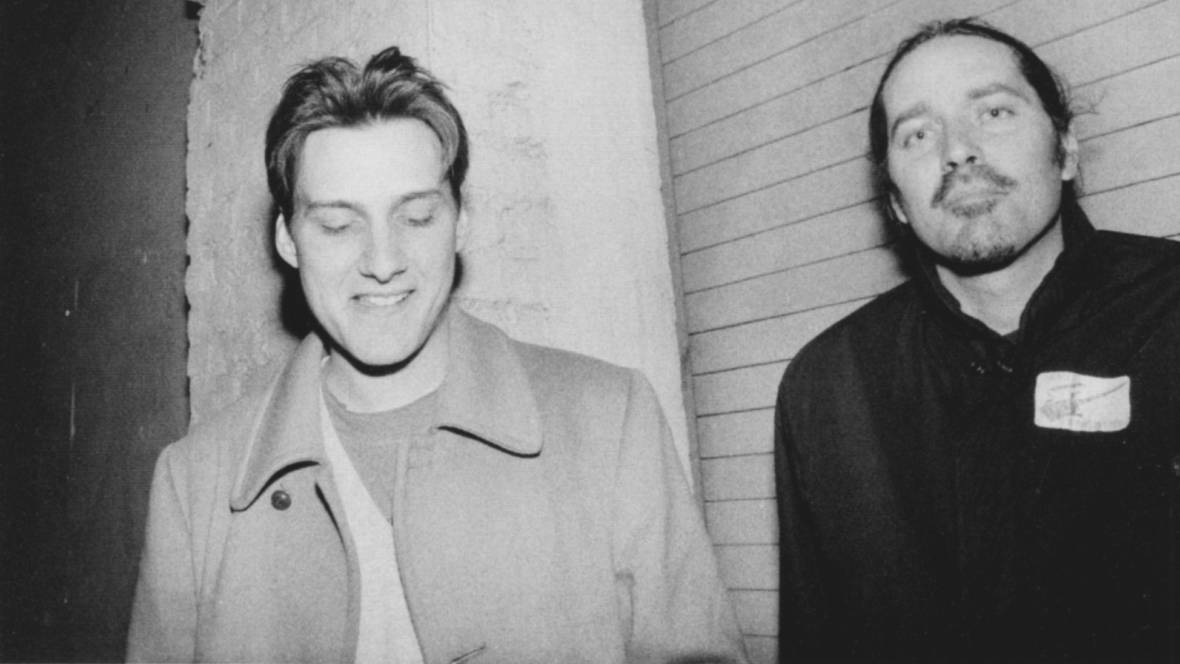
"caption": "Scott Kannburg AKA Spiral Stairs and Gary Young in 1992 ",
"description": "Scott Kannburg AKA Spiral Stairs and Gary Young in 1992 ",
"title": "Pavement-1992-cred_Gail-Butsensky",
"credit": "Photo: Gail Butsensky / Courtesy of Spiral Stairs Archive",
"status": "inherit",
"isLoading": false,
"fetchFailed": false
},
"arts_12136250": {
"type": "attachments",
"id": "arts_12136250",
"meta": {
"index": "attachments_1716263798",
"site": "arts",
"id": "12136250",
"found": true
},
"parent": 12135851,
"imgSizes": {
"thumbnail": {
"file": "https://ww2.kqed.org/app/uploads/sites/2/2016/09/in_the_pines_thumbnail_official_X-400x225.jpg",
"width": 400,
"mimeType": "image/jpeg",
"height": 225
},
"fd-sm": {
"file": "https://ww2.kqed.org/app/uploads/sites/2/2016/09/in_the_pines_thumbnail_official_X-960x540.jpg",
"width": 960,
"mimeType": "image/jpeg",
"height": 540
},
"post-thumbnail": {
"file": "https://ww2.kqed.org/app/uploads/sites/2/2016/09/in_the_pines_thumbnail_official_X-672x372.jpg",
"width": 672,
"mimeType": "image/jpeg",
"height": 372
},
"kqedFullSize": {
"file": "https://ww2.kqed.org/app/uploads/sites/2/2016/09/in_the_pines_thumbnail_official_X.jpg",
"width": 960,
"height": 540
},
"guest-author-50": {
"file": "https://ww2.kqed.org/app/uploads/sites/2/2016/09/in_the_pines_thumbnail_official_X-50x50.jpg",
"width": 50,
"mimeType": "image/jpeg",
"height": 50
},
"guest-author-96": {
"file": "https://ww2.kqed.org/app/uploads/sites/2/2016/09/in_the_pines_thumbnail_official_X-96x96.jpg",
"width": 96,
"mimeType": "image/jpeg",
"height": 96
},
"medium": {
"file": "https://ww2.kqed.org/app/uploads/sites/2/2016/09/in_the_pines_thumbnail_official_X-800x450.jpg",
"width": 800,
"mimeType": "image/jpeg",
"height": 450
},
"guest-author-64": {
"file": "https://ww2.kqed.org/app/uploads/sites/2/2016/09/in_the_pines_thumbnail_official_X-64x64.jpg",
"width": 64,
"mimeType": "image/jpeg",
"height": 64
},
"detail": {
"file": "https://ww2.kqed.org/app/uploads/sites/2/2016/09/in_the_pines_thumbnail_official_X-150x150.jpg",
"width": 150,
"mimeType": "image/jpeg",
"height": 150
},
"guest-author-32": {
"file": "https://ww2.kqed.org/app/uploads/sites/2/2016/09/in_the_pines_thumbnail_official_X-32x32.jpg",
"width": 32,
"mimeType": "image/jpeg",
"height": 32
},
"medium_large": {
"file": "https://ww2.kqed.org/app/uploads/sites/2/2016/09/in_the_pines_thumbnail_official_X-768x432.jpg",
"width": 768,
"mimeType": "image/jpeg",
"height": 432
},
"guest-author-128": {
"file": "https://ww2.kqed.org/app/uploads/sites/2/2016/09/in_the_pines_thumbnail_official_X-128x128.jpg",
"width": 128,
"mimeType": "image/jpeg",
"height": 128
}
},
"publishDate": 1475186630,
"modified": 1475186630,
"caption": null,
"description": null,
"title": "in_the_pines_thumbnail_official_X",
"credit": null,
"status": "inherit",
"isLoading": false,
"fetchFailed": false
},
"arts_12131483": {
"type": "attachments",
"id": "arts_12131483",
"meta": {
"index": "attachments_1716263798",
"site": "arts",
"id": "12131483",
"found": true
},
"parent": 12131482,
"imgSizes": {
"twentyfourteen-full-width": {
"file": "https://ww2.kqed.org/app/uploads/sites/2/2016/09/014-1038x576.jpg",
"width": 1038,
"mimeType": "image/jpeg",
"height": 576
},
"thumbnail": {
"file": "https://ww2.kqed.org/app/uploads/sites/2/2016/09/014-400x300.jpg",
"width": 400,
"mimeType": "image/jpeg",
"height": 300
},
"fd-sm": {
"file": "https://ww2.kqed.org/app/uploads/sites/2/2016/09/014-960x720.jpg",
"width": 960,
"mimeType": "image/jpeg",
"height": 720
},
"post-thumbnail": {
"file": "https://ww2.kqed.org/app/uploads/sites/2/2016/09/014-672x372.jpg",
"width": 672,
"mimeType": "image/jpeg",
"height": 372
},
"kqedFullSize": {
"file": "https://ww2.kqed.org/app/uploads/sites/2/2016/09/014.jpg",
"width": 3264,
"height": 2448
},
"large": {
"file": "https://ww2.kqed.org/app/uploads/sites/2/2016/09/014-1180x885.jpg",
"width": 1180,
"mimeType": "image/jpeg",
"height": 885
},
"guest-author-50": {
"file": "https://ww2.kqed.org/app/uploads/sites/2/2016/09/014-50x50.jpg",
"width": 50,
"mimeType": "image/jpeg",
"height": 50
},
"guest-author-96": {
"file": "https://ww2.kqed.org/app/uploads/sites/2/2016/09/014-96x96.jpg",
"width": 96,
"mimeType": "image/jpeg",
"height": 96
},
"medium": {
"file": "https://ww2.kqed.org/app/uploads/sites/2/2016/09/014-800x600.jpg",
"width": 800,
"mimeType": "image/jpeg",
"height": 600
},
"guest-author-64": {
"file": "https://ww2.kqed.org/app/uploads/sites/2/2016/09/014-64x64.jpg",
"width": 64,
"mimeType": "image/jpeg",
"height": 64
},
"guest-author-32": {
"file": "https://ww2.kqed.org/app/uploads/sites/2/2016/09/014-32x32.jpg",
"width": 32,
"mimeType": "image/jpeg",
"height": 32
},
"fd-lrg": {
"file": "https://ww2.kqed.org/app/uploads/sites/2/2016/09/014-1920x1440.jpg",
"width": 1920,
"mimeType": "image/jpeg",
"height": 1440
},
"fd-med": {
"file": "https://ww2.kqed.org/app/uploads/sites/2/2016/09/014-1180x885.jpg",
"width": 1180,
"mimeType": "image/jpeg",
"height": 885
},
"detail": {
"file": "https://ww2.kqed.org/app/uploads/sites/2/2016/09/014-150x150.jpg",
"width": 150,
"mimeType": "image/jpeg",
"height": 150
},
"medium_large": {
"file": "https://ww2.kqed.org/app/uploads/sites/2/2016/09/014-768x576.jpg",
"width": 768,
"mimeType": "image/jpeg",
"height": 576
},
"guest-author-128": {
"file": "https://ww2.kqed.org/app/uploads/sites/2/2016/09/014-128x128.jpg",
"width": 128,
"mimeType": "image/jpeg",
"height": 128
}
},
"publishDate": 1475096933,
"modified": 1475097001,
"caption": "Clara Rodruiguez leads a class learning Farruquito's flash mob choreography last week in San Francisco",
"description": "Clara Rodruiguez leads a class learning Farruquito's flash mob choreography last week in San Francisco",
"title": "Clara Rodruiguez leads a class learning Farruquito's flash mob choreography last week in San Francisco",
"credit": "Photo: Cy Musiker",
"status": "inherit",
"isLoading": false,
"fetchFailed": false
},
"arts_12132280": {
"type": "attachments",
"id": "arts_12132280",
"meta": {
"index": "attachments_1716263798",
"site": "arts",
"id": "12132280",
"found": true
},
"parent": 12131884,
"imgSizes": {
"small": {
"file": "https://ww2.kqed.org/app/uploads/sites/2/2016/09/113-e1507137574881-520x293.jpg",
"width": 520,
"mimeType": "image/jpeg",
"height": 293
},
"twentyfourteen-full-width": {
"file": "https://ww2.kqed.org/app/uploads/sites/2/2016/09/113-e1507137574881-1038x576.jpg",
"width": 1038,
"mimeType": "image/jpeg",
"height": 576
},
"thumbnail": {
"file": "https://ww2.kqed.org/app/uploads/sites/2/2016/09/113-e1507137574881-160x90.jpg",
"width": 160,
"mimeType": "image/jpeg",
"height": 90
},
"fd-sm": {
"file": "https://ww2.kqed.org/app/uploads/sites/2/2016/09/113-e1507137574881-960x540.jpg",
"width": 960,
"mimeType": "image/jpeg",
"height": 540
},
"post-thumbnail": {
"file": "https://ww2.kqed.org/app/uploads/sites/2/2016/09/113-e1507137574881-672x372.jpg",
"width": 672,
"mimeType": "image/jpeg",
"height": 372
},
"xsmall": {
"file": "https://ww2.kqed.org/app/uploads/sites/2/2016/09/113-e1507137574881-375x211.jpg",
"width": 375,
"mimeType": "image/jpeg",
"height": 211
},
"kqedFullSize": {
"file": "https://ww2.kqed.org/app/uploads/sites/2/2016/09/113-e1507137574881.jpg",
"width": 3264,
"height": 1836
},
"large": {
"file": "https://ww2.kqed.org/app/uploads/sites/2/2016/09/113-e1507137574881-1020x574.jpg",
"width": 1020,
"mimeType": "image/jpeg",
"height": 574
},
"xlarge": {
"file": "https://ww2.kqed.org/app/uploads/sites/2/2016/09/113-e1507137574881-1180x664.jpg",
"width": 1180,
"mimeType": "image/jpeg",
"height": 664
},
"guest-author-50": {
"file": "https://ww2.kqed.org/app/uploads/sites/2/2016/09/113-e1507137574881-50x50.jpg",
"width": 50,
"mimeType": "image/jpeg",
"height": 50
},
"guest-author-96": {
"file": "https://ww2.kqed.org/app/uploads/sites/2/2016/09/113-e1507137574881-96x96.jpg",
"width": 96,
"mimeType": "image/jpeg",
"height": 96
},
"medium": {
"file": "https://ww2.kqed.org/app/uploads/sites/2/2016/09/113-e1507137574881-800x450.jpg",
"width": 800,
"mimeType": "image/jpeg",
"height": 450
},
"guest-author-64": {
"file": "https://ww2.kqed.org/app/uploads/sites/2/2016/09/113-e1507137574881-64x64.jpg",
"width": 64,
"mimeType": "image/jpeg",
"height": 64
},
"guest-author-32": {
"file": "https://ww2.kqed.org/app/uploads/sites/2/2016/09/113-e1507137574881-32x32.jpg",
"width": 32,
"mimeType": "image/jpeg",
"height": 32
},
"fd-lrg": {
"file": "https://ww2.kqed.org/app/uploads/sites/2/2016/09/113-e1507137574881-1920x1080.jpg",
"width": 1920,
"mimeType": "image/jpeg",
"height": 1080
},
"fd-med": {
"file": "https://ww2.kqed.org/app/uploads/sites/2/2016/09/113-e1507137574881-1180x664.jpg",
"width": 1180,
"mimeType": "image/jpeg",
"height": 664
},
"full-width": {
"file": "https://ww2.kqed.org/app/uploads/sites/2/2016/09/113-e1507137574881-1920x1080.jpg",
"width": 1920,
"mimeType": "image/jpeg",
"height": 1080
},
"detail": {
"file": "https://ww2.kqed.org/app/uploads/sites/2/2016/09/113-e1507137574881-150x150.jpg",
"width": 150,
"mimeType": "image/jpeg",
"height": 150
},
"medium_large": {
"file": "https://ww2.kqed.org/app/uploads/sites/2/2016/09/113-e1507137574881-768x432.jpg",
"width": 768,
"mimeType": "image/jpeg",
"height": 432
},
"guest-author-128": {
"file": "https://ww2.kqed.org/app/uploads/sites/2/2016/09/113-e1507137574881-128x128.jpg",
"width": 128,
"mimeType": "image/jpeg",
"height": 128
},
"xxsmall": {
"file": "https://ww2.kqed.org/app/uploads/sites/2/2016/09/113-e1507137574881-240x135.jpg",
"width": 240,
"mimeType": "image/jpeg",
"height": 135
}
},
"publishDate": 1475111311,
"modified": 1507137666,
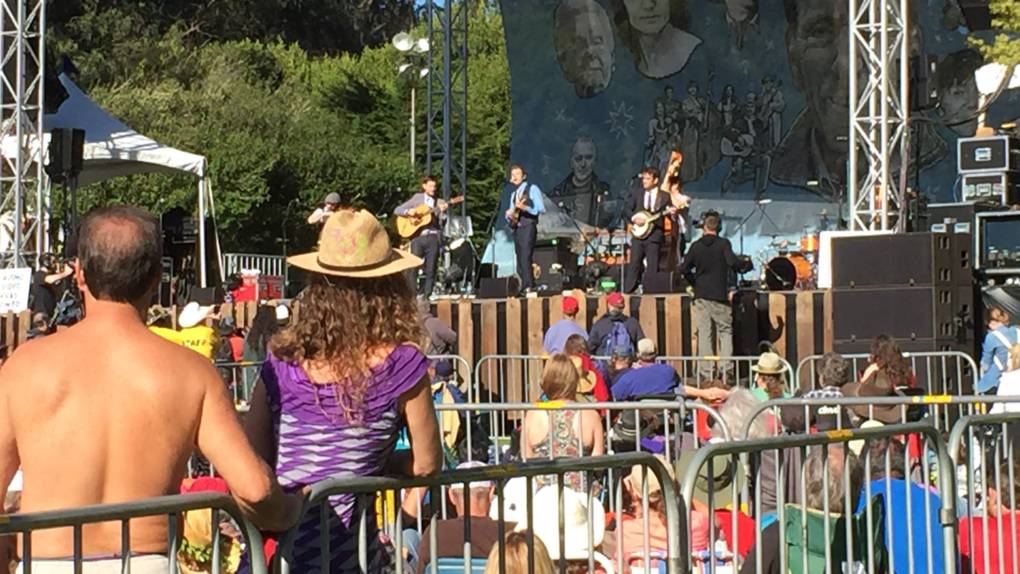
"caption": "A sunny afternoon at Hardly Strictly Bluegrass ",
"description": "A sunny afternoon at Hardly Strictly Bluegrass ",
"title": "A sunny afternoon at Hardly Strictly Bluegrass",
"credit": "Photo: Cy Musiker/KQED",
"status": "inherit",
"isLoading": false,
"fetchFailed": false
},
"arts_12132272": {
"type": "attachments",
"id": "arts_12132272",
"meta": {
"index": "attachments_1716263798",
"site": "arts",
"id": "12132272",
"found": true
},
"parent": 12131486,
"imgSizes": {
"twentyfourteen-full-width": {
"file": "https://ww2.kqed.org/app/uploads/sites/2/2016/09/ARTS_OPERAJNAI-1038x576.jpg",
"width": 1038,
"mimeType": "image/jpeg",
"height": 576
},
"thumbnail": {
"file": "https://ww2.kqed.org/app/uploads/sites/2/2016/09/ARTS_OPERAJNAI-400x225.jpg",
"width": 400,
"mimeType": "image/jpeg",
"height": 225
},
"fd-sm": {
"file": "https://ww2.kqed.org/app/uploads/sites/2/2016/09/ARTS_OPERAJNAI-960x540.jpg",
"width": 960,
"mimeType": "image/jpeg",
"height": 540
},
"post-thumbnail": {
"file": "https://ww2.kqed.org/app/uploads/sites/2/2016/09/ARTS_OPERAJNAI-672x372.jpg",
"width": 672,
"mimeType": "image/jpeg",
"height": 372
},
"kqedFullSize": {
"file": "https://ww2.kqed.org/app/uploads/sites/2/2016/09/ARTS_OPERAJNAI.jpg",
"width": 1920,
"height": 1080
},
"large": {
"file": "https://ww2.kqed.org/app/uploads/sites/2/2016/09/ARTS_OPERAJNAI-1180x664.jpg",
"width": 1180,
"mimeType": "image/jpeg",
"height": 664
},
"guest-author-50": {
"file": "https://ww2.kqed.org/app/uploads/sites/2/2016/09/ARTS_OPERAJNAI-50x50.jpg",
"width": 50,
"mimeType": "image/jpeg",
"height": 50
},
"guest-author-96": {
"file": "https://ww2.kqed.org/app/uploads/sites/2/2016/09/ARTS_OPERAJNAI-96x96.jpg",
"width": 96,
"mimeType": "image/jpeg",
"height": 96
},
"medium": {
"file": "https://ww2.kqed.org/app/uploads/sites/2/2016/09/ARTS_OPERAJNAI-800x450.jpg",
"width": 800,
"mimeType": "image/jpeg",
"height": 450
},
"guest-author-64": {
"file": "https://ww2.kqed.org/app/uploads/sites/2/2016/09/ARTS_OPERAJNAI-64x64.jpg",
"width": 64,
"mimeType": "image/jpeg",
"height": 64
},
"guest-author-32": {
"file": "https://ww2.kqed.org/app/uploads/sites/2/2016/09/ARTS_OPERAJNAI-32x32.jpg",
"width": 32,
"mimeType": "image/jpeg",
"height": 32
},
"fd-lrg": {
"file": "https://ww2.kqed.org/app/uploads/sites/2/2016/09/ARTS_OPERAJNAI-1920x1080.jpg",
"width": 1920,
"mimeType": "image/jpeg",
"height": 1080
},
"fd-med": {
"file": "https://ww2.kqed.org/app/uploads/sites/2/2016/09/ARTS_OPERAJNAI-1180x664.jpg",
"width": 1180,
"mimeType": "image/jpeg",
"height": 664
},
"detail": {
"file": "https://ww2.kqed.org/app/uploads/sites/2/2016/09/ARTS_OPERAJNAI-150x150.jpg",
"width": 150,
"mimeType": "image/jpeg",
"height": 150
},
"medium_large": {
"file": "https://ww2.kqed.org/app/uploads/sites/2/2016/09/ARTS_OPERAJNAI-768x432.jpg",
"width": 768,
"mimeType": "image/jpeg",
"height": 432
},
"guest-author-128": {
"file": "https://ww2.kqed.org/app/uploads/sites/2/2016/09/ARTS_OPERAJNAI-128x128.jpg",
"width": 128,
"mimeType": "image/jpeg",
"height": 128
}
},
"publishDate": 1475109721,
"modified": 1475109721,
"caption": null,
"description": null,
"title": "ARTS_OPERAJNAI",
"credit": null,
"status": "inherit",
"isLoading": false,
"fetchFailed": false
},
"arts_12135451": {
"type": "attachments",
"id": "arts_12135451",
"meta": {
"index": "attachments_1716263798",
"site": "arts",
"id": "12135451",
"found": true
},
"parent": 12135254,
"imgSizes": {
"twentyfourteen-full-width": {
"file": "https://ww2.kqed.org/app/uploads/sites/2/2016/09/Janice.Main_-1038x576.jpg",
"width": 1038,
"mimeType": "image/jpeg",
"height": 576
},
"thumbnail": {
"file": "https://ww2.kqed.org/app/uploads/sites/2/2016/09/Janice.Main_-400x225.jpg",
"width": 400,
"mimeType": "image/jpeg",
"height": 225
},
"fd-sm": {
"file": "https://ww2.kqed.org/app/uploads/sites/2/2016/09/Janice.Main_-960x540.jpg",
"width": 960,
"mimeType": "image/jpeg",
"height": 540
},
"post-thumbnail": {
"file": "https://ww2.kqed.org/app/uploads/sites/2/2016/09/Janice.Main_-672x372.jpg",
"width": 672,
"mimeType": "image/jpeg",
"height": 372
},
"kqedFullSize": {
"file": "https://ww2.kqed.org/app/uploads/sites/2/2016/09/Janice.Main_.jpg",
"width": 1920,
"height": 1080
},
"large": {
"file": "https://ww2.kqed.org/app/uploads/sites/2/2016/09/Janice.Main_-1180x664.jpg",
"width": 1180,
"mimeType": "image/jpeg",
"height": 664
},
"guest-author-50": {
"file": "https://ww2.kqed.org/app/uploads/sites/2/2016/09/Janice.Main_-50x50.jpg",
"width": 50,
"mimeType": "image/jpeg",
"height": 50
},
"guest-author-96": {
"file": "https://ww2.kqed.org/app/uploads/sites/2/2016/09/Janice.Main_-96x96.jpg",
"width": 96,
"mimeType": "image/jpeg",
"height": 96
},
"medium": {
"file": "https://ww2.kqed.org/app/uploads/sites/2/2016/09/Janice.Main_-800x450.jpg",
"width": 800,
"mimeType": "image/jpeg",
"height": 450
},
"guest-author-64": {
"file": "https://ww2.kqed.org/app/uploads/sites/2/2016/09/Janice.Main_-64x64.jpg",
"width": 64,
"mimeType": "image/jpeg",
"height": 64
},
"guest-author-32": {
"file": "https://ww2.kqed.org/app/uploads/sites/2/2016/09/Janice.Main_-32x32.jpg",
"width": 32,
"mimeType": "image/jpeg",
"height": 32
},
"fd-lrg": {
"file": "https://ww2.kqed.org/app/uploads/sites/2/2016/09/Janice.Main_-1920x1080.jpg",
"width": 1920,
"mimeType": "image/jpeg",
"height": 1080
},
"fd-med": {
"file": "https://ww2.kqed.org/app/uploads/sites/2/2016/09/Janice.Main_-1180x664.jpg",
"width": 1180,
"mimeType": "image/jpeg",
"height": 664
},
"detail": {
"file": "https://ww2.kqed.org/app/uploads/sites/2/2016/09/Janice.Main_-150x150.jpg",
"width": 150,
"mimeType": "image/jpeg",
"height": 150
},
"medium_large": {
"file": "https://ww2.kqed.org/app/uploads/sites/2/2016/09/Janice.Main_-768x432.jpg",
"width": 768,
"mimeType": "image/jpeg",
"height": 432
},
"guest-author-128": {
"file": "https://ww2.kqed.org/app/uploads/sites/2/2016/09/Janice.Main_-128x128.jpg",
"width": 128,
"mimeType": "image/jpeg",
"height": 128
}
},
"publishDate": 1475172690,
"modified": 1475172754,
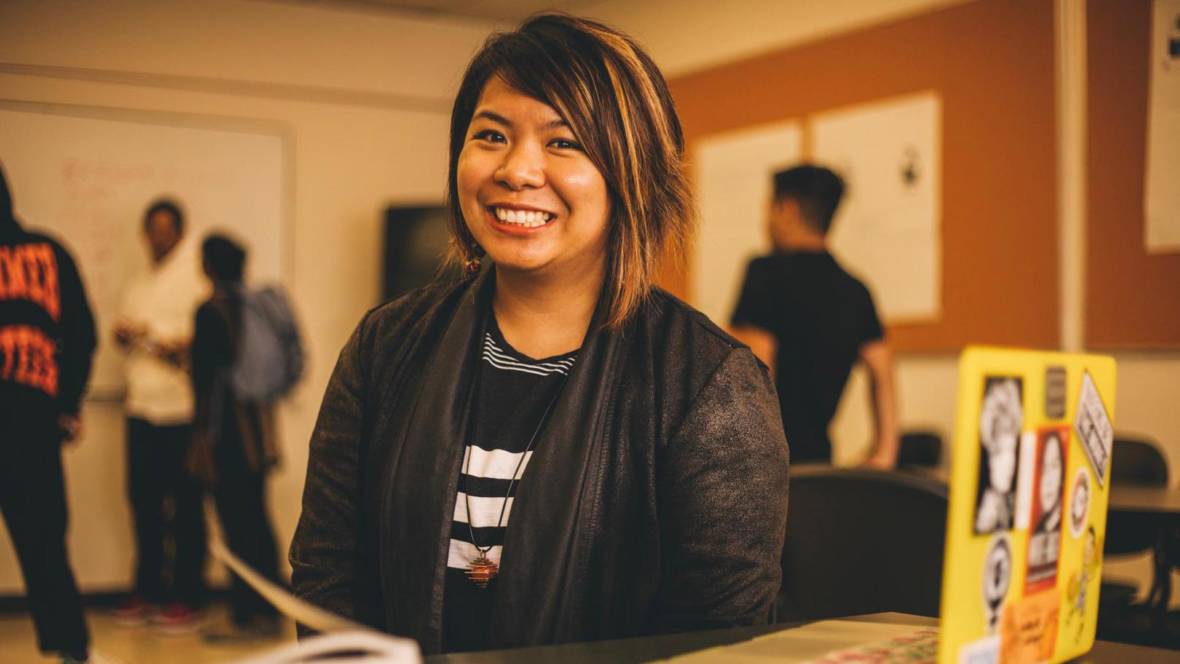
"caption": "At Skyline College, Janice Sapigao teaches students to find their own voice through the study of hip-hop.",
"description": "At Skyline College, Janice Sapigao teaches students to find their own voice through the study of hip-hop.",
"title": "Janice.Main",
"credit": "Photo: CJ Raygoza",
"status": "inherit",
"isLoading": false,
"fetchFailed": false
},
"arts_12131478": {
"type": "attachments",
"id": "arts_12131478",
"meta": {
"index": "attachments_1716263798",
"site": "arts",
"id": "12131478",
"found": true
},
"parent": 12104805,
"imgSizes": {
"twentyfourteen-full-width": {
"file": "https://ww2.kqed.org/app/uploads/sites/2/2016/09/IMG_4301-e1475100955817-1038x576.jpg",
"width": 1038,
"mimeType": "image/jpeg",
"height": 576
},
"thumbnail": {
"file": "https://ww2.kqed.org/app/uploads/sites/2/2016/09/IMG_4301-e1475100955817-400x226.jpg",
"width": 400,
"mimeType": "image/jpeg",
"height": 226
},
"fd-sm": {
"file": "https://ww2.kqed.org/app/uploads/sites/2/2016/09/IMG_4301-e1475100955817-960x541.jpg",
"width": 960,
"mimeType": "image/jpeg",
"height": 541
},
"post-thumbnail": {
"file": "https://ww2.kqed.org/app/uploads/sites/2/2016/09/IMG_4301-e1475100955817-672x372.jpg",
"width": 672,
"mimeType": "image/jpeg",
"height": 372
},
"kqedFullSize": {
"file": "https://ww2.kqed.org/app/uploads/sites/2/2016/09/IMG_4301-e1475100955817.jpg",
"width": 3016,
"height": 1701
},
"large": {
"file": "https://ww2.kqed.org/app/uploads/sites/2/2016/09/IMG_4301-e1475100955817-1180x666.jpg",
"width": 1180,
"mimeType": "image/jpeg",
"height": 666
},
"guest-author-50": {
"file": "https://ww2.kqed.org/app/uploads/sites/2/2016/09/IMG_4301-e1475100955817-50x50.jpg",
"width": 50,
"mimeType": "image/jpeg",
"height": 50
},
"guest-author-96": {
"file": "https://ww2.kqed.org/app/uploads/sites/2/2016/09/IMG_4301-e1475100955817-96x96.jpg",
"width": 96,
"mimeType": "image/jpeg",
"height": 96
},
"medium": {
"file": "https://ww2.kqed.org/app/uploads/sites/2/2016/09/IMG_4301-e1475100955817-800x451.jpg",
"width": 800,
"mimeType": "image/jpeg",
"height": 451
},
"guest-author-64": {
"file": "https://ww2.kqed.org/app/uploads/sites/2/2016/09/IMG_4301-e1475100955817-64x64.jpg",
"width": 64,
"mimeType": "image/jpeg",
"height": 64
},
"guest-author-32": {
"file": "https://ww2.kqed.org/app/uploads/sites/2/2016/09/IMG_4301-e1475100955817-32x32.jpg",
"width": 32,
"mimeType": "image/jpeg",
"height": 32
},
"fd-lrg": {
"file": "https://ww2.kqed.org/app/uploads/sites/2/2016/09/IMG_4301-e1475100955817-1920x1083.jpg",
"width": 1920,
"mimeType": "image/jpeg",
"height": 1083
},
"fd-med": {
"file": "https://ww2.kqed.org/app/uploads/sites/2/2016/09/IMG_4301-e1475100955817-1180x666.jpg",
"width": 1180,
"mimeType": "image/jpeg",
"height": 666
},
"detail": {
"file": "https://ww2.kqed.org/app/uploads/sites/2/2016/09/IMG_4301-e1475100955817-150x150.jpg",
"width": 150,
"mimeType": "image/jpeg",
"height": 150
},
"medium_large": {
"file": "https://ww2.kqed.org/app/uploads/sites/2/2016/09/IMG_4301-e1475100955817-768x433.jpg",
"width": 768,
"mimeType": "image/jpeg",
"height": 433
},
"guest-author-128": {
"file": "https://ww2.kqed.org/app/uploads/sites/2/2016/09/IMG_4301-e1475100955817-128x128.jpg",
"width": 128,
"mimeType": "image/jpeg",
"height": 128
}
},
"publishDate": 1475094983,
"modified": 1475101010,
"caption": "A customer at the Lucky Horseshoe listens to the Sunday bluegrass jam. ",
"description": "A customer at the Lucky Horseshoe listens to the Sunday bluegrass jam. ",
"title": "Lucky Horseshoe Sunday Jam",
"credit": "Photo: Kristin Scheel",
"status": "inherit",
"isLoading": false,
"fetchFailed": false
},
"arts_12130903": {
"type": "attachments",
"id": "arts_12130903",
"meta": {
"index": "attachments_1716263798",
"site": "arts",
"id": "12130903",
"found": true
},
"parent": 12130897,
"imgSizes": {
"twentyfourteen-full-width": {
"file": "https://ww2.kqed.org/app/uploads/sites/2/2016/09/Ameoba-Music-Berkeley-1038x576.jpg",
"width": 1038,
"mimeType": "image/jpeg",
"height": 576
},
"thumbnail": {
"file": "https://ww2.kqed.org/app/uploads/sites/2/2016/09/Ameoba-Music-Berkeley-400x225.jpg",
"width": 400,
"mimeType": "image/jpeg",
"height": 225
},
"fd-sm": {
"file": "https://ww2.kqed.org/app/uploads/sites/2/2016/09/Ameoba-Music-Berkeley-960x540.jpg",
"width": 960,
"mimeType": "image/jpeg",
"height": 540
},
"post-thumbnail": {
"file": "https://ww2.kqed.org/app/uploads/sites/2/2016/09/Ameoba-Music-Berkeley-672x372.jpg",
"width": 672,
"mimeType": "image/jpeg",
"height": 372
},
"kqedFullSize": {
"file": "https://ww2.kqed.org/app/uploads/sites/2/2016/09/Ameoba-Music-Berkeley.jpg",
"width": 1920,
"height": 1080
},
"large": {
"file": "https://ww2.kqed.org/app/uploads/sites/2/2016/09/Ameoba-Music-Berkeley-1180x664.jpg",
"width": 1180,
"mimeType": "image/jpeg",
"height": 664
},
"guest-author-50": {
"file": "https://ww2.kqed.org/app/uploads/sites/2/2016/09/Ameoba-Music-Berkeley-50x50.jpg",
"width": 50,
"mimeType": "image/jpeg",
"height": 50
},
"guest-author-96": {
"file": "https://ww2.kqed.org/app/uploads/sites/2/2016/09/Ameoba-Music-Berkeley-96x96.jpg",
"width": 96,
"mimeType": "image/jpeg",
"height": 96
},
"medium": {
"file": "https://ww2.kqed.org/app/uploads/sites/2/2016/09/Ameoba-Music-Berkeley-800x450.jpg",
"width": 800,
"mimeType": "image/jpeg",
"height": 450
},
"guest-author-64": {
"file": "https://ww2.kqed.org/app/uploads/sites/2/2016/09/Ameoba-Music-Berkeley-64x64.jpg",
"width": 64,
"mimeType": "image/jpeg",
"height": 64
},
"guest-author-32": {
"file": "https://ww2.kqed.org/app/uploads/sites/2/2016/09/Ameoba-Music-Berkeley-32x32.jpg",
"width": 32,
"mimeType": "image/jpeg",
"height": 32
},
"fd-lrg": {
"file": "https://ww2.kqed.org/app/uploads/sites/2/2016/09/Ameoba-Music-Berkeley-1920x1080.jpg",
"width": 1920,
"mimeType": "image/jpeg",
"height": 1080
},
"fd-med": {
"file": "https://ww2.kqed.org/app/uploads/sites/2/2016/09/Ameoba-Music-Berkeley-1180x664.jpg",
"width": 1180,
"mimeType": "image/jpeg",
"height": 664
},
"detail": {
"file": "https://ww2.kqed.org/app/uploads/sites/2/2016/09/Ameoba-Music-Berkeley-150x150.jpg",
"width": 150,
"mimeType": "image/jpeg",
"height": 150
},
"medium_large": {
"file": "https://ww2.kqed.org/app/uploads/sites/2/2016/09/Ameoba-Music-Berkeley-768x432.jpg",
"width": 768,
"mimeType": "image/jpeg",
"height": 432
},
"guest-author-128": {
"file": "https://ww2.kqed.org/app/uploads/sites/2/2016/09/Ameoba-Music-Berkeley-128x128.jpg",
"width": 128,
"mimeType": "image/jpeg",
"height": 128
}
},
"publishDate": 1475086475,
"modified": 1475086920,
"caption": "Amoeba Music in Berkeley",
"description": "Amoeba Music in Berkeley",
"title": "Ameoba Music Berkeley",
"credit": "Photo: Kevin L. Jones/KQED",
"status": "inherit",
"isLoading": false,
"fetchFailed": false
}
},
"audioPlayerReducer": {
"postId": "stream_live",
"isPaused": true,
"isPlaying": false,
"pfsActive": false,
"pledgeModalIsOpen": true,
"playerDrawerIsOpen": false,
"liveAudioPlayStartedAt": 0,
"liveAudioPlayContext": ""
},
"authorsReducer": {
"byline_arts_12163207": {
"type": "authors",
"id": "byline_arts_12163207",
"meta": {
"override": true
},
"slug": "byline_arts_12163207",
"name": "Bob Boilen",
"isLoading": false
},
"byline_arts_12144622": {
"type": "authors",
"id": "byline_arts_12144622",
"meta": {
"override": true
},
"slug": "byline_arts_12144622",
"name": "Associated Press",
"isLoading": false
},
"byline_arts_12135254": {
"type": "authors",
"id": "byline_arts_12135254",
"meta": {
"override": true
},
"slug": "byline_arts_12135254",
"name": "Michelle Threadgould",
"isLoading": false
},
"cmusiker": {
"type": "authors",
"id": "32",
"meta": {
"index": "authors_1716337520",
"id": "32",
"found": true
},
"name": "Cy Musiker",
"firstName": "Cy",
"lastName": "Musiker",
"slug": "cmusiker",
"email": "cmusiker@kqed.org",
"display_author_email": false,
"staff_mastheads": [],
"title": "KQED Contributor",
"bio": "Cy Musiker is a former co-host of The Do List and a former reporter covering the arts for KQED News and The California Report. He loves live performance, especially great theater, jazz, roots music, anything by Mahler. Cy has an MJ from UC Berkeley's School of Journalism, and got his BA from Hampshire College. His work has been recognized by the Society for Professional Journalists with their Sigma Delta Chi Award for Public Service in Journalism. When he can, Cy likes to swim in Tomales Bay, run with his dog in the East Bay Hills, and hike the Sierra.",
"avatar": "https://secure.gravatar.com/avatar/05eaba5c5696ce8f062e4ea2df428a43?s=600&d=blank&r=g",
"twitter": null,
"facebook": null,
"instagram": null,
"linkedin": null,
"sites": [
{
"site": "arts",
"roles": [
"Contributor",
"subscriber"
]
},
{
"site": "news",
"roles": [
"author"
]
},
{
"site": "bayareabites",
"roles": [
"contributor"
]
}
],
"headData": {
"title": "Cy Musiker | KQED",
"description": "KQED Contributor",
"ogImgSrc": "https://secure.gravatar.com/avatar/05eaba5c5696ce8f062e4ea2df428a43?s=600&d=blank&r=g",
"twImgSrc": "https://secure.gravatar.com/avatar/05eaba5c5696ce8f062e4ea2df428a43?s=600&d=blank&r=g"
},
"isLoading": false,
"link": "/author/cmusiker"
},
"kqedarts": {
"type": "authors",
"id": "92",
"meta": {
"index": "authors_1716337520",
"id": "92",
"found": true
},
"name": "KQED Arts",
"firstName": "KQED",
"lastName": "Arts",
"slug": "kqedarts",
"email": "arts@kqed.org",
"display_author_email": false,
"staff_mastheads": [],
"title": "KQED Staff",
"bio": null,
"avatar": "https://secure.gravatar.com/avatar/321c9ebfeb7736f9e55366a6d3399ab0?s=600&d=blank&r=g",
"twitter": null,
"facebook": null,
"instagram": "https://www.instagram.com/kqed_arts/",
"linkedin": null,
"sites": [
{
"site": "arts",
"roles": [
"contributor"
]
},
{
"site": "pop",
"roles": [
"contributor"
]
},
{
"site": "science",
"roles": [
"author"
]
},
{
"site": "food",
"roles": [
"contributor"
]
}
],
"headData": {
"title": "KQED Arts | KQED",
"description": "KQED Staff",
"ogImgSrc": "https://secure.gravatar.com/avatar/321c9ebfeb7736f9e55366a6d3399ab0?s=600&d=blank&r=g",
"twImgSrc": "https://secure.gravatar.com/avatar/321c9ebfeb7736f9e55366a6d3399ab0?s=600&d=blank&r=g"
},
"isLoading": false,
"link": "/author/kqedarts"
},
"kjones": {
"type": "authors",
"id": "93",
"meta": {
"index": "authors_1716337520",
"id": "93",
"found": true
},
"name": "Kevin L. Jones",
"firstName": "Kevin",
"lastName": "Jones",
"slug": "kjones",
"email": "kjones@kqed.org",
"display_author_email": false,
"staff_mastheads": [],
"title": null,
"bio": null,
"avatar": "https://secure.gravatar.com/avatar/12c65b5633ed39d0a59bb7f497eff645?s=600&d=blank&r=g",
"twitter": null,
"facebook": null,
"instagram": null,
"linkedin": null,
"sites": [
{
"site": "arts",
"roles": [
"subscriber"
]
},
{
"site": "styleguide",
"roles": [
"contributor"
]
},
{
"site": "artschool",
"roles": [
"subscriber"
]
},
{
"site": "news",
"roles": [
"subscriber"
]
},
{
"site": "pop",
"roles": [
"subscriber"
]
}
],
"headData": {
"title": "Kevin L. Jones | KQED",
"description": null,
"ogImgSrc": "https://secure.gravatar.com/avatar/12c65b5633ed39d0a59bb7f497eff645?s=600&d=blank&r=g",
"twImgSrc": "https://secure.gravatar.com/avatar/12c65b5633ed39d0a59bb7f497eff645?s=600&d=blank&r=g"
},
"isLoading": false,
"link": "/author/kjones"
},
"esilvers": {
"type": "authors",
"id": "7237",
"meta": {
"index": "authors_1716337520",
"id": "7237",
"found": true
},
"name": "Emma Silvers",
"firstName": "Emma",
"lastName": "Silvers",
"slug": "esilvers",
"email": "esilvers@kqed.org",
"display_author_email": false,
"staff_mastheads": [],
"title": "KQED Contributor",
"bio": "Emma Silvers is an editor at KQED Arts and a former digital producer at KQED News. Born and raised in the Bay Area, she has previously been an arts and entertainment editor at the \u003cem>San Francisco Chronicle\u003c/em>, \u003cem>SF Weekly\u003c/em> and the \u003cem>San Francisco Bay Guardian.\u003c/em> \u003ca href=\"https://www.emmasilvers.com\">Her work\u003c/a> has also appeared in \u003cem>Rolling Stone\u003c/em>, Pitchfork and \u003cem>Mother Jones\u003c/em>. In 2017 she was the recipient of the Society of Professional Journalists-Northern California's award for arts and culture reporting. In 1993 she \u003ca href=\"https://www.kqed.org/pop/16759/wait-what-my-coworker-was-a-voice-over-hyperventilator-for-jurassic-park\">hyperventilated in \u003cem>Jurassic Park\u003c/em>\u003c/a>.",
"avatar": "https://secure.gravatar.com/avatar/247beada39b88ea5759db1f51dba05cf?s=600&d=blank&r=g",
"twitter": "emmaruthless",
"facebook": null,
"instagram": null,
"linkedin": null,
"sites": [
{
"site": "arts",
"roles": [
"editor"
]
},
{
"site": "news",
"roles": [
"editor"
]
},
{
"site": "pop",
"roles": [
"contributor"
]
},
{
"site": "bayareabites",
"roles": [
"editor"
]
},
{
"site": "food",
"roles": [
"contributor"
]
},
{
"site": "liveblog",
"roles": [
"editor"
]
}
],
"headData": {
"title": "Emma Silvers | KQED",
"description": "KQED Contributor",
"ogImgSrc": "https://secure.gravatar.com/avatar/247beada39b88ea5759db1f51dba05cf?s=600&d=blank&r=g",
"twImgSrc": "https://secure.gravatar.com/avatar/247beada39b88ea5759db1f51dba05cf?s=600&d=blank&r=g"
},
"isLoading": false,
"link": "/author/esilvers"
},
"cveltman": {
"type": "authors",
"id": "8608",
"meta": {
"index": "authors_1716337520",
"id": "8608",
"found": true
},
"name": "Chloe Veltman",
"firstName": "Chloe",
"lastName": "Veltman",
"slug": "cveltman",
"email": "cveltman@kqed.org",
"display_author_email": true,
"staff_mastheads": [],
"title": "Arts and Culture Reporter",
"bio": "Chloe Veltman is a former arts and culture reporter for KQED. Prior to joining the organization, she launched and led the arts bureau at Colorado Public Radio, served as the Bay Area's culture columnist for the New York Times, and was the founder, host and executive producer of VoiceBox, a national award-winning weekly podcast/radio show and live events series all about the human voice. Chloe is the recipient of numerous prizes, grants and fellowships including a Webby Award for her work on interactive storytelling, both the John S Knight Journalism Fellowship and Humanities Center Fellowship at Stanford University, the Sundance Arts Writing Fellowship and a Library of Congress Research Fellowship. She is the author of the book \"On Acting\" and has appeared as a guest lecturer at Yale University and the San Francisco Conservatory of Music among other institutions. She holds a BA in english literature from King's College, Cambridge, and a Masters in Dramaturgy from the Central School of Speech and Drama/Harvard Institute for Advanced Theater Training.\r\n\u003ca href=\"https://www.chloeveltman.com\">www.chloeveltman.com\u003c/a>",
"avatar": "https://secure.gravatar.com/avatar/55403394b00a1ddab683952c2eb2cf85?s=600&d=blank&r=g",
"twitter": "chloeveltman",
"facebook": null,
"instagram": null,
"linkedin": null,
"sites": [
{
"site": "arts",
"roles": []
},
{
"site": "news",
"roles": [
"author"
]
},
{
"site": "pop",
"roles": [
"editor"
]
},
{
"site": "science",
"roles": []
}
],
"headData": {
"title": "Chloe Veltman | KQED",
"description": "Arts and Culture Reporter",
"ogImgSrc": "https://secure.gravatar.com/avatar/55403394b00a1ddab683952c2eb2cf85?s=600&d=blank&r=g",
"twImgSrc": "https://secure.gravatar.com/avatar/55403394b00a1ddab683952c2eb2cf85?s=600&d=blank&r=g"
},
"isLoading": false,
"link": "/author/cveltman"
},
"cescobar": {
"type": "authors",
"id": "11241",
"meta": {
"index": "authors_1716337520",
"id": "11241",
"found": true
},
"name": "Claudia Escobar",
"firstName": "Claudia",
"lastName": "Escobar",
"slug": "cescobar",
"email": "cescobar@kqed.org",
"display_author_email": false,
"staff_mastheads": [],
"title": "KQED Contributor",
"bio": "Tropical latin visual story teller extraordinaire! bread maker apprentice.",
"avatar": "https://secure.gravatar.com/avatar/39af590a0e19126bafbf121ec9d891a77a3d680061d7cc03d720efe706992707?s=600&d=blank&r=g",
"twitter": null,
"bluesky": null,
"facebook": null,
"instagram": null,
"linkedin": null,
"sites": [
{
"site": "arts",
"roles": [
"subscriber"
]
},
{
"site": "news",
"roles": [
"author"
]
}
],
"headData": {
"title": "Claudia Escobar | KQED",
"description": "KQED Contributor",
"ogImgSrc": "https://secure.gravatar.com/avatar/39af590a0e19126bafbf121ec9d891a77a3d680061d7cc03d720efe706992707?s=600&d=blank&r=g",
"twImgSrc": "https://secure.gravatar.com/avatar/39af590a0e19126bafbf121ec9d891a77a3d680061d7cc03d720efe706992707?s=600&d=blank&r=g"
},
"isLoading": false,
"link": "/author/cescobar"
},
"kscheel": {
"type": "authors",
"id": "11300",
"meta": {
"index": "authors_1716337520",
"id": "11300",
"found": true
},
"name": "Kristin Scheel",
"firstName": "Kristin",
"lastName": "Scheel",
"slug": "kscheel",
"email": "kscheel@me.com",
"display_author_email": false,
"staff_mastheads": [],
"title": null,
"bio": null,
"avatar": "https://secure.gravatar.com/avatar/3f73d3deabb63a3308fbd4d9243c2607?s=600&d=blank&r=g",
"twitter": null,
"facebook": null,
"instagram": null,
"linkedin": null,
"sites": [
{
"site": "arts",
"roles": [
"author"
]
}
],
"headData": {
"title": "Kristin Scheel | KQED",
"description": null,
"ogImgSrc": "https://secure.gravatar.com/avatar/3f73d3deabb63a3308fbd4d9243c2607?s=600&d=blank&r=g",
"twImgSrc": "https://secure.gravatar.com/avatar/3f73d3deabb63a3308fbd4d9243c2607?s=600&d=blank&r=g"
},
"isLoading": false,
"link": "/author/kscheel"
}
},
"pagesReducer": {
"arts_category_music": {
"type": "terms",
"id": "arts_69",
"meta": {
"index": "terms_1716263798",
"site": "arts",
"id": "69",
"score": 10.85186
},
"featImg": null,
"name": "Music",
"description": null,
"taxonomy": "category",
"headData": {
"twImgId": null,
"twTitle": null,
"ogTitle": null,
"ogImgId": null,
"twDescription": null,
"description": null,
"title": "Music Archives | KQED Arts",
"ogDescription": null
},
"ttid": 70,
"slug": "music",
"isLoading": false,
"title": "Music",
"pageMeta": {
"site": "arts",
"WpPageTemplate": "page-topic-editorial",
"currentPage": 266
},
"blocks": [
{
"blockName": "kqed/post-list",
"attrs": {
"layout": "cardArticle2",
"query": "posts/arts?category=music",
"seeMore": false,
"paginated": true,
"page": 266
}
},
{
"blockName": "kqed/ad"
}
]
}
},
"pfsSessionReducer": {},
"postsReducer": {
"stream_live": {
"type": "live",
"id": "stream_live",
"audioUrl": "https://streams.kqed.org/kqedradio",
"title": "Live Stream",
"excerpt": "Live Stream information currently unavailable.",
"link": "/radio",
"featImg": "",
"label": {
"name": "KQED Live",
"link": "/"
}
},
"stream_kqedNewscast": {
"type": "posts",
"id": "stream_kqedNewscast",
"audioUrl": "https://www.kqed.org/.stream/anon/radio/RDnews/newscast.mp3?_=1",
"title": "KQED Newscast",
"featImg": "",
"label": {
"name": "88.5 FM",
"link": "/"
}
},
"arts_12163207": {
"type": "posts",
"id": "arts_12163207",
"meta": {
"index": "posts_1716263798",
"site": "arts",
"id": "12163207",
"score": null,
"sort": [
1475695826000
]
},
"parent": 0,
"labelTerm": {
"site": "arts",
"term": 137
},
"blocks": [],
"publishDate": 1475695826,
"format": "video",
"title": "Common: Tiny Desk Concert at the White House",
"headTitle": "Common: Tiny Desk Concert at the White House | KQED",
"content": "\u003cp>We’ve never done a Tiny Desk Concert that wasn’t behind my desk at NPR. But when the White House called and said they were putting on an event called South by South Lawn, a day-long festival filled with innovators and creators from the worlds of technology and art, including music, we jumped at the chance to get involved. We chose Common as the performer and the White House library as the space.\u003c/p>\n\u003cp>This Tiny Desk Concert was a convergence of art and soul, mixing politics with heart. Common’s choice of songs dealt with incarceration as the new slavery, imagined a time where women rule the world and honored the man he looked up to all his life, his father. For this occasion Common put together a special six-piece band of close friends that includes the great Robert Glasper, with his eloquent and delicate touch, on keyboards and Derrick Hodge, whose music spans from hip-hop to folk and has made a big imprint on the world of jazz, on bass. Common also asked his longtime friend and collaborator Bilal to sing on two songs. The performance includes three brand new songs, along with one classic, “I Used To Love H.E.R.”\u003c/p>\n\u003cp>Common was born on Chicago’s South Side and grew up in President Obama’s city. His rap career began in the early 1990s, back when he was known as Common Sense, and he’s always taken on big ideas without easy answers in his songs, from abortion to social justice to the legacy of hip-hop itself. 25 years later, morality and responsibility continue to play significant roles in his songs. In 2015, he won an Academy Award alongside the singer John Legend for their song “Glory” from the movie \u003cem>Selma\u003c/em>.\u003c/p>\n\u003cp>Common told us that he’d been invited to the White House many times before, including by Michelle Obama for a poetry reading back in 2011, but he was thrilled by the prospect of performing his music during Barack Obama’s final months as president. One look at this Tiny Desk Concert and you’ll see that thrill on his face and hear it throughout this magnificent performance on this very special day.\u003c/p>\n\u003cp>Common will release his 11th studio album, \u003cem>Black America Again\u003c/em>, in November.\u003c/p>\n\u003cp>[ad fullwidth]\u003c/p>\n\u003cp>\u003cstrong>Set List\u003c/strong>\u003c/p>\n\u003cul>\n\u003cli>“I Used To Love H.E.R.”\u003c/li>\n\u003cli>“Letter To The Free”\u003c/li>\n\u003cli>“The Day The Women Took Over”\u003c/li>\n\u003cli>“Little Chicago Boy”\u003c/li>\n\u003c/ul>\n\u003cp>\u003cstrong>Credits\u003c/strong>\u003c/p>\n\u003cp>\u003cem>Producers: Bob Boilen, Abby O’Neill, Niki Walker; Directors: Mito Habe-Evans, Niki Walker; Audio Engineers: Josh Rogosin, Kevin Wait; Videographers: Niki Walker, Mito Habe-Evans, Nick Michael, Cameron Robert, Nikki Boliaux; Animator: CJ Riculan; Supervising Producer: Jessica Goldstein; Executive Producer: Anya Grundmann; Photo: Becky Harlan/NPR.\u003c/em>\u003c/p>\n\u003cp>\u003c/p>\n\u003cp>\u003cem>For more Tiny Desk concerts, subscribe to our \u003ca href=\"http://www.npr.org/podcasts/510292/tiny-desk-concerts-video\">podcast\u003c/a>.\u003c/em> \u003c/p>\n\u003cdiv class=\"fullattribution\">Copyright 2016 NPR. To see more, visit http://www.npr.org/.\u003cimg decoding=\"async\" src=\"http://www.google-analytics.com/__utm.gif?utmac=UA-5828686-4&utmdt=Common%3A+Tiny+Desk+Concert+At+The+White+House&utme=8(APIKey)9(MDAxOTAwOTE4MDEyMTkxMDAzNjczZDljZA004)\">\u003c/div>\n\n",
"stats": {
"hasVideo": false,
"hasChartOrMap": false,
"hasAudio": false,
"hasPolis": false,
"wordCount": 498,
"hasGoogleForm": false,
"hasGallery": false,
"hasHearkenModule": false,
"iframeSrcs": [],
"paragraphCount": 11
},
"modified": 1705032864,
"excerpt": "It was an offer we couldn't pass up: The veteran rapper fronting an all-star band at the White House, for the very first Tiny Desk Concert to take place outside NPR's offices.",
"headData": {
"twImgId": "",
"twTitle": "",
"ogTitle": "",
"ogImgId": "",
"twDescription": "",
"description": "It was an offer we couldn't pass up: The veteran rapper fronting an all-star band at the White House, for the very first Tiny Desk Concert to take place outside NPR's offices.",
"title": "Common: Tiny Desk Concert at the White House | KQED",
"ogDescription": "",
"schema": {
"@context": "https://schema.org",
"@type": "Article",
"headline": "Common: Tiny Desk Concert at the White House",
"datePublished": "2016-10-05T12:30:26-07:00",
"dateModified": "2024-01-11T20:14:24-08:00",
"image": "https://cdn.kqed.org/wp-content/uploads/2020/02/KQED-OG-Image@1x.png"
}
},
"guestAuthors": [],
"slug": "common-tiny-desk-concert-at-the-white-house",
"status": "publish",
"nprApiLink": "http://api.npr.org/query?id=496433228&apiKey=MDAxOTAwOTE4MDEyMTkxMDAzNjczZDljZA004",
"videoEmbed": "https://www.youtube.com/watch?v=QkALFlC1ONs",
"nprByline": "Bob Boilen",
"nprStoryDate": "Tue, 04 Oct 2016 11:58:00 -0400",
"nprLastModifiedDate": "Tue, 04 Oct 2016 16:46:57 -0400",
"sticky": false,
"nprHtmlLink": "http://www.npr.org/2016/10/03/496433228/common-tiny-desk-concert-at-the-white-house?ft=nprml&f=496433228",
"nprImageAgency": "NPR",
"nprImageCredit": "Becky Harlan",
"nprStoryId": "496433228",
"nprRetrievedStory": "1",
"nprPubDate": "Tue, 04 Oct 2016 16:15:00 -0400",
"path": "/arts/12163207/common-tiny-desk-concert-at-the-white-house",
"audioTrackLength": null,
"parsedContent": [
{
"type": "contentString",
"content": "\u003cdiv class=\"post-body\">\u003cp>\u003cp>We’ve never done a Tiny Desk Concert that wasn’t behind my desk at NPR. But when the White House called and said they were putting on an event called South by South Lawn, a day-long festival filled with innovators and creators from the worlds of technology and art, including music, we jumped at the chance to get involved. We chose Common as the performer and the White House library as the space.\u003c/p>\n\u003cp>This Tiny Desk Concert was a convergence of art and soul, mixing politics with heart. Common’s choice of songs dealt with incarceration as the new slavery, imagined a time where women rule the world and honored the man he looked up to all his life, his father. For this occasion Common put together a special six-piece band of close friends that includes the great Robert Glasper, with his eloquent and delicate touch, on keyboards and Derrick Hodge, whose music spans from hip-hop to folk and has made a big imprint on the world of jazz, on bass. Common also asked his longtime friend and collaborator Bilal to sing on two songs. The performance includes three brand new songs, along with one classic, “I Used To Love H.E.R.”\u003c/p>\n\u003cp>Common was born on Chicago’s South Side and grew up in President Obama’s city. His rap career began in the early 1990s, back when he was known as Common Sense, and he’s always taken on big ideas without easy answers in his songs, from abortion to social justice to the legacy of hip-hop itself. 25 years later, morality and responsibility continue to play significant roles in his songs. In 2015, he won an Academy Award alongside the singer John Legend for their song “Glory” from the movie \u003cem>Selma\u003c/em>.\u003c/p>\n\u003cp>Common told us that he’d been invited to the White House many times before, including by Michelle Obama for a poetry reading back in 2011, but he was thrilled by the prospect of performing his music during Barack Obama’s final months as president. One look at this Tiny Desk Concert and you’ll see that thrill on his face and hear it throughout this magnificent performance on this very special day.\u003c/p>\n\u003cp>Common will release his 11th studio album, \u003cem>Black America Again\u003c/em>, in November.\u003c/p>\n\u003cp>\u003c/p>\u003c/div>",
"attributes": {
"named": {},
"numeric": []
}
},
{
"type": "component",
"content": "",
"name": "ad",
"attributes": {
"named": {
"label": "fullwidth"
},
"numeric": [
"fullwidth"
]
}
},
{
"type": "contentString",
"content": "\u003cdiv class=\"post-body\">\u003cp>\u003c/p>\n\u003cp>\u003cstrong>Set List\u003c/strong>\u003c/p>\n\u003cul>\n\u003cli>“I Used To Love H.E.R.”\u003c/li>\n\u003cli>“Letter To The Free”\u003c/li>\n\u003cli>“The Day The Women Took Over”\u003c/li>\n\u003cli>“Little Chicago Boy”\u003c/li>\n\u003c/ul>\n\u003cp>\u003cstrong>Credits\u003c/strong>\u003c/p>\n\u003cp>\u003cem>Producers: Bob Boilen, Abby O’Neill, Niki Walker; Directors: Mito Habe-Evans, Niki Walker; Audio Engineers: Josh Rogosin, Kevin Wait; Videographers: Niki Walker, Mito Habe-Evans, Nick Michael, Cameron Robert, Nikki Boliaux; Animator: CJ Riculan; Supervising Producer: Jessica Goldstein; Executive Producer: Anya Grundmann; Photo: Becky Harlan/NPR.\u003c/em>\u003c/p>\n\u003cp>\u003c/p>\n\u003cp>\u003cem>For more Tiny Desk concerts, subscribe to our \u003ca href=\"http://www.npr.org/podcasts/510292/tiny-desk-concerts-video\">podcast\u003c/a>.\u003c/em> \u003c/p>\n\u003cdiv class=\"fullattribution\">Copyright 2016 NPR. To see more, visit http://www.npr.org/.\u003cimg decoding=\"async\" src=\"http://www.google-analytics.com/__utm.gif?utmac=UA-5828686-4&utmdt=Common%3A+Tiny+Desk+Concert+At+The+White+House&utme=8(APIKey)9(MDAxOTAwOTE4MDEyMTkxMDAzNjczZDljZA004)\">\u003c/div>\n\n\u003c/div>\u003c/p>",
"attributes": {
"named": {},
"numeric": []
}
}
],
"link": "/arts/12163207/common-tiny-desk-concert-at-the-white-house",
"authors": [
"byline_arts_12163207"
],
"categories": [
"arts_69"
],
"tags": [
"arts_1118",
"arts_596",
"arts_1007"
],
"affiliates": [
"arts_137"
],
"featImg": "arts_12163209",
"label": "arts_137"
},
"arts_12155125": {
"type": "posts",
"id": "arts_12155125",
"meta": {
"index": "posts_1716263798",
"site": "arts",
"id": "12155125",
"score": null,
"sort": [
1475558273000
]
},
"guestAuthors": [],
"slug": "official-prince-probe-focuses-on-doctors-black-market",
"title": "Official: Prince Probe Focuses on Doctors, Black Market",
"publishDate": 1475558273,
"format": "standard",
"headTitle": "Official: Prince Probe Focuses on Doctors, Black Market | KQED",
"labelTerm": {
"site": "arts"
},
"content": "\u003cp>More than five months after Prince’s fatal drug overdose, investigators have narrowed their focus to two main questions: whether doctors illegally prescribed opioids meant for the pop star and whether the fentanyl that killed him came from a black-market source, a law enforcement official said.\u003c/p>\n\u003cp>Those lines of inquiry raise the prospect that a doctor or doctors could be charged with writing unlawful prescriptions and that a separate suspect or set of suspects with ties to narcotics trafficking could be charged with supplying the fatal dose.\u003c/p>\n\u003cp>Prince was 57 when he was found April 21 in an elevator at his suburban Minneapolis studio and estate. Authorities have revealed little publicly about their investigation, saying only that the probe is ongoing.\u003c/p>\n\u003cp>The law enforcement official who described the investigation has knowledge of the inquiry but spoke on condition of anonymity because the person was not authorized to comment on the record. The person declined to provide any additional details.\u003c/p>\n\u003cp>Investigations of fatal overdoses can be lengthy and complex, especially when drug traffickers or other underworld figures are involved.\u003c/p>\n\u003cp>[ad fullwidth]\u003c/p>\n\u003cp>Ryan Pacyga, a Minneapolis criminal defense attorney who is not connected to the Prince case, said law enforcement is not going to rush unless there is a risk to the public or immediate danger to others.\u003c/p>\n\u003cp>In typical drug cases, investigators will subpoena documents including computer files, emails and financial records. When looking at where the fentanyl came from, they will “follow the money” and look at orders, shipments and the bank accounts or credit cards that made payments, Pacyga said.\u003c/p>\n\u003cp>They will also identify people they want to speak with.\u003c/p>\n\u003cp>“They’ll interview from the bottom up,” Pacyga said. “They’ll talk to the people who really don’t have much criminal exposure and keep working their way up to who they think the big wrongdoers are.”\u003c/p>\n\u003cp>Notable drugs cases are often prosecuted in federal, not state, court.\u003c/p>\n\u003cp>Among the most serious federal charges a person who supplied the fentanyl could face — be it a doctor, trafficker or friend — is opioid distribution resulting in death, which carries a mandatory minimum of 20 years in prison. Under Minnesota law, anyone who gave Prince the fentanyl that killed him could face a potential third-degree murder charge, even if that person did not know the pills contained the drug.\u003c/p>\n\u003cp>Fentanyl, which is 50 times more potent than heroin, can be obtained as a legal painkiller with a prescription. But some findings in Prince’s case point to an illegal source, including evidence that some pills taken from his home after he died were counterfeit drugs that were marked as a generic version of Vicodin but actually contained fentanyl, an official close to the investigation told the AP in August. That official also spoke on condition of anonymity because of the ongoing investigation.\u003c/p>\n\u003cp>Even when it is produced legally by pharmaceutical manufacturers, fentanyl can be obtained illegally in many ways. A doctor can prescribe it to someone who then passes it on to a third person or prescriptions can be forged.\u003c/p>\n\u003cp>The official who spoke in August said Prince did not have a prescription for any controlled substances in Minnesota in the last 12 months.\u003c/p>\n\u003cp>Prince had a reputation for clean living, and some friends said they never saw any sign of drug use. But longtime friend and collaborator Sheila E. has said Prince had hip and knee problems that she said came from years of jumping off risers and stage speakers in heels.\u003c/p>\n\u003cp>The death of one of the most influential musicians of the modern era has drawn public attention to a startling increase in fentanyl overdoses. Most of the deaths are linked not to prescriptions but to illicitly made fentanyl pills or fentanyl that has been mixed with and sold as heroin, according to the Centers for Disease Control and Prevention.\u003c/p>\n\u003cp>As little as 2 milligrams of fentanyl can be lethal and those who make it illicitly are not meticulous about how much fentanyl goes in each pill. Traffickers often pass the pills off as Oxycontin or some other name-brand opioid, so, if Prince took a counterfeit pill, he may not have known it contained fentanyl.\u003c/p>\n\u003cp>Determining whether the last person to hand or send the fentanyl to Prince knew it was fentanyl is probably one of the most difficult questions for investigators. Legal experts say evidence of such direct knowledge can be critical, but isn’t necessary, to bring charges.\u003c/p>\n\u003cp>Another possibility is that Prince ordered the drugs himself online. Some online distributors accept orders through dark-net sites, then deliver the drugs by unsuspecting mail-service companies.\u003c/p>\n\u003cp>If traffickers bear responsibility for the fatal fentanyl, identifying them could be difficult, even impossible.\u003c/p>\n\u003cp>The chain of traffickers could include Chinese producers of the raw ingredients of fentanyl and Mexican cartels that transform the drug into pills at clandestine labs. Pill mills also operate in the U.S., the DEA says.\u003c/p>\n\u003cp>Shortly after Prince’s death, authorities said they were looking at whether a doctor supplied him with drugs, similar to how Conrad Murray prescribed the anesthetic propofol to Michael Jackson, contributing to his 2009 death. Murray was charged seven months later, convicted by a California jury of involuntary manslaughter in 2011 and sentenced to four years behind bars. He was released after serving two.\u003c/p>\n\u003cp>Charges against a doctor for writing unnecessary prescriptions to feed someone’s drug habit can quickly stack up. They can include tax evasion if ill-gotten profits are not included on tax returns, as well as wire fraud if any aspect of the crime was conducted over the telephone.\u003c/p>\n\u003cp>__\u003c/p>\n\u003cp>\u003c/p>\n\u003cp>Copyright 2016 The Associated Press. All rights reserved.\u003c/p>\n\n",
"blocks": [],
"excerpt": "More than five months after Prince's fatal drug overdose, investigators have narrowed their focus to two questions",
"status": "publish",
"parent": 0,
"modified": 1726708980,
"stats": {
"hasAudio": false,
"hasVideo": false,
"hasChartOrMap": false,
"iframeSrcs": [],
"hasGoogleForm": false,
"hasGallery": false,
"hasHearkenModule": false,
"hasPolis": false,
"paragraphCount": 27,
"wordCount": 961
},
"headData": {
"title": "Official: Prince Probe Focuses on Doctors, Black Market | KQED",
"description": "More than five months after Prince's fatal drug overdose, investigators have narrowed their focus to two questions",
"ogTitle": "",
"ogDescription": "",
"ogImgId": "",
"twTitle": "",
"twDescription": "",
"twImgId": "",
"schema": {
"@context": "https://schema.org",
"@type": "Article",
"headline": "Official: Prince Probe Focuses on Doctors, Black Market",
"datePublished": "2016-10-03T22:17:53-07:00",
"dateModified": "2024-09-18T18:23:00-07:00",
"image": "https://cdn.kqed.org/wp-content/uploads/2020/02/KQED-OG-Image@1x.png"
}
},
"sticky": false,
"nprStoryId": "496498859",
"path": "/arts/12155125/official-prince-probe-focuses-on-doctors-black-market",
"audioTrackLength": null,
"parsedContent": [
{
"type": "contentString",
"content": "\u003cdiv class=\"post-body\">\u003cp>\u003cp>More than five months after Prince’s fatal drug overdose, investigators have narrowed their focus to two main questions: whether doctors illegally prescribed opioids meant for the pop star and whether the fentanyl that killed him came from a black-market source, a law enforcement official said.\u003c/p>\n\u003cp>Those lines of inquiry raise the prospect that a doctor or doctors could be charged with writing unlawful prescriptions and that a separate suspect or set of suspects with ties to narcotics trafficking could be charged with supplying the fatal dose.\u003c/p>\n\u003cp>Prince was 57 when he was found April 21 in an elevator at his suburban Minneapolis studio and estate. Authorities have revealed little publicly about their investigation, saying only that the probe is ongoing.\u003c/p>\n\u003cp>The law enforcement official who described the investigation has knowledge of the inquiry but spoke on condition of anonymity because the person was not authorized to comment on the record. The person declined to provide any additional details.\u003c/p>\n\u003cp>Investigations of fatal overdoses can be lengthy and complex, especially when drug traffickers or other underworld figures are involved.\u003c/p>\n\u003cp>\u003c/p>\u003c/div>",
"attributes": {
"named": {},
"numeric": []
}
},
{
"type": "component",
"content": "",
"name": "ad",
"attributes": {
"named": {
"label": "fullwidth"
},
"numeric": [
"fullwidth"
]
}
},
{
"type": "contentString",
"content": "\u003cdiv class=\"post-body\">\u003cp>\u003c/p>\n\u003cp>Ryan Pacyga, a Minneapolis criminal defense attorney who is not connected to the Prince case, said law enforcement is not going to rush unless there is a risk to the public or immediate danger to others.\u003c/p>\n\u003cp>In typical drug cases, investigators will subpoena documents including computer files, emails and financial records. When looking at where the fentanyl came from, they will “follow the money” and look at orders, shipments and the bank accounts or credit cards that made payments, Pacyga said.\u003c/p>\n\u003cp>They will also identify people they want to speak with.\u003c/p>\n\u003cp>“They’ll interview from the bottom up,” Pacyga said. “They’ll talk to the people who really don’t have much criminal exposure and keep working their way up to who they think the big wrongdoers are.”\u003c/p>\n\u003cp>Notable drugs cases are often prosecuted in federal, not state, court.\u003c/p>\n\u003cp>Among the most serious federal charges a person who supplied the fentanyl could face — be it a doctor, trafficker or friend — is opioid distribution resulting in death, which carries a mandatory minimum of 20 years in prison. Under Minnesota law, anyone who gave Prince the fentanyl that killed him could face a potential third-degree murder charge, even if that person did not know the pills contained the drug.\u003c/p>\n\u003cp>Fentanyl, which is 50 times more potent than heroin, can be obtained as a legal painkiller with a prescription. But some findings in Prince’s case point to an illegal source, including evidence that some pills taken from his home after he died were counterfeit drugs that were marked as a generic version of Vicodin but actually contained fentanyl, an official close to the investigation told the AP in August. That official also spoke on condition of anonymity because of the ongoing investigation.\u003c/p>\n\u003cp>Even when it is produced legally by pharmaceutical manufacturers, fentanyl can be obtained illegally in many ways. A doctor can prescribe it to someone who then passes it on to a third person or prescriptions can be forged.\u003c/p>\n\u003cp>The official who spoke in August said Prince did not have a prescription for any controlled substances in Minnesota in the last 12 months.\u003c/p>\n\u003cp>Prince had a reputation for clean living, and some friends said they never saw any sign of drug use. But longtime friend and collaborator Sheila E. has said Prince had hip and knee problems that she said came from years of jumping off risers and stage speakers in heels.\u003c/p>\n\u003cp>The death of one of the most influential musicians of the modern era has drawn public attention to a startling increase in fentanyl overdoses. Most of the deaths are linked not to prescriptions but to illicitly made fentanyl pills or fentanyl that has been mixed with and sold as heroin, according to the Centers for Disease Control and Prevention.\u003c/p>\n\u003cp>As little as 2 milligrams of fentanyl can be lethal and those who make it illicitly are not meticulous about how much fentanyl goes in each pill. Traffickers often pass the pills off as Oxycontin or some other name-brand opioid, so, if Prince took a counterfeit pill, he may not have known it contained fentanyl.\u003c/p>\n\u003cp>Determining whether the last person to hand or send the fentanyl to Prince knew it was fentanyl is probably one of the most difficult questions for investigators. Legal experts say evidence of such direct knowledge can be critical, but isn’t necessary, to bring charges.\u003c/p>\n\u003cp>Another possibility is that Prince ordered the drugs himself online. Some online distributors accept orders through dark-net sites, then deliver the drugs by unsuspecting mail-service companies.\u003c/p>\n\u003cp>If traffickers bear responsibility for the fatal fentanyl, identifying them could be difficult, even impossible.\u003c/p>\n\u003cp>The chain of traffickers could include Chinese producers of the raw ingredients of fentanyl and Mexican cartels that transform the drug into pills at clandestine labs. Pill mills also operate in the U.S., the DEA says.\u003c/p>\n\u003cp>Shortly after Prince’s death, authorities said they were looking at whether a doctor supplied him with drugs, similar to how Conrad Murray prescribed the anesthetic propofol to Michael Jackson, contributing to his 2009 death. Murray was charged seven months later, convicted by a California jury of involuntary manslaughter in 2011 and sentenced to four years behind bars. He was released after serving two.\u003c/p>\n\u003cp>Charges against a doctor for writing unnecessary prescriptions to feed someone’s drug habit can quickly stack up. They can include tax evasion if ill-gotten profits are not included on tax returns, as well as wire fraud if any aspect of the crime was conducted over the telephone.\u003c/p>\n\u003cp>__\u003c/p>\n\u003cp>\u003c/p>\n\u003cp>Copyright 2016 The Associated Press. All rights reserved.\u003c/p>\n\n\u003c/div>\u003c/p>",
"attributes": {
"named": {},
"numeric": []
}
}
],
"link": "/arts/12155125/official-prince-probe-focuses-on-doctors-black-market",
"authors": [
"92"
],
"categories": [
"arts_69",
"arts_235"
],
"tags": [
"arts_596",
"arts_1427"
],
"featImg": "arts_11568584",
"label": "arts"
},
"arts_12154705": {
"type": "posts",
"id": "arts_12154705",
"meta": {
"index": "posts_1716263798",
"site": "arts",
"id": "12154705",
"score": null,
"sort": [
1475543038000
]
},
"guestAuthors": [],
"slug": "sound-advice-life-is-living-festival",
"title": "Sound Advice: Life Is Living Festival",
"publishDate": 1475543038,
"format": "standard",
"headTitle": "Sound Advice: Life Is Living Festival | KQED",
"labelTerm": {
"site": "arts"
},
"content": "\u003cp>October in the Bay Area signals many shifts: students head back to school; it’s the month we’re most likely to experience temperatures resembling “real” summer; a certain \u003ca href=\"http://www.mccoveychronicles.com/2016/10/2/13142036/sf-giants-clinch-recap\" target=\"_blank\" rel=\"noopener\">up-and-down baseball team\u003c/a> somehow worms its way into the postseason.\u003c/p>\n\u003cp>With the lion’s share of major music festivals in our rearview mirror, fall is also the time when smaller fests and community-oriented parties really shine. And there’s none, perhaps, that’s seeped in fierce local pride quite like the annual \u003ca href=\"http://youthspeaks.org/lifeisliving/\" target=\"_blank\" rel=\"noopener\">Life is Living Festival\u003c/a>, which takes place in Oakland this year on Saturday, Oct. 8.\u003c/p>\n\u003cp>https://www.youtube.com/watch?v=2AV0mcg9rXA\u003c/p>\n\u003cp>Now in its ninth year, Life is Living sees West Oakland’s DeFremery Park transformed into an admission-free party with a purpose, in which workshops on social and environmental justice, youth access to arts education, and a celebration of this \u003ca href=\"https://www.youtube.com/watch?v=jXuSL9UsdN8\" target=\"_blank\" rel=\"noopener\">oft-misunderstood neighborhood\u003c/a> all come together against a backdrop of live entertainment by local hip-hop artists and poets from Youth Speaks.\u003c/p>\n\u003cp>This year’s fest promises to be a special one: October 2016 marks the 50th anniversary of the founding of the \u003ca href=\"https://ww2.kqed.org/arts/black-panthers/\" target=\"_blank\" rel=\"noopener\">Black Panther Party\u003c/a>. The lineup reflects that theme, kicking off with free breakfast at 10am in the “Food Justice Wellness Zone,” and culminating with Oakland’s reigning hip-hop radicals The Coup headlining the main stage at 5pm. Other can’t-miss appearances include a Prince tribute from \u003ca href=\"http://www.msryannicole.com/\" target=\"_blank\" rel=\"noopener\">Ryan Nicole\u003c/a> and \u003ca href=\"https://www.facebook.com/soulmechanix/\" target=\"_blank\" rel=\"noopener\">Soul Mechanix\u003c/a>; traditional Senegalese, Congolese, Haitian and West African dances all day in the “Africa in Oakland” stage; two different sets from Azariah Cole-Shephard, aka Oakland’s \u003ca href=\"http://youthspeaks.org/poetlaureate/\" target=\"_blank\" rel=\"noopener\">2016 Youth Poet Laureate\u003c/a>; live theater from the \u003ca href=\"http://www.thebonfiremakers.com/\" target=\"_blank\" rel=\"noopener\">Bonfire Makers\u003c/a>; and a kids’ zone hosted by \u003ca href=\"http://emilybutterfly.com/\" target=\"_blank\" rel=\"noopener\">Emily Butterfly\u003c/a>.\u003c/p>\n\u003cfigure id=\"attachment_12155325\" class=\"wp-caption aligncenter\" style=\"max-width: 600px\">\u003cimg loading=\"lazy\" decoding=\"async\" src=\"http://ww2.kqed.org/arts/wp-content/uploads/sites/2/2016/10/ryan-600x600.jpg\" alt=\"Ryan Nicole.\" width=\"600\" height=\"600\" class=\"size-medium wp-image-12155325\" srcset=\"https://cdn.kqed.org/wp-content/uploads/sites/2/2016/10/ryan-600x600.jpg 600w, https://cdn.kqed.org/wp-content/uploads/sites/2/2016/10/ryan-400x400.jpg 400w, https://cdn.kqed.org/wp-content/uploads/sites/2/2016/10/ryan-32x32.jpg 32w, https://cdn.kqed.org/wp-content/uploads/sites/2/2016/10/ryan-50x50.jpg 50w, https://cdn.kqed.org/wp-content/uploads/sites/2/2016/10/ryan-64x64.jpg 64w, https://cdn.kqed.org/wp-content/uploads/sites/2/2016/10/ryan-96x96.jpg 96w, https://cdn.kqed.org/wp-content/uploads/sites/2/2016/10/ryan-128x128.jpg 128w, https://cdn.kqed.org/wp-content/uploads/sites/2/2016/10/ryan-150x150.jpg 150w, https://cdn.kqed.org/wp-content/uploads/sites/2/2016/10/ryan.jpg 640w\" sizes=\"(max-width: 600px) 100vw, 600px\">\u003cfigcaption class=\"wp-caption-text\">Ryan Nicole.\u003c/figcaption>\u003c/figure>\n\u003cp>Also: after years of locals referring to the park as “Little Bobby Hutton Park” to commemorate the \u003ca href=\"https://en.wikipedia.org/wiki/Bobby_Hutton\" target=\"_blank\" rel=\"noopener\">young Black Panther shot by police\u003c/a>, the City of Oakland last month \u003ca href=\"http://www.eastbayexpress.com/SevenDays/archives/2016/09/26/town-business-finding-a-new-police-chief-bobby-hutton-grove-saving-oaklands-sros\" target=\"_blank\" rel=\"noopener\">officially dedicated\u003c/a> a portion of the park as “Bobby Hutton Grove.” The rest of October will see a plethora of Black Panther-related events around the Bay Area; watch this space for more.\u003c/p>\n\u003cp>[ad fullwidth]\u003c/p>\n\u003cp>\u003cem>The Life is Living Festival’s Tribute to the Black Panthers takes place on Saturday, Oct. 8, at DeFremery Park, 1651 Adeline St., Oakland. 10am–7pm. \u003ca href=\"http://youthspeaks.org/lifeisliving/\" target=\"_blank\" rel=\"noopener\">More details here\u003c/a>. \u003c/em>\u003c/p>\n\u003cp>\u003c/p>\n\u003cp>https://www.youtube.com/watch?v=fZ_gFyB6GnA\u003c/p>\n\n",
"blocks": [],
"excerpt": "On Saturday, Oct. 8, an annual celebration of all things Oakland honors the Black Panther Party in style — with free breakfast, Youth Speaks poets and The Coup. ",
"status": "publish",
"parent": 0,
"modified": 1726787403,
"stats": {
"hasAudio": false,
"hasVideo": true,
"hasChartOrMap": false,
"iframeSrcs": [],
"hasGoogleForm": false,
"hasGallery": false,
"hasHearkenModule": false,
"hasPolis": false,
"paragraphCount": 8,
"wordCount": 433
},
"headData": {
"title": "Sound Advice: Life Is Living Festival | KQED",
"description": "On Saturday, Oct. 8, an annual celebration of all things Oakland honors the Black Panther Party in style — with free breakfast, Youth Speaks poets and The Coup. ",
"ogTitle": "",
"ogDescription": "",
"ogImgId": "",
"twTitle": "",
"twDescription": "",
"twImgId": "",
"schema": {
"@context": "https://schema.org",
"@type": "Article",
"headline": "Sound Advice: Life Is Living Festival",
"datePublished": "2016-10-03T18:03:58-07:00",
"dateModified": "2024-09-19T16:10:03-07:00",
"image": "https://cdn.kqed.org/wp-content/uploads/2020/02/KQED-OG-Image@1x.png"
}
},
"sticky": false,
"nprStoryId": "496480529",
"path": "/arts/12154705/sound-advice-life-is-living-festival",
"audioTrackLength": null,
"parsedContent": [
{
"type": "contentString",
"content": "\u003cdiv class=\"post-body\">\u003cp>\u003cp>October in the Bay Area signals many shifts: students head back to school; it’s the month we’re most likely to experience temperatures resembling “real” summer; a certain \u003ca href=\"http://www.mccoveychronicles.com/2016/10/2/13142036/sf-giants-clinch-recap\" target=\"_blank\" rel=\"noopener\">up-and-down baseball team\u003c/a> somehow worms its way into the postseason.\u003c/p>\n\u003cp>With the lion’s share of major music festivals in our rearview mirror, fall is also the time when smaller fests and community-oriented parties really shine. And there’s none, perhaps, that’s seeped in fierce local pride quite like the annual \u003ca href=\"http://youthspeaks.org/lifeisliving/\" target=\"_blank\" rel=\"noopener\">Life is Living Festival\u003c/a>, which takes place in Oakland this year on Saturday, Oct. 8.\u003c/p>\u003c/p>\u003cp>\u003cspan class='utils-parseShortcode-shortcodes-__youtubeShortcode__embedYoutube'>\n \u003cspan class='utils-parseShortcode-shortcodes-__youtubeShortcode__embedYoutubeInside'>\n \u003ciframe\n loading='lazy'\n class='utils-parseShortcode-shortcodes-__youtubeShortcode__youtubePlayer'\n type='text/html'\n src='//www.youtube.com/embed/2AV0mcg9rXA'\n title='//www.youtube.com/embed/2AV0mcg9rXA'\n allowfullscreen='true'\n style='border:0;'>\u003c/iframe>\n \u003c/span>\n \u003c/span>\u003c/p>\u003cp>\u003cp>Now in its ninth year, Life is Living sees West Oakland’s DeFremery Park transformed into an admission-free party with a purpose, in which workshops on social and environmental justice, youth access to arts education, and a celebration of this \u003ca href=\"https://www.youtube.com/watch?v=jXuSL9UsdN8\" target=\"_blank\" rel=\"noopener\">oft-misunderstood neighborhood\u003c/a> all come together against a backdrop of live entertainment by local hip-hop artists and poets from Youth Speaks.\u003c/p>\n\u003cp>This year’s fest promises to be a special one: October 2016 marks the 50th anniversary of the founding of the \u003ca href=\"https://ww2.kqed.org/arts/black-panthers/\" target=\"_blank\" rel=\"noopener\">Black Panther Party\u003c/a>. The lineup reflects that theme, kicking off with free breakfast at 10am in the “Food Justice Wellness Zone,” and culminating with Oakland’s reigning hip-hop radicals The Coup headlining the main stage at 5pm. Other can’t-miss appearances include a Prince tribute from \u003ca href=\"http://www.msryannicole.com/\" target=\"_blank\" rel=\"noopener\">Ryan Nicole\u003c/a> and \u003ca href=\"https://www.facebook.com/soulmechanix/\" target=\"_blank\" rel=\"noopener\">Soul Mechanix\u003c/a>; traditional Senegalese, Congolese, Haitian and West African dances all day in the “Africa in Oakland” stage; two different sets from Azariah Cole-Shephard, aka Oakland’s \u003ca href=\"http://youthspeaks.org/poetlaureate/\" target=\"_blank\" rel=\"noopener\">2016 Youth Poet Laureate\u003c/a>; live theater from the \u003ca href=\"http://www.thebonfiremakers.com/\" target=\"_blank\" rel=\"noopener\">Bonfire Makers\u003c/a>; and a kids’ zone hosted by \u003ca href=\"http://emilybutterfly.com/\" target=\"_blank\" rel=\"noopener\">Emily Butterfly\u003c/a>.\u003c/p>\n\u003cfigure id=\"attachment_12155325\" class=\"wp-caption aligncenter\" style=\"max-width: 600px\">\u003cimg loading=\"lazy\" decoding=\"async\" src=\"http://ww2.kqed.org/arts/wp-content/uploads/sites/2/2016/10/ryan-600x600.jpg\" alt=\"Ryan Nicole.\" width=\"600\" height=\"600\" class=\"size-medium wp-image-12155325\" srcset=\"https://cdn.kqed.org/wp-content/uploads/sites/2/2016/10/ryan-600x600.jpg 600w, https://cdn.kqed.org/wp-content/uploads/sites/2/2016/10/ryan-400x400.jpg 400w, https://cdn.kqed.org/wp-content/uploads/sites/2/2016/10/ryan-32x32.jpg 32w, https://cdn.kqed.org/wp-content/uploads/sites/2/2016/10/ryan-50x50.jpg 50w, https://cdn.kqed.org/wp-content/uploads/sites/2/2016/10/ryan-64x64.jpg 64w, https://cdn.kqed.org/wp-content/uploads/sites/2/2016/10/ryan-96x96.jpg 96w, https://cdn.kqed.org/wp-content/uploads/sites/2/2016/10/ryan-128x128.jpg 128w, https://cdn.kqed.org/wp-content/uploads/sites/2/2016/10/ryan-150x150.jpg 150w, https://cdn.kqed.org/wp-content/uploads/sites/2/2016/10/ryan.jpg 640w\" sizes=\"(max-width: 600px) 100vw, 600px\">\u003cfigcaption class=\"wp-caption-text\">Ryan Nicole.\u003c/figcaption>\u003c/figure>\n\u003cp>Also: after years of locals referring to the park as “Little Bobby Hutton Park” to commemorate the \u003ca href=\"https://en.wikipedia.org/wiki/Bobby_Hutton\" target=\"_blank\" rel=\"noopener\">young Black Panther shot by police\u003c/a>, the City of Oakland last month \u003ca href=\"http://www.eastbayexpress.com/SevenDays/archives/2016/09/26/town-business-finding-a-new-police-chief-bobby-hutton-grove-saving-oaklands-sros\" target=\"_blank\" rel=\"noopener\">officially dedicated\u003c/a> a portion of the park as “Bobby Hutton Grove.” The rest of October will see a plethora of Black Panther-related events around the Bay Area; watch this space for more.\u003c/p>\n\u003cp>\u003c/p>\u003c/div>",
"attributes": {
"named": {},
"numeric": []
}
},
{
"type": "component",
"content": "",
"name": "ad",
"attributes": {
"named": {
"label": "fullwidth"
},
"numeric": [
"fullwidth"
]
}
},
{
"type": "contentString",
"content": "\u003cdiv class=\"post-body\">\u003cp>\u003c/p>\n\u003cp>\u003cem>The Life is Living Festival’s Tribute to the Black Panthers takes place on Saturday, Oct. 8, at DeFremery Park, 1651 Adeline St., Oakland. 10am–7pm. \u003ca href=\"http://youthspeaks.org/lifeisliving/\" target=\"_blank\" rel=\"noopener\">More details here\u003c/a>. \u003c/em>\u003c/p>\n\u003cp>\u003c/p>\u003c/p>\u003cp>\u003cspan class='utils-parseShortcode-shortcodes-__youtubeShortcode__embedYoutube'>\n \u003cspan class='utils-parseShortcode-shortcodes-__youtubeShortcode__embedYoutubeInside'>\n \u003ciframe\n loading='lazy'\n class='utils-parseShortcode-shortcodes-__youtubeShortcode__youtubePlayer'\n type='text/html'\n src='//www.youtube.com/embed/fZ_gFyB6GnA'\n title='//www.youtube.com/embed/fZ_gFyB6GnA'\n allowfullscreen='true'\n style='border:0;'>\u003c/iframe>\n \u003c/span>\n \u003c/span>\u003c/p>\u003cp>\n\u003c/div>\u003c/p>",
"attributes": {
"named": {},
"numeric": []
}
}
],
"link": "/arts/12154705/sound-advice-life-is-living-festival",
"authors": [
"7237"
],
"categories": [
"arts_966",
"arts_69",
"arts_235"
],
"tags": [
"arts_596",
"arts_1316",
"arts_1334"
],
"featImg": "arts_12155114",
"label": "arts"
},
"arts_12144622": {
"type": "posts",
"id": "arts_12144622",
"meta": {
"index": "posts_1716263798",
"site": "arts",
"id": "12144622",
"score": null,
"sort": [
1475343751000
]
},
"guestAuthors": [],
"slug": "man-who-got-generations-to-sing-oscar-mayer-wiener-song-dies",
"title": "Man Who Got Generations to Sing Oscar Mayer Wiener Song Dies",
"publishDate": 1475343751,
"format": "standard",
"headTitle": "Man Who Got Generations to Sing Oscar Mayer Wiener Song Dies | KQED",
"labelTerm": {
"site": "arts"
},
"content": "\u003cp>The man who got generations of hot dog lovers singing along to the Oscar Mayer Wiener song has died.\u003c/p>\n\u003cp>Richard Trentlage died Sept. 21 in Libertyville, Illinois, at the age of 87, according to an obituary posted online by a northern Illinois funeral home.\u003c/p>\n\u003cp>With the words, “Oh, I wish I were an Oscar Mayer wiener,” Trentlage helped solidify the company’s hot dogs as a piece of Americana. The jingle he wrote appeared in a 1960s television commercial featuring cartoon children marching along and singing. The tune remained a fixture for the next half a century.\u003c/p>\n\u003cp>Trentlage was born in Chicago and began penning jingles as a high school student, starting with one about a fictional company he called Modern Plastic Brooms. The idea was to dream up a believable sponsor for a school talent show and sing the jingle during commercial breaks in a performance modeled after a radio program.\u003c/p>\n\u003cp>The Modern Plastic Broom jingle was evidently so memorable that his former classmates sang it during a 50th reunion.\u003c/p>\n\u003cp>[ad fullwidth]\u003c/p>\n\u003cp>Trentlage transformed his living room into a makeshift recording studio, inviting his own children to sing on audition tapes. His children even recorded “on-air” sessions.\u003c/p>\n\u003cp>“We were always getting out of school to hop a train and meet our dad at a Chicago recording studio,” his daughter, Linda Bruun, recalled in the funeral home obituary.\u003c/p>\n\u003cp>Trentlage was no one-hit wonder. He also wrote “WOW! It sure doesn’t taste like tomato juice” for V8, “Buckle up for safety, buckle up!” for the National Safety Council and “McDonald’s is your kind of place!” for the burger chain.\u003c/p>\n\u003cp>\u003c/p>\n\u003cp>Copyright 2016 The Associated Press. All rights reserved. \u003c/p>\n\n",
"blocks": [],
"excerpt": "With, \"Oh, I wish I were an Oscar Mayer wiener,\" Trentlage helped solidify the company's hot dogs as Americana",
"status": "publish",
"parent": 0,
"modified": 1726708985,
"stats": {
"hasAudio": false,
"hasVideo": false,
"hasChartOrMap": false,
"iframeSrcs": [],
"hasGoogleForm": false,
"hasGallery": false,
"hasHearkenModule": false,
"hasPolis": false,
"paragraphCount": 11,
"wordCount": 295
},
"headData": {
"title": "Man Who Got Generations to Sing Oscar Mayer Wiener Song Dies | KQED",
"description": "With, "Oh, I wish I were an Oscar Mayer wiener," Trentlage helped solidify the company's hot dogs as Americana",
"ogTitle": "",
"ogDescription": "",
"ogImgId": "",
"twTitle": "",
"twDescription": "",
"twImgId": "",
"schema": {
"@context": "https://schema.org",
"@type": "Article",
"headline": "Man Who Got Generations to Sing Oscar Mayer Wiener Song Dies",
"datePublished": "2016-10-01T10:42:31-07:00",
"dateModified": "2024-09-18T18:23:05-07:00",
"image": "https://cdn.kqed.org/wp-content/uploads/2020/02/KQED-OG-Image@1x.png"
}
},
"sticky": false,
"nprByline": "Associated Press",
"nprStoryId": "496218422",
"path": "/arts/12144622/man-who-got-generations-to-sing-oscar-mayer-wiener-song-dies",
"audioTrackLength": null,
"parsedContent": [
{
"type": "contentString",
"content": "\u003cdiv class=\"post-body\">\u003cp>\u003cp>The man who got generations of hot dog lovers singing along to the Oscar Mayer Wiener song has died.\u003c/p>\n\u003cp>Richard Trentlage died Sept. 21 in Libertyville, Illinois, at the age of 87, according to an obituary posted online by a northern Illinois funeral home.\u003c/p>\n\u003cp>With the words, “Oh, I wish I were an Oscar Mayer wiener,” Trentlage helped solidify the company’s hot dogs as a piece of Americana. The jingle he wrote appeared in a 1960s television commercial featuring cartoon children marching along and singing. The tune remained a fixture for the next half a century.\u003c/p>\n\u003cp>Trentlage was born in Chicago and began penning jingles as a high school student, starting with one about a fictional company he called Modern Plastic Brooms. The idea was to dream up a believable sponsor for a school talent show and sing the jingle during commercial breaks in a performance modeled after a radio program.\u003c/p>\n\u003cp>The Modern Plastic Broom jingle was evidently so memorable that his former classmates sang it during a 50th reunion.\u003c/p>\n\u003cp>\u003c/p>\u003c/div>",
"attributes": {
"named": {},
"numeric": []
}
},
{
"type": "component",
"content": "",
"name": "ad",
"attributes": {
"named": {
"label": "fullwidth"
},
"numeric": [
"fullwidth"
]
}
},
{
"type": "contentString",
"content": "\u003cdiv class=\"post-body\">\u003cp>\u003c/p>\n\u003cp>Trentlage transformed his living room into a makeshift recording studio, inviting his own children to sing on audition tapes. His children even recorded “on-air” sessions.\u003c/p>\n\u003cp>“We were always getting out of school to hop a train and meet our dad at a Chicago recording studio,” his daughter, Linda Bruun, recalled in the funeral home obituary.\u003c/p>\n\u003cp>Trentlage was no one-hit wonder. He also wrote “WOW! It sure doesn’t taste like tomato juice” for V8, “Buckle up for safety, buckle up!” for the National Safety Council and “McDonald’s is your kind of place!” for the burger chain.\u003c/p>\n\u003cp>\u003c/p>\n\u003cp>Copyright 2016 The Associated Press. All rights reserved. \u003c/p>\n\n\u003c/div>\u003c/p>",
"attributes": {
"named": {},
"numeric": []
}
}
],
"link": "/arts/12144622/man-who-got-generations-to-sing-oscar-mayer-wiener-song-dies",
"authors": [
"byline_arts_12144622"
],
"categories": [
"arts_69",
"arts_235",
"arts_990"
],
"tags": [
"arts_596",
"arts_1091"
],
"featImg": "arts_12144623",
"label": "arts"
},
"arts_12137964": {
"type": "posts",
"id": "arts_12137964",
"meta": {
"index": "posts_1716263798",
"site": "arts",
"id": "12137964",
"score": null,
"sort": [
1475334002000
]
},
"parent": 0,
"labelTerm": {
"site": "arts"
},
"blocks": [],
"publishDate": 1475334002,
"format": "image",
"title": "Spiral Stairs Celebrating 50th Birthday with Old Friend Stephen Malkmus",
"headTitle": "Spiral Stairs Celebrating 50th Birthday with Old Friend Stephen Malkmus | KQED",
"content": "\u003cp>It’s time for the San Francisco Bay Area to lay claim to Pavement. Technically, the kings of shambolic indie rock are from Stockton, where founders Stephen Malkmus and Scott Kanneberg, AKA Spiral Stairs, grew up. But they seem to do everything special up here, near the San Francisco Bay. For example, when Kanneberg celebrates his 50th birthday with a two-night concert this weekend, he’ll host it at the Chapel in San Francisco — not at Stockton’s Bob Hope Theater — and that’s despite the fact that he lives in Mexico.\u003c/p>\n\u003cp>Like Malkmus, Kanneberg has been making music since Pavement broke up in 1999. He played in the Preston School of Industry until 2004. Now, he records as Spiral Stairs and has a new album, \u003ci>Doris and the Daggers,\u003c/i> coming out next year. But for his birthday shows, Kanneberg will be joining Malkmus and his band the Jicks on stage, and it’s a given they’ll be playing some Pavement favorites. It could even be considered a preview of possible Pavement shows to come, as Kanneberg says he is working to reunite the band for the 25th anniversary of the release of \u003ci>Wowee Zowee.\u003c/i>\u003c/p>\n\u003cp>I talked with Kanneberg earlier this week, as he was getting ready to go out dancing with his wife. Technical difficulties aside — his Mexican cell phone reception was a little frustrating — we had a fun discussion about the early days of Pavement, how the Bay Area influenced that, and his longtime friendship with Malkmus.\u003c/p>\n\u003cp>\u003ci>Edited for length and clarity.\u003c/i>\u003c/p>\n\u003cfigure id=\"attachment_12136641\" class=\"wp-caption aligncenter\" style=\"max-width: 800px\">\u003cimg loading=\"lazy\" decoding=\"async\" class=\"size-medium wp-image-12136641\" src=\"http://ww2.kqed.org/arts/wp-content/uploads/sites/2/2016/09/Spiral-Stairs-800x450.jpg\" alt=\"Spiral Stairs playing live in 2009\" width=\"800\" height=\"450\" srcset=\"https://cdn.kqed.org/wp-content/uploads/sites/2/2016/09/Spiral-Stairs-800x450.jpg 800w, https://cdn.kqed.org/wp-content/uploads/sites/2/2016/09/Spiral-Stairs-400x225.jpg 400w, https://cdn.kqed.org/wp-content/uploads/sites/2/2016/09/Spiral-Stairs-768x432.jpg 768w, https://cdn.kqed.org/wp-content/uploads/sites/2/2016/09/Spiral-Stairs-1180x664.jpg 1180w, https://cdn.kqed.org/wp-content/uploads/sites/2/2016/09/Spiral-Stairs-960x540.jpg 960w, https://cdn.kqed.org/wp-content/uploads/sites/2/2016/09/Spiral-Stairs.jpg 1280w\" sizes=\"(max-width: 800px) 100vw, 800px\">\u003cfigcaption class=\"wp-caption-text\">Spiral Stairs playing live in 2009\u003c/figcaption>\u003c/figure>\n\u003cp>\u003cb>Sorry I’m late calling you, I had to finish a story about \u003ca href=\"https://ww2.kqed.org/arts/2016/09/28/amoeba-owner-says-marijuana-dispensary-will-save-berkeley-store/\" target=\"_blank\" rel=\"noopener\">Berkeley Amoeba getting approved for a marijuana dispensary license\u003c/a> — looks like they’ll be installing one in the store on Telegraph. \u003c/b>\u003c/p>\n\u003cp>[ad fullwidth]\u003c/p>\n\u003cp>I saw something today about that. Doesn’t that stuff happen on that street already? Why do you have to go to Amoeba to get it?\u003c/p>\n\u003cp>I miss that store. That was where I first really started buying records. I’d come over from Stockton to that shop and later, San Francisco. But it was so great because you’d find every record you wanted, even before they started re-issuing everything. It was the place to go to find hard-to-find records, and now it will be the place to go for hard-to-find pot. [Laughs]\u003c/p>\n\u003cp>\u003cb>You used to work at a record store in Stockton, right?\u003c/b>\u003c/p>\n\u003cp>I worked at a couple. I worked at what used to be called Record Factory, and then I worked at a used shop called Replay Records, which was right around the time Pavement started. It was cool. It was an amazing little shop where I found some great records over time.\u003c/p>\n\u003cp>It had a KISS pinball machine in the back, so all I did was play pinball. The guy who owned the shop was a huge KISS fan and had tons of memorabilia all over the store, which was cool; I loved those early KISS records. It made for a great vibe. But not a lot of people came in.\u003c/p>\n\u003cfigure id=\"attachment_12136832\" class=\"wp-caption aligncenter\" style=\"max-width: 800px\">\u003cimg loading=\"lazy\" decoding=\"async\" class=\"size-medium wp-image-12136832\" src=\"http://ww2.kqed.org/arts/wp-content/uploads/sites/2/2016/09/Pavement-800x450.jpg\" alt=\"Stephen Malkmus, Scott Kannberg and Mark Ibold of the band Pavement perform during day three of the Coachella Valley Music & Arts Festival 2010 \" width=\"800\" height=\"450\" srcset=\"https://cdn.kqed.org/wp-content/uploads/sites/2/2016/09/Pavement-800x450.jpg 800w, https://cdn.kqed.org/wp-content/uploads/sites/2/2016/09/Pavement-400x225.jpg 400w, https://cdn.kqed.org/wp-content/uploads/sites/2/2016/09/Pavement-768x432.jpg 768w, https://cdn.kqed.org/wp-content/uploads/sites/2/2016/09/Pavement-1180x664.jpg 1180w, https://cdn.kqed.org/wp-content/uploads/sites/2/2016/09/Pavement-960x540.jpg 960w, https://cdn.kqed.org/wp-content/uploads/sites/2/2016/09/Pavement.jpg 1893w\" sizes=\"(max-width: 800px) 100vw, 800px\">\u003cfigcaption class=\"wp-caption-text\">Stephen Malkmus, Scott Kannberg and Mark Ibold of the band Pavement perform during day three of the Coachella Valley Music & Arts Festival 2010 \u003ccite>(Photo: Karl Walter/Getty Images)\u003c/cite>\u003c/figcaption>\u003c/figure>\n\u003cp>\u003cb>In the Pavement documentary, \u003ci>Slow Century,\u003c/i> you talked about how while you were working at the store, you discovered bands that you brought to Malkmus, who in turn introduced you to groups he found while at college on the East Coast. What were some of those bands?\u003c/b>\u003c/p>\n\u003cp>[Malkmus] worked at a college radio station in Virginia, so he heard Can for the first time, and probably even the Clean and those great New Zealand bands. He’d come back with these records and I had some Captain Beefheart records or some… I don’t know what else, but Captain Beefheart is enough. But basically that’s how we found our initial influences that made us want to start a band.\u003c/p>\n\u003cp>\u003cb>Do you two still turn each other onto music?\u003c/b>\u003c/p>\n\u003cp>Occasionally, but not in a while. I think our last conversation about music was when I was driving around in the car with him and we were listening to Taylor Swift because his kids were, and we couldn’t believe that she had written the song. “Whoever wrote that song was a pretty good songwriter!” [Laughs]\u003c/p>\n\u003cp>\u003cb>You initially had the Clean headlining your birthday shows, but I understand that they had to cancel because of a sick family member?\u003c/b>\u003c/p>\n\u003cp>[The band’s founders] Hamish and David (Kilgour) — they’re brothers — are with their mom, who I guess is 90. She fell really ill and she’s the only relative they have left, so they wanted to be there and sort things out. It’s too bad, but they said they’ll come back. Maybe they’ll do my 51st birthday.\u003c/p>\n\u003cp>https://www.youtube.com/watch?v=vxXdMZBZVhY\u003c/p>\n\u003cp>\u003cb>Speaking of Flying Nun bands, you wrote “Box Elder,” right?\u003c/b>\u003c/p>\n\u003cp>Well, I wrote half of it. I don’t when it was, but we both kind of took whatever we had at the time and put it together. It was something that I had initially written, but he wrote the lyrics.\u003c/p>\n\u003cp>\u003cb>So is he the one that put the Verlaines’ “Death of a Maiden” melody over the chorus?\u003c/b>\u003c/p>\n\u003cp>[Laughs] Yes, he did do that. It’s surprising that he never got in trouble for that.\u003c/p>\n\u003cp>https://www.youtube.com/watch?v=P96cFKd4irY\u003c/p>\n\u003cp>\u003cb>You’re going to be joining the Jicks on stage for a few songs this weekend, right? Any idea what you’ll be doing?\u003c/b>\u003c/p>\n\u003cp>We’re going to do a bunch of Pavement songs, maybe some Preston School of Industry songs, some Spiral songs, some cover songs. He told me he had some surprises for me, so I’m like, “Oh shit.”\u003c/p>\n\u003cp>\u003cb>I saw a video of you joining the Jicks on stage a few years back to play “Stereo.” Did you practice for these guest appearances?\u003c/b>\u003c/p>\n\u003cp>I didn’t practice at all for that. I was actually up in the balcony on my fourth shot of tequila and I hear, “Where’s Scott?” He told me to come up and play this song and I was like, “Oh great.” [Laughs]\u003c/p>\n\u003cp>But I think we’ll probably go over songs at sound check to make sure that it all sounds good, because a lot of people are coming out for this. It’s got to be good.\u003c/p>\n\u003cp>\u003cb>What is it like when you play together now?\u003c/b>\u003c/p>\n\u003cp>I don’t know; we haven’t played with him since that one song. I mean 2010 was great, when we did the Pavement reunion. It was magic.\u003c/p>\n\u003cp>I went and hung out with him at his house recently. We’re still the same dudes, but we have kids and wives now, and we’re a little older. We’re 50! [Laughs]\u003c/p>\n\u003cp>https://www.youtube.com/watch?v=OR5zwn7Pjes\u003c/p>\n\u003cp>\u003ci>Stephen Malkmus and the Jicks play Oct. 1 and 2 at the Chapel in San Francisco. For more information, visit the \u003ca href=\"http://www.thechapelsf.com/event/1233425-spiral-stairs-50th-birthday-san-francisco/\" target=\"_blank\" rel=\"noopener\">Chapel’s website\u003c/a>.\u003c/i>\u003c/p>\n\u003cp>[ad floatright]\u003c/p>\n\u003cp>\u003cb>Correction:\u003c/b> It was previously reported in this story that Gary Young did not reunite with Pavement in Stockton when they played there in 2010, when he in fact did join the group for an encore. \u003c/p>\n\n",
"stats": {
"hasVideo": true,
"hasChartOrMap": false,
"hasAudio": false,
"hasPolis": false,
"wordCount": 1284,
"hasGoogleForm": false,
"hasGallery": false,
"hasHearkenModule": false,
"iframeSrcs": [],
"paragraphCount": 32
},
"modified": 1705032902,
"excerpt": "Scott Kanneberg AKA Spiral Stairs of Pavement talks about -- what else? -- music and his old friend.",
"headData": {
"twImgId": "",
"twTitle": "",
"ogTitle": "",
"ogImgId": "",
"twDescription": "",
"description": "Scott Kanneberg AKA Spiral Stairs of Pavement talks about -- what else? -- music and his old friend.",
"title": "Spiral Stairs Celebrating 50th Birthday with Old Friend Stephen Malkmus | KQED",
"ogDescription": "",
"schema": {
"@context": "https://schema.org",
"@type": "Article",
"headline": "Spiral Stairs Celebrating 50th Birthday with Old Friend Stephen Malkmus",
"datePublished": "2016-10-01T08:00:02-07:00",
"dateModified": "2024-01-11T20:15:02-08:00",
"image": "https://cdn.kqed.org/wp-content/uploads/2020/02/KQED-OG-Image@1x.png"
}
},
"guestAuthors": [],
"slug": "spiral-stairs-celebrating-50th-birthday-with-old-friend-stephen-malkmus",
"status": "publish",
"sticky": false,
"nprStoryId": "496206641",
"path": "/arts/12137964/spiral-stairs-celebrating-50th-birthday-with-old-friend-stephen-malkmus",
"audioTrackLength": null,
"parsedContent": [
{
"type": "contentString",
"content": "\u003cdiv class=\"post-body\">\u003cp>\u003cp>It’s time for the San Francisco Bay Area to lay claim to Pavement. Technically, the kings of shambolic indie rock are from Stockton, where founders Stephen Malkmus and Scott Kanneberg, AKA Spiral Stairs, grew up. But they seem to do everything special up here, near the San Francisco Bay. For example, when Kanneberg celebrates his 50th birthday with a two-night concert this weekend, he’ll host it at the Chapel in San Francisco — not at Stockton’s Bob Hope Theater — and that’s despite the fact that he lives in Mexico.\u003c/p>\n\u003cp>Like Malkmus, Kanneberg has been making music since Pavement broke up in 1999. He played in the Preston School of Industry until 2004. Now, he records as Spiral Stairs and has a new album, \u003ci>Doris and the Daggers,\u003c/i> coming out next year. But for his birthday shows, Kanneberg will be joining Malkmus and his band the Jicks on stage, and it’s a given they’ll be playing some Pavement favorites. It could even be considered a preview of possible Pavement shows to come, as Kanneberg says he is working to reunite the band for the 25th anniversary of the release of \u003ci>Wowee Zowee.\u003c/i>\u003c/p>\n\u003cp>I talked with Kanneberg earlier this week, as he was getting ready to go out dancing with his wife. Technical difficulties aside — his Mexican cell phone reception was a little frustrating — we had a fun discussion about the early days of Pavement, how the Bay Area influenced that, and his longtime friendship with Malkmus.\u003c/p>\n\u003cp>\u003ci>Edited for length and clarity.\u003c/i>\u003c/p>\n\u003cfigure id=\"attachment_12136641\" class=\"wp-caption aligncenter\" style=\"max-width: 800px\">\u003cimg loading=\"lazy\" decoding=\"async\" class=\"size-medium wp-image-12136641\" src=\"http://ww2.kqed.org/arts/wp-content/uploads/sites/2/2016/09/Spiral-Stairs-800x450.jpg\" alt=\"Spiral Stairs playing live in 2009\" width=\"800\" height=\"450\" srcset=\"https://cdn.kqed.org/wp-content/uploads/sites/2/2016/09/Spiral-Stairs-800x450.jpg 800w, https://cdn.kqed.org/wp-content/uploads/sites/2/2016/09/Spiral-Stairs-400x225.jpg 400w, https://cdn.kqed.org/wp-content/uploads/sites/2/2016/09/Spiral-Stairs-768x432.jpg 768w, https://cdn.kqed.org/wp-content/uploads/sites/2/2016/09/Spiral-Stairs-1180x664.jpg 1180w, https://cdn.kqed.org/wp-content/uploads/sites/2/2016/09/Spiral-Stairs-960x540.jpg 960w, https://cdn.kqed.org/wp-content/uploads/sites/2/2016/09/Spiral-Stairs.jpg 1280w\" sizes=\"(max-width: 800px) 100vw, 800px\">\u003cfigcaption class=\"wp-caption-text\">Spiral Stairs playing live in 2009\u003c/figcaption>\u003c/figure>\n\u003cp>\u003cb>Sorry I’m late calling you, I had to finish a story about \u003ca href=\"https://ww2.kqed.org/arts/2016/09/28/amoeba-owner-says-marijuana-dispensary-will-save-berkeley-store/\" target=\"_blank\" rel=\"noopener\">Berkeley Amoeba getting approved for a marijuana dispensary license\u003c/a> — looks like they’ll be installing one in the store on Telegraph. \u003c/b>\u003c/p>\n\u003cp>\u003c/p>\u003c/div>",
"attributes": {
"named": {},
"numeric": []
}
},
{
"type": "component",
"content": "",
"name": "ad",
"attributes": {
"named": {
"label": "fullwidth"
},
"numeric": [
"fullwidth"
]
}
},
{
"type": "contentString",
"content": "\u003cdiv class=\"post-body\">\u003cp>\u003c/p>\n\u003cp>I saw something today about that. Doesn’t that stuff happen on that street already? Why do you have to go to Amoeba to get it?\u003c/p>\n\u003cp>I miss that store. That was where I first really started buying records. I’d come over from Stockton to that shop and later, San Francisco. But it was so great because you’d find every record you wanted, even before they started re-issuing everything. It was the place to go to find hard-to-find records, and now it will be the place to go for hard-to-find pot. [Laughs]\u003c/p>\n\u003cp>\u003cb>You used to work at a record store in Stockton, right?\u003c/b>\u003c/p>\n\u003cp>I worked at a couple. I worked at what used to be called Record Factory, and then I worked at a used shop called Replay Records, which was right around the time Pavement started. It was cool. It was an amazing little shop where I found some great records over time.\u003c/p>\n\u003cp>It had a KISS pinball machine in the back, so all I did was play pinball. The guy who owned the shop was a huge KISS fan and had tons of memorabilia all over the store, which was cool; I loved those early KISS records. It made for a great vibe. But not a lot of people came in.\u003c/p>\n\u003cfigure id=\"attachment_12136832\" class=\"wp-caption aligncenter\" style=\"max-width: 800px\">\u003cimg loading=\"lazy\" decoding=\"async\" class=\"size-medium wp-image-12136832\" src=\"http://ww2.kqed.org/arts/wp-content/uploads/sites/2/2016/09/Pavement-800x450.jpg\" alt=\"Stephen Malkmus, Scott Kannberg and Mark Ibold of the band Pavement perform during day three of the Coachella Valley Music & Arts Festival 2010 \" width=\"800\" height=\"450\" srcset=\"https://cdn.kqed.org/wp-content/uploads/sites/2/2016/09/Pavement-800x450.jpg 800w, https://cdn.kqed.org/wp-content/uploads/sites/2/2016/09/Pavement-400x225.jpg 400w, https://cdn.kqed.org/wp-content/uploads/sites/2/2016/09/Pavement-768x432.jpg 768w, https://cdn.kqed.org/wp-content/uploads/sites/2/2016/09/Pavement-1180x664.jpg 1180w, https://cdn.kqed.org/wp-content/uploads/sites/2/2016/09/Pavement-960x540.jpg 960w, https://cdn.kqed.org/wp-content/uploads/sites/2/2016/09/Pavement.jpg 1893w\" sizes=\"(max-width: 800px) 100vw, 800px\">\u003cfigcaption class=\"wp-caption-text\">Stephen Malkmus, Scott Kannberg and Mark Ibold of the band Pavement perform during day three of the Coachella Valley Music & Arts Festival 2010 \u003ccite>(Photo: Karl Walter/Getty Images)\u003c/cite>\u003c/figcaption>\u003c/figure>\n\u003cp>\u003cb>In the Pavement documentary, \u003ci>Slow Century,\u003c/i> you talked about how while you were working at the store, you discovered bands that you brought to Malkmus, who in turn introduced you to groups he found while at college on the East Coast. What were some of those bands?\u003c/b>\u003c/p>\n\u003cp>[Malkmus] worked at a college radio station in Virginia, so he heard Can for the first time, and probably even the Clean and those great New Zealand bands. He’d come back with these records and I had some Captain Beefheart records or some… I don’t know what else, but Captain Beefheart is enough. But basically that’s how we found our initial influences that made us want to start a band.\u003c/p>\n\u003cp>\u003cb>Do you two still turn each other onto music?\u003c/b>\u003c/p>\n\u003cp>Occasionally, but not in a while. I think our last conversation about music was when I was driving around in the car with him and we were listening to Taylor Swift because his kids were, and we couldn’t believe that she had written the song. “Whoever wrote that song was a pretty good songwriter!” [Laughs]\u003c/p>\n\u003cp>\u003cb>You initially had the Clean headlining your birthday shows, but I understand that they had to cancel because of a sick family member?\u003c/b>\u003c/p>\n\u003cp>[The band’s founders] Hamish and David (Kilgour) — they’re brothers — are with their mom, who I guess is 90. She fell really ill and she’s the only relative they have left, so they wanted to be there and sort things out. It’s too bad, but they said they’ll come back. Maybe they’ll do my 51st birthday.\u003c/p>\u003c/p>\u003cp>\u003cspan class='utils-parseShortcode-shortcodes-__youtubeShortcode__embedYoutube'>\n \u003cspan class='utils-parseShortcode-shortcodes-__youtubeShortcode__embedYoutubeInside'>\n \u003ciframe\n loading='lazy'\n class='utils-parseShortcode-shortcodes-__youtubeShortcode__youtubePlayer'\n type='text/html'\n src='//www.youtube.com/embed/vxXdMZBZVhY'\n title='//www.youtube.com/embed/vxXdMZBZVhY'\n allowfullscreen='true'\n style='border:0;'>\u003c/iframe>\n \u003c/span>\n \u003c/span>\u003c/p>\u003cp>\u003cp>\u003cb>Speaking of Flying Nun bands, you wrote “Box Elder,” right?\u003c/b>\u003c/p>\n\u003cp>Well, I wrote half of it. I don’t when it was, but we both kind of took whatever we had at the time and put it together. It was something that I had initially written, but he wrote the lyrics.\u003c/p>\n\u003cp>\u003cb>So is he the one that put the Verlaines’ “Death of a Maiden” melody over the chorus?\u003c/b>\u003c/p>\n\u003cp>[Laughs] Yes, he did do that. It’s surprising that he never got in trouble for that.\u003c/p>\u003c/p>\u003cp>\u003cspan class='utils-parseShortcode-shortcodes-__youtubeShortcode__embedYoutube'>\n \u003cspan class='utils-parseShortcode-shortcodes-__youtubeShortcode__embedYoutubeInside'>\n \u003ciframe\n loading='lazy'\n class='utils-parseShortcode-shortcodes-__youtubeShortcode__youtubePlayer'\n type='text/html'\n src='//www.youtube.com/embed/P96cFKd4irY'\n title='//www.youtube.com/embed/P96cFKd4irY'\n allowfullscreen='true'\n style='border:0;'>\u003c/iframe>\n \u003c/span>\n \u003c/span>\u003c/p>\u003cp>\u003cp>\u003cb>You’re going to be joining the Jicks on stage for a few songs this weekend, right? Any idea what you’ll be doing?\u003c/b>\u003c/p>\n\u003cp>We’re going to do a bunch of Pavement songs, maybe some Preston School of Industry songs, some Spiral songs, some cover songs. He told me he had some surprises for me, so I’m like, “Oh shit.”\u003c/p>\n\u003cp>\u003cb>I saw a video of you joining the Jicks on stage a few years back to play “Stereo.” Did you practice for these guest appearances?\u003c/b>\u003c/p>\n\u003cp>I didn’t practice at all for that. I was actually up in the balcony on my fourth shot of tequila and I hear, “Where’s Scott?” He told me to come up and play this song and I was like, “Oh great.” [Laughs]\u003c/p>\n\u003cp>But I think we’ll probably go over songs at sound check to make sure that it all sounds good, because a lot of people are coming out for this. It’s got to be good.\u003c/p>\n\u003cp>\u003cb>What is it like when you play together now?\u003c/b>\u003c/p>\n\u003cp>I don’t know; we haven’t played with him since that one song. I mean 2010 was great, when we did the Pavement reunion. It was magic.\u003c/p>\n\u003cp>I went and hung out with him at his house recently. We’re still the same dudes, but we have kids and wives now, and we’re a little older. We’re 50! [Laughs]\u003c/p>\u003c/p>\u003cp>\u003cspan class='utils-parseShortcode-shortcodes-__youtubeShortcode__embedYoutube'>\n \u003cspan class='utils-parseShortcode-shortcodes-__youtubeShortcode__embedYoutubeInside'>\n \u003ciframe\n loading='lazy'\n class='utils-parseShortcode-shortcodes-__youtubeShortcode__youtubePlayer'\n type='text/html'\n src='//www.youtube.com/embed/OR5zwn7Pjes'\n title='//www.youtube.com/embed/OR5zwn7Pjes'\n allowfullscreen='true'\n style='border:0;'>\u003c/iframe>\n \u003c/span>\n \u003c/span>\u003c/p>\u003cp>\u003cp>\u003ci>Stephen Malkmus and the Jicks play Oct. 1 and 2 at the Chapel in San Francisco. For more information, visit the \u003ca href=\"http://www.thechapelsf.com/event/1233425-spiral-stairs-50th-birthday-san-francisco/\" target=\"_blank\" rel=\"noopener\">Chapel’s website\u003c/a>.\u003c/i>\u003c/p>\n\u003cp>\u003c/p>\u003c/div>",
"attributes": {
"named": {},
"numeric": []
}
},
{
"type": "component",
"content": "",
"name": "ad",
"attributes": {
"named": {
"label": "floatright"
},
"numeric": [
"floatright"
]
}
},
{
"type": "contentString",
"content": "\u003cdiv class=\"post-body\">\u003cp>\u003c/p>\n\u003cp>\u003cb>Correction:\u003c/b> It was previously reported in this story that Gary Young did not reunite with Pavement in Stockton when they played there in 2010, when he in fact did join the group for an encore. \u003c/p>\n\n\u003c/div>\u003c/p>",
"attributes": {
"named": {},
"numeric": []
}
}
],
"link": "/arts/12137964/spiral-stairs-celebrating-50th-birthday-with-old-friend-stephen-malkmus",
"authors": [
"93"
],
"categories": [
"arts_69"
],
"tags": [
"arts_1118",
"arts_596",
"arts_989"
],
"featImg": "arts_12136638",
"label": "arts"
},
"arts_12135851": {
"type": "posts",
"id": "arts_12135851",
"meta": {
"index": "posts_1716263798",
"site": "arts",
"id": "12135851",
"score": null,
"sort": [
1475262056000
]
},
"parent": 0,
"labelTerm": {
"site": "arts"
},
"blocks": [],
"publishDate": 1475262056,
"format": "standard",
"title": "Watch Fantastic Negrito's Powerful New Short Film, 'In the Pines (Oakland)'",
"headTitle": "Watch Fantastic Negrito’s Powerful New Short Film, ‘In the Pines (Oakland)’ | KQED",
"content": "\u003cp>Gun violence in the U.S. — particularly the kind that involves disproportionate numbers of black men killed by police officers — has been a near-constant topic of discussion in 2016. And despite one’s best intentions, it’s easy to feel tired, defeated and overwhelmed when nearly every day brings with it another trending name — another hashtag who just yesterday was someone’s father, husband, brother, son.\u003c/p>\n\u003cp>But for people like Xavier Dphrepaulezz, better known as the Oakland musician \u003ca href=\"http://ww2.kqed.org/arts/2015/02/12/fantastic-negrito-xavier-dphrepaulezz-second-act/\" target=\"_blank\" rel=\"noopener\">Fantastic Negrito\u003c/a>, taking a break from the conversation simply isn’t an option. When it’s personal, when it affects your family and community — Dphrepaulezz lost a brother, a cousin and a close friend to gun violence, each before they turned 18 — you don’t have the privilege of just checking out for a while.\u003c/p>\n\u003cp>That’s one heartbreaking truth I took away from “In the Pines (Oakland),” a powerful new short film the musician released Sept. 28 (\u003ca href=\"https://noisey.vice.com/en_us/article/premiere-fantastic-negrito-takes-on-gun-violence-in-his-new-short-in-the-pines-oakland\" target=\"_blank\" rel=\"noopener\">it premiered on Noisey here\u003c/a>). Directed by LA filmmaker Rashidi Natara Harper, the nine-minute film is set to Fantastic Negrito’s plaintive cover of “In the Pines,” a traditional Appalachian folk song that dates back to the 1870s but was popularized in the 1940s by Louisiana folk-blues virtuoso Leadbelly.\u003c/p>\n\u003cp>The track appears on \u003cem>The Last Days of Oakland\u003c/em>, the righteous, deservedly buzzed-about LP Fantastic Negrito released in June. Dphrepaulezz says the song’s lyrics made it a natural choice to accompany the film, which he intended as an offering to the countless black women who’ve endured the pain of burying a child.\u003c/p>\n\u003cp>“This is dedicated to women who bury their children due to gun violence,” wrote Dphrepaulezz in a statement accompanying the video, “and all mothers throughout the world that hold the fabric of society together.”\u003c/p>\n\u003cp>[ad fullwidth]\u003c/p>\n\u003cp>Fantastic Negrito’s well-known for\u003ca href=\"https://ww2.kqed.org/arts/2016/07/20/oakland-on-the-precipice-a-video-postcard-with-fantastic-negrito/\" target=\"_blank\" rel=\"noopener\"> his Oakland pride\u003c/a>, so it’s no surprise that the black-and-white short stars his hometown, along with plenty of Oaklanders: Renee Moncada-McElroy, also known as “\u003ca href=\"http://www.eastbayexpress.com/oakland/the-woman-behind-big-freedia/Content?oid=3726573\" target=\"_blank\" rel=\"noopener\">the woman behind Big Freedia\u003c/a>,” plays a mother who’s attempting to make sense of the senseless after her young son has been killed by police. Seen in flashbacks, the child is played by Renee’s actual son, Thomas Makai McElroy.\u003c/p>\n\u003cp>Watch the video below, then join the artist for a special free screening of the film at 7pm tonight, Sept. 30, at Red Bay Coffee in Oakland. You can probably also count on him performing the song live at \u003ca href=\"http://biscuitsandblues.com/fantasticnegrito\" target=\"_blank\" rel=\"noopener\">Biscuits and Blues this Sunday, Oct. 2\u003c/a>.\u003c/p>\n\u003cp>https://www.youtube.com/watch?v=Bp_rRCNnUkk\u003c/p>\n\u003cp>\u003c/p>\n\u003cp> \u003c/p>\n\n",
"stats": {
"hasVideo": true,
"hasChartOrMap": false,
"hasAudio": false,
"hasPolis": false,
"wordCount": 490,
"hasGoogleForm": false,
"hasGallery": false,
"hasHearkenModule": false,
"iframeSrcs": [],
"paragraphCount": 9
},
"modified": 1705032904,
"excerpt": "Oakland's rising musical documentarian reimagines a 150-year-old song as an ode to black mothers -- and an unflinching look at the devastating effects of gun violence. ",
"headData": {
"twImgId": "",
"twTitle": "",
"ogTitle": "",
"ogImgId": "",
"twDescription": "",
"description": "Oakland's rising musical documentarian reimagines a 150-year-old song as an ode to black mothers -- and an unflinching look at the devastating effects of gun violence. ",
"title": "Watch Fantastic Negrito's Powerful New Short Film, 'In the Pines (Oakland)' | KQED",
"ogDescription": "",
"schema": {
"@context": "https://schema.org",
"@type": "Article",
"headline": "Watch Fantastic Negrito's Powerful New Short Film, 'In the Pines (Oakland)'",
"datePublished": "2016-09-30T12:00:56-07:00",
"dateModified": "2024-01-11T20:15:04-08:00",
"image": "https://cdn.kqed.org/wp-content/uploads/2020/02/KQED-OG-Image@1x.png"
}
},
"guestAuthors": [],
"slug": "watch-fantastic-negritos-powerful-new-short-film-in-the-pines-oakland",
"status": "publish",
"sticky": false,
"nprStoryId": "496109302",
"path": "/arts/12135851/watch-fantastic-negritos-powerful-new-short-film-in-the-pines-oakland",
"audioTrackLength": null,
"parsedContent": [
{
"type": "contentString",
"content": "\u003cdiv class=\"post-body\">\u003cp>\u003cp>Gun violence in the U.S. — particularly the kind that involves disproportionate numbers of black men killed by police officers — has been a near-constant topic of discussion in 2016. And despite one’s best intentions, it’s easy to feel tired, defeated and overwhelmed when nearly every day brings with it another trending name — another hashtag who just yesterday was someone’s father, husband, brother, son.\u003c/p>\n\u003cp>But for people like Xavier Dphrepaulezz, better known as the Oakland musician \u003ca href=\"http://ww2.kqed.org/arts/2015/02/12/fantastic-negrito-xavier-dphrepaulezz-second-act/\" target=\"_blank\" rel=\"noopener\">Fantastic Negrito\u003c/a>, taking a break from the conversation simply isn’t an option. When it’s personal, when it affects your family and community — Dphrepaulezz lost a brother, a cousin and a close friend to gun violence, each before they turned 18 — you don’t have the privilege of just checking out for a while.\u003c/p>\n\u003cp>That’s one heartbreaking truth I took away from “In the Pines (Oakland),” a powerful new short film the musician released Sept. 28 (\u003ca href=\"https://noisey.vice.com/en_us/article/premiere-fantastic-negrito-takes-on-gun-violence-in-his-new-short-in-the-pines-oakland\" target=\"_blank\" rel=\"noopener\">it premiered on Noisey here\u003c/a>). Directed by LA filmmaker Rashidi Natara Harper, the nine-minute film is set to Fantastic Negrito’s plaintive cover of “In the Pines,” a traditional Appalachian folk song that dates back to the 1870s but was popularized in the 1940s by Louisiana folk-blues virtuoso Leadbelly.\u003c/p>\n\u003cp>The track appears on \u003cem>The Last Days of Oakland\u003c/em>, the righteous, deservedly buzzed-about LP Fantastic Negrito released in June. Dphrepaulezz says the song’s lyrics made it a natural choice to accompany the film, which he intended as an offering to the countless black women who’ve endured the pain of burying a child.\u003c/p>\n\u003cp>“This is dedicated to women who bury their children due to gun violence,” wrote Dphrepaulezz in a statement accompanying the video, “and all mothers throughout the world that hold the fabric of society together.”\u003c/p>\n\u003cp>\u003c/p>\u003c/div>",
"attributes": {
"named": {},
"numeric": []
}
},
{
"type": "component",
"content": "",
"name": "ad",
"attributes": {
"named": {
"label": "fullwidth"
},
"numeric": [
"fullwidth"
]
}
},
{
"type": "contentString",
"content": "\u003cdiv class=\"post-body\">\u003cp>\u003c/p>\n\u003cp>Fantastic Negrito’s well-known for\u003ca href=\"https://ww2.kqed.org/arts/2016/07/20/oakland-on-the-precipice-a-video-postcard-with-fantastic-negrito/\" target=\"_blank\" rel=\"noopener\"> his Oakland pride\u003c/a>, so it’s no surprise that the black-and-white short stars his hometown, along with plenty of Oaklanders: Renee Moncada-McElroy, also known as “\u003ca href=\"http://www.eastbayexpress.com/oakland/the-woman-behind-big-freedia/Content?oid=3726573\" target=\"_blank\" rel=\"noopener\">the woman behind Big Freedia\u003c/a>,” plays a mother who’s attempting to make sense of the senseless after her young son has been killed by police. Seen in flashbacks, the child is played by Renee’s actual son, Thomas Makai McElroy.\u003c/p>\n\u003cp>Watch the video below, then join the artist for a special free screening of the film at 7pm tonight, Sept. 30, at Red Bay Coffee in Oakland. You can probably also count on him performing the song live at \u003ca href=\"http://biscuitsandblues.com/fantasticnegrito\" target=\"_blank\" rel=\"noopener\">Biscuits and Blues this Sunday, Oct. 2\u003c/a>.\u003c/p>\u003c/p>\u003cp>\u003cspan class='utils-parseShortcode-shortcodes-__youtubeShortcode__embedYoutube'>\n \u003cspan class='utils-parseShortcode-shortcodes-__youtubeShortcode__embedYoutubeInside'>\n \u003ciframe\n loading='lazy'\n class='utils-parseShortcode-shortcodes-__youtubeShortcode__youtubePlayer'\n type='text/html'\n src='//www.youtube.com/embed/Bp_rRCNnUkk'\n title='//www.youtube.com/embed/Bp_rRCNnUkk'\n allowfullscreen='true'\n style='border:0;'>\u003c/iframe>\n \u003c/span>\n \u003c/span>\u003c/p>\u003cp>\u003cp>\u003c/p>\n\u003cp> \u003c/p>\n\n\u003c/div>\u003c/p>",
"attributes": {
"named": {},
"numeric": []
}
}
],
"link": "/arts/12135851/watch-fantastic-negritos-powerful-new-short-film-in-the-pines-oakland",
"authors": [
"7237"
],
"categories": [
"arts_69"
],
"tags": [
"arts_1118",
"arts_596"
],
"featImg": "arts_12136250",
"label": "arts"
},
"arts_12131482": {
"type": "posts",
"id": "arts_12131482",
"meta": {
"index": "posts_1716263798",
"site": "arts",
"id": "12131482",
"score": null,
"sort": [
1475247646000
]
},
"guestAuthors": [],
"slug": "a-flash-mob-in-san-francisco-with-a-shining-star-of-flamenco",
"title": "A Flash Mob in San Francisco with a Shining Star of Flamenco",
"publishDate": 1475247646,
"format": "standard",
"headTitle": "A Flash Mob in San Francisco with a Shining Star of Flamenco | KQED",
"labelTerm": {
"site": "arts"
},
"content": "\u003cp>[soundcloud url=”https://api.soundcloud.com/tracks/285304383″ params=”color=ff5500&auto_play=false&hide_related=false&show_comments=true&show_user=true&show_reposts=false” width=”100%” height=”166″ iframe=”true” /]\u003c/p>\n\u003cp>\u003ca href=\"http://www.farruquito.eu/en/\" target=\"_blank\" rel=\"noopener\">Farruquito \u003c/a>is such a big deal in the world of flamenco, that like Beyoncé or Sting, he goes by just one name. He’s tall, dark and sexy. And he moves, \u003ca href=\"http://www.nytimes.com/2016/03/12/arts/dance/review-farruquito-flamenco-from-a-soaring-eagle.html\" target=\"_blank\" rel=\"noopener\">one critic wrote, like an eagle in flight.\u003c/a>\u003c/p>\n\u003cfigure id=\"attachment_11364719\" class=\"wp-caption aligncenter\" style=\"max-width: 800px\">\u003cimg loading=\"lazy\" decoding=\"async\" class=\"size-medium wp-image-11364719\" src=\"http://ww2.kqed.org/arts/wp-content/uploads/sites/2/2016/02/Farruquito_ElCordobes-e1456608449327-800x502.jpg\" alt=\"Farruquito embodies flamenco as a way of life\" width=\"800\" height=\"502\" srcset=\"https://cdn.kqed.org/wp-content/uploads/sites/2/2016/02/Farruquito_ElCordobes-e1456608449327-800x502.jpg 800w, https://cdn.kqed.org/wp-content/uploads/sites/2/2016/02/Farruquito_ElCordobes-e1456608449327-400x251.jpg 400w, https://cdn.kqed.org/wp-content/uploads/sites/2/2016/02/Farruquito_ElCordobes-e1456608449327-768x482.jpg 768w, https://cdn.kqed.org/wp-content/uploads/sites/2/2016/02/Farruquito_ElCordobes-e1456608449327.jpg 948w\" sizes=\"(max-width: 800px) 100vw, 800px\">\u003cfigcaption class=\"wp-caption-text\">Farruquito embodies flamenco as a way of life \u003ccite>(Photo: El Cordobés)\u003c/cite>\u003c/figcaption>\u003c/figure>\n\u003cp>So it’s fascinating to see Farruquito, born Juan Manuel Fernández Montoya, slow his dancing down in the video he made a few months ago to demonstrate the choreography for a series of flash mobs staged first at the \u003ca href=\"http://www.labienal.com/en/\" target=\"_blank\" rel=\"noopener\">Biennial of Flamenco in Sevilla\u003c/a> in early September, and \u003ca href=\"https://www.facebook.com/events/322697698065141/\" target=\"_blank\" rel=\"noopener\">this week in San Francisco\u003c/a>.\u003c/p>\n\u003cp>https://www.youtube.com/watch?v=s-K6vj12-Tc\u003c/p>\n\u003cp>“Is everybody excited,” asked Nina Menendez, founder and director of the\u003ca href=\"http://www.bayareaflamencofestival.org/Home.html\" target=\"_blank\" rel=\"noopener\"> Bay Area Flamenco Festival\u003c/a>, of the 15 people attending a rehearsal last week for a flash mob scheduled for Friday, Sep. 30, at 6pm in UN Plaza, ahead of a performance by Farruquito on Saturday, Oct. 1.\u003c/p>\n\u003cp>[ad fullwidth]\u003c/p>\n\u003cp>“Whoo-hoo” came the the reply, as people stripped off layers of clothes, and spread out before the wall length mirror at \u003ca href=\"http://www.citydance.org/\" target=\"_blank\" rel=\"noopener\">City Dance Studios\u003c/a>.\u003c/p>\n\u003cp>The students were a pretty sophisticated group of amateurs; many have been dancing flamenco for years, and most had seen Farruquito perform at least once.\u003c/p>\n\u003cp>“It’s almost like he keeps you guessing,” said Daniel Genera, probably the oldest student and definitely the only man in the group. “You don’t know what he’ll do next. It’s wild, but it’s very controlled and clean. And that’s what I love about it.”\u003c/p>\n\u003cfigure id=\"attachment_12131484\" class=\"wp-caption alignnone\" style=\"max-width: 800px\">\u003cimg loading=\"lazy\" decoding=\"async\" class=\"size-medium wp-image-12131484\" src=\"http://ww2.kqed.org/arts/wp-content/uploads/sites/2/2016/09/024-800x495.jpg\" alt=\"Daniel Genera prepares for a Farruquito flamenco flashmob\" width=\"800\" height=\"495\" srcset=\"https://cdn.kqed.org/wp-content/uploads/sites/2/2016/09/024-800x495.jpg 800w, https://cdn.kqed.org/wp-content/uploads/sites/2/2016/09/024-400x247.jpg 400w, https://cdn.kqed.org/wp-content/uploads/sites/2/2016/09/024-768x475.jpg 768w, https://cdn.kqed.org/wp-content/uploads/sites/2/2016/09/024-1180x730.jpg 1180w, https://cdn.kqed.org/wp-content/uploads/sites/2/2016/09/024-1920x1188.jpg 1920w, https://cdn.kqed.org/wp-content/uploads/sites/2/2016/09/024-960x594.jpg 960w\" sizes=\"(max-width: 800px) 100vw, 800px\">\u003cfigcaption class=\"wp-caption-text\">Daniel Genera prepares for a Farruquito flamenco flash mob \u003ccite>(Photo: Cy Musiker/KQED)\u003c/cite>\u003c/figcaption>\u003c/figure>\n\u003cp>Genera stayed in the back row, his eyes on the mirror and rehearsal leader\u003ca href=\"http://aguaclaraflamenco.com/\" target=\"_blank\" rel=\"noopener\"> Clara Rodriguez\u003c/a>. She’s a longtime Bay Area flamenco teacher, who pulled up her skirt, in a classic Flamenco pose, to show off her footwork.\u003c/p>\n\u003cp>When I asked Rodriguez about the prospect of dancing with Farruquito, she sounded almost giddy, “I’m so excited. He’s been like my idol forever.”\u003c/p>\n\u003cp>Farruquito makes it all look so easy in the video, but everyone struggled at first to master the quick skips, the arching arms, the sudden weight shifts and leaps he demonstrated.\u003c/p>\n\u003cp>“I know it’s hard,” Rodriguez assured the group. “Don’t get scared.”\u003c/p>\n\u003cfigure id=\"attachment_12131677\" class=\"wp-caption aligncenter\" style=\"max-width: 800px\">\u003cimg loading=\"lazy\" decoding=\"async\" class=\"size-medium wp-image-12131677\" src=\"http://ww2.kqed.org/arts/wp-content/uploads/sites/2/2016/09/023-e1475098355304-800x478.jpg\" alt=\"Clara Rodriguez leads the flash mob rehearsal\" width=\"800\" height=\"478\" srcset=\"https://cdn.kqed.org/wp-content/uploads/sites/2/2016/09/023-e1475098355304-800x478.jpg 800w, https://cdn.kqed.org/wp-content/uploads/sites/2/2016/09/023-e1475098355304-400x239.jpg 400w, https://cdn.kqed.org/wp-content/uploads/sites/2/2016/09/023-e1475098355304-768x459.jpg 768w, https://cdn.kqed.org/wp-content/uploads/sites/2/2016/09/023-e1475098355304-1180x705.jpg 1180w, https://cdn.kqed.org/wp-content/uploads/sites/2/2016/09/023-e1475098355304-1920x1147.jpg 1920w, https://cdn.kqed.org/wp-content/uploads/sites/2/2016/09/023-e1475098355304-960x574.jpg 960w\" sizes=\"(max-width: 800px) 100vw, 800px\">\u003cfigcaption class=\"wp-caption-text\">Clara Rodriguez leads the flash mob rehearsal \u003ccite>(Photo: Cy Musiker/KQED)\u003c/cite>\u003c/figcaption>\u003c/figure>\n\u003cp>And 30 minutes of sweat-inducing work later, the dancers had gained some confidence, and the clapping and foot work became more coordinated.\u003c/p>\n\u003cp>“We’re getting it, we’re getting it,” Rodriguez encouraged. “It’s the hardest step in the whole piece, so don’t go ‘Oh my God.’ It took me a whole week to figure it out. Try it again.”\u003c/p>\n\u003cp>Finally, at about 11pm, Rodriguez led two complete run-throughs of the almost 4-minute dance, and then ended the rehearsal.\u003c/p>\n\u003cp>As they gulped down tea from a thermos, I talked with the dancers about why they love flamenco so much. For Clara De Bece, it’s the inclusiveness, “Everyone is welcome,” she said, even people who don’t fit a certain body type, or carry a bit more weight than, say, the average ballet student.”\u003c/p>\n\u003cp>“I have classmates,” De Bece said, “who are like 70 years old and they’re dancing and they look great. And you can express yourself no matter what stage of your life you’re in. You don’t have to be anybody else. You can have your own style. With this type of dance.”\u003c/p>\n\u003cp>De Bece and Genera are Mexican-American, and I discovered that many in the class are immigrants from Spain or Latin America, drawn to a dance style that melds Romani, Spanish, North African, Sephardic and even Indian traditions.\u003c/p>\n\u003cfigure id=\"attachment_12131876\" class=\"wp-caption aligncenter\" style=\"max-width: 800px\">\u003cimg loading=\"lazy\" decoding=\"async\" class=\"size-medium wp-image-12131876\" src=\"http://ww2.kqed.org/arts/wp-content/uploads/sites/2/2016/09/012-e1475101885261-800x522.jpg\" alt=\"The dancers are getting the hang of Farruquitos choreography\" width=\"800\" height=\"522\" srcset=\"https://cdn.kqed.org/wp-content/uploads/sites/2/2016/09/012-e1475101885261-800x522.jpg 800w, https://cdn.kqed.org/wp-content/uploads/sites/2/2016/09/012-e1475101885261-400x261.jpg 400w, https://cdn.kqed.org/wp-content/uploads/sites/2/2016/09/012-e1475101885261-768x501.jpg 768w, https://cdn.kqed.org/wp-content/uploads/sites/2/2016/09/012-e1475101885261-1180x770.jpg 1180w, https://cdn.kqed.org/wp-content/uploads/sites/2/2016/09/012-e1475101885261-1920x1252.jpg 1920w, https://cdn.kqed.org/wp-content/uploads/sites/2/2016/09/012-e1475101885261-960x626.jpg 960w\" sizes=\"(max-width: 800px) 100vw, 800px\">\u003cfigcaption class=\"wp-caption-text\">The dancers are getting the hang of Farruquitos choreography \u003ccite>(Photo: Cy Musiker/KQED)\u003c/cite>\u003c/figcaption>\u003c/figure>\n\u003cp>“I’m from Argentina with Armenian roots,” Micaela Nerguizian told me, “and Flamenco captures the Latin and the Middle eastern in me.”\u003c/p>\n\u003cp>Nerguizian has been dancing flamenco for 8 years, but she said she doesn’t worry too much about technique.\u003c/p>\n\u003cp>“I’m here to have fun,” Nerguizuizian said. “That’s the most important part of all. It’s really about feeling it inside you…and just dancing your heart out.”\u003c/p>\n\u003cp>Watching the rehearsal, I knew I couldn’t have put more than two steps together without forgetting what’s next. But “in flamenco,” Rodriguez said, “it’s not about how much you can do, but what you do with what you already have.”\u003c/p>\n\u003cp>\u003c/p>\n\u003cp>Good advice for anyone still thinking about joining the \u003ca href=\"https://www.facebook.com/events/322697698065141/\" target=\"_blank\" rel=\"noopener\">flashmob on Friday.\u003c/a>\u003c/p>\n\n",
"blocks": [],
"excerpt": "Farruquito, via videos, shows a group of amateur dancers how its done ahead of a flash mob performance -- and his own show -- this week.",
"status": "publish",
"parent": 0,
"modified": 1726787407,
"stats": {
"hasAudio": false,
"hasVideo": true,
"hasChartOrMap": false,
"iframeSrcs": [],
"hasGoogleForm": false,
"hasGallery": false,
"hasHearkenModule": false,
"hasPolis": false,
"paragraphCount": 24,
"wordCount": 885
},
"headData": {
"title": "A Flash Mob in San Francisco with a Shining Star of Flamenco | KQED",
"description": "Farruquito, via videos, shows a group of amateur dancers how its done ahead of a flash mob performance -- and his own show -- this week.",
"ogTitle": "",
"ogDescription": "",
"ogImgId": "",
"twTitle": "",
"twDescription": "",
"twImgId": "",
"schema": {
"@context": "https://schema.org",
"@type": "Article",
"headline": "A Flash Mob in San Francisco with a Shining Star of Flamenco",
"datePublished": "2016-09-30T08:00:46-07:00",
"dateModified": "2024-09-19T16:10:07-07:00",
"image": "https://cdn.kqed.org/wp-content/uploads/2020/02/KQED-OG-Image@1x.png"
}
},
"sticky": false,
"nprStoryId": "496072318",
"path": "/arts/12131482/a-flash-mob-in-san-francisco-with-a-shining-star-of-flamenco",
"audioTrackLength": null,
"parsedContent": [
{
"type": "contentString",
"content": "\u003cdiv class=\"post-body\">\u003cp>\u003cp>\u003c/p>\u003cp>\u003cdiv class='utils-parseShortcode-shortcodes-__shortcodes__shortcodeWrapper'>\n \u003ciframe width='”100%”' height='”166″'\n scrolling='no' frameborder='no'\n src='https://w.soundcloud.com/player/?url=”https://api.soundcloud.com/tracks/285304383″&visual=true&”color=ff5500&auto_play=false&hide_related=false&show_comments=true&show_user=true&show_reposts=false”'\n title='”https://api.soundcloud.com/tracks/285304383″'>\n \u003c/iframe>\n \u003c/div>\u003c/p>\u003cp>\u003c/p>\n\u003cp>\u003ca href=\"http://www.farruquito.eu/en/\" target=\"_blank\" rel=\"noopener\">Farruquito \u003c/a>is such a big deal in the world of flamenco, that like Beyoncé or Sting, he goes by just one name. He’s tall, dark and sexy. And he moves, \u003ca href=\"http://www.nytimes.com/2016/03/12/arts/dance/review-farruquito-flamenco-from-a-soaring-eagle.html\" target=\"_blank\" rel=\"noopener\">one critic wrote, like an eagle in flight.\u003c/a>\u003c/p>\n\u003cfigure id=\"attachment_11364719\" class=\"wp-caption aligncenter\" style=\"max-width: 800px\">\u003cimg loading=\"lazy\" decoding=\"async\" class=\"size-medium wp-image-11364719\" src=\"http://ww2.kqed.org/arts/wp-content/uploads/sites/2/2016/02/Farruquito_ElCordobes-e1456608449327-800x502.jpg\" alt=\"Farruquito embodies flamenco as a way of life\" width=\"800\" height=\"502\" srcset=\"https://cdn.kqed.org/wp-content/uploads/sites/2/2016/02/Farruquito_ElCordobes-e1456608449327-800x502.jpg 800w, https://cdn.kqed.org/wp-content/uploads/sites/2/2016/02/Farruquito_ElCordobes-e1456608449327-400x251.jpg 400w, https://cdn.kqed.org/wp-content/uploads/sites/2/2016/02/Farruquito_ElCordobes-e1456608449327-768x482.jpg 768w, https://cdn.kqed.org/wp-content/uploads/sites/2/2016/02/Farruquito_ElCordobes-e1456608449327.jpg 948w\" sizes=\"(max-width: 800px) 100vw, 800px\">\u003cfigcaption class=\"wp-caption-text\">Farruquito embodies flamenco as a way of life \u003ccite>(Photo: El Cordobés)\u003c/cite>\u003c/figcaption>\u003c/figure>\n\u003cp>So it’s fascinating to see Farruquito, born Juan Manuel Fernández Montoya, slow his dancing down in the video he made a few months ago to demonstrate the choreography for a series of flash mobs staged first at the \u003ca href=\"http://www.labienal.com/en/\" target=\"_blank\" rel=\"noopener\">Biennial of Flamenco in Sevilla\u003c/a> in early September, and \u003ca href=\"https://www.facebook.com/events/322697698065141/\" target=\"_blank\" rel=\"noopener\">this week in San Francisco\u003c/a>.\u003c/p>\u003c/p>\u003cp>\u003cspan class='utils-parseShortcode-shortcodes-__youtubeShortcode__embedYoutube'>\n \u003cspan class='utils-parseShortcode-shortcodes-__youtubeShortcode__embedYoutubeInside'>\n \u003ciframe\n loading='lazy'\n class='utils-parseShortcode-shortcodes-__youtubeShortcode__youtubePlayer'\n type='text/html'\n src='//www.youtube.com/embed/s-K6vj12-Tc'\n title='//www.youtube.com/embed/s-K6vj12-Tc'\n allowfullscreen='true'\n style='border:0;'>\u003c/iframe>\n \u003c/span>\n \u003c/span>\u003c/p>\u003cp>\u003cp>“Is everybody excited,” asked Nina Menendez, founder and director of the\u003ca href=\"http://www.bayareaflamencofestival.org/Home.html\" target=\"_blank\" rel=\"noopener\"> Bay Area Flamenco Festival\u003c/a>, of the 15 people attending a rehearsal last week for a flash mob scheduled for Friday, Sep. 30, at 6pm in UN Plaza, ahead of a performance by Farruquito on Saturday, Oct. 1.\u003c/p>\n\u003cp>\u003c/p>\u003c/div>",
"attributes": {
"named": {},
"numeric": []
}
},
{
"type": "component",
"content": "",
"name": "ad",
"attributes": {
"named": {
"label": "fullwidth"
},
"numeric": [
"fullwidth"
]
}
},
{
"type": "contentString",
"content": "\u003cdiv class=\"post-body\">\u003cp>\u003c/p>\n\u003cp>“Whoo-hoo” came the the reply, as people stripped off layers of clothes, and spread out before the wall length mirror at \u003ca href=\"http://www.citydance.org/\" target=\"_blank\" rel=\"noopener\">City Dance Studios\u003c/a>.\u003c/p>\n\u003cp>The students were a pretty sophisticated group of amateurs; many have been dancing flamenco for years, and most had seen Farruquito perform at least once.\u003c/p>\n\u003cp>“It’s almost like he keeps you guessing,” said Daniel Genera, probably the oldest student and definitely the only man in the group. “You don’t know what he’ll do next. It’s wild, but it’s very controlled and clean. And that’s what I love about it.”\u003c/p>\n\u003cfigure id=\"attachment_12131484\" class=\"wp-caption alignnone\" style=\"max-width: 800px\">\u003cimg loading=\"lazy\" decoding=\"async\" class=\"size-medium wp-image-12131484\" src=\"http://ww2.kqed.org/arts/wp-content/uploads/sites/2/2016/09/024-800x495.jpg\" alt=\"Daniel Genera prepares for a Farruquito flamenco flashmob\" width=\"800\" height=\"495\" srcset=\"https://cdn.kqed.org/wp-content/uploads/sites/2/2016/09/024-800x495.jpg 800w, https://cdn.kqed.org/wp-content/uploads/sites/2/2016/09/024-400x247.jpg 400w, https://cdn.kqed.org/wp-content/uploads/sites/2/2016/09/024-768x475.jpg 768w, https://cdn.kqed.org/wp-content/uploads/sites/2/2016/09/024-1180x730.jpg 1180w, https://cdn.kqed.org/wp-content/uploads/sites/2/2016/09/024-1920x1188.jpg 1920w, https://cdn.kqed.org/wp-content/uploads/sites/2/2016/09/024-960x594.jpg 960w\" sizes=\"(max-width: 800px) 100vw, 800px\">\u003cfigcaption class=\"wp-caption-text\">Daniel Genera prepares for a Farruquito flamenco flash mob \u003ccite>(Photo: Cy Musiker/KQED)\u003c/cite>\u003c/figcaption>\u003c/figure>\n\u003cp>Genera stayed in the back row, his eyes on the mirror and rehearsal leader\u003ca href=\"http://aguaclaraflamenco.com/\" target=\"_blank\" rel=\"noopener\"> Clara Rodriguez\u003c/a>. She’s a longtime Bay Area flamenco teacher, who pulled up her skirt, in a classic Flamenco pose, to show off her footwork.\u003c/p>\n\u003cp>When I asked Rodriguez about the prospect of dancing with Farruquito, she sounded almost giddy, “I’m so excited. He’s been like my idol forever.”\u003c/p>\n\u003cp>Farruquito makes it all look so easy in the video, but everyone struggled at first to master the quick skips, the arching arms, the sudden weight shifts and leaps he demonstrated.\u003c/p>\n\u003cp>“I know it’s hard,” Rodriguez assured the group. “Don’t get scared.”\u003c/p>\n\u003cfigure id=\"attachment_12131677\" class=\"wp-caption aligncenter\" style=\"max-width: 800px\">\u003cimg loading=\"lazy\" decoding=\"async\" class=\"size-medium wp-image-12131677\" src=\"http://ww2.kqed.org/arts/wp-content/uploads/sites/2/2016/09/023-e1475098355304-800x478.jpg\" alt=\"Clara Rodriguez leads the flash mob rehearsal\" width=\"800\" height=\"478\" srcset=\"https://cdn.kqed.org/wp-content/uploads/sites/2/2016/09/023-e1475098355304-800x478.jpg 800w, https://cdn.kqed.org/wp-content/uploads/sites/2/2016/09/023-e1475098355304-400x239.jpg 400w, https://cdn.kqed.org/wp-content/uploads/sites/2/2016/09/023-e1475098355304-768x459.jpg 768w, https://cdn.kqed.org/wp-content/uploads/sites/2/2016/09/023-e1475098355304-1180x705.jpg 1180w, https://cdn.kqed.org/wp-content/uploads/sites/2/2016/09/023-e1475098355304-1920x1147.jpg 1920w, https://cdn.kqed.org/wp-content/uploads/sites/2/2016/09/023-e1475098355304-960x574.jpg 960w\" sizes=\"(max-width: 800px) 100vw, 800px\">\u003cfigcaption class=\"wp-caption-text\">Clara Rodriguez leads the flash mob rehearsal \u003ccite>(Photo: Cy Musiker/KQED)\u003c/cite>\u003c/figcaption>\u003c/figure>\n\u003cp>And 30 minutes of sweat-inducing work later, the dancers had gained some confidence, and the clapping and foot work became more coordinated.\u003c/p>\n\u003cp>“We’re getting it, we’re getting it,” Rodriguez encouraged. “It’s the hardest step in the whole piece, so don’t go ‘Oh my God.’ It took me a whole week to figure it out. Try it again.”\u003c/p>\n\u003cp>Finally, at about 11pm, Rodriguez led two complete run-throughs of the almost 4-minute dance, and then ended the rehearsal.\u003c/p>\n\u003cp>As they gulped down tea from a thermos, I talked with the dancers about why they love flamenco so much. For Clara De Bece, it’s the inclusiveness, “Everyone is welcome,” she said, even people who don’t fit a certain body type, or carry a bit more weight than, say, the average ballet student.”\u003c/p>\n\u003cp>“I have classmates,” De Bece said, “who are like 70 years old and they’re dancing and they look great. And you can express yourself no matter what stage of your life you’re in. You don’t have to be anybody else. You can have your own style. With this type of dance.”\u003c/p>\n\u003cp>De Bece and Genera are Mexican-American, and I discovered that many in the class are immigrants from Spain or Latin America, drawn to a dance style that melds Romani, Spanish, North African, Sephardic and even Indian traditions.\u003c/p>\n\u003cfigure id=\"attachment_12131876\" class=\"wp-caption aligncenter\" style=\"max-width: 800px\">\u003cimg loading=\"lazy\" decoding=\"async\" class=\"size-medium wp-image-12131876\" src=\"http://ww2.kqed.org/arts/wp-content/uploads/sites/2/2016/09/012-e1475101885261-800x522.jpg\" alt=\"The dancers are getting the hang of Farruquitos choreography\" width=\"800\" height=\"522\" srcset=\"https://cdn.kqed.org/wp-content/uploads/sites/2/2016/09/012-e1475101885261-800x522.jpg 800w, https://cdn.kqed.org/wp-content/uploads/sites/2/2016/09/012-e1475101885261-400x261.jpg 400w, https://cdn.kqed.org/wp-content/uploads/sites/2/2016/09/012-e1475101885261-768x501.jpg 768w, https://cdn.kqed.org/wp-content/uploads/sites/2/2016/09/012-e1475101885261-1180x770.jpg 1180w, https://cdn.kqed.org/wp-content/uploads/sites/2/2016/09/012-e1475101885261-1920x1252.jpg 1920w, https://cdn.kqed.org/wp-content/uploads/sites/2/2016/09/012-e1475101885261-960x626.jpg 960w\" sizes=\"(max-width: 800px) 100vw, 800px\">\u003cfigcaption class=\"wp-caption-text\">The dancers are getting the hang of Farruquitos choreography \u003ccite>(Photo: Cy Musiker/KQED)\u003c/cite>\u003c/figcaption>\u003c/figure>\n\u003cp>“I’m from Argentina with Armenian roots,” Micaela Nerguizian told me, “and Flamenco captures the Latin and the Middle eastern in me.”\u003c/p>\n\u003cp>Nerguizian has been dancing flamenco for 8 years, but she said she doesn’t worry too much about technique.\u003c/p>\n\u003cp>“I’m here to have fun,” Nerguizuizian said. “That’s the most important part of all. It’s really about feeling it inside you…and just dancing your heart out.”\u003c/p>\n\u003cp>Watching the rehearsal, I knew I couldn’t have put more than two steps together without forgetting what’s next. But “in flamenco,” Rodriguez said, “it’s not about how much you can do, but what you do with what you already have.”\u003c/p>\n\u003cp>\u003c/p>\n\u003cp>Good advice for anyone still thinking about joining the \u003ca href=\"https://www.facebook.com/events/322697698065141/\" target=\"_blank\" rel=\"noopener\">flashmob on Friday.\u003c/a>\u003c/p>\n\n\u003c/div>\u003c/p>",
"attributes": {
"named": {},
"numeric": []
}
}
],
"link": "/arts/12131482/a-flash-mob-in-san-francisco-with-a-shining-star-of-flamenco",
"authors": [
"32"
],
"categories": [
"arts_1",
"arts_966",
"arts_69",
"arts_235"
],
"tags": [
"arts_1037",
"arts_1118",
"arts_596"
],
"featImg": "arts_12131483",
"label": "arts"
},
"arts_12131884": {
"type": "posts",
"id": "arts_12131884",
"meta": {
"index": "posts_1716263798",
"site": "arts",
"id": "12131884",
"score": null,
"sort": [
1475193650000
]
},
"guestAuthors": [],
"slug": "cy-and-davids-picks-walking-deep-in-the-bluegrass-flipping-our-wigs-and-dying-of-laughter",
"title": "Cy and David's Picks: Walking Deep in the Bluegrass, Flipping our Wigs, and Dying of Laughter",
"publishDate": 1475193650,
"format": "standard",
"headTitle": "Cy and David’s Picks: Walking Deep in the Bluegrass, Flipping our Wigs, and Dying of Laughter | KQED",
"labelTerm": {
"site": "arts"
},
"content": "\u003ch4>KQED’s Cy Musiker and David Wiegand share their picks for great events around the Bay Area this week.\u003c/h4>\n\u003cp>https://soundcloud.com/kqed/the-do-list-bluegrass-hedwigs-wigs-belly-laughs\u003c/p>\n\u003cp>https://www.youtube.com/watch?v=5TCMpA5TfHc\u003c/p>\n\u003cp>\u003cstrong>Sept. 30 – Oct. 2: \u003c/strong>It’s still our favorite Cheap Thrill of the year. \u003ca href=\"http://www.hardlystrictlybluegrass.com/2016/\" target=\"_blank\" rel=\"noopener\">Hardly Strictly Bluegrass\u003c/a> is worth every minute (or hour) it takes to get to Golden Gate Park in San Francisco, because Producer Dawn Holliday always books an esteemed and eclectic lineup of bluegrass, country, rock, gospel, blues, and pop stars. This year she’s offering Dave Alvin’s tribute to Merle Haggard, Poor Man’s Whiskey, Buddy Miller, Steve Earle, Mary Chapin Carpenter, San Pablo’s Los Cenzontles, Roseanne Cash, T-Bone Burnett, Mavis Staples, Boz Scags, and Cyndi Lauper for goodness sake, and more. All for free. Just take your bike, or public transit, and don’t forget warm clothes. Details \u003ca href=\"http://www.hardlystrictlybluegrass.com/2016/\" target=\"_blank\" rel=\"noopener\">here.\u003c/a>\u003c/p>\n\u003cp>https://www.youtube.com/watch?v=bhBNlpRjdnE\u003c/p>\n\u003cp>\u003cstrong>Sept. 30:\u003c/strong> \u003ca href=\"http://www.funnyordie.com/\" target=\"_blank\" rel=\"noopener\">Funny or Die\u003c/a> is back at the Shoreline for the fourth year with its \u003ca href=\"http://www.oddballfest.com/\" target=\"_blank\" rel=\"noopener\">Oddball Comedy and Curiosity Festival\u003c/a>, and whoever you like (or hate) for the Presidency, you know they’ll get thrashed. That could be a draw in this anhedonic election year. We’re not keen on everyone in the lineup, but you can’t miss with \u003ca href=\"http://roastmastergeneral.com/\" target=\"_blank\" rel=\"noopener\">Roastmaster General\u003c/a> Jeff Ross, \u003ca href=\"http://www.iliza.com/tour\" target=\"_blank\" rel=\"noopener\">Iliza Schlesinger\u003c/a> (featured above and the star of the TV series \u003ca href=\"http://abc.go.com/shows/forever-31\" target=\"_blank\" rel=\"noopener\">Forever 31\u003c/a>), or the offbeat humor of Tom Segura.\u003cbr>\nDetails for the Oddball Comedy and Curiosity Festival at Shoreline Amphitheatre are \u003ca href=\"http://www.livenation.com/artists/129534/oddball-comedy-curiosity-festival\" target=\"_blank\" rel=\"noopener\">here.\u003c/a>\u003c/p>\n\u003cfigure id=\"attachment_12132078\" class=\"wp-caption alignright\" style=\"max-width: 800px\">\u003cimg loading=\"lazy\" decoding=\"async\" class=\"size-medium wp-image-12132078\" src=\"http://ww2.kqed.org/arts/wp-content/uploads/sites/2/2016/09/Darren-Criss-as-Hedwig-800x600.jpg\" alt=\"Tony Award winning musical Hedwig and the Angry Inch comes to San Francisco with the city's own Darren Criss as Hedwig\" width=\"800\" height=\"600\" srcset=\"https://cdn.kqed.org/wp-content/uploads/sites/2/2016/09/Darren-Criss-as-Hedwig-800x600.jpg 800w, https://cdn.kqed.org/wp-content/uploads/sites/2/2016/09/Darren-Criss-as-Hedwig-400x300.jpg 400w, https://cdn.kqed.org/wp-content/uploads/sites/2/2016/09/Darren-Criss-as-Hedwig-768x575.jpg 768w, https://cdn.kqed.org/wp-content/uploads/sites/2/2016/09/Darren-Criss-as-Hedwig-1180x884.jpg 1180w, https://cdn.kqed.org/wp-content/uploads/sites/2/2016/09/Darren-Criss-as-Hedwig-1920x1439.jpg 1920w, https://cdn.kqed.org/wp-content/uploads/sites/2/2016/09/Darren-Criss-as-Hedwig-960x719.jpg 960w\" sizes=\"(max-width: 800px) 100vw, 800px\">\u003cfigcaption class=\"wp-caption-text\">Tony Award winning musical Hedwig and the Angry Inch comes to San Francisco with the city’s own Darren Criss as Hedwig \u003ccite>(Photo: Courtesy of SHNSF)\u003c/cite>\u003c/figcaption>\u003c/figure>\n\u003cp>\u003cstrong>Oct. 2 – 30\u003c/strong>: \u003cem>\u003ca href=\"https://www.shnsf.com/Online/default.asp?BOparam::WScontent::loadArticle::permalink=hedwigandtheangryinch&BOparam::WScontent::loadArticle::context_id=\" target=\"_blank\" rel=\"noopener\">Hedwig and the Angry Inch\u003c/a>\u003c/em> kicks off its national tour in San Francisco. But the big news about this musical featuring a gender-queer rock and rolling East German during the cold war, is that the two stars were born and raised in San Francisco. \u003ca href=\"https://www.facebook.com/darrencriss/\" target=\"_blank\" rel=\"noopener\">Darren Criss\u003c/a> of Glee fame is reprising his performance as Hedwig. Criss grew up in San Francisco. He told me on the phone he’s so into the character of Hedwig, and not just for the wigs and the eye glitter. “It’s one of the great roles of the American theater,” Criss said. “It is an extraordinarily grand arc of character, trying to find oneself, and the struggle of what it is to know who you are.” Criss added that his parents have been really supportive of the show business careers he and his musician brother have carved out. “It’s a big deal,” he said, “when they’re happy for you even when you’re performing in a club that smells of beer and pot.” The other connection:\u003ca href=\"http://www.lenahall.com/\" target=\"_blank\" rel=\"noopener\"> Lena Hall\u003c/a> is a graduate of the Ruth Asawa School for the Arts in San Francisco. She won a Tony as Hedwig’s husband, Yitzhak, a Jewish drag queen from Zagreb. Details for Hedwig’s run in San Francisco at the SHN Golden Gate Theatre are \u003ca href=\"https://www.shnsf.com/Online/default.asp?BOparam::WScontent::loadArticle::permalink=hedwigandtheangryinch&BOparam::WScontent::loadArticle::context_id=&menu_id=D8B581C0-D57E-44FF-A27B-4336DDA81A9D\" target=\"_blank\" rel=\"noopener\">here.\u003c/a>\u003c/p>\n\u003cp>[ad fullwidth]\u003c/p>\n\u003cp>https://www.youtube.com/watch?v=o0YUdrvIWTg\u003c/p>\n\u003cp>\u003cstrong>Continuing through Jan. 15:\u003c/strong> We’re off to Jupiter’s moon Europa, now, with conceptual artist Tom Sachs. His new installation Space Program: Europa is a wacky and fascinating combination of a Japanese tea ceremony with a NASA mission. It all looks very real until you notice that his spacesuits and the 20 X 20 foot landing module are made of found materials. Sachs apparently chose YBCA as a “launch pad” because he regards it as “the punk rock institution of San Francisco.” You at least have to see the Winnebago/Mobile Quarantine Facility parked outside the YBCA galleries. There’s a nice r\u003ca href=\"https://ww2.kqed.org/arts/2016/09/22/tom-sachs-leads-space-mission-to-jupiters-europa-without-leaving-earth/\" target=\"_blank\" rel=\"noopener\">eview on our KQED Arts website,\u003c/a> and a chance to see a live performance of the mission on the closing weekend. Details \u003ca href=\"https://www.ybca.org/whats-on/space-program-europa\" target=\"_blank\" rel=\"noopener\">here. \u003c/a>\u003c/p>\n\u003cp>https://www.youtube.com/watch?v=bxWxXncl53U\u003c/p>\n\u003cp>\u003cstrong>Oct 3 & 4:\u003c/strong>\u003ca href=\"http://bombaestereo.com/\" target=\"_blank\" rel=\"noopener\"> Bomba Estereo\u003c/a> means stereo bomb, a slang term in Colombia for awesome. And they are just that good. This band from Bogota, founded by Simon Mejia, plays a kind of “psychedelic cumbia” that is just irrisistible. NPR’s \u003ca href=\"http://www.npr.org/2016/09/18/494382862/in-soy-yo-video-bomba-est-reo-pays-tribute-to-whats-inside-of-you\" target=\"_blank\" rel=\"noopener\">Rachel Martin interviewed Mejia a few weeks\u003c/a> ago, so check that out if you want to learn more about them. Details for their two night stand at the Independent in San Francisco on Monday and Tuesday are \u003ca href=\"http://www.theindependentsf.com/event/1271191-bomba-estereo-san-francisco/\" target=\"_blank\" rel=\"noopener\">here.\u003c/a>\u003c/p>\n\u003cp>A few shoutouts:\u003c/p>\n\u003cp>https://www.youtube.com/watch?v=s-K6vj12-Tc\u003c/p>\n\u003cp>\u003cstrong>Sept. 30 & Oct. 1\u003c/strong>: I’m excited about Farruquito, the beautiful and talented flamenco dancer, who’s leading a flash mob at 6pm at UN Plaza in San Francisco, and then performing tomorrow night at Herbst Theater for the Bay Area Flamenco Festival. Details \u003ca href=\"http://www.bayareaflamencofestival.org/Home.html\" target=\"_blank\" rel=\"noopener\">here\u003c/a>.\u003c/p>\n\u003cp>https://www.youtube.com/watch?v=oMqutKBS5iE\u003c/p>\n\u003cp>\u003cstrong>Sept. 30 – Oct. 8: \u003c/strong>David wanted to shout out to the comedy troupe Killing My Lobster and its new show KML The Musical, in which the sketch group mocks musical theater from Fosse to Fiddler (and probably Hedwig too). Details \u003ca href=\"http://www.killingmylobster.com/next-up/\" target=\"_blank\" rel=\"noopener\">here\u003c/a>.\u003c/p>\n\u003cp>\u003c/p>\n\u003cp> \u003c/p>\n\n",
"blocks": [],
"excerpt": "KQED's Cy Musiker and David Wiegand share their picks for great events around the Bay Area this week.",
"status": "publish",
"parent": 0,
"modified": 1726787411,
"stats": {
"hasAudio": true,
"hasVideo": true,
"hasChartOrMap": false,
"iframeSrcs": [],
"hasGoogleForm": false,
"hasGallery": false,
"hasHearkenModule": false,
"hasPolis": false,
"paragraphCount": 10,
"wordCount": 903
},
"headData": {
"title": "Cy and David's Picks: Walking Deep in the Bluegrass, Flipping our Wigs, and Dying of Laughter | KQED",
"description": "KQED's Cy Musiker and David Wiegand share their picks for great events around the Bay Area this week.",
"ogTitle": "",
"ogDescription": "",
"ogImgId": "",
"twTitle": "",
"twDescription": "",
"twImgId": "",
"schema": {
"@context": "https://schema.org",
"@type": "Article",
"headline": "Cy and David's Picks: Walking Deep in the Bluegrass, Flipping our Wigs, and Dying of Laughter",
"datePublished": "2016-09-29T17:00:50-07:00",
"dateModified": "2024-09-19T16:10:11-07:00",
"image": "https://cdn.kqed.org/wp-content/uploads/2020/02/KQED-OG-Image@1x.png"
}
},
"sticky": false,
"nprStoryId": "496001008",
"path": "/arts/12131884/cy-and-davids-picks-walking-deep-in-the-bluegrass-flipping-our-wigs-and-dying-of-laughter",
"audioTrackLength": null,
"parsedContent": [
{
"type": "contentString",
"content": "\u003cdiv class=\"post-body\">\u003cp>\u003ch4>KQED’s Cy Musiker and David Wiegand share their picks for great events around the Bay Area this week.\u003c/h4>\n\u003cp>https://soundcloud.com/kqed/the-do-list-bluegrass-hedwigs-wigs-belly-laughs\u003c/p>\u003c/p>\u003cp>\u003cspan class='utils-parseShortcode-shortcodes-__youtubeShortcode__embedYoutube'>\n \u003cspan class='utils-parseShortcode-shortcodes-__youtubeShortcode__embedYoutubeInside'>\n \u003ciframe\n loading='lazy'\n class='utils-parseShortcode-shortcodes-__youtubeShortcode__youtubePlayer'\n type='text/html'\n src='//www.youtube.com/embed/5TCMpA5TfHc'\n title='//www.youtube.com/embed/5TCMpA5TfHc'\n allowfullscreen='true'\n style='border:0;'>\u003c/iframe>\n \u003c/span>\n \u003c/span>\u003c/p>\u003cp>\u003cp>\u003cstrong>Sept. 30 – Oct. 2: \u003c/strong>It’s still our favorite Cheap Thrill of the year. \u003ca href=\"http://www.hardlystrictlybluegrass.com/2016/\" target=\"_blank\" rel=\"noopener\">Hardly Strictly Bluegrass\u003c/a> is worth every minute (or hour) it takes to get to Golden Gate Park in San Francisco, because Producer Dawn Holliday always books an esteemed and eclectic lineup of bluegrass, country, rock, gospel, blues, and pop stars. This year she’s offering Dave Alvin’s tribute to Merle Haggard, Poor Man’s Whiskey, Buddy Miller, Steve Earle, Mary Chapin Carpenter, San Pablo’s Los Cenzontles, Roseanne Cash, T-Bone Burnett, Mavis Staples, Boz Scags, and Cyndi Lauper for goodness sake, and more. All for free. Just take your bike, or public transit, and don’t forget warm clothes. Details \u003ca href=\"http://www.hardlystrictlybluegrass.com/2016/\" target=\"_blank\" rel=\"noopener\">here.\u003c/a>\u003c/p>\u003c/p>\u003cp>\u003cspan class='utils-parseShortcode-shortcodes-__youtubeShortcode__embedYoutube'>\n \u003cspan class='utils-parseShortcode-shortcodes-__youtubeShortcode__embedYoutubeInside'>\n \u003ciframe\n loading='lazy'\n class='utils-parseShortcode-shortcodes-__youtubeShortcode__youtubePlayer'\n type='text/html'\n src='//www.youtube.com/embed/bhBNlpRjdnE'\n title='//www.youtube.com/embed/bhBNlpRjdnE'\n allowfullscreen='true'\n style='border:0;'>\u003c/iframe>\n \u003c/span>\n \u003c/span>\u003c/p>\u003cp>\u003cp>\u003cstrong>Sept. 30:\u003c/strong> \u003ca href=\"http://www.funnyordie.com/\" target=\"_blank\" rel=\"noopener\">Funny or Die\u003c/a> is back at the Shoreline for the fourth year with its \u003ca href=\"http://www.oddballfest.com/\" target=\"_blank\" rel=\"noopener\">Oddball Comedy and Curiosity Festival\u003c/a>, and whoever you like (or hate) for the Presidency, you know they’ll get thrashed. That could be a draw in this anhedonic election year. We’re not keen on everyone in the lineup, but you can’t miss with \u003ca href=\"http://roastmastergeneral.com/\" target=\"_blank\" rel=\"noopener\">Roastmaster General\u003c/a> Jeff Ross, \u003ca href=\"http://www.iliza.com/tour\" target=\"_blank\" rel=\"noopener\">Iliza Schlesinger\u003c/a> (featured above and the star of the TV series \u003ca href=\"http://abc.go.com/shows/forever-31\" target=\"_blank\" rel=\"noopener\">Forever 31\u003c/a>), or the offbeat humor of Tom Segura.\u003cbr>\nDetails for the Oddball Comedy and Curiosity Festival at Shoreline Amphitheatre are \u003ca href=\"http://www.livenation.com/artists/129534/oddball-comedy-curiosity-festival\" target=\"_blank\" rel=\"noopener\">here.\u003c/a>\u003c/p>\n\u003cfigure id=\"attachment_12132078\" class=\"wp-caption alignright\" style=\"max-width: 800px\">\u003cimg loading=\"lazy\" decoding=\"async\" class=\"size-medium wp-image-12132078\" src=\"http://ww2.kqed.org/arts/wp-content/uploads/sites/2/2016/09/Darren-Criss-as-Hedwig-800x600.jpg\" alt=\"Tony Award winning musical Hedwig and the Angry Inch comes to San Francisco with the city's own Darren Criss as Hedwig\" width=\"800\" height=\"600\" srcset=\"https://cdn.kqed.org/wp-content/uploads/sites/2/2016/09/Darren-Criss-as-Hedwig-800x600.jpg 800w, https://cdn.kqed.org/wp-content/uploads/sites/2/2016/09/Darren-Criss-as-Hedwig-400x300.jpg 400w, https://cdn.kqed.org/wp-content/uploads/sites/2/2016/09/Darren-Criss-as-Hedwig-768x575.jpg 768w, https://cdn.kqed.org/wp-content/uploads/sites/2/2016/09/Darren-Criss-as-Hedwig-1180x884.jpg 1180w, https://cdn.kqed.org/wp-content/uploads/sites/2/2016/09/Darren-Criss-as-Hedwig-1920x1439.jpg 1920w, https://cdn.kqed.org/wp-content/uploads/sites/2/2016/09/Darren-Criss-as-Hedwig-960x719.jpg 960w\" sizes=\"(max-width: 800px) 100vw, 800px\">\u003cfigcaption class=\"wp-caption-text\">Tony Award winning musical Hedwig and the Angry Inch comes to San Francisco with the city’s own Darren Criss as Hedwig \u003ccite>(Photo: Courtesy of SHNSF)\u003c/cite>\u003c/figcaption>\u003c/figure>\n\u003cp>\u003cstrong>Oct. 2 – 30\u003c/strong>: \u003cem>\u003ca href=\"https://www.shnsf.com/Online/default.asp?BOparam::WScontent::loadArticle::permalink=hedwigandtheangryinch&BOparam::WScontent::loadArticle::context_id=\" target=\"_blank\" rel=\"noopener\">Hedwig and the Angry Inch\u003c/a>\u003c/em> kicks off its national tour in San Francisco. But the big news about this musical featuring a gender-queer rock and rolling East German during the cold war, is that the two stars were born and raised in San Francisco. \u003ca href=\"https://www.facebook.com/darrencriss/\" target=\"_blank\" rel=\"noopener\">Darren Criss\u003c/a> of Glee fame is reprising his performance as Hedwig. Criss grew up in San Francisco. He told me on the phone he’s so into the character of Hedwig, and not just for the wigs and the eye glitter. “It’s one of the great roles of the American theater,” Criss said. “It is an extraordinarily grand arc of character, trying to find oneself, and the struggle of what it is to know who you are.” Criss added that his parents have been really supportive of the show business careers he and his musician brother have carved out. “It’s a big deal,” he said, “when they’re happy for you even when you’re performing in a club that smells of beer and pot.” The other connection:\u003ca href=\"http://www.lenahall.com/\" target=\"_blank\" rel=\"noopener\"> Lena Hall\u003c/a> is a graduate of the Ruth Asawa School for the Arts in San Francisco. She won a Tony as Hedwig’s husband, Yitzhak, a Jewish drag queen from Zagreb. Details for Hedwig’s run in San Francisco at the SHN Golden Gate Theatre are \u003ca href=\"https://www.shnsf.com/Online/default.asp?BOparam::WScontent::loadArticle::permalink=hedwigandtheangryinch&BOparam::WScontent::loadArticle::context_id=&menu_id=D8B581C0-D57E-44FF-A27B-4336DDA81A9D\" target=\"_blank\" rel=\"noopener\">here.\u003c/a>\u003c/p>\n\u003cp>\u003c/p>\u003c/div>",
"attributes": {
"named": {},
"numeric": []
}
},
{
"type": "component",
"content": "",
"name": "ad",
"attributes": {
"named": {
"label": "fullwidth"
},
"numeric": [
"fullwidth"
]
}
},
{
"type": "contentString",
"content": "\u003cdiv class=\"post-body\">\u003cp>\u003c/p>\u003c/p>\u003cp>\u003cspan class='utils-parseShortcode-shortcodes-__youtubeShortcode__embedYoutube'>\n \u003cspan class='utils-parseShortcode-shortcodes-__youtubeShortcode__embedYoutubeInside'>\n \u003ciframe\n loading='lazy'\n class='utils-parseShortcode-shortcodes-__youtubeShortcode__youtubePlayer'\n type='text/html'\n src='//www.youtube.com/embed/o0YUdrvIWTg'\n title='//www.youtube.com/embed/o0YUdrvIWTg'\n allowfullscreen='true'\n style='border:0;'>\u003c/iframe>\n \u003c/span>\n \u003c/span>\u003c/p>\u003cp>\u003cp>\u003cstrong>Continuing through Jan. 15:\u003c/strong> We’re off to Jupiter’s moon Europa, now, with conceptual artist Tom Sachs. His new installation Space Program: Europa is a wacky and fascinating combination of a Japanese tea ceremony with a NASA mission. It all looks very real until you notice that his spacesuits and the 20 X 20 foot landing module are made of found materials. Sachs apparently chose YBCA as a “launch pad” because he regards it as “the punk rock institution of San Francisco.” You at least have to see the Winnebago/Mobile Quarantine Facility parked outside the YBCA galleries. There’s a nice r\u003ca href=\"https://ww2.kqed.org/arts/2016/09/22/tom-sachs-leads-space-mission-to-jupiters-europa-without-leaving-earth/\" target=\"_blank\" rel=\"noopener\">eview on our KQED Arts website,\u003c/a> and a chance to see a live performance of the mission on the closing weekend. Details \u003ca href=\"https://www.ybca.org/whats-on/space-program-europa\" target=\"_blank\" rel=\"noopener\">here. \u003c/a>\u003c/p>\u003c/p>\u003cp>\u003cspan class='utils-parseShortcode-shortcodes-__youtubeShortcode__embedYoutube'>\n \u003cspan class='utils-parseShortcode-shortcodes-__youtubeShortcode__embedYoutubeInside'>\n \u003ciframe\n loading='lazy'\n class='utils-parseShortcode-shortcodes-__youtubeShortcode__youtubePlayer'\n type='text/html'\n src='//www.youtube.com/embed/bxWxXncl53U'\n title='//www.youtube.com/embed/bxWxXncl53U'\n allowfullscreen='true'\n style='border:0;'>\u003c/iframe>\n \u003c/span>\n \u003c/span>\u003c/p>\u003cp>\u003cp>\u003cstrong>Oct 3 & 4:\u003c/strong>\u003ca href=\"http://bombaestereo.com/\" target=\"_blank\" rel=\"noopener\"> Bomba Estereo\u003c/a> means stereo bomb, a slang term in Colombia for awesome. And they are just that good. This band from Bogota, founded by Simon Mejia, plays a kind of “psychedelic cumbia” that is just irrisistible. NPR’s \u003ca href=\"http://www.npr.org/2016/09/18/494382862/in-soy-yo-video-bomba-est-reo-pays-tribute-to-whats-inside-of-you\" target=\"_blank\" rel=\"noopener\">Rachel Martin interviewed Mejia a few weeks\u003c/a> ago, so check that out if you want to learn more about them. Details for their two night stand at the Independent in San Francisco on Monday and Tuesday are \u003ca href=\"http://www.theindependentsf.com/event/1271191-bomba-estereo-san-francisco/\" target=\"_blank\" rel=\"noopener\">here.\u003c/a>\u003c/p>\n\u003cp>A few shoutouts:\u003c/p>\u003c/p>\u003cp>\u003cspan class='utils-parseShortcode-shortcodes-__youtubeShortcode__embedYoutube'>\n \u003cspan class='utils-parseShortcode-shortcodes-__youtubeShortcode__embedYoutubeInside'>\n \u003ciframe\n loading='lazy'\n class='utils-parseShortcode-shortcodes-__youtubeShortcode__youtubePlayer'\n type='text/html'\n src='//www.youtube.com/embed/s-K6vj12-Tc'\n title='//www.youtube.com/embed/s-K6vj12-Tc'\n allowfullscreen='true'\n style='border:0;'>\u003c/iframe>\n \u003c/span>\n \u003c/span>\u003c/p>\u003cp>\u003cp>\u003cstrong>Sept. 30 & Oct. 1\u003c/strong>: I’m excited about Farruquito, the beautiful and talented flamenco dancer, who’s leading a flash mob at 6pm at UN Plaza in San Francisco, and then performing tomorrow night at Herbst Theater for the Bay Area Flamenco Festival. Details \u003ca href=\"http://www.bayareaflamencofestival.org/Home.html\" target=\"_blank\" rel=\"noopener\">here\u003c/a>.\u003c/p>\u003c/p>\u003cp>\u003cspan class='utils-parseShortcode-shortcodes-__youtubeShortcode__embedYoutube'>\n \u003cspan class='utils-parseShortcode-shortcodes-__youtubeShortcode__embedYoutubeInside'>\n \u003ciframe\n loading='lazy'\n class='utils-parseShortcode-shortcodes-__youtubeShortcode__youtubePlayer'\n type='text/html'\n src='//www.youtube.com/embed/oMqutKBS5iE'\n title='//www.youtube.com/embed/oMqutKBS5iE'\n allowfullscreen='true'\n style='border:0;'>\u003c/iframe>\n \u003c/span>\n \u003c/span>\u003c/p>\u003cp>\u003cp>\u003cstrong>Sept. 30 – Oct. 8: \u003c/strong>David wanted to shout out to the comedy troupe Killing My Lobster and its new show KML The Musical, in which the sketch group mocks musical theater from Fosse to Fiddler (and probably Hedwig too). Details \u003ca href=\"http://www.killingmylobster.com/next-up/\" target=\"_blank\" rel=\"noopener\">here\u003c/a>.\u003c/p>\n\u003cp>\u003c/p>\n\u003cp> \u003c/p>\n\n\u003c/div>\u003c/p>",
"attributes": {
"named": {},
"numeric": []
}
}
],
"link": "/arts/12131884/cy-and-davids-picks-walking-deep-in-the-bluegrass-flipping-our-wigs-and-dying-of-laughter",
"authors": [
"32"
],
"categories": [
"arts_1",
"arts_968",
"arts_69",
"arts_967"
],
"tags": [
"arts_1118",
"arts_1006",
"arts_596",
"arts_1334",
"arts_626"
],
"featImg": "arts_12132280",
"label": "arts"
},
"arts_12131486": {
"type": "posts",
"id": "arts_12131486",
"meta": {
"index": "posts_1716263798",
"site": "arts",
"id": "12131486",
"score": null,
"sort": [
1475186451000
]
},
"guestAuthors": [],
"slug": "jnai-bridges-bounces-from-the-basketball-court-to-the-opera-house",
"title": "J’Nai Bridges Bounces from the Basketball Court to the Opera House",
"publishDate": 1475186451,
"format": "video",
"headTitle": "J’Nai Bridges Bounces from the Basketball Court to the Opera House | KQED",
"labelTerm": {
"site": "arts"
},
"content": "\u003cp>Most opera singers start training seriously when they’re still in pigtails and kneesocks. But one rising star in the classical singing world got a late start because she was headed for a career as a professional basketball player.\u003c/p>\n\u003cp>When \u003ca href=\"http://jnaibridgesmezzo.com/\" target=\"_blank\" rel=\"noopener\">J’Nai Bridges\u003c/a>’ pro sports ambitions suddenly fell apart following a disagreement with her team’s coach, the high school senior started focusing intently on developing her voice.\u003c/p>\n\u003cp>Now, at the age of 29, the American mezzo-soprano is performing major roles for some of the world’s most renowned companies including the Lyric Opera of Chicago, the Los Angeles Opera, and the Bavarian State Opera.\u003c/p>\n\u003cp>This season, she’s making her San Francisco Opera debut at the War Memorial Opera House as Bersi in \u003ca href=\"http://sfopera.com/discover-opera/201617-season/andrea-chenier/\" target=\"_blank\" rel=\"noopener\">\u003cem>Andrea Chenier\u003c/em>\u003c/a> — and shooting hoops in her spare time.\u003c/p>\n\u003cp>You can still catch Bridges at SF Opera this Friday, Sep. 30. But don’t worry if you miss her this time around; she’ll be back again next year.\u003c/p>\n\u003cp>[ad fullwidth]\u003c/p>\n\u003cp>\u003cstrong>To find out more about SF Opera’s production of \u003cem>Andrea Chenier\u003c/em>, click \u003ca href=\"http://sfopera.com/discover-opera/201617-season/andrea-chenier/\" target=\"_blank\" rel=\"noopener\">here\u003c/a>.\u003c/strong>\u003c/p>\n\u003cp>\u003c/p>\n\u003cp> \u003c/p>\n\n",
"blocks": [],
"excerpt": "A fast-rising mezzo-soprano makes her debut at San Francisco Opera\r\n\r\n",
"status": "publish",
"parent": 0,
"modified": 1726770912,
"stats": {
"hasAudio": false,
"hasVideo": false,
"hasChartOrMap": false,
"iframeSrcs": [],
"hasGoogleForm": false,
"hasGallery": false,
"hasHearkenModule": false,
"hasPolis": false,
"paragraphCount": 8,
"wordCount": 193
},
"headData": {
"title": "J’Nai Bridges Bounces from the Basketball Court to the Opera House | KQED",
"description": "A fast-rising mezzo-soprano makes her debut at San Francisco Opera\r\n\r\n",
"ogTitle": "",
"ogDescription": "",
"ogImgId": "",
"twTitle": "",
"twDescription": "",
"twImgId": "",
"schema": {
"@context": "https://schema.org",
"@type": "Article",
"headline": "J’Nai Bridges Bounces from the Basketball Court to the Opera House",
"datePublished": "2016-09-29T15:00:51-07:00",
"dateModified": "2024-09-19T11:35:12-07:00",
"image": "https://cdn.kqed.org/wp-content/uploads/2020/02/KQED-OG-Image@1x.png"
}
},
"videoEmbed": "https://www.youtube.com/watch?v=m_MMKJaIHes&feature=youtu.be",
"sticky": false,
"nprStoryId": "495985192",
"path": "/arts/12131486/jnai-bridges-bounces-from-the-basketball-court-to-the-opera-house",
"audioTrackLength": null,
"parsedContent": [
{
"type": "contentString",
"content": "\u003cdiv class=\"post-body\">\u003cp>\u003cp>Most opera singers start training seriously when they’re still in pigtails and kneesocks. But one rising star in the classical singing world got a late start because she was headed for a career as a professional basketball player.\u003c/p>\n\u003cp>When \u003ca href=\"http://jnaibridgesmezzo.com/\" target=\"_blank\" rel=\"noopener\">J’Nai Bridges\u003c/a>’ pro sports ambitions suddenly fell apart following a disagreement with her team’s coach, the high school senior started focusing intently on developing her voice.\u003c/p>\n\u003cp>Now, at the age of 29, the American mezzo-soprano is performing major roles for some of the world’s most renowned companies including the Lyric Opera of Chicago, the Los Angeles Opera, and the Bavarian State Opera.\u003c/p>\n\u003cp>This season, she’s making her San Francisco Opera debut at the War Memorial Opera House as Bersi in \u003ca href=\"http://sfopera.com/discover-opera/201617-season/andrea-chenier/\" target=\"_blank\" rel=\"noopener\">\u003cem>Andrea Chenier\u003c/em>\u003c/a> — and shooting hoops in her spare time.\u003c/p>\n\u003cp>You can still catch Bridges at SF Opera this Friday, Sep. 30. But don’t worry if you miss her this time around; she’ll be back again next year.\u003c/p>\n\u003cp>\u003c/p>\u003c/div>",
"attributes": {
"named": {},
"numeric": []
}
},
{
"type": "component",
"content": "",
"name": "ad",
"attributes": {
"named": {
"label": "fullwidth"
},
"numeric": [
"fullwidth"
]
}
},
{
"type": "contentString",
"content": "\u003cdiv class=\"post-body\">\u003cp>\u003c/p>\n\u003cp>\u003cstrong>To find out more about SF Opera’s production of \u003cem>Andrea Chenier\u003c/em>, click \u003ca href=\"http://sfopera.com/discover-opera/201617-season/andrea-chenier/\" target=\"_blank\" rel=\"noopener\">here\u003c/a>.\u003c/strong>\u003c/p>\n\u003cp>\u003c/p>\n\u003cp> \u003c/p>\n\n\u003c/div>\u003c/p>",
"attributes": {
"named": {},
"numeric": []
}
}
],
"link": "/arts/12131486/jnai-bridges-bounces-from-the-basketball-court-to-the-opera-house",
"authors": [
"11241",
"8608"
],
"categories": [
"arts_69",
"arts_235",
"arts_967"
],
"tags": [
"arts_1118",
"arts_596",
"arts_1007"
],
"featImg": "arts_12132272",
"label": "arts"
},
"arts_12135254": {
"type": "posts",
"id": "arts_12135254",
"meta": {
"index": "posts_1716263798",
"site": "arts",
"id": "12135254",
"score": null,
"sort": [
1475176583000
]
},
"parent": 0,
"labelTerm": {
"site": "arts"
},
"blocks": [],
"publishDate": 1475176583,
"format": "image",
"title": "A Cipher Grows in San Bruno: Hip-Hop's Poetic Education with Janice Sapigao",
"headTitle": "A Cipher Grows in San Bruno: Hip-Hop’s Poetic Education with Janice Sapigao | KQED",
"content": "\u003cp>“I really like the phrasing ‘an imperfect English.’ I like it, and at the same time I think that there are so many types of English and it’s going to be innately imperfect depending on the person, you know what I mean? I like that it presents this tension,” says Janice Sapigao, a second-generation, Filipina American poet and educator who teaches hip hop education at Skyline College in San Bruno. \u003c/p>\n\u003cp>“And I think that’s the opening, it’s the opening for when students think about: how do you use English in a hip-hop classroom?” \u003c/p>\n\u003cp>Janice grew up in Northside San Jose with what can be described as ‘an imperfect English,’ and yet she is mindful of that phrase, because the English is imperfect to \u003cem>whom\u003c/em>? Is grammatically correct, fluent English the language of the free, or of the oppressed? Must we strive for ‘perfect English,’ or can we break it down to suit our evolving needs? \u003c/p>\n\u003cp>Growing up as a second-generation American, you become familiar with the cuts, jumps, false starts, and flow of speaking a language that isn’t your mother’s tongue, nor panders to the paternalism of whiteness. Instead, your language and how you speak is entirely your own: and it mirrors exactly why hip-hop came to be. \u003c/p>\n\u003cfigure id=\"attachment_12135644\" class=\"wp-caption aligncenter\" style=\"max-width: 1632px\">\u003cimg loading=\"lazy\" decoding=\"async\" src=\"http://ww2.kqed.org/arts/wp-content/uploads/sites/2/2016/09/IMG_0162.jpg\" alt=\"Janice Sapigao and student at Skyline College.\" width=\"1632\" height=\"918\" class=\"size-full wp-image-12135644\" srcset=\"https://cdn.kqed.org/wp-content/uploads/sites/2/2016/09/IMG_0162.jpg 1632w, https://cdn.kqed.org/wp-content/uploads/sites/2/2016/09/IMG_0162-400x225.jpg 400w, https://cdn.kqed.org/wp-content/uploads/sites/2/2016/09/IMG_0162-800x450.jpg 800w, https://cdn.kqed.org/wp-content/uploads/sites/2/2016/09/IMG_0162-768x432.jpg 768w, https://cdn.kqed.org/wp-content/uploads/sites/2/2016/09/IMG_0162-1180x664.jpg 1180w, https://cdn.kqed.org/wp-content/uploads/sites/2/2016/09/IMG_0162-960x540.jpg 960w\" sizes=\"(max-width: 1632px) 100vw, 1632px\">\u003cfigcaption class=\"wp-caption-text\">Janice Sapigao and CIPHER Counselor Kimberly Davalos at Skyline College. \u003ccite>(CJ Raygoza)\u003c/cite>\u003c/figcaption>\u003c/figure>\n\u003cp>When speaking about her CIPHER class that she teaches at Skyline, Janice says, “I always teach and start with Kanye, and I start with \u003cem>The College Dropout\u003c/em> Kanye because students today know him and because I really like to use Kanye to illustrate poetry, and the way that music is poetry, and I talk about poetic devices that rappers use like caesura, rhyme scheme, meter, stress and unstress.” \u003c/p>\n\u003cp>[ad fullwidth]\u003c/p>\n\u003cp>If you look at a Kardashian-clad Kanye today, it can be challenging to remember him as someone whose existence was once inherently political. From stating that “George Bush doesn’t care about black people” on live TV to rapping about economic and racial inequality in the South Side of Chicago, Kanye was once a symbol for working-class black people. And yet his rhymes and way of using language still hold their weight and can be used in the classroom to help students learn to cultivate a voice that is distinctly their own. \u003c/p>\n\u003cp>Janice, 29, knows directly what it is like to grow up with ‘an imperfect English,’ and her reality is the reality of her students. The demographics of her community college are largely second-generation Filipino and Latino students whose immigrant parents work and live in the shadow of Silicon Valley. Their parents’ jobs are largely in manual labor, or in factories like her mother. Each of her students carries the weight of the dreams of their families on their shoulders; and yet for many of them, their parents’ dreams are not their own.\u003c/p>\n\u003cp>\u003cimg loading=\"lazy\" decoding=\"async\" src=\"http://ww2.kqed.org/arts/wp-content/uploads/sites/2/2016/09/Kanye.Break_.jpg\" alt=\"Kanye.Break\" width=\"700\" height=\"57\" class=\"aligncenter size-full wp-image-12135450\" srcset=\"https://cdn.kqed.org/wp-content/uploads/sites/2/2016/09/Kanye.Break_.jpg 700w, https://cdn.kqed.org/wp-content/uploads/sites/2/2016/09/Kanye.Break_-400x33.jpg 400w\" sizes=\"(max-width: 700px) 100vw, 700px\">\u003c/p>\n\u003cp> “ma is always on the frontline\u003c/p>\n\u003cp> of the silicon valley’s shadow\u003c/p>\n\u003cp> one of thousands of women\u003c/p>\n\u003cp> whose nimble fingers and\u003c/p>\n\u003cp> silenced grumbling spin\u003c/p>\n\u003cp> microchips for millions\u003c/p>\n\u003cp> powering laptops and\u003c/p>\n\u003cp> cell phones that she herself\u003c/p>\n\u003cp> does not find intuitive enough to use” \u003c/p>\n\u003cp align=\"right\"> —\u003cem>Assembly Line\u003c/em>, Janice Sapigao\u003c/p>\n\u003cp>In her latest chapbook \u003cem>toxic city\u003c/em>, Janice remembers what it was like to have a mother who worked 14-hour days, and whose coworkers died of cancer from making microchips out of toxic materials. And yet the microchip itself is a symbol of Silicon Valley, a symbol that was made on the backs of underpaid minority workers who now face displacement in the very cities whose wealth they helped create. Meanwhile, for every student who struggles to meet their ends and has parents whom they never get the privilege to see, their narrative is lost amongst the onslaught of hateful headlines:\u003c/p>\n\u003cp>\u003cem>What Would it Take for Trump to Deport 11 Million \u003c/em>\u003cbr>\n\u003cem>How Much Would Building a Wall Cost?\u003c/em>\u003cbr>\n\u003cem>A Call for a Muslim Ban in America\u003c/em>\u003c/p>\n\u003cp>It is against the backdrop of these headlines and anti-immigrant sentiments that Janice works to (un)teach, (un)cover, and (un)brainwash the minds of students of color and immigrant communities who have been taught to metabolize hate, and to never see themselves reflected in their history books. In her classes, Janice teaches books like Questlove’s \u003cem>Mo’ Beta Mo’ Blues\u003c/em> alongside albums like Lauryn Hill’s \u003cem>The Miseducation of Lauryn Hill\u003c/em>. An essay on Black Lives Matter is deconstructed and analyzed in the same way as “You Got Me” by the Roots featuring Erykah Badu and Eve. And in so doing, Janice’s students learn to value English in all of its imperfect forms, and to find the courage to experiment with their own voice.\u003c/p>\n\u003cfigure id=\"attachment_12135645\" class=\"wp-caption aligncenter\" style=\"max-width: 1632px\">\u003cimg loading=\"lazy\" decoding=\"async\" src=\"http://ww2.kqed.org/arts/wp-content/uploads/sites/2/2016/09/IMG_0163.jpg\" alt=\"Janice Sapigao and student at Skyline College.\" width=\"1632\" height=\"918\" class=\"size-full wp-image-12135645\" srcset=\"https://cdn.kqed.org/wp-content/uploads/sites/2/2016/09/IMG_0163.jpg 1632w, https://cdn.kqed.org/wp-content/uploads/sites/2/2016/09/IMG_0163-400x225.jpg 400w, https://cdn.kqed.org/wp-content/uploads/sites/2/2016/09/IMG_0163-800x450.jpg 800w, https://cdn.kqed.org/wp-content/uploads/sites/2/2016/09/IMG_0163-768x432.jpg 768w, https://cdn.kqed.org/wp-content/uploads/sites/2/2016/09/IMG_0163-1180x664.jpg 1180w, https://cdn.kqed.org/wp-content/uploads/sites/2/2016/09/IMG_0163-960x540.jpg 960w\" sizes=\"(max-width: 1632px) 100vw, 1632px\">\u003cfigcaption class=\"wp-caption-text\">Janice Sapigao and student at Skyline College. \u003ccite>(CJ Raygoza)\u003c/cite>\u003c/figcaption>\u003c/figure>\n\u003cp>“It [hip-hop] helped me create my English, it helped me create a proper structure for my grammar and know how to speak correctly because of the flow that it had,” says Alejandro Carbajal, a 21-year-old Mexican-American student who grew up in Daly City and now goes to Skyline. “It didn’t just help develop me into who I am, but it also really helped me with my education. I wasn’t always the best student when it come to subjects because my parents didn’t know that much English.” \u003c/p>\n\u003cp>As Alejandro speaks about his experiences in CIPHER, he discusses how for the first time in his education, he could relate to the material. “I was able to study something I’m already interested in,” he says. “It helped me understand the material, it wasn’t just about regurgitating the information I learned.” \u003c/p>\n\u003cp>Instead of rote memorization, CIPHER gave Alejandro the tools to think critically and make up his own mind, and it’s done the same for many of Janice’s students. \u003c/p>\n\u003cp>\u003cimg loading=\"lazy\" decoding=\"async\" src=\"http://ww2.kqed.org/arts/wp-content/uploads/sites/2/2016/09/IMG_0165.jpg\" alt=\"Janice Sapigao at Skyline College.\" width=\"1632\" height=\"918\" class=\"aligncenter size-full wp-image-12135647\" srcset=\"https://cdn.kqed.org/wp-content/uploads/sites/2/2016/09/IMG_0165.jpg 1632w, https://cdn.kqed.org/wp-content/uploads/sites/2/2016/09/IMG_0165-400x225.jpg 400w, https://cdn.kqed.org/wp-content/uploads/sites/2/2016/09/IMG_0165-800x450.jpg 800w, https://cdn.kqed.org/wp-content/uploads/sites/2/2016/09/IMG_0165-768x432.jpg 768w, https://cdn.kqed.org/wp-content/uploads/sites/2/2016/09/IMG_0165-1180x664.jpg 1180w, https://cdn.kqed.org/wp-content/uploads/sites/2/2016/09/IMG_0165-960x540.jpg 960w\" sizes=\"(max-width: 1632px) 100vw, 1632px\">\u003c/p>\n\u003cp>“I feel like CIPHER helps us connect to stories, and what we study,” says CIPHER student Shannen Vergara. “It’s not just about your basic English [material], it’s about gentrification, what’s happening right now in SF, the Black Lives Matter movement, and things like that.\u003c/p>\n\u003cp>“Another thing with CIPHER is that you have a safe space where you have the freedom to express yourself, and I feel like that’s hard to find in a classroom,” Vergara adds. “A lot of students are afraid to speak up, because they’re afraid that they’ll be wrong, whereas in CIPHER you can’t be wrong, and it’s about how you feel about something, and our community actually matters.” \u003c/p>\n\u003cp>At CIPHER, students are given the opportunity and space to find their words, explore their identities, and for the first time, have license to connect with others about their harsh realities through hip-hop. To hear students tell it, the class gives them a way to communicate feelings that they didn’t know they had the license to feel. \u003c/p>\n\u003cp>\u003cimg loading=\"lazy\" decoding=\"async\" src=\"http://ww2.kqed.org/arts/wp-content/uploads/sites/2/2016/09/Kanye.Break_.jpg\" alt=\"Kanye.Break\" width=\"700\" height=\"57\" class=\"aligncenter size-full wp-image-12135450\" srcset=\"https://cdn.kqed.org/wp-content/uploads/sites/2/2016/09/Kanye.Break_.jpg 700w, https://cdn.kqed.org/wp-content/uploads/sites/2/2016/09/Kanye.Break_-400x33.jpg 400w\" sizes=\"(max-width: 700px) 100vw, 700px\">\u003c/p>\n\u003cp>\u003cem>“I wonder if you have ever… cried.\u003cbr>\nIf your two pendulums for left and right arms\u003cbr>\nget tired of swinging sometimes.\u003cbr>\nI want to ask you:\u003cbr>\n“Manny, how does it feel to carry a country on one\u003cbr>\nside\u003cbr>\nand its future in another?”\u003c/em>\u003c/p>\n\u003cp align=\"right\">—\u003cem>Re-Imagining Manny Pacquiao\u003c/em>, Janice Sapigao\u003c/p>\n\u003cp>I read this poem and I think of how I and the other children of immigrant families feel. Like we could all be Manny Pacquiao, and must match his strength and spirit and generosity. \u003c/p>\n\u003cp>Or we are ungrateful. Unworthy. Unamerican. \u003c/p>\n\u003cp>If we do not spin gold out of our circumstance, we should go back to where we come from — our mother’s native land. Where we speak our native tongue as broken as our English. \u003c/p>\n\u003cfigure id=\"attachment_12135646\" class=\"wp-caption aligncenter\" style=\"max-width: 1632px\">\u003cimg loading=\"lazy\" decoding=\"async\" src=\"http://ww2.kqed.org/arts/wp-content/uploads/sites/2/2016/09/IMG_0164.jpg\" alt=\"Janice Sapigao at Skyline College.\" width=\"1632\" height=\"918\" class=\"size-full wp-image-12135646\" srcset=\"https://cdn.kqed.org/wp-content/uploads/sites/2/2016/09/IMG_0164.jpg 1632w, https://cdn.kqed.org/wp-content/uploads/sites/2/2016/09/IMG_0164-400x225.jpg 400w, https://cdn.kqed.org/wp-content/uploads/sites/2/2016/09/IMG_0164-800x450.jpg 800w, https://cdn.kqed.org/wp-content/uploads/sites/2/2016/09/IMG_0164-768x432.jpg 768w, https://cdn.kqed.org/wp-content/uploads/sites/2/2016/09/IMG_0164-1180x664.jpg 1180w, https://cdn.kqed.org/wp-content/uploads/sites/2/2016/09/IMG_0164-960x540.jpg 960w\" sizes=\"(max-width: 1632px) 100vw, 1632px\">\u003cfigcaption class=\"wp-caption-text\">Janice Sapigao at Skyline College. \u003ccite>(CJ Raygoza)\u003c/cite>\u003c/figcaption>\u003c/figure>\n\u003cp>Janice is not spinning gold but, like \u003ca href=\"https://www.youtube.com/watch?v=pSn4ZDrm_N0\" target=\"_blank\" rel=\"noopener\">Spinderella\u003c/a>, she uses records and words and beats to decolonize her students’ minds.\u003c/p>\n\u003cp>When I read Janice’s poems, I think of them as raps that\u003c/p>\n\u003cp> travel the page\u003c/p>\n\u003cp>and don’t quite fit in\u003c/p>\n\u003cp> with what we think good writing should look or sound like.\u003c/p>\n\u003cp> In her\u003cbr>\n\t line\u003cbr>\n breaks\u003c/p>\n\u003cp> you can hear a Fela Kuti rhythm a Lauryn Hill sway\u003c/p>\n\u003cp> and we are not bound by 2Pac and Kendrick and Compton\u003c/p>\n\u003cp> but instead\u003c/p>\n\u003cp> we hear a quiet voice that asks questions\u003c/p>\n\u003cp> and though soft at first\t builds like the CIPHER\u003c/p>\n\u003cp> that she has grown.\u003c/p>\n\u003cp>“Everyday I war with being an English teacher — and being a writer, and trying to figure out what exactly am I teaching,” says Janice. “Like, am I teaching students to be a part of or to create, or know, or be aware of, or to fight against a master narrative or multiple master narratives?” \u003c/p>\n\u003cp>“I just want to help students find and write out their voice so that it reflects what they think and how they sound and I want them to make strength and make meaning out of their own voice. I don’t want them to make it out of what I think it should be, or what other teachers think it should be. I want them [my students] to be able to write down and reflect and recreate their best self through their writings and through their words.”\u003c/p>\n\u003cp>For Janice, she hopes that her CIPHER class gives her student the confidence to find their voice, to make strength and meaning in it. To make space for their imperfect English. To embrace their own narrative. \u003c/p>\n\u003cp>[ad floatright]\u003c/p>\n\u003cp>Or, as Sapigao says: “To write down and reflect and recreate their best self.”\u003c/p>\n\n",
"stats": {
"hasVideo": false,
"hasChartOrMap": false,
"hasAudio": false,
"hasPolis": false,
"wordCount": 1792,
"hasGoogleForm": false,
"hasGallery": false,
"hasHearkenModule": false,
"iframeSrcs": [],
"paragraphCount": 41
},
"modified": 1705032917,
"excerpt": "At Skyline College, Janice Sapigao teaches students to find their own voice through the study of hip-hop.",
"headData": {
"twImgId": "",
"twTitle": "",
"ogTitle": "",
"ogImgId": "",
"twDescription": "",
"description": "At Skyline College, Janice Sapigao teaches students to find their own voice through the study of hip-hop.",
"title": "A Cipher Grows in San Bruno: Hip-Hop's Poetic Education with Janice Sapigao | KQED",
"ogDescription": "",
"schema": {
"@context": "https://schema.org",
"@type": "Article",
"headline": "A Cipher Grows in San Bruno: Hip-Hop's Poetic Education with Janice Sapigao",
"datePublished": "2016-09-29T12:16:23-07:00",
"dateModified": "2024-01-11T20:15:17-08:00",
"image": "https://cdn.kqed.org/wp-content/uploads/2020/02/KQED-OG-Image@1x.png"
}
},
"guestAuthors": [],
"slug": "a-cipher-grows-in-san-bruno-hip-hops-poetic-education-with-janice-sapigao",
"status": "publish",
"nprByline": "Michelle Threadgould",
"sticky": false,
"nprStoryId": "495959799",
"path": "/arts/12135254/a-cipher-grows-in-san-bruno-hip-hops-poetic-education-with-janice-sapigao",
"audioTrackLength": null,
"parsedContent": [
{
"type": "contentString",
"content": "\u003cdiv class=\"post-body\">\u003cp>\u003cp>“I really like the phrasing ‘an imperfect English.’ I like it, and at the same time I think that there are so many types of English and it’s going to be innately imperfect depending on the person, you know what I mean? I like that it presents this tension,” says Janice Sapigao, a second-generation, Filipina American poet and educator who teaches hip hop education at Skyline College in San Bruno. \u003c/p>\n\u003cp>“And I think that’s the opening, it’s the opening for when students think about: how do you use English in a hip-hop classroom?” \u003c/p>\n\u003cp>Janice grew up in Northside San Jose with what can be described as ‘an imperfect English,’ and yet she is mindful of that phrase, because the English is imperfect to \u003cem>whom\u003c/em>? Is grammatically correct, fluent English the language of the free, or of the oppressed? Must we strive for ‘perfect English,’ or can we break it down to suit our evolving needs? \u003c/p>\n\u003cp>Growing up as a second-generation American, you become familiar with the cuts, jumps, false starts, and flow of speaking a language that isn’t your mother’s tongue, nor panders to the paternalism of whiteness. Instead, your language and how you speak is entirely your own: and it mirrors exactly why hip-hop came to be. \u003c/p>\n\u003cfigure id=\"attachment_12135644\" class=\"wp-caption aligncenter\" style=\"max-width: 1632px\">\u003cimg loading=\"lazy\" decoding=\"async\" src=\"http://ww2.kqed.org/arts/wp-content/uploads/sites/2/2016/09/IMG_0162.jpg\" alt=\"Janice Sapigao and student at Skyline College.\" width=\"1632\" height=\"918\" class=\"size-full wp-image-12135644\" srcset=\"https://cdn.kqed.org/wp-content/uploads/sites/2/2016/09/IMG_0162.jpg 1632w, https://cdn.kqed.org/wp-content/uploads/sites/2/2016/09/IMG_0162-400x225.jpg 400w, https://cdn.kqed.org/wp-content/uploads/sites/2/2016/09/IMG_0162-800x450.jpg 800w, https://cdn.kqed.org/wp-content/uploads/sites/2/2016/09/IMG_0162-768x432.jpg 768w, https://cdn.kqed.org/wp-content/uploads/sites/2/2016/09/IMG_0162-1180x664.jpg 1180w, https://cdn.kqed.org/wp-content/uploads/sites/2/2016/09/IMG_0162-960x540.jpg 960w\" sizes=\"(max-width: 1632px) 100vw, 1632px\">\u003cfigcaption class=\"wp-caption-text\">Janice Sapigao and CIPHER Counselor Kimberly Davalos at Skyline College. \u003ccite>(CJ Raygoza)\u003c/cite>\u003c/figcaption>\u003c/figure>\n\u003cp>When speaking about her CIPHER class that she teaches at Skyline, Janice says, “I always teach and start with Kanye, and I start with \u003cem>The College Dropout\u003c/em> Kanye because students today know him and because I really like to use Kanye to illustrate poetry, and the way that music is poetry, and I talk about poetic devices that rappers use like caesura, rhyme scheme, meter, stress and unstress.” \u003c/p>\n\u003cp>\u003c/p>\u003c/div>",
"attributes": {
"named": {},
"numeric": []
}
},
{
"type": "component",
"content": "",
"name": "ad",
"attributes": {
"named": {
"label": "fullwidth"
},
"numeric": [
"fullwidth"
]
}
},
{
"type": "contentString",
"content": "\u003cdiv class=\"post-body\">\u003cp>\u003c/p>\n\u003cp>If you look at a Kardashian-clad Kanye today, it can be challenging to remember him as someone whose existence was once inherently political. From stating that “George Bush doesn’t care about black people” on live TV to rapping about economic and racial inequality in the South Side of Chicago, Kanye was once a symbol for working-class black people. And yet his rhymes and way of using language still hold their weight and can be used in the classroom to help students learn to cultivate a voice that is distinctly their own. \u003c/p>\n\u003cp>Janice, 29, knows directly what it is like to grow up with ‘an imperfect English,’ and her reality is the reality of her students. The demographics of her community college are largely second-generation Filipino and Latino students whose immigrant parents work and live in the shadow of Silicon Valley. Their parents’ jobs are largely in manual labor, or in factories like her mother. Each of her students carries the weight of the dreams of their families on their shoulders; and yet for many of them, their parents’ dreams are not their own.\u003c/p>\n\u003cp>\u003cimg loading=\"lazy\" decoding=\"async\" src=\"http://ww2.kqed.org/arts/wp-content/uploads/sites/2/2016/09/Kanye.Break_.jpg\" alt=\"Kanye.Break\" width=\"700\" height=\"57\" class=\"aligncenter size-full wp-image-12135450\" srcset=\"https://cdn.kqed.org/wp-content/uploads/sites/2/2016/09/Kanye.Break_.jpg 700w, https://cdn.kqed.org/wp-content/uploads/sites/2/2016/09/Kanye.Break_-400x33.jpg 400w\" sizes=\"(max-width: 700px) 100vw, 700px\">\u003c/p>\n\u003cp> “ma is always on the frontline\u003c/p>\n\u003cp> of the silicon valley’s shadow\u003c/p>\n\u003cp> one of thousands of women\u003c/p>\n\u003cp> whose nimble fingers and\u003c/p>\n\u003cp> silenced grumbling spin\u003c/p>\n\u003cp> microchips for millions\u003c/p>\n\u003cp> powering laptops and\u003c/p>\n\u003cp> cell phones that she herself\u003c/p>\n\u003cp> does not find intuitive enough to use” \u003c/p>\n\u003cp align=\"right\"> —\u003cem>Assembly Line\u003c/em>, Janice Sapigao\u003c/p>\n\u003cp>In her latest chapbook \u003cem>toxic city\u003c/em>, Janice remembers what it was like to have a mother who worked 14-hour days, and whose coworkers died of cancer from making microchips out of toxic materials. And yet the microchip itself is a symbol of Silicon Valley, a symbol that was made on the backs of underpaid minority workers who now face displacement in the very cities whose wealth they helped create. Meanwhile, for every student who struggles to meet their ends and has parents whom they never get the privilege to see, their narrative is lost amongst the onslaught of hateful headlines:\u003c/p>\n\u003cp>\u003cem>What Would it Take for Trump to Deport 11 Million \u003c/em>\u003cbr>\n\u003cem>How Much Would Building a Wall Cost?\u003c/em>\u003cbr>\n\u003cem>A Call for a Muslim Ban in America\u003c/em>\u003c/p>\n\u003cp>It is against the backdrop of these headlines and anti-immigrant sentiments that Janice works to (un)teach, (un)cover, and (un)brainwash the minds of students of color and immigrant communities who have been taught to metabolize hate, and to never see themselves reflected in their history books. In her classes, Janice teaches books like Questlove’s \u003cem>Mo’ Beta Mo’ Blues\u003c/em> alongside albums like Lauryn Hill’s \u003cem>The Miseducation of Lauryn Hill\u003c/em>. An essay on Black Lives Matter is deconstructed and analyzed in the same way as “You Got Me” by the Roots featuring Erykah Badu and Eve. And in so doing, Janice’s students learn to value English in all of its imperfect forms, and to find the courage to experiment with their own voice.\u003c/p>\n\u003cfigure id=\"attachment_12135645\" class=\"wp-caption aligncenter\" style=\"max-width: 1632px\">\u003cimg loading=\"lazy\" decoding=\"async\" src=\"http://ww2.kqed.org/arts/wp-content/uploads/sites/2/2016/09/IMG_0163.jpg\" alt=\"Janice Sapigao and student at Skyline College.\" width=\"1632\" height=\"918\" class=\"size-full wp-image-12135645\" srcset=\"https://cdn.kqed.org/wp-content/uploads/sites/2/2016/09/IMG_0163.jpg 1632w, https://cdn.kqed.org/wp-content/uploads/sites/2/2016/09/IMG_0163-400x225.jpg 400w, https://cdn.kqed.org/wp-content/uploads/sites/2/2016/09/IMG_0163-800x450.jpg 800w, https://cdn.kqed.org/wp-content/uploads/sites/2/2016/09/IMG_0163-768x432.jpg 768w, https://cdn.kqed.org/wp-content/uploads/sites/2/2016/09/IMG_0163-1180x664.jpg 1180w, https://cdn.kqed.org/wp-content/uploads/sites/2/2016/09/IMG_0163-960x540.jpg 960w\" sizes=\"(max-width: 1632px) 100vw, 1632px\">\u003cfigcaption class=\"wp-caption-text\">Janice Sapigao and student at Skyline College. \u003ccite>(CJ Raygoza)\u003c/cite>\u003c/figcaption>\u003c/figure>\n\u003cp>“It [hip-hop] helped me create my English, it helped me create a proper structure for my grammar and know how to speak correctly because of the flow that it had,” says Alejandro Carbajal, a 21-year-old Mexican-American student who grew up in Daly City and now goes to Skyline. “It didn’t just help develop me into who I am, but it also really helped me with my education. I wasn’t always the best student when it come to subjects because my parents didn’t know that much English.” \u003c/p>\n\u003cp>As Alejandro speaks about his experiences in CIPHER, he discusses how for the first time in his education, he could relate to the material. “I was able to study something I’m already interested in,” he says. “It helped me understand the material, it wasn’t just about regurgitating the information I learned.” \u003c/p>\n\u003cp>Instead of rote memorization, CIPHER gave Alejandro the tools to think critically and make up his own mind, and it’s done the same for many of Janice’s students. \u003c/p>\n\u003cp>\u003cimg loading=\"lazy\" decoding=\"async\" src=\"http://ww2.kqed.org/arts/wp-content/uploads/sites/2/2016/09/IMG_0165.jpg\" alt=\"Janice Sapigao at Skyline College.\" width=\"1632\" height=\"918\" class=\"aligncenter size-full wp-image-12135647\" srcset=\"https://cdn.kqed.org/wp-content/uploads/sites/2/2016/09/IMG_0165.jpg 1632w, https://cdn.kqed.org/wp-content/uploads/sites/2/2016/09/IMG_0165-400x225.jpg 400w, https://cdn.kqed.org/wp-content/uploads/sites/2/2016/09/IMG_0165-800x450.jpg 800w, https://cdn.kqed.org/wp-content/uploads/sites/2/2016/09/IMG_0165-768x432.jpg 768w, https://cdn.kqed.org/wp-content/uploads/sites/2/2016/09/IMG_0165-1180x664.jpg 1180w, https://cdn.kqed.org/wp-content/uploads/sites/2/2016/09/IMG_0165-960x540.jpg 960w\" sizes=\"(max-width: 1632px) 100vw, 1632px\">\u003c/p>\n\u003cp>“I feel like CIPHER helps us connect to stories, and what we study,” says CIPHER student Shannen Vergara. “It’s not just about your basic English [material], it’s about gentrification, what’s happening right now in SF, the Black Lives Matter movement, and things like that.\u003c/p>\n\u003cp>“Another thing with CIPHER is that you have a safe space where you have the freedom to express yourself, and I feel like that’s hard to find in a classroom,” Vergara adds. “A lot of students are afraid to speak up, because they’re afraid that they’ll be wrong, whereas in CIPHER you can’t be wrong, and it’s about how you feel about something, and our community actually matters.” \u003c/p>\n\u003cp>At CIPHER, students are given the opportunity and space to find their words, explore their identities, and for the first time, have license to connect with others about their harsh realities through hip-hop. To hear students tell it, the class gives them a way to communicate feelings that they didn’t know they had the license to feel. \u003c/p>\n\u003cp>\u003cimg loading=\"lazy\" decoding=\"async\" src=\"http://ww2.kqed.org/arts/wp-content/uploads/sites/2/2016/09/Kanye.Break_.jpg\" alt=\"Kanye.Break\" width=\"700\" height=\"57\" class=\"aligncenter size-full wp-image-12135450\" srcset=\"https://cdn.kqed.org/wp-content/uploads/sites/2/2016/09/Kanye.Break_.jpg 700w, https://cdn.kqed.org/wp-content/uploads/sites/2/2016/09/Kanye.Break_-400x33.jpg 400w\" sizes=\"(max-width: 700px) 100vw, 700px\">\u003c/p>\n\u003cp>\u003cem>“I wonder if you have ever… cried.\u003cbr>\nIf your two pendulums for left and right arms\u003cbr>\nget tired of swinging sometimes.\u003cbr>\nI want to ask you:\u003cbr>\n“Manny, how does it feel to carry a country on one\u003cbr>\nside\u003cbr>\nand its future in another?”\u003c/em>\u003c/p>\n\u003cp align=\"right\">—\u003cem>Re-Imagining Manny Pacquiao\u003c/em>, Janice Sapigao\u003c/p>\n\u003cp>I read this poem and I think of how I and the other children of immigrant families feel. Like we could all be Manny Pacquiao, and must match his strength and spirit and generosity. \u003c/p>\n\u003cp>Or we are ungrateful. Unworthy. Unamerican. \u003c/p>\n\u003cp>If we do not spin gold out of our circumstance, we should go back to where we come from — our mother’s native land. Where we speak our native tongue as broken as our English. \u003c/p>\n\u003cfigure id=\"attachment_12135646\" class=\"wp-caption aligncenter\" style=\"max-width: 1632px\">\u003cimg loading=\"lazy\" decoding=\"async\" src=\"http://ww2.kqed.org/arts/wp-content/uploads/sites/2/2016/09/IMG_0164.jpg\" alt=\"Janice Sapigao at Skyline College.\" width=\"1632\" height=\"918\" class=\"size-full wp-image-12135646\" srcset=\"https://cdn.kqed.org/wp-content/uploads/sites/2/2016/09/IMG_0164.jpg 1632w, https://cdn.kqed.org/wp-content/uploads/sites/2/2016/09/IMG_0164-400x225.jpg 400w, https://cdn.kqed.org/wp-content/uploads/sites/2/2016/09/IMG_0164-800x450.jpg 800w, https://cdn.kqed.org/wp-content/uploads/sites/2/2016/09/IMG_0164-768x432.jpg 768w, https://cdn.kqed.org/wp-content/uploads/sites/2/2016/09/IMG_0164-1180x664.jpg 1180w, https://cdn.kqed.org/wp-content/uploads/sites/2/2016/09/IMG_0164-960x540.jpg 960w\" sizes=\"(max-width: 1632px) 100vw, 1632px\">\u003cfigcaption class=\"wp-caption-text\">Janice Sapigao at Skyline College. \u003ccite>(CJ Raygoza)\u003c/cite>\u003c/figcaption>\u003c/figure>\n\u003cp>Janice is not spinning gold but, like \u003ca href=\"https://www.youtube.com/watch?v=pSn4ZDrm_N0\" target=\"_blank\" rel=\"noopener\">Spinderella\u003c/a>, she uses records and words and beats to decolonize her students’ minds.\u003c/p>\n\u003cp>When I read Janice’s poems, I think of them as raps that\u003c/p>\n\u003cp> travel the page\u003c/p>\n\u003cp>and don’t quite fit in\u003c/p>\n\u003cp> with what we think good writing should look or sound like.\u003c/p>\n\u003cp> In her\u003cbr>\n\t line\u003cbr>\n breaks\u003c/p>\n\u003cp> you can hear a Fela Kuti rhythm a Lauryn Hill sway\u003c/p>\n\u003cp> and we are not bound by 2Pac and Kendrick and Compton\u003c/p>\n\u003cp> but instead\u003c/p>\n\u003cp> we hear a quiet voice that asks questions\u003c/p>\n\u003cp> and though soft at first\t builds like the CIPHER\u003c/p>\n\u003cp> that she has grown.\u003c/p>\n\u003cp>“Everyday I war with being an English teacher — and being a writer, and trying to figure out what exactly am I teaching,” says Janice. “Like, am I teaching students to be a part of or to create, or know, or be aware of, or to fight against a master narrative or multiple master narratives?” \u003c/p>\n\u003cp>“I just want to help students find and write out their voice so that it reflects what they think and how they sound and I want them to make strength and make meaning out of their own voice. I don’t want them to make it out of what I think it should be, or what other teachers think it should be. I want them [my students] to be able to write down and reflect and recreate their best self through their writings and through their words.”\u003c/p>\n\u003cp>For Janice, she hopes that her CIPHER class gives her student the confidence to find their voice, to make strength and meaning in it. To make space for their imperfect English. To embrace their own narrative. \u003c/p>\n\u003cp>\u003c/p>\u003c/div>",
"attributes": {
"named": {},
"numeric": []
}
},
{
"type": "component",
"content": "",
"name": "ad",
"attributes": {
"named": {
"label": "floatright"
},
"numeric": [
"floatright"
]
}
},
{
"type": "contentString",
"content": "\u003cdiv class=\"post-body\">\u003cp>\u003c/p>\n\u003cp>Or, as Sapigao says: “To write down and reflect and recreate their best self.”\u003c/p>\n\n\u003c/div>\u003c/p>",
"attributes": {
"named": {},
"numeric": []
}
}
],
"link": "/arts/12135254/a-cipher-grows-in-san-bruno-hip-hops-poetic-education-with-janice-sapigao",
"authors": [
"byline_arts_12135254"
],
"categories": [
"arts_69"
],
"tags": [
"arts_1119",
"arts_1118",
"arts_596"
],
"featImg": "arts_12135451",
"label": "arts"
},
"arts_12104805": {
"type": "posts",
"id": "arts_12104805",
"meta": {
"index": "posts_1716263798",
"site": "arts",
"id": "12104805",
"score": null,
"sort": [
1475161214000
]
},
"guestAuthors": [],
"slug": "how-low-tech-bluegrass-is-faring-these-days-in-high-tech-bay-area",
"title": "How Low-Tech Bluegrass Survives in the High-Tech Bay Area",
"publishDate": 1475161214,
"format": "standard",
"headTitle": "How Low-Tech Bluegrass Survives in the High-Tech Bay Area | KQED",
"labelTerm": {
"site": "arts"
},
"content": "\u003cp>At four o’clock every Sunday, bluegrass musicians take over the Lucky Horseshoe in Bernal Heights for a jam that feels like a subtle transfer of power. People pull banjos and fiddles from under barstools, or suddenly appear, silhouetted in the doorway, carrying a standup bass.\u003c/p>\n\u003cp>In a city ever more digitized and on-demand, the low-tech sound of wood and wire toughs it out in venues like this, a stand-in for the living room, kitchen or porch. Like grass popping through cracks in the sidewalk, bluegrass fans square dance in bookstores and musicians jam in taquerias and on the lawn of the Google campus.\u003c/p>\n\u003cp>https://www.youtube.com/watch?v=MWiQ8i2RVWM\u003c/p>\n\u003cp>As the circle grows at the Horseshoe, jam host Frank Holmes kicks off “Blue Ridge Mountain Blues,” a song about homesickness. There is an appealing breach of context, listening to rural Appalachian music in the world’s high-tech capital. But the sound suits a city of transplants. The breach is sometimes where you find yourself.\u003c/p>\n\u003cp>“These emotions translate, even if you didn’t grow up in a holler, or learn fiddle on the porch of your grandfather’s cabin,” says Peter Thompson, host of KALW’s long-running weekly bluegrass show, \u003cem>\u003ca href=\"http://kalw.org/programs/bluegrass-signal\" target=\"_blank\" rel=\"noopener\">Bluegrass Signal\u003c/a>\u003c/em>.\u003c/p>\n\u003ch3>Roots in rural America\u003c/h3>\n\u003cp>Bluegrass has its roots in the rural American experience. The “high lonesome sound,” pioneered by Kentuckian Bill Monroe, in the 1940s married traditional tunes from the British Isles with old-time country fiddling. It borrowed blue notes from African-American gospel and jazz, and gave expression to a nostalgic and sometimes fictional past during a time of rapid urbanization.\u003c/p>\n\u003cp>[ad fullwidth]\u003c/p>\n\u003cp>During the urban folk revival of the 1960s, bluegrass found a second home in California. The west coast influence of improvisational rock ‘n’ roll expanded the genre in directions Monroe might never have imagined. Musicians like Tony Rice and David “Dawg” Grisman took bluegrass from “Scotch bagpipes and old time fiddlin’,” as Monroe put it, to the limits of jazz, psychedelic rock, Latin music and beyond, inspiring curious-named sub-genres like “spacegrass,” “bloodgrass,” and “weirdgrass.”\u003c/p>\n\u003cp>“Bluegrass is a mongrel,” says Butch Waller, founder of \u003ca href=\"http://highcountrybluegrass.com/\" target=\"_blank\" rel=\"noopener\">High Country\u003c/a>, one of the west coast’s premiere bluegrass bands. “The rules are rigid. Until you break ‘em.”\u003c/p>\n\u003ch3>Proudly nichey\u003c/h3>\n\u003cp>The Bay Area bluegrass scene today is proudly nichey. It’s found mostly in bars, and is by and large the province of amateur musicians who savor its down-to-earth, under-the-radar feel.\u003c/p>\n\u003cp>“Bluegrass will never be mainstream,” says Larry Chung, who plays banjo with the \u003ca href=\"https://www.facebook.com/bernalhillbillies/\" target=\"_blank\" rel=\"noopener\">Bernal Hillbillies\u003c/a>, a band that play gigs right down the road from the Horseshoe at Bare Bottle Brewing. “But that appeals to people here.” Two-time Northern California Guitarist of the Year, Yoseff Tucker, a regular at the open jam at Amnesia, plays in four bands. “The Bay,” he says, “has all of the bluegrass and none of the baggage.”\u003c/p>\n\u003ch3>The mainstreaming of Hardly Strictly\u003c/h3>\n\u003cp>Yet the genre also has a place on more mainstream stages in the Bay Area, such as the \u003ca href=\"http://www.hardlystrictlybluegrass.com/2016/\" target=\"_blank\" rel=\"noopener\">Hardly Strictly Bluegrass Festival\u003c/a>. The late financier, philanthropist and amateur banjo player Warren Hellman started the free event, briefly named “The Strictly Bluegrass Festival” at its inception in 2001.\u003c/p>\n\u003cfigure id=\"attachment_10888731\" class=\"wp-caption aligncenter\" style=\"max-width: 800px\">\u003cimg loading=\"lazy\" decoding=\"async\" class=\"wp-image-10888731 size-medium\" src=\"http://ww2.kqed.org/arts/wp-content/uploads/sites/2/2015/08/OL.Hellman-e1475101618146-800x450.jpg\" alt=\"A sign honoring Hardly Strictly Bluegrass founder Warren Hellman at Outside Lands, Aug. 9, 2015. (Photo: Gabe Meline/KQED)\" width=\"800\" height=\"450\" srcset=\"https://cdn.kqed.org/wp-content/uploads/sites/2/2015/08/OL.Hellman-e1475101618146-800x450.jpg 800w, https://cdn.kqed.org/wp-content/uploads/sites/2/2015/08/OL.Hellman-e1475101618146-400x225.jpg 400w, https://cdn.kqed.org/wp-content/uploads/sites/2/2015/08/OL.Hellman-e1475101618146-1180x664.jpg 1180w, https://cdn.kqed.org/wp-content/uploads/sites/2/2015/08/OL.Hellman-e1475101618146.jpg 1920w, https://cdn.kqed.org/wp-content/uploads/sites/2/2015/08/OL.Hellman-e1475101618146-960x540.jpg 960w, https://cdn.kqed.org/wp-content/uploads/sites/2/2015/08/OL.Hellman-e1475101618146-768x432.jpg 768w\" sizes=\"(max-width: 800px) 100vw, 800px\">\u003cfigcaption class=\"wp-caption-text\">A sign honoring Hardly Strictly Bluegrass founder Warren Hellman at Outside Lands, Aug. 9, 2015. \u003ccite>(Photo: Gabe Meline/KQED)\u003c/cite>\u003c/figcaption>\u003c/figure>\n\u003cp>In the ensuing years Hardly Strictly has grown from one day to three, two stages to seven, and from nine bands to more than 90. And over that time, the share of bluegrass on the lineup has fallen to around ten percent. As the festival’s co-founder Jonathan Nelson puts it, “the focus is on the hardly strictly.” Nelson says Hardly Strictly’s programmers are interested in cultivating a community of artists and bringing bands that fit the vibe. “Whether it’s rock, blues, folk, it’s the same thread,” he says.\u003c/p>\n\u003cp>This year’s event, which runs from Friday, Sept. 30 to Sunday, Oct. 2 in Golden Gate Park, includes major out-of-town names playing in the traditional vein, like the Dave Rawlings Machine, the Dry Branch Fire Squad, and Berkeley’s Grammy Award-winning fiddler and raconteur Laurie Lewis and the Right Hands, whose songs pay homage to greats of the past like Lester Flatt, the Stanley Brothers, and Hazel Dickens.\u003c/p>\n\u003ch3>The music goes on\u003c/h3>\n\u003cp>Despite the diminished presence of bluegrass in the festival, Ted Kuster, the San Francisco representative of the California Bluegrass Association and member of local weirdgrass band, the Beauty Operators, says he’s not worried about the future of the traditional scene here. “The difference with bluegrass is the mass of participant listeners,” Kuster says. “And local legends like Laurie Lewis tending the pipeline.\u003c/p>\n\u003cp>Earlier this month, Lewis brought the past, present and future of bluegrass to the stage at the seventh annual Bill Monroe tribute at the Freight and Salvage in Berkeley. With the intimacy and camaraderie of a living room jam, the band and guests took turns with an anthology that every serious bluegrass musician knows by heart.\u003c/p>\n\u003cfigure id=\"attachment_12131480\" class=\"wp-caption aligncenter\" style=\"max-width: 800px\">\u003cimg loading=\"lazy\" decoding=\"async\" class=\"wp-image-12131480 size-medium\" src=\"http://ww2.kqed.org/arts/wp-content/uploads/sites/2/2016/09/IMG_4327-e1475101129675-800x450.jpg\" alt=\"Laurie Lewis and the Right Hands rehearsing for the Bill Monroe Tribute.\" width=\"800\" height=\"450\" srcset=\"https://cdn.kqed.org/wp-content/uploads/sites/2/2016/09/IMG_4327-e1475101129675-800x450.jpg 800w, https://cdn.kqed.org/wp-content/uploads/sites/2/2016/09/IMG_4327-e1475101129675-400x225.jpg 400w, https://cdn.kqed.org/wp-content/uploads/sites/2/2016/09/IMG_4327-e1475101129675-768x432.jpg 768w, https://cdn.kqed.org/wp-content/uploads/sites/2/2016/09/IMG_4327-e1475101129675-1180x664.jpg 1180w, https://cdn.kqed.org/wp-content/uploads/sites/2/2016/09/IMG_4327-e1475101129675-1920x1081.jpg 1920w, https://cdn.kqed.org/wp-content/uploads/sites/2/2016/09/IMG_4327-e1475101129675-960x540.jpg 960w\" sizes=\"(max-width: 800px) 100vw, 800px\">\u003cfigcaption class=\"wp-caption-text\">Laurie Lewis and the Right Hands rehearsing for the Bill Monroe Tribute. \u003ccite>(Photo: Kristin Scheel)\u003c/cite>\u003c/figcaption>\u003c/figure>\n\u003cp>The next generation was both reverent and inspired. Oakland’s \u003ca href=\"http://tsisters.com/\" target=\"_blank\" rel=\"noopener\">T Sisters\u003c/a>, channeling Emmylou Harris with their signature “three headed sound,” harmonized a woozy version of the spiritual “Wayfaring Stranger,” and 16-year-old Luke Forrest sang the traditional tune “Molly and Tenbrooks” like he was witnessing the high-stakes horse race at the center of the song first hand.\u003c/p>\n\u003cp>If a fictional song about a 1878 equestrian event can make you feel like something from long ago is still at stake, it is not so hard to believe that old-time music has more to offer a city that celebrates the ever new and recently updated.\u003c/p>\n\u003cp>\u003cimg loading=\"lazy\" decoding=\"async\" class=\"aligncenter size-full wp-image-12127869\" src=\"http://ww2.kqed.org/arts/wp-content/uploads/sites/2/2016/09/Q.Logo_.Break_.jpg\" alt=\"Q.Logo.Break\" width=\"800\" height=\"78\" srcset=\"https://cdn.kqed.org/wp-content/uploads/sites/2/2016/09/Q.Logo_.Break_.jpg 800w, https://cdn.kqed.org/wp-content/uploads/sites/2/2016/09/Q.Logo_.Break_-400x39.jpg 400w, https://cdn.kqed.org/wp-content/uploads/sites/2/2016/09/Q.Logo_.Break_-768x75.jpg 768w\" sizes=\"(max-width: 800px) 100vw, 800px\">\u003c/p>\n\u003cp>\u003cem>The 2016 Hardly Strictly Bluegrass Festival\u003c/em> runs Friday, Sep. 30 – Sunday, Oct.2,\u003cstrong> in Golden Gate Park, San Francisco. More information \u003ca href=\"http://www.hardlystrictlybluegrass.com\" target=\"_blank\" rel=\"noopener\">here\u003c/a>. And if strictly bluegrass is what you’re after, check out the \u003ca href=\"http://www.shelbyashpresents.net.\" target=\"_blank\" rel=\"noopener\">\u003cem>All Bluegrass After Party\u003c/em>\u003c/a> at The Plough and Stars in San Francisco on Friday, Sep. 30. \u003c/strong>\u003c/p>\n\u003cp>[ad floatright]\u003c/p>\n\u003cp>\u003cem>Find regular bluegrass jams in San Francisco at \u003ca href=\"http://amnesiathebar.com/newp/calendar/\" target=\"_blank\" rel=\"noopener\">Amnesia \u003c/a>on Mondays; the \u003ca href=\"http://www.theluckyhorseshoebar.com\" target=\"_blank\" rel=\"noopener\">Lucky Horseshoe\u003c/a> on Sundays from 4; and \u003ca href=\"http://www.alleycatbookshop.com/events.html\" target=\"_blank\" rel=\"noopener\">Alleycat Books\u003c/a> every fourth Friday. In the East Bay, head to \u003cstrong>\u003ca href=\"http://bajaonpiedmont.com/el-taco-jam/\" target=\"_blank\" rel=\"noopener\">El Taco Jam\u003c/a> at Baja in Oakland on Mondays. \u003ca href=\"http://www.thefreight.org\" target=\"_blank\" rel=\"noopener\">The Freight and Salvage\u003c/a> in Berkeley offers bluegrass performances and workshops, as does the Mountain View Masonic Lodge. \u003c/strong>\u003c/em>\u003c/p>\n\n",
"blocks": [],
"excerpt": "There's hardly any bluegrass on the Hardly Strictly Bluegrass lineup this year, but the Bay Area’s roots music scene is nonetheless thriving.",
"status": "publish",
"parent": 0,
"modified": 1726701163,
"stats": {
"hasAudio": false,
"hasVideo": true,
"hasChartOrMap": false,
"iframeSrcs": [],
"hasGoogleForm": false,
"hasGallery": false,
"hasHearkenModule": false,
"hasPolis": false,
"paragraphCount": 21,
"wordCount": 1157
},
"headData": {
"title": "How Low-Tech Bluegrass Survives in the High-Tech Bay Area | KQED",
"description": "There's hardly any bluegrass on the Hardly Strictly Bluegrass lineup this year, but the Bay Area’s roots music scene is nonetheless thriving.",
"ogTitle": "",
"ogDescription": "",
"ogImgId": "",
"twTitle": "",
"twDescription": "",
"twImgId": "",
"schema": {
"@context": "https://schema.org",
"@type": "Article",
"headline": "How Low-Tech Bluegrass Survives in the High-Tech Bay Area",
"datePublished": "2016-09-29T08:00:14-07:00",
"dateModified": "2024-09-18T16:12:43-07:00",
"image": "https://cdn.kqed.org/wp-content/uploads/2020/02/KQED-OG-Image@1x.png"
}
},
"sticky": false,
"nprStoryId": "495919645",
"path": "/arts/12104805/how-low-tech-bluegrass-is-faring-these-days-in-high-tech-bay-area",
"audioTrackLength": null,
"parsedContent": [
{
"type": "contentString",
"content": "\u003cdiv class=\"post-body\">\u003cp>\u003cp>At four o’clock every Sunday, bluegrass musicians take over the Lucky Horseshoe in Bernal Heights for a jam that feels like a subtle transfer of power. People pull banjos and fiddles from under barstools, or suddenly appear, silhouetted in the doorway, carrying a standup bass.\u003c/p>\n\u003cp>In a city ever more digitized and on-demand, the low-tech sound of wood and wire toughs it out in venues like this, a stand-in for the living room, kitchen or porch. Like grass popping through cracks in the sidewalk, bluegrass fans square dance in bookstores and musicians jam in taquerias and on the lawn of the Google campus.\u003c/p>\u003c/p>\u003cp>\u003cspan class='utils-parseShortcode-shortcodes-__youtubeShortcode__embedYoutube'>\n \u003cspan class='utils-parseShortcode-shortcodes-__youtubeShortcode__embedYoutubeInside'>\n \u003ciframe\n loading='lazy'\n class='utils-parseShortcode-shortcodes-__youtubeShortcode__youtubePlayer'\n type='text/html'\n src='//www.youtube.com/embed/MWiQ8i2RVWM'\n title='//www.youtube.com/embed/MWiQ8i2RVWM'\n allowfullscreen='true'\n style='border:0;'>\u003c/iframe>\n \u003c/span>\n \u003c/span>\u003c/p>\u003cp>\u003cp>As the circle grows at the Horseshoe, jam host Frank Holmes kicks off “Blue Ridge Mountain Blues,” a song about homesickness. There is an appealing breach of context, listening to rural Appalachian music in the world’s high-tech capital. But the sound suits a city of transplants. The breach is sometimes where you find yourself.\u003c/p>\n\u003cp>“These emotions translate, even if you didn’t grow up in a holler, or learn fiddle on the porch of your grandfather’s cabin,” says Peter Thompson, host of KALW’s long-running weekly bluegrass show, \u003cem>\u003ca href=\"http://kalw.org/programs/bluegrass-signal\" target=\"_blank\" rel=\"noopener\">Bluegrass Signal\u003c/a>\u003c/em>.\u003c/p>\n\u003ch3>Roots in rural America\u003c/h3>\n\u003cp>Bluegrass has its roots in the rural American experience. The “high lonesome sound,” pioneered by Kentuckian Bill Monroe, in the 1940s married traditional tunes from the British Isles with old-time country fiddling. It borrowed blue notes from African-American gospel and jazz, and gave expression to a nostalgic and sometimes fictional past during a time of rapid urbanization.\u003c/p>\n\u003cp>\u003c/p>\u003c/div>",
"attributes": {
"named": {},
"numeric": []
}
},
{
"type": "component",
"content": "",
"name": "ad",
"attributes": {
"named": {
"label": "fullwidth"
},
"numeric": [
"fullwidth"
]
}
},
{
"type": "contentString",
"content": "\u003cdiv class=\"post-body\">\u003cp>\u003c/p>\n\u003cp>During the urban folk revival of the 1960s, bluegrass found a second home in California. The west coast influence of improvisational rock ‘n’ roll expanded the genre in directions Monroe might never have imagined. Musicians like Tony Rice and David “Dawg” Grisman took bluegrass from “Scotch bagpipes and old time fiddlin’,” as Monroe put it, to the limits of jazz, psychedelic rock, Latin music and beyond, inspiring curious-named sub-genres like “spacegrass,” “bloodgrass,” and “weirdgrass.”\u003c/p>\n\u003cp>“Bluegrass is a mongrel,” says Butch Waller, founder of \u003ca href=\"http://highcountrybluegrass.com/\" target=\"_blank\" rel=\"noopener\">High Country\u003c/a>, one of the west coast’s premiere bluegrass bands. “The rules are rigid. Until you break ‘em.”\u003c/p>\n\u003ch3>Proudly nichey\u003c/h3>\n\u003cp>The Bay Area bluegrass scene today is proudly nichey. It’s found mostly in bars, and is by and large the province of amateur musicians who savor its down-to-earth, under-the-radar feel.\u003c/p>\n\u003cp>“Bluegrass will never be mainstream,” says Larry Chung, who plays banjo with the \u003ca href=\"https://www.facebook.com/bernalhillbillies/\" target=\"_blank\" rel=\"noopener\">Bernal Hillbillies\u003c/a>, a band that play gigs right down the road from the Horseshoe at Bare Bottle Brewing. “But that appeals to people here.” Two-time Northern California Guitarist of the Year, Yoseff Tucker, a regular at the open jam at Amnesia, plays in four bands. “The Bay,” he says, “has all of the bluegrass and none of the baggage.”\u003c/p>\n\u003ch3>The mainstreaming of Hardly Strictly\u003c/h3>\n\u003cp>Yet the genre also has a place on more mainstream stages in the Bay Area, such as the \u003ca href=\"http://www.hardlystrictlybluegrass.com/2016/\" target=\"_blank\" rel=\"noopener\">Hardly Strictly Bluegrass Festival\u003c/a>. The late financier, philanthropist and amateur banjo player Warren Hellman started the free event, briefly named “The Strictly Bluegrass Festival” at its inception in 2001.\u003c/p>\n\u003cfigure id=\"attachment_10888731\" class=\"wp-caption aligncenter\" style=\"max-width: 800px\">\u003cimg loading=\"lazy\" decoding=\"async\" class=\"wp-image-10888731 size-medium\" src=\"http://ww2.kqed.org/arts/wp-content/uploads/sites/2/2015/08/OL.Hellman-e1475101618146-800x450.jpg\" alt=\"A sign honoring Hardly Strictly Bluegrass founder Warren Hellman at Outside Lands, Aug. 9, 2015. (Photo: Gabe Meline/KQED)\" width=\"800\" height=\"450\" srcset=\"https://cdn.kqed.org/wp-content/uploads/sites/2/2015/08/OL.Hellman-e1475101618146-800x450.jpg 800w, https://cdn.kqed.org/wp-content/uploads/sites/2/2015/08/OL.Hellman-e1475101618146-400x225.jpg 400w, https://cdn.kqed.org/wp-content/uploads/sites/2/2015/08/OL.Hellman-e1475101618146-1180x664.jpg 1180w, https://cdn.kqed.org/wp-content/uploads/sites/2/2015/08/OL.Hellman-e1475101618146.jpg 1920w, https://cdn.kqed.org/wp-content/uploads/sites/2/2015/08/OL.Hellman-e1475101618146-960x540.jpg 960w, https://cdn.kqed.org/wp-content/uploads/sites/2/2015/08/OL.Hellman-e1475101618146-768x432.jpg 768w\" sizes=\"(max-width: 800px) 100vw, 800px\">\u003cfigcaption class=\"wp-caption-text\">A sign honoring Hardly Strictly Bluegrass founder Warren Hellman at Outside Lands, Aug. 9, 2015. \u003ccite>(Photo: Gabe Meline/KQED)\u003c/cite>\u003c/figcaption>\u003c/figure>\n\u003cp>In the ensuing years Hardly Strictly has grown from one day to three, two stages to seven, and from nine bands to more than 90. And over that time, the share of bluegrass on the lineup has fallen to around ten percent. As the festival’s co-founder Jonathan Nelson puts it, “the focus is on the hardly strictly.” Nelson says Hardly Strictly’s programmers are interested in cultivating a community of artists and bringing bands that fit the vibe. “Whether it’s rock, blues, folk, it’s the same thread,” he says.\u003c/p>\n\u003cp>This year’s event, which runs from Friday, Sept. 30 to Sunday, Oct. 2 in Golden Gate Park, includes major out-of-town names playing in the traditional vein, like the Dave Rawlings Machine, the Dry Branch Fire Squad, and Berkeley’s Grammy Award-winning fiddler and raconteur Laurie Lewis and the Right Hands, whose songs pay homage to greats of the past like Lester Flatt, the Stanley Brothers, and Hazel Dickens.\u003c/p>\n\u003ch3>The music goes on\u003c/h3>\n\u003cp>Despite the diminished presence of bluegrass in the festival, Ted Kuster, the San Francisco representative of the California Bluegrass Association and member of local weirdgrass band, the Beauty Operators, says he’s not worried about the future of the traditional scene here. “The difference with bluegrass is the mass of participant listeners,” Kuster says. “And local legends like Laurie Lewis tending the pipeline.\u003c/p>\n\u003cp>Earlier this month, Lewis brought the past, present and future of bluegrass to the stage at the seventh annual Bill Monroe tribute at the Freight and Salvage in Berkeley. With the intimacy and camaraderie of a living room jam, the band and guests took turns with an anthology that every serious bluegrass musician knows by heart.\u003c/p>\n\u003cfigure id=\"attachment_12131480\" class=\"wp-caption aligncenter\" style=\"max-width: 800px\">\u003cimg loading=\"lazy\" decoding=\"async\" class=\"wp-image-12131480 size-medium\" src=\"http://ww2.kqed.org/arts/wp-content/uploads/sites/2/2016/09/IMG_4327-e1475101129675-800x450.jpg\" alt=\"Laurie Lewis and the Right Hands rehearsing for the Bill Monroe Tribute.\" width=\"800\" height=\"450\" srcset=\"https://cdn.kqed.org/wp-content/uploads/sites/2/2016/09/IMG_4327-e1475101129675-800x450.jpg 800w, https://cdn.kqed.org/wp-content/uploads/sites/2/2016/09/IMG_4327-e1475101129675-400x225.jpg 400w, https://cdn.kqed.org/wp-content/uploads/sites/2/2016/09/IMG_4327-e1475101129675-768x432.jpg 768w, https://cdn.kqed.org/wp-content/uploads/sites/2/2016/09/IMG_4327-e1475101129675-1180x664.jpg 1180w, https://cdn.kqed.org/wp-content/uploads/sites/2/2016/09/IMG_4327-e1475101129675-1920x1081.jpg 1920w, https://cdn.kqed.org/wp-content/uploads/sites/2/2016/09/IMG_4327-e1475101129675-960x540.jpg 960w\" sizes=\"(max-width: 800px) 100vw, 800px\">\u003cfigcaption class=\"wp-caption-text\">Laurie Lewis and the Right Hands rehearsing for the Bill Monroe Tribute. \u003ccite>(Photo: Kristin Scheel)\u003c/cite>\u003c/figcaption>\u003c/figure>\n\u003cp>The next generation was both reverent and inspired. Oakland’s \u003ca href=\"http://tsisters.com/\" target=\"_blank\" rel=\"noopener\">T Sisters\u003c/a>, channeling Emmylou Harris with their signature “three headed sound,” harmonized a woozy version of the spiritual “Wayfaring Stranger,” and 16-year-old Luke Forrest sang the traditional tune “Molly and Tenbrooks” like he was witnessing the high-stakes horse race at the center of the song first hand.\u003c/p>\n\u003cp>If a fictional song about a 1878 equestrian event can make you feel like something from long ago is still at stake, it is not so hard to believe that old-time music has more to offer a city that celebrates the ever new and recently updated.\u003c/p>\n\u003cp>\u003cimg loading=\"lazy\" decoding=\"async\" class=\"aligncenter size-full wp-image-12127869\" src=\"http://ww2.kqed.org/arts/wp-content/uploads/sites/2/2016/09/Q.Logo_.Break_.jpg\" alt=\"Q.Logo.Break\" width=\"800\" height=\"78\" srcset=\"https://cdn.kqed.org/wp-content/uploads/sites/2/2016/09/Q.Logo_.Break_.jpg 800w, https://cdn.kqed.org/wp-content/uploads/sites/2/2016/09/Q.Logo_.Break_-400x39.jpg 400w, https://cdn.kqed.org/wp-content/uploads/sites/2/2016/09/Q.Logo_.Break_-768x75.jpg 768w\" sizes=\"(max-width: 800px) 100vw, 800px\">\u003c/p>\n\u003cp>\u003cem>The 2016 Hardly Strictly Bluegrass Festival\u003c/em> runs Friday, Sep. 30 – Sunday, Oct.2,\u003cstrong> in Golden Gate Park, San Francisco. More information \u003ca href=\"http://www.hardlystrictlybluegrass.com\" target=\"_blank\" rel=\"noopener\">here\u003c/a>. And if strictly bluegrass is what you’re after, check out the \u003ca href=\"http://www.shelbyashpresents.net.\" target=\"_blank\" rel=\"noopener\">\u003cem>All Bluegrass After Party\u003c/em>\u003c/a> at The Plough and Stars in San Francisco on Friday, Sep. 30. \u003c/strong>\u003c/p>\n\u003cp>\u003c/p>\u003c/div>",
"attributes": {
"named": {},
"numeric": []
}
},
{
"type": "component",
"content": "",
"name": "ad",
"attributes": {
"named": {
"label": "floatright"
},
"numeric": [
"floatright"
]
}
},
{
"type": "contentString",
"content": "\u003cdiv class=\"post-body\">\u003cp>\u003c/p>\n\u003cp>\u003cem>Find regular bluegrass jams in San Francisco at \u003ca href=\"http://amnesiathebar.com/newp/calendar/\" target=\"_blank\" rel=\"noopener\">Amnesia \u003c/a>on Mondays; the \u003ca href=\"http://www.theluckyhorseshoebar.com\" target=\"_blank\" rel=\"noopener\">Lucky Horseshoe\u003c/a> on Sundays from 4; and \u003ca href=\"http://www.alleycatbookshop.com/events.html\" target=\"_blank\" rel=\"noopener\">Alleycat Books\u003c/a> every fourth Friday. In the East Bay, head to \u003cstrong>\u003ca href=\"http://bajaonpiedmont.com/el-taco-jam/\" target=\"_blank\" rel=\"noopener\">El Taco Jam\u003c/a> at Baja in Oakland on Mondays. \u003ca href=\"http://www.thefreight.org\" target=\"_blank\" rel=\"noopener\">The Freight and Salvage\u003c/a> in Berkeley offers bluegrass performances and workshops, as does the Mountain View Masonic Lodge. \u003c/strong>\u003c/em>\u003c/p>\n\n\u003c/div>\u003c/p>",
"attributes": {
"named": {},
"numeric": []
}
}
],
"link": "/arts/12104805/how-low-tech-bluegrass-is-faring-these-days-in-high-tech-bay-area",
"authors": [
"11300"
],
"categories": [
"arts_69",
"arts_235",
"arts_75"
],
"tags": [
"arts_1119",
"arts_1118",
"arts_596",
"arts_1334"
],
"featImg": "arts_12131478",
"label": "arts"
},
"arts_12130897": {
"type": "posts",
"id": "arts_12130897",
"meta": {
"index": "posts_1716263798",
"site": "arts",
"id": "12130897",
"score": null,
"sort": [
1475107734000
]
},
"guestAuthors": [],
"slug": "amoeba-owner-says-marijuana-dispensary-will-save-berkeley-store",
"title": "Amoeba Owner Says Marijuana Dispensary Will Save Berkeley Store",
"publishDate": 1475107734,
"format": "standard",
"headTitle": "Amoeba Owner Says Marijuana Dispensary Will Save Berkeley Store | KQED",
"labelTerm": {
"site": "arts"
},
"content": "\u003cp>By the beginning of next year, the back section of Berkeley’s Amoeba Music won’t be where you buy jazz records; it will be where you buy “jazz cigarettes.”\u003c/p>\n\u003cp>Joking aside, the decision by the \u003ca href=\"http://www.berkeleyside.com/2016/09/21/berkeley-council-picks-amoeba-apothecarium-as-new-cannabis-dispensaries/\" target=\"_blank\" rel=\"noopener\">Berkeley City Council last week\u003c/a> to award the owners of the Amoeba Music one of the city’s six marijuana dispensary licenses means their flagship store on Telegraph Avenue has a shot at sticking around, says co-owner Marc Weinstein.\u003c/p>\n\u003cp>“This is absolutely going to help save the Berkeley store,” Weinstein says. \u003c/p>\n\u003cp>The Berkeley location will be the first record store in California to house a marijuana dispensary, but Amoeba Music isn’t doing it just to be pioneers in the field. Opened by Weinstein and co-owner David Prinz in 1990, the store, just blocks away from UC Berkeley campus, has been continually losing money for the past eight years; Weinstein says that this year’s sales at that location are less than half what they were in 2008. In the past, this wasn’t dire, as sales at the L.A. and San Francisco stores made up for the Berkeley store’s troubles, but in recent years sales at all three locations have decreased “because the market is shrinking all the time.”\u003c/p>\n\u003cp>“The Berkeley store got a lot slower than the other stores a lot sooner, partially because of the culture that surrounds Telegraph,” Weinstein says. “But also the students in general, especially five to ten years ago, came in, and the new wave was downloading and streaming music. Really, a lot of students don’t understand why anyone would buy a hard copy.” \u003c/p>\n\u003cfigure id=\"attachment_12130902\" class=\"wp-caption aligncenter\" style=\"max-width: 800px\">\u003cimg loading=\"lazy\" decoding=\"async\" src=\"http://ww2.kqed.org/arts/wp-content/uploads/sites/2/2016/09/Ameoba-Music-Berkeley-Jazz1-800x450.jpg\" alt=\"In the jazz section of Amoeba Music in Berkeley\" width=\"800\" height=\"450\" class=\"size-medium wp-image-12130902\" srcset=\"https://cdn.kqed.org/wp-content/uploads/sites/2/2016/09/Ameoba-Music-Berkeley-Jazz1-800x450.jpg 800w, https://cdn.kqed.org/wp-content/uploads/sites/2/2016/09/Ameoba-Music-Berkeley-Jazz1-400x225.jpg 400w, https://cdn.kqed.org/wp-content/uploads/sites/2/2016/09/Ameoba-Music-Berkeley-Jazz1-768x432.jpg 768w, https://cdn.kqed.org/wp-content/uploads/sites/2/2016/09/Ameoba-Music-Berkeley-Jazz1-1180x664.jpg 1180w, https://cdn.kqed.org/wp-content/uploads/sites/2/2016/09/Ameoba-Music-Berkeley-Jazz1.jpg 1920w, https://cdn.kqed.org/wp-content/uploads/sites/2/2016/09/Ameoba-Music-Berkeley-Jazz1-960x540.jpg 960w\" sizes=\"(max-width: 800px) 100vw, 800px\">\u003cfigcaption class=\"wp-caption-text\">In the jazz section of Amoeba Music in Berkeley \u003ccite>(Photo: Kevin L. Jones/KQED)\u003c/cite>\u003c/figcaption>\u003c/figure>\n\u003cp>Seeing the rising \u003ca href=\"http://www.nytimes.com/2016/04/12/us/in-california-marijuana-is-smelling-more-like-big-business.html?_r=0\" target=\"_blank\" rel=\"noopener\">profitability of medical marijuana in California\u003c/a>, Amoeba Music has worked with Berkeley city officials and advisers in the pot industry for almost five years to secure a license. Now that they’ve been approved, Amoeba’s owners are working with Debby Goldsberry, executive director at Magnolia Wellness Collective dispensary in Oakland, to create the Berkeley Compassionate Care Collective in the section of the store that currently hosts its jazz, classical and world music sections. The 3,000-square-foot dispensary will sell a wide variety of products, and Weinstein says it will also serve to educate the public about uses and benefits of medical marijuana.\u003c/p>\n\u003cp>[ad fullwidth]\u003c/p>\n\u003cp>“It’s going to be a full-service, comprehensive dispensary for the neighborhood,” Weinstein says. \u003c/p>\n\u003cp>But it hasn’t been cheap to enter the medical marijuana industry. Amoeba Music has already paid approximately $100,000 just for applying for the license to sell — it didn’t help that they were \u003ca href=\"http://www.berkeleyside.com/2016/05/11/berkeley-names-icann-as-next-cannabis-dispensary/\" target=\"_blank\" rel=\"noopener\">denied a license back in May\u003c/a> — and converting the space into a dispensary is expected to cost them several hundred thousand more. \u003c/p>\n\u003cp>Also, despite the almost-guaranteed profitability of medical marijuana, entering the business for the Amoeba owners is still risky after spending about $5 million on an online digital music store that never came to fruition. Weinstein says the project, which they saw as potentially competing with iTunes and Amazon in terms of the range and amount of downloadable music it would provide, “almost killed” Amoeba and had to be scrapped because they couldn’t strike a licensing deal with the major labels. Also, by the time the store was ready, Weinstein says the market for music downloads had come and went.\u003c/p>\n\u003cfigure id=\"attachment_12131878\" class=\"wp-caption alignright\" style=\"max-width: 600px\">\u003cimg loading=\"lazy\" decoding=\"async\" src=\"http://ww2.kqed.org/arts/wp-content/uploads/sites/2/2016/09/Marc-Weinstein-600x600.jpg\" alt=\"Marc Weinstein\" width=\"600\" height=\"600\" class=\"size-medium wp-image-12131878\" srcset=\"https://cdn.kqed.org/wp-content/uploads/sites/2/2016/09/Marc-Weinstein-600x600.jpg 600w, https://cdn.kqed.org/wp-content/uploads/sites/2/2016/09/Marc-Weinstein-400x400.jpg 400w, https://cdn.kqed.org/wp-content/uploads/sites/2/2016/09/Marc-Weinstein-32x32.jpg 32w, https://cdn.kqed.org/wp-content/uploads/sites/2/2016/09/Marc-Weinstein-50x50.jpg 50w, https://cdn.kqed.org/wp-content/uploads/sites/2/2016/09/Marc-Weinstein-64x64.jpg 64w, https://cdn.kqed.org/wp-content/uploads/sites/2/2016/09/Marc-Weinstein-96x96.jpg 96w, https://cdn.kqed.org/wp-content/uploads/sites/2/2016/09/Marc-Weinstein-128x128.jpg 128w, https://cdn.kqed.org/wp-content/uploads/sites/2/2016/09/Marc-Weinstein-150x150.jpg 150w, https://cdn.kqed.org/wp-content/uploads/sites/2/2016/09/Marc-Weinstein.jpg 640w\" sizes=\"(max-width: 600px) 100vw, 600px\">\u003cfigcaption class=\"wp-caption-text\">Marc Weinstein \u003ccite>(Photo: Courtesy of Facebook)\u003c/cite>\u003c/figcaption>\u003c/figure>\n\u003cp>“The whole market only lasted nine years from beginning to end! Nobody buys digital downloads any more,” Weinstein says. “We literally never had any chance to get footing in that market. We spent millions of dollars on it and lots of resources, and where did it go? Into thin air.” \u003c/p>\n\u003cp>Besides being financially hobbled by an expensive gamble, Amoeba has the challenge of sustaining a business model that is contradictory to what is working for newer record stores. Local chains like 1-2-3-4-Go! and Stranded appear to be thriving because they’re in smaller locations and are smaller-staffed than the larger-sized Amoebas — Weinstein says that the L.A. store alone costs $165,000 a month in rent and employs over 200 workers. Not to say Amoeba’s emporiums are completely doomed, since plenty of customers still regularly shop at all three locations. \u003c/p>\n\u003cp>“We feel that the market for hard copies (of music releases) is going to stay strong for years to come, but it may not be big enough to sustain all of our three big stores,” Weinstein says. “We want to keep an emporium for hard copies in each of the three communities that we care about so much.”\u003c/p>\n\u003cp>If the dispensary succeeds in keeping the Berkeley store afloat, Weinstein says that the other two locations will end up incorporating marijuana dispensaries. (The San Francisco store already has \u003ca href=\"http://hoodline.com/2014/04/amoeba-records-now-your-friendly-local-medical-cannabis-doctor\" target=\"_blank\" rel=\"noopener\">a medical marijuana evaluation office \u003c/a>in its upstairs.) But Weinstein says it’s not just because of the money; he and Prinz strongly support the medical marijuana business in general. \u003c/p>\n\u003cp>\u003c/p>\n\u003cp>“Cannabis dispensaries are our first experiment in this business — a business we strongly believe in. We think access to cannabis is a human rights issue, and my partner Dave and I are both very much on the same page,” Weinstein says. “We’re being afforded an opportunity to come into this business with fresh eyes and come up with a new model on Telegraph. We feel the responsibility and we’re hoping to make everyone happy with a model that is strictly Berkeley-style and very much a part of the community.” \u003c/p>\n\n",
"blocks": [],
"excerpt": "As sales continue to drop at all three Amoeba Music locations, co-owner Marc Weinstein says the dispensary could be the reason the record emporiums stick around. ",
"status": "publish",
"parent": 0,
"modified": 1726708996,
"stats": {
"hasAudio": false,
"hasVideo": false,
"hasChartOrMap": false,
"iframeSrcs": [],
"hasGoogleForm": false,
"hasGallery": false,
"hasHearkenModule": false,
"hasPolis": false,
"paragraphCount": 16,
"wordCount": 980
},
"headData": {
"title": "Amoeba Owner Says Marijuana Dispensary Will Save Berkeley Store | KQED",
"description": "As sales continue to drop at all three Amoeba Music locations, co-owner Marc Weinstein says the dispensary could be the reason the record emporiums stick around. ",
"ogTitle": "",
"ogDescription": "",
"ogImgId": "",
"twTitle": "",
"twDescription": "",
"twImgId": "",
"schema": {
"@context": "https://schema.org",
"@type": "Article",
"headline": "Amoeba Owner Says Marijuana Dispensary Will Save Berkeley Store",
"datePublished": "2016-09-28T17:08:54-07:00",
"dateModified": "2024-09-18T18:23:16-07:00",
"image": "https://cdn.kqed.org/wp-content/uploads/2020/02/KQED-OG-Image@1x.png"
}
},
"sticky": false,
"nprStoryId": "495854664",
"path": "/arts/12130897/amoeba-owner-says-marijuana-dispensary-will-save-berkeley-store",
"audioTrackLength": null,
"parsedContent": [
{
"type": "contentString",
"content": "\u003cdiv class=\"post-body\">\u003cp>\u003cp>By the beginning of next year, the back section of Berkeley’s Amoeba Music won’t be where you buy jazz records; it will be where you buy “jazz cigarettes.”\u003c/p>\n\u003cp>Joking aside, the decision by the \u003ca href=\"http://www.berkeleyside.com/2016/09/21/berkeley-council-picks-amoeba-apothecarium-as-new-cannabis-dispensaries/\" target=\"_blank\" rel=\"noopener\">Berkeley City Council last week\u003c/a> to award the owners of the Amoeba Music one of the city’s six marijuana dispensary licenses means their flagship store on Telegraph Avenue has a shot at sticking around, says co-owner Marc Weinstein.\u003c/p>\n\u003cp>“This is absolutely going to help save the Berkeley store,” Weinstein says. \u003c/p>\n\u003cp>The Berkeley location will be the first record store in California to house a marijuana dispensary, but Amoeba Music isn’t doing it just to be pioneers in the field. Opened by Weinstein and co-owner David Prinz in 1990, the store, just blocks away from UC Berkeley campus, has been continually losing money for the past eight years; Weinstein says that this year’s sales at that location are less than half what they were in 2008. In the past, this wasn’t dire, as sales at the L.A. and San Francisco stores made up for the Berkeley store’s troubles, but in recent years sales at all three locations have decreased “because the market is shrinking all the time.”\u003c/p>\n\u003cp>“The Berkeley store got a lot slower than the other stores a lot sooner, partially because of the culture that surrounds Telegraph,” Weinstein says. “But also the students in general, especially five to ten years ago, came in, and the new wave was downloading and streaming music. Really, a lot of students don’t understand why anyone would buy a hard copy.” \u003c/p>\n\u003cfigure id=\"attachment_12130902\" class=\"wp-caption aligncenter\" style=\"max-width: 800px\">\u003cimg loading=\"lazy\" decoding=\"async\" src=\"http://ww2.kqed.org/arts/wp-content/uploads/sites/2/2016/09/Ameoba-Music-Berkeley-Jazz1-800x450.jpg\" alt=\"In the jazz section of Amoeba Music in Berkeley\" width=\"800\" height=\"450\" class=\"size-medium wp-image-12130902\" srcset=\"https://cdn.kqed.org/wp-content/uploads/sites/2/2016/09/Ameoba-Music-Berkeley-Jazz1-800x450.jpg 800w, https://cdn.kqed.org/wp-content/uploads/sites/2/2016/09/Ameoba-Music-Berkeley-Jazz1-400x225.jpg 400w, https://cdn.kqed.org/wp-content/uploads/sites/2/2016/09/Ameoba-Music-Berkeley-Jazz1-768x432.jpg 768w, https://cdn.kqed.org/wp-content/uploads/sites/2/2016/09/Ameoba-Music-Berkeley-Jazz1-1180x664.jpg 1180w, https://cdn.kqed.org/wp-content/uploads/sites/2/2016/09/Ameoba-Music-Berkeley-Jazz1.jpg 1920w, https://cdn.kqed.org/wp-content/uploads/sites/2/2016/09/Ameoba-Music-Berkeley-Jazz1-960x540.jpg 960w\" sizes=\"(max-width: 800px) 100vw, 800px\">\u003cfigcaption class=\"wp-caption-text\">In the jazz section of Amoeba Music in Berkeley \u003ccite>(Photo: Kevin L. Jones/KQED)\u003c/cite>\u003c/figcaption>\u003c/figure>\n\u003cp>Seeing the rising \u003ca href=\"http://www.nytimes.com/2016/04/12/us/in-california-marijuana-is-smelling-more-like-big-business.html?_r=0\" target=\"_blank\" rel=\"noopener\">profitability of medical marijuana in California\u003c/a>, Amoeba Music has worked with Berkeley city officials and advisers in the pot industry for almost five years to secure a license. Now that they’ve been approved, Amoeba’s owners are working with Debby Goldsberry, executive director at Magnolia Wellness Collective dispensary in Oakland, to create the Berkeley Compassionate Care Collective in the section of the store that currently hosts its jazz, classical and world music sections. The 3,000-square-foot dispensary will sell a wide variety of products, and Weinstein says it will also serve to educate the public about uses and benefits of medical marijuana.\u003c/p>\n\u003cp>\u003c/p>\u003c/div>",
"attributes": {
"named": {},
"numeric": []
}
},
{
"type": "component",
"content": "",
"name": "ad",
"attributes": {
"named": {
"label": "fullwidth"
},
"numeric": [
"fullwidth"
]
}
},
{
"type": "contentString",
"content": "\u003cdiv class=\"post-body\">\u003cp>\u003c/p>\n\u003cp>“It’s going to be a full-service, comprehensive dispensary for the neighborhood,” Weinstein says. \u003c/p>\n\u003cp>But it hasn’t been cheap to enter the medical marijuana industry. Amoeba Music has already paid approximately $100,000 just for applying for the license to sell — it didn’t help that they were \u003ca href=\"http://www.berkeleyside.com/2016/05/11/berkeley-names-icann-as-next-cannabis-dispensary/\" target=\"_blank\" rel=\"noopener\">denied a license back in May\u003c/a> — and converting the space into a dispensary is expected to cost them several hundred thousand more. \u003c/p>\n\u003cp>Also, despite the almost-guaranteed profitability of medical marijuana, entering the business for the Amoeba owners is still risky after spending about $5 million on an online digital music store that never came to fruition. Weinstein says the project, which they saw as potentially competing with iTunes and Amazon in terms of the range and amount of downloadable music it would provide, “almost killed” Amoeba and had to be scrapped because they couldn’t strike a licensing deal with the major labels. Also, by the time the store was ready, Weinstein says the market for music downloads had come and went.\u003c/p>\n\u003cfigure id=\"attachment_12131878\" class=\"wp-caption alignright\" style=\"max-width: 600px\">\u003cimg loading=\"lazy\" decoding=\"async\" src=\"http://ww2.kqed.org/arts/wp-content/uploads/sites/2/2016/09/Marc-Weinstein-600x600.jpg\" alt=\"Marc Weinstein\" width=\"600\" height=\"600\" class=\"size-medium wp-image-12131878\" srcset=\"https://cdn.kqed.org/wp-content/uploads/sites/2/2016/09/Marc-Weinstein-600x600.jpg 600w, https://cdn.kqed.org/wp-content/uploads/sites/2/2016/09/Marc-Weinstein-400x400.jpg 400w, https://cdn.kqed.org/wp-content/uploads/sites/2/2016/09/Marc-Weinstein-32x32.jpg 32w, https://cdn.kqed.org/wp-content/uploads/sites/2/2016/09/Marc-Weinstein-50x50.jpg 50w, https://cdn.kqed.org/wp-content/uploads/sites/2/2016/09/Marc-Weinstein-64x64.jpg 64w, https://cdn.kqed.org/wp-content/uploads/sites/2/2016/09/Marc-Weinstein-96x96.jpg 96w, https://cdn.kqed.org/wp-content/uploads/sites/2/2016/09/Marc-Weinstein-128x128.jpg 128w, https://cdn.kqed.org/wp-content/uploads/sites/2/2016/09/Marc-Weinstein-150x150.jpg 150w, https://cdn.kqed.org/wp-content/uploads/sites/2/2016/09/Marc-Weinstein.jpg 640w\" sizes=\"(max-width: 600px) 100vw, 600px\">\u003cfigcaption class=\"wp-caption-text\">Marc Weinstein \u003ccite>(Photo: Courtesy of Facebook)\u003c/cite>\u003c/figcaption>\u003c/figure>\n\u003cp>“The whole market only lasted nine years from beginning to end! Nobody buys digital downloads any more,” Weinstein says. “We literally never had any chance to get footing in that market. We spent millions of dollars on it and lots of resources, and where did it go? Into thin air.” \u003c/p>\n\u003cp>Besides being financially hobbled by an expensive gamble, Amoeba has the challenge of sustaining a business model that is contradictory to what is working for newer record stores. Local chains like 1-2-3-4-Go! and Stranded appear to be thriving because they’re in smaller locations and are smaller-staffed than the larger-sized Amoebas — Weinstein says that the L.A. store alone costs $165,000 a month in rent and employs over 200 workers. Not to say Amoeba’s emporiums are completely doomed, since plenty of customers still regularly shop at all three locations. \u003c/p>\n\u003cp>“We feel that the market for hard copies (of music releases) is going to stay strong for years to come, but it may not be big enough to sustain all of our three big stores,” Weinstein says. “We want to keep an emporium for hard copies in each of the three communities that we care about so much.”\u003c/p>\n\u003cp>If the dispensary succeeds in keeping the Berkeley store afloat, Weinstein says that the other two locations will end up incorporating marijuana dispensaries. (The San Francisco store already has \u003ca href=\"http://hoodline.com/2014/04/amoeba-records-now-your-friendly-local-medical-cannabis-doctor\" target=\"_blank\" rel=\"noopener\">a medical marijuana evaluation office \u003c/a>in its upstairs.) But Weinstein says it’s not just because of the money; he and Prinz strongly support the medical marijuana business in general. \u003c/p>\n\u003cp>\u003c/p>\n\u003cp>“Cannabis dispensaries are our first experiment in this business — a business we strongly believe in. We think access to cannabis is a human rights issue, and my partner Dave and I are both very much on the same page,” Weinstein says. “We’re being afforded an opportunity to come into this business with fresh eyes and come up with a new model on Telegraph. We feel the responsibility and we’re hoping to make everyone happy with a model that is strictly Berkeley-style and very much a part of the community.” \u003c/p>\n\n\u003c/div>\u003c/p>",
"attributes": {
"named": {},
"numeric": []
}
}
],
"link": "/arts/12130897/amoeba-owner-says-marijuana-dispensary-will-save-berkeley-store",
"authors": [
"93"
],
"categories": [
"arts_74",
"arts_69",
"arts_235",
"arts_75"
],
"tags": [
"arts_1448",
"arts_596"
],
"featImg": "arts_12130903",
"label": "arts"
}
},
"podcastsReducer": {
"isFetching": false,
"fetchFailed": false,
"hasFetched": false,
"podcasts": {}
},
"radioProgramsReducer": {
"isFetching": false,
"fetchFailed": false,
"hasFetched": false,
"radioPrograms": {}
},
"radioSearchSegmentsReducer": {},
"programsReducer": {
"all-things-considered": {
"id": "all-things-considered",
"title": "All Things Considered",
"info": "Every weekday, \u003cem>All Things Considered\u003c/em> hosts Robert Siegel, Audie Cornish, Ari Shapiro, and Kelly McEvers present the program's trademark mix of news, interviews, commentaries, reviews, and offbeat features. Michel Martin hosts on the weekends.",
"airtime": "MON-FRI 1pm-2pm, 4:30pm-6:30pm\u003cbr />SAT-SUN 5pm-6pm",
"imageSrc": "https://cdn.kqed.org/wp-content/uploads/2024/04/All-Things-Considered-Podcast-Tile-360x360-1.jpg",
"officialWebsiteLink": "https://www.npr.org/programs/all-things-considered/",
"meta": {
"site": "news",
"source": "npr"
},
"link": "/radio/program/all-things-considered"
},
"american-suburb-podcast": {
"id": "american-suburb-podcast",
"title": "American Suburb: The Podcast",
"tagline": "The flip side of gentrification, told through one town",
"info": "Gentrification is changing cities across America, forcing people from neighborhoods they have long called home. Call them the displaced. Now those priced out of the Bay Area are looking for a better life in an unlikely place. American Suburb follows this migration to one California town along the Delta, 45 miles from San Francisco. But is this once sleepy suburb ready for them?",
"imageSrc": "https://cdn.kqed.org/wp-content/uploads/2024/04/American-Suburb-Podcast-Tile-703x703-1.jpg",
"officialWebsiteLink": "/news/series/american-suburb-podcast",
"meta": {
"site": "news",
"source": "kqed",
"order": 19
},
"link": "/news/series/american-suburb-podcast/",
"subscribe": {
"npr": "https://rpb3r.app.goo.gl/RBrW",
"apple": "https://itunes.apple.com/WebObjects/MZStore.woa/wa/viewPodcast?mt=2&id=1287748328",
"tuneIn": "https://tunein.com/radio/American-Suburb-p1086805/",
"rss": "https://ww2.kqed.org/news/series/american-suburb-podcast/feed/podcast",
"google": "https://podcasts.google.com/feed/aHR0cHM6Ly9mZWVkcy5tZWdhcGhvbmUuZm0vS1FJTkMzMDExODgxNjA5"
}
},
"baycurious": {
"id": "baycurious",
"title": "Bay Curious",
"tagline": "Exploring the Bay Area, one question at a time",
"info": "KQED’s new podcast, Bay Curious, gets to the bottom of the mysteries — both profound and peculiar — that give the Bay Area its unique identity. And we’ll do it with your help! You ask the questions. You decide what Bay Curious investigates. And you join us on the journey to find the answers.",
"imageSrc": "https://cdn.kqed.org/wp-content/uploads/2024/04/Bay-Curious-Podcast-Tile-703x703-1.jpg",
"imageAlt": "KQED Bay Curious",
"officialWebsiteLink": "/news/series/baycurious",
"meta": {
"site": "news",
"source": "kqed",
"order": 3
},
"link": "/podcasts/baycurious",
"subscribe": {
"apple": "https://podcasts.apple.com/us/podcast/bay-curious/id1172473406",
"npr": "https://www.npr.org/podcasts/500557090/bay-curious",
"rss": "https://ww2.kqed.org/news/category/bay-curious-podcast/feed/podcast",
"amazon": "https://music.amazon.com/podcasts/9a90d476-aa04-455d-9a4c-0871ed6216d4/bay-curious",
"stitcher": "https://www.stitcher.com/podcast/kqed/bay-curious",
"spotify": "https://open.spotify.com/show/6O76IdmhixfijmhTZLIJ8k"
}
},
"bbc-world-service": {
"id": "bbc-world-service",
"title": "BBC World Service",
"info": "The day's top stories from BBC News compiled twice daily in the week, once at weekends.",
"airtime": "MON-FRI 9pm-10pm, TUE-FRI 1am-2am",
"imageSrc": "https://cdn.kqed.org/wp-content/uploads/2024/04/BBC-World-Service-Podcast-Tile-360x360-1.jpg",
"officialWebsiteLink": "https://www.bbc.co.uk/sounds/play/live:bbc_world_service",
"meta": {
"site": "news",
"source": "BBC World Service"
},
"link": "/radio/program/bbc-world-service",
"subscribe": {
"apple": "https://itunes.apple.com/us/podcast/global-news-podcast/id135067274?mt=2",
"tuneIn": "https://tunein.com/radio/BBC-World-Service-p455581/",
"rss": "https://podcasts.files.bbci.co.uk/p02nq0gn.rss"
}
},
"californiareport": {
"id": "californiareport",
"title": "The California Report",
"tagline": "California, day by day",
"info": "KQED’s statewide radio news program providing daily coverage of issues, trends and public policy decisions.",
"imageSrc": "https://cdn.kqed.org/wp-content/uploads/2024/04/The-California-Report-Podcast-Tile-703x703-1.jpg",
"imageAlt": "KQED The California Report",
"officialWebsiteLink": "/californiareport",
"meta": {
"site": "news",
"source": "kqed",
"order": 8
},
"link": "/californiareport",
"subscribe": {
"apple": "https://podcasts.apple.com/us/podcast/kqeds-the-california-report/id79681292",
"amazon": "https://music.amazon.com/podcasts/26099305-72af-4542-9dde-ac1807fe36d5/kqed-s-the-california-report",
"npr": "https://www.npr.org/podcasts/432285393/the-california-report",
"stitcher": "https://www.stitcher.com/podcast/kqedfm-kqeds-the-california-report-podcast-8838",
"rss": "https://ww2.kqed.org/news/tag/tcram/feed/podcast"
}
},
"californiareportmagazine": {
"id": "californiareportmagazine",
"title": "The California Report Magazine",
"tagline": "Your state, your stories",
"info": "Every week, The California Report Magazine takes you on a road trip for the ears: to visit the places and meet the people who make California unique. The in-depth storytelling podcast from the California Report.",
"airtime": "FRI 4:30pm-5pm, 6:30pm-7pm, 11pm-11:30pm",
"imageSrc": "https://cdn.kqed.org/wp-content/uploads/2024/04/The-California-Report-Magazine-Podcast-Tile-703x703-1.jpg",
"imageAlt": "KQED The California Report Magazine",
"officialWebsiteLink": "/californiareportmagazine",
"meta": {
"site": "news",
"source": "kqed",
"order": 10
},
"link": "/californiareportmagazine",
"subscribe": {
"apple": "https://podcasts.apple.com/us/podcast/the-california-report-magazine/id1314750545",
"google": "https://podcasts.google.com/feed/aHR0cHM6Ly9mZWVkcy5tZWdhcGhvbmUuZm0vS1FJTkM3NjkwNjk1OTAz",
"npr": "https://www.npr.org/podcasts/564733126/the-california-report-magazine",
"stitcher": "https://www.stitcher.com/podcast/kqed/the-california-report-magazine",
"rss": "https://ww2.kqed.org/news/tag/tcrmag/feed/podcast"
}
},
"city-arts": {
"id": "city-arts",
"title": "City Arts & Lectures",
"info": "A one-hour radio program to hear celebrated writers, artists and thinkers address contemporary ideas and values, often discussing the creative process. Please note: tapes or transcripts are not available",
"imageSrc": "https://ww2.kqed.org/radio/wp-content/uploads/sites/50/2018/05/cityartsandlecture-300x300.jpg",
"officialWebsiteLink": "https://www.cityarts.net/",
"airtime": "SUN 1pm-2pm, TUE 10pm, WED 1am",
"meta": {
"site": "news",
"source": "City Arts & Lectures"
},
"link": "https://www.cityarts.net",
"subscribe": {
"tuneIn": "https://tunein.com/radio/City-Arts-and-Lectures-p692/",
"rss": "https://www.cityarts.net/feed/"
}
},
"closealltabs": {
"id": "closealltabs",
"title": "Close All Tabs",
"tagline": "Your irreverent guide to the trends redefining our world",
"info": "Close All Tabs breaks down how digital culture shapes our world through thoughtful insights and irreverent humor.",
"imageSrc": "https://cdn.kqed.org/wp-content/uploads/2025/02/CAT_2_Tile-scaled.jpg",
"imageAlt": "KQED Close All Tabs",
"officialWebsiteLink": "/podcasts/closealltabs",
"meta": {
"site": "news",
"source": "kqed",
"order": 1
},
"link": "/podcasts/closealltabs",
"subscribe": {
"apple": "https://podcasts.apple.com/us/podcast/close-all-tabs/id214663465",
"rss": "https://feeds.megaphone.fm/KQINC6993880386",
"amazon": "https://music.amazon.com/podcasts/92d9d4ac-67a3-4eed-b10a-fb45d45b1ef2/close-all-tabs",
"spotify": "https://open.spotify.com/show/6LAJFHnGK1pYXYzv6SIol6?si=deb0cae19813417c"
}
},
"code-switch-life-kit": {
"id": "code-switch-life-kit",
"title": "Code Switch / Life Kit",
"info": "\u003cem>Code Switch\u003c/em>, which listeners will hear in the first part of the hour, has fearless and much-needed conversations about race. Hosted by journalists of color, the show tackles the subject of race head-on, exploring how it impacts every part of society — from politics and pop culture to history, sports and more.\u003cbr />\u003cbr />\u003cem>Life Kit\u003c/em>, which will be in the second part of the hour, guides you through spaces and feelings no one prepares you for — from finances to mental health, from workplace microaggressions to imposter syndrome, from relationships to parenting. The show features experts with real world experience and shares their knowledge. Because everyone needs a little help being human.\u003cbr />\u003cbr />\u003ca href=\"https://www.npr.org/podcasts/510312/codeswitch\">\u003cem>Code Switch\u003c/em> offical site and podcast\u003c/a>\u003cbr />\u003ca href=\"https://www.npr.org/lifekit\">\u003cem>Life Kit\u003c/em> offical site and podcast\u003c/a>\u003cbr />",
"airtime": "SUN 9pm-10pm",
"imageSrc": "https://cdn.kqed.org/wp-content/uploads/2024/04/Code-Switch-Life-Kit-Podcast-Tile-360x360-1.jpg",
"meta": {
"site": "radio",
"source": "npr"
},
"link": "/radio/program/code-switch-life-kit",
"subscribe": {
"apple": "https://podcasts.apple.com/podcast/1112190608?mt=2&at=11l79Y&ct=nprdirectory",
"google": "https://podcasts.google.com/feed/aHR0cHM6Ly93d3cubnByLm9yZy9yc3MvcG9kY2FzdC5waHA_aWQ9NTEwMzEy",
"spotify": "https://open.spotify.com/show/3bExJ9JQpkwNhoHvaIIuyV",
"rss": "https://feeds.npr.org/510312/podcast.xml"
}
},
"commonwealth-club": {
"id": "commonwealth-club",
"title": "Commonwealth Club of California Podcast",
"info": "The Commonwealth Club of California is the nation's oldest and largest public affairs forum. As a non-partisan forum, The Club brings to the public airwaves diverse viewpoints on important topics. The Club's weekly radio broadcast - the oldest in the U.S., dating back to 1924 - is carried across the nation on public radio stations and is now podcasting. Our website archive features audio of our recent programs, as well as selected speeches from our long and distinguished history. This podcast feed is usually updated twice a week and is always un-edited.",
"airtime": "THU 10pm, FRI 1am",
"imageSrc": "https://cdn.kqed.org/wp-content/uploads/2024/04/Commonwealth-Club-Podcast-Tile-360x360-1.jpg",
"officialWebsiteLink": "https://www.commonwealthclub.org/podcasts",
"meta": {
"site": "news",
"source": "Commonwealth Club of California"
},
"link": "/radio/program/commonwealth-club",
"subscribe": {
"apple": "https://itunes.apple.com/us/podcast/commonwealth-club-of-california-podcast/id976334034?mt=2",
"google": "https://podcasts.google.com/feed/aHR0cDovL3d3dy5jb21tb253ZWFsdGhjbHViLm9yZy9hdWRpby9wb2RjYXN0L3dlZWtseS54bWw",
"tuneIn": "https://tunein.com/radio/Commonwealth-Club-of-California-p1060/"
}
},
"forum": {
"id": "forum",
"title": "Forum",
"tagline": "The conversation starts here",
"info": "KQED’s live call-in program discussing local, state, national and international issues, as well as in-depth interviews.",
"airtime": "MON-FRI 9am-11am, 10pm-11pm",
"imageSrc": "https://cdn.kqed.org/wp-content/uploads/2024/04/Forum-Podcast-Tile-703x703-1.jpg",
"imageAlt": "KQED Forum with Mina Kim and Alexis Madrigal",
"officialWebsiteLink": "/forum",
"meta": {
"site": "news",
"source": "kqed",
"order": 9
},
"link": "/forum",
"subscribe": {
"apple": "https://podcasts.apple.com/us/podcast/kqeds-forum/id73329719",
"google": "https://podcasts.google.com/feed/aHR0cHM6Ly9mZWVkcy5tZWdhcGhvbmUuZm0vS1FJTkM5NTU3MzgxNjMz",
"npr": "https://www.npr.org/podcasts/432307980/forum",
"stitcher": "https://www.stitcher.com/podcast/kqedfm-kqeds-forum-podcast",
"rss": "https://feeds.megaphone.fm/KQINC9557381633"
}
},
"freakonomics-radio": {
"id": "freakonomics-radio",
"title": "Freakonomics Radio",
"info": "Freakonomics Radio is a one-hour award-winning podcast and public-radio project hosted by Stephen Dubner, with co-author Steve Levitt as a regular guest. It is produced in partnership with WNYC.",
"imageSrc": "https://ww2.kqed.org/news/wp-content/uploads/sites/10/2018/05/freakonomicsRadio.png",
"officialWebsiteLink": "http://freakonomics.com/",
"airtime": "SUN 1am-2am, SAT 3pm-4pm",
"meta": {
"site": "radio",
"source": "WNYC"
},
"link": "/radio/program/freakonomics-radio",
"subscribe": {
"npr": "https://rpb3r.app.goo.gl/4s8b",
"apple": "https://itunes.apple.com/us/podcast/freakonomics-radio/id354668519",
"tuneIn": "https://tunein.com/podcasts/WNYC-Podcasts/Freakonomics-Radio-p272293/",
"rss": "https://feeds.feedburner.com/freakonomicsradio"
}
},
"fresh-air": {
"id": "fresh-air",
"title": "Fresh Air",
"info": "Hosted by Terry Gross, \u003cem>Fresh Air from WHYY\u003c/em> is the Peabody Award-winning weekday magazine of contemporary arts and issues. One of public radio's most popular programs, Fresh Air features intimate conversations with today's biggest luminaries.",
"airtime": "MON-FRI 7pm-8pm",
"imageSrc": "https://cdn.kqed.org/wp-content/uploads/2024/04/Fresh-Air-Podcast-Tile-360x360-1.jpg",
"officialWebsiteLink": "https://www.npr.org/programs/fresh-air/",
"meta": {
"site": "radio",
"source": "npr"
},
"link": "/radio/program/fresh-air",
"subscribe": {
"npr": "https://rpb3r.app.goo.gl/4s8b",
"apple": "https://itunes.apple.com/WebObjects/MZStore.woa/wa/viewPodcast?s=143441&mt=2&id=214089682&at=11l79Y&ct=nprdirectory",
"tuneIn": "https://tunein.com/radio/Fresh-Air-p17/",
"rss": "https://feeds.npr.org/381444908/podcast.xml"
}
},
"here-and-now": {
"id": "here-and-now",
"title": "Here & Now",
"info": "A live production of NPR and WBUR Boston, in collaboration with stations across the country, Here & Now reflects the fluid world of news as it's happening in the middle of the day, with timely, in-depth news, interviews and conversation. Hosted by Robin Young, Jeremy Hobson and Tonya Mosley.",
"airtime": "MON-THU 11am-12pm",
"imageSrc": "https://cdn.kqed.org/wp-content/uploads/2024/04/Here-And-Now-Podcast-Tile-360x360-1.jpg",
"officialWebsiteLink": "http://www.wbur.org/hereandnow",
"meta": {
"site": "news",
"source": "npr"
},
"link": "/radio/program/here-and-now",
"subsdcribe": {
"apple": "https://itunes.apple.com/WebObjects/MZStore.woa/wa/viewPodcast?mt=2&id=426698661",
"tuneIn": "https://tunein.com/radio/Here--Now-p211/",
"rss": "https://feeds.npr.org/510051/podcast.xml"
}
},
"hidden-brain": {
"id": "hidden-brain",
"title": "Hidden Brain",
"info": "Shankar Vedantam uses science and storytelling to reveal the unconscious patterns that drive human behavior, shape our choices and direct our relationships.",
"imageSrc": "https://ww2.kqed.org/radio/wp-content/uploads/sites/50/2018/05/hiddenbrain.jpg",
"officialWebsiteLink": "https://www.npr.org/series/423302056/hidden-brain",
"airtime": "SUN 7pm-8pm",
"meta": {
"site": "news",
"source": "NPR"
},
"link": "/radio/program/hidden-brain",
"subscribe": {
"apple": "https://itunes.apple.com/us/podcast/hidden-brain/id1028908750?mt=2",
"tuneIn": "https://tunein.com/podcasts/Science-Podcasts/Hidden-Brain-p787503/",
"rss": "https://feeds.npr.org/510308/podcast.xml"
}
},
"how-i-built-this": {
"id": "how-i-built-this",
"title": "How I Built This with Guy Raz",
"info": "Guy Raz dives into the stories behind some of the world's best known companies. How I Built This weaves a narrative journey about innovators, entrepreneurs and idealists—and the movements they built.",
"imageSrc": "https://ww2.kqed.org/news/wp-content/uploads/sites/10/2018/05/howIBuiltThis.png",
"officialWebsiteLink": "https://www.npr.org/podcasts/510313/how-i-built-this",
"airtime": "SUN 7:30pm-8pm",
"meta": {
"site": "news",
"source": "npr"
},
"link": "/radio/program/how-i-built-this",
"subscribe": {
"npr": "https://rpb3r.app.goo.gl/3zxy",
"apple": "https://itunes.apple.com/us/podcast/how-i-built-this-with-guy-raz/id1150510297?mt=2",
"tuneIn": "https://tunein.com/podcasts/Arts--Culture-Podcasts/How-I-Built-This-p910896/",
"rss": "https://feeds.npr.org/510313/podcast.xml"
}
},
"hyphenacion": {
"id": "hyphenacion",
"title": "Hyphenación",
"tagline": "Where conversation and cultura meet",
"info": "What kind of no sabo word is Hyphenación? For us, it’s about living within a hyphenation. Like being a third-gen Mexican-American from the Texas border now living that Bay Area Chicano life. Like Xorje! Each week we bring together a couple of hyphenated Latinos to talk all about personal life choices: family, careers, relationships, belonging … everything is on the table. ",
"imageSrc": "https://cdn.kqed.org/wp-content/uploads/2025/03/Hyphenacion_FinalAssets_PodcastTile.png",
"imageAlt": "KQED Hyphenación",
"officialWebsiteLink": "/podcasts/hyphenacion",
"meta": {
"site": "news",
"source": "kqed",
"order": 15
},
"link": "/podcasts/hyphenacion",
"subscribe": {
"apple": "https://podcasts.apple.com/us/podcast/hyphenaci%C3%B3n/id1191591838",
"spotify": "https://open.spotify.com/show/2p3Fifq96nw9BPcmFdIq0o?si=39209f7b25774f38",
"youtube": "https://www.youtube.com/c/kqedarts",
"amazon": "https://music.amazon.com/podcasts/6c3dd23c-93fb-4aab-97ba-1725fa6315f1/hyphenaci%C3%B3n",
"rss": "https://feeds.megaphone.fm/KQINC2275451163"
}
},
"jerrybrown": {
"id": "jerrybrown",
"title": "The Political Mind of Jerry Brown",
"tagline": "Lessons from a lifetime in politics",
"info": "The Political Mind of Jerry Brown brings listeners the wisdom of the former Governor, Mayor, and presidential candidate. Scott Shafer interviewed Brown for more than 40 hours, covering the former governor's life and half-century in the political game – and Brown has some lessons he'd like to share. ",
"imageSrc": "https://cdn.kqed.org/wp-content/uploads/2024/04/The-Political-Mind-of-Jerry-Brown-Podcast-Tile-703x703-1.jpg",
"imageAlt": "KQED The Political Mind of Jerry Brown",
"officialWebsiteLink": "/podcasts/jerrybrown",
"meta": {
"site": "news",
"source": "kqed",
"order": 18
},
"link": "/podcasts/jerrybrown",
"subscribe": {
"npr": "https://www.npr.org/podcasts/790253322/the-political-mind-of-jerry-brown",
"apple": "https://itunes.apple.com/us/podcast/id1492194549",
"rss": "https://ww2.kqed.org/news/series/jerrybrown/feed/podcast/",
"tuneIn": "http://tun.in/pjGcK",
"stitcher": "https://www.stitcher.com/podcast/kqed/the-political-mind-of-jerry-brown",
"spotify": "https://open.spotify.com/show/54C1dmuyFyKMFttY6X2j6r?si=K8SgRCoISNK6ZbjpXrX5-w",
"amazon": "https://music.amazon.com/podcasts/44420f75-3b0e-4301-ab3b-16da6b09e543/the-political-mind-of-jerry-brown"
}
},
"latino-usa": {
"id": "latino-usa",
"title": "Latino USA",
"airtime": "MON 1am-2am, SUN 6pm-7pm",
"info": "Latino USA, the radio journal of news and culture, is the only national, English-language radio program produced from a Latino perspective.",
"imageSrc": "https://ww2.kqed.org/radio/wp-content/uploads/sites/50/2018/04/latinoUsa.jpg",
"officialWebsiteLink": "http://latinousa.org/",
"meta": {
"site": "news",
"source": "npr"
},
"link": "/radio/program/latino-usa",
"subscribe": {
"npr": "https://rpb3r.app.goo.gl/xtTd",
"apple": "https://itunes.apple.com/WebObjects/MZStore.woa/wa/viewPodcast?s=143441&mt=2&id=79681317&at=11l79Y&ct=nprdirectory",
"tuneIn": "https://tunein.com/radio/Latino-USA-p621/",
"rss": "https://feeds.npr.org/510016/podcast.xml"
}
},
"marketplace": {
"id": "marketplace",
"title": "Marketplace",
"info": "Our flagship program, helmed by Kai Ryssdal, examines what the day in money delivered, through stories, conversations, newsworthy numbers and more. Updated Monday through Friday at about 3:30 p.m. PT.",
"airtime": "MON-FRI 4pm-4:30pm, MON-WED 6:30pm-7pm",
"imageSrc": "https://cdn.kqed.org/wp-content/uploads/2024/04/Marketplace-Podcast-Tile-360x360-1.jpg",
"officialWebsiteLink": "https://www.marketplace.org/",
"meta": {
"site": "news",
"source": "American Public Media"
},
"link": "/radio/program/marketplace",
"subscribe": {
"apple": "https://itunes.apple.com/WebObjects/MZStore.woa/wa/viewPodcast?s=143441&mt=2&id=201853034&at=11l79Y&ct=nprdirectory",
"tuneIn": "https://tunein.com/radio/APM-Marketplace-p88/",
"rss": "https://feeds.publicradio.org/public_feeds/marketplace-pm/rss/rss"
}
},
"masters-of-scale": {
"id": "masters-of-scale",
"title": "Masters of Scale",
"info": "Masters of Scale is an original podcast in which LinkedIn co-founder and Greylock Partner Reid Hoffman sets out to describe and prove theories that explain how great entrepreneurs take their companies from zero to a gazillion in ingenious fashion.",
"airtime": "Every other Wednesday June 12 through October 16 at 8pm (repeats Thursdays at 2am)",
"imageSrc": "https://cdn.kqed.org/wp-content/uploads/2024/04/Masters-of-Scale-Podcast-Tile-360x360-1.jpg",
"officialWebsiteLink": "https://mastersofscale.com/",
"meta": {
"site": "radio",
"source": "WaitWhat"
},
"link": "/radio/program/masters-of-scale",
"subscribe": {
"apple": "http://mastersofscale.app.link/",
"rss": "https://rss.art19.com/masters-of-scale"
}
},
"mindshift": {
"id": "mindshift",
"title": "MindShift",
"tagline": "A podcast about the future of learning and how we raise our kids",
"info": "The MindShift podcast explores the innovations in education that are shaping how kids learn. Hosts Ki Sung and Katrina Schwartz introduce listeners to educators, researchers, parents and students who are developing effective ways to improve how kids learn. We cover topics like how fed-up administrators are developing surprising tactics to deal with classroom disruptions; how listening to podcasts are helping kids develop reading skills; the consequences of overparenting; and why interdisciplinary learning can engage students on all ends of the traditional achievement spectrum. This podcast is part of the MindShift education site, a division of KQED News. KQED is an NPR/PBS member station based in San Francisco. You can also visit the MindShift website for episodes and supplemental blog posts or tweet us \u003ca href=\"https://twitter.com/MindShiftKQED\">@MindShiftKQED\u003c/a> or visit us at \u003ca href=\"/mindshift\">MindShift.KQED.org\u003c/a>",
"imageSrc": "https://cdn.kqed.org/wp-content/uploads/2024/04/Mindshift-Podcast-Tile-703x703-1.jpg",
"imageAlt": "KQED MindShift: How We Will Learn",
"officialWebsiteLink": "/mindshift/",
"meta": {
"site": "news",
"source": "kqed",
"order": 12
},
"link": "/podcasts/mindshift",
"subscribe": {
"apple": "https://podcasts.apple.com/us/podcast/mindshift-podcast/id1078765985",
"google": "https://podcasts.google.com/feed/aHR0cHM6Ly9mZWVkcy5tZWdhcGhvbmUuZm0vS1FJTkM1NzY0NjAwNDI5",
"npr": "https://www.npr.org/podcasts/464615685/mind-shift-podcast",
"stitcher": "https://www.stitcher.com/podcast/kqed/stories-teachers-share",
"spotify": "https://open.spotify.com/show/0MxSpNYZKNprFLCl7eEtyx"
}
},
"morning-edition": {
"id": "morning-edition",
"title": "Morning Edition",
"info": "\u003cem>Morning Edition\u003c/em> takes listeners around the country and the world with multi-faceted stories and commentaries every weekday. Hosts Steve Inskeep, David Greene and Rachel Martin bring you the latest breaking news and features to prepare you for the day.",
"airtime": "MON-FRI 3am-9am",
"imageSrc": "https://cdn.kqed.org/wp-content/uploads/2024/04/Morning-Edition-Podcast-Tile-360x360-1.jpg",
"officialWebsiteLink": "https://www.npr.org/programs/morning-edition/",
"meta": {
"site": "news",
"source": "npr"
},
"link": "/radio/program/morning-edition"
},
"onourwatch": {
"id": "onourwatch",
"title": "On Our Watch",
"tagline": "Deeply-reported investigative journalism",
"info": "For decades, the process for how police police themselves has been inconsistent – if not opaque. In some states, like California, these proceedings were completely hidden. After a new police transparency law unsealed scores of internal affairs files, our reporters set out to examine these cases and the shadow world of police discipline. On Our Watch brings listeners into the rooms where officers are questioned and witnesses are interrogated to find out who this system is really protecting. Is it the officers, or the public they've sworn to serve?",
"imageSrc": "https://cdn.kqed.org/wp-content/uploads/2024/04/On-Our-Watch-Podcast-Tile-703x703-1.jpg",
"imageAlt": "On Our Watch from NPR and KQED",
"officialWebsiteLink": "/podcasts/onourwatch",
"meta": {
"site": "news",
"source": "kqed",
"order": 11
},
"link": "/podcasts/onourwatch",
"subscribe": {
"apple": "https://podcasts.apple.com/podcast/id1567098962",
"google": "https://podcasts.google.com/feed/aHR0cHM6Ly9mZWVkcy5ucHIub3JnLzUxMDM2MC9wb2RjYXN0LnhtbD9zYz1nb29nbGVwb2RjYXN0cw",
"npr": "https://rpb3r.app.goo.gl/onourwatch",
"spotify": "https://open.spotify.com/show/0OLWoyizopu6tY1XiuX70x",
"tuneIn": "https://tunein.com/radio/On-Our-Watch-p1436229/",
"stitcher": "https://www.stitcher.com/show/on-our-watch",
"rss": "https://feeds.npr.org/510360/podcast.xml"
}
},
"on-the-media": {
"id": "on-the-media",
"title": "On The Media",
"info": "Our weekly podcast explores how the media 'sausage' is made, casts an incisive eye on fluctuations in the marketplace of ideas, and examines threats to the freedom of information and expression in America and abroad. For one hour a week, the show tries to lift the veil from the process of \"making media,\" especially news media, because it's through that lens that we see the world and the world sees us",
"airtime": "SUN 2pm-3pm, MON 12am-1am",
"imageSrc": "https://ww2.kqed.org/radio/wp-content/uploads/sites/50/2018/04/onTheMedia.png",
"officialWebsiteLink": "https://www.wnycstudios.org/shows/otm",
"meta": {
"site": "news",
"source": "wnyc"
},
"link": "/radio/program/on-the-media",
"subscribe": {
"apple": "https://itunes.apple.com/us/podcast/on-the-media/id73330715?mt=2",
"tuneIn": "https://tunein.com/radio/On-the-Media-p69/",
"rss": "http://feeds.wnyc.org/onthemedia"
}
},
"pbs-newshour": {
"id": "pbs-newshour",
"title": "PBS NewsHour",
"info": "Analysis, background reports and updates from the PBS NewsHour putting today's news in context.",
"airtime": "MON-FRI 3pm-4pm",
"imageSrc": "https://cdn.kqed.org/wp-content/uploads/2024/04/PBS-News-Hour-Podcast-Tile-360x360-1.jpg",
"officialWebsiteLink": "https://www.pbs.org/newshour/",
"meta": {
"site": "news",
"source": "pbs"
},
"link": "/radio/program/pbs-newshour",
"subscribe": {
"apple": "https://itunes.apple.com/us/podcast/pbs-newshour-full-show/id394432287?mt=2",
"tuneIn": "https://tunein.com/radio/PBS-NewsHour---Full-Show-p425698/",
"rss": "https://www.pbs.org/newshour/feeds/rss/podcasts/show"
}
},
"perspectives": {
"id": "perspectives",
"title": "Perspectives",
"tagline": "KQED's series of daily listener commentaries since 1991",
"info": "KQED's series of daily listener commentaries since 1991.",
"imageSrc": "https://cdn.kqed.org/wp-content/uploads/2025/01/Perspectives_Tile_Final.jpg",
"imageAlt": "KQED Perspectives",
"officialWebsiteLink": "/perspectives/",
"meta": {
"site": "radio",
"source": "kqed",
"order": 14
},
"link": "/perspectives",
"subscribe": {
"apple": "https://podcasts.apple.com/us/podcast/id73801135",
"npr": "https://www.npr.org/podcasts/432309616/perspectives",
"rss": "https://ww2.kqed.org/perspectives/category/perspectives/feed/",
"google": "https://podcasts.google.com/feed/aHR0cHM6Ly93dzIua3FlZC5vcmcvcGVyc3BlY3RpdmVzL2NhdGVnb3J5L3BlcnNwZWN0aXZlcy9mZWVkLw"
}
},
"planet-money": {
"id": "planet-money",
"title": "Planet Money",
"info": "The economy explained. Imagine you could call up a friend and say, Meet me at the bar and tell me what's going on with the economy. Now imagine that's actually a fun evening.",
"airtime": "SUN 3pm-4pm",
"imageSrc": "https://ww2.kqed.org/radio/wp-content/uploads/sites/50/2018/04/planetmoney.jpg",
"officialWebsiteLink": "https://www.npr.org/sections/money/",
"meta": {
"site": "news",
"source": "npr"
},
"link": "/radio/program/planet-money",
"subscribe": {
"npr": "https://rpb3r.app.goo.gl/M4f5",
"apple": "https://itunes.apple.com/us/podcast/planet-money/id290783428?mt=2",
"tuneIn": "https://tunein.com/podcasts/Business--Economics-Podcasts/Planet-Money-p164680/",
"rss": "https://feeds.npr.org/510289/podcast.xml"
}
},
"politicalbreakdown": {
"id": "politicalbreakdown",
"title": "Political Breakdown",
"tagline": "Politics from a personal perspective",
"info": "Political Breakdown is a new series that explores the political intersection of California and the nation. Each week hosts Scott Shafer and Marisa Lagos are joined with a new special guest to unpack politics -- with personality — and offer an insider’s glimpse at how politics happens.",
"airtime": "THU 6:30pm-7pm",
"imageSrc": "https://cdn.kqed.org/wp-content/uploads/2024/04/Political-Breakdown-2024-Podcast-Tile-703x703-1.jpg",
"imageAlt": "KQED Political Breakdown",
"officialWebsiteLink": "/podcasts/politicalbreakdown",
"meta": {
"site": "radio",
"source": "kqed",
"order": 5
},
"link": "/podcasts/politicalbreakdown",
"subscribe": {
"apple": "https://podcasts.apple.com/us/podcast/political-breakdown/id1327641087",
"amazon": "https://music.amazon.com/podcasts/e0c2d153-ad36-4c8d-901d-f1da6a724824/political-breakdown",
"npr": "https://www.npr.org/podcasts/572155894/political-breakdown",
"stitcher": "https://www.stitcher.com/podcast/kqed/political-breakdown",
"spotify": "https://open.spotify.com/show/07RVyIjIdk2WDuVehvBMoN",
"rss": "https://ww2.kqed.org/news/tag/political-breakdown/feed/podcast"
}
},
"possible": {
"id": "possible",
"title": "Possible",
"info": "Possible is hosted by entrepreneur Reid Hoffman and writer Aria Finger. Together in Possible, Hoffman and Finger lead enlightening discussions about building a brighter collective future. The show features interviews with visionary guests like Trevor Noah, Sam Altman and Janette Sadik-Khan. Possible paints an optimistic portrait of the world we can create through science, policy, business, art and our shared humanity. It asks: What if everything goes right for once? How can we get there? Each episode also includes a short fiction story generated by advanced AI GPT-4, serving as a thought-provoking springboard to speculate how humanity could leverage technology for good.",
"airtime": "SUN 2pm",
"imageSrc": "https://cdn.kqed.org/wp-content/uploads/2024/04/Possible-Podcast-Tile-360x360-1.jpg",
"officialWebsiteLink": "https://www.possible.fm/",
"meta": {
"site": "news",
"source": "Possible"
},
"link": "/radio/program/possible",
"subscribe": {
"apple": "https://podcasts.apple.com/us/podcast/possible/id1677184070",
"spotify": "https://open.spotify.com/show/730YpdUSNlMyPQwNnyjp4k"
}
},
"pri-the-world": {
"id": "pri-the-world",
"title": "PRI's The World: Latest Edition",
"info": "Each weekday, host Marco Werman and his team of producers bring you the world's most interesting stories in an hour of radio that reminds us just how small our planet really is.",
"airtime": "MON-FRI 2pm-3pm",
"imageSrc": "https://cdn.kqed.org/wp-content/uploads/2024/04/The-World-Podcast-Tile-360x360-1.jpg",
"officialWebsiteLink": "https://www.pri.org/programs/the-world",
"meta": {
"site": "news",
"source": "PRI"
},
"link": "/radio/program/pri-the-world",
"subscribe": {
"apple": "https://itunes.apple.com/us/podcast/pris-the-world-latest-edition/id278196007?mt=2",
"tuneIn": "https://tunein.com/podcasts/News--Politics-Podcasts/PRIs-The-World-p24/",
"rss": "http://feeds.feedburner.com/pri/theworld"
}
},
"radiolab": {
"id": "radiolab",
"title": "Radiolab",
"info": "A two-time Peabody Award-winner, Radiolab is an investigation told through sounds and stories, and centered around one big idea. In the Radiolab world, information sounds like music and science and culture collide. Hosted by Jad Abumrad and Robert Krulwich, the show is designed for listeners who demand skepticism, but appreciate wonder. WNYC Studios is the producer of other leading podcasts including Freakonomics Radio, Death, Sex & Money, On the Media and many more.",
"airtime": "SUN 12am-1am, SAT 2pm-3pm",
"imageSrc": "https://ww2.kqed.org/radio/wp-content/uploads/sites/50/2018/04/radiolab1400.png",
"officialWebsiteLink": "https://www.wnycstudios.org/shows/radiolab/",
"meta": {
"site": "science",
"source": "WNYC"
},
"link": "/radio/program/radiolab",
"subscribe": {
"apple": "https://itunes.apple.com/us/podcast/radiolab/id152249110?mt=2",
"tuneIn": "https://tunein.com/radio/RadioLab-p68032/",
"rss": "https://feeds.wnyc.org/radiolab"
}
},
"reveal": {
"id": "reveal",
"title": "Reveal",
"info": "Created by The Center for Investigative Reporting and PRX, Reveal is public radios first one-hour weekly radio show and podcast dedicated to investigative reporting. Credible, fact based and without a partisan agenda, Reveal combines the power and artistry of driveway moment storytelling with data-rich reporting on critically important issues. The result is stories that inform and inspire, arming our listeners with information to right injustices, hold the powerful accountable and improve lives.Reveal is hosted by Al Letson and showcases the award-winning work of CIR and newsrooms large and small across the nation. In a radio and podcast market crowded with choices, Reveal focuses on important and often surprising stories that illuminate the world for our listeners.",
"airtime": "SAT 4pm-5pm",
"imageSrc": "https://ww2.kqed.org/radio/wp-content/uploads/sites/50/2018/04/reveal300px.png",
"officialWebsiteLink": "https://www.revealnews.org/episodes/",
"meta": {
"site": "news",
"source": "npr"
},
"link": "/radio/program/reveal",
"subscribe": {
"apple": "https://itunes.apple.com/us/podcast/reveal/id886009669",
"tuneIn": "https://tunein.com/radio/Reveal-p679597/",
"rss": "http://feeds.revealradio.org/revealpodcast"
}
},
"rightnowish": {
"id": "rightnowish",
"title": "Rightnowish",
"tagline": "Art is where you find it",
"info": "Rightnowish digs into life in the Bay Area right now… ish. Journalist Pendarvis Harshaw takes us to galleries painted on the sides of liquor stores in West Oakland. We'll dance in warehouses in the Bayview, make smoothies with kids in South Berkeley, and listen to classical music in a 1984 Cutlass Supreme in Richmond. Every week, Pen talks to movers and shakers about how the Bay Area shapes what they create, and how they shape the place we call home.",
"imageSrc": "https://cdn.kqed.org/wp-content/uploads/2024/04/Rightnowish-Podcast-Tile-500x500-1.jpg",
"imageAlt": "KQED Rightnowish with Pendarvis Harshaw",
"officialWebsiteLink": "/podcasts/rightnowish",
"meta": {
"site": "arts",
"source": "kqed",
"order": 16
},
"link": "/podcasts/rightnowish",
"subscribe": {
"npr": "https://www.npr.org/podcasts/721590300/rightnowish",
"rss": "https://ww2.kqed.org/arts/programs/rightnowish/feed/podcast",
"apple": "https://podcasts.apple.com/us/podcast/rightnowish/id1482187648",
"stitcher": "https://www.stitcher.com/podcast/kqed/rightnowish",
"google": "https://podcasts.google.com/feed/aHR0cHM6Ly9mZWVkcy5tZWdhcGhvbmUuZm0vS1FJTkMxMjU5MTY3NDc4",
"spotify": "https://open.spotify.com/show/7kEJuafTzTVan7B78ttz1I"
}
},
"science-friday": {
"id": "science-friday",
"title": "Science Friday",
"info": "Science Friday is a weekly science talk show, broadcast live over public radio stations nationwide. Each week, the show focuses on science topics that are in the news and tries to bring an educated, balanced discussion to bear on the scientific issues at hand. Panels of expert guests join host Ira Flatow, a veteran science journalist, to discuss science and to take questions from listeners during the call-in portion of the program.",
"airtime": "FRI 11am-1pm",
"imageSrc": "https://cdn.kqed.org/wp-content/uploads/2024/04/Science-Friday-Podcast-Tile-360x360-1.jpg",
"officialWebsiteLink": "https://www.wnycstudios.org/shows/science-friday",
"meta": {
"site": "news",
"source": "npr"
},
"link": "/radio/program/science-friday",
"subscribe": {
"apple": "https://itunes.apple.com/WebObjects/MZStore.woa/wa/viewPodcast?s=143441&mt=2&id=73329284&at=11l79Y&ct=nprdirectory",
"tuneIn": "https://tunein.com/radio/Science-Friday-p394/",
"rss": "http://feeds.wnyc.org/science-friday"
}
},
"snap-judgment": {
"id": "snap-judgment",
"title": "Snap Judgment",
"tagline": "Real stories with killer beats",
"info": "The Snap Judgment radio show and podcast mixes real stories with killer beats to produce cinematic, dramatic radio. Snap's musical brand of storytelling dares listeners to see the world through the eyes of another. This is storytelling... with a BEAT!! Snap first aired on public radio stations nationwide in July 2010. Today, Snap Judgment airs on over 450 public radio stations and is brought to the airwaves by KQED & PRX.",
"airtime": "SAT 1pm-2pm, 9pm-10pm",
"imageSrc": "https://cdn.kqed.org/wp-content/uploads/2024/05/Snap-Judgment-Podcast-Tile-703x703-1.jpg",
"imageAlt": "KQED Snap Judgment",
"officialWebsiteLink": "https://snapjudgment.org",
"meta": {
"site": "arts",
"source": "kqed",
"order": 4
},
"link": "https://snapjudgment.org",
"subscribe": {
"apple": "https://podcasts.apple.com/us/podcast/snap-judgment/id283657561",
"npr": "https://www.npr.org/podcasts/449018144/snap-judgment",
"stitcher": "https://www.pandora.com/podcast/snap-judgment/PC:241?source=stitcher-sunset",
"spotify": "https://open.spotify.com/show/3Cct7ZWmxHNAtLgBTqjC5v",
"rss": "https://snap.feed.snapjudgment.org/"
}
},
"soldout": {
"id": "soldout",
"title": "SOLD OUT: Rethinking Housing in America",
"tagline": "A new future for housing",
"info": "Sold Out: Rethinking Housing in America",
"imageSrc": "https://cdn.kqed.org/wp-content/uploads/2024/04/Sold-Out-Podcast-Tile-703x703-1.jpg",
"imageAlt": "KQED Sold Out: Rethinking Housing in America",
"officialWebsiteLink": "/podcasts/soldout",
"meta": {
"site": "news",
"source": "kqed",
"order": 13
},
"link": "/podcasts/soldout",
"subscribe": {
"npr": "https://www.npr.org/podcasts/911586047/s-o-l-d-o-u-t-a-new-future-for-housing",
"apple": "https://podcasts.apple.com/us/podcast/introducing-sold-out-rethinking-housing-in-america/id1531354937",
"rss": "https://feeds.megaphone.fm/soldout",
"spotify": "https://open.spotify.com/show/38dTBSk2ISFoPiyYNoKn1X",
"stitcher": "https://www.stitcher.com/podcast/kqed/sold-out-rethinking-housing-in-america",
"tunein": "https://tunein.com/radio/SOLD-OUT-Rethinking-Housing-in-America-p1365871/"
}
},
"spooked": {
"id": "spooked",
"title": "Spooked",
"tagline": "True-life supernatural stories",
"info": "",
"imageSrc": "https://cdn.kqed.org/wp-content/uploads/2024/10/Spooked-Podcast-Tile-703x703-1.jpg",
"imageAlt": "KQED Spooked",
"officialWebsiteLink": "https://spookedpodcast.org/",
"meta": {
"site": "news",
"source": "kqed",
"order": 7
},
"link": "https://spookedpodcast.org/",
"subscribe": {
"apple": "https://podcasts.apple.com/us/podcast/spooked/id1279361017",
"npr": "https://www.npr.org/podcasts/549547848/snap-judgment-presents-spooked",
"spotify": "https://open.spotify.com/show/76571Rfl3m7PLJQZKQIGCT",
"rss": "https://feeds.simplecast.com/TBotaapn"
}
},
"tech-nation": {
"id": "tech-nation",
"title": "Tech Nation Radio Podcast",
"info": "Tech Nation is a weekly public radio program, hosted by Dr. Moira Gunn. Founded in 1993, it has grown from a simple interview show to a multi-faceted production, featuring conversations with noted technology and science leaders, and a weekly science and technology-related commentary.",
"airtime": "FRI 10pm",
"imageSrc": "https://cdn.kqed.org/wp-content/uploads/2024/04/Tech-Nation-Radio-Podcast-Tile-360x360-1.jpg",
"officialWebsiteLink": "http://technation.podomatic.com/",
"meta": {
"site": "science",
"source": "Tech Nation Media"
},
"link": "/radio/program/tech-nation",
"subscribe": {
"rss": "https://technation.podomatic.com/rss2.xml"
}
},
"ted-radio-hour": {
"id": "ted-radio-hour",
"title": "TED Radio Hour",
"info": "The TED Radio Hour is a journey through fascinating ideas, astonishing inventions, fresh approaches to old problems, and new ways to think and create.",
"airtime": "SUN 3pm-4pm, SAT 10pm-11pm",
"imageSrc": "https://ww2.kqed.org/radio/wp-content/uploads/sites/50/2018/04/tedRadioHour.jpg",
"officialWebsiteLink": "https://www.npr.org/programs/ted-radio-hour/?showDate=2018-06-22",
"meta": {
"site": "news",
"source": "npr"
},
"link": "/radio/program/ted-radio-hour",
"subscribe": {
"npr": "https://rpb3r.app.goo.gl/8vsS",
"apple": "https://itunes.apple.com/WebObjects/MZStore.woa/wa/viewPodcast?s=143441&mt=2&id=523121474&at=11l79Y&ct=nprdirectory",
"tuneIn": "https://tunein.com/radio/TED-Radio-Hour-p418021/",
"rss": "https://feeds.npr.org/510298/podcast.xml"
}
},
"thebay": {
"id": "thebay",
"title": "The Bay",
"tagline": "Local news to keep you rooted",
"info": "Host Devin Katayama walks you through the biggest story of the day with reporters and newsmakers.",
"imageSrc": "https://cdn.kqed.org/wp-content/uploads/2024/04/The-Bay-Podcast-Tile-703x703-1.jpg",
"imageAlt": "KQED The Bay",
"officialWebsiteLink": "/podcasts/thebay",
"meta": {
"site": "radio",
"source": "kqed",
"order": 2
},
"link": "/podcasts/thebay",
"subscribe": {
"apple": "https://podcasts.apple.com/us/podcast/the-bay/id1350043452",
"amazon": "https://music.amazon.com/podcasts/d800ea4c-7a2c-42f2-b861-edaf78a5db0b/the-bay",
"npr": "https://www.npr.org/podcasts/586725995/the-bay",
"stitcher": "https://www.stitcher.com/podcast/kqed/the-bay",
"spotify": "https://open.spotify.com/show/4BIKBKIujizLHlIlBNaAqQ",
"rss": "https://feeds.megaphone.fm/KQINC8259786327"
}
},
"thelatest": {
"id": "thelatest",
"title": "The Latest",
"tagline": "Trusted local news in real time",
"info": "",
"imageSrc": "https://cdn.kqed.org/wp-content/uploads/2025/05/The-Latest-2025-Podcast-Tile-703x703-1.jpg",
"imageAlt": "KQED The Latest",
"officialWebsiteLink": "/thelatest",
"meta": {
"site": "news",
"source": "kqed",
"order": 6
},
"link": "/thelatest",
"subscribe": {
"apple": "https://podcasts.apple.com/us/podcast/the-latest-from-kqed/id1197721799",
"npr": "https://www.npr.org/podcasts/1257949365/the-latest-from-k-q-e-d",
"spotify": "https://open.spotify.com/show/5KIIXMgM9GTi5AepwOYvIZ?si=bd3053fec7244dba",
"rss": "https://feeds.megaphone.fm/KQINC9137121918"
}
},
"theleap": {
"id": "theleap",
"title": "The Leap",
"tagline": "What if you closed your eyes, and jumped?",
"info": "Stories about people making dramatic, risky changes, told by award-winning public radio reporter Judy Campbell.",
"imageSrc": "https://cdn.kqed.org/wp-content/uploads/2024/04/The-Leap-Podcast-Tile-703x703-1.jpg",
"imageAlt": "KQED The Leap",
"officialWebsiteLink": "/podcasts/theleap",
"meta": {
"site": "news",
"source": "kqed",
"order": 17
},
"link": "/podcasts/theleap",
"subscribe": {
"apple": "https://podcasts.apple.com/us/podcast/the-leap/id1046668171",
"npr": "https://www.npr.org/podcasts/447248267/the-leap",
"stitcher": "https://www.stitcher.com/podcast/kqed/the-leap",
"spotify": "https://open.spotify.com/show/3sSlVHHzU0ytLwuGs1SD1U",
"rss": "https://ww2.kqed.org/news/programs/the-leap/feed/podcast"
}
},
"the-moth-radio-hour": {
"id": "the-moth-radio-hour",
"title": "The Moth Radio Hour",
"info": "Since its launch in 1997, The Moth has presented thousands of true stories, told live and without notes, to standing-room-only crowds worldwide. Moth storytellers stand alone, under a spotlight, with only a microphone and a roomful of strangers. The storyteller and the audience embark on a high-wire act of shared experience which is both terrifying and exhilarating. Since 2008, The Moth podcast has featured many of our favorite stories told live on Moth stages around the country. For information on all of our programs and live events, visit themoth.org.",
"airtime": "SAT 8pm-9pm and SUN 11am-12pm",
"imageSrc": "https://ww2.kqed.org/radio/wp-content/uploads/sites/50/2018/04/theMoth.jpg",
"officialWebsiteLink": "https://themoth.org/",
"meta": {
"site": "arts",
"source": "prx"
},
"link": "/radio/program/the-moth-radio-hour",
"subscribe": {
"apple": "https://itunes.apple.com/us/podcast/the-moth-podcast/id275699983?mt=2",
"tuneIn": "https://tunein.com/radio/The-Moth-p273888/",
"rss": "http://feeds.themoth.org/themothpodcast"
}
},
"the-new-yorker-radio-hour": {
"id": "the-new-yorker-radio-hour",
"title": "The New Yorker Radio Hour",
"info": "The New Yorker Radio Hour is a weekly program presented by the magazine's editor, David Remnick, and produced by WNYC Studios and The New Yorker. Each episode features a diverse mix of interviews, profiles, storytelling, and an occasional burst of humor inspired by the magazine, and shaped by its writers, artists, and editors. This isn't a radio version of a magazine, but something all its own, reflecting the rich possibilities of audio storytelling and conversation. Theme music for the show was composed and performed by Merrill Garbus of tUnE-YArDs.",
"airtime": "SAT 10am-11am",
"imageSrc": "https://cdn.kqed.org/wp-content/uploads/2024/04/The-New-Yorker-Podcast-Tile-360x360-1.jpg",
"officialWebsiteLink": "https://www.wnycstudios.org/shows/tnyradiohour",
"meta": {
"site": "arts",
"source": "WNYC"
},
"link": "/radio/program/the-new-yorker-radio-hour",
"subscribe": {
"apple": "https://itunes.apple.com/us/podcast/id1050430296",
"tuneIn": "https://tunein.com/podcasts/WNYC-Podcasts/New-Yorker-Radio-Hour-p803804/",
"rss": "https://feeds.feedburner.com/newyorkerradiohour"
}
},
"the-sam-sanders-show": {
"id": "the-sam-sanders-show",
"title": "The Sam Sanders Show",
"info": "One of public radio's most dynamic voices, Sam Sanders helped launch The NPR Politics Podcast and hosted NPR's hit show It's Been A Minute. Now, the award-winning host returns with something brand new, The Sam Sanders Show. Every week, Sam Sanders and friends dig into the culture that shapes our lives: what's driving the biggest trends, how artists really think, and even the memes you can't stop scrolling past. Sam is beloved for his way of unpacking the world and bringing you up close to fresh currents and engaging conversations. The Sam Sanders Show is smart, funny and always a good time.",
"airtime": "FRI 12-1pm AND SAT 11am-12pm",
"imageSrc": "https://cdn.kqed.org/wp-content/uploads/2025/11/The-Sam-Sanders-Show-Podcast-Tile-400x400-1.jpg",
"officialWebsiteLink": "https://www.kcrw.com/shows/the-sam-sanders-show/latest",
"meta": {
"site": "arts",
"source": "KCRW"
},
"link": "https://www.kcrw.com/shows/the-sam-sanders-show/latest",
"subscribe": {
"rss": "https://feed.cdnstream1.com/zjb/feed/download/ac/28/59/ac28594c-e1d0-4231-8728-61865cdc80e8.xml"
}
},
"the-splendid-table": {
"id": "the-splendid-table",
"title": "The Splendid Table",
"info": "\u003cem>The Splendid Table\u003c/em> hosts our nation's conversations about cooking, sustainability and food culture.",
"imageSrc": "https://cdn.kqed.org/wp-content/uploads/2024/04/The-Splendid-Table-Podcast-Tile-360x360-1.jpg",
"officialWebsiteLink": "https://www.splendidtable.org/",
"airtime": "SUN 10-11 pm",
"meta": {
"site": "radio",
"source": "npr"
},
"link": "/radio/program/the-splendid-table"
},
"this-american-life": {
"id": "this-american-life",
"title": "This American Life",
"info": "This American Life is a weekly public radio show, heard by 2.2 million people on more than 500 stations. Another 2.5 million people download the weekly podcast. It is hosted by Ira Glass, produced in collaboration with Chicago Public Media, delivered to stations by PRX The Public Radio Exchange, and has won all of the major broadcasting awards.",
"airtime": "SAT 12pm-1pm, 7pm-8pm",
"imageSrc": "https://ww2.kqed.org/radio/wp-content/uploads/sites/50/2018/04/thisAmericanLife.png",
"officialWebsiteLink": "https://www.thisamericanlife.org/",
"meta": {
"site": "news",
"source": "wbez"
},
"link": "/radio/program/this-american-life",
"subscribe": {
"apple": "https://itunes.apple.com/WebObjects/MZStore.woa/wa/viewPodcast?s=143441&mt=2&id=201671138&at=11l79Y&ct=nprdirectory",
"rss": "https://www.thisamericanlife.org/podcast/rss.xml"
}
},
"tinydeskradio": {
"id": "tinydeskradio",
"title": "Tiny Desk Radio",
"info": "We're bringing the best of Tiny Desk to the airwaves, only on public radio.",
"airtime": "SUN 8pm and SAT 9pm",
"imageSrc": "https://cdn.kqed.org/wp-content/uploads/2025/04/300x300-For-Member-Station-Logo-Tiny-Desk-Radio-@2x.png",
"officialWebsiteLink": "https://www.npr.org/series/g-s1-52030/tiny-desk-radio",
"meta": {
"site": "news",
"source": "npr"
},
"link": "/radio/program/tinydeskradio",
"subscribe": {
"rss": "https://feeds.npr.org/g-s1-52030/rss.xml"
}
},
"wait-wait-dont-tell-me": {
"id": "wait-wait-dont-tell-me",
"title": "Wait Wait... Don't Tell Me!",
"info": "Peter Sagal and Bill Kurtis host the weekly NPR News quiz show alongside some of the best and brightest news and entertainment personalities.",
"airtime": "SUN 10am-11am, SAT 11am-12pm, SAT 6pm-7pm",
"imageSrc": "https://cdn.kqed.org/wp-content/uploads/2024/04/Wait-Wait-Podcast-Tile-300x300-1.jpg",
"officialWebsiteLink": "https://www.npr.org/programs/wait-wait-dont-tell-me/",
"meta": {
"site": "news",
"source": "npr"
},
"link": "/radio/program/wait-wait-dont-tell-me",
"subscribe": {
"npr": "https://rpb3r.app.goo.gl/Xogv",
"apple": "https://itunes.apple.com/WebObjects/MZStore.woa/wa/viewPodcast?s=143441&mt=2&id=121493804&at=11l79Y&ct=nprdirectory",
"tuneIn": "https://tunein.com/radio/Wait-Wait-Dont-Tell-Me-p46/",
"rss": "https://feeds.npr.org/344098539/podcast.xml"
}
},
"weekend-edition-saturday": {
"id": "weekend-edition-saturday",
"title": "Weekend Edition Saturday",
"info": "Weekend Edition Saturday wraps up the week's news and offers a mix of analysis and features on a wide range of topics, including arts, sports, entertainment, and human interest stories. The two-hour program is hosted by NPR's Peabody Award-winning Scott Simon.",
"airtime": "SAT 5am-10am",
"imageSrc": "https://cdn.kqed.org/wp-content/uploads/2024/04/Weekend-Edition-Podcast-Tile-360x360-1.jpg",
"officialWebsiteLink": "https://www.npr.org/programs/weekend-edition-saturday/",
"meta": {
"site": "news",
"source": "npr"
},
"link": "/radio/program/weekend-edition-saturday"
},
"weekend-edition-sunday": {
"id": "weekend-edition-sunday",
"title": "Weekend Edition Sunday",
"info": "Weekend Edition Sunday features interviews with newsmakers, artists, scientists, politicians, musicians, writers, theologians and historians. The program has covered news events from Nelson Mandela's 1990 release from a South African prison to the capture of Saddam Hussein.",
"airtime": "SUN 5am-10am",
"imageSrc": "https://cdn.kqed.org/wp-content/uploads/2024/04/Weekend-Edition-Podcast-Tile-360x360-1.jpg",
"officialWebsiteLink": "https://www.npr.org/programs/weekend-edition-sunday/",
"meta": {
"site": "news",
"source": "npr"
},
"link": "/radio/program/weekend-edition-sunday"
}
},
"racesReducer": {},
"racesGenElectionReducer": {},
"racesGenElection2026Reducer": {},
"racesGenElection2026PresidentialReducer": {},
"radioSchedulesReducer": {},
"listsReducer": {
"posts/arts?category=music": {
"isFetching": false,
"latestQuery": {
"from": 3180,
"size": 12
},
"vitalsOnly": false,
"totalRequested": 12,
"isLoading": false,
"isLoadingMore": true,
"total": {
"value": 4933,
"relation": "eq"
},
"items": [
"arts_12163207",
"arts_12155125",
"arts_12154705",
"arts_12144622",
"arts_12137964",
"arts_12135851",
"arts_12131482",
"arts_12131884",
"arts_12131486",
"arts_12135254",
"arts_12104805",
"arts_12130897"
],
"complete": true
}
},
"recallGuideReducer": {
"intros": {},
"policy": {},
"candidates": {}
},
"savedArticleReducer": {
"articles": [],
"status": {}
},
"newslettersReducer": {
"isFetching": false,
"fetchFailed": false,
"hasFetched": false,
"newsletters": {},
"isSubscribing": false,
"isUnsubscribing": false,
"subscribedNewsletters": {}
},
"termsReducer": {
"about": {
"name": "About",
"type": "terms",
"id": "about",
"slug": "about",
"link": "/about",
"taxonomy": "site"
},
"arts": {
"name": "Arts & Culture",
"grouping": [
"arts",
"pop",
"trulyca"
],
"description": "KQED Arts provides daily in-depth coverage of the Bay Area's music, art, film, performing arts, literature and arts news, as well as cultural commentary and criticism.",
"type": "terms",
"id": "arts",
"slug": "arts",
"link": "/arts",
"taxonomy": "site"
},
"artschool": {
"name": "Art School",
"parent": "arts",
"type": "terms",
"id": "artschool",
"slug": "artschool",
"link": "/artschool",
"taxonomy": "site"
},
"bayareabites": {
"name": "KQED food",
"grouping": [
"food",
"bayareabites",
"checkplease"
],
"parent": "food",
"type": "terms",
"id": "bayareabites",
"slug": "bayareabites",
"link": "/food",
"taxonomy": "site"
},
"bayareahiphop": {
"name": "Bay Area Hiphop",
"type": "terms",
"id": "bayareahiphop",
"slug": "bayareahiphop",
"link": "/bayareahiphop",
"taxonomy": "site"
},
"campaign21": {
"name": "Campaign 21",
"type": "terms",
"id": "campaign21",
"slug": "campaign21",
"link": "/campaign21",
"taxonomy": "site"
},
"careers": {
"name": "Careers",
"type": "terms",
"id": "careers",
"slug": "careers",
"link": "/careers",
"taxonomy": "site"
},
"checkplease": {
"name": "KQED food",
"grouping": [
"food",
"bayareabites",
"checkplease"
],
"parent": "food",
"type": "terms",
"id": "checkplease",
"slug": "checkplease",
"link": "/food",
"taxonomy": "site"
},
"education": {
"name": "Education",
"grouping": [
"education"
],
"type": "terms",
"id": "education",
"slug": "education",
"link": "/education",
"taxonomy": "site"
},
"elections": {
"name": "Elections",
"type": "terms",
"id": "elections",
"slug": "elections",
"link": "/elections",
"taxonomy": "site"
},
"events": {
"name": "Events",
"type": "terms",
"id": "events",
"slug": "events",
"link": "/events",
"taxonomy": "site"
},
"event": {
"name": "Event",
"alias": "events",
"type": "terms",
"id": "event",
"slug": "event",
"link": "/event",
"taxonomy": "site"
},
"filmschoolshorts": {
"name": "Film School Shorts",
"type": "terms",
"id": "filmschoolshorts",
"slug": "filmschoolshorts",
"link": "/filmschoolshorts",
"taxonomy": "site"
},
"food": {
"name": "KQED food",
"grouping": [
"food",
"bayareabites",
"checkplease"
],
"type": "terms",
"id": "food",
"slug": "food",
"link": "/food",
"taxonomy": "site"
},
"forum": {
"name": "Forum",
"relatedContentQuery": "posts/forum?",
"parent": "news",
"type": "terms",
"id": "forum",
"slug": "forum",
"link": "/forum",
"taxonomy": "site"
},
"futureofyou": {
"name": "Future of You",
"grouping": [
"science",
"futureofyou"
],
"parent": "science",
"type": "terms",
"id": "futureofyou",
"slug": "futureofyou",
"link": "/futureofyou",
"taxonomy": "site"
},
"jpepinheart": {
"name": "KQED food",
"relatedContentQuery": "posts/food,bayareabites,checkplease",
"parent": "food",
"type": "terms",
"id": "jpepinheart",
"slug": "jpepinheart",
"link": "/food",
"taxonomy": "site"
},
"liveblog": {
"name": "Live Blog",
"type": "terms",
"id": "liveblog",
"slug": "liveblog",
"link": "/liveblog",
"taxonomy": "site"
},
"livetv": {
"name": "Live TV",
"parent": "tv",
"type": "terms",
"id": "livetv",
"slug": "livetv",
"link": "/livetv",
"taxonomy": "site"
},
"lowdown": {
"name": "The Lowdown",
"relatedContentQuery": "posts/lowdown?",
"parent": "news",
"type": "terms",
"id": "lowdown",
"slug": "lowdown",
"link": "/lowdown",
"taxonomy": "site"
},
"mindshift": {
"name": "Mindshift",
"parent": "news",
"description": "MindShift explores the future of education by highlighting the innovative – and sometimes counterintuitive – ways educators and parents are helping all children succeed.",
"type": "terms",
"id": "mindshift",
"slug": "mindshift",
"link": "/mindshift",
"taxonomy": "site"
},
"news": {
"name": "News",
"grouping": [
"news",
"forum"
],
"type": "terms",
"id": "news",
"slug": "news",
"link": "/news",
"taxonomy": "site"
},
"newsletters": {
"name": "newsletters",
"type": "terms",
"id": "newsletters",
"slug": "newsletters",
"link": "/newsletters",
"taxonomy": "site"
},
"perspectives": {
"name": "Perspectives",
"parent": "radio",
"type": "terms",
"id": "perspectives",
"slug": "perspectives",
"link": "/perspectives",
"taxonomy": "site"
},
"podcasts": {
"name": "Podcasts",
"type": "terms",
"id": "podcasts",
"slug": "podcasts",
"link": "/podcasts",
"taxonomy": "site"
},
"pop": {
"name": "Pop",
"parent": "arts",
"type": "terms",
"id": "pop",
"slug": "pop",
"link": "/pop",
"taxonomy": "site"
},
"pressroom": {
"name": "Pressroom",
"type": "terms",
"id": "pressroom",
"slug": "pressroom",
"link": "/pressroom",
"taxonomy": "site"
},
"quest": {
"name": "Quest",
"parent": "science",
"type": "terms",
"id": "quest",
"slug": "quest",
"link": "/quest",
"taxonomy": "site"
},
"radio": {
"name": "Radio",
"grouping": [
"forum",
"perspectives"
],
"description": "Listen to KQED Public Radio – home of Forum and The California Report – on 88.5 FM in San Francisco, 89.3 FM in Sacramento, 88.3 FM in Santa Rosa and 88.1 FM in Martinez.",
"type": "terms",
"id": "radio",
"slug": "radio",
"link": "/radio",
"taxonomy": "site"
},
"root": {
"name": "KQED",
"image": "https://ww2.kqed.org/app/uploads/2020/02/KQED-OG-Image@1x.png",
"imageWidth": 1200,
"imageHeight": 630,
"headData": {
"title": "KQED | News, Radio, Podcasts, TV | Public Media for Northern California",
"description": "KQED provides public radio, television, and independent reporting on issues that matter to the Bay Area. We’re the NPR and PBS member station for Northern California."
},
"type": "terms",
"id": "root",
"slug": "root",
"link": "/root",
"taxonomy": "site"
},
"science": {
"name": "Science",
"grouping": [
"science",
"futureofyou"
],
"description": "KQED Science brings you award-winning science and environment coverage from the Bay Area and beyond.",
"type": "terms",
"id": "science",
"slug": "science",
"link": "/science",
"taxonomy": "site"
},
"stateofhealth": {
"name": "State of Health",
"parent": "science",
"type": "terms",
"id": "stateofhealth",
"slug": "stateofhealth",
"link": "/stateofhealth",
"taxonomy": "site"
},
"support": {
"name": "Support",
"type": "terms",
"id": "support",
"slug": "support",
"link": "/support",
"taxonomy": "site"
},
"thedolist": {
"name": "The Do List",
"parent": "arts",
"type": "terms",
"id": "thedolist",
"slug": "thedolist",
"link": "/thedolist",
"taxonomy": "site"
},
"trulyca": {
"name": "Truly CA",
"grouping": [
"arts",
"pop",
"trulyca"
],
"parent": "arts",
"type": "terms",
"id": "trulyca",
"slug": "trulyca",
"link": "/trulyca",
"taxonomy": "site"
},
"tv": {
"name": "TV",
"type": "terms",
"id": "tv",
"slug": "tv",
"link": "/tv",
"taxonomy": "site"
},
"voterguide": {
"name": "Voter Guide",
"parent": "elections",
"alias": "elections",
"type": "terms",
"id": "voterguide",
"slug": "voterguide",
"link": "/voterguide",
"taxonomy": "site"
},
"guiaelectoral": {
"name": "Guia Electoral",
"parent": "elections",
"alias": "elections",
"type": "terms",
"id": "guiaelectoral",
"slug": "guiaelectoral",
"link": "/guiaelectoral",
"taxonomy": "site"
},
"arts_category_music": {
"isLoading": true
},
"arts_69": {
"type": "terms",
"id": "arts_69",
"meta": {
"index": "terms_1716263798",
"site": "arts",
"id": "69",
"found": true
},
"relationships": {},
"featImg": null,
"name": "Music",
"description": null,
"taxonomy": "category",
"headData": {
"twImgId": null,
"twTitle": null,
"ogTitle": null,
"ogImgId": null,
"twDescription": null,
"description": null,
"title": "Music Archives | KQED Arts",
"ogDescription": null
},
"ttid": 70,
"slug": "music",
"isLoading": false,
"link": "/arts/category/music"
},
"arts_1118": {
"type": "terms",
"id": "arts_1118",
"meta": {
"index": "terms_1716263798",
"site": "arts",
"id": "1118",
"found": true
},
"relationships": {},
"featImg": null,
"name": "featured",
"description": null,
"taxonomy": "tag",
"headData": {
"twImgId": null,
"twTitle": null,
"ogTitle": null,
"ogImgId": null,
"twDescription": null,
"description": null,
"title": "featured Archives | KQED Arts",
"ogDescription": null
},
"ttid": 1135,
"slug": "featured",
"isLoading": false,
"link": "/arts/tag/featured"
},
"arts_596": {
"type": "terms",
"id": "arts_596",
"meta": {
"index": "terms_1716263798",
"site": "arts",
"id": "596",
"found": true
},
"relationships": {},
"featImg": null,
"name": "ntv",
"description": null,
"taxonomy": "tag",
"headData": {
"twImgId": null,
"twTitle": null,
"ogTitle": null,
"ogImgId": null,
"twDescription": null,
"description": null,
"title": "ntv Archives | KQED Arts",
"ogDescription": null
},
"ttid": 602,
"slug": "ntv",
"isLoading": false,
"link": "/arts/tag/ntv"
},
"arts_1007": {
"type": "terms",
"id": "arts_1007",
"meta": {
"index": "terms_1716263798",
"site": "arts",
"id": "1007",
"found": true
},
"relationships": {},
"featImg": null,
"name": "video",
"description": null,
"taxonomy": "tag",
"headData": {
"twImgId": null,
"twTitle": null,
"ogTitle": null,
"ogImgId": null,
"twDescription": null,
"description": null,
"title": "video Archives | KQED Arts",
"ogDescription": null
},
"ttid": 1024,
"slug": "video",
"isLoading": false,
"link": "/arts/tag/video"
},
"arts_137": {
"type": "terms",
"id": "arts_137",
"meta": {
"index": "terms_1716263798",
"site": "arts",
"id": "137",
"found": true
},
"relationships": {},
"featImg": "https://ww2.kqed.org/app/uploads/sites/2/2014/04/logo-npr-lg1.png",
"name": "NPR",
"description": null,
"taxonomy": "affiliate",
"headData": {
"twImgId": null,
"twTitle": null,
"ogTitle": null,
"ogImgId": null,
"twDescription": null,
"description": null,
"title": "NPR Archives | KQED Arts",
"ogDescription": null
},
"ttid": 138,
"slug": "npr",
"isLoading": false,
"link": "/arts/affiliate/npr"
},
"arts_235": {
"type": "terms",
"id": "arts_235",
"meta": {
"index": "terms_1716263798",
"site": "arts",
"id": "235",
"found": true
},
"relationships": {},
"featImg": null,
"name": "News",
"description": null,
"taxonomy": "category",
"headData": {
"twImgId": null,
"twTitle": null,
"ogTitle": null,
"ogImgId": null,
"twDescription": null,
"description": null,
"title": "News Archives | KQED Arts",
"ogDescription": null
},
"ttid": 236,
"slug": "news",
"isLoading": false,
"link": "/arts/category/news"
},
"arts_1427": {
"type": "terms",
"id": "arts_1427",
"meta": {
"index": "terms_1716263798",
"site": "arts",
"id": "1427",
"found": true
},
"relationships": {},
"featImg": null,
"name": "wire",
"description": null,
"taxonomy": "tag",
"headData": {
"twImgId": null,
"twTitle": null,
"ogTitle": null,
"ogImgId": null,
"twDescription": null,
"description": null,
"title": "wire Archives | KQED Arts",
"ogDescription": null
},
"ttid": 1439,
"slug": "wire",
"isLoading": false,
"link": "/arts/tag/wire"
},
"arts_966": {
"type": "terms",
"id": "arts_966",
"meta": {
"index": "terms_1716263798",
"site": "arts",
"id": "966",
"found": true
},
"relationships": {},
"featImg": null,
"name": "Dance",
"description": null,
"taxonomy": "category",
"headData": {
"twImgId": null,
"twTitle": null,
"ogTitle": null,
"ogImgId": null,
"twDescription": null,
"description": null,
"title": "Dance Archives | KQED Arts",
"ogDescription": null
},
"ttid": 984,
"slug": "dance",
"isLoading": false,
"link": "/arts/category/dance"
},
"arts_1316": {
"type": "terms",
"id": "arts_1316",
"meta": {
"index": "terms_1716263798",
"site": "arts",
"id": "1316",
"found": true
},
"relationships": {},
"featImg": null,
"name": "sound advice",
"description": null,
"taxonomy": "tag",
"headData": {
"twImgId": null,
"twTitle": null,
"ogTitle": null,
"ogImgId": null,
"twDescription": null,
"description": null,
"title": "sound advice Archives | KQED Arts",
"ogDescription": null
},
"ttid": 1328,
"slug": "sound-advice",
"isLoading": false,
"link": "/arts/tag/sound-advice"
},
"arts_1334": {
"type": "terms",
"id": "arts_1334",
"meta": {
"index": "terms_1716263798",
"site": "arts",
"id": "1334",
"found": true
},
"relationships": {},
"featImg": null,
"name": "the do list",
"description": null,
"taxonomy": "tag",
"headData": {
"twImgId": null,
"twTitle": null,
"ogTitle": null,
"ogImgId": null,
"twDescription": null,
"description": null,
"title": "the do list Archives | KQED Arts",
"ogDescription": null
},
"ttid": 1346,
"slug": "the-do-list",
"isLoading": false,
"link": "/arts/tag/the-do-list"
},
"arts_990": {
"type": "terms",
"id": "arts_990",
"meta": {
"index": "terms_1716263798",
"site": "arts",
"id": "990",
"found": true
},
"relationships": {},
"featImg": null,
"name": "TV",
"description": null,
"taxonomy": "category",
"headData": {
"twImgId": null,
"twTitle": null,
"ogTitle": null,
"ogImgId": null,
"twDescription": null,
"description": null,
"title": "TV Archives | KQED Arts",
"ogDescription": null
},
"ttid": 1008,
"slug": "tv",
"isLoading": false,
"link": "/arts/category/tv"
},
"arts_1091": {
"type": "terms",
"id": "arts_1091",
"meta": {
"index": "terms_1716263798",
"site": "arts",
"id": "1091",
"found": true
},
"relationships": {},
"featImg": null,
"name": "obit",
"description": null,
"taxonomy": "tag",
"headData": {
"twImgId": null,
"twTitle": null,
"ogTitle": null,
"ogImgId": null,
"twDescription": null,
"description": null,
"title": "obit Archives | KQED Arts",
"ogDescription": null
},
"ttid": 1108,
"slug": "obit",
"isLoading": false,
"link": "/arts/tag/obit"
},
"arts_989": {
"type": "terms",
"id": "arts_989",
"meta": {
"index": "terms_1716263798",
"site": "arts",
"id": "989",
"found": true
},
"relationships": {},
"featImg": null,
"name": "Q&A",
"description": null,
"taxonomy": "tag",
"headData": {
"twImgId": null,
"twTitle": null,
"ogTitle": null,
"ogImgId": null,
"twDescription": null,
"description": null,
"title": "Q&A Archives | KQED Arts",
"ogDescription": null
},
"ttid": 1007,
"slug": "qa",
"isLoading": false,
"link": "/arts/tag/qa"
},
"arts_1": {
"type": "terms",
"id": "arts_1",
"meta": {
"index": "terms_1716263798",
"site": "arts",
"id": "1",
"found": true
},
"relationships": {},
"featImg": null,
"name": "Arts",
"description": null,
"taxonomy": "category",
"headData": {
"twImgId": null,
"twTitle": null,
"ogTitle": null,
"ogImgId": null,
"twDescription": null,
"description": null,
"title": "Arts Archives | KQED Arts",
"ogDescription": null
},
"ttid": 1,
"slug": "arts",
"isLoading": false,
"link": "/arts/category/arts"
},
"arts_1037": {
"type": "terms",
"id": "arts_1037",
"meta": {
"index": "terms_1716263798",
"site": "arts",
"id": "1037",
"found": true
},
"relationships": {},
"featImg": null,
"name": "audio",
"description": null,
"taxonomy": "tag",
"headData": {
"twImgId": null,
"twTitle": null,
"ogTitle": null,
"ogImgId": null,
"twDescription": null,
"description": null,
"title": "audio Archives | KQED Arts",
"ogDescription": null
},
"ttid": 1054,
"slug": "audio",
"isLoading": false,
"link": "/arts/tag/audio"
},
"arts_968": {
"type": "terms",
"id": "arts_968",
"meta": {
"index": "terms_1716263798",
"site": "arts",
"id": "968",
"found": true
},
"relationships": {},
"featImg": null,
"name": "Comedy",
"description": null,
"taxonomy": "category",
"headData": {
"twImgId": null,
"twTitle": null,
"ogTitle": null,
"ogImgId": null,
"twDescription": null,
"description": null,
"title": "Comedy Archives | KQED Arts",
"ogDescription": null
},
"ttid": 986,
"slug": "comedy",
"isLoading": false,
"link": "/arts/category/comedy"
},
"arts_967": {
"type": "terms",
"id": "arts_967",
"meta": {
"index": "terms_1716263798",
"site": "arts",
"id": "967",
"found": true
},
"relationships": {},
"featImg": null,
"name": "Theater",
"description": null,
"taxonomy": "category",
"headData": {
"twImgId": null,
"twTitle": null,
"ogTitle": null,
"ogImgId": null,
"twDescription": null,
"description": null,
"title": "Theater Archives | KQED Arts",
"ogDescription": null
},
"ttid": 985,
"slug": "theater",
"isLoading": false,
"link": "/arts/category/theater"
},
"arts_1006": {
"type": "terms",
"id": "arts_1006",
"meta": {
"index": "terms_1716263798",
"site": "arts",
"id": "1006",
"found": true
},
"relationships": {},
"featImg": null,
"name": "guide",
"description": null,
"taxonomy": "tag",
"headData": {
"twImgId": null,
"twTitle": null,
"ogTitle": null,
"ogImgId": null,
"twDescription": null,
"description": null,
"title": "guide Archives | KQED Arts",
"ogDescription": null
},
"ttid": 1023,
"slug": "guide",
"isLoading": false,
"link": "/arts/tag/guide"
},
"arts_626": {
"type": "terms",
"id": "arts_626",
"meta": {
"index": "terms_1716263798",
"site": "arts",
"id": "626",
"found": true
},
"relationships": {},
"featImg": null,
"name": "the-do-list-featured",
"description": null,
"taxonomy": "tag",
"headData": {
"twImgId": null,
"twTitle": null,
"ogTitle": null,
"ogImgId": null,
"twDescription": null,
"description": null,
"title": "the-do-list-featured Archives | KQED Arts",
"ogDescription": null
},
"ttid": 634,
"slug": "the-do-list-featured",
"isLoading": false,
"link": "/arts/tag/the-do-list-featured"
},
"arts_1119": {
"type": "terms",
"id": "arts_1119",
"meta": {
"index": "terms_1716263798",
"site": "arts",
"id": "1119",
"found": true
},
"relationships": {},
"featImg": null,
"name": "feature",
"description": null,
"taxonomy": "tag",
"headData": {
"twImgId": null,
"twTitle": null,
"ogTitle": null,
"ogImgId": null,
"twDescription": null,
"description": null,
"title": "feature Archives | KQED Arts",
"ogDescription": null
},
"ttid": 1136,
"slug": "feature",
"isLoading": false,
"link": "/arts/tag/feature"
},
"arts_75": {
"type": "terms",
"id": "arts_75",
"meta": {
"index": "terms_1716263798",
"site": "arts",
"id": "75",
"found": true
},
"relationships": {},
"featImg": null,
"name": "Pop Culture",
"description": null,
"taxonomy": "category",
"headData": {
"twImgId": null,
"twTitle": null,
"ogTitle": null,
"ogImgId": null,
"twDescription": null,
"description": null,
"title": "Pop Culture Archives | KQED Arts",
"ogDescription": null
},
"ttid": 76,
"slug": "popculture",
"isLoading": false,
"link": "/arts/category/popculture"
},
"arts_74": {
"type": "terms",
"id": "arts_74",
"meta": {
"index": "terms_1716263798",
"site": "arts",
"id": "74",
"found": true
},
"relationships": {},
"featImg": null,
"name": "Movies",
"description": null,
"taxonomy": "category",
"headData": {
"twImgId": null,
"twTitle": null,
"ogTitle": null,
"ogImgId": null,
"twDescription": null,
"description": null,
"title": "Movies Archives | KQED Arts",
"ogDescription": null
},
"ttid": 75,
"slug": "movies",
"isLoading": false,
"link": "/arts/category/movies"
},
"arts_1448": {
"type": "terms",
"id": "arts_1448",
"meta": {
"index": "terms_1716263798",
"site": "arts",
"id": "1448",
"found": true
},
"relationships": {},
"featImg": null,
"name": "art wire",
"description": null,
"taxonomy": "tag",
"headData": {
"twImgId": null,
"twTitle": null,
"ogTitle": null,
"ogImgId": null,
"twDescription": null,
"description": null,
"title": "art wire Archives | KQED Arts",
"ogDescription": null
},
"ttid": 1460,
"slug": "art-wire",
"isLoading": false,
"link": "/arts/tag/art-wire"
}
},
"userPermissionsReducer": {
"wpLoggedIn": false
},
"eventsReducer": {},
"fssReducer": {},
"tvDailyScheduleReducer": {},
"tvWeeklyScheduleReducer": {},
"tvPrimetimeScheduleReducer": {},
"tvMonthlyScheduleReducer": {},
"userAccountReducer": {
"user": {
"email": null,
"emailStatus": "EMAIL_UNVALIDATED",
"loggedStatus": "LOGGED_OUT",
"loggingChecked": false,
"articles": [],
"firstName": null,
"lastName": null,
"phoneNumber": null,
"fetchingMembership": false,
"membershipError": false,
"memberships": [
{
"id": null,
"startDate": null,
"firstName": null,
"lastName": null,
"familyNumber": null,
"memberNumber": null,
"memberSince": null,
"expirationDate": null,
"pfsEligible": false,
"isSustaining": false,
"membershipLevel": "Prospect",
"membershipStatus": "Non Member",
"lastGiftDate": null,
"renewalDate": null,
"lastDonationAmount": null
}
]
},
"authModal": {
"isOpen": false,
"view": "LANDING_VIEW"
},
"error": null
},
"youthMediaReducer": {},
"checkPleaseReducer": {
"filterData": {
"region": {
"key": "Restaurant Region",
"filters": [
"Any Region"
]
},
"cuisine": {
"key": "Restaurant Cuisine",
"filters": [
"Any Cuisine"
]
}
},
"restaurantDataById": {},
"restaurantIdsSorted": [],
"error": null
},
"userAgentReducer": {
"userAgent": "Mozilla/5.0 AppleWebKit/537.36 (KHTML, like Gecko; compatible; ClaudeBot/1.0; +claudebot@anthropic.com)",
"isBot": true
},
"requestOutcomesReducer": {
"notFound": []
}
}