window.__IS_SSR__=true
window.__INITIAL_STATE__={
"attachmentsReducer": {
"audio_0": {
"type": "attachments",
"id": "audio_0",
"imgSizes": {
"kqedFullSize": {
"file": "https://ww2.kqed.org/news/wp-content/themes/KQED-unified/img/audio_bgs/background0.jpg"
}
}
},
"audio_1": {
"type": "attachments",
"id": "audio_1",
"imgSizes": {
"kqedFullSize": {
"file": "https://ww2.kqed.org/news/wp-content/themes/KQED-unified/img/audio_bgs/background1.jpg"
}
}
},
"audio_2": {
"type": "attachments",
"id": "audio_2",
"imgSizes": {
"kqedFullSize": {
"file": "https://ww2.kqed.org/news/wp-content/themes/KQED-unified/img/audio_bgs/background2.jpg"
}
}
},
"audio_3": {
"type": "attachments",
"id": "audio_3",
"imgSizes": {
"kqedFullSize": {
"file": "https://ww2.kqed.org/news/wp-content/themes/KQED-unified/img/audio_bgs/background3.jpg"
}
}
},
"audio_4": {
"type": "attachments",
"id": "audio_4",
"imgSizes": {
"kqedFullSize": {
"file": "https://ww2.kqed.org/news/wp-content/themes/KQED-unified/img/audio_bgs/background4.jpg"
}
}
},
"placeholder": {
"type": "attachments",
"id": "placeholder",
"imgSizes": {
"thumbnail": {
"file": "https://cdn.kqed.org/wp-content/uploads/2024/12/KQED-Default-Image-816638274-2000x1333-1-160x107.jpg",
"width": 160,
"height": 107,
"mimeType": "image/jpeg"
},
"medium": {
"file": "https://cdn.kqed.org/wp-content/uploads/2024/12/KQED-Default-Image-816638274-2000x1333-1-800x533.jpg",
"width": 800,
"height": 533,
"mimeType": "image/jpeg"
},
"medium_large": {
"file": "https://cdn.kqed.org/wp-content/uploads/2024/12/KQED-Default-Image-816638274-2000x1333-1-768x512.jpg",
"width": 768,
"height": 512,
"mimeType": "image/jpeg"
},
"large": {
"file": "https://cdn.kqed.org/wp-content/uploads/2024/12/KQED-Default-Image-816638274-2000x1333-1-1020x680.jpg",
"width": 1020,
"height": 680,
"mimeType": "image/jpeg"
},
"1536x1536": {
"file": "https://cdn.kqed.org/wp-content/uploads/2024/12/KQED-Default-Image-816638274-2000x1333-1-1536x1024.jpg",
"width": 1536,
"height": 1024,
"mimeType": "image/jpeg"
},
"fd-lrg": {
"file": "https://cdn.kqed.org/wp-content/uploads/2024/12/KQED-Default-Image-816638274-2000x1333-1-1536x1024.jpg",
"width": 1536,
"height": 1024,
"mimeType": "image/jpeg"
},
"fd-med": {
"file": "https://cdn.kqed.org/wp-content/uploads/2024/12/KQED-Default-Image-816638274-2000x1333-1-1020x680.jpg",
"width": 1020,
"height": 680,
"mimeType": "image/jpeg"
},
"fd-sm": {
"file": "https://cdn.kqed.org/wp-content/uploads/2024/12/KQED-Default-Image-816638274-2000x1333-1-800x533.jpg",
"width": 800,
"height": 533,
"mimeType": "image/jpeg"
},
"post-thumbnail": {
"file": "https://cdn.kqed.org/wp-content/uploads/2024/12/KQED-Default-Image-816638274-2000x1333-1-672x372.jpg",
"width": 672,
"height": 372,
"mimeType": "image/jpeg"
},
"twentyfourteen-full-width": {
"file": "https://cdn.kqed.org/wp-content/uploads/2024/12/KQED-Default-Image-816638274-2000x1333-1-1038x576.jpg",
"width": 1038,
"height": 576,
"mimeType": "image/jpeg"
},
"xxsmall": {
"file": "https://cdn.kqed.org/wp-content/uploads/2024/12/KQED-Default-Image-816638274-2000x1333-1-160x107.jpg",
"width": 160,
"height": 107,
"mimeType": "image/jpeg"
},
"xsmall": {
"file": "https://cdn.kqed.org/wp-content/uploads/2024/12/KQED-Default-Image-816638274-2000x1333-1-672x372.jpg",
"width": 672,
"height": 372,
"mimeType": "image/jpeg"
},
"small": {
"file": "https://cdn.kqed.org/wp-content/uploads/2024/12/KQED-Default-Image-816638274-2000x1333-1-672x372.jpg",
"width": 672,
"height": 372,
"mimeType": "image/jpeg"
},
"xlarge": {
"file": "https://cdn.kqed.org/wp-content/uploads/2024/12/KQED-Default-Image-816638274-2000x1333-1-1020x680.jpg",
"width": 1020,
"height": 680,
"mimeType": "image/jpeg"
},
"full-width": {
"file": "https://cdn.kqed.org/wp-content/uploads/2024/12/KQED-Default-Image-816638274-2000x1333-1-1920x1280.jpg",
"width": 1920,
"height": 1280,
"mimeType": "image/jpeg"
},
"guest-author-32": {
"file": "https://cdn.kqed.org/wp-content/uploads/2025/01/KQED-Default-Image-816638274-1333x1333-1-160x160.jpg",
"width": 32,
"height": 32,
"mimeType": "image/jpeg"
},
"guest-author-50": {
"file": "https://cdn.kqed.org/wp-content/uploads/2025/01/KQED-Default-Image-816638274-1333x1333-1-160x160.jpg",
"width": 50,
"height": 50,
"mimeType": "image/jpeg"
},
"guest-author-64": {
"file": "https://cdn.kqed.org/wp-content/uploads/2025/01/KQED-Default-Image-816638274-1333x1333-1-160x160.jpg",
"width": 64,
"height": 64,
"mimeType": "image/jpeg"
},
"guest-author-96": {
"file": "https://cdn.kqed.org/wp-content/uploads/2025/01/KQED-Default-Image-816638274-1333x1333-1-160x160.jpg",
"width": 96,
"height": 96,
"mimeType": "image/jpeg"
},
"guest-author-128": {
"file": "https://cdn.kqed.org/wp-content/uploads/2025/01/KQED-Default-Image-816638274-1333x1333-1-160x160.jpg",
"width": 128,
"height": 128,
"mimeType": "image/jpeg"
},
"detail": {
"file": "https://cdn.kqed.org/wp-content/uploads/2025/01/KQED-Default-Image-816638274-1333x1333-1-160x160.jpg",
"width": 160,
"height": 160,
"mimeType": "image/jpeg"
},
"kqedFullSize": {
"file": "https://cdn.kqed.org/wp-content/uploads/2024/12/KQED-Default-Image-816638274-2000x1333-1.jpg",
"width": 2000,
"height": 1333
}
}
},
"arts_12978567": {
"type": "attachments",
"id": "arts_12978567",
"meta": {
"index": "attachments_1716263798",
"site": "arts",
"id": "12978567",
"found": true
},
"parent": 12978132,
"imgSizes": {
"small": {
"file": "https://ww2.kqed.org/app/uploads/sites/2/2017/03/EXCL_003-Lange-Registering-NATIONAL-ARCHIVES-e1490912790238-520x293.jpg",
"width": 520,
"mimeType": "image/jpeg",
"height": 293
},
"twentyfourteen-full-width": {
"file": "https://ww2.kqed.org/app/uploads/sites/2/2017/03/EXCL_003-Lange-Registering-NATIONAL-ARCHIVES-e1490912790238-1038x576.jpg",
"width": 1038,
"mimeType": "image/jpeg",
"height": 576
},
"thumbnail": {
"file": "https://ww2.kqed.org/app/uploads/sites/2/2017/03/EXCL_003-Lange-Registering-NATIONAL-ARCHIVES-e1490912790238-160x90.jpg",
"width": 160,
"mimeType": "image/jpeg",
"height": 90
},
"fd-sm": {
"file": "https://ww2.kqed.org/app/uploads/sites/2/2017/03/EXCL_003-Lange-Registering-NATIONAL-ARCHIVES-e1490912790238-960x540.jpg",
"width": 960,
"mimeType": "image/jpeg",
"height": 540
},
"post-thumbnail": {
"file": "https://ww2.kqed.org/app/uploads/sites/2/2017/03/EXCL_003-Lange-Registering-NATIONAL-ARCHIVES-e1490912790238-672x372.jpg",
"width": 672,
"mimeType": "image/jpeg",
"height": 372
},
"xsmall": {
"file": "https://ww2.kqed.org/app/uploads/sites/2/2017/03/EXCL_003-Lange-Registering-NATIONAL-ARCHIVES-e1490912790238-375x211.jpg",
"width": 375,
"mimeType": "image/jpeg",
"height": 211
},
"kqedFullSize": {
"file": "https://ww2.kqed.org/app/uploads/sites/2/2017/03/EXCL_003-Lange-Registering-NATIONAL-ARCHIVES-e1490912790238.jpg",
"width": 2048,
"height": 1152
},
"large": {
"file": "https://ww2.kqed.org/app/uploads/sites/2/2017/03/EXCL_003-Lange-Registering-NATIONAL-ARCHIVES-e1490912790238-1020x574.jpg",
"width": 1020,
"mimeType": "image/jpeg",
"height": 574
},
"xlarge": {
"file": "https://ww2.kqed.org/app/uploads/sites/2/2017/03/EXCL_003-Lange-Registering-NATIONAL-ARCHIVES-e1490912790238-1180x664.jpg",
"width": 1180,
"mimeType": "image/jpeg",
"height": 664
},
"guest-author-50": {
"file": "https://ww2.kqed.org/app/uploads/sites/2/2017/03/EXCL_003-Lange-Registering-NATIONAL-ARCHIVES-e1490912790238-50x50.jpg",
"width": 50,
"mimeType": "image/jpeg",
"height": 50
},
"guest-author-96": {
"file": "https://ww2.kqed.org/app/uploads/sites/2/2017/03/EXCL_003-Lange-Registering-NATIONAL-ARCHIVES-e1490912790238-96x96.jpg",
"width": 96,
"mimeType": "image/jpeg",
"height": 96
},
"medium": {
"file": "https://ww2.kqed.org/app/uploads/sites/2/2017/03/EXCL_003-Lange-Registering-NATIONAL-ARCHIVES-e1490912790238-800x450.jpg",
"width": 800,
"mimeType": "image/jpeg",
"height": 450
},
"guest-author-64": {
"file": "https://ww2.kqed.org/app/uploads/sites/2/2017/03/EXCL_003-Lange-Registering-NATIONAL-ARCHIVES-e1490912790238-64x64.jpg",
"width": 64,
"mimeType": "image/jpeg",
"height": 64
},
"guest-author-32": {
"file": "https://ww2.kqed.org/app/uploads/sites/2/2017/03/EXCL_003-Lange-Registering-NATIONAL-ARCHIVES-e1490912790238-32x32.jpg",
"width": 32,
"mimeType": "image/jpeg",
"height": 32
},
"fd-lrg": {
"file": "https://ww2.kqed.org/app/uploads/sites/2/2017/03/EXCL_003-Lange-Registering-NATIONAL-ARCHIVES-e1490912790238-1920x1080.jpg",
"width": 1920,
"mimeType": "image/jpeg",
"height": 1080
},
"fd-med": {
"file": "https://ww2.kqed.org/app/uploads/sites/2/2017/03/EXCL_003-Lange-Registering-NATIONAL-ARCHIVES-e1490912790238-1180x664.jpg",
"width": 1180,
"mimeType": "image/jpeg",
"height": 664
},
"full-width": {
"file": "https://ww2.kqed.org/app/uploads/sites/2/2017/03/EXCL_003-Lange-Registering-NATIONAL-ARCHIVES-e1490912790238-1920x1080.jpg",
"width": 1920,
"mimeType": "image/jpeg",
"height": 1080
},
"detail": {
"file": "https://ww2.kqed.org/app/uploads/sites/2/2017/03/EXCL_003-Lange-Registering-NATIONAL-ARCHIVES-e1490912790238-150x150.jpg",
"width": 150,
"mimeType": "image/jpeg",
"height": 150
},
"medium_large": {
"file": "https://ww2.kqed.org/app/uploads/sites/2/2017/03/EXCL_003-Lange-Registering-NATIONAL-ARCHIVES-e1490912790238-768x432.jpg",
"width": 768,
"mimeType": "image/jpeg",
"height": 432
},
"guest-author-128": {
"file": "https://ww2.kqed.org/app/uploads/sites/2/2017/03/EXCL_003-Lange-Registering-NATIONAL-ARCHIVES-e1490912790238-128x128.jpg",
"width": 128,
"mimeType": "image/jpeg",
"height": 128
},
"xxsmall": {
"file": "https://ww2.kqed.org/app/uploads/sites/2/2017/03/EXCL_003-Lange-Registering-NATIONAL-ARCHIVES-e1490912790238-240x135.jpg",
"width": 240,
"mimeType": "image/jpeg",
"height": 135
}
},
"publishDate": 1490912618,
"modified": 1490912767,
"caption": "A photo by Dorothea Lange from 'Exclusion: The Presidio’s Role in World War II Japanese American Incarceration‘ at the Presidio of San Francisco",
"description": "A photo by Dorothea Lange from 'Exclusion: The Presidio’s Role in World War II Japanese American Incarceration‘ at the Presidio of San Francisco",
"title": "A photo by Dorothea Lange from 'Exclusion: The Presidio’s Role in World War II Japanese American Incarceration‘ at the Presidio of San Francisco",
"credit": "Photo: Dorothea Lange/Courtesy of The Presidio",
"status": "inherit",
"isLoading": false,
"fetchFailed": false
},
"arts_11336203": {
"type": "attachments",
"id": "arts_11336203",
"meta": {
"index": "attachments_1716263798",
"site": "arts",
"id": "11336203",
"found": true
},
"parent": 11333286,
"imgSizes": {
"thumbnail": {
"file": "https://ww2.kqed.org/app/uploads/sites/2/2016/02/GDGilmanMAIN-400x225.jpg",
"width": 400,
"mimeType": "image/jpeg",
"height": 225
},
"post-thumbnail": {
"file": "https://ww2.kqed.org/app/uploads/sites/2/2016/02/GDGilmanMAIN-672x372.jpg",
"width": 672,
"mimeType": "image/jpeg",
"height": 372
},
"kqedFullSize": {
"file": "https://ww2.kqed.org/app/uploads/sites/2/2016/02/GDGilmanMAIN.jpg",
"width": 800,
"height": 450
},
"guest-author-96": {
"file": "https://ww2.kqed.org/app/uploads/sites/2/2016/02/GDGilmanMAIN-96x96.jpg",
"width": 96,
"mimeType": "image/jpeg",
"height": 96
},
"medium": {
"file": "https://ww2.kqed.org/app/uploads/sites/2/2016/02/GDGilmanMAIN-800x450.jpg",
"width": 800,
"mimeType": "image/jpeg",
"height": 450
},
"guest-author-64": {
"file": "https://ww2.kqed.org/app/uploads/sites/2/2016/02/GDGilmanMAIN-64x64.jpg",
"width": 64,
"mimeType": "image/jpeg",
"height": 64
},
"detail": {
"file": "https://ww2.kqed.org/app/uploads/sites/2/2016/02/GDGilmanMAIN-75x75.jpg",
"width": 75,
"mimeType": "image/jpeg",
"height": 75
},
"guest-author-32": {
"file": "https://ww2.kqed.org/app/uploads/sites/2/2016/02/GDGilmanMAIN-32x32.jpg",
"width": 32,
"mimeType": "image/jpeg",
"height": 32
},
"medium_large": {
"file": "https://ww2.kqed.org/app/uploads/sites/2/2016/02/GDGilmanMAIN-768x432.jpg",
"width": 768,
"mimeType": "image/jpeg",
"height": 432
},
"guest-author-128": {
"file": "https://ww2.kqed.org/app/uploads/sites/2/2016/02/GDGilmanMAIN-128x128.jpg",
"width": 128,
"mimeType": "image/jpeg",
"height": 128
}
},
"publishDate": 1455749405,
"modified": 1455749441,
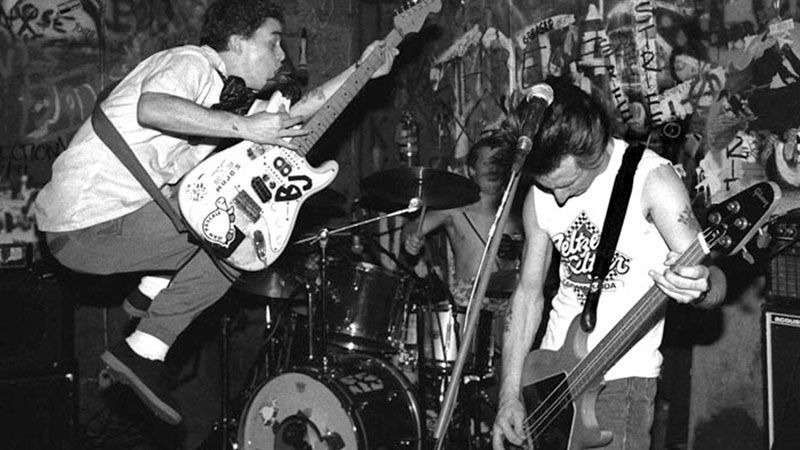
"caption": "Green Day at 924 Gilman in the early 1990s.",
"description": "Green Day at 924 Gilman in the early 1990s.",
"title": "GDGilmanMAIN",
"credit": "Murray Bowles",
"status": "inherit",
"isLoading": false,
"fetchFailed": false
},
"arts_12973491": {
"type": "attachments",
"id": "arts_12973491",
"meta": {
"index": "attachments_1716263798",
"site": "arts",
"id": "12973491",
"found": true
},
"parent": 12973490,
"imgSizes": {
"small": {
"file": "https://ww2.kqed.org/app/uploads/sites/2/2017/03/gettyimages-462897658-8315a8634a450ea8d80cf11531a317b8b8fbb6e4-e1490823718307-520x292.jpg",
"width": 520,
"mimeType": "image/jpeg",
"height": 292
},
"twentyfourteen-full-width": {
"file": "https://ww2.kqed.org/app/uploads/sites/2/2017/03/gettyimages-462897658-8315a8634a450ea8d80cf11531a317b8b8fbb6e4-e1490823718307-1038x576.jpg",
"width": 1038,
"mimeType": "image/jpeg",
"height": 576
},
"thumbnail": {
"file": "https://ww2.kqed.org/app/uploads/sites/2/2017/03/gettyimages-462897658-8315a8634a450ea8d80cf11531a317b8b8fbb6e4-e1490823718307-160x90.jpg",
"width": 160,
"mimeType": "image/jpeg",
"height": 90
},
"fd-sm": {
"file": "https://ww2.kqed.org/app/uploads/sites/2/2017/03/gettyimages-462897658-8315a8634a450ea8d80cf11531a317b8b8fbb6e4-e1490823718307-960x539.jpg",
"width": 960,
"mimeType": "image/jpeg",
"height": 539
},
"post-thumbnail": {
"file": "https://ww2.kqed.org/app/uploads/sites/2/2017/03/gettyimages-462897658-8315a8634a450ea8d80cf11531a317b8b8fbb6e4-e1490823718307-672x372.jpg",
"width": 672,
"mimeType": "image/jpeg",
"height": 372
},
"xsmall": {
"file": "https://ww2.kqed.org/app/uploads/sites/2/2017/03/gettyimages-462897658-8315a8634a450ea8d80cf11531a317b8b8fbb6e4-e1490823718307-375x211.jpg",
"width": 375,
"mimeType": "image/jpeg",
"height": 211
},
"kqedFullSize": {
"file": "https://ww2.kqed.org/app/uploads/sites/2/2017/03/gettyimages-462897658-8315a8634a450ea8d80cf11531a317b8b8fbb6e4-e1490823718307.jpg",
"width": 1502,
"height": 844
},
"large": {
"file": "https://ww2.kqed.org/app/uploads/sites/2/2017/03/gettyimages-462897658-8315a8634a450ea8d80cf11531a317b8b8fbb6e4-e1490823718307-1020x573.jpg",
"width": 1020,
"mimeType": "image/jpeg",
"height": 573
},
"xlarge": {
"file": "https://ww2.kqed.org/app/uploads/sites/2/2017/03/gettyimages-462897658-8315a8634a450ea8d80cf11531a317b8b8fbb6e4-e1490823718307-1180x663.jpg",
"width": 1180,
"mimeType": "image/jpeg",
"height": 663
},
"guest-author-50": {
"file": "https://ww2.kqed.org/app/uploads/sites/2/2017/03/gettyimages-462897658-8315a8634a450ea8d80cf11531a317b8b8fbb6e4-e1490823718307-50x50.jpg",
"width": 50,
"mimeType": "image/jpeg",
"height": 50
},
"guest-author-96": {
"file": "https://ww2.kqed.org/app/uploads/sites/2/2017/03/gettyimages-462897658-8315a8634a450ea8d80cf11531a317b8b8fbb6e4-e1490823718307-96x96.jpg",
"width": 96,
"mimeType": "image/jpeg",
"height": 96
},
"medium": {
"file": "https://ww2.kqed.org/app/uploads/sites/2/2017/03/gettyimages-462897658-8315a8634a450ea8d80cf11531a317b8b8fbb6e4-e1490823718307-800x450.jpg",
"width": 800,
"mimeType": "image/jpeg",
"height": 450
},
"guest-author-64": {
"file": "https://ww2.kqed.org/app/uploads/sites/2/2017/03/gettyimages-462897658-8315a8634a450ea8d80cf11531a317b8b8fbb6e4-e1490823718307-64x64.jpg",
"width": 64,
"mimeType": "image/jpeg",
"height": 64
},
"guest-author-32": {
"file": "https://ww2.kqed.org/app/uploads/sites/2/2017/03/gettyimages-462897658-8315a8634a450ea8d80cf11531a317b8b8fbb6e4-e1490823718307-32x32.jpg",
"width": 32,
"mimeType": "image/jpeg",
"height": 32
},
"fd-med": {
"file": "https://ww2.kqed.org/app/uploads/sites/2/2017/03/gettyimages-462897658-8315a8634a450ea8d80cf11531a317b8b8fbb6e4-e1490823718307-1180x663.jpg",
"width": 1180,
"mimeType": "image/jpeg",
"height": 663
},
"detail": {
"file": "https://ww2.kqed.org/app/uploads/sites/2/2017/03/gettyimages-462897658-8315a8634a450ea8d80cf11531a317b8b8fbb6e4-e1490823718307-150x150.jpg",
"width": 150,
"mimeType": "image/jpeg",
"height": 150
},
"medium_large": {
"file": "https://ww2.kqed.org/app/uploads/sites/2/2017/03/gettyimages-462897658-8315a8634a450ea8d80cf11531a317b8b8fbb6e4-e1490823718307-768x432.jpg",
"width": 768,
"mimeType": "image/jpeg",
"height": 432
},
"guest-author-128": {
"file": "https://ww2.kqed.org/app/uploads/sites/2/2017/03/gettyimages-462897658-8315a8634a450ea8d80cf11531a317b8b8fbb6e4-e1490823718307-128x128.jpg",
"width": 128,
"mimeType": "image/jpeg",
"height": 128
},
"xxsmall": {
"file": "https://ww2.kqed.org/app/uploads/sites/2/2017/03/gettyimages-462897658-8315a8634a450ea8d80cf11531a317b8b8fbb6e4-e1490823718307-240x135.jpg",
"width": 240,
"mimeType": "image/jpeg",
"height": 135
}
},
"publishDate": 1490823291,
"modified": 1490823563,
"caption": "Bob Dylan speaks onstage at the MusiCares 2015 Person Of The Year Gala in Los Angeles. Dylan was awarded the Nobel Prize in literature in October, though he has not yet accepted it. The Swedish Academy has announced he plans to do so this weekend in Stockholm.",
"description": "Bob Dylan speaks onstage at the MusiCares 2015 Person Of The Year Gala in Los Angeles. Dylan was awarded the Nobel Prize in literature in October, though he has not yet accepted it. The Swedish Academy has announced he plans to do so this weekend in Stockholm.",
"title": "Bob Dylan speaks onstage at the MusiCares 2015 Person Of The Year Gala in Los Angeles. Dylan was awarded the Nobel Prize in literature in October, though he has not yet accepted it. The Swedish Academy has announced he plans to do so this weekend in Stockholm.",
"credit": "Photo: Frazer Harrison/Getty Images",
"status": "inherit",
"isLoading": false,
"fetchFailed": false
},
"arts_12968590": {
"type": "attachments",
"id": "arts_12968590",
"meta": {
"index": "attachments_1716263798",
"site": "arts",
"id": "12968590",
"found": true
},
"parent": 12968153,
"imgSizes": {
"small": {
"file": "https://ww2.kqed.org/app/uploads/sites/2/2017/03/windmill-friday1000-wendygoodfriend1-800x535-520x348.jpg",
"width": 520,
"mimeType": "image/jpeg",
"height": 348
},
"thumbnail": {
"file": "https://ww2.kqed.org/app/uploads/sites/2/2017/03/windmill-friday1000-wendygoodfriend1-800x535-160x107.jpg",
"width": 160,
"mimeType": "image/jpeg",
"height": 107
},
"post-thumbnail": {
"file": "https://ww2.kqed.org/app/uploads/sites/2/2017/03/windmill-friday1000-wendygoodfriend1-800x535-672x372.jpg",
"width": 672,
"mimeType": "image/jpeg",
"height": 372
},
"xsmall": {
"file": "https://ww2.kqed.org/app/uploads/sites/2/2017/03/windmill-friday1000-wendygoodfriend1-800x535-375x251.jpg",
"width": 375,
"mimeType": "image/jpeg",
"height": 251
},
"kqedFullSize": {
"file": "https://ww2.kqed.org/app/uploads/sites/2/2017/03/windmill-friday1000-wendygoodfriend1-800x535.jpg",
"width": 800,
"height": 535
},
"guest-author-50": {
"file": "https://ww2.kqed.org/app/uploads/sites/2/2017/03/windmill-friday1000-wendygoodfriend1-800x535-50x50.jpg",
"width": 50,
"mimeType": "image/jpeg",
"height": 50
},
"guest-author-96": {
"file": "https://ww2.kqed.org/app/uploads/sites/2/2017/03/windmill-friday1000-wendygoodfriend1-800x535-96x96.jpg",
"width": 96,
"mimeType": "image/jpeg",
"height": 96
},
"medium": {
"file": "https://ww2.kqed.org/app/uploads/sites/2/2017/03/windmill-friday1000-wendygoodfriend1-800x535-800x535.jpg",
"width": 800,
"mimeType": "image/jpeg",
"height": 535
},
"guest-author-64": {
"file": "https://ww2.kqed.org/app/uploads/sites/2/2017/03/windmill-friday1000-wendygoodfriend1-800x535-64x64.jpg",
"width": 64,
"mimeType": "image/jpeg",
"height": 64
},
"guest-author-32": {
"file": "https://ww2.kqed.org/app/uploads/sites/2/2017/03/windmill-friday1000-wendygoodfriend1-800x535-32x32.jpg",
"width": 32,
"mimeType": "image/jpeg",
"height": 32
},
"detail": {
"file": "https://ww2.kqed.org/app/uploads/sites/2/2017/03/windmill-friday1000-wendygoodfriend1-800x535-150x150.jpg",
"width": 150,
"mimeType": "image/jpeg",
"height": 150
},
"medium_large": {
"file": "https://ww2.kqed.org/app/uploads/sites/2/2017/03/windmill-friday1000-wendygoodfriend1-800x535-768x514.jpg",
"width": 768,
"mimeType": "image/jpeg",
"height": 514
},
"guest-author-128": {
"file": "https://ww2.kqed.org/app/uploads/sites/2/2017/03/windmill-friday1000-wendygoodfriend1-800x535-128x128.jpg",
"width": 128,
"mimeType": "image/jpeg",
"height": 128
},
"xxsmall": {
"file": "https://ww2.kqed.org/app/uploads/sites/2/2017/03/windmill-friday1000-wendygoodfriend1-800x535-240x161.jpg",
"width": 240,
"mimeType": "image/jpeg",
"height": 161
}
},
"publishDate": 1490739153,
"modified": 1490739169,
"caption": "Outside Lands 2014.",
"description": null,
"title": "windmill-friday1000-wendygoodfriend1-800x535",
"credit": "Wendy Goodfriend",
"status": "inherit",
"isLoading": false,
"fetchFailed": false
},
"pop_71439": {
"type": "attachments",
"id": "pop_71439",
"meta": {
"index": "attachments_1716263798",
"site": "pop",
"id": "71439",
"found": true
},
"parent": 71438,
"imgSizes": {
"small": {
"file": "https://ww2.kqed.org/app/uploads/sites/12/2017/03/gettyimages-52022763_slide-2d9396da57337b5aac8773325ed9294289afb63f-520x347.jpg",
"width": 520,
"mimeType": "image/jpeg",
"height": 347
},
"twentyfourteen-full-width": {
"file": "https://ww2.kqed.org/app/uploads/sites/12/2017/03/gettyimages-52022763_slide-2d9396da57337b5aac8773325ed9294289afb63f-951x576.jpg",
"width": 951,
"mimeType": "image/jpeg",
"height": 576
},
"thumbnail": {
"file": "https://ww2.kqed.org/app/uploads/sites/12/2017/03/gettyimages-52022763_slide-2d9396da57337b5aac8773325ed9294289afb63f-160x107.jpg",
"width": 160,
"mimeType": "image/jpeg",
"height": 107
},
"post-thumbnail": {
"file": "https://ww2.kqed.org/app/uploads/sites/12/2017/03/gettyimages-52022763_slide-2d9396da57337b5aac8773325ed9294289afb63f-672x372.jpg",
"width": 672,
"mimeType": "image/jpeg",
"height": 372
},
"xsmall": {
"file": "https://ww2.kqed.org/app/uploads/sites/12/2017/03/gettyimages-52022763_slide-2d9396da57337b5aac8773325ed9294289afb63f-375x250.jpg",
"width": 375,
"mimeType": "image/jpeg",
"height": 250
},
"kqedFullSize": {
"file": "https://ww2.kqed.org/app/uploads/sites/12/2017/03/gettyimages-52022763_slide-2d9396da57337b5aac8773325ed9294289afb63f.jpg",
"width": 951,
"height": 634
},
"guest-author-50": {
"file": "https://ww2.kqed.org/app/uploads/sites/12/2017/03/gettyimages-52022763_slide-2d9396da57337b5aac8773325ed9294289afb63f-50x50.jpg",
"width": 50,
"mimeType": "image/jpeg",
"height": 50
},
"guest-author-96": {
"file": "https://ww2.kqed.org/app/uploads/sites/12/2017/03/gettyimages-52022763_slide-2d9396da57337b5aac8773325ed9294289afb63f-96x96.jpg",
"width": 96,
"mimeType": "image/jpeg",
"height": 96
},
"medium": {
"file": "https://ww2.kqed.org/app/uploads/sites/12/2017/03/gettyimages-52022763_slide-2d9396da57337b5aac8773325ed9294289afb63f-800x533.jpg",
"width": 800,
"mimeType": "image/jpeg",
"height": 533
},
"guest-author-64": {
"file": "https://ww2.kqed.org/app/uploads/sites/12/2017/03/gettyimages-52022763_slide-2d9396da57337b5aac8773325ed9294289afb63f-64x64.jpg",
"width": 64,
"mimeType": "image/jpeg",
"height": 64
},
"guest-author-32": {
"file": "https://ww2.kqed.org/app/uploads/sites/12/2017/03/gettyimages-52022763_slide-2d9396da57337b5aac8773325ed9294289afb63f-32x32.jpg",
"width": 32,
"mimeType": "image/jpeg",
"height": 32
},
"detail": {
"file": "https://ww2.kqed.org/app/uploads/sites/12/2017/03/gettyimages-52022763_slide-2d9396da57337b5aac8773325ed9294289afb63f-150x150.jpg",
"width": 150,
"mimeType": "image/jpeg",
"height": 150
},
"medium_large": {
"file": "https://ww2.kqed.org/app/uploads/sites/12/2017/03/gettyimages-52022763_slide-2d9396da57337b5aac8773325ed9294289afb63f-768x512.jpg",
"width": 768,
"mimeType": "image/jpeg",
"height": 512
},
"guest-author-128": {
"file": "https://ww2.kqed.org/app/uploads/sites/12/2017/03/gettyimages-52022763_slide-2d9396da57337b5aac8773325ed9294289afb63f-128x128.jpg",
"width": 128,
"mimeType": "image/jpeg",
"height": 128
},
"xxsmall": {
"file": "https://ww2.kqed.org/app/uploads/sites/12/2017/03/gettyimages-52022763_slide-2d9396da57337b5aac8773325ed9294289afb63f-240x160.jpg",
"width": 240,
"mimeType": "image/jpeg",
"height": 160
}
},
"publishDate": 1490334172,
"modified": 1490334417,
"caption": "Jennifer Lopez plays singer Selena Quintanilla Perez in the 1997 film \u003cem>Selena\u003c/em>.",
"description": "Jennifer Lopez plays singer Selena Quintanilla Perez in the 1997 film \u003cem>Selena\u003c/em>.",
"title": "Jennifer Lopez plays singer Selena Quintanilla Perez in the 1997 film Selena.",
"credit": "Photo: Rico Torres / AFP / Getty Images",
"status": "inherit",
"isLoading": false,
"fetchFailed": false
},
"arts_12963518": {
"type": "attachments",
"id": "arts_12963518",
"meta": {
"index": "attachments_1716263798",
"site": "arts",
"id": "12963518",
"found": true
},
"parent": 12939686,
"imgSizes": {
"small": {
"file": "https://ww2.kqed.org/app/uploads/sites/2/2017/03/Forrest_Fang_COVER-520x293.jpg",
"width": 520,
"mimeType": "image/jpeg",
"height": 293
},
"twentyfourteen-full-width": {
"file": "https://ww2.kqed.org/app/uploads/sites/2/2017/03/Forrest_Fang_COVER-1038x576.jpg",
"width": 1038,
"mimeType": "image/jpeg",
"height": 576
},
"thumbnail": {
"file": "https://ww2.kqed.org/app/uploads/sites/2/2017/03/Forrest_Fang_COVER-160x90.jpg",
"width": 160,
"mimeType": "image/jpeg",
"height": 90
},
"fd-sm": {
"file": "https://ww2.kqed.org/app/uploads/sites/2/2017/03/Forrest_Fang_COVER-960x540.jpg",
"width": 960,
"mimeType": "image/jpeg",
"height": 540
},
"post-thumbnail": {
"file": "https://ww2.kqed.org/app/uploads/sites/2/2017/03/Forrest_Fang_COVER-672x372.jpg",
"width": 672,
"mimeType": "image/jpeg",
"height": 372
},
"xsmall": {
"file": "https://ww2.kqed.org/app/uploads/sites/2/2017/03/Forrest_Fang_COVER-375x211.jpg",
"width": 375,
"mimeType": "image/jpeg",
"height": 211
},
"kqedFullSize": {
"file": "https://ww2.kqed.org/app/uploads/sites/2/2017/03/Forrest_Fang_COVER.jpg",
"width": 1152,
"height": 648
},
"large": {
"file": "https://ww2.kqed.org/app/uploads/sites/2/2017/03/Forrest_Fang_COVER-1020x574.jpg",
"width": 1020,
"mimeType": "image/jpeg",
"height": 574
},
"guest-author-50": {
"file": "https://ww2.kqed.org/app/uploads/sites/2/2017/03/Forrest_Fang_COVER-50x50.jpg",
"width": 50,
"mimeType": "image/jpeg",
"height": 50
},
"guest-author-96": {
"file": "https://ww2.kqed.org/app/uploads/sites/2/2017/03/Forrest_Fang_COVER-96x96.jpg",
"width": 96,
"mimeType": "image/jpeg",
"height": 96
},
"medium": {
"file": "https://ww2.kqed.org/app/uploads/sites/2/2017/03/Forrest_Fang_COVER-800x450.jpg",
"width": 800,
"mimeType": "image/jpeg",
"height": 450
},
"guest-author-64": {
"file": "https://ww2.kqed.org/app/uploads/sites/2/2017/03/Forrest_Fang_COVER-64x64.jpg",
"width": 64,
"mimeType": "image/jpeg",
"height": 64
},
"guest-author-32": {
"file": "https://ww2.kqed.org/app/uploads/sites/2/2017/03/Forrest_Fang_COVER-32x32.jpg",
"width": 32,
"mimeType": "image/jpeg",
"height": 32
},
"detail": {
"file": "https://ww2.kqed.org/app/uploads/sites/2/2017/03/Forrest_Fang_COVER-150x150.jpg",
"width": 150,
"mimeType": "image/jpeg",
"height": 150
},
"medium_large": {
"file": "https://ww2.kqed.org/app/uploads/sites/2/2017/03/Forrest_Fang_COVER-768x432.jpg",
"width": 768,
"mimeType": "image/jpeg",
"height": 432
},
"guest-author-128": {
"file": "https://ww2.kqed.org/app/uploads/sites/2/2017/03/Forrest_Fang_COVER-128x128.jpg",
"width": 128,
"mimeType": "image/jpeg",
"height": 128
},
"xxsmall": {
"file": "https://ww2.kqed.org/app/uploads/sites/2/2017/03/Forrest_Fang_COVER-240x135.jpg",
"width": 240,
"mimeType": "image/jpeg",
"height": 135
}
},
"publishDate": 1490649034,
"modified": 1490649057,
"caption": "Forrest Fang",
"description": "Forrest Fang",
"title": "Forrest_Fang_COVER",
"credit": "Carl Weingarten",
"status": "inherit",
"isLoading": false,
"fetchFailed": false
},
"news_11372993": {
"type": "attachments",
"id": "news_11372993",
"meta": {
"index": "attachments_1716263798",
"site": "news",
"id": "11372993",
"found": true
},
"parent": 11370072,
"imgSizes": {
"small": {
"file": "https://ww2.kqed.org/app/uploads/sites/10/2017/03/RS24731_Quetzal-Promo-Photo-2011-2-qut-520x389.jpg",
"width": 520,
"mimeType": "image/jpeg",
"height": 389
},
"twentyfourteen-full-width": {
"file": "https://ww2.kqed.org/app/uploads/sites/10/2017/03/RS24731_Quetzal-Promo-Photo-2011-2-qut-1038x576.jpg",
"width": 1038,
"mimeType": "image/jpeg",
"height": 576
},
"thumbnail": {
"file": "https://ww2.kqed.org/app/uploads/sites/10/2017/03/RS24731_Quetzal-Promo-Photo-2011-2-qut-160x120.jpg",
"width": 160,
"mimeType": "image/jpeg",
"height": 120
},
"fd-sm": {
"file": "https://ww2.kqed.org/app/uploads/sites/10/2017/03/RS24731_Quetzal-Promo-Photo-2011-2-qut-960x719.jpg",
"width": 960,
"mimeType": "image/jpeg",
"height": 719
},
"post-thumbnail": {
"file": "https://ww2.kqed.org/app/uploads/sites/10/2017/03/RS24731_Quetzal-Promo-Photo-2011-2-qut-672x372.jpg",
"width": 672,
"mimeType": "image/jpeg",
"height": 372
},
"xsmall": {
"file": "https://ww2.kqed.org/app/uploads/sites/10/2017/03/RS24731_Quetzal-Promo-Photo-2011-2-qut-375x281.jpg",
"width": 375,
"mimeType": "image/jpeg",
"height": 281
},
"kqedFullSize": {
"file": "https://ww2.kqed.org/app/uploads/sites/10/2017/03/RS24731_Quetzal-Promo-Photo-2011-2-qut.jpg",
"width": 1920,
"height": 1437
},
"large": {
"file": "https://ww2.kqed.org/app/uploads/sites/10/2017/03/RS24731_Quetzal-Promo-Photo-2011-2-qut-1020x763.jpg",
"width": 1020,
"mimeType": "image/jpeg",
"height": 763
},
"xlarge": {
"file": "https://ww2.kqed.org/app/uploads/sites/10/2017/03/RS24731_Quetzal-Promo-Photo-2011-2-qut-1180x883.jpg",
"width": 1180,
"mimeType": "image/jpeg",
"height": 883
},
"guest-author-50": {
"file": "https://ww2.kqed.org/app/uploads/sites/10/2017/03/RS24731_Quetzal-Promo-Photo-2011-2-qut-50x50.jpg",
"width": 50,
"mimeType": "image/jpeg",
"height": 50
},
"guest-author-96": {
"file": "https://ww2.kqed.org/app/uploads/sites/10/2017/03/RS24731_Quetzal-Promo-Photo-2011-2-qut-96x96.jpg",
"width": 96,
"mimeType": "image/jpeg",
"height": 96
},
"medium": {
"file": "https://ww2.kqed.org/app/uploads/sites/10/2017/03/RS24731_Quetzal-Promo-Photo-2011-2-qut-800x599.jpg",
"width": 800,
"mimeType": "image/jpeg",
"height": 599
},
"guest-author-64": {
"file": "https://ww2.kqed.org/app/uploads/sites/10/2017/03/RS24731_Quetzal-Promo-Photo-2011-2-qut-64x64.jpg",
"width": 64,
"mimeType": "image/jpeg",
"height": 64
},
"guest-author-32": {
"file": "https://ww2.kqed.org/app/uploads/sites/10/2017/03/RS24731_Quetzal-Promo-Photo-2011-2-qut-32x32.jpg",
"width": 32,
"mimeType": "image/jpeg",
"height": 32
},
"fd-lrg": {
"file": "https://ww2.kqed.org/app/uploads/sites/10/2017/03/RS24731_Quetzal-Promo-Photo-2011-2-qut-1920x1437.jpg",
"width": 1920,
"mimeType": "image/jpeg",
"height": 1437
},
"fd-med": {
"file": "https://ww2.kqed.org/app/uploads/sites/10/2017/03/RS24731_Quetzal-Promo-Photo-2011-2-qut-1180x883.jpg",
"width": 1180,
"mimeType": "image/jpeg",
"height": 883
},
"full-width": {
"file": "https://ww2.kqed.org/app/uploads/sites/10/2017/03/RS24731_Quetzal-Promo-Photo-2011-2-qut-1920x1437.jpg",
"width": 1920,
"mimeType": "image/jpeg",
"height": 1437
},
"detail": {
"file": "https://ww2.kqed.org/app/uploads/sites/10/2017/03/RS24731_Quetzal-Promo-Photo-2011-2-qut-150x150.jpg",
"width": 150,
"mimeType": "image/jpeg",
"height": 150
},
"guest-author-128": {
"file": "https://ww2.kqed.org/app/uploads/sites/10/2017/03/RS24731_Quetzal-Promo-Photo-2011-2-qut-128x128.jpg",
"width": 128,
"mimeType": "image/jpeg",
"height": 128
},
"xxsmall": {
"file": "https://ww2.kqed.org/app/uploads/sites/10/2017/03/RS24731_Quetzal-Promo-Photo-2011-2-qut-240x180.jpg",
"width": 240,
"mimeType": "image/jpeg",
"height": 180
}
},
"publishDate": 1490314011,
"modified": 1490373439,
"caption": "Quetzal's new album doesn't shy away from strong social commentary.",
"description": null,
"title": "Quetzal",
"credit": "Photo courtesy of Quetzal",
"status": "inherit",
"isLoading": false,
"fetchFailed": false
},
"news_11374694": {
"type": "attachments",
"id": "news_11374694",
"meta": {
"index": "attachments_1716263798",
"site": "news",
"id": "11374694",
"found": true
},
"parent": 11374167,
"imgSizes": {
"small": {
"file": "https://ww2.kqed.org/app/uploads/sites/10/2017/03/SupremeJubileesMain4-520x280.jpg",
"width": 520,
"mimeType": "image/jpeg",
"height": 280
},
"twentyfourteen-full-width": {
"file": "https://ww2.kqed.org/app/uploads/sites/10/2017/03/SupremeJubileesMain4-1038x576.jpg",
"width": 1038,
"mimeType": "image/jpeg",
"height": 576
},
"thumbnail": {
"file": "https://ww2.kqed.org/app/uploads/sites/10/2017/03/SupremeJubileesMain4-160x86.jpg",
"width": 160,
"mimeType": "image/jpeg",
"height": 86
},
"fd-sm": {
"file": "https://ww2.kqed.org/app/uploads/sites/10/2017/03/SupremeJubileesMain4-960x517.jpg",
"width": 960,
"mimeType": "image/jpeg",
"height": 517
},
"post-thumbnail": {
"file": "https://ww2.kqed.org/app/uploads/sites/10/2017/03/SupremeJubileesMain4-672x372.jpg",
"width": 672,
"mimeType": "image/jpeg",
"height": 372
},
"xsmall": {
"file": "https://ww2.kqed.org/app/uploads/sites/10/2017/03/SupremeJubileesMain4-375x202.jpg",
"width": 375,
"mimeType": "image/jpeg",
"height": 202
},
"kqedFullSize": {
"file": "https://ww2.kqed.org/app/uploads/sites/10/2017/03/SupremeJubileesMain4.jpg",
"width": 1920,
"height": 1033
},
"large": {
"file": "https://ww2.kqed.org/app/uploads/sites/10/2017/03/SupremeJubileesMain4-1020x549.jpg",
"width": 1020,
"mimeType": "image/jpeg",
"height": 549
},
"xlarge": {
"file": "https://ww2.kqed.org/app/uploads/sites/10/2017/03/SupremeJubileesMain4-1180x635.jpg",
"width": 1180,
"mimeType": "image/jpeg",
"height": 635
},
"guest-author-50": {
"file": "https://ww2.kqed.org/app/uploads/sites/10/2017/03/SupremeJubileesMain4-50x50.jpg",
"width": 50,
"mimeType": "image/jpeg",
"height": 50
},
"guest-author-96": {
"file": "https://ww2.kqed.org/app/uploads/sites/10/2017/03/SupremeJubileesMain4-96x96.jpg",
"width": 96,
"mimeType": "image/jpeg",
"height": 96
},
"medium": {
"file": "https://ww2.kqed.org/app/uploads/sites/10/2017/03/SupremeJubileesMain4-800x430.jpg",
"width": 800,
"mimeType": "image/jpeg",
"height": 430
},
"guest-author-64": {
"file": "https://ww2.kqed.org/app/uploads/sites/10/2017/03/SupremeJubileesMain4-64x64.jpg",
"width": 64,
"mimeType": "image/jpeg",
"height": 64
},
"guest-author-32": {
"file": "https://ww2.kqed.org/app/uploads/sites/10/2017/03/SupremeJubileesMain4-32x32.jpg",
"width": 32,
"mimeType": "image/jpeg",
"height": 32
},
"fd-lrg": {
"file": "https://ww2.kqed.org/app/uploads/sites/10/2017/03/SupremeJubileesMain4-1920x1033.jpg",
"width": 1920,
"mimeType": "image/jpeg",
"height": 1033
},
"fd-med": {
"file": "https://ww2.kqed.org/app/uploads/sites/10/2017/03/SupremeJubileesMain4-1180x635.jpg",
"width": 1180,
"mimeType": "image/jpeg",
"height": 635
},
"full-width": {
"file": "https://ww2.kqed.org/app/uploads/sites/10/2017/03/SupremeJubileesMain4-1920x1033.jpg",
"width": 1920,
"mimeType": "image/jpeg",
"height": 1033
},
"detail": {
"file": "https://ww2.kqed.org/app/uploads/sites/10/2017/03/SupremeJubileesMain4-150x150.jpg",
"width": 150,
"mimeType": "image/jpeg",
"height": 150
},
"guest-author-128": {
"file": "https://ww2.kqed.org/app/uploads/sites/10/2017/03/SupremeJubileesMain4-128x128.jpg",
"width": 128,
"mimeType": "image/jpeg",
"height": 128
},
"xxsmall": {
"file": "https://ww2.kqed.org/app/uploads/sites/10/2017/03/SupremeJubileesMain4-240x129.jpg",
"width": 240,
"mimeType": "image/jpeg",
"height": 129
}
},
"publishDate": 1490404176,
"modified": 1490404203,
"caption": "An archival photo of the Supreme Jubilees performing.",
"description": "An archival photo of the Supreme Jubilees performing.",
"title": "SupremeJubileesMain4",
"credit": "Courtesy of The Supreme Jubilees",
"status": "inherit",
"isLoading": false,
"fetchFailed": false
},
"arts_12939474": {
"type": "attachments",
"id": "arts_12939474",
"meta": {
"index": "attachments_1716263798",
"site": "arts",
"id": "12939474",
"found": true
},
"parent": 12939464,
"imgSizes": {
"small": {
"file": "https://ww2.kqed.org/app/uploads/sites/2/2017/03/maxresdefault-520x293.jpg",
"width": 520,
"mimeType": "image/jpeg",
"height": 293
},
"twentyfourteen-full-width": {
"file": "https://ww2.kqed.org/app/uploads/sites/2/2017/03/maxresdefault-1038x576.jpg",
"width": 1038,
"mimeType": "image/jpeg",
"height": 576
},
"thumbnail": {
"file": "https://ww2.kqed.org/app/uploads/sites/2/2017/03/maxresdefault-160x90.jpg",
"width": 160,
"mimeType": "image/jpeg",
"height": 90
},
"fd-sm": {
"file": "https://ww2.kqed.org/app/uploads/sites/2/2017/03/maxresdefault-960x540.jpg",
"width": 960,
"mimeType": "image/jpeg",
"height": 540
},
"post-thumbnail": {
"file": "https://ww2.kqed.org/app/uploads/sites/2/2017/03/maxresdefault-672x372.jpg",
"width": 672,
"mimeType": "image/jpeg",
"height": 372
},
"xsmall": {
"file": "https://ww2.kqed.org/app/uploads/sites/2/2017/03/maxresdefault-375x211.jpg",
"width": 375,
"mimeType": "image/jpeg",
"height": 211
},
"kqedFullSize": {
"file": "https://ww2.kqed.org/app/uploads/sites/2/2017/03/maxresdefault.jpg",
"width": 1920,
"height": 1080
},
"large": {
"file": "https://ww2.kqed.org/app/uploads/sites/2/2017/03/maxresdefault-1020x574.jpg",
"width": 1020,
"mimeType": "image/jpeg",
"height": 574
},
"xlarge": {
"file": "https://ww2.kqed.org/app/uploads/sites/2/2017/03/maxresdefault-1180x664.jpg",
"width": 1180,
"mimeType": "image/jpeg",
"height": 664
},
"guest-author-50": {
"file": "https://ww2.kqed.org/app/uploads/sites/2/2017/03/maxresdefault-50x50.jpg",
"width": 50,
"mimeType": "image/jpeg",
"height": 50
},
"guest-author-96": {
"file": "https://ww2.kqed.org/app/uploads/sites/2/2017/03/maxresdefault-96x96.jpg",
"width": 96,
"mimeType": "image/jpeg",
"height": 96
},
"medium": {
"file": "https://ww2.kqed.org/app/uploads/sites/2/2017/03/maxresdefault-800x450.jpg",
"width": 800,
"mimeType": "image/jpeg",
"height": 450
},
"guest-author-64": {
"file": "https://ww2.kqed.org/app/uploads/sites/2/2017/03/maxresdefault-64x64.jpg",
"width": 64,
"mimeType": "image/jpeg",
"height": 64
},
"guest-author-32": {
"file": "https://ww2.kqed.org/app/uploads/sites/2/2017/03/maxresdefault-32x32.jpg",
"width": 32,
"mimeType": "image/jpeg",
"height": 32
},
"fd-lrg": {
"file": "https://ww2.kqed.org/app/uploads/sites/2/2017/03/maxresdefault-1920x1080.jpg",
"width": 1920,
"mimeType": "image/jpeg",
"height": 1080
},
"fd-med": {
"file": "https://ww2.kqed.org/app/uploads/sites/2/2017/03/maxresdefault-1180x664.jpg",
"width": 1180,
"mimeType": "image/jpeg",
"height": 664
},
"full-width": {
"file": "https://ww2.kqed.org/app/uploads/sites/2/2017/03/maxresdefault-1920x1080.jpg",
"width": 1920,
"mimeType": "image/jpeg",
"height": 1080
},
"detail": {
"file": "https://ww2.kqed.org/app/uploads/sites/2/2017/03/maxresdefault-150x150.jpg",
"width": 150,
"mimeType": "image/jpeg",
"height": 150
},
"medium_large": {
"file": "https://ww2.kqed.org/app/uploads/sites/2/2017/03/maxresdefault-768x432.jpg",
"width": 768,
"mimeType": "image/jpeg",
"height": 432
},
"guest-author-128": {
"file": "https://ww2.kqed.org/app/uploads/sites/2/2017/03/maxresdefault-128x128.jpg",
"width": 128,
"mimeType": "image/jpeg",
"height": 128
},
"xxsmall": {
"file": "https://ww2.kqed.org/app/uploads/sites/2/2017/03/maxresdefault-240x135.jpg",
"width": 240,
"mimeType": "image/jpeg",
"height": 135
}
},
"publishDate": 1490224302,
"modified": 1490333394,
"caption": "Diana Gameros in Dolores Park",
"description": null,
"title": "maxresdefault",
"credit": "KQED Arts",
"status": "inherit",
"isLoading": false,
"fetchFailed": false
},
"forum_2010101859273": {
"type": "attachments",
"id": "forum_2010101859273",
"meta": {
"index": "attachments_1716263798",
"site": "forum",
"id": "2010101859273",
"found": true
},
"parent": 2010101859272,
"imgSizes": {
"small": {
"file": "https://ww2.kqed.org/app/uploads/sites/43/2017/03/tupac-mural-520x293.jpg",
"width": 520,
"mimeType": "image/jpeg",
"height": 293
},
"twentyfourteen-full-width": {
"file": "https://ww2.kqed.org/app/uploads/sites/43/2017/03/tupac-mural-1038x576.jpg",
"width": 1038,
"mimeType": "image/jpeg",
"height": 576
},
"thumbnail": {
"file": "https://ww2.kqed.org/app/uploads/sites/43/2017/03/tupac-mural-160x90.jpg",
"width": 160,
"mimeType": "image/jpeg",
"height": 90
},
"fd-sm": {
"file": "https://ww2.kqed.org/app/uploads/sites/43/2017/03/tupac-mural-960x540.jpg",
"width": 960,
"mimeType": "image/jpeg",
"height": 540
},
"post-thumbnail": {
"file": "https://ww2.kqed.org/app/uploads/sites/43/2017/03/tupac-mural-672x372.jpg",
"width": 672,
"mimeType": "image/jpeg",
"height": 372
},
"xsmall": {
"file": "https://ww2.kqed.org/app/uploads/sites/43/2017/03/tupac-mural-375x211.jpg",
"width": 375,
"mimeType": "image/jpeg",
"height": 211
},
"kqedFullSize": {
"file": "https://ww2.kqed.org/app/uploads/sites/43/2017/03/tupac-mural.jpg",
"width": 1920,
"height": 1080
},
"large": {
"file": "https://ww2.kqed.org/app/uploads/sites/43/2017/03/tupac-mural-1020x574.jpg",
"width": 1020,
"mimeType": "image/jpeg",
"height": 574
},
"xlarge": {
"file": "https://ww2.kqed.org/app/uploads/sites/43/2017/03/tupac-mural-1180x664.jpg",
"width": 1180,
"mimeType": "image/jpeg",
"height": 664
},
"guest-author-50": {
"file": "https://ww2.kqed.org/app/uploads/sites/43/2017/03/tupac-mural-50x50.jpg",
"width": 50,
"mimeType": "image/jpeg",
"height": 50
},
"guest-author-96": {
"file": "https://ww2.kqed.org/app/uploads/sites/43/2017/03/tupac-mural-96x96.jpg",
"width": 96,
"mimeType": "image/jpeg",
"height": 96
},
"medium": {
"file": "https://ww2.kqed.org/app/uploads/sites/43/2017/03/tupac-mural-800x450.jpg",
"width": 800,
"mimeType": "image/jpeg",
"height": 450
},
"guest-author-64": {
"file": "https://ww2.kqed.org/app/uploads/sites/43/2017/03/tupac-mural-64x64.jpg",
"width": 64,
"mimeType": "image/jpeg",
"height": 64
},
"guest-author-32": {
"file": "https://ww2.kqed.org/app/uploads/sites/43/2017/03/tupac-mural-32x32.jpg",
"width": 32,
"mimeType": "image/jpeg",
"height": 32
},
"fd-lrg": {
"file": "https://ww2.kqed.org/app/uploads/sites/43/2017/03/tupac-mural-1920x1080.jpg",
"width": 1920,
"mimeType": "image/jpeg",
"height": 1080
},
"fd-med": {
"file": "https://ww2.kqed.org/app/uploads/sites/43/2017/03/tupac-mural-1180x664.jpg",
"width": 1180,
"mimeType": "image/jpeg",
"height": 664
},
"full-width": {
"file": "https://ww2.kqed.org/app/uploads/sites/43/2017/03/tupac-mural-1920x1080.jpg",
"width": 1920,
"mimeType": "image/jpeg",
"height": 1080
},
"detail": {
"file": "https://ww2.kqed.org/app/uploads/sites/43/2017/03/tupac-mural-150x150.jpg",
"width": 150,
"mimeType": "image/jpeg",
"height": 150
},
"medium_large": {
"file": "https://ww2.kqed.org/app/uploads/sites/43/2017/03/tupac-mural-768x432.jpg",
"width": 768,
"mimeType": "image/jpeg",
"height": 432
},
"guest-author-128": {
"file": "https://ww2.kqed.org/app/uploads/sites/43/2017/03/tupac-mural-128x128.jpg",
"width": 128,
"mimeType": "image/jpeg",
"height": 128
},
"xxsmall": {
"file": "https://ww2.kqed.org/app/uploads/sites/43/2017/03/tupac-mural-240x135.jpg",
"width": 240,
"mimeType": "image/jpeg",
"height": 135
}
},
"publishDate": 1490316844,
"modified": 1490316989,
"caption": "A wall dedicated to the memory of US rapper Tupac Shakur is seen on May 26, 2016 in Los Angeles, California.",
"description": "A wall dedicated to the memory of US rapper Tupac Shakur is seen on May 26, 2016 in Los Angeles, California.",
"title": "tupac-mural",
"credit": "Photo: Valeri Macon/AFP/Getty Images",
"status": "inherit",
"isLoading": false,
"fetchFailed": false
},
"arts_12944688": {
"type": "attachments",
"id": "arts_12944688",
"meta": {
"index": "attachments_1716263798",
"site": "arts",
"id": "12944688",
"found": true
},
"parent": 12943603,
"imgSizes": {
"small": {
"file": "https://ww2.kqed.org/app/uploads/sites/2/2017/03/JJ_4690-1-e1490313181871-520x283.jpg",
"width": 520,
"mimeType": "image/jpeg",
"height": 283
},
"twentyfourteen-full-width": {
"file": "https://ww2.kqed.org/app/uploads/sites/2/2017/03/JJ_4690-1-e1490313181871-1038x576.jpg",
"width": 1038,
"mimeType": "image/jpeg",
"height": 576
},
"thumbnail": {
"file": "https://ww2.kqed.org/app/uploads/sites/2/2017/03/JJ_4690-1-e1490313181871-160x87.jpg",
"width": 160,
"mimeType": "image/jpeg",
"height": 87
},
"fd-sm": {
"file": "https://ww2.kqed.org/app/uploads/sites/2/2017/03/JJ_4690-1-e1490313181871-960x523.jpg",
"width": 960,
"mimeType": "image/jpeg",
"height": 523
},
"post-thumbnail": {
"file": "https://ww2.kqed.org/app/uploads/sites/2/2017/03/JJ_4690-1-e1490313181871-672x372.jpg",
"width": 672,
"mimeType": "image/jpeg",
"height": 372
},
"xsmall": {
"file": "https://ww2.kqed.org/app/uploads/sites/2/2017/03/JJ_4690-1-e1490313181871-375x204.jpg",
"width": 375,
"mimeType": "image/jpeg",
"height": 204
},
"kqedFullSize": {
"file": "https://ww2.kqed.org/app/uploads/sites/2/2017/03/JJ_4690-1-e1490313181871.jpg",
"width": 2048,
"height": 1116
},
"large": {
"file": "https://ww2.kqed.org/app/uploads/sites/2/2017/03/JJ_4690-1-e1490313181871-1020x556.jpg",
"width": 1020,
"mimeType": "image/jpeg",
"height": 556
},
"xlarge": {
"file": "https://ww2.kqed.org/app/uploads/sites/2/2017/03/JJ_4690-1-e1490313181871-1180x643.jpg",
"width": 1180,
"mimeType": "image/jpeg",
"height": 643
},
"guest-author-50": {
"file": "https://ww2.kqed.org/app/uploads/sites/2/2017/03/JJ_4690-1-e1490313181871-50x50.jpg",
"width": 50,
"mimeType": "image/jpeg",
"height": 50
},
"guest-author-96": {
"file": "https://ww2.kqed.org/app/uploads/sites/2/2017/03/JJ_4690-1-e1490313181871-96x96.jpg",
"width": 96,
"mimeType": "image/jpeg",
"height": 96
},
"medium": {
"file": "https://ww2.kqed.org/app/uploads/sites/2/2017/03/JJ_4690-1-e1490313181871-800x436.jpg",
"width": 800,
"mimeType": "image/jpeg",
"height": 436
},
"guest-author-64": {
"file": "https://ww2.kqed.org/app/uploads/sites/2/2017/03/JJ_4690-1-e1490313181871-64x64.jpg",
"width": 64,
"mimeType": "image/jpeg",
"height": 64
},
"guest-author-32": {
"file": "https://ww2.kqed.org/app/uploads/sites/2/2017/03/JJ_4690-1-e1490313181871-32x32.jpg",
"width": 32,
"mimeType": "image/jpeg",
"height": 32
},
"fd-lrg": {
"file": "https://ww2.kqed.org/app/uploads/sites/2/2017/03/JJ_4690-1-e1490313181871-1920x1046.jpg",
"width": 1920,
"mimeType": "image/jpeg",
"height": 1046
},
"fd-med": {
"file": "https://ww2.kqed.org/app/uploads/sites/2/2017/03/JJ_4690-1-e1490313181871-1180x643.jpg",
"width": 1180,
"mimeType": "image/jpeg",
"height": 643
},
"full-width": {
"file": "https://ww2.kqed.org/app/uploads/sites/2/2017/03/JJ_4690-1-e1490313181871-1920x1046.jpg",
"width": 1920,
"mimeType": "image/jpeg",
"height": 1046
},
"detail": {
"file": "https://ww2.kqed.org/app/uploads/sites/2/2017/03/JJ_4690-1-e1490313181871-150x150.jpg",
"width": 150,
"mimeType": "image/jpeg",
"height": 150
},
"medium_large": {
"file": "https://ww2.kqed.org/app/uploads/sites/2/2017/03/JJ_4690-1-e1490313181871-768x419.jpg",
"width": 768,
"mimeType": "image/jpeg",
"height": 419
},
"guest-author-128": {
"file": "https://ww2.kqed.org/app/uploads/sites/2/2017/03/JJ_4690-1-e1490313181871-128x128.jpg",
"width": 128,
"mimeType": "image/jpeg",
"height": 128
},
"xxsmall": {
"file": "https://ww2.kqed.org/app/uploads/sites/2/2017/03/JJ_4690-1-e1490313181871-240x131.jpg",
"width": 240,
"mimeType": "image/jpeg",
"height": 131
}
},
"publishDate": 1490313010,
"modified": 1490313209,
"caption": "Jose James comes to The Independent in San Francisco",
"description": "Jose James comes to The Independent in San Francisco",
"title": "Jose James comes to The Independent in San Francisco",
"credit": "Photo: Courtesy of Jose James",
"status": "inherit",
"isLoading": false,
"fetchFailed": false
},
"arts_12934198": {
"type": "attachments",
"id": "arts_12934198",
"meta": {
"index": "attachments_1716263798",
"site": "arts",
"id": "12934198",
"found": true
},
"parent": 12931052,
"imgSizes": {
"small": {
"file": "https://ww2.kqed.org/app/uploads/sites/2/2017/03/shoruq-pic-large-1-520x350.jpg",
"width": 520,
"mimeType": "image/jpeg",
"height": 350
},
"twentyfourteen-full-width": {
"file": "https://ww2.kqed.org/app/uploads/sites/2/2017/03/shoruq-pic-large-1-1038x576.jpg",
"width": 1038,
"mimeType": "image/jpeg",
"height": 576
},
"thumbnail": {
"file": "https://ww2.kqed.org/app/uploads/sites/2/2017/03/shoruq-pic-large-1-160x108.jpg",
"width": 160,
"mimeType": "image/jpeg",
"height": 108
},
"fd-sm": {
"file": "https://ww2.kqed.org/app/uploads/sites/2/2017/03/shoruq-pic-large-1-960x645.jpg",
"width": 960,
"mimeType": "image/jpeg",
"height": 645
},
"post-thumbnail": {
"file": "https://ww2.kqed.org/app/uploads/sites/2/2017/03/shoruq-pic-large-1-672x372.jpg",
"width": 672,
"mimeType": "image/jpeg",
"height": 372
},
"xsmall": {
"file": "https://ww2.kqed.org/app/uploads/sites/2/2017/03/shoruq-pic-large-1-375x252.jpg",
"width": 375,
"mimeType": "image/jpeg",
"height": 252
},
"kqedFullSize": {
"file": "https://ww2.kqed.org/app/uploads/sites/2/2017/03/shoruq-pic-large-1.jpg",
"width": 1800,
"height": 1210
},
"large": {
"file": "https://ww2.kqed.org/app/uploads/sites/2/2017/03/shoruq-pic-large-1-1020x686.jpg",
"width": 1020,
"mimeType": "image/jpeg",
"height": 686
},
"xlarge": {
"file": "https://ww2.kqed.org/app/uploads/sites/2/2017/03/shoruq-pic-large-1-1180x793.jpg",
"width": 1180,
"mimeType": "image/jpeg",
"height": 793
},
"guest-author-50": {
"file": "https://ww2.kqed.org/app/uploads/sites/2/2017/03/shoruq-pic-large-1-50x50.jpg",
"width": 50,
"mimeType": "image/jpeg",
"height": 50
},
"guest-author-96": {
"file": "https://ww2.kqed.org/app/uploads/sites/2/2017/03/shoruq-pic-large-1-96x96.jpg",
"width": 96,
"mimeType": "image/jpeg",
"height": 96
},
"medium": {
"file": "https://ww2.kqed.org/app/uploads/sites/2/2017/03/shoruq-pic-large-1-800x538.jpg",
"width": 800,
"mimeType": "image/jpeg",
"height": 538
},
"guest-author-64": {
"file": "https://ww2.kqed.org/app/uploads/sites/2/2017/03/shoruq-pic-large-1-64x64.jpg",
"width": 64,
"mimeType": "image/jpeg",
"height": 64
},
"guest-author-32": {
"file": "https://ww2.kqed.org/app/uploads/sites/2/2017/03/shoruq-pic-large-1-32x32.jpg",
"width": 32,
"mimeType": "image/jpeg",
"height": 32
},
"fd-med": {
"file": "https://ww2.kqed.org/app/uploads/sites/2/2017/03/shoruq-pic-large-1-1180x793.jpg",
"width": 1180,
"mimeType": "image/jpeg",
"height": 793
},
"detail": {
"file": "https://ww2.kqed.org/app/uploads/sites/2/2017/03/shoruq-pic-large-1-150x150.jpg",
"width": 150,
"mimeType": "image/jpeg",
"height": 150
},
"medium_large": {
"file": "https://ww2.kqed.org/app/uploads/sites/2/2017/03/shoruq-pic-large-1-768x516.jpg",
"width": 768,
"mimeType": "image/jpeg",
"height": 516
},
"guest-author-128": {
"file": "https://ww2.kqed.org/app/uploads/sites/2/2017/03/shoruq-pic-large-1-128x128.jpg",
"width": 128,
"mimeType": "image/jpeg",
"height": 128
},
"xxsmall": {
"file": "https://ww2.kqed.org/app/uploads/sites/2/2017/03/shoruq-pic-large-1-240x161.jpg",
"width": 240,
"mimeType": "image/jpeg",
"height": 161
}
},
"publishDate": 1490134526,
"modified": 1490225095,
"caption": "The performers of Shoruq.",
"description": null,
"title": "shoruq pic large (1)",
"credit": "Photo courtesy Shoruq Organization",
"status": "inherit",
"isLoading": false,
"fetchFailed": false
}
},
"audioPlayerReducer": {
"postId": "stream_live",
"isPaused": true,
"isPlaying": false,
"pfsActive": false,
"pledgeModalIsOpen": true,
"playerDrawerIsOpen": false,
"liveAudioPlayStartedAt": 0,
"liveAudioPlayContext": ""
},
"authorsReducer": {
"128435": {
"type": "authors",
"id": "128435",
"meta": {
"override": true
},
"slug": "128435",
"name": "Jonathan Curiel",
"firstName": "Jonathan",
"lastName": "Curiel",
"bio": "Jonathan Curiel has written widely about music, film, books, art, photography and other cultural subjects. \u003ci>SF Weekly's\u003c/i> art critic, he is a former staff writer with the \u003ci>San Francisco Chronicle\u003c/i>, and has also written on the arts for \u003ca href=\"http://www.salon.com/\">Salon\u003c/a>, the \u003ci>Christian Science Monitor\u003c/i>, \u003ci>The Wire\u003c/i> (a London music magazine), \u003ci>Tablet\u003c/i> and \u003ci>GlobalPost\u003c/i>. He has researched architecture at England's Oxford University, taught music journalism at the UCLA Herb Alpert School of Music, and been a juror at the San Francisco International Film Festival.",
"email": "jonathancuriel@hotmail.com",
"isLoading": false
},
"byline_arts_12973490": {
"type": "authors",
"id": "byline_arts_12973490",
"meta": {
"override": true
},
"slug": "byline_arts_12973490",
"name": "Colin Dwyer",
"isLoading": false
},
"byline_pop_71438": {
"type": "authors",
"id": "byline_pop_71438",
"meta": {
"override": true
},
"slug": "byline_pop_71438",
"name": "Kelly McEvers & Nicole Cohen",
"isLoading": false
},
"byline_arts_12939686": {
"type": "authors",
"id": "byline_arts_12939686",
"meta": {
"override": true
},
"slug": "byline_arts_12939686",
"name": "Ned Raggett",
"isLoading": false
},
"cmusiker": {
"type": "authors",
"id": "32",
"meta": {
"index": "authors_1716337520",
"id": "32",
"found": true
},
"name": "Cy Musiker",
"firstName": "Cy",
"lastName": "Musiker",
"slug": "cmusiker",
"email": "cmusiker@kqed.org",
"display_author_email": false,
"staff_mastheads": [],
"title": "KQED Contributor",
"bio": "Cy Musiker is a former co-host of The Do List and a former reporter covering the arts for KQED News and The California Report. He loves live performance, especially great theater, jazz, roots music, anything by Mahler. Cy has an MJ from UC Berkeley's School of Journalism, and got his BA from Hampshire College. His work has been recognized by the Society for Professional Journalists with their Sigma Delta Chi Award for Public Service in Journalism. When he can, Cy likes to swim in Tomales Bay, run with his dog in the East Bay Hills, and hike the Sierra.",
"avatar": "https://secure.gravatar.com/avatar/05eaba5c5696ce8f062e4ea2df428a43?s=600&d=blank&r=g",
"twitter": null,
"facebook": null,
"instagram": null,
"linkedin": null,
"sites": [
{
"site": "arts",
"roles": [
"Contributor",
"subscriber"
]
},
{
"site": "news",
"roles": [
"author"
]
},
{
"site": "bayareabites",
"roles": [
"contributor"
]
}
],
"headData": {
"title": "Cy Musiker | KQED",
"description": "KQED Contributor",
"ogImgSrc": "https://secure.gravatar.com/avatar/05eaba5c5696ce8f062e4ea2df428a43?s=600&d=blank&r=g",
"twImgSrc": "https://secure.gravatar.com/avatar/05eaba5c5696ce8f062e4ea2df428a43?s=600&d=blank&r=g"
},
"isLoading": false,
"link": "/author/cmusiker"
},
"shochman": {
"type": "authors",
"id": "87",
"meta": {
"index": "authors_1716337520",
"id": "87",
"found": true
},
"name": "Steve Hochman",
"firstName": "Steve",
"lastName": "Hochman",
"slug": "shochman",
"email": "sehochman@me.com",
"display_author_email": false,
"staff_mastheads": [],
"title": "KQED Contributor",
"bio": "Steve Hochman has covered popular, and unpopular, music for more than 30 years, most of that time as a key member of the \u003ci>Los Angeles Times\u003c/i>' music team. In that capacity he wrote about the full range of music and musicians, from Hungarian folk to industrial noise, and from 1991 through 2005 wrote the \u003ci>Times\u003c/i>' widely read weekly \"Pop Eye\" column. In addition to his role with \u003ci>The California Report\u003c/i>, he's a music critic for Pasadena station KPCC's morning magazine \u003ci>Take Two\u003c/i> and a regular contributor to Grammy.com, Fender.com and other outlets. His byline has appeared through the years in an array of major publications, including \u003ci>Rolling Stone\u003c/i>, \u003ci>Billboard\u003c/i> and \u003ci>Entertainment Weekly\u003c/i> and New Orleans' \u003ci>Offbeat\u003c/i>.",
"avatar": "https://secure.gravatar.com/avatar/37fbddee9db232a05a1be3b065171301e8baa142626c45b0caa6fc61c25a8c8d?s=600&d=blank&r=g",
"twitter": null,
"bluesky": null,
"facebook": null,
"instagram": null,
"linkedin": null,
"sites": [
{
"site": "arts",
"roles": [
"Contributor",
"subscriber"
]
},
{
"site": "news",
"roles": [
"subscriber"
]
}
],
"headData": {
"title": "Steve Hochman | KQED",
"description": "KQED Contributor",
"ogImgSrc": "https://secure.gravatar.com/avatar/37fbddee9db232a05a1be3b065171301e8baa142626c45b0caa6fc61c25a8c8d?s=600&d=blank&r=g",
"twImgSrc": "https://secure.gravatar.com/avatar/37fbddee9db232a05a1be3b065171301e8baa142626c45b0caa6fc61c25a8c8d?s=600&d=blank&r=g"
},
"isLoading": false,
"link": "/author/shochman"
},
"aliceldaniel": {
"type": "authors",
"id": "208",
"meta": {
"index": "authors_1716337520",
"id": "208",
"found": true
},
"name": "Alice Daniel",
"firstName": "Alice",
"lastName": "Daniel",
"slug": "aliceldaniel",
"email": "adaniel@kqed.org",
"display_author_email": false,
"staff_mastheads": [],
"title": null,
"bio": "Alice Daniel loves the listening aspect of reporting because she gets to briefly walk in other people’s shoes. She has rappelled down into caves and gone up in helicopters for KQED’s The California Report but her favorite place to pursue a story is the High Sierra or any family-run bakery, of course. Alice has a masters in journalism from Columbia University and teaches at Fresno State. She is a California Healthline Regional Correspondent and a frequent contributor to Success magazine. In her free time, she skis and hikes, throws pottery, practices piano and looks out the window.",
"avatar": "https://secure.gravatar.com/avatar/e611aa06593b114a67f9f123a8e875ad?s=600&d=blank&r=g",
"twitter": null,
"facebook": null,
"instagram": null,
"linkedin": null,
"sites": [
{
"site": "news",
"roles": [
"author"
]
},
{
"site": "stateofhealth",
"roles": [
"author"
]
}
],
"headData": {
"title": "Alice Daniel | KQED",
"description": null,
"ogImgSrc": "https://secure.gravatar.com/avatar/e611aa06593b114a67f9f123a8e875ad?s=600&d=blank&r=g",
"twImgSrc": "https://secure.gravatar.com/avatar/e611aa06593b114a67f9f123a8e875ad?s=600&d=blank&r=g"
},
"isLoading": false,
"link": "/author/aliceldaniel"
},
"minakim": {
"type": "authors",
"id": "243",
"meta": {
"index": "authors_1716337520",
"id": "243",
"found": true
},
"name": "Mina Kim",
"firstName": "Mina",
"lastName": "Kim",
"slug": "minakim",
"email": "mkim@kqed.org",
"display_author_email": false,
"staff_mastheads": [
"news"
],
"title": "Host, Forum",
"bio": "Mina Kim is host of the 10 a.m. statewide hour of Forum; a live daily talk show for curious Californians on issues that matter to the state and nation, with a particular emphasis on race and equity.\r\n\r\nBefore joining the Forum team, Mina was KQED’s evening news anchor, and health reporter for The California Report. Her award-winning work has included natural disasters in Napa and gun violence in Oakland. Mina grew up in St. John’s, Newfoundland.",
"avatar": "https://secure.gravatar.com/avatar/145ce657a2d08cb86d93686beb958982?s=600&d=blank&r=g",
"twitter": "mkimreporter",
"facebook": null,
"instagram": null,
"linkedin": null,
"sites": [
{
"site": "news",
"roles": [
"contributor"
]
},
{
"site": "stateofhealth",
"roles": [
"author"
]
},
{
"site": "forum",
"roles": [
"editor"
]
}
],
"headData": {
"title": "Mina Kim | KQED",
"description": "Host, Forum",
"ogImgSrc": "https://secure.gravatar.com/avatar/145ce657a2d08cb86d93686beb958982?s=600&d=blank&r=g",
"twImgSrc": "https://secure.gravatar.com/avatar/145ce657a2d08cb86d93686beb958982?s=600&d=blank&r=g"
},
"isLoading": false,
"link": "/author/minakim"
},
"rachael-myrow": {
"type": "authors",
"id": "251",
"meta": {
"index": "authors_1716337520",
"id": "251",
"found": true
},
"name": "Rachael Myrow",
"firstName": "Rachael",
"lastName": "Myrow",
"slug": "rachael-myrow",
"email": "rmyrow@kqed.org",
"display_author_email": true,
"staff_mastheads": [
"news"
],
"title": "Senior Editor of KQED's Silicon Valley News Desk",
"bio": "• I write and edit stories about how Silicon Valley power and policies shape everyday life in California. I’m also passionate about making Bay Area history and culture more accessible to a broad public. • I’ve been a journalist for most of my life, starting in high school with The Franklin Press in Los Angeles, where I grew up. While earning my first degree in English at UC Berkeley, I got my start in public radio at KALX-FM. After completing a second degree in journalism at Cal, I landed my first professional job at Marketplace, then moved on to KPCC (now LAist), and then KQED, where I hosted The California Report for more than seven years. • My reporting has appeared on NPR, The World, WBUR’s \u003ci>Here & Now\u003c/i>, and the BBC. I also guest host for KQED’s \u003ci>Forum\u003c/i>, as well as the Commonwealth Club in San Francisco. • I speak periodically on media, democracy and technology issues, and do voiceover work for documentaries and educational video projects. • Outside of the studio, you'll find me hiking Bay Area trails and whipping up Insta-ready meals in my kitchen. • I do not accept gifts, money, or favors from anyone connected to my reporting, I don't pay people for information, and I do not support or donate to political causes. • I strive to treat the people I report on with fairness, honesty, and respect. I also recognize there are often multiple sides to a story and work to verify information through multiple sources and documentation. If I get something wrong, I correct it.",
"avatar": "https://secure.gravatar.com/avatar/3ed8a3c5f26025e4a805ba634cda8cd764906b97438a6d9ce216b044e340da4e?s=600&d=blank&r=g",
"twitter": "rachaelmyrow",
"bluesky": null,
"facebook": null,
"instagram": null,
"linkedin": "https://www.linkedin.com/in/rachaelmyrow/",
"sites": [
{
"site": "arts",
"roles": [
"administrator"
]
},
{
"site": "news",
"roles": [
"edit_others_posts",
"editor"
]
},
{
"site": "futureofyou",
"roles": [
"editor"
]
},
{
"site": "bayareabites",
"roles": [
"editor"
]
},
{
"site": "stateofhealth",
"roles": [
"editor"
]
},
{
"site": "science",
"roles": [
"editor"
]
},
{
"site": "food",
"roles": [
"editor"
]
},
{
"site": "forum",
"roles": [
"editor"
]
},
{
"site": "liveblog",
"roles": [
"author"
]
}
],
"headData": {
"title": "Rachael Myrow | KQED",
"description": "Senior Editor of KQED's Silicon Valley News Desk",
"ogImgSrc": "https://secure.gravatar.com/avatar/3ed8a3c5f26025e4a805ba634cda8cd764906b97438a6d9ce216b044e340da4e?s=600&d=blank&r=g",
"twImgSrc": "https://secure.gravatar.com/avatar/3ed8a3c5f26025e4a805ba634cda8cd764906b97438a6d9ce216b044e340da4e?s=600&d=blank&r=g"
},
"isLoading": false,
"link": "/author/rachael-myrow"
},
"esilvers": {
"type": "authors",
"id": "7237",
"meta": {
"index": "authors_1716337520",
"id": "7237",
"found": true
},
"name": "Emma Silvers",
"firstName": "Emma",
"lastName": "Silvers",
"slug": "esilvers",
"email": "esilvers@kqed.org",
"display_author_email": false,
"staff_mastheads": [],
"title": "KQED Contributor",
"bio": "Emma Silvers is an editor at KQED Arts and a former digital producer at KQED News. Born and raised in the Bay Area, she has previously been an arts and entertainment editor at the \u003cem>San Francisco Chronicle\u003c/em>, \u003cem>SF Weekly\u003c/em> and the \u003cem>San Francisco Bay Guardian.\u003c/em> \u003ca href=\"https://www.emmasilvers.com\">Her work\u003c/a> has also appeared in \u003cem>Rolling Stone\u003c/em>, Pitchfork and \u003cem>Mother Jones\u003c/em>. In 2017 she was the recipient of the Society of Professional Journalists-Northern California's award for arts and culture reporting. In 1993 she \u003ca href=\"https://www.kqed.org/pop/16759/wait-what-my-coworker-was-a-voice-over-hyperventilator-for-jurassic-park\">hyperventilated in \u003cem>Jurassic Park\u003c/em>\u003c/a>.",
"avatar": "https://secure.gravatar.com/avatar/247beada39b88ea5759db1f51dba05cf?s=600&d=blank&r=g",
"twitter": "emmaruthless",
"facebook": null,
"instagram": null,
"linkedin": null,
"sites": [
{
"site": "arts",
"roles": [
"editor"
]
},
{
"site": "news",
"roles": [
"editor"
]
},
{
"site": "pop",
"roles": [
"contributor"
]
},
{
"site": "bayareabites",
"roles": [
"editor"
]
},
{
"site": "food",
"roles": [
"contributor"
]
},
{
"site": "liveblog",
"roles": [
"editor"
]
}
],
"headData": {
"title": "Emma Silvers | KQED",
"description": "KQED Contributor",
"ogImgSrc": "https://secure.gravatar.com/avatar/247beada39b88ea5759db1f51dba05cf?s=600&d=blank&r=g",
"twImgSrc": "https://secure.gravatar.com/avatar/247beada39b88ea5759db1f51dba05cf?s=600&d=blank&r=g"
},
"isLoading": false,
"link": "/author/esilvers"
}
},
"pagesReducer": {
"arts_category_music": {
"type": "terms",
"id": "arts_69",
"meta": {
"index": "terms_1716263798",
"site": "arts",
"id": "69",
"score": 10.851818
},
"featImg": null,
"name": "Music",
"description": null,
"taxonomy": "category",
"headData": {
"twImgId": null,
"twTitle": null,
"ogTitle": null,
"ogImgId": null,
"twDescription": null,
"description": null,
"title": "Music Archives | KQED Arts",
"ogDescription": null
},
"ttid": 70,
"slug": "music",
"isLoading": false,
"title": "Music",
"pageMeta": {
"site": "arts",
"WpPageTemplate": "page-topic-editorial",
"currentPage": 241
},
"blocks": [
{
"blockName": "kqed/post-list",
"attrs": {
"layout": "cardArticle2",
"query": "posts/arts?category=music",
"seeMore": false,
"paginated": true,
"page": 241
}
},
{
"blockName": "kqed/ad"
}
]
}
},
"pfsSessionReducer": {},
"postsReducer": {
"stream_live": {
"type": "live",
"id": "stream_live",
"audioUrl": "https://streams.kqed.org/kqedradio",
"title": "Live Stream",
"excerpt": "Live Stream information currently unavailable.",
"link": "/radio",
"featImg": "",
"label": {
"name": "KQED Live",
"link": "/"
}
},
"stream_kqedNewscast": {
"type": "posts",
"id": "stream_kqedNewscast",
"audioUrl": "https://www.kqed.org/.stream/anon/radio/RDnews/newscast.mp3?_=1",
"title": "KQED Newscast",
"featImg": "",
"label": {
"name": "88.5 FM",
"link": "/"
}
},
"arts_12978132": {
"type": "posts",
"id": "arts_12978132",
"meta": {
"index": "posts_1716263798",
"site": "arts",
"id": "12978132",
"score": null,
"sort": [
1490920106000
]
},
"guestAuthors": [],
"slug": "cy-and-davids-picks-a-modern-marching-band-recalling-a-racial-injustice-and-getting-wired",
"title": "Cy and David's Picks: A Modern Marching Band, Recalling a Racial Injustice, and Getting Wired",
"publishDate": 1490920106,
"format": "audio",
"headTitle": "Cy and David’s Picks: A Modern Marching Band, Recalling a Racial Injustice, and Getting Wired | KQED",
"labelTerm": {
"term": 140,
"site": "arts"
},
"content": "\u003cp>\u003cstrong>KQED’s Cy Musiker and David Wiegand share their picks for great shows around the Bay Area this week.\u003c/strong>\u003c/p>\n\u003cp>https://www.youtube.com/watch?v=X2b8_eZtjvo\u003c/p>\n\u003cp>\u003cstrong>March 31-April 3\u003c/strong>: Bach composed a number of motets for double chorus, always for special occasions, and the \u003ca href=\"http://www.americanbach.org/index.html\" target=\"_blank\" rel=\"noopener\">American Bach Soloists \u003c/a>(ABS) have programmed a full evening of these ethereal choral works. Music director Jeffrey Thomas led the ensemble in two of these pieces,”Singet dem Herrn ein neues Lied” and “Fürchte dich nicht, ich bin bei dir” at the 2012 Berkeley Festival & Exhibition, but ABS has added works for double chorus they say have only recently been attributed to Bach, which sounds like a promise of musical discovery. Details for the concert in Belvedere, Berkeley, San Francisco, and Davis \u003ca href=\"http://www.americanbach.org/2017-04.html\" target=\"_blank\" rel=\"noopener\">are here\u003c/a>.\u003c/p>\n\u003cp>https://www.youtube.com/watch?v=6jWBCnIHe9A\u003c/p>\n\u003cp>\u003cstrong>March 30-April 23:\u003c/strong> \u003ca href=\"http://www.telegraph.co.uk/theatre/what-to-see/needles-and-opium-miles-davis-meets-jean-cocteau--review/\" target=\"_blank\" rel=\"noopener\">\u003cem>Needles and Opium\u003c/em>\u003c/a> is a play about \u003ca href=\"https://www.theguardian.com/music/2006/may/25/jazz\" target=\"_blank\" rel=\"noopener\">Miles Davis and his love for French singer Juliette Greco \u003c/a>and heroin in the Paris of 1949, as well as movie director \u003ca href=\"https://en.wikipedia.org/wiki/Jean_Cocteau\" target=\"_blank\" rel=\"noopener\">Jean Cocteau\u003c/a>‘s dalliance with New York City and opium the same year. It’s an odd concept, but exactly what we might expect from French-Canadian theater director \u003ca href=\"http://lacaserne.net/index2.php/robertlepage/\" target=\"_blank\" rel=\"noopener\">Robert Lepage\u003c/a>. This revival of Lepage’s 1989 piece will be performed in a cube hanging over the \u003ca href=\"http://www.act-sf.org/\" target=\"_blank\" rel=\"noopener\">American Conservatory Theater\u003c/a>‘s Geary Stage with an acrobat playing Miles Davis. Lepage’s work, at its best, is always a dazzling, disorienting puzzle. Details for the San Francisco run are \u003ca href=\"http://www.act-sf.org/home/box_office/1617_season/needles_and_opium.html\" target=\"_blank\" rel=\"noopener\">here.\u003c/a>\u003c/p>\n\u003cfigure id=\"attachment_12978571\" class=\"wp-caption alignright\" style=\"max-width: 800px\">\u003cimg loading=\"lazy\" decoding=\"async\" class=\"size-medium wp-image-12978571\" src=\"https://ww2.kqed.org/arts/wp-content/uploads/sites/2/2017/03/Wooster-Town-Hall-800x496.jpg\" alt=\"The Wooster Group presents ‘The Town Hall‘ Affair, the recreation of a seminal debate on feminism from 1971\" width=\"800\" height=\"496\" srcset=\"https://cdn.kqed.org/wp-content/uploads/sites/2/2017/03/Wooster-Town-Hall.jpg 800w, https://cdn.kqed.org/wp-content/uploads/sites/2/2017/03/Wooster-Town-Hall-160x99.jpg 160w, https://cdn.kqed.org/wp-content/uploads/sites/2/2017/03/Wooster-Town-Hall-768x476.jpg 768w, https://cdn.kqed.org/wp-content/uploads/sites/2/2017/03/Wooster-Town-Hall-240x149.jpg 240w, https://cdn.kqed.org/wp-content/uploads/sites/2/2017/03/Wooster-Town-Hall-375x233.jpg 375w, https://cdn.kqed.org/wp-content/uploads/sites/2/2017/03/Wooster-Town-Hall-520x322.jpg 520w\" sizes=\"(max-width: 800px) 100vw, 800px\">\u003cfigcaption class=\"wp-caption-text\">The Wooster Group presents ‘The Town Hall‘ Affair, the recreation of a seminal debate on feminism from 1971 \u003ccite>(Photo: Courtesy of The Wooster Group)\u003c/cite>\u003c/figcaption>\u003c/figure>\n\u003cp>\u003cstrong>April 6-16\u003c/strong>: In \u003cem>The Town Hall Affair, \u003c/em>New York’s \u003ca href=\"http://thewoostergroup.org/blog/\" target=\"_blank\" rel=\"noopener\">The Wooster Group \u003c/a>brings to life a real-life debate from 1971 between the writer \u003ca href=\"https://www.theguardian.com/books/booksblog/2007/nov/13/farewelltonormanmailerase\" target=\"_blank\" rel=\"noopener\">Norman Mailer\u003c/a>, a hardcore macho chauvinist, and some of the biggest names in second wave feminism, including Germaine Greer, Jacqueline Ceballos, and Susan Sontag. The play is based on a documentary about the evening, \u003ca href=\"https://vimeo.com/78950738\" target=\"_blank\" rel=\"noopener\">\u003cem>Town Bloody Hall\u003c/em>\u003c/a>, made under challenging conditions by D.A. Pennebaker and Chris Hegedus. The theatrical result should be maddening and enlightening. Details for the run of \u003cem>Town Hall Affair \u003c/em>at Z Space in San Francisco are\u003ca href=\"http://www.zspace.org/the-town-hall-affair/\" target=\"_blank\" rel=\"noopener\"> here.\u003c/a>\u003c/p>\n\u003cp>[ad fullwidth]\u003c/p>\n\u003cp>https://www.youtube.com/watch?v=Zw7DfFVga5Y\u003c/p>\n\u003cp>\u003cstrong>April 1 & 2\u003c/strong>: \u003ca href=\"http://www.muccapazza.com/\" target=\"_blank\" rel=\"noopener\">Mucca Pazza \u003c/a>is a 20 plus member ensemble based in Chicago that gleefully deconstructs the whole idea of a marching band. As you can see and hear in the video above, they do it with lots of brass, drums and cheerleaders. The music is a blend of gypsy jazz and New Orleans funk. What could be bad? Details for Mucca Pazza’s performance at the Mondavi Center in Davis on Saturday are \u003ca href=\"https://www.mondaviarts.org/event/2016-17/mucca-pazza\" target=\"_blank\" rel=\"noopener\">here,\u003c/a> and details for their Sunday show at San Francisco’s Bottom of the Hill are \u003ca href=\"http://www.muccapazza.com/\" target=\"_blank\" rel=\"noopener\">here\u003c/a>.\u003c/p>\n\u003cfigure id=\"attachment_12978570\" class=\"wp-caption aligncenter\" style=\"max-width: 800px\">\u003cimg loading=\"lazy\" decoding=\"async\" class=\"wp-image-12978570 size-medium\" src=\"https://ww2.kqed.org/arts/wp-content/uploads/sites/2/2017/03/EXCLUSION_001-Lange-Order-No-e1490913891138-800x508.jpg\" alt=\"A photo by Dorothea Lange from 'Exclusion: The Presidio’s Role in World War II Japanese American Incarceration‘ at the Presidio of San Francisco\" width=\"800\" height=\"508\" srcset=\"https://cdn.kqed.org/wp-content/uploads/sites/2/2017/03/EXCLUSION_001-Lange-Order-No-e1490913891138-800x508.jpg 800w, https://cdn.kqed.org/wp-content/uploads/sites/2/2017/03/EXCLUSION_001-Lange-Order-No-e1490913891138-160x102.jpg 160w, https://cdn.kqed.org/wp-content/uploads/sites/2/2017/03/EXCLUSION_001-Lange-Order-No-e1490913891138-768x488.jpg 768w, https://cdn.kqed.org/wp-content/uploads/sites/2/2017/03/EXCLUSION_001-Lange-Order-No-e1490913891138-1020x647.jpg 1020w, https://cdn.kqed.org/wp-content/uploads/sites/2/2017/03/EXCLUSION_001-Lange-Order-No-e1490913891138-1920x1219.jpg 1920w, https://cdn.kqed.org/wp-content/uploads/sites/2/2017/03/EXCLUSION_001-Lange-Order-No-e1490913891138-1180x749.jpg 1180w, https://cdn.kqed.org/wp-content/uploads/sites/2/2017/03/EXCLUSION_001-Lange-Order-No-e1490913891138-960x609.jpg 960w, https://cdn.kqed.org/wp-content/uploads/sites/2/2017/03/EXCLUSION_001-Lange-Order-No-e1490913891138-240x152.jpg 240w, https://cdn.kqed.org/wp-content/uploads/sites/2/2017/03/EXCLUSION_001-Lange-Order-No-e1490913891138-375x238.jpg 375w, https://cdn.kqed.org/wp-content/uploads/sites/2/2017/03/EXCLUSION_001-Lange-Order-No-e1490913891138-520x330.jpg 520w, https://cdn.kqed.org/wp-content/uploads/sites/2/2017/03/EXCLUSION_001-Lange-Order-No-e1490913891138.jpg 2048w\" sizes=\"(max-width: 800px) 100vw, 800px\">\u003cfigcaption class=\"wp-caption-text\">A photo by Dorothea Lange from ‘Exclusion: The Presidio’s Role in World War II Japanese American Incarceration‘ at the Presidio of San Francisco \u003ccite>(Photo: Dorothea Lange)\u003c/cite>\u003c/figcaption>\u003c/figure>\n\u003cp>\u003cstrong>April 1-March 2018\u003c/strong>: On April 1, 75 years ago, the U.S. began registering and forcing Japanese Americans on the West Coast behind barbed wire at incarceration camps like Manzanar and Tule Lake. It’s mostly forgotten today, but the Presidio’s presiding officer at the time, General John Dewitt, oversaw the internment process. To commemorate that terrible breach of American values, The Presidio is opening the show \u003cem>Exclusion: The Presidio’s Role in World War II Japanese American Incarceration.\u003c/em>The Presidio’s director of heritage programs, Eric Blind, says one thing the show explores is the fact that fabricated news stories are an old tactic. “There were fake news stories going around saying that some of the Pearl Harbor bombers were wearing American university graduation rings, and this idea that there was a fifth column inside the United States ready to be spies and saboteurs from the Japanese American community,” Blind says. “None of these things were found to be true. But it did lead to bad decisions.” Details for \u003cem>Exclusion\u003c/em> at the Presidio Officers’ Club are \u003ca href=\"http://www.presidio.gov/officers-club/exhibitions/special-exhibition-exclusion\" target=\"_blank\" rel=\"noopener\">here.\u003c/a>\u003c/p>\n\u003cp>https://vimeo.com/208527770\u003c/p>\n\u003cp>\u003cstrong>April 5-19:\u003c/strong> You could simply disappear into the dark for days on end at the \u003cem>60th San Francisco International Film Festival\u003c/em>. It’s a rite of spring with its 120 or so showings of features, documentaries, and cartoons. There are also seminars, like one on on \u003cem>Vertigo\u003c/em> and another on \u003cem>Citizen Kane\u003c/em>, both hosted by San Francisco film historian \u003ca href=\"https://en.wikipedia.org/wiki/David_Thomson_(film_critic)\" target=\"_blank\" rel=\"noopener\">David Thomson\u003c/a>. Local highlights include Peter Bratt with his documentary \u003cem>Dolores\u003c/em> about farm worker leader Dolores Huerta, and Peter Nicks’\u003cem>\u003ca href=\"http://www.sffilm.org/festival/lineup/the-force#.WN2UDm8rKJA\" target=\"_blank\" rel=\"noopener\">The Force\u003c/a>, \u003c/em>a documentary about the Oakland Police Department. Details for the SF International Film Fest are \u003ca href=\"http://www.sffilm.org/festival\" target=\"_blank\" rel=\"noopener\">here.\u003c/a>\u003c/p>\n\u003cp>https://www.youtube.com/watch?v=ytXTtXSgpPc\u003c/p>\n\u003cp>\u003c/p>\n\u003cp>\u003cstrong>April 3:\u003c/strong> The band Wire was born 40 years ago in London England, and they sound as tough and intense as they ever did on their new album \u003cem>Silver/Lead\u003c/em>. They’re formalists in a way, sticking to a classic, guitar-heavy sound. Yet they always find new things to say. The three old guys — Robert Gray on drums, Graham Lewis on bass guitar, and Colin Newman on guitar — are as punk as ever, and Matt Simms, the new guy since 2010, adds more awesome guitar work. Details on this chance to hear rock history at Slim’s on Monday are \u003ca href=\"http://www.slimspresents.com/event/wire-slims/\" target=\"_blank\" rel=\"noopener\">here.\u003c/a>\u003cimg loading=\"lazy\" decoding=\"async\" class=\"aligncenter size-medium wp-image-12127869\" src=\"https://ww2.kqed.org/arts/wp-content/uploads/sites/2/2016/09/Q.Logo_.Break_-800x78.jpg\" alt=\"Q.Logo.Break\" width=\"800\" height=\"78\" srcset=\"https://cdn.kqed.org/wp-content/uploads/sites/2/2016/09/Q.Logo_.Break_.jpg 800w, https://cdn.kqed.org/wp-content/uploads/sites/2/2016/09/Q.Logo_.Break_-400x39.jpg 400w, https://cdn.kqed.org/wp-content/uploads/sites/2/2016/09/Q.Logo_.Break_-768x75.jpg 768w\" sizes=\"(max-width: 800px) 100vw, 800px\">\u003c/p>\n\n",
"blocks": [],
"excerpt": "The Do List spotlights the San Francisco Film Fest, a feminist debate and punk pioneers 40 years on",
"status": "publish",
"parent": 0,
"modified": 1726785687,
"stats": {
"hasAudio": false,
"hasVideo": true,
"hasChartOrMap": false,
"iframeSrcs": [],
"hasGoogleForm": false,
"hasGallery": false,
"hasHearkenModule": false,
"hasPolis": false,
"paragraphCount": 10,
"wordCount": 939
},
"headData": {
"title": "Cy and David's Picks: A Modern Marching Band, Recalling a Racial Injustice, and Getting Wired | KQED",
"description": "The Do List spotlights the San Francisco Film Fest, a feminist debate and punk pioneers 40 years on",
"ogTitle": "",
"ogDescription": "",
"ogImgId": "",
"twTitle": "",
"twDescription": "",
"twImgId": "",
"schema": {
"@context": "https://schema.org",
"@type": "Article",
"headline": "Cy and David's Picks: A Modern Marching Band, Recalling a Racial Injustice, and Getting Wired",
"datePublished": "2017-03-30T17:28:26-07:00",
"dateModified": "2024-09-19T15:41:27-07:00",
"image": "https://cdn.kqed.org/wp-content/uploads/2020/02/KQED-OG-Image@1x.png"
}
},
"audioUrl": "http:www.kqed.org/.stream/anon/radio//2017/04/TheDoListonBeautifulBachARacialInjusticeGettingWired.mp3",
"guestFields": "0",
"sticky": false,
"path": "/arts/12978132/cy-and-davids-picks-a-modern-marching-band-recalling-a-racial-injustice-and-getting-wired",
"audioTrackLength": null,
"parsedContent": [
{
"type": "contentString",
"content": "\u003cdiv class=\"post-body\">\u003cp>\u003cp>\u003cstrong>KQED’s Cy Musiker and David Wiegand share their picks for great shows around the Bay Area this week.\u003c/strong>\u003c/p>\u003c/p>\u003cp>\u003cspan class='utils-parseShortcode-shortcodes-__youtubeShortcode__embedYoutube'>\n \u003cspan class='utils-parseShortcode-shortcodes-__youtubeShortcode__embedYoutubeInside'>\n \u003ciframe\n loading='lazy'\n class='utils-parseShortcode-shortcodes-__youtubeShortcode__youtubePlayer'\n type='text/html'\n src='//www.youtube.com/embed/X2b8_eZtjvo'\n title='//www.youtube.com/embed/X2b8_eZtjvo'\n allowfullscreen='true'\n style='border:0;'>\u003c/iframe>\n \u003c/span>\n \u003c/span>\u003c/p>\u003cp>\u003cp>\u003cstrong>March 31-April 3\u003c/strong>: Bach composed a number of motets for double chorus, always for special occasions, and the \u003ca href=\"http://www.americanbach.org/index.html\" target=\"_blank\" rel=\"noopener\">American Bach Soloists \u003c/a>(ABS) have programmed a full evening of these ethereal choral works. Music director Jeffrey Thomas led the ensemble in two of these pieces,”Singet dem Herrn ein neues Lied” and “Fürchte dich nicht, ich bin bei dir” at the 2012 Berkeley Festival & Exhibition, but ABS has added works for double chorus they say have only recently been attributed to Bach, which sounds like a promise of musical discovery. Details for the concert in Belvedere, Berkeley, San Francisco, and Davis \u003ca href=\"http://www.americanbach.org/2017-04.html\" target=\"_blank\" rel=\"noopener\">are here\u003c/a>.\u003c/p>\u003c/p>\u003cp>\u003cspan class='utils-parseShortcode-shortcodes-__youtubeShortcode__embedYoutube'>\n \u003cspan class='utils-parseShortcode-shortcodes-__youtubeShortcode__embedYoutubeInside'>\n \u003ciframe\n loading='lazy'\n class='utils-parseShortcode-shortcodes-__youtubeShortcode__youtubePlayer'\n type='text/html'\n src='//www.youtube.com/embed/6jWBCnIHe9A'\n title='//www.youtube.com/embed/6jWBCnIHe9A'\n allowfullscreen='true'\n style='border:0;'>\u003c/iframe>\n \u003c/span>\n \u003c/span>\u003c/p>\u003cp>\u003cp>\u003cstrong>March 30-April 23:\u003c/strong> \u003ca href=\"http://www.telegraph.co.uk/theatre/what-to-see/needles-and-opium-miles-davis-meets-jean-cocteau--review/\" target=\"_blank\" rel=\"noopener\">\u003cem>Needles and Opium\u003c/em>\u003c/a> is a play about \u003ca href=\"https://www.theguardian.com/music/2006/may/25/jazz\" target=\"_blank\" rel=\"noopener\">Miles Davis and his love for French singer Juliette Greco \u003c/a>and heroin in the Paris of 1949, as well as movie director \u003ca href=\"https://en.wikipedia.org/wiki/Jean_Cocteau\" target=\"_blank\" rel=\"noopener\">Jean Cocteau\u003c/a>‘s dalliance with New York City and opium the same year. It’s an odd concept, but exactly what we might expect from French-Canadian theater director \u003ca href=\"http://lacaserne.net/index2.php/robertlepage/\" target=\"_blank\" rel=\"noopener\">Robert Lepage\u003c/a>. This revival of Lepage’s 1989 piece will be performed in a cube hanging over the \u003ca href=\"http://www.act-sf.org/\" target=\"_blank\" rel=\"noopener\">American Conservatory Theater\u003c/a>‘s Geary Stage with an acrobat playing Miles Davis. Lepage’s work, at its best, is always a dazzling, disorienting puzzle. Details for the San Francisco run are \u003ca href=\"http://www.act-sf.org/home/box_office/1617_season/needles_and_opium.html\" target=\"_blank\" rel=\"noopener\">here.\u003c/a>\u003c/p>\n\u003cfigure id=\"attachment_12978571\" class=\"wp-caption alignright\" style=\"max-width: 800px\">\u003cimg loading=\"lazy\" decoding=\"async\" class=\"size-medium wp-image-12978571\" src=\"https://ww2.kqed.org/arts/wp-content/uploads/sites/2/2017/03/Wooster-Town-Hall-800x496.jpg\" alt=\"The Wooster Group presents ‘The Town Hall‘ Affair, the recreation of a seminal debate on feminism from 1971\" width=\"800\" height=\"496\" srcset=\"https://cdn.kqed.org/wp-content/uploads/sites/2/2017/03/Wooster-Town-Hall.jpg 800w, https://cdn.kqed.org/wp-content/uploads/sites/2/2017/03/Wooster-Town-Hall-160x99.jpg 160w, https://cdn.kqed.org/wp-content/uploads/sites/2/2017/03/Wooster-Town-Hall-768x476.jpg 768w, https://cdn.kqed.org/wp-content/uploads/sites/2/2017/03/Wooster-Town-Hall-240x149.jpg 240w, https://cdn.kqed.org/wp-content/uploads/sites/2/2017/03/Wooster-Town-Hall-375x233.jpg 375w, https://cdn.kqed.org/wp-content/uploads/sites/2/2017/03/Wooster-Town-Hall-520x322.jpg 520w\" sizes=\"(max-width: 800px) 100vw, 800px\">\u003cfigcaption class=\"wp-caption-text\">The Wooster Group presents ‘The Town Hall‘ Affair, the recreation of a seminal debate on feminism from 1971 \u003ccite>(Photo: Courtesy of The Wooster Group)\u003c/cite>\u003c/figcaption>\u003c/figure>\n\u003cp>\u003cstrong>April 6-16\u003c/strong>: In \u003cem>The Town Hall Affair, \u003c/em>New York’s \u003ca href=\"http://thewoostergroup.org/blog/\" target=\"_blank\" rel=\"noopener\">The Wooster Group \u003c/a>brings to life a real-life debate from 1971 between the writer \u003ca href=\"https://www.theguardian.com/books/booksblog/2007/nov/13/farewelltonormanmailerase\" target=\"_blank\" rel=\"noopener\">Norman Mailer\u003c/a>, a hardcore macho chauvinist, and some of the biggest names in second wave feminism, including Germaine Greer, Jacqueline Ceballos, and Susan Sontag. The play is based on a documentary about the evening, \u003ca href=\"https://vimeo.com/78950738\" target=\"_blank\" rel=\"noopener\">\u003cem>Town Bloody Hall\u003c/em>\u003c/a>, made under challenging conditions by D.A. Pennebaker and Chris Hegedus. The theatrical result should be maddening and enlightening. Details for the run of \u003cem>Town Hall Affair \u003c/em>at Z Space in San Francisco are\u003ca href=\"http://www.zspace.org/the-town-hall-affair/\" target=\"_blank\" rel=\"noopener\"> here.\u003c/a>\u003c/p>\n\u003cp>\u003c/p>\u003c/div>",
"attributes": {
"named": {},
"numeric": []
}
},
{
"type": "component",
"content": "",
"name": "ad",
"attributes": {
"named": {
"label": "fullwidth"
},
"numeric": [
"fullwidth"
]
}
},
{
"type": "contentString",
"content": "\u003cdiv class=\"post-body\">\u003cp>\u003c/p>\u003c/p>\u003cp>\u003cspan class='utils-parseShortcode-shortcodes-__youtubeShortcode__embedYoutube'>\n \u003cspan class='utils-parseShortcode-shortcodes-__youtubeShortcode__embedYoutubeInside'>\n \u003ciframe\n loading='lazy'\n class='utils-parseShortcode-shortcodes-__youtubeShortcode__youtubePlayer'\n type='text/html'\n src='//www.youtube.com/embed/Zw7DfFVga5Y'\n title='//www.youtube.com/embed/Zw7DfFVga5Y'\n allowfullscreen='true'\n style='border:0;'>\u003c/iframe>\n \u003c/span>\n \u003c/span>\u003c/p>\u003cp>\u003cp>\u003cstrong>April 1 & 2\u003c/strong>: \u003ca href=\"http://www.muccapazza.com/\" target=\"_blank\" rel=\"noopener\">Mucca Pazza \u003c/a>is a 20 plus member ensemble based in Chicago that gleefully deconstructs the whole idea of a marching band. As you can see and hear in the video above, they do it with lots of brass, drums and cheerleaders. The music is a blend of gypsy jazz and New Orleans funk. What could be bad? Details for Mucca Pazza’s performance at the Mondavi Center in Davis on Saturday are \u003ca href=\"https://www.mondaviarts.org/event/2016-17/mucca-pazza\" target=\"_blank\" rel=\"noopener\">here,\u003c/a> and details for their Sunday show at San Francisco’s Bottom of the Hill are \u003ca href=\"http://www.muccapazza.com/\" target=\"_blank\" rel=\"noopener\">here\u003c/a>.\u003c/p>\n\u003cfigure id=\"attachment_12978570\" class=\"wp-caption aligncenter\" style=\"max-width: 800px\">\u003cimg loading=\"lazy\" decoding=\"async\" class=\"wp-image-12978570 size-medium\" src=\"https://ww2.kqed.org/arts/wp-content/uploads/sites/2/2017/03/EXCLUSION_001-Lange-Order-No-e1490913891138-800x508.jpg\" alt=\"A photo by Dorothea Lange from 'Exclusion: The Presidio’s Role in World War II Japanese American Incarceration‘ at the Presidio of San Francisco\" width=\"800\" height=\"508\" srcset=\"https://cdn.kqed.org/wp-content/uploads/sites/2/2017/03/EXCLUSION_001-Lange-Order-No-e1490913891138-800x508.jpg 800w, https://cdn.kqed.org/wp-content/uploads/sites/2/2017/03/EXCLUSION_001-Lange-Order-No-e1490913891138-160x102.jpg 160w, https://cdn.kqed.org/wp-content/uploads/sites/2/2017/03/EXCLUSION_001-Lange-Order-No-e1490913891138-768x488.jpg 768w, https://cdn.kqed.org/wp-content/uploads/sites/2/2017/03/EXCLUSION_001-Lange-Order-No-e1490913891138-1020x647.jpg 1020w, https://cdn.kqed.org/wp-content/uploads/sites/2/2017/03/EXCLUSION_001-Lange-Order-No-e1490913891138-1920x1219.jpg 1920w, https://cdn.kqed.org/wp-content/uploads/sites/2/2017/03/EXCLUSION_001-Lange-Order-No-e1490913891138-1180x749.jpg 1180w, https://cdn.kqed.org/wp-content/uploads/sites/2/2017/03/EXCLUSION_001-Lange-Order-No-e1490913891138-960x609.jpg 960w, https://cdn.kqed.org/wp-content/uploads/sites/2/2017/03/EXCLUSION_001-Lange-Order-No-e1490913891138-240x152.jpg 240w, https://cdn.kqed.org/wp-content/uploads/sites/2/2017/03/EXCLUSION_001-Lange-Order-No-e1490913891138-375x238.jpg 375w, https://cdn.kqed.org/wp-content/uploads/sites/2/2017/03/EXCLUSION_001-Lange-Order-No-e1490913891138-520x330.jpg 520w, https://cdn.kqed.org/wp-content/uploads/sites/2/2017/03/EXCLUSION_001-Lange-Order-No-e1490913891138.jpg 2048w\" sizes=\"(max-width: 800px) 100vw, 800px\">\u003cfigcaption class=\"wp-caption-text\">A photo by Dorothea Lange from ‘Exclusion: The Presidio’s Role in World War II Japanese American Incarceration‘ at the Presidio of San Francisco \u003ccite>(Photo: Dorothea Lange)\u003c/cite>\u003c/figcaption>\u003c/figure>\n\u003cp>\u003cstrong>April 1-March 2018\u003c/strong>: On April 1, 75 years ago, the U.S. began registering and forcing Japanese Americans on the West Coast behind barbed wire at incarceration camps like Manzanar and Tule Lake. It’s mostly forgotten today, but the Presidio’s presiding officer at the time, General John Dewitt, oversaw the internment process. To commemorate that terrible breach of American values, The Presidio is opening the show \u003cem>Exclusion: The Presidio’s Role in World War II Japanese American Incarceration.\u003c/em>The Presidio’s director of heritage programs, Eric Blind, says one thing the show explores is the fact that fabricated news stories are an old tactic. “There were fake news stories going around saying that some of the Pearl Harbor bombers were wearing American university graduation rings, and this idea that there was a fifth column inside the United States ready to be spies and saboteurs from the Japanese American community,” Blind says. “None of these things were found to be true. But it did lead to bad decisions.” Details for \u003cem>Exclusion\u003c/em> at the Presidio Officers’ Club are \u003ca href=\"http://www.presidio.gov/officers-club/exhibitions/special-exhibition-exclusion\" target=\"_blank\" rel=\"noopener\">here.\u003c/a>\u003c/p>\u003c/p>\u003c/div>",
"attributes": {
"named": {},
"numeric": []
}
},
{
"type": "component",
"content": "",
"name": "vimeoLink",
"attributes": {
"named": {
"vimeoId": "208527770"
},
"numeric": []
}
},
{
"type": "contentString",
"content": "\u003cdiv class=\"post-body\">\u003cp>\u003cp>\u003cstrong>April 5-19:\u003c/strong> You could simply disappear into the dark for days on end at the \u003cem>60th San Francisco International Film Festival\u003c/em>. It’s a rite of spring with its 120 or so showings of features, documentaries, and cartoons. There are also seminars, like one on on \u003cem>Vertigo\u003c/em> and another on \u003cem>Citizen Kane\u003c/em>, both hosted by San Francisco film historian \u003ca href=\"https://en.wikipedia.org/wiki/David_Thomson_(film_critic)\" target=\"_blank\" rel=\"noopener\">David Thomson\u003c/a>. Local highlights include Peter Bratt with his documentary \u003cem>Dolores\u003c/em> about farm worker leader Dolores Huerta, and Peter Nicks’\u003cem>\u003ca href=\"http://www.sffilm.org/festival/lineup/the-force#.WN2UDm8rKJA\" target=\"_blank\" rel=\"noopener\">The Force\u003c/a>, \u003c/em>a documentary about the Oakland Police Department. Details for the SF International Film Fest are \u003ca href=\"http://www.sffilm.org/festival\" target=\"_blank\" rel=\"noopener\">here.\u003c/a>\u003c/p>\u003c/p>\u003cp>\u003cspan class='utils-parseShortcode-shortcodes-__youtubeShortcode__embedYoutube'>\n \u003cspan class='utils-parseShortcode-shortcodes-__youtubeShortcode__embedYoutubeInside'>\n \u003ciframe\n loading='lazy'\n class='utils-parseShortcode-shortcodes-__youtubeShortcode__youtubePlayer'\n type='text/html'\n src='//www.youtube.com/embed/ytXTtXSgpPc'\n title='//www.youtube.com/embed/ytXTtXSgpPc'\n allowfullscreen='true'\n style='border:0;'>\u003c/iframe>\n \u003c/span>\n \u003c/span>\u003c/p>\u003cp>\u003cp>\u003c/p>\n\u003cp>\u003cstrong>April 3:\u003c/strong> The band Wire was born 40 years ago in London England, and they sound as tough and intense as they ever did on their new album \u003cem>Silver/Lead\u003c/em>. They’re formalists in a way, sticking to a classic, guitar-heavy sound. Yet they always find new things to say. The three old guys — Robert Gray on drums, Graham Lewis on bass guitar, and Colin Newman on guitar — are as punk as ever, and Matt Simms, the new guy since 2010, adds more awesome guitar work. Details on this chance to hear rock history at Slim’s on Monday are \u003ca href=\"http://www.slimspresents.com/event/wire-slims/\" target=\"_blank\" rel=\"noopener\">here.\u003c/a>\u003cimg loading=\"lazy\" decoding=\"async\" class=\"aligncenter size-medium wp-image-12127869\" src=\"https://ww2.kqed.org/arts/wp-content/uploads/sites/2/2016/09/Q.Logo_.Break_-800x78.jpg\" alt=\"Q.Logo.Break\" width=\"800\" height=\"78\" srcset=\"https://cdn.kqed.org/wp-content/uploads/sites/2/2016/09/Q.Logo_.Break_.jpg 800w, https://cdn.kqed.org/wp-content/uploads/sites/2/2016/09/Q.Logo_.Break_-400x39.jpg 400w, https://cdn.kqed.org/wp-content/uploads/sites/2/2016/09/Q.Logo_.Break_-768x75.jpg 768w\" sizes=\"(max-width: 800px) 100vw, 800px\">\u003c/p>\n\n\u003c/div>\u003c/p>",
"attributes": {
"named": {},
"numeric": []
}
}
],
"link": "/arts/12978132/cy-and-davids-picks-a-modern-marching-band-recalling-a-racial-injustice-and-getting-wired",
"authors": [
"32"
],
"programs": [
"arts_140"
],
"categories": [
"arts_1",
"arts_74",
"arts_69",
"arts_235",
"arts_75",
"arts_967"
],
"tags": [
"arts_1118",
"arts_1006",
"arts_596",
"arts_626"
],
"featImg": "arts_12978567",
"label": "arts_140"
},
"arts_12978058": {
"type": "posts",
"id": "arts_12978058",
"meta": {
"index": "posts_1716263798",
"site": "arts",
"id": "12978058",
"score": null,
"sort": [
1490912367000
]
},
"guestAuthors": [],
"slug": "municipal-honors-for-924-gilman-punk-really-is-dead",
"title": "Municipal Honors for 924 Gilman? Punk Really is Dead",
"publishDate": 1490912367,
"format": "standard",
"headTitle": "Municipal Honors for 924 Gilman? Punk Really is Dead | KQED",
"labelTerm": {
"site": "arts"
},
"content": "\u003cp>Maybe it was inevitable. Those who grew up with punk are going to find some way to tie a bow on 30 years of wild and woolly music in an official sense, and that happened Tuesday night, when the Berkeley City Council took a moment at the start of its meeting to honor \u003ca href=\"http://www.924gilman.org/\" target=\"_blank\" rel=\"noopener\">924 Gilman\u003c/a>.\u003c/p>\n\u003cp>No, seriously. Check out this clip from the video the city makes available for public download. That’s Berkeley Mayor Jesse Arreguin speaking first:\u003c/p>\n\u003cp>[youtube https://www.youtube.com/watch?v=Lp6Obyn20gg]\u003c/p>\n\u003cp>924 Gilman, you’ll recall, is the music collective that helped birth \u003ca href=\"http://www.greenday.com/\" target=\"_blank\" rel=\"noopener\">Green Day\u003c/a>, \u003ca href=\"http://rancidrancid.com/\" target=\"_blank\" rel=\"noopener\">Rancid\u003c/a> and a host of other East Bay punk bands, starting in the 1980s. At the time, its founders proclaimed it to be a safe, all-ages space without drugs, alcohol, or violence, and it’s managed to hang on to that credo through several generations of music lovers. Now 924 Gilman is a non-profit, and turning 30 — 30! — which means it’s middle-aged.\u003c/p>\n\u003cp>“It was pretty surreal,” says Jesse Townley, who became involved with 924 Gilman with his first band, \u003ca href=\"https://www.facebook.com/blatzpunk/\" target=\"_blank\" rel=\"noopener\">Blatz\u003c/a>. “This is the only time it’s happened to us in 30 years. It’s pretty great that we were able to gain recognition as a DIY underground space, run by a ragtag bunch of volunteers.”\u003c/p>\n\u003cp>[ad fullwidth]\u003c/p>\n\u003cp>Townley (who notes he speaks for himself and not the collective) says 924 Gilman had a testy relationship with local police back in 1989/1990, leading him to get interested in zoning politics. Around that time, a zoning board member called the club a “festering sore,” and 924 Gilman’s supporters readily adopted that as their nickname.\u003c/p>\n\u003cp>Townley has since become a longtime, elected commissioner on the \u003ca href=\"http://www.ci.berkeley.ca.us/Rent_Stabilization_Board/Home/Meet/Contact_the_Board.aspx\" target=\"_blank\" rel=\"noopener\">Berkeley Rent Stabilization Board\u003c/a>, and he says relations with the police have improved.\u003c/p>\n\u003cp>As word of the city’s commendation spread on Townley’s \u003ca href=\"https://www.facebook.com/jesse.townley.3/posts/1599779710062720\" target=\"_blank\" rel=\"noopener\">Facebook\u003c/a> page, one Mark Grody affectionately commented “Did anyone tag the lectern?!!!??”\u003c/p>\n\u003cfigure id=\"attachment_11336197\" class=\"wp-caption aligncenter\" style=\"max-width: 448px\">\u003cimg loading=\"lazy\" decoding=\"async\" class=\"size-medium wp-image-11336197\" src=\"https://ww2.kqed.org/arts/wp-content/uploads/sites/2/2016/02/gilmanrules-448x600.jpg\" alt=\"The rules posted at the entry to 924 Gilman.\" width=\"448\" height=\"600\" srcset=\"https://cdn.kqed.org/wp-content/uploads/sites/2/2016/02/gilmanrules-448x600.jpg 448w, https://cdn.kqed.org/wp-content/uploads/sites/2/2016/02/gilmanrules-400x536.jpg 400w, https://cdn.kqed.org/wp-content/uploads/sites/2/2016/02/gilmanrules.jpg 478w\" sizes=\"(max-width: 448px) 100vw, 448px\">\u003cfigcaption class=\"wp-caption-text\">The rules posted at the entry to 924 Gilman. \u003ccite>(Courtesy 924 Gilman)\u003c/cite>\u003c/figcaption>\u003c/figure>\n\u003cp>\u003cstrong>All grown up\u003c/strong>\u003c/p>\n\u003cp>If anything, 924 Gilman’s greatest threat these days is \u003ca href=\"https://ww2.kqed.org/arts/2016/02/17/green-day-dookie-924-gilman/\" target=\"_blank\" rel=\"noopener\">gentrification\u003c/a>. There’s a Whole Foods two blocks away, and some of the club’s most stalwart supporters are raising money to buy it preemptively, even though the owner is also a longtime supporter of the club, and there are no imminent indications he’s considering any offers from condo developers yet.\u003c/p>\n\u003cp>In the meantime, the club continues to function as a safe space to appreciate punk music, for young and old alike. \u003ca href=\"http://offspring.com/\" target=\"_blank\" rel=\"noopener\">The Offspring\u003c/a> have announced they’re going to play their classic 1992 album \u003cem>Ignition\u003c/em> in its entirety at a \u003ca href=\"http://dyingscene.com/news/the-offspring-to-play-the-entire-ignition-album-at-benefit-for-924-gilman-new-album-to-be-announced-soon/\" target=\"_blank\" rel=\"noopener\">30th anniversary birthday bash\u003c/a> on April 13th.\u003c/p>\n\u003cp>Also, indie distributor \u003ca href=\"http://abramorama.com/\" target=\"_blank\" rel=\"noopener\">Abramorama \u003c/a>is \u003ca href=\"http://deadline.com/2017/03/turn-it-around-the-story-of-east-bay-punk-green-day-abramorama-movie-1202054886/\" target=\"_blank\" rel=\"noopener\">teaming up with Green Day\u003c/a> to distribute \u003ca href=\"http://eastbaypunk.com/\" target=\"_blank\" rel=\"noopener\">\u003cem>Turn It Around: The Story Of East Bay Punk\u003c/em>\u003c/a>, a documentary directed by Corbett Redford and executive produced by the band. Iggy Pop narrates, naturally.\u003c/p>\n\u003cp>\u003c/p>\n\u003cp>\u003cimg loading=\"lazy\" decoding=\"async\" class=\"aligncenter size-medium wp-image-12127869\" src=\"https://ww2.kqed.org/arts/wp-content/uploads/sites/2/2016/09/Q.Logo_.Break_-800x78.jpg\" alt=\"Q.Logo.Break\" width=\"800\" height=\"78\" srcset=\"https://cdn.kqed.org/wp-content/uploads/sites/2/2016/09/Q.Logo_.Break_.jpg 800w, https://cdn.kqed.org/wp-content/uploads/sites/2/2016/09/Q.Logo_.Break_-400x39.jpg 400w, https://cdn.kqed.org/wp-content/uploads/sites/2/2016/09/Q.Logo_.Break_-768x75.jpg 768w\" sizes=\"(max-width: 800px) 100vw, 800px\">\u003c/p>\n\n",
"blocks": [],
"excerpt": "The Berkeley City Council issued an official commendation for 924 Gilman, a punk music institution in the best sense of the word.",
"status": "publish",
"parent": 0,
"modified": 1733265614,
"stats": {
"hasAudio": false,
"hasVideo": true,
"hasChartOrMap": false,
"iframeSrcs": [],
"hasGoogleForm": false,
"hasGallery": false,
"hasHearkenModule": false,
"hasPolis": false,
"paragraphCount": 15,
"wordCount": 528
},
"headData": {
"title": "Municipal Honors for 924 Gilman? Punk Really is Dead | KQED",
"description": "The Berkeley City Council issued an official commendation for 924 Gilman, a punk music institution in the best sense of the word.",
"ogTitle": "",
"ogDescription": "",
"ogImgId": "",
"twTitle": "",
"twDescription": "",
"twImgId": "",
"schema": {
"@context": "https://schema.org",
"@type": "Article",
"headline": "Municipal Honors for 924 Gilman? Punk Really is Dead",
"datePublished": "2017-03-30T15:19:27-07:00",
"dateModified": "2024-12-03T14:40:14-08:00",
"image": "https://cdn.kqed.org/wp-content/uploads/2020/02/KQED-OG-Image@1x.png"
}
},
"sticky": false,
"templateType": "standard",
"featuredImageType": "standard",
"excludeFromSiteSearch": "Include",
"articleAge": "0",
"path": "/arts/12978058/municipal-honors-for-924-gilman-punk-really-is-dead",
"audioTrackLength": null,
"parsedContent": [
{
"type": "contentString",
"content": "\u003cdiv class=\"post-body\">\u003cp>\u003cp>Maybe it was inevitable. Those who grew up with punk are going to find some way to tie a bow on 30 years of wild and woolly music in an official sense, and that happened Tuesday night, when the Berkeley City Council took a moment at the start of its meeting to honor \u003ca href=\"http://www.924gilman.org/\" target=\"_blank\" rel=\"noopener\">924 Gilman\u003c/a>.\u003c/p>\n\u003cp>No, seriously. Check out this clip from the video the city makes available for public download. That’s Berkeley Mayor Jesse Arreguin speaking first:\u003c/p>\n\u003cp>\u003c/p>\u003cp>\u003cspan class='utils-parseShortcode-shortcodes-__youtubeShortcode__embedYoutube'>\n \u003cspan class='utils-parseShortcode-shortcodes-__youtubeShortcode__embedYoutubeInside'>\n \u003ciframe\n loading='lazy'\n class='utils-parseShortcode-shortcodes-__youtubeShortcode__youtubePlayer'\n type='text/html'\n src='//www.youtube.com/embed/Lp6Obyn20gg'\n title='//www.youtube.com/embed/Lp6Obyn20gg'\n allowfullscreen='true'\n style='border:0;'>\u003c/iframe>\n \u003c/span>\n \u003c/span>\u003c/p>\u003cp>\u003c/p>\n\u003cp>924 Gilman, you’ll recall, is the music collective that helped birth \u003ca href=\"http://www.greenday.com/\" target=\"_blank\" rel=\"noopener\">Green Day\u003c/a>, \u003ca href=\"http://rancidrancid.com/\" target=\"_blank\" rel=\"noopener\">Rancid\u003c/a> and a host of other East Bay punk bands, starting in the 1980s. At the time, its founders proclaimed it to be a safe, all-ages space without drugs, alcohol, or violence, and it’s managed to hang on to that credo through several generations of music lovers. Now 924 Gilman is a non-profit, and turning 30 — 30! — which means it’s middle-aged.\u003c/p>\n\u003cp>“It was pretty surreal,” says Jesse Townley, who became involved with 924 Gilman with his first band, \u003ca href=\"https://www.facebook.com/blatzpunk/\" target=\"_blank\" rel=\"noopener\">Blatz\u003c/a>. “This is the only time it’s happened to us in 30 years. It’s pretty great that we were able to gain recognition as a DIY underground space, run by a ragtag bunch of volunteers.”\u003c/p>\n\u003cp>\u003c/p>\u003c/div>",
"attributes": {
"named": {},
"numeric": []
}
},
{
"type": "component",
"content": "",
"name": "ad",
"attributes": {
"named": {
"label": "fullwidth"
},
"numeric": [
"fullwidth"
]
}
},
{
"type": "contentString",
"content": "\u003cdiv class=\"post-body\">\u003cp>\u003c/p>\n\u003cp>Townley (who notes he speaks for himself and not the collective) says 924 Gilman had a testy relationship with local police back in 1989/1990, leading him to get interested in zoning politics. Around that time, a zoning board member called the club a “festering sore,” and 924 Gilman’s supporters readily adopted that as their nickname.\u003c/p>\n\u003cp>Townley has since become a longtime, elected commissioner on the \u003ca href=\"http://www.ci.berkeley.ca.us/Rent_Stabilization_Board/Home/Meet/Contact_the_Board.aspx\" target=\"_blank\" rel=\"noopener\">Berkeley Rent Stabilization Board\u003c/a>, and he says relations with the police have improved.\u003c/p>\n\u003cp>As word of the city’s commendation spread on Townley’s \u003ca href=\"https://www.facebook.com/jesse.townley.3/posts/1599779710062720\" target=\"_blank\" rel=\"noopener\">Facebook\u003c/a> page, one Mark Grody affectionately commented “Did anyone tag the lectern?!!!??”\u003c/p>\n\u003cfigure id=\"attachment_11336197\" class=\"wp-caption aligncenter\" style=\"max-width: 448px\">\u003cimg loading=\"lazy\" decoding=\"async\" class=\"size-medium wp-image-11336197\" src=\"https://ww2.kqed.org/arts/wp-content/uploads/sites/2/2016/02/gilmanrules-448x600.jpg\" alt=\"The rules posted at the entry to 924 Gilman.\" width=\"448\" height=\"600\" srcset=\"https://cdn.kqed.org/wp-content/uploads/sites/2/2016/02/gilmanrules-448x600.jpg 448w, https://cdn.kqed.org/wp-content/uploads/sites/2/2016/02/gilmanrules-400x536.jpg 400w, https://cdn.kqed.org/wp-content/uploads/sites/2/2016/02/gilmanrules.jpg 478w\" sizes=\"(max-width: 448px) 100vw, 448px\">\u003cfigcaption class=\"wp-caption-text\">The rules posted at the entry to 924 Gilman. \u003ccite>(Courtesy 924 Gilman)\u003c/cite>\u003c/figcaption>\u003c/figure>\n\u003cp>\u003cstrong>All grown up\u003c/strong>\u003c/p>\n\u003cp>If anything, 924 Gilman’s greatest threat these days is \u003ca href=\"https://ww2.kqed.org/arts/2016/02/17/green-day-dookie-924-gilman/\" target=\"_blank\" rel=\"noopener\">gentrification\u003c/a>. There’s a Whole Foods two blocks away, and some of the club’s most stalwart supporters are raising money to buy it preemptively, even though the owner is also a longtime supporter of the club, and there are no imminent indications he’s considering any offers from condo developers yet.\u003c/p>\n\u003cp>In the meantime, the club continues to function as a safe space to appreciate punk music, for young and old alike. \u003ca href=\"http://offspring.com/\" target=\"_blank\" rel=\"noopener\">The Offspring\u003c/a> have announced they’re going to play their classic 1992 album \u003cem>Ignition\u003c/em> in its entirety at a \u003ca href=\"http://dyingscene.com/news/the-offspring-to-play-the-entire-ignition-album-at-benefit-for-924-gilman-new-album-to-be-announced-soon/\" target=\"_blank\" rel=\"noopener\">30th anniversary birthday bash\u003c/a> on April 13th.\u003c/p>\n\u003cp>Also, indie distributor \u003ca href=\"http://abramorama.com/\" target=\"_blank\" rel=\"noopener\">Abramorama \u003c/a>is \u003ca href=\"http://deadline.com/2017/03/turn-it-around-the-story-of-east-bay-punk-green-day-abramorama-movie-1202054886/\" target=\"_blank\" rel=\"noopener\">teaming up with Green Day\u003c/a> to distribute \u003ca href=\"http://eastbaypunk.com/\" target=\"_blank\" rel=\"noopener\">\u003cem>Turn It Around: The Story Of East Bay Punk\u003c/em>\u003c/a>, a documentary directed by Corbett Redford and executive produced by the band. Iggy Pop narrates, naturally.\u003c/p>\n\u003cp>\u003c/p>\n\u003cp>\u003cimg loading=\"lazy\" decoding=\"async\" class=\"aligncenter size-medium wp-image-12127869\" src=\"https://ww2.kqed.org/arts/wp-content/uploads/sites/2/2016/09/Q.Logo_.Break_-800x78.jpg\" alt=\"Q.Logo.Break\" width=\"800\" height=\"78\" srcset=\"https://cdn.kqed.org/wp-content/uploads/sites/2/2016/09/Q.Logo_.Break_.jpg 800w, https://cdn.kqed.org/wp-content/uploads/sites/2/2016/09/Q.Logo_.Break_-400x39.jpg 400w, https://cdn.kqed.org/wp-content/uploads/sites/2/2016/09/Q.Logo_.Break_-768x75.jpg 768w\" sizes=\"(max-width: 800px) 100vw, 800px\">\u003c/p>\n\n\u003c/div>\u003c/p>",
"attributes": {
"named": {},
"numeric": []
}
}
],
"link": "/arts/12978058/municipal-honors-for-924-gilman-punk-really-is-dead",
"authors": [
"251"
],
"categories": [
"arts_69",
"arts_235"
],
"tags": [
"arts_21795",
"arts_1448",
"arts_1254",
"arts_1543",
"arts_596",
"arts_913"
],
"featImg": "arts_11336203",
"label": "arts"
},
"arts_12973490": {
"type": "posts",
"id": "arts_12973490",
"meta": {
"index": "posts_1716263798",
"site": "arts",
"id": "12973490",
"score": null,
"sort": [
1490823573000
]
},
"guestAuthors": [],
"slug": "bob-dylan-agrees-to-accept-his-nobel-prize-during-tour-stop",
"title": "Bob Dylan Agrees to Accept his Nobel Prize During Tour Stop",
"publishDate": 1490823573,
"format": "standard",
"headTitle": "Bob Dylan Agrees to Accept his Nobel Prize During Tour Stop | KQED",
"labelTerm": {
"term": 137,
"site": "arts"
},
"content": "\u003cp>Bob Dylan will be accepting his Nobel Prize in literature this weekend, according to the permanent secretary of the Swedish Academy. In a blog post Tuesday, Sara Danius announced the “good news” that members of the academy will be meeting with Dylan when he makes a tour stop in Stockholm.\u003c/p>\n\u003cp>“The Swedish Academy is very much looking forward to the weekend and will show up at one of the performances” Dylan is delivering on Saturday and Sunday, \u003ca href=\"https://akademibloggen.wordpress.com/2017/03/29/good-news-about-dylan/\" target=\"_blank\" rel=\"noopener\">Danius writes\u003c/a>. “The Academy will then hand over Dylan’s Nobel diploma and the Nobel medal, and congratulate him on the Nobel Prize in Literature.”\u003c/p>\n\u003cp>She adds: “The setting will be small and intimate, and no media will be present; only Bob Dylan and members of the Academy will attend, all according to Dylan’s wishes.”\u003c/p>\n\u003cp>In \u003ca href=\"https://akademibloggen.wordpress.com/2017/03/27/dylans-konserter/\" target=\"_blank\" rel=\"noopener\">a previous post\u003c/a>, Danius was careful to note that the tour date in Stockholm had been planned well before Dylan won the prize, which \u003ca href=\"http://www.npr.org/sections/thetwo-way/2016/10/13/497780610/bob-dylan-titan-of-american-music-wins-the-2016-nobel-prize-in-literature\" target=\"_blank\" rel=\"noopener\">he was awarded\u003c/a> in October “for having created new poetic expressions within the great American song tradition,” according to the Swedish Academy’s citation.\u003c/p>\n\u003cp>“He is a great poet in the English-speaking tradition, and he is a wonderful sampler — a very original sampler,” Danius said at the time, explaining the decision to award a musician a prize that for more than a century has principally been doled out to novelists, poets and essayists.\u003c/p>\n\u003cp>[ad fullwidth]\u003c/p>\n\u003cp>Yet the unusual decision was just the first installment of what came to be an unusual saga — as Dylan first \u003ca href=\"http://www.npr.org/2016/10/24/499121073/world-waits-for-bob-dylan-to-acknowledge-his-nobel\">waited more than two weeks\u003c/a> to acknowledge the award, then \u003ca href=\"http://www.npr.org/sections/thetwo-way/2016/11/16/502312155/bob-dylan-wont-be-picking-up-his-nobel-prize-in-person\">begged off\u003c/a> attending the December ceremony where it was to be doled out. Dylan sent a personal letter to the academy saying he could not make it to Stockholm then due to “pre-existing commitments.”\u003c/p>\n\u003cp>Instead, Patti Smith spelled Dylan for \u003ca href=\"https://youtu.be/DVXQaOhpfJU\">a moving rendition\u003c/a> of his classic, “A Hard Rain’s Gonna Fall.”\u003c/p>\n\u003cp>It remains unclear whether this weekend’s meeting portends warmer embrace of the prize from Dylan, who has yet to fulfill his one requirement to receive the roughly $900,000 that comes with it: delivery of the Nobel lecture, a traditional talk on a topic of the laureate’s choosing.\u003c/p>\n\u003cp>That requirement, set by the rules of the Nobel Foundation, must be satisfied by June 10 for Dylan to pick up the prize money.\u003c/p>\n\u003cp>“Please note that no Nobel Lecture will be held. The Academy has reason to believe that a taped version will be sent at a later point,” Danius says in her post, noting that if he sends a taped lecture, he will not be the first.\u003c/p>\n\u003cp>Alice Munro, the 2013 laureate, had to send a taped lecture because of health woes, \u003ca href=\"http://www.npr.org/sections/thetwo-way/2013/10/21/238967288/book-news-health-woes-will-keep-munro-from-nobel-ceremony\" target=\"_blank\" rel=\"noopener\">as we reported then\u003c/a>.\u003c/p>\n\u003cp>Dylan did, however, write an acceptance speech for the December ceremony \u003ca href=\"https://www.nobelprize.org/nobel_prizes/literature/laureates/2016/dylan-speech.html\" target=\"_blank\" rel=\"noopener\">that was delivered\u003c/a> by the U.S. ambassador to Sweden, Azita Raji.\u003c/p>\n\u003cp>\u003c/p>\n\u003cp>“If someone had ever told me that I had the slightest chance of winning the Nobel prize,” Dylan wrote, “I would have to think that I’d have about the same odds as standing on the moon.” \u003c/p>\n\u003cdiv class=\"fullattribution\">Copyright 2017 NPR. To see more, visit http://www.npr.org/.\u003cimg decoding=\"async\" src=\"https://www.google-analytics.com/__utm.gif?utmac=UA-5828686-4&utmdt=Bob+Dylan+Agrees+To+Accept+His+Nobel+Prize+During+A+Tour+Stop+In+Stockholm&utme=8(APIKey)9(MDAxOTAwOTE4MDEyMTkxMDAzNjczZDljZA004)\">\u003c/div>\n\n",
"blocks": [],
"excerpt": "Since the American musician won the Nobel Prize in literature last year, he has not yet picked up his award in person or delivered the customary lecture required for him to receive the prize money.",
"status": "publish",
"parent": 0,
"modified": 1726707655,
"stats": {
"hasAudio": false,
"hasVideo": false,
"hasChartOrMap": false,
"iframeSrcs": [],
"hasGoogleForm": false,
"hasGallery": false,
"hasHearkenModule": false,
"hasPolis": false,
"paragraphCount": 15,
"wordCount": 557
},
"headData": {
"title": "Bob Dylan Agrees to Accept his Nobel Prize During Tour Stop | KQED",
"description": "Since the American musician won the Nobel Prize in literature last year, he has not yet picked up his award in person or delivered the customary lecture required for him to receive the prize money.",
"ogTitle": "",
"ogDescription": "",
"ogImgId": "",
"twTitle": "",
"twDescription": "",
"twImgId": "",
"schema": {
"@context": "https://schema.org",
"@type": "Article",
"headline": "Bob Dylan Agrees to Accept his Nobel Prize During Tour Stop",
"datePublished": "2017-03-29T14:39:33-07:00",
"dateModified": "2024-09-18T18:00:55-07:00",
"image": "https://cdn.kqed.org/wp-content/uploads/2020/02/KQED-OG-Image@1x.png"
}
},
"sticky": false,
"nprImageCredit": "Frazer Harrison",
"nprByline": "Colin Dwyer",
"nprImageAgency": "Getty Images",
"nprStoryId": "521898666",
"nprApiLink": "http://api.npr.org/query?id=521898666&apiKey=MDAxOTAwOTE4MDEyMTkxMDAzNjczZDljZA004",
"nprHtmlLink": "http://www.npr.org/sections/thetwo-way/2017/03/29/521898666/bob-dylan-agrees-to-accept-his-nobel-prize-during-a-tour-stop-in-stockholm?ft=nprml&f=521898666",
"nprRetrievedStory": "1",
"nprPubDate": "Wed, 29 Mar 2017 11:04:00 -0400",
"nprStoryDate": "Wed, 29 Mar 2017 10:54:00 -0400",
"nprLastModifiedDate": "Wed, 29 Mar 2017 15:34:07 -0400",
"path": "/arts/12973490/bob-dylan-agrees-to-accept-his-nobel-prize-during-tour-stop",
"audioTrackLength": null,
"parsedContent": [
{
"type": "contentString",
"content": "\u003cdiv class=\"post-body\">\u003cp>\u003cp>Bob Dylan will be accepting his Nobel Prize in literature this weekend, according to the permanent secretary of the Swedish Academy. In a blog post Tuesday, Sara Danius announced the “good news” that members of the academy will be meeting with Dylan when he makes a tour stop in Stockholm.\u003c/p>\n\u003cp>“The Swedish Academy is very much looking forward to the weekend and will show up at one of the performances” Dylan is delivering on Saturday and Sunday, \u003ca href=\"https://akademibloggen.wordpress.com/2017/03/29/good-news-about-dylan/\" target=\"_blank\" rel=\"noopener\">Danius writes\u003c/a>. “The Academy will then hand over Dylan’s Nobel diploma and the Nobel medal, and congratulate him on the Nobel Prize in Literature.”\u003c/p>\n\u003cp>She adds: “The setting will be small and intimate, and no media will be present; only Bob Dylan and members of the Academy will attend, all according to Dylan’s wishes.”\u003c/p>\n\u003cp>In \u003ca href=\"https://akademibloggen.wordpress.com/2017/03/27/dylans-konserter/\" target=\"_blank\" rel=\"noopener\">a previous post\u003c/a>, Danius was careful to note that the tour date in Stockholm had been planned well before Dylan won the prize, which \u003ca href=\"http://www.npr.org/sections/thetwo-way/2016/10/13/497780610/bob-dylan-titan-of-american-music-wins-the-2016-nobel-prize-in-literature\" target=\"_blank\" rel=\"noopener\">he was awarded\u003c/a> in October “for having created new poetic expressions within the great American song tradition,” according to the Swedish Academy’s citation.\u003c/p>\n\u003cp>“He is a great poet in the English-speaking tradition, and he is a wonderful sampler — a very original sampler,” Danius said at the time, explaining the decision to award a musician a prize that for more than a century has principally been doled out to novelists, poets and essayists.\u003c/p>\n\u003cp>\u003c/p>\u003c/div>",
"attributes": {
"named": {},
"numeric": []
}
},
{
"type": "component",
"content": "",
"name": "ad",
"attributes": {
"named": {
"label": "fullwidth"
},
"numeric": [
"fullwidth"
]
}
},
{
"type": "contentString",
"content": "\u003cdiv class=\"post-body\">\u003cp>\u003c/p>\n\u003cp>Yet the unusual decision was just the first installment of what came to be an unusual saga — as Dylan first \u003ca href=\"http://www.npr.org/2016/10/24/499121073/world-waits-for-bob-dylan-to-acknowledge-his-nobel\">waited more than two weeks\u003c/a> to acknowledge the award, then \u003ca href=\"http://www.npr.org/sections/thetwo-way/2016/11/16/502312155/bob-dylan-wont-be-picking-up-his-nobel-prize-in-person\">begged off\u003c/a> attending the December ceremony where it was to be doled out. Dylan sent a personal letter to the academy saying he could not make it to Stockholm then due to “pre-existing commitments.”\u003c/p>\n\u003cp>Instead, Patti Smith spelled Dylan for \u003ca href=\"https://youtu.be/DVXQaOhpfJU\">a moving rendition\u003c/a> of his classic, “A Hard Rain’s Gonna Fall.”\u003c/p>\n\u003cp>It remains unclear whether this weekend’s meeting portends warmer embrace of the prize from Dylan, who has yet to fulfill his one requirement to receive the roughly $900,000 that comes with it: delivery of the Nobel lecture, a traditional talk on a topic of the laureate’s choosing.\u003c/p>\n\u003cp>That requirement, set by the rules of the Nobel Foundation, must be satisfied by June 10 for Dylan to pick up the prize money.\u003c/p>\n\u003cp>“Please note that no Nobel Lecture will be held. The Academy has reason to believe that a taped version will be sent at a later point,” Danius says in her post, noting that if he sends a taped lecture, he will not be the first.\u003c/p>\n\u003cp>Alice Munro, the 2013 laureate, had to send a taped lecture because of health woes, \u003ca href=\"http://www.npr.org/sections/thetwo-way/2013/10/21/238967288/book-news-health-woes-will-keep-munro-from-nobel-ceremony\" target=\"_blank\" rel=\"noopener\">as we reported then\u003c/a>.\u003c/p>\n\u003cp>Dylan did, however, write an acceptance speech for the December ceremony \u003ca href=\"https://www.nobelprize.org/nobel_prizes/literature/laureates/2016/dylan-speech.html\" target=\"_blank\" rel=\"noopener\">that was delivered\u003c/a> by the U.S. ambassador to Sweden, Azita Raji.\u003c/p>\n\u003cp>\u003c/p>\n\u003cp>“If someone had ever told me that I had the slightest chance of winning the Nobel prize,” Dylan wrote, “I would have to think that I’d have about the same odds as standing on the moon.” \u003c/p>\n\u003cdiv class=\"fullattribution\">Copyright 2017 NPR. To see more, visit http://www.npr.org/.\u003cimg decoding=\"async\" src=\"https://www.google-analytics.com/__utm.gif?utmac=UA-5828686-4&utmdt=Bob+Dylan+Agrees+To+Accept+His+Nobel+Prize+During+A+Tour+Stop+In+Stockholm&utme=8(APIKey)9(MDAxOTAwOTE4MDEyMTkxMDAzNjczZDljZA004)\">\u003c/div>\n\n\u003c/div>\u003c/p>",
"attributes": {
"named": {},
"numeric": []
}
}
],
"link": "/arts/12973490/bob-dylan-agrees-to-accept-his-nobel-prize-during-tour-stop",
"authors": [
"byline_arts_12973490"
],
"categories": [
"arts_69",
"arts_235"
],
"tags": [
"arts_1448",
"arts_1254",
"arts_596"
],
"affiliates": [
"arts_137"
],
"featImg": "arts_12973491",
"label": "arts_137"
},
"arts_12968153": {
"type": "posts",
"id": "arts_12968153",
"meta": {
"index": "posts_1716263798",
"site": "arts",
"id": "12968153",
"score": null,
"sort": [
1490739819000
]
},
"parent": 0,
"labelTerm": {
"site": "arts"
},
"blocks": [],
"publishDate": 1490739819,
"format": "standard",
"title": "Still No Lineup, But Outside Lands 2017 Tickets Go On Sale This Thursday",
"headTitle": "Still No Lineup, But Outside Lands 2017 Tickets Go On Sale This Thursday | KQED",
"content": "\u003cp>Do you love Outside Lands? Do you love Outside Lands so much you’re certain you’ll be going, even before you know who’s playing? Have I got news for you!\u003c/p>\n\u003cp>Yes, early-bird three-day passes for \u003ca href=\"https://www.sfoutsidelands.com/\" target=\"_blank\" rel=\"noopener\">Outside Lands 2017\u003c/a> go on sale this Thursday, March 30 at 10am, and if you’re among the festival enthusiasts who can’t wait to spend the weekend of Aug. 11- 13 gettin’ #festy in Golden Gate Park — again, completely regardless of who’s on stage — you should probably get your clicking finger ready: \u003ca href=\"https://ww2.kqed.org/arts/2016/03/30/no-lineup-no-problem-outside-lands-tickets-go-on-sale-anyway/\" target=\"_blank\" rel=\"noopener\">Last year, when the music and food festival first took a cue from Coachella and put a limited quantity of tickets up for sale a full week before announcing the lineup\u003c/a>, said passes sold out within 24 hours.\u003c/p>\n\u003cp>There’s no reason to suspect this year, OSL’s 10th anniversary (meaning yes, that much time has passed since you were there for the infamous Radiohead Sound Problems of 2008) should be any different. The festival, the true jewel in Another Planet Entertainment’s crown, gets bigger every year — with a price tag to match. This year three-day general admission passes go for $355; the VIP option (slightly nicer bathrooms, shorter lines for drinks, invaluable sense of superiority) will be $765.\u003c/p>\n\u003cp>As for that lineup: If wild speculation is your thing, check out \u003ca href=\"http://sfist.com/2017/03/23/likely_outside_lands_performers_bas.php\" target=\"_blank\" rel=\"noopener\">predictions from SFist here\u003c/a>, or the \u003ca href=\"https://www.reddit.com/r/OutsideLands/comments/5xupmi/predictions_for_outside_lands_2017/\" target=\"_blank\" rel=\"noopener\">Outside Lands subreddit here\u003c/a>. Metallica, Lorde, The Weeknd, Arcade Fire, Father John Misty, Wiz Khalifa, and A Tribe Called Quest all seem to be strong maybes so far.\u003c/p>\n\u003cp>More to come as soon as there’s, you know, actual new information to share. In the meantime, head on over to \u003ca href=\"https://www.sfoutsidelands.com\" target=\"_blank\" rel=\"noopener\">sfoutsidelands.com\u003c/a> on Thursday at 10am to snag tickets to the thing, which will absolutely involve music and food. We’ll just be over here picking out this year’s \u003ca href=\"https://ww2.kqed.org/pop/2016/08/04/headed-to-outside-lands-us-too-lets-play-bingo/\" target=\"_blank\" rel=\"noopener\">culturally insensitive headwear\u003c/a>.\u003c/p>\n\u003cp>[ad fullwidth]\u003c/p>\n\u003cp>\u003cimg loading=\"lazy\" decoding=\"async\" class=\"aligncenter size-full wp-image-12127869\" src=\"https://ww2.kqed.org/arts/wp-content/uploads/sites/2/2016/09/Q.Logo_.Break_.jpg\" alt=\"Q.Logo.Break\" width=\"800\" height=\"78\" srcset=\"https://cdn.kqed.org/wp-content/uploads/sites/2/2016/09/Q.Logo_.Break_.jpg 800w, https://cdn.kqed.org/wp-content/uploads/sites/2/2016/09/Q.Logo_.Break_-400x39.jpg 400w, https://cdn.kqed.org/wp-content/uploads/sites/2/2016/09/Q.Logo_.Break_-768x75.jpg 768w\" sizes=\"(max-width: 800px) 100vw, 800px\">\u003c/p>\n\u003cp>\u003c/p>\n\u003cp>\u003cem>Outside Lands 2017 will take place Aug. 11 – 13 in Golden Gate Park. \u003ca href=\"https://www.sfoutsidelands.com/\" target=\"_blank\" rel=\"noopener\">Tickets and more info here\u003c/a>. Read KQED Arts’ coverage of \u003ca href=\"https://ww2.kqed.org/arts/2016/08/07/outside-lands-2016-saturdays-music-highlights-and-photo-gallery/\" target=\"_blank\" rel=\"noopener\">the 2016 festival here\u003c/a>. \u003c/em>\u003c/p>\n\n",
"stats": {
"hasVideo": false,
"hasChartOrMap": false,
"hasAudio": false,
"hasPolis": false,
"wordCount": 372,
"hasGoogleForm": false,
"hasGallery": false,
"hasHearkenModule": false,
"iframeSrcs": [],
"paragraphCount": 9
},
"modified": 1705031103,
"excerpt": "The festival, which is sure to involve music, in a general sense, takes place Aug. 11-13 in Golden Gate Park. ",
"headData": {
"twImgId": "",
"twTitle": "",
"ogTitle": "",
"ogImgId": "",
"twDescription": "",
"description": "The festival, which is sure to involve music, in a general sense, takes place Aug. 11-13 in Golden Gate Park. ",
"title": "Still No Lineup, But Outside Lands 2017 Tickets Go On Sale This Thursday | KQED",
"ogDescription": "",
"schema": {
"@context": "https://schema.org",
"@type": "Article",
"headline": "Still No Lineup, But Outside Lands 2017 Tickets Go On Sale This Thursday",
"datePublished": "2017-03-28T15:23:39-07:00",
"dateModified": "2024-01-11T19:45:03-08:00",
"image": "https://cdn.kqed.org/wp-content/uploads/2020/02/KQED-OG-Image@1x.png"
}
},
"guestAuthors": [],
"slug": "still-no-lineup-but-outside-lands-2017-tickets-go-on-sale-this-thursday",
"status": "publish",
"sticky": false,
"path": "/arts/12968153/still-no-lineup-but-outside-lands-2017-tickets-go-on-sale-this-thursday",
"audioTrackLength": null,
"parsedContent": [
{
"type": "contentString",
"content": "\u003cdiv class=\"post-body\">\u003cp>\u003cp>Do you love Outside Lands? Do you love Outside Lands so much you’re certain you’ll be going, even before you know who’s playing? Have I got news for you!\u003c/p>\n\u003cp>Yes, early-bird three-day passes for \u003ca href=\"https://www.sfoutsidelands.com/\" target=\"_blank\" rel=\"noopener\">Outside Lands 2017\u003c/a> go on sale this Thursday, March 30 at 10am, and if you’re among the festival enthusiasts who can’t wait to spend the weekend of Aug. 11- 13 gettin’ #festy in Golden Gate Park — again, completely regardless of who’s on stage — you should probably get your clicking finger ready: \u003ca href=\"https://ww2.kqed.org/arts/2016/03/30/no-lineup-no-problem-outside-lands-tickets-go-on-sale-anyway/\" target=\"_blank\" rel=\"noopener\">Last year, when the music and food festival first took a cue from Coachella and put a limited quantity of tickets up for sale a full week before announcing the lineup\u003c/a>, said passes sold out within 24 hours.\u003c/p>\n\u003cp>There’s no reason to suspect this year, OSL’s 10th anniversary (meaning yes, that much time has passed since you were there for the infamous Radiohead Sound Problems of 2008) should be any different. The festival, the true jewel in Another Planet Entertainment’s crown, gets bigger every year — with a price tag to match. This year three-day general admission passes go for $355; the VIP option (slightly nicer bathrooms, shorter lines for drinks, invaluable sense of superiority) will be $765.\u003c/p>\n\u003cp>As for that lineup: If wild speculation is your thing, check out \u003ca href=\"http://sfist.com/2017/03/23/likely_outside_lands_performers_bas.php\" target=\"_blank\" rel=\"noopener\">predictions from SFist here\u003c/a>, or the \u003ca href=\"https://www.reddit.com/r/OutsideLands/comments/5xupmi/predictions_for_outside_lands_2017/\" target=\"_blank\" rel=\"noopener\">Outside Lands subreddit here\u003c/a>. Metallica, Lorde, The Weeknd, Arcade Fire, Father John Misty, Wiz Khalifa, and A Tribe Called Quest all seem to be strong maybes so far.\u003c/p>\n\u003cp>More to come as soon as there’s, you know, actual new information to share. In the meantime, head on over to \u003ca href=\"https://www.sfoutsidelands.com\" target=\"_blank\" rel=\"noopener\">sfoutsidelands.com\u003c/a> on Thursday at 10am to snag tickets to the thing, which will absolutely involve music and food. We’ll just be over here picking out this year’s \u003ca href=\"https://ww2.kqed.org/pop/2016/08/04/headed-to-outside-lands-us-too-lets-play-bingo/\" target=\"_blank\" rel=\"noopener\">culturally insensitive headwear\u003c/a>.\u003c/p>\n\u003cp>\u003c/p>\u003c/div>",
"attributes": {
"named": {},
"numeric": []
}
},
{
"type": "component",
"content": "",
"name": "ad",
"attributes": {
"named": {
"label": "fullwidth"
},
"numeric": [
"fullwidth"
]
}
},
{
"type": "contentString",
"content": "\u003cdiv class=\"post-body\">\u003cp>\u003c/p>\n\u003cp>\u003cimg loading=\"lazy\" decoding=\"async\" class=\"aligncenter size-full wp-image-12127869\" src=\"https://ww2.kqed.org/arts/wp-content/uploads/sites/2/2016/09/Q.Logo_.Break_.jpg\" alt=\"Q.Logo.Break\" width=\"800\" height=\"78\" srcset=\"https://cdn.kqed.org/wp-content/uploads/sites/2/2016/09/Q.Logo_.Break_.jpg 800w, https://cdn.kqed.org/wp-content/uploads/sites/2/2016/09/Q.Logo_.Break_-400x39.jpg 400w, https://cdn.kqed.org/wp-content/uploads/sites/2/2016/09/Q.Logo_.Break_-768x75.jpg 768w\" sizes=\"(max-width: 800px) 100vw, 800px\">\u003c/p>\n\u003cp>\u003c/p>\n\u003cp>\u003cem>Outside Lands 2017 will take place Aug. 11 – 13 in Golden Gate Park. \u003ca href=\"https://www.sfoutsidelands.com/\" target=\"_blank\" rel=\"noopener\">Tickets and more info here\u003c/a>. Read KQED Arts’ coverage of \u003ca href=\"https://ww2.kqed.org/arts/2016/08/07/outside-lands-2016-saturdays-music-highlights-and-photo-gallery/\" target=\"_blank\" rel=\"noopener\">the 2016 festival here\u003c/a>. \u003c/em>\u003c/p>\n\n\u003c/div>\u003c/p>",
"attributes": {
"named": {},
"numeric": []
}
}
],
"link": "/arts/12968153/still-no-lineup-but-outside-lands-2017-tickets-go-on-sale-this-thursday",
"authors": [
"7237"
],
"categories": [
"arts_69"
],
"tags": [
"arts_1694",
"arts_596",
"arts_1739"
],
"featImg": "arts_12968590",
"label": "arts"
},
"pop_71438": {
"type": "posts",
"id": "pop_71438",
"meta": {
"index": "posts_1716263798",
"site": "pop",
"id": "71438",
"score": null,
"sort": [
1490706047000
]
},
"parent": 0,
"labelTerm": {
"site": "pop"
},
"blocks": [],
"publishDate": 1490706047,
"format": "standard",
"disqusTitle": "20 Years Ago, Biopic Helped Give Pop Star Selena Life Beyond Her Tragic Death",
"title": "20 Years Ago, Biopic Helped Give Pop Star Selena Life Beyond Her Tragic Death",
"headTitle": "KQED Pop | KQED Arts",
"content": "\u003cp>The biopic \u003cem>Selena\u003c/em> tells the story of Mexican-American pop star \u003ca href=\"http://www.npr.org/tags/400100713/selena\" target=\"_blank\">Selena \u003c/a>Quintanilla Perez, a \u003ca href=\"https://www.britannica.com/art/Tejano-music\" target=\"_blank\">Tejano music\u003c/a> singer who made a rare crossover to mainstream American audiences. The movie debuted 20 years ago Tuesday, two years after the singer was \u003ca href=\"http://www.nytimes.com/1995/04/01/obituaries/grammy-winning-singer-selena-killed-in-shooting-at-texas-motel.html\" target=\"_blank\">killed by the former president of her fan club\u003c/a>.\u003c/p>\n\u003cp>Deborah Paredez, author of \u003cem>Selenidad: Selena, Latinos, and the Performance of Memory\u003c/em>, says the film is more concerned with the triumph of Selena's life than the tragedy of her death. \"We learn about how she ascended to fame as both a Tejana superstar, but also as an international superstar,\" she says. \"And only at the very end do we have the tragic end of her life. But even in that ending, we get a sense of what her promise was.\"\u003c/p>\n\u003cp>Selena started her career singing Tejano music, which is popular in Texas and among Mexican-Americans. But her music also drew from a range of Latin genres as well as American pop music. \"Because of her particular sound and her style and her particular talent,\" Paredez says, \"and because of the kind of global reach of the recording industry, she became truly a kind of international sensation.\"\u003c/p>\n\u003cp>Even after her death, the singer was so popular that when Warner Bros. held highly publicized open auditions for the film, more than 20,000 young girls and women showed up to be considered. According to Paredez, who interview some of them for her book, they traveled from all over the country. \"So many of them talked about going to audition not so much because they were aspiring to be stars necessarily, or even be connected to Hollywood, but auditioning for \u003cem>Selena\u003c/em> was, for so many young Latinas, a way of just asserting their own sense of their own specific Latina identity.\"\u003c/p>\n\u003cp>That may also be why the film has endured. \"Times for Latinos aren't much better at this moment,\" Paredez says. There aren't a lot of other inspirational films for Latinos to turn to, and \u003cem>Selena\u003c/em>, after all, represents two success stories: that of its subject and that of its Puerto Rican star, Jennifer Lopez, whose career the film helped catapult.\u003c/p>\n\u003cp>[ad fullwidth]\u003c/p>\n\u003cp>Paredez also points to another \u003cem>Selena\u003c/em> legacy that doesn't often get talked about — one with queer Latino communities. \"She provided a kind of a drag icon, for some,\" she says. \"... Also, talking with queer communities who were deeply affected by the AIDS crisis, as Latino communities were, Selena's death and her legacy really was something that resonated for them as someone who died too young and yet who also had a life beyond death. ... And I think often that particular part of the story gets left out.\"\u003c/p>\n\u003cp>\u003ci>\u003c/i>\u003cbr>\n\u003c!-- iframe plugin v.4.3 wordpress.org/plugins/iframe/ -->\u003cbr>\n\u003ciframe src=\"https://www.npr.org/player/embed/520986979/520996104\" width=\"100%\" height=\"290\" frameborder=\"0\" scrolling=\"no\" title=\"NPR embedded audio player\" class=\"iframe-class\">\u003c/iframe>\u003c/p>\n\u003cp>\u003cem>Editor \u003ca href=\"http://www.npr.org/people/474954558/melissa-gray\" target=\"_blank\">Melissa Gray\u003c/a>, producer Jordan-Marie Smith and intern Esteban Bustillos contributed to this story.\u003c/em>\u003c/p>\n\u003cp>\u003c/p>\n\u003cp>\u003cem>Copyright 2017 NPR. To see more, visit http://www.npr.org/.\u003c/em>\u003c/p>\n\n",
"disqusIdentifier": "71438 https://ww2.kqed.org/pop/?p=71438",
"disqusUrl": "https://ww2.kqed.org/pop/2017/03/28/20-years-ago-biopic-helped-give-pop-star-selena-life-beyond-her-tragic-death/",
"stats": {
"hasVideo": false,
"hasChartOrMap": false,
"hasAudio": false,
"hasPolis": false,
"wordCount": 479,
"hasGoogleForm": false,
"hasGallery": false,
"hasHearkenModule": false,
"iframeSrcs": [],
"paragraphCount": 11
},
"modified": 1490334555,
"excerpt": "In the 1990s, Tejano music singer Selena Quintanilla Perez made a rare crossover to mainstream American audiences. The movie \u003cem>Selena\u003c/em> debuted two years after her murder.",
"headData": {
"twImgId": "",
"twTitle": "",
"ogTitle": "",
"ogImgId": "",
"twDescription": "",
"description": "In the 1990s, Tejano music singer Selena Quintanilla Perez made a rare crossover to mainstream American audiences. The movie Selena debuted two years after her murder.",
"title": "20 Years Ago, Biopic Helped Give Pop Star Selena Life Beyond Her Tragic Death | KQED",
"ogDescription": "",
"schema": {
"@context": "https://schema.org",
"@type": "Article",
"headline": "20 Years Ago, Biopic Helped Give Pop Star Selena Life Beyond Her Tragic Death",
"datePublished": "2017-03-28T06:00:47-07:00",
"dateModified": "2017-03-23T22:49:15-07:00",
"image": "https://cdn.kqed.org/wp-content/uploads/2020/02/KQED-OG-Image@1x.png"
}
},
"guestAuthors": [],
"slug": "20-years-ago-biopic-helped-give-pop-star-selena-life-beyond-her-tragic-death",
"status": "publish",
"nprApiLink": "http://api.npr.org/query?id=520986979&apiKey=MDAxOTAwOTE4MDEyMTkxMDAzNjczZDljZA004",
"nprByline": "Kelly McEvers & Nicole Cohen",
"nprStoryDate": "Tue, 21 Mar 2017 16:54:00 -0400",
"nprLastModifiedDate": "Wed, 22 Mar 2017 13:37:28 -0400",
"nprHtmlLink": "http://www.npr.org/2017/03/21/520986979/20-years-ago-biopic-helped-give-pop-star-selena-life-beyond-her-tragic-death?ft=nprml&f=520986979",
"nprAudio": "https://ondemand.npr.org/anon.npr-mp3/npr/atc/2017/03/20170321_atc_20_years_ago_a_biopic_helped_give_pop_star_selena_life_beyond_her_tragic_death.mp3?orgId=1&topicId=1045&d=290&p=2&story=520986979&t=progseg&e=520912398&seg=10&ft=nprml&f=520986979",
"nprImageAgency": "AFP/Getty Images",
"nprImageCredit": "Rico Torres",
"nprAudioM3u": "http://api.npr.org/m3u/1520996104-f84ee6.m3u?orgId=1&topicId=1045&d=290&p=2&story=520986979&t=progseg&e=520912398&seg=10&ft=nprml&f=520986979",
"nprStoryId": "520986979",
"nprRetrievedStory": "1",
"nprPubDate": "Tue, 21 Mar 2017 23:50:00 -0400",
"path": "/pop/71438/20-years-ago-biopic-helped-give-pop-star-selena-life-beyond-her-tragic-death",
"audioUrl": "https://ondemand.npr.org/anon.npr-mp3/npr/atc/2017/03/20170321_atc_20_years_ago_a_biopic_helped_give_pop_star_selena_life_beyond_her_tragic_death.mp3?orgId=1&topicId=1045&d=290&p=2&story=520986979&t=progseg&e=520912398&seg=10&ft=nprml&f=520986979",
"audioTrackLength": null,
"parsedContent": [
{
"type": "contentString",
"content": "\u003cdiv class=\"post-body\">\u003cp>\u003cp>The biopic \u003cem>Selena\u003c/em> tells the story of Mexican-American pop star \u003ca href=\"http://www.npr.org/tags/400100713/selena\" target=\"_blank\">Selena \u003c/a>Quintanilla Perez, a \u003ca href=\"https://www.britannica.com/art/Tejano-music\" target=\"_blank\">Tejano music\u003c/a> singer who made a rare crossover to mainstream American audiences. The movie debuted 20 years ago Tuesday, two years after the singer was \u003ca href=\"http://www.nytimes.com/1995/04/01/obituaries/grammy-winning-singer-selena-killed-in-shooting-at-texas-motel.html\" target=\"_blank\">killed by the former president of her fan club\u003c/a>.\u003c/p>\n\u003cp>Deborah Paredez, author of \u003cem>Selenidad: Selena, Latinos, and the Performance of Memory\u003c/em>, says the film is more concerned with the triumph of Selena's life than the tragedy of her death. \"We learn about how she ascended to fame as both a Tejana superstar, but also as an international superstar,\" she says. \"And only at the very end do we have the tragic end of her life. But even in that ending, we get a sense of what her promise was.\"\u003c/p>\n\u003cp>Selena started her career singing Tejano music, which is popular in Texas and among Mexican-Americans. But her music also drew from a range of Latin genres as well as American pop music. \"Because of her particular sound and her style and her particular talent,\" Paredez says, \"and because of the kind of global reach of the recording industry, she became truly a kind of international sensation.\"\u003c/p>\n\u003cp>Even after her death, the singer was so popular that when Warner Bros. held highly publicized open auditions for the film, more than 20,000 young girls and women showed up to be considered. According to Paredez, who interview some of them for her book, they traveled from all over the country. \"So many of them talked about going to audition not so much because they were aspiring to be stars necessarily, or even be connected to Hollywood, but auditioning for \u003cem>Selena\u003c/em> was, for so many young Latinas, a way of just asserting their own sense of their own specific Latina identity.\"\u003c/p>\n\u003cp>That may also be why the film has endured. \"Times for Latinos aren't much better at this moment,\" Paredez says. There aren't a lot of other inspirational films for Latinos to turn to, and \u003cem>Selena\u003c/em>, after all, represents two success stories: that of its subject and that of its Puerto Rican star, Jennifer Lopez, whose career the film helped catapult.\u003c/p>\n\u003cp>\u003c/p>\u003c/div>",
"attributes": {
"named": {},
"numeric": []
}
},
{
"type": "component",
"content": "",
"name": "ad",
"attributes": {
"named": {
"label": "fullwidth"
},
"numeric": [
"fullwidth"
]
}
},
{
"type": "contentString",
"content": "\u003cdiv class=\"post-body\">\u003cp>\u003c/p>\n\u003cp>Paredez also points to another \u003cem>Selena\u003c/em> legacy that doesn't often get talked about — one with queer Latino communities. \"She provided a kind of a drag icon, for some,\" she says. \"... Also, talking with queer communities who were deeply affected by the AIDS crisis, as Latino communities were, Selena's death and her legacy really was something that resonated for them as someone who died too young and yet who also had a life beyond death. ... And I think often that particular part of the story gets left out.\"\u003c/p>\n\u003cp>\u003ci>\u003c/i>\u003cbr>\n\u003c!-- iframe plugin v.4.3 wordpress.org/plugins/iframe/ -->\u003cbr>\n\u003ciframe src=\"https://www.npr.org/player/embed/520986979/520996104\" width=\"100%\" height=\"290\" frameborder=\"0\" scrolling=\"no\" title=\"NPR embedded audio player\" class=\"iframe-class\">\u003c/iframe>\u003c/p>\n\u003cp>\u003cem>Editor \u003ca href=\"http://www.npr.org/people/474954558/melissa-gray\" target=\"_blank\">Melissa Gray\u003c/a>, producer Jordan-Marie Smith and intern Esteban Bustillos contributed to this story.\u003c/em>\u003c/p>\n\u003cp>\u003c/p>\n\u003cp>\u003cem>Copyright 2017 NPR. To see more, visit http://www.npr.org/.\u003c/em>\u003c/p>\n\n\u003c/div>\u003c/p>",
"attributes": {
"named": {},
"numeric": []
}
}
],
"link": "/pop/71438/20-years-ago-biopic-helped-give-pop-star-selena-life-beyond-her-tragic-death",
"authors": [
"byline_pop_71438"
],
"categories": [
"pop_4"
],
"tags": [
"pop_2758"
],
"featImg": "pop_71439",
"label": "pop"
},
"arts_12939686": {
"type": "posts",
"id": "arts_12939686",
"meta": {
"index": "posts_1716263798",
"site": "arts",
"id": "12939686",
"score": null,
"sort": [
1490652039000
]
},
"parent": 0,
"labelTerm": {
"site": "arts"
},
"blocks": [],
"publishDate": 1490652039,
"format": "standard",
"title": "Avant-Garde Musician Forrest Fang On the Art of the Double Life",
"headTitle": "Avant-Garde Musician Forrest Fang On the Art of the Double Life | KQED",
"content": "\u003cp>Forrest Fang wears many hats, but during this interview over coffee in the Mission, he’s not actually sporting any haberdashery. Instead he projects the comfortable ease of the longtime employment lawyer he is. Though not a native — he was born and raised in Southern California — he’s called the Bay Area home for over 30 years, living in North Berkeley and currently working for a firm in Hayward.\u003c/p>\n\u003cp>Many families would be proud of someone succeeding in law, he notes with a laugh. But Fang was going against his family’s grain.\u003c/p>\n\u003cp>“My whole family’s in medicine,” he says. “I worked one summer in a lab with mice and it just wasn’t for me. Tried it out, didn’t like it, more power to people who can do it!” A friend from high school first turned him onto philosophy and debate; he eventually graduated from Northwestern University’s law school, and went on to become a litigator with an expertise in employment law.\u003c/p>\n\u003cp>But while his clients may know Fang for his day job, another set of music fans worldwide know him for something else entirely. By the time he graduated from law school in 1984, he’d already self-released two albums of avant-garde ambient music. In the ’90s, he moved on to release through the Cuneiform label; since 2000 he’s most associated with Portland’s Projekt label. His sixth album for them, \u003cem>Following the Ether Sun\u003c/em>, was released this February. It’s his 16th album overall.\u003c/p>\n\u003cp>\u003c!-- iframe plugin v.4.3 wordpress.org/plugins/iframe/ -->\u003cbr>\n\u003ciframe loading=\"lazy\" style=\"border: 0; width: 100%; height: 120px;\" src=\"https://bandcamp.com/EmbeddedPlayer/album=1238419175/size=large/bgcol=ffffff/linkcol=0687f5/tracklist=false/artwork=small/transparent=true/\" width=\"100%\" height=\"500\" scrolling=\"yes\" class=\"iframe-class\" frameborder=\"0\">\u003c/iframe>\u003c/p>\n\u003cp>[ad fullwidth]\u003c/p>\n\u003cp>\u003cem>Following\u003c/em> is the latest example of Fang’s elegant and serene way around composition and performance. Working with electronic elements and a combination of instruments from around the world — ranging from synthesizers to such traditional music makers as the Japanese palm harp and the cumbus, or Turkish lute — Fang creates a fusion that resists the stereotype of the term. Instead of a forced marriage or the soggy middle-of-the-road character that afflicts some commercial ‘new age’ music, Fang’s work creates an enveloping flow of rich sound and understated experimentation. It doesn’t sound like one specific style, nor a mix of them all at once — but something else distinctly his own.\u003c/p>\n\u003cp>“The new album started,” Fang notes, “with some very unconventional ways of trying to finish something that I had started and abandoned. Once I got those pieces down, then I felt better about sensing where it would go. This may be a pre-streaming era way of thinking about things, but I still think of albums as a whole rather than individual songs. I’ll finish those songs, but it’ll always be in the frame of something larger.”\u003c/p>\n\u003cfigure id=\"attachment_12963307\" class=\"wp-caption aligncenter\" style=\"max-width: 800px\">\u003ca href=\"https://ww2.kqed.org/arts/wp-content/uploads/sites/2/2017/03/Forrest_Fang_CD__20150201_060copyright-carl-weingarten.jpg\">\u003cimg loading=\"lazy\" decoding=\"async\" class=\"wp-image-12963307 size-medium\" src=\"https://ww2.kqed.org/arts/wp-content/uploads/sites/2/2017/03/Forrest_Fang_CD__20150201_060copyright-carl-weingarten-800x1067.jpg\" alt=\"Forrest_Fang_CD__20150201_060copyright-carl-weingarten\" width=\"800\" height=\"1067\" srcset=\"https://cdn.kqed.org/wp-content/uploads/sites/2/2017/03/Forrest_Fang_CD__20150201_060copyright-carl-weingarten-800x1067.jpg 800w, https://cdn.kqed.org/wp-content/uploads/sites/2/2017/03/Forrest_Fang_CD__20150201_060copyright-carl-weingarten-160x213.jpg 160w, https://cdn.kqed.org/wp-content/uploads/sites/2/2017/03/Forrest_Fang_CD__20150201_060copyright-carl-weingarten-768x1024.jpg 768w, https://cdn.kqed.org/wp-content/uploads/sites/2/2017/03/Forrest_Fang_CD__20150201_060copyright-carl-weingarten-1020x1360.jpg 1020w, https://cdn.kqed.org/wp-content/uploads/sites/2/2017/03/Forrest_Fang_CD__20150201_060copyright-carl-weingarten-1920x2560.jpg 1920w, https://cdn.kqed.org/wp-content/uploads/sites/2/2017/03/Forrest_Fang_CD__20150201_060copyright-carl-weingarten-1180x1573.jpg 1180w, https://cdn.kqed.org/wp-content/uploads/sites/2/2017/03/Forrest_Fang_CD__20150201_060copyright-carl-weingarten-960x1280.jpg 960w, https://cdn.kqed.org/wp-content/uploads/sites/2/2017/03/Forrest_Fang_CD__20150201_060copyright-carl-weingarten-240x320.jpg 240w, https://cdn.kqed.org/wp-content/uploads/sites/2/2017/03/Forrest_Fang_CD__20150201_060copyright-carl-weingarten-375x500.jpg 375w, https://cdn.kqed.org/wp-content/uploads/sites/2/2017/03/Forrest_Fang_CD__20150201_060copyright-carl-weingarten-520x693.jpg 520w, https://cdn.kqed.org/wp-content/uploads/sites/2/2017/03/Forrest_Fang_CD__20150201_060copyright-carl-weingarten.jpg 1536w\" sizes=\"(max-width: 800px) 100vw, 800px\">\u003c/a>\u003cfigcaption class=\"wp-caption-text\">Photo by Carl Weingarten\u003c/figcaption>\u003c/figure>\n\u003cp>Over the course of our hour-long discussion, Fang references figures who have excited his musical imagination over the years: the still vital work of John Coltrane; the continuing explorations of legendary English guitarist Robert Fripp and Arizona synthesist Steve Roach; and another longtime local stalwart, his fellow sonic experimenter Robert Rich, with whom Fang has collaborated over the years.\u003c/p>\n\u003cp>Fang also gives a good deal of credit to another group of local performers when he discusses his musical development in the Bay Area: “I joined a group of Asian American musicians,” he recalls, “who were primarily into jazz — Miya Masaoka, Mark Izu, Francis Wong.” They invited him to participate in the San Francisco Gagaku Society, “a sort of a workshop Miya founded” in 1990. (Gagaku itself is an orchestral form of royal Japanese music developed over centuries, combining wind, stringed and percussive instruments in large ensembles.)\u003c/p>\n\u003cp>“What made it interesting to me was that we had a sensei [Master Suenobu Togi] who was originally a member of the Japanese imperial court,” recalls Fang. “He was in residence at the time at UCLA, so the bargain he struck with our group was that if we paid for his plane fare, he’d come up on the weekends and teach us! So I’d regularly go over to our small apartment practice space in Pacific Heights, at Brenda Wong Aoki and Mark Izu’s place.”\u003c/p>\n\u003cp>https://www.youtube.com/watch?v=50CmJrfxNqo\u003c/p>\n\u003cp>While Fang’s legal and musical careers are both in good health, there is, of course, the question of whether the latter would be financially possible without the former. Fang admits to more than a little concern over where the Bay Area is headed when it comes to a wider civic sustainability. He only lived in San Francisco for a few years before moving to the East Bay, but like so many longtime residents, he’s seen the gradual changes that preceded the current economic reality of life in the area; he’s not entirely sanguine about the future.\u003c/p>\n\u003cp>“A lot of artists have gotten the short end of the stick with the push to develop the area, without a clear plan except to replace a lot of existing housing,” Fang concludes, which is “damaging for the community as a whole.”\u003c/p>\n\u003cp>“The arts are really a community’s backstop,” he concludes. And not to put too fine a point on it, “A lot of people draw their strength from the arts at difficult times.”\u003c/p>\n\u003cp>\u003cimg loading=\"lazy\" decoding=\"async\" class=\"aligncenter size-full wp-image-12127869\" src=\"https://ww2.kqed.org/arts/wp-content/uploads/sites/2/2016/09/Q.Logo_.Break_.jpg\" alt=\"Q.Logo.Break\" width=\"800\" height=\"78\" srcset=\"https://cdn.kqed.org/wp-content/uploads/sites/2/2016/09/Q.Logo_.Break_.jpg 800w, https://cdn.kqed.org/wp-content/uploads/sites/2/2016/09/Q.Logo_.Break_-400x39.jpg 400w, https://cdn.kqed.org/wp-content/uploads/sites/2/2016/09/Q.Logo_.Break_-768x75.jpg 768w\" sizes=\"(max-width: 800px) 100vw, 800px\">\u003c/p>\n\u003cp>\u003c/p>\n\u003cp>\u003cem>\u003ca href=\"https://projektrecords.bandcamp.com/album/following-the-ether-sun\" target=\"_blank\" rel=\"noopener\">Listen to ‘Following the Ether Sun’ here\u003c/a>. \u003c/em>\u003c/p>\n\n",
"stats": {
"hasVideo": true,
"hasChartOrMap": true,
"hasAudio": false,
"hasPolis": false,
"wordCount": 950,
"hasGoogleForm": false,
"hasGallery": false,
"hasHearkenModule": false,
"iframeSrcs": [
"https://bandcamp.com/EmbeddedPlayer/album=1238419175/size=large/bgcol=ffffff/linkcol=0687f5/tracklist=false/artwork=small/transparent=true/"
],
"paragraphCount": 17
},
"modified": 1705031117,
"excerpt": "How does one find the time to be both an accomplished litigator and an experimental violinist-composer? Ask Forrest Fang. ",
"headData": {
"twImgId": "",
"twTitle": "",
"ogTitle": "",
"ogImgId": "",
"twDescription": "",
"description": "How does one find the time to be both an accomplished litigator and an experimental violinist-composer? Ask Forrest Fang. ",
"title": "Avant-Garde Musician Forrest Fang On the Art of the Double Life | KQED",
"ogDescription": "",
"schema": {
"@context": "https://schema.org",
"@type": "Article",
"headline": "Avant-Garde Musician Forrest Fang On the Art of the Double Life",
"datePublished": "2017-03-27T15:00:39-07:00",
"dateModified": "2024-01-11T19:45:17-08:00",
"image": "https://cdn.kqed.org/wp-content/uploads/2020/02/KQED-OG-Image@1x.png"
}
},
"guestAuthors": [],
"slug": "avant-garde-musician-forrest-fang-on-the-art-of-the-double-life",
"status": "publish",
"nprByline": "Ned Raggett",
"sticky": false,
"path": "/arts/12939686/avant-garde-musician-forrest-fang-on-the-art-of-the-double-life",
"audioTrackLength": null,
"parsedContent": [
{
"type": "contentString",
"content": "\u003cdiv class=\"post-body\">\u003cp>\u003cp>Forrest Fang wears many hats, but during this interview over coffee in the Mission, he’s not actually sporting any haberdashery. Instead he projects the comfortable ease of the longtime employment lawyer he is. Though not a native — he was born and raised in Southern California — he’s called the Bay Area home for over 30 years, living in North Berkeley and currently working for a firm in Hayward.\u003c/p>\n\u003cp>Many families would be proud of someone succeeding in law, he notes with a laugh. But Fang was going against his family’s grain.\u003c/p>\n\u003cp>“My whole family’s in medicine,” he says. “I worked one summer in a lab with mice and it just wasn’t for me. Tried it out, didn’t like it, more power to people who can do it!” A friend from high school first turned him onto philosophy and debate; he eventually graduated from Northwestern University’s law school, and went on to become a litigator with an expertise in employment law.\u003c/p>\n\u003cp>But while his clients may know Fang for his day job, another set of music fans worldwide know him for something else entirely. By the time he graduated from law school in 1984, he’d already self-released two albums of avant-garde ambient music. In the ’90s, he moved on to release through the Cuneiform label; since 2000 he’s most associated with Portland’s Projekt label. His sixth album for them, \u003cem>Following the Ether Sun\u003c/em>, was released this February. It’s his 16th album overall.\u003c/p>\n\u003cp>\u003c!-- iframe plugin v.4.3 wordpress.org/plugins/iframe/ -->\u003cbr>\n\u003ciframe loading=\"lazy\" style=\"border: 0; width: 100%; height: 120px;\" src=\"https://bandcamp.com/EmbeddedPlayer/album=1238419175/size=large/bgcol=ffffff/linkcol=0687f5/tracklist=false/artwork=small/transparent=true/\" width=\"100%\" height=\"500\" scrolling=\"yes\" class=\"iframe-class\" frameborder=\"0\">\u003c/iframe>\u003c/p>\n\u003cp>\u003c/p>\u003c/div>",
"attributes": {
"named": {},
"numeric": []
}
},
{
"type": "component",
"content": "",
"name": "ad",
"attributes": {
"named": {
"label": "fullwidth"
},
"numeric": [
"fullwidth"
]
}
},
{
"type": "contentString",
"content": "\u003cdiv class=\"post-body\">\u003cp>\u003c/p>\n\u003cp>\u003cem>Following\u003c/em> is the latest example of Fang’s elegant and serene way around composition and performance. Working with electronic elements and a combination of instruments from around the world — ranging from synthesizers to such traditional music makers as the Japanese palm harp and the cumbus, or Turkish lute — Fang creates a fusion that resists the stereotype of the term. Instead of a forced marriage or the soggy middle-of-the-road character that afflicts some commercial ‘new age’ music, Fang’s work creates an enveloping flow of rich sound and understated experimentation. It doesn’t sound like one specific style, nor a mix of them all at once — but something else distinctly his own.\u003c/p>\n\u003cp>“The new album started,” Fang notes, “with some very unconventional ways of trying to finish something that I had started and abandoned. Once I got those pieces down, then I felt better about sensing where it would go. This may be a pre-streaming era way of thinking about things, but I still think of albums as a whole rather than individual songs. I’ll finish those songs, but it’ll always be in the frame of something larger.”\u003c/p>\n\u003cfigure id=\"attachment_12963307\" class=\"wp-caption aligncenter\" style=\"max-width: 800px\">\u003ca href=\"https://ww2.kqed.org/arts/wp-content/uploads/sites/2/2017/03/Forrest_Fang_CD__20150201_060copyright-carl-weingarten.jpg\">\u003cimg loading=\"lazy\" decoding=\"async\" class=\"wp-image-12963307 size-medium\" src=\"https://ww2.kqed.org/arts/wp-content/uploads/sites/2/2017/03/Forrest_Fang_CD__20150201_060copyright-carl-weingarten-800x1067.jpg\" alt=\"Forrest_Fang_CD__20150201_060copyright-carl-weingarten\" width=\"800\" height=\"1067\" srcset=\"https://cdn.kqed.org/wp-content/uploads/sites/2/2017/03/Forrest_Fang_CD__20150201_060copyright-carl-weingarten-800x1067.jpg 800w, https://cdn.kqed.org/wp-content/uploads/sites/2/2017/03/Forrest_Fang_CD__20150201_060copyright-carl-weingarten-160x213.jpg 160w, https://cdn.kqed.org/wp-content/uploads/sites/2/2017/03/Forrest_Fang_CD__20150201_060copyright-carl-weingarten-768x1024.jpg 768w, https://cdn.kqed.org/wp-content/uploads/sites/2/2017/03/Forrest_Fang_CD__20150201_060copyright-carl-weingarten-1020x1360.jpg 1020w, https://cdn.kqed.org/wp-content/uploads/sites/2/2017/03/Forrest_Fang_CD__20150201_060copyright-carl-weingarten-1920x2560.jpg 1920w, https://cdn.kqed.org/wp-content/uploads/sites/2/2017/03/Forrest_Fang_CD__20150201_060copyright-carl-weingarten-1180x1573.jpg 1180w, https://cdn.kqed.org/wp-content/uploads/sites/2/2017/03/Forrest_Fang_CD__20150201_060copyright-carl-weingarten-960x1280.jpg 960w, https://cdn.kqed.org/wp-content/uploads/sites/2/2017/03/Forrest_Fang_CD__20150201_060copyright-carl-weingarten-240x320.jpg 240w, https://cdn.kqed.org/wp-content/uploads/sites/2/2017/03/Forrest_Fang_CD__20150201_060copyright-carl-weingarten-375x500.jpg 375w, https://cdn.kqed.org/wp-content/uploads/sites/2/2017/03/Forrest_Fang_CD__20150201_060copyright-carl-weingarten-520x693.jpg 520w, https://cdn.kqed.org/wp-content/uploads/sites/2/2017/03/Forrest_Fang_CD__20150201_060copyright-carl-weingarten.jpg 1536w\" sizes=\"(max-width: 800px) 100vw, 800px\">\u003c/a>\u003cfigcaption class=\"wp-caption-text\">Photo by Carl Weingarten\u003c/figcaption>\u003c/figure>\n\u003cp>Over the course of our hour-long discussion, Fang references figures who have excited his musical imagination over the years: the still vital work of John Coltrane; the continuing explorations of legendary English guitarist Robert Fripp and Arizona synthesist Steve Roach; and another longtime local stalwart, his fellow sonic experimenter Robert Rich, with whom Fang has collaborated over the years.\u003c/p>\n\u003cp>Fang also gives a good deal of credit to another group of local performers when he discusses his musical development in the Bay Area: “I joined a group of Asian American musicians,” he recalls, “who were primarily into jazz — Miya Masaoka, Mark Izu, Francis Wong.” They invited him to participate in the San Francisco Gagaku Society, “a sort of a workshop Miya founded” in 1990. (Gagaku itself is an orchestral form of royal Japanese music developed over centuries, combining wind, stringed and percussive instruments in large ensembles.)\u003c/p>\n\u003cp>“What made it interesting to me was that we had a sensei [Master Suenobu Togi] who was originally a member of the Japanese imperial court,” recalls Fang. “He was in residence at the time at UCLA, so the bargain he struck with our group was that if we paid for his plane fare, he’d come up on the weekends and teach us! So I’d regularly go over to our small apartment practice space in Pacific Heights, at Brenda Wong Aoki and Mark Izu’s place.”\u003c/p>\u003c/p>\u003cp>\u003cspan class='utils-parseShortcode-shortcodes-__youtubeShortcode__embedYoutube'>\n \u003cspan class='utils-parseShortcode-shortcodes-__youtubeShortcode__embedYoutubeInside'>\n \u003ciframe\n loading='lazy'\n class='utils-parseShortcode-shortcodes-__youtubeShortcode__youtubePlayer'\n type='text/html'\n src='//www.youtube.com/embed/50CmJrfxNqo'\n title='//www.youtube.com/embed/50CmJrfxNqo'\n allowfullscreen='true'\n style='border:0;'>\u003c/iframe>\n \u003c/span>\n \u003c/span>\u003c/p>\u003cp>\u003cp>While Fang’s legal and musical careers are both in good health, there is, of course, the question of whether the latter would be financially possible without the former. Fang admits to more than a little concern over where the Bay Area is headed when it comes to a wider civic sustainability. He only lived in San Francisco for a few years before moving to the East Bay, but like so many longtime residents, he’s seen the gradual changes that preceded the current economic reality of life in the area; he’s not entirely sanguine about the future.\u003c/p>\n\u003cp>“A lot of artists have gotten the short end of the stick with the push to develop the area, without a clear plan except to replace a lot of existing housing,” Fang concludes, which is “damaging for the community as a whole.”\u003c/p>\n\u003cp>“The arts are really a community’s backstop,” he concludes. And not to put too fine a point on it, “A lot of people draw their strength from the arts at difficult times.”\u003c/p>\n\u003cp>\u003cimg loading=\"lazy\" decoding=\"async\" class=\"aligncenter size-full wp-image-12127869\" src=\"https://ww2.kqed.org/arts/wp-content/uploads/sites/2/2016/09/Q.Logo_.Break_.jpg\" alt=\"Q.Logo.Break\" width=\"800\" height=\"78\" srcset=\"https://cdn.kqed.org/wp-content/uploads/sites/2/2016/09/Q.Logo_.Break_.jpg 800w, https://cdn.kqed.org/wp-content/uploads/sites/2/2016/09/Q.Logo_.Break_-400x39.jpg 400w, https://cdn.kqed.org/wp-content/uploads/sites/2/2016/09/Q.Logo_.Break_-768x75.jpg 768w\" sizes=\"(max-width: 800px) 100vw, 800px\">\u003c/p>\n\u003cp>\u003c/p>\n\u003cp>\u003cem>\u003ca href=\"https://projektrecords.bandcamp.com/album/following-the-ether-sun\" target=\"_blank\" rel=\"noopener\">Listen to ‘Following the Ether Sun’ here\u003c/a>. \u003c/em>\u003c/p>\n\n\u003c/div>\u003c/p>",
"attributes": {
"named": {},
"numeric": []
}
}
],
"link": "/arts/12939686/avant-garde-musician-forrest-fang-on-the-art-of-the-double-life",
"authors": [
"byline_arts_12939686"
],
"categories": [
"arts_69"
],
"tags": [
"arts_1119",
"arts_1118",
"arts_596"
],
"featImg": "arts_12963518",
"label": "arts"
},
"news_11370072": {
"type": "posts",
"id": "news_11370072",
"meta": {
"index": "posts_1716263798",
"site": "news",
"id": "11370072",
"score": null,
"sort": [
1490544005000
]
},
"guestAuthors": [],
"slug": "new-southern-california-pop-from-quetzal-spiral-stairs-and-kera",
"title": "New Southern California Pop From Quetzal, Spiral Stairs and Kera",
"publishDate": 1490544005,
"format": "audio",
"headTitle": "New Southern California Pop From Quetzal, Spiral Stairs and Kera | KQED",
"labelTerm": {
"term": 72,
"site": "news"
},
"content": "\u003cp>\u003cem>We’re heading down south this week to see what’s new in Southern California pop music, including a sultry single from Kera and the Lesbians, a return to recording for Spiral Stairs and an emotional album filled with social commentary from Quetzal. \u003c/em>\u003c/p>\n\u003ch2>Quetzal, ‘The Eternal Getdown’\u003c/h2>\n\u003cp>There’s a lot happening on the new album by veteran East L.A. band \u003ca href=\"http://www.folkways.si.edu/quetzal/eternal-getdown/latin/music/album/smithsonian\">Quetzal\u003c/a>. Writer Deborah R. Vargas came up with this fanciful assessment to start her \u003ca href=\"http://media.smithsonianfolkways.org/liner_notes/smithsonian_folkways/SFW40574.pdf\" target=\"_blank\" rel=\"noopener\">liner-notes essay\u003c/a>: “If indigenous African ancestors of the Americas boarded Parliament’s mothership, the soundtrack for this journey would be ‘The Eternal Getdown.’” That works.\u003c/p>\n\u003cp>A different sense of \u003ci>mothership\u003c/i> is at the heart of this album, though, specifically in the two songs that close the album, framing the dark and light, despair and hope, ancient and modern, struggles and strengths that yin-yang through its generous 78-minute run.\u003c/p>\n\u003cfigure id=\"attachment_11372990\" class=\"wp-caption alignnone\" style=\"max-width: 800px\">\u003cimg loading=\"lazy\" decoding=\"async\" class=\"size-medium wp-image-11372990\" src=\"https://ww2.kqed.org/news/wp-content/uploads/sites/10/2017/03/RS24728_QuetzalEternalGetdownCover-qut-800x655.jpg\" alt=\"Album art for Quetzal's newest album, "The Eternal Getdown."\" width=\"800\" height=\"655\" srcset=\"https://cdn.kqed.org/wp-content/uploads/sites/10/2017/03/RS24728_QuetzalEternalGetdownCover-qut-800x655.jpg 800w, https://cdn.kqed.org/wp-content/uploads/sites/10/2017/03/RS24728_QuetzalEternalGetdownCover-qut-160x131.jpg 160w, https://cdn.kqed.org/wp-content/uploads/sites/10/2017/03/RS24728_QuetzalEternalGetdownCover-qut-1020x835.jpg 1020w, https://cdn.kqed.org/wp-content/uploads/sites/10/2017/03/RS24728_QuetzalEternalGetdownCover-qut-1180x965.jpg 1180w, https://cdn.kqed.org/wp-content/uploads/sites/10/2017/03/RS24728_QuetzalEternalGetdownCover-qut-960x785.jpg 960w, https://cdn.kqed.org/wp-content/uploads/sites/10/2017/03/RS24728_QuetzalEternalGetdownCover-qut-240x196.jpg 240w, https://cdn.kqed.org/wp-content/uploads/sites/10/2017/03/RS24728_QuetzalEternalGetdownCover-qut-375x307.jpg 375w, https://cdn.kqed.org/wp-content/uploads/sites/10/2017/03/RS24728_QuetzalEternalGetdownCover-qut-520x425.jpg 520w, https://cdn.kqed.org/wp-content/uploads/sites/10/2017/03/RS24728_QuetzalEternalGetdownCover-qut.jpg 1650w\" sizes=\"(max-width: 800px) 100vw, 800px\">\u003cfigcaption class=\"wp-caption-text\">Album art for Quetzal’s newest album, “The Eternal Getdown.” \u003ccite>(Courtesy of Quetzal)\u003c/cite>\u003c/figcaption>\u003c/figure>\n\u003cp>The first of those two is “Toro Ayotzinapa,” rocked-up \u003cem>son\u003c/em> \u003ci>jarocho\u003c/i>, based on a traditional tune “Toro Zacamandú,” reworked in response to the horror in that happened in 2014 in the town of Iguala, Guerrero where 43 students, the “\u003ca href=\"http://www.latimes.com/world/mexico-americas/la-fg-mexico-ayotzinapa-20160926-snap-story.html\" target=\"_blank\" rel=\"noopener\">Ayotzinapa 43\u003c/a>,” were slaughtered by a drug cartel. “Ay no mas,” sings \u003ca href=\"http://marthagonzalez.net\">Martha Gonzalez\u003c/a> between verses depicting the massacre, as a mix of traditional and modern instruments — violins, \u003ci>guitarra de son\u003c/i>, \u003ci>jarana\u003c/i>, Hammond B-3 among them — swirls around her, her voice and spirit fully engulfed by grief of the mothers of the murdered youths.\u003c/p>\n\u003cp>She’s again in the role of a mother on the next song, the album closer, “La Indita,” but in this case its her real-life role as she duets with Sandino Gonzalez-Flores, her 10-year-old son. Sandino’s father is Gonzalez’ husband and band founder, Quetzal Flores. The song is a Veracruz-originated tribute to the Virgin of Guadalupe, with words by Gilberto Gutierrez of the group Mono Blanco, which was at the forefront of the Nuevo Movimiento Jaranero.\u003c/p>\n\u003cfigure id=\"attachment_11372992\" class=\"wp-caption alignright\" style=\"max-width: 800px\">\u003cimg loading=\"lazy\" decoding=\"async\" class=\"size-medium wp-image-11372992\" src=\"https://ww2.kqed.org/news/wp-content/uploads/sites/10/2017/03/RS24730_Martha-qut-800x1202.jpg\" alt=\"Martha Gonzalez is featured heavily on Quetzal's new album, including a duet with her 10-year-old son.\" width=\"800\" height=\"1202\" srcset=\"https://cdn.kqed.org/wp-content/uploads/sites/10/2017/03/RS24730_Martha-qut-800x1202.jpg 800w, https://cdn.kqed.org/wp-content/uploads/sites/10/2017/03/RS24730_Martha-qut-160x240.jpg 160w, https://cdn.kqed.org/wp-content/uploads/sites/10/2017/03/RS24730_Martha-qut-1020x1533.jpg 1020w, https://cdn.kqed.org/wp-content/uploads/sites/10/2017/03/RS24730_Martha-qut.jpg 1920w, https://cdn.kqed.org/wp-content/uploads/sites/10/2017/03/RS24730_Martha-qut-1180x1773.jpg 1180w, https://cdn.kqed.org/wp-content/uploads/sites/10/2017/03/RS24730_Martha-qut-960x1443.jpg 960w, https://cdn.kqed.org/wp-content/uploads/sites/10/2017/03/RS24730_Martha-qut-240x361.jpg 240w, https://cdn.kqed.org/wp-content/uploads/sites/10/2017/03/RS24730_Martha-qut-375x563.jpg 375w, https://cdn.kqed.org/wp-content/uploads/sites/10/2017/03/RS24730_Martha-qut-520x781.jpg 520w\" sizes=\"(max-width: 800px) 100vw, 800px\">\u003cfigcaption class=\"wp-caption-text\">Martha Gonzalez is featured heavily on Quetzal’s new album, including a duet with her 10-year-old son.\u003c/figcaption>\u003c/figure>\n\u003cp>That movement was dedicated to preserving and renewing musical and cultural traditions in Southern Veracruz, where the Gonzalez-Flores clan has spent a lot of time. The mother and child sing to each other, as well as to the Virgin, accompanied only by a \u003ci>marimbol\u003c/i>, a bass marimba from Africa via Cuba. As horrific as “Toro Ayotzinapa” is, this is a sweet tonic of faith and endurance, passed down through the generations.\u003c/p>\n\u003cp>[ad fullwidth]\u003c/p>\n\u003cp>To some extent, those two songs are distillations of what has come before — not just on this album, but in Quetzal’s artistic evolution. Throughout “The Eternal Getdown,” those contrasts and complements, and that sense of history as a living organism, abound in various tapestries.\u003c/p>\n\u003cp>Hard-hitting funk pushes traditional \u003cem>son\u003c/em>. The rural folk sounds of the \u003ci>tarima\u003c/i> (percussion of feet on a wooden platform) and \u003ci>jarana\u003c/i> (a small guitar-like instrument) blend with urban Hammond B-3 and electric guitars. Guests ranging from soul singer \u003ca href=\"http://www.aloeblacc.com\">Aloe Blacc\u003c/a> (whose parents are from Panama) on the perky “Let’s Get to Knowing,” released as a single last summer, to several accomplished mariachis who help extend the connections that have been part of the Quetzal mission since Flores founded the group in a Little Tokyo cafe in 1993. And Gonzalez’s fierce cries for social justice in today’s world spring from scholarly knowledge of centuries’ worth of injustice.\u003c/p>\n\u003cfigure id=\"attachment_11373942\" class=\"wp-caption alignnone\" style=\"max-width: 800px\">\u003cimg loading=\"lazy\" decoding=\"async\" class=\"wp-image-11373942 size-medium\" src=\"https://ww2.kqed.org/news/wp-content/uploads/sites/10/2017/03/Quetzal-2-800x316.jpg\" width=\"800\" height=\"316\" srcset=\"https://cdn.kqed.org/wp-content/uploads/sites/10/2017/03/Quetzal-2-800x316.jpg 800w, https://cdn.kqed.org/wp-content/uploads/sites/10/2017/03/Quetzal-2-160x63.jpg 160w, https://cdn.kqed.org/wp-content/uploads/sites/10/2017/03/Quetzal-2-1020x403.jpg 1020w, https://cdn.kqed.org/wp-content/uploads/sites/10/2017/03/Quetzal-2.jpg 1920w, https://cdn.kqed.org/wp-content/uploads/sites/10/2017/03/Quetzal-2-1180x466.jpg 1180w, https://cdn.kqed.org/wp-content/uploads/sites/10/2017/03/Quetzal-2-960x379.jpg 960w, https://cdn.kqed.org/wp-content/uploads/sites/10/2017/03/Quetzal-2-240x95.jpg 240w, https://cdn.kqed.org/wp-content/uploads/sites/10/2017/03/Quetzal-2-375x148.jpg 375w, https://cdn.kqed.org/wp-content/uploads/sites/10/2017/03/Quetzal-2-520x205.jpg 520w\" sizes=\"(max-width: 800px) 100vw, 800px\">\u003cfigcaption class=\"wp-caption-text\">Quetzal’s music includes a blending of various styles with an underlying social commentary. \u003ccite>(Photo by Humberto Howard)\u003c/cite>\u003c/figcaption>\u003c/figure>\n\u003cp>Now she \u003ci>is\u003c/i> scholarly, bearing a Ph.D. in gender, women and sexuality studies and serving on the faculty at Scripps, (though currently she’s on a one-year artist-in-residence stint at Arizona State). And the album is Quetzal’s second for Smithsonian Folkways. The last one, 2012’s “Imaginaries,” won the Grammy for best Latin, rock, urban or alternative album. Never, though, is this academic or a museum piece. Not in the least.\u003c/p>\n\u003cp>The music fully captures the life of the ideas it conveys. “Barrio Healer” might be mostly “East L.A.” with funky bass, Latin percussion and soul vibe. “Olokun y Temayá” cleaves closer to Mexican-American folk, while “La Lloroncita” is slow-burn Latin balladry with violin and plucked \u003ci>guitarra de son\u003c/i>. “Mamá Nahual” balances traditional and modern; dramatic lines from a jarana work alongside some Moog synthesizer.\u003c/p>\n\u003cp>Even a folk-rooted version of “La Bamba” bears a stamp of new perspectives. And a few little instrumental interludes serve as transitions, dreamlike and otherworldly — Flores’ solo “Ay que no que no” has him playing \u003ci>requinto doble\u003c/i>, a small Spanish guitar, run through an echo effect for some space-age \u003ci>son\u003c/i>.\u003c/p>\n\u003cp>And then there’s “Unbound (Sueltos),” which somehow embraces all of the above: hard-hitting urban soul-funk-prog (yes, prog, particularly in some Hammond and violin flights) with a strong message, sung in English, of creating, building, planting, laying the foundations of movements “so they last.” A perfect home base for the mothership.\u003c/p>\n\u003cp>https://www.youtube.com/watch?v=H8EddMOUDAk&feature=youtu.be\u003c/p>\n\u003ch2>Spiral Stairs, ‘Doris and the Daggers’\u003c/h2>\n\u003cp>There is something sweetly old-fashioned about “Doris and the Daggers,” the new album, from \u003ca href=\"http://www.spiralstairsofficial.com\">Spiral Stairs\u003c/a>, a.k.a. Scott Kannenberg of the bands Pavement and Preston School of Industry. It’s not retro, per se.\u003c/p>\n\u003cp>This isn’t a Tin Pan Alley tribute, or even an evocation of a ‘60s/‘70s/‘80s/‘90s aesthetic, though there are some echoes of those latter decades — a percolating Talking Heads-ian rhythm here (“No Comparison”), a Cure-ish guitar line there (“Exiled Tonight”). And the relatively basic rock instrumentation and DIY sound harks back to the way ‘90s Pavement harked back to the way ‘80s “college rock” harked back to ‘60s garage rock (which, arguably, harked back to a lot of ‘50s rock).\u003c/p>\n\u003cp>Rather, it’s a wistful nostalgia permeating these tracks, like the scent of jasmine on a moonlit night, that connects the various sounds and moods, from the darker tones of opener “Dance (Cry Wolf)” and its declaration of dedication (“I will never leave you,” Kannenberg promises) to the folk-rock (with violin) of “Mother’s Eyes.”\u003c/p>\n\u003cfigure id=\"attachment_11372991\" class=\"wp-caption alignnone\" style=\"max-width: 800px\">\u003cimg loading=\"lazy\" decoding=\"async\" class=\"wp-image-11372991 size-medium\" src=\"https://ww2.kqed.org/news/wp-content/uploads/sites/10/2017/03/RS24729_Spiral-Stairs-photo-credit-Steven-Simko-qut-800x1035.jpg\" width=\"800\" height=\"1035\" srcset=\"https://cdn.kqed.org/wp-content/uploads/sites/10/2017/03/RS24729_Spiral-Stairs-photo-credit-Steven-Simko-qut-800x1035.jpg 800w, https://cdn.kqed.org/wp-content/uploads/sites/10/2017/03/RS24729_Spiral-Stairs-photo-credit-Steven-Simko-qut-160x207.jpg 160w, https://cdn.kqed.org/wp-content/uploads/sites/10/2017/03/RS24729_Spiral-Stairs-photo-credit-Steven-Simko-qut-240x310.jpg 240w, https://cdn.kqed.org/wp-content/uploads/sites/10/2017/03/RS24729_Spiral-Stairs-photo-credit-Steven-Simko-qut-375x485.jpg 375w, https://cdn.kqed.org/wp-content/uploads/sites/10/2017/03/RS24729_Spiral-Stairs-photo-credit-Steven-Simko-qut-520x673.jpg 520w, https://cdn.kqed.org/wp-content/uploads/sites/10/2017/03/RS24729_Spiral-Stairs-photo-credit-Steven-Simko-qut.jpg 900w\" sizes=\"(max-width: 800px) 100vw, 800px\">\u003cfigcaption class=\"wp-caption-text\">Scott Kannenberg of Spiral Stairs. \u003ccite>(Photo by Steven Simko)\u003c/cite>\u003c/figcaption>\u003c/figure>\n\u003cp>He cites Aussie songsmith Paul Kelly and Englishman Lloyd Cole as obsessions, and both of their easy wit and uncomplicated musicality figure into things here, the understated “AWM” (which seems to stand for “Always Wanting More”) wearing those influences on its musical and emotional sleeve.\u003c/p>\n\u003cp>Kannenberg works in a trio format with regular associate Matt Harris on bass and Justin Peroff from \u003ca href=\"http://brokensocialscene.ca/\" target=\"_blank\" rel=\"noopener\">Broken Social Scene\u003c/a> on drums for the core recordings, with additional touches added by Kelley Stoltz, Broken Social Scene’s Kevin Drew and the National’s Matt Berninger.\u003c/p>\n\u003cp>On one end of the emotional scale is his happy family life, returning to California after having spent time living in Australia. “The Unconditional” is a sentimental love note to his young daughter.\u003c/p>\n\u003cp>On the other end is darkness, stemming from death of his drummer Darius Minwalla, best known as a member of the Posies, just before recording was to begin in 2015. “Mother’s Eyes” is a tribute to him, while Minwalla’s voice is heard as the oddball narrator of the closing title track, a portrait of the elderly woman who owned the bar at which Kannenberg was a regular in Sydney. It all really is sweet and sentimental. And freshly old-fashioned.\u003c/p>\n\u003cp>https://www.youtube.com/watch?v=le8nQjXRkiA&feature=youtu.be\u003c/p>\n\u003ch2>Keep an ear out for … . Kera & the Lesbians\u003c/h2>\n\u003cp>There was a nagging sense of well, something, as \u003ca href=\"http://keraandthelesbians.com/\">Kera & the Lesbians\u003c/a> played the first few songs of their impressive set opening for touted New Orleans band Hurray for the Riff Raff recently in the rustic old Masonic Lodge on the grounds of the Hollywood Forever Cemetery.\u003c/p>\n\u003cp>Something about the soaring melodies, the masterful use of dramatics and dynamics as Kera and the band (three dudes, in fact) could move from sketchy to quasi-orchestral and back with seeming ease, the baring-of-the-soul from always-animated Kera Armendariz in her role of outsider looking for love and longing for belonging, infused with echoes of the romantic pop classics of the ’50s and ‘60s.\u003c/p>\n\u003cp>And then, several songs in, they did “Crying,” Roy Orbison’s 1962 pop-aria that stands as one of the most affecting encapsulations of yearning and heartache of modern times. “I was all right for a while, I could smile for a while,” she sang, dolorously. \u003ci>That\u003c/i> was it! That was the song that seemed to inform the whole set, the musical and emotional core of K&theL’s approach.\u003c/p>\n\u003cfigure id=\"attachment_11372994\" class=\"wp-caption alignnone\" style=\"max-width: 800px\">\u003cimg loading=\"lazy\" decoding=\"async\" class=\"size-medium wp-image-11372994\" src=\"https://ww2.kqed.org/news/wp-content/uploads/sites/10/2017/03/RS24732_Kera-and-the-Lesbians-qut-800x800.jpg\" alt=\"Album art for Kera and the Lesbians new single, "I'm Late."\" width=\"800\" height=\"800\" srcset=\"https://cdn.kqed.org/wp-content/uploads/sites/10/2017/03/RS24732_Kera-and-the-Lesbians-qut-800x800.jpg 800w, https://cdn.kqed.org/wp-content/uploads/sites/10/2017/03/RS24732_Kera-and-the-Lesbians-qut-160x160.jpg 160w, https://cdn.kqed.org/wp-content/uploads/sites/10/2017/03/RS24732_Kera-and-the-Lesbians-qut-1020x1020.jpg 1020w, https://cdn.kqed.org/wp-content/uploads/sites/10/2017/03/RS24732_Kera-and-the-Lesbians-qut-1180x1180.jpg 1180w, https://cdn.kqed.org/wp-content/uploads/sites/10/2017/03/RS24732_Kera-and-the-Lesbians-qut-960x960.jpg 960w, https://cdn.kqed.org/wp-content/uploads/sites/10/2017/03/RS24732_Kera-and-the-Lesbians-qut-240x240.jpg 240w, https://cdn.kqed.org/wp-content/uploads/sites/10/2017/03/RS24732_Kera-and-the-Lesbians-qut-375x375.jpg 375w, https://cdn.kqed.org/wp-content/uploads/sites/10/2017/03/RS24732_Kera-and-the-Lesbians-qut-520x520.jpg 520w, https://cdn.kqed.org/wp-content/uploads/sites/10/2017/03/RS24732_Kera-and-the-Lesbians-qut-32x32.jpg 32w, https://cdn.kqed.org/wp-content/uploads/sites/10/2017/03/RS24732_Kera-and-the-Lesbians-qut-50x50.jpg 50w, https://cdn.kqed.org/wp-content/uploads/sites/10/2017/03/RS24732_Kera-and-the-Lesbians-qut-64x64.jpg 64w, https://cdn.kqed.org/wp-content/uploads/sites/10/2017/03/RS24732_Kera-and-the-Lesbians-qut-96x96.jpg 96w, https://cdn.kqed.org/wp-content/uploads/sites/10/2017/03/RS24732_Kera-and-the-Lesbians-qut-128x128.jpg 128w, https://cdn.kqed.org/wp-content/uploads/sites/10/2017/03/RS24732_Kera-and-the-Lesbians-qut-150x150.jpg 150w, https://cdn.kqed.org/wp-content/uploads/sites/10/2017/03/RS24732_Kera-and-the-Lesbians-qut.jpg 1200w\" sizes=\"(max-width: 800px) 100vw, 800px\">\u003cfigcaption class=\"wp-caption-text\">Album art for Kera and the Lesbians new single, “I’m Late.” \u003ccite>(Courtesy of Kera and the Lesbians)\u003c/cite>\u003c/figcaption>\u003c/figure>\n\u003cp>“Roy Orbison is my \u003ci>jam!\u003c/i>” Kera exclaimed after the show, smoking a cig at the top of an outdoors flight of stairs, at the complimentary mention of her version of the song.\u003c/p>\n\u003cp>He’s not her only jam. Talking Heads and Tears for Fears were just a couple of the other thoughts that popped to mind in the course of the band’s set, all incorporated organically and masterfully into a distinctive, personal, engaging presentation that has moved far beyond what Kera a few years ago in the early days of the act referred to as “bipolar folk.”\u003c/p>\n\u003cp>An album last year, released on \u003ca href=\"https://keraandthelesbians.bandcamp.com/\" target=\"_blank\" rel=\"noopener\">Bandcamp\u003c/a>, is a big step toward where the band seems headed now. And a single, the very Orbison-esque “I’m Late,” released in January on Bandcamp and featuring the group the Wild Reeds, points to more possibilities.\u003c/p>\n\u003cp>Kera reports that she’s writing new songs and another album will likely come at some point. But at the moment she’s thinking visually with a short film in post-production and set to feature three new songs as the soundtrack. So keep an ear, and an eye, out for that. But if you have a chance to see Kera and crew, don’t hesitate.\u003c/p>\n\u003cp>[ad floatright]\u003c/p>\n\u003cp>https://www.youtube.com/watch?v=TFTGu2ZDTtc\u003c/p>\n\n",
"blocks": [],
"excerpt": "A sultry single from Kera and the Lesbians, a return to recording for Spiral Stairs and an emotional album filled with social commentary from Quetzal top our list.",
"status": "publish",
"parent": 0,
"modified": 1721152256,
"stats": {
"hasAudio": false,
"hasVideo": true,
"hasChartOrMap": false,
"iframeSrcs": [],
"hasGoogleForm": false,
"hasGallery": false,
"hasHearkenModule": false,
"hasPolis": false,
"paragraphCount": 28,
"wordCount": 1847
},
"headData": {
"title": "New Southern California Pop From Quetzal, Spiral Stairs and Kera | KQED",
"description": "A sultry single from Kera and the Lesbians, a return to recording for Spiral Stairs and an emotional album filled with social commentary from Quetzal top our list.",
"ogTitle": "",
"ogDescription": "",
"ogImgId": "",
"twTitle": "",
"twDescription": "",
"twImgId": "",
"schema": {
"@context": "https://schema.org",
"@type": "NewsArticle",
"headline": "New Southern California Pop From Quetzal, Spiral Stairs and Kera",
"datePublished": "2017-03-26T09:00:05-07:00",
"dateModified": "2024-07-16T10:50:56-07:00",
"image": "https://cdn.kqed.org/wp-content/uploads/2020/02/KQED-OG-Image@1x.png",
"isAccessibleForFree": "True",
"publisher": {
"@type": "NewsMediaOrganization",
"@id": "https://www.kqed.org/#organization",
"name": "KQED",
"logo": "https://cdn.kqed.org/wp-content/uploads/2020/02/KQED-OG-Image@1x.png",
"url": "https://www.kqed.org",
"sameAs": [
"https://www.facebook.com/KQED",
"https://twitter.com/KQED",
"https://www.instagram.com/kqed/",
"https://www.tiktok.com/@kqedofficial",
"https://www.linkedin.com/company/kqed",
"https://www.youtube.com/channel/UCeC0IOo7i1P_61zVUWbJ4nw"
]
}
}
},
"audioUrl": "http://www.kqed.org/.stream/anon/radio/tcrmag/2017/03/2017-03-24d-tcrmag.mp3",
"guestFields": "0",
"sticky": false,
"path": "/news/11370072/new-southern-california-pop-from-quetzal-spiral-stairs-and-kera",
"audioTrackLength": null,
"parsedContent": [
{
"type": "contentString",
"content": "\u003cdiv class=\"post-body\">\u003cp>\u003cp>\u003cem>We’re heading down south this week to see what’s new in Southern California pop music, including a sultry single from Kera and the Lesbians, a return to recording for Spiral Stairs and an emotional album filled with social commentary from Quetzal. \u003c/em>\u003c/p>\n\u003ch2>Quetzal, ‘The Eternal Getdown’\u003c/h2>\n\u003cp>There’s a lot happening on the new album by veteran East L.A. band \u003ca href=\"http://www.folkways.si.edu/quetzal/eternal-getdown/latin/music/album/smithsonian\">Quetzal\u003c/a>. Writer Deborah R. Vargas came up with this fanciful assessment to start her \u003ca href=\"http://media.smithsonianfolkways.org/liner_notes/smithsonian_folkways/SFW40574.pdf\" target=\"_blank\" rel=\"noopener\">liner-notes essay\u003c/a>: “If indigenous African ancestors of the Americas boarded Parliament’s mothership, the soundtrack for this journey would be ‘The Eternal Getdown.’” That works.\u003c/p>\n\u003cp>A different sense of \u003ci>mothership\u003c/i> is at the heart of this album, though, specifically in the two songs that close the album, framing the dark and light, despair and hope, ancient and modern, struggles and strengths that yin-yang through its generous 78-minute run.\u003c/p>\n\u003cfigure id=\"attachment_11372990\" class=\"wp-caption alignnone\" style=\"max-width: 800px\">\u003cimg loading=\"lazy\" decoding=\"async\" class=\"size-medium wp-image-11372990\" src=\"https://ww2.kqed.org/news/wp-content/uploads/sites/10/2017/03/RS24728_QuetzalEternalGetdownCover-qut-800x655.jpg\" alt=\"Album art for Quetzal's newest album, "The Eternal Getdown."\" width=\"800\" height=\"655\" srcset=\"https://cdn.kqed.org/wp-content/uploads/sites/10/2017/03/RS24728_QuetzalEternalGetdownCover-qut-800x655.jpg 800w, https://cdn.kqed.org/wp-content/uploads/sites/10/2017/03/RS24728_QuetzalEternalGetdownCover-qut-160x131.jpg 160w, https://cdn.kqed.org/wp-content/uploads/sites/10/2017/03/RS24728_QuetzalEternalGetdownCover-qut-1020x835.jpg 1020w, https://cdn.kqed.org/wp-content/uploads/sites/10/2017/03/RS24728_QuetzalEternalGetdownCover-qut-1180x965.jpg 1180w, https://cdn.kqed.org/wp-content/uploads/sites/10/2017/03/RS24728_QuetzalEternalGetdownCover-qut-960x785.jpg 960w, https://cdn.kqed.org/wp-content/uploads/sites/10/2017/03/RS24728_QuetzalEternalGetdownCover-qut-240x196.jpg 240w, https://cdn.kqed.org/wp-content/uploads/sites/10/2017/03/RS24728_QuetzalEternalGetdownCover-qut-375x307.jpg 375w, https://cdn.kqed.org/wp-content/uploads/sites/10/2017/03/RS24728_QuetzalEternalGetdownCover-qut-520x425.jpg 520w, https://cdn.kqed.org/wp-content/uploads/sites/10/2017/03/RS24728_QuetzalEternalGetdownCover-qut.jpg 1650w\" sizes=\"(max-width: 800px) 100vw, 800px\">\u003cfigcaption class=\"wp-caption-text\">Album art for Quetzal’s newest album, “The Eternal Getdown.” \u003ccite>(Courtesy of Quetzal)\u003c/cite>\u003c/figcaption>\u003c/figure>\n\u003cp>The first of those two is “Toro Ayotzinapa,” rocked-up \u003cem>son\u003c/em> \u003ci>jarocho\u003c/i>, based on a traditional tune “Toro Zacamandú,” reworked in response to the horror in that happened in 2014 in the town of Iguala, Guerrero where 43 students, the “\u003ca href=\"http://www.latimes.com/world/mexico-americas/la-fg-mexico-ayotzinapa-20160926-snap-story.html\" target=\"_blank\" rel=\"noopener\">Ayotzinapa 43\u003c/a>,” were slaughtered by a drug cartel. “Ay no mas,” sings \u003ca href=\"http://marthagonzalez.net\">Martha Gonzalez\u003c/a> between verses depicting the massacre, as a mix of traditional and modern instruments — violins, \u003ci>guitarra de son\u003c/i>, \u003ci>jarana\u003c/i>, Hammond B-3 among them — swirls around her, her voice and spirit fully engulfed by grief of the mothers of the murdered youths.\u003c/p>\n\u003cp>She’s again in the role of a mother on the next song, the album closer, “La Indita,” but in this case its her real-life role as she duets with Sandino Gonzalez-Flores, her 10-year-old son. Sandino’s father is Gonzalez’ husband and band founder, Quetzal Flores. The song is a Veracruz-originated tribute to the Virgin of Guadalupe, with words by Gilberto Gutierrez of the group Mono Blanco, which was at the forefront of the Nuevo Movimiento Jaranero.\u003c/p>\n\u003cfigure id=\"attachment_11372992\" class=\"wp-caption alignright\" style=\"max-width: 800px\">\u003cimg loading=\"lazy\" decoding=\"async\" class=\"size-medium wp-image-11372992\" src=\"https://ww2.kqed.org/news/wp-content/uploads/sites/10/2017/03/RS24730_Martha-qut-800x1202.jpg\" alt=\"Martha Gonzalez is featured heavily on Quetzal's new album, including a duet with her 10-year-old son.\" width=\"800\" height=\"1202\" srcset=\"https://cdn.kqed.org/wp-content/uploads/sites/10/2017/03/RS24730_Martha-qut-800x1202.jpg 800w, https://cdn.kqed.org/wp-content/uploads/sites/10/2017/03/RS24730_Martha-qut-160x240.jpg 160w, https://cdn.kqed.org/wp-content/uploads/sites/10/2017/03/RS24730_Martha-qut-1020x1533.jpg 1020w, https://cdn.kqed.org/wp-content/uploads/sites/10/2017/03/RS24730_Martha-qut.jpg 1920w, https://cdn.kqed.org/wp-content/uploads/sites/10/2017/03/RS24730_Martha-qut-1180x1773.jpg 1180w, https://cdn.kqed.org/wp-content/uploads/sites/10/2017/03/RS24730_Martha-qut-960x1443.jpg 960w, https://cdn.kqed.org/wp-content/uploads/sites/10/2017/03/RS24730_Martha-qut-240x361.jpg 240w, https://cdn.kqed.org/wp-content/uploads/sites/10/2017/03/RS24730_Martha-qut-375x563.jpg 375w, https://cdn.kqed.org/wp-content/uploads/sites/10/2017/03/RS24730_Martha-qut-520x781.jpg 520w\" sizes=\"(max-width: 800px) 100vw, 800px\">\u003cfigcaption class=\"wp-caption-text\">Martha Gonzalez is featured heavily on Quetzal’s new album, including a duet with her 10-year-old son.\u003c/figcaption>\u003c/figure>\n\u003cp>That movement was dedicated to preserving and renewing musical and cultural traditions in Southern Veracruz, where the Gonzalez-Flores clan has spent a lot of time. The mother and child sing to each other, as well as to the Virgin, accompanied only by a \u003ci>marimbol\u003c/i>, a bass marimba from Africa via Cuba. As horrific as “Toro Ayotzinapa” is, this is a sweet tonic of faith and endurance, passed down through the generations.\u003c/p>\n\u003cp>\u003c/p>\u003c/div>",
"attributes": {
"named": {},
"numeric": []
}
},
{
"type": "component",
"content": "",
"name": "ad",
"attributes": {
"named": {
"label": "fullwidth"
},
"numeric": [
"fullwidth"
]
}
},
{
"type": "contentString",
"content": "\u003cdiv class=\"post-body\">\u003cp>\u003c/p>\n\u003cp>To some extent, those two songs are distillations of what has come before — not just on this album, but in Quetzal’s artistic evolution. Throughout “The Eternal Getdown,” those contrasts and complements, and that sense of history as a living organism, abound in various tapestries.\u003c/p>\n\u003cp>Hard-hitting funk pushes traditional \u003cem>son\u003c/em>. The rural folk sounds of the \u003ci>tarima\u003c/i> (percussion of feet on a wooden platform) and \u003ci>jarana\u003c/i> (a small guitar-like instrument) blend with urban Hammond B-3 and electric guitars. Guests ranging from soul singer \u003ca href=\"http://www.aloeblacc.com\">Aloe Blacc\u003c/a> (whose parents are from Panama) on the perky “Let’s Get to Knowing,” released as a single last summer, to several accomplished mariachis who help extend the connections that have been part of the Quetzal mission since Flores founded the group in a Little Tokyo cafe in 1993. And Gonzalez’s fierce cries for social justice in today’s world spring from scholarly knowledge of centuries’ worth of injustice.\u003c/p>\n\u003cfigure id=\"attachment_11373942\" class=\"wp-caption alignnone\" style=\"max-width: 800px\">\u003cimg loading=\"lazy\" decoding=\"async\" class=\"wp-image-11373942 size-medium\" src=\"https://ww2.kqed.org/news/wp-content/uploads/sites/10/2017/03/Quetzal-2-800x316.jpg\" width=\"800\" height=\"316\" srcset=\"https://cdn.kqed.org/wp-content/uploads/sites/10/2017/03/Quetzal-2-800x316.jpg 800w, https://cdn.kqed.org/wp-content/uploads/sites/10/2017/03/Quetzal-2-160x63.jpg 160w, https://cdn.kqed.org/wp-content/uploads/sites/10/2017/03/Quetzal-2-1020x403.jpg 1020w, https://cdn.kqed.org/wp-content/uploads/sites/10/2017/03/Quetzal-2.jpg 1920w, https://cdn.kqed.org/wp-content/uploads/sites/10/2017/03/Quetzal-2-1180x466.jpg 1180w, https://cdn.kqed.org/wp-content/uploads/sites/10/2017/03/Quetzal-2-960x379.jpg 960w, https://cdn.kqed.org/wp-content/uploads/sites/10/2017/03/Quetzal-2-240x95.jpg 240w, https://cdn.kqed.org/wp-content/uploads/sites/10/2017/03/Quetzal-2-375x148.jpg 375w, https://cdn.kqed.org/wp-content/uploads/sites/10/2017/03/Quetzal-2-520x205.jpg 520w\" sizes=\"(max-width: 800px) 100vw, 800px\">\u003cfigcaption class=\"wp-caption-text\">Quetzal’s music includes a blending of various styles with an underlying social commentary. \u003ccite>(Photo by Humberto Howard)\u003c/cite>\u003c/figcaption>\u003c/figure>\n\u003cp>Now she \u003ci>is\u003c/i> scholarly, bearing a Ph.D. in gender, women and sexuality studies and serving on the faculty at Scripps, (though currently she’s on a one-year artist-in-residence stint at Arizona State). And the album is Quetzal’s second for Smithsonian Folkways. The last one, 2012’s “Imaginaries,” won the Grammy for best Latin, rock, urban or alternative album. Never, though, is this academic or a museum piece. Not in the least.\u003c/p>\n\u003cp>The music fully captures the life of the ideas it conveys. “Barrio Healer” might be mostly “East L.A.” with funky bass, Latin percussion and soul vibe. “Olokun y Temayá” cleaves closer to Mexican-American folk, while “La Lloroncita” is slow-burn Latin balladry with violin and plucked \u003ci>guitarra de son\u003c/i>. “Mamá Nahual” balances traditional and modern; dramatic lines from a jarana work alongside some Moog synthesizer.\u003c/p>\n\u003cp>Even a folk-rooted version of “La Bamba” bears a stamp of new perspectives. And a few little instrumental interludes serve as transitions, dreamlike and otherworldly — Flores’ solo “Ay que no que no” has him playing \u003ci>requinto doble\u003c/i>, a small Spanish guitar, run through an echo effect for some space-age \u003ci>son\u003c/i>.\u003c/p>\n\u003cp>And then there’s “Unbound (Sueltos),” which somehow embraces all of the above: hard-hitting urban soul-funk-prog (yes, prog, particularly in some Hammond and violin flights) with a strong message, sung in English, of creating, building, planting, laying the foundations of movements “so they last.” A perfect home base for the mothership.\u003c/p>\u003c/p>\u003cp>\u003cspan class='utils-parseShortcode-shortcodes-__youtubeShortcode__embedYoutube'>\n \u003cspan class='utils-parseShortcode-shortcodes-__youtubeShortcode__embedYoutubeInside'>\n \u003ciframe\n loading='lazy'\n class='utils-parseShortcode-shortcodes-__youtubeShortcode__youtubePlayer'\n type='text/html'\n src='//www.youtube.com/embed/H8EddMOUDAk'\n title='//www.youtube.com/embed/H8EddMOUDAk'\n allowfullscreen='true'\n style='border:0;'>\u003c/iframe>\n \u003c/span>\n \u003c/span>\u003c/p>\u003cp>\u003ch2>Spiral Stairs, ‘Doris and the Daggers’\u003c/h2>\n\u003cp>There is something sweetly old-fashioned about “Doris and the Daggers,” the new album, from \u003ca href=\"http://www.spiralstairsofficial.com\">Spiral Stairs\u003c/a>, a.k.a. Scott Kannenberg of the bands Pavement and Preston School of Industry. It’s not retro, per se.\u003c/p>\n\u003cp>This isn’t a Tin Pan Alley tribute, or even an evocation of a ‘60s/‘70s/‘80s/‘90s aesthetic, though there are some echoes of those latter decades — a percolating Talking Heads-ian rhythm here (“No Comparison”), a Cure-ish guitar line there (“Exiled Tonight”). And the relatively basic rock instrumentation and DIY sound harks back to the way ‘90s Pavement harked back to the way ‘80s “college rock” harked back to ‘60s garage rock (which, arguably, harked back to a lot of ‘50s rock).\u003c/p>\n\u003cp>Rather, it’s a wistful nostalgia permeating these tracks, like the scent of jasmine on a moonlit night, that connects the various sounds and moods, from the darker tones of opener “Dance (Cry Wolf)” and its declaration of dedication (“I will never leave you,” Kannenberg promises) to the folk-rock (with violin) of “Mother’s Eyes.”\u003c/p>\n\u003cfigure id=\"attachment_11372991\" class=\"wp-caption alignnone\" style=\"max-width: 800px\">\u003cimg loading=\"lazy\" decoding=\"async\" class=\"wp-image-11372991 size-medium\" src=\"https://ww2.kqed.org/news/wp-content/uploads/sites/10/2017/03/RS24729_Spiral-Stairs-photo-credit-Steven-Simko-qut-800x1035.jpg\" width=\"800\" height=\"1035\" srcset=\"https://cdn.kqed.org/wp-content/uploads/sites/10/2017/03/RS24729_Spiral-Stairs-photo-credit-Steven-Simko-qut-800x1035.jpg 800w, https://cdn.kqed.org/wp-content/uploads/sites/10/2017/03/RS24729_Spiral-Stairs-photo-credit-Steven-Simko-qut-160x207.jpg 160w, https://cdn.kqed.org/wp-content/uploads/sites/10/2017/03/RS24729_Spiral-Stairs-photo-credit-Steven-Simko-qut-240x310.jpg 240w, https://cdn.kqed.org/wp-content/uploads/sites/10/2017/03/RS24729_Spiral-Stairs-photo-credit-Steven-Simko-qut-375x485.jpg 375w, https://cdn.kqed.org/wp-content/uploads/sites/10/2017/03/RS24729_Spiral-Stairs-photo-credit-Steven-Simko-qut-520x673.jpg 520w, https://cdn.kqed.org/wp-content/uploads/sites/10/2017/03/RS24729_Spiral-Stairs-photo-credit-Steven-Simko-qut.jpg 900w\" sizes=\"(max-width: 800px) 100vw, 800px\">\u003cfigcaption class=\"wp-caption-text\">Scott Kannenberg of Spiral Stairs. \u003ccite>(Photo by Steven Simko)\u003c/cite>\u003c/figcaption>\u003c/figure>\n\u003cp>He cites Aussie songsmith Paul Kelly and Englishman Lloyd Cole as obsessions, and both of their easy wit and uncomplicated musicality figure into things here, the understated “AWM” (which seems to stand for “Always Wanting More”) wearing those influences on its musical and emotional sleeve.\u003c/p>\n\u003cp>Kannenberg works in a trio format with regular associate Matt Harris on bass and Justin Peroff from \u003ca href=\"http://brokensocialscene.ca/\" target=\"_blank\" rel=\"noopener\">Broken Social Scene\u003c/a> on drums for the core recordings, with additional touches added by Kelley Stoltz, Broken Social Scene’s Kevin Drew and the National’s Matt Berninger.\u003c/p>\n\u003cp>On one end of the emotional scale is his happy family life, returning to California after having spent time living in Australia. “The Unconditional” is a sentimental love note to his young daughter.\u003c/p>\n\u003cp>On the other end is darkness, stemming from death of his drummer Darius Minwalla, best known as a member of the Posies, just before recording was to begin in 2015. “Mother’s Eyes” is a tribute to him, while Minwalla’s voice is heard as the oddball narrator of the closing title track, a portrait of the elderly woman who owned the bar at which Kannenberg was a regular in Sydney. It all really is sweet and sentimental. And freshly old-fashioned.\u003c/p>\u003c/p>\u003cp>\u003cspan class='utils-parseShortcode-shortcodes-__youtubeShortcode__embedYoutube'>\n \u003cspan class='utils-parseShortcode-shortcodes-__youtubeShortcode__embedYoutubeInside'>\n \u003ciframe\n loading='lazy'\n class='utils-parseShortcode-shortcodes-__youtubeShortcode__youtubePlayer'\n type='text/html'\n src='//www.youtube.com/embed/le8nQjXRkiA'\n title='//www.youtube.com/embed/le8nQjXRkiA'\n allowfullscreen='true'\n style='border:0;'>\u003c/iframe>\n \u003c/span>\n \u003c/span>\u003c/p>\u003cp>\u003ch2>Keep an ear out for … . Kera & the Lesbians\u003c/h2>\n\u003cp>There was a nagging sense of well, something, as \u003ca href=\"http://keraandthelesbians.com/\">Kera & the Lesbians\u003c/a> played the first few songs of their impressive set opening for touted New Orleans band Hurray for the Riff Raff recently in the rustic old Masonic Lodge on the grounds of the Hollywood Forever Cemetery.\u003c/p>\n\u003cp>Something about the soaring melodies, the masterful use of dramatics and dynamics as Kera and the band (three dudes, in fact) could move from sketchy to quasi-orchestral and back with seeming ease, the baring-of-the-soul from always-animated Kera Armendariz in her role of outsider looking for love and longing for belonging, infused with echoes of the romantic pop classics of the ’50s and ‘60s.\u003c/p>\n\u003cp>And then, several songs in, they did “Crying,” Roy Orbison’s 1962 pop-aria that stands as one of the most affecting encapsulations of yearning and heartache of modern times. “I was all right for a while, I could smile for a while,” she sang, dolorously. \u003ci>That\u003c/i> was it! That was the song that seemed to inform the whole set, the musical and emotional core of K&theL’s approach.\u003c/p>\n\u003cfigure id=\"attachment_11372994\" class=\"wp-caption alignnone\" style=\"max-width: 800px\">\u003cimg loading=\"lazy\" decoding=\"async\" class=\"size-medium wp-image-11372994\" src=\"https://ww2.kqed.org/news/wp-content/uploads/sites/10/2017/03/RS24732_Kera-and-the-Lesbians-qut-800x800.jpg\" alt=\"Album art for Kera and the Lesbians new single, "I'm Late."\" width=\"800\" height=\"800\" srcset=\"https://cdn.kqed.org/wp-content/uploads/sites/10/2017/03/RS24732_Kera-and-the-Lesbians-qut-800x800.jpg 800w, https://cdn.kqed.org/wp-content/uploads/sites/10/2017/03/RS24732_Kera-and-the-Lesbians-qut-160x160.jpg 160w, https://cdn.kqed.org/wp-content/uploads/sites/10/2017/03/RS24732_Kera-and-the-Lesbians-qut-1020x1020.jpg 1020w, https://cdn.kqed.org/wp-content/uploads/sites/10/2017/03/RS24732_Kera-and-the-Lesbians-qut-1180x1180.jpg 1180w, https://cdn.kqed.org/wp-content/uploads/sites/10/2017/03/RS24732_Kera-and-the-Lesbians-qut-960x960.jpg 960w, https://cdn.kqed.org/wp-content/uploads/sites/10/2017/03/RS24732_Kera-and-the-Lesbians-qut-240x240.jpg 240w, https://cdn.kqed.org/wp-content/uploads/sites/10/2017/03/RS24732_Kera-and-the-Lesbians-qut-375x375.jpg 375w, https://cdn.kqed.org/wp-content/uploads/sites/10/2017/03/RS24732_Kera-and-the-Lesbians-qut-520x520.jpg 520w, https://cdn.kqed.org/wp-content/uploads/sites/10/2017/03/RS24732_Kera-and-the-Lesbians-qut-32x32.jpg 32w, https://cdn.kqed.org/wp-content/uploads/sites/10/2017/03/RS24732_Kera-and-the-Lesbians-qut-50x50.jpg 50w, https://cdn.kqed.org/wp-content/uploads/sites/10/2017/03/RS24732_Kera-and-the-Lesbians-qut-64x64.jpg 64w, https://cdn.kqed.org/wp-content/uploads/sites/10/2017/03/RS24732_Kera-and-the-Lesbians-qut-96x96.jpg 96w, https://cdn.kqed.org/wp-content/uploads/sites/10/2017/03/RS24732_Kera-and-the-Lesbians-qut-128x128.jpg 128w, https://cdn.kqed.org/wp-content/uploads/sites/10/2017/03/RS24732_Kera-and-the-Lesbians-qut-150x150.jpg 150w, https://cdn.kqed.org/wp-content/uploads/sites/10/2017/03/RS24732_Kera-and-the-Lesbians-qut.jpg 1200w\" sizes=\"(max-width: 800px) 100vw, 800px\">\u003cfigcaption class=\"wp-caption-text\">Album art for Kera and the Lesbians new single, “I’m Late.” \u003ccite>(Courtesy of Kera and the Lesbians)\u003c/cite>\u003c/figcaption>\u003c/figure>\n\u003cp>“Roy Orbison is my \u003ci>jam!\u003c/i>” Kera exclaimed after the show, smoking a cig at the top of an outdoors flight of stairs, at the complimentary mention of her version of the song.\u003c/p>\n\u003cp>He’s not her only jam. Talking Heads and Tears for Fears were just a couple of the other thoughts that popped to mind in the course of the band’s set, all incorporated organically and masterfully into a distinctive, personal, engaging presentation that has moved far beyond what Kera a few years ago in the early days of the act referred to as “bipolar folk.”\u003c/p>\n\u003cp>An album last year, released on \u003ca href=\"https://keraandthelesbians.bandcamp.com/\" target=\"_blank\" rel=\"noopener\">Bandcamp\u003c/a>, is a big step toward where the band seems headed now. And a single, the very Orbison-esque “I’m Late,” released in January on Bandcamp and featuring the group the Wild Reeds, points to more possibilities.\u003c/p>\n\u003cp>Kera reports that she’s writing new songs and another album will likely come at some point. But at the moment she’s thinking visually with a short film in post-production and set to feature three new songs as the soundtrack. So keep an ear, and an eye, out for that. But if you have a chance to see Kera and crew, don’t hesitate.\u003c/p>\n\u003cp>\u003c/p>\u003c/div>",
"attributes": {
"named": {},
"numeric": []
}
},
{
"type": "component",
"content": "",
"name": "ad",
"attributes": {
"named": {
"label": "floatright"
},
"numeric": [
"floatright"
]
}
},
{
"type": "contentString",
"content": "\u003cdiv class=\"post-body\">\u003cp>\u003c/p>\u003c/p>\u003cp>\u003cspan class='utils-parseShortcode-shortcodes-__youtubeShortcode__embedYoutube'>\n \u003cspan class='utils-parseShortcode-shortcodes-__youtubeShortcode__embedYoutubeInside'>\n \u003ciframe\n loading='lazy'\n class='utils-parseShortcode-shortcodes-__youtubeShortcode__youtubePlayer'\n type='text/html'\n src='//www.youtube.com/embed/TFTGu2ZDTtc'\n title='//www.youtube.com/embed/TFTGu2ZDTtc'\n allowfullscreen='true'\n style='border:0;'>\u003c/iframe>\n \u003c/span>\n \u003c/span>\u003c/p>\u003cp>\n\u003c/div>\u003c/p>",
"attributes": {
"named": {},
"numeric": []
}
}
],
"link": "/news/11370072/new-southern-california-pop-from-quetzal-spiral-stairs-and-kera",
"authors": [
"87"
],
"programs": [
"news_72"
],
"categories": [
"news_223"
],
"tags": [
"news_1425",
"news_17286"
],
"featImg": "news_11372993",
"label": "news_72"
},
"news_11374167": {
"type": "posts",
"id": "news_11374167",
"meta": {
"index": "posts_1716263798",
"site": "news",
"id": "11374167",
"score": null,
"sort": [
1490513417000
]
},
"guestAuthors": [],
"slug": "forgotten-fresno-recording-finds-new-life-in-oscar-winning-moonlight",
"title": "Forgotten Fresno Recording Finds New Life in Oscar-Winning ‘Moonlight’",
"publishDate": 1490513417,
"format": "audio",
"headTitle": "Forgotten Fresno Recording Finds New Life in Oscar-Winning ‘Moonlight’ | KQED",
"labelTerm": {
"term": 72,
"site": "news"
},
"content": "\u003cp>When “Moonlight” won the Oscar for best picture this year, 60-year-old Leonard Sanders decided to go see it in the theater instead of waiting for it to be released online. He took his wife and they stayed until the very end.\u003c/p>\n\u003cp>“The people that come around to clean up after the movie’s over, they were looking at us wondering why we were still there. I was waiting for the credits, you know, to see it.”\u003c/p>\n\u003cp>\u003cspan style=\"font-weight: 400\">“It” was the name of the gospel band The Supreme Jubilees. Sanders was the lead singer and songwriter. The title track of their self-released LP \u003c/span>\u003ca href=\"http://lightintheattic.net/releases/1368-it-ll-all-be-over\">\u003cspan style=\"font-weight: 400\">“It’ll All Be Over”\u003c/span>\u003c/a>\u003cspan style=\"font-weight: 400\"> played during one scene in “Moonlight.” Sanders wrote the song almost 40 years ago. He never expected this. His reaction to the credits? \u003c/span>\u003c/p>\n\u003cp>“Wow.”\u003c/p>\n\u003cp>https://www.youtube.com/watch?v=D82kFc9nHUU\u003c/p>\n\u003cp>[ad fullwidth]\u003c/p>\n\u003cp>For years, Sanders has led a church band on his organ keyboard. He and his six siblings pretty much grew up in the Witness of Jesus Christ Church here in Southwest Fresno. After all, their dad, Marion Sanders, was the pastor for four decades.\u003c/p>\n\u003cp>He was a singer, too, says Sanders. “He had a gospel quartet with his brothers, the Humble Singers.”\u003c/p>\n\u003cp>When Sanders was a kid, he would watch other people play the piano. Then he’d go home and try to mimic the sound on his parents’ upright. He never had a piano lesson — Sanders learned to play by ear.\u003c/p>\n\u003cfigure id=\"attachment_11374523\" class=\"wp-caption aligncenter\" style=\"max-width: 800px\">\u003cimg loading=\"lazy\" decoding=\"async\" class=\"size-medium wp-image-11374523\" src=\"https://ww2.kqed.org/news/wp-content/uploads/sites/10/2017/03/ChurchSign-800x761.jpg\" alt=\"The Sanders brothers grew up in The Witness of Jesus Christ Church.\" width=\"800\" height=\"761\" srcset=\"https://cdn.kqed.org/wp-content/uploads/sites/10/2017/03/ChurchSign-800x761.jpg 800w, https://cdn.kqed.org/wp-content/uploads/sites/10/2017/03/ChurchSign-160x152.jpg 160w, https://cdn.kqed.org/wp-content/uploads/sites/10/2017/03/ChurchSign-1020x971.jpg 1020w, https://cdn.kqed.org/wp-content/uploads/sites/10/2017/03/ChurchSign.jpg 1920w, https://cdn.kqed.org/wp-content/uploads/sites/10/2017/03/ChurchSign-1180x1123.jpg 1180w, https://cdn.kqed.org/wp-content/uploads/sites/10/2017/03/ChurchSign-960x914.jpg 960w, https://cdn.kqed.org/wp-content/uploads/sites/10/2017/03/ChurchSign-240x228.jpg 240w, https://cdn.kqed.org/wp-content/uploads/sites/10/2017/03/ChurchSign-375x357.jpg 375w, https://cdn.kqed.org/wp-content/uploads/sites/10/2017/03/ChurchSign-520x495.jpg 520w\" sizes=\"(max-width: 800px) 100vw, 800px\">\u003cfigcaption class=\"wp-caption-text\">The Sanders brothers grew up in the Witness of Jesus Christ Church. \u003ccite>(Alice Daniel/KQED)\u003c/cite>\u003c/figcaption>\u003c/figure>\n\u003cp>“If you play for a Pentecostal church, you have to learn to play all types of songs in every key because there’s no structure. They just throw you in there. It’s either sink or swim.” Sanders swam. There were no rehearsals. No songbooks.\u003c/p>\n\u003cp>“It’s like anybody can get up and sing any song they want to in any key at any time and you gotta be able to catch them, you know?”\u003c/p>\n\u003cp>Any key as long as it was church music. Sanders wasn’t allowed to listen to secular tunes.\u003c/p>\n\u003cp>But curiosity got the better of him.\u003c/p>\n\u003cp>“I can remember going to bed with the radio to my ear, once my parents were asleep. I’m listening to Aretha Franklin, the O’Jays, everything that came on the radio,” Sanders recalls. “I was just intrigued with music, you know.”\u003c/p>\n\u003cp>As a teenager he wrote songs, and in 1978 he joined The Supreme Jubilees. It was an eight-member group made up of his brothers and cousins.\u003c/p>\n\u003cfigure id=\"attachment_11374537\" class=\"wp-caption aligncenter\" style=\"max-width: 800px\">\u003cimg loading=\"lazy\" decoding=\"async\" class=\"size-medium wp-image-11374537\" src=\"https://ww2.kqed.org/news/wp-content/uploads/sites/10/2017/03/SupremeJubileesMain-800x952.jpg\" alt=\"An archival photo of some of The Supreme Jubilees. Leonard Sanders is at top left.\" width=\"800\" height=\"952\" srcset=\"https://cdn.kqed.org/wp-content/uploads/sites/10/2017/03/SupremeJubileesMain-800x952.jpg 800w, https://cdn.kqed.org/wp-content/uploads/sites/10/2017/03/SupremeJubileesMain-160x190.jpg 160w, https://cdn.kqed.org/wp-content/uploads/sites/10/2017/03/SupremeJubileesMain-1020x1214.jpg 1020w, https://cdn.kqed.org/wp-content/uploads/sites/10/2017/03/SupremeJubileesMain.jpg 1920w, https://cdn.kqed.org/wp-content/uploads/sites/10/2017/03/SupremeJubileesMain-1180x1404.jpg 1180w, https://cdn.kqed.org/wp-content/uploads/sites/10/2017/03/SupremeJubileesMain-960x1143.jpg 960w, https://cdn.kqed.org/wp-content/uploads/sites/10/2017/03/SupremeJubileesMain-240x286.jpg 240w, https://cdn.kqed.org/wp-content/uploads/sites/10/2017/03/SupremeJubileesMain-375x446.jpg 375w, https://cdn.kqed.org/wp-content/uploads/sites/10/2017/03/SupremeJubileesMain-520x619.jpg 520w\" sizes=\"(max-width: 800px) 100vw, 800px\">\u003cfigcaption class=\"wp-caption-text\">An archival photo of some of The Supreme Jubilees. Leonard Sanders is at top left. \u003ccite>(Courtesy of The Supreme Jubilees)\u003c/cite>\u003c/figcaption>\u003c/figure>\n\u003cp>The band recorded part of its LP “It’ll All Be Over” in Fresno, but the studio engineer was partial to country-western.\u003c/p>\n\u003cp>“We had an idea of what kind of sound we were looking for in the mix. We wanted a little more bass,” says Sanders. But the engineer balked.\u003c/p>\n\u003cp>“He was like, ‘I know what I’m doing. I don’t need your input,’ ” Sanders says, laughing. “And so my cousin Joe was like, ‘Yeah, but we want a little more bass.’ ”\u003c/p>\n\u003cp>More bass than the engineer could handle. He kicked them out before The Supreme Jubilees could record the rest of the album. They took it to another studio in Visalia and after the vinyl was pressed, the band piled into Sanders’ old van and struck out for Texas. People were comparing them to the gospel group the Mighty Clouds of Joy, and they played with them and other acts.\u003c/p>\n\u003cp>They sold their records at concerts but it wasn’t all glitz and glamour. The promoter lied about the money they’d get, Sanders says. The trips in the van with all of their equipment and clothes wore them down.\u003c/p>\n\u003cp>“Eleven to 12 of us in one motel room!” Sanders says.\u003c/p>\n\u003cp>“My older cousins wanted to keep going down South,” says Sanders. “But nooooo, we were going back to California.” The band members moved on to other things, day jobs, family. Sanders started another family gospel group called Sanders and Company.\u003c/p>\n\u003cfigure id=\"attachment_11374189\" class=\"wp-caption aligncenter\" style=\"max-width: 800px\">\u003cimg loading=\"lazy\" decoding=\"async\" class=\"size-medium wp-image-11374189\" src=\"https://ww2.kqed.org/news/wp-content/uploads/sites/10/2017/03/photo-5-800x600.jpg\" alt=\"Leonard Sanders today with his parents Mary Alice and Marion. Marion was the pastor for four decades. \" width=\"800\" height=\"600\" srcset=\"https://cdn.kqed.org/wp-content/uploads/sites/10/2017/03/photo-5-800x600.jpg 800w, https://cdn.kqed.org/wp-content/uploads/sites/10/2017/03/photo-5-160x120.jpg 160w, https://cdn.kqed.org/wp-content/uploads/sites/10/2017/03/photo-5-1020x765.jpg 1020w, https://cdn.kqed.org/wp-content/uploads/sites/10/2017/03/photo-5-1920x1440.jpg 1920w, https://cdn.kqed.org/wp-content/uploads/sites/10/2017/03/photo-5-1180x885.jpg 1180w, https://cdn.kqed.org/wp-content/uploads/sites/10/2017/03/photo-5-960x720.jpg 960w, https://cdn.kqed.org/wp-content/uploads/sites/10/2017/03/photo-5-240x180.jpg 240w, https://cdn.kqed.org/wp-content/uploads/sites/10/2017/03/photo-5-375x281.jpg 375w, https://cdn.kqed.org/wp-content/uploads/sites/10/2017/03/photo-5-520x390.jpg 520w\" sizes=\"(max-width: 800px) 100vw, 800px\">\u003cfigcaption class=\"wp-caption-text\">Leonard Sanders today with his parents, Mary Alice and Marion. Marion was the pastor for four decades. \u003ccite>(Alice Daniel/KQED)\u003c/cite>\u003c/figcaption>\u003c/figure>\n\u003cp>But now “It’ll All Be Over” has been resurrected. The LP was re-released by \u003ca href=\"http://lightintheattic.net/\">Light in the Attic\u003c/a> records in 2015 after a record collector in Texas pushed its revival.\u003c/p>\n\u003cp>It not only found its way to the creators of “Moonlight,” but \u003ca href=\"http://www.whosampled.com/The-Supreme-Jubilees/It'll-All-Be-Over/\">other artists are also using it\u003c/a>, including well known Fresno rapper Fashawn, who sampled the title track on \u003ca href=\"https://www.youtube.com/watch?v=rwXyAqwQma8\">\u003cspan style=\"font-weight: 400\">“Just Remember Now.”\u003c/span>\u003c/a>\u003c/p>\n\u003cp>Sanders’ brother, Melvin, who sings backup on the LP, says it’s nice to see his brother finally get some credit.\u003c/p>\n\u003cp>“He’s a committed, dedicated writer. And it’s great somebody besides the local folks here recognize it.”\u003c/p>\n\u003cp>Meanwhile, another song from the LP plays in the recent movie “Louder Than Bombs.” It’s called “Do You Believe,” and Sanders sings all the vocal tracks on it.\u003c/p>\n\u003cp>\u003c/p>\n\u003cp>As for all the recognition he’s getting these days, well, none of it is a really big deal to him. Leonard Sanders says he’ll just keep singing in his church.\u003c/p>\n\n",
"blocks": [],
"excerpt": "Almost 40 years later, the gospel group The Supreme Jubilees has found a new audience.",
"status": "publish",
"parent": 0,
"modified": 1721152505,
"stats": {
"hasAudio": false,
"hasVideo": true,
"hasChartOrMap": false,
"iframeSrcs": [],
"hasGoogleForm": false,
"hasGallery": false,
"hasHearkenModule": false,
"hasPolis": false,
"paragraphCount": 28,
"wordCount": 956
},
"headData": {
"title": "Forgotten Fresno Recording Finds New Life in Oscar-Winning ‘Moonlight’ | KQED",
"description": "Almost 40 years later, the gospel group The Supreme Jubilees has found a new audience.",
"ogTitle": "",
"ogDescription": "",
"ogImgId": "",
"twTitle": "",
"twDescription": "",
"twImgId": "",
"schema": {
"@context": "https://schema.org",
"@type": "NewsArticle",
"headline": "Forgotten Fresno Recording Finds New Life in Oscar-Winning ‘Moonlight’",
"datePublished": "2017-03-26T00:30:17-07:00",
"dateModified": "2024-07-16T10:55:05-07:00",
"image": "https://cdn.kqed.org/wp-content/uploads/2020/02/KQED-OG-Image@1x.png",
"isAccessibleForFree": "True",
"publisher": {
"@type": "NewsMediaOrganization",
"@id": "https://www.kqed.org/#organization",
"name": "KQED",
"logo": "https://cdn.kqed.org/wp-content/uploads/2020/02/KQED-OG-Image@1x.png",
"url": "https://www.kqed.org",
"sameAs": [
"https://www.facebook.com/KQED",
"https://twitter.com/KQED",
"https://www.instagram.com/kqed/",
"https://www.tiktok.com/@kqedofficial",
"https://www.linkedin.com/company/kqed",
"https://www.youtube.com/channel/UCeC0IOo7i1P_61zVUWbJ4nw"
]
}
}
},
"audioUrl": "http://www.kqed.org/.stream/anon/radio/tcrmag/2017/03/2017-03-24c-tcrmag.mp3",
"guestFields": "0",
"sticky": false,
"path": "/news/11374167/forgotten-fresno-recording-finds-new-life-in-oscar-winning-moonlight",
"audioTrackLength": null,
"parsedContent": [
{
"type": "contentString",
"content": "\u003cdiv class=\"post-body\">\u003cp>\u003cp>When “Moonlight” won the Oscar for best picture this year, 60-year-old Leonard Sanders decided to go see it in the theater instead of waiting for it to be released online. He took his wife and they stayed until the very end.\u003c/p>\n\u003cp>“The people that come around to clean up after the movie’s over, they were looking at us wondering why we were still there. I was waiting for the credits, you know, to see it.”\u003c/p>\n\u003cp>\u003cspan style=\"font-weight: 400\">“It” was the name of the gospel band The Supreme Jubilees. Sanders was the lead singer and songwriter. The title track of their self-released LP \u003c/span>\u003ca href=\"http://lightintheattic.net/releases/1368-it-ll-all-be-over\">\u003cspan style=\"font-weight: 400\">“It’ll All Be Over”\u003c/span>\u003c/a>\u003cspan style=\"font-weight: 400\"> played during one scene in “Moonlight.” Sanders wrote the song almost 40 years ago. He never expected this. His reaction to the credits? \u003c/span>\u003c/p>\n\u003cp>“Wow.”\u003c/p>\u003c/p>\u003cp>\u003cspan class='utils-parseShortcode-shortcodes-__youtubeShortcode__embedYoutube'>\n \u003cspan class='utils-parseShortcode-shortcodes-__youtubeShortcode__embedYoutubeInside'>\n \u003ciframe\n loading='lazy'\n class='utils-parseShortcode-shortcodes-__youtubeShortcode__youtubePlayer'\n type='text/html'\n src='//www.youtube.com/embed/D82kFc9nHUU'\n title='//www.youtube.com/embed/D82kFc9nHUU'\n allowfullscreen='true'\n style='border:0;'>\u003c/iframe>\n \u003c/span>\n \u003c/span>\u003c/p>\u003cp>\u003cp>\u003c/p>\u003c/div>",
"attributes": {
"named": {},
"numeric": []
}
},
{
"type": "component",
"content": "",
"name": "ad",
"attributes": {
"named": {
"label": "fullwidth"
},
"numeric": [
"fullwidth"
]
}
},
{
"type": "contentString",
"content": "\u003cdiv class=\"post-body\">\u003cp>\u003c/p>\n\u003cp>For years, Sanders has led a church band on his organ keyboard. He and his six siblings pretty much grew up in the Witness of Jesus Christ Church here in Southwest Fresno. After all, their dad, Marion Sanders, was the pastor for four decades.\u003c/p>\n\u003cp>He was a singer, too, says Sanders. “He had a gospel quartet with his brothers, the Humble Singers.”\u003c/p>\n\u003cp>When Sanders was a kid, he would watch other people play the piano. Then he’d go home and try to mimic the sound on his parents’ upright. He never had a piano lesson — Sanders learned to play by ear.\u003c/p>\n\u003cfigure id=\"attachment_11374523\" class=\"wp-caption aligncenter\" style=\"max-width: 800px\">\u003cimg loading=\"lazy\" decoding=\"async\" class=\"size-medium wp-image-11374523\" src=\"https://ww2.kqed.org/news/wp-content/uploads/sites/10/2017/03/ChurchSign-800x761.jpg\" alt=\"The Sanders brothers grew up in The Witness of Jesus Christ Church.\" width=\"800\" height=\"761\" srcset=\"https://cdn.kqed.org/wp-content/uploads/sites/10/2017/03/ChurchSign-800x761.jpg 800w, https://cdn.kqed.org/wp-content/uploads/sites/10/2017/03/ChurchSign-160x152.jpg 160w, https://cdn.kqed.org/wp-content/uploads/sites/10/2017/03/ChurchSign-1020x971.jpg 1020w, https://cdn.kqed.org/wp-content/uploads/sites/10/2017/03/ChurchSign.jpg 1920w, https://cdn.kqed.org/wp-content/uploads/sites/10/2017/03/ChurchSign-1180x1123.jpg 1180w, https://cdn.kqed.org/wp-content/uploads/sites/10/2017/03/ChurchSign-960x914.jpg 960w, https://cdn.kqed.org/wp-content/uploads/sites/10/2017/03/ChurchSign-240x228.jpg 240w, https://cdn.kqed.org/wp-content/uploads/sites/10/2017/03/ChurchSign-375x357.jpg 375w, https://cdn.kqed.org/wp-content/uploads/sites/10/2017/03/ChurchSign-520x495.jpg 520w\" sizes=\"(max-width: 800px) 100vw, 800px\">\u003cfigcaption class=\"wp-caption-text\">The Sanders brothers grew up in the Witness of Jesus Christ Church. \u003ccite>(Alice Daniel/KQED)\u003c/cite>\u003c/figcaption>\u003c/figure>\n\u003cp>“If you play for a Pentecostal church, you have to learn to play all types of songs in every key because there’s no structure. They just throw you in there. It’s either sink or swim.” Sanders swam. There were no rehearsals. No songbooks.\u003c/p>\n\u003cp>“It’s like anybody can get up and sing any song they want to in any key at any time and you gotta be able to catch them, you know?”\u003c/p>\n\u003cp>Any key as long as it was church music. Sanders wasn’t allowed to listen to secular tunes.\u003c/p>\n\u003cp>But curiosity got the better of him.\u003c/p>\n\u003cp>“I can remember going to bed with the radio to my ear, once my parents were asleep. I’m listening to Aretha Franklin, the O’Jays, everything that came on the radio,” Sanders recalls. “I was just intrigued with music, you know.”\u003c/p>\n\u003cp>As a teenager he wrote songs, and in 1978 he joined The Supreme Jubilees. It was an eight-member group made up of his brothers and cousins.\u003c/p>\n\u003cfigure id=\"attachment_11374537\" class=\"wp-caption aligncenter\" style=\"max-width: 800px\">\u003cimg loading=\"lazy\" decoding=\"async\" class=\"size-medium wp-image-11374537\" src=\"https://ww2.kqed.org/news/wp-content/uploads/sites/10/2017/03/SupremeJubileesMain-800x952.jpg\" alt=\"An archival photo of some of The Supreme Jubilees. Leonard Sanders is at top left.\" width=\"800\" height=\"952\" srcset=\"https://cdn.kqed.org/wp-content/uploads/sites/10/2017/03/SupremeJubileesMain-800x952.jpg 800w, https://cdn.kqed.org/wp-content/uploads/sites/10/2017/03/SupremeJubileesMain-160x190.jpg 160w, https://cdn.kqed.org/wp-content/uploads/sites/10/2017/03/SupremeJubileesMain-1020x1214.jpg 1020w, https://cdn.kqed.org/wp-content/uploads/sites/10/2017/03/SupremeJubileesMain.jpg 1920w, https://cdn.kqed.org/wp-content/uploads/sites/10/2017/03/SupremeJubileesMain-1180x1404.jpg 1180w, https://cdn.kqed.org/wp-content/uploads/sites/10/2017/03/SupremeJubileesMain-960x1143.jpg 960w, https://cdn.kqed.org/wp-content/uploads/sites/10/2017/03/SupremeJubileesMain-240x286.jpg 240w, https://cdn.kqed.org/wp-content/uploads/sites/10/2017/03/SupremeJubileesMain-375x446.jpg 375w, https://cdn.kqed.org/wp-content/uploads/sites/10/2017/03/SupremeJubileesMain-520x619.jpg 520w\" sizes=\"(max-width: 800px) 100vw, 800px\">\u003cfigcaption class=\"wp-caption-text\">An archival photo of some of The Supreme Jubilees. Leonard Sanders is at top left. \u003ccite>(Courtesy of The Supreme Jubilees)\u003c/cite>\u003c/figcaption>\u003c/figure>\n\u003cp>The band recorded part of its LP “It’ll All Be Over” in Fresno, but the studio engineer was partial to country-western.\u003c/p>\n\u003cp>“We had an idea of what kind of sound we were looking for in the mix. We wanted a little more bass,” says Sanders. But the engineer balked.\u003c/p>\n\u003cp>“He was like, ‘I know what I’m doing. I don’t need your input,’ ” Sanders says, laughing. “And so my cousin Joe was like, ‘Yeah, but we want a little more bass.’ ”\u003c/p>\n\u003cp>More bass than the engineer could handle. He kicked them out before The Supreme Jubilees could record the rest of the album. They took it to another studio in Visalia and after the vinyl was pressed, the band piled into Sanders’ old van and struck out for Texas. People were comparing them to the gospel group the Mighty Clouds of Joy, and they played with them and other acts.\u003c/p>\n\u003cp>They sold their records at concerts but it wasn’t all glitz and glamour. The promoter lied about the money they’d get, Sanders says. The trips in the van with all of their equipment and clothes wore them down.\u003c/p>\n\u003cp>“Eleven to 12 of us in one motel room!” Sanders says.\u003c/p>\n\u003cp>“My older cousins wanted to keep going down South,” says Sanders. “But nooooo, we were going back to California.” The band members moved on to other things, day jobs, family. Sanders started another family gospel group called Sanders and Company.\u003c/p>\n\u003cfigure id=\"attachment_11374189\" class=\"wp-caption aligncenter\" style=\"max-width: 800px\">\u003cimg loading=\"lazy\" decoding=\"async\" class=\"size-medium wp-image-11374189\" src=\"https://ww2.kqed.org/news/wp-content/uploads/sites/10/2017/03/photo-5-800x600.jpg\" alt=\"Leonard Sanders today with his parents Mary Alice and Marion. Marion was the pastor for four decades. \" width=\"800\" height=\"600\" srcset=\"https://cdn.kqed.org/wp-content/uploads/sites/10/2017/03/photo-5-800x600.jpg 800w, https://cdn.kqed.org/wp-content/uploads/sites/10/2017/03/photo-5-160x120.jpg 160w, https://cdn.kqed.org/wp-content/uploads/sites/10/2017/03/photo-5-1020x765.jpg 1020w, https://cdn.kqed.org/wp-content/uploads/sites/10/2017/03/photo-5-1920x1440.jpg 1920w, https://cdn.kqed.org/wp-content/uploads/sites/10/2017/03/photo-5-1180x885.jpg 1180w, https://cdn.kqed.org/wp-content/uploads/sites/10/2017/03/photo-5-960x720.jpg 960w, https://cdn.kqed.org/wp-content/uploads/sites/10/2017/03/photo-5-240x180.jpg 240w, https://cdn.kqed.org/wp-content/uploads/sites/10/2017/03/photo-5-375x281.jpg 375w, https://cdn.kqed.org/wp-content/uploads/sites/10/2017/03/photo-5-520x390.jpg 520w\" sizes=\"(max-width: 800px) 100vw, 800px\">\u003cfigcaption class=\"wp-caption-text\">Leonard Sanders today with his parents, Mary Alice and Marion. Marion was the pastor for four decades. \u003ccite>(Alice Daniel/KQED)\u003c/cite>\u003c/figcaption>\u003c/figure>\n\u003cp>But now “It’ll All Be Over” has been resurrected. The LP was re-released by \u003ca href=\"http://lightintheattic.net/\">Light in the Attic\u003c/a> records in 2015 after a record collector in Texas pushed its revival.\u003c/p>\n\u003cp>It not only found its way to the creators of “Moonlight,” but \u003ca href=\"http://www.whosampled.com/The-Supreme-Jubilees/It'll-All-Be-Over/\">other artists are also using it\u003c/a>, including well known Fresno rapper Fashawn, who sampled the title track on \u003ca href=\"https://www.youtube.com/watch?v=rwXyAqwQma8\">\u003cspan style=\"font-weight: 400\">“Just Remember Now.”\u003c/span>\u003c/a>\u003c/p>\n\u003cp>Sanders’ brother, Melvin, who sings backup on the LP, says it’s nice to see his brother finally get some credit.\u003c/p>\n\u003cp>“He’s a committed, dedicated writer. And it’s great somebody besides the local folks here recognize it.”\u003c/p>\n\u003cp>Meanwhile, another song from the LP plays in the recent movie “Louder Than Bombs.” It’s called “Do You Believe,” and Sanders sings all the vocal tracks on it.\u003c/p>\n\u003cp>\u003c/p>\n\u003cp>As for all the recognition he’s getting these days, well, none of it is a really big deal to him. Leonard Sanders says he’ll just keep singing in his church.\u003c/p>\n\n\u003c/div>\u003c/p>",
"attributes": {
"named": {},
"numeric": []
}
}
],
"link": "/news/11374167/forgotten-fresno-recording-finds-new-life-in-oscar-winning-moonlight",
"authors": [
"208"
],
"programs": [
"news_72"
],
"categories": [
"news_223",
"news_8"
],
"tags": [
"news_17719",
"news_37",
"news_1425",
"news_17286",
"news_17041"
],
"featImg": "news_11374694",
"label": "news_72"
},
"arts_12939464": {
"type": "posts",
"id": "arts_12939464",
"meta": {
"index": "posts_1716263798",
"site": "arts",
"id": "12939464",
"score": null,
"sort": [
1490382018000
]
},
"parent": 0,
"labelTerm": {
"site": "arts"
},
"blocks": [],
"publishDate": 1490382018,
"format": "standard",
"title": "Diana Gameros Questions Borders and Bridges In '¿Cómo Hacer?'",
"headTitle": "Diana Gameros Questions Borders and Bridges In ‘¿Cómo Hacer?’ | KQED",
"content": "\u003cp>\u003cem>Ed. note: As long as humans have been making music, it’s been used as a form of protest. As part of KQED Arts’ 100 Days project, \u003ca href=\"https://ww2.kqed.org/arts/2017/01/18/first-100-days-art-in-the-age-of-trump/\" target=\"_blank\" rel=\"noopener\">documenting artists’ responses to our new administration\u003c/a> in its earliest days, I’ve asked Bay Area musicians to get in touch with songs they’ve written or recorded that serve as reactions to our current political climate. A new one is posted each week.\u003c/em>\u003c/p>\n\u003cp>\u003ca href=\"http://ww2.kqed.org/arts/2017/01/18/first-100-days-art-in-the-age-of-trump/\" target=\"_blank\" rel=\"noopener\">\u003cimg loading=\"lazy\" decoding=\"async\" src=\"https://ww2.kqed.org/arts/wp-content/uploads/sites/2/2017/01/100Days_300x300z-1.jpg\" alt=\"100Days_300x300z\" width=\"300\" height=\"300\" class=\"alignright size-full wp-image-12667846\" srcset=\"https://cdn.kqed.org/wp-content/uploads/sites/2/2017/01/100Days_300x300z-1.jpg 300w, https://cdn.kqed.org/wp-content/uploads/sites/2/2017/01/100Days_300x300z-1-160x160.jpg 160w, https://cdn.kqed.org/wp-content/uploads/sites/2/2017/01/100Days_300x300z-1-240x240.jpg 240w, https://cdn.kqed.org/wp-content/uploads/sites/2/2017/01/100Days_300x300z-1-32x32.jpg 32w, https://cdn.kqed.org/wp-content/uploads/sites/2/2017/01/100Days_300x300z-1-50x50.jpg 50w, https://cdn.kqed.org/wp-content/uploads/sites/2/2017/01/100Days_300x300z-1-64x64.jpg 64w, https://cdn.kqed.org/wp-content/uploads/sites/2/2017/01/100Days_300x300z-1-96x96.jpg 96w, https://cdn.kqed.org/wp-content/uploads/sites/2/2017/01/100Days_300x300z-1-128x128.jpg 128w, https://cdn.kqed.org/wp-content/uploads/sites/2/2017/01/100Days_300x300z-1-150x150.jpg 150w\" sizes=\"(max-width: 300px) 100vw, 300px\">\u003c/a>\u003c/p>\n\u003cp>\u003ca href=\"https://ww2.kqed.org/arts/2016/07/08/women-to-watch-diana-gameros/\" target=\"_blank\" rel=\"noopener\">Diana Gameros\u003c/a> has something special. It’s evident from the moment she steps up to a microphone, guitar in hand, from the way the din in a crowded room falls silent the second she opens her mouth to sing. Born in Ciudad Juárez, on the Mexican border, Gameros moved to Michigan at 13, then to the Bay Area as a young adult, in 2008. If you were lucky, you might have caught her early days playing at Roosevelt Tamale Parlor in the Mission. These days, her stages are a bit bigger — on March 30 she’s opening for Grammy-winning Guatemalan singer Gabby Moreno at the New Parish.\u003c/p>\n\u003cp>And while her video for “¿Cómo Hacer?” didn’t take home the NPR Tiny Desk Contest grand prize, it did receive a special mention this week from \u003ca href=\"http://www.npr.org/sections/allsongs/2017/03/21/520829546/10-more-tiny-desk-contest-entries-we-loved\" target=\"_blank\" rel=\"noopener\">NPR’s Benjamin Naddaff-Hafrey\u003c/a>, who noted that Gameros’ “steady fingerpicking and elegantly simple melody create a calm within the storm, a safe place for big questions and long-ailing wounds that transcend any news cycle.”\u003c/p>\n\u003cp>https://www.youtube.com/watch?v=1rxEO8-hDsA\u003c/p>\n\u003cp>[ad fullwidth]\u003c/p>\n\u003cp>Gameros actually wrote this song in 2011, during what she calls a time of great vulnerability. A dear aunt had died, and her hometown (where her parents, siblings and nephews still live) was going through militarization and drug cartel conflicts. She says her father, sister and brother all directly experienced violence within a short period of time. “All this happened while I was away in the United States, not able to travel outside the country. Being away from my family and my land in such hard times brought up a certain feeling of guilt, fear, powerlessness, doubt and I begin to question many things in life, in my own life.”\u003c/p>\n\u003cp>“¿Cómo Hacer?,” then, is “made up of questions that came up from my need for home, for family, for freedom, for wisdom, for forgiveness. How can we make life last? How can we dissolve borders? How can I make my land forgive me? How can I make her garden flourish again?”\u003c/p>\n\u003cp>Now, given the political climate in the United States, these questions have taken on new levels: “I see them as an invitation to reflect deeply on the actions that I could take toward making life on earth more meaningful and just for all; to reflect on the work I can do to break the borders that divide us as human beings; to pray harder so that I quickly shift from guilt and paralysis to positive action; to think of the steps I must take to see our land being born again and begin by planting new seeds and watering them and nourishing them,” says Gameros. “To know that just like in a garden, the work is never over and that seeing the fruits of this work takes time, and to always remember that the process doesn’t have to be painful, it can be beautiful if we keep our eyes on the prize, on the fruit, on the flowers that will bloom, on the knowledge that the work will pay off — perhaps not during our time, but for generations to come — and that our homelands will be what we envision them to be.”\u003c/p>\n\u003cp>Though Gameros says the Trump administration’s policies have not affected her directly yet, she’s nervous that immigration policies may change — and that the final document she’s waiting on, the piece of paper that will let her travel and play music outside the country, will be held up or never come at all. “Also,” she notes casually, “even though I already have proper documents to reside and work in this country, I am a bit nervous to travel by plane or get near immigration checkpoints.” She is wary of harassment, and understandably so.\u003c/p>\n\u003cp>If all goes as planned, though, she’ll be visiting Mexico next year for the first time in 15 years, a trip made all the more meaningful by the record she’s currently making at Women’s Audio Mission: an album of traditional Mexican tunes she learned as a child during family gatherings in her grandparents’ village, eight hours south of Ciudad Juárez. Her mother, Altagracia Estupiñan, appears on guest vocals.\u003c/p>\n\u003cp>“I’m incredibly excited about this album because it reconnects me with my roots,” says Gameros. “It’s an homage to life in the fields, an homage to family, to love, to nature. And it’s an offering to my homeland.”\u003c/p>\n\u003cp>\u003cstrong>Watch KQED Arts’ video on Diana Gameros from our Women to Watch series below. \u003c/strong>\u003c/p>\n\u003cp>https://www.youtube.com/watch?v=kyura13YMLg\u003c/p>\n\u003cp>\u003cimg loading=\"lazy\" decoding=\"async\" class=\"aligncenter size-full wp-image-12127869\" src=\"https://ww2.kqed.org/arts/wp-content/uploads/sites/2/2016/09/Q.Logo_.Break_.jpg\" alt=\"Q.Logo.Break\" width=\"800\" height=\"78\" srcset=\"https://cdn.kqed.org/wp-content/uploads/sites/2/2016/09/Q.Logo_.Break_.jpg 800w, https://cdn.kqed.org/wp-content/uploads/sites/2/2016/09/Q.Logo_.Break_-400x39.jpg 400w, https://cdn.kqed.org/wp-content/uploads/sites/2/2016/09/Q.Logo_.Break_-768x75.jpg 768w\" sizes=\"(max-width: 800px) 100vw, 800px\">\u003c/p>\n\u003cp>\u003c/p>\n\u003cp>\u003cem>Diana Gameros performs Thursday, March 30 at the New Parish in Oakland, opening for Gabby Moreno. \u003ca href=\"http://www.ticketweb.com/t3/sale/SaleEventDetail?dispatch=loadSelectionData&eventId=7220065&pl=newparish&REFID=clientsitewp\" target=\"_blank\" rel=\"noopener\">Tickets ($25) and more info here\u003c/a>. \u003c/em>\u003c/p>\n\n",
"stats": {
"hasVideo": true,
"hasChartOrMap": false,
"hasAudio": false,
"hasPolis": false,
"wordCount": 934,
"hasGoogleForm": false,
"hasGallery": false,
"hasHearkenModule": false,
"iframeSrcs": [],
"paragraphCount": 15
},
"modified": 1705031134,
"excerpt": "The San Franciscan by way of Ciudad Juárez, Mexico sings a song for her home country — one that took on a whole new meaning after the U.S. election. ",
"headData": {
"twImgId": "",
"twTitle": "",
"ogTitle": "",
"ogImgId": "",
"twDescription": "",
"description": "The San Franciscan by way of Ciudad Juárez, Mexico sings a song for her home country — one that took on a whole new meaning after the U.S. election. ",
"title": "Diana Gameros Questions Borders and Bridges In '¿Cómo Hacer?' | KQED",
"ogDescription": "",
"schema": {
"@context": "https://schema.org",
"@type": "Article",
"headline": "Diana Gameros Questions Borders and Bridges In '¿Cómo Hacer?'",
"datePublished": "2017-03-24T12:00:18-07:00",
"dateModified": "2024-01-11T19:45:34-08:00",
"image": "https://cdn.kqed.org/wp-content/uploads/2020/02/KQED-OG-Image@1x.png"
}
},
"guestAuthors": [],
"slug": "diana-gameros-questions-borders-and-bridges-in-como-hacer",
"status": "publish",
"sticky": false,
"path": "/arts/12939464/diana-gameros-questions-borders-and-bridges-in-como-hacer",
"audioTrackLength": null,
"parsedContent": [
{
"type": "contentString",
"content": "\u003cdiv class=\"post-body\">\u003cp>\u003cp>\u003cem>Ed. note: As long as humans have been making music, it’s been used as a form of protest. As part of KQED Arts’ 100 Days project, \u003ca href=\"https://ww2.kqed.org/arts/2017/01/18/first-100-days-art-in-the-age-of-trump/\" target=\"_blank\" rel=\"noopener\">documenting artists’ responses to our new administration\u003c/a> in its earliest days, I’ve asked Bay Area musicians to get in touch with songs they’ve written or recorded that serve as reactions to our current political climate. A new one is posted each week.\u003c/em>\u003c/p>\n\u003cp>\u003ca href=\"http://ww2.kqed.org/arts/2017/01/18/first-100-days-art-in-the-age-of-trump/\" target=\"_blank\" rel=\"noopener\">\u003cimg loading=\"lazy\" decoding=\"async\" src=\"https://ww2.kqed.org/arts/wp-content/uploads/sites/2/2017/01/100Days_300x300z-1.jpg\" alt=\"100Days_300x300z\" width=\"300\" height=\"300\" class=\"alignright size-full wp-image-12667846\" srcset=\"https://cdn.kqed.org/wp-content/uploads/sites/2/2017/01/100Days_300x300z-1.jpg 300w, https://cdn.kqed.org/wp-content/uploads/sites/2/2017/01/100Days_300x300z-1-160x160.jpg 160w, https://cdn.kqed.org/wp-content/uploads/sites/2/2017/01/100Days_300x300z-1-240x240.jpg 240w, https://cdn.kqed.org/wp-content/uploads/sites/2/2017/01/100Days_300x300z-1-32x32.jpg 32w, https://cdn.kqed.org/wp-content/uploads/sites/2/2017/01/100Days_300x300z-1-50x50.jpg 50w, https://cdn.kqed.org/wp-content/uploads/sites/2/2017/01/100Days_300x300z-1-64x64.jpg 64w, https://cdn.kqed.org/wp-content/uploads/sites/2/2017/01/100Days_300x300z-1-96x96.jpg 96w, https://cdn.kqed.org/wp-content/uploads/sites/2/2017/01/100Days_300x300z-1-128x128.jpg 128w, https://cdn.kqed.org/wp-content/uploads/sites/2/2017/01/100Days_300x300z-1-150x150.jpg 150w\" sizes=\"(max-width: 300px) 100vw, 300px\">\u003c/a>\u003c/p>\n\u003cp>\u003ca href=\"https://ww2.kqed.org/arts/2016/07/08/women-to-watch-diana-gameros/\" target=\"_blank\" rel=\"noopener\">Diana Gameros\u003c/a> has something special. It’s evident from the moment she steps up to a microphone, guitar in hand, from the way the din in a crowded room falls silent the second she opens her mouth to sing. Born in Ciudad Juárez, on the Mexican border, Gameros moved to Michigan at 13, then to the Bay Area as a young adult, in 2008. If you were lucky, you might have caught her early days playing at Roosevelt Tamale Parlor in the Mission. These days, her stages are a bit bigger — on March 30 she’s opening for Grammy-winning Guatemalan singer Gabby Moreno at the New Parish.\u003c/p>\n\u003cp>And while her video for “¿Cómo Hacer?” didn’t take home the NPR Tiny Desk Contest grand prize, it did receive a special mention this week from \u003ca href=\"http://www.npr.org/sections/allsongs/2017/03/21/520829546/10-more-tiny-desk-contest-entries-we-loved\" target=\"_blank\" rel=\"noopener\">NPR’s Benjamin Naddaff-Hafrey\u003c/a>, who noted that Gameros’ “steady fingerpicking and elegantly simple melody create a calm within the storm, a safe place for big questions and long-ailing wounds that transcend any news cycle.”\u003c/p>\u003c/p>\u003cp>\u003cspan class='utils-parseShortcode-shortcodes-__youtubeShortcode__embedYoutube'>\n \u003cspan class='utils-parseShortcode-shortcodes-__youtubeShortcode__embedYoutubeInside'>\n \u003ciframe\n loading='lazy'\n class='utils-parseShortcode-shortcodes-__youtubeShortcode__youtubePlayer'\n type='text/html'\n src='//www.youtube.com/embed/1rxEO8-hDsA'\n title='//www.youtube.com/embed/1rxEO8-hDsA'\n allowfullscreen='true'\n style='border:0;'>\u003c/iframe>\n \u003c/span>\n \u003c/span>\u003c/p>\u003cp>\u003cp>\u003c/p>\u003c/div>",
"attributes": {
"named": {},
"numeric": []
}
},
{
"type": "component",
"content": "",
"name": "ad",
"attributes": {
"named": {
"label": "fullwidth"
},
"numeric": [
"fullwidth"
]
}
},
{
"type": "contentString",
"content": "\u003cdiv class=\"post-body\">\u003cp>\u003c/p>\n\u003cp>Gameros actually wrote this song in 2011, during what she calls a time of great vulnerability. A dear aunt had died, and her hometown (where her parents, siblings and nephews still live) was going through militarization and drug cartel conflicts. She says her father, sister and brother all directly experienced violence within a short period of time. “All this happened while I was away in the United States, not able to travel outside the country. Being away from my family and my land in such hard times brought up a certain feeling of guilt, fear, powerlessness, doubt and I begin to question many things in life, in my own life.”\u003c/p>\n\u003cp>“¿Cómo Hacer?,” then, is “made up of questions that came up from my need for home, for family, for freedom, for wisdom, for forgiveness. How can we make life last? How can we dissolve borders? How can I make my land forgive me? How can I make her garden flourish again?”\u003c/p>\n\u003cp>Now, given the political climate in the United States, these questions have taken on new levels: “I see them as an invitation to reflect deeply on the actions that I could take toward making life on earth more meaningful and just for all; to reflect on the work I can do to break the borders that divide us as human beings; to pray harder so that I quickly shift from guilt and paralysis to positive action; to think of the steps I must take to see our land being born again and begin by planting new seeds and watering them and nourishing them,” says Gameros. “To know that just like in a garden, the work is never over and that seeing the fruits of this work takes time, and to always remember that the process doesn’t have to be painful, it can be beautiful if we keep our eyes on the prize, on the fruit, on the flowers that will bloom, on the knowledge that the work will pay off — perhaps not during our time, but for generations to come — and that our homelands will be what we envision them to be.”\u003c/p>\n\u003cp>Though Gameros says the Trump administration’s policies have not affected her directly yet, she’s nervous that immigration policies may change — and that the final document she’s waiting on, the piece of paper that will let her travel and play music outside the country, will be held up or never come at all. “Also,” she notes casually, “even though I already have proper documents to reside and work in this country, I am a bit nervous to travel by plane or get near immigration checkpoints.” She is wary of harassment, and understandably so.\u003c/p>\n\u003cp>If all goes as planned, though, she’ll be visiting Mexico next year for the first time in 15 years, a trip made all the more meaningful by the record she’s currently making at Women’s Audio Mission: an album of traditional Mexican tunes she learned as a child during family gatherings in her grandparents’ village, eight hours south of Ciudad Juárez. Her mother, Altagracia Estupiñan, appears on guest vocals.\u003c/p>\n\u003cp>“I’m incredibly excited about this album because it reconnects me with my roots,” says Gameros. “It’s an homage to life in the fields, an homage to family, to love, to nature. And it’s an offering to my homeland.”\u003c/p>\n\u003cp>\u003cstrong>Watch KQED Arts’ video on Diana Gameros from our Women to Watch series below. \u003c/strong>\u003c/p>\u003c/p>\u003cp>\u003cspan class='utils-parseShortcode-shortcodes-__youtubeShortcode__embedYoutube'>\n \u003cspan class='utils-parseShortcode-shortcodes-__youtubeShortcode__embedYoutubeInside'>\n \u003ciframe\n loading='lazy'\n class='utils-parseShortcode-shortcodes-__youtubeShortcode__youtubePlayer'\n type='text/html'\n src='//www.youtube.com/embed/kyura13YMLg'\n title='//www.youtube.com/embed/kyura13YMLg'\n allowfullscreen='true'\n style='border:0;'>\u003c/iframe>\n \u003c/span>\n \u003c/span>\u003c/p>\u003cp>\u003cp>\u003cimg loading=\"lazy\" decoding=\"async\" class=\"aligncenter size-full wp-image-12127869\" src=\"https://ww2.kqed.org/arts/wp-content/uploads/sites/2/2016/09/Q.Logo_.Break_.jpg\" alt=\"Q.Logo.Break\" width=\"800\" height=\"78\" srcset=\"https://cdn.kqed.org/wp-content/uploads/sites/2/2016/09/Q.Logo_.Break_.jpg 800w, https://cdn.kqed.org/wp-content/uploads/sites/2/2016/09/Q.Logo_.Break_-400x39.jpg 400w, https://cdn.kqed.org/wp-content/uploads/sites/2/2016/09/Q.Logo_.Break_-768x75.jpg 768w\" sizes=\"(max-width: 800px) 100vw, 800px\">\u003c/p>\n\u003cp>\u003c/p>\n\u003cp>\u003cem>Diana Gameros performs Thursday, March 30 at the New Parish in Oakland, opening for Gabby Moreno. \u003ca href=\"http://www.ticketweb.com/t3/sale/SaleEventDetail?dispatch=loadSelectionData&eventId=7220065&pl=newparish&REFID=clientsitewp\" target=\"_blank\" rel=\"noopener\">Tickets ($25) and more info here\u003c/a>. \u003c/em>\u003c/p>\n\n\u003c/div>\u003c/p>",
"attributes": {
"named": {},
"numeric": []
}
}
],
"link": "/arts/12939464/diana-gameros-questions-borders-and-bridges-in-como-hacer",
"authors": [
"7237"
],
"categories": [
"arts_69"
],
"tags": [
"arts_1642",
"arts_1118",
"arts_596"
],
"featImg": "arts_12939474",
"label": "arts"
},
"forum_2010101859272": {
"type": "posts",
"id": "forum_2010101859272",
"meta": {
"index": "posts_1716263798",
"site": "forum",
"id": "2010101859272",
"score": null,
"sort": [
1490376600000
]
},
"parent": 0,
"labelTerm": {
"site": "forum",
"term": 3
},
"blocks": [],
"publishDate": 1490316998,
"format": "audio",
"title": "Larger Than Life: Tupac Shakur Enters Rock and Roll Hall of Fame",
"headTitle": "Larger Than Life: Tupac Shakur Enters Rock and Roll Hall of Fame | KQED",
"content": "\u003cp>The late rapper and actor Tupac Shakur will be inducted into the Rock and Roll Hall of Fame in April. Tupac recorded his best-known songs for Death Row Records in Los Angeles, but he spent some of his formative years in the Bay Area and continued to claim Oakland after he left the city because, as he put it, “that’s where I got the game at.” Tupac lived in a Marin City public housing complex known as “The Jungle,” attended Tamalpais High School and debuted as a rapper with the Oakland hip-hop group Digital Underground. Before his murder in 1996, Tupac had become one of hip-hop’s most charismatic and controversial figures. His music addressed issues of inequality, police brutality and racism, but also espoused the gangster lifestyle and a personal code of ethics he called “thug life.” In this hour we talk about Tupac’s life and legacy, and his ties to the Bay Area.\u003c/p>\n\u003cp>[ad fullwidth]\u003c/p>\u003cp>\u003c/p>\n",
"stats": {
"hasVideo": false,
"hasChartOrMap": false,
"hasAudio": false,
"hasPolis": false,
"wordCount": 171,
"hasGoogleForm": false,
"hasGallery": false,
"hasHearkenModule": false,
"iframeSrcs": [],
"paragraphCount": 3
},
"modified": 1704433782,
"excerpt": "The late rapper and actor Tupac Shakur will be inducted into the Rock and Roll Hall of Fame in April. Tupac recorded his best-known songs for Death Row Records in Los Angeles, but he spent some of his formative years in the Bay Area and continued to claim Oakland after he left the city because, as he put it, \"that's where I got the game at.\" Tupac lived in a Marin City public housing complex known as “The Jungle,” attended Tamalpais High School and debuted as a rapper with the Oakland hip-hop group Digital Underground. Before his murder in 1996, Tupac had become one of hip-hop's most charismatic and controversial figures. His music addressed issues of inequality, police brutality and racism, but also espoused the gangster lifestyle and a personal code of ethics he called \"thug life.\" In this hour we talk about Tupac's life and legacy, and his ties to the Bay Area. ",
"headData": {
"twImgId": "",
"twTitle": "",
"ogTitle": "",
"ogImgId": "",
"twDescription": "",
"description": "The late rapper and actor Tupac Shakur will be inducted into the Rock and Roll Hall of Fame in April. Tupac recorded his best-known songs for Death Row Records in Los Angeles, but he spent some of his formative years in the Bay Area and continued to claim Oakland after he left the city because, as he put it, "that's where I got the game at." Tupac lived in a Marin City public housing complex known as “The Jungle,” attended Tamalpais High School and debuted as a rapper with the Oakland hip-hop group Digital Underground. Before his murder in 1996, Tupac had become one of hip-hop's most charismatic and controversial figures. His music addressed issues of inequality, police brutality and racism, but also espoused the gangster lifestyle and a personal code of ethics he called "thug life." In this hour we talk about Tupac's life and legacy, and his ties to the Bay Area. ",
"title": "Larger Than Life: Tupac Shakur Enters Rock and Roll Hall of Fame | KQED",
"ogDescription": "",
"schema": {
"@context": "https://schema.org",
"@type": "Article",
"headline": "Larger Than Life: Tupac Shakur Enters Rock and Roll Hall of Fame",
"datePublished": "2017-03-23T17:56:38-07:00",
"dateModified": "2024-01-04T21:49:42-08:00",
"image": "https://cdn.kqed.org/wp-content/uploads/2020/02/KQED-OG-Image@1x.png"
}
},
"guestAuthors": [],
"slug": "larger-than-life-tupac-shakur-enters-rock-and-roll-hall-of-fame",
"status": "publish",
"audioUrl": "https://www.kqed.org/.stream/mp3splice/radio/forum/2017/03/Forum20170324bb.mp3",
"forumGuests": [
{
"name": "Davey D",
"bio": "hip-hop journalist; professor with the Department of Africana Studies at San Francisco State"
},
{
"name": "David (DJ Fuze) Elliot",
"bio": "hip-hop producer; dj skills instructor, Youth Radio"
}
],
"airdate": 1490376600,
"sticky": false,
"path": "/forum/2010101859272/larger-than-life-tupac-shakur-enters-rock-and-roll-hall-of-fame",
"audioDuration": 1695000,
"audioTrackLength": null,
"parsedContent": [
{
"type": "contentString",
"content": "\u003cdiv class=\"post-body\">\u003cp>\u003cp>The late rapper and actor Tupac Shakur will be inducted into the Rock and Roll Hall of Fame in April. Tupac recorded his best-known songs for Death Row Records in Los Angeles, but he spent some of his formative years in the Bay Area and continued to claim Oakland after he left the city because, as he put it, “that’s where I got the game at.” Tupac lived in a Marin City public housing complex known as “The Jungle,” attended Tamalpais High School and debuted as a rapper with the Oakland hip-hop group Digital Underground. Before his murder in 1996, Tupac had become one of hip-hop’s most charismatic and controversial figures. His music addressed issues of inequality, police brutality and racism, but also espoused the gangster lifestyle and a personal code of ethics he called “thug life.” In this hour we talk about Tupac’s life and legacy, and his ties to the Bay Area.\u003c/p>\n\u003cp>\u003c/p>\u003c/div>",
"attributes": {
"named": {},
"numeric": []
}
},
{
"type": "component",
"content": "",
"name": "ad",
"attributes": {
"named": {
"label": "fullwidth"
},
"numeric": [
"fullwidth"
]
}
},
{
"type": "contentString",
"content": "\u003cdiv class=\"post-body\">\u003cp>\u003c/p>\u003cp>\u003c/p>\n\u003c/div>\u003c/p>",
"attributes": {
"named": {},
"numeric": []
}
}
],
"link": "/forum/2010101859272/larger-than-life-tupac-shakur-enters-rock-and-roll-hall-of-fame",
"authors": [
"243"
],
"programs": [
"forum_3"
],
"categories": [
"forum_1623"
],
"tags": [
"forum_32"
],
"featImg": "forum_2010101859273",
"label": "forum_3"
},
"arts_12943603": {
"type": "posts",
"id": "arts_12943603",
"meta": {
"index": "posts_1716263798",
"site": "arts",
"id": "12943603",
"score": null,
"sort": [
1490316049000
]
},
"parent": 0,
"labelTerm": {
"site": "arts",
"term": 140
},
"blocks": [],
"publishDate": 1490316049,
"format": "standard",
"title": "Cy and David's Picks: The Early Days of the AIDS Crisis, Women Singing the Blues, and Love in a Time of Madness",
"headTitle": "Cy and David’s Picks: The Early Days of the AIDS Crisis, Women Singing the Blues, and Love in a Time of Madness | KQED",
"content": "\u003cp>\u003cstrong>KQED’s Cy Musiker and David Wiegand share their picks for great shows around the Bay Area this week.\u003c/strong>\u003c/p>\n\u003cp>https://www.podtrac.com/pts/redirect.mp3/www.kqed.org/.stream/mp3splice/radio/thedolist/2017/03/TDL20170324.mp3\u003c/p>\n\u003cp>We didn’t plan it this way, but the show this week is a tribute to audacious women making art. It seems a good time for that. David and I also include shoutouts for Idris Ackamoor and the Pyramids, who bring their mix of jazz, African pop and Sun Ra-inspired freedom to \u003ca href=\"http://www.prjazz.org/\" target=\"_blank\" rel=\"noopener\">Pt. Richmond Jazz\u003c/a>; details \u003ca href=\"http://prjazzpyramid.bpt.me/\" target=\"_blank\" rel=\"noopener\">here\u003c/a>. And David squeezes in a nod to the San Francisco Gay Men’s Chorus, doing a show at the Herbst called \u003cem>Paradise\u003c/em>, including the Alan Mencken song “God Help the Outcasts.” Details \u003ca href=\"http://www.sfgmc.org/\" target=\"_blank\" rel=\"noopener\">here.\u003c/a>\u003c/p>\n\u003cp>https://www.youtube.com/watch?v=ukzY2ODrUmM\u003c/p>\n\u003cp>\u003cstrong>March 25\u003c/strong>: We’ll always think of Kristin Chenoweth as Glynda, the good witch from \u003cem>Wicked\u003c/em>, a musical that worked out its kinks during a month-long run in San Francisco before blowing the doors off Broadway. Audiences at the Curran Theater saw how Chenoweth’s voice could be both girlish and fabulously powerful. She’s also been great on television in \u003cem>Glee\u003c/em> and as a co-star of \u003cem>Pushing up Daisies\u003c/em>. Now she’s touring, doing a few favorites from \u003cem>Wicked \u003c/em>and treasures from the Great American Songbook — and she never phones it in. Details on her Bing Concert Hall show March 25 are \u003ca href=\"https://live.stanford.edu/calendar/march-2017/intimate-evening-kristin-chenoweth\" target=\"_blank\" rel=\"noopener\">here.\u003c/a>\u003c/p>\n\u003cp>[ad fullwidth]\u003c/p>\n\u003cp>https://www.youtube.com/watch?v=Ltsf3xeyQdQ\u003c/p>\n\u003cp>\u003cstrong>March 24–25 & April 8\u003c/strong>: The Bay Area’s \u003ca href=\"http://www.theleelainstitute.org/\" target=\"_blank\" rel=\"noopener\">Leela Dance\u003c/a> is committed to keeping Kathak, a rhythmic bare-footed dance form going back hundreds of years in India, alive and fresh. Leela continues the work of Chitresh Das, who made the Bay Area a center of innovation for Kathak. This weekend at \u003ca href=\"https://www.ybca.org/\" target=\"_blank\" rel=\"noopener\">YBCA\u003c/a>, Leela Dance performs \u003cem>Speak\u003c/em>, a mashup of Kathak (Leela Dance members Rachna Nivas and Rina Mehta) with tap (Dormeshia Sumbry-Edwards and MacArthur winner Michelle Dorrance). Then, on April 8, the ambitious troupe presents the world premiere of \u003cem>Son of the Wind\u003c/em>, a dance drama about a mischievous hero rescuing a kidnapped princess (cue Disney). Details for \u003cem>Speak\u003c/em> at the Yerba Buena Center for the Arts are \u003ca href=\"https://www.ybca.org/whats-on/rachna-nivas-speak\" target=\"_blank\" rel=\"noopener\">here\u003c/a>. And details for \u003cem>Son of the Wind\u003c/em> at the Green Music Center in Rohnert Park are \u003ca href=\"http://gmc.sonoma.edu/event/3189887-leela-dance\" target=\"_blank\" rel=\"noopener\">here\u003c/a>.\u003c/p>\n\u003cp>https://www.youtube.com/watch?v=kNNLECFITvs\u003c/p>\n\u003cp>\u003cstrong>March 30:\u003c/strong> We may think of the blues as an iconic form: a black man with a guitar. But Pamela Rose posits in her musical tribute \u003ca href=\"https://bluesisawoman.com/\" target=\"_blank\" rel=\"noopener\">\u003cem>Blues is a Woman\u003c/em> \u003c/a>that it was stars like Ma Rainey and Alberta Hunter — on through to Janis Joplin and Bonnie Raitt — who really powered the development of the blues as popular music. “They were also presenting a really different idea of what women could be like in popular song,” Rose says in a phone interview. “These blues women did not suffer in silence. And that voice, that independence, that ‘I’m going to give you some advice, if he’s not good enough move on to find another.’ Women who frankly admitted they’d misbehaved. That voice changed entertainment and it still lives with us today.”\u003c/p>\n\u003cp>Rose has gathered a crackerjack all-woman blues band to help perform the show, with Kristen Strom on saxophone, Tammy Hall on keyboards, Ruth Davies on bass, Pat Wilder on guitar and Daria Johnson on drums. This performance is a preview show ahead of a month-long run at the \u003ca href=\"https://www.custommade.org/\" target=\"_blank\" rel=\"noopener\">Custom Made Theater \u003c/a>, running August 3–27. Details for \u003cem>Blues is a Woman\u003c/em> at Freight and Salvage in Berkeley on Thursday are \u003ca href=\"http://thefreight.org/pamela-rose-wild-women-song\" target=\"_blank\" rel=\"noopener\">here\u003c/a>. And details for one of Rose’s regular gigs at Angelica’s in Redwood City, on April 6, are \u003ca href=\"http://angelicaswm.tunestub.com/event.cfm?cart&id=258439\" target=\"_blank\" rel=\"noopener\">here\u003c/a>.\u003c/p>\n\u003cfigure id=\"attachment_12944478\" class=\"wp-caption aligncenter\" style=\"max-width: 800px\">\u003cimg loading=\"lazy\" decoding=\"async\" class=\"size-medium wp-image-12944478\" src=\"https://ww2.kqed.org/arts/wp-content/uploads/sites/2/2017/03/mt-TBW-poster-1-800x450.jpg\" alt=\"Paula Vogel‘s ‘The Baltimore Waltz‘ is coming to The Magic Theatre\" width=\"800\" height=\"450\" srcset=\"https://cdn.kqed.org/wp-content/uploads/sites/2/2017/03/mt-TBW-poster-1.jpg 800w, https://cdn.kqed.org/wp-content/uploads/sites/2/2017/03/mt-TBW-poster-1-160x90.jpg 160w, https://cdn.kqed.org/wp-content/uploads/sites/2/2017/03/mt-TBW-poster-1-768x432.jpg 768w, https://cdn.kqed.org/wp-content/uploads/sites/2/2017/03/mt-TBW-poster-1-240x135.jpg 240w, https://cdn.kqed.org/wp-content/uploads/sites/2/2017/03/mt-TBW-poster-1-375x211.jpg 375w, https://cdn.kqed.org/wp-content/uploads/sites/2/2017/03/mt-TBW-poster-1-520x293.jpg 520w\" sizes=\"(max-width: 800px) 100vw, 800px\">\u003cfigcaption class=\"wp-caption-text\">Paula Vogel‘s ‘The Baltimore Waltz’ is coming to The Magic Theatre. \u003ccite>(Photo: Courtesy of Magic Theatre)\u003c/cite>\u003c/figcaption>\u003c/figure>\n\u003cp>\u003cstrong>March 24–April 16:\u003c/strong> Playwright Paula Vogel is having a moment, with her first Broadway drama (\u003cem>Indecent\u003c/em>) opening in a few weeks. Now, we get a chance to look back on one of the plays that made her reputation — 1990’s \u003cem>The Baltimore Waltz\u003c/em>, a romantic comedy/drama about the AIDS crisis inspired by her grief at the death of her own brother. Lauren English plays the sister, returning to the stage after too long an absence. The always-sharp Jonathan Moscone is directing. “Paula writes with a necessary indelicacy around grieving,” Moscone says, “not to revere it but just write it and laugh as much as you can.” And David says Vogel has even been sitting in on rehearsals — something she hasn’t done in years for \u003cem>The Baltimore Waltz\u003c/em> — so this should be a worthy revival. Details for the run at the Magic Theatre are \u003ca href=\"http://magictheatre.org/season/season\" target=\"_blank\" rel=\"noopener\">here.\u003c/a> And the Magic brings \u003cem>The Baltimore Waltz\u003c/em> to Laney College in Oakland for one matinee performance on Saturday, April 1, with details \u003ca href=\"http://magictheatre.org/laney\" target=\"_blank\" rel=\"noopener\">here\u003c/a>.\u003c/p>\n\u003cp>https://www.youtube.com/watch?v=BgPViIFfCB4\u003c/p>\n\u003cp>\u003c/p>\n\u003cp>\u003cstrong>March 29\u003c/strong>: To cap a show devoted to strong women, here’s a singer both women and men can swoon to. \u003ca href=\"http://www.josejamesmusic.com/\" target=\"_blank\" rel=\"noopener\">José James \u003c/a>is a master of the slow jam, singing jazz, R&B, and hip-hop in a sultry baritone. He fits right in on the \u003ca href=\"http://www.fiftyshadesmovie.com/\" target=\"_blank\" rel=\"noopener\">\u003cem>Fifty Shades Darker\u003c/em> \u003c/a>soundtrack album. Apparently James was planning an album about the hot issues of our time, from racism to economic inequality, and then decided the world needed a place to escape all that. Details for his show on Wednesday, March 29, at the Independent in San Francisco are \u003ca href=\"http://www.theindependentsf.com/event/1415209-jose-james-san-francisco/\" target=\"_blank\" rel=\"noopener\">here\u003c/a>.\u003c/p>\n\n",
"stats": {
"hasVideo": true,
"hasChartOrMap": false,
"hasAudio": false,
"hasPolis": false,
"wordCount": 972,
"hasGoogleForm": false,
"hasGallery": false,
"hasHearkenModule": false,
"iframeSrcs": [],
"paragraphCount": 10
},
"modified": 1705031148,
"excerpt": "This week, the Do List spotlights Kristen Chenoweth, a Kathak dance troupe, a female blues revue, a hip-hop crooner worth swooning over and more.",
"headData": {
"twImgId": "",
"twTitle": "",
"ogTitle": "",
"ogImgId": "",
"twDescription": "",
"description": "This week, the Do List spotlights Kristen Chenoweth, a Kathak dance troupe, a female blues revue, a hip-hop crooner worth swooning over and more.",
"title": "Cy and David's Picks: The Early Days of the AIDS Crisis, Women Singing the Blues, and Love in a Time of Madness | KQED",
"ogDescription": "",
"schema": {
"@context": "https://schema.org",
"@type": "Article",
"headline": "Cy and David's Picks: The Early Days of the AIDS Crisis, Women Singing the Blues, and Love in a Time of Madness",
"datePublished": "2017-03-23T17:40:49-07:00",
"dateModified": "2024-01-11T19:45:48-08:00",
"image": "https://cdn.kqed.org/wp-content/uploads/2020/02/KQED-OG-Image@1x.png"
}
},
"guestAuthors": [],
"slug": "cy-and-davids-picks-the-early-days-of-the-aids-crisis-women-singing-the-blues-and-love-in-a-time-of-madness",
"status": "publish",
"sticky": false,
"path": "/arts/12943603/cy-and-davids-picks-the-early-days-of-the-aids-crisis-women-singing-the-blues-and-love-in-a-time-of-madness",
"audioTrackLength": null,
"parsedContent": [
{
"type": "contentString",
"content": "\u003cdiv class=\"post-body\">\u003cp>\u003cp>\u003cstrong>KQED’s Cy Musiker and David Wiegand share their picks for great shows around the Bay Area this week.\u003c/strong>\u003c/p>\n\u003cp>https://www.podtrac.com/pts/redirect.mp3/www.kqed.org/.stream/mp3splice/radio/thedolist/2017/03/TDL20170324.mp3\u003c/p>\n\u003cp>We didn’t plan it this way, but the show this week is a tribute to audacious women making art. It seems a good time for that. David and I also include shoutouts for Idris Ackamoor and the Pyramids, who bring their mix of jazz, African pop and Sun Ra-inspired freedom to \u003ca href=\"http://www.prjazz.org/\" target=\"_blank\" rel=\"noopener\">Pt. Richmond Jazz\u003c/a>; details \u003ca href=\"http://prjazzpyramid.bpt.me/\" target=\"_blank\" rel=\"noopener\">here\u003c/a>. And David squeezes in a nod to the San Francisco Gay Men’s Chorus, doing a show at the Herbst called \u003cem>Paradise\u003c/em>, including the Alan Mencken song “God Help the Outcasts.” Details \u003ca href=\"http://www.sfgmc.org/\" target=\"_blank\" rel=\"noopener\">here.\u003c/a>\u003c/p>\u003c/p>\u003cp>\u003cspan class='utils-parseShortcode-shortcodes-__youtubeShortcode__embedYoutube'>\n \u003cspan class='utils-parseShortcode-shortcodes-__youtubeShortcode__embedYoutubeInside'>\n \u003ciframe\n loading='lazy'\n class='utils-parseShortcode-shortcodes-__youtubeShortcode__youtubePlayer'\n type='text/html'\n src='//www.youtube.com/embed/ukzY2ODrUmM'\n title='//www.youtube.com/embed/ukzY2ODrUmM'\n allowfullscreen='true'\n style='border:0;'>\u003c/iframe>\n \u003c/span>\n \u003c/span>\u003c/p>\u003cp>\u003cp>\u003cstrong>March 25\u003c/strong>: We’ll always think of Kristin Chenoweth as Glynda, the good witch from \u003cem>Wicked\u003c/em>, a musical that worked out its kinks during a month-long run in San Francisco before blowing the doors off Broadway. Audiences at the Curran Theater saw how Chenoweth’s voice could be both girlish and fabulously powerful. She’s also been great on television in \u003cem>Glee\u003c/em> and as a co-star of \u003cem>Pushing up Daisies\u003c/em>. Now she’s touring, doing a few favorites from \u003cem>Wicked \u003c/em>and treasures from the Great American Songbook — and she never phones it in. Details on her Bing Concert Hall show March 25 are \u003ca href=\"https://live.stanford.edu/calendar/march-2017/intimate-evening-kristin-chenoweth\" target=\"_blank\" rel=\"noopener\">here.\u003c/a>\u003c/p>\n\u003cp>\u003c/p>\u003c/div>",
"attributes": {
"named": {},
"numeric": []
}
},
{
"type": "component",
"content": "",
"name": "ad",
"attributes": {
"named": {
"label": "fullwidth"
},
"numeric": [
"fullwidth"
]
}
},
{
"type": "contentString",
"content": "\u003cdiv class=\"post-body\">\u003cp>\u003c/p>\u003c/p>\u003cp>\u003cspan class='utils-parseShortcode-shortcodes-__youtubeShortcode__embedYoutube'>\n \u003cspan class='utils-parseShortcode-shortcodes-__youtubeShortcode__embedYoutubeInside'>\n \u003ciframe\n loading='lazy'\n class='utils-parseShortcode-shortcodes-__youtubeShortcode__youtubePlayer'\n type='text/html'\n src='//www.youtube.com/embed/Ltsf3xeyQdQ'\n title='//www.youtube.com/embed/Ltsf3xeyQdQ'\n allowfullscreen='true'\n style='border:0;'>\u003c/iframe>\n \u003c/span>\n \u003c/span>\u003c/p>\u003cp>\u003cp>\u003cstrong>March 24–25 & April 8\u003c/strong>: The Bay Area’s \u003ca href=\"http://www.theleelainstitute.org/\" target=\"_blank\" rel=\"noopener\">Leela Dance\u003c/a> is committed to keeping Kathak, a rhythmic bare-footed dance form going back hundreds of years in India, alive and fresh. Leela continues the work of Chitresh Das, who made the Bay Area a center of innovation for Kathak. This weekend at \u003ca href=\"https://www.ybca.org/\" target=\"_blank\" rel=\"noopener\">YBCA\u003c/a>, Leela Dance performs \u003cem>Speak\u003c/em>, a mashup of Kathak (Leela Dance members Rachna Nivas and Rina Mehta) with tap (Dormeshia Sumbry-Edwards and MacArthur winner Michelle Dorrance). Then, on April 8, the ambitious troupe presents the world premiere of \u003cem>Son of the Wind\u003c/em>, a dance drama about a mischievous hero rescuing a kidnapped princess (cue Disney). Details for \u003cem>Speak\u003c/em> at the Yerba Buena Center for the Arts are \u003ca href=\"https://www.ybca.org/whats-on/rachna-nivas-speak\" target=\"_blank\" rel=\"noopener\">here\u003c/a>. And details for \u003cem>Son of the Wind\u003c/em> at the Green Music Center in Rohnert Park are \u003ca href=\"http://gmc.sonoma.edu/event/3189887-leela-dance\" target=\"_blank\" rel=\"noopener\">here\u003c/a>.\u003c/p>\u003c/p>\u003cp>\u003cspan class='utils-parseShortcode-shortcodes-__youtubeShortcode__embedYoutube'>\n \u003cspan class='utils-parseShortcode-shortcodes-__youtubeShortcode__embedYoutubeInside'>\n \u003ciframe\n loading='lazy'\n class='utils-parseShortcode-shortcodes-__youtubeShortcode__youtubePlayer'\n type='text/html'\n src='//www.youtube.com/embed/kNNLECFITvs'\n title='//www.youtube.com/embed/kNNLECFITvs'\n allowfullscreen='true'\n style='border:0;'>\u003c/iframe>\n \u003c/span>\n \u003c/span>\u003c/p>\u003cp>\u003cp>\u003cstrong>March 30:\u003c/strong> We may think of the blues as an iconic form: a black man with a guitar. But Pamela Rose posits in her musical tribute \u003ca href=\"https://bluesisawoman.com/\" target=\"_blank\" rel=\"noopener\">\u003cem>Blues is a Woman\u003c/em> \u003c/a>that it was stars like Ma Rainey and Alberta Hunter — on through to Janis Joplin and Bonnie Raitt — who really powered the development of the blues as popular music. “They were also presenting a really different idea of what women could be like in popular song,” Rose says in a phone interview. “These blues women did not suffer in silence. And that voice, that independence, that ‘I’m going to give you some advice, if he’s not good enough move on to find another.’ Women who frankly admitted they’d misbehaved. That voice changed entertainment and it still lives with us today.”\u003c/p>\n\u003cp>Rose has gathered a crackerjack all-woman blues band to help perform the show, with Kristen Strom on saxophone, Tammy Hall on keyboards, Ruth Davies on bass, Pat Wilder on guitar and Daria Johnson on drums. This performance is a preview show ahead of a month-long run at the \u003ca href=\"https://www.custommade.org/\" target=\"_blank\" rel=\"noopener\">Custom Made Theater \u003c/a>, running August 3–27. Details for \u003cem>Blues is a Woman\u003c/em> at Freight and Salvage in Berkeley on Thursday are \u003ca href=\"http://thefreight.org/pamela-rose-wild-women-song\" target=\"_blank\" rel=\"noopener\">here\u003c/a>. And details for one of Rose’s regular gigs at Angelica’s in Redwood City, on April 6, are \u003ca href=\"http://angelicaswm.tunestub.com/event.cfm?cart&id=258439\" target=\"_blank\" rel=\"noopener\">here\u003c/a>.\u003c/p>\n\u003cfigure id=\"attachment_12944478\" class=\"wp-caption aligncenter\" style=\"max-width: 800px\">\u003cimg loading=\"lazy\" decoding=\"async\" class=\"size-medium wp-image-12944478\" src=\"https://ww2.kqed.org/arts/wp-content/uploads/sites/2/2017/03/mt-TBW-poster-1-800x450.jpg\" alt=\"Paula Vogel‘s ‘The Baltimore Waltz‘ is coming to The Magic Theatre\" width=\"800\" height=\"450\" srcset=\"https://cdn.kqed.org/wp-content/uploads/sites/2/2017/03/mt-TBW-poster-1.jpg 800w, https://cdn.kqed.org/wp-content/uploads/sites/2/2017/03/mt-TBW-poster-1-160x90.jpg 160w, https://cdn.kqed.org/wp-content/uploads/sites/2/2017/03/mt-TBW-poster-1-768x432.jpg 768w, https://cdn.kqed.org/wp-content/uploads/sites/2/2017/03/mt-TBW-poster-1-240x135.jpg 240w, https://cdn.kqed.org/wp-content/uploads/sites/2/2017/03/mt-TBW-poster-1-375x211.jpg 375w, https://cdn.kqed.org/wp-content/uploads/sites/2/2017/03/mt-TBW-poster-1-520x293.jpg 520w\" sizes=\"(max-width: 800px) 100vw, 800px\">\u003cfigcaption class=\"wp-caption-text\">Paula Vogel‘s ‘The Baltimore Waltz’ is coming to The Magic Theatre. \u003ccite>(Photo: Courtesy of Magic Theatre)\u003c/cite>\u003c/figcaption>\u003c/figure>\n\u003cp>\u003cstrong>March 24–April 16:\u003c/strong> Playwright Paula Vogel is having a moment, with her first Broadway drama (\u003cem>Indecent\u003c/em>) opening in a few weeks. Now, we get a chance to look back on one of the plays that made her reputation — 1990’s \u003cem>The Baltimore Waltz\u003c/em>, a romantic comedy/drama about the AIDS crisis inspired by her grief at the death of her own brother. Lauren English plays the sister, returning to the stage after too long an absence. The always-sharp Jonathan Moscone is directing. “Paula writes with a necessary indelicacy around grieving,” Moscone says, “not to revere it but just write it and laugh as much as you can.” And David says Vogel has even been sitting in on rehearsals — something she hasn’t done in years for \u003cem>The Baltimore Waltz\u003c/em> — so this should be a worthy revival. Details for the run at the Magic Theatre are \u003ca href=\"http://magictheatre.org/season/season\" target=\"_blank\" rel=\"noopener\">here.\u003c/a> And the Magic brings \u003cem>The Baltimore Waltz\u003c/em> to Laney College in Oakland for one matinee performance on Saturday, April 1, with details \u003ca href=\"http://magictheatre.org/laney\" target=\"_blank\" rel=\"noopener\">here\u003c/a>.\u003c/p>\u003c/p>\u003cp>\u003cspan class='utils-parseShortcode-shortcodes-__youtubeShortcode__embedYoutube'>\n \u003cspan class='utils-parseShortcode-shortcodes-__youtubeShortcode__embedYoutubeInside'>\n \u003ciframe\n loading='lazy'\n class='utils-parseShortcode-shortcodes-__youtubeShortcode__youtubePlayer'\n type='text/html'\n src='//www.youtube.com/embed/BgPViIFfCB4'\n title='//www.youtube.com/embed/BgPViIFfCB4'\n allowfullscreen='true'\n style='border:0;'>\u003c/iframe>\n \u003c/span>\n \u003c/span>\u003c/p>\u003cp>\u003cp>\u003c/p>\n\u003cp>\u003cstrong>March 29\u003c/strong>: To cap a show devoted to strong women, here’s a singer both women and men can swoon to. \u003ca href=\"http://www.josejamesmusic.com/\" target=\"_blank\" rel=\"noopener\">José James \u003c/a>is a master of the slow jam, singing jazz, R&B, and hip-hop in a sultry baritone. He fits right in on the \u003ca href=\"http://www.fiftyshadesmovie.com/\" target=\"_blank\" rel=\"noopener\">\u003cem>Fifty Shades Darker\u003c/em> \u003c/a>soundtrack album. Apparently James was planning an album about the hot issues of our time, from racism to economic inequality, and then decided the world needed a place to escape all that. Details for his show on Wednesday, March 29, at the Independent in San Francisco are \u003ca href=\"http://www.theindependentsf.com/event/1415209-jose-james-san-francisco/\" target=\"_blank\" rel=\"noopener\">here\u003c/a>.\u003c/p>\n\n\u003c/div>\u003c/p>",
"attributes": {
"named": {},
"numeric": []
}
}
],
"link": "/arts/12943603/cy-and-davids-picks-the-early-days-of-the-aids-crisis-women-singing-the-blues-and-love-in-a-time-of-madness",
"authors": [
"32"
],
"programs": [
"arts_140"
],
"categories": [
"arts_1",
"arts_966",
"arts_69",
"arts_235",
"arts_967"
],
"tags": [
"arts_1118",
"arts_1006",
"arts_596",
"arts_626"
],
"featImg": "arts_12944688",
"label": "arts_140"
},
"arts_12931052": {
"type": "posts",
"id": "arts_12931052",
"meta": {
"index": "posts_1716263798",
"site": "arts",
"id": "12931052",
"score": null,
"sort": [
1490295628000
]
},
"guestAuthors": [
{
"ID": "128435",
"displayName": "Jonathan Curiel",
"firstName": "Jonathan",
"lastName": "Curiel",
"userLogin": "jonathan-curiel",
"userEmail": "jonathancuriel@hotmail.com",
"linkedAccount": "jcuriel",
"website": "",
"description": "Jonathan Curiel has written widely about music, film, books, art, photography and other cultural subjects. \u003ci>SF Weekly's\u003c/i> art critic, he is a former staff writer with the \u003ci>San Francisco Chronicle\u003c/i>, and has also written on the arts for \u003ca href=\"http://www.salon.com/\">Salon\u003c/a>, the \u003ci>Christian Science Monitor\u003c/i>, \u003ci>The Wire\u003c/i> (a London music magazine), \u003ci>Tablet\u003c/i> and \u003ci>GlobalPost\u003c/i>. He has researched architecture at England's Oxford University, taught music journalism at the UCLA Herb Alpert School of Music, and been a juror at the San Francisco International Film Festival.",
"userNicename": "jonathan-curiel",
"type": "guest-author",
"nickname": ""
}
],
"slug": "the-dawn-of-palestinian-rap-young-women-take-the-stage",
"title": "Young Women of Shoruq Signal a New Dawn of Palestinian Rap",
"publishDate": 1490295628,
"format": "quote",
"headTitle": "Young Women of Shoruq Signal a New Dawn of Palestinian Rap | KQED",
"labelTerm": {
"site": "arts"
},
"content": "\u003cp>Traditional Palestinian dance is called \u003ca href=\"https://books.google.com/books?id=S6riAwAAQBAJ&pg=PA99&dq=debka+palestinian+dance&hl=en&sa=X&ved=0ahUKEwjKxfb7jufSAhUBYCYKHdgpCp8Q6AEIOTAF#v=onepage&q=debka%20palestinian%20dance&f=false\">\u003cem>debka\u003c/em>\u003c/a>, a centuries-old spectacle of movement and joy that’s regularly performed at weddings. Rap music, by contrast, isn’t traditional in Palestinian culture. And rap music performed by teenage girls? \u003cem>Very \u003c/em>untraditional. Especially in public.\u003c/p>\n\u003cp>Which is why the \u003ca href=\"https://www.facebook.com/events/368260976890998/\">Shoruq Debka Troupe\u003c/a>’s show on March 19 in Oakland — attended by hundreds of people inside \u003ca href=\"http://oaklandtech.com/staff/performingarts/auditorium-renovation/\">Oakland Technical High School’s theater\u003c/a> on a Sunday afternoon — was a cultural bellwether of the changing arts scene in Palestine.\u003c/p>\n\u003cp>\u003cem>Debka\u003c/em> dancing, naturally, was on the bill. But it was the original rap songs of 15-year-old Dalya Ramadan and other female troupe members from the \u003ca href=\"https://en.wikipedia.org/wiki/Dheisheh\">Dheisheh refugee camp\u003c/a>, near \u003ca href=\"https://en.wikipedia.org/wiki/Bethlehem\">Bethlehem\u003c/a> in the West Bank, that reflected a generational change — a change that Ramadan says is challenging cultural stereotypes of Palestinian girls, and giving them a new outlet to voice their feelings about their lives as young women, the economic disparity they encounter, and Israeli military impositions on Palestinian land.\u003c/p>\n\u003cp>https://www.youtube.com/watch?v=PNdE8bwLeUg\u003c/p>\n\u003cp>In the song “Freedom” from the group’s release called \u003cem>The Journey\u003c/em>, Ramadan, Nadeen Odeh, and other Shoruq members channel the kind of lyrical depths that many singers — including rappers, but also folk singers and rock ’n’ roll sages — have mined throughout music’s evolution as popular entertainment:\u003c/p>\n\u003cp>[ad fullwidth]\u003c/p>\n\u003cp style=\"text-align: left\">\u003cem>“All I need in this life is to be free / \u003c/em>\u003cem>Free from this cage, but I need a key / A key for a life, yeah, waiting for me”\u003c/em>\u003c/p>\n\u003cp>Speaking with KQED Arts an hour before taking the Oakland stage, Dalya Ramadan rapped part of a song about feminism as school employees listened from a nearby room. Ramadan was completely at ease in front of strangers, punctuating the air with Arabic words that another troupe member, 16-year-old Dina Alayasa, translated for KQED and those within earshot.\u003c/p>\n\u003cp>Rapped Ramadan:\u003c/p>\n\u003cp style=\"text-align: left\">\u003cem>“My existence doesn’t hurt you, \u003c/em>\u003cem>I’ll help you achieve your goals / \u003c/em>\u003cem>To work, and to live, and to get your message out there / \u003c/em>\u003cem>To know the meaning of your life / \u003c/em>\u003cem>I’m the healing to your hurt, I’m the beautiful world.”\u003c/em>\u003c/p>\n\u003cp>“I use rap as a way of expression,” said Ramadan. “I take what’s inside of me and put it in those words. I talk about problems and issues I face — whatever it is, bad or good. I try to send a message to the world through this.”\u003c/p>\n\u003cfigure id=\"attachment_12931264\" class=\"wp-caption aligncenter\" style=\"max-width: 800px\">\u003cimg loading=\"lazy\" decoding=\"async\" class=\"size-medium wp-image-12931264\" src=\"https://ww2.kqed.org/arts/wp-content/uploads/sites/2/2017/03/Shoruq-2-800x533.jpg\" alt=\"Members of the Shoruq Debka Troupe in traditional clothing\" width=\"800\" height=\"533\" srcset=\"https://cdn.kqed.org/wp-content/uploads/sites/2/2017/03/Shoruq-2-800x533.jpg 800w, https://cdn.kqed.org/wp-content/uploads/sites/2/2017/03/Shoruq-2-160x107.jpg 160w, https://cdn.kqed.org/wp-content/uploads/sites/2/2017/03/Shoruq-2-768x512.jpg 768w, https://cdn.kqed.org/wp-content/uploads/sites/2/2017/03/Shoruq-2-1020x680.jpg 1020w, https://cdn.kqed.org/wp-content/uploads/sites/2/2017/03/Shoruq-2-1920x1280.jpg 1920w, https://cdn.kqed.org/wp-content/uploads/sites/2/2017/03/Shoruq-2-1180x787.jpg 1180w, https://cdn.kqed.org/wp-content/uploads/sites/2/2017/03/Shoruq-2-960x640.jpg 960w, https://cdn.kqed.org/wp-content/uploads/sites/2/2017/03/Shoruq-2-240x160.jpg 240w, https://cdn.kqed.org/wp-content/uploads/sites/2/2017/03/Shoruq-2-375x250.jpg 375w, https://cdn.kqed.org/wp-content/uploads/sites/2/2017/03/Shoruq-2-520x347.jpg 520w, https://cdn.kqed.org/wp-content/uploads/sites/2/2017/03/Shoruq-2.jpg 2048w\" sizes=\"(max-width: 800px) 100vw, 800px\">\u003cfigcaption class=\"wp-caption-text\">Members of the Shoruq Debka Troupe in traditional clothing. \u003ccite>(Photo courtesy of Shoruq Organization)\u003c/cite>\u003c/figcaption>\u003c/figure>\n\u003cp>To open the 90-minute performance that followed, the Shoruq Debka Troupe did a \u003cem>debka\u003c/em> piece that spotlighted the Palestinian diaspora in the wake of Israel’s 1948 founding. The group also danced a performance about the protests at Dheisheh during the first \u003ca href=\"https://en.wikipedia.org/wiki/Intifada\">\u003cem>intifada\u003c/em>\u003c/a>, when the Israeli military \u003ca href=\"http://www.cbsnews.com/htdocs/religion/pope/holyland_dheisheh.html\">almost entirely fenced in the camp\u003c/a>. Then came Shoruq’s rap performances, where the singers wore casual clothing — not the traditional \u003cem>debka\u003c/em> dress. From their seats, the audience shouted encouragement to the girls, and some parents let their small kids dance in front of the stage, chasing them as needed in a timeless familial ritual that helped give the performance an even more memorable atmosphere.\u003c/p>\n\u003cp>Mohammad Azmi, who spearheaded \u003cem>The Journey’s\u003c/em> release and has served as a rapping coach of sorts for the troupe, passed on his own skills, which he first learned in 2004. Now 25, Azmi is part of the rap group \u003ca href=\"https://www.youtube.com/watch?v=fRofYyl7eaQ\">Palestine Street\u003c/a>. He’s also a volunteer with \u003ca href=\"http://shoruq.org/en/\">Shoruq\u003c/a> (“sunrise” in Arabic), the five-year-old nonprofit organization in Dheisheh that gives legal help to residents, and provides a cultural hub for teenagers and others.\u003c/p>\n\u003cp>About 13,000 people live in Dheisheh, which sprang up in 1949 and was supposed to be temporary — like other Palestinian refugee camps in the West Bank. Three generations later, “temporary” has given way to something very different, with severe travel restrictions, checkpoints, and regular raids that Ramadan says have turned Dheisheh into “a prison.”\u003c/p>\n\u003cfigure id=\"attachment_12931055\" class=\"wp-caption aligncenter\" style=\"max-width: 800px\">\u003ca href=\"https://ww2.kqed.org/arts/wp-content/uploads/sites/2/2017/03/Dalya-Ramadan-and-other-rappers.png\">\u003cimg loading=\"lazy\" decoding=\"async\" class=\"size-medium wp-image-12931055\" src=\"https://ww2.kqed.org/arts/wp-content/uploads/sites/2/2017/03/Dalya-Ramadan-and-other-rappers-800x617.png\" alt=\"Dalya Ramadan (left) and other Palestinian rappers performed in Oakland on Sunday, March 19.\" width=\"800\" height=\"617\" srcset=\"https://cdn.kqed.org/wp-content/uploads/sites/2/2017/03/Dalya-Ramadan-and-other-rappers-800x617.png 800w, https://cdn.kqed.org/wp-content/uploads/sites/2/2017/03/Dalya-Ramadan-and-other-rappers-160x123.png 160w, https://cdn.kqed.org/wp-content/uploads/sites/2/2017/03/Dalya-Ramadan-and-other-rappers-768x592.png 768w, https://cdn.kqed.org/wp-content/uploads/sites/2/2017/03/Dalya-Ramadan-and-other-rappers-240x185.png 240w, https://cdn.kqed.org/wp-content/uploads/sites/2/2017/03/Dalya-Ramadan-and-other-rappers-375x289.png 375w, https://cdn.kqed.org/wp-content/uploads/sites/2/2017/03/Dalya-Ramadan-and-other-rappers-520x401.png 520w, https://cdn.kqed.org/wp-content/uploads/sites/2/2017/03/Dalya-Ramadan-and-other-rappers.png 816w\" sizes=\"(max-width: 800px) 100vw, 800px\">\u003c/a>\u003cfigcaption class=\"wp-caption-text\">Dalya Ramadan (left) and other Palestinian rappers performed in Oakland on Sunday, March 19. \u003ccite>(Photo by Jonathan Curiel)\u003c/cite>\u003c/figcaption>\u003c/figure>\n\u003cp>Rapping, Azmi tells KQED Arts in a Skype interview from Palestine, is a way to use art as a creative outlet, and one way to steer Palestinian youth away from ideas of violence. Azmi first began teaching Palestinian girls to rap in 2009; the first U.S. tour took place in 2015.\u003c/p>\n\u003cp>When Azmi himself began rapping as a pre-teen, he kept it “secret” for two years, out of fear he would offend other Palestinians. Many Palestianans had misguided impressions of rap, he says.\u003c/p>\n\u003cp>“Hip-hop is completely different from Palestinian culture and Palestinian music,” says Azmi, who was born and raised in the Dheisheh camp and lives there now. “Using this kind of art was a little bit risky for us as children. People said to us, ‘What are you doing?’ There’s a stereotype about hip-hop culture and hip-hop art – that it’s ‘bling-bling,’ and abuses women, and the ‘gangsta’ thing. So people thought that if you’re doing hip-hop you’re doing this. But when we showed them our lyrics, where we talk about issues, there was a transformation.”\u003c/p>\n\u003cp>Teaching Palestinian girls to rap took another level of acceptance — and a few more years — but when it happened, Azmi says, “The girls were better than the boys on stage.”\u003c/p>\n\u003cp>Oakland’s performance was one of \u003ca href=\"https://www.youtube.com/watch?v=gBkMhFURac8\">10 stops\u003c/a> that the Shoruq Debka Troupe is making around the United States, in part thanks to a sponsorship from the Berkeley-based \u003ca href=\"https://www.mecaforpeace.org/about\">Middle East Children’s Alliance\u003c/a>. The organization’s program manager for cross-cultural programs, \u003ca href=\"https://www.mecaforpeace.org/speaker/ziad-abbas\">Ziad Abbas\u003c/a> — also from the Dheisheh camp — joked on Sunday about his gray hair, as he spoke during a break between dances. “I knew some of these kids,” he told the audience, “when they were babies!”\u003c/p>\n\u003cfigure id=\"attachment_12931262\" class=\"wp-caption aligncenter\" style=\"max-width: 800px\">\u003cimg loading=\"lazy\" decoding=\"async\" class=\"size-medium wp-image-12931262\" src=\"https://ww2.kqed.org/arts/wp-content/uploads/sites/2/2017/03/Shoruq-on-stage-at-the-end-800x406.png\" alt=\"The Shoruq Debka Troupe concluded their performance at Oakland Technical High School \" width=\"800\" height=\"406\" srcset=\"https://cdn.kqed.org/wp-content/uploads/sites/2/2017/03/Shoruq-on-stage-at-the-end-800x406.png 800w, https://cdn.kqed.org/wp-content/uploads/sites/2/2017/03/Shoruq-on-stage-at-the-end-160x81.png 160w, https://cdn.kqed.org/wp-content/uploads/sites/2/2017/03/Shoruq-on-stage-at-the-end-768x390.png 768w, https://cdn.kqed.org/wp-content/uploads/sites/2/2017/03/Shoruq-on-stage-at-the-end-1020x518.png 1020w, https://cdn.kqed.org/wp-content/uploads/sites/2/2017/03/Shoruq-on-stage-at-the-end-1180x599.png 1180w, https://cdn.kqed.org/wp-content/uploads/sites/2/2017/03/Shoruq-on-stage-at-the-end-960x487.png 960w, https://cdn.kqed.org/wp-content/uploads/sites/2/2017/03/Shoruq-on-stage-at-the-end-240x122.png 240w, https://cdn.kqed.org/wp-content/uploads/sites/2/2017/03/Shoruq-on-stage-at-the-end-375x190.png 375w, https://cdn.kqed.org/wp-content/uploads/sites/2/2017/03/Shoruq-on-stage-at-the-end-520x264.png 520w, https://cdn.kqed.org/wp-content/uploads/sites/2/2017/03/Shoruq-on-stage-at-the-end.png 1285w\" sizes=\"(max-width: 800px) 100vw, 800px\">\u003cfigcaption class=\"wp-caption-text\">The Shoruq Debka Troupe concluded their performance at Oakland Technical High School \u003ccite>(Photo by Jonathan Curiel)\u003c/cite>\u003c/figcaption>\u003c/figure>\n\u003cp>The 18 Shoruq dancers on tour are all between 12 and 16 years old. When their Sunday performance was over, and they stood on stage before the crowd, three of the young female dancers flashed the peace sign with their fingers. At that moment on Sunday, the theater’s background lighting — which had changed throughout the performance — was lit in orange and red. Yes, it was the color of a sunrise. And, yes, it seemed like a reference to Shoruq’s name, and to the hope that these dancers are trying to convey at a time when there is so little of it in the Middle East.\u003c/p>\n\u003cp>Those who were there in Oakland won’t soon forget that color, nor the dancers, nor the rap music. Even if these performances don’t change policies, they’re raising greater awareness of Palestinian art forms and Palestinian lives. And Azmi says there’s a loose connection between Shoruq’s tour and the White House ascension of Donald Trump, whose presidency is altering the formulations for peace in the Middle East. Art, Azmi says, can be a way out of isolation and anguish.\u003c/p>\n\u003cp>“We became more afraid when Trump won because of his hate-speech toward everyone,” Azmi says, adding: “You can achieve by art. You can raise awareness by art. You can build new generations by art. You can protect new generations by art. Art can lead you to a way of loving everyone. Not like hate. Hate will make you tired — believe me.”\u003c/p>\n\u003cp>[ad floatright]\u003c/p>\n\u003cp>\u003cimg loading=\"lazy\" decoding=\"async\" class=\"aligncenter size-full wp-image-12127869\" src=\"https://ww2.kqed.org/arts/wp-content/uploads/sites/2/2016/09/Q.Logo_.Break_.jpg\" alt=\"Q.Logo.Break\" width=\"800\" height=\"78\" srcset=\"https://cdn.kqed.org/wp-content/uploads/sites/2/2016/09/Q.Logo_.Break_.jpg 800w, https://cdn.kqed.org/wp-content/uploads/sites/2/2016/09/Q.Logo_.Break_-400x39.jpg 400w, https://cdn.kqed.org/wp-content/uploads/sites/2/2016/09/Q.Logo_.Break_-768x75.jpg 768w\" sizes=\"(max-width: 800px) 100vw, 800px\">\u003c/p>\n\n",
"blocks": [],
"excerpt": "With powerful songs about life in a refugee camp — not to mention other, more universal tribulations of being a teenage girl — Shoruq is changing the face of Middle Eastern music. ",
"status": "publish",
"parent": 0,
"modified": 1726785693,
"stats": {
"hasAudio": false,
"hasVideo": true,
"hasChartOrMap": false,
"iframeSrcs": [],
"hasGoogleForm": false,
"hasGallery": false,
"hasHearkenModule": false,
"hasPolis": false,
"paragraphCount": 21,
"wordCount": 1346
},
"headData": {
"title": "Young Women of Shoruq Signal a New Dawn of Palestinian Rap | KQED",
"description": "With powerful songs about life in a refugee camp — not to mention other, more universal tribulations of being a teenage girl — Shoruq is changing the face of Middle Eastern music. ",
"ogTitle": "",
"ogDescription": "",
"ogImgId": "",
"twTitle": "",
"twDescription": "",
"twImgId": "",
"schema": {
"@context": "https://schema.org",
"@type": "Article",
"headline": "Young Women of Shoruq Signal a New Dawn of Palestinian Rap",
"datePublished": "2017-03-23T12:00:28-07:00",
"dateModified": "2024-09-19T15:41:33-07:00",
"image": "https://cdn.kqed.org/wp-content/uploads/2020/02/KQED-OG-Image@1x.png"
}
},
"sticky": false,
"path": "/arts/12931052/the-dawn-of-palestinian-rap-young-women-take-the-stage",
"audioTrackLength": null,
"parsedContent": [
{
"type": "contentString",
"content": "\u003cdiv class=\"post-body\">\u003cp>\u003cp>Traditional Palestinian dance is called \u003ca href=\"https://books.google.com/books?id=S6riAwAAQBAJ&pg=PA99&dq=debka+palestinian+dance&hl=en&sa=X&ved=0ahUKEwjKxfb7jufSAhUBYCYKHdgpCp8Q6AEIOTAF#v=onepage&q=debka%20palestinian%20dance&f=false\">\u003cem>debka\u003c/em>\u003c/a>, a centuries-old spectacle of movement and joy that’s regularly performed at weddings. Rap music, by contrast, isn’t traditional in Palestinian culture. And rap music performed by teenage girls? \u003cem>Very \u003c/em>untraditional. Especially in public.\u003c/p>\n\u003cp>Which is why the \u003ca href=\"https://www.facebook.com/events/368260976890998/\">Shoruq Debka Troupe\u003c/a>’s show on March 19 in Oakland — attended by hundreds of people inside \u003ca href=\"http://oaklandtech.com/staff/performingarts/auditorium-renovation/\">Oakland Technical High School’s theater\u003c/a> on a Sunday afternoon — was a cultural bellwether of the changing arts scene in Palestine.\u003c/p>\n\u003cp>\u003cem>Debka\u003c/em> dancing, naturally, was on the bill. But it was the original rap songs of 15-year-old Dalya Ramadan and other female troupe members from the \u003ca href=\"https://en.wikipedia.org/wiki/Dheisheh\">Dheisheh refugee camp\u003c/a>, near \u003ca href=\"https://en.wikipedia.org/wiki/Bethlehem\">Bethlehem\u003c/a> in the West Bank, that reflected a generational change — a change that Ramadan says is challenging cultural stereotypes of Palestinian girls, and giving them a new outlet to voice their feelings about their lives as young women, the economic disparity they encounter, and Israeli military impositions on Palestinian land.\u003c/p>\u003c/p>\u003cp>\u003cspan class='utils-parseShortcode-shortcodes-__youtubeShortcode__embedYoutube'>\n \u003cspan class='utils-parseShortcode-shortcodes-__youtubeShortcode__embedYoutubeInside'>\n \u003ciframe\n loading='lazy'\n class='utils-parseShortcode-shortcodes-__youtubeShortcode__youtubePlayer'\n type='text/html'\n src='//www.youtube.com/embed/PNdE8bwLeUg'\n title='//www.youtube.com/embed/PNdE8bwLeUg'\n allowfullscreen='true'\n style='border:0;'>\u003c/iframe>\n \u003c/span>\n \u003c/span>\u003c/p>\u003cp>\u003cp>In the song “Freedom” from the group’s release called \u003cem>The Journey\u003c/em>, Ramadan, Nadeen Odeh, and other Shoruq members channel the kind of lyrical depths that many singers — including rappers, but also folk singers and rock ’n’ roll sages — have mined throughout music’s evolution as popular entertainment:\u003c/p>\n\u003cp>\u003c/p>\u003c/div>",
"attributes": {
"named": {},
"numeric": []
}
},
{
"type": "component",
"content": "",
"name": "ad",
"attributes": {
"named": {
"label": "fullwidth"
},
"numeric": [
"fullwidth"
]
}
},
{
"type": "contentString",
"content": "\u003cdiv class=\"post-body\">\u003cp>\u003c/p>\n\u003cp style=\"text-align: left\">\u003cem>“All I need in this life is to be free / \u003c/em>\u003cem>Free from this cage, but I need a key / A key for a life, yeah, waiting for me”\u003c/em>\u003c/p>\n\u003cp>Speaking with KQED Arts an hour before taking the Oakland stage, Dalya Ramadan rapped part of a song about feminism as school employees listened from a nearby room. Ramadan was completely at ease in front of strangers, punctuating the air with Arabic words that another troupe member, 16-year-old Dina Alayasa, translated for KQED and those within earshot.\u003c/p>\n\u003cp>Rapped Ramadan:\u003c/p>\n\u003cp style=\"text-align: left\">\u003cem>“My existence doesn’t hurt you, \u003c/em>\u003cem>I’ll help you achieve your goals / \u003c/em>\u003cem>To work, and to live, and to get your message out there / \u003c/em>\u003cem>To know the meaning of your life / \u003c/em>\u003cem>I’m the healing to your hurt, I’m the beautiful world.”\u003c/em>\u003c/p>\n\u003cp>“I use rap as a way of expression,” said Ramadan. “I take what’s inside of me and put it in those words. I talk about problems and issues I face — whatever it is, bad or good. I try to send a message to the world through this.”\u003c/p>\n\u003cfigure id=\"attachment_12931264\" class=\"wp-caption aligncenter\" style=\"max-width: 800px\">\u003cimg loading=\"lazy\" decoding=\"async\" class=\"size-medium wp-image-12931264\" src=\"https://ww2.kqed.org/arts/wp-content/uploads/sites/2/2017/03/Shoruq-2-800x533.jpg\" alt=\"Members of the Shoruq Debka Troupe in traditional clothing\" width=\"800\" height=\"533\" srcset=\"https://cdn.kqed.org/wp-content/uploads/sites/2/2017/03/Shoruq-2-800x533.jpg 800w, https://cdn.kqed.org/wp-content/uploads/sites/2/2017/03/Shoruq-2-160x107.jpg 160w, https://cdn.kqed.org/wp-content/uploads/sites/2/2017/03/Shoruq-2-768x512.jpg 768w, https://cdn.kqed.org/wp-content/uploads/sites/2/2017/03/Shoruq-2-1020x680.jpg 1020w, https://cdn.kqed.org/wp-content/uploads/sites/2/2017/03/Shoruq-2-1920x1280.jpg 1920w, https://cdn.kqed.org/wp-content/uploads/sites/2/2017/03/Shoruq-2-1180x787.jpg 1180w, https://cdn.kqed.org/wp-content/uploads/sites/2/2017/03/Shoruq-2-960x640.jpg 960w, https://cdn.kqed.org/wp-content/uploads/sites/2/2017/03/Shoruq-2-240x160.jpg 240w, https://cdn.kqed.org/wp-content/uploads/sites/2/2017/03/Shoruq-2-375x250.jpg 375w, https://cdn.kqed.org/wp-content/uploads/sites/2/2017/03/Shoruq-2-520x347.jpg 520w, https://cdn.kqed.org/wp-content/uploads/sites/2/2017/03/Shoruq-2.jpg 2048w\" sizes=\"(max-width: 800px) 100vw, 800px\">\u003cfigcaption class=\"wp-caption-text\">Members of the Shoruq Debka Troupe in traditional clothing. \u003ccite>(Photo courtesy of Shoruq Organization)\u003c/cite>\u003c/figcaption>\u003c/figure>\n\u003cp>To open the 90-minute performance that followed, the Shoruq Debka Troupe did a \u003cem>debka\u003c/em> piece that spotlighted the Palestinian diaspora in the wake of Israel’s 1948 founding. The group also danced a performance about the protests at Dheisheh during the first \u003ca href=\"https://en.wikipedia.org/wiki/Intifada\">\u003cem>intifada\u003c/em>\u003c/a>, when the Israeli military \u003ca href=\"http://www.cbsnews.com/htdocs/religion/pope/holyland_dheisheh.html\">almost entirely fenced in the camp\u003c/a>. Then came Shoruq’s rap performances, where the singers wore casual clothing — not the traditional \u003cem>debka\u003c/em> dress. From their seats, the audience shouted encouragement to the girls, and some parents let their small kids dance in front of the stage, chasing them as needed in a timeless familial ritual that helped give the performance an even more memorable atmosphere.\u003c/p>\n\u003cp>Mohammad Azmi, who spearheaded \u003cem>The Journey’s\u003c/em> release and has served as a rapping coach of sorts for the troupe, passed on his own skills, which he first learned in 2004. Now 25, Azmi is part of the rap group \u003ca href=\"https://www.youtube.com/watch?v=fRofYyl7eaQ\">Palestine Street\u003c/a>. He’s also a volunteer with \u003ca href=\"http://shoruq.org/en/\">Shoruq\u003c/a> (“sunrise” in Arabic), the five-year-old nonprofit organization in Dheisheh that gives legal help to residents, and provides a cultural hub for teenagers and others.\u003c/p>\n\u003cp>About 13,000 people live in Dheisheh, which sprang up in 1949 and was supposed to be temporary — like other Palestinian refugee camps in the West Bank. Three generations later, “temporary” has given way to something very different, with severe travel restrictions, checkpoints, and regular raids that Ramadan says have turned Dheisheh into “a prison.”\u003c/p>\n\u003cfigure id=\"attachment_12931055\" class=\"wp-caption aligncenter\" style=\"max-width: 800px\">\u003ca href=\"https://ww2.kqed.org/arts/wp-content/uploads/sites/2/2017/03/Dalya-Ramadan-and-other-rappers.png\">\u003cimg loading=\"lazy\" decoding=\"async\" class=\"size-medium wp-image-12931055\" src=\"https://ww2.kqed.org/arts/wp-content/uploads/sites/2/2017/03/Dalya-Ramadan-and-other-rappers-800x617.png\" alt=\"Dalya Ramadan (left) and other Palestinian rappers performed in Oakland on Sunday, March 19.\" width=\"800\" height=\"617\" srcset=\"https://cdn.kqed.org/wp-content/uploads/sites/2/2017/03/Dalya-Ramadan-and-other-rappers-800x617.png 800w, https://cdn.kqed.org/wp-content/uploads/sites/2/2017/03/Dalya-Ramadan-and-other-rappers-160x123.png 160w, https://cdn.kqed.org/wp-content/uploads/sites/2/2017/03/Dalya-Ramadan-and-other-rappers-768x592.png 768w, https://cdn.kqed.org/wp-content/uploads/sites/2/2017/03/Dalya-Ramadan-and-other-rappers-240x185.png 240w, https://cdn.kqed.org/wp-content/uploads/sites/2/2017/03/Dalya-Ramadan-and-other-rappers-375x289.png 375w, https://cdn.kqed.org/wp-content/uploads/sites/2/2017/03/Dalya-Ramadan-and-other-rappers-520x401.png 520w, https://cdn.kqed.org/wp-content/uploads/sites/2/2017/03/Dalya-Ramadan-and-other-rappers.png 816w\" sizes=\"(max-width: 800px) 100vw, 800px\">\u003c/a>\u003cfigcaption class=\"wp-caption-text\">Dalya Ramadan (left) and other Palestinian rappers performed in Oakland on Sunday, March 19. \u003ccite>(Photo by Jonathan Curiel)\u003c/cite>\u003c/figcaption>\u003c/figure>\n\u003cp>Rapping, Azmi tells KQED Arts in a Skype interview from Palestine, is a way to use art as a creative outlet, and one way to steer Palestinian youth away from ideas of violence. Azmi first began teaching Palestinian girls to rap in 2009; the first U.S. tour took place in 2015.\u003c/p>\n\u003cp>When Azmi himself began rapping as a pre-teen, he kept it “secret” for two years, out of fear he would offend other Palestinians. Many Palestianans had misguided impressions of rap, he says.\u003c/p>\n\u003cp>“Hip-hop is completely different from Palestinian culture and Palestinian music,” says Azmi, who was born and raised in the Dheisheh camp and lives there now. “Using this kind of art was a little bit risky for us as children. People said to us, ‘What are you doing?’ There’s a stereotype about hip-hop culture and hip-hop art – that it’s ‘bling-bling,’ and abuses women, and the ‘gangsta’ thing. So people thought that if you’re doing hip-hop you’re doing this. But when we showed them our lyrics, where we talk about issues, there was a transformation.”\u003c/p>\n\u003cp>Teaching Palestinian girls to rap took another level of acceptance — and a few more years — but when it happened, Azmi says, “The girls were better than the boys on stage.”\u003c/p>\n\u003cp>Oakland’s performance was one of \u003ca href=\"https://www.youtube.com/watch?v=gBkMhFURac8\">10 stops\u003c/a> that the Shoruq Debka Troupe is making around the United States, in part thanks to a sponsorship from the Berkeley-based \u003ca href=\"https://www.mecaforpeace.org/about\">Middle East Children’s Alliance\u003c/a>. The organization’s program manager for cross-cultural programs, \u003ca href=\"https://www.mecaforpeace.org/speaker/ziad-abbas\">Ziad Abbas\u003c/a> — also from the Dheisheh camp — joked on Sunday about his gray hair, as he spoke during a break between dances. “I knew some of these kids,” he told the audience, “when they were babies!”\u003c/p>\n\u003cfigure id=\"attachment_12931262\" class=\"wp-caption aligncenter\" style=\"max-width: 800px\">\u003cimg loading=\"lazy\" decoding=\"async\" class=\"size-medium wp-image-12931262\" src=\"https://ww2.kqed.org/arts/wp-content/uploads/sites/2/2017/03/Shoruq-on-stage-at-the-end-800x406.png\" alt=\"The Shoruq Debka Troupe concluded their performance at Oakland Technical High School \" width=\"800\" height=\"406\" srcset=\"https://cdn.kqed.org/wp-content/uploads/sites/2/2017/03/Shoruq-on-stage-at-the-end-800x406.png 800w, https://cdn.kqed.org/wp-content/uploads/sites/2/2017/03/Shoruq-on-stage-at-the-end-160x81.png 160w, https://cdn.kqed.org/wp-content/uploads/sites/2/2017/03/Shoruq-on-stage-at-the-end-768x390.png 768w, https://cdn.kqed.org/wp-content/uploads/sites/2/2017/03/Shoruq-on-stage-at-the-end-1020x518.png 1020w, https://cdn.kqed.org/wp-content/uploads/sites/2/2017/03/Shoruq-on-stage-at-the-end-1180x599.png 1180w, https://cdn.kqed.org/wp-content/uploads/sites/2/2017/03/Shoruq-on-stage-at-the-end-960x487.png 960w, https://cdn.kqed.org/wp-content/uploads/sites/2/2017/03/Shoruq-on-stage-at-the-end-240x122.png 240w, https://cdn.kqed.org/wp-content/uploads/sites/2/2017/03/Shoruq-on-stage-at-the-end-375x190.png 375w, https://cdn.kqed.org/wp-content/uploads/sites/2/2017/03/Shoruq-on-stage-at-the-end-520x264.png 520w, https://cdn.kqed.org/wp-content/uploads/sites/2/2017/03/Shoruq-on-stage-at-the-end.png 1285w\" sizes=\"(max-width: 800px) 100vw, 800px\">\u003cfigcaption class=\"wp-caption-text\">The Shoruq Debka Troupe concluded their performance at Oakland Technical High School \u003ccite>(Photo by Jonathan Curiel)\u003c/cite>\u003c/figcaption>\u003c/figure>\n\u003cp>The 18 Shoruq dancers on tour are all between 12 and 16 years old. When their Sunday performance was over, and they stood on stage before the crowd, three of the young female dancers flashed the peace sign with their fingers. At that moment on Sunday, the theater’s background lighting — which had changed throughout the performance — was lit in orange and red. Yes, it was the color of a sunrise. And, yes, it seemed like a reference to Shoruq’s name, and to the hope that these dancers are trying to convey at a time when there is so little of it in the Middle East.\u003c/p>\n\u003cp>Those who were there in Oakland won’t soon forget that color, nor the dancers, nor the rap music. Even if these performances don’t change policies, they’re raising greater awareness of Palestinian art forms and Palestinian lives. And Azmi says there’s a loose connection between Shoruq’s tour and the White House ascension of Donald Trump, whose presidency is altering the formulations for peace in the Middle East. Art, Azmi says, can be a way out of isolation and anguish.\u003c/p>\n\u003cp>“We became more afraid when Trump won because of his hate-speech toward everyone,” Azmi says, adding: “You can achieve by art. You can raise awareness by art. You can build new generations by art. You can protect new generations by art. Art can lead you to a way of loving everyone. Not like hate. Hate will make you tired — believe me.”\u003c/p>\n\u003cp>\u003c/p>\u003c/div>",
"attributes": {
"named": {},
"numeric": []
}
},
{
"type": "component",
"content": "",
"name": "ad",
"attributes": {
"named": {
"label": "floatright"
},
"numeric": [
"floatright"
]
}
},
{
"type": "contentString",
"content": "\u003cdiv class=\"post-body\">\u003cp>\u003c/p>\n\u003cp>\u003cimg loading=\"lazy\" decoding=\"async\" class=\"aligncenter size-full wp-image-12127869\" src=\"https://ww2.kqed.org/arts/wp-content/uploads/sites/2/2016/09/Q.Logo_.Break_.jpg\" alt=\"Q.Logo.Break\" width=\"800\" height=\"78\" srcset=\"https://cdn.kqed.org/wp-content/uploads/sites/2/2016/09/Q.Logo_.Break_.jpg 800w, https://cdn.kqed.org/wp-content/uploads/sites/2/2016/09/Q.Logo_.Break_-400x39.jpg 400w, https://cdn.kqed.org/wp-content/uploads/sites/2/2016/09/Q.Logo_.Break_-768x75.jpg 768w\" sizes=\"(max-width: 800px) 100vw, 800px\">\u003c/p>\n\n\u003c/div>\u003c/p>",
"attributes": {
"named": {},
"numeric": []
}
}
],
"link": "/arts/12931052/the-dawn-of-palestinian-rap-young-women-take-the-stage",
"authors": [
"128435"
],
"categories": [
"arts_966",
"arts_69"
],
"tags": [
"arts_1642",
"arts_1118",
"arts_596",
"arts_5826"
],
"featImg": "arts_12934198",
"label": "arts"
}
},
"podcastsReducer": {
"isFetching": false,
"fetchFailed": false,
"hasFetched": false,
"podcasts": {}
},
"radioProgramsReducer": {
"isFetching": false,
"fetchFailed": false,
"hasFetched": false,
"radioPrograms": {}
},
"radioSearchSegmentsReducer": {},
"programsReducer": {
"all-things-considered": {
"id": "all-things-considered",
"title": "All Things Considered",
"info": "Every weekday, \u003cem>All Things Considered\u003c/em> hosts Robert Siegel, Audie Cornish, Ari Shapiro, and Kelly McEvers present the program's trademark mix of news, interviews, commentaries, reviews, and offbeat features. Michel Martin hosts on the weekends.",
"airtime": "MON-FRI 1pm-2pm, 4:30pm-6:30pm\u003cbr />SAT-SUN 5pm-6pm",
"imageSrc": "https://cdn.kqed.org/wp-content/uploads/2024/04/All-Things-Considered-Podcast-Tile-360x360-1.jpg",
"officialWebsiteLink": "https://www.npr.org/programs/all-things-considered/",
"meta": {
"site": "news",
"source": "npr"
},
"link": "/radio/program/all-things-considered"
},
"american-suburb-podcast": {
"id": "american-suburb-podcast",
"title": "American Suburb: The Podcast",
"tagline": "The flip side of gentrification, told through one town",
"info": "Gentrification is changing cities across America, forcing people from neighborhoods they have long called home. Call them the displaced. Now those priced out of the Bay Area are looking for a better life in an unlikely place. American Suburb follows this migration to one California town along the Delta, 45 miles from San Francisco. But is this once sleepy suburb ready for them?",
"imageSrc": "https://cdn.kqed.org/wp-content/uploads/2024/04/American-Suburb-Podcast-Tile-703x703-1.jpg",
"officialWebsiteLink": "/news/series/american-suburb-podcast",
"meta": {
"site": "news",
"source": "kqed",
"order": 19
},
"link": "/news/series/american-suburb-podcast/",
"subscribe": {
"npr": "https://rpb3r.app.goo.gl/RBrW",
"apple": "https://itunes.apple.com/WebObjects/MZStore.woa/wa/viewPodcast?mt=2&id=1287748328",
"tuneIn": "https://tunein.com/radio/American-Suburb-p1086805/",
"rss": "https://ww2.kqed.org/news/series/american-suburb-podcast/feed/podcast",
"google": "https://podcasts.google.com/feed/aHR0cHM6Ly9mZWVkcy5tZWdhcGhvbmUuZm0vS1FJTkMzMDExODgxNjA5"
}
},
"baycurious": {
"id": "baycurious",
"title": "Bay Curious",
"tagline": "Exploring the Bay Area, one question at a time",
"info": "KQED’s new podcast, Bay Curious, gets to the bottom of the mysteries — both profound and peculiar — that give the Bay Area its unique identity. And we’ll do it with your help! You ask the questions. You decide what Bay Curious investigates. And you join us on the journey to find the answers.",
"imageSrc": "https://cdn.kqed.org/wp-content/uploads/2024/04/Bay-Curious-Podcast-Tile-703x703-1.jpg",
"imageAlt": "KQED Bay Curious",
"officialWebsiteLink": "/news/series/baycurious",
"meta": {
"site": "news",
"source": "kqed",
"order": 3
},
"link": "/podcasts/baycurious",
"subscribe": {
"apple": "https://podcasts.apple.com/us/podcast/bay-curious/id1172473406",
"npr": "https://www.npr.org/podcasts/500557090/bay-curious",
"rss": "https://ww2.kqed.org/news/category/bay-curious-podcast/feed/podcast",
"amazon": "https://music.amazon.com/podcasts/9a90d476-aa04-455d-9a4c-0871ed6216d4/bay-curious",
"stitcher": "https://www.stitcher.com/podcast/kqed/bay-curious",
"spotify": "https://open.spotify.com/show/6O76IdmhixfijmhTZLIJ8k"
}
},
"bbc-world-service": {
"id": "bbc-world-service",
"title": "BBC World Service",
"info": "The day's top stories from BBC News compiled twice daily in the week, once at weekends.",
"airtime": "MON-FRI 9pm-10pm, TUE-FRI 1am-2am",
"imageSrc": "https://cdn.kqed.org/wp-content/uploads/2024/04/BBC-World-Service-Podcast-Tile-360x360-1.jpg",
"officialWebsiteLink": "https://www.bbc.co.uk/sounds/play/live:bbc_world_service",
"meta": {
"site": "news",
"source": "BBC World Service"
},
"link": "/radio/program/bbc-world-service",
"subscribe": {
"apple": "https://itunes.apple.com/us/podcast/global-news-podcast/id135067274?mt=2",
"tuneIn": "https://tunein.com/radio/BBC-World-Service-p455581/",
"rss": "https://podcasts.files.bbci.co.uk/p02nq0gn.rss"
}
},
"californiareport": {
"id": "californiareport",
"title": "The California Report",
"tagline": "California, day by day",
"info": "KQED’s statewide radio news program providing daily coverage of issues, trends and public policy decisions.",
"imageSrc": "https://cdn.kqed.org/wp-content/uploads/2024/04/The-California-Report-Podcast-Tile-703x703-1.jpg",
"imageAlt": "KQED The California Report",
"officialWebsiteLink": "/californiareport",
"meta": {
"site": "news",
"source": "kqed",
"order": 8
},
"link": "/californiareport",
"subscribe": {
"apple": "https://podcasts.apple.com/us/podcast/kqeds-the-california-report/id79681292",
"amazon": "https://music.amazon.com/podcasts/26099305-72af-4542-9dde-ac1807fe36d5/kqed-s-the-california-report",
"npr": "https://www.npr.org/podcasts/432285393/the-california-report",
"stitcher": "https://www.stitcher.com/podcast/kqedfm-kqeds-the-california-report-podcast-8838",
"rss": "https://ww2.kqed.org/news/tag/tcram/feed/podcast"
}
},
"californiareportmagazine": {
"id": "californiareportmagazine",
"title": "The California Report Magazine",
"tagline": "Your state, your stories",
"info": "Every week, The California Report Magazine takes you on a road trip for the ears: to visit the places and meet the people who make California unique. The in-depth storytelling podcast from the California Report.",
"airtime": "FRI 4:30pm-5pm, 6:30pm-7pm, 11pm-11:30pm",
"imageSrc": "https://cdn.kqed.org/wp-content/uploads/2024/04/The-California-Report-Magazine-Podcast-Tile-703x703-1.jpg",
"imageAlt": "KQED The California Report Magazine",
"officialWebsiteLink": "/californiareportmagazine",
"meta": {
"site": "news",
"source": "kqed",
"order": 10
},
"link": "/californiareportmagazine",
"subscribe": {
"apple": "https://podcasts.apple.com/us/podcast/the-california-report-magazine/id1314750545",
"google": "https://podcasts.google.com/feed/aHR0cHM6Ly9mZWVkcy5tZWdhcGhvbmUuZm0vS1FJTkM3NjkwNjk1OTAz",
"npr": "https://www.npr.org/podcasts/564733126/the-california-report-magazine",
"stitcher": "https://www.stitcher.com/podcast/kqed/the-california-report-magazine",
"rss": "https://ww2.kqed.org/news/tag/tcrmag/feed/podcast"
}
},
"city-arts": {
"id": "city-arts",
"title": "City Arts & Lectures",
"info": "A one-hour radio program to hear celebrated writers, artists and thinkers address contemporary ideas and values, often discussing the creative process. Please note: tapes or transcripts are not available",
"imageSrc": "https://ww2.kqed.org/radio/wp-content/uploads/sites/50/2018/05/cityartsandlecture-300x300.jpg",
"officialWebsiteLink": "https://www.cityarts.net/",
"airtime": "SUN 1pm-2pm, TUE 10pm, WED 1am",
"meta": {
"site": "news",
"source": "City Arts & Lectures"
},
"link": "https://www.cityarts.net",
"subscribe": {
"tuneIn": "https://tunein.com/radio/City-Arts-and-Lectures-p692/",
"rss": "https://www.cityarts.net/feed/"
}
},
"closealltabs": {
"id": "closealltabs",
"title": "Close All Tabs",
"tagline": "Your irreverent guide to the trends redefining our world",
"info": "Close All Tabs breaks down how digital culture shapes our world through thoughtful insights and irreverent humor.",
"imageSrc": "https://cdn.kqed.org/wp-content/uploads/2025/02/CAT_2_Tile-scaled.jpg",
"imageAlt": "KQED Close All Tabs",
"officialWebsiteLink": "/podcasts/closealltabs",
"meta": {
"site": "news",
"source": "kqed",
"order": 1
},
"link": "/podcasts/closealltabs",
"subscribe": {
"apple": "https://podcasts.apple.com/us/podcast/close-all-tabs/id214663465",
"rss": "https://feeds.megaphone.fm/KQINC6993880386",
"amazon": "https://music.amazon.com/podcasts/92d9d4ac-67a3-4eed-b10a-fb45d45b1ef2/close-all-tabs",
"spotify": "https://open.spotify.com/show/6LAJFHnGK1pYXYzv6SIol6?si=deb0cae19813417c"
}
},
"code-switch-life-kit": {
"id": "code-switch-life-kit",
"title": "Code Switch / Life Kit",
"info": "\u003cem>Code Switch\u003c/em>, which listeners will hear in the first part of the hour, has fearless and much-needed conversations about race. Hosted by journalists of color, the show tackles the subject of race head-on, exploring how it impacts every part of society — from politics and pop culture to history, sports and more.\u003cbr />\u003cbr />\u003cem>Life Kit\u003c/em>, which will be in the second part of the hour, guides you through spaces and feelings no one prepares you for — from finances to mental health, from workplace microaggressions to imposter syndrome, from relationships to parenting. The show features experts with real world experience and shares their knowledge. Because everyone needs a little help being human.\u003cbr />\u003cbr />\u003ca href=\"https://www.npr.org/podcasts/510312/codeswitch\">\u003cem>Code Switch\u003c/em> offical site and podcast\u003c/a>\u003cbr />\u003ca href=\"https://www.npr.org/lifekit\">\u003cem>Life Kit\u003c/em> offical site and podcast\u003c/a>\u003cbr />",
"airtime": "SUN 9pm-10pm",
"imageSrc": "https://cdn.kqed.org/wp-content/uploads/2024/04/Code-Switch-Life-Kit-Podcast-Tile-360x360-1.jpg",
"meta": {
"site": "radio",
"source": "npr"
},
"link": "/radio/program/code-switch-life-kit",
"subscribe": {
"apple": "https://podcasts.apple.com/podcast/1112190608?mt=2&at=11l79Y&ct=nprdirectory",
"google": "https://podcasts.google.com/feed/aHR0cHM6Ly93d3cubnByLm9yZy9yc3MvcG9kY2FzdC5waHA_aWQ9NTEwMzEy",
"spotify": "https://open.spotify.com/show/3bExJ9JQpkwNhoHvaIIuyV",
"rss": "https://feeds.npr.org/510312/podcast.xml"
}
},
"commonwealth-club": {
"id": "commonwealth-club",
"title": "Commonwealth Club of California Podcast",
"info": "The Commonwealth Club of California is the nation's oldest and largest public affairs forum. As a non-partisan forum, The Club brings to the public airwaves diverse viewpoints on important topics. The Club's weekly radio broadcast - the oldest in the U.S., dating back to 1924 - is carried across the nation on public radio stations and is now podcasting. Our website archive features audio of our recent programs, as well as selected speeches from our long and distinguished history. This podcast feed is usually updated twice a week and is always un-edited.",
"airtime": "THU 10pm, FRI 1am",
"imageSrc": "https://cdn.kqed.org/wp-content/uploads/2024/04/Commonwealth-Club-Podcast-Tile-360x360-1.jpg",
"officialWebsiteLink": "https://www.commonwealthclub.org/podcasts",
"meta": {
"site": "news",
"source": "Commonwealth Club of California"
},
"link": "/radio/program/commonwealth-club",
"subscribe": {
"apple": "https://itunes.apple.com/us/podcast/commonwealth-club-of-california-podcast/id976334034?mt=2",
"google": "https://podcasts.google.com/feed/aHR0cDovL3d3dy5jb21tb253ZWFsdGhjbHViLm9yZy9hdWRpby9wb2RjYXN0L3dlZWtseS54bWw",
"tuneIn": "https://tunein.com/radio/Commonwealth-Club-of-California-p1060/"
}
},
"forum": {
"id": "forum",
"title": "Forum",
"tagline": "The conversation starts here",
"info": "KQED’s live call-in program discussing local, state, national and international issues, as well as in-depth interviews.",
"airtime": "MON-FRI 9am-11am, 10pm-11pm",
"imageSrc": "https://cdn.kqed.org/wp-content/uploads/2024/04/Forum-Podcast-Tile-703x703-1.jpg",
"imageAlt": "KQED Forum with Mina Kim and Alexis Madrigal",
"officialWebsiteLink": "/forum",
"meta": {
"site": "news",
"source": "kqed",
"order": 9
},
"link": "/forum",
"subscribe": {
"apple": "https://podcasts.apple.com/us/podcast/kqeds-forum/id73329719",
"google": "https://podcasts.google.com/feed/aHR0cHM6Ly9mZWVkcy5tZWdhcGhvbmUuZm0vS1FJTkM5NTU3MzgxNjMz",
"npr": "https://www.npr.org/podcasts/432307980/forum",
"stitcher": "https://www.stitcher.com/podcast/kqedfm-kqeds-forum-podcast",
"rss": "https://feeds.megaphone.fm/KQINC9557381633"
}
},
"freakonomics-radio": {
"id": "freakonomics-radio",
"title": "Freakonomics Radio",
"info": "Freakonomics Radio is a one-hour award-winning podcast and public-radio project hosted by Stephen Dubner, with co-author Steve Levitt as a regular guest. It is produced in partnership with WNYC.",
"imageSrc": "https://ww2.kqed.org/news/wp-content/uploads/sites/10/2018/05/freakonomicsRadio.png",
"officialWebsiteLink": "http://freakonomics.com/",
"airtime": "SUN 1am-2am, SAT 3pm-4pm",
"meta": {
"site": "radio",
"source": "WNYC"
},
"link": "/radio/program/freakonomics-radio",
"subscribe": {
"npr": "https://rpb3r.app.goo.gl/4s8b",
"apple": "https://itunes.apple.com/us/podcast/freakonomics-radio/id354668519",
"tuneIn": "https://tunein.com/podcasts/WNYC-Podcasts/Freakonomics-Radio-p272293/",
"rss": "https://feeds.feedburner.com/freakonomicsradio"
}
},
"fresh-air": {
"id": "fresh-air",
"title": "Fresh Air",
"info": "Hosted by Terry Gross, \u003cem>Fresh Air from WHYY\u003c/em> is the Peabody Award-winning weekday magazine of contemporary arts and issues. One of public radio's most popular programs, Fresh Air features intimate conversations with today's biggest luminaries.",
"airtime": "MON-FRI 7pm-8pm",
"imageSrc": "https://cdn.kqed.org/wp-content/uploads/2024/04/Fresh-Air-Podcast-Tile-360x360-1.jpg",
"officialWebsiteLink": "https://www.npr.org/programs/fresh-air/",
"meta": {
"site": "radio",
"source": "npr"
},
"link": "/radio/program/fresh-air",
"subscribe": {
"npr": "https://rpb3r.app.goo.gl/4s8b",
"apple": "https://itunes.apple.com/WebObjects/MZStore.woa/wa/viewPodcast?s=143441&mt=2&id=214089682&at=11l79Y&ct=nprdirectory",
"tuneIn": "https://tunein.com/radio/Fresh-Air-p17/",
"rss": "https://feeds.npr.org/381444908/podcast.xml"
}
},
"here-and-now": {
"id": "here-and-now",
"title": "Here & Now",
"info": "A live production of NPR and WBUR Boston, in collaboration with stations across the country, Here & Now reflects the fluid world of news as it's happening in the middle of the day, with timely, in-depth news, interviews and conversation. Hosted by Robin Young, Jeremy Hobson and Tonya Mosley.",
"airtime": "MON-THU 11am-12pm",
"imageSrc": "https://cdn.kqed.org/wp-content/uploads/2024/04/Here-And-Now-Podcast-Tile-360x360-1.jpg",
"officialWebsiteLink": "http://www.wbur.org/hereandnow",
"meta": {
"site": "news",
"source": "npr"
},
"link": "/radio/program/here-and-now",
"subsdcribe": {
"apple": "https://itunes.apple.com/WebObjects/MZStore.woa/wa/viewPodcast?mt=2&id=426698661",
"tuneIn": "https://tunein.com/radio/Here--Now-p211/",
"rss": "https://feeds.npr.org/510051/podcast.xml"
}
},
"hidden-brain": {
"id": "hidden-brain",
"title": "Hidden Brain",
"info": "Shankar Vedantam uses science and storytelling to reveal the unconscious patterns that drive human behavior, shape our choices and direct our relationships.",
"imageSrc": "https://ww2.kqed.org/radio/wp-content/uploads/sites/50/2018/05/hiddenbrain.jpg",
"officialWebsiteLink": "https://www.npr.org/series/423302056/hidden-brain",
"airtime": "SUN 7pm-8pm",
"meta": {
"site": "news",
"source": "NPR"
},
"link": "/radio/program/hidden-brain",
"subscribe": {
"apple": "https://itunes.apple.com/us/podcast/hidden-brain/id1028908750?mt=2",
"tuneIn": "https://tunein.com/podcasts/Science-Podcasts/Hidden-Brain-p787503/",
"rss": "https://feeds.npr.org/510308/podcast.xml"
}
},
"how-i-built-this": {
"id": "how-i-built-this",
"title": "How I Built This with Guy Raz",
"info": "Guy Raz dives into the stories behind some of the world's best known companies. How I Built This weaves a narrative journey about innovators, entrepreneurs and idealists—and the movements they built.",
"imageSrc": "https://ww2.kqed.org/news/wp-content/uploads/sites/10/2018/05/howIBuiltThis.png",
"officialWebsiteLink": "https://www.npr.org/podcasts/510313/how-i-built-this",
"airtime": "SUN 7:30pm-8pm",
"meta": {
"site": "news",
"source": "npr"
},
"link": "/radio/program/how-i-built-this",
"subscribe": {
"npr": "https://rpb3r.app.goo.gl/3zxy",
"apple": "https://itunes.apple.com/us/podcast/how-i-built-this-with-guy-raz/id1150510297?mt=2",
"tuneIn": "https://tunein.com/podcasts/Arts--Culture-Podcasts/How-I-Built-This-p910896/",
"rss": "https://feeds.npr.org/510313/podcast.xml"
}
},
"hyphenacion": {
"id": "hyphenacion",
"title": "Hyphenación",
"tagline": "Where conversation and cultura meet",
"info": "What kind of no sabo word is Hyphenación? For us, it’s about living within a hyphenation. Like being a third-gen Mexican-American from the Texas border now living that Bay Area Chicano life. Like Xorje! Each week we bring together a couple of hyphenated Latinos to talk all about personal life choices: family, careers, relationships, belonging … everything is on the table. ",
"imageSrc": "https://cdn.kqed.org/wp-content/uploads/2025/03/Hyphenacion_FinalAssets_PodcastTile.png",
"imageAlt": "KQED Hyphenación",
"officialWebsiteLink": "/podcasts/hyphenacion",
"meta": {
"site": "news",
"source": "kqed",
"order": 15
},
"link": "/podcasts/hyphenacion",
"subscribe": {
"apple": "https://podcasts.apple.com/us/podcast/hyphenaci%C3%B3n/id1191591838",
"spotify": "https://open.spotify.com/show/2p3Fifq96nw9BPcmFdIq0o?si=39209f7b25774f38",
"youtube": "https://www.youtube.com/c/kqedarts",
"amazon": "https://music.amazon.com/podcasts/6c3dd23c-93fb-4aab-97ba-1725fa6315f1/hyphenaci%C3%B3n",
"rss": "https://feeds.megaphone.fm/KQINC2275451163"
}
},
"jerrybrown": {
"id": "jerrybrown",
"title": "The Political Mind of Jerry Brown",
"tagline": "Lessons from a lifetime in politics",
"info": "The Political Mind of Jerry Brown brings listeners the wisdom of the former Governor, Mayor, and presidential candidate. Scott Shafer interviewed Brown for more than 40 hours, covering the former governor's life and half-century in the political game – and Brown has some lessons he'd like to share. ",
"imageSrc": "https://cdn.kqed.org/wp-content/uploads/2024/04/The-Political-Mind-of-Jerry-Brown-Podcast-Tile-703x703-1.jpg",
"imageAlt": "KQED The Political Mind of Jerry Brown",
"officialWebsiteLink": "/podcasts/jerrybrown",
"meta": {
"site": "news",
"source": "kqed",
"order": 18
},
"link": "/podcasts/jerrybrown",
"subscribe": {
"npr": "https://www.npr.org/podcasts/790253322/the-political-mind-of-jerry-brown",
"apple": "https://itunes.apple.com/us/podcast/id1492194549",
"rss": "https://ww2.kqed.org/news/series/jerrybrown/feed/podcast/",
"tuneIn": "http://tun.in/pjGcK",
"stitcher": "https://www.stitcher.com/podcast/kqed/the-political-mind-of-jerry-brown",
"spotify": "https://open.spotify.com/show/54C1dmuyFyKMFttY6X2j6r?si=K8SgRCoISNK6ZbjpXrX5-w",
"amazon": "https://music.amazon.com/podcasts/44420f75-3b0e-4301-ab3b-16da6b09e543/the-political-mind-of-jerry-brown"
}
},
"latino-usa": {
"id": "latino-usa",
"title": "Latino USA",
"airtime": "MON 1am-2am, SUN 6pm-7pm",
"info": "Latino USA, the radio journal of news and culture, is the only national, English-language radio program produced from a Latino perspective.",
"imageSrc": "https://ww2.kqed.org/radio/wp-content/uploads/sites/50/2018/04/latinoUsa.jpg",
"officialWebsiteLink": "http://latinousa.org/",
"meta": {
"site": "news",
"source": "npr"
},
"link": "/radio/program/latino-usa",
"subscribe": {
"npr": "https://rpb3r.app.goo.gl/xtTd",
"apple": "https://itunes.apple.com/WebObjects/MZStore.woa/wa/viewPodcast?s=143441&mt=2&id=79681317&at=11l79Y&ct=nprdirectory",
"tuneIn": "https://tunein.com/radio/Latino-USA-p621/",
"rss": "https://feeds.npr.org/510016/podcast.xml"
}
},
"marketplace": {
"id": "marketplace",
"title": "Marketplace",
"info": "Our flagship program, helmed by Kai Ryssdal, examines what the day in money delivered, through stories, conversations, newsworthy numbers and more. Updated Monday through Friday at about 3:30 p.m. PT.",
"airtime": "MON-FRI 4pm-4:30pm, MON-WED 6:30pm-7pm",
"imageSrc": "https://cdn.kqed.org/wp-content/uploads/2024/04/Marketplace-Podcast-Tile-360x360-1.jpg",
"officialWebsiteLink": "https://www.marketplace.org/",
"meta": {
"site": "news",
"source": "American Public Media"
},
"link": "/radio/program/marketplace",
"subscribe": {
"apple": "https://itunes.apple.com/WebObjects/MZStore.woa/wa/viewPodcast?s=143441&mt=2&id=201853034&at=11l79Y&ct=nprdirectory",
"tuneIn": "https://tunein.com/radio/APM-Marketplace-p88/",
"rss": "https://feeds.publicradio.org/public_feeds/marketplace-pm/rss/rss"
}
},
"masters-of-scale": {
"id": "masters-of-scale",
"title": "Masters of Scale",
"info": "Masters of Scale is an original podcast in which LinkedIn co-founder and Greylock Partner Reid Hoffman sets out to describe and prove theories that explain how great entrepreneurs take their companies from zero to a gazillion in ingenious fashion.",
"airtime": "Every other Wednesday June 12 through October 16 at 8pm (repeats Thursdays at 2am)",
"imageSrc": "https://cdn.kqed.org/wp-content/uploads/2024/04/Masters-of-Scale-Podcast-Tile-360x360-1.jpg",
"officialWebsiteLink": "https://mastersofscale.com/",
"meta": {
"site": "radio",
"source": "WaitWhat"
},
"link": "/radio/program/masters-of-scale",
"subscribe": {
"apple": "http://mastersofscale.app.link/",
"rss": "https://rss.art19.com/masters-of-scale"
}
},
"mindshift": {
"id": "mindshift",
"title": "MindShift",
"tagline": "A podcast about the future of learning and how we raise our kids",
"info": "The MindShift podcast explores the innovations in education that are shaping how kids learn. Hosts Ki Sung and Katrina Schwartz introduce listeners to educators, researchers, parents and students who are developing effective ways to improve how kids learn. We cover topics like how fed-up administrators are developing surprising tactics to deal with classroom disruptions; how listening to podcasts are helping kids develop reading skills; the consequences of overparenting; and why interdisciplinary learning can engage students on all ends of the traditional achievement spectrum. This podcast is part of the MindShift education site, a division of KQED News. KQED is an NPR/PBS member station based in San Francisco. You can also visit the MindShift website for episodes and supplemental blog posts or tweet us \u003ca href=\"https://twitter.com/MindShiftKQED\">@MindShiftKQED\u003c/a> or visit us at \u003ca href=\"/mindshift\">MindShift.KQED.org\u003c/a>",
"imageSrc": "https://cdn.kqed.org/wp-content/uploads/2024/04/Mindshift-Podcast-Tile-703x703-1.jpg",
"imageAlt": "KQED MindShift: How We Will Learn",
"officialWebsiteLink": "/mindshift/",
"meta": {
"site": "news",
"source": "kqed",
"order": 12
},
"link": "/podcasts/mindshift",
"subscribe": {
"apple": "https://podcasts.apple.com/us/podcast/mindshift-podcast/id1078765985",
"google": "https://podcasts.google.com/feed/aHR0cHM6Ly9mZWVkcy5tZWdhcGhvbmUuZm0vS1FJTkM1NzY0NjAwNDI5",
"npr": "https://www.npr.org/podcasts/464615685/mind-shift-podcast",
"stitcher": "https://www.stitcher.com/podcast/kqed/stories-teachers-share",
"spotify": "https://open.spotify.com/show/0MxSpNYZKNprFLCl7eEtyx"
}
},
"morning-edition": {
"id": "morning-edition",
"title": "Morning Edition",
"info": "\u003cem>Morning Edition\u003c/em> takes listeners around the country and the world with multi-faceted stories and commentaries every weekday. Hosts Steve Inskeep, David Greene and Rachel Martin bring you the latest breaking news and features to prepare you for the day.",
"airtime": "MON-FRI 3am-9am",
"imageSrc": "https://cdn.kqed.org/wp-content/uploads/2024/04/Morning-Edition-Podcast-Tile-360x360-1.jpg",
"officialWebsiteLink": "https://www.npr.org/programs/morning-edition/",
"meta": {
"site": "news",
"source": "npr"
},
"link": "/radio/program/morning-edition"
},
"onourwatch": {
"id": "onourwatch",
"title": "On Our Watch",
"tagline": "Deeply-reported investigative journalism",
"info": "For decades, the process for how police police themselves has been inconsistent – if not opaque. In some states, like California, these proceedings were completely hidden. After a new police transparency law unsealed scores of internal affairs files, our reporters set out to examine these cases and the shadow world of police discipline. On Our Watch brings listeners into the rooms where officers are questioned and witnesses are interrogated to find out who this system is really protecting. Is it the officers, or the public they've sworn to serve?",
"imageSrc": "https://cdn.kqed.org/wp-content/uploads/2024/04/On-Our-Watch-Podcast-Tile-703x703-1.jpg",
"imageAlt": "On Our Watch from NPR and KQED",
"officialWebsiteLink": "/podcasts/onourwatch",
"meta": {
"site": "news",
"source": "kqed",
"order": 11
},
"link": "/podcasts/onourwatch",
"subscribe": {
"apple": "https://podcasts.apple.com/podcast/id1567098962",
"google": "https://podcasts.google.com/feed/aHR0cHM6Ly9mZWVkcy5ucHIub3JnLzUxMDM2MC9wb2RjYXN0LnhtbD9zYz1nb29nbGVwb2RjYXN0cw",
"npr": "https://rpb3r.app.goo.gl/onourwatch",
"spotify": "https://open.spotify.com/show/0OLWoyizopu6tY1XiuX70x",
"tuneIn": "https://tunein.com/radio/On-Our-Watch-p1436229/",
"stitcher": "https://www.stitcher.com/show/on-our-watch",
"rss": "https://feeds.npr.org/510360/podcast.xml"
}
},
"on-the-media": {
"id": "on-the-media",
"title": "On The Media",
"info": "Our weekly podcast explores how the media 'sausage' is made, casts an incisive eye on fluctuations in the marketplace of ideas, and examines threats to the freedom of information and expression in America and abroad. For one hour a week, the show tries to lift the veil from the process of \"making media,\" especially news media, because it's through that lens that we see the world and the world sees us",
"airtime": "SUN 2pm-3pm, MON 12am-1am",
"imageSrc": "https://ww2.kqed.org/radio/wp-content/uploads/sites/50/2018/04/onTheMedia.png",
"officialWebsiteLink": "https://www.wnycstudios.org/shows/otm",
"meta": {
"site": "news",
"source": "wnyc"
},
"link": "/radio/program/on-the-media",
"subscribe": {
"apple": "https://itunes.apple.com/us/podcast/on-the-media/id73330715?mt=2",
"tuneIn": "https://tunein.com/radio/On-the-Media-p69/",
"rss": "http://feeds.wnyc.org/onthemedia"
}
},
"pbs-newshour": {
"id": "pbs-newshour",
"title": "PBS NewsHour",
"info": "Analysis, background reports and updates from the PBS NewsHour putting today's news in context.",
"airtime": "MON-FRI 3pm-4pm",
"imageSrc": "https://cdn.kqed.org/wp-content/uploads/2024/04/PBS-News-Hour-Podcast-Tile-360x360-1.jpg",
"officialWebsiteLink": "https://www.pbs.org/newshour/",
"meta": {
"site": "news",
"source": "pbs"
},
"link": "/radio/program/pbs-newshour",
"subscribe": {
"apple": "https://itunes.apple.com/us/podcast/pbs-newshour-full-show/id394432287?mt=2",
"tuneIn": "https://tunein.com/radio/PBS-NewsHour---Full-Show-p425698/",
"rss": "https://www.pbs.org/newshour/feeds/rss/podcasts/show"
}
},
"perspectives": {
"id": "perspectives",
"title": "Perspectives",
"tagline": "KQED's series of daily listener commentaries since 1991",
"info": "KQED's series of daily listener commentaries since 1991.",
"imageSrc": "https://cdn.kqed.org/wp-content/uploads/2025/01/Perspectives_Tile_Final.jpg",
"imageAlt": "KQED Perspectives",
"officialWebsiteLink": "/perspectives/",
"meta": {
"site": "radio",
"source": "kqed",
"order": 14
},
"link": "/perspectives",
"subscribe": {
"apple": "https://podcasts.apple.com/us/podcast/id73801135",
"npr": "https://www.npr.org/podcasts/432309616/perspectives",
"rss": "https://ww2.kqed.org/perspectives/category/perspectives/feed/",
"google": "https://podcasts.google.com/feed/aHR0cHM6Ly93dzIua3FlZC5vcmcvcGVyc3BlY3RpdmVzL2NhdGVnb3J5L3BlcnNwZWN0aXZlcy9mZWVkLw"
}
},
"planet-money": {
"id": "planet-money",
"title": "Planet Money",
"info": "The economy explained. Imagine you could call up a friend and say, Meet me at the bar and tell me what's going on with the economy. Now imagine that's actually a fun evening.",
"airtime": "SUN 3pm-4pm",
"imageSrc": "https://ww2.kqed.org/radio/wp-content/uploads/sites/50/2018/04/planetmoney.jpg",
"officialWebsiteLink": "https://www.npr.org/sections/money/",
"meta": {
"site": "news",
"source": "npr"
},
"link": "/radio/program/planet-money",
"subscribe": {
"npr": "https://rpb3r.app.goo.gl/M4f5",
"apple": "https://itunes.apple.com/us/podcast/planet-money/id290783428?mt=2",
"tuneIn": "https://tunein.com/podcasts/Business--Economics-Podcasts/Planet-Money-p164680/",
"rss": "https://feeds.npr.org/510289/podcast.xml"
}
},
"politicalbreakdown": {
"id": "politicalbreakdown",
"title": "Political Breakdown",
"tagline": "Politics from a personal perspective",
"info": "Political Breakdown is a new series that explores the political intersection of California and the nation. Each week hosts Scott Shafer and Marisa Lagos are joined with a new special guest to unpack politics -- with personality — and offer an insider’s glimpse at how politics happens.",
"airtime": "THU 6:30pm-7pm",
"imageSrc": "https://cdn.kqed.org/wp-content/uploads/2024/04/Political-Breakdown-2024-Podcast-Tile-703x703-1.jpg",
"imageAlt": "KQED Political Breakdown",
"officialWebsiteLink": "/podcasts/politicalbreakdown",
"meta": {
"site": "radio",
"source": "kqed",
"order": 5
},
"link": "/podcasts/politicalbreakdown",
"subscribe": {
"apple": "https://podcasts.apple.com/us/podcast/political-breakdown/id1327641087",
"amazon": "https://music.amazon.com/podcasts/e0c2d153-ad36-4c8d-901d-f1da6a724824/political-breakdown",
"npr": "https://www.npr.org/podcasts/572155894/political-breakdown",
"stitcher": "https://www.stitcher.com/podcast/kqed/political-breakdown",
"spotify": "https://open.spotify.com/show/07RVyIjIdk2WDuVehvBMoN",
"rss": "https://ww2.kqed.org/news/tag/political-breakdown/feed/podcast"
}
},
"possible": {
"id": "possible",
"title": "Possible",
"info": "Possible is hosted by entrepreneur Reid Hoffman and writer Aria Finger. Together in Possible, Hoffman and Finger lead enlightening discussions about building a brighter collective future. The show features interviews with visionary guests like Trevor Noah, Sam Altman and Janette Sadik-Khan. Possible paints an optimistic portrait of the world we can create through science, policy, business, art and our shared humanity. It asks: What if everything goes right for once? How can we get there? Each episode also includes a short fiction story generated by advanced AI GPT-4, serving as a thought-provoking springboard to speculate how humanity could leverage technology for good.",
"airtime": "SUN 2pm",
"imageSrc": "https://cdn.kqed.org/wp-content/uploads/2024/04/Possible-Podcast-Tile-360x360-1.jpg",
"officialWebsiteLink": "https://www.possible.fm/",
"meta": {
"site": "news",
"source": "Possible"
},
"link": "/radio/program/possible",
"subscribe": {
"apple": "https://podcasts.apple.com/us/podcast/possible/id1677184070",
"spotify": "https://open.spotify.com/show/730YpdUSNlMyPQwNnyjp4k"
}
},
"pri-the-world": {
"id": "pri-the-world",
"title": "PRI's The World: Latest Edition",
"info": "Each weekday, host Marco Werman and his team of producers bring you the world's most interesting stories in an hour of radio that reminds us just how small our planet really is.",
"airtime": "MON-FRI 2pm-3pm",
"imageSrc": "https://cdn.kqed.org/wp-content/uploads/2024/04/The-World-Podcast-Tile-360x360-1.jpg",
"officialWebsiteLink": "https://www.pri.org/programs/the-world",
"meta": {
"site": "news",
"source": "PRI"
},
"link": "/radio/program/pri-the-world",
"subscribe": {
"apple": "https://itunes.apple.com/us/podcast/pris-the-world-latest-edition/id278196007?mt=2",
"tuneIn": "https://tunein.com/podcasts/News--Politics-Podcasts/PRIs-The-World-p24/",
"rss": "http://feeds.feedburner.com/pri/theworld"
}
},
"radiolab": {
"id": "radiolab",
"title": "Radiolab",
"info": "A two-time Peabody Award-winner, Radiolab is an investigation told through sounds and stories, and centered around one big idea. In the Radiolab world, information sounds like music and science and culture collide. Hosted by Jad Abumrad and Robert Krulwich, the show is designed for listeners who demand skepticism, but appreciate wonder. WNYC Studios is the producer of other leading podcasts including Freakonomics Radio, Death, Sex & Money, On the Media and many more.",
"airtime": "SUN 12am-1am, SAT 2pm-3pm",
"imageSrc": "https://ww2.kqed.org/radio/wp-content/uploads/sites/50/2018/04/radiolab1400.png",
"officialWebsiteLink": "https://www.wnycstudios.org/shows/radiolab/",
"meta": {
"site": "science",
"source": "WNYC"
},
"link": "/radio/program/radiolab",
"subscribe": {
"apple": "https://itunes.apple.com/us/podcast/radiolab/id152249110?mt=2",
"tuneIn": "https://tunein.com/radio/RadioLab-p68032/",
"rss": "https://feeds.wnyc.org/radiolab"
}
},
"reveal": {
"id": "reveal",
"title": "Reveal",
"info": "Created by The Center for Investigative Reporting and PRX, Reveal is public radios first one-hour weekly radio show and podcast dedicated to investigative reporting. Credible, fact based and without a partisan agenda, Reveal combines the power and artistry of driveway moment storytelling with data-rich reporting on critically important issues. The result is stories that inform and inspire, arming our listeners with information to right injustices, hold the powerful accountable and improve lives.Reveal is hosted by Al Letson and showcases the award-winning work of CIR and newsrooms large and small across the nation. In a radio and podcast market crowded with choices, Reveal focuses on important and often surprising stories that illuminate the world for our listeners.",
"airtime": "SAT 4pm-5pm",
"imageSrc": "https://ww2.kqed.org/radio/wp-content/uploads/sites/50/2018/04/reveal300px.png",
"officialWebsiteLink": "https://www.revealnews.org/episodes/",
"meta": {
"site": "news",
"source": "npr"
},
"link": "/radio/program/reveal",
"subscribe": {
"apple": "https://itunes.apple.com/us/podcast/reveal/id886009669",
"tuneIn": "https://tunein.com/radio/Reveal-p679597/",
"rss": "http://feeds.revealradio.org/revealpodcast"
}
},
"rightnowish": {
"id": "rightnowish",
"title": "Rightnowish",
"tagline": "Art is where you find it",
"info": "Rightnowish digs into life in the Bay Area right now… ish. Journalist Pendarvis Harshaw takes us to galleries painted on the sides of liquor stores in West Oakland. We'll dance in warehouses in the Bayview, make smoothies with kids in South Berkeley, and listen to classical music in a 1984 Cutlass Supreme in Richmond. Every week, Pen talks to movers and shakers about how the Bay Area shapes what they create, and how they shape the place we call home.",
"imageSrc": "https://cdn.kqed.org/wp-content/uploads/2024/04/Rightnowish-Podcast-Tile-500x500-1.jpg",
"imageAlt": "KQED Rightnowish with Pendarvis Harshaw",
"officialWebsiteLink": "/podcasts/rightnowish",
"meta": {
"site": "arts",
"source": "kqed",
"order": 16
},
"link": "/podcasts/rightnowish",
"subscribe": {
"npr": "https://www.npr.org/podcasts/721590300/rightnowish",
"rss": "https://ww2.kqed.org/arts/programs/rightnowish/feed/podcast",
"apple": "https://podcasts.apple.com/us/podcast/rightnowish/id1482187648",
"stitcher": "https://www.stitcher.com/podcast/kqed/rightnowish",
"google": "https://podcasts.google.com/feed/aHR0cHM6Ly9mZWVkcy5tZWdhcGhvbmUuZm0vS1FJTkMxMjU5MTY3NDc4",
"spotify": "https://open.spotify.com/show/7kEJuafTzTVan7B78ttz1I"
}
},
"science-friday": {
"id": "science-friday",
"title": "Science Friday",
"info": "Science Friday is a weekly science talk show, broadcast live over public radio stations nationwide. Each week, the show focuses on science topics that are in the news and tries to bring an educated, balanced discussion to bear on the scientific issues at hand. Panels of expert guests join host Ira Flatow, a veteran science journalist, to discuss science and to take questions from listeners during the call-in portion of the program.",
"airtime": "FRI 11am-1pm",
"imageSrc": "https://cdn.kqed.org/wp-content/uploads/2024/04/Science-Friday-Podcast-Tile-360x360-1.jpg",
"officialWebsiteLink": "https://www.wnycstudios.org/shows/science-friday",
"meta": {
"site": "news",
"source": "npr"
},
"link": "/radio/program/science-friday",
"subscribe": {
"apple": "https://itunes.apple.com/WebObjects/MZStore.woa/wa/viewPodcast?s=143441&mt=2&id=73329284&at=11l79Y&ct=nprdirectory",
"tuneIn": "https://tunein.com/radio/Science-Friday-p394/",
"rss": "http://feeds.wnyc.org/science-friday"
}
},
"snap-judgment": {
"id": "snap-judgment",
"title": "Snap Judgment",
"tagline": "Real stories with killer beats",
"info": "The Snap Judgment radio show and podcast mixes real stories with killer beats to produce cinematic, dramatic radio. Snap's musical brand of storytelling dares listeners to see the world through the eyes of another. This is storytelling... with a BEAT!! Snap first aired on public radio stations nationwide in July 2010. Today, Snap Judgment airs on over 450 public radio stations and is brought to the airwaves by KQED & PRX.",
"airtime": "SAT 1pm-2pm, 9pm-10pm",
"imageSrc": "https://cdn.kqed.org/wp-content/uploads/2024/05/Snap-Judgment-Podcast-Tile-703x703-1.jpg",
"imageAlt": "KQED Snap Judgment",
"officialWebsiteLink": "https://snapjudgment.org",
"meta": {
"site": "arts",
"source": "kqed",
"order": 4
},
"link": "https://snapjudgment.org",
"subscribe": {
"apple": "https://podcasts.apple.com/us/podcast/snap-judgment/id283657561",
"npr": "https://www.npr.org/podcasts/449018144/snap-judgment",
"stitcher": "https://www.pandora.com/podcast/snap-judgment/PC:241?source=stitcher-sunset",
"spotify": "https://open.spotify.com/show/3Cct7ZWmxHNAtLgBTqjC5v",
"rss": "https://snap.feed.snapjudgment.org/"
}
},
"soldout": {
"id": "soldout",
"title": "SOLD OUT: Rethinking Housing in America",
"tagline": "A new future for housing",
"info": "Sold Out: Rethinking Housing in America",
"imageSrc": "https://cdn.kqed.org/wp-content/uploads/2024/04/Sold-Out-Podcast-Tile-703x703-1.jpg",
"imageAlt": "KQED Sold Out: Rethinking Housing in America",
"officialWebsiteLink": "/podcasts/soldout",
"meta": {
"site": "news",
"source": "kqed",
"order": 13
},
"link": "/podcasts/soldout",
"subscribe": {
"npr": "https://www.npr.org/podcasts/911586047/s-o-l-d-o-u-t-a-new-future-for-housing",
"apple": "https://podcasts.apple.com/us/podcast/introducing-sold-out-rethinking-housing-in-america/id1531354937",
"rss": "https://feeds.megaphone.fm/soldout",
"spotify": "https://open.spotify.com/show/38dTBSk2ISFoPiyYNoKn1X",
"stitcher": "https://www.stitcher.com/podcast/kqed/sold-out-rethinking-housing-in-america",
"tunein": "https://tunein.com/radio/SOLD-OUT-Rethinking-Housing-in-America-p1365871/"
}
},
"spooked": {
"id": "spooked",
"title": "Spooked",
"tagline": "True-life supernatural stories",
"info": "",
"imageSrc": "https://cdn.kqed.org/wp-content/uploads/2024/10/Spooked-Podcast-Tile-703x703-1.jpg",
"imageAlt": "KQED Spooked",
"officialWebsiteLink": "https://spookedpodcast.org/",
"meta": {
"site": "news",
"source": "kqed",
"order": 7
},
"link": "https://spookedpodcast.org/",
"subscribe": {
"apple": "https://podcasts.apple.com/us/podcast/spooked/id1279361017",
"npr": "https://www.npr.org/podcasts/549547848/snap-judgment-presents-spooked",
"spotify": "https://open.spotify.com/show/76571Rfl3m7PLJQZKQIGCT",
"rss": "https://feeds.simplecast.com/TBotaapn"
}
},
"tech-nation": {
"id": "tech-nation",
"title": "Tech Nation Radio Podcast",
"info": "Tech Nation is a weekly public radio program, hosted by Dr. Moira Gunn. Founded in 1993, it has grown from a simple interview show to a multi-faceted production, featuring conversations with noted technology and science leaders, and a weekly science and technology-related commentary.",
"airtime": "FRI 10pm",
"imageSrc": "https://cdn.kqed.org/wp-content/uploads/2024/04/Tech-Nation-Radio-Podcast-Tile-360x360-1.jpg",
"officialWebsiteLink": "http://technation.podomatic.com/",
"meta": {
"site": "science",
"source": "Tech Nation Media"
},
"link": "/radio/program/tech-nation",
"subscribe": {
"rss": "https://technation.podomatic.com/rss2.xml"
}
},
"ted-radio-hour": {
"id": "ted-radio-hour",
"title": "TED Radio Hour",
"info": "The TED Radio Hour is a journey through fascinating ideas, astonishing inventions, fresh approaches to old problems, and new ways to think and create.",
"airtime": "SUN 3pm-4pm, SAT 10pm-11pm",
"imageSrc": "https://ww2.kqed.org/radio/wp-content/uploads/sites/50/2018/04/tedRadioHour.jpg",
"officialWebsiteLink": "https://www.npr.org/programs/ted-radio-hour/?showDate=2018-06-22",
"meta": {
"site": "news",
"source": "npr"
},
"link": "/radio/program/ted-radio-hour",
"subscribe": {
"npr": "https://rpb3r.app.goo.gl/8vsS",
"apple": "https://itunes.apple.com/WebObjects/MZStore.woa/wa/viewPodcast?s=143441&mt=2&id=523121474&at=11l79Y&ct=nprdirectory",
"tuneIn": "https://tunein.com/radio/TED-Radio-Hour-p418021/",
"rss": "https://feeds.npr.org/510298/podcast.xml"
}
},
"thebay": {
"id": "thebay",
"title": "The Bay",
"tagline": "Local news to keep you rooted",
"info": "Host Devin Katayama walks you through the biggest story of the day with reporters and newsmakers.",
"imageSrc": "https://cdn.kqed.org/wp-content/uploads/2024/04/The-Bay-Podcast-Tile-703x703-1.jpg",
"imageAlt": "KQED The Bay",
"officialWebsiteLink": "/podcasts/thebay",
"meta": {
"site": "radio",
"source": "kqed",
"order": 2
},
"link": "/podcasts/thebay",
"subscribe": {
"apple": "https://podcasts.apple.com/us/podcast/the-bay/id1350043452",
"amazon": "https://music.amazon.com/podcasts/d800ea4c-7a2c-42f2-b861-edaf78a5db0b/the-bay",
"npr": "https://www.npr.org/podcasts/586725995/the-bay",
"stitcher": "https://www.stitcher.com/podcast/kqed/the-bay",
"spotify": "https://open.spotify.com/show/4BIKBKIujizLHlIlBNaAqQ",
"rss": "https://feeds.megaphone.fm/KQINC8259786327"
}
},
"thelatest": {
"id": "thelatest",
"title": "The Latest",
"tagline": "Trusted local news in real time",
"info": "",
"imageSrc": "https://cdn.kqed.org/wp-content/uploads/2025/05/The-Latest-2025-Podcast-Tile-703x703-1.jpg",
"imageAlt": "KQED The Latest",
"officialWebsiteLink": "/thelatest",
"meta": {
"site": "news",
"source": "kqed",
"order": 6
},
"link": "/thelatest",
"subscribe": {
"apple": "https://podcasts.apple.com/us/podcast/the-latest-from-kqed/id1197721799",
"npr": "https://www.npr.org/podcasts/1257949365/the-latest-from-k-q-e-d",
"spotify": "https://open.spotify.com/show/5KIIXMgM9GTi5AepwOYvIZ?si=bd3053fec7244dba",
"rss": "https://feeds.megaphone.fm/KQINC9137121918"
}
},
"theleap": {
"id": "theleap",
"title": "The Leap",
"tagline": "What if you closed your eyes, and jumped?",
"info": "Stories about people making dramatic, risky changes, told by award-winning public radio reporter Judy Campbell.",
"imageSrc": "https://cdn.kqed.org/wp-content/uploads/2024/04/The-Leap-Podcast-Tile-703x703-1.jpg",
"imageAlt": "KQED The Leap",
"officialWebsiteLink": "/podcasts/theleap",
"meta": {
"site": "news",
"source": "kqed",
"order": 17
},
"link": "/podcasts/theleap",
"subscribe": {
"apple": "https://podcasts.apple.com/us/podcast/the-leap/id1046668171",
"npr": "https://www.npr.org/podcasts/447248267/the-leap",
"stitcher": "https://www.stitcher.com/podcast/kqed/the-leap",
"spotify": "https://open.spotify.com/show/3sSlVHHzU0ytLwuGs1SD1U",
"rss": "https://ww2.kqed.org/news/programs/the-leap/feed/podcast"
}
},
"the-moth-radio-hour": {
"id": "the-moth-radio-hour",
"title": "The Moth Radio Hour",
"info": "Since its launch in 1997, The Moth has presented thousands of true stories, told live and without notes, to standing-room-only crowds worldwide. Moth storytellers stand alone, under a spotlight, with only a microphone and a roomful of strangers. The storyteller and the audience embark on a high-wire act of shared experience which is both terrifying and exhilarating. Since 2008, The Moth podcast has featured many of our favorite stories told live on Moth stages around the country. For information on all of our programs and live events, visit themoth.org.",
"airtime": "SAT 8pm-9pm and SUN 11am-12pm",
"imageSrc": "https://ww2.kqed.org/radio/wp-content/uploads/sites/50/2018/04/theMoth.jpg",
"officialWebsiteLink": "https://themoth.org/",
"meta": {
"site": "arts",
"source": "prx"
},
"link": "/radio/program/the-moth-radio-hour",
"subscribe": {
"apple": "https://itunes.apple.com/us/podcast/the-moth-podcast/id275699983?mt=2",
"tuneIn": "https://tunein.com/radio/The-Moth-p273888/",
"rss": "http://feeds.themoth.org/themothpodcast"
}
},
"the-new-yorker-radio-hour": {
"id": "the-new-yorker-radio-hour",
"title": "The New Yorker Radio Hour",
"info": "The New Yorker Radio Hour is a weekly program presented by the magazine's editor, David Remnick, and produced by WNYC Studios and The New Yorker. Each episode features a diverse mix of interviews, profiles, storytelling, and an occasional burst of humor inspired by the magazine, and shaped by its writers, artists, and editors. This isn't a radio version of a magazine, but something all its own, reflecting the rich possibilities of audio storytelling and conversation. Theme music for the show was composed and performed by Merrill Garbus of tUnE-YArDs.",
"airtime": "SAT 10am-11am",
"imageSrc": "https://cdn.kqed.org/wp-content/uploads/2024/04/The-New-Yorker-Podcast-Tile-360x360-1.jpg",
"officialWebsiteLink": "https://www.wnycstudios.org/shows/tnyradiohour",
"meta": {
"site": "arts",
"source": "WNYC"
},
"link": "/radio/program/the-new-yorker-radio-hour",
"subscribe": {
"apple": "https://itunes.apple.com/us/podcast/id1050430296",
"tuneIn": "https://tunein.com/podcasts/WNYC-Podcasts/New-Yorker-Radio-Hour-p803804/",
"rss": "https://feeds.feedburner.com/newyorkerradiohour"
}
},
"the-sam-sanders-show": {
"id": "the-sam-sanders-show",
"title": "The Sam Sanders Show",
"info": "One of public radio's most dynamic voices, Sam Sanders helped launch The NPR Politics Podcast and hosted NPR's hit show It's Been A Minute. Now, the award-winning host returns with something brand new, The Sam Sanders Show. Every week, Sam Sanders and friends dig into the culture that shapes our lives: what's driving the biggest trends, how artists really think, and even the memes you can't stop scrolling past. Sam is beloved for his way of unpacking the world and bringing you up close to fresh currents and engaging conversations. The Sam Sanders Show is smart, funny and always a good time.",
"airtime": "FRI 12-1pm AND SAT 11am-12pm",
"imageSrc": "https://cdn.kqed.org/wp-content/uploads/2025/11/The-Sam-Sanders-Show-Podcast-Tile-400x400-1.jpg",
"officialWebsiteLink": "https://www.kcrw.com/shows/the-sam-sanders-show/latest",
"meta": {
"site": "arts",
"source": "KCRW"
},
"link": "https://www.kcrw.com/shows/the-sam-sanders-show/latest",
"subscribe": {
"rss": "https://feed.cdnstream1.com/zjb/feed/download/ac/28/59/ac28594c-e1d0-4231-8728-61865cdc80e8.xml"
}
},
"the-splendid-table": {
"id": "the-splendid-table",
"title": "The Splendid Table",
"info": "\u003cem>The Splendid Table\u003c/em> hosts our nation's conversations about cooking, sustainability and food culture.",
"imageSrc": "https://cdn.kqed.org/wp-content/uploads/2024/04/The-Splendid-Table-Podcast-Tile-360x360-1.jpg",
"officialWebsiteLink": "https://www.splendidtable.org/",
"airtime": "SUN 10-11 pm",
"meta": {
"site": "radio",
"source": "npr"
},
"link": "/radio/program/the-splendid-table"
},
"this-american-life": {
"id": "this-american-life",
"title": "This American Life",
"info": "This American Life is a weekly public radio show, heard by 2.2 million people on more than 500 stations. Another 2.5 million people download the weekly podcast. It is hosted by Ira Glass, produced in collaboration with Chicago Public Media, delivered to stations by PRX The Public Radio Exchange, and has won all of the major broadcasting awards.",
"airtime": "SAT 12pm-1pm, 7pm-8pm",
"imageSrc": "https://ww2.kqed.org/radio/wp-content/uploads/sites/50/2018/04/thisAmericanLife.png",
"officialWebsiteLink": "https://www.thisamericanlife.org/",
"meta": {
"site": "news",
"source": "wbez"
},
"link": "/radio/program/this-american-life",
"subscribe": {
"apple": "https://itunes.apple.com/WebObjects/MZStore.woa/wa/viewPodcast?s=143441&mt=2&id=201671138&at=11l79Y&ct=nprdirectory",
"rss": "https://www.thisamericanlife.org/podcast/rss.xml"
}
},
"tinydeskradio": {
"id": "tinydeskradio",
"title": "Tiny Desk Radio",
"info": "We're bringing the best of Tiny Desk to the airwaves, only on public radio.",
"airtime": "SUN 8pm and SAT 9pm",
"imageSrc": "https://cdn.kqed.org/wp-content/uploads/2025/04/300x300-For-Member-Station-Logo-Tiny-Desk-Radio-@2x.png",
"officialWebsiteLink": "https://www.npr.org/series/g-s1-52030/tiny-desk-radio",
"meta": {
"site": "news",
"source": "npr"
},
"link": "/radio/program/tinydeskradio",
"subscribe": {
"rss": "https://feeds.npr.org/g-s1-52030/rss.xml"
}
},
"wait-wait-dont-tell-me": {
"id": "wait-wait-dont-tell-me",
"title": "Wait Wait... Don't Tell Me!",
"info": "Peter Sagal and Bill Kurtis host the weekly NPR News quiz show alongside some of the best and brightest news and entertainment personalities.",
"airtime": "SUN 10am-11am, SAT 11am-12pm, SAT 6pm-7pm",
"imageSrc": "https://cdn.kqed.org/wp-content/uploads/2024/04/Wait-Wait-Podcast-Tile-300x300-1.jpg",
"officialWebsiteLink": "https://www.npr.org/programs/wait-wait-dont-tell-me/",
"meta": {
"site": "news",
"source": "npr"
},
"link": "/radio/program/wait-wait-dont-tell-me",
"subscribe": {
"npr": "https://rpb3r.app.goo.gl/Xogv",
"apple": "https://itunes.apple.com/WebObjects/MZStore.woa/wa/viewPodcast?s=143441&mt=2&id=121493804&at=11l79Y&ct=nprdirectory",
"tuneIn": "https://tunein.com/radio/Wait-Wait-Dont-Tell-Me-p46/",
"rss": "https://feeds.npr.org/344098539/podcast.xml"
}
},
"weekend-edition-saturday": {
"id": "weekend-edition-saturday",
"title": "Weekend Edition Saturday",
"info": "Weekend Edition Saturday wraps up the week's news and offers a mix of analysis and features on a wide range of topics, including arts, sports, entertainment, and human interest stories. The two-hour program is hosted by NPR's Peabody Award-winning Scott Simon.",
"airtime": "SAT 5am-10am",
"imageSrc": "https://cdn.kqed.org/wp-content/uploads/2024/04/Weekend-Edition-Podcast-Tile-360x360-1.jpg",
"officialWebsiteLink": "https://www.npr.org/programs/weekend-edition-saturday/",
"meta": {
"site": "news",
"source": "npr"
},
"link": "/radio/program/weekend-edition-saturday"
},
"weekend-edition-sunday": {
"id": "weekend-edition-sunday",
"title": "Weekend Edition Sunday",
"info": "Weekend Edition Sunday features interviews with newsmakers, artists, scientists, politicians, musicians, writers, theologians and historians. The program has covered news events from Nelson Mandela's 1990 release from a South African prison to the capture of Saddam Hussein.",
"airtime": "SUN 5am-10am",
"imageSrc": "https://cdn.kqed.org/wp-content/uploads/2024/04/Weekend-Edition-Podcast-Tile-360x360-1.jpg",
"officialWebsiteLink": "https://www.npr.org/programs/weekend-edition-sunday/",
"meta": {
"site": "news",
"source": "npr"
},
"link": "/radio/program/weekend-edition-sunday"
}
},
"racesReducer": {},
"racesGenElectionReducer": {},
"racesGenElection2026Reducer": {},
"racesGenElection2026PresidentialReducer": {},
"radioSchedulesReducer": {},
"listsReducer": {
"posts/arts?category=music": {
"isFetching": false,
"latestQuery": {
"from": 2880,
"size": 12
},
"vitalsOnly": false,
"totalRequested": 12,
"isLoading": false,
"isLoadingMore": true,
"total": {
"value": 4933,
"relation": "eq"
},
"items": [
"arts_12978132",
"arts_12978058",
"arts_12973490",
"arts_12968153",
"pop_71438",
"arts_12939686",
"news_11370072",
"news_11374167",
"arts_12939464",
"forum_2010101859272",
"arts_12943603",
"arts_12931052"
],
"complete": true
}
},
"recallGuideReducer": {
"intros": {},
"policy": {},
"candidates": {}
},
"savedArticleReducer": {
"articles": [],
"status": {}
},
"newslettersReducer": {
"isFetching": false,
"fetchFailed": false,
"hasFetched": false,
"newsletters": {},
"isSubscribing": false,
"isUnsubscribing": false,
"subscribedNewsletters": {}
},
"termsReducer": {
"about": {
"name": "About",
"type": "terms",
"id": "about",
"slug": "about",
"link": "/about",
"taxonomy": "site"
},
"arts": {
"name": "Arts & Culture",
"grouping": [
"arts",
"pop",
"trulyca"
],
"description": "KQED Arts provides daily in-depth coverage of the Bay Area's music, art, film, performing arts, literature and arts news, as well as cultural commentary and criticism.",
"type": "terms",
"id": "arts",
"slug": "arts",
"link": "/arts",
"taxonomy": "site"
},
"artschool": {
"name": "Art School",
"parent": "arts",
"type": "terms",
"id": "artschool",
"slug": "artschool",
"link": "/artschool",
"taxonomy": "site"
},
"bayareabites": {
"name": "KQED food",
"grouping": [
"food",
"bayareabites",
"checkplease"
],
"parent": "food",
"type": "terms",
"id": "bayareabites",
"slug": "bayareabites",
"link": "/food",
"taxonomy": "site"
},
"bayareahiphop": {
"name": "Bay Area Hiphop",
"type": "terms",
"id": "bayareahiphop",
"slug": "bayareahiphop",
"link": "/bayareahiphop",
"taxonomy": "site"
},
"campaign21": {
"name": "Campaign 21",
"type": "terms",
"id": "campaign21",
"slug": "campaign21",
"link": "/campaign21",
"taxonomy": "site"
},
"careers": {
"name": "Careers",
"type": "terms",
"id": "careers",
"slug": "careers",
"link": "/careers",
"taxonomy": "site"
},
"checkplease": {
"name": "KQED food",
"grouping": [
"food",
"bayareabites",
"checkplease"
],
"parent": "food",
"type": "terms",
"id": "checkplease",
"slug": "checkplease",
"link": "/food",
"taxonomy": "site"
},
"education": {
"name": "Education",
"grouping": [
"education"
],
"type": "terms",
"id": "education",
"slug": "education",
"link": "/education",
"taxonomy": "site"
},
"elections": {
"name": "Elections",
"type": "terms",
"id": "elections",
"slug": "elections",
"link": "/elections",
"taxonomy": "site"
},
"events": {
"name": "Events",
"type": "terms",
"id": "events",
"slug": "events",
"link": "/events",
"taxonomy": "site"
},
"event": {
"name": "Event",
"alias": "events",
"type": "terms",
"id": "event",
"slug": "event",
"link": "/event",
"taxonomy": "site"
},
"filmschoolshorts": {
"name": "Film School Shorts",
"type": "terms",
"id": "filmschoolshorts",
"slug": "filmschoolshorts",
"link": "/filmschoolshorts",
"taxonomy": "site"
},
"food": {
"name": "KQED food",
"grouping": [
"food",
"bayareabites",
"checkplease"
],
"type": "terms",
"id": "food",
"slug": "food",
"link": "/food",
"taxonomy": "site"
},
"forum": {
"name": "Forum",
"relatedContentQuery": "posts/forum?",
"parent": "news",
"type": "terms",
"id": "forum",
"slug": "forum",
"link": "/forum",
"taxonomy": "site"
},
"futureofyou": {
"name": "Future of You",
"grouping": [
"science",
"futureofyou"
],
"parent": "science",
"type": "terms",
"id": "futureofyou",
"slug": "futureofyou",
"link": "/futureofyou",
"taxonomy": "site"
},
"jpepinheart": {
"name": "KQED food",
"relatedContentQuery": "posts/food,bayareabites,checkplease",
"parent": "food",
"type": "terms",
"id": "jpepinheart",
"slug": "jpepinheart",
"link": "/food",
"taxonomy": "site"
},
"liveblog": {
"name": "Live Blog",
"type": "terms",
"id": "liveblog",
"slug": "liveblog",
"link": "/liveblog",
"taxonomy": "site"
},
"livetv": {
"name": "Live TV",
"parent": "tv",
"type": "terms",
"id": "livetv",
"slug": "livetv",
"link": "/livetv",
"taxonomy": "site"
},
"lowdown": {
"name": "The Lowdown",
"relatedContentQuery": "posts/lowdown?",
"parent": "news",
"type": "terms",
"id": "lowdown",
"slug": "lowdown",
"link": "/lowdown",
"taxonomy": "site"
},
"mindshift": {
"name": "Mindshift",
"parent": "news",
"description": "MindShift explores the future of education by highlighting the innovative – and sometimes counterintuitive – ways educators and parents are helping all children succeed.",
"type": "terms",
"id": "mindshift",
"slug": "mindshift",
"link": "/mindshift",
"taxonomy": "site"
},
"news": {
"name": "News",
"grouping": [
"news",
"forum"
],
"type": "terms",
"id": "news",
"slug": "news",
"link": "/news",
"taxonomy": "site"
},
"newsletters": {
"name": "newsletters",
"type": "terms",
"id": "newsletters",
"slug": "newsletters",
"link": "/newsletters",
"taxonomy": "site"
},
"perspectives": {
"name": "Perspectives",
"parent": "radio",
"type": "terms",
"id": "perspectives",
"slug": "perspectives",
"link": "/perspectives",
"taxonomy": "site"
},
"podcasts": {
"name": "Podcasts",
"type": "terms",
"id": "podcasts",
"slug": "podcasts",
"link": "/podcasts",
"taxonomy": "site"
},
"pop": {
"name": "Pop",
"parent": "arts",
"type": "terms",
"id": "pop",
"slug": "pop",
"link": "/pop",
"taxonomy": "site"
},
"pressroom": {
"name": "Pressroom",
"type": "terms",
"id": "pressroom",
"slug": "pressroom",
"link": "/pressroom",
"taxonomy": "site"
},
"quest": {
"name": "Quest",
"parent": "science",
"type": "terms",
"id": "quest",
"slug": "quest",
"link": "/quest",
"taxonomy": "site"
},
"radio": {
"name": "Radio",
"grouping": [
"forum",
"perspectives"
],
"description": "Listen to KQED Public Radio – home of Forum and The California Report – on 88.5 FM in San Francisco, 89.3 FM in Sacramento, 88.3 FM in Santa Rosa and 88.1 FM in Martinez.",
"type": "terms",
"id": "radio",
"slug": "radio",
"link": "/radio",
"taxonomy": "site"
},
"root": {
"name": "KQED",
"image": "https://ww2.kqed.org/app/uploads/2020/02/KQED-OG-Image@1x.png",
"imageWidth": 1200,
"imageHeight": 630,
"headData": {
"title": "KQED | News, Radio, Podcasts, TV | Public Media for Northern California",
"description": "KQED provides public radio, television, and independent reporting on issues that matter to the Bay Area. We’re the NPR and PBS member station for Northern California."
},
"type": "terms",
"id": "root",
"slug": "root",
"link": "/root",
"taxonomy": "site"
},
"science": {
"name": "Science",
"grouping": [
"science",
"futureofyou"
],
"description": "KQED Science brings you award-winning science and environment coverage from the Bay Area and beyond.",
"type": "terms",
"id": "science",
"slug": "science",
"link": "/science",
"taxonomy": "site"
},
"stateofhealth": {
"name": "State of Health",
"parent": "science",
"type": "terms",
"id": "stateofhealth",
"slug": "stateofhealth",
"link": "/stateofhealth",
"taxonomy": "site"
},
"support": {
"name": "Support",
"type": "terms",
"id": "support",
"slug": "support",
"link": "/support",
"taxonomy": "site"
},
"thedolist": {
"name": "The Do List",
"parent": "arts",
"type": "terms",
"id": "thedolist",
"slug": "thedolist",
"link": "/thedolist",
"taxonomy": "site"
},
"trulyca": {
"name": "Truly CA",
"grouping": [
"arts",
"pop",
"trulyca"
],
"parent": "arts",
"type": "terms",
"id": "trulyca",
"slug": "trulyca",
"link": "/trulyca",
"taxonomy": "site"
},
"tv": {
"name": "TV",
"type": "terms",
"id": "tv",
"slug": "tv",
"link": "/tv",
"taxonomy": "site"
},
"voterguide": {
"name": "Voter Guide",
"parent": "elections",
"alias": "elections",
"type": "terms",
"id": "voterguide",
"slug": "voterguide",
"link": "/voterguide",
"taxonomy": "site"
},
"guiaelectoral": {
"name": "Guia Electoral",
"parent": "elections",
"alias": "elections",
"type": "terms",
"id": "guiaelectoral",
"slug": "guiaelectoral",
"link": "/guiaelectoral",
"taxonomy": "site"
},
"arts_category_music": {
"isLoading": true
},
"arts_69": {
"type": "terms",
"id": "arts_69",
"meta": {
"index": "terms_1716263798",
"site": "arts",
"id": "69",
"found": true
},
"relationships": {},
"featImg": null,
"name": "Music",
"description": null,
"taxonomy": "category",
"headData": {
"twImgId": null,
"twTitle": null,
"ogTitle": null,
"ogImgId": null,
"twDescription": null,
"description": null,
"title": "Music Archives | KQED Arts",
"ogDescription": null
},
"ttid": 70,
"slug": "music",
"isLoading": false,
"link": "/arts/category/music"
},
"arts_140": {
"type": "terms",
"id": "arts_140",
"meta": {
"index": "terms_1716263798",
"site": "arts",
"id": "140",
"found": true
},
"relationships": {},
"name": "The Do List",
"slug": "the-do-list",
"taxonomy": "program",
"description": null,
"featImg": "https://cdn.kqed.org/wp-content/uploads/sites/2/2015/11/The-Do-LIst-logo-2014-horizontal-015.png",
"headData": {
"title": "The Do List Archives | KQED Arts",
"description": null,
"ogTitle": null,
"ogDescription": null,
"ogImgId": null,
"twTitle": null,
"twDescription": null,
"twImgId": null
},
"ttid": 141,
"isLoading": false,
"link": "/arts/program/the-do-list"
},
"arts_1": {
"type": "terms",
"id": "arts_1",
"meta": {
"index": "terms_1716263798",
"site": "arts",
"id": "1",
"found": true
},
"relationships": {},
"featImg": null,
"name": "Arts",
"description": null,
"taxonomy": "category",
"headData": {
"twImgId": null,
"twTitle": null,
"ogTitle": null,
"ogImgId": null,
"twDescription": null,
"description": null,
"title": "Arts Archives | KQED Arts",
"ogDescription": null
},
"ttid": 1,
"slug": "arts",
"isLoading": false,
"link": "/arts/category/arts"
},
"arts_74": {
"type": "terms",
"id": "arts_74",
"meta": {
"index": "terms_1716263798",
"site": "arts",
"id": "74",
"found": true
},
"relationships": {},
"featImg": null,
"name": "Movies",
"description": null,
"taxonomy": "category",
"headData": {
"twImgId": null,
"twTitle": null,
"ogTitle": null,
"ogImgId": null,
"twDescription": null,
"description": null,
"title": "Movies Archives | KQED Arts",
"ogDescription": null
},
"ttid": 75,
"slug": "movies",
"isLoading": false,
"link": "/arts/category/movies"
},
"arts_235": {
"type": "terms",
"id": "arts_235",
"meta": {
"index": "terms_1716263798",
"site": "arts",
"id": "235",
"found": true
},
"relationships": {},
"featImg": null,
"name": "News",
"description": null,
"taxonomy": "category",
"headData": {
"twImgId": null,
"twTitle": null,
"ogTitle": null,
"ogImgId": null,
"twDescription": null,
"description": null,
"title": "News Archives | KQED Arts",
"ogDescription": null
},
"ttid": 236,
"slug": "news",
"isLoading": false,
"link": "/arts/category/news"
},
"arts_75": {
"type": "terms",
"id": "arts_75",
"meta": {
"index": "terms_1716263798",
"site": "arts",
"id": "75",
"found": true
},
"relationships": {},
"featImg": null,
"name": "Pop Culture",
"description": null,
"taxonomy": "category",
"headData": {
"twImgId": null,
"twTitle": null,
"ogTitle": null,
"ogImgId": null,
"twDescription": null,
"description": null,
"title": "Pop Culture Archives | KQED Arts",
"ogDescription": null
},
"ttid": 76,
"slug": "popculture",
"isLoading": false,
"link": "/arts/category/popculture"
},
"arts_967": {
"type": "terms",
"id": "arts_967",
"meta": {
"index": "terms_1716263798",
"site": "arts",
"id": "967",
"found": true
},
"relationships": {},
"featImg": null,
"name": "Theater",
"description": null,
"taxonomy": "category",
"headData": {
"twImgId": null,
"twTitle": null,
"ogTitle": null,
"ogImgId": null,
"twDescription": null,
"description": null,
"title": "Theater Archives | KQED Arts",
"ogDescription": null
},
"ttid": 985,
"slug": "theater",
"isLoading": false,
"link": "/arts/category/theater"
},
"arts_1118": {
"type": "terms",
"id": "arts_1118",
"meta": {
"index": "terms_1716263798",
"site": "arts",
"id": "1118",
"found": true
},
"relationships": {},
"featImg": null,
"name": "featured",
"description": null,
"taxonomy": "tag",
"headData": {
"twImgId": null,
"twTitle": null,
"ogTitle": null,
"ogImgId": null,
"twDescription": null,
"description": null,
"title": "featured Archives | KQED Arts",
"ogDescription": null
},
"ttid": 1135,
"slug": "featured",
"isLoading": false,
"link": "/arts/tag/featured"
},
"arts_1006": {
"type": "terms",
"id": "arts_1006",
"meta": {
"index": "terms_1716263798",
"site": "arts",
"id": "1006",
"found": true
},
"relationships": {},
"featImg": null,
"name": "guide",
"description": null,
"taxonomy": "tag",
"headData": {
"twImgId": null,
"twTitle": null,
"ogTitle": null,
"ogImgId": null,
"twDescription": null,
"description": null,
"title": "guide Archives | KQED Arts",
"ogDescription": null
},
"ttid": 1023,
"slug": "guide",
"isLoading": false,
"link": "/arts/tag/guide"
},
"arts_596": {
"type": "terms",
"id": "arts_596",
"meta": {
"index": "terms_1716263798",
"site": "arts",
"id": "596",
"found": true
},
"relationships": {},
"featImg": null,
"name": "ntv",
"description": null,
"taxonomy": "tag",
"headData": {
"twImgId": null,
"twTitle": null,
"ogTitle": null,
"ogImgId": null,
"twDescription": null,
"description": null,
"title": "ntv Archives | KQED Arts",
"ogDescription": null
},
"ttid": 602,
"slug": "ntv",
"isLoading": false,
"link": "/arts/tag/ntv"
},
"arts_626": {
"type": "terms",
"id": "arts_626",
"meta": {
"index": "terms_1716263798",
"site": "arts",
"id": "626",
"found": true
},
"relationships": {},
"featImg": null,
"name": "the-do-list-featured",
"description": null,
"taxonomy": "tag",
"headData": {
"twImgId": null,
"twTitle": null,
"ogTitle": null,
"ogImgId": null,
"twDescription": null,
"description": null,
"title": "the-do-list-featured Archives | KQED Arts",
"ogDescription": null
},
"ttid": 634,
"slug": "the-do-list-featured",
"isLoading": false,
"link": "/arts/tag/the-do-list-featured"
},
"arts_21795": {
"type": "terms",
"id": "arts_21795",
"meta": {
"index": "terms_1716263798",
"site": "arts",
"id": "21795",
"found": true
},
"relationships": {},
"featImg": null,
"name": "924 gilman",
"description": null,
"taxonomy": "tag",
"headData": {
"twImgId": null,
"twTitle": null,
"ogTitle": null,
"ogImgId": null,
"twDescription": null,
"description": null,
"title": "924 gilman Archives | KQED Arts",
"ogDescription": null
},
"ttid": 21807,
"slug": "924-gilman",
"isLoading": false,
"link": "/arts/tag/924-gilman"
},
"arts_1448": {
"type": "terms",
"id": "arts_1448",
"meta": {
"index": "terms_1716263798",
"site": "arts",
"id": "1448",
"found": true
},
"relationships": {},
"featImg": null,
"name": "art wire",
"description": null,
"taxonomy": "tag",
"headData": {
"twImgId": null,
"twTitle": null,
"ogTitle": null,
"ogImgId": null,
"twDescription": null,
"description": null,
"title": "art wire Archives | KQED Arts",
"ogDescription": null
},
"ttid": 1460,
"slug": "art-wire",
"isLoading": false,
"link": "/arts/tag/art-wire"
},
"arts_1254": {
"type": "terms",
"id": "arts_1254",
"meta": {
"index": "terms_1716263798",
"site": "arts",
"id": "1254",
"found": true
},
"relationships": {},
"featImg": null,
"name": "exclude",
"description": null,
"taxonomy": "tag",
"headData": {
"twImgId": null,
"twTitle": null,
"ogTitle": null,
"ogImgId": null,
"twDescription": null,
"description": null,
"title": "exclude Archives | KQED Arts",
"ogDescription": null
},
"ttid": 1266,
"slug": "exclude",
"isLoading": false,
"link": "/arts/tag/exclude"
},
"arts_1543": {
"type": "terms",
"id": "arts_1543",
"meta": {
"index": "terms_1716263798",
"site": "arts",
"id": "1543",
"found": true
},
"relationships": {},
"featImg": null,
"name": "green day",
"description": null,
"taxonomy": "tag",
"headData": {
"twImgId": null,
"twTitle": null,
"ogTitle": null,
"ogImgId": null,
"twDescription": null,
"description": null,
"title": "green day Archives | KQED Arts",
"ogDescription": null
},
"ttid": 1555,
"slug": "green-day",
"isLoading": false,
"link": "/arts/tag/green-day"
},
"arts_913": {
"type": "terms",
"id": "arts_913",
"meta": {
"index": "terms_1716263798",
"site": "arts",
"id": "913",
"found": true
},
"relationships": {},
"featImg": null,
"name": "punk",
"description": null,
"taxonomy": "tag",
"headData": {
"twImgId": null,
"twTitle": null,
"ogTitle": null,
"ogImgId": null,
"twDescription": null,
"description": null,
"title": "punk Archives | KQED Arts",
"ogDescription": null
},
"ttid": 931,
"slug": "punk",
"isLoading": false,
"link": "/arts/tag/punk"
},
"arts_137": {
"type": "terms",
"id": "arts_137",
"meta": {
"index": "terms_1716263798",
"site": "arts",
"id": "137",
"found": true
},
"relationships": {},
"featImg": "https://ww2.kqed.org/app/uploads/sites/2/2014/04/logo-npr-lg1.png",
"name": "NPR",
"description": null,
"taxonomy": "affiliate",
"headData": {
"twImgId": null,
"twTitle": null,
"ogTitle": null,
"ogImgId": null,
"twDescription": null,
"description": null,
"title": "NPR Archives | KQED Arts",
"ogDescription": null
},
"ttid": 138,
"slug": "npr",
"isLoading": false,
"link": "/arts/affiliate/npr"
},
"arts_1694": {
"type": "terms",
"id": "arts_1694",
"meta": {
"index": "terms_1716263798",
"site": "arts",
"id": "1694",
"found": true
},
"relationships": {},
"featImg": null,
"name": "music festivals",
"description": null,
"taxonomy": "tag",
"headData": {
"twImgId": null,
"twTitle": null,
"ogTitle": null,
"ogImgId": null,
"twDescription": null,
"description": null,
"title": "music festivals Archives | KQED Arts",
"ogDescription": null
},
"ttid": 1706,
"slug": "music-festivals",
"isLoading": false,
"link": "/arts/tag/music-festivals"
},
"arts_1739": {
"type": "terms",
"id": "arts_1739",
"meta": {
"index": "terms_1716263798",
"site": "arts",
"id": "1739",
"found": true
},
"relationships": {},
"name": "Outside Lands",
"slug": "outside-lands",
"taxonomy": "tag",
"description": null,
"featImg": null,
"headData": {
"title": "Outside Lands | KQED Arts",
"description": null,
"ogTitle": null,
"ogDescription": null,
"ogImgId": null,
"twTitle": null,
"twDescription": null,
"twImgId": null
},
"ttid": 1751,
"isLoading": false,
"link": "/arts/tag/outside-lands"
},
"pop_4": {
"type": "terms",
"id": "pop_4",
"meta": {
"index": "terms_1716263798",
"site": "pop",
"id": "4",
"found": true
},
"relationships": {},
"featImg": null,
"name": "Music",
"description": null,
"taxonomy": "category",
"headData": {
"twImgId": null,
"twTitle": null,
"ogTitle": null,
"ogImgId": null,
"twDescription": null,
"description": null,
"title": "Music Archives | KQED Arts",
"ogDescription": null
},
"ttid": 4,
"slug": "music",
"isLoading": false,
"link": "/pop/category/music"
},
"pop_2758": {
"type": "terms",
"id": "pop_2758",
"meta": {
"index": "terms_1716263798",
"site": "pop",
"id": "2758",
"found": true
},
"relationships": {},
"featImg": null,
"name": "Selena",
"description": null,
"taxonomy": "tag",
"headData": {
"twImgId": null,
"twTitle": null,
"ogTitle": null,
"ogImgId": null,
"twDescription": null,
"description": null,
"title": "Selena Archives | KQED Arts",
"ogDescription": null
},
"ttid": 2764,
"slug": "selena",
"isLoading": false,
"link": "/pop/tag/selena"
},
"arts_1119": {
"type": "terms",
"id": "arts_1119",
"meta": {
"index": "terms_1716263798",
"site": "arts",
"id": "1119",
"found": true
},
"relationships": {},
"featImg": null,
"name": "feature",
"description": null,
"taxonomy": "tag",
"headData": {
"twImgId": null,
"twTitle": null,
"ogTitle": null,
"ogImgId": null,
"twDescription": null,
"description": null,
"title": "feature Archives | KQED Arts",
"ogDescription": null
},
"ttid": 1136,
"slug": "feature",
"isLoading": false,
"link": "/arts/tag/feature"
},
"news_72": {
"type": "terms",
"id": "news_72",
"meta": {
"index": "terms_1716263798",
"site": "news",
"id": "72",
"found": true
},
"relationships": {},
"featImg": "https://ww2.kqed.org/app/uploads/sites/10/2014/10/TCR-2-Logo-Web-Banners-03.png",
"name": "The California Report",
"description": null,
"taxonomy": "program",
"headData": {
"twImgId": null,
"twTitle": null,
"ogTitle": null,
"ogImgId": null,
"twDescription": null,
"description": null,
"title": "The California Report Archives | KQED News",
"ogDescription": null
},
"ttid": 6969,
"slug": "the-california-report",
"isLoading": false,
"link": "/news/program/the-california-report"
},
"news_223": {
"type": "terms",
"id": "news_223",
"meta": {
"index": "terms_1716263798",
"site": "news",
"id": "223",
"found": true
},
"relationships": {},
"featImg": null,
"name": "Arts and Culture",
"description": null,
"taxonomy": "category",
"headData": {
"twImgId": null,
"twTitle": null,
"ogTitle": null,
"ogImgId": null,
"twDescription": null,
"description": null,
"title": "Arts and Culture Archives | KQED News",
"ogDescription": null
},
"ttid": 231,
"slug": "arts-and-culture",
"isLoading": false,
"link": "/news/category/arts-and-culture"
},
"news_1425": {
"type": "terms",
"id": "news_1425",
"meta": {
"index": "terms_1716263798",
"site": "news",
"id": "1425",
"found": true
},
"relationships": {},
"featImg": null,
"name": "music",
"description": null,
"taxonomy": "tag",
"headData": {
"twImgId": null,
"twTitle": null,
"ogTitle": null,
"ogImgId": null,
"twDescription": null,
"description": null,
"title": "music Archives | KQED News",
"ogDescription": null
},
"ttid": 1437,
"slug": "music",
"isLoading": false,
"link": "/news/tag/music"
},
"news_17286": {
"type": "terms",
"id": "news_17286",
"meta": {
"index": "terms_1716263798",
"site": "news",
"id": "17286",
"found": true
},
"relationships": {},
"featImg": null,
"name": "tcr",
"description": null,
"taxonomy": "tag",
"headData": {
"twImgId": null,
"twTitle": null,
"ogTitle": null,
"ogImgId": null,
"twDescription": null,
"description": null,
"title": "tcr Archives | KQED News",
"ogDescription": null
},
"ttid": 17318,
"slug": "tcr",
"isLoading": false,
"link": "/news/tag/tcr"
},
"news_8": {
"type": "terms",
"id": "news_8",
"meta": {
"index": "terms_1716263798",
"site": "news",
"id": "8",
"found": true
},
"relationships": {},
"featImg": null,
"name": "News",
"description": null,
"taxonomy": "category",
"headData": {
"twImgId": null,
"twTitle": null,
"ogTitle": null,
"ogImgId": null,
"twDescription": null,
"description": null,
"title": "News Archives | KQED News",
"ogDescription": null
},
"ttid": 8,
"slug": "news",
"isLoading": false,
"link": "/news/category/news"
},
"news_17719": {
"type": "terms",
"id": "news_17719",
"meta": {
"index": "terms_1716263798",
"site": "news",
"id": "17719",
"found": true
},
"relationships": {},
"featImg": null,
"name": "film",
"description": null,
"taxonomy": "tag",
"headData": {
"twImgId": null,
"twTitle": null,
"ogTitle": null,
"ogImgId": null,
"twDescription": null,
"description": null,
"title": "film Archives | KQED News",
"ogDescription": null
},
"ttid": 17753,
"slug": "film",
"isLoading": false,
"link": "/news/tag/film"
},
"news_37": {
"type": "terms",
"id": "news_37",
"meta": {
"index": "terms_1716263798",
"site": "news",
"id": "37",
"found": true
},
"relationships": {},
"featImg": null,
"name": "Fresno",
"description": null,
"taxonomy": "tag",
"headData": {
"twImgId": null,
"twTitle": null,
"ogTitle": null,
"ogImgId": null,
"twDescription": null,
"description": null,
"title": "Fresno Archives | KQED News",
"ogDescription": null
},
"ttid": 37,
"slug": "fresno",
"isLoading": false,
"link": "/news/tag/fresno"
},
"news_17041": {
"type": "terms",
"id": "news_17041",
"meta": {
"index": "terms_1716263798",
"site": "news",
"id": "17041",
"found": true
},
"relationships": {},
"featImg": null,
"name": "the-california-report-featured",
"description": null,
"taxonomy": "tag",
"headData": {
"twImgId": null,
"twTitle": null,
"ogTitle": null,
"ogImgId": null,
"twDescription": null,
"description": null,
"title": "the-california-report-featured Archives | KQED News",
"ogDescription": null
},
"ttid": 17067,
"slug": "the-california-report-featured",
"isLoading": false,
"link": "/news/tag/the-california-report-featured"
},
"arts_1642": {
"type": "terms",
"id": "arts_1642",
"meta": {
"index": "terms_1716263798",
"site": "arts",
"id": "1642",
"found": true
},
"relationships": {},
"featImg": null,
"name": "#100daysart",
"description": null,
"taxonomy": "tag",
"headData": {
"twImgId": null,
"twTitle": null,
"ogTitle": null,
"ogImgId": null,
"twDescription": null,
"description": null,
"title": "#100daysart Archives | KQED Arts",
"ogDescription": null
},
"ttid": 1654,
"slug": "100daysart",
"isLoading": false,
"link": "/arts/tag/100daysart"
},
"forum_3": {
"type": "terms",
"id": "forum_3",
"meta": {
"index": "terms_1716263798",
"site": "forum",
"id": "3",
"found": true
},
"relationships": {},
"name": "Forum",
"slug": "forum",
"taxonomy": "program",
"description": "\u003cem>Forum\u003c/em> finds the most interesting stories about where we live and who we are, and charts where our region and world are headed. Hosts Mina Kim and Alexis Madrigal invite communities in the Bay Area and California to engage in meaningful conversation in a two-hour live show that informs and challenges listeners with big ideas and different viewpoints.\r\n\r\nAt 9 a.m., Alexis gives the mic to the Bay Area, from San Rafael to San Jose, and at 10 a.m. with Mina, the perspective widens to all of California.Want to call/submit your comments during our live \u003cem>Forum\u003c/em> program Mon-Fri, 9am-11am? We'd love to hear from you! Please dial 866.SF.FORUM or \u003cstrong>(866) 733-6786\u003c/strong>, email \u003ca href=\"mailto:forum@kqed.org\" target=\"_blank\" rel=\"noreferrer noopener\">forum@kqed.org\u003c/a>, \u003ca href=\"https://twitter.com/search?q=%40kqedforum\" target=\"_blank\" rel=\"noreferrer noopener\">tweet\u003c/a>, or post on \u003ca href=\"https://www.facebook.com/KQEDForum/\" target=\"_blank\" rel=\"noreferrer noopener\">Facebook\u003c/a>.",
"featImg": null,
"headData": {
"title": "Forum - Forum",
"description": "Forum finds the most interesting stories about where we live and who we are, and charts where our region and world are headed. Hosts Mina Kim and Alexis Madrigal invite communities in the Bay Area and California to engage in meaningful conversation in a two-hour live show that informs and challenges listeners with big ideas and different viewpoints. At 9 a.m., Alexis gives the mic to the Bay Area, from San Rafael to San Jose, and at 10 a.m. with Mina, the perspective widens to all of California.Want to call/submit your comments during our live Forum program Mon-Fri, 9am-11am? We'd love to hear from you! Please dial 866.SF.FORUM or (866) 733-6786, email forum@kqed.org, tweet, or post on Facebook.",
"ogTitle": null,
"ogDescription": null,
"ogImgId": null,
"twTitle": null,
"twDescription": null,
"twImgId": null
},
"ttid": 3,
"isLoading": false,
"link": "/forum/program/forum"
},
"forum_1623": {
"type": "terms",
"id": "forum_1623",
"meta": {
"index": "terms_1716263798",
"site": "forum",
"id": "1623",
"found": true
},
"relationships": {},
"featImg": null,
"name": "Podcast",
"description": null,
"taxonomy": "category",
"headData": {
"twImgId": null,
"twTitle": null,
"ogTitle": null,
"ogImgId": null,
"twDescription": null,
"description": null,
"title": "Podcast Archives - KQED Forum",
"ogDescription": null
},
"ttid": 1623,
"slug": "podcast",
"isLoading": false,
"link": "/forum/category/podcast"
},
"forum_32": {
"type": "terms",
"id": "forum_32",
"meta": {
"index": "terms_1716263798",
"site": "forum",
"id": "32",
"found": true
},
"relationships": {},
"featImg": null,
"name": "Arts: Music",
"description": null,
"taxonomy": "tag",
"headData": {
"twImgId": null,
"twTitle": null,
"ogTitle": null,
"ogImgId": null,
"twDescription": null,
"description": null,
"title": "Arts: Music Archives | KQED Forum",
"ogDescription": null
},
"ttid": 32,
"slug": "arts-music",
"isLoading": false,
"link": "/forum/tag/arts-music"
},
"arts_966": {
"type": "terms",
"id": "arts_966",
"meta": {
"index": "terms_1716263798",
"site": "arts",
"id": "966",
"found": true
},
"relationships": {},
"featImg": null,
"name": "Dance",
"description": null,
"taxonomy": "category",
"headData": {
"twImgId": null,
"twTitle": null,
"ogTitle": null,
"ogImgId": null,
"twDescription": null,
"description": null,
"title": "Dance Archives | KQED Arts",
"ogDescription": null
},
"ttid": 984,
"slug": "dance",
"isLoading": false,
"link": "/arts/category/dance"
},
"arts_5826": {
"type": "terms",
"id": "arts_5826",
"meta": {
"index": "terms_1716263798",
"site": "arts",
"id": "5826",
"found": true
},
"relationships": {},
"featImg": null,
"name": "politics",
"description": null,
"taxonomy": "tag",
"headData": {
"twImgId": null,
"twTitle": null,
"ogTitle": null,
"ogImgId": null,
"twDescription": null,
"description": null,
"title": "politics Archives | KQED Arts",
"ogDescription": null
},
"ttid": 5838,
"slug": "politics",
"isLoading": false,
"link": "/arts/tag/politics"
}
},
"userPermissionsReducer": {
"wpLoggedIn": false
},
"eventsReducer": {},
"fssReducer": {},
"tvDailyScheduleReducer": {},
"tvWeeklyScheduleReducer": {},
"tvPrimetimeScheduleReducer": {},
"tvMonthlyScheduleReducer": {},
"userAccountReducer": {
"user": {
"email": null,
"emailStatus": "EMAIL_UNVALIDATED",
"loggedStatus": "LOGGED_OUT",
"loggingChecked": false,
"articles": [],
"firstName": null,
"lastName": null,
"phoneNumber": null,
"fetchingMembership": false,
"membershipError": false,
"memberships": [
{
"id": null,
"startDate": null,
"firstName": null,
"lastName": null,
"familyNumber": null,
"memberNumber": null,
"memberSince": null,
"expirationDate": null,
"pfsEligible": false,
"isSustaining": false,
"membershipLevel": "Prospect",
"membershipStatus": "Non Member",
"lastGiftDate": null,
"renewalDate": null,
"lastDonationAmount": null
}
]
},
"authModal": {
"isOpen": false,
"view": "LANDING_VIEW"
},
"error": null
},
"youthMediaReducer": {},
"checkPleaseReducer": {
"filterData": {
"region": {
"key": "Restaurant Region",
"filters": [
"Any Region"
]
},
"cuisine": {
"key": "Restaurant Cuisine",
"filters": [
"Any Cuisine"
]
}
},
"restaurantDataById": {},
"restaurantIdsSorted": [],
"error": null
},
"userAgentReducer": {
"userAgent": "Mozilla/5.0 AppleWebKit/537.36 (KHTML, like Gecko; compatible; ClaudeBot/1.0; +claudebot@anthropic.com)",
"isBot": true
},
"requestOutcomesReducer": {
"notFound": []
}
}