window.__IS_SSR__=true
window.__INITIAL_STATE__={
"attachmentsReducer": {
"audio_0": {
"type": "attachments",
"id": "audio_0",
"imgSizes": {
"kqedFullSize": {
"file": "https://ww2.kqed.org/news/wp-content/themes/KQED-unified/img/audio_bgs/background0.jpg"
}
}
},
"audio_1": {
"type": "attachments",
"id": "audio_1",
"imgSizes": {
"kqedFullSize": {
"file": "https://ww2.kqed.org/news/wp-content/themes/KQED-unified/img/audio_bgs/background1.jpg"
}
}
},
"audio_2": {
"type": "attachments",
"id": "audio_2",
"imgSizes": {
"kqedFullSize": {
"file": "https://ww2.kqed.org/news/wp-content/themes/KQED-unified/img/audio_bgs/background2.jpg"
}
}
},
"audio_3": {
"type": "attachments",
"id": "audio_3",
"imgSizes": {
"kqedFullSize": {
"file": "https://ww2.kqed.org/news/wp-content/themes/KQED-unified/img/audio_bgs/background3.jpg"
}
}
},
"audio_4": {
"type": "attachments",
"id": "audio_4",
"imgSizes": {
"kqedFullSize": {
"file": "https://ww2.kqed.org/news/wp-content/themes/KQED-unified/img/audio_bgs/background4.jpg"
}
}
},
"placeholder": {
"type": "attachments",
"id": "placeholder",
"imgSizes": {
"thumbnail": {
"file": "https://cdn.kqed.org/wp-content/uploads/2024/12/KQED-Default-Image-816638274-2000x1333-1-160x107.jpg",
"width": 160,
"height": 107,
"mimeType": "image/jpeg"
},
"medium": {
"file": "https://cdn.kqed.org/wp-content/uploads/2024/12/KQED-Default-Image-816638274-2000x1333-1-800x533.jpg",
"width": 800,
"height": 533,
"mimeType": "image/jpeg"
},
"medium_large": {
"file": "https://cdn.kqed.org/wp-content/uploads/2024/12/KQED-Default-Image-816638274-2000x1333-1-768x512.jpg",
"width": 768,
"height": 512,
"mimeType": "image/jpeg"
},
"large": {
"file": "https://cdn.kqed.org/wp-content/uploads/2024/12/KQED-Default-Image-816638274-2000x1333-1-1020x680.jpg",
"width": 1020,
"height": 680,
"mimeType": "image/jpeg"
},
"1536x1536": {
"file": "https://cdn.kqed.org/wp-content/uploads/2024/12/KQED-Default-Image-816638274-2000x1333-1-1536x1024.jpg",
"width": 1536,
"height": 1024,
"mimeType": "image/jpeg"
},
"fd-lrg": {
"file": "https://cdn.kqed.org/wp-content/uploads/2024/12/KQED-Default-Image-816638274-2000x1333-1-1536x1024.jpg",
"width": 1536,
"height": 1024,
"mimeType": "image/jpeg"
},
"fd-med": {
"file": "https://cdn.kqed.org/wp-content/uploads/2024/12/KQED-Default-Image-816638274-2000x1333-1-1020x680.jpg",
"width": 1020,
"height": 680,
"mimeType": "image/jpeg"
},
"fd-sm": {
"file": "https://cdn.kqed.org/wp-content/uploads/2024/12/KQED-Default-Image-816638274-2000x1333-1-800x533.jpg",
"width": 800,
"height": 533,
"mimeType": "image/jpeg"
},
"post-thumbnail": {
"file": "https://cdn.kqed.org/wp-content/uploads/2024/12/KQED-Default-Image-816638274-2000x1333-1-672x372.jpg",
"width": 672,
"height": 372,
"mimeType": "image/jpeg"
},
"twentyfourteen-full-width": {
"file": "https://cdn.kqed.org/wp-content/uploads/2024/12/KQED-Default-Image-816638274-2000x1333-1-1038x576.jpg",
"width": 1038,
"height": 576,
"mimeType": "image/jpeg"
},
"xxsmall": {
"file": "https://cdn.kqed.org/wp-content/uploads/2024/12/KQED-Default-Image-816638274-2000x1333-1-160x107.jpg",
"width": 160,
"height": 107,
"mimeType": "image/jpeg"
},
"xsmall": {
"file": "https://cdn.kqed.org/wp-content/uploads/2024/12/KQED-Default-Image-816638274-2000x1333-1-672x372.jpg",
"width": 672,
"height": 372,
"mimeType": "image/jpeg"
},
"small": {
"file": "https://cdn.kqed.org/wp-content/uploads/2024/12/KQED-Default-Image-816638274-2000x1333-1-672x372.jpg",
"width": 672,
"height": 372,
"mimeType": "image/jpeg"
},
"xlarge": {
"file": "https://cdn.kqed.org/wp-content/uploads/2024/12/KQED-Default-Image-816638274-2000x1333-1-1020x680.jpg",
"width": 1020,
"height": 680,
"mimeType": "image/jpeg"
},
"full-width": {
"file": "https://cdn.kqed.org/wp-content/uploads/2024/12/KQED-Default-Image-816638274-2000x1333-1-1920x1280.jpg",
"width": 1920,
"height": 1280,
"mimeType": "image/jpeg"
},
"guest-author-32": {
"file": "https://cdn.kqed.org/wp-content/uploads/2025/01/KQED-Default-Image-816638274-1333x1333-1-160x160.jpg",
"width": 32,
"height": 32,
"mimeType": "image/jpeg"
},
"guest-author-50": {
"file": "https://cdn.kqed.org/wp-content/uploads/2025/01/KQED-Default-Image-816638274-1333x1333-1-160x160.jpg",
"width": 50,
"height": 50,
"mimeType": "image/jpeg"
},
"guest-author-64": {
"file": "https://cdn.kqed.org/wp-content/uploads/2025/01/KQED-Default-Image-816638274-1333x1333-1-160x160.jpg",
"width": 64,
"height": 64,
"mimeType": "image/jpeg"
},
"guest-author-96": {
"file": "https://cdn.kqed.org/wp-content/uploads/2025/01/KQED-Default-Image-816638274-1333x1333-1-160x160.jpg",
"width": 96,
"height": 96,
"mimeType": "image/jpeg"
},
"guest-author-128": {
"file": "https://cdn.kqed.org/wp-content/uploads/2025/01/KQED-Default-Image-816638274-1333x1333-1-160x160.jpg",
"width": 128,
"height": 128,
"mimeType": "image/jpeg"
},
"detail": {
"file": "https://cdn.kqed.org/wp-content/uploads/2025/01/KQED-Default-Image-816638274-1333x1333-1-160x160.jpg",
"width": 160,
"height": 160,
"mimeType": "image/jpeg"
},
"kqedFullSize": {
"file": "https://cdn.kqed.org/wp-content/uploads/2024/12/KQED-Default-Image-816638274-2000x1333-1.jpg",
"width": 2000,
"height": 1333
}
}
},
"arts_13257118": {
"type": "attachments",
"id": "arts_13257118",
"meta": {
"index": "attachments_1716263798",
"site": "arts",
"id": "13257118",
"found": true
},
"parent": 13257117,
"imgSizes": {
"small": {
"file": "https://ww2.kqed.org/app/uploads/sites/2/2017/05/gettyimages-485532810-8448e31ecccd0966af98922cd855b63bc3f1f87c-e1495137926227-520x299.jpg",
"width": 520,
"mimeType": "image/jpeg",
"height": 299
},
"twentyfourteen-full-width": {
"file": "https://ww2.kqed.org/app/uploads/sites/2/2017/05/gettyimages-485532810-8448e31ecccd0966af98922cd855b63bc3f1f87c-e1495137926227-1038x576.jpg",
"width": 1038,
"mimeType": "image/jpeg",
"height": 576
},
"thumbnail": {
"file": "https://ww2.kqed.org/app/uploads/sites/2/2017/05/gettyimages-485532810-8448e31ecccd0966af98922cd855b63bc3f1f87c-e1495137926227-160x92.jpg",
"width": 160,
"mimeType": "image/jpeg",
"height": 92
},
"fd-sm": {
"file": "https://ww2.kqed.org/app/uploads/sites/2/2017/05/gettyimages-485532810-8448e31ecccd0966af98922cd855b63bc3f1f87c-e1495137926227-960x552.jpg",
"width": 960,
"mimeType": "image/jpeg",
"height": 552
},
"post-thumbnail": {
"file": "https://ww2.kqed.org/app/uploads/sites/2/2017/05/gettyimages-485532810-8448e31ecccd0966af98922cd855b63bc3f1f87c-e1495137926227-672x372.jpg",
"width": 672,
"mimeType": "image/jpeg",
"height": 372
},
"xsmall": {
"file": "https://ww2.kqed.org/app/uploads/sites/2/2017/05/gettyimages-485532810-8448e31ecccd0966af98922cd855b63bc3f1f87c-e1495137926227-375x216.jpg",
"width": 375,
"mimeType": "image/jpeg",
"height": 216
},
"kqedFullSize": {
"file": "https://ww2.kqed.org/app/uploads/sites/2/2017/05/gettyimages-485532810-8448e31ecccd0966af98922cd855b63bc3f1f87c-e1495137926227.jpg",
"width": 3272,
"height": 1881
},
"large": {
"file": "https://ww2.kqed.org/app/uploads/sites/2/2017/05/gettyimages-485532810-8448e31ecccd0966af98922cd855b63bc3f1f87c-e1495137926227-1020x586.jpg",
"width": 1020,
"mimeType": "image/jpeg",
"height": 586
},
"xlarge": {
"file": "https://ww2.kqed.org/app/uploads/sites/2/2017/05/gettyimages-485532810-8448e31ecccd0966af98922cd855b63bc3f1f87c-e1495137926227-1180x678.jpg",
"width": 1180,
"mimeType": "image/jpeg",
"height": 678
},
"guest-author-50": {
"file": "https://ww2.kqed.org/app/uploads/sites/2/2017/05/gettyimages-485532810-8448e31ecccd0966af98922cd855b63bc3f1f87c-e1495137926227-50x50.jpg",
"width": 50,
"mimeType": "image/jpeg",
"height": 50
},
"guest-author-96": {
"file": "https://ww2.kqed.org/app/uploads/sites/2/2017/05/gettyimages-485532810-8448e31ecccd0966af98922cd855b63bc3f1f87c-e1495137926227-96x96.jpg",
"width": 96,
"mimeType": "image/jpeg",
"height": 96
},
"medium": {
"file": "https://ww2.kqed.org/app/uploads/sites/2/2017/05/gettyimages-485532810-8448e31ecccd0966af98922cd855b63bc3f1f87c-e1495137926227-800x460.jpg",
"width": 800,
"mimeType": "image/jpeg",
"height": 460
},
"guest-author-64": {
"file": "https://ww2.kqed.org/app/uploads/sites/2/2017/05/gettyimages-485532810-8448e31ecccd0966af98922cd855b63bc3f1f87c-e1495137926227-64x64.jpg",
"width": 64,
"mimeType": "image/jpeg",
"height": 64
},
"guest-author-32": {
"file": "https://ww2.kqed.org/app/uploads/sites/2/2017/05/gettyimages-485532810-8448e31ecccd0966af98922cd855b63bc3f1f87c-e1495137926227-32x32.jpg",
"width": 32,
"mimeType": "image/jpeg",
"height": 32
},
"fd-lrg": {
"file": "https://ww2.kqed.org/app/uploads/sites/2/2017/05/gettyimages-485532810-8448e31ecccd0966af98922cd855b63bc3f1f87c-e1495137926227-1920x1104.jpg",
"width": 1920,
"mimeType": "image/jpeg",
"height": 1104
},
"fd-med": {
"file": "https://ww2.kqed.org/app/uploads/sites/2/2017/05/gettyimages-485532810-8448e31ecccd0966af98922cd855b63bc3f1f87c-e1495137926227-1180x678.jpg",
"width": 1180,
"mimeType": "image/jpeg",
"height": 678
},
"full-width": {
"file": "https://ww2.kqed.org/app/uploads/sites/2/2017/05/gettyimages-485532810-8448e31ecccd0966af98922cd855b63bc3f1f87c-e1495137926227-1920x1104.jpg",
"width": 1920,
"mimeType": "image/jpeg",
"height": 1104
},
"detail": {
"file": "https://ww2.kqed.org/app/uploads/sites/2/2017/05/gettyimages-485532810-8448e31ecccd0966af98922cd855b63bc3f1f87c-e1495137926227-150x150.jpg",
"width": 150,
"mimeType": "image/jpeg",
"height": 150
},
"medium_large": {
"file": "https://ww2.kqed.org/app/uploads/sites/2/2017/05/gettyimages-485532810-8448e31ecccd0966af98922cd855b63bc3f1f87c-e1495137926227-768x442.jpg",
"width": 768,
"mimeType": "image/jpeg",
"height": 442
},
"guest-author-128": {
"file": "https://ww2.kqed.org/app/uploads/sites/2/2017/05/gettyimages-485532810-8448e31ecccd0966af98922cd855b63bc3f1f87c-e1495137926227-128x128.jpg",
"width": 128,
"mimeType": "image/jpeg",
"height": 128
},
"xxsmall": {
"file": "https://ww2.kqed.org/app/uploads/sites/2/2017/05/gettyimages-485532810-8448e31ecccd0966af98922cd855b63bc3f1f87c-e1495137926227-240x138.jpg",
"width": 240,
"mimeType": "image/jpeg",
"height": 138
}
},
"publishDate": 1495137667,
"modified": 1495137879,
"caption": "Actor Daniel Dae Kim attends a cocktail party celebrating dynamic and diverse nominees for the 67th Emmy Awards hosted by the Academy of Television Arts",
"description": "Actor Daniel Dae Kim attends a cocktail party celebrating dynamic and diverse nominees for the 67th Emmy Awards hosted by the Academy of Television Arts",
"title": "Actor Daniel Dae Kim attends a cocktail party celebrating dynamic and diverse nominees for the 67th Emmy Awards hosted by the Academy of Television Arts & Sciences and SAG-AFTRA at Montage Beverly Hills on August 27, 2015 in Beverly Hills, California.",
"credit": "Photo: Alberto E. Rodriguez/Getty Images",
"status": "inherit",
"isLoading": false,
"fetchFailed": false
},
"arts_13253787": {
"type": "attachments",
"id": "arts_13253787",
"meta": {
"index": "attachments_1716263798",
"site": "arts",
"id": "13253787",
"found": true
},
"parent": 13253784,
"imgSizes": {
"small": {
"file": "https://ww2.kqed.org/app/uploads/sites/2/2017/05/Chris-Cornell-crop-520x293.jpg",
"width": 520,
"mimeType": "image/jpeg",
"height": 293
},
"twentyfourteen-full-width": {
"file": "https://ww2.kqed.org/app/uploads/sites/2/2017/05/Chris-Cornell-crop-1038x576.jpg",
"width": 1038,
"mimeType": "image/jpeg",
"height": 576
},
"thumbnail": {
"file": "https://ww2.kqed.org/app/uploads/sites/2/2017/05/Chris-Cornell-crop-160x90.jpg",
"width": 160,
"mimeType": "image/jpeg",
"height": 90
},
"fd-sm": {
"file": "https://ww2.kqed.org/app/uploads/sites/2/2017/05/Chris-Cornell-crop-960x540.jpg",
"width": 960,
"mimeType": "image/jpeg",
"height": 540
},
"post-thumbnail": {
"file": "https://ww2.kqed.org/app/uploads/sites/2/2017/05/Chris-Cornell-crop-672x372.jpg",
"width": 672,
"mimeType": "image/jpeg",
"height": 372
},
"xsmall": {
"file": "https://ww2.kqed.org/app/uploads/sites/2/2017/05/Chris-Cornell-crop-375x211.jpg",
"width": 375,
"mimeType": "image/jpeg",
"height": 211
},
"kqedFullSize": {
"file": "https://ww2.kqed.org/app/uploads/sites/2/2017/05/Chris-Cornell-crop.jpg",
"width": 1921,
"height": 1081
},
"large": {
"file": "https://ww2.kqed.org/app/uploads/sites/2/2017/05/Chris-Cornell-crop-1020x574.jpg",
"width": 1020,
"mimeType": "image/jpeg",
"height": 574
},
"xlarge": {
"file": "https://ww2.kqed.org/app/uploads/sites/2/2017/05/Chris-Cornell-crop-1180x664.jpg",
"width": 1180,
"mimeType": "image/jpeg",
"height": 664
},
"guest-author-50": {
"file": "https://ww2.kqed.org/app/uploads/sites/2/2017/05/Chris-Cornell-crop-50x50.jpg",
"width": 50,
"mimeType": "image/jpeg",
"height": 50
},
"guest-author-96": {
"file": "https://ww2.kqed.org/app/uploads/sites/2/2017/05/Chris-Cornell-crop-96x96.jpg",
"width": 96,
"mimeType": "image/jpeg",
"height": 96
},
"medium": {
"file": "https://ww2.kqed.org/app/uploads/sites/2/2017/05/Chris-Cornell-crop-800x450.jpg",
"width": 800,
"mimeType": "image/jpeg",
"height": 450
},
"guest-author-64": {
"file": "https://ww2.kqed.org/app/uploads/sites/2/2017/05/Chris-Cornell-crop-64x64.jpg",
"width": 64,
"mimeType": "image/jpeg",
"height": 64
},
"guest-author-32": {
"file": "https://ww2.kqed.org/app/uploads/sites/2/2017/05/Chris-Cornell-crop-32x32.jpg",
"width": 32,
"mimeType": "image/jpeg",
"height": 32
},
"fd-lrg": {
"file": "https://ww2.kqed.org/app/uploads/sites/2/2017/05/Chris-Cornell-crop-1920x1080.jpg",
"width": 1920,
"mimeType": "image/jpeg",
"height": 1080
},
"fd-med": {
"file": "https://ww2.kqed.org/app/uploads/sites/2/2017/05/Chris-Cornell-crop-1180x664.jpg",
"width": 1180,
"mimeType": "image/jpeg",
"height": 664
},
"full-width": {
"file": "https://ww2.kqed.org/app/uploads/sites/2/2017/05/Chris-Cornell-crop-1920x1080.jpg",
"width": 1920,
"mimeType": "image/jpeg",
"height": 1080
},
"detail": {
"file": "https://ww2.kqed.org/app/uploads/sites/2/2017/05/Chris-Cornell-crop-150x150.jpg",
"width": 150,
"mimeType": "image/jpeg",
"height": 150
},
"medium_large": {
"file": "https://ww2.kqed.org/app/uploads/sites/2/2017/05/Chris-Cornell-crop-768x432.jpg",
"width": 768,
"mimeType": "image/jpeg",
"height": 432
},
"guest-author-128": {
"file": "https://ww2.kqed.org/app/uploads/sites/2/2017/05/Chris-Cornell-crop-128x128.jpg",
"width": 128,
"mimeType": "image/jpeg",
"height": 128
},
"xxsmall": {
"file": "https://ww2.kqed.org/app/uploads/sites/2/2017/05/Chris-Cornell-crop-240x135.jpg",
"width": 240,
"mimeType": "image/jpeg",
"height": 135
}
},
"publishDate": 1495097153,
"modified": 1495097220,
"caption": "Chris Cornell performs at Prophets of Rage and Friends' Anti Inaugural Ball on January 20, 2017. ",
"description": "Chris Cornell performs at Prophets of Rage and Friends' Anti Inaugural Ball on January 20, 2017. ",
"title": "Prophets Of Rage And Friends' Anti Inaugural Ball",
"credit": "Photo: Kevin Winter/Getty Images",
"status": "inherit",
"isLoading": false,
"fetchFailed": false
},
"arts_13250510": {
"type": "attachments",
"id": "arts_13250510",
"meta": {
"index": "attachments_1716263798",
"site": "arts",
"id": "13250510",
"found": true
},
"parent": 13250203,
"imgSizes": {
"small": {
"file": "https://ww2.kqed.org/app/uploads/sites/2/2017/05/Goapele.MAIN_.2-520x325.jpg",
"width": 520,
"mimeType": "image/jpeg",
"height": 325
},
"twentyfourteen-full-width": {
"file": "https://ww2.kqed.org/app/uploads/sites/2/2017/05/Goapele.MAIN_.2-1038x576.jpg",
"width": 1038,
"mimeType": "image/jpeg",
"height": 576
},
"thumbnail": {
"file": "https://ww2.kqed.org/app/uploads/sites/2/2017/05/Goapele.MAIN_.2-160x100.jpg",
"width": 160,
"mimeType": "image/jpeg",
"height": 100
},
"fd-sm": {
"file": "https://ww2.kqed.org/app/uploads/sites/2/2017/05/Goapele.MAIN_.2-960x600.jpg",
"width": 960,
"mimeType": "image/jpeg",
"height": 600
},
"post-thumbnail": {
"file": "https://ww2.kqed.org/app/uploads/sites/2/2017/05/Goapele.MAIN_.2-672x372.jpg",
"width": 672,
"mimeType": "image/jpeg",
"height": 372
},
"xsmall": {
"file": "https://ww2.kqed.org/app/uploads/sites/2/2017/05/Goapele.MAIN_.2-375x234.jpg",
"width": 375,
"mimeType": "image/jpeg",
"height": 234
},
"kqedFullSize": {
"file": "https://ww2.kqed.org/app/uploads/sites/2/2017/05/Goapele.MAIN_.2.jpg",
"width": 1080,
"height": 675
},
"large": {
"file": "https://ww2.kqed.org/app/uploads/sites/2/2017/05/Goapele.MAIN_.2-1020x638.jpg",
"width": 1020,
"mimeType": "image/jpeg",
"height": 638
},
"guest-author-50": {
"file": "https://ww2.kqed.org/app/uploads/sites/2/2017/05/Goapele.MAIN_.2-50x50.jpg",
"width": 50,
"mimeType": "image/jpeg",
"height": 50
},
"guest-author-96": {
"file": "https://ww2.kqed.org/app/uploads/sites/2/2017/05/Goapele.MAIN_.2-96x96.jpg",
"width": 96,
"mimeType": "image/jpeg",
"height": 96
},
"medium": {
"file": "https://ww2.kqed.org/app/uploads/sites/2/2017/05/Goapele.MAIN_.2-800x500.jpg",
"width": 800,
"mimeType": "image/jpeg",
"height": 500
},
"guest-author-64": {
"file": "https://ww2.kqed.org/app/uploads/sites/2/2017/05/Goapele.MAIN_.2-64x64.jpg",
"width": 64,
"mimeType": "image/jpeg",
"height": 64
},
"guest-author-32": {
"file": "https://ww2.kqed.org/app/uploads/sites/2/2017/05/Goapele.MAIN_.2-32x32.jpg",
"width": 32,
"mimeType": "image/jpeg",
"height": 32
},
"detail": {
"file": "https://ww2.kqed.org/app/uploads/sites/2/2017/05/Goapele.MAIN_.2-150x150.jpg",
"width": 150,
"mimeType": "image/jpeg",
"height": 150
},
"medium_large": {
"file": "https://ww2.kqed.org/app/uploads/sites/2/2017/05/Goapele.MAIN_.2-768x480.jpg",
"width": 768,
"mimeType": "image/jpeg",
"height": 480
},
"guest-author-128": {
"file": "https://ww2.kqed.org/app/uploads/sites/2/2017/05/Goapele.MAIN_.2-128x128.jpg",
"width": 128,
"mimeType": "image/jpeg",
"height": 128
},
"xxsmall": {
"file": "https://ww2.kqed.org/app/uploads/sites/2/2017/05/Goapele.MAIN_.2-240x150.jpg",
"width": 240,
"mimeType": "image/jpeg",
"height": 150
}
},
"publishDate": 1495055738,
"modified": 1495055955,
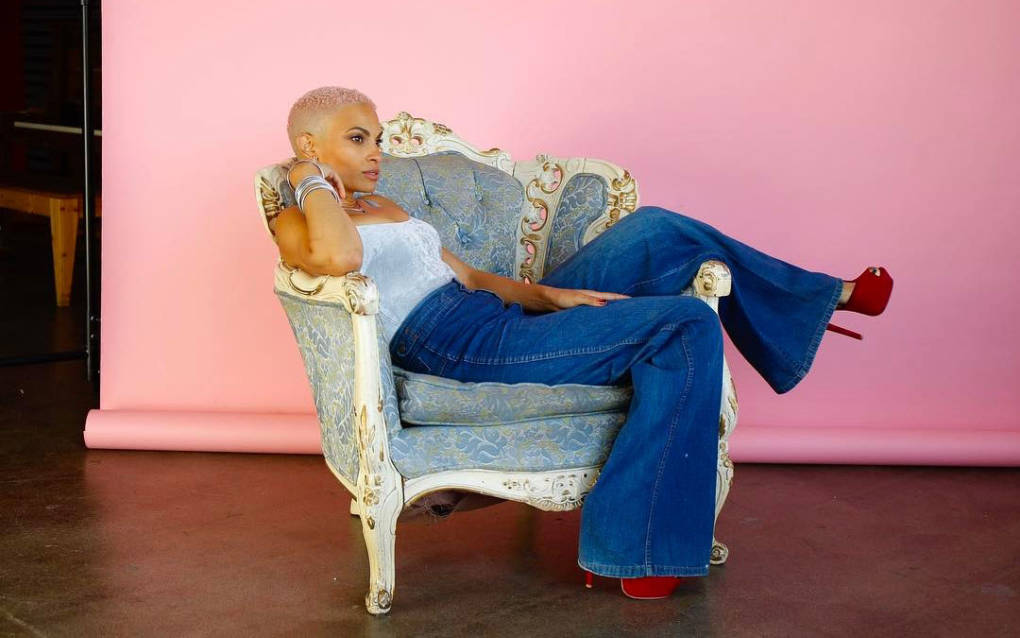
"caption": "Goapele, who debuts her new EP at Yoshis May 18 through 21.",
"description": "Goapele, who debuts her new EP at Yoshis May 18 through 21.",
"title": "Goapele.MAIN.2",
"credit": "James Theodore",
"status": "inherit",
"isLoading": false,
"fetchFailed": false
},
"arts_13243068": {
"type": "attachments",
"id": "arts_13243068",
"meta": {
"index": "attachments_1716263798",
"site": "arts",
"id": "13243068",
"found": true
},
"parent": 13239750,
"imgSizes": {
"small": {
"file": "https://ww2.kqed.org/app/uploads/sites/2/2017/05/BJ.OPIVY_-520x311.jpg",
"width": 520,
"mimeType": "image/jpeg",
"height": 311
},
"twentyfourteen-full-width": {
"file": "https://ww2.kqed.org/app/uploads/sites/2/2017/05/BJ.OPIVY_-1038x576.jpg",
"width": 1038,
"mimeType": "image/jpeg",
"height": 576
},
"thumbnail": {
"file": "https://ww2.kqed.org/app/uploads/sites/2/2017/05/BJ.OPIVY_-160x96.jpg",
"width": 160,
"mimeType": "image/jpeg",
"height": 96
},
"fd-sm": {
"file": "https://ww2.kqed.org/app/uploads/sites/2/2017/05/BJ.OPIVY_-960x575.jpg",
"width": 960,
"mimeType": "image/jpeg",
"height": 575
},
"post-thumbnail": {
"file": "https://ww2.kqed.org/app/uploads/sites/2/2017/05/BJ.OPIVY_-672x372.jpg",
"width": 672,
"mimeType": "image/jpeg",
"height": 372
},
"xsmall": {
"file": "https://ww2.kqed.org/app/uploads/sites/2/2017/05/BJ.OPIVY_-375x225.jpg",
"width": 375,
"mimeType": "image/jpeg",
"height": 225
},
"kqedFullSize": {
"file": "https://ww2.kqed.org/app/uploads/sites/2/2017/05/BJ.OPIVY_.jpg",
"width": 1920,
"height": 1150
},
"large": {
"file": "https://ww2.kqed.org/app/uploads/sites/2/2017/05/BJ.OPIVY_-1020x611.jpg",
"width": 1020,
"mimeType": "image/jpeg",
"height": 611
},
"xlarge": {
"file": "https://ww2.kqed.org/app/uploads/sites/2/2017/05/BJ.OPIVY_-1180x707.jpg",
"width": 1180,
"mimeType": "image/jpeg",
"height": 707
},
"guest-author-50": {
"file": "https://ww2.kqed.org/app/uploads/sites/2/2017/05/BJ.OPIVY_-50x50.jpg",
"width": 50,
"mimeType": "image/jpeg",
"height": 50
},
"guest-author-96": {
"file": "https://ww2.kqed.org/app/uploads/sites/2/2017/05/BJ.OPIVY_-96x96.jpg",
"width": 96,
"mimeType": "image/jpeg",
"height": 96
},
"medium": {
"file": "https://ww2.kqed.org/app/uploads/sites/2/2017/05/BJ.OPIVY_-800x479.jpg",
"width": 800,
"mimeType": "image/jpeg",
"height": 479
},
"guest-author-64": {
"file": "https://ww2.kqed.org/app/uploads/sites/2/2017/05/BJ.OPIVY_-64x64.jpg",
"width": 64,
"mimeType": "image/jpeg",
"height": 64
},
"guest-author-32": {
"file": "https://ww2.kqed.org/app/uploads/sites/2/2017/05/BJ.OPIVY_-32x32.jpg",
"width": 32,
"mimeType": "image/jpeg",
"height": 32
},
"fd-lrg": {
"file": "https://ww2.kqed.org/app/uploads/sites/2/2017/05/BJ.OPIVY_-1920x1150.jpg",
"width": 1920,
"mimeType": "image/jpeg",
"height": 1150
},
"fd-med": {
"file": "https://ww2.kqed.org/app/uploads/sites/2/2017/05/BJ.OPIVY_-1180x707.jpg",
"width": 1180,
"mimeType": "image/jpeg",
"height": 707
},
"full-width": {
"file": "https://ww2.kqed.org/app/uploads/sites/2/2017/05/BJ.OPIVY_-1920x1150.jpg",
"width": 1920,
"mimeType": "image/jpeg",
"height": 1150
},
"detail": {
"file": "https://ww2.kqed.org/app/uploads/sites/2/2017/05/BJ.OPIVY_-150x150.jpg",
"width": 150,
"mimeType": "image/jpeg",
"height": 150
},
"medium_large": {
"file": "https://ww2.kqed.org/app/uploads/sites/2/2017/05/BJ.OPIVY_-768x460.jpg",
"width": 768,
"mimeType": "image/jpeg",
"height": 460
},
"guest-author-128": {
"file": "https://ww2.kqed.org/app/uploads/sites/2/2017/05/BJ.OPIVY_-128x128.jpg",
"width": 128,
"mimeType": "image/jpeg",
"height": 128
},
"xxsmall": {
"file": "https://ww2.kqed.org/app/uploads/sites/2/2017/05/BJ.OPIVY_-240x144.jpg",
"width": 240,
"mimeType": "image/jpeg",
"height": 144
}
},
"publishDate": 1494962212,
"modified": 1494962241,
"caption": "Billie Joe Armstrong (third from right) sings with Operation Ivy onstage at 924 Gilman, circa 1988. ",
"description": "Billie Joe Armstrong (third from right) sings with Operation Ivy onstage at 924 Gilman, circa 1988. ",
"title": "BJ.OPIVY",
"credit": "Photo: Murray Bowles",
"status": "inherit",
"isLoading": false,
"fetchFailed": false
},
"arts_13237430": {
"type": "attachments",
"id": "arts_13237430",
"meta": {
"index": "attachments_1716263798",
"site": "arts",
"id": "13237430",
"found": true
},
"parent": 13237429,
"imgSizes": {
"small": {
"file": "https://ww2.kqed.org/app/uploads/sites/2/2017/05/gettyimages-654475030_wide-16ddcc81a0ab02659b1f834e44599dd3a6eddab9-520x293.jpg",
"width": 520,
"mimeType": "image/jpeg",
"height": 293
},
"twentyfourteen-full-width": {
"file": "https://ww2.kqed.org/app/uploads/sites/2/2017/05/gettyimages-654475030_wide-16ddcc81a0ab02659b1f834e44599dd3a6eddab9-1038x576.jpg",
"width": 1038,
"mimeType": "image/jpeg",
"height": 576
},
"thumbnail": {
"file": "https://ww2.kqed.org/app/uploads/sites/2/2017/05/gettyimages-654475030_wide-16ddcc81a0ab02659b1f834e44599dd3a6eddab9-160x90.jpg",
"width": 160,
"mimeType": "image/jpeg",
"height": 90
},
"fd-sm": {
"file": "https://ww2.kqed.org/app/uploads/sites/2/2017/05/gettyimages-654475030_wide-16ddcc81a0ab02659b1f834e44599dd3a6eddab9-960x540.jpg",
"width": 960,
"mimeType": "image/jpeg",
"height": 540
},
"post-thumbnail": {
"file": "https://ww2.kqed.org/app/uploads/sites/2/2017/05/gettyimages-654475030_wide-16ddcc81a0ab02659b1f834e44599dd3a6eddab9-672x372.jpg",
"width": 672,
"mimeType": "image/jpeg",
"height": 372
},
"xsmall": {
"file": "https://ww2.kqed.org/app/uploads/sites/2/2017/05/gettyimages-654475030_wide-16ddcc81a0ab02659b1f834e44599dd3a6eddab9-375x211.jpg",
"width": 375,
"mimeType": "image/jpeg",
"height": 211
},
"kqedFullSize": {
"file": "https://ww2.kqed.org/app/uploads/sites/2/2017/05/gettyimages-654475030_wide-16ddcc81a0ab02659b1f834e44599dd3a6eddab9.jpg",
"width": 2467,
"height": 1388
},
"large": {
"file": "https://ww2.kqed.org/app/uploads/sites/2/2017/05/gettyimages-654475030_wide-16ddcc81a0ab02659b1f834e44599dd3a6eddab9-1020x574.jpg",
"width": 1020,
"mimeType": "image/jpeg",
"height": 574
},
"xlarge": {
"file": "https://ww2.kqed.org/app/uploads/sites/2/2017/05/gettyimages-654475030_wide-16ddcc81a0ab02659b1f834e44599dd3a6eddab9-1180x664.jpg",
"width": 1180,
"mimeType": "image/jpeg",
"height": 664
},
"guest-author-50": {
"file": "https://ww2.kqed.org/app/uploads/sites/2/2017/05/gettyimages-654475030_wide-16ddcc81a0ab02659b1f834e44599dd3a6eddab9-50x50.jpg",
"width": 50,
"mimeType": "image/jpeg",
"height": 50
},
"guest-author-96": {
"file": "https://ww2.kqed.org/app/uploads/sites/2/2017/05/gettyimages-654475030_wide-16ddcc81a0ab02659b1f834e44599dd3a6eddab9-96x96.jpg",
"width": 96,
"mimeType": "image/jpeg",
"height": 96
},
"medium": {
"file": "https://ww2.kqed.org/app/uploads/sites/2/2017/05/gettyimages-654475030_wide-16ddcc81a0ab02659b1f834e44599dd3a6eddab9-800x450.jpg",
"width": 800,
"mimeType": "image/jpeg",
"height": 450
},
"guest-author-64": {
"file": "https://ww2.kqed.org/app/uploads/sites/2/2017/05/gettyimages-654475030_wide-16ddcc81a0ab02659b1f834e44599dd3a6eddab9-64x64.jpg",
"width": 64,
"mimeType": "image/jpeg",
"height": 64
},
"guest-author-32": {
"file": "https://ww2.kqed.org/app/uploads/sites/2/2017/05/gettyimages-654475030_wide-16ddcc81a0ab02659b1f834e44599dd3a6eddab9-32x32.jpg",
"width": 32,
"mimeType": "image/jpeg",
"height": 32
},
"fd-lrg": {
"file": "https://ww2.kqed.org/app/uploads/sites/2/2017/05/gettyimages-654475030_wide-16ddcc81a0ab02659b1f834e44599dd3a6eddab9-1920x1080.jpg",
"width": 1920,
"mimeType": "image/jpeg",
"height": 1080
},
"fd-med": {
"file": "https://ww2.kqed.org/app/uploads/sites/2/2017/05/gettyimages-654475030_wide-16ddcc81a0ab02659b1f834e44599dd3a6eddab9-1180x664.jpg",
"width": 1180,
"mimeType": "image/jpeg",
"height": 664
},
"full-width": {
"file": "https://ww2.kqed.org/app/uploads/sites/2/2017/05/gettyimages-654475030_wide-16ddcc81a0ab02659b1f834e44599dd3a6eddab9-1920x1080.jpg",
"width": 1920,
"mimeType": "image/jpeg",
"height": 1080
},
"detail": {
"file": "https://ww2.kqed.org/app/uploads/sites/2/2017/05/gettyimages-654475030_wide-16ddcc81a0ab02659b1f834e44599dd3a6eddab9-150x150.jpg",
"width": 150,
"mimeType": "image/jpeg",
"height": 150
},
"medium_large": {
"file": "https://ww2.kqed.org/app/uploads/sites/2/2017/05/gettyimages-654475030_wide-16ddcc81a0ab02659b1f834e44599dd3a6eddab9-768x432.jpg",
"width": 768,
"mimeType": "image/jpeg",
"height": 432
},
"guest-author-128": {
"file": "https://ww2.kqed.org/app/uploads/sites/2/2017/05/gettyimages-654475030_wide-16ddcc81a0ab02659b1f834e44599dd3a6eddab9-128x128.jpg",
"width": 128,
"mimeType": "image/jpeg",
"height": 128
},
"xxsmall": {
"file": "https://ww2.kqed.org/app/uploads/sites/2/2017/05/gettyimages-654475030_wide-16ddcc81a0ab02659b1f834e44599dd3a6eddab9-240x135.jpg",
"width": 240,
"mimeType": "image/jpeg",
"height": 135
}
},
"publishDate": 1494892163,
"modified": 1494892207,
"caption": "AUSTIN, TX - MARCH 16: Singer Ben Hopkins of the band PWR BTTM performs onstage during the Pitchfork SXSW Day Party at the French Legation Museum on March 16, 2017 in Austin, Texas.",
"description": null,
"title": "AUSTIN, TX - MARCH 16: Singer Ben Hopkins of the band PWR BTTM performs onstage during the Pitchfork SXSW Day Party at the French Legation Museum on March 16, 2017 in Austin, Texas. (Photo by Scott Dudelson/WireImage)",
"credit": "Photo by Scott Dudelson/WireImage",
"status": "inherit",
"isLoading": false,
"fetchFailed": false
},
"arts_13214606": {
"type": "attachments",
"id": "arts_13214606",
"meta": {
"index": "attachments_1716263798",
"site": "arts",
"id": "13214606",
"found": true
},
"parent": 13214017,
"imgSizes": {
"small": {
"file": "https://ww2.kqed.org/app/uploads/sites/2/2017/05/Francis-on-roof-1-520x345.jpg",
"width": 520,
"mimeType": "image/jpeg",
"height": 345
},
"twentyfourteen-full-width": {
"file": "https://ww2.kqed.org/app/uploads/sites/2/2017/05/Francis-on-roof-1-1038x576.jpg",
"width": 1038,
"mimeType": "image/jpeg",
"height": 576
},
"thumbnail": {
"file": "https://ww2.kqed.org/app/uploads/sites/2/2017/05/Francis-on-roof-1-160x106.jpg",
"width": 160,
"mimeType": "image/jpeg",
"height": 106
},
"fd-sm": {
"file": "https://ww2.kqed.org/app/uploads/sites/2/2017/05/Francis-on-roof-1-960x638.jpg",
"width": 960,
"mimeType": "image/jpeg",
"height": 638
},
"post-thumbnail": {
"file": "https://ww2.kqed.org/app/uploads/sites/2/2017/05/Francis-on-roof-1-672x372.jpg",
"width": 672,
"mimeType": "image/jpeg",
"height": 372
},
"xsmall": {
"file": "https://ww2.kqed.org/app/uploads/sites/2/2017/05/Francis-on-roof-1-375x249.jpg",
"width": 375,
"mimeType": "image/jpeg",
"height": 249
},
"kqedFullSize": {
"file": "https://ww2.kqed.org/app/uploads/sites/2/2017/05/Francis-on-roof-1.jpg",
"width": 4288,
"height": 2848
},
"large": {
"file": "https://ww2.kqed.org/app/uploads/sites/2/2017/05/Francis-on-roof-1-1020x677.jpg",
"width": 1020,
"mimeType": "image/jpeg",
"height": 677
},
"xlarge": {
"file": "https://ww2.kqed.org/app/uploads/sites/2/2017/05/Francis-on-roof-1-1180x784.jpg",
"width": 1180,
"mimeType": "image/jpeg",
"height": 784
},
"guest-author-50": {
"file": "https://ww2.kqed.org/app/uploads/sites/2/2017/05/Francis-on-roof-1-50x50.jpg",
"width": 50,
"mimeType": "image/jpeg",
"height": 50
},
"guest-author-96": {
"file": "https://ww2.kqed.org/app/uploads/sites/2/2017/05/Francis-on-roof-1-96x96.jpg",
"width": 96,
"mimeType": "image/jpeg",
"height": 96
},
"medium": {
"file": "https://ww2.kqed.org/app/uploads/sites/2/2017/05/Francis-on-roof-1-800x531.jpg",
"width": 800,
"mimeType": "image/jpeg",
"height": 531
},
"guest-author-64": {
"file": "https://ww2.kqed.org/app/uploads/sites/2/2017/05/Francis-on-roof-1-64x64.jpg",
"width": 64,
"mimeType": "image/jpeg",
"height": 64
},
"guest-author-32": {
"file": "https://ww2.kqed.org/app/uploads/sites/2/2017/05/Francis-on-roof-1-32x32.jpg",
"width": 32,
"mimeType": "image/jpeg",
"height": 32
},
"fd-lrg": {
"file": "https://ww2.kqed.org/app/uploads/sites/2/2017/05/Francis-on-roof-1-1920x1275.jpg",
"width": 1920,
"mimeType": "image/jpeg",
"height": 1275
},
"fd-med": {
"file": "https://ww2.kqed.org/app/uploads/sites/2/2017/05/Francis-on-roof-1-1180x784.jpg",
"width": 1180,
"mimeType": "image/jpeg",
"height": 784
},
"full-width": {
"file": "https://ww2.kqed.org/app/uploads/sites/2/2017/05/Francis-on-roof-1-1920x1275.jpg",
"width": 1920,
"mimeType": "image/jpeg",
"height": 1275
},
"detail": {
"file": "https://ww2.kqed.org/app/uploads/sites/2/2017/05/Francis-on-roof-1-150x150.jpg",
"width": 150,
"mimeType": "image/jpeg",
"height": 150
},
"medium_large": {
"file": "https://ww2.kqed.org/app/uploads/sites/2/2017/05/Francis-on-roof-1-768x510.jpg",
"width": 768,
"mimeType": "image/jpeg",
"height": 510
},
"guest-author-128": {
"file": "https://ww2.kqed.org/app/uploads/sites/2/2017/05/Francis-on-roof-1-128x128.jpg",
"width": 128,
"mimeType": "image/jpeg",
"height": 128
},
"xxsmall": {
"file": "https://ww2.kqed.org/app/uploads/sites/2/2017/05/Francis-on-roof-1-240x159.jpg",
"width": 240,
"mimeType": "image/jpeg",
"height": 159
}
},
"publishDate": 1494620298,
"modified": 1494620326,
"caption": "The Asian Art Museum presents “Asian Improv Nation: A 30th Anniversary Showcase” featuring music by tenor saxophonist Francis Wong (pictured) and bassist Tatsu Aoki. Photo by Leon Sun. ",
"description": null,
"title": "Francis on roof-1",
"credit": null,
"status": "inherit",
"isLoading": false,
"fetchFailed": false
},
"arts_13388208": {
"type": "attachments",
"id": "arts_13388208",
"meta": {
"index": "attachments_1716263798",
"site": "arts",
"id": "13388208",
"found": true
},
"parent": 13215329,
"imgSizes": {
"small": {
"file": "https://ww2.kqed.org/app/uploads/sites/2/2017/05/Summer-of-Love_Concert-520x293.jpg",
"width": 520,
"mimeType": "image/jpeg",
"height": 293
},
"twentyfourteen-full-width": {
"file": "https://ww2.kqed.org/app/uploads/sites/2/2017/05/Summer-of-Love_Concert-1038x576.jpg",
"width": 1038,
"mimeType": "image/jpeg",
"height": 576
},
"thumbnail": {
"file": "https://ww2.kqed.org/app/uploads/sites/2/2017/05/Summer-of-Love_Concert-160x90.jpg",
"width": 160,
"mimeType": "image/jpeg",
"height": 90
},
"fd-sm": {
"file": "https://ww2.kqed.org/app/uploads/sites/2/2017/05/Summer-of-Love_Concert-960x540.jpg",
"width": 960,
"mimeType": "image/jpeg",
"height": 540
},
"post-thumbnail": {
"file": "https://ww2.kqed.org/app/uploads/sites/2/2017/05/Summer-of-Love_Concert-672x372.jpg",
"width": 672,
"mimeType": "image/jpeg",
"height": 372
},
"xsmall": {
"file": "https://ww2.kqed.org/app/uploads/sites/2/2017/05/Summer-of-Love_Concert-375x211.jpg",
"width": 375,
"mimeType": "image/jpeg",
"height": 211
},
"kqedFullSize": {
"file": "https://ww2.kqed.org/app/uploads/sites/2/2017/05/Summer-of-Love_Concert.jpg",
"width": 1920,
"height": 1080
},
"large": {
"file": "https://ww2.kqed.org/app/uploads/sites/2/2017/05/Summer-of-Love_Concert-1020x574.jpg",
"width": 1020,
"mimeType": "image/jpeg",
"height": 574
},
"xlarge": {
"file": "https://ww2.kqed.org/app/uploads/sites/2/2017/05/Summer-of-Love_Concert-1180x664.jpg",
"width": 1180,
"mimeType": "image/jpeg",
"height": 664
},
"guest-author-50": {
"file": "https://ww2.kqed.org/app/uploads/sites/2/2017/05/Summer-of-Love_Concert-50x50.jpg",
"width": 50,
"mimeType": "image/jpeg",
"height": 50
},
"guest-author-96": {
"file": "https://ww2.kqed.org/app/uploads/sites/2/2017/05/Summer-of-Love_Concert-96x96.jpg",
"width": 96,
"mimeType": "image/jpeg",
"height": 96
},
"medium": {
"file": "https://ww2.kqed.org/app/uploads/sites/2/2017/05/Summer-of-Love_Concert-800x450.jpg",
"width": 800,
"mimeType": "image/jpeg",
"height": 450
},
"guest-author-64": {
"file": "https://ww2.kqed.org/app/uploads/sites/2/2017/05/Summer-of-Love_Concert-64x64.jpg",
"width": 64,
"mimeType": "image/jpeg",
"height": 64
},
"guest-author-32": {
"file": "https://ww2.kqed.org/app/uploads/sites/2/2017/05/Summer-of-Love_Concert-32x32.jpg",
"width": 32,
"mimeType": "image/jpeg",
"height": 32
},
"fd-lrg": {
"file": "https://ww2.kqed.org/app/uploads/sites/2/2017/05/Summer-of-Love_Concert-1920x1080.jpg",
"width": 1920,
"mimeType": "image/jpeg",
"height": 1080
},
"fd-med": {
"file": "https://ww2.kqed.org/app/uploads/sites/2/2017/05/Summer-of-Love_Concert-1180x664.jpg",
"width": 1180,
"mimeType": "image/jpeg",
"height": 664
},
"full-width": {
"file": "https://ww2.kqed.org/app/uploads/sites/2/2017/05/Summer-of-Love_Concert-1920x1080.jpg",
"width": 1920,
"mimeType": "image/jpeg",
"height": 1080
},
"detail": {
"file": "https://ww2.kqed.org/app/uploads/sites/2/2017/05/Summer-of-Love_Concert-150x150.jpg",
"width": 150,
"mimeType": "image/jpeg",
"height": 150
},
"medium_large": {
"file": "https://ww2.kqed.org/app/uploads/sites/2/2017/05/Summer-of-Love_Concert-768x432.jpg",
"width": 768,
"mimeType": "image/jpeg",
"height": 432
},
"guest-author-128": {
"file": "https://ww2.kqed.org/app/uploads/sites/2/2017/05/Summer-of-Love_Concert-128x128.jpg",
"width": 128,
"mimeType": "image/jpeg",
"height": 128
},
"xxsmall": {
"file": "https://ww2.kqed.org/app/uploads/sites/2/2017/05/Summer-of-Love_Concert-240x135.jpg",
"width": 240,
"mimeType": "image/jpeg",
"height": 135
}
},
"publishDate": 1496860719,
"modified": 1496860853,
"caption": "An attendee dances at the Fantasy Fair and Magic Mountain Music Festival, held June 1967 at the Cushing Memorial Amphitheatre on Mount Tamalpais, Mill Valley",
"description": "An attendee dances at the Fantasy Fair and Magic Mountain Music Festival, held June 1967 at the Cushing Memorial Amphitheatre on Mount Tamalpais, Mill Valley",
"title": "Summer of Love_02",
"credit": "Photo: Elaine Mayes",
"status": "inherit",
"isLoading": false,
"fetchFailed": false
},
"arts_13214391": {
"type": "attachments",
"id": "arts_13214391",
"meta": {
"index": "attachments_1716263798",
"site": "arts",
"id": "13214391",
"found": true
},
"parent": 13209143,
"imgSizes": {
"small": {
"file": "https://ww2.kqed.org/app/uploads/sites/2/2017/05/Katabatik.MAIN_-520x293.jpg",
"width": 520,
"mimeType": "image/jpeg",
"height": 293
},
"thumbnail": {
"file": "https://ww2.kqed.org/app/uploads/sites/2/2017/05/Katabatik.MAIN_-160x90.jpg",
"width": 160,
"mimeType": "image/jpeg",
"height": 90
},
"post-thumbnail": {
"file": "https://ww2.kqed.org/app/uploads/sites/2/2017/05/Katabatik.MAIN_-672x372.jpg",
"width": 672,
"mimeType": "image/jpeg",
"height": 372
},
"xsmall": {
"file": "https://ww2.kqed.org/app/uploads/sites/2/2017/05/Katabatik.MAIN_-375x211.jpg",
"width": 375,
"mimeType": "image/jpeg",
"height": 211
},
"kqedFullSize": {
"file": "https://ww2.kqed.org/app/uploads/sites/2/2017/05/Katabatik.MAIN_.jpg",
"width": 800,
"height": 450
},
"guest-author-50": {
"file": "https://ww2.kqed.org/app/uploads/sites/2/2017/05/Katabatik.MAIN_-50x50.jpg",
"width": 50,
"mimeType": "image/jpeg",
"height": 50
},
"guest-author-96": {
"file": "https://ww2.kqed.org/app/uploads/sites/2/2017/05/Katabatik.MAIN_-96x96.jpg",
"width": 96,
"mimeType": "image/jpeg",
"height": 96
},
"medium": {
"file": "https://ww2.kqed.org/app/uploads/sites/2/2017/05/Katabatik.MAIN_-800x450.jpg",
"width": 800,
"mimeType": "image/jpeg",
"height": 450
},
"guest-author-64": {
"file": "https://ww2.kqed.org/app/uploads/sites/2/2017/05/Katabatik.MAIN_-64x64.jpg",
"width": 64,
"mimeType": "image/jpeg",
"height": 64
},
"guest-author-32": {
"file": "https://ww2.kqed.org/app/uploads/sites/2/2017/05/Katabatik.MAIN_-32x32.jpg",
"width": 32,
"mimeType": "image/jpeg",
"height": 32
},
"detail": {
"file": "https://ww2.kqed.org/app/uploads/sites/2/2017/05/Katabatik.MAIN_-150x150.jpg",
"width": 150,
"mimeType": "image/jpeg",
"height": 150
},
"medium_large": {
"file": "https://ww2.kqed.org/app/uploads/sites/2/2017/05/Katabatik.MAIN_-768x432.jpg",
"width": 768,
"mimeType": "image/jpeg",
"height": 432
},
"guest-author-128": {
"file": "https://ww2.kqed.org/app/uploads/sites/2/2017/05/Katabatik.MAIN_-128x128.jpg",
"width": 128,
"mimeType": "image/jpeg",
"height": 128
},
"xxsmall": {
"file": "https://ww2.kqed.org/app/uploads/sites/2/2017/05/Katabatik.MAIN_-240x135.jpg",
"width": 240,
"mimeType": "image/jpeg",
"height": 135
}
},
"publishDate": 1494613683,
"modified": 1494619891,
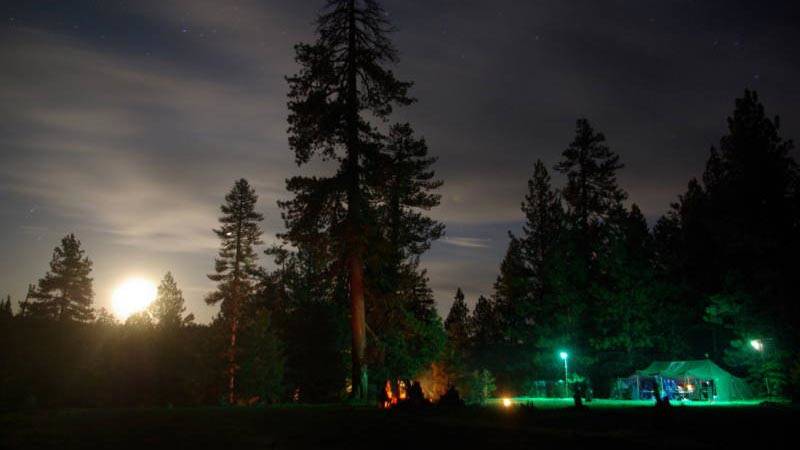
"caption": "A scene from Katabatik's annual Solstice campout. ",
"description": "A scene from Katabatik's annual Solstice campout. ",
"title": "Katabatik.MAIN",
"credit": "Courtesy Katabatik",
"status": "inherit",
"isLoading": false,
"fetchFailed": false
},
"arts_13207535": {
"type": "attachments",
"id": "arts_13207535",
"meta": {
"index": "attachments_1716263798",
"site": "arts",
"id": "13207535",
"found": true
},
"parent": 13201414,
"imgSizes": {
"small": {
"file": "https://ww2.kqed.org/app/uploads/sites/2/2017/05/Cast-of-Monsoon-Wedding-e1494527576793-520x293.jpg",
"width": 520,
"mimeType": "image/jpeg",
"height": 293
},
"twentyfourteen-full-width": {
"file": "https://ww2.kqed.org/app/uploads/sites/2/2017/05/Cast-of-Monsoon-Wedding-e1494527576793-1038x576.jpg",
"width": 1038,
"mimeType": "image/jpeg",
"height": 576
},
"thumbnail": {
"file": "https://ww2.kqed.org/app/uploads/sites/2/2017/05/Cast-of-Monsoon-Wedding-e1494527576793-160x90.jpg",
"width": 160,
"mimeType": "image/jpeg",
"height": 90
},
"fd-sm": {
"file": "https://ww2.kqed.org/app/uploads/sites/2/2017/05/Cast-of-Monsoon-Wedding-e1494527576793-960x540.jpg",
"width": 960,
"mimeType": "image/jpeg",
"height": 540
},
"post-thumbnail": {
"file": "https://ww2.kqed.org/app/uploads/sites/2/2017/05/Cast-of-Monsoon-Wedding-e1494527576793-672x372.jpg",
"width": 672,
"mimeType": "image/jpeg",
"height": 372
},
"xsmall": {
"file": "https://ww2.kqed.org/app/uploads/sites/2/2017/05/Cast-of-Monsoon-Wedding-e1494527576793-375x211.jpg",
"width": 375,
"mimeType": "image/jpeg",
"height": 211
},
"kqedFullSize": {
"file": "https://ww2.kqed.org/app/uploads/sites/2/2017/05/Cast-of-Monsoon-Wedding-e1494527576793.jpg",
"width": 4851,
"height": 2731
},
"large": {
"file": "https://ww2.kqed.org/app/uploads/sites/2/2017/05/Cast-of-Monsoon-Wedding-e1494527576793-1020x574.jpg",
"width": 1020,
"mimeType": "image/jpeg",
"height": 574
},
"xlarge": {
"file": "https://ww2.kqed.org/app/uploads/sites/2/2017/05/Cast-of-Monsoon-Wedding-e1494527576793-1180x664.jpg",
"width": 1180,
"mimeType": "image/jpeg",
"height": 664
},
"guest-author-50": {
"file": "https://ww2.kqed.org/app/uploads/sites/2/2017/05/Cast-of-Monsoon-Wedding-e1494527576793-50x50.jpg",
"width": 50,
"mimeType": "image/jpeg",
"height": 50
},
"guest-author-96": {
"file": "https://ww2.kqed.org/app/uploads/sites/2/2017/05/Cast-of-Monsoon-Wedding-e1494527576793-96x96.jpg",
"width": 96,
"mimeType": "image/jpeg",
"height": 96
},
"medium": {
"file": "https://ww2.kqed.org/app/uploads/sites/2/2017/05/Cast-of-Monsoon-Wedding-e1494527576793-800x450.jpg",
"width": 800,
"mimeType": "image/jpeg",
"height": 450
},
"guest-author-64": {
"file": "https://ww2.kqed.org/app/uploads/sites/2/2017/05/Cast-of-Monsoon-Wedding-e1494527576793-64x64.jpg",
"width": 64,
"mimeType": "image/jpeg",
"height": 64
},
"guest-author-32": {
"file": "https://ww2.kqed.org/app/uploads/sites/2/2017/05/Cast-of-Monsoon-Wedding-e1494527576793-32x32.jpg",
"width": 32,
"mimeType": "image/jpeg",
"height": 32
},
"fd-lrg": {
"file": "https://ww2.kqed.org/app/uploads/sites/2/2017/05/Cast-of-Monsoon-Wedding-e1494527576793-1920x1081.jpg",
"width": 1920,
"mimeType": "image/jpeg",
"height": 1081
},
"fd-med": {
"file": "https://ww2.kqed.org/app/uploads/sites/2/2017/05/Cast-of-Monsoon-Wedding-e1494527576793-1180x664.jpg",
"width": 1180,
"mimeType": "image/jpeg",
"height": 664
},
"full-width": {
"file": "https://ww2.kqed.org/app/uploads/sites/2/2017/05/Cast-of-Monsoon-Wedding-e1494527576793-1920x1081.jpg",
"width": 1920,
"mimeType": "image/jpeg",
"height": 1081
},
"detail": {
"file": "https://ww2.kqed.org/app/uploads/sites/2/2017/05/Cast-of-Monsoon-Wedding-e1494527576793-150x150.jpg",
"width": 150,
"mimeType": "image/jpeg",
"height": 150
},
"medium_large": {
"file": "https://ww2.kqed.org/app/uploads/sites/2/2017/05/Cast-of-Monsoon-Wedding-e1494527576793-768x432.jpg",
"width": 768,
"mimeType": "image/jpeg",
"height": 432
},
"guest-author-128": {
"file": "https://ww2.kqed.org/app/uploads/sites/2/2017/05/Cast-of-Monsoon-Wedding-e1494527576793-128x128.jpg",
"width": 128,
"mimeType": "image/jpeg",
"height": 128
},
"xxsmall": {
"file": "https://ww2.kqed.org/app/uploads/sites/2/2017/05/Cast-of-Monsoon-Wedding-e1494527576793-240x135.jpg",
"width": 240,
"mimeType": "image/jpeg",
"height": 135
}
},
"publishDate": 1494527471,
"modified": 1494527536,
"caption": "Cast of Monsoon Wedding, a world premiere musical at Berkeley Repertory Theater ",
"description": "Cast of Monsoon Wedding, a world premiere musical at Berkeley Repertory Theater ",
"title": "Cast of Monsoon Wedding, a world premiere musical at Berkeley Repertory Theater",
"credit": "Photo: Kevin Berne/Berkeley Rep",
"status": "inherit",
"isLoading": false,
"fetchFailed": false
},
"arts_13207854": {
"type": "attachments",
"id": "arts_13207854",
"meta": {
"index": "attachments_1716263798",
"site": "arts",
"id": "13207854",
"found": true
},
"parent": 13207431,
"imgSizes": {
"small": {
"file": "https://ww2.kqed.org/app/uploads/sites/2/2017/05/FullSizeRender-15-520x256.jpg",
"width": 520,
"mimeType": "image/jpeg",
"height": 256
},
"twentyfourteen-full-width": {
"file": "https://ww2.kqed.org/app/uploads/sites/2/2017/05/FullSizeRender-15-1038x535.jpg",
"width": 1038,
"mimeType": "image/jpeg",
"height": 535
},
"thumbnail": {
"file": "https://ww2.kqed.org/app/uploads/sites/2/2017/05/FullSizeRender-15-160x79.jpg",
"width": 160,
"mimeType": "image/jpeg",
"height": 79
},
"fd-sm": {
"file": "https://ww2.kqed.org/app/uploads/sites/2/2017/05/FullSizeRender-15-960x472.jpg",
"width": 960,
"mimeType": "image/jpeg",
"height": 472
},
"post-thumbnail": {
"file": "https://ww2.kqed.org/app/uploads/sites/2/2017/05/FullSizeRender-15-672x372.jpg",
"width": 672,
"mimeType": "image/jpeg",
"height": 372
},
"xsmall": {
"file": "https://ww2.kqed.org/app/uploads/sites/2/2017/05/FullSizeRender-15-375x185.jpg",
"width": 375,
"mimeType": "image/jpeg",
"height": 185
},
"kqedFullSize": {
"file": "https://ww2.kqed.org/app/uploads/sites/2/2017/05/FullSizeRender-15.jpg",
"width": 1087,
"height": 535
},
"large": {
"file": "https://ww2.kqed.org/app/uploads/sites/2/2017/05/FullSizeRender-15-1020x502.jpg",
"width": 1020,
"mimeType": "image/jpeg",
"height": 502
},
"guest-author-50": {
"file": "https://ww2.kqed.org/app/uploads/sites/2/2017/05/FullSizeRender-15-50x50.jpg",
"width": 50,
"mimeType": "image/jpeg",
"height": 50
},
"guest-author-96": {
"file": "https://ww2.kqed.org/app/uploads/sites/2/2017/05/FullSizeRender-15-96x96.jpg",
"width": 96,
"mimeType": "image/jpeg",
"height": 96
},
"medium": {
"file": "https://ww2.kqed.org/app/uploads/sites/2/2017/05/FullSizeRender-15-800x394.jpg",
"width": 800,
"mimeType": "image/jpeg",
"height": 394
},
"guest-author-64": {
"file": "https://ww2.kqed.org/app/uploads/sites/2/2017/05/FullSizeRender-15-64x64.jpg",
"width": 64,
"mimeType": "image/jpeg",
"height": 64
},
"guest-author-32": {
"file": "https://ww2.kqed.org/app/uploads/sites/2/2017/05/FullSizeRender-15-32x32.jpg",
"width": 32,
"mimeType": "image/jpeg",
"height": 32
},
"detail": {
"file": "https://ww2.kqed.org/app/uploads/sites/2/2017/05/FullSizeRender-15-150x150.jpg",
"width": 150,
"mimeType": "image/jpeg",
"height": 150
},
"medium_large": {
"file": "https://ww2.kqed.org/app/uploads/sites/2/2017/05/FullSizeRender-15-768x378.jpg",
"width": 768,
"mimeType": "image/jpeg",
"height": 378
},
"guest-author-128": {
"file": "https://ww2.kqed.org/app/uploads/sites/2/2017/05/FullSizeRender-15-128x128.jpg",
"width": 128,
"mimeType": "image/jpeg",
"height": 128
},
"xxsmall": {
"file": "https://ww2.kqed.org/app/uploads/sites/2/2017/05/FullSizeRender-15-240x118.jpg",
"width": 240,
"mimeType": "image/jpeg",
"height": 118
}
},
"publishDate": 1494531573,
"modified": 1494531639,
"caption": "The Brothers Comatose, taking Throwback Thursday really seriously.",
"description": null,
"title": "FullSizeRender (15)",
"credit": null,
"status": "inherit",
"isLoading": false,
"fetchFailed": false
},
"arts_13201920": {
"type": "attachments",
"id": "arts_13201920",
"meta": {
"index": "attachments_1716263798",
"site": "arts",
"id": "13201920",
"found": true
},
"parent": 13194051,
"imgSizes": {
"small": {
"file": "https://ww2.kqed.org/app/uploads/sites/2/2017/05/P-Lo.MAIN_-520x293.jpg",
"width": 520,
"mimeType": "image/jpeg",
"height": 293
},
"thumbnail": {
"file": "https://ww2.kqed.org/app/uploads/sites/2/2017/05/P-Lo.MAIN_-160x90.jpg",
"width": 160,
"mimeType": "image/jpeg",
"height": 90
},
"post-thumbnail": {
"file": "https://ww2.kqed.org/app/uploads/sites/2/2017/05/P-Lo.MAIN_-672x372.jpg",
"width": 672,
"mimeType": "image/jpeg",
"height": 372
},
"xsmall": {
"file": "https://ww2.kqed.org/app/uploads/sites/2/2017/05/P-Lo.MAIN_-375x211.jpg",
"width": 375,
"mimeType": "image/jpeg",
"height": 211
},
"kqedFullSize": {
"file": "https://ww2.kqed.org/app/uploads/sites/2/2017/05/P-Lo.MAIN_.jpg",
"width": 800,
"height": 450
},
"guest-author-50": {
"file": "https://ww2.kqed.org/app/uploads/sites/2/2017/05/P-Lo.MAIN_-50x50.jpg",
"width": 50,
"mimeType": "image/jpeg",
"height": 50
},
"guest-author-96": {
"file": "https://ww2.kqed.org/app/uploads/sites/2/2017/05/P-Lo.MAIN_-96x96.jpg",
"width": 96,
"mimeType": "image/jpeg",
"height": 96
},
"medium": {
"file": "https://ww2.kqed.org/app/uploads/sites/2/2017/05/P-Lo.MAIN_-800x450.jpg",
"width": 800,
"mimeType": "image/jpeg",
"height": 450
},
"guest-author-64": {
"file": "https://ww2.kqed.org/app/uploads/sites/2/2017/05/P-Lo.MAIN_-64x64.jpg",
"width": 64,
"mimeType": "image/jpeg",
"height": 64
},
"guest-author-32": {
"file": "https://ww2.kqed.org/app/uploads/sites/2/2017/05/P-Lo.MAIN_-32x32.jpg",
"width": 32,
"mimeType": "image/jpeg",
"height": 32
},
"detail": {
"file": "https://ww2.kqed.org/app/uploads/sites/2/2017/05/P-Lo.MAIN_-150x150.jpg",
"width": 150,
"mimeType": "image/jpeg",
"height": 150
},
"medium_large": {
"file": "https://ww2.kqed.org/app/uploads/sites/2/2017/05/P-Lo.MAIN_-768x432.jpg",
"width": 768,
"mimeType": "image/jpeg",
"height": 432
},
"guest-author-128": {
"file": "https://ww2.kqed.org/app/uploads/sites/2/2017/05/P-Lo.MAIN_-128x128.jpg",
"width": 128,
"mimeType": "image/jpeg",
"height": 128
},
"xxsmall": {
"file": "https://ww2.kqed.org/app/uploads/sites/2/2017/05/P-Lo.MAIN_-240x135.jpg",
"width": 240,
"mimeType": "image/jpeg",
"height": 135
}
},
"publishDate": 1494455105,
"modified": 1494455335,
"caption": "At 26, the Pinole-bred rapper and producer P-Lo is releasing his second official album and embarking on tour in June.",
"description": "At 26, the Pinole-bred rapper and producer P-Lo is releasing his second official album and embarking on tour in June.",
"title": "P-Lo.MAIN",
"credit": "Photo: Dan Franco",
"status": "inherit",
"isLoading": false,
"fetchFailed": false
},
"arts_13201623": {
"type": "attachments",
"id": "arts_13201623",
"meta": {
"index": "attachments_1716263798",
"site": "arts",
"id": "13201623",
"found": true
},
"parent": 13201417,
"imgSizes": {
"small": {
"file": "https://ww2.kqed.org/app/uploads/sites/2/2017/05/KID_ANDERSON-520x293.jpg",
"width": 520,
"mimeType": "image/jpeg",
"height": 293
},
"twentyfourteen-full-width": {
"file": "https://ww2.kqed.org/app/uploads/sites/2/2017/05/KID_ANDERSON-1038x576.jpg",
"width": 1038,
"mimeType": "image/jpeg",
"height": 576
},
"thumbnail": {
"file": "https://ww2.kqed.org/app/uploads/sites/2/2017/05/KID_ANDERSON-160x90.jpg",
"width": 160,
"mimeType": "image/jpeg",
"height": 90
},
"fd-sm": {
"file": "https://ww2.kqed.org/app/uploads/sites/2/2017/05/KID_ANDERSON-960x540.jpg",
"width": 960,
"mimeType": "image/jpeg",
"height": 540
},
"post-thumbnail": {
"file": "https://ww2.kqed.org/app/uploads/sites/2/2017/05/KID_ANDERSON-672x372.jpg",
"width": 672,
"mimeType": "image/jpeg",
"height": 372
},
"xsmall": {
"file": "https://ww2.kqed.org/app/uploads/sites/2/2017/05/KID_ANDERSON-375x211.jpg",
"width": 375,
"mimeType": "image/jpeg",
"height": 211
},
"kqedFullSize": {
"file": "https://ww2.kqed.org/app/uploads/sites/2/2017/05/KID_ANDERSON.jpg",
"width": 1920,
"height": 1080
},
"large": {
"file": "https://ww2.kqed.org/app/uploads/sites/2/2017/05/KID_ANDERSON-1020x574.jpg",
"width": 1020,
"mimeType": "image/jpeg",
"height": 574
},
"xlarge": {
"file": "https://ww2.kqed.org/app/uploads/sites/2/2017/05/KID_ANDERSON-1180x664.jpg",
"width": 1180,
"mimeType": "image/jpeg",
"height": 664
},
"guest-author-50": {
"file": "https://ww2.kqed.org/app/uploads/sites/2/2017/05/KID_ANDERSON-50x50.jpg",
"width": 50,
"mimeType": "image/jpeg",
"height": 50
},
"guest-author-96": {
"file": "https://ww2.kqed.org/app/uploads/sites/2/2017/05/KID_ANDERSON-96x96.jpg",
"width": 96,
"mimeType": "image/jpeg",
"height": 96
},
"medium": {
"file": "https://ww2.kqed.org/app/uploads/sites/2/2017/05/KID_ANDERSON-800x450.jpg",
"width": 800,
"mimeType": "image/jpeg",
"height": 450
},
"guest-author-64": {
"file": "https://ww2.kqed.org/app/uploads/sites/2/2017/05/KID_ANDERSON-64x64.jpg",
"width": 64,
"mimeType": "image/jpeg",
"height": 64
},
"guest-author-32": {
"file": "https://ww2.kqed.org/app/uploads/sites/2/2017/05/KID_ANDERSON-32x32.jpg",
"width": 32,
"mimeType": "image/jpeg",
"height": 32
},
"fd-lrg": {
"file": "https://ww2.kqed.org/app/uploads/sites/2/2017/05/KID_ANDERSON-1920x1080.jpg",
"width": 1920,
"mimeType": "image/jpeg",
"height": 1080
},
"fd-med": {
"file": "https://ww2.kqed.org/app/uploads/sites/2/2017/05/KID_ANDERSON-1180x664.jpg",
"width": 1180,
"mimeType": "image/jpeg",
"height": 664
},
"full-width": {
"file": "https://ww2.kqed.org/app/uploads/sites/2/2017/05/KID_ANDERSON-1920x1080.jpg",
"width": 1920,
"mimeType": "image/jpeg",
"height": 1080
},
"detail": {
"file": "https://ww2.kqed.org/app/uploads/sites/2/2017/05/KID_ANDERSON-150x150.jpg",
"width": 150,
"mimeType": "image/jpeg",
"height": 150
},
"medium_large": {
"file": "https://ww2.kqed.org/app/uploads/sites/2/2017/05/KID_ANDERSON-768x432.jpg",
"width": 768,
"mimeType": "image/jpeg",
"height": 432
},
"guest-author-128": {
"file": "https://ww2.kqed.org/app/uploads/sites/2/2017/05/KID_ANDERSON-128x128.jpg",
"width": 128,
"mimeType": "image/jpeg",
"height": 128
},
"xxsmall": {
"file": "https://ww2.kqed.org/app/uploads/sites/2/2017/05/KID_ANDERSON-240x135.jpg",
"width": 240,
"mimeType": "image/jpeg",
"height": 135
}
},
"publishDate": 1494453330,
"modified": 1494453330,
"caption": null,
"description": null,
"title": "KID_ANDERSON",
"credit": null,
"status": "inherit",
"isLoading": false,
"fetchFailed": false
}
},
"audioPlayerReducer": {
"postId": "stream_live",
"isPaused": true,
"isPlaying": false,
"pfsActive": false,
"pledgeModalIsOpen": true,
"playerDrawerIsOpen": false,
"liveAudioPlayStartedAt": 0,
"liveAudioPlayContext": ""
},
"authorsReducer": {
"byline_arts_13257117": {
"type": "authors",
"id": "byline_arts_13257117",
"meta": {
"override": true
},
"slug": "byline_arts_13257117",
"name": "Leah Donnella",
"isLoading": false
},
"byline_arts_13253784": {
"type": "authors",
"id": "byline_arts_13253784",
"meta": {
"override": true
},
"slug": "byline_arts_13253784",
"name": "Nekesa Mumby Moody, Associated Press",
"isLoading": false
},
"byline_arts_13250203": {
"type": "authors",
"id": "byline_arts_13250203",
"meta": {
"override": true
},
"slug": "byline_arts_13250203",
"name": "Nastia Voynovskaya",
"isLoading": false
},
"byline_arts_13237429": {
"type": "authors",
"id": "byline_arts_13237429",
"meta": {
"override": true
},
"slug": "byline_arts_13237429",
"name": "Andrew Flanagan",
"isLoading": false
},
"byline_arts_13194051": {
"type": "authors",
"id": "byline_arts_13194051",
"meta": {
"override": true
},
"slug": "byline_arts_13194051",
"name": "Nastia Voynovskaya",
"isLoading": false
},
"cmusiker": {
"type": "authors",
"id": "32",
"meta": {
"index": "authors_1716337520",
"id": "32",
"found": true
},
"name": "Cy Musiker",
"firstName": "Cy",
"lastName": "Musiker",
"slug": "cmusiker",
"email": "cmusiker@kqed.org",
"display_author_email": false,
"staff_mastheads": [],
"title": "KQED Contributor",
"bio": "Cy Musiker is a former co-host of The Do List and a former reporter covering the arts for KQED News and The California Report. He loves live performance, especially great theater, jazz, roots music, anything by Mahler. Cy has an MJ from UC Berkeley's School of Journalism, and got his BA from Hampshire College. His work has been recognized by the Society for Professional Journalists with their Sigma Delta Chi Award for Public Service in Journalism. When he can, Cy likes to swim in Tomales Bay, run with his dog in the East Bay Hills, and hike the Sierra.",
"avatar": "https://secure.gravatar.com/avatar/05eaba5c5696ce8f062e4ea2df428a43?s=600&d=blank&r=g",
"twitter": null,
"facebook": null,
"instagram": null,
"linkedin": null,
"sites": [
{
"site": "arts",
"roles": [
"Contributor",
"subscriber"
]
},
{
"site": "news",
"roles": [
"author"
]
},
{
"site": "bayareabites",
"roles": [
"contributor"
]
}
],
"headData": {
"title": "Cy Musiker | KQED",
"description": "KQED Contributor",
"ogImgSrc": "https://secure.gravatar.com/avatar/05eaba5c5696ce8f062e4ea2df428a43?s=600&d=blank&r=g",
"twImgSrc": "https://secure.gravatar.com/avatar/05eaba5c5696ce8f062e4ea2df428a43?s=600&d=blank&r=g"
},
"isLoading": false,
"link": "/author/cmusiker"
},
"agilbert": {
"type": "authors",
"id": "86",
"meta": {
"index": "authors_1716337520",
"id": "86",
"found": true
},
"name": "Andrew Gilbert",
"firstName": "Andrew",
"lastName": "Gilbert",
"slug": "agilbert",
"email": "jazzscribe@aol.com",
"display_author_email": false,
"staff_mastheads": [],
"title": "KQED Contributor",
"bio": "A Los Angeles native based in the Berkeley area since 1996, Andrew Gilbert covers jazz, international music and dance for KQED's \u003ci>California Report, \u003c/i>the\u003ci> Mercury News\u003c/i>, \u003ci>San Francisco Chronicle\u003c/i>, \u003ci>Berkeleyside.com\u003c/i>, and other publications. He is available for weddings and bar and bat mitzvahs. #jazzscribe",
"avatar": "https://secure.gravatar.com/avatar/d7bcafdbefdd39e9a68f88724ca616eb4e7a5a6bff9cdfb62de652a1e1751471?s=600&d=blank&r=g",
"twitter": null,
"bluesky": null,
"facebook": null,
"instagram": null,
"linkedin": null,
"sites": [
{
"site": "arts",
"roles": [
"Contributor",
"author"
]
},
{
"site": "news",
"roles": [
"author"
]
}
],
"headData": {
"title": "Andrew Gilbert | KQED",
"description": "KQED Contributor",
"ogImgSrc": "https://secure.gravatar.com/avatar/d7bcafdbefdd39e9a68f88724ca616eb4e7a5a6bff9cdfb62de652a1e1751471?s=600&d=blank&r=g",
"twImgSrc": "https://secure.gravatar.com/avatar/d7bcafdbefdd39e9a68f88724ca616eb4e7a5a6bff9cdfb62de652a1e1751471?s=600&d=blank&r=g"
},
"isLoading": false,
"link": "/author/agilbert"
},
"gmeline": {
"type": "authors",
"id": "185",
"meta": {
"index": "authors_1716337520",
"id": "185",
"found": true
},
"name": "Gabe Meline",
"firstName": "Gabe",
"lastName": "Meline",
"slug": "gmeline",
"email": "gmeline@kqed.org",
"display_author_email": true,
"staff_mastheads": [
"arts"
],
"title": "Senior Editor, KQED Arts & Culture",
"bio": "Gabe Meline entered journalism at age 15 making photocopied zines, and has since earned awards from the Edward R. Murrow Awards, the Society for Professional Journalists, the Online Journalism Awards, the Association of Alternative Newsweeklies and the California Newspaper Publishers Association. Prior to KQED, he was the editor of the \u003cem>North Bay Bohemian\u003c/em> and a touring musician. He lives with his wife and daughter in his hometown of Santa Rosa, CA.",
"avatar": "https://secure.gravatar.com/avatar/5bebe57be0d8bc2dd318934feb47299e2d2d10cba28d09d8d7afb389a2ce2bdd?s=600&d=blank&r=g",
"twitter": null,
"bluesky": null,
"facebook": null,
"instagram": null,
"linkedin": null,
"sites": [
{
"site": "",
"roles": [
"editor"
]
},
{
"site": "arts",
"roles": [
"administrator"
]
},
{
"site": "artschool",
"roles": [
"editor"
]
},
{
"site": "news",
"roles": [
"author"
]
},
{
"site": "pop",
"roles": [
"editor"
]
},
{
"site": "bayareabites",
"roles": [
"editor"
]
},
{
"site": "food",
"roles": [
"editor"
]
},
{
"site": "forum",
"roles": [
"administrator"
]
},
{
"site": "liveblog",
"roles": [
"editor"
]
},
{
"site": "hiphop",
"roles": [
"editor"
]
}
],
"headData": {
"title": "Gabe Meline | KQED",
"description": "Senior Editor, KQED Arts & Culture",
"ogImgSrc": "https://secure.gravatar.com/avatar/5bebe57be0d8bc2dd318934feb47299e2d2d10cba28d09d8d7afb389a2ce2bdd?s=600&d=blank&r=g",
"twImgSrc": "https://secure.gravatar.com/avatar/5bebe57be0d8bc2dd318934feb47299e2d2d10cba28d09d8d7afb389a2ce2bdd?s=600&d=blank&r=g"
},
"isLoading": false,
"link": "/author/gmeline"
},
"kwhalen": {
"type": "authors",
"id": "3248",
"meta": {
"index": "authors_1716337520",
"id": "3248",
"found": true
},
"name": "Kelly Whalen",
"firstName": "Kelly",
"lastName": "Whalen",
"slug": "kwhalen",
"email": "kwhalen@kqed.org",
"display_author_email": false,
"staff_mastheads": [],
"title": "Senior Video Producer",
"bio": "Kelly Whalen is a filmmaker and educator who directs and produces social justice documentaries and award-winning arts and culture web series. She is the creator of KQED Arts’ three-time Webby Award-winning YouTube series \u003cem>If Cities Could Dance\u003c/em>, featuring dancers across the country representing their cities’ signature moves, and the director of \u003cem>When the Waters Get Deep\u003c/em>, a documentary about Oakland-based artists SOL Development and their work toward healing their communities’ trauma from gun violence.",
"avatar": "https://secure.gravatar.com/avatar/1a2b57e8a13abdcfc3d4966d9c0e1512?s=600&d=blank&r=g",
"twitter": "kellyfilmmaker",
"facebook": null,
"instagram": null,
"linkedin": null,
"sites": [
{
"site": "arts",
"roles": [
"subscriber"
]
}
],
"headData": {
"title": "Kelly Whalen | KQED",
"description": "Senior Video Producer",
"ogImgSrc": "https://secure.gravatar.com/avatar/1a2b57e8a13abdcfc3d4966d9c0e1512?s=600&d=blank&r=g",
"twImgSrc": "https://secure.gravatar.com/avatar/1a2b57e8a13abdcfc3d4966d9c0e1512?s=600&d=blank&r=g"
},
"isLoading": false,
"link": "/author/kwhalen"
},
"runterberger": {
"type": "authors",
"id": "11302",
"meta": {
"index": "authors_1716337520",
"id": "11302",
"found": true
},
"name": "Richie Unterberger",
"firstName": "Richie",
"lastName": "Unterberger",
"slug": "runterberger",
"email": "richie@richieunterberger.com",
"display_author_email": false,
"staff_mastheads": [],
"title": null,
"bio": "Richie Unterberger has written a dozen rock history books, including volumes on the Velvet Underground, the Who, and the Beatles. He teaches community education rock history courses at the College of Marin and the Fromm Institute in San Francisco. Read more of his work at www.richieunterberger.com/wordpress.",
"avatar": "https://secure.gravatar.com/avatar/a39c81cd6643bc782cfa0bf46a2a5a4c?s=600&d=blank&r=g",
"twitter": null,
"facebook": null,
"instagram": null,
"linkedin": null,
"sites": [
{
"site": "arts",
"roles": [
"author"
]
}
],
"headData": {
"title": "Richie Unterberger | KQED",
"description": null,
"ogImgSrc": "https://secure.gravatar.com/avatar/a39c81cd6643bc782cfa0bf46a2a5a4c?s=600&d=blank&r=g",
"twImgSrc": "https://secure.gravatar.com/avatar/a39c81cd6643bc782cfa0bf46a2a5a4c?s=600&d=blank&r=g"
},
"isLoading": false,
"link": "/author/runterberger"
},
"czaldua": {
"type": "authors",
"id": "11317",
"meta": {
"index": "authors_1716337520",
"id": "11317",
"found": true
},
"name": "Chris Zaldua",
"firstName": "Chris",
"lastName": "Zaldua",
"slug": "czaldua",
"email": "czaldua@gmail.com",
"display_author_email": false,
"staff_mastheads": [],
"title": null,
"bio": null,
"avatar": "https://secure.gravatar.com/avatar/007fbd3dbdb5c40175ead4098e89f3b6?s=600&d=blank&r=g",
"twitter": null,
"facebook": null,
"instagram": null,
"linkedin": null,
"sites": [
{
"site": "arts",
"roles": [
"author"
]
}
],
"headData": {
"title": "Chris Zaldua | KQED",
"description": null,
"ogImgSrc": "https://secure.gravatar.com/avatar/007fbd3dbdb5c40175ead4098e89f3b6?s=600&d=blank&r=g",
"twImgSrc": "https://secure.gravatar.com/avatar/007fbd3dbdb5c40175ead4098e89f3b6?s=600&d=blank&r=g"
},
"isLoading": false,
"link": "/author/czaldua"
}
},
"pagesReducer": {
"arts_category_music": {
"type": "terms",
"id": "arts_69",
"meta": {
"index": "terms_1716263798",
"site": "arts",
"id": "69",
"score": 10.85186
},
"featImg": null,
"name": "Music",
"description": null,
"taxonomy": "category",
"headData": {
"twImgId": null,
"twTitle": null,
"ogTitle": null,
"ogImgId": null,
"twDescription": null,
"description": null,
"title": "Music Archives | KQED Arts",
"ogDescription": null
},
"ttid": 70,
"slug": "music",
"isLoading": false,
"title": "Music",
"pageMeta": {
"site": "arts",
"WpPageTemplate": "page-topic-editorial",
"currentPage": 234
},
"blocks": [
{
"blockName": "kqed/post-list",
"attrs": {
"layout": "cardArticle2",
"query": "posts/arts?category=music",
"seeMore": false,
"paginated": true,
"page": 234
}
},
{
"blockName": "kqed/ad"
}
]
}
},
"pfsSessionReducer": {},
"postsReducer": {
"stream_live": {
"type": "live",
"id": "stream_live",
"audioUrl": "https://streams.kqed.org/kqedradio",
"title": "Live Stream",
"excerpt": "Live Stream information currently unavailable.",
"link": "/radio",
"featImg": "",
"label": {
"name": "KQED Live",
"link": "/"
}
},
"stream_kqedNewscast": {
"type": "posts",
"id": "stream_kqedNewscast",
"audioUrl": "https://www.kqed.org/.stream/anon/radio/RDnews/newscast.mp3?_=1",
"title": "KQED Newscast",
"featImg": "",
"label": {
"name": "88.5 FM",
"link": "/"
}
},
"arts_13257117": {
"type": "posts",
"id": "arts_13257117",
"meta": {
"index": "posts_1716263798",
"site": "arts",
"id": "13257117",
"score": null,
"sort": [
1495138401000
]
},
"parent": 0,
"labelTerm": {
"site": "arts",
"term": 137
},
"blocks": [],
"publishDate": 1495138401,
"format": "standard",
"title": "Asian Americans in Hollywood Still Waiting for the Spotlight",
"headTitle": "Asian Americans in Hollywood Still Waiting for the Spotlight | KQED",
"content": "\u003cp>Ask some actors about their dream role, and they’re likely to offer range of answers: a character from Shakespeare, a superhero, the lead in \u003cem>Phantom of the Opera\u003c/em>. As for Daniel Dae Kim, a Korean-American actor who’s had roles in \u003cem>Lost\u003c/em>, \u003cem>Crash\u003c/em>, and most recently \u003cem>Hawaii Five-0\u003c/em>, his dream is to play a romantic lead. \u003cem>Any\u003c/em> romantic lead.\u003c/p>\n\u003cp>But Dae Kim said that there’s a reluctance on the part of many studio heads to cast Asian-American actors in romantic roles. He said he has asked people in every level of the film industry for data to show that casting white actors is more profitable, and they can’t provide any. “It’s just this institutionalized thinking,” he said. “[They] have it in their minds that it cannot be that way.”\u003c/p>\n\u003cp>Dae Kim joined Arden Cho, Sang H. Cho, and John C. Yang on Wednesday night for a panel discussion hosted by \u003ca href=\"http://www.mnetamerica.com/\">Mnet America\u003c/a> and the \u003ca href=\"https://capac-chu.house.gov/\" target=\"_blank\" rel=\"noopener\">Congressional Asian Pacific American Caucus\u003c/a> on Asian Americans in entertainment. The discussion was led by Traci G. Lee, the digital editorial manager for NBC Asian America. She asked the group about the challenges and opportunities that come with being Asian American in Hollywood today, and how those obstacles connect to broader dynamics that impact Asian Americans.\u003c/p>\n\u003cp>The panelists touched on familiar frustrations — lack of representation and mentoring; whitewashing of Asian characters; ossified power structures. Arden Cho, of \u003cem>Teen Wolf\u003c/em> and YouTube fame, talked about how limited opportunities for Asian American actors affect self-perception.\u003c/p>\n\u003cfigure id=\"attachment_13257119\" class=\"wp-caption aligncenter\" style=\"max-width: 800px\">\u003cimg loading=\"lazy\" decoding=\"async\" src=\"https://ww2.kqed.org/arts/wp-content/uploads/sites/2/2017/05/daekim-76c85fbf70e33b88e734a0fd3ccbf3bec122cb32-800x600.jpg\" alt=\"Actors and industry experts sat down for a panel discussion on Asian Americans in entertainment on Wednesday, May 17 at the U.S. Capitol Visitor Center.\" width=\"800\" height=\"600\" class=\"size-medium wp-image-13257119\" srcset=\"https://cdn.kqed.org/wp-content/uploads/sites/2/2017/05/daekim-76c85fbf70e33b88e734a0fd3ccbf3bec122cb32-800x600.jpg 800w, https://cdn.kqed.org/wp-content/uploads/sites/2/2017/05/daekim-76c85fbf70e33b88e734a0fd3ccbf3bec122cb32-160x120.jpg 160w, https://cdn.kqed.org/wp-content/uploads/sites/2/2017/05/daekim-76c85fbf70e33b88e734a0fd3ccbf3bec122cb32-768x576.jpg 768w, https://cdn.kqed.org/wp-content/uploads/sites/2/2017/05/daekim-76c85fbf70e33b88e734a0fd3ccbf3bec122cb32-1020x765.jpg 1020w, https://cdn.kqed.org/wp-content/uploads/sites/2/2017/05/daekim-76c85fbf70e33b88e734a0fd3ccbf3bec122cb32-1920x1440.jpg 1920w, https://cdn.kqed.org/wp-content/uploads/sites/2/2017/05/daekim-76c85fbf70e33b88e734a0fd3ccbf3bec122cb32-1180x885.jpg 1180w, https://cdn.kqed.org/wp-content/uploads/sites/2/2017/05/daekim-76c85fbf70e33b88e734a0fd3ccbf3bec122cb32-960x720.jpg 960w, https://cdn.kqed.org/wp-content/uploads/sites/2/2017/05/daekim-76c85fbf70e33b88e734a0fd3ccbf3bec122cb32-240x180.jpg 240w, https://cdn.kqed.org/wp-content/uploads/sites/2/2017/05/daekim-76c85fbf70e33b88e734a0fd3ccbf3bec122cb32-375x281.jpg 375w, https://cdn.kqed.org/wp-content/uploads/sites/2/2017/05/daekim-76c85fbf70e33b88e734a0fd3ccbf3bec122cb32-520x390.jpg 520w\" sizes=\"(max-width: 800px) 100vw, 800px\">\u003cfigcaption class=\"wp-caption-text\">Actors and industry experts sat down for a panel discussion on Asian Americans in entertainment on Wednesday, May 17 at the U.S. Capitol Visitor Center. \u003ccite>(Leah Donnella)\u003c/cite>\u003c/figcaption>\u003c/figure>\n\u003cp>“I can remember one of the first times I saw an Asian American on TV,” Cho said. It was Whitney, a minor character in the 2000 movie \u003cem>Bring It On\u003c/em>. Still, the moment was meaningful for Cho. “I was like, oh my God. I could be a cheerleader.”\u003c/p>\n\u003cp>[ad fullwidth]\u003c/p>\n\u003cp>But Cho said that the landscape for Asian-American actors hasn’t changed that much in the past 17 years. She gets frustrated by being repeatedly asked to read for secondary characters but never for the leads. She said she asks her agent, “Can I read for A? And he goes, ‘No. They’re gonna go white on the lead.'”\u003c/p>\n\u003cp>Cho is looking forward to the day that changes — she said her dream is to play James Bond. “I want to be badass,” she said. “I want to be the one that’s saving the day. I want to be the hero.” In the meantime, she said, she’ll continue to make her own opportunities on platforms like YouTube.\u003c/p>\n\u003cp>Dae Kim, who is currently producing his own show, \u003cem>The Good Doctor\u003c/em>, was also excited about carving out space for a more diverse group of actors and stories. He started working on \u003cem>\u003ca href=\"http://www.imdb.com/title/tt6470478/\" target=\"_blank\" rel=\"noopener\">The Good Doctor\u003c/a>\u003c/em>, he said, because Asian Americans “were waiting for a space that never came.” Now that he’s producing his own material, Dae Kim said he can “create worlds from the ground up. How I envision them. How I would populate them.” But, he said, that also means the shape of the obstacles he faces has changed. He said that when you’re a young actor, “you see systemic racism as being out there in the ether.” These days, he said, he’s looking at it face to face when he works directly with people to produce, write and cast the work he’s involved with.\u003c/p>\n\u003cp>\u003c/p>\n\u003cp>Dae Kim added that despite the obstacles, he thinks Asian-American actors need to be prepared to blow casting directors away. “We like to talk about the ways in which we’re overlooked,” Dae Kim said. “Our responsibility is to be good at what we do… It’s important for us not to ask for charity.” \u003c/p>\n\u003cdiv class=\"fullattribution\">Copyright 2017 NPR. To see more, visit http://www.npr.org/.\u003cimg decoding=\"async\" src=\"https://www.google-analytics.com/__utm.gif?utmac=UA-5828686-4&utmdt=Asian+Americans+In+Hollywood+Still+Waiting+For+The+Spotlight&utme=8(APIKey)9(MDAxOTAwOTE4MDEyMTkxMDAzNjczZDljZA004)\">\u003c/div>\n\n",
"stats": {
"hasVideo": false,
"hasChartOrMap": false,
"hasAudio": false,
"hasPolis": false,
"wordCount": 701,
"hasGoogleForm": false,
"hasGallery": false,
"hasHearkenModule": false,
"iframeSrcs": [],
"paragraphCount": 11
},
"modified": 1705030612,
"excerpt": "In the meantime, some are producing their own shows or creating material for alternative platforms like YouTube.",
"headData": {
"twImgId": "",
"twTitle": "",
"ogTitle": "",
"ogImgId": "",
"twDescription": "",
"description": "In the meantime, some are producing their own shows or creating material for alternative platforms like YouTube.",
"title": "Asian Americans in Hollywood Still Waiting for the Spotlight | KQED",
"ogDescription": "",
"schema": {
"@context": "https://schema.org",
"@type": "Article",
"headline": "Asian Americans in Hollywood Still Waiting for the Spotlight",
"datePublished": "2017-05-18T13:13:21-07:00",
"dateModified": "2024-01-11T19:36:52-08:00",
"image": "https://cdn.kqed.org/wp-content/uploads/2020/02/KQED-OG-Image@1x.png"
}
},
"guestAuthors": [],
"slug": "asian-americans-in-hollywood-still-waiting-for-the-spotlight",
"status": "publish",
"nprApiLink": "http://api.npr.org/query?id=467808270&apiKey=MDAxOTAwOTE4MDEyMTkxMDAzNjczZDljZA004",
"nprByline": "Leah Donnella",
"nprStoryDate": "Thu, 18 May 2017 13:45:00 -0400",
"nprLastModifiedDate": "Thu, 18 May 2017 13:46:13 -0400",
"sticky": false,
"nprHtmlLink": "http://www.npr.org/sections/codeswitch/2017/05/18/467808270/asian-americans-in-hollywood-still-waiting-for-the-spotlight?ft=nprml&f=467808270",
"nprImageAgency": "Getty Images",
"nprImageCredit": "Alberto E. Rodriguez",
"nprStoryId": "467808270",
"nprRetrievedStory": "1",
"nprPubDate": "Thu, 18 May 2017 13:45:00 -0400",
"path": "/arts/13257117/asian-americans-in-hollywood-still-waiting-for-the-spotlight",
"audioTrackLength": null,
"parsedContent": [
{
"type": "contentString",
"content": "\u003cdiv class=\"post-body\">\u003cp>\u003cp>Ask some actors about their dream role, and they’re likely to offer range of answers: a character from Shakespeare, a superhero, the lead in \u003cem>Phantom of the Opera\u003c/em>. As for Daniel Dae Kim, a Korean-American actor who’s had roles in \u003cem>Lost\u003c/em>, \u003cem>Crash\u003c/em>, and most recently \u003cem>Hawaii Five-0\u003c/em>, his dream is to play a romantic lead. \u003cem>Any\u003c/em> romantic lead.\u003c/p>\n\u003cp>But Dae Kim said that there’s a reluctance on the part of many studio heads to cast Asian-American actors in romantic roles. He said he has asked people in every level of the film industry for data to show that casting white actors is more profitable, and they can’t provide any. “It’s just this institutionalized thinking,” he said. “[They] have it in their minds that it cannot be that way.”\u003c/p>\n\u003cp>Dae Kim joined Arden Cho, Sang H. Cho, and John C. Yang on Wednesday night for a panel discussion hosted by \u003ca href=\"http://www.mnetamerica.com/\">Mnet America\u003c/a> and the \u003ca href=\"https://capac-chu.house.gov/\" target=\"_blank\" rel=\"noopener\">Congressional Asian Pacific American Caucus\u003c/a> on Asian Americans in entertainment. The discussion was led by Traci G. Lee, the digital editorial manager for NBC Asian America. She asked the group about the challenges and opportunities that come with being Asian American in Hollywood today, and how those obstacles connect to broader dynamics that impact Asian Americans.\u003c/p>\n\u003cp>The panelists touched on familiar frustrations — lack of representation and mentoring; whitewashing of Asian characters; ossified power structures. Arden Cho, of \u003cem>Teen Wolf\u003c/em> and YouTube fame, talked about how limited opportunities for Asian American actors affect self-perception.\u003c/p>\n\u003cfigure id=\"attachment_13257119\" class=\"wp-caption aligncenter\" style=\"max-width: 800px\">\u003cimg loading=\"lazy\" decoding=\"async\" src=\"https://ww2.kqed.org/arts/wp-content/uploads/sites/2/2017/05/daekim-76c85fbf70e33b88e734a0fd3ccbf3bec122cb32-800x600.jpg\" alt=\"Actors and industry experts sat down for a panel discussion on Asian Americans in entertainment on Wednesday, May 17 at the U.S. Capitol Visitor Center.\" width=\"800\" height=\"600\" class=\"size-medium wp-image-13257119\" srcset=\"https://cdn.kqed.org/wp-content/uploads/sites/2/2017/05/daekim-76c85fbf70e33b88e734a0fd3ccbf3bec122cb32-800x600.jpg 800w, https://cdn.kqed.org/wp-content/uploads/sites/2/2017/05/daekim-76c85fbf70e33b88e734a0fd3ccbf3bec122cb32-160x120.jpg 160w, https://cdn.kqed.org/wp-content/uploads/sites/2/2017/05/daekim-76c85fbf70e33b88e734a0fd3ccbf3bec122cb32-768x576.jpg 768w, https://cdn.kqed.org/wp-content/uploads/sites/2/2017/05/daekim-76c85fbf70e33b88e734a0fd3ccbf3bec122cb32-1020x765.jpg 1020w, https://cdn.kqed.org/wp-content/uploads/sites/2/2017/05/daekim-76c85fbf70e33b88e734a0fd3ccbf3bec122cb32-1920x1440.jpg 1920w, https://cdn.kqed.org/wp-content/uploads/sites/2/2017/05/daekim-76c85fbf70e33b88e734a0fd3ccbf3bec122cb32-1180x885.jpg 1180w, https://cdn.kqed.org/wp-content/uploads/sites/2/2017/05/daekim-76c85fbf70e33b88e734a0fd3ccbf3bec122cb32-960x720.jpg 960w, https://cdn.kqed.org/wp-content/uploads/sites/2/2017/05/daekim-76c85fbf70e33b88e734a0fd3ccbf3bec122cb32-240x180.jpg 240w, https://cdn.kqed.org/wp-content/uploads/sites/2/2017/05/daekim-76c85fbf70e33b88e734a0fd3ccbf3bec122cb32-375x281.jpg 375w, https://cdn.kqed.org/wp-content/uploads/sites/2/2017/05/daekim-76c85fbf70e33b88e734a0fd3ccbf3bec122cb32-520x390.jpg 520w\" sizes=\"(max-width: 800px) 100vw, 800px\">\u003cfigcaption class=\"wp-caption-text\">Actors and industry experts sat down for a panel discussion on Asian Americans in entertainment on Wednesday, May 17 at the U.S. Capitol Visitor Center. \u003ccite>(Leah Donnella)\u003c/cite>\u003c/figcaption>\u003c/figure>\n\u003cp>“I can remember one of the first times I saw an Asian American on TV,” Cho said. It was Whitney, a minor character in the 2000 movie \u003cem>Bring It On\u003c/em>. Still, the moment was meaningful for Cho. “I was like, oh my God. I could be a cheerleader.”\u003c/p>\n\u003cp>\u003c/p>\u003c/div>",
"attributes": {
"named": {},
"numeric": []
}
},
{
"type": "component",
"content": "",
"name": "ad",
"attributes": {
"named": {
"label": "fullwidth"
},
"numeric": [
"fullwidth"
]
}
},
{
"type": "contentString",
"content": "\u003cdiv class=\"post-body\">\u003cp>\u003c/p>\n\u003cp>But Cho said that the landscape for Asian-American actors hasn’t changed that much in the past 17 years. She gets frustrated by being repeatedly asked to read for secondary characters but never for the leads. She said she asks her agent, “Can I read for A? And he goes, ‘No. They’re gonna go white on the lead.'”\u003c/p>\n\u003cp>Cho is looking forward to the day that changes — she said her dream is to play James Bond. “I want to be badass,” she said. “I want to be the one that’s saving the day. I want to be the hero.” In the meantime, she said, she’ll continue to make her own opportunities on platforms like YouTube.\u003c/p>\n\u003cp>Dae Kim, who is currently producing his own show, \u003cem>The Good Doctor\u003c/em>, was also excited about carving out space for a more diverse group of actors and stories. He started working on \u003cem>\u003ca href=\"http://www.imdb.com/title/tt6470478/\" target=\"_blank\" rel=\"noopener\">The Good Doctor\u003c/a>\u003c/em>, he said, because Asian Americans “were waiting for a space that never came.” Now that he’s producing his own material, Dae Kim said he can “create worlds from the ground up. How I envision them. How I would populate them.” But, he said, that also means the shape of the obstacles he faces has changed. He said that when you’re a young actor, “you see systemic racism as being out there in the ether.” These days, he said, he’s looking at it face to face when he works directly with people to produce, write and cast the work he’s involved with.\u003c/p>\n\u003cp>\u003c/p>\n\u003cp>Dae Kim added that despite the obstacles, he thinks Asian-American actors need to be prepared to blow casting directors away. “We like to talk about the ways in which we’re overlooked,” Dae Kim said. “Our responsibility is to be good at what we do… It’s important for us not to ask for charity.” \u003c/p>\n\u003cdiv class=\"fullattribution\">Copyright 2017 NPR. To see more, visit http://www.npr.org/.\u003cimg decoding=\"async\" src=\"https://www.google-analytics.com/__utm.gif?utmac=UA-5828686-4&utmdt=Asian+Americans+In+Hollywood+Still+Waiting+For+The+Spotlight&utme=8(APIKey)9(MDAxOTAwOTE4MDEyMTkxMDAzNjczZDljZA004)\">\u003c/div>\n\n\u003c/div>\u003c/p>",
"attributes": {
"named": {},
"numeric": []
}
}
],
"link": "/arts/13257117/asian-americans-in-hollywood-still-waiting-for-the-spotlight",
"authors": [
"byline_arts_13257117"
],
"categories": [
"arts_74",
"arts_69"
],
"tags": [
"arts_1448",
"arts_596"
],
"affiliates": [
"arts_137"
],
"featImg": "arts_13257118",
"label": "arts_137"
},
"arts_13253784": {
"type": "posts",
"id": "arts_13253784",
"meta": {
"index": "posts_1716263798",
"site": "arts",
"id": "13253784",
"score": null,
"sort": [
1495097653000
]
},
"guestAuthors": [],
"slug": "chris-cornell-grunge-rock-vocalist-reported-dead-at-52",
"title": "Chris Cornell, Grunge Rock Vocalist, Reported Dead at 52 [UPDATED]",
"publishDate": 1495097653,
"format": "standard",
"headTitle": "Chris Cornell, Grunge Rock Vocalist, Reported Dead at 52 [UPDATED] | KQED",
"labelTerm": {
"site": "arts"
},
"content": "\u003cp>\u003cb>UPDATE:\u003c/b> \u003cem>May 5, 2017, 10:55am.\u003c/em>\u003c/p>\n\u003cp>The Associated Press reports that the medical examiner in Detroit determined Cornell’s death was a suicide by hanging. More details to come.\u003c/p>\n\u003cp>\u003cb>Original story below:\u003c/b>\u003c/p>\n\u003cp>Chris Cornell, the soulful, multi-ranged vocalist for bands Soundgarden, Temple of the Dog and Audioslave, has died at age 52, according to a representative.\u003c/p>\n\u003cp>Cornell had been on tour with Soundgarden when he died Wednesday night in Detroit, Brian Bumbery said in a statement to the Associated Press.\u003c/p>\n\u003cp>[ad fullwidth]\u003c/p>\n\u003cp>Bumbery called the death “sudden and unexpected” and said his wife and family were shocked by it. The statement said the family would be working closely with the medical examiner to determine the cause and asked for privacy.\u003c/p>\n\u003cp>With his powerful, nearly four-octave vocal range, Cornell was one of the leading voices of the 1990s grunge movement with Soundgarden, which emerged as one of the biggest bands out of Seattle’s emerging music scene, joining the likes of Nirvana, Pearl Jam and Alice in Chains.\u003c/p>\n\u003cp>Formed in 1984 by Cornell, guitarist Kim Thayil and bassist Hiro Yamamoto, Soundgarden’s third studio album, \u003cem>Badmotorfinger\u003c/em>, in 1991 spawned enormously popular singles “Jesus Christ Pose,” “Rusty Cage” and “Outshined” that received regular play on alternative rock radio stations.\u003c/p>\n\u003cp>https://www.youtube.com/watch?v=sNh-iw7gsuI\u003c/p>\n\u003cp>Cornell also collaborated with members of what would become Pearl Jam to form Temple of the Dog, which produced a self-titled album in 1991 in tribute to friend Andrew Wood, former frontman for Mother Love Bone.\u003c/p>\n\u003cp>Three years later, Soundgarden broke through on mainstream radio with the album \u003cem>Superunknown\u003c/em>, which debuted at No. 1 on the Billboard 200 and was nominated for a Grammy for Best Rock Record in 1995. It included hit singles “Spoonman,” “Fell on Black Days,” “Black Hole Sun,” “My Wave” and “The Day I Tried to Live.”\u003c/p>\n\u003cp>Soundgarden disbanded in 1997 due to tensions in the band, and Cornell pursued a solo career. In 2001, he joined Audioslave, a supergroup that included former Rage Against the Machine members Tom Morello, Brad Wilk and Tim Commerford. The band released three albums in six years and also performed at a concert billed as Cuba’s first outdoor rock concert by an American band, though some Cuban artists have disputed that claim.\u003c/p>\n\u003cp>https://www.youtube.com/watch?v=7QU1nvuxaMA\u003c/p>\n\u003cp>Audioslave disbanded in 2007, but Cornell and Soundgarden reunited in 2012 and released the band’s sixth studio album, \u003cem>King Animal\u003c/em> in 2012.\u003c/p>\n\u003cp>In addition to his music, Cornell also became involved in philanthropy and started the Chris and Vicky Cornell Foundation to support children facing challenges, including homelessness, poverty, abuse and neglect.\u003c/p>\n\u003cp>\u003c/p>\n\u003cp>___\u003cbr>\nKQED’s Kevin L. Jones and Associated Press writer Dennis Waszak in New York contributed to this report.\u003c/p>\n\n",
"blocks": [],
"excerpt": "The soulful, multi-ranged singer for Soundgarden, Temple of the Dog and Audioslave, died suddenly Wednesday night",
"status": "publish",
"parent": 0,
"modified": 1726707453,
"stats": {
"hasAudio": false,
"hasVideo": true,
"hasChartOrMap": false,
"iframeSrcs": [],
"hasGoogleForm": false,
"hasGallery": false,
"hasHearkenModule": false,
"hasPolis": false,
"paragraphCount": 16,
"wordCount": 484
},
"headData": {
"title": "Chris Cornell, Grunge Rock Vocalist, Reported Dead at 52 [UPDATED] | KQED",
"description": "The soulful, multi-ranged singer for Soundgarden, Temple of the Dog and Audioslave, died suddenly Wednesday night",
"ogTitle": "",
"ogDescription": "",
"ogImgId": "",
"twTitle": "",
"twDescription": "",
"twImgId": "",
"schema": {
"@context": "https://schema.org",
"@type": "Article",
"headline": "Chris Cornell, Grunge Rock Vocalist, Reported Dead at 52 [UPDATED]",
"datePublished": "2017-05-18T01:54:13-07:00",
"dateModified": "2024-09-18T17:57:33-07:00",
"image": "https://cdn.kqed.org/wp-content/uploads/2020/02/KQED-OG-Image@1x.png"
}
},
"sticky": false,
"nprByline": "Nekesa Mumby Moody, Associated Press",
"path": "/arts/13253784/chris-cornell-grunge-rock-vocalist-reported-dead-at-52",
"audioTrackLength": null,
"parsedContent": [
{
"type": "contentString",
"content": "\u003cdiv class=\"post-body\">\u003cp>\u003cp>\u003cb>UPDATE:\u003c/b> \u003cem>May 5, 2017, 10:55am.\u003c/em>\u003c/p>\n\u003cp>The Associated Press reports that the medical examiner in Detroit determined Cornell’s death was a suicide by hanging. More details to come.\u003c/p>\n\u003cp>\u003cb>Original story below:\u003c/b>\u003c/p>\n\u003cp>Chris Cornell, the soulful, multi-ranged vocalist for bands Soundgarden, Temple of the Dog and Audioslave, has died at age 52, according to a representative.\u003c/p>\n\u003cp>Cornell had been on tour with Soundgarden when he died Wednesday night in Detroit, Brian Bumbery said in a statement to the Associated Press.\u003c/p>\n\u003cp>\u003c/p>\u003c/div>",
"attributes": {
"named": {},
"numeric": []
}
},
{
"type": "component",
"content": "",
"name": "ad",
"attributes": {
"named": {
"label": "fullwidth"
},
"numeric": [
"fullwidth"
]
}
},
{
"type": "contentString",
"content": "\u003cdiv class=\"post-body\">\u003cp>\u003c/p>\n\u003cp>Bumbery called the death “sudden and unexpected” and said his wife and family were shocked by it. The statement said the family would be working closely with the medical examiner to determine the cause and asked for privacy.\u003c/p>\n\u003cp>With his powerful, nearly four-octave vocal range, Cornell was one of the leading voices of the 1990s grunge movement with Soundgarden, which emerged as one of the biggest bands out of Seattle’s emerging music scene, joining the likes of Nirvana, Pearl Jam and Alice in Chains.\u003c/p>\n\u003cp>Formed in 1984 by Cornell, guitarist Kim Thayil and bassist Hiro Yamamoto, Soundgarden’s third studio album, \u003cem>Badmotorfinger\u003c/em>, in 1991 spawned enormously popular singles “Jesus Christ Pose,” “Rusty Cage” and “Outshined” that received regular play on alternative rock radio stations.\u003c/p>\u003c/p>\u003cp>\u003cspan class='utils-parseShortcode-shortcodes-__youtubeShortcode__embedYoutube'>\n \u003cspan class='utils-parseShortcode-shortcodes-__youtubeShortcode__embedYoutubeInside'>\n \u003ciframe\n loading='lazy'\n class='utils-parseShortcode-shortcodes-__youtubeShortcode__youtubePlayer'\n type='text/html'\n src='//www.youtube.com/embed/sNh-iw7gsuI'\n title='//www.youtube.com/embed/sNh-iw7gsuI'\n allowfullscreen='true'\n style='border:0;'>\u003c/iframe>\n \u003c/span>\n \u003c/span>\u003c/p>\u003cp>\u003cp>Cornell also collaborated with members of what would become Pearl Jam to form Temple of the Dog, which produced a self-titled album in 1991 in tribute to friend Andrew Wood, former frontman for Mother Love Bone.\u003c/p>\n\u003cp>Three years later, Soundgarden broke through on mainstream radio with the album \u003cem>Superunknown\u003c/em>, which debuted at No. 1 on the Billboard 200 and was nominated for a Grammy for Best Rock Record in 1995. It included hit singles “Spoonman,” “Fell on Black Days,” “Black Hole Sun,” “My Wave” and “The Day I Tried to Live.”\u003c/p>\n\u003cp>Soundgarden disbanded in 1997 due to tensions in the band, and Cornell pursued a solo career. In 2001, he joined Audioslave, a supergroup that included former Rage Against the Machine members Tom Morello, Brad Wilk and Tim Commerford. The band released three albums in six years and also performed at a concert billed as Cuba’s first outdoor rock concert by an American band, though some Cuban artists have disputed that claim.\u003c/p>\u003c/p>\u003cp>\u003cspan class='utils-parseShortcode-shortcodes-__youtubeShortcode__embedYoutube'>\n \u003cspan class='utils-parseShortcode-shortcodes-__youtubeShortcode__embedYoutubeInside'>\n \u003ciframe\n loading='lazy'\n class='utils-parseShortcode-shortcodes-__youtubeShortcode__youtubePlayer'\n type='text/html'\n src='//www.youtube.com/embed/7QU1nvuxaMA'\n title='//www.youtube.com/embed/7QU1nvuxaMA'\n allowfullscreen='true'\n style='border:0;'>\u003c/iframe>\n \u003c/span>\n \u003c/span>\u003c/p>\u003cp>\u003cp>Audioslave disbanded in 2007, but Cornell and Soundgarden reunited in 2012 and released the band’s sixth studio album, \u003cem>King Animal\u003c/em> in 2012.\u003c/p>\n\u003cp>In addition to his music, Cornell also became involved in philanthropy and started the Chris and Vicky Cornell Foundation to support children facing challenges, including homelessness, poverty, abuse and neglect.\u003c/p>\n\u003cp>\u003c/p>\n\u003cp>___\u003cbr>\nKQED’s Kevin L. Jones and Associated Press writer Dennis Waszak in New York contributed to this report.\u003c/p>\n\n\u003c/div>\u003c/p>",
"attributes": {
"named": {},
"numeric": []
}
}
],
"link": "/arts/13253784/chris-cornell-grunge-rock-vocalist-reported-dead-at-52",
"authors": [
"byline_arts_13253784"
],
"categories": [
"arts_69",
"arts_235"
],
"tags": [
"arts_1448",
"arts_596",
"arts_1091"
],
"featImg": "arts_13253787",
"label": "arts"
},
"arts_13250203": {
"type": "posts",
"id": "arts_13250203",
"meta": {
"index": "posts_1716263798",
"site": "arts",
"id": "13250203",
"score": null,
"sort": [
1495065600000
]
},
"parent": 0,
"labelTerm": {
"site": "arts"
},
"blocks": [],
"publishDate": 1495065600,
"format": "standard",
"title": "Goapele Weaves Sultry R&B With Activism on 'Dreamseeker'",
"headTitle": "Goapele Weaves Sultry R&B With Activism on ‘Dreamseeker’ | KQED",
"content": "\u003cp>Goapele walks into a downtown Oakland coffee shop for our interview looking perfectly poised, in a banana-yellow tracksuit with subtle accents of gold jewelry. As she waits in line to order, other patrons start to notice and look excitedly in in her direction.\u003c/p>\n\u003cp>“It’s like this when we go to certain cities,” her manager explains — like, for example the singer’s native Oakland. As Goapele sits down, a woman comes over and nervously offers her a business card, inviting her to get involved with a nonprofit that advocates for immigrant women. Goapele thanks her warmly — not in the polite way of a celebrity interacting with a fan, but as if she’ll genuinely consider the offer.\u003c/p>\n\u003cfigure id=\"attachment_13250206\" class=\"wp-caption aligncenter\" style=\"max-width: 800px\">\u003ca href=\"https://ww2.kqed.org/arts/wp-content/uploads/sites/2/2017/05/Photo-Credit-Samuel-Whitworth.jpg\">\u003cimg loading=\"lazy\" decoding=\"async\" class=\"size-medium wp-image-13250206\" src=\"https://ww2.kqed.org/arts/wp-content/uploads/sites/2/2017/05/Photo-Credit-Samuel-Whitworth-800x1200.jpg\" alt=\"Goapele\" width=\"800\" height=\"1200\" srcset=\"https://cdn.kqed.org/wp-content/uploads/sites/2/2017/05/Photo-Credit-Samuel-Whitworth-800x1200.jpg 800w, https://cdn.kqed.org/wp-content/uploads/sites/2/2017/05/Photo-Credit-Samuel-Whitworth-160x240.jpg 160w, https://cdn.kqed.org/wp-content/uploads/sites/2/2017/05/Photo-Credit-Samuel-Whitworth-768x1152.jpg 768w, https://cdn.kqed.org/wp-content/uploads/sites/2/2017/05/Photo-Credit-Samuel-Whitworth-1020x1530.jpg 1020w, https://cdn.kqed.org/wp-content/uploads/sites/2/2017/05/Photo-Credit-Samuel-Whitworth-1920x2880.jpg 1920w, https://cdn.kqed.org/wp-content/uploads/sites/2/2017/05/Photo-Credit-Samuel-Whitworth-1180x1770.jpg 1180w, https://cdn.kqed.org/wp-content/uploads/sites/2/2017/05/Photo-Credit-Samuel-Whitworth-960x1440.jpg 960w, https://cdn.kqed.org/wp-content/uploads/sites/2/2017/05/Photo-Credit-Samuel-Whitworth-240x360.jpg 240w, https://cdn.kqed.org/wp-content/uploads/sites/2/2017/05/Photo-Credit-Samuel-Whitworth-375x563.jpg 375w, https://cdn.kqed.org/wp-content/uploads/sites/2/2017/05/Photo-Credit-Samuel-Whitworth-520x780.jpg 520w\" sizes=\"(max-width: 800px) 100vw, 800px\">\u003c/a>\u003cfigcaption class=\"wp-caption-text\">Goapele. \u003ccite>(Samuel Whitworth)\u003c/cite>\u003c/figcaption>\u003c/figure>\n\u003cp>Though she’s lived in Los Angeles for the past six years, Goapele is still an Oakland legend, celebrated in equal measure for her music and humanitarian work. She first entered the public consciousness in 2001 with her debut album, \u003cem>Closer\u003c/em>, which peaked at No. 24 on Billboard’s independent albums chart. Add in her many collaborations with Zion-I and Hieroglyphics — as well as high-profile Bay Area acts like E-40 — and it’s not hard to see why she’s made a name for herself as one of the most formidable local artists of her generation.\u003c/p>\n\u003cp>This week, she’s in Oakland to give her new EP, \u003cem>Dreamseeker\u003c/em>, out May 19, a proper hometown reception. She’s introducing it to Oakland with eight back-to-back shows — two per night — at Yoshi’s from Thursday, May 18 through Sunday, May 21.\u003c/p>\n\u003cp>https://www.youtube.com/watch?v=lskwOztBmlg\u003c/p>\n\u003cp>[ad fullwidth]\u003c/p>\n\u003cp>“The concept [of \u003cem>Dreamseeker\u003c/em>] was just capturing different snapshots of emotions and vibes over the past couple years and putting it into a project that could just be played from start to finish,” she says. “I feel like we don’t always get to show the complexities of ourselves as women.”\u003c/p>\n\u003cp>Indeed, when Goapele was first coming up as a singer, she was one of a handful of women in Oakland’s male-dominated underground scene. Now, with local R&B artists like Kehlani, \u003ca href=\"https://ww2.kqed.org/arts/2017/03/20/rayana-jay-wants-to-talk-about-your-messy-breakup/\" target=\"_blank\" rel=\"noopener noreferrer\">Rayana Jay\u003c/a>, and Samaria gaining recognition, it’s clear she helped pave the way for a new generation of female talent.\u003c/p>\n\u003cp>“It’s nice to see a new wave of R&B coming out of here, to see more women making it out of here and having a huge platform,” she says. She downplays her role as a pioneer, but lets out an excited squeal as the conversation turns to the ways the scene is becoming more inclusive.\u003c/p>\n\u003cp>“The Bay Area is an influential place in terms of swag, but we don’t always get credit for it,” she says.\u003c/p>\n\u003cfigure id=\"attachment_13250512\" class=\"wp-caption aligncenter\" style=\"max-width: 640px\">\u003cimg loading=\"lazy\" decoding=\"async\" class=\"size-full wp-image-13250512\" src=\"https://ww2.kqed.org/arts/wp-content/uploads/sites/2/2017/05/Goapele.Kehlani.jpg\" alt=\"Goapele and Kehlani backstage at the Fox Theater in 2015, after Goapele appeared as a special guest of the singer.\" width=\"640\" height=\"640\" srcset=\"https://cdn.kqed.org/wp-content/uploads/sites/2/2017/05/Goapele.Kehlani.jpg 640w, https://cdn.kqed.org/wp-content/uploads/sites/2/2017/05/Goapele.Kehlani-160x160.jpg 160w, https://cdn.kqed.org/wp-content/uploads/sites/2/2017/05/Goapele.Kehlani-240x240.jpg 240w, https://cdn.kqed.org/wp-content/uploads/sites/2/2017/05/Goapele.Kehlani-375x375.jpg 375w, https://cdn.kqed.org/wp-content/uploads/sites/2/2017/05/Goapele.Kehlani-520x520.jpg 520w, https://cdn.kqed.org/wp-content/uploads/sites/2/2017/05/Goapele.Kehlani-32x32.jpg 32w, https://cdn.kqed.org/wp-content/uploads/sites/2/2017/05/Goapele.Kehlani-50x50.jpg 50w, https://cdn.kqed.org/wp-content/uploads/sites/2/2017/05/Goapele.Kehlani-64x64.jpg 64w, https://cdn.kqed.org/wp-content/uploads/sites/2/2017/05/Goapele.Kehlani-96x96.jpg 96w, https://cdn.kqed.org/wp-content/uploads/sites/2/2017/05/Goapele.Kehlani-128x128.jpg 128w, https://cdn.kqed.org/wp-content/uploads/sites/2/2017/05/Goapele.Kehlani-150x150.jpg 150w\" sizes=\"(max-width: 640px) 100vw, 640px\">\u003cfigcaption class=\"wp-caption-text\">Goapele and Kehlani backstage at the Fox Theater in 2015, after Goapele appeared as a special guest of the singer. \u003ccite>(Goapele/Instagram)\u003c/cite>\u003c/figcaption>\u003c/figure>\n\u003cp>\u003cem>Dreamseeker\u003c/em> shows Goapele updating her sound, moving towards a trap-influenced style of R&B –though the project also contains strains of jazz and neo-soul that have been present in her music from the beginning. The EP cruises along at a modest speed, building tension through dusky undertones in Goapele’s usually velvety voice.\u003c/p>\n\u003cp>Like Goapele herself, \u003cem>Dreamseeker\u003c/em> strikes a balance between edgy and classic. The seductive lead single, “$ecret,” conjures images of a slow wind on the dance floor; airy anthems like “Power” celebrate self-empowerment and liberation.\u003c/p>\n\u003cp>https://www.youtube.com/watch?v=FBiEwOz9qeQ\u003c/p>\n\u003cp>“Coming from the Bay Area and coming from the family I did, I always felt encouraged to speak my mind,” she says of her evolution. (Goapele is the daughter of a South African anti-apartheid activist Douglas Mohlabane.) But “permission to feel like it’s okay to be sexy and it’s okay to be vulnerable — that’s something that I had to grow into.”\u003c/p>\n\u003cp>\u003cem>Dreamseeker \u003c/em>also taps into Goapele’s activist roots. The stripped-down political track “Stand” grapples with the ongoing police brutality crisis. “It was a song I started writing years ago when Oscar Grant was murdered,” she said. “Since then, [police brutality is] happening all the time, all over the U.S.”\u003c/p>\n\u003cp>For a moment, she breaks her aura of calm. “We’re still not seeing laws change to protect citizens, really. I feel like with the current administration, women’s rights are being majorly threatened, [as well as] immigrant rights. So I felt like it was time to say something.”\u003c/p>\n\u003cp>Fighting for social justice causes comes second nature to the musician. Currently, she and soul singer Raheem DeVaughn have been traveling with the country with the AIDS Healthcare Foundation to educate vulnerable populations — especially women of color — about the disease.\u003c/p>\n\u003cfigure id=\"attachment_13250511\" class=\"wp-caption aligncenter\" style=\"max-width: 640px\">\u003cimg loading=\"lazy\" decoding=\"async\" class=\"size-large wp-image-13250511\" src=\"https://ww2.kqed.org/arts/wp-content/uploads/sites/2/2017/05/Goapele.AIDS_-1020x1020.jpg\" alt=\"Goapele at an AIDS Healthcare Foundation event in Oakland.\" width=\"640\" height=\"640\" srcset=\"https://cdn.kqed.org/wp-content/uploads/sites/2/2017/05/Goapele.AIDS_-1020x1020.jpg 1020w, https://cdn.kqed.org/wp-content/uploads/sites/2/2017/05/Goapele.AIDS_-160x160.jpg 160w, https://cdn.kqed.org/wp-content/uploads/sites/2/2017/05/Goapele.AIDS_-800x800.jpg 800w, https://cdn.kqed.org/wp-content/uploads/sites/2/2017/05/Goapele.AIDS_-768x768.jpg 768w, https://cdn.kqed.org/wp-content/uploads/sites/2/2017/05/Goapele.AIDS_-960x960.jpg 960w, https://cdn.kqed.org/wp-content/uploads/sites/2/2017/05/Goapele.AIDS_-240x240.jpg 240w, https://cdn.kqed.org/wp-content/uploads/sites/2/2017/05/Goapele.AIDS_-375x375.jpg 375w, https://cdn.kqed.org/wp-content/uploads/sites/2/2017/05/Goapele.AIDS_-520x520.jpg 520w, https://cdn.kqed.org/wp-content/uploads/sites/2/2017/05/Goapele.AIDS_-32x32.jpg 32w, https://cdn.kqed.org/wp-content/uploads/sites/2/2017/05/Goapele.AIDS_-50x50.jpg 50w, https://cdn.kqed.org/wp-content/uploads/sites/2/2017/05/Goapele.AIDS_-64x64.jpg 64w, https://cdn.kqed.org/wp-content/uploads/sites/2/2017/05/Goapele.AIDS_-96x96.jpg 96w, https://cdn.kqed.org/wp-content/uploads/sites/2/2017/05/Goapele.AIDS_-128x128.jpg 128w, https://cdn.kqed.org/wp-content/uploads/sites/2/2017/05/Goapele.AIDS_-150x150.jpg 150w, https://cdn.kqed.org/wp-content/uploads/sites/2/2017/05/Goapele.AIDS_.jpg 1080w\" sizes=\"(max-width: 640px) 100vw, 640px\">\u003cfigcaption class=\"wp-caption-text\">Goapele at an AIDS Healthcare Foundation event in Oakland. \u003ccite>(Goapele/Instagram)\u003c/cite>\u003c/figcaption>\u003c/figure>\n\u003cp>“We’re not even really doing shows,” she says. “It’s more coming together as a community at these events that are free to the public, just to open up the conversation so people can be comfortable … and [hopefully] we can figure out where the disconnect is. If the information is out there, why are the statistics so high? And how can we shift that?”\u003c/p>\n\u003cp>In Goapele’s view, being a public figure comes with social responsibility. But as a savvy songwriter, she also knows that she needs to move her audience on an emotional level to get her ideas across. “When it comes down to it, it’s about ‘how can we touch lives?’ Even if I’m singing a song that has some political references, I feel like it has to affect you on a personal level, or else it’s just statistics that we’ve been hearing,” she says.\u003c/p>\n\u003cp>“It comes down to, ‘How can we connect with each other?’”\u003c/p>\n\u003cp>\u003cimg loading=\"lazy\" decoding=\"async\" class=\"aligncenter size-full wp-image-12127869\" src=\"https://ww2.kqed.org/arts/wp-content/uploads/sites/2/2016/09/Q.Logo_.Break_.jpg\" alt=\"\" width=\"800\" height=\"78\" srcset=\"https://cdn.kqed.org/wp-content/uploads/sites/2/2016/09/Q.Logo_.Break_.jpg 800w, https://cdn.kqed.org/wp-content/uploads/sites/2/2016/09/Q.Logo_.Break_-400x39.jpg 400w, https://cdn.kqed.org/wp-content/uploads/sites/2/2016/09/Q.Logo_.Break_-768x75.jpg 768w\" sizes=\"(max-width: 800px) 100vw, 800px\">\u003c/p>\n\u003cp>\u003c/p>\n\u003cp>\u003cem>Goapele performs May 18–21 at Yoshi’s in Oakland; shows at 8pm and 10pm nightly. \u003ca href=\"http://www.yoshis.com/search/?q=GOAPELE\" target=\"_blank\" rel=\"noopener noreferrer\">Tickets ($29–$24) and more info here\u003c/a>.\u003c/em>\u003c/p>\n\n",
"stats": {
"hasVideo": true,
"hasChartOrMap": false,
"hasAudio": false,
"hasPolis": false,
"wordCount": 1072,
"hasGoogleForm": false,
"hasGallery": false,
"hasHearkenModule": false,
"iframeSrcs": [],
"paragraphCount": 21
},
"modified": 1705030627,
"excerpt": "The Oakland native paved the way for independent female artists in the Bay Area, and a four-night run at Yoshi's shows she hasn't forgotten her roots. ",
"headData": {
"twImgId": "",
"twTitle": "",
"ogTitle": "",
"ogImgId": "",
"twDescription": "",
"description": "The Oakland native paved the way for independent female artists in the Bay Area, and a four-night run at Yoshi's shows she hasn't forgotten her roots. ",
"title": "Goapele Weaves Sultry R&B With Activism on 'Dreamseeker' | KQED",
"ogDescription": "",
"schema": {
"@context": "https://schema.org",
"@type": "Article",
"headline": "Goapele Weaves Sultry R&B With Activism on 'Dreamseeker'",
"datePublished": "2017-05-17T17:00:00-07:00",
"dateModified": "2024-01-11T19:37:07-08:00",
"image": "https://cdn.kqed.org/wp-content/uploads/2020/02/KQED-OG-Image@1x.png"
}
},
"guestAuthors": [],
"slug": "goapele-keeps-weaves-sultry-rb-with-activism-on-dreamseeker",
"status": "publish",
"nprByline": "Nastia Voynovskaya",
"sticky": false,
"path": "/arts/13250203/goapele-keeps-weaves-sultry-rb-with-activism-on-dreamseeker",
"audioTrackLength": null,
"parsedContent": [
{
"type": "contentString",
"content": "\u003cdiv class=\"post-body\">\u003cp>\u003cp>Goapele walks into a downtown Oakland coffee shop for our interview looking perfectly poised, in a banana-yellow tracksuit with subtle accents of gold jewelry. As she waits in line to order, other patrons start to notice and look excitedly in in her direction.\u003c/p>\n\u003cp>“It’s like this when we go to certain cities,” her manager explains — like, for example the singer’s native Oakland. As Goapele sits down, a woman comes over and nervously offers her a business card, inviting her to get involved with a nonprofit that advocates for immigrant women. Goapele thanks her warmly — not in the polite way of a celebrity interacting with a fan, but as if she’ll genuinely consider the offer.\u003c/p>\n\u003cfigure id=\"attachment_13250206\" class=\"wp-caption aligncenter\" style=\"max-width: 800px\">\u003ca href=\"https://ww2.kqed.org/arts/wp-content/uploads/sites/2/2017/05/Photo-Credit-Samuel-Whitworth.jpg\">\u003cimg loading=\"lazy\" decoding=\"async\" class=\"size-medium wp-image-13250206\" src=\"https://ww2.kqed.org/arts/wp-content/uploads/sites/2/2017/05/Photo-Credit-Samuel-Whitworth-800x1200.jpg\" alt=\"Goapele\" width=\"800\" height=\"1200\" srcset=\"https://cdn.kqed.org/wp-content/uploads/sites/2/2017/05/Photo-Credit-Samuel-Whitworth-800x1200.jpg 800w, https://cdn.kqed.org/wp-content/uploads/sites/2/2017/05/Photo-Credit-Samuel-Whitworth-160x240.jpg 160w, https://cdn.kqed.org/wp-content/uploads/sites/2/2017/05/Photo-Credit-Samuel-Whitworth-768x1152.jpg 768w, https://cdn.kqed.org/wp-content/uploads/sites/2/2017/05/Photo-Credit-Samuel-Whitworth-1020x1530.jpg 1020w, https://cdn.kqed.org/wp-content/uploads/sites/2/2017/05/Photo-Credit-Samuel-Whitworth-1920x2880.jpg 1920w, https://cdn.kqed.org/wp-content/uploads/sites/2/2017/05/Photo-Credit-Samuel-Whitworth-1180x1770.jpg 1180w, https://cdn.kqed.org/wp-content/uploads/sites/2/2017/05/Photo-Credit-Samuel-Whitworth-960x1440.jpg 960w, https://cdn.kqed.org/wp-content/uploads/sites/2/2017/05/Photo-Credit-Samuel-Whitworth-240x360.jpg 240w, https://cdn.kqed.org/wp-content/uploads/sites/2/2017/05/Photo-Credit-Samuel-Whitworth-375x563.jpg 375w, https://cdn.kqed.org/wp-content/uploads/sites/2/2017/05/Photo-Credit-Samuel-Whitworth-520x780.jpg 520w\" sizes=\"(max-width: 800px) 100vw, 800px\">\u003c/a>\u003cfigcaption class=\"wp-caption-text\">Goapele. \u003ccite>(Samuel Whitworth)\u003c/cite>\u003c/figcaption>\u003c/figure>\n\u003cp>Though she’s lived in Los Angeles for the past six years, Goapele is still an Oakland legend, celebrated in equal measure for her music and humanitarian work. She first entered the public consciousness in 2001 with her debut album, \u003cem>Closer\u003c/em>, which peaked at No. 24 on Billboard’s independent albums chart. Add in her many collaborations with Zion-I and Hieroglyphics — as well as high-profile Bay Area acts like E-40 — and it’s not hard to see why she’s made a name for herself as one of the most formidable local artists of her generation.\u003c/p>\n\u003cp>This week, she’s in Oakland to give her new EP, \u003cem>Dreamseeker\u003c/em>, out May 19, a proper hometown reception. She’s introducing it to Oakland with eight back-to-back shows — two per night — at Yoshi’s from Thursday, May 18 through Sunday, May 21.\u003c/p>\u003c/p>\u003cp>\u003cspan class='utils-parseShortcode-shortcodes-__youtubeShortcode__embedYoutube'>\n \u003cspan class='utils-parseShortcode-shortcodes-__youtubeShortcode__embedYoutubeInside'>\n \u003ciframe\n loading='lazy'\n class='utils-parseShortcode-shortcodes-__youtubeShortcode__youtubePlayer'\n type='text/html'\n src='//www.youtube.com/embed/lskwOztBmlg'\n title='//www.youtube.com/embed/lskwOztBmlg'\n allowfullscreen='true'\n style='border:0;'>\u003c/iframe>\n \u003c/span>\n \u003c/span>\u003c/p>\u003cp>\u003cp>\u003c/p>\u003c/div>",
"attributes": {
"named": {},
"numeric": []
}
},
{
"type": "component",
"content": "",
"name": "ad",
"attributes": {
"named": {
"label": "fullwidth"
},
"numeric": [
"fullwidth"
]
}
},
{
"type": "contentString",
"content": "\u003cdiv class=\"post-body\">\u003cp>\u003c/p>\n\u003cp>“The concept [of \u003cem>Dreamseeker\u003c/em>] was just capturing different snapshots of emotions and vibes over the past couple years and putting it into a project that could just be played from start to finish,” she says. “I feel like we don’t always get to show the complexities of ourselves as women.”\u003c/p>\n\u003cp>Indeed, when Goapele was first coming up as a singer, she was one of a handful of women in Oakland’s male-dominated underground scene. Now, with local R&B artists like Kehlani, \u003ca href=\"https://ww2.kqed.org/arts/2017/03/20/rayana-jay-wants-to-talk-about-your-messy-breakup/\" target=\"_blank\" rel=\"noopener noreferrer\">Rayana Jay\u003c/a>, and Samaria gaining recognition, it’s clear she helped pave the way for a new generation of female talent.\u003c/p>\n\u003cp>“It’s nice to see a new wave of R&B coming out of here, to see more women making it out of here and having a huge platform,” she says. She downplays her role as a pioneer, but lets out an excited squeal as the conversation turns to the ways the scene is becoming more inclusive.\u003c/p>\n\u003cp>“The Bay Area is an influential place in terms of swag, but we don’t always get credit for it,” she says.\u003c/p>\n\u003cfigure id=\"attachment_13250512\" class=\"wp-caption aligncenter\" style=\"max-width: 640px\">\u003cimg loading=\"lazy\" decoding=\"async\" class=\"size-full wp-image-13250512\" src=\"https://ww2.kqed.org/arts/wp-content/uploads/sites/2/2017/05/Goapele.Kehlani.jpg\" alt=\"Goapele and Kehlani backstage at the Fox Theater in 2015, after Goapele appeared as a special guest of the singer.\" width=\"640\" height=\"640\" srcset=\"https://cdn.kqed.org/wp-content/uploads/sites/2/2017/05/Goapele.Kehlani.jpg 640w, https://cdn.kqed.org/wp-content/uploads/sites/2/2017/05/Goapele.Kehlani-160x160.jpg 160w, https://cdn.kqed.org/wp-content/uploads/sites/2/2017/05/Goapele.Kehlani-240x240.jpg 240w, https://cdn.kqed.org/wp-content/uploads/sites/2/2017/05/Goapele.Kehlani-375x375.jpg 375w, https://cdn.kqed.org/wp-content/uploads/sites/2/2017/05/Goapele.Kehlani-520x520.jpg 520w, https://cdn.kqed.org/wp-content/uploads/sites/2/2017/05/Goapele.Kehlani-32x32.jpg 32w, https://cdn.kqed.org/wp-content/uploads/sites/2/2017/05/Goapele.Kehlani-50x50.jpg 50w, https://cdn.kqed.org/wp-content/uploads/sites/2/2017/05/Goapele.Kehlani-64x64.jpg 64w, https://cdn.kqed.org/wp-content/uploads/sites/2/2017/05/Goapele.Kehlani-96x96.jpg 96w, https://cdn.kqed.org/wp-content/uploads/sites/2/2017/05/Goapele.Kehlani-128x128.jpg 128w, https://cdn.kqed.org/wp-content/uploads/sites/2/2017/05/Goapele.Kehlani-150x150.jpg 150w\" sizes=\"(max-width: 640px) 100vw, 640px\">\u003cfigcaption class=\"wp-caption-text\">Goapele and Kehlani backstage at the Fox Theater in 2015, after Goapele appeared as a special guest of the singer. \u003ccite>(Goapele/Instagram)\u003c/cite>\u003c/figcaption>\u003c/figure>\n\u003cp>\u003cem>Dreamseeker\u003c/em> shows Goapele updating her sound, moving towards a trap-influenced style of R&B –though the project also contains strains of jazz and neo-soul that have been present in her music from the beginning. The EP cruises along at a modest speed, building tension through dusky undertones in Goapele’s usually velvety voice.\u003c/p>\n\u003cp>Like Goapele herself, \u003cem>Dreamseeker\u003c/em> strikes a balance between edgy and classic. The seductive lead single, “$ecret,” conjures images of a slow wind on the dance floor; airy anthems like “Power” celebrate self-empowerment and liberation.\u003c/p>\u003c/p>\u003cp>\u003cspan class='utils-parseShortcode-shortcodes-__youtubeShortcode__embedYoutube'>\n \u003cspan class='utils-parseShortcode-shortcodes-__youtubeShortcode__embedYoutubeInside'>\n \u003ciframe\n loading='lazy'\n class='utils-parseShortcode-shortcodes-__youtubeShortcode__youtubePlayer'\n type='text/html'\n src='//www.youtube.com/embed/FBiEwOz9qeQ'\n title='//www.youtube.com/embed/FBiEwOz9qeQ'\n allowfullscreen='true'\n style='border:0;'>\u003c/iframe>\n \u003c/span>\n \u003c/span>\u003c/p>\u003cp>\u003cp>“Coming from the Bay Area and coming from the family I did, I always felt encouraged to speak my mind,” she says of her evolution. (Goapele is the daughter of a South African anti-apartheid activist Douglas Mohlabane.) But “permission to feel like it’s okay to be sexy and it’s okay to be vulnerable — that’s something that I had to grow into.”\u003c/p>\n\u003cp>\u003cem>Dreamseeker \u003c/em>also taps into Goapele’s activist roots. The stripped-down political track “Stand” grapples with the ongoing police brutality crisis. “It was a song I started writing years ago when Oscar Grant was murdered,” she said. “Since then, [police brutality is] happening all the time, all over the U.S.”\u003c/p>\n\u003cp>For a moment, she breaks her aura of calm. “We’re still not seeing laws change to protect citizens, really. I feel like with the current administration, women’s rights are being majorly threatened, [as well as] immigrant rights. So I felt like it was time to say something.”\u003c/p>\n\u003cp>Fighting for social justice causes comes second nature to the musician. Currently, she and soul singer Raheem DeVaughn have been traveling with the country with the AIDS Healthcare Foundation to educate vulnerable populations — especially women of color — about the disease.\u003c/p>\n\u003cfigure id=\"attachment_13250511\" class=\"wp-caption aligncenter\" style=\"max-width: 640px\">\u003cimg loading=\"lazy\" decoding=\"async\" class=\"size-large wp-image-13250511\" src=\"https://ww2.kqed.org/arts/wp-content/uploads/sites/2/2017/05/Goapele.AIDS_-1020x1020.jpg\" alt=\"Goapele at an AIDS Healthcare Foundation event in Oakland.\" width=\"640\" height=\"640\" srcset=\"https://cdn.kqed.org/wp-content/uploads/sites/2/2017/05/Goapele.AIDS_-1020x1020.jpg 1020w, https://cdn.kqed.org/wp-content/uploads/sites/2/2017/05/Goapele.AIDS_-160x160.jpg 160w, https://cdn.kqed.org/wp-content/uploads/sites/2/2017/05/Goapele.AIDS_-800x800.jpg 800w, https://cdn.kqed.org/wp-content/uploads/sites/2/2017/05/Goapele.AIDS_-768x768.jpg 768w, https://cdn.kqed.org/wp-content/uploads/sites/2/2017/05/Goapele.AIDS_-960x960.jpg 960w, https://cdn.kqed.org/wp-content/uploads/sites/2/2017/05/Goapele.AIDS_-240x240.jpg 240w, https://cdn.kqed.org/wp-content/uploads/sites/2/2017/05/Goapele.AIDS_-375x375.jpg 375w, https://cdn.kqed.org/wp-content/uploads/sites/2/2017/05/Goapele.AIDS_-520x520.jpg 520w, https://cdn.kqed.org/wp-content/uploads/sites/2/2017/05/Goapele.AIDS_-32x32.jpg 32w, https://cdn.kqed.org/wp-content/uploads/sites/2/2017/05/Goapele.AIDS_-50x50.jpg 50w, https://cdn.kqed.org/wp-content/uploads/sites/2/2017/05/Goapele.AIDS_-64x64.jpg 64w, https://cdn.kqed.org/wp-content/uploads/sites/2/2017/05/Goapele.AIDS_-96x96.jpg 96w, https://cdn.kqed.org/wp-content/uploads/sites/2/2017/05/Goapele.AIDS_-128x128.jpg 128w, https://cdn.kqed.org/wp-content/uploads/sites/2/2017/05/Goapele.AIDS_-150x150.jpg 150w, https://cdn.kqed.org/wp-content/uploads/sites/2/2017/05/Goapele.AIDS_.jpg 1080w\" sizes=\"(max-width: 640px) 100vw, 640px\">\u003cfigcaption class=\"wp-caption-text\">Goapele at an AIDS Healthcare Foundation event in Oakland. \u003ccite>(Goapele/Instagram)\u003c/cite>\u003c/figcaption>\u003c/figure>\n\u003cp>“We’re not even really doing shows,” she says. “It’s more coming together as a community at these events that are free to the public, just to open up the conversation so people can be comfortable … and [hopefully] we can figure out where the disconnect is. If the information is out there, why are the statistics so high? And how can we shift that?”\u003c/p>\n\u003cp>In Goapele’s view, being a public figure comes with social responsibility. But as a savvy songwriter, she also knows that she needs to move her audience on an emotional level to get her ideas across. “When it comes down to it, it’s about ‘how can we touch lives?’ Even if I’m singing a song that has some political references, I feel like it has to affect you on a personal level, or else it’s just statistics that we’ve been hearing,” she says.\u003c/p>\n\u003cp>“It comes down to, ‘How can we connect with each other?’”\u003c/p>\n\u003cp>\u003cimg loading=\"lazy\" decoding=\"async\" class=\"aligncenter size-full wp-image-12127869\" src=\"https://ww2.kqed.org/arts/wp-content/uploads/sites/2/2016/09/Q.Logo_.Break_.jpg\" alt=\"\" width=\"800\" height=\"78\" srcset=\"https://cdn.kqed.org/wp-content/uploads/sites/2/2016/09/Q.Logo_.Break_.jpg 800w, https://cdn.kqed.org/wp-content/uploads/sites/2/2016/09/Q.Logo_.Break_-400x39.jpg 400w, https://cdn.kqed.org/wp-content/uploads/sites/2/2016/09/Q.Logo_.Break_-768x75.jpg 768w\" sizes=\"(max-width: 800px) 100vw, 800px\">\u003c/p>\n\u003cp>\u003c/p>\n\u003cp>\u003cem>Goapele performs May 18–21 at Yoshi’s in Oakland; shows at 8pm and 10pm nightly. \u003ca href=\"http://www.yoshis.com/search/?q=GOAPELE\" target=\"_blank\" rel=\"noopener noreferrer\">Tickets ($29–$24) and more info here\u003c/a>.\u003c/em>\u003c/p>\n\n\u003c/div>\u003c/p>",
"attributes": {
"named": {},
"numeric": []
}
}
],
"link": "/arts/13250203/goapele-keeps-weaves-sultry-rb-with-activism-on-dreamseeker",
"authors": [
"byline_arts_13250203"
],
"categories": [
"arts_69"
],
"tags": [
"arts_1119",
"arts_1118",
"arts_1828",
"arts_1829",
"arts_596"
],
"featImg": "arts_13250510",
"label": "arts"
},
"arts_13239750": {
"type": "posts",
"id": "arts_13239750",
"meta": {
"index": "posts_1716263798",
"site": "arts",
"id": "13239750",
"score": null,
"sort": [
1494968403000
]
},
"guestAuthors": [],
"slug": "the-definitive-documentary-on-east-bay-punk-is-coming-pit-warning",
"title": "The Definitive Documentary on East Bay Punk is Here (@: Pit Warning)",
"publishDate": 1494968403,
"format": "image",
"headTitle": "The Definitive Documentary on East Bay Punk is Here (@: Pit Warning) | KQED",
"labelTerm": {
"site": "arts"
},
"content": "\u003cp>After watching the new documentary \u003cem>Turn It Around: The Story of East Bay Punk\u003c/em>, I can’t help but think about a teenager named Jimmy Mahoney, who last year was \u003ca href=\"https://youtu.be/rC2zISCslcI?t=3m4s\" target=\"_blank\" rel=\"noopener noreferrer\">called up on stage by Billie Joe Armstrong\u003c/a> from Green Day for a dream opportunity: to play guitar with his favorite band in front of thousands of people.\u003c/p>\n\u003cp>The band does this for a fan routinely, almost every night on tour, but on this night at the Oracle Arena, after two songs, Billie Joe unexpectedly gave Mahoney his guitar to keep, covered in stickers from early-’90s East Bay punk bands like Monsula, Econochrist and Spitboy.\u003c/p>\n\u003cp>You have to wonder: Was the guitar intentionally decorated with those band’s stickers beforehand? As clues, perhaps, for its young new owner in a musical treasure hunt? Did Jimmy bring the guitar home and Google those bands, and discover the influence they had on his teenage heroes?\u003c/p>\n\u003cfigure id=\"attachment_13243288\" class=\"wp-caption aligncenter\" style=\"max-width: 800px\">\u003cimg loading=\"lazy\" decoding=\"async\" class=\"size-medium wp-image-13243288\" src=\"https://ww2.kqed.org/arts/wp-content/uploads/sites/2/2017/05/KAMALA-PARKS-AT-A-SHOW-IN-PINOLE-CA-1989-PHOTO-BY-MURRAY-BOWLES-800x533.jpg\" alt=\"Kamala Parks at a backyard show in Pinole, 1989.\" width=\"800\" height=\"533\" srcset=\"https://cdn.kqed.org/wp-content/uploads/sites/2/2017/05/KAMALA-PARKS-AT-A-SHOW-IN-PINOLE-CA-1989-PHOTO-BY-MURRAY-BOWLES-800x533.jpg 800w, https://cdn.kqed.org/wp-content/uploads/sites/2/2017/05/KAMALA-PARKS-AT-A-SHOW-IN-PINOLE-CA-1989-PHOTO-BY-MURRAY-BOWLES-160x107.jpg 160w, https://cdn.kqed.org/wp-content/uploads/sites/2/2017/05/KAMALA-PARKS-AT-A-SHOW-IN-PINOLE-CA-1989-PHOTO-BY-MURRAY-BOWLES-768x512.jpg 768w, https://cdn.kqed.org/wp-content/uploads/sites/2/2017/05/KAMALA-PARKS-AT-A-SHOW-IN-PINOLE-CA-1989-PHOTO-BY-MURRAY-BOWLES-1020x680.jpg 1020w, https://cdn.kqed.org/wp-content/uploads/sites/2/2017/05/KAMALA-PARKS-AT-A-SHOW-IN-PINOLE-CA-1989-PHOTO-BY-MURRAY-BOWLES.jpg 1920w, https://cdn.kqed.org/wp-content/uploads/sites/2/2017/05/KAMALA-PARKS-AT-A-SHOW-IN-PINOLE-CA-1989-PHOTO-BY-MURRAY-BOWLES-1180x787.jpg 1180w, https://cdn.kqed.org/wp-content/uploads/sites/2/2017/05/KAMALA-PARKS-AT-A-SHOW-IN-PINOLE-CA-1989-PHOTO-BY-MURRAY-BOWLES-960x640.jpg 960w, https://cdn.kqed.org/wp-content/uploads/sites/2/2017/05/KAMALA-PARKS-AT-A-SHOW-IN-PINOLE-CA-1989-PHOTO-BY-MURRAY-BOWLES-240x160.jpg 240w, https://cdn.kqed.org/wp-content/uploads/sites/2/2017/05/KAMALA-PARKS-AT-A-SHOW-IN-PINOLE-CA-1989-PHOTO-BY-MURRAY-BOWLES-375x250.jpg 375w, https://cdn.kqed.org/wp-content/uploads/sites/2/2017/05/KAMALA-PARKS-AT-A-SHOW-IN-PINOLE-CA-1989-PHOTO-BY-MURRAY-BOWLES-520x347.jpg 520w\" sizes=\"(max-width: 800px) 100vw, 800px\">\u003cfigcaption class=\"wp-caption-text\">Kamala Parks at a backyard show in Pinole, 1989. \u003ccite>(Murray Bowles)\u003c/cite>\u003c/figcaption>\u003c/figure>\n\u003cp>\u003cem>\u003ca href=\"https://eastbaypunk.com/\" target=\"_blank\" rel=\"noopener noreferrer\">Turn It Around\u003c/a>\u003c/em>, a 158-minute documentary produced by members of Green Day which opens May 31, is that same idea in extended cinematic form. Released during Green Day’s current world tour of sold-out arenas, it’s their way of telling the world: \u003cem>We didn’t do this alone. The East Bay is special. Here’s where we came from\u003c/em>.\u003c/p>\n\u003cp>It’s a job that tireless director Corbett Redford, 41, didn’t take lightly. “I know I’ve been tasked to represent a sacred history,” the musician, filmmaker and Pinole native says. “I spent four years of my life letting it consume me. But it had to be done right.”\u003c/p>\n\u003cp>[ad fullwidth]\u003c/p>\n\u003cp>Narrated by Iggy Pop and featuring commentary from 150 band members, zine editors, volunteers and more, \u003cem>Turn It Around\u003c/em> is a massive, authoritative document of the scene around the Berkeley all-ages club 924 Gilman that would eventually change punk rock all over the world. Packed with previously unseen footage — Operation Ivy’s early rehearsals, Miranda July’s 1992 play staged at Gilman, unearthed images from photographer Murray Bowles’ vast archive — the film brings in perspective from observant outsiders like Bikini Kill’s Kathleen Hanna and Fugazi’s Ian MacKaye on down to less-celebrated contributors like the drummer of \u003ca href=\"https://www.youtube.com/watch?v=QHgMQwmHRmY\" target=\"_blank\" rel=\"noopener noreferrer\">Sewer Trout\u003c/a> and that one guy who got too drunk once in Eggplant’s backyard.\u003c/p>\n\u003cfigure id=\"attachment_13243289\" class=\"wp-caption aligncenter\" style=\"max-width: 800px\">\u003cimg loading=\"lazy\" decoding=\"async\" class=\"size-medium wp-image-13243289\" src=\"https://ww2.kqed.org/arts/wp-content/uploads/sites/2/2017/05/Director-Corbett-Redford-interviews-Adrienne-Melanie-Stone-of-Spitboy-for-the-documentary.-Photo-by-Melissa-Dale-1-800x530.jpg\" alt=\"Director Corbett Redford interview Adrienne Melanie Stone of Spitboy for 'Turn It Around.'\" width=\"800\" height=\"530\" srcset=\"https://cdn.kqed.org/wp-content/uploads/sites/2/2017/05/Director-Corbett-Redford-interviews-Adrienne-Melanie-Stone-of-Spitboy-for-the-documentary.-Photo-by-Melissa-Dale-1-800x530.jpg 800w, https://cdn.kqed.org/wp-content/uploads/sites/2/2017/05/Director-Corbett-Redford-interviews-Adrienne-Melanie-Stone-of-Spitboy-for-the-documentary.-Photo-by-Melissa-Dale-1-160x106.jpg 160w, https://cdn.kqed.org/wp-content/uploads/sites/2/2017/05/Director-Corbett-Redford-interviews-Adrienne-Melanie-Stone-of-Spitboy-for-the-documentary.-Photo-by-Melissa-Dale-1-768x509.jpg 768w, https://cdn.kqed.org/wp-content/uploads/sites/2/2017/05/Director-Corbett-Redford-interviews-Adrienne-Melanie-Stone-of-Spitboy-for-the-documentary.-Photo-by-Melissa-Dale-1-1020x676.jpg 1020w, https://cdn.kqed.org/wp-content/uploads/sites/2/2017/05/Director-Corbett-Redford-interviews-Adrienne-Melanie-Stone-of-Spitboy-for-the-documentary.-Photo-by-Melissa-Dale-1.jpg 1920w, https://cdn.kqed.org/wp-content/uploads/sites/2/2017/05/Director-Corbett-Redford-interviews-Adrienne-Melanie-Stone-of-Spitboy-for-the-documentary.-Photo-by-Melissa-Dale-1-1180x782.jpg 1180w, https://cdn.kqed.org/wp-content/uploads/sites/2/2017/05/Director-Corbett-Redford-interviews-Adrienne-Melanie-Stone-of-Spitboy-for-the-documentary.-Photo-by-Melissa-Dale-1-960x637.jpg 960w, https://cdn.kqed.org/wp-content/uploads/sites/2/2017/05/Director-Corbett-Redford-interviews-Adrienne-Melanie-Stone-of-Spitboy-for-the-documentary.-Photo-by-Melissa-Dale-1-240x159.jpg 240w, https://cdn.kqed.org/wp-content/uploads/sites/2/2017/05/Director-Corbett-Redford-interviews-Adrienne-Melanie-Stone-of-Spitboy-for-the-documentary.-Photo-by-Melissa-Dale-1-375x249.jpg 375w, https://cdn.kqed.org/wp-content/uploads/sites/2/2017/05/Director-Corbett-Redford-interviews-Adrienne-Melanie-Stone-of-Spitboy-for-the-documentary.-Photo-by-Melissa-Dale-1-520x345.jpg 520w\" sizes=\"(max-width: 800px) 100vw, 800px\">\u003cfigcaption class=\"wp-caption-text\">Director Corbett Redford interviews Adrienne Melanie Stone of Spitboy for ‘Turn It Around.’ \u003ccite>(Melissa Dale)\u003c/cite>\u003c/figcaption>\u003c/figure>\n\u003cp>Because of this breadth and length, there’s no singular narrative driving \u003cem>Turn It Around\u003c/em>, no easy-entry character study for a mainstream public. It’s unlikely the film will have the same crossover success as, say, \u003cem>Searching for Sugarman\u003c/em> or \u003cem>Standing in the Shadows of Motown\u003c/em>, or other \u003ca href=\"http://www.twingalaxies.com/forumdisplay.php/406-The-King-of-Kong-Official-Statement\" target=\"_blank\" rel=\"noopener noreferrer\">looser documentaries\u003c/a> that don’t let the truth get in the way of a good story.\u003c/p>\n\u003cp>But that’s why it’s definitive. As someone who spent his formative teenage years going to Gilman, volunteering there and yes, even sleeping at the club during the years in the film (which, full disclosure, I’m seen in for a split second), I can’t find much that it omits. For others who were there, and for the growing number of kids worldwide interested in the era, there’s value in this. Redford says he originally cut a five-hour version from 500 hours of footage before the final two-and-a-half-hour cut, and with any luck, that extra footage will surface as DVD extras or on streaming services after this theatrical run. Ask anyone involved in the punk scene at the time, and they’ll tell you that it’s impossible to boil it down to one simple story. \u003c/p>\n\u003cp>\u003cimg loading=\"lazy\" decoding=\"async\" src=\"https://ww2.kqed.org/arts/wp-content/uploads/sites/2/2017/05/TurnItAroundHeaderArt-800x354.jpg\" alt=\"\" width=\"800\" height=\"354\" class=\"aligncenter size-medium wp-image-13243602\" srcset=\"https://cdn.kqed.org/wp-content/uploads/sites/2/2017/05/TurnItAroundHeaderArt-800x354.jpg 800w, https://cdn.kqed.org/wp-content/uploads/sites/2/2017/05/TurnItAroundHeaderArt-160x71.jpg 160w, https://cdn.kqed.org/wp-content/uploads/sites/2/2017/05/TurnItAroundHeaderArt-768x340.jpg 768w, https://cdn.kqed.org/wp-content/uploads/sites/2/2017/05/TurnItAroundHeaderArt-1020x452.jpg 1020w, https://cdn.kqed.org/wp-content/uploads/sites/2/2017/05/TurnItAroundHeaderArt.jpg 1920w, https://cdn.kqed.org/wp-content/uploads/sites/2/2017/05/TurnItAroundHeaderArt-1180x522.jpg 1180w, https://cdn.kqed.org/wp-content/uploads/sites/2/2017/05/TurnItAroundHeaderArt-960x425.jpg 960w, https://cdn.kqed.org/wp-content/uploads/sites/2/2017/05/TurnItAroundHeaderArt-240x106.jpg 240w, https://cdn.kqed.org/wp-content/uploads/sites/2/2017/05/TurnItAroundHeaderArt-375x166.jpg 375w, https://cdn.kqed.org/wp-content/uploads/sites/2/2017/05/TurnItAroundHeaderArt-520x230.jpg 520w\" sizes=\"(max-width: 800px) 100vw, 800px\">\u003c/p>\n\u003cp>The film crew itself evinces a “by the punks, for the punks” philosophy: both \u003cem>Absolutely Zippo\u003c/em> editor Robert Eggplant and drummer and booker Kamala Parks served on the production crew, and the titles and illustrations were hand-drawn by \u003cem>Cometbus\u003c/em> editor Aaron Cometbus, Rancid’s Tim Armstrong and Operation Ivy’s Jesse Michaels. Before this, his first full-length film, Redford had mainly directed videos for his band, Bobby Joe Ebola and the Children Macnuggits.\u003c/p>\n\u003cp>That band name hints at the humor in the film, and also the idea, embraced by figures like \u003cem>Tales of Blarg\u003c/em> editor Janelle Hessig (and bands like \u003ca href=\"https://www.youtube.com/watch?v=u7MOxF5gz9A\" target=\"_blank\" rel=\"noopener noreferrer\">Stikky\u003c/a>), that despite the East Bay punk scene’s impact, it isn’t to be taken too seriously. \u003cem>Turn it Around\u003c/em>’s release during the current \u003ca href=\"https://ww2.kqed.org/arts/2017/04/12/de-young-summer-of-love-50th-anniversary/\" target=\"_blank\" rel=\"noopener noreferrer\">50th anniversary bonanza for the Summer of Love\u003c/a> is a curious study in contrasts on how to commemorate a musical moment.\u003c/p>\n\u003cfigure id=\"attachment_13243291\" class=\"wp-caption aligncenter\" style=\"max-width: 800px\">\u003cimg loading=\"lazy\" decoding=\"async\" class=\"size-medium wp-image-13243291\" src=\"https://ww2.kqed.org/arts/wp-content/uploads/sites/2/2017/05/Tim-Armstrong-Murray-Bowles-Robert-Eggplant-and-Corbett-Redford-after-sorting-through-Murrays-photo-archive-800x600.jpg\" alt=\"Tim Armstrong, Murray Bowles, Robert Eggplant and Corbett Redford, sorting through Bowles' 30,000-strong photo archive. \" width=\"800\" height=\"600\" srcset=\"https://cdn.kqed.org/wp-content/uploads/sites/2/2017/05/Tim-Armstrong-Murray-Bowles-Robert-Eggplant-and-Corbett-Redford-after-sorting-through-Murrays-photo-archive-800x600.jpg 800w, https://cdn.kqed.org/wp-content/uploads/sites/2/2017/05/Tim-Armstrong-Murray-Bowles-Robert-Eggplant-and-Corbett-Redford-after-sorting-through-Murrays-photo-archive-160x120.jpg 160w, https://cdn.kqed.org/wp-content/uploads/sites/2/2017/05/Tim-Armstrong-Murray-Bowles-Robert-Eggplant-and-Corbett-Redford-after-sorting-through-Murrays-photo-archive-768x576.jpg 768w, https://cdn.kqed.org/wp-content/uploads/sites/2/2017/05/Tim-Armstrong-Murray-Bowles-Robert-Eggplant-and-Corbett-Redford-after-sorting-through-Murrays-photo-archive-240x180.jpg 240w, https://cdn.kqed.org/wp-content/uploads/sites/2/2017/05/Tim-Armstrong-Murray-Bowles-Robert-Eggplant-and-Corbett-Redford-after-sorting-through-Murrays-photo-archive-375x281.jpg 375w, https://cdn.kqed.org/wp-content/uploads/sites/2/2017/05/Tim-Armstrong-Murray-Bowles-Robert-Eggplant-and-Corbett-Redford-after-sorting-through-Murrays-photo-archive-520x390.jpg 520w, https://cdn.kqed.org/wp-content/uploads/sites/2/2017/05/Tim-Armstrong-Murray-Bowles-Robert-Eggplant-and-Corbett-Redford-after-sorting-through-Murrays-photo-archive.jpg 808w\" sizes=\"(max-width: 800px) 100vw, 800px\">\u003cfigcaption class=\"wp-caption-text\">Tim Armstrong, Robert Eggplant, Murray Bowles, and Corbett Redford, after sorting through Bowles’ 30,000-strong photo archive.\u003c/figcaption>\u003c/figure>\n\u003cp>“One thing we’re not trying to do is mystify that time,” Redford says, citing the Chicago punk documentary title \u003cem>\u003ca href=\"http://www.imdb.com/title/tt1340142/\" target=\"_blank\" rel=\"noopener noreferrer\">You Weren’t There\u003c/a>\u003c/em> as an elitist idea he wanted to oppose. “We’re just trying to show how human or normal a lot of these larger-than-life figures were, how they did their best to try to make something good. We’re not saying, ‘This is the best scene ever.’ You know?”\u003c/p>\n\u003cp>That said, the film doesn’t lack in context. It opens with then-California governor Ronald Reagan ordering gas to be dropped on protesting students at People’s Park in Berkeley, soon moving to \u003cem>MaximumRockNRoll\u003c/em> founder Tim Yohannon’s on-air argument about punk with rock promoter Bill Graham. Many cultural forces coalesced in the 1970s to guide Bay Area punk, and even Kirk Hammett from Metallica and Duff McKagan from Guns ‘N’ Roses attest to the notion of the 1980s San Francisco punk scene as the country’s strongest.\u003c/p>\n\u003cfigure id=\"attachment_13243299\" class=\"wp-caption aligncenter\" style=\"max-width: 800px\">\u003cimg loading=\"lazy\" decoding=\"async\" class=\"size-medium wp-image-13243299\" src=\"https://ww2.kqed.org/arts/wp-content/uploads/sites/2/2017/05/The-Turn-It-Around-production-crew-pack-for-a-location-interview.-Photo-by-Greg-Schneider-800x533.jpg\" alt=\"The 'Turn It Around' production crew packs for an interview, with Corbett Redford at left.\" width=\"800\" height=\"533\" srcset=\"https://cdn.kqed.org/wp-content/uploads/sites/2/2017/05/The-Turn-It-Around-production-crew-pack-for-a-location-interview.-Photo-by-Greg-Schneider-800x533.jpg 800w, https://cdn.kqed.org/wp-content/uploads/sites/2/2017/05/The-Turn-It-Around-production-crew-pack-for-a-location-interview.-Photo-by-Greg-Schneider-160x107.jpg 160w, https://cdn.kqed.org/wp-content/uploads/sites/2/2017/05/The-Turn-It-Around-production-crew-pack-for-a-location-interview.-Photo-by-Greg-Schneider-768x512.jpg 768w, https://cdn.kqed.org/wp-content/uploads/sites/2/2017/05/The-Turn-It-Around-production-crew-pack-for-a-location-interview.-Photo-by-Greg-Schneider-1020x680.jpg 1020w, https://cdn.kqed.org/wp-content/uploads/sites/2/2017/05/The-Turn-It-Around-production-crew-pack-for-a-location-interview.-Photo-by-Greg-Schneider.jpg 1920w, https://cdn.kqed.org/wp-content/uploads/sites/2/2017/05/The-Turn-It-Around-production-crew-pack-for-a-location-interview.-Photo-by-Greg-Schneider-1180x787.jpg 1180w, https://cdn.kqed.org/wp-content/uploads/sites/2/2017/05/The-Turn-It-Around-production-crew-pack-for-a-location-interview.-Photo-by-Greg-Schneider-960x640.jpg 960w, https://cdn.kqed.org/wp-content/uploads/sites/2/2017/05/The-Turn-It-Around-production-crew-pack-for-a-location-interview.-Photo-by-Greg-Schneider-240x160.jpg 240w, https://cdn.kqed.org/wp-content/uploads/sites/2/2017/05/The-Turn-It-Around-production-crew-pack-for-a-location-interview.-Photo-by-Greg-Schneider-375x250.jpg 375w, https://cdn.kqed.org/wp-content/uploads/sites/2/2017/05/The-Turn-It-Around-production-crew-pack-for-a-location-interview.-Photo-by-Greg-Schneider-520x347.jpg 520w\" sizes=\"(max-width: 800px) 100vw, 800px\">\u003cfigcaption class=\"wp-caption-text\">The ‘Turn It Around’ production crew packs for an interview, with Corbett Redford at left. \u003ccite>(Greg Schneider)\u003c/cite>\u003c/figcaption>\u003c/figure>\n\u003cp>Berkeley was a bastard child of it all, a place where kids of hippies and college professors resisted trends. The film hits its stride with the founding of the Gilman Street Project, and its philosophical opposition to knuckleheaded thrash shows with drink minimums and violent pits. In fact, the pits at Gilman are decidedly silly: “geekcore” punks play leapfrog in a circle, or ride tricycles. The band Isocracy hauls in hundreds of pounds of garbage from dumpsters, and throws it on the crowd and themselves. Inexplicably, an odd trend emerges of stagediving into bushes, and \u003ca href=\"https://www.youtube.com/watch?v=46ZtNtiZrCc\" target=\"_blank\" rel=\"noopener noreferrer\">an anthem for it\u003c/a> is written.\u003c/p>\n\u003cp>Gilman goes through various changes, including an infiltration by skinheads (in an uplifting segment of the film, the geeks fight back), but a running theme is the folly of fame. Operation Ivy breaks up because they get too popular. Yohannon suddenly closes Gilman when he feels it’s achieved all it can. The insider nature of “\u003ca href=\"http://www.foopee.com/punk/the-list/\" target=\"_blank\" rel=\"noopener noreferrer\">THE LIST\u003c/a>,” replete with “@:pit warnings” by veteran Steve Koepke, is lauded as a secret, pre-internet social network. When Gilman reopens, and Green Day starts packing in a more normal, preppy crowd than usually frequents the club, many diehards get nervous. By the film’s end, Green Day signs to a major label, a trenchant debate over what constitutes “punk” rages, Tim Yohannon passes away, and Gilman goes on to enjoy an influx — continuing to this day — of enthusiastic kids ready to start something new.\u003c/p>\n\u003cfigure id=\"attachment_13243294\" class=\"wp-caption aligncenter\" style=\"max-width: 800px\">\u003cimg loading=\"lazy\" decoding=\"async\" class=\"size-medium wp-image-13243294\" src=\"https://ww2.kqed.org/arts/wp-content/uploads/sites/2/2017/05/GREEN-DAY-AT-GILMAN-1990-PHOTO-BY-MURRAY-BOWLES-800x533.jpg\" alt=\"Green Day with first drummer John Kiffmeyer at Gilman, circa 1990.\" width=\"800\" height=\"533\" srcset=\"https://cdn.kqed.org/wp-content/uploads/sites/2/2017/05/GREEN-DAY-AT-GILMAN-1990-PHOTO-BY-MURRAY-BOWLES-800x533.jpg 800w, https://cdn.kqed.org/wp-content/uploads/sites/2/2017/05/GREEN-DAY-AT-GILMAN-1990-PHOTO-BY-MURRAY-BOWLES-160x107.jpg 160w, https://cdn.kqed.org/wp-content/uploads/sites/2/2017/05/GREEN-DAY-AT-GILMAN-1990-PHOTO-BY-MURRAY-BOWLES-768x512.jpg 768w, https://cdn.kqed.org/wp-content/uploads/sites/2/2017/05/GREEN-DAY-AT-GILMAN-1990-PHOTO-BY-MURRAY-BOWLES-1020x680.jpg 1020w, https://cdn.kqed.org/wp-content/uploads/sites/2/2017/05/GREEN-DAY-AT-GILMAN-1990-PHOTO-BY-MURRAY-BOWLES.jpg 1920w, https://cdn.kqed.org/wp-content/uploads/sites/2/2017/05/GREEN-DAY-AT-GILMAN-1990-PHOTO-BY-MURRAY-BOWLES-1180x787.jpg 1180w, https://cdn.kqed.org/wp-content/uploads/sites/2/2017/05/GREEN-DAY-AT-GILMAN-1990-PHOTO-BY-MURRAY-BOWLES-960x640.jpg 960w, https://cdn.kqed.org/wp-content/uploads/sites/2/2017/05/GREEN-DAY-AT-GILMAN-1990-PHOTO-BY-MURRAY-BOWLES-240x160.jpg 240w, https://cdn.kqed.org/wp-content/uploads/sites/2/2017/05/GREEN-DAY-AT-GILMAN-1990-PHOTO-BY-MURRAY-BOWLES-375x250.jpg 375w, https://cdn.kqed.org/wp-content/uploads/sites/2/2017/05/GREEN-DAY-AT-GILMAN-1990-PHOTO-BY-MURRAY-BOWLES-520x347.jpg 520w\" sizes=\"(max-width: 800px) 100vw, 800px\">\u003cfigcaption class=\"wp-caption-text\">Green Day with first drummer John Kiffmeyer at Gilman, circa 1990. \u003ccite>(Murray Bowles)\u003c/cite>\u003c/figcaption>\u003c/figure>\n\u003cp>No punk scene is without its scandals, and \u003cem>Turn it Around\u003c/em> conspicuously ignores them and other unsavory bits of lore: Jello Biafra getting his leg broken by crust punks; Sam McBride from Fang being convicted of killing his girlfriend; the Feederz throwing a dead dog into the crowd. (Readers can find these stories in Jack Boulware and Silke Tudor’s \u003ca href=\"http://www.bohemian.com/northbay/yellin-in-my-ear/Content?oid=2173776\" target=\"_blank\" rel=\"noopener noreferrer\">excellent oral history\u003c/a> \u003cem>Gimme Something Better: The Profound, Progressive, and Occasionally Pointless History of Bay Area Punk\u003c/em>.)\u003c/p>\n\u003cp>That’s intentional, Redford says, and ultimately, the film’s theme isn’t Do It Yourself so much as Do It Together. “The emergence of the Gilman Street Project is a pretty good example of the good things that can happen when people are nice to each other, when they decide to cooperate and build as opposed to destroy or backbite,” he says. “And again, our scene isn’t perfect, but I think that in the world today, places where outliers can converge are very important.”\u003c/p>\n\u003cfigure id=\"attachment_13243293\" class=\"wp-caption aligncenter\" style=\"max-width: 800px\">\u003cimg loading=\"lazy\" decoding=\"async\" class=\"size-medium wp-image-13243293\" src=\"https://ww2.kqed.org/arts/wp-content/uploads/sites/2/2017/05/Orlando.SPecialForces-800x796.jpg\" alt=\"Orlando and Turner Babcock of Special Forces.\" width=\"800\" height=\"796\" srcset=\"https://cdn.kqed.org/wp-content/uploads/sites/2/2017/05/Orlando.SPecialForces-800x796.jpg 800w, https://cdn.kqed.org/wp-content/uploads/sites/2/2017/05/Orlando.SPecialForces-160x159.jpg 160w, https://cdn.kqed.org/wp-content/uploads/sites/2/2017/05/Orlando.SPecialForces-768x764.jpg 768w, https://cdn.kqed.org/wp-content/uploads/sites/2/2017/05/Orlando.SPecialForces-240x239.jpg 240w, https://cdn.kqed.org/wp-content/uploads/sites/2/2017/05/Orlando.SPecialForces-375x373.jpg 375w, https://cdn.kqed.org/wp-content/uploads/sites/2/2017/05/Orlando.SPecialForces-520x518.jpg 520w, https://cdn.kqed.org/wp-content/uploads/sites/2/2017/05/Orlando.SPecialForces-32x32.jpg 32w, https://cdn.kqed.org/wp-content/uploads/sites/2/2017/05/Orlando.SPecialForces-50x50.jpg 50w, https://cdn.kqed.org/wp-content/uploads/sites/2/2017/05/Orlando.SPecialForces-64x64.jpg 64w, https://cdn.kqed.org/wp-content/uploads/sites/2/2017/05/Orlando.SPecialForces-96x96.jpg 96w, https://cdn.kqed.org/wp-content/uploads/sites/2/2017/05/Orlando.SPecialForces-128x128.jpg 128w, https://cdn.kqed.org/wp-content/uploads/sites/2/2017/05/Orlando.SPecialForces-150x150.jpg 150w, https://cdn.kqed.org/wp-content/uploads/sites/2/2017/05/Orlando.SPecialForces.jpg 853w\" sizes=\"(max-width: 800px) 100vw, 800px\">\u003cfigcaption class=\"wp-caption-text\">Orlando and Turner Babcock of Special Forces. \u003ccite>(Murray Bowles)\u003c/cite>\u003c/figcaption>\u003c/figure>\n\u003cp>That’s evident in the diverse alumni of Gilman’s scene. Queercore groups like Tribe 8 and Pansy Division; feminist bands Spitboy and the Yeastie Girlz; black performers like the Beatnigs’ Michael Franti or Special Forces’ Orlando all weigh in. Stylistically, too, the music ranges from the Beatles-inspired harmonies of Sweet Baby to the nascent emo of Jawbreaker and the hardcore nihilism of Christ on Parade. Billie Joe, singer for one of the poppiest bands on the planet, saves his strongest words of enthusiasm for apocalyptic doom-punk overlords Neurosis.\u003c/p>\n\u003cp>And that may be the underpinning lesson of \u003cem>Turn it Around\u003c/em>: that it’s about something bigger than music.\u003c/p>\n\u003cp>“East Bay punk to me was always just a thoughtful, heartfelt, intellectual kind of thing,” says Redford. “And it taught me that punk, as opposed to just a costume or spitting on authority, is about potentially being a better citizen of the world. You know?”\u003c/p>\n\u003cp>\u003cimg loading=\"lazy\" decoding=\"async\" class=\"aligncenter size-full wp-image-12127869\" src=\"https://ww2.kqed.org/arts/wp-content/uploads/sites/2/2016/09/Q.Logo_.Break_.jpg\" alt=\"\" width=\"800\" height=\"78\" srcset=\"https://cdn.kqed.org/wp-content/uploads/sites/2/2016/09/Q.Logo_.Break_.jpg 800w, https://cdn.kqed.org/wp-content/uploads/sites/2/2016/09/Q.Logo_.Break_-400x39.jpg 400w, https://cdn.kqed.org/wp-content/uploads/sites/2/2016/09/Q.Logo_.Break_-768x75.jpg 768w\" sizes=\"(max-width: 800px) 100vw, 800px\">\u003c/p>\n\u003cp>[ad floatright]\u003c/p>\n\u003cp>\u003cem>‘Turn it Around: The Story of East Bay Punk’ premieres on \u003ca href=\"http://prod3.agileticketing.net/websales/pages/info.aspx?evtinfo=284925~50c99741-ceec-4bfa-94b4-b7d919a3c410&epguid=accf668f-e555-48ca-a4fc-f10c8aa7f53d&\" target=\"_blank\" rel=\"noopener noreferrer\">Wednesday, May 31\u003c/a>, at the Alamo Drafthouse New Mission Theater in San Francisco as part of SF DocFest. A Q&A with the director, an afterparty, and others from the cast and crew are all part of the premiere; \u003ca href=\"http://prod3.agileticketing.net/websales/pages/info.aspx?evtinfo=284925~50c99741-ceec-4bfa-94b4-b7d919a3c410&epguid=accf668f-e555-48ca-a4fc-f10c8aa7f53d&\" target=\"_blank\" rel=\"noopener noreferrer\">details here\u003c/a>. A national theatrical run begins June 2. For more details and photos from the film, \u003ca href=\"https://eastbaypunk.com/\">see here\u003c/a>.\u003c/em>\u003c/p>\n\n",
"blocks": [],
"excerpt": "'Turn It Around' centers on the fertile years of 1986–1994, when a new club on Gilman Street in Berkeley spawned an all-ages scene that changed punk around the world.",
"status": "publish",
"parent": 0,
"modified": 1733266236,
"stats": {
"hasAudio": false,
"hasVideo": false,
"hasChartOrMap": false,
"iframeSrcs": [],
"hasGoogleForm": false,
"hasGallery": false,
"hasHearkenModule": false,
"hasPolis": false,
"paragraphCount": 24,
"wordCount": 1713
},
"headData": {
"title": "The Definitive Documentary on East Bay Punk is Here (@: Pit Warning) | KQED",
"description": "'Turn It Around' centers on the fertile years of 1986–1994, when a new club on Gilman Street in Berkeley spawned an all-ages scene that changed punk around the world.",
"ogTitle": "",
"ogDescription": "",
"ogImgId": "",
"twTitle": "",
"twDescription": "",
"twImgId": "",
"schema": {
"@context": "https://schema.org",
"@type": "Article",
"headline": "The Definitive Documentary on East Bay Punk is Here (@: Pit Warning)",
"datePublished": "2017-05-16T14:00:03-07:00",
"dateModified": "2024-12-03T14:50:36-08:00",
"image": "https://cdn.kqed.org/wp-content/uploads/2020/02/KQED-OG-Image@1x.png"
}
},
"sticky": false,
"templateType": "standard",
"featuredImageType": "standard",
"excludeFromSiteSearch": "Include",
"articleAge": "0",
"path": "/arts/13239750/the-definitive-documentary-on-east-bay-punk-is-coming-pit-warning",
"audioTrackLength": null,
"parsedContent": [
{
"type": "contentString",
"content": "\u003cdiv class=\"post-body\">\u003cp>\u003cp>After watching the new documentary \u003cem>Turn It Around: The Story of East Bay Punk\u003c/em>, I can’t help but think about a teenager named Jimmy Mahoney, who last year was \u003ca href=\"https://youtu.be/rC2zISCslcI?t=3m4s\" target=\"_blank\" rel=\"noopener noreferrer\">called up on stage by Billie Joe Armstrong\u003c/a> from Green Day for a dream opportunity: to play guitar with his favorite band in front of thousands of people.\u003c/p>\n\u003cp>The band does this for a fan routinely, almost every night on tour, but on this night at the Oracle Arena, after two songs, Billie Joe unexpectedly gave Mahoney his guitar to keep, covered in stickers from early-’90s East Bay punk bands like Monsula, Econochrist and Spitboy.\u003c/p>\n\u003cp>You have to wonder: Was the guitar intentionally decorated with those band’s stickers beforehand? As clues, perhaps, for its young new owner in a musical treasure hunt? Did Jimmy bring the guitar home and Google those bands, and discover the influence they had on his teenage heroes?\u003c/p>\n\u003cfigure id=\"attachment_13243288\" class=\"wp-caption aligncenter\" style=\"max-width: 800px\">\u003cimg loading=\"lazy\" decoding=\"async\" class=\"size-medium wp-image-13243288\" src=\"https://ww2.kqed.org/arts/wp-content/uploads/sites/2/2017/05/KAMALA-PARKS-AT-A-SHOW-IN-PINOLE-CA-1989-PHOTO-BY-MURRAY-BOWLES-800x533.jpg\" alt=\"Kamala Parks at a backyard show in Pinole, 1989.\" width=\"800\" height=\"533\" srcset=\"https://cdn.kqed.org/wp-content/uploads/sites/2/2017/05/KAMALA-PARKS-AT-A-SHOW-IN-PINOLE-CA-1989-PHOTO-BY-MURRAY-BOWLES-800x533.jpg 800w, https://cdn.kqed.org/wp-content/uploads/sites/2/2017/05/KAMALA-PARKS-AT-A-SHOW-IN-PINOLE-CA-1989-PHOTO-BY-MURRAY-BOWLES-160x107.jpg 160w, https://cdn.kqed.org/wp-content/uploads/sites/2/2017/05/KAMALA-PARKS-AT-A-SHOW-IN-PINOLE-CA-1989-PHOTO-BY-MURRAY-BOWLES-768x512.jpg 768w, https://cdn.kqed.org/wp-content/uploads/sites/2/2017/05/KAMALA-PARKS-AT-A-SHOW-IN-PINOLE-CA-1989-PHOTO-BY-MURRAY-BOWLES-1020x680.jpg 1020w, https://cdn.kqed.org/wp-content/uploads/sites/2/2017/05/KAMALA-PARKS-AT-A-SHOW-IN-PINOLE-CA-1989-PHOTO-BY-MURRAY-BOWLES.jpg 1920w, https://cdn.kqed.org/wp-content/uploads/sites/2/2017/05/KAMALA-PARKS-AT-A-SHOW-IN-PINOLE-CA-1989-PHOTO-BY-MURRAY-BOWLES-1180x787.jpg 1180w, https://cdn.kqed.org/wp-content/uploads/sites/2/2017/05/KAMALA-PARKS-AT-A-SHOW-IN-PINOLE-CA-1989-PHOTO-BY-MURRAY-BOWLES-960x640.jpg 960w, https://cdn.kqed.org/wp-content/uploads/sites/2/2017/05/KAMALA-PARKS-AT-A-SHOW-IN-PINOLE-CA-1989-PHOTO-BY-MURRAY-BOWLES-240x160.jpg 240w, https://cdn.kqed.org/wp-content/uploads/sites/2/2017/05/KAMALA-PARKS-AT-A-SHOW-IN-PINOLE-CA-1989-PHOTO-BY-MURRAY-BOWLES-375x250.jpg 375w, https://cdn.kqed.org/wp-content/uploads/sites/2/2017/05/KAMALA-PARKS-AT-A-SHOW-IN-PINOLE-CA-1989-PHOTO-BY-MURRAY-BOWLES-520x347.jpg 520w\" sizes=\"(max-width: 800px) 100vw, 800px\">\u003cfigcaption class=\"wp-caption-text\">Kamala Parks at a backyard show in Pinole, 1989. \u003ccite>(Murray Bowles)\u003c/cite>\u003c/figcaption>\u003c/figure>\n\u003cp>\u003cem>\u003ca href=\"https://eastbaypunk.com/\" target=\"_blank\" rel=\"noopener noreferrer\">Turn It Around\u003c/a>\u003c/em>, a 158-minute documentary produced by members of Green Day which opens May 31, is that same idea in extended cinematic form. Released during Green Day’s current world tour of sold-out arenas, it’s their way of telling the world: \u003cem>We didn’t do this alone. The East Bay is special. Here’s where we came from\u003c/em>.\u003c/p>\n\u003cp>It’s a job that tireless director Corbett Redford, 41, didn’t take lightly. “I know I’ve been tasked to represent a sacred history,” the musician, filmmaker and Pinole native says. “I spent four years of my life letting it consume me. But it had to be done right.”\u003c/p>\n\u003cp>\u003c/p>\u003c/div>",
"attributes": {
"named": {},
"numeric": []
}
},
{
"type": "component",
"content": "",
"name": "ad",
"attributes": {
"named": {
"label": "fullwidth"
},
"numeric": [
"fullwidth"
]
}
},
{
"type": "contentString",
"content": "\u003cdiv class=\"post-body\">\u003cp>\u003c/p>\n\u003cp>Narrated by Iggy Pop and featuring commentary from 150 band members, zine editors, volunteers and more, \u003cem>Turn It Around\u003c/em> is a massive, authoritative document of the scene around the Berkeley all-ages club 924 Gilman that would eventually change punk rock all over the world. Packed with previously unseen footage — Operation Ivy’s early rehearsals, Miranda July’s 1992 play staged at Gilman, unearthed images from photographer Murray Bowles’ vast archive — the film brings in perspective from observant outsiders like Bikini Kill’s Kathleen Hanna and Fugazi’s Ian MacKaye on down to less-celebrated contributors like the drummer of \u003ca href=\"https://www.youtube.com/watch?v=QHgMQwmHRmY\" target=\"_blank\" rel=\"noopener noreferrer\">Sewer Trout\u003c/a> and that one guy who got too drunk once in Eggplant’s backyard.\u003c/p>\n\u003cfigure id=\"attachment_13243289\" class=\"wp-caption aligncenter\" style=\"max-width: 800px\">\u003cimg loading=\"lazy\" decoding=\"async\" class=\"size-medium wp-image-13243289\" src=\"https://ww2.kqed.org/arts/wp-content/uploads/sites/2/2017/05/Director-Corbett-Redford-interviews-Adrienne-Melanie-Stone-of-Spitboy-for-the-documentary.-Photo-by-Melissa-Dale-1-800x530.jpg\" alt=\"Director Corbett Redford interview Adrienne Melanie Stone of Spitboy for 'Turn It Around.'\" width=\"800\" height=\"530\" srcset=\"https://cdn.kqed.org/wp-content/uploads/sites/2/2017/05/Director-Corbett-Redford-interviews-Adrienne-Melanie-Stone-of-Spitboy-for-the-documentary.-Photo-by-Melissa-Dale-1-800x530.jpg 800w, https://cdn.kqed.org/wp-content/uploads/sites/2/2017/05/Director-Corbett-Redford-interviews-Adrienne-Melanie-Stone-of-Spitboy-for-the-documentary.-Photo-by-Melissa-Dale-1-160x106.jpg 160w, https://cdn.kqed.org/wp-content/uploads/sites/2/2017/05/Director-Corbett-Redford-interviews-Adrienne-Melanie-Stone-of-Spitboy-for-the-documentary.-Photo-by-Melissa-Dale-1-768x509.jpg 768w, https://cdn.kqed.org/wp-content/uploads/sites/2/2017/05/Director-Corbett-Redford-interviews-Adrienne-Melanie-Stone-of-Spitboy-for-the-documentary.-Photo-by-Melissa-Dale-1-1020x676.jpg 1020w, https://cdn.kqed.org/wp-content/uploads/sites/2/2017/05/Director-Corbett-Redford-interviews-Adrienne-Melanie-Stone-of-Spitboy-for-the-documentary.-Photo-by-Melissa-Dale-1.jpg 1920w, https://cdn.kqed.org/wp-content/uploads/sites/2/2017/05/Director-Corbett-Redford-interviews-Adrienne-Melanie-Stone-of-Spitboy-for-the-documentary.-Photo-by-Melissa-Dale-1-1180x782.jpg 1180w, https://cdn.kqed.org/wp-content/uploads/sites/2/2017/05/Director-Corbett-Redford-interviews-Adrienne-Melanie-Stone-of-Spitboy-for-the-documentary.-Photo-by-Melissa-Dale-1-960x637.jpg 960w, https://cdn.kqed.org/wp-content/uploads/sites/2/2017/05/Director-Corbett-Redford-interviews-Adrienne-Melanie-Stone-of-Spitboy-for-the-documentary.-Photo-by-Melissa-Dale-1-240x159.jpg 240w, https://cdn.kqed.org/wp-content/uploads/sites/2/2017/05/Director-Corbett-Redford-interviews-Adrienne-Melanie-Stone-of-Spitboy-for-the-documentary.-Photo-by-Melissa-Dale-1-375x249.jpg 375w, https://cdn.kqed.org/wp-content/uploads/sites/2/2017/05/Director-Corbett-Redford-interviews-Adrienne-Melanie-Stone-of-Spitboy-for-the-documentary.-Photo-by-Melissa-Dale-1-520x345.jpg 520w\" sizes=\"(max-width: 800px) 100vw, 800px\">\u003cfigcaption class=\"wp-caption-text\">Director Corbett Redford interviews Adrienne Melanie Stone of Spitboy for ‘Turn It Around.’ \u003ccite>(Melissa Dale)\u003c/cite>\u003c/figcaption>\u003c/figure>\n\u003cp>Because of this breadth and length, there’s no singular narrative driving \u003cem>Turn It Around\u003c/em>, no easy-entry character study for a mainstream public. It’s unlikely the film will have the same crossover success as, say, \u003cem>Searching for Sugarman\u003c/em> or \u003cem>Standing in the Shadows of Motown\u003c/em>, or other \u003ca href=\"http://www.twingalaxies.com/forumdisplay.php/406-The-King-of-Kong-Official-Statement\" target=\"_blank\" rel=\"noopener noreferrer\">looser documentaries\u003c/a> that don’t let the truth get in the way of a good story.\u003c/p>\n\u003cp>But that’s why it’s definitive. As someone who spent his formative teenage years going to Gilman, volunteering there and yes, even sleeping at the club during the years in the film (which, full disclosure, I’m seen in for a split second), I can’t find much that it omits. For others who were there, and for the growing number of kids worldwide interested in the era, there’s value in this. Redford says he originally cut a five-hour version from 500 hours of footage before the final two-and-a-half-hour cut, and with any luck, that extra footage will surface as DVD extras or on streaming services after this theatrical run. Ask anyone involved in the punk scene at the time, and they’ll tell you that it’s impossible to boil it down to one simple story. \u003c/p>\n\u003cp>\u003cimg loading=\"lazy\" decoding=\"async\" src=\"https://ww2.kqed.org/arts/wp-content/uploads/sites/2/2017/05/TurnItAroundHeaderArt-800x354.jpg\" alt=\"\" width=\"800\" height=\"354\" class=\"aligncenter size-medium wp-image-13243602\" srcset=\"https://cdn.kqed.org/wp-content/uploads/sites/2/2017/05/TurnItAroundHeaderArt-800x354.jpg 800w, https://cdn.kqed.org/wp-content/uploads/sites/2/2017/05/TurnItAroundHeaderArt-160x71.jpg 160w, https://cdn.kqed.org/wp-content/uploads/sites/2/2017/05/TurnItAroundHeaderArt-768x340.jpg 768w, https://cdn.kqed.org/wp-content/uploads/sites/2/2017/05/TurnItAroundHeaderArt-1020x452.jpg 1020w, https://cdn.kqed.org/wp-content/uploads/sites/2/2017/05/TurnItAroundHeaderArt.jpg 1920w, https://cdn.kqed.org/wp-content/uploads/sites/2/2017/05/TurnItAroundHeaderArt-1180x522.jpg 1180w, https://cdn.kqed.org/wp-content/uploads/sites/2/2017/05/TurnItAroundHeaderArt-960x425.jpg 960w, https://cdn.kqed.org/wp-content/uploads/sites/2/2017/05/TurnItAroundHeaderArt-240x106.jpg 240w, https://cdn.kqed.org/wp-content/uploads/sites/2/2017/05/TurnItAroundHeaderArt-375x166.jpg 375w, https://cdn.kqed.org/wp-content/uploads/sites/2/2017/05/TurnItAroundHeaderArt-520x230.jpg 520w\" sizes=\"(max-width: 800px) 100vw, 800px\">\u003c/p>\n\u003cp>The film crew itself evinces a “by the punks, for the punks” philosophy: both \u003cem>Absolutely Zippo\u003c/em> editor Robert Eggplant and drummer and booker Kamala Parks served on the production crew, and the titles and illustrations were hand-drawn by \u003cem>Cometbus\u003c/em> editor Aaron Cometbus, Rancid’s Tim Armstrong and Operation Ivy’s Jesse Michaels. Before this, his first full-length film, Redford had mainly directed videos for his band, Bobby Joe Ebola and the Children Macnuggits.\u003c/p>\n\u003cp>That band name hints at the humor in the film, and also the idea, embraced by figures like \u003cem>Tales of Blarg\u003c/em> editor Janelle Hessig (and bands like \u003ca href=\"https://www.youtube.com/watch?v=u7MOxF5gz9A\" target=\"_blank\" rel=\"noopener noreferrer\">Stikky\u003c/a>), that despite the East Bay punk scene’s impact, it isn’t to be taken too seriously. \u003cem>Turn it Around\u003c/em>’s release during the current \u003ca href=\"https://ww2.kqed.org/arts/2017/04/12/de-young-summer-of-love-50th-anniversary/\" target=\"_blank\" rel=\"noopener noreferrer\">50th anniversary bonanza for the Summer of Love\u003c/a> is a curious study in contrasts on how to commemorate a musical moment.\u003c/p>\n\u003cfigure id=\"attachment_13243291\" class=\"wp-caption aligncenter\" style=\"max-width: 800px\">\u003cimg loading=\"lazy\" decoding=\"async\" class=\"size-medium wp-image-13243291\" src=\"https://ww2.kqed.org/arts/wp-content/uploads/sites/2/2017/05/Tim-Armstrong-Murray-Bowles-Robert-Eggplant-and-Corbett-Redford-after-sorting-through-Murrays-photo-archive-800x600.jpg\" alt=\"Tim Armstrong, Murray Bowles, Robert Eggplant and Corbett Redford, sorting through Bowles' 30,000-strong photo archive. \" width=\"800\" height=\"600\" srcset=\"https://cdn.kqed.org/wp-content/uploads/sites/2/2017/05/Tim-Armstrong-Murray-Bowles-Robert-Eggplant-and-Corbett-Redford-after-sorting-through-Murrays-photo-archive-800x600.jpg 800w, https://cdn.kqed.org/wp-content/uploads/sites/2/2017/05/Tim-Armstrong-Murray-Bowles-Robert-Eggplant-and-Corbett-Redford-after-sorting-through-Murrays-photo-archive-160x120.jpg 160w, https://cdn.kqed.org/wp-content/uploads/sites/2/2017/05/Tim-Armstrong-Murray-Bowles-Robert-Eggplant-and-Corbett-Redford-after-sorting-through-Murrays-photo-archive-768x576.jpg 768w, https://cdn.kqed.org/wp-content/uploads/sites/2/2017/05/Tim-Armstrong-Murray-Bowles-Robert-Eggplant-and-Corbett-Redford-after-sorting-through-Murrays-photo-archive-240x180.jpg 240w, https://cdn.kqed.org/wp-content/uploads/sites/2/2017/05/Tim-Armstrong-Murray-Bowles-Robert-Eggplant-and-Corbett-Redford-after-sorting-through-Murrays-photo-archive-375x281.jpg 375w, https://cdn.kqed.org/wp-content/uploads/sites/2/2017/05/Tim-Armstrong-Murray-Bowles-Robert-Eggplant-and-Corbett-Redford-after-sorting-through-Murrays-photo-archive-520x390.jpg 520w, https://cdn.kqed.org/wp-content/uploads/sites/2/2017/05/Tim-Armstrong-Murray-Bowles-Robert-Eggplant-and-Corbett-Redford-after-sorting-through-Murrays-photo-archive.jpg 808w\" sizes=\"(max-width: 800px) 100vw, 800px\">\u003cfigcaption class=\"wp-caption-text\">Tim Armstrong, Robert Eggplant, Murray Bowles, and Corbett Redford, after sorting through Bowles’ 30,000-strong photo archive.\u003c/figcaption>\u003c/figure>\n\u003cp>“One thing we’re not trying to do is mystify that time,” Redford says, citing the Chicago punk documentary title \u003cem>\u003ca href=\"http://www.imdb.com/title/tt1340142/\" target=\"_blank\" rel=\"noopener noreferrer\">You Weren’t There\u003c/a>\u003c/em> as an elitist idea he wanted to oppose. “We’re just trying to show how human or normal a lot of these larger-than-life figures were, how they did their best to try to make something good. We’re not saying, ‘This is the best scene ever.’ You know?”\u003c/p>\n\u003cp>That said, the film doesn’t lack in context. It opens with then-California governor Ronald Reagan ordering gas to be dropped on protesting students at People’s Park in Berkeley, soon moving to \u003cem>MaximumRockNRoll\u003c/em> founder Tim Yohannon’s on-air argument about punk with rock promoter Bill Graham. Many cultural forces coalesced in the 1970s to guide Bay Area punk, and even Kirk Hammett from Metallica and Duff McKagan from Guns ‘N’ Roses attest to the notion of the 1980s San Francisco punk scene as the country’s strongest.\u003c/p>\n\u003cfigure id=\"attachment_13243299\" class=\"wp-caption aligncenter\" style=\"max-width: 800px\">\u003cimg loading=\"lazy\" decoding=\"async\" class=\"size-medium wp-image-13243299\" src=\"https://ww2.kqed.org/arts/wp-content/uploads/sites/2/2017/05/The-Turn-It-Around-production-crew-pack-for-a-location-interview.-Photo-by-Greg-Schneider-800x533.jpg\" alt=\"The 'Turn It Around' production crew packs for an interview, with Corbett Redford at left.\" width=\"800\" height=\"533\" srcset=\"https://cdn.kqed.org/wp-content/uploads/sites/2/2017/05/The-Turn-It-Around-production-crew-pack-for-a-location-interview.-Photo-by-Greg-Schneider-800x533.jpg 800w, https://cdn.kqed.org/wp-content/uploads/sites/2/2017/05/The-Turn-It-Around-production-crew-pack-for-a-location-interview.-Photo-by-Greg-Schneider-160x107.jpg 160w, https://cdn.kqed.org/wp-content/uploads/sites/2/2017/05/The-Turn-It-Around-production-crew-pack-for-a-location-interview.-Photo-by-Greg-Schneider-768x512.jpg 768w, https://cdn.kqed.org/wp-content/uploads/sites/2/2017/05/The-Turn-It-Around-production-crew-pack-for-a-location-interview.-Photo-by-Greg-Schneider-1020x680.jpg 1020w, https://cdn.kqed.org/wp-content/uploads/sites/2/2017/05/The-Turn-It-Around-production-crew-pack-for-a-location-interview.-Photo-by-Greg-Schneider.jpg 1920w, https://cdn.kqed.org/wp-content/uploads/sites/2/2017/05/The-Turn-It-Around-production-crew-pack-for-a-location-interview.-Photo-by-Greg-Schneider-1180x787.jpg 1180w, https://cdn.kqed.org/wp-content/uploads/sites/2/2017/05/The-Turn-It-Around-production-crew-pack-for-a-location-interview.-Photo-by-Greg-Schneider-960x640.jpg 960w, https://cdn.kqed.org/wp-content/uploads/sites/2/2017/05/The-Turn-It-Around-production-crew-pack-for-a-location-interview.-Photo-by-Greg-Schneider-240x160.jpg 240w, https://cdn.kqed.org/wp-content/uploads/sites/2/2017/05/The-Turn-It-Around-production-crew-pack-for-a-location-interview.-Photo-by-Greg-Schneider-375x250.jpg 375w, https://cdn.kqed.org/wp-content/uploads/sites/2/2017/05/The-Turn-It-Around-production-crew-pack-for-a-location-interview.-Photo-by-Greg-Schneider-520x347.jpg 520w\" sizes=\"(max-width: 800px) 100vw, 800px\">\u003cfigcaption class=\"wp-caption-text\">The ‘Turn It Around’ production crew packs for an interview, with Corbett Redford at left. \u003ccite>(Greg Schneider)\u003c/cite>\u003c/figcaption>\u003c/figure>\n\u003cp>Berkeley was a bastard child of it all, a place where kids of hippies and college professors resisted trends. The film hits its stride with the founding of the Gilman Street Project, and its philosophical opposition to knuckleheaded thrash shows with drink minimums and violent pits. In fact, the pits at Gilman are decidedly silly: “geekcore” punks play leapfrog in a circle, or ride tricycles. The band Isocracy hauls in hundreds of pounds of garbage from dumpsters, and throws it on the crowd and themselves. Inexplicably, an odd trend emerges of stagediving into bushes, and \u003ca href=\"https://www.youtube.com/watch?v=46ZtNtiZrCc\" target=\"_blank\" rel=\"noopener noreferrer\">an anthem for it\u003c/a> is written.\u003c/p>\n\u003cp>Gilman goes through various changes, including an infiltration by skinheads (in an uplifting segment of the film, the geeks fight back), but a running theme is the folly of fame. Operation Ivy breaks up because they get too popular. Yohannon suddenly closes Gilman when he feels it’s achieved all it can. The insider nature of “\u003ca href=\"http://www.foopee.com/punk/the-list/\" target=\"_blank\" rel=\"noopener noreferrer\">THE LIST\u003c/a>,” replete with “@:pit warnings” by veteran Steve Koepke, is lauded as a secret, pre-internet social network. When Gilman reopens, and Green Day starts packing in a more normal, preppy crowd than usually frequents the club, many diehards get nervous. By the film’s end, Green Day signs to a major label, a trenchant debate over what constitutes “punk” rages, Tim Yohannon passes away, and Gilman goes on to enjoy an influx — continuing to this day — of enthusiastic kids ready to start something new.\u003c/p>\n\u003cfigure id=\"attachment_13243294\" class=\"wp-caption aligncenter\" style=\"max-width: 800px\">\u003cimg loading=\"lazy\" decoding=\"async\" class=\"size-medium wp-image-13243294\" src=\"https://ww2.kqed.org/arts/wp-content/uploads/sites/2/2017/05/GREEN-DAY-AT-GILMAN-1990-PHOTO-BY-MURRAY-BOWLES-800x533.jpg\" alt=\"Green Day with first drummer John Kiffmeyer at Gilman, circa 1990.\" width=\"800\" height=\"533\" srcset=\"https://cdn.kqed.org/wp-content/uploads/sites/2/2017/05/GREEN-DAY-AT-GILMAN-1990-PHOTO-BY-MURRAY-BOWLES-800x533.jpg 800w, https://cdn.kqed.org/wp-content/uploads/sites/2/2017/05/GREEN-DAY-AT-GILMAN-1990-PHOTO-BY-MURRAY-BOWLES-160x107.jpg 160w, https://cdn.kqed.org/wp-content/uploads/sites/2/2017/05/GREEN-DAY-AT-GILMAN-1990-PHOTO-BY-MURRAY-BOWLES-768x512.jpg 768w, https://cdn.kqed.org/wp-content/uploads/sites/2/2017/05/GREEN-DAY-AT-GILMAN-1990-PHOTO-BY-MURRAY-BOWLES-1020x680.jpg 1020w, https://cdn.kqed.org/wp-content/uploads/sites/2/2017/05/GREEN-DAY-AT-GILMAN-1990-PHOTO-BY-MURRAY-BOWLES.jpg 1920w, https://cdn.kqed.org/wp-content/uploads/sites/2/2017/05/GREEN-DAY-AT-GILMAN-1990-PHOTO-BY-MURRAY-BOWLES-1180x787.jpg 1180w, https://cdn.kqed.org/wp-content/uploads/sites/2/2017/05/GREEN-DAY-AT-GILMAN-1990-PHOTO-BY-MURRAY-BOWLES-960x640.jpg 960w, https://cdn.kqed.org/wp-content/uploads/sites/2/2017/05/GREEN-DAY-AT-GILMAN-1990-PHOTO-BY-MURRAY-BOWLES-240x160.jpg 240w, https://cdn.kqed.org/wp-content/uploads/sites/2/2017/05/GREEN-DAY-AT-GILMAN-1990-PHOTO-BY-MURRAY-BOWLES-375x250.jpg 375w, https://cdn.kqed.org/wp-content/uploads/sites/2/2017/05/GREEN-DAY-AT-GILMAN-1990-PHOTO-BY-MURRAY-BOWLES-520x347.jpg 520w\" sizes=\"(max-width: 800px) 100vw, 800px\">\u003cfigcaption class=\"wp-caption-text\">Green Day with first drummer John Kiffmeyer at Gilman, circa 1990. \u003ccite>(Murray Bowles)\u003c/cite>\u003c/figcaption>\u003c/figure>\n\u003cp>No punk scene is without its scandals, and \u003cem>Turn it Around\u003c/em> conspicuously ignores them and other unsavory bits of lore: Jello Biafra getting his leg broken by crust punks; Sam McBride from Fang being convicted of killing his girlfriend; the Feederz throwing a dead dog into the crowd. (Readers can find these stories in Jack Boulware and Silke Tudor’s \u003ca href=\"http://www.bohemian.com/northbay/yellin-in-my-ear/Content?oid=2173776\" target=\"_blank\" rel=\"noopener noreferrer\">excellent oral history\u003c/a> \u003cem>Gimme Something Better: The Profound, Progressive, and Occasionally Pointless History of Bay Area Punk\u003c/em>.)\u003c/p>\n\u003cp>That’s intentional, Redford says, and ultimately, the film’s theme isn’t Do It Yourself so much as Do It Together. “The emergence of the Gilman Street Project is a pretty good example of the good things that can happen when people are nice to each other, when they decide to cooperate and build as opposed to destroy or backbite,” he says. “And again, our scene isn’t perfect, but I think that in the world today, places where outliers can converge are very important.”\u003c/p>\n\u003cfigure id=\"attachment_13243293\" class=\"wp-caption aligncenter\" style=\"max-width: 800px\">\u003cimg loading=\"lazy\" decoding=\"async\" class=\"size-medium wp-image-13243293\" src=\"https://ww2.kqed.org/arts/wp-content/uploads/sites/2/2017/05/Orlando.SPecialForces-800x796.jpg\" alt=\"Orlando and Turner Babcock of Special Forces.\" width=\"800\" height=\"796\" srcset=\"https://cdn.kqed.org/wp-content/uploads/sites/2/2017/05/Orlando.SPecialForces-800x796.jpg 800w, https://cdn.kqed.org/wp-content/uploads/sites/2/2017/05/Orlando.SPecialForces-160x159.jpg 160w, https://cdn.kqed.org/wp-content/uploads/sites/2/2017/05/Orlando.SPecialForces-768x764.jpg 768w, https://cdn.kqed.org/wp-content/uploads/sites/2/2017/05/Orlando.SPecialForces-240x239.jpg 240w, https://cdn.kqed.org/wp-content/uploads/sites/2/2017/05/Orlando.SPecialForces-375x373.jpg 375w, https://cdn.kqed.org/wp-content/uploads/sites/2/2017/05/Orlando.SPecialForces-520x518.jpg 520w, https://cdn.kqed.org/wp-content/uploads/sites/2/2017/05/Orlando.SPecialForces-32x32.jpg 32w, https://cdn.kqed.org/wp-content/uploads/sites/2/2017/05/Orlando.SPecialForces-50x50.jpg 50w, https://cdn.kqed.org/wp-content/uploads/sites/2/2017/05/Orlando.SPecialForces-64x64.jpg 64w, https://cdn.kqed.org/wp-content/uploads/sites/2/2017/05/Orlando.SPecialForces-96x96.jpg 96w, https://cdn.kqed.org/wp-content/uploads/sites/2/2017/05/Orlando.SPecialForces-128x128.jpg 128w, https://cdn.kqed.org/wp-content/uploads/sites/2/2017/05/Orlando.SPecialForces-150x150.jpg 150w, https://cdn.kqed.org/wp-content/uploads/sites/2/2017/05/Orlando.SPecialForces.jpg 853w\" sizes=\"(max-width: 800px) 100vw, 800px\">\u003cfigcaption class=\"wp-caption-text\">Orlando and Turner Babcock of Special Forces. \u003ccite>(Murray Bowles)\u003c/cite>\u003c/figcaption>\u003c/figure>\n\u003cp>That’s evident in the diverse alumni of Gilman’s scene. Queercore groups like Tribe 8 and Pansy Division; feminist bands Spitboy and the Yeastie Girlz; black performers like the Beatnigs’ Michael Franti or Special Forces’ Orlando all weigh in. Stylistically, too, the music ranges from the Beatles-inspired harmonies of Sweet Baby to the nascent emo of Jawbreaker and the hardcore nihilism of Christ on Parade. Billie Joe, singer for one of the poppiest bands on the planet, saves his strongest words of enthusiasm for apocalyptic doom-punk overlords Neurosis.\u003c/p>\n\u003cp>And that may be the underpinning lesson of \u003cem>Turn it Around\u003c/em>: that it’s about something bigger than music.\u003c/p>\n\u003cp>“East Bay punk to me was always just a thoughtful, heartfelt, intellectual kind of thing,” says Redford. “And it taught me that punk, as opposed to just a costume or spitting on authority, is about potentially being a better citizen of the world. You know?”\u003c/p>\n\u003cp>\u003cimg loading=\"lazy\" decoding=\"async\" class=\"aligncenter size-full wp-image-12127869\" src=\"https://ww2.kqed.org/arts/wp-content/uploads/sites/2/2016/09/Q.Logo_.Break_.jpg\" alt=\"\" width=\"800\" height=\"78\" srcset=\"https://cdn.kqed.org/wp-content/uploads/sites/2/2016/09/Q.Logo_.Break_.jpg 800w, https://cdn.kqed.org/wp-content/uploads/sites/2/2016/09/Q.Logo_.Break_-400x39.jpg 400w, https://cdn.kqed.org/wp-content/uploads/sites/2/2016/09/Q.Logo_.Break_-768x75.jpg 768w\" sizes=\"(max-width: 800px) 100vw, 800px\">\u003c/p>\n\u003cp>\u003c/p>\u003c/div>",
"attributes": {
"named": {},
"numeric": []
}
},
{
"type": "component",
"content": "",
"name": "ad",
"attributes": {
"named": {
"label": "floatright"
},
"numeric": [
"floatright"
]
}
},
{
"type": "contentString",
"content": "\u003cdiv class=\"post-body\">\u003cp>\u003c/p>\n\u003cp>\u003cem>‘Turn it Around: The Story of East Bay Punk’ premieres on \u003ca href=\"http://prod3.agileticketing.net/websales/pages/info.aspx?evtinfo=284925~50c99741-ceec-4bfa-94b4-b7d919a3c410&epguid=accf668f-e555-48ca-a4fc-f10c8aa7f53d&\" target=\"_blank\" rel=\"noopener noreferrer\">Wednesday, May 31\u003c/a>, at the Alamo Drafthouse New Mission Theater in San Francisco as part of SF DocFest. A Q&A with the director, an afterparty, and others from the cast and crew are all part of the premiere; \u003ca href=\"http://prod3.agileticketing.net/websales/pages/info.aspx?evtinfo=284925~50c99741-ceec-4bfa-94b4-b7d919a3c410&epguid=accf668f-e555-48ca-a4fc-f10c8aa7f53d&\" target=\"_blank\" rel=\"noopener noreferrer\">details here\u003c/a>. A national theatrical run begins June 2. For more details and photos from the film, \u003ca href=\"https://eastbaypunk.com/\">see here\u003c/a>.\u003c/em>\u003c/p>\n\n\u003c/div>\u003c/p>",
"attributes": {
"named": {},
"numeric": []
}
}
],
"link": "/arts/13239750/the-definitive-documentary-on-east-bay-punk-is-coming-pit-warning",
"authors": [
"185"
],
"categories": [
"arts_69"
],
"tags": [
"arts_21795",
"arts_1119",
"arts_1118",
"arts_1543",
"arts_596",
"arts_913",
"arts_769"
],
"featImg": "arts_13243068",
"label": "arts"
},
"arts_13237429": {
"type": "posts",
"id": "arts_13237429",
"meta": {
"index": "posts_1716263798",
"site": "arts",
"id": "13237429",
"score": null,
"sort": [
1494892312000
]
},
"parent": 0,
"labelTerm": {
"site": "arts"
},
"blocks": [],
"publishDate": 1494892312,
"format": "standard",
"title": "Dramatic Fallout For PWR BTTM After Accusations Of Sexual Misconduct",
"headTitle": "Dramatic Fallout For PWR BTTM After Accusations Of Sexual Misconduct | KQED",
"content": "\u003cp>Before last week, the Brooklyn-based punk band PWR BTTM was widely regarded as a promising, emerging rock act. Its two members, Ben Hopkins and Liv Bruce, both of whom identify as gender-neutral, had made a name with catchy songs that, in part, celebrate those identities, bolstered by actions such as requesting gender-neutral bathrooms be provided by venues where the band was booked to play. Last Wednesday, May 10, accusations of sexual assault against Hopkins began to circulate on social media. On Thursday, the band posted a response that read, in part, “These allegations are shocking to us and we take them very seriously.” (You can read the complete statement from the band below.) By Friday, the same day the band released its second album, \u003cem>Pageant\u003c/em>, the focus had shifted and the band has since been enveloped in the resulting controversy.\u003c/p>\n\u003cp>(PWR BTTM’s publicist did not respond to repeated requests for comment and clarification around the situation. Hopkins directed NPR to the band’s publicist.)\u003c/p>\n\u003cp>On May 12, PWR BTTM’s album release show at Rough Trade Records in Brooklyn had been canceled. Salty Artist Management announced it had cut ties with the band (reached for comment, managing partner Jessi Frick referred to the company’s \u003ca href=\"https://www.facebook.com/SaltyArtistManagement/posts/1500050350025704\">statement)\u003c/a>. The bands T-Rextasy, Tancred, Nnamdi Ogbonnaya, and iji, all of which had been scheduled to open for PWR BTTM’s summer tour, each announced they would not play the scheduled dates. The band’s label, Polyvinyl, confirmed to NPR that it had stopped selling copies of \u003cem>Pageant \u003c/em>and was issuing refunds for the record purchased from them to customers who request one. At least four upcoming shows, including \u003ca href=\"https://twitter.com/hopscotchfest/status/863084059802685440\">an appearance\u003c/a> at the Hopscotch Music Fest, have been canceled (reports of the band’s entire tour being canceled remain unconfirmed, and some dates \u003ca href=\"https://pwrbttmband.com/tour-dates\">remain listed\u003c/a> on the band’s website as of this writing). Reaction to the controversy spread so quickly that it took some media by surprise: \u003cem>The New York Times\u003c/em> published a lengthy profile of the band in its weekend paper that went to press before the story had spread — the \u003ca href=\"https://www.nytimes.com/2017/05/12/arts/music/pwr-bttm-pageant-interview.html?_r=0\">web version\u003c/a> of that article added five paragraphs about the allegations and the developing response into the middle of the piece.\u003c/p>\n\u003cp>NPR Music has covered or partnered with PWR BTTM on several occasions. It premiered \u003cem>Pageant\u003c/em> on May 4 as part of its First Listen series; invited the band to play a Tiny Desk Concert in 2016; Hopkins was a judge in the 2017 Tiny Desk Contest; and PWR BTTM performed at NPR Music’s 2017 SXSW showcase.\u003c/p>\n\u003cp>The allegations against Hopkins surfaced after being posted to a private Facebook group called DIY Chicago, posted by a user named Kitty Cordero-Kolin. (Reached over email, Cordero-Kolin confirmed to NPR that they were the author.) In that post, a screenshot of which is below, Cordero-Kolin accuses Hopkins of being a “known sexual predator” and the “perpetrator of multiple assaults.” In a \u003ca href=\"https://www.facebook.com/k1ttyh3nta1/posts/10212949174423548\">subsequent post\u003c/a>, Cordero-Kolin writes they were never personally victimized by Hopkins, but “felt comfortable doing something that survivors of [Hopkins’] abuse were rightfully terrified to do.”\u003c/p>\n\u003cp>[ad fullwidth]\u003c/p>\n\u003cp>After the screenshots of Cordero-Kolin’s messages became public, PWR BTTM issued its statement, which claims that Hopkins had not been contacted by any alleged victims, but that “there are people who have violated others’ consent and do not know.” The band wrote that it had set up an email address to be overseen by a mediator appointed by the band, in order to “ensure that a survivor of abuse has a voice, that their story should be heard and that people who cross the line should be held accountable.”\u003c/p>\n\u003cp>Sean Black, communications coordinator for the \u003ca href=\"http://icasa.org/home.aspx?PageID=500&\">Illinois Coalition Against Sexual Assault\u003c/a> (ICASA), tells NPR that “it’s very difficult for victims to come forward in these cases” and that ICASA “encourages people to not judge the victims as they come forward.”\u003c/p>\n\u003chr>\n\u003cp>\u003cem>RAINN, an organization which provides confidential support to survivors of sexual assault, \u003ca href=\"https://www.rainn.org/\">can be reached at its website\u003c/a> (where they offer \u003ca href=\"https://hotline.rainn.org/online/terms-of-service.jsp\">privacy-focused online chat\u003c/a> to victims) or by phone at 1-800-656-4673.\u003c/em>\u003c/p>\n\u003chr>\n\u003cp>\u003cstrong>\u003cem>PWR BTTM’s full statement regarding accusations of sexual assault against Ben Hopkins:\u003c/em>\u003c/strong>\u003c/p>\n\u003cp>\u003cem>Hi everyone,\u003c/em>\u003c/p>\n\u003cp>\u003cem>Ben and Liv here. We want to respond to some very serious allegations that have been made against Ben. The allegations come as a surprise, but we are trying to address them with openness and accountability. With respect to the image included with these allegations, Ben previously addressed this matter on their/the band’s Twitter in January (\u003c/em>\u003ca href=\"https://l.facebook.com/l.php?u=https%3A%2F%2Fibb.co%2FdsNRRQ&h=ATMu0yJli541joU55eZ1nowDdd2lFOn9WXwePHkCsK58DW9Gyu4VFuEczI3WQIdWmxnO7cQ0gD4wZ31tgrV9CrRnqeA1Y7lp3kzq7-VKYXlB7V4MvpzOg4gXmjmc52fDO7p9kDgrFNpkNpM0Trp4qP2Vwg&enc=AZNp0fKP7SPGaGWfw26hMCtePa9wcqZSPAJJ_GAq1GVBmaD2WSNWU46AplhxvPVuRgbsQ8E8gJFQY3kUTdIwAHHMZaL0QW7O2JGKS6WWGBqSflyjd1rkYZJ6jXa10KWc1-5QPqLo45zsbTpT1n2svDgAXDmpAWm0VQZwtF2_q5RkgQFLgw7b5Z5Ze3ta-JmySJjMHQz2bClFRM4RErjyoZbQ&s=1\">\u003cem>https://ibb.co/dsNRRQ\u003c/em>\u003c/a>\u003cem>).\u003c/em>\u003c/p>\n\u003cp>\u003cem>Unfortunately we live in a culture which trivializes and normalizes violations of consent. There are people who have violated others’ consent and do not know. Ben has not been contacted by any survivor(s) of abuse. These allegations are shocking to us and we take them very seriously. Further, the alleged behavior is not representative of who Ben is and the manner in which they try to conduct themselves.\u003c/em>\u003c/p>\n\u003cp>\u003cem>To address this matter head on, we have set up an email address through which a survivor or someone working directly with a survivor can discuss the allegations being expressed on social media: \u003c/em>\u003ca href=\"mailto:pwrbttm.ask@gmail.com\">\u003cem>pwrbttm.ask@gmail.com\u003c/em>\u003c/a>\u003cem> We are currently looking for a mediator with the necessary qualifications. This will be the only person with access to the account. Ben does not have access to the account, for two reasons: 1) because we acknowledge that certain individuals will not feel comfortable establishing a direct communication link between themselves and Ben, and 2) to protect Ben in the event that a malicious party attempts to use the address for anything but its intended purpose.\u003c/em>\u003c/p>\n\u003cp>\u003cem>Our primary goal here is to ensure that a survivor of abuse has a voice, that their story should be heard and that people who cross the line should be held accountable. What this means for the band, our album, our fans and our upcoming tours is, as of yet, unclear. Music is everything to us, but we feel strongly that this matter needs to be addressed first. Updates forthcoming.\u003c/em>\u003c/p>\n\u003cp>[ad floatright]\u003c/p>\n\u003cp> \u003c/p>\n\u003cdiv class=\"fullattribution\">Copyright 2017 NPR. To see more, visit http://www.npr.org/.\u003cimg decoding=\"async\" src=\"https://www.google-analytics.com/__utm.gif?utmac=UA-5828686-4&utmdt=Dramatic+Fallout+For+PWR+BTTM+After+Accusations+Of+Sexual+Misconduct&utme=8(APIKey)9(MDAxOTAwOTE4MDEyMTkxMDAzNjczZDljZA004)\">\u003c/div>\n\n",
"stats": {
"hasVideo": false,
"hasChartOrMap": false,
"hasAudio": false,
"hasPolis": false,
"wordCount": 1067,
"hasGoogleForm": false,
"hasGallery": false,
"hasHearkenModule": false,
"iframeSrcs": [],
"paragraphCount": 16
},
"modified": 1705030650,
"excerpt": "In the days around the release of its second album, PWR BTTM was dropped by its label and its management and canceled tour dates after member Ben Hopkins was the focus of allegations on social media.",
"headData": {
"twImgId": "",
"twTitle": "",
"ogTitle": "",
"ogImgId": "",
"twDescription": "",
"description": "In the days around the release of its second album, PWR BTTM was dropped by its label and its management and canceled tour dates after member Ben Hopkins was the focus of allegations on social media.",
"title": "Dramatic Fallout For PWR BTTM After Accusations Of Sexual Misconduct | KQED",
"ogDescription": "",
"schema": {
"@context": "https://schema.org",
"@type": "Article",
"headline": "Dramatic Fallout For PWR BTTM After Accusations Of Sexual Misconduct",
"datePublished": "2017-05-15T16:51:52-07:00",
"dateModified": "2024-01-11T19:37:30-08:00",
"image": "https://cdn.kqed.org/wp-content/uploads/2020/02/KQED-OG-Image@1x.png"
}
},
"guestAuthors": [],
"slug": "dramatic-fallout-for-pwr-bttm-after-accusations-of-sexual-misconduct",
"status": "publish",
"nprApiLink": "http://api.npr.org/query?id=528456757&apiKey=MDAxOTAwOTE4MDEyMTkxMDAzNjczZDljZA004",
"nprByline": "Andrew Flanagan",
"nprStoryDate": "Mon, 15 May 2017 18:13:00 -0400",
"nprLastModifiedDate": "Mon, 15 May 2017 18:13:55 -0400",
"sticky": false,
"nprHtmlLink": "http://www.npr.org/sections/therecord/2017/05/15/528456757/dramatic-fallout-for-pwr-bttm-after-accusations-of-sexual-misconduct?ft=nprml&f=528456757",
"nprImageAgency": "WireImage",
"nprImageCredit": "Scott Dudelson",
"nprStoryId": "528456757",
"nprRetrievedStory": "1",
"nprPubDate": "Mon, 15 May 2017 18:13:00 -0400",
"path": "/arts/13237429/dramatic-fallout-for-pwr-bttm-after-accusations-of-sexual-misconduct",
"audioTrackLength": null,
"parsedContent": [
{
"type": "contentString",
"content": "\u003cdiv class=\"post-body\">\u003cp>\u003cp>Before last week, the Brooklyn-based punk band PWR BTTM was widely regarded as a promising, emerging rock act. Its two members, Ben Hopkins and Liv Bruce, both of whom identify as gender-neutral, had made a name with catchy songs that, in part, celebrate those identities, bolstered by actions such as requesting gender-neutral bathrooms be provided by venues where the band was booked to play. Last Wednesday, May 10, accusations of sexual assault against Hopkins began to circulate on social media. On Thursday, the band posted a response that read, in part, “These allegations are shocking to us and we take them very seriously.” (You can read the complete statement from the band below.) By Friday, the same day the band released its second album, \u003cem>Pageant\u003c/em>, the focus had shifted and the band has since been enveloped in the resulting controversy.\u003c/p>\n\u003cp>(PWR BTTM’s publicist did not respond to repeated requests for comment and clarification around the situation. Hopkins directed NPR to the band’s publicist.)\u003c/p>\n\u003cp>On May 12, PWR BTTM’s album release show at Rough Trade Records in Brooklyn had been canceled. Salty Artist Management announced it had cut ties with the band (reached for comment, managing partner Jessi Frick referred to the company’s \u003ca href=\"https://www.facebook.com/SaltyArtistManagement/posts/1500050350025704\">statement)\u003c/a>. The bands T-Rextasy, Tancred, Nnamdi Ogbonnaya, and iji, all of which had been scheduled to open for PWR BTTM’s summer tour, each announced they would not play the scheduled dates. The band’s label, Polyvinyl, confirmed to NPR that it had stopped selling copies of \u003cem>Pageant \u003c/em>and was issuing refunds for the record purchased from them to customers who request one. At least four upcoming shows, including \u003ca href=\"https://twitter.com/hopscotchfest/status/863084059802685440\">an appearance\u003c/a> at the Hopscotch Music Fest, have been canceled (reports of the band’s entire tour being canceled remain unconfirmed, and some dates \u003ca href=\"https://pwrbttmband.com/tour-dates\">remain listed\u003c/a> on the band’s website as of this writing). Reaction to the controversy spread so quickly that it took some media by surprise: \u003cem>The New York Times\u003c/em> published a lengthy profile of the band in its weekend paper that went to press before the story had spread — the \u003ca href=\"https://www.nytimes.com/2017/05/12/arts/music/pwr-bttm-pageant-interview.html?_r=0\">web version\u003c/a> of that article added five paragraphs about the allegations and the developing response into the middle of the piece.\u003c/p>\n\u003cp>NPR Music has covered or partnered with PWR BTTM on several occasions. It premiered \u003cem>Pageant\u003c/em> on May 4 as part of its First Listen series; invited the band to play a Tiny Desk Concert in 2016; Hopkins was a judge in the 2017 Tiny Desk Contest; and PWR BTTM performed at NPR Music’s 2017 SXSW showcase.\u003c/p>\n\u003cp>The allegations against Hopkins surfaced after being posted to a private Facebook group called DIY Chicago, posted by a user named Kitty Cordero-Kolin. (Reached over email, Cordero-Kolin confirmed to NPR that they were the author.) In that post, a screenshot of which is below, Cordero-Kolin accuses Hopkins of being a “known sexual predator” and the “perpetrator of multiple assaults.” In a \u003ca href=\"https://www.facebook.com/k1ttyh3nta1/posts/10212949174423548\">subsequent post\u003c/a>, Cordero-Kolin writes they were never personally victimized by Hopkins, but “felt comfortable doing something that survivors of [Hopkins’] abuse were rightfully terrified to do.”\u003c/p>\n\u003cp>\u003c/p>\u003c/div>",
"attributes": {
"named": {},
"numeric": []
}
},
{
"type": "component",
"content": "",
"name": "ad",
"attributes": {
"named": {
"label": "fullwidth"
},
"numeric": [
"fullwidth"
]
}
},
{
"type": "contentString",
"content": "\u003cdiv class=\"post-body\">\u003cp>\u003c/p>\n\u003cp>After the screenshots of Cordero-Kolin’s messages became public, PWR BTTM issued its statement, which claims that Hopkins had not been contacted by any alleged victims, but that “there are people who have violated others’ consent and do not know.” The band wrote that it had set up an email address to be overseen by a mediator appointed by the band, in order to “ensure that a survivor of abuse has a voice, that their story should be heard and that people who cross the line should be held accountable.”\u003c/p>\n\u003cp>Sean Black, communications coordinator for the \u003ca href=\"http://icasa.org/home.aspx?PageID=500&\">Illinois Coalition Against Sexual Assault\u003c/a> (ICASA), tells NPR that “it’s very difficult for victims to come forward in these cases” and that ICASA “encourages people to not judge the victims as they come forward.”\u003c/p>\n\u003chr>\n\u003cp>\u003cem>RAINN, an organization which provides confidential support to survivors of sexual assault, \u003ca href=\"https://www.rainn.org/\">can be reached at its website\u003c/a> (where they offer \u003ca href=\"https://hotline.rainn.org/online/terms-of-service.jsp\">privacy-focused online chat\u003c/a> to victims) or by phone at 1-800-656-4673.\u003c/em>\u003c/p>\n\u003chr>\n\u003cp>\u003cstrong>\u003cem>PWR BTTM’s full statement regarding accusations of sexual assault against Ben Hopkins:\u003c/em>\u003c/strong>\u003c/p>\n\u003cp>\u003cem>Hi everyone,\u003c/em>\u003c/p>\n\u003cp>\u003cem>Ben and Liv here. We want to respond to some very serious allegations that have been made against Ben. The allegations come as a surprise, but we are trying to address them with openness and accountability. With respect to the image included with these allegations, Ben previously addressed this matter on their/the band’s Twitter in January (\u003c/em>\u003ca href=\"https://l.facebook.com/l.php?u=https%3A%2F%2Fibb.co%2FdsNRRQ&h=ATMu0yJli541joU55eZ1nowDdd2lFOn9WXwePHkCsK58DW9Gyu4VFuEczI3WQIdWmxnO7cQ0gD4wZ31tgrV9CrRnqeA1Y7lp3kzq7-VKYXlB7V4MvpzOg4gXmjmc52fDO7p9kDgrFNpkNpM0Trp4qP2Vwg&enc=AZNp0fKP7SPGaGWfw26hMCtePa9wcqZSPAJJ_GAq1GVBmaD2WSNWU46AplhxvPVuRgbsQ8E8gJFQY3kUTdIwAHHMZaL0QW7O2JGKS6WWGBqSflyjd1rkYZJ6jXa10KWc1-5QPqLo45zsbTpT1n2svDgAXDmpAWm0VQZwtF2_q5RkgQFLgw7b5Z5Ze3ta-JmySJjMHQz2bClFRM4RErjyoZbQ&s=1\">\u003cem>https://ibb.co/dsNRRQ\u003c/em>\u003c/a>\u003cem>).\u003c/em>\u003c/p>\n\u003cp>\u003cem>Unfortunately we live in a culture which trivializes and normalizes violations of consent. There are people who have violated others’ consent and do not know. Ben has not been contacted by any survivor(s) of abuse. These allegations are shocking to us and we take them very seriously. Further, the alleged behavior is not representative of who Ben is and the manner in which they try to conduct themselves.\u003c/em>\u003c/p>\n\u003cp>\u003cem>To address this matter head on, we have set up an email address through which a survivor or someone working directly with a survivor can discuss the allegations being expressed on social media: \u003c/em>\u003ca href=\"mailto:pwrbttm.ask@gmail.com\">\u003cem>pwrbttm.ask@gmail.com\u003c/em>\u003c/a>\u003cem> We are currently looking for a mediator with the necessary qualifications. This will be the only person with access to the account. Ben does not have access to the account, for two reasons: 1) because we acknowledge that certain individuals will not feel comfortable establishing a direct communication link between themselves and Ben, and 2) to protect Ben in the event that a malicious party attempts to use the address for anything but its intended purpose.\u003c/em>\u003c/p>\n\u003cp>\u003cem>Our primary goal here is to ensure that a survivor of abuse has a voice, that their story should be heard and that people who cross the line should be held accountable. What this means for the band, our album, our fans and our upcoming tours is, as of yet, unclear. Music is everything to us, but we feel strongly that this matter needs to be addressed first. Updates forthcoming.\u003c/em>\u003c/p>\n\u003cp>\u003c/p>\u003c/div>",
"attributes": {
"named": {},
"numeric": []
}
},
{
"type": "component",
"content": "",
"name": "ad",
"attributes": {
"named": {
"label": "floatright"
},
"numeric": [
"floatright"
]
}
},
{
"type": "contentString",
"content": "\u003cdiv class=\"post-body\">\u003cp>\u003c/p>\n\u003cp> \u003c/p>\n\u003cdiv class=\"fullattribution\">Copyright 2017 NPR. To see more, visit http://www.npr.org/.\u003cimg decoding=\"async\" src=\"https://www.google-analytics.com/__utm.gif?utmac=UA-5828686-4&utmdt=Dramatic+Fallout+For+PWR+BTTM+After+Accusations+Of+Sexual+Misconduct&utme=8(APIKey)9(MDAxOTAwOTE4MDEyMTkxMDAzNjczZDljZA004)\">\u003c/div>\n\n\u003c/div>\u003c/p>",
"attributes": {
"named": {},
"numeric": []
}
}
],
"link": "/arts/13237429/dramatic-fallout-for-pwr-bttm-after-accusations-of-sexual-misconduct",
"authors": [
"byline_arts_13237429"
],
"categories": [
"arts_69"
],
"featImg": "arts_13237430",
"label": "arts"
},
"arts_13214017": {
"type": "posts",
"id": "arts_13214017",
"meta": {
"index": "posts_1716263798",
"site": "arts",
"id": "13214017",
"score": null,
"sort": [
1494860424000
]
},
"parent": 0,
"labelTerm": {
"site": "arts"
},
"blocks": [],
"publishDate": 1494860424,
"format": "standard",
"title": "Celebrating 30 Years of Challenging Music from Asian Improv",
"headTitle": "Celebrating 30 Years of Challenging Music from Asian Improv | KQED",
"content": "\u003cp>Decades before the Black Lives Matter movement turned a searing spotlight on the deaths of black people at the hands of the law enforcement, \u003ca href=\"http://www.asianimprov.org\">Asian Improv aRts\u003c/a> was on the front lines of the struggle against police brutality. Founded 30 years ago by \u003ca href=\"http://www.jonjang.com\">pianist/composer Jon Jang\u003c/a> and \u003ca href=\"http://www.franciswong.net\">saxophonist/composer Francis Wong\u003c/a>, the San Francisco non-profit dedicated to producing, presenting and documenting artistic works that represent the Asian-American experience is marking the milestone with a series of concerts, and the music is as politically charged as ever.\u003c/p>\n\u003cp>https://www.youtube.com/watch?v=Lnp_EegSSVU\u003c/p>\n\u003cp>On June 18, Jang premieres his trenchant new work “Can’t Stop Cryin’ for America: Black Lives Matter!” at the SFJAZZ Center’s Joe Henderson Lab as part of the \u003ca href=\"https://sfjazz.org/events/35sfjf/0618/jon-jang-quartet\">San Francisco Jazz\u003c/a> \u003ca href=\"https://sfjazz.org/events/35sfjf/0618/jon-jang-quartet\">Festival\u003c/a>. Written for his multi-generational Jangtet, the work is a collaboration with African-American playwright and activist \u003ca href=\"https://dramandakemp.com\">Amanda Kemp\u003c/a>. While it might seem like a topical theme ripped from the headlines, the pianist notes that in recent months he’s been revisiting Wong’s composition “Prayer For Melvin Truss,” a mournful piece written in response to the 1985 shooting of an unarmed 17-year-old African-American youth by a San Jose police officer.\u003c/p>\n\u003cp>“That tune was on the first Asian Improv recording \u003cem>The Ballot or the Bullet\u003c/em>,” Jang says. “Francis’s first recorded composition is a Black Lives Matter work.”\u003c/p>\n\u003cp>The activist impulse was already present when Jang and Wong first got together in a musical context, but the encounter that led to the founding of Asian Improv couldn’t have been more inauspicious. Guided by a 1981 notice in the \u003cem>Stanford Daily\u003c/em> about a workshop on Asian-American music, Jang, a labor organizer and Oberlin-trained pianist, and Wong, a relatively untested tenor saxophonist and student organizer, found themselves in a room three players short of a quintet.\u003c/p>\n\u003cp>[ad fullwidth]\u003c/p>\n\u003cp>“I showed up and it was just Francis and me,” says Jang, remembering how he immediately launched into an extended monologue informing Wong about saxophone legend \u003ca href=\"http://www.johncoltrane.com\">John Coltrane\u003c/a> and \u003ca href=\"http://www.amiribaraka.com\">Amiri Baraka\u003c/a>, the poet and playwright who wrote the seminal book on African-American music \u003ca href=\"http://www.npr.org/sections/ablogsupreme/2013/07/26/205541225/black-history-meets-black-music-blues-people-at-50\">\u003cem>Blues People\u003c/em>\u003c/a> (under the name LeRoi Jones).\u003c/p>\n\u003cp>“When I finished, Francis pulled out a copy of the newspaper \u003cem>Unity\u003c/em> from his backpack with an article by Baraka,” who by the 1980s had turned his attention to Marxist politics, and was the charismatic force behind the organization that employed Jang as an organizer.\u003c/p>\n\u003cp>That heady blend of radical politics, cutting-edge jazz, community organizing, and Asian-American consciousness has reverberated far beyond the Bay Area. On May 20, the Asian Art Museum presents “\u003ca href=\"http://www.asianart.org/events/1129?starttime=1486771200\">Asian Improv Nation\u003c/a>: A 30th Anniversary Showcase,” featuring an ambitious program of music by Wong and Chicago bassist \u003ca href=\"http://www.tatsuaoki.com\">Tatsu Aoki\u003c/a>, the founder and artistic director of \u003ca href=\"http://airmw.org\">Asian Improv aRts Midwest\u003c/a>.\u003c/p>\n\u003cp>https://www.youtube.com/watch?v=AW5i6IrJmVo\u003c/p>\n\u003cp>Music associated with Asian Improv often explores overlooked chapters in American history, like Jang’s 1996 piece about Angel Island, “Island: the Immigrant Suite No. 2,” for the Kronos Quartet and Cantonese opera singer Eva Tam. Another hallmark of Asian Improv productions is the ingenious combination of Western harmony and jazz’s improvisational practices with traditional Asian instruments and folk (and classical) forms.\u003c/p>\n\u003cp>Saturday afternoon’s concert brings together all of these elements with taiko drummers, hammered dulcimer virtuoso Yangqin Zhao and a Tokyo master of shamisen (Japanse three-string lute) joining forces with woodwind specialists Mwata Bowden and Edward Wilkerson, Jr., longtime members of \u003ca href=\"http://www.aacmchicago.org\">the AACM\u003c/a>, the Chicago black arts organization launched in the mid-1960s that provided a model for Asian Improv aRts.\u003c/p>\n\u003cp>The concert’s centerpiece is Wong’s “Miyoshi Sketches,” a work dedicated to John Miyoshi, who had been recruited from the Japanese-American internment camps during World War II to serve in U.S. military intelligence in the fight against Japan. A close friend of Wong’s parents, who immigrated to the Bay Area from China, Miyoshi “helped our family understand that ethnicity and political citizenship are different,” Wong says, noting the lingering bitterness in China over \u003ca href=\"https://en.wikipedia.org/wiki/Nanking_Massacre\">Japan’s brutal occupation\u003c/a> in the 1930s and 40s.\u003c/p>\n\u003cp>“The piece is really about reconciliation that can happen in Asian-American contexts. Tatsu and I can play music together, but our parents were at war together. This could only happen in an Asian-American context. And it’s no coincidence that jazz and creative music is a vehicle for that being expressed.”\u003c/p>\n\u003cp>Born in Japan and raised in a family deeply involved in traditional Japanese arts, Aoki moved to the United States in 1977 to study experimental filmmaking at Art Institute of Chicago (where he’s now on faculty). Within a decade he’d become a major force on Chicago’s bustling art scene as a player and producer. He had come to the United States looking to shed his family’s ties to the traditional arts, but after encountering Asian Improv artists like koto expert \u003ca href=\"http://www.miyamasaoka.com\">Miya Masaoka\u003c/a>, \u003ca href=\"http://www.fifthstreammusic.org\">drummer Anthony Brown\u003c/a>, \u003ca href=\"http://www.firstvoice.org/markizu/\">bassist Mark Izu\u003c/a>, and the late \u003ca href=\"https://en.wikipedia.org/wiki/Glenn_Horiuchi\">pianist Glenn Horiuchi\u003c/a>, he started experimenting with traditional forms and went on to found the Chicago Asian American Jazz Festival, which celebrates its 22nd annual season in the fall.\u003c/p>\n\u003cp>“I was completely inspired by what they were doing at the time,” Aoki says. “I’m very grounded in the Chicago sound, and Jon and Francis and Mark had a different kind of sound, a Bay Area sound. When I left in Japan I didn’t want to do traditional music anymore, but their music influenced me to bring that back in Chicago. That’s why today I have shamisen and taiko.”\u003c/p>\n\u003cp>https://www.youtube.com/watch?v=xpc7A4AeDCs\u003c/p>\n\u003cp>Another mark of the organization’s success is the brilliant work being done by second- and third-generation artists, like Indian-American \u003ca href=\"http://vijay-iyer.com/about/\">pianist/composer Vijay Iyer\u003c/a>, who was studying for a PhD in physics at UC Berkeley in the early 1990s when he realized that music was his true calling. A MacArthur “Genius” Fellow and Harvard University professor, Iyer is the artistic director of Cal Performances’ \u003ca href=\"http://secure.calperformances.org/single/eventlisting.aspx?k=142\">Ojai at Berkeley\u003c/a> festival June 15-17.\u003c/p>\n\u003cp>In many ways, Iyer’s aesthetic vision was shaped by his early encounters with Asian Improv “seeing jazz musicians who were connecting with their Asian ancestry,” he says. “It sort of all made sense to me finally, that I could really be myself inside this music and that could be valued. They also provided a nurturing environment so I could do the same thing. It was Francis who said, why don’t you make a record for Asian Improv?” which led to Iyer’s first two albums, and a body of work that embodies the organization’s commitment to social change and bracing music.\u003c/p>\n\u003cp>\u003cimg loading=\"lazy\" decoding=\"async\" class=\"aligncenter size-full wp-image-12127869\" src=\"https://ww2.kqed.org/arts/wp-content/uploads/sites/2/2016/09/Q.Logo_.Break_.jpg\" alt=\"\" width=\"800\" height=\"78\" srcset=\"https://cdn.kqed.org/wp-content/uploads/sites/2/2016/09/Q.Logo_.Break_.jpg 800w, https://cdn.kqed.org/wp-content/uploads/sites/2/2016/09/Q.Logo_.Break_-400x39.jpg 400w, https://cdn.kqed.org/wp-content/uploads/sites/2/2016/09/Q.Logo_.Break_-768x75.jpg 768w\" sizes=\"(max-width: 800px) 100vw, 800px\">\u003c/p>\n\u003cp>[ad floatright]\u003c/p>\n\u003cp>\u003cem>Asian Improv Arts’ 40th anniversary programming kicks off Saturday, May 20 with a showcase at the Asian Art Museum in San Francisco. Visit the \u003ca href=\"http://www.asianimprov.org/asian_improv_nation_a_30th_anniversary_showcase\" target=\"_blank\" rel=\"noopener noreferrer\">nonprofit’s website for more details\u003c/a>. \u003c/em>\u003c/p>\n\n",
"stats": {
"hasVideo": true,
"hasChartOrMap": false,
"hasAudio": false,
"hasPolis": false,
"wordCount": 1214,
"hasGoogleForm": false,
"hasGallery": false,
"hasHearkenModule": false,
"iframeSrcs": [],
"paragraphCount": 19
},
"modified": 1705030659,
"excerpt": "Social and political issues have been at the core of Bay Area jazz collective Asian Improv aRts since its founding in 1987.",
"headData": {
"twImgId": "",
"twTitle": "",
"ogTitle": "",
"ogImgId": "",
"twDescription": "",
"description": "Social and political issues have been at the core of Bay Area jazz collective Asian Improv aRts since its founding in 1987.",
"title": "Celebrating 30 Years of Challenging Music from Asian Improv | KQED",
"ogDescription": "",
"schema": {
"@context": "https://schema.org",
"@type": "Article",
"headline": "Celebrating 30 Years of Challenging Music from Asian Improv",
"datePublished": "2017-05-15T08:00:24-07:00",
"dateModified": "2024-01-11T19:37:39-08:00",
"image": "https://cdn.kqed.org/wp-content/uploads/2020/02/KQED-OG-Image@1x.png"
}
},
"guestAuthors": [],
"slug": "celebrating-30-years-of-challenging-music-from-asian-improv",
"status": "publish",
"sticky": false,
"path": "/arts/13214017/celebrating-30-years-of-challenging-music-from-asian-improv",
"audioTrackLength": null,
"parsedContent": [
{
"type": "contentString",
"content": "\u003cdiv class=\"post-body\">\u003cp>\u003cp>Decades before the Black Lives Matter movement turned a searing spotlight on the deaths of black people at the hands of the law enforcement, \u003ca href=\"http://www.asianimprov.org\">Asian Improv aRts\u003c/a> was on the front lines of the struggle against police brutality. Founded 30 years ago by \u003ca href=\"http://www.jonjang.com\">pianist/composer Jon Jang\u003c/a> and \u003ca href=\"http://www.franciswong.net\">saxophonist/composer Francis Wong\u003c/a>, the San Francisco non-profit dedicated to producing, presenting and documenting artistic works that represent the Asian-American experience is marking the milestone with a series of concerts, and the music is as politically charged as ever.\u003c/p>\u003c/p>\u003cp>\u003cspan class='utils-parseShortcode-shortcodes-__youtubeShortcode__embedYoutube'>\n \u003cspan class='utils-parseShortcode-shortcodes-__youtubeShortcode__embedYoutubeInside'>\n \u003ciframe\n loading='lazy'\n class='utils-parseShortcode-shortcodes-__youtubeShortcode__youtubePlayer'\n type='text/html'\n src='//www.youtube.com/embed/Lnp_EegSSVU'\n title='//www.youtube.com/embed/Lnp_EegSSVU'\n allowfullscreen='true'\n style='border:0;'>\u003c/iframe>\n \u003c/span>\n \u003c/span>\u003c/p>\u003cp>\u003cp>On June 18, Jang premieres his trenchant new work “Can’t Stop Cryin’ for America: Black Lives Matter!” at the SFJAZZ Center’s Joe Henderson Lab as part of the \u003ca href=\"https://sfjazz.org/events/35sfjf/0618/jon-jang-quartet\">San Francisco Jazz\u003c/a> \u003ca href=\"https://sfjazz.org/events/35sfjf/0618/jon-jang-quartet\">Festival\u003c/a>. Written for his multi-generational Jangtet, the work is a collaboration with African-American playwright and activist \u003ca href=\"https://dramandakemp.com\">Amanda Kemp\u003c/a>. While it might seem like a topical theme ripped from the headlines, the pianist notes that in recent months he’s been revisiting Wong’s composition “Prayer For Melvin Truss,” a mournful piece written in response to the 1985 shooting of an unarmed 17-year-old African-American youth by a San Jose police officer.\u003c/p>\n\u003cp>“That tune was on the first Asian Improv recording \u003cem>The Ballot or the Bullet\u003c/em>,” Jang says. “Francis’s first recorded composition is a Black Lives Matter work.”\u003c/p>\n\u003cp>The activist impulse was already present when Jang and Wong first got together in a musical context, but the encounter that led to the founding of Asian Improv couldn’t have been more inauspicious. Guided by a 1981 notice in the \u003cem>Stanford Daily\u003c/em> about a workshop on Asian-American music, Jang, a labor organizer and Oberlin-trained pianist, and Wong, a relatively untested tenor saxophonist and student organizer, found themselves in a room three players short of a quintet.\u003c/p>\n\u003cp>\u003c/p>\u003c/div>",
"attributes": {
"named": {},
"numeric": []
}
},
{
"type": "component",
"content": "",
"name": "ad",
"attributes": {
"named": {
"label": "fullwidth"
},
"numeric": [
"fullwidth"
]
}
},
{
"type": "contentString",
"content": "\u003cdiv class=\"post-body\">\u003cp>\u003c/p>\n\u003cp>“I showed up and it was just Francis and me,” says Jang, remembering how he immediately launched into an extended monologue informing Wong about saxophone legend \u003ca href=\"http://www.johncoltrane.com\">John Coltrane\u003c/a> and \u003ca href=\"http://www.amiribaraka.com\">Amiri Baraka\u003c/a>, the poet and playwright who wrote the seminal book on African-American music \u003ca href=\"http://www.npr.org/sections/ablogsupreme/2013/07/26/205541225/black-history-meets-black-music-blues-people-at-50\">\u003cem>Blues People\u003c/em>\u003c/a> (under the name LeRoi Jones).\u003c/p>\n\u003cp>“When I finished, Francis pulled out a copy of the newspaper \u003cem>Unity\u003c/em> from his backpack with an article by Baraka,” who by the 1980s had turned his attention to Marxist politics, and was the charismatic force behind the organization that employed Jang as an organizer.\u003c/p>\n\u003cp>That heady blend of radical politics, cutting-edge jazz, community organizing, and Asian-American consciousness has reverberated far beyond the Bay Area. On May 20, the Asian Art Museum presents “\u003ca href=\"http://www.asianart.org/events/1129?starttime=1486771200\">Asian Improv Nation\u003c/a>: A 30th Anniversary Showcase,” featuring an ambitious program of music by Wong and Chicago bassist \u003ca href=\"http://www.tatsuaoki.com\">Tatsu Aoki\u003c/a>, the founder and artistic director of \u003ca href=\"http://airmw.org\">Asian Improv aRts Midwest\u003c/a>.\u003c/p>\u003c/p>\u003cp>\u003cspan class='utils-parseShortcode-shortcodes-__youtubeShortcode__embedYoutube'>\n \u003cspan class='utils-parseShortcode-shortcodes-__youtubeShortcode__embedYoutubeInside'>\n \u003ciframe\n loading='lazy'\n class='utils-parseShortcode-shortcodes-__youtubeShortcode__youtubePlayer'\n type='text/html'\n src='//www.youtube.com/embed/AW5i6IrJmVo'\n title='//www.youtube.com/embed/AW5i6IrJmVo'\n allowfullscreen='true'\n style='border:0;'>\u003c/iframe>\n \u003c/span>\n \u003c/span>\u003c/p>\u003cp>\u003cp>Music associated with Asian Improv often explores overlooked chapters in American history, like Jang’s 1996 piece about Angel Island, “Island: the Immigrant Suite No. 2,” for the Kronos Quartet and Cantonese opera singer Eva Tam. Another hallmark of Asian Improv productions is the ingenious combination of Western harmony and jazz’s improvisational practices with traditional Asian instruments and folk (and classical) forms.\u003c/p>\n\u003cp>Saturday afternoon’s concert brings together all of these elements with taiko drummers, hammered dulcimer virtuoso Yangqin Zhao and a Tokyo master of shamisen (Japanse three-string lute) joining forces with woodwind specialists Mwata Bowden and Edward Wilkerson, Jr., longtime members of \u003ca href=\"http://www.aacmchicago.org\">the AACM\u003c/a>, the Chicago black arts organization launched in the mid-1960s that provided a model for Asian Improv aRts.\u003c/p>\n\u003cp>The concert’s centerpiece is Wong’s “Miyoshi Sketches,” a work dedicated to John Miyoshi, who had been recruited from the Japanese-American internment camps during World War II to serve in U.S. military intelligence in the fight against Japan. A close friend of Wong’s parents, who immigrated to the Bay Area from China, Miyoshi “helped our family understand that ethnicity and political citizenship are different,” Wong says, noting the lingering bitterness in China over \u003ca href=\"https://en.wikipedia.org/wiki/Nanking_Massacre\">Japan’s brutal occupation\u003c/a> in the 1930s and 40s.\u003c/p>\n\u003cp>“The piece is really about reconciliation that can happen in Asian-American contexts. Tatsu and I can play music together, but our parents were at war together. This could only happen in an Asian-American context. And it’s no coincidence that jazz and creative music is a vehicle for that being expressed.”\u003c/p>\n\u003cp>Born in Japan and raised in a family deeply involved in traditional Japanese arts, Aoki moved to the United States in 1977 to study experimental filmmaking at Art Institute of Chicago (where he’s now on faculty). Within a decade he’d become a major force on Chicago’s bustling art scene as a player and producer. He had come to the United States looking to shed his family’s ties to the traditional arts, but after encountering Asian Improv artists like koto expert \u003ca href=\"http://www.miyamasaoka.com\">Miya Masaoka\u003c/a>, \u003ca href=\"http://www.fifthstreammusic.org\">drummer Anthony Brown\u003c/a>, \u003ca href=\"http://www.firstvoice.org/markizu/\">bassist Mark Izu\u003c/a>, and the late \u003ca href=\"https://en.wikipedia.org/wiki/Glenn_Horiuchi\">pianist Glenn Horiuchi\u003c/a>, he started experimenting with traditional forms and went on to found the Chicago Asian American Jazz Festival, which celebrates its 22nd annual season in the fall.\u003c/p>\n\u003cp>“I was completely inspired by what they were doing at the time,” Aoki says. “I’m very grounded in the Chicago sound, and Jon and Francis and Mark had a different kind of sound, a Bay Area sound. When I left in Japan I didn’t want to do traditional music anymore, but their music influenced me to bring that back in Chicago. That’s why today I have shamisen and taiko.”\u003c/p>\u003c/p>\u003cp>\u003cspan class='utils-parseShortcode-shortcodes-__youtubeShortcode__embedYoutube'>\n \u003cspan class='utils-parseShortcode-shortcodes-__youtubeShortcode__embedYoutubeInside'>\n \u003ciframe\n loading='lazy'\n class='utils-parseShortcode-shortcodes-__youtubeShortcode__youtubePlayer'\n type='text/html'\n src='//www.youtube.com/embed/xpc7A4AeDCs'\n title='//www.youtube.com/embed/xpc7A4AeDCs'\n allowfullscreen='true'\n style='border:0;'>\u003c/iframe>\n \u003c/span>\n \u003c/span>\u003c/p>\u003cp>\u003cp>Another mark of the organization’s success is the brilliant work being done by second- and third-generation artists, like Indian-American \u003ca href=\"http://vijay-iyer.com/about/\">pianist/composer Vijay Iyer\u003c/a>, who was studying for a PhD in physics at UC Berkeley in the early 1990s when he realized that music was his true calling. A MacArthur “Genius” Fellow and Harvard University professor, Iyer is the artistic director of Cal Performances’ \u003ca href=\"http://secure.calperformances.org/single/eventlisting.aspx?k=142\">Ojai at Berkeley\u003c/a> festival June 15-17.\u003c/p>\n\u003cp>In many ways, Iyer’s aesthetic vision was shaped by his early encounters with Asian Improv “seeing jazz musicians who were connecting with their Asian ancestry,” he says. “It sort of all made sense to me finally, that I could really be myself inside this music and that could be valued. They also provided a nurturing environment so I could do the same thing. It was Francis who said, why don’t you make a record for Asian Improv?” which led to Iyer’s first two albums, and a body of work that embodies the organization’s commitment to social change and bracing music.\u003c/p>\n\u003cp>\u003cimg loading=\"lazy\" decoding=\"async\" class=\"aligncenter size-full wp-image-12127869\" src=\"https://ww2.kqed.org/arts/wp-content/uploads/sites/2/2016/09/Q.Logo_.Break_.jpg\" alt=\"\" width=\"800\" height=\"78\" srcset=\"https://cdn.kqed.org/wp-content/uploads/sites/2/2016/09/Q.Logo_.Break_.jpg 800w, https://cdn.kqed.org/wp-content/uploads/sites/2/2016/09/Q.Logo_.Break_-400x39.jpg 400w, https://cdn.kqed.org/wp-content/uploads/sites/2/2016/09/Q.Logo_.Break_-768x75.jpg 768w\" sizes=\"(max-width: 800px) 100vw, 800px\">\u003c/p>\n\u003cp>\u003c/p>\u003c/div>",
"attributes": {
"named": {},
"numeric": []
}
},
{
"type": "component",
"content": "",
"name": "ad",
"attributes": {
"named": {
"label": "floatright"
},
"numeric": [
"floatright"
]
}
},
{
"type": "contentString",
"content": "\u003cdiv class=\"post-body\">\u003cp>\u003c/p>\n\u003cp>\u003cem>Asian Improv Arts’ 40th anniversary programming kicks off Saturday, May 20 with a showcase at the Asian Art Museum in San Francisco. Visit the \u003ca href=\"http://www.asianimprov.org/asian_improv_nation_a_30th_anniversary_showcase\" target=\"_blank\" rel=\"noopener noreferrer\">nonprofit’s website for more details\u003c/a>. \u003c/em>\u003c/p>\n\n\u003c/div>\u003c/p>",
"attributes": {
"named": {},
"numeric": []
}
}
],
"link": "/arts/13214017/celebrating-30-years-of-challenging-music-from-asian-improv",
"authors": [
"86"
],
"categories": [
"arts_69"
],
"tags": [
"arts_1118",
"arts_596"
],
"featImg": "arts_13214606",
"label": "arts"
},
"arts_13215329": {
"type": "posts",
"id": "arts_13215329",
"meta": {
"index": "posts_1716263798",
"site": "arts",
"id": "13215329",
"score": null,
"sort": [
1494680411000
]
},
"guestAuthors": [],
"slug": "road-to-the-summer-of-love-a-snapshot-of-sweet-60s-madness",
"title": "'Road to the Summer of Love' a Snapshot of Sweet '60s Madness",
"publishDate": 1494680411,
"format": "image",
"headTitle": "‘Road to the Summer of Love’ a Snapshot of Sweet ’60s Madness | KQED",
"labelTerm": {
"site": "arts"
},
"content": "\u003cp>Back in the late ’80s, I found Ralph J. Gleason’s paperback \u003cem>The Jefferson Airplane and the San Francisco Sound \u003c/em>for $3 at Green Apple Books. I never thought the next copy I’d see would be in a glass case in a Summer of Love exhibit at the California Historical Society — a testament not only to the book’s rarity, but to the sky-high esteem in which the era is now held as it marks its 50th anniversary.\u003c/p>\n\u003cp>Although more modest in scale than the \u003ca href=\"https://ww2.kqed.org/arts/2017/04/12/de-young-summer-of-love-50th-anniversary/\" target=\"_blank\" rel=\"noopener\">de Young’s current Summer of Love extravaganza\u003c/a>, the California Historical Society’s current exhibition \u003cem>\u003ca href=\"https://www.californiahistoricalsociety.org/exhibitions/summer_of_love/\" target=\"_blank\" rel=\"noopener\">On the Road to the Summer of Love\u003c/a>\u003c/em>, running through Sept. 10, offers important context through photos, memorabilia, and audiovisuals. (And at $5, the price is right.) Rooms on the Beats and the Free Speech Movement trace the Bay Area’s proudly rebellious bohemianism back to the late 1950s and early 1960s. The folk revival (check the pictures of a pre-rock Janis Joplin and short-haired Jerry Garcia and Jorma Kaukonen), the San Francisco Mime Troupe, and the experimental music of the San Francisco Tape Music Center all get their due as vital forces in the city’s simmering volcano.\u003c/p>\n\u003cfigure id=\"attachment_13215536\" class=\"wp-caption aligncenter\" style=\"max-width: 800px\">\u003cimg loading=\"lazy\" decoding=\"async\" src=\"https://ww2.kqed.org/arts/wp-content/uploads/sites/2/2017/05/SOL2-800x558.jpg\" alt=\"Death of Money Parade, Haight Street, 1967. \" width=\"800\" height=\"558\" class=\"size-medium wp-image-13215536\" srcset=\"https://cdn.kqed.org/wp-content/uploads/sites/2/2017/05/SOL2-800x558.jpg 800w, https://cdn.kqed.org/wp-content/uploads/sites/2/2017/05/SOL2-160x112.jpg 160w, https://cdn.kqed.org/wp-content/uploads/sites/2/2017/05/SOL2-768x535.jpg 768w, https://cdn.kqed.org/wp-content/uploads/sites/2/2017/05/SOL2-1020x711.jpg 1020w, https://cdn.kqed.org/wp-content/uploads/sites/2/2017/05/SOL2.jpg 1920w, https://cdn.kqed.org/wp-content/uploads/sites/2/2017/05/SOL2-1180x822.jpg 1180w, https://cdn.kqed.org/wp-content/uploads/sites/2/2017/05/SOL2-960x669.jpg 960w, https://cdn.kqed.org/wp-content/uploads/sites/2/2017/05/SOL2-240x167.jpg 240w, https://cdn.kqed.org/wp-content/uploads/sites/2/2017/05/SOL2-375x261.jpg 375w, https://cdn.kqed.org/wp-content/uploads/sites/2/2017/05/SOL2-520x362.jpg 520w\" sizes=\"(max-width: 800px) 100vw, 800px\">\u003cfigcaption class=\"wp-caption-text\">The ‘Death of Money’ parade, Haight Street, 1967. \u003ccite>(Photo: Gene Anthony; Collection of the California Historical Society)\u003c/cite>\u003c/figcaption>\u003c/figure>\n\u003cp>Yet the heart of the displays focus on that brief time from around late 1965 to late 1967, when psychedelic rock and the counterculture made San Francisco \u003cem>the\u003c/em> place to be. Smack in the middle of those two years, the Grateful Dead played a “Love Pageant Rally” in Golden Gate Park’s panhandle, held on the very day (October 6, 1966) LSD became illegal, as captured in one particularly vivid color shot. As Jefferson Airplane’s Paul Kantner remembers in one of the interviews visitors can hear at audio stations, “It was just Halloween all the time.”\u003c/p>\n\u003cfigure id=\"attachment_13215537\" class=\"wp-caption alignright\" style=\"max-width: 788px\">\u003cimg loading=\"lazy\" decoding=\"async\" src=\"https://ww2.kqed.org/arts/wp-content/uploads/sites/2/2017/05/SOL3.jpg\" alt=\"San Francisco Mime Troupe, c. 1966.\" width=\"788\" height=\"1002\" class=\"size-full wp-image-13215537\">\u003cfigcaption class=\"wp-caption-text\">San Francisco Mime Troupe, c. 1966. \u003ccite>(Gene Anthony; Collection of the California Historical Society)\u003c/cite>\u003c/figcaption>\u003c/figure>\n\u003cp>Some of the images will be familiar to visitors well-versed in the time and place, whether it’s Joplin at the Monterey Pop Festival or the “Death of Hippie” procession down Haight Street in fall 1967. However, many pictures are uncommon, even some of the ones that are focused on celebrities. For instance, major collectors might not have seen the poster for a pre-Janis Big Brother & the Holding Company benefit show for Berkeley’s Open Theater, or an ad for the “Jefferson Airplane Loves You” fan club (housed at “Jefferson Airport” in Millbrae, $1 entitling members to a “Far-Out” Flight Card, among other goodies). The Free Speech section features not just the expected shot of Joan Baez, but also a couple shots of folkie Barbara Dane, who was probably even further to the left of Baez.\u003c/p>\n\u003cp>Both the Airplane and Big Brother made big splashes at the Monterey Pop Festival, and photographs of them and others in action at the event make their expected presence. But so do color shots from the Fantasy Fair and Magic Mountain Music Festival, a much smaller yet almost equally vibrant festival on Mount Tamalpais held the weekend before Monterey. Other artifacts remind us the new dawn was far from universally welcomed, whether it’s a somber Lawrence Ferlinghetti standing in front of a “Banned Books” window display at City Lights in 1958, or an issue of \u003cem>Record\u003c/em>, the neighborhood Haight-Ashbury paper, headlined “SUPERVISORS FACE HIPPIE AVALANCHE” nearly a decade later.\u003c/p>\n\u003cp>[ad fullwidth]\u003c/p>\n\u003cp>If you have ample time on your visit, one screen shows the full-length documentary \u003cem>The Life and Times of the Red Dog Saloon\u003c/em>, spotlighting the Virginia City venue that hosted a lengthy residency by one of San Francisco’s first psychedelic bands, the Charlatans. As a shorter audio soundbite, there’s a five-minute recording of the Grateful Dead jamming with jazz flutist Charles Lloyd on “Good Morning Little Schoolgirl” at the January 1967 Human Be-In at Golden Gate Park’s Polo Fields. Paul Kantner’s seven-minute history of the launch of the Airplane is quite entertaining, too, revealing how the band considered naming themselves the Other Side before settling on “Jefferson Airplane, [which] was the name of somebody’s dog.”\u003c/p>\n\u003cfigure id=\"attachment_13215534\" class=\"wp-caption aligncenter\" style=\"max-width: 800px\">\u003cimg loading=\"lazy\" decoding=\"async\" src=\"https://ww2.kqed.org/arts/wp-content/uploads/sites/2/2017/05/Revelations2X-800x549.jpg\" alt=\"Revelations 2, 1965\" width=\"800\" height=\"549\" class=\"size-medium wp-image-13215534\" srcset=\"https://cdn.kqed.org/wp-content/uploads/sites/2/2017/05/Revelations2X-800x549.jpg 800w, https://cdn.kqed.org/wp-content/uploads/sites/2/2017/05/Revelations2X-160x110.jpg 160w, https://cdn.kqed.org/wp-content/uploads/sites/2/2017/05/Revelations2X-768x527.jpg 768w, https://cdn.kqed.org/wp-content/uploads/sites/2/2017/05/Revelations2X-1020x700.jpg 1020w, https://cdn.kqed.org/wp-content/uploads/sites/2/2017/05/Revelations2X.jpg 1920w, https://cdn.kqed.org/wp-content/uploads/sites/2/2017/05/Revelations2X-1180x809.jpg 1180w, https://cdn.kqed.org/wp-content/uploads/sites/2/2017/05/Revelations2X-960x659.jpg 960w, https://cdn.kqed.org/wp-content/uploads/sites/2/2017/05/Revelations2X-240x165.jpg 240w, https://cdn.kqed.org/wp-content/uploads/sites/2/2017/05/Revelations2X-375x257.jpg 375w, https://cdn.kqed.org/wp-content/uploads/sites/2/2017/05/Revelations2X-520x357.jpg 520w\" sizes=\"(max-width: 800px) 100vw, 800px\">\u003cfigcaption class=\"wp-caption-text\">Revelations 2, 1965. \u003ccite>(Kelly Hart)\u003c/cite>\u003c/figcaption>\u003c/figure>\n\u003cp>For all the great music and charismatic figures around which the Summer of Love revolved, some of the most affecting relics remind us that many of the hundreds of thousands flocking to the Haight were ordinary, sometimes struggling youngsters. One shows a group of anonymous young guys – all with backs turned to the camera – looking over the city from a rooftop, some perhaps to make a big impression on the community, like the longhair on the left with a guitar. Others, perhaps, became some of the runaways who ended up on the streets, relying on free food giveaways by the Diggers to survive. A contact sheet of pedestrian traffic on Haight Street shows a mixture of such street kids and hippies, as well as the odd pair of straight businessmen in suits somehow caught in the sweet madness that this exhibit revives.\u003c/p>\n\u003cp>\u003cimg loading=\"lazy\" decoding=\"async\" src=\"https://ww2.kqed.org/arts/wp-content/uploads/sites/2/2016/09/Q.Logo_.Break_-800x78.jpg\" alt=\"\" width=\"800\" height=\"78\" class=\"aligncenter size-medium wp-image-12127869\" srcset=\"https://cdn.kqed.org/wp-content/uploads/sites/2/2016/09/Q.Logo_.Break_.jpg 800w, https://cdn.kqed.org/wp-content/uploads/sites/2/2016/09/Q.Logo_.Break_-400x39.jpg 400w, https://cdn.kqed.org/wp-content/uploads/sites/2/2016/09/Q.Logo_.Break_-768x75.jpg 768w\" sizes=\"(max-width: 800px) 100vw, 800px\">\u003c/p>\n\u003cp>\u003c/p>\n\u003cp>\u003cem>‘On the Road to the Summer of Love’ runs through Sept. 10, 2017, at the California Historical Society. In a joint event, the Contemporary Jewish Museum hosts a conversation with Lou Adler, co-producer of the Monterey Pop Festival, on Saturday, May 13, at 3:30pm. For more details about the exhibit and corresponding events, see \u003ca href=\"http://californiahistoricalsociety.org\" target=\"_blank\" rel=\"noopener\">here\u003c/a>.\u003c/em>\u003c/p>\n\n",
"blocks": [],
"excerpt": "The California Historical Society's current exhibition offers important context through photos, memorabilia, and audiovisuals of late-1960s artists and radicals in San Francisco.",
"status": "publish",
"parent": 0,
"modified": 1726785642,
"stats": {
"hasAudio": false,
"hasVideo": false,
"hasChartOrMap": false,
"iframeSrcs": [],
"hasGoogleForm": false,
"hasGallery": false,
"hasHearkenModule": false,
"hasPolis": false,
"paragraphCount": 11,
"wordCount": 957
},
"headData": {
"title": "'Road to the Summer of Love' a Snapshot of Sweet '60s Madness | KQED",
"description": "The California Historical Society's current exhibition offers important context through photos, memorabilia, and audiovisuals of late-1960s artists and radicals in San Francisco.",
"ogTitle": "",
"ogDescription": "",
"ogImgId": "",
"twTitle": "",
"twDescription": "",
"twImgId": "",
"schema": {
"@context": "https://schema.org",
"@type": "Article",
"headline": "'Road to the Summer of Love' a Snapshot of Sweet '60s Madness",
"datePublished": "2017-05-13T06:00:11-07:00",
"dateModified": "2024-09-19T15:40:42-07:00",
"image": "https://cdn.kqed.org/wp-content/uploads/2020/02/KQED-OG-Image@1x.png"
}
},
"sticky": false,
"path": "/arts/13215329/road-to-the-summer-of-love-a-snapshot-of-sweet-60s-madness",
"audioTrackLength": null,
"parsedContent": [
{
"type": "contentString",
"content": "\u003cdiv class=\"post-body\">\u003cp>\u003cp>Back in the late ’80s, I found Ralph J. Gleason’s paperback \u003cem>The Jefferson Airplane and the San Francisco Sound \u003c/em>for $3 at Green Apple Books. I never thought the next copy I’d see would be in a glass case in a Summer of Love exhibit at the California Historical Society — a testament not only to the book’s rarity, but to the sky-high esteem in which the era is now held as it marks its 50th anniversary.\u003c/p>\n\u003cp>Although more modest in scale than the \u003ca href=\"https://ww2.kqed.org/arts/2017/04/12/de-young-summer-of-love-50th-anniversary/\" target=\"_blank\" rel=\"noopener\">de Young’s current Summer of Love extravaganza\u003c/a>, the California Historical Society’s current exhibition \u003cem>\u003ca href=\"https://www.californiahistoricalsociety.org/exhibitions/summer_of_love/\" target=\"_blank\" rel=\"noopener\">On the Road to the Summer of Love\u003c/a>\u003c/em>, running through Sept. 10, offers important context through photos, memorabilia, and audiovisuals. (And at $5, the price is right.) Rooms on the Beats and the Free Speech Movement trace the Bay Area’s proudly rebellious bohemianism back to the late 1950s and early 1960s. The folk revival (check the pictures of a pre-rock Janis Joplin and short-haired Jerry Garcia and Jorma Kaukonen), the San Francisco Mime Troupe, and the experimental music of the San Francisco Tape Music Center all get their due as vital forces in the city’s simmering volcano.\u003c/p>\n\u003cfigure id=\"attachment_13215536\" class=\"wp-caption aligncenter\" style=\"max-width: 800px\">\u003cimg loading=\"lazy\" decoding=\"async\" src=\"https://ww2.kqed.org/arts/wp-content/uploads/sites/2/2017/05/SOL2-800x558.jpg\" alt=\"Death of Money Parade, Haight Street, 1967. \" width=\"800\" height=\"558\" class=\"size-medium wp-image-13215536\" srcset=\"https://cdn.kqed.org/wp-content/uploads/sites/2/2017/05/SOL2-800x558.jpg 800w, https://cdn.kqed.org/wp-content/uploads/sites/2/2017/05/SOL2-160x112.jpg 160w, https://cdn.kqed.org/wp-content/uploads/sites/2/2017/05/SOL2-768x535.jpg 768w, https://cdn.kqed.org/wp-content/uploads/sites/2/2017/05/SOL2-1020x711.jpg 1020w, https://cdn.kqed.org/wp-content/uploads/sites/2/2017/05/SOL2.jpg 1920w, https://cdn.kqed.org/wp-content/uploads/sites/2/2017/05/SOL2-1180x822.jpg 1180w, https://cdn.kqed.org/wp-content/uploads/sites/2/2017/05/SOL2-960x669.jpg 960w, https://cdn.kqed.org/wp-content/uploads/sites/2/2017/05/SOL2-240x167.jpg 240w, https://cdn.kqed.org/wp-content/uploads/sites/2/2017/05/SOL2-375x261.jpg 375w, https://cdn.kqed.org/wp-content/uploads/sites/2/2017/05/SOL2-520x362.jpg 520w\" sizes=\"(max-width: 800px) 100vw, 800px\">\u003cfigcaption class=\"wp-caption-text\">The ‘Death of Money’ parade, Haight Street, 1967. \u003ccite>(Photo: Gene Anthony; Collection of the California Historical Society)\u003c/cite>\u003c/figcaption>\u003c/figure>\n\u003cp>Yet the heart of the displays focus on that brief time from around late 1965 to late 1967, when psychedelic rock and the counterculture made San Francisco \u003cem>the\u003c/em> place to be. Smack in the middle of those two years, the Grateful Dead played a “Love Pageant Rally” in Golden Gate Park’s panhandle, held on the very day (October 6, 1966) LSD became illegal, as captured in one particularly vivid color shot. As Jefferson Airplane’s Paul Kantner remembers in one of the interviews visitors can hear at audio stations, “It was just Halloween all the time.”\u003c/p>\n\u003cfigure id=\"attachment_13215537\" class=\"wp-caption alignright\" style=\"max-width: 788px\">\u003cimg loading=\"lazy\" decoding=\"async\" src=\"https://ww2.kqed.org/arts/wp-content/uploads/sites/2/2017/05/SOL3.jpg\" alt=\"San Francisco Mime Troupe, c. 1966.\" width=\"788\" height=\"1002\" class=\"size-full wp-image-13215537\">\u003cfigcaption class=\"wp-caption-text\">San Francisco Mime Troupe, c. 1966. \u003ccite>(Gene Anthony; Collection of the California Historical Society)\u003c/cite>\u003c/figcaption>\u003c/figure>\n\u003cp>Some of the images will be familiar to visitors well-versed in the time and place, whether it’s Joplin at the Monterey Pop Festival or the “Death of Hippie” procession down Haight Street in fall 1967. However, many pictures are uncommon, even some of the ones that are focused on celebrities. For instance, major collectors might not have seen the poster for a pre-Janis Big Brother & the Holding Company benefit show for Berkeley’s Open Theater, or an ad for the “Jefferson Airplane Loves You” fan club (housed at “Jefferson Airport” in Millbrae, $1 entitling members to a “Far-Out” Flight Card, among other goodies). The Free Speech section features not just the expected shot of Joan Baez, but also a couple shots of folkie Barbara Dane, who was probably even further to the left of Baez.\u003c/p>\n\u003cp>Both the Airplane and Big Brother made big splashes at the Monterey Pop Festival, and photographs of them and others in action at the event make their expected presence. But so do color shots from the Fantasy Fair and Magic Mountain Music Festival, a much smaller yet almost equally vibrant festival on Mount Tamalpais held the weekend before Monterey. Other artifacts remind us the new dawn was far from universally welcomed, whether it’s a somber Lawrence Ferlinghetti standing in front of a “Banned Books” window display at City Lights in 1958, or an issue of \u003cem>Record\u003c/em>, the neighborhood Haight-Ashbury paper, headlined “SUPERVISORS FACE HIPPIE AVALANCHE” nearly a decade later.\u003c/p>\n\u003cp>\u003c/p>\u003c/div>",
"attributes": {
"named": {},
"numeric": []
}
},
{
"type": "component",
"content": "",
"name": "ad",
"attributes": {
"named": {
"label": "fullwidth"
},
"numeric": [
"fullwidth"
]
}
},
{
"type": "contentString",
"content": "\u003cdiv class=\"post-body\">\u003cp>\u003c/p>\n\u003cp>If you have ample time on your visit, one screen shows the full-length documentary \u003cem>The Life and Times of the Red Dog Saloon\u003c/em>, spotlighting the Virginia City venue that hosted a lengthy residency by one of San Francisco’s first psychedelic bands, the Charlatans. As a shorter audio soundbite, there’s a five-minute recording of the Grateful Dead jamming with jazz flutist Charles Lloyd on “Good Morning Little Schoolgirl” at the January 1967 Human Be-In at Golden Gate Park’s Polo Fields. Paul Kantner’s seven-minute history of the launch of the Airplane is quite entertaining, too, revealing how the band considered naming themselves the Other Side before settling on “Jefferson Airplane, [which] was the name of somebody’s dog.”\u003c/p>\n\u003cfigure id=\"attachment_13215534\" class=\"wp-caption aligncenter\" style=\"max-width: 800px\">\u003cimg loading=\"lazy\" decoding=\"async\" src=\"https://ww2.kqed.org/arts/wp-content/uploads/sites/2/2017/05/Revelations2X-800x549.jpg\" alt=\"Revelations 2, 1965\" width=\"800\" height=\"549\" class=\"size-medium wp-image-13215534\" srcset=\"https://cdn.kqed.org/wp-content/uploads/sites/2/2017/05/Revelations2X-800x549.jpg 800w, https://cdn.kqed.org/wp-content/uploads/sites/2/2017/05/Revelations2X-160x110.jpg 160w, https://cdn.kqed.org/wp-content/uploads/sites/2/2017/05/Revelations2X-768x527.jpg 768w, https://cdn.kqed.org/wp-content/uploads/sites/2/2017/05/Revelations2X-1020x700.jpg 1020w, https://cdn.kqed.org/wp-content/uploads/sites/2/2017/05/Revelations2X.jpg 1920w, https://cdn.kqed.org/wp-content/uploads/sites/2/2017/05/Revelations2X-1180x809.jpg 1180w, https://cdn.kqed.org/wp-content/uploads/sites/2/2017/05/Revelations2X-960x659.jpg 960w, https://cdn.kqed.org/wp-content/uploads/sites/2/2017/05/Revelations2X-240x165.jpg 240w, https://cdn.kqed.org/wp-content/uploads/sites/2/2017/05/Revelations2X-375x257.jpg 375w, https://cdn.kqed.org/wp-content/uploads/sites/2/2017/05/Revelations2X-520x357.jpg 520w\" sizes=\"(max-width: 800px) 100vw, 800px\">\u003cfigcaption class=\"wp-caption-text\">Revelations 2, 1965. \u003ccite>(Kelly Hart)\u003c/cite>\u003c/figcaption>\u003c/figure>\n\u003cp>For all the great music and charismatic figures around which the Summer of Love revolved, some of the most affecting relics remind us that many of the hundreds of thousands flocking to the Haight were ordinary, sometimes struggling youngsters. One shows a group of anonymous young guys – all with backs turned to the camera – looking over the city from a rooftop, some perhaps to make a big impression on the community, like the longhair on the left with a guitar. Others, perhaps, became some of the runaways who ended up on the streets, relying on free food giveaways by the Diggers to survive. A contact sheet of pedestrian traffic on Haight Street shows a mixture of such street kids and hippies, as well as the odd pair of straight businessmen in suits somehow caught in the sweet madness that this exhibit revives.\u003c/p>\n\u003cp>\u003cimg loading=\"lazy\" decoding=\"async\" src=\"https://ww2.kqed.org/arts/wp-content/uploads/sites/2/2016/09/Q.Logo_.Break_-800x78.jpg\" alt=\"\" width=\"800\" height=\"78\" class=\"aligncenter size-medium wp-image-12127869\" srcset=\"https://cdn.kqed.org/wp-content/uploads/sites/2/2016/09/Q.Logo_.Break_.jpg 800w, https://cdn.kqed.org/wp-content/uploads/sites/2/2016/09/Q.Logo_.Break_-400x39.jpg 400w, https://cdn.kqed.org/wp-content/uploads/sites/2/2016/09/Q.Logo_.Break_-768x75.jpg 768w\" sizes=\"(max-width: 800px) 100vw, 800px\">\u003c/p>\n\u003cp>\u003c/p>\n\u003cp>\u003cem>‘On the Road to the Summer of Love’ runs through Sept. 10, 2017, at the California Historical Society. In a joint event, the Contemporary Jewish Museum hosts a conversation with Lou Adler, co-producer of the Monterey Pop Festival, on Saturday, May 13, at 3:30pm. For more details about the exhibit and corresponding events, see \u003ca href=\"http://californiahistoricalsociety.org\" target=\"_blank\" rel=\"noopener\">here\u003c/a>.\u003c/em>\u003c/p>\n\n\u003c/div>\u003c/p>",
"attributes": {
"named": {},
"numeric": []
}
}
],
"link": "/arts/13215329/road-to-the-summer-of-love-a-snapshot-of-sweet-60s-madness",
"authors": [
"11302"
],
"categories": [
"arts_69",
"arts_70"
],
"tags": [
"arts_1118",
"arts_596",
"arts_769",
"arts_1761",
"arts_1864"
],
"featImg": "arts_13388208",
"label": "arts"
},
"arts_13209143": {
"type": "posts",
"id": "arts_13209143",
"meta": {
"index": "posts_1716263798",
"site": "arts",
"id": "13209143",
"score": null,
"sort": [
1494615628000
]
},
"guestAuthors": [],
"slug": "after-ghost-ship-a-music-collective-emerges-from-the-underground",
"title": "After Ghost Ship, a Music Collective Emerges From the Underground",
"publishDate": 1494615628,
"format": "standard",
"headTitle": "After Ghost Ship, a Music Collective Emerges From the Underground | KQED",
"labelTerm": {
"site": "arts"
},
"content": "\u003cp>If a thousand freaks gather in the forest to throw a week-long party and there’s no one around to document it, did it really happen?\u003c/p>\n\u003cp>That’s the essential question being posed by \u003ca href=\"https://katabatik.org/\" target=\"_blank\" rel=\"noopener noreferrer\">Katabatik\u003c/a>: a 17-year-strong collective of artists, electronic musicians, and performers throughout the Pacific Northwest who for many years have produced their own renegade events, shrouded by secrecy and attended only by those in the know. Now, after losing several core members in last year’s tragic Ghost Ship fire, Katabatik are shifting gears, focusing on publicly telling their story and sharing their constituents’ music and art as a record label.\u003c/p>\n\u003cfigure id=\"attachment_13209349\" class=\"wp-caption aligncenter\" style=\"max-width: 800px\">\u003ca href=\"https://ww2.kqed.org/arts/wp-content/uploads/sites/2/2017/05/P1040849.jpg\">\u003cimg loading=\"lazy\" decoding=\"async\" class=\"size-medium wp-image-13209349\" src=\"https://ww2.kqed.org/arts/wp-content/uploads/sites/2/2017/05/P1040849-800x600.jpg\" alt=\"\" width=\"800\" height=\"600\" srcset=\"https://cdn.kqed.org/wp-content/uploads/sites/2/2017/05/P1040849-800x600.jpg 800w, https://cdn.kqed.org/wp-content/uploads/sites/2/2017/05/P1040849-160x120.jpg 160w, https://cdn.kqed.org/wp-content/uploads/sites/2/2017/05/P1040849-768x576.jpg 768w, https://cdn.kqed.org/wp-content/uploads/sites/2/2017/05/P1040849-1020x765.jpg 1020w, https://cdn.kqed.org/wp-content/uploads/sites/2/2017/05/P1040849-1920x1440.jpg 1920w, https://cdn.kqed.org/wp-content/uploads/sites/2/2017/05/P1040849-1180x885.jpg 1180w, https://cdn.kqed.org/wp-content/uploads/sites/2/2017/05/P1040849-960x720.jpg 960w, https://cdn.kqed.org/wp-content/uploads/sites/2/2017/05/P1040849-240x180.jpg 240w, https://cdn.kqed.org/wp-content/uploads/sites/2/2017/05/P1040849-375x281.jpg 375w, https://cdn.kqed.org/wp-content/uploads/sites/2/2017/05/P1040849-520x390.jpg 520w\" sizes=\"(max-width: 800px) 100vw, 800px\">\u003c/a>\u003cfigcaption class=\"wp-caption-text\">The Katabatik insignia.\u003c/figcaption>\u003c/figure>\n\u003cp>“[Katabatik] all share a commitment to pursuing the esoteric, and to hidden paths of creativity,” says Michael Buchanan, aka \u003ca href=\"https://soundcloud.com/identity-theft\" target=\"_blank\" rel=\"noopener noreferrer\">Identity Theft\u003c/a>, one of Katabatik’s co-founders. “Not for the sake of obscurity itself, but for access to certain energies that are perhaps inaccessible and difficult to reach through common means.”\u003c/p>\n\u003cp>Those energies have their roots in the late ’80s and early ’90s, when large-scale, mostly-outdoor gatherings where DJs played music on enormously powerful speakers (the eponymous “soundsystem”) had migrated from Jamaica and taken root throughout the UK. When that culture mixed with Chicago house music, the result came to be known as the “free party” movement — a scene that centered organizers’ “refusal to abide by the rules of contemporary society, capitalism, and a 9-5 life,” according to \u003ca href=\"http://daily.redbullmusicacademy.com/2016/06/spread-of-uk-soundsystem-culture\" target=\"_blank\" rel=\"noopener noreferrer\">those who were there.\u003c/a>\u003c/p>\n\u003cp>But while the free party movement spread across Europe, the culture never made its way to the U.S. mainstream, hampered by a populace low in density and lacking interest in (or awareness of) electronic music. That is, until you scratch beneath the surface.\u003c/p>\n\u003cp>[ad fullwidth]\u003c/p>\n\u003cp>That’s where Katabatik comes in. Started in Anchorage, AK, in 2000, Katabatik — the name a riff on katabatic wind, a particular weather phenomenon that occurs in glacial environments — migrated south to Oregon, finally settling in the Bay Area in 2002.\u003c/p>\n\u003cp>https://soundcloud.com/katabatik/identity-theft-bcnu\u003c/p>\n\u003cp>“We primarily produced our events outdoors in physically remote places, and that rawness and unfettered experience is central to our ethos. Many of us are fairly uninterested in nightclub culture,” says Buchanan. “And we don’t want to depend on bars as the sole venue for our musical expression. There’s a mutual respect [between organizers and attendees] and an innate power that develops when you successfully operate outside of law and commerce.”\u003c/p>\n\u003cp>What does this actually mean in practice, you might ask?\u003c/p>\n\u003cp>Sometime in 2011, I found myself driving solo to a bizarre location in East Oakland, which I would later learn was called “\u003ca href=\"http://archives.sfweekly.com/sanfrancisco/night-crawler/Content?oid=2135915\" target=\"_blank\" rel=\"noopener noreferrer\">Mr. Floppy’s Flophouse\u003c/a>.” Despite the weird majesty of the venue itself — a maze of warrens, attics, basements, and sub-basements — Katabatik’s motley crew of DJs, live electronic musicians, and performance artists left an indelible imprint on me. Equal parts beautiful, harsh, and bizarre, the music sounded simultaneously familiar and unlike anything else I had ever heard.\u003c/p>\n\u003cp>To top it all off, a cavalcade of robed, masked performers enacted a midnight ritual to celebrate the equinox. I left feeling like I had discovered a world I always knew existed, but had never known how to find.\u003c/p>\n\u003cp>https://soundcloud.com/katabatik/scarford-cry-baby\u003c/p>\n\u003cp>Afterward, things proceeded apace, with Katabatik hosting sporadic out-of-bounds events and occasionally releasing their artists’ productions online. That is, until \u003ca href=\"https://ww2.kqed.org/arts/programs/oakland-warehouse-memorial/\" target=\"_blank\" rel=\"noopener noreferrer\">the fire that devastated the Ghost Ship warehouse\u003c/a> on Dec. 2, 2016, killing 36 people — including sound engineer \u003ca href=\"https://ww2.kqed.org/arts/2016/12/15/barrett-clark/\" target=\"_blank\" rel=\"noopener noreferrer\">Barrett Clark\u003c/a>, visual artist \u003ca href=\"https://ww2.kqed.org/arts/2016/12/16/jonathan-bernbaum/\" target=\"_blank\" rel=\"noopener noreferrer\">Jonathan Bernbaum\u003c/a>, and musician \u003ca href=\"https://ww2.kqed.org/arts/2016/12/08/joey-casio/\" target=\"_blank\" rel=\"noopener noreferrer\">Joey Casio\u003c/a>, all members of the Katabatik community.\u003c/p>\n\u003cp>“I met Barrett in 2001, when his group POLAR played on the Katabatik rig,” recounts Buchanan. “Right away we realized his mastery of electronic music, even at an early age. Gradually, as he shifted towards live sound engineering, he became the de facto sound man for Katabatik, and was amazing at it. His career [as an engineer] really took off, but he always remained completely loyal to Katabatik and prioritized our winter and summer solstice events.”\u003c/p>\n\u003cp>Clark was not only one of Katabatik’s most prolific artists; he was instrumental in making their events sound as good as possible.\u003c/p>\n\u003cp>“Barrett was relentless — an irreplaceable human being,” Buchanan says. “Losing him and Jonathan, our main visual artist, was a huge blow, on a personal and a collective level. We’re an extremely tightly knit group, and there weren’t that many of us to begin with.”\u003c/p>\n\u003cp>Still grieving and processing, Buchanan is determined to do justice to Katabatik’s legacy, even if it means diminishing the group’s mystique. “We have a very real ‘thing’ that has grown organically over the years, and deserves an outlet into the greater spheres of public perception,” he says. “There is a huge body of work that has more or less been hidden in our archives for years — but there are also new works being created [by our artists] that possess the same vibrant energy.”\u003c/p>\n\u003cp>https://soundcloud.com/xanopticon/thee-source-none-shall-pass-xanopticon-rmx\u003c/p>\n\u003cp>And so Buchanan, and Katabatik, look ahead.\u003c/p>\n\u003cp>“For years, Barrett and I had discussed actualizing our vision for a record label,” he remembers. “Our plans were underway, but the fire made it painfully clear that our old ways of simply throwing endless underground parties were over, and that releasing our music to a wider audience was crucial,” he says.\u003c/p>\n\u003cp>“It’s a way to establish in a less ephemeral way the basis for our creative praxis,” he says, “and a way for us to move forward.”\u003c/p>\n\u003cp>\u003cimg loading=\"lazy\" decoding=\"async\" class=\"aligncenter size-full wp-image-12127869\" src=\"https://ww2.kqed.org/arts/wp-content/uploads/sites/2/2016/09/Q.Logo_.Break_.jpg\" alt=\"\" width=\"800\" height=\"78\" srcset=\"https://cdn.kqed.org/wp-content/uploads/sites/2/2016/09/Q.Logo_.Break_.jpg 800w, https://cdn.kqed.org/wp-content/uploads/sites/2/2016/09/Q.Logo_.Break_-400x39.jpg 400w, https://cdn.kqed.org/wp-content/uploads/sites/2/2016/09/Q.Logo_.Break_-768x75.jpg 768w\" sizes=\"(max-width: 800px) 100vw, 800px\">\u003c/p>\n\u003cp>\u003c/p>\n\u003cp>\u003cem>Learn more about Katabatik on their \u003ca href=\"https://katabatik.org/\" target=\"_blank\" rel=\"noopener noreferrer\">website\u003c/a> or \u003ca href=\"https://katabatik.bandcamp.com/\" target=\"_blank\" rel=\"noopener noreferrer\">Bandcamp\u003c/a>, which collects their digital releases. Live recordings from past Katabatik events are available via \u003ca href=\"https://soundcloud.com/katabatik\" target=\"_blank\" rel=\"noopener noreferrer\">Soundcloud\u003c/a>. \u003c/em>\u003c/p>\n\n",
"blocks": [],
"excerpt": "Katabatik, a 17-year-old electronic music community that's operated in secrecy, goes above board — in large part, to honor their friends. ",
"status": "publish",
"parent": 0,
"modified": 1726792543,
"stats": {
"hasAudio": true,
"hasVideo": false,
"hasChartOrMap": false,
"iframeSrcs": [],
"hasGoogleForm": false,
"hasGallery": false,
"hasHearkenModule": false,
"hasPolis": false,
"paragraphCount": 22,
"wordCount": 1026
},
"headData": {
"title": "After Ghost Ship, a Music Collective Emerges From the Underground | KQED",
"description": "Katabatik, a 17-year-old electronic music community that's operated in secrecy, goes above board — in large part, to honor their friends. ",
"ogTitle": "",
"ogDescription": "",
"ogImgId": "",
"twTitle": "",
"twDescription": "",
"twImgId": "",
"schema": {
"@context": "https://schema.org",
"@type": "Article",
"headline": "After Ghost Ship, a Music Collective Emerges From the Underground",
"datePublished": "2017-05-12T12:00:28-07:00",
"dateModified": "2024-09-19T17:35:43-07:00",
"image": "https://cdn.kqed.org/wp-content/uploads/2020/02/KQED-OG-Image@1x.png"
}
},
"sticky": false,
"path": "/arts/13209143/after-ghost-ship-a-music-collective-emerges-from-the-underground",
"audioTrackLength": null,
"parsedContent": [
{
"type": "contentString",
"content": "\u003cdiv class=\"post-body\">\u003cp>\u003cp>If a thousand freaks gather in the forest to throw a week-long party and there’s no one around to document it, did it really happen?\u003c/p>\n\u003cp>That’s the essential question being posed by \u003ca href=\"https://katabatik.org/\" target=\"_blank\" rel=\"noopener noreferrer\">Katabatik\u003c/a>: a 17-year-strong collective of artists, electronic musicians, and performers throughout the Pacific Northwest who for many years have produced their own renegade events, shrouded by secrecy and attended only by those in the know. Now, after losing several core members in last year’s tragic Ghost Ship fire, Katabatik are shifting gears, focusing on publicly telling their story and sharing their constituents’ music and art as a record label.\u003c/p>\n\u003cfigure id=\"attachment_13209349\" class=\"wp-caption aligncenter\" style=\"max-width: 800px\">\u003ca href=\"https://ww2.kqed.org/arts/wp-content/uploads/sites/2/2017/05/P1040849.jpg\">\u003cimg loading=\"lazy\" decoding=\"async\" class=\"size-medium wp-image-13209349\" src=\"https://ww2.kqed.org/arts/wp-content/uploads/sites/2/2017/05/P1040849-800x600.jpg\" alt=\"\" width=\"800\" height=\"600\" srcset=\"https://cdn.kqed.org/wp-content/uploads/sites/2/2017/05/P1040849-800x600.jpg 800w, https://cdn.kqed.org/wp-content/uploads/sites/2/2017/05/P1040849-160x120.jpg 160w, https://cdn.kqed.org/wp-content/uploads/sites/2/2017/05/P1040849-768x576.jpg 768w, https://cdn.kqed.org/wp-content/uploads/sites/2/2017/05/P1040849-1020x765.jpg 1020w, https://cdn.kqed.org/wp-content/uploads/sites/2/2017/05/P1040849-1920x1440.jpg 1920w, https://cdn.kqed.org/wp-content/uploads/sites/2/2017/05/P1040849-1180x885.jpg 1180w, https://cdn.kqed.org/wp-content/uploads/sites/2/2017/05/P1040849-960x720.jpg 960w, https://cdn.kqed.org/wp-content/uploads/sites/2/2017/05/P1040849-240x180.jpg 240w, https://cdn.kqed.org/wp-content/uploads/sites/2/2017/05/P1040849-375x281.jpg 375w, https://cdn.kqed.org/wp-content/uploads/sites/2/2017/05/P1040849-520x390.jpg 520w\" sizes=\"(max-width: 800px) 100vw, 800px\">\u003c/a>\u003cfigcaption class=\"wp-caption-text\">The Katabatik insignia.\u003c/figcaption>\u003c/figure>\n\u003cp>“[Katabatik] all share a commitment to pursuing the esoteric, and to hidden paths of creativity,” says Michael Buchanan, aka \u003ca href=\"https://soundcloud.com/identity-theft\" target=\"_blank\" rel=\"noopener noreferrer\">Identity Theft\u003c/a>, one of Katabatik’s co-founders. “Not for the sake of obscurity itself, but for access to certain energies that are perhaps inaccessible and difficult to reach through common means.”\u003c/p>\n\u003cp>Those energies have their roots in the late ’80s and early ’90s, when large-scale, mostly-outdoor gatherings where DJs played music on enormously powerful speakers (the eponymous “soundsystem”) had migrated from Jamaica and taken root throughout the UK. When that culture mixed with Chicago house music, the result came to be known as the “free party” movement — a scene that centered organizers’ “refusal to abide by the rules of contemporary society, capitalism, and a 9-5 life,” according to \u003ca href=\"http://daily.redbullmusicacademy.com/2016/06/spread-of-uk-soundsystem-culture\" target=\"_blank\" rel=\"noopener noreferrer\">those who were there.\u003c/a>\u003c/p>\n\u003cp>But while the free party movement spread across Europe, the culture never made its way to the U.S. mainstream, hampered by a populace low in density and lacking interest in (or awareness of) electronic music. That is, until you scratch beneath the surface.\u003c/p>\n\u003cp>\u003c/p>\u003c/div>",
"attributes": {
"named": {},
"numeric": []
}
},
{
"type": "component",
"content": "",
"name": "ad",
"attributes": {
"named": {
"label": "fullwidth"
},
"numeric": [
"fullwidth"
]
}
},
{
"type": "contentString",
"content": "\u003cdiv class=\"post-body\">\u003cp>\u003c/p>\n\u003cp>That’s where Katabatik comes in. Started in Anchorage, AK, in 2000, Katabatik — the name a riff on katabatic wind, a particular weather phenomenon that occurs in glacial environments — migrated south to Oregon, finally settling in the Bay Area in 2002.\u003c/p>\n\u003cp>https://soundcloud.com/katabatik/identity-theft-bcnu\u003c/p>\n\u003cp>“We primarily produced our events outdoors in physically remote places, and that rawness and unfettered experience is central to our ethos. Many of us are fairly uninterested in nightclub culture,” says Buchanan. “And we don’t want to depend on bars as the sole venue for our musical expression. There’s a mutual respect [between organizers and attendees] and an innate power that develops when you successfully operate outside of law and commerce.”\u003c/p>\n\u003cp>What does this actually mean in practice, you might ask?\u003c/p>\n\u003cp>Sometime in 2011, I found myself driving solo to a bizarre location in East Oakland, which I would later learn was called “\u003ca href=\"http://archives.sfweekly.com/sanfrancisco/night-crawler/Content?oid=2135915\" target=\"_blank\" rel=\"noopener noreferrer\">Mr. Floppy’s Flophouse\u003c/a>.” Despite the weird majesty of the venue itself — a maze of warrens, attics, basements, and sub-basements — Katabatik’s motley crew of DJs, live electronic musicians, and performance artists left an indelible imprint on me. Equal parts beautiful, harsh, and bizarre, the music sounded simultaneously familiar and unlike anything else I had ever heard.\u003c/p>\n\u003cp>To top it all off, a cavalcade of robed, masked performers enacted a midnight ritual to celebrate the equinox. I left feeling like I had discovered a world I always knew existed, but had never known how to find.\u003c/p>\n\u003cp>https://soundcloud.com/katabatik/scarford-cry-baby\u003c/p>\n\u003cp>Afterward, things proceeded apace, with Katabatik hosting sporadic out-of-bounds events and occasionally releasing their artists’ productions online. That is, until \u003ca href=\"https://ww2.kqed.org/arts/programs/oakland-warehouse-memorial/\" target=\"_blank\" rel=\"noopener noreferrer\">the fire that devastated the Ghost Ship warehouse\u003c/a> on Dec. 2, 2016, killing 36 people — including sound engineer \u003ca href=\"https://ww2.kqed.org/arts/2016/12/15/barrett-clark/\" target=\"_blank\" rel=\"noopener noreferrer\">Barrett Clark\u003c/a>, visual artist \u003ca href=\"https://ww2.kqed.org/arts/2016/12/16/jonathan-bernbaum/\" target=\"_blank\" rel=\"noopener noreferrer\">Jonathan Bernbaum\u003c/a>, and musician \u003ca href=\"https://ww2.kqed.org/arts/2016/12/08/joey-casio/\" target=\"_blank\" rel=\"noopener noreferrer\">Joey Casio\u003c/a>, all members of the Katabatik community.\u003c/p>\n\u003cp>“I met Barrett in 2001, when his group POLAR played on the Katabatik rig,” recounts Buchanan. “Right away we realized his mastery of electronic music, even at an early age. Gradually, as he shifted towards live sound engineering, he became the de facto sound man for Katabatik, and was amazing at it. His career [as an engineer] really took off, but he always remained completely loyal to Katabatik and prioritized our winter and summer solstice events.”\u003c/p>\n\u003cp>Clark was not only one of Katabatik’s most prolific artists; he was instrumental in making their events sound as good as possible.\u003c/p>\n\u003cp>“Barrett was relentless — an irreplaceable human being,” Buchanan says. “Losing him and Jonathan, our main visual artist, was a huge blow, on a personal and a collective level. We’re an extremely tightly knit group, and there weren’t that many of us to begin with.”\u003c/p>\n\u003cp>Still grieving and processing, Buchanan is determined to do justice to Katabatik’s legacy, even if it means diminishing the group’s mystique. “We have a very real ‘thing’ that has grown organically over the years, and deserves an outlet into the greater spheres of public perception,” he says. “There is a huge body of work that has more or less been hidden in our archives for years — but there are also new works being created [by our artists] that possess the same vibrant energy.”\u003c/p>\n\u003cp>https://soundcloud.com/xanopticon/thee-source-none-shall-pass-xanopticon-rmx\u003c/p>\n\u003cp>And so Buchanan, and Katabatik, look ahead.\u003c/p>\n\u003cp>“For years, Barrett and I had discussed actualizing our vision for a record label,” he remembers. “Our plans were underway, but the fire made it painfully clear that our old ways of simply throwing endless underground parties were over, and that releasing our music to a wider audience was crucial,” he says.\u003c/p>\n\u003cp>“It’s a way to establish in a less ephemeral way the basis for our creative praxis,” he says, “and a way for us to move forward.”\u003c/p>\n\u003cp>\u003cimg loading=\"lazy\" decoding=\"async\" class=\"aligncenter size-full wp-image-12127869\" src=\"https://ww2.kqed.org/arts/wp-content/uploads/sites/2/2016/09/Q.Logo_.Break_.jpg\" alt=\"\" width=\"800\" height=\"78\" srcset=\"https://cdn.kqed.org/wp-content/uploads/sites/2/2016/09/Q.Logo_.Break_.jpg 800w, https://cdn.kqed.org/wp-content/uploads/sites/2/2016/09/Q.Logo_.Break_-400x39.jpg 400w, https://cdn.kqed.org/wp-content/uploads/sites/2/2016/09/Q.Logo_.Break_-768x75.jpg 768w\" sizes=\"(max-width: 800px) 100vw, 800px\">\u003c/p>\n\u003cp>\u003c/p>\n\u003cp>\u003cem>Learn more about Katabatik on their \u003ca href=\"https://katabatik.org/\" target=\"_blank\" rel=\"noopener noreferrer\">website\u003c/a> or \u003ca href=\"https://katabatik.bandcamp.com/\" target=\"_blank\" rel=\"noopener noreferrer\">Bandcamp\u003c/a>, which collects their digital releases. Live recordings from past Katabatik events are available via \u003ca href=\"https://soundcloud.com/katabatik\" target=\"_blank\" rel=\"noopener noreferrer\">Soundcloud\u003c/a>. \u003c/em>\u003c/p>\n\n\u003c/div>\u003c/p>",
"attributes": {
"named": {},
"numeric": []
}
}
],
"link": "/arts/13209143/after-ghost-ship-a-music-collective-emerges-from-the-underground",
"authors": [
"11317"
],
"categories": [
"arts_69"
],
"tags": [
"arts_1501",
"arts_1118",
"arts_1559",
"arts_596"
],
"featImg": "arts_13214391",
"label": "arts"
},
"arts_13201414": {
"type": "posts",
"id": "arts_13201414",
"meta": {
"index": "posts_1716263798",
"site": "arts",
"id": "13201414",
"score": null,
"sort": [
1494547223000
]
},
"guestAuthors": [],
"slug": "cy-and-suzies-picks-attending-a-wedding-biting-back-at-oppression-and-goin-way-out-west",
"title": "Cy and Suzie's Picks: Attending a Wedding, Biting Back at Oppression, and Goin' Way Out West",
"publishDate": 1494547223,
"format": "audio",
"headTitle": "Cy and Suzie’s Picks: Attending a Wedding, Biting Back at Oppression, and Goin’ Way Out West | KQED",
"labelTerm": {
"term": 140,
"site": "arts"
},
"content": "\u003cp>\u003cstrong>KQED’s Cy Musiker and Suzie Racho share their picks for great events around the Bay Area this week.\u003c/strong>\u003c/p>\n\u003cp>This is one of those weeks where it’s so hard to choose our picks, with an excess of terrific shows. The New Century Chamber Orchestra is finishing its 25th season, and saying goodbye to its music director and lead violinist Nadja Salerno-Sonnenberg, who leaves to teach full-time. Details \u003ca href=\"http://ncco.org/concert-tickets/2016-2017-season/\" target=\"_blank\" rel=\"noopener noreferrer\">here\u003c/a>. Word for Word, which has had a string of terrific shows, is working its stories-into-plays-magic with \u003cem>Smut\u003c/em> by Alan Bennett (\u003cem>History Boys\u003c/em>). Details \u003ca href=\"http://www.zspace.org/aboutwordforword/\" target=\"_blank\" rel=\"noopener noreferrer\">here\u003c/a>. And the Yerba Buena Center for the Arts welcomes back MacArthur “Genius” choreographer Kyle Abraham for the world premiere of the YBCA-commissioned \u003cem>Dearest Home. \u003c/em>Details \u003ca href=\"https://www.ybca.org/whats-on/dearest-home?gclid=CM2B1OmY5tMCFQ5EfgodIgEKUg\" target=\"_blank\" rel=\"noopener noreferrer\">here\u003c/a>\u003cem>.\u003c/em> On to the show.\u003c/p>\n\u003cp>https://www.youtube.com/watch?v=CULSrvkzBfc\u003c/p>\n\u003cp>\u003cstrong>May 15\u003c/strong>: \u003ca href=\"https://www.martystuart.net/\" target=\"_blank\" rel=\"noopener noreferrer\">Marty Stuart \u003c/a>is a great example of how country musicians keep pushing the limits of tradition. With his kick-ass band, the Fabulous Superlatives, Stuart has made an album of country-western psychedelia, with songs about the desert, cowboys, little green pills and little green men (no kidding). There are tips of the stylistic hat to Johnny Cash (Stuart once played in his band), the Bakersfield sound, and even the Grateful Dead. The album was produced by Mike Campbell, who often works with Tom Petty and the Heartbreakers, and partly recorded at Capitol Records, where Glen Campbell made “Wichita Lineman” and the Beach Boys recorded \u003cem>Pet Sounds. \u003c/em>The show at the Freight and Salvage May 15 is sold out, so get there early for standing room. Details \u003ca href=\"http://thefreight.org/marty-stuart-0\" target=\"_blank\" rel=\"noopener noreferrer\">here\u003c/a>. \u003cem> \u003c/em>\u003c/p>\n\u003cp>https://www.youtube.com/watch?v=TpSpnPAQc6A\u003c/p>\n\u003cp>[ad fullwidth]\u003c/p>\n\u003cp>\u003cstrong>May 12-13\u003c/strong>: \u003ca href=\"http://seandorseydance.com/\" target=\"_blank\" rel=\"noopener noreferrer\">Sean Dorsey \u003c/a>is a transgender choreographer and dancer with an all-male ensemble, so he has men partnering and lifting men, and they move beautifully. His \u003ca href=\"http://www.sfgate.com/performance/article/Sean-Dorsey-s-Missing-Generation-a-powerful-6265816.php\" target=\"_blank\" rel=\"noopener noreferrer\">\u003cem>The Missing Generation\u003c/em>\u003c/a> from a few years ago\u003ci> (\u003c/i>about the AIDS epidemic) was a revelation. Now he’s created a series of new short dances he’s calling \u003cem>Boys Bite Back \u003c/em>aimed at President Trump, full of what he says is anger, sass and “a lot of humor.” The program is a preview of a major new piece scheduled for next spring called \u003cem>Boys in Trouble\u003c/em>. Boys \u003cem>will\u003c/em> be boys. Details for the show running May 12-13 at Z Space are \u003ca href=\"http://www.zspace.org/sean-dorsey-2017\" target=\"_blank\" rel=\"noopener noreferrer\">here\u003c/a>.\u003c/p>\n\u003cfigure id=\"attachment_13201631\" class=\"wp-caption aligncenter\" style=\"max-width: 349px\">\u003cimg loading=\"lazy\" decoding=\"async\" class=\"size-full wp-image-13201631\" src=\"https://ww2.kqed.org/arts/wp-content/uploads/sites/2/2017/05/Stockhausens-Stimmung-e1494454292688.jpg\" alt=\"A page from an edition of Stockhausen's 'Stimmung'\" width=\"349\" height=\"256\" srcset=\"https://cdn.kqed.org/wp-content/uploads/sites/2/2017/05/Stockhausens-Stimmung-e1494454292688.jpg 349w, https://cdn.kqed.org/wp-content/uploads/sites/2/2017/05/Stockhausens-Stimmung-e1494454292688-160x117.jpg 160w, https://cdn.kqed.org/wp-content/uploads/sites/2/2017/05/Stockhausens-Stimmung-e1494454292688-240x176.jpg 240w\" sizes=\"(max-width: 349px) 100vw, 349px\">\u003cfigcaption class=\"wp-caption-text\">A page from an edition of Stockhausen’s ‘Stimmung.’ \u003ccite>(Photo: Courtesy of VOSV)\u003c/cite>\u003c/figcaption>\u003c/figure>\n\u003cp>\u003cstrong>May 13 and 21\u003c/strong>: \u003ca href=\"http://www.karlheinzstockhausen.org/\" target=\"_blank\" rel=\"noopener noreferrer\">Karlheinz Stockhausen \u003c/a>influenced the Beatles (\u003ca href=\"https://www.theguardian.com/music/2015/dec/26/beatles-revolution-9-stockhausen-hymnen-avant-garde-pop\" target=\"_blank\" rel=\"noopener noreferrer\">“Revolution 9”\u003c/a>), and wrote some of the most eccentric electronic music of the 20th century, focusing on the way space and amplification shapes sound. His 1968 piece \u003ca href=\"https://www.youtube.com/watch?v=3hPkJW95jsw\" target=\"_blank\" rel=\"noopener noreferrer\">\u003cem>Stimmung, \u003c/em>\u003c/a>for six voices and microphones, may be his most alluring and meditative work. The lyrics (in German) are drawn from the days of the week, the names of gods, and erotic poetry that Stockhausen wrote to his wife. The choristers sing more than one pitch at a time, creating weird phase shifts and oscillations. Give \u003ca href=\"http://www.voices-sv.org/\" target=\"_blank\" rel=\"noopener noreferrer\">Voices of Silicon Valley (VOSV)\u003c/a> full credit for giving this piece its first performance in the Bay Area since 1974. They’ve received permission to boost the number of singers, and VOSV is working with Stanford’s Center for Computer Research in Music and Acoustics on these shows, so the sound should be both meticulous and mesmerizing. Also on the bill is a performance of the very lively Congolese Mass \u003cem>Missa Luba\u003c/em>, famous for its use in the \u003ca href=\"https://www.youtube.com/watch?v=EvaeADC4-E8\" target=\"_blank\" rel=\"noopener noreferrer\">Malcolm McDowell film \u003c/a>\u003cem>If… \u003c/em>Details for the two performances of \u003cem>Stimmung\u003c/em> in San Francisco (at St. Elizabeth Catholic Church) and Mountain View (at Tateuchi Hall) in Mountain View are \u003ca href=\"http://www.voices-sv.org/\" target=\"_blank\" rel=\"noopener noreferrer\">here.\u003c/a>\u003c/p>\n\u003cfigure id=\"attachment_13207536\" class=\"wp-caption aligncenter\" style=\"max-width: 800px\">\u003cimg loading=\"lazy\" decoding=\"async\" class=\"size-medium wp-image-13207536\" src=\"https://ww2.kqed.org/arts/wp-content/uploads/sites/2/2017/05/Cast-of-Monsoon-Wedding-2-e1494527933759-800x496.jpg\" alt=\"Cast of Monsoon Wedding, a world premiere musical at Berkeley Repertory Theater\" width=\"800\" height=\"496\" srcset=\"https://cdn.kqed.org/wp-content/uploads/sites/2/2017/05/Cast-of-Monsoon-Wedding-2-e1494527933759-800x496.jpg 800w, https://cdn.kqed.org/wp-content/uploads/sites/2/2017/05/Cast-of-Monsoon-Wedding-2-e1494527933759-160x99.jpg 160w, https://cdn.kqed.org/wp-content/uploads/sites/2/2017/05/Cast-of-Monsoon-Wedding-2-e1494527933759-768x476.jpg 768w, https://cdn.kqed.org/wp-content/uploads/sites/2/2017/05/Cast-of-Monsoon-Wedding-2-e1494527933759-1020x632.jpg 1020w, https://cdn.kqed.org/wp-content/uploads/sites/2/2017/05/Cast-of-Monsoon-Wedding-2-e1494527933759-1920x1190.jpg 1920w, https://cdn.kqed.org/wp-content/uploads/sites/2/2017/05/Cast-of-Monsoon-Wedding-2-e1494527933759-1180x732.jpg 1180w, https://cdn.kqed.org/wp-content/uploads/sites/2/2017/05/Cast-of-Monsoon-Wedding-2-e1494527933759-960x595.jpg 960w, https://cdn.kqed.org/wp-content/uploads/sites/2/2017/05/Cast-of-Monsoon-Wedding-2-e1494527933759-240x149.jpg 240w, https://cdn.kqed.org/wp-content/uploads/sites/2/2017/05/Cast-of-Monsoon-Wedding-2-e1494527933759-375x233.jpg 375w, https://cdn.kqed.org/wp-content/uploads/sites/2/2017/05/Cast-of-Monsoon-Wedding-2-e1494527933759-520x322.jpg 520w\" sizes=\"(max-width: 800px) 100vw, 800px\">\u003cfigcaption class=\"wp-caption-text\">Cast of Monsoon Wedding, a world premiere musical at Berkeley Repertory Theater. \u003ccite>(Photo: Kevin Berne/Berkeley Rep)\u003c/cite>\u003c/figcaption>\u003c/figure>\n\u003cp>\u003cstrong>May 5-June 25:\u003c/strong> Director Mira Nair is remaking her 2002 \u003ca href=\"https://www.youtube.com/watch?v=eaP-UrmS6Ww\" target=\"_blank\" rel=\"noopener noreferrer\">movie \u003c/a>\u003ca href=\"https://www.youtube.com/watch?v=eaP-UrmS6Ww\" target=\"_blank\" rel=\"noopener noreferrer\">\u003cem>Monsoon Wedding\u003c/em>\u003c/a> into a musical, opening this week at Berkeley Repertory Theater. The film, about an arranged marriage in India, touches on class and race, holding onto tradition in a changing world, and family. I talked to Nair in Berkeley this week, and she said the stage musical also gets a new subplot about the \u003ca href=\"http://kashmirreader.com/2017/05/02/ideological-regression-india/\" target=\"_blank\" rel=\"noopener noreferrer\">violent divisions between Hindus and Muslims in India\u003c/a>, a timely subject for American audiences. “It [the strife in India] has come in a real tide of people building walls between each other, whether it is religion or it’s white versus black, and that insularity and that xenophobia that comes with this new era in America. So it was a chance to weave in that love is love. Really love has always been broken by borders, but love will triumph.” Berkeley Rep has become an important place to try out musicals headed for New York (\u003cem>Amelie\u003c/em>, and \u003cem>American Idiot\u003c/em>). Expect the same for this international effort. I can’t wait. Details \u003ca href=\"https://www.berkeleyrep.org/season/1617/10662.asp\" target=\"_blank\" rel=\"noopener noreferrer\">here.\u003c/a> And click on the audio above to hear more of my interview with Nair.\u003c/p>\n\u003cp>https://www.youtube.com/watch?v=T6X8Qf6fe-4\u003c/p>\n\u003cp>\u003cstrong>May 17 and 23:\u003c/strong> \u003cem>L.A. Takedown\u003c/em> was a made-for-TV movie by director Michael Mann, and it’s also a terrific L.A. band. You may note the bandleader Aaron Olson didn’t bother with lyrics for the song in the video above, and that’s because he’s all about great rhythm sections and guitar solos. The sound has been described as “\u003cem>Baywatch\u003c/em> Krautrock.” L.A. Takedown’s first album was one song for 40-plus minutes. This new album (and the touring septet) works in a tighter format, but those guitar solos are just brilliant. Details for the show by L.A. Takedown (with former Bay Area bandleader Bart Davenport opening) at Oakland’s Starline Social Club are \u003ca href=\"http://www.ticketfly.com/event/1446325-l-takedown-oakland/\" target=\"_blank\" rel=\"noopener noreferrer\">here\u003c/a>. And for their show at San Francisco’s Swedish American Hall, look \u003ca href=\"http://www.ticketfly.com/event/1446318-l-takedown-san-francisco/\" target=\"_blank\" rel=\"noopener noreferrer\">here\u003c/a>.\u003c/p>\n\u003cp>https://www.youtube.com/watch?v=KEe7nYTw_Ik\u003c/p>\n\u003cp>\u003cstrong>May 12 and 13:\u003c/strong> \u003ca href=\"http://www.mazjobrani.com/\" target=\"_blank\" rel=\"noopener noreferrer\">Maz Jobrani\u003c/a> is a regular on \u003cem>Wait Wait… Don’t Tell Me! \u003c/em>and on \u003ca href=\"http://www.cbs.com/shows/superior-donuts/\" target=\"_blank\" rel=\"noopener noreferrer\">Superior Donuts\u003c/a>, is a TED talker, and very funny, even when he’s joking about the way America treats immigrants and Muslim-Americans like him. He should feel right at home here in the Bay Area liberal bubble. Details for his Cobb’s Comedy Club show are \u003ca href=\"http://www.cobbscomedy.com/\" target=\"_blank\" rel=\"noopener noreferrer\">here.\u003c/a>\u003c/p>\n\u003cp>[ad floatright]\u003c/p>\n\u003cp>\u003cimg loading=\"lazy\" decoding=\"async\" class=\"aligncenter size-full wp-image-12127869\" src=\"https://ww2.kqed.org/arts/wp-content/uploads/sites/2/2016/09/Q.Logo_.Break_.jpg\" alt=\"\" width=\"800\" height=\"78\" srcset=\"https://cdn.kqed.org/wp-content/uploads/sites/2/2016/09/Q.Logo_.Break_.jpg 800w, https://cdn.kqed.org/wp-content/uploads/sites/2/2016/09/Q.Logo_.Break_-400x39.jpg 400w, https://cdn.kqed.org/wp-content/uploads/sites/2/2016/09/Q.Logo_.Break_-768x75.jpg 768w\" sizes=\"(max-width: 800px) 100vw, 800px\">\u003c/p>\n\n",
"blocks": [],
"excerpt": "On The Do List this week, we talk to 'Monsoon Wedding' director Mira Nair, and discuss Voices of Silicon Valley, Marty Stuart, L.A. Takedown and more.",
"status": "publish",
"parent": 0,
"modified": 1726785644,
"stats": {
"hasAudio": false,
"hasVideo": true,
"hasChartOrMap": false,
"iframeSrcs": [],
"hasGoogleForm": false,
"hasGallery": false,
"hasHearkenModule": false,
"hasPolis": false,
"paragraphCount": 11,
"wordCount": 1094
},
"headData": {
"title": "Cy and Suzie's Picks: Attending a Wedding, Biting Back at Oppression, and Goin' Way Out West | KQED",
"description": "On The Do List this week, we talk to 'Monsoon Wedding' director Mira Nair, and discuss Voices of Silicon Valley, Marty Stuart, L.A. Takedown and more.",
"ogTitle": "",
"ogDescription": "",
"ogImgId": "",
"twTitle": "",
"twDescription": "",
"twImgId": "",
"schema": {
"@context": "https://schema.org",
"@type": "Article",
"headline": "Cy and Suzie's Picks: Attending a Wedding, Biting Back at Oppression, and Goin' Way Out West",
"datePublished": "2017-05-11T17:00:23-07:00",
"dateModified": "2024-09-19T15:40:44-07:00",
"image": "https://cdn.kqed.org/wp-content/uploads/2020/02/KQED-OG-Image@1x.png"
}
},
"audioUrl": "https://www.kqed.org/.stream/anon/radio//2017/05/TheDoListforMay12thincludinganinterviewwithMiraNair.mp3",
"guestFields": "0",
"sticky": false,
"path": "/arts/13201414/cy-and-suzies-picks-attending-a-wedding-biting-back-at-oppression-and-goin-way-out-west",
"audioTrackLength": null,
"parsedContent": [
{
"type": "contentString",
"content": "\u003cdiv class=\"post-body\">\u003cp>\u003cp>\u003cstrong>KQED’s Cy Musiker and Suzie Racho share their picks for great events around the Bay Area this week.\u003c/strong>\u003c/p>\n\u003cp>This is one of those weeks where it’s so hard to choose our picks, with an excess of terrific shows. The New Century Chamber Orchestra is finishing its 25th season, and saying goodbye to its music director and lead violinist Nadja Salerno-Sonnenberg, who leaves to teach full-time. Details \u003ca href=\"http://ncco.org/concert-tickets/2016-2017-season/\" target=\"_blank\" rel=\"noopener noreferrer\">here\u003c/a>. Word for Word, which has had a string of terrific shows, is working its stories-into-plays-magic with \u003cem>Smut\u003c/em> by Alan Bennett (\u003cem>History Boys\u003c/em>). Details \u003ca href=\"http://www.zspace.org/aboutwordforword/\" target=\"_blank\" rel=\"noopener noreferrer\">here\u003c/a>. And the Yerba Buena Center for the Arts welcomes back MacArthur “Genius” choreographer Kyle Abraham for the world premiere of the YBCA-commissioned \u003cem>Dearest Home. \u003c/em>Details \u003ca href=\"https://www.ybca.org/whats-on/dearest-home?gclid=CM2B1OmY5tMCFQ5EfgodIgEKUg\" target=\"_blank\" rel=\"noopener noreferrer\">here\u003c/a>\u003cem>.\u003c/em> On to the show.\u003c/p>\u003c/p>\u003cp>\u003cspan class='utils-parseShortcode-shortcodes-__youtubeShortcode__embedYoutube'>\n \u003cspan class='utils-parseShortcode-shortcodes-__youtubeShortcode__embedYoutubeInside'>\n \u003ciframe\n loading='lazy'\n class='utils-parseShortcode-shortcodes-__youtubeShortcode__youtubePlayer'\n type='text/html'\n src='//www.youtube.com/embed/CULSrvkzBfc'\n title='//www.youtube.com/embed/CULSrvkzBfc'\n allowfullscreen='true'\n style='border:0;'>\u003c/iframe>\n \u003c/span>\n \u003c/span>\u003c/p>\u003cp>\u003cp>\u003cstrong>May 15\u003c/strong>: \u003ca href=\"https://www.martystuart.net/\" target=\"_blank\" rel=\"noopener noreferrer\">Marty Stuart \u003c/a>is a great example of how country musicians keep pushing the limits of tradition. With his kick-ass band, the Fabulous Superlatives, Stuart has made an album of country-western psychedelia, with songs about the desert, cowboys, little green pills and little green men (no kidding). There are tips of the stylistic hat to Johnny Cash (Stuart once played in his band), the Bakersfield sound, and even the Grateful Dead. The album was produced by Mike Campbell, who often works with Tom Petty and the Heartbreakers, and partly recorded at Capitol Records, where Glen Campbell made “Wichita Lineman” and the Beach Boys recorded \u003cem>Pet Sounds. \u003c/em>The show at the Freight and Salvage May 15 is sold out, so get there early for standing room. Details \u003ca href=\"http://thefreight.org/marty-stuart-0\" target=\"_blank\" rel=\"noopener noreferrer\">here\u003c/a>. \u003cem> \u003c/em>\u003c/p>\u003c/p>\u003cp>\u003cspan class='utils-parseShortcode-shortcodes-__youtubeShortcode__embedYoutube'>\n \u003cspan class='utils-parseShortcode-shortcodes-__youtubeShortcode__embedYoutubeInside'>\n \u003ciframe\n loading='lazy'\n class='utils-parseShortcode-shortcodes-__youtubeShortcode__youtubePlayer'\n type='text/html'\n src='//www.youtube.com/embed/TpSpnPAQc6A'\n title='//www.youtube.com/embed/TpSpnPAQc6A'\n allowfullscreen='true'\n style='border:0;'>\u003c/iframe>\n \u003c/span>\n \u003c/span>\u003c/p>\u003cp>\u003cp>\u003c/p>\u003c/div>",
"attributes": {
"named": {},
"numeric": []
}
},
{
"type": "component",
"content": "",
"name": "ad",
"attributes": {
"named": {
"label": "fullwidth"
},
"numeric": [
"fullwidth"
]
}
},
{
"type": "contentString",
"content": "\u003cdiv class=\"post-body\">\u003cp>\u003c/p>\n\u003cp>\u003cstrong>May 12-13\u003c/strong>: \u003ca href=\"http://seandorseydance.com/\" target=\"_blank\" rel=\"noopener noreferrer\">Sean Dorsey \u003c/a>is a transgender choreographer and dancer with an all-male ensemble, so he has men partnering and lifting men, and they move beautifully. His \u003ca href=\"http://www.sfgate.com/performance/article/Sean-Dorsey-s-Missing-Generation-a-powerful-6265816.php\" target=\"_blank\" rel=\"noopener noreferrer\">\u003cem>The Missing Generation\u003c/em>\u003c/a> from a few years ago\u003ci> (\u003c/i>about the AIDS epidemic) was a revelation. Now he’s created a series of new short dances he’s calling \u003cem>Boys Bite Back \u003c/em>aimed at President Trump, full of what he says is anger, sass and “a lot of humor.” The program is a preview of a major new piece scheduled for next spring called \u003cem>Boys in Trouble\u003c/em>. Boys \u003cem>will\u003c/em> be boys. Details for the show running May 12-13 at Z Space are \u003ca href=\"http://www.zspace.org/sean-dorsey-2017\" target=\"_blank\" rel=\"noopener noreferrer\">here\u003c/a>.\u003c/p>\n\u003cfigure id=\"attachment_13201631\" class=\"wp-caption aligncenter\" style=\"max-width: 349px\">\u003cimg loading=\"lazy\" decoding=\"async\" class=\"size-full wp-image-13201631\" src=\"https://ww2.kqed.org/arts/wp-content/uploads/sites/2/2017/05/Stockhausens-Stimmung-e1494454292688.jpg\" alt=\"A page from an edition of Stockhausen's 'Stimmung'\" width=\"349\" height=\"256\" srcset=\"https://cdn.kqed.org/wp-content/uploads/sites/2/2017/05/Stockhausens-Stimmung-e1494454292688.jpg 349w, https://cdn.kqed.org/wp-content/uploads/sites/2/2017/05/Stockhausens-Stimmung-e1494454292688-160x117.jpg 160w, https://cdn.kqed.org/wp-content/uploads/sites/2/2017/05/Stockhausens-Stimmung-e1494454292688-240x176.jpg 240w\" sizes=\"(max-width: 349px) 100vw, 349px\">\u003cfigcaption class=\"wp-caption-text\">A page from an edition of Stockhausen’s ‘Stimmung.’ \u003ccite>(Photo: Courtesy of VOSV)\u003c/cite>\u003c/figcaption>\u003c/figure>\n\u003cp>\u003cstrong>May 13 and 21\u003c/strong>: \u003ca href=\"http://www.karlheinzstockhausen.org/\" target=\"_blank\" rel=\"noopener noreferrer\">Karlheinz Stockhausen \u003c/a>influenced the Beatles (\u003ca href=\"https://www.theguardian.com/music/2015/dec/26/beatles-revolution-9-stockhausen-hymnen-avant-garde-pop\" target=\"_blank\" rel=\"noopener noreferrer\">“Revolution 9”\u003c/a>), and wrote some of the most eccentric electronic music of the 20th century, focusing on the way space and amplification shapes sound. His 1968 piece \u003ca href=\"https://www.youtube.com/watch?v=3hPkJW95jsw\" target=\"_blank\" rel=\"noopener noreferrer\">\u003cem>Stimmung, \u003c/em>\u003c/a>for six voices and microphones, may be his most alluring and meditative work. The lyrics (in German) are drawn from the days of the week, the names of gods, and erotic poetry that Stockhausen wrote to his wife. The choristers sing more than one pitch at a time, creating weird phase shifts and oscillations. Give \u003ca href=\"http://www.voices-sv.org/\" target=\"_blank\" rel=\"noopener noreferrer\">Voices of Silicon Valley (VOSV)\u003c/a> full credit for giving this piece its first performance in the Bay Area since 1974. They’ve received permission to boost the number of singers, and VOSV is working with Stanford’s Center for Computer Research in Music and Acoustics on these shows, so the sound should be both meticulous and mesmerizing. Also on the bill is a performance of the very lively Congolese Mass \u003cem>Missa Luba\u003c/em>, famous for its use in the \u003ca href=\"https://www.youtube.com/watch?v=EvaeADC4-E8\" target=\"_blank\" rel=\"noopener noreferrer\">Malcolm McDowell film \u003c/a>\u003cem>If… \u003c/em>Details for the two performances of \u003cem>Stimmung\u003c/em> in San Francisco (at St. Elizabeth Catholic Church) and Mountain View (at Tateuchi Hall) in Mountain View are \u003ca href=\"http://www.voices-sv.org/\" target=\"_blank\" rel=\"noopener noreferrer\">here.\u003c/a>\u003c/p>\n\u003cfigure id=\"attachment_13207536\" class=\"wp-caption aligncenter\" style=\"max-width: 800px\">\u003cimg loading=\"lazy\" decoding=\"async\" class=\"size-medium wp-image-13207536\" src=\"https://ww2.kqed.org/arts/wp-content/uploads/sites/2/2017/05/Cast-of-Monsoon-Wedding-2-e1494527933759-800x496.jpg\" alt=\"Cast of Monsoon Wedding, a world premiere musical at Berkeley Repertory Theater\" width=\"800\" height=\"496\" srcset=\"https://cdn.kqed.org/wp-content/uploads/sites/2/2017/05/Cast-of-Monsoon-Wedding-2-e1494527933759-800x496.jpg 800w, https://cdn.kqed.org/wp-content/uploads/sites/2/2017/05/Cast-of-Monsoon-Wedding-2-e1494527933759-160x99.jpg 160w, https://cdn.kqed.org/wp-content/uploads/sites/2/2017/05/Cast-of-Monsoon-Wedding-2-e1494527933759-768x476.jpg 768w, https://cdn.kqed.org/wp-content/uploads/sites/2/2017/05/Cast-of-Monsoon-Wedding-2-e1494527933759-1020x632.jpg 1020w, https://cdn.kqed.org/wp-content/uploads/sites/2/2017/05/Cast-of-Monsoon-Wedding-2-e1494527933759-1920x1190.jpg 1920w, https://cdn.kqed.org/wp-content/uploads/sites/2/2017/05/Cast-of-Monsoon-Wedding-2-e1494527933759-1180x732.jpg 1180w, https://cdn.kqed.org/wp-content/uploads/sites/2/2017/05/Cast-of-Monsoon-Wedding-2-e1494527933759-960x595.jpg 960w, https://cdn.kqed.org/wp-content/uploads/sites/2/2017/05/Cast-of-Monsoon-Wedding-2-e1494527933759-240x149.jpg 240w, https://cdn.kqed.org/wp-content/uploads/sites/2/2017/05/Cast-of-Monsoon-Wedding-2-e1494527933759-375x233.jpg 375w, https://cdn.kqed.org/wp-content/uploads/sites/2/2017/05/Cast-of-Monsoon-Wedding-2-e1494527933759-520x322.jpg 520w\" sizes=\"(max-width: 800px) 100vw, 800px\">\u003cfigcaption class=\"wp-caption-text\">Cast of Monsoon Wedding, a world premiere musical at Berkeley Repertory Theater. \u003ccite>(Photo: Kevin Berne/Berkeley Rep)\u003c/cite>\u003c/figcaption>\u003c/figure>\n\u003cp>\u003cstrong>May 5-June 25:\u003c/strong> Director Mira Nair is remaking her 2002 \u003ca href=\"https://www.youtube.com/watch?v=eaP-UrmS6Ww\" target=\"_blank\" rel=\"noopener noreferrer\">movie \u003c/a>\u003ca href=\"https://www.youtube.com/watch?v=eaP-UrmS6Ww\" target=\"_blank\" rel=\"noopener noreferrer\">\u003cem>Monsoon Wedding\u003c/em>\u003c/a> into a musical, opening this week at Berkeley Repertory Theater. The film, about an arranged marriage in India, touches on class and race, holding onto tradition in a changing world, and family. I talked to Nair in Berkeley this week, and she said the stage musical also gets a new subplot about the \u003ca href=\"http://kashmirreader.com/2017/05/02/ideological-regression-india/\" target=\"_blank\" rel=\"noopener noreferrer\">violent divisions between Hindus and Muslims in India\u003c/a>, a timely subject for American audiences. “It [the strife in India] has come in a real tide of people building walls between each other, whether it is religion or it’s white versus black, and that insularity and that xenophobia that comes with this new era in America. So it was a chance to weave in that love is love. Really love has always been broken by borders, but love will triumph.” Berkeley Rep has become an important place to try out musicals headed for New York (\u003cem>Amelie\u003c/em>, and \u003cem>American Idiot\u003c/em>). Expect the same for this international effort. I can’t wait. Details \u003ca href=\"https://www.berkeleyrep.org/season/1617/10662.asp\" target=\"_blank\" rel=\"noopener noreferrer\">here.\u003c/a> And click on the audio above to hear more of my interview with Nair.\u003c/p>\u003c/p>\u003cp>\u003cspan class='utils-parseShortcode-shortcodes-__youtubeShortcode__embedYoutube'>\n \u003cspan class='utils-parseShortcode-shortcodes-__youtubeShortcode__embedYoutubeInside'>\n \u003ciframe\n loading='lazy'\n class='utils-parseShortcode-shortcodes-__youtubeShortcode__youtubePlayer'\n type='text/html'\n src='//www.youtube.com/embed/T6X8Qf6fe-4'\n title='//www.youtube.com/embed/T6X8Qf6fe-4'\n allowfullscreen='true'\n style='border:0;'>\u003c/iframe>\n \u003c/span>\n \u003c/span>\u003c/p>\u003cp>\u003cp>\u003cstrong>May 17 and 23:\u003c/strong> \u003cem>L.A. Takedown\u003c/em> was a made-for-TV movie by director Michael Mann, and it’s also a terrific L.A. band. You may note the bandleader Aaron Olson didn’t bother with lyrics for the song in the video above, and that’s because he’s all about great rhythm sections and guitar solos. The sound has been described as “\u003cem>Baywatch\u003c/em> Krautrock.” L.A. Takedown’s first album was one song for 40-plus minutes. This new album (and the touring septet) works in a tighter format, but those guitar solos are just brilliant. Details for the show by L.A. Takedown (with former Bay Area bandleader Bart Davenport opening) at Oakland’s Starline Social Club are \u003ca href=\"http://www.ticketfly.com/event/1446325-l-takedown-oakland/\" target=\"_blank\" rel=\"noopener noreferrer\">here\u003c/a>. And for their show at San Francisco’s Swedish American Hall, look \u003ca href=\"http://www.ticketfly.com/event/1446318-l-takedown-san-francisco/\" target=\"_blank\" rel=\"noopener noreferrer\">here\u003c/a>.\u003c/p>\u003c/p>\u003cp>\u003cspan class='utils-parseShortcode-shortcodes-__youtubeShortcode__embedYoutube'>\n \u003cspan class='utils-parseShortcode-shortcodes-__youtubeShortcode__embedYoutubeInside'>\n \u003ciframe\n loading='lazy'\n class='utils-parseShortcode-shortcodes-__youtubeShortcode__youtubePlayer'\n type='text/html'\n src='//www.youtube.com/embed/KEe7nYTw_Ik'\n title='//www.youtube.com/embed/KEe7nYTw_Ik'\n allowfullscreen='true'\n style='border:0;'>\u003c/iframe>\n \u003c/span>\n \u003c/span>\u003c/p>\u003cp>\u003cp>\u003cstrong>May 12 and 13:\u003c/strong> \u003ca href=\"http://www.mazjobrani.com/\" target=\"_blank\" rel=\"noopener noreferrer\">Maz Jobrani\u003c/a> is a regular on \u003cem>Wait Wait… Don’t Tell Me! \u003c/em>and on \u003ca href=\"http://www.cbs.com/shows/superior-donuts/\" target=\"_blank\" rel=\"noopener noreferrer\">Superior Donuts\u003c/a>, is a TED talker, and very funny, even when he’s joking about the way America treats immigrants and Muslim-Americans like him. He should feel right at home here in the Bay Area liberal bubble. Details for his Cobb’s Comedy Club show are \u003ca href=\"http://www.cobbscomedy.com/\" target=\"_blank\" rel=\"noopener noreferrer\">here.\u003c/a>\u003c/p>\n\u003cp>\u003c/p>\u003c/div>",
"attributes": {
"named": {},
"numeric": []
}
},
{
"type": "component",
"content": "",
"name": "ad",
"attributes": {
"named": {
"label": "floatright"
},
"numeric": [
"floatright"
]
}
},
{
"type": "contentString",
"content": "\u003cdiv class=\"post-body\">\u003cp>\u003c/p>\n\u003cp>\u003cimg loading=\"lazy\" decoding=\"async\" class=\"aligncenter size-full wp-image-12127869\" src=\"https://ww2.kqed.org/arts/wp-content/uploads/sites/2/2016/09/Q.Logo_.Break_.jpg\" alt=\"\" width=\"800\" height=\"78\" srcset=\"https://cdn.kqed.org/wp-content/uploads/sites/2/2016/09/Q.Logo_.Break_.jpg 800w, https://cdn.kqed.org/wp-content/uploads/sites/2/2016/09/Q.Logo_.Break_-400x39.jpg 400w, https://cdn.kqed.org/wp-content/uploads/sites/2/2016/09/Q.Logo_.Break_-768x75.jpg 768w\" sizes=\"(max-width: 800px) 100vw, 800px\">\u003c/p>\n\n\u003c/div>\u003c/p>",
"attributes": {
"named": {},
"numeric": []
}
}
],
"link": "/arts/13201414/cy-and-suzies-picks-attending-a-wedding-biting-back-at-oppression-and-goin-way-out-west",
"authors": [
"32"
],
"programs": [
"arts_140"
],
"categories": [
"arts_1",
"arts_966",
"arts_69",
"arts_235",
"arts_967"
],
"tags": [
"arts_1118",
"arts_1006",
"arts_596",
"arts_626"
],
"featImg": "arts_13207535",
"label": "arts_140"
},
"arts_13207431": {
"type": "posts",
"id": "arts_13207431",
"meta": {
"index": "posts_1716263798",
"site": "arts",
"id": "13207431",
"score": null,
"sort": [
1494531877000
]
},
"parent": 0,
"labelTerm": {
"site": "arts"
},
"blocks": [],
"publishDate": 1494531877,
"format": "standard",
"title": "The Brothers Comatose Say 'Whatever, SF Sounds,' Embrace Their Inner Backstreet Boy",
"headTitle": "The Brothers Comatose Say ‘Whatever, SF Sounds,’ Embrace Their Inner Backstreet Boy | KQED",
"content": "\u003cp>Sometimes an inside joke is the funniest joke of all. Last month, the \u003ca href=\"https://ww2.kqed.org/arts/2015/09/24/entertainment-commission-nightlife-heroes-or-instrument-of-destruction/\" target=\"_blank\" rel=\"noopener noreferrer\">ethically challenged\u003c/a> music rag \u003cem>SF Sounds\u003c/em> ran a story about local bluegrass band the Brothers Comatose headlined ‘The Backstreet Boys of Bluegrass,’ which wasn’t critical insight about the group resembling a boy band — as one might think! — so much as a \u003ca href=\"http://sfsoundsmedia.com/2017/04/13/backstreet-boys-of-bluegrass/\" target=\"_blank\" rel=\"noopener noreferrer\">strangely bitter\u003c/a>, caustic collection of accusations, up to weirdly specific details about some festival in the Sierra Nevadas and how the band drew too many people and then barfed on stage, or something.\u003c/p>\n\u003cp>The thing was a wreck, complete with “quotes” attributed to a person who doesn’t exist about the venue’s permit troubles, and a byline which ran in the print version but was removed from the online version, because it was pretty clearly a public opportunity for \u003cem>SF Sounds\u003c/em> publisher Jason Perkins to grind yet another axe in his tabloid-size paper that gets dropped off around the city to advertise shows at his clubs and disguise various issues surrounding them as objective editorial in a newspaper. (Bob Patterson at SF Critic explains the whole fiasco \u003ca href=\"http://www.sfcritic.com/2017/04/19/mixing-business-with-poison-why-readers-cant-trust-sf-sounds/29467\" target=\"_blank\" rel=\"noopener noreferrer\">here\u003c/a>.)\u003c/p>\n\u003cp>Anyway! In response, the Brothers Comatose have pulled a “when they go low, we go high” move and just recorded a damn Backstreet Boys song already, and of course, it’s good, because “I Want It That Way” is a good song and the Brothers Comatose are a good band and \u003cem>SF Sounds\u003c/em> is, well, whatever it is. It’s almost the weekend. Enjoy!\u003c/p>\n\u003cp>https://www.youtube.com/watch?v=FKcZvyFz57w\u003c/p>\n\u003cp>\u003cimg loading=\"lazy\" decoding=\"async\" class=\"aligncenter size-medium wp-image-12127869\" src=\"https://ww2.kqed.org/arts/wp-content/uploads/sites/2/2016/09/Q.Logo_.Break_-800x78.jpg\" alt=\"Q.Logo.Break\" width=\"800\" height=\"78\" srcset=\"https://cdn.kqed.org/wp-content/uploads/sites/2/2016/09/Q.Logo_.Break_.jpg 800w, https://cdn.kqed.org/wp-content/uploads/sites/2/2016/09/Q.Logo_.Break_-400x39.jpg 400w, https://cdn.kqed.org/wp-content/uploads/sites/2/2016/09/Q.Logo_.Break_-768x75.jpg 768w\" sizes=\"(max-width: 800px) 100vw, 800px\">\u003c/p>\n\u003cp>[ad fullwidth]\u003c/p>\n\u003cp>\u003c/p>\n\u003cp> \u003c/p>\n\n",
"stats": {
"hasVideo": true,
"hasChartOrMap": false,
"hasAudio": false,
"hasPolis": false,
"wordCount": 274,
"hasGoogleForm": false,
"hasGallery": false,
"hasHearkenModule": false,
"iframeSrcs": [],
"paragraphCount": 6
},
"modified": 1705030676,
"excerpt": "After a bizarre hit piece in an ethically challenged music rag, the band responds with a cover of 'I Want It That Way.'",
"headData": {
"twImgId": "",
"twTitle": "",
"ogTitle": "",
"ogImgId": "",
"twDescription": "",
"description": "After a bizarre hit piece in an ethically challenged music rag, the band responds with a cover of 'I Want It That Way.'",
"title": "The Brothers Comatose Say 'Whatever, SF Sounds,' Embrace Their Inner Backstreet Boy | KQED",
"ogDescription": "",
"schema": {
"@context": "https://schema.org",
"@type": "Article",
"headline": "The Brothers Comatose Say 'Whatever, SF Sounds,' Embrace Their Inner Backstreet Boy",
"datePublished": "2017-05-11T12:44:37-07:00",
"dateModified": "2024-01-11T19:37:56-08:00",
"image": "https://cdn.kqed.org/wp-content/uploads/2020/02/KQED-OG-Image@1x.png"
}
},
"guestAuthors": [],
"slug": "the-brothers-comatose-say-whatever-sf-sounds-embrace-their-inner-backstreet-boy",
"status": "publish",
"sticky": false,
"path": "/arts/13207431/the-brothers-comatose-say-whatever-sf-sounds-embrace-their-inner-backstreet-boy",
"audioTrackLength": null,
"parsedContent": [
{
"type": "contentString",
"content": "\u003cdiv class=\"post-body\">\u003cp>\u003cp>Sometimes an inside joke is the funniest joke of all. Last month, the \u003ca href=\"https://ww2.kqed.org/arts/2015/09/24/entertainment-commission-nightlife-heroes-or-instrument-of-destruction/\" target=\"_blank\" rel=\"noopener noreferrer\">ethically challenged\u003c/a> music rag \u003cem>SF Sounds\u003c/em> ran a story about local bluegrass band the Brothers Comatose headlined ‘The Backstreet Boys of Bluegrass,’ which wasn’t critical insight about the group resembling a boy band — as one might think! — so much as a \u003ca href=\"http://sfsoundsmedia.com/2017/04/13/backstreet-boys-of-bluegrass/\" target=\"_blank\" rel=\"noopener noreferrer\">strangely bitter\u003c/a>, caustic collection of accusations, up to weirdly specific details about some festival in the Sierra Nevadas and how the band drew too many people and then barfed on stage, or something.\u003c/p>\n\u003cp>The thing was a wreck, complete with “quotes” attributed to a person who doesn’t exist about the venue’s permit troubles, and a byline which ran in the print version but was removed from the online version, because it was pretty clearly a public opportunity for \u003cem>SF Sounds\u003c/em> publisher Jason Perkins to grind yet another axe in his tabloid-size paper that gets dropped off around the city to advertise shows at his clubs and disguise various issues surrounding them as objective editorial in a newspaper. (Bob Patterson at SF Critic explains the whole fiasco \u003ca href=\"http://www.sfcritic.com/2017/04/19/mixing-business-with-poison-why-readers-cant-trust-sf-sounds/29467\" target=\"_blank\" rel=\"noopener noreferrer\">here\u003c/a>.)\u003c/p>\n\u003cp>Anyway! In response, the Brothers Comatose have pulled a “when they go low, we go high” move and just recorded a damn Backstreet Boys song already, and of course, it’s good, because “I Want It That Way” is a good song and the Brothers Comatose are a good band and \u003cem>SF Sounds\u003c/em> is, well, whatever it is. It’s almost the weekend. Enjoy!\u003c/p>\u003c/p>\u003cp>\u003cspan class='utils-parseShortcode-shortcodes-__youtubeShortcode__embedYoutube'>\n \u003cspan class='utils-parseShortcode-shortcodes-__youtubeShortcode__embedYoutubeInside'>\n \u003ciframe\n loading='lazy'\n class='utils-parseShortcode-shortcodes-__youtubeShortcode__youtubePlayer'\n type='text/html'\n src='//www.youtube.com/embed/FKcZvyFz57w'\n title='//www.youtube.com/embed/FKcZvyFz57w'\n allowfullscreen='true'\n style='border:0;'>\u003c/iframe>\n \u003c/span>\n \u003c/span>\u003c/p>\u003cp>\u003cp>\u003cimg loading=\"lazy\" decoding=\"async\" class=\"aligncenter size-medium wp-image-12127869\" src=\"https://ww2.kqed.org/arts/wp-content/uploads/sites/2/2016/09/Q.Logo_.Break_-800x78.jpg\" alt=\"Q.Logo.Break\" width=\"800\" height=\"78\" srcset=\"https://cdn.kqed.org/wp-content/uploads/sites/2/2016/09/Q.Logo_.Break_.jpg 800w, https://cdn.kqed.org/wp-content/uploads/sites/2/2016/09/Q.Logo_.Break_-400x39.jpg 400w, https://cdn.kqed.org/wp-content/uploads/sites/2/2016/09/Q.Logo_.Break_-768x75.jpg 768w\" sizes=\"(max-width: 800px) 100vw, 800px\">\u003c/p>\n\u003cp>\u003c/p>\u003c/div>",
"attributes": {
"named": {},
"numeric": []
}
},
{
"type": "component",
"content": "",
"name": "ad",
"attributes": {
"named": {
"label": "fullwidth"
},
"numeric": [
"fullwidth"
]
}
},
{
"type": "contentString",
"content": "\u003cdiv class=\"post-body\">\u003cp>\u003c/p>\n\u003cp>\u003c/p>\n\u003cp> \u003c/p>\n\n\u003c/div>\u003c/p>",
"attributes": {
"named": {},
"numeric": []
}
}
],
"link": "/arts/13207431/the-brothers-comatose-say-whatever-sf-sounds-embrace-their-inner-backstreet-boy",
"authors": [
"185"
],
"categories": [
"arts_69"
],
"tags": [
"arts_2415",
"arts_596"
],
"featImg": "arts_13207854",
"label": "arts"
},
"arts_13194051": {
"type": "posts",
"id": "arts_13194051",
"meta": {
"index": "posts_1716263798",
"site": "arts",
"id": "13194051",
"score": null,
"sort": [
1494460839000
]
},
"parent": 0,
"labelTerm": {
"site": "arts"
},
"blocks": [],
"publishDate": 1494460839,
"format": "standard",
"title": "A Percolator of Bay Area Hip-Hop Boils Over With Ambition",
"headTitle": "A Percolator of Bay Area Hip-Hop Boils Over With Ambition | KQED",
"content": "\u003cp>On a recent Sunday evening, P-Lo’s friends and fans crowd into a small Tenderloin art gallery for the listening party for his upcoming album, \u003cem>More Than Anything\u003c/em>. This also happens to be the rapper and producer’s 26th birthday, but he’d probably be in just as good a mood even if it wasn’t.\u003c/p>\n\u003cp>“\u003cem>More Than Anything\u003c/em> means a lot of different things. I have this certain belief in myself that I want to show through my music,” P-Lo announces, beaming, as everyone gathers to hear his new project, released independently on May 12. “And through my music, I want people to feel the same way I feel about myself as themselves.”\u003c/p>\n\u003cp>Cal-A, the event’s DJ and one of P-Lo’s co-producers on the album, hits play on the opening track. Girls take selfies in front of a giant print-out of the \u003cem>More Than Anything\u003c/em> album cover, which features P-Lo’s gold-toothed grin in front of a soft, beige background. Bay Area hip-hop celebs like Iamsu and Dave Steezy mingle with other artists in the room; Rexx Life Raj, who’s embarking on a tour with P-Lo in June, walks in with an adorable French bulldog. P-Lo introduces each song emphatically on the mic, and then everyone cheers him on as he dances earnestly to his own music.\u003c/p>\n\u003cp>https://www.youtube.com/watch?v=anuggbRjR4o\u003c/p>\n\u003cp>P-Lo, aka Paolo Rodriguez, first gained recognition as the producer of Yo Gotti’s “Act Right” and Wiz Khalifa’s “Bout Me.” A Pinole native, he’s made countless beats for fellow members of \u003ca href=\"http://www.hbkgang.com/\" target=\"_blank\" rel=\"noopener\">HBK Gang\u003c/a>, including Iamsu, Sage the Gemini, and Kool John. When people talk about the “post-hyphy” sound of the contemporary Bay Area rap scene, they’re likely referring to his work, which evolves the sparse synths and hard-hitting drums of the 2000s into something sleeker and more radio-friendly. Even though his reputation as a prolific slap-maker precedes him, he also has a strong resume as a rapper, with regional hits like “Going to Work” and “Light This B-tch Up.”\u003c/p>\n\u003cp>[ad fullwidth]\u003c/p>\n\u003cp>But for the past year and a half, P-Lo says, he’s been thinking seriously about how he can elevate himself as an artist rather than a producer. \u003cem>More Than Anything\u003c/em> is the second chapter of a three-part autobiographical album series, following last year’s \u003cem>Before Anything\u003c/em>. And with this latest project especially, he sought to reveal more of himself to his fans while expanding his sonic range.\u003c/p>\n\u003cp>“I’ve been a part of a lot of things, but this is kind of my first offering,” he says. “I’ve had mixtapes before, but I haven’t taken them as seriously as I took this one. I haven’t applied as much effort and planning and mind-power [as I did] to get this to where it’s at.”\u003c/p>\n\u003cp>Part of that process is branding. And indeed, looking around the gallery at the listening party, you can tell he’s honed in on a new, more refined visual aesthetic. Portraits of P-Lo by Mancy Gant, the photographer behind Kamaiyah’s \u003cem>A Good Night in the Ghetto\u003c/em> album cover, hang on the wall. A couple of them are out of focus; in one, P-Lo wears an expression of simultaneous pleasure and pain as a hand pulls his hair. It’s vulnerable and intimate, suggesting that P-Lo’s evolving past the party-boy persona he cultivated on past projects.\u003c/p>\n\u003cfigure id=\"attachment_13194415\" class=\"wp-caption aligncenter\" style=\"max-width: 800px\">\u003ca href=\"https://ww2.kqed.org/arts/wp-content/uploads/sites/2/2017/05/P-Lo-2_pc-NAME-28129-1.jpg\">\u003cimg loading=\"lazy\" decoding=\"async\" class=\"size-medium wp-image-13194415\" src=\"https://ww2.kqed.org/arts/wp-content/uploads/sites/2/2017/05/P-Lo-2_pc-NAME-28129-1-800x535.jpg\" alt=\"\" width=\"800\" height=\"535\" srcset=\"https://cdn.kqed.org/wp-content/uploads/sites/2/2017/05/P-Lo-2_pc-NAME-28129-1-800x535.jpg 800w, https://cdn.kqed.org/wp-content/uploads/sites/2/2017/05/P-Lo-2_pc-NAME-28129-1-160x107.jpg 160w, https://cdn.kqed.org/wp-content/uploads/sites/2/2017/05/P-Lo-2_pc-NAME-28129-1-768x514.jpg 768w, https://cdn.kqed.org/wp-content/uploads/sites/2/2017/05/P-Lo-2_pc-NAME-28129-1-1020x683.jpg 1020w, https://cdn.kqed.org/wp-content/uploads/sites/2/2017/05/P-Lo-2_pc-NAME-28129-1.jpg 1920w, https://cdn.kqed.org/wp-content/uploads/sites/2/2017/05/P-Lo-2_pc-NAME-28129-1-1180x790.jpg 1180w, https://cdn.kqed.org/wp-content/uploads/sites/2/2017/05/P-Lo-2_pc-NAME-28129-1-960x643.jpg 960w, https://cdn.kqed.org/wp-content/uploads/sites/2/2017/05/P-Lo-2_pc-NAME-28129-1-240x161.jpg 240w, https://cdn.kqed.org/wp-content/uploads/sites/2/2017/05/P-Lo-2_pc-NAME-28129-1-375x251.jpg 375w, https://cdn.kqed.org/wp-content/uploads/sites/2/2017/05/P-Lo-2_pc-NAME-28129-1-520x348.jpg 520w\" sizes=\"(max-width: 800px) 100vw, 800px\">\u003c/a>\u003cfigcaption class=\"wp-caption-text\">P-Lo. \u003ccite>(Dan Franco)\u003c/cite>\u003c/figcaption>\u003c/figure>\n\u003cp>“The past year, I’ve been learning about myself and, more than anything, it’s been a growing process for me as an artist, as a human, and as a business,” he says. “I’ve been in the music business for some years now, just being on the producer side, you know what I’m sayin’. So I’ve been able to soak in a lot of game and apply that game to what I want to be.”\u003c/p>\n\u003cp>Throughout \u003cem>More Than Anything\u003c/em>, P-Lo meditates almost obsessively on what it takes to become successful. Unlike his last major project (\u003cem>Moovie!\u003c/em>, with Kool John) he doesn’t strive to project the image of a rockstar lifestyle. Instead, he gets introspective, opening up about his ups and downs.\u003c/p>\n\u003cp>“That’s something a lot of people aren’t able to see — well, not yet, at least,” he says, of his honest, more self-reflective lyrics. “People love having fun, but as I’ve matured there’s different layers of myself that I want to show, and stay true to myself. And I think — I know — that’s what I did [on this record], because everything really felt natural.”\u003c/p>\n\u003cp>The beats are more varied on \u003cem>More Than Anything\u003c/em>, too. There are soulful jams with hints of tropical house and R&B; songs for cruising around in the whip and songs for dancing.\u003c/p>\n\u003cp>https://www.youtube.com/watch?v=U-uadpyaPU8\u003c/p>\n\u003cp>Still, despite branching out, P-Lo hasn’t abandoned his hyphy roots. At the listening party, the energy in the room goes up a notch when Cal-A plays “Put Me On Something,” the lead single from \u003cem>More Than Anything,\u003c/em> which features E-40. The attendees get less self-conscious. Some people start gigging, others pull out cellphones and take goofy Snaps with their friends. That optimism and confidence P-Lo alludes to throughout our interview courses through the room.\u003c/p>\n\u003cp>“Every morning, I feel inspired and really excited about life,” he tells me later. “I want people to feel that.”\u003c/p>\n\u003cp>\u003cimg loading=\"lazy\" decoding=\"async\" class=\"aligncenter size-medium wp-image-12127869\" src=\"https://ww2.kqed.org/arts/wp-content/uploads/sites/2/2016/09/Q.Logo_.Break_-800x78.jpg\" alt=\"Q.Logo.Break\" width=\"800\" height=\"78\" srcset=\"https://cdn.kqed.org/wp-content/uploads/sites/2/2016/09/Q.Logo_.Break_.jpg 800w, https://cdn.kqed.org/wp-content/uploads/sites/2/2016/09/Q.Logo_.Break_-400x39.jpg 400w, https://cdn.kqed.org/wp-content/uploads/sites/2/2016/09/Q.Logo_.Break_-768x75.jpg 768w\" sizes=\"(max-width: 800px) 100vw, 800px\">\u003c/p>\n\u003cp>\u003c/p>\n\u003cp>\u003cem>P-Lo’s next Bay Area show is July 7 at the Regency Ballroom in San Francisco.\u003c/em> \u003cem>\u003ca href=\"http://www.axs.com/events/335239/p-lo-tickets?skin=regency&src=AEGLIVE_WREGYSFO030115VEN001\" target=\"_blank\" rel=\"noopener\">Tickets ($25 and up) and more info here\u003c/a>.\u003c/em>\u003c/p>\n\n",
"stats": {
"hasVideo": true,
"hasChartOrMap": false,
"hasAudio": false,
"hasPolis": false,
"wordCount": 1037,
"hasGoogleForm": false,
"hasGallery": false,
"hasHearkenModule": false,
"iframeSrcs": [],
"paragraphCount": 17
},
"modified": 1705030689,
"excerpt": "Twenty-six year-old producer P-Lo helped sculpt the current sound of Bay Area hip-hop. Now on the mic, 'More Than Anything' proves he deserves his own moment. ",
"headData": {
"twImgId": "",
"twTitle": "",
"ogTitle": "",
"ogImgId": "",
"twDescription": "",
"description": "Twenty-six year-old producer P-Lo helped sculpt the current sound of Bay Area hip-hop. Now on the mic, 'More Than Anything' proves he deserves his own moment. ",
"title": "A Percolator of Bay Area Hip-Hop Boils Over With Ambition | KQED",
"ogDescription": "",
"schema": {
"@context": "https://schema.org",
"@type": "Article",
"headline": "A Percolator of Bay Area Hip-Hop Boils Over With Ambition",
"datePublished": "2017-05-10T17:00:39-07:00",
"dateModified": "2024-01-11T19:38:09-08:00",
"image": "https://cdn.kqed.org/wp-content/uploads/2020/02/KQED-OG-Image@1x.png"
}
},
"guestAuthors": [],
"slug": "on-p-los-more-than-anything-a-prolific-collaborator-takes-the-spotlight",
"status": "publish",
"nprByline": "Nastia Voynovskaya",
"sticky": false,
"path": "/arts/13194051/on-p-los-more-than-anything-a-prolific-collaborator-takes-the-spotlight",
"audioTrackLength": null,
"parsedContent": [
{
"type": "contentString",
"content": "\u003cdiv class=\"post-body\">\u003cp>\u003cp>On a recent Sunday evening, P-Lo’s friends and fans crowd into a small Tenderloin art gallery for the listening party for his upcoming album, \u003cem>More Than Anything\u003c/em>. This also happens to be the rapper and producer’s 26th birthday, but he’d probably be in just as good a mood even if it wasn’t.\u003c/p>\n\u003cp>“\u003cem>More Than Anything\u003c/em> means a lot of different things. I have this certain belief in myself that I want to show through my music,” P-Lo announces, beaming, as everyone gathers to hear his new project, released independently on May 12. “And through my music, I want people to feel the same way I feel about myself as themselves.”\u003c/p>\n\u003cp>Cal-A, the event’s DJ and one of P-Lo’s co-producers on the album, hits play on the opening track. Girls take selfies in front of a giant print-out of the \u003cem>More Than Anything\u003c/em> album cover, which features P-Lo’s gold-toothed grin in front of a soft, beige background. Bay Area hip-hop celebs like Iamsu and Dave Steezy mingle with other artists in the room; Rexx Life Raj, who’s embarking on a tour with P-Lo in June, walks in with an adorable French bulldog. P-Lo introduces each song emphatically on the mic, and then everyone cheers him on as he dances earnestly to his own music.\u003c/p>\u003c/p>\u003cp>\u003cspan class='utils-parseShortcode-shortcodes-__youtubeShortcode__embedYoutube'>\n \u003cspan class='utils-parseShortcode-shortcodes-__youtubeShortcode__embedYoutubeInside'>\n \u003ciframe\n loading='lazy'\n class='utils-parseShortcode-shortcodes-__youtubeShortcode__youtubePlayer'\n type='text/html'\n src='//www.youtube.com/embed/anuggbRjR4o'\n title='//www.youtube.com/embed/anuggbRjR4o'\n allowfullscreen='true'\n style='border:0;'>\u003c/iframe>\n \u003c/span>\n \u003c/span>\u003c/p>\u003cp>\u003cp>P-Lo, aka Paolo Rodriguez, first gained recognition as the producer of Yo Gotti’s “Act Right” and Wiz Khalifa’s “Bout Me.” A Pinole native, he’s made countless beats for fellow members of \u003ca href=\"http://www.hbkgang.com/\" target=\"_blank\" rel=\"noopener\">HBK Gang\u003c/a>, including Iamsu, Sage the Gemini, and Kool John. When people talk about the “post-hyphy” sound of the contemporary Bay Area rap scene, they’re likely referring to his work, which evolves the sparse synths and hard-hitting drums of the 2000s into something sleeker and more radio-friendly. Even though his reputation as a prolific slap-maker precedes him, he also has a strong resume as a rapper, with regional hits like “Going to Work” and “Light This B-tch Up.”\u003c/p>\n\u003cp>\u003c/p>\u003c/div>",
"attributes": {
"named": {},
"numeric": []
}
},
{
"type": "component",
"content": "",
"name": "ad",
"attributes": {
"named": {
"label": "fullwidth"
},
"numeric": [
"fullwidth"
]
}
},
{
"type": "contentString",
"content": "\u003cdiv class=\"post-body\">\u003cp>\u003c/p>\n\u003cp>But for the past year and a half, P-Lo says, he’s been thinking seriously about how he can elevate himself as an artist rather than a producer. \u003cem>More Than Anything\u003c/em> is the second chapter of a three-part autobiographical album series, following last year’s \u003cem>Before Anything\u003c/em>. And with this latest project especially, he sought to reveal more of himself to his fans while expanding his sonic range.\u003c/p>\n\u003cp>“I’ve been a part of a lot of things, but this is kind of my first offering,” he says. “I’ve had mixtapes before, but I haven’t taken them as seriously as I took this one. I haven’t applied as much effort and planning and mind-power [as I did] to get this to where it’s at.”\u003c/p>\n\u003cp>Part of that process is branding. And indeed, looking around the gallery at the listening party, you can tell he’s honed in on a new, more refined visual aesthetic. Portraits of P-Lo by Mancy Gant, the photographer behind Kamaiyah’s \u003cem>A Good Night in the Ghetto\u003c/em> album cover, hang on the wall. A couple of them are out of focus; in one, P-Lo wears an expression of simultaneous pleasure and pain as a hand pulls his hair. It’s vulnerable and intimate, suggesting that P-Lo’s evolving past the party-boy persona he cultivated on past projects.\u003c/p>\n\u003cfigure id=\"attachment_13194415\" class=\"wp-caption aligncenter\" style=\"max-width: 800px\">\u003ca href=\"https://ww2.kqed.org/arts/wp-content/uploads/sites/2/2017/05/P-Lo-2_pc-NAME-28129-1.jpg\">\u003cimg loading=\"lazy\" decoding=\"async\" class=\"size-medium wp-image-13194415\" src=\"https://ww2.kqed.org/arts/wp-content/uploads/sites/2/2017/05/P-Lo-2_pc-NAME-28129-1-800x535.jpg\" alt=\"\" width=\"800\" height=\"535\" srcset=\"https://cdn.kqed.org/wp-content/uploads/sites/2/2017/05/P-Lo-2_pc-NAME-28129-1-800x535.jpg 800w, https://cdn.kqed.org/wp-content/uploads/sites/2/2017/05/P-Lo-2_pc-NAME-28129-1-160x107.jpg 160w, https://cdn.kqed.org/wp-content/uploads/sites/2/2017/05/P-Lo-2_pc-NAME-28129-1-768x514.jpg 768w, https://cdn.kqed.org/wp-content/uploads/sites/2/2017/05/P-Lo-2_pc-NAME-28129-1-1020x683.jpg 1020w, https://cdn.kqed.org/wp-content/uploads/sites/2/2017/05/P-Lo-2_pc-NAME-28129-1.jpg 1920w, https://cdn.kqed.org/wp-content/uploads/sites/2/2017/05/P-Lo-2_pc-NAME-28129-1-1180x790.jpg 1180w, https://cdn.kqed.org/wp-content/uploads/sites/2/2017/05/P-Lo-2_pc-NAME-28129-1-960x643.jpg 960w, https://cdn.kqed.org/wp-content/uploads/sites/2/2017/05/P-Lo-2_pc-NAME-28129-1-240x161.jpg 240w, https://cdn.kqed.org/wp-content/uploads/sites/2/2017/05/P-Lo-2_pc-NAME-28129-1-375x251.jpg 375w, https://cdn.kqed.org/wp-content/uploads/sites/2/2017/05/P-Lo-2_pc-NAME-28129-1-520x348.jpg 520w\" sizes=\"(max-width: 800px) 100vw, 800px\">\u003c/a>\u003cfigcaption class=\"wp-caption-text\">P-Lo. \u003ccite>(Dan Franco)\u003c/cite>\u003c/figcaption>\u003c/figure>\n\u003cp>“The past year, I’ve been learning about myself and, more than anything, it’s been a growing process for me as an artist, as a human, and as a business,” he says. “I’ve been in the music business for some years now, just being on the producer side, you know what I’m sayin’. So I’ve been able to soak in a lot of game and apply that game to what I want to be.”\u003c/p>\n\u003cp>Throughout \u003cem>More Than Anything\u003c/em>, P-Lo meditates almost obsessively on what it takes to become successful. Unlike his last major project (\u003cem>Moovie!\u003c/em>, with Kool John) he doesn’t strive to project the image of a rockstar lifestyle. Instead, he gets introspective, opening up about his ups and downs.\u003c/p>\n\u003cp>“That’s something a lot of people aren’t able to see — well, not yet, at least,” he says, of his honest, more self-reflective lyrics. “People love having fun, but as I’ve matured there’s different layers of myself that I want to show, and stay true to myself. And I think — I know — that’s what I did [on this record], because everything really felt natural.”\u003c/p>\n\u003cp>The beats are more varied on \u003cem>More Than Anything\u003c/em>, too. There are soulful jams with hints of tropical house and R&B; songs for cruising around in the whip and songs for dancing.\u003c/p>\u003c/p>\u003cp>\u003cspan class='utils-parseShortcode-shortcodes-__youtubeShortcode__embedYoutube'>\n \u003cspan class='utils-parseShortcode-shortcodes-__youtubeShortcode__embedYoutubeInside'>\n \u003ciframe\n loading='lazy'\n class='utils-parseShortcode-shortcodes-__youtubeShortcode__youtubePlayer'\n type='text/html'\n src='//www.youtube.com/embed/U-uadpyaPU8'\n title='//www.youtube.com/embed/U-uadpyaPU8'\n allowfullscreen='true'\n style='border:0;'>\u003c/iframe>\n \u003c/span>\n \u003c/span>\u003c/p>\u003cp>\u003cp>Still, despite branching out, P-Lo hasn’t abandoned his hyphy roots. At the listening party, the energy in the room goes up a notch when Cal-A plays “Put Me On Something,” the lead single from \u003cem>More Than Anything,\u003c/em> which features E-40. The attendees get less self-conscious. Some people start gigging, others pull out cellphones and take goofy Snaps with their friends. That optimism and confidence P-Lo alludes to throughout our interview courses through the room.\u003c/p>\n\u003cp>“Every morning, I feel inspired and really excited about life,” he tells me later. “I want people to feel that.”\u003c/p>\n\u003cp>\u003cimg loading=\"lazy\" decoding=\"async\" class=\"aligncenter size-medium wp-image-12127869\" src=\"https://ww2.kqed.org/arts/wp-content/uploads/sites/2/2016/09/Q.Logo_.Break_-800x78.jpg\" alt=\"Q.Logo.Break\" width=\"800\" height=\"78\" srcset=\"https://cdn.kqed.org/wp-content/uploads/sites/2/2016/09/Q.Logo_.Break_.jpg 800w, https://cdn.kqed.org/wp-content/uploads/sites/2/2016/09/Q.Logo_.Break_-400x39.jpg 400w, https://cdn.kqed.org/wp-content/uploads/sites/2/2016/09/Q.Logo_.Break_-768x75.jpg 768w\" sizes=\"(max-width: 800px) 100vw, 800px\">\u003c/p>\n\u003cp>\u003c/p>\n\u003cp>\u003cem>P-Lo’s next Bay Area show is July 7 at the Regency Ballroom in San Francisco.\u003c/em> \u003cem>\u003ca href=\"http://www.axs.com/events/335239/p-lo-tickets?skin=regency&src=AEGLIVE_WREGYSFO030115VEN001\" target=\"_blank\" rel=\"noopener\">Tickets ($25 and up) and more info here\u003c/a>.\u003c/em>\u003c/p>\n\n\u003c/div>\u003c/p>",
"attributes": {
"named": {},
"numeric": []
}
}
],
"link": "/arts/13194051/on-p-los-more-than-anything-a-prolific-collaborator-takes-the-spotlight",
"authors": [
"byline_arts_13194051"
],
"categories": [
"arts_69"
],
"tags": [
"arts_1118",
"arts_831",
"arts_596",
"arts_1803"
],
"featImg": "arts_13201920",
"label": "arts"
},
"arts_13201417": {
"type": "posts",
"id": "arts_13201417",
"meta": {
"index": "posts_1716263798",
"site": "arts",
"id": "13201417",
"score": null,
"sort": [
1494454836000
]
},
"guestAuthors": [],
"slug": "how-kid-andersen-makes-the-greasy-stuff",
"title": "How Blues Artist Kid Andersen Makes the Greasy Stuff",
"publishDate": 1494454836,
"format": "video",
"headTitle": "How Blues Artist Kid Andersen Makes the Greasy Stuff | KQED",
"labelTerm": {
"site": "arts"
},
"content": "\u003cp>Most people associate traditional blues music with the South — the Southern part of the United States, that is, not the South Bay. Then again, most people haven’t met Christoffer “Kid” Andersen.\u003c/p>\n\u003cp>The Norwegian-born guitarist and producer is a San Jose institution, having produced more than 100 records at his Greaseland Studios. Andersen first picked up an electric guitar at age 11, and quickly fell in love with the sounds of T-Bone Walker, Howlin’ Wolf, and other masters.\u003c/p>\n\u003cp>At age 21, Andersen moved to California to be a working guitarist; a decade and a half later, records he’s played on and produced have been nominated for more Blues Music Awards than you can count on two hands. (At this year’s ceremony, on May 11, he’s \u003ca href=\"https://ww2.kqed.org/arts/2017/05/08/the-secret-sauce-behind-8-grammy-blues-nominees-is-a-big-norwegian/\" target=\"_blank\" rel=\"noopener noreferrer\">up for eight awards\u003c/a>, including Best Instrumentalist – Guitar for the fourth year in a row.)\u003c/p>\n\u003cp>KQED Arts visited Andersen’s studio, which houses roughly 70 guitars, to hear more.\u003c/p>\n\u003cp>\u003cstrong>\u003cimg loading=\"lazy\" decoding=\"async\" class=\"aligncenter size-medium wp-image-12127869\" src=\"https://ww2.kqed.org/arts/wp-content/uploads/sites/2/2016/09/Q.Logo_.Break_-800x78.jpg\" alt=\"\" width=\"800\" height=\"78\" srcset=\"https://cdn.kqed.org/wp-content/uploads/sites/2/2016/09/Q.Logo_.Break_.jpg 800w, https://cdn.kqed.org/wp-content/uploads/sites/2/2016/09/Q.Logo_.Break_-400x39.jpg 400w, https://cdn.kqed.org/wp-content/uploads/sites/2/2016/09/Q.Logo_.Break_-768x75.jpg 768w\" sizes=\"(max-width: 800px) 100vw, 800px\">Watch more from the Close-Up video collection \u003c/strong>\u003c/p>\n\u003cp>[ad fullwidth]\u003c/p>\n\u003cp>\u003c/p>\n\u003cp>\u003c!-- iframe plugin v.4.3 wordpress.org/plugins/iframe/ -->\u003cbr>\n\u003ciframe loading=\"lazy\" class=\"hzframe\" src=\"https://huzzaz.com/proembed/close-up?layout=grid&vpp=12&search=1&titleoverlay=1\" height=\"0\" width=\"100%\" frameborder=\"0\" allowtransparency=\"true\" scrolling=\"yes\">\u003c/iframe>\u003cbr>\n[huzzaz_js]\u003c/p>\n\n",
"blocks": [],
"excerpt": "A visit to the home studio of San Jose blues producer Kid Andersen, where over 100 albums have been recorded in trademark no-frills style.",
"status": "publish",
"parent": 0,
"modified": 1726704794,
"stats": {
"hasAudio": false,
"hasVideo": false,
"hasChartOrMap": true,
"iframeSrcs": [
"https://huzzaz.com/proembed/close-up"
],
"hasGoogleForm": false,
"hasGallery": false,
"hasHearkenModule": false,
"hasPolis": false,
"paragraphCount": 8,
"wordCount": 181
},
"headData": {
"title": "How Blues Artist Kid Andersen Makes the Greasy Stuff | KQED",
"description": "A visit to the home studio of San Jose blues producer Kid Andersen, where over 100 albums have been recorded in trademark no-frills style.",
"ogTitle": "",
"ogDescription": "",
"ogImgId": "",
"twTitle": "",
"twDescription": "",
"twImgId": "",
"schema": {
"@context": "https://schema.org",
"@type": "Article",
"headline": "How Blues Artist Kid Andersen Makes the Greasy Stuff",
"datePublished": "2017-05-10T15:20:36-07:00",
"dateModified": "2024-09-18T17:13:14-07:00",
"image": "https://cdn.kqed.org/wp-content/uploads/2020/02/KQED-OG-Image@1x.png"
}
},
"videoEmbed": "https://www.youtube.com/watch?v=qbQrGuK8cbc",
"sticky": false,
"WpOldSlug": "how-kid-anderson-makes-the-greasy-stuff",
"path": "/arts/13201417/how-kid-andersen-makes-the-greasy-stuff",
"audioTrackLength": null,
"parsedContent": [
{
"type": "contentString",
"content": "\u003cdiv class=\"post-body\">\u003cp>\u003cp>Most people associate traditional blues music with the South — the Southern part of the United States, that is, not the South Bay. Then again, most people haven’t met Christoffer “Kid” Andersen.\u003c/p>\n\u003cp>The Norwegian-born guitarist and producer is a San Jose institution, having produced more than 100 records at his Greaseland Studios. Andersen first picked up an electric guitar at age 11, and quickly fell in love with the sounds of T-Bone Walker, Howlin’ Wolf, and other masters.\u003c/p>\n\u003cp>At age 21, Andersen moved to California to be a working guitarist; a decade and a half later, records he’s played on and produced have been nominated for more Blues Music Awards than you can count on two hands. (At this year’s ceremony, on May 11, he’s \u003ca href=\"https://ww2.kqed.org/arts/2017/05/08/the-secret-sauce-behind-8-grammy-blues-nominees-is-a-big-norwegian/\" target=\"_blank\" rel=\"noopener noreferrer\">up for eight awards\u003c/a>, including Best Instrumentalist – Guitar for the fourth year in a row.)\u003c/p>\n\u003cp>KQED Arts visited Andersen’s studio, which houses roughly 70 guitars, to hear more.\u003c/p>\n\u003cp>\u003cstrong>\u003cimg loading=\"lazy\" decoding=\"async\" class=\"aligncenter size-medium wp-image-12127869\" src=\"https://ww2.kqed.org/arts/wp-content/uploads/sites/2/2016/09/Q.Logo_.Break_-800x78.jpg\" alt=\"\" width=\"800\" height=\"78\" srcset=\"https://cdn.kqed.org/wp-content/uploads/sites/2/2016/09/Q.Logo_.Break_.jpg 800w, https://cdn.kqed.org/wp-content/uploads/sites/2/2016/09/Q.Logo_.Break_-400x39.jpg 400w, https://cdn.kqed.org/wp-content/uploads/sites/2/2016/09/Q.Logo_.Break_-768x75.jpg 768w\" sizes=\"(max-width: 800px) 100vw, 800px\">Watch more from the Close-Up video collection \u003c/strong>\u003c/p>\n\u003cp>\u003c/p>\u003c/div>",
"attributes": {
"named": {},
"numeric": []
}
},
{
"type": "component",
"content": "",
"name": "ad",
"attributes": {
"named": {
"label": "fullwidth"
},
"numeric": [
"fullwidth"
]
}
},
{
"type": "contentString",
"content": "\u003cdiv class=\"post-body\">\u003cp>\u003c/p>\n\u003cp>\u003c/p>\n\u003cp>\u003c!-- iframe plugin v.4.3 wordpress.org/plugins/iframe/ -->\u003cbr>\n\u003ciframe loading=\"lazy\" class=\"hzframe\" src=\"https://huzzaz.com/proembed/close-up?layout=grid&vpp=12&search=1&titleoverlay=1\" height=\"0\" width=\"100%\" frameborder=\"0\" allowtransparency=\"true\" scrolling=\"yes\">\u003c/iframe>\u003cbr>\n[huzzaz_js]\u003c/p>\n\n\u003c/div>\u003c/p>",
"attributes": {
"named": {},
"numeric": []
}
}
],
"link": "/arts/13201417/how-kid-andersen-makes-the-greasy-stuff",
"authors": [
"3248"
],
"categories": [
"arts_69"
],
"tags": [
"arts_1808",
"arts_3137",
"arts_1118",
"arts_596",
"arts_1007"
],
"featImg": "arts_13201623",
"label": "arts"
}
},
"podcastsReducer": {
"isFetching": false,
"fetchFailed": false,
"hasFetched": false,
"podcasts": {}
},
"radioProgramsReducer": {
"isFetching": false,
"fetchFailed": false,
"hasFetched": false,
"radioPrograms": {}
},
"radioSearchSegmentsReducer": {},
"programsReducer": {
"all-things-considered": {
"id": "all-things-considered",
"title": "All Things Considered",
"info": "Every weekday, \u003cem>All Things Considered\u003c/em> hosts Robert Siegel, Audie Cornish, Ari Shapiro, and Kelly McEvers present the program's trademark mix of news, interviews, commentaries, reviews, and offbeat features. Michel Martin hosts on the weekends.",
"airtime": "MON-FRI 1pm-2pm, 4:30pm-6:30pm\u003cbr />SAT-SUN 5pm-6pm",
"imageSrc": "https://cdn.kqed.org/wp-content/uploads/2024/04/All-Things-Considered-Podcast-Tile-360x360-1.jpg",
"officialWebsiteLink": "https://www.npr.org/programs/all-things-considered/",
"meta": {
"site": "news",
"source": "npr"
},
"link": "/radio/program/all-things-considered"
},
"american-suburb-podcast": {
"id": "american-suburb-podcast",
"title": "American Suburb: The Podcast",
"tagline": "The flip side of gentrification, told through one town",
"info": "Gentrification is changing cities across America, forcing people from neighborhoods they have long called home. Call them the displaced. Now those priced out of the Bay Area are looking for a better life in an unlikely place. American Suburb follows this migration to one California town along the Delta, 45 miles from San Francisco. But is this once sleepy suburb ready for them?",
"imageSrc": "https://cdn.kqed.org/wp-content/uploads/2024/04/American-Suburb-Podcast-Tile-703x703-1.jpg",
"officialWebsiteLink": "/news/series/american-suburb-podcast",
"meta": {
"site": "news",
"source": "kqed",
"order": 19
},
"link": "/news/series/american-suburb-podcast/",
"subscribe": {
"npr": "https://rpb3r.app.goo.gl/RBrW",
"apple": "https://itunes.apple.com/WebObjects/MZStore.woa/wa/viewPodcast?mt=2&id=1287748328",
"tuneIn": "https://tunein.com/radio/American-Suburb-p1086805/",
"rss": "https://ww2.kqed.org/news/series/american-suburb-podcast/feed/podcast",
"google": "https://podcasts.google.com/feed/aHR0cHM6Ly9mZWVkcy5tZWdhcGhvbmUuZm0vS1FJTkMzMDExODgxNjA5"
}
},
"baycurious": {
"id": "baycurious",
"title": "Bay Curious",
"tagline": "Exploring the Bay Area, one question at a time",
"info": "KQED’s new podcast, Bay Curious, gets to the bottom of the mysteries — both profound and peculiar — that give the Bay Area its unique identity. And we’ll do it with your help! You ask the questions. You decide what Bay Curious investigates. And you join us on the journey to find the answers.",
"imageSrc": "https://cdn.kqed.org/wp-content/uploads/2024/04/Bay-Curious-Podcast-Tile-703x703-1.jpg",
"imageAlt": "KQED Bay Curious",
"officialWebsiteLink": "/news/series/baycurious",
"meta": {
"site": "news",
"source": "kqed",
"order": 3
},
"link": "/podcasts/baycurious",
"subscribe": {
"apple": "https://podcasts.apple.com/us/podcast/bay-curious/id1172473406",
"npr": "https://www.npr.org/podcasts/500557090/bay-curious",
"rss": "https://ww2.kqed.org/news/category/bay-curious-podcast/feed/podcast",
"amazon": "https://music.amazon.com/podcasts/9a90d476-aa04-455d-9a4c-0871ed6216d4/bay-curious",
"stitcher": "https://www.stitcher.com/podcast/kqed/bay-curious",
"spotify": "https://open.spotify.com/show/6O76IdmhixfijmhTZLIJ8k"
}
},
"bbc-world-service": {
"id": "bbc-world-service",
"title": "BBC World Service",
"info": "The day's top stories from BBC News compiled twice daily in the week, once at weekends.",
"airtime": "MON-FRI 9pm-10pm, TUE-FRI 1am-2am",
"imageSrc": "https://cdn.kqed.org/wp-content/uploads/2024/04/BBC-World-Service-Podcast-Tile-360x360-1.jpg",
"officialWebsiteLink": "https://www.bbc.co.uk/sounds/play/live:bbc_world_service",
"meta": {
"site": "news",
"source": "BBC World Service"
},
"link": "/radio/program/bbc-world-service",
"subscribe": {
"apple": "https://itunes.apple.com/us/podcast/global-news-podcast/id135067274?mt=2",
"tuneIn": "https://tunein.com/radio/BBC-World-Service-p455581/",
"rss": "https://podcasts.files.bbci.co.uk/p02nq0gn.rss"
}
},
"californiareport": {
"id": "californiareport",
"title": "The California Report",
"tagline": "California, day by day",
"info": "KQED’s statewide radio news program providing daily coverage of issues, trends and public policy decisions.",
"imageSrc": "https://cdn.kqed.org/wp-content/uploads/2024/04/The-California-Report-Podcast-Tile-703x703-1.jpg",
"imageAlt": "KQED The California Report",
"officialWebsiteLink": "/californiareport",
"meta": {
"site": "news",
"source": "kqed",
"order": 8
},
"link": "/californiareport",
"subscribe": {
"apple": "https://podcasts.apple.com/us/podcast/kqeds-the-california-report/id79681292",
"amazon": "https://music.amazon.com/podcasts/26099305-72af-4542-9dde-ac1807fe36d5/kqed-s-the-california-report",
"npr": "https://www.npr.org/podcasts/432285393/the-california-report",
"stitcher": "https://www.stitcher.com/podcast/kqedfm-kqeds-the-california-report-podcast-8838",
"rss": "https://ww2.kqed.org/news/tag/tcram/feed/podcast"
}
},
"californiareportmagazine": {
"id": "californiareportmagazine",
"title": "The California Report Magazine",
"tagline": "Your state, your stories",
"info": "Every week, The California Report Magazine takes you on a road trip for the ears: to visit the places and meet the people who make California unique. The in-depth storytelling podcast from the California Report.",
"airtime": "FRI 4:30pm-5pm, 6:30pm-7pm, 11pm-11:30pm",
"imageSrc": "https://cdn.kqed.org/wp-content/uploads/2024/04/The-California-Report-Magazine-Podcast-Tile-703x703-1.jpg",
"imageAlt": "KQED The California Report Magazine",
"officialWebsiteLink": "/californiareportmagazine",
"meta": {
"site": "news",
"source": "kqed",
"order": 10
},
"link": "/californiareportmagazine",
"subscribe": {
"apple": "https://podcasts.apple.com/us/podcast/the-california-report-magazine/id1314750545",
"google": "https://podcasts.google.com/feed/aHR0cHM6Ly9mZWVkcy5tZWdhcGhvbmUuZm0vS1FJTkM3NjkwNjk1OTAz",
"npr": "https://www.npr.org/podcasts/564733126/the-california-report-magazine",
"stitcher": "https://www.stitcher.com/podcast/kqed/the-california-report-magazine",
"rss": "https://ww2.kqed.org/news/tag/tcrmag/feed/podcast"
}
},
"city-arts": {
"id": "city-arts",
"title": "City Arts & Lectures",
"info": "A one-hour radio program to hear celebrated writers, artists and thinkers address contemporary ideas and values, often discussing the creative process. Please note: tapes or transcripts are not available",
"imageSrc": "https://ww2.kqed.org/radio/wp-content/uploads/sites/50/2018/05/cityartsandlecture-300x300.jpg",
"officialWebsiteLink": "https://www.cityarts.net/",
"airtime": "SUN 1pm-2pm, TUE 10pm, WED 1am",
"meta": {
"site": "news",
"source": "City Arts & Lectures"
},
"link": "https://www.cityarts.net",
"subscribe": {
"tuneIn": "https://tunein.com/radio/City-Arts-and-Lectures-p692/",
"rss": "https://www.cityarts.net/feed/"
}
},
"closealltabs": {
"id": "closealltabs",
"title": "Close All Tabs",
"tagline": "Your irreverent guide to the trends redefining our world",
"info": "Close All Tabs breaks down how digital culture shapes our world through thoughtful insights and irreverent humor.",
"imageSrc": "https://cdn.kqed.org/wp-content/uploads/2025/02/CAT_2_Tile-scaled.jpg",
"imageAlt": "KQED Close All Tabs",
"officialWebsiteLink": "/podcasts/closealltabs",
"meta": {
"site": "news",
"source": "kqed",
"order": 1
},
"link": "/podcasts/closealltabs",
"subscribe": {
"apple": "https://podcasts.apple.com/us/podcast/close-all-tabs/id214663465",
"rss": "https://feeds.megaphone.fm/KQINC6993880386",
"amazon": "https://music.amazon.com/podcasts/92d9d4ac-67a3-4eed-b10a-fb45d45b1ef2/close-all-tabs",
"spotify": "https://open.spotify.com/show/6LAJFHnGK1pYXYzv6SIol6?si=deb0cae19813417c"
}
},
"code-switch-life-kit": {
"id": "code-switch-life-kit",
"title": "Code Switch / Life Kit",
"info": "\u003cem>Code Switch\u003c/em>, which listeners will hear in the first part of the hour, has fearless and much-needed conversations about race. Hosted by journalists of color, the show tackles the subject of race head-on, exploring how it impacts every part of society — from politics and pop culture to history, sports and more.\u003cbr />\u003cbr />\u003cem>Life Kit\u003c/em>, which will be in the second part of the hour, guides you through spaces and feelings no one prepares you for — from finances to mental health, from workplace microaggressions to imposter syndrome, from relationships to parenting. The show features experts with real world experience and shares their knowledge. Because everyone needs a little help being human.\u003cbr />\u003cbr />\u003ca href=\"https://www.npr.org/podcasts/510312/codeswitch\">\u003cem>Code Switch\u003c/em> offical site and podcast\u003c/a>\u003cbr />\u003ca href=\"https://www.npr.org/lifekit\">\u003cem>Life Kit\u003c/em> offical site and podcast\u003c/a>\u003cbr />",
"airtime": "SUN 9pm-10pm",
"imageSrc": "https://cdn.kqed.org/wp-content/uploads/2024/04/Code-Switch-Life-Kit-Podcast-Tile-360x360-1.jpg",
"meta": {
"site": "radio",
"source": "npr"
},
"link": "/radio/program/code-switch-life-kit",
"subscribe": {
"apple": "https://podcasts.apple.com/podcast/1112190608?mt=2&at=11l79Y&ct=nprdirectory",
"google": "https://podcasts.google.com/feed/aHR0cHM6Ly93d3cubnByLm9yZy9yc3MvcG9kY2FzdC5waHA_aWQ9NTEwMzEy",
"spotify": "https://open.spotify.com/show/3bExJ9JQpkwNhoHvaIIuyV",
"rss": "https://feeds.npr.org/510312/podcast.xml"
}
},
"commonwealth-club": {
"id": "commonwealth-club",
"title": "Commonwealth Club of California Podcast",
"info": "The Commonwealth Club of California is the nation's oldest and largest public affairs forum. As a non-partisan forum, The Club brings to the public airwaves diverse viewpoints on important topics. The Club's weekly radio broadcast - the oldest in the U.S., dating back to 1924 - is carried across the nation on public radio stations and is now podcasting. Our website archive features audio of our recent programs, as well as selected speeches from our long and distinguished history. This podcast feed is usually updated twice a week and is always un-edited.",
"airtime": "THU 10pm, FRI 1am",
"imageSrc": "https://cdn.kqed.org/wp-content/uploads/2024/04/Commonwealth-Club-Podcast-Tile-360x360-1.jpg",
"officialWebsiteLink": "https://www.commonwealthclub.org/podcasts",
"meta": {
"site": "news",
"source": "Commonwealth Club of California"
},
"link": "/radio/program/commonwealth-club",
"subscribe": {
"apple": "https://itunes.apple.com/us/podcast/commonwealth-club-of-california-podcast/id976334034?mt=2",
"google": "https://podcasts.google.com/feed/aHR0cDovL3d3dy5jb21tb253ZWFsdGhjbHViLm9yZy9hdWRpby9wb2RjYXN0L3dlZWtseS54bWw",
"tuneIn": "https://tunein.com/radio/Commonwealth-Club-of-California-p1060/"
}
},
"forum": {
"id": "forum",
"title": "Forum",
"tagline": "The conversation starts here",
"info": "KQED’s live call-in program discussing local, state, national and international issues, as well as in-depth interviews.",
"airtime": "MON-FRI 9am-11am, 10pm-11pm",
"imageSrc": "https://cdn.kqed.org/wp-content/uploads/2024/04/Forum-Podcast-Tile-703x703-1.jpg",
"imageAlt": "KQED Forum with Mina Kim and Alexis Madrigal",
"officialWebsiteLink": "/forum",
"meta": {
"site": "news",
"source": "kqed",
"order": 9
},
"link": "/forum",
"subscribe": {
"apple": "https://podcasts.apple.com/us/podcast/kqeds-forum/id73329719",
"google": "https://podcasts.google.com/feed/aHR0cHM6Ly9mZWVkcy5tZWdhcGhvbmUuZm0vS1FJTkM5NTU3MzgxNjMz",
"npr": "https://www.npr.org/podcasts/432307980/forum",
"stitcher": "https://www.stitcher.com/podcast/kqedfm-kqeds-forum-podcast",
"rss": "https://feeds.megaphone.fm/KQINC9557381633"
}
},
"freakonomics-radio": {
"id": "freakonomics-radio",
"title": "Freakonomics Radio",
"info": "Freakonomics Radio is a one-hour award-winning podcast and public-radio project hosted by Stephen Dubner, with co-author Steve Levitt as a regular guest. It is produced in partnership with WNYC.",
"imageSrc": "https://ww2.kqed.org/news/wp-content/uploads/sites/10/2018/05/freakonomicsRadio.png",
"officialWebsiteLink": "http://freakonomics.com/",
"airtime": "SUN 1am-2am, SAT 3pm-4pm",
"meta": {
"site": "radio",
"source": "WNYC"
},
"link": "/radio/program/freakonomics-radio",
"subscribe": {
"npr": "https://rpb3r.app.goo.gl/4s8b",
"apple": "https://itunes.apple.com/us/podcast/freakonomics-radio/id354668519",
"tuneIn": "https://tunein.com/podcasts/WNYC-Podcasts/Freakonomics-Radio-p272293/",
"rss": "https://feeds.feedburner.com/freakonomicsradio"
}
},
"fresh-air": {
"id": "fresh-air",
"title": "Fresh Air",
"info": "Hosted by Terry Gross, \u003cem>Fresh Air from WHYY\u003c/em> is the Peabody Award-winning weekday magazine of contemporary arts and issues. One of public radio's most popular programs, Fresh Air features intimate conversations with today's biggest luminaries.",
"airtime": "MON-FRI 7pm-8pm",
"imageSrc": "https://cdn.kqed.org/wp-content/uploads/2024/04/Fresh-Air-Podcast-Tile-360x360-1.jpg",
"officialWebsiteLink": "https://www.npr.org/programs/fresh-air/",
"meta": {
"site": "radio",
"source": "npr"
},
"link": "/radio/program/fresh-air",
"subscribe": {
"npr": "https://rpb3r.app.goo.gl/4s8b",
"apple": "https://itunes.apple.com/WebObjects/MZStore.woa/wa/viewPodcast?s=143441&mt=2&id=214089682&at=11l79Y&ct=nprdirectory",
"tuneIn": "https://tunein.com/radio/Fresh-Air-p17/",
"rss": "https://feeds.npr.org/381444908/podcast.xml"
}
},
"here-and-now": {
"id": "here-and-now",
"title": "Here & Now",
"info": "A live production of NPR and WBUR Boston, in collaboration with stations across the country, Here & Now reflects the fluid world of news as it's happening in the middle of the day, with timely, in-depth news, interviews and conversation. Hosted by Robin Young, Jeremy Hobson and Tonya Mosley.",
"airtime": "MON-THU 11am-12pm",
"imageSrc": "https://cdn.kqed.org/wp-content/uploads/2024/04/Here-And-Now-Podcast-Tile-360x360-1.jpg",
"officialWebsiteLink": "http://www.wbur.org/hereandnow",
"meta": {
"site": "news",
"source": "npr"
},
"link": "/radio/program/here-and-now",
"subsdcribe": {
"apple": "https://itunes.apple.com/WebObjects/MZStore.woa/wa/viewPodcast?mt=2&id=426698661",
"tuneIn": "https://tunein.com/radio/Here--Now-p211/",
"rss": "https://feeds.npr.org/510051/podcast.xml"
}
},
"hidden-brain": {
"id": "hidden-brain",
"title": "Hidden Brain",
"info": "Shankar Vedantam uses science and storytelling to reveal the unconscious patterns that drive human behavior, shape our choices and direct our relationships.",
"imageSrc": "https://ww2.kqed.org/radio/wp-content/uploads/sites/50/2018/05/hiddenbrain.jpg",
"officialWebsiteLink": "https://www.npr.org/series/423302056/hidden-brain",
"airtime": "SUN 7pm-8pm",
"meta": {
"site": "news",
"source": "NPR"
},
"link": "/radio/program/hidden-brain",
"subscribe": {
"apple": "https://itunes.apple.com/us/podcast/hidden-brain/id1028908750?mt=2",
"tuneIn": "https://tunein.com/podcasts/Science-Podcasts/Hidden-Brain-p787503/",
"rss": "https://feeds.npr.org/510308/podcast.xml"
}
},
"how-i-built-this": {
"id": "how-i-built-this",
"title": "How I Built This with Guy Raz",
"info": "Guy Raz dives into the stories behind some of the world's best known companies. How I Built This weaves a narrative journey about innovators, entrepreneurs and idealists—and the movements they built.",
"imageSrc": "https://ww2.kqed.org/news/wp-content/uploads/sites/10/2018/05/howIBuiltThis.png",
"officialWebsiteLink": "https://www.npr.org/podcasts/510313/how-i-built-this",
"airtime": "SUN 7:30pm-8pm",
"meta": {
"site": "news",
"source": "npr"
},
"link": "/radio/program/how-i-built-this",
"subscribe": {
"npr": "https://rpb3r.app.goo.gl/3zxy",
"apple": "https://itunes.apple.com/us/podcast/how-i-built-this-with-guy-raz/id1150510297?mt=2",
"tuneIn": "https://tunein.com/podcasts/Arts--Culture-Podcasts/How-I-Built-This-p910896/",
"rss": "https://feeds.npr.org/510313/podcast.xml"
}
},
"hyphenacion": {
"id": "hyphenacion",
"title": "Hyphenación",
"tagline": "Where conversation and cultura meet",
"info": "What kind of no sabo word is Hyphenación? For us, it’s about living within a hyphenation. Like being a third-gen Mexican-American from the Texas border now living that Bay Area Chicano life. Like Xorje! Each week we bring together a couple of hyphenated Latinos to talk all about personal life choices: family, careers, relationships, belonging … everything is on the table. ",
"imageSrc": "https://cdn.kqed.org/wp-content/uploads/2025/03/Hyphenacion_FinalAssets_PodcastTile.png",
"imageAlt": "KQED Hyphenación",
"officialWebsiteLink": "/podcasts/hyphenacion",
"meta": {
"site": "news",
"source": "kqed",
"order": 15
},
"link": "/podcasts/hyphenacion",
"subscribe": {
"apple": "https://podcasts.apple.com/us/podcast/hyphenaci%C3%B3n/id1191591838",
"spotify": "https://open.spotify.com/show/2p3Fifq96nw9BPcmFdIq0o?si=39209f7b25774f38",
"youtube": "https://www.youtube.com/c/kqedarts",
"amazon": "https://music.amazon.com/podcasts/6c3dd23c-93fb-4aab-97ba-1725fa6315f1/hyphenaci%C3%B3n",
"rss": "https://feeds.megaphone.fm/KQINC2275451163"
}
},
"jerrybrown": {
"id": "jerrybrown",
"title": "The Political Mind of Jerry Brown",
"tagline": "Lessons from a lifetime in politics",
"info": "The Political Mind of Jerry Brown brings listeners the wisdom of the former Governor, Mayor, and presidential candidate. Scott Shafer interviewed Brown for more than 40 hours, covering the former governor's life and half-century in the political game – and Brown has some lessons he'd like to share. ",
"imageSrc": "https://cdn.kqed.org/wp-content/uploads/2024/04/The-Political-Mind-of-Jerry-Brown-Podcast-Tile-703x703-1.jpg",
"imageAlt": "KQED The Political Mind of Jerry Brown",
"officialWebsiteLink": "/podcasts/jerrybrown",
"meta": {
"site": "news",
"source": "kqed",
"order": 18
},
"link": "/podcasts/jerrybrown",
"subscribe": {
"npr": "https://www.npr.org/podcasts/790253322/the-political-mind-of-jerry-brown",
"apple": "https://itunes.apple.com/us/podcast/id1492194549",
"rss": "https://ww2.kqed.org/news/series/jerrybrown/feed/podcast/",
"tuneIn": "http://tun.in/pjGcK",
"stitcher": "https://www.stitcher.com/podcast/kqed/the-political-mind-of-jerry-brown",
"spotify": "https://open.spotify.com/show/54C1dmuyFyKMFttY6X2j6r?si=K8SgRCoISNK6ZbjpXrX5-w",
"amazon": "https://music.amazon.com/podcasts/44420f75-3b0e-4301-ab3b-16da6b09e543/the-political-mind-of-jerry-brown"
}
},
"latino-usa": {
"id": "latino-usa",
"title": "Latino USA",
"airtime": "MON 1am-2am, SUN 6pm-7pm",
"info": "Latino USA, the radio journal of news and culture, is the only national, English-language radio program produced from a Latino perspective.",
"imageSrc": "https://ww2.kqed.org/radio/wp-content/uploads/sites/50/2018/04/latinoUsa.jpg",
"officialWebsiteLink": "http://latinousa.org/",
"meta": {
"site": "news",
"source": "npr"
},
"link": "/radio/program/latino-usa",
"subscribe": {
"npr": "https://rpb3r.app.goo.gl/xtTd",
"apple": "https://itunes.apple.com/WebObjects/MZStore.woa/wa/viewPodcast?s=143441&mt=2&id=79681317&at=11l79Y&ct=nprdirectory",
"tuneIn": "https://tunein.com/radio/Latino-USA-p621/",
"rss": "https://feeds.npr.org/510016/podcast.xml"
}
},
"marketplace": {
"id": "marketplace",
"title": "Marketplace",
"info": "Our flagship program, helmed by Kai Ryssdal, examines what the day in money delivered, through stories, conversations, newsworthy numbers and more. Updated Monday through Friday at about 3:30 p.m. PT.",
"airtime": "MON-FRI 4pm-4:30pm, MON-WED 6:30pm-7pm",
"imageSrc": "https://cdn.kqed.org/wp-content/uploads/2024/04/Marketplace-Podcast-Tile-360x360-1.jpg",
"officialWebsiteLink": "https://www.marketplace.org/",
"meta": {
"site": "news",
"source": "American Public Media"
},
"link": "/radio/program/marketplace",
"subscribe": {
"apple": "https://itunes.apple.com/WebObjects/MZStore.woa/wa/viewPodcast?s=143441&mt=2&id=201853034&at=11l79Y&ct=nprdirectory",
"tuneIn": "https://tunein.com/radio/APM-Marketplace-p88/",
"rss": "https://feeds.publicradio.org/public_feeds/marketplace-pm/rss/rss"
}
},
"masters-of-scale": {
"id": "masters-of-scale",
"title": "Masters of Scale",
"info": "Masters of Scale is an original podcast in which LinkedIn co-founder and Greylock Partner Reid Hoffman sets out to describe and prove theories that explain how great entrepreneurs take their companies from zero to a gazillion in ingenious fashion.",
"airtime": "Every other Wednesday June 12 through October 16 at 8pm (repeats Thursdays at 2am)",
"imageSrc": "https://cdn.kqed.org/wp-content/uploads/2024/04/Masters-of-Scale-Podcast-Tile-360x360-1.jpg",
"officialWebsiteLink": "https://mastersofscale.com/",
"meta": {
"site": "radio",
"source": "WaitWhat"
},
"link": "/radio/program/masters-of-scale",
"subscribe": {
"apple": "http://mastersofscale.app.link/",
"rss": "https://rss.art19.com/masters-of-scale"
}
},
"mindshift": {
"id": "mindshift",
"title": "MindShift",
"tagline": "A podcast about the future of learning and how we raise our kids",
"info": "The MindShift podcast explores the innovations in education that are shaping how kids learn. Hosts Ki Sung and Katrina Schwartz introduce listeners to educators, researchers, parents and students who are developing effective ways to improve how kids learn. We cover topics like how fed-up administrators are developing surprising tactics to deal with classroom disruptions; how listening to podcasts are helping kids develop reading skills; the consequences of overparenting; and why interdisciplinary learning can engage students on all ends of the traditional achievement spectrum. This podcast is part of the MindShift education site, a division of KQED News. KQED is an NPR/PBS member station based in San Francisco. You can also visit the MindShift website for episodes and supplemental blog posts or tweet us \u003ca href=\"https://twitter.com/MindShiftKQED\">@MindShiftKQED\u003c/a> or visit us at \u003ca href=\"/mindshift\">MindShift.KQED.org\u003c/a>",
"imageSrc": "https://cdn.kqed.org/wp-content/uploads/2024/04/Mindshift-Podcast-Tile-703x703-1.jpg",
"imageAlt": "KQED MindShift: How We Will Learn",
"officialWebsiteLink": "/mindshift/",
"meta": {
"site": "news",
"source": "kqed",
"order": 12
},
"link": "/podcasts/mindshift",
"subscribe": {
"apple": "https://podcasts.apple.com/us/podcast/mindshift-podcast/id1078765985",
"google": "https://podcasts.google.com/feed/aHR0cHM6Ly9mZWVkcy5tZWdhcGhvbmUuZm0vS1FJTkM1NzY0NjAwNDI5",
"npr": "https://www.npr.org/podcasts/464615685/mind-shift-podcast",
"stitcher": "https://www.stitcher.com/podcast/kqed/stories-teachers-share",
"spotify": "https://open.spotify.com/show/0MxSpNYZKNprFLCl7eEtyx"
}
},
"morning-edition": {
"id": "morning-edition",
"title": "Morning Edition",
"info": "\u003cem>Morning Edition\u003c/em> takes listeners around the country and the world with multi-faceted stories and commentaries every weekday. Hosts Steve Inskeep, David Greene and Rachel Martin bring you the latest breaking news and features to prepare you for the day.",
"airtime": "MON-FRI 3am-9am",
"imageSrc": "https://cdn.kqed.org/wp-content/uploads/2024/04/Morning-Edition-Podcast-Tile-360x360-1.jpg",
"officialWebsiteLink": "https://www.npr.org/programs/morning-edition/",
"meta": {
"site": "news",
"source": "npr"
},
"link": "/radio/program/morning-edition"
},
"onourwatch": {
"id": "onourwatch",
"title": "On Our Watch",
"tagline": "Deeply-reported investigative journalism",
"info": "For decades, the process for how police police themselves has been inconsistent – if not opaque. In some states, like California, these proceedings were completely hidden. After a new police transparency law unsealed scores of internal affairs files, our reporters set out to examine these cases and the shadow world of police discipline. On Our Watch brings listeners into the rooms where officers are questioned and witnesses are interrogated to find out who this system is really protecting. Is it the officers, or the public they've sworn to serve?",
"imageSrc": "https://cdn.kqed.org/wp-content/uploads/2024/04/On-Our-Watch-Podcast-Tile-703x703-1.jpg",
"imageAlt": "On Our Watch from NPR and KQED",
"officialWebsiteLink": "/podcasts/onourwatch",
"meta": {
"site": "news",
"source": "kqed",
"order": 11
},
"link": "/podcasts/onourwatch",
"subscribe": {
"apple": "https://podcasts.apple.com/podcast/id1567098962",
"google": "https://podcasts.google.com/feed/aHR0cHM6Ly9mZWVkcy5ucHIub3JnLzUxMDM2MC9wb2RjYXN0LnhtbD9zYz1nb29nbGVwb2RjYXN0cw",
"npr": "https://rpb3r.app.goo.gl/onourwatch",
"spotify": "https://open.spotify.com/show/0OLWoyizopu6tY1XiuX70x",
"tuneIn": "https://tunein.com/radio/On-Our-Watch-p1436229/",
"stitcher": "https://www.stitcher.com/show/on-our-watch",
"rss": "https://feeds.npr.org/510360/podcast.xml"
}
},
"on-the-media": {
"id": "on-the-media",
"title": "On The Media",
"info": "Our weekly podcast explores how the media 'sausage' is made, casts an incisive eye on fluctuations in the marketplace of ideas, and examines threats to the freedom of information and expression in America and abroad. For one hour a week, the show tries to lift the veil from the process of \"making media,\" especially news media, because it's through that lens that we see the world and the world sees us",
"airtime": "SUN 2pm-3pm, MON 12am-1am",
"imageSrc": "https://ww2.kqed.org/radio/wp-content/uploads/sites/50/2018/04/onTheMedia.png",
"officialWebsiteLink": "https://www.wnycstudios.org/shows/otm",
"meta": {
"site": "news",
"source": "wnyc"
},
"link": "/radio/program/on-the-media",
"subscribe": {
"apple": "https://itunes.apple.com/us/podcast/on-the-media/id73330715?mt=2",
"tuneIn": "https://tunein.com/radio/On-the-Media-p69/",
"rss": "http://feeds.wnyc.org/onthemedia"
}
},
"pbs-newshour": {
"id": "pbs-newshour",
"title": "PBS NewsHour",
"info": "Analysis, background reports and updates from the PBS NewsHour putting today's news in context.",
"airtime": "MON-FRI 3pm-4pm",
"imageSrc": "https://cdn.kqed.org/wp-content/uploads/2024/04/PBS-News-Hour-Podcast-Tile-360x360-1.jpg",
"officialWebsiteLink": "https://www.pbs.org/newshour/",
"meta": {
"site": "news",
"source": "pbs"
},
"link": "/radio/program/pbs-newshour",
"subscribe": {
"apple": "https://itunes.apple.com/us/podcast/pbs-newshour-full-show/id394432287?mt=2",
"tuneIn": "https://tunein.com/radio/PBS-NewsHour---Full-Show-p425698/",
"rss": "https://www.pbs.org/newshour/feeds/rss/podcasts/show"
}
},
"perspectives": {
"id": "perspectives",
"title": "Perspectives",
"tagline": "KQED's series of daily listener commentaries since 1991",
"info": "KQED's series of daily listener commentaries since 1991.",
"imageSrc": "https://cdn.kqed.org/wp-content/uploads/2025/01/Perspectives_Tile_Final.jpg",
"imageAlt": "KQED Perspectives",
"officialWebsiteLink": "/perspectives/",
"meta": {
"site": "radio",
"source": "kqed",
"order": 14
},
"link": "/perspectives",
"subscribe": {
"apple": "https://podcasts.apple.com/us/podcast/id73801135",
"npr": "https://www.npr.org/podcasts/432309616/perspectives",
"rss": "https://ww2.kqed.org/perspectives/category/perspectives/feed/",
"google": "https://podcasts.google.com/feed/aHR0cHM6Ly93dzIua3FlZC5vcmcvcGVyc3BlY3RpdmVzL2NhdGVnb3J5L3BlcnNwZWN0aXZlcy9mZWVkLw"
}
},
"planet-money": {
"id": "planet-money",
"title": "Planet Money",
"info": "The economy explained. Imagine you could call up a friend and say, Meet me at the bar and tell me what's going on with the economy. Now imagine that's actually a fun evening.",
"airtime": "SUN 3pm-4pm",
"imageSrc": "https://ww2.kqed.org/radio/wp-content/uploads/sites/50/2018/04/planetmoney.jpg",
"officialWebsiteLink": "https://www.npr.org/sections/money/",
"meta": {
"site": "news",
"source": "npr"
},
"link": "/radio/program/planet-money",
"subscribe": {
"npr": "https://rpb3r.app.goo.gl/M4f5",
"apple": "https://itunes.apple.com/us/podcast/planet-money/id290783428?mt=2",
"tuneIn": "https://tunein.com/podcasts/Business--Economics-Podcasts/Planet-Money-p164680/",
"rss": "https://feeds.npr.org/510289/podcast.xml"
}
},
"politicalbreakdown": {
"id": "politicalbreakdown",
"title": "Political Breakdown",
"tagline": "Politics from a personal perspective",
"info": "Political Breakdown is a new series that explores the political intersection of California and the nation. Each week hosts Scott Shafer and Marisa Lagos are joined with a new special guest to unpack politics -- with personality — and offer an insider’s glimpse at how politics happens.",
"airtime": "THU 6:30pm-7pm",
"imageSrc": "https://cdn.kqed.org/wp-content/uploads/2024/04/Political-Breakdown-2024-Podcast-Tile-703x703-1.jpg",
"imageAlt": "KQED Political Breakdown",
"officialWebsiteLink": "/podcasts/politicalbreakdown",
"meta": {
"site": "radio",
"source": "kqed",
"order": 5
},
"link": "/podcasts/politicalbreakdown",
"subscribe": {
"apple": "https://podcasts.apple.com/us/podcast/political-breakdown/id1327641087",
"amazon": "https://music.amazon.com/podcasts/e0c2d153-ad36-4c8d-901d-f1da6a724824/political-breakdown",
"npr": "https://www.npr.org/podcasts/572155894/political-breakdown",
"stitcher": "https://www.stitcher.com/podcast/kqed/political-breakdown",
"spotify": "https://open.spotify.com/show/07RVyIjIdk2WDuVehvBMoN",
"rss": "https://ww2.kqed.org/news/tag/political-breakdown/feed/podcast"
}
},
"possible": {
"id": "possible",
"title": "Possible",
"info": "Possible is hosted by entrepreneur Reid Hoffman and writer Aria Finger. Together in Possible, Hoffman and Finger lead enlightening discussions about building a brighter collective future. The show features interviews with visionary guests like Trevor Noah, Sam Altman and Janette Sadik-Khan. Possible paints an optimistic portrait of the world we can create through science, policy, business, art and our shared humanity. It asks: What if everything goes right for once? How can we get there? Each episode also includes a short fiction story generated by advanced AI GPT-4, serving as a thought-provoking springboard to speculate how humanity could leverage technology for good.",
"airtime": "SUN 2pm",
"imageSrc": "https://cdn.kqed.org/wp-content/uploads/2024/04/Possible-Podcast-Tile-360x360-1.jpg",
"officialWebsiteLink": "https://www.possible.fm/",
"meta": {
"site": "news",
"source": "Possible"
},
"link": "/radio/program/possible",
"subscribe": {
"apple": "https://podcasts.apple.com/us/podcast/possible/id1677184070",
"spotify": "https://open.spotify.com/show/730YpdUSNlMyPQwNnyjp4k"
}
},
"pri-the-world": {
"id": "pri-the-world",
"title": "PRI's The World: Latest Edition",
"info": "Each weekday, host Marco Werman and his team of producers bring you the world's most interesting stories in an hour of radio that reminds us just how small our planet really is.",
"airtime": "MON-FRI 2pm-3pm",
"imageSrc": "https://cdn.kqed.org/wp-content/uploads/2024/04/The-World-Podcast-Tile-360x360-1.jpg",
"officialWebsiteLink": "https://www.pri.org/programs/the-world",
"meta": {
"site": "news",
"source": "PRI"
},
"link": "/radio/program/pri-the-world",
"subscribe": {
"apple": "https://itunes.apple.com/us/podcast/pris-the-world-latest-edition/id278196007?mt=2",
"tuneIn": "https://tunein.com/podcasts/News--Politics-Podcasts/PRIs-The-World-p24/",
"rss": "http://feeds.feedburner.com/pri/theworld"
}
},
"radiolab": {
"id": "radiolab",
"title": "Radiolab",
"info": "A two-time Peabody Award-winner, Radiolab is an investigation told through sounds and stories, and centered around one big idea. In the Radiolab world, information sounds like music and science and culture collide. Hosted by Jad Abumrad and Robert Krulwich, the show is designed for listeners who demand skepticism, but appreciate wonder. WNYC Studios is the producer of other leading podcasts including Freakonomics Radio, Death, Sex & Money, On the Media and many more.",
"airtime": "SUN 12am-1am, SAT 2pm-3pm",
"imageSrc": "https://ww2.kqed.org/radio/wp-content/uploads/sites/50/2018/04/radiolab1400.png",
"officialWebsiteLink": "https://www.wnycstudios.org/shows/radiolab/",
"meta": {
"site": "science",
"source": "WNYC"
},
"link": "/radio/program/radiolab",
"subscribe": {
"apple": "https://itunes.apple.com/us/podcast/radiolab/id152249110?mt=2",
"tuneIn": "https://tunein.com/radio/RadioLab-p68032/",
"rss": "https://feeds.wnyc.org/radiolab"
}
},
"reveal": {
"id": "reveal",
"title": "Reveal",
"info": "Created by The Center for Investigative Reporting and PRX, Reveal is public radios first one-hour weekly radio show and podcast dedicated to investigative reporting. Credible, fact based and without a partisan agenda, Reveal combines the power and artistry of driveway moment storytelling with data-rich reporting on critically important issues. The result is stories that inform and inspire, arming our listeners with information to right injustices, hold the powerful accountable and improve lives.Reveal is hosted by Al Letson and showcases the award-winning work of CIR and newsrooms large and small across the nation. In a radio and podcast market crowded with choices, Reveal focuses on important and often surprising stories that illuminate the world for our listeners.",
"airtime": "SAT 4pm-5pm",
"imageSrc": "https://ww2.kqed.org/radio/wp-content/uploads/sites/50/2018/04/reveal300px.png",
"officialWebsiteLink": "https://www.revealnews.org/episodes/",
"meta": {
"site": "news",
"source": "npr"
},
"link": "/radio/program/reveal",
"subscribe": {
"apple": "https://itunes.apple.com/us/podcast/reveal/id886009669",
"tuneIn": "https://tunein.com/radio/Reveal-p679597/",
"rss": "http://feeds.revealradio.org/revealpodcast"
}
},
"rightnowish": {
"id": "rightnowish",
"title": "Rightnowish",
"tagline": "Art is where you find it",
"info": "Rightnowish digs into life in the Bay Area right now… ish. Journalist Pendarvis Harshaw takes us to galleries painted on the sides of liquor stores in West Oakland. We'll dance in warehouses in the Bayview, make smoothies with kids in South Berkeley, and listen to classical music in a 1984 Cutlass Supreme in Richmond. Every week, Pen talks to movers and shakers about how the Bay Area shapes what they create, and how they shape the place we call home.",
"imageSrc": "https://cdn.kqed.org/wp-content/uploads/2024/04/Rightnowish-Podcast-Tile-500x500-1.jpg",
"imageAlt": "KQED Rightnowish with Pendarvis Harshaw",
"officialWebsiteLink": "/podcasts/rightnowish",
"meta": {
"site": "arts",
"source": "kqed",
"order": 16
},
"link": "/podcasts/rightnowish",
"subscribe": {
"npr": "https://www.npr.org/podcasts/721590300/rightnowish",
"rss": "https://ww2.kqed.org/arts/programs/rightnowish/feed/podcast",
"apple": "https://podcasts.apple.com/us/podcast/rightnowish/id1482187648",
"stitcher": "https://www.stitcher.com/podcast/kqed/rightnowish",
"google": "https://podcasts.google.com/feed/aHR0cHM6Ly9mZWVkcy5tZWdhcGhvbmUuZm0vS1FJTkMxMjU5MTY3NDc4",
"spotify": "https://open.spotify.com/show/7kEJuafTzTVan7B78ttz1I"
}
},
"science-friday": {
"id": "science-friday",
"title": "Science Friday",
"info": "Science Friday is a weekly science talk show, broadcast live over public radio stations nationwide. Each week, the show focuses on science topics that are in the news and tries to bring an educated, balanced discussion to bear on the scientific issues at hand. Panels of expert guests join host Ira Flatow, a veteran science journalist, to discuss science and to take questions from listeners during the call-in portion of the program.",
"airtime": "FRI 11am-1pm",
"imageSrc": "https://cdn.kqed.org/wp-content/uploads/2024/04/Science-Friday-Podcast-Tile-360x360-1.jpg",
"officialWebsiteLink": "https://www.wnycstudios.org/shows/science-friday",
"meta": {
"site": "news",
"source": "npr"
},
"link": "/radio/program/science-friday",
"subscribe": {
"apple": "https://itunes.apple.com/WebObjects/MZStore.woa/wa/viewPodcast?s=143441&mt=2&id=73329284&at=11l79Y&ct=nprdirectory",
"tuneIn": "https://tunein.com/radio/Science-Friday-p394/",
"rss": "http://feeds.wnyc.org/science-friday"
}
},
"snap-judgment": {
"id": "snap-judgment",
"title": "Snap Judgment",
"tagline": "Real stories with killer beats",
"info": "The Snap Judgment radio show and podcast mixes real stories with killer beats to produce cinematic, dramatic radio. Snap's musical brand of storytelling dares listeners to see the world through the eyes of another. This is storytelling... with a BEAT!! Snap first aired on public radio stations nationwide in July 2010. Today, Snap Judgment airs on over 450 public radio stations and is brought to the airwaves by KQED & PRX.",
"airtime": "SAT 1pm-2pm, 9pm-10pm",
"imageSrc": "https://cdn.kqed.org/wp-content/uploads/2024/05/Snap-Judgment-Podcast-Tile-703x703-1.jpg",
"imageAlt": "KQED Snap Judgment",
"officialWebsiteLink": "https://snapjudgment.org",
"meta": {
"site": "arts",
"source": "kqed",
"order": 4
},
"link": "https://snapjudgment.org",
"subscribe": {
"apple": "https://podcasts.apple.com/us/podcast/snap-judgment/id283657561",
"npr": "https://www.npr.org/podcasts/449018144/snap-judgment",
"stitcher": "https://www.pandora.com/podcast/snap-judgment/PC:241?source=stitcher-sunset",
"spotify": "https://open.spotify.com/show/3Cct7ZWmxHNAtLgBTqjC5v",
"rss": "https://snap.feed.snapjudgment.org/"
}
},
"soldout": {
"id": "soldout",
"title": "SOLD OUT: Rethinking Housing in America",
"tagline": "A new future for housing",
"info": "Sold Out: Rethinking Housing in America",
"imageSrc": "https://cdn.kqed.org/wp-content/uploads/2024/04/Sold-Out-Podcast-Tile-703x703-1.jpg",
"imageAlt": "KQED Sold Out: Rethinking Housing in America",
"officialWebsiteLink": "/podcasts/soldout",
"meta": {
"site": "news",
"source": "kqed",
"order": 13
},
"link": "/podcasts/soldout",
"subscribe": {
"npr": "https://www.npr.org/podcasts/911586047/s-o-l-d-o-u-t-a-new-future-for-housing",
"apple": "https://podcasts.apple.com/us/podcast/introducing-sold-out-rethinking-housing-in-america/id1531354937",
"rss": "https://feeds.megaphone.fm/soldout",
"spotify": "https://open.spotify.com/show/38dTBSk2ISFoPiyYNoKn1X",
"stitcher": "https://www.stitcher.com/podcast/kqed/sold-out-rethinking-housing-in-america",
"tunein": "https://tunein.com/radio/SOLD-OUT-Rethinking-Housing-in-America-p1365871/"
}
},
"spooked": {
"id": "spooked",
"title": "Spooked",
"tagline": "True-life supernatural stories",
"info": "",
"imageSrc": "https://cdn.kqed.org/wp-content/uploads/2024/10/Spooked-Podcast-Tile-703x703-1.jpg",
"imageAlt": "KQED Spooked",
"officialWebsiteLink": "https://spookedpodcast.org/",
"meta": {
"site": "news",
"source": "kqed",
"order": 7
},
"link": "https://spookedpodcast.org/",
"subscribe": {
"apple": "https://podcasts.apple.com/us/podcast/spooked/id1279361017",
"npr": "https://www.npr.org/podcasts/549547848/snap-judgment-presents-spooked",
"spotify": "https://open.spotify.com/show/76571Rfl3m7PLJQZKQIGCT",
"rss": "https://feeds.simplecast.com/TBotaapn"
}
},
"tech-nation": {
"id": "tech-nation",
"title": "Tech Nation Radio Podcast",
"info": "Tech Nation is a weekly public radio program, hosted by Dr. Moira Gunn. Founded in 1993, it has grown from a simple interview show to a multi-faceted production, featuring conversations with noted technology and science leaders, and a weekly science and technology-related commentary.",
"airtime": "FRI 10pm",
"imageSrc": "https://cdn.kqed.org/wp-content/uploads/2024/04/Tech-Nation-Radio-Podcast-Tile-360x360-1.jpg",
"officialWebsiteLink": "http://technation.podomatic.com/",
"meta": {
"site": "science",
"source": "Tech Nation Media"
},
"link": "/radio/program/tech-nation",
"subscribe": {
"rss": "https://technation.podomatic.com/rss2.xml"
}
},
"ted-radio-hour": {
"id": "ted-radio-hour",
"title": "TED Radio Hour",
"info": "The TED Radio Hour is a journey through fascinating ideas, astonishing inventions, fresh approaches to old problems, and new ways to think and create.",
"airtime": "SUN 3pm-4pm, SAT 10pm-11pm",
"imageSrc": "https://ww2.kqed.org/radio/wp-content/uploads/sites/50/2018/04/tedRadioHour.jpg",
"officialWebsiteLink": "https://www.npr.org/programs/ted-radio-hour/?showDate=2018-06-22",
"meta": {
"site": "news",
"source": "npr"
},
"link": "/radio/program/ted-radio-hour",
"subscribe": {
"npr": "https://rpb3r.app.goo.gl/8vsS",
"apple": "https://itunes.apple.com/WebObjects/MZStore.woa/wa/viewPodcast?s=143441&mt=2&id=523121474&at=11l79Y&ct=nprdirectory",
"tuneIn": "https://tunein.com/radio/TED-Radio-Hour-p418021/",
"rss": "https://feeds.npr.org/510298/podcast.xml"
}
},
"thebay": {
"id": "thebay",
"title": "The Bay",
"tagline": "Local news to keep you rooted",
"info": "Host Devin Katayama walks you through the biggest story of the day with reporters and newsmakers.",
"imageSrc": "https://cdn.kqed.org/wp-content/uploads/2024/04/The-Bay-Podcast-Tile-703x703-1.jpg",
"imageAlt": "KQED The Bay",
"officialWebsiteLink": "/podcasts/thebay",
"meta": {
"site": "radio",
"source": "kqed",
"order": 2
},
"link": "/podcasts/thebay",
"subscribe": {
"apple": "https://podcasts.apple.com/us/podcast/the-bay/id1350043452",
"amazon": "https://music.amazon.com/podcasts/d800ea4c-7a2c-42f2-b861-edaf78a5db0b/the-bay",
"npr": "https://www.npr.org/podcasts/586725995/the-bay",
"stitcher": "https://www.stitcher.com/podcast/kqed/the-bay",
"spotify": "https://open.spotify.com/show/4BIKBKIujizLHlIlBNaAqQ",
"rss": "https://feeds.megaphone.fm/KQINC8259786327"
}
},
"thelatest": {
"id": "thelatest",
"title": "The Latest",
"tagline": "Trusted local news in real time",
"info": "",
"imageSrc": "https://cdn.kqed.org/wp-content/uploads/2025/05/The-Latest-2025-Podcast-Tile-703x703-1.jpg",
"imageAlt": "KQED The Latest",
"officialWebsiteLink": "/thelatest",
"meta": {
"site": "news",
"source": "kqed",
"order": 6
},
"link": "/thelatest",
"subscribe": {
"apple": "https://podcasts.apple.com/us/podcast/the-latest-from-kqed/id1197721799",
"npr": "https://www.npr.org/podcasts/1257949365/the-latest-from-k-q-e-d",
"spotify": "https://open.spotify.com/show/5KIIXMgM9GTi5AepwOYvIZ?si=bd3053fec7244dba",
"rss": "https://feeds.megaphone.fm/KQINC9137121918"
}
},
"theleap": {
"id": "theleap",
"title": "The Leap",
"tagline": "What if you closed your eyes, and jumped?",
"info": "Stories about people making dramatic, risky changes, told by award-winning public radio reporter Judy Campbell.",
"imageSrc": "https://cdn.kqed.org/wp-content/uploads/2024/04/The-Leap-Podcast-Tile-703x703-1.jpg",
"imageAlt": "KQED The Leap",
"officialWebsiteLink": "/podcasts/theleap",
"meta": {
"site": "news",
"source": "kqed",
"order": 17
},
"link": "/podcasts/theleap",
"subscribe": {
"apple": "https://podcasts.apple.com/us/podcast/the-leap/id1046668171",
"npr": "https://www.npr.org/podcasts/447248267/the-leap",
"stitcher": "https://www.stitcher.com/podcast/kqed/the-leap",
"spotify": "https://open.spotify.com/show/3sSlVHHzU0ytLwuGs1SD1U",
"rss": "https://ww2.kqed.org/news/programs/the-leap/feed/podcast"
}
},
"the-moth-radio-hour": {
"id": "the-moth-radio-hour",
"title": "The Moth Radio Hour",
"info": "Since its launch in 1997, The Moth has presented thousands of true stories, told live and without notes, to standing-room-only crowds worldwide. Moth storytellers stand alone, under a spotlight, with only a microphone and a roomful of strangers. The storyteller and the audience embark on a high-wire act of shared experience which is both terrifying and exhilarating. Since 2008, The Moth podcast has featured many of our favorite stories told live on Moth stages around the country. For information on all of our programs and live events, visit themoth.org.",
"airtime": "SAT 8pm-9pm and SUN 11am-12pm",
"imageSrc": "https://ww2.kqed.org/radio/wp-content/uploads/sites/50/2018/04/theMoth.jpg",
"officialWebsiteLink": "https://themoth.org/",
"meta": {
"site": "arts",
"source": "prx"
},
"link": "/radio/program/the-moth-radio-hour",
"subscribe": {
"apple": "https://itunes.apple.com/us/podcast/the-moth-podcast/id275699983?mt=2",
"tuneIn": "https://tunein.com/radio/The-Moth-p273888/",
"rss": "http://feeds.themoth.org/themothpodcast"
}
},
"the-new-yorker-radio-hour": {
"id": "the-new-yorker-radio-hour",
"title": "The New Yorker Radio Hour",
"info": "The New Yorker Radio Hour is a weekly program presented by the magazine's editor, David Remnick, and produced by WNYC Studios and The New Yorker. Each episode features a diverse mix of interviews, profiles, storytelling, and an occasional burst of humor inspired by the magazine, and shaped by its writers, artists, and editors. This isn't a radio version of a magazine, but something all its own, reflecting the rich possibilities of audio storytelling and conversation. Theme music for the show was composed and performed by Merrill Garbus of tUnE-YArDs.",
"airtime": "SAT 10am-11am",
"imageSrc": "https://cdn.kqed.org/wp-content/uploads/2024/04/The-New-Yorker-Podcast-Tile-360x360-1.jpg",
"officialWebsiteLink": "https://www.wnycstudios.org/shows/tnyradiohour",
"meta": {
"site": "arts",
"source": "WNYC"
},
"link": "/radio/program/the-new-yorker-radio-hour",
"subscribe": {
"apple": "https://itunes.apple.com/us/podcast/id1050430296",
"tuneIn": "https://tunein.com/podcasts/WNYC-Podcasts/New-Yorker-Radio-Hour-p803804/",
"rss": "https://feeds.feedburner.com/newyorkerradiohour"
}
},
"the-sam-sanders-show": {
"id": "the-sam-sanders-show",
"title": "The Sam Sanders Show",
"info": "One of public radio's most dynamic voices, Sam Sanders helped launch The NPR Politics Podcast and hosted NPR's hit show It's Been A Minute. Now, the award-winning host returns with something brand new, The Sam Sanders Show. Every week, Sam Sanders and friends dig into the culture that shapes our lives: what's driving the biggest trends, how artists really think, and even the memes you can't stop scrolling past. Sam is beloved for his way of unpacking the world and bringing you up close to fresh currents and engaging conversations. The Sam Sanders Show is smart, funny and always a good time.",
"airtime": "FRI 12-1pm AND SAT 11am-12pm",
"imageSrc": "https://cdn.kqed.org/wp-content/uploads/2025/11/The-Sam-Sanders-Show-Podcast-Tile-400x400-1.jpg",
"officialWebsiteLink": "https://www.kcrw.com/shows/the-sam-sanders-show/latest",
"meta": {
"site": "arts",
"source": "KCRW"
},
"link": "https://www.kcrw.com/shows/the-sam-sanders-show/latest",
"subscribe": {
"rss": "https://feed.cdnstream1.com/zjb/feed/download/ac/28/59/ac28594c-e1d0-4231-8728-61865cdc80e8.xml"
}
},
"the-splendid-table": {
"id": "the-splendid-table",
"title": "The Splendid Table",
"info": "\u003cem>The Splendid Table\u003c/em> hosts our nation's conversations about cooking, sustainability and food culture.",
"imageSrc": "https://cdn.kqed.org/wp-content/uploads/2024/04/The-Splendid-Table-Podcast-Tile-360x360-1.jpg",
"officialWebsiteLink": "https://www.splendidtable.org/",
"airtime": "SUN 10-11 pm",
"meta": {
"site": "radio",
"source": "npr"
},
"link": "/radio/program/the-splendid-table"
},
"this-american-life": {
"id": "this-american-life",
"title": "This American Life",
"info": "This American Life is a weekly public radio show, heard by 2.2 million people on more than 500 stations. Another 2.5 million people download the weekly podcast. It is hosted by Ira Glass, produced in collaboration with Chicago Public Media, delivered to stations by PRX The Public Radio Exchange, and has won all of the major broadcasting awards.",
"airtime": "SAT 12pm-1pm, 7pm-8pm",
"imageSrc": "https://ww2.kqed.org/radio/wp-content/uploads/sites/50/2018/04/thisAmericanLife.png",
"officialWebsiteLink": "https://www.thisamericanlife.org/",
"meta": {
"site": "news",
"source": "wbez"
},
"link": "/radio/program/this-american-life",
"subscribe": {
"apple": "https://itunes.apple.com/WebObjects/MZStore.woa/wa/viewPodcast?s=143441&mt=2&id=201671138&at=11l79Y&ct=nprdirectory",
"rss": "https://www.thisamericanlife.org/podcast/rss.xml"
}
},
"tinydeskradio": {
"id": "tinydeskradio",
"title": "Tiny Desk Radio",
"info": "We're bringing the best of Tiny Desk to the airwaves, only on public radio.",
"airtime": "SUN 8pm and SAT 9pm",
"imageSrc": "https://cdn.kqed.org/wp-content/uploads/2025/04/300x300-For-Member-Station-Logo-Tiny-Desk-Radio-@2x.png",
"officialWebsiteLink": "https://www.npr.org/series/g-s1-52030/tiny-desk-radio",
"meta": {
"site": "news",
"source": "npr"
},
"link": "/radio/program/tinydeskradio",
"subscribe": {
"rss": "https://feeds.npr.org/g-s1-52030/rss.xml"
}
},
"wait-wait-dont-tell-me": {
"id": "wait-wait-dont-tell-me",
"title": "Wait Wait... Don't Tell Me!",
"info": "Peter Sagal and Bill Kurtis host the weekly NPR News quiz show alongside some of the best and brightest news and entertainment personalities.",
"airtime": "SUN 10am-11am, SAT 11am-12pm, SAT 6pm-7pm",
"imageSrc": "https://cdn.kqed.org/wp-content/uploads/2024/04/Wait-Wait-Podcast-Tile-300x300-1.jpg",
"officialWebsiteLink": "https://www.npr.org/programs/wait-wait-dont-tell-me/",
"meta": {
"site": "news",
"source": "npr"
},
"link": "/radio/program/wait-wait-dont-tell-me",
"subscribe": {
"npr": "https://rpb3r.app.goo.gl/Xogv",
"apple": "https://itunes.apple.com/WebObjects/MZStore.woa/wa/viewPodcast?s=143441&mt=2&id=121493804&at=11l79Y&ct=nprdirectory",
"tuneIn": "https://tunein.com/radio/Wait-Wait-Dont-Tell-Me-p46/",
"rss": "https://feeds.npr.org/344098539/podcast.xml"
}
},
"weekend-edition-saturday": {
"id": "weekend-edition-saturday",
"title": "Weekend Edition Saturday",
"info": "Weekend Edition Saturday wraps up the week's news and offers a mix of analysis and features on a wide range of topics, including arts, sports, entertainment, and human interest stories. The two-hour program is hosted by NPR's Peabody Award-winning Scott Simon.",
"airtime": "SAT 5am-10am",
"imageSrc": "https://cdn.kqed.org/wp-content/uploads/2024/04/Weekend-Edition-Podcast-Tile-360x360-1.jpg",
"officialWebsiteLink": "https://www.npr.org/programs/weekend-edition-saturday/",
"meta": {
"site": "news",
"source": "npr"
},
"link": "/radio/program/weekend-edition-saturday"
},
"weekend-edition-sunday": {
"id": "weekend-edition-sunday",
"title": "Weekend Edition Sunday",
"info": "Weekend Edition Sunday features interviews with newsmakers, artists, scientists, politicians, musicians, writers, theologians and historians. The program has covered news events from Nelson Mandela's 1990 release from a South African prison to the capture of Saddam Hussein.",
"airtime": "SUN 5am-10am",
"imageSrc": "https://cdn.kqed.org/wp-content/uploads/2024/04/Weekend-Edition-Podcast-Tile-360x360-1.jpg",
"officialWebsiteLink": "https://www.npr.org/programs/weekend-edition-sunday/",
"meta": {
"site": "news",
"source": "npr"
},
"link": "/radio/program/weekend-edition-sunday"
}
},
"racesReducer": {},
"racesGenElectionReducer": {},
"racesGenElection2026Reducer": {},
"racesGenElection2026PresidentialReducer": {},
"radioSchedulesReducer": {},
"listsReducer": {
"posts/arts?category=music": {
"isFetching": false,
"latestQuery": {
"from": 2796,
"size": 12
},
"vitalsOnly": false,
"totalRequested": 12,
"isLoading": false,
"isLoadingMore": true,
"total": {
"value": 4933,
"relation": "eq"
},
"items": [
"arts_13257117",
"arts_13253784",
"arts_13250203",
"arts_13239750",
"arts_13237429",
"arts_13214017",
"arts_13215329",
"arts_13209143",
"arts_13201414",
"arts_13207431",
"arts_13194051",
"arts_13201417"
],
"complete": true
}
},
"recallGuideReducer": {
"intros": {},
"policy": {},
"candidates": {}
},
"savedArticleReducer": {
"articles": [],
"status": {}
},
"newslettersReducer": {
"isFetching": false,
"fetchFailed": false,
"hasFetched": false,
"newsletters": {},
"isSubscribing": false,
"isUnsubscribing": false,
"subscribedNewsletters": {}
},
"termsReducer": {
"about": {
"name": "About",
"type": "terms",
"id": "about",
"slug": "about",
"link": "/about",
"taxonomy": "site"
},
"arts": {
"name": "Arts & Culture",
"grouping": [
"arts",
"pop",
"trulyca"
],
"description": "KQED Arts provides daily in-depth coverage of the Bay Area's music, art, film, performing arts, literature and arts news, as well as cultural commentary and criticism.",
"type": "terms",
"id": "arts",
"slug": "arts",
"link": "/arts",
"taxonomy": "site"
},
"artschool": {
"name": "Art School",
"parent": "arts",
"type": "terms",
"id": "artschool",
"slug": "artschool",
"link": "/artschool",
"taxonomy": "site"
},
"bayareabites": {
"name": "KQED food",
"grouping": [
"food",
"bayareabites",
"checkplease"
],
"parent": "food",
"type": "terms",
"id": "bayareabites",
"slug": "bayareabites",
"link": "/food",
"taxonomy": "site"
},
"bayareahiphop": {
"name": "Bay Area Hiphop",
"type": "terms",
"id": "bayareahiphop",
"slug": "bayareahiphop",
"link": "/bayareahiphop",
"taxonomy": "site"
},
"campaign21": {
"name": "Campaign 21",
"type": "terms",
"id": "campaign21",
"slug": "campaign21",
"link": "/campaign21",
"taxonomy": "site"
},
"careers": {
"name": "Careers",
"type": "terms",
"id": "careers",
"slug": "careers",
"link": "/careers",
"taxonomy": "site"
},
"checkplease": {
"name": "KQED food",
"grouping": [
"food",
"bayareabites",
"checkplease"
],
"parent": "food",
"type": "terms",
"id": "checkplease",
"slug": "checkplease",
"link": "/food",
"taxonomy": "site"
},
"education": {
"name": "Education",
"grouping": [
"education"
],
"type": "terms",
"id": "education",
"slug": "education",
"link": "/education",
"taxonomy": "site"
},
"elections": {
"name": "Elections",
"type": "terms",
"id": "elections",
"slug": "elections",
"link": "/elections",
"taxonomy": "site"
},
"events": {
"name": "Events",
"type": "terms",
"id": "events",
"slug": "events",
"link": "/events",
"taxonomy": "site"
},
"event": {
"name": "Event",
"alias": "events",
"type": "terms",
"id": "event",
"slug": "event",
"link": "/event",
"taxonomy": "site"
},
"filmschoolshorts": {
"name": "Film School Shorts",
"type": "terms",
"id": "filmschoolshorts",
"slug": "filmschoolshorts",
"link": "/filmschoolshorts",
"taxonomy": "site"
},
"food": {
"name": "KQED food",
"grouping": [
"food",
"bayareabites",
"checkplease"
],
"type": "terms",
"id": "food",
"slug": "food",
"link": "/food",
"taxonomy": "site"
},
"forum": {
"name": "Forum",
"relatedContentQuery": "posts/forum?",
"parent": "news",
"type": "terms",
"id": "forum",
"slug": "forum",
"link": "/forum",
"taxonomy": "site"
},
"futureofyou": {
"name": "Future of You",
"grouping": [
"science",
"futureofyou"
],
"parent": "science",
"type": "terms",
"id": "futureofyou",
"slug": "futureofyou",
"link": "/futureofyou",
"taxonomy": "site"
},
"jpepinheart": {
"name": "KQED food",
"relatedContentQuery": "posts/food,bayareabites,checkplease",
"parent": "food",
"type": "terms",
"id": "jpepinheart",
"slug": "jpepinheart",
"link": "/food",
"taxonomy": "site"
},
"liveblog": {
"name": "Live Blog",
"type": "terms",
"id": "liveblog",
"slug": "liveblog",
"link": "/liveblog",
"taxonomy": "site"
},
"livetv": {
"name": "Live TV",
"parent": "tv",
"type": "terms",
"id": "livetv",
"slug": "livetv",
"link": "/livetv",
"taxonomy": "site"
},
"lowdown": {
"name": "The Lowdown",
"relatedContentQuery": "posts/lowdown?",
"parent": "news",
"type": "terms",
"id": "lowdown",
"slug": "lowdown",
"link": "/lowdown",
"taxonomy": "site"
},
"mindshift": {
"name": "Mindshift",
"parent": "news",
"description": "MindShift explores the future of education by highlighting the innovative – and sometimes counterintuitive – ways educators and parents are helping all children succeed.",
"type": "terms",
"id": "mindshift",
"slug": "mindshift",
"link": "/mindshift",
"taxonomy": "site"
},
"news": {
"name": "News",
"grouping": [
"news",
"forum"
],
"type": "terms",
"id": "news",
"slug": "news",
"link": "/news",
"taxonomy": "site"
},
"newsletters": {
"name": "newsletters",
"type": "terms",
"id": "newsletters",
"slug": "newsletters",
"link": "/newsletters",
"taxonomy": "site"
},
"perspectives": {
"name": "Perspectives",
"parent": "radio",
"type": "terms",
"id": "perspectives",
"slug": "perspectives",
"link": "/perspectives",
"taxonomy": "site"
},
"podcasts": {
"name": "Podcasts",
"type": "terms",
"id": "podcasts",
"slug": "podcasts",
"link": "/podcasts",
"taxonomy": "site"
},
"pop": {
"name": "Pop",
"parent": "arts",
"type": "terms",
"id": "pop",
"slug": "pop",
"link": "/pop",
"taxonomy": "site"
},
"pressroom": {
"name": "Pressroom",
"type": "terms",
"id": "pressroom",
"slug": "pressroom",
"link": "/pressroom",
"taxonomy": "site"
},
"quest": {
"name": "Quest",
"parent": "science",
"type": "terms",
"id": "quest",
"slug": "quest",
"link": "/quest",
"taxonomy": "site"
},
"radio": {
"name": "Radio",
"grouping": [
"forum",
"perspectives"
],
"description": "Listen to KQED Public Radio – home of Forum and The California Report – on 88.5 FM in San Francisco, 89.3 FM in Sacramento, 88.3 FM in Santa Rosa and 88.1 FM in Martinez.",
"type": "terms",
"id": "radio",
"slug": "radio",
"link": "/radio",
"taxonomy": "site"
},
"root": {
"name": "KQED",
"image": "https://ww2.kqed.org/app/uploads/2020/02/KQED-OG-Image@1x.png",
"imageWidth": 1200,
"imageHeight": 630,
"headData": {
"title": "KQED | News, Radio, Podcasts, TV | Public Media for Northern California",
"description": "KQED provides public radio, television, and independent reporting on issues that matter to the Bay Area. We’re the NPR and PBS member station for Northern California."
},
"type": "terms",
"id": "root",
"slug": "root",
"link": "/root",
"taxonomy": "site"
},
"science": {
"name": "Science",
"grouping": [
"science",
"futureofyou"
],
"description": "KQED Science brings you award-winning science and environment coverage from the Bay Area and beyond.",
"type": "terms",
"id": "science",
"slug": "science",
"link": "/science",
"taxonomy": "site"
},
"stateofhealth": {
"name": "State of Health",
"parent": "science",
"type": "terms",
"id": "stateofhealth",
"slug": "stateofhealth",
"link": "/stateofhealth",
"taxonomy": "site"
},
"support": {
"name": "Support",
"type": "terms",
"id": "support",
"slug": "support",
"link": "/support",
"taxonomy": "site"
},
"thedolist": {
"name": "The Do List",
"parent": "arts",
"type": "terms",
"id": "thedolist",
"slug": "thedolist",
"link": "/thedolist",
"taxonomy": "site"
},
"trulyca": {
"name": "Truly CA",
"grouping": [
"arts",
"pop",
"trulyca"
],
"parent": "arts",
"type": "terms",
"id": "trulyca",
"slug": "trulyca",
"link": "/trulyca",
"taxonomy": "site"
},
"tv": {
"name": "TV",
"type": "terms",
"id": "tv",
"slug": "tv",
"link": "/tv",
"taxonomy": "site"
},
"voterguide": {
"name": "Voter Guide",
"parent": "elections",
"alias": "elections",
"type": "terms",
"id": "voterguide",
"slug": "voterguide",
"link": "/voterguide",
"taxonomy": "site"
},
"guiaelectoral": {
"name": "Guia Electoral",
"parent": "elections",
"alias": "elections",
"type": "terms",
"id": "guiaelectoral",
"slug": "guiaelectoral",
"link": "/guiaelectoral",
"taxonomy": "site"
},
"arts_category_music": {
"isLoading": true
},
"arts_69": {
"type": "terms",
"id": "arts_69",
"meta": {
"index": "terms_1716263798",
"site": "arts",
"id": "69",
"found": true
},
"relationships": {},
"featImg": null,
"name": "Music",
"description": null,
"taxonomy": "category",
"headData": {
"twImgId": null,
"twTitle": null,
"ogTitle": null,
"ogImgId": null,
"twDescription": null,
"description": null,
"title": "Music Archives | KQED Arts",
"ogDescription": null
},
"ttid": 70,
"slug": "music",
"isLoading": false,
"link": "/arts/category/music"
},
"arts_74": {
"type": "terms",
"id": "arts_74",
"meta": {
"index": "terms_1716263798",
"site": "arts",
"id": "74",
"found": true
},
"relationships": {},
"featImg": null,
"name": "Movies",
"description": null,
"taxonomy": "category",
"headData": {
"twImgId": null,
"twTitle": null,
"ogTitle": null,
"ogImgId": null,
"twDescription": null,
"description": null,
"title": "Movies Archives | KQED Arts",
"ogDescription": null
},
"ttid": 75,
"slug": "movies",
"isLoading": false,
"link": "/arts/category/movies"
},
"arts_1448": {
"type": "terms",
"id": "arts_1448",
"meta": {
"index": "terms_1716263798",
"site": "arts",
"id": "1448",
"found": true
},
"relationships": {},
"featImg": null,
"name": "art wire",
"description": null,
"taxonomy": "tag",
"headData": {
"twImgId": null,
"twTitle": null,
"ogTitle": null,
"ogImgId": null,
"twDescription": null,
"description": null,
"title": "art wire Archives | KQED Arts",
"ogDescription": null
},
"ttid": 1460,
"slug": "art-wire",
"isLoading": false,
"link": "/arts/tag/art-wire"
},
"arts_596": {
"type": "terms",
"id": "arts_596",
"meta": {
"index": "terms_1716263798",
"site": "arts",
"id": "596",
"found": true
},
"relationships": {},
"featImg": null,
"name": "ntv",
"description": null,
"taxonomy": "tag",
"headData": {
"twImgId": null,
"twTitle": null,
"ogTitle": null,
"ogImgId": null,
"twDescription": null,
"description": null,
"title": "ntv Archives | KQED Arts",
"ogDescription": null
},
"ttid": 602,
"slug": "ntv",
"isLoading": false,
"link": "/arts/tag/ntv"
},
"arts_137": {
"type": "terms",
"id": "arts_137",
"meta": {
"index": "terms_1716263798",
"site": "arts",
"id": "137",
"found": true
},
"relationships": {},
"featImg": "https://ww2.kqed.org/app/uploads/sites/2/2014/04/logo-npr-lg1.png",
"name": "NPR",
"description": null,
"taxonomy": "affiliate",
"headData": {
"twImgId": null,
"twTitle": null,
"ogTitle": null,
"ogImgId": null,
"twDescription": null,
"description": null,
"title": "NPR Archives | KQED Arts",
"ogDescription": null
},
"ttid": 138,
"slug": "npr",
"isLoading": false,
"link": "/arts/affiliate/npr"
},
"arts_235": {
"type": "terms",
"id": "arts_235",
"meta": {
"index": "terms_1716263798",
"site": "arts",
"id": "235",
"found": true
},
"relationships": {},
"featImg": null,
"name": "News",
"description": null,
"taxonomy": "category",
"headData": {
"twImgId": null,
"twTitle": null,
"ogTitle": null,
"ogImgId": null,
"twDescription": null,
"description": null,
"title": "News Archives | KQED Arts",
"ogDescription": null
},
"ttid": 236,
"slug": "news",
"isLoading": false,
"link": "/arts/category/news"
},
"arts_1091": {
"type": "terms",
"id": "arts_1091",
"meta": {
"index": "terms_1716263798",
"site": "arts",
"id": "1091",
"found": true
},
"relationships": {},
"featImg": null,
"name": "obit",
"description": null,
"taxonomy": "tag",
"headData": {
"twImgId": null,
"twTitle": null,
"ogTitle": null,
"ogImgId": null,
"twDescription": null,
"description": null,
"title": "obit Archives | KQED Arts",
"ogDescription": null
},
"ttid": 1108,
"slug": "obit",
"isLoading": false,
"link": "/arts/tag/obit"
},
"arts_1119": {
"type": "terms",
"id": "arts_1119",
"meta": {
"index": "terms_1716263798",
"site": "arts",
"id": "1119",
"found": true
},
"relationships": {},
"featImg": null,
"name": "feature",
"description": null,
"taxonomy": "tag",
"headData": {
"twImgId": null,
"twTitle": null,
"ogTitle": null,
"ogImgId": null,
"twDescription": null,
"description": null,
"title": "feature Archives | KQED Arts",
"ogDescription": null
},
"ttid": 1136,
"slug": "feature",
"isLoading": false,
"link": "/arts/tag/feature"
},
"arts_1118": {
"type": "terms",
"id": "arts_1118",
"meta": {
"index": "terms_1716263798",
"site": "arts",
"id": "1118",
"found": true
},
"relationships": {},
"featImg": null,
"name": "featured",
"description": null,
"taxonomy": "tag",
"headData": {
"twImgId": null,
"twTitle": null,
"ogTitle": null,
"ogImgId": null,
"twDescription": null,
"description": null,
"title": "featured Archives | KQED Arts",
"ogDescription": null
},
"ttid": 1135,
"slug": "featured",
"isLoading": false,
"link": "/arts/tag/featured"
},
"arts_1828": {
"type": "terms",
"id": "arts_1828",
"meta": {
"index": "terms_1716263798",
"site": "arts",
"id": "1828",
"found": true
},
"relationships": {},
"featImg": null,
"name": "goapele",
"description": null,
"taxonomy": "tag",
"headData": {
"twImgId": null,
"twTitle": null,
"ogTitle": null,
"ogImgId": null,
"twDescription": null,
"description": null,
"title": "goapele Archives | KQED Arts",
"ogDescription": null
},
"ttid": 1840,
"slug": "goapele",
"isLoading": false,
"link": "/arts/tag/goapele"
},
"arts_1829": {
"type": "terms",
"id": "arts_1829",
"meta": {
"index": "terms_1716263798",
"site": "arts",
"id": "1829",
"found": true
},
"relationships": {},
"featImg": null,
"name": "kehlani",
"description": null,
"taxonomy": "tag",
"headData": {
"twImgId": null,
"twTitle": null,
"ogTitle": null,
"ogImgId": null,
"twDescription": null,
"description": null,
"title": "kehlani Archives | KQED Arts",
"ogDescription": null
},
"ttid": 1841,
"slug": "kehlani",
"isLoading": false,
"link": "/arts/tag/kehlani"
},
"arts_21795": {
"type": "terms",
"id": "arts_21795",
"meta": {
"index": "terms_1716263798",
"site": "arts",
"id": "21795",
"found": true
},
"relationships": {},
"featImg": null,
"name": "924 gilman",
"description": null,
"taxonomy": "tag",
"headData": {
"twImgId": null,
"twTitle": null,
"ogTitle": null,
"ogImgId": null,
"twDescription": null,
"description": null,
"title": "924 gilman Archives | KQED Arts",
"ogDescription": null
},
"ttid": 21807,
"slug": "924-gilman",
"isLoading": false,
"link": "/arts/tag/924-gilman"
},
"arts_1543": {
"type": "terms",
"id": "arts_1543",
"meta": {
"index": "terms_1716263798",
"site": "arts",
"id": "1543",
"found": true
},
"relationships": {},
"featImg": null,
"name": "green day",
"description": null,
"taxonomy": "tag",
"headData": {
"twImgId": null,
"twTitle": null,
"ogTitle": null,
"ogImgId": null,
"twDescription": null,
"description": null,
"title": "green day Archives | KQED Arts",
"ogDescription": null
},
"ttid": 1555,
"slug": "green-day",
"isLoading": false,
"link": "/arts/tag/green-day"
},
"arts_913": {
"type": "terms",
"id": "arts_913",
"meta": {
"index": "terms_1716263798",
"site": "arts",
"id": "913",
"found": true
},
"relationships": {},
"featImg": null,
"name": "punk",
"description": null,
"taxonomy": "tag",
"headData": {
"twImgId": null,
"twTitle": null,
"ogTitle": null,
"ogImgId": null,
"twDescription": null,
"description": null,
"title": "punk Archives | KQED Arts",
"ogDescription": null
},
"ttid": 931,
"slug": "punk",
"isLoading": false,
"link": "/arts/tag/punk"
},
"arts_769": {
"type": "terms",
"id": "arts_769",
"meta": {
"index": "terms_1716263798",
"site": "arts",
"id": "769",
"found": true
},
"relationships": {},
"featImg": null,
"name": "review",
"description": null,
"taxonomy": "tag",
"headData": {
"twImgId": null,
"twTitle": null,
"ogTitle": null,
"ogImgId": null,
"twDescription": null,
"description": null,
"title": "review Archives | KQED Arts",
"ogDescription": null
},
"ttid": 787,
"slug": "review",
"isLoading": false,
"link": "/arts/tag/review"
},
"arts_70": {
"type": "terms",
"id": "arts_70",
"meta": {
"index": "terms_1716263798",
"site": "arts",
"id": "70",
"found": true
},
"relationships": {},
"featImg": null,
"name": "Visual Arts",
"description": null,
"taxonomy": "category",
"headData": {
"twImgId": null,
"twTitle": null,
"ogTitle": null,
"ogImgId": null,
"twDescription": null,
"description": null,
"title": "Visual Arts Archives | KQED Arts",
"ogDescription": null
},
"ttid": 71,
"slug": "visualarts",
"isLoading": false,
"link": "/arts/category/visualarts"
},
"arts_1761": {
"type": "terms",
"id": "arts_1761",
"meta": {
"index": "terms_1716263798",
"site": "arts",
"id": "1761",
"found": true
},
"relationships": {},
"featImg": null,
"name": "summer of love",
"description": null,
"taxonomy": "tag",
"headData": {
"twImgId": null,
"twTitle": null,
"ogTitle": null,
"ogImgId": null,
"twDescription": null,
"description": null,
"title": "summer of love Archives | KQED Arts",
"ogDescription": null
},
"ttid": 1773,
"slug": "summer-of-love",
"isLoading": false,
"link": "/arts/tag/summer-of-love"
},
"arts_1864": {
"type": "terms",
"id": "arts_1864",
"meta": {
"index": "terms_1716263798",
"site": "arts",
"id": "1864",
"found": true
},
"relationships": {},
"featImg": null,
"name": "summer-of-love-featured",
"description": null,
"taxonomy": "tag",
"headData": {
"twImgId": null,
"twTitle": null,
"ogTitle": null,
"ogImgId": null,
"twDescription": null,
"description": null,
"title": "summer-of-love-featured Archives | KQED Arts",
"ogDescription": null
},
"ttid": 1876,
"slug": "summer-of-love-featured",
"isLoading": false,
"link": "/arts/tag/summer-of-love-featured"
},
"arts_1501": {
"type": "terms",
"id": "arts_1501",
"meta": {
"index": "terms_1716263798",
"site": "arts",
"id": "1501",
"found": true
},
"relationships": {},
"featImg": null,
"name": "electronic music",
"description": null,
"taxonomy": "tag",
"headData": {
"twImgId": null,
"twTitle": null,
"ogTitle": null,
"ogImgId": null,
"twDescription": null,
"description": null,
"title": "electronic music Archives | KQED Arts",
"ogDescription": null
},
"ttid": 1513,
"slug": "electronic-music",
"isLoading": false,
"link": "/arts/tag/electronic-music"
},
"arts_1559": {
"type": "terms",
"id": "arts_1559",
"meta": {
"index": "terms_1716263798",
"site": "arts",
"id": "1559",
"found": true
},
"relationships": {},
"featImg": null,
"name": "ghost ship",
"description": null,
"taxonomy": "tag",
"headData": {
"twImgId": null,
"twTitle": null,
"ogTitle": null,
"ogImgId": null,
"twDescription": null,
"description": null,
"title": "ghost ship Archives | KQED Arts",
"ogDescription": null
},
"ttid": 1571,
"slug": "ghost-ship",
"isLoading": false,
"link": "/arts/tag/ghost-ship"
},
"arts_140": {
"type": "terms",
"id": "arts_140",
"meta": {
"index": "terms_1716263798",
"site": "arts",
"id": "140",
"found": true
},
"relationships": {},
"name": "The Do List",
"slug": "the-do-list",
"taxonomy": "program",
"description": null,
"featImg": "https://cdn.kqed.org/wp-content/uploads/sites/2/2015/11/The-Do-LIst-logo-2014-horizontal-015.png",
"headData": {
"title": "The Do List Archives | KQED Arts",
"description": null,
"ogTitle": null,
"ogDescription": null,
"ogImgId": null,
"twTitle": null,
"twDescription": null,
"twImgId": null
},
"ttid": 141,
"isLoading": false,
"link": "/arts/program/the-do-list"
},
"arts_1": {
"type": "terms",
"id": "arts_1",
"meta": {
"index": "terms_1716263798",
"site": "arts",
"id": "1",
"found": true
},
"relationships": {},
"featImg": null,
"name": "Arts",
"description": null,
"taxonomy": "category",
"headData": {
"twImgId": null,
"twTitle": null,
"ogTitle": null,
"ogImgId": null,
"twDescription": null,
"description": null,
"title": "Arts Archives | KQED Arts",
"ogDescription": null
},
"ttid": 1,
"slug": "arts",
"isLoading": false,
"link": "/arts/category/arts"
},
"arts_966": {
"type": "terms",
"id": "arts_966",
"meta": {
"index": "terms_1716263798",
"site": "arts",
"id": "966",
"found": true
},
"relationships": {},
"featImg": null,
"name": "Dance",
"description": null,
"taxonomy": "category",
"headData": {
"twImgId": null,
"twTitle": null,
"ogTitle": null,
"ogImgId": null,
"twDescription": null,
"description": null,
"title": "Dance Archives | KQED Arts",
"ogDescription": null
},
"ttid": 984,
"slug": "dance",
"isLoading": false,
"link": "/arts/category/dance"
},
"arts_967": {
"type": "terms",
"id": "arts_967",
"meta": {
"index": "terms_1716263798",
"site": "arts",
"id": "967",
"found": true
},
"relationships": {},
"featImg": null,
"name": "Theater",
"description": null,
"taxonomy": "category",
"headData": {
"twImgId": null,
"twTitle": null,
"ogTitle": null,
"ogImgId": null,
"twDescription": null,
"description": null,
"title": "Theater Archives | KQED Arts",
"ogDescription": null
},
"ttid": 985,
"slug": "theater",
"isLoading": false,
"link": "/arts/category/theater"
},
"arts_1006": {
"type": "terms",
"id": "arts_1006",
"meta": {
"index": "terms_1716263798",
"site": "arts",
"id": "1006",
"found": true
},
"relationships": {},
"featImg": null,
"name": "guide",
"description": null,
"taxonomy": "tag",
"headData": {
"twImgId": null,
"twTitle": null,
"ogTitle": null,
"ogImgId": null,
"twDescription": null,
"description": null,
"title": "guide Archives | KQED Arts",
"ogDescription": null
},
"ttid": 1023,
"slug": "guide",
"isLoading": false,
"link": "/arts/tag/guide"
},
"arts_626": {
"type": "terms",
"id": "arts_626",
"meta": {
"index": "terms_1716263798",
"site": "arts",
"id": "626",
"found": true
},
"relationships": {},
"featImg": null,
"name": "the-do-list-featured",
"description": null,
"taxonomy": "tag",
"headData": {
"twImgId": null,
"twTitle": null,
"ogTitle": null,
"ogImgId": null,
"twDescription": null,
"description": null,
"title": "the-do-list-featured Archives | KQED Arts",
"ogDescription": null
},
"ttid": 634,
"slug": "the-do-list-featured",
"isLoading": false,
"link": "/arts/tag/the-do-list-featured"
},
"arts_2415": {
"type": "terms",
"id": "arts_2415",
"meta": {
"index": "terms_1716263798",
"site": "arts",
"id": "2415",
"found": true
},
"relationships": {},
"featImg": null,
"name": "folk music",
"description": null,
"taxonomy": "tag",
"headData": {
"twImgId": null,
"twTitle": null,
"ogTitle": null,
"ogImgId": null,
"twDescription": null,
"description": null,
"title": "folk music Archives | KQED Arts",
"ogDescription": null
},
"ttid": 2427,
"slug": "folk-music",
"isLoading": false,
"link": "/arts/tag/folk-music"
},
"arts_831": {
"type": "terms",
"id": "arts_831",
"meta": {
"index": "terms_1716263798",
"site": "arts",
"id": "831",
"found": true
},
"relationships": {},
"featImg": null,
"name": "Hip Hop",
"description": null,
"taxonomy": "tag",
"headData": {
"twImgId": null,
"twTitle": null,
"socialTitle": "Fresh Off the Streets: Get Amped by the Bay's Hottest Hip-Hop Stories",
"ogTitle": null,
"ogImgId": null,
"twDescription": null,
"description": "Discover rising stars, hidden gems, and live events that'll keep your head nodding. Find your next favorite local hip hop artist right here.",
"metaRobotsNoIndex": "index",
"title": "Fresh Off the Streets: Get Amped by the Bay's Hottest Hip-Hop Stories",
"ogDescription": null
},
"ttid": 849,
"slug": "hip-hop",
"isLoading": false,
"link": "/arts/tag/hip-hop"
},
"arts_1803": {
"type": "terms",
"id": "arts_1803",
"meta": {
"index": "terms_1716263798",
"site": "arts",
"id": "1803",
"found": true
},
"relationships": {},
"name": "P-Lo",
"slug": "p-lo",
"taxonomy": "tag",
"description": null,
"featImg": null,
"headData": {
"title": "P-Lo | KQED Arts",
"description": null,
"ogTitle": null,
"ogDescription": null,
"ogImgId": null,
"twTitle": null,
"twDescription": null,
"twImgId": null
},
"ttid": 1815,
"isLoading": false,
"link": "/arts/tag/p-lo"
},
"arts_1808": {
"type": "terms",
"id": "arts_1808",
"meta": {
"index": "terms_1716263798",
"site": "arts",
"id": "1808",
"found": true
},
"relationships": {},
"featImg": null,
"name": "blues music",
"description": null,
"taxonomy": "tag",
"headData": {
"twImgId": null,
"twTitle": null,
"ogTitle": null,
"ogImgId": null,
"twDescription": null,
"description": null,
"title": "blues music Archives | KQED Arts",
"ogDescription": null
},
"ttid": 1820,
"slug": "blues-music",
"isLoading": false,
"link": "/arts/tag/blues-music"
},
"arts_3137": {
"type": "terms",
"id": "arts_3137",
"meta": {
"index": "terms_1716263798",
"site": "arts",
"id": "3137",
"found": true
},
"relationships": {},
"featImg": null,
"name": "close up",
"description": null,
"taxonomy": "tag",
"headData": {
"twImgId": null,
"twTitle": null,
"ogTitle": null,
"ogImgId": null,
"twDescription": null,
"description": null,
"title": "close up Archives | KQED Arts",
"ogDescription": null
},
"ttid": 3149,
"slug": "close-up",
"isLoading": false,
"link": "/arts/tag/close-up"
},
"arts_1007": {
"type": "terms",
"id": "arts_1007",
"meta": {
"index": "terms_1716263798",
"site": "arts",
"id": "1007",
"found": true
},
"relationships": {},
"featImg": null,
"name": "video",
"description": null,
"taxonomy": "tag",
"headData": {
"twImgId": null,
"twTitle": null,
"ogTitle": null,
"ogImgId": null,
"twDescription": null,
"description": null,
"title": "video Archives | KQED Arts",
"ogDescription": null
},
"ttid": 1024,
"slug": "video",
"isLoading": false,
"link": "/arts/tag/video"
}
},
"userPermissionsReducer": {
"wpLoggedIn": false
},
"eventsReducer": {},
"fssReducer": {},
"tvDailyScheduleReducer": {},
"tvWeeklyScheduleReducer": {},
"tvPrimetimeScheduleReducer": {},
"tvMonthlyScheduleReducer": {},
"userAccountReducer": {
"user": {
"email": null,
"emailStatus": "EMAIL_UNVALIDATED",
"loggedStatus": "LOGGED_OUT",
"loggingChecked": false,
"articles": [],
"firstName": null,
"lastName": null,
"phoneNumber": null,
"fetchingMembership": false,
"membershipError": false,
"memberships": [
{
"id": null,
"startDate": null,
"firstName": null,
"lastName": null,
"familyNumber": null,
"memberNumber": null,
"memberSince": null,
"expirationDate": null,
"pfsEligible": false,
"isSustaining": false,
"membershipLevel": "Prospect",
"membershipStatus": "Non Member",
"lastGiftDate": null,
"renewalDate": null,
"lastDonationAmount": null
}
]
},
"authModal": {
"isOpen": false,
"view": "LANDING_VIEW"
},
"error": null
},
"youthMediaReducer": {},
"checkPleaseReducer": {
"filterData": {
"region": {
"key": "Restaurant Region",
"filters": [
"Any Region"
]
},
"cuisine": {
"key": "Restaurant Cuisine",
"filters": [
"Any Cuisine"
]
}
},
"restaurantDataById": {},
"restaurantIdsSorted": [],
"error": null
},
"userAgentReducer": {
"userAgent": "Mozilla/5.0 AppleWebKit/537.36 (KHTML, like Gecko; compatible; ClaudeBot/1.0; +claudebot@anthropic.com)",
"isBot": true
},
"requestOutcomesReducer": {
"notFound": []
}
}