window.__IS_SSR__=true
window.__INITIAL_STATE__={
"attachmentsReducer": {
"audio_0": {
"type": "attachments",
"id": "audio_0",
"imgSizes": {
"kqedFullSize": {
"file": "https://ww2.kqed.org/news/wp-content/themes/KQED-unified/img/audio_bgs/background0.jpg"
}
}
},
"audio_1": {
"type": "attachments",
"id": "audio_1",
"imgSizes": {
"kqedFullSize": {
"file": "https://ww2.kqed.org/news/wp-content/themes/KQED-unified/img/audio_bgs/background1.jpg"
}
}
},
"audio_2": {
"type": "attachments",
"id": "audio_2",
"imgSizes": {
"kqedFullSize": {
"file": "https://ww2.kqed.org/news/wp-content/themes/KQED-unified/img/audio_bgs/background2.jpg"
}
}
},
"audio_3": {
"type": "attachments",
"id": "audio_3",
"imgSizes": {
"kqedFullSize": {
"file": "https://ww2.kqed.org/news/wp-content/themes/KQED-unified/img/audio_bgs/background3.jpg"
}
}
},
"audio_4": {
"type": "attachments",
"id": "audio_4",
"imgSizes": {
"kqedFullSize": {
"file": "https://ww2.kqed.org/news/wp-content/themes/KQED-unified/img/audio_bgs/background4.jpg"
}
}
},
"placeholder": {
"type": "attachments",
"id": "placeholder",
"imgSizes": {
"thumbnail": {
"file": "https://cdn.kqed.org/wp-content/uploads/2024/12/KQED-Default-Image-816638274-2000x1333-1-160x107.jpg",
"width": 160,
"height": 107,
"mimeType": "image/jpeg"
},
"medium": {
"file": "https://cdn.kqed.org/wp-content/uploads/2024/12/KQED-Default-Image-816638274-2000x1333-1-800x533.jpg",
"width": 800,
"height": 533,
"mimeType": "image/jpeg"
},
"medium_large": {
"file": "https://cdn.kqed.org/wp-content/uploads/2024/12/KQED-Default-Image-816638274-2000x1333-1-768x512.jpg",
"width": 768,
"height": 512,
"mimeType": "image/jpeg"
},
"large": {
"file": "https://cdn.kqed.org/wp-content/uploads/2024/12/KQED-Default-Image-816638274-2000x1333-1-1020x680.jpg",
"width": 1020,
"height": 680,
"mimeType": "image/jpeg"
},
"1536x1536": {
"file": "https://cdn.kqed.org/wp-content/uploads/2024/12/KQED-Default-Image-816638274-2000x1333-1-1536x1024.jpg",
"width": 1536,
"height": 1024,
"mimeType": "image/jpeg"
},
"fd-lrg": {
"file": "https://cdn.kqed.org/wp-content/uploads/2024/12/KQED-Default-Image-816638274-2000x1333-1-1536x1024.jpg",
"width": 1536,
"height": 1024,
"mimeType": "image/jpeg"
},
"fd-med": {
"file": "https://cdn.kqed.org/wp-content/uploads/2024/12/KQED-Default-Image-816638274-2000x1333-1-1020x680.jpg",
"width": 1020,
"height": 680,
"mimeType": "image/jpeg"
},
"fd-sm": {
"file": "https://cdn.kqed.org/wp-content/uploads/2024/12/KQED-Default-Image-816638274-2000x1333-1-800x533.jpg",
"width": 800,
"height": 533,
"mimeType": "image/jpeg"
},
"post-thumbnail": {
"file": "https://cdn.kqed.org/wp-content/uploads/2024/12/KQED-Default-Image-816638274-2000x1333-1-672x372.jpg",
"width": 672,
"height": 372,
"mimeType": "image/jpeg"
},
"twentyfourteen-full-width": {
"file": "https://cdn.kqed.org/wp-content/uploads/2024/12/KQED-Default-Image-816638274-2000x1333-1-1038x576.jpg",
"width": 1038,
"height": 576,
"mimeType": "image/jpeg"
},
"xxsmall": {
"file": "https://cdn.kqed.org/wp-content/uploads/2024/12/KQED-Default-Image-816638274-2000x1333-1-160x107.jpg",
"width": 160,
"height": 107,
"mimeType": "image/jpeg"
},
"xsmall": {
"file": "https://cdn.kqed.org/wp-content/uploads/2024/12/KQED-Default-Image-816638274-2000x1333-1-672x372.jpg",
"width": 672,
"height": 372,
"mimeType": "image/jpeg"
},
"small": {
"file": "https://cdn.kqed.org/wp-content/uploads/2024/12/KQED-Default-Image-816638274-2000x1333-1-672x372.jpg",
"width": 672,
"height": 372,
"mimeType": "image/jpeg"
},
"xlarge": {
"file": "https://cdn.kqed.org/wp-content/uploads/2024/12/KQED-Default-Image-816638274-2000x1333-1-1020x680.jpg",
"width": 1020,
"height": 680,
"mimeType": "image/jpeg"
},
"full-width": {
"file": "https://cdn.kqed.org/wp-content/uploads/2024/12/KQED-Default-Image-816638274-2000x1333-1-1920x1280.jpg",
"width": 1920,
"height": 1280,
"mimeType": "image/jpeg"
},
"guest-author-32": {
"file": "https://cdn.kqed.org/wp-content/uploads/2025/01/KQED-Default-Image-816638274-1333x1333-1-160x160.jpg",
"width": 32,
"height": 32,
"mimeType": "image/jpeg"
},
"guest-author-50": {
"file": "https://cdn.kqed.org/wp-content/uploads/2025/01/KQED-Default-Image-816638274-1333x1333-1-160x160.jpg",
"width": 50,
"height": 50,
"mimeType": "image/jpeg"
},
"guest-author-64": {
"file": "https://cdn.kqed.org/wp-content/uploads/2025/01/KQED-Default-Image-816638274-1333x1333-1-160x160.jpg",
"width": 64,
"height": 64,
"mimeType": "image/jpeg"
},
"guest-author-96": {
"file": "https://cdn.kqed.org/wp-content/uploads/2025/01/KQED-Default-Image-816638274-1333x1333-1-160x160.jpg",
"width": 96,
"height": 96,
"mimeType": "image/jpeg"
},
"guest-author-128": {
"file": "https://cdn.kqed.org/wp-content/uploads/2025/01/KQED-Default-Image-816638274-1333x1333-1-160x160.jpg",
"width": 128,
"height": 128,
"mimeType": "image/jpeg"
},
"detail": {
"file": "https://cdn.kqed.org/wp-content/uploads/2025/01/KQED-Default-Image-816638274-1333x1333-1-160x160.jpg",
"width": 160,
"height": 160,
"mimeType": "image/jpeg"
},
"kqedFullSize": {
"file": "https://cdn.kqed.org/wp-content/uploads/2024/12/KQED-Default-Image-816638274-2000x1333-1.jpg",
"width": 2000,
"height": 1333
}
}
},
"arts_13304641": {
"type": "attachments",
"id": "arts_13304641",
"meta": {
"index": "attachments_1716263798",
"site": "arts",
"id": "13304641",
"found": true
},
"parent": 13304365,
"imgSizes": {
"small": {
"file": "https://ww2.kqed.org/app/uploads/sites/2/2017/05/gettyimages-607402164-8171e5395b3bf6178d85c5e991eedc2276953dea-s800-c85-e1495744689999-520x293.jpg",
"width": 520,
"mimeType": "image/jpeg",
"height": 293
},
"twentyfourteen-full-width": {
"file": "https://ww2.kqed.org/app/uploads/sites/2/2017/05/gettyimages-607402164-8171e5395b3bf6178d85c5e991eedc2276953dea-s800-c85-800x576.jpg",
"width": 800,
"mimeType": "image/jpeg",
"height": 576
},
"thumbnail": {
"file": "https://ww2.kqed.org/app/uploads/sites/2/2017/05/gettyimages-607402164-8171e5395b3bf6178d85c5e991eedc2276953dea-s800-c85-e1495744689999-160x90.jpg",
"width": 160,
"mimeType": "image/jpeg",
"height": 90
},
"post-thumbnail": {
"file": "https://ww2.kqed.org/app/uploads/sites/2/2017/05/gettyimages-607402164-8171e5395b3bf6178d85c5e991eedc2276953dea-s800-c85-e1495744689999-672x372.jpg",
"width": 672,
"mimeType": "image/jpeg",
"height": 372
},
"xsmall": {
"file": "https://ww2.kqed.org/app/uploads/sites/2/2017/05/gettyimages-607402164-8171e5395b3bf6178d85c5e991eedc2276953dea-s800-c85-e1495744689999-375x211.jpg",
"width": 375,
"mimeType": "image/jpeg",
"height": 211
},
"kqedFullSize": {
"file": "https://ww2.kqed.org/app/uploads/sites/2/2017/05/gettyimages-607402164-8171e5395b3bf6178d85c5e991eedc2276953dea-s800-c85-e1495744689999.jpg",
"width": 800,
"height": 450
},
"guest-author-50": {
"file": "https://ww2.kqed.org/app/uploads/sites/2/2017/05/gettyimages-607402164-8171e5395b3bf6178d85c5e991eedc2276953dea-s800-c85-e1495744689999-50x50.jpg",
"width": 50,
"mimeType": "image/jpeg",
"height": 50
},
"guest-author-96": {
"file": "https://ww2.kqed.org/app/uploads/sites/2/2017/05/gettyimages-607402164-8171e5395b3bf6178d85c5e991eedc2276953dea-s800-c85-e1495744689999-96x96.jpg",
"width": 96,
"mimeType": "image/jpeg",
"height": 96
},
"medium": {
"file": "https://ww2.kqed.org/app/uploads/sites/2/2017/05/gettyimages-607402164-8171e5395b3bf6178d85c5e991eedc2276953dea-s800-c85-e1495744689999-800x450.jpg",
"width": 800,
"mimeType": "image/jpeg",
"height": 450
},
"guest-author-64": {
"file": "https://ww2.kqed.org/app/uploads/sites/2/2017/05/gettyimages-607402164-8171e5395b3bf6178d85c5e991eedc2276953dea-s800-c85-e1495744689999-64x64.jpg",
"width": 64,
"mimeType": "image/jpeg",
"height": 64
},
"guest-author-32": {
"file": "https://ww2.kqed.org/app/uploads/sites/2/2017/05/gettyimages-607402164-8171e5395b3bf6178d85c5e991eedc2276953dea-s800-c85-e1495744689999-32x32.jpg",
"width": 32,
"mimeType": "image/jpeg",
"height": 32
},
"detail": {
"file": "https://ww2.kqed.org/app/uploads/sites/2/2017/05/gettyimages-607402164-8171e5395b3bf6178d85c5e991eedc2276953dea-s800-c85-e1495744689999-150x150.jpg",
"width": 150,
"mimeType": "image/jpeg",
"height": 150
},
"medium_large": {
"file": "https://ww2.kqed.org/app/uploads/sites/2/2017/05/gettyimages-607402164-8171e5395b3bf6178d85c5e991eedc2276953dea-s800-c85-e1495744689999-768x432.jpg",
"width": 768,
"mimeType": "image/jpeg",
"height": 432
},
"guest-author-128": {
"file": "https://ww2.kqed.org/app/uploads/sites/2/2017/05/gettyimages-607402164-8171e5395b3bf6178d85c5e991eedc2276953dea-s800-c85-e1495744689999-128x128.jpg",
"width": 128,
"mimeType": "image/jpeg",
"height": 128
},
"xxsmall": {
"file": "https://ww2.kqed.org/app/uploads/sites/2/2017/05/gettyimages-607402164-8171e5395b3bf6178d85c5e991eedc2276953dea-s800-c85-e1495744689999-240x135.jpg",
"width": 240,
"mimeType": "image/jpeg",
"height": 135
}
},
"publishDate": 1495744610,
"modified": 1495744729,
"caption": "Actors Mark Hamill, Carrie Fisher and Harrison Ford on the set of the original Star Wars film. The movie was originally released on May 25, 1977.",
"description": "Actors Mark Hamill, Carrie Fisher and Harrison Ford on the set of the original Star Wars film. The movie was originally released on May 25, 1977.",
"title": "gettyimages-607402164-8171e5395b3bf6178d85c5e991eedc2276953dea-s800-c85",
"credit": "Sunset Boulevard/Corbis via Getty Images",
"status": "inherit",
"isLoading": false,
"fetchFailed": false
},
"arts_13298297": {
"type": "attachments",
"id": "arts_13298297",
"meta": {
"index": "attachments_1716263798",
"site": "arts",
"id": "13298297",
"found": true
},
"parent": 13297489,
"imgSizes": {
"small": {
"file": "https://ww2.kqed.org/app/uploads/sites/2/2017/05/cage-photo_wide-53310c5db402a5e6626729c4cecb7a63056fbb1c-520x292.jpg",
"width": 520,
"mimeType": "image/jpeg",
"height": 292
},
"twentyfourteen-full-width": {
"file": "https://ww2.kqed.org/app/uploads/sites/2/2017/05/cage-photo_wide-53310c5db402a5e6626729c4cecb7a63056fbb1c-1038x576.jpg",
"width": 1038,
"mimeType": "image/jpeg",
"height": 576
},
"thumbnail": {
"file": "https://ww2.kqed.org/app/uploads/sites/2/2017/05/cage-photo_wide-53310c5db402a5e6626729c4cecb7a63056fbb1c-160x90.jpg",
"width": 160,
"mimeType": "image/jpeg",
"height": 90
},
"fd-sm": {
"file": "https://ww2.kqed.org/app/uploads/sites/2/2017/05/cage-photo_wide-53310c5db402a5e6626729c4cecb7a63056fbb1c-960x540.jpg",
"width": 960,
"mimeType": "image/jpeg",
"height": 540
},
"post-thumbnail": {
"file": "https://ww2.kqed.org/app/uploads/sites/2/2017/05/cage-photo_wide-53310c5db402a5e6626729c4cecb7a63056fbb1c-672x372.jpg",
"width": 672,
"mimeType": "image/jpeg",
"height": 372
},
"xsmall": {
"file": "https://ww2.kqed.org/app/uploads/sites/2/2017/05/cage-photo_wide-53310c5db402a5e6626729c4cecb7a63056fbb1c-375x211.jpg",
"width": 375,
"mimeType": "image/jpeg",
"height": 211
},
"kqedFullSize": {
"file": "https://ww2.kqed.org/app/uploads/sites/2/2017/05/cage-photo_wide-53310c5db402a5e6626729c4cecb7a63056fbb1c.jpg",
"width": 1400,
"height": 787
},
"large": {
"file": "https://ww2.kqed.org/app/uploads/sites/2/2017/05/cage-photo_wide-53310c5db402a5e6626729c4cecb7a63056fbb1c-1020x573.jpg",
"width": 1020,
"mimeType": "image/jpeg",
"height": 573
},
"xlarge": {
"file": "https://ww2.kqed.org/app/uploads/sites/2/2017/05/cage-photo_wide-53310c5db402a5e6626729c4cecb7a63056fbb1c-1180x663.jpg",
"width": 1180,
"mimeType": "image/jpeg",
"height": 663
},
"guest-author-50": {
"file": "https://ww2.kqed.org/app/uploads/sites/2/2017/05/cage-photo_wide-53310c5db402a5e6626729c4cecb7a63056fbb1c-50x50.jpg",
"width": 50,
"mimeType": "image/jpeg",
"height": 50
},
"guest-author-96": {
"file": "https://ww2.kqed.org/app/uploads/sites/2/2017/05/cage-photo_wide-53310c5db402a5e6626729c4cecb7a63056fbb1c-96x96.jpg",
"width": 96,
"mimeType": "image/jpeg",
"height": 96
},
"medium": {
"file": "https://ww2.kqed.org/app/uploads/sites/2/2017/05/cage-photo_wide-53310c5db402a5e6626729c4cecb7a63056fbb1c-800x450.jpg",
"width": 800,
"mimeType": "image/jpeg",
"height": 450
},
"guest-author-64": {
"file": "https://ww2.kqed.org/app/uploads/sites/2/2017/05/cage-photo_wide-53310c5db402a5e6626729c4cecb7a63056fbb1c-64x64.jpg",
"width": 64,
"mimeType": "image/jpeg",
"height": 64
},
"guest-author-32": {
"file": "https://ww2.kqed.org/app/uploads/sites/2/2017/05/cage-photo_wide-53310c5db402a5e6626729c4cecb7a63056fbb1c-32x32.jpg",
"width": 32,
"mimeType": "image/jpeg",
"height": 32
},
"fd-med": {
"file": "https://ww2.kqed.org/app/uploads/sites/2/2017/05/cage-photo_wide-53310c5db402a5e6626729c4cecb7a63056fbb1c-1180x663.jpg",
"width": 1180,
"mimeType": "image/jpeg",
"height": 663
},
"detail": {
"file": "https://ww2.kqed.org/app/uploads/sites/2/2017/05/cage-photo_wide-53310c5db402a5e6626729c4cecb7a63056fbb1c-150x150.jpg",
"width": 150,
"mimeType": "image/jpeg",
"height": 150
},
"medium_large": {
"file": "https://ww2.kqed.org/app/uploads/sites/2/2017/05/cage-photo_wide-53310c5db402a5e6626729c4cecb7a63056fbb1c-768x432.jpg",
"width": 768,
"mimeType": "image/jpeg",
"height": 432
},
"guest-author-128": {
"file": "https://ww2.kqed.org/app/uploads/sites/2/2017/05/cage-photo_wide-53310c5db402a5e6626729c4cecb7a63056fbb1c-128x128.jpg",
"width": 128,
"mimeType": "image/jpeg",
"height": 128
},
"xxsmall": {
"file": "https://ww2.kqed.org/app/uploads/sites/2/2017/05/cage-photo_wide-53310c5db402a5e6626729c4cecb7a63056fbb1c-240x135.jpg",
"width": 240,
"mimeType": "image/jpeg",
"height": 135
}
},
"publishDate": 1495662584,
"modified": 1495662620,
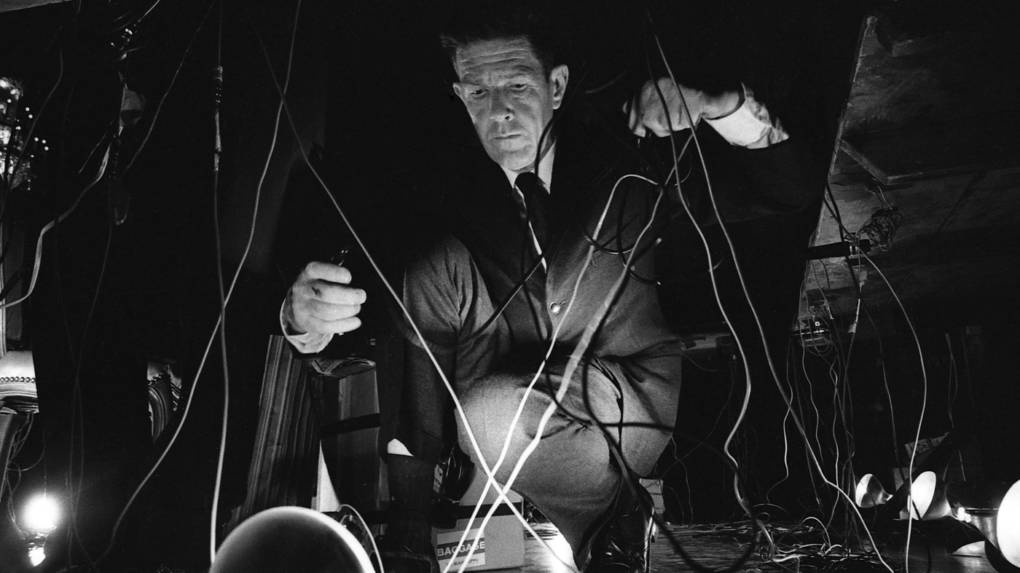
"caption": "John Cage during his 1966 concert at the opening of the National Arts Foundation in Washington, D.C.",
"description": "John Cage during his 1966 concert at the opening of the National Arts Foundation in Washington, D.C.",
"title": "cage-photo",
"credit": "Rowland Scherman/Getty Images via NPR",
"status": "inherit",
"isLoading": false,
"fetchFailed": false
},
"arts_13299173": {
"type": "attachments",
"id": "arts_13299173",
"meta": {
"index": "attachments_1716263798",
"site": "arts",
"id": "13299173",
"found": true
},
"parent": 13299172,
"imgSizes": {
"small": {
"file": "https://ww2.kqed.org/app/uploads/sites/2/2017/05/Arianna-GRande-520x293.jpg",
"width": 520,
"mimeType": "image/jpeg",
"height": 293
},
"twentyfourteen-full-width": {
"file": "https://ww2.kqed.org/app/uploads/sites/2/2017/05/Arianna-GRande-1038x576.jpg",
"width": 1038,
"mimeType": "image/jpeg",
"height": 576
},
"thumbnail": {
"file": "https://ww2.kqed.org/app/uploads/sites/2/2017/05/Arianna-GRande-160x90.jpg",
"width": 160,
"mimeType": "image/jpeg",
"height": 90
},
"fd-sm": {
"file": "https://ww2.kqed.org/app/uploads/sites/2/2017/05/Arianna-GRande-960x540.jpg",
"width": 960,
"mimeType": "image/jpeg",
"height": 540
},
"post-thumbnail": {
"file": "https://ww2.kqed.org/app/uploads/sites/2/2017/05/Arianna-GRande-672x372.jpg",
"width": 672,
"mimeType": "image/jpeg",
"height": 372
},
"xsmall": {
"file": "https://ww2.kqed.org/app/uploads/sites/2/2017/05/Arianna-GRande-375x211.jpg",
"width": 375,
"mimeType": "image/jpeg",
"height": 211
},
"kqedFullSize": {
"file": "https://ww2.kqed.org/app/uploads/sites/2/2017/05/Arianna-GRande.jpg",
"width": 1920,
"height": 1080
},
"large": {
"file": "https://ww2.kqed.org/app/uploads/sites/2/2017/05/Arianna-GRande-1020x574.jpg",
"width": 1020,
"mimeType": "image/jpeg",
"height": 574
},
"xlarge": {
"file": "https://ww2.kqed.org/app/uploads/sites/2/2017/05/Arianna-GRande-1180x664.jpg",
"width": 1180,
"mimeType": "image/jpeg",
"height": 664
},
"guest-author-50": {
"file": "https://ww2.kqed.org/app/uploads/sites/2/2017/05/Arianna-GRande-50x50.jpg",
"width": 50,
"mimeType": "image/jpeg",
"height": 50
},
"guest-author-96": {
"file": "https://ww2.kqed.org/app/uploads/sites/2/2017/05/Arianna-GRande-96x96.jpg",
"width": 96,
"mimeType": "image/jpeg",
"height": 96
},
"medium": {
"file": "https://ww2.kqed.org/app/uploads/sites/2/2017/05/Arianna-GRande-800x450.jpg",
"width": 800,
"mimeType": "image/jpeg",
"height": 450
},
"guest-author-64": {
"file": "https://ww2.kqed.org/app/uploads/sites/2/2017/05/Arianna-GRande-64x64.jpg",
"width": 64,
"mimeType": "image/jpeg",
"height": 64
},
"guest-author-32": {
"file": "https://ww2.kqed.org/app/uploads/sites/2/2017/05/Arianna-GRande-32x32.jpg",
"width": 32,
"mimeType": "image/jpeg",
"height": 32
},
"fd-lrg": {
"file": "https://ww2.kqed.org/app/uploads/sites/2/2017/05/Arianna-GRande-1920x1080.jpg",
"width": 1920,
"mimeType": "image/jpeg",
"height": 1080
},
"fd-med": {
"file": "https://ww2.kqed.org/app/uploads/sites/2/2017/05/Arianna-GRande-1180x664.jpg",
"width": 1180,
"mimeType": "image/jpeg",
"height": 664
},
"full-width": {
"file": "https://ww2.kqed.org/app/uploads/sites/2/2017/05/Arianna-GRande-1920x1080.jpg",
"width": 1920,
"mimeType": "image/jpeg",
"height": 1080
},
"detail": {
"file": "https://ww2.kqed.org/app/uploads/sites/2/2017/05/Arianna-GRande-150x150.jpg",
"width": 150,
"mimeType": "image/jpeg",
"height": 150
},
"medium_large": {
"file": "https://ww2.kqed.org/app/uploads/sites/2/2017/05/Arianna-GRande-768x432.jpg",
"width": 768,
"mimeType": "image/jpeg",
"height": 432
},
"guest-author-128": {
"file": "https://ww2.kqed.org/app/uploads/sites/2/2017/05/Arianna-GRande-128x128.jpg",
"width": 128,
"mimeType": "image/jpeg",
"height": 128
},
"xxsmall": {
"file": "https://ww2.kqed.org/app/uploads/sites/2/2017/05/Arianna-GRande-240x135.jpg",
"width": 240,
"mimeType": "image/jpeg",
"height": 135
}
},
"publishDate": 1495678610,
"modified": 1495678655,
"caption": "Ariana Grande performs onstage during 103.5 KISS FM's Jingle Ball 2016. ",
"description": "Ariana Grande performs onstage during 103.5 KISS FM's Jingle Ball 2016. ",
"title": "103.5 KISS FM's Jingle Ball 2016 - SHOW",
"credit": "Photo: Daniel Boczarski/Getty Images for iHeart",
"status": "inherit",
"isLoading": false,
"fetchFailed": false
},
"news_11473694": {
"type": "attachments",
"id": "news_11473694",
"meta": {
"index": "attachments_1716263798",
"site": "news",
"id": "11473694",
"found": true
},
"parent": 11440533,
"imgSizes": {
"small": {
"file": "https://ww2.kqed.org/app/uploads/sites/10/2017/05/JacobBandMain-520x332.jpg",
"width": 520,
"mimeType": "image/jpeg",
"height": 332
},
"twentyfourteen-full-width": {
"file": "https://ww2.kqed.org/app/uploads/sites/10/2017/05/JacobBandMain-1038x576.jpg",
"width": 1038,
"mimeType": "image/jpeg",
"height": 576
},
"thumbnail": {
"file": "https://ww2.kqed.org/app/uploads/sites/10/2017/05/JacobBandMain-160x102.jpg",
"width": 160,
"mimeType": "image/jpeg",
"height": 102
},
"fd-sm": {
"file": "https://ww2.kqed.org/app/uploads/sites/10/2017/05/JacobBandMain-960x612.jpg",
"width": 960,
"mimeType": "image/jpeg",
"height": 612
},
"post-thumbnail": {
"file": "https://ww2.kqed.org/app/uploads/sites/10/2017/05/JacobBandMain-672x372.jpg",
"width": 672,
"mimeType": "image/jpeg",
"height": 372
},
"xsmall": {
"file": "https://ww2.kqed.org/app/uploads/sites/10/2017/05/JacobBandMain-375x239.jpg",
"width": 375,
"mimeType": "image/jpeg",
"height": 239
},
"kqedFullSize": {
"file": "https://ww2.kqed.org/app/uploads/sites/10/2017/05/JacobBandMain.jpg",
"width": 1920,
"height": 1224
},
"large": {
"file": "https://ww2.kqed.org/app/uploads/sites/10/2017/05/JacobBandMain-1020x650.jpg",
"width": 1020,
"mimeType": "image/jpeg",
"height": 650
},
"xlarge": {
"file": "https://ww2.kqed.org/app/uploads/sites/10/2017/05/JacobBandMain-1180x752.jpg",
"width": 1180,
"mimeType": "image/jpeg",
"height": 752
},
"guest-author-50": {
"file": "https://ww2.kqed.org/app/uploads/sites/10/2017/05/JacobBandMain-50x50.jpg",
"width": 50,
"mimeType": "image/jpeg",
"height": 50
},
"guest-author-96": {
"file": "https://ww2.kqed.org/app/uploads/sites/10/2017/05/JacobBandMain-96x96.jpg",
"width": 96,
"mimeType": "image/jpeg",
"height": 96
},
"medium": {
"file": "https://ww2.kqed.org/app/uploads/sites/10/2017/05/JacobBandMain-800x510.jpg",
"width": 800,
"mimeType": "image/jpeg",
"height": 510
},
"guest-author-64": {
"file": "https://ww2.kqed.org/app/uploads/sites/10/2017/05/JacobBandMain-64x64.jpg",
"width": 64,
"mimeType": "image/jpeg",
"height": 64
},
"guest-author-32": {
"file": "https://ww2.kqed.org/app/uploads/sites/10/2017/05/JacobBandMain-32x32.jpg",
"width": 32,
"mimeType": "image/jpeg",
"height": 32
},
"fd-lrg": {
"file": "https://ww2.kqed.org/app/uploads/sites/10/2017/05/JacobBandMain-1920x1224.jpg",
"width": 1920,
"mimeType": "image/jpeg",
"height": 1224
},
"fd-med": {
"file": "https://ww2.kqed.org/app/uploads/sites/10/2017/05/JacobBandMain-1180x752.jpg",
"width": 1180,
"mimeType": "image/jpeg",
"height": 752
},
"full-width": {
"file": "https://ww2.kqed.org/app/uploads/sites/10/2017/05/JacobBandMain-1920x1224.jpg",
"width": 1920,
"mimeType": "image/jpeg",
"height": 1224
},
"detail": {
"file": "https://ww2.kqed.org/app/uploads/sites/10/2017/05/JacobBandMain-150x150.jpg",
"width": 150,
"mimeType": "image/jpeg",
"height": 150
},
"guest-author-128": {
"file": "https://ww2.kqed.org/app/uploads/sites/10/2017/05/JacobBandMain-128x128.jpg",
"width": 128,
"mimeType": "image/jpeg",
"height": 128
},
"xxsmall": {
"file": "https://ww2.kqed.org/app/uploads/sites/10/2017/05/JacobBandMain-240x153.jpg",
"width": 240,
"mimeType": "image/jpeg",
"height": 153
}
},
"publishDate": 1495568608,
"modified": 1495568740,
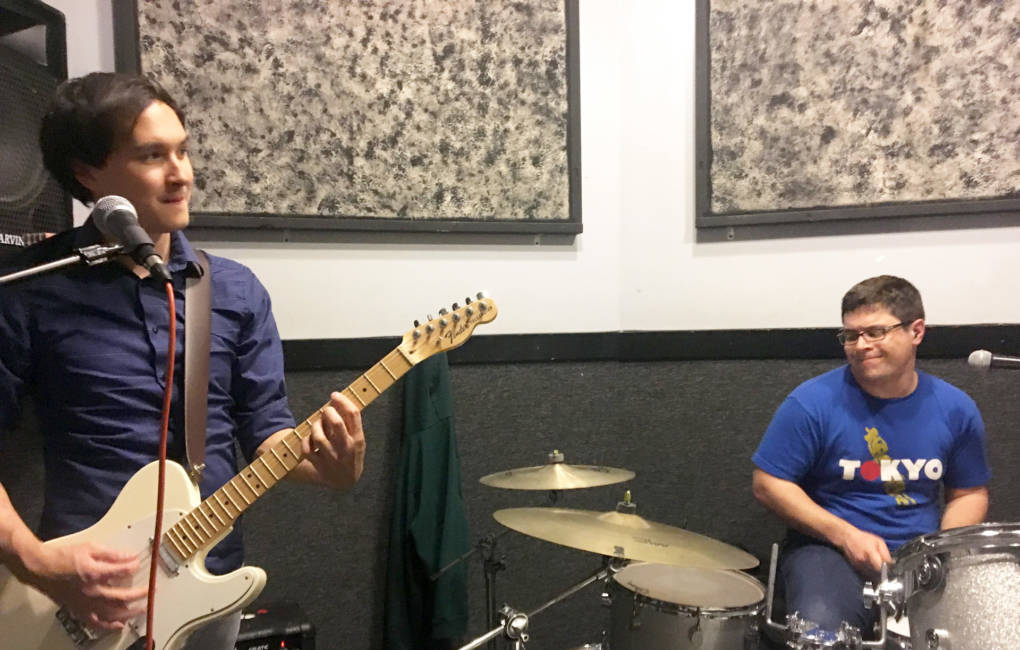
"caption": "Lead guitarist Josh Fleury and drummer Rick Chapman jam during a late-night rehearsal. ",
"description": "Lead guitarist Josh Fleury and drummer Rick Chapman jam during a late-night rehearsal. ",
"title": "JacobBandMain",
"credit": "Ashley Eady/KQED",
"status": "inherit",
"isLoading": false,
"fetchFailed": false
},
"news_11472333": {
"type": "attachments",
"id": "news_11472333",
"meta": {
"index": "attachments_1716263798",
"site": "news",
"id": "11472333",
"found": true
},
"parent": 11465627,
"imgSizes": {
"small": {
"file": "https://ww2.kqed.org/app/uploads/sites/10/2017/05/JoshuaTreeMain-520x307.jpg",
"width": 520,
"mimeType": "image/jpeg",
"height": 307
},
"twentyfourteen-full-width": {
"file": "https://ww2.kqed.org/app/uploads/sites/10/2017/05/JoshuaTreeMain-1038x576.jpg",
"width": 1038,
"mimeType": "image/jpeg",
"height": 576
},
"thumbnail": {
"file": "https://ww2.kqed.org/app/uploads/sites/10/2017/05/JoshuaTreeMain-160x95.jpg",
"width": 160,
"mimeType": "image/jpeg",
"height": 95
},
"fd-sm": {
"file": "https://ww2.kqed.org/app/uploads/sites/10/2017/05/JoshuaTreeMain-960x568.jpg",
"width": 960,
"mimeType": "image/jpeg",
"height": 568
},
"post-thumbnail": {
"file": "https://ww2.kqed.org/app/uploads/sites/10/2017/05/JoshuaTreeMain-672x372.jpg",
"width": 672,
"mimeType": "image/jpeg",
"height": 372
},
"xsmall": {
"file": "https://ww2.kqed.org/app/uploads/sites/10/2017/05/JoshuaTreeMain-375x222.jpg",
"width": 375,
"mimeType": "image/jpeg",
"height": 222
},
"kqedFullSize": {
"file": "https://ww2.kqed.org/app/uploads/sites/10/2017/05/JoshuaTreeMain.jpg",
"width": 1920,
"height": 1135
},
"large": {
"file": "https://ww2.kqed.org/app/uploads/sites/10/2017/05/JoshuaTreeMain-1020x603.jpg",
"width": 1020,
"mimeType": "image/jpeg",
"height": 603
},
"xlarge": {
"file": "https://ww2.kqed.org/app/uploads/sites/10/2017/05/JoshuaTreeMain-1180x698.jpg",
"width": 1180,
"mimeType": "image/jpeg",
"height": 698
},
"guest-author-50": {
"file": "https://ww2.kqed.org/app/uploads/sites/10/2017/05/JoshuaTreeMain-50x50.jpg",
"width": 50,
"mimeType": "image/jpeg",
"height": 50
},
"guest-author-96": {
"file": "https://ww2.kqed.org/app/uploads/sites/10/2017/05/JoshuaTreeMain-96x96.jpg",
"width": 96,
"mimeType": "image/jpeg",
"height": 96
},
"medium": {
"file": "https://ww2.kqed.org/app/uploads/sites/10/2017/05/JoshuaTreeMain-800x473.jpg",
"width": 800,
"mimeType": "image/jpeg",
"height": 473
},
"guest-author-64": {
"file": "https://ww2.kqed.org/app/uploads/sites/10/2017/05/JoshuaTreeMain-64x64.jpg",
"width": 64,
"mimeType": "image/jpeg",
"height": 64
},
"guest-author-32": {
"file": "https://ww2.kqed.org/app/uploads/sites/10/2017/05/JoshuaTreeMain-32x32.jpg",
"width": 32,
"mimeType": "image/jpeg",
"height": 32
},
"fd-lrg": {
"file": "https://ww2.kqed.org/app/uploads/sites/10/2017/05/JoshuaTreeMain-1920x1135.jpg",
"width": 1920,
"mimeType": "image/jpeg",
"height": 1135
},
"fd-med": {
"file": "https://ww2.kqed.org/app/uploads/sites/10/2017/05/JoshuaTreeMain-1180x698.jpg",
"width": 1180,
"mimeType": "image/jpeg",
"height": 698
},
"full-width": {
"file": "https://ww2.kqed.org/app/uploads/sites/10/2017/05/JoshuaTreeMain-1920x1135.jpg",
"width": 1920,
"mimeType": "image/jpeg",
"height": 1135
},
"detail": {
"file": "https://ww2.kqed.org/app/uploads/sites/10/2017/05/JoshuaTreeMain-150x150.jpg",
"width": 150,
"mimeType": "image/jpeg",
"height": 150
},
"guest-author-128": {
"file": "https://ww2.kqed.org/app/uploads/sites/10/2017/05/JoshuaTreeMain-128x128.jpg",
"width": 128,
"mimeType": "image/jpeg",
"height": 128
},
"xxsmall": {
"file": "https://ww2.kqed.org/app/uploads/sites/10/2017/05/JoshuaTreeMain-240x142.jpg",
"width": 240,
"mimeType": "image/jpeg",
"height": 142
}
},
"publishDate": 1495501872,
"modified": 1495587021,
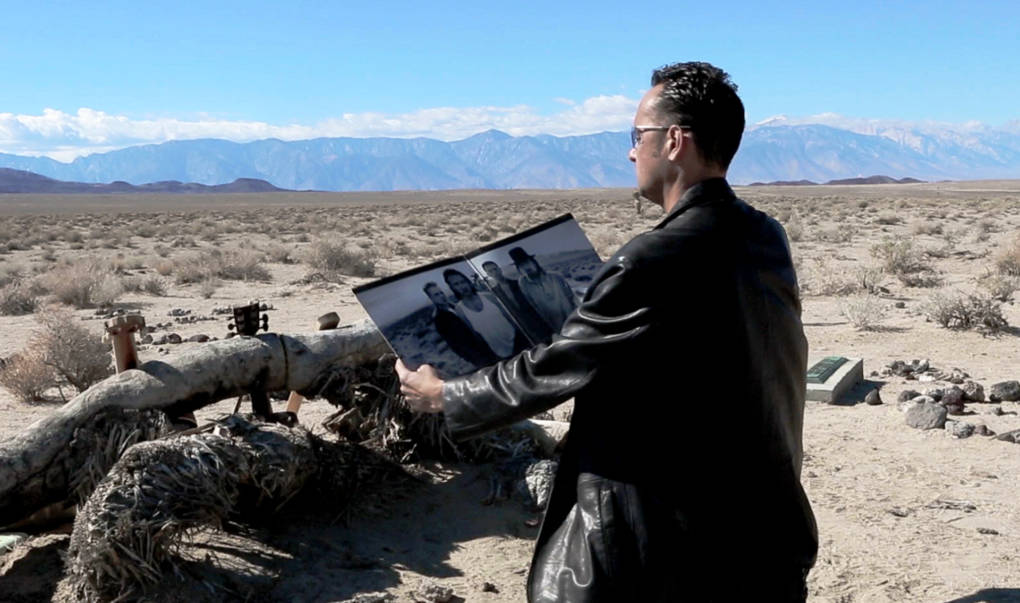
"caption": "David Tokaji of the Title Trackers during a video shoot at the site of U2’s 'The Joshua Tree.'",
"description": "David Tokaji of the Title Trackers during a video shoot at the site of U2’s 'The Joshua Tree.'",
"title": "JoshuaTreeMain",
"credit": "The Title Trackers",
"status": "inherit",
"isLoading": false,
"fetchFailed": false
},
"arts_13290816": {
"type": "attachments",
"id": "arts_13290816",
"meta": {
"index": "attachments_1716263798",
"site": "arts",
"id": "13290816",
"found": true
},
"parent": 13290361,
"imgSizes": {
"small": {
"file": "https://ww2.kqed.org/app/uploads/sites/2/2017/05/Roger-Moore1-520x293.jpg",
"width": 520,
"mimeType": "image/jpeg",
"height": 293
},
"twentyfourteen-full-width": {
"file": "https://ww2.kqed.org/app/uploads/sites/2/2017/05/Roger-Moore1-1038x576.jpg",
"width": 1038,
"mimeType": "image/jpeg",
"height": 576
},
"thumbnail": {
"file": "https://ww2.kqed.org/app/uploads/sites/2/2017/05/Roger-Moore1-160x90.jpg",
"width": 160,
"mimeType": "image/jpeg",
"height": 90
},
"fd-sm": {
"file": "https://ww2.kqed.org/app/uploads/sites/2/2017/05/Roger-Moore1-960x540.jpg",
"width": 960,
"mimeType": "image/jpeg",
"height": 540
},
"post-thumbnail": {
"file": "https://ww2.kqed.org/app/uploads/sites/2/2017/05/Roger-Moore1-672x372.jpg",
"width": 672,
"mimeType": "image/jpeg",
"height": 372
},
"xsmall": {
"file": "https://ww2.kqed.org/app/uploads/sites/2/2017/05/Roger-Moore1-375x211.jpg",
"width": 375,
"mimeType": "image/jpeg",
"height": 211
},
"kqedFullSize": {
"file": "https://ww2.kqed.org/app/uploads/sites/2/2017/05/Roger-Moore1.jpg",
"width": 1920,
"height": 1080
},
"large": {
"file": "https://ww2.kqed.org/app/uploads/sites/2/2017/05/Roger-Moore1-1020x574.jpg",
"width": 1020,
"mimeType": "image/jpeg",
"height": 574
},
"xlarge": {
"file": "https://ww2.kqed.org/app/uploads/sites/2/2017/05/Roger-Moore1-1180x664.jpg",
"width": 1180,
"mimeType": "image/jpeg",
"height": 664
},
"guest-author-50": {
"file": "https://ww2.kqed.org/app/uploads/sites/2/2017/05/Roger-Moore1-50x50.jpg",
"width": 50,
"mimeType": "image/jpeg",
"height": 50
},
"guest-author-96": {
"file": "https://ww2.kqed.org/app/uploads/sites/2/2017/05/Roger-Moore1-96x96.jpg",
"width": 96,
"mimeType": "image/jpeg",
"height": 96
},
"medium": {
"file": "https://ww2.kqed.org/app/uploads/sites/2/2017/05/Roger-Moore1-800x450.jpg",
"width": 800,
"mimeType": "image/jpeg",
"height": 450
},
"guest-author-64": {
"file": "https://ww2.kqed.org/app/uploads/sites/2/2017/05/Roger-Moore1-64x64.jpg",
"width": 64,
"mimeType": "image/jpeg",
"height": 64
},
"guest-author-32": {
"file": "https://ww2.kqed.org/app/uploads/sites/2/2017/05/Roger-Moore1-32x32.jpg",
"width": 32,
"mimeType": "image/jpeg",
"height": 32
},
"fd-lrg": {
"file": "https://ww2.kqed.org/app/uploads/sites/2/2017/05/Roger-Moore1-1920x1080.jpg",
"width": 1920,
"mimeType": "image/jpeg",
"height": 1080
},
"fd-med": {
"file": "https://ww2.kqed.org/app/uploads/sites/2/2017/05/Roger-Moore1-1180x664.jpg",
"width": 1180,
"mimeType": "image/jpeg",
"height": 664
},
"full-width": {
"file": "https://ww2.kqed.org/app/uploads/sites/2/2017/05/Roger-Moore1-1920x1080.jpg",
"width": 1920,
"mimeType": "image/jpeg",
"height": 1080
},
"detail": {
"file": "https://ww2.kqed.org/app/uploads/sites/2/2017/05/Roger-Moore1-150x150.jpg",
"width": 150,
"mimeType": "image/jpeg",
"height": 150
},
"medium_large": {
"file": "https://ww2.kqed.org/app/uploads/sites/2/2017/05/Roger-Moore1-768x432.jpg",
"width": 768,
"mimeType": "image/jpeg",
"height": 432
},
"guest-author-128": {
"file": "https://ww2.kqed.org/app/uploads/sites/2/2017/05/Roger-Moore1-128x128.jpg",
"width": 128,
"mimeType": "image/jpeg",
"height": 128
},
"xxsmall": {
"file": "https://ww2.kqed.org/app/uploads/sites/2/2017/05/Roger-Moore1-240x135.jpg",
"width": 240,
"mimeType": "image/jpeg",
"height": 135
}
},
"publishDate": 1495567875,
"modified": 1495568114,
"caption": "The longest serving Bond Sir Roger Moore stands with a cast of his hands at The Odeon Cinema in 2008. ",
"description": "The longest serving Bond Sir Roger Moore stands with a cast of his hands at The Odeon Cinema in 2008. ",
"title": "Sir Roger Moore Handprint: Odeon Leicester Square - Photocall",
"credit": "Photo: Dan Kitwood/Getty Images",
"status": "inherit",
"isLoading": false,
"fetchFailed": false
},
"arts_13286090": {
"type": "attachments",
"id": "arts_13286090",
"meta": {
"index": "attachments_1716263798",
"site": "arts",
"id": "13286090",
"found": true
},
"parent": 13286089,
"imgSizes": {
"small": {
"file": "https://ww2.kqed.org/app/uploads/sites/2/2017/05/gettyimages-686950878_wide-c1878060f38d37e45e1e585719c0ae16bb19d6fc-520x293.jpg",
"width": 520,
"mimeType": "image/jpeg",
"height": 293
},
"twentyfourteen-full-width": {
"file": "https://ww2.kqed.org/app/uploads/sites/2/2017/05/gettyimages-686950878_wide-c1878060f38d37e45e1e585719c0ae16bb19d6fc-1038x576.jpg",
"width": 1038,
"mimeType": "image/jpeg",
"height": 576
},
"thumbnail": {
"file": "https://ww2.kqed.org/app/uploads/sites/2/2017/05/gettyimages-686950878_wide-c1878060f38d37e45e1e585719c0ae16bb19d6fc-160x90.jpg",
"width": 160,
"mimeType": "image/jpeg",
"height": 90
},
"fd-sm": {
"file": "https://ww2.kqed.org/app/uploads/sites/2/2017/05/gettyimages-686950878_wide-c1878060f38d37e45e1e585719c0ae16bb19d6fc-960x540.jpg",
"width": 960,
"mimeType": "image/jpeg",
"height": 540
},
"post-thumbnail": {
"file": "https://ww2.kqed.org/app/uploads/sites/2/2017/05/gettyimages-686950878_wide-c1878060f38d37e45e1e585719c0ae16bb19d6fc-672x372.jpg",
"width": 672,
"mimeType": "image/jpeg",
"height": 372
},
"xsmall": {
"file": "https://ww2.kqed.org/app/uploads/sites/2/2017/05/gettyimages-686950878_wide-c1878060f38d37e45e1e585719c0ae16bb19d6fc-375x211.jpg",
"width": 375,
"mimeType": "image/jpeg",
"height": 211
},
"kqedFullSize": {
"file": "https://ww2.kqed.org/app/uploads/sites/2/2017/05/gettyimages-686950878_wide-c1878060f38d37e45e1e585719c0ae16bb19d6fc.jpg",
"width": 3669,
"height": 2064
},
"large": {
"file": "https://ww2.kqed.org/app/uploads/sites/2/2017/05/gettyimages-686950878_wide-c1878060f38d37e45e1e585719c0ae16bb19d6fc-1020x574.jpg",
"width": 1020,
"mimeType": "image/jpeg",
"height": 574
},
"xlarge": {
"file": "https://ww2.kqed.org/app/uploads/sites/2/2017/05/gettyimages-686950878_wide-c1878060f38d37e45e1e585719c0ae16bb19d6fc-1180x664.jpg",
"width": 1180,
"mimeType": "image/jpeg",
"height": 664
},
"guest-author-50": {
"file": "https://ww2.kqed.org/app/uploads/sites/2/2017/05/gettyimages-686950878_wide-c1878060f38d37e45e1e585719c0ae16bb19d6fc-50x50.jpg",
"width": 50,
"mimeType": "image/jpeg",
"height": 50
},
"guest-author-96": {
"file": "https://ww2.kqed.org/app/uploads/sites/2/2017/05/gettyimages-686950878_wide-c1878060f38d37e45e1e585719c0ae16bb19d6fc-96x96.jpg",
"width": 96,
"mimeType": "image/jpeg",
"height": 96
},
"medium": {
"file": "https://ww2.kqed.org/app/uploads/sites/2/2017/05/gettyimages-686950878_wide-c1878060f38d37e45e1e585719c0ae16bb19d6fc-800x450.jpg",
"width": 800,
"mimeType": "image/jpeg",
"height": 450
},
"guest-author-64": {
"file": "https://ww2.kqed.org/app/uploads/sites/2/2017/05/gettyimages-686950878_wide-c1878060f38d37e45e1e585719c0ae16bb19d6fc-64x64.jpg",
"width": 64,
"mimeType": "image/jpeg",
"height": 64
},
"guest-author-32": {
"file": "https://ww2.kqed.org/app/uploads/sites/2/2017/05/gettyimages-686950878_wide-c1878060f38d37e45e1e585719c0ae16bb19d6fc-32x32.jpg",
"width": 32,
"mimeType": "image/jpeg",
"height": 32
},
"fd-lrg": {
"file": "https://ww2.kqed.org/app/uploads/sites/2/2017/05/gettyimages-686950878_wide-c1878060f38d37e45e1e585719c0ae16bb19d6fc-1920x1080.jpg",
"width": 1920,
"mimeType": "image/jpeg",
"height": 1080
},
"fd-med": {
"file": "https://ww2.kqed.org/app/uploads/sites/2/2017/05/gettyimages-686950878_wide-c1878060f38d37e45e1e585719c0ae16bb19d6fc-1180x664.jpg",
"width": 1180,
"mimeType": "image/jpeg",
"height": 664
},
"full-width": {
"file": "https://ww2.kqed.org/app/uploads/sites/2/2017/05/gettyimages-686950878_wide-c1878060f38d37e45e1e585719c0ae16bb19d6fc-1920x1080.jpg",
"width": 1920,
"mimeType": "image/jpeg",
"height": 1080
},
"detail": {
"file": "https://ww2.kqed.org/app/uploads/sites/2/2017/05/gettyimages-686950878_wide-c1878060f38d37e45e1e585719c0ae16bb19d6fc-150x150.jpg",
"width": 150,
"mimeType": "image/jpeg",
"height": 150
},
"medium_large": {
"file": "https://ww2.kqed.org/app/uploads/sites/2/2017/05/gettyimages-686950878_wide-c1878060f38d37e45e1e585719c0ae16bb19d6fc-768x432.jpg",
"width": 768,
"mimeType": "image/jpeg",
"height": 432
},
"guest-author-128": {
"file": "https://ww2.kqed.org/app/uploads/sites/2/2017/05/gettyimages-686950878_wide-c1878060f38d37e45e1e585719c0ae16bb19d6fc-128x128.jpg",
"width": 128,
"mimeType": "image/jpeg",
"height": 128
},
"xxsmall": {
"file": "https://ww2.kqed.org/app/uploads/sites/2/2017/05/gettyimages-686950878_wide-c1878060f38d37e45e1e585719c0ae16bb19d6fc-240x135.jpg",
"width": 240,
"mimeType": "image/jpeg",
"height": 135
}
},
"publishDate": 1495505283,
"modified": 1495505397,
"caption": "Police and fans outside the Manchester Arena on Monday, following reports of an explosion after Ariana Grande had performed.",
"description": "Police and fans outside the Manchester Arena on Monday, following reports of an explosion after Ariana Grande had performed.",
"title": "Police and fans outside the Manchester Arena on Monday, following reports of an explosion after Ariana Grande had performed.",
"credit": "Photo: Dave Thompson/Getty Images",
"status": "inherit",
"isLoading": false,
"fetchFailed": false
},
"arts_13265150": {
"type": "attachments",
"id": "arts_13265150",
"meta": {
"index": "attachments_1716263798",
"site": "arts",
"id": "13265150",
"found": true
},
"parent": 13265149,
"imgSizes": {
"small": {
"file": "https://ww2.kqed.org/app/uploads/sites/2/2017/05/in_film_custom-0088b6ad3f3e46d12e6ed1b4b5bc3c3efdb61567-520x345.jpg",
"width": 520,
"mimeType": "image/jpeg",
"height": 345
},
"twentyfourteen-full-width": {
"file": "https://ww2.kqed.org/app/uploads/sites/2/2017/05/in_film_custom-0088b6ad3f3e46d12e6ed1b4b5bc3c3efdb61567-1038x576.jpg",
"width": 1038,
"mimeType": "image/jpeg",
"height": 576
},
"thumbnail": {
"file": "https://ww2.kqed.org/app/uploads/sites/2/2017/05/in_film_custom-0088b6ad3f3e46d12e6ed1b4b5bc3c3efdb61567-160x106.jpg",
"width": 160,
"mimeType": "image/jpeg",
"height": 106
},
"fd-sm": {
"file": "https://ww2.kqed.org/app/uploads/sites/2/2017/05/in_film_custom-0088b6ad3f3e46d12e6ed1b4b5bc3c3efdb61567-960x636.jpg",
"width": 960,
"mimeType": "image/jpeg",
"height": 636
},
"post-thumbnail": {
"file": "https://ww2.kqed.org/app/uploads/sites/2/2017/05/in_film_custom-0088b6ad3f3e46d12e6ed1b4b5bc3c3efdb61567-672x372.jpg",
"width": 672,
"mimeType": "image/jpeg",
"height": 372
},
"xsmall": {
"file": "https://ww2.kqed.org/app/uploads/sites/2/2017/05/in_film_custom-0088b6ad3f3e46d12e6ed1b4b5bc3c3efdb61567-375x248.jpg",
"width": 375,
"mimeType": "image/jpeg",
"height": 248
},
"kqedFullSize": {
"file": "https://ww2.kqed.org/app/uploads/sites/2/2017/05/in_film_custom-0088b6ad3f3e46d12e6ed1b4b5bc3c3efdb61567.jpg",
"width": 3088,
"height": 2046
},
"large": {
"file": "https://ww2.kqed.org/app/uploads/sites/2/2017/05/in_film_custom-0088b6ad3f3e46d12e6ed1b4b5bc3c3efdb61567-1020x676.jpg",
"width": 1020,
"mimeType": "image/jpeg",
"height": 676
},
"xlarge": {
"file": "https://ww2.kqed.org/app/uploads/sites/2/2017/05/in_film_custom-0088b6ad3f3e46d12e6ed1b4b5bc3c3efdb61567-1180x782.jpg",
"width": 1180,
"mimeType": "image/jpeg",
"height": 782
},
"guest-author-50": {
"file": "https://ww2.kqed.org/app/uploads/sites/2/2017/05/in_film_custom-0088b6ad3f3e46d12e6ed1b4b5bc3c3efdb61567-50x50.jpg",
"width": 50,
"mimeType": "image/jpeg",
"height": 50
},
"guest-author-96": {
"file": "https://ww2.kqed.org/app/uploads/sites/2/2017/05/in_film_custom-0088b6ad3f3e46d12e6ed1b4b5bc3c3efdb61567-96x96.jpg",
"width": 96,
"mimeType": "image/jpeg",
"height": 96
},
"medium": {
"file": "https://ww2.kqed.org/app/uploads/sites/2/2017/05/in_film_custom-0088b6ad3f3e46d12e6ed1b4b5bc3c3efdb61567-800x530.jpg",
"width": 800,
"mimeType": "image/jpeg",
"height": 530
},
"guest-author-64": {
"file": "https://ww2.kqed.org/app/uploads/sites/2/2017/05/in_film_custom-0088b6ad3f3e46d12e6ed1b4b5bc3c3efdb61567-64x64.jpg",
"width": 64,
"mimeType": "image/jpeg",
"height": 64
},
"guest-author-32": {
"file": "https://ww2.kqed.org/app/uploads/sites/2/2017/05/in_film_custom-0088b6ad3f3e46d12e6ed1b4b5bc3c3efdb61567-32x32.jpg",
"width": 32,
"mimeType": "image/jpeg",
"height": 32
},
"fd-lrg": {
"file": "https://ww2.kqed.org/app/uploads/sites/2/2017/05/in_film_custom-0088b6ad3f3e46d12e6ed1b4b5bc3c3efdb61567-1920x1272.jpg",
"width": 1920,
"mimeType": "image/jpeg",
"height": 1272
},
"fd-med": {
"file": "https://ww2.kqed.org/app/uploads/sites/2/2017/05/in_film_custom-0088b6ad3f3e46d12e6ed1b4b5bc3c3efdb61567-1180x782.jpg",
"width": 1180,
"mimeType": "image/jpeg",
"height": 782
},
"full-width": {
"file": "https://ww2.kqed.org/app/uploads/sites/2/2017/05/in_film_custom-0088b6ad3f3e46d12e6ed1b4b5bc3c3efdb61567-1920x1272.jpg",
"width": 1920,
"mimeType": "image/jpeg",
"height": 1272
},
"detail": {
"file": "https://ww2.kqed.org/app/uploads/sites/2/2017/05/in_film_custom-0088b6ad3f3e46d12e6ed1b4b5bc3c3efdb61567-150x150.jpg",
"width": 150,
"mimeType": "image/jpeg",
"height": 150
},
"medium_large": {
"file": "https://ww2.kqed.org/app/uploads/sites/2/2017/05/in_film_custom-0088b6ad3f3e46d12e6ed1b4b5bc3c3efdb61567-768x509.jpg",
"width": 768,
"mimeType": "image/jpeg",
"height": 509
},
"guest-author-128": {
"file": "https://ww2.kqed.org/app/uploads/sites/2/2017/05/in_film_custom-0088b6ad3f3e46d12e6ed1b4b5bc3c3efdb61567-128x128.jpg",
"width": 128,
"mimeType": "image/jpeg",
"height": 128
},
"xxsmall": {
"file": "https://ww2.kqed.org/app/uploads/sites/2/2017/05/in_film_custom-0088b6ad3f3e46d12e6ed1b4b5bc3c3efdb61567-240x159.jpg",
"width": 240,
"mimeType": "image/jpeg",
"height": 159
}
},
"publishDate": 1495238756,
"modified": 1495238756,
"caption": null,
"description": "Land of Talk's Elizabeth Powell.",
"title": "Land of Talk's Elizabeth Powell.",
"credit": null,
"status": "inherit",
"isLoading": false,
"fetchFailed": false
},
"arts_13264942": {
"type": "attachments",
"id": "arts_13264942",
"meta": {
"index": "attachments_1716263798",
"site": "arts",
"id": "13264942",
"found": true
},
"parent": 13264941,
"imgSizes": {
"small": {
"file": "https://ww2.kqed.org/app/uploads/sites/2/2017/05/Chris-Cornell-520x293.jpg",
"width": 520,
"mimeType": "image/jpeg",
"height": 293
},
"twentyfourteen-full-width": {
"file": "https://ww2.kqed.org/app/uploads/sites/2/2017/05/Chris-Cornell-1038x576.jpg",
"width": 1038,
"mimeType": "image/jpeg",
"height": 576
},
"thumbnail": {
"file": "https://ww2.kqed.org/app/uploads/sites/2/2017/05/Chris-Cornell-160x90.jpg",
"width": 160,
"mimeType": "image/jpeg",
"height": 90
},
"fd-sm": {
"file": "https://ww2.kqed.org/app/uploads/sites/2/2017/05/Chris-Cornell-960x540.jpg",
"width": 960,
"mimeType": "image/jpeg",
"height": 540
},
"post-thumbnail": {
"file": "https://ww2.kqed.org/app/uploads/sites/2/2017/05/Chris-Cornell-672x372.jpg",
"width": 672,
"mimeType": "image/jpeg",
"height": 372
},
"xsmall": {
"file": "https://ww2.kqed.org/app/uploads/sites/2/2017/05/Chris-Cornell-375x211.jpg",
"width": 375,
"mimeType": "image/jpeg",
"height": 211
},
"kqedFullSize": {
"file": "https://ww2.kqed.org/app/uploads/sites/2/2017/05/Chris-Cornell.jpg",
"width": 1920,
"height": 1080
},
"large": {
"file": "https://ww2.kqed.org/app/uploads/sites/2/2017/05/Chris-Cornell-1020x574.jpg",
"width": 1020,
"mimeType": "image/jpeg",
"height": 574
},
"xlarge": {
"file": "https://ww2.kqed.org/app/uploads/sites/2/2017/05/Chris-Cornell-1180x664.jpg",
"width": 1180,
"mimeType": "image/jpeg",
"height": 664
},
"guest-author-50": {
"file": "https://ww2.kqed.org/app/uploads/sites/2/2017/05/Chris-Cornell-50x50.jpg",
"width": 50,
"mimeType": "image/jpeg",
"height": 50
},
"guest-author-96": {
"file": "https://ww2.kqed.org/app/uploads/sites/2/2017/05/Chris-Cornell-96x96.jpg",
"width": 96,
"mimeType": "image/jpeg",
"height": 96
},
"medium": {
"file": "https://ww2.kqed.org/app/uploads/sites/2/2017/05/Chris-Cornell-800x450.jpg",
"width": 800,
"mimeType": "image/jpeg",
"height": 450
},
"guest-author-64": {
"file": "https://ww2.kqed.org/app/uploads/sites/2/2017/05/Chris-Cornell-64x64.jpg",
"width": 64,
"mimeType": "image/jpeg",
"height": 64
},
"guest-author-32": {
"file": "https://ww2.kqed.org/app/uploads/sites/2/2017/05/Chris-Cornell-32x32.jpg",
"width": 32,
"mimeType": "image/jpeg",
"height": 32
},
"fd-lrg": {
"file": "https://ww2.kqed.org/app/uploads/sites/2/2017/05/Chris-Cornell-1920x1080.jpg",
"width": 1920,
"mimeType": "image/jpeg",
"height": 1080
},
"fd-med": {
"file": "https://ww2.kqed.org/app/uploads/sites/2/2017/05/Chris-Cornell-1180x664.jpg",
"width": 1180,
"mimeType": "image/jpeg",
"height": 664
},
"full-width": {
"file": "https://ww2.kqed.org/app/uploads/sites/2/2017/05/Chris-Cornell-1920x1080.jpg",
"width": 1920,
"mimeType": "image/jpeg",
"height": 1080
},
"detail": {
"file": "https://ww2.kqed.org/app/uploads/sites/2/2017/05/Chris-Cornell-150x150.jpg",
"width": 150,
"mimeType": "image/jpeg",
"height": 150
},
"medium_large": {
"file": "https://ww2.kqed.org/app/uploads/sites/2/2017/05/Chris-Cornell-768x432.jpg",
"width": 768,
"mimeType": "image/jpeg",
"height": 432
},
"guest-author-128": {
"file": "https://ww2.kqed.org/app/uploads/sites/2/2017/05/Chris-Cornell-128x128.jpg",
"width": 128,
"mimeType": "image/jpeg",
"height": 128
},
"xxsmall": {
"file": "https://ww2.kqed.org/app/uploads/sites/2/2017/05/Chris-Cornell-240x135.jpg",
"width": 240,
"mimeType": "image/jpeg",
"height": 135
}
},
"publishDate": 1495233405,
"modified": 1495233675,
"caption": "Chris Cornell of Soundgarden performs on stage during the 2014 Lollapalooza Brazil. ",
"description": "Chris Cornell of Soundgarden performs on stage during the 2014 Lollapalooza Brazil. ",
"title": "2014 Lollapalooza Brazil - Day 2",
"credit": "Photo: Buda Mendes/Getty Images",
"status": "inherit",
"isLoading": false,
"fetchFailed": false
},
"arts_13263488": {
"type": "attachments",
"id": "arts_13263488",
"meta": {
"index": "attachments_1716263798",
"site": "arts",
"id": "13263488",
"found": true
},
"parent": 13263487,
"imgSizes": {
"small": {
"file": "https://ww2.kqed.org/app/uploads/sites/2/2017/05/gettyimages-670007248_wide-059e89c996a4ba75e603df31360529fb087b07c9-520x292.jpg",
"width": 520,
"mimeType": "image/jpeg",
"height": 292
},
"twentyfourteen-full-width": {
"file": "https://ww2.kqed.org/app/uploads/sites/2/2017/05/gettyimages-670007248_wide-059e89c996a4ba75e603df31360529fb087b07c9-1038x576.jpg",
"width": 1038,
"mimeType": "image/jpeg",
"height": 576
},
"thumbnail": {
"file": "https://ww2.kqed.org/app/uploads/sites/2/2017/05/gettyimages-670007248_wide-059e89c996a4ba75e603df31360529fb087b07c9-160x90.jpg",
"width": 160,
"mimeType": "image/jpeg",
"height": 90
},
"fd-sm": {
"file": "https://ww2.kqed.org/app/uploads/sites/2/2017/05/gettyimages-670007248_wide-059e89c996a4ba75e603df31360529fb087b07c9-960x540.jpg",
"width": 960,
"mimeType": "image/jpeg",
"height": 540
},
"post-thumbnail": {
"file": "https://ww2.kqed.org/app/uploads/sites/2/2017/05/gettyimages-670007248_wide-059e89c996a4ba75e603df31360529fb087b07c9-672x372.jpg",
"width": 672,
"mimeType": "image/jpeg",
"height": 372
},
"xsmall": {
"file": "https://ww2.kqed.org/app/uploads/sites/2/2017/05/gettyimages-670007248_wide-059e89c996a4ba75e603df31360529fb087b07c9-375x211.jpg",
"width": 375,
"mimeType": "image/jpeg",
"height": 211
},
"kqedFullSize": {
"file": "https://ww2.kqed.org/app/uploads/sites/2/2017/05/gettyimages-670007248_wide-059e89c996a4ba75e603df31360529fb087b07c9.jpg",
"width": 2598,
"height": 1461
},
"large": {
"file": "https://ww2.kqed.org/app/uploads/sites/2/2017/05/gettyimages-670007248_wide-059e89c996a4ba75e603df31360529fb087b07c9-1020x574.jpg",
"width": 1020,
"mimeType": "image/jpeg",
"height": 574
},
"xlarge": {
"file": "https://ww2.kqed.org/app/uploads/sites/2/2017/05/gettyimages-670007248_wide-059e89c996a4ba75e603df31360529fb087b07c9-1180x664.jpg",
"width": 1180,
"mimeType": "image/jpeg",
"height": 664
},
"guest-author-50": {
"file": "https://ww2.kqed.org/app/uploads/sites/2/2017/05/gettyimages-670007248_wide-059e89c996a4ba75e603df31360529fb087b07c9-50x50.jpg",
"width": 50,
"mimeType": "image/jpeg",
"height": 50
},
"guest-author-96": {
"file": "https://ww2.kqed.org/app/uploads/sites/2/2017/05/gettyimages-670007248_wide-059e89c996a4ba75e603df31360529fb087b07c9-96x96.jpg",
"width": 96,
"mimeType": "image/jpeg",
"height": 96
},
"medium": {
"file": "https://ww2.kqed.org/app/uploads/sites/2/2017/05/gettyimages-670007248_wide-059e89c996a4ba75e603df31360529fb087b07c9-800x450.jpg",
"width": 800,
"mimeType": "image/jpeg",
"height": 450
},
"guest-author-64": {
"file": "https://ww2.kqed.org/app/uploads/sites/2/2017/05/gettyimages-670007248_wide-059e89c996a4ba75e603df31360529fb087b07c9-64x64.jpg",
"width": 64,
"mimeType": "image/jpeg",
"height": 64
},
"guest-author-32": {
"file": "https://ww2.kqed.org/app/uploads/sites/2/2017/05/gettyimages-670007248_wide-059e89c996a4ba75e603df31360529fb087b07c9-32x32.jpg",
"width": 32,
"mimeType": "image/jpeg",
"height": 32
},
"fd-lrg": {
"file": "https://ww2.kqed.org/app/uploads/sites/2/2017/05/gettyimages-670007248_wide-059e89c996a4ba75e603df31360529fb087b07c9-1920x1080.jpg",
"width": 1920,
"mimeType": "image/jpeg",
"height": 1080
},
"fd-med": {
"file": "https://ww2.kqed.org/app/uploads/sites/2/2017/05/gettyimages-670007248_wide-059e89c996a4ba75e603df31360529fb087b07c9-1180x664.jpg",
"width": 1180,
"mimeType": "image/jpeg",
"height": 664
},
"full-width": {
"file": "https://ww2.kqed.org/app/uploads/sites/2/2017/05/gettyimages-670007248_wide-059e89c996a4ba75e603df31360529fb087b07c9-1920x1080.jpg",
"width": 1920,
"mimeType": "image/jpeg",
"height": 1080
},
"detail": {
"file": "https://ww2.kqed.org/app/uploads/sites/2/2017/05/gettyimages-670007248_wide-059e89c996a4ba75e603df31360529fb087b07c9-150x150.jpg",
"width": 150,
"mimeType": "image/jpeg",
"height": 150
},
"medium_large": {
"file": "https://ww2.kqed.org/app/uploads/sites/2/2017/05/gettyimages-670007248_wide-059e89c996a4ba75e603df31360529fb087b07c9-768x432.jpg",
"width": 768,
"mimeType": "image/jpeg",
"height": 432
},
"guest-author-128": {
"file": "https://ww2.kqed.org/app/uploads/sites/2/2017/05/gettyimages-670007248_wide-059e89c996a4ba75e603df31360529fb087b07c9-128x128.jpg",
"width": 128,
"mimeType": "image/jpeg",
"height": 128
},
"xxsmall": {
"file": "https://ww2.kqed.org/app/uploads/sites/2/2017/05/gettyimages-670007248_wide-059e89c996a4ba75e603df31360529fb087b07c9-240x135.jpg",
"width": 240,
"mimeType": "image/jpeg",
"height": 135
}
},
"publishDate": 1495216704,
"modified": 1495216704,
"caption": null,
"description": "Ben Hopkins of PWR BTTM.",
"title": "Ben Hopkins of PWR BTTM.",
"credit": null,
"status": "inherit",
"isLoading": false,
"fetchFailed": false
},
"arts_13259145": {
"type": "attachments",
"id": "arts_13259145",
"meta": {
"index": "attachments_1716263798",
"site": "arts",
"id": "13259145",
"found": true
},
"parent": 13258848,
"imgSizes": {
"small": {
"file": "https://ww2.kqed.org/app/uploads/sites/2/2017/05/CoWEgjPWEAA4CE5-e1495161354817-520x314.jpg",
"width": 520,
"mimeType": "image/jpeg",
"height": 314
},
"twentyfourteen-full-width": {
"file": "https://ww2.kqed.org/app/uploads/sites/2/2017/05/CoWEgjPWEAA4CE5-914x576.jpg",
"width": 914,
"mimeType": "image/jpeg",
"height": 576
},
"thumbnail": {
"file": "https://ww2.kqed.org/app/uploads/sites/2/2017/05/CoWEgjPWEAA4CE5-e1495161354817-160x97.jpg",
"width": 160,
"mimeType": "image/jpeg",
"height": 97
},
"post-thumbnail": {
"file": "https://ww2.kqed.org/app/uploads/sites/2/2017/05/CoWEgjPWEAA4CE5-e1495161354817-672x372.jpg",
"width": 672,
"mimeType": "image/jpeg",
"height": 372
},
"xsmall": {
"file": "https://ww2.kqed.org/app/uploads/sites/2/2017/05/CoWEgjPWEAA4CE5-e1495161354817-375x226.jpg",
"width": 375,
"mimeType": "image/jpeg",
"height": 226
},
"kqedFullSize": {
"file": "https://ww2.kqed.org/app/uploads/sites/2/2017/05/CoWEgjPWEAA4CE5-e1495161354817.jpg",
"width": 914,
"height": 552
},
"guest-author-50": {
"file": "https://ww2.kqed.org/app/uploads/sites/2/2017/05/CoWEgjPWEAA4CE5-e1495161354817-50x50.jpg",
"width": 50,
"mimeType": "image/jpeg",
"height": 50
},
"guest-author-96": {
"file": "https://ww2.kqed.org/app/uploads/sites/2/2017/05/CoWEgjPWEAA4CE5-e1495161354817-96x96.jpg",
"width": 96,
"mimeType": "image/jpeg",
"height": 96
},
"medium": {
"file": "https://ww2.kqed.org/app/uploads/sites/2/2017/05/CoWEgjPWEAA4CE5-e1495161354817-800x483.jpg",
"width": 800,
"mimeType": "image/jpeg",
"height": 483
},
"guest-author-64": {
"file": "https://ww2.kqed.org/app/uploads/sites/2/2017/05/CoWEgjPWEAA4CE5-e1495161354817-64x64.jpg",
"width": 64,
"mimeType": "image/jpeg",
"height": 64
},
"guest-author-32": {
"file": "https://ww2.kqed.org/app/uploads/sites/2/2017/05/CoWEgjPWEAA4CE5-e1495161354817-32x32.jpg",
"width": 32,
"mimeType": "image/jpeg",
"height": 32
},
"detail": {
"file": "https://ww2.kqed.org/app/uploads/sites/2/2017/05/CoWEgjPWEAA4CE5-e1495161354817-150x150.jpg",
"width": 150,
"mimeType": "image/jpeg",
"height": 150
},
"medium_large": {
"file": "https://ww2.kqed.org/app/uploads/sites/2/2017/05/CoWEgjPWEAA4CE5-e1495161354817-768x464.jpg",
"width": 768,
"mimeType": "image/jpeg",
"height": 464
},
"guest-author-128": {
"file": "https://ww2.kqed.org/app/uploads/sites/2/2017/05/CoWEgjPWEAA4CE5-e1495161354817-128x128.jpg",
"width": 128,
"mimeType": "image/jpeg",
"height": 128
},
"xxsmall": {
"file": "https://ww2.kqed.org/app/uploads/sites/2/2017/05/CoWEgjPWEAA4CE5-e1495161354817-240x145.jpg",
"width": 240,
"mimeType": "image/jpeg",
"height": 145
}
},
"publishDate": 1495161324,
"modified": 1495165384,
"caption": "Chris Cornell and Fantastic Negrito on tour in 2016. ",
"description": "Chris Cornell, who did May 18, 2017, and Fantastic Negrito on tour in 2016",
"title": "CoWEgjPWEAA4CE5",
"credit": "Paul Lorkowski",
"status": "inherit",
"isLoading": false,
"fetchFailed": false
},
"arts_13257849": {
"type": "attachments",
"id": "arts_13257849",
"meta": {
"index": "attachments_1716263798",
"site": "arts",
"id": "13257849",
"found": true
},
"parent": 13257619,
"imgSizes": {
"small": {
"file": "https://ww2.kqed.org/app/uploads/sites/2/2017/05/OGToldMe-520x347.jpg",
"width": 520,
"mimeType": "image/jpeg",
"height": 347
},
"twentyfourteen-full-width": {
"file": "https://ww2.kqed.org/app/uploads/sites/2/2017/05/OGToldMe-1038x576.jpg",
"width": 1038,
"mimeType": "image/jpeg",
"height": 576
},
"thumbnail": {
"file": "https://ww2.kqed.org/app/uploads/sites/2/2017/05/OGToldMe-160x107.jpg",
"width": 160,
"mimeType": "image/jpeg",
"height": 107
},
"fd-sm": {
"file": "https://ww2.kqed.org/app/uploads/sites/2/2017/05/OGToldMe-960x640.jpg",
"width": 960,
"mimeType": "image/jpeg",
"height": 640
},
"post-thumbnail": {
"file": "https://ww2.kqed.org/app/uploads/sites/2/2017/05/OGToldMe-672x372.jpg",
"width": 672,
"mimeType": "image/jpeg",
"height": 372
},
"xsmall": {
"file": "https://ww2.kqed.org/app/uploads/sites/2/2017/05/OGToldMe-375x250.jpg",
"width": 375,
"mimeType": "image/jpeg",
"height": 250
},
"kqedFullSize": {
"file": "https://ww2.kqed.org/app/uploads/sites/2/2017/05/OGToldMe.jpg",
"width": 1280,
"height": 853
},
"large": {
"file": "https://ww2.kqed.org/app/uploads/sites/2/2017/05/OGToldMe-1020x680.jpg",
"width": 1020,
"mimeType": "image/jpeg",
"height": 680
},
"xlarge": {
"file": "https://ww2.kqed.org/app/uploads/sites/2/2017/05/OGToldMe-1180x786.jpg",
"width": 1180,
"mimeType": "image/jpeg",
"height": 786
},
"guest-author-50": {
"file": "https://ww2.kqed.org/app/uploads/sites/2/2017/05/OGToldMe-50x50.jpg",
"width": 50,
"mimeType": "image/jpeg",
"height": 50
},
"guest-author-96": {
"file": "https://ww2.kqed.org/app/uploads/sites/2/2017/05/OGToldMe-96x96.jpg",
"width": 96,
"mimeType": "image/jpeg",
"height": 96
},
"medium": {
"file": "https://ww2.kqed.org/app/uploads/sites/2/2017/05/OGToldMe-800x533.jpg",
"width": 800,
"mimeType": "image/jpeg",
"height": 533
},
"guest-author-64": {
"file": "https://ww2.kqed.org/app/uploads/sites/2/2017/05/OGToldMe-64x64.jpg",
"width": 64,
"mimeType": "image/jpeg",
"height": 64
},
"guest-author-32": {
"file": "https://ww2.kqed.org/app/uploads/sites/2/2017/05/OGToldMe-32x32.jpg",
"width": 32,
"mimeType": "image/jpeg",
"height": 32
},
"fd-med": {
"file": "https://ww2.kqed.org/app/uploads/sites/2/2017/05/OGToldMe-1180x786.jpg",
"width": 1180,
"mimeType": "image/jpeg",
"height": 786
},
"detail": {
"file": "https://ww2.kqed.org/app/uploads/sites/2/2017/05/OGToldMe-150x150.jpg",
"width": 150,
"mimeType": "image/jpeg",
"height": 150
},
"medium_large": {
"file": "https://ww2.kqed.org/app/uploads/sites/2/2017/05/OGToldMe-768x512.jpg",
"width": 768,
"mimeType": "image/jpeg",
"height": 512
},
"guest-author-128": {
"file": "https://ww2.kqed.org/app/uploads/sites/2/2017/05/OGToldMe-128x128.jpg",
"width": 128,
"mimeType": "image/jpeg",
"height": 128
},
"xxsmall": {
"file": "https://ww2.kqed.org/app/uploads/sites/2/2017/05/OGToldMe-240x160.jpg",
"width": 240,
"mimeType": "image/jpeg",
"height": 160
}
},
"publishDate": 1495148306,
"modified": 1495148347,
"caption": "Pendarvis Harshaw, author of 'OG Told Me.'",
"description": "Pendarvis Harshaw, author of 'OG Told Me.'",
"title": "OGToldMe",
"credit": "Kevin Allen",
"status": "inherit",
"isLoading": false,
"fetchFailed": false
}
},
"audioPlayerReducer": {
"postId": "stream_live",
"isPaused": true,
"isPlaying": false,
"pfsActive": false,
"pledgeModalIsOpen": true,
"playerDrawerIsOpen": false,
"liveAudioPlayStartedAt": 0,
"liveAudioPlayContext": ""
},
"authorsReducer": {
"byline_arts_13304365": {
"type": "authors",
"id": "byline_arts_13304365",
"meta": {
"override": true
},
"slug": "byline_arts_13304365",
"name": "Anastasia Tsioulcas",
"isLoading": false
},
"byline_arts_13299172": {
"type": "authors",
"id": "byline_arts_13299172",
"meta": {
"override": true
},
"slug": "byline_arts_13299172",
"name": "Leanne Italie, Associated Press",
"isLoading": false
},
"byline_news_11440533": {
"type": "authors",
"id": "byline_news_11440533",
"meta": {
"override": true
},
"slug": "byline_news_11440533",
"name": "Ashley Eady",
"isLoading": false
},
"byline_arts_13290361": {
"type": "authors",
"id": "byline_arts_13290361",
"meta": {
"override": true
},
"slug": "byline_arts_13290361",
"name": "Jacki Lyden",
"isLoading": false
},
"byline_arts_13286089": {
"type": "authors",
"id": "byline_arts_13286089",
"meta": {
"override": true
},
"slug": "byline_arts_13286089",
"name": "Richard Gonzales",
"isLoading": false
},
"byline_arts_13265149": {
"type": "authors",
"id": "byline_arts_13265149",
"meta": {
"override": true
},
"slug": "byline_arts_13265149",
"name": "Marissa Lorusso",
"isLoading": false
},
"byline_arts_13264941": {
"type": "authors",
"id": "byline_arts_13264941",
"meta": {
"override": true
},
"slug": "byline_arts_13264941",
"name": "Associated Press",
"isLoading": false
},
"byline_arts_13263487": {
"type": "authors",
"id": "byline_arts_13263487",
"meta": {
"override": true
},
"slug": "byline_arts_13263487",
"name": "Andrew Flanagan",
"isLoading": false
},
"byline_arts_13258848": {
"type": "authors",
"id": "byline_arts_13258848",
"meta": {
"override": true
},
"slug": "byline_arts_13258848",
"name": "Xavier Dphrepaulezz",
"isLoading": false
},
"gmeline": {
"type": "authors",
"id": "185",
"meta": {
"index": "authors_1716337520",
"id": "185",
"found": true
},
"name": "Gabe Meline",
"firstName": "Gabe",
"lastName": "Meline",
"slug": "gmeline",
"email": "gmeline@kqed.org",
"display_author_email": true,
"staff_mastheads": [
"arts"
],
"title": "Senior Editor, KQED Arts & Culture",
"bio": "Gabe Meline entered journalism at age 15 making photocopied zines, and has since earned awards from the Edward R. Murrow Awards, the Society for Professional Journalists, the Online Journalism Awards, the Association of Alternative Newsweeklies and the California Newspaper Publishers Association. Prior to KQED, he was the editor of the \u003cem>North Bay Bohemian\u003c/em> and a touring musician. He lives with his wife and daughter in his hometown of Santa Rosa, CA.",
"avatar": "https://secure.gravatar.com/avatar/5bebe57be0d8bc2dd318934feb47299e2d2d10cba28d09d8d7afb389a2ce2bdd?s=600&d=blank&r=g",
"twitter": null,
"bluesky": null,
"facebook": null,
"instagram": null,
"linkedin": null,
"sites": [
{
"site": "",
"roles": [
"editor"
]
},
{
"site": "arts",
"roles": [
"administrator"
]
},
{
"site": "artschool",
"roles": [
"editor"
]
},
{
"site": "news",
"roles": [
"author"
]
},
{
"site": "pop",
"roles": [
"editor"
]
},
{
"site": "bayareabites",
"roles": [
"editor"
]
},
{
"site": "food",
"roles": [
"editor"
]
},
{
"site": "forum",
"roles": [
"administrator"
]
},
{
"site": "liveblog",
"roles": [
"editor"
]
},
{
"site": "hiphop",
"roles": [
"editor"
]
}
],
"headData": {
"title": "Gabe Meline | KQED",
"description": "Senior Editor, KQED Arts & Culture",
"ogImgSrc": "https://secure.gravatar.com/avatar/5bebe57be0d8bc2dd318934feb47299e2d2d10cba28d09d8d7afb389a2ce2bdd?s=600&d=blank&r=g",
"twImgSrc": "https://secure.gravatar.com/avatar/5bebe57be0d8bc2dd318934feb47299e2d2d10cba28d09d8d7afb389a2ce2bdd?s=600&d=blank&r=g"
},
"isLoading": false,
"link": "/author/gmeline"
},
"scuevas": {
"type": "authors",
"id": "2600",
"meta": {
"index": "authors_1716337520",
"id": "2600",
"found": true
},
"name": "Steven Cuevas",
"firstName": "Steven",
"lastName": "Cuevas",
"slug": "scuevas",
"email": "scuevas@kqed.org",
"display_author_email": false,
"staff_mastheads": [],
"title": "KQED Contributor",
"bio": "Steven is a former Los Angeles bureau chief for The California Report.\r\n\r\nHe reports on an array of issues across the Southland, from immigration and regional politics to religion, the performing arts and pop culture.\r\n\r\nPrior to joining KQED in 2012, Steven covered Inland southern California for KPCC in Pasadena. He also helped establish the first newsroom at \u003ca href=\"http://kut.org/\">KUT\u003c/a> in Austin, Texas where he was a general assignment reporter.\r\n\r\nSteven has received numerous awards for his reporting including an RTNDA Edward R. Murrow Award for investigative reporting in addition to awards from the LA Press Club, the Associated Press and the Society for Professional Journalists.\r\n\r\nSteven grew up in and around San Francisco and now lives in Pasadena just a short jog from the foot of the San Gabriel Mountains.",
"avatar": "https://secure.gravatar.com/avatar/2d253580794f8e026100fae05cfabbbd4889b4fe15146146cacb82a01974c538?s=600&d=blank&r=g",
"twitter": null,
"bluesky": null,
"facebook": null,
"instagram": null,
"linkedin": null,
"sites": [
{
"site": "news",
"roles": [
"subscriber"
]
}
],
"headData": {
"title": "Steven Cuevas | KQED",
"description": "KQED Contributor",
"ogImgSrc": "https://secure.gravatar.com/avatar/2d253580794f8e026100fae05cfabbbd4889b4fe15146146cacb82a01974c538?s=600&d=blank&r=g",
"twImgSrc": "https://secure.gravatar.com/avatar/2d253580794f8e026100fae05cfabbbd4889b4fe15146146cacb82a01974c538?s=600&d=blank&r=g"
},
"isLoading": false,
"link": "/author/scuevas"
},
"czaldua": {
"type": "authors",
"id": "11317",
"meta": {
"index": "authors_1716337520",
"id": "11317",
"found": true
},
"name": "Chris Zaldua",
"firstName": "Chris",
"lastName": "Zaldua",
"slug": "czaldua",
"email": "czaldua@gmail.com",
"display_author_email": false,
"staff_mastheads": [],
"title": null,
"bio": null,
"avatar": "https://secure.gravatar.com/avatar/007fbd3dbdb5c40175ead4098e89f3b6?s=600&d=blank&r=g",
"twitter": null,
"facebook": null,
"instagram": null,
"linkedin": null,
"sites": [
{
"site": "arts",
"roles": [
"author"
]
}
],
"headData": {
"title": "Chris Zaldua | KQED",
"description": null,
"ogImgSrc": "https://secure.gravatar.com/avatar/007fbd3dbdb5c40175ead4098e89f3b6?s=600&d=blank&r=g",
"twImgSrc": "https://secure.gravatar.com/avatar/007fbd3dbdb5c40175ead4098e89f3b6?s=600&d=blank&r=g"
},
"isLoading": false,
"link": "/author/czaldua"
}
},
"pagesReducer": {
"arts_category_music": {
"type": "terms",
"id": "arts_69",
"meta": {
"index": "terms_1716263798",
"site": "arts",
"id": "69",
"score": 10.851818
},
"featImg": null,
"name": "Music",
"description": null,
"taxonomy": "category",
"headData": {
"twImgId": null,
"twTitle": null,
"ogTitle": null,
"ogImgId": null,
"twDescription": null,
"description": null,
"title": "Music Archives | KQED Arts",
"ogDescription": null
},
"ttid": 70,
"slug": "music",
"isLoading": false,
"title": "Music",
"pageMeta": {
"site": "arts",
"WpPageTemplate": "page-topic-editorial",
"currentPage": 233
},
"blocks": [
{
"blockName": "kqed/post-list",
"attrs": {
"layout": "cardArticle2",
"query": "posts/arts?category=music",
"seeMore": false,
"paginated": true,
"page": 233
}
},
{
"blockName": "kqed/ad"
}
]
}
},
"pfsSessionReducer": {},
"postsReducer": {
"stream_live": {
"type": "live",
"id": "stream_live",
"audioUrl": "https://streams.kqed.org/kqedradio",
"title": "Live Stream",
"excerpt": "Live Stream information currently unavailable.",
"link": "/radio",
"featImg": "",
"label": {
"name": "KQED Live",
"link": "/"
}
},
"stream_kqedNewscast": {
"type": "posts",
"id": "stream_kqedNewscast",
"audioUrl": "https://www.kqed.org/.stream/anon/radio/RDnews/newscast.mp3?_=1",
"title": "KQED Newscast",
"featImg": "",
"label": {
"name": "88.5 FM",
"link": "/"
}
},
"arts_13304365": {
"type": "posts",
"id": "arts_13304365",
"meta": {
"index": "posts_1716263798",
"site": "arts",
"id": "13304365",
"score": null,
"sort": [
1495749612000
]
},
"parent": 0,
"labelTerm": {
"site": "arts",
"term": 137
},
"blocks": [],
"publishDate": 1495749612,
"format": "standard",
"title": "40 Years Ago, In A Galaxy Far, Far Away, an Iconic Film Score Was Born",
"headTitle": "40 Years Ago, In A Galaxy Far, Far Away, an Iconic Film Score Was Born | KQED",
"content": "\u003cp>How is this for a first day on the job: Maurice Murphy, the \u003ca href=\"https://lso.co.uk/\" target=\"_blank\" rel=\"noopener\">London Symphony Orchestra\u003c/a> (LSO)’s late principal trumpet player, spent his very first day with the orchestra recording \u003cem>Star Wars\u003c/em>‘ iconic opening theme, with its incredible brass fanfare — and Murphy leading the trumpets.\u003c/p>\n\u003cp>“It was an amazing moment, that blast of brass that opens the film. It was the first sound I heard from Maurice, really,” the film’s composer, John Williams, told the London Symphony Orchestra in a 2007 \u003ca href=\"https://soundcloud.com/london-symphony-orchestra/maurice-murphy-podcast\" target=\"_blank\" rel=\"noopener\">podcast\u003c/a> celebrating Murphy, who was then retiring from the orchestra. “It was electrifying … Everyone felt it. And I think people around the world, whenever they hear that piece now, there’s a kind of instant reaction that I think really was elicited in its initial spirit by Maurice’s sound, and just that heraldic spirit that lies within everything he plays … I think of his playing, or the effect of his playing, as having created the voice of a hero.”\u003c/p>\n\u003cp>https://www.youtube.com/watch?v=ZSthLmvh6Fk\u003c/p>\n\u003cp>\u003cem>Star Wars\u003c/em> opened 40 years ago today — and pop culture was changed forever with its release and the ensuing constellation of shorthand cultural references. Its epically scaled, lushly orchestrated score, written by John Williams and played by the LSO, became a global touchstone in music.\u003c/p>\n\u003cp>The LSO is celebrating the 40th anniversary of its most-famous recording with a \u003ca href=\"https://lso.co.uk/more/blog/653-happy-40th-birthday-star-wars.html\" target=\"_blank\" rel=\"noopener\">page\u003c/a> of goodies, including the attendance sheet for that first recording session. (If you’re a film-score buff, by the way, you might want to check out that whole podcast about Maurice Murphy — Williams also talks about working with Murphy on other films throughout the \u003cem>Star Wars\u003c/em> series as well as on the \u003cem>Harry Potter\u003c/em> films.)\u003c/p>\n\u003cp>[ad fullwidth]\u003c/p>\n\u003cp>[soundcloud url=”https://api.soundcloud.com/tracks/13577781″ params=”color=ff5500&auto_play=false&hide_related=false&show_comments=true&show_user=true&show_reposts=false” width=”100%” height=”166″ iframe=”true” /]\u003c/p>\n\u003cp>Williams’ heroic music, embedded with references to the music of composers like \u003ca href=\"http://www.npr.org/artists/91322541/gustav-holst\" target=\"_blank\" rel=\"noopener\">Gustav Holst\u003c/a>, \u003ca href=\"http://www.npr.org/artists/89337436/richard-wagner\" target=\"_blank\" rel=\"noopener\">Richard Wagner\u003c/a> and \u003ca href=\"http://www.npr.org/templates/story/story.php?storyId=15870129\" target=\"_blank\" rel=\"noopener\">Richard Strauss\u003c/a>, has been heralded as a musical landmark. When the Library of Congress added the \u003cem>Star Wars\u003c/em> soundtrack to the National Recording Registry in 2004, Emilio Audissino \u003ca href=\"https://www.loc.gov/programs/static/national-recording-preservation-board/documents/Star%20Wars-AUDISSINO.pdf\" target=\"_blank\" rel=\"noopener\">wrote\u003c/a> on behalf of the Library:\u003c/p>\n\u003cblockquote>\n\u003cp>“Apart from the huge popularity and the many awards, Williams’s ‘Star Wars’ is a milestone because it was instrumental in reviving the musical style of the Golden Age of Hollywood (1930s to 1950s), and was seminal in boosting a new interest for symphonic film music … The score is rich in leitmotivs — à la Wagner through the Hollywood tradition — and is lushly orchestrated and highly coloristic, and follows tightly and extensively the visual actions and narrative lines.”\u003c/p>\n\u003c/blockquote>\n\u003cp>\u003cstrong>\u003c/strong>The matter of how a \u003cem>British\u003c/em> orchestra came to be associated with one of the U.S.’ most canonical pop-culture tentpoles might be simply a matter of economics. In those years — and in a situation that continues to this day — most American orchestras’ studio recording activities were tightly constrained by very strict union regulations and the associated costs of getting a major American orchestra into the recording studio under those union stipulations were, usually, deemed prohibitive. As a matter of comparison, the hourly rate for American players was roughly \u003ca href=\"https://www.stereophile.com/content/recording-rules-orchestras-page-2\" target=\"_blank\" rel=\"noopener\">three times\u003c/a> that of equally talented European musicians. According to a 1977 Twentieth Century-Fox budget breakdown \u003ca href=\"http://io9.gizmodo.com/5875998/behold-the-1977-budget-breakdown-for-star-wars\" target=\"_blank\" rel=\"noopener\">unearthed\u003c/a> a few years ago, the studio had allotted $100,000 for the score and recording costs, out of an $11 million total budget.\u003c/p>\n\u003cp>The LSO tells the story of their involvement from a different angle, recounted in the orchestra’s official history, the 2003 book \u003cem>\u003ca href=\"https://www.goodreads.com/book/show/874363.Orchestra\" target=\"_blank\" rel=\"noopener\">A Century of Triumph and Turbulence\u003c/a>\u003c/em>, written by Richard Morrison. According to Anthony Camden, the orchestra’s former oboist and chairman, he had a business meeting with then-principal conductor André Previn, who was a widely heralded Hollywood composer, particularly for his work in the 1950s and 60s. During their meeting, Camden suggested that Previn write a new film score that the orchestra could then record. Previn declined, but proposed that Camden get in touch with another American film composer by the name of John Williams.\u003c/p>\n\u003cp>Previn promptly called Williams, and passed the phone over to Camden. Williams said that he was, in fact, just starting to work on a new score, but that “it wouldn’t interest the LSO because it was all ‘up in the universe.'”\u003c/p>\n\u003cp>The LSO already had a \u003ca href=\"https://lso.co.uk/orchestra/history/lso-and-film-music.html\" target=\"_blank\" rel=\"noopener\">long history\u003c/a> of working within film music, going all the way back to 1935. Coincidentally, its very first recorded score was for another science-fiction fantasy, Arthur Bliss’ music for \u003cem>\u003ca href=\"http://www.imdb.com/title/tt0028358/\" target=\"_blank\" rel=\"noopener\">Things to Come\u003c/a>\u003c/em>\u003ca href=\"http://www.imdb.com/title/tt0028358/\" target=\"_blank\" rel=\"noopener\">\u003c/a>. It was H.G. Wells’ screen adaptation of his novel about the rebirth of civilization after a long world war — and whose population attempts space travel.\u003c/p>\n\u003cp>Even though the 1977 \u003cem>Star Wars\u003c/em> soundtrack became one of the most famous pieces of recorded music in the 20th century, it\u003cstrong> \u003c/strong>didn’t become a major money-maker for the British orchestra.\u003c/p>\n\u003cp>There’s a delicious-sounding, but apparently \u003ca href=\"http://www.theibanker.com/when-cash-is-not-king-star-wars-and-the-london-symphony-orchestra/\" target=\"_blank\" rel=\"noopener\">spurious\u003c/a>, anecdote floating online about supposed negotiations between the LSO musicians and the film’s director, George Lucas, in which Lucas allegedly offered the orchestra the choice of either receiving their regular fees for the work upfront, or waiting to receive a “small” share of any box-office profits.\u003c/p>\n\u003cp>The LSO’s archivist, Libby Rice, took a peek at the ensemble’s records for NPR, and confirmed that Twentieth Century-Fox paid the orchestra the standard British Musicians’ Union rates, as well as standard residuals from the album release and a standard administration fee to the LSO organization for arranging the sessions. According to the LSO, there is no record of any negotiations, or any discussions about the fee structure for \u003cem>Star Wars\u003c/em>, in the orchestra’s minute books.\u003c/p>\n\u003cp>\u003c/p>\n\u003cp>That first \u003cem>Star Wars \u003c/em>film went on to earn more than \u003ca href=\"http://www.the-numbers.com/movies/franchise/Star-Wars#tab=summary\" target=\"_blank\" rel=\"noopener\">$786 million\u003c/a> worldwide. \u003c/p>\n\u003cdiv class=\"fullattribution\">Copyright 2017 NPR. To see more, visit http://www.npr.org/.\u003cimg decoding=\"async\" src=\"https://www.google-analytics.com/__utm.gif?utmac=UA-5828686-4&utmdt=40+Years+Ago%2C+In+A+Galaxy+Far%2C+Far+Away%2C+An+Iconic+Film+Score+Was+Born&utme=8(APIKey)9(MDAxOTAwOTE4MDEyMTkxMDAzNjczZDljZA004)\">\u003c/div>\n\n",
"stats": {
"hasVideo": true,
"hasChartOrMap": false,
"hasAudio": false,
"hasPolis": false,
"wordCount": 1044,
"hasGoogleForm": false,
"hasGallery": false,
"hasHearkenModule": false,
"iframeSrcs": [],
"paragraphCount": 17
},
"modified": 1705030530,
"excerpt": "'Star Wars' was released 40 years ago today — and it wasn't just the light sabers that changed pop culture. John Williams' epic music, played by the London Symphony Orchestra, became a touchstone.",
"headData": {
"twImgId": "",
"twTitle": "",
"ogTitle": "",
"ogImgId": "",
"twDescription": "",
"description": "'Star Wars' was released 40 years ago today — and it wasn't just the light sabers that changed pop culture. John Williams' epic music, played by the London Symphony Orchestra, became a touchstone.",
"title": "40 Years Ago, In A Galaxy Far, Far Away, an Iconic Film Score Was Born | KQED",
"ogDescription": "",
"schema": {
"@context": "https://schema.org",
"@type": "Article",
"headline": "40 Years Ago, In A Galaxy Far, Far Away, an Iconic Film Score Was Born",
"datePublished": "2017-05-25T15:00:12-07:00",
"dateModified": "2024-01-11T19:35:30-08:00",
"image": "https://cdn.kqed.org/wp-content/uploads/2020/02/KQED-OG-Image@1x.png"
}
},
"guestAuthors": [],
"slug": "40-years-ago-in-a-galaxy-far-far-away-an-iconic-film-score-was-born",
"status": "publish",
"nprApiLink": "http://api.npr.org/query?id=530017993&apiKey=MDAxOTAwOTE4MDEyMTkxMDAzNjczZDljZA004",
"nprByline": "Anastasia Tsioulcas",
"nprStoryDate": "Thu, 25 May 2017 13:56:00 -0400",
"nprLastModifiedDate": "Thu, 25 May 2017 15:38:15 -0400",
"sticky": false,
"nprHtmlLink": "http://www.npr.org/sections/deceptivecadence/2017/05/25/530017993/40-years-ago-in-a-galaxy-far-away-an-iconic-film-score-was-born?ft=nprml&f=530017993",
"nprStoryId": "530017993",
"nprRetrievedStory": "1",
"nprPubDate": "Thu, 25 May 2017 15:38:00 -0400",
"path": "/arts/13304365/40-years-ago-in-a-galaxy-far-far-away-an-iconic-film-score-was-born",
"audioTrackLength": null,
"parsedContent": [
{
"type": "contentString",
"content": "\u003cdiv class=\"post-body\">\u003cp>\u003cp>How is this for a first day on the job: Maurice Murphy, the \u003ca href=\"https://lso.co.uk/\" target=\"_blank\" rel=\"noopener\">London Symphony Orchestra\u003c/a> (LSO)’s late principal trumpet player, spent his very first day with the orchestra recording \u003cem>Star Wars\u003c/em>‘ iconic opening theme, with its incredible brass fanfare — and Murphy leading the trumpets.\u003c/p>\n\u003cp>“It was an amazing moment, that blast of brass that opens the film. It was the first sound I heard from Maurice, really,” the film’s composer, John Williams, told the London Symphony Orchestra in a 2007 \u003ca href=\"https://soundcloud.com/london-symphony-orchestra/maurice-murphy-podcast\" target=\"_blank\" rel=\"noopener\">podcast\u003c/a> celebrating Murphy, who was then retiring from the orchestra. “It was electrifying … Everyone felt it. And I think people around the world, whenever they hear that piece now, there’s a kind of instant reaction that I think really was elicited in its initial spirit by Maurice’s sound, and just that heraldic spirit that lies within everything he plays … I think of his playing, or the effect of his playing, as having created the voice of a hero.”\u003c/p>\u003c/p>\u003cp>\u003cspan class='utils-parseShortcode-shortcodes-__youtubeShortcode__embedYoutube'>\n \u003cspan class='utils-parseShortcode-shortcodes-__youtubeShortcode__embedYoutubeInside'>\n \u003ciframe\n loading='lazy'\n class='utils-parseShortcode-shortcodes-__youtubeShortcode__youtubePlayer'\n type='text/html'\n src='//www.youtube.com/embed/ZSthLmvh6Fk'\n title='//www.youtube.com/embed/ZSthLmvh6Fk'\n allowfullscreen='true'\n style='border:0;'>\u003c/iframe>\n \u003c/span>\n \u003c/span>\u003c/p>\u003cp>\u003cp>\u003cem>Star Wars\u003c/em> opened 40 years ago today — and pop culture was changed forever with its release and the ensuing constellation of shorthand cultural references. Its epically scaled, lushly orchestrated score, written by John Williams and played by the LSO, became a global touchstone in music.\u003c/p>\n\u003cp>The LSO is celebrating the 40th anniversary of its most-famous recording with a \u003ca href=\"https://lso.co.uk/more/blog/653-happy-40th-birthday-star-wars.html\" target=\"_blank\" rel=\"noopener\">page\u003c/a> of goodies, including the attendance sheet for that first recording session. (If you’re a film-score buff, by the way, you might want to check out that whole podcast about Maurice Murphy — Williams also talks about working with Murphy on other films throughout the \u003cem>Star Wars\u003c/em> series as well as on the \u003cem>Harry Potter\u003c/em> films.)\u003c/p>\n\u003cp>\u003c/p>\u003c/div>",
"attributes": {
"named": {},
"numeric": []
}
},
{
"type": "component",
"content": "",
"name": "ad",
"attributes": {
"named": {
"label": "fullwidth"
},
"numeric": [
"fullwidth"
]
}
},
{
"type": "contentString",
"content": "\u003cdiv class=\"post-body\">\u003cp>\u003c/p>\n\u003cp>\u003c/p>\u003cp>\u003cdiv class='utils-parseShortcode-shortcodes-__shortcodes__shortcodeWrapper'>\n \u003ciframe width='”100%”' height='”166″'\n scrolling='no' frameborder='no'\n src='https://w.soundcloud.com/player/?url=”https://api.soundcloud.com/tracks/13577781″&visual=true&”color=ff5500&auto_play=false&hide_related=false&show_comments=true&show_user=true&show_reposts=false”'\n title='”https://api.soundcloud.com/tracks/13577781″'>\n \u003c/iframe>\n \u003c/div>\u003c/p>\u003cp>\u003c/p>\n\u003cp>Williams’ heroic music, embedded with references to the music of composers like \u003ca href=\"http://www.npr.org/artists/91322541/gustav-holst\" target=\"_blank\" rel=\"noopener\">Gustav Holst\u003c/a>, \u003ca href=\"http://www.npr.org/artists/89337436/richard-wagner\" target=\"_blank\" rel=\"noopener\">Richard Wagner\u003c/a> and \u003ca href=\"http://www.npr.org/templates/story/story.php?storyId=15870129\" target=\"_blank\" rel=\"noopener\">Richard Strauss\u003c/a>, has been heralded as a musical landmark. When the Library of Congress added the \u003cem>Star Wars\u003c/em> soundtrack to the National Recording Registry in 2004, Emilio Audissino \u003ca href=\"https://www.loc.gov/programs/static/national-recording-preservation-board/documents/Star%20Wars-AUDISSINO.pdf\" target=\"_blank\" rel=\"noopener\">wrote\u003c/a> on behalf of the Library:\u003c/p>\n\u003cblockquote>\n\u003cp>“Apart from the huge popularity and the many awards, Williams’s ‘Star Wars’ is a milestone because it was instrumental in reviving the musical style of the Golden Age of Hollywood (1930s to 1950s), and was seminal in boosting a new interest for symphonic film music … The score is rich in leitmotivs — à la Wagner through the Hollywood tradition — and is lushly orchestrated and highly coloristic, and follows tightly and extensively the visual actions and narrative lines.”\u003c/p>\n\u003c/blockquote>\n\u003cp>\u003cstrong>\u003c/strong>The matter of how a \u003cem>British\u003c/em> orchestra came to be associated with one of the U.S.’ most canonical pop-culture tentpoles might be simply a matter of economics. In those years — and in a situation that continues to this day — most American orchestras’ studio recording activities were tightly constrained by very strict union regulations and the associated costs of getting a major American orchestra into the recording studio under those union stipulations were, usually, deemed prohibitive. As a matter of comparison, the hourly rate for American players was roughly \u003ca href=\"https://www.stereophile.com/content/recording-rules-orchestras-page-2\" target=\"_blank\" rel=\"noopener\">three times\u003c/a> that of equally talented European musicians. According to a 1977 Twentieth Century-Fox budget breakdown \u003ca href=\"http://io9.gizmodo.com/5875998/behold-the-1977-budget-breakdown-for-star-wars\" target=\"_blank\" rel=\"noopener\">unearthed\u003c/a> a few years ago, the studio had allotted $100,000 for the score and recording costs, out of an $11 million total budget.\u003c/p>\n\u003cp>The LSO tells the story of their involvement from a different angle, recounted in the orchestra’s official history, the 2003 book \u003cem>\u003ca href=\"https://www.goodreads.com/book/show/874363.Orchestra\" target=\"_blank\" rel=\"noopener\">A Century of Triumph and Turbulence\u003c/a>\u003c/em>, written by Richard Morrison. According to Anthony Camden, the orchestra’s former oboist and chairman, he had a business meeting with then-principal conductor André Previn, who was a widely heralded Hollywood composer, particularly for his work in the 1950s and 60s. During their meeting, Camden suggested that Previn write a new film score that the orchestra could then record. Previn declined, but proposed that Camden get in touch with another American film composer by the name of John Williams.\u003c/p>\n\u003cp>Previn promptly called Williams, and passed the phone over to Camden. Williams said that he was, in fact, just starting to work on a new score, but that “it wouldn’t interest the LSO because it was all ‘up in the universe.'”\u003c/p>\n\u003cp>The LSO already had a \u003ca href=\"https://lso.co.uk/orchestra/history/lso-and-film-music.html\" target=\"_blank\" rel=\"noopener\">long history\u003c/a> of working within film music, going all the way back to 1935. Coincidentally, its very first recorded score was for another science-fiction fantasy, Arthur Bliss’ music for \u003cem>\u003ca href=\"http://www.imdb.com/title/tt0028358/\" target=\"_blank\" rel=\"noopener\">Things to Come\u003c/a>\u003c/em>\u003ca href=\"http://www.imdb.com/title/tt0028358/\" target=\"_blank\" rel=\"noopener\">\u003c/a>. It was H.G. Wells’ screen adaptation of his novel about the rebirth of civilization after a long world war — and whose population attempts space travel.\u003c/p>\n\u003cp>Even though the 1977 \u003cem>Star Wars\u003c/em> soundtrack became one of the most famous pieces of recorded music in the 20th century, it\u003cstrong> \u003c/strong>didn’t become a major money-maker for the British orchestra.\u003c/p>\n\u003cp>There’s a delicious-sounding, but apparently \u003ca href=\"http://www.theibanker.com/when-cash-is-not-king-star-wars-and-the-london-symphony-orchestra/\" target=\"_blank\" rel=\"noopener\">spurious\u003c/a>, anecdote floating online about supposed negotiations between the LSO musicians and the film’s director, George Lucas, in which Lucas allegedly offered the orchestra the choice of either receiving their regular fees for the work upfront, or waiting to receive a “small” share of any box-office profits.\u003c/p>\n\u003cp>The LSO’s archivist, Libby Rice, took a peek at the ensemble’s records for NPR, and confirmed that Twentieth Century-Fox paid the orchestra the standard British Musicians’ Union rates, as well as standard residuals from the album release and a standard administration fee to the LSO organization for arranging the sessions. According to the LSO, there is no record of any negotiations, or any discussions about the fee structure for \u003cem>Star Wars\u003c/em>, in the orchestra’s minute books.\u003c/p>\n\u003cp>\u003c/p>\n\u003cp>That first \u003cem>Star Wars \u003c/em>film went on to earn more than \u003ca href=\"http://www.the-numbers.com/movies/franchise/Star-Wars#tab=summary\" target=\"_blank\" rel=\"noopener\">$786 million\u003c/a> worldwide. \u003c/p>\n\u003cdiv class=\"fullattribution\">Copyright 2017 NPR. To see more, visit http://www.npr.org/.\u003cimg decoding=\"async\" src=\"https://www.google-analytics.com/__utm.gif?utmac=UA-5828686-4&utmdt=40+Years+Ago%2C+In+A+Galaxy+Far%2C+Far+Away%2C+An+Iconic+Film+Score+Was+Born&utme=8(APIKey)9(MDAxOTAwOTE4MDEyMTkxMDAzNjczZDljZA004)\">\u003c/div>\n\n\u003c/div>\u003c/p>",
"attributes": {
"named": {},
"numeric": []
}
}
],
"link": "/arts/13304365/40-years-ago-in-a-galaxy-far-far-away-an-iconic-film-score-was-born",
"authors": [
"byline_arts_13304365"
],
"categories": [
"arts_74",
"arts_69",
"arts_235"
],
"tags": [
"arts_991",
"arts_1118",
"arts_596"
],
"affiliates": [
"arts_137"
],
"featImg": "arts_13304641",
"label": "arts_137"
},
"arts_13297489": {
"type": "posts",
"id": "arts_13297489",
"meta": {
"index": "posts_1716263798",
"site": "arts",
"id": "13297489",
"score": null,
"sort": [
1495738832000
]
},
"guestAuthors": [],
"slug": "catharsis-in-cacophany-the-necessity-of-a-noise-phase",
"title": "Catharsis in Cacophony: The Necessity of a 'Noise Phase'",
"publishDate": 1495738832,
"format": "standard",
"headTitle": "Catharsis in Cacophony: The Necessity of a ‘Noise Phase’ | KQED",
"labelTerm": {
"site": "arts"
},
"content": "\u003cp>It was one of those quick, bite-size conversations with a friend, rendered casually online with no form or purpose other than providing momentary workday distraction. But it left me with a phrase and concept so sticky that I’ve been running it through my head for months now.\u003c/p>\n\u003cp>“The noise phase.”\u003c/p>\n\u003cp>I don’t remember the context in which it was uttered: perhaps my friend was describing to me an artist he listened to growing up, or a new album from an old favorite. But I haven’t been able to stop thinking about it since.\u003c/p>\n\u003cp>What is “the noise phase,” you ask?\u003c/p>\n\u003cp>It’s our collective childhood obsession with making an ungodly racket for no reason, the proverbial banging together of pots and pans. It’s Lou Reed’s \u003cem>Metal Machine Music\u003c/em>. It’s Jackson Pollock and Abstract Expressionism. It’s Dada. It’s “Twin Peaks” and its influence on contemporary television. It’s William Burroughs’ \u003cem>Naked Lunch\u003c/em>. It was my teenage insistence on collecting records comprised of little else than rumbling sub-bass, piercing treble, and white European men shouting into a microphone run through a distortion pedal. It’s Kanye’s \u003cem>Yeezus\u003c/em>. It’s John Cage’s entire career.\u003c/p>\n\u003cp>[ad fullwidth]\u003c/p>\n\u003cp>https://www.youtube.com/watch?v=n-U3wwXx40Q\u003c/p>\n\u003cp>In short, the noise phase is a phase many if not all of us go through, as both consumers and creators of art, in which we begin to question orthodoxy and reject authority. It’s when we start to push ourselves towards extremity for extremity’s sake, in the hope that so doing will reveal certain truths, or make possible certain sensations that are unavailable through conventional means. I’d argue, then, that it’s healthy. Necessary, even.\u003c/p>\n\u003cp>“Noise” and “music,” both aural phenomena, are closely related — but the line separating one from the other is a matter of more debate than one might imagine. \u003ca href=\"https://www.merriam-webster.com/dictionary/music\" target=\"_blank\" rel=\"noopener noreferrer\">Merriam-Webster defines music\u003c/a> as the “science or art of ordering tones or sounds in succession, in combination, and in temporal relationships to produce a composition having unity and continuity.” Its second definition, much more straightforward, defines music as “an agreeable sound, euphony.”\u003c/p>\n\u003cp>Noise is nearly the opposite: it’s a “loud, confused, or senseless shouting or outcry,” or more simply “sound, especially one that lacks agreeable musical quality or is noticeably unpleasant.” (Note the explicit value judgments in the aforementioned definitions.)\u003c/p>\n\u003cp>https://www.youtube.com/watch?v=6mV2mxjlXv8\u003c/p>\n\u003cp>“Noise” is a distinctly modern phenomenon. Noises have of course existed since time immemorial; the very first noise was — what else? — the \u003ca href=\"https://www.theatlantic.com/science/archive/2016/01/a-brief-history-of-noise/422481/\" target=\"_blank\" rel=\"noopener noreferrer\">Big Bang\u003c/a>, \u003ca href=\"https://www.theatlantic.com/science/archive/2016/01/a-brief-history-of-noise/422481/\" target=\"_blank\" rel=\"noopener noreferrer\">the sound of which scientists have attempted to recreate\u003c/a>. But “noise,” as we conceive of it today, with all of its social and even political implications, coincided with the Industrial Revolution, as machines and amplified sound became facts of daily living, especially in populous cities.\u003c/p>\n\u003cp>It was the Industrial Revolution that paved the way for the Futurists, a \u003ca href=\"https://en.wikipedia.org/wiki/Futurism\" target=\"_blank\" rel=\"noopener noreferrer\">wide-ranging group of artists and intellectuals\u003c/a> (primarily Italian but also Russian, Belgian, and beyond) active around the turn of the 20th century, whose works unabashedly emphasized motion, speed, dynamism, spectacle, and industry. And it was one Futurist in particular, Luigi Russolo, who wrote a tract (\u003ca href=\"http://www.unknown.nu/futurism/noises.html\" target=\"_blank\" rel=\"noopener noreferrer\">\u003cem>The Art of Noises\u003c/em>\u003c/a>) that laid the foundation for the elision between “noise” and “music.”\u003c/p>\n\u003cp>https://www.youtube.com/watch?v=wsflxIkveR0\u003c/p>\n\u003cp>“In the nineteenth century, with the invention of the Machine, Noise was born,” wrote Russolo. “At first the art of music sought purity, limpidity, and sweetness of sound … Today music, as it becomes continually more complicated, strives to amalgamate the most dissonant, strange, and harsh sounds. In this way we come ever closer to noise-sound.”\u003c/p>\n\u003cp>In this tract, more than 100 years old, Russolo encapsulates the philosophy that I here refer to as “the noise phase.” He continues: “Everyone will acknowledge that all musical sound carries with it a development of sensations that are already familiar and exhausted, and which predispose the listener to boredom … For many years Beethoven and Wagner shook our nerves and hearts. Now we are satiated and we find far more enjoyment in the combination of the noises of trams, backfiring motors, carriages and bawling crowds than in rehearsing, for example, the ‘Eroica’ or the ‘Pastoral.'”\u003c/p>\n\u003cp>My noise phase began at a relatively young age, spurred by an early interest in electronic and industrial music. With each successive album I discovered and loved, I pushed a little bit further out, testing the limits of my own listening. Without realizing, I was following Russolo, seeking to “continually enlarge and enrich the field of [my own] sounds … [corresponding to] a need in [my] sensibility … [which,] liberated from facile and traditional Rhythm, must find in noises the means of extension and renewal.”\u003c/p>\n\u003cp>Noise offered to me an extravagance, a purity of feeling and intent, that I could not find elsewhere. Noise was Bartleby’s “I would prefer not to” pantomimed as music. It was my hand over a candle, held for as long as I could. Noise wasn’t “pleasurable” to listen to, but it was unrelenting, unstoppable, and all-encompassing. In its inescapability, I found escape.\u003c/p>\n\u003cp>And though it lasted for years, it eventually passed. The cloudy angst of my teenage years gave way to the naïve churlishness of young adulthood, and sooner or later I discovered the wonders of pop music. (Thank you, Broken Social Scene.) My own noise phase coincided with some of my most turbulent years, which in hindsight seems by design.\u003c/p>\n\u003cp>https://www.youtube.com/watch?v=IwSvrvq9Quo\u003c/p>\n\u003cp>For some, the noise phase is lifelong. Japanese legend Masami Akita, a.k.a. Merzbow, has spent the last 36 years producing\u003ca href=\"https://www.discogs.com/artist/12551-Merzbow?sort=year%2Casc&limit=50&subtype=Albums&filter_anv=0&type=Releases&page=1\" target=\"_blank\" rel=\"noopener noreferrer\"> just shy of 300 albums\u003c/a>, each one a differently hued rumination on noise. And in America — to choose but one example — \u003ca href=\"https://en.wikipedia.org/wiki/RRRecords\" target=\"_blank\" rel=\"noopener noreferrer\">Massachusetts’ RRRecords\u003c/a>, a record store and label led by inveterate weirdo Ron Lessard, has for decades disseminated and propagated works by noise musicians from across the globe to whomever is willing and able to pay their rock-bottom prices.\u003c/p>\n\u003cp>If you, dear reader, have never had a noise phase of your own, consider what I have written here. Noise, as difficult as it may be, contains infinitudes within it. In closing I leave you with a quote from a veteran purveyor of noise and a philosopher in his own right, the great American artist John Cage:\u003c/p>\n\u003cp>“If something is boring after two minutes, try it for four. If still boring, then eight. Then 16. Then 32. Eventually one discovers that it is not boring at all.”\u003c/p>\n\u003cp>\u003cimg loading=\"lazy\" decoding=\"async\" class=\"aligncenter size-full wp-image-12127869\" src=\"https://ww2.kqed.org/arts/wp-content/uploads/sites/2/2016/09/Q.Logo_.Break_.jpg\" alt=\"Q.Logo.Break\" width=\"800\" height=\"78\" srcset=\"https://cdn.kqed.org/wp-content/uploads/sites/2/2016/09/Q.Logo_.Break_.jpg 800w, https://cdn.kqed.org/wp-content/uploads/sites/2/2016/09/Q.Logo_.Break_-400x39.jpg 400w, https://cdn.kqed.org/wp-content/uploads/sites/2/2016/09/Q.Logo_.Break_-768x75.jpg 768w\" sizes=\"(max-width: 800px) 100vw, 800px\">\u003c/p>\n\u003cp>[ad floatright]\u003c/p>\n\u003cp>\u003cem>Chris Zaldua is a writer and DJ living in San Francisco. \u003ca href=\"mailto:czaldua@gmail.com\" target=\"_blank\" rel=\"noopener noreferrer\">Email him here\u003c/a>. \u003c/em>\u003c/p>\n\n",
"blocks": [],
"excerpt": "Noise, as difficult as it may be to listen to, contains infinitudes within it. ",
"status": "publish",
"parent": 0,
"modified": 1726702778,
"stats": {
"hasAudio": false,
"hasVideo": true,
"hasChartOrMap": false,
"iframeSrcs": [],
"hasGoogleForm": false,
"hasGallery": false,
"hasHearkenModule": false,
"hasPolis": false,
"paragraphCount": 22,
"wordCount": 1190
},
"headData": {
"title": "Catharsis in Cacophony: The Necessity of a 'Noise Phase' | KQED",
"description": "Noise, as difficult as it may be to listen to, contains infinitudes within it. ",
"ogTitle": "",
"ogDescription": "",
"ogImgId": "",
"twTitle": "",
"twDescription": "",
"twImgId": "",
"schema": {
"@context": "https://schema.org",
"@type": "Article",
"headline": "Catharsis in Cacophony: The Necessity of a 'Noise Phase'",
"datePublished": "2017-05-25T12:00:32-07:00",
"dateModified": "2024-09-18T16:39:38-07:00",
"image": "https://cdn.kqed.org/wp-content/uploads/2020/02/KQED-OG-Image@1x.png"
}
},
"sticky": false,
"path": "/arts/13297489/catharsis-in-cacophany-the-necessity-of-a-noise-phase",
"audioTrackLength": null,
"parsedContent": [
{
"type": "contentString",
"content": "\u003cdiv class=\"post-body\">\u003cp>\u003cp>It was one of those quick, bite-size conversations with a friend, rendered casually online with no form or purpose other than providing momentary workday distraction. But it left me with a phrase and concept so sticky that I’ve been running it through my head for months now.\u003c/p>\n\u003cp>“The noise phase.”\u003c/p>\n\u003cp>I don’t remember the context in which it was uttered: perhaps my friend was describing to me an artist he listened to growing up, or a new album from an old favorite. But I haven’t been able to stop thinking about it since.\u003c/p>\n\u003cp>What is “the noise phase,” you ask?\u003c/p>\n\u003cp>It’s our collective childhood obsession with making an ungodly racket for no reason, the proverbial banging together of pots and pans. It’s Lou Reed’s \u003cem>Metal Machine Music\u003c/em>. It’s Jackson Pollock and Abstract Expressionism. It’s Dada. It’s “Twin Peaks” and its influence on contemporary television. It’s William Burroughs’ \u003cem>Naked Lunch\u003c/em>. It was my teenage insistence on collecting records comprised of little else than rumbling sub-bass, piercing treble, and white European men shouting into a microphone run through a distortion pedal. It’s Kanye’s \u003cem>Yeezus\u003c/em>. It’s John Cage’s entire career.\u003c/p>\n\u003cp>\u003c/p>\u003c/div>",
"attributes": {
"named": {},
"numeric": []
}
},
{
"type": "component",
"content": "",
"name": "ad",
"attributes": {
"named": {
"label": "fullwidth"
},
"numeric": [
"fullwidth"
]
}
},
{
"type": "contentString",
"content": "\u003cdiv class=\"post-body\">\u003cp>\u003c/p>\u003c/p>\u003cp>\u003cspan class='utils-parseShortcode-shortcodes-__youtubeShortcode__embedYoutube'>\n \u003cspan class='utils-parseShortcode-shortcodes-__youtubeShortcode__embedYoutubeInside'>\n \u003ciframe\n loading='lazy'\n class='utils-parseShortcode-shortcodes-__youtubeShortcode__youtubePlayer'\n type='text/html'\n src='//www.youtube.com/embed/n-U3wwXx40Q'\n title='//www.youtube.com/embed/n-U3wwXx40Q'\n allowfullscreen='true'\n style='border:0;'>\u003c/iframe>\n \u003c/span>\n \u003c/span>\u003c/p>\u003cp>\u003cp>In short, the noise phase is a phase many if not all of us go through, as both consumers and creators of art, in which we begin to question orthodoxy and reject authority. It’s when we start to push ourselves towards extremity for extremity’s sake, in the hope that so doing will reveal certain truths, or make possible certain sensations that are unavailable through conventional means. I’d argue, then, that it’s healthy. Necessary, even.\u003c/p>\n\u003cp>“Noise” and “music,” both aural phenomena, are closely related — but the line separating one from the other is a matter of more debate than one might imagine. \u003ca href=\"https://www.merriam-webster.com/dictionary/music\" target=\"_blank\" rel=\"noopener noreferrer\">Merriam-Webster defines music\u003c/a> as the “science or art of ordering tones or sounds in succession, in combination, and in temporal relationships to produce a composition having unity and continuity.” Its second definition, much more straightforward, defines music as “an agreeable sound, euphony.”\u003c/p>\n\u003cp>Noise is nearly the opposite: it’s a “loud, confused, or senseless shouting or outcry,” or more simply “sound, especially one that lacks agreeable musical quality or is noticeably unpleasant.” (Note the explicit value judgments in the aforementioned definitions.)\u003c/p>\u003c/p>\u003cp>\u003cspan class='utils-parseShortcode-shortcodes-__youtubeShortcode__embedYoutube'>\n \u003cspan class='utils-parseShortcode-shortcodes-__youtubeShortcode__embedYoutubeInside'>\n \u003ciframe\n loading='lazy'\n class='utils-parseShortcode-shortcodes-__youtubeShortcode__youtubePlayer'\n type='text/html'\n src='//www.youtube.com/embed/6mV2mxjlXv8'\n title='//www.youtube.com/embed/6mV2mxjlXv8'\n allowfullscreen='true'\n style='border:0;'>\u003c/iframe>\n \u003c/span>\n \u003c/span>\u003c/p>\u003cp>\u003cp>“Noise” is a distinctly modern phenomenon. Noises have of course existed since time immemorial; the very first noise was — what else? — the \u003ca href=\"https://www.theatlantic.com/science/archive/2016/01/a-brief-history-of-noise/422481/\" target=\"_blank\" rel=\"noopener noreferrer\">Big Bang\u003c/a>, \u003ca href=\"https://www.theatlantic.com/science/archive/2016/01/a-brief-history-of-noise/422481/\" target=\"_blank\" rel=\"noopener noreferrer\">the sound of which scientists have attempted to recreate\u003c/a>. But “noise,” as we conceive of it today, with all of its social and even political implications, coincided with the Industrial Revolution, as machines and amplified sound became facts of daily living, especially in populous cities.\u003c/p>\n\u003cp>It was the Industrial Revolution that paved the way for the Futurists, a \u003ca href=\"https://en.wikipedia.org/wiki/Futurism\" target=\"_blank\" rel=\"noopener noreferrer\">wide-ranging group of artists and intellectuals\u003c/a> (primarily Italian but also Russian, Belgian, and beyond) active around the turn of the 20th century, whose works unabashedly emphasized motion, speed, dynamism, spectacle, and industry. And it was one Futurist in particular, Luigi Russolo, who wrote a tract (\u003ca href=\"http://www.unknown.nu/futurism/noises.html\" target=\"_blank\" rel=\"noopener noreferrer\">\u003cem>The Art of Noises\u003c/em>\u003c/a>) that laid the foundation for the elision between “noise” and “music.”\u003c/p>\u003c/p>\u003cp>\u003cspan class='utils-parseShortcode-shortcodes-__youtubeShortcode__embedYoutube'>\n \u003cspan class='utils-parseShortcode-shortcodes-__youtubeShortcode__embedYoutubeInside'>\n \u003ciframe\n loading='lazy'\n class='utils-parseShortcode-shortcodes-__youtubeShortcode__youtubePlayer'\n type='text/html'\n src='//www.youtube.com/embed/wsflxIkveR0'\n title='//www.youtube.com/embed/wsflxIkveR0'\n allowfullscreen='true'\n style='border:0;'>\u003c/iframe>\n \u003c/span>\n \u003c/span>\u003c/p>\u003cp>\u003cp>“In the nineteenth century, with the invention of the Machine, Noise was born,” wrote Russolo. “At first the art of music sought purity, limpidity, and sweetness of sound … Today music, as it becomes continually more complicated, strives to amalgamate the most dissonant, strange, and harsh sounds. In this way we come ever closer to noise-sound.”\u003c/p>\n\u003cp>In this tract, more than 100 years old, Russolo encapsulates the philosophy that I here refer to as “the noise phase.” He continues: “Everyone will acknowledge that all musical sound carries with it a development of sensations that are already familiar and exhausted, and which predispose the listener to boredom … For many years Beethoven and Wagner shook our nerves and hearts. Now we are satiated and we find far more enjoyment in the combination of the noises of trams, backfiring motors, carriages and bawling crowds than in rehearsing, for example, the ‘Eroica’ or the ‘Pastoral.'”\u003c/p>\n\u003cp>My noise phase began at a relatively young age, spurred by an early interest in electronic and industrial music. With each successive album I discovered and loved, I pushed a little bit further out, testing the limits of my own listening. Without realizing, I was following Russolo, seeking to “continually enlarge and enrich the field of [my own] sounds … [corresponding to] a need in [my] sensibility … [which,] liberated from facile and traditional Rhythm, must find in noises the means of extension and renewal.”\u003c/p>\n\u003cp>Noise offered to me an extravagance, a purity of feeling and intent, that I could not find elsewhere. Noise was Bartleby’s “I would prefer not to” pantomimed as music. It was my hand over a candle, held for as long as I could. Noise wasn’t “pleasurable” to listen to, but it was unrelenting, unstoppable, and all-encompassing. In its inescapability, I found escape.\u003c/p>\n\u003cp>And though it lasted for years, it eventually passed. The cloudy angst of my teenage years gave way to the naïve churlishness of young adulthood, and sooner or later I discovered the wonders of pop music. (Thank you, Broken Social Scene.) My own noise phase coincided with some of my most turbulent years, which in hindsight seems by design.\u003c/p>\u003c/p>\u003cp>\u003cspan class='utils-parseShortcode-shortcodes-__youtubeShortcode__embedYoutube'>\n \u003cspan class='utils-parseShortcode-shortcodes-__youtubeShortcode__embedYoutubeInside'>\n \u003ciframe\n loading='lazy'\n class='utils-parseShortcode-shortcodes-__youtubeShortcode__youtubePlayer'\n type='text/html'\n src='//www.youtube.com/embed/IwSvrvq9Quo'\n title='//www.youtube.com/embed/IwSvrvq9Quo'\n allowfullscreen='true'\n style='border:0;'>\u003c/iframe>\n \u003c/span>\n \u003c/span>\u003c/p>\u003cp>\u003cp>For some, the noise phase is lifelong. Japanese legend Masami Akita, a.k.a. Merzbow, has spent the last 36 years producing\u003ca href=\"https://www.discogs.com/artist/12551-Merzbow?sort=year%2Casc&limit=50&subtype=Albums&filter_anv=0&type=Releases&page=1\" target=\"_blank\" rel=\"noopener noreferrer\"> just shy of 300 albums\u003c/a>, each one a differently hued rumination on noise. And in America — to choose but one example — \u003ca href=\"https://en.wikipedia.org/wiki/RRRecords\" target=\"_blank\" rel=\"noopener noreferrer\">Massachusetts’ RRRecords\u003c/a>, a record store and label led by inveterate weirdo Ron Lessard, has for decades disseminated and propagated works by noise musicians from across the globe to whomever is willing and able to pay their rock-bottom prices.\u003c/p>\n\u003cp>If you, dear reader, have never had a noise phase of your own, consider what I have written here. Noise, as difficult as it may be, contains infinitudes within it. In closing I leave you with a quote from a veteran purveyor of noise and a philosopher in his own right, the great American artist John Cage:\u003c/p>\n\u003cp>“If something is boring after two minutes, try it for four. If still boring, then eight. Then 16. Then 32. Eventually one discovers that it is not boring at all.”\u003c/p>\n\u003cp>\u003cimg loading=\"lazy\" decoding=\"async\" class=\"aligncenter size-full wp-image-12127869\" src=\"https://ww2.kqed.org/arts/wp-content/uploads/sites/2/2016/09/Q.Logo_.Break_.jpg\" alt=\"Q.Logo.Break\" width=\"800\" height=\"78\" srcset=\"https://cdn.kqed.org/wp-content/uploads/sites/2/2016/09/Q.Logo_.Break_.jpg 800w, https://cdn.kqed.org/wp-content/uploads/sites/2/2016/09/Q.Logo_.Break_-400x39.jpg 400w, https://cdn.kqed.org/wp-content/uploads/sites/2/2016/09/Q.Logo_.Break_-768x75.jpg 768w\" sizes=\"(max-width: 800px) 100vw, 800px\">\u003c/p>\n\u003cp>\u003c/p>\u003c/div>",
"attributes": {
"named": {},
"numeric": []
}
},
{
"type": "component",
"content": "",
"name": "ad",
"attributes": {
"named": {
"label": "floatright"
},
"numeric": [
"floatright"
]
}
},
{
"type": "contentString",
"content": "\u003cdiv class=\"post-body\">\u003cp>\u003c/p>\n\u003cp>\u003cem>Chris Zaldua is a writer and DJ living in San Francisco. \u003ca href=\"mailto:czaldua@gmail.com\" target=\"_blank\" rel=\"noopener noreferrer\">Email him here\u003c/a>. \u003c/em>\u003c/p>\n\n\u003c/div>\u003c/p>",
"attributes": {
"named": {},
"numeric": []
}
}
],
"link": "/arts/13297489/catharsis-in-cacophany-the-necessity-of-a-noise-phase",
"authors": [
"11317"
],
"categories": [
"arts_69"
],
"tags": [
"arts_1118",
"arts_596"
],
"featImg": "arts_13298297",
"label": "arts"
},
"arts_13299172": {
"type": "posts",
"id": "arts_13299172",
"meta": {
"index": "posts_1716263798",
"site": "arts",
"id": "13299172",
"score": null,
"sort": [
1495738214000
]
},
"guestAuthors": [],
"slug": "ariana-grande-suspends-world-tour-cancels-some-euro-stops",
"title": "Ariana Grande Suspends World Tour, Cancels Some Euro Stops",
"publishDate": 1495738214,
"format": "standard",
"headTitle": "Ariana Grande Suspends World Tour, Cancels Some Euro Stops | KQED",
"labelTerm": {
"site": "arts"
},
"content": "\u003cp>Ariana Grande suspended her Dangerous Woman world tour and canceled several European shows Wednesday due to the deadly bombing at her concert in Manchester, England.\u003c/p>\n\u003cp>Shows Thursday and Friday in London were canceled, along with concerts through June 5 in Belgium, Poland, Germany and Switzerland. Refunds will be granted, the pop star’s managers said in a statement. The tour was suspended to “further assess the situation and pay our proper respects” to the 22 dead and dozens injured in Monday’s suicide attack in the northern England town.\u003c/p>\n\u003cp>Grande’s tour is to pick up June 7 in Paris, followed by several more countries in Europe before moving on to Latin America, Asia and elsewhere.\u003c/p>\n\u003cp>“We ask at this time that we all continue to support the city of Manchester and all those families affected by this cowardice and senseless act of violence. Our way of life has once again been threatened but we will overcome this together,” the statement said.\u003c/p>\n\u003cp>Grande, who reportedly is in Boca Raton, Florida, with her family, has kept a low profile since the blast. An 8-year-old girl was among the dead. Grande took to Twitter afterward to say she was “broken” and “i don’t have words.”\u003c/p>\n\u003cp>[ad fullwidth]\u003c/p>\n\u003cp>The tour also features rapper BIA, whose real name is Bianca Landrau, and singer Victoria Monet.\u003c/p>\n\u003cp>\u003c/p>\n\u003cp>Some bands — including Blondie and Take That — canceled shows after the blast but representatives for several music acts — including Celine Dion, Shawn Mendes, Guns N’ Roses and Phil Collins — said they will honor their European dates this summer.\u003c/p>\n\n",
"blocks": [],
"excerpt": "The tour was suspended to \"further assess the situation and pay our proper respects\"",
"status": "publish",
"parent": 0,
"modified": 1726707434,
"stats": {
"hasAudio": false,
"hasVideo": false,
"hasChartOrMap": false,
"iframeSrcs": [],
"hasGoogleForm": false,
"hasGallery": false,
"hasHearkenModule": false,
"hasPolis": false,
"paragraphCount": 9,
"wordCount": 279
},
"headData": {
"title": "Ariana Grande Suspends World Tour, Cancels Some Euro Stops | KQED",
"description": "The tour was suspended to "further assess the situation and pay our proper respects"",
"ogTitle": "",
"ogDescription": "",
"ogImgId": "",
"twTitle": "",
"twDescription": "",
"twImgId": "",
"schema": {
"@context": "https://schema.org",
"@type": "Article",
"headline": "Ariana Grande Suspends World Tour, Cancels Some Euro Stops",
"datePublished": "2017-05-25T11:50:14-07:00",
"dateModified": "2024-09-18T17:57:14-07:00",
"image": "https://cdn.kqed.org/wp-content/uploads/2020/02/KQED-OG-Image@1x.png"
}
},
"sticky": false,
"nprByline": "Leanne Italie, Associated Press",
"path": "/arts/13299172/ariana-grande-suspends-world-tour-cancels-some-euro-stops",
"audioTrackLength": null,
"parsedContent": [
{
"type": "contentString",
"content": "\u003cdiv class=\"post-body\">\u003cp>\u003cp>Ariana Grande suspended her Dangerous Woman world tour and canceled several European shows Wednesday due to the deadly bombing at her concert in Manchester, England.\u003c/p>\n\u003cp>Shows Thursday and Friday in London were canceled, along with concerts through June 5 in Belgium, Poland, Germany and Switzerland. Refunds will be granted, the pop star’s managers said in a statement. The tour was suspended to “further assess the situation and pay our proper respects” to the 22 dead and dozens injured in Monday’s suicide attack in the northern England town.\u003c/p>\n\u003cp>Grande’s tour is to pick up June 7 in Paris, followed by several more countries in Europe before moving on to Latin America, Asia and elsewhere.\u003c/p>\n\u003cp>“We ask at this time that we all continue to support the city of Manchester and all those families affected by this cowardice and senseless act of violence. Our way of life has once again been threatened but we will overcome this together,” the statement said.\u003c/p>\n\u003cp>Grande, who reportedly is in Boca Raton, Florida, with her family, has kept a low profile since the blast. An 8-year-old girl was among the dead. Grande took to Twitter afterward to say she was “broken” and “i don’t have words.”\u003c/p>\n\u003cp>\u003c/p>\u003c/div>",
"attributes": {
"named": {},
"numeric": []
}
},
{
"type": "component",
"content": "",
"name": "ad",
"attributes": {
"named": {
"label": "fullwidth"
},
"numeric": [
"fullwidth"
]
}
},
{
"type": "contentString",
"content": "\u003cdiv class=\"post-body\">\u003cp>\u003c/p>\n\u003cp>The tour also features rapper BIA, whose real name is Bianca Landrau, and singer Victoria Monet.\u003c/p>\n\u003cp>\u003c/p>\n\u003cp>Some bands — including Blondie and Take That — canceled shows after the blast but representatives for several music acts — including Celine Dion, Shawn Mendes, Guns N’ Roses and Phil Collins — said they will honor their European dates this summer.\u003c/p>\n\n\u003c/div>\u003c/p>",
"attributes": {
"named": {},
"numeric": []
}
}
],
"link": "/arts/13299172/ariana-grande-suspends-world-tour-cancels-some-euro-stops",
"authors": [
"byline_arts_13299172"
],
"categories": [
"arts_69",
"arts_235"
],
"tags": [
"arts_1448",
"arts_596"
],
"featImg": "arts_13299173",
"label": "arts"
},
"news_11440533": {
"type": "posts",
"id": "news_11440533",
"meta": {
"index": "posts_1716263798",
"site": "news",
"id": "11440533",
"score": null,
"sort": [
1495580449000
]
},
"guestAuthors": [],
"slug": "l-a-band-trades-love-songs-for-protest-music-in-era-of-trump",
"title": "L.A. Band Trades Love Songs for Protest Music in Era of Trump",
"publishDate": 1495580449,
"format": "audio",
"headTitle": "L.A. Band Trades Love Songs for Protest Music in Era of Trump | KQED",
"labelTerm": {
"term": 72,
"site": "news"
},
"content": "\u003cp>\u003cem>This story is part of “\u003ca href=\"http://annenberg.usc.edu/news/students/usc-annenberg-student-journalists-kqeds-california-report-publish-joint-investigation\" target=\"_blank\" rel=\"noopener noreferrer\">At Risk in the Trump Era\u003c/a>,” a four-month investigation by USC Annenberg advanced radio students, exploring how vulnerable communities across Southern California react to the first months of Donald Trump’s presidency. The series profiles individuals burdened by new worries — looking for work, signing up for school, or even deciding whether to publicly express their sexual orientation or religious affiliation.\u003c/em>\u003c/p>\n\u003cp>\u003cem>\u003ca href=\"https://www.linkedin.com/in/ashready\" target=\"_blank\" rel=\"noopener noreferrer\">Ashley Eady \u003c/a>brings us the story of \u003ca href=\"https://jacobthehorse.bandcamp.com/\" target=\"_blank\" rel=\"noopener noreferrer\">Jacob the Horse\u003c/a> — a Los Angeles band upset by Trump’s incendiary stance on Muslims, Jews and immigrants. Rick Chapman, the drummer, is Latino. Josh Fleury, the lead guitarist, is half Chinese. And lead singer Aviv Rubenstien is Jewish.\u003c/em>\u003c/p>\n\u003cp>Before the election, Jacob the Horse didn’t play music that was at all political. They wrote a lot of rock songs about women, unrequited love and relationships gone wrong. Like the sweet and slow love song, “\u003ca href=\"https://jacobthehorse.bandcamp.com/track/hitchcock-blonde-2\" target=\"_blank\" rel=\"noopener noreferrer\">Hitchcock Blonde\u003c/a>.”\u003c/p>\n\u003cp>But since Nov. 8, the band’s fear, frustration and anger have come pouring out. They went from writing lyrics like:\u003c/p>\n\u003cp>\u003cem>“I promise I can make things right if you only let me stay the night,”\u003c/em>\u003c/p>\n\u003cp>[ad fullwidth]\u003c/p>\n\u003cp>to\u003c/p>\n\u003cp>\u003cem>“I’ll scream until I’ve got no air left to scream.”\u003c/em>\u003c/p>\n\u003cp>“We had a rehearsal right after the election results and said, ‘Let’s write a song about how angry we are!’ ” explains bassist Mark Desrosiers.\u003c/p>\n\u003cp>Lead singer Aviv Rubenstien says the first few months of the Trump presidency have put him in touch with his Jewish roots. Despite having Israeli immigrant parents and growing up in a predominantly Jewish town, he spent his teenage years trying to fit in with his non-Jewish peers.\u003c/p>\n\u003cp>“I desperately, desperately wanted to be American,” Aviv says, letting out an introspective sigh. “I wasn’t ever Jewish first.”\u003c/p>\n\u003cfigure id=\"attachment_11466636\" class=\"wp-caption aligncenter\" style=\"max-width: 800px\">\u003cimg loading=\"lazy\" decoding=\"async\" class=\"size-medium wp-image-11466636\" src=\"https://ww2.kqed.org/news/wp-content/uploads/sites/10/2017/05/EADY-pic4-800x1067.jpg\" alt=\"\" width=\"800\" height=\"1067\" srcset=\"https://cdn.kqed.org/wp-content/uploads/sites/10/2017/05/EADY-pic4-800x1067.jpg 800w, https://cdn.kqed.org/wp-content/uploads/sites/10/2017/05/EADY-pic4-160x213.jpg 160w, https://cdn.kqed.org/wp-content/uploads/sites/10/2017/05/EADY-pic4-1020x1360.jpg 1020w, https://cdn.kqed.org/wp-content/uploads/sites/10/2017/05/EADY-pic4-1920x2560.jpg 1920w, https://cdn.kqed.org/wp-content/uploads/sites/10/2017/05/EADY-pic4-1180x1573.jpg 1180w, https://cdn.kqed.org/wp-content/uploads/sites/10/2017/05/EADY-pic4-960x1280.jpg 960w, https://cdn.kqed.org/wp-content/uploads/sites/10/2017/05/EADY-pic4-240x320.jpg 240w, https://cdn.kqed.org/wp-content/uploads/sites/10/2017/05/EADY-pic4-375x500.jpg 375w, https://cdn.kqed.org/wp-content/uploads/sites/10/2017/05/EADY-pic4-520x693.jpg 520w\" sizes=\"(max-width: 800px) 100vw, 800px\">\u003cfigcaption class=\"wp-caption-text\">Lead singer Aviv Rubenstien sports a yellow Star of David on his jacket as a personal form of protest against rising anti-Semitism. \u003ccite>(Ashley Eady)\u003c/cite>\u003c/figcaption>\u003c/figure>\n\u003cp>But since Trump took office in January, \u003ca href=\"http://www.cnn.com/2017/04/24/us/antisemitic-incidents-reports-trnd/\" target=\"_blank\" rel=\"noopener noreferrer\">attacks on synagogues have spiked\u003c/a>. On International Holocaust Day, Trump failed to acknowledge the deaths of 6 million Jews during the Holocaust. And of course, Sean Spicer made \u003ca href=\"https://www.nytimes.com/2017/04/11/us/politics/sean-spicer-hitler-gas-holocaust-center.html?_r=0\" target=\"_blank\" rel=\"noopener noreferrer\">his infamous comment\u003c/a> about the use of chemical weapons during World War II.\u003c/p>\n\u003cp>All four of Aviv’s grandparents survived the Holocaust. He decides to take a stand at Jacob The Horse’s album release party at a local bar.\u003c/p>\n\u003cp>[contextly_sidebar id=”IZJDJa5283c6dSQv43q5NHmocI1Tt8V9″]\u003c/p>\n\u003cp>The room buzzes with excitement as Mark, Aviv, Rick and Josh set up their equipment. Aviv steps up to the microphone and thanks the audience for coming to the show. He’s wearing a half-dollar-size pale gold Star of David — the same star European Jews were forced to wear during the Holocaust.\u003c/p>\n\u003cp>“I think it’s a more thoughtful form of protest than just wearing a shirt that says, like, ‘Go to Hell, Trump’ or whatever,” says Aviv. “It also is a reminder for me [that] I wouldn’t have had an option not to wear [the Star of David] 60 or 70 years ago.”\u003c/p>\n\u003cp>Although the tiny star blends into Aviv’s dark denim jacket, some fans notice it. Michael Epstein is one of them. He likes seeing the provocative symbol worn by a fellow Jew.\u003c/p>\n\u003cp>“I feel empowered, encouraged, and not afraid to do the same sort of thing,” he says.\u003c/p>\n\u003cp>The other members of Jacob the Horse have also gotten more political. Josh, for example, worries about his Taiwanese immigrant mother being affected by Trump’s policies.\u003c/p>\n\u003cfigure id=\"attachment_11466639\" class=\"wp-caption aligncenter\" style=\"max-width: 800px\">\u003cimg loading=\"lazy\" decoding=\"async\" class=\"size-medium wp-image-11466639\" src=\"https://ww2.kqed.org/news/wp-content/uploads/sites/10/2017/05/EADY-pic1-800x600.jpg\" alt=\"\" width=\"800\" height=\"600\" srcset=\"https://cdn.kqed.org/wp-content/uploads/sites/10/2017/05/EADY-pic1-800x600.jpg 800w, https://cdn.kqed.org/wp-content/uploads/sites/10/2017/05/EADY-pic1-160x120.jpg 160w, https://cdn.kqed.org/wp-content/uploads/sites/10/2017/05/EADY-pic1-1020x765.jpg 1020w, https://cdn.kqed.org/wp-content/uploads/sites/10/2017/05/EADY-pic1-1920x1440.jpg 1920w, https://cdn.kqed.org/wp-content/uploads/sites/10/2017/05/EADY-pic1-1180x885.jpg 1180w, https://cdn.kqed.org/wp-content/uploads/sites/10/2017/05/EADY-pic1-960x720.jpg 960w, https://cdn.kqed.org/wp-content/uploads/sites/10/2017/05/EADY-pic1-240x180.jpg 240w, https://cdn.kqed.org/wp-content/uploads/sites/10/2017/05/EADY-pic1-375x281.jpg 375w, https://cdn.kqed.org/wp-content/uploads/sites/10/2017/05/EADY-pic1-520x390.jpg 520w\" sizes=\"(max-width: 800px) 100vw, 800px\">\u003cfigcaption class=\"wp-caption-text\">Lead guitarist Josh Fleury and drummer Rick Chapman jam during a late-night rehearsal. \u003ccite>(Ashley Eady)\u003c/cite>\u003c/figcaption>\u003c/figure>\n\u003cp>“It’s kind of been tough for me to think about,” Josh admits. “If a man like Trump was president back when my mom tried to move out here, she may not have been able to come out here at all, and then I may not have had the life I had.”\u003c/p>\n\u003cp>About halfway through the album release show, Jacob the Horse erupts into its newest song, the rock ‘n’ roll battle cry, “Dead by 45.” As the musicians play, brows furrowed and strumming intensely, they radiate the heat of their new fiery style.\u003c/p>\n\u003cp>Aviv explains the song’s title. “Well, [Trump] is the 45th president, and he’s going to kill us. We’ll all be dead.”\u003c/p>\n\u003cp>Aviv then gives a lyrical breakdown of the song, because it’s hard to actually make out the words of the ballad over the guitars.\u003c/p>\n\u003cblockquote>\u003cp>I’m a fool now that it’s over\u003cbr>\nBut it all will be okay\u003cbr>\nBecause when they drop the big one\u003cbr>\nWe’ll all be orange anyway\u003cbr>\nAnd forever and forever, when you’re tired every day\u003cbr>\n‘Cause when you’re stupid, that’s the punishment you pay\u003c/p>\u003c/blockquote>\n\u003cp>Aviv explains, “The people that were positive [Trump] wouldn’t win [the election] are dumb, and the people that voted for him are dumb.”\u003c/p>\n\u003cp>But Aviv says the song has an overall positive tone. “It’s not like ‘I’m so angry.’ It’s like, ‘we’re screwed, but here we go!’”\u003c/p>\n\u003cp>The most important part of the song goes like this:\u003c/p>\n\u003cblockquote>\u003cp>I feel fine ’cause we’ll be dead by 45\u003cbr>\nAnd if some k*** from California can sing about it, then, baby, so can I\u003c/p>\u003c/blockquote>\n\u003cp>Aviv says he uses the derogatory term because he wants to defuse slurs against Jews, and celebrate his Jewish identity through his music.\u003c/p>\n\u003cfigure id=\"attachment_11466640\" class=\"wp-caption aligncenter\" style=\"max-width: 800px\">\u003cimg loading=\"lazy\" decoding=\"async\" class=\"size-medium wp-image-11466640\" src=\"https://ww2.kqed.org/news/wp-content/uploads/sites/10/2017/05/EADY-pic5-800x600.jpg\" alt=\"\" width=\"800\" height=\"600\" srcset=\"https://cdn.kqed.org/wp-content/uploads/sites/10/2017/05/EADY-pic5-800x600.jpg 800w, https://cdn.kqed.org/wp-content/uploads/sites/10/2017/05/EADY-pic5-160x120.jpg 160w, https://cdn.kqed.org/wp-content/uploads/sites/10/2017/05/EADY-pic5-1020x765.jpg 1020w, https://cdn.kqed.org/wp-content/uploads/sites/10/2017/05/EADY-pic5-1920x1440.jpg 1920w, https://cdn.kqed.org/wp-content/uploads/sites/10/2017/05/EADY-pic5-1180x885.jpg 1180w, https://cdn.kqed.org/wp-content/uploads/sites/10/2017/05/EADY-pic5-960x720.jpg 960w, https://cdn.kqed.org/wp-content/uploads/sites/10/2017/05/EADY-pic5-240x180.jpg 240w, https://cdn.kqed.org/wp-content/uploads/sites/10/2017/05/EADY-pic5-375x281.jpg 375w, https://cdn.kqed.org/wp-content/uploads/sites/10/2017/05/EADY-pic5-520x390.jpg 520w\" sizes=\"(max-width: 800px) 100vw, 800px\">\u003cfigcaption class=\"wp-caption-text\">Jacob the Horse performs at its album release show at Molly Malone’s Irish Pub in Los Angeles. \u003ccite>(Ashley Eady)\u003c/cite>\u003c/figcaption>\u003c/figure>\n\u003cp>He and the rest of the band hope that anyone listening to “Dead by 45” will feel inspired to stand up to the Trump administration.\u003c/p>\n\u003cp>\u003c/p>\n\u003cp>The band plans to donate the proceeds from the new album to the \u003ca href=\"https://www.splcenter.org/\" target=\"_blank\" rel=\"noopener noreferrer\">Southern Poverty Law Center\u003c/a> and, of course, write more protest songs.\u003c/p>\n\n",
"blocks": [],
"excerpt": "Instead of their usual songs about unrequited love and relationships gone wrong, the band Jacob the Horse started singing about fear, frustration and anger.",
"status": "publish",
"parent": 0,
"modified": 1721152789,
"stats": {
"hasAudio": false,
"hasVideo": false,
"hasChartOrMap": false,
"iframeSrcs": [],
"hasGoogleForm": false,
"hasGallery": false,
"hasHearkenModule": false,
"hasPolis": false,
"paragraphCount": 32,
"wordCount": 1060
},
"headData": {
"title": "L.A. Band Trades Love Songs for Protest Music in Era of Trump | KQED",
"description": "Instead of their usual songs about unrequited love and relationships gone wrong, the band Jacob the Horse started singing about fear, frustration and anger.",
"ogTitle": "",
"ogDescription": "",
"ogImgId": "",
"twTitle": "",
"twDescription": "",
"twImgId": "",
"schema": {
"@context": "https://schema.org",
"@type": "NewsArticle",
"headline": "L.A. Band Trades Love Songs for Protest Music in Era of Trump",
"datePublished": "2017-05-23T16:00:49-07:00",
"dateModified": "2024-07-16T10:59:49-07:00",
"image": "https://cdn.kqed.org/wp-content/uploads/2020/02/KQED-OG-Image@1x.png",
"isAccessibleForFree": "True",
"publisher": {
"@type": "NewsMediaOrganization",
"@id": "https://www.kqed.org/#organization",
"name": "KQED",
"logo": "https://cdn.kqed.org/wp-content/uploads/2020/02/KQED-OG-Image@1x.png",
"url": "https://www.kqed.org",
"sameAs": [
"https://www.facebook.com/KQED",
"https://twitter.com/KQED",
"https://www.instagram.com/kqed/",
"https://www.tiktok.com/@kqedofficial",
"https://www.linkedin.com/company/kqed",
"https://www.youtube.com/channel/UCeC0IOo7i1P_61zVUWbJ4nw"
]
}
}
},
"audioUrl": "http://www.kqed.org/.stream/anon/radio/tcrmag/2017/05/2017-05-19c-tcrmag.mp3",
"guestFields": "0",
"sticky": false,
"nprByline": "Ashley Eady",
"path": "/news/11440533/l-a-band-trades-love-songs-for-protest-music-in-era-of-trump",
"audioTrackLength": null,
"parsedContent": [
{
"type": "contentString",
"content": "\u003cdiv class=\"post-body\">\u003cp>\u003cp>\u003cem>This story is part of “\u003ca href=\"http://annenberg.usc.edu/news/students/usc-annenberg-student-journalists-kqeds-california-report-publish-joint-investigation\" target=\"_blank\" rel=\"noopener noreferrer\">At Risk in the Trump Era\u003c/a>,” a four-month investigation by USC Annenberg advanced radio students, exploring how vulnerable communities across Southern California react to the first months of Donald Trump’s presidency. The series profiles individuals burdened by new worries — looking for work, signing up for school, or even deciding whether to publicly express their sexual orientation or religious affiliation.\u003c/em>\u003c/p>\n\u003cp>\u003cem>\u003ca href=\"https://www.linkedin.com/in/ashready\" target=\"_blank\" rel=\"noopener noreferrer\">Ashley Eady \u003c/a>brings us the story of \u003ca href=\"https://jacobthehorse.bandcamp.com/\" target=\"_blank\" rel=\"noopener noreferrer\">Jacob the Horse\u003c/a> — a Los Angeles band upset by Trump’s incendiary stance on Muslims, Jews and immigrants. Rick Chapman, the drummer, is Latino. Josh Fleury, the lead guitarist, is half Chinese. And lead singer Aviv Rubenstien is Jewish.\u003c/em>\u003c/p>\n\u003cp>Before the election, Jacob the Horse didn’t play music that was at all political. They wrote a lot of rock songs about women, unrequited love and relationships gone wrong. Like the sweet and slow love song, “\u003ca href=\"https://jacobthehorse.bandcamp.com/track/hitchcock-blonde-2\" target=\"_blank\" rel=\"noopener noreferrer\">Hitchcock Blonde\u003c/a>.”\u003c/p>\n\u003cp>But since Nov. 8, the band’s fear, frustration and anger have come pouring out. They went from writing lyrics like:\u003c/p>\n\u003cp>\u003cem>“I promise I can make things right if you only let me stay the night,”\u003c/em>\u003c/p>\n\u003cp>\u003c/p>\u003c/div>",
"attributes": {
"named": {},
"numeric": []
}
},
{
"type": "component",
"content": "",
"name": "ad",
"attributes": {
"named": {
"label": "fullwidth"
},
"numeric": [
"fullwidth"
]
}
},
{
"type": "contentString",
"content": "\u003cdiv class=\"post-body\">\u003cp>\u003c/p>\n\u003cp>to\u003c/p>\n\u003cp>\u003cem>“I’ll scream until I’ve got no air left to scream.”\u003c/em>\u003c/p>\n\u003cp>“We had a rehearsal right after the election results and said, ‘Let’s write a song about how angry we are!’ ” explains bassist Mark Desrosiers.\u003c/p>\n\u003cp>Lead singer Aviv Rubenstien says the first few months of the Trump presidency have put him in touch with his Jewish roots. Despite having Israeli immigrant parents and growing up in a predominantly Jewish town, he spent his teenage years trying to fit in with his non-Jewish peers.\u003c/p>\n\u003cp>“I desperately, desperately wanted to be American,” Aviv says, letting out an introspective sigh. “I wasn’t ever Jewish first.”\u003c/p>\n\u003cfigure id=\"attachment_11466636\" class=\"wp-caption aligncenter\" style=\"max-width: 800px\">\u003cimg loading=\"lazy\" decoding=\"async\" class=\"size-medium wp-image-11466636\" src=\"https://ww2.kqed.org/news/wp-content/uploads/sites/10/2017/05/EADY-pic4-800x1067.jpg\" alt=\"\" width=\"800\" height=\"1067\" srcset=\"https://cdn.kqed.org/wp-content/uploads/sites/10/2017/05/EADY-pic4-800x1067.jpg 800w, https://cdn.kqed.org/wp-content/uploads/sites/10/2017/05/EADY-pic4-160x213.jpg 160w, https://cdn.kqed.org/wp-content/uploads/sites/10/2017/05/EADY-pic4-1020x1360.jpg 1020w, https://cdn.kqed.org/wp-content/uploads/sites/10/2017/05/EADY-pic4-1920x2560.jpg 1920w, https://cdn.kqed.org/wp-content/uploads/sites/10/2017/05/EADY-pic4-1180x1573.jpg 1180w, https://cdn.kqed.org/wp-content/uploads/sites/10/2017/05/EADY-pic4-960x1280.jpg 960w, https://cdn.kqed.org/wp-content/uploads/sites/10/2017/05/EADY-pic4-240x320.jpg 240w, https://cdn.kqed.org/wp-content/uploads/sites/10/2017/05/EADY-pic4-375x500.jpg 375w, https://cdn.kqed.org/wp-content/uploads/sites/10/2017/05/EADY-pic4-520x693.jpg 520w\" sizes=\"(max-width: 800px) 100vw, 800px\">\u003cfigcaption class=\"wp-caption-text\">Lead singer Aviv Rubenstien sports a yellow Star of David on his jacket as a personal form of protest against rising anti-Semitism. \u003ccite>(Ashley Eady)\u003c/cite>\u003c/figcaption>\u003c/figure>\n\u003cp>But since Trump took office in January, \u003ca href=\"http://www.cnn.com/2017/04/24/us/antisemitic-incidents-reports-trnd/\" target=\"_blank\" rel=\"noopener noreferrer\">attacks on synagogues have spiked\u003c/a>. On International Holocaust Day, Trump failed to acknowledge the deaths of 6 million Jews during the Holocaust. And of course, Sean Spicer made \u003ca href=\"https://www.nytimes.com/2017/04/11/us/politics/sean-spicer-hitler-gas-holocaust-center.html?_r=0\" target=\"_blank\" rel=\"noopener noreferrer\">his infamous comment\u003c/a> about the use of chemical weapons during World War II.\u003c/p>\n\u003cp>All four of Aviv’s grandparents survived the Holocaust. He decides to take a stand at Jacob The Horse’s album release party at a local bar.\u003c/p>\n\u003cp>\u003c/p>\u003cp>\u003c/p>\u003cp>\u003c/p>\n\u003cp>The room buzzes with excitement as Mark, Aviv, Rick and Josh set up their equipment. Aviv steps up to the microphone and thanks the audience for coming to the show. He’s wearing a half-dollar-size pale gold Star of David — the same star European Jews were forced to wear during the Holocaust.\u003c/p>\n\u003cp>“I think it’s a more thoughtful form of protest than just wearing a shirt that says, like, ‘Go to Hell, Trump’ or whatever,” says Aviv. “It also is a reminder for me [that] I wouldn’t have had an option not to wear [the Star of David] 60 or 70 years ago.”\u003c/p>\n\u003cp>Although the tiny star blends into Aviv’s dark denim jacket, some fans notice it. Michael Epstein is one of them. He likes seeing the provocative symbol worn by a fellow Jew.\u003c/p>\n\u003cp>“I feel empowered, encouraged, and not afraid to do the same sort of thing,” he says.\u003c/p>\n\u003cp>The other members of Jacob the Horse have also gotten more political. Josh, for example, worries about his Taiwanese immigrant mother being affected by Trump’s policies.\u003c/p>\n\u003cfigure id=\"attachment_11466639\" class=\"wp-caption aligncenter\" style=\"max-width: 800px\">\u003cimg loading=\"lazy\" decoding=\"async\" class=\"size-medium wp-image-11466639\" src=\"https://ww2.kqed.org/news/wp-content/uploads/sites/10/2017/05/EADY-pic1-800x600.jpg\" alt=\"\" width=\"800\" height=\"600\" srcset=\"https://cdn.kqed.org/wp-content/uploads/sites/10/2017/05/EADY-pic1-800x600.jpg 800w, https://cdn.kqed.org/wp-content/uploads/sites/10/2017/05/EADY-pic1-160x120.jpg 160w, https://cdn.kqed.org/wp-content/uploads/sites/10/2017/05/EADY-pic1-1020x765.jpg 1020w, https://cdn.kqed.org/wp-content/uploads/sites/10/2017/05/EADY-pic1-1920x1440.jpg 1920w, https://cdn.kqed.org/wp-content/uploads/sites/10/2017/05/EADY-pic1-1180x885.jpg 1180w, https://cdn.kqed.org/wp-content/uploads/sites/10/2017/05/EADY-pic1-960x720.jpg 960w, https://cdn.kqed.org/wp-content/uploads/sites/10/2017/05/EADY-pic1-240x180.jpg 240w, https://cdn.kqed.org/wp-content/uploads/sites/10/2017/05/EADY-pic1-375x281.jpg 375w, https://cdn.kqed.org/wp-content/uploads/sites/10/2017/05/EADY-pic1-520x390.jpg 520w\" sizes=\"(max-width: 800px) 100vw, 800px\">\u003cfigcaption class=\"wp-caption-text\">Lead guitarist Josh Fleury and drummer Rick Chapman jam during a late-night rehearsal. \u003ccite>(Ashley Eady)\u003c/cite>\u003c/figcaption>\u003c/figure>\n\u003cp>“It’s kind of been tough for me to think about,” Josh admits. “If a man like Trump was president back when my mom tried to move out here, she may not have been able to come out here at all, and then I may not have had the life I had.”\u003c/p>\n\u003cp>About halfway through the album release show, Jacob the Horse erupts into its newest song, the rock ‘n’ roll battle cry, “Dead by 45.” As the musicians play, brows furrowed and strumming intensely, they radiate the heat of their new fiery style.\u003c/p>\n\u003cp>Aviv explains the song’s title. “Well, [Trump] is the 45th president, and he’s going to kill us. We’ll all be dead.”\u003c/p>\n\u003cp>Aviv then gives a lyrical breakdown of the song, because it’s hard to actually make out the words of the ballad over the guitars.\u003c/p>\n\u003cblockquote>\u003cp>I’m a fool now that it’s over\u003cbr>\nBut it all will be okay\u003cbr>\nBecause when they drop the big one\u003cbr>\nWe’ll all be orange anyway\u003cbr>\nAnd forever and forever, when you’re tired every day\u003cbr>\n‘Cause when you’re stupid, that’s the punishment you pay\u003c/p>\u003c/blockquote>\n\u003cp>Aviv explains, “The people that were positive [Trump] wouldn’t win [the election] are dumb, and the people that voted for him are dumb.”\u003c/p>\n\u003cp>But Aviv says the song has an overall positive tone. “It’s not like ‘I’m so angry.’ It’s like, ‘we’re screwed, but here we go!’”\u003c/p>\n\u003cp>The most important part of the song goes like this:\u003c/p>\n\u003cblockquote>\u003cp>I feel fine ’cause we’ll be dead by 45\u003cbr>\nAnd if some k*** from California can sing about it, then, baby, so can I\u003c/p>\u003c/blockquote>\n\u003cp>Aviv says he uses the derogatory term because he wants to defuse slurs against Jews, and celebrate his Jewish identity through his music.\u003c/p>\n\u003cfigure id=\"attachment_11466640\" class=\"wp-caption aligncenter\" style=\"max-width: 800px\">\u003cimg loading=\"lazy\" decoding=\"async\" class=\"size-medium wp-image-11466640\" src=\"https://ww2.kqed.org/news/wp-content/uploads/sites/10/2017/05/EADY-pic5-800x600.jpg\" alt=\"\" width=\"800\" height=\"600\" srcset=\"https://cdn.kqed.org/wp-content/uploads/sites/10/2017/05/EADY-pic5-800x600.jpg 800w, https://cdn.kqed.org/wp-content/uploads/sites/10/2017/05/EADY-pic5-160x120.jpg 160w, https://cdn.kqed.org/wp-content/uploads/sites/10/2017/05/EADY-pic5-1020x765.jpg 1020w, https://cdn.kqed.org/wp-content/uploads/sites/10/2017/05/EADY-pic5-1920x1440.jpg 1920w, https://cdn.kqed.org/wp-content/uploads/sites/10/2017/05/EADY-pic5-1180x885.jpg 1180w, https://cdn.kqed.org/wp-content/uploads/sites/10/2017/05/EADY-pic5-960x720.jpg 960w, https://cdn.kqed.org/wp-content/uploads/sites/10/2017/05/EADY-pic5-240x180.jpg 240w, https://cdn.kqed.org/wp-content/uploads/sites/10/2017/05/EADY-pic5-375x281.jpg 375w, https://cdn.kqed.org/wp-content/uploads/sites/10/2017/05/EADY-pic5-520x390.jpg 520w\" sizes=\"(max-width: 800px) 100vw, 800px\">\u003cfigcaption class=\"wp-caption-text\">Jacob the Horse performs at its album release show at Molly Malone’s Irish Pub in Los Angeles. \u003ccite>(Ashley Eady)\u003c/cite>\u003c/figcaption>\u003c/figure>\n\u003cp>He and the rest of the band hope that anyone listening to “Dead by 45” will feel inspired to stand up to the Trump administration.\u003c/p>\n\u003cp>\u003c/p>\n\u003cp>The band plans to donate the proceeds from the new album to the \u003ca href=\"https://www.splcenter.org/\" target=\"_blank\" rel=\"noopener noreferrer\">Southern Poverty Law Center\u003c/a> and, of course, write more protest songs.\u003c/p>\n\n\u003c/div>\u003c/p>",
"attributes": {
"named": {},
"numeric": []
}
}
],
"link": "/news/11440533/l-a-band-trades-love-songs-for-protest-music-in-era-of-trump",
"authors": [
"byline_news_11440533"
],
"programs": [
"news_72"
],
"series": [
"news_20860"
],
"categories": [
"news_223",
"news_13"
],
"tags": [
"news_17725",
"news_1323",
"news_1425",
"news_17286"
],
"featImg": "news_11473694",
"label": "news_72"
},
"news_11465627": {
"type": "posts",
"id": "news_11465627",
"meta": {
"index": "posts_1716263798",
"site": "news",
"id": "11465627",
"score": null,
"sort": [
1495566216000
]
},
"parent": 0,
"labelTerm": {
"site": "news",
"term": 72
},
"blocks": [],
"publishDate": 1495566216,
"format": "audio",
"disqusTitle": "30 Years on, U2's 'The Joshua Tree' Still Draws Fans to the Edge of Death Valley",
"title": "30 Years on, U2's 'The Joshua Tree' Still Draws Fans to the Edge of Death Valley",
"headTitle": "The California Report | KQED News",
"content": "\u003cp>On the inside cover of \"The Joshua Tree,\" the members of U2 stare grimly into the camera, a lone Joshua tree looming behind them.\u003c/p>\n\u003cp>The story goes that it was Dutch photographer and filmmaker \u003ca href=\"http://antoncorbijn.com/\" target=\"_blank\" rel=\"noopener noreferrer\">Anton Corbijn\u003c/a> who spotted the tree while motoring along Highway 190 with the band out of Death Valley National Park.\u003c/p>\n\u003cp>U2 had spent several days exploring the otherworldly desert landscapes of the Coachella Valley and Death Valley (the photo that graces \"The Joshua Tree\" album cover was shot at Zabriskie Point in Death Valley).\u003c/p>\n\u003cfigure id=\"attachment_11466994\" class=\"wp-caption alignnone\" style=\"max-width: 800px\">\u003cimg class=\"wp-image-11466994 size-medium\" src=\"https://ww2.kqed.org/news/wp-content/uploads/sites/10/2017/05/J-TREE-U2-inner-shot-800x600.jpg\" alt=\"Anton Corbijn's iconic shot of U2 and on the inside cover of 'The Joshua Tree.'\" width=\"800\" height=\"600\" srcset=\"https://ww2.kqed.org/app/uploads/sites/10/2017/05/J-TREE-U2-inner-shot-800x600.jpg 800w, https://ww2.kqed.org/app/uploads/sites/10/2017/05/J-TREE-U2-inner-shot-160x120.jpg 160w, https://ww2.kqed.org/app/uploads/sites/10/2017/05/J-TREE-U2-inner-shot-1020x765.jpg 1020w, https://ww2.kqed.org/app/uploads/sites/10/2017/05/J-TREE-U2-inner-shot-1920x1440.jpg 1920w, https://ww2.kqed.org/app/uploads/sites/10/2017/05/J-TREE-U2-inner-shot-1180x885.jpg 1180w, https://ww2.kqed.org/app/uploads/sites/10/2017/05/J-TREE-U2-inner-shot-960x720.jpg 960w, https://ww2.kqed.org/app/uploads/sites/10/2017/05/J-TREE-U2-inner-shot-240x180.jpg 240w, https://ww2.kqed.org/app/uploads/sites/10/2017/05/J-TREE-U2-inner-shot-375x281.jpg 375w, https://ww2.kqed.org/app/uploads/sites/10/2017/05/J-TREE-U2-inner-shot-520x390.jpg 520w\" sizes=\"(max-width: 800px) 100vw, 800px\">\u003cfigcaption class=\"wp-caption-text\">Anton Corbijn's iconic shot of U2 and on the inside cover of 'The Joshua Tree.' \u003ccite>(Steven Cuevas/KQED)\u003c/cite>\u003c/figcaption>\u003c/figure>\n\u003cp>They pulled over and hiked about 10 minutes south from the highway. Once at the tree, they took a series of photos and then pushed on toward Los Angeles, where they’d later film a \u003ca href=\"https://www.youtube.com/watch?v=GzZWSrr5wFI\" target=\"_blank\" rel=\"noopener noreferrer\">music video \u003c/a>for one of “The Joshua Tree’s” biggest hits (“Where the Streets Have No Name”) at the top of a liquor store (now a Mexican restaurant) on Seventh Street and Main at the edge of L.A.’s Skid Row.\u003c/p>\n\u003cp>That downtown location is as easy to find as it is to download the entire \"The Joshua Tree\" album, released in March 1987. But if you set out to find that mysterious tree, you’re unlikely to find it easily.\u003c/p>\n\u003cp>[ad fullwidth]\u003c/p>\n\u003cp>There are no obvious landmarks or road markers to guide you there. After some considerable online sleuthing, I finally run down some GPS coordinates that I hope are correct.\u003c/p>\n\u003cfigure id=\"attachment_11467004\" class=\"wp-caption aligncenter\" style=\"max-width: 800px\">\u003cimg class=\"size-medium wp-image-11467004\" src=\"https://ww2.kqed.org/news/wp-content/uploads/sites/10/2017/05/j-tree-UC-sleeve-shots-800x600.jpg\" alt=\"\" width=\"800\" height=\"600\" srcset=\"https://ww2.kqed.org/app/uploads/sites/10/2017/05/j-tree-UC-sleeve-shots-800x600.jpg 800w, https://ww2.kqed.org/app/uploads/sites/10/2017/05/j-tree-UC-sleeve-shots-160x120.jpg 160w, https://ww2.kqed.org/app/uploads/sites/10/2017/05/j-tree-UC-sleeve-shots-1020x765.jpg 1020w, https://ww2.kqed.org/app/uploads/sites/10/2017/05/j-tree-UC-sleeve-shots-1920x1440.jpg 1920w, https://ww2.kqed.org/app/uploads/sites/10/2017/05/j-tree-UC-sleeve-shots-1180x885.jpg 1180w, https://ww2.kqed.org/app/uploads/sites/10/2017/05/j-tree-UC-sleeve-shots-960x720.jpg 960w, https://ww2.kqed.org/app/uploads/sites/10/2017/05/j-tree-UC-sleeve-shots-240x180.jpg 240w, https://ww2.kqed.org/app/uploads/sites/10/2017/05/j-tree-UC-sleeve-shots-375x281.jpg 375w, https://ww2.kqed.org/app/uploads/sites/10/2017/05/j-tree-UC-sleeve-shots-520x390.jpg 520w\" sizes=\"(max-width: 800px) 100vw, 800px\">\u003cfigcaption class=\"wp-caption-text\">Outtakes from Anton Corbijn's U2 photo shoot near Death Valley. \u003ccite>(Steven Cuevas/KQED)\u003c/cite>\u003c/figcaption>\u003c/figure>\n\u003cp>Driving toward the western edge of Death Valley (the opposite direction U2 was driving on the morning \"The Joshua Tree\" photos were taken), I spot a small cluster of Joshua trees off in the distance after driving about 23 miles east of Olancha. But these are shorter and younger than the majestic, towering tree immortalized on the U2 album.\u003c/p>\n\u003cp>I'm hoping to see a car or two pulled over, a tell-tale sign that some U2 pilgrims may be making the trek. But there’s nothing but the wide-open desert expanse and breathtaking views of the Coso Range and snow-capped Sierra Nevada Mountains.\u003c/p>\n\u003cfigure id=\"attachment_11467008\" class=\"wp-caption aligncenter\" style=\"max-width: 800px\">\u003cimg class=\"wp-image-11467008 size-medium\" src=\"https://ww2.kqed.org/news/wp-content/uploads/sites/10/2017/05/J-TREE-U2-ROCKS-800x533.jpg\" alt=\"\" width=\"800\" height=\"533\" srcset=\"https://ww2.kqed.org/app/uploads/sites/10/2017/05/J-TREE-U2-ROCKS-800x533.jpg 800w, https://ww2.kqed.org/app/uploads/sites/10/2017/05/J-TREE-U2-ROCKS-160x107.jpg 160w, https://ww2.kqed.org/app/uploads/sites/10/2017/05/J-TREE-U2-ROCKS-1020x680.jpg 1020w, https://ww2.kqed.org/app/uploads/sites/10/2017/05/J-TREE-U2-ROCKS.jpg 1920w, https://ww2.kqed.org/app/uploads/sites/10/2017/05/J-TREE-U2-ROCKS-1180x787.jpg 1180w, https://ww2.kqed.org/app/uploads/sites/10/2017/05/J-TREE-U2-ROCKS-960x640.jpg 960w, https://ww2.kqed.org/app/uploads/sites/10/2017/05/J-TREE-U2-ROCKS-240x160.jpg 240w, https://ww2.kqed.org/app/uploads/sites/10/2017/05/J-TREE-U2-ROCKS-375x250.jpg 375w, https://ww2.kqed.org/app/uploads/sites/10/2017/05/J-TREE-U2-ROCKS-520x347.jpg 520w\" sizes=\"(max-width: 800px) 100vw, 800px\">\u003cfigcaption class=\"wp-caption-text\">Fan-created rock formations welcome visitors to the site of U2’s Joshua tree. \u003ccite>(Steven Cuevas / KQED)\u003c/cite>\u003c/figcaption>\u003c/figure>\n\u003cp>If you set out on a search of your own, there’s one important thing to know: The fabled tree died and toppled over years ago, its massive trunk and gnarled, desiccated branches outstretched on the desert floor.\u003c/p>\n\u003cp>After hiking about a quarter of a mile toward the trees, things start coming into view.\u003c/p>\n\u003cp>Messages in the sand spelled out with small stones beckon visitors closer. There’s a formation in the shape of a heart with \"U2\" spelled out in the middle in matching stones. Another formation reads \"Leave it behind,\" a reference to one of U2’s more recent hits, \u003ca href=\"https://www.youtube.com/watch?v=gwKEdFoUB0o\" target=\"_blank\" rel=\"noopener noreferrer\">\"Walk On.\"\u003c/a>\u003c/p>\n\u003cfigure id=\"attachment_11467010\" class=\"wp-caption aligncenter\" style=\"max-width: 800px\">\u003cimg class=\"size-medium wp-image-11467010\" src=\"https://ww2.kqed.org/news/wp-content/uploads/sites/10/2017/05/J-TREE-guitsrs-800x600.jpg\" alt=\"\" width=\"800\" height=\"600\" srcset=\"https://ww2.kqed.org/app/uploads/sites/10/2017/05/J-TREE-guitsrs-800x600.jpg 800w, https://ww2.kqed.org/app/uploads/sites/10/2017/05/J-TREE-guitsrs-160x120.jpg 160w, https://ww2.kqed.org/app/uploads/sites/10/2017/05/J-TREE-guitsrs-1020x765.jpg 1020w, https://ww2.kqed.org/app/uploads/sites/10/2017/05/J-TREE-guitsrs.jpg 1920w, https://ww2.kqed.org/app/uploads/sites/10/2017/05/J-TREE-guitsrs-1180x885.jpg 1180w, https://ww2.kqed.org/app/uploads/sites/10/2017/05/J-TREE-guitsrs-960x720.jpg 960w, https://ww2.kqed.org/app/uploads/sites/10/2017/05/J-TREE-guitsrs-240x180.jpg 240w, https://ww2.kqed.org/app/uploads/sites/10/2017/05/J-TREE-guitsrs-375x281.jpg 375w, https://ww2.kqed.org/app/uploads/sites/10/2017/05/J-TREE-guitsrs-520x390.jpg 520w\" sizes=\"(max-width: 800px) 100vw, 800px\">\u003cfigcaption class=\"wp-caption-text\">Visitors have left behind an array of tributes for U2 and the fabled Joshua tree. These guitars lean against the tree's fallen trunk. \u003ccite>(Steven Cuevas / KQED)\u003c/cite>\u003c/figcaption>\u003c/figure>\n\u003cp>Visitors have left behind an array of tributes for band and tree; weathered old acoustic guitars with rusty strings, stones with hand-painted messages, a piece of driftwood painted with the colors of the Irish flag.\u003c/p>\n\u003cp>There’s a massive silver road case jammed with notes, photos and trinkets.\u003c/p>\n\u003cfigure id=\"attachment_11467022\" class=\"wp-caption aligncenter\" style=\"max-width: 800px\">\u003cimg class=\"size-medium wp-image-11467022\" src=\"https://ww2.kqed.org/news/wp-content/uploads/sites/10/2017/05/J-TREE-ROADCASE-800x533.jpg\" alt=\"\" width=\"800\" height=\"533\" srcset=\"https://ww2.kqed.org/app/uploads/sites/10/2017/05/J-TREE-ROADCASE-800x533.jpg 800w, https://ww2.kqed.org/app/uploads/sites/10/2017/05/J-TREE-ROADCASE-160x107.jpg 160w, https://ww2.kqed.org/app/uploads/sites/10/2017/05/J-TREE-ROADCASE-1020x680.jpg 1020w, https://ww2.kqed.org/app/uploads/sites/10/2017/05/J-TREE-ROADCASE-1920x1280.jpg 1920w, https://ww2.kqed.org/app/uploads/sites/10/2017/05/J-TREE-ROADCASE-1180x787.jpg 1180w, https://ww2.kqed.org/app/uploads/sites/10/2017/05/J-TREE-ROADCASE-960x640.jpg 960w, https://ww2.kqed.org/app/uploads/sites/10/2017/05/J-TREE-ROADCASE-240x160.jpg 240w, https://ww2.kqed.org/app/uploads/sites/10/2017/05/J-TREE-ROADCASE-375x250.jpg 375w, https://ww2.kqed.org/app/uploads/sites/10/2017/05/J-TREE-ROADCASE-520x347.jpg 520w\" sizes=\"(max-width: 800px) 100vw, 800px\">\u003cfigcaption class=\"wp-caption-text\">A massive silver road case jammed with notes, photos and trinkets at the U2 Joshua tree. \u003ccite>(Steven Cuevas / KQED)\u003c/cite>\u003c/figcaption>\u003c/figure>\n\u003cp>There’s a large metal ammunition case filled to the brim; more handwritten notes, pictures, ticket stubs from past U2 concerts across the world, guitar picks and even some military dog tags.\u003c/p>\n\u003cp>There’s a photo of a guy with shaggy beard and shorts, standing on a boat along with a handwritten message.\u003c/p>\n\u003cp>“I ran from Joshua Tree National park to here on the 19\u003csup>th\u003c/sup> of January 2017 to find what I was looking for,” he writes.\u003c/p>\n\u003cfigure id=\"attachment_11467012\" class=\"wp-caption aligncenter\" style=\"max-width: 800px\">\u003cimg class=\"size-medium wp-image-11467012\" src=\"https://ww2.kqed.org/news/wp-content/uploads/sites/10/2017/05/J-TREE-Rob-Pope-800x600.jpg\" alt=\"\" width=\"800\" height=\"600\" srcset=\"https://ww2.kqed.org/app/uploads/sites/10/2017/05/J-TREE-Rob-Pope-800x600.jpg 800w, https://ww2.kqed.org/app/uploads/sites/10/2017/05/J-TREE-Rob-Pope-160x120.jpg 160w, https://ww2.kqed.org/app/uploads/sites/10/2017/05/J-TREE-Rob-Pope-1020x765.jpg 1020w, https://ww2.kqed.org/app/uploads/sites/10/2017/05/J-TREE-Rob-Pope-1180x885.jpg 1180w, https://ww2.kqed.org/app/uploads/sites/10/2017/05/J-TREE-Rob-Pope-960x720.jpg 960w, https://ww2.kqed.org/app/uploads/sites/10/2017/05/J-TREE-Rob-Pope-240x180.jpg 240w, https://ww2.kqed.org/app/uploads/sites/10/2017/05/J-TREE-Rob-Pope-375x281.jpg 375w, https://ww2.kqed.org/app/uploads/sites/10/2017/05/J-TREE-Rob-Pope-520x390.jpg 520w, https://ww2.kqed.org/app/uploads/sites/10/2017/05/J-TREE-Rob-Pope.jpg 1600w\" sizes=\"(max-width: 800px) 100vw, 800px\">\u003cfigcaption class=\"wp-caption-text\">38-year-old British marathoner Rob Pope left his photo and a message. \u003ccite>(Steven Cuevas / KQED)\u003c/cite>\u003c/figcaption>\u003c/figure>\n\u003cp>“Follow me all the way to Maine and beyond.” He's left his phone number.\u003c/p>\n\u003cp>He’s 38-year-old \u003ca href=\"http://www.goingthedistancerun.com/\" target=\"_blank\" rel=\"noopener noreferrer\">Rob Pope\u003c/a>, a British marathoner re-creating the coast-to-coast run from the film “Forrest Gump.” Along the way he’s raising money for the \u003ca href=\"https://gifts.worldwildlife.org/gift-center/gifts/Species-Adoptions.aspx?sc=AWY1200WCGA1&gclid=CNaSz_LD_NMCFZS6wAodS7UFiA\" target=\"_blank\" rel=\"noopener noreferrer\">World Wildlife Fund\u003c/a> and Peace Direct .\u003c/p>\n\u003cp>Pope is in Maine when I reach him, winding down after another long day of running. I tell him about finding his picture way out near Death Valley.\u003c/p>\n\u003cp>“That’s amazing, dude. I was wondering if anyone would ever see that! Isn’t that place magical, man?” he says.\u003c/p>\n\u003caside class=\"pullquote alignright\">'Going out and finding the tree and making the plaque, that all felt very powerful, like I was taking charge of my life again.'\u003ccite>Ernie Navarre\u003c/cite>\u003c/aside>\n\u003cp>Pope is now running back across the country. He hopes to make it to Chicago by June 4 to see U2’s performance at Soldier Field. Then he’ll push on to California.\u003c/p>\n\u003cp>“When people ask, 'What is the best place you’ve run through so far?' I almost invariably say 'Joshua Tree and Death Valley,' ” says Pope. “I was just struck by the vastness of it all. I felt just felt lucky to be there.\u003c/p>\n\u003cp>\"By the way,\" he adds,“I had 'The Joshua Tree' on loop the whole time. And I played it 8½ times in the traversing of the [Joshua Tree National] Park when I was running.”\u003c/p>\n\u003cfigure id=\"attachment_11467017\" class=\"wp-caption aligncenter\" style=\"max-width: 800px\">\u003cimg class=\"size-medium wp-image-11467017\" src=\"https://ww2.kqed.org/news/wp-content/uploads/sites/10/2017/05/J-TREE-plaque-800x533.jpg\" alt=\"\" width=\"800\" height=\"533\" srcset=\"https://ww2.kqed.org/app/uploads/sites/10/2017/05/J-TREE-plaque-800x533.jpg 800w, https://ww2.kqed.org/app/uploads/sites/10/2017/05/J-TREE-plaque-160x107.jpg 160w, https://ww2.kqed.org/app/uploads/sites/10/2017/05/J-TREE-plaque-1020x680.jpg 1020w, https://ww2.kqed.org/app/uploads/sites/10/2017/05/J-TREE-plaque.jpg 1920w, https://ww2.kqed.org/app/uploads/sites/10/2017/05/J-TREE-plaque-1180x787.jpg 1180w, https://ww2.kqed.org/app/uploads/sites/10/2017/05/J-TREE-plaque-960x640.jpg 960w, https://ww2.kqed.org/app/uploads/sites/10/2017/05/J-TREE-plaque-240x160.jpg 240w, https://ww2.kqed.org/app/uploads/sites/10/2017/05/J-TREE-plaque-375x250.jpg 375w, https://ww2.kqed.org/app/uploads/sites/10/2017/05/J-TREE-plaque-520x347.jpg 520w\" sizes=\"(max-width: 800px) 100vw, 800px\">\u003cfigcaption class=\"wp-caption-text\">An immense bronze plaque set deep in the soil about 15 years ago at the site of U2's Joshua tree. \u003ccite>(Steven Cuevas / KQED)\u003c/cite>\u003c/figcaption>\u003c/figure>\n\u003cp>“The Joshua Tree” and the landscape that helped shape it can leave a lasting impression. They inspired one of the site’s most mysterious tributes: an immense bronze plaque set deep in the soil about 15 years ago.\u003c/p>\n\u003cp>Below an engraving of the actual Joshua Tree, there’s a simple question inspired by one of U2’s biggest hits; ‘Have you found what you’re looking for?’\u003c/p>\n\u003cp>“I’m asking it as much of myself as I am anybody else. It’s like, 'Are you seeking joy? And do you think that you’re going to find it outside of yourself?' \" says the bronze plaque’s creator, \u003ca href=\"http://u2tree.com/\" target=\"_blank\" rel=\"noopener noreferrer\">Ernie Navarre\u003c/a>.\u003c/p>\n\u003cp>It was shortly after the 9/11 terrorist attacks when the San Diego guitar designer conceived of the idea to create a lasting monument to the album and the location.\u003c/p>\n\u003cp>Navarre had just lost a job at Dreamworks Animation. He lived out of his car for a while and couch-surfed with friends while he cast about for a new direction.\u003c/p>\n\u003cp>“I needed to do something, get out of town away from this. So I started exploring the desert a little bit,” says Navarre. “I thought, you know, I wonder if that tree is out here. Maybe I’ll bump into it.\"\u003c/p>\n\u003cfigure id=\"attachment_11467026\" class=\"wp-caption aligncenter\" style=\"max-width: 800px\">\u003cimg class=\"size-medium wp-image-11467026\" src=\"https://ww2.kqed.org/news/wp-content/uploads/sites/10/2017/05/JOSHUA-TREE-Ernie-CREW09-800x548.jpg\" alt=\"\" width=\"800\" height=\"548\" srcset=\"https://ww2.kqed.org/app/uploads/sites/10/2017/05/JOSHUA-TREE-Ernie-CREW09-800x548.jpg 800w, https://ww2.kqed.org/app/uploads/sites/10/2017/05/JOSHUA-TREE-Ernie-CREW09-160x110.jpg 160w, https://ww2.kqed.org/app/uploads/sites/10/2017/05/JOSHUA-TREE-Ernie-CREW09-1020x699.jpg 1020w, https://ww2.kqed.org/app/uploads/sites/10/2017/05/JOSHUA-TREE-Ernie-CREW09.jpg 1920w, https://ww2.kqed.org/app/uploads/sites/10/2017/05/JOSHUA-TREE-Ernie-CREW09-1180x809.jpg 1180w, https://ww2.kqed.org/app/uploads/sites/10/2017/05/JOSHUA-TREE-Ernie-CREW09-960x658.jpg 960w, https://ww2.kqed.org/app/uploads/sites/10/2017/05/JOSHUA-TREE-Ernie-CREW09-240x165.jpg 240w, https://ww2.kqed.org/app/uploads/sites/10/2017/05/JOSHUA-TREE-Ernie-CREW09-375x257.jpg 375w, https://ww2.kqed.org/app/uploads/sites/10/2017/05/JOSHUA-TREE-Ernie-CREW09-520x356.jpg 520w\" sizes=\"(max-width: 800px) 100vw, 800px\">\u003cfigcaption class=\"wp-caption-text\">Ernie Navarre (R) with friends Matthew Leatherman (L) and Devon Oddone in 2003 after installing the U2 Joshua Tree bronze tribute. \u003ccite>(Matthew Leatherman )\u003c/cite>\u003c/figcaption>\u003c/figure>\n\u003cp>Navarre made several treks to the desert and finally pinned down the location near Highway 190. But he still couldn’t find the tree, which by then had already fallen over. So he figured he’d find a suitable spot and install the plaque anyway.\u003c/p>\n\u003cp>He went on a last search and this time, just as the sun was setting, he found it. He and a couple of buddies returned the next night with flashlights, bags of cement and shovels and got to work.\u003c/p>\n\u003cp>“Going out and finding the tree and making the plaque, that all felt very powerful, like I was taking charge of my life again,” says Navarre.\u003c/p>\n\u003cp>“The Joshua Tree’s” original title was “The Two Americas,” which makes sense. To many, the record evokes freedom in the open road and the untamed expanses of the American Southwest. But several songs like “Bullet the Blue Sky” also rail against Reagan–era American foreign policy.\u003c/p>\n\u003cp>But something’s always puzzled San Gabriel Valley-based musicians and U2 fans David Tokaji and Russell Wiener: Why isn’t there \u003cem>a song\u003c/em> called “The Joshua Tree?”\u003c/p>\n\u003cp>There of course isn't. So, they wrote one called \"(Chopping Down) The Joshua Tree.\"\u003c/p>\n\u003cp>https://www.youtube.com/watch?v=UOWpXgcx3LM\u003c/p>\n\u003cp>It’s the premise of a tribute band Tokaji and Wiener formed with fellow musician Andy Hill called the \u003ca href=\"http://www.thetitletrackers.com/\" target=\"_blank\" rel=\"noopener noreferrer\">Title Trackers \u003c/a>to create title tracks for classic rock albums that don’t have one, each written and performed in the style of that artist.\u003c/p>\n\u003cp>“They're all bands we love, but we also love to poke a little bit of affectionate fun. It’s a loving parody,” says Tokaji, who’s always been told he sings like Bono anyway.\u003c/p>\n\u003cp>“People who love U2, they hear the song and laugh their asses off,” adds Wiener, who replicates The Edge’s chiming, propulsive guitar work with startling accuracy. In fact, he’s pranked some people, asking; Hey, have you heard this U2 song that never got released?\u003c/p>\n\u003cp>“People who don’t like them just go like, 'Yeah, that’s a U2 song, I hate that song,' \" laughs Wiener.\u003c/p>\n\u003cp>The Title Trackers set out on their own journey to find the elusive Joshua tree two years ago. When they did, they shot a music video to go with their fake title track. It lovingly mocks a band they adore and pays tribute to the site itself.\u003c/p>\n\u003cp>“For somebody who is even a casual fan, it's really hard not to be moved to be out there,” says Takaji. “If nothing else, to see the power and the beauty and the richness that this site, and that album by extension, has brought to people’s lives.”\u003c/p>\n\u003cfigure id=\"attachment_11467033\" class=\"wp-caption aligncenter\" style=\"max-width: 800px\">\u003cimg class=\"size-medium wp-image-11467033\" src=\"https://ww2.kqed.org/news/wp-content/uploads/sites/10/2017/05/J-TREE-Leave-It-rocks-800x470.jpg\" alt=\"\" width=\"800\" height=\"470\" srcset=\"https://ww2.kqed.org/app/uploads/sites/10/2017/05/J-TREE-Leave-It-rocks-800x470.jpg 800w, https://ww2.kqed.org/app/uploads/sites/10/2017/05/J-TREE-Leave-It-rocks-160x94.jpg 160w, https://ww2.kqed.org/app/uploads/sites/10/2017/05/J-TREE-Leave-It-rocks-1020x599.jpg 1020w, https://ww2.kqed.org/app/uploads/sites/10/2017/05/J-TREE-Leave-It-rocks.jpg 1920w, https://ww2.kqed.org/app/uploads/sites/10/2017/05/J-TREE-Leave-It-rocks-1180x693.jpg 1180w, https://ww2.kqed.org/app/uploads/sites/10/2017/05/J-TREE-Leave-It-rocks-960x564.jpg 960w, https://ww2.kqed.org/app/uploads/sites/10/2017/05/J-TREE-Leave-It-rocks-240x141.jpg 240w, https://ww2.kqed.org/app/uploads/sites/10/2017/05/J-TREE-Leave-It-rocks-375x220.jpg 375w, https://ww2.kqed.org/app/uploads/sites/10/2017/05/J-TREE-Leave-It-rocks-520x306.jpg 520w\" sizes=\"(max-width: 800px) 100vw, 800px\">\u003cfigcaption class=\"wp-caption-text\">Fan-created rock formations welcome visitors to the site of U2’s Joshua tree. \u003ccite>(Steven Cuevas / KQED)\u003c/cite>\u003c/figcaption>\u003c/figure>\n\u003cp>It’s not clear if anyone in U2 knows this place near the edge of Death Valley has become a sacred pilgrimage site for fans and curious desert explorers alike.\u003c/p>\n\u003cp>But in a recent interview on \u003ca href=\"http://www.npr.org/2017/03/20/520443744/u2-on-the-joshua-tree-a-lasting-ode-to-a-divided-america\" target=\"_blank\" rel=\"noopener noreferrer\">NPR’s Morning Edition\u003c/a>, vocalist Bono did say the searching spirit that helped inspire the record is as relevant today as it was 30 years ago when a different celebrity-turned-politician was leading the “two Americas.\"\u003c/p>\n\u003cp>“And at a time like this, it is a moment to re-evaluate yourself, your value system, what you believe in,” said Bono. “And I imagine Americans are going through that right now, you know, 'What is this country?' ”\u003c/p>\n\u003cfigure id=\"attachment_11467114\" class=\"wp-caption aligncenter\" style=\"max-width: 800px\">\u003cimg class=\"size-medium wp-image-11467114\" src=\"https://ww2.kqed.org/news/wp-content/uploads/sites/10/2017/05/J-TREE-lads-sign-800x600.jpg\" alt=\"\" width=\"800\" height=\"600\" srcset=\"https://ww2.kqed.org/app/uploads/sites/10/2017/05/J-TREE-lads-sign-800x600.jpg 800w, https://ww2.kqed.org/app/uploads/sites/10/2017/05/J-TREE-lads-sign-160x120.jpg 160w, https://ww2.kqed.org/app/uploads/sites/10/2017/05/J-TREE-lads-sign-1020x765.jpg 1020w, https://ww2.kqed.org/app/uploads/sites/10/2017/05/J-TREE-lads-sign.jpg 1920w, https://ww2.kqed.org/app/uploads/sites/10/2017/05/J-TREE-lads-sign-1180x885.jpg 1180w, https://ww2.kqed.org/app/uploads/sites/10/2017/05/J-TREE-lads-sign-960x720.jpg 960w, https://ww2.kqed.org/app/uploads/sites/10/2017/05/J-TREE-lads-sign-240x180.jpg 240w, https://ww2.kqed.org/app/uploads/sites/10/2017/05/J-TREE-lads-sign-375x281.jpg 375w, https://ww2.kqed.org/app/uploads/sites/10/2017/05/J-TREE-lads-sign-520x390.jpg 520w\" sizes=\"(max-width: 800px) 100vw, 800px\">\u003cfigcaption class=\"wp-caption-text\">Among the tributes at the site of U2’s Joshua tree, a thank-you note made of marble. \u003ccite>(Steven Cuevas / KQED )\u003c/cite>\u003c/figcaption>\u003c/figure>\n\u003cp>\u003cem>To find the Joshua Tree site, here’s a helpful hint: If traveling from the west, use \u003ca href=\"https://www.google.com/maps/place/Olancha,+CA+93549/@36.2707219,-118.0367465,13z/data=!3m1!4b1!4m5!3m4!1s0x80c0615957e32429:0x4abbaec4c0c38c39!8m2!3d36.2818827!4d-118.0064718\" target=\"_blank\" rel=\"noopener noreferrer\">Olancha\u003c/a> as a starting point. From Olancha drive east toward Death Valley on Highway 190. When you’ve driven about 23.2 miles, pull off to the side of the road when and where it’s safe to do so. Hike south from 190 for about seven to 10 minutes. The site should start coming into view. If not, you may be in the wrong area. A pair of binoculars or a camera zoom lens will also help locate the spot. \u003c/em>\u003c/p>\n\u003cp>[ad floatright]\u003c/p>\n\u003cp>\u003cem>If you go, plan ahead. Check out a map or two and familiarize yourself with the Death Valley area’s main hubs. Have plenty of gas, water, food and if possible a spare tire and other emergency items. It is the desert, after all, so cellphone service is very unreliable and road services like gas and food are limited. \u003c/em>\u003c/p>\n\n",
"disqusIdentifier": "11465627 https://ww2.kqed.org/news/?p=11465627",
"disqusUrl": "https://ww2.kqed.org/news/2017/05/23/30-years-on-u2s-the-joshua-tree-still-draws-fans-to-the-edge-of-death-valley/",
"stats": {
"hasVideo": true,
"hasChartOrMap": false,
"hasAudio": false,
"hasPolis": false,
"wordCount": 2049,
"hasGoogleForm": false,
"hasGallery": false,
"hasHearkenModule": false,
"iframeSrcs": [],
"paragraphCount": 48
},
"modified": 1495733861,
"excerpt": "The album wouldn’t have sounded -- or looked -- the same without the influence of the American West.",
"headData": {
"twImgId": "",
"twTitle": "",
"ogTitle": "",
"ogImgId": "",
"twDescription": "",
"description": "The album wouldn’t have sounded -- or looked -- the same without the influence of the American West.",
"title": "30 Years on, U2's 'The Joshua Tree' Still Draws Fans to the Edge of Death Valley | KQED",
"ogDescription": "",
"schema": {
"@context": "https://schema.org",
"@type": "NewsArticle",
"headline": "30 Years on, U2's 'The Joshua Tree' Still Draws Fans to the Edge of Death Valley",
"datePublished": "2017-05-23T12:03:36-07:00",
"dateModified": "2017-05-25T10:37:41-07:00",
"image": "https://cdn.kqed.org/wp-content/uploads/2020/02/KQED-OG-Image@1x.png",
"isAccessibleForFree": "True",
"publisher": {
"@type": "NewsMediaOrganization",
"@id": "https://www.kqed.org/#organization",
"name": "KQED",
"logo": "https://cdn.kqed.org/wp-content/uploads/2020/02/KQED-OG-Image@1x.png",
"url": "https://www.kqed.org",
"sameAs": [
"https://www.facebook.com/KQED",
"https://twitter.com/KQED",
"https://www.instagram.com/kqed/",
"https://www.tiktok.com/@kqedofficial",
"https://www.linkedin.com/company/kqed",
"https://www.youtube.com/channel/UCeC0IOo7i1P_61zVUWbJ4nw"
]
}
}
},
"guestAuthors": [],
"slug": "30-years-on-u2s-the-joshua-tree-still-draws-fans-to-the-edge-of-death-valley",
"status": "publish",
"audioUrl": "http://www.kqed.org/.stream/anon/radio/tcrmag/2017/05/2017-05-19a-tcrmag.mp3",
"guestFields": "0",
"path": "/news/11465627/30-years-on-u2s-the-joshua-tree-still-draws-fans-to-the-edge-of-death-valley",
"audioTrackLength": null,
"parsedContent": [
{
"type": "contentString",
"content": "\u003cdiv class=\"post-body\">\u003cp>\u003cp>On the inside cover of \"The Joshua Tree,\" the members of U2 stare grimly into the camera, a lone Joshua tree looming behind them.\u003c/p>\n\u003cp>The story goes that it was Dutch photographer and filmmaker \u003ca href=\"http://antoncorbijn.com/\" target=\"_blank\" rel=\"noopener noreferrer\">Anton Corbijn\u003c/a> who spotted the tree while motoring along Highway 190 with the band out of Death Valley National Park.\u003c/p>\n\u003cp>U2 had spent several days exploring the otherworldly desert landscapes of the Coachella Valley and Death Valley (the photo that graces \"The Joshua Tree\" album cover was shot at Zabriskie Point in Death Valley).\u003c/p>\n\u003cfigure id=\"attachment_11466994\" class=\"wp-caption alignnone\" style=\"max-width: 800px\">\u003cimg class=\"wp-image-11466994 size-medium\" src=\"https://ww2.kqed.org/news/wp-content/uploads/sites/10/2017/05/J-TREE-U2-inner-shot-800x600.jpg\" alt=\"Anton Corbijn's iconic shot of U2 and on the inside cover of 'The Joshua Tree.'\" width=\"800\" height=\"600\" srcset=\"https://ww2.kqed.org/app/uploads/sites/10/2017/05/J-TREE-U2-inner-shot-800x600.jpg 800w, https://ww2.kqed.org/app/uploads/sites/10/2017/05/J-TREE-U2-inner-shot-160x120.jpg 160w, https://ww2.kqed.org/app/uploads/sites/10/2017/05/J-TREE-U2-inner-shot-1020x765.jpg 1020w, https://ww2.kqed.org/app/uploads/sites/10/2017/05/J-TREE-U2-inner-shot-1920x1440.jpg 1920w, https://ww2.kqed.org/app/uploads/sites/10/2017/05/J-TREE-U2-inner-shot-1180x885.jpg 1180w, https://ww2.kqed.org/app/uploads/sites/10/2017/05/J-TREE-U2-inner-shot-960x720.jpg 960w, https://ww2.kqed.org/app/uploads/sites/10/2017/05/J-TREE-U2-inner-shot-240x180.jpg 240w, https://ww2.kqed.org/app/uploads/sites/10/2017/05/J-TREE-U2-inner-shot-375x281.jpg 375w, https://ww2.kqed.org/app/uploads/sites/10/2017/05/J-TREE-U2-inner-shot-520x390.jpg 520w\" sizes=\"(max-width: 800px) 100vw, 800px\">\u003cfigcaption class=\"wp-caption-text\">Anton Corbijn's iconic shot of U2 and on the inside cover of 'The Joshua Tree.' \u003ccite>(Steven Cuevas/KQED)\u003c/cite>\u003c/figcaption>\u003c/figure>\n\u003cp>They pulled over and hiked about 10 minutes south from the highway. Once at the tree, they took a series of photos and then pushed on toward Los Angeles, where they’d later film a \u003ca href=\"https://www.youtube.com/watch?v=GzZWSrr5wFI\" target=\"_blank\" rel=\"noopener noreferrer\">music video \u003c/a>for one of “The Joshua Tree’s” biggest hits (“Where the Streets Have No Name”) at the top of a liquor store (now a Mexican restaurant) on Seventh Street and Main at the edge of L.A.’s Skid Row.\u003c/p>\n\u003cp>That downtown location is as easy to find as it is to download the entire \"The Joshua Tree\" album, released in March 1987. But if you set out to find that mysterious tree, you’re unlikely to find it easily.\u003c/p>\n\u003cp>\u003c/p>\u003c/div>",
"attributes": {
"named": {},
"numeric": []
}
},
{
"type": "component",
"content": "",
"name": "ad",
"attributes": {
"named": {
"label": "fullwidth"
},
"numeric": [
"fullwidth"
]
}
},
{
"type": "contentString",
"content": "\u003cdiv class=\"post-body\">\u003cp>\u003c/p>\n\u003cp>There are no obvious landmarks or road markers to guide you there. After some considerable online sleuthing, I finally run down some GPS coordinates that I hope are correct.\u003c/p>\n\u003cfigure id=\"attachment_11467004\" class=\"wp-caption aligncenter\" style=\"max-width: 800px\">\u003cimg class=\"size-medium wp-image-11467004\" src=\"https://ww2.kqed.org/news/wp-content/uploads/sites/10/2017/05/j-tree-UC-sleeve-shots-800x600.jpg\" alt=\"\" width=\"800\" height=\"600\" srcset=\"https://ww2.kqed.org/app/uploads/sites/10/2017/05/j-tree-UC-sleeve-shots-800x600.jpg 800w, https://ww2.kqed.org/app/uploads/sites/10/2017/05/j-tree-UC-sleeve-shots-160x120.jpg 160w, https://ww2.kqed.org/app/uploads/sites/10/2017/05/j-tree-UC-sleeve-shots-1020x765.jpg 1020w, https://ww2.kqed.org/app/uploads/sites/10/2017/05/j-tree-UC-sleeve-shots-1920x1440.jpg 1920w, https://ww2.kqed.org/app/uploads/sites/10/2017/05/j-tree-UC-sleeve-shots-1180x885.jpg 1180w, https://ww2.kqed.org/app/uploads/sites/10/2017/05/j-tree-UC-sleeve-shots-960x720.jpg 960w, https://ww2.kqed.org/app/uploads/sites/10/2017/05/j-tree-UC-sleeve-shots-240x180.jpg 240w, https://ww2.kqed.org/app/uploads/sites/10/2017/05/j-tree-UC-sleeve-shots-375x281.jpg 375w, https://ww2.kqed.org/app/uploads/sites/10/2017/05/j-tree-UC-sleeve-shots-520x390.jpg 520w\" sizes=\"(max-width: 800px) 100vw, 800px\">\u003cfigcaption class=\"wp-caption-text\">Outtakes from Anton Corbijn's U2 photo shoot near Death Valley. \u003ccite>(Steven Cuevas/KQED)\u003c/cite>\u003c/figcaption>\u003c/figure>\n\u003cp>Driving toward the western edge of Death Valley (the opposite direction U2 was driving on the morning \"The Joshua Tree\" photos were taken), I spot a small cluster of Joshua trees off in the distance after driving about 23 miles east of Olancha. But these are shorter and younger than the majestic, towering tree immortalized on the U2 album.\u003c/p>\n\u003cp>I'm hoping to see a car or two pulled over, a tell-tale sign that some U2 pilgrims may be making the trek. But there’s nothing but the wide-open desert expanse and breathtaking views of the Coso Range and snow-capped Sierra Nevada Mountains.\u003c/p>\n\u003cfigure id=\"attachment_11467008\" class=\"wp-caption aligncenter\" style=\"max-width: 800px\">\u003cimg class=\"wp-image-11467008 size-medium\" src=\"https://ww2.kqed.org/news/wp-content/uploads/sites/10/2017/05/J-TREE-U2-ROCKS-800x533.jpg\" alt=\"\" width=\"800\" height=\"533\" srcset=\"https://ww2.kqed.org/app/uploads/sites/10/2017/05/J-TREE-U2-ROCKS-800x533.jpg 800w, https://ww2.kqed.org/app/uploads/sites/10/2017/05/J-TREE-U2-ROCKS-160x107.jpg 160w, https://ww2.kqed.org/app/uploads/sites/10/2017/05/J-TREE-U2-ROCKS-1020x680.jpg 1020w, https://ww2.kqed.org/app/uploads/sites/10/2017/05/J-TREE-U2-ROCKS.jpg 1920w, https://ww2.kqed.org/app/uploads/sites/10/2017/05/J-TREE-U2-ROCKS-1180x787.jpg 1180w, https://ww2.kqed.org/app/uploads/sites/10/2017/05/J-TREE-U2-ROCKS-960x640.jpg 960w, https://ww2.kqed.org/app/uploads/sites/10/2017/05/J-TREE-U2-ROCKS-240x160.jpg 240w, https://ww2.kqed.org/app/uploads/sites/10/2017/05/J-TREE-U2-ROCKS-375x250.jpg 375w, https://ww2.kqed.org/app/uploads/sites/10/2017/05/J-TREE-U2-ROCKS-520x347.jpg 520w\" sizes=\"(max-width: 800px) 100vw, 800px\">\u003cfigcaption class=\"wp-caption-text\">Fan-created rock formations welcome visitors to the site of U2’s Joshua tree. \u003ccite>(Steven Cuevas / KQED)\u003c/cite>\u003c/figcaption>\u003c/figure>\n\u003cp>If you set out on a search of your own, there’s one important thing to know: The fabled tree died and toppled over years ago, its massive trunk and gnarled, desiccated branches outstretched on the desert floor.\u003c/p>\n\u003cp>After hiking about a quarter of a mile toward the trees, things start coming into view.\u003c/p>\n\u003cp>Messages in the sand spelled out with small stones beckon visitors closer. There’s a formation in the shape of a heart with \"U2\" spelled out in the middle in matching stones. Another formation reads \"Leave it behind,\" a reference to one of U2’s more recent hits, \u003ca href=\"https://www.youtube.com/watch?v=gwKEdFoUB0o\" target=\"_blank\" rel=\"noopener noreferrer\">\"Walk On.\"\u003c/a>\u003c/p>\n\u003cfigure id=\"attachment_11467010\" class=\"wp-caption aligncenter\" style=\"max-width: 800px\">\u003cimg class=\"size-medium wp-image-11467010\" src=\"https://ww2.kqed.org/news/wp-content/uploads/sites/10/2017/05/J-TREE-guitsrs-800x600.jpg\" alt=\"\" width=\"800\" height=\"600\" srcset=\"https://ww2.kqed.org/app/uploads/sites/10/2017/05/J-TREE-guitsrs-800x600.jpg 800w, https://ww2.kqed.org/app/uploads/sites/10/2017/05/J-TREE-guitsrs-160x120.jpg 160w, https://ww2.kqed.org/app/uploads/sites/10/2017/05/J-TREE-guitsrs-1020x765.jpg 1020w, https://ww2.kqed.org/app/uploads/sites/10/2017/05/J-TREE-guitsrs.jpg 1920w, https://ww2.kqed.org/app/uploads/sites/10/2017/05/J-TREE-guitsrs-1180x885.jpg 1180w, https://ww2.kqed.org/app/uploads/sites/10/2017/05/J-TREE-guitsrs-960x720.jpg 960w, https://ww2.kqed.org/app/uploads/sites/10/2017/05/J-TREE-guitsrs-240x180.jpg 240w, https://ww2.kqed.org/app/uploads/sites/10/2017/05/J-TREE-guitsrs-375x281.jpg 375w, https://ww2.kqed.org/app/uploads/sites/10/2017/05/J-TREE-guitsrs-520x390.jpg 520w\" sizes=\"(max-width: 800px) 100vw, 800px\">\u003cfigcaption class=\"wp-caption-text\">Visitors have left behind an array of tributes for U2 and the fabled Joshua tree. These guitars lean against the tree's fallen trunk. \u003ccite>(Steven Cuevas / KQED)\u003c/cite>\u003c/figcaption>\u003c/figure>\n\u003cp>Visitors have left behind an array of tributes for band and tree; weathered old acoustic guitars with rusty strings, stones with hand-painted messages, a piece of driftwood painted with the colors of the Irish flag.\u003c/p>\n\u003cp>There’s a massive silver road case jammed with notes, photos and trinkets.\u003c/p>\n\u003cfigure id=\"attachment_11467022\" class=\"wp-caption aligncenter\" style=\"max-width: 800px\">\u003cimg class=\"size-medium wp-image-11467022\" src=\"https://ww2.kqed.org/news/wp-content/uploads/sites/10/2017/05/J-TREE-ROADCASE-800x533.jpg\" alt=\"\" width=\"800\" height=\"533\" srcset=\"https://ww2.kqed.org/app/uploads/sites/10/2017/05/J-TREE-ROADCASE-800x533.jpg 800w, https://ww2.kqed.org/app/uploads/sites/10/2017/05/J-TREE-ROADCASE-160x107.jpg 160w, https://ww2.kqed.org/app/uploads/sites/10/2017/05/J-TREE-ROADCASE-1020x680.jpg 1020w, https://ww2.kqed.org/app/uploads/sites/10/2017/05/J-TREE-ROADCASE-1920x1280.jpg 1920w, https://ww2.kqed.org/app/uploads/sites/10/2017/05/J-TREE-ROADCASE-1180x787.jpg 1180w, https://ww2.kqed.org/app/uploads/sites/10/2017/05/J-TREE-ROADCASE-960x640.jpg 960w, https://ww2.kqed.org/app/uploads/sites/10/2017/05/J-TREE-ROADCASE-240x160.jpg 240w, https://ww2.kqed.org/app/uploads/sites/10/2017/05/J-TREE-ROADCASE-375x250.jpg 375w, https://ww2.kqed.org/app/uploads/sites/10/2017/05/J-TREE-ROADCASE-520x347.jpg 520w\" sizes=\"(max-width: 800px) 100vw, 800px\">\u003cfigcaption class=\"wp-caption-text\">A massive silver road case jammed with notes, photos and trinkets at the U2 Joshua tree. \u003ccite>(Steven Cuevas / KQED)\u003c/cite>\u003c/figcaption>\u003c/figure>\n\u003cp>There’s a large metal ammunition case filled to the brim; more handwritten notes, pictures, ticket stubs from past U2 concerts across the world, guitar picks and even some military dog tags.\u003c/p>\n\u003cp>There’s a photo of a guy with shaggy beard and shorts, standing on a boat along with a handwritten message.\u003c/p>\n\u003cp>“I ran from Joshua Tree National park to here on the 19\u003csup>th\u003c/sup> of January 2017 to find what I was looking for,” he writes.\u003c/p>\n\u003cfigure id=\"attachment_11467012\" class=\"wp-caption aligncenter\" style=\"max-width: 800px\">\u003cimg class=\"size-medium wp-image-11467012\" src=\"https://ww2.kqed.org/news/wp-content/uploads/sites/10/2017/05/J-TREE-Rob-Pope-800x600.jpg\" alt=\"\" width=\"800\" height=\"600\" srcset=\"https://ww2.kqed.org/app/uploads/sites/10/2017/05/J-TREE-Rob-Pope-800x600.jpg 800w, https://ww2.kqed.org/app/uploads/sites/10/2017/05/J-TREE-Rob-Pope-160x120.jpg 160w, https://ww2.kqed.org/app/uploads/sites/10/2017/05/J-TREE-Rob-Pope-1020x765.jpg 1020w, https://ww2.kqed.org/app/uploads/sites/10/2017/05/J-TREE-Rob-Pope-1180x885.jpg 1180w, https://ww2.kqed.org/app/uploads/sites/10/2017/05/J-TREE-Rob-Pope-960x720.jpg 960w, https://ww2.kqed.org/app/uploads/sites/10/2017/05/J-TREE-Rob-Pope-240x180.jpg 240w, https://ww2.kqed.org/app/uploads/sites/10/2017/05/J-TREE-Rob-Pope-375x281.jpg 375w, https://ww2.kqed.org/app/uploads/sites/10/2017/05/J-TREE-Rob-Pope-520x390.jpg 520w, https://ww2.kqed.org/app/uploads/sites/10/2017/05/J-TREE-Rob-Pope.jpg 1600w\" sizes=\"(max-width: 800px) 100vw, 800px\">\u003cfigcaption class=\"wp-caption-text\">38-year-old British marathoner Rob Pope left his photo and a message. \u003ccite>(Steven Cuevas / KQED)\u003c/cite>\u003c/figcaption>\u003c/figure>\n\u003cp>“Follow me all the way to Maine and beyond.” He's left his phone number.\u003c/p>\n\u003cp>He’s 38-year-old \u003ca href=\"http://www.goingthedistancerun.com/\" target=\"_blank\" rel=\"noopener noreferrer\">Rob Pope\u003c/a>, a British marathoner re-creating the coast-to-coast run from the film “Forrest Gump.” Along the way he’s raising money for the \u003ca href=\"https://gifts.worldwildlife.org/gift-center/gifts/Species-Adoptions.aspx?sc=AWY1200WCGA1&gclid=CNaSz_LD_NMCFZS6wAodS7UFiA\" target=\"_blank\" rel=\"noopener noreferrer\">World Wildlife Fund\u003c/a> and Peace Direct .\u003c/p>\n\u003cp>Pope is in Maine when I reach him, winding down after another long day of running. I tell him about finding his picture way out near Death Valley.\u003c/p>\n\u003cp>“That’s amazing, dude. I was wondering if anyone would ever see that! Isn’t that place magical, man?” he says.\u003c/p>\n\u003caside class=\"pullquote alignright\">'Going out and finding the tree and making the plaque, that all felt very powerful, like I was taking charge of my life again.'\u003ccite>Ernie Navarre\u003c/cite>\u003c/aside>\n\u003cp>Pope is now running back across the country. He hopes to make it to Chicago by June 4 to see U2’s performance at Soldier Field. Then he’ll push on to California.\u003c/p>\n\u003cp>“When people ask, 'What is the best place you’ve run through so far?' I almost invariably say 'Joshua Tree and Death Valley,' ” says Pope. “I was just struck by the vastness of it all. I felt just felt lucky to be there.\u003c/p>\n\u003cp>\"By the way,\" he adds,“I had 'The Joshua Tree' on loop the whole time. And I played it 8½ times in the traversing of the [Joshua Tree National] Park when I was running.”\u003c/p>\n\u003cfigure id=\"attachment_11467017\" class=\"wp-caption aligncenter\" style=\"max-width: 800px\">\u003cimg class=\"size-medium wp-image-11467017\" src=\"https://ww2.kqed.org/news/wp-content/uploads/sites/10/2017/05/J-TREE-plaque-800x533.jpg\" alt=\"\" width=\"800\" height=\"533\" srcset=\"https://ww2.kqed.org/app/uploads/sites/10/2017/05/J-TREE-plaque-800x533.jpg 800w, https://ww2.kqed.org/app/uploads/sites/10/2017/05/J-TREE-plaque-160x107.jpg 160w, https://ww2.kqed.org/app/uploads/sites/10/2017/05/J-TREE-plaque-1020x680.jpg 1020w, https://ww2.kqed.org/app/uploads/sites/10/2017/05/J-TREE-plaque.jpg 1920w, https://ww2.kqed.org/app/uploads/sites/10/2017/05/J-TREE-plaque-1180x787.jpg 1180w, https://ww2.kqed.org/app/uploads/sites/10/2017/05/J-TREE-plaque-960x640.jpg 960w, https://ww2.kqed.org/app/uploads/sites/10/2017/05/J-TREE-plaque-240x160.jpg 240w, https://ww2.kqed.org/app/uploads/sites/10/2017/05/J-TREE-plaque-375x250.jpg 375w, https://ww2.kqed.org/app/uploads/sites/10/2017/05/J-TREE-plaque-520x347.jpg 520w\" sizes=\"(max-width: 800px) 100vw, 800px\">\u003cfigcaption class=\"wp-caption-text\">An immense bronze plaque set deep in the soil about 15 years ago at the site of U2's Joshua tree. \u003ccite>(Steven Cuevas / KQED)\u003c/cite>\u003c/figcaption>\u003c/figure>\n\u003cp>“The Joshua Tree” and the landscape that helped shape it can leave a lasting impression. They inspired one of the site’s most mysterious tributes: an immense bronze plaque set deep in the soil about 15 years ago.\u003c/p>\n\u003cp>Below an engraving of the actual Joshua Tree, there’s a simple question inspired by one of U2’s biggest hits; ‘Have you found what you’re looking for?’\u003c/p>\n\u003cp>“I’m asking it as much of myself as I am anybody else. It’s like, 'Are you seeking joy? And do you think that you’re going to find it outside of yourself?' \" says the bronze plaque’s creator, \u003ca href=\"http://u2tree.com/\" target=\"_blank\" rel=\"noopener noreferrer\">Ernie Navarre\u003c/a>.\u003c/p>\n\u003cp>It was shortly after the 9/11 terrorist attacks when the San Diego guitar designer conceived of the idea to create a lasting monument to the album and the location.\u003c/p>\n\u003cp>Navarre had just lost a job at Dreamworks Animation. He lived out of his car for a while and couch-surfed with friends while he cast about for a new direction.\u003c/p>\n\u003cp>“I needed to do something, get out of town away from this. So I started exploring the desert a little bit,” says Navarre. “I thought, you know, I wonder if that tree is out here. Maybe I’ll bump into it.\"\u003c/p>\n\u003cfigure id=\"attachment_11467026\" class=\"wp-caption aligncenter\" style=\"max-width: 800px\">\u003cimg class=\"size-medium wp-image-11467026\" src=\"https://ww2.kqed.org/news/wp-content/uploads/sites/10/2017/05/JOSHUA-TREE-Ernie-CREW09-800x548.jpg\" alt=\"\" width=\"800\" height=\"548\" srcset=\"https://ww2.kqed.org/app/uploads/sites/10/2017/05/JOSHUA-TREE-Ernie-CREW09-800x548.jpg 800w, https://ww2.kqed.org/app/uploads/sites/10/2017/05/JOSHUA-TREE-Ernie-CREW09-160x110.jpg 160w, https://ww2.kqed.org/app/uploads/sites/10/2017/05/JOSHUA-TREE-Ernie-CREW09-1020x699.jpg 1020w, https://ww2.kqed.org/app/uploads/sites/10/2017/05/JOSHUA-TREE-Ernie-CREW09.jpg 1920w, https://ww2.kqed.org/app/uploads/sites/10/2017/05/JOSHUA-TREE-Ernie-CREW09-1180x809.jpg 1180w, https://ww2.kqed.org/app/uploads/sites/10/2017/05/JOSHUA-TREE-Ernie-CREW09-960x658.jpg 960w, https://ww2.kqed.org/app/uploads/sites/10/2017/05/JOSHUA-TREE-Ernie-CREW09-240x165.jpg 240w, https://ww2.kqed.org/app/uploads/sites/10/2017/05/JOSHUA-TREE-Ernie-CREW09-375x257.jpg 375w, https://ww2.kqed.org/app/uploads/sites/10/2017/05/JOSHUA-TREE-Ernie-CREW09-520x356.jpg 520w\" sizes=\"(max-width: 800px) 100vw, 800px\">\u003cfigcaption class=\"wp-caption-text\">Ernie Navarre (R) with friends Matthew Leatherman (L) and Devon Oddone in 2003 after installing the U2 Joshua Tree bronze tribute. \u003ccite>(Matthew Leatherman )\u003c/cite>\u003c/figcaption>\u003c/figure>\n\u003cp>Navarre made several treks to the desert and finally pinned down the location near Highway 190. But he still couldn’t find the tree, which by then had already fallen over. So he figured he’d find a suitable spot and install the plaque anyway.\u003c/p>\n\u003cp>He went on a last search and this time, just as the sun was setting, he found it. He and a couple of buddies returned the next night with flashlights, bags of cement and shovels and got to work.\u003c/p>\n\u003cp>“Going out and finding the tree and making the plaque, that all felt very powerful, like I was taking charge of my life again,” says Navarre.\u003c/p>\n\u003cp>“The Joshua Tree’s” original title was “The Two Americas,” which makes sense. To many, the record evokes freedom in the open road and the untamed expanses of the American Southwest. But several songs like “Bullet the Blue Sky” also rail against Reagan–era American foreign policy.\u003c/p>\n\u003cp>But something’s always puzzled San Gabriel Valley-based musicians and U2 fans David Tokaji and Russell Wiener: Why isn’t there \u003cem>a song\u003c/em> called “The Joshua Tree?”\u003c/p>\n\u003cp>There of course isn't. So, they wrote one called \"(Chopping Down) The Joshua Tree.\"\u003c/p>\u003c/p>\u003cp>\u003cspan class='utils-parseShortcode-shortcodes-__youtubeShortcode__embedYoutube'>\n \u003cspan class='utils-parseShortcode-shortcodes-__youtubeShortcode__embedYoutubeInside'>\n \u003ciframe\n loading='lazy'\n class='utils-parseShortcode-shortcodes-__youtubeShortcode__youtubePlayer'\n type='text/html'\n src='//www.youtube.com/embed/UOWpXgcx3LM'\n title='//www.youtube.com/embed/UOWpXgcx3LM'\n allowfullscreen='true'\n style='border:0;'>\u003c/iframe>\n \u003c/span>\n \u003c/span>\u003c/p>\u003cp>\u003cp>It’s the premise of a tribute band Tokaji and Wiener formed with fellow musician Andy Hill called the \u003ca href=\"http://www.thetitletrackers.com/\" target=\"_blank\" rel=\"noopener noreferrer\">Title Trackers \u003c/a>to create title tracks for classic rock albums that don’t have one, each written and performed in the style of that artist.\u003c/p>\n\u003cp>“They're all bands we love, but we also love to poke a little bit of affectionate fun. It’s a loving parody,” says Tokaji, who’s always been told he sings like Bono anyway.\u003c/p>\n\u003cp>“People who love U2, they hear the song and laugh their asses off,” adds Wiener, who replicates The Edge’s chiming, propulsive guitar work with startling accuracy. In fact, he’s pranked some people, asking; Hey, have you heard this U2 song that never got released?\u003c/p>\n\u003cp>“People who don’t like them just go like, 'Yeah, that’s a U2 song, I hate that song,' \" laughs Wiener.\u003c/p>\n\u003cp>The Title Trackers set out on their own journey to find the elusive Joshua tree two years ago. When they did, they shot a music video to go with their fake title track. It lovingly mocks a band they adore and pays tribute to the site itself.\u003c/p>\n\u003cp>“For somebody who is even a casual fan, it's really hard not to be moved to be out there,” says Takaji. “If nothing else, to see the power and the beauty and the richness that this site, and that album by extension, has brought to people’s lives.”\u003c/p>\n\u003cfigure id=\"attachment_11467033\" class=\"wp-caption aligncenter\" style=\"max-width: 800px\">\u003cimg class=\"size-medium wp-image-11467033\" src=\"https://ww2.kqed.org/news/wp-content/uploads/sites/10/2017/05/J-TREE-Leave-It-rocks-800x470.jpg\" alt=\"\" width=\"800\" height=\"470\" srcset=\"https://ww2.kqed.org/app/uploads/sites/10/2017/05/J-TREE-Leave-It-rocks-800x470.jpg 800w, https://ww2.kqed.org/app/uploads/sites/10/2017/05/J-TREE-Leave-It-rocks-160x94.jpg 160w, https://ww2.kqed.org/app/uploads/sites/10/2017/05/J-TREE-Leave-It-rocks-1020x599.jpg 1020w, https://ww2.kqed.org/app/uploads/sites/10/2017/05/J-TREE-Leave-It-rocks.jpg 1920w, https://ww2.kqed.org/app/uploads/sites/10/2017/05/J-TREE-Leave-It-rocks-1180x693.jpg 1180w, https://ww2.kqed.org/app/uploads/sites/10/2017/05/J-TREE-Leave-It-rocks-960x564.jpg 960w, https://ww2.kqed.org/app/uploads/sites/10/2017/05/J-TREE-Leave-It-rocks-240x141.jpg 240w, https://ww2.kqed.org/app/uploads/sites/10/2017/05/J-TREE-Leave-It-rocks-375x220.jpg 375w, https://ww2.kqed.org/app/uploads/sites/10/2017/05/J-TREE-Leave-It-rocks-520x306.jpg 520w\" sizes=\"(max-width: 800px) 100vw, 800px\">\u003cfigcaption class=\"wp-caption-text\">Fan-created rock formations welcome visitors to the site of U2’s Joshua tree. \u003ccite>(Steven Cuevas / KQED)\u003c/cite>\u003c/figcaption>\u003c/figure>\n\u003cp>It’s not clear if anyone in U2 knows this place near the edge of Death Valley has become a sacred pilgrimage site for fans and curious desert explorers alike.\u003c/p>\n\u003cp>But in a recent interview on \u003ca href=\"http://www.npr.org/2017/03/20/520443744/u2-on-the-joshua-tree-a-lasting-ode-to-a-divided-america\" target=\"_blank\" rel=\"noopener noreferrer\">NPR’s Morning Edition\u003c/a>, vocalist Bono did say the searching spirit that helped inspire the record is as relevant today as it was 30 years ago when a different celebrity-turned-politician was leading the “two Americas.\"\u003c/p>\n\u003cp>“And at a time like this, it is a moment to re-evaluate yourself, your value system, what you believe in,” said Bono. “And I imagine Americans are going through that right now, you know, 'What is this country?' ”\u003c/p>\n\u003cfigure id=\"attachment_11467114\" class=\"wp-caption aligncenter\" style=\"max-width: 800px\">\u003cimg class=\"size-medium wp-image-11467114\" src=\"https://ww2.kqed.org/news/wp-content/uploads/sites/10/2017/05/J-TREE-lads-sign-800x600.jpg\" alt=\"\" width=\"800\" height=\"600\" srcset=\"https://ww2.kqed.org/app/uploads/sites/10/2017/05/J-TREE-lads-sign-800x600.jpg 800w, https://ww2.kqed.org/app/uploads/sites/10/2017/05/J-TREE-lads-sign-160x120.jpg 160w, https://ww2.kqed.org/app/uploads/sites/10/2017/05/J-TREE-lads-sign-1020x765.jpg 1020w, https://ww2.kqed.org/app/uploads/sites/10/2017/05/J-TREE-lads-sign.jpg 1920w, https://ww2.kqed.org/app/uploads/sites/10/2017/05/J-TREE-lads-sign-1180x885.jpg 1180w, https://ww2.kqed.org/app/uploads/sites/10/2017/05/J-TREE-lads-sign-960x720.jpg 960w, https://ww2.kqed.org/app/uploads/sites/10/2017/05/J-TREE-lads-sign-240x180.jpg 240w, https://ww2.kqed.org/app/uploads/sites/10/2017/05/J-TREE-lads-sign-375x281.jpg 375w, https://ww2.kqed.org/app/uploads/sites/10/2017/05/J-TREE-lads-sign-520x390.jpg 520w\" sizes=\"(max-width: 800px) 100vw, 800px\">\u003cfigcaption class=\"wp-caption-text\">Among the tributes at the site of U2’s Joshua tree, a thank-you note made of marble. \u003ccite>(Steven Cuevas / KQED )\u003c/cite>\u003c/figcaption>\u003c/figure>\n\u003cp>\u003cem>To find the Joshua Tree site, here’s a helpful hint: If traveling from the west, use \u003ca href=\"https://www.google.com/maps/place/Olancha,+CA+93549/@36.2707219,-118.0367465,13z/data=!3m1!4b1!4m5!3m4!1s0x80c0615957e32429:0x4abbaec4c0c38c39!8m2!3d36.2818827!4d-118.0064718\" target=\"_blank\" rel=\"noopener noreferrer\">Olancha\u003c/a> as a starting point. From Olancha drive east toward Death Valley on Highway 190. When you’ve driven about 23.2 miles, pull off to the side of the road when and where it’s safe to do so. Hike south from 190 for about seven to 10 minutes. The site should start coming into view. If not, you may be in the wrong area. A pair of binoculars or a camera zoom lens will also help locate the spot. \u003c/em>\u003c/p>\n\u003cp>\u003c/p>\u003c/div>",
"attributes": {
"named": {},
"numeric": []
}
},
{
"type": "component",
"content": "",
"name": "ad",
"attributes": {
"named": {
"label": "floatright"
},
"numeric": [
"floatright"
]
}
},
{
"type": "contentString",
"content": "\u003cdiv class=\"post-body\">\u003cp>\u003c/p>\n\u003cp>\u003cem>If you go, plan ahead. Check out a map or two and familiarize yourself with the Death Valley area’s main hubs. Have plenty of gas, water, food and if possible a spare tire and other emergency items. It is the desert, after all, so cellphone service is very unreliable and road services like gas and food are limited. \u003c/em>\u003c/p>\n\n\u003c/div>\u003c/p>",
"attributes": {
"named": {},
"numeric": []
}
}
],
"link": "/news/11465627/30-years-on-u2s-the-joshua-tree-still-draws-fans-to-the-edge-of-death-valley",
"authors": [
"2600"
],
"programs": [
"news_72"
],
"categories": [
"news_223"
],
"tags": [
"news_2749",
"news_1425",
"news_17286"
],
"featImg": "news_11472333",
"label": "news_72"
},
"arts_13290361": {
"type": "posts",
"id": "arts_13290361",
"meta": {
"index": "posts_1716263798",
"site": "arts",
"id": "13290361",
"score": null,
"sort": [
1495568206000
]
},
"parent": 0,
"labelTerm": {
"site": "arts",
"term": 137
},
"blocks": [],
"publishDate": 1495568206,
"format": "standard",
"title": "He Called Himself 'One Lucky Bastard': Sir Roger Moore Dies at 89",
"headTitle": "He Called Himself ‘One Lucky Bastard’: Sir Roger Moore Dies at 89 | KQED",
"content": "\u003cp>The actor Sir Roger Moore has died at 89 after “a short but brave battle with cancer,” according to his family and his agent.\u003c/p>\n\u003cp>Moore played the role of James Bond from 1973 to 1985 and was knighted in his home country of England in 2003.\u003c/p>\n\u003cp>He was the third of six actors who have played James Bond in the official silver screen franchise, beginning with 1973’s \u003cem>Live and Let Die\u003c/em>. He starred in a total of seven Bond films over 12 years, ending with \u003cem>A View to a Kill\u003c/em> in 1985.\u003c/p>\n\u003cp>Moore embraced the Bond legend for decades afterward; none of the other Bonds burnished the legend as lovingly as he did. He published four books about his time as Agent 007, all of them with a sense of humor — especially about stepping into the shoes that Sean Connery made famous.\u003c/p>\n\u003cp>Some Bond fans thought early on that Moore was far too pretty for the role. In his 2008 memoir, \u003cem>My Word is My Bond\u003c/em>, he calls the character “a lover and a giggler,” and he told NPR’s Scott Simon in 2014 that his Bond looked “as though I’d squeeze them to death with love and lust.”\u003c/p>\n\u003cp>[ad fullwidth]\u003c/p>\n\u003cp>Bond certainly wasn’t Moore’s first role as a man of action. He got practice in making secret break-ins and daring escapes over seven seasons on the 1960s British TV series \u003cem>The Saint\u003c/em>. He played Simon Templar, a criminal mastermind who steals from the evil and the corrupt.\u003c/p>\n\u003cp>Roger Moore was born on Oct. 14, 1927, in London and raised by two working-class parents, to whom he was very close. He was an only child — he would joke that his parents attained perfection on their first try. Throughout his long life, Moore appeared to lead a charmed existence — he even titled a memoir \u003cem>One Lucky Bastard\u003c/em>.\u003c/p>\n\u003cfigure id=\"attachment_13290815\" class=\"wp-caption aligncenter\" style=\"max-width: 800px\">\u003cimg loading=\"lazy\" decoding=\"async\" src=\"https://ww2.kqed.org/arts/wp-content/uploads/sites/2/2017/05/Roger-Moore-young-800x663.jpg\" alt=\"A photograph of Roger Moore is seen at the "Heroes & Villains" book launch party and exhibition preview for photojournalist David Steen's book and show, back in 2005. \" width=\"800\" height=\"663\" class=\"size-medium wp-image-13290815\" srcset=\"https://cdn.kqed.org/wp-content/uploads/sites/2/2017/05/Roger-Moore-young-800x663.jpg 800w, https://cdn.kqed.org/wp-content/uploads/sites/2/2017/05/Roger-Moore-young-160x133.jpg 160w, https://cdn.kqed.org/wp-content/uploads/sites/2/2017/05/Roger-Moore-young-768x637.jpg 768w, https://cdn.kqed.org/wp-content/uploads/sites/2/2017/05/Roger-Moore-young-1020x846.jpg 1020w, https://cdn.kqed.org/wp-content/uploads/sites/2/2017/05/Roger-Moore-young.jpg 1920w, https://cdn.kqed.org/wp-content/uploads/sites/2/2017/05/Roger-Moore-young-1180x978.jpg 1180w, https://cdn.kqed.org/wp-content/uploads/sites/2/2017/05/Roger-Moore-young-960x796.jpg 960w, https://cdn.kqed.org/wp-content/uploads/sites/2/2017/05/Roger-Moore-young-240x199.jpg 240w, https://cdn.kqed.org/wp-content/uploads/sites/2/2017/05/Roger-Moore-young-375x311.jpg 375w, https://cdn.kqed.org/wp-content/uploads/sites/2/2017/05/Roger-Moore-young-520x431.jpg 520w\" sizes=\"(max-width: 800px) 100vw, 800px\">\u003cfigcaption class=\"wp-caption-text\">A photograph of Roger Moore is seen at the “Heroes & Villains” book launch party and exhibition preview for photojournalist David Steen’s book and show, back in 2005. \u003ccite>(Photo: Chris Jackson/Getty Images)\u003c/cite>\u003c/figcaption>\u003c/figure>\n\u003cp>He was married four times and lived abroad for decades as a tax exile. He met just about everyone — from Frank Sinatra to crowned heads across Europe. He partied with Richard Burton, Peter O’Toole, Richard Harris and Peter Finch. He was knighted in 2003 for his humanitarian work with UNICEF.\u003c/p>\n\u003cp>In an early and never-filmed movie script, Moore read a line that stayed with him the rest of his life. “My attitude about death is, going into the next room, and it’s a room the rest of us can’t go into because we don’t have the key, but when we do get the key, we’ll go in there and we’ll see one another again.”\u003c/p>\n\u003cp>\u003c/p>\n\u003cp>Roger Moore is survived by his wife, Kristina Tholstrup, and three children. He died Tuesday in Switzerland, according to his children. \u003c/p>\n\u003cdiv class=\"fullattribution\">Copyright 2017 NPR. To see more, visit http://www.npr.org/.\u003cimg decoding=\"async\" src=\"https://www.google-analytics.com/__utm.gif?utmac=UA-5828686-4&utmdt=He+Called+Himself+%27One+Lucky+Bastard%27%3A+Sir+Roger+Moore+Dies+At+89&utme=8(APIKey)9(MDAxOTAwOTE4MDEyMTkxMDAzNjczZDljZA004)\">\u003c/div>\n\n",
"stats": {
"hasVideo": false,
"hasChartOrMap": false,
"hasAudio": false,
"hasPolis": false,
"wordCount": 525,
"hasGoogleForm": false,
"hasGallery": false,
"hasHearkenModule": false,
"iframeSrcs": [],
"paragraphCount": 12
},
"modified": 1705030573,
"excerpt": "British actor Sir Roger Moore began his career as a model and small-time MGM studio player but was best known for stepping into the role of James Bond in the 1970s and 1980s.",
"headData": {
"twImgId": "",
"twTitle": "",
"ogTitle": "",
"ogImgId": "",
"twDescription": "",
"description": "British actor Sir Roger Moore began his career as a model and small-time MGM studio player but was best known for stepping into the role of James Bond in the 1970s and 1980s.",
"title": "He Called Himself 'One Lucky Bastard': Sir Roger Moore Dies at 89 | KQED",
"ogDescription": "",
"schema": {
"@context": "https://schema.org",
"@type": "Article",
"headline": "He Called Himself 'One Lucky Bastard': Sir Roger Moore Dies at 89",
"datePublished": "2017-05-23T12:36:46-07:00",
"dateModified": "2024-01-11T19:36:13-08:00",
"image": "https://cdn.kqed.org/wp-content/uploads/2020/02/KQED-OG-Image@1x.png"
}
},
"guestAuthors": [],
"slug": "he-called-himself-one-lucky-bastard-sir-roger-moore-dies-at-89",
"status": "publish",
"nprApiLink": "http://api.npr.org/query?id=509559759&apiKey=MDAxOTAwOTE4MDEyMTkxMDAzNjczZDljZA004",
"nprByline": "Jacki Lyden",
"nprStoryDate": "Tue, 23 May 2017 09:36:00 -0400",
"nprLastModifiedDate": "Tue, 23 May 2017 13:13:04 -0400",
"sticky": false,
"nprHtmlLink": "http://www.npr.org/sections/thetwo-way/2017/05/23/509559759/he-called-himself-one-lucky-bastard-sir-roger-moore-dies-at-89?ft=nprml&f=509559759",
"nprAudio": "https://ondemand.npr.org/anon.npr-mp3/npr/me/2017/05/20170523_me_moore_roger.mp3?orgId=1&topicId=1062&d=184&p=3&story=509559759&t=progseg&e=529615191&seg=20&ft=nprml&f=509559759",
"nprAudioM3u": "http://api.npr.org/m3u/1529682450-ab67c3.m3u?orgId=1&topicId=1062&d=184&p=3&story=509559759&t=progseg&e=529615191&seg=20&ft=nprml&f=509559759",
"nprStoryId": "509559759",
"nprRetrievedStory": "1",
"nprPubDate": "Tue, 23 May 2017 13:13:00 -0400",
"path": "/arts/13290361/he-called-himself-one-lucky-bastard-sir-roger-moore-dies-at-89",
"audioUrl": "https://ondemand.npr.org/anon.npr-mp3/npr/me/2017/05/20170523_me_moore_roger.mp3?orgId=1&topicId=1062&d=184&p=3&story=509559759&t=progseg&e=529615191&seg=20&ft=nprml&f=509559759",
"audioTrackLength": null,
"parsedContent": [
{
"type": "contentString",
"content": "\u003cdiv class=\"post-body\">\u003cp>\u003cp>The actor Sir Roger Moore has died at 89 after “a short but brave battle with cancer,” according to his family and his agent.\u003c/p>\n\u003cp>Moore played the role of James Bond from 1973 to 1985 and was knighted in his home country of England in 2003.\u003c/p>\n\u003cp>He was the third of six actors who have played James Bond in the official silver screen franchise, beginning with 1973’s \u003cem>Live and Let Die\u003c/em>. He starred in a total of seven Bond films over 12 years, ending with \u003cem>A View to a Kill\u003c/em> in 1985.\u003c/p>\n\u003cp>Moore embraced the Bond legend for decades afterward; none of the other Bonds burnished the legend as lovingly as he did. He published four books about his time as Agent 007, all of them with a sense of humor — especially about stepping into the shoes that Sean Connery made famous.\u003c/p>\n\u003cp>Some Bond fans thought early on that Moore was far too pretty for the role. In his 2008 memoir, \u003cem>My Word is My Bond\u003c/em>, he calls the character “a lover and a giggler,” and he told NPR’s Scott Simon in 2014 that his Bond looked “as though I’d squeeze them to death with love and lust.”\u003c/p>\n\u003cp>\u003c/p>\u003c/div>",
"attributes": {
"named": {},
"numeric": []
}
},
{
"type": "component",
"content": "",
"name": "ad",
"attributes": {
"named": {
"label": "fullwidth"
},
"numeric": [
"fullwidth"
]
}
},
{
"type": "contentString",
"content": "\u003cdiv class=\"post-body\">\u003cp>\u003c/p>\n\u003cp>Bond certainly wasn’t Moore’s first role as a man of action. He got practice in making secret break-ins and daring escapes over seven seasons on the 1960s British TV series \u003cem>The Saint\u003c/em>. He played Simon Templar, a criminal mastermind who steals from the evil and the corrupt.\u003c/p>\n\u003cp>Roger Moore was born on Oct. 14, 1927, in London and raised by two working-class parents, to whom he was very close. He was an only child — he would joke that his parents attained perfection on their first try. Throughout his long life, Moore appeared to lead a charmed existence — he even titled a memoir \u003cem>One Lucky Bastard\u003c/em>.\u003c/p>\n\u003cfigure id=\"attachment_13290815\" class=\"wp-caption aligncenter\" style=\"max-width: 800px\">\u003cimg loading=\"lazy\" decoding=\"async\" src=\"https://ww2.kqed.org/arts/wp-content/uploads/sites/2/2017/05/Roger-Moore-young-800x663.jpg\" alt=\"A photograph of Roger Moore is seen at the "Heroes & Villains" book launch party and exhibition preview for photojournalist David Steen's book and show, back in 2005. \" width=\"800\" height=\"663\" class=\"size-medium wp-image-13290815\" srcset=\"https://cdn.kqed.org/wp-content/uploads/sites/2/2017/05/Roger-Moore-young-800x663.jpg 800w, https://cdn.kqed.org/wp-content/uploads/sites/2/2017/05/Roger-Moore-young-160x133.jpg 160w, https://cdn.kqed.org/wp-content/uploads/sites/2/2017/05/Roger-Moore-young-768x637.jpg 768w, https://cdn.kqed.org/wp-content/uploads/sites/2/2017/05/Roger-Moore-young-1020x846.jpg 1020w, https://cdn.kqed.org/wp-content/uploads/sites/2/2017/05/Roger-Moore-young.jpg 1920w, https://cdn.kqed.org/wp-content/uploads/sites/2/2017/05/Roger-Moore-young-1180x978.jpg 1180w, https://cdn.kqed.org/wp-content/uploads/sites/2/2017/05/Roger-Moore-young-960x796.jpg 960w, https://cdn.kqed.org/wp-content/uploads/sites/2/2017/05/Roger-Moore-young-240x199.jpg 240w, https://cdn.kqed.org/wp-content/uploads/sites/2/2017/05/Roger-Moore-young-375x311.jpg 375w, https://cdn.kqed.org/wp-content/uploads/sites/2/2017/05/Roger-Moore-young-520x431.jpg 520w\" sizes=\"(max-width: 800px) 100vw, 800px\">\u003cfigcaption class=\"wp-caption-text\">A photograph of Roger Moore is seen at the “Heroes & Villains” book launch party and exhibition preview for photojournalist David Steen’s book and show, back in 2005. \u003ccite>(Photo: Chris Jackson/Getty Images)\u003c/cite>\u003c/figcaption>\u003c/figure>\n\u003cp>He was married four times and lived abroad for decades as a tax exile. He met just about everyone — from Frank Sinatra to crowned heads across Europe. He partied with Richard Burton, Peter O’Toole, Richard Harris and Peter Finch. He was knighted in 2003 for his humanitarian work with UNICEF.\u003c/p>\n\u003cp>In an early and never-filmed movie script, Moore read a line that stayed with him the rest of his life. “My attitude about death is, going into the next room, and it’s a room the rest of us can’t go into because we don’t have the key, but when we do get the key, we’ll go in there and we’ll see one another again.”\u003c/p>\n\u003cp>\u003c/p>\n\u003cp>Roger Moore is survived by his wife, Kristina Tholstrup, and three children. He died Tuesday in Switzerland, according to his children. \u003c/p>\n\u003cdiv class=\"fullattribution\">Copyright 2017 NPR. To see more, visit http://www.npr.org/.\u003cimg decoding=\"async\" src=\"https://www.google-analytics.com/__utm.gif?utmac=UA-5828686-4&utmdt=He+Called+Himself+%27One+Lucky+Bastard%27%3A+Sir+Roger+Moore+Dies+At+89&utme=8(APIKey)9(MDAxOTAwOTE4MDEyMTkxMDAzNjczZDljZA004)\">\u003c/div>\n\n\u003c/div>\u003c/p>",
"attributes": {
"named": {},
"numeric": []
}
}
],
"link": "/arts/13290361/he-called-himself-one-lucky-bastard-sir-roger-moore-dies-at-89",
"authors": [
"byline_arts_13290361"
],
"categories": [
"arts_69",
"arts_235"
],
"tags": [
"arts_1448",
"arts_596",
"arts_1091"
],
"affiliates": [
"arts_137"
],
"featImg": "arts_13290816",
"label": "arts_137"
},
"arts_13286089": {
"type": "posts",
"id": "arts_13286089",
"meta": {
"index": "posts_1716263798",
"site": "arts",
"id": "13286089",
"score": null,
"sort": [
1495505518000
]
},
"parent": 0,
"labelTerm": {
"site": "arts",
"term": 137
},
"blocks": [],
"publishDate": 1495505518,
"format": "standard",
"title": "Police Confirm 22 People Dead After Explosion At Manchester Arena [UPDATED]",
"headTitle": "Police Confirm 22 People Dead After Explosion At Manchester Arena [UPDATED] | KQED",
"content": "\u003cp>\u003cb>Updated May 23, 2017, at 1pm:\u003c/b>\u003c/p>\n\u003cp>The Manchester Arena was packed on Monday night with pop fans eager to hear Ariana Grande perform. Her songs are bubblegum pop, so picture the crowd: kids and their parents, teenagers with their friends, fans looking for a cheerful night out.\u003c/p>\n\u003cp>At the end of the concert, an explosion struck near the arena. The blast killed at least 22 people and injured more than 50.\u003c/p>\n\u003cp>Young women — including very young girls — are Grande’s core fan base. And authorities confirmed that children were among the dead, which was quickly apparent as friends, family and schools began reporting the names of some of those victims.\u003c/p>\n\u003cp>The first to be named was an 18-year-old woman. The second, an 8-year-old girl.\u003c/p>\n\u003cp>[ad fullwidth]\u003c/p>\n\u003cp>Saffie Rose Roussos, the 8-year-old, was attending the concert with her mother and sister, \u003cem>The Guardian\u003c/em> \u003ca href=\"https://www.theguardian.com/uk-news/2017/may/23/parents-in-desperate-search-for-missing-children-after-manchester-attack\" target=\"_blank\" rel=\"noopener\">reports\u003c/a>.\u003c/p>\n\u003cp>Saffie was initially identified as missing after the attack. Her photo was circulated online by friends of the family who knew that Saffie’s mother and sister had been hospitalized, but couldn’t find Saffie, according to Metro.\u003c/p>\n\u003cp>Now her death has been confirmed by the headmaster of her school, Chris Upton, who told the Guardian Saffie was “simply a beautiful little girl in every aspect of the word. She was loved by everyone and her warmth and kindness will be remembered fondly.”\u003c/p>\n\u003cp>An 18-year-old college student, Georgina Callander, was also named as a victim.\u003c/p>\n\u003cp>Callander was studying health and social care at Runshaw College, which \u003ca href=\"https://www.facebook.com/153080444733762/posts/1566034293438363\" target=\"_blank\" rel=\"noopener\">confirmed her death on Facebook\u003c/a>.\u003c/p>\n\u003cp>Callander had a buoyant social media presence, celebrating the singers, actors and shows that she followed passionately, and rejoicing over school achievements like finishing a long paper.\u003c/p>\n\u003cp>She often sought photos with celebrities — in fact, took a picture with Ariana Grande two years ago. Her caption read in part, “I HUGGED HER SO TIGHT AND SHE SAID SHE LOVED MY BOW.”\u003c/p>\n\u003cp>On Sunday, she tweeted at Grande, “SO EXCITED TO SEE YOU TOMORROW.”\u003c/p>\n\u003cp>A third victim has been identified as John Atkinson, according to the Manchester Evening News. His age has been reported as 26 and 28.\u003c/p>\n\u003cp>Friends called him “a beautiful soul” and “an amazing young man,” the newspaper reports.\u003c/p>\n\u003cp>Many of the people injured in the attack were still receiving treatment at area hospitals.\u003c/p>\n\u003cp>A dozen children were among those who were hospitalized, a director of an ambulance service tells The Guardian.\u003c/p>\n\u003cp>\u003cb>Original Story:\u003c/b>\u003c/p>\n\u003cp>Police in Manchester, England, confirm 19 people dead at Manchester Arena following an apparent explosion after a concert by Ariana Grande. About 50 people have been injured.\u003c/p>\n\u003cp>The \u003ca href=\"https://twitter.com/gmpolice\" target=\"_blank\" rel=\"noopener\">statement\u003c/a> says police will treat the incident as a terrorist attack until they know otherwise.\u003c/p>\n\u003cp>Authorities also say they conducted a “\u003ca href=\"https://twitter.com/gmpolice/status/866816910612103169\" target=\"_blank\" rel=\"noopener\">precautionary controlled explosion,\u003c/a>” and the thing they had been concerned about turned out to be abandoned clothing and not a suspicious item.\u003c/p>\n\u003cp>The management of the Manchester Arena issued \u003ca href=\"https://twitter.com/ManchesterArena/status/866808098798927873/photo/1\">a statement\u003c/a>, saying the incident happened outside the facility.\u003c/p>\n\u003cfigure id=\"attachment_13286091\" class=\"wp-caption aligncenter\" style=\"max-width: 800px\">\u003cimg loading=\"lazy\" decoding=\"async\" src=\"https://ww2.kqed.org/arts/wp-content/uploads/sites/2/2017/05/gettyimages-686951020_wide-e1748dc479d57e1049fdc9bd2d44cb00243960df-800x450.jpg\" alt=\"Emergency services arrive close to the Manchester Arena on Monday after reports of explosions following an Ariana Grande concert.\" width=\"800\" height=\"450\" class=\"size-medium wp-image-13286091\" srcset=\"https://cdn.kqed.org/wp-content/uploads/sites/2/2017/05/gettyimages-686951020_wide-e1748dc479d57e1049fdc9bd2d44cb00243960df-800x450.jpg 800w, https://cdn.kqed.org/wp-content/uploads/sites/2/2017/05/gettyimages-686951020_wide-e1748dc479d57e1049fdc9bd2d44cb00243960df-160x90.jpg 160w, https://cdn.kqed.org/wp-content/uploads/sites/2/2017/05/gettyimages-686951020_wide-e1748dc479d57e1049fdc9bd2d44cb00243960df-768x432.jpg 768w, https://cdn.kqed.org/wp-content/uploads/sites/2/2017/05/gettyimages-686951020_wide-e1748dc479d57e1049fdc9bd2d44cb00243960df-1020x574.jpg 1020w, https://cdn.kqed.org/wp-content/uploads/sites/2/2017/05/gettyimages-686951020_wide-e1748dc479d57e1049fdc9bd2d44cb00243960df-1920x1080.jpg 1920w, https://cdn.kqed.org/wp-content/uploads/sites/2/2017/05/gettyimages-686951020_wide-e1748dc479d57e1049fdc9bd2d44cb00243960df-1180x664.jpg 1180w, https://cdn.kqed.org/wp-content/uploads/sites/2/2017/05/gettyimages-686951020_wide-e1748dc479d57e1049fdc9bd2d44cb00243960df-960x540.jpg 960w, https://cdn.kqed.org/wp-content/uploads/sites/2/2017/05/gettyimages-686951020_wide-e1748dc479d57e1049fdc9bd2d44cb00243960df-240x135.jpg 240w, https://cdn.kqed.org/wp-content/uploads/sites/2/2017/05/gettyimages-686951020_wide-e1748dc479d57e1049fdc9bd2d44cb00243960df-375x211.jpg 375w, https://cdn.kqed.org/wp-content/uploads/sites/2/2017/05/gettyimages-686951020_wide-e1748dc479d57e1049fdc9bd2d44cb00243960df-520x292.jpg 520w\" sizes=\"(max-width: 800px) 100vw, 800px\">\u003cfigcaption class=\"wp-caption-text\">Emergency services arrive close to the Manchester Arena on Monday after reports of explosions following an Ariana Grande concert. \u003ccite>(Dave Thompson/Getty Images)\u003c/cite>\u003c/figcaption>\u003c/figure>\n\u003cp>The \u003ca href=\"http://www.bbc.com/news/uk-england-manchester-40007886\" target=\"_blank\" rel=\"noopener\">BBC reports\u003c/a> witnesses heard an explosion, which was followed by a chaotic scene with audience members running for the exits.\u003c/p>\n\u003cp>\u003ca href=\"http://www.reuters.com/article/us-britain-security-manchester-idUSKBN18I2OP?il=0\" target=\"_blank\" rel=\"noopener\">Reuters\u003c/a> reports that emergency services are responding to the reports of “a serious incident.” Greater Manchester Police are advising people to “avoid the area.”\u003c/p>\n\u003cp>A spokesman for the pop singer said that she was “okay,” according to Reuters.\\\u003c/p>\n\u003cfigure id=\"attachment_13286092\" class=\"wp-caption aligncenter\" style=\"max-width: 800px\">\u003cimg loading=\"lazy\" decoding=\"async\" src=\"https://ww2.kqed.org/arts/wp-content/uploads/sites/2/2017/05/gettyimages-686936316_wide-3cfed4e11353f2021dcfc5ef5b24ee243aa1eba5-800x450.jpg\" alt=\"A street close to England's Manchester Arena is cordoned off Monday, as police confirm fatalities after a concert there by Ariana Grande. Media quote witnesses as saying there was an explosion and the audience ran for the exits.\" width=\"800\" height=\"450\" class=\"size-medium wp-image-13286092\" srcset=\"https://cdn.kqed.org/wp-content/uploads/sites/2/2017/05/gettyimages-686936316_wide-3cfed4e11353f2021dcfc5ef5b24ee243aa1eba5-800x450.jpg 800w, https://cdn.kqed.org/wp-content/uploads/sites/2/2017/05/gettyimages-686936316_wide-3cfed4e11353f2021dcfc5ef5b24ee243aa1eba5-160x90.jpg 160w, https://cdn.kqed.org/wp-content/uploads/sites/2/2017/05/gettyimages-686936316_wide-3cfed4e11353f2021dcfc5ef5b24ee243aa1eba5-768x432.jpg 768w, https://cdn.kqed.org/wp-content/uploads/sites/2/2017/05/gettyimages-686936316_wide-3cfed4e11353f2021dcfc5ef5b24ee243aa1eba5-1020x574.jpg 1020w, https://cdn.kqed.org/wp-content/uploads/sites/2/2017/05/gettyimages-686936316_wide-3cfed4e11353f2021dcfc5ef5b24ee243aa1eba5-1920x1080.jpg 1920w, https://cdn.kqed.org/wp-content/uploads/sites/2/2017/05/gettyimages-686936316_wide-3cfed4e11353f2021dcfc5ef5b24ee243aa1eba5-1180x664.jpg 1180w, https://cdn.kqed.org/wp-content/uploads/sites/2/2017/05/gettyimages-686936316_wide-3cfed4e11353f2021dcfc5ef5b24ee243aa1eba5-960x540.jpg 960w, https://cdn.kqed.org/wp-content/uploads/sites/2/2017/05/gettyimages-686936316_wide-3cfed4e11353f2021dcfc5ef5b24ee243aa1eba5-240x135.jpg 240w, https://cdn.kqed.org/wp-content/uploads/sites/2/2017/05/gettyimages-686936316_wide-3cfed4e11353f2021dcfc5ef5b24ee243aa1eba5-375x211.jpg 375w, https://cdn.kqed.org/wp-content/uploads/sites/2/2017/05/gettyimages-686936316_wide-3cfed4e11353f2021dcfc5ef5b24ee243aa1eba5-520x293.jpg 520w\" sizes=\"(max-width: 800px) 100vw, 800px\">\u003cfigcaption class=\"wp-caption-text\">A street close to England’s Manchester Arena is cordoned off Monday, as police confirm fatalities after a concert there by Ariana Grande. Media quote witnesses as saying there was an explosion and the audience ran for the exits. \u003ccite>(Dave Thompson/Getty Images)\u003c/cite>\u003c/figcaption>\u003c/figure>\n\u003cp>One witness, Josh Elliott, told the BBC Radio 5 Live that “A bang went off and everyone stopped and screamed. … We basically hit the deck,” he said. “It was bedlam … it was horrific. We got up when we thought it was safe and got out as quickly as possible. People were just crying and in tears. … Police cars were everywhere.”\u003c/p>\n\u003cp>\u003c/p>\n\u003cp>\u003cem>This is a developing story. Some things that get reported by the media will later turn out to be wrong. We will focus on reports from police officials and other authorities, credible news outlets and reporters who are at the scene. We will update as the situation develops.\u003c/em> \u003c/p>\n\u003cdiv class=\"fullattribution\">Copyright 2017 NPR. To see more, visit http://www.npr.org/.\u003cimg decoding=\"async\" src=\"https://www.google-analytics.com/__utm.gif?utmac=UA-5828686-4&utmdt=British+Police+Confirm+19+People+Dead+After+Reported+Explosion+At+Manchester+Arena&utme=8(APIKey)9(MDAxOTAwOTE4MDEyMTkxMDAzNjczZDljZA004)\">\u003c/div>\n\n",
"stats": {
"hasVideo": false,
"hasChartOrMap": false,
"hasAudio": false,
"hasPolis": false,
"wordCount": 771,
"hasGoogleForm": false,
"hasGallery": false,
"hasHearkenModule": false,
"iframeSrcs": [],
"paragraphCount": 29
},
"modified": 1705030582,
"excerpt": "Police say more than 50 people have been injured in what is being treated as a terrorist incident. Witnesses report frantic efforts by concertgoers to flee after an Ariana Grande show.",
"headData": {
"twImgId": "",
"twTitle": "",
"ogTitle": "",
"ogImgId": "",
"twDescription": "",
"description": "Police say more than 50 people have been injured in what is being treated as a terrorist incident. Witnesses report frantic efforts by concertgoers to flee after an Ariana Grande show.",
"title": "Police Confirm 22 People Dead After Explosion At Manchester Arena [UPDATED] | KQED",
"ogDescription": "",
"schema": {
"@context": "https://schema.org",
"@type": "Article",
"headline": "Police Confirm 22 People Dead After Explosion At Manchester Arena [UPDATED]",
"datePublished": "2017-05-22T19:11:58-07:00",
"dateModified": "2024-01-11T19:36:22-08:00",
"image": "https://cdn.kqed.org/wp-content/uploads/2020/02/KQED-OG-Image@1x.png"
}
},
"guestAuthors": [],
"slug": "police-confirm-19-people-dead-after-explosion-at-manchester-arena",
"status": "publish",
"nprApiLink": "http://api.npr.org/query?id=529588482&apiKey=MDAxOTAwOTE4MDEyMTkxMDAzNjczZDljZA004",
"nprByline": "Richard Gonzales",
"nprStoryDate": "Mon, 22 May 2017 19:36:00 -0400",
"nprLastModifiedDate": "Mon, 22 May 2017 21:01:05 -0400",
"sticky": false,
"nprHtmlLink": "http://www.npr.org/sections/thetwo-way/2017/05/22/529588482/british-police-confirm-deaths-after-explosion-at-manchester-arena-concert?ft=nprml&f=529588482",
"nprImageAgency": "Getty Images",
"nprImageCredit": "Dave Thompson",
"nprStoryId": "529588482",
"nprRetrievedStory": "1",
"nprPubDate": "Mon, 22 May 2017 21:01:00 -0400",
"path": "/arts/13286089/police-confirm-19-people-dead-after-explosion-at-manchester-arena",
"audioTrackLength": null,
"parsedContent": [
{
"type": "contentString",
"content": "\u003cdiv class=\"post-body\">\u003cp>\u003cp>\u003cb>Updated May 23, 2017, at 1pm:\u003c/b>\u003c/p>\n\u003cp>The Manchester Arena was packed on Monday night with pop fans eager to hear Ariana Grande perform. Her songs are bubblegum pop, so picture the crowd: kids and their parents, teenagers with their friends, fans looking for a cheerful night out.\u003c/p>\n\u003cp>At the end of the concert, an explosion struck near the arena. The blast killed at least 22 people and injured more than 50.\u003c/p>\n\u003cp>Young women — including very young girls — are Grande’s core fan base. And authorities confirmed that children were among the dead, which was quickly apparent as friends, family and schools began reporting the names of some of those victims.\u003c/p>\n\u003cp>The first to be named was an 18-year-old woman. The second, an 8-year-old girl.\u003c/p>\n\u003cp>\u003c/p>\u003c/div>",
"attributes": {
"named": {},
"numeric": []
}
},
{
"type": "component",
"content": "",
"name": "ad",
"attributes": {
"named": {
"label": "fullwidth"
},
"numeric": [
"fullwidth"
]
}
},
{
"type": "contentString",
"content": "\u003cdiv class=\"post-body\">\u003cp>\u003c/p>\n\u003cp>Saffie Rose Roussos, the 8-year-old, was attending the concert with her mother and sister, \u003cem>The Guardian\u003c/em> \u003ca href=\"https://www.theguardian.com/uk-news/2017/may/23/parents-in-desperate-search-for-missing-children-after-manchester-attack\" target=\"_blank\" rel=\"noopener\">reports\u003c/a>.\u003c/p>\n\u003cp>Saffie was initially identified as missing after the attack. Her photo was circulated online by friends of the family who knew that Saffie’s mother and sister had been hospitalized, but couldn’t find Saffie, according to Metro.\u003c/p>\n\u003cp>Now her death has been confirmed by the headmaster of her school, Chris Upton, who told the Guardian Saffie was “simply a beautiful little girl in every aspect of the word. She was loved by everyone and her warmth and kindness will be remembered fondly.”\u003c/p>\n\u003cp>An 18-year-old college student, Georgina Callander, was also named as a victim.\u003c/p>\n\u003cp>Callander was studying health and social care at Runshaw College, which \u003ca href=\"https://www.facebook.com/153080444733762/posts/1566034293438363\" target=\"_blank\" rel=\"noopener\">confirmed her death on Facebook\u003c/a>.\u003c/p>\n\u003cp>Callander had a buoyant social media presence, celebrating the singers, actors and shows that she followed passionately, and rejoicing over school achievements like finishing a long paper.\u003c/p>\n\u003cp>She often sought photos with celebrities — in fact, took a picture with Ariana Grande two years ago. Her caption read in part, “I HUGGED HER SO TIGHT AND SHE SAID SHE LOVED MY BOW.”\u003c/p>\n\u003cp>On Sunday, she tweeted at Grande, “SO EXCITED TO SEE YOU TOMORROW.”\u003c/p>\n\u003cp>A third victim has been identified as John Atkinson, according to the Manchester Evening News. His age has been reported as 26 and 28.\u003c/p>\n\u003cp>Friends called him “a beautiful soul” and “an amazing young man,” the newspaper reports.\u003c/p>\n\u003cp>Many of the people injured in the attack were still receiving treatment at area hospitals.\u003c/p>\n\u003cp>A dozen children were among those who were hospitalized, a director of an ambulance service tells The Guardian.\u003c/p>\n\u003cp>\u003cb>Original Story:\u003c/b>\u003c/p>\n\u003cp>Police in Manchester, England, confirm 19 people dead at Manchester Arena following an apparent explosion after a concert by Ariana Grande. About 50 people have been injured.\u003c/p>\n\u003cp>The \u003ca href=\"https://twitter.com/gmpolice\" target=\"_blank\" rel=\"noopener\">statement\u003c/a> says police will treat the incident as a terrorist attack until they know otherwise.\u003c/p>\n\u003cp>Authorities also say they conducted a “\u003ca href=\"https://twitter.com/gmpolice/status/866816910612103169\" target=\"_blank\" rel=\"noopener\">precautionary controlled explosion,\u003c/a>” and the thing they had been concerned about turned out to be abandoned clothing and not a suspicious item.\u003c/p>\n\u003cp>The management of the Manchester Arena issued \u003ca href=\"https://twitter.com/ManchesterArena/status/866808098798927873/photo/1\">a statement\u003c/a>, saying the incident happened outside the facility.\u003c/p>\n\u003cfigure id=\"attachment_13286091\" class=\"wp-caption aligncenter\" style=\"max-width: 800px\">\u003cimg loading=\"lazy\" decoding=\"async\" src=\"https://ww2.kqed.org/arts/wp-content/uploads/sites/2/2017/05/gettyimages-686951020_wide-e1748dc479d57e1049fdc9bd2d44cb00243960df-800x450.jpg\" alt=\"Emergency services arrive close to the Manchester Arena on Monday after reports of explosions following an Ariana Grande concert.\" width=\"800\" height=\"450\" class=\"size-medium wp-image-13286091\" srcset=\"https://cdn.kqed.org/wp-content/uploads/sites/2/2017/05/gettyimages-686951020_wide-e1748dc479d57e1049fdc9bd2d44cb00243960df-800x450.jpg 800w, https://cdn.kqed.org/wp-content/uploads/sites/2/2017/05/gettyimages-686951020_wide-e1748dc479d57e1049fdc9bd2d44cb00243960df-160x90.jpg 160w, https://cdn.kqed.org/wp-content/uploads/sites/2/2017/05/gettyimages-686951020_wide-e1748dc479d57e1049fdc9bd2d44cb00243960df-768x432.jpg 768w, https://cdn.kqed.org/wp-content/uploads/sites/2/2017/05/gettyimages-686951020_wide-e1748dc479d57e1049fdc9bd2d44cb00243960df-1020x574.jpg 1020w, https://cdn.kqed.org/wp-content/uploads/sites/2/2017/05/gettyimages-686951020_wide-e1748dc479d57e1049fdc9bd2d44cb00243960df-1920x1080.jpg 1920w, https://cdn.kqed.org/wp-content/uploads/sites/2/2017/05/gettyimages-686951020_wide-e1748dc479d57e1049fdc9bd2d44cb00243960df-1180x664.jpg 1180w, https://cdn.kqed.org/wp-content/uploads/sites/2/2017/05/gettyimages-686951020_wide-e1748dc479d57e1049fdc9bd2d44cb00243960df-960x540.jpg 960w, https://cdn.kqed.org/wp-content/uploads/sites/2/2017/05/gettyimages-686951020_wide-e1748dc479d57e1049fdc9bd2d44cb00243960df-240x135.jpg 240w, https://cdn.kqed.org/wp-content/uploads/sites/2/2017/05/gettyimages-686951020_wide-e1748dc479d57e1049fdc9bd2d44cb00243960df-375x211.jpg 375w, https://cdn.kqed.org/wp-content/uploads/sites/2/2017/05/gettyimages-686951020_wide-e1748dc479d57e1049fdc9bd2d44cb00243960df-520x292.jpg 520w\" sizes=\"(max-width: 800px) 100vw, 800px\">\u003cfigcaption class=\"wp-caption-text\">Emergency services arrive close to the Manchester Arena on Monday after reports of explosions following an Ariana Grande concert. \u003ccite>(Dave Thompson/Getty Images)\u003c/cite>\u003c/figcaption>\u003c/figure>\n\u003cp>The \u003ca href=\"http://www.bbc.com/news/uk-england-manchester-40007886\" target=\"_blank\" rel=\"noopener\">BBC reports\u003c/a> witnesses heard an explosion, which was followed by a chaotic scene with audience members running for the exits.\u003c/p>\n\u003cp>\u003ca href=\"http://www.reuters.com/article/us-britain-security-manchester-idUSKBN18I2OP?il=0\" target=\"_blank\" rel=\"noopener\">Reuters\u003c/a> reports that emergency services are responding to the reports of “a serious incident.” Greater Manchester Police are advising people to “avoid the area.”\u003c/p>\n\u003cp>A spokesman for the pop singer said that she was “okay,” according to Reuters.\\\u003c/p>\n\u003cfigure id=\"attachment_13286092\" class=\"wp-caption aligncenter\" style=\"max-width: 800px\">\u003cimg loading=\"lazy\" decoding=\"async\" src=\"https://ww2.kqed.org/arts/wp-content/uploads/sites/2/2017/05/gettyimages-686936316_wide-3cfed4e11353f2021dcfc5ef5b24ee243aa1eba5-800x450.jpg\" alt=\"A street close to England's Manchester Arena is cordoned off Monday, as police confirm fatalities after a concert there by Ariana Grande. Media quote witnesses as saying there was an explosion and the audience ran for the exits.\" width=\"800\" height=\"450\" class=\"size-medium wp-image-13286092\" srcset=\"https://cdn.kqed.org/wp-content/uploads/sites/2/2017/05/gettyimages-686936316_wide-3cfed4e11353f2021dcfc5ef5b24ee243aa1eba5-800x450.jpg 800w, https://cdn.kqed.org/wp-content/uploads/sites/2/2017/05/gettyimages-686936316_wide-3cfed4e11353f2021dcfc5ef5b24ee243aa1eba5-160x90.jpg 160w, https://cdn.kqed.org/wp-content/uploads/sites/2/2017/05/gettyimages-686936316_wide-3cfed4e11353f2021dcfc5ef5b24ee243aa1eba5-768x432.jpg 768w, https://cdn.kqed.org/wp-content/uploads/sites/2/2017/05/gettyimages-686936316_wide-3cfed4e11353f2021dcfc5ef5b24ee243aa1eba5-1020x574.jpg 1020w, https://cdn.kqed.org/wp-content/uploads/sites/2/2017/05/gettyimages-686936316_wide-3cfed4e11353f2021dcfc5ef5b24ee243aa1eba5-1920x1080.jpg 1920w, https://cdn.kqed.org/wp-content/uploads/sites/2/2017/05/gettyimages-686936316_wide-3cfed4e11353f2021dcfc5ef5b24ee243aa1eba5-1180x664.jpg 1180w, https://cdn.kqed.org/wp-content/uploads/sites/2/2017/05/gettyimages-686936316_wide-3cfed4e11353f2021dcfc5ef5b24ee243aa1eba5-960x540.jpg 960w, https://cdn.kqed.org/wp-content/uploads/sites/2/2017/05/gettyimages-686936316_wide-3cfed4e11353f2021dcfc5ef5b24ee243aa1eba5-240x135.jpg 240w, https://cdn.kqed.org/wp-content/uploads/sites/2/2017/05/gettyimages-686936316_wide-3cfed4e11353f2021dcfc5ef5b24ee243aa1eba5-375x211.jpg 375w, https://cdn.kqed.org/wp-content/uploads/sites/2/2017/05/gettyimages-686936316_wide-3cfed4e11353f2021dcfc5ef5b24ee243aa1eba5-520x293.jpg 520w\" sizes=\"(max-width: 800px) 100vw, 800px\">\u003cfigcaption class=\"wp-caption-text\">A street close to England’s Manchester Arena is cordoned off Monday, as police confirm fatalities after a concert there by Ariana Grande. Media quote witnesses as saying there was an explosion and the audience ran for the exits. \u003ccite>(Dave Thompson/Getty Images)\u003c/cite>\u003c/figcaption>\u003c/figure>\n\u003cp>One witness, Josh Elliott, told the BBC Radio 5 Live that “A bang went off and everyone stopped and screamed. … We basically hit the deck,” he said. “It was bedlam … it was horrific. We got up when we thought it was safe and got out as quickly as possible. People were just crying and in tears. … Police cars were everywhere.”\u003c/p>\n\u003cp>\u003c/p>\n\u003cp>\u003cem>This is a developing story. Some things that get reported by the media will later turn out to be wrong. We will focus on reports from police officials and other authorities, credible news outlets and reporters who are at the scene. We will update as the situation develops.\u003c/em> \u003c/p>\n\u003cdiv class=\"fullattribution\">Copyright 2017 NPR. To see more, visit http://www.npr.org/.\u003cimg decoding=\"async\" src=\"https://www.google-analytics.com/__utm.gif?utmac=UA-5828686-4&utmdt=British+Police+Confirm+19+People+Dead+After+Reported+Explosion+At+Manchester+Arena&utme=8(APIKey)9(MDAxOTAwOTE4MDEyMTkxMDAzNjczZDljZA004)\">\u003c/div>\n\n\u003c/div>\u003c/p>",
"attributes": {
"named": {},
"numeric": []
}
}
],
"link": "/arts/13286089/police-confirm-19-people-dead-after-explosion-at-manchester-arena",
"authors": [
"byline_arts_13286089"
],
"categories": [
"arts_69",
"arts_235"
],
"tags": [
"arts_1448",
"arts_1118",
"arts_596"
],
"affiliates": [
"arts_137"
],
"featImg": "arts_13286090",
"label": "arts_137"
},
"arts_13265149": {
"type": "posts",
"id": "arts_13265149",
"meta": {
"index": "posts_1716263798",
"site": "arts",
"id": "13265149",
"score": null,
"sort": [
1495292403000
]
},
"parent": 0,
"labelTerm": {
"site": "arts",
"term": 137
},
"blocks": [],
"publishDate": 1495292403,
"format": "standard",
"title": "After a Detour, Land Of Talk's Elizabeth Powell Finds a New Way Home",
"headTitle": "After a Detour, Land Of Talk’s Elizabeth Powell Finds a New Way Home | KQED",
"content": "\u003cp>Seven years ago, Elizabeth Powell lost her joy. As the singer and guitarist for indie rock group Land of Talk, Powell had seen her share of success: Between 2006 and 2010, the band released two EPs and two albums and toured with bands like The Decemberists and Broken Social Scene. But setbacks weren’t far off. Powell had to contend with Land of Talk’s frequent lineup changes, a vocal polyp that nearly robbed her of her ability to sing and an exhausting cycle of writing, recording and touring.\u003c/p>\n\u003cp>After the release of 2010’s \u003cem>Cloak and Cipher\u003c/em>, Powell says, she started doubting her career path. “I think that because I had been a performer for so long, and I’ve been writing music since teenagehood, that I stopped listening,” she says. “I think that I stopped being the music fan.” So Powell decided to take some time off and retreat to her bucolic Canadian hometown, unsure when — or if — Land of Talk would return.\u003c/p>\n\u003cp>But music had a way of pulling her back. A series of intense events — both fortunate and unfortunate — rekindled Powell’s focus and sparked a new chapter for Land of Talk. The result is \u003cem>Life After Youth\u003c/em>, the band’s impressive third album, out Friday. \u003cem>Life After Youth \u003c/em>is full of songs Powell has been writing, in one way or another, over the last seven years. The time off seems to have added a centripetal force to her smart, dense indie rock; \u003cem>Life After Youth\u003c/em> feels more grounded or centered than the band’s earlier work. The album radiates a commitment to its own existence but takes pleasure in uncertainty; it’s deeply rooted in partnership but pulled together by Powell’s newfound sense of perspective.\u003c/p>\n\u003cp>Ahead of the album’s release, Powell spoke on the phone with NPR Music about the value of distance, the benefits of collaboration and the power of lost CDs from the Salvation Army.\u003c/p>\n\u003cp>\u003cstrong>Marissa Lorusso: It’s been several years since you last put out a record. Could you tell me a little bit about what went on in those years?\u003c/strong>\u003c/p>\n\u003cp>[ad fullwidth]\u003c/p>\n\u003cp>\u003cstrong>Elizabeth Powell:\u003c/strong> I ended up feeling the need to retreat a bit after touring \u003cem>Cloak and Cipher\u003c/em>, which we had released in 2010. Memory is a tricky thing, so I don’t want to romanticize; I don’t think it was any kind of grand move that I was planning on making. I think I was just thinking, “Here’s the most time off I have in the foreseeable future.” I knew I had a couple months where I could just be on my own and go out to my granny’s cottage [in Orillia, Ontario], which is where I had written a lot of my songs. And I immediately started working on music, demoing what I thought might become maybe a solo record. We had toured three records and I was feeling like it might have been just a natural evolution. You know, a lot of artists do that: They have their band and then they do their solo thing sometimes. So I was recording music, probably loosely kind of aiming at that, and then my laptop crashed. [\u003cem>Laughs.\u003c/em>] I lost all of what I had recorded.\u003c/p>\n\u003cp>So I kind of just threw my hands up and I left music; I kind of put music away for a while. And then, unfortunately, my dad suffered a major stroke, which had him in the hospital for a good six months rehabbing. I found that one of the most powerful tools, along with all of his other therapy, was music. And I realized it was also helping me deal with an event as traumatic as that. My dad and I are really close, so it was hard: It was like watching not only my dad suffer through something major and traumatic, but it was also like watching my friend. But music just really got through to him in a way where no one else was getting through to him. After I got home from the hospital after his stroke, I just wrote this chord progression which ended up becoming “This Time.” And I played it for him and he just got a glint in his eye, he got a really cool faraway look in his eye, and he smiled. And then he’s like, “This is beautiful; make this, make other people feel this way.” You know, he was using his own words, but he was just saying, “Please, keep making music again.” And I thought that was sweet.\u003c/p>\n\u003cp>https://www.youtube.com/watch?v=0ScgvyuJHMo\u003c/p>\n\u003cp>So there was that one really unfortunate thing, and then there was a series of really fortunate things that happened. Bucky [Wheaton], my original drummer, came through Toronto, and he just happened to be subbing for the Besnard Lakes’ drummer. And the Besnard Lakes is who we make our records with so it was like, too perfect — basically my old musical family came all the way up to Toronto. We had a great night, and Bucky just said, “Let’s make the record that we never made. Let’s make the record that we haven’t had the chance to make, because now is our chance.” And I just said, “Of course, absolutely.” And I started sending him demos of stuff that had just been brewing and stuff that had been marinating.\u003c/p>\n\u003cp>I guess this whole time I had just been collecting music, like I always do, and I had just been filing it away for later. And it all ended up kind of coming out probably better than the solo record would have become! So it was nice that I had those couple years to not even think about creating any semblance of an actual song structure.\u003c/p>\n\u003cp>\u003cstrong>Do you think taking the pressure off yourself — just kind of playing around and not knowing if you were going to do anything with these songs in that time — ended up changing the way that you wrote, or the songs that ended up coming out of that process?\u003c/strong>\u003c/p>\n\u003cp>Totally. Because I didn’t even really reach for my guitar after a while. There’s this Mahalia Jackson CD, this live CD, that I got at a Salvation Army. And now it’s gone, I’ve lost it. But the one song that I was obsessed with is an old traditional called “Closer To Him.” The organ parts were really getting to me, like I was really getting obsessed with them, and her voice is obviously just \u003cem>sublime\u003c/em>. And there’s this John Lee Hooker song — he does a cover of “I Cover the Waterfront” with Van Morrison, and again there’s these organ parts and I was really interested by them. So I started to just play keys a lot.\u003c/p>\n\u003cp>I probably would have just immediately gone for the guitar had I been more in Land of Talk mode. But just waking up in the morning and sitting a keyboard is so different. From that stemmed also more of an open mind about song structure, or lack thereof. I don’t even know technical terms of it; it’s not as intuitive, it’s not as textbook, or orthodox, but it seems to me like it just has a feel to it. Like even “This Time” is not as straightforward. To me, it seems like you want to float or sway to it; it has more levity to it. I wanted there to be more of an airiness and more of a flexibility, you know?\u003c/p>\n\u003cp>\u003cstrong>I feel like on this record, too, you can hear your lyrics more clearly. I know that you had vocal issues a couple years ago, and had to re-learn how to sing — I wondered if it was maybe related to that?\u003c/strong>\u003c/p>\n\u003cp>Maybe it was that. Again, it was probably a couple factors. I used to really grate on my vocal chords, and I used to smoke cigarettes, and it was always this very hoarse affair. And, unbeknownst to me at the time, I was probably developing those vocal nodes, which would eventually became a hemorrhagic vocal polyp. Leading up to that, I was probably just pushing harder and harder to get sound out. When you’re yelling, you’re not enunciating as much, but you’re putting a lot of \u003cem>feeling \u003c/em>into it — So that I think changes the whole lyrical and vocal effects, you know? But then maybe because of the way that I was approaching this record, and maybe having lived in nature — just kind of living on the lake and hearing the birds chirping, maybe that was kind of informing what kind of sounds I was wanting to hear. And then also maybe I was searching for more clarity in my life, and so I wanted to offer more clarity in my voice. Those are all possible. And also — oh God — being introduced to Kurt Vile for the first time, and Courtney Barnett. Those were game changers for me. Game changers!\u003c/p>\n\u003cp>\u003cstrong>How so?\u003c/strong>\u003c/p>\n\u003cp>They made me realize that those musing kinds of conversations you have with yourself, that internal dialogue — I want to hear that! I just wanted to hear more of it from them, so I was like, “Oh, maybe that’s okay if I let people in — if I don’t cloak stuff and try to obfuscate. What if I just give a little more? And be a little clearer?”\u003c/p>\n\u003cp>\u003cstrong>Did you feel like you were able to be more clear with the lyrics on this album?\u003c/strong> \u003cstrong>Or be more straightforward?\u003c/strong>\u003c/p>\n\u003cp>Yeah, like that’s the thing — I feel like I am being clear! But in a way, it’s almost like, I’ve just made my voice sound clearer. You know what I mean? I’m halfway there!\u003c/p>\n\u003cp>Like the mantra thing of like, [sings] “I don’t want to waste it this time” — I just wanted to sing that over and over again. I was just happy to repeat and repeat and repeat, ad nauseam, but it wasn’t until just calling on Sharon, my friend Sharon van Etten — she, like a champ, came by the studio when we were in New Jersey, and she just kind of picked my brain, and picked my heart. I just feel like I don’t have to explain much to her; she could kind of glean the rest of what I was saying. She was guessing and prompting and just sort of coaxing these words and these lyrics out, to just finish off and flesh out these ideas. So she helped out a lot with “This Time, “Heartcore” and “Loving” — songs that I would have been happy kind of leaving in this nice mantra area. She scratched through my surface and got to more of the root of things, whereas sometimes it seems like I’m trying to just make it abstract to keep the root hidden.\u003c/p>\n\u003cp>\u003cstrong>Had you used that kind of collaborative process to write lyrics before? \u003c/strong>\u003c/p>\n\u003cp>Never — oh my god! Never. Never. I would never. I think something like came with the time away was understanding my strengths and my weaknesses. And also understanding and appreciating just how supportive and how trustworthy my musician friends are. I think I had just been so cagey. I think I spent the first couple years of Land of Talk — well, since I was 13 or 14, playing open mics — trying to make my own voice, create my own guitar style. I think I had just been trying to forge ahead creatively in such a way, and a huge part of that was self-preservation. You’re just trying so hard to protect yourself against a lot of stuff.\u003c/p>\n\u003cp>\u003cstrong>How do you mean — emotionally? Financially? \u003c/strong>\u003c/p>\n\u003cp>\u003cstrong>\u003c/strong>I think that creatively, too — I feel like I had a lot to prove. And maybe it was especially being a woman in the industry, too. I just felt like I had a lot to prove: I have to write my own songs to be taken seriously. And that was a huge point of pride, that I write my own songs: I’m the composer, I’m not just a pretty face. [Laughs.] Not even that I was, but I’m just saying, like, “I’m more than you expect of me.” Because I feel like women are underestimated, like, f****** constantly.\u003c/p>\n\u003cp>\u003cstrong>You have to be twice as good to be taken seriously.\u003c/strong>\u003c/p>\n\u003cp>I felt like I had a lot to prove. So I maybe would not have even been open to it, or have even considered it, had I not just had that time away to grow and to get perspective on things. And I’m coming back now to an industry where I feel so well-represented. What a time to come back to the music industry! But I just can’t stress enough how it wasn’t like that back then. It’s amazing now to be going on tour and to be just like seeing women everywhere — and I’m not talking about gender in a binary way, I just mean, like, people who aren’t…\u003c/p>\n\u003cp>\u003cstrong>Who aren’t cis dudes\u003c/strong>.\u003c/p>\n\u003cp>Right? So I think it’s so exciting, and I’m so excited to see where it’s going. Because it seems like it’s only getting more and more and more fair.\u003c/p>\n\u003cp>\u003cstrong>I’m curious about the fact that you were hoping to make a solo record, because I feel like the lineup of your band has changed so much — it kind of seems like you’re the one constant in the band. \u003c/strong>\u003cstrong>Why do you think you were interested in doing that seven years ago?\u003c/strong>\u003c/p>\n\u003cp>I think maybe I was getting disillusioned. I started to think: I don’t know if I just want to be Land of Talk. I don’t know if I want to be in a rock and roll town like Montreal, releasing a record every year. I felt like I was maybe becoming too careerist. And it’s not that I had a problem with making money from my music. It’s just that sometimes, you get plugged into an industry track; I felt like if I didn’t watch it, maybe I would be feeling emptier and emptier. So maybe I was trying to get off the track, and see if I could focus more on the art instead of the career aspect of it. I felt like the art was becoming the footnote or the sidenote or the afterthought. And so I guess I was starting to feel like a natural gravitation to wanting to isolate — which is also where I do my best creating! I also find that when you’re at your emptiest is when you resonate the most. I was lost, aimless, feeling a bit like I needed to center myself. So maybe that’s why the record sounds like it’s me trying to center myself. There, there you go! I can’t believe it took that long just to figure out the obvious. \u003cem>[Laughs.]\u003c/em>\u003c/p>\n\u003cp>\u003cstrong>Are you nervous about the future? Because of how you felt pulled off track?\u003c/strong>\u003c/p>\n\u003cp>No. Because I feel like I went through it, and realized that I’m going to be nervous about the future anyways — and I would rather be doing my favorite thing. That’s the other thing, too: that I want to feel useful. I was starting to feel like maybe being an artist and being a songwriter was just serving myself, like it was selfish and it was egotistical and it was maybe not healthy because it’s, “Look at me, look at me.” It’s narcissistic.\u003c/p>\n\u003cp>[ad floatright]\u003c/p>\n\u003cp>But the last six years has definitely proven me wrong. Now I’m returning to music, and that’s a good place to be if you want to keep the joy going and keep connected. Because it keeps me connected to people, and those people happen to be music lovers, and I happen to be making music that they might be loving, and then I feel like “OK, I’m useful. OK, it’s a two-way street now, it’s helping me and it seems to be helping other people.” Like, wow. Yes. I’m here to stay, and that doesn’t make me nervous. I find that really reassuring. \u003c/p>\n\u003cdiv class=\"fullattribution\">Copyright 2017 NPR. To see more, visit http://www.npr.org/.\u003cimg decoding=\"async\" src=\"https://www.google-analytics.com/__utm.gif?utmac=UA-5828686-4&utmdt=After+A+Detour%2C+Land+Of+Talk%27s+Elizabeth+Powell+Finds+A+New+Way+Home&utme=8(APIKey)9(MDAxOTAwOTE4MDEyMTkxMDAzNjczZDljZA004)\">\u003c/div>\n\n",
"stats": {
"hasVideo": true,
"hasChartOrMap": false,
"hasAudio": false,
"hasPolis": false,
"wordCount": 2885,
"hasGoogleForm": false,
"hasGallery": false,
"hasHearkenModule": false,
"iframeSrcs": [],
"paragraphCount": 34
},
"modified": 1705030594,
"excerpt": "Before Elizabeth Powell of the indie rock band Land Of Talk could make the band's third album, \u003cem>Life After Youth\u003c/em>, she had to deal with family illness, losing her voice and a crisis of confidence.",
"headData": {
"twImgId": "",
"twTitle": "",
"ogTitle": "",
"ogImgId": "",
"twDescription": "",
"description": "Before Elizabeth Powell of the indie rock band Land Of Talk could make the band's third album, Life After Youth, she had to deal with family illness, losing her voice and a crisis of confidence.",
"title": "After a Detour, Land Of Talk's Elizabeth Powell Finds a New Way Home | KQED",
"ogDescription": "",
"schema": {
"@context": "https://schema.org",
"@type": "Article",
"headline": "After a Detour, Land Of Talk's Elizabeth Powell Finds a New Way Home",
"datePublished": "2017-05-20T08:00:03-07:00",
"dateModified": "2024-01-11T19:36:34-08:00",
"image": "https://cdn.kqed.org/wp-content/uploads/2020/02/KQED-OG-Image@1x.png"
}
},
"guestAuthors": [],
"slug": "after-a-detour-land-of-talks-elizabeth-powell-finds-a-new-way-home",
"status": "publish",
"nprApiLink": "http://api.npr.org/query?id=529129909&apiKey=MDAxOTAwOTE4MDEyMTkxMDAzNjczZDljZA004",
"nprByline": "Marissa Lorusso",
"nprStoryDate": "Fri, 19 May 2017 12:23:00 -0400",
"nprLastModifiedDate": "Fri, 19 May 2017 14:25:22 -0400",
"sticky": false,
"nprHtmlLink": "http://www.npr.org/sections/therecord/2017/05/19/529129909/after-a-detour-land-of-talks-elizabeth-powell-finds-a-new-way-home?ft=nprml&f=529129909",
"nprImageAgency": "Courtesy of the artist",
"nprImageCredit": "Matt Williams",
"nprStoryId": "529129909",
"nprRetrievedStory": "1",
"nprPubDate": "Fri, 19 May 2017 14:25:00 -0400",
"path": "/arts/13265149/after-a-detour-land-of-talks-elizabeth-powell-finds-a-new-way-home",
"audioTrackLength": null,
"parsedContent": [
{
"type": "contentString",
"content": "\u003cdiv class=\"post-body\">\u003cp>\u003cp>Seven years ago, Elizabeth Powell lost her joy. As the singer and guitarist for indie rock group Land of Talk, Powell had seen her share of success: Between 2006 and 2010, the band released two EPs and two albums and toured with bands like The Decemberists and Broken Social Scene. But setbacks weren’t far off. Powell had to contend with Land of Talk’s frequent lineup changes, a vocal polyp that nearly robbed her of her ability to sing and an exhausting cycle of writing, recording and touring.\u003c/p>\n\u003cp>After the release of 2010’s \u003cem>Cloak and Cipher\u003c/em>, Powell says, she started doubting her career path. “I think that because I had been a performer for so long, and I’ve been writing music since teenagehood, that I stopped listening,” she says. “I think that I stopped being the music fan.” So Powell decided to take some time off and retreat to her bucolic Canadian hometown, unsure when — or if — Land of Talk would return.\u003c/p>\n\u003cp>But music had a way of pulling her back. A series of intense events — both fortunate and unfortunate — rekindled Powell’s focus and sparked a new chapter for Land of Talk. The result is \u003cem>Life After Youth\u003c/em>, the band’s impressive third album, out Friday. \u003cem>Life After Youth \u003c/em>is full of songs Powell has been writing, in one way or another, over the last seven years. The time off seems to have added a centripetal force to her smart, dense indie rock; \u003cem>Life After Youth\u003c/em> feels more grounded or centered than the band’s earlier work. The album radiates a commitment to its own existence but takes pleasure in uncertainty; it’s deeply rooted in partnership but pulled together by Powell’s newfound sense of perspective.\u003c/p>\n\u003cp>Ahead of the album’s release, Powell spoke on the phone with NPR Music about the value of distance, the benefits of collaboration and the power of lost CDs from the Salvation Army.\u003c/p>\n\u003cp>\u003cstrong>Marissa Lorusso: It’s been several years since you last put out a record. Could you tell me a little bit about what went on in those years?\u003c/strong>\u003c/p>\n\u003cp>\u003c/p>\u003c/div>",
"attributes": {
"named": {},
"numeric": []
}
},
{
"type": "component",
"content": "",
"name": "ad",
"attributes": {
"named": {
"label": "fullwidth"
},
"numeric": [
"fullwidth"
]
}
},
{
"type": "contentString",
"content": "\u003cdiv class=\"post-body\">\u003cp>\u003c/p>\n\u003cp>\u003cstrong>Elizabeth Powell:\u003c/strong> I ended up feeling the need to retreat a bit after touring \u003cem>Cloak and Cipher\u003c/em>, which we had released in 2010. Memory is a tricky thing, so I don’t want to romanticize; I don’t think it was any kind of grand move that I was planning on making. I think I was just thinking, “Here’s the most time off I have in the foreseeable future.” I knew I had a couple months where I could just be on my own and go out to my granny’s cottage [in Orillia, Ontario], which is where I had written a lot of my songs. And I immediately started working on music, demoing what I thought might become maybe a solo record. We had toured three records and I was feeling like it might have been just a natural evolution. You know, a lot of artists do that: They have their band and then they do their solo thing sometimes. So I was recording music, probably loosely kind of aiming at that, and then my laptop crashed. [\u003cem>Laughs.\u003c/em>] I lost all of what I had recorded.\u003c/p>\n\u003cp>So I kind of just threw my hands up and I left music; I kind of put music away for a while. And then, unfortunately, my dad suffered a major stroke, which had him in the hospital for a good six months rehabbing. I found that one of the most powerful tools, along with all of his other therapy, was music. And I realized it was also helping me deal with an event as traumatic as that. My dad and I are really close, so it was hard: It was like watching not only my dad suffer through something major and traumatic, but it was also like watching my friend. But music just really got through to him in a way where no one else was getting through to him. After I got home from the hospital after his stroke, I just wrote this chord progression which ended up becoming “This Time.” And I played it for him and he just got a glint in his eye, he got a really cool faraway look in his eye, and he smiled. And then he’s like, “This is beautiful; make this, make other people feel this way.” You know, he was using his own words, but he was just saying, “Please, keep making music again.” And I thought that was sweet.\u003c/p>\u003c/p>\u003cp>\u003cspan class='utils-parseShortcode-shortcodes-__youtubeShortcode__embedYoutube'>\n \u003cspan class='utils-parseShortcode-shortcodes-__youtubeShortcode__embedYoutubeInside'>\n \u003ciframe\n loading='lazy'\n class='utils-parseShortcode-shortcodes-__youtubeShortcode__youtubePlayer'\n type='text/html'\n src='//www.youtube.com/embed/0ScgvyuJHMo'\n title='//www.youtube.com/embed/0ScgvyuJHMo'\n allowfullscreen='true'\n style='border:0;'>\u003c/iframe>\n \u003c/span>\n \u003c/span>\u003c/p>\u003cp>\u003cp>So there was that one really unfortunate thing, and then there was a series of really fortunate things that happened. Bucky [Wheaton], my original drummer, came through Toronto, and he just happened to be subbing for the Besnard Lakes’ drummer. And the Besnard Lakes is who we make our records with so it was like, too perfect — basically my old musical family came all the way up to Toronto. We had a great night, and Bucky just said, “Let’s make the record that we never made. Let’s make the record that we haven’t had the chance to make, because now is our chance.” And I just said, “Of course, absolutely.” And I started sending him demos of stuff that had just been brewing and stuff that had been marinating.\u003c/p>\n\u003cp>I guess this whole time I had just been collecting music, like I always do, and I had just been filing it away for later. And it all ended up kind of coming out probably better than the solo record would have become! So it was nice that I had those couple years to not even think about creating any semblance of an actual song structure.\u003c/p>\n\u003cp>\u003cstrong>Do you think taking the pressure off yourself — just kind of playing around and not knowing if you were going to do anything with these songs in that time — ended up changing the way that you wrote, or the songs that ended up coming out of that process?\u003c/strong>\u003c/p>\n\u003cp>Totally. Because I didn’t even really reach for my guitar after a while. There’s this Mahalia Jackson CD, this live CD, that I got at a Salvation Army. And now it’s gone, I’ve lost it. But the one song that I was obsessed with is an old traditional called “Closer To Him.” The organ parts were really getting to me, like I was really getting obsessed with them, and her voice is obviously just \u003cem>sublime\u003c/em>. And there’s this John Lee Hooker song — he does a cover of “I Cover the Waterfront” with Van Morrison, and again there’s these organ parts and I was really interested by them. So I started to just play keys a lot.\u003c/p>\n\u003cp>I probably would have just immediately gone for the guitar had I been more in Land of Talk mode. But just waking up in the morning and sitting a keyboard is so different. From that stemmed also more of an open mind about song structure, or lack thereof. I don’t even know technical terms of it; it’s not as intuitive, it’s not as textbook, or orthodox, but it seems to me like it just has a feel to it. Like even “This Time” is not as straightforward. To me, it seems like you want to float or sway to it; it has more levity to it. I wanted there to be more of an airiness and more of a flexibility, you know?\u003c/p>\n\u003cp>\u003cstrong>I feel like on this record, too, you can hear your lyrics more clearly. I know that you had vocal issues a couple years ago, and had to re-learn how to sing — I wondered if it was maybe related to that?\u003c/strong>\u003c/p>\n\u003cp>Maybe it was that. Again, it was probably a couple factors. I used to really grate on my vocal chords, and I used to smoke cigarettes, and it was always this very hoarse affair. And, unbeknownst to me at the time, I was probably developing those vocal nodes, which would eventually became a hemorrhagic vocal polyp. Leading up to that, I was probably just pushing harder and harder to get sound out. When you’re yelling, you’re not enunciating as much, but you’re putting a lot of \u003cem>feeling \u003c/em>into it — So that I think changes the whole lyrical and vocal effects, you know? But then maybe because of the way that I was approaching this record, and maybe having lived in nature — just kind of living on the lake and hearing the birds chirping, maybe that was kind of informing what kind of sounds I was wanting to hear. And then also maybe I was searching for more clarity in my life, and so I wanted to offer more clarity in my voice. Those are all possible. And also — oh God — being introduced to Kurt Vile for the first time, and Courtney Barnett. Those were game changers for me. Game changers!\u003c/p>\n\u003cp>\u003cstrong>How so?\u003c/strong>\u003c/p>\n\u003cp>They made me realize that those musing kinds of conversations you have with yourself, that internal dialogue — I want to hear that! I just wanted to hear more of it from them, so I was like, “Oh, maybe that’s okay if I let people in — if I don’t cloak stuff and try to obfuscate. What if I just give a little more? And be a little clearer?”\u003c/p>\n\u003cp>\u003cstrong>Did you feel like you were able to be more clear with the lyrics on this album?\u003c/strong> \u003cstrong>Or be more straightforward?\u003c/strong>\u003c/p>\n\u003cp>Yeah, like that’s the thing — I feel like I am being clear! But in a way, it’s almost like, I’ve just made my voice sound clearer. You know what I mean? I’m halfway there!\u003c/p>\n\u003cp>Like the mantra thing of like, [sings] “I don’t want to waste it this time” — I just wanted to sing that over and over again. I was just happy to repeat and repeat and repeat, ad nauseam, but it wasn’t until just calling on Sharon, my friend Sharon van Etten — she, like a champ, came by the studio when we were in New Jersey, and she just kind of picked my brain, and picked my heart. I just feel like I don’t have to explain much to her; she could kind of glean the rest of what I was saying. She was guessing and prompting and just sort of coaxing these words and these lyrics out, to just finish off and flesh out these ideas. So she helped out a lot with “This Time, “Heartcore” and “Loving” — songs that I would have been happy kind of leaving in this nice mantra area. She scratched through my surface and got to more of the root of things, whereas sometimes it seems like I’m trying to just make it abstract to keep the root hidden.\u003c/p>\n\u003cp>\u003cstrong>Had you used that kind of collaborative process to write lyrics before? \u003c/strong>\u003c/p>\n\u003cp>Never — oh my god! Never. Never. I would never. I think something like came with the time away was understanding my strengths and my weaknesses. And also understanding and appreciating just how supportive and how trustworthy my musician friends are. I think I had just been so cagey. I think I spent the first couple years of Land of Talk — well, since I was 13 or 14, playing open mics — trying to make my own voice, create my own guitar style. I think I had just been trying to forge ahead creatively in such a way, and a huge part of that was self-preservation. You’re just trying so hard to protect yourself against a lot of stuff.\u003c/p>\n\u003cp>\u003cstrong>How do you mean — emotionally? Financially? \u003c/strong>\u003c/p>\n\u003cp>\u003cstrong>\u003c/strong>I think that creatively, too — I feel like I had a lot to prove. And maybe it was especially being a woman in the industry, too. I just felt like I had a lot to prove: I have to write my own songs to be taken seriously. And that was a huge point of pride, that I write my own songs: I’m the composer, I’m not just a pretty face. [Laughs.] Not even that I was, but I’m just saying, like, “I’m more than you expect of me.” Because I feel like women are underestimated, like, f****** constantly.\u003c/p>\n\u003cp>\u003cstrong>You have to be twice as good to be taken seriously.\u003c/strong>\u003c/p>\n\u003cp>I felt like I had a lot to prove. So I maybe would not have even been open to it, or have even considered it, had I not just had that time away to grow and to get perspective on things. And I’m coming back now to an industry where I feel so well-represented. What a time to come back to the music industry! But I just can’t stress enough how it wasn’t like that back then. It’s amazing now to be going on tour and to be just like seeing women everywhere — and I’m not talking about gender in a binary way, I just mean, like, people who aren’t…\u003c/p>\n\u003cp>\u003cstrong>Who aren’t cis dudes\u003c/strong>.\u003c/p>\n\u003cp>Right? So I think it’s so exciting, and I’m so excited to see where it’s going. Because it seems like it’s only getting more and more and more fair.\u003c/p>\n\u003cp>\u003cstrong>I’m curious about the fact that you were hoping to make a solo record, because I feel like the lineup of your band has changed so much — it kind of seems like you’re the one constant in the band. \u003c/strong>\u003cstrong>Why do you think you were interested in doing that seven years ago?\u003c/strong>\u003c/p>\n\u003cp>I think maybe I was getting disillusioned. I started to think: I don’t know if I just want to be Land of Talk. I don’t know if I want to be in a rock and roll town like Montreal, releasing a record every year. I felt like I was maybe becoming too careerist. And it’s not that I had a problem with making money from my music. It’s just that sometimes, you get plugged into an industry track; I felt like if I didn’t watch it, maybe I would be feeling emptier and emptier. So maybe I was trying to get off the track, and see if I could focus more on the art instead of the career aspect of it. I felt like the art was becoming the footnote or the sidenote or the afterthought. And so I guess I was starting to feel like a natural gravitation to wanting to isolate — which is also where I do my best creating! I also find that when you’re at your emptiest is when you resonate the most. I was lost, aimless, feeling a bit like I needed to center myself. So maybe that’s why the record sounds like it’s me trying to center myself. There, there you go! I can’t believe it took that long just to figure out the obvious. \u003cem>[Laughs.]\u003c/em>\u003c/p>\n\u003cp>\u003cstrong>Are you nervous about the future? Because of how you felt pulled off track?\u003c/strong>\u003c/p>\n\u003cp>No. Because I feel like I went through it, and realized that I’m going to be nervous about the future anyways — and I would rather be doing my favorite thing. That’s the other thing, too: that I want to feel useful. I was starting to feel like maybe being an artist and being a songwriter was just serving myself, like it was selfish and it was egotistical and it was maybe not healthy because it’s, “Look at me, look at me.” It’s narcissistic.\u003c/p>\n\u003cp>\u003c/p>\u003c/div>",
"attributes": {
"named": {},
"numeric": []
}
},
{
"type": "component",
"content": "",
"name": "ad",
"attributes": {
"named": {
"label": "floatright"
},
"numeric": [
"floatright"
]
}
},
{
"type": "contentString",
"content": "\u003cdiv class=\"post-body\">\u003cp>\u003c/p>\n\u003cp>But the last six years has definitely proven me wrong. Now I’m returning to music, and that’s a good place to be if you want to keep the joy going and keep connected. Because it keeps me connected to people, and those people happen to be music lovers, and I happen to be making music that they might be loving, and then I feel like “OK, I’m useful. OK, it’s a two-way street now, it’s helping me and it seems to be helping other people.” Like, wow. Yes. I’m here to stay, and that doesn’t make me nervous. I find that really reassuring. \u003c/p>\n\u003cdiv class=\"fullattribution\">Copyright 2017 NPR. To see more, visit http://www.npr.org/.\u003cimg decoding=\"async\" src=\"https://www.google-analytics.com/__utm.gif?utmac=UA-5828686-4&utmdt=After+A+Detour%2C+Land+Of+Talk%27s+Elizabeth+Powell+Finds+A+New+Way+Home&utme=8(APIKey)9(MDAxOTAwOTE4MDEyMTkxMDAzNjczZDljZA004)\">\u003c/div>\n\n\u003c/div>\u003c/p>",
"attributes": {
"named": {},
"numeric": []
}
}
],
"link": "/arts/13265149/after-a-detour-land-of-talks-elizabeth-powell-finds-a-new-way-home",
"authors": [
"byline_arts_13265149"
],
"categories": [
"arts_69"
],
"tags": [
"arts_1118",
"arts_596",
"arts_989"
],
"affiliates": [
"arts_137"
],
"featImg": "arts_13265150",
"label": "arts_137"
},
"arts_13264941": {
"type": "posts",
"id": "arts_13264941",
"meta": {
"index": "posts_1716263798",
"site": "arts",
"id": "13264941",
"score": null,
"sort": [
1495233725000
]
},
"parent": 0,
"labelTerm": {
"site": "arts"
},
"blocks": [],
"publishDate": 1495233725,
"format": "standard",
"title": "Chris Cornell's Family Disputes Claims He Killed Himself",
"headTitle": "Chris Cornell’s Family Disputes Claims He Killed Himself | KQED",
"content": "\u003cp>Rock musician Chris Cornell’s wife on Friday disputed “inferences” that the rocker killed himself in a Detroit hotel room, saying he may have taken more of an anti-anxiety drug than he was prescribed.\u003c/p>\n\u003cp>The Wayne County Medical Examiner’s Office said Cornell — the lead singer in Soundgarden and Audioslave — hanged himself early Thursday morning after performing at a concert Wednesday night. \u003c/p>\n\u003cp>But Cornell’s family said that without toxicology test results completed they don’t know what caused his death.\u003c/p>\n\u003cp>On Friday, an official said the results of a full autopsy and toxicology tests could take days before they are completed and released.\u003c/p>\n\u003cp>Cornell, 52, was found unresponsive in his hotel room hours after he performed at a Soundgarden concert. According to the Detroit News, a police report says Cornell’s bodyguard gave him two prescription pills for anxiety after the concert. The bodyguard later found Cornell on the bathroom floor of his room with an exercise band around his neck, the newspaper reported.\u003cbr>\nThe newspaper said it obtained the police report but doesn’t say how.\u003c/p>\n\u003cp>[ad fullwidth]\u003c/p>\n\u003cp>Vicky Cornell, Cornell’s wife, said that when she spoke to her husband after the Detroit show, he told her he may have taken “an extra Ativan or two.” According to lawyer Kirk Pasich, the musician had a prescription for the anti-anxiety drug. Ativan, a sedative, has side effects that can include drowsiness and dizziness, according to the National Institutes of Health.\u003c/p>\n\u003cp>“Without the results of toxicology tests, we do not know what was going on with Chris — or if any substances contributed to his demise,” Pasich said in a statement released to The Associated Press. “Chris, a recovering addict, had a prescription for Ativan and may have taken more Ativan than recommended dosages.\u003c/p>\n\u003cp>“The family believes that if Chris took his life, he did not know what he was doing, and that drugs or other substances may have affected his actions.”\u003c/p>\n\u003cp>Cornell has battled addiction problems in the past. He told Rolling Stone in a 1994 interview that he started using drugs at age 13, and was kicked out of school at 15.\u003c/p>\n\u003cp>“I went from being a daily drug user at 13 to having bad drug experiences and quitting drugs by the time I was 14, and then not having any friends until the time I was 16,” he said. “There was about two years where I was more or less agoraphobic and didn’t deal with anybody, didn’t talk to anybody, didn’t have any friends at all.\u003c/p>\n\u003cp>“All the friends that I had were still (messed) up with drugs and were people that I didn’t really have anything in common with.”\u003c/p>\n\u003cp>Vicky Cornell said her husband slurred his words when she spoke with him after the Detroit show. She said “he was different,” and she contacted security to check on him.\u003c/p>\n\u003cp>“What happened is inexplicable, and I am hopeful that further medical reports will provide additional details,” she said. “I know that he loved our children and he would not hurt them by intentionally taking his own life.”\u003c/p>\n\u003cp>Cornell was a leader of the grunge movement with Seattle-based Soundgarden — with whom he gained critical and commercial acclaim. He also found success outside the band with other projects, including Audioslave, Temple of the Dog, and solo albums. Soundgarden’s current tour kicked off in late April and was planned to run through May 27.\u003c/p>\n\u003cp>Grief-stricken fans left flowers at memorials across Seattle on Thursday for the musician whose forceful, somber songs helped cement the city’s place in rock history.\u003c/p>\n\u003cp>One of the locations where people gathered was the Sound Garden art sculpture at a Seattle park, for which Soundgarden was named.\u003c/p>\n\u003cp>“It’s really sad that he could never find peace in his life,” said Chad White, who came to the art display with his young son, Ignatius, to honor Cornell.\u003c/p>\n\u003cp>The city’s Space Needle went dark at 9 p.m. for an hour in tribute to Cornell.\u003c/p>\n\u003cp>\u003c/p>\n\u003cp>Cornell was born and raised in the city and was part of a close-knit group of artists who formed the foundation of what would become the grunge scene that exploded in the early 1990s, by combining the bombast of early 1970s heavy metal with the aggression and attitude of punk rock.\u003cbr>\n___\u003cbr>\nFekadu reported from New York City. Associated Press reporter Chris Grygiel in Seattle contributed to this report.\u003c/p>\n\n",
"stats": {
"hasVideo": false,
"hasChartOrMap": false,
"hasAudio": false,
"hasPolis": false,
"wordCount": 780,
"hasGoogleForm": false,
"hasGallery": false,
"hasHearkenModule": false,
"iframeSrcs": [],
"paragraphCount": 21
},
"modified": 1705030598,
"excerpt": "Cornell's wife says he may have taken more of an anti-anxiety drug than he was prescribed",
"headData": {
"twImgId": "",
"twTitle": "",
"ogTitle": "",
"ogImgId": "",
"twDescription": "",
"description": "Cornell's wife says he may have taken more of an anti-anxiety drug than he was prescribed",
"title": "Chris Cornell's Family Disputes Claims He Killed Himself | KQED",
"ogDescription": "",
"schema": {
"@context": "https://schema.org",
"@type": "Article",
"headline": "Chris Cornell's Family Disputes Claims He Killed Himself",
"datePublished": "2017-05-19T15:42:05-07:00",
"dateModified": "2024-01-11T19:36:38-08:00",
"image": "https://cdn.kqed.org/wp-content/uploads/2020/02/KQED-OG-Image@1x.png"
}
},
"guestAuthors": [],
"slug": "chris-cornells-family-disputes-claims-he-killed-himself",
"status": "publish",
"nprByline": "Associated Press",
"sticky": false,
"path": "/arts/13264941/chris-cornells-family-disputes-claims-he-killed-himself",
"audioTrackLength": null,
"parsedContent": [
{
"type": "contentString",
"content": "\u003cdiv class=\"post-body\">\u003cp>\u003cp>Rock musician Chris Cornell’s wife on Friday disputed “inferences” that the rocker killed himself in a Detroit hotel room, saying he may have taken more of an anti-anxiety drug than he was prescribed.\u003c/p>\n\u003cp>The Wayne County Medical Examiner’s Office said Cornell — the lead singer in Soundgarden and Audioslave — hanged himself early Thursday morning after performing at a concert Wednesday night. \u003c/p>\n\u003cp>But Cornell’s family said that without toxicology test results completed they don’t know what caused his death.\u003c/p>\n\u003cp>On Friday, an official said the results of a full autopsy and toxicology tests could take days before they are completed and released.\u003c/p>\n\u003cp>Cornell, 52, was found unresponsive in his hotel room hours after he performed at a Soundgarden concert. According to the Detroit News, a police report says Cornell’s bodyguard gave him two prescription pills for anxiety after the concert. The bodyguard later found Cornell on the bathroom floor of his room with an exercise band around his neck, the newspaper reported.\u003cbr>\nThe newspaper said it obtained the police report but doesn’t say how.\u003c/p>\n\u003cp>\u003c/p>\u003c/div>",
"attributes": {
"named": {},
"numeric": []
}
},
{
"type": "component",
"content": "",
"name": "ad",
"attributes": {
"named": {
"label": "fullwidth"
},
"numeric": [
"fullwidth"
]
}
},
{
"type": "contentString",
"content": "\u003cdiv class=\"post-body\">\u003cp>\u003c/p>\n\u003cp>Vicky Cornell, Cornell’s wife, said that when she spoke to her husband after the Detroit show, he told her he may have taken “an extra Ativan or two.” According to lawyer Kirk Pasich, the musician had a prescription for the anti-anxiety drug. Ativan, a sedative, has side effects that can include drowsiness and dizziness, according to the National Institutes of Health.\u003c/p>\n\u003cp>“Without the results of toxicology tests, we do not know what was going on with Chris — or if any substances contributed to his demise,” Pasich said in a statement released to The Associated Press. “Chris, a recovering addict, had a prescription for Ativan and may have taken more Ativan than recommended dosages.\u003c/p>\n\u003cp>“The family believes that if Chris took his life, he did not know what he was doing, and that drugs or other substances may have affected his actions.”\u003c/p>\n\u003cp>Cornell has battled addiction problems in the past. He told Rolling Stone in a 1994 interview that he started using drugs at age 13, and was kicked out of school at 15.\u003c/p>\n\u003cp>“I went from being a daily drug user at 13 to having bad drug experiences and quitting drugs by the time I was 14, and then not having any friends until the time I was 16,” he said. “There was about two years where I was more or less agoraphobic and didn’t deal with anybody, didn’t talk to anybody, didn’t have any friends at all.\u003c/p>\n\u003cp>“All the friends that I had were still (messed) up with drugs and were people that I didn’t really have anything in common with.”\u003c/p>\n\u003cp>Vicky Cornell said her husband slurred his words when she spoke with him after the Detroit show. She said “he was different,” and she contacted security to check on him.\u003c/p>\n\u003cp>“What happened is inexplicable, and I am hopeful that further medical reports will provide additional details,” she said. “I know that he loved our children and he would not hurt them by intentionally taking his own life.”\u003c/p>\n\u003cp>Cornell was a leader of the grunge movement with Seattle-based Soundgarden — with whom he gained critical and commercial acclaim. He also found success outside the band with other projects, including Audioslave, Temple of the Dog, and solo albums. Soundgarden’s current tour kicked off in late April and was planned to run through May 27.\u003c/p>\n\u003cp>Grief-stricken fans left flowers at memorials across Seattle on Thursday for the musician whose forceful, somber songs helped cement the city’s place in rock history.\u003c/p>\n\u003cp>One of the locations where people gathered was the Sound Garden art sculpture at a Seattle park, for which Soundgarden was named.\u003c/p>\n\u003cp>“It’s really sad that he could never find peace in his life,” said Chad White, who came to the art display with his young son, Ignatius, to honor Cornell.\u003c/p>\n\u003cp>The city’s Space Needle went dark at 9 p.m. for an hour in tribute to Cornell.\u003c/p>\n\u003cp>\u003c/p>\n\u003cp>Cornell was born and raised in the city and was part of a close-knit group of artists who formed the foundation of what would become the grunge scene that exploded in the early 1990s, by combining the bombast of early 1970s heavy metal with the aggression and attitude of punk rock.\u003cbr>\n___\u003cbr>\nFekadu reported from New York City. Associated Press reporter Chris Grygiel in Seattle contributed to this report.\u003c/p>\n\n\u003c/div>\u003c/p>",
"attributes": {
"named": {},
"numeric": []
}
}
],
"link": "/arts/13264941/chris-cornells-family-disputes-claims-he-killed-himself",
"authors": [
"byline_arts_13264941"
],
"categories": [
"arts_69",
"arts_235"
],
"tags": [
"arts_1448",
"arts_596",
"arts_1091"
],
"featImg": "arts_13264942",
"label": "arts"
},
"arts_13263487": {
"type": "posts",
"id": "arts_13263487",
"meta": {
"index": "posts_1716263798",
"site": "arts",
"id": "13263487",
"score": null,
"sort": [
1495216881000
]
},
"parent": 0,
"labelTerm": {
"site": "arts",
"term": 137
},
"blocks": [],
"publishDate": 1495216881,
"format": "standard",
"title": "PWR BTTM Issues New Statement Addressing Allegations of Sexual Misconduct",
"headTitle": "PWR BTTM Issues New Statement Addressing Allegations of Sexual Misconduct | KQED",
"content": "\u003cp>PWR BTTM has responded at length and in detail to allegations of sexual misconduct directed towards Ben Hopkins, a member of the Brooklyn-based duo. In a statement released Thursday afternoon, Hopkins acknowledges a sexual relationship with a woman who accused the musician of rape in an anonymous interview posted on \u003cem>Jezebel \u003c/em>last week, but reports a different version of events. “[T]he statements made about me by the anonymous source did not line up with any sexual experience I have ever had,” Hopkins writes in the statement.\u003c/p>\n\u003cp>“We met the night before a show in March of 2016,” Hopkins writes. “After the show, she invited me back to her house and we eventually engaged in sex. Based on the nature of our communications and our interactions with one another, I understood our interactions to be fully consensual.”\u003c/p>\n\u003cp>It’s been just over a week since the allegations, which began circulating in social media posts and were further detailed in an anonymous interview, began getting reported widely. Within days, the band’s music had been pulled from streaming services — including a brand-new record, \u003cem>Pageant\u003c/em>, released last Friday. Bands scheduled to accompany PWR BTTM on a tour promoting \u003cem>Pageant \u003c/em>pulled out of those performances. The group was dropped by its management and at least one festival had removed it from the lineup.\u003c/p>\n\u003cp>As the story was breaking, PWR BTTM issued \u003ca href=\"https://www.facebook.com/PWRBTTM666/posts/793308764171998\">an initial statement\u003c/a> saying the group was surprised by the allegations and that Hopkins had never been “contacted by any survivor(s) of abuse.” But last Friday, after the band’s statement had been released, \u003cem>Jezebel\u003c/em> published \u003ca href=\"http://jezebel.com/member-of-queer-punk-band-pwr-bttm-accused-of-sexual-as-1795132781\" target=\"_blank\" rel=\"noopener\">an article\u003c/a> in which an anonymous woman said that Hopkins had sex with her without her permission and while she was intoxicated, following a PWR BTTM show in the spring of 2016. She is quoted in the piece as saying Hopkins assaulted her for the second time a month after the first, and that she came to the realization she had been the victim of sexual assault some time later, after talking over the experience with friends.\u003c/p>\n\u003cp>The new statement is split into three parts — one from Hopkins, one from Bruce and one from the band as a whole. PWR BTTM attempts to explain the discrepancies created by its first public address of the controversy, to address the allegations against Hopkins and to retract the band’s much-criticized attempt at mediation presented in its initial statement. (The full statement can be found at the bottom of this article.)\u003c/p>\n\u003cp>[ad fullwidth]\u003c/p>\n\u003cp>Hopkins’ statement offers a different perspective of the events. “Based on the nature of our communications and our interactions with one another, I understood our interactions to be fully consensual,” Hopkins writes.\u003c/p>\n\u003cp>“That being said,” the statement continues, “in keeping with my commitment to my principles, I believe it is my responsibility to be accountable to this individual’s perspective and to honor it accordingly.”\u003c/p>\n\u003cp>The account in \u003cem>Jezebel\u003c/em>‘s article conflicted with band’s earlier statement of having been surprised by the accusations; the accuser told \u003cem>Jezebel\u003c/em> that she had contacted Hopkins’ bandmate Liv Bruce earlier this year. In the new statement, Bruce acknowledges contacting Hopkins’ accuser in February, and of keeping the conversation from Hopkins until last Friday.\u003c/p>\n\u003cp>NPR Music has covered or partnered with PWR BTTM on several occasions. It premiered \u003cem>Pageant\u003c/em> on May 4 as part of its First Listen series; invited the band to play a Tiny Desk Concert in 2016; Hopkins was a judge in the 2017 Tiny Desk Contest; and PWR BTTM performed at NPR Music’s 2017 SXSW showcase.\u003c/p>\n\u003chr>\n\u003cp>\u003cem>RAINN, an organization which provides confidential support to survivors of sexual assault, \u003ca href=\"https://www.rainn.org/\">can be reached at its website\u003c/a> (where they offer \u003ca href=\"https://hotline.rainn.org/online/terms-of-service.jsp\">privacy-focused online chat\u003c/a> to victims) or by phone at 1-800-656-4673.\u003c/em>\u003c/p>\n\u003chr>\n\u003cp>[ad floatright]\u003c/p>\n\u003cp>\u003cstrong>PWR BTTM’s full statement:\u003c/strong>\u003c/p>\n\u003cblockquote>\n\u003cp>\u003cstrong>\u003cem>From Ben [Hopkins]:\u003c/em>\u003c/strong>\u003c/p>\n\u003cp>What has transpired over the past several days has been emotionally overwhelming and difficult to comprehend. Last Thursday, I learned that an anonymous individual had made an allegation of sexual assault against me. This allegation was devastating to me as it is contrary to the intentional way I seek to interact with those around me. As I digested the allegations, I tried to figure out who the individual might be so that I could try to reconcile what I had read with my memory of any particular sexual interaction. I’ve waited to respond to the Jezebel article because the statements made about me by the anonymous source did not line up with any sexual experience I have ever had.\u003c/p>\n\u003cp>Over the past several days, I was able to figure out who the individual was based on what I was reading and my subsequent conversations with Liv. I am not going to breach the anonymity of the person interviewed in the Jezebel article, but given the serious nature of what was published and its impact, I have to unpack the claims and provide perspective on the details within. We met the night before a show in March of 2016 and spent most of the following day together. After the show, she invited me back to her house and we eventually engaged in sex. Based on the nature of our communications and our interactions with one another, I understood our interactions to be fully consensual. We stayed in touch over the course of several weeks by exchanging texts and pictures. Later, she asked if she could stay with me at my home, where we had sex several more times over the course of those days. Again, I understood these interactions to be fully consensual, especially since our ongoing communications continued to be mutual, positive and reciprocal in nature. We did not see each other much after that but when we did it was entirely pleasant and we continued to exchange texts, including as recently as March of this year. I had no indication before last week that she had any concerns about our interaction.\u003c/p>\n\u003cp>Last week I learned that, in February of this year, this person had expressed concerns to others about what had transpired between us. I fully embrace and respect this individual’s right to speak out in any manner or forum they choose, including in a Facebook post or anonymously to a Jezebel reporter. It does not diminish that person’s experience or perception. After the initial shock of learning about her concerns, I have tried to understand her experience of our interactions. It would be antithetical to my values to attack, blame, or shame someone who is using the power of call-out culture to name their experience and hold others accountable, even when – or especially if – the individual they seek to hold accountable is me. I fully appreciate that someone’s views about the dynamics of intimate interactions can change and are not always apparent in the moment. While I am open to understanding this person’s perspective, I strongly contest the account put forth in Jezebel. I am firmly committed to consent, to communication, and to mutual expression of sexual interest. The accusations in Jezebel directly conflict with my experience, as it is not my practice to engage in sexual contact without protection, without discussing the issue with my partner, or to engage in the other conduct alleged in the Jezebel article. That being said, in keeping with my commitment to my principles, I believe it is my responsibility to be accountable to this individual’s perspective and to honor it accordingly.\u003c/p>\n\u003cp>One more thing. I have seen posts about people raising concerns about having their boundaries crossed when I have greeted our fans after our shows, something Liv and I do after every performance, taking selfies and thanking folks for coming. This is, again, incredibly shocking news to me, as the safety and well-being of PWR BTTM fans is the most paramount concern I have as a member of this band on and\u003c/p>\n\u003cp>off stage. If my physical contact has made anyone feel uncomfortable, I sincerely apologize and will work hard to have an increased awareness of boundaries moving forward consistent with our commitment to our fans.\u003c/p>\n\u003cp>\u003cstrong>\u003cem>From Liv [Bruce]:\u003c/em>\u003c/strong>\u003c/p>\n\u003cp>In February, I made contact with the anonymous individual interviewed by Jezebel, someone I knew casually, after hearing that she had made inflammatory accusations about Ben in a private online forum. My intent in reaching out was to learn more and to make myself available in the event that I could be of any help. Our conversation was friendly, but it ended without a plan for any specific next steps. Based upon our discussion, my understanding was that she did not want me to share her identity with Ben unless I had her explicit permission to do so, and I assured her that I would not do so.\u003c/p>\n\u003cp>After our conversation, I wanted to discuss with Ben the issues she had raised but I quickly realized that doing so would inevitably reveal her identity. I did not know how to proceed nor did I know where to seek advice about how to move forward.\u003c/p>\n\u003cp>After Ben ascertained the individual’s identity on Friday I decided that my withholding information was no longer protecting her privacy and I told Ben about the conversation she and I had.\u003c/p>\n\u003cp>\u003cstrong>\u003cem>From PWR BTTM:\u003c/em>\u003c/strong>\u003c/p>\n\u003cp>As some of you know, we set up a separate email address back in mid-May so that anyone with information relevant to the situation that was then unfolding could privately share what they knew. At the time we thought it was the right thing to do. We now see that we were putting the onus on others to do something that only works if it is what they want. We have concluded that there is no viable way to do what we were trying to accomplish, with the result that we are going to shut that email address down (we have not and will not look at any emails that may have been sent there to date).\u003c/p>\n\u003cp>Finally, to our fans, our friends, our family and those who have supported us unfailingly and who continue to support us unfailingly: thank you from the bottom of our hearts. Having enjoyed the enthusiastic support of so many incredible people throughout our music careers has been a blessing. We love playing music, we love sharing music with others and we want nothing more than to be back performing together soon.\u003c/p>\n\u003c/blockquote>\n\u003cdiv class=\"fullattribution\">Copyright 2017 NPR. To see more, visit http://www.npr.org/.\u003cimg decoding=\"async\" src=\"https://www.google-analytics.com/__utm.gif?utmac=UA-5828686-4&utmdt=PWR+BTTM+Issues+New+Statement+Addressing+Allegations+Of+Sexual+Misconduct&utme=8(APIKey)9(MDAxOTAwOTE4MDEyMTkxMDAzNjczZDljZA004)\">\u003c/div>\n\n",
"stats": {
"hasVideo": false,
"hasChartOrMap": false,
"hasAudio": false,
"hasPolis": false,
"wordCount": 1782,
"hasGoogleForm": false,
"hasGallery": false,
"hasHearkenModule": false,
"iframeSrcs": [],
"paragraphCount": 26
},
"modified": 1705030602,
"excerpt": "The band has issued its second statement since allegations of sexual misconduct against member Ben Hopkins emerged last week.",
"headData": {
"twImgId": "",
"twTitle": "",
"ogTitle": "",
"ogImgId": "",
"twDescription": "",
"description": "The band has issued its second statement since allegations of sexual misconduct against member Ben Hopkins emerged last week.",
"title": "PWR BTTM Issues New Statement Addressing Allegations of Sexual Misconduct | KQED",
"ogDescription": "",
"schema": {
"@context": "https://schema.org",
"@type": "Article",
"headline": "PWR BTTM Issues New Statement Addressing Allegations of Sexual Misconduct",
"datePublished": "2017-05-19T11:01:21-07:00",
"dateModified": "2024-01-11T19:36:42-08:00",
"image": "https://cdn.kqed.org/wp-content/uploads/2020/02/KQED-OG-Image@1x.png"
}
},
"guestAuthors": [],
"slug": "pwr-bttm-issues-new-statement-addressing-allegations-of-sexual-misconduct",
"status": "publish",
"nprApiLink": "http://api.npr.org/query?id=528999205&apiKey=MDAxOTAwOTE4MDEyMTkxMDAzNjczZDljZA004",
"nprByline": "Andrew Flanagan",
"nprStoryDate": "Thu, 18 May 2017 17:21:00 -0400",
"nprLastModifiedDate": "Thu, 18 May 2017 17:35:44 -0400",
"sticky": false,
"nprHtmlLink": "http://www.npr.org/sections/therecord/2017/05/18/528999205/pwr-bttm-issues-new-statement-addressing-allegations-of-sexual-misconduct?ft=nprml&f=528999205",
"nprImageAgency": "Redferns",
"nprImageCredit": "Burak Cingi",
"nprStoryId": "528999205",
"nprRetrievedStory": "1",
"nprPubDate": "Thu, 18 May 2017 17:35:00 -0400",
"path": "/arts/13263487/pwr-bttm-issues-new-statement-addressing-allegations-of-sexual-misconduct",
"audioTrackLength": null,
"parsedContent": [
{
"type": "contentString",
"content": "\u003cdiv class=\"post-body\">\u003cp>\u003cp>PWR BTTM has responded at length and in detail to allegations of sexual misconduct directed towards Ben Hopkins, a member of the Brooklyn-based duo. In a statement released Thursday afternoon, Hopkins acknowledges a sexual relationship with a woman who accused the musician of rape in an anonymous interview posted on \u003cem>Jezebel \u003c/em>last week, but reports a different version of events. “[T]he statements made about me by the anonymous source did not line up with any sexual experience I have ever had,” Hopkins writes in the statement.\u003c/p>\n\u003cp>“We met the night before a show in March of 2016,” Hopkins writes. “After the show, she invited me back to her house and we eventually engaged in sex. Based on the nature of our communications and our interactions with one another, I understood our interactions to be fully consensual.”\u003c/p>\n\u003cp>It’s been just over a week since the allegations, which began circulating in social media posts and were further detailed in an anonymous interview, began getting reported widely. Within days, the band’s music had been pulled from streaming services — including a brand-new record, \u003cem>Pageant\u003c/em>, released last Friday. Bands scheduled to accompany PWR BTTM on a tour promoting \u003cem>Pageant \u003c/em>pulled out of those performances. The group was dropped by its management and at least one festival had removed it from the lineup.\u003c/p>\n\u003cp>As the story was breaking, PWR BTTM issued \u003ca href=\"https://www.facebook.com/PWRBTTM666/posts/793308764171998\">an initial statement\u003c/a> saying the group was surprised by the allegations and that Hopkins had never been “contacted by any survivor(s) of abuse.” But last Friday, after the band’s statement had been released, \u003cem>Jezebel\u003c/em> published \u003ca href=\"http://jezebel.com/member-of-queer-punk-band-pwr-bttm-accused-of-sexual-as-1795132781\" target=\"_blank\" rel=\"noopener\">an article\u003c/a> in which an anonymous woman said that Hopkins had sex with her without her permission and while she was intoxicated, following a PWR BTTM show in the spring of 2016. She is quoted in the piece as saying Hopkins assaulted her for the second time a month after the first, and that she came to the realization she had been the victim of sexual assault some time later, after talking over the experience with friends.\u003c/p>\n\u003cp>The new statement is split into three parts — one from Hopkins, one from Bruce and one from the band as a whole. PWR BTTM attempts to explain the discrepancies created by its first public address of the controversy, to address the allegations against Hopkins and to retract the band’s much-criticized attempt at mediation presented in its initial statement. (The full statement can be found at the bottom of this article.)\u003c/p>\n\u003cp>\u003c/p>\u003c/div>",
"attributes": {
"named": {},
"numeric": []
}
},
{
"type": "component",
"content": "",
"name": "ad",
"attributes": {
"named": {
"label": "fullwidth"
},
"numeric": [
"fullwidth"
]
}
},
{
"type": "contentString",
"content": "\u003cdiv class=\"post-body\">\u003cp>\u003c/p>\n\u003cp>Hopkins’ statement offers a different perspective of the events. “Based on the nature of our communications and our interactions with one another, I understood our interactions to be fully consensual,” Hopkins writes.\u003c/p>\n\u003cp>“That being said,” the statement continues, “in keeping with my commitment to my principles, I believe it is my responsibility to be accountable to this individual’s perspective and to honor it accordingly.”\u003c/p>\n\u003cp>The account in \u003cem>Jezebel\u003c/em>‘s article conflicted with band’s earlier statement of having been surprised by the accusations; the accuser told \u003cem>Jezebel\u003c/em> that she had contacted Hopkins’ bandmate Liv Bruce earlier this year. In the new statement, Bruce acknowledges contacting Hopkins’ accuser in February, and of keeping the conversation from Hopkins until last Friday.\u003c/p>\n\u003cp>NPR Music has covered or partnered with PWR BTTM on several occasions. It premiered \u003cem>Pageant\u003c/em> on May 4 as part of its First Listen series; invited the band to play a Tiny Desk Concert in 2016; Hopkins was a judge in the 2017 Tiny Desk Contest; and PWR BTTM performed at NPR Music’s 2017 SXSW showcase.\u003c/p>\n\u003chr>\n\u003cp>\u003cem>RAINN, an organization which provides confidential support to survivors of sexual assault, \u003ca href=\"https://www.rainn.org/\">can be reached at its website\u003c/a> (where they offer \u003ca href=\"https://hotline.rainn.org/online/terms-of-service.jsp\">privacy-focused online chat\u003c/a> to victims) or by phone at 1-800-656-4673.\u003c/em>\u003c/p>\n\u003chr>\n\u003cp>\u003c/p>\u003c/div>",
"attributes": {
"named": {},
"numeric": []
}
},
{
"type": "component",
"content": "",
"name": "ad",
"attributes": {
"named": {
"label": "floatright"
},
"numeric": [
"floatright"
]
}
},
{
"type": "contentString",
"content": "\u003cdiv class=\"post-body\">\u003cp>\u003c/p>\n\u003cp>\u003cstrong>PWR BTTM’s full statement:\u003c/strong>\u003c/p>\n\u003cblockquote>\n\u003cp>\u003cstrong>\u003cem>From Ben [Hopkins]:\u003c/em>\u003c/strong>\u003c/p>\n\u003cp>What has transpired over the past several days has been emotionally overwhelming and difficult to comprehend. Last Thursday, I learned that an anonymous individual had made an allegation of sexual assault against me. This allegation was devastating to me as it is contrary to the intentional way I seek to interact with those around me. As I digested the allegations, I tried to figure out who the individual might be so that I could try to reconcile what I had read with my memory of any particular sexual interaction. I’ve waited to respond to the Jezebel article because the statements made about me by the anonymous source did not line up with any sexual experience I have ever had.\u003c/p>\n\u003cp>Over the past several days, I was able to figure out who the individual was based on what I was reading and my subsequent conversations with Liv. I am not going to breach the anonymity of the person interviewed in the Jezebel article, but given the serious nature of what was published and its impact, I have to unpack the claims and provide perspective on the details within. We met the night before a show in March of 2016 and spent most of the following day together. After the show, she invited me back to her house and we eventually engaged in sex. Based on the nature of our communications and our interactions with one another, I understood our interactions to be fully consensual. We stayed in touch over the course of several weeks by exchanging texts and pictures. Later, she asked if she could stay with me at my home, where we had sex several more times over the course of those days. Again, I understood these interactions to be fully consensual, especially since our ongoing communications continued to be mutual, positive and reciprocal in nature. We did not see each other much after that but when we did it was entirely pleasant and we continued to exchange texts, including as recently as March of this year. I had no indication before last week that she had any concerns about our interaction.\u003c/p>\n\u003cp>Last week I learned that, in February of this year, this person had expressed concerns to others about what had transpired between us. I fully embrace and respect this individual’s right to speak out in any manner or forum they choose, including in a Facebook post or anonymously to a Jezebel reporter. It does not diminish that person’s experience or perception. After the initial shock of learning about her concerns, I have tried to understand her experience of our interactions. It would be antithetical to my values to attack, blame, or shame someone who is using the power of call-out culture to name their experience and hold others accountable, even when – or especially if – the individual they seek to hold accountable is me. I fully appreciate that someone’s views about the dynamics of intimate interactions can change and are not always apparent in the moment. While I am open to understanding this person’s perspective, I strongly contest the account put forth in Jezebel. I am firmly committed to consent, to communication, and to mutual expression of sexual interest. The accusations in Jezebel directly conflict with my experience, as it is not my practice to engage in sexual contact without protection, without discussing the issue with my partner, or to engage in the other conduct alleged in the Jezebel article. That being said, in keeping with my commitment to my principles, I believe it is my responsibility to be accountable to this individual’s perspective and to honor it accordingly.\u003c/p>\n\u003cp>One more thing. I have seen posts about people raising concerns about having their boundaries crossed when I have greeted our fans after our shows, something Liv and I do after every performance, taking selfies and thanking folks for coming. This is, again, incredibly shocking news to me, as the safety and well-being of PWR BTTM fans is the most paramount concern I have as a member of this band on and\u003c/p>\n\u003cp>off stage. If my physical contact has made anyone feel uncomfortable, I sincerely apologize and will work hard to have an increased awareness of boundaries moving forward consistent with our commitment to our fans.\u003c/p>\n\u003cp>\u003cstrong>\u003cem>From Liv [Bruce]:\u003c/em>\u003c/strong>\u003c/p>\n\u003cp>In February, I made contact with the anonymous individual interviewed by Jezebel, someone I knew casually, after hearing that she had made inflammatory accusations about Ben in a private online forum. My intent in reaching out was to learn more and to make myself available in the event that I could be of any help. Our conversation was friendly, but it ended without a plan for any specific next steps. Based upon our discussion, my understanding was that she did not want me to share her identity with Ben unless I had her explicit permission to do so, and I assured her that I would not do so.\u003c/p>\n\u003cp>After our conversation, I wanted to discuss with Ben the issues she had raised but I quickly realized that doing so would inevitably reveal her identity. I did not know how to proceed nor did I know where to seek advice about how to move forward.\u003c/p>\n\u003cp>After Ben ascertained the individual’s identity on Friday I decided that my withholding information was no longer protecting her privacy and I told Ben about the conversation she and I had.\u003c/p>\n\u003cp>\u003cstrong>\u003cem>From PWR BTTM:\u003c/em>\u003c/strong>\u003c/p>\n\u003cp>As some of you know, we set up a separate email address back in mid-May so that anyone with information relevant to the situation that was then unfolding could privately share what they knew. At the time we thought it was the right thing to do. We now see that we were putting the onus on others to do something that only works if it is what they want. We have concluded that there is no viable way to do what we were trying to accomplish, with the result that we are going to shut that email address down (we have not and will not look at any emails that may have been sent there to date).\u003c/p>\n\u003cp>Finally, to our fans, our friends, our family and those who have supported us unfailingly and who continue to support us unfailingly: thank you from the bottom of our hearts. Having enjoyed the enthusiastic support of so many incredible people throughout our music careers has been a blessing. We love playing music, we love sharing music with others and we want nothing more than to be back performing together soon.\u003c/p>\n\u003c/blockquote>\n\u003cdiv class=\"fullattribution\">Copyright 2017 NPR. To see more, visit http://www.npr.org/.\u003cimg decoding=\"async\" src=\"https://www.google-analytics.com/__utm.gif?utmac=UA-5828686-4&utmdt=PWR+BTTM+Issues+New+Statement+Addressing+Allegations+Of+Sexual+Misconduct&utme=8(APIKey)9(MDAxOTAwOTE4MDEyMTkxMDAzNjczZDljZA004)\">\u003c/div>\n\n\u003c/div>\u003c/p>",
"attributes": {
"named": {},
"numeric": []
}
}
],
"link": "/arts/13263487/pwr-bttm-issues-new-statement-addressing-allegations-of-sexual-misconduct",
"authors": [
"byline_arts_13263487"
],
"categories": [
"arts_69",
"arts_235"
],
"tags": [
"arts_1448",
"arts_596"
],
"affiliates": [
"arts_137"
],
"featImg": "arts_13263488",
"label": "arts_137"
},
"arts_13258848": {
"type": "posts",
"id": "arts_13258848",
"meta": {
"index": "posts_1716263798",
"site": "arts",
"id": "13258848",
"score": null,
"sort": [
1495164328000
]
},
"parent": 0,
"labelTerm": {
"site": "arts"
},
"blocks": [],
"publishDate": 1495164328,
"format": "standard",
"title": "Fantastic Negrito Remembers Chris Cornell: 'He Believed In Me More Than I Believed In Myself'",
"headTitle": "Fantastic Negrito Remembers Chris Cornell: ‘He Believed In Me More Than I Believed In Myself’ | KQED",
"content": "\u003cp>\u003cem>\u003cstrong>Ed. note:\u003c/strong> Chris Cornell, who \u003ca href=\"https://ww2.kqed.org/arts/2017/05/18/chris-cornell-grunge-rock-vocalist-reported-dead-at-52/\" target=\"_blank\" rel=\"noopener noreferrer\">died early this morning in Detroit at the age of 52\u003c/a>, was a master of self-reinvention. Though he previously struggled with addiction, the singer reportedly spent the last four years of his life sober — a time period that coincided with a burst of renewed productivity, as he toured the world solo, with a reunited Temple of the Dog, and finally with Soundgarden. \u003c/em>\u003c/p>\n\u003cp>\u003cem>Oakland’s own \u003ca href=\"https://ww2.kqed.org/arts/2016/12/14/the-10-best-bay-area-albums-of-2016-fantastic-negrito-the-last-days-of-oakland/\" target=\"_blank\" rel=\"noopener noreferrer\">Fantastic Negrito\u003c/a>, helmed by Xavier Dphrepaulezz, joined Cornell on a handful of these tours beginning in 2016. We asked Dphrelpaulezz to share a few words about Cornell.\u003c/em>\u003c/p>\n\u003cp>When I heard Chris Cornell wanted me to open for him in Europe in 2016 [on the musician’s acoustic\u003cem> Higher Truth\u003c/em> tour], I was terrified. The idea of standing up there with a guitar facing 3,000 seated, hardcore Chris Cornell fans filled me with anxiety. I really didn’t think his audience would be into what I was doing.\u003c/p>\n\u003cp>I flew from Australia to Norway to do the first show. When I arrived Chris greeted me with enthusiasm — he believed in me more than I believed in myself. After playing the first show in Oslo I decided to sit and watch Chris. I started learning how to stand and deliver the songs to a seated audience by observing a master.\u003c/p>\n\u003cp>https://twitter.com/MusicNegrito/status/865352215522754560\u003c/p>\n\u003cp>[ad fullwidth]\u003c/p>\n\u003cp>We finished the European tour and said our goodbyes. A month later, he asked me to open the American-Canadian tour. I was shocked and honored. We finished that tour and again said our goodbyes. Then he asked me to \u003ca href=\"http://www.alternativenation.net/meet-temple-dogs-opening-act-fantastic-negrito/\" target=\"_blank\" rel=\"noopener noreferrer\">open up the Temple of the Dog shows\u003c/a> [in the fall of 2016] with my band. After that I nicknamed him “Christmas Cornell.”\u003c/p>\n\u003cp>No artist has supported me more than Chris Cornell. His heart was as big as his legendary vocals. One of the greatest rock vocalists of all time. A master songwriter, performer, and guitarist. I love my brother Chris Cornell, and I will miss him dearly.\u003c/p>\n\u003cp>My deepest condolences to his family.\u003c/p>\n\u003cp>https://twitter.com/MusicNegrito/status/865205774787784704\u003c/p>\n\u003cp>\u003c/p>\n\u003cp>\u003cimg loading=\"lazy\" decoding=\"async\" class=\"aligncenter size-medium wp-image-12127869\" src=\"http://ww2.kqed.org/arts/wp-content/uploads/sites/2/2016/09/Q.Logo_.Break_-800x78.jpg\" alt=\"Q.Logo.Break\" width=\"800\" height=\"78\" srcset=\"https://cdn.kqed.org/wp-content/uploads/sites/2/2016/09/Q.Logo_.Break_.jpg 800w, https://cdn.kqed.org/wp-content/uploads/sites/2/2016/09/Q.Logo_.Break_-400x39.jpg 400w, https://cdn.kqed.org/wp-content/uploads/sites/2/2016/09/Q.Logo_.Break_-768x75.jpg 768w\" sizes=\"(max-width: 800px) 100vw, 800px\">\u003c/p>\n\n",
"stats": {
"hasVideo": false,
"hasChartOrMap": false,
"hasAudio": false,
"hasPolis": false,
"wordCount": 367,
"hasGoogleForm": false,
"hasGallery": false,
"hasHearkenModule": false,
"iframeSrcs": [],
"paragraphCount": 10
},
"modified": 1705030607,
"excerpt": "The Oakland roots musician fondly remembers spending 2016 on the road with the Soundgarden and Audioslave frontman. ",
"headData": {
"twImgId": "",
"twTitle": "",
"ogTitle": "",
"ogImgId": "",
"twDescription": "",
"description": "The Oakland roots musician fondly remembers spending 2016 on the road with the Soundgarden and Audioslave frontman. ",
"title": "Fantastic Negrito Remembers Chris Cornell: 'He Believed In Me More Than I Believed In Myself' | KQED",
"ogDescription": "",
"schema": {
"@context": "https://schema.org",
"@type": "Article",
"headline": "Fantastic Negrito Remembers Chris Cornell: 'He Believed In Me More Than I Believed In Myself'",
"datePublished": "2017-05-18T20:25:28-07:00",
"dateModified": "2024-01-11T19:36:47-08:00",
"image": "https://cdn.kqed.org/wp-content/uploads/2020/02/KQED-OG-Image@1x.png"
}
},
"guestAuthors": [],
"slug": "fantastic-negrito-remembers-chris-cornell-he-believed-in-me-more-than-i-believed-in-myself",
"status": "publish",
"nprByline": "Xavier Dphrepaulezz",
"sticky": false,
"path": "/arts/13258848/fantastic-negrito-remembers-chris-cornell-he-believed-in-me-more-than-i-believed-in-myself",
"audioTrackLength": null,
"parsedContent": [
{
"type": "contentString",
"content": "\u003cdiv class=\"post-body\">\u003cp>\u003cp>\u003cem>\u003cstrong>Ed. note:\u003c/strong> Chris Cornell, who \u003ca href=\"https://ww2.kqed.org/arts/2017/05/18/chris-cornell-grunge-rock-vocalist-reported-dead-at-52/\" target=\"_blank\" rel=\"noopener noreferrer\">died early this morning in Detroit at the age of 52\u003c/a>, was a master of self-reinvention. Though he previously struggled with addiction, the singer reportedly spent the last four years of his life sober — a time period that coincided with a burst of renewed productivity, as he toured the world solo, with a reunited Temple of the Dog, and finally with Soundgarden. \u003c/em>\u003c/p>\n\u003cp>\u003cem>Oakland’s own \u003ca href=\"https://ww2.kqed.org/arts/2016/12/14/the-10-best-bay-area-albums-of-2016-fantastic-negrito-the-last-days-of-oakland/\" target=\"_blank\" rel=\"noopener noreferrer\">Fantastic Negrito\u003c/a>, helmed by Xavier Dphrepaulezz, joined Cornell on a handful of these tours beginning in 2016. We asked Dphrelpaulezz to share a few words about Cornell.\u003c/em>\u003c/p>\n\u003cp>When I heard Chris Cornell wanted me to open for him in Europe in 2016 [on the musician’s acoustic\u003cem> Higher Truth\u003c/em> tour], I was terrified. The idea of standing up there with a guitar facing 3,000 seated, hardcore Chris Cornell fans filled me with anxiety. I really didn’t think his audience would be into what I was doing.\u003c/p>\n\u003cp>I flew from Australia to Norway to do the first show. When I arrived Chris greeted me with enthusiasm — he believed in me more than I believed in myself. After playing the first show in Oslo I decided to sit and watch Chris. I started learning how to stand and deliver the songs to a seated audience by observing a master.\u003c/p>\u003c/p>\u003c/div>",
"attributes": {
"named": {},
"numeric": []
}
},
{
"type": "component",
"content": "",
"name": "singleTwitterStatus",
"attributes": {
"named": {
"id": "865352215522754560"
},
"numeric": []
}
},
{
"type": "contentString",
"content": "\u003cdiv class=\"post-body\">\u003cp>\n\u003cp>\u003c/p>\u003c/div>",
"attributes": {
"named": {},
"numeric": []
}
},
{
"type": "component",
"content": "",
"name": "ad",
"attributes": {
"named": {
"label": "fullwidth"
},
"numeric": [
"fullwidth"
]
}
},
{
"type": "contentString",
"content": "\u003cdiv class=\"post-body\">\u003cp>\u003c/p>\n\u003cp>We finished the European tour and said our goodbyes. A month later, he asked me to open the American-Canadian tour. I was shocked and honored. We finished that tour and again said our goodbyes. Then he asked me to \u003ca href=\"http://www.alternativenation.net/meet-temple-dogs-opening-act-fantastic-negrito/\" target=\"_blank\" rel=\"noopener noreferrer\">open up the Temple of the Dog shows\u003c/a> [in the fall of 2016] with my band. After that I nicknamed him “Christmas Cornell.”\u003c/p>\n\u003cp>No artist has supported me more than Chris Cornell. His heart was as big as his legendary vocals. One of the greatest rock vocalists of all time. A master songwriter, performer, and guitarist. I love my brother Chris Cornell, and I will miss him dearly.\u003c/p>\n\u003cp>My deepest condolences to his family.\u003c/p>\u003c/p>\u003c/div>",
"attributes": {
"named": {},
"numeric": []
}
},
{
"type": "component",
"content": "",
"name": "singleTwitterStatus",
"attributes": {
"named": {
"id": "865205774787784704"
},
"numeric": []
}
},
{
"type": "contentString",
"content": "\u003cdiv class=\"post-body\">\u003cp>\n\u003cp>\u003c/p>\n\u003cp>\u003cimg loading=\"lazy\" decoding=\"async\" class=\"aligncenter size-medium wp-image-12127869\" src=\"http://ww2.kqed.org/arts/wp-content/uploads/sites/2/2016/09/Q.Logo_.Break_-800x78.jpg\" alt=\"Q.Logo.Break\" width=\"800\" height=\"78\" srcset=\"https://cdn.kqed.org/wp-content/uploads/sites/2/2016/09/Q.Logo_.Break_.jpg 800w, https://cdn.kqed.org/wp-content/uploads/sites/2/2016/09/Q.Logo_.Break_-400x39.jpg 400w, https://cdn.kqed.org/wp-content/uploads/sites/2/2016/09/Q.Logo_.Break_-768x75.jpg 768w\" sizes=\"(max-width: 800px) 100vw, 800px\">\u003c/p>\n\n\u003c/div>\u003c/p>",
"attributes": {
"named": {},
"numeric": []
}
}
],
"link": "/arts/13258848/fantastic-negrito-remembers-chris-cornell-he-believed-in-me-more-than-i-believed-in-myself",
"authors": [
"byline_arts_13258848"
],
"categories": [
"arts_69"
],
"tags": [
"arts_1588",
"arts_596",
"arts_1091"
],
"featImg": "arts_13259145",
"label": "arts"
},
"arts_13257619": {
"type": "posts",
"id": "arts_13257619",
"meta": {
"index": "posts_1716263798",
"site": "arts",
"id": "13257619",
"score": null,
"sort": [
1495152039000
]
},
"guestAuthors": [],
"slug": "do-list-pendarvis-harshaw-liss-fain-porchfest-more",
"title": "Suzie & Gabe's Picks: Rockin' the Front Porch, Talkin' with OGs, and Paintin' an Empty Warehouse",
"publishDate": 1495152039,
"format": "audio",
"headTitle": "Suzie & Gabe’s Picks: Rockin’ the Front Porch, Talkin’ with OGs, and Paintin’ an Empty Warehouse | KQED",
"labelTerm": {
"term": 140,
"site": "arts"
},
"content": "\u003cp>\u003cstrong>KQED’s Suzie Racho and Gabe Meline share their picks for great events around the Bay Area this week.\u003c/strong>\u003c/p>\n\u003cp>The seasons are changing, the sun is out, and this week we’ve got not one, not two, not three but four free events in the show. One of them is the Malcolm X Jazz Arts Festival in Oakland — a large annual party in San Antonio Park with street art, breakdancing, spoken word and music, including a set by the great jazz saxophonist David Murray and his trio. \u003ca href=\"https://www.eastsideartsalliance.org/\" target=\"_blank\" rel=\"noopener\">Details here\u003c/a>. We also need to give a quick mention to Rajeev Taranath a master of the the Indian Lute, who’s at the Freight and Salvage on Tuesday. \u003ca href=\"http://thefreight.org/rajeev-taranath-udayraj-karpur\" target=\"_blank\" rel=\"noopener\">Details here\u003c/a>. Now on with the show.\u003c/p>\n\u003cfigure id=\"attachment_13257845\" class=\"wp-caption aligncenter\" style=\"max-width: 1000px\">\u003cimg loading=\"lazy\" decoding=\"async\" src=\"https://ww2.kqed.org/arts/wp-content/uploads/sites/2/2017/05/AlcatrazIslanders.jpg\" alt=\"Alcatraz Islanders.\" width=\"1000\" height=\"667\" class=\"size-full wp-image-13257845\" srcset=\"https://cdn.kqed.org/wp-content/uploads/sites/2/2017/05/AlcatrazIslanders.jpg 1000w, https://cdn.kqed.org/wp-content/uploads/sites/2/2017/05/AlcatrazIslanders-160x107.jpg 160w, https://cdn.kqed.org/wp-content/uploads/sites/2/2017/05/AlcatrazIslanders-800x534.jpg 800w, https://cdn.kqed.org/wp-content/uploads/sites/2/2017/05/AlcatrazIslanders-768x512.jpg 768w, https://cdn.kqed.org/wp-content/uploads/sites/2/2017/05/AlcatrazIslanders-960x640.jpg 960w, https://cdn.kqed.org/wp-content/uploads/sites/2/2017/05/AlcatrazIslanders-240x160.jpg 240w, https://cdn.kqed.org/wp-content/uploads/sites/2/2017/05/AlcatrazIslanders-375x250.jpg 375w, https://cdn.kqed.org/wp-content/uploads/sites/2/2017/05/AlcatrazIslanders-520x347.jpg 520w\" sizes=\"(max-width: 1000px) 100vw, 1000px\">\u003cfigcaption class=\"wp-caption-text\">Alcatraz Islanders.\u003c/figcaption>\u003c/figure>\n\u003cp>\u003cstrong>May 20:\u003c/strong> The fun, accessible live-music smorgasbord \u003cstrong>Porchfest\u003c/strong> is a tradition running for 10 years now; it started in New York and eventually came west. The idea is simple: instead of going to a nightclub or ballroom to see music, attendees can walk or ride bikes around the neighborhood and see music performed on front steps, porches, or backyards. This year there are over 50 bands, from folk to punk, and it takes place all over the Mission District in San Francisco — though centered on Valencia Street. \u003ca href=\"http://www.sfporchfest.org/\" target=\"_blank\" rel=\"noopener\">Details here\u003c/a>.\u003c/p>\n\u003cfigure id=\"attachment_13257847\" class=\"wp-caption aligncenter\" style=\"max-width: 800px\">\u003cimg loading=\"lazy\" decoding=\"async\" src=\"https://ww2.kqed.org/arts/wp-content/uploads/sites/2/2017/05/OutOfOrder-800x481.jpg\" alt=\"A mural from 'Out of Order 2.'\" width=\"800\" height=\"481\" class=\"size-medium wp-image-13257847\" srcset=\"https://cdn.kqed.org/wp-content/uploads/sites/2/2017/05/OutOfOrder-800x481.jpg 800w, https://cdn.kqed.org/wp-content/uploads/sites/2/2017/05/OutOfOrder-160x96.jpg 160w, https://cdn.kqed.org/wp-content/uploads/sites/2/2017/05/OutOfOrder-768x462.jpg 768w, https://cdn.kqed.org/wp-content/uploads/sites/2/2017/05/OutOfOrder-960x577.jpg 960w, https://cdn.kqed.org/wp-content/uploads/sites/2/2017/05/OutOfOrder-240x144.jpg 240w, https://cdn.kqed.org/wp-content/uploads/sites/2/2017/05/OutOfOrder-375x225.jpg 375w, https://cdn.kqed.org/wp-content/uploads/sites/2/2017/05/OutOfOrder-520x313.jpg 520w, https://cdn.kqed.org/wp-content/uploads/sites/2/2017/05/OutOfOrder.jpg 1000w\" sizes=\"(max-width: 800px) 100vw, 800px\">\u003cfigcaption class=\"wp-caption-text\">A mural from ‘Out of Order 2.’\u003c/figcaption>\u003c/figure>\n\u003cp>\u003cstrong>May 20:\u003c/strong> When an abandoned warehouse in Santa Rosa was taken over in 2013 by dozens of street artists, it was the talk of the town. After all, the 4,000-sq.-ft. warehouse once housed a printing press, but has become a building of mystique — the Wonka Factory of downtown Santa Rosa, if you will. So it’s a thrill that \u003cstrong>Out Of Order\u003c/strong> is opening its doors again and returning for a second run, with over 30 artists taking part in covering the walls, doors, and every available surface with huge graffiti murals. It’s free, it’s at the Corner Store Collective, and details are \u003ca href=\"https://www.facebook.com/events/203721943464213/\" target=\"_blank\" rel=\"noopener\">here\u003c/a>.\u003c/p>\n\u003cfigure id=\"attachment_13257848\" class=\"wp-caption aligncenter\" style=\"max-width: 800px\">\u003cimg loading=\"lazy\" decoding=\"async\" src=\"https://ww2.kqed.org/arts/wp-content/uploads/sites/2/2017/05/LissFain.RJMuna-800x573.jpg\" alt=\"Liss Fain's 'Known Once' is a multi-generational collaboration.\" width=\"800\" height=\"573\" class=\"size-medium wp-image-13257848\" srcset=\"https://cdn.kqed.org/wp-content/uploads/sites/2/2017/05/LissFain.RJMuna-800x573.jpg 800w, https://cdn.kqed.org/wp-content/uploads/sites/2/2017/05/LissFain.RJMuna-160x115.jpg 160w, https://cdn.kqed.org/wp-content/uploads/sites/2/2017/05/LissFain.RJMuna-768x550.jpg 768w, https://cdn.kqed.org/wp-content/uploads/sites/2/2017/05/LissFain.RJMuna-240x172.jpg 240w, https://cdn.kqed.org/wp-content/uploads/sites/2/2017/05/LissFain.RJMuna-375x269.jpg 375w, https://cdn.kqed.org/wp-content/uploads/sites/2/2017/05/LissFain.RJMuna-520x373.jpg 520w, https://cdn.kqed.org/wp-content/uploads/sites/2/2017/05/LissFain.RJMuna.jpg 840w\" sizes=\"(max-width: 800px) 100vw, 800px\">\u003cfigcaption class=\"wp-caption-text\">Liss Fain’s ‘Known Once’ is a multi-generational collaboration. \u003ccite>(RJ Muna)\u003c/cite>\u003c/figcaption>\u003c/figure>\n\u003cp>\u003cstrong>May 19–21\u003c/strong>: Liss Fain Dance often bases its works on fiction or literature, like that of William Faulkner or Virginia Woolf. For \u003cem>Known Once\u003c/em>, they partnered with 826 Valencia and The Redwoods to create a performance from real life, pulling together seniors and kids for a piece about personal experience and similarities across generations. Six years in the making, it finally premieres this week at Z Space. \u003ca href=\"http://www.lissfaindance.org/known-once/\" target=\"_blank\" rel=\"noopener\">Details here\u003c/a>.\u003c/p>\n\u003cfigure id=\"attachment_13257849\" class=\"wp-caption aligncenter\" style=\"max-width: 800px\">\u003cimg loading=\"lazy\" decoding=\"async\" src=\"https://ww2.kqed.org/arts/wp-content/uploads/sites/2/2017/05/OGToldMe-800x533.jpg\" alt=\"Pendarvis Harshaw, author of 'OG Told Me.'\" width=\"800\" height=\"533\" class=\"size-medium wp-image-13257849\" srcset=\"https://cdn.kqed.org/wp-content/uploads/sites/2/2017/05/OGToldMe-800x533.jpg 800w, https://cdn.kqed.org/wp-content/uploads/sites/2/2017/05/OGToldMe-160x107.jpg 160w, https://cdn.kqed.org/wp-content/uploads/sites/2/2017/05/OGToldMe-768x512.jpg 768w, https://cdn.kqed.org/wp-content/uploads/sites/2/2017/05/OGToldMe-1020x680.jpg 1020w, https://cdn.kqed.org/wp-content/uploads/sites/2/2017/05/OGToldMe-1180x786.jpg 1180w, https://cdn.kqed.org/wp-content/uploads/sites/2/2017/05/OGToldMe-960x640.jpg 960w, https://cdn.kqed.org/wp-content/uploads/sites/2/2017/05/OGToldMe-240x160.jpg 240w, https://cdn.kqed.org/wp-content/uploads/sites/2/2017/05/OGToldMe-375x250.jpg 375w, https://cdn.kqed.org/wp-content/uploads/sites/2/2017/05/OGToldMe-520x347.jpg 520w, https://cdn.kqed.org/wp-content/uploads/sites/2/2017/05/OGToldMe.jpg 1280w\" sizes=\"(max-width: 800px) 100vw, 800px\">\u003cfigcaption class=\"wp-caption-text\">Pendarvis Harshaw, author of ‘OG Told Me.’ \u003ccite>(Kevin Allen)\u003c/cite>\u003c/figcaption>\u003c/figure>\n\u003cp>\u003cstrong>May 21:\u003c/strong> Oakland City Hall on Sunday hosts the city’s annual \u003cstrong>Oakland Book Festival\u003c/strong>, where this year’s theme is Equality/Inequality. There are panels on arts advocacy after the Ghost Ship fire, the free press and fake news, and authors like Ishmael Reed and Jeff Chang. There’s also this book that everyone’s been talking about — \u003cem>OG Told Me\u003c/em>, written by teacher and journalist Pendarvis Harshaw, an true story about growing up on the streets of Oakland and the lessons he learned from his elders and peers. He’s on a panel about race and place in the Bay Area, and it’s a guaranteed way to get a copy of \u003cem>OG Told Me\u003c/em> — not the easiest thing to do, since right now, Harshaw’s just riding his bike around Oakland and selling it out of his backpack. \u003ca href=\"http://www.oaklandbookfestival.org/\" target=\"_blank\" rel=\"noopener\">Details here\u003c/a>.\u003c/p>\n\u003cp>[ad fullwidth]\u003c/p>\n\u003cp>https://youtu.be/S8Gx0q4TssA\u003c/p>\n\u003cp>\u003cstrong>May 20\u003c/strong>: San Jose is one of only six cities in the United States hosting the current tour by \u003cstrong>Shankar Mahadevan\u003c/strong>, a Bollywood composer who’s scored over 65 films. Mahadevan is a huge star in India, and he specializes in a rhythm-heavy sound bolstered by extra production — though he’s also written for small combos as well. For this tour, a benefit for literacy causes, he’s got a 20-piece orchestra and a set list sure to get people dancing at the City National Civic. \u003ca href=\"http://sanjosetheaters.org/event/krishna-sabrang-shankar-mahadevan-live-concert/?instance_id=8522\" target=\"_blank\" rel=\"noopener\">Details here\u003c/a>.\u003c/p>\n\u003cp>\u003c/p>\n\u003cp>\u003cimg loading=\"lazy\" decoding=\"async\" src=\"https://ww2.kqed.org/arts/wp-content/uploads/sites/2/2016/09/Q.Logo_.Break_-800x78.jpg\" alt=\"\" width=\"800\" height=\"78\" class=\"aligncenter size-medium wp-image-12127869\" srcset=\"https://cdn.kqed.org/wp-content/uploads/sites/2/2016/09/Q.Logo_.Break_.jpg 800w, https://cdn.kqed.org/wp-content/uploads/sites/2/2016/09/Q.Logo_.Break_-400x39.jpg 400w, https://cdn.kqed.org/wp-content/uploads/sites/2/2016/09/Q.Logo_.Break_-768x75.jpg 768w\" sizes=\"(max-width: 800px) 100vw, 800px\">\u003c/p>\n\n",
"blocks": [],
"excerpt": "On the Do List this week, we talk to 'OG Told Me' author Pendarvis Harshaw and discuss Porchfest, a huge warehouse graffiti show, Liss Fain's newest, and more.",
"status": "publish",
"parent": 0,
"modified": 1726785633,
"stats": {
"hasAudio": false,
"hasVideo": false,
"hasChartOrMap": false,
"iframeSrcs": [],
"hasGoogleForm": false,
"hasGallery": false,
"hasHearkenModule": false,
"hasPolis": false,
"paragraphCount": 10,
"wordCount": 691
},
"headData": {
"title": "Suzie & Gabe's Picks: Rockin' the Front Porch, Talkin' with OGs, and Paintin' an Empty Warehouse | KQED",
"description": "On the Do List this week, we talk to 'OG Told Me' author Pendarvis Harshaw and discuss Porchfest, a huge warehouse graffiti show, Liss Fain's newest, and more.",
"ogTitle": "",
"ogDescription": "",
"ogImgId": "",
"twTitle": "",
"twDescription": "",
"twImgId": "",
"schema": {
"@context": "https://schema.org",
"@type": "Article",
"headline": "Suzie & Gabe's Picks: Rockin' the Front Porch, Talkin' with OGs, and Paintin' an Empty Warehouse",
"datePublished": "2017-05-18T17:00:39-07:00",
"dateModified": "2024-09-19T15:40:33-07:00",
"image": "https://cdn.kqed.org/wp-content/uploads/2020/02/KQED-OG-Image@1x.png"
}
},
"audioUrl": "https://www.kqed.org/.stream/anon/radio//thedolist/2017/05/TDL20170519.mp3",
"guestFields": "0",
"sticky": false,
"path": "/arts/13257619/do-list-pendarvis-harshaw-liss-fain-porchfest-more",
"audioTrackLength": null,
"parsedContent": [
{
"type": "contentString",
"content": "\u003cdiv class=\"post-body\">\u003cp>\u003cp>\u003cstrong>KQED’s Suzie Racho and Gabe Meline share their picks for great events around the Bay Area this week.\u003c/strong>\u003c/p>\n\u003cp>The seasons are changing, the sun is out, and this week we’ve got not one, not two, not three but four free events in the show. One of them is the Malcolm X Jazz Arts Festival in Oakland — a large annual party in San Antonio Park with street art, breakdancing, spoken word and music, including a set by the great jazz saxophonist David Murray and his trio. \u003ca href=\"https://www.eastsideartsalliance.org/\" target=\"_blank\" rel=\"noopener\">Details here\u003c/a>. We also need to give a quick mention to Rajeev Taranath a master of the the Indian Lute, who’s at the Freight and Salvage on Tuesday. \u003ca href=\"http://thefreight.org/rajeev-taranath-udayraj-karpur\" target=\"_blank\" rel=\"noopener\">Details here\u003c/a>. Now on with the show.\u003c/p>\n\u003cfigure id=\"attachment_13257845\" class=\"wp-caption aligncenter\" style=\"max-width: 1000px\">\u003cimg loading=\"lazy\" decoding=\"async\" src=\"https://ww2.kqed.org/arts/wp-content/uploads/sites/2/2017/05/AlcatrazIslanders.jpg\" alt=\"Alcatraz Islanders.\" width=\"1000\" height=\"667\" class=\"size-full wp-image-13257845\" srcset=\"https://cdn.kqed.org/wp-content/uploads/sites/2/2017/05/AlcatrazIslanders.jpg 1000w, https://cdn.kqed.org/wp-content/uploads/sites/2/2017/05/AlcatrazIslanders-160x107.jpg 160w, https://cdn.kqed.org/wp-content/uploads/sites/2/2017/05/AlcatrazIslanders-800x534.jpg 800w, https://cdn.kqed.org/wp-content/uploads/sites/2/2017/05/AlcatrazIslanders-768x512.jpg 768w, https://cdn.kqed.org/wp-content/uploads/sites/2/2017/05/AlcatrazIslanders-960x640.jpg 960w, https://cdn.kqed.org/wp-content/uploads/sites/2/2017/05/AlcatrazIslanders-240x160.jpg 240w, https://cdn.kqed.org/wp-content/uploads/sites/2/2017/05/AlcatrazIslanders-375x250.jpg 375w, https://cdn.kqed.org/wp-content/uploads/sites/2/2017/05/AlcatrazIslanders-520x347.jpg 520w\" sizes=\"(max-width: 1000px) 100vw, 1000px\">\u003cfigcaption class=\"wp-caption-text\">Alcatraz Islanders.\u003c/figcaption>\u003c/figure>\n\u003cp>\u003cstrong>May 20:\u003c/strong> The fun, accessible live-music smorgasbord \u003cstrong>Porchfest\u003c/strong> is a tradition running for 10 years now; it started in New York and eventually came west. The idea is simple: instead of going to a nightclub or ballroom to see music, attendees can walk or ride bikes around the neighborhood and see music performed on front steps, porches, or backyards. This year there are over 50 bands, from folk to punk, and it takes place all over the Mission District in San Francisco — though centered on Valencia Street. \u003ca href=\"http://www.sfporchfest.org/\" target=\"_blank\" rel=\"noopener\">Details here\u003c/a>.\u003c/p>\n\u003cfigure id=\"attachment_13257847\" class=\"wp-caption aligncenter\" style=\"max-width: 800px\">\u003cimg loading=\"lazy\" decoding=\"async\" src=\"https://ww2.kqed.org/arts/wp-content/uploads/sites/2/2017/05/OutOfOrder-800x481.jpg\" alt=\"A mural from 'Out of Order 2.'\" width=\"800\" height=\"481\" class=\"size-medium wp-image-13257847\" srcset=\"https://cdn.kqed.org/wp-content/uploads/sites/2/2017/05/OutOfOrder-800x481.jpg 800w, https://cdn.kqed.org/wp-content/uploads/sites/2/2017/05/OutOfOrder-160x96.jpg 160w, https://cdn.kqed.org/wp-content/uploads/sites/2/2017/05/OutOfOrder-768x462.jpg 768w, https://cdn.kqed.org/wp-content/uploads/sites/2/2017/05/OutOfOrder-960x577.jpg 960w, https://cdn.kqed.org/wp-content/uploads/sites/2/2017/05/OutOfOrder-240x144.jpg 240w, https://cdn.kqed.org/wp-content/uploads/sites/2/2017/05/OutOfOrder-375x225.jpg 375w, https://cdn.kqed.org/wp-content/uploads/sites/2/2017/05/OutOfOrder-520x313.jpg 520w, https://cdn.kqed.org/wp-content/uploads/sites/2/2017/05/OutOfOrder.jpg 1000w\" sizes=\"(max-width: 800px) 100vw, 800px\">\u003cfigcaption class=\"wp-caption-text\">A mural from ‘Out of Order 2.’\u003c/figcaption>\u003c/figure>\n\u003cp>\u003cstrong>May 20:\u003c/strong> When an abandoned warehouse in Santa Rosa was taken over in 2013 by dozens of street artists, it was the talk of the town. After all, the 4,000-sq.-ft. warehouse once housed a printing press, but has become a building of mystique — the Wonka Factory of downtown Santa Rosa, if you will. So it’s a thrill that \u003cstrong>Out Of Order\u003c/strong> is opening its doors again and returning for a second run, with over 30 artists taking part in covering the walls, doors, and every available surface with huge graffiti murals. It’s free, it’s at the Corner Store Collective, and details are \u003ca href=\"https://www.facebook.com/events/203721943464213/\" target=\"_blank\" rel=\"noopener\">here\u003c/a>.\u003c/p>\n\u003cfigure id=\"attachment_13257848\" class=\"wp-caption aligncenter\" style=\"max-width: 800px\">\u003cimg loading=\"lazy\" decoding=\"async\" src=\"https://ww2.kqed.org/arts/wp-content/uploads/sites/2/2017/05/LissFain.RJMuna-800x573.jpg\" alt=\"Liss Fain's 'Known Once' is a multi-generational collaboration.\" width=\"800\" height=\"573\" class=\"size-medium wp-image-13257848\" srcset=\"https://cdn.kqed.org/wp-content/uploads/sites/2/2017/05/LissFain.RJMuna-800x573.jpg 800w, https://cdn.kqed.org/wp-content/uploads/sites/2/2017/05/LissFain.RJMuna-160x115.jpg 160w, https://cdn.kqed.org/wp-content/uploads/sites/2/2017/05/LissFain.RJMuna-768x550.jpg 768w, https://cdn.kqed.org/wp-content/uploads/sites/2/2017/05/LissFain.RJMuna-240x172.jpg 240w, https://cdn.kqed.org/wp-content/uploads/sites/2/2017/05/LissFain.RJMuna-375x269.jpg 375w, https://cdn.kqed.org/wp-content/uploads/sites/2/2017/05/LissFain.RJMuna-520x373.jpg 520w, https://cdn.kqed.org/wp-content/uploads/sites/2/2017/05/LissFain.RJMuna.jpg 840w\" sizes=\"(max-width: 800px) 100vw, 800px\">\u003cfigcaption class=\"wp-caption-text\">Liss Fain’s ‘Known Once’ is a multi-generational collaboration. \u003ccite>(RJ Muna)\u003c/cite>\u003c/figcaption>\u003c/figure>\n\u003cp>\u003cstrong>May 19–21\u003c/strong>: Liss Fain Dance often bases its works on fiction or literature, like that of William Faulkner or Virginia Woolf. For \u003cem>Known Once\u003c/em>, they partnered with 826 Valencia and The Redwoods to create a performance from real life, pulling together seniors and kids for a piece about personal experience and similarities across generations. Six years in the making, it finally premieres this week at Z Space. \u003ca href=\"http://www.lissfaindance.org/known-once/\" target=\"_blank\" rel=\"noopener\">Details here\u003c/a>.\u003c/p>\n\u003cfigure id=\"attachment_13257849\" class=\"wp-caption aligncenter\" style=\"max-width: 800px\">\u003cimg loading=\"lazy\" decoding=\"async\" src=\"https://ww2.kqed.org/arts/wp-content/uploads/sites/2/2017/05/OGToldMe-800x533.jpg\" alt=\"Pendarvis Harshaw, author of 'OG Told Me.'\" width=\"800\" height=\"533\" class=\"size-medium wp-image-13257849\" srcset=\"https://cdn.kqed.org/wp-content/uploads/sites/2/2017/05/OGToldMe-800x533.jpg 800w, https://cdn.kqed.org/wp-content/uploads/sites/2/2017/05/OGToldMe-160x107.jpg 160w, https://cdn.kqed.org/wp-content/uploads/sites/2/2017/05/OGToldMe-768x512.jpg 768w, https://cdn.kqed.org/wp-content/uploads/sites/2/2017/05/OGToldMe-1020x680.jpg 1020w, https://cdn.kqed.org/wp-content/uploads/sites/2/2017/05/OGToldMe-1180x786.jpg 1180w, https://cdn.kqed.org/wp-content/uploads/sites/2/2017/05/OGToldMe-960x640.jpg 960w, https://cdn.kqed.org/wp-content/uploads/sites/2/2017/05/OGToldMe-240x160.jpg 240w, https://cdn.kqed.org/wp-content/uploads/sites/2/2017/05/OGToldMe-375x250.jpg 375w, https://cdn.kqed.org/wp-content/uploads/sites/2/2017/05/OGToldMe-520x347.jpg 520w, https://cdn.kqed.org/wp-content/uploads/sites/2/2017/05/OGToldMe.jpg 1280w\" sizes=\"(max-width: 800px) 100vw, 800px\">\u003cfigcaption class=\"wp-caption-text\">Pendarvis Harshaw, author of ‘OG Told Me.’ \u003ccite>(Kevin Allen)\u003c/cite>\u003c/figcaption>\u003c/figure>\n\u003cp>\u003cstrong>May 21:\u003c/strong> Oakland City Hall on Sunday hosts the city’s annual \u003cstrong>Oakland Book Festival\u003c/strong>, where this year’s theme is Equality/Inequality. There are panels on arts advocacy after the Ghost Ship fire, the free press and fake news, and authors like Ishmael Reed and Jeff Chang. There’s also this book that everyone’s been talking about — \u003cem>OG Told Me\u003c/em>, written by teacher and journalist Pendarvis Harshaw, an true story about growing up on the streets of Oakland and the lessons he learned from his elders and peers. He’s on a panel about race and place in the Bay Area, and it’s a guaranteed way to get a copy of \u003cem>OG Told Me\u003c/em> — not the easiest thing to do, since right now, Harshaw’s just riding his bike around Oakland and selling it out of his backpack. \u003ca href=\"http://www.oaklandbookfestival.org/\" target=\"_blank\" rel=\"noopener\">Details here\u003c/a>.\u003c/p>\n\u003cp>\u003c/p>\u003c/div>",
"attributes": {
"named": {},
"numeric": []
}
},
{
"type": "component",
"content": "",
"name": "ad",
"attributes": {
"named": {
"label": "fullwidth"
},
"numeric": [
"fullwidth"
]
}
},
{
"type": "contentString",
"content": "\u003cdiv class=\"post-body\">\u003cp>\u003c/p>\u003c/p>\u003cp>\u003cspan class='utils-parseShortcode-shortcodes-__youtubeShortcode__embedYoutube'>\n \u003cspan class='utils-parseShortcode-shortcodes-__youtubeShortcode__embedYoutubeInside'>\n \u003ciframe\n loading='lazy'\n class='utils-parseShortcode-shortcodes-__youtubeShortcode__youtubePlayer'\n type='text/html'\n src='//www.youtube.com/embed/S8Gx0q4TssA'\n title='//www.youtube.com/embed/S8Gx0q4TssA'\n allowfullscreen='true'\n style='border:0;'>\u003c/iframe>\n \u003c/span>\n \u003c/span>\u003c/p>\u003cp>\u003cp>\u003cstrong>May 20\u003c/strong>: San Jose is one of only six cities in the United States hosting the current tour by \u003cstrong>Shankar Mahadevan\u003c/strong>, a Bollywood composer who’s scored over 65 films. Mahadevan is a huge star in India, and he specializes in a rhythm-heavy sound bolstered by extra production — though he’s also written for small combos as well. For this tour, a benefit for literacy causes, he’s got a 20-piece orchestra and a set list sure to get people dancing at the City National Civic. \u003ca href=\"http://sanjosetheaters.org/event/krishna-sabrang-shankar-mahadevan-live-concert/?instance_id=8522\" target=\"_blank\" rel=\"noopener\">Details here\u003c/a>.\u003c/p>\n\u003cp>\u003c/p>\n\u003cp>\u003cimg loading=\"lazy\" decoding=\"async\" src=\"https://ww2.kqed.org/arts/wp-content/uploads/sites/2/2016/09/Q.Logo_.Break_-800x78.jpg\" alt=\"\" width=\"800\" height=\"78\" class=\"aligncenter size-medium wp-image-12127869\" srcset=\"https://cdn.kqed.org/wp-content/uploads/sites/2/2016/09/Q.Logo_.Break_.jpg 800w, https://cdn.kqed.org/wp-content/uploads/sites/2/2016/09/Q.Logo_.Break_-400x39.jpg 400w, https://cdn.kqed.org/wp-content/uploads/sites/2/2016/09/Q.Logo_.Break_-768x75.jpg 768w\" sizes=\"(max-width: 800px) 100vw, 800px\">\u003c/p>\n\n\u003c/div>\u003c/p>",
"attributes": {
"named": {},
"numeric": []
}
}
],
"link": "/arts/13257619/do-list-pendarvis-harshaw-liss-fain-porchfest-more",
"authors": [
"185"
],
"programs": [
"arts_140"
],
"categories": [
"arts_73",
"arts_966",
"arts_69",
"arts_70"
],
"tags": [
"arts_1118",
"arts_1006",
"arts_596",
"arts_626"
],
"featImg": "arts_13257849",
"label": "arts_140"
}
},
"podcastsReducer": {
"isFetching": false,
"fetchFailed": false,
"hasFetched": false,
"podcasts": {}
},
"radioProgramsReducer": {
"isFetching": false,
"fetchFailed": false,
"hasFetched": false,
"radioPrograms": {}
},
"radioSearchSegmentsReducer": {},
"programsReducer": {
"all-things-considered": {
"id": "all-things-considered",
"title": "All Things Considered",
"info": "Every weekday, \u003cem>All Things Considered\u003c/em> hosts Robert Siegel, Audie Cornish, Ari Shapiro, and Kelly McEvers present the program's trademark mix of news, interviews, commentaries, reviews, and offbeat features. Michel Martin hosts on the weekends.",
"airtime": "MON-FRI 1pm-2pm, 4:30pm-6:30pm\u003cbr />SAT-SUN 5pm-6pm",
"imageSrc": "https://cdn.kqed.org/wp-content/uploads/2024/04/All-Things-Considered-Podcast-Tile-360x360-1.jpg",
"officialWebsiteLink": "https://www.npr.org/programs/all-things-considered/",
"meta": {
"site": "news",
"source": "npr"
},
"link": "/radio/program/all-things-considered"
},
"american-suburb-podcast": {
"id": "american-suburb-podcast",
"title": "American Suburb: The Podcast",
"tagline": "The flip side of gentrification, told through one town",
"info": "Gentrification is changing cities across America, forcing people from neighborhoods they have long called home. Call them the displaced. Now those priced out of the Bay Area are looking for a better life in an unlikely place. American Suburb follows this migration to one California town along the Delta, 45 miles from San Francisco. But is this once sleepy suburb ready for them?",
"imageSrc": "https://cdn.kqed.org/wp-content/uploads/2024/04/American-Suburb-Podcast-Tile-703x703-1.jpg",
"officialWebsiteLink": "/news/series/american-suburb-podcast",
"meta": {
"site": "news",
"source": "kqed",
"order": 19
},
"link": "/news/series/american-suburb-podcast/",
"subscribe": {
"npr": "https://rpb3r.app.goo.gl/RBrW",
"apple": "https://itunes.apple.com/WebObjects/MZStore.woa/wa/viewPodcast?mt=2&id=1287748328",
"tuneIn": "https://tunein.com/radio/American-Suburb-p1086805/",
"rss": "https://ww2.kqed.org/news/series/american-suburb-podcast/feed/podcast",
"google": "https://podcasts.google.com/feed/aHR0cHM6Ly9mZWVkcy5tZWdhcGhvbmUuZm0vS1FJTkMzMDExODgxNjA5"
}
},
"baycurious": {
"id": "baycurious",
"title": "Bay Curious",
"tagline": "Exploring the Bay Area, one question at a time",
"info": "KQED’s new podcast, Bay Curious, gets to the bottom of the mysteries — both profound and peculiar — that give the Bay Area its unique identity. And we’ll do it with your help! You ask the questions. You decide what Bay Curious investigates. And you join us on the journey to find the answers.",
"imageSrc": "https://cdn.kqed.org/wp-content/uploads/2024/04/Bay-Curious-Podcast-Tile-703x703-1.jpg",
"imageAlt": "KQED Bay Curious",
"officialWebsiteLink": "/news/series/baycurious",
"meta": {
"site": "news",
"source": "kqed",
"order": 3
},
"link": "/podcasts/baycurious",
"subscribe": {
"apple": "https://podcasts.apple.com/us/podcast/bay-curious/id1172473406",
"npr": "https://www.npr.org/podcasts/500557090/bay-curious",
"rss": "https://ww2.kqed.org/news/category/bay-curious-podcast/feed/podcast",
"amazon": "https://music.amazon.com/podcasts/9a90d476-aa04-455d-9a4c-0871ed6216d4/bay-curious",
"stitcher": "https://www.stitcher.com/podcast/kqed/bay-curious",
"spotify": "https://open.spotify.com/show/6O76IdmhixfijmhTZLIJ8k"
}
},
"bbc-world-service": {
"id": "bbc-world-service",
"title": "BBC World Service",
"info": "The day's top stories from BBC News compiled twice daily in the week, once at weekends.",
"airtime": "MON-FRI 9pm-10pm, TUE-FRI 1am-2am",
"imageSrc": "https://cdn.kqed.org/wp-content/uploads/2024/04/BBC-World-Service-Podcast-Tile-360x360-1.jpg",
"officialWebsiteLink": "https://www.bbc.co.uk/sounds/play/live:bbc_world_service",
"meta": {
"site": "news",
"source": "BBC World Service"
},
"link": "/radio/program/bbc-world-service",
"subscribe": {
"apple": "https://itunes.apple.com/us/podcast/global-news-podcast/id135067274?mt=2",
"tuneIn": "https://tunein.com/radio/BBC-World-Service-p455581/",
"rss": "https://podcasts.files.bbci.co.uk/p02nq0gn.rss"
}
},
"californiareport": {
"id": "californiareport",
"title": "The California Report",
"tagline": "California, day by day",
"info": "KQED’s statewide radio news program providing daily coverage of issues, trends and public policy decisions.",
"imageSrc": "https://cdn.kqed.org/wp-content/uploads/2024/04/The-California-Report-Podcast-Tile-703x703-1.jpg",
"imageAlt": "KQED The California Report",
"officialWebsiteLink": "/californiareport",
"meta": {
"site": "news",
"source": "kqed",
"order": 8
},
"link": "/californiareport",
"subscribe": {
"apple": "https://podcasts.apple.com/us/podcast/kqeds-the-california-report/id79681292",
"amazon": "https://music.amazon.com/podcasts/26099305-72af-4542-9dde-ac1807fe36d5/kqed-s-the-california-report",
"npr": "https://www.npr.org/podcasts/432285393/the-california-report",
"stitcher": "https://www.stitcher.com/podcast/kqedfm-kqeds-the-california-report-podcast-8838",
"rss": "https://ww2.kqed.org/news/tag/tcram/feed/podcast"
}
},
"californiareportmagazine": {
"id": "californiareportmagazine",
"title": "The California Report Magazine",
"tagline": "Your state, your stories",
"info": "Every week, The California Report Magazine takes you on a road trip for the ears: to visit the places and meet the people who make California unique. The in-depth storytelling podcast from the California Report.",
"airtime": "FRI 4:30pm-5pm, 6:30pm-7pm, 11pm-11:30pm",
"imageSrc": "https://cdn.kqed.org/wp-content/uploads/2024/04/The-California-Report-Magazine-Podcast-Tile-703x703-1.jpg",
"imageAlt": "KQED The California Report Magazine",
"officialWebsiteLink": "/californiareportmagazine",
"meta": {
"site": "news",
"source": "kqed",
"order": 10
},
"link": "/californiareportmagazine",
"subscribe": {
"apple": "https://podcasts.apple.com/us/podcast/the-california-report-magazine/id1314750545",
"google": "https://podcasts.google.com/feed/aHR0cHM6Ly9mZWVkcy5tZWdhcGhvbmUuZm0vS1FJTkM3NjkwNjk1OTAz",
"npr": "https://www.npr.org/podcasts/564733126/the-california-report-magazine",
"stitcher": "https://www.stitcher.com/podcast/kqed/the-california-report-magazine",
"rss": "https://ww2.kqed.org/news/tag/tcrmag/feed/podcast"
}
},
"city-arts": {
"id": "city-arts",
"title": "City Arts & Lectures",
"info": "A one-hour radio program to hear celebrated writers, artists and thinkers address contemporary ideas and values, often discussing the creative process. Please note: tapes or transcripts are not available",
"imageSrc": "https://ww2.kqed.org/radio/wp-content/uploads/sites/50/2018/05/cityartsandlecture-300x300.jpg",
"officialWebsiteLink": "https://www.cityarts.net/",
"airtime": "SUN 1pm-2pm, TUE 10pm, WED 1am",
"meta": {
"site": "news",
"source": "City Arts & Lectures"
},
"link": "https://www.cityarts.net",
"subscribe": {
"tuneIn": "https://tunein.com/radio/City-Arts-and-Lectures-p692/",
"rss": "https://www.cityarts.net/feed/"
}
},
"closealltabs": {
"id": "closealltabs",
"title": "Close All Tabs",
"tagline": "Your irreverent guide to the trends redefining our world",
"info": "Close All Tabs breaks down how digital culture shapes our world through thoughtful insights and irreverent humor.",
"imageSrc": "https://cdn.kqed.org/wp-content/uploads/2025/02/CAT_2_Tile-scaled.jpg",
"imageAlt": "KQED Close All Tabs",
"officialWebsiteLink": "/podcasts/closealltabs",
"meta": {
"site": "news",
"source": "kqed",
"order": 1
},
"link": "/podcasts/closealltabs",
"subscribe": {
"apple": "https://podcasts.apple.com/us/podcast/close-all-tabs/id214663465",
"rss": "https://feeds.megaphone.fm/KQINC6993880386",
"amazon": "https://music.amazon.com/podcasts/92d9d4ac-67a3-4eed-b10a-fb45d45b1ef2/close-all-tabs",
"spotify": "https://open.spotify.com/show/6LAJFHnGK1pYXYzv6SIol6?si=deb0cae19813417c"
}
},
"code-switch-life-kit": {
"id": "code-switch-life-kit",
"title": "Code Switch / Life Kit",
"info": "\u003cem>Code Switch\u003c/em>, which listeners will hear in the first part of the hour, has fearless and much-needed conversations about race. Hosted by journalists of color, the show tackles the subject of race head-on, exploring how it impacts every part of society — from politics and pop culture to history, sports and more.\u003cbr />\u003cbr />\u003cem>Life Kit\u003c/em>, which will be in the second part of the hour, guides you through spaces and feelings no one prepares you for — from finances to mental health, from workplace microaggressions to imposter syndrome, from relationships to parenting. The show features experts with real world experience and shares their knowledge. Because everyone needs a little help being human.\u003cbr />\u003cbr />\u003ca href=\"https://www.npr.org/podcasts/510312/codeswitch\">\u003cem>Code Switch\u003c/em> offical site and podcast\u003c/a>\u003cbr />\u003ca href=\"https://www.npr.org/lifekit\">\u003cem>Life Kit\u003c/em> offical site and podcast\u003c/a>\u003cbr />",
"airtime": "SUN 9pm-10pm",
"imageSrc": "https://cdn.kqed.org/wp-content/uploads/2024/04/Code-Switch-Life-Kit-Podcast-Tile-360x360-1.jpg",
"meta": {
"site": "radio",
"source": "npr"
},
"link": "/radio/program/code-switch-life-kit",
"subscribe": {
"apple": "https://podcasts.apple.com/podcast/1112190608?mt=2&at=11l79Y&ct=nprdirectory",
"google": "https://podcasts.google.com/feed/aHR0cHM6Ly93d3cubnByLm9yZy9yc3MvcG9kY2FzdC5waHA_aWQ9NTEwMzEy",
"spotify": "https://open.spotify.com/show/3bExJ9JQpkwNhoHvaIIuyV",
"rss": "https://feeds.npr.org/510312/podcast.xml"
}
},
"commonwealth-club": {
"id": "commonwealth-club",
"title": "Commonwealth Club of California Podcast",
"info": "The Commonwealth Club of California is the nation's oldest and largest public affairs forum. As a non-partisan forum, The Club brings to the public airwaves diverse viewpoints on important topics. The Club's weekly radio broadcast - the oldest in the U.S., dating back to 1924 - is carried across the nation on public radio stations and is now podcasting. Our website archive features audio of our recent programs, as well as selected speeches from our long and distinguished history. This podcast feed is usually updated twice a week and is always un-edited.",
"airtime": "THU 10pm, FRI 1am",
"imageSrc": "https://cdn.kqed.org/wp-content/uploads/2024/04/Commonwealth-Club-Podcast-Tile-360x360-1.jpg",
"officialWebsiteLink": "https://www.commonwealthclub.org/podcasts",
"meta": {
"site": "news",
"source": "Commonwealth Club of California"
},
"link": "/radio/program/commonwealth-club",
"subscribe": {
"apple": "https://itunes.apple.com/us/podcast/commonwealth-club-of-california-podcast/id976334034?mt=2",
"google": "https://podcasts.google.com/feed/aHR0cDovL3d3dy5jb21tb253ZWFsdGhjbHViLm9yZy9hdWRpby9wb2RjYXN0L3dlZWtseS54bWw",
"tuneIn": "https://tunein.com/radio/Commonwealth-Club-of-California-p1060/"
}
},
"forum": {
"id": "forum",
"title": "Forum",
"tagline": "The conversation starts here",
"info": "KQED’s live call-in program discussing local, state, national and international issues, as well as in-depth interviews.",
"airtime": "MON-FRI 9am-11am, 10pm-11pm",
"imageSrc": "https://cdn.kqed.org/wp-content/uploads/2024/04/Forum-Podcast-Tile-703x703-1.jpg",
"imageAlt": "KQED Forum with Mina Kim and Alexis Madrigal",
"officialWebsiteLink": "/forum",
"meta": {
"site": "news",
"source": "kqed",
"order": 9
},
"link": "/forum",
"subscribe": {
"apple": "https://podcasts.apple.com/us/podcast/kqeds-forum/id73329719",
"google": "https://podcasts.google.com/feed/aHR0cHM6Ly9mZWVkcy5tZWdhcGhvbmUuZm0vS1FJTkM5NTU3MzgxNjMz",
"npr": "https://www.npr.org/podcasts/432307980/forum",
"stitcher": "https://www.stitcher.com/podcast/kqedfm-kqeds-forum-podcast",
"rss": "https://feeds.megaphone.fm/KQINC9557381633"
}
},
"freakonomics-radio": {
"id": "freakonomics-radio",
"title": "Freakonomics Radio",
"info": "Freakonomics Radio is a one-hour award-winning podcast and public-radio project hosted by Stephen Dubner, with co-author Steve Levitt as a regular guest. It is produced in partnership with WNYC.",
"imageSrc": "https://ww2.kqed.org/news/wp-content/uploads/sites/10/2018/05/freakonomicsRadio.png",
"officialWebsiteLink": "http://freakonomics.com/",
"airtime": "SUN 1am-2am, SAT 3pm-4pm",
"meta": {
"site": "radio",
"source": "WNYC"
},
"link": "/radio/program/freakonomics-radio",
"subscribe": {
"npr": "https://rpb3r.app.goo.gl/4s8b",
"apple": "https://itunes.apple.com/us/podcast/freakonomics-radio/id354668519",
"tuneIn": "https://tunein.com/podcasts/WNYC-Podcasts/Freakonomics-Radio-p272293/",
"rss": "https://feeds.feedburner.com/freakonomicsradio"
}
},
"fresh-air": {
"id": "fresh-air",
"title": "Fresh Air",
"info": "Hosted by Terry Gross, \u003cem>Fresh Air from WHYY\u003c/em> is the Peabody Award-winning weekday magazine of contemporary arts and issues. One of public radio's most popular programs, Fresh Air features intimate conversations with today's biggest luminaries.",
"airtime": "MON-FRI 7pm-8pm",
"imageSrc": "https://cdn.kqed.org/wp-content/uploads/2024/04/Fresh-Air-Podcast-Tile-360x360-1.jpg",
"officialWebsiteLink": "https://www.npr.org/programs/fresh-air/",
"meta": {
"site": "radio",
"source": "npr"
},
"link": "/radio/program/fresh-air",
"subscribe": {
"npr": "https://rpb3r.app.goo.gl/4s8b",
"apple": "https://itunes.apple.com/WebObjects/MZStore.woa/wa/viewPodcast?s=143441&mt=2&id=214089682&at=11l79Y&ct=nprdirectory",
"tuneIn": "https://tunein.com/radio/Fresh-Air-p17/",
"rss": "https://feeds.npr.org/381444908/podcast.xml"
}
},
"here-and-now": {
"id": "here-and-now",
"title": "Here & Now",
"info": "A live production of NPR and WBUR Boston, in collaboration with stations across the country, Here & Now reflects the fluid world of news as it's happening in the middle of the day, with timely, in-depth news, interviews and conversation. Hosted by Robin Young, Jeremy Hobson and Tonya Mosley.",
"airtime": "MON-THU 11am-12pm",
"imageSrc": "https://cdn.kqed.org/wp-content/uploads/2024/04/Here-And-Now-Podcast-Tile-360x360-1.jpg",
"officialWebsiteLink": "http://www.wbur.org/hereandnow",
"meta": {
"site": "news",
"source": "npr"
},
"link": "/radio/program/here-and-now",
"subsdcribe": {
"apple": "https://itunes.apple.com/WebObjects/MZStore.woa/wa/viewPodcast?mt=2&id=426698661",
"tuneIn": "https://tunein.com/radio/Here--Now-p211/",
"rss": "https://feeds.npr.org/510051/podcast.xml"
}
},
"hidden-brain": {
"id": "hidden-brain",
"title": "Hidden Brain",
"info": "Shankar Vedantam uses science and storytelling to reveal the unconscious patterns that drive human behavior, shape our choices and direct our relationships.",
"imageSrc": "https://ww2.kqed.org/radio/wp-content/uploads/sites/50/2018/05/hiddenbrain.jpg",
"officialWebsiteLink": "https://www.npr.org/series/423302056/hidden-brain",
"airtime": "SUN 7pm-8pm",
"meta": {
"site": "news",
"source": "NPR"
},
"link": "/radio/program/hidden-brain",
"subscribe": {
"apple": "https://itunes.apple.com/us/podcast/hidden-brain/id1028908750?mt=2",
"tuneIn": "https://tunein.com/podcasts/Science-Podcasts/Hidden-Brain-p787503/",
"rss": "https://feeds.npr.org/510308/podcast.xml"
}
},
"how-i-built-this": {
"id": "how-i-built-this",
"title": "How I Built This with Guy Raz",
"info": "Guy Raz dives into the stories behind some of the world's best known companies. How I Built This weaves a narrative journey about innovators, entrepreneurs and idealists—and the movements they built.",
"imageSrc": "https://ww2.kqed.org/news/wp-content/uploads/sites/10/2018/05/howIBuiltThis.png",
"officialWebsiteLink": "https://www.npr.org/podcasts/510313/how-i-built-this",
"airtime": "SUN 7:30pm-8pm",
"meta": {
"site": "news",
"source": "npr"
},
"link": "/radio/program/how-i-built-this",
"subscribe": {
"npr": "https://rpb3r.app.goo.gl/3zxy",
"apple": "https://itunes.apple.com/us/podcast/how-i-built-this-with-guy-raz/id1150510297?mt=2",
"tuneIn": "https://tunein.com/podcasts/Arts--Culture-Podcasts/How-I-Built-This-p910896/",
"rss": "https://feeds.npr.org/510313/podcast.xml"
}
},
"hyphenacion": {
"id": "hyphenacion",
"title": "Hyphenación",
"tagline": "Where conversation and cultura meet",
"info": "What kind of no sabo word is Hyphenación? For us, it’s about living within a hyphenation. Like being a third-gen Mexican-American from the Texas border now living that Bay Area Chicano life. Like Xorje! Each week we bring together a couple of hyphenated Latinos to talk all about personal life choices: family, careers, relationships, belonging … everything is on the table. ",
"imageSrc": "https://cdn.kqed.org/wp-content/uploads/2025/03/Hyphenacion_FinalAssets_PodcastTile.png",
"imageAlt": "KQED Hyphenación",
"officialWebsiteLink": "/podcasts/hyphenacion",
"meta": {
"site": "news",
"source": "kqed",
"order": 15
},
"link": "/podcasts/hyphenacion",
"subscribe": {
"apple": "https://podcasts.apple.com/us/podcast/hyphenaci%C3%B3n/id1191591838",
"spotify": "https://open.spotify.com/show/2p3Fifq96nw9BPcmFdIq0o?si=39209f7b25774f38",
"youtube": "https://www.youtube.com/c/kqedarts",
"amazon": "https://music.amazon.com/podcasts/6c3dd23c-93fb-4aab-97ba-1725fa6315f1/hyphenaci%C3%B3n",
"rss": "https://feeds.megaphone.fm/KQINC2275451163"
}
},
"jerrybrown": {
"id": "jerrybrown",
"title": "The Political Mind of Jerry Brown",
"tagline": "Lessons from a lifetime in politics",
"info": "The Political Mind of Jerry Brown brings listeners the wisdom of the former Governor, Mayor, and presidential candidate. Scott Shafer interviewed Brown for more than 40 hours, covering the former governor's life and half-century in the political game – and Brown has some lessons he'd like to share. ",
"imageSrc": "https://cdn.kqed.org/wp-content/uploads/2024/04/The-Political-Mind-of-Jerry-Brown-Podcast-Tile-703x703-1.jpg",
"imageAlt": "KQED The Political Mind of Jerry Brown",
"officialWebsiteLink": "/podcasts/jerrybrown",
"meta": {
"site": "news",
"source": "kqed",
"order": 18
},
"link": "/podcasts/jerrybrown",
"subscribe": {
"npr": "https://www.npr.org/podcasts/790253322/the-political-mind-of-jerry-brown",
"apple": "https://itunes.apple.com/us/podcast/id1492194549",
"rss": "https://ww2.kqed.org/news/series/jerrybrown/feed/podcast/",
"tuneIn": "http://tun.in/pjGcK",
"stitcher": "https://www.stitcher.com/podcast/kqed/the-political-mind-of-jerry-brown",
"spotify": "https://open.spotify.com/show/54C1dmuyFyKMFttY6X2j6r?si=K8SgRCoISNK6ZbjpXrX5-w",
"amazon": "https://music.amazon.com/podcasts/44420f75-3b0e-4301-ab3b-16da6b09e543/the-political-mind-of-jerry-brown"
}
},
"latino-usa": {
"id": "latino-usa",
"title": "Latino USA",
"airtime": "MON 1am-2am, SUN 6pm-7pm",
"info": "Latino USA, the radio journal of news and culture, is the only national, English-language radio program produced from a Latino perspective.",
"imageSrc": "https://ww2.kqed.org/radio/wp-content/uploads/sites/50/2018/04/latinoUsa.jpg",
"officialWebsiteLink": "http://latinousa.org/",
"meta": {
"site": "news",
"source": "npr"
},
"link": "/radio/program/latino-usa",
"subscribe": {
"npr": "https://rpb3r.app.goo.gl/xtTd",
"apple": "https://itunes.apple.com/WebObjects/MZStore.woa/wa/viewPodcast?s=143441&mt=2&id=79681317&at=11l79Y&ct=nprdirectory",
"tuneIn": "https://tunein.com/radio/Latino-USA-p621/",
"rss": "https://feeds.npr.org/510016/podcast.xml"
}
},
"marketplace": {
"id": "marketplace",
"title": "Marketplace",
"info": "Our flagship program, helmed by Kai Ryssdal, examines what the day in money delivered, through stories, conversations, newsworthy numbers and more. Updated Monday through Friday at about 3:30 p.m. PT.",
"airtime": "MON-FRI 4pm-4:30pm, MON-WED 6:30pm-7pm",
"imageSrc": "https://cdn.kqed.org/wp-content/uploads/2024/04/Marketplace-Podcast-Tile-360x360-1.jpg",
"officialWebsiteLink": "https://www.marketplace.org/",
"meta": {
"site": "news",
"source": "American Public Media"
},
"link": "/radio/program/marketplace",
"subscribe": {
"apple": "https://itunes.apple.com/WebObjects/MZStore.woa/wa/viewPodcast?s=143441&mt=2&id=201853034&at=11l79Y&ct=nprdirectory",
"tuneIn": "https://tunein.com/radio/APM-Marketplace-p88/",
"rss": "https://feeds.publicradio.org/public_feeds/marketplace-pm/rss/rss"
}
},
"masters-of-scale": {
"id": "masters-of-scale",
"title": "Masters of Scale",
"info": "Masters of Scale is an original podcast in which LinkedIn co-founder and Greylock Partner Reid Hoffman sets out to describe and prove theories that explain how great entrepreneurs take their companies from zero to a gazillion in ingenious fashion.",
"airtime": "Every other Wednesday June 12 through October 16 at 8pm (repeats Thursdays at 2am)",
"imageSrc": "https://cdn.kqed.org/wp-content/uploads/2024/04/Masters-of-Scale-Podcast-Tile-360x360-1.jpg",
"officialWebsiteLink": "https://mastersofscale.com/",
"meta": {
"site": "radio",
"source": "WaitWhat"
},
"link": "/radio/program/masters-of-scale",
"subscribe": {
"apple": "http://mastersofscale.app.link/",
"rss": "https://rss.art19.com/masters-of-scale"
}
},
"mindshift": {
"id": "mindshift",
"title": "MindShift",
"tagline": "A podcast about the future of learning and how we raise our kids",
"info": "The MindShift podcast explores the innovations in education that are shaping how kids learn. Hosts Ki Sung and Katrina Schwartz introduce listeners to educators, researchers, parents and students who are developing effective ways to improve how kids learn. We cover topics like how fed-up administrators are developing surprising tactics to deal with classroom disruptions; how listening to podcasts are helping kids develop reading skills; the consequences of overparenting; and why interdisciplinary learning can engage students on all ends of the traditional achievement spectrum. This podcast is part of the MindShift education site, a division of KQED News. KQED is an NPR/PBS member station based in San Francisco. You can also visit the MindShift website for episodes and supplemental blog posts or tweet us \u003ca href=\"https://twitter.com/MindShiftKQED\">@MindShiftKQED\u003c/a> or visit us at \u003ca href=\"/mindshift\">MindShift.KQED.org\u003c/a>",
"imageSrc": "https://cdn.kqed.org/wp-content/uploads/2024/04/Mindshift-Podcast-Tile-703x703-1.jpg",
"imageAlt": "KQED MindShift: How We Will Learn",
"officialWebsiteLink": "/mindshift/",
"meta": {
"site": "news",
"source": "kqed",
"order": 12
},
"link": "/podcasts/mindshift",
"subscribe": {
"apple": "https://podcasts.apple.com/us/podcast/mindshift-podcast/id1078765985",
"google": "https://podcasts.google.com/feed/aHR0cHM6Ly9mZWVkcy5tZWdhcGhvbmUuZm0vS1FJTkM1NzY0NjAwNDI5",
"npr": "https://www.npr.org/podcasts/464615685/mind-shift-podcast",
"stitcher": "https://www.stitcher.com/podcast/kqed/stories-teachers-share",
"spotify": "https://open.spotify.com/show/0MxSpNYZKNprFLCl7eEtyx"
}
},
"morning-edition": {
"id": "morning-edition",
"title": "Morning Edition",
"info": "\u003cem>Morning Edition\u003c/em> takes listeners around the country and the world with multi-faceted stories and commentaries every weekday. Hosts Steve Inskeep, David Greene and Rachel Martin bring you the latest breaking news and features to prepare you for the day.",
"airtime": "MON-FRI 3am-9am",
"imageSrc": "https://cdn.kqed.org/wp-content/uploads/2024/04/Morning-Edition-Podcast-Tile-360x360-1.jpg",
"officialWebsiteLink": "https://www.npr.org/programs/morning-edition/",
"meta": {
"site": "news",
"source": "npr"
},
"link": "/radio/program/morning-edition"
},
"onourwatch": {
"id": "onourwatch",
"title": "On Our Watch",
"tagline": "Deeply-reported investigative journalism",
"info": "For decades, the process for how police police themselves has been inconsistent – if not opaque. In some states, like California, these proceedings were completely hidden. After a new police transparency law unsealed scores of internal affairs files, our reporters set out to examine these cases and the shadow world of police discipline. On Our Watch brings listeners into the rooms where officers are questioned and witnesses are interrogated to find out who this system is really protecting. Is it the officers, or the public they've sworn to serve?",
"imageSrc": "https://cdn.kqed.org/wp-content/uploads/2024/04/On-Our-Watch-Podcast-Tile-703x703-1.jpg",
"imageAlt": "On Our Watch from NPR and KQED",
"officialWebsiteLink": "/podcasts/onourwatch",
"meta": {
"site": "news",
"source": "kqed",
"order": 11
},
"link": "/podcasts/onourwatch",
"subscribe": {
"apple": "https://podcasts.apple.com/podcast/id1567098962",
"google": "https://podcasts.google.com/feed/aHR0cHM6Ly9mZWVkcy5ucHIub3JnLzUxMDM2MC9wb2RjYXN0LnhtbD9zYz1nb29nbGVwb2RjYXN0cw",
"npr": "https://rpb3r.app.goo.gl/onourwatch",
"spotify": "https://open.spotify.com/show/0OLWoyizopu6tY1XiuX70x",
"tuneIn": "https://tunein.com/radio/On-Our-Watch-p1436229/",
"stitcher": "https://www.stitcher.com/show/on-our-watch",
"rss": "https://feeds.npr.org/510360/podcast.xml"
}
},
"on-the-media": {
"id": "on-the-media",
"title": "On The Media",
"info": "Our weekly podcast explores how the media 'sausage' is made, casts an incisive eye on fluctuations in the marketplace of ideas, and examines threats to the freedom of information and expression in America and abroad. For one hour a week, the show tries to lift the veil from the process of \"making media,\" especially news media, because it's through that lens that we see the world and the world sees us",
"airtime": "SUN 2pm-3pm, MON 12am-1am",
"imageSrc": "https://ww2.kqed.org/radio/wp-content/uploads/sites/50/2018/04/onTheMedia.png",
"officialWebsiteLink": "https://www.wnycstudios.org/shows/otm",
"meta": {
"site": "news",
"source": "wnyc"
},
"link": "/radio/program/on-the-media",
"subscribe": {
"apple": "https://itunes.apple.com/us/podcast/on-the-media/id73330715?mt=2",
"tuneIn": "https://tunein.com/radio/On-the-Media-p69/",
"rss": "http://feeds.wnyc.org/onthemedia"
}
},
"pbs-newshour": {
"id": "pbs-newshour",
"title": "PBS NewsHour",
"info": "Analysis, background reports and updates from the PBS NewsHour putting today's news in context.",
"airtime": "MON-FRI 3pm-4pm",
"imageSrc": "https://cdn.kqed.org/wp-content/uploads/2024/04/PBS-News-Hour-Podcast-Tile-360x360-1.jpg",
"officialWebsiteLink": "https://www.pbs.org/newshour/",
"meta": {
"site": "news",
"source": "pbs"
},
"link": "/radio/program/pbs-newshour",
"subscribe": {
"apple": "https://itunes.apple.com/us/podcast/pbs-newshour-full-show/id394432287?mt=2",
"tuneIn": "https://tunein.com/radio/PBS-NewsHour---Full-Show-p425698/",
"rss": "https://www.pbs.org/newshour/feeds/rss/podcasts/show"
}
},
"perspectives": {
"id": "perspectives",
"title": "Perspectives",
"tagline": "KQED's series of daily listener commentaries since 1991",
"info": "KQED's series of daily listener commentaries since 1991.",
"imageSrc": "https://cdn.kqed.org/wp-content/uploads/2025/01/Perspectives_Tile_Final.jpg",
"imageAlt": "KQED Perspectives",
"officialWebsiteLink": "/perspectives/",
"meta": {
"site": "radio",
"source": "kqed",
"order": 14
},
"link": "/perspectives",
"subscribe": {
"apple": "https://podcasts.apple.com/us/podcast/id73801135",
"npr": "https://www.npr.org/podcasts/432309616/perspectives",
"rss": "https://ww2.kqed.org/perspectives/category/perspectives/feed/",
"google": "https://podcasts.google.com/feed/aHR0cHM6Ly93dzIua3FlZC5vcmcvcGVyc3BlY3RpdmVzL2NhdGVnb3J5L3BlcnNwZWN0aXZlcy9mZWVkLw"
}
},
"planet-money": {
"id": "planet-money",
"title": "Planet Money",
"info": "The economy explained. Imagine you could call up a friend and say, Meet me at the bar and tell me what's going on with the economy. Now imagine that's actually a fun evening.",
"airtime": "SUN 3pm-4pm",
"imageSrc": "https://ww2.kqed.org/radio/wp-content/uploads/sites/50/2018/04/planetmoney.jpg",
"officialWebsiteLink": "https://www.npr.org/sections/money/",
"meta": {
"site": "news",
"source": "npr"
},
"link": "/radio/program/planet-money",
"subscribe": {
"npr": "https://rpb3r.app.goo.gl/M4f5",
"apple": "https://itunes.apple.com/us/podcast/planet-money/id290783428?mt=2",
"tuneIn": "https://tunein.com/podcasts/Business--Economics-Podcasts/Planet-Money-p164680/",
"rss": "https://feeds.npr.org/510289/podcast.xml"
}
},
"politicalbreakdown": {
"id": "politicalbreakdown",
"title": "Political Breakdown",
"tagline": "Politics from a personal perspective",
"info": "Political Breakdown is a new series that explores the political intersection of California and the nation. Each week hosts Scott Shafer and Marisa Lagos are joined with a new special guest to unpack politics -- with personality — and offer an insider’s glimpse at how politics happens.",
"airtime": "THU 6:30pm-7pm",
"imageSrc": "https://cdn.kqed.org/wp-content/uploads/2024/04/Political-Breakdown-2024-Podcast-Tile-703x703-1.jpg",
"imageAlt": "KQED Political Breakdown",
"officialWebsiteLink": "/podcasts/politicalbreakdown",
"meta": {
"site": "radio",
"source": "kqed",
"order": 5
},
"link": "/podcasts/politicalbreakdown",
"subscribe": {
"apple": "https://podcasts.apple.com/us/podcast/political-breakdown/id1327641087",
"amazon": "https://music.amazon.com/podcasts/e0c2d153-ad36-4c8d-901d-f1da6a724824/political-breakdown",
"npr": "https://www.npr.org/podcasts/572155894/political-breakdown",
"stitcher": "https://www.stitcher.com/podcast/kqed/political-breakdown",
"spotify": "https://open.spotify.com/show/07RVyIjIdk2WDuVehvBMoN",
"rss": "https://ww2.kqed.org/news/tag/political-breakdown/feed/podcast"
}
},
"possible": {
"id": "possible",
"title": "Possible",
"info": "Possible is hosted by entrepreneur Reid Hoffman and writer Aria Finger. Together in Possible, Hoffman and Finger lead enlightening discussions about building a brighter collective future. The show features interviews with visionary guests like Trevor Noah, Sam Altman and Janette Sadik-Khan. Possible paints an optimistic portrait of the world we can create through science, policy, business, art and our shared humanity. It asks: What if everything goes right for once? How can we get there? Each episode also includes a short fiction story generated by advanced AI GPT-4, serving as a thought-provoking springboard to speculate how humanity could leverage technology for good.",
"airtime": "SUN 2pm",
"imageSrc": "https://cdn.kqed.org/wp-content/uploads/2024/04/Possible-Podcast-Tile-360x360-1.jpg",
"officialWebsiteLink": "https://www.possible.fm/",
"meta": {
"site": "news",
"source": "Possible"
},
"link": "/radio/program/possible",
"subscribe": {
"apple": "https://podcasts.apple.com/us/podcast/possible/id1677184070",
"spotify": "https://open.spotify.com/show/730YpdUSNlMyPQwNnyjp4k"
}
},
"pri-the-world": {
"id": "pri-the-world",
"title": "PRI's The World: Latest Edition",
"info": "Each weekday, host Marco Werman and his team of producers bring you the world's most interesting stories in an hour of radio that reminds us just how small our planet really is.",
"airtime": "MON-FRI 2pm-3pm",
"imageSrc": "https://cdn.kqed.org/wp-content/uploads/2024/04/The-World-Podcast-Tile-360x360-1.jpg",
"officialWebsiteLink": "https://www.pri.org/programs/the-world",
"meta": {
"site": "news",
"source": "PRI"
},
"link": "/radio/program/pri-the-world",
"subscribe": {
"apple": "https://itunes.apple.com/us/podcast/pris-the-world-latest-edition/id278196007?mt=2",
"tuneIn": "https://tunein.com/podcasts/News--Politics-Podcasts/PRIs-The-World-p24/",
"rss": "http://feeds.feedburner.com/pri/theworld"
}
},
"radiolab": {
"id": "radiolab",
"title": "Radiolab",
"info": "A two-time Peabody Award-winner, Radiolab is an investigation told through sounds and stories, and centered around one big idea. In the Radiolab world, information sounds like music and science and culture collide. Hosted by Jad Abumrad and Robert Krulwich, the show is designed for listeners who demand skepticism, but appreciate wonder. WNYC Studios is the producer of other leading podcasts including Freakonomics Radio, Death, Sex & Money, On the Media and many more.",
"airtime": "SUN 12am-1am, SAT 2pm-3pm",
"imageSrc": "https://ww2.kqed.org/radio/wp-content/uploads/sites/50/2018/04/radiolab1400.png",
"officialWebsiteLink": "https://www.wnycstudios.org/shows/radiolab/",
"meta": {
"site": "science",
"source": "WNYC"
},
"link": "/radio/program/radiolab",
"subscribe": {
"apple": "https://itunes.apple.com/us/podcast/radiolab/id152249110?mt=2",
"tuneIn": "https://tunein.com/radio/RadioLab-p68032/",
"rss": "https://feeds.wnyc.org/radiolab"
}
},
"reveal": {
"id": "reveal",
"title": "Reveal",
"info": "Created by The Center for Investigative Reporting and PRX, Reveal is public radios first one-hour weekly radio show and podcast dedicated to investigative reporting. Credible, fact based and without a partisan agenda, Reveal combines the power and artistry of driveway moment storytelling with data-rich reporting on critically important issues. The result is stories that inform and inspire, arming our listeners with information to right injustices, hold the powerful accountable and improve lives.Reveal is hosted by Al Letson and showcases the award-winning work of CIR and newsrooms large and small across the nation. In a radio and podcast market crowded with choices, Reveal focuses on important and often surprising stories that illuminate the world for our listeners.",
"airtime": "SAT 4pm-5pm",
"imageSrc": "https://ww2.kqed.org/radio/wp-content/uploads/sites/50/2018/04/reveal300px.png",
"officialWebsiteLink": "https://www.revealnews.org/episodes/",
"meta": {
"site": "news",
"source": "npr"
},
"link": "/radio/program/reveal",
"subscribe": {
"apple": "https://itunes.apple.com/us/podcast/reveal/id886009669",
"tuneIn": "https://tunein.com/radio/Reveal-p679597/",
"rss": "http://feeds.revealradio.org/revealpodcast"
}
},
"rightnowish": {
"id": "rightnowish",
"title": "Rightnowish",
"tagline": "Art is where you find it",
"info": "Rightnowish digs into life in the Bay Area right now… ish. Journalist Pendarvis Harshaw takes us to galleries painted on the sides of liquor stores in West Oakland. We'll dance in warehouses in the Bayview, make smoothies with kids in South Berkeley, and listen to classical music in a 1984 Cutlass Supreme in Richmond. Every week, Pen talks to movers and shakers about how the Bay Area shapes what they create, and how they shape the place we call home.",
"imageSrc": "https://cdn.kqed.org/wp-content/uploads/2024/04/Rightnowish-Podcast-Tile-500x500-1.jpg",
"imageAlt": "KQED Rightnowish with Pendarvis Harshaw",
"officialWebsiteLink": "/podcasts/rightnowish",
"meta": {
"site": "arts",
"source": "kqed",
"order": 16
},
"link": "/podcasts/rightnowish",
"subscribe": {
"npr": "https://www.npr.org/podcasts/721590300/rightnowish",
"rss": "https://ww2.kqed.org/arts/programs/rightnowish/feed/podcast",
"apple": "https://podcasts.apple.com/us/podcast/rightnowish/id1482187648",
"stitcher": "https://www.stitcher.com/podcast/kqed/rightnowish",
"google": "https://podcasts.google.com/feed/aHR0cHM6Ly9mZWVkcy5tZWdhcGhvbmUuZm0vS1FJTkMxMjU5MTY3NDc4",
"spotify": "https://open.spotify.com/show/7kEJuafTzTVan7B78ttz1I"
}
},
"science-friday": {
"id": "science-friday",
"title": "Science Friday",
"info": "Science Friday is a weekly science talk show, broadcast live over public radio stations nationwide. Each week, the show focuses on science topics that are in the news and tries to bring an educated, balanced discussion to bear on the scientific issues at hand. Panels of expert guests join host Ira Flatow, a veteran science journalist, to discuss science and to take questions from listeners during the call-in portion of the program.",
"airtime": "FRI 11am-1pm",
"imageSrc": "https://cdn.kqed.org/wp-content/uploads/2024/04/Science-Friday-Podcast-Tile-360x360-1.jpg",
"officialWebsiteLink": "https://www.wnycstudios.org/shows/science-friday",
"meta": {
"site": "news",
"source": "npr"
},
"link": "/radio/program/science-friday",
"subscribe": {
"apple": "https://itunes.apple.com/WebObjects/MZStore.woa/wa/viewPodcast?s=143441&mt=2&id=73329284&at=11l79Y&ct=nprdirectory",
"tuneIn": "https://tunein.com/radio/Science-Friday-p394/",
"rss": "http://feeds.wnyc.org/science-friday"
}
},
"snap-judgment": {
"id": "snap-judgment",
"title": "Snap Judgment",
"tagline": "Real stories with killer beats",
"info": "The Snap Judgment radio show and podcast mixes real stories with killer beats to produce cinematic, dramatic radio. Snap's musical brand of storytelling dares listeners to see the world through the eyes of another. This is storytelling... with a BEAT!! Snap first aired on public radio stations nationwide in July 2010. Today, Snap Judgment airs on over 450 public radio stations and is brought to the airwaves by KQED & PRX.",
"airtime": "SAT 1pm-2pm, 9pm-10pm",
"imageSrc": "https://cdn.kqed.org/wp-content/uploads/2024/05/Snap-Judgment-Podcast-Tile-703x703-1.jpg",
"imageAlt": "KQED Snap Judgment",
"officialWebsiteLink": "https://snapjudgment.org",
"meta": {
"site": "arts",
"source": "kqed",
"order": 4
},
"link": "https://snapjudgment.org",
"subscribe": {
"apple": "https://podcasts.apple.com/us/podcast/snap-judgment/id283657561",
"npr": "https://www.npr.org/podcasts/449018144/snap-judgment",
"stitcher": "https://www.pandora.com/podcast/snap-judgment/PC:241?source=stitcher-sunset",
"spotify": "https://open.spotify.com/show/3Cct7ZWmxHNAtLgBTqjC5v",
"rss": "https://snap.feed.snapjudgment.org/"
}
},
"soldout": {
"id": "soldout",
"title": "SOLD OUT: Rethinking Housing in America",
"tagline": "A new future for housing",
"info": "Sold Out: Rethinking Housing in America",
"imageSrc": "https://cdn.kqed.org/wp-content/uploads/2024/04/Sold-Out-Podcast-Tile-703x703-1.jpg",
"imageAlt": "KQED Sold Out: Rethinking Housing in America",
"officialWebsiteLink": "/podcasts/soldout",
"meta": {
"site": "news",
"source": "kqed",
"order": 13
},
"link": "/podcasts/soldout",
"subscribe": {
"npr": "https://www.npr.org/podcasts/911586047/s-o-l-d-o-u-t-a-new-future-for-housing",
"apple": "https://podcasts.apple.com/us/podcast/introducing-sold-out-rethinking-housing-in-america/id1531354937",
"rss": "https://feeds.megaphone.fm/soldout",
"spotify": "https://open.spotify.com/show/38dTBSk2ISFoPiyYNoKn1X",
"stitcher": "https://www.stitcher.com/podcast/kqed/sold-out-rethinking-housing-in-america",
"tunein": "https://tunein.com/radio/SOLD-OUT-Rethinking-Housing-in-America-p1365871/"
}
},
"spooked": {
"id": "spooked",
"title": "Spooked",
"tagline": "True-life supernatural stories",
"info": "",
"imageSrc": "https://cdn.kqed.org/wp-content/uploads/2024/10/Spooked-Podcast-Tile-703x703-1.jpg",
"imageAlt": "KQED Spooked",
"officialWebsiteLink": "https://spookedpodcast.org/",
"meta": {
"site": "news",
"source": "kqed",
"order": 7
},
"link": "https://spookedpodcast.org/",
"subscribe": {
"apple": "https://podcasts.apple.com/us/podcast/spooked/id1279361017",
"npr": "https://www.npr.org/podcasts/549547848/snap-judgment-presents-spooked",
"spotify": "https://open.spotify.com/show/76571Rfl3m7PLJQZKQIGCT",
"rss": "https://feeds.simplecast.com/TBotaapn"
}
},
"tech-nation": {
"id": "tech-nation",
"title": "Tech Nation Radio Podcast",
"info": "Tech Nation is a weekly public radio program, hosted by Dr. Moira Gunn. Founded in 1993, it has grown from a simple interview show to a multi-faceted production, featuring conversations with noted technology and science leaders, and a weekly science and technology-related commentary.",
"airtime": "FRI 10pm",
"imageSrc": "https://cdn.kqed.org/wp-content/uploads/2024/04/Tech-Nation-Radio-Podcast-Tile-360x360-1.jpg",
"officialWebsiteLink": "http://technation.podomatic.com/",
"meta": {
"site": "science",
"source": "Tech Nation Media"
},
"link": "/radio/program/tech-nation",
"subscribe": {
"rss": "https://technation.podomatic.com/rss2.xml"
}
},
"ted-radio-hour": {
"id": "ted-radio-hour",
"title": "TED Radio Hour",
"info": "The TED Radio Hour is a journey through fascinating ideas, astonishing inventions, fresh approaches to old problems, and new ways to think and create.",
"airtime": "SUN 3pm-4pm, SAT 10pm-11pm",
"imageSrc": "https://ww2.kqed.org/radio/wp-content/uploads/sites/50/2018/04/tedRadioHour.jpg",
"officialWebsiteLink": "https://www.npr.org/programs/ted-radio-hour/?showDate=2018-06-22",
"meta": {
"site": "news",
"source": "npr"
},
"link": "/radio/program/ted-radio-hour",
"subscribe": {
"npr": "https://rpb3r.app.goo.gl/8vsS",
"apple": "https://itunes.apple.com/WebObjects/MZStore.woa/wa/viewPodcast?s=143441&mt=2&id=523121474&at=11l79Y&ct=nprdirectory",
"tuneIn": "https://tunein.com/radio/TED-Radio-Hour-p418021/",
"rss": "https://feeds.npr.org/510298/podcast.xml"
}
},
"thebay": {
"id": "thebay",
"title": "The Bay",
"tagline": "Local news to keep you rooted",
"info": "Host Devin Katayama walks you through the biggest story of the day with reporters and newsmakers.",
"imageSrc": "https://cdn.kqed.org/wp-content/uploads/2024/04/The-Bay-Podcast-Tile-703x703-1.jpg",
"imageAlt": "KQED The Bay",
"officialWebsiteLink": "/podcasts/thebay",
"meta": {
"site": "radio",
"source": "kqed",
"order": 2
},
"link": "/podcasts/thebay",
"subscribe": {
"apple": "https://podcasts.apple.com/us/podcast/the-bay/id1350043452",
"amazon": "https://music.amazon.com/podcasts/d800ea4c-7a2c-42f2-b861-edaf78a5db0b/the-bay",
"npr": "https://www.npr.org/podcasts/586725995/the-bay",
"stitcher": "https://www.stitcher.com/podcast/kqed/the-bay",
"spotify": "https://open.spotify.com/show/4BIKBKIujizLHlIlBNaAqQ",
"rss": "https://feeds.megaphone.fm/KQINC8259786327"
}
},
"thelatest": {
"id": "thelatest",
"title": "The Latest",
"tagline": "Trusted local news in real time",
"info": "",
"imageSrc": "https://cdn.kqed.org/wp-content/uploads/2025/05/The-Latest-2025-Podcast-Tile-703x703-1.jpg",
"imageAlt": "KQED The Latest",
"officialWebsiteLink": "/thelatest",
"meta": {
"site": "news",
"source": "kqed",
"order": 6
},
"link": "/thelatest",
"subscribe": {
"apple": "https://podcasts.apple.com/us/podcast/the-latest-from-kqed/id1197721799",
"npr": "https://www.npr.org/podcasts/1257949365/the-latest-from-k-q-e-d",
"spotify": "https://open.spotify.com/show/5KIIXMgM9GTi5AepwOYvIZ?si=bd3053fec7244dba",
"rss": "https://feeds.megaphone.fm/KQINC9137121918"
}
},
"theleap": {
"id": "theleap",
"title": "The Leap",
"tagline": "What if you closed your eyes, and jumped?",
"info": "Stories about people making dramatic, risky changes, told by award-winning public radio reporter Judy Campbell.",
"imageSrc": "https://cdn.kqed.org/wp-content/uploads/2024/04/The-Leap-Podcast-Tile-703x703-1.jpg",
"imageAlt": "KQED The Leap",
"officialWebsiteLink": "/podcasts/theleap",
"meta": {
"site": "news",
"source": "kqed",
"order": 17
},
"link": "/podcasts/theleap",
"subscribe": {
"apple": "https://podcasts.apple.com/us/podcast/the-leap/id1046668171",
"npr": "https://www.npr.org/podcasts/447248267/the-leap",
"stitcher": "https://www.stitcher.com/podcast/kqed/the-leap",
"spotify": "https://open.spotify.com/show/3sSlVHHzU0ytLwuGs1SD1U",
"rss": "https://ww2.kqed.org/news/programs/the-leap/feed/podcast"
}
},
"the-moth-radio-hour": {
"id": "the-moth-radio-hour",
"title": "The Moth Radio Hour",
"info": "Since its launch in 1997, The Moth has presented thousands of true stories, told live and without notes, to standing-room-only crowds worldwide. Moth storytellers stand alone, under a spotlight, with only a microphone and a roomful of strangers. The storyteller and the audience embark on a high-wire act of shared experience which is both terrifying and exhilarating. Since 2008, The Moth podcast has featured many of our favorite stories told live on Moth stages around the country. For information on all of our programs and live events, visit themoth.org.",
"airtime": "SAT 8pm-9pm and SUN 11am-12pm",
"imageSrc": "https://ww2.kqed.org/radio/wp-content/uploads/sites/50/2018/04/theMoth.jpg",
"officialWebsiteLink": "https://themoth.org/",
"meta": {
"site": "arts",
"source": "prx"
},
"link": "/radio/program/the-moth-radio-hour",
"subscribe": {
"apple": "https://itunes.apple.com/us/podcast/the-moth-podcast/id275699983?mt=2",
"tuneIn": "https://tunein.com/radio/The-Moth-p273888/",
"rss": "http://feeds.themoth.org/themothpodcast"
}
},
"the-new-yorker-radio-hour": {
"id": "the-new-yorker-radio-hour",
"title": "The New Yorker Radio Hour",
"info": "The New Yorker Radio Hour is a weekly program presented by the magazine's editor, David Remnick, and produced by WNYC Studios and The New Yorker. Each episode features a diverse mix of interviews, profiles, storytelling, and an occasional burst of humor inspired by the magazine, and shaped by its writers, artists, and editors. This isn't a radio version of a magazine, but something all its own, reflecting the rich possibilities of audio storytelling and conversation. Theme music for the show was composed and performed by Merrill Garbus of tUnE-YArDs.",
"airtime": "SAT 10am-11am",
"imageSrc": "https://cdn.kqed.org/wp-content/uploads/2024/04/The-New-Yorker-Podcast-Tile-360x360-1.jpg",
"officialWebsiteLink": "https://www.wnycstudios.org/shows/tnyradiohour",
"meta": {
"site": "arts",
"source": "WNYC"
},
"link": "/radio/program/the-new-yorker-radio-hour",
"subscribe": {
"apple": "https://itunes.apple.com/us/podcast/id1050430296",
"tuneIn": "https://tunein.com/podcasts/WNYC-Podcasts/New-Yorker-Radio-Hour-p803804/",
"rss": "https://feeds.feedburner.com/newyorkerradiohour"
}
},
"the-sam-sanders-show": {
"id": "the-sam-sanders-show",
"title": "The Sam Sanders Show",
"info": "One of public radio's most dynamic voices, Sam Sanders helped launch The NPR Politics Podcast and hosted NPR's hit show It's Been A Minute. Now, the award-winning host returns with something brand new, The Sam Sanders Show. Every week, Sam Sanders and friends dig into the culture that shapes our lives: what's driving the biggest trends, how artists really think, and even the memes you can't stop scrolling past. Sam is beloved for his way of unpacking the world and bringing you up close to fresh currents and engaging conversations. The Sam Sanders Show is smart, funny and always a good time.",
"airtime": "FRI 12-1pm AND SAT 11am-12pm",
"imageSrc": "https://cdn.kqed.org/wp-content/uploads/2025/11/The-Sam-Sanders-Show-Podcast-Tile-400x400-1.jpg",
"officialWebsiteLink": "https://www.kcrw.com/shows/the-sam-sanders-show/latest",
"meta": {
"site": "arts",
"source": "KCRW"
},
"link": "https://www.kcrw.com/shows/the-sam-sanders-show/latest",
"subscribe": {
"rss": "https://feed.cdnstream1.com/zjb/feed/download/ac/28/59/ac28594c-e1d0-4231-8728-61865cdc80e8.xml"
}
},
"the-splendid-table": {
"id": "the-splendid-table",
"title": "The Splendid Table",
"info": "\u003cem>The Splendid Table\u003c/em> hosts our nation's conversations about cooking, sustainability and food culture.",
"imageSrc": "https://cdn.kqed.org/wp-content/uploads/2024/04/The-Splendid-Table-Podcast-Tile-360x360-1.jpg",
"officialWebsiteLink": "https://www.splendidtable.org/",
"airtime": "SUN 10-11 pm",
"meta": {
"site": "radio",
"source": "npr"
},
"link": "/radio/program/the-splendid-table"
},
"this-american-life": {
"id": "this-american-life",
"title": "This American Life",
"info": "This American Life is a weekly public radio show, heard by 2.2 million people on more than 500 stations. Another 2.5 million people download the weekly podcast. It is hosted by Ira Glass, produced in collaboration with Chicago Public Media, delivered to stations by PRX The Public Radio Exchange, and has won all of the major broadcasting awards.",
"airtime": "SAT 12pm-1pm, 7pm-8pm",
"imageSrc": "https://ww2.kqed.org/radio/wp-content/uploads/sites/50/2018/04/thisAmericanLife.png",
"officialWebsiteLink": "https://www.thisamericanlife.org/",
"meta": {
"site": "news",
"source": "wbez"
},
"link": "/radio/program/this-american-life",
"subscribe": {
"apple": "https://itunes.apple.com/WebObjects/MZStore.woa/wa/viewPodcast?s=143441&mt=2&id=201671138&at=11l79Y&ct=nprdirectory",
"rss": "https://www.thisamericanlife.org/podcast/rss.xml"
}
},
"tinydeskradio": {
"id": "tinydeskradio",
"title": "Tiny Desk Radio",
"info": "We're bringing the best of Tiny Desk to the airwaves, only on public radio.",
"airtime": "SUN 8pm and SAT 9pm",
"imageSrc": "https://cdn.kqed.org/wp-content/uploads/2025/04/300x300-For-Member-Station-Logo-Tiny-Desk-Radio-@2x.png",
"officialWebsiteLink": "https://www.npr.org/series/g-s1-52030/tiny-desk-radio",
"meta": {
"site": "news",
"source": "npr"
},
"link": "/radio/program/tinydeskradio",
"subscribe": {
"rss": "https://feeds.npr.org/g-s1-52030/rss.xml"
}
},
"wait-wait-dont-tell-me": {
"id": "wait-wait-dont-tell-me",
"title": "Wait Wait... Don't Tell Me!",
"info": "Peter Sagal and Bill Kurtis host the weekly NPR News quiz show alongside some of the best and brightest news and entertainment personalities.",
"airtime": "SUN 10am-11am, SAT 11am-12pm, SAT 6pm-7pm",
"imageSrc": "https://cdn.kqed.org/wp-content/uploads/2024/04/Wait-Wait-Podcast-Tile-300x300-1.jpg",
"officialWebsiteLink": "https://www.npr.org/programs/wait-wait-dont-tell-me/",
"meta": {
"site": "news",
"source": "npr"
},
"link": "/radio/program/wait-wait-dont-tell-me",
"subscribe": {
"npr": "https://rpb3r.app.goo.gl/Xogv",
"apple": "https://itunes.apple.com/WebObjects/MZStore.woa/wa/viewPodcast?s=143441&mt=2&id=121493804&at=11l79Y&ct=nprdirectory",
"tuneIn": "https://tunein.com/radio/Wait-Wait-Dont-Tell-Me-p46/",
"rss": "https://feeds.npr.org/344098539/podcast.xml"
}
},
"weekend-edition-saturday": {
"id": "weekend-edition-saturday",
"title": "Weekend Edition Saturday",
"info": "Weekend Edition Saturday wraps up the week's news and offers a mix of analysis and features on a wide range of topics, including arts, sports, entertainment, and human interest stories. The two-hour program is hosted by NPR's Peabody Award-winning Scott Simon.",
"airtime": "SAT 5am-10am",
"imageSrc": "https://cdn.kqed.org/wp-content/uploads/2024/04/Weekend-Edition-Podcast-Tile-360x360-1.jpg",
"officialWebsiteLink": "https://www.npr.org/programs/weekend-edition-saturday/",
"meta": {
"site": "news",
"source": "npr"
},
"link": "/radio/program/weekend-edition-saturday"
},
"weekend-edition-sunday": {
"id": "weekend-edition-sunday",
"title": "Weekend Edition Sunday",
"info": "Weekend Edition Sunday features interviews with newsmakers, artists, scientists, politicians, musicians, writers, theologians and historians. The program has covered news events from Nelson Mandela's 1990 release from a South African prison to the capture of Saddam Hussein.",
"airtime": "SUN 5am-10am",
"imageSrc": "https://cdn.kqed.org/wp-content/uploads/2024/04/Weekend-Edition-Podcast-Tile-360x360-1.jpg",
"officialWebsiteLink": "https://www.npr.org/programs/weekend-edition-sunday/",
"meta": {
"site": "news",
"source": "npr"
},
"link": "/radio/program/weekend-edition-sunday"
}
},
"racesReducer": {},
"racesGenElectionReducer": {},
"racesGenElection2026Reducer": {},
"racesGenElection2026PresidentialReducer": {},
"radioSchedulesReducer": {},
"listsReducer": {
"posts/arts?category=music": {
"isFetching": false,
"latestQuery": {
"from": 2784,
"size": 12
},
"vitalsOnly": false,
"totalRequested": 12,
"isLoading": false,
"isLoadingMore": true,
"total": {
"value": 4933,
"relation": "eq"
},
"items": [
"arts_13304365",
"arts_13297489",
"arts_13299172",
"news_11440533",
"news_11465627",
"arts_13290361",
"arts_13286089",
"arts_13265149",
"arts_13264941",
"arts_13263487",
"arts_13258848",
"arts_13257619"
],
"complete": true
}
},
"recallGuideReducer": {
"intros": {},
"policy": {},
"candidates": {}
},
"savedArticleReducer": {
"articles": [],
"status": {}
},
"newslettersReducer": {
"isFetching": false,
"fetchFailed": false,
"hasFetched": false,
"newsletters": {},
"isSubscribing": false,
"isUnsubscribing": false,
"subscribedNewsletters": {}
},
"termsReducer": {
"about": {
"name": "About",
"type": "terms",
"id": "about",
"slug": "about",
"link": "/about",
"taxonomy": "site"
},
"arts": {
"name": "Arts & Culture",
"grouping": [
"arts",
"pop",
"trulyca"
],
"description": "KQED Arts provides daily in-depth coverage of the Bay Area's music, art, film, performing arts, literature and arts news, as well as cultural commentary and criticism.",
"type": "terms",
"id": "arts",
"slug": "arts",
"link": "/arts",
"taxonomy": "site"
},
"artschool": {
"name": "Art School",
"parent": "arts",
"type": "terms",
"id": "artschool",
"slug": "artschool",
"link": "/artschool",
"taxonomy": "site"
},
"bayareabites": {
"name": "KQED food",
"grouping": [
"food",
"bayareabites",
"checkplease"
],
"parent": "food",
"type": "terms",
"id": "bayareabites",
"slug": "bayareabites",
"link": "/food",
"taxonomy": "site"
},
"bayareahiphop": {
"name": "Bay Area Hiphop",
"type": "terms",
"id": "bayareahiphop",
"slug": "bayareahiphop",
"link": "/bayareahiphop",
"taxonomy": "site"
},
"campaign21": {
"name": "Campaign 21",
"type": "terms",
"id": "campaign21",
"slug": "campaign21",
"link": "/campaign21",
"taxonomy": "site"
},
"careers": {
"name": "Careers",
"type": "terms",
"id": "careers",
"slug": "careers",
"link": "/careers",
"taxonomy": "site"
},
"checkplease": {
"name": "KQED food",
"grouping": [
"food",
"bayareabites",
"checkplease"
],
"parent": "food",
"type": "terms",
"id": "checkplease",
"slug": "checkplease",
"link": "/food",
"taxonomy": "site"
},
"education": {
"name": "Education",
"grouping": [
"education"
],
"type": "terms",
"id": "education",
"slug": "education",
"link": "/education",
"taxonomy": "site"
},
"elections": {
"name": "Elections",
"type": "terms",
"id": "elections",
"slug": "elections",
"link": "/elections",
"taxonomy": "site"
},
"events": {
"name": "Events",
"type": "terms",
"id": "events",
"slug": "events",
"link": "/events",
"taxonomy": "site"
},
"event": {
"name": "Event",
"alias": "events",
"type": "terms",
"id": "event",
"slug": "event",
"link": "/event",
"taxonomy": "site"
},
"filmschoolshorts": {
"name": "Film School Shorts",
"type": "terms",
"id": "filmschoolshorts",
"slug": "filmschoolshorts",
"link": "/filmschoolshorts",
"taxonomy": "site"
},
"food": {
"name": "KQED food",
"grouping": [
"food",
"bayareabites",
"checkplease"
],
"type": "terms",
"id": "food",
"slug": "food",
"link": "/food",
"taxonomy": "site"
},
"forum": {
"name": "Forum",
"relatedContentQuery": "posts/forum?",
"parent": "news",
"type": "terms",
"id": "forum",
"slug": "forum",
"link": "/forum",
"taxonomy": "site"
},
"futureofyou": {
"name": "Future of You",
"grouping": [
"science",
"futureofyou"
],
"parent": "science",
"type": "terms",
"id": "futureofyou",
"slug": "futureofyou",
"link": "/futureofyou",
"taxonomy": "site"
},
"jpepinheart": {
"name": "KQED food",
"relatedContentQuery": "posts/food,bayareabites,checkplease",
"parent": "food",
"type": "terms",
"id": "jpepinheart",
"slug": "jpepinheart",
"link": "/food",
"taxonomy": "site"
},
"liveblog": {
"name": "Live Blog",
"type": "terms",
"id": "liveblog",
"slug": "liveblog",
"link": "/liveblog",
"taxonomy": "site"
},
"livetv": {
"name": "Live TV",
"parent": "tv",
"type": "terms",
"id": "livetv",
"slug": "livetv",
"link": "/livetv",
"taxonomy": "site"
},
"lowdown": {
"name": "The Lowdown",
"relatedContentQuery": "posts/lowdown?",
"parent": "news",
"type": "terms",
"id": "lowdown",
"slug": "lowdown",
"link": "/lowdown",
"taxonomy": "site"
},
"mindshift": {
"name": "Mindshift",
"parent": "news",
"description": "MindShift explores the future of education by highlighting the innovative – and sometimes counterintuitive – ways educators and parents are helping all children succeed.",
"type": "terms",
"id": "mindshift",
"slug": "mindshift",
"link": "/mindshift",
"taxonomy": "site"
},
"news": {
"name": "News",
"grouping": [
"news",
"forum"
],
"type": "terms",
"id": "news",
"slug": "news",
"link": "/news",
"taxonomy": "site"
},
"newsletters": {
"name": "newsletters",
"type": "terms",
"id": "newsletters",
"slug": "newsletters",
"link": "/newsletters",
"taxonomy": "site"
},
"perspectives": {
"name": "Perspectives",
"parent": "radio",
"type": "terms",
"id": "perspectives",
"slug": "perspectives",
"link": "/perspectives",
"taxonomy": "site"
},
"podcasts": {
"name": "Podcasts",
"type": "terms",
"id": "podcasts",
"slug": "podcasts",
"link": "/podcasts",
"taxonomy": "site"
},
"pop": {
"name": "Pop",
"parent": "arts",
"type": "terms",
"id": "pop",
"slug": "pop",
"link": "/pop",
"taxonomy": "site"
},
"pressroom": {
"name": "Pressroom",
"type": "terms",
"id": "pressroom",
"slug": "pressroom",
"link": "/pressroom",
"taxonomy": "site"
},
"quest": {
"name": "Quest",
"parent": "science",
"type": "terms",
"id": "quest",
"slug": "quest",
"link": "/quest",
"taxonomy": "site"
},
"radio": {
"name": "Radio",
"grouping": [
"forum",
"perspectives"
],
"description": "Listen to KQED Public Radio – home of Forum and The California Report – on 88.5 FM in San Francisco, 89.3 FM in Sacramento, 88.3 FM in Santa Rosa and 88.1 FM in Martinez.",
"type": "terms",
"id": "radio",
"slug": "radio",
"link": "/radio",
"taxonomy": "site"
},
"root": {
"name": "KQED",
"image": "https://ww2.kqed.org/app/uploads/2020/02/KQED-OG-Image@1x.png",
"imageWidth": 1200,
"imageHeight": 630,
"headData": {
"title": "KQED | News, Radio, Podcasts, TV | Public Media for Northern California",
"description": "KQED provides public radio, television, and independent reporting on issues that matter to the Bay Area. We’re the NPR and PBS member station for Northern California."
},
"type": "terms",
"id": "root",
"slug": "root",
"link": "/root",
"taxonomy": "site"
},
"science": {
"name": "Science",
"grouping": [
"science",
"futureofyou"
],
"description": "KQED Science brings you award-winning science and environment coverage from the Bay Area and beyond.",
"type": "terms",
"id": "science",
"slug": "science",
"link": "/science",
"taxonomy": "site"
},
"stateofhealth": {
"name": "State of Health",
"parent": "science",
"type": "terms",
"id": "stateofhealth",
"slug": "stateofhealth",
"link": "/stateofhealth",
"taxonomy": "site"
},
"support": {
"name": "Support",
"type": "terms",
"id": "support",
"slug": "support",
"link": "/support",
"taxonomy": "site"
},
"thedolist": {
"name": "The Do List",
"parent": "arts",
"type": "terms",
"id": "thedolist",
"slug": "thedolist",
"link": "/thedolist",
"taxonomy": "site"
},
"trulyca": {
"name": "Truly CA",
"grouping": [
"arts",
"pop",
"trulyca"
],
"parent": "arts",
"type": "terms",
"id": "trulyca",
"slug": "trulyca",
"link": "/trulyca",
"taxonomy": "site"
},
"tv": {
"name": "TV",
"type": "terms",
"id": "tv",
"slug": "tv",
"link": "/tv",
"taxonomy": "site"
},
"voterguide": {
"name": "Voter Guide",
"parent": "elections",
"alias": "elections",
"type": "terms",
"id": "voterguide",
"slug": "voterguide",
"link": "/voterguide",
"taxonomy": "site"
},
"guiaelectoral": {
"name": "Guia Electoral",
"parent": "elections",
"alias": "elections",
"type": "terms",
"id": "guiaelectoral",
"slug": "guiaelectoral",
"link": "/guiaelectoral",
"taxonomy": "site"
},
"arts_category_music": {
"isLoading": true
},
"arts_69": {
"type": "terms",
"id": "arts_69",
"meta": {
"index": "terms_1716263798",
"site": "arts",
"id": "69",
"found": true
},
"relationships": {},
"featImg": null,
"name": "Music",
"description": null,
"taxonomy": "category",
"headData": {
"twImgId": null,
"twTitle": null,
"ogTitle": null,
"ogImgId": null,
"twDescription": null,
"description": null,
"title": "Music Archives | KQED Arts",
"ogDescription": null
},
"ttid": 70,
"slug": "music",
"isLoading": false,
"link": "/arts/category/music"
},
"arts_74": {
"type": "terms",
"id": "arts_74",
"meta": {
"index": "terms_1716263798",
"site": "arts",
"id": "74",
"found": true
},
"relationships": {},
"featImg": null,
"name": "Movies",
"description": null,
"taxonomy": "category",
"headData": {
"twImgId": null,
"twTitle": null,
"ogTitle": null,
"ogImgId": null,
"twDescription": null,
"description": null,
"title": "Movies Archives | KQED Arts",
"ogDescription": null
},
"ttid": 75,
"slug": "movies",
"isLoading": false,
"link": "/arts/category/movies"
},
"arts_235": {
"type": "terms",
"id": "arts_235",
"meta": {
"index": "terms_1716263798",
"site": "arts",
"id": "235",
"found": true
},
"relationships": {},
"featImg": null,
"name": "News",
"description": null,
"taxonomy": "category",
"headData": {
"twImgId": null,
"twTitle": null,
"ogTitle": null,
"ogImgId": null,
"twDescription": null,
"description": null,
"title": "News Archives | KQED Arts",
"ogDescription": null
},
"ttid": 236,
"slug": "news",
"isLoading": false,
"link": "/arts/category/news"
},
"arts_991": {
"type": "terms",
"id": "arts_991",
"meta": {
"index": "terms_1716263798",
"site": "arts",
"id": "991",
"found": true
},
"relationships": {},
"featImg": null,
"name": "Essay",
"description": null,
"taxonomy": "tag",
"headData": {
"twImgId": null,
"twTitle": null,
"ogTitle": null,
"ogImgId": null,
"twDescription": null,
"description": null,
"title": "Essay Archives | KQED Arts",
"ogDescription": null
},
"ttid": 1009,
"slug": "essay",
"isLoading": false,
"link": "/arts/tag/essay"
},
"arts_1118": {
"type": "terms",
"id": "arts_1118",
"meta": {
"index": "terms_1716263798",
"site": "arts",
"id": "1118",
"found": true
},
"relationships": {},
"featImg": null,
"name": "featured",
"description": null,
"taxonomy": "tag",
"headData": {
"twImgId": null,
"twTitle": null,
"ogTitle": null,
"ogImgId": null,
"twDescription": null,
"description": null,
"title": "featured Archives | KQED Arts",
"ogDescription": null
},
"ttid": 1135,
"slug": "featured",
"isLoading": false,
"link": "/arts/tag/featured"
},
"arts_596": {
"type": "terms",
"id": "arts_596",
"meta": {
"index": "terms_1716263798",
"site": "arts",
"id": "596",
"found": true
},
"relationships": {},
"featImg": null,
"name": "ntv",
"description": null,
"taxonomy": "tag",
"headData": {
"twImgId": null,
"twTitle": null,
"ogTitle": null,
"ogImgId": null,
"twDescription": null,
"description": null,
"title": "ntv Archives | KQED Arts",
"ogDescription": null
},
"ttid": 602,
"slug": "ntv",
"isLoading": false,
"link": "/arts/tag/ntv"
},
"arts_137": {
"type": "terms",
"id": "arts_137",
"meta": {
"index": "terms_1716263798",
"site": "arts",
"id": "137",
"found": true
},
"relationships": {},
"featImg": "https://ww2.kqed.org/app/uploads/sites/2/2014/04/logo-npr-lg1.png",
"name": "NPR",
"description": null,
"taxonomy": "affiliate",
"headData": {
"twImgId": null,
"twTitle": null,
"ogTitle": null,
"ogImgId": null,
"twDescription": null,
"description": null,
"title": "NPR Archives | KQED Arts",
"ogDescription": null
},
"ttid": 138,
"slug": "npr",
"isLoading": false,
"link": "/arts/affiliate/npr"
},
"arts_1448": {
"type": "terms",
"id": "arts_1448",
"meta": {
"index": "terms_1716263798",
"site": "arts",
"id": "1448",
"found": true
},
"relationships": {},
"featImg": null,
"name": "art wire",
"description": null,
"taxonomy": "tag",
"headData": {
"twImgId": null,
"twTitle": null,
"ogTitle": null,
"ogImgId": null,
"twDescription": null,
"description": null,
"title": "art wire Archives | KQED Arts",
"ogDescription": null
},
"ttid": 1460,
"slug": "art-wire",
"isLoading": false,
"link": "/arts/tag/art-wire"
},
"news_72": {
"type": "terms",
"id": "news_72",
"meta": {
"index": "terms_1716263798",
"site": "news",
"id": "72",
"found": true
},
"relationships": {},
"featImg": "https://ww2.kqed.org/app/uploads/sites/10/2014/10/TCR-2-Logo-Web-Banners-03.png",
"name": "The California Report",
"description": null,
"taxonomy": "program",
"headData": {
"twImgId": null,
"twTitle": null,
"ogTitle": null,
"ogImgId": null,
"twDescription": null,
"description": null,
"title": "The California Report Archives | KQED News",
"ogDescription": null
},
"ttid": 6969,
"slug": "the-california-report",
"isLoading": false,
"link": "/news/program/the-california-report"
},
"news_20860": {
"type": "terms",
"id": "news_20860",
"meta": {
"index": "terms_1716263798",
"site": "news",
"id": "20860",
"found": true
},
"relationships": {},
"featImg": null,
"name": "USC",
"description": null,
"taxonomy": "series",
"headData": {
"twImgId": null,
"twTitle": null,
"ogTitle": null,
"ogImgId": null,
"twDescription": null,
"description": null,
"title": "USC Archives | KQED News",
"ogDescription": null
},
"ttid": 20877,
"slug": "usc",
"isLoading": false,
"link": "/news/series/usc"
},
"news_223": {
"type": "terms",
"id": "news_223",
"meta": {
"index": "terms_1716263798",
"site": "news",
"id": "223",
"found": true
},
"relationships": {},
"featImg": null,
"name": "Arts and Culture",
"description": null,
"taxonomy": "category",
"headData": {
"twImgId": null,
"twTitle": null,
"ogTitle": null,
"ogImgId": null,
"twDescription": null,
"description": null,
"title": "Arts and Culture Archives | KQED News",
"ogDescription": null
},
"ttid": 231,
"slug": "arts-and-culture",
"isLoading": false,
"link": "/news/category/arts-and-culture"
},
"news_13": {
"type": "terms",
"id": "news_13",
"meta": {
"index": "terms_1716263798",
"site": "news",
"id": "13",
"found": true
},
"relationships": {},
"name": "Politics",
"slug": "politics",
"taxonomy": "category",
"description": null,
"featImg": null,
"headData": {
"title": "Politics | KQED News",
"description": null,
"ogTitle": null,
"ogDescription": null,
"ogImgId": null,
"twTitle": null,
"twDescription": null,
"twImgId": null
},
"ttid": 13,
"isLoading": false,
"link": "/news/category/politics"
},
"news_17725": {
"type": "terms",
"id": "news_17725",
"meta": {
"index": "terms_1716263798",
"site": "news",
"id": "17725",
"found": true
},
"relationships": {},
"featImg": null,
"name": "criminal justice",
"description": null,
"taxonomy": "tag",
"headData": {
"twImgId": null,
"twTitle": null,
"ogTitle": null,
"ogImgId": null,
"twDescription": null,
"description": null,
"title": "criminal justice Archives | KQED News",
"ogDescription": null
},
"ttid": 17759,
"slug": "criminal-justice",
"isLoading": false,
"link": "/news/tag/criminal-justice"
},
"news_1323": {
"type": "terms",
"id": "news_1323",
"meta": {
"index": "terms_1716263798",
"site": "news",
"id": "1323",
"found": true
},
"relationships": {},
"featImg": null,
"name": "Donald Trump",
"description": null,
"taxonomy": "tag",
"headData": {
"twImgId": null,
"twTitle": null,
"ogTitle": null,
"ogImgId": null,
"twDescription": null,
"description": null,
"title": "Donald Trump Archives | KQED News",
"ogDescription": null
},
"ttid": 1335,
"slug": "donald-trump",
"isLoading": false,
"link": "/news/tag/donald-trump"
},
"news_1425": {
"type": "terms",
"id": "news_1425",
"meta": {
"index": "terms_1716263798",
"site": "news",
"id": "1425",
"found": true
},
"relationships": {},
"featImg": null,
"name": "music",
"description": null,
"taxonomy": "tag",
"headData": {
"twImgId": null,
"twTitle": null,
"ogTitle": null,
"ogImgId": null,
"twDescription": null,
"description": null,
"title": "music Archives | KQED News",
"ogDescription": null
},
"ttid": 1437,
"slug": "music",
"isLoading": false,
"link": "/news/tag/music"
},
"news_17286": {
"type": "terms",
"id": "news_17286",
"meta": {
"index": "terms_1716263798",
"site": "news",
"id": "17286",
"found": true
},
"relationships": {},
"featImg": null,
"name": "tcr",
"description": null,
"taxonomy": "tag",
"headData": {
"twImgId": null,
"twTitle": null,
"ogTitle": null,
"ogImgId": null,
"twDescription": null,
"description": null,
"title": "tcr Archives | KQED News",
"ogDescription": null
},
"ttid": 17318,
"slug": "tcr",
"isLoading": false,
"link": "/news/tag/tcr"
},
"arts_1091": {
"type": "terms",
"id": "arts_1091",
"meta": {
"index": "terms_1716263798",
"site": "arts",
"id": "1091",
"found": true
},
"relationships": {},
"featImg": null,
"name": "obit",
"description": null,
"taxonomy": "tag",
"headData": {
"twImgId": null,
"twTitle": null,
"ogTitle": null,
"ogImgId": null,
"twDescription": null,
"description": null,
"title": "obit Archives | KQED Arts",
"ogDescription": null
},
"ttid": 1108,
"slug": "obit",
"isLoading": false,
"link": "/arts/tag/obit"
},
"arts_989": {
"type": "terms",
"id": "arts_989",
"meta": {
"index": "terms_1716263798",
"site": "arts",
"id": "989",
"found": true
},
"relationships": {},
"featImg": null,
"name": "Q&A",
"description": null,
"taxonomy": "tag",
"headData": {
"twImgId": null,
"twTitle": null,
"ogTitle": null,
"ogImgId": null,
"twDescription": null,
"description": null,
"title": "Q&A Archives | KQED Arts",
"ogDescription": null
},
"ttid": 1007,
"slug": "qa",
"isLoading": false,
"link": "/arts/tag/qa"
},
"arts_1588": {
"type": "terms",
"id": "arts_1588",
"meta": {
"index": "terms_1716263798",
"site": "arts",
"id": "1588",
"found": true
},
"relationships": {},
"name": "Fantastic Negrito",
"slug": "fantastic-negrito",
"taxonomy": "tag",
"description": null,
"featImg": null,
"headData": {
"title": "Fantastic Negrito | KQED Arts",
"description": null,
"ogTitle": null,
"ogDescription": null,
"ogImgId": null,
"twTitle": null,
"twDescription": null,
"twImgId": null
},
"ttid": 1600,
"isLoading": false,
"link": "/arts/tag/fantastic-negrito"
},
"arts_140": {
"type": "terms",
"id": "arts_140",
"meta": {
"index": "terms_1716263798",
"site": "arts",
"id": "140",
"found": true
},
"relationships": {},
"name": "The Do List",
"slug": "the-do-list",
"taxonomy": "program",
"description": null,
"featImg": "https://cdn.kqed.org/wp-content/uploads/sites/2/2015/11/The-Do-LIst-logo-2014-horizontal-015.png",
"headData": {
"title": "The Do List Archives | KQED Arts",
"description": null,
"ogTitle": null,
"ogDescription": null,
"ogImgId": null,
"twTitle": null,
"twDescription": null,
"twImgId": null
},
"ttid": 141,
"isLoading": false,
"link": "/arts/program/the-do-list"
},
"arts_73": {
"type": "terms",
"id": "arts_73",
"meta": {
"index": "terms_1716263798",
"site": "arts",
"id": "73",
"found": true
},
"relationships": {},
"featImg": null,
"name": "Books",
"description": null,
"taxonomy": "category",
"headData": {
"twImgId": null,
"twTitle": null,
"ogTitle": null,
"ogImgId": null,
"twDescription": null,
"description": null,
"title": "Books Archives | KQED Arts",
"ogDescription": null
},
"ttid": 74,
"slug": "literature",
"isLoading": false,
"link": "/arts/category/literature"
},
"arts_966": {
"type": "terms",
"id": "arts_966",
"meta": {
"index": "terms_1716263798",
"site": "arts",
"id": "966",
"found": true
},
"relationships": {},
"featImg": null,
"name": "Dance",
"description": null,
"taxonomy": "category",
"headData": {
"twImgId": null,
"twTitle": null,
"ogTitle": null,
"ogImgId": null,
"twDescription": null,
"description": null,
"title": "Dance Archives | KQED Arts",
"ogDescription": null
},
"ttid": 984,
"slug": "dance",
"isLoading": false,
"link": "/arts/category/dance"
},
"arts_70": {
"type": "terms",
"id": "arts_70",
"meta": {
"index": "terms_1716263798",
"site": "arts",
"id": "70",
"found": true
},
"relationships": {},
"featImg": null,
"name": "Visual Arts",
"description": null,
"taxonomy": "category",
"headData": {
"twImgId": null,
"twTitle": null,
"ogTitle": null,
"ogImgId": null,
"twDescription": null,
"description": null,
"title": "Visual Arts Archives | KQED Arts",
"ogDescription": null
},
"ttid": 71,
"slug": "visualarts",
"isLoading": false,
"link": "/arts/category/visualarts"
},
"arts_1006": {
"type": "terms",
"id": "arts_1006",
"meta": {
"index": "terms_1716263798",
"site": "arts",
"id": "1006",
"found": true
},
"relationships": {},
"featImg": null,
"name": "guide",
"description": null,
"taxonomy": "tag",
"headData": {
"twImgId": null,
"twTitle": null,
"ogTitle": null,
"ogImgId": null,
"twDescription": null,
"description": null,
"title": "guide Archives | KQED Arts",
"ogDescription": null
},
"ttid": 1023,
"slug": "guide",
"isLoading": false,
"link": "/arts/tag/guide"
},
"arts_626": {
"type": "terms",
"id": "arts_626",
"meta": {
"index": "terms_1716263798",
"site": "arts",
"id": "626",
"found": true
},
"relationships": {},
"featImg": null,
"name": "the-do-list-featured",
"description": null,
"taxonomy": "tag",
"headData": {
"twImgId": null,
"twTitle": null,
"ogTitle": null,
"ogImgId": null,
"twDescription": null,
"description": null,
"title": "the-do-list-featured Archives | KQED Arts",
"ogDescription": null
},
"ttid": 634,
"slug": "the-do-list-featured",
"isLoading": false,
"link": "/arts/tag/the-do-list-featured"
}
},
"userPermissionsReducer": {
"wpLoggedIn": false
},
"eventsReducer": {},
"fssReducer": {},
"tvDailyScheduleReducer": {},
"tvWeeklyScheduleReducer": {},
"tvPrimetimeScheduleReducer": {},
"tvMonthlyScheduleReducer": {},
"userAccountReducer": {
"user": {
"email": null,
"emailStatus": "EMAIL_UNVALIDATED",
"loggedStatus": "LOGGED_OUT",
"loggingChecked": false,
"articles": [],
"firstName": null,
"lastName": null,
"phoneNumber": null,
"fetchingMembership": false,
"membershipError": false,
"memberships": [
{
"id": null,
"startDate": null,
"firstName": null,
"lastName": null,
"familyNumber": null,
"memberNumber": null,
"memberSince": null,
"expirationDate": null,
"pfsEligible": false,
"isSustaining": false,
"membershipLevel": "Prospect",
"membershipStatus": "Non Member",
"lastGiftDate": null,
"renewalDate": null,
"lastDonationAmount": null
}
]
},
"authModal": {
"isOpen": false,
"view": "LANDING_VIEW"
},
"error": null
},
"youthMediaReducer": {},
"checkPleaseReducer": {
"filterData": {
"region": {
"key": "Restaurant Region",
"filters": [
"Any Region"
]
},
"cuisine": {
"key": "Restaurant Cuisine",
"filters": [
"Any Cuisine"
]
}
},
"restaurantDataById": {},
"restaurantIdsSorted": [],
"error": null
},
"userAgentReducer": {
"userAgent": "Mozilla/5.0 AppleWebKit/537.36 (KHTML, like Gecko; compatible; ClaudeBot/1.0; +claudebot@anthropic.com)",
"isBot": true
},
"requestOutcomesReducer": {
"notFound": []
}
}