window.__IS_SSR__=true
window.__INITIAL_STATE__={
"attachmentsReducer": {
"audio_0": {
"type": "attachments",
"id": "audio_0",
"imgSizes": {
"kqedFullSize": {
"file": "https://ww2.kqed.org/news/wp-content/themes/KQED-unified/img/audio_bgs/background0.jpg"
}
}
},
"audio_1": {
"type": "attachments",
"id": "audio_1",
"imgSizes": {
"kqedFullSize": {
"file": "https://ww2.kqed.org/news/wp-content/themes/KQED-unified/img/audio_bgs/background1.jpg"
}
}
},
"audio_2": {
"type": "attachments",
"id": "audio_2",
"imgSizes": {
"kqedFullSize": {
"file": "https://ww2.kqed.org/news/wp-content/themes/KQED-unified/img/audio_bgs/background2.jpg"
}
}
},
"audio_3": {
"type": "attachments",
"id": "audio_3",
"imgSizes": {
"kqedFullSize": {
"file": "https://ww2.kqed.org/news/wp-content/themes/KQED-unified/img/audio_bgs/background3.jpg"
}
}
},
"audio_4": {
"type": "attachments",
"id": "audio_4",
"imgSizes": {
"kqedFullSize": {
"file": "https://ww2.kqed.org/news/wp-content/themes/KQED-unified/img/audio_bgs/background4.jpg"
}
}
},
"placeholder": {
"type": "attachments",
"id": "placeholder",
"imgSizes": {
"thumbnail": {
"file": "https://cdn.kqed.org/wp-content/uploads/2024/12/KQED-Default-Image-816638274-2000x1333-1-160x107.jpg",
"width": 160,
"height": 107,
"mimeType": "image/jpeg"
},
"medium": {
"file": "https://cdn.kqed.org/wp-content/uploads/2024/12/KQED-Default-Image-816638274-2000x1333-1-800x533.jpg",
"width": 800,
"height": 533,
"mimeType": "image/jpeg"
},
"medium_large": {
"file": "https://cdn.kqed.org/wp-content/uploads/2024/12/KQED-Default-Image-816638274-2000x1333-1-768x512.jpg",
"width": 768,
"height": 512,
"mimeType": "image/jpeg"
},
"large": {
"file": "https://cdn.kqed.org/wp-content/uploads/2024/12/KQED-Default-Image-816638274-2000x1333-1-1020x680.jpg",
"width": 1020,
"height": 680,
"mimeType": "image/jpeg"
},
"1536x1536": {
"file": "https://cdn.kqed.org/wp-content/uploads/2024/12/KQED-Default-Image-816638274-2000x1333-1-1536x1024.jpg",
"width": 1536,
"height": 1024,
"mimeType": "image/jpeg"
},
"fd-lrg": {
"file": "https://cdn.kqed.org/wp-content/uploads/2024/12/KQED-Default-Image-816638274-2000x1333-1-1536x1024.jpg",
"width": 1536,
"height": 1024,
"mimeType": "image/jpeg"
},
"fd-med": {
"file": "https://cdn.kqed.org/wp-content/uploads/2024/12/KQED-Default-Image-816638274-2000x1333-1-1020x680.jpg",
"width": 1020,
"height": 680,
"mimeType": "image/jpeg"
},
"fd-sm": {
"file": "https://cdn.kqed.org/wp-content/uploads/2024/12/KQED-Default-Image-816638274-2000x1333-1-800x533.jpg",
"width": 800,
"height": 533,
"mimeType": "image/jpeg"
},
"post-thumbnail": {
"file": "https://cdn.kqed.org/wp-content/uploads/2024/12/KQED-Default-Image-816638274-2000x1333-1-672x372.jpg",
"width": 672,
"height": 372,
"mimeType": "image/jpeg"
},
"twentyfourteen-full-width": {
"file": "https://cdn.kqed.org/wp-content/uploads/2024/12/KQED-Default-Image-816638274-2000x1333-1-1038x576.jpg",
"width": 1038,
"height": 576,
"mimeType": "image/jpeg"
},
"xxsmall": {
"file": "https://cdn.kqed.org/wp-content/uploads/2024/12/KQED-Default-Image-816638274-2000x1333-1-160x107.jpg",
"width": 160,
"height": 107,
"mimeType": "image/jpeg"
},
"xsmall": {
"file": "https://cdn.kqed.org/wp-content/uploads/2024/12/KQED-Default-Image-816638274-2000x1333-1-672x372.jpg",
"width": 672,
"height": 372,
"mimeType": "image/jpeg"
},
"small": {
"file": "https://cdn.kqed.org/wp-content/uploads/2024/12/KQED-Default-Image-816638274-2000x1333-1-672x372.jpg",
"width": 672,
"height": 372,
"mimeType": "image/jpeg"
},
"xlarge": {
"file": "https://cdn.kqed.org/wp-content/uploads/2024/12/KQED-Default-Image-816638274-2000x1333-1-1020x680.jpg",
"width": 1020,
"height": 680,
"mimeType": "image/jpeg"
},
"full-width": {
"file": "https://cdn.kqed.org/wp-content/uploads/2024/12/KQED-Default-Image-816638274-2000x1333-1-1920x1280.jpg",
"width": 1920,
"height": 1280,
"mimeType": "image/jpeg"
},
"guest-author-32": {
"file": "https://cdn.kqed.org/wp-content/uploads/2025/01/KQED-Default-Image-816638274-1333x1333-1-160x160.jpg",
"width": 32,
"height": 32,
"mimeType": "image/jpeg"
},
"guest-author-50": {
"file": "https://cdn.kqed.org/wp-content/uploads/2025/01/KQED-Default-Image-816638274-1333x1333-1-160x160.jpg",
"width": 50,
"height": 50,
"mimeType": "image/jpeg"
},
"guest-author-64": {
"file": "https://cdn.kqed.org/wp-content/uploads/2025/01/KQED-Default-Image-816638274-1333x1333-1-160x160.jpg",
"width": 64,
"height": 64,
"mimeType": "image/jpeg"
},
"guest-author-96": {
"file": "https://cdn.kqed.org/wp-content/uploads/2025/01/KQED-Default-Image-816638274-1333x1333-1-160x160.jpg",
"width": 96,
"height": 96,
"mimeType": "image/jpeg"
},
"guest-author-128": {
"file": "https://cdn.kqed.org/wp-content/uploads/2025/01/KQED-Default-Image-816638274-1333x1333-1-160x160.jpg",
"width": 128,
"height": 128,
"mimeType": "image/jpeg"
},
"detail": {
"file": "https://cdn.kqed.org/wp-content/uploads/2025/01/KQED-Default-Image-816638274-1333x1333-1-160x160.jpg",
"width": 160,
"height": 160,
"mimeType": "image/jpeg"
},
"kqedFullSize": {
"file": "https://cdn.kqed.org/wp-content/uploads/2024/12/KQED-Default-Image-816638274-2000x1333-1.jpg",
"width": 2000,
"height": 1333
}
}
},
"arts_13488116": {
"type": "attachments",
"id": "arts_13488116",
"meta": {
"index": "attachments_1716263798",
"site": "arts",
"id": "13488116",
"found": true
},
"parent": 13455395,
"imgSizes": {
"small": {
"file": "https://ww2.kqed.org/app/uploads/sites/2/2017/06/DesertTrip.MAIN_Take2-520x312.jpg",
"width": 520,
"mimeType": "image/jpeg",
"height": 312
},
"twentyfourteen-full-width": {
"file": "https://ww2.kqed.org/app/uploads/sites/2/2017/06/DesertTrip.MAIN_Take2-1038x576.jpg",
"width": 1038,
"mimeType": "image/jpeg",
"height": 576
},
"thumbnail": {
"file": "https://ww2.kqed.org/app/uploads/sites/2/2017/06/DesertTrip.MAIN_Take2-160x96.jpg",
"width": 160,
"mimeType": "image/jpeg",
"height": 96
},
"fd-sm": {
"file": "https://ww2.kqed.org/app/uploads/sites/2/2017/06/DesertTrip.MAIN_Take2-960x576.jpg",
"width": 960,
"mimeType": "image/jpeg",
"height": 576
},
"post-thumbnail": {
"file": "https://ww2.kqed.org/app/uploads/sites/2/2017/06/DesertTrip.MAIN_Take2-672x372.jpg",
"width": 672,
"mimeType": "image/jpeg",
"height": 372
},
"xsmall": {
"file": "https://ww2.kqed.org/app/uploads/sites/2/2017/06/DesertTrip.MAIN_Take2-375x225.jpg",
"width": 375,
"mimeType": "image/jpeg",
"height": 225
},
"kqedFullSize": {
"file": "https://ww2.kqed.org/app/uploads/sites/2/2017/06/DesertTrip.MAIN_Take2.jpg",
"width": 1920,
"height": 1151
},
"large": {
"file": "https://ww2.kqed.org/app/uploads/sites/2/2017/06/DesertTrip.MAIN_Take2-1020x611.jpg",
"width": 1020,
"mimeType": "image/jpeg",
"height": 611
},
"xlarge": {
"file": "https://ww2.kqed.org/app/uploads/sites/2/2017/06/DesertTrip.MAIN_Take2-1180x707.jpg",
"width": 1180,
"mimeType": "image/jpeg",
"height": 707
},
"guest-author-50": {
"file": "https://ww2.kqed.org/app/uploads/sites/2/2017/06/DesertTrip.MAIN_Take2-50x50.jpg",
"width": 50,
"mimeType": "image/jpeg",
"height": 50
},
"guest-author-96": {
"file": "https://ww2.kqed.org/app/uploads/sites/2/2017/06/DesertTrip.MAIN_Take2-96x96.jpg",
"width": 96,
"mimeType": "image/jpeg",
"height": 96
},
"medium": {
"file": "https://ww2.kqed.org/app/uploads/sites/2/2017/06/DesertTrip.MAIN_Take2-800x480.jpg",
"width": 800,
"mimeType": "image/jpeg",
"height": 480
},
"guest-author-64": {
"file": "https://ww2.kqed.org/app/uploads/sites/2/2017/06/DesertTrip.MAIN_Take2-64x64.jpg",
"width": 64,
"mimeType": "image/jpeg",
"height": 64
},
"guest-author-32": {
"file": "https://ww2.kqed.org/app/uploads/sites/2/2017/06/DesertTrip.MAIN_Take2-32x32.jpg",
"width": 32,
"mimeType": "image/jpeg",
"height": 32
},
"fd-lrg": {
"file": "https://ww2.kqed.org/app/uploads/sites/2/2017/06/DesertTrip.MAIN_Take2-1920x1151.jpg",
"width": 1920,
"mimeType": "image/jpeg",
"height": 1151
},
"fd-med": {
"file": "https://ww2.kqed.org/app/uploads/sites/2/2017/06/DesertTrip.MAIN_Take2-1180x707.jpg",
"width": 1180,
"mimeType": "image/jpeg",
"height": 707
},
"full-width": {
"file": "https://ww2.kqed.org/app/uploads/sites/2/2017/06/DesertTrip.MAIN_Take2-1920x1151.jpg",
"width": 1920,
"mimeType": "image/jpeg",
"height": 1151
},
"detail": {
"file": "https://ww2.kqed.org/app/uploads/sites/2/2017/06/DesertTrip.MAIN_Take2-150x150.jpg",
"width": 150,
"mimeType": "image/jpeg",
"height": 150
},
"medium_large": {
"file": "https://ww2.kqed.org/app/uploads/sites/2/2017/06/DesertTrip.MAIN_Take2-768x460.jpg",
"width": 768,
"mimeType": "image/jpeg",
"height": 460
},
"guest-author-128": {
"file": "https://ww2.kqed.org/app/uploads/sites/2/2017/06/DesertTrip.MAIN_Take2-128x128.jpg",
"width": 128,
"mimeType": "image/jpeg",
"height": 128
},
"xxsmall": {
"file": "https://ww2.kqed.org/app/uploads/sites/2/2017/06/DesertTrip.MAIN_Take2-240x144.jpg",
"width": 240,
"mimeType": "image/jpeg",
"height": 144
}
},
"publishDate": 1498086416,
"modified": 1498086416,
"caption": null,
"description": null,
"title": "DesertTrip.MAIN_Take2",
"credit": null,
"status": "inherit",
"isLoading": false,
"fetchFailed": false
},
"news_11515141": {
"type": "attachments",
"id": "news_11515141",
"meta": {
"index": "attachments_1716263798",
"site": "news",
"id": "11515141",
"found": true
},
"parent": 11512997,
"imgSizes": {
"small": {
"file": "https://ww2.kqed.org/app/uploads/sites/10/2017/06/RS25708_Penny-qut-520x390.jpg",
"width": 520,
"mimeType": "image/jpeg",
"height": 390
},
"twentyfourteen-full-width": {
"file": "https://ww2.kqed.org/app/uploads/sites/10/2017/06/RS25708_Penny-qut-1038x576.jpg",
"width": 1038,
"mimeType": "image/jpeg",
"height": 576
},
"thumbnail": {
"file": "https://ww2.kqed.org/app/uploads/sites/10/2017/06/RS25708_Penny-qut-160x120.jpg",
"width": 160,
"mimeType": "image/jpeg",
"height": 120
},
"fd-sm": {
"file": "https://ww2.kqed.org/app/uploads/sites/10/2017/06/RS25708_Penny-qut-960x720.jpg",
"width": 960,
"mimeType": "image/jpeg",
"height": 720
},
"post-thumbnail": {
"file": "https://ww2.kqed.org/app/uploads/sites/10/2017/06/RS25708_Penny-qut-672x372.jpg",
"width": 672,
"mimeType": "image/jpeg",
"height": 372
},
"xsmall": {
"file": "https://ww2.kqed.org/app/uploads/sites/10/2017/06/RS25708_Penny-qut-375x281.jpg",
"width": 375,
"mimeType": "image/jpeg",
"height": 281
},
"kqedFullSize": {
"file": "https://ww2.kqed.org/app/uploads/sites/10/2017/06/RS25708_Penny-qut.jpg",
"width": 1920,
"height": 1440
},
"large": {
"file": "https://ww2.kqed.org/app/uploads/sites/10/2017/06/RS25708_Penny-qut-1020x765.jpg",
"width": 1020,
"mimeType": "image/jpeg",
"height": 765
},
"xlarge": {
"file": "https://ww2.kqed.org/app/uploads/sites/10/2017/06/RS25708_Penny-qut-1180x885.jpg",
"width": 1180,
"mimeType": "image/jpeg",
"height": 885
},
"guest-author-50": {
"file": "https://ww2.kqed.org/app/uploads/sites/10/2017/06/RS25708_Penny-qut-50x50.jpg",
"width": 50,
"mimeType": "image/jpeg",
"height": 50
},
"guest-author-96": {
"file": "https://ww2.kqed.org/app/uploads/sites/10/2017/06/RS25708_Penny-qut-96x96.jpg",
"width": 96,
"mimeType": "image/jpeg",
"height": 96
},
"medium": {
"file": "https://ww2.kqed.org/app/uploads/sites/10/2017/06/RS25708_Penny-qut-800x600.jpg",
"width": 800,
"mimeType": "image/jpeg",
"height": 600
},
"guest-author-64": {
"file": "https://ww2.kqed.org/app/uploads/sites/10/2017/06/RS25708_Penny-qut-64x64.jpg",
"width": 64,
"mimeType": "image/jpeg",
"height": 64
},
"guest-author-32": {
"file": "https://ww2.kqed.org/app/uploads/sites/10/2017/06/RS25708_Penny-qut-32x32.jpg",
"width": 32,
"mimeType": "image/jpeg",
"height": 32
},
"fd-lrg": {
"file": "https://ww2.kqed.org/app/uploads/sites/10/2017/06/RS25708_Penny-qut-1920x1440.jpg",
"width": 1920,
"mimeType": "image/jpeg",
"height": 1440
},
"fd-med": {
"file": "https://ww2.kqed.org/app/uploads/sites/10/2017/06/RS25708_Penny-qut-1180x885.jpg",
"width": 1180,
"mimeType": "image/jpeg",
"height": 885
},
"full-width": {
"file": "https://ww2.kqed.org/app/uploads/sites/10/2017/06/RS25708_Penny-qut-1920x1440.jpg",
"width": 1920,
"mimeType": "image/jpeg",
"height": 1440
},
"detail": {
"file": "https://ww2.kqed.org/app/uploads/sites/10/2017/06/RS25708_Penny-qut-150x150.jpg",
"width": 150,
"mimeType": "image/jpeg",
"height": 150
},
"guest-author-128": {
"file": "https://ww2.kqed.org/app/uploads/sites/10/2017/06/RS25708_Penny-qut-128x128.jpg",
"width": 128,
"mimeType": "image/jpeg",
"height": 128
},
"xxsmall": {
"file": "https://ww2.kqed.org/app/uploads/sites/10/2017/06/RS25708_Penny-qut-240x180.jpg",
"width": 240,
"mimeType": "image/jpeg",
"height": 180
}
},
"publishDate": 1497658551,
"modified": 1497660681,
"caption": "Penny Vierrege standing in front of her record collection at her home in Big Sur. Vierrege attended all three days of the original Monterey International Pop Festival in 1967.",
"description": "Penny Vierrege standing in front of her record collection at her home in Big Sur. Vierrege attended all three days of the original Monterey International Pop Festival in 1967.",
"title": "RS25708_Penny-qut",
"credit": "Krista Almanzan/KQED",
"status": "inherit",
"isLoading": false,
"fetchFailed": false
},
"arts_13445410": {
"type": "attachments",
"id": "arts_13445410",
"meta": {
"index": "attachments_1716263798",
"site": "arts",
"id": "13445410",
"found": true
},
"parent": 13445400,
"imgSizes": {
"small": {
"file": "https://ww2.kqed.org/app/uploads/sites/2/2017/06/img_2871_wide-65cf6420949494fb4da43af4f9a2f9fc592ff4f2-520x292.jpg",
"width": 520,
"mimeType": "image/jpeg",
"height": 292
},
"twentyfourteen-full-width": {
"file": "https://ww2.kqed.org/app/uploads/sites/2/2017/06/img_2871_wide-65cf6420949494fb4da43af4f9a2f9fc592ff4f2-1038x576.jpg",
"width": 1038,
"mimeType": "image/jpeg",
"height": 576
},
"thumbnail": {
"file": "https://ww2.kqed.org/app/uploads/sites/2/2017/06/img_2871_wide-65cf6420949494fb4da43af4f9a2f9fc592ff4f2-160x90.jpg",
"width": 160,
"mimeType": "image/jpeg",
"height": 90
},
"fd-sm": {
"file": "https://ww2.kqed.org/app/uploads/sites/2/2017/06/img_2871_wide-65cf6420949494fb4da43af4f9a2f9fc592ff4f2-960x540.jpg",
"width": 960,
"mimeType": "image/jpeg",
"height": 540
},
"post-thumbnail": {
"file": "https://ww2.kqed.org/app/uploads/sites/2/2017/06/img_2871_wide-65cf6420949494fb4da43af4f9a2f9fc592ff4f2-672x372.jpg",
"width": 672,
"mimeType": "image/jpeg",
"height": 372
},
"xsmall": {
"file": "https://ww2.kqed.org/app/uploads/sites/2/2017/06/img_2871_wide-65cf6420949494fb4da43af4f9a2f9fc592ff4f2-375x211.jpg",
"width": 375,
"mimeType": "image/jpeg",
"height": 211
},
"kqedFullSize": {
"file": "https://ww2.kqed.org/app/uploads/sites/2/2017/06/img_2871_wide-65cf6420949494fb4da43af4f9a2f9fc592ff4f2.jpg",
"width": 3000,
"height": 1687
},
"large": {
"file": "https://ww2.kqed.org/app/uploads/sites/2/2017/06/img_2871_wide-65cf6420949494fb4da43af4f9a2f9fc592ff4f2-1020x574.jpg",
"width": 1020,
"mimeType": "image/jpeg",
"height": 574
},
"xlarge": {
"file": "https://ww2.kqed.org/app/uploads/sites/2/2017/06/img_2871_wide-65cf6420949494fb4da43af4f9a2f9fc592ff4f2-1180x664.jpg",
"width": 1180,
"mimeType": "image/jpeg",
"height": 664
},
"guest-author-50": {
"file": "https://ww2.kqed.org/app/uploads/sites/2/2017/06/img_2871_wide-65cf6420949494fb4da43af4f9a2f9fc592ff4f2-50x50.jpg",
"width": 50,
"mimeType": "image/jpeg",
"height": 50
},
"guest-author-96": {
"file": "https://ww2.kqed.org/app/uploads/sites/2/2017/06/img_2871_wide-65cf6420949494fb4da43af4f9a2f9fc592ff4f2-96x96.jpg",
"width": 96,
"mimeType": "image/jpeg",
"height": 96
},
"medium": {
"file": "https://ww2.kqed.org/app/uploads/sites/2/2017/06/img_2871_wide-65cf6420949494fb4da43af4f9a2f9fc592ff4f2-800x450.jpg",
"width": 800,
"mimeType": "image/jpeg",
"height": 450
},
"guest-author-64": {
"file": "https://ww2.kqed.org/app/uploads/sites/2/2017/06/img_2871_wide-65cf6420949494fb4da43af4f9a2f9fc592ff4f2-64x64.jpg",
"width": 64,
"mimeType": "image/jpeg",
"height": 64
},
"guest-author-32": {
"file": "https://ww2.kqed.org/app/uploads/sites/2/2017/06/img_2871_wide-65cf6420949494fb4da43af4f9a2f9fc592ff4f2-32x32.jpg",
"width": 32,
"mimeType": "image/jpeg",
"height": 32
},
"fd-lrg": {
"file": "https://ww2.kqed.org/app/uploads/sites/2/2017/06/img_2871_wide-65cf6420949494fb4da43af4f9a2f9fc592ff4f2-1920x1080.jpg",
"width": 1920,
"mimeType": "image/jpeg",
"height": 1080
},
"fd-med": {
"file": "https://ww2.kqed.org/app/uploads/sites/2/2017/06/img_2871_wide-65cf6420949494fb4da43af4f9a2f9fc592ff4f2-1180x664.jpg",
"width": 1180,
"mimeType": "image/jpeg",
"height": 664
},
"full-width": {
"file": "https://ww2.kqed.org/app/uploads/sites/2/2017/06/img_2871_wide-65cf6420949494fb4da43af4f9a2f9fc592ff4f2-1920x1080.jpg",
"width": 1920,
"mimeType": "image/jpeg",
"height": 1080
},
"detail": {
"file": "https://ww2.kqed.org/app/uploads/sites/2/2017/06/img_2871_wide-65cf6420949494fb4da43af4f9a2f9fc592ff4f2-150x150.jpg",
"width": 150,
"mimeType": "image/jpeg",
"height": 150
},
"medium_large": {
"file": "https://ww2.kqed.org/app/uploads/sites/2/2017/06/img_2871_wide-65cf6420949494fb4da43af4f9a2f9fc592ff4f2-768x432.jpg",
"width": 768,
"mimeType": "image/jpeg",
"height": 432
},
"guest-author-128": {
"file": "https://ww2.kqed.org/app/uploads/sites/2/2017/06/img_2871_wide-65cf6420949494fb4da43af4f9a2f9fc592ff4f2-128x128.jpg",
"width": 128,
"mimeType": "image/jpeg",
"height": 128
},
"xxsmall": {
"file": "https://ww2.kqed.org/app/uploads/sites/2/2017/06/img_2871_wide-65cf6420949494fb4da43af4f9a2f9fc592ff4f2-240x135.jpg",
"width": 240,
"mimeType": "image/jpeg",
"height": 135
}
},
"publishDate": 1497565639,
"modified": 1497565639,
"caption": null,
"description": "Yoko Ono, accompanied by son Sean Lennon, accepted the Centennial Song award for \"Imagine\" at a National Music Publishers' Association event Wednesday in New York.",
"title": "Yoko Ono, accompanied by son Sean Lennon, accepted the Centennial Song award for \"Imagine\" at a National Music Publishers' Association event Wednesday in New York.",
"credit": null,
"status": "inherit",
"isLoading": false,
"fetchFailed": false
},
"arts_13444433": {
"type": "attachments",
"id": "arts_13444433",
"meta": {
"index": "attachments_1716263798",
"site": "arts",
"id": "13444433",
"found": true
},
"parent": 13437201,
"imgSizes": {
"small": {
"file": "https://ww2.kqed.org/app/uploads/sites/2/2017/06/Sepehr.MAIN_-520x293.jpg",
"width": 520,
"mimeType": "image/jpeg",
"height": 293
},
"thumbnail": {
"file": "https://ww2.kqed.org/app/uploads/sites/2/2017/06/Sepehr.MAIN_-160x90.jpg",
"width": 160,
"mimeType": "image/jpeg",
"height": 90
},
"post-thumbnail": {
"file": "https://ww2.kqed.org/app/uploads/sites/2/2017/06/Sepehr.MAIN_-672x372.jpg",
"width": 672,
"mimeType": "image/jpeg",
"height": 372
},
"xsmall": {
"file": "https://ww2.kqed.org/app/uploads/sites/2/2017/06/Sepehr.MAIN_-375x211.jpg",
"width": 375,
"mimeType": "image/jpeg",
"height": 211
},
"kqedFullSize": {
"file": "https://ww2.kqed.org/app/uploads/sites/2/2017/06/Sepehr.MAIN_.jpg",
"width": 800,
"height": 450
},
"guest-author-50": {
"file": "https://ww2.kqed.org/app/uploads/sites/2/2017/06/Sepehr.MAIN_-50x50.jpg",
"width": 50,
"mimeType": "image/jpeg",
"height": 50
},
"guest-author-96": {
"file": "https://ww2.kqed.org/app/uploads/sites/2/2017/06/Sepehr.MAIN_-96x96.jpg",
"width": 96,
"mimeType": "image/jpeg",
"height": 96
},
"medium": {
"file": "https://ww2.kqed.org/app/uploads/sites/2/2017/06/Sepehr.MAIN_-800x450.jpg",
"width": 800,
"mimeType": "image/jpeg",
"height": 450
},
"guest-author-64": {
"file": "https://ww2.kqed.org/app/uploads/sites/2/2017/06/Sepehr.MAIN_-64x64.jpg",
"width": 64,
"mimeType": "image/jpeg",
"height": 64
},
"guest-author-32": {
"file": "https://ww2.kqed.org/app/uploads/sites/2/2017/06/Sepehr.MAIN_-32x32.jpg",
"width": 32,
"mimeType": "image/jpeg",
"height": 32
},
"detail": {
"file": "https://ww2.kqed.org/app/uploads/sites/2/2017/06/Sepehr.MAIN_-150x150.jpg",
"width": 150,
"mimeType": "image/jpeg",
"height": 150
},
"medium_large": {
"file": "https://ww2.kqed.org/app/uploads/sites/2/2017/06/Sepehr.MAIN_-768x432.jpg",
"width": 768,
"mimeType": "image/jpeg",
"height": 432
},
"guest-author-128": {
"file": "https://ww2.kqed.org/app/uploads/sites/2/2017/06/Sepehr.MAIN_-128x128.jpg",
"width": 128,
"mimeType": "image/jpeg",
"height": 128
},
"xxsmall": {
"file": "https://ww2.kqed.org/app/uploads/sites/2/2017/06/Sepehr.MAIN_-240x135.jpg",
"width": 240,
"mimeType": "image/jpeg",
"height": 135
}
},
"publishDate": 1497556732,
"modified": 1497556763,
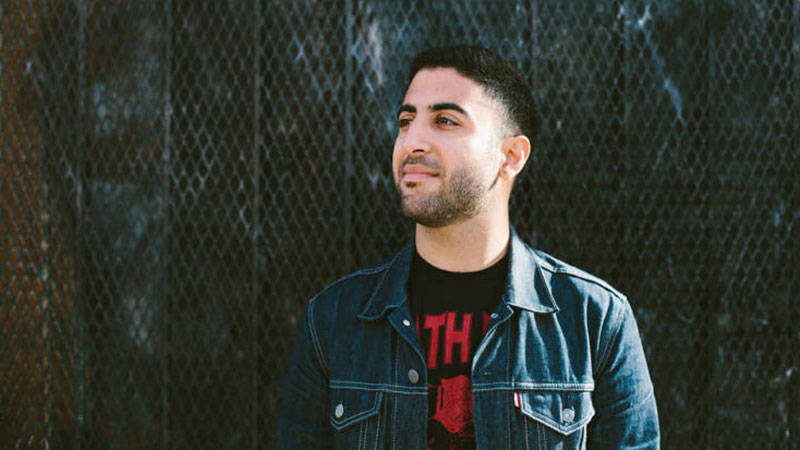
"caption": "Sepehr. ",
"description": "Sepehr. ",
"title": "Sepehr.MAIN",
"credit": "Photo: Mariah Tiffany",
"status": "inherit",
"isLoading": false,
"fetchFailed": false
},
"arts_13438585": {
"type": "attachments",
"id": "arts_13438585",
"meta": {
"index": "attachments_1716263798",
"site": "arts",
"id": "13438585",
"found": true
},
"parent": 13438248,
"imgSizes": {
"small": {
"file": "https://ww2.kqed.org/app/uploads/sites/2/2017/06/Neil-Young-520x293.jpg",
"width": 520,
"mimeType": "image/jpeg",
"height": 293
},
"twentyfourteen-full-width": {
"file": "https://ww2.kqed.org/app/uploads/sites/2/2017/06/Neil-Young-1038x576.jpg",
"width": 1038,
"mimeType": "image/jpeg",
"height": 576
},
"thumbnail": {
"file": "https://ww2.kqed.org/app/uploads/sites/2/2017/06/Neil-Young-160x90.jpg",
"width": 160,
"mimeType": "image/jpeg",
"height": 90
},
"fd-sm": {
"file": "https://ww2.kqed.org/app/uploads/sites/2/2017/06/Neil-Young-960x540.jpg",
"width": 960,
"mimeType": "image/jpeg",
"height": 540
},
"post-thumbnail": {
"file": "https://ww2.kqed.org/app/uploads/sites/2/2017/06/Neil-Young-672x372.jpg",
"width": 672,
"mimeType": "image/jpeg",
"height": 372
},
"xsmall": {
"file": "https://ww2.kqed.org/app/uploads/sites/2/2017/06/Neil-Young-375x211.jpg",
"width": 375,
"mimeType": "image/jpeg",
"height": 211
},
"kqedFullSize": {
"file": "https://ww2.kqed.org/app/uploads/sites/2/2017/06/Neil-Young.jpg",
"width": 1920,
"height": 1080
},
"large": {
"file": "https://ww2.kqed.org/app/uploads/sites/2/2017/06/Neil-Young-1020x574.jpg",
"width": 1020,
"mimeType": "image/jpeg",
"height": 574
},
"xlarge": {
"file": "https://ww2.kqed.org/app/uploads/sites/2/2017/06/Neil-Young-1180x664.jpg",
"width": 1180,
"mimeType": "image/jpeg",
"height": 664
},
"guest-author-50": {
"file": "https://ww2.kqed.org/app/uploads/sites/2/2017/06/Neil-Young-50x50.jpg",
"width": 50,
"mimeType": "image/jpeg",
"height": 50
},
"guest-author-96": {
"file": "https://ww2.kqed.org/app/uploads/sites/2/2017/06/Neil-Young-96x96.jpg",
"width": 96,
"mimeType": "image/jpeg",
"height": 96
},
"medium": {
"file": "https://ww2.kqed.org/app/uploads/sites/2/2017/06/Neil-Young-800x450.jpg",
"width": 800,
"mimeType": "image/jpeg",
"height": 450
},
"guest-author-64": {
"file": "https://ww2.kqed.org/app/uploads/sites/2/2017/06/Neil-Young-64x64.jpg",
"width": 64,
"mimeType": "image/jpeg",
"height": 64
},
"guest-author-32": {
"file": "https://ww2.kqed.org/app/uploads/sites/2/2017/06/Neil-Young-32x32.jpg",
"width": 32,
"mimeType": "image/jpeg",
"height": 32
},
"fd-lrg": {
"file": "https://ww2.kqed.org/app/uploads/sites/2/2017/06/Neil-Young-1920x1080.jpg",
"width": 1920,
"mimeType": "image/jpeg",
"height": 1080
},
"fd-med": {
"file": "https://ww2.kqed.org/app/uploads/sites/2/2017/06/Neil-Young-1180x664.jpg",
"width": 1180,
"mimeType": "image/jpeg",
"height": 664
},
"full-width": {
"file": "https://ww2.kqed.org/app/uploads/sites/2/2017/06/Neil-Young-1920x1080.jpg",
"width": 1920,
"mimeType": "image/jpeg",
"height": 1080
},
"detail": {
"file": "https://ww2.kqed.org/app/uploads/sites/2/2017/06/Neil-Young-150x150.jpg",
"width": 150,
"mimeType": "image/jpeg",
"height": 150
},
"medium_large": {
"file": "https://ww2.kqed.org/app/uploads/sites/2/2017/06/Neil-Young-768x432.jpg",
"width": 768,
"mimeType": "image/jpeg",
"height": 432
},
"guest-author-128": {
"file": "https://ww2.kqed.org/app/uploads/sites/2/2017/06/Neil-Young-128x128.jpg",
"width": 128,
"mimeType": "image/jpeg",
"height": 128
},
"xxsmall": {
"file": "https://ww2.kqed.org/app/uploads/sites/2/2017/06/Neil-Young-240x135.jpg",
"width": 240,
"mimeType": "image/jpeg",
"height": 135
}
},
"publishDate": 1497491660,
"modified": 1497491743,
"caption": "Neil Young performs onstage at the 4th Annual Light Up The Blues in 2016. ",
"description": "Neil Young performs onstage at the 4th Annual Light Up The Blues in 2016. ",
"title": "4th Annual Light Up The Blues - Show",
"credit": "Photo: Kevork Djansezian/Getty Images for Autism Speaks",
"status": "inherit",
"isLoading": false,
"fetchFailed": false
},
"arts_13437203": {
"type": "attachments",
"id": "arts_13437203",
"meta": {
"index": "attachments_1716263798",
"site": "arts",
"id": "13437203",
"found": true
},
"parent": 13436516,
"imgSizes": {
"small": {
"file": "https://ww2.kqed.org/app/uploads/sites/2/2017/06/Surreal-Conservatory-2-520x347.jpg",
"width": 520,
"mimeType": "image/jpeg",
"height": 347
},
"twentyfourteen-full-width": {
"file": "https://ww2.kqed.org/app/uploads/sites/2/2017/06/Surreal-Conservatory-2-1038x576.jpg",
"width": 1038,
"mimeType": "image/jpeg",
"height": 576
},
"thumbnail": {
"file": "https://ww2.kqed.org/app/uploads/sites/2/2017/06/Surreal-Conservatory-2-160x107.jpg",
"width": 160,
"mimeType": "image/jpeg",
"height": 107
},
"fd-sm": {
"file": "https://ww2.kqed.org/app/uploads/sites/2/2017/06/Surreal-Conservatory-2-960x640.jpg",
"width": 960,
"mimeType": "image/jpeg",
"height": 640
},
"post-thumbnail": {
"file": "https://ww2.kqed.org/app/uploads/sites/2/2017/06/Surreal-Conservatory-2-672x372.jpg",
"width": 672,
"mimeType": "image/jpeg",
"height": 372
},
"xsmall": {
"file": "https://ww2.kqed.org/app/uploads/sites/2/2017/06/Surreal-Conservatory-2-375x250.jpg",
"width": 375,
"mimeType": "image/jpeg",
"height": 250
},
"kqedFullSize": {
"file": "https://ww2.kqed.org/app/uploads/sites/2/2017/06/Surreal-Conservatory-2.jpg",
"width": 2400,
"height": 1600
},
"large": {
"file": "https://ww2.kqed.org/app/uploads/sites/2/2017/06/Surreal-Conservatory-2-1020x680.jpg",
"width": 1020,
"mimeType": "image/jpeg",
"height": 680
},
"xlarge": {
"file": "https://ww2.kqed.org/app/uploads/sites/2/2017/06/Surreal-Conservatory-2-1180x787.jpg",
"width": 1180,
"mimeType": "image/jpeg",
"height": 787
},
"guest-author-50": {
"file": "https://ww2.kqed.org/app/uploads/sites/2/2017/06/Surreal-Conservatory-2-50x50.jpg",
"width": 50,
"mimeType": "image/jpeg",
"height": 50
},
"guest-author-96": {
"file": "https://ww2.kqed.org/app/uploads/sites/2/2017/06/Surreal-Conservatory-2-96x96.jpg",
"width": 96,
"mimeType": "image/jpeg",
"height": 96
},
"medium": {
"file": "https://ww2.kqed.org/app/uploads/sites/2/2017/06/Surreal-Conservatory-2-800x533.jpg",
"width": 800,
"mimeType": "image/jpeg",
"height": 533
},
"guest-author-64": {
"file": "https://ww2.kqed.org/app/uploads/sites/2/2017/06/Surreal-Conservatory-2-64x64.jpg",
"width": 64,
"mimeType": "image/jpeg",
"height": 64
},
"guest-author-32": {
"file": "https://ww2.kqed.org/app/uploads/sites/2/2017/06/Surreal-Conservatory-2-32x32.jpg",
"width": 32,
"mimeType": "image/jpeg",
"height": 32
},
"fd-lrg": {
"file": "https://ww2.kqed.org/app/uploads/sites/2/2017/06/Surreal-Conservatory-2-1920x1280.jpg",
"width": 1920,
"mimeType": "image/jpeg",
"height": 1280
},
"fd-med": {
"file": "https://ww2.kqed.org/app/uploads/sites/2/2017/06/Surreal-Conservatory-2-1180x787.jpg",
"width": 1180,
"mimeType": "image/jpeg",
"height": 787
},
"full-width": {
"file": "https://ww2.kqed.org/app/uploads/sites/2/2017/06/Surreal-Conservatory-2-1920x1280.jpg",
"width": 1920,
"mimeType": "image/jpeg",
"height": 1280
},
"detail": {
"file": "https://ww2.kqed.org/app/uploads/sites/2/2017/06/Surreal-Conservatory-2-150x150.jpg",
"width": 150,
"mimeType": "image/jpeg",
"height": 150
},
"medium_large": {
"file": "https://ww2.kqed.org/app/uploads/sites/2/2017/06/Surreal-Conservatory-2-768x512.jpg",
"width": 768,
"mimeType": "image/jpeg",
"height": 512
},
"guest-author-128": {
"file": "https://ww2.kqed.org/app/uploads/sites/2/2017/06/Surreal-Conservatory-2-128x128.jpg",
"width": 128,
"mimeType": "image/jpeg",
"height": 128
},
"xxsmall": {
"file": "https://ww2.kqed.org/app/uploads/sites/2/2017/06/Surreal-Conservatory-2-240x160.jpg",
"width": 240,
"mimeType": "image/jpeg",
"height": 160
}
},
"publishDate": 1497478662,
"modified": 1497478705,
"caption": "The San Francisco Conservatory of Flowers all dressed up for a city sponsored Summer of Love concert",
"description": "The San Francisco Conservatory of Flowers all dressed up for a city sponsored Summer of Love concert",
"title": "The San Francisco Conservatory of Flowers all dressed up for a city sponsored Summer of Love concert",
"credit": "Photo: Courtesy of Obscura Digital",
"status": "inherit",
"isLoading": false,
"fetchFailed": false
},
"arts_13436318": {
"type": "attachments",
"id": "arts_13436318",
"meta": {
"index": "attachments_1716263798",
"site": "arts",
"id": "13436318",
"found": true
},
"parent": 13436256,
"imgSizes": {
"small": {
"file": "https://ww2.kqed.org/app/uploads/sites/2/2017/06/Anita-Pallenberg-520x293.jpg",
"width": 520,
"mimeType": "image/jpeg",
"height": 293
},
"twentyfourteen-full-width": {
"file": "https://ww2.kqed.org/app/uploads/sites/2/2017/06/Anita-Pallenberg-1038x576.jpg",
"width": 1038,
"mimeType": "image/jpeg",
"height": 576
},
"thumbnail": {
"file": "https://ww2.kqed.org/app/uploads/sites/2/2017/06/Anita-Pallenberg-160x90.jpg",
"width": 160,
"mimeType": "image/jpeg",
"height": 90
},
"fd-sm": {
"file": "https://ww2.kqed.org/app/uploads/sites/2/2017/06/Anita-Pallenberg-960x540.jpg",
"width": 960,
"mimeType": "image/jpeg",
"height": 540
},
"post-thumbnail": {
"file": "https://ww2.kqed.org/app/uploads/sites/2/2017/06/Anita-Pallenberg-672x372.jpg",
"width": 672,
"mimeType": "image/jpeg",
"height": 372
},
"xsmall": {
"file": "https://ww2.kqed.org/app/uploads/sites/2/2017/06/Anita-Pallenberg-375x211.jpg",
"width": 375,
"mimeType": "image/jpeg",
"height": 211
},
"kqedFullSize": {
"file": "https://ww2.kqed.org/app/uploads/sites/2/2017/06/Anita-Pallenberg.jpg",
"width": 1920,
"height": 1080
},
"large": {
"file": "https://ww2.kqed.org/app/uploads/sites/2/2017/06/Anita-Pallenberg-1020x574.jpg",
"width": 1020,
"mimeType": "image/jpeg",
"height": 574
},
"xlarge": {
"file": "https://ww2.kqed.org/app/uploads/sites/2/2017/06/Anita-Pallenberg-1180x664.jpg",
"width": 1180,
"mimeType": "image/jpeg",
"height": 664
},
"guest-author-50": {
"file": "https://ww2.kqed.org/app/uploads/sites/2/2017/06/Anita-Pallenberg-50x50.jpg",
"width": 50,
"mimeType": "image/jpeg",
"height": 50
},
"guest-author-96": {
"file": "https://ww2.kqed.org/app/uploads/sites/2/2017/06/Anita-Pallenberg-96x96.jpg",
"width": 96,
"mimeType": "image/jpeg",
"height": 96
},
"medium": {
"file": "https://ww2.kqed.org/app/uploads/sites/2/2017/06/Anita-Pallenberg-800x450.jpg",
"width": 800,
"mimeType": "image/jpeg",
"height": 450
},
"guest-author-64": {
"file": "https://ww2.kqed.org/app/uploads/sites/2/2017/06/Anita-Pallenberg-64x64.jpg",
"width": 64,
"mimeType": "image/jpeg",
"height": 64
},
"guest-author-32": {
"file": "https://ww2.kqed.org/app/uploads/sites/2/2017/06/Anita-Pallenberg-32x32.jpg",
"width": 32,
"mimeType": "image/jpeg",
"height": 32
},
"fd-lrg": {
"file": "https://ww2.kqed.org/app/uploads/sites/2/2017/06/Anita-Pallenberg-1920x1080.jpg",
"width": 1920,
"mimeType": "image/jpeg",
"height": 1080
},
"fd-med": {
"file": "https://ww2.kqed.org/app/uploads/sites/2/2017/06/Anita-Pallenberg-1180x664.jpg",
"width": 1180,
"mimeType": "image/jpeg",
"height": 664
},
"full-width": {
"file": "https://ww2.kqed.org/app/uploads/sites/2/2017/06/Anita-Pallenberg-1920x1080.jpg",
"width": 1920,
"mimeType": "image/jpeg",
"height": 1080
},
"detail": {
"file": "https://ww2.kqed.org/app/uploads/sites/2/2017/06/Anita-Pallenberg-150x150.jpg",
"width": 150,
"mimeType": "image/jpeg",
"height": 150
},
"medium_large": {
"file": "https://ww2.kqed.org/app/uploads/sites/2/2017/06/Anita-Pallenberg-768x432.jpg",
"width": 768,
"mimeType": "image/jpeg",
"height": 432
},
"guest-author-128": {
"file": "https://ww2.kqed.org/app/uploads/sites/2/2017/06/Anita-Pallenberg-128x128.jpg",
"width": 128,
"mimeType": "image/jpeg",
"height": 128
},
"xxsmall": {
"file": "https://ww2.kqed.org/app/uploads/sites/2/2017/06/Anita-Pallenberg-240x135.jpg",
"width": 240,
"mimeType": "image/jpeg",
"height": 135
}
},
"publishDate": 1497469237,
"modified": 1497469305,
"caption": "Anita Pallenberg walks the runway at the Pam Hogg show at Fashion Scout during London Fashion Week back in 2016. ",
"description": "Anita Pallenberg walks the runway at the Pam Hogg show at Fashion Scout during London Fashion Week back in 2016. ",
"title": "Pam Hogg - Runway - LFW September 2016",
"credit": "Photo: Eamonn M. McCormack/Getty Images",
"status": "inherit",
"isLoading": false,
"fetchFailed": false
},
"arts_13429804": {
"type": "attachments",
"id": "arts_13429804",
"meta": {
"index": "attachments_1716263798",
"site": "arts",
"id": "13429804",
"found": true
},
"parent": 13428657,
"imgSizes": {
"small": {
"file": "https://ww2.kqed.org/app/uploads/sites/2/2017/06/34_Todd-Barkan-by-John-Abbott-520x293.jpg",
"width": 520,
"mimeType": "image/jpeg",
"height": 293
},
"twentyfourteen-full-width": {
"file": "https://ww2.kqed.org/app/uploads/sites/2/2017/06/34_Todd-Barkan-by-John-Abbott-1038x576.jpg",
"width": 1038,
"mimeType": "image/jpeg",
"height": 576
},
"thumbnail": {
"file": "https://ww2.kqed.org/app/uploads/sites/2/2017/06/34_Todd-Barkan-by-John-Abbott-160x90.jpg",
"width": 160,
"mimeType": "image/jpeg",
"height": 90
},
"fd-sm": {
"file": "https://ww2.kqed.org/app/uploads/sites/2/2017/06/34_Todd-Barkan-by-John-Abbott-960x540.jpg",
"width": 960,
"mimeType": "image/jpeg",
"height": 540
},
"post-thumbnail": {
"file": "https://ww2.kqed.org/app/uploads/sites/2/2017/06/34_Todd-Barkan-by-John-Abbott-672x372.jpg",
"width": 672,
"mimeType": "image/jpeg",
"height": 372
},
"xsmall": {
"file": "https://ww2.kqed.org/app/uploads/sites/2/2017/06/34_Todd-Barkan-by-John-Abbott-375x211.jpg",
"width": 375,
"mimeType": "image/jpeg",
"height": 211
},
"kqedFullSize": {
"file": "https://ww2.kqed.org/app/uploads/sites/2/2017/06/34_Todd-Barkan-by-John-Abbott.jpg",
"width": 1920,
"height": 1080
},
"large": {
"file": "https://ww2.kqed.org/app/uploads/sites/2/2017/06/34_Todd-Barkan-by-John-Abbott-1020x574.jpg",
"width": 1020,
"mimeType": "image/jpeg",
"height": 574
},
"xlarge": {
"file": "https://ww2.kqed.org/app/uploads/sites/2/2017/06/34_Todd-Barkan-by-John-Abbott-1180x664.jpg",
"width": 1180,
"mimeType": "image/jpeg",
"height": 664
},
"guest-author-50": {
"file": "https://ww2.kqed.org/app/uploads/sites/2/2017/06/34_Todd-Barkan-by-John-Abbott-50x50.jpg",
"width": 50,
"mimeType": "image/jpeg",
"height": 50
},
"guest-author-96": {
"file": "https://ww2.kqed.org/app/uploads/sites/2/2017/06/34_Todd-Barkan-by-John-Abbott-96x96.jpg",
"width": 96,
"mimeType": "image/jpeg",
"height": 96
},
"medium": {
"file": "https://ww2.kqed.org/app/uploads/sites/2/2017/06/34_Todd-Barkan-by-John-Abbott-800x450.jpg",
"width": 800,
"mimeType": "image/jpeg",
"height": 450
},
"guest-author-64": {
"file": "https://ww2.kqed.org/app/uploads/sites/2/2017/06/34_Todd-Barkan-by-John-Abbott-64x64.jpg",
"width": 64,
"mimeType": "image/jpeg",
"height": 64
},
"guest-author-32": {
"file": "https://ww2.kqed.org/app/uploads/sites/2/2017/06/34_Todd-Barkan-by-John-Abbott-32x32.jpg",
"width": 32,
"mimeType": "image/jpeg",
"height": 32
},
"fd-lrg": {
"file": "https://ww2.kqed.org/app/uploads/sites/2/2017/06/34_Todd-Barkan-by-John-Abbott-1920x1080.jpg",
"width": 1920,
"mimeType": "image/jpeg",
"height": 1080
},
"fd-med": {
"file": "https://ww2.kqed.org/app/uploads/sites/2/2017/06/34_Todd-Barkan-by-John-Abbott-1180x664.jpg",
"width": 1180,
"mimeType": "image/jpeg",
"height": 664
},
"full-width": {
"file": "https://ww2.kqed.org/app/uploads/sites/2/2017/06/34_Todd-Barkan-by-John-Abbott-1920x1080.jpg",
"width": 1920,
"mimeType": "image/jpeg",
"height": 1080
},
"detail": {
"file": "https://ww2.kqed.org/app/uploads/sites/2/2017/06/34_Todd-Barkan-by-John-Abbott-150x150.jpg",
"width": 150,
"mimeType": "image/jpeg",
"height": 150
},
"medium_large": {
"file": "https://ww2.kqed.org/app/uploads/sites/2/2017/06/34_Todd-Barkan-by-John-Abbott-768x432.jpg",
"width": 768,
"mimeType": "image/jpeg",
"height": 432
},
"guest-author-128": {
"file": "https://ww2.kqed.org/app/uploads/sites/2/2017/06/34_Todd-Barkan-by-John-Abbott-128x128.jpg",
"width": 128,
"mimeType": "image/jpeg",
"height": 128
},
"xxsmall": {
"file": "https://ww2.kqed.org/app/uploads/sites/2/2017/06/34_Todd-Barkan-by-John-Abbott-240x135.jpg",
"width": 240,
"mimeType": "image/jpeg",
"height": 135
}
},
"publishDate": 1497405202,
"modified": 1497405246,
"caption": "Todd Barkan",
"description": "Todd Barkan",
"title": "34_Todd Barkan by John Abbott",
"credit": "Photo: John Abbott",
"status": "inherit",
"isLoading": false,
"fetchFailed": false
},
"arts_13421892": {
"type": "attachments",
"id": "arts_13421892",
"meta": {
"index": "attachments_1716263798",
"site": "arts",
"id": "13421892",
"found": true
},
"parent": 13414955,
"imgSizes": {
"small": {
"file": "https://ww2.kqed.org/app/uploads/sites/2/2017/06/Sullivan.MAIN_-520x325.jpg",
"width": 520,
"mimeType": "image/jpeg",
"height": 325
},
"twentyfourteen-full-width": {
"file": "https://ww2.kqed.org/app/uploads/sites/2/2017/06/Sullivan.MAIN_-1000x576.jpg",
"width": 1000,
"mimeType": "image/jpeg",
"height": 576
},
"thumbnail": {
"file": "https://ww2.kqed.org/app/uploads/sites/2/2017/06/Sullivan.MAIN_-160x100.jpg",
"width": 160,
"mimeType": "image/jpeg",
"height": 100
},
"fd-sm": {
"file": "https://ww2.kqed.org/app/uploads/sites/2/2017/06/Sullivan.MAIN_-960x600.jpg",
"width": 960,
"mimeType": "image/jpeg",
"height": 600
},
"post-thumbnail": {
"file": "https://ww2.kqed.org/app/uploads/sites/2/2017/06/Sullivan.MAIN_-672x372.jpg",
"width": 672,
"mimeType": "image/jpeg",
"height": 372
},
"xsmall": {
"file": "https://ww2.kqed.org/app/uploads/sites/2/2017/06/Sullivan.MAIN_-375x234.jpg",
"width": 375,
"mimeType": "image/jpeg",
"height": 234
},
"kqedFullSize": {
"file": "https://ww2.kqed.org/app/uploads/sites/2/2017/06/Sullivan.MAIN_.jpg",
"width": 1000,
"height": 625
},
"guest-author-50": {
"file": "https://ww2.kqed.org/app/uploads/sites/2/2017/06/Sullivan.MAIN_-50x50.jpg",
"width": 50,
"mimeType": "image/jpeg",
"height": 50
},
"guest-author-96": {
"file": "https://ww2.kqed.org/app/uploads/sites/2/2017/06/Sullivan.MAIN_-96x96.jpg",
"width": 96,
"mimeType": "image/jpeg",
"height": 96
},
"medium": {
"file": "https://ww2.kqed.org/app/uploads/sites/2/2017/06/Sullivan.MAIN_-800x500.jpg",
"width": 800,
"mimeType": "image/jpeg",
"height": 500
},
"guest-author-64": {
"file": "https://ww2.kqed.org/app/uploads/sites/2/2017/06/Sullivan.MAIN_-64x64.jpg",
"width": 64,
"mimeType": "image/jpeg",
"height": 64
},
"guest-author-32": {
"file": "https://ww2.kqed.org/app/uploads/sites/2/2017/06/Sullivan.MAIN_-32x32.jpg",
"width": 32,
"mimeType": "image/jpeg",
"height": 32
},
"detail": {
"file": "https://ww2.kqed.org/app/uploads/sites/2/2017/06/Sullivan.MAIN_-150x150.jpg",
"width": 150,
"mimeType": "image/jpeg",
"height": 150
},
"medium_large": {
"file": "https://ww2.kqed.org/app/uploads/sites/2/2017/06/Sullivan.MAIN_-768x480.jpg",
"width": 768,
"mimeType": "image/jpeg",
"height": 480
},
"guest-author-128": {
"file": "https://ww2.kqed.org/app/uploads/sites/2/2017/06/Sullivan.MAIN_-128x128.jpg",
"width": 128,
"mimeType": "image/jpeg",
"height": 128
},
"xxsmall": {
"file": "https://ww2.kqed.org/app/uploads/sites/2/2017/06/Sullivan.MAIN_-240x150.jpg",
"width": 240,
"mimeType": "image/jpeg",
"height": 150
}
},
"publishDate": 1497303828,
"modified": 1497304024,
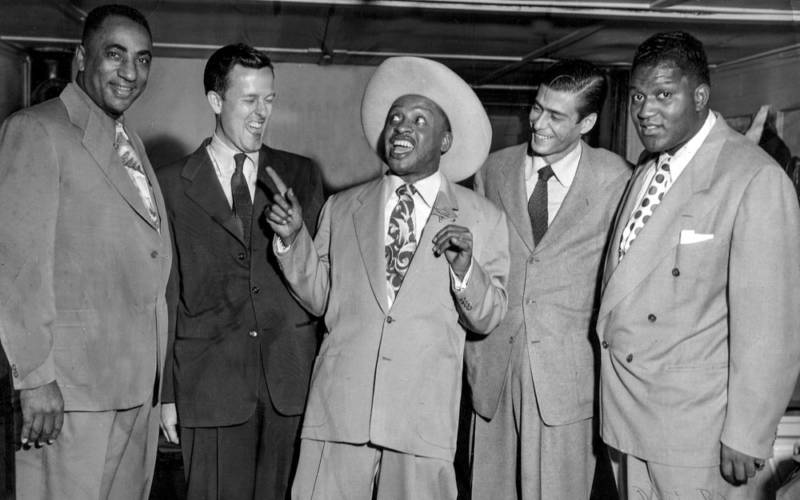
"caption": "Charles Sullivan (at left) with Ralph Gleason, Lionel Hampton and others in the Fillmore, circa early 1960s.",
"description": "Charles Sullivan (at left) with Ralph Gleason, Lionel Hampton and others in the Fillmore, circa early 1960s.",
"title": "Sullivan.MAIN",
"credit": "From 'Harlem of the West'/Wesley Johnson Collection",
"status": "inherit",
"isLoading": false,
"fetchFailed": false
},
"arts_10820718": {
"type": "attachments",
"id": "arts_10820718",
"meta": {
"index": "attachments_1716263798",
"site": "arts",
"id": "10820718",
"found": true
},
"parent": 10820705,
"imgSizes": {
"twentyfourteen-full-width": {
"file": "https://ww2.kqed.org/app/uploads/sites/2/2015/07/TheMummies1-1038x576.jpg",
"width": 1038,
"mimeType": "image/jpeg",
"height": 576
},
"thumbnail": {
"file": "https://ww2.kqed.org/app/uploads/sites/2/2015/07/TheMummies1-400x225.jpg",
"width": 400,
"mimeType": "image/jpeg",
"height": 225
},
"fd-sm": {
"file": "https://ww2.kqed.org/app/uploads/sites/2/2015/07/TheMummies1-960x540.jpg",
"width": 960,
"mimeType": "image/jpeg",
"height": 540
},
"post-thumbnail": {
"file": "https://ww2.kqed.org/app/uploads/sites/2/2015/07/TheMummies1-672x372.jpg",
"width": 672,
"mimeType": "image/jpeg",
"height": 372
},
"kqedFullSize": {
"file": "https://ww2.kqed.org/app/uploads/sites/2/2015/07/TheMummies1.jpg",
"width": 1440,
"height": 810
},
"large": {
"file": "https://ww2.kqed.org/app/uploads/sites/2/2015/07/TheMummies1-1180x664.jpg",
"width": 1180,
"mimeType": "image/jpeg",
"height": 664
},
"guest-author-96": {
"file": "https://ww2.kqed.org/app/uploads/sites/2/2015/07/TheMummies1-96x96.jpg",
"width": 96,
"mimeType": "image/jpeg",
"height": 96
},
"medium": {
"file": "https://ww2.kqed.org/app/uploads/sites/2/2015/07/TheMummies1-800x450.jpg",
"width": 800,
"mimeType": "image/jpeg",
"height": 450
},
"guest-author-64": {
"file": "https://ww2.kqed.org/app/uploads/sites/2/2015/07/TheMummies1-64x64.jpg",
"width": 64,
"mimeType": "image/jpeg",
"height": 64
},
"guest-author-32": {
"file": "https://ww2.kqed.org/app/uploads/sites/2/2015/07/TheMummies1-32x32.jpg",
"width": 32,
"mimeType": "image/jpeg",
"height": 32
},
"fd-med": {
"file": "https://ww2.kqed.org/app/uploads/sites/2/2015/07/TheMummies1-1180x664.jpg",
"width": 1180,
"mimeType": "image/jpeg",
"height": 664
},
"detail": {
"file": "https://ww2.kqed.org/app/uploads/sites/2/2015/07/TheMummies1-75x75.jpg",
"width": 75,
"mimeType": "image/jpeg",
"height": 75
},
"guest-author-128": {
"file": "https://ww2.kqed.org/app/uploads/sites/2/2015/07/TheMummies1-128x128.jpg",
"width": 128,
"mimeType": "image/jpeg",
"height": 128
}
},
"publishDate": 1436130616,
"modified": 1497331918,
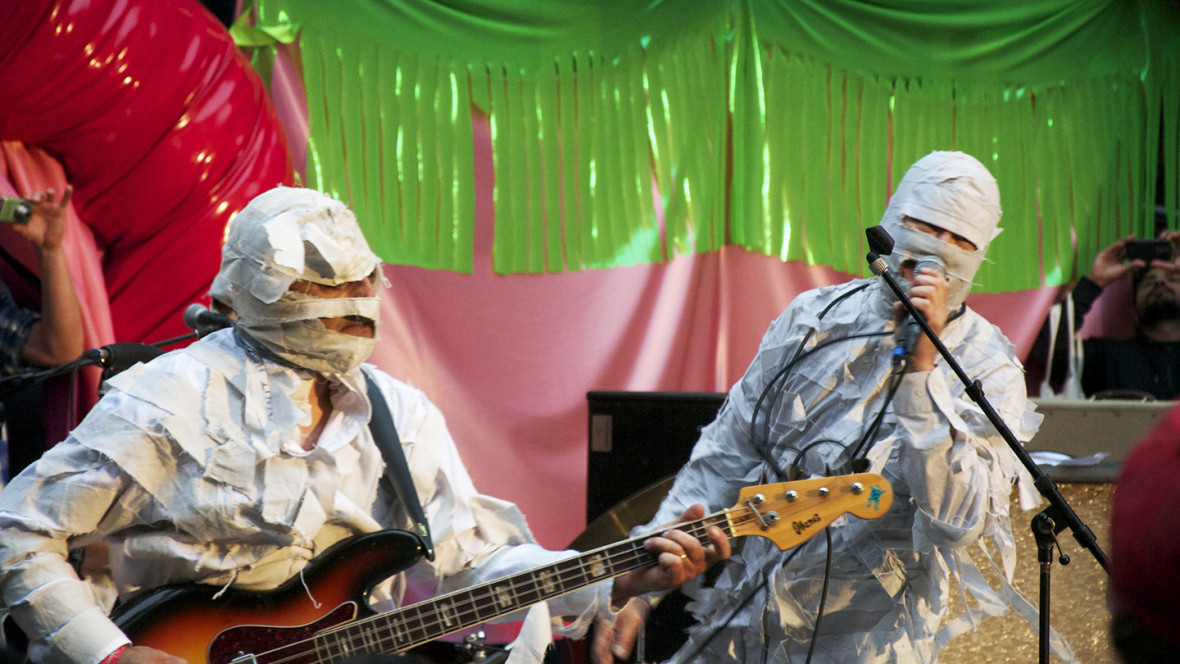
"caption": "Garage punk band The Mummies headlined the July 4 lineup at Burger Boogaloo. ",
"description": "Garage punk band The Mummies headlined the July 4 lineup at Burger Boogaloo.",
"title": "TheMummies1",
"credit": "(Photo: Rebecca Bowe/KQED)",
"status": "inherit",
"isLoading": false,
"fetchFailed": false
},
"forum_2010101860271": {
"type": "attachments",
"id": "forum_2010101860271",
"meta": {
"index": "attachments_1716263798",
"site": "forum",
"id": "2010101860271",
"found": true
},
"parent": 2010101860270,
"imgSizes": {
"small": {
"file": "https://ww2.kqed.org/app/uploads/sites/43/2017/06/Con-Brio-credit_Jay-Blakesberg-520x293.jpg",
"width": 520,
"mimeType": "image/jpeg",
"height": 293
},
"twentyfourteen-full-width": {
"file": "https://ww2.kqed.org/app/uploads/sites/43/2017/06/Con-Brio-credit_Jay-Blakesberg-1038x576.jpg",
"width": 1038,
"mimeType": "image/jpeg",
"height": 576
},
"thumbnail": {
"file": "https://ww2.kqed.org/app/uploads/sites/43/2017/06/Con-Brio-credit_Jay-Blakesberg-160x90.jpg",
"width": 160,
"mimeType": "image/jpeg",
"height": 90
},
"fd-sm": {
"file": "https://ww2.kqed.org/app/uploads/sites/43/2017/06/Con-Brio-credit_Jay-Blakesberg-960x540.jpg",
"width": 960,
"mimeType": "image/jpeg",
"height": 540
},
"post-thumbnail": {
"file": "https://ww2.kqed.org/app/uploads/sites/43/2017/06/Con-Brio-credit_Jay-Blakesberg-672x372.jpg",
"width": 672,
"mimeType": "image/jpeg",
"height": 372
},
"xsmall": {
"file": "https://ww2.kqed.org/app/uploads/sites/43/2017/06/Con-Brio-credit_Jay-Blakesberg-375x211.jpg",
"width": 375,
"mimeType": "image/jpeg",
"height": 211
},
"kqedFullSize": {
"file": "https://ww2.kqed.org/app/uploads/sites/43/2017/06/Con-Brio-credit_Jay-Blakesberg.jpg",
"width": 1920,
"height": 1080
},
"large": {
"file": "https://ww2.kqed.org/app/uploads/sites/43/2017/06/Con-Brio-credit_Jay-Blakesberg-1020x574.jpg",
"width": 1020,
"mimeType": "image/jpeg",
"height": 574
},
"xlarge": {
"file": "https://ww2.kqed.org/app/uploads/sites/43/2017/06/Con-Brio-credit_Jay-Blakesberg-1180x664.jpg",
"width": 1180,
"mimeType": "image/jpeg",
"height": 664
},
"guest-author-50": {
"file": "https://ww2.kqed.org/app/uploads/sites/43/2017/06/Con-Brio-credit_Jay-Blakesberg-50x50.jpg",
"width": 50,
"mimeType": "image/jpeg",
"height": 50
},
"guest-author-96": {
"file": "https://ww2.kqed.org/app/uploads/sites/43/2017/06/Con-Brio-credit_Jay-Blakesberg-96x96.jpg",
"width": 96,
"mimeType": "image/jpeg",
"height": 96
},
"medium": {
"file": "https://ww2.kqed.org/app/uploads/sites/43/2017/06/Con-Brio-credit_Jay-Blakesberg-800x450.jpg",
"width": 800,
"mimeType": "image/jpeg",
"height": 450
},
"guest-author-64": {
"file": "https://ww2.kqed.org/app/uploads/sites/43/2017/06/Con-Brio-credit_Jay-Blakesberg-64x64.jpg",
"width": 64,
"mimeType": "image/jpeg",
"height": 64
},
"guest-author-32": {
"file": "https://ww2.kqed.org/app/uploads/sites/43/2017/06/Con-Brio-credit_Jay-Blakesberg-32x32.jpg",
"width": 32,
"mimeType": "image/jpeg",
"height": 32
},
"fd-lrg": {
"file": "https://ww2.kqed.org/app/uploads/sites/43/2017/06/Con-Brio-credit_Jay-Blakesberg-1920x1080.jpg",
"width": 1920,
"mimeType": "image/jpeg",
"height": 1080
},
"fd-med": {
"file": "https://ww2.kqed.org/app/uploads/sites/43/2017/06/Con-Brio-credit_Jay-Blakesberg-1180x664.jpg",
"width": 1180,
"mimeType": "image/jpeg",
"height": 664
},
"full-width": {
"file": "https://ww2.kqed.org/app/uploads/sites/43/2017/06/Con-Brio-credit_Jay-Blakesberg-1920x1080.jpg",
"width": 1920,
"mimeType": "image/jpeg",
"height": 1080
},
"detail": {
"file": "https://ww2.kqed.org/app/uploads/sites/43/2017/06/Con-Brio-credit_Jay-Blakesberg-150x150.jpg",
"width": 150,
"mimeType": "image/jpeg",
"height": 150
},
"medium_large": {
"file": "https://ww2.kqed.org/app/uploads/sites/43/2017/06/Con-Brio-credit_Jay-Blakesberg-768x432.jpg",
"width": 768,
"mimeType": "image/jpeg",
"height": 432
},
"guest-author-128": {
"file": "https://ww2.kqed.org/app/uploads/sites/43/2017/06/Con-Brio-credit_Jay-Blakesberg-128x128.jpg",
"width": 128,
"mimeType": "image/jpeg",
"height": 128
},
"xxsmall": {
"file": "https://ww2.kqed.org/app/uploads/sites/43/2017/06/Con-Brio-credit_Jay-Blakesberg-240x135.jpg",
"width": 240,
"mimeType": "image/jpeg",
"height": 135
}
},
"publishDate": 1497310774,
"modified": 1497310824,
"caption": "The band Con Brio.",
"description": "The band Con Brio.",
"title": "Con-Brio-credit_Jay-Blakesberg",
"credit": "Photo: Jay Blakesberg",
"status": "inherit",
"isLoading": false,
"fetchFailed": false
},
"forum_2010101860274": {
"type": "attachments",
"id": "forum_2010101860274",
"meta": {
"index": "attachments_1716263798",
"site": "forum",
"id": "2010101860274",
"found": true
},
"parent": 2010101860273,
"imgSizes": {
"small": {
"file": "https://ww2.kqed.org/app/uploads/sites/43/2017/06/Hershey-Felder-for-web-Christopher-Ash-520x293.jpg",
"width": 520,
"mimeType": "image/jpeg",
"height": 293
},
"twentyfourteen-full-width": {
"file": "https://ww2.kqed.org/app/uploads/sites/43/2017/06/Hershey-Felder-for-web-Christopher-Ash-1038x576.jpg",
"width": 1038,
"mimeType": "image/jpeg",
"height": 576
},
"thumbnail": {
"file": "https://ww2.kqed.org/app/uploads/sites/43/2017/06/Hershey-Felder-for-web-Christopher-Ash-160x90.jpg",
"width": 160,
"mimeType": "image/jpeg",
"height": 90
},
"fd-sm": {
"file": "https://ww2.kqed.org/app/uploads/sites/43/2017/06/Hershey-Felder-for-web-Christopher-Ash-960x540.jpg",
"width": 960,
"mimeType": "image/jpeg",
"height": 540
},
"post-thumbnail": {
"file": "https://ww2.kqed.org/app/uploads/sites/43/2017/06/Hershey-Felder-for-web-Christopher-Ash-672x372.jpg",
"width": 672,
"mimeType": "image/jpeg",
"height": 372
},
"xsmall": {
"file": "https://ww2.kqed.org/app/uploads/sites/43/2017/06/Hershey-Felder-for-web-Christopher-Ash-375x211.jpg",
"width": 375,
"mimeType": "image/jpeg",
"height": 211
},
"kqedFullSize": {
"file": "https://ww2.kqed.org/app/uploads/sites/43/2017/06/Hershey-Felder-for-web-Christopher-Ash.jpg",
"width": 1920,
"height": 1080
},
"large": {
"file": "https://ww2.kqed.org/app/uploads/sites/43/2017/06/Hershey-Felder-for-web-Christopher-Ash-1020x574.jpg",
"width": 1020,
"mimeType": "image/jpeg",
"height": 574
},
"xlarge": {
"file": "https://ww2.kqed.org/app/uploads/sites/43/2017/06/Hershey-Felder-for-web-Christopher-Ash-1180x664.jpg",
"width": 1180,
"mimeType": "image/jpeg",
"height": 664
},
"guest-author-50": {
"file": "https://ww2.kqed.org/app/uploads/sites/43/2017/06/Hershey-Felder-for-web-Christopher-Ash-50x50.jpg",
"width": 50,
"mimeType": "image/jpeg",
"height": 50
},
"guest-author-96": {
"file": "https://ww2.kqed.org/app/uploads/sites/43/2017/06/Hershey-Felder-for-web-Christopher-Ash-96x96.jpg",
"width": 96,
"mimeType": "image/jpeg",
"height": 96
},
"medium": {
"file": "https://ww2.kqed.org/app/uploads/sites/43/2017/06/Hershey-Felder-for-web-Christopher-Ash-800x450.jpg",
"width": 800,
"mimeType": "image/jpeg",
"height": 450
},
"guest-author-64": {
"file": "https://ww2.kqed.org/app/uploads/sites/43/2017/06/Hershey-Felder-for-web-Christopher-Ash-64x64.jpg",
"width": 64,
"mimeType": "image/jpeg",
"height": 64
},
"guest-author-32": {
"file": "https://ww2.kqed.org/app/uploads/sites/43/2017/06/Hershey-Felder-for-web-Christopher-Ash-32x32.jpg",
"width": 32,
"mimeType": "image/jpeg",
"height": 32
},
"fd-lrg": {
"file": "https://ww2.kqed.org/app/uploads/sites/43/2017/06/Hershey-Felder-for-web-Christopher-Ash-1920x1080.jpg",
"width": 1920,
"mimeType": "image/jpeg",
"height": 1080
},
"fd-med": {
"file": "https://ww2.kqed.org/app/uploads/sites/43/2017/06/Hershey-Felder-for-web-Christopher-Ash-1180x664.jpg",
"width": 1180,
"mimeType": "image/jpeg",
"height": 664
},
"full-width": {
"file": "https://ww2.kqed.org/app/uploads/sites/43/2017/06/Hershey-Felder-for-web-Christopher-Ash-1920x1080.jpg",
"width": 1920,
"mimeType": "image/jpeg",
"height": 1080
},
"detail": {
"file": "https://ww2.kqed.org/app/uploads/sites/43/2017/06/Hershey-Felder-for-web-Christopher-Ash-150x150.jpg",
"width": 150,
"mimeType": "image/jpeg",
"height": 150
},
"medium_large": {
"file": "https://ww2.kqed.org/app/uploads/sites/43/2017/06/Hershey-Felder-for-web-Christopher-Ash-768x432.jpg",
"width": 768,
"mimeType": "image/jpeg",
"height": 432
},
"guest-author-128": {
"file": "https://ww2.kqed.org/app/uploads/sites/43/2017/06/Hershey-Felder-for-web-Christopher-Ash-128x128.jpg",
"width": 128,
"mimeType": "image/jpeg",
"height": 128
},
"xxsmall": {
"file": "https://ww2.kqed.org/app/uploads/sites/43/2017/06/Hershey-Felder-for-web-Christopher-Ash-240x135.jpg",
"width": 240,
"mimeType": "image/jpeg",
"height": 135
}
},
"publishDate": 1497311274,
"modified": 1497311331,
"caption": "Hershey Felder, Beethoven \nwill be presented at the Mountain View Center \nfor the Performing Arts June 7-July 9, 2017.",
"description": "Hershey Felder at the piano.",
"title": "Hershey-Felder-for-web-Christopher-Ash",
"credit": "Photo: Christopher Ash",
"status": "inherit",
"isLoading": false,
"fetchFailed": false
}
},
"audioPlayerReducer": {
"postId": "stream_live",
"isPaused": true,
"isPlaying": false,
"pfsActive": false,
"pledgeModalIsOpen": true,
"playerDrawerIsOpen": false,
"liveAudioPlayStartedAt": 0,
"liveAudioPlayContext": ""
},
"authorsReducer": {
"byline_news_11512997": {
"type": "authors",
"id": "byline_news_11512997",
"meta": {
"override": true
},
"slug": "byline_news_11512997",
"name": "Krista Almanzan ",
"isLoading": false
},
"byline_arts_13445400": {
"type": "authors",
"id": "byline_arts_13445400",
"meta": {
"override": true
},
"slug": "byline_arts_13445400",
"name": "Andrew Flanagan",
"isLoading": false
},
"byline_arts_13436256": {
"type": "authors",
"id": "byline_arts_13436256",
"meta": {
"override": true
},
"slug": "byline_arts_13436256",
"name": "Mesfin Fekadu, Associated Press",
"isLoading": false
},
"cmusiker": {
"type": "authors",
"id": "32",
"meta": {
"index": "authors_1716337520",
"id": "32",
"found": true
},
"name": "Cy Musiker",
"firstName": "Cy",
"lastName": "Musiker",
"slug": "cmusiker",
"email": "cmusiker@kqed.org",
"display_author_email": false,
"staff_mastheads": [],
"title": "KQED Contributor",
"bio": "Cy Musiker is a former co-host of The Do List and a former reporter covering the arts for KQED News and The California Report. He loves live performance, especially great theater, jazz, roots music, anything by Mahler. Cy has an MJ from UC Berkeley's School of Journalism, and got his BA from Hampshire College. His work has been recognized by the Society for Professional Journalists with their Sigma Delta Chi Award for Public Service in Journalism. When he can, Cy likes to swim in Tomales Bay, run with his dog in the East Bay Hills, and hike the Sierra.",
"avatar": "https://secure.gravatar.com/avatar/05eaba5c5696ce8f062e4ea2df428a43?s=600&d=blank&r=g",
"twitter": null,
"facebook": null,
"instagram": null,
"linkedin": null,
"sites": [
{
"site": "arts",
"roles": [
"Contributor",
"subscriber"
]
},
{
"site": "news",
"roles": [
"author"
]
},
{
"site": "bayareabites",
"roles": [
"contributor"
]
}
],
"headData": {
"title": "Cy Musiker | KQED",
"description": "KQED Contributor",
"ogImgSrc": "https://secure.gravatar.com/avatar/05eaba5c5696ce8f062e4ea2df428a43?s=600&d=blank&r=g",
"twImgSrc": "https://secure.gravatar.com/avatar/05eaba5c5696ce8f062e4ea2df428a43?s=600&d=blank&r=g"
},
"isLoading": false,
"link": "/author/cmusiker"
},
"kjones": {
"type": "authors",
"id": "93",
"meta": {
"index": "authors_1716337520",
"id": "93",
"found": true
},
"name": "Kevin L. Jones",
"firstName": "Kevin",
"lastName": "Jones",
"slug": "kjones",
"email": "kjones@kqed.org",
"display_author_email": false,
"staff_mastheads": [],
"title": null,
"bio": null,
"avatar": "https://secure.gravatar.com/avatar/12c65b5633ed39d0a59bb7f497eff645?s=600&d=blank&r=g",
"twitter": null,
"facebook": null,
"instagram": null,
"linkedin": null,
"sites": [
{
"site": "arts",
"roles": [
"subscriber"
]
},
{
"site": "styleguide",
"roles": [
"contributor"
]
},
{
"site": "artschool",
"roles": [
"subscriber"
]
},
{
"site": "news",
"roles": [
"subscriber"
]
},
{
"site": "pop",
"roles": [
"subscriber"
]
}
],
"headData": {
"title": "Kevin L. Jones | KQED",
"description": null,
"ogImgSrc": "https://secure.gravatar.com/avatar/12c65b5633ed39d0a59bb7f497eff645?s=600&d=blank&r=g",
"twImgSrc": "https://secure.gravatar.com/avatar/12c65b5633ed39d0a59bb7f497eff645?s=600&d=blank&r=g"
},
"isLoading": false,
"link": "/author/kjones"
},
"gmeline": {
"type": "authors",
"id": "185",
"meta": {
"index": "authors_1716337520",
"id": "185",
"found": true
},
"name": "Gabe Meline",
"firstName": "Gabe",
"lastName": "Meline",
"slug": "gmeline",
"email": "gmeline@kqed.org",
"display_author_email": true,
"staff_mastheads": [
"arts"
],
"title": "Senior Editor, KQED Arts & Culture",
"bio": "Gabe Meline entered journalism at age 15 making photocopied zines, and has since earned awards from the Edward R. Murrow Awards, the Society for Professional Journalists, the Online Journalism Awards, the Association of Alternative Newsweeklies and the California Newspaper Publishers Association. Prior to KQED, he was the editor of the \u003cem>North Bay Bohemian\u003c/em> and a touring musician. He lives with his wife and daughter in his hometown of Santa Rosa, CA.",
"avatar": "https://secure.gravatar.com/avatar/5bebe57be0d8bc2dd318934feb47299e2d2d10cba28d09d8d7afb389a2ce2bdd?s=600&d=blank&r=g",
"twitter": null,
"bluesky": null,
"facebook": null,
"instagram": null,
"linkedin": null,
"sites": [
{
"site": "",
"roles": [
"editor"
]
},
{
"site": "arts",
"roles": [
"administrator"
]
},
{
"site": "artschool",
"roles": [
"editor"
]
},
{
"site": "news",
"roles": [
"author"
]
},
{
"site": "pop",
"roles": [
"editor"
]
},
{
"site": "bayareabites",
"roles": [
"editor"
]
},
{
"site": "food",
"roles": [
"editor"
]
},
{
"site": "forum",
"roles": [
"administrator"
]
},
{
"site": "liveblog",
"roles": [
"editor"
]
},
{
"site": "hiphop",
"roles": [
"editor"
]
}
],
"headData": {
"title": "Gabe Meline | KQED",
"description": "Senior Editor, KQED Arts & Culture",
"ogImgSrc": "https://secure.gravatar.com/avatar/5bebe57be0d8bc2dd318934feb47299e2d2d10cba28d09d8d7afb389a2ce2bdd?s=600&d=blank&r=g",
"twImgSrc": "https://secure.gravatar.com/avatar/5bebe57be0d8bc2dd318934feb47299e2d2d10cba28d09d8d7afb389a2ce2bdd?s=600&d=blank&r=g"
},
"isLoading": false,
"link": "/author/gmeline"
},
"mlevenson": {
"type": "authors",
"id": "6624",
"meta": {
"index": "authors_1716337520",
"id": "6624",
"found": true
},
"name": "Max Savage Levenson",
"firstName": "Max",
"lastName": "Savage Levenson",
"slug": "mlevenson",
"email": "m.savagelevenson@gmail.com",
"display_author_email": false,
"staff_mastheads": [],
"title": null,
"bio": null,
"avatar": "https://secure.gravatar.com/avatar/e7f998073c1ba6fec822d9f7dcd8c272?s=600&d=blank&r=g",
"twitter": null,
"facebook": null,
"instagram": null,
"linkedin": null,
"sites": [
{
"site": "arts",
"roles": [
"contributor"
]
},
{
"site": "news",
"roles": [
"author"
]
}
],
"headData": {
"title": "Max Savage Levenson | KQED",
"description": null,
"ogImgSrc": "https://secure.gravatar.com/avatar/e7f998073c1ba6fec822d9f7dcd8c272?s=600&d=blank&r=g",
"twImgSrc": "https://secure.gravatar.com/avatar/e7f998073c1ba6fec822d9f7dcd8c272?s=600&d=blank&r=g"
},
"isLoading": false,
"link": "/author/mlevenson"
},
"slefebvre": {
"type": "authors",
"id": "11091",
"meta": {
"index": "authors_1716337520",
"id": "11091",
"found": true
},
"name": "Sam Lefebvre",
"firstName": "Sam",
"lastName": "Lefebvre",
"slug": "slefebvre",
"email": "sdlefebvre@gmail.com",
"display_author_email": false,
"staff_mastheads": [],
"title": "KQED Contributor",
"bio": "Sam Lefebvre is an award-winning reporter at KQED Arts. He has worked as an editor and columnist at the \u003cem>East Bay Express\u003c/em>, \u003cem>SF Weekly \u003c/em>and Impose Magazine, and his journalism and criticism has appeared in \u003cem>The New York Times\u003c/em>, the Guardian and Pitchfork.",
"avatar": "https://secure.gravatar.com/avatar/49d39b42930b77fb13784ddd9fa63fe780666b71bf289368509dba576b64e69b?s=600&d=blank&r=g",
"twitter": "Lefebvre_Sam",
"bluesky": null,
"facebook": null,
"instagram": null,
"linkedin": null,
"sites": [
{
"site": "arts",
"roles": [
"subscriber"
]
},
{
"site": "news",
"roles": [
"author"
]
}
],
"headData": {
"title": "Sam Lefebvre | KQED",
"description": "KQED Contributor",
"ogImgSrc": "https://secure.gravatar.com/avatar/49d39b42930b77fb13784ddd9fa63fe780666b71bf289368509dba576b64e69b?s=600&d=blank&r=g",
"twImgSrc": "https://secure.gravatar.com/avatar/49d39b42930b77fb13784ddd9fa63fe780666b71bf289368509dba576b64e69b?s=600&d=blank&r=g"
},
"isLoading": false,
"link": "/author/slefebvre"
},
"mkrasny": {
"type": "authors",
"id": "11247",
"meta": {
"index": "authors_1716337520",
"id": "11247",
"found": true
},
"name": "Michael Krasny",
"firstName": "Michael",
"lastName": "Krasny",
"slug": "mkrasny",
"email": "mkrasny@kqed.org",
"display_author_email": false,
"staff_mastheads": [],
"title": "KQED Contributor",
"bio": "Michael Krasny was the former host of the program, Forum. He was with ABC in both radio and television and migrated to public broadcasting in 1993. He was a Professor of English at San Francisco State University and also taught at Stanford, the University of San Francisco and the University of California, as well as in the Fulbright International Institutes. A veteran interviewer for the nationally broadcast City Arts and Lectures, he is the author of a number of books, including “Off Mike: A Memoir of Talk Radio and Literary Life” (Stanford University Press) “Spiritual Envy” (New World); “Sound Ideas” (with M.E. Sokolik/ McGraw-Hill); “Let There Be Laughter” (Harper-Collins) as well as the twenty-four lecture series in DVD, audio and book, “Short Story Masterpieces” (The Teaching Company). He has interviewed many of the world’s leading political, cultural, literary, science and technology figures, as well as major figures from the world of entertainment. He is the recipient of many awards and honors including the S.Y. Agnon Medal for Intellectual Achievement; The Eugene Block Award for Human Rights Journalism; the James Madison Freedom of Information Award; the Excellence in Journalism Award from the National Lesbian and Gay Journalists Association; Career Achievement Award from the Society of Professional Journalists and an award from the Radio and Television News Directors Association. He holds a B.A. (cum laude) and M.A. from Ohio University and a PhD from the University of Wisconsin.",
"avatar": "https://secure.gravatar.com/avatar/243c9ef51f3b90a42850d3a766d24865?s=600&d=blank&r=g",
"twitter": null,
"facebook": null,
"instagram": null,
"linkedin": null,
"sites": [
{
"site": "forum",
"roles": [
"subscriber"
]
}
],
"headData": {
"title": "Michael Krasny | KQED",
"description": "KQED Contributor",
"ogImgSrc": "https://secure.gravatar.com/avatar/243c9ef51f3b90a42850d3a766d24865?s=600&d=blank&r=g",
"twImgSrc": "https://secure.gravatar.com/avatar/243c9ef51f3b90a42850d3a766d24865?s=600&d=blank&r=g"
},
"isLoading": false,
"link": "/author/mkrasny"
},
"czaldua": {
"type": "authors",
"id": "11317",
"meta": {
"index": "authors_1716337520",
"id": "11317",
"found": true
},
"name": "Chris Zaldua",
"firstName": "Chris",
"lastName": "Zaldua",
"slug": "czaldua",
"email": "czaldua@gmail.com",
"display_author_email": false,
"staff_mastheads": [],
"title": null,
"bio": null,
"avatar": "https://secure.gravatar.com/avatar/007fbd3dbdb5c40175ead4098e89f3b6?s=600&d=blank&r=g",
"twitter": null,
"facebook": null,
"instagram": null,
"linkedin": null,
"sites": [
{
"site": "arts",
"roles": [
"author"
]
}
],
"headData": {
"title": "Chris Zaldua | KQED",
"description": null,
"ogImgSrc": "https://secure.gravatar.com/avatar/007fbd3dbdb5c40175ead4098e89f3b6?s=600&d=blank&r=g",
"twImgSrc": "https://secure.gravatar.com/avatar/007fbd3dbdb5c40175ead4098e89f3b6?s=600&d=blank&r=g"
},
"isLoading": false,
"link": "/author/czaldua"
}
},
"pagesReducer": {
"arts_category_music": {
"type": "terms",
"id": "arts_69",
"meta": {
"index": "terms_1716263798",
"site": "arts",
"id": "69",
"score": 10.85186
},
"featImg": null,
"name": "Music",
"description": null,
"taxonomy": "category",
"headData": {
"twImgId": null,
"twTitle": null,
"ogTitle": null,
"ogImgId": null,
"twDescription": null,
"description": null,
"title": "Music Archives | KQED Arts",
"ogDescription": null
},
"ttid": 70,
"slug": "music",
"isLoading": false,
"title": "Music",
"pageMeta": {
"site": "arts",
"WpPageTemplate": "page-topic-editorial",
"currentPage": 230
},
"blocks": [
{
"blockName": "kqed/post-list",
"attrs": {
"layout": "cardArticle2",
"query": "posts/arts?category=music",
"seeMore": false,
"paginated": true,
"page": 230
}
},
{
"blockName": "kqed/ad"
}
]
}
},
"pfsSessionReducer": {},
"postsReducer": {
"stream_live": {
"type": "live",
"id": "stream_live",
"audioUrl": "https://streams.kqed.org/kqedradio",
"title": "Live Stream",
"excerpt": "Live Stream information currently unavailable.",
"link": "/radio",
"featImg": "",
"label": {
"name": "KQED Live",
"link": "/"
}
},
"stream_kqedNewscast": {
"type": "posts",
"id": "stream_kqedNewscast",
"audioUrl": "https://www.kqed.org/.stream/anon/radio/RDnews/newscast.mp3?_=1",
"title": "KQED Newscast",
"featImg": "",
"label": {
"name": "88.5 FM",
"link": "/"
}
},
"arts_13455395": {
"type": "posts",
"id": "arts_13455395",
"meta": {
"index": "posts_1716263798",
"site": "arts",
"id": "13455395",
"score": null,
"sort": [
1497790854000
]
},
"guestAuthors": [],
"slug": "taking-dad-to-oldchella-desert-trip-fathers-day",
"title": "Before We Get Much Older",
"publishDate": 1497790854,
"format": "image",
"headTitle": "Before We Get Much Older | KQED",
"labelTerm": {
"site": "arts"
},
"content": "\u003cp>\u003cspan style=\"font-size: 4.6875em;float: left;line-height: 0.733em;padding: 0.05em 0.1em 0 0;font-family: times, serif, georgia\">I\u003c/span> remember the night clearly: I was 12, had just started listening to the Sex Pistols and the Dead Kennedys as 12-year-olds do, and had utterly confused my dad in the process.\u003c/p>\n\u003cp>“What,” he asked, in the living room after dinner, “do you \u003cem>like\u003c/em> about this music?”\u003c/p>\n\u003cp>I wasn’t about to say the lyrics, which fed into my inexperienced fascination with political and cultural subversion. I dithered. “Oh, you know,” I told my dad, lamely. “The loud guitars and crashing cymbals. The energy.”\u003c/p>\n\u003cp>He paused, thought for a second, and then uttered seven words that changed our relationship forever.\u003c/p>\n\u003cp>“I’ve got a record you might like.”\u003c/p>\n\u003cp>[ad fullwidth]\u003c/p>\n\u003cp>He went to the shelf and slowly slid out what looked like a plain brown album. He dropped the needle. And there I sat for the next half hour with my dad, in 1987, in our living room with its 10-inch Sony TV and brown carpet and upright piano, taking in a primordial sound like nothing I’d heard before.\u003c/p>\n\u003cp>The songs were defiant, full of yearning and rage. The music thundered with a gale force, rumbling like a train in danger of careening off its tracks. It was a sound that repeatedly refused to die, some songs ending and then starting up again three or four separate times.\u003c/p>\n\u003cp>The Who’s \u003cem>Live at Leeds\u003c/em> had entered my life. My dad knew something I didn’t, and I vowed to figure out what it was.\u003c/p>\n\u003cfigure id=\"attachment_13461773\" class=\"wp-caption aligncenter\" style=\"max-width: 800px\">\u003cimg loading=\"lazy\" decoding=\"async\" src=\"https://ww2.kqed.org/arts/wp-content/uploads/sites/2/2017/06/WhoLP.jpg-800x489.jpg\" alt=\"The Who's 'Live at Leeds' LP.\" width=\"800\" height=\"489\" class=\"size-medium wp-image-13461773\" srcset=\"https://cdn.kqed.org/wp-content/uploads/sites/2/2017/06/WhoLP.jpg-800x489.jpg 800w, https://cdn.kqed.org/wp-content/uploads/sites/2/2017/06/WhoLP.jpg-160x98.jpg 160w, https://cdn.kqed.org/wp-content/uploads/sites/2/2017/06/WhoLP.jpg-768x469.jpg 768w, https://cdn.kqed.org/wp-content/uploads/sites/2/2017/06/WhoLP.jpg-1020x623.jpg 1020w, https://cdn.kqed.org/wp-content/uploads/sites/2/2017/06/WhoLP.jpg.jpg 1920w, https://cdn.kqed.org/wp-content/uploads/sites/2/2017/06/WhoLP.jpg-1180x721.jpg 1180w, https://cdn.kqed.org/wp-content/uploads/sites/2/2017/06/WhoLP.jpg-960x587.jpg 960w, https://cdn.kqed.org/wp-content/uploads/sites/2/2017/06/WhoLP.jpg-240x147.jpg 240w, https://cdn.kqed.org/wp-content/uploads/sites/2/2017/06/WhoLP.jpg-375x229.jpg 375w, https://cdn.kqed.org/wp-content/uploads/sites/2/2017/06/WhoLP.jpg-520x318.jpg 520w\" sizes=\"(max-width: 800px) 100vw, 800px\">\u003cfigcaption class=\"wp-caption-text\">The Who’s ‘Live at Leeds’ LP. \u003ccite>(Gabe Meline)\u003c/cite>\u003c/figcaption>\u003c/figure>\n\u003cp>\u003cspan style=\"font-size: 4.6875em;float: left;line-height: 0.733em;padding: 0.05em 0.1em 0 0;font-family: times, serif, georgia\">I\u003c/span>n 2016, when the organizers of Coachella announced \u003ca href=\"http://deserttrip.com/\" target=\"_blank\" rel=\"noopener\">Desert Trip\u003c/a>, a three-day festival with the Who, the Rolling Stones, Paul McCartney, Bob Dylan, Neil Young and Roger Waters, two things happened. It was instantly dubbed “Oldchella” by the music press. Also, I knew I had to go, and that I had to bring my dad. \u003c/p>\n\u003cp>The night of listening to \u003cem>Live at Leeds\u003c/em> was no grand musical reconciliation, mind you. Up until I left home (early, at age 16), I still cautiously closed my bedroom door when I listened to any music that could be construed as a problem: Nomeansno, D.R.I., Christ on Parade, the Subhumans, Dayglo Abortions, Born Against. We were, at the time, a Mormon household. I’d sat through maddening lectures at Mormon boys’ camp by high-ranking apostles about the evils of punk and hardcore, confounded at their misunderstanding of this music that had given me so much positive energy and inspiration. I assumed my parents felt it was evil too. When there was a knock at my bedroom door, I’d always lift the needle or pause the tape before opening it.\u003c/p>\n\u003cp>There was other trouble. My grades dipped. My mom and dad scraped together the money to send me to a Catholic school, where, with a wealthy student population, there were more drugs and booze than ever. I snuck out of the house to go to shows. I stole copies from the local Kinko’s to make \u003ca href=\"http://library.duke.edu/digitalcollections/zines_bwzdd0014/\" target=\"_blank\" rel=\"noopener\">my zine\u003c/a> about how much I hated high school. I had questionable relationships and an even more questionable wardrobe. I felt perfectly normal and productive, and to this day I believe I was doing just fine in those years, but I also know my parents were worried sick over me.\u003c/p>\n\u003cp>Through it all—the screaming, the ultimatums, the day I packed a duffel bag and sneaked out, the years afterward of being broke and unhealthy, and slowly but dangerously finding my place in the world—my dad and I always had the Who. We could talk for hours about them. It was more than just the music. The Who represented, to me, the knowledge that no matter how distant we got from each other, we still had a connection. \u003c/p>\n\u003cfigure id=\"attachment_13461775\" class=\"wp-caption aligncenter\" style=\"max-width: 549px\">\u003cimg loading=\"lazy\" decoding=\"async\" src=\"https://ww2.kqed.org/arts/wp-content/uploads/sites/2/2017/06/DesertTrip.Poster.jpg\" alt=\"The official poster for the Desert Trip festival in Indio, Calif.\" width=\"549\" height=\"392\" class=\"size-full wp-image-13461775\" srcset=\"https://cdn.kqed.org/wp-content/uploads/sites/2/2017/06/DesertTrip.Poster.jpg 549w, https://cdn.kqed.org/wp-content/uploads/sites/2/2017/06/DesertTrip.Poster-160x114.jpg 160w, https://cdn.kqed.org/wp-content/uploads/sites/2/2017/06/DesertTrip.Poster-240x171.jpg 240w, https://cdn.kqed.org/wp-content/uploads/sites/2/2017/06/DesertTrip.Poster-375x268.jpg 375w, https://cdn.kqed.org/wp-content/uploads/sites/2/2017/06/DesertTrip.Poster-520x371.jpg 520w\" sizes=\"(max-width: 549px) 100vw, 549px\">\u003cfigcaption class=\"wp-caption-text\">The official poster for the Desert Trip festival in Indio, Calif. \u003ccite>(Goldenvoice)\u003c/cite>\u003c/figcaption>\u003c/figure>\n\u003cp>I often joke that if you want me to understand something, you’ll have to make it about records. I’m a parent now, so I know firsthand what it’s like to love your child unconditionally. But in those trying years, long before I’d ever imagine being a father myself, the best way I understood my dad’s unconditional love was this: \u003cem>We’ll always have the Who\u003c/em>.\u003c/p>\n\u003cp>A few months before the festival, I called him and asked if he’d be my +1 to Desert Trip. He said yes. We rented a car, booked a trailer in a mobile home park in the Palm Springs desert, and when the big weekend came, we started driving south on the father-son road trip of a lifetime.\u003c/p>\n\u003cp> \u003c/p>\n\u003cp>\u003cspan style=\"font-size: 4.6875em;float: left;line-height: 0.733em;padding: 0.05em 0.1em 0 0;font-family: times, serif, georgia\">“H\u003c/span>ere’s where the road was filled with stopped cars,” my dad says, as we drive along Hwy. 580 near Altamont. “It was like a parking lot. Everybody just left their cars in the road and started walking.”\u003c/p>\n\u003cp>I guess I’ve been leaving out the fact that my dad has always been as rabid about music as me. Yes, my dad went to Altamont, the infamous free concert in 1969 headlined by the Rolling Stones. He frequented the Fillmore in high school, seeing the Dead, Janis, the Doors, the Animals and countless others. (He swears he never did drugs; I believe it.) He still has his ticket stubs, posters, handbills—including some that he passed out at school so he could get into shows for free.\u003c/p>\n\u003cp>He even once saw Elvis Presley, bringing along a slender brunette from his school who’d captured his attention. On the way back, they parked at the vista point north of the Golden Gate Bridge and, with the lights of San Francisco twinkling through the fog and the fervor of “Love Me Tender” still lingering, he kissed her for the first time. When he proposed a year later, she said yes, and that’s how he married my mom.\u003c/p>\n\u003cfigure id=\"attachment_13461777\" class=\"wp-caption aligncenter\" style=\"max-width: 800px\">\u003cimg loading=\"lazy\" decoding=\"async\" src=\"https://ww2.kqed.org/arts/wp-content/uploads/sites/2/2017/06/SoundsOfNight-800x653.jpg\" alt=\"My dad's first band, the Sounds of Night, circa mid-1960s. My dad played bass (left), just like I'd do when he handed his bass guitar down to me.\" width=\"800\" height=\"653\" class=\"size-medium wp-image-13461777\" srcset=\"https://cdn.kqed.org/wp-content/uploads/sites/2/2017/06/SoundsOfNight-800x653.jpg 800w, https://cdn.kqed.org/wp-content/uploads/sites/2/2017/06/SoundsOfNight-160x131.jpg 160w, https://cdn.kqed.org/wp-content/uploads/sites/2/2017/06/SoundsOfNight-768x627.jpg 768w, https://cdn.kqed.org/wp-content/uploads/sites/2/2017/06/SoundsOfNight-1020x832.jpg 1020w, https://cdn.kqed.org/wp-content/uploads/sites/2/2017/06/SoundsOfNight.jpg 1920w, https://cdn.kqed.org/wp-content/uploads/sites/2/2017/06/SoundsOfNight-1180x963.jpg 1180w, https://cdn.kqed.org/wp-content/uploads/sites/2/2017/06/SoundsOfNight-960x784.jpg 960w, https://cdn.kqed.org/wp-content/uploads/sites/2/2017/06/SoundsOfNight-240x196.jpg 240w, https://cdn.kqed.org/wp-content/uploads/sites/2/2017/06/SoundsOfNight-375x306.jpg 375w, https://cdn.kqed.org/wp-content/uploads/sites/2/2017/06/SoundsOfNight-520x424.jpg 520w\" sizes=\"(max-width: 800px) 100vw, 800px\">\u003cfigcaption class=\"wp-caption-text\">My dad’s first band, the Sounds of Night, circa mid-1960s. My dad (at left) played bass, just like I’d do when he handed his bass guitar down to me. \u003ccite>(Ken Studio)\u003c/cite>\u003c/figcaption>\u003c/figure>\n\u003cp>Once my sisters and I were born, the new responsibilities we brought didn’t kill my dad’s love of music. He still played bass in his band at local dances and pizza parlors. He still bought records on a weekly basis. He worked construction from dawn ’til 5pm or 6pm to support his family, so he didn’t get out as much, though I do have distinct childhood memories of waiting with him at Ticketron kiosks and BASS outlets to buy concert tickets. He installed new speakers and premium cassette decks in all our cars, and pretended not to love it when my mom would crank the volume up to 10, and sing out the car window at the top of her lungs.\u003c/p>\n\u003cp>But I’m getting ahead of myself. My dad also went to Altamont.\u003c/p>\n\u003cp>The actual concert site of Altamont doesn’t look like anything from the freeway now, and as we drive past it, I relish my dad’s retelling of that day’s events. He and a buddy took a Greyhound, he tells me, from Santa Rosa to San Francisco; they transferred to a bus toward Livermore, and then hitchhiked with strangers into the concert. The bands were distant, the sound was bad. He didn’t pick up on the festival’s bad vibes, let alone witness what came to be the defining moment of Altamont: the \u003ca href=\"https://en.wikipedia.org/wiki/Death_of_Meredith_Hunter\" target=\"_blank\" rel=\"noopener\">stabbing and beating to death\u003c/a> of Meredith Hunter, a black 18-year-old fan, by the Hell’s Angels. \u003c/p>\n\u003cfigure id=\"attachment_13461780\" class=\"wp-caption aligncenter\" style=\"max-width: 800px\">\u003cimg loading=\"lazy\" decoding=\"async\" src=\"https://ww2.kqed.org/arts/wp-content/uploads/sites/2/2017/06/SideofHighway-800x570.jpg\" alt=\"On the side of the road, somewhere in California.\" width=\"800\" height=\"570\" class=\"size-medium wp-image-13461780\" srcset=\"https://cdn.kqed.org/wp-content/uploads/sites/2/2017/06/SideofHighway-800x570.jpg 800w, https://cdn.kqed.org/wp-content/uploads/sites/2/2017/06/SideofHighway-160x114.jpg 160w, https://cdn.kqed.org/wp-content/uploads/sites/2/2017/06/SideofHighway-768x547.jpg 768w, https://cdn.kqed.org/wp-content/uploads/sites/2/2017/06/SideofHighway-1020x727.jpg 1020w, https://cdn.kqed.org/wp-content/uploads/sites/2/2017/06/SideofHighway.jpg 1920w, https://cdn.kqed.org/wp-content/uploads/sites/2/2017/06/SideofHighway-1180x841.jpg 1180w, https://cdn.kqed.org/wp-content/uploads/sites/2/2017/06/SideofHighway-960x684.jpg 960w, https://cdn.kqed.org/wp-content/uploads/sites/2/2017/06/SideofHighway-240x171.jpg 240w, https://cdn.kqed.org/wp-content/uploads/sites/2/2017/06/SideofHighway-375x267.jpg 375w, https://cdn.kqed.org/wp-content/uploads/sites/2/2017/06/SideofHighway-520x371.jpg 520w\" sizes=\"(max-width: 800px) 100vw, 800px\">\u003cfigcaption class=\"wp-caption-text\">On the side of the road, somewhere in California. \u003ccite>(Gabe Meline)\u003c/cite>\u003c/figcaption>\u003c/figure>\n\u003cp>Instead, after the Rolling Stones finished, he hitchhiked back to Livermore in the back of a pickup truck driven by a likely very drunk and/or high teenager doing 80mph on bumpy dirt backroads, bussed back to San Francisco and then Santa Rosa, and got home at 4:30 in the morning. \u003c/p>\n\u003cp>Hearing this story now, on the way to Southern California, my mind is blown. I knew he’d gone to Altamont. But hitchhiking? Riding with drunk drivers? Coming home at 4:30am? These are details of the story he’d conveniently left out when I was younger—and, truth be told, secretly doing all of those same things myself. \u003c/p>\n\u003cp> \u003c/p>\n\u003cp>\u003cspan style=\"font-size: 4.6875em;float: left;line-height: 0.733em;padding: 0.05em 0.1em 0 0;font-family: times, serif, georgia\">T\u003c/span>he rest of the drive toward Oldchella is filled with similar stories. We reminisce about the time in 1989 that our family went to see Paul McCartney at UC Berkeley’s Memorial Stadium. We talk about the several times he took my mom to see the Stones, the ticket prices getting higher and higher each time until it was untenable to keep seeing them.\u003c/p>\n\u003cp>In the 10 years since my mom died, my dad and I have gotten closer. We’ve gone on other journeys together: a week-long baseball trip of stadiums on the east coast; a trip to the Masters golf tournament in Georgia. We’ve seen a \u003cem>lot\u003c/em> of music together. But being in a car with nothing to see for miles has a way of opening up conversation. It goes beyond talking about music, or telling stories, or confirming memories; you can think more deeply about what all of these things actually mean, and how they affect your life. \u003c/p>\n\u003cp>For example, somewhere along the endless, unchanging stretch of I-5, he tells me again about seeing the Who, at the Cow Palace in 1967. Their out-of-place appearance on a lineup with the Association and the Everly Brothers was part of a “new generation” showcase sponsored by White Front department stores. They played six songs, destroyed their equipment, and left. My dad was amazed. It would be the only time he’d see the Who—until this weekend, now, almost 50 years later.\u003c/p>\n\u003cfigure id=\"attachment_13461776\" class=\"wp-caption aligncenter\" style=\"max-width: 800px\">\u003cimg loading=\"lazy\" decoding=\"async\" src=\"https://ww2.kqed.org/arts/wp-content/uploads/sites/2/2017/06/TicketStubs-800x335.jpg\" alt=\"My dad's ticket stubs for Elvis Presley (left), the night he first kissed my mom; and the Who (right), in 1967, almost 50 years before our road trip.\" width=\"800\" height=\"335\" class=\"size-medium wp-image-13461776\" srcset=\"https://cdn.kqed.org/wp-content/uploads/sites/2/2017/06/TicketStubs-800x335.jpg 800w, https://cdn.kqed.org/wp-content/uploads/sites/2/2017/06/TicketStubs-160x67.jpg 160w, https://cdn.kqed.org/wp-content/uploads/sites/2/2017/06/TicketStubs-768x322.jpg 768w, https://cdn.kqed.org/wp-content/uploads/sites/2/2017/06/TicketStubs-1020x428.jpg 1020w, https://cdn.kqed.org/wp-content/uploads/sites/2/2017/06/TicketStubs.jpg 1920w, https://cdn.kqed.org/wp-content/uploads/sites/2/2017/06/TicketStubs-1180x495.jpg 1180w, https://cdn.kqed.org/wp-content/uploads/sites/2/2017/06/TicketStubs-960x403.jpg 960w, https://cdn.kqed.org/wp-content/uploads/sites/2/2017/06/TicketStubs-240x101.jpg 240w, https://cdn.kqed.org/wp-content/uploads/sites/2/2017/06/TicketStubs-375x157.jpg 375w, https://cdn.kqed.org/wp-content/uploads/sites/2/2017/06/TicketStubs-520x218.jpg 520w\" sizes=\"(max-width: 800px) 100vw, 800px\">\u003cfigcaption class=\"wp-caption-text\">My dad’s ticket stubs for Elvis Presley (left), the night he first kissed my mom; and the Who (right), in 1967, almost 50 years before our road trip.\u003c/figcaption>\u003c/figure>\n\u003cp>Whenever he retells how the Who smashed their instruments that night at the Cow Palace, my dad never fails to mention the role played by bassist John Entwistle. While Roger Daltrey swung his microphone around by its cord; while Pete Townshend obliterated his guitar and thrust it through the speakers of his Vox amplifier; while Keith Moon upended his drums off their riser, throwing them all over the stage—amidst this post-musical anarchy there stood Entwistle, nicknamed “The Ox,” stoic and unmoved, still playing the bass.\u003c/p>\n\u003cp>“He was like a rock, just this anchor for all the chaos going on around him,” my dad says, still awestruck. “No matter what happened, he stayed with the song. He was the glue.”\u003c/p>\n\u003cp>My dad has never made the obvious connection here, but growing up, we gave him a lot of tumult to deal with. We threw our teenage drama and emotional upheaval and reckless actions and stupid anger at each other—me, my sisters, my mom, all of us. All it took was a few words from my dad to remind us what was important. Even after my mom was killed in the car crash, when we were all utterly destroyed, when he of all people should have been destroyed the most, he kept us rooted. He was our ox. Our John Entwistle.\u003c/p>\n\u003cp> \u003c/p>\n\u003cp>\u003cspan style=\"font-size: 4.6875em;float: left;line-height: 0.733em;padding: 0.05em 0.1em 0 0;font-family: times, serif, georgia\">W\u003c/span>hen we finally get to Desert Trip and ride the Ferris wheel for a bird’s-eye view of where we’ll spend the next three evenings, we realize that the festival grounds are huge. My dad, who’s either worked on or led construction crews all of his adult life, can’t help but hypothesize about the logistics of putting on something this size. “This is like a city! How long did it take them to set everything up?” he asks. “How many people do you think are working here? How much \u003cem>money\u003c/em> do you think this place makes every day?” \u003c/p>\n\u003cp>I have no clue, honestly. As we make our way to watch Bob Dylan, I’m busy thinking about my dad’s old boxes of 45s.\u003c/p>\n\u003cfigure id=\"attachment_13461778\" class=\"wp-caption aligncenter\" style=\"max-width: 800px\">\u003cimg loading=\"lazy\" decoding=\"async\" src=\"https://ww2.kqed.org/arts/wp-content/uploads/sites/2/2017/06/45Boxes-800x600.jpg\" alt=\"My dad's 45 boxes, a Rosetta Stone of music in our house.\" width=\"800\" height=\"600\" class=\"size-medium wp-image-13461778\" srcset=\"https://cdn.kqed.org/wp-content/uploads/sites/2/2017/06/45Boxes-800x600.jpg 800w, https://cdn.kqed.org/wp-content/uploads/sites/2/2017/06/45Boxes-160x120.jpg 160w, https://cdn.kqed.org/wp-content/uploads/sites/2/2017/06/45Boxes-768x576.jpg 768w, https://cdn.kqed.org/wp-content/uploads/sites/2/2017/06/45Boxes-1020x765.jpg 1020w, https://cdn.kqed.org/wp-content/uploads/sites/2/2017/06/45Boxes.jpg 1920w, https://cdn.kqed.org/wp-content/uploads/sites/2/2017/06/45Boxes-1180x885.jpg 1180w, https://cdn.kqed.org/wp-content/uploads/sites/2/2017/06/45Boxes-960x720.jpg 960w, https://cdn.kqed.org/wp-content/uploads/sites/2/2017/06/45Boxes-240x180.jpg 240w, https://cdn.kqed.org/wp-content/uploads/sites/2/2017/06/45Boxes-375x281.jpg 375w, https://cdn.kqed.org/wp-content/uploads/sites/2/2017/06/45Boxes-520x390.jpg 520w\" sizes=\"(max-width: 800px) 100vw, 800px\">\u003cfigcaption class=\"wp-caption-text\">My dad’s 45 boxes, a Rosetta Stone of music in our house. \u003ccite>(Photo: Liz Seward)\u003c/cite>\u003c/figcaption>\u003c/figure>\n\u003cp>I first found them when I was eight, maybe nine. The two avocado-green boxes were falling apart. The lids had come off their hinges years ago; masking tape from the tool drawer in my dad’s construction van held the corners together. But for me, those two boxes contained the whole world. Records by the Beatles, the Vanilla Fudge, the Count Five, the Stones, the Small Faces, Hendrix. I could randomly pull out any 45 and be hit with either a seminal ’60s anthem the world knew by heart but I’d not yet heard, or an obscure garage-rock gem that would feed my burgeoning music nerd-dom. I’d sit with those boxes at our living-room record player for hours, and let my imagination run wild.\u003c/p>\n\u003cp>To a curious young kid, those boxes held creativity, wild abandon, freedom. They also held no records at all by Bob Dylan.\u003c/p>\n\u003cp>I own dozens of Dylan albums now, but my dad had just one when I was growing up: Hugo Montenegro’s \u003cem>Dawn of Dylan\u003c/em>, a schlocky orchestral LP of Dylan songs, filed on his shelf between the Doors and the Eagles. I don’t know how he wound up with it. “I could never stand his voice,” he’d told me when I was 13, and had asked him why he didn’t have any others. Fair enough.\u003c/p>\n\u003cp>At the festival, we find our seats for Dylan, who’s been in the news for the past day as a “voice of a generation” for winning the Nobel Prize for Literature. Ironically, on this road trip, he’s not someone my dad and I can really bond over. When I was 16, partly out of concession to my fandom and partly just to tick off the box, he bought tickets for the family to see Bob Dylan in Santa Rosa. I’m pretty sure he hated it. My mom definitely hated it. (Years later, I would even have the chance to talk with Tom Waits about being at this show, and even \u003cem>he\u003c/em> hated it. It was a bad era for Dylan.)\u003c/p>\n\u003cfigure id=\"attachment_13461781\" class=\"wp-caption aligncenter\" style=\"max-width: 800px\">\u003cimg loading=\"lazy\" decoding=\"async\" src=\"https://ww2.kqed.org/arts/wp-content/uploads/sites/2/2017/06/Crowd.DesertTrip-800x534.jpg\" alt=\"A crowd slowly fills the Polo Fields at Indio for the Desert Trip music festival.\" width=\"800\" height=\"534\" class=\"size-medium wp-image-13461781\" srcset=\"https://cdn.kqed.org/wp-content/uploads/sites/2/2017/06/Crowd.DesertTrip-800x534.jpg 800w, https://cdn.kqed.org/wp-content/uploads/sites/2/2017/06/Crowd.DesertTrip-160x107.jpg 160w, https://cdn.kqed.org/wp-content/uploads/sites/2/2017/06/Crowd.DesertTrip-768x513.jpg 768w, https://cdn.kqed.org/wp-content/uploads/sites/2/2017/06/Crowd.DesertTrip-1020x681.jpg 1020w, https://cdn.kqed.org/wp-content/uploads/sites/2/2017/06/Crowd.DesertTrip.jpg 1920w, https://cdn.kqed.org/wp-content/uploads/sites/2/2017/06/Crowd.DesertTrip-1180x788.jpg 1180w, https://cdn.kqed.org/wp-content/uploads/sites/2/2017/06/Crowd.DesertTrip-960x641.jpg 960w, https://cdn.kqed.org/wp-content/uploads/sites/2/2017/06/Crowd.DesertTrip-240x160.jpg 240w, https://cdn.kqed.org/wp-content/uploads/sites/2/2017/06/Crowd.DesertTrip-375x250.jpg 375w, https://cdn.kqed.org/wp-content/uploads/sites/2/2017/06/Crowd.DesertTrip-520x347.jpg 520w\" sizes=\"(max-width: 800px) 100vw, 800px\">\u003cfigcaption class=\"wp-caption-text\">A crowd slowly fills the Polo Fields at Indio for the Desert Trip music festival. \u003ccite>(Photo: Andrew Jorgensen/Courtesy Goldenvoice)\u003c/cite>\u003c/figcaption>\u003c/figure>\n\u003cp>But as baffled as I was that evening in 1992—by his drastic rearrangements, and reptilian voice—I was also intrigued. Now, 25 years later in the stands at Desert Trip, that same wonder comes back as Dylan takes the stage and plays song after song, resurrecting vignettes from my life: The time I played “Don’t Think Twice, It’s Alright” on the guitar in class after breaking up with my first major girlfriend, \u003cem>who’d introduced me to Bob Dylan\u003c/em>. How every line of “It’s All Over Now, Baby Blue” directly correlated to a moment in our relationship. How we both hated “Rainy Day Women #12 and 35” and “Highway 61 Revisited.”\u003c/p>\n\u003cp>How I took time off from Dylan, but discovered \u003cem>Blood on the Tracks\u003c/em> at age 22 while living in a garage and playing “Simple Twist of Fate” and “Tangled Up in Blue.” How I once dated a girl who loved Barry Manilow and only knew “To Make You Feel My Love” because Garth Brooks had covered it. How I used to close the record store I worked at by putting on “Desolation Row” at 4:50pm, every single shift, eventually listening to it hundreds of times. How, the night before moving into the house my wife and I have now lived in for 14 years, I set up the stereo in the empty living room alone and played \u003cem>Time Out of Mind\u003c/em>, with “Love Sick” reverberating off the walls and hardwood floors, an eerie welcome to a new home.\u003c/p>\n\u003cfigure id=\"attachment_13461782\" class=\"wp-caption aligncenter\" style=\"max-width: 800px\">\u003cimg loading=\"lazy\" decoding=\"async\" src=\"https://ww2.kqed.org/arts/wp-content/uploads/sites/2/2017/06/Dylan.Jumbotron-800x499.jpg\" alt=\"Bob Dylan, mysterious as ever at Desert Trip, where he only allowed the screens to show him from behind or above.\" width=\"800\" height=\"499\" class=\"size-medium wp-image-13461782\" srcset=\"https://cdn.kqed.org/wp-content/uploads/sites/2/2017/06/Dylan.Jumbotron-800x499.jpg 800w, https://cdn.kqed.org/wp-content/uploads/sites/2/2017/06/Dylan.Jumbotron-160x100.jpg 160w, https://cdn.kqed.org/wp-content/uploads/sites/2/2017/06/Dylan.Jumbotron-768x479.jpg 768w, https://cdn.kqed.org/wp-content/uploads/sites/2/2017/06/Dylan.Jumbotron-1020x636.jpg 1020w, https://cdn.kqed.org/wp-content/uploads/sites/2/2017/06/Dylan.Jumbotron.jpg 1920w, https://cdn.kqed.org/wp-content/uploads/sites/2/2017/06/Dylan.Jumbotron-1180x736.jpg 1180w, https://cdn.kqed.org/wp-content/uploads/sites/2/2017/06/Dylan.Jumbotron-960x599.jpg 960w, https://cdn.kqed.org/wp-content/uploads/sites/2/2017/06/Dylan.Jumbotron-240x150.jpg 240w, https://cdn.kqed.org/wp-content/uploads/sites/2/2017/06/Dylan.Jumbotron-375x234.jpg 375w, https://cdn.kqed.org/wp-content/uploads/sites/2/2017/06/Dylan.Jumbotron-520x324.jpg 520w\" sizes=\"(max-width: 800px) 100vw, 800px\">\u003cfigcaption class=\"wp-caption-text\">Bob Dylan, mysterious as ever at Desert Trip, only allowing the cameras to show him from behind or above.\u003c/figcaption>\u003c/figure>\n\u003cp>The morning of the Nobel Prize announcement, I’d woken up to a storm of denigrating, snarky comments on Twitter, mostly from people younger than me. I know that for my age, I have a higher-than-average attachment to Dylan, but I truly couldn’t understand it. Wasn’t Dylan, like, unilaterally recognized as a songwriting titan? How could anyone feel resentful about him winning an award?\u003c/p>\n\u003cp>Ah, but then. I remembered. The same impulse is in me, too, just a slightly different strain. It’s always been there, this nagging thing that I’ve wrestled with for years. I don’t know if it has a name, but these are the words I blurt out when it consumes me:\u003c/p>\n\u003cp>\u003cem>I hate the stupid Baby Boomer generation\u003c/em>.\u003c/p>\n\u003cp> \u003c/p>\n\u003cp>\u003cspan style=\"font-size: 4.6875em;float: left;line-height: 0.733em;padding: 0.05em 0.1em 0 0;font-family: times, serif, georgia\">H\u003c/span>ere is where I clarify that I don’t actually hate the Baby Boomer generation. \u003c/p>\n\u003cp>But anyone who grew up in the shadow of the Boomers knows this feeling. It’s simple math: in the ’80s, the Baby Boomers took up a lot of space. Their huge, unprecedented population was both the coveted demographic for advertisers, \u003cem>and\u003c/em> in charge of doing the advertising. They made the decisions that shaped mainstream culture at large in the Reagan era.\u003c/p>\n\u003cp>You remember, probably, how this affected music. Sixties bands had big comebacks as pop stars. The Moody Blues had “Wildest Dreams.” The Grateful Dead had “Touch of Grey.” Starship, the neon-wearing, synthesizer-playing, hairspray-laden ’80s incarnation of Jefferson Airplane, had “\u003ca href=\"http://www.rollingstone.com/music/pictures/readers-poll-the-10-worst-songs-of-the-1980s-20111006/1-starship-we-built-this-city-0260875\" target=\"_blank\" rel=\"noopener\">We Built This City\u003c/a>.” \u003c/p>\n\u003cfigure id=\"attachment_13461795\" class=\"wp-caption aligncenter\" style=\"max-width: 800px\">\u003cimg loading=\"lazy\" decoding=\"async\" src=\"https://ww2.kqed.org/arts/wp-content/uploads/sites/2/2017/06/Starship-800x435.jpg\" alt=\"It all came to this: Starship, the 1980s incarnation of Jefferson Airplane, in a photo for their smash album 'Knee Deep in the Hoopla.'\" width=\"800\" height=\"435\" class=\"size-medium wp-image-13461795\" srcset=\"https://cdn.kqed.org/wp-content/uploads/sites/2/2017/06/Starship-800x435.jpg 800w, https://cdn.kqed.org/wp-content/uploads/sites/2/2017/06/Starship-160x87.jpg 160w, https://cdn.kqed.org/wp-content/uploads/sites/2/2017/06/Starship-768x418.jpg 768w, https://cdn.kqed.org/wp-content/uploads/sites/2/2017/06/Starship-1020x555.jpg 1020w, https://cdn.kqed.org/wp-content/uploads/sites/2/2017/06/Starship.jpg 1920w, https://cdn.kqed.org/wp-content/uploads/sites/2/2017/06/Starship-1180x642.jpg 1180w, https://cdn.kqed.org/wp-content/uploads/sites/2/2017/06/Starship-960x523.jpg 960w, https://cdn.kqed.org/wp-content/uploads/sites/2/2017/06/Starship-240x131.jpg 240w, https://cdn.kqed.org/wp-content/uploads/sites/2/2017/06/Starship-375x204.jpg 375w, https://cdn.kqed.org/wp-content/uploads/sites/2/2017/06/Starship-520x283.jpg 520w\" sizes=\"(max-width: 800px) 100vw, 800px\">\u003cfigcaption class=\"wp-caption-text\">Starship, the 1980s incarnation of Jefferson Airplane, in a photo for their smash album ‘Knee Deep in the Hoopla.’\u003c/figcaption>\u003c/figure>\n\u003cp>Meanwhile, acts like the Replacements and the Smiths were making some of the most important and interesting rock music in the world, to say nothing of the many boundary-pushing punk and independent-label bands (let alone hip-hop, then blossoming as an art). But with Boomers in charge at radio, working A&R at labels, and—let’s be real—fueled by a cocaine self-importance, there was no room for these vibrant new artists in the mainstream. You’d turn on MTV and see Glenn Frey trying to go new wave, or Phil Collins crooning over electronic drums, all while incredible evolutions in modern rock and punk and rap were happening in America, not only unnoticed but completely shut out, relegated to low-watt college radio and fanzines and niche record stores.\u003c/p>\n\u003cp>Even after Nirvana broke, Boomers clung stridently to “their” music, insisting that Eric Clapton and the Rolling Stones were The All-Time Most Important Rock Institutions on Earth (see: every \u003cem>Rolling Stone\u003c/em> list circa 1992-1999). I know this, because I worked at a record store for 14 years, and some days I felt like I was paid to have the same conversation about the Beatles over and over again all day long.\u003c/p>\n\u003cp>These days, not only have most of the Boomers aged out of positions of influence in the music industry, but the old channels for influence have been broken up, reclaimed by the internet, and placed in the hands of teens. That’s how influence should work: from the bottom up.\u003c/p>\n\u003cp>For my formative years, though, when Boomers were in power? Influence was top-down. As a result, I can sing you the entirety of “Kokomo” by the Beach Boys, and I’m not happy about it.\u003c/p>\n\u003cfigure id=\"attachment_13462487\" class=\"wp-caption aligncenter\" style=\"max-width: 800px\">\u003cimg loading=\"lazy\" decoding=\"async\" src=\"https://ww2.kqed.org/arts/wp-content/uploads/sites/2/2017/06/Girl.Crowd_.DesertTrip-800x533.jpg\" alt=\"Two women sing along at Desert Trip in Indio, Calif., in 2016.\" width=\"800\" height=\"533\" class=\"size-medium wp-image-13462487\" srcset=\"https://cdn.kqed.org/wp-content/uploads/sites/2/2017/06/Girl.Crowd_.DesertTrip-800x533.jpg 800w, https://cdn.kqed.org/wp-content/uploads/sites/2/2017/06/Girl.Crowd_.DesertTrip-160x107.jpg 160w, https://cdn.kqed.org/wp-content/uploads/sites/2/2017/06/Girl.Crowd_.DesertTrip-768x512.jpg 768w, https://cdn.kqed.org/wp-content/uploads/sites/2/2017/06/Girl.Crowd_.DesertTrip-1020x680.jpg 1020w, https://cdn.kqed.org/wp-content/uploads/sites/2/2017/06/Girl.Crowd_.DesertTrip.jpg 1920w, https://cdn.kqed.org/wp-content/uploads/sites/2/2017/06/Girl.Crowd_.DesertTrip-1180x787.jpg 1180w, https://cdn.kqed.org/wp-content/uploads/sites/2/2017/06/Girl.Crowd_.DesertTrip-960x640.jpg 960w, https://cdn.kqed.org/wp-content/uploads/sites/2/2017/06/Girl.Crowd_.DesertTrip-240x160.jpg 240w, https://cdn.kqed.org/wp-content/uploads/sites/2/2017/06/Girl.Crowd_.DesertTrip-375x250.jpg 375w, https://cdn.kqed.org/wp-content/uploads/sites/2/2017/06/Girl.Crowd_.DesertTrip-520x347.jpg 520w\" sizes=\"(max-width: 800px) 100vw, 800px\">\u003cfigcaption class=\"wp-caption-text\">Two women sing along at Desert Trip in Indio, Calif., in 2016. \u003ccite>(Tod Seelie/Courtesy Goldenvoice)\u003c/cite>\u003c/figcaption>\u003c/figure>\n\u003cp>\u003cspan style=\"font-size: 4.6875em;float: left;line-height: 0.733em;padding: 0.05em 0.1em 0 0;font-family: times, serif, georgia\">S\u003c/span>o the Rolling Stones play. They do their thing. They do it well. There are no surprises.\u003c/p>\n\u003cp>I can very vividly recall, as a kid, seeing the Rolling Stones’ video for “Start Me Up” on our 10-inch Sony television. \u003ca href=\"https://www.youtube.com/watch?v=SGyOaCXr8Lw\" target=\"_blank\" rel=\"noopener\">Watching it now\u003c/a> is like a college course in the awkwardness of the then-nascent art form of the music video: it’s really cringeworthy. But what I remember most from watching it when I was six is my mom in complete shock, shrieking quasi-hysterically to my dad: “They’re so OLD! Look at them! Look at their grey hair!”\u003c/p>\n\u003cp>My dad was unmoved. “Well,” he replied, “\u003cem>we’re\u003c/em> old.”\u003c/p>\n\u003cp>They were 30.\u003c/p>\n\u003cp>Despite the many great Rolling Stones songs from my dad’s 45 boxes, and the entire \u003cem>Their Satanic Majesties Request\u003c/em> album rearranging my young brain, the Rolling Stones never gave me a reason to go see them live. With their abhorrently expensive ticket prices, I’d worn it as a badge of pride that I hadn’t been suckered to one of their shows. But: if you really love the Stones, and you happen to have thousands of dollars you could light on fire with no fundamental impact on your life, then Mick Jagger will be happy to take your money.\u003c/p>\n\u003cfigure id=\"attachment_13462005\" class=\"wp-caption aligncenter\" style=\"max-width: 800px\">\u003cimg loading=\"lazy\" decoding=\"async\" src=\"https://ww2.kqed.org/arts/wp-content/uploads/sites/2/2017/06/RollingStones.DesertTrip-800x533.jpg\" alt=\"The Rolling Stones perform at Desert Trip in Indio, Calif., in 2016.\" width=\"800\" height=\"533\" class=\"size-medium wp-image-13462005\" srcset=\"https://cdn.kqed.org/wp-content/uploads/sites/2/2017/06/RollingStones.DesertTrip-800x533.jpg 800w, https://cdn.kqed.org/wp-content/uploads/sites/2/2017/06/RollingStones.DesertTrip-160x107.jpg 160w, https://cdn.kqed.org/wp-content/uploads/sites/2/2017/06/RollingStones.DesertTrip-768x512.jpg 768w, https://cdn.kqed.org/wp-content/uploads/sites/2/2017/06/RollingStones.DesertTrip-1020x680.jpg 1020w, https://cdn.kqed.org/wp-content/uploads/sites/2/2017/06/RollingStones.DesertTrip.jpg 1920w, https://cdn.kqed.org/wp-content/uploads/sites/2/2017/06/RollingStones.DesertTrip-1180x787.jpg 1180w, https://cdn.kqed.org/wp-content/uploads/sites/2/2017/06/RollingStones.DesertTrip-960x640.jpg 960w, https://cdn.kqed.org/wp-content/uploads/sites/2/2017/06/RollingStones.DesertTrip-240x160.jpg 240w, https://cdn.kqed.org/wp-content/uploads/sites/2/2017/06/RollingStones.DesertTrip-375x250.jpg 375w, https://cdn.kqed.org/wp-content/uploads/sites/2/2017/06/RollingStones.DesertTrip-520x347.jpg 520w\" sizes=\"(max-width: 800px) 100vw, 800px\">\u003cfigcaption class=\"wp-caption-text\">The Rolling Stones perform at Desert Trip in Indio, Calif., in 2016. \u003ccite>(Photo: Kevin Mazur/Courtesy Goldenvoice)\u003c/cite>\u003c/figcaption>\u003c/figure>\n\u003cp>Sometime during opener “Jumpin’ Jack Flash,” I hear a guy near us loudly tell his friend, “I can’t believe this! These guys are legends!” That’s what the Stones are selling these days: brief, vicarious access to their “legend” status.\u003c/p>\n\u003cp>Meanwhile, I keep thinking that the Rolling Stones couldn’t happen in today’s world. For that matter, the entire British Invasion—built on the notion that American audiences had little to no access to their own country’s blues music and, even if they had, would prefer it played by white people—couldn’t happen in today’s world. Look at \u003ca href=\"http://www.thedailybeast.com/the-cultural-crimes-of-iggy-azalea\" target=\"_blank\" rel=\"noopener\">what’s happened\u003c/a> to the Australian rapper Iggy Azalea in the internet era of outrage over cultural appropriation, and get back to me.\u003c/p>\n\u003cp>Or better yet: imagine Iggy Azalea 50 years from now, launching into “Fancy” in front of 80,000 people, all of them having forked over a whole paycheck to be in her presence. That’s how surreal the Rolling Stones are to me in this moment.\u003c/p>\n\u003cp>A guitar lick starts the next song and knocks me out of my thoughts. I instantly go a little weak. It’s “Tumblin’ Dice,” and my dad has played this song dozens of times, and I can’t help but feel transported. “Man, I love this song,” I shout to my dad. \u003c/p>\n\u003cp>He nods, smiling a big, carefree smile. He loves it too.\u003c/p>\n\u003cp> \u003c/p>\n\u003cp>\u003cspan style=\"font-size: 4.6875em;float: left;line-height: 0.733em;padding: 0.05em 0.1em 0 0;font-family: times, serif, georgia\">T\u003c/span>he next day, we leave our trailer and drive north to Pioneertown. We have no idea what’s there, other than a tiny bar in the middle of nowhere called Pappy & Harriet’s where Paul McCartney played a \u003ca href=\"http://www.latimes.com/entertainment/music/la-et-ms-paul-mccartney-pappy-20161013-snap-story.html\" target=\"_blank\" rel=\"noopener\">surprise show\u003c/a> two nights before. \u003c/p>\n\u003cfigure id=\"attachment_13462017\" class=\"wp-caption aligncenter\" style=\"max-width: 800px\">\u003cimg loading=\"lazy\" decoding=\"async\" src=\"https://ww2.kqed.org/arts/wp-content/uploads/sites/2/2017/06/PappyHarriets.DesertTrip-800x565.jpg\" alt=\"Checking out Pappy and Harriet's, two days after Paul McCartney performed on its tiny stage.\" width=\"800\" height=\"565\" class=\"size-medium wp-image-13462017\" srcset=\"https://cdn.kqed.org/wp-content/uploads/sites/2/2017/06/PappyHarriets.DesertTrip-800x565.jpg 800w, https://cdn.kqed.org/wp-content/uploads/sites/2/2017/06/PappyHarriets.DesertTrip-160x113.jpg 160w, https://cdn.kqed.org/wp-content/uploads/sites/2/2017/06/PappyHarriets.DesertTrip-768x542.jpg 768w, https://cdn.kqed.org/wp-content/uploads/sites/2/2017/06/PappyHarriets.DesertTrip-1020x720.jpg 1020w, https://cdn.kqed.org/wp-content/uploads/sites/2/2017/06/PappyHarriets.DesertTrip.jpg 1920w, https://cdn.kqed.org/wp-content/uploads/sites/2/2017/06/PappyHarriets.DesertTrip-1180x833.jpg 1180w, https://cdn.kqed.org/wp-content/uploads/sites/2/2017/06/PappyHarriets.DesertTrip-960x678.jpg 960w, https://cdn.kqed.org/wp-content/uploads/sites/2/2017/06/PappyHarriets.DesertTrip-240x169.jpg 240w, https://cdn.kqed.org/wp-content/uploads/sites/2/2017/06/PappyHarriets.DesertTrip-375x265.jpg 375w, https://cdn.kqed.org/wp-content/uploads/sites/2/2017/06/PappyHarriets.DesertTrip-520x367.jpg 520w\" sizes=\"(max-width: 800px) 100vw, 800px\">\u003cfigcaption class=\"wp-caption-text\">Checking out Pappy and Harriet’s, two days after Paul McCartney performed on its tiny stage. \u003ccite>(Gabe Meline)\u003c/cite>\u003c/figcaption>\u003c/figure>\n\u003cp>It turns out “in the middle of nowhere” isn’t just a phrase. There’s nothing for miles. Pioneertown is a old-west ghost town, built for Roy Rogers westerns, with fake wooden storefronts and scattered spitoons. Then, at the end of the dirt street, there’s the place where a living Beatle performed for 300 people on a ramshackle stage no taller than a sidewalk curb.\u003c/p>\n\u003cp>We talk to a local woman; she tells us that prior to the show, McCartney and his band warmed up inside an empty building across the street marked “Likker Barn,” and that she and some others stood outside, ears to the wall, eavesdropping on rock ‘n’ roll royalty. Can you imagine?\u003c/p>\n\u003cp>This turns out to be one of several diversions on our trip, including a) seeing Frank Sinatra’s gravesite, b) seeing Elvis Presley’s honeymoon house, and c) seeing Tower of Power in concert. We spend the rest of the day driving through Joshua Tree National Forest, with a brief stop beforehand at the Joshua Tree Inn, where Gram Parsons died. (My wife and I fell in love listening to a lot of Gram Parsons, and eventually danced to his desolate, sad song “$1,000 Wedding” at our own $1,000 wedding. It feels nice to pay respects.)\u003c/p>\n\u003cfigure id=\"attachment_13462018\" class=\"wp-caption aligncenter\" style=\"max-width: 800px\">\u003cimg loading=\"lazy\" decoding=\"async\" src=\"https://ww2.kqed.org/arts/wp-content/uploads/sites/2/2017/06/DesertTrip.JoshuaTree-800x561.jpg\" alt=\"Driving through Joshua Tree National Park.\" width=\"800\" height=\"561\" class=\"size-medium wp-image-13462018\" srcset=\"https://cdn.kqed.org/wp-content/uploads/sites/2/2017/06/DesertTrip.JoshuaTree-800x561.jpg 800w, https://cdn.kqed.org/wp-content/uploads/sites/2/2017/06/DesertTrip.JoshuaTree-160x112.jpg 160w, https://cdn.kqed.org/wp-content/uploads/sites/2/2017/06/DesertTrip.JoshuaTree-768x539.jpg 768w, https://cdn.kqed.org/wp-content/uploads/sites/2/2017/06/DesertTrip.JoshuaTree-1020x716.jpg 1020w, https://cdn.kqed.org/wp-content/uploads/sites/2/2017/06/DesertTrip.JoshuaTree.jpg 1920w, https://cdn.kqed.org/wp-content/uploads/sites/2/2017/06/DesertTrip.JoshuaTree-1180x828.jpg 1180w, https://cdn.kqed.org/wp-content/uploads/sites/2/2017/06/DesertTrip.JoshuaTree-960x674.jpg 960w, https://cdn.kqed.org/wp-content/uploads/sites/2/2017/06/DesertTrip.JoshuaTree-240x168.jpg 240w, https://cdn.kqed.org/wp-content/uploads/sites/2/2017/06/DesertTrip.JoshuaTree-375x263.jpg 375w, https://cdn.kqed.org/wp-content/uploads/sites/2/2017/06/DesertTrip.JoshuaTree-520x365.jpg 520w\" sizes=\"(max-width: 800px) 100vw, 800px\">\u003cfigcaption class=\"wp-caption-text\">Driving through Joshua Tree National Park. \u003ccite>(Gabe Meline)\u003c/cite>\u003c/figcaption>\u003c/figure>\n\u003cp>Inside Joshua Tree, I survey the barren, eroded landscape and decide to play a hypnotic album by Stars of the Lid, essentially an indie new age duo. The soft music swells and fades, a strangely fitting soundtrack. My dad is surprised that I would even like such music.\u003c/p>\n\u003cp>I laugh. I tell him about the odd new age revival currently happening, and how loving noise acts like Yellow Swans and Merzbow led me to push further into the abstract, which led me to Kreng and Sylvain Chauveau and Jóhann Jóhannsson, and then to the music of Caretaker, which, like William Basinski’s ‘Disintegration Loops,’ repeats fragments of old music until they’re destroyed, and how, to me, Caretaker, Basinski and Stars of the Lid’s cyclical repetition of destruction eerily mimics the centuries of nature’s toil which created the rock formations around us in the desert. \u003c/p>\n\u003cp>“I am always so amazed at how much music you know about,” he says.\u003c/p>\n\u003cp>I laugh again. I’ll say it here, for posterity: It all started with him.\u003c/p>\n\u003cp> \u003c/p>\n\u003cp>\u003cspan style=\"font-size: 4.6875em;float: left;line-height: 0.733em;padding: 0.05em 0.1em 0 0;font-family: times, serif, georgia\">N\u003c/span>eil Young and Roger Waters are the two outliers on the festival, for me and my dad, at least. My dad had \u003cem>Harvest\u003c/em> and \u003cem>After the Gold Rush\u003c/em> when I began diving into his record collection, but they didn’t do anything for me. Later, at 16, when grunge bands cited him as a godfather? I hated grunge, and if Neil Young was responsible for any of it, well, I held him in contempt.\u003c/p>\n\u003cp>It wasn’t until years later, at about 21, that I heard \u003cem>Tonight’s the Night\u003c/em> and I understood Neil Young’s thing. The emotional weariness, the ragged playing, the unadorned storytelling and intoxicated sadness—it still affects me. \u003c/p>\n\u003cfigure id=\"attachment_13462020\" class=\"wp-caption aligncenter\" style=\"max-width: 800px\">\u003cimg loading=\"lazy\" decoding=\"async\" src=\"https://ww2.kqed.org/arts/wp-content/uploads/sites/2/2017/06/NeilYoung.DesertTrip-800x546.jpg\" alt=\"Neil Young performs at Desert Trip in Indio, Calif., in 2016.\" width=\"800\" height=\"546\" class=\"size-medium wp-image-13462020\" srcset=\"https://cdn.kqed.org/wp-content/uploads/sites/2/2017/06/NeilYoung.DesertTrip-800x546.jpg 800w, https://cdn.kqed.org/wp-content/uploads/sites/2/2017/06/NeilYoung.DesertTrip-160x109.jpg 160w, https://cdn.kqed.org/wp-content/uploads/sites/2/2017/06/NeilYoung.DesertTrip-768x524.jpg 768w, https://cdn.kqed.org/wp-content/uploads/sites/2/2017/06/NeilYoung.DesertTrip-1020x696.jpg 1020w, https://cdn.kqed.org/wp-content/uploads/sites/2/2017/06/NeilYoung.DesertTrip.jpg 1920w, https://cdn.kqed.org/wp-content/uploads/sites/2/2017/06/NeilYoung.DesertTrip-1180x805.jpg 1180w, https://cdn.kqed.org/wp-content/uploads/sites/2/2017/06/NeilYoung.DesertTrip-960x655.jpg 960w, https://cdn.kqed.org/wp-content/uploads/sites/2/2017/06/NeilYoung.DesertTrip-240x164.jpg 240w, https://cdn.kqed.org/wp-content/uploads/sites/2/2017/06/NeilYoung.DesertTrip-375x256.jpg 375w, https://cdn.kqed.org/wp-content/uploads/sites/2/2017/06/NeilYoung.DesertTrip-520x355.jpg 520w\" sizes=\"(max-width: 800px) 100vw, 800px\">\u003cfigcaption class=\"wp-caption-text\">Neil Young performs at Desert Trip in Indio, Calif., in 2016. \u003ccite>(Photo: Kevin Mazur/Courtesy Goldenvoice)\u003c/cite>\u003c/figcaption>\u003c/figure>\n\u003cp>Neil Young is great. He moves from piano to pump organ to guitar, to slowly building a whole band behind him, and he plays all the songs you’d want him to play. “Old Man” resonates on this trip with my dad, as does hearing “Harvest Moon” while an actual harvest moon rises behind the Polo Grounds’ palm trees. But does it convert me into a Neil Young fanatic? No.\u003c/p>\n\u003cp>I’ll get Roger Waters out of the way here, too—aside from one very stoned afternoon at a rich Catholic school kid’s house listening to \u003cem>Dark Side of the Moon\u003c/em>, Pink Floyd has meant little to me and even less to my dad. I can’t overestimate their sonic influence on sound production and engineering at large, but they were never my thing. Onstage, Waters leads a large crew of musicians, the world’s greatest Pink Floyd cover band, in a greatest-hits set, and though the surround-sound effects are dazzling, your imagination can probably fill in the rest. If you’ve just read a billion words so far to get to the epic Pink Floyd section, I apologize. \u003c/p>\n\u003cp>That leaves McCartney and the Who. They both surprise me more than I could imagine.\u003c/p>\n\u003cp> \u003c/p>\n\u003cp>\u003cspan style=\"font-size: 4.6875em;float: left;line-height: 0.733em;padding: 0.05em 0.1em 0 0;font-family: times, serif, georgia\">W\u003c/span>hen I was 10, I listened to the Beatles in the same way that others read the Bible. I listened and re-listened to their albums until I felt like I understood every musical parable being conveyed. I pored over every lyric like it was scripture, every chord structure like it was a commandment. I learned to play the songs on piano and guitar for others, a missionary spreading the gospel. I dove headlong into books about them, serving as theological sermons about the divine meaning of it all.\u003c/p>\n\u003cp>And then? After two immersive years, I graduated from Bible school. The Beatles were in my blood, a deeply imbued part of me that I could never extract. And hence, I didn’t need to keep listening to them, or obsessing over them; in ways, I simply \u003cem>was\u003c/em> them. I was ready for that which was built upon the solid rock of their foundation. \u003c/p>\n\u003cfigure id=\"attachment_13462021\" class=\"wp-caption aligncenter\" style=\"max-width: 800px\">\u003cimg loading=\"lazy\" decoding=\"async\" src=\"https://ww2.kqed.org/arts/wp-content/uploads/sites/2/2017/06/WOman.Crowd_.DesertTrip-800x534.jpg\" alt=\"A woman takes in the music at Desert Trip in Indio, Calif., in 2016.\" width=\"800\" height=\"534\" class=\"size-medium wp-image-13462021\" srcset=\"https://cdn.kqed.org/wp-content/uploads/sites/2/2017/06/WOman.Crowd_.DesertTrip-800x534.jpg 800w, https://cdn.kqed.org/wp-content/uploads/sites/2/2017/06/WOman.Crowd_.DesertTrip-160x107.jpg 160w, https://cdn.kqed.org/wp-content/uploads/sites/2/2017/06/WOman.Crowd_.DesertTrip-768x513.jpg 768w, https://cdn.kqed.org/wp-content/uploads/sites/2/2017/06/WOman.Crowd_.DesertTrip-1020x681.jpg 1020w, https://cdn.kqed.org/wp-content/uploads/sites/2/2017/06/WOman.Crowd_.DesertTrip.jpg 1920w, https://cdn.kqed.org/wp-content/uploads/sites/2/2017/06/WOman.Crowd_.DesertTrip-1180x788.jpg 1180w, https://cdn.kqed.org/wp-content/uploads/sites/2/2017/06/WOman.Crowd_.DesertTrip-960x641.jpg 960w, https://cdn.kqed.org/wp-content/uploads/sites/2/2017/06/WOman.Crowd_.DesertTrip-240x160.jpg 240w, https://cdn.kqed.org/wp-content/uploads/sites/2/2017/06/WOman.Crowd_.DesertTrip-375x250.jpg 375w, https://cdn.kqed.org/wp-content/uploads/sites/2/2017/06/WOman.Crowd_.DesertTrip-520x347.jpg 520w\" sizes=\"(max-width: 800px) 100vw, 800px\">\u003cfigcaption class=\"wp-caption-text\">A woman takes in the music at Desert Trip in Indio, Calif., in 2016. \u003ccite>(Photo: Neil Husvar / Courtesy Goldenvoice)\u003c/cite>\u003c/figcaption>\u003c/figure>\n\u003cp>Not everyone graduated, I would learn. I try very hard not to be a snob or to denigrate others’ musical preferences, but I really, really do not need to have another conversation about the greatness of the Beatles. Being a superfan of the Beatles is like decorating your apartment exclusively in \u003cem>Star Wars\u003c/em> décor, or owning a kitchen full of “I ♥ Chocolate” accessories. The goodness of these things is so self-evident that to celebrate them openly and fanatically feels eerie and suspect: “Air! It’s great! Everyone should breathe it!”\u003c/p>\n\u003cp>Nevertheless, I have hooked myself back up to the oxygen tank over the years. After seeing him in 1989 with the family, I saw McCartney again in 2014 at Outside Lands in Golden Gate Park, an experience I loved perhaps even more. That’s because after years of fighting with the world’s unending worship of the Beatles and disavowing them in Joe Strummer-esque “phony Beatlemania” fashion, it felt good to make amends in person. To realize that I could still sing along with every single word, and be reminded of why they mattered to me.\u003c/p>\n\u003cp>Only one thing was missing. There was an important name on all those Beatles records I devoured at age 10, and it wasn’t John, Paul, George or Ringo, or even George Martin: it was “Robert J. Meline,” followed by my dad’s home address, “2717 Magowan Dr., Santa Rosa”—the house of \u003cem>his\u003c/em> dad, a mailman and WWII veteran—written on the record sleeve in his unmistakable blocky handwriting. Watching McCartney play “Lady Madonna” and “Paperback Writer” and tell stories about Clapton and Hendrix and perform the entire finale of \u003cem>Abbey Road\u003c/em>, I kept thinking, that night in Golden Gate Park, “I wish my dad were here.”\u003c/p>\n\u003cp>So here with him in Indio, the wish is finally coming true. McCartney comes out, strums the opening chord of “A Hard Day’s Night,” and we’re off: “Day Tripper,” “I’ve Just Seen a Face,” “Ob-La-Di, Ob-La-Da,” “And I Love Her.” He plays “Birthday” and “We Can Work It Out,” both songs my dad and I have played; he brings out Rihanna for “FourFiveSeconds” and Neil Young for “Why Don’t We Do It In the Road?” and “A Day in the Life”; he even throws in “Being for the Benefit of Mr. Kite.”\u003c/p>\n\u003cfigure id=\"attachment_13462022\" class=\"wp-caption aligncenter\" style=\"max-width: 800px\">\u003cimg loading=\"lazy\" decoding=\"async\" src=\"https://ww2.kqed.org/arts/wp-content/uploads/sites/2/2017/06/McCartney.DesertTrip-800x568.jpg\" alt=\"Paul McCartney performs at Desert Trip in Indio, Calif., in 2016.\" width=\"800\" height=\"568\" class=\"size-medium wp-image-13462022\" srcset=\"https://cdn.kqed.org/wp-content/uploads/sites/2/2017/06/McCartney.DesertTrip-800x568.jpg 800w, https://cdn.kqed.org/wp-content/uploads/sites/2/2017/06/McCartney.DesertTrip-160x114.jpg 160w, https://cdn.kqed.org/wp-content/uploads/sites/2/2017/06/McCartney.DesertTrip-768x545.jpg 768w, https://cdn.kqed.org/wp-content/uploads/sites/2/2017/06/McCartney.DesertTrip-1020x724.jpg 1020w, https://cdn.kqed.org/wp-content/uploads/sites/2/2017/06/McCartney.DesertTrip.jpg 1920w, https://cdn.kqed.org/wp-content/uploads/sites/2/2017/06/McCartney.DesertTrip-1180x837.jpg 1180w, https://cdn.kqed.org/wp-content/uploads/sites/2/2017/06/McCartney.DesertTrip-960x681.jpg 960w, https://cdn.kqed.org/wp-content/uploads/sites/2/2017/06/McCartney.DesertTrip-240x170.jpg 240w, https://cdn.kqed.org/wp-content/uploads/sites/2/2017/06/McCartney.DesertTrip-375x266.jpg 375w, https://cdn.kqed.org/wp-content/uploads/sites/2/2017/06/McCartney.DesertTrip-520x369.jpg 520w\" sizes=\"(max-width: 800px) 100vw, 800px\">\u003cfigcaption class=\"wp-caption-text\">Paul McCartney performs at Desert Trip in Indio, Calif., in 2016. \u003ccite>(Photo: Kevin Mazur/Courtesy Goldenvoice)\u003c/cite>\u003c/figcaption>\u003c/figure>\n\u003cp>But something is off. It’s not the grand reunion of myself, Paul, and my dad that I’d built up in my mind. McCartney is stiff, telling the same exact stories he’d told the last time I saw him, and playing the same songs. May dad and I sing parts of songs here and there, but it’s not… \u003cem>ecstatic\u003c/em>. The rest of the people in our section sit down in their seats the whole time, and part of me doesn’t blame them.\u003c/p>\n\u003cp>Ever since I first read the sermon on the mount in the Bible, I’ve imagined in my mind a specific scene, a specific mountain, and a specific crowd of people. And while McCartney plays, I realize the scene I’ve always had in mind for the sermon on the mount looks a lot like this concert, with one man in front of 80,000 people in a huge field. John Lennon once quipped that the Beatles were bigger than Jesus. What if Jesus had lived to be 74? What if he returned to the mount for the ‘Blessed Are The Meek Reunion Tour,’ reciting the Beatitudes and other hits, for $399 plus convenience fees per ticket? How weird would that be? Is that what I’m witnessing with Paul McCartney?\u003c/p>\n\u003cp>Jesus had the right idea, long before “My Generation.” Now \u003cem>there’s\u003c/em> a guy who died before he got old.\u003c/p>\n\u003cp> \u003c/p>\n\u003cp>\u003cspan style=\"font-size: 4.6875em;float: left;line-height: 0.733em;padding: 0.05em 0.1em 0 0;font-family: times, serif, georgia\">T\u003c/span>he scream in “Won’t Get Fooled Again” is the greatest rock and roll scream of all time. \u003c/p>\n\u003cp>This is wisdom imparted to me by my dad. This is also not up for debate. Many have tried to match the scream. All have failed. I have listened to upwards of 20,000 albums in my life, scouring along the way for a better scream like an archaeologist searching for the lost ark, and have come up empty-handed.\u003c/p>\n\u003cfigure id=\"attachment_13462023\" class=\"wp-caption aligncenter\" style=\"max-width: 800px\">\u003cimg loading=\"lazy\" decoding=\"async\" src=\"https://ww2.kqed.org/arts/wp-content/uploads/sites/2/2017/06/RogerDaltrey.DesertTrip-800x560.jpg\" alt=\"Roger Daltrey of the Who performs at Desert Trip in Indio, Calif., in 2016.\" width=\"800\" height=\"560\" class=\"size-medium wp-image-13462023\" srcset=\"https://cdn.kqed.org/wp-content/uploads/sites/2/2017/06/RogerDaltrey.DesertTrip-800x560.jpg 800w, https://cdn.kqed.org/wp-content/uploads/sites/2/2017/06/RogerDaltrey.DesertTrip-160x112.jpg 160w, https://cdn.kqed.org/wp-content/uploads/sites/2/2017/06/RogerDaltrey.DesertTrip-768x537.jpg 768w, https://cdn.kqed.org/wp-content/uploads/sites/2/2017/06/RogerDaltrey.DesertTrip-1020x713.jpg 1020w, https://cdn.kqed.org/wp-content/uploads/sites/2/2017/06/RogerDaltrey.DesertTrip.jpg 1920w, https://cdn.kqed.org/wp-content/uploads/sites/2/2017/06/RogerDaltrey.DesertTrip-1180x825.jpg 1180w, https://cdn.kqed.org/wp-content/uploads/sites/2/2017/06/RogerDaltrey.DesertTrip-960x672.jpg 960w, https://cdn.kqed.org/wp-content/uploads/sites/2/2017/06/RogerDaltrey.DesertTrip-240x168.jpg 240w, https://cdn.kqed.org/wp-content/uploads/sites/2/2017/06/RogerDaltrey.DesertTrip-375x262.jpg 375w, https://cdn.kqed.org/wp-content/uploads/sites/2/2017/06/RogerDaltrey.DesertTrip-520x364.jpg 520w\" sizes=\"(max-width: 800px) 100vw, 800px\">\u003cfigcaption class=\"wp-caption-text\">Roger Daltrey of the Who performs at Desert Trip in Indio, Calif., in 2016. \u003ccite>(Kevin Mazur/Courtesy Goldenvoice)\u003c/cite>\u003c/figcaption>\u003c/figure>\n\u003cp>When I formed my first band, I demanded we cover “Won’t Get Fooled Again” for the sole purpose of trying my hand at the scream. The closer I could get to Roger Daltrey’s holy eruption, I surmised, the closer I would be to God. There are dusty videotapes in my dad’s attic, containing the results. They are disastrous. When I was on tour constantly for the next seven years in other bands—playing bass, just like my dad, in fact playing the same 1972 Fender Jazz Bass that he handed down to me—I would warm up my voice by attempting the scream. To the backstage staff at venues all over America and Europe: I’m sorry.\u003c/p>\n\u003cp>So as my dad and I find our seats to watch the Who, I’m a little nervous. I want the Who to be great. I want this so I can be reassured that with age and the passing of time, relationships can retain their magic. This is the wholly asinine promise of nostalgia, and I openly admit that I fall for it. I need Daltrey and Pete Townshend to be alright so I’ll know that me and my dad will be alright.\u003c/p>\n\u003cp>But mostly, I want the scream.\u003c/p>\n\u003cp> \u003c/p>\n\u003cp>\u003cspan style=\"font-size: 4.6875em;float: left;line-height: 0.733em;padding: 0.05em 0.1em 0 0;font-family: times, serif, georgia\">I\u003c/span> know what you might be thinking. The Who is gonna play “My Generation,” right, and me and my dad will look at each other knowingly during the line “I hope I die before I get old,” silently acknowledging our age. We’ll share a poignant understanding that despite our generation’s differences we’re all still human, all of us gathered here under the palm trees in a huge Polo field. \u003c/p>\n\u003cp>But “My Generation” comes and goes with scant notice, let alone fanfare, tucked within a barrage of the band’s early hits, one after another. “I Can’t Explain,” “The Seeker,” “The Kids are Alright,” “I Can See for Miles”—\u003cem>holy shit, this band’s songs are so good\u003c/em>—then songs from \u003cem>Who’s Next\u003c/em>, like “Behind Blue Eyes” and “Bargain.”\u003c/p>\n\u003cfigure id=\"attachment_13462026\" class=\"wp-caption aligncenter\" style=\"max-width: 800px\">\u003cimg loading=\"lazy\" decoding=\"async\" src=\"https://ww2.kqed.org/arts/wp-content/uploads/sites/2/2017/06/Crowd.Night_.DesertTrip-800x534.jpg\" alt=\"The crowd at Desert Trip in Indio, Calif., in 2016.\" width=\"800\" height=\"534\" class=\"size-medium wp-image-13462026\" srcset=\"https://cdn.kqed.org/wp-content/uploads/sites/2/2017/06/Crowd.Night_.DesertTrip-800x534.jpg 800w, https://cdn.kqed.org/wp-content/uploads/sites/2/2017/06/Crowd.Night_.DesertTrip-160x107.jpg 160w, https://cdn.kqed.org/wp-content/uploads/sites/2/2017/06/Crowd.Night_.DesertTrip-768x513.jpg 768w, https://cdn.kqed.org/wp-content/uploads/sites/2/2017/06/Crowd.Night_.DesertTrip-1020x681.jpg 1020w, https://cdn.kqed.org/wp-content/uploads/sites/2/2017/06/Crowd.Night_.DesertTrip.jpg 1920w, https://cdn.kqed.org/wp-content/uploads/sites/2/2017/06/Crowd.Night_.DesertTrip-1180x788.jpg 1180w, https://cdn.kqed.org/wp-content/uploads/sites/2/2017/06/Crowd.Night_.DesertTrip-960x641.jpg 960w, https://cdn.kqed.org/wp-content/uploads/sites/2/2017/06/Crowd.Night_.DesertTrip-240x160.jpg 240w, https://cdn.kqed.org/wp-content/uploads/sites/2/2017/06/Crowd.Night_.DesertTrip-375x250.jpg 375w, https://cdn.kqed.org/wp-content/uploads/sites/2/2017/06/Crowd.Night_.DesertTrip-520x347.jpg 520w\" sizes=\"(max-width: 800px) 100vw, 800px\">\u003cfigcaption class=\"wp-caption-text\">The crowd at Desert Trip in Indio, Calif., in 2016. \u003ccite>(Andrew Jorgensen/Courtesy Goldenvoice)\u003c/cite>\u003c/figcaption>\u003c/figure>\n\u003cp>And then something happens. During “The Rock,” from \u003cem>Quadrophenia\u003c/em>, scenes from 50 years of global upheaval are projected on the stage’s enormous screens. The Paris shooting, the Great Recession, 9-11, Tiannamen Square, the L.A. riots, Nixon’s resignation, the Iran hostage crisis, Chernobyl, John Lennon’s death, and on and on and on. Much of the footage is from Vietnam. Lots and lots of Vietnam.\u003c/p>\n\u003cp>I can’t ever know what it was like to live through Vietnam. I remember being eight, in 1983, and being pulled up by my mother to stand and applaud when a group of grizzled-looking Vietnam veterans walked in our hometown parade, and being told that they were heroes, and that people dumped buckets of sewage on them when they came home from the war, which was a terrible, stupid war, and for that reason, I should clap for them now. I did not know at such a young age what to make of these mixed messages—“applaud these good people who fought a bad war”—but I understood that Vietnam was a complicated thing.\u003c/p>\n\u003cp>It hits me, watching this montage, how a complicated thing like Vietnam would be so much different today. In 1968, there weren’t cameras in everyone’s pocket, and no ability to transmit information instantaneously, no social media. There were three TV channels and about as many magazines with resources enough to send journalists to the front lines. Today, everybody’s story is told instantly, but the story during Vietnam was littered with gaps: censorship, spin, classified information, oversights, untold experiences, unspoken tragedies, and whole swaths of war experience ignored.\u003c/p>\n\u003cp>Rock ‘n’ roll filled in those gaps. It gave a voice to the disenfranchisement, the unrest, the disillusionment. It spoke not only for my dad—who nervously picked up a newspaper with the local draft lottery results one afternoon and returned home, relieved, when his number was high—but for millions of others who were drafted, or had loved ones who were. It certainly spoke for the hundreds of thousands who were wounded or killed. \u003c/p>\n\u003cfigure id=\"attachment_13462024\" class=\"wp-caption aligncenter\" style=\"max-width: 800px\">\u003cimg loading=\"lazy\" decoding=\"async\" src=\"https://ww2.kqed.org/arts/wp-content/uploads/sites/2/2017/06/TheWho.DesertTrip-800x575.jpg\" alt=\"Roger Daltrey and Pete Townshend of the Who perform at Desert Trip in Indio, Calif., in 2016.\" width=\"800\" height=\"575\" class=\"size-medium wp-image-13462024\" srcset=\"https://cdn.kqed.org/wp-content/uploads/sites/2/2017/06/TheWho.DesertTrip-800x575.jpg 800w, https://cdn.kqed.org/wp-content/uploads/sites/2/2017/06/TheWho.DesertTrip-160x115.jpg 160w, https://cdn.kqed.org/wp-content/uploads/sites/2/2017/06/TheWho.DesertTrip-768x552.jpg 768w, https://cdn.kqed.org/wp-content/uploads/sites/2/2017/06/TheWho.DesertTrip-1020x733.jpg 1020w, https://cdn.kqed.org/wp-content/uploads/sites/2/2017/06/TheWho.DesertTrip.jpg 1920w, https://cdn.kqed.org/wp-content/uploads/sites/2/2017/06/TheWho.DesertTrip-1180x848.jpg 1180w, https://cdn.kqed.org/wp-content/uploads/sites/2/2017/06/TheWho.DesertTrip-960x690.jpg 960w, https://cdn.kqed.org/wp-content/uploads/sites/2/2017/06/TheWho.DesertTrip-240x173.jpg 240w, https://cdn.kqed.org/wp-content/uploads/sites/2/2017/06/TheWho.DesertTrip-375x270.jpg 375w, https://cdn.kqed.org/wp-content/uploads/sites/2/2017/06/TheWho.DesertTrip-520x374.jpg 520w\" sizes=\"(max-width: 800px) 100vw, 800px\">\u003cfigcaption class=\"wp-caption-text\">Roger Daltrey and Pete Townshend of the Who perform at Desert Trip in Indio, Calif., in 2016. \u003ccite>(Kevin Mazur/Courtesy Goldenvoice)\u003c/cite>\u003c/figcaption>\u003c/figure>\n\u003cp>Generation Xers and Millennials like to say they got a raw deal, and they’re right. Baby Boomers took all the jobs, and then ruined the economy. There is nothing but a dismal future for young people right now.\u003c/p>\n\u003cp>But rock ‘n’ roll—or at least the kind of rock ‘n’ roll that told the untold story of the 1960s—also reminds us that the Boomers were literally \u003cem>sent off to die\u003c/em>. For no good reason. For over a decade. Sent to war by their own parents, the “greatest generation.” We have student-loan debt. They had body bags.\u003c/p>\n\u003cp>That’s an oversimplification, I know. But I’m here watching the Who just trying to have a good time with my dad, and next thing I know I’m making peace with my entire disdain and resentment for an imaginary culture war between generations that in reality doesn’t exist. \u003c/p>\n\u003cp>Just as all this love is reigning over me, the band plays the opening notes of the next song, “Love Reign O’er Me,” and it’s so ridiculously perfect, and the chorus so majestic, that I get tiny goosebumps all over. Later, during “Baba O’Riley,” Daltrey sings the words “Let’s get together before we get much older,” and the sentiment fills me with gratitude for my dad and I deciding to take this four-day road trip together, now, before we get much older. \u003c/p>\n\u003cfigure id=\"attachment_13462025\" class=\"wp-caption aligncenter\" style=\"max-width: 800px\">\u003cimg loading=\"lazy\" decoding=\"async\" src=\"https://ww2.kqed.org/arts/wp-content/uploads/sites/2/2017/06/Dad.DesertTrip-800x599.jpg\" alt=\"My dad, on the last night of Desert Trip.\" width=\"800\" height=\"599\" class=\"size-medium wp-image-13462025\" srcset=\"https://cdn.kqed.org/wp-content/uploads/sites/2/2017/06/Dad.DesertTrip-800x599.jpg 800w, https://cdn.kqed.org/wp-content/uploads/sites/2/2017/06/Dad.DesertTrip-160x120.jpg 160w, https://cdn.kqed.org/wp-content/uploads/sites/2/2017/06/Dad.DesertTrip-768x575.jpg 768w, https://cdn.kqed.org/wp-content/uploads/sites/2/2017/06/Dad.DesertTrip-1020x764.jpg 1020w, https://cdn.kqed.org/wp-content/uploads/sites/2/2017/06/Dad.DesertTrip.jpg 1920w, https://cdn.kqed.org/wp-content/uploads/sites/2/2017/06/Dad.DesertTrip-1180x884.jpg 1180w, https://cdn.kqed.org/wp-content/uploads/sites/2/2017/06/Dad.DesertTrip-960x719.jpg 960w, https://cdn.kqed.org/wp-content/uploads/sites/2/2017/06/Dad.DesertTrip-240x180.jpg 240w, https://cdn.kqed.org/wp-content/uploads/sites/2/2017/06/Dad.DesertTrip-375x281.jpg 375w, https://cdn.kqed.org/wp-content/uploads/sites/2/2017/06/Dad.DesertTrip-520x389.jpg 520w\" sizes=\"(max-width: 800px) 100vw, 800px\">\u003cfigcaption class=\"wp-caption-text\">My dad, on the last night of Desert Trip. \u003ccite>(Gabe Meline)\u003c/cite>\u003c/figcaption>\u003c/figure>\n\u003cp>And of course, the Who ends their set with “Won’t Get Fooled Again.” \u003c/p>\n\u003cp>At this point—after heavy realizations about age, the passing of time, political upheaval, generational empathy—the scream is almost an afterthought. But during the long synthesizer break right before the scream, my hands are twitching. I even hold them up to my dad: “I’m worried!” I say, nervously. “What if it sucks?!”\u003c/p>\n\u003cp>The drum fill starts. The high synthesizer notes ring out. The stage lights pulse as the whole thing builds.\u003c/p>\n\u003cp>\u003cstrong>AND THE SCREAM IS AWESOME\u003c/strong>.\u003c/p>\n\u003cp>By which I mean that the scream ricochets around the entire field, up to the skies, and in that moment it feels like it covers the entire world. Daltrey is writhing and Townshend is sliding on his knees across the stage and me and my dad are just so, so giddy and bonkers with stupid excitement, and we can’t stop grinning like 12-year-olds, a father and his son filled with crazy elation for hours afterwards.\u003c/p>\n\u003cp>And I can’t stop repeating a still, quiet mantra in my head:\u003c/p>\n\u003cp>\u003cem>The scream is awesome. Rock ‘n’ roll is transcendent. My dad is here. Everything’s gonna be alright\u003c/em>. \u003c/p>\n\u003cp>[ad floatright]\u003c/p>\n\u003cp>\u003cimg loading=\"lazy\" decoding=\"async\" src=\"https://ww2.kqed.org/arts/wp-content/uploads/sites/2/2016/09/Q.Logo_.Break_-800x78.jpg\" alt=\"\" width=\"800\" height=\"78\" class=\"aligncenter size-medium wp-image-12127869\" srcset=\"https://cdn.kqed.org/wp-content/uploads/sites/2/2016/09/Q.Logo_.Break_.jpg 800w, https://cdn.kqed.org/wp-content/uploads/sites/2/2016/09/Q.Logo_.Break_-400x39.jpg 400w, https://cdn.kqed.org/wp-content/uploads/sites/2/2016/09/Q.Logo_.Break_-768x75.jpg 768w\" sizes=\"(max-width: 800px) 100vw, 800px\">\u003c/p>\n\n",
"blocks": [],
"excerpt": "How I took my dad on a four-day road trip to Oldchella, saw the icons of 1960s rock 'n' roll, and found a strange sort of peace and harmony.",
"status": "publish",
"parent": 0,
"modified": 1726704331,
"stats": {
"hasAudio": false,
"hasVideo": false,
"hasChartOrMap": false,
"iframeSrcs": [],
"hasGoogleForm": false,
"hasGallery": false,
"hasHearkenModule": false,
"hasPolis": false,
"paragraphCount": 103,
"wordCount": 7029
},
"headData": {
"title": "Before We Get Much Older | KQED",
"description": "How I took my dad on a four-day road trip to Oldchella, saw the icons of 1960s rock 'n' roll, and found a strange sort of peace and harmony.",
"ogTitle": "",
"ogDescription": "",
"ogImgId": "",
"twTitle": "",
"twDescription": "",
"twImgId": "",
"schema": {
"@context": "https://schema.org",
"@type": "Article",
"headline": "Before We Get Much Older",
"datePublished": "2017-06-18T06:00:54-07:00",
"dateModified": "2024-09-18T17:05:31-07:00",
"image": "https://cdn.kqed.org/wp-content/uploads/2020/02/KQED-OG-Image@1x.png"
}
},
"sticky": false,
"path": "/arts/13455395/taking-dad-to-oldchella-desert-trip-fathers-day",
"audioTrackLength": null,
"parsedContent": [
{
"type": "contentString",
"content": "\u003cdiv class=\"post-body\">\u003cp>\u003cp>\u003cspan style=\"font-size: 4.6875em;float: left;line-height: 0.733em;padding: 0.05em 0.1em 0 0;font-family: times, serif, georgia\">I\u003c/span> remember the night clearly: I was 12, had just started listening to the Sex Pistols and the Dead Kennedys as 12-year-olds do, and had utterly confused my dad in the process.\u003c/p>\n\u003cp>“What,” he asked, in the living room after dinner, “do you \u003cem>like\u003c/em> about this music?”\u003c/p>\n\u003cp>I wasn’t about to say the lyrics, which fed into my inexperienced fascination with political and cultural subversion. I dithered. “Oh, you know,” I told my dad, lamely. “The loud guitars and crashing cymbals. The energy.”\u003c/p>\n\u003cp>He paused, thought for a second, and then uttered seven words that changed our relationship forever.\u003c/p>\n\u003cp>“I’ve got a record you might like.”\u003c/p>\n\u003cp>\u003c/p>\u003c/div>",
"attributes": {
"named": {},
"numeric": []
}
},
{
"type": "component",
"content": "",
"name": "ad",
"attributes": {
"named": {
"label": "fullwidth"
},
"numeric": [
"fullwidth"
]
}
},
{
"type": "contentString",
"content": "\u003cdiv class=\"post-body\">\u003cp>\u003c/p>\n\u003cp>He went to the shelf and slowly slid out what looked like a plain brown album. He dropped the needle. And there I sat for the next half hour with my dad, in 1987, in our living room with its 10-inch Sony TV and brown carpet and upright piano, taking in a primordial sound like nothing I’d heard before.\u003c/p>\n\u003cp>The songs were defiant, full of yearning and rage. The music thundered with a gale force, rumbling like a train in danger of careening off its tracks. It was a sound that repeatedly refused to die, some songs ending and then starting up again three or four separate times.\u003c/p>\n\u003cp>The Who’s \u003cem>Live at Leeds\u003c/em> had entered my life. My dad knew something I didn’t, and I vowed to figure out what it was.\u003c/p>\n\u003cfigure id=\"attachment_13461773\" class=\"wp-caption aligncenter\" style=\"max-width: 800px\">\u003cimg loading=\"lazy\" decoding=\"async\" src=\"https://ww2.kqed.org/arts/wp-content/uploads/sites/2/2017/06/WhoLP.jpg-800x489.jpg\" alt=\"The Who's 'Live at Leeds' LP.\" width=\"800\" height=\"489\" class=\"size-medium wp-image-13461773\" srcset=\"https://cdn.kqed.org/wp-content/uploads/sites/2/2017/06/WhoLP.jpg-800x489.jpg 800w, https://cdn.kqed.org/wp-content/uploads/sites/2/2017/06/WhoLP.jpg-160x98.jpg 160w, https://cdn.kqed.org/wp-content/uploads/sites/2/2017/06/WhoLP.jpg-768x469.jpg 768w, https://cdn.kqed.org/wp-content/uploads/sites/2/2017/06/WhoLP.jpg-1020x623.jpg 1020w, https://cdn.kqed.org/wp-content/uploads/sites/2/2017/06/WhoLP.jpg.jpg 1920w, https://cdn.kqed.org/wp-content/uploads/sites/2/2017/06/WhoLP.jpg-1180x721.jpg 1180w, https://cdn.kqed.org/wp-content/uploads/sites/2/2017/06/WhoLP.jpg-960x587.jpg 960w, https://cdn.kqed.org/wp-content/uploads/sites/2/2017/06/WhoLP.jpg-240x147.jpg 240w, https://cdn.kqed.org/wp-content/uploads/sites/2/2017/06/WhoLP.jpg-375x229.jpg 375w, https://cdn.kqed.org/wp-content/uploads/sites/2/2017/06/WhoLP.jpg-520x318.jpg 520w\" sizes=\"(max-width: 800px) 100vw, 800px\">\u003cfigcaption class=\"wp-caption-text\">The Who’s ‘Live at Leeds’ LP. \u003ccite>(Gabe Meline)\u003c/cite>\u003c/figcaption>\u003c/figure>\n\u003cp>\u003cspan style=\"font-size: 4.6875em;float: left;line-height: 0.733em;padding: 0.05em 0.1em 0 0;font-family: times, serif, georgia\">I\u003c/span>n 2016, when the organizers of Coachella announced \u003ca href=\"http://deserttrip.com/\" target=\"_blank\" rel=\"noopener\">Desert Trip\u003c/a>, a three-day festival with the Who, the Rolling Stones, Paul McCartney, Bob Dylan, Neil Young and Roger Waters, two things happened. It was instantly dubbed “Oldchella” by the music press. Also, I knew I had to go, and that I had to bring my dad. \u003c/p>\n\u003cp>The night of listening to \u003cem>Live at Leeds\u003c/em> was no grand musical reconciliation, mind you. Up until I left home (early, at age 16), I still cautiously closed my bedroom door when I listened to any music that could be construed as a problem: Nomeansno, D.R.I., Christ on Parade, the Subhumans, Dayglo Abortions, Born Against. We were, at the time, a Mormon household. I’d sat through maddening lectures at Mormon boys’ camp by high-ranking apostles about the evils of punk and hardcore, confounded at their misunderstanding of this music that had given me so much positive energy and inspiration. I assumed my parents felt it was evil too. When there was a knock at my bedroom door, I’d always lift the needle or pause the tape before opening it.\u003c/p>\n\u003cp>There was other trouble. My grades dipped. My mom and dad scraped together the money to send me to a Catholic school, where, with a wealthy student population, there were more drugs and booze than ever. I snuck out of the house to go to shows. I stole copies from the local Kinko’s to make \u003ca href=\"http://library.duke.edu/digitalcollections/zines_bwzdd0014/\" target=\"_blank\" rel=\"noopener\">my zine\u003c/a> about how much I hated high school. I had questionable relationships and an even more questionable wardrobe. I felt perfectly normal and productive, and to this day I believe I was doing just fine in those years, but I also know my parents were worried sick over me.\u003c/p>\n\u003cp>Through it all—the screaming, the ultimatums, the day I packed a duffel bag and sneaked out, the years afterward of being broke and unhealthy, and slowly but dangerously finding my place in the world—my dad and I always had the Who. We could talk for hours about them. It was more than just the music. The Who represented, to me, the knowledge that no matter how distant we got from each other, we still had a connection. \u003c/p>\n\u003cfigure id=\"attachment_13461775\" class=\"wp-caption aligncenter\" style=\"max-width: 549px\">\u003cimg loading=\"lazy\" decoding=\"async\" src=\"https://ww2.kqed.org/arts/wp-content/uploads/sites/2/2017/06/DesertTrip.Poster.jpg\" alt=\"The official poster for the Desert Trip festival in Indio, Calif.\" width=\"549\" height=\"392\" class=\"size-full wp-image-13461775\" srcset=\"https://cdn.kqed.org/wp-content/uploads/sites/2/2017/06/DesertTrip.Poster.jpg 549w, https://cdn.kqed.org/wp-content/uploads/sites/2/2017/06/DesertTrip.Poster-160x114.jpg 160w, https://cdn.kqed.org/wp-content/uploads/sites/2/2017/06/DesertTrip.Poster-240x171.jpg 240w, https://cdn.kqed.org/wp-content/uploads/sites/2/2017/06/DesertTrip.Poster-375x268.jpg 375w, https://cdn.kqed.org/wp-content/uploads/sites/2/2017/06/DesertTrip.Poster-520x371.jpg 520w\" sizes=\"(max-width: 549px) 100vw, 549px\">\u003cfigcaption class=\"wp-caption-text\">The official poster for the Desert Trip festival in Indio, Calif. \u003ccite>(Goldenvoice)\u003c/cite>\u003c/figcaption>\u003c/figure>\n\u003cp>I often joke that if you want me to understand something, you’ll have to make it about records. I’m a parent now, so I know firsthand what it’s like to love your child unconditionally. But in those trying years, long before I’d ever imagine being a father myself, the best way I understood my dad’s unconditional love was this: \u003cem>We’ll always have the Who\u003c/em>.\u003c/p>\n\u003cp>A few months before the festival, I called him and asked if he’d be my +1 to Desert Trip. He said yes. We rented a car, booked a trailer in a mobile home park in the Palm Springs desert, and when the big weekend came, we started driving south on the father-son road trip of a lifetime.\u003c/p>\n\u003cp> \u003c/p>\n\u003cp>\u003cspan style=\"font-size: 4.6875em;float: left;line-height: 0.733em;padding: 0.05em 0.1em 0 0;font-family: times, serif, georgia\">“H\u003c/span>ere’s where the road was filled with stopped cars,” my dad says, as we drive along Hwy. 580 near Altamont. “It was like a parking lot. Everybody just left their cars in the road and started walking.”\u003c/p>\n\u003cp>I guess I’ve been leaving out the fact that my dad has always been as rabid about music as me. Yes, my dad went to Altamont, the infamous free concert in 1969 headlined by the Rolling Stones. He frequented the Fillmore in high school, seeing the Dead, Janis, the Doors, the Animals and countless others. (He swears he never did drugs; I believe it.) He still has his ticket stubs, posters, handbills—including some that he passed out at school so he could get into shows for free.\u003c/p>\n\u003cp>He even once saw Elvis Presley, bringing along a slender brunette from his school who’d captured his attention. On the way back, they parked at the vista point north of the Golden Gate Bridge and, with the lights of San Francisco twinkling through the fog and the fervor of “Love Me Tender” still lingering, he kissed her for the first time. When he proposed a year later, she said yes, and that’s how he married my mom.\u003c/p>\n\u003cfigure id=\"attachment_13461777\" class=\"wp-caption aligncenter\" style=\"max-width: 800px\">\u003cimg loading=\"lazy\" decoding=\"async\" src=\"https://ww2.kqed.org/arts/wp-content/uploads/sites/2/2017/06/SoundsOfNight-800x653.jpg\" alt=\"My dad's first band, the Sounds of Night, circa mid-1960s. My dad played bass (left), just like I'd do when he handed his bass guitar down to me.\" width=\"800\" height=\"653\" class=\"size-medium wp-image-13461777\" srcset=\"https://cdn.kqed.org/wp-content/uploads/sites/2/2017/06/SoundsOfNight-800x653.jpg 800w, https://cdn.kqed.org/wp-content/uploads/sites/2/2017/06/SoundsOfNight-160x131.jpg 160w, https://cdn.kqed.org/wp-content/uploads/sites/2/2017/06/SoundsOfNight-768x627.jpg 768w, https://cdn.kqed.org/wp-content/uploads/sites/2/2017/06/SoundsOfNight-1020x832.jpg 1020w, https://cdn.kqed.org/wp-content/uploads/sites/2/2017/06/SoundsOfNight.jpg 1920w, https://cdn.kqed.org/wp-content/uploads/sites/2/2017/06/SoundsOfNight-1180x963.jpg 1180w, https://cdn.kqed.org/wp-content/uploads/sites/2/2017/06/SoundsOfNight-960x784.jpg 960w, https://cdn.kqed.org/wp-content/uploads/sites/2/2017/06/SoundsOfNight-240x196.jpg 240w, https://cdn.kqed.org/wp-content/uploads/sites/2/2017/06/SoundsOfNight-375x306.jpg 375w, https://cdn.kqed.org/wp-content/uploads/sites/2/2017/06/SoundsOfNight-520x424.jpg 520w\" sizes=\"(max-width: 800px) 100vw, 800px\">\u003cfigcaption class=\"wp-caption-text\">My dad’s first band, the Sounds of Night, circa mid-1960s. My dad (at left) played bass, just like I’d do when he handed his bass guitar down to me. \u003ccite>(Ken Studio)\u003c/cite>\u003c/figcaption>\u003c/figure>\n\u003cp>Once my sisters and I were born, the new responsibilities we brought didn’t kill my dad’s love of music. He still played bass in his band at local dances and pizza parlors. He still bought records on a weekly basis. He worked construction from dawn ’til 5pm or 6pm to support his family, so he didn’t get out as much, though I do have distinct childhood memories of waiting with him at Ticketron kiosks and BASS outlets to buy concert tickets. He installed new speakers and premium cassette decks in all our cars, and pretended not to love it when my mom would crank the volume up to 10, and sing out the car window at the top of her lungs.\u003c/p>\n\u003cp>But I’m getting ahead of myself. My dad also went to Altamont.\u003c/p>\n\u003cp>The actual concert site of Altamont doesn’t look like anything from the freeway now, and as we drive past it, I relish my dad’s retelling of that day’s events. He and a buddy took a Greyhound, he tells me, from Santa Rosa to San Francisco; they transferred to a bus toward Livermore, and then hitchhiked with strangers into the concert. The bands were distant, the sound was bad. He didn’t pick up on the festival’s bad vibes, let alone witness what came to be the defining moment of Altamont: the \u003ca href=\"https://en.wikipedia.org/wiki/Death_of_Meredith_Hunter\" target=\"_blank\" rel=\"noopener\">stabbing and beating to death\u003c/a> of Meredith Hunter, a black 18-year-old fan, by the Hell’s Angels. \u003c/p>\n\u003cfigure id=\"attachment_13461780\" class=\"wp-caption aligncenter\" style=\"max-width: 800px\">\u003cimg loading=\"lazy\" decoding=\"async\" src=\"https://ww2.kqed.org/arts/wp-content/uploads/sites/2/2017/06/SideofHighway-800x570.jpg\" alt=\"On the side of the road, somewhere in California.\" width=\"800\" height=\"570\" class=\"size-medium wp-image-13461780\" srcset=\"https://cdn.kqed.org/wp-content/uploads/sites/2/2017/06/SideofHighway-800x570.jpg 800w, https://cdn.kqed.org/wp-content/uploads/sites/2/2017/06/SideofHighway-160x114.jpg 160w, https://cdn.kqed.org/wp-content/uploads/sites/2/2017/06/SideofHighway-768x547.jpg 768w, https://cdn.kqed.org/wp-content/uploads/sites/2/2017/06/SideofHighway-1020x727.jpg 1020w, https://cdn.kqed.org/wp-content/uploads/sites/2/2017/06/SideofHighway.jpg 1920w, https://cdn.kqed.org/wp-content/uploads/sites/2/2017/06/SideofHighway-1180x841.jpg 1180w, https://cdn.kqed.org/wp-content/uploads/sites/2/2017/06/SideofHighway-960x684.jpg 960w, https://cdn.kqed.org/wp-content/uploads/sites/2/2017/06/SideofHighway-240x171.jpg 240w, https://cdn.kqed.org/wp-content/uploads/sites/2/2017/06/SideofHighway-375x267.jpg 375w, https://cdn.kqed.org/wp-content/uploads/sites/2/2017/06/SideofHighway-520x371.jpg 520w\" sizes=\"(max-width: 800px) 100vw, 800px\">\u003cfigcaption class=\"wp-caption-text\">On the side of the road, somewhere in California. \u003ccite>(Gabe Meline)\u003c/cite>\u003c/figcaption>\u003c/figure>\n\u003cp>Instead, after the Rolling Stones finished, he hitchhiked back to Livermore in the back of a pickup truck driven by a likely very drunk and/or high teenager doing 80mph on bumpy dirt backroads, bussed back to San Francisco and then Santa Rosa, and got home at 4:30 in the morning. \u003c/p>\n\u003cp>Hearing this story now, on the way to Southern California, my mind is blown. I knew he’d gone to Altamont. But hitchhiking? Riding with drunk drivers? Coming home at 4:30am? These are details of the story he’d conveniently left out when I was younger—and, truth be told, secretly doing all of those same things myself. \u003c/p>\n\u003cp> \u003c/p>\n\u003cp>\u003cspan style=\"font-size: 4.6875em;float: left;line-height: 0.733em;padding: 0.05em 0.1em 0 0;font-family: times, serif, georgia\">T\u003c/span>he rest of the drive toward Oldchella is filled with similar stories. We reminisce about the time in 1989 that our family went to see Paul McCartney at UC Berkeley’s Memorial Stadium. We talk about the several times he took my mom to see the Stones, the ticket prices getting higher and higher each time until it was untenable to keep seeing them.\u003c/p>\n\u003cp>In the 10 years since my mom died, my dad and I have gotten closer. We’ve gone on other journeys together: a week-long baseball trip of stadiums on the east coast; a trip to the Masters golf tournament in Georgia. We’ve seen a \u003cem>lot\u003c/em> of music together. But being in a car with nothing to see for miles has a way of opening up conversation. It goes beyond talking about music, or telling stories, or confirming memories; you can think more deeply about what all of these things actually mean, and how they affect your life. \u003c/p>\n\u003cp>For example, somewhere along the endless, unchanging stretch of I-5, he tells me again about seeing the Who, at the Cow Palace in 1967. Their out-of-place appearance on a lineup with the Association and the Everly Brothers was part of a “new generation” showcase sponsored by White Front department stores. They played six songs, destroyed their equipment, and left. My dad was amazed. It would be the only time he’d see the Who—until this weekend, now, almost 50 years later.\u003c/p>\n\u003cfigure id=\"attachment_13461776\" class=\"wp-caption aligncenter\" style=\"max-width: 800px\">\u003cimg loading=\"lazy\" decoding=\"async\" src=\"https://ww2.kqed.org/arts/wp-content/uploads/sites/2/2017/06/TicketStubs-800x335.jpg\" alt=\"My dad's ticket stubs for Elvis Presley (left), the night he first kissed my mom; and the Who (right), in 1967, almost 50 years before our road trip.\" width=\"800\" height=\"335\" class=\"size-medium wp-image-13461776\" srcset=\"https://cdn.kqed.org/wp-content/uploads/sites/2/2017/06/TicketStubs-800x335.jpg 800w, https://cdn.kqed.org/wp-content/uploads/sites/2/2017/06/TicketStubs-160x67.jpg 160w, https://cdn.kqed.org/wp-content/uploads/sites/2/2017/06/TicketStubs-768x322.jpg 768w, https://cdn.kqed.org/wp-content/uploads/sites/2/2017/06/TicketStubs-1020x428.jpg 1020w, https://cdn.kqed.org/wp-content/uploads/sites/2/2017/06/TicketStubs.jpg 1920w, https://cdn.kqed.org/wp-content/uploads/sites/2/2017/06/TicketStubs-1180x495.jpg 1180w, https://cdn.kqed.org/wp-content/uploads/sites/2/2017/06/TicketStubs-960x403.jpg 960w, https://cdn.kqed.org/wp-content/uploads/sites/2/2017/06/TicketStubs-240x101.jpg 240w, https://cdn.kqed.org/wp-content/uploads/sites/2/2017/06/TicketStubs-375x157.jpg 375w, https://cdn.kqed.org/wp-content/uploads/sites/2/2017/06/TicketStubs-520x218.jpg 520w\" sizes=\"(max-width: 800px) 100vw, 800px\">\u003cfigcaption class=\"wp-caption-text\">My dad’s ticket stubs for Elvis Presley (left), the night he first kissed my mom; and the Who (right), in 1967, almost 50 years before our road trip.\u003c/figcaption>\u003c/figure>\n\u003cp>Whenever he retells how the Who smashed their instruments that night at the Cow Palace, my dad never fails to mention the role played by bassist John Entwistle. While Roger Daltrey swung his microphone around by its cord; while Pete Townshend obliterated his guitar and thrust it through the speakers of his Vox amplifier; while Keith Moon upended his drums off their riser, throwing them all over the stage—amidst this post-musical anarchy there stood Entwistle, nicknamed “The Ox,” stoic and unmoved, still playing the bass.\u003c/p>\n\u003cp>“He was like a rock, just this anchor for all the chaos going on around him,” my dad says, still awestruck. “No matter what happened, he stayed with the song. He was the glue.”\u003c/p>\n\u003cp>My dad has never made the obvious connection here, but growing up, we gave him a lot of tumult to deal with. We threw our teenage drama and emotional upheaval and reckless actions and stupid anger at each other—me, my sisters, my mom, all of us. All it took was a few words from my dad to remind us what was important. Even after my mom was killed in the car crash, when we were all utterly destroyed, when he of all people should have been destroyed the most, he kept us rooted. He was our ox. Our John Entwistle.\u003c/p>\n\u003cp> \u003c/p>\n\u003cp>\u003cspan style=\"font-size: 4.6875em;float: left;line-height: 0.733em;padding: 0.05em 0.1em 0 0;font-family: times, serif, georgia\">W\u003c/span>hen we finally get to Desert Trip and ride the Ferris wheel for a bird’s-eye view of where we’ll spend the next three evenings, we realize that the festival grounds are huge. My dad, who’s either worked on or led construction crews all of his adult life, can’t help but hypothesize about the logistics of putting on something this size. “This is like a city! How long did it take them to set everything up?” he asks. “How many people do you think are working here? How much \u003cem>money\u003c/em> do you think this place makes every day?” \u003c/p>\n\u003cp>I have no clue, honestly. As we make our way to watch Bob Dylan, I’m busy thinking about my dad’s old boxes of 45s.\u003c/p>\n\u003cfigure id=\"attachment_13461778\" class=\"wp-caption aligncenter\" style=\"max-width: 800px\">\u003cimg loading=\"lazy\" decoding=\"async\" src=\"https://ww2.kqed.org/arts/wp-content/uploads/sites/2/2017/06/45Boxes-800x600.jpg\" alt=\"My dad's 45 boxes, a Rosetta Stone of music in our house.\" width=\"800\" height=\"600\" class=\"size-medium wp-image-13461778\" srcset=\"https://cdn.kqed.org/wp-content/uploads/sites/2/2017/06/45Boxes-800x600.jpg 800w, https://cdn.kqed.org/wp-content/uploads/sites/2/2017/06/45Boxes-160x120.jpg 160w, https://cdn.kqed.org/wp-content/uploads/sites/2/2017/06/45Boxes-768x576.jpg 768w, https://cdn.kqed.org/wp-content/uploads/sites/2/2017/06/45Boxes-1020x765.jpg 1020w, https://cdn.kqed.org/wp-content/uploads/sites/2/2017/06/45Boxes.jpg 1920w, https://cdn.kqed.org/wp-content/uploads/sites/2/2017/06/45Boxes-1180x885.jpg 1180w, https://cdn.kqed.org/wp-content/uploads/sites/2/2017/06/45Boxes-960x720.jpg 960w, https://cdn.kqed.org/wp-content/uploads/sites/2/2017/06/45Boxes-240x180.jpg 240w, https://cdn.kqed.org/wp-content/uploads/sites/2/2017/06/45Boxes-375x281.jpg 375w, https://cdn.kqed.org/wp-content/uploads/sites/2/2017/06/45Boxes-520x390.jpg 520w\" sizes=\"(max-width: 800px) 100vw, 800px\">\u003cfigcaption class=\"wp-caption-text\">My dad’s 45 boxes, a Rosetta Stone of music in our house. \u003ccite>(Photo: Liz Seward)\u003c/cite>\u003c/figcaption>\u003c/figure>\n\u003cp>I first found them when I was eight, maybe nine. The two avocado-green boxes were falling apart. The lids had come off their hinges years ago; masking tape from the tool drawer in my dad’s construction van held the corners together. But for me, those two boxes contained the whole world. Records by the Beatles, the Vanilla Fudge, the Count Five, the Stones, the Small Faces, Hendrix. I could randomly pull out any 45 and be hit with either a seminal ’60s anthem the world knew by heart but I’d not yet heard, or an obscure garage-rock gem that would feed my burgeoning music nerd-dom. I’d sit with those boxes at our living-room record player for hours, and let my imagination run wild.\u003c/p>\n\u003cp>To a curious young kid, those boxes held creativity, wild abandon, freedom. They also held no records at all by Bob Dylan.\u003c/p>\n\u003cp>I own dozens of Dylan albums now, but my dad had just one when I was growing up: Hugo Montenegro’s \u003cem>Dawn of Dylan\u003c/em>, a schlocky orchestral LP of Dylan songs, filed on his shelf between the Doors and the Eagles. I don’t know how he wound up with it. “I could never stand his voice,” he’d told me when I was 13, and had asked him why he didn’t have any others. Fair enough.\u003c/p>\n\u003cp>At the festival, we find our seats for Dylan, who’s been in the news for the past day as a “voice of a generation” for winning the Nobel Prize for Literature. Ironically, on this road trip, he’s not someone my dad and I can really bond over. When I was 16, partly out of concession to my fandom and partly just to tick off the box, he bought tickets for the family to see Bob Dylan in Santa Rosa. I’m pretty sure he hated it. My mom definitely hated it. (Years later, I would even have the chance to talk with Tom Waits about being at this show, and even \u003cem>he\u003c/em> hated it. It was a bad era for Dylan.)\u003c/p>\n\u003cfigure id=\"attachment_13461781\" class=\"wp-caption aligncenter\" style=\"max-width: 800px\">\u003cimg loading=\"lazy\" decoding=\"async\" src=\"https://ww2.kqed.org/arts/wp-content/uploads/sites/2/2017/06/Crowd.DesertTrip-800x534.jpg\" alt=\"A crowd slowly fills the Polo Fields at Indio for the Desert Trip music festival.\" width=\"800\" height=\"534\" class=\"size-medium wp-image-13461781\" srcset=\"https://cdn.kqed.org/wp-content/uploads/sites/2/2017/06/Crowd.DesertTrip-800x534.jpg 800w, https://cdn.kqed.org/wp-content/uploads/sites/2/2017/06/Crowd.DesertTrip-160x107.jpg 160w, https://cdn.kqed.org/wp-content/uploads/sites/2/2017/06/Crowd.DesertTrip-768x513.jpg 768w, https://cdn.kqed.org/wp-content/uploads/sites/2/2017/06/Crowd.DesertTrip-1020x681.jpg 1020w, https://cdn.kqed.org/wp-content/uploads/sites/2/2017/06/Crowd.DesertTrip.jpg 1920w, https://cdn.kqed.org/wp-content/uploads/sites/2/2017/06/Crowd.DesertTrip-1180x788.jpg 1180w, https://cdn.kqed.org/wp-content/uploads/sites/2/2017/06/Crowd.DesertTrip-960x641.jpg 960w, https://cdn.kqed.org/wp-content/uploads/sites/2/2017/06/Crowd.DesertTrip-240x160.jpg 240w, https://cdn.kqed.org/wp-content/uploads/sites/2/2017/06/Crowd.DesertTrip-375x250.jpg 375w, https://cdn.kqed.org/wp-content/uploads/sites/2/2017/06/Crowd.DesertTrip-520x347.jpg 520w\" sizes=\"(max-width: 800px) 100vw, 800px\">\u003cfigcaption class=\"wp-caption-text\">A crowd slowly fills the Polo Fields at Indio for the Desert Trip music festival. \u003ccite>(Photo: Andrew Jorgensen/Courtesy Goldenvoice)\u003c/cite>\u003c/figcaption>\u003c/figure>\n\u003cp>But as baffled as I was that evening in 1992—by his drastic rearrangements, and reptilian voice—I was also intrigued. Now, 25 years later in the stands at Desert Trip, that same wonder comes back as Dylan takes the stage and plays song after song, resurrecting vignettes from my life: The time I played “Don’t Think Twice, It’s Alright” on the guitar in class after breaking up with my first major girlfriend, \u003cem>who’d introduced me to Bob Dylan\u003c/em>. How every line of “It’s All Over Now, Baby Blue” directly correlated to a moment in our relationship. How we both hated “Rainy Day Women #12 and 35” and “Highway 61 Revisited.”\u003c/p>\n\u003cp>How I took time off from Dylan, but discovered \u003cem>Blood on the Tracks\u003c/em> at age 22 while living in a garage and playing “Simple Twist of Fate” and “Tangled Up in Blue.” How I once dated a girl who loved Barry Manilow and only knew “To Make You Feel My Love” because Garth Brooks had covered it. How I used to close the record store I worked at by putting on “Desolation Row” at 4:50pm, every single shift, eventually listening to it hundreds of times. How, the night before moving into the house my wife and I have now lived in for 14 years, I set up the stereo in the empty living room alone and played \u003cem>Time Out of Mind\u003c/em>, with “Love Sick” reverberating off the walls and hardwood floors, an eerie welcome to a new home.\u003c/p>\n\u003cfigure id=\"attachment_13461782\" class=\"wp-caption aligncenter\" style=\"max-width: 800px\">\u003cimg loading=\"lazy\" decoding=\"async\" src=\"https://ww2.kqed.org/arts/wp-content/uploads/sites/2/2017/06/Dylan.Jumbotron-800x499.jpg\" alt=\"Bob Dylan, mysterious as ever at Desert Trip, where he only allowed the screens to show him from behind or above.\" width=\"800\" height=\"499\" class=\"size-medium wp-image-13461782\" srcset=\"https://cdn.kqed.org/wp-content/uploads/sites/2/2017/06/Dylan.Jumbotron-800x499.jpg 800w, https://cdn.kqed.org/wp-content/uploads/sites/2/2017/06/Dylan.Jumbotron-160x100.jpg 160w, https://cdn.kqed.org/wp-content/uploads/sites/2/2017/06/Dylan.Jumbotron-768x479.jpg 768w, https://cdn.kqed.org/wp-content/uploads/sites/2/2017/06/Dylan.Jumbotron-1020x636.jpg 1020w, https://cdn.kqed.org/wp-content/uploads/sites/2/2017/06/Dylan.Jumbotron.jpg 1920w, https://cdn.kqed.org/wp-content/uploads/sites/2/2017/06/Dylan.Jumbotron-1180x736.jpg 1180w, https://cdn.kqed.org/wp-content/uploads/sites/2/2017/06/Dylan.Jumbotron-960x599.jpg 960w, https://cdn.kqed.org/wp-content/uploads/sites/2/2017/06/Dylan.Jumbotron-240x150.jpg 240w, https://cdn.kqed.org/wp-content/uploads/sites/2/2017/06/Dylan.Jumbotron-375x234.jpg 375w, https://cdn.kqed.org/wp-content/uploads/sites/2/2017/06/Dylan.Jumbotron-520x324.jpg 520w\" sizes=\"(max-width: 800px) 100vw, 800px\">\u003cfigcaption class=\"wp-caption-text\">Bob Dylan, mysterious as ever at Desert Trip, only allowing the cameras to show him from behind or above.\u003c/figcaption>\u003c/figure>\n\u003cp>The morning of the Nobel Prize announcement, I’d woken up to a storm of denigrating, snarky comments on Twitter, mostly from people younger than me. I know that for my age, I have a higher-than-average attachment to Dylan, but I truly couldn’t understand it. Wasn’t Dylan, like, unilaterally recognized as a songwriting titan? How could anyone feel resentful about him winning an award?\u003c/p>\n\u003cp>Ah, but then. I remembered. The same impulse is in me, too, just a slightly different strain. It’s always been there, this nagging thing that I’ve wrestled with for years. I don’t know if it has a name, but these are the words I blurt out when it consumes me:\u003c/p>\n\u003cp>\u003cem>I hate the stupid Baby Boomer generation\u003c/em>.\u003c/p>\n\u003cp> \u003c/p>\n\u003cp>\u003cspan style=\"font-size: 4.6875em;float: left;line-height: 0.733em;padding: 0.05em 0.1em 0 0;font-family: times, serif, georgia\">H\u003c/span>ere is where I clarify that I don’t actually hate the Baby Boomer generation. \u003c/p>\n\u003cp>But anyone who grew up in the shadow of the Boomers knows this feeling. It’s simple math: in the ’80s, the Baby Boomers took up a lot of space. Their huge, unprecedented population was both the coveted demographic for advertisers, \u003cem>and\u003c/em> in charge of doing the advertising. They made the decisions that shaped mainstream culture at large in the Reagan era.\u003c/p>\n\u003cp>You remember, probably, how this affected music. Sixties bands had big comebacks as pop stars. The Moody Blues had “Wildest Dreams.” The Grateful Dead had “Touch of Grey.” Starship, the neon-wearing, synthesizer-playing, hairspray-laden ’80s incarnation of Jefferson Airplane, had “\u003ca href=\"http://www.rollingstone.com/music/pictures/readers-poll-the-10-worst-songs-of-the-1980s-20111006/1-starship-we-built-this-city-0260875\" target=\"_blank\" rel=\"noopener\">We Built This City\u003c/a>.” \u003c/p>\n\u003cfigure id=\"attachment_13461795\" class=\"wp-caption aligncenter\" style=\"max-width: 800px\">\u003cimg loading=\"lazy\" decoding=\"async\" src=\"https://ww2.kqed.org/arts/wp-content/uploads/sites/2/2017/06/Starship-800x435.jpg\" alt=\"It all came to this: Starship, the 1980s incarnation of Jefferson Airplane, in a photo for their smash album 'Knee Deep in the Hoopla.'\" width=\"800\" height=\"435\" class=\"size-medium wp-image-13461795\" srcset=\"https://cdn.kqed.org/wp-content/uploads/sites/2/2017/06/Starship-800x435.jpg 800w, https://cdn.kqed.org/wp-content/uploads/sites/2/2017/06/Starship-160x87.jpg 160w, https://cdn.kqed.org/wp-content/uploads/sites/2/2017/06/Starship-768x418.jpg 768w, https://cdn.kqed.org/wp-content/uploads/sites/2/2017/06/Starship-1020x555.jpg 1020w, https://cdn.kqed.org/wp-content/uploads/sites/2/2017/06/Starship.jpg 1920w, https://cdn.kqed.org/wp-content/uploads/sites/2/2017/06/Starship-1180x642.jpg 1180w, https://cdn.kqed.org/wp-content/uploads/sites/2/2017/06/Starship-960x523.jpg 960w, https://cdn.kqed.org/wp-content/uploads/sites/2/2017/06/Starship-240x131.jpg 240w, https://cdn.kqed.org/wp-content/uploads/sites/2/2017/06/Starship-375x204.jpg 375w, https://cdn.kqed.org/wp-content/uploads/sites/2/2017/06/Starship-520x283.jpg 520w\" sizes=\"(max-width: 800px) 100vw, 800px\">\u003cfigcaption class=\"wp-caption-text\">Starship, the 1980s incarnation of Jefferson Airplane, in a photo for their smash album ‘Knee Deep in the Hoopla.’\u003c/figcaption>\u003c/figure>\n\u003cp>Meanwhile, acts like the Replacements and the Smiths were making some of the most important and interesting rock music in the world, to say nothing of the many boundary-pushing punk and independent-label bands (let alone hip-hop, then blossoming as an art). But with Boomers in charge at radio, working A&R at labels, and—let’s be real—fueled by a cocaine self-importance, there was no room for these vibrant new artists in the mainstream. You’d turn on MTV and see Glenn Frey trying to go new wave, or Phil Collins crooning over electronic drums, all while incredible evolutions in modern rock and punk and rap were happening in America, not only unnoticed but completely shut out, relegated to low-watt college radio and fanzines and niche record stores.\u003c/p>\n\u003cp>Even after Nirvana broke, Boomers clung stridently to “their” music, insisting that Eric Clapton and the Rolling Stones were The All-Time Most Important Rock Institutions on Earth (see: every \u003cem>Rolling Stone\u003c/em> list circa 1992-1999). I know this, because I worked at a record store for 14 years, and some days I felt like I was paid to have the same conversation about the Beatles over and over again all day long.\u003c/p>\n\u003cp>These days, not only have most of the Boomers aged out of positions of influence in the music industry, but the old channels for influence have been broken up, reclaimed by the internet, and placed in the hands of teens. That’s how influence should work: from the bottom up.\u003c/p>\n\u003cp>For my formative years, though, when Boomers were in power? Influence was top-down. As a result, I can sing you the entirety of “Kokomo” by the Beach Boys, and I’m not happy about it.\u003c/p>\n\u003cfigure id=\"attachment_13462487\" class=\"wp-caption aligncenter\" style=\"max-width: 800px\">\u003cimg loading=\"lazy\" decoding=\"async\" src=\"https://ww2.kqed.org/arts/wp-content/uploads/sites/2/2017/06/Girl.Crowd_.DesertTrip-800x533.jpg\" alt=\"Two women sing along at Desert Trip in Indio, Calif., in 2016.\" width=\"800\" height=\"533\" class=\"size-medium wp-image-13462487\" srcset=\"https://cdn.kqed.org/wp-content/uploads/sites/2/2017/06/Girl.Crowd_.DesertTrip-800x533.jpg 800w, https://cdn.kqed.org/wp-content/uploads/sites/2/2017/06/Girl.Crowd_.DesertTrip-160x107.jpg 160w, https://cdn.kqed.org/wp-content/uploads/sites/2/2017/06/Girl.Crowd_.DesertTrip-768x512.jpg 768w, https://cdn.kqed.org/wp-content/uploads/sites/2/2017/06/Girl.Crowd_.DesertTrip-1020x680.jpg 1020w, https://cdn.kqed.org/wp-content/uploads/sites/2/2017/06/Girl.Crowd_.DesertTrip.jpg 1920w, https://cdn.kqed.org/wp-content/uploads/sites/2/2017/06/Girl.Crowd_.DesertTrip-1180x787.jpg 1180w, https://cdn.kqed.org/wp-content/uploads/sites/2/2017/06/Girl.Crowd_.DesertTrip-960x640.jpg 960w, https://cdn.kqed.org/wp-content/uploads/sites/2/2017/06/Girl.Crowd_.DesertTrip-240x160.jpg 240w, https://cdn.kqed.org/wp-content/uploads/sites/2/2017/06/Girl.Crowd_.DesertTrip-375x250.jpg 375w, https://cdn.kqed.org/wp-content/uploads/sites/2/2017/06/Girl.Crowd_.DesertTrip-520x347.jpg 520w\" sizes=\"(max-width: 800px) 100vw, 800px\">\u003cfigcaption class=\"wp-caption-text\">Two women sing along at Desert Trip in Indio, Calif., in 2016. \u003ccite>(Tod Seelie/Courtesy Goldenvoice)\u003c/cite>\u003c/figcaption>\u003c/figure>\n\u003cp>\u003cspan style=\"font-size: 4.6875em;float: left;line-height: 0.733em;padding: 0.05em 0.1em 0 0;font-family: times, serif, georgia\">S\u003c/span>o the Rolling Stones play. They do their thing. They do it well. There are no surprises.\u003c/p>\n\u003cp>I can very vividly recall, as a kid, seeing the Rolling Stones’ video for “Start Me Up” on our 10-inch Sony television. \u003ca href=\"https://www.youtube.com/watch?v=SGyOaCXr8Lw\" target=\"_blank\" rel=\"noopener\">Watching it now\u003c/a> is like a college course in the awkwardness of the then-nascent art form of the music video: it’s really cringeworthy. But what I remember most from watching it when I was six is my mom in complete shock, shrieking quasi-hysterically to my dad: “They’re so OLD! Look at them! Look at their grey hair!”\u003c/p>\n\u003cp>My dad was unmoved. “Well,” he replied, “\u003cem>we’re\u003c/em> old.”\u003c/p>\n\u003cp>They were 30.\u003c/p>\n\u003cp>Despite the many great Rolling Stones songs from my dad’s 45 boxes, and the entire \u003cem>Their Satanic Majesties Request\u003c/em> album rearranging my young brain, the Rolling Stones never gave me a reason to go see them live. With their abhorrently expensive ticket prices, I’d worn it as a badge of pride that I hadn’t been suckered to one of their shows. But: if you really love the Stones, and you happen to have thousands of dollars you could light on fire with no fundamental impact on your life, then Mick Jagger will be happy to take your money.\u003c/p>\n\u003cfigure id=\"attachment_13462005\" class=\"wp-caption aligncenter\" style=\"max-width: 800px\">\u003cimg loading=\"lazy\" decoding=\"async\" src=\"https://ww2.kqed.org/arts/wp-content/uploads/sites/2/2017/06/RollingStones.DesertTrip-800x533.jpg\" alt=\"The Rolling Stones perform at Desert Trip in Indio, Calif., in 2016.\" width=\"800\" height=\"533\" class=\"size-medium wp-image-13462005\" srcset=\"https://cdn.kqed.org/wp-content/uploads/sites/2/2017/06/RollingStones.DesertTrip-800x533.jpg 800w, https://cdn.kqed.org/wp-content/uploads/sites/2/2017/06/RollingStones.DesertTrip-160x107.jpg 160w, https://cdn.kqed.org/wp-content/uploads/sites/2/2017/06/RollingStones.DesertTrip-768x512.jpg 768w, https://cdn.kqed.org/wp-content/uploads/sites/2/2017/06/RollingStones.DesertTrip-1020x680.jpg 1020w, https://cdn.kqed.org/wp-content/uploads/sites/2/2017/06/RollingStones.DesertTrip.jpg 1920w, https://cdn.kqed.org/wp-content/uploads/sites/2/2017/06/RollingStones.DesertTrip-1180x787.jpg 1180w, https://cdn.kqed.org/wp-content/uploads/sites/2/2017/06/RollingStones.DesertTrip-960x640.jpg 960w, https://cdn.kqed.org/wp-content/uploads/sites/2/2017/06/RollingStones.DesertTrip-240x160.jpg 240w, https://cdn.kqed.org/wp-content/uploads/sites/2/2017/06/RollingStones.DesertTrip-375x250.jpg 375w, https://cdn.kqed.org/wp-content/uploads/sites/2/2017/06/RollingStones.DesertTrip-520x347.jpg 520w\" sizes=\"(max-width: 800px) 100vw, 800px\">\u003cfigcaption class=\"wp-caption-text\">The Rolling Stones perform at Desert Trip in Indio, Calif., in 2016. \u003ccite>(Photo: Kevin Mazur/Courtesy Goldenvoice)\u003c/cite>\u003c/figcaption>\u003c/figure>\n\u003cp>Sometime during opener “Jumpin’ Jack Flash,” I hear a guy near us loudly tell his friend, “I can’t believe this! These guys are legends!” That’s what the Stones are selling these days: brief, vicarious access to their “legend” status.\u003c/p>\n\u003cp>Meanwhile, I keep thinking that the Rolling Stones couldn’t happen in today’s world. For that matter, the entire British Invasion—built on the notion that American audiences had little to no access to their own country’s blues music and, even if they had, would prefer it played by white people—couldn’t happen in today’s world. Look at \u003ca href=\"http://www.thedailybeast.com/the-cultural-crimes-of-iggy-azalea\" target=\"_blank\" rel=\"noopener\">what’s happened\u003c/a> to the Australian rapper Iggy Azalea in the internet era of outrage over cultural appropriation, and get back to me.\u003c/p>\n\u003cp>Or better yet: imagine Iggy Azalea 50 years from now, launching into “Fancy” in front of 80,000 people, all of them having forked over a whole paycheck to be in her presence. That’s how surreal the Rolling Stones are to me in this moment.\u003c/p>\n\u003cp>A guitar lick starts the next song and knocks me out of my thoughts. I instantly go a little weak. It’s “Tumblin’ Dice,” and my dad has played this song dozens of times, and I can’t help but feel transported. “Man, I love this song,” I shout to my dad. \u003c/p>\n\u003cp>He nods, smiling a big, carefree smile. He loves it too.\u003c/p>\n\u003cp> \u003c/p>\n\u003cp>\u003cspan style=\"font-size: 4.6875em;float: left;line-height: 0.733em;padding: 0.05em 0.1em 0 0;font-family: times, serif, georgia\">T\u003c/span>he next day, we leave our trailer and drive north to Pioneertown. We have no idea what’s there, other than a tiny bar in the middle of nowhere called Pappy & Harriet’s where Paul McCartney played a \u003ca href=\"http://www.latimes.com/entertainment/music/la-et-ms-paul-mccartney-pappy-20161013-snap-story.html\" target=\"_blank\" rel=\"noopener\">surprise show\u003c/a> two nights before. \u003c/p>\n\u003cfigure id=\"attachment_13462017\" class=\"wp-caption aligncenter\" style=\"max-width: 800px\">\u003cimg loading=\"lazy\" decoding=\"async\" src=\"https://ww2.kqed.org/arts/wp-content/uploads/sites/2/2017/06/PappyHarriets.DesertTrip-800x565.jpg\" alt=\"Checking out Pappy and Harriet's, two days after Paul McCartney performed on its tiny stage.\" width=\"800\" height=\"565\" class=\"size-medium wp-image-13462017\" srcset=\"https://cdn.kqed.org/wp-content/uploads/sites/2/2017/06/PappyHarriets.DesertTrip-800x565.jpg 800w, https://cdn.kqed.org/wp-content/uploads/sites/2/2017/06/PappyHarriets.DesertTrip-160x113.jpg 160w, https://cdn.kqed.org/wp-content/uploads/sites/2/2017/06/PappyHarriets.DesertTrip-768x542.jpg 768w, https://cdn.kqed.org/wp-content/uploads/sites/2/2017/06/PappyHarriets.DesertTrip-1020x720.jpg 1020w, https://cdn.kqed.org/wp-content/uploads/sites/2/2017/06/PappyHarriets.DesertTrip.jpg 1920w, https://cdn.kqed.org/wp-content/uploads/sites/2/2017/06/PappyHarriets.DesertTrip-1180x833.jpg 1180w, https://cdn.kqed.org/wp-content/uploads/sites/2/2017/06/PappyHarriets.DesertTrip-960x678.jpg 960w, https://cdn.kqed.org/wp-content/uploads/sites/2/2017/06/PappyHarriets.DesertTrip-240x169.jpg 240w, https://cdn.kqed.org/wp-content/uploads/sites/2/2017/06/PappyHarriets.DesertTrip-375x265.jpg 375w, https://cdn.kqed.org/wp-content/uploads/sites/2/2017/06/PappyHarriets.DesertTrip-520x367.jpg 520w\" sizes=\"(max-width: 800px) 100vw, 800px\">\u003cfigcaption class=\"wp-caption-text\">Checking out Pappy and Harriet’s, two days after Paul McCartney performed on its tiny stage. \u003ccite>(Gabe Meline)\u003c/cite>\u003c/figcaption>\u003c/figure>\n\u003cp>It turns out “in the middle of nowhere” isn’t just a phrase. There’s nothing for miles. Pioneertown is a old-west ghost town, built for Roy Rogers westerns, with fake wooden storefronts and scattered spitoons. Then, at the end of the dirt street, there’s the place where a living Beatle performed for 300 people on a ramshackle stage no taller than a sidewalk curb.\u003c/p>\n\u003cp>We talk to a local woman; she tells us that prior to the show, McCartney and his band warmed up inside an empty building across the street marked “Likker Barn,” and that she and some others stood outside, ears to the wall, eavesdropping on rock ‘n’ roll royalty. Can you imagine?\u003c/p>\n\u003cp>This turns out to be one of several diversions on our trip, including a) seeing Frank Sinatra’s gravesite, b) seeing Elvis Presley’s honeymoon house, and c) seeing Tower of Power in concert. We spend the rest of the day driving through Joshua Tree National Forest, with a brief stop beforehand at the Joshua Tree Inn, where Gram Parsons died. (My wife and I fell in love listening to a lot of Gram Parsons, and eventually danced to his desolate, sad song “$1,000 Wedding” at our own $1,000 wedding. It feels nice to pay respects.)\u003c/p>\n\u003cfigure id=\"attachment_13462018\" class=\"wp-caption aligncenter\" style=\"max-width: 800px\">\u003cimg loading=\"lazy\" decoding=\"async\" src=\"https://ww2.kqed.org/arts/wp-content/uploads/sites/2/2017/06/DesertTrip.JoshuaTree-800x561.jpg\" alt=\"Driving through Joshua Tree National Park.\" width=\"800\" height=\"561\" class=\"size-medium wp-image-13462018\" srcset=\"https://cdn.kqed.org/wp-content/uploads/sites/2/2017/06/DesertTrip.JoshuaTree-800x561.jpg 800w, https://cdn.kqed.org/wp-content/uploads/sites/2/2017/06/DesertTrip.JoshuaTree-160x112.jpg 160w, https://cdn.kqed.org/wp-content/uploads/sites/2/2017/06/DesertTrip.JoshuaTree-768x539.jpg 768w, https://cdn.kqed.org/wp-content/uploads/sites/2/2017/06/DesertTrip.JoshuaTree-1020x716.jpg 1020w, https://cdn.kqed.org/wp-content/uploads/sites/2/2017/06/DesertTrip.JoshuaTree.jpg 1920w, https://cdn.kqed.org/wp-content/uploads/sites/2/2017/06/DesertTrip.JoshuaTree-1180x828.jpg 1180w, https://cdn.kqed.org/wp-content/uploads/sites/2/2017/06/DesertTrip.JoshuaTree-960x674.jpg 960w, https://cdn.kqed.org/wp-content/uploads/sites/2/2017/06/DesertTrip.JoshuaTree-240x168.jpg 240w, https://cdn.kqed.org/wp-content/uploads/sites/2/2017/06/DesertTrip.JoshuaTree-375x263.jpg 375w, https://cdn.kqed.org/wp-content/uploads/sites/2/2017/06/DesertTrip.JoshuaTree-520x365.jpg 520w\" sizes=\"(max-width: 800px) 100vw, 800px\">\u003cfigcaption class=\"wp-caption-text\">Driving through Joshua Tree National Park. \u003ccite>(Gabe Meline)\u003c/cite>\u003c/figcaption>\u003c/figure>\n\u003cp>Inside Joshua Tree, I survey the barren, eroded landscape and decide to play a hypnotic album by Stars of the Lid, essentially an indie new age duo. The soft music swells and fades, a strangely fitting soundtrack. My dad is surprised that I would even like such music.\u003c/p>\n\u003cp>I laugh. I tell him about the odd new age revival currently happening, and how loving noise acts like Yellow Swans and Merzbow led me to push further into the abstract, which led me to Kreng and Sylvain Chauveau and Jóhann Jóhannsson, and then to the music of Caretaker, which, like William Basinski’s ‘Disintegration Loops,’ repeats fragments of old music until they’re destroyed, and how, to me, Caretaker, Basinski and Stars of the Lid’s cyclical repetition of destruction eerily mimics the centuries of nature’s toil which created the rock formations around us in the desert. \u003c/p>\n\u003cp>“I am always so amazed at how much music you know about,” he says.\u003c/p>\n\u003cp>I laugh again. I’ll say it here, for posterity: It all started with him.\u003c/p>\n\u003cp> \u003c/p>\n\u003cp>\u003cspan style=\"font-size: 4.6875em;float: left;line-height: 0.733em;padding: 0.05em 0.1em 0 0;font-family: times, serif, georgia\">N\u003c/span>eil Young and Roger Waters are the two outliers on the festival, for me and my dad, at least. My dad had \u003cem>Harvest\u003c/em> and \u003cem>After the Gold Rush\u003c/em> when I began diving into his record collection, but they didn’t do anything for me. Later, at 16, when grunge bands cited him as a godfather? I hated grunge, and if Neil Young was responsible for any of it, well, I held him in contempt.\u003c/p>\n\u003cp>It wasn’t until years later, at about 21, that I heard \u003cem>Tonight’s the Night\u003c/em> and I understood Neil Young’s thing. The emotional weariness, the ragged playing, the unadorned storytelling and intoxicated sadness—it still affects me. \u003c/p>\n\u003cfigure id=\"attachment_13462020\" class=\"wp-caption aligncenter\" style=\"max-width: 800px\">\u003cimg loading=\"lazy\" decoding=\"async\" src=\"https://ww2.kqed.org/arts/wp-content/uploads/sites/2/2017/06/NeilYoung.DesertTrip-800x546.jpg\" alt=\"Neil Young performs at Desert Trip in Indio, Calif., in 2016.\" width=\"800\" height=\"546\" class=\"size-medium wp-image-13462020\" srcset=\"https://cdn.kqed.org/wp-content/uploads/sites/2/2017/06/NeilYoung.DesertTrip-800x546.jpg 800w, https://cdn.kqed.org/wp-content/uploads/sites/2/2017/06/NeilYoung.DesertTrip-160x109.jpg 160w, https://cdn.kqed.org/wp-content/uploads/sites/2/2017/06/NeilYoung.DesertTrip-768x524.jpg 768w, https://cdn.kqed.org/wp-content/uploads/sites/2/2017/06/NeilYoung.DesertTrip-1020x696.jpg 1020w, https://cdn.kqed.org/wp-content/uploads/sites/2/2017/06/NeilYoung.DesertTrip.jpg 1920w, https://cdn.kqed.org/wp-content/uploads/sites/2/2017/06/NeilYoung.DesertTrip-1180x805.jpg 1180w, https://cdn.kqed.org/wp-content/uploads/sites/2/2017/06/NeilYoung.DesertTrip-960x655.jpg 960w, https://cdn.kqed.org/wp-content/uploads/sites/2/2017/06/NeilYoung.DesertTrip-240x164.jpg 240w, https://cdn.kqed.org/wp-content/uploads/sites/2/2017/06/NeilYoung.DesertTrip-375x256.jpg 375w, https://cdn.kqed.org/wp-content/uploads/sites/2/2017/06/NeilYoung.DesertTrip-520x355.jpg 520w\" sizes=\"(max-width: 800px) 100vw, 800px\">\u003cfigcaption class=\"wp-caption-text\">Neil Young performs at Desert Trip in Indio, Calif., in 2016. \u003ccite>(Photo: Kevin Mazur/Courtesy Goldenvoice)\u003c/cite>\u003c/figcaption>\u003c/figure>\n\u003cp>Neil Young is great. He moves from piano to pump organ to guitar, to slowly building a whole band behind him, and he plays all the songs you’d want him to play. “Old Man” resonates on this trip with my dad, as does hearing “Harvest Moon” while an actual harvest moon rises behind the Polo Grounds’ palm trees. But does it convert me into a Neil Young fanatic? No.\u003c/p>\n\u003cp>I’ll get Roger Waters out of the way here, too—aside from one very stoned afternoon at a rich Catholic school kid’s house listening to \u003cem>Dark Side of the Moon\u003c/em>, Pink Floyd has meant little to me and even less to my dad. I can’t overestimate their sonic influence on sound production and engineering at large, but they were never my thing. Onstage, Waters leads a large crew of musicians, the world’s greatest Pink Floyd cover band, in a greatest-hits set, and though the surround-sound effects are dazzling, your imagination can probably fill in the rest. If you’ve just read a billion words so far to get to the epic Pink Floyd section, I apologize. \u003c/p>\n\u003cp>That leaves McCartney and the Who. They both surprise me more than I could imagine.\u003c/p>\n\u003cp> \u003c/p>\n\u003cp>\u003cspan style=\"font-size: 4.6875em;float: left;line-height: 0.733em;padding: 0.05em 0.1em 0 0;font-family: times, serif, georgia\">W\u003c/span>hen I was 10, I listened to the Beatles in the same way that others read the Bible. I listened and re-listened to their albums until I felt like I understood every musical parable being conveyed. I pored over every lyric like it was scripture, every chord structure like it was a commandment. I learned to play the songs on piano and guitar for others, a missionary spreading the gospel. I dove headlong into books about them, serving as theological sermons about the divine meaning of it all.\u003c/p>\n\u003cp>And then? After two immersive years, I graduated from Bible school. The Beatles were in my blood, a deeply imbued part of me that I could never extract. And hence, I didn’t need to keep listening to them, or obsessing over them; in ways, I simply \u003cem>was\u003c/em> them. I was ready for that which was built upon the solid rock of their foundation. \u003c/p>\n\u003cfigure id=\"attachment_13462021\" class=\"wp-caption aligncenter\" style=\"max-width: 800px\">\u003cimg loading=\"lazy\" decoding=\"async\" src=\"https://ww2.kqed.org/arts/wp-content/uploads/sites/2/2017/06/WOman.Crowd_.DesertTrip-800x534.jpg\" alt=\"A woman takes in the music at Desert Trip in Indio, Calif., in 2016.\" width=\"800\" height=\"534\" class=\"size-medium wp-image-13462021\" srcset=\"https://cdn.kqed.org/wp-content/uploads/sites/2/2017/06/WOman.Crowd_.DesertTrip-800x534.jpg 800w, https://cdn.kqed.org/wp-content/uploads/sites/2/2017/06/WOman.Crowd_.DesertTrip-160x107.jpg 160w, https://cdn.kqed.org/wp-content/uploads/sites/2/2017/06/WOman.Crowd_.DesertTrip-768x513.jpg 768w, https://cdn.kqed.org/wp-content/uploads/sites/2/2017/06/WOman.Crowd_.DesertTrip-1020x681.jpg 1020w, https://cdn.kqed.org/wp-content/uploads/sites/2/2017/06/WOman.Crowd_.DesertTrip.jpg 1920w, https://cdn.kqed.org/wp-content/uploads/sites/2/2017/06/WOman.Crowd_.DesertTrip-1180x788.jpg 1180w, https://cdn.kqed.org/wp-content/uploads/sites/2/2017/06/WOman.Crowd_.DesertTrip-960x641.jpg 960w, https://cdn.kqed.org/wp-content/uploads/sites/2/2017/06/WOman.Crowd_.DesertTrip-240x160.jpg 240w, https://cdn.kqed.org/wp-content/uploads/sites/2/2017/06/WOman.Crowd_.DesertTrip-375x250.jpg 375w, https://cdn.kqed.org/wp-content/uploads/sites/2/2017/06/WOman.Crowd_.DesertTrip-520x347.jpg 520w\" sizes=\"(max-width: 800px) 100vw, 800px\">\u003cfigcaption class=\"wp-caption-text\">A woman takes in the music at Desert Trip in Indio, Calif., in 2016. \u003ccite>(Photo: Neil Husvar / Courtesy Goldenvoice)\u003c/cite>\u003c/figcaption>\u003c/figure>\n\u003cp>Not everyone graduated, I would learn. I try very hard not to be a snob or to denigrate others’ musical preferences, but I really, really do not need to have another conversation about the greatness of the Beatles. Being a superfan of the Beatles is like decorating your apartment exclusively in \u003cem>Star Wars\u003c/em> décor, or owning a kitchen full of “I ♥ Chocolate” accessories. The goodness of these things is so self-evident that to celebrate them openly and fanatically feels eerie and suspect: “Air! It’s great! Everyone should breathe it!”\u003c/p>\n\u003cp>Nevertheless, I have hooked myself back up to the oxygen tank over the years. After seeing him in 1989 with the family, I saw McCartney again in 2014 at Outside Lands in Golden Gate Park, an experience I loved perhaps even more. That’s because after years of fighting with the world’s unending worship of the Beatles and disavowing them in Joe Strummer-esque “phony Beatlemania” fashion, it felt good to make amends in person. To realize that I could still sing along with every single word, and be reminded of why they mattered to me.\u003c/p>\n\u003cp>Only one thing was missing. There was an important name on all those Beatles records I devoured at age 10, and it wasn’t John, Paul, George or Ringo, or even George Martin: it was “Robert J. Meline,” followed by my dad’s home address, “2717 Magowan Dr., Santa Rosa”—the house of \u003cem>his\u003c/em> dad, a mailman and WWII veteran—written on the record sleeve in his unmistakable blocky handwriting. Watching McCartney play “Lady Madonna” and “Paperback Writer” and tell stories about Clapton and Hendrix and perform the entire finale of \u003cem>Abbey Road\u003c/em>, I kept thinking, that night in Golden Gate Park, “I wish my dad were here.”\u003c/p>\n\u003cp>So here with him in Indio, the wish is finally coming true. McCartney comes out, strums the opening chord of “A Hard Day’s Night,” and we’re off: “Day Tripper,” “I’ve Just Seen a Face,” “Ob-La-Di, Ob-La-Da,” “And I Love Her.” He plays “Birthday” and “We Can Work It Out,” both songs my dad and I have played; he brings out Rihanna for “FourFiveSeconds” and Neil Young for “Why Don’t We Do It In the Road?” and “A Day in the Life”; he even throws in “Being for the Benefit of Mr. Kite.”\u003c/p>\n\u003cfigure id=\"attachment_13462022\" class=\"wp-caption aligncenter\" style=\"max-width: 800px\">\u003cimg loading=\"lazy\" decoding=\"async\" src=\"https://ww2.kqed.org/arts/wp-content/uploads/sites/2/2017/06/McCartney.DesertTrip-800x568.jpg\" alt=\"Paul McCartney performs at Desert Trip in Indio, Calif., in 2016.\" width=\"800\" height=\"568\" class=\"size-medium wp-image-13462022\" srcset=\"https://cdn.kqed.org/wp-content/uploads/sites/2/2017/06/McCartney.DesertTrip-800x568.jpg 800w, https://cdn.kqed.org/wp-content/uploads/sites/2/2017/06/McCartney.DesertTrip-160x114.jpg 160w, https://cdn.kqed.org/wp-content/uploads/sites/2/2017/06/McCartney.DesertTrip-768x545.jpg 768w, https://cdn.kqed.org/wp-content/uploads/sites/2/2017/06/McCartney.DesertTrip-1020x724.jpg 1020w, https://cdn.kqed.org/wp-content/uploads/sites/2/2017/06/McCartney.DesertTrip.jpg 1920w, https://cdn.kqed.org/wp-content/uploads/sites/2/2017/06/McCartney.DesertTrip-1180x837.jpg 1180w, https://cdn.kqed.org/wp-content/uploads/sites/2/2017/06/McCartney.DesertTrip-960x681.jpg 960w, https://cdn.kqed.org/wp-content/uploads/sites/2/2017/06/McCartney.DesertTrip-240x170.jpg 240w, https://cdn.kqed.org/wp-content/uploads/sites/2/2017/06/McCartney.DesertTrip-375x266.jpg 375w, https://cdn.kqed.org/wp-content/uploads/sites/2/2017/06/McCartney.DesertTrip-520x369.jpg 520w\" sizes=\"(max-width: 800px) 100vw, 800px\">\u003cfigcaption class=\"wp-caption-text\">Paul McCartney performs at Desert Trip in Indio, Calif., in 2016. \u003ccite>(Photo: Kevin Mazur/Courtesy Goldenvoice)\u003c/cite>\u003c/figcaption>\u003c/figure>\n\u003cp>But something is off. It’s not the grand reunion of myself, Paul, and my dad that I’d built up in my mind. McCartney is stiff, telling the same exact stories he’d told the last time I saw him, and playing the same songs. May dad and I sing parts of songs here and there, but it’s not… \u003cem>ecstatic\u003c/em>. The rest of the people in our section sit down in their seats the whole time, and part of me doesn’t blame them.\u003c/p>\n\u003cp>Ever since I first read the sermon on the mount in the Bible, I’ve imagined in my mind a specific scene, a specific mountain, and a specific crowd of people. And while McCartney plays, I realize the scene I’ve always had in mind for the sermon on the mount looks a lot like this concert, with one man in front of 80,000 people in a huge field. John Lennon once quipped that the Beatles were bigger than Jesus. What if Jesus had lived to be 74? What if he returned to the mount for the ‘Blessed Are The Meek Reunion Tour,’ reciting the Beatitudes and other hits, for $399 plus convenience fees per ticket? How weird would that be? Is that what I’m witnessing with Paul McCartney?\u003c/p>\n\u003cp>Jesus had the right idea, long before “My Generation.” Now \u003cem>there’s\u003c/em> a guy who died before he got old.\u003c/p>\n\u003cp> \u003c/p>\n\u003cp>\u003cspan style=\"font-size: 4.6875em;float: left;line-height: 0.733em;padding: 0.05em 0.1em 0 0;font-family: times, serif, georgia\">T\u003c/span>he scream in “Won’t Get Fooled Again” is the greatest rock and roll scream of all time. \u003c/p>\n\u003cp>This is wisdom imparted to me by my dad. This is also not up for debate. Many have tried to match the scream. All have failed. I have listened to upwards of 20,000 albums in my life, scouring along the way for a better scream like an archaeologist searching for the lost ark, and have come up empty-handed.\u003c/p>\n\u003cfigure id=\"attachment_13462023\" class=\"wp-caption aligncenter\" style=\"max-width: 800px\">\u003cimg loading=\"lazy\" decoding=\"async\" src=\"https://ww2.kqed.org/arts/wp-content/uploads/sites/2/2017/06/RogerDaltrey.DesertTrip-800x560.jpg\" alt=\"Roger Daltrey of the Who performs at Desert Trip in Indio, Calif., in 2016.\" width=\"800\" height=\"560\" class=\"size-medium wp-image-13462023\" srcset=\"https://cdn.kqed.org/wp-content/uploads/sites/2/2017/06/RogerDaltrey.DesertTrip-800x560.jpg 800w, https://cdn.kqed.org/wp-content/uploads/sites/2/2017/06/RogerDaltrey.DesertTrip-160x112.jpg 160w, https://cdn.kqed.org/wp-content/uploads/sites/2/2017/06/RogerDaltrey.DesertTrip-768x537.jpg 768w, https://cdn.kqed.org/wp-content/uploads/sites/2/2017/06/RogerDaltrey.DesertTrip-1020x713.jpg 1020w, https://cdn.kqed.org/wp-content/uploads/sites/2/2017/06/RogerDaltrey.DesertTrip.jpg 1920w, https://cdn.kqed.org/wp-content/uploads/sites/2/2017/06/RogerDaltrey.DesertTrip-1180x825.jpg 1180w, https://cdn.kqed.org/wp-content/uploads/sites/2/2017/06/RogerDaltrey.DesertTrip-960x672.jpg 960w, https://cdn.kqed.org/wp-content/uploads/sites/2/2017/06/RogerDaltrey.DesertTrip-240x168.jpg 240w, https://cdn.kqed.org/wp-content/uploads/sites/2/2017/06/RogerDaltrey.DesertTrip-375x262.jpg 375w, https://cdn.kqed.org/wp-content/uploads/sites/2/2017/06/RogerDaltrey.DesertTrip-520x364.jpg 520w\" sizes=\"(max-width: 800px) 100vw, 800px\">\u003cfigcaption class=\"wp-caption-text\">Roger Daltrey of the Who performs at Desert Trip in Indio, Calif., in 2016. \u003ccite>(Kevin Mazur/Courtesy Goldenvoice)\u003c/cite>\u003c/figcaption>\u003c/figure>\n\u003cp>When I formed my first band, I demanded we cover “Won’t Get Fooled Again” for the sole purpose of trying my hand at the scream. The closer I could get to Roger Daltrey’s holy eruption, I surmised, the closer I would be to God. There are dusty videotapes in my dad’s attic, containing the results. They are disastrous. When I was on tour constantly for the next seven years in other bands—playing bass, just like my dad, in fact playing the same 1972 Fender Jazz Bass that he handed down to me—I would warm up my voice by attempting the scream. To the backstage staff at venues all over America and Europe: I’m sorry.\u003c/p>\n\u003cp>So as my dad and I find our seats to watch the Who, I’m a little nervous. I want the Who to be great. I want this so I can be reassured that with age and the passing of time, relationships can retain their magic. This is the wholly asinine promise of nostalgia, and I openly admit that I fall for it. I need Daltrey and Pete Townshend to be alright so I’ll know that me and my dad will be alright.\u003c/p>\n\u003cp>But mostly, I want the scream.\u003c/p>\n\u003cp> \u003c/p>\n\u003cp>\u003cspan style=\"font-size: 4.6875em;float: left;line-height: 0.733em;padding: 0.05em 0.1em 0 0;font-family: times, serif, georgia\">I\u003c/span> know what you might be thinking. The Who is gonna play “My Generation,” right, and me and my dad will look at each other knowingly during the line “I hope I die before I get old,” silently acknowledging our age. We’ll share a poignant understanding that despite our generation’s differences we’re all still human, all of us gathered here under the palm trees in a huge Polo field. \u003c/p>\n\u003cp>But “My Generation” comes and goes with scant notice, let alone fanfare, tucked within a barrage of the band’s early hits, one after another. “I Can’t Explain,” “The Seeker,” “The Kids are Alright,” “I Can See for Miles”—\u003cem>holy shit, this band’s songs are so good\u003c/em>—then songs from \u003cem>Who’s Next\u003c/em>, like “Behind Blue Eyes” and “Bargain.”\u003c/p>\n\u003cfigure id=\"attachment_13462026\" class=\"wp-caption aligncenter\" style=\"max-width: 800px\">\u003cimg loading=\"lazy\" decoding=\"async\" src=\"https://ww2.kqed.org/arts/wp-content/uploads/sites/2/2017/06/Crowd.Night_.DesertTrip-800x534.jpg\" alt=\"The crowd at Desert Trip in Indio, Calif., in 2016.\" width=\"800\" height=\"534\" class=\"size-medium wp-image-13462026\" srcset=\"https://cdn.kqed.org/wp-content/uploads/sites/2/2017/06/Crowd.Night_.DesertTrip-800x534.jpg 800w, https://cdn.kqed.org/wp-content/uploads/sites/2/2017/06/Crowd.Night_.DesertTrip-160x107.jpg 160w, https://cdn.kqed.org/wp-content/uploads/sites/2/2017/06/Crowd.Night_.DesertTrip-768x513.jpg 768w, https://cdn.kqed.org/wp-content/uploads/sites/2/2017/06/Crowd.Night_.DesertTrip-1020x681.jpg 1020w, https://cdn.kqed.org/wp-content/uploads/sites/2/2017/06/Crowd.Night_.DesertTrip.jpg 1920w, https://cdn.kqed.org/wp-content/uploads/sites/2/2017/06/Crowd.Night_.DesertTrip-1180x788.jpg 1180w, https://cdn.kqed.org/wp-content/uploads/sites/2/2017/06/Crowd.Night_.DesertTrip-960x641.jpg 960w, https://cdn.kqed.org/wp-content/uploads/sites/2/2017/06/Crowd.Night_.DesertTrip-240x160.jpg 240w, https://cdn.kqed.org/wp-content/uploads/sites/2/2017/06/Crowd.Night_.DesertTrip-375x250.jpg 375w, https://cdn.kqed.org/wp-content/uploads/sites/2/2017/06/Crowd.Night_.DesertTrip-520x347.jpg 520w\" sizes=\"(max-width: 800px) 100vw, 800px\">\u003cfigcaption class=\"wp-caption-text\">The crowd at Desert Trip in Indio, Calif., in 2016. \u003ccite>(Andrew Jorgensen/Courtesy Goldenvoice)\u003c/cite>\u003c/figcaption>\u003c/figure>\n\u003cp>And then something happens. During “The Rock,” from \u003cem>Quadrophenia\u003c/em>, scenes from 50 years of global upheaval are projected on the stage’s enormous screens. The Paris shooting, the Great Recession, 9-11, Tiannamen Square, the L.A. riots, Nixon’s resignation, the Iran hostage crisis, Chernobyl, John Lennon’s death, and on and on and on. Much of the footage is from Vietnam. Lots and lots of Vietnam.\u003c/p>\n\u003cp>I can’t ever know what it was like to live through Vietnam. I remember being eight, in 1983, and being pulled up by my mother to stand and applaud when a group of grizzled-looking Vietnam veterans walked in our hometown parade, and being told that they were heroes, and that people dumped buckets of sewage on them when they came home from the war, which was a terrible, stupid war, and for that reason, I should clap for them now. I did not know at such a young age what to make of these mixed messages—“applaud these good people who fought a bad war”—but I understood that Vietnam was a complicated thing.\u003c/p>\n\u003cp>It hits me, watching this montage, how a complicated thing like Vietnam would be so much different today. In 1968, there weren’t cameras in everyone’s pocket, and no ability to transmit information instantaneously, no social media. There were three TV channels and about as many magazines with resources enough to send journalists to the front lines. Today, everybody’s story is told instantly, but the story during Vietnam was littered with gaps: censorship, spin, classified information, oversights, untold experiences, unspoken tragedies, and whole swaths of war experience ignored.\u003c/p>\n\u003cp>Rock ‘n’ roll filled in those gaps. It gave a voice to the disenfranchisement, the unrest, the disillusionment. It spoke not only for my dad—who nervously picked up a newspaper with the local draft lottery results one afternoon and returned home, relieved, when his number was high—but for millions of others who were drafted, or had loved ones who were. It certainly spoke for the hundreds of thousands who were wounded or killed. \u003c/p>\n\u003cfigure id=\"attachment_13462024\" class=\"wp-caption aligncenter\" style=\"max-width: 800px\">\u003cimg loading=\"lazy\" decoding=\"async\" src=\"https://ww2.kqed.org/arts/wp-content/uploads/sites/2/2017/06/TheWho.DesertTrip-800x575.jpg\" alt=\"Roger Daltrey and Pete Townshend of the Who perform at Desert Trip in Indio, Calif., in 2016.\" width=\"800\" height=\"575\" class=\"size-medium wp-image-13462024\" srcset=\"https://cdn.kqed.org/wp-content/uploads/sites/2/2017/06/TheWho.DesertTrip-800x575.jpg 800w, https://cdn.kqed.org/wp-content/uploads/sites/2/2017/06/TheWho.DesertTrip-160x115.jpg 160w, https://cdn.kqed.org/wp-content/uploads/sites/2/2017/06/TheWho.DesertTrip-768x552.jpg 768w, https://cdn.kqed.org/wp-content/uploads/sites/2/2017/06/TheWho.DesertTrip-1020x733.jpg 1020w, https://cdn.kqed.org/wp-content/uploads/sites/2/2017/06/TheWho.DesertTrip.jpg 1920w, https://cdn.kqed.org/wp-content/uploads/sites/2/2017/06/TheWho.DesertTrip-1180x848.jpg 1180w, https://cdn.kqed.org/wp-content/uploads/sites/2/2017/06/TheWho.DesertTrip-960x690.jpg 960w, https://cdn.kqed.org/wp-content/uploads/sites/2/2017/06/TheWho.DesertTrip-240x173.jpg 240w, https://cdn.kqed.org/wp-content/uploads/sites/2/2017/06/TheWho.DesertTrip-375x270.jpg 375w, https://cdn.kqed.org/wp-content/uploads/sites/2/2017/06/TheWho.DesertTrip-520x374.jpg 520w\" sizes=\"(max-width: 800px) 100vw, 800px\">\u003cfigcaption class=\"wp-caption-text\">Roger Daltrey and Pete Townshend of the Who perform at Desert Trip in Indio, Calif., in 2016. \u003ccite>(Kevin Mazur/Courtesy Goldenvoice)\u003c/cite>\u003c/figcaption>\u003c/figure>\n\u003cp>Generation Xers and Millennials like to say they got a raw deal, and they’re right. Baby Boomers took all the jobs, and then ruined the economy. There is nothing but a dismal future for young people right now.\u003c/p>\n\u003cp>But rock ‘n’ roll—or at least the kind of rock ‘n’ roll that told the untold story of the 1960s—also reminds us that the Boomers were literally \u003cem>sent off to die\u003c/em>. For no good reason. For over a decade. Sent to war by their own parents, the “greatest generation.” We have student-loan debt. They had body bags.\u003c/p>\n\u003cp>That’s an oversimplification, I know. But I’m here watching the Who just trying to have a good time with my dad, and next thing I know I’m making peace with my entire disdain and resentment for an imaginary culture war between generations that in reality doesn’t exist. \u003c/p>\n\u003cp>Just as all this love is reigning over me, the band plays the opening notes of the next song, “Love Reign O’er Me,” and it’s so ridiculously perfect, and the chorus so majestic, that I get tiny goosebumps all over. Later, during “Baba O’Riley,” Daltrey sings the words “Let’s get together before we get much older,” and the sentiment fills me with gratitude for my dad and I deciding to take this four-day road trip together, now, before we get much older. \u003c/p>\n\u003cfigure id=\"attachment_13462025\" class=\"wp-caption aligncenter\" style=\"max-width: 800px\">\u003cimg loading=\"lazy\" decoding=\"async\" src=\"https://ww2.kqed.org/arts/wp-content/uploads/sites/2/2017/06/Dad.DesertTrip-800x599.jpg\" alt=\"My dad, on the last night of Desert Trip.\" width=\"800\" height=\"599\" class=\"size-medium wp-image-13462025\" srcset=\"https://cdn.kqed.org/wp-content/uploads/sites/2/2017/06/Dad.DesertTrip-800x599.jpg 800w, https://cdn.kqed.org/wp-content/uploads/sites/2/2017/06/Dad.DesertTrip-160x120.jpg 160w, https://cdn.kqed.org/wp-content/uploads/sites/2/2017/06/Dad.DesertTrip-768x575.jpg 768w, https://cdn.kqed.org/wp-content/uploads/sites/2/2017/06/Dad.DesertTrip-1020x764.jpg 1020w, https://cdn.kqed.org/wp-content/uploads/sites/2/2017/06/Dad.DesertTrip.jpg 1920w, https://cdn.kqed.org/wp-content/uploads/sites/2/2017/06/Dad.DesertTrip-1180x884.jpg 1180w, https://cdn.kqed.org/wp-content/uploads/sites/2/2017/06/Dad.DesertTrip-960x719.jpg 960w, https://cdn.kqed.org/wp-content/uploads/sites/2/2017/06/Dad.DesertTrip-240x180.jpg 240w, https://cdn.kqed.org/wp-content/uploads/sites/2/2017/06/Dad.DesertTrip-375x281.jpg 375w, https://cdn.kqed.org/wp-content/uploads/sites/2/2017/06/Dad.DesertTrip-520x389.jpg 520w\" sizes=\"(max-width: 800px) 100vw, 800px\">\u003cfigcaption class=\"wp-caption-text\">My dad, on the last night of Desert Trip. \u003ccite>(Gabe Meline)\u003c/cite>\u003c/figcaption>\u003c/figure>\n\u003cp>And of course, the Who ends their set with “Won’t Get Fooled Again.” \u003c/p>\n\u003cp>At this point—after heavy realizations about age, the passing of time, political upheaval, generational empathy—the scream is almost an afterthought. But during the long synthesizer break right before the scream, my hands are twitching. I even hold them up to my dad: “I’m worried!” I say, nervously. “What if it sucks?!”\u003c/p>\n\u003cp>The drum fill starts. The high synthesizer notes ring out. The stage lights pulse as the whole thing builds.\u003c/p>\n\u003cp>\u003cstrong>AND THE SCREAM IS AWESOME\u003c/strong>.\u003c/p>\n\u003cp>By which I mean that the scream ricochets around the entire field, up to the skies, and in that moment it feels like it covers the entire world. Daltrey is writhing and Townshend is sliding on his knees across the stage and me and my dad are just so, so giddy and bonkers with stupid excitement, and we can’t stop grinning like 12-year-olds, a father and his son filled with crazy elation for hours afterwards.\u003c/p>\n\u003cp>And I can’t stop repeating a still, quiet mantra in my head:\u003c/p>\n\u003cp>\u003cem>The scream is awesome. Rock ‘n’ roll is transcendent. My dad is here. Everything’s gonna be alright\u003c/em>. \u003c/p>\n\u003cp>\u003c/p>\u003c/div>",
"attributes": {
"named": {},
"numeric": []
}
},
{
"type": "component",
"content": "",
"name": "ad",
"attributes": {
"named": {
"label": "floatright"
},
"numeric": [
"floatright"
]
}
},
{
"type": "contentString",
"content": "\u003cdiv class=\"post-body\">\u003cp>\u003c/p>\n\u003cp>\u003cimg loading=\"lazy\" decoding=\"async\" src=\"https://ww2.kqed.org/arts/wp-content/uploads/sites/2/2016/09/Q.Logo_.Break_-800x78.jpg\" alt=\"\" width=\"800\" height=\"78\" class=\"aligncenter size-medium wp-image-12127869\" srcset=\"https://cdn.kqed.org/wp-content/uploads/sites/2/2016/09/Q.Logo_.Break_.jpg 800w, https://cdn.kqed.org/wp-content/uploads/sites/2/2016/09/Q.Logo_.Break_-400x39.jpg 400w, https://cdn.kqed.org/wp-content/uploads/sites/2/2016/09/Q.Logo_.Break_-768x75.jpg 768w\" sizes=\"(max-width: 800px) 100vw, 800px\">\u003c/p>\n\n\u003c/div>\u003c/p>",
"attributes": {
"named": {},
"numeric": []
}
}
],
"link": "/arts/13455395/taking-dad-to-oldchella-desert-trip-fathers-day",
"authors": [
"185"
],
"categories": [
"arts_69"
],
"tags": [
"arts_1537",
"arts_991",
"arts_1903",
"arts_1118",
"arts_1908",
"arts_905"
],
"featImg": "arts_13488116",
"label": "arts"
},
"news_11512997": {
"type": "posts",
"id": "news_11512997",
"meta": {
"index": "posts_1716263798",
"site": "news",
"id": "11512997",
"score": null,
"sort": [
1497660727000
]
},
"parent": 0,
"labelTerm": {
"site": "news",
"term": 72
},
"blocks": [],
"publishDate": 1497660727,
"format": "standard",
"disqusTitle": "The Monterey International Pop Festival Returns, 50 Years Later",
"title": "The Monterey International Pop Festival Returns, 50 Years Later",
"headTitle": "The California Report | KQED News",
"content": "\u003cp>It’s hard to imagine a time when no one really knew \u003ca href=\"https://montereyinternationalpopfestival.com/pages/the-jimi-hendrix-experience\">Jimi Hendrix\u003c/a>. But the 1967 \u003ca href=\"https://montereyinternationalpopfestival.com/\">Monterey International Pop Festival\u003c/a> was that time. When Hendrix took the stage that summer, he hadn’t made his mark on the American music scene.\u003c/p>\n\u003cp>That all changed when he finished his set with his song \"Wild Thing.\" That’s when Hendrix became a legend for lighting his guitar on fire.\u003c/p>\n\u003cp>https://www.youtube.com/watch?v=_-7toYWFEyk\u003c/p>\n\u003cp>Janis Joplin was another big name who was virtually unknown until she made her appearance at the Monterey County Fairgrounds in Monterey. She blew the audience away with her band Big Brother & The Holding Company.\u003c/p>\n\u003cp>Many of the musicians went on to become superstars, if they weren’t already. The lineup for the three-day celebration of rock ‘n' roll included \u003ca href=\"https://www.facebook.com/The-Mamas-The-Papas-1447013488863117/\">The Mamas & the Papas\u003c/a>, \u003ca href=\"http://www.dead.net/\">Grateful Dead\u003c/a>, \u003ca href=\"http://www.thewho.com/\">The Who \u003c/a>and \u003ca href=\"https://www.otisredding.com/\">Otis Redding\u003c/a>.\u003c/p>\n\u003cp>[ad fullwidth]\u003c/p>\n\u003cp>Monterey Pop also became a model for future festivals like Woodstock and Coachella. It was a one-time event -- until now. \u003c/p>\n\u003cp>The 50th anniversary will be celebrated with a return of the \u003ca href=\"https://montereypopfestival50.com/\">Monterey Pop\u003c/a> this weekend, June 16-18.\u003c/p>\n\u003cp>Penny Vierrege attended all three days the original festival in 1967. \u003c/p>\n\u003cp>“It had the cream of it all. L.A., England, San Francisco, and there was just so much love. So much incredible love,\" she says.\u003c/p>\n\u003cp>[contextly_sidebar id=\"tLkfKcz48hnAG160tLPZPBRYqLlbWdcx\"]\u003c/p>\n\u003cp>She remembers booths selling crystals, strangers handing out flowers and a man and his pregnant wife who set up a teepee in the middle of the fairgrounds.\u003c/p>\n\u003cp>“Mostly I was wandering around stoned, you know, appreciating everything,” says Vierrege.\u003c/p>\n\u003cp>Her late husband, Paul, was stage manager of the event. She says she generally stayed in the audience.\u003c/p>\n\u003cp>“Well I’m sitting there watching all of these chickies hanging from the set and around and stuff like that, all the followers. And I said to my husband, on Sunday afternoon, I’m going to be on that stage. Ravi is my man, and I’m going to be as close as possible,” she says.\u003c/p>\n\u003cp>Vierrege, now 88, lives in Big Sur. She pulls a record off her shelf. It’s \"Live: Ravi Shankar at the Monterey International Pop Festival.\" The album cover has faded with time, but there she is in the corner practically on stage.\u003c/p>\n\u003cfigure id=\"attachment_11513107\" class=\"wp-caption aligncenter\" style=\"max-width: 800px\">\u003cimg src=\"https://ww2.kqed.org/news/wp-content/uploads/sites/10/2017/06/AlbumCover-800x600.jpg\" alt=\"Penny Vierrege on the back fold-out of Ravi Shankar's album: "Ravi Shankar at the Monterey Pop International Festival, Live."\" width=\"800\" height=\"600\" class=\"size-medium wp-image-11513107\" srcset=\"https://ww2.kqed.org/app/uploads/sites/10/2017/06/AlbumCover-800x600.jpg 800w, https://ww2.kqed.org/app/uploads/sites/10/2017/06/AlbumCover-160x120.jpg 160w, https://ww2.kqed.org/app/uploads/sites/10/2017/06/AlbumCover-1020x765.jpg 1020w, https://ww2.kqed.org/app/uploads/sites/10/2017/06/AlbumCover-1920x1440.jpg 1920w, https://ww2.kqed.org/app/uploads/sites/10/2017/06/AlbumCover-1180x885.jpg 1180w, https://ww2.kqed.org/app/uploads/sites/10/2017/06/AlbumCover-960x720.jpg 960w, https://ww2.kqed.org/app/uploads/sites/10/2017/06/AlbumCover-240x180.jpg 240w, https://ww2.kqed.org/app/uploads/sites/10/2017/06/AlbumCover-375x281.jpg 375w, https://ww2.kqed.org/app/uploads/sites/10/2017/06/AlbumCover-520x390.jpg 520w\" sizes=\"(max-width: 800px) 100vw, 800px\">\u003cfigcaption class=\"wp-caption-text\">Penny Vierrege on the back fold-out of Ravi Shankar's album: \"Ravi Shankar at the Monterey Pop International Festival, Live.\"\u003cbr> \u003ccite>(Krista Almanzan/KQED)\u003c/cite>\u003c/figcaption>\u003c/figure>\n\u003cp>Also in the audience throughout the three-day festival were the performers themselves. \u003c/p>\n\u003cp>“There was no social media before that, so a lot of these performers had never spoken to or seen a performance by the other artists,” says Lou Adler, one of the co-producers of the original Monterey Pop.\u003c/p>\n\u003cp>The idea behind the event was to bring respect to rock 'n' roll as an art form. And it did that. Adler says after all these performers got together they were empowered.\u003c/p>\n\u003cp>“Up until that time, the record companies pretty much dictated how many albums you would do, what the cover would look like, how it would be marketed. That all changed after Monterey.\"\u003c/p>\n\u003cp>He says right away they knew it was such an iconic event that it could never be repeated.\u003c/p>\n\u003cp>That said there are connections between 1967 and this weekend’s Monterey International Pop Festival.\u003c/p>\n\u003cp>Eric Burdon and the Animals -- who also played at the original festival -- take the stage on Friday. \u003c/p>\n\u003cp>https://twitter.com/MIPFofficial/status/875775362717945856\u003c/p>\n\u003cp>Norah Jones will perform Saturday night; she’s Ravi Shankar’s daughter. And Phil Lesh from the Grateful Dead, which also played the original Monterey Pop, will close out the show Sunday night.\u003c/p>\n\u003cp>\u003c/p>\n\u003cp>There are unfamiliar names in the \u003ca href=\"https://montereypopfestival50.com/schedule/\">lineup\u003c/a> too. Perhaps, 50 years from now we’ll be amazed that they were once virtually unknown.\u003c/p>\n\n",
"disqusIdentifier": "11512997 https://ww2.kqed.org/news/?p=11512997",
"disqusUrl": "https://ww2.kqed.org/news/2017/06/16/the-monterey-international-pop-festival-returns-50-years-later/",
"stats": {
"hasVideo": true,
"hasChartOrMap": false,
"hasAudio": false,
"hasPolis": false,
"wordCount": 660,
"hasGoogleForm": false,
"hasGallery": false,
"hasHearkenModule": false,
"iframeSrcs": [],
"paragraphCount": 25
},
"modified": 1497660727,
"excerpt": "Many of the musicians at the ’67 festival went on to become superstars, like Jimi Hendrix and Janis Joplin. Now, it's happening again.",
"headData": {
"twImgId": "",
"twTitle": "",
"ogTitle": "",
"ogImgId": "",
"twDescription": "",
"description": "Many of the musicians at the ’67 festival went on to become superstars, like Jimi Hendrix and Janis Joplin. Now, it's happening again.",
"title": "The Monterey International Pop Festival Returns, 50 Years Later | KQED",
"ogDescription": "",
"schema": {
"@context": "https://schema.org",
"@type": "NewsArticle",
"headline": "The Monterey International Pop Festival Returns, 50 Years Later",
"datePublished": "2017-06-16T17:52:07-07:00",
"dateModified": "2017-06-16T17:52:07-07:00",
"image": "https://cdn.kqed.org/wp-content/uploads/2020/02/KQED-OG-Image@1x.png",
"isAccessibleForFree": "True",
"publisher": {
"@type": "NewsMediaOrganization",
"@id": "https://www.kqed.org/#organization",
"name": "KQED",
"logo": "https://cdn.kqed.org/wp-content/uploads/2020/02/KQED-OG-Image@1x.png",
"url": "https://www.kqed.org",
"sameAs": [
"https://www.facebook.com/KQED",
"https://twitter.com/KQED",
"https://www.instagram.com/kqed/",
"https://www.tiktok.com/@kqedofficial",
"https://www.linkedin.com/company/kqed",
"https://www.youtube.com/channel/UCeC0IOo7i1P_61zVUWbJ4nw"
]
}
}
},
"guestAuthors": [],
"slug": "the-monterey-international-pop-festival-returns-50-years-later",
"status": "publish",
"nprByline": "Krista Almanzan ",
"path": "/news/11512997/the-monterey-international-pop-festival-returns-50-years-later",
"audioTrackLength": null,
"parsedContent": [
{
"type": "contentString",
"content": "\u003cdiv class=\"post-body\">\u003cp>\u003cp>It’s hard to imagine a time when no one really knew \u003ca href=\"https://montereyinternationalpopfestival.com/pages/the-jimi-hendrix-experience\">Jimi Hendrix\u003c/a>. But the 1967 \u003ca href=\"https://montereyinternationalpopfestival.com/\">Monterey International Pop Festival\u003c/a> was that time. When Hendrix took the stage that summer, he hadn’t made his mark on the American music scene.\u003c/p>\n\u003cp>That all changed when he finished his set with his song \"Wild Thing.\" That’s when Hendrix became a legend for lighting his guitar on fire.\u003c/p>\u003c/p>\u003cp>\u003cspan class='utils-parseShortcode-shortcodes-__youtubeShortcode__embedYoutube'>\n \u003cspan class='utils-parseShortcode-shortcodes-__youtubeShortcode__embedYoutubeInside'>\n \u003ciframe\n loading='lazy'\n class='utils-parseShortcode-shortcodes-__youtubeShortcode__youtubePlayer'\n type='text/html'\n src='//www.youtube.com/embed/_-7toYWFEyk'\n title='//www.youtube.com/embed/_-7toYWFEyk'\n allowfullscreen='true'\n style='border:0;'>\u003c/iframe>\n \u003c/span>\n \u003c/span>\u003c/p>\u003cp>\u003cp>Janis Joplin was another big name who was virtually unknown until she made her appearance at the Monterey County Fairgrounds in Monterey. She blew the audience away with her band Big Brother & The Holding Company.\u003c/p>\n\u003cp>Many of the musicians went on to become superstars, if they weren’t already. The lineup for the three-day celebration of rock ‘n' roll included \u003ca href=\"https://www.facebook.com/The-Mamas-The-Papas-1447013488863117/\">The Mamas & the Papas\u003c/a>, \u003ca href=\"http://www.dead.net/\">Grateful Dead\u003c/a>, \u003ca href=\"http://www.thewho.com/\">The Who \u003c/a>and \u003ca href=\"https://www.otisredding.com/\">Otis Redding\u003c/a>.\u003c/p>\n\u003cp>\u003c/p>\u003c/div>",
"attributes": {
"named": {},
"numeric": []
}
},
{
"type": "component",
"content": "",
"name": "ad",
"attributes": {
"named": {
"label": "fullwidth"
},
"numeric": [
"fullwidth"
]
}
},
{
"type": "contentString",
"content": "\u003cdiv class=\"post-body\">\u003cp>\u003c/p>\n\u003cp>Monterey Pop also became a model for future festivals like Woodstock and Coachella. It was a one-time event -- until now. \u003c/p>\n\u003cp>The 50th anniversary will be celebrated with a return of the \u003ca href=\"https://montereypopfestival50.com/\">Monterey Pop\u003c/a> this weekend, June 16-18.\u003c/p>\n\u003cp>Penny Vierrege attended all three days the original festival in 1967. \u003c/p>\n\u003cp>“It had the cream of it all. L.A., England, San Francisco, and there was just so much love. So much incredible love,\" she says.\u003c/p>\n\u003cp>\u003c/p>\u003cp>\u003c/p>\u003cp>\u003c/p>\n\u003cp>She remembers booths selling crystals, strangers handing out flowers and a man and his pregnant wife who set up a teepee in the middle of the fairgrounds.\u003c/p>\n\u003cp>“Mostly I was wandering around stoned, you know, appreciating everything,” says Vierrege.\u003c/p>\n\u003cp>Her late husband, Paul, was stage manager of the event. She says she generally stayed in the audience.\u003c/p>\n\u003cp>“Well I’m sitting there watching all of these chickies hanging from the set and around and stuff like that, all the followers. And I said to my husband, on Sunday afternoon, I’m going to be on that stage. Ravi is my man, and I’m going to be as close as possible,” she says.\u003c/p>\n\u003cp>Vierrege, now 88, lives in Big Sur. She pulls a record off her shelf. It’s \"Live: Ravi Shankar at the Monterey International Pop Festival.\" The album cover has faded with time, but there she is in the corner practically on stage.\u003c/p>\n\u003cfigure id=\"attachment_11513107\" class=\"wp-caption aligncenter\" style=\"max-width: 800px\">\u003cimg src=\"https://ww2.kqed.org/news/wp-content/uploads/sites/10/2017/06/AlbumCover-800x600.jpg\" alt=\"Penny Vierrege on the back fold-out of Ravi Shankar's album: "Ravi Shankar at the Monterey Pop International Festival, Live."\" width=\"800\" height=\"600\" class=\"size-medium wp-image-11513107\" srcset=\"https://ww2.kqed.org/app/uploads/sites/10/2017/06/AlbumCover-800x600.jpg 800w, https://ww2.kqed.org/app/uploads/sites/10/2017/06/AlbumCover-160x120.jpg 160w, https://ww2.kqed.org/app/uploads/sites/10/2017/06/AlbumCover-1020x765.jpg 1020w, https://ww2.kqed.org/app/uploads/sites/10/2017/06/AlbumCover-1920x1440.jpg 1920w, https://ww2.kqed.org/app/uploads/sites/10/2017/06/AlbumCover-1180x885.jpg 1180w, https://ww2.kqed.org/app/uploads/sites/10/2017/06/AlbumCover-960x720.jpg 960w, https://ww2.kqed.org/app/uploads/sites/10/2017/06/AlbumCover-240x180.jpg 240w, https://ww2.kqed.org/app/uploads/sites/10/2017/06/AlbumCover-375x281.jpg 375w, https://ww2.kqed.org/app/uploads/sites/10/2017/06/AlbumCover-520x390.jpg 520w\" sizes=\"(max-width: 800px) 100vw, 800px\">\u003cfigcaption class=\"wp-caption-text\">Penny Vierrege on the back fold-out of Ravi Shankar's album: \"Ravi Shankar at the Monterey Pop International Festival, Live.\"\u003cbr> \u003ccite>(Krista Almanzan/KQED)\u003c/cite>\u003c/figcaption>\u003c/figure>\n\u003cp>Also in the audience throughout the three-day festival were the performers themselves. \u003c/p>\n\u003cp>“There was no social media before that, so a lot of these performers had never spoken to or seen a performance by the other artists,” says Lou Adler, one of the co-producers of the original Monterey Pop.\u003c/p>\n\u003cp>The idea behind the event was to bring respect to rock 'n' roll as an art form. And it did that. Adler says after all these performers got together they were empowered.\u003c/p>\n\u003cp>“Up until that time, the record companies pretty much dictated how many albums you would do, what the cover would look like, how it would be marketed. That all changed after Monterey.\"\u003c/p>\n\u003cp>He says right away they knew it was such an iconic event that it could never be repeated.\u003c/p>\n\u003cp>That said there are connections between 1967 and this weekend’s Monterey International Pop Festival.\u003c/p>\n\u003cp>Eric Burdon and the Animals -- who also played at the original festival -- take the stage on Friday. \u003c/p>\u003c/p>\u003c/div>",
"attributes": {
"named": {},
"numeric": []
}
},
{
"type": "component",
"content": "",
"name": "singleTwitterStatus",
"attributes": {
"named": {
"id": "875775362717945856"
},
"numeric": []
}
},
{
"type": "contentString",
"content": "\u003cdiv class=\"post-body\">\u003cp>\n\u003cp>Norah Jones will perform Saturday night; she’s Ravi Shankar’s daughter. And Phil Lesh from the Grateful Dead, which also played the original Monterey Pop, will close out the show Sunday night.\u003c/p>\n\u003cp>\u003c/p>\n\u003cp>There are unfamiliar names in the \u003ca href=\"https://montereypopfestival50.com/schedule/\">lineup\u003c/a> too. Perhaps, 50 years from now we’ll be amazed that they were once virtually unknown.\u003c/p>\n\n\u003c/div>\u003c/p>",
"attributes": {
"named": {},
"numeric": []
}
}
],
"link": "/news/11512997/the-monterey-international-pop-festival-returns-50-years-later",
"authors": [
"byline_news_11512997"
],
"programs": [
"news_6944",
"news_72"
],
"categories": [
"news_223",
"news_8"
],
"tags": [
"news_1425",
"news_21150",
"news_17286",
"news_21156"
],
"featImg": "news_11515141",
"label": "news_72"
},
"arts_13445400": {
"type": "posts",
"id": "arts_13445400",
"meta": {
"index": "posts_1716263798",
"site": "arts",
"id": "13445400",
"score": null,
"sort": [
1497565809000
]
},
"parent": 0,
"labelTerm": {
"site": "arts",
"term": 137
},
"blocks": [],
"publishDate": 1497565809,
"format": "standard",
"title": "Yoko Ono to Receive Songwriting Credit on 'Imagine,' 48 Years Later",
"headTitle": "Yoko Ono to Receive Songwriting Credit on ‘Imagine,’ 48 Years Later | KQED",
"content": "\u003cp>Yoko Ono will, legalities willing, be added as a songwriter to one of the most famous pop songs in the world — and John Lennon’s biggest solo hit — “Imagine.”\u003c/p>\n\u003cp>“Tonight, it is my distinct honor to correct the record some 48 years later,” David Israelite, president and CEO of the National Music Publishers’ Association, said Wednesday night in New York at his organization’s annual event.\u003c/p>\n\u003cp>Just before announcing Ono’s addition, a clip from a BBC interview with John Lennon was played in which he admits her centrality to its creation and his “macho” omission of her from its credits:\u003c/p>\n\u003cblockquote>\n\u003cp>” ‘Actually that should be credited as a Lennon-Ono song because a lot of it — the lyric and the concept — came from Yoko. But those days I was a bit more selfish, a bit more macho, and I sort of omitted to mention her contribution. But it was right out of \u003cem>Grapefruit\u003c/em>, her book.\u003c/p>\n\u003cp>” ‘There’s a whole pile of pieces about “Imagine this” and “Imagine that.” … But if it had been Bowie, I would have put “Lennon-Bowie,” you see. If it had been a male, you know. … Harry Nilsson — “Old Dirt Road,” it’s “Lennon-Nilsson.” But when we did [“Imagine”] I just put “Lennon” because, you know, she’s just the wife and you don’t put her name on, right?’ ”\u003c/p>\n\u003c/blockquote>\n\u003cp>Ono’s and Lennon’s son Sean, who accompanied his wheelchair-bound mother to the ceremony, wrote afterward \u003ca href=\"https://www.facebook.com/seanlennon/photos/a.10151257927369431.485138.5438624430/10155383445214431/?type=3&theater\">in a Facebook post\u003c/a> that it was the proudest day of his life, describing tears welling in his mother’s eyes before Patti Smith sang the song.\u003c/p>\n\u003cp>Of course, as with most things on the business side of music, it’s not as simple as just adding Ono’s name to record sleeves. \u003ca href=\"http://variety.com/2017/biz/news/yoko-ono-to-receive-songwriting-credit-on-john-lennon-imagine-1202466645/\">Variety caught up\u003c/a> with Israelite after his speech, where he “noted there may be some opposition to the move at some point along the way,” in part due to the ripple effect the move would have on distributing payments for “Imagine.” Israelite also said the change had not been finalized at the time of the organization’s ceremony.\u003c/p>\n\u003cp>[ad fullwidth]\u003c/p>\n\u003cp>Ono’s prolific solo output — some, with no trace of irony, featuring a songwriting credit to John Lennon, as the anagrammatic “Joel Nohnn” — records are in the midst of a reissue campaign by the label Secretly Canadian. Last year, the label re-released 1968’s \u003cem>Unfinished Music No. 1: Two Virgins\u003c/em>, \u003cem>Unfinished Music No. 2: Life with the Lions \u003c/em>from 1969, and \u003cem>Plastic Ono Band\u003c/em>. On July 14,\u003cem> Fly\u003c/em>, the rock opera\u003cem> Approximately Infinite Universe\u003c/em> and \u003cem>Feeling The Space\u003c/em> from 1973 are slated for re-release.\u003c/p>\n\u003cp>Watch below to see Lennon, in an interview alongside Ono, describing the melody and lyrics of “Imagine” just ahead of its release in 1971. \u003c/p>\n\u003cp>\u003c/p>\n\u003cp>https://www.youtube.com/watch?v=EL4to_3p260\u003c/p>\n\u003cdiv class=\"fullattribution\">Copyright 2017 NPR. To see more, visit http://www.npr.org/.\u003cimg decoding=\"async\" src=\"https://www.google-analytics.com/__utm.gif?utmac=UA-5828686-4&utmdt=Yoko+Ono+To+Receive+Songwriting+Credit+On+%27Imagine%2C%27+48+Years+Later&utme=8(APIKey)9(MDAxOTAwOTE4MDEyMTkxMDAzNjczZDljZA004)\">\u003c/div>\n\n",
"stats": {
"hasVideo": true,
"hasChartOrMap": false,
"hasAudio": false,
"hasPolis": false,
"wordCount": 543,
"hasGoogleForm": false,
"hasGallery": false,
"hasHearkenModule": false,
"iframeSrcs": [],
"paragraphCount": 11
},
"modified": 1705030324,
"excerpt": "At a music publishing event in New York, Ono was surprised by the announcement that she would be credited along with John Lennon.",
"headData": {
"twImgId": "",
"twTitle": "",
"ogTitle": "",
"ogImgId": "",
"twDescription": "",
"description": "At a music publishing event in New York, Ono was surprised by the announcement that she would be credited along with John Lennon.",
"title": "Yoko Ono to Receive Songwriting Credit on 'Imagine,' 48 Years Later | KQED",
"ogDescription": "",
"schema": {
"@context": "https://schema.org",
"@type": "Article",
"headline": "Yoko Ono to Receive Songwriting Credit on 'Imagine,' 48 Years Later",
"datePublished": "2017-06-15T15:30:09-07:00",
"dateModified": "2024-01-11T19:32:04-08:00",
"image": "https://cdn.kqed.org/wp-content/uploads/2020/02/KQED-OG-Image@1x.png"
}
},
"guestAuthors": [],
"slug": "yoko-ono-to-receive-songwriting-credit-on-imagine-48-years-later",
"status": "publish",
"nprApiLink": "http://api.npr.org/query?id=533049527&apiKey=MDAxOTAwOTE4MDEyMTkxMDAzNjczZDljZA004",
"nprByline": "Andrew Flanagan",
"nprStoryDate": "Thu, 15 Jun 2017 10:41:00 -0400",
"nprLastModifiedDate": "Thu, 15 Jun 2017 17:45:01 -0400",
"sticky": false,
"nprHtmlLink": "http://www.npr.org/sections/thetwo-way/2017/06/15/533049527/yoko-ono-to-receive-songwriting-credit-on-imagine-48-years-later?ft=nprml&f=533049527",
"nprImageAgency": "Courtesy NMPA",
"nprImageCredit": "Gary Gershoff",
"nprStoryId": "533049527",
"nprRetrievedStory": "1",
"nprPubDate": "Thu, 15 Jun 2017 17:45:00 -0400",
"path": "/arts/13445400/yoko-ono-to-receive-songwriting-credit-on-imagine-48-years-later",
"audioTrackLength": null,
"parsedContent": [
{
"type": "contentString",
"content": "\u003cdiv class=\"post-body\">\u003cp>\u003cp>Yoko Ono will, legalities willing, be added as a songwriter to one of the most famous pop songs in the world — and John Lennon’s biggest solo hit — “Imagine.”\u003c/p>\n\u003cp>“Tonight, it is my distinct honor to correct the record some 48 years later,” David Israelite, president and CEO of the National Music Publishers’ Association, said Wednesday night in New York at his organization’s annual event.\u003c/p>\n\u003cp>Just before announcing Ono’s addition, a clip from a BBC interview with John Lennon was played in which he admits her centrality to its creation and his “macho” omission of her from its credits:\u003c/p>\n\u003cblockquote>\n\u003cp>” ‘Actually that should be credited as a Lennon-Ono song because a lot of it — the lyric and the concept — came from Yoko. But those days I was a bit more selfish, a bit more macho, and I sort of omitted to mention her contribution. But it was right out of \u003cem>Grapefruit\u003c/em>, her book.\u003c/p>\n\u003cp>” ‘There’s a whole pile of pieces about “Imagine this” and “Imagine that.” … But if it had been Bowie, I would have put “Lennon-Bowie,” you see. If it had been a male, you know. … Harry Nilsson — “Old Dirt Road,” it’s “Lennon-Nilsson.” But when we did [“Imagine”] I just put “Lennon” because, you know, she’s just the wife and you don’t put her name on, right?’ ”\u003c/p>\n\u003c/blockquote>\n\u003cp>Ono’s and Lennon’s son Sean, who accompanied his wheelchair-bound mother to the ceremony, wrote afterward \u003ca href=\"https://www.facebook.com/seanlennon/photos/a.10151257927369431.485138.5438624430/10155383445214431/?type=3&theater\">in a Facebook post\u003c/a> that it was the proudest day of his life, describing tears welling in his mother’s eyes before Patti Smith sang the song.\u003c/p>\n\u003cp>Of course, as with most things on the business side of music, it’s not as simple as just adding Ono’s name to record sleeves. \u003ca href=\"http://variety.com/2017/biz/news/yoko-ono-to-receive-songwriting-credit-on-john-lennon-imagine-1202466645/\">Variety caught up\u003c/a> with Israelite after his speech, where he “noted there may be some opposition to the move at some point along the way,” in part due to the ripple effect the move would have on distributing payments for “Imagine.” Israelite also said the change had not been finalized at the time of the organization’s ceremony.\u003c/p>\n\u003cp>\u003c/p>\u003c/div>",
"attributes": {
"named": {},
"numeric": []
}
},
{
"type": "component",
"content": "",
"name": "ad",
"attributes": {
"named": {
"label": "fullwidth"
},
"numeric": [
"fullwidth"
]
}
},
{
"type": "contentString",
"content": "\u003cdiv class=\"post-body\">\u003cp>\u003c/p>\n\u003cp>Ono’s prolific solo output — some, with no trace of irony, featuring a songwriting credit to John Lennon, as the anagrammatic “Joel Nohnn” — records are in the midst of a reissue campaign by the label Secretly Canadian. Last year, the label re-released 1968’s \u003cem>Unfinished Music No. 1: Two Virgins\u003c/em>, \u003cem>Unfinished Music No. 2: Life with the Lions \u003c/em>from 1969, and \u003cem>Plastic Ono Band\u003c/em>. On July 14,\u003cem> Fly\u003c/em>, the rock opera\u003cem> Approximately Infinite Universe\u003c/em> and \u003cem>Feeling The Space\u003c/em> from 1973 are slated for re-release.\u003c/p>\n\u003cp>Watch below to see Lennon, in an interview alongside Ono, describing the melody and lyrics of “Imagine” just ahead of its release in 1971. \u003c/p>\n\u003cp>\u003c/p>\u003c/p>\u003cp>\u003cspan class='utils-parseShortcode-shortcodes-__youtubeShortcode__embedYoutube'>\n \u003cspan class='utils-parseShortcode-shortcodes-__youtubeShortcode__embedYoutubeInside'>\n \u003ciframe\n loading='lazy'\n class='utils-parseShortcode-shortcodes-__youtubeShortcode__youtubePlayer'\n type='text/html'\n src='//www.youtube.com/embed/EL4to_3p260'\n title='//www.youtube.com/embed/EL4to_3p260'\n allowfullscreen='true'\n style='border:0;'>\u003c/iframe>\n \u003c/span>\n \u003c/span>\u003c/p>\u003cp>\u003cdiv class=\"fullattribution\">Copyright 2017 NPR. To see more, visit http://www.npr.org/.\u003cimg decoding=\"async\" src=\"https://www.google-analytics.com/__utm.gif?utmac=UA-5828686-4&utmdt=Yoko+Ono+To+Receive+Songwriting+Credit+On+%27Imagine%2C%27+48+Years+Later&utme=8(APIKey)9(MDAxOTAwOTE4MDEyMTkxMDAzNjczZDljZA004)\">\u003c/div>\n\n\u003c/div>\u003c/p>",
"attributes": {
"named": {},
"numeric": []
}
}
],
"link": "/arts/13445400/yoko-ono-to-receive-songwriting-credit-on-imagine-48-years-later",
"authors": [
"byline_arts_13445400"
],
"categories": [
"arts_69",
"arts_235"
],
"tags": [
"arts_1448",
"arts_596"
],
"affiliates": [
"arts_137"
],
"featImg": "arts_13445410",
"label": "arts_137"
},
"arts_13437201": {
"type": "posts",
"id": "arts_13437201",
"meta": {
"index": "posts_1716263798",
"site": "arts",
"id": "13437201",
"score": null,
"sort": [
1497557094000
]
},
"guestAuthors": [],
"slug": "caught-in-a-funk-new-local-releases-from-the-underground",
"title": "Caught In a Funk: New Local Releases From the Underground",
"publishDate": 1497557094,
"format": "standard",
"headTitle": "Caught In a Funk: New Local Releases From the Underground | KQED",
"labelTerm": {
"site": "arts"
},
"content": "\u003cp>\u003cem>Signal From Noise is a bimonthly column from DJ, experimental music aficionado and writer Chris Zaldua. This week he brings us a roundup of new and notable records from Bay Area artists. \u003c/em>\u003c/p>\n\u003ch3>Marbled Eye, ‘EP II’\u003c/h3>\n\u003cp>\u003cstrong>Melters Records; Bandcamp\u003c/strong>\u003c/p>\n\u003cp>Since discovering \u003ca href=\"http://www.sfweekly.com/music/somethoughtsofacertainsound/top-five-parties-week-plus-notable-local-parties/\" target=\"_blank\" rel=\"noopener noreferrer\">their first cassette tape last year\u003c/a>, I have been blathering on about Oakland’s Marbled Eye to anyone and everyone who will listen.\u003c/p>\n\u003cp>I may exist in a bubble, musically and otherwise, but it’s difficult for me to imagine anyone hearing Marbled Eye’s music for the first time and not falling in love as quickly as I did. Marbled Eye write post-punk, in the long (and perhaps clichéd) shadow of Joy Division and co., but they do so with such a natural ear for catchy, poppy flair that even listeners who are not heavily tattooed nor clad in black will find themselves enthralled: rarely is post-punk simply so much fun to listen to.\u003c/p>\n\u003cp>None of \u003cem>EP II\u003c/em>’s four songs run longer than four minutes, which means it’s over in a flash, just like their cassette. And just like that tape, \u003cem>EP II\u003c/em> works best listened to on repeat. Repetition makes apparent an underlying tension in Marbled Eye’s music, in which the staccato, rigid, almost Germanic rhythms of the bass and drums (punctuated by the delightfully monotone vocals) are set against searing guitar work whose emotional resonance belies the band’s punk roots. Punk as this music is, it’s anything but mindless.\u003c/p>\n\u003cp>[ad fullwidth]\u003c/p>\n\u003cp>If Marbled Eye put together a debut album as fine as these two EPs, it’s not hard to imagine this band’s star rising well beyond the Bay Area. If you aren’t already clued in, now is the time.\u003c/p>\n\u003cp>\u003c!-- iframe plugin v.4.3 wordpress.org/plugins/iframe/ -->\u003cbr>\n\u003ciframe loading=\"lazy\" style=\"border: 0; width: 100%; height: 120px;\" src=\"https://bandcamp.com/EmbeddedPlayer/album=2065268537/size=large/bgcol=ffffff/linkcol=0687f5/tracklist=false/artwork=small/track=3744247341/transparent=true/\" width=\"100%\" height=\"500\" scrolling=\"yes\" class=\"iframe-class\" frameborder=\"0\">\u003c/iframe>\u003c/p>\n\u003ch3>Sepehr, ‘Step One’\u003c/h3>\n\u003cp>\u003cstrong>Black Catalogue\u003c/strong>\u003c/p>\n\u003cp>Sepehr Alimagham — or just Sepehr for short, pronounced seh-PAIR — has for many years commandeered San Francisco dancefloors, DJing Detroit techno and raw acid house with zealous, infectious fervor.\u003cem> Step One\u003c/em> is his first vinyl record, courtesy of Detroit label Black Catalogue, and it proves that his years of experience DJing have taught him well.\u003c/p>\n\u003cp>Both the record’s tunes are comprised of potent, bassy kick drums, a few spare melodic elements, and barely-there vocal samples, just legible enough to register as speech but not so much that they reveal themselves — and little else. (Fine techno can often be reduced to a single maxim: Less is more.) “Caught in a Funk” winds itself around ascending synth chords while its vocal waxes lyrical about the Roland TR-909 and Juno-106, a drum machine and synthesizer indispensable to techno producers; “Step One” features a squirrely acid riff, the kind that gets stuck deep in your head.\u003c/p>\n\u003cp>Acid house specialist D’Marc Cantu’s remix of “Step One” amps up the original’s intensity, but loses some of its elemental magic in the process. Nevertheless, Sepehr’s two original works sell this record on their own.\u003c/p>\n\u003cp>\u003c!-- iframe plugin v.4.3 wordpress.org/plugins/iframe/ -->\u003cbr>\n\u003ciframe loading=\"lazy\" style=\"border: 0; width: 100%; height: 120px;\" src=\"https://bandcamp.com/EmbeddedPlayer/album=3003167256/size=large/bgcol=ffffff/linkcol=0687f5/tracklist=false/artwork=small/track=260321832/transparent=true/\" width=\"100%\" height=\"500\" scrolling=\"yes\" class=\"iframe-class\" frameborder=\"0\">\u003c/iframe>\u003c/p>\n\u003ch3>Jim Haynes, ‘Electrical Injuries’\u003c/h3>\n\u003cp>\u003cstrong>Aussenraum; digital edition forthcoming via Bandcamp\u003c/strong>\u003c/p>\n\u003cp>Rarely does an artist’s personal statement sum up their work as accurately as Jim Haynes’: “I rust things.”\u003c/p>\n\u003cp>For decades, Haynes has operated within, and contributed to, the nebula of Bay Area experimental music. True to his statement, his work is bound by entropy, capturing the sound (or the sight, or the feel) of decay across various media. Morbid as that may sound, Haynes discovers creation within destruction, and builds entire worlds within things falling apart.\u003c/p>\n\u003cp>\u003cem>Electrical Injuries\u003c/em> is Haynes’ latest LP, and like all of his musical works, it is entirely built on texture, atmosphere, and the manipulation (and corrosion) of raw sound. (A cursory reading of the album’s press release, and its passage titles, suggest that ice and electricity are primary sound sources.) Unlike many of his previous works, which could understatedly be described as “calm,” \u003cem>Electrical Injuries\u003c/em> is intense, thrilling, and caustic. But it speaks to Haynes’ maturity as an artist that not once does it suffer the fate which befalls most noise records: a tendency towards juvenility, towards aggression for aggression’s sake, and a complete disregard for subtlety.\u003c/p>\n\u003cp>You’ll find none of that here. \u003cem>Electrical Injuries\u003c/em> is fierce and uncompromising, but it’s judicious in its furor; Haynes knows precisely when to pull the throttle and when to ease up. In fact, \u003cem>Electrical Injuries\u003c/em> reminds me of another American artist whose whispered susurrus and blistered drones evoke potent, uncanny sensation: David Lynch, whose soundtrack (or “sound design”) on the rebooted \u003cem>Twin Peaks\u003c/em> is a noise masterwork.\u003c/p>\n\u003cp>Any listener interested in experimental music, or simply interested in exploring the limits of their own listening, would be wise to seek out this superb record.\u003c/p>\n\u003cp>[soundcloud url=”https://api.soundcloud.com/tracks/325648889″ params=”color=ff5500&auto_play=false&hide_related=false&show_comments=true&show_user=true&show_reposts=false” width=”100%” height=”166″ iframe=”true” /]\u003c/p>\n\u003ch3>Only Now, ‘Elements’\u003c/h3>\n\u003cp>\u003cstrong>POLAAR\u003c/strong>\u003c/p>\n\u003cp>Only Now is the alias of Kush Arora, a Bay Area-based artist and percussionist who explores the intersection between Indo-Caribbean rhythms and experimental music: think dub, dubstep, dancehall, bashment, bhangra, and beyond, all filtered through a techno-industrial lens.\u003c/p>\n\u003cp>\u003cem>Elements \u003c/em>is his latest work, a four-track EP released by French label POLAAR. Like all of Arora’s work, it is a collision of textures, styles, and sounds, operating in an expansive fashion; what’s so compelling is how it makes explicit underlying connections between seemingly disparate scenes, borrowing as much from the sleek techno designs of Detroit and Berlin as it does the tangled polyrhythms of Lagos and Lisbon. The end result feels futuristic in a particularly prescient way, as though Only Now is the soundtrack to a diaspora we do not yet know exists.\u003c/p>\n\u003cp>The record’s opener, “Dirt,” is deliriously cacophonous, a percussive hailstorm. Remarkably, it doesn’t sound overcrowded, a testament to Arora’s skill as a sound-weaver. “Factory Ghost” loses no drummed momentum, but sounds relaxed in comparison.\u003c/p>\n\u003cp>Flip the record over for \u003cem>Elements\u003c/em>’ eponymous track, my favorite of the bunch. Here, syncopated beats, the cocking of a gun bolt, and ghastly chanting intertwine, sounding like a post-apocalyptic club scene in a William Gibson short story. “Tribute to Detroit,” as its title suggests, is the record’s most overtly “techno” tune, and it’s gorgeous, built around shimmering synth chords.\u003c/p>\n\u003cp>My only qualm is that it’s over too fast; some of the tunes, as frenetic as they are, could have benefited from room to breathe. No matter: Only Now is building a sonic world of his own, and sounds quite unlike any other Bay Area artist.\u003c/p>\n\u003cp>\u003c!-- iframe plugin v.4.3 wordpress.org/plugins/iframe/ -->\u003cbr>\n\u003ciframe loading=\"lazy\" style=\"border: 0; width: 100%; height: 120px;\" src=\"https://bandcamp.com/EmbeddedPlayer/album=3369073679/size=large/bgcol=ffffff/linkcol=0687f5/tracklist=false/artwork=small/track=307325775/transparent=true/\" width=\"100%\" height=\"500\" scrolling=\"yes\" class=\"iframe-class\" frameborder=\"0\">\u003c/iframe>\u003c/p>\n\u003cp>\u003cimg loading=\"lazy\" decoding=\"async\" class=\"aligncenter size-medium wp-image-12127869\" src=\"https://ww2.kqed.org/arts/wp-content/uploads/sites/2/2016/09/Q.Logo_.Break_-800x78.jpg\" alt=\"\" width=\"800\" height=\"78\" srcset=\"https://cdn.kqed.org/wp-content/uploads/sites/2/2016/09/Q.Logo_.Break_.jpg 800w, https://cdn.kqed.org/wp-content/uploads/sites/2/2016/09/Q.Logo_.Break_-400x39.jpg 400w, https://cdn.kqed.org/wp-content/uploads/sites/2/2016/09/Q.Logo_.Break_-768x75.jpg 768w\" sizes=\"(max-width: 800px) 100vw, 800px\">\u003c/p>\n\u003cp>[ad floatright]\u003c/p>\n\u003cp>\u003cem>Chris Zaldua is a writer and DJ living in San Francisco. \u003ca href=\"mailto:czaldua@gmail.com\" target=\"_blank\" rel=\"noopener noreferrer\">Email him here\u003c/a>. \u003c/em>\u003c/p>\n\n",
"blocks": [],
"excerpt": "Our underground electronic music columnist rounds up a rash of recently released records. ",
"status": "publish",
"parent": 0,
"modified": 1726702773,
"stats": {
"hasAudio": false,
"hasVideo": false,
"hasChartOrMap": true,
"iframeSrcs": [
"https://bandcamp.com/EmbeddedPlayer/album=2065268537/size=large/bgcol=ffffff/linkcol=0687f5/tracklist=false/artwork=small/track=3744247341/transparent=true/",
"https://bandcamp.com/EmbeddedPlayer/album=3003167256/size=large/bgcol=ffffff/linkcol=0687f5/tracklist=false/artwork=small/track=260321832/transparent=true/",
"https://bandcamp.com/EmbeddedPlayer/album=3369073679/size=large/bgcol=ffffff/linkcol=0687f5/tracklist=false/artwork=small/track=307325775/transparent=true/"
],
"hasGoogleForm": false,
"hasGallery": false,
"hasHearkenModule": false,
"hasPolis": false,
"paragraphCount": 30,
"wordCount": 1203
},
"headData": {
"title": "Caught In a Funk: New Local Releases From the Underground | KQED",
"description": "Our underground electronic music columnist rounds up a rash of recently released records. ",
"ogTitle": "",
"ogDescription": "",
"ogImgId": "",
"twTitle": "",
"twDescription": "",
"twImgId": "",
"schema": {
"@context": "https://schema.org",
"@type": "Article",
"headline": "Caught In a Funk: New Local Releases From the Underground",
"datePublished": "2017-06-15T13:04:54-07:00",
"dateModified": "2024-09-18T16:39:33-07:00",
"image": "https://cdn.kqed.org/wp-content/uploads/2020/02/KQED-OG-Image@1x.png"
}
},
"sticky": false,
"path": "/arts/13437201/caught-in-a-funk-new-local-releases-from-the-underground",
"audioTrackLength": null,
"parsedContent": [
{
"type": "contentString",
"content": "\u003cdiv class=\"post-body\">\u003cp>\u003cp>\u003cem>Signal From Noise is a bimonthly column from DJ, experimental music aficionado and writer Chris Zaldua. This week he brings us a roundup of new and notable records from Bay Area artists. \u003c/em>\u003c/p>\n\u003ch3>Marbled Eye, ‘EP II’\u003c/h3>\n\u003cp>\u003cstrong>Melters Records; Bandcamp\u003c/strong>\u003c/p>\n\u003cp>Since discovering \u003ca href=\"http://www.sfweekly.com/music/somethoughtsofacertainsound/top-five-parties-week-plus-notable-local-parties/\" target=\"_blank\" rel=\"noopener noreferrer\">their first cassette tape last year\u003c/a>, I have been blathering on about Oakland’s Marbled Eye to anyone and everyone who will listen.\u003c/p>\n\u003cp>I may exist in a bubble, musically and otherwise, but it’s difficult for me to imagine anyone hearing Marbled Eye’s music for the first time and not falling in love as quickly as I did. Marbled Eye write post-punk, in the long (and perhaps clichéd) shadow of Joy Division and co., but they do so with such a natural ear for catchy, poppy flair that even listeners who are not heavily tattooed nor clad in black will find themselves enthralled: rarely is post-punk simply so much fun to listen to.\u003c/p>\n\u003cp>None of \u003cem>EP II\u003c/em>’s four songs run longer than four minutes, which means it’s over in a flash, just like their cassette. And just like that tape, \u003cem>EP II\u003c/em> works best listened to on repeat. Repetition makes apparent an underlying tension in Marbled Eye’s music, in which the staccato, rigid, almost Germanic rhythms of the bass and drums (punctuated by the delightfully monotone vocals) are set against searing guitar work whose emotional resonance belies the band’s punk roots. Punk as this music is, it’s anything but mindless.\u003c/p>\n\u003cp>\u003c/p>\u003c/div>",
"attributes": {
"named": {},
"numeric": []
}
},
{
"type": "component",
"content": "",
"name": "ad",
"attributes": {
"named": {
"label": "fullwidth"
},
"numeric": [
"fullwidth"
]
}
},
{
"type": "contentString",
"content": "\u003cdiv class=\"post-body\">\u003cp>\u003c/p>\n\u003cp>If Marbled Eye put together a debut album as fine as these two EPs, it’s not hard to imagine this band’s star rising well beyond the Bay Area. If you aren’t already clued in, now is the time.\u003c/p>\n\u003cp>\u003c!-- iframe plugin v.4.3 wordpress.org/plugins/iframe/ -->\u003cbr>\n\u003ciframe loading=\"lazy\" style=\"border: 0; width: 100%; height: 120px;\" src=\"https://bandcamp.com/EmbeddedPlayer/album=2065268537/size=large/bgcol=ffffff/linkcol=0687f5/tracklist=false/artwork=small/track=3744247341/transparent=true/\" width=\"100%\" height=\"500\" scrolling=\"yes\" class=\"iframe-class\" frameborder=\"0\">\u003c/iframe>\u003c/p>\n\u003ch3>Sepehr, ‘Step One’\u003c/h3>\n\u003cp>\u003cstrong>Black Catalogue\u003c/strong>\u003c/p>\n\u003cp>Sepehr Alimagham — or just Sepehr for short, pronounced seh-PAIR — has for many years commandeered San Francisco dancefloors, DJing Detroit techno and raw acid house with zealous, infectious fervor.\u003cem> Step One\u003c/em> is his first vinyl record, courtesy of Detroit label Black Catalogue, and it proves that his years of experience DJing have taught him well.\u003c/p>\n\u003cp>Both the record’s tunes are comprised of potent, bassy kick drums, a few spare melodic elements, and barely-there vocal samples, just legible enough to register as speech but not so much that they reveal themselves — and little else. (Fine techno can often be reduced to a single maxim: Less is more.) “Caught in a Funk” winds itself around ascending synth chords while its vocal waxes lyrical about the Roland TR-909 and Juno-106, a drum machine and synthesizer indispensable to techno producers; “Step One” features a squirrely acid riff, the kind that gets stuck deep in your head.\u003c/p>\n\u003cp>Acid house specialist D’Marc Cantu’s remix of “Step One” amps up the original’s intensity, but loses some of its elemental magic in the process. Nevertheless, Sepehr’s two original works sell this record on their own.\u003c/p>\n\u003cp>\u003c!-- iframe plugin v.4.3 wordpress.org/plugins/iframe/ -->\u003cbr>\n\u003ciframe loading=\"lazy\" style=\"border: 0; width: 100%; height: 120px;\" src=\"https://bandcamp.com/EmbeddedPlayer/album=3003167256/size=large/bgcol=ffffff/linkcol=0687f5/tracklist=false/artwork=small/track=260321832/transparent=true/\" width=\"100%\" height=\"500\" scrolling=\"yes\" class=\"iframe-class\" frameborder=\"0\">\u003c/iframe>\u003c/p>\n\u003ch3>Jim Haynes, ‘Electrical Injuries’\u003c/h3>\n\u003cp>\u003cstrong>Aussenraum; digital edition forthcoming via Bandcamp\u003c/strong>\u003c/p>\n\u003cp>Rarely does an artist’s personal statement sum up their work as accurately as Jim Haynes’: “I rust things.”\u003c/p>\n\u003cp>For decades, Haynes has operated within, and contributed to, the nebula of Bay Area experimental music. True to his statement, his work is bound by entropy, capturing the sound (or the sight, or the feel) of decay across various media. Morbid as that may sound, Haynes discovers creation within destruction, and builds entire worlds within things falling apart.\u003c/p>\n\u003cp>\u003cem>Electrical Injuries\u003c/em> is Haynes’ latest LP, and like all of his musical works, it is entirely built on texture, atmosphere, and the manipulation (and corrosion) of raw sound. (A cursory reading of the album’s press release, and its passage titles, suggest that ice and electricity are primary sound sources.) Unlike many of his previous works, which could understatedly be described as “calm,” \u003cem>Electrical Injuries\u003c/em> is intense, thrilling, and caustic. But it speaks to Haynes’ maturity as an artist that not once does it suffer the fate which befalls most noise records: a tendency towards juvenility, towards aggression for aggression’s sake, and a complete disregard for subtlety.\u003c/p>\n\u003cp>You’ll find none of that here. \u003cem>Electrical Injuries\u003c/em> is fierce and uncompromising, but it’s judicious in its furor; Haynes knows precisely when to pull the throttle and when to ease up. In fact, \u003cem>Electrical Injuries\u003c/em> reminds me of another American artist whose whispered susurrus and blistered drones evoke potent, uncanny sensation: David Lynch, whose soundtrack (or “sound design”) on the rebooted \u003cem>Twin Peaks\u003c/em> is a noise masterwork.\u003c/p>\n\u003cp>Any listener interested in experimental music, or simply interested in exploring the limits of their own listening, would be wise to seek out this superb record.\u003c/p>\n\u003cp>\u003c/p>\u003cp>\u003cdiv class='utils-parseShortcode-shortcodes-__shortcodes__shortcodeWrapper'>\n \u003ciframe width='”100%”' height='”166″'\n scrolling='no' frameborder='no'\n src='https://w.soundcloud.com/player/?url=”https://api.soundcloud.com/tracks/325648889″&visual=true&”color=ff5500&auto_play=false&hide_related=false&show_comments=true&show_user=true&show_reposts=false”'\n title='”https://api.soundcloud.com/tracks/325648889″'>\n \u003c/iframe>\n \u003c/div>\u003c/p>\u003cp>\u003c/p>\n\u003ch3>Only Now, ‘Elements’\u003c/h3>\n\u003cp>\u003cstrong>POLAAR\u003c/strong>\u003c/p>\n\u003cp>Only Now is the alias of Kush Arora, a Bay Area-based artist and percussionist who explores the intersection between Indo-Caribbean rhythms and experimental music: think dub, dubstep, dancehall, bashment, bhangra, and beyond, all filtered through a techno-industrial lens.\u003c/p>\n\u003cp>\u003cem>Elements \u003c/em>is his latest work, a four-track EP released by French label POLAAR. Like all of Arora’s work, it is a collision of textures, styles, and sounds, operating in an expansive fashion; what’s so compelling is how it makes explicit underlying connections between seemingly disparate scenes, borrowing as much from the sleek techno designs of Detroit and Berlin as it does the tangled polyrhythms of Lagos and Lisbon. The end result feels futuristic in a particularly prescient way, as though Only Now is the soundtrack to a diaspora we do not yet know exists.\u003c/p>\n\u003cp>The record’s opener, “Dirt,” is deliriously cacophonous, a percussive hailstorm. Remarkably, it doesn’t sound overcrowded, a testament to Arora’s skill as a sound-weaver. “Factory Ghost” loses no drummed momentum, but sounds relaxed in comparison.\u003c/p>\n\u003cp>Flip the record over for \u003cem>Elements\u003c/em>’ eponymous track, my favorite of the bunch. Here, syncopated beats, the cocking of a gun bolt, and ghastly chanting intertwine, sounding like a post-apocalyptic club scene in a William Gibson short story. “Tribute to Detroit,” as its title suggests, is the record’s most overtly “techno” tune, and it’s gorgeous, built around shimmering synth chords.\u003c/p>\n\u003cp>My only qualm is that it’s over too fast; some of the tunes, as frenetic as they are, could have benefited from room to breathe. No matter: Only Now is building a sonic world of his own, and sounds quite unlike any other Bay Area artist.\u003c/p>\n\u003cp>\u003c!-- iframe plugin v.4.3 wordpress.org/plugins/iframe/ -->\u003cbr>\n\u003ciframe loading=\"lazy\" style=\"border: 0; width: 100%; height: 120px;\" src=\"https://bandcamp.com/EmbeddedPlayer/album=3369073679/size=large/bgcol=ffffff/linkcol=0687f5/tracklist=false/artwork=small/track=307325775/transparent=true/\" width=\"100%\" height=\"500\" scrolling=\"yes\" class=\"iframe-class\" frameborder=\"0\">\u003c/iframe>\u003c/p>\n\u003cp>\u003cimg loading=\"lazy\" decoding=\"async\" class=\"aligncenter size-medium wp-image-12127869\" src=\"https://ww2.kqed.org/arts/wp-content/uploads/sites/2/2016/09/Q.Logo_.Break_-800x78.jpg\" alt=\"\" width=\"800\" height=\"78\" srcset=\"https://cdn.kqed.org/wp-content/uploads/sites/2/2016/09/Q.Logo_.Break_.jpg 800w, https://cdn.kqed.org/wp-content/uploads/sites/2/2016/09/Q.Logo_.Break_-400x39.jpg 400w, https://cdn.kqed.org/wp-content/uploads/sites/2/2016/09/Q.Logo_.Break_-768x75.jpg 768w\" sizes=\"(max-width: 800px) 100vw, 800px\">\u003c/p>\n\u003cp>\u003c/p>\u003c/div>",
"attributes": {
"named": {},
"numeric": []
}
},
{
"type": "component",
"content": "",
"name": "ad",
"attributes": {
"named": {
"label": "floatright"
},
"numeric": [
"floatright"
]
}
},
{
"type": "contentString",
"content": "\u003cdiv class=\"post-body\">\u003cp>\u003c/p>\n\u003cp>\u003cem>Chris Zaldua is a writer and DJ living in San Francisco. \u003ca href=\"mailto:czaldua@gmail.com\" target=\"_blank\" rel=\"noopener noreferrer\">Email him here\u003c/a>. \u003c/em>\u003c/p>\n\n\u003c/div>\u003c/p>",
"attributes": {
"named": {},
"numeric": []
}
}
],
"link": "/arts/13437201/caught-in-a-funk-new-local-releases-from-the-underground",
"authors": [
"11317"
],
"categories": [
"arts_69"
],
"tags": [
"arts_1118",
"arts_596"
],
"featImg": "arts_13444433",
"label": "arts"
},
"arts_13438248": {
"type": "posts",
"id": "arts_13438248",
"meta": {
"index": "posts_1716263798",
"site": "arts",
"id": "13438248",
"score": null,
"sort": [
1497491749000
]
},
"guestAuthors": [],
"slug": "bridge-school-benefit-canceled-neil-young-to-stop-hosting",
"title": "Bridge School Benefit Canceled, Neil Young to Stop Hosting",
"publishDate": 1497491749,
"format": "standard",
"headTitle": "Bridge School Benefit Canceled, Neil Young to Stop Hosting | KQED",
"labelTerm": {
"site": "arts"
},
"content": "\u003cp>This year’s Bridge School Benefit has been canceled, and longtime host Neil Young will no longer be affiliated with the event.\u003c/p>\n\u003cp>On Wednesday, the Bridge School \u003ca href=\"https://bridgeschool.org/concert/news.php\" target=\"_blank\" rel=\"noopener\">posted on its website\u003c/a> statements from both Neil and his ex-wife Pegi Young about the cancellation. While Pegi told readers to “Stay tuned for updates as we begin to shape what the next steps will be,” Neil announced he was walking away from it.\u003c/p>\n\u003cp>“After thirty years of hosting the Bridge School Concerts, I would like to say thanks to everyone involved,” Neil Young wrote. “Of course, I love the students most of all because the light in their eyes tells me we have been doing the right thing for the last thirty years.” \u003c/p>\n\u003cp>Neil Young added at the end of the letter that he would no longer be hosting the event due to “personal reasons,” though he would still be involved in fundraising.\u003c/p>\n\u003cp>The long-running concert series at Mountain View’s Shoreline Amphitheater has become, to use Young’s words, “part of the Bay Area landscape.” The first show in 1996 featured Bruce Springsteen, Tom Petty and Crosby, Stills, Nash and Young, and the following lineups \u003ca href=\"https://en.wikipedia.org/wiki/Bridge_School_Benefit\" target=\"_blank\" rel=\"noopener\">continued to be star-studded\u003c/a>. Over the years, the concert raised millions for the school, which helps children with severe physical impairments and complex communication needs. Neil Young has two children with cerebral palsy. \u003c/p>\n\u003cp>[ad fullwidth]\u003c/p>\u003cp>\u003c/p>\n",
"blocks": [],
"excerpt": "This year's Bridge School Benefit is canceled, and Neil Young will no longer be affiliated with the event.",
"status": "publish",
"parent": 0,
"modified": 1726707358,
"stats": {
"hasAudio": false,
"hasVideo": false,
"hasChartOrMap": false,
"iframeSrcs": [],
"hasGoogleForm": false,
"hasGallery": false,
"hasHearkenModule": false,
"hasPolis": false,
"paragraphCount": 7,
"wordCount": 245
},
"headData": {
"title": "Bridge School Benefit Canceled, Neil Young to Stop Hosting | KQED",
"description": "This year's Bridge School Benefit is canceled, and Neil Young will no longer be affiliated with the event.",
"ogTitle": "",
"ogDescription": "",
"ogImgId": "",
"twTitle": "",
"twDescription": "",
"twImgId": "",
"schema": {
"@context": "https://schema.org",
"@type": "Article",
"headline": "Bridge School Benefit Canceled, Neil Young to Stop Hosting",
"datePublished": "2017-06-14T18:55:49-07:00",
"dateModified": "2024-09-18T17:55:58-07:00",
"image": "https://cdn.kqed.org/wp-content/uploads/2020/02/KQED-OG-Image@1x.png"
}
},
"sticky": false,
"path": "/arts/13438248/bridge-school-benefit-canceled-neil-young-to-stop-hosting",
"audioTrackLength": null,
"parsedContent": [
{
"type": "contentString",
"content": "\u003cdiv class=\"post-body\">\u003cp>\u003cp>This year’s Bridge School Benefit has been canceled, and longtime host Neil Young will no longer be affiliated with the event.\u003c/p>\n\u003cp>On Wednesday, the Bridge School \u003ca href=\"https://bridgeschool.org/concert/news.php\" target=\"_blank\" rel=\"noopener\">posted on its website\u003c/a> statements from both Neil and his ex-wife Pegi Young about the cancellation. While Pegi told readers to “Stay tuned for updates as we begin to shape what the next steps will be,” Neil announced he was walking away from it.\u003c/p>\n\u003cp>“After thirty years of hosting the Bridge School Concerts, I would like to say thanks to everyone involved,” Neil Young wrote. “Of course, I love the students most of all because the light in their eyes tells me we have been doing the right thing for the last thirty years.” \u003c/p>\n\u003cp>Neil Young added at the end of the letter that he would no longer be hosting the event due to “personal reasons,” though he would still be involved in fundraising.\u003c/p>\n\u003cp>The long-running concert series at Mountain View’s Shoreline Amphitheater has become, to use Young’s words, “part of the Bay Area landscape.” The first show in 1996 featured Bruce Springsteen, Tom Petty and Crosby, Stills, Nash and Young, and the following lineups \u003ca href=\"https://en.wikipedia.org/wiki/Bridge_School_Benefit\" target=\"_blank\" rel=\"noopener\">continued to be star-studded\u003c/a>. Over the years, the concert raised millions for the school, which helps children with severe physical impairments and complex communication needs. Neil Young has two children with cerebral palsy. \u003c/p>\n\u003cp>\u003c/p>\u003c/div>",
"attributes": {
"named": {},
"numeric": []
}
},
{
"type": "component",
"content": "",
"name": "ad",
"attributes": {
"named": {
"label": "fullwidth"
},
"numeric": [
"fullwidth"
]
}
},
{
"type": "contentString",
"content": "\u003cdiv class=\"post-body\">\u003cp>\u003c/p>\u003cp>\u003c/p>\n\u003c/div>\u003c/p>",
"attributes": {
"named": {},
"numeric": []
}
}
],
"link": "/arts/13438248/bridge-school-benefit-canceled-neil-young-to-stop-hosting",
"authors": [
"93"
],
"categories": [
"arts_69",
"arts_235"
],
"tags": [
"arts_1448",
"arts_596",
"arts_905"
],
"featImg": "arts_13438585",
"label": "arts"
},
"arts_13436516": {
"type": "posts",
"id": "arts_13436516",
"meta": {
"index": "posts_1716263798",
"site": "arts",
"id": "13436516",
"score": null,
"sort": [
1497484802000
]
},
"guestAuthors": [],
"slug": "cy-and-ericas-picks-monterey-pop-bless-me-ultima-the-opera-and-a-visit-to-north-beach",
"title": "Cy and Erica's Picks: Monterey Pop, Bless Me Ultima: The Opera, and a Visit to North Beach",
"publishDate": 1497484802,
"format": "audio",
"headTitle": "Cy and Erica’s Picks: Monterey Pop, Bless Me Ultima: The Opera, and a Visit to North Beach | KQED",
"labelTerm": {
"term": 140,
"site": "arts"
},
"content": "\u003cp>This week my co-host \u003ca href=\"https://www.poetryfoundation.org/poems-and-poets/poets/detail/erica-lewis\" target=\"_blank\" rel=\"noopener noreferrer\">Erica Lewis\u003c/a> takes us to North Beach, a neighborhood famous for literature and music, and she reads a poem from her new collection \u003cem>Mary Wants to Be a Superwoman\u003c/em> about her black, white and Cherokee heritage. Somehow we couldn’t fit in the fact that \u003ca href=\"http://sfbotanicalgarden.org/flowerpiano/\" target=\"_blank\" rel=\"noopener noreferrer\">Flower Piano\u003c/a> is back at the San Francisco Botanical Garden, or that this week sees the return of two film festivals: The \u003ca href=\"https://ww2.kqed.org/arts/2017/06/12/now-playing-danny-glover-delivers-at-the-sf-black-film-festival/\" target=\"_blank\" rel=\"noopener noreferrer\">SF Black Film Festival\u003c/a> (with an appearance from Danny Glover), and the \u003ca href=\"https://www.frameline.org/\" target=\"_blank\" rel=\"noopener noreferrer\">San Francisco International LGBTQ Film Festival (Frameline)\u003c/a>, providing essential viewing for communities that often get short shrift in Hollywood. Now on with the show.\u003c/p>\n\u003cp>https://www.youtube.com/watch?v=xNrygTqx0FA\u003cbr>\n\u003cstrong>June 16–18:\u003c/strong> The Monterey International Pop Festival is back, 50 years after it set the standard for the modern rock festival. In many ways, the Summer of Love in San Francisco was a rather dreary few months, but the bands and the hippies made for an inspiring musical event at the Monterey County Fairgrounds. Monterey Pop made the reputations for so many bands: Jimi Hendrix, Steve Miller, Janis Joplin and Big Brother and the Holding Company, Jefferson Airplane, Country Joe and the Fish and the Grateful Dead.\u003cbr>\nMany of the artists appearing this year are doing tributes to the great performers of 50 years ago: Leon Bridges is channeling Otis Redding (who was riveting), blues guitarist Gary Clark Jr stands in for Jimi Hendrix (though no word on whether he’s going to immolate his guitar as Hendrix did), and the Head and the Heart fill in for the Mamas and the Papas. If you can’t go, stream the classic D. A. Pennebaker film \u003cem>Monterey Pop\u003c/em> and look for Otis Redding singing “I’ve Been Loving You Too Long.” \u003ca href=\"https://montereypopfestival50.com/\" target=\"_blank\" rel=\"noopener noreferrer\">Details here\u003c/a>.\u003c/p>\n\u003cfigure id=\"attachment_13437198\" class=\"wp-caption aligncenter\" style=\"max-width: 800px\">\u003cimg loading=\"lazy\" decoding=\"async\" class=\"size-medium wp-image-13437198\" src=\"https://ww2.kqed.org/arts/wp-content/uploads/sites/2/2017/06/Surrealistic-Conservatory-of-Flower-800x400.jpg\" alt=\"The San Francisco Conservatory of Flowers all dressed up for a city sponsored Summer of Love concert\" width=\"800\" height=\"400\">\u003cfigcaption class=\"wp-caption-text\">The San Francisco Conservatory of Flowers all dressed up for a city-sponsored Summer of Love concert.\u003c/figcaption>\u003c/figure>\n\u003cp>\u003cstrong>June 21\u003c/strong>: The city of San Francisco is putting on its own Summer of Love concert (despite the legal fight with a promoter trying to do the same) at the Conservatory of Flowers in Golden Gate Park, with a free concert with former members of the Jefferson Airplane, the Chambers Brothers, Moonalice and others. Just in time for solstice. Details \u003ca href=\"https://www.eventbrite.com/e/surrealistic-summer-solstice-concert-and-grand-lighting-tickets-34076313170\" target=\"_blank\" rel=\"noopener noreferrer\">here\u003c/a>.\u003c/p>\n\u003cfigure id=\"attachment_13437199\" class=\"wp-caption aligncenter\" style=\"max-width: 500px\">\u003cimg loading=\"lazy\" decoding=\"async\" class=\"size-full wp-image-13437199\" src=\"https://ww2.kqed.org/arts/wp-content/uploads/sites/2/2017/06/HeLa.jpg\" alt=\"Khary Moye and Jeunée Simon play Day and Henrietta Lacks in the TheatreFIRST world premiere of Lauren Gunderson and Geetha Reddy’s HeLa at Berkeley’s Black Oak Theatre\" width=\"500\" height=\"333\" srcset=\"https://cdn.kqed.org/wp-content/uploads/sites/2/2017/06/HeLa.jpg 500w, https://cdn.kqed.org/wp-content/uploads/sites/2/2017/06/HeLa-160x107.jpg 160w, https://cdn.kqed.org/wp-content/uploads/sites/2/2017/06/HeLa-240x160.jpg 240w, https://cdn.kqed.org/wp-content/uploads/sites/2/2017/06/HeLa-375x250.jpg 375w\" sizes=\"(max-width: 500px) 100vw, 500px\">\u003cfigcaption class=\"wp-caption-text\">Khary Moye and Jeunée Simon play Day and Henrietta Lacks in the TheatreFIRST world premiere of Lauren Gunderson and Geetha Reddy’s HeLa at Berkeley’s Black Oak Theatre. \u003ccite>(Photo: Cheshire Isaacs/TheatreFIRST)\u003c/cite>\u003c/figcaption>\u003c/figure>\n\u003cp>\u003cstrong>Continuing through June 17\u003c/strong>: \u003cem>HeLa\u003c/em> is a world premiere play by Lauren Gunderson and Geetha Reddy, playwrights who often write about women and science. HeLa is about Henrietta Lacks, the African American woman (profiled in a \u003ca href=\"http://rebeccaskloot.com/the-immortal-life/\" target=\"_blank\" rel=\"noopener noreferrer\">Rebecca Skloot\u003c/a> book and \u003ca href=\"http://www.hbo.com/movies/the-immortal-life-of-henrietta-lacks\" target=\"_blank\" rel=\"noopener noreferrer\">HBO film\u003c/a>) who died of cervical cancer in 1951, but whose cells have lived on, and been exploited by scientists without permission from the family. \u003ca href=\"http://theatrefirst.com/about/mission/\" target=\"_blank\" rel=\"noopener noreferrer\">TheatreFIRST\u003c/a> Artistic Director Jon Tracy has pledged that at least half of the shows the company will produce will be by female-identified authors, with a majority written by people of color. Good start. \u003ca href=\"http://theatrefirst.com/hela/\" target=\"_blank\" rel=\"noopener noreferrer\">Details here\u003c/a>.\u003c/p>\n\u003cp>https://www.youtube.com/watch?v=C_HEU68f96w\u003c/p>\n\u003cp>[ad fullwidth]\u003c/p>\n\u003cp>\u003cstrong>June 17\u003c/strong>: \u003cem>Bless Me Ultima, \u003c/em>by Rudolfo Anaya, is the quintessential Mexican-American novel and perhaps soon the quintessential Mexican American opera, or so its producers are hoping. Composer and librettist Héctor Armienta at San Jose’s \u003ca href=\"http://www.operacultura.org/calendar/Bless-Me-Ultima_2017\" target=\"_blank\" rel=\"noopener noreferrer\">Opera Cultura\u003c/a> has been working for some years now on a musical version of this story set in New Mexico. It’s the tale of Antonio and the story of his coming of age in rural New Mexico under the care of a spiritual guide and healer named Ultima. Details for the workshop performance at San Jose’s Movimiento de Arte y Cultura Latino Americana, better known as MACLA, \u003ca href=\"http://www.operacultura.org/calendar/Bless-Me-Ultima_2017\" target=\"_blank\" rel=\"noopener noreferrer\">are here\u003c/a>.\u003c/p>\n\u003cfigure id=\"attachment_13437219\" class=\"wp-caption aligncenter\" style=\"max-width: 800px\">\u003cimg loading=\"lazy\" decoding=\"async\" class=\"size-medium wp-image-13437219\" src=\"https://ww2.kqed.org/arts/wp-content/uploads/sites/2/2017/06/Infinite-e1497479268947-800x437.jpg\" alt=\"Emcee Infinite presents a rap opera with Opera Cultura\" width=\"800\" height=\"437\" srcset=\"https://cdn.kqed.org/wp-content/uploads/sites/2/2017/06/Infinite-e1497479268947-800x437.jpg 800w, https://cdn.kqed.org/wp-content/uploads/sites/2/2017/06/Infinite-e1497479268947-160x87.jpg 160w, https://cdn.kqed.org/wp-content/uploads/sites/2/2017/06/Infinite-e1497479268947-768x420.jpg 768w, https://cdn.kqed.org/wp-content/uploads/sites/2/2017/06/Infinite-e1497479268947-1020x558.jpg 1020w, https://cdn.kqed.org/wp-content/uploads/sites/2/2017/06/Infinite-e1497479268947-960x525.jpg 960w, https://cdn.kqed.org/wp-content/uploads/sites/2/2017/06/Infinite-e1497479268947-240x131.jpg 240w, https://cdn.kqed.org/wp-content/uploads/sites/2/2017/06/Infinite-e1497479268947-375x205.jpg 375w, https://cdn.kqed.org/wp-content/uploads/sites/2/2017/06/Infinite-e1497479268947-520x284.jpg 520w, https://cdn.kqed.org/wp-content/uploads/sites/2/2017/06/Infinite-e1497479268947.jpg 1136w\" sizes=\"(max-width: 800px) 100vw, 800px\">\u003cfigcaption class=\"wp-caption-text\">Emcee Infinite presents a rap opera with Opera Cultura. \u003ccite>(Photo: Courtesy of Emcee Infinite)\u003c/cite>\u003c/figcaption>\u003c/figure>\n\u003cp>\u003cstrong>June 24\u003c/strong>:Opera Cultura has another intriguing project. Rapper Carlos Aguirre, known as Infinite, has teamed up with singer Alexandra Sessler to work with San Jose youth, including kids at juvenile hall. They’ve been creating a rap opera, and Aguirre and Sessler have shaped the kids’ songs into \u003cem>The Rap Opera Project. \u003c/em>\u003ca href=\"http://www.operacultura.org/calendar/The-Rap-Opera-Project_2017\" target=\"_blank\" rel=\"noopener noreferrer\">Details here\u003c/a>.\u003c/p>\n\u003cp>https://www.youtube.com/watch?v=cLsWHq3U7n0\u003cbr>\n\u003cstrong>June 22–24\u003c/strong>: Joe Goode is celebrating his 30th anniversary making dances for his own company. He’s a choreographer whose work can resemble dance plays, with dialogue and characters addressing the audience. This celebration at the Yerba Buena Center for the Arts features \u003cem>Nobody Lives Here Now, \u003c/em>about the aging process for a dancer, and how fragile our bodies are. That concern about our failing bodies is a preoccupation for Goode and many Baby Boomers (speaking from personal experience). Erica noted this dance is about the unglamorized body, a welcome break from the artificial standards we all fail to live by. Details for the Joe Goode Performance Group show \u003ca href=\"https://ybca.org/whats-on/joe-goode\" target=\"_blank\" rel=\"noopener noreferrer\">are here\u003c/a>.\u003c/p>\n\u003cfigure id=\"attachment_13437270\" class=\"wp-caption aligncenter\" style=\"max-width: 800px\">\u003cimg loading=\"lazy\" decoding=\"async\" class=\"size-medium wp-image-13437270\" src=\"https://ww2.kqed.org/arts/wp-content/uploads/sites/2/2017/06/Cy-Musiker-and-Poet-Erica-Lewis-at-the-Comstock-Saloon-800x491.jpeg\" alt=\"Cy Musiker and Poet Erica Lewis at the Comstock Saloon\" width=\"800\" height=\"491\" srcset=\"https://cdn.kqed.org/wp-content/uploads/sites/2/2017/06/Cy-Musiker-and-Poet-Erica-Lewis-at-the-Comstock-Saloon-800x491.jpeg 800w, https://cdn.kqed.org/wp-content/uploads/sites/2/2017/06/Cy-Musiker-and-Poet-Erica-Lewis-at-the-Comstock-Saloon-160x98.jpeg 160w, https://cdn.kqed.org/wp-content/uploads/sites/2/2017/06/Cy-Musiker-and-Poet-Erica-Lewis-at-the-Comstock-Saloon-768x472.jpeg 768w, https://cdn.kqed.org/wp-content/uploads/sites/2/2017/06/Cy-Musiker-and-Poet-Erica-Lewis-at-the-Comstock-Saloon-1020x627.jpeg 1020w, https://cdn.kqed.org/wp-content/uploads/sites/2/2017/06/Cy-Musiker-and-Poet-Erica-Lewis-at-the-Comstock-Saloon-1920x1180.jpeg 1920w, https://cdn.kqed.org/wp-content/uploads/sites/2/2017/06/Cy-Musiker-and-Poet-Erica-Lewis-at-the-Comstock-Saloon-1180x725.jpeg 1180w, https://cdn.kqed.org/wp-content/uploads/sites/2/2017/06/Cy-Musiker-and-Poet-Erica-Lewis-at-the-Comstock-Saloon-960x590.jpeg 960w, https://cdn.kqed.org/wp-content/uploads/sites/2/2017/06/Cy-Musiker-and-Poet-Erica-Lewis-at-the-Comstock-Saloon-240x147.jpeg 240w, https://cdn.kqed.org/wp-content/uploads/sites/2/2017/06/Cy-Musiker-and-Poet-Erica-Lewis-at-the-Comstock-Saloon-375x230.jpeg 375w, https://cdn.kqed.org/wp-content/uploads/sites/2/2017/06/Cy-Musiker-and-Poet-Erica-Lewis-at-the-Comstock-Saloon-520x319.jpeg 520w\" sizes=\"(max-width: 800px) 100vw, 800px\">\u003cfigcaption class=\"wp-caption-text\">Cy Musiker and Poet Erica Lewis at the Comstock Saloon. \u003ccite>(Photo: Cy Musiker/KQED)\u003c/cite>\u003c/figcaption>\u003c/figure>\n\u003cp>To fully appreciate these next items, you’ll have to listen along with the Do List episode (the podcast is above; go ahead and click “play”). Erica and I met for a drink and a talk about San Francisco’s literary history at the \u003ca href=\"https://comstocksaloon.com/\" target=\"_blank\" rel=\"noopener noreferrer\">Comstock Saloon\u003c/a>, a bar and restaurant in North Beach.\u003c/p>\n\u003cp>https://www.youtube.com/watch?v=KabkFfwJK3E\u003c/p>\n\u003cp>\u003cstrong>June 18 & 20:\u003c/strong> First, we talked about the prolific trombonist Adam Theis and his upcoming show with a big band at Doc’s Lab in North Beach (the former home of the Purple Onion, where Woody Allen and Richard Pryor got their starts). \u003ca href=\"http://www.docslabsf.com/event/1469660-electric-squeezebox-orchestra-san-francisco/\" target=\"_blank\" rel=\"noopener noreferrer\">Details here\u003c/a>. And we had to mention Theis’ other gig at the Black Cat, not far away in the Tenderloin, on June 20. \u003ca href=\"http://www.blackcatsf.com/event/jazz-mafia-accomplices-3-2/\" target=\"_blank\" rel=\"noopener noreferrer\">Details here\u003c/a>.\u003c/p>\n\u003cp>https://www.youtube.com/watch?v=x4tGJLqZ4-k\u003c/p>\n\u003cp>\u003cstrong>June 18\u003c/strong>: And then Erica read from her new collection of poems \u003ca href=\"https://thirdmanbooks.com/books/mary-wants-to-be-a-superwoman-tmb015-isbn978-0-9964016-1-6/\" target=\"_blank\" rel=\"noopener noreferrer\">\u003cem>Mary Wants to Be a Superwoman\u003c/em>\u003c/a>, about her family and her black, white and Cherokee heritage. Details for her reading Sunday at \u003ca href=\"http://www.birdbeckett.com/\" target=\"_blank\" rel=\"noopener noreferrer\">Bird and Becket Books and Records\u003c/a> in San Francisco’s Glen Park neighborhood on Sunday afternoon \u003ca href=\"http://www.birdbeckett.com/triple-header-erica-lewis-the-erik-jekabson-quintet-with-john-santos-the-grant-levin-trio/\" target=\"_blank\" rel=\"noopener noreferrer\">are here\u003c/a>.\u003c/p>\n\u003cp>[ad floatright]\u003c/p>\n\u003cp>Erica — thanks so much for being the Do List co-host this week!\u003c/p>\n\u003cfigure id=\"attachment_13437284\" class=\"wp-caption aligncenter\" style=\"max-width: 800px\">\u003cimg loading=\"lazy\" decoding=\"async\" class=\"size-medium wp-image-13437284\" src=\"https://ww2.kqed.org/arts/wp-content/uploads/sites/2/2017/06/Cy-Musiker-and-Erica-Lewis-in-KQEDs-Studio-B-800x600.jpg\" alt=\"Cy Musiker and Erica Lewis in KQED's Studio B\" width=\"800\" height=\"600\" srcset=\"https://cdn.kqed.org/wp-content/uploads/sites/2/2017/06/Cy-Musiker-and-Erica-Lewis-in-KQEDs-Studio-B-800x600.jpg 800w, https://cdn.kqed.org/wp-content/uploads/sites/2/2017/06/Cy-Musiker-and-Erica-Lewis-in-KQEDs-Studio-B-160x120.jpg 160w, https://cdn.kqed.org/wp-content/uploads/sites/2/2017/06/Cy-Musiker-and-Erica-Lewis-in-KQEDs-Studio-B-768x576.jpg 768w, https://cdn.kqed.org/wp-content/uploads/sites/2/2017/06/Cy-Musiker-and-Erica-Lewis-in-KQEDs-Studio-B-1020x765.jpg 1020w, https://cdn.kqed.org/wp-content/uploads/sites/2/2017/06/Cy-Musiker-and-Erica-Lewis-in-KQEDs-Studio-B-1920x1440.jpg 1920w, https://cdn.kqed.org/wp-content/uploads/sites/2/2017/06/Cy-Musiker-and-Erica-Lewis-in-KQEDs-Studio-B-1180x885.jpg 1180w, https://cdn.kqed.org/wp-content/uploads/sites/2/2017/06/Cy-Musiker-and-Erica-Lewis-in-KQEDs-Studio-B-960x720.jpg 960w, https://cdn.kqed.org/wp-content/uploads/sites/2/2017/06/Cy-Musiker-and-Erica-Lewis-in-KQEDs-Studio-B-240x180.jpg 240w, https://cdn.kqed.org/wp-content/uploads/sites/2/2017/06/Cy-Musiker-and-Erica-Lewis-in-KQEDs-Studio-B-375x281.jpg 375w, https://cdn.kqed.org/wp-content/uploads/sites/2/2017/06/Cy-Musiker-and-Erica-Lewis-in-KQEDs-Studio-B-520x390.jpg 520w\" sizes=\"(max-width: 800px) 100vw, 800px\">\u003cfigcaption class=\"wp-caption-text\">Cy Musiker and Erica Lewis in KQED’s Studio B. \u003ccite>(Photo: Chloe Veltman/KQED)\u003c/cite>\u003c/figcaption>\u003c/figure>\n\n",
"blocks": [],
"excerpt": "KQED's Cy Musiker follows poet Erica Lewis for a journey through North Beach — and a host of hot picks for this week.",
"status": "publish",
"parent": 0,
"modified": 1726785619,
"stats": {
"hasAudio": false,
"hasVideo": true,
"hasChartOrMap": false,
"iframeSrcs": [],
"hasGoogleForm": false,
"hasGallery": false,
"hasHearkenModule": false,
"hasPolis": false,
"paragraphCount": 11,
"wordCount": 1092
},
"headData": {
"title": "Cy and Erica's Picks: Monterey Pop, Bless Me Ultima: The Opera, and a Visit to North Beach | KQED",
"description": "KQED's Cy Musiker follows poet Erica Lewis for a journey through North Beach — and a host of hot picks for this week.",
"ogTitle": "",
"ogDescription": "",
"ogImgId": "",
"twTitle": "",
"twDescription": "",
"twImgId": "",
"schema": {
"@context": "https://schema.org",
"@type": "Article",
"headline": "Cy and Erica's Picks: Monterey Pop, Bless Me Ultima: The Opera, and a Visit to North Beach",
"datePublished": "2017-06-14T17:00:02-07:00",
"dateModified": "2024-09-19T15:40:19-07:00",
"image": "https://cdn.kqed.org/wp-content/uploads/2020/02/KQED-OG-Image@1x.png"
}
},
"audioUrl": "http:www.kqed.org/.stream/anon/radio//2017/06/TheDoListPodcastforJune16th2017.mp3",
"guestFields": "0",
"sticky": false,
"path": "/arts/13436516/cy-and-ericas-picks-monterey-pop-bless-me-ultima-the-opera-and-a-visit-to-north-beach",
"audioTrackLength": null,
"parsedContent": [
{
"type": "contentString",
"content": "\u003cdiv class=\"post-body\">\u003cp>\u003cp>This week my co-host \u003ca href=\"https://www.poetryfoundation.org/poems-and-poets/poets/detail/erica-lewis\" target=\"_blank\" rel=\"noopener noreferrer\">Erica Lewis\u003c/a> takes us to North Beach, a neighborhood famous for literature and music, and she reads a poem from her new collection \u003cem>Mary Wants to Be a Superwoman\u003c/em> about her black, white and Cherokee heritage. Somehow we couldn’t fit in the fact that \u003ca href=\"http://sfbotanicalgarden.org/flowerpiano/\" target=\"_blank\" rel=\"noopener noreferrer\">Flower Piano\u003c/a> is back at the San Francisco Botanical Garden, or that this week sees the return of two film festivals: The \u003ca href=\"https://ww2.kqed.org/arts/2017/06/12/now-playing-danny-glover-delivers-at-the-sf-black-film-festival/\" target=\"_blank\" rel=\"noopener noreferrer\">SF Black Film Festival\u003c/a> (with an appearance from Danny Glover), and the \u003ca href=\"https://www.frameline.org/\" target=\"_blank\" rel=\"noopener noreferrer\">San Francisco International LGBTQ Film Festival (Frameline)\u003c/a>, providing essential viewing for communities that often get short shrift in Hollywood. Now on with the show.\u003c/p>\n\u003cp>https://www.youtube.com/watch?v=xNrygTqx0FA\u003cbr>\n\u003cstrong>June 16–18:\u003c/strong> The Monterey International Pop Festival is back, 50 years after it set the standard for the modern rock festival. In many ways, the Summer of Love in San Francisco was a rather dreary few months, but the bands and the hippies made for an inspiring musical event at the Monterey County Fairgrounds. Monterey Pop made the reputations for so many bands: Jimi Hendrix, Steve Miller, Janis Joplin and Big Brother and the Holding Company, Jefferson Airplane, Country Joe and the Fish and the Grateful Dead.\u003cbr>\nMany of the artists appearing this year are doing tributes to the great performers of 50 years ago: Leon Bridges is channeling Otis Redding (who was riveting), blues guitarist Gary Clark Jr stands in for Jimi Hendrix (though no word on whether he’s going to immolate his guitar as Hendrix did), and the Head and the Heart fill in for the Mamas and the Papas. If you can’t go, stream the classic D. A. Pennebaker film \u003cem>Monterey Pop\u003c/em> and look for Otis Redding singing “I’ve Been Loving You Too Long.” \u003ca href=\"https://montereypopfestival50.com/\" target=\"_blank\" rel=\"noopener noreferrer\">Details here\u003c/a>.\u003c/p>\n\u003cfigure id=\"attachment_13437198\" class=\"wp-caption aligncenter\" style=\"max-width: 800px\">\u003cimg loading=\"lazy\" decoding=\"async\" class=\"size-medium wp-image-13437198\" src=\"https://ww2.kqed.org/arts/wp-content/uploads/sites/2/2017/06/Surrealistic-Conservatory-of-Flower-800x400.jpg\" alt=\"The San Francisco Conservatory of Flowers all dressed up for a city sponsored Summer of Love concert\" width=\"800\" height=\"400\">\u003cfigcaption class=\"wp-caption-text\">The San Francisco Conservatory of Flowers all dressed up for a city-sponsored Summer of Love concert.\u003c/figcaption>\u003c/figure>\n\u003cp>\u003cstrong>June 21\u003c/strong>: The city of San Francisco is putting on its own Summer of Love concert (despite the legal fight with a promoter trying to do the same) at the Conservatory of Flowers in Golden Gate Park, with a free concert with former members of the Jefferson Airplane, the Chambers Brothers, Moonalice and others. Just in time for solstice. Details \u003ca href=\"https://www.eventbrite.com/e/surrealistic-summer-solstice-concert-and-grand-lighting-tickets-34076313170\" target=\"_blank\" rel=\"noopener noreferrer\">here\u003c/a>.\u003c/p>\n\u003cfigure id=\"attachment_13437199\" class=\"wp-caption aligncenter\" style=\"max-width: 500px\">\u003cimg loading=\"lazy\" decoding=\"async\" class=\"size-full wp-image-13437199\" src=\"https://ww2.kqed.org/arts/wp-content/uploads/sites/2/2017/06/HeLa.jpg\" alt=\"Khary Moye and Jeunée Simon play Day and Henrietta Lacks in the TheatreFIRST world premiere of Lauren Gunderson and Geetha Reddy’s HeLa at Berkeley’s Black Oak Theatre\" width=\"500\" height=\"333\" srcset=\"https://cdn.kqed.org/wp-content/uploads/sites/2/2017/06/HeLa.jpg 500w, https://cdn.kqed.org/wp-content/uploads/sites/2/2017/06/HeLa-160x107.jpg 160w, https://cdn.kqed.org/wp-content/uploads/sites/2/2017/06/HeLa-240x160.jpg 240w, https://cdn.kqed.org/wp-content/uploads/sites/2/2017/06/HeLa-375x250.jpg 375w\" sizes=\"(max-width: 500px) 100vw, 500px\">\u003cfigcaption class=\"wp-caption-text\">Khary Moye and Jeunée Simon play Day and Henrietta Lacks in the TheatreFIRST world premiere of Lauren Gunderson and Geetha Reddy’s HeLa at Berkeley’s Black Oak Theatre. \u003ccite>(Photo: Cheshire Isaacs/TheatreFIRST)\u003c/cite>\u003c/figcaption>\u003c/figure>\n\u003cp>\u003cstrong>Continuing through June 17\u003c/strong>: \u003cem>HeLa\u003c/em> is a world premiere play by Lauren Gunderson and Geetha Reddy, playwrights who often write about women and science. HeLa is about Henrietta Lacks, the African American woman (profiled in a \u003ca href=\"http://rebeccaskloot.com/the-immortal-life/\" target=\"_blank\" rel=\"noopener noreferrer\">Rebecca Skloot\u003c/a> book and \u003ca href=\"http://www.hbo.com/movies/the-immortal-life-of-henrietta-lacks\" target=\"_blank\" rel=\"noopener noreferrer\">HBO film\u003c/a>) who died of cervical cancer in 1951, but whose cells have lived on, and been exploited by scientists without permission from the family. \u003ca href=\"http://theatrefirst.com/about/mission/\" target=\"_blank\" rel=\"noopener noreferrer\">TheatreFIRST\u003c/a> Artistic Director Jon Tracy has pledged that at least half of the shows the company will produce will be by female-identified authors, with a majority written by people of color. Good start. \u003ca href=\"http://theatrefirst.com/hela/\" target=\"_blank\" rel=\"noopener noreferrer\">Details here\u003c/a>.\u003c/p>\u003c/p>\u003cp>\u003cspan class='utils-parseShortcode-shortcodes-__youtubeShortcode__embedYoutube'>\n \u003cspan class='utils-parseShortcode-shortcodes-__youtubeShortcode__embedYoutubeInside'>\n \u003ciframe\n loading='lazy'\n class='utils-parseShortcode-shortcodes-__youtubeShortcode__youtubePlayer'\n type='text/html'\n src='//www.youtube.com/embed/C_HEU68f96w'\n title='//www.youtube.com/embed/C_HEU68f96w'\n allowfullscreen='true'\n style='border:0;'>\u003c/iframe>\n \u003c/span>\n \u003c/span>\u003c/p>\u003cp>\u003cp>\u003c/p>\u003c/div>",
"attributes": {
"named": {},
"numeric": []
}
},
{
"type": "component",
"content": "",
"name": "ad",
"attributes": {
"named": {
"label": "fullwidth"
},
"numeric": [
"fullwidth"
]
}
},
{
"type": "contentString",
"content": "\u003cdiv class=\"post-body\">\u003cp>\u003c/p>\n\u003cp>\u003cstrong>June 17\u003c/strong>: \u003cem>Bless Me Ultima, \u003c/em>by Rudolfo Anaya, is the quintessential Mexican-American novel and perhaps soon the quintessential Mexican American opera, or so its producers are hoping. Composer and librettist Héctor Armienta at San Jose’s \u003ca href=\"http://www.operacultura.org/calendar/Bless-Me-Ultima_2017\" target=\"_blank\" rel=\"noopener noreferrer\">Opera Cultura\u003c/a> has been working for some years now on a musical version of this story set in New Mexico. It’s the tale of Antonio and the story of his coming of age in rural New Mexico under the care of a spiritual guide and healer named Ultima. Details for the workshop performance at San Jose’s Movimiento de Arte y Cultura Latino Americana, better known as MACLA, \u003ca href=\"http://www.operacultura.org/calendar/Bless-Me-Ultima_2017\" target=\"_blank\" rel=\"noopener noreferrer\">are here\u003c/a>.\u003c/p>\n\u003cfigure id=\"attachment_13437219\" class=\"wp-caption aligncenter\" style=\"max-width: 800px\">\u003cimg loading=\"lazy\" decoding=\"async\" class=\"size-medium wp-image-13437219\" src=\"https://ww2.kqed.org/arts/wp-content/uploads/sites/2/2017/06/Infinite-e1497479268947-800x437.jpg\" alt=\"Emcee Infinite presents a rap opera with Opera Cultura\" width=\"800\" height=\"437\" srcset=\"https://cdn.kqed.org/wp-content/uploads/sites/2/2017/06/Infinite-e1497479268947-800x437.jpg 800w, https://cdn.kqed.org/wp-content/uploads/sites/2/2017/06/Infinite-e1497479268947-160x87.jpg 160w, https://cdn.kqed.org/wp-content/uploads/sites/2/2017/06/Infinite-e1497479268947-768x420.jpg 768w, https://cdn.kqed.org/wp-content/uploads/sites/2/2017/06/Infinite-e1497479268947-1020x558.jpg 1020w, https://cdn.kqed.org/wp-content/uploads/sites/2/2017/06/Infinite-e1497479268947-960x525.jpg 960w, https://cdn.kqed.org/wp-content/uploads/sites/2/2017/06/Infinite-e1497479268947-240x131.jpg 240w, https://cdn.kqed.org/wp-content/uploads/sites/2/2017/06/Infinite-e1497479268947-375x205.jpg 375w, https://cdn.kqed.org/wp-content/uploads/sites/2/2017/06/Infinite-e1497479268947-520x284.jpg 520w, https://cdn.kqed.org/wp-content/uploads/sites/2/2017/06/Infinite-e1497479268947.jpg 1136w\" sizes=\"(max-width: 800px) 100vw, 800px\">\u003cfigcaption class=\"wp-caption-text\">Emcee Infinite presents a rap opera with Opera Cultura. \u003ccite>(Photo: Courtesy of Emcee Infinite)\u003c/cite>\u003c/figcaption>\u003c/figure>\n\u003cp>\u003cstrong>June 24\u003c/strong>:Opera Cultura has another intriguing project. Rapper Carlos Aguirre, known as Infinite, has teamed up with singer Alexandra Sessler to work with San Jose youth, including kids at juvenile hall. They’ve been creating a rap opera, and Aguirre and Sessler have shaped the kids’ songs into \u003cem>The Rap Opera Project. \u003c/em>\u003ca href=\"http://www.operacultura.org/calendar/The-Rap-Opera-Project_2017\" target=\"_blank\" rel=\"noopener noreferrer\">Details here\u003c/a>.\u003c/p>\n\u003cp>https://www.youtube.com/watch?v=cLsWHq3U7n0\u003cbr>\n\u003cstrong>June 22–24\u003c/strong>: Joe Goode is celebrating his 30th anniversary making dances for his own company. He’s a choreographer whose work can resemble dance plays, with dialogue and characters addressing the audience. This celebration at the Yerba Buena Center for the Arts features \u003cem>Nobody Lives Here Now, \u003c/em>about the aging process for a dancer, and how fragile our bodies are. That concern about our failing bodies is a preoccupation for Goode and many Baby Boomers (speaking from personal experience). Erica noted this dance is about the unglamorized body, a welcome break from the artificial standards we all fail to live by. Details for the Joe Goode Performance Group show \u003ca href=\"https://ybca.org/whats-on/joe-goode\" target=\"_blank\" rel=\"noopener noreferrer\">are here\u003c/a>.\u003c/p>\n\u003cfigure id=\"attachment_13437270\" class=\"wp-caption aligncenter\" style=\"max-width: 800px\">\u003cimg loading=\"lazy\" decoding=\"async\" class=\"size-medium wp-image-13437270\" src=\"https://ww2.kqed.org/arts/wp-content/uploads/sites/2/2017/06/Cy-Musiker-and-Poet-Erica-Lewis-at-the-Comstock-Saloon-800x491.jpeg\" alt=\"Cy Musiker and Poet Erica Lewis at the Comstock Saloon\" width=\"800\" height=\"491\" srcset=\"https://cdn.kqed.org/wp-content/uploads/sites/2/2017/06/Cy-Musiker-and-Poet-Erica-Lewis-at-the-Comstock-Saloon-800x491.jpeg 800w, https://cdn.kqed.org/wp-content/uploads/sites/2/2017/06/Cy-Musiker-and-Poet-Erica-Lewis-at-the-Comstock-Saloon-160x98.jpeg 160w, https://cdn.kqed.org/wp-content/uploads/sites/2/2017/06/Cy-Musiker-and-Poet-Erica-Lewis-at-the-Comstock-Saloon-768x472.jpeg 768w, https://cdn.kqed.org/wp-content/uploads/sites/2/2017/06/Cy-Musiker-and-Poet-Erica-Lewis-at-the-Comstock-Saloon-1020x627.jpeg 1020w, https://cdn.kqed.org/wp-content/uploads/sites/2/2017/06/Cy-Musiker-and-Poet-Erica-Lewis-at-the-Comstock-Saloon-1920x1180.jpeg 1920w, https://cdn.kqed.org/wp-content/uploads/sites/2/2017/06/Cy-Musiker-and-Poet-Erica-Lewis-at-the-Comstock-Saloon-1180x725.jpeg 1180w, https://cdn.kqed.org/wp-content/uploads/sites/2/2017/06/Cy-Musiker-and-Poet-Erica-Lewis-at-the-Comstock-Saloon-960x590.jpeg 960w, https://cdn.kqed.org/wp-content/uploads/sites/2/2017/06/Cy-Musiker-and-Poet-Erica-Lewis-at-the-Comstock-Saloon-240x147.jpeg 240w, https://cdn.kqed.org/wp-content/uploads/sites/2/2017/06/Cy-Musiker-and-Poet-Erica-Lewis-at-the-Comstock-Saloon-375x230.jpeg 375w, https://cdn.kqed.org/wp-content/uploads/sites/2/2017/06/Cy-Musiker-and-Poet-Erica-Lewis-at-the-Comstock-Saloon-520x319.jpeg 520w\" sizes=\"(max-width: 800px) 100vw, 800px\">\u003cfigcaption class=\"wp-caption-text\">Cy Musiker and Poet Erica Lewis at the Comstock Saloon. \u003ccite>(Photo: Cy Musiker/KQED)\u003c/cite>\u003c/figcaption>\u003c/figure>\n\u003cp>To fully appreciate these next items, you’ll have to listen along with the Do List episode (the podcast is above; go ahead and click “play”). Erica and I met for a drink and a talk about San Francisco’s literary history at the \u003ca href=\"https://comstocksaloon.com/\" target=\"_blank\" rel=\"noopener noreferrer\">Comstock Saloon\u003c/a>, a bar and restaurant in North Beach.\u003c/p>\u003c/p>\u003cp>\u003cspan class='utils-parseShortcode-shortcodes-__youtubeShortcode__embedYoutube'>\n \u003cspan class='utils-parseShortcode-shortcodes-__youtubeShortcode__embedYoutubeInside'>\n \u003ciframe\n loading='lazy'\n class='utils-parseShortcode-shortcodes-__youtubeShortcode__youtubePlayer'\n type='text/html'\n src='//www.youtube.com/embed/KabkFfwJK3E'\n title='//www.youtube.com/embed/KabkFfwJK3E'\n allowfullscreen='true'\n style='border:0;'>\u003c/iframe>\n \u003c/span>\n \u003c/span>\u003c/p>\u003cp>\u003cp>\u003cstrong>June 18 & 20:\u003c/strong> First, we talked about the prolific trombonist Adam Theis and his upcoming show with a big band at Doc’s Lab in North Beach (the former home of the Purple Onion, where Woody Allen and Richard Pryor got their starts). \u003ca href=\"http://www.docslabsf.com/event/1469660-electric-squeezebox-orchestra-san-francisco/\" target=\"_blank\" rel=\"noopener noreferrer\">Details here\u003c/a>. And we had to mention Theis’ other gig at the Black Cat, not far away in the Tenderloin, on June 20. \u003ca href=\"http://www.blackcatsf.com/event/jazz-mafia-accomplices-3-2/\" target=\"_blank\" rel=\"noopener noreferrer\">Details here\u003c/a>.\u003c/p>\u003c/p>\u003cp>\u003cspan class='utils-parseShortcode-shortcodes-__youtubeShortcode__embedYoutube'>\n \u003cspan class='utils-parseShortcode-shortcodes-__youtubeShortcode__embedYoutubeInside'>\n \u003ciframe\n loading='lazy'\n class='utils-parseShortcode-shortcodes-__youtubeShortcode__youtubePlayer'\n type='text/html'\n src='//www.youtube.com/embed/x4tGJLqZ4-k'\n title='//www.youtube.com/embed/x4tGJLqZ4-k'\n allowfullscreen='true'\n style='border:0;'>\u003c/iframe>\n \u003c/span>\n \u003c/span>\u003c/p>\u003cp>\u003cp>\u003cstrong>June 18\u003c/strong>: And then Erica read from her new collection of poems \u003ca href=\"https://thirdmanbooks.com/books/mary-wants-to-be-a-superwoman-tmb015-isbn978-0-9964016-1-6/\" target=\"_blank\" rel=\"noopener noreferrer\">\u003cem>Mary Wants to Be a Superwoman\u003c/em>\u003c/a>, about her family and her black, white and Cherokee heritage. Details for her reading Sunday at \u003ca href=\"http://www.birdbeckett.com/\" target=\"_blank\" rel=\"noopener noreferrer\">Bird and Becket Books and Records\u003c/a> in San Francisco’s Glen Park neighborhood on Sunday afternoon \u003ca href=\"http://www.birdbeckett.com/triple-header-erica-lewis-the-erik-jekabson-quintet-with-john-santos-the-grant-levin-trio/\" target=\"_blank\" rel=\"noopener noreferrer\">are here\u003c/a>.\u003c/p>\n\u003cp>\u003c/p>\u003c/div>",
"attributes": {
"named": {},
"numeric": []
}
},
{
"type": "component",
"content": "",
"name": "ad",
"attributes": {
"named": {
"label": "floatright"
},
"numeric": [
"floatright"
]
}
},
{
"type": "contentString",
"content": "\u003cdiv class=\"post-body\">\u003cp>\u003c/p>\n\u003cp>Erica — thanks so much for being the Do List co-host this week!\u003c/p>\n\u003cfigure id=\"attachment_13437284\" class=\"wp-caption aligncenter\" style=\"max-width: 800px\">\u003cimg loading=\"lazy\" decoding=\"async\" class=\"size-medium wp-image-13437284\" src=\"https://ww2.kqed.org/arts/wp-content/uploads/sites/2/2017/06/Cy-Musiker-and-Erica-Lewis-in-KQEDs-Studio-B-800x600.jpg\" alt=\"Cy Musiker and Erica Lewis in KQED's Studio B\" width=\"800\" height=\"600\" srcset=\"https://cdn.kqed.org/wp-content/uploads/sites/2/2017/06/Cy-Musiker-and-Erica-Lewis-in-KQEDs-Studio-B-800x600.jpg 800w, https://cdn.kqed.org/wp-content/uploads/sites/2/2017/06/Cy-Musiker-and-Erica-Lewis-in-KQEDs-Studio-B-160x120.jpg 160w, https://cdn.kqed.org/wp-content/uploads/sites/2/2017/06/Cy-Musiker-and-Erica-Lewis-in-KQEDs-Studio-B-768x576.jpg 768w, https://cdn.kqed.org/wp-content/uploads/sites/2/2017/06/Cy-Musiker-and-Erica-Lewis-in-KQEDs-Studio-B-1020x765.jpg 1020w, https://cdn.kqed.org/wp-content/uploads/sites/2/2017/06/Cy-Musiker-and-Erica-Lewis-in-KQEDs-Studio-B-1920x1440.jpg 1920w, https://cdn.kqed.org/wp-content/uploads/sites/2/2017/06/Cy-Musiker-and-Erica-Lewis-in-KQEDs-Studio-B-1180x885.jpg 1180w, https://cdn.kqed.org/wp-content/uploads/sites/2/2017/06/Cy-Musiker-and-Erica-Lewis-in-KQEDs-Studio-B-960x720.jpg 960w, https://cdn.kqed.org/wp-content/uploads/sites/2/2017/06/Cy-Musiker-and-Erica-Lewis-in-KQEDs-Studio-B-240x180.jpg 240w, https://cdn.kqed.org/wp-content/uploads/sites/2/2017/06/Cy-Musiker-and-Erica-Lewis-in-KQEDs-Studio-B-375x281.jpg 375w, https://cdn.kqed.org/wp-content/uploads/sites/2/2017/06/Cy-Musiker-and-Erica-Lewis-in-KQEDs-Studio-B-520x390.jpg 520w\" sizes=\"(max-width: 800px) 100vw, 800px\">\u003cfigcaption class=\"wp-caption-text\">Cy Musiker and Erica Lewis in KQED’s Studio B. \u003ccite>(Photo: Chloe Veltman/KQED)\u003c/cite>\u003c/figcaption>\u003c/figure>\n\n\u003c/div>\u003c/p>",
"attributes": {
"named": {},
"numeric": []
}
}
],
"link": "/arts/13436516/cy-and-ericas-picks-monterey-pop-bless-me-ultima-the-opera-and-a-visit-to-north-beach",
"authors": [
"32"
],
"programs": [
"arts_140"
],
"categories": [
"arts_1",
"arts_73",
"arts_968",
"arts_966",
"arts_74",
"arts_69",
"arts_235",
"arts_75",
"arts_967"
],
"tags": [
"arts_1118",
"arts_1006",
"arts_596",
"arts_626"
],
"featImg": "arts_13437203",
"label": "arts_140"
},
"arts_13436256": {
"type": "posts",
"id": "arts_13436256",
"meta": {
"index": "posts_1716263798",
"site": "arts",
"id": "13436256",
"score": null,
"sort": [
1497469377000
]
},
"guestAuthors": [],
"slug": "anita-pallenberg-muse-for-the-rolling-stones-dead-at-75",
"title": "Anita Pallenberg, Muse for the Rolling Stones, Dead at 75",
"publishDate": 1497469377,
"format": "standard",
"headTitle": "Anita Pallenberg, Muse for the Rolling Stones, Dead at 75 | KQED",
"labelTerm": {
"site": "arts"
},
"content": "\u003cp>Anita Pallenberg, a model and actress who had children with Keith Richards and served as a muse for The Rolling Stones, has died. She was 75.\u003c/p>\n\u003cp>A spokesperson for Richards told The Associated Press that Pallenberg died Tuesday at St. Richard’s Hospital in the city of Chichester, located in southeast England. The cause of death was not revealed, but the statement released Wednesday said Pallenberg “had been ill for some time” and that her family was by her side.\u003c/p>\n\u003cp>“A most remarkable woman. Always in my heart,” Richards said in a statement.\u003c/p>\n\u003cp>Pallenberg was born on April 6, 1942. She served as inspiration for the Stones’ “Miss Amanda Jones” and “You Got the Silver.”\u003c/p>\n\u003cp>She appeared in films like \u003cem>Barbarella\u003c/em>, \u003cem>Candy\u003c/em>, \u003cem>Le Berceau de Cristal\u003c/em> and \u003cem>Performance\u003c/em>, which included Mick Jagger.\u003c/p>\n\u003cp>[ad fullwidth]\u003c/p>\n\u003cp>Pallenberg first dated the late Brian Jones of the Stones, but later dated Richards, with whom she had three children (their youngest son died months after he was born).\u003c/p>\n\u003cp>Pallenberg said in an interview with The Guardian in 2008 that she didn’t want to write her autobiography because publishers wanted dirt and drama about the Stones.\u003c/p>\n\u003cp>“I had several publishers and they were all the same. They all wanted salacious,” she said.\u003c/p>\n\u003cp>\u003c/p>\n\u003cp>Pallenberg will be cremated and a memorial service is being planned. She is survived by a son, a daughter and five grandchildren.\u003cbr>\n.\u003c/p>\n\n",
"blocks": [],
"excerpt": "The model and actress who had children with Keith Richards, died in England surrounded by family.",
"status": "publish",
"parent": 0,
"modified": 1726707368,
"stats": {
"hasAudio": false,
"hasVideo": false,
"hasChartOrMap": false,
"iframeSrcs": [],
"hasGoogleForm": false,
"hasGallery": false,
"hasHearkenModule": false,
"hasPolis": false,
"paragraphCount": 11,
"wordCount": 242
},
"headData": {
"title": "Anita Pallenberg, Muse for the Rolling Stones, Dead at 75 | KQED",
"description": "The model and actress who had children with Keith Richards, died in England surrounded by family.",
"ogTitle": "",
"ogDescription": "",
"ogImgId": "",
"twTitle": "",
"twDescription": "",
"twImgId": "",
"schema": {
"@context": "https://schema.org",
"@type": "Article",
"headline": "Anita Pallenberg, Muse for the Rolling Stones, Dead at 75",
"datePublished": "2017-06-14T12:42:57-07:00",
"dateModified": "2024-09-18T17:56:08-07:00",
"image": "https://cdn.kqed.org/wp-content/uploads/2020/02/KQED-OG-Image@1x.png"
}
},
"sticky": false,
"nprByline": "Mesfin Fekadu, Associated Press",
"path": "/arts/13436256/anita-pallenberg-muse-for-the-rolling-stones-dead-at-75",
"audioTrackLength": null,
"parsedContent": [
{
"type": "contentString",
"content": "\u003cdiv class=\"post-body\">\u003cp>\u003cp>Anita Pallenberg, a model and actress who had children with Keith Richards and served as a muse for The Rolling Stones, has died. She was 75.\u003c/p>\n\u003cp>A spokesperson for Richards told The Associated Press that Pallenberg died Tuesday at St. Richard’s Hospital in the city of Chichester, located in southeast England. The cause of death was not revealed, but the statement released Wednesday said Pallenberg “had been ill for some time” and that her family was by her side.\u003c/p>\n\u003cp>“A most remarkable woman. Always in my heart,” Richards said in a statement.\u003c/p>\n\u003cp>Pallenberg was born on April 6, 1942. She served as inspiration for the Stones’ “Miss Amanda Jones” and “You Got the Silver.”\u003c/p>\n\u003cp>She appeared in films like \u003cem>Barbarella\u003c/em>, \u003cem>Candy\u003c/em>, \u003cem>Le Berceau de Cristal\u003c/em> and \u003cem>Performance\u003c/em>, which included Mick Jagger.\u003c/p>\n\u003cp>\u003c/p>\u003c/div>",
"attributes": {
"named": {},
"numeric": []
}
},
{
"type": "component",
"content": "",
"name": "ad",
"attributes": {
"named": {
"label": "fullwidth"
},
"numeric": [
"fullwidth"
]
}
},
{
"type": "contentString",
"content": "\u003cdiv class=\"post-body\">\u003cp>\u003c/p>\n\u003cp>Pallenberg first dated the late Brian Jones of the Stones, but later dated Richards, with whom she had three children (their youngest son died months after he was born).\u003c/p>\n\u003cp>Pallenberg said in an interview with The Guardian in 2008 that she didn’t want to write her autobiography because publishers wanted dirt and drama about the Stones.\u003c/p>\n\u003cp>“I had several publishers and they were all the same. They all wanted salacious,” she said.\u003c/p>\n\u003cp>\u003c/p>\n\u003cp>Pallenberg will be cremated and a memorial service is being planned. She is survived by a son, a daughter and five grandchildren.\u003cbr>\n.\u003c/p>\n\n\u003c/div>\u003c/p>",
"attributes": {
"named": {},
"numeric": []
}
}
],
"link": "/arts/13436256/anita-pallenberg-muse-for-the-rolling-stones-dead-at-75",
"authors": [
"byline_arts_13436256"
],
"categories": [
"arts_69",
"arts_235",
"arts_75"
],
"tags": [
"arts_1448",
"arts_596",
"arts_1091"
],
"featImg": "arts_13436318",
"label": "arts"
},
"arts_13428657": {
"type": "posts",
"id": "arts_13428657",
"meta": {
"index": "posts_1716263798",
"site": "arts",
"id": "13428657",
"score": null,
"sort": [
1497466850000
]
},
"parent": 0,
"labelTerm": {
"site": "arts"
},
"blocks": [],
"publishDate": 1497466850,
"format": "standard",
"title": "Todd Barkan, Who Ran the Keystone Korner, to Receive National Honor",
"headTitle": "Todd Barkan, Who Ran the Keystone Korner, to Receive National Honor | KQED",
"content": "\u003cp>Todd Barkan, who ran San Francisco’s legendary jazz nightclub the Keystone Korner, will receive the nation’s highest honor for jazz artists, the National Endowment for the Arts’ (NEA) Jazz Master fellowship. \u003c/p>\n\u003cp>Barkan, pianist Joanne Brackeen, guitarist Pat Metheny and vocalist Diane Reeves are the 2018 recipients of the Jazz Master fellowships, which were announced at a concert Monday night at the John F. Kennedy Center in Washington D.C., where Metheny performed. Each of the winners will receive $25,000, and will be honored at a concert at the Kennedy Center next April.\u003c/p>\n\u003cfigure id=\"attachment_13435072\" class=\"wp-caption alignright\" style=\"max-width: 454px\">\u003cimg loading=\"lazy\" decoding=\"async\" src=\"https://ww2.kqed.org/arts/wp-content/uploads/sites/2/2017/06/Keystone_Korner.jpg\" alt=\"Exterior view circa 1982 of the Keystone Korner in North Beach. Saxophonist Odean Pope of the Max Roach Quartet poses in front. \" width=\"454\" height=\"684\" class=\"size-full wp-image-13435072\" srcset=\"https://cdn.kqed.org/wp-content/uploads/sites/2/2017/06/Keystone_Korner.jpg 454w, https://cdn.kqed.org/wp-content/uploads/sites/2/2017/06/Keystone_Korner-160x241.jpg 160w, https://cdn.kqed.org/wp-content/uploads/sites/2/2017/06/Keystone_Korner-240x362.jpg 240w, https://cdn.kqed.org/wp-content/uploads/sites/2/2017/06/Keystone_Korner-375x565.jpg 375w\" sizes=\"(max-width: 454px) 100vw, 454px\">\u003cfigcaption class=\"wp-caption-text\">Exterior view circa 1982 of the Keystone Korner in North Beach. Saxophonist Odean Pope of the Max Roach Quartet poses in front. \u003ccite>(Photo: Brian McMillen)\u003c/cite>\u003c/figcaption>\u003c/figure>\n\u003cp>Barkan, 70, will receive the A.B. Spellman NEA Jazz Masters Fellowship for Jazz Advocacy for his decades as a \u003ca href=\"http://toddbarkan.com/2015/02/todd-barkan-wins-grammy-as-producer-of-best-latin-jazz-album-of-the-year/\" target=\"_blank\" rel=\"noopener\">Grammy-winning\u003c/a> producer and for his time at the Keystone, the North Beach club that pianist Mary Lou Williams once called “\u003ca href=\"http://blogs.artinfo.com/blunotes/2013/01/mary-lou-williams-speaks-the-keystone-korner-reborn/\" target=\"_blank\" rel=\"noopener\">the Birdland of the ’70s\u003c/a>.”\u003c/p>\n\u003cp>“It’s been a privilege beyond words to be able to provide some opportunity and space for these indispensable artists to swing and create together,” Barkan \u003ca href=\"https://www.facebook.com/todd.barkan.9/posts/1725039527511010?pnref=story\" target=\"_blank\" rel=\"noopener\">wrote on Facebook\u003c/a>. “As Bobby Hutcherson told me quite a few times, and even wrote on the wall of the Keystone Korner, ‘True love asks nothing in return.'” \u003c/p>\n\u003cp>\u003ca href=\"https://www.arts.gov/honors/jazz/todd-barkan\" target=\"_blank\" rel=\"noopener\">Born in Nebraska and raised in Ohio\u003c/a>, Barkan says he discovered jazz at the age of 13 and swiftly became obsessed with the music, taking 1,000 jazz records with him instead of clothes when he left for college. In 1967, Barkan moved to San Francisco, and by the early ’70s he was working as a pianist in two groups, and looking for clubs to play. When he stopped into the Keystone Korner to ask then-owner Freddie Herrera for a gig, the Korner was primarily a rock club known for hosting guitar gods like Mike Bloomfield, Elvin Bishop, and Jerry Garcia. \u003c/p>\n\u003cp>[ad fullwidth]\u003c/p>\n\u003cp>“I went to him and asked, ‘Why don’t you hire my band?'” Barkan said in \u003ca href=\"https://jazztimes.com/columns/inservice/todd-barkan-taking-care-of-the-music/\" target=\"_blank\" rel=\"noopener\">a recent interview with \u003cem>JazzTimes\u003c/em>\u003c/a>. “I gave him the press kit and demo, but he came back with, ‘I hate jazz. Can’t stand it. It doesn’t sell. But I’m opening a big rock club in Berkeley, the Keystone Berkeley. Why don’t you buy this joint and maybe you can turn it into something, do something with it?'”\u003c/p>\n\u003cfigure id=\"attachment_13428648\" class=\"wp-caption aligncenter\" style=\"max-width: 800px\">\u003cimg loading=\"lazy\" decoding=\"async\" src=\"https://ww2.kqed.org/arts/wp-content/uploads/sites/2/2017/06/Todd-Barkan-with-Joao-Gilberto-e1497421751913-800x622.jpg\" alt=\"Joao Gilberto, Billy Hart and Todd Barkan in 1976 at the Keystone Korner\" width=\"800\" height=\"622\" class=\"size-medium wp-image-13428648\" srcset=\"https://cdn.kqed.org/wp-content/uploads/sites/2/2017/06/Todd-Barkan-with-Joao-Gilberto-e1497421751913-800x622.jpg 800w, https://cdn.kqed.org/wp-content/uploads/sites/2/2017/06/Todd-Barkan-with-Joao-Gilberto-e1497421751913-160x124.jpg 160w, https://cdn.kqed.org/wp-content/uploads/sites/2/2017/06/Todd-Barkan-with-Joao-Gilberto-e1497421751913-768x597.jpg 768w, https://cdn.kqed.org/wp-content/uploads/sites/2/2017/06/Todd-Barkan-with-Joao-Gilberto-e1497421751913.jpg 960w, https://cdn.kqed.org/wp-content/uploads/sites/2/2017/06/Todd-Barkan-with-Joao-Gilberto-e1497421751913-240x187.jpg 240w, https://cdn.kqed.org/wp-content/uploads/sites/2/2017/06/Todd-Barkan-with-Joao-Gilberto-e1497421751913-375x291.jpg 375w, https://cdn.kqed.org/wp-content/uploads/sites/2/2017/06/Todd-Barkan-with-Joao-Gilberto-e1497421751913-520x404.jpg 520w\" sizes=\"(max-width: 800px) 100vw, 800px\">\u003cfigcaption class=\"wp-caption-text\">Joao Gilberto, Billy Hart and Todd Barkan in 1976 at the Keystone Korner. \u003ccite>(Photo: Tom Copi/Courtesy of Todd Barken)\u003c/cite>\u003c/figcaption>\u003c/figure>\n\u003cp>As the owner of the Keystone, a tiny 200-seat venue on Vallejo Street, Barkan helped bring jazz back to San Francisco. The city had been \u003ca href=\"https://ww2.kqed.org/arts/2017/06/14/without-charles-sullivan-thered-be-no-fillmore-as-we-know-it/\" target=\"_blank\" rel=\"noopener\">resplendent with jazz clubs\u003c/a> in the ’50s, but by the time Barkan bought the club for just $12,500, there \u003ca href=\"http://www.openskyjazz.com/2014/12/keeping-the-flame-alive-with-todd-barkan/\" target=\"_blank\" rel=\"noopener\">were little to none\u003c/a>. As soon as the club was up and running, Barkan brought big names that hadn’t been back to San Francisco for several years, like Art Blakey and Sonny Rollins.\u003c/p>\n\u003cp>Barkan also created a haven for jazz artists fighting to stay relevant when rock ruled the radio and the road. Several standout artists recorded albums at the Keystone, including Dexter Gordon, McCoy Tyner, and Rahsaan Roland Kirk, who was Barkan’s \u003ca href=\"https://jazztimes.com/columns/inservice/todd-barkan-taking-care-of-the-music/\" target=\"_blank\" rel=\"noopener\">mentor as a teenager\u003c/a>. The club gained such a reputation that artists who could fill much bigger venues, like Miles Davis and Stan Getz, frequently graced its stage. Its liquor license was paid for with a fundraiser in Oakland that featured Kirk, Tyner, and Elvin Jones, and another fundraiser featuring George Benson and Grover Washington Jr. paid for the club’s kitchen.\u003c/p>\n\u003cp>“Keystone Korner was — much like Bradley’s back in New York City — an absolutely indispensable part of the true jazz community,” bassist Ray Drummond, who used to play at the Keystone, said in a statement. “All kinds of musicians from all over the world looked forward to playing there.” \u003c/p>\n\u003cp>Barkan became known for his catchphrase, “Take care of the music and the music will take care of you.” But by 1983, jazz wasn’t taking care of the Keystone’s bills. After a Bill Graham-produced benefit at the Warfield raised only $1,500 — barely a dent in Barkan’s $50,000 tax bill — Barkan closed the club and left for New York. He came back to the Bay Area a few years later as a talent buyer for Yoshi’s in Oakland, but returned to New York in 1993 after an \u003ca href=\"http://www.mtv.com/news/1123381/producer-todd-barkan-on-the-past-and-future-of-jazz/\" target=\"_blank\" rel=\"noopener\">“unfriendly split”\u003c/a> with Yoshi’s owners. \u003c/p>\n\u003cp>Barkan went on to produce hundreds of records for labels such as Fantasy/Milestone, HighNote and 32 Records. He also continued to promote live jazz, becoming the director of programming for \u003ca href=\"http://www.openskyjazz.com/2014/12/keeping-the-flame-alive-with-todd-barkan/\" target=\"_blank\" rel=\"noopener\">Dizzy’s Club Coca-Cola at Jazz at Lincoln Center\u003c/a> for eight years. But Barkan seems at his proudest when he talks about running the Keystone, still remembered today as one of “\u003ca href=\"https://news.allaboutjazz.com/to-commemorate-keystone-korners-45th-anniversary-producer-todd-barkan-hosts-3-all-star-bay-area-shows-july-7-8.php\" target=\"_blank\" rel=\"noopener\">best jazz clubs in the world\u003c/a>.” \u003c/p>\n\u003cp>“The Keystone was really a labor of love to the very last day it was open. And I tried to have the best music in the world there every night,” Barkan said in 2011.\u003c/p>\n\u003cp>For this year’s 45th anniversary of the opening of the Keystone, Barkan will host a series of shows in the Bay Area on July 7 and 8. The concerts — held in Santa Cruz, Half Moon Bay and San Francisco — feature artists such as Charles McPherson, Gary Bartz and Denny Zeitlin. (Barkan has more information about the shows on his website, \u003ca href=\"http://toddbarkan.com/2017/05/45th-anniversary-celebration-of-keystone-korner/\" target=\"_blank\" rel=\"noopener\">toddbarkan.com\u003c/a>.)\u003c/p>\n\u003cp>\u003ci>Watch a slideshow of photos from the heyday of Keystone Korner that Barkan posted on YouTube below:\u003c/i>\u003c/p>\n\u003cp>\u003c/p>\n\u003cp>https://www.youtube.com/watch?v=SRVokXwa-e8 \u003c/p>\n\n",
"stats": {
"hasVideo": true,
"hasChartOrMap": false,
"hasAudio": false,
"hasPolis": false,
"wordCount": 997,
"hasGoogleForm": false,
"hasGallery": false,
"hasHearkenModule": false,
"iframeSrcs": [],
"paragraphCount": 16
},
"modified": 1705030351,
"excerpt": "Barkan bought the Keystone Korner in North Beach for $12,500 and turned it into a world-renowned destination for jazz's greatest artists.",
"headData": {
"twImgId": "",
"twTitle": "",
"ogTitle": "",
"ogImgId": "",
"twDescription": "",
"description": "Barkan bought the Keystone Korner in North Beach for $12,500 and turned it into a world-renowned destination for jazz's greatest artists.",
"title": "Todd Barkan, Who Ran the Keystone Korner, to Receive National Honor | KQED",
"ogDescription": "",
"schema": {
"@context": "https://schema.org",
"@type": "Article",
"headline": "Todd Barkan, Who Ran the Keystone Korner, to Receive National Honor",
"datePublished": "2017-06-14T12:00:50-07:00",
"dateModified": "2024-01-11T19:32:31-08:00",
"image": "https://cdn.kqed.org/wp-content/uploads/2020/02/KQED-OG-Image@1x.png"
}
},
"guestAuthors": [],
"slug": "todd-barkan-who-ran-the-keystone-korner-to-receive-national-honor",
"status": "publish",
"sticky": false,
"path": "/arts/13428657/todd-barkan-who-ran-the-keystone-korner-to-receive-national-honor",
"audioTrackLength": null,
"parsedContent": [
{
"type": "contentString",
"content": "\u003cdiv class=\"post-body\">\u003cp>\u003cp>Todd Barkan, who ran San Francisco’s legendary jazz nightclub the Keystone Korner, will receive the nation’s highest honor for jazz artists, the National Endowment for the Arts’ (NEA) Jazz Master fellowship. \u003c/p>\n\u003cp>Barkan, pianist Joanne Brackeen, guitarist Pat Metheny and vocalist Diane Reeves are the 2018 recipients of the Jazz Master fellowships, which were announced at a concert Monday night at the John F. Kennedy Center in Washington D.C., where Metheny performed. Each of the winners will receive $25,000, and will be honored at a concert at the Kennedy Center next April.\u003c/p>\n\u003cfigure id=\"attachment_13435072\" class=\"wp-caption alignright\" style=\"max-width: 454px\">\u003cimg loading=\"lazy\" decoding=\"async\" src=\"https://ww2.kqed.org/arts/wp-content/uploads/sites/2/2017/06/Keystone_Korner.jpg\" alt=\"Exterior view circa 1982 of the Keystone Korner in North Beach. Saxophonist Odean Pope of the Max Roach Quartet poses in front. \" width=\"454\" height=\"684\" class=\"size-full wp-image-13435072\" srcset=\"https://cdn.kqed.org/wp-content/uploads/sites/2/2017/06/Keystone_Korner.jpg 454w, https://cdn.kqed.org/wp-content/uploads/sites/2/2017/06/Keystone_Korner-160x241.jpg 160w, https://cdn.kqed.org/wp-content/uploads/sites/2/2017/06/Keystone_Korner-240x362.jpg 240w, https://cdn.kqed.org/wp-content/uploads/sites/2/2017/06/Keystone_Korner-375x565.jpg 375w\" sizes=\"(max-width: 454px) 100vw, 454px\">\u003cfigcaption class=\"wp-caption-text\">Exterior view circa 1982 of the Keystone Korner in North Beach. Saxophonist Odean Pope of the Max Roach Quartet poses in front. \u003ccite>(Photo: Brian McMillen)\u003c/cite>\u003c/figcaption>\u003c/figure>\n\u003cp>Barkan, 70, will receive the A.B. Spellman NEA Jazz Masters Fellowship for Jazz Advocacy for his decades as a \u003ca href=\"http://toddbarkan.com/2015/02/todd-barkan-wins-grammy-as-producer-of-best-latin-jazz-album-of-the-year/\" target=\"_blank\" rel=\"noopener\">Grammy-winning\u003c/a> producer and for his time at the Keystone, the North Beach club that pianist Mary Lou Williams once called “\u003ca href=\"http://blogs.artinfo.com/blunotes/2013/01/mary-lou-williams-speaks-the-keystone-korner-reborn/\" target=\"_blank\" rel=\"noopener\">the Birdland of the ’70s\u003c/a>.”\u003c/p>\n\u003cp>“It’s been a privilege beyond words to be able to provide some opportunity and space for these indispensable artists to swing and create together,” Barkan \u003ca href=\"https://www.facebook.com/todd.barkan.9/posts/1725039527511010?pnref=story\" target=\"_blank\" rel=\"noopener\">wrote on Facebook\u003c/a>. “As Bobby Hutcherson told me quite a few times, and even wrote on the wall of the Keystone Korner, ‘True love asks nothing in return.'” \u003c/p>\n\u003cp>\u003ca href=\"https://www.arts.gov/honors/jazz/todd-barkan\" target=\"_blank\" rel=\"noopener\">Born in Nebraska and raised in Ohio\u003c/a>, Barkan says he discovered jazz at the age of 13 and swiftly became obsessed with the music, taking 1,000 jazz records with him instead of clothes when he left for college. In 1967, Barkan moved to San Francisco, and by the early ’70s he was working as a pianist in two groups, and looking for clubs to play. When he stopped into the Keystone Korner to ask then-owner Freddie Herrera for a gig, the Korner was primarily a rock club known for hosting guitar gods like Mike Bloomfield, Elvin Bishop, and Jerry Garcia. \u003c/p>\n\u003cp>\u003c/p>\u003c/div>",
"attributes": {
"named": {},
"numeric": []
}
},
{
"type": "component",
"content": "",
"name": "ad",
"attributes": {
"named": {
"label": "fullwidth"
},
"numeric": [
"fullwidth"
]
}
},
{
"type": "contentString",
"content": "\u003cdiv class=\"post-body\">\u003cp>\u003c/p>\n\u003cp>“I went to him and asked, ‘Why don’t you hire my band?'” Barkan said in \u003ca href=\"https://jazztimes.com/columns/inservice/todd-barkan-taking-care-of-the-music/\" target=\"_blank\" rel=\"noopener\">a recent interview with \u003cem>JazzTimes\u003c/em>\u003c/a>. “I gave him the press kit and demo, but he came back with, ‘I hate jazz. Can’t stand it. It doesn’t sell. But I’m opening a big rock club in Berkeley, the Keystone Berkeley. Why don’t you buy this joint and maybe you can turn it into something, do something with it?'”\u003c/p>\n\u003cfigure id=\"attachment_13428648\" class=\"wp-caption aligncenter\" style=\"max-width: 800px\">\u003cimg loading=\"lazy\" decoding=\"async\" src=\"https://ww2.kqed.org/arts/wp-content/uploads/sites/2/2017/06/Todd-Barkan-with-Joao-Gilberto-e1497421751913-800x622.jpg\" alt=\"Joao Gilberto, Billy Hart and Todd Barkan in 1976 at the Keystone Korner\" width=\"800\" height=\"622\" class=\"size-medium wp-image-13428648\" srcset=\"https://cdn.kqed.org/wp-content/uploads/sites/2/2017/06/Todd-Barkan-with-Joao-Gilberto-e1497421751913-800x622.jpg 800w, https://cdn.kqed.org/wp-content/uploads/sites/2/2017/06/Todd-Barkan-with-Joao-Gilberto-e1497421751913-160x124.jpg 160w, https://cdn.kqed.org/wp-content/uploads/sites/2/2017/06/Todd-Barkan-with-Joao-Gilberto-e1497421751913-768x597.jpg 768w, https://cdn.kqed.org/wp-content/uploads/sites/2/2017/06/Todd-Barkan-with-Joao-Gilberto-e1497421751913.jpg 960w, https://cdn.kqed.org/wp-content/uploads/sites/2/2017/06/Todd-Barkan-with-Joao-Gilberto-e1497421751913-240x187.jpg 240w, https://cdn.kqed.org/wp-content/uploads/sites/2/2017/06/Todd-Barkan-with-Joao-Gilberto-e1497421751913-375x291.jpg 375w, https://cdn.kqed.org/wp-content/uploads/sites/2/2017/06/Todd-Barkan-with-Joao-Gilberto-e1497421751913-520x404.jpg 520w\" sizes=\"(max-width: 800px) 100vw, 800px\">\u003cfigcaption class=\"wp-caption-text\">Joao Gilberto, Billy Hart and Todd Barkan in 1976 at the Keystone Korner. \u003ccite>(Photo: Tom Copi/Courtesy of Todd Barken)\u003c/cite>\u003c/figcaption>\u003c/figure>\n\u003cp>As the owner of the Keystone, a tiny 200-seat venue on Vallejo Street, Barkan helped bring jazz back to San Francisco. The city had been \u003ca href=\"https://ww2.kqed.org/arts/2017/06/14/without-charles-sullivan-thered-be-no-fillmore-as-we-know-it/\" target=\"_blank\" rel=\"noopener\">resplendent with jazz clubs\u003c/a> in the ’50s, but by the time Barkan bought the club for just $12,500, there \u003ca href=\"http://www.openskyjazz.com/2014/12/keeping-the-flame-alive-with-todd-barkan/\" target=\"_blank\" rel=\"noopener\">were little to none\u003c/a>. As soon as the club was up and running, Barkan brought big names that hadn’t been back to San Francisco for several years, like Art Blakey and Sonny Rollins.\u003c/p>\n\u003cp>Barkan also created a haven for jazz artists fighting to stay relevant when rock ruled the radio and the road. Several standout artists recorded albums at the Keystone, including Dexter Gordon, McCoy Tyner, and Rahsaan Roland Kirk, who was Barkan’s \u003ca href=\"https://jazztimes.com/columns/inservice/todd-barkan-taking-care-of-the-music/\" target=\"_blank\" rel=\"noopener\">mentor as a teenager\u003c/a>. The club gained such a reputation that artists who could fill much bigger venues, like Miles Davis and Stan Getz, frequently graced its stage. Its liquor license was paid for with a fundraiser in Oakland that featured Kirk, Tyner, and Elvin Jones, and another fundraiser featuring George Benson and Grover Washington Jr. paid for the club’s kitchen.\u003c/p>\n\u003cp>“Keystone Korner was — much like Bradley’s back in New York City — an absolutely indispensable part of the true jazz community,” bassist Ray Drummond, who used to play at the Keystone, said in a statement. “All kinds of musicians from all over the world looked forward to playing there.” \u003c/p>\n\u003cp>Barkan became known for his catchphrase, “Take care of the music and the music will take care of you.” But by 1983, jazz wasn’t taking care of the Keystone’s bills. After a Bill Graham-produced benefit at the Warfield raised only $1,500 — barely a dent in Barkan’s $50,000 tax bill — Barkan closed the club and left for New York. He came back to the Bay Area a few years later as a talent buyer for Yoshi’s in Oakland, but returned to New York in 1993 after an \u003ca href=\"http://www.mtv.com/news/1123381/producer-todd-barkan-on-the-past-and-future-of-jazz/\" target=\"_blank\" rel=\"noopener\">“unfriendly split”\u003c/a> with Yoshi’s owners. \u003c/p>\n\u003cp>Barkan went on to produce hundreds of records for labels such as Fantasy/Milestone, HighNote and 32 Records. He also continued to promote live jazz, becoming the director of programming for \u003ca href=\"http://www.openskyjazz.com/2014/12/keeping-the-flame-alive-with-todd-barkan/\" target=\"_blank\" rel=\"noopener\">Dizzy’s Club Coca-Cola at Jazz at Lincoln Center\u003c/a> for eight years. But Barkan seems at his proudest when he talks about running the Keystone, still remembered today as one of “\u003ca href=\"https://news.allaboutjazz.com/to-commemorate-keystone-korners-45th-anniversary-producer-todd-barkan-hosts-3-all-star-bay-area-shows-july-7-8.php\" target=\"_blank\" rel=\"noopener\">best jazz clubs in the world\u003c/a>.” \u003c/p>\n\u003cp>“The Keystone was really a labor of love to the very last day it was open. And I tried to have the best music in the world there every night,” Barkan said in 2011.\u003c/p>\n\u003cp>For this year’s 45th anniversary of the opening of the Keystone, Barkan will host a series of shows in the Bay Area on July 7 and 8. The concerts — held in Santa Cruz, Half Moon Bay and San Francisco — feature artists such as Charles McPherson, Gary Bartz and Denny Zeitlin. (Barkan has more information about the shows on his website, \u003ca href=\"http://toddbarkan.com/2017/05/45th-anniversary-celebration-of-keystone-korner/\" target=\"_blank\" rel=\"noopener\">toddbarkan.com\u003c/a>.)\u003c/p>\n\u003cp>\u003ci>Watch a slideshow of photos from the heyday of Keystone Korner that Barkan posted on YouTube below:\u003c/i>\u003c/p>\n\u003cp>\u003c/p>\n\u003cp>https://www.youtube.com/watch?v=SRVokXwa-e8 \u003c/p>\n\n\u003c/div>\u003c/p>",
"attributes": {
"named": {},
"numeric": []
}
}
],
"link": "/arts/13428657/todd-barkan-who-ran-the-keystone-korner-to-receive-national-honor",
"authors": [
"93"
],
"categories": [
"arts_69",
"arts_235"
],
"tags": [
"arts_1118",
"arts_6387",
"arts_746",
"arts_596"
],
"featImg": "arts_13429804",
"label": "arts"
},
"arts_13414955": {
"type": "posts",
"id": "arts_13414955",
"meta": {
"index": "posts_1716263798",
"site": "arts",
"id": "13414955",
"score": null,
"sort": [
1497452424000
]
},
"guestAuthors": [],
"slug": "without-charles-sullivan-thered-be-no-fillmore-as-we-know-it",
"title": "Without Charles Sullivan, There'd Be No Fillmore As We Know It",
"publishDate": 1497452424,
"format": "standard",
"headTitle": "Without Charles Sullivan, There’d Be No Fillmore As We Know It | KQED",
"labelTerm": {
"site": "arts"
},
"content": "\u003cp>On Aug. 10, 1966, as the black community in San Francisco reeled from the sudden death days prior of the Fillmore District’s Charles Sullivan, a different crowd — young, mostly white — convened in the neighborhood. Their purpose? To see Sam the Sham & the Pharaohs perform at the venue Sullivan had once operated, the Fillmore Auditorium.\u003c/p>\n\u003cp>The show was promoted by an upstart rock impresario whose name is now virtually synonymous with the Fillmore and the ’60s rock scene in San Francisco: Bill Graham. It marked not just a turning point for the storied venue, now recognized as the center of the psychedelic era, but a microcosm for the transformation of the Fillmore district, over which Sullivan had presided for years with widespread respect and influence.\u003c/p>\n\u003cp>\u003ca href=\"https://ww2.kqed.org/arts/programs/summer-of-love/\">\u003cimg loading=\"lazy\" decoding=\"async\" src=\"https://ww2.kqed.org/arts/wp-content/uploads/sites/2/2017/05/Summer-of-Love-300x300JPG.jpg\" alt=\"\" width=\"300\" height=\"300\" class=\"alignright size-full wp-image-13338499\" srcset=\"https://cdn.kqed.org/wp-content/uploads/sites/2/2017/05/Summer-of-Love-300x300JPG.jpg 300w, https://cdn.kqed.org/wp-content/uploads/sites/2/2017/05/Summer-of-Love-300x300JPG-160x160.jpg 160w, https://cdn.kqed.org/wp-content/uploads/sites/2/2017/05/Summer-of-Love-300x300JPG-240x240.jpg 240w, https://cdn.kqed.org/wp-content/uploads/sites/2/2017/05/Summer-of-Love-300x300JPG-32x32.jpg 32w, https://cdn.kqed.org/wp-content/uploads/sites/2/2017/05/Summer-of-Love-300x300JPG-50x50.jpg 50w, https://cdn.kqed.org/wp-content/uploads/sites/2/2017/05/Summer-of-Love-300x300JPG-64x64.jpg 64w, https://cdn.kqed.org/wp-content/uploads/sites/2/2017/05/Summer-of-Love-300x300JPG-96x96.jpg 96w, https://cdn.kqed.org/wp-content/uploads/sites/2/2017/05/Summer-of-Love-300x300JPG-128x128.jpg 128w, https://cdn.kqed.org/wp-content/uploads/sites/2/2017/05/Summer-of-Love-300x300JPG-150x150.jpg 150w\" sizes=\"(max-width: 300px) 100vw, 300px\">\u003c/a>\u003c/p>\n\u003cp>A concert mogul with a nightlife empire in the Fillmore district, Sullivan was busy arranging massive shows for artists such as the Temptations just days before he was found dead from a point-blank gunshot wound to the heart in 1966. Newspapers reported on the neighborhood memorial service that August, when hundreds gathered to eulogize who reports called one of the wealthiest black men in the west. \u003c/p>\n\u003cp>“A civic and cultural leader is killed and it sends shockwaves throughout the community,” says historian and radio host Rickey Vincent, of the timing of Sullivan’s death. “But that becomes a silent narrative, because it coincides with this explosion of countercultural activity.”\u003c/p>\n\u003ch3>A not-so-peaceful transition\u003c/h3>\n\u003cp>Bill Graham, of course, would go on to turn that explosion of countercultural activity into a career. A Capricorn with a clipboard, Graham beckoned the 1960s youth culture upstairs to the Fillmore Auditorium in all its extravagance: dissociative drugs, newfangled lightshows, and a lot of white guitarists enamored of a kaleidoscopic blues. But the liberationist riot of sight and sound arrived amid gathering nastiness for residents of the neighborhood below, a black cultural center embattled by the bulldozers of redevelopment.\u003c/p>\n\u003cfigure id=\"attachment_13429603\" class=\"wp-caption alignright\" style=\"max-width: 664px\">\u003cimg loading=\"lazy\" decoding=\"async\" src=\"https://ww2.kqed.org/arts/wp-content/uploads/sites/2/2017/06/Fillmore-Posters-3.jpeg\" alt=\"A poster for a show with the Temptations arranged by Charles Sullivan at his Fillmore Ballroom.\" width=\"664\" height=\"980\" class=\"size-full wp-image-13429603\" srcset=\"https://cdn.kqed.org/wp-content/uploads/sites/2/2017/06/Fillmore-Posters-3.jpeg 664w, https://cdn.kqed.org/wp-content/uploads/sites/2/2017/06/Fillmore-Posters-3-160x236.jpeg 160w, https://cdn.kqed.org/wp-content/uploads/sites/2/2017/06/Fillmore-Posters-3-240x354.jpeg 240w, https://cdn.kqed.org/wp-content/uploads/sites/2/2017/06/Fillmore-Posters-3-375x553.jpeg 375w, https://cdn.kqed.org/wp-content/uploads/sites/2/2017/06/Fillmore-Posters-3-520x767.jpeg 520w\" sizes=\"(max-width: 664px) 100vw, 664px\">\u003cfigcaption class=\"wp-caption-text\">A poster for a show with the Temptations arranged by Charles Sullivan at his Fillmore Ballroom. \u003ccite>(Courtesy 'Harlem of the West')\u003c/cite>\u003c/figcaption>\u003c/figure>\n\u003cp>Sullivan’s death and Graham’s ascent meant outgoing jobs and black entertainers, and incoming hippies. The swift violence that felled the powerful figure — coupled with the police’s contentedness with their unlikely suicide theory — sowed more sadness and fear in a neighborhood that already appeared besieged. Rumors even emerged that Graham was somehow involved in the death of Sullivan, whose murderers remain unknown. \u003c/p>\n\u003cp>Graham’s autobiography \u003cem>Bill Graham Presents: My Life Inside Rock and Out\u003c/em> admiringly remembers Sullivan, yet Graham has also said that he “discovered” the Fillmore. The \u003cem>Los Angeles Times\u003c/em> reports that Graham “refurbished” the Fillmore. And the venue’s website credits Graham with instigating a “musical and cultural Renaissance” at the Fillmore. Summer of love literature often omits that, as longtime neighborhood resident Danny Duncan has said, “African Americans — we used the Fillmore Auditorium before Bill Graham took it.”\u003c/p>\n\u003cp>Graham operated the Fillmore Auditorium for two and a half years, and later opened the Fillmore West and Fillmore East. “The Fillmore Sound” became synonymous with the “San Francisco Sound,” referring to the inception of psychedelic rock. Graham died in a helicopter crash before the venue reopened in 1994, and the Fillmore today heavily honors the famed rock impresario (and his apple giveaways for concertgoers).\u003c/p>\n\u003cp>“You can go to the Fillmore now and see fanciful posters of rock shows from back in the day, and they give a sense of history that’s joyful and fun and irreverent and that begins in 1966,” says Vincent, who moderates a panel series this month on the “black psychedelic impulse” at the California Historical Society. “If you walk in the building, that’s what you get, the impression that the Fillmore began with Bill Graham.”\u003c/p>\n\u003ch3>‘Wall-to-wall people’\u003c/h3>\n\u003cp>But in the black community, the Fillmore had been bustling for many years. “From Hayes to Post, it’d be wall-to-wall people on weekends,” recalls Lewis Watts, co-author with Elizabeth Pepin-Silva of the recently republished book about the Fillmore, titled \u003cem>Harlem of the West\u003c/em>. “People would come Friday afternoon and stay until Sunday night.” \u003c/p>\n\u003cp>This was partially a result of the black population in San Francisco ballooning during World War II, when jobs in the local defense industries lured workers from the South. Housing discrimination restricted the newcomers predominantly to the Fillmore district and surrounding Western Addition, where the wartime internment of a robust Japanese community left vacant storefronts and Victorians. Black San Franciscans, few before the war, numbered more than 42,000 by 1950.\u003c/p>\n\u003cfigure id=\"attachment_13429604\" class=\"wp-caption aligncenter\" style=\"max-width: 777px\">\u003cimg loading=\"lazy\" decoding=\"async\" src=\"https://ww2.kqed.org/arts/wp-content/uploads/sites/2/2017/06/Fillmore-Street-and-Post-David-Johnson-6.jpeg\" alt=\"Fillmore and Post Streets, pictured during the Fillmore's jazz era.\" width=\"777\" height=\"1000\" class=\"size-full wp-image-13429604\" srcset=\"https://cdn.kqed.org/wp-content/uploads/sites/2/2017/06/Fillmore-Street-and-Post-David-Johnson-6.jpeg 777w, https://cdn.kqed.org/wp-content/uploads/sites/2/2017/06/Fillmore-Street-and-Post-David-Johnson-6-160x206.jpeg 160w, https://cdn.kqed.org/wp-content/uploads/sites/2/2017/06/Fillmore-Street-and-Post-David-Johnson-6-768x988.jpeg 768w, https://cdn.kqed.org/wp-content/uploads/sites/2/2017/06/Fillmore-Street-and-Post-David-Johnson-6-240x309.jpeg 240w, https://cdn.kqed.org/wp-content/uploads/sites/2/2017/06/Fillmore-Street-and-Post-David-Johnson-6-375x483.jpeg 375w, https://cdn.kqed.org/wp-content/uploads/sites/2/2017/06/Fillmore-Street-and-Post-David-Johnson-6-520x669.jpeg 520w\" sizes=\"(max-width: 777px) 100vw, 777px\">\u003cfigcaption class=\"wp-caption-text\">Fillmore and Post Streets, pictured during the Fillmore’s jazz era. \u003ccite>(David Johnson / Courtesy 'Harlem of the West')\u003c/cite>\u003c/figcaption>\u003c/figure>\n\u003cp>This new population transformed the Fillmore into a cultural center remembered as “Harlem of the West,” with more than two dozen nightclubs in a square mile: the Champagne Supper Club hosted Billie Holiday’s San Francisco stage debut; the back room at creole restaurant Jackson’s Nook accommodated the spillover from nearby Jimbo’s Bop City; and the basement spot known as Estelle’s After Hours Place let people party until Jack’s of Sutter opened for its 6am Sunrise Jazz Session. \u003c/p>\n\u003cp>As described in \u003cem>Harlem of the West\u003c/em>, much of the area’s nightlife was presided over by Sullivan, an entrepreneur known for sharp suits and a loose billfold. His empire encompassed liquor, jukeboxes, and vending machines. He bankrolled Jimbo’s Bop City, renowned for lively jam sessions, and operated the lounge of the Booker T. Washington Hotel, choice residence for visiting black celebrities. And in 1952, Sullivan snagged the lease of a segregated roller-skating rink at the neighborhood’s center and rechristened it the Fillmore Auditorium, presenting artists such as Duke Ellington and Count Basie. \u003c/p>\n\u003ch3>From slavery to ‘The Mayor of the Fillmore’\u003c/h3>\n\u003cp>Humble does not begin to describe Charles Sullivan’s origins. “It was 48 years after the emancipation proclamation when Robert Sullivan, an Alabama farmer, got himself a slave,” reported the late Warren Hinckle in a page-one \u003cem>San Francisco Chronicle\u003c/em> story from 1963. “A young mother scrawled her ‘X’ on the indenture agreement that gave [Robert] ‘complete control and possession’ of her two-year-old.” \u003c/p>\n\u003cfigure id=\"attachment_13429607\" class=\"wp-caption alignright\" style=\"max-width: 600px\">\u003cimg loading=\"lazy\" decoding=\"async\" src=\"https://ww2.kqed.org/arts/wp-content/uploads/sites/2/2017/06/oct-17-1963.jpg\" alt=\"A 1963 story by Warren Hinckle about Charles Sullivan's upbringing.\" width=\"600\" height=\"818\" class=\"size-full wp-image-13429607\" srcset=\"https://cdn.kqed.org/wp-content/uploads/sites/2/2017/06/oct-17-1963.jpg 600w, https://cdn.kqed.org/wp-content/uploads/sites/2/2017/06/oct-17-1963-160x218.jpg 160w, https://cdn.kqed.org/wp-content/uploads/sites/2/2017/06/oct-17-1963-240x327.jpg 240w, https://cdn.kqed.org/wp-content/uploads/sites/2/2017/06/oct-17-1963-375x511.jpg 375w, https://cdn.kqed.org/wp-content/uploads/sites/2/2017/06/oct-17-1963-520x709.jpg 520w\" sizes=\"(max-width: 600px) 100vw, 600px\">\u003cfigcaption class=\"wp-caption-text\">A 1963 story by Warren Hinckle about Charles Sullivan’s upbringing. \u003ccite>(San Francisco Chronicle archives)\u003c/cite>\u003c/figcaption>\u003c/figure>\n\u003cp>The two-year-old was Charles, whose history came to light in a legal dispute after Robert, elderly and living in San Francisco, attempted to invoke parental rights. Charles had come to the west coast in search of work as a machinist. When union racism blocked him from the industry, he chauffeured on the Peninsula, and eventually opened a bar and restaurant in San Mateo. As the Western Addition filled with black workers, Sullivan eyed opportunity. Fillmore Street was known as Swing Street, and the once-indentured man set out to become the people’s mayor. \u003c/p>\n\u003cp>“He was culturally seeding the black identity into San Francisco like few other people,” says local artist Harry Hall, whose research on Sullivan culminated in a one-man play, \u003cem>Blues for Charles\u003c/em>, which premiered in 2014. “For those years the Fillmore was a mecca. I mean, before Charles we [black people] weren’t even allowed inside.”\u003c/p>\n\u003ch3>A neighborhood decimated\u003c/h3>\n\u003cp>Yet for almost the entire lifespan of the Fillmore as a bustling hub of blues and jazz, new trends in urban planning conspired with racism to end the music. The San Francisco Redevelopment Agency was empowered to acquire properties on the promise that, through razing and rezoning to increase density, they’d improve quality-of-life and reduce housing costs. \u003c/p>\n\u003cp>One of the first determinations of the agency was that huge swathes of the Fillmore and Western Addition were hopelessly “blighted,” and slated for demolition. As a 1999 KQED documentary on the Fillmore points out, official documents of the time included “non-white population” as one condition of blight.\u003c/p>\n\u003cfigure id=\"attachment_13429605\" class=\"wp-caption alignright\" style=\"max-width: 600px\">\u003cimg loading=\"lazy\" decoding=\"async\" src=\"https://ww2.kqed.org/arts/wp-content/uploads/sites/2/2017/06/HOTWFrontCover.jpg\" alt=\"'Harlem of the West,' by Elizabeth Pepin Silva and Lewis Watts.\" width=\"600\" height=\"603\" class=\"size-full wp-image-13429605\" srcset=\"https://cdn.kqed.org/wp-content/uploads/sites/2/2017/06/HOTWFrontCover.jpg 600w, https://cdn.kqed.org/wp-content/uploads/sites/2/2017/06/HOTWFrontCover-160x161.jpg 160w, https://cdn.kqed.org/wp-content/uploads/sites/2/2017/06/HOTWFrontCover-240x241.jpg 240w, https://cdn.kqed.org/wp-content/uploads/sites/2/2017/06/HOTWFrontCover-375x377.jpg 375w, https://cdn.kqed.org/wp-content/uploads/sites/2/2017/06/HOTWFrontCover-520x523.jpg 520w, https://cdn.kqed.org/wp-content/uploads/sites/2/2017/06/HOTWFrontCover-32x32.jpg 32w, https://cdn.kqed.org/wp-content/uploads/sites/2/2017/06/HOTWFrontCover-50x50.jpg 50w, https://cdn.kqed.org/wp-content/uploads/sites/2/2017/06/HOTWFrontCover-64x64.jpg 64w, https://cdn.kqed.org/wp-content/uploads/sites/2/2017/06/HOTWFrontCover-96x96.jpg 96w, https://cdn.kqed.org/wp-content/uploads/sites/2/2017/06/HOTWFrontCover-128x128.jpg 128w, https://cdn.kqed.org/wp-content/uploads/sites/2/2017/06/HOTWFrontCover-150x150.jpg 150w\" sizes=\"(max-width: 600px) 100vw, 600px\">\u003cfigcaption class=\"wp-caption-text\">‘Harlem of the West,’ by Elizabeth Pepin Silva and Lewis Watts.\u003c/figcaption>\u003c/figure>\n\u003cp>Much of the neighborhood was earlier “red-lined” on maps issued by the government to banks, meaning creditors were advised not to issue home loans. This produced a population of predominantly renters. Agency officials promised them that, if they left, they could return later to better, cheaper homes. But that didn’t happen. Agency certificates professing a right-to-return, issued in thousands by agency, remain useless. \u003c/p>\n\u003cp>The neighborhood lost 883 businesses and 4,729 households, according to the agency’s own figures. Within the redevelopment zone was nearly every nightclub, juke joint, and bar. Much of them perished to accommodate a sleek new Geary Boulevard, widened so that residents of western neighborhoods could swiftly commute to work downtown. \u003c/p>\n\u003cp>Among other landmarks, the Booker T. Washington Hotel was bought and destroyed by the agency; the lot remained empty for decades, until the construction of a large Safeway store. Bobbie Webb recalls in \u003cem>Harlem of the West\u003c/em> that his band, Bobbie Webb and Company, played the last show there in the Sullivan-operated lounge. “We played a great gig that night, and the very next day they began demolishing the hotel,” he recalls. “It was so sad because it wasn’t falling apart. I guess it was just in the way.” \u003c/p>\n\u003ch3>A ‘shining light for every black artist’\u003c/h3>\n\u003cp>Sullivan was one of few black businessmen who weathered the storm of redevelopment. “He was one of the top promoters of African-American artists in the area,” reckons Hall. “And he seemed to really be crossing over.”\u003c/p>\n\u003cfigure id=\"attachment_13429602\" class=\"wp-caption alignright\" style=\"max-width: 647px\">\u003cimg loading=\"lazy\" decoding=\"async\" src=\"https://ww2.kqed.org/arts/wp-content/uploads/sites/2/2017/06/Fillmore-Posters-2.jpeg\" alt=\"A poster for a show with Ike & Tina Turner arranged by Charles Sullivan at his Fillmore Ballroom.\" width=\"647\" height=\"980\" class=\"size-full wp-image-13429602\" srcset=\"https://cdn.kqed.org/wp-content/uploads/sites/2/2017/06/Fillmore-Posters-2.jpeg 647w, https://cdn.kqed.org/wp-content/uploads/sites/2/2017/06/Fillmore-Posters-2-160x242.jpeg 160w, https://cdn.kqed.org/wp-content/uploads/sites/2/2017/06/Fillmore-Posters-2-240x364.jpeg 240w, https://cdn.kqed.org/wp-content/uploads/sites/2/2017/06/Fillmore-Posters-2-375x568.jpeg 375w, https://cdn.kqed.org/wp-content/uploads/sites/2/2017/06/Fillmore-Posters-2-520x788.jpeg 520w\" sizes=\"(max-width: 647px) 100vw, 647px\">\u003cfigcaption class=\"wp-caption-text\">A poster for a show with Ike & Tina Turner arranged by Charles Sullivan at his Fillmore Ballroom. \u003ccite>(Courtesy 'Harlem of the West')\u003c/cite>\u003c/figcaption>\u003c/figure>\n\u003cp>By the time he encountered Bill Graham in 1965, Sullivan was organizing entire coastal tour-routes for icons of the day. Some of his bookings, such as James Brown, were too big for the Fillmore, so he’d book at the 12,000-capacity Cow Palace arena in Daly City. In other words, he was already doing in the mid-’60s what Graham would become famous for in the next two decades. \u003c/p>\n\u003cp>The scope of Sullivan’s business, coupled with the declining black population in the Fillmore, perhaps helps explain why he allowed Bill Graham to throw a benefit gig for the provocative San Francisco Mime Troupe, then battling obscenity charges, on December 10, 1965. Headlining above a newly named Grateful Dead was Jefferson Airplane. Graham, who’d been suggested the venue by \u003cem>Chronicle\u003c/em> critic Ralph Gleason, says in his autobiography that he’d never been to the venue: “I knew nothing about it.” \u003c/p>\n\u003cp>Graham struck a deal with Sullivan for off-nights. Eventually, according to Graham’s autobiography, the police pressured Sullivan to stop lending his coveted dance permit to the upstart promoter, who’d been repeatedly denied one of his own at City Hall. “No, no, no. I just ain’t going to let this happen now,” Graham recalls Sullivan saying one day. “You just go back downtown, man. And you beat those white motherfuckers.”\u003c/p>\n\u003cp>Graham marshaled support from business owners, attorneys, and various city power brokers for his bid to acquire a dance permit, and, after a crucial push from the \u003cem>Chronicle\u003c/em>’s editorial board, prevailed in June of 1966. “A few months later, Charles Sullivan got himself killed. He had a bad habit of always carrying a roll of money with him,” Graham says in his book. “Had that not happened, I think I would have done anything Charles wanted. Just out of gratitude.” \u003c/p>\n\u003cp>What followed is familiar, especially amid this year’s rosy retrospectives of the Summer of Love. So what else should we remember about the Fillmore Auditorium? “That it was a shining light for every black artist who dreamed of making it in the music business in San Francisco,” says Hall.\u003c/p>\n\u003cp>“If you feel soul in there today it’s because of Charles, and if Bill Graham was alive I bet he’d tell you the same thing.”\u003c/p>\n\u003cp>\u003cimg loading=\"lazy\" decoding=\"async\" src=\"https://ww2.kqed.org/arts/wp-content/uploads/sites/2/2016/09/Q.Logo_.Break_-800x78.jpg\" alt=\"\" width=\"800\" height=\"78\" class=\"aligncenter size-medium wp-image-12127869\" srcset=\"https://cdn.kqed.org/wp-content/uploads/sites/2/2016/09/Q.Logo_.Break_.jpg 800w, https://cdn.kqed.org/wp-content/uploads/sites/2/2016/09/Q.Logo_.Break_-400x39.jpg 400w, https://cdn.kqed.org/wp-content/uploads/sites/2/2016/09/Q.Logo_.Break_-768x75.jpg 768w\" sizes=\"(max-width: 800px) 100vw, 800px\">\u003c/p>\n\u003cp>\u003cem>All images courtesy of ‘Harlem of the West,’ by Elizabeth Pepin Silva and Lewis Watts. A new, updated edition of ‘Harlem of the West’ is available in hardcover ($60) and softcover ($35), plus $5 postage, by ordering via Paypal or emailing otwfront@gmail.com. \u003c/em>\u003c/p>\n\u003cp>[ad fullwidth]\u003c/p>\n\u003cp>[ad floatright]\u003c/p>\n",
"blocks": [],
"excerpt": "Today, Bill Graham's name is synonymous with the Fillmore, but it's important to remember the man — and the once-vibrant neighborhood — that paved the way.",
"status": "publish",
"parent": 0,
"modified": 1726704352,
"stats": {
"hasAudio": false,
"hasVideo": false,
"hasChartOrMap": false,
"iframeSrcs": [],
"hasGoogleForm": false,
"hasGallery": false,
"hasHearkenModule": false,
"hasPolis": false,
"paragraphCount": 33,
"wordCount": 2155
},
"headData": {
"title": "Without Charles Sullivan, There'd Be No Fillmore As We Know It | KQED",
"description": "Today, Bill Graham's name is synonymous with the Fillmore, but it's important to remember the man — and the once-vibrant neighborhood — that paved the way.",
"ogTitle": "",
"ogDescription": "",
"ogImgId": "",
"twTitle": "",
"twDescription": "",
"twImgId": "",
"schema": {
"@context": "https://schema.org",
"@type": "Article",
"headline": "Without Charles Sullivan, There'd Be No Fillmore As We Know It",
"datePublished": "2017-06-14T08:00:24-07:00",
"dateModified": "2024-09-18T17:05:52-07:00",
"image": "https://cdn.kqed.org/wp-content/uploads/2020/02/KQED-OG-Image@1x.png"
}
},
"sticky": false,
"path": "/arts/13414955/without-charles-sullivan-thered-be-no-fillmore-as-we-know-it",
"audioTrackLength": null,
"parsedContent": [
{
"type": "contentString",
"content": "\u003cdiv class=\"post-body\">\u003cp>\u003cp>On Aug. 10, 1966, as the black community in San Francisco reeled from the sudden death days prior of the Fillmore District’s Charles Sullivan, a different crowd — young, mostly white — convened in the neighborhood. Their purpose? To see Sam the Sham & the Pharaohs perform at the venue Sullivan had once operated, the Fillmore Auditorium.\u003c/p>\n\u003cp>The show was promoted by an upstart rock impresario whose name is now virtually synonymous with the Fillmore and the ’60s rock scene in San Francisco: Bill Graham. It marked not just a turning point for the storied venue, now recognized as the center of the psychedelic era, but a microcosm for the transformation of the Fillmore district, over which Sullivan had presided for years with widespread respect and influence.\u003c/p>\n\u003cp>\u003ca href=\"https://ww2.kqed.org/arts/programs/summer-of-love/\">\u003cimg loading=\"lazy\" decoding=\"async\" src=\"https://ww2.kqed.org/arts/wp-content/uploads/sites/2/2017/05/Summer-of-Love-300x300JPG.jpg\" alt=\"\" width=\"300\" height=\"300\" class=\"alignright size-full wp-image-13338499\" srcset=\"https://cdn.kqed.org/wp-content/uploads/sites/2/2017/05/Summer-of-Love-300x300JPG.jpg 300w, https://cdn.kqed.org/wp-content/uploads/sites/2/2017/05/Summer-of-Love-300x300JPG-160x160.jpg 160w, https://cdn.kqed.org/wp-content/uploads/sites/2/2017/05/Summer-of-Love-300x300JPG-240x240.jpg 240w, https://cdn.kqed.org/wp-content/uploads/sites/2/2017/05/Summer-of-Love-300x300JPG-32x32.jpg 32w, https://cdn.kqed.org/wp-content/uploads/sites/2/2017/05/Summer-of-Love-300x300JPG-50x50.jpg 50w, https://cdn.kqed.org/wp-content/uploads/sites/2/2017/05/Summer-of-Love-300x300JPG-64x64.jpg 64w, https://cdn.kqed.org/wp-content/uploads/sites/2/2017/05/Summer-of-Love-300x300JPG-96x96.jpg 96w, https://cdn.kqed.org/wp-content/uploads/sites/2/2017/05/Summer-of-Love-300x300JPG-128x128.jpg 128w, https://cdn.kqed.org/wp-content/uploads/sites/2/2017/05/Summer-of-Love-300x300JPG-150x150.jpg 150w\" sizes=\"(max-width: 300px) 100vw, 300px\">\u003c/a>\u003c/p>\n\u003cp>A concert mogul with a nightlife empire in the Fillmore district, Sullivan was busy arranging massive shows for artists such as the Temptations just days before he was found dead from a point-blank gunshot wound to the heart in 1966. Newspapers reported on the neighborhood memorial service that August, when hundreds gathered to eulogize who reports called one of the wealthiest black men in the west. \u003c/p>\n\u003cp>“A civic and cultural leader is killed and it sends shockwaves throughout the community,” says historian and radio host Rickey Vincent, of the timing of Sullivan’s death. “But that becomes a silent narrative, because it coincides with this explosion of countercultural activity.”\u003c/p>\n\u003ch3>A not-so-peaceful transition\u003c/h3>\n\u003cp>Bill Graham, of course, would go on to turn that explosion of countercultural activity into a career. A Capricorn with a clipboard, Graham beckoned the 1960s youth culture upstairs to the Fillmore Auditorium in all its extravagance: dissociative drugs, newfangled lightshows, and a lot of white guitarists enamored of a kaleidoscopic blues. But the liberationist riot of sight and sound arrived amid gathering nastiness for residents of the neighborhood below, a black cultural center embattled by the bulldozers of redevelopment.\u003c/p>\n\u003cfigure id=\"attachment_13429603\" class=\"wp-caption alignright\" style=\"max-width: 664px\">\u003cimg loading=\"lazy\" decoding=\"async\" src=\"https://ww2.kqed.org/arts/wp-content/uploads/sites/2/2017/06/Fillmore-Posters-3.jpeg\" alt=\"A poster for a show with the Temptations arranged by Charles Sullivan at his Fillmore Ballroom.\" width=\"664\" height=\"980\" class=\"size-full wp-image-13429603\" srcset=\"https://cdn.kqed.org/wp-content/uploads/sites/2/2017/06/Fillmore-Posters-3.jpeg 664w, https://cdn.kqed.org/wp-content/uploads/sites/2/2017/06/Fillmore-Posters-3-160x236.jpeg 160w, https://cdn.kqed.org/wp-content/uploads/sites/2/2017/06/Fillmore-Posters-3-240x354.jpeg 240w, https://cdn.kqed.org/wp-content/uploads/sites/2/2017/06/Fillmore-Posters-3-375x553.jpeg 375w, https://cdn.kqed.org/wp-content/uploads/sites/2/2017/06/Fillmore-Posters-3-520x767.jpeg 520w\" sizes=\"(max-width: 664px) 100vw, 664px\">\u003cfigcaption class=\"wp-caption-text\">A poster for a show with the Temptations arranged by Charles Sullivan at his Fillmore Ballroom. \u003ccite>(Courtesy 'Harlem of the West')\u003c/cite>\u003c/figcaption>\u003c/figure>\n\u003cp>Sullivan’s death and Graham’s ascent meant outgoing jobs and black entertainers, and incoming hippies. The swift violence that felled the powerful figure — coupled with the police’s contentedness with their unlikely suicide theory — sowed more sadness and fear in a neighborhood that already appeared besieged. Rumors even emerged that Graham was somehow involved in the death of Sullivan, whose murderers remain unknown. \u003c/p>\n\u003cp>Graham’s autobiography \u003cem>Bill Graham Presents: My Life Inside Rock and Out\u003c/em> admiringly remembers Sullivan, yet Graham has also said that he “discovered” the Fillmore. The \u003cem>Los Angeles Times\u003c/em> reports that Graham “refurbished” the Fillmore. And the venue’s website credits Graham with instigating a “musical and cultural Renaissance” at the Fillmore. Summer of love literature often omits that, as longtime neighborhood resident Danny Duncan has said, “African Americans — we used the Fillmore Auditorium before Bill Graham took it.”\u003c/p>\n\u003cp>Graham operated the Fillmore Auditorium for two and a half years, and later opened the Fillmore West and Fillmore East. “The Fillmore Sound” became synonymous with the “San Francisco Sound,” referring to the inception of psychedelic rock. Graham died in a helicopter crash before the venue reopened in 1994, and the Fillmore today heavily honors the famed rock impresario (and his apple giveaways for concertgoers).\u003c/p>\n\u003cp>“You can go to the Fillmore now and see fanciful posters of rock shows from back in the day, and they give a sense of history that’s joyful and fun and irreverent and that begins in 1966,” says Vincent, who moderates a panel series this month on the “black psychedelic impulse” at the California Historical Society. “If you walk in the building, that’s what you get, the impression that the Fillmore began with Bill Graham.”\u003c/p>\n\u003ch3>‘Wall-to-wall people’\u003c/h3>\n\u003cp>But in the black community, the Fillmore had been bustling for many years. “From Hayes to Post, it’d be wall-to-wall people on weekends,” recalls Lewis Watts, co-author with Elizabeth Pepin-Silva of the recently republished book about the Fillmore, titled \u003cem>Harlem of the West\u003c/em>. “People would come Friday afternoon and stay until Sunday night.” \u003c/p>\n\u003cp>This was partially a result of the black population in San Francisco ballooning during World War II, when jobs in the local defense industries lured workers from the South. Housing discrimination restricted the newcomers predominantly to the Fillmore district and surrounding Western Addition, where the wartime internment of a robust Japanese community left vacant storefronts and Victorians. Black San Franciscans, few before the war, numbered more than 42,000 by 1950.\u003c/p>\n\u003cfigure id=\"attachment_13429604\" class=\"wp-caption aligncenter\" style=\"max-width: 777px\">\u003cimg loading=\"lazy\" decoding=\"async\" src=\"https://ww2.kqed.org/arts/wp-content/uploads/sites/2/2017/06/Fillmore-Street-and-Post-David-Johnson-6.jpeg\" alt=\"Fillmore and Post Streets, pictured during the Fillmore's jazz era.\" width=\"777\" height=\"1000\" class=\"size-full wp-image-13429604\" srcset=\"https://cdn.kqed.org/wp-content/uploads/sites/2/2017/06/Fillmore-Street-and-Post-David-Johnson-6.jpeg 777w, https://cdn.kqed.org/wp-content/uploads/sites/2/2017/06/Fillmore-Street-and-Post-David-Johnson-6-160x206.jpeg 160w, https://cdn.kqed.org/wp-content/uploads/sites/2/2017/06/Fillmore-Street-and-Post-David-Johnson-6-768x988.jpeg 768w, https://cdn.kqed.org/wp-content/uploads/sites/2/2017/06/Fillmore-Street-and-Post-David-Johnson-6-240x309.jpeg 240w, https://cdn.kqed.org/wp-content/uploads/sites/2/2017/06/Fillmore-Street-and-Post-David-Johnson-6-375x483.jpeg 375w, https://cdn.kqed.org/wp-content/uploads/sites/2/2017/06/Fillmore-Street-and-Post-David-Johnson-6-520x669.jpeg 520w\" sizes=\"(max-width: 777px) 100vw, 777px\">\u003cfigcaption class=\"wp-caption-text\">Fillmore and Post Streets, pictured during the Fillmore’s jazz era. \u003ccite>(David Johnson / Courtesy 'Harlem of the West')\u003c/cite>\u003c/figcaption>\u003c/figure>\n\u003cp>This new population transformed the Fillmore into a cultural center remembered as “Harlem of the West,” with more than two dozen nightclubs in a square mile: the Champagne Supper Club hosted Billie Holiday’s San Francisco stage debut; the back room at creole restaurant Jackson’s Nook accommodated the spillover from nearby Jimbo’s Bop City; and the basement spot known as Estelle’s After Hours Place let people party until Jack’s of Sutter opened for its 6am Sunrise Jazz Session. \u003c/p>\n\u003cp>As described in \u003cem>Harlem of the West\u003c/em>, much of the area’s nightlife was presided over by Sullivan, an entrepreneur known for sharp suits and a loose billfold. His empire encompassed liquor, jukeboxes, and vending machines. He bankrolled Jimbo’s Bop City, renowned for lively jam sessions, and operated the lounge of the Booker T. Washington Hotel, choice residence for visiting black celebrities. And in 1952, Sullivan snagged the lease of a segregated roller-skating rink at the neighborhood’s center and rechristened it the Fillmore Auditorium, presenting artists such as Duke Ellington and Count Basie. \u003c/p>\n\u003ch3>From slavery to ‘The Mayor of the Fillmore’\u003c/h3>\n\u003cp>Humble does not begin to describe Charles Sullivan’s origins. “It was 48 years after the emancipation proclamation when Robert Sullivan, an Alabama farmer, got himself a slave,” reported the late Warren Hinckle in a page-one \u003cem>San Francisco Chronicle\u003c/em> story from 1963. “A young mother scrawled her ‘X’ on the indenture agreement that gave [Robert] ‘complete control and possession’ of her two-year-old.” \u003c/p>\n\u003cfigure id=\"attachment_13429607\" class=\"wp-caption alignright\" style=\"max-width: 600px\">\u003cimg loading=\"lazy\" decoding=\"async\" src=\"https://ww2.kqed.org/arts/wp-content/uploads/sites/2/2017/06/oct-17-1963.jpg\" alt=\"A 1963 story by Warren Hinckle about Charles Sullivan's upbringing.\" width=\"600\" height=\"818\" class=\"size-full wp-image-13429607\" srcset=\"https://cdn.kqed.org/wp-content/uploads/sites/2/2017/06/oct-17-1963.jpg 600w, https://cdn.kqed.org/wp-content/uploads/sites/2/2017/06/oct-17-1963-160x218.jpg 160w, https://cdn.kqed.org/wp-content/uploads/sites/2/2017/06/oct-17-1963-240x327.jpg 240w, https://cdn.kqed.org/wp-content/uploads/sites/2/2017/06/oct-17-1963-375x511.jpg 375w, https://cdn.kqed.org/wp-content/uploads/sites/2/2017/06/oct-17-1963-520x709.jpg 520w\" sizes=\"(max-width: 600px) 100vw, 600px\">\u003cfigcaption class=\"wp-caption-text\">A 1963 story by Warren Hinckle about Charles Sullivan’s upbringing. \u003ccite>(San Francisco Chronicle archives)\u003c/cite>\u003c/figcaption>\u003c/figure>\n\u003cp>The two-year-old was Charles, whose history came to light in a legal dispute after Robert, elderly and living in San Francisco, attempted to invoke parental rights. Charles had come to the west coast in search of work as a machinist. When union racism blocked him from the industry, he chauffeured on the Peninsula, and eventually opened a bar and restaurant in San Mateo. As the Western Addition filled with black workers, Sullivan eyed opportunity. Fillmore Street was known as Swing Street, and the once-indentured man set out to become the people’s mayor. \u003c/p>\n\u003cp>“He was culturally seeding the black identity into San Francisco like few other people,” says local artist Harry Hall, whose research on Sullivan culminated in a one-man play, \u003cem>Blues for Charles\u003c/em>, which premiered in 2014. “For those years the Fillmore was a mecca. I mean, before Charles we [black people] weren’t even allowed inside.”\u003c/p>\n\u003ch3>A neighborhood decimated\u003c/h3>\n\u003cp>Yet for almost the entire lifespan of the Fillmore as a bustling hub of blues and jazz, new trends in urban planning conspired with racism to end the music. The San Francisco Redevelopment Agency was empowered to acquire properties on the promise that, through razing and rezoning to increase density, they’d improve quality-of-life and reduce housing costs. \u003c/p>\n\u003cp>One of the first determinations of the agency was that huge swathes of the Fillmore and Western Addition were hopelessly “blighted,” and slated for demolition. As a 1999 KQED documentary on the Fillmore points out, official documents of the time included “non-white population” as one condition of blight.\u003c/p>\n\u003cfigure id=\"attachment_13429605\" class=\"wp-caption alignright\" style=\"max-width: 600px\">\u003cimg loading=\"lazy\" decoding=\"async\" src=\"https://ww2.kqed.org/arts/wp-content/uploads/sites/2/2017/06/HOTWFrontCover.jpg\" alt=\"'Harlem of the West,' by Elizabeth Pepin Silva and Lewis Watts.\" width=\"600\" height=\"603\" class=\"size-full wp-image-13429605\" srcset=\"https://cdn.kqed.org/wp-content/uploads/sites/2/2017/06/HOTWFrontCover.jpg 600w, https://cdn.kqed.org/wp-content/uploads/sites/2/2017/06/HOTWFrontCover-160x161.jpg 160w, https://cdn.kqed.org/wp-content/uploads/sites/2/2017/06/HOTWFrontCover-240x241.jpg 240w, https://cdn.kqed.org/wp-content/uploads/sites/2/2017/06/HOTWFrontCover-375x377.jpg 375w, https://cdn.kqed.org/wp-content/uploads/sites/2/2017/06/HOTWFrontCover-520x523.jpg 520w, https://cdn.kqed.org/wp-content/uploads/sites/2/2017/06/HOTWFrontCover-32x32.jpg 32w, https://cdn.kqed.org/wp-content/uploads/sites/2/2017/06/HOTWFrontCover-50x50.jpg 50w, https://cdn.kqed.org/wp-content/uploads/sites/2/2017/06/HOTWFrontCover-64x64.jpg 64w, https://cdn.kqed.org/wp-content/uploads/sites/2/2017/06/HOTWFrontCover-96x96.jpg 96w, https://cdn.kqed.org/wp-content/uploads/sites/2/2017/06/HOTWFrontCover-128x128.jpg 128w, https://cdn.kqed.org/wp-content/uploads/sites/2/2017/06/HOTWFrontCover-150x150.jpg 150w\" sizes=\"(max-width: 600px) 100vw, 600px\">\u003cfigcaption class=\"wp-caption-text\">‘Harlem of the West,’ by Elizabeth Pepin Silva and Lewis Watts.\u003c/figcaption>\u003c/figure>\n\u003cp>Much of the neighborhood was earlier “red-lined” on maps issued by the government to banks, meaning creditors were advised not to issue home loans. This produced a population of predominantly renters. Agency officials promised them that, if they left, they could return later to better, cheaper homes. But that didn’t happen. Agency certificates professing a right-to-return, issued in thousands by agency, remain useless. \u003c/p>\n\u003cp>The neighborhood lost 883 businesses and 4,729 households, according to the agency’s own figures. Within the redevelopment zone was nearly every nightclub, juke joint, and bar. Much of them perished to accommodate a sleek new Geary Boulevard, widened so that residents of western neighborhoods could swiftly commute to work downtown. \u003c/p>\n\u003cp>Among other landmarks, the Booker T. Washington Hotel was bought and destroyed by the agency; the lot remained empty for decades, until the construction of a large Safeway store. Bobbie Webb recalls in \u003cem>Harlem of the West\u003c/em> that his band, Bobbie Webb and Company, played the last show there in the Sullivan-operated lounge. “We played a great gig that night, and the very next day they began demolishing the hotel,” he recalls. “It was so sad because it wasn’t falling apart. I guess it was just in the way.” \u003c/p>\n\u003ch3>A ‘shining light for every black artist’\u003c/h3>\n\u003cp>Sullivan was one of few black businessmen who weathered the storm of redevelopment. “He was one of the top promoters of African-American artists in the area,” reckons Hall. “And he seemed to really be crossing over.”\u003c/p>\n\u003cfigure id=\"attachment_13429602\" class=\"wp-caption alignright\" style=\"max-width: 647px\">\u003cimg loading=\"lazy\" decoding=\"async\" src=\"https://ww2.kqed.org/arts/wp-content/uploads/sites/2/2017/06/Fillmore-Posters-2.jpeg\" alt=\"A poster for a show with Ike & Tina Turner arranged by Charles Sullivan at his Fillmore Ballroom.\" width=\"647\" height=\"980\" class=\"size-full wp-image-13429602\" srcset=\"https://cdn.kqed.org/wp-content/uploads/sites/2/2017/06/Fillmore-Posters-2.jpeg 647w, https://cdn.kqed.org/wp-content/uploads/sites/2/2017/06/Fillmore-Posters-2-160x242.jpeg 160w, https://cdn.kqed.org/wp-content/uploads/sites/2/2017/06/Fillmore-Posters-2-240x364.jpeg 240w, https://cdn.kqed.org/wp-content/uploads/sites/2/2017/06/Fillmore-Posters-2-375x568.jpeg 375w, https://cdn.kqed.org/wp-content/uploads/sites/2/2017/06/Fillmore-Posters-2-520x788.jpeg 520w\" sizes=\"(max-width: 647px) 100vw, 647px\">\u003cfigcaption class=\"wp-caption-text\">A poster for a show with Ike & Tina Turner arranged by Charles Sullivan at his Fillmore Ballroom. \u003ccite>(Courtesy 'Harlem of the West')\u003c/cite>\u003c/figcaption>\u003c/figure>\n\u003cp>By the time he encountered Bill Graham in 1965, Sullivan was organizing entire coastal tour-routes for icons of the day. Some of his bookings, such as James Brown, were too big for the Fillmore, so he’d book at the 12,000-capacity Cow Palace arena in Daly City. In other words, he was already doing in the mid-’60s what Graham would become famous for in the next two decades. \u003c/p>\n\u003cp>The scope of Sullivan’s business, coupled with the declining black population in the Fillmore, perhaps helps explain why he allowed Bill Graham to throw a benefit gig for the provocative San Francisco Mime Troupe, then battling obscenity charges, on December 10, 1965. Headlining above a newly named Grateful Dead was Jefferson Airplane. Graham, who’d been suggested the venue by \u003cem>Chronicle\u003c/em> critic Ralph Gleason, says in his autobiography that he’d never been to the venue: “I knew nothing about it.” \u003c/p>\n\u003cp>Graham struck a deal with Sullivan for off-nights. Eventually, according to Graham’s autobiography, the police pressured Sullivan to stop lending his coveted dance permit to the upstart promoter, who’d been repeatedly denied one of his own at City Hall. “No, no, no. I just ain’t going to let this happen now,” Graham recalls Sullivan saying one day. “You just go back downtown, man. And you beat those white motherfuckers.”\u003c/p>\n\u003cp>Graham marshaled support from business owners, attorneys, and various city power brokers for his bid to acquire a dance permit, and, after a crucial push from the \u003cem>Chronicle\u003c/em>’s editorial board, prevailed in June of 1966. “A few months later, Charles Sullivan got himself killed. He had a bad habit of always carrying a roll of money with him,” Graham says in his book. “Had that not happened, I think I would have done anything Charles wanted. Just out of gratitude.” \u003c/p>\n\u003cp>What followed is familiar, especially amid this year’s rosy retrospectives of the Summer of Love. So what else should we remember about the Fillmore Auditorium? “That it was a shining light for every black artist who dreamed of making it in the music business in San Francisco,” says Hall.\u003c/p>\n\u003cp>“If you feel soul in there today it’s because of Charles, and if Bill Graham was alive I bet he’d tell you the same thing.”\u003c/p>\n\u003cp>\u003cimg loading=\"lazy\" decoding=\"async\" src=\"https://ww2.kqed.org/arts/wp-content/uploads/sites/2/2016/09/Q.Logo_.Break_-800x78.jpg\" alt=\"\" width=\"800\" height=\"78\" class=\"aligncenter size-medium wp-image-12127869\" srcset=\"https://cdn.kqed.org/wp-content/uploads/sites/2/2016/09/Q.Logo_.Break_.jpg 800w, https://cdn.kqed.org/wp-content/uploads/sites/2/2016/09/Q.Logo_.Break_-400x39.jpg 400w, https://cdn.kqed.org/wp-content/uploads/sites/2/2016/09/Q.Logo_.Break_-768x75.jpg 768w\" sizes=\"(max-width: 800px) 100vw, 800px\">\u003c/p>\n\u003cp>\u003cem>All images courtesy of ‘Harlem of the West,’ by Elizabeth Pepin Silva and Lewis Watts. A new, updated edition of ‘Harlem of the West’ is available in hardcover ($60) and softcover ($35), plus $5 postage, by ordering via Paypal or emailing otwfront@gmail.com. \u003c/em>\u003c/p>\n\u003cp>\u003c/p>\u003c/div>",
"attributes": {
"named": {},
"numeric": []
}
},
{
"type": "component",
"content": "",
"name": "ad",
"attributes": {
"named": {
"label": "fullwidth"
},
"numeric": [
"fullwidth"
]
}
},
{
"type": "contentString",
"content": "\u003cdiv class=\"post-body\">\u003cp>\u003c/p>\n\u003cp>\u003c/p>\u003c/div>",
"attributes": {
"named": {},
"numeric": []
}
},
{
"type": "component",
"content": "",
"name": "ad",
"attributes": {
"named": {
"label": "floatright"
},
"numeric": [
"floatright"
]
}
},
{
"type": "contentString",
"content": "\u003cdiv class=\"post-body\">\u003cp>\u003c/p>\n\u003c/div>\u003c/p>",
"attributes": {
"named": {},
"numeric": []
}
}
],
"link": "/arts/13414955/without-charles-sullivan-thered-be-no-fillmore-as-we-know-it",
"authors": [
"11091"
],
"categories": [
"arts_69"
],
"tags": [
"arts_1118",
"arts_1806",
"arts_6387",
"arts_596",
"arts_1761",
"arts_1864"
],
"featImg": "arts_13421892",
"label": "arts"
},
"arts_13423018": {
"type": "posts",
"id": "arts_13423018",
"meta": {
"index": "posts_1716263798",
"site": "arts",
"id": "13423018",
"score": null,
"sort": [
1497391241000
]
},
"guestAuthors": [],
"slug": "get-outside-summertime-concerts-al-fresco-in-the-bay-area",
"title": "Get Outside: Summertime Concerts Al Fresco in the Bay Area",
"publishDate": 1497391241,
"format": "standard",
"headTitle": "Get Outside: Summertime Concerts Al Fresco in the Bay Area | KQED",
"labelTerm": {
"site": "arts"
},
"content": "\u003cp>“Summer” is a bit of an elusive term here in the Bay Area. Unlike the swampy provinces of New York City and its surrounding hamlets, summer doesn’t necessarily translate to “hot” in our fine republic. Instead, summer here is far more a state of mind — the feeling of eternal daylight, the excuse to lounge in the grass \u003cem>ad infinitum\u003c/em>, and the suspicion that you can go anywhere, at any time, and find a party. \u003c/p>\n\u003cp>\u003ca href=\"https://ww2.kqed.org/arts/series/hot-days-and-summer-nights-guide-2017/\">\u003cimg loading=\"lazy\" decoding=\"async\" src=\"https://ww2.kqed.org/arts/wp-content/uploads/sites/2/2017/06/SummerArts2017-300x300px.jpg\" alt=\"\" width=\"300\" height=\"300\" class=\"alignright size-full wp-image-13376303\" srcset=\"https://cdn.kqed.org/wp-content/uploads/sites/2/2017/06/SummerArts2017-300x300px.jpg 300w, https://cdn.kqed.org/wp-content/uploads/sites/2/2017/06/SummerArts2017-300x300px-160x160.jpg 160w, https://cdn.kqed.org/wp-content/uploads/sites/2/2017/06/SummerArts2017-300x300px-240x240.jpg 240w, https://cdn.kqed.org/wp-content/uploads/sites/2/2017/06/SummerArts2017-300x300px-32x32.jpg 32w, https://cdn.kqed.org/wp-content/uploads/sites/2/2017/06/SummerArts2017-300x300px-50x50.jpg 50w, https://cdn.kqed.org/wp-content/uploads/sites/2/2017/06/SummerArts2017-300x300px-64x64.jpg 64w, https://cdn.kqed.org/wp-content/uploads/sites/2/2017/06/SummerArts2017-300x300px-96x96.jpg 96w, https://cdn.kqed.org/wp-content/uploads/sites/2/2017/06/SummerArts2017-300x300px-128x128.jpg 128w, https://cdn.kqed.org/wp-content/uploads/sites/2/2017/06/SummerArts2017-300x300px-150x150.jpg 150w\" sizes=\"(max-width: 300px) 100vw, 300px\">\u003c/a>\u003c/p>\n\u003cp>That state of mind is perfect for outdoor music. The Bay Area is no stranger to behemoth corporate summer music festivals — we bookend the summer months with BottleRock in May and the big-money throw-down Outside Lands in August (the latter of which, in particular, has put together a pretty solid and somewhat diverse lineup this year).\u003c/p>\n\u003cp>But you don’t have to look far to find more manageable alternatives. We’ve assembled for you here a brief selection of festivals, series and events to fill your summer, some of which are more intimate than others. And they all take place in gorgeous outdoor venues just as thrilling as the music on display there. Just don’t forget to bring a jacket.\u003c/p>\n\u003cdiv class=\"callout noborder\">\n\u003cfigure id=\"attachment_13423020\" class=\"wp-caption alignleft\" style=\"max-width: 800px\">\u003cimg loading=\"lazy\" decoding=\"async\" src=\"https://ww2.kqed.org/arts/wp-content/uploads/sites/2/2017/06/bells-atlas-800x632.jpg\" alt=\"Bells Atlas\" width=\"800\" height=\"632\" class=\"size-medium wp-image-13423020\" srcset=\"https://cdn.kqed.org/wp-content/uploads/sites/2/2017/06/bells-atlas-800x632.jpg 800w, https://cdn.kqed.org/wp-content/uploads/sites/2/2017/06/bells-atlas-160x126.jpg 160w, https://cdn.kqed.org/wp-content/uploads/sites/2/2017/06/bells-atlas-768x607.jpg 768w, https://cdn.kqed.org/wp-content/uploads/sites/2/2017/06/bells-atlas-1020x806.jpg 1020w, https://cdn.kqed.org/wp-content/uploads/sites/2/2017/06/bells-atlas-1180x932.jpg 1180w, https://cdn.kqed.org/wp-content/uploads/sites/2/2017/06/bells-atlas-960x758.jpg 960w, https://cdn.kqed.org/wp-content/uploads/sites/2/2017/06/bells-atlas-240x190.jpg 240w, https://cdn.kqed.org/wp-content/uploads/sites/2/2017/06/bells-atlas-375x296.jpg 375w, https://cdn.kqed.org/wp-content/uploads/sites/2/2017/06/bells-atlas-520x411.jpg 520w, https://cdn.kqed.org/wp-content/uploads/sites/2/2017/06/bells-atlas.jpg 1200w\" sizes=\"(max-width: 800px) 100vw, 800px\">\u003cfigcaption class=\"wp-caption-text\">Bells Atlas\u003c/figcaption>\u003c/figure>\n\u003ch3>Bells Atlas\u003c/h3>\n\u003ch5>July 20\u003cbr>\nUC Botanical Garden, Berkeley\u003cbr>\n\u003ca href=\"http://botanicalgarden.berkeley.edu/education/public-programs/summer-concerts\" target=\"_blank\" rel=\"noopener\">More Information\u003c/a>\u003c/h5>\n\u003cp>Every summer the UC Botanical Garden, nestled in the lush hills northeast of UC Berkeley’s campus, hosts a concert series in its redwood grove. Among this year’s lineup are the sharp songwriter Tom Brosseau and the raucous John Brothers Piano Company, but the ambitious East Bay ensemble Bells Atlas is a clear highlight. Drawing on elements of neo-soul, Afrobeat and funk, the five-piece (who also operate as \u003ca href=\"http://snapjudgment.org/\" target=\"_blank\" rel=\"noopener\">Snap Judgment\u003c/a>’s live performance house band) create sprawling arrangements that hypnotize with their sonic quirkiness. Their two new singles, “Spec and Bubble” and “NCAT,” sum up their aesthetic succinctly: deep grooves with just enough weird to keep us guessing.\n\u003c/p>\u003c/div>\n\u003cdiv class=\"callout noborder\">\n\u003cfigure id=\"attachment_13423022\" class=\"wp-caption alignleft\" style=\"max-width: 800px\">\u003cimg loading=\"lazy\" decoding=\"async\" src=\"https://ww2.kqed.org/arts/wp-content/uploads/sites/2/2017/06/hickeyfest-800x450.jpg\" alt=\"One reason to go to Hickeyfest\" width=\"800\" height=\"450\" class=\"size-medium wp-image-13423022\" srcset=\"https://cdn.kqed.org/wp-content/uploads/sites/2/2017/06/hickeyfest.jpg 800w, https://cdn.kqed.org/wp-content/uploads/sites/2/2017/06/hickeyfest-160x90.jpg 160w, https://cdn.kqed.org/wp-content/uploads/sites/2/2017/06/hickeyfest-768x432.jpg 768w, https://cdn.kqed.org/wp-content/uploads/sites/2/2017/06/hickeyfest-240x135.jpg 240w, https://cdn.kqed.org/wp-content/uploads/sites/2/2017/06/hickeyfest-375x211.jpg 375w, https://cdn.kqed.org/wp-content/uploads/sites/2/2017/06/hickeyfest-520x293.jpg 520w\" sizes=\"(max-width: 800px) 100vw, 800px\">\u003cfigcaption class=\"wp-caption-text\">One reason to go to Hickeyfest\u003c/figcaption>\u003c/figure>\n\u003ch3>Hickey Fest\u003c/h3>\n\u003ch5>June 16-18\u003cbr>\nThe Peg House, Leggett\u003cbr>\n\u003ca href=\"http://hickeyfest.com\" target=\"_blank\" rel=\"noopener\">More Information\u003c/a>\u003c/h5>\n\u003cp>Now in its fifth year, the one-stage Hickey Fest, which takes place at Standish Hickey State Park in Leggett (sorry, aspirational biters), is well-worth the drive. Drawing on a vast range of Bay Area talent like seasoned surf-punk rockers Shannon and the Clams, electro-soul mainstays the Seshen and the sublime indie-rocker Madeline Kenney, the festival hums with a strong DIY spirit. Yet the music is only one facet of the appeal here. Situated next to a bend in the Eel River that doubles as a bucolic swimming hole, cliff-diving and all, Hickey Fest is Burning Man without the crazy crowds (or the tech bros) — a camping getaway that doubles as an opportunity to listen to some of the best of what the Bay Area has to offer. The trails surrounding the campground are stunning, if you can summon the willpower to pull yourself away from the party.\n\u003c/p>\u003c/div>\n\u003cdiv class=\"callout noborder\">\n\u003cfigure id=\"attachment_11316316\" class=\"wp-caption alignleft\" style=\"max-width: 800px\">\u003cimg loading=\"lazy\" decoding=\"async\" src=\"https://ww2.kqed.org/arts/wp-content/uploads/sites/2/2016/02/JW.MAIN_-800x450.jpg\" alt=\"John Waters at Burger Boogaloo 2015.\" width=\"800\" height=\"450\" class=\"size-medium wp-image-11316316\" srcset=\"https://cdn.kqed.org/wp-content/uploads/sites/2/2016/02/JW.MAIN_-800x450.jpg 800w, https://cdn.kqed.org/wp-content/uploads/sites/2/2016/02/JW.MAIN_-400x225.jpg 400w, https://cdn.kqed.org/wp-content/uploads/sites/2/2016/02/JW.MAIN_-768x432.jpg 768w, https://cdn.kqed.org/wp-content/uploads/sites/2/2016/02/JW.MAIN_.jpg 913w\" sizes=\"(max-width: 800px) 100vw, 800px\">\u003cfigcaption class=\"wp-caption-text\">John Waters at Burger Boogaloo 2015. \u003ccite>(Wild About You Photography)\u003c/cite>\u003c/figcaption>\u003c/figure>\n\u003ch3>Burger Boogaloo\u003c/h3>\n\u003ch5>July 1-2\u003cbr>\nMossword Park, Oakland\u003cbr>\n\u003ca href=\"http://burgerboogaloo.com/\" target=\"_blank\" rel=\"noopener\">More Information\u003c/a>\u003c/h5>\n\u003cp>Always a party to remember, the Burger Boogaloo – an ongoing collaborative event between Burger Records and local radio station KALX, now in its fifth year – is a seething mess of punk rock exuberance that takes place in the sunken amphitheater at Oakland’s Mosswood Park. This year the festival organizers have really outdone themselves, bringing in heavyweights like Iggy Pop, X, and the Buzzcocks to headline the bill, and the King of Filth himself, John Waters, as Master of Ceremonies. If 2017 doesn’t feel like the year to wave your American flag with the utmost pride and euphoria, perhaps raging in a giant cement bowl with a bunch of other sweaty, pissed-off Bay Areans is just the Fourth of July party you’re looking for.\n\u003c/p>\u003c/div>\n\u003cdiv class=\"callout noborder\">\n\u003cfigure id=\"attachment_13423024\" class=\"wp-caption alignleft\" style=\"max-width: 800px\">\u003cimg loading=\"lazy\" decoding=\"async\" src=\"https://ww2.kqed.org/arts/wp-content/uploads/sites/2/2017/06/mavis-staples-800x800.jpg\" alt=\"Mavis Staples\" width=\"800\" height=\"800\" class=\"size-medium wp-image-13423024\" srcset=\"https://cdn.kqed.org/wp-content/uploads/sites/2/2017/06/mavis-staples-800x800.jpg 800w, https://cdn.kqed.org/wp-content/uploads/sites/2/2017/06/mavis-staples-160x160.jpg 160w, https://cdn.kqed.org/wp-content/uploads/sites/2/2017/06/mavis-staples-768x768.jpg 768w, https://cdn.kqed.org/wp-content/uploads/sites/2/2017/06/mavis-staples-1020x1020.jpg 1020w, https://cdn.kqed.org/wp-content/uploads/sites/2/2017/06/mavis-staples-1920x1920.jpg 1920w, https://cdn.kqed.org/wp-content/uploads/sites/2/2017/06/mavis-staples-1180x1180.jpg 1180w, https://cdn.kqed.org/wp-content/uploads/sites/2/2017/06/mavis-staples-960x960.jpg 960w, https://cdn.kqed.org/wp-content/uploads/sites/2/2017/06/mavis-staples-240x240.jpg 240w, https://cdn.kqed.org/wp-content/uploads/sites/2/2017/06/mavis-staples-375x375.jpg 375w, https://cdn.kqed.org/wp-content/uploads/sites/2/2017/06/mavis-staples-520x520.jpg 520w, https://cdn.kqed.org/wp-content/uploads/sites/2/2017/06/mavis-staples-32x32.jpg 32w, https://cdn.kqed.org/wp-content/uploads/sites/2/2017/06/mavis-staples-50x50.jpg 50w, https://cdn.kqed.org/wp-content/uploads/sites/2/2017/06/mavis-staples-64x64.jpg 64w, https://cdn.kqed.org/wp-content/uploads/sites/2/2017/06/mavis-staples-96x96.jpg 96w, https://cdn.kqed.org/wp-content/uploads/sites/2/2017/06/mavis-staples-128x128.jpg 128w, https://cdn.kqed.org/wp-content/uploads/sites/2/2017/06/mavis-staples-150x150.jpg 150w\" sizes=\"(max-width: 800px) 100vw, 800px\">\u003cfigcaption class=\"wp-caption-text\">Mavis Staples\u003c/figcaption>\u003c/figure>\n\u003ch3>Mavis Staples\u003c/h3>\n\u003ch5>Aug. 27\u003cbr>\nStern Grove\u003cbr>\n\u003ca href=\"https://www.sterngrove.org/2017-concerts/#august-27\" target=\"_blank\" rel=\"noopener\">More Information\u003c/a>\u003c/h5>\n\u003cp>Now in her 70s, iconic soul singer Mavis Staples – formerly of the family band the Staples Singers and a collaborator of Bob Dylan, Van Morrison and others – is experiencing a career renaissance. In recent years, she has worked on new music with artists including Wilco, Bon Iver, and even the pseudo-cartoon genre-bending Gorillaz. Her new album, \u003cem>Livin’ on a High Note\u003c/em>, finds her doing just that, with a whole gaggle of hip artists in tow. You couldn’t find a better act to cap off Stern Grove’s 80th anniversary free concert series, which also includes performances from Oakland’s de facto ambassador Fantastic Negrito and the San Francisco Symphony. Be sure to get there early for a good vantage point.\n\u003c/p>\u003c/div>\n\u003cdiv class=\"callout noborder\">\n\u003cfigure id=\"attachment_13423023\" class=\"wp-caption alignleft\" style=\"max-width: 800px\">\u003cimg loading=\"lazy\" decoding=\"async\" src=\"https://ww2.kqed.org/arts/wp-content/uploads/sites/2/2017/06/marcus-shelby-head-shot-2-color-high-res-by-peter-varshavsky-800x799.jpg\" alt=\"Marcus Shelby\" width=\"800\" height=\"799\" class=\"size-medium wp-image-13423023\" srcset=\"https://cdn.kqed.org/wp-content/uploads/sites/2/2017/06/marcus-shelby-head-shot-2-color-high-res-by-peter-varshavsky-800x799.jpg 800w, https://cdn.kqed.org/wp-content/uploads/sites/2/2017/06/marcus-shelby-head-shot-2-color-high-res-by-peter-varshavsky-160x160.jpg 160w, https://cdn.kqed.org/wp-content/uploads/sites/2/2017/06/marcus-shelby-head-shot-2-color-high-res-by-peter-varshavsky-768x767.jpg 768w, https://cdn.kqed.org/wp-content/uploads/sites/2/2017/06/marcus-shelby-head-shot-2-color-high-res-by-peter-varshavsky-1020x1018.jpg 1020w, https://cdn.kqed.org/wp-content/uploads/sites/2/2017/06/marcus-shelby-head-shot-2-color-high-res-by-peter-varshavsky-1180x1178.jpg 1180w, https://cdn.kqed.org/wp-content/uploads/sites/2/2017/06/marcus-shelby-head-shot-2-color-high-res-by-peter-varshavsky-960x958.jpg 960w, https://cdn.kqed.org/wp-content/uploads/sites/2/2017/06/marcus-shelby-head-shot-2-color-high-res-by-peter-varshavsky-240x240.jpg 240w, https://cdn.kqed.org/wp-content/uploads/sites/2/2017/06/marcus-shelby-head-shot-2-color-high-res-by-peter-varshavsky-375x374.jpg 375w, https://cdn.kqed.org/wp-content/uploads/sites/2/2017/06/marcus-shelby-head-shot-2-color-high-res-by-peter-varshavsky-520x519.jpg 520w, https://cdn.kqed.org/wp-content/uploads/sites/2/2017/06/marcus-shelby-head-shot-2-color-high-res-by-peter-varshavsky-32x32.jpg 32w, https://cdn.kqed.org/wp-content/uploads/sites/2/2017/06/marcus-shelby-head-shot-2-color-high-res-by-peter-varshavsky-50x50.jpg 50w, https://cdn.kqed.org/wp-content/uploads/sites/2/2017/06/marcus-shelby-head-shot-2-color-high-res-by-peter-varshavsky-64x64.jpg 64w, https://cdn.kqed.org/wp-content/uploads/sites/2/2017/06/marcus-shelby-head-shot-2-color-high-res-by-peter-varshavsky-96x96.jpg 96w, https://cdn.kqed.org/wp-content/uploads/sites/2/2017/06/marcus-shelby-head-shot-2-color-high-res-by-peter-varshavsky-128x128.jpg 128w, https://cdn.kqed.org/wp-content/uploads/sites/2/2017/06/marcus-shelby-head-shot-2-color-high-res-by-peter-varshavsky-150x150.jpg 150w, https://cdn.kqed.org/wp-content/uploads/sites/2/2017/06/marcus-shelby-head-shot-2-color-high-res-by-peter-varshavsky.jpg 1824w\" sizes=\"(max-width: 800px) 100vw, 800px\">\u003cfigcaption class=\"wp-caption-text\">Marcus Shelby\u003c/figcaption>\u003c/figure>\n\u003ch3>Marcus Shelby Orchestra\u003c/h3>\n\u003ch5>Sept. 23\u003cbr>\nYerba Buena Gardens Festival\u003cbr>\n\u003ca href=\"http://ybgfestival.org/\" target=\"_blank\" rel=\"noopener\">More Information\u003c/a>\u003c/h5>\n\u003cp>The Bay Area’s own acclaimed composer/bassist Marcus Shelby recently returned from an off-Broadway collaboration with the actress and playwright Anna Deavere Smith called \u003cem>Notes from the Field\u003c/em>. Shelby plans to bring a wide scope of jazz offerings to Yerba Buena Gardens for a free afternoon concert. Expect excerpts from his work-in-progress \u003cem>Black Ball: The Negro Leagues and the Blues\u003c/em> and commissioned pieces, including “Green and Blues” and “Beyond the Blues.” Plus, once the show is over, you’ll still have the whole afternoon ahead to explore SFMOMA, just next door.\n\u003c/p>\u003c/div>\n\u003cp>\u003cimg loading=\"lazy\" decoding=\"async\" src=\"https://ww2.kqed.org/arts/wp-content/uploads/sites/2/2016/09/Q.Logo_.Break_-800x78.jpg\" alt=\"\" width=\"800\" height=\"78\" class=\"aligncenter size-medium wp-image-12127869\" srcset=\"https://cdn.kqed.org/wp-content/uploads/sites/2/2016/09/Q.Logo_.Break_.jpg 800w, https://cdn.kqed.org/wp-content/uploads/sites/2/2016/09/Q.Logo_.Break_-400x39.jpg 400w, https://cdn.kqed.org/wp-content/uploads/sites/2/2016/09/Q.Logo_.Break_-768x75.jpg 768w\" sizes=\"(max-width: 800px) 100vw, 800px\">\u003c/p>\n\u003cp>[ad fullwidth]\u003c/p>\u003cp>\u003c/p>\n",
"blocks": [],
"excerpt": "The Bay is no stranger to large corporate summertime music festivals, but you don’t have to look far to find more manageable and interesting alternatives.",
"status": "publish",
"parent": 0,
"modified": 1726702777,
"stats": {
"hasAudio": false,
"hasVideo": false,
"hasChartOrMap": false,
"iframeSrcs": [],
"hasGoogleForm": false,
"hasGallery": false,
"hasHearkenModule": false,
"hasPolis": false,
"paragraphCount": 12,
"wordCount": 916
},
"headData": {
"title": "Get Outside: Summertime Concerts Al Fresco in the Bay Area | KQED",
"description": "The Bay is no stranger to large corporate summertime music festivals, but you don’t have to look far to find more manageable and interesting alternatives.",
"ogTitle": "",
"ogDescription": "",
"ogImgId": "",
"twTitle": "",
"twDescription": "",
"twImgId": "",
"schema": {
"@context": "https://schema.org",
"@type": "Article",
"headline": "Get Outside: Summertime Concerts Al Fresco in the Bay Area",
"datePublished": "2017-06-13T15:00:41-07:00",
"dateModified": "2024-09-18T16:39:37-07:00",
"image": "https://cdn.kqed.org/wp-content/uploads/2020/02/KQED-OG-Image@1x.png"
}
},
"sticky": false,
"path": "/arts/13423018/get-outside-summertime-concerts-al-fresco-in-the-bay-area",
"audioTrackLength": null,
"parsedContent": [
{
"type": "contentString",
"content": "\u003cdiv class=\"post-body\">\u003cp>\u003cp>“Summer” is a bit of an elusive term here in the Bay Area. Unlike the swampy provinces of New York City and its surrounding hamlets, summer doesn’t necessarily translate to “hot” in our fine republic. Instead, summer here is far more a state of mind — the feeling of eternal daylight, the excuse to lounge in the grass \u003cem>ad infinitum\u003c/em>, and the suspicion that you can go anywhere, at any time, and find a party. \u003c/p>\n\u003cp>\u003ca href=\"https://ww2.kqed.org/arts/series/hot-days-and-summer-nights-guide-2017/\">\u003cimg loading=\"lazy\" decoding=\"async\" src=\"https://ww2.kqed.org/arts/wp-content/uploads/sites/2/2017/06/SummerArts2017-300x300px.jpg\" alt=\"\" width=\"300\" height=\"300\" class=\"alignright size-full wp-image-13376303\" srcset=\"https://cdn.kqed.org/wp-content/uploads/sites/2/2017/06/SummerArts2017-300x300px.jpg 300w, https://cdn.kqed.org/wp-content/uploads/sites/2/2017/06/SummerArts2017-300x300px-160x160.jpg 160w, https://cdn.kqed.org/wp-content/uploads/sites/2/2017/06/SummerArts2017-300x300px-240x240.jpg 240w, https://cdn.kqed.org/wp-content/uploads/sites/2/2017/06/SummerArts2017-300x300px-32x32.jpg 32w, https://cdn.kqed.org/wp-content/uploads/sites/2/2017/06/SummerArts2017-300x300px-50x50.jpg 50w, https://cdn.kqed.org/wp-content/uploads/sites/2/2017/06/SummerArts2017-300x300px-64x64.jpg 64w, https://cdn.kqed.org/wp-content/uploads/sites/2/2017/06/SummerArts2017-300x300px-96x96.jpg 96w, https://cdn.kqed.org/wp-content/uploads/sites/2/2017/06/SummerArts2017-300x300px-128x128.jpg 128w, https://cdn.kqed.org/wp-content/uploads/sites/2/2017/06/SummerArts2017-300x300px-150x150.jpg 150w\" sizes=\"(max-width: 300px) 100vw, 300px\">\u003c/a>\u003c/p>\n\u003cp>That state of mind is perfect for outdoor music. The Bay Area is no stranger to behemoth corporate summer music festivals — we bookend the summer months with BottleRock in May and the big-money throw-down Outside Lands in August (the latter of which, in particular, has put together a pretty solid and somewhat diverse lineup this year).\u003c/p>\n\u003cp>But you don’t have to look far to find more manageable alternatives. We’ve assembled for you here a brief selection of festivals, series and events to fill your summer, some of which are more intimate than others. And they all take place in gorgeous outdoor venues just as thrilling as the music on display there. Just don’t forget to bring a jacket.\u003c/p>\n\u003cdiv class=\"callout noborder\">\n\u003cfigure id=\"attachment_13423020\" class=\"wp-caption alignleft\" style=\"max-width: 800px\">\u003cimg loading=\"lazy\" decoding=\"async\" src=\"https://ww2.kqed.org/arts/wp-content/uploads/sites/2/2017/06/bells-atlas-800x632.jpg\" alt=\"Bells Atlas\" width=\"800\" height=\"632\" class=\"size-medium wp-image-13423020\" srcset=\"https://cdn.kqed.org/wp-content/uploads/sites/2/2017/06/bells-atlas-800x632.jpg 800w, https://cdn.kqed.org/wp-content/uploads/sites/2/2017/06/bells-atlas-160x126.jpg 160w, https://cdn.kqed.org/wp-content/uploads/sites/2/2017/06/bells-atlas-768x607.jpg 768w, https://cdn.kqed.org/wp-content/uploads/sites/2/2017/06/bells-atlas-1020x806.jpg 1020w, https://cdn.kqed.org/wp-content/uploads/sites/2/2017/06/bells-atlas-1180x932.jpg 1180w, https://cdn.kqed.org/wp-content/uploads/sites/2/2017/06/bells-atlas-960x758.jpg 960w, https://cdn.kqed.org/wp-content/uploads/sites/2/2017/06/bells-atlas-240x190.jpg 240w, https://cdn.kqed.org/wp-content/uploads/sites/2/2017/06/bells-atlas-375x296.jpg 375w, https://cdn.kqed.org/wp-content/uploads/sites/2/2017/06/bells-atlas-520x411.jpg 520w, https://cdn.kqed.org/wp-content/uploads/sites/2/2017/06/bells-atlas.jpg 1200w\" sizes=\"(max-width: 800px) 100vw, 800px\">\u003cfigcaption class=\"wp-caption-text\">Bells Atlas\u003c/figcaption>\u003c/figure>\n\u003ch3>Bells Atlas\u003c/h3>\n\u003ch5>July 20\u003cbr>\nUC Botanical Garden, Berkeley\u003cbr>\n\u003ca href=\"http://botanicalgarden.berkeley.edu/education/public-programs/summer-concerts\" target=\"_blank\" rel=\"noopener\">More Information\u003c/a>\u003c/h5>\n\u003cp>Every summer the UC Botanical Garden, nestled in the lush hills northeast of UC Berkeley’s campus, hosts a concert series in its redwood grove. Among this year’s lineup are the sharp songwriter Tom Brosseau and the raucous John Brothers Piano Company, but the ambitious East Bay ensemble Bells Atlas is a clear highlight. Drawing on elements of neo-soul, Afrobeat and funk, the five-piece (who also operate as \u003ca href=\"http://snapjudgment.org/\" target=\"_blank\" rel=\"noopener\">Snap Judgment\u003c/a>’s live performance house band) create sprawling arrangements that hypnotize with their sonic quirkiness. Their two new singles, “Spec and Bubble” and “NCAT,” sum up their aesthetic succinctly: deep grooves with just enough weird to keep us guessing.\n\u003c/p>\u003c/div>\n\u003cdiv class=\"callout noborder\">\n\u003cfigure id=\"attachment_13423022\" class=\"wp-caption alignleft\" style=\"max-width: 800px\">\u003cimg loading=\"lazy\" decoding=\"async\" src=\"https://ww2.kqed.org/arts/wp-content/uploads/sites/2/2017/06/hickeyfest-800x450.jpg\" alt=\"One reason to go to Hickeyfest\" width=\"800\" height=\"450\" class=\"size-medium wp-image-13423022\" srcset=\"https://cdn.kqed.org/wp-content/uploads/sites/2/2017/06/hickeyfest.jpg 800w, https://cdn.kqed.org/wp-content/uploads/sites/2/2017/06/hickeyfest-160x90.jpg 160w, https://cdn.kqed.org/wp-content/uploads/sites/2/2017/06/hickeyfest-768x432.jpg 768w, https://cdn.kqed.org/wp-content/uploads/sites/2/2017/06/hickeyfest-240x135.jpg 240w, https://cdn.kqed.org/wp-content/uploads/sites/2/2017/06/hickeyfest-375x211.jpg 375w, https://cdn.kqed.org/wp-content/uploads/sites/2/2017/06/hickeyfest-520x293.jpg 520w\" sizes=\"(max-width: 800px) 100vw, 800px\">\u003cfigcaption class=\"wp-caption-text\">One reason to go to Hickeyfest\u003c/figcaption>\u003c/figure>\n\u003ch3>Hickey Fest\u003c/h3>\n\u003ch5>June 16-18\u003cbr>\nThe Peg House, Leggett\u003cbr>\n\u003ca href=\"http://hickeyfest.com\" target=\"_blank\" rel=\"noopener\">More Information\u003c/a>\u003c/h5>\n\u003cp>Now in its fifth year, the one-stage Hickey Fest, which takes place at Standish Hickey State Park in Leggett (sorry, aspirational biters), is well-worth the drive. Drawing on a vast range of Bay Area talent like seasoned surf-punk rockers Shannon and the Clams, electro-soul mainstays the Seshen and the sublime indie-rocker Madeline Kenney, the festival hums with a strong DIY spirit. Yet the music is only one facet of the appeal here. Situated next to a bend in the Eel River that doubles as a bucolic swimming hole, cliff-diving and all, Hickey Fest is Burning Man without the crazy crowds (or the tech bros) — a camping getaway that doubles as an opportunity to listen to some of the best of what the Bay Area has to offer. The trails surrounding the campground are stunning, if you can summon the willpower to pull yourself away from the party.\n\u003c/p>\u003c/div>\n\u003cdiv class=\"callout noborder\">\n\u003cfigure id=\"attachment_11316316\" class=\"wp-caption alignleft\" style=\"max-width: 800px\">\u003cimg loading=\"lazy\" decoding=\"async\" src=\"https://ww2.kqed.org/arts/wp-content/uploads/sites/2/2016/02/JW.MAIN_-800x450.jpg\" alt=\"John Waters at Burger Boogaloo 2015.\" width=\"800\" height=\"450\" class=\"size-medium wp-image-11316316\" srcset=\"https://cdn.kqed.org/wp-content/uploads/sites/2/2016/02/JW.MAIN_-800x450.jpg 800w, https://cdn.kqed.org/wp-content/uploads/sites/2/2016/02/JW.MAIN_-400x225.jpg 400w, https://cdn.kqed.org/wp-content/uploads/sites/2/2016/02/JW.MAIN_-768x432.jpg 768w, https://cdn.kqed.org/wp-content/uploads/sites/2/2016/02/JW.MAIN_.jpg 913w\" sizes=\"(max-width: 800px) 100vw, 800px\">\u003cfigcaption class=\"wp-caption-text\">John Waters at Burger Boogaloo 2015. \u003ccite>(Wild About You Photography)\u003c/cite>\u003c/figcaption>\u003c/figure>\n\u003ch3>Burger Boogaloo\u003c/h3>\n\u003ch5>July 1-2\u003cbr>\nMossword Park, Oakland\u003cbr>\n\u003ca href=\"http://burgerboogaloo.com/\" target=\"_blank\" rel=\"noopener\">More Information\u003c/a>\u003c/h5>\n\u003cp>Always a party to remember, the Burger Boogaloo – an ongoing collaborative event between Burger Records and local radio station KALX, now in its fifth year – is a seething mess of punk rock exuberance that takes place in the sunken amphitheater at Oakland’s Mosswood Park. This year the festival organizers have really outdone themselves, bringing in heavyweights like Iggy Pop, X, and the Buzzcocks to headline the bill, and the King of Filth himself, John Waters, as Master of Ceremonies. If 2017 doesn’t feel like the year to wave your American flag with the utmost pride and euphoria, perhaps raging in a giant cement bowl with a bunch of other sweaty, pissed-off Bay Areans is just the Fourth of July party you’re looking for.\n\u003c/p>\u003c/div>\n\u003cdiv class=\"callout noborder\">\n\u003cfigure id=\"attachment_13423024\" class=\"wp-caption alignleft\" style=\"max-width: 800px\">\u003cimg loading=\"lazy\" decoding=\"async\" src=\"https://ww2.kqed.org/arts/wp-content/uploads/sites/2/2017/06/mavis-staples-800x800.jpg\" alt=\"Mavis Staples\" width=\"800\" height=\"800\" class=\"size-medium wp-image-13423024\" srcset=\"https://cdn.kqed.org/wp-content/uploads/sites/2/2017/06/mavis-staples-800x800.jpg 800w, https://cdn.kqed.org/wp-content/uploads/sites/2/2017/06/mavis-staples-160x160.jpg 160w, https://cdn.kqed.org/wp-content/uploads/sites/2/2017/06/mavis-staples-768x768.jpg 768w, https://cdn.kqed.org/wp-content/uploads/sites/2/2017/06/mavis-staples-1020x1020.jpg 1020w, https://cdn.kqed.org/wp-content/uploads/sites/2/2017/06/mavis-staples-1920x1920.jpg 1920w, https://cdn.kqed.org/wp-content/uploads/sites/2/2017/06/mavis-staples-1180x1180.jpg 1180w, https://cdn.kqed.org/wp-content/uploads/sites/2/2017/06/mavis-staples-960x960.jpg 960w, https://cdn.kqed.org/wp-content/uploads/sites/2/2017/06/mavis-staples-240x240.jpg 240w, https://cdn.kqed.org/wp-content/uploads/sites/2/2017/06/mavis-staples-375x375.jpg 375w, https://cdn.kqed.org/wp-content/uploads/sites/2/2017/06/mavis-staples-520x520.jpg 520w, https://cdn.kqed.org/wp-content/uploads/sites/2/2017/06/mavis-staples-32x32.jpg 32w, https://cdn.kqed.org/wp-content/uploads/sites/2/2017/06/mavis-staples-50x50.jpg 50w, https://cdn.kqed.org/wp-content/uploads/sites/2/2017/06/mavis-staples-64x64.jpg 64w, https://cdn.kqed.org/wp-content/uploads/sites/2/2017/06/mavis-staples-96x96.jpg 96w, https://cdn.kqed.org/wp-content/uploads/sites/2/2017/06/mavis-staples-128x128.jpg 128w, https://cdn.kqed.org/wp-content/uploads/sites/2/2017/06/mavis-staples-150x150.jpg 150w\" sizes=\"(max-width: 800px) 100vw, 800px\">\u003cfigcaption class=\"wp-caption-text\">Mavis Staples\u003c/figcaption>\u003c/figure>\n\u003ch3>Mavis Staples\u003c/h3>\n\u003ch5>Aug. 27\u003cbr>\nStern Grove\u003cbr>\n\u003ca href=\"https://www.sterngrove.org/2017-concerts/#august-27\" target=\"_blank\" rel=\"noopener\">More Information\u003c/a>\u003c/h5>\n\u003cp>Now in her 70s, iconic soul singer Mavis Staples – formerly of the family band the Staples Singers and a collaborator of Bob Dylan, Van Morrison and others – is experiencing a career renaissance. In recent years, she has worked on new music with artists including Wilco, Bon Iver, and even the pseudo-cartoon genre-bending Gorillaz. Her new album, \u003cem>Livin’ on a High Note\u003c/em>, finds her doing just that, with a whole gaggle of hip artists in tow. You couldn’t find a better act to cap off Stern Grove’s 80th anniversary free concert series, which also includes performances from Oakland’s de facto ambassador Fantastic Negrito and the San Francisco Symphony. Be sure to get there early for a good vantage point.\n\u003c/p>\u003c/div>\n\u003cdiv class=\"callout noborder\">\n\u003cfigure id=\"attachment_13423023\" class=\"wp-caption alignleft\" style=\"max-width: 800px\">\u003cimg loading=\"lazy\" decoding=\"async\" src=\"https://ww2.kqed.org/arts/wp-content/uploads/sites/2/2017/06/marcus-shelby-head-shot-2-color-high-res-by-peter-varshavsky-800x799.jpg\" alt=\"Marcus Shelby\" width=\"800\" height=\"799\" class=\"size-medium wp-image-13423023\" srcset=\"https://cdn.kqed.org/wp-content/uploads/sites/2/2017/06/marcus-shelby-head-shot-2-color-high-res-by-peter-varshavsky-800x799.jpg 800w, https://cdn.kqed.org/wp-content/uploads/sites/2/2017/06/marcus-shelby-head-shot-2-color-high-res-by-peter-varshavsky-160x160.jpg 160w, https://cdn.kqed.org/wp-content/uploads/sites/2/2017/06/marcus-shelby-head-shot-2-color-high-res-by-peter-varshavsky-768x767.jpg 768w, https://cdn.kqed.org/wp-content/uploads/sites/2/2017/06/marcus-shelby-head-shot-2-color-high-res-by-peter-varshavsky-1020x1018.jpg 1020w, https://cdn.kqed.org/wp-content/uploads/sites/2/2017/06/marcus-shelby-head-shot-2-color-high-res-by-peter-varshavsky-1180x1178.jpg 1180w, https://cdn.kqed.org/wp-content/uploads/sites/2/2017/06/marcus-shelby-head-shot-2-color-high-res-by-peter-varshavsky-960x958.jpg 960w, https://cdn.kqed.org/wp-content/uploads/sites/2/2017/06/marcus-shelby-head-shot-2-color-high-res-by-peter-varshavsky-240x240.jpg 240w, https://cdn.kqed.org/wp-content/uploads/sites/2/2017/06/marcus-shelby-head-shot-2-color-high-res-by-peter-varshavsky-375x374.jpg 375w, https://cdn.kqed.org/wp-content/uploads/sites/2/2017/06/marcus-shelby-head-shot-2-color-high-res-by-peter-varshavsky-520x519.jpg 520w, https://cdn.kqed.org/wp-content/uploads/sites/2/2017/06/marcus-shelby-head-shot-2-color-high-res-by-peter-varshavsky-32x32.jpg 32w, https://cdn.kqed.org/wp-content/uploads/sites/2/2017/06/marcus-shelby-head-shot-2-color-high-res-by-peter-varshavsky-50x50.jpg 50w, https://cdn.kqed.org/wp-content/uploads/sites/2/2017/06/marcus-shelby-head-shot-2-color-high-res-by-peter-varshavsky-64x64.jpg 64w, https://cdn.kqed.org/wp-content/uploads/sites/2/2017/06/marcus-shelby-head-shot-2-color-high-res-by-peter-varshavsky-96x96.jpg 96w, https://cdn.kqed.org/wp-content/uploads/sites/2/2017/06/marcus-shelby-head-shot-2-color-high-res-by-peter-varshavsky-128x128.jpg 128w, https://cdn.kqed.org/wp-content/uploads/sites/2/2017/06/marcus-shelby-head-shot-2-color-high-res-by-peter-varshavsky-150x150.jpg 150w, https://cdn.kqed.org/wp-content/uploads/sites/2/2017/06/marcus-shelby-head-shot-2-color-high-res-by-peter-varshavsky.jpg 1824w\" sizes=\"(max-width: 800px) 100vw, 800px\">\u003cfigcaption class=\"wp-caption-text\">Marcus Shelby\u003c/figcaption>\u003c/figure>\n\u003ch3>Marcus Shelby Orchestra\u003c/h3>\n\u003ch5>Sept. 23\u003cbr>\nYerba Buena Gardens Festival\u003cbr>\n\u003ca href=\"http://ybgfestival.org/\" target=\"_blank\" rel=\"noopener\">More Information\u003c/a>\u003c/h5>\n\u003cp>The Bay Area’s own acclaimed composer/bassist Marcus Shelby recently returned from an off-Broadway collaboration with the actress and playwright Anna Deavere Smith called \u003cem>Notes from the Field\u003c/em>. Shelby plans to bring a wide scope of jazz offerings to Yerba Buena Gardens for a free afternoon concert. Expect excerpts from his work-in-progress \u003cem>Black Ball: The Negro Leagues and the Blues\u003c/em> and commissioned pieces, including “Green and Blues” and “Beyond the Blues.” Plus, once the show is over, you’ll still have the whole afternoon ahead to explore SFMOMA, just next door.\n\u003c/p>\u003c/div>\n\u003cp>\u003cimg loading=\"lazy\" decoding=\"async\" src=\"https://ww2.kqed.org/arts/wp-content/uploads/sites/2/2016/09/Q.Logo_.Break_-800x78.jpg\" alt=\"\" width=\"800\" height=\"78\" class=\"aligncenter size-medium wp-image-12127869\" srcset=\"https://cdn.kqed.org/wp-content/uploads/sites/2/2016/09/Q.Logo_.Break_.jpg 800w, https://cdn.kqed.org/wp-content/uploads/sites/2/2016/09/Q.Logo_.Break_-400x39.jpg 400w, https://cdn.kqed.org/wp-content/uploads/sites/2/2016/09/Q.Logo_.Break_-768x75.jpg 768w\" sizes=\"(max-width: 800px) 100vw, 800px\">\u003c/p>\n\u003cp>\u003c/p>\u003c/div>",
"attributes": {
"named": {},
"numeric": []
}
},
{
"type": "component",
"content": "",
"name": "ad",
"attributes": {
"named": {
"label": "fullwidth"
},
"numeric": [
"fullwidth"
]
}
},
{
"type": "contentString",
"content": "\u003cdiv class=\"post-body\">\u003cp>\u003c/p>\u003cp>\u003c/p>\n\u003c/div>\u003c/p>",
"attributes": {
"named": {},
"numeric": []
}
}
],
"link": "/arts/13423018/get-outside-summertime-concerts-al-fresco-in-the-bay-area",
"authors": [
"6624"
],
"categories": [
"arts_69"
],
"tags": [
"arts_1118",
"arts_1006",
"arts_596"
],
"featImg": "arts_10820718",
"label": "arts"
},
"forum_2010101860270": {
"type": "posts",
"id": "forum_2010101860270",
"meta": {
"index": "posts_1716263798",
"site": "forum",
"id": "2010101860270",
"score": null,
"sort": [
1497375000000
]
},
"parent": 0,
"labelTerm": {
"site": "forum",
"term": 3
},
"blocks": [],
"publishDate": 1497310830,
"format": "audio",
"title": "San Francisco's Con Brio Performs LIVE",
"headTitle": "San Francisco’s Con Brio Performs LIVE | KQED",
"content": "\u003cp>Con Brio is a San Francisco band with a soul-funk-psychedelic rock sound that some have compared to Sly and the Family Stone and Curtis Mayfield. Con Brio means “with spirit,” and the band is known for its spirited stage performances and frontman Ziek McCarter’s energetic dance moves. The band’s debut album, “Paradise,” delves into the darker issues of police brutality and loss, including the death of McCarter’s father at the hands of police. The band performs for us live in-studio.\u003c/p>\n\u003cp>[ad fullwidth]\u003c/p>\u003cp>\u003c/p>\n",
"stats": {
"hasVideo": false,
"hasChartOrMap": false,
"hasAudio": false,
"hasPolis": false,
"wordCount": 95,
"hasGoogleForm": false,
"hasGallery": false,
"hasHearkenModule": false,
"iframeSrcs": [],
"paragraphCount": 3
},
"modified": 1704433241,
"excerpt": "Con Brio is a San Francisco band with a soul-funk-psychedelic rock sound that some have compared to Sly and the Family Stone and Curtis Mayfield. Con Brio means \"with spirit,\" and the band is known for its spirited stage performances and frontman Ziek McCarter's energetic dance moves. The band's debut album, \"Paradise,\" delves into the darker issues of police brutality and loss, including the death of McCarter's father at the hands of police. The band performs for us live in-studio.",
"headData": {
"twImgId": "",
"twTitle": "",
"ogTitle": "",
"ogImgId": "",
"twDescription": "",
"description": "Con Brio is a San Francisco band with a soul-funk-psychedelic rock sound that some have compared to Sly and the Family Stone and Curtis Mayfield. Con Brio means "with spirit," and the band is known for its spirited stage performances and frontman Ziek McCarter's energetic dance moves. The band's debut album, "Paradise," delves into the darker issues of police brutality and loss, including the death of McCarter's father at the hands of police. The band performs for us live in-studio.",
"title": "San Francisco's Con Brio Performs LIVE | KQED",
"ogDescription": "",
"schema": {
"@context": "https://schema.org",
"@type": "Article",
"headline": "San Francisco's Con Brio Performs LIVE",
"datePublished": "2017-06-12T16:40:30-07:00",
"dateModified": "2024-01-04T21:40:41-08:00",
"image": "https://cdn.kqed.org/wp-content/uploads/2020/02/KQED-OG-Image@1x.png"
}
},
"guestAuthors": [],
"slug": "san-franciscos-con-brio-performs-live",
"status": "publish",
"audioUrl": "https://www.kqed.org/.stream/mp3splice/radio/forum/2017/06/Forum20170613bb.mp3",
"forumGuests": [],
"airdate": 1497375000,
"sticky": false,
"path": "/forum/2010101860270/san-franciscos-con-brio-performs-live",
"audioDuration": 1673000,
"audioTrackLength": null,
"parsedContent": [
{
"type": "contentString",
"content": "\u003cdiv class=\"post-body\">\u003cp>\u003cp>Con Brio is a San Francisco band with a soul-funk-psychedelic rock sound that some have compared to Sly and the Family Stone and Curtis Mayfield. Con Brio means “with spirit,” and the band is known for its spirited stage performances and frontman Ziek McCarter’s energetic dance moves. The band’s debut album, “Paradise,” delves into the darker issues of police brutality and loss, including the death of McCarter’s father at the hands of police. The band performs for us live in-studio.\u003c/p>\n\u003cp>\u003c/p>\u003c/div>",
"attributes": {
"named": {},
"numeric": []
}
},
{
"type": "component",
"content": "",
"name": "ad",
"attributes": {
"named": {
"label": "fullwidth"
},
"numeric": [
"fullwidth"
]
}
},
{
"type": "contentString",
"content": "\u003cdiv class=\"post-body\">\u003cp>\u003c/p>\u003cp>\u003c/p>\n\u003c/div>\u003c/p>",
"attributes": {
"named": {},
"numeric": []
}
}
],
"link": "/forum/2010101860270/san-franciscos-con-brio-performs-live",
"authors": [
"11247"
],
"programs": [
"forum_3"
],
"categories": [
"forum_1623"
],
"tags": [
"forum_32"
],
"featImg": "forum_2010101860271",
"label": "forum_3"
},
"forum_2010101860273": {
"type": "posts",
"id": "forum_2010101860273",
"meta": {
"index": "posts_1716263798",
"site": "forum",
"id": "2010101860273",
"score": null,
"sort": [
1497373200000
]
},
"parent": 0,
"labelTerm": {
"site": "forum",
"term": 3
},
"blocks": [],
"publishDate": 1497311335,
"format": "audio",
"title": "Hershey Felder's Solo Show Brings Beethoven to Life",
"headTitle": "Hershey Felder’s Solo Show Brings Beethoven to Life | KQED",
"content": "\u003cp>Musician and playwright Hershey Felder has crafted a unique career, performing one-man stage biographies in which he acts, sings and plays piano as virtuosic composers like Chopin or Gershwin. In his newly revised show, Felder chronicles the life of the musical giant Ludwig van Beethoven from the perspective of a doctor who, as a boy, accompanied the maestro in his final years. Felder joins us to talk about the show and about how he approaches playing some of music’s greatest composers.\u003c/p>\n\u003cp>\u003cstrong>Guests:\u003c/strong>\u003cbr>\n\u003cstrong>Hershey Felder,\u003c/strong> playwright, actor, pianist\u003c/p>\n\u003cp>[ad fullwidth]\u003c/p>\u003cp>\u003c/p>\n",
"stats": {
"hasVideo": false,
"hasChartOrMap": false,
"hasAudio": false,
"hasPolis": false,
"wordCount": 92,
"hasGoogleForm": false,
"hasGallery": false,
"hasHearkenModule": false,
"iframeSrcs": [],
"paragraphCount": 4
},
"modified": 1704433237,
"excerpt": "Musician and playwright Hershey Felder has crafted a unique career, performing one-man stage biographies in which he acts, sings and plays piano as virtuosic composers like Chopin or Gershwin. In his newly revised show, Felder chronicles the life of the musical giant Ludwig van Beethoven from the perspective of a doctor who, as a boy, accompanied the maestro in his final years. Felder joins us to talk about the show and about how he approaches playing some of music’s greatest composers. ",
"headData": {
"twImgId": "",
"twTitle": "",
"ogTitle": "",
"ogImgId": "",
"twDescription": "",
"description": "Musician and playwright Hershey Felder has crafted a unique career, performing one-man stage biographies in which he acts, sings and plays piano as virtuosic composers like Chopin or Gershwin. In his newly revised show, Felder chronicles the life of the musical giant Ludwig van Beethoven from the perspective of a doctor who, as a boy, accompanied the maestro in his final years. Felder joins us to talk about the show and about how he approaches playing some of music’s greatest composers. ",
"title": "Hershey Felder's Solo Show Brings Beethoven to Life | KQED",
"ogDescription": "",
"schema": {
"@context": "https://schema.org",
"@type": "Article",
"headline": "Hershey Felder's Solo Show Brings Beethoven to Life",
"datePublished": "2017-06-12T16:48:55-07:00",
"dateModified": "2024-01-04T21:40:37-08:00",
"image": "https://cdn.kqed.org/wp-content/uploads/2020/02/KQED-OG-Image@1x.png"
}
},
"guestAuthors": [],
"slug": "hershey-felders-solo-show-brings-beethoven-to-life",
"status": "publish",
"audioUrl": "https://www.kqed.org/.stream/mp3splice/radio/forum/2017/06/Forum20170613ba.mp3",
"forumGuests": [],
"airdate": 1497373200,
"sticky": false,
"path": "/forum/2010101860273/hershey-felders-solo-show-brings-beethoven-to-life",
"audioDuration": 1409000,
"audioTrackLength": null,
"parsedContent": [
{
"type": "contentString",
"content": "\u003cdiv class=\"post-body\">\u003cp>\u003cp>Musician and playwright Hershey Felder has crafted a unique career, performing one-man stage biographies in which he acts, sings and plays piano as virtuosic composers like Chopin or Gershwin. In his newly revised show, Felder chronicles the life of the musical giant Ludwig van Beethoven from the perspective of a doctor who, as a boy, accompanied the maestro in his final years. Felder joins us to talk about the show and about how he approaches playing some of music’s greatest composers.\u003c/p>\n\u003cp>\u003cstrong>Guests:\u003c/strong>\u003cbr>\n\u003cstrong>Hershey Felder,\u003c/strong> playwright, actor, pianist\u003c/p>\n\u003cp>\u003c/p>\u003c/div>",
"attributes": {
"named": {},
"numeric": []
}
},
{
"type": "component",
"content": "",
"name": "ad",
"attributes": {
"named": {
"label": "fullwidth"
},
"numeric": [
"fullwidth"
]
}
},
{
"type": "contentString",
"content": "\u003cdiv class=\"post-body\">\u003cp>\u003c/p>\u003cp>\u003c/p>\n\u003c/div>\u003c/p>",
"attributes": {
"named": {},
"numeric": []
}
}
],
"link": "/forum/2010101860273/hershey-felders-solo-show-brings-beethoven-to-life",
"authors": [
"11247"
],
"programs": [
"forum_3"
],
"categories": [
"forum_1623"
],
"tags": [
"forum_32"
],
"featImg": "forum_2010101860274",
"label": "forum_3"
}
},
"podcastsReducer": {
"isFetching": false,
"fetchFailed": false,
"hasFetched": false,
"podcasts": {}
},
"radioProgramsReducer": {
"isFetching": false,
"fetchFailed": false,
"hasFetched": false,
"radioPrograms": {}
},
"radioSearchSegmentsReducer": {},
"programsReducer": {
"all-things-considered": {
"id": "all-things-considered",
"title": "All Things Considered",
"info": "Every weekday, \u003cem>All Things Considered\u003c/em> hosts Robert Siegel, Audie Cornish, Ari Shapiro, and Kelly McEvers present the program's trademark mix of news, interviews, commentaries, reviews, and offbeat features. Michel Martin hosts on the weekends.",
"airtime": "MON-FRI 1pm-2pm, 4:30pm-6:30pm\u003cbr />SAT-SUN 5pm-6pm",
"imageSrc": "https://cdn.kqed.org/wp-content/uploads/2024/04/All-Things-Considered-Podcast-Tile-360x360-1.jpg",
"officialWebsiteLink": "https://www.npr.org/programs/all-things-considered/",
"meta": {
"site": "news",
"source": "npr"
},
"link": "/radio/program/all-things-considered"
},
"american-suburb-podcast": {
"id": "american-suburb-podcast",
"title": "American Suburb: The Podcast",
"tagline": "The flip side of gentrification, told through one town",
"info": "Gentrification is changing cities across America, forcing people from neighborhoods they have long called home. Call them the displaced. Now those priced out of the Bay Area are looking for a better life in an unlikely place. American Suburb follows this migration to one California town along the Delta, 45 miles from San Francisco. But is this once sleepy suburb ready for them?",
"imageSrc": "https://cdn.kqed.org/wp-content/uploads/2024/04/American-Suburb-Podcast-Tile-703x703-1.jpg",
"officialWebsiteLink": "/news/series/american-suburb-podcast",
"meta": {
"site": "news",
"source": "kqed",
"order": 19
},
"link": "/news/series/american-suburb-podcast/",
"subscribe": {
"npr": "https://rpb3r.app.goo.gl/RBrW",
"apple": "https://itunes.apple.com/WebObjects/MZStore.woa/wa/viewPodcast?mt=2&id=1287748328",
"tuneIn": "https://tunein.com/radio/American-Suburb-p1086805/",
"rss": "https://ww2.kqed.org/news/series/american-suburb-podcast/feed/podcast",
"google": "https://podcasts.google.com/feed/aHR0cHM6Ly9mZWVkcy5tZWdhcGhvbmUuZm0vS1FJTkMzMDExODgxNjA5"
}
},
"baycurious": {
"id": "baycurious",
"title": "Bay Curious",
"tagline": "Exploring the Bay Area, one question at a time",
"info": "KQED’s new podcast, Bay Curious, gets to the bottom of the mysteries — both profound and peculiar — that give the Bay Area its unique identity. And we’ll do it with your help! You ask the questions. You decide what Bay Curious investigates. And you join us on the journey to find the answers.",
"imageSrc": "https://cdn.kqed.org/wp-content/uploads/2024/04/Bay-Curious-Podcast-Tile-703x703-1.jpg",
"imageAlt": "KQED Bay Curious",
"officialWebsiteLink": "/news/series/baycurious",
"meta": {
"site": "news",
"source": "kqed",
"order": 3
},
"link": "/podcasts/baycurious",
"subscribe": {
"apple": "https://podcasts.apple.com/us/podcast/bay-curious/id1172473406",
"npr": "https://www.npr.org/podcasts/500557090/bay-curious",
"rss": "https://ww2.kqed.org/news/category/bay-curious-podcast/feed/podcast",
"amazon": "https://music.amazon.com/podcasts/9a90d476-aa04-455d-9a4c-0871ed6216d4/bay-curious",
"stitcher": "https://www.stitcher.com/podcast/kqed/bay-curious",
"spotify": "https://open.spotify.com/show/6O76IdmhixfijmhTZLIJ8k"
}
},
"bbc-world-service": {
"id": "bbc-world-service",
"title": "BBC World Service",
"info": "The day's top stories from BBC News compiled twice daily in the week, once at weekends.",
"airtime": "MON-FRI 9pm-10pm, TUE-FRI 1am-2am",
"imageSrc": "https://cdn.kqed.org/wp-content/uploads/2024/04/BBC-World-Service-Podcast-Tile-360x360-1.jpg",
"officialWebsiteLink": "https://www.bbc.co.uk/sounds/play/live:bbc_world_service",
"meta": {
"site": "news",
"source": "BBC World Service"
},
"link": "/radio/program/bbc-world-service",
"subscribe": {
"apple": "https://itunes.apple.com/us/podcast/global-news-podcast/id135067274?mt=2",
"tuneIn": "https://tunein.com/radio/BBC-World-Service-p455581/",
"rss": "https://podcasts.files.bbci.co.uk/p02nq0gn.rss"
}
},
"californiareport": {
"id": "californiareport",
"title": "The California Report",
"tagline": "California, day by day",
"info": "KQED’s statewide radio news program providing daily coverage of issues, trends and public policy decisions.",
"imageSrc": "https://cdn.kqed.org/wp-content/uploads/2024/04/The-California-Report-Podcast-Tile-703x703-1.jpg",
"imageAlt": "KQED The California Report",
"officialWebsiteLink": "/californiareport",
"meta": {
"site": "news",
"source": "kqed",
"order": 8
},
"link": "/californiareport",
"subscribe": {
"apple": "https://podcasts.apple.com/us/podcast/kqeds-the-california-report/id79681292",
"amazon": "https://music.amazon.com/podcasts/26099305-72af-4542-9dde-ac1807fe36d5/kqed-s-the-california-report",
"npr": "https://www.npr.org/podcasts/432285393/the-california-report",
"stitcher": "https://www.stitcher.com/podcast/kqedfm-kqeds-the-california-report-podcast-8838",
"rss": "https://ww2.kqed.org/news/tag/tcram/feed/podcast"
}
},
"californiareportmagazine": {
"id": "californiareportmagazine",
"title": "The California Report Magazine",
"tagline": "Your state, your stories",
"info": "Every week, The California Report Magazine takes you on a road trip for the ears: to visit the places and meet the people who make California unique. The in-depth storytelling podcast from the California Report.",
"airtime": "FRI 4:30pm-5pm, 6:30pm-7pm, 11pm-11:30pm",
"imageSrc": "https://cdn.kqed.org/wp-content/uploads/2024/04/The-California-Report-Magazine-Podcast-Tile-703x703-1.jpg",
"imageAlt": "KQED The California Report Magazine",
"officialWebsiteLink": "/californiareportmagazine",
"meta": {
"site": "news",
"source": "kqed",
"order": 10
},
"link": "/californiareportmagazine",
"subscribe": {
"apple": "https://podcasts.apple.com/us/podcast/the-california-report-magazine/id1314750545",
"google": "https://podcasts.google.com/feed/aHR0cHM6Ly9mZWVkcy5tZWdhcGhvbmUuZm0vS1FJTkM3NjkwNjk1OTAz",
"npr": "https://www.npr.org/podcasts/564733126/the-california-report-magazine",
"stitcher": "https://www.stitcher.com/podcast/kqed/the-california-report-magazine",
"rss": "https://ww2.kqed.org/news/tag/tcrmag/feed/podcast"
}
},
"city-arts": {
"id": "city-arts",
"title": "City Arts & Lectures",
"info": "A one-hour radio program to hear celebrated writers, artists and thinkers address contemporary ideas and values, often discussing the creative process. Please note: tapes or transcripts are not available",
"imageSrc": "https://ww2.kqed.org/radio/wp-content/uploads/sites/50/2018/05/cityartsandlecture-300x300.jpg",
"officialWebsiteLink": "https://www.cityarts.net/",
"airtime": "SUN 1pm-2pm, TUE 10pm, WED 1am",
"meta": {
"site": "news",
"source": "City Arts & Lectures"
},
"link": "https://www.cityarts.net",
"subscribe": {
"tuneIn": "https://tunein.com/radio/City-Arts-and-Lectures-p692/",
"rss": "https://www.cityarts.net/feed/"
}
},
"closealltabs": {
"id": "closealltabs",
"title": "Close All Tabs",
"tagline": "Your irreverent guide to the trends redefining our world",
"info": "Close All Tabs breaks down how digital culture shapes our world through thoughtful insights and irreverent humor.",
"imageSrc": "https://cdn.kqed.org/wp-content/uploads/2025/02/CAT_2_Tile-scaled.jpg",
"imageAlt": "KQED Close All Tabs",
"officialWebsiteLink": "/podcasts/closealltabs",
"meta": {
"site": "news",
"source": "kqed",
"order": 1
},
"link": "/podcasts/closealltabs",
"subscribe": {
"apple": "https://podcasts.apple.com/us/podcast/close-all-tabs/id214663465",
"rss": "https://feeds.megaphone.fm/KQINC6993880386",
"amazon": "https://music.amazon.com/podcasts/92d9d4ac-67a3-4eed-b10a-fb45d45b1ef2/close-all-tabs",
"spotify": "https://open.spotify.com/show/6LAJFHnGK1pYXYzv6SIol6?si=deb0cae19813417c"
}
},
"code-switch-life-kit": {
"id": "code-switch-life-kit",
"title": "Code Switch / Life Kit",
"info": "\u003cem>Code Switch\u003c/em>, which listeners will hear in the first part of the hour, has fearless and much-needed conversations about race. Hosted by journalists of color, the show tackles the subject of race head-on, exploring how it impacts every part of society — from politics and pop culture to history, sports and more.\u003cbr />\u003cbr />\u003cem>Life Kit\u003c/em>, which will be in the second part of the hour, guides you through spaces and feelings no one prepares you for — from finances to mental health, from workplace microaggressions to imposter syndrome, from relationships to parenting. The show features experts with real world experience and shares their knowledge. Because everyone needs a little help being human.\u003cbr />\u003cbr />\u003ca href=\"https://www.npr.org/podcasts/510312/codeswitch\">\u003cem>Code Switch\u003c/em> offical site and podcast\u003c/a>\u003cbr />\u003ca href=\"https://www.npr.org/lifekit\">\u003cem>Life Kit\u003c/em> offical site and podcast\u003c/a>\u003cbr />",
"airtime": "SUN 9pm-10pm",
"imageSrc": "https://cdn.kqed.org/wp-content/uploads/2024/04/Code-Switch-Life-Kit-Podcast-Tile-360x360-1.jpg",
"meta": {
"site": "radio",
"source": "npr"
},
"link": "/radio/program/code-switch-life-kit",
"subscribe": {
"apple": "https://podcasts.apple.com/podcast/1112190608?mt=2&at=11l79Y&ct=nprdirectory",
"google": "https://podcasts.google.com/feed/aHR0cHM6Ly93d3cubnByLm9yZy9yc3MvcG9kY2FzdC5waHA_aWQ9NTEwMzEy",
"spotify": "https://open.spotify.com/show/3bExJ9JQpkwNhoHvaIIuyV",
"rss": "https://feeds.npr.org/510312/podcast.xml"
}
},
"commonwealth-club": {
"id": "commonwealth-club",
"title": "Commonwealth Club of California Podcast",
"info": "The Commonwealth Club of California is the nation's oldest and largest public affairs forum. As a non-partisan forum, The Club brings to the public airwaves diverse viewpoints on important topics. The Club's weekly radio broadcast - the oldest in the U.S., dating back to 1924 - is carried across the nation on public radio stations and is now podcasting. Our website archive features audio of our recent programs, as well as selected speeches from our long and distinguished history. This podcast feed is usually updated twice a week and is always un-edited.",
"airtime": "THU 10pm, FRI 1am",
"imageSrc": "https://cdn.kqed.org/wp-content/uploads/2024/04/Commonwealth-Club-Podcast-Tile-360x360-1.jpg",
"officialWebsiteLink": "https://www.commonwealthclub.org/podcasts",
"meta": {
"site": "news",
"source": "Commonwealth Club of California"
},
"link": "/radio/program/commonwealth-club",
"subscribe": {
"apple": "https://itunes.apple.com/us/podcast/commonwealth-club-of-california-podcast/id976334034?mt=2",
"google": "https://podcasts.google.com/feed/aHR0cDovL3d3dy5jb21tb253ZWFsdGhjbHViLm9yZy9hdWRpby9wb2RjYXN0L3dlZWtseS54bWw",
"tuneIn": "https://tunein.com/radio/Commonwealth-Club-of-California-p1060/"
}
},
"forum": {
"id": "forum",
"title": "Forum",
"tagline": "The conversation starts here",
"info": "KQED’s live call-in program discussing local, state, national and international issues, as well as in-depth interviews.",
"airtime": "MON-FRI 9am-11am, 10pm-11pm",
"imageSrc": "https://cdn.kqed.org/wp-content/uploads/2024/04/Forum-Podcast-Tile-703x703-1.jpg",
"imageAlt": "KQED Forum with Mina Kim and Alexis Madrigal",
"officialWebsiteLink": "/forum",
"meta": {
"site": "news",
"source": "kqed",
"order": 9
},
"link": "/forum",
"subscribe": {
"apple": "https://podcasts.apple.com/us/podcast/kqeds-forum/id73329719",
"google": "https://podcasts.google.com/feed/aHR0cHM6Ly9mZWVkcy5tZWdhcGhvbmUuZm0vS1FJTkM5NTU3MzgxNjMz",
"npr": "https://www.npr.org/podcasts/432307980/forum",
"stitcher": "https://www.stitcher.com/podcast/kqedfm-kqeds-forum-podcast",
"rss": "https://feeds.megaphone.fm/KQINC9557381633"
}
},
"freakonomics-radio": {
"id": "freakonomics-radio",
"title": "Freakonomics Radio",
"info": "Freakonomics Radio is a one-hour award-winning podcast and public-radio project hosted by Stephen Dubner, with co-author Steve Levitt as a regular guest. It is produced in partnership with WNYC.",
"imageSrc": "https://ww2.kqed.org/news/wp-content/uploads/sites/10/2018/05/freakonomicsRadio.png",
"officialWebsiteLink": "http://freakonomics.com/",
"airtime": "SUN 1am-2am, SAT 3pm-4pm",
"meta": {
"site": "radio",
"source": "WNYC"
},
"link": "/radio/program/freakonomics-radio",
"subscribe": {
"npr": "https://rpb3r.app.goo.gl/4s8b",
"apple": "https://itunes.apple.com/us/podcast/freakonomics-radio/id354668519",
"tuneIn": "https://tunein.com/podcasts/WNYC-Podcasts/Freakonomics-Radio-p272293/",
"rss": "https://feeds.feedburner.com/freakonomicsradio"
}
},
"fresh-air": {
"id": "fresh-air",
"title": "Fresh Air",
"info": "Hosted by Terry Gross, \u003cem>Fresh Air from WHYY\u003c/em> is the Peabody Award-winning weekday magazine of contemporary arts and issues. One of public radio's most popular programs, Fresh Air features intimate conversations with today's biggest luminaries.",
"airtime": "MON-FRI 7pm-8pm",
"imageSrc": "https://cdn.kqed.org/wp-content/uploads/2024/04/Fresh-Air-Podcast-Tile-360x360-1.jpg",
"officialWebsiteLink": "https://www.npr.org/programs/fresh-air/",
"meta": {
"site": "radio",
"source": "npr"
},
"link": "/radio/program/fresh-air",
"subscribe": {
"npr": "https://rpb3r.app.goo.gl/4s8b",
"apple": "https://itunes.apple.com/WebObjects/MZStore.woa/wa/viewPodcast?s=143441&mt=2&id=214089682&at=11l79Y&ct=nprdirectory",
"tuneIn": "https://tunein.com/radio/Fresh-Air-p17/",
"rss": "https://feeds.npr.org/381444908/podcast.xml"
}
},
"here-and-now": {
"id": "here-and-now",
"title": "Here & Now",
"info": "A live production of NPR and WBUR Boston, in collaboration with stations across the country, Here & Now reflects the fluid world of news as it's happening in the middle of the day, with timely, in-depth news, interviews and conversation. Hosted by Robin Young, Jeremy Hobson and Tonya Mosley.",
"airtime": "MON-THU 11am-12pm",
"imageSrc": "https://cdn.kqed.org/wp-content/uploads/2024/04/Here-And-Now-Podcast-Tile-360x360-1.jpg",
"officialWebsiteLink": "http://www.wbur.org/hereandnow",
"meta": {
"site": "news",
"source": "npr"
},
"link": "/radio/program/here-and-now",
"subsdcribe": {
"apple": "https://itunes.apple.com/WebObjects/MZStore.woa/wa/viewPodcast?mt=2&id=426698661",
"tuneIn": "https://tunein.com/radio/Here--Now-p211/",
"rss": "https://feeds.npr.org/510051/podcast.xml"
}
},
"hidden-brain": {
"id": "hidden-brain",
"title": "Hidden Brain",
"info": "Shankar Vedantam uses science and storytelling to reveal the unconscious patterns that drive human behavior, shape our choices and direct our relationships.",
"imageSrc": "https://ww2.kqed.org/radio/wp-content/uploads/sites/50/2018/05/hiddenbrain.jpg",
"officialWebsiteLink": "https://www.npr.org/series/423302056/hidden-brain",
"airtime": "SUN 7pm-8pm",
"meta": {
"site": "news",
"source": "NPR"
},
"link": "/radio/program/hidden-brain",
"subscribe": {
"apple": "https://itunes.apple.com/us/podcast/hidden-brain/id1028908750?mt=2",
"tuneIn": "https://tunein.com/podcasts/Science-Podcasts/Hidden-Brain-p787503/",
"rss": "https://feeds.npr.org/510308/podcast.xml"
}
},
"how-i-built-this": {
"id": "how-i-built-this",
"title": "How I Built This with Guy Raz",
"info": "Guy Raz dives into the stories behind some of the world's best known companies. How I Built This weaves a narrative journey about innovators, entrepreneurs and idealists—and the movements they built.",
"imageSrc": "https://ww2.kqed.org/news/wp-content/uploads/sites/10/2018/05/howIBuiltThis.png",
"officialWebsiteLink": "https://www.npr.org/podcasts/510313/how-i-built-this",
"airtime": "SUN 7:30pm-8pm",
"meta": {
"site": "news",
"source": "npr"
},
"link": "/radio/program/how-i-built-this",
"subscribe": {
"npr": "https://rpb3r.app.goo.gl/3zxy",
"apple": "https://itunes.apple.com/us/podcast/how-i-built-this-with-guy-raz/id1150510297?mt=2",
"tuneIn": "https://tunein.com/podcasts/Arts--Culture-Podcasts/How-I-Built-This-p910896/",
"rss": "https://feeds.npr.org/510313/podcast.xml"
}
},
"hyphenacion": {
"id": "hyphenacion",
"title": "Hyphenación",
"tagline": "Where conversation and cultura meet",
"info": "What kind of no sabo word is Hyphenación? For us, it’s about living within a hyphenation. Like being a third-gen Mexican-American from the Texas border now living that Bay Area Chicano life. Like Xorje! Each week we bring together a couple of hyphenated Latinos to talk all about personal life choices: family, careers, relationships, belonging … everything is on the table. ",
"imageSrc": "https://cdn.kqed.org/wp-content/uploads/2025/03/Hyphenacion_FinalAssets_PodcastTile.png",
"imageAlt": "KQED Hyphenación",
"officialWebsiteLink": "/podcasts/hyphenacion",
"meta": {
"site": "news",
"source": "kqed",
"order": 15
},
"link": "/podcasts/hyphenacion",
"subscribe": {
"apple": "https://podcasts.apple.com/us/podcast/hyphenaci%C3%B3n/id1191591838",
"spotify": "https://open.spotify.com/show/2p3Fifq96nw9BPcmFdIq0o?si=39209f7b25774f38",
"youtube": "https://www.youtube.com/c/kqedarts",
"amazon": "https://music.amazon.com/podcasts/6c3dd23c-93fb-4aab-97ba-1725fa6315f1/hyphenaci%C3%B3n",
"rss": "https://feeds.megaphone.fm/KQINC2275451163"
}
},
"jerrybrown": {
"id": "jerrybrown",
"title": "The Political Mind of Jerry Brown",
"tagline": "Lessons from a lifetime in politics",
"info": "The Political Mind of Jerry Brown brings listeners the wisdom of the former Governor, Mayor, and presidential candidate. Scott Shafer interviewed Brown for more than 40 hours, covering the former governor's life and half-century in the political game – and Brown has some lessons he'd like to share. ",
"imageSrc": "https://cdn.kqed.org/wp-content/uploads/2024/04/The-Political-Mind-of-Jerry-Brown-Podcast-Tile-703x703-1.jpg",
"imageAlt": "KQED The Political Mind of Jerry Brown",
"officialWebsiteLink": "/podcasts/jerrybrown",
"meta": {
"site": "news",
"source": "kqed",
"order": 18
},
"link": "/podcasts/jerrybrown",
"subscribe": {
"npr": "https://www.npr.org/podcasts/790253322/the-political-mind-of-jerry-brown",
"apple": "https://itunes.apple.com/us/podcast/id1492194549",
"rss": "https://ww2.kqed.org/news/series/jerrybrown/feed/podcast/",
"tuneIn": "http://tun.in/pjGcK",
"stitcher": "https://www.stitcher.com/podcast/kqed/the-political-mind-of-jerry-brown",
"spotify": "https://open.spotify.com/show/54C1dmuyFyKMFttY6X2j6r?si=K8SgRCoISNK6ZbjpXrX5-w",
"amazon": "https://music.amazon.com/podcasts/44420f75-3b0e-4301-ab3b-16da6b09e543/the-political-mind-of-jerry-brown"
}
},
"latino-usa": {
"id": "latino-usa",
"title": "Latino USA",
"airtime": "MON 1am-2am, SUN 6pm-7pm",
"info": "Latino USA, the radio journal of news and culture, is the only national, English-language radio program produced from a Latino perspective.",
"imageSrc": "https://ww2.kqed.org/radio/wp-content/uploads/sites/50/2018/04/latinoUsa.jpg",
"officialWebsiteLink": "http://latinousa.org/",
"meta": {
"site": "news",
"source": "npr"
},
"link": "/radio/program/latino-usa",
"subscribe": {
"npr": "https://rpb3r.app.goo.gl/xtTd",
"apple": "https://itunes.apple.com/WebObjects/MZStore.woa/wa/viewPodcast?s=143441&mt=2&id=79681317&at=11l79Y&ct=nprdirectory",
"tuneIn": "https://tunein.com/radio/Latino-USA-p621/",
"rss": "https://feeds.npr.org/510016/podcast.xml"
}
},
"marketplace": {
"id": "marketplace",
"title": "Marketplace",
"info": "Our flagship program, helmed by Kai Ryssdal, examines what the day in money delivered, through stories, conversations, newsworthy numbers and more. Updated Monday through Friday at about 3:30 p.m. PT.",
"airtime": "MON-FRI 4pm-4:30pm, MON-WED 6:30pm-7pm",
"imageSrc": "https://cdn.kqed.org/wp-content/uploads/2024/04/Marketplace-Podcast-Tile-360x360-1.jpg",
"officialWebsiteLink": "https://www.marketplace.org/",
"meta": {
"site": "news",
"source": "American Public Media"
},
"link": "/radio/program/marketplace",
"subscribe": {
"apple": "https://itunes.apple.com/WebObjects/MZStore.woa/wa/viewPodcast?s=143441&mt=2&id=201853034&at=11l79Y&ct=nprdirectory",
"tuneIn": "https://tunein.com/radio/APM-Marketplace-p88/",
"rss": "https://feeds.publicradio.org/public_feeds/marketplace-pm/rss/rss"
}
},
"masters-of-scale": {
"id": "masters-of-scale",
"title": "Masters of Scale",
"info": "Masters of Scale is an original podcast in which LinkedIn co-founder and Greylock Partner Reid Hoffman sets out to describe and prove theories that explain how great entrepreneurs take their companies from zero to a gazillion in ingenious fashion.",
"airtime": "Every other Wednesday June 12 through October 16 at 8pm (repeats Thursdays at 2am)",
"imageSrc": "https://cdn.kqed.org/wp-content/uploads/2024/04/Masters-of-Scale-Podcast-Tile-360x360-1.jpg",
"officialWebsiteLink": "https://mastersofscale.com/",
"meta": {
"site": "radio",
"source": "WaitWhat"
},
"link": "/radio/program/masters-of-scale",
"subscribe": {
"apple": "http://mastersofscale.app.link/",
"rss": "https://rss.art19.com/masters-of-scale"
}
},
"mindshift": {
"id": "mindshift",
"title": "MindShift",
"tagline": "A podcast about the future of learning and how we raise our kids",
"info": "The MindShift podcast explores the innovations in education that are shaping how kids learn. Hosts Ki Sung and Katrina Schwartz introduce listeners to educators, researchers, parents and students who are developing effective ways to improve how kids learn. We cover topics like how fed-up administrators are developing surprising tactics to deal with classroom disruptions; how listening to podcasts are helping kids develop reading skills; the consequences of overparenting; and why interdisciplinary learning can engage students on all ends of the traditional achievement spectrum. This podcast is part of the MindShift education site, a division of KQED News. KQED is an NPR/PBS member station based in San Francisco. You can also visit the MindShift website for episodes and supplemental blog posts or tweet us \u003ca href=\"https://twitter.com/MindShiftKQED\">@MindShiftKQED\u003c/a> or visit us at \u003ca href=\"/mindshift\">MindShift.KQED.org\u003c/a>",
"imageSrc": "https://cdn.kqed.org/wp-content/uploads/2024/04/Mindshift-Podcast-Tile-703x703-1.jpg",
"imageAlt": "KQED MindShift: How We Will Learn",
"officialWebsiteLink": "/mindshift/",
"meta": {
"site": "news",
"source": "kqed",
"order": 12
},
"link": "/podcasts/mindshift",
"subscribe": {
"apple": "https://podcasts.apple.com/us/podcast/mindshift-podcast/id1078765985",
"google": "https://podcasts.google.com/feed/aHR0cHM6Ly9mZWVkcy5tZWdhcGhvbmUuZm0vS1FJTkM1NzY0NjAwNDI5",
"npr": "https://www.npr.org/podcasts/464615685/mind-shift-podcast",
"stitcher": "https://www.stitcher.com/podcast/kqed/stories-teachers-share",
"spotify": "https://open.spotify.com/show/0MxSpNYZKNprFLCl7eEtyx"
}
},
"morning-edition": {
"id": "morning-edition",
"title": "Morning Edition",
"info": "\u003cem>Morning Edition\u003c/em> takes listeners around the country and the world with multi-faceted stories and commentaries every weekday. Hosts Steve Inskeep, David Greene and Rachel Martin bring you the latest breaking news and features to prepare you for the day.",
"airtime": "MON-FRI 3am-9am",
"imageSrc": "https://cdn.kqed.org/wp-content/uploads/2024/04/Morning-Edition-Podcast-Tile-360x360-1.jpg",
"officialWebsiteLink": "https://www.npr.org/programs/morning-edition/",
"meta": {
"site": "news",
"source": "npr"
},
"link": "/radio/program/morning-edition"
},
"onourwatch": {
"id": "onourwatch",
"title": "On Our Watch",
"tagline": "Deeply-reported investigative journalism",
"info": "For decades, the process for how police police themselves has been inconsistent – if not opaque. In some states, like California, these proceedings were completely hidden. After a new police transparency law unsealed scores of internal affairs files, our reporters set out to examine these cases and the shadow world of police discipline. On Our Watch brings listeners into the rooms where officers are questioned and witnesses are interrogated to find out who this system is really protecting. Is it the officers, or the public they've sworn to serve?",
"imageSrc": "https://cdn.kqed.org/wp-content/uploads/2024/04/On-Our-Watch-Podcast-Tile-703x703-1.jpg",
"imageAlt": "On Our Watch from NPR and KQED",
"officialWebsiteLink": "/podcasts/onourwatch",
"meta": {
"site": "news",
"source": "kqed",
"order": 11
},
"link": "/podcasts/onourwatch",
"subscribe": {
"apple": "https://podcasts.apple.com/podcast/id1567098962",
"google": "https://podcasts.google.com/feed/aHR0cHM6Ly9mZWVkcy5ucHIub3JnLzUxMDM2MC9wb2RjYXN0LnhtbD9zYz1nb29nbGVwb2RjYXN0cw",
"npr": "https://rpb3r.app.goo.gl/onourwatch",
"spotify": "https://open.spotify.com/show/0OLWoyizopu6tY1XiuX70x",
"tuneIn": "https://tunein.com/radio/On-Our-Watch-p1436229/",
"stitcher": "https://www.stitcher.com/show/on-our-watch",
"rss": "https://feeds.npr.org/510360/podcast.xml"
}
},
"on-the-media": {
"id": "on-the-media",
"title": "On The Media",
"info": "Our weekly podcast explores how the media 'sausage' is made, casts an incisive eye on fluctuations in the marketplace of ideas, and examines threats to the freedom of information and expression in America and abroad. For one hour a week, the show tries to lift the veil from the process of \"making media,\" especially news media, because it's through that lens that we see the world and the world sees us",
"airtime": "SUN 2pm-3pm, MON 12am-1am",
"imageSrc": "https://ww2.kqed.org/radio/wp-content/uploads/sites/50/2018/04/onTheMedia.png",
"officialWebsiteLink": "https://www.wnycstudios.org/shows/otm",
"meta": {
"site": "news",
"source": "wnyc"
},
"link": "/radio/program/on-the-media",
"subscribe": {
"apple": "https://itunes.apple.com/us/podcast/on-the-media/id73330715?mt=2",
"tuneIn": "https://tunein.com/radio/On-the-Media-p69/",
"rss": "http://feeds.wnyc.org/onthemedia"
}
},
"pbs-newshour": {
"id": "pbs-newshour",
"title": "PBS NewsHour",
"info": "Analysis, background reports and updates from the PBS NewsHour putting today's news in context.",
"airtime": "MON-FRI 3pm-4pm",
"imageSrc": "https://cdn.kqed.org/wp-content/uploads/2024/04/PBS-News-Hour-Podcast-Tile-360x360-1.jpg",
"officialWebsiteLink": "https://www.pbs.org/newshour/",
"meta": {
"site": "news",
"source": "pbs"
},
"link": "/radio/program/pbs-newshour",
"subscribe": {
"apple": "https://itunes.apple.com/us/podcast/pbs-newshour-full-show/id394432287?mt=2",
"tuneIn": "https://tunein.com/radio/PBS-NewsHour---Full-Show-p425698/",
"rss": "https://www.pbs.org/newshour/feeds/rss/podcasts/show"
}
},
"perspectives": {
"id": "perspectives",
"title": "Perspectives",
"tagline": "KQED's series of daily listener commentaries since 1991",
"info": "KQED's series of daily listener commentaries since 1991.",
"imageSrc": "https://cdn.kqed.org/wp-content/uploads/2025/01/Perspectives_Tile_Final.jpg",
"imageAlt": "KQED Perspectives",
"officialWebsiteLink": "/perspectives/",
"meta": {
"site": "radio",
"source": "kqed",
"order": 14
},
"link": "/perspectives",
"subscribe": {
"apple": "https://podcasts.apple.com/us/podcast/id73801135",
"npr": "https://www.npr.org/podcasts/432309616/perspectives",
"rss": "https://ww2.kqed.org/perspectives/category/perspectives/feed/",
"google": "https://podcasts.google.com/feed/aHR0cHM6Ly93dzIua3FlZC5vcmcvcGVyc3BlY3RpdmVzL2NhdGVnb3J5L3BlcnNwZWN0aXZlcy9mZWVkLw"
}
},
"planet-money": {
"id": "planet-money",
"title": "Planet Money",
"info": "The economy explained. Imagine you could call up a friend and say, Meet me at the bar and tell me what's going on with the economy. Now imagine that's actually a fun evening.",
"airtime": "SUN 3pm-4pm",
"imageSrc": "https://ww2.kqed.org/radio/wp-content/uploads/sites/50/2018/04/planetmoney.jpg",
"officialWebsiteLink": "https://www.npr.org/sections/money/",
"meta": {
"site": "news",
"source": "npr"
},
"link": "/radio/program/planet-money",
"subscribe": {
"npr": "https://rpb3r.app.goo.gl/M4f5",
"apple": "https://itunes.apple.com/us/podcast/planet-money/id290783428?mt=2",
"tuneIn": "https://tunein.com/podcasts/Business--Economics-Podcasts/Planet-Money-p164680/",
"rss": "https://feeds.npr.org/510289/podcast.xml"
}
},
"politicalbreakdown": {
"id": "politicalbreakdown",
"title": "Political Breakdown",
"tagline": "Politics from a personal perspective",
"info": "Political Breakdown is a new series that explores the political intersection of California and the nation. Each week hosts Scott Shafer and Marisa Lagos are joined with a new special guest to unpack politics -- with personality — and offer an insider’s glimpse at how politics happens.",
"airtime": "THU 6:30pm-7pm",
"imageSrc": "https://cdn.kqed.org/wp-content/uploads/2024/04/Political-Breakdown-2024-Podcast-Tile-703x703-1.jpg",
"imageAlt": "KQED Political Breakdown",
"officialWebsiteLink": "/podcasts/politicalbreakdown",
"meta": {
"site": "radio",
"source": "kqed",
"order": 5
},
"link": "/podcasts/politicalbreakdown",
"subscribe": {
"apple": "https://podcasts.apple.com/us/podcast/political-breakdown/id1327641087",
"amazon": "https://music.amazon.com/podcasts/e0c2d153-ad36-4c8d-901d-f1da6a724824/political-breakdown",
"npr": "https://www.npr.org/podcasts/572155894/political-breakdown",
"stitcher": "https://www.stitcher.com/podcast/kqed/political-breakdown",
"spotify": "https://open.spotify.com/show/07RVyIjIdk2WDuVehvBMoN",
"rss": "https://ww2.kqed.org/news/tag/political-breakdown/feed/podcast"
}
},
"possible": {
"id": "possible",
"title": "Possible",
"info": "Possible is hosted by entrepreneur Reid Hoffman and writer Aria Finger. Together in Possible, Hoffman and Finger lead enlightening discussions about building a brighter collective future. The show features interviews with visionary guests like Trevor Noah, Sam Altman and Janette Sadik-Khan. Possible paints an optimistic portrait of the world we can create through science, policy, business, art and our shared humanity. It asks: What if everything goes right for once? How can we get there? Each episode also includes a short fiction story generated by advanced AI GPT-4, serving as a thought-provoking springboard to speculate how humanity could leverage technology for good.",
"airtime": "SUN 2pm",
"imageSrc": "https://cdn.kqed.org/wp-content/uploads/2024/04/Possible-Podcast-Tile-360x360-1.jpg",
"officialWebsiteLink": "https://www.possible.fm/",
"meta": {
"site": "news",
"source": "Possible"
},
"link": "/radio/program/possible",
"subscribe": {
"apple": "https://podcasts.apple.com/us/podcast/possible/id1677184070",
"spotify": "https://open.spotify.com/show/730YpdUSNlMyPQwNnyjp4k"
}
},
"pri-the-world": {
"id": "pri-the-world",
"title": "PRI's The World: Latest Edition",
"info": "Each weekday, host Marco Werman and his team of producers bring you the world's most interesting stories in an hour of radio that reminds us just how small our planet really is.",
"airtime": "MON-FRI 2pm-3pm",
"imageSrc": "https://cdn.kqed.org/wp-content/uploads/2024/04/The-World-Podcast-Tile-360x360-1.jpg",
"officialWebsiteLink": "https://www.pri.org/programs/the-world",
"meta": {
"site": "news",
"source": "PRI"
},
"link": "/radio/program/pri-the-world",
"subscribe": {
"apple": "https://itunes.apple.com/us/podcast/pris-the-world-latest-edition/id278196007?mt=2",
"tuneIn": "https://tunein.com/podcasts/News--Politics-Podcasts/PRIs-The-World-p24/",
"rss": "http://feeds.feedburner.com/pri/theworld"
}
},
"radiolab": {
"id": "radiolab",
"title": "Radiolab",
"info": "A two-time Peabody Award-winner, Radiolab is an investigation told through sounds and stories, and centered around one big idea. In the Radiolab world, information sounds like music and science and culture collide. Hosted by Jad Abumrad and Robert Krulwich, the show is designed for listeners who demand skepticism, but appreciate wonder. WNYC Studios is the producer of other leading podcasts including Freakonomics Radio, Death, Sex & Money, On the Media and many more.",
"airtime": "SUN 12am-1am, SAT 2pm-3pm",
"imageSrc": "https://ww2.kqed.org/radio/wp-content/uploads/sites/50/2018/04/radiolab1400.png",
"officialWebsiteLink": "https://www.wnycstudios.org/shows/radiolab/",
"meta": {
"site": "science",
"source": "WNYC"
},
"link": "/radio/program/radiolab",
"subscribe": {
"apple": "https://itunes.apple.com/us/podcast/radiolab/id152249110?mt=2",
"tuneIn": "https://tunein.com/radio/RadioLab-p68032/",
"rss": "https://feeds.wnyc.org/radiolab"
}
},
"reveal": {
"id": "reveal",
"title": "Reveal",
"info": "Created by The Center for Investigative Reporting and PRX, Reveal is public radios first one-hour weekly radio show and podcast dedicated to investigative reporting. Credible, fact based and without a partisan agenda, Reveal combines the power and artistry of driveway moment storytelling with data-rich reporting on critically important issues. The result is stories that inform and inspire, arming our listeners with information to right injustices, hold the powerful accountable and improve lives.Reveal is hosted by Al Letson and showcases the award-winning work of CIR and newsrooms large and small across the nation. In a radio and podcast market crowded with choices, Reveal focuses on important and often surprising stories that illuminate the world for our listeners.",
"airtime": "SAT 4pm-5pm",
"imageSrc": "https://ww2.kqed.org/radio/wp-content/uploads/sites/50/2018/04/reveal300px.png",
"officialWebsiteLink": "https://www.revealnews.org/episodes/",
"meta": {
"site": "news",
"source": "npr"
},
"link": "/radio/program/reveal",
"subscribe": {
"apple": "https://itunes.apple.com/us/podcast/reveal/id886009669",
"tuneIn": "https://tunein.com/radio/Reveal-p679597/",
"rss": "http://feeds.revealradio.org/revealpodcast"
}
},
"rightnowish": {
"id": "rightnowish",
"title": "Rightnowish",
"tagline": "Art is where you find it",
"info": "Rightnowish digs into life in the Bay Area right now… ish. Journalist Pendarvis Harshaw takes us to galleries painted on the sides of liquor stores in West Oakland. We'll dance in warehouses in the Bayview, make smoothies with kids in South Berkeley, and listen to classical music in a 1984 Cutlass Supreme in Richmond. Every week, Pen talks to movers and shakers about how the Bay Area shapes what they create, and how they shape the place we call home.",
"imageSrc": "https://cdn.kqed.org/wp-content/uploads/2024/04/Rightnowish-Podcast-Tile-500x500-1.jpg",
"imageAlt": "KQED Rightnowish with Pendarvis Harshaw",
"officialWebsiteLink": "/podcasts/rightnowish",
"meta": {
"site": "arts",
"source": "kqed",
"order": 16
},
"link": "/podcasts/rightnowish",
"subscribe": {
"npr": "https://www.npr.org/podcasts/721590300/rightnowish",
"rss": "https://ww2.kqed.org/arts/programs/rightnowish/feed/podcast",
"apple": "https://podcasts.apple.com/us/podcast/rightnowish/id1482187648",
"stitcher": "https://www.stitcher.com/podcast/kqed/rightnowish",
"google": "https://podcasts.google.com/feed/aHR0cHM6Ly9mZWVkcy5tZWdhcGhvbmUuZm0vS1FJTkMxMjU5MTY3NDc4",
"spotify": "https://open.spotify.com/show/7kEJuafTzTVan7B78ttz1I"
}
},
"science-friday": {
"id": "science-friday",
"title": "Science Friday",
"info": "Science Friday is a weekly science talk show, broadcast live over public radio stations nationwide. Each week, the show focuses on science topics that are in the news and tries to bring an educated, balanced discussion to bear on the scientific issues at hand. Panels of expert guests join host Ira Flatow, a veteran science journalist, to discuss science and to take questions from listeners during the call-in portion of the program.",
"airtime": "FRI 11am-1pm",
"imageSrc": "https://cdn.kqed.org/wp-content/uploads/2024/04/Science-Friday-Podcast-Tile-360x360-1.jpg",
"officialWebsiteLink": "https://www.wnycstudios.org/shows/science-friday",
"meta": {
"site": "news",
"source": "npr"
},
"link": "/radio/program/science-friday",
"subscribe": {
"apple": "https://itunes.apple.com/WebObjects/MZStore.woa/wa/viewPodcast?s=143441&mt=2&id=73329284&at=11l79Y&ct=nprdirectory",
"tuneIn": "https://tunein.com/radio/Science-Friday-p394/",
"rss": "http://feeds.wnyc.org/science-friday"
}
},
"snap-judgment": {
"id": "snap-judgment",
"title": "Snap Judgment",
"tagline": "Real stories with killer beats",
"info": "The Snap Judgment radio show and podcast mixes real stories with killer beats to produce cinematic, dramatic radio. Snap's musical brand of storytelling dares listeners to see the world through the eyes of another. This is storytelling... with a BEAT!! Snap first aired on public radio stations nationwide in July 2010. Today, Snap Judgment airs on over 450 public radio stations and is brought to the airwaves by KQED & PRX.",
"airtime": "SAT 1pm-2pm, 9pm-10pm",
"imageSrc": "https://cdn.kqed.org/wp-content/uploads/2024/05/Snap-Judgment-Podcast-Tile-703x703-1.jpg",
"imageAlt": "KQED Snap Judgment",
"officialWebsiteLink": "https://snapjudgment.org",
"meta": {
"site": "arts",
"source": "kqed",
"order": 4
},
"link": "https://snapjudgment.org",
"subscribe": {
"apple": "https://podcasts.apple.com/us/podcast/snap-judgment/id283657561",
"npr": "https://www.npr.org/podcasts/449018144/snap-judgment",
"stitcher": "https://www.pandora.com/podcast/snap-judgment/PC:241?source=stitcher-sunset",
"spotify": "https://open.spotify.com/show/3Cct7ZWmxHNAtLgBTqjC5v",
"rss": "https://snap.feed.snapjudgment.org/"
}
},
"soldout": {
"id": "soldout",
"title": "SOLD OUT: Rethinking Housing in America",
"tagline": "A new future for housing",
"info": "Sold Out: Rethinking Housing in America",
"imageSrc": "https://cdn.kqed.org/wp-content/uploads/2024/04/Sold-Out-Podcast-Tile-703x703-1.jpg",
"imageAlt": "KQED Sold Out: Rethinking Housing in America",
"officialWebsiteLink": "/podcasts/soldout",
"meta": {
"site": "news",
"source": "kqed",
"order": 13
},
"link": "/podcasts/soldout",
"subscribe": {
"npr": "https://www.npr.org/podcasts/911586047/s-o-l-d-o-u-t-a-new-future-for-housing",
"apple": "https://podcasts.apple.com/us/podcast/introducing-sold-out-rethinking-housing-in-america/id1531354937",
"rss": "https://feeds.megaphone.fm/soldout",
"spotify": "https://open.spotify.com/show/38dTBSk2ISFoPiyYNoKn1X",
"stitcher": "https://www.stitcher.com/podcast/kqed/sold-out-rethinking-housing-in-america",
"tunein": "https://tunein.com/radio/SOLD-OUT-Rethinking-Housing-in-America-p1365871/"
}
},
"spooked": {
"id": "spooked",
"title": "Spooked",
"tagline": "True-life supernatural stories",
"info": "",
"imageSrc": "https://cdn.kqed.org/wp-content/uploads/2024/10/Spooked-Podcast-Tile-703x703-1.jpg",
"imageAlt": "KQED Spooked",
"officialWebsiteLink": "https://spookedpodcast.org/",
"meta": {
"site": "news",
"source": "kqed",
"order": 7
},
"link": "https://spookedpodcast.org/",
"subscribe": {
"apple": "https://podcasts.apple.com/us/podcast/spooked/id1279361017",
"npr": "https://www.npr.org/podcasts/549547848/snap-judgment-presents-spooked",
"spotify": "https://open.spotify.com/show/76571Rfl3m7PLJQZKQIGCT",
"rss": "https://feeds.simplecast.com/TBotaapn"
}
},
"tech-nation": {
"id": "tech-nation",
"title": "Tech Nation Radio Podcast",
"info": "Tech Nation is a weekly public radio program, hosted by Dr. Moira Gunn. Founded in 1993, it has grown from a simple interview show to a multi-faceted production, featuring conversations with noted technology and science leaders, and a weekly science and technology-related commentary.",
"airtime": "FRI 10pm",
"imageSrc": "https://cdn.kqed.org/wp-content/uploads/2024/04/Tech-Nation-Radio-Podcast-Tile-360x360-1.jpg",
"officialWebsiteLink": "http://technation.podomatic.com/",
"meta": {
"site": "science",
"source": "Tech Nation Media"
},
"link": "/radio/program/tech-nation",
"subscribe": {
"rss": "https://technation.podomatic.com/rss2.xml"
}
},
"ted-radio-hour": {
"id": "ted-radio-hour",
"title": "TED Radio Hour",
"info": "The TED Radio Hour is a journey through fascinating ideas, astonishing inventions, fresh approaches to old problems, and new ways to think and create.",
"airtime": "SUN 3pm-4pm, SAT 10pm-11pm",
"imageSrc": "https://ww2.kqed.org/radio/wp-content/uploads/sites/50/2018/04/tedRadioHour.jpg",
"officialWebsiteLink": "https://www.npr.org/programs/ted-radio-hour/?showDate=2018-06-22",
"meta": {
"site": "news",
"source": "npr"
},
"link": "/radio/program/ted-radio-hour",
"subscribe": {
"npr": "https://rpb3r.app.goo.gl/8vsS",
"apple": "https://itunes.apple.com/WebObjects/MZStore.woa/wa/viewPodcast?s=143441&mt=2&id=523121474&at=11l79Y&ct=nprdirectory",
"tuneIn": "https://tunein.com/radio/TED-Radio-Hour-p418021/",
"rss": "https://feeds.npr.org/510298/podcast.xml"
}
},
"thebay": {
"id": "thebay",
"title": "The Bay",
"tagline": "Local news to keep you rooted",
"info": "Host Devin Katayama walks you through the biggest story of the day with reporters and newsmakers.",
"imageSrc": "https://cdn.kqed.org/wp-content/uploads/2024/04/The-Bay-Podcast-Tile-703x703-1.jpg",
"imageAlt": "KQED The Bay",
"officialWebsiteLink": "/podcasts/thebay",
"meta": {
"site": "radio",
"source": "kqed",
"order": 2
},
"link": "/podcasts/thebay",
"subscribe": {
"apple": "https://podcasts.apple.com/us/podcast/the-bay/id1350043452",
"amazon": "https://music.amazon.com/podcasts/d800ea4c-7a2c-42f2-b861-edaf78a5db0b/the-bay",
"npr": "https://www.npr.org/podcasts/586725995/the-bay",
"stitcher": "https://www.stitcher.com/podcast/kqed/the-bay",
"spotify": "https://open.spotify.com/show/4BIKBKIujizLHlIlBNaAqQ",
"rss": "https://feeds.megaphone.fm/KQINC8259786327"
}
},
"thelatest": {
"id": "thelatest",
"title": "The Latest",
"tagline": "Trusted local news in real time",
"info": "",
"imageSrc": "https://cdn.kqed.org/wp-content/uploads/2025/05/The-Latest-2025-Podcast-Tile-703x703-1.jpg",
"imageAlt": "KQED The Latest",
"officialWebsiteLink": "/thelatest",
"meta": {
"site": "news",
"source": "kqed",
"order": 6
},
"link": "/thelatest",
"subscribe": {
"apple": "https://podcasts.apple.com/us/podcast/the-latest-from-kqed/id1197721799",
"npr": "https://www.npr.org/podcasts/1257949365/the-latest-from-k-q-e-d",
"spotify": "https://open.spotify.com/show/5KIIXMgM9GTi5AepwOYvIZ?si=bd3053fec7244dba",
"rss": "https://feeds.megaphone.fm/KQINC9137121918"
}
},
"theleap": {
"id": "theleap",
"title": "The Leap",
"tagline": "What if you closed your eyes, and jumped?",
"info": "Stories about people making dramatic, risky changes, told by award-winning public radio reporter Judy Campbell.",
"imageSrc": "https://cdn.kqed.org/wp-content/uploads/2024/04/The-Leap-Podcast-Tile-703x703-1.jpg",
"imageAlt": "KQED The Leap",
"officialWebsiteLink": "/podcasts/theleap",
"meta": {
"site": "news",
"source": "kqed",
"order": 17
},
"link": "/podcasts/theleap",
"subscribe": {
"apple": "https://podcasts.apple.com/us/podcast/the-leap/id1046668171",
"npr": "https://www.npr.org/podcasts/447248267/the-leap",
"stitcher": "https://www.stitcher.com/podcast/kqed/the-leap",
"spotify": "https://open.spotify.com/show/3sSlVHHzU0ytLwuGs1SD1U",
"rss": "https://ww2.kqed.org/news/programs/the-leap/feed/podcast"
}
},
"the-moth-radio-hour": {
"id": "the-moth-radio-hour",
"title": "The Moth Radio Hour",
"info": "Since its launch in 1997, The Moth has presented thousands of true stories, told live and without notes, to standing-room-only crowds worldwide. Moth storytellers stand alone, under a spotlight, with only a microphone and a roomful of strangers. The storyteller and the audience embark on a high-wire act of shared experience which is both terrifying and exhilarating. Since 2008, The Moth podcast has featured many of our favorite stories told live on Moth stages around the country. For information on all of our programs and live events, visit themoth.org.",
"airtime": "SAT 8pm-9pm and SUN 11am-12pm",
"imageSrc": "https://ww2.kqed.org/radio/wp-content/uploads/sites/50/2018/04/theMoth.jpg",
"officialWebsiteLink": "https://themoth.org/",
"meta": {
"site": "arts",
"source": "prx"
},
"link": "/radio/program/the-moth-radio-hour",
"subscribe": {
"apple": "https://itunes.apple.com/us/podcast/the-moth-podcast/id275699983?mt=2",
"tuneIn": "https://tunein.com/radio/The-Moth-p273888/",
"rss": "http://feeds.themoth.org/themothpodcast"
}
},
"the-new-yorker-radio-hour": {
"id": "the-new-yorker-radio-hour",
"title": "The New Yorker Radio Hour",
"info": "The New Yorker Radio Hour is a weekly program presented by the magazine's editor, David Remnick, and produced by WNYC Studios and The New Yorker. Each episode features a diverse mix of interviews, profiles, storytelling, and an occasional burst of humor inspired by the magazine, and shaped by its writers, artists, and editors. This isn't a radio version of a magazine, but something all its own, reflecting the rich possibilities of audio storytelling and conversation. Theme music for the show was composed and performed by Merrill Garbus of tUnE-YArDs.",
"airtime": "SAT 10am-11am",
"imageSrc": "https://cdn.kqed.org/wp-content/uploads/2024/04/The-New-Yorker-Podcast-Tile-360x360-1.jpg",
"officialWebsiteLink": "https://www.wnycstudios.org/shows/tnyradiohour",
"meta": {
"site": "arts",
"source": "WNYC"
},
"link": "/radio/program/the-new-yorker-radio-hour",
"subscribe": {
"apple": "https://itunes.apple.com/us/podcast/id1050430296",
"tuneIn": "https://tunein.com/podcasts/WNYC-Podcasts/New-Yorker-Radio-Hour-p803804/",
"rss": "https://feeds.feedburner.com/newyorkerradiohour"
}
},
"the-sam-sanders-show": {
"id": "the-sam-sanders-show",
"title": "The Sam Sanders Show",
"info": "One of public radio's most dynamic voices, Sam Sanders helped launch The NPR Politics Podcast and hosted NPR's hit show It's Been A Minute. Now, the award-winning host returns with something brand new, The Sam Sanders Show. Every week, Sam Sanders and friends dig into the culture that shapes our lives: what's driving the biggest trends, how artists really think, and even the memes you can't stop scrolling past. Sam is beloved for his way of unpacking the world and bringing you up close to fresh currents and engaging conversations. The Sam Sanders Show is smart, funny and always a good time.",
"airtime": "FRI 12-1pm AND SAT 11am-12pm",
"imageSrc": "https://cdn.kqed.org/wp-content/uploads/2025/11/The-Sam-Sanders-Show-Podcast-Tile-400x400-1.jpg",
"officialWebsiteLink": "https://www.kcrw.com/shows/the-sam-sanders-show/latest",
"meta": {
"site": "arts",
"source": "KCRW"
},
"link": "https://www.kcrw.com/shows/the-sam-sanders-show/latest",
"subscribe": {
"rss": "https://feed.cdnstream1.com/zjb/feed/download/ac/28/59/ac28594c-e1d0-4231-8728-61865cdc80e8.xml"
}
},
"the-splendid-table": {
"id": "the-splendid-table",
"title": "The Splendid Table",
"info": "\u003cem>The Splendid Table\u003c/em> hosts our nation's conversations about cooking, sustainability and food culture.",
"imageSrc": "https://cdn.kqed.org/wp-content/uploads/2024/04/The-Splendid-Table-Podcast-Tile-360x360-1.jpg",
"officialWebsiteLink": "https://www.splendidtable.org/",
"airtime": "SUN 10-11 pm",
"meta": {
"site": "radio",
"source": "npr"
},
"link": "/radio/program/the-splendid-table"
},
"this-american-life": {
"id": "this-american-life",
"title": "This American Life",
"info": "This American Life is a weekly public radio show, heard by 2.2 million people on more than 500 stations. Another 2.5 million people download the weekly podcast. It is hosted by Ira Glass, produced in collaboration with Chicago Public Media, delivered to stations by PRX The Public Radio Exchange, and has won all of the major broadcasting awards.",
"airtime": "SAT 12pm-1pm, 7pm-8pm",
"imageSrc": "https://ww2.kqed.org/radio/wp-content/uploads/sites/50/2018/04/thisAmericanLife.png",
"officialWebsiteLink": "https://www.thisamericanlife.org/",
"meta": {
"site": "news",
"source": "wbez"
},
"link": "/radio/program/this-american-life",
"subscribe": {
"apple": "https://itunes.apple.com/WebObjects/MZStore.woa/wa/viewPodcast?s=143441&mt=2&id=201671138&at=11l79Y&ct=nprdirectory",
"rss": "https://www.thisamericanlife.org/podcast/rss.xml"
}
},
"tinydeskradio": {
"id": "tinydeskradio",
"title": "Tiny Desk Radio",
"info": "We're bringing the best of Tiny Desk to the airwaves, only on public radio.",
"airtime": "SUN 8pm and SAT 9pm",
"imageSrc": "https://cdn.kqed.org/wp-content/uploads/2025/04/300x300-For-Member-Station-Logo-Tiny-Desk-Radio-@2x.png",
"officialWebsiteLink": "https://www.npr.org/series/g-s1-52030/tiny-desk-radio",
"meta": {
"site": "news",
"source": "npr"
},
"link": "/radio/program/tinydeskradio",
"subscribe": {
"rss": "https://feeds.npr.org/g-s1-52030/rss.xml"
}
},
"wait-wait-dont-tell-me": {
"id": "wait-wait-dont-tell-me",
"title": "Wait Wait... Don't Tell Me!",
"info": "Peter Sagal and Bill Kurtis host the weekly NPR News quiz show alongside some of the best and brightest news and entertainment personalities.",
"airtime": "SUN 10am-11am, SAT 11am-12pm, SAT 6pm-7pm",
"imageSrc": "https://cdn.kqed.org/wp-content/uploads/2024/04/Wait-Wait-Podcast-Tile-300x300-1.jpg",
"officialWebsiteLink": "https://www.npr.org/programs/wait-wait-dont-tell-me/",
"meta": {
"site": "news",
"source": "npr"
},
"link": "/radio/program/wait-wait-dont-tell-me",
"subscribe": {
"npr": "https://rpb3r.app.goo.gl/Xogv",
"apple": "https://itunes.apple.com/WebObjects/MZStore.woa/wa/viewPodcast?s=143441&mt=2&id=121493804&at=11l79Y&ct=nprdirectory",
"tuneIn": "https://tunein.com/radio/Wait-Wait-Dont-Tell-Me-p46/",
"rss": "https://feeds.npr.org/344098539/podcast.xml"
}
},
"weekend-edition-saturday": {
"id": "weekend-edition-saturday",
"title": "Weekend Edition Saturday",
"info": "Weekend Edition Saturday wraps up the week's news and offers a mix of analysis and features on a wide range of topics, including arts, sports, entertainment, and human interest stories. The two-hour program is hosted by NPR's Peabody Award-winning Scott Simon.",
"airtime": "SAT 5am-10am",
"imageSrc": "https://cdn.kqed.org/wp-content/uploads/2024/04/Weekend-Edition-Podcast-Tile-360x360-1.jpg",
"officialWebsiteLink": "https://www.npr.org/programs/weekend-edition-saturday/",
"meta": {
"site": "news",
"source": "npr"
},
"link": "/radio/program/weekend-edition-saturday"
},
"weekend-edition-sunday": {
"id": "weekend-edition-sunday",
"title": "Weekend Edition Sunday",
"info": "Weekend Edition Sunday features interviews with newsmakers, artists, scientists, politicians, musicians, writers, theologians and historians. The program has covered news events from Nelson Mandela's 1990 release from a South African prison to the capture of Saddam Hussein.",
"airtime": "SUN 5am-10am",
"imageSrc": "https://cdn.kqed.org/wp-content/uploads/2024/04/Weekend-Edition-Podcast-Tile-360x360-1.jpg",
"officialWebsiteLink": "https://www.npr.org/programs/weekend-edition-sunday/",
"meta": {
"site": "news",
"source": "npr"
},
"link": "/radio/program/weekend-edition-sunday"
}
},
"racesReducer": {},
"racesGenElectionReducer": {},
"racesGenElection2026Reducer": {},
"racesGenElection2026PresidentialReducer": {},
"radioSchedulesReducer": {},
"listsReducer": {
"posts/arts?category=music": {
"isFetching": false,
"latestQuery": {
"from": 2748,
"size": 12
},
"vitalsOnly": false,
"totalRequested": 12,
"isLoading": false,
"isLoadingMore": true,
"total": {
"value": 4933,
"relation": "eq"
},
"items": [
"arts_13455395",
"news_11512997",
"arts_13445400",
"arts_13437201",
"arts_13438248",
"arts_13436516",
"arts_13436256",
"arts_13428657",
"arts_13414955",
"arts_13423018",
"forum_2010101860270",
"forum_2010101860273"
],
"complete": true
}
},
"recallGuideReducer": {
"intros": {},
"policy": {},
"candidates": {}
},
"savedArticleReducer": {
"articles": [],
"status": {}
},
"newslettersReducer": {
"isFetching": false,
"fetchFailed": false,
"hasFetched": false,
"newsletters": {},
"isSubscribing": false,
"isUnsubscribing": false,
"subscribedNewsletters": {}
},
"termsReducer": {
"about": {
"name": "About",
"type": "terms",
"id": "about",
"slug": "about",
"link": "/about",
"taxonomy": "site"
},
"arts": {
"name": "Arts & Culture",
"grouping": [
"arts",
"pop",
"trulyca"
],
"description": "KQED Arts provides daily in-depth coverage of the Bay Area's music, art, film, performing arts, literature and arts news, as well as cultural commentary and criticism.",
"type": "terms",
"id": "arts",
"slug": "arts",
"link": "/arts",
"taxonomy": "site"
},
"artschool": {
"name": "Art School",
"parent": "arts",
"type": "terms",
"id": "artschool",
"slug": "artschool",
"link": "/artschool",
"taxonomy": "site"
},
"bayareabites": {
"name": "KQED food",
"grouping": [
"food",
"bayareabites",
"checkplease"
],
"parent": "food",
"type": "terms",
"id": "bayareabites",
"slug": "bayareabites",
"link": "/food",
"taxonomy": "site"
},
"bayareahiphop": {
"name": "Bay Area Hiphop",
"type": "terms",
"id": "bayareahiphop",
"slug": "bayareahiphop",
"link": "/bayareahiphop",
"taxonomy": "site"
},
"campaign21": {
"name": "Campaign 21",
"type": "terms",
"id": "campaign21",
"slug": "campaign21",
"link": "/campaign21",
"taxonomy": "site"
},
"careers": {
"name": "Careers",
"type": "terms",
"id": "careers",
"slug": "careers",
"link": "/careers",
"taxonomy": "site"
},
"checkplease": {
"name": "KQED food",
"grouping": [
"food",
"bayareabites",
"checkplease"
],
"parent": "food",
"type": "terms",
"id": "checkplease",
"slug": "checkplease",
"link": "/food",
"taxonomy": "site"
},
"education": {
"name": "Education",
"grouping": [
"education"
],
"type": "terms",
"id": "education",
"slug": "education",
"link": "/education",
"taxonomy": "site"
},
"elections": {
"name": "Elections",
"type": "terms",
"id": "elections",
"slug": "elections",
"link": "/elections",
"taxonomy": "site"
},
"events": {
"name": "Events",
"type": "terms",
"id": "events",
"slug": "events",
"link": "/events",
"taxonomy": "site"
},
"event": {
"name": "Event",
"alias": "events",
"type": "terms",
"id": "event",
"slug": "event",
"link": "/event",
"taxonomy": "site"
},
"filmschoolshorts": {
"name": "Film School Shorts",
"type": "terms",
"id": "filmschoolshorts",
"slug": "filmschoolshorts",
"link": "/filmschoolshorts",
"taxonomy": "site"
},
"food": {
"name": "KQED food",
"grouping": [
"food",
"bayareabites",
"checkplease"
],
"type": "terms",
"id": "food",
"slug": "food",
"link": "/food",
"taxonomy": "site"
},
"forum": {
"name": "Forum",
"relatedContentQuery": "posts/forum?",
"parent": "news",
"type": "terms",
"id": "forum",
"slug": "forum",
"link": "/forum",
"taxonomy": "site"
},
"futureofyou": {
"name": "Future of You",
"grouping": [
"science",
"futureofyou"
],
"parent": "science",
"type": "terms",
"id": "futureofyou",
"slug": "futureofyou",
"link": "/futureofyou",
"taxonomy": "site"
},
"jpepinheart": {
"name": "KQED food",
"relatedContentQuery": "posts/food,bayareabites,checkplease",
"parent": "food",
"type": "terms",
"id": "jpepinheart",
"slug": "jpepinheart",
"link": "/food",
"taxonomy": "site"
},
"liveblog": {
"name": "Live Blog",
"type": "terms",
"id": "liveblog",
"slug": "liveblog",
"link": "/liveblog",
"taxonomy": "site"
},
"livetv": {
"name": "Live TV",
"parent": "tv",
"type": "terms",
"id": "livetv",
"slug": "livetv",
"link": "/livetv",
"taxonomy": "site"
},
"lowdown": {
"name": "The Lowdown",
"relatedContentQuery": "posts/lowdown?",
"parent": "news",
"type": "terms",
"id": "lowdown",
"slug": "lowdown",
"link": "/lowdown",
"taxonomy": "site"
},
"mindshift": {
"name": "Mindshift",
"parent": "news",
"description": "MindShift explores the future of education by highlighting the innovative – and sometimes counterintuitive – ways educators and parents are helping all children succeed.",
"type": "terms",
"id": "mindshift",
"slug": "mindshift",
"link": "/mindshift",
"taxonomy": "site"
},
"news": {
"name": "News",
"grouping": [
"news",
"forum"
],
"type": "terms",
"id": "news",
"slug": "news",
"link": "/news",
"taxonomy": "site"
},
"newsletters": {
"name": "newsletters",
"type": "terms",
"id": "newsletters",
"slug": "newsletters",
"link": "/newsletters",
"taxonomy": "site"
},
"perspectives": {
"name": "Perspectives",
"parent": "radio",
"type": "terms",
"id": "perspectives",
"slug": "perspectives",
"link": "/perspectives",
"taxonomy": "site"
},
"podcasts": {
"name": "Podcasts",
"type": "terms",
"id": "podcasts",
"slug": "podcasts",
"link": "/podcasts",
"taxonomy": "site"
},
"pop": {
"name": "Pop",
"parent": "arts",
"type": "terms",
"id": "pop",
"slug": "pop",
"link": "/pop",
"taxonomy": "site"
},
"pressroom": {
"name": "Pressroom",
"type": "terms",
"id": "pressroom",
"slug": "pressroom",
"link": "/pressroom",
"taxonomy": "site"
},
"quest": {
"name": "Quest",
"parent": "science",
"type": "terms",
"id": "quest",
"slug": "quest",
"link": "/quest",
"taxonomy": "site"
},
"radio": {
"name": "Radio",
"grouping": [
"forum",
"perspectives"
],
"description": "Listen to KQED Public Radio – home of Forum and The California Report – on 88.5 FM in San Francisco, 89.3 FM in Sacramento, 88.3 FM in Santa Rosa and 88.1 FM in Martinez.",
"type": "terms",
"id": "radio",
"slug": "radio",
"link": "/radio",
"taxonomy": "site"
},
"root": {
"name": "KQED",
"image": "https://ww2.kqed.org/app/uploads/2020/02/KQED-OG-Image@1x.png",
"imageWidth": 1200,
"imageHeight": 630,
"headData": {
"title": "KQED | News, Radio, Podcasts, TV | Public Media for Northern California",
"description": "KQED provides public radio, television, and independent reporting on issues that matter to the Bay Area. We’re the NPR and PBS member station for Northern California."
},
"type": "terms",
"id": "root",
"slug": "root",
"link": "/root",
"taxonomy": "site"
},
"science": {
"name": "Science",
"grouping": [
"science",
"futureofyou"
],
"description": "KQED Science brings you award-winning science and environment coverage from the Bay Area and beyond.",
"type": "terms",
"id": "science",
"slug": "science",
"link": "/science",
"taxonomy": "site"
},
"stateofhealth": {
"name": "State of Health",
"parent": "science",
"type": "terms",
"id": "stateofhealth",
"slug": "stateofhealth",
"link": "/stateofhealth",
"taxonomy": "site"
},
"support": {
"name": "Support",
"type": "terms",
"id": "support",
"slug": "support",
"link": "/support",
"taxonomy": "site"
},
"thedolist": {
"name": "The Do List",
"parent": "arts",
"type": "terms",
"id": "thedolist",
"slug": "thedolist",
"link": "/thedolist",
"taxonomy": "site"
},
"trulyca": {
"name": "Truly CA",
"grouping": [
"arts",
"pop",
"trulyca"
],
"parent": "arts",
"type": "terms",
"id": "trulyca",
"slug": "trulyca",
"link": "/trulyca",
"taxonomy": "site"
},
"tv": {
"name": "TV",
"type": "terms",
"id": "tv",
"slug": "tv",
"link": "/tv",
"taxonomy": "site"
},
"voterguide": {
"name": "Voter Guide",
"parent": "elections",
"alias": "elections",
"type": "terms",
"id": "voterguide",
"slug": "voterguide",
"link": "/voterguide",
"taxonomy": "site"
},
"guiaelectoral": {
"name": "Guia Electoral",
"parent": "elections",
"alias": "elections",
"type": "terms",
"id": "guiaelectoral",
"slug": "guiaelectoral",
"link": "/guiaelectoral",
"taxonomy": "site"
},
"arts_category_music": {
"isLoading": true
},
"arts_69": {
"type": "terms",
"id": "arts_69",
"meta": {
"index": "terms_1716263798",
"site": "arts",
"id": "69",
"found": true
},
"relationships": {},
"featImg": null,
"name": "Music",
"description": null,
"taxonomy": "category",
"headData": {
"twImgId": null,
"twTitle": null,
"ogTitle": null,
"ogImgId": null,
"twDescription": null,
"description": null,
"title": "Music Archives | KQED Arts",
"ogDescription": null
},
"ttid": 70,
"slug": "music",
"isLoading": false,
"link": "/arts/category/music"
},
"arts_1537": {
"type": "terms",
"id": "arts_1537",
"meta": {
"index": "terms_1716263798",
"site": "arts",
"id": "1537",
"found": true
},
"relationships": {},
"featImg": null,
"name": "Bob Dylan",
"description": null,
"taxonomy": "tag",
"headData": {
"twImgId": null,
"twTitle": null,
"ogTitle": null,
"ogImgId": null,
"twDescription": null,
"description": null,
"title": "Bob Dylan Archives | KQED Arts",
"ogDescription": null
},
"ttid": 1549,
"slug": "bob-dylan",
"isLoading": false,
"link": "/arts/tag/bob-dylan"
},
"arts_991": {
"type": "terms",
"id": "arts_991",
"meta": {
"index": "terms_1716263798",
"site": "arts",
"id": "991",
"found": true
},
"relationships": {},
"featImg": null,
"name": "Essay",
"description": null,
"taxonomy": "tag",
"headData": {
"twImgId": null,
"twTitle": null,
"ogTitle": null,
"ogImgId": null,
"twDescription": null,
"description": null,
"title": "Essay Archives | KQED Arts",
"ogDescription": null
},
"ttid": 1009,
"slug": "essay",
"isLoading": false,
"link": "/arts/tag/essay"
},
"arts_1903": {
"type": "terms",
"id": "arts_1903",
"meta": {
"index": "terms_1716263798",
"site": "arts",
"id": "1903",
"found": true
},
"relationships": {},
"featImg": null,
"name": "father's day",
"description": null,
"taxonomy": "tag",
"headData": {
"twImgId": null,
"twTitle": null,
"ogTitle": null,
"ogImgId": null,
"twDescription": null,
"description": null,
"title": "father's day Archives | KQED Arts",
"ogDescription": null
},
"ttid": 1915,
"slug": "fathers-day",
"isLoading": false,
"link": "/arts/tag/fathers-day"
},
"arts_1118": {
"type": "terms",
"id": "arts_1118",
"meta": {
"index": "terms_1716263798",
"site": "arts",
"id": "1118",
"found": true
},
"relationships": {},
"featImg": null,
"name": "featured",
"description": null,
"taxonomy": "tag",
"headData": {
"twImgId": null,
"twTitle": null,
"ogTitle": null,
"ogImgId": null,
"twDescription": null,
"description": null,
"title": "featured Archives | KQED Arts",
"ogDescription": null
},
"ttid": 1135,
"slug": "featured",
"isLoading": false,
"link": "/arts/tag/featured"
},
"arts_1908": {
"type": "terms",
"id": "arts_1908",
"meta": {
"index": "terms_1716263798",
"site": "arts",
"id": "1908",
"found": true
},
"relationships": {},
"featImg": null,
"name": "longreads",
"description": null,
"taxonomy": "tag",
"headData": {
"twImgId": null,
"twTitle": null,
"ogTitle": null,
"ogImgId": null,
"twDescription": null,
"description": null,
"title": "longreads Archives | KQED Arts",
"ogDescription": null
},
"ttid": 1920,
"slug": "longreads",
"isLoading": false,
"link": "/arts/tag/longreads"
},
"arts_905": {
"type": "terms",
"id": "arts_905",
"meta": {
"index": "terms_1716263798",
"site": "arts",
"id": "905",
"found": true
},
"relationships": {},
"featImg": null,
"name": "rock",
"description": null,
"taxonomy": "tag",
"headData": {
"twImgId": null,
"twTitle": null,
"ogTitle": null,
"ogImgId": null,
"twDescription": null,
"description": null,
"title": "rock Archives | KQED Arts",
"ogDescription": null
},
"ttid": 923,
"slug": "rock",
"isLoading": false,
"link": "/arts/tag/rock"
},
"news_6944": {
"type": "terms",
"id": "news_6944",
"meta": {
"index": "terms_1716263798",
"site": "news",
"id": "6944",
"found": true
},
"relationships": {},
"featImg": "https://ww2.kqed.org/app/uploads/sites/10/2014/10/News-Fix-Logo-Web-Banners-04.png",
"name": "News Fix",
"description": null,
"taxonomy": "program",
"headData": {
"twImgId": null,
"twTitle": null,
"ogTitle": null,
"ogImgId": null,
"twDescription": null,
"description": "The News Fix is a daily news podcast from KQED that breaks down the latest headlines and provides in-depth analysis of the stories that matter to the Bay Area.",
"title": "News Fix - Daily Dose of Bay Area News | KQED",
"ogDescription": null
},
"ttid": 6968,
"slug": "news-fix",
"isLoading": false,
"link": "/news/program/news-fix"
},
"news_72": {
"type": "terms",
"id": "news_72",
"meta": {
"index": "terms_1716263798",
"site": "news",
"id": "72",
"found": true
},
"relationships": {},
"featImg": "https://ww2.kqed.org/app/uploads/sites/10/2014/10/TCR-2-Logo-Web-Banners-03.png",
"name": "The California Report",
"description": null,
"taxonomy": "program",
"headData": {
"twImgId": null,
"twTitle": null,
"ogTitle": null,
"ogImgId": null,
"twDescription": null,
"description": null,
"title": "The California Report Archives | KQED News",
"ogDescription": null
},
"ttid": 6969,
"slug": "the-california-report",
"isLoading": false,
"link": "/news/program/the-california-report"
},
"news_223": {
"type": "terms",
"id": "news_223",
"meta": {
"index": "terms_1716263798",
"site": "news",
"id": "223",
"found": true
},
"relationships": {},
"featImg": null,
"name": "Arts and Culture",
"description": null,
"taxonomy": "category",
"headData": {
"twImgId": null,
"twTitle": null,
"ogTitle": null,
"ogImgId": null,
"twDescription": null,
"description": null,
"title": "Arts and Culture Archives | KQED News",
"ogDescription": null
},
"ttid": 231,
"slug": "arts-and-culture",
"isLoading": false,
"link": "/news/category/arts-and-culture"
},
"news_8": {
"type": "terms",
"id": "news_8",
"meta": {
"index": "terms_1716263798",
"site": "news",
"id": "8",
"found": true
},
"relationships": {},
"featImg": null,
"name": "News",
"description": null,
"taxonomy": "category",
"headData": {
"twImgId": null,
"twTitle": null,
"ogTitle": null,
"ogImgId": null,
"twDescription": null,
"description": null,
"title": "News Archives | KQED News",
"ogDescription": null
},
"ttid": 8,
"slug": "news",
"isLoading": false,
"link": "/news/category/news"
},
"news_1425": {
"type": "terms",
"id": "news_1425",
"meta": {
"index": "terms_1716263798",
"site": "news",
"id": "1425",
"found": true
},
"relationships": {},
"featImg": null,
"name": "music",
"description": null,
"taxonomy": "tag",
"headData": {
"twImgId": null,
"twTitle": null,
"ogTitle": null,
"ogImgId": null,
"twDescription": null,
"description": null,
"title": "music Archives | KQED News",
"ogDescription": null
},
"ttid": 1437,
"slug": "music",
"isLoading": false,
"link": "/news/tag/music"
},
"news_21150": {
"type": "terms",
"id": "news_21150",
"meta": {
"index": "terms_1716263798",
"site": "news",
"id": "21150",
"found": true
},
"relationships": {},
"name": "Summer of Love",
"slug": "summer-of-love",
"taxonomy": "tag",
"description": null,
"featImg": null,
"headData": {
"title": "Summer of Love | KQED News",
"description": null,
"ogTitle": null,
"ogDescription": null,
"ogImgId": null,
"twTitle": null,
"twDescription": null,
"twImgId": null,
"metaRobotsNoIndex": "noindex"
},
"ttid": 21167,
"isLoading": false,
"link": "/news/tag/summer-of-love"
},
"news_17286": {
"type": "terms",
"id": "news_17286",
"meta": {
"index": "terms_1716263798",
"site": "news",
"id": "17286",
"found": true
},
"relationships": {},
"featImg": null,
"name": "tcr",
"description": null,
"taxonomy": "tag",
"headData": {
"twImgId": null,
"twTitle": null,
"ogTitle": null,
"ogImgId": null,
"twDescription": null,
"description": null,
"title": "tcr Archives | KQED News",
"ogDescription": null
},
"ttid": 17318,
"slug": "tcr",
"isLoading": false,
"link": "/news/tag/tcr"
},
"news_21156": {
"type": "terms",
"id": "news_21156",
"meta": {
"index": "terms_1716263798",
"site": "news",
"id": "21156",
"found": true
},
"relationships": {},
"featImg": null,
"name": "The Grateful Dead",
"description": null,
"taxonomy": "tag",
"headData": {
"twImgId": null,
"twTitle": null,
"ogTitle": null,
"ogImgId": null,
"twDescription": null,
"description": null,
"title": "The Grateful Dead Archives | KQED News",
"ogDescription": null
},
"ttid": 21173,
"slug": "the-grateful-dead",
"isLoading": false,
"link": "/news/tag/the-grateful-dead"
},
"arts_235": {
"type": "terms",
"id": "arts_235",
"meta": {
"index": "terms_1716263798",
"site": "arts",
"id": "235",
"found": true
},
"relationships": {},
"featImg": null,
"name": "News",
"description": null,
"taxonomy": "category",
"headData": {
"twImgId": null,
"twTitle": null,
"ogTitle": null,
"ogImgId": null,
"twDescription": null,
"description": null,
"title": "News Archives | KQED Arts",
"ogDescription": null
},
"ttid": 236,
"slug": "news",
"isLoading": false,
"link": "/arts/category/news"
},
"arts_1448": {
"type": "terms",
"id": "arts_1448",
"meta": {
"index": "terms_1716263798",
"site": "arts",
"id": "1448",
"found": true
},
"relationships": {},
"featImg": null,
"name": "art wire",
"description": null,
"taxonomy": "tag",
"headData": {
"twImgId": null,
"twTitle": null,
"ogTitle": null,
"ogImgId": null,
"twDescription": null,
"description": null,
"title": "art wire Archives | KQED Arts",
"ogDescription": null
},
"ttid": 1460,
"slug": "art-wire",
"isLoading": false,
"link": "/arts/tag/art-wire"
},
"arts_596": {
"type": "terms",
"id": "arts_596",
"meta": {
"index": "terms_1716263798",
"site": "arts",
"id": "596",
"found": true
},
"relationships": {},
"featImg": null,
"name": "ntv",
"description": null,
"taxonomy": "tag",
"headData": {
"twImgId": null,
"twTitle": null,
"ogTitle": null,
"ogImgId": null,
"twDescription": null,
"description": null,
"title": "ntv Archives | KQED Arts",
"ogDescription": null
},
"ttid": 602,
"slug": "ntv",
"isLoading": false,
"link": "/arts/tag/ntv"
},
"arts_137": {
"type": "terms",
"id": "arts_137",
"meta": {
"index": "terms_1716263798",
"site": "arts",
"id": "137",
"found": true
},
"relationships": {},
"featImg": "https://ww2.kqed.org/app/uploads/sites/2/2014/04/logo-npr-lg1.png",
"name": "NPR",
"description": null,
"taxonomy": "affiliate",
"headData": {
"twImgId": null,
"twTitle": null,
"ogTitle": null,
"ogImgId": null,
"twDescription": null,
"description": null,
"title": "NPR Archives | KQED Arts",
"ogDescription": null
},
"ttid": 138,
"slug": "npr",
"isLoading": false,
"link": "/arts/affiliate/npr"
},
"arts_140": {
"type": "terms",
"id": "arts_140",
"meta": {
"index": "terms_1716263798",
"site": "arts",
"id": "140",
"found": true
},
"relationships": {},
"name": "The Do List",
"slug": "the-do-list",
"taxonomy": "program",
"description": null,
"featImg": "https://cdn.kqed.org/wp-content/uploads/sites/2/2015/11/The-Do-LIst-logo-2014-horizontal-015.png",
"headData": {
"title": "The Do List Archives | KQED Arts",
"description": null,
"ogTitle": null,
"ogDescription": null,
"ogImgId": null,
"twTitle": null,
"twDescription": null,
"twImgId": null
},
"ttid": 141,
"isLoading": false,
"link": "/arts/program/the-do-list"
},
"arts_1": {
"type": "terms",
"id": "arts_1",
"meta": {
"index": "terms_1716263798",
"site": "arts",
"id": "1",
"found": true
},
"relationships": {},
"featImg": null,
"name": "Arts",
"description": null,
"taxonomy": "category",
"headData": {
"twImgId": null,
"twTitle": null,
"ogTitle": null,
"ogImgId": null,
"twDescription": null,
"description": null,
"title": "Arts Archives | KQED Arts",
"ogDescription": null
},
"ttid": 1,
"slug": "arts",
"isLoading": false,
"link": "/arts/category/arts"
},
"arts_73": {
"type": "terms",
"id": "arts_73",
"meta": {
"index": "terms_1716263798",
"site": "arts",
"id": "73",
"found": true
},
"relationships": {},
"featImg": null,
"name": "Books",
"description": null,
"taxonomy": "category",
"headData": {
"twImgId": null,
"twTitle": null,
"ogTitle": null,
"ogImgId": null,
"twDescription": null,
"description": null,
"title": "Books Archives | KQED Arts",
"ogDescription": null
},
"ttid": 74,
"slug": "literature",
"isLoading": false,
"link": "/arts/category/literature"
},
"arts_968": {
"type": "terms",
"id": "arts_968",
"meta": {
"index": "terms_1716263798",
"site": "arts",
"id": "968",
"found": true
},
"relationships": {},
"featImg": null,
"name": "Comedy",
"description": null,
"taxonomy": "category",
"headData": {
"twImgId": null,
"twTitle": null,
"ogTitle": null,
"ogImgId": null,
"twDescription": null,
"description": null,
"title": "Comedy Archives | KQED Arts",
"ogDescription": null
},
"ttid": 986,
"slug": "comedy",
"isLoading": false,
"link": "/arts/category/comedy"
},
"arts_966": {
"type": "terms",
"id": "arts_966",
"meta": {
"index": "terms_1716263798",
"site": "arts",
"id": "966",
"found": true
},
"relationships": {},
"featImg": null,
"name": "Dance",
"description": null,
"taxonomy": "category",
"headData": {
"twImgId": null,
"twTitle": null,
"ogTitle": null,
"ogImgId": null,
"twDescription": null,
"description": null,
"title": "Dance Archives | KQED Arts",
"ogDescription": null
},
"ttid": 984,
"slug": "dance",
"isLoading": false,
"link": "/arts/category/dance"
},
"arts_74": {
"type": "terms",
"id": "arts_74",
"meta": {
"index": "terms_1716263798",
"site": "arts",
"id": "74",
"found": true
},
"relationships": {},
"featImg": null,
"name": "Movies",
"description": null,
"taxonomy": "category",
"headData": {
"twImgId": null,
"twTitle": null,
"ogTitle": null,
"ogImgId": null,
"twDescription": null,
"description": null,
"title": "Movies Archives | KQED Arts",
"ogDescription": null
},
"ttid": 75,
"slug": "movies",
"isLoading": false,
"link": "/arts/category/movies"
},
"arts_75": {
"type": "terms",
"id": "arts_75",
"meta": {
"index": "terms_1716263798",
"site": "arts",
"id": "75",
"found": true
},
"relationships": {},
"featImg": null,
"name": "Pop Culture",
"description": null,
"taxonomy": "category",
"headData": {
"twImgId": null,
"twTitle": null,
"ogTitle": null,
"ogImgId": null,
"twDescription": null,
"description": null,
"title": "Pop Culture Archives | KQED Arts",
"ogDescription": null
},
"ttid": 76,
"slug": "popculture",
"isLoading": false,
"link": "/arts/category/popculture"
},
"arts_967": {
"type": "terms",
"id": "arts_967",
"meta": {
"index": "terms_1716263798",
"site": "arts",
"id": "967",
"found": true
},
"relationships": {},
"featImg": null,
"name": "Theater",
"description": null,
"taxonomy": "category",
"headData": {
"twImgId": null,
"twTitle": null,
"ogTitle": null,
"ogImgId": null,
"twDescription": null,
"description": null,
"title": "Theater Archives | KQED Arts",
"ogDescription": null
},
"ttid": 985,
"slug": "theater",
"isLoading": false,
"link": "/arts/category/theater"
},
"arts_1006": {
"type": "terms",
"id": "arts_1006",
"meta": {
"index": "terms_1716263798",
"site": "arts",
"id": "1006",
"found": true
},
"relationships": {},
"featImg": null,
"name": "guide",
"description": null,
"taxonomy": "tag",
"headData": {
"twImgId": null,
"twTitle": null,
"ogTitle": null,
"ogImgId": null,
"twDescription": null,
"description": null,
"title": "guide Archives | KQED Arts",
"ogDescription": null
},
"ttid": 1023,
"slug": "guide",
"isLoading": false,
"link": "/arts/tag/guide"
},
"arts_626": {
"type": "terms",
"id": "arts_626",
"meta": {
"index": "terms_1716263798",
"site": "arts",
"id": "626",
"found": true
},
"relationships": {},
"featImg": null,
"name": "the-do-list-featured",
"description": null,
"taxonomy": "tag",
"headData": {
"twImgId": null,
"twTitle": null,
"ogTitle": null,
"ogImgId": null,
"twDescription": null,
"description": null,
"title": "the-do-list-featured Archives | KQED Arts",
"ogDescription": null
},
"ttid": 634,
"slug": "the-do-list-featured",
"isLoading": false,
"link": "/arts/tag/the-do-list-featured"
},
"arts_1091": {
"type": "terms",
"id": "arts_1091",
"meta": {
"index": "terms_1716263798",
"site": "arts",
"id": "1091",
"found": true
},
"relationships": {},
"featImg": null,
"name": "obit",
"description": null,
"taxonomy": "tag",
"headData": {
"twImgId": null,
"twTitle": null,
"ogTitle": null,
"ogImgId": null,
"twDescription": null,
"description": null,
"title": "obit Archives | KQED Arts",
"ogDescription": null
},
"ttid": 1108,
"slug": "obit",
"isLoading": false,
"link": "/arts/tag/obit"
},
"arts_6387": {
"type": "terms",
"id": "arts_6387",
"meta": {
"index": "terms_1716263798",
"site": "arts",
"id": "6387",
"found": true
},
"relationships": {},
"featImg": null,
"name": "music venues",
"description": null,
"taxonomy": "tag",
"headData": {
"twImgId": null,
"twTitle": null,
"ogTitle": null,
"ogImgId": null,
"twDescription": null,
"description": null,
"title": "music venues Archives | KQED Arts",
"ogDescription": null
},
"ttid": 6399,
"slug": "music-venues",
"isLoading": false,
"link": "/arts/tag/music-venues"
},
"arts_746": {
"type": "terms",
"id": "arts_746",
"meta": {
"index": "terms_1716263798",
"site": "arts",
"id": "746",
"found": true
},
"relationships": {},
"featImg": null,
"name": "news",
"description": null,
"taxonomy": "tag",
"headData": {
"twImgId": null,
"twTitle": null,
"ogTitle": null,
"ogImgId": null,
"twDescription": null,
"description": null,
"title": "news Archives | KQED Arts",
"ogDescription": null
},
"ttid": 764,
"slug": "news-2",
"isLoading": false,
"link": "/arts/tag/news-2"
},
"arts_1806": {
"type": "terms",
"id": "arts_1806",
"meta": {
"index": "terms_1716263798",
"site": "arts",
"id": "1806",
"found": true
},
"relationships": {},
"featImg": null,
"name": "fillmore",
"description": null,
"taxonomy": "tag",
"headData": {
"twImgId": null,
"twTitle": null,
"ogTitle": null,
"ogImgId": null,
"twDescription": null,
"description": null,
"title": "fillmore Archives | KQED Arts",
"ogDescription": null
},
"ttid": 1818,
"slug": "fillmore",
"isLoading": false,
"link": "/arts/tag/fillmore"
},
"arts_1761": {
"type": "terms",
"id": "arts_1761",
"meta": {
"index": "terms_1716263798",
"site": "arts",
"id": "1761",
"found": true
},
"relationships": {},
"featImg": null,
"name": "summer of love",
"description": null,
"taxonomy": "tag",
"headData": {
"twImgId": null,
"twTitle": null,
"ogTitle": null,
"ogImgId": null,
"twDescription": null,
"description": null,
"title": "summer of love Archives | KQED Arts",
"ogDescription": null
},
"ttid": 1773,
"slug": "summer-of-love",
"isLoading": false,
"link": "/arts/tag/summer-of-love"
},
"arts_1864": {
"type": "terms",
"id": "arts_1864",
"meta": {
"index": "terms_1716263798",
"site": "arts",
"id": "1864",
"found": true
},
"relationships": {},
"featImg": null,
"name": "summer-of-love-featured",
"description": null,
"taxonomy": "tag",
"headData": {
"twImgId": null,
"twTitle": null,
"ogTitle": null,
"ogImgId": null,
"twDescription": null,
"description": null,
"title": "summer-of-love-featured Archives | KQED Arts",
"ogDescription": null
},
"ttid": 1876,
"slug": "summer-of-love-featured",
"isLoading": false,
"link": "/arts/tag/summer-of-love-featured"
},
"forum_3": {
"type": "terms",
"id": "forum_3",
"meta": {
"index": "terms_1716263798",
"site": "forum",
"id": "3",
"found": true
},
"relationships": {},
"name": "Forum",
"slug": "forum",
"taxonomy": "program",
"description": "\u003cem>Forum\u003c/em> finds the most interesting stories about where we live and who we are, and charts where our region and world are headed. Hosts Mina Kim and Alexis Madrigal invite communities in the Bay Area and California to engage in meaningful conversation in a two-hour live show that informs and challenges listeners with big ideas and different viewpoints.\r\n\r\nAt 9 a.m., Alexis gives the mic to the Bay Area, from San Rafael to San Jose, and at 10 a.m. with Mina, the perspective widens to all of California.Want to call/submit your comments during our live \u003cem>Forum\u003c/em> program Mon-Fri, 9am-11am? We'd love to hear from you! Please dial 866.SF.FORUM or \u003cstrong>(866) 733-6786\u003c/strong>, email \u003ca href=\"mailto:forum@kqed.org\" target=\"_blank\" rel=\"noreferrer noopener\">forum@kqed.org\u003c/a>, \u003ca href=\"https://twitter.com/search?q=%40kqedforum\" target=\"_blank\" rel=\"noreferrer noopener\">tweet\u003c/a>, or post on \u003ca href=\"https://www.facebook.com/KQEDForum/\" target=\"_blank\" rel=\"noreferrer noopener\">Facebook\u003c/a>.",
"featImg": null,
"headData": {
"title": "Forum - Forum",
"description": "Forum finds the most interesting stories about where we live and who we are, and charts where our region and world are headed. Hosts Mina Kim and Alexis Madrigal invite communities in the Bay Area and California to engage in meaningful conversation in a two-hour live show that informs and challenges listeners with big ideas and different viewpoints. At 9 a.m., Alexis gives the mic to the Bay Area, from San Rafael to San Jose, and at 10 a.m. with Mina, the perspective widens to all of California.Want to call/submit your comments during our live Forum program Mon-Fri, 9am-11am? We'd love to hear from you! Please dial 866.SF.FORUM or (866) 733-6786, email forum@kqed.org, tweet, or post on Facebook.",
"ogTitle": null,
"ogDescription": null,
"ogImgId": null,
"twTitle": null,
"twDescription": null,
"twImgId": null
},
"ttid": 3,
"isLoading": false,
"link": "/forum/program/forum"
},
"forum_1623": {
"type": "terms",
"id": "forum_1623",
"meta": {
"index": "terms_1716263798",
"site": "forum",
"id": "1623",
"found": true
},
"relationships": {},
"featImg": null,
"name": "Podcast",
"description": null,
"taxonomy": "category",
"headData": {
"twImgId": null,
"twTitle": null,
"ogTitle": null,
"ogImgId": null,
"twDescription": null,
"description": null,
"title": "Podcast Archives - KQED Forum",
"ogDescription": null
},
"ttid": 1623,
"slug": "podcast",
"isLoading": false,
"link": "/forum/category/podcast"
},
"forum_32": {
"type": "terms",
"id": "forum_32",
"meta": {
"index": "terms_1716263798",
"site": "forum",
"id": "32",
"found": true
},
"relationships": {},
"featImg": null,
"name": "Arts: Music",
"description": null,
"taxonomy": "tag",
"headData": {
"twImgId": null,
"twTitle": null,
"ogTitle": null,
"ogImgId": null,
"twDescription": null,
"description": null,
"title": "Arts: Music Archives | KQED Forum",
"ogDescription": null
},
"ttid": 32,
"slug": "arts-music",
"isLoading": false,
"link": "/forum/tag/arts-music"
}
},
"userPermissionsReducer": {
"wpLoggedIn": false
},
"eventsReducer": {},
"fssReducer": {},
"tvDailyScheduleReducer": {},
"tvWeeklyScheduleReducer": {},
"tvPrimetimeScheduleReducer": {},
"tvMonthlyScheduleReducer": {},
"userAccountReducer": {
"user": {
"email": null,
"emailStatus": "EMAIL_UNVALIDATED",
"loggedStatus": "LOGGED_OUT",
"loggingChecked": false,
"articles": [],
"firstName": null,
"lastName": null,
"phoneNumber": null,
"fetchingMembership": false,
"membershipError": false,
"memberships": [
{
"id": null,
"startDate": null,
"firstName": null,
"lastName": null,
"familyNumber": null,
"memberNumber": null,
"memberSince": null,
"expirationDate": null,
"pfsEligible": false,
"isSustaining": false,
"membershipLevel": "Prospect",
"membershipStatus": "Non Member",
"lastGiftDate": null,
"renewalDate": null,
"lastDonationAmount": null
}
]
},
"authModal": {
"isOpen": false,
"view": "LANDING_VIEW"
},
"error": null
},
"youthMediaReducer": {},
"checkPleaseReducer": {
"filterData": {
"region": {
"key": "Restaurant Region",
"filters": [
"Any Region"
]
},
"cuisine": {
"key": "Restaurant Cuisine",
"filters": [
"Any Cuisine"
]
}
},
"restaurantDataById": {},
"restaurantIdsSorted": [],
"error": null
},
"userAgentReducer": {
"userAgent": "Mozilla/5.0 AppleWebKit/537.36 (KHTML, like Gecko; compatible; ClaudeBot/1.0; +claudebot@anthropic.com)",
"isBot": true
},
"requestOutcomesReducer": {
"notFound": []
}
}