window.__IS_SSR__=true
window.__INITIAL_STATE__={
"attachmentsReducer": {
"audio_0": {
"type": "attachments",
"id": "audio_0",
"imgSizes": {
"kqedFullSize": {
"file": "https://ww2.kqed.org/news/wp-content/themes/KQED-unified/img/audio_bgs/background0.jpg"
}
}
},
"audio_1": {
"type": "attachments",
"id": "audio_1",
"imgSizes": {
"kqedFullSize": {
"file": "https://ww2.kqed.org/news/wp-content/themes/KQED-unified/img/audio_bgs/background1.jpg"
}
}
},
"audio_2": {
"type": "attachments",
"id": "audio_2",
"imgSizes": {
"kqedFullSize": {
"file": "https://ww2.kqed.org/news/wp-content/themes/KQED-unified/img/audio_bgs/background2.jpg"
}
}
},
"audio_3": {
"type": "attachments",
"id": "audio_3",
"imgSizes": {
"kqedFullSize": {
"file": "https://ww2.kqed.org/news/wp-content/themes/KQED-unified/img/audio_bgs/background3.jpg"
}
}
},
"audio_4": {
"type": "attachments",
"id": "audio_4",
"imgSizes": {
"kqedFullSize": {
"file": "https://ww2.kqed.org/news/wp-content/themes/KQED-unified/img/audio_bgs/background4.jpg"
}
}
},
"placeholder": {
"type": "attachments",
"id": "placeholder",
"imgSizes": {
"thumbnail": {
"file": "https://cdn.kqed.org/wp-content/uploads/2024/12/KQED-Default-Image-816638274-2000x1333-1-160x107.jpg",
"width": 160,
"height": 107,
"mimeType": "image/jpeg"
},
"medium": {
"file": "https://cdn.kqed.org/wp-content/uploads/2024/12/KQED-Default-Image-816638274-2000x1333-1-800x533.jpg",
"width": 800,
"height": 533,
"mimeType": "image/jpeg"
},
"medium_large": {
"file": "https://cdn.kqed.org/wp-content/uploads/2024/12/KQED-Default-Image-816638274-2000x1333-1-768x512.jpg",
"width": 768,
"height": 512,
"mimeType": "image/jpeg"
},
"large": {
"file": "https://cdn.kqed.org/wp-content/uploads/2024/12/KQED-Default-Image-816638274-2000x1333-1-1020x680.jpg",
"width": 1020,
"height": 680,
"mimeType": "image/jpeg"
},
"1536x1536": {
"file": "https://cdn.kqed.org/wp-content/uploads/2024/12/KQED-Default-Image-816638274-2000x1333-1-1536x1024.jpg",
"width": 1536,
"height": 1024,
"mimeType": "image/jpeg"
},
"fd-lrg": {
"file": "https://cdn.kqed.org/wp-content/uploads/2024/12/KQED-Default-Image-816638274-2000x1333-1-1536x1024.jpg",
"width": 1536,
"height": 1024,
"mimeType": "image/jpeg"
},
"fd-med": {
"file": "https://cdn.kqed.org/wp-content/uploads/2024/12/KQED-Default-Image-816638274-2000x1333-1-1020x680.jpg",
"width": 1020,
"height": 680,
"mimeType": "image/jpeg"
},
"fd-sm": {
"file": "https://cdn.kqed.org/wp-content/uploads/2024/12/KQED-Default-Image-816638274-2000x1333-1-800x533.jpg",
"width": 800,
"height": 533,
"mimeType": "image/jpeg"
},
"post-thumbnail": {
"file": "https://cdn.kqed.org/wp-content/uploads/2024/12/KQED-Default-Image-816638274-2000x1333-1-672x372.jpg",
"width": 672,
"height": 372,
"mimeType": "image/jpeg"
},
"twentyfourteen-full-width": {
"file": "https://cdn.kqed.org/wp-content/uploads/2024/12/KQED-Default-Image-816638274-2000x1333-1-1038x576.jpg",
"width": 1038,
"height": 576,
"mimeType": "image/jpeg"
},
"xxsmall": {
"file": "https://cdn.kqed.org/wp-content/uploads/2024/12/KQED-Default-Image-816638274-2000x1333-1-160x107.jpg",
"width": 160,
"height": 107,
"mimeType": "image/jpeg"
},
"xsmall": {
"file": "https://cdn.kqed.org/wp-content/uploads/2024/12/KQED-Default-Image-816638274-2000x1333-1-672x372.jpg",
"width": 672,
"height": 372,
"mimeType": "image/jpeg"
},
"small": {
"file": "https://cdn.kqed.org/wp-content/uploads/2024/12/KQED-Default-Image-816638274-2000x1333-1-672x372.jpg",
"width": 672,
"height": 372,
"mimeType": "image/jpeg"
},
"xlarge": {
"file": "https://cdn.kqed.org/wp-content/uploads/2024/12/KQED-Default-Image-816638274-2000x1333-1-1020x680.jpg",
"width": 1020,
"height": 680,
"mimeType": "image/jpeg"
},
"full-width": {
"file": "https://cdn.kqed.org/wp-content/uploads/2024/12/KQED-Default-Image-816638274-2000x1333-1-1920x1280.jpg",
"width": 1920,
"height": 1280,
"mimeType": "image/jpeg"
},
"guest-author-32": {
"file": "https://cdn.kqed.org/wp-content/uploads/2025/01/KQED-Default-Image-816638274-1333x1333-1-160x160.jpg",
"width": 32,
"height": 32,
"mimeType": "image/jpeg"
},
"guest-author-50": {
"file": "https://cdn.kqed.org/wp-content/uploads/2025/01/KQED-Default-Image-816638274-1333x1333-1-160x160.jpg",
"width": 50,
"height": 50,
"mimeType": "image/jpeg"
},
"guest-author-64": {
"file": "https://cdn.kqed.org/wp-content/uploads/2025/01/KQED-Default-Image-816638274-1333x1333-1-160x160.jpg",
"width": 64,
"height": 64,
"mimeType": "image/jpeg"
},
"guest-author-96": {
"file": "https://cdn.kqed.org/wp-content/uploads/2025/01/KQED-Default-Image-816638274-1333x1333-1-160x160.jpg",
"width": 96,
"height": 96,
"mimeType": "image/jpeg"
},
"guest-author-128": {
"file": "https://cdn.kqed.org/wp-content/uploads/2025/01/KQED-Default-Image-816638274-1333x1333-1-160x160.jpg",
"width": 128,
"height": 128,
"mimeType": "image/jpeg"
},
"detail": {
"file": "https://cdn.kqed.org/wp-content/uploads/2025/01/KQED-Default-Image-816638274-1333x1333-1-160x160.jpg",
"width": 160,
"height": 160,
"mimeType": "image/jpeg"
},
"kqedFullSize": {
"file": "https://cdn.kqed.org/wp-content/uploads/2024/12/KQED-Default-Image-816638274-2000x1333-1.jpg",
"width": 2000,
"height": 1333
}
}
},
"arts_13835097": {
"type": "attachments",
"id": "arts_13835097",
"meta": {
"index": "attachments_1716263798",
"site": "arts",
"id": "13835097",
"found": true
},
"parent": 13835096,
"imgSizes": {
"small": {
"file": "https://ww2.kqed.org/app/uploads/sites/2/2018/06/screen-shot-2018-06-14-at-1.33.58-pm_wide-54a8240c2432f4ce725fff369c3a0ae66ad7c049-520x292.png",
"width": 520,
"mimeType": "image/png",
"height": 292
},
"twentyfourteen-full-width": {
"file": "https://ww2.kqed.org/app/uploads/sites/2/2018/06/screen-shot-2018-06-14-at-1.33.58-pm_wide-54a8240c2432f4ce725fff369c3a0ae66ad7c049-1038x576.png",
"width": 1038,
"mimeType": "image/png",
"height": 576
},
"thumbnail": {
"file": "https://ww2.kqed.org/app/uploads/sites/2/2018/06/screen-shot-2018-06-14-at-1.33.58-pm_wide-54a8240c2432f4ce725fff369c3a0ae66ad7c049-160x90.png",
"width": 160,
"mimeType": "image/png",
"height": 90
},
"fd-sm": {
"file": "https://ww2.kqed.org/app/uploads/sites/2/2018/06/screen-shot-2018-06-14-at-1.33.58-pm_wide-54a8240c2432f4ce725fff369c3a0ae66ad7c049-960x540.png",
"width": 960,
"mimeType": "image/png",
"height": 540
},
"post-thumbnail": {
"file": "https://ww2.kqed.org/app/uploads/sites/2/2018/06/screen-shot-2018-06-14-at-1.33.58-pm_wide-54a8240c2432f4ce725fff369c3a0ae66ad7c049-672x372.png",
"width": 672,
"mimeType": "image/png",
"height": 372
},
"xsmall": {
"file": "https://ww2.kqed.org/app/uploads/sites/2/2018/06/screen-shot-2018-06-14-at-1.33.58-pm_wide-54a8240c2432f4ce725fff369c3a0ae66ad7c049-375x211.png",
"width": 375,
"mimeType": "image/png",
"height": 211
},
"kqedFullSize": {
"file": "https://ww2.kqed.org/app/uploads/sites/2/2018/06/screen-shot-2018-06-14-at-1.33.58-pm_wide-54a8240c2432f4ce725fff369c3a0ae66ad7c049.png",
"width": 1218,
"height": 685
},
"large": {
"file": "https://ww2.kqed.org/app/uploads/sites/2/2018/06/screen-shot-2018-06-14-at-1.33.58-pm_wide-54a8240c2432f4ce725fff369c3a0ae66ad7c049-1020x574.png",
"width": 1020,
"mimeType": "image/png",
"height": 574
},
"xlarge": {
"file": "https://ww2.kqed.org/app/uploads/sites/2/2018/06/screen-shot-2018-06-14-at-1.33.58-pm_wide-54a8240c2432f4ce725fff369c3a0ae66ad7c049-1180x664.png",
"width": 1180,
"mimeType": "image/png",
"height": 664
},
"complete_open_graph": {
"file": "https://ww2.kqed.org/app/uploads/sites/2/2018/06/screen-shot-2018-06-14-at-1.33.58-pm_wide-54a8240c2432f4ce725fff369c3a0ae66ad7c049-1200x675.png",
"width": 1200,
"mimeType": "image/png",
"height": 675
},
"guest-author-50": {
"file": "https://ww2.kqed.org/app/uploads/sites/2/2018/06/screen-shot-2018-06-14-at-1.33.58-pm_wide-54a8240c2432f4ce725fff369c3a0ae66ad7c049-50x50.png",
"width": 50,
"mimeType": "image/png",
"height": 50
},
"guest-author-96": {
"file": "https://ww2.kqed.org/app/uploads/sites/2/2018/06/screen-shot-2018-06-14-at-1.33.58-pm_wide-54a8240c2432f4ce725fff369c3a0ae66ad7c049-96x96.png",
"width": 96,
"mimeType": "image/png",
"height": 96
},
"medium": {
"file": "https://ww2.kqed.org/app/uploads/sites/2/2018/06/screen-shot-2018-06-14-at-1.33.58-pm_wide-54a8240c2432f4ce725fff369c3a0ae66ad7c049-800x450.png",
"width": 800,
"mimeType": "image/png",
"height": 450
},
"guest-author-64": {
"file": "https://ww2.kqed.org/app/uploads/sites/2/2018/06/screen-shot-2018-06-14-at-1.33.58-pm_wide-54a8240c2432f4ce725fff369c3a0ae66ad7c049-64x64.png",
"width": 64,
"mimeType": "image/png",
"height": 64
},
"guest-author-32": {
"file": "https://ww2.kqed.org/app/uploads/sites/2/2018/06/screen-shot-2018-06-14-at-1.33.58-pm_wide-54a8240c2432f4ce725fff369c3a0ae66ad7c049-32x32.png",
"width": 32,
"mimeType": "image/png",
"height": 32
},
"fd-med": {
"file": "https://ww2.kqed.org/app/uploads/sites/2/2018/06/screen-shot-2018-06-14-at-1.33.58-pm_wide-54a8240c2432f4ce725fff369c3a0ae66ad7c049-1180x664.png",
"width": 1180,
"mimeType": "image/png",
"height": 664
},
"detail": {
"file": "https://ww2.kqed.org/app/uploads/sites/2/2018/06/screen-shot-2018-06-14-at-1.33.58-pm_wide-54a8240c2432f4ce725fff369c3a0ae66ad7c049-150x150.png",
"width": 150,
"mimeType": "image/png",
"height": 150
},
"medium_large": {
"file": "https://ww2.kqed.org/app/uploads/sites/2/2018/06/screen-shot-2018-06-14-at-1.33.58-pm_wide-54a8240c2432f4ce725fff369c3a0ae66ad7c049-768x432.png",
"width": 768,
"mimeType": "image/png",
"height": 432
},
"guest-author-128": {
"file": "https://ww2.kqed.org/app/uploads/sites/2/2018/06/screen-shot-2018-06-14-at-1.33.58-pm_wide-54a8240c2432f4ce725fff369c3a0ae66ad7c049-128x128.png",
"width": 128,
"mimeType": "image/png",
"height": 128
},
"xxsmall": {
"file": "https://ww2.kqed.org/app/uploads/sites/2/2018/06/screen-shot-2018-06-14-at-1.33.58-pm_wide-54a8240c2432f4ce725fff369c3a0ae66ad7c049-240x135.png",
"width": 240,
"mimeType": "image/png",
"height": 135
}
},
"publishDate": 1529021523,
"modified": 1529022078,
"caption": "Ryan Adams fulfills a dream.",
"description": "Ryan Adams fulfills a dream.",
"title": "Ryan Adams fulfills a dream.",
"credit": "YouTube",
"status": "inherit",
"isLoading": false,
"fetchFailed": false
},
"arts_13835045": {
"type": "attachments",
"id": "arts_13835045",
"meta": {
"index": "attachments_1716263798",
"site": "arts",
"id": "13835045",
"found": true
},
"parent": 13835038,
"imgSizes": {
"small": {
"file": "https://ww2.kqed.org/app/uploads/sites/2/2018/06/SVN-West-Aerial-520x293.jpg",
"width": 520,
"mimeType": "image/jpeg",
"height": 293
},
"twentyfourteen-full-width": {
"file": "https://ww2.kqed.org/app/uploads/sites/2/2018/06/SVN-West-Aerial-1038x576.jpg",
"width": 1038,
"mimeType": "image/jpeg",
"height": 576
},
"thumbnail": {
"file": "https://ww2.kqed.org/app/uploads/sites/2/2018/06/SVN-West-Aerial-160x90.jpg",
"width": 160,
"mimeType": "image/jpeg",
"height": 90
},
"fd-sm": {
"file": "https://ww2.kqed.org/app/uploads/sites/2/2018/06/SVN-West-Aerial-960x540.jpg",
"width": 960,
"mimeType": "image/jpeg",
"height": 540
},
"post-thumbnail": {
"file": "https://ww2.kqed.org/app/uploads/sites/2/2018/06/SVN-West-Aerial-672x372.jpg",
"width": 672,
"mimeType": "image/jpeg",
"height": 372
},
"xsmall": {
"file": "https://ww2.kqed.org/app/uploads/sites/2/2018/06/SVN-West-Aerial-375x211.jpg",
"width": 375,
"mimeType": "image/jpeg",
"height": 211
},
"kqedFullSize": {
"file": "https://ww2.kqed.org/app/uploads/sites/2/2018/06/SVN-West-Aerial.jpg",
"width": 1920,
"height": 1080
},
"large": {
"file": "https://ww2.kqed.org/app/uploads/sites/2/2018/06/SVN-West-Aerial-1020x574.jpg",
"width": 1020,
"mimeType": "image/jpeg",
"height": 574
},
"xlarge": {
"file": "https://ww2.kqed.org/app/uploads/sites/2/2018/06/SVN-West-Aerial-1180x664.jpg",
"width": 1180,
"mimeType": "image/jpeg",
"height": 664
},
"complete_open_graph": {
"file": "https://ww2.kqed.org/app/uploads/sites/2/2018/06/SVN-West-Aerial-1200x675.jpg",
"width": 1200,
"mimeType": "image/jpeg",
"height": 675
},
"guest-author-50": {
"file": "https://ww2.kqed.org/app/uploads/sites/2/2018/06/SVN-West-Aerial-50x50.jpg",
"width": 50,
"mimeType": "image/jpeg",
"height": 50
},
"guest-author-96": {
"file": "https://ww2.kqed.org/app/uploads/sites/2/2018/06/SVN-West-Aerial-96x96.jpg",
"width": 96,
"mimeType": "image/jpeg",
"height": 96
},
"medium": {
"file": "https://ww2.kqed.org/app/uploads/sites/2/2018/06/SVN-West-Aerial-800x450.jpg",
"width": 800,
"mimeType": "image/jpeg",
"height": 450
},
"guest-author-64": {
"file": "https://ww2.kqed.org/app/uploads/sites/2/2018/06/SVN-West-Aerial-64x64.jpg",
"width": 64,
"mimeType": "image/jpeg",
"height": 64
},
"guest-author-32": {
"file": "https://ww2.kqed.org/app/uploads/sites/2/2018/06/SVN-West-Aerial-32x32.jpg",
"width": 32,
"mimeType": "image/jpeg",
"height": 32
},
"fd-lrg": {
"file": "https://ww2.kqed.org/app/uploads/sites/2/2018/06/SVN-West-Aerial-1920x1080.jpg",
"width": 1920,
"mimeType": "image/jpeg",
"height": 1080
},
"fd-med": {
"file": "https://ww2.kqed.org/app/uploads/sites/2/2018/06/SVN-West-Aerial-1180x664.jpg",
"width": 1180,
"mimeType": "image/jpeg",
"height": 664
},
"full-width": {
"file": "https://ww2.kqed.org/app/uploads/sites/2/2018/06/SVN-West-Aerial-1920x1080.jpg",
"width": 1920,
"mimeType": "image/jpeg",
"height": 1080
},
"detail": {
"file": "https://ww2.kqed.org/app/uploads/sites/2/2018/06/SVN-West-Aerial-150x150.jpg",
"width": 150,
"mimeType": "image/jpeg",
"height": 150
},
"medium_large": {
"file": "https://ww2.kqed.org/app/uploads/sites/2/2018/06/SVN-West-Aerial-768x432.jpg",
"width": 768,
"mimeType": "image/jpeg",
"height": 432
},
"guest-author-128": {
"file": "https://ww2.kqed.org/app/uploads/sites/2/2018/06/SVN-West-Aerial-128x128.jpg",
"width": 128,
"mimeType": "image/jpeg",
"height": 128
},
"xxsmall": {
"file": "https://ww2.kqed.org/app/uploads/sites/2/2018/06/SVN-West-Aerial-240x135.jpg",
"width": 240,
"mimeType": "image/jpeg",
"height": 135
}
},
"publishDate": 1528998843,
"modified": 1528998913,
"caption": "Aerial view of SVN West. ",
"description": "Aerial view of SVN West. ",
"title": "SVN West Aerial",
"credit": "Non Plus Ultra, Inc. ",
"status": "inherit",
"isLoading": false,
"fetchFailed": false
},
"arts_13835048": {
"type": "attachments",
"id": "arts_13835048",
"meta": {
"index": "attachments_1716263798",
"site": "arts",
"id": "13835048",
"found": true
},
"parent": 13835047,
"imgSizes": {
"small": {
"file": "https://ww2.kqed.org/app/uploads/sites/2/2018/06/gettyimages-626994092_wide-f8d4107eb64c4654a714520206df2936d84321ba-520x292.jpg",
"width": 520,
"mimeType": "image/jpeg",
"height": 292
},
"thumbnail": {
"file": "https://ww2.kqed.org/app/uploads/sites/2/2018/06/gettyimages-626994092_wide-f8d4107eb64c4654a714520206df2936d84321ba-160x90.jpg",
"width": 160,
"mimeType": "image/jpeg",
"height": 90
},
"fd-sm": {
"file": "https://ww2.kqed.org/app/uploads/sites/2/2018/06/gettyimages-626994092_wide-f8d4107eb64c4654a714520206df2936d84321ba-960x539.jpg",
"width": 960,
"mimeType": "image/jpeg",
"height": 539
},
"post-thumbnail": {
"file": "https://ww2.kqed.org/app/uploads/sites/2/2018/06/gettyimages-626994092_wide-f8d4107eb64c4654a714520206df2936d84321ba-672x372.jpg",
"width": 672,
"mimeType": "image/jpeg",
"height": 372
},
"xsmall": {
"file": "https://ww2.kqed.org/app/uploads/sites/2/2018/06/gettyimages-626994092_wide-f8d4107eb64c4654a714520206df2936d84321ba-375x211.jpg",
"width": 375,
"mimeType": "image/jpeg",
"height": 211
},
"kqedFullSize": {
"file": "https://ww2.kqed.org/app/uploads/sites/2/2018/06/gettyimages-626994092_wide-f8d4107eb64c4654a714520206df2936d84321ba.jpg",
"width": 1022,
"height": 574
},
"large": {
"file": "https://ww2.kqed.org/app/uploads/sites/2/2018/06/gettyimages-626994092_wide-f8d4107eb64c4654a714520206df2936d84321ba-1020x573.jpg",
"width": 1020,
"mimeType": "image/jpeg",
"height": 573
},
"guest-author-50": {
"file": "https://ww2.kqed.org/app/uploads/sites/2/2018/06/gettyimages-626994092_wide-f8d4107eb64c4654a714520206df2936d84321ba-50x50.jpg",
"width": 50,
"mimeType": "image/jpeg",
"height": 50
},
"guest-author-96": {
"file": "https://ww2.kqed.org/app/uploads/sites/2/2018/06/gettyimages-626994092_wide-f8d4107eb64c4654a714520206df2936d84321ba-96x96.jpg",
"width": 96,
"mimeType": "image/jpeg",
"height": 96
},
"medium": {
"file": "https://ww2.kqed.org/app/uploads/sites/2/2018/06/gettyimages-626994092_wide-f8d4107eb64c4654a714520206df2936d84321ba-800x449.jpg",
"width": 800,
"mimeType": "image/jpeg",
"height": 449
},
"guest-author-64": {
"file": "https://ww2.kqed.org/app/uploads/sites/2/2018/06/gettyimages-626994092_wide-f8d4107eb64c4654a714520206df2936d84321ba-64x64.jpg",
"width": 64,
"mimeType": "image/jpeg",
"height": 64
},
"guest-author-32": {
"file": "https://ww2.kqed.org/app/uploads/sites/2/2018/06/gettyimages-626994092_wide-f8d4107eb64c4654a714520206df2936d84321ba-32x32.jpg",
"width": 32,
"mimeType": "image/jpeg",
"height": 32
},
"detail": {
"file": "https://ww2.kqed.org/app/uploads/sites/2/2018/06/gettyimages-626994092_wide-f8d4107eb64c4654a714520206df2936d84321ba-150x150.jpg",
"width": 150,
"mimeType": "image/jpeg",
"height": 150
},
"medium_large": {
"file": "https://ww2.kqed.org/app/uploads/sites/2/2018/06/gettyimages-626994092_wide-f8d4107eb64c4654a714520206df2936d84321ba-768x431.jpg",
"width": 768,
"mimeType": "image/jpeg",
"height": 431
},
"guest-author-128": {
"file": "https://ww2.kqed.org/app/uploads/sites/2/2018/06/gettyimages-626994092_wide-f8d4107eb64c4654a714520206df2936d84321ba-128x128.jpg",
"width": 128,
"mimeType": "image/jpeg",
"height": 128
},
"xxsmall": {
"file": "https://ww2.kqed.org/app/uploads/sites/2/2018/06/gettyimages-626994092_wide-f8d4107eb64c4654a714520206df2936d84321ba-240x135.jpg",
"width": 240,
"mimeType": "image/jpeg",
"height": 135
}
},
"publishDate": 1528999911,
"modified": 1528999911,
"caption": null,
"description": null,
"title": "Drummer D.J. Fontana (far right), on stage with Elvis Presley during the singer's landmark 1968 comeback TV special. Fontana died Thursday at age 87.",
"credit": null,
"status": "inherit",
"isLoading": false,
"fetchFailed": false
},
"arts_13834919": {
"type": "attachments",
"id": "arts_13834919",
"meta": {
"index": "attachments_1716263798",
"site": "arts",
"id": "13834919",
"found": true
},
"parent": 13834918,
"imgSizes": {
"small": {
"file": "https://ww2.kqed.org/app/uploads/sites/2/2018/06/gettyimages-84892403-dd442a039b597054cebfa7ff932f421c9b6c88e9-520x390.jpg",
"width": 520,
"mimeType": "image/jpeg",
"height": 390
},
"twentyfourteen-full-width": {
"file": "https://ww2.kqed.org/app/uploads/sites/2/2018/06/gettyimages-84892403-dd442a039b597054cebfa7ff932f421c9b6c88e9-1038x576.jpg",
"width": 1038,
"mimeType": "image/jpeg",
"height": 576
},
"thumbnail": {
"file": "https://ww2.kqed.org/app/uploads/sites/2/2018/06/gettyimages-84892403-dd442a039b597054cebfa7ff932f421c9b6c88e9-160x120.jpg",
"width": 160,
"mimeType": "image/jpeg",
"height": 120
},
"fd-sm": {
"file": "https://ww2.kqed.org/app/uploads/sites/2/2018/06/gettyimages-84892403-dd442a039b597054cebfa7ff932f421c9b6c88e9-960x720.jpg",
"width": 960,
"mimeType": "image/jpeg",
"height": 720
},
"post-thumbnail": {
"file": "https://ww2.kqed.org/app/uploads/sites/2/2018/06/gettyimages-84892403-dd442a039b597054cebfa7ff932f421c9b6c88e9-672x372.jpg",
"width": 672,
"mimeType": "image/jpeg",
"height": 372
},
"xsmall": {
"file": "https://ww2.kqed.org/app/uploads/sites/2/2018/06/gettyimages-84892403-dd442a039b597054cebfa7ff932f421c9b6c88e9-375x281.jpg",
"width": 375,
"mimeType": "image/jpeg",
"height": 281
},
"kqedFullSize": {
"file": "https://ww2.kqed.org/app/uploads/sites/2/2018/06/gettyimages-84892403-dd442a039b597054cebfa7ff932f421c9b6c88e9.jpg",
"width": 2048,
"height": 1536
},
"large": {
"file": "https://ww2.kqed.org/app/uploads/sites/2/2018/06/gettyimages-84892403-dd442a039b597054cebfa7ff932f421c9b6c88e9-1020x765.jpg",
"width": 1020,
"mimeType": "image/jpeg",
"height": 765
},
"xlarge": {
"file": "https://ww2.kqed.org/app/uploads/sites/2/2018/06/gettyimages-84892403-dd442a039b597054cebfa7ff932f421c9b6c88e9-1180x885.jpg",
"width": 1180,
"mimeType": "image/jpeg",
"height": 885
},
"complete_open_graph": {
"file": "https://ww2.kqed.org/app/uploads/sites/2/2018/06/gettyimages-84892403-dd442a039b597054cebfa7ff932f421c9b6c88e9-1200x900.jpg",
"width": 1200,
"mimeType": "image/jpeg",
"height": 900
},
"guest-author-50": {
"file": "https://ww2.kqed.org/app/uploads/sites/2/2018/06/gettyimages-84892403-dd442a039b597054cebfa7ff932f421c9b6c88e9-50x50.jpg",
"width": 50,
"mimeType": "image/jpeg",
"height": 50
},
"guest-author-96": {
"file": "https://ww2.kqed.org/app/uploads/sites/2/2018/06/gettyimages-84892403-dd442a039b597054cebfa7ff932f421c9b6c88e9-96x96.jpg",
"width": 96,
"mimeType": "image/jpeg",
"height": 96
},
"medium": {
"file": "https://ww2.kqed.org/app/uploads/sites/2/2018/06/gettyimages-84892403-dd442a039b597054cebfa7ff932f421c9b6c88e9-800x600.jpg",
"width": 800,
"mimeType": "image/jpeg",
"height": 600
},
"guest-author-64": {
"file": "https://ww2.kqed.org/app/uploads/sites/2/2018/06/gettyimages-84892403-dd442a039b597054cebfa7ff932f421c9b6c88e9-64x64.jpg",
"width": 64,
"mimeType": "image/jpeg",
"height": 64
},
"guest-author-32": {
"file": "https://ww2.kqed.org/app/uploads/sites/2/2018/06/gettyimages-84892403-dd442a039b597054cebfa7ff932f421c9b6c88e9-32x32.jpg",
"width": 32,
"mimeType": "image/jpeg",
"height": 32
},
"fd-lrg": {
"file": "https://ww2.kqed.org/app/uploads/sites/2/2018/06/gettyimages-84892403-dd442a039b597054cebfa7ff932f421c9b6c88e9-1920x1440.jpg",
"width": 1920,
"mimeType": "image/jpeg",
"height": 1440
},
"fd-med": {
"file": "https://ww2.kqed.org/app/uploads/sites/2/2018/06/gettyimages-84892403-dd442a039b597054cebfa7ff932f421c9b6c88e9-1180x885.jpg",
"width": 1180,
"mimeType": "image/jpeg",
"height": 885
},
"full-width": {
"file": "https://ww2.kqed.org/app/uploads/sites/2/2018/06/gettyimages-84892403-dd442a039b597054cebfa7ff932f421c9b6c88e9-1920x1440.jpg",
"width": 1920,
"mimeType": "image/jpeg",
"height": 1440
},
"detail": {
"file": "https://ww2.kqed.org/app/uploads/sites/2/2018/06/gettyimages-84892403-dd442a039b597054cebfa7ff932f421c9b6c88e9-150x150.jpg",
"width": 150,
"mimeType": "image/jpeg",
"height": 150
},
"medium_large": {
"file": "https://ww2.kqed.org/app/uploads/sites/2/2018/06/gettyimages-84892403-dd442a039b597054cebfa7ff932f421c9b6c88e9-768x576.jpg",
"width": 768,
"mimeType": "image/jpeg",
"height": 576
},
"guest-author-128": {
"file": "https://ww2.kqed.org/app/uploads/sites/2/2018/06/gettyimages-84892403-dd442a039b597054cebfa7ff932f421c9b6c88e9-128x128.jpg",
"width": 128,
"mimeType": "image/jpeg",
"height": 128
},
"xxsmall": {
"file": "https://ww2.kqed.org/app/uploads/sites/2/2018/06/gettyimages-84892403-dd442a039b597054cebfa7ff932f421c9b6c88e9-240x180.jpg",
"width": 240,
"mimeType": "image/jpeg",
"height": 180
}
},
"publishDate": 1528841462,
"modified": 1528841462,
"caption": null,
"description": "An undated portrait of Danny Kirwan, a guitarist during Fleetwood Mac's earliest years. Kirwan died at age 68 on June 8.",
"title": "An undated portrait of Danny Kirwan, a guitarist during Fleetwood Mac's earliest years. Kirwan died at age 68 on June 8.",
"credit": null,
"status": "inherit",
"isLoading": false,
"fetchFailed": false
},
"arts_13834876": {
"type": "attachments",
"id": "arts_13834876",
"meta": {
"index": "attachments_1716263798",
"site": "arts",
"id": "13834876",
"found": true
},
"parent": 13834875,
"imgSizes": {
"small": {
"file": "https://ww2.kqed.org/app/uploads/sites/2/2018/06/693653867_wide-d58fca2da97c31cf0eb927f60d4b4edbb5915b1f-520x292.jpg",
"width": 520,
"mimeType": "image/jpeg",
"height": 292
},
"thumbnail": {
"file": "https://ww2.kqed.org/app/uploads/sites/2/2018/06/693653867_wide-d58fca2da97c31cf0eb927f60d4b4edbb5915b1f-160x90.jpg",
"width": 160,
"mimeType": "image/jpeg",
"height": 90
},
"xsmall": {
"file": "https://ww2.kqed.org/app/uploads/sites/2/2018/06/693653867_wide-d58fca2da97c31cf0eb927f60d4b4edbb5915b1f-375x211.jpg",
"width": 375,
"mimeType": "image/jpeg",
"height": 211
},
"kqedFullSize": {
"file": "https://ww2.kqed.org/app/uploads/sites/2/2018/06/693653867_wide-d58fca2da97c31cf0eb927f60d4b4edbb5915b1f.jpg",
"width": 600,
"height": 337
},
"guest-author-50": {
"file": "https://ww2.kqed.org/app/uploads/sites/2/2018/06/693653867_wide-d58fca2da97c31cf0eb927f60d4b4edbb5915b1f-50x50.jpg",
"width": 50,
"mimeType": "image/jpeg",
"height": 50
},
"guest-author-96": {
"file": "https://ww2.kqed.org/app/uploads/sites/2/2018/06/693653867_wide-d58fca2da97c31cf0eb927f60d4b4edbb5915b1f-96x96.jpg",
"width": 96,
"mimeType": "image/jpeg",
"height": 96
},
"guest-author-64": {
"file": "https://ww2.kqed.org/app/uploads/sites/2/2018/06/693653867_wide-d58fca2da97c31cf0eb927f60d4b4edbb5915b1f-64x64.jpg",
"width": 64,
"mimeType": "image/jpeg",
"height": 64
},
"detail": {
"file": "https://ww2.kqed.org/app/uploads/sites/2/2018/06/693653867_wide-d58fca2da97c31cf0eb927f60d4b4edbb5915b1f-150x150.jpg",
"width": 150,
"mimeType": "image/jpeg",
"height": 150
},
"guest-author-32": {
"file": "https://ww2.kqed.org/app/uploads/sites/2/2018/06/693653867_wide-d58fca2da97c31cf0eb927f60d4b4edbb5915b1f-32x32.jpg",
"width": 32,
"mimeType": "image/jpeg",
"height": 32
},
"guest-author-128": {
"file": "https://ww2.kqed.org/app/uploads/sites/2/2018/06/693653867_wide-d58fca2da97c31cf0eb927f60d4b4edbb5915b1f-128x128.jpg",
"width": 128,
"mimeType": "image/jpeg",
"height": 128
},
"xxsmall": {
"file": "https://ww2.kqed.org/app/uploads/sites/2/2018/06/693653867_wide-d58fca2da97c31cf0eb927f60d4b4edbb5915b1f-240x135.jpg",
"width": 240,
"mimeType": "image/jpeg",
"height": 135
}
},
"publishDate": 1528829680,
"modified": 1528829773,
"caption": "Yoyoka Soma, an 8-year-old drummer from Japan, loves herself some John Bonham.",
"description": null,
"title": "Yoyoka Soma, an 8-year-old drummer from Japan, loves herself some John Bonham.",
"credit": null,
"status": "inherit",
"isLoading": false,
"fetchFailed": false
},
"arts_13834810": {
"type": "attachments",
"id": "arts_13834810",
"meta": {
"index": "attachments_1716263798",
"site": "arts",
"id": "13834810",
"found": true
},
"parent": 13834489,
"imgSizes": {
"small": {
"file": "https://ww2.kqed.org/app/uploads/sites/2/2018/06/Brian-Blade-KQED-1920x1200-1180x737-1-520x325.jpg",
"width": 520,
"mimeType": "image/jpeg",
"height": 325
},
"twentyfourteen-full-width": {
"file": "https://ww2.kqed.org/app/uploads/sites/2/2018/06/Brian-Blade-KQED-1920x1200-1180x737-1-1038x576.jpg",
"width": 1038,
"mimeType": "image/jpeg",
"height": 576
},
"thumbnail": {
"file": "https://ww2.kqed.org/app/uploads/sites/2/2018/06/Brian-Blade-KQED-1920x1200-1180x737-1-160x100.jpg",
"width": 160,
"mimeType": "image/jpeg",
"height": 100
},
"fd-sm": {
"file": "https://ww2.kqed.org/app/uploads/sites/2/2018/06/Brian-Blade-KQED-1920x1200-1180x737-1-960x600.jpg",
"width": 960,
"mimeType": "image/jpeg",
"height": 600
},
"post-thumbnail": {
"file": "https://ww2.kqed.org/app/uploads/sites/2/2018/06/Brian-Blade-KQED-1920x1200-1180x737-1-672x372.jpg",
"width": 672,
"mimeType": "image/jpeg",
"height": 372
},
"xsmall": {
"file": "https://ww2.kqed.org/app/uploads/sites/2/2018/06/Brian-Blade-KQED-1920x1200-1180x737-1-375x234.jpg",
"width": 375,
"mimeType": "image/jpeg",
"height": 234
},
"kqedFullSize": {
"file": "https://ww2.kqed.org/app/uploads/sites/2/2018/06/Brian-Blade-KQED-1920x1200-1180x737-1.jpg",
"width": 1180,
"height": 737
},
"large": {
"file": "https://ww2.kqed.org/app/uploads/sites/2/2018/06/Brian-Blade-KQED-1920x1200-1180x737-1-1020x637.jpg",
"width": 1020,
"mimeType": "image/jpeg",
"height": 637
},
"xlarge": {
"file": "https://ww2.kqed.org/app/uploads/sites/2/2018/06/Brian-Blade-KQED-1920x1200-1180x737-1-1180x737.jpg",
"width": 1180,
"mimeType": "image/jpeg",
"height": 737
},
"guest-author-50": {
"file": "https://ww2.kqed.org/app/uploads/sites/2/2018/06/Brian-Blade-KQED-1920x1200-1180x737-1-50x50.jpg",
"width": 50,
"mimeType": "image/jpeg",
"height": 50
},
"guest-author-96": {
"file": "https://ww2.kqed.org/app/uploads/sites/2/2018/06/Brian-Blade-KQED-1920x1200-1180x737-1-96x96.jpg",
"width": 96,
"mimeType": "image/jpeg",
"height": 96
},
"medium": {
"file": "https://ww2.kqed.org/app/uploads/sites/2/2018/06/Brian-Blade-KQED-1920x1200-1180x737-1-800x500.jpg",
"width": 800,
"mimeType": "image/jpeg",
"height": 500
},
"guest-author-64": {
"file": "https://ww2.kqed.org/app/uploads/sites/2/2018/06/Brian-Blade-KQED-1920x1200-1180x737-1-64x64.jpg",
"width": 64,
"mimeType": "image/jpeg",
"height": 64
},
"guest-author-32": {
"file": "https://ww2.kqed.org/app/uploads/sites/2/2018/06/Brian-Blade-KQED-1920x1200-1180x737-1-32x32.jpg",
"width": 32,
"mimeType": "image/jpeg",
"height": 32
},
"fd-med": {
"file": "https://ww2.kqed.org/app/uploads/sites/2/2018/06/Brian-Blade-KQED-1920x1200-1180x737-1-1180x737.jpg",
"width": 1180,
"mimeType": "image/jpeg",
"height": 737
},
"detail": {
"file": "https://ww2.kqed.org/app/uploads/sites/2/2018/06/Brian-Blade-KQED-1920x1200-1180x737-1-150x150.jpg",
"width": 150,
"mimeType": "image/jpeg",
"height": 150
},
"medium_large": {
"file": "https://ww2.kqed.org/app/uploads/sites/2/2018/06/Brian-Blade-KQED-1920x1200-1180x737-1-768x480.jpg",
"width": 768,
"mimeType": "image/jpeg",
"height": 480
},
"guest-author-128": {
"file": "https://ww2.kqed.org/app/uploads/sites/2/2018/06/Brian-Blade-KQED-1920x1200-1180x737-1-128x128.jpg",
"width": 128,
"mimeType": "image/jpeg",
"height": 128
},
"xxsmall": {
"file": "https://ww2.kqed.org/app/uploads/sites/2/2018/06/Brian-Blade-KQED-1920x1200-1180x737-1-240x150.jpg",
"width": 240,
"mimeType": "image/jpeg",
"height": 150
}
},
"publishDate": 1528741867,
"modified": 1528741890,
"caption": "Brian Blade. ",
"description": null,
"title": "Brian-Blade-KQED-1920x1200-1180x737",
"credit": "Courtesy of SFJAZZ",
"status": "inherit",
"isLoading": false,
"fetchFailed": false
},
"arts_13834800": {
"type": "attachments",
"id": "arts_13834800",
"meta": {
"index": "attachments_1716263798",
"site": "arts",
"id": "13834800",
"found": true
},
"parent": 13834795,
"imgSizes": {
"small": {
"file": "https://ww2.kqed.org/app/uploads/sites/2/2018/06/GettyImages-971306786-520x347.jpg",
"width": 520,
"mimeType": "image/jpeg",
"height": 347
},
"twentyfourteen-full-width": {
"file": "https://ww2.kqed.org/app/uploads/sites/2/2018/06/GettyImages-971306786-1024x576.jpg",
"width": 1024,
"mimeType": "image/jpeg",
"height": 576
},
"thumbnail": {
"file": "https://ww2.kqed.org/app/uploads/sites/2/2018/06/GettyImages-971306786-160x107.jpg",
"width": 160,
"mimeType": "image/jpeg",
"height": 107
},
"fd-sm": {
"file": "https://ww2.kqed.org/app/uploads/sites/2/2018/06/GettyImages-971306786-960x640.jpg",
"width": 960,
"mimeType": "image/jpeg",
"height": 640
},
"post-thumbnail": {
"file": "https://ww2.kqed.org/app/uploads/sites/2/2018/06/GettyImages-971306786-672x372.jpg",
"width": 672,
"mimeType": "image/jpeg",
"height": 372
},
"xsmall": {
"file": "https://ww2.kqed.org/app/uploads/sites/2/2018/06/GettyImages-971306786-375x250.jpg",
"width": 375,
"mimeType": "image/jpeg",
"height": 250
},
"kqedFullSize": {
"file": "https://ww2.kqed.org/app/uploads/sites/2/2018/06/GettyImages-971306786.jpg",
"width": 1024,
"height": 683
},
"large": {
"file": "https://ww2.kqed.org/app/uploads/sites/2/2018/06/GettyImages-971306786-1020x680.jpg",
"width": 1020,
"mimeType": "image/jpeg",
"height": 680
},
"guest-author-50": {
"file": "https://ww2.kqed.org/app/uploads/sites/2/2018/06/GettyImages-971306786-50x50.jpg",
"width": 50,
"mimeType": "image/jpeg",
"height": 50
},
"guest-author-96": {
"file": "https://ww2.kqed.org/app/uploads/sites/2/2018/06/GettyImages-971306786-96x96.jpg",
"width": 96,
"mimeType": "image/jpeg",
"height": 96
},
"medium": {
"file": "https://ww2.kqed.org/app/uploads/sites/2/2018/06/GettyImages-971306786-800x534.jpg",
"width": 800,
"mimeType": "image/jpeg",
"height": 534
},
"guest-author-64": {
"file": "https://ww2.kqed.org/app/uploads/sites/2/2018/06/GettyImages-971306786-64x64.jpg",
"width": 64,
"mimeType": "image/jpeg",
"height": 64
},
"guest-author-32": {
"file": "https://ww2.kqed.org/app/uploads/sites/2/2018/06/GettyImages-971306786-32x32.jpg",
"width": 32,
"mimeType": "image/jpeg",
"height": 32
},
"detail": {
"file": "https://ww2.kqed.org/app/uploads/sites/2/2018/06/GettyImages-971306786-150x150.jpg",
"width": 150,
"mimeType": "image/jpeg",
"height": 150
},
"medium_large": {
"file": "https://ww2.kqed.org/app/uploads/sites/2/2018/06/GettyImages-971306786-768x512.jpg",
"width": 768,
"mimeType": "image/jpeg",
"height": 512
},
"guest-author-128": {
"file": "https://ww2.kqed.org/app/uploads/sites/2/2018/06/GettyImages-971306786-128x128.jpg",
"width": 128,
"mimeType": "image/jpeg",
"height": 128
},
"xxsmall": {
"file": "https://ww2.kqed.org/app/uploads/sites/2/2018/06/GettyImages-971306786-240x160.jpg",
"width": 240,
"mimeType": "image/jpeg",
"height": 160
}
},
"publishDate": 1528740449,
"modified": 1528740477,
"caption": "(Photo by Larry Busacca/Getty Images for Tony Awards Productions)",
"description": null,
"title": "GettyImages-971306786",
"credit": null,
"status": "inherit",
"isLoading": false,
"fetchFailed": false
},
"arts_13834676": {
"type": "attachments",
"id": "arts_13834676",
"meta": {
"index": "attachments_1716263798",
"site": "arts",
"id": "13834676",
"found": true
},
"parent": 13834675,
"imgSizes": {
"small": {
"file": "https://ww2.kqed.org/app/uploads/sites/2/2018/06/gettyimages-635826906_wide-90732ca5b47cbae6ffb90b04eeaa01e11fe0be92-520x293.jpg",
"width": 520,
"mimeType": "image/jpeg",
"height": 293
},
"twentyfourteen-full-width": {
"file": "https://ww2.kqed.org/app/uploads/sites/2/2018/06/gettyimages-635826906_wide-90732ca5b47cbae6ffb90b04eeaa01e11fe0be92-1038x576.jpg",
"width": 1038,
"mimeType": "image/jpeg",
"height": 576
},
"thumbnail": {
"file": "https://ww2.kqed.org/app/uploads/sites/2/2018/06/gettyimages-635826906_wide-90732ca5b47cbae6ffb90b04eeaa01e11fe0be92-160x90.jpg",
"width": 160,
"mimeType": "image/jpeg",
"height": 90
},
"fd-sm": {
"file": "https://ww2.kqed.org/app/uploads/sites/2/2018/06/gettyimages-635826906_wide-90732ca5b47cbae6ffb90b04eeaa01e11fe0be92-960x540.jpg",
"width": 960,
"mimeType": "image/jpeg",
"height": 540
},
"post-thumbnail": {
"file": "https://ww2.kqed.org/app/uploads/sites/2/2018/06/gettyimages-635826906_wide-90732ca5b47cbae6ffb90b04eeaa01e11fe0be92-672x372.jpg",
"width": 672,
"mimeType": "image/jpeg",
"height": 372
},
"xsmall": {
"file": "https://ww2.kqed.org/app/uploads/sites/2/2018/06/gettyimages-635826906_wide-90732ca5b47cbae6ffb90b04eeaa01e11fe0be92-375x211.jpg",
"width": 375,
"mimeType": "image/jpeg",
"height": 211
},
"kqedFullSize": {
"file": "https://ww2.kqed.org/app/uploads/sites/2/2018/06/gettyimages-635826906_wide-90732ca5b47cbae6ffb90b04eeaa01e11fe0be92.jpg",
"width": 2048,
"height": 1152
},
"large": {
"file": "https://ww2.kqed.org/app/uploads/sites/2/2018/06/gettyimages-635826906_wide-90732ca5b47cbae6ffb90b04eeaa01e11fe0be92-1020x574.jpg",
"width": 1020,
"mimeType": "image/jpeg",
"height": 574
},
"xlarge": {
"file": "https://ww2.kqed.org/app/uploads/sites/2/2018/06/gettyimages-635826906_wide-90732ca5b47cbae6ffb90b04eeaa01e11fe0be92-1180x664.jpg",
"width": 1180,
"mimeType": "image/jpeg",
"height": 664
},
"complete_open_graph": {
"file": "https://ww2.kqed.org/app/uploads/sites/2/2018/06/gettyimages-635826906_wide-90732ca5b47cbae6ffb90b04eeaa01e11fe0be92-1200x675.jpg",
"width": 1200,
"mimeType": "image/jpeg",
"height": 675
},
"guest-author-50": {
"file": "https://ww2.kqed.org/app/uploads/sites/2/2018/06/gettyimages-635826906_wide-90732ca5b47cbae6ffb90b04eeaa01e11fe0be92-50x50.jpg",
"width": 50,
"mimeType": "image/jpeg",
"height": 50
},
"guest-author-96": {
"file": "https://ww2.kqed.org/app/uploads/sites/2/2018/06/gettyimages-635826906_wide-90732ca5b47cbae6ffb90b04eeaa01e11fe0be92-96x96.jpg",
"width": 96,
"mimeType": "image/jpeg",
"height": 96
},
"medium": {
"file": "https://ww2.kqed.org/app/uploads/sites/2/2018/06/gettyimages-635826906_wide-90732ca5b47cbae6ffb90b04eeaa01e11fe0be92-800x450.jpg",
"width": 800,
"mimeType": "image/jpeg",
"height": 450
},
"guest-author-64": {
"file": "https://ww2.kqed.org/app/uploads/sites/2/2018/06/gettyimages-635826906_wide-90732ca5b47cbae6ffb90b04eeaa01e11fe0be92-64x64.jpg",
"width": 64,
"mimeType": "image/jpeg",
"height": 64
},
"guest-author-32": {
"file": "https://ww2.kqed.org/app/uploads/sites/2/2018/06/gettyimages-635826906_wide-90732ca5b47cbae6ffb90b04eeaa01e11fe0be92-32x32.jpg",
"width": 32,
"mimeType": "image/jpeg",
"height": 32
},
"fd-lrg": {
"file": "https://ww2.kqed.org/app/uploads/sites/2/2018/06/gettyimages-635826906_wide-90732ca5b47cbae6ffb90b04eeaa01e11fe0be92-1920x1080.jpg",
"width": 1920,
"mimeType": "image/jpeg",
"height": 1080
},
"fd-med": {
"file": "https://ww2.kqed.org/app/uploads/sites/2/2018/06/gettyimages-635826906_wide-90732ca5b47cbae6ffb90b04eeaa01e11fe0be92-1180x664.jpg",
"width": 1180,
"mimeType": "image/jpeg",
"height": 664
},
"full-width": {
"file": "https://ww2.kqed.org/app/uploads/sites/2/2018/06/gettyimages-635826906_wide-90732ca5b47cbae6ffb90b04eeaa01e11fe0be92-1920x1080.jpg",
"width": 1920,
"mimeType": "image/jpeg",
"height": 1080
},
"detail": {
"file": "https://ww2.kqed.org/app/uploads/sites/2/2018/06/gettyimages-635826906_wide-90732ca5b47cbae6ffb90b04eeaa01e11fe0be92-150x150.jpg",
"width": 150,
"mimeType": "image/jpeg",
"height": 150
},
"medium_large": {
"file": "https://ww2.kqed.org/app/uploads/sites/2/2018/06/gettyimages-635826906_wide-90732ca5b47cbae6ffb90b04eeaa01e11fe0be92-768x432.jpg",
"width": 768,
"mimeType": "image/jpeg",
"height": 432
},
"guest-author-128": {
"file": "https://ww2.kqed.org/app/uploads/sites/2/2018/06/gettyimages-635826906_wide-90732ca5b47cbae6ffb90b04eeaa01e11fe0be92-128x128.jpg",
"width": 128,
"mimeType": "image/jpeg",
"height": 128
},
"xxsmall": {
"file": "https://ww2.kqed.org/app/uploads/sites/2/2018/06/gettyimages-635826906_wide-90732ca5b47cbae6ffb90b04eeaa01e11fe0be92-240x135.jpg",
"width": 240,
"mimeType": "image/jpeg",
"height": 135
}
},
"publishDate": 1528417549,
"modified": 1528418226,
"caption": "Breaching humpback whale in Hawaii, where the musician and entrepreneur Paul Gilman spent time attempting to communicate with the animals via music.",
"description": "Breaching humpback whale in Hawaii, where the musician and entrepreneur Paul Gilman spent time attempting to communicate with the animals via music.",
"title": "Breaching humpback whale in Hawaii, where the musician and entrepreneur Paul Gilman spent time attempting to communicate with the animals via music.",
"credit": "VW Pics/UIG via Getty Images",
"status": "inherit",
"isLoading": false,
"fetchFailed": false
},
"arts_13834667": {
"type": "attachments",
"id": "arts_13834667",
"meta": {
"index": "attachments_1716263798",
"site": "arts",
"id": "13834667",
"found": true
},
"parent": 13834666,
"imgSizes": {
"small": {
"file": "https://ww2.kqed.org/app/uploads/sites/2/2018/06/gettyimages-483597743-f9f98d3ba4a5cec4ac892ff22e5c654ed6d18f51-520x390.jpg",
"width": 520,
"mimeType": "image/jpeg",
"height": 390
},
"twentyfourteen-full-width": {
"file": "https://ww2.kqed.org/app/uploads/sites/2/2018/06/gettyimages-483597743-f9f98d3ba4a5cec4ac892ff22e5c654ed6d18f51-1038x576.jpg",
"width": 1038,
"mimeType": "image/jpeg",
"height": 576
},
"thumbnail": {
"file": "https://ww2.kqed.org/app/uploads/sites/2/2018/06/gettyimages-483597743-f9f98d3ba4a5cec4ac892ff22e5c654ed6d18f51-160x120.jpg",
"width": 160,
"mimeType": "image/jpeg",
"height": 120
},
"fd-sm": {
"file": "https://ww2.kqed.org/app/uploads/sites/2/2018/06/gettyimages-483597743-f9f98d3ba4a5cec4ac892ff22e5c654ed6d18f51-960x720.jpg",
"width": 960,
"mimeType": "image/jpeg",
"height": 720
},
"post-thumbnail": {
"file": "https://ww2.kqed.org/app/uploads/sites/2/2018/06/gettyimages-483597743-f9f98d3ba4a5cec4ac892ff22e5c654ed6d18f51-672x372.jpg",
"width": 672,
"mimeType": "image/jpeg",
"height": 372
},
"xsmall": {
"file": "https://ww2.kqed.org/app/uploads/sites/2/2018/06/gettyimages-483597743-f9f98d3ba4a5cec4ac892ff22e5c654ed6d18f51-375x281.jpg",
"width": 375,
"mimeType": "image/jpeg",
"height": 281
},
"kqedFullSize": {
"file": "https://ww2.kqed.org/app/uploads/sites/2/2018/06/gettyimages-483597743-f9f98d3ba4a5cec4ac892ff22e5c654ed6d18f51.jpg",
"width": 2048,
"height": 1535
},
"large": {
"file": "https://ww2.kqed.org/app/uploads/sites/2/2018/06/gettyimages-483597743-f9f98d3ba4a5cec4ac892ff22e5c654ed6d18f51-1020x765.jpg",
"width": 1020,
"mimeType": "image/jpeg",
"height": 765
},
"xlarge": {
"file": "https://ww2.kqed.org/app/uploads/sites/2/2018/06/gettyimages-483597743-f9f98d3ba4a5cec4ac892ff22e5c654ed6d18f51-1180x885.jpg",
"width": 1180,
"mimeType": "image/jpeg",
"height": 885
},
"complete_open_graph": {
"file": "https://ww2.kqed.org/app/uploads/sites/2/2018/06/gettyimages-483597743-f9f98d3ba4a5cec4ac892ff22e5c654ed6d18f51-1200x899.jpg",
"width": 1200,
"mimeType": "image/jpeg",
"height": 899
},
"guest-author-50": {
"file": "https://ww2.kqed.org/app/uploads/sites/2/2018/06/gettyimages-483597743-f9f98d3ba4a5cec4ac892ff22e5c654ed6d18f51-50x50.jpg",
"width": 50,
"mimeType": "image/jpeg",
"height": 50
},
"guest-author-96": {
"file": "https://ww2.kqed.org/app/uploads/sites/2/2018/06/gettyimages-483597743-f9f98d3ba4a5cec4ac892ff22e5c654ed6d18f51-96x96.jpg",
"width": 96,
"mimeType": "image/jpeg",
"height": 96
},
"medium": {
"file": "https://ww2.kqed.org/app/uploads/sites/2/2018/06/gettyimages-483597743-f9f98d3ba4a5cec4ac892ff22e5c654ed6d18f51-800x600.jpg",
"width": 800,
"mimeType": "image/jpeg",
"height": 600
},
"guest-author-64": {
"file": "https://ww2.kqed.org/app/uploads/sites/2/2018/06/gettyimages-483597743-f9f98d3ba4a5cec4ac892ff22e5c654ed6d18f51-64x64.jpg",
"width": 64,
"mimeType": "image/jpeg",
"height": 64
},
"guest-author-32": {
"file": "https://ww2.kqed.org/app/uploads/sites/2/2018/06/gettyimages-483597743-f9f98d3ba4a5cec4ac892ff22e5c654ed6d18f51-32x32.jpg",
"width": 32,
"mimeType": "image/jpeg",
"height": 32
},
"fd-lrg": {
"file": "https://ww2.kqed.org/app/uploads/sites/2/2018/06/gettyimages-483597743-f9f98d3ba4a5cec4ac892ff22e5c654ed6d18f51-1920x1439.jpg",
"width": 1920,
"mimeType": "image/jpeg",
"height": 1439
},
"fd-med": {
"file": "https://ww2.kqed.org/app/uploads/sites/2/2018/06/gettyimages-483597743-f9f98d3ba4a5cec4ac892ff22e5c654ed6d18f51-1180x885.jpg",
"width": 1180,
"mimeType": "image/jpeg",
"height": 885
},
"full-width": {
"file": "https://ww2.kqed.org/app/uploads/sites/2/2018/06/gettyimages-483597743-f9f98d3ba4a5cec4ac892ff22e5c654ed6d18f51-1920x1439.jpg",
"width": 1920,
"mimeType": "image/jpeg",
"height": 1439
},
"detail": {
"file": "https://ww2.kqed.org/app/uploads/sites/2/2018/06/gettyimages-483597743-f9f98d3ba4a5cec4ac892ff22e5c654ed6d18f51-150x150.jpg",
"width": 150,
"mimeType": "image/jpeg",
"height": 150
},
"medium_large": {
"file": "https://ww2.kqed.org/app/uploads/sites/2/2018/06/gettyimages-483597743-f9f98d3ba4a5cec4ac892ff22e5c654ed6d18f51-768x576.jpg",
"width": 768,
"mimeType": "image/jpeg",
"height": 576
},
"guest-author-128": {
"file": "https://ww2.kqed.org/app/uploads/sites/2/2018/06/gettyimages-483597743-f9f98d3ba4a5cec4ac892ff22e5c654ed6d18f51-128x128.jpg",
"width": 128,
"mimeType": "image/jpeg",
"height": 128
},
"xxsmall": {
"file": "https://ww2.kqed.org/app/uploads/sites/2/2018/06/gettyimages-483597743-f9f98d3ba4a5cec4ac892ff22e5c654ed6d18f51-240x180.jpg",
"width": 240,
"mimeType": "image/jpeg",
"height": 180
}
},
"publishDate": 1528416003,
"modified": 1528416106,
"caption": "Facebook's new features provide new ways for users to add music to their original videos. But is any of it fun?",
"description": "Facebook's new features provide new ways for users to add music to their original videos. But is any of it fun?",
"title": "Facebook's new features provide new ways for users to add music to their original videos. But is any of it fun?",
"credit": "Robert Daly/Getty Images/Caiaimage",
"status": "inherit",
"isLoading": false,
"fetchFailed": false
},
"arts_13834612": {
"type": "attachments",
"id": "arts_13834612",
"meta": {
"index": "attachments_1716263798",
"site": "arts",
"id": "13834612",
"found": true
},
"parent": 13834539,
"imgSizes": {
"small": {
"file": "https://ww2.kqed.org/app/uploads/sites/2/2018/06/shannon-shaw-2018-alysse-gafkjen-2-1270x660-520x293.jpg",
"width": 520,
"mimeType": "image/jpeg",
"height": 293
},
"twentyfourteen-full-width": {
"file": "https://ww2.kqed.org/app/uploads/sites/2/2018/06/shannon-shaw-2018-alysse-gafkjen-2-1270x660-1038x576.jpg",
"width": 1038,
"mimeType": "image/jpeg",
"height": 576
},
"thumbnail": {
"file": "https://ww2.kqed.org/app/uploads/sites/2/2018/06/shannon-shaw-2018-alysse-gafkjen-2-1270x660-160x90.jpg",
"width": 160,
"mimeType": "image/jpeg",
"height": 90
},
"fd-sm": {
"file": "https://ww2.kqed.org/app/uploads/sites/2/2018/06/shannon-shaw-2018-alysse-gafkjen-2-1270x660-960x540.jpg",
"width": 960,
"mimeType": "image/jpeg",
"height": 540
},
"post-thumbnail": {
"file": "https://ww2.kqed.org/app/uploads/sites/2/2018/06/shannon-shaw-2018-alysse-gafkjen-2-1270x660-672x372.jpg",
"width": 672,
"mimeType": "image/jpeg",
"height": 372
},
"xsmall": {
"file": "https://ww2.kqed.org/app/uploads/sites/2/2018/06/shannon-shaw-2018-alysse-gafkjen-2-1270x660-375x211.jpg",
"width": 375,
"mimeType": "image/jpeg",
"height": 211
},
"kqedFullSize": {
"file": "https://ww2.kqed.org/app/uploads/sites/2/2018/06/shannon-shaw-2018-alysse-gafkjen-2-1270x660.jpg",
"width": 1173,
"height": 660
},
"large": {
"file": "https://ww2.kqed.org/app/uploads/sites/2/2018/06/shannon-shaw-2018-alysse-gafkjen-2-1270x660-1020x574.jpg",
"width": 1020,
"mimeType": "image/jpeg",
"height": 574
},
"guest-author-50": {
"file": "https://ww2.kqed.org/app/uploads/sites/2/2018/06/shannon-shaw-2018-alysse-gafkjen-2-1270x660-50x50.jpg",
"width": 50,
"mimeType": "image/jpeg",
"height": 50
},
"guest-author-96": {
"file": "https://ww2.kqed.org/app/uploads/sites/2/2018/06/shannon-shaw-2018-alysse-gafkjen-2-1270x660-96x96.jpg",
"width": 96,
"mimeType": "image/jpeg",
"height": 96
},
"medium": {
"file": "https://ww2.kqed.org/app/uploads/sites/2/2018/06/shannon-shaw-2018-alysse-gafkjen-2-1270x660-800x450.jpg",
"width": 800,
"mimeType": "image/jpeg",
"height": 450
},
"guest-author-64": {
"file": "https://ww2.kqed.org/app/uploads/sites/2/2018/06/shannon-shaw-2018-alysse-gafkjen-2-1270x660-64x64.jpg",
"width": 64,
"mimeType": "image/jpeg",
"height": 64
},
"guest-author-32": {
"file": "https://ww2.kqed.org/app/uploads/sites/2/2018/06/shannon-shaw-2018-alysse-gafkjen-2-1270x660-32x32.jpg",
"width": 32,
"mimeType": "image/jpeg",
"height": 32
},
"detail": {
"file": "https://ww2.kqed.org/app/uploads/sites/2/2018/06/shannon-shaw-2018-alysse-gafkjen-2-1270x660-150x150.jpg",
"width": 150,
"mimeType": "image/jpeg",
"height": 150
},
"medium_large": {
"file": "https://ww2.kqed.org/app/uploads/sites/2/2018/06/shannon-shaw-2018-alysse-gafkjen-2-1270x660-768x432.jpg",
"width": 768,
"mimeType": "image/jpeg",
"height": 432
},
"guest-author-128": {
"file": "https://ww2.kqed.org/app/uploads/sites/2/2018/06/shannon-shaw-2018-alysse-gafkjen-2-1270x660-128x128.jpg",
"width": 128,
"mimeType": "image/jpeg",
"height": 128
},
"xxsmall": {
"file": "https://ww2.kqed.org/app/uploads/sites/2/2018/06/shannon-shaw-2018-alysse-gafkjen-2-1270x660-240x135.jpg",
"width": 240,
"mimeType": "image/jpeg",
"height": 135
}
},
"publishDate": 1528403218,
"modified": 1528403276,
"caption": "Shannon Shaw's solo debut, 'Shannon in Nashville,' comes out June 8, 2018.",
"description": "Shannon Shaw's solo debut, 'Shannon in Nashville,' comes out June 8. ",
"title": "shannon-shaw-2018-alysse-gafkjen-2-1270x660",
"credit": "Alysse Gafkjen",
"status": "inherit",
"isLoading": false,
"fetchFailed": false
},
"arts_13834590": {
"type": "attachments",
"id": "arts_13834590",
"meta": {
"index": "attachments_1716263798",
"site": "arts",
"id": "13834590",
"found": true
},
"parent": 13834589,
"imgSizes": {
"small": {
"file": "https://ww2.kqed.org/app/uploads/sites/2/2018/06/prince-credit-the-prince-estate-_-allen-beaulieu_wide-36c61e483731677a92b6a65a18127d70f744216c-520x293.jpg",
"width": 520,
"mimeType": "image/jpeg",
"height": 293
},
"twentyfourteen-full-width": {
"file": "https://ww2.kqed.org/app/uploads/sites/2/2018/06/prince-credit-the-prince-estate-_-allen-beaulieu_wide-36c61e483731677a92b6a65a18127d70f744216c-1038x576.jpg",
"width": 1038,
"mimeType": "image/jpeg",
"height": 576
},
"thumbnail": {
"file": "https://ww2.kqed.org/app/uploads/sites/2/2018/06/prince-credit-the-prince-estate-_-allen-beaulieu_wide-36c61e483731677a92b6a65a18127d70f744216c-160x90.jpg",
"width": 160,
"mimeType": "image/jpeg",
"height": 90
},
"fd-sm": {
"file": "https://ww2.kqed.org/app/uploads/sites/2/2018/06/prince-credit-the-prince-estate-_-allen-beaulieu_wide-36c61e483731677a92b6a65a18127d70f744216c-960x540.jpg",
"width": 960,
"mimeType": "image/jpeg",
"height": 540
},
"post-thumbnail": {
"file": "https://ww2.kqed.org/app/uploads/sites/2/2018/06/prince-credit-the-prince-estate-_-allen-beaulieu_wide-36c61e483731677a92b6a65a18127d70f744216c-672x372.jpg",
"width": 672,
"mimeType": "image/jpeg",
"height": 372
},
"xsmall": {
"file": "https://ww2.kqed.org/app/uploads/sites/2/2018/06/prince-credit-the-prince-estate-_-allen-beaulieu_wide-36c61e483731677a92b6a65a18127d70f744216c-375x211.jpg",
"width": 375,
"mimeType": "image/jpeg",
"height": 211
},
"kqedFullSize": {
"file": "https://ww2.kqed.org/app/uploads/sites/2/2018/06/prince-credit-the-prince-estate-_-allen-beaulieu_wide-36c61e483731677a92b6a65a18127d70f744216c.jpg",
"width": 2048,
"height": 1152
},
"large": {
"file": "https://ww2.kqed.org/app/uploads/sites/2/2018/06/prince-credit-the-prince-estate-_-allen-beaulieu_wide-36c61e483731677a92b6a65a18127d70f744216c-1020x574.jpg",
"width": 1020,
"mimeType": "image/jpeg",
"height": 574
},
"xlarge": {
"file": "https://ww2.kqed.org/app/uploads/sites/2/2018/06/prince-credit-the-prince-estate-_-allen-beaulieu_wide-36c61e483731677a92b6a65a18127d70f744216c-1180x664.jpg",
"width": 1180,
"mimeType": "image/jpeg",
"height": 664
},
"complete_open_graph": {
"file": "https://ww2.kqed.org/app/uploads/sites/2/2018/06/prince-credit-the-prince-estate-_-allen-beaulieu_wide-36c61e483731677a92b6a65a18127d70f744216c-1200x675.jpg",
"width": 1200,
"mimeType": "image/jpeg",
"height": 675
},
"guest-author-50": {
"file": "https://ww2.kqed.org/app/uploads/sites/2/2018/06/prince-credit-the-prince-estate-_-allen-beaulieu_wide-36c61e483731677a92b6a65a18127d70f744216c-50x50.jpg",
"width": 50,
"mimeType": "image/jpeg",
"height": 50
},
"guest-author-96": {
"file": "https://ww2.kqed.org/app/uploads/sites/2/2018/06/prince-credit-the-prince-estate-_-allen-beaulieu_wide-36c61e483731677a92b6a65a18127d70f744216c-96x96.jpg",
"width": 96,
"mimeType": "image/jpeg",
"height": 96
},
"medium": {
"file": "https://ww2.kqed.org/app/uploads/sites/2/2018/06/prince-credit-the-prince-estate-_-allen-beaulieu_wide-36c61e483731677a92b6a65a18127d70f744216c-800x450.jpg",
"width": 800,
"mimeType": "image/jpeg",
"height": 450
},
"guest-author-64": {
"file": "https://ww2.kqed.org/app/uploads/sites/2/2018/06/prince-credit-the-prince-estate-_-allen-beaulieu_wide-36c61e483731677a92b6a65a18127d70f744216c-64x64.jpg",
"width": 64,
"mimeType": "image/jpeg",
"height": 64
},
"guest-author-32": {
"file": "https://ww2.kqed.org/app/uploads/sites/2/2018/06/prince-credit-the-prince-estate-_-allen-beaulieu_wide-36c61e483731677a92b6a65a18127d70f744216c-32x32.jpg",
"width": 32,
"mimeType": "image/jpeg",
"height": 32
},
"fd-lrg": {
"file": "https://ww2.kqed.org/app/uploads/sites/2/2018/06/prince-credit-the-prince-estate-_-allen-beaulieu_wide-36c61e483731677a92b6a65a18127d70f744216c-1920x1080.jpg",
"width": 1920,
"mimeType": "image/jpeg",
"height": 1080
},
"fd-med": {
"file": "https://ww2.kqed.org/app/uploads/sites/2/2018/06/prince-credit-the-prince-estate-_-allen-beaulieu_wide-36c61e483731677a92b6a65a18127d70f744216c-1180x664.jpg",
"width": 1180,
"mimeType": "image/jpeg",
"height": 664
},
"full-width": {
"file": "https://ww2.kqed.org/app/uploads/sites/2/2018/06/prince-credit-the-prince-estate-_-allen-beaulieu_wide-36c61e483731677a92b6a65a18127d70f744216c-1920x1080.jpg",
"width": 1920,
"mimeType": "image/jpeg",
"height": 1080
},
"detail": {
"file": "https://ww2.kqed.org/app/uploads/sites/2/2018/06/prince-credit-the-prince-estate-_-allen-beaulieu_wide-36c61e483731677a92b6a65a18127d70f744216c-150x150.jpg",
"width": 150,
"mimeType": "image/jpeg",
"height": 150
},
"medium_large": {
"file": "https://ww2.kqed.org/app/uploads/sites/2/2018/06/prince-credit-the-prince-estate-_-allen-beaulieu_wide-36c61e483731677a92b6a65a18127d70f744216c-768x432.jpg",
"width": 768,
"mimeType": "image/jpeg",
"height": 432
},
"guest-author-128": {
"file": "https://ww2.kqed.org/app/uploads/sites/2/2018/06/prince-credit-the-prince-estate-_-allen-beaulieu_wide-36c61e483731677a92b6a65a18127d70f744216c-128x128.jpg",
"width": 128,
"mimeType": "image/jpeg",
"height": 128
},
"xxsmall": {
"file": "https://ww2.kqed.org/app/uploads/sites/2/2018/06/prince-credit-the-prince-estate-_-allen-beaulieu_wide-36c61e483731677a92b6a65a18127d70f744216c-240x135.jpg",
"width": 240,
"mimeType": "image/jpeg",
"height": 135
}
},
"publishDate": 1528391768,
"modified": 1528391768,
"caption": null,
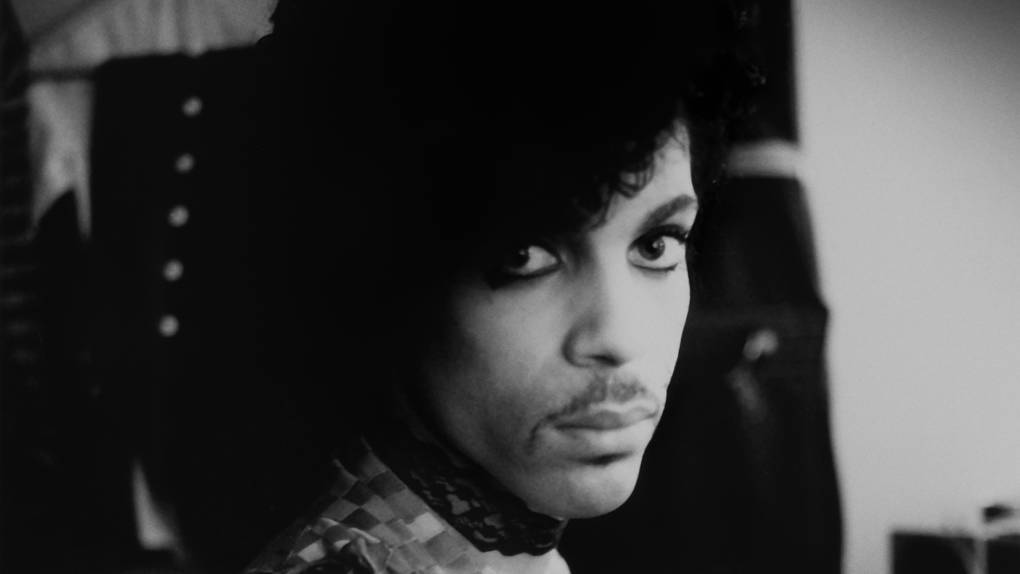
"description": "Prince, backstage during his 1999 tour.",
"title": "Prince, backstage during his 1999 tour.",
"credit": null,
"status": "inherit",
"isLoading": false,
"fetchFailed": false
},
"arts_13834434": {
"type": "attachments",
"id": "arts_13834434",
"meta": {
"index": "attachments_1716263798",
"site": "arts",
"id": "13834434",
"found": true
},
"parent": 13834433,
"imgSizes": {
"small": {
"file": "https://ww2.kqed.org/app/uploads/sites/2/2018/06/shaneera-1-243578c5893d2506264a49c7522e2cf96af20461-520x390.jpg",
"width": 520,
"mimeType": "image/jpeg",
"height": 390
},
"twentyfourteen-full-width": {
"file": "https://ww2.kqed.org/app/uploads/sites/2/2018/06/shaneera-1-243578c5893d2506264a49c7522e2cf96af20461-1038x576.jpg",
"width": 1038,
"mimeType": "image/jpeg",
"height": 576
},
"thumbnail": {
"file": "https://ww2.kqed.org/app/uploads/sites/2/2018/06/shaneera-1-243578c5893d2506264a49c7522e2cf96af20461-160x120.jpg",
"width": 160,
"mimeType": "image/jpeg",
"height": 120
},
"fd-sm": {
"file": "https://ww2.kqed.org/app/uploads/sites/2/2018/06/shaneera-1-243578c5893d2506264a49c7522e2cf96af20461-960x720.jpg",
"width": 960,
"mimeType": "image/jpeg",
"height": 720
},
"post-thumbnail": {
"file": "https://ww2.kqed.org/app/uploads/sites/2/2018/06/shaneera-1-243578c5893d2506264a49c7522e2cf96af20461-672x372.jpg",
"width": 672,
"mimeType": "image/jpeg",
"height": 372
},
"xsmall": {
"file": "https://ww2.kqed.org/app/uploads/sites/2/2018/06/shaneera-1-243578c5893d2506264a49c7522e2cf96af20461-375x281.jpg",
"width": 375,
"mimeType": "image/jpeg",
"height": 281
},
"kqedFullSize": {
"file": "https://ww2.kqed.org/app/uploads/sites/2/2018/06/shaneera-1-243578c5893d2506264a49c7522e2cf96af20461.jpg",
"width": 1772,
"height": 1329
},
"large": {
"file": "https://ww2.kqed.org/app/uploads/sites/2/2018/06/shaneera-1-243578c5893d2506264a49c7522e2cf96af20461-1020x765.jpg",
"width": 1020,
"mimeType": "image/jpeg",
"height": 765
},
"xlarge": {
"file": "https://ww2.kqed.org/app/uploads/sites/2/2018/06/shaneera-1-243578c5893d2506264a49c7522e2cf96af20461-1180x885.jpg",
"width": 1180,
"mimeType": "image/jpeg",
"height": 885
},
"complete_open_graph": {
"file": "https://ww2.kqed.org/app/uploads/sites/2/2018/06/shaneera-1-243578c5893d2506264a49c7522e2cf96af20461-1200x900.jpg",
"width": 1200,
"mimeType": "image/jpeg",
"height": 900
},
"guest-author-50": {
"file": "https://ww2.kqed.org/app/uploads/sites/2/2018/06/shaneera-1-243578c5893d2506264a49c7522e2cf96af20461-50x50.jpg",
"width": 50,
"mimeType": "image/jpeg",
"height": 50
},
"guest-author-96": {
"file": "https://ww2.kqed.org/app/uploads/sites/2/2018/06/shaneera-1-243578c5893d2506264a49c7522e2cf96af20461-96x96.jpg",
"width": 96,
"mimeType": "image/jpeg",
"height": 96
},
"medium": {
"file": "https://ww2.kqed.org/app/uploads/sites/2/2018/06/shaneera-1-243578c5893d2506264a49c7522e2cf96af20461-800x600.jpg",
"width": 800,
"mimeType": "image/jpeg",
"height": 600
},
"guest-author-64": {
"file": "https://ww2.kqed.org/app/uploads/sites/2/2018/06/shaneera-1-243578c5893d2506264a49c7522e2cf96af20461-64x64.jpg",
"width": 64,
"mimeType": "image/jpeg",
"height": 64
},
"guest-author-32": {
"file": "https://ww2.kqed.org/app/uploads/sites/2/2018/06/shaneera-1-243578c5893d2506264a49c7522e2cf96af20461-32x32.jpg",
"width": 32,
"mimeType": "image/jpeg",
"height": 32
},
"fd-med": {
"file": "https://ww2.kqed.org/app/uploads/sites/2/2018/06/shaneera-1-243578c5893d2506264a49c7522e2cf96af20461-1180x885.jpg",
"width": 1180,
"mimeType": "image/jpeg",
"height": 885
},
"detail": {
"file": "https://ww2.kqed.org/app/uploads/sites/2/2018/06/shaneera-1-243578c5893d2506264a49c7522e2cf96af20461-150x150.jpg",
"width": 150,
"mimeType": "image/jpeg",
"height": 150
},
"medium_large": {
"file": "https://ww2.kqed.org/app/uploads/sites/2/2018/06/shaneera-1-243578c5893d2506264a49c7522e2cf96af20461-768x576.jpg",
"width": 768,
"mimeType": "image/jpeg",
"height": 576
},
"guest-author-128": {
"file": "https://ww2.kqed.org/app/uploads/sites/2/2018/06/shaneera-1-243578c5893d2506264a49c7522e2cf96af20461-128x128.jpg",
"width": 128,
"mimeType": "image/jpeg",
"height": 128
},
"xxsmall": {
"file": "https://ww2.kqed.org/app/uploads/sites/2/2018/06/shaneera-1-243578c5893d2506264a49c7522e2cf96af20461-240x180.jpg",
"width": 240,
"mimeType": "image/jpeg",
"height": 180
}
},
"publishDate": 1528243757,
"modified": 1528244109,
"caption": "Fatima Al Qadiri, as Shaneera.",
"description": "Fatima Al Qadiri, as Shaneera.",
"title": "Fatima Al Qadiri, as Shaneera.",
"credit": "Fijia Nabeel/Courtesy of the artist",
"status": "inherit",
"isLoading": false,
"fetchFailed": false
}
},
"audioPlayerReducer": {
"postId": "stream_live",
"isPaused": true,
"isPlaying": false,
"pfsActive": false,
"pledgeModalIsOpen": true,
"playerDrawerIsOpen": false,
"liveAudioPlayStartedAt": 0,
"liveAudioPlayContext": ""
},
"authorsReducer": {
"byline_arts_13835096": {
"type": "authors",
"id": "byline_arts_13835096",
"meta": {
"override": true
},
"slug": "byline_arts_13835096",
"name": "Stephen Thompson",
"isLoading": false
},
"byline_arts_13835047": {
"type": "authors",
"id": "byline_arts_13835047",
"meta": {
"override": true
},
"slug": "byline_arts_13835047",
"name": "Anastasia Tsioulcas",
"isLoading": false
},
"byline_arts_13834918": {
"type": "authors",
"id": "byline_arts_13834918",
"meta": {
"override": true
},
"slug": "byline_arts_13834918",
"name": "Anastasia Tsioulcas",
"isLoading": false
},
"byline_arts_13834875": {
"type": "authors",
"id": "byline_arts_13834875",
"meta": {
"override": true
},
"slug": "byline_arts_13834875",
"name": "Emily Abshire",
"isLoading": false
},
"byline_arts_13834795": {
"type": "authors",
"id": "byline_arts_13834795",
"meta": {
"override": true
},
"slug": "byline_arts_13834795",
"name": "Jason Breslow",
"isLoading": false
},
"byline_arts_13834675": {
"type": "authors",
"id": "byline_arts_13834675",
"meta": {
"override": true
},
"slug": "byline_arts_13834675",
"name": "Andrew Flanagan",
"isLoading": false
},
"byline_arts_13834666": {
"type": "authors",
"id": "byline_arts_13834666",
"meta": {
"override": true
},
"slug": "byline_arts_13834666",
"name": "Andrew Flanagan",
"isLoading": false
},
"byline_arts_13834589": {
"type": "authors",
"id": "byline_arts_13834589",
"meta": {
"override": true
},
"slug": "byline_arts_13834589",
"name": "Andrew Flanagan",
"isLoading": false
},
"byline_arts_13834433": {
"type": "authors",
"id": "byline_arts_13834433",
"meta": {
"override": true
},
"slug": "byline_arts_13834433",
"name": "Mina Tavakoli",
"isLoading": false
},
"broos": {
"type": "authors",
"id": "3250",
"meta": {
"index": "authors_1716337520",
"id": "3250",
"found": true
},
"name": "Brandon Roos",
"firstName": "Brandon",
"lastName": "Roos",
"slug": "broos",
"email": "roos.b@sbcglobal.net",
"display_author_email": false,
"staff_mastheads": [],
"title": null,
"bio": null,
"avatar": "https://secure.gravatar.com/avatar/d3dd0b201284955bebf9395b371d1ad4?s=600&d=blank&r=g",
"twitter": null,
"facebook": null,
"instagram": null,
"linkedin": null,
"sites": [
{
"site": "arts",
"roles": [
"contributor"
]
}
],
"headData": {
"title": "Brandon Roos | KQED",
"description": null,
"ogImgSrc": "https://secure.gravatar.com/avatar/d3dd0b201284955bebf9395b371d1ad4?s=600&d=blank&r=g",
"twImgSrc": "https://secure.gravatar.com/avatar/d3dd0b201284955bebf9395b371d1ad4?s=600&d=blank&r=g"
},
"isLoading": false,
"link": "/author/broos"
},
"nvoynovskaya": {
"type": "authors",
"id": "11387",
"meta": {
"index": "authors_1716337520",
"id": "11387",
"found": true
},
"name": "Nastia Voynovskaya",
"firstName": "Nastia",
"lastName": "Voynovskaya",
"slug": "nvoynovskaya",
"email": "nvoynovskaya@kqed.org",
"display_author_email": false,
"staff_mastheads": [
"arts"
],
"title": "Editor and reporter",
"bio": "Nastia Voynovskaya is a reporter, editor and host at KQED Arts & Culture. She's been covering the arts in the Bay Area for over a decade, with a focus on music, queer culture, labor issues and grassroots organizing. She has edited KQED story series such as Trans Bay: A History of San Francisco's Gender-Diverse Community, and co-created KQED's Bay Area hip-hop history project, That's My Word. Nastia's work has been recognized by the Society of Professional Journalists and San Francisco Press Club. She regularly appears on podcasts and radio programs, including NPR's All Songs Considered, and hosts live events where music, culture and conversation meet.",
"avatar": "https://secure.gravatar.com/avatar/5025ee460e5a85d69ca20ea6c6f2f80d7e17795c828f61ea3aecfcd924e9042e?s=600&d=blank&r=g",
"twitter": null,
"bluesky": null,
"facebook": null,
"instagram": "https://www.instagram.com/nananastia/",
"linkedin": null,
"sites": [
{
"site": "",
"roles": [
"editor"
]
},
{
"site": "arts",
"roles": [
"administrator"
]
},
{
"site": "news",
"roles": [
"editor"
]
},
{
"site": "pop",
"roles": [
"administrator"
]
},
{
"site": "bayareabites",
"roles": [
"editor"
]
},
{
"site": "podcasts",
"roles": [
"editor"
]
},
{
"site": "hiphop",
"roles": [
"editor"
]
}
],
"headData": {
"title": "Nastia Voynovskaya | KQED",
"description": "Editor and reporter",
"ogImgSrc": "https://secure.gravatar.com/avatar/5025ee460e5a85d69ca20ea6c6f2f80d7e17795c828f61ea3aecfcd924e9042e?s=600&d=blank&r=g",
"twImgSrc": "https://secure.gravatar.com/avatar/5025ee460e5a85d69ca20ea6c6f2f80d7e17795c828f61ea3aecfcd924e9042e?s=600&d=blank&r=g"
},
"isLoading": false,
"link": "/author/nvoynovskaya"
},
"jlipsky": {
"type": "authors",
"id": "11992",
"meta": {
"index": "authors_1716337520",
"id": "11992",
"found": true
},
"name": "Jessica Lipsky",
"firstName": "Jessica",
"lastName": "Lipsky",
"slug": "jlipsky",
"email": "jessica.lipsky@gmail.com",
"display_author_email": false,
"staff_mastheads": [],
"title": "KQED Contributor",
"bio": "Jessica Lipsky is a freelance writer who has contributed to the New York Times, the Washington Post, Columbia Journalism Review, NPR and more. She is the author of \u003cem>It Ain’t Retro: Daptone Records & The 21st-Century Soul Revolution\u003c/em>. Find her work \u003ca href=\"https://www.jlipsky.com/\">here\u003c/a>.",
"avatar": "https://secure.gravatar.com/avatar/07bb90ce7e446aa0abb4fe23b3437ebd?s=600&d=blank&r=g",
"twitter": null,
"facebook": null,
"instagram": null,
"linkedin": null,
"sites": [
{
"site": "arts",
"roles": [
"contributor"
]
},
{
"site": "futureofyou",
"roles": [
"contributor"
]
}
],
"headData": {
"title": "Jessica Lipsky | KQED",
"description": "KQED Contributor",
"ogImgSrc": "https://secure.gravatar.com/avatar/07bb90ce7e446aa0abb4fe23b3437ebd?s=600&d=blank&r=g",
"twImgSrc": "https://secure.gravatar.com/avatar/07bb90ce7e446aa0abb4fe23b3437ebd?s=600&d=blank&r=g"
},
"isLoading": false,
"link": "/author/jlipsky"
}
},
"pagesReducer": {
"arts_category_music": {
"type": "terms",
"id": "arts_69",
"meta": {
"index": "terms_1716263798",
"site": "arts",
"id": "69",
"score": 10.851903
},
"featImg": null,
"name": "Music",
"description": null,
"taxonomy": "category",
"headData": {
"twImgId": null,
"twTitle": null,
"ogTitle": null,
"ogImgId": null,
"twDescription": null,
"description": null,
"title": "Music Archives | KQED Arts",
"ogDescription": null
},
"ttid": 70,
"slug": "music",
"isLoading": false,
"title": "Music",
"pageMeta": {
"site": "arts",
"WpPageTemplate": "page-topic-editorial",
"currentPage": 180
},
"blocks": [
{
"blockName": "kqed/post-list",
"attrs": {
"layout": "cardArticle2",
"query": "posts/arts?category=music",
"seeMore": false,
"paginated": true,
"page": 180
}
},
{
"blockName": "kqed/ad"
}
]
}
},
"pfsSessionReducer": {},
"postsReducer": {
"stream_live": {
"type": "live",
"id": "stream_live",
"audioUrl": "https://streams.kqed.org/kqedradio",
"title": "Live Stream",
"excerpt": "Live Stream information currently unavailable.",
"link": "/radio",
"featImg": "",
"label": {
"name": "KQED Live",
"link": "/"
}
},
"stream_kqedNewscast": {
"type": "posts",
"id": "stream_kqedNewscast",
"audioUrl": "https://www.kqed.org/.stream/anon/radio/RDnews/newscast.mp3?_=1",
"title": "KQED Newscast",
"featImg": "",
"label": {
"name": "88.5 FM",
"link": "/"
}
},
"arts_13835096": {
"type": "posts",
"id": "arts_13835096",
"meta": {
"index": "posts_1716263798",
"site": "arts",
"id": "13835096",
"score": null,
"sort": [
1529022279000
]
},
"guestAuthors": [],
"slug": "so-its-come-to-this-apparently-ryan-adams-is-a-weatherman-now",
"title": "So It's Come to This: Apparently Ryan Adams is a Weatherman Now",
"publishDate": 1529022279,
"format": "standard",
"headTitle": "So It’s Come to This: Apparently Ryan Adams is a Weatherman Now | KQED",
"labelTerm": {
"term": 137,
"site": "arts"
},
"content": "\u003cp>Summer hasn’t even officially begun yet, and it’s already been a disorienting season. The president is \u003ca href=\"http://www.foxnews.com/politics/2018/06/12/trump-praises-kim-jong-un-as-strong-funny-smart-and-great-negotiator-in-hannity-interview.html\" target=\"_blank\" rel=\"noopener\">complimenting a North Korean leader\u003c/a> and \u003ca href=\"https://www.cnn.com/2018/06/09/politics/trump-justin-trudeau-g7-communique/index.html\" target=\"_blank\" rel=\"noopener\">lambasting one from Canada\u003c/a>. Raccoons are \u003ca href=\"https://www.npr.org/2018/06/12/619245875/its-a-bird-it-s-a-plane-or-a-raccoon-climbing-a-st-paul-skyscraper\" target=\"_blank\" rel=\"noopener\">scaling 25-story buildings\u003c/a>, ostensibly for our amusement. And apparently \u003ca href=\"https://www.npr.org/artists/14953534/ryan-adams\" target=\"_blank\" rel=\"noopener\">Ryan Adams\u003c/a>, no longer content to serve as one of America’s most celebrated singer-songwriters, is doing the local weather on a Denver TV station, fulfilling what he says is a longtime dream.\u003c/p>\n\u003cp>While in Denver to play a show at the Red Rocks Amphitheater, Adams cooked up an arrangement with a local TV station wherein he’d give Wednesday’s weather report and write and record a song to be played on air. First, watch the animated video that accompanies the new original composition “Denver7 (Piece of Heaven),” which… okay, fair warning, this isn’t the \u003cem>best\u003c/em> song Adams has ever written.\u003c/p>\n\u003cp>https://www.youtube.com/watch?v=cDuWxOeseXw\u003c/p>\n\u003cp>Naturally, Denver7 was only too happy to live up to its end of the bargain, so Adams donned a Batman T-shirt and some flannel, appeared in a short interview, shouted out the movie \u003cem>Twister\u003c/em> (for inspiring his love of the weather), and gave the station’s Wednesday-evening weather report in front of a green screen.\u003c/p>\n\u003cp>https://www.youtube.com/watch?v=REAXSEtqDNg\u003c/p>\n\u003cp>[ad fullwidth]\u003c/p>\n\u003cp>For a first-timer with no formal meteorological training, Adams fared reasonably well, ad-libbing a bit about 10-15 mph winds (“For anybody that’s super into the wind, there you go”) and only occasionally wandering out of the frame entirely. So, yeah, there you go! In the America of June 2018, our enemies are our friends, our friends are our enemies, raccoons are our heroes and Ryan Adams is our weatherman.\u003c/p>\n\u003cp>\u003c/p>\n\u003cp>Best of luck to us all! \u003c/p>\n\u003cdiv class=\"fullattribution\">Copyright 2018 NPR. To see more, visit http://www.npr.org/.\u003cimg decoding=\"async\" src=\"https://www.google-analytics.com/__utm.gif?utmac=UA-5828686-4&utmdt=So+It%27s+Come+To+This%3A+Apparently+Ryan+Adams+Is+A+Weatherman+Now&utme=8(APIKey)9(MDAxOTAwOTE4MDEyMTkxMDAzNjczZDljZA004)\">\u003c/div>\n\n",
"blocks": [],
"excerpt": "In exchange for giving Wednesday's forecast on a Denver TV station, the singer-songwriter recorded a new original song, which... fair warning, isn't the \u003cem>best\u003c/em> thing Adams has ever written.",
"status": "publish",
"parent": 0,
"modified": 1726792542,
"stats": {
"hasAudio": false,
"hasVideo": true,
"hasChartOrMap": false,
"iframeSrcs": [],
"hasGoogleForm": false,
"hasGallery": false,
"hasHearkenModule": false,
"hasPolis": false,
"paragraphCount": 7,
"wordCount": 320
},
"headData": {
"title": "So It's Come to This: Apparently Ryan Adams is a Weatherman Now | KQED",
"description": "In exchange for giving Wednesday's forecast on a Denver TV station, the singer-songwriter recorded a new original song, which... fair warning, isn't the best thing Adams has ever written.",
"ogTitle": "",
"ogDescription": "",
"ogImgId": "",
"twTitle": "",
"twDescription": "",
"twImgId": "",
"schema": {
"@context": "https://schema.org",
"@type": "Article",
"headline": "So It's Come to This: Apparently Ryan Adams is a Weatherman Now",
"datePublished": "2018-06-14T17:24:39-07:00",
"dateModified": "2024-09-19T17:35:42-07:00",
"image": "https://cdn.kqed.org/wp-content/uploads/2020/02/KQED-OG-Image@1x.png"
}
},
"sticky": false,
"nprByline": "Stephen Thompson",
"nprImageAgency": "YouTube",
"nprStoryId": "620015534",
"nprApiLink": "http://api.npr.org/query?id=620015534&apiKey=MDAxOTAwOTE4MDEyMTkxMDAzNjczZDljZA004",
"nprHtmlLink": "https://www.npr.org/sections/allsongs/2018/06/14/620015534/so-its-come-to-this-apparently-ryan-adams-is-a-weatherman-now?ft=nprml&f=620015534",
"nprRetrievedStory": "1",
"nprPubDate": "Thu, 14 Jun 2018 13:57:00 -0400",
"nprStoryDate": "Thu, 14 Jun 2018 13:57:04 -0400",
"nprLastModifiedDate": "Thu, 14 Jun 2018 13:57:04 -0400",
"path": "/arts/13835096/so-its-come-to-this-apparently-ryan-adams-is-a-weatherman-now",
"audioTrackLength": null,
"parsedContent": [
{
"type": "contentString",
"content": "\u003cdiv class=\"post-body\">\u003cp>\u003cp>Summer hasn’t even officially begun yet, and it’s already been a disorienting season. The president is \u003ca href=\"http://www.foxnews.com/politics/2018/06/12/trump-praises-kim-jong-un-as-strong-funny-smart-and-great-negotiator-in-hannity-interview.html\" target=\"_blank\" rel=\"noopener\">complimenting a North Korean leader\u003c/a> and \u003ca href=\"https://www.cnn.com/2018/06/09/politics/trump-justin-trudeau-g7-communique/index.html\" target=\"_blank\" rel=\"noopener\">lambasting one from Canada\u003c/a>. Raccoons are \u003ca href=\"https://www.npr.org/2018/06/12/619245875/its-a-bird-it-s-a-plane-or-a-raccoon-climbing-a-st-paul-skyscraper\" target=\"_blank\" rel=\"noopener\">scaling 25-story buildings\u003c/a>, ostensibly for our amusement. And apparently \u003ca href=\"https://www.npr.org/artists/14953534/ryan-adams\" target=\"_blank\" rel=\"noopener\">Ryan Adams\u003c/a>, no longer content to serve as one of America’s most celebrated singer-songwriters, is doing the local weather on a Denver TV station, fulfilling what he says is a longtime dream.\u003c/p>\n\u003cp>While in Denver to play a show at the Red Rocks Amphitheater, Adams cooked up an arrangement with a local TV station wherein he’d give Wednesday’s weather report and write and record a song to be played on air. First, watch the animated video that accompanies the new original composition “Denver7 (Piece of Heaven),” which… okay, fair warning, this isn’t the \u003cem>best\u003c/em> song Adams has ever written.\u003c/p>\u003c/p>\u003cp>\u003cspan class='utils-parseShortcode-shortcodes-__youtubeShortcode__embedYoutube'>\n \u003cspan class='utils-parseShortcode-shortcodes-__youtubeShortcode__embedYoutubeInside'>\n \u003ciframe\n loading='lazy'\n class='utils-parseShortcode-shortcodes-__youtubeShortcode__youtubePlayer'\n type='text/html'\n src='//www.youtube.com/embed/cDuWxOeseXw'\n title='//www.youtube.com/embed/cDuWxOeseXw'\n allowfullscreen='true'\n style='border:0;'>\u003c/iframe>\n \u003c/span>\n \u003c/span>\u003c/p>\u003cp>\u003cp>Naturally, Denver7 was only too happy to live up to its end of the bargain, so Adams donned a Batman T-shirt and some flannel, appeared in a short interview, shouted out the movie \u003cem>Twister\u003c/em> (for inspiring his love of the weather), and gave the station’s Wednesday-evening weather report in front of a green screen.\u003c/p>\u003c/p>\u003cp>\u003cspan class='utils-parseShortcode-shortcodes-__youtubeShortcode__embedYoutube'>\n \u003cspan class='utils-parseShortcode-shortcodes-__youtubeShortcode__embedYoutubeInside'>\n \u003ciframe\n loading='lazy'\n class='utils-parseShortcode-shortcodes-__youtubeShortcode__youtubePlayer'\n type='text/html'\n src='//www.youtube.com/embed/REAXSEtqDNg'\n title='//www.youtube.com/embed/REAXSEtqDNg'\n allowfullscreen='true'\n style='border:0;'>\u003c/iframe>\n \u003c/span>\n \u003c/span>\u003c/p>\u003cp>\u003cp>\u003c/p>\u003c/div>",
"attributes": {
"named": {},
"numeric": []
}
},
{
"type": "component",
"content": "",
"name": "ad",
"attributes": {
"named": {
"label": "fullwidth"
},
"numeric": [
"fullwidth"
]
}
},
{
"type": "contentString",
"content": "\u003cdiv class=\"post-body\">\u003cp>\u003c/p>\n\u003cp>For a first-timer with no formal meteorological training, Adams fared reasonably well, ad-libbing a bit about 10-15 mph winds (“For anybody that’s super into the wind, there you go”) and only occasionally wandering out of the frame entirely. So, yeah, there you go! In the America of June 2018, our enemies are our friends, our friends are our enemies, raccoons are our heroes and Ryan Adams is our weatherman.\u003c/p>\n\u003cp>\u003c/p>\n\u003cp>Best of luck to us all! \u003c/p>\n\u003cdiv class=\"fullattribution\">Copyright 2018 NPR. To see more, visit http://www.npr.org/.\u003cimg decoding=\"async\" src=\"https://www.google-analytics.com/__utm.gif?utmac=UA-5828686-4&utmdt=So+It%27s+Come+To+This%3A+Apparently+Ryan+Adams+Is+A+Weatherman+Now&utme=8(APIKey)9(MDAxOTAwOTE4MDEyMTkxMDAzNjczZDljZA004)\">\u003c/div>\n\n\u003c/div>\u003c/p>",
"attributes": {
"named": {},
"numeric": []
}
}
],
"link": "/arts/13835096/so-its-come-to-this-apparently-ryan-adams-is-a-weatherman-now",
"authors": [
"byline_arts_13835096"
],
"categories": [
"arts_69",
"arts_235",
"arts_990"
],
"tags": [
"arts_596"
],
"affiliates": [
"arts_137"
],
"featImg": "arts_13835097",
"label": "arts_137"
},
"arts_13835038": {
"type": "posts",
"id": "arts_13835038",
"meta": {
"index": "posts_1716263798",
"site": "arts",
"id": "13835038",
"score": null,
"sort": [
1529013644000
]
},
"guestAuthors": [],
"slug": "former-fillmore-west-to-host-first-event-in-45-years-for-pride-weekend",
"title": "Former Fillmore West to Host First Event in 45 Years for Pride Weekend",
"publishDate": 1529013644,
"format": "standard",
"headTitle": "Former Fillmore West to Host First Event in 45 Years for Pride Weekend | KQED",
"labelTerm": {
"site": "arts"
},
"content": "\u003cp>A piece of San Francisco musical history will be brought back to life at the end of the month, at least temporarily. The historic Fillmore West—most recently the site of a Honda dealership on the corner of Market Street and South Van Ness—is reopening under new management and will host events for the first time in 45 years. But before music fans start celebrating the reemergence of the storied venue, there’s a catch: the events company managing the former Fillmore West may only have three to five years to utilize it before the developer who owns the underlying land turns the site into a high-rise apartment tower.\u003c/p>\n\u003cp>SVN West, once a ’60s counterculture mecca, utilizes much of the Fillmore West’s original architecture and will feature a mezzanine, an approximately 25,000-square-foot ballroom with high ceilings and a similarly sized outdoor terrace. The ballroom holds 4,000 to 6,000 people—a rarity among independent venues in the city.\u003c/p>\n\u003cfigure id=\"attachment_13835051\" class=\"wp-caption aligncenter\" style=\"max-width: 800px\">\u003cimg loading=\"lazy\" decoding=\"async\" class=\"size-medium wp-image-13835051\" src=\"https://ww2.kqed.org/arts/wp-content/uploads/sites/2/2018/06/SVN-West-Main-Room-800x338.jpg\" alt=\"The main ballroom at SVN West. \" width=\"800\" height=\"338\" srcset=\"https://cdn.kqed.org/wp-content/uploads/sites/2/2018/06/SVN-West-Main-Room-800x338.jpg 800w, https://cdn.kqed.org/wp-content/uploads/sites/2/2018/06/SVN-West-Main-Room-160x68.jpg 160w, https://cdn.kqed.org/wp-content/uploads/sites/2/2018/06/SVN-West-Main-Room-768x325.jpg 768w, https://cdn.kqed.org/wp-content/uploads/sites/2/2018/06/SVN-West-Main-Room-1020x431.jpg 1020w, https://cdn.kqed.org/wp-content/uploads/sites/2/2018/06/SVN-West-Main-Room-1200x508.jpg 1200w, https://cdn.kqed.org/wp-content/uploads/sites/2/2018/06/SVN-West-Main-Room.jpg 1920w, https://cdn.kqed.org/wp-content/uploads/sites/2/2018/06/SVN-West-Main-Room-1180x499.jpg 1180w, https://cdn.kqed.org/wp-content/uploads/sites/2/2018/06/SVN-West-Main-Room-960x406.jpg 960w, https://cdn.kqed.org/wp-content/uploads/sites/2/2018/06/SVN-West-Main-Room-240x102.jpg 240w, https://cdn.kqed.org/wp-content/uploads/sites/2/2018/06/SVN-West-Main-Room-375x159.jpg 375w, https://cdn.kqed.org/wp-content/uploads/sites/2/2018/06/SVN-West-Main-Room-520x220.jpg 520w\" sizes=\"auto, (max-width: 800px) 100vw, 800px\">\u003cfigcaption class=\"wp-caption-text\">The main ballroom at SVN West. \u003ccite>(Non Plus Ultra, Inc. )\u003c/cite>\u003c/figcaption>\u003c/figure>\n\u003cp>\u003ca href=\"https://nonplusultrainc.com/\" target=\"_blank\" rel=\"noopener\">Non Plus Ultra, Inc.\u003c/a>, a local company with philanthropic roots, manages SVN West. (Its leadership team helped found \u003ca href=\"https://projectwreckless.org/\" target=\"_blank\" rel=\"noopener\">Project Wreckless\u003c/a>, which teaches at-risk youth to restore classic cars, and the company frequently donates proceeds from events to community organizations.) Non Plus Ultra (NPU) also runs The Mint, Palace of Fine Arts and The Midway.\u003c/p>\n\u003cp>Although the company hasn’t disclosed many details about upcoming booking at SVN West, NPU president Jordan Langer says he plans to host a variety of corporate and community events. The first event at the new SVN West is a \u003ca href=\"https://www.eventbrite.com/e/juanita-more-pride-saturday-night-2018-tickets-46416900198\" target=\"_blank\" rel=\"noopener\">Pride celebration\u003c/a> featuring several DJs and drag star Juanita MORE! on Saturday, June 23.\u003c/p>\n\u003cp>“We’ll do some parties, live music and art stuff including installations,” NPU President Jordan Langer said of his vision for SVN West. “Rather than the building sitting empty or underutilized, we wanted to activate it in a cool, positive light. It’s an incredible venue—and if those walls could talk!”\u003c/p>\n\u003cp>[ad fullwidth]\u003c/p>\n\u003cp>The ballroom of 10 South Van Ness is certainly hallowed ground. Originally a big band dance hall called The Carousel Ballroom and a stop on the West Coast Chitlin’ Circuit, the network of venues where African-American artists performed during segregation, the venue became the epicenter of the San Francisco scene under the stewardship of concert impresario Bill Graham in the late ’60s. Graham renamed the venue Fillmore West after leaving his original location (today’s current Fillmore), and promoted a 1967 BB King show that became the legendary guitarist’s first performance in front of a \u003ca href=\"https://www.sfgate.com/music/article/Music-A-night-at-the-Fillmore-changed-B-B-6266457.php\" target=\"_blank\" rel=\"noopener\">majority white audience\u003c/a>.\u003c/p>\n\u003cp>The space was also briefly run by a collective formed by Jefferson Airplane, Quicksilver Messenger Service, Big Brother and the Holding Company and The Grateful Dead—all of whom would become regulars on the Fillmore West stage. The Fillmore West closed in 1971 with 14 bands performing between June 29 and July 4; an album and documentary titled \u003cem>Last Days at The Fillmore\u003c/em> was released in 1972.\u003c/p>\n\u003cp>https://www.youtube.com/watch?v=_SDWjfsy-GA\u003c/p>\n\u003cp>While NPU is contacting some of those living legends from the Bay Area’s heyday for future programming, Langer noted that SVN West won’t strictly be a throwback. “We really want to keep it as a continuation of the cool stuff that’s happened in the building as opposed to re-launching the Fillmore West. Those are somewhat impossible shoes to fill.”\u003c/p>\n\u003cp>Non Plus Ultra will likely have several years to take advantage of the space. The building is owned by developers \u003ca href=\"https://www.crescentheights.com/\" target=\"_blank\" rel=\"noopener\">Crescent Heights\u003c/a>, which aims to build a 984-unit mixed-use development on the site and has undergone a years-long planning process with the city. The Miami-based company acquired the land in 2014 and Langer estimates that in three to five years, development will begin. Crescent Heights could not be reached for comment on this story.\u003c/p>\n\u003cp>“Crescent Heights is looking at this being a test run pilot program for potentially doing something more long term,” Langer said. Ultimately, NPU hopes to convince Crescent Heights that a ballroom will suit their plans.\u003c/p>\n\u003cp>In the interim, NPU is acquiring a sound system and securing its fixed-place permit from the city’s Entertainment Commission, which would allow SVN West to host events on an ongoing basis. That lengthy process involves multiple public hearings in front of the commission as well as neighborhood outreach, in addition to standard building, health and fire inspections. While it waits for a permanent permit, the company has secured multiple one-time entertainment event permits to host events such as its Pride celebration. NPU can have up to 12 such permits each year.\u003c/p>\n\u003cfigure id=\"attachment_13835052\" class=\"wp-caption aligncenter\" style=\"max-width: 800px\">\u003cimg loading=\"lazy\" decoding=\"async\" class=\"size-medium wp-image-13835052\" src=\"https://ww2.kqed.org/arts/wp-content/uploads/sites/2/2018/06/SVN-Mezzanine-800x322.jpg\" alt=\"The mezzanine of SVN West. \" width=\"800\" height=\"322\" srcset=\"https://cdn.kqed.org/wp-content/uploads/sites/2/2018/06/SVN-Mezzanine-800x322.jpg 800w, https://cdn.kqed.org/wp-content/uploads/sites/2/2018/06/SVN-Mezzanine-160x64.jpg 160w, https://cdn.kqed.org/wp-content/uploads/sites/2/2018/06/SVN-Mezzanine-768x309.jpg 768w, https://cdn.kqed.org/wp-content/uploads/sites/2/2018/06/SVN-Mezzanine-1020x411.jpg 1020w, https://cdn.kqed.org/wp-content/uploads/sites/2/2018/06/SVN-Mezzanine-1200x483.jpg 1200w, https://cdn.kqed.org/wp-content/uploads/sites/2/2018/06/SVN-Mezzanine.jpg 1920w, https://cdn.kqed.org/wp-content/uploads/sites/2/2018/06/SVN-Mezzanine-1180x475.jpg 1180w, https://cdn.kqed.org/wp-content/uploads/sites/2/2018/06/SVN-Mezzanine-960x387.jpg 960w, https://cdn.kqed.org/wp-content/uploads/sites/2/2018/06/SVN-Mezzanine-240x97.jpg 240w, https://cdn.kqed.org/wp-content/uploads/sites/2/2018/06/SVN-Mezzanine-375x151.jpg 375w, https://cdn.kqed.org/wp-content/uploads/sites/2/2018/06/SVN-Mezzanine-520x209.jpg 520w\" sizes=\"auto, (max-width: 800px) 100vw, 800px\">\u003cfigcaption class=\"wp-caption-text\">The mezzanine of SVN West. \u003ccite>(Non Plus Ultra, Inc. )\u003c/cite>\u003c/figcaption>\u003c/figure>\n\u003cp>“It’s great to see new places crop up, especially one that was so major in the city,” said Maggie Weiland, acting director of the city’s Entertainment Commission. “We’ve definitely seen a trend of some of those [larger capacity] venues we’ve known and loved for so many years going away. Any way we can support bringing them back and support the people who are working to bring them back is great.”\u003c/p>\n\u003cp>The opening of SVN West comes at a time of corporate consolidation in the Bay Area’s live music scene. Live Nation and Goldenvoice, which recently took control of the Great American Music Hall and Slim’s, along with Another Planet Entertainment, have an effective stronghold on booking in San Francisco; each controls small clubs, larger venues and music festivals such as Outside Lands. \u003cem>East Bay Express\u003c/em> \u003ca href=\"https://www.eastbayexpress.com/oakland/will-corporations-ruin-live-music-in-the-bay-area/Content?oid=14129707\">speculated\u003c/a> whether corporate control of San Francisco’s clubs and concert halls could homogenize live music in the region at the expense of local acts and promoters.\u003c/p>\n\u003cp>Langer, however, is unfazed and surprisingly upbeat. “I’m a huge believer in the more, the merrier,” he said, adding that, while NPU works well with bigger companies, he does not intend to use any of those corporate names as full-time bookers. Instead, NPU plans to keep booking in-house and is actively hiring a booker who can bring in unique talent and national acts that aren’t quite a fit for the nearby Bill Graham Civic Auditorium, which Langer jokingly referred to as the “900 pound gorilla in the room.”\u003c/p>\n\u003cfigure id=\"attachment_13835056\" class=\"wp-caption aligncenter\" style=\"max-width: 800px\">\u003cimg loading=\"lazy\" decoding=\"async\" class=\"size-medium wp-image-13835056\" src=\"https://ww2.kqed.org/arts/wp-content/uploads/sites/2/2018/06/SVN-Terrace-800x319.jpg\" alt=\"The rooftop terrace at SVN West. \" width=\"800\" height=\"319\" srcset=\"https://cdn.kqed.org/wp-content/uploads/sites/2/2018/06/SVN-Terrace-800x319.jpg 800w, https://cdn.kqed.org/wp-content/uploads/sites/2/2018/06/SVN-Terrace-160x64.jpg 160w, https://cdn.kqed.org/wp-content/uploads/sites/2/2018/06/SVN-Terrace-768x306.jpg 768w, https://cdn.kqed.org/wp-content/uploads/sites/2/2018/06/SVN-Terrace-1020x407.jpg 1020w, https://cdn.kqed.org/wp-content/uploads/sites/2/2018/06/SVN-Terrace-1200x479.jpg 1200w, https://cdn.kqed.org/wp-content/uploads/sites/2/2018/06/SVN-Terrace.jpg 1920w, https://cdn.kqed.org/wp-content/uploads/sites/2/2018/06/SVN-Terrace-1180x471.jpg 1180w, https://cdn.kqed.org/wp-content/uploads/sites/2/2018/06/SVN-Terrace-960x383.jpg 960w, https://cdn.kqed.org/wp-content/uploads/sites/2/2018/06/SVN-Terrace-240x96.jpg 240w, https://cdn.kqed.org/wp-content/uploads/sites/2/2018/06/SVN-Terrace-375x150.jpg 375w, https://cdn.kqed.org/wp-content/uploads/sites/2/2018/06/SVN-Terrace-520x207.jpg 520w\" sizes=\"auto, (max-width: 800px) 100vw, 800px\">\u003cfigcaption class=\"wp-caption-text\">The rooftop terrace at SVN West. \u003ccite>(Non Plus Ultra, Inc.)\u003c/cite>\u003c/figcaption>\u003c/figure>\n\u003cp>“I’m not concerned about the competition. More artists and DJs and talent and events will make everything better,” Langer said. “We’re really excited to be in the booking arena. I think that San Francisco is ready for more of the unique stuff that we’re going to bring the space.”\u003c/p>\n\u003cp>Langer’s pointed to an exhibit at The Midway called “\u003ca href=\"http://www.themidwaygallery.com/current-1/\" target=\"_blank\" rel=\"noopener\">She Bends: Women in Neon\u003c/a>” as an example of future art installations that could be held at SVN West. His other dreams for the venue include the return of Aretha Franklin, who recorded \u003cem>\u003ca href=\"https://www.youtube.com/watch?v=Vyx34kgHGng\" target=\"_blank\" rel=\"noopener\">Aretha Live at the Fillmore West\u003c/a>\u003c/em> in 1971. However, Langer cautioned against pigeonholing SVN as a venue dedicated to a specific genre of music.\u003c/p>\n\u003cp>“My hope is that we knock it out of the park in the next three to five years and there’s a longer-term solution for keeping this space in San Francisco,” Langer said. “Every day, spaces are closing and changing, very often not for development, but just the cost of doing stuff in the Bay Area is crazy. Hopefully we’re going to be able to show Crescent Heights and the city as a whole that spaces are a viable business still. You don’t need a tech company to come in and fill out your space; we can make it cooler and more fun and definitely more engaging to the community.”\u003c/p>\n\u003cp>[ad floatright]\u003c/p>\n\u003cp>NPU hasn’t announced a calendar of events at SVN West (the space was scheduled to host a benefit for Project Wreckless on June 14 with a workshop, go-kart racing, rooftop zip lining and performance by local funk band The Humidors, but the event was moved to The Midway) but Langer said there are multiple projects in the pipeline. He expects to host an official grand opening party in the near future.\u003c/p>\n\n",
"blocks": [],
"excerpt": "The company that controls the Midway, The Mint and Palace of Fine Arts is now booking the 25,000-square-foot ballroom at 10 South Van Ness. ",
"status": "publish",
"parent": 0,
"modified": 1769542052,
"stats": {
"hasAudio": false,
"hasVideo": true,
"hasChartOrMap": false,
"iframeSrcs": [],
"hasGoogleForm": false,
"hasGallery": false,
"hasHearkenModule": false,
"hasPolis": false,
"paragraphCount": 20,
"wordCount": 1434
},
"headData": {
"title": "Former Fillmore West to Host First Event in 45 Years for Pride Weekend | KQED",
"description": "The company that controls the Midway, The Mint and Palace of Fine Arts is now booking the 25,000-square-foot ballroom at 10 South Van Ness. ",
"ogTitle": "",
"ogDescription": "",
"ogImgId": "",
"twTitle": "",
"twDescription": "",
"twImgId": "",
"schema": {
"@context": "https://schema.org",
"@type": "Article",
"headline": "Former Fillmore West to Host First Event in 45 Years for Pride Weekend",
"datePublished": "2018-06-14T15:00:44-07:00",
"dateModified": "2026-01-27T11:27:32-08:00",
"image": "https://cdn.kqed.org/wp-content/uploads/2020/02/KQED-OG-Image@1x.png"
}
},
"primaryCategory": {
"termId": 69,
"slug": "music",
"name": "Music"
},
"sticky": false,
"nprStoryId": "kqed-13835038",
"templateType": "standard",
"featuredImageType": "standard",
"excludeFromSiteSearch": "Include",
"articleAge": "0",
"path": "/arts/13835038/former-fillmore-west-to-host-first-event-in-45-years-for-pride-weekend",
"audioTrackLength": null,
"parsedContent": [
{
"type": "contentString",
"content": "\u003cdiv class=\"post-body\">\u003cp>\u003cp>A piece of San Francisco musical history will be brought back to life at the end of the month, at least temporarily. The historic Fillmore West—most recently the site of a Honda dealership on the corner of Market Street and South Van Ness—is reopening under new management and will host events for the first time in 45 years. But before music fans start celebrating the reemergence of the storied venue, there’s a catch: the events company managing the former Fillmore West may only have three to five years to utilize it before the developer who owns the underlying land turns the site into a high-rise apartment tower.\u003c/p>\n\u003cp>SVN West, once a ’60s counterculture mecca, utilizes much of the Fillmore West’s original architecture and will feature a mezzanine, an approximately 25,000-square-foot ballroom with high ceilings and a similarly sized outdoor terrace. The ballroom holds 4,000 to 6,000 people—a rarity among independent venues in the city.\u003c/p>\n\u003cfigure id=\"attachment_13835051\" class=\"wp-caption aligncenter\" style=\"max-width: 800px\">\u003cimg loading=\"lazy\" decoding=\"async\" class=\"size-medium wp-image-13835051\" src=\"https://ww2.kqed.org/arts/wp-content/uploads/sites/2/2018/06/SVN-West-Main-Room-800x338.jpg\" alt=\"The main ballroom at SVN West. \" width=\"800\" height=\"338\" srcset=\"https://cdn.kqed.org/wp-content/uploads/sites/2/2018/06/SVN-West-Main-Room-800x338.jpg 800w, https://cdn.kqed.org/wp-content/uploads/sites/2/2018/06/SVN-West-Main-Room-160x68.jpg 160w, https://cdn.kqed.org/wp-content/uploads/sites/2/2018/06/SVN-West-Main-Room-768x325.jpg 768w, https://cdn.kqed.org/wp-content/uploads/sites/2/2018/06/SVN-West-Main-Room-1020x431.jpg 1020w, https://cdn.kqed.org/wp-content/uploads/sites/2/2018/06/SVN-West-Main-Room-1200x508.jpg 1200w, https://cdn.kqed.org/wp-content/uploads/sites/2/2018/06/SVN-West-Main-Room.jpg 1920w, https://cdn.kqed.org/wp-content/uploads/sites/2/2018/06/SVN-West-Main-Room-1180x499.jpg 1180w, https://cdn.kqed.org/wp-content/uploads/sites/2/2018/06/SVN-West-Main-Room-960x406.jpg 960w, https://cdn.kqed.org/wp-content/uploads/sites/2/2018/06/SVN-West-Main-Room-240x102.jpg 240w, https://cdn.kqed.org/wp-content/uploads/sites/2/2018/06/SVN-West-Main-Room-375x159.jpg 375w, https://cdn.kqed.org/wp-content/uploads/sites/2/2018/06/SVN-West-Main-Room-520x220.jpg 520w\" sizes=\"auto, (max-width: 800px) 100vw, 800px\">\u003cfigcaption class=\"wp-caption-text\">The main ballroom at SVN West. \u003ccite>(Non Plus Ultra, Inc. )\u003c/cite>\u003c/figcaption>\u003c/figure>\n\u003cp>\u003ca href=\"https://nonplusultrainc.com/\" target=\"_blank\" rel=\"noopener\">Non Plus Ultra, Inc.\u003c/a>, a local company with philanthropic roots, manages SVN West. (Its leadership team helped found \u003ca href=\"https://projectwreckless.org/\" target=\"_blank\" rel=\"noopener\">Project Wreckless\u003c/a>, which teaches at-risk youth to restore classic cars, and the company frequently donates proceeds from events to community organizations.) Non Plus Ultra (NPU) also runs The Mint, Palace of Fine Arts and The Midway.\u003c/p>\n\u003cp>Although the company hasn’t disclosed many details about upcoming booking at SVN West, NPU president Jordan Langer says he plans to host a variety of corporate and community events. The first event at the new SVN West is a \u003ca href=\"https://www.eventbrite.com/e/juanita-more-pride-saturday-night-2018-tickets-46416900198\" target=\"_blank\" rel=\"noopener\">Pride celebration\u003c/a> featuring several DJs and drag star Juanita MORE! on Saturday, June 23.\u003c/p>\n\u003cp>“We’ll do some parties, live music and art stuff including installations,” NPU President Jordan Langer said of his vision for SVN West. “Rather than the building sitting empty or underutilized, we wanted to activate it in a cool, positive light. It’s an incredible venue—and if those walls could talk!”\u003c/p>\n\u003cp>\u003c/p>\u003c/div>",
"attributes": {
"named": {},
"numeric": []
}
},
{
"type": "component",
"content": "",
"name": "ad",
"attributes": {
"named": {
"label": "fullwidth"
},
"numeric": [
"fullwidth"
]
}
},
{
"type": "contentString",
"content": "\u003cdiv class=\"post-body\">\u003cp>\u003c/p>\n\u003cp>The ballroom of 10 South Van Ness is certainly hallowed ground. Originally a big band dance hall called The Carousel Ballroom and a stop on the West Coast Chitlin’ Circuit, the network of venues where African-American artists performed during segregation, the venue became the epicenter of the San Francisco scene under the stewardship of concert impresario Bill Graham in the late ’60s. Graham renamed the venue Fillmore West after leaving his original location (today’s current Fillmore), and promoted a 1967 BB King show that became the legendary guitarist’s first performance in front of a \u003ca href=\"https://www.sfgate.com/music/article/Music-A-night-at-the-Fillmore-changed-B-B-6266457.php\" target=\"_blank\" rel=\"noopener\">majority white audience\u003c/a>.\u003c/p>\n\u003cp>The space was also briefly run by a collective formed by Jefferson Airplane, Quicksilver Messenger Service, Big Brother and the Holding Company and The Grateful Dead—all of whom would become regulars on the Fillmore West stage. The Fillmore West closed in 1971 with 14 bands performing between June 29 and July 4; an album and documentary titled \u003cem>Last Days at The Fillmore\u003c/em> was released in 1972.\u003c/p>\u003c/p>\u003cp>\u003cspan class='utils-parseShortcode-shortcodes-__youtubeShortcode__embedYoutube'>\n \u003cspan class='utils-parseShortcode-shortcodes-__youtubeShortcode__embedYoutubeInside'>\n \u003ciframe\n loading='lazy'\n class='utils-parseShortcode-shortcodes-__youtubeShortcode__youtubePlayer'\n type='text/html'\n src='//www.youtube.com/embed/_SDWjfsy-GA'\n title='//www.youtube.com/embed/_SDWjfsy-GA'\n allowfullscreen='true'\n style='border:0;'>\u003c/iframe>\n \u003c/span>\n \u003c/span>\u003c/p>\u003cp>\u003cp>While NPU is contacting some of those living legends from the Bay Area’s heyday for future programming, Langer noted that SVN West won’t strictly be a throwback. “We really want to keep it as a continuation of the cool stuff that’s happened in the building as opposed to re-launching the Fillmore West. Those are somewhat impossible shoes to fill.”\u003c/p>\n\u003cp>Non Plus Ultra will likely have several years to take advantage of the space. The building is owned by developers \u003ca href=\"https://www.crescentheights.com/\" target=\"_blank\" rel=\"noopener\">Crescent Heights\u003c/a>, which aims to build a 984-unit mixed-use development on the site and has undergone a years-long planning process with the city. The Miami-based company acquired the land in 2014 and Langer estimates that in three to five years, development will begin. Crescent Heights could not be reached for comment on this story.\u003c/p>\n\u003cp>“Crescent Heights is looking at this being a test run pilot program for potentially doing something more long term,” Langer said. Ultimately, NPU hopes to convince Crescent Heights that a ballroom will suit their plans.\u003c/p>\n\u003cp>In the interim, NPU is acquiring a sound system and securing its fixed-place permit from the city’s Entertainment Commission, which would allow SVN West to host events on an ongoing basis. That lengthy process involves multiple public hearings in front of the commission as well as neighborhood outreach, in addition to standard building, health and fire inspections. While it waits for a permanent permit, the company has secured multiple one-time entertainment event permits to host events such as its Pride celebration. NPU can have up to 12 such permits each year.\u003c/p>\n\u003cfigure id=\"attachment_13835052\" class=\"wp-caption aligncenter\" style=\"max-width: 800px\">\u003cimg loading=\"lazy\" decoding=\"async\" class=\"size-medium wp-image-13835052\" src=\"https://ww2.kqed.org/arts/wp-content/uploads/sites/2/2018/06/SVN-Mezzanine-800x322.jpg\" alt=\"The mezzanine of SVN West. \" width=\"800\" height=\"322\" srcset=\"https://cdn.kqed.org/wp-content/uploads/sites/2/2018/06/SVN-Mezzanine-800x322.jpg 800w, https://cdn.kqed.org/wp-content/uploads/sites/2/2018/06/SVN-Mezzanine-160x64.jpg 160w, https://cdn.kqed.org/wp-content/uploads/sites/2/2018/06/SVN-Mezzanine-768x309.jpg 768w, https://cdn.kqed.org/wp-content/uploads/sites/2/2018/06/SVN-Mezzanine-1020x411.jpg 1020w, https://cdn.kqed.org/wp-content/uploads/sites/2/2018/06/SVN-Mezzanine-1200x483.jpg 1200w, https://cdn.kqed.org/wp-content/uploads/sites/2/2018/06/SVN-Mezzanine.jpg 1920w, https://cdn.kqed.org/wp-content/uploads/sites/2/2018/06/SVN-Mezzanine-1180x475.jpg 1180w, https://cdn.kqed.org/wp-content/uploads/sites/2/2018/06/SVN-Mezzanine-960x387.jpg 960w, https://cdn.kqed.org/wp-content/uploads/sites/2/2018/06/SVN-Mezzanine-240x97.jpg 240w, https://cdn.kqed.org/wp-content/uploads/sites/2/2018/06/SVN-Mezzanine-375x151.jpg 375w, https://cdn.kqed.org/wp-content/uploads/sites/2/2018/06/SVN-Mezzanine-520x209.jpg 520w\" sizes=\"auto, (max-width: 800px) 100vw, 800px\">\u003cfigcaption class=\"wp-caption-text\">The mezzanine of SVN West. \u003ccite>(Non Plus Ultra, Inc. )\u003c/cite>\u003c/figcaption>\u003c/figure>\n\u003cp>“It’s great to see new places crop up, especially one that was so major in the city,” said Maggie Weiland, acting director of the city’s Entertainment Commission. “We’ve definitely seen a trend of some of those [larger capacity] venues we’ve known and loved for so many years going away. Any way we can support bringing them back and support the people who are working to bring them back is great.”\u003c/p>\n\u003cp>The opening of SVN West comes at a time of corporate consolidation in the Bay Area’s live music scene. Live Nation and Goldenvoice, which recently took control of the Great American Music Hall and Slim’s, along with Another Planet Entertainment, have an effective stronghold on booking in San Francisco; each controls small clubs, larger venues and music festivals such as Outside Lands. \u003cem>East Bay Express\u003c/em> \u003ca href=\"https://www.eastbayexpress.com/oakland/will-corporations-ruin-live-music-in-the-bay-area/Content?oid=14129707\">speculated\u003c/a> whether corporate control of San Francisco’s clubs and concert halls could homogenize live music in the region at the expense of local acts and promoters.\u003c/p>\n\u003cp>Langer, however, is unfazed and surprisingly upbeat. “I’m a huge believer in the more, the merrier,” he said, adding that, while NPU works well with bigger companies, he does not intend to use any of those corporate names as full-time bookers. Instead, NPU plans to keep booking in-house and is actively hiring a booker who can bring in unique talent and national acts that aren’t quite a fit for the nearby Bill Graham Civic Auditorium, which Langer jokingly referred to as the “900 pound gorilla in the room.”\u003c/p>\n\u003cfigure id=\"attachment_13835056\" class=\"wp-caption aligncenter\" style=\"max-width: 800px\">\u003cimg loading=\"lazy\" decoding=\"async\" class=\"size-medium wp-image-13835056\" src=\"https://ww2.kqed.org/arts/wp-content/uploads/sites/2/2018/06/SVN-Terrace-800x319.jpg\" alt=\"The rooftop terrace at SVN West. \" width=\"800\" height=\"319\" srcset=\"https://cdn.kqed.org/wp-content/uploads/sites/2/2018/06/SVN-Terrace-800x319.jpg 800w, https://cdn.kqed.org/wp-content/uploads/sites/2/2018/06/SVN-Terrace-160x64.jpg 160w, https://cdn.kqed.org/wp-content/uploads/sites/2/2018/06/SVN-Terrace-768x306.jpg 768w, https://cdn.kqed.org/wp-content/uploads/sites/2/2018/06/SVN-Terrace-1020x407.jpg 1020w, https://cdn.kqed.org/wp-content/uploads/sites/2/2018/06/SVN-Terrace-1200x479.jpg 1200w, https://cdn.kqed.org/wp-content/uploads/sites/2/2018/06/SVN-Terrace.jpg 1920w, https://cdn.kqed.org/wp-content/uploads/sites/2/2018/06/SVN-Terrace-1180x471.jpg 1180w, https://cdn.kqed.org/wp-content/uploads/sites/2/2018/06/SVN-Terrace-960x383.jpg 960w, https://cdn.kqed.org/wp-content/uploads/sites/2/2018/06/SVN-Terrace-240x96.jpg 240w, https://cdn.kqed.org/wp-content/uploads/sites/2/2018/06/SVN-Terrace-375x150.jpg 375w, https://cdn.kqed.org/wp-content/uploads/sites/2/2018/06/SVN-Terrace-520x207.jpg 520w\" sizes=\"auto, (max-width: 800px) 100vw, 800px\">\u003cfigcaption class=\"wp-caption-text\">The rooftop terrace at SVN West. \u003ccite>(Non Plus Ultra, Inc.)\u003c/cite>\u003c/figcaption>\u003c/figure>\n\u003cp>“I’m not concerned about the competition. More artists and DJs and talent and events will make everything better,” Langer said. “We’re really excited to be in the booking arena. I think that San Francisco is ready for more of the unique stuff that we’re going to bring the space.”\u003c/p>\n\u003cp>Langer’s pointed to an exhibit at The Midway called “\u003ca href=\"http://www.themidwaygallery.com/current-1/\" target=\"_blank\" rel=\"noopener\">She Bends: Women in Neon\u003c/a>” as an example of future art installations that could be held at SVN West. His other dreams for the venue include the return of Aretha Franklin, who recorded \u003cem>\u003ca href=\"https://www.youtube.com/watch?v=Vyx34kgHGng\" target=\"_blank\" rel=\"noopener\">Aretha Live at the Fillmore West\u003c/a>\u003c/em> in 1971. However, Langer cautioned against pigeonholing SVN as a venue dedicated to a specific genre of music.\u003c/p>\n\u003cp>“My hope is that we knock it out of the park in the next three to five years and there’s a longer-term solution for keeping this space in San Francisco,” Langer said. “Every day, spaces are closing and changing, very often not for development, but just the cost of doing stuff in the Bay Area is crazy. Hopefully we’re going to be able to show Crescent Heights and the city as a whole that spaces are a viable business still. You don’t need a tech company to come in and fill out your space; we can make it cooler and more fun and definitely more engaging to the community.”\u003c/p>\n\u003cp>\u003c/p>\u003c/div>",
"attributes": {
"named": {},
"numeric": []
}
},
{
"type": "component",
"content": "",
"name": "ad",
"attributes": {
"named": {
"label": "floatright"
},
"numeric": [
"floatright"
]
}
},
{
"type": "contentString",
"content": "\u003cdiv class=\"post-body\">\u003cp>\u003c/p>\n\u003cp>NPU hasn’t announced a calendar of events at SVN West (the space was scheduled to host a benefit for Project Wreckless on June 14 with a workshop, go-kart racing, rooftop zip lining and performance by local funk band The Humidors, but the event was moved to The Midway) but Langer said there are multiple projects in the pipeline. He expects to host an official grand opening party in the near future.\u003c/p>\n\n\u003c/div>\u003c/p>",
"attributes": {
"named": {},
"numeric": []
}
}
],
"link": "/arts/13835038/former-fillmore-west-to-host-first-event-in-45-years-for-pride-weekend",
"authors": [
"11992"
],
"categories": [
"arts_69",
"arts_235"
],
"tags": [
"arts_10589",
"arts_1118",
"arts_1806",
"arts_596",
"arts_1146"
],
"featImg": "arts_13835045",
"label": "arts"
},
"arts_13835047": {
"type": "posts",
"id": "arts_13835047",
"meta": {
"index": "posts_1716263798",
"site": "arts",
"id": "13835047",
"score": null,
"sort": [
1529000418000
]
},
"parent": 0,
"labelTerm": {
"site": "arts",
"term": 137
},
"blocks": [],
"publishDate": 1529000418,
"format": "standard",
"title": "Elvis Presley's Longtime Drummer, D.J. Fontana, Has Died",
"headTitle": "Elvis Presley’s Longtime Drummer, D.J. Fontana, Has Died | KQED",
"content": "\u003cp>D.J. Fontana, the drummer who helped create Elvis Presley’s early, rockabilly sound and who played with him throughout the 1950s on hits like “Heartbreak Hotel” and “Hound Dog,” has died, his wife Karen Fontana confirmed to NPR. Fontana died on Wednesday night in his sleep at the age of 87, while in hospice in Nashville.\u003c/p>\n\u003cp>Fontana was born March 15, 1931 as Dominic Joseph Fontana in Shreveport, Louisiana. In a 1999 \u003ca href=\"https://www.youtube.com/watch?v=RAIYHXG8TVg\" target=\"_blank\" rel=\"noopener\">interview\u003c/a> with music producer and filmmaker Dan Griffin, Fontana said that he began playing the drums in high school marching bands, and started really learning about structure and style by listening to recordings of big bands fronted by the likes of Stan Kenton, Woody Herman and the Dorsey Brothers. Later, he began playing with western swing bands and serving as the house drummer for a popular radio program broadcast from Shreveport called \u003cem>The Louisiana Hayride\u003c/em>.\u003c/p>\n\u003cp>When Presley appeared on \u003cem>Hayride\u003c/em> with bassist Bill Black and guitarist Scotty Moore in 1955, Fontana sat in with them — and a few months later, Presley asked Fontana to join his group full-time, taking the band from the three-piece setup assembled by producer Sam Phillips at Sun Records to its four-member lineup. Fontana was the last surviving member of that band, after Bill Black’s death in 1965, Presley’s in 1977 and Moore’s in 2016.\u003c/p>\n\u003cp>Fontana remained with Presley throughout the rest of the 1950s, and was a key contributor during the construction of Presley’s sound, providing an easy groove that evoked both rockabilly and swing, and helped to define hits like “Heartbreak Hotel,” “Don’t Be Cruel,” “Jailhouse Rock” and “Hound Dog.” In all, Fontana recorded more than 400 sides with Presley for RCA Victor.\u003c/p>\n\u003cp>https://www.youtube.com/watch?v=MMmljYkdr-w\u003c/p>\n\u003cp>[ad fullwidth]\u003c/p>\n\u003cp>When Presley turned to movie stardom in the following decade, Fontana began playing as a session musician in Nashville for other artists, though he continued recording with Presley regularly and appeared with him on his 1968 comeback TV special. But when Presley offered a spot for Fontana and Moore in his Las Vegas band in 1969, they both declined. The drummer last met with Presley in the mid-’70s.\u003c/p>\n\u003cp>https://www.youtube.com/watch?v=XLhLeJNugmA\u003c/p>\n\u003cp>In 1997, Fontana linked up with Scotty Moore again to record an album called \u003cem>All the King’s Men\u003c/em>, on which they were joined by artists like Keith Richards of The Rolling Stones and The Band. Fontana and Moore also appeared together on the 2000 album \u003cem>Good Rockin’ Tonight: The Legacy of Sun Records\u003c/em>, backing Paul McCartney on “That’s All Right.”\u003c/p>\n\u003cp>For his sideman work, Fontana was \u003ca href=\"https://www.rockhall.com/inductees/dj-fontana\">inducted\u003c/a> into the Rock and Roll Hall of Fame in 1999. At his induction, Fontana was affable and modest about his contributions. “This is great,” he said at the press conference marking the occasion. “I’ve had so much fun these last few days. It’s a great honor just to be here … I’m glad I got it before I died.” \u003c/p>\n\u003cp>\u003c/p>\n\u003cp>https://www.youtube.com/watch?v=cFIojisIjHA\u003c/p>\n\u003cdiv class=\"fullattribution\">Copyright 2018 NPR. To see more, visit http://www.npr.org/.\u003cimg decoding=\"async\" src=\"https://www.google-analytics.com/__utm.gif?utmac=UA-5828686-4&utmdt=Elvis+Presley%27s+Longtime+Drummer%2C+D.J.+Fontana%2C+Has+Died&utme=8(APIKey)9(MDAxOTAwOTE4MDEyMTkxMDAzNjczZDljZA004)\">\u003c/div>\n\n",
"stats": {
"hasVideo": true,
"hasChartOrMap": false,
"hasAudio": false,
"hasPolis": false,
"wordCount": 557,
"hasGoogleForm": false,
"hasGallery": false,
"hasHearkenModule": false,
"iframeSrcs": [],
"paragraphCount": 9
},
"modified": 1705027644,
"excerpt": "The drummer who laid down the sound of rock and roll on tunes like \"Heartbreak Hotel\" and \"Jailhouse Rock\" died Wednesday at age 87. He had been the last surviving member of Presley's 1950s band.",
"headData": {
"twImgId": "",
"twTitle": "",
"ogTitle": "",
"ogImgId": "",
"twDescription": "",
"description": "The drummer who laid down the sound of rock and roll on tunes like "Heartbreak Hotel" and "Jailhouse Rock" died Wednesday at age 87. He had been the last surviving member of Presley's 1950s band.",
"title": "Elvis Presley's Longtime Drummer, D.J. Fontana, Has Died | KQED",
"ogDescription": "",
"schema": {
"@context": "https://schema.org",
"@type": "Article",
"headline": "Elvis Presley's Longtime Drummer, D.J. Fontana, Has Died",
"datePublished": "2018-06-14T11:20:18-07:00",
"dateModified": "2024-01-11T18:47:24-08:00",
"image": "https://cdn.kqed.org/wp-content/uploads/2020/02/KQED-OG-Image@1x.png"
}
},
"guestAuthors": [],
"slug": "elvis-presleys-longtime-drummer-d-j-fontana-has-died",
"status": "publish",
"nprApiLink": "http://api.npr.org/query?id=619932066&apiKey=MDAxOTAwOTE4MDEyMTkxMDAzNjczZDljZA004",
"nprByline": "Anastasia Tsioulcas",
"nprStoryDate": "Thu, 14 Jun 2018 12:54:51 -0400",
"nprLastModifiedDate": "Thu, 14 Jun 2018 12:55:05 -0400",
"sticky": false,
"nprHtmlLink": "https://www.npr.org/2018/06/14/619932066/elvis-presleys-longtime-drummer-d-j-fontana-has-died?ft=nprml&f=619932066",
"nprImageAgency": "NBCU Photo Bank via Getty Images",
"nprImageCredit": "NBC",
"nprStoryId": "619932066",
"nprRetrievedStory": "1",
"nprPubDate": "Thu, 14 Jun 2018 12:55:00 -0400",
"path": "/arts/13835047/elvis-presleys-longtime-drummer-d-j-fontana-has-died",
"audioTrackLength": null,
"parsedContent": [
{
"type": "contentString",
"content": "\u003cdiv class=\"post-body\">\u003cp>\u003cp>D.J. Fontana, the drummer who helped create Elvis Presley’s early, rockabilly sound and who played with him throughout the 1950s on hits like “Heartbreak Hotel” and “Hound Dog,” has died, his wife Karen Fontana confirmed to NPR. Fontana died on Wednesday night in his sleep at the age of 87, while in hospice in Nashville.\u003c/p>\n\u003cp>Fontana was born March 15, 1931 as Dominic Joseph Fontana in Shreveport, Louisiana. In a 1999 \u003ca href=\"https://www.youtube.com/watch?v=RAIYHXG8TVg\" target=\"_blank\" rel=\"noopener\">interview\u003c/a> with music producer and filmmaker Dan Griffin, Fontana said that he began playing the drums in high school marching bands, and started really learning about structure and style by listening to recordings of big bands fronted by the likes of Stan Kenton, Woody Herman and the Dorsey Brothers. Later, he began playing with western swing bands and serving as the house drummer for a popular radio program broadcast from Shreveport called \u003cem>The Louisiana Hayride\u003c/em>.\u003c/p>\n\u003cp>When Presley appeared on \u003cem>Hayride\u003c/em> with bassist Bill Black and guitarist Scotty Moore in 1955, Fontana sat in with them — and a few months later, Presley asked Fontana to join his group full-time, taking the band from the three-piece setup assembled by producer Sam Phillips at Sun Records to its four-member lineup. Fontana was the last surviving member of that band, after Bill Black’s death in 1965, Presley’s in 1977 and Moore’s in 2016.\u003c/p>\n\u003cp>Fontana remained with Presley throughout the rest of the 1950s, and was a key contributor during the construction of Presley’s sound, providing an easy groove that evoked both rockabilly and swing, and helped to define hits like “Heartbreak Hotel,” “Don’t Be Cruel,” “Jailhouse Rock” and “Hound Dog.” In all, Fontana recorded more than 400 sides with Presley for RCA Victor.\u003c/p>\u003c/p>\u003cp>\u003cspan class='utils-parseShortcode-shortcodes-__youtubeShortcode__embedYoutube'>\n \u003cspan class='utils-parseShortcode-shortcodes-__youtubeShortcode__embedYoutubeInside'>\n \u003ciframe\n loading='lazy'\n class='utils-parseShortcode-shortcodes-__youtubeShortcode__youtubePlayer'\n type='text/html'\n src='//www.youtube.com/embed/MMmljYkdr-w'\n title='//www.youtube.com/embed/MMmljYkdr-w'\n allowfullscreen='true'\n style='border:0;'>\u003c/iframe>\n \u003c/span>\n \u003c/span>\u003c/p>\u003cp>\u003cp>\u003c/p>\u003c/div>",
"attributes": {
"named": {},
"numeric": []
}
},
{
"type": "component",
"content": "",
"name": "ad",
"attributes": {
"named": {
"label": "fullwidth"
},
"numeric": [
"fullwidth"
]
}
},
{
"type": "contentString",
"content": "\u003cdiv class=\"post-body\">\u003cp>\u003c/p>\n\u003cp>When Presley turned to movie stardom in the following decade, Fontana began playing as a session musician in Nashville for other artists, though he continued recording with Presley regularly and appeared with him on his 1968 comeback TV special. But when Presley offered a spot for Fontana and Moore in his Las Vegas band in 1969, they both declined. The drummer last met with Presley in the mid-’70s.\u003c/p>\u003c/p>\u003cp>\u003cspan class='utils-parseShortcode-shortcodes-__youtubeShortcode__embedYoutube'>\n \u003cspan class='utils-parseShortcode-shortcodes-__youtubeShortcode__embedYoutubeInside'>\n \u003ciframe\n loading='lazy'\n class='utils-parseShortcode-shortcodes-__youtubeShortcode__youtubePlayer'\n type='text/html'\n src='//www.youtube.com/embed/XLhLeJNugmA'\n title='//www.youtube.com/embed/XLhLeJNugmA'\n allowfullscreen='true'\n style='border:0;'>\u003c/iframe>\n \u003c/span>\n \u003c/span>\u003c/p>\u003cp>\u003cp>In 1997, Fontana linked up with Scotty Moore again to record an album called \u003cem>All the King’s Men\u003c/em>, on which they were joined by artists like Keith Richards of The Rolling Stones and The Band. Fontana and Moore also appeared together on the 2000 album \u003cem>Good Rockin’ Tonight: The Legacy of Sun Records\u003c/em>, backing Paul McCartney on “That’s All Right.”\u003c/p>\n\u003cp>For his sideman work, Fontana was \u003ca href=\"https://www.rockhall.com/inductees/dj-fontana\">inducted\u003c/a> into the Rock and Roll Hall of Fame in 1999. At his induction, Fontana was affable and modest about his contributions. “This is great,” he said at the press conference marking the occasion. “I’ve had so much fun these last few days. It’s a great honor just to be here … I’m glad I got it before I died.” \u003c/p>\n\u003cp>\u003c/p>\u003c/p>\u003cp>\u003cspan class='utils-parseShortcode-shortcodes-__youtubeShortcode__embedYoutube'>\n \u003cspan class='utils-parseShortcode-shortcodes-__youtubeShortcode__embedYoutubeInside'>\n \u003ciframe\n loading='lazy'\n class='utils-parseShortcode-shortcodes-__youtubeShortcode__youtubePlayer'\n type='text/html'\n src='//www.youtube.com/embed/cFIojisIjHA'\n title='//www.youtube.com/embed/cFIojisIjHA'\n allowfullscreen='true'\n style='border:0;'>\u003c/iframe>\n \u003c/span>\n \u003c/span>\u003c/p>\u003cp>\u003cdiv class=\"fullattribution\">Copyright 2018 NPR. To see more, visit http://www.npr.org/.\u003cimg decoding=\"async\" src=\"https://www.google-analytics.com/__utm.gif?utmac=UA-5828686-4&utmdt=Elvis+Presley%27s+Longtime+Drummer%2C+D.J.+Fontana%2C+Has+Died&utme=8(APIKey)9(MDAxOTAwOTE4MDEyMTkxMDAzNjczZDljZA004)\">\u003c/div>\n\n\u003c/div>\u003c/p>",
"attributes": {
"named": {},
"numeric": []
}
}
],
"link": "/arts/13835047/elvis-presleys-longtime-drummer-d-j-fontana-has-died",
"authors": [
"byline_arts_13835047"
],
"categories": [
"arts_69",
"arts_235"
],
"tags": [
"arts_596",
"arts_1091",
"arts_905"
],
"affiliates": [
"arts_137"
],
"featImg": "arts_13835048",
"label": "arts_137"
},
"arts_13834918": {
"type": "posts",
"id": "arts_13834918",
"meta": {
"index": "posts_1716263798",
"site": "arts",
"id": "13834918",
"score": null,
"sort": [
1528841648000
]
},
"parent": 0,
"labelTerm": {
"site": "arts",
"term": 137
},
"blocks": [],
"publishDate": 1528841648,
"format": "standard",
"title": "Fleetwood Mac's 'Forgotten Hero,' Guitarist Danny Kirwan, Has Died",
"headTitle": "Fleetwood Mac’s ‘Forgotten Hero,’ Guitarist Danny Kirwan, Has Died | KQED",
"content": "\u003cp>Danny Kirwan, the guitarist who joined Fleetwood Mac at age 18 and played on five of the band’s albums, died Friday in London at age 68. His death was announced by Mick Fleetwood on the group’s \u003ca href=\"https://www.facebook.com/FleetwoodMac/posts/10156505690944138\" target=\"_blank\" rel=\"noopener\">Facebook page\u003c/a>; no cause was given.\u003c/p>\n\u003cp>“Danny was a huge force in our early years … Danny’s true legacy, in my mind, will forever live on in the music he wrote and played so beautifully as a part of the foundation of Fleetwood Mac, that has now endured for over fifty years,” Fleetwood wrote.\u003c/p>\n\u003cp>https://www.youtube.com/watch?v=dmC5Bt0cCsI\u003c/p>\n\u003cp>Kirwan was born on May 13, 1950 and joined the band in 1968. He appeared on five of Fleetwood Mac’s albums: 1969’s \u003cem>Then Play On\u003c/em> and \u003cem>Blues Jam at Chess\u003c/em>; 1970’s \u003cem>Kiln House\u003c/em>; 1971’s \u003cem>Future Games\u003c/em>; and finally on 1972’s \u003cem>Bare Trees\u003c/em>. In a 2017 interview, Mick Fleetwood recalled Kirwan as a massively important force in the group: “Danny was a quantum leap ahead of us creatively … He is the lost component. In many ways, Danny is a forgotten hero,” he \u003ca href=\"https://web.musicaficionado.com/main.html#!/article/fleetwood_macs_forgotten_hero_by_jimfarber\">told\u003c/a> music critic Jim Farber.\u003c/p>\n\u003cp>Kirwan was fired from the band in 1972, reportedly after an incident in which he and bandmate Bob Welch fought over tuning before a gig. Kirwan reportedly refused to go onstage, smashed his guitar, and then criticized the band’s performance. (“It was the straw that broke the camel’s back,” Fleetwood told Farber.)\u003c/p>\n\u003cp>[ad fullwidth]\u003c/p>\n\u003cp>After leaving Fleetwood Mac, Kirwan issued a few solo projects for DJM Records, but battled mental illness, alcoholism and homelessness. In 1993, after Mick Fleetwood made inquiries about his well-being, the London paper \u003cem>The Independent\u003c/em> and the U.K.’s Missing Persons Bureau \u003ca href=\"https://www.independent.co.uk/news/he-went-his-own-way-to-oblivion-fleetwood-macs-former-guitarist-is-found-a-little-the-worse-for-wear-1511056.html\">tracked him down\u003c/a> in a homeless shelter in London’s West End, where Kirwan had been living for the past four years.\u003c/p>\n\u003cp>In that \u003cem>Independent\u003c/em> interview, Kirwan expressed little resentment towards his former bandmates, and downplayed his contributions to Fleetwood Mac’s sound and ethos. “I was lucky to have played for the band at all,” Kirwan told the British paper. “I just started off following them around, but I could play the guitar a bit and Mick felt sorry for me and put me in. I did it for about four years, to about 1972, but … I couldn’t handle the lifestyle and the women and the traveling.” The guitarist also told the \u003cem>Independent \u003c/em>that he had been functionally homeless since leaving the band.\u003c/p>\n\u003cp>Kirwan was inducted into the Rock and Roll Hall of Fame as a member of Fleetwood Mac in 1998, but he did not show up to the ceremony. \u003c/p>\n\u003cp>\u003c/p>\n\u003cp>https://www.youtube.com/watch?v=HQ8AcEYTEFY\u003c/p>\n\u003cdiv class=\"fullattribution\">Copyright 2018 NPR. To see more, visit http://www.npr.org/.\u003cimg decoding=\"async\" src=\"https://www.google-analytics.com/__utm.gif?utmac=UA-5828686-4&utmdt=Fleetwood+Mac%27s+%27Forgotten+Hero%2C%27+Guitarist+Danny+Kirwan%2C+Has+Died&utme=8(APIKey)9(MDAxOTAwOTE4MDEyMTkxMDAzNjczZDljZA004)\">\u003c/div>\n\n",
"stats": {
"hasVideo": true,
"hasChartOrMap": false,
"hasAudio": false,
"hasPolis": false,
"wordCount": 488,
"hasGoogleForm": false,
"hasGallery": false,
"hasHearkenModule": false,
"iframeSrcs": [],
"paragraphCount": 9
},
"modified": 1705027653,
"excerpt": "The guitarist who helped define the band's early, bluesy sound, but who was fired from the band in 1972 and was homeless for many years, died Friday at age 68.",
"headData": {
"twImgId": "",
"twTitle": "",
"ogTitle": "",
"ogImgId": "",
"twDescription": "",
"description": "The guitarist who helped define the band's early, bluesy sound, but who was fired from the band in 1972 and was homeless for many years, died Friday at age 68.",
"title": "Fleetwood Mac's 'Forgotten Hero,' Guitarist Danny Kirwan, Has Died | KQED",
"ogDescription": "",
"schema": {
"@context": "https://schema.org",
"@type": "Article",
"headline": "Fleetwood Mac's 'Forgotten Hero,' Guitarist Danny Kirwan, Has Died",
"datePublished": "2018-06-12T15:14:08-07:00",
"dateModified": "2024-01-11T18:47:33-08:00",
"image": "https://cdn.kqed.org/wp-content/uploads/2020/02/KQED-OG-Image@1x.png"
}
},
"guestAuthors": [],
"slug": "fleetwood-macs-forgotten-hero-guitarist-danny-kirwan-has-died",
"status": "publish",
"nprApiLink": "http://api.npr.org/query?id=618869222&apiKey=MDAxOTAwOTE4MDEyMTkxMDAzNjczZDljZA004",
"nprByline": "Anastasia Tsioulcas",
"nprStoryDate": "Mon, 11 Jun 2018 13:04:01 -0400",
"nprLastModifiedDate": "Mon, 11 Jun 2018 13:10:28 -0400",
"sticky": false,
"nprHtmlLink": "https://www.npr.org/2018/06/11/618869222/fleetwood-macs-forgotten-hero-guitarist-danny-kirwan-has-died?ft=nprml&f=618869222",
"nprImageAgency": "Redferns/Getty Images",
"nprImageCredit": "RB",
"nprStoryId": "618869222",
"nprRetrievedStory": "1",
"nprPubDate": "Mon, 11 Jun 2018 13:09:00 -0400",
"path": "/arts/13834918/fleetwood-macs-forgotten-hero-guitarist-danny-kirwan-has-died",
"audioTrackLength": null,
"parsedContent": [
{
"type": "contentString",
"content": "\u003cdiv class=\"post-body\">\u003cp>\u003cp>Danny Kirwan, the guitarist who joined Fleetwood Mac at age 18 and played on five of the band’s albums, died Friday in London at age 68. His death was announced by Mick Fleetwood on the group’s \u003ca href=\"https://www.facebook.com/FleetwoodMac/posts/10156505690944138\" target=\"_blank\" rel=\"noopener\">Facebook page\u003c/a>; no cause was given.\u003c/p>\n\u003cp>“Danny was a huge force in our early years … Danny’s true legacy, in my mind, will forever live on in the music he wrote and played so beautifully as a part of the foundation of Fleetwood Mac, that has now endured for over fifty years,” Fleetwood wrote.\u003c/p>\u003c/p>\u003cp>\u003cspan class='utils-parseShortcode-shortcodes-__youtubeShortcode__embedYoutube'>\n \u003cspan class='utils-parseShortcode-shortcodes-__youtubeShortcode__embedYoutubeInside'>\n \u003ciframe\n loading='lazy'\n class='utils-parseShortcode-shortcodes-__youtubeShortcode__youtubePlayer'\n type='text/html'\n src='//www.youtube.com/embed/dmC5Bt0cCsI'\n title='//www.youtube.com/embed/dmC5Bt0cCsI'\n allowfullscreen='true'\n style='border:0;'>\u003c/iframe>\n \u003c/span>\n \u003c/span>\u003c/p>\u003cp>\u003cp>Kirwan was born on May 13, 1950 and joined the band in 1968. He appeared on five of Fleetwood Mac’s albums: 1969’s \u003cem>Then Play On\u003c/em> and \u003cem>Blues Jam at Chess\u003c/em>; 1970’s \u003cem>Kiln House\u003c/em>; 1971’s \u003cem>Future Games\u003c/em>; and finally on 1972’s \u003cem>Bare Trees\u003c/em>. In a 2017 interview, Mick Fleetwood recalled Kirwan as a massively important force in the group: “Danny was a quantum leap ahead of us creatively … He is the lost component. In many ways, Danny is a forgotten hero,” he \u003ca href=\"https://web.musicaficionado.com/main.html#!/article/fleetwood_macs_forgotten_hero_by_jimfarber\">told\u003c/a> music critic Jim Farber.\u003c/p>\n\u003cp>Kirwan was fired from the band in 1972, reportedly after an incident in which he and bandmate Bob Welch fought over tuning before a gig. Kirwan reportedly refused to go onstage, smashed his guitar, and then criticized the band’s performance. (“It was the straw that broke the camel’s back,” Fleetwood told Farber.)\u003c/p>\n\u003cp>\u003c/p>\u003c/div>",
"attributes": {
"named": {},
"numeric": []
}
},
{
"type": "component",
"content": "",
"name": "ad",
"attributes": {
"named": {
"label": "fullwidth"
},
"numeric": [
"fullwidth"
]
}
},
{
"type": "contentString",
"content": "\u003cdiv class=\"post-body\">\u003cp>\u003c/p>\n\u003cp>After leaving Fleetwood Mac, Kirwan issued a few solo projects for DJM Records, but battled mental illness, alcoholism and homelessness. In 1993, after Mick Fleetwood made inquiries about his well-being, the London paper \u003cem>The Independent\u003c/em> and the U.K.’s Missing Persons Bureau \u003ca href=\"https://www.independent.co.uk/news/he-went-his-own-way-to-oblivion-fleetwood-macs-former-guitarist-is-found-a-little-the-worse-for-wear-1511056.html\">tracked him down\u003c/a> in a homeless shelter in London’s West End, where Kirwan had been living for the past four years.\u003c/p>\n\u003cp>In that \u003cem>Independent\u003c/em> interview, Kirwan expressed little resentment towards his former bandmates, and downplayed his contributions to Fleetwood Mac’s sound and ethos. “I was lucky to have played for the band at all,” Kirwan told the British paper. “I just started off following them around, but I could play the guitar a bit and Mick felt sorry for me and put me in. I did it for about four years, to about 1972, but … I couldn’t handle the lifestyle and the women and the traveling.” The guitarist also told the \u003cem>Independent \u003c/em>that he had been functionally homeless since leaving the band.\u003c/p>\n\u003cp>Kirwan was inducted into the Rock and Roll Hall of Fame as a member of Fleetwood Mac in 1998, but he did not show up to the ceremony. \u003c/p>\n\u003cp>\u003c/p>\u003c/p>\u003cp>\u003cspan class='utils-parseShortcode-shortcodes-__youtubeShortcode__embedYoutube'>\n \u003cspan class='utils-parseShortcode-shortcodes-__youtubeShortcode__embedYoutubeInside'>\n \u003ciframe\n loading='lazy'\n class='utils-parseShortcode-shortcodes-__youtubeShortcode__youtubePlayer'\n type='text/html'\n src='//www.youtube.com/embed/HQ8AcEYTEFY'\n title='//www.youtube.com/embed/HQ8AcEYTEFY'\n allowfullscreen='true'\n style='border:0;'>\u003c/iframe>\n \u003c/span>\n \u003c/span>\u003c/p>\u003cp>\u003cdiv class=\"fullattribution\">Copyright 2018 NPR. To see more, visit http://www.npr.org/.\u003cimg decoding=\"async\" src=\"https://www.google-analytics.com/__utm.gif?utmac=UA-5828686-4&utmdt=Fleetwood+Mac%27s+%27Forgotten+Hero%2C%27+Guitarist+Danny+Kirwan%2C+Has+Died&utme=8(APIKey)9(MDAxOTAwOTE4MDEyMTkxMDAzNjczZDljZA004)\">\u003c/div>\n\n\u003c/div>\u003c/p>",
"attributes": {
"named": {},
"numeric": []
}
}
],
"link": "/arts/13834918/fleetwood-macs-forgotten-hero-guitarist-danny-kirwan-has-died",
"authors": [
"byline_arts_13834918"
],
"categories": [
"arts_69",
"arts_235"
],
"tags": [
"arts_596",
"arts_1091",
"arts_905"
],
"affiliates": [
"arts_137"
],
"featImg": "arts_13834919",
"label": "arts_137"
},
"arts_13834875": {
"type": "posts",
"id": "arts_13834875",
"meta": {
"index": "posts_1716263798",
"site": "arts",
"id": "13834875",
"score": null,
"sort": [
1528833826000
]
},
"parent": 0,
"labelTerm": {
"site": "arts",
"term": 137
},
"blocks": [],
"publishDate": 1528833826,
"format": "video",
"title": "Watch this 8-Year-Old Girl Crush Led Zeppelin's 'Good Times Bad Times'",
"headTitle": "Watch this 8-Year-Old Girl Crush Led Zeppelin’s ‘Good Times Bad Times’ | KQED",
"content": "\u003cp>Eight-year-old Yoyoka Soma’s favorite drummer is John Bonham, so for her entry into the 2018 \u003ca href=\"https://hitlikeagirlcontest.com/\" target=\"_blank\" rel=\"noopener\">Hit Like A Girl\u003c/a> drum contest, she covered Bonham’s part on \u003ca href=\"https://www.npr.org/artists/15396553/led-zeppelin\">Led Zeppelin’s\u003c/a> “Good Times Bad Times.”\u003c/p>\n\u003cp>The video, \u003ca href=\"https://vimeo.com/263985244?ref=fb-share&1\" target=\"_blank\" rel=\"noopener\">which features Soma playing along to the 1969 hit\u003c/a>, earned her a spot in the international competition’s final round. She didn’t take home the gold, but she did win our hearts.\u003c/p>\n\u003cp>She absolutely smashes through the song with three foot pedals and polka dot socks putting in bass work. She’s even got the facials and head banging down. And the dampening of the cymbal is a detail only a tenured drummer like herself could add.\u003c/p>\n\u003cp>Soma has been playing drums since the tender age of 2. At 4, she started performing at concerts, and now she’s been on over 100 stages. She’s a member of her family band, Kaneaiyoyoka, where she contributes keyboard and vocals in addition to drums. She even composes her own lyrics and music.\u003c/p>\n\u003cp>“I want to be an artist who can do anything: playing all instruments, recording music, mixing the sound and designing the CD album jackets,” she said in a statement accompanying her entry.\u003c/p>\n\u003cp>[ad fullwidth]\u003c/p>\n\u003cp>She’s even studying English, knowing that future world-wide tours will take her from Japan to all parts of the globe.\u003c/p>\n\u003cp>\u003c/p>\n\u003cp>“My dream is to be the best drummer in the world,” she said.\u003c/p>\n\u003cdiv class=\"fullattribution\">Copyright 2018 NPR. To see more, visit http://www.npr.org/.\u003cimg decoding=\"async\" src=\"https://www.google-analytics.com/__utm.gif?utmac=UA-5828686-4&utmdt=Watch+This+8-Year-Old+Girl+Crush+Led+Zeppelin%27s+%27Good+Times+Bad+Times%27&utme=8(APIKey)9(MDAxOTAwOTE4MDEyMTkxMDAzNjczZDljZA004)\">\u003c/div>\n\n",
"stats": {
"hasVideo": false,
"hasChartOrMap": false,
"hasAudio": false,
"hasPolis": false,
"wordCount": 266,
"hasGoogleForm": false,
"hasGallery": false,
"hasHearkenModule": false,
"iframeSrcs": [],
"paragraphCount": 9
},
"modified": 1705027656,
"excerpt": "Yoyoka Soma played the song for the Hit Like A Girl drumming contest. She didn't take home the gold, but she's clearly winning at life.",
"headData": {
"twImgId": "",
"twTitle": "",
"ogTitle": "",
"ogImgId": "",
"twDescription": "",
"description": "Yoyoka Soma played the song for the Hit Like A Girl drumming contest. She didn't take home the gold, but she's clearly winning at life.",
"title": "Watch this 8-Year-Old Girl Crush Led Zeppelin's 'Good Times Bad Times' | KQED",
"ogDescription": "",
"schema": {
"@context": "https://schema.org",
"@type": "Article",
"headline": "Watch this 8-Year-Old Girl Crush Led Zeppelin's 'Good Times Bad Times'",
"datePublished": "2018-06-12T13:03:46-07:00",
"dateModified": "2024-01-11T18:47:36-08:00",
"image": "https://cdn.kqed.org/wp-content/uploads/2020/02/KQED-OG-Image@1x.png"
}
},
"guestAuthors": [],
"slug": "watch-this-8-year-old-girl-crush-led-zeppelins-good-times-bad-times",
"status": "publish",
"nprApiLink": "http://api.npr.org/query?id=618963329&apiKey=MDAxOTAwOTE4MDEyMTkxMDAzNjczZDljZA004",
"videoEmbed": "https://vimeo.com/263985244",
"nprByline": "Emily Abshire",
"nprStoryDate": "Mon, 11 Jun 2018 16:28:00 -0400",
"nprLastModifiedDate": "Mon, 11 Jun 2018 16:32:08 -0400",
"sticky": false,
"nprHtmlLink": "https://www.npr.org/sections/allsongs/2018/06/11/618963329/watch-this-8-year-old-girl-crush-led-zeppelins-good-times-bad-times?ft=nprml&f=618963329",
"nprImageAgency": "Vimeo",
"nprStoryId": "618963329",
"nprRetrievedStory": "1",
"nprPubDate": "Mon, 11 Jun 2018 16:32:00 -0400",
"path": "/arts/13834875/watch-this-8-year-old-girl-crush-led-zeppelins-good-times-bad-times",
"audioTrackLength": null,
"parsedContent": [
{
"type": "contentString",
"content": "\u003cdiv class=\"post-body\">\u003cp>\u003cp>Eight-year-old Yoyoka Soma’s favorite drummer is John Bonham, so for her entry into the 2018 \u003ca href=\"https://hitlikeagirlcontest.com/\" target=\"_blank\" rel=\"noopener\">Hit Like A Girl\u003c/a> drum contest, she covered Bonham’s part on \u003ca href=\"https://www.npr.org/artists/15396553/led-zeppelin\">Led Zeppelin’s\u003c/a> “Good Times Bad Times.”\u003c/p>\n\u003cp>The video, \u003ca href=\"https://vimeo.com/263985244?ref=fb-share&1\" target=\"_blank\" rel=\"noopener\">which features Soma playing along to the 1969 hit\u003c/a>, earned her a spot in the international competition’s final round. She didn’t take home the gold, but she did win our hearts.\u003c/p>\n\u003cp>She absolutely smashes through the song with three foot pedals and polka dot socks putting in bass work. She’s even got the facials and head banging down. And the dampening of the cymbal is a detail only a tenured drummer like herself could add.\u003c/p>\n\u003cp>Soma has been playing drums since the tender age of 2. At 4, she started performing at concerts, and now she’s been on over 100 stages. She’s a member of her family band, Kaneaiyoyoka, where she contributes keyboard and vocals in addition to drums. She even composes her own lyrics and music.\u003c/p>\n\u003cp>“I want to be an artist who can do anything: playing all instruments, recording music, mixing the sound and designing the CD album jackets,” she said in a statement accompanying her entry.\u003c/p>\n\u003cp>\u003c/p>\u003c/div>",
"attributes": {
"named": {},
"numeric": []
}
},
{
"type": "component",
"content": "",
"name": "ad",
"attributes": {
"named": {
"label": "fullwidth"
},
"numeric": [
"fullwidth"
]
}
},
{
"type": "contentString",
"content": "\u003cdiv class=\"post-body\">\u003cp>\u003c/p>\n\u003cp>She’s even studying English, knowing that future world-wide tours will take her from Japan to all parts of the globe.\u003c/p>\n\u003cp>\u003c/p>\n\u003cp>“My dream is to be the best drummer in the world,” she said.\u003c/p>\n\u003cdiv class=\"fullattribution\">Copyright 2018 NPR. To see more, visit http://www.npr.org/.\u003cimg decoding=\"async\" src=\"https://www.google-analytics.com/__utm.gif?utmac=UA-5828686-4&utmdt=Watch+This+8-Year-Old+Girl+Crush+Led+Zeppelin%27s+%27Good+Times+Bad+Times%27&utme=8(APIKey)9(MDAxOTAwOTE4MDEyMTkxMDAzNjczZDljZA004)\">\u003c/div>\n\n\u003c/div>\u003c/p>",
"attributes": {
"named": {},
"numeric": []
}
}
],
"link": "/arts/13834875/watch-this-8-year-old-girl-crush-led-zeppelins-good-times-bad-times",
"authors": [
"byline_arts_13834875"
],
"categories": [
"arts_69",
"arts_75"
],
"tags": [
"arts_596",
"arts_905"
],
"affiliates": [
"arts_137"
],
"featImg": "arts_13834876",
"label": "arts_137"
},
"arts_13834489": {
"type": "posts",
"id": "arts_13834489",
"meta": {
"index": "posts_1716263798",
"site": "arts",
"id": "13834489",
"score": null,
"sort": [
1528754425000
]
},
"parent": 0,
"labelTerm": {
"site": "arts"
},
"blocks": [],
"publishDate": 1528754425,
"format": "standard",
"title": "Revered Drummer Brian Blade Draws a Through-Line from Jazz to Gospel",
"headTitle": "Revered Drummer Brian Blade Draws a Through-Line from Jazz to Gospel | KQED",
"content": "\u003cp>Thanks to his greatest mentor, Brian Blade has learned to never stop exploring.\u003c/p>\n\u003cp>As he tells KQED Arts over the phone from his home in Shreveport, Louisiana, that man is his father, Brady L. Blade, Sr., who’s been pastor at Zion Baptist Church in his hometown for more than 50 years.\u003c/p>\n\u003cp>“He’s been reading the same Scriptures for 75 years now, and he’s still digging,” he emphasizes, slowing his phrasing to carefully tend to each syllable, “still looking to share this parable in another way to make it resonate with someone who’s there listening.”\u003c/p>\n\u003cp>“I carry that with me,” he says. “I hope that I have just a bit of his dedication.”\u003c/p>\n\u003cp>https://www.youtube.com/watch?v=oanAeie_Tag\u003c/p>\n\u003cp>[ad fullwidth]\u003c/p>\n\u003cp>Blade is likely best known for his role supporting saxophone legend Wayne Shorter in his current quartet, a post he’s held for the past 17 years. Shorter’s band is revered in the jazz realm for their near-telepathic connection to one another, building to electric crescendos from a blank musical slate. But this week, when he appears at SFJAZZ’s Miner Auditorium as part of the \u003ca href=\"https://www.sfjazz.org/calendar/?month=6.2018\" target=\"_blank\" rel=\"noopener\">36th annual San Francisco Jazz Festival\u003c/a>, Blade presents a more folkloric side of his musical mind.\u003c/p>\n\u003cp>On June 12, Blade leads the Fellowship, a group he fronts with composer and pianist Jon Cowherd, with whom he started writing music at Loyola University in 1988. The ensemble also features Myron Walden on alto saxophone and bass clarinet, Melvin Butler on soprano and tenor saxophones, Chris Thomas on bass and Kurt Rosenwinkel on guitar. The Fellowship’s career spans two decades and five gorgeous gospel-infused albums, each one a celebration of, and testament to, the deep sense of unity and intention that marks the Fellowship’s approach.\u003c/p>\n\u003cp>Compared to the tightly-wound tension and release present in his work with Shorter, which at times can build to a \u003ca href=\"https://www.youtube.com/watch?v=kJx0fryrcUo\">violent, cathartic intensity\u003c/a>, Blade’s music with the Fellowship may feel subdued. But this is by choice—their focus as an ensemble has long been cultivating a synchronized collective performance as opposed to highlighting virtuoso soloists, an outgrowth of what Blade refers to as a “fraternal unity” within the group.\u003c/p>\n\u003cp>“One of the many things I love about the band and our collective voice is that we all have reverence for the pure melodic content of a song, of storytelling, of that simplicity,” Blade shares. “It takes a great discipline and focus and submission to find your part, even if that part means not playing.”\u003c/p>\n\u003cp>https://www.youtube.com/watch?v=6qwv2f5m0xM\u003c/p>\n\u003cp>Before the group’s self-titled debut in 1998, Blade was well on his way toward building a highly successful career as a session musician, drumming on tour and in the studio with jazz’s rising talents and even some icons of rock and roots music. By that time, he had already worked with Bob Dylan, Emmylou Harris and Joshua Redman, and had just started collaborating with Joni Mitchell, one of his musical heroes. Yet he says he still felt an “unction,” an incessant desire to share his own musical voice with the world.\u003c/p>\n\u003cp>There’s an ecstatic revelation to the Fellowship’s music, and a depth that emerges in time from what, on the surface, sounds simple. Blade admits that jazz may be the pronounced through-line in the music, but the sonic textures also reveal shades of country, folk and gospel, the latter a natural outgrowth from his formative years playing drums in Zion Baptist’s worship band.\u003c/p>\n\u003cp class=\"p1\">\u003cspan class=\"s1\">Take the three versions of the title track of the group’s latest, \u003cem>Body and Shadow\u003c/em>, released late last year. Demarcated by time—morning, noon and night—the underlying melody may sound similar in all three versions, but the essence is quite different in each short, impressionistic take. Blade likens the approach to staring out the same window as the day passes, an act that seems static until one examines the changes in their surroundings. “You realize we’re turning on this axis,” he says. “We’re in this massive universe and things are moving and we don’t even perceive it necessarily.” \u003c/span>\u003c/p>\n\u003cp class=\"p1\">\u003cspan class=\"s1\">Similarly, there are two versions of the spiritual “Have Thine Own Way, Lord,” with Cowherd’s solo performance on harmonium providing a bittersweet reading that turns triumphant in the full band’s hands.\u003c/span>\u003c/p>\n\u003cp>With each subsequent project, the Fellowship seems more content to explore the nuances of a composition rather than continually revisit the “improvisation chasm” present in instrumental jazz, when a soloist steps into the spotlight to improvise while the rest of the band follows their musical lead. There’s a definite power present in their restraint.\u003c/p>\n\u003cp>“Obviously, the improvisation chasm that we can all step into is also something I love, but at the same time, I love striking the balance between playing what you want and playing what’s there, and only that,” says Blade.\u003c/p>\n\u003cp>https://www.youtube.com/watch?v=w26SF8kwEKg\u003c/p>\n\u003cp>Dedication comes up plenty in interviews with Blade, albeit in a selfless sense. He speaks of notions like surrendering to the moment, or finding the best avenue to “serve the song” in a given musical context. It’s a mindset he soaked up during those early days in church ensemble from people like organist Colette Murdoc, music director Donnell Hickman and his older brother Brady, Jr., whose drum seat Brian stepped into at age 13.\u003c/p>\n\u003cp>“They gave it all, so perfectly and beautifully and powerfully, to the worship, to the praise and to the music that they were responsible for. Anything less would be—” he trails off, catching himself with a playful laugh. “How can you not give it all? How can you not actually feel good about that?”\u003c/p>\n\u003cp>Blade’s followed their example quite well in the years since. It’s rare to see him playing without a grin on his face, no matter the musical context.\u003c/p>\n\u003cfigure id=\"attachment_13834496\" class=\"wp-caption aligncenter\" style=\"max-width: 800px\">\u003cimg loading=\"lazy\" decoding=\"async\" class=\"size-medium wp-image-13834496\" src=\"https://ww2.kqed.org/arts/wp-content/uploads/sites/2/2018/06/Brian-Blade-Fellowship-SFJAZZ-6172016-Cred-Grason-Littles-800x500.jpg\" alt=\"Brian Blade and the Fellowship perform at SFJAZZ in 2016.\" width=\"800\" height=\"500\" srcset=\"https://cdn.kqed.org/wp-content/uploads/sites/2/2018/06/Brian-Blade-Fellowship-SFJAZZ-6172016-Cred-Grason-Littles.jpg 800w, https://cdn.kqed.org/wp-content/uploads/sites/2/2018/06/Brian-Blade-Fellowship-SFJAZZ-6172016-Cred-Grason-Littles-160x100.jpg 160w, https://cdn.kqed.org/wp-content/uploads/sites/2/2018/06/Brian-Blade-Fellowship-SFJAZZ-6172016-Cred-Grason-Littles-768x480.jpg 768w, https://cdn.kqed.org/wp-content/uploads/sites/2/2018/06/Brian-Blade-Fellowship-SFJAZZ-6172016-Cred-Grason-Littles-240x150.jpg 240w, https://cdn.kqed.org/wp-content/uploads/sites/2/2018/06/Brian-Blade-Fellowship-SFJAZZ-6172016-Cred-Grason-Littles-375x234.jpg 375w, https://cdn.kqed.org/wp-content/uploads/sites/2/2018/06/Brian-Blade-Fellowship-SFJAZZ-6172016-Cred-Grason-Littles-520x325.jpg 520w\" sizes=\"(max-width: 800px) 100vw, 800px\">\u003cfigcaption class=\"wp-caption-text\">Brian Blade and the Fellowship perform at SFJAZZ in 2016. \u003ccite>(Grason Littles)\u003c/cite>\u003c/figcaption>\u003c/figure>\n\u003cp>Asked if the rest of the Fellowship feels a similar same sense of purpose and musical responsibility when performing, he says, “I think so. I would hope so. I feel like each of us individually has our own sort of desire in life, like you feel this calling to do what we’re doing, and the desire to not take that lightly but to cultivate and make it so that that oneness is revealed in the sound.\u003c/p>\n\u003cp>“When there’s that sort of sharing, and singular mindedness when it comes to being a part of a group, then I think the music can really become that cosmic healing chemical,” he adds. “Then the alchemy is like ‘Oh, yeah. This is medicine. This is what we needed.'”\u003c/p>\n\u003cp>\u003cimg loading=\"lazy\" decoding=\"async\" class=\"aligncenter size-medium wp-image-12127869\" src=\"https://ww2.kqed.org/arts/wp-content/uploads/sites/2/2016/09/Q.Logo_.Break_-800x78.jpg\" alt=\"\" width=\"800\" height=\"78\" srcset=\"https://cdn.kqed.org/wp-content/uploads/sites/2/2016/09/Q.Logo_.Break_.jpg 800w, https://cdn.kqed.org/wp-content/uploads/sites/2/2016/09/Q.Logo_.Break_-400x39.jpg 400w, https://cdn.kqed.org/wp-content/uploads/sites/2/2016/09/Q.Logo_.Break_-768x75.jpg 768w\" sizes=\"(max-width: 800px) 100vw, 800px\">\u003c/p>\n\u003cp>[ad floatright]\u003c/p>\n\u003cp>\u003cem>Brian Blade and the Fellowship perform Tuesday, June 12, at the SFJAZZ Center. \u003ca href=\"https://www.sfjazz.org/tickets/productions/brian-blade-fellowship/\" target=\"_blank\" rel=\"noopener\">Details here\u003c/a>.\u003c/em>\u003c/p>\n\n",
"stats": {
"hasVideo": true,
"hasChartOrMap": false,
"hasAudio": false,
"hasPolis": false,
"wordCount": 1214,
"hasGoogleForm": false,
"hasGallery": false,
"hasHearkenModule": false,
"iframeSrcs": [],
"paragraphCount": 21
},
"modified": 1705027661,
"excerpt": "With his ensemble, The Fellowship Band, Blade performs at SFJAZZ on June 12. ",
"headData": {
"twImgId": "",
"twTitle": "",
"ogTitle": "",
"ogImgId": "",
"twDescription": "",
"description": "With his ensemble, The Fellowship Band, Blade performs at SFJAZZ on June 12. ",
"title": "Revered Drummer Brian Blade Draws a Through-Line from Jazz to Gospel | KQED",
"ogDescription": "",
"schema": {
"@context": "https://schema.org",
"@type": "Article",
"headline": "Revered Drummer Brian Blade Draws a Through-Line from Jazz to Gospel",
"datePublished": "2018-06-11T15:00:25-07:00",
"dateModified": "2024-01-11T18:47:41-08:00",
"image": "https://cdn.kqed.org/wp-content/uploads/2020/02/KQED-OG-Image@1x.png"
}
},
"guestAuthors": [],
"slug": "revered-jazz-drummer-brian-blade-the-fellowship",
"status": "publish",
"sticky": false,
"path": "/arts/13834489/revered-jazz-drummer-brian-blade-the-fellowship",
"audioTrackLength": null,
"parsedContent": [
{
"type": "contentString",
"content": "\u003cdiv class=\"post-body\">\u003cp>\u003cp>Thanks to his greatest mentor, Brian Blade has learned to never stop exploring.\u003c/p>\n\u003cp>As he tells KQED Arts over the phone from his home in Shreveport, Louisiana, that man is his father, Brady L. Blade, Sr., who’s been pastor at Zion Baptist Church in his hometown for more than 50 years.\u003c/p>\n\u003cp>“He’s been reading the same Scriptures for 75 years now, and he’s still digging,” he emphasizes, slowing his phrasing to carefully tend to each syllable, “still looking to share this parable in another way to make it resonate with someone who’s there listening.”\u003c/p>\n\u003cp>“I carry that with me,” he says. “I hope that I have just a bit of his dedication.”\u003c/p>\u003c/p>\u003cp>\u003cspan class='utils-parseShortcode-shortcodes-__youtubeShortcode__embedYoutube'>\n \u003cspan class='utils-parseShortcode-shortcodes-__youtubeShortcode__embedYoutubeInside'>\n \u003ciframe\n loading='lazy'\n class='utils-parseShortcode-shortcodes-__youtubeShortcode__youtubePlayer'\n type='text/html'\n src='//www.youtube.com/embed/oanAeie_Tag'\n title='//www.youtube.com/embed/oanAeie_Tag'\n allowfullscreen='true'\n style='border:0;'>\u003c/iframe>\n \u003c/span>\n \u003c/span>\u003c/p>\u003cp>\u003cp>\u003c/p>\u003c/div>",
"attributes": {
"named": {},
"numeric": []
}
},
{
"type": "component",
"content": "",
"name": "ad",
"attributes": {
"named": {
"label": "fullwidth"
},
"numeric": [
"fullwidth"
]
}
},
{
"type": "contentString",
"content": "\u003cdiv class=\"post-body\">\u003cp>\u003c/p>\n\u003cp>Blade is likely best known for his role supporting saxophone legend Wayne Shorter in his current quartet, a post he’s held for the past 17 years. Shorter’s band is revered in the jazz realm for their near-telepathic connection to one another, building to electric crescendos from a blank musical slate. But this week, when he appears at SFJAZZ’s Miner Auditorium as part of the \u003ca href=\"https://www.sfjazz.org/calendar/?month=6.2018\" target=\"_blank\" rel=\"noopener\">36th annual San Francisco Jazz Festival\u003c/a>, Blade presents a more folkloric side of his musical mind.\u003c/p>\n\u003cp>On June 12, Blade leads the Fellowship, a group he fronts with composer and pianist Jon Cowherd, with whom he started writing music at Loyola University in 1988. The ensemble also features Myron Walden on alto saxophone and bass clarinet, Melvin Butler on soprano and tenor saxophones, Chris Thomas on bass and Kurt Rosenwinkel on guitar. The Fellowship’s career spans two decades and five gorgeous gospel-infused albums, each one a celebration of, and testament to, the deep sense of unity and intention that marks the Fellowship’s approach.\u003c/p>\n\u003cp>Compared to the tightly-wound tension and release present in his work with Shorter, which at times can build to a \u003ca href=\"https://www.youtube.com/watch?v=kJx0fryrcUo\">violent, cathartic intensity\u003c/a>, Blade’s music with the Fellowship may feel subdued. But this is by choice—their focus as an ensemble has long been cultivating a synchronized collective performance as opposed to highlighting virtuoso soloists, an outgrowth of what Blade refers to as a “fraternal unity” within the group.\u003c/p>\n\u003cp>“One of the many things I love about the band and our collective voice is that we all have reverence for the pure melodic content of a song, of storytelling, of that simplicity,” Blade shares. “It takes a great discipline and focus and submission to find your part, even if that part means not playing.”\u003c/p>\u003c/p>\u003cp>\u003cspan class='utils-parseShortcode-shortcodes-__youtubeShortcode__embedYoutube'>\n \u003cspan class='utils-parseShortcode-shortcodes-__youtubeShortcode__embedYoutubeInside'>\n \u003ciframe\n loading='lazy'\n class='utils-parseShortcode-shortcodes-__youtubeShortcode__youtubePlayer'\n type='text/html'\n src='//www.youtube.com/embed/6qwv2f5m0xM'\n title='//www.youtube.com/embed/6qwv2f5m0xM'\n allowfullscreen='true'\n style='border:0;'>\u003c/iframe>\n \u003c/span>\n \u003c/span>\u003c/p>\u003cp>\u003cp>Before the group’s self-titled debut in 1998, Blade was well on his way toward building a highly successful career as a session musician, drumming on tour and in the studio with jazz’s rising talents and even some icons of rock and roots music. By that time, he had already worked with Bob Dylan, Emmylou Harris and Joshua Redman, and had just started collaborating with Joni Mitchell, one of his musical heroes. Yet he says he still felt an “unction,” an incessant desire to share his own musical voice with the world.\u003c/p>\n\u003cp>There’s an ecstatic revelation to the Fellowship’s music, and a depth that emerges in time from what, on the surface, sounds simple. Blade admits that jazz may be the pronounced through-line in the music, but the sonic textures also reveal shades of country, folk and gospel, the latter a natural outgrowth from his formative years playing drums in Zion Baptist’s worship band.\u003c/p>\n\u003cp class=\"p1\">\u003cspan class=\"s1\">Take the three versions of the title track of the group’s latest, \u003cem>Body and Shadow\u003c/em>, released late last year. Demarcated by time—morning, noon and night—the underlying melody may sound similar in all three versions, but the essence is quite different in each short, impressionistic take. Blade likens the approach to staring out the same window as the day passes, an act that seems static until one examines the changes in their surroundings. “You realize we’re turning on this axis,” he says. “We’re in this massive universe and things are moving and we don’t even perceive it necessarily.” \u003c/span>\u003c/p>\n\u003cp class=\"p1\">\u003cspan class=\"s1\">Similarly, there are two versions of the spiritual “Have Thine Own Way, Lord,” with Cowherd’s solo performance on harmonium providing a bittersweet reading that turns triumphant in the full band’s hands.\u003c/span>\u003c/p>\n\u003cp>With each subsequent project, the Fellowship seems more content to explore the nuances of a composition rather than continually revisit the “improvisation chasm” present in instrumental jazz, when a soloist steps into the spotlight to improvise while the rest of the band follows their musical lead. There’s a definite power present in their restraint.\u003c/p>\n\u003cp>“Obviously, the improvisation chasm that we can all step into is also something I love, but at the same time, I love striking the balance between playing what you want and playing what’s there, and only that,” says Blade.\u003c/p>\u003c/p>\u003cp>\u003cspan class='utils-parseShortcode-shortcodes-__youtubeShortcode__embedYoutube'>\n \u003cspan class='utils-parseShortcode-shortcodes-__youtubeShortcode__embedYoutubeInside'>\n \u003ciframe\n loading='lazy'\n class='utils-parseShortcode-shortcodes-__youtubeShortcode__youtubePlayer'\n type='text/html'\n src='//www.youtube.com/embed/w26SF8kwEKg'\n title='//www.youtube.com/embed/w26SF8kwEKg'\n allowfullscreen='true'\n style='border:0;'>\u003c/iframe>\n \u003c/span>\n \u003c/span>\u003c/p>\u003cp>\u003cp>Dedication comes up plenty in interviews with Blade, albeit in a selfless sense. He speaks of notions like surrendering to the moment, or finding the best avenue to “serve the song” in a given musical context. It’s a mindset he soaked up during those early days in church ensemble from people like organist Colette Murdoc, music director Donnell Hickman and his older brother Brady, Jr., whose drum seat Brian stepped into at age 13.\u003c/p>\n\u003cp>“They gave it all, so perfectly and beautifully and powerfully, to the worship, to the praise and to the music that they were responsible for. Anything less would be—” he trails off, catching himself with a playful laugh. “How can you not give it all? How can you not actually feel good about that?”\u003c/p>\n\u003cp>Blade’s followed their example quite well in the years since. It’s rare to see him playing without a grin on his face, no matter the musical context.\u003c/p>\n\u003cfigure id=\"attachment_13834496\" class=\"wp-caption aligncenter\" style=\"max-width: 800px\">\u003cimg loading=\"lazy\" decoding=\"async\" class=\"size-medium wp-image-13834496\" src=\"https://ww2.kqed.org/arts/wp-content/uploads/sites/2/2018/06/Brian-Blade-Fellowship-SFJAZZ-6172016-Cred-Grason-Littles-800x500.jpg\" alt=\"Brian Blade and the Fellowship perform at SFJAZZ in 2016.\" width=\"800\" height=\"500\" srcset=\"https://cdn.kqed.org/wp-content/uploads/sites/2/2018/06/Brian-Blade-Fellowship-SFJAZZ-6172016-Cred-Grason-Littles.jpg 800w, https://cdn.kqed.org/wp-content/uploads/sites/2/2018/06/Brian-Blade-Fellowship-SFJAZZ-6172016-Cred-Grason-Littles-160x100.jpg 160w, https://cdn.kqed.org/wp-content/uploads/sites/2/2018/06/Brian-Blade-Fellowship-SFJAZZ-6172016-Cred-Grason-Littles-768x480.jpg 768w, https://cdn.kqed.org/wp-content/uploads/sites/2/2018/06/Brian-Blade-Fellowship-SFJAZZ-6172016-Cred-Grason-Littles-240x150.jpg 240w, https://cdn.kqed.org/wp-content/uploads/sites/2/2018/06/Brian-Blade-Fellowship-SFJAZZ-6172016-Cred-Grason-Littles-375x234.jpg 375w, https://cdn.kqed.org/wp-content/uploads/sites/2/2018/06/Brian-Blade-Fellowship-SFJAZZ-6172016-Cred-Grason-Littles-520x325.jpg 520w\" sizes=\"(max-width: 800px) 100vw, 800px\">\u003cfigcaption class=\"wp-caption-text\">Brian Blade and the Fellowship perform at SFJAZZ in 2016. \u003ccite>(Grason Littles)\u003c/cite>\u003c/figcaption>\u003c/figure>\n\u003cp>Asked if the rest of the Fellowship feels a similar same sense of purpose and musical responsibility when performing, he says, “I think so. I would hope so. I feel like each of us individually has our own sort of desire in life, like you feel this calling to do what we’re doing, and the desire to not take that lightly but to cultivate and make it so that that oneness is revealed in the sound.\u003c/p>\n\u003cp>“When there’s that sort of sharing, and singular mindedness when it comes to being a part of a group, then I think the music can really become that cosmic healing chemical,” he adds. “Then the alchemy is like ‘Oh, yeah. This is medicine. This is what we needed.'”\u003c/p>\n\u003cp>\u003cimg loading=\"lazy\" decoding=\"async\" class=\"aligncenter size-medium wp-image-12127869\" src=\"https://ww2.kqed.org/arts/wp-content/uploads/sites/2/2016/09/Q.Logo_.Break_-800x78.jpg\" alt=\"\" width=\"800\" height=\"78\" srcset=\"https://cdn.kqed.org/wp-content/uploads/sites/2/2016/09/Q.Logo_.Break_.jpg 800w, https://cdn.kqed.org/wp-content/uploads/sites/2/2016/09/Q.Logo_.Break_-400x39.jpg 400w, https://cdn.kqed.org/wp-content/uploads/sites/2/2016/09/Q.Logo_.Break_-768x75.jpg 768w\" sizes=\"(max-width: 800px) 100vw, 800px\">\u003c/p>\n\u003cp>\u003c/p>\u003c/div>",
"attributes": {
"named": {},
"numeric": []
}
},
{
"type": "component",
"content": "",
"name": "ad",
"attributes": {
"named": {
"label": "floatright"
},
"numeric": [
"floatright"
]
}
},
{
"type": "contentString",
"content": "\u003cdiv class=\"post-body\">\u003cp>\u003c/p>\n\u003cp>\u003cem>Brian Blade and the Fellowship perform Tuesday, June 12, at the SFJAZZ Center. \u003ca href=\"https://www.sfjazz.org/tickets/productions/brian-blade-fellowship/\" target=\"_blank\" rel=\"noopener\">Details here\u003c/a>.\u003c/em>\u003c/p>\n\n\u003c/div>\u003c/p>",
"attributes": {
"named": {},
"numeric": []
}
}
],
"link": "/arts/13834489/revered-jazz-drummer-brian-blade-the-fellowship",
"authors": [
"3250"
],
"categories": [
"arts_69"
],
"tags": [
"arts_1118",
"arts_3277",
"arts_1420",
"arts_596",
"arts_2048",
"arts_5096"
],
"featImg": "arts_13834810",
"label": "arts"
},
"arts_13834795": {
"type": "posts",
"id": "arts_13834795",
"meta": {
"index": "posts_1716263798",
"site": "arts",
"id": "13834795",
"score": null,
"sort": [
1528742220000
]
},
"parent": 0,
"labelTerm": {
"site": "arts",
"term": 137
},
"blocks": [],
"publishDate": 1528742220,
"format": "standard",
"title": "Parkland Drama Teacher Who Helped Save 65 To Receive Tony Award For Education",
"headTitle": "Parkland Drama Teacher Who Helped Save 65 To Receive Tony Award For Education | KQED",
"content": "\u003cp>\u003c!-- iframe plugin v.4.3 wordpress.org/plugins/iframe/ -->\u003cbr>\n\u003ciframe loading=\"lazy\" src=\"https://www.npr.org/player/embed/618262405/618280160\" width=\"100%\" height=\"290\" frameborder=\"0\" scrolling=\"no\" class=\"iframe-class\">\u003c/iframe>\u003c/p>\n\u003cp>When gunfire broke out at Marjory Stoneman Douglas High School in Parkland, Fla., in February, teacher Melody Herzfeld rushed into action. As shooting went off, she closed the door to her drama classroom, shouted instructions to students on what to do and waited for the rampage to end.\u003c/p>\n\u003cp>“I was just literally at the door just saying, ‘Come on, come on, come on, move, move, move,’ ” she says.\u003c/p>\n\u003cp>Over the next few hours, Herzfeld and 65 students sheltered in place before authorities determined it was safe for them to come out. In all, \u003ca href=\"https://www.washingtonpost.com/graphics/2018/national/parkland-school-shooting-victims/?utm_term=.56a66b633497\">17 students and teachers\u003c/a> were killed in the massacre, one of the deadliest mass school shootings in recent history.\u003c/p>\n\u003cp>On Sunday, Herzfeld will be recognized for her work on theater’s biggest night at the 72nd annual Tony Awards at Radio City in New York, where she’ll receive this year’s award for excellence in theater education. The honor, bestowed by the Tony Awards and Carnegie Mellon University, is given each year to a K-12 theater educator \u003ca href=\"https://www.tonyawards.com/en_US/news/articles/2018-05-30/2018-05-30_the_tony_awards_carnegie_mellon_university_present_2018_excellence_in_theatre_education_award_to_melody_herzfeld_of_parkland_fl.html\">“who has demonstrated monumental impact on the lives of students.”\u003c/a> It comes with a $10,000 prize for the winner’s theater program.\u003c/p>\n\u003cp>[ad fullwidth]\u003c/p>\n\u003cp>“It means more than anything,” Herzfeld tells NPR’s Rachel Martin on \u003cem>Morning Edition, \u003c/em>about winning the award. “To our community, it’s a sense of hope, it’s a sense of happiness, and pride and joy to recognize that these people here that live here, and these students that go to this school, they’re not just given everything, they work really hard for what they have, and to be recognized by such a special organization that doesn’t just give stuff away, it’s very meaningful to the whole community here.”\u003c/p>\n\u003cp>In the days that followed the massacre, many of Herzfeld’s students in the theater department were among those who helped spark a movement for tighter gun control in the United States. At a \u003ca href=\"https://www.cnn.com/2018/02/21/politics/cnn-town-hall-florida-shooting/index.html\">CNN town hall\u003c/a> one week after the shooting, she guided her students in a performance of an original song they wrote titled “Shine.”\u003c/p>\n\u003cp>In the song, the students declared, “We’re tired of hearing that we’re too young to ever make a change. You’re not gonna knock us down. We’ll get back up again.”\u003c/p>\n\u003cp>“The CNN town hall was so contentious and so, it was so sad,” Herzfeld says. But when her students started playing, she says, “The whole place just hushed. They just hushed. And everybody stood up and just looked at the girls up there, and at the end, I almost felt like I wasn’t at this horrible event, I was at something that had hope.”\u003c/p>\n\u003cp>https://youtu.be/sW6cXVzRnuo\u003c/p>\n\u003cp>Herzfeld, who’s taught drama at Stoneman Douglas since 2003 and managed more than 50 productions, says that her job “is to let my students tell their own truth.”\u003c/p>\n\u003cp>To that point, she says it came as no surprise that Parkland students have gone on to become such outspoken champions for gun control in the months since the shooting. In March, for example, students helped turn out an \u003ca href=\"https://www.washingtonpost.com/news/monkey-cage/wp/2018/04/13/did-you-attend-the-march-for-our-lives-heres-what-it-looked-like-nationwide/?utm_term=.942665b69f63\">estimated\u003c/a> 1.4 million to 2.2 million in “March for Our Lives” rallies at more than 750 locations nationwide.\u003c/p>\n\u003cp>“Obviously, what happened, that’s part of it, who those individuals are, that’s another part of it, the kind of resilience that those individuals have, absolutely.”\u003c/p>\n\u003cp>But she also credits the lessons and values they’ve learned through theater.\u003c/p>\n\u003cp>“Kind of what we do, like as a performing arts student, is we insist in our classrooms to be honest,” Herzfeld says. “We insist in our classrooms for our students to be truthful, loyal, honest and hardworking. So it makes absolute sense that this kind of perfect storm occurred.”\u003c/p>\n\u003cp>Charlotte St. Martin and Heather Hitchens, presidents of The Broadway League and the American Theatre Wing, respectively, which both helped select this year’s winner, had high praises for Herzfeld.\u003c/p>\n\u003cp>“Melody is a true inspiration to her students and to all of us in the theatre community and beyond,” they said in a statement. “We are honored and humbled to present the Excellence in Theatre Education Award to Melody this year.”\u003c/p>\n\u003cp>This year’s Tony Awards will air on CBS on Sunday starting at 8 p.m. ET. The show will be hosted by Sara Bareilles and Josh Groban.\u003c/p>\n\u003cp>\u003c/p>\n\u003cp>\u003cem>NPR’s Steve Tripoli and Bo Hamby edited and produced this story for broadcast on \u003c/em>Morning Edition.\u003c/p>\n\u003cdiv class=\"fullattribution\">Copyright 2018 NPR. To see more, visit http://www.npr.org/.\u003cimg decoding=\"async\" src=\"https://www.google-analytics.com/__utm.gif?utmac=UA-5828686-4&utmdt=Parkland+Drama+Teacher+Who+Helped+Save+65+To+Receive+Tony+Award+For+Education&utme=8(APIKey)9(MDAxOTAwOTE4MDEyMTkxMDAzNjczZDljZA004)\">\u003c/div>\n\n",
"stats": {
"hasVideo": false,
"hasChartOrMap": false,
"hasAudio": false,
"hasPolis": false,
"wordCount": 809,
"hasGoogleForm": false,
"hasGallery": false,
"hasHearkenModule": false,
"iframeSrcs": [],
"paragraphCount": 20
},
"modified": 1705027664,
"excerpt": "Melody Herzfeld sheltered dozens of students during the February shooting at Stoneman Douglas High School. On Sunday, she'll receive a Tony Award for excellence in education.",
"headData": {
"twImgId": "",
"twTitle": "",
"ogTitle": "",
"ogImgId": "",
"twDescription": "",
"description": "Melody Herzfeld sheltered dozens of students during the February shooting at Stoneman Douglas High School. On Sunday, she'll receive a Tony Award for excellence in education.",
"title": "Parkland Drama Teacher Who Helped Save 65 To Receive Tony Award For Education | KQED",
"ogDescription": "",
"schema": {
"@context": "https://schema.org",
"@type": "Article",
"headline": "Parkland Drama Teacher Who Helped Save 65 To Receive Tony Award For Education",
"datePublished": "2018-06-11T11:37:00-07:00",
"dateModified": "2024-01-11T18:47:44-08:00",
"image": "https://cdn.kqed.org/wp-content/uploads/2020/02/KQED-OG-Image@1x.png"
}
},
"guestAuthors": [],
"slug": "parkland-drama-teacher-who-helped-save-65-to-receive-tony-award-for-education",
"status": "publish",
"nprApiLink": "http://api.npr.org/query?id=618262405&apiKey=MDAxOTAwOTE4MDEyMTkxMDAzNjczZDljZA004",
"nprByline": "Jason Breslow",
"nprStoryDate": "Sat, 09 Jun 2018 10:48:00 -0400",
"nprLastModifiedDate": "Mon, 11 Jun 2018 06:19:52 -0400",
"sticky": false,
"nprHtmlLink": "https://www.npr.org/2018/06/09/618262405/parkland-drama-teacher-who-helped-save-65-to-receive-tony-award-for-education?ft=nprml&f=618262405",
"nprAudio": "https://ondemand.npr.org/anon.npr-mp3/npr/me/2018/06/20180608_me_parkland_drama_teacher_to_receive_tonys_education_award.mp3?orgId=1&topicId=1013&d=223&story=618262405&ft=nprml&f=618262405",
"nprImageAgency": "Ian Witlen",
"nprAudioM3u": "http://api.npr.org/m3u/1618280160-6c3ffa.m3u?orgId=1&topicId=1013&d=223&story=618262405&ft=nprml&f=618262405",
"nprStoryId": "618262405",
"nprRetrievedStory": "1",
"nprPubDate": "Mon, 11 Jun 2018 06:19:00 -0400",
"path": "/arts/13834795/parkland-drama-teacher-who-helped-save-65-to-receive-tony-award-for-education",
"audioUrl": "https://ondemand.npr.org/anon.npr-mp3/npr/me/2018/06/20180608_me_parkland_drama_teacher_to_receive_tonys_education_award.mp3?orgId=1&topicId=1013&d=223&story=618262405&ft=nprml&f=618262405",
"audioTrackLength": null,
"parsedContent": [
{
"type": "contentString",
"content": "\u003cdiv class=\"post-body\">\u003cp>\u003cp>\u003c!-- iframe plugin v.4.3 wordpress.org/plugins/iframe/ -->\u003cbr>\n\u003ciframe loading=\"lazy\" src=\"https://www.npr.org/player/embed/618262405/618280160\" width=\"100%\" height=\"290\" frameborder=\"0\" scrolling=\"no\" class=\"iframe-class\">\u003c/iframe>\u003c/p>\n\u003cp>When gunfire broke out at Marjory Stoneman Douglas High School in Parkland, Fla., in February, teacher Melody Herzfeld rushed into action. As shooting went off, she closed the door to her drama classroom, shouted instructions to students on what to do and waited for the rampage to end.\u003c/p>\n\u003cp>“I was just literally at the door just saying, ‘Come on, come on, come on, move, move, move,’ ” she says.\u003c/p>\n\u003cp>Over the next few hours, Herzfeld and 65 students sheltered in place before authorities determined it was safe for them to come out. In all, \u003ca href=\"https://www.washingtonpost.com/graphics/2018/national/parkland-school-shooting-victims/?utm_term=.56a66b633497\">17 students and teachers\u003c/a> were killed in the massacre, one of the deadliest mass school shootings in recent history.\u003c/p>\n\u003cp>On Sunday, Herzfeld will be recognized for her work on theater’s biggest night at the 72nd annual Tony Awards at Radio City in New York, where she’ll receive this year’s award for excellence in theater education. The honor, bestowed by the Tony Awards and Carnegie Mellon University, is given each year to a K-12 theater educator \u003ca href=\"https://www.tonyawards.com/en_US/news/articles/2018-05-30/2018-05-30_the_tony_awards_carnegie_mellon_university_present_2018_excellence_in_theatre_education_award_to_melody_herzfeld_of_parkland_fl.html\">“who has demonstrated monumental impact on the lives of students.”\u003c/a> It comes with a $10,000 prize for the winner’s theater program.\u003c/p>\n\u003cp>\u003c/p>\u003c/div>",
"attributes": {
"named": {},
"numeric": []
}
},
{
"type": "component",
"content": "",
"name": "ad",
"attributes": {
"named": {
"label": "fullwidth"
},
"numeric": [
"fullwidth"
]
}
},
{
"type": "contentString",
"content": "\u003cdiv class=\"post-body\">\u003cp>\u003c/p>\n\u003cp>“It means more than anything,” Herzfeld tells NPR’s Rachel Martin on \u003cem>Morning Edition, \u003c/em>about winning the award. “To our community, it’s a sense of hope, it’s a sense of happiness, and pride and joy to recognize that these people here that live here, and these students that go to this school, they’re not just given everything, they work really hard for what they have, and to be recognized by such a special organization that doesn’t just give stuff away, it’s very meaningful to the whole community here.”\u003c/p>\n\u003cp>In the days that followed the massacre, many of Herzfeld’s students in the theater department were among those who helped spark a movement for tighter gun control in the United States. At a \u003ca href=\"https://www.cnn.com/2018/02/21/politics/cnn-town-hall-florida-shooting/index.html\">CNN town hall\u003c/a> one week after the shooting, she guided her students in a performance of an original song they wrote titled “Shine.”\u003c/p>\n\u003cp>In the song, the students declared, “We’re tired of hearing that we’re too young to ever make a change. You’re not gonna knock us down. We’ll get back up again.”\u003c/p>\n\u003cp>“The CNN town hall was so contentious and so, it was so sad,” Herzfeld says. But when her students started playing, she says, “The whole place just hushed. They just hushed. And everybody stood up and just looked at the girls up there, and at the end, I almost felt like I wasn’t at this horrible event, I was at something that had hope.”\u003c/p>\u003c/p>\u003cp>\u003cspan class='utils-parseShortcode-shortcodes-__youtubeShortcode__embedYoutube'>\n \u003cspan class='utils-parseShortcode-shortcodes-__youtubeShortcode__embedYoutubeInside'>\n \u003ciframe\n loading='lazy'\n class='utils-parseShortcode-shortcodes-__youtubeShortcode__youtubePlayer'\n type='text/html'\n src='//www.youtube.com/embed/sW6cXVzRnuo'\n title='//www.youtube.com/embed/sW6cXVzRnuo'\n allowfullscreen='true'\n style='border:0;'>\u003c/iframe>\n \u003c/span>\n \u003c/span>\u003c/p>\u003cp>\u003cp>Herzfeld, who’s taught drama at Stoneman Douglas since 2003 and managed more than 50 productions, says that her job “is to let my students tell their own truth.”\u003c/p>\n\u003cp>To that point, she says it came as no surprise that Parkland students have gone on to become such outspoken champions for gun control in the months since the shooting. In March, for example, students helped turn out an \u003ca href=\"https://www.washingtonpost.com/news/monkey-cage/wp/2018/04/13/did-you-attend-the-march-for-our-lives-heres-what-it-looked-like-nationwide/?utm_term=.942665b69f63\">estimated\u003c/a> 1.4 million to 2.2 million in “March for Our Lives” rallies at more than 750 locations nationwide.\u003c/p>\n\u003cp>“Obviously, what happened, that’s part of it, who those individuals are, that’s another part of it, the kind of resilience that those individuals have, absolutely.”\u003c/p>\n\u003cp>But she also credits the lessons and values they’ve learned through theater.\u003c/p>\n\u003cp>“Kind of what we do, like as a performing arts student, is we insist in our classrooms to be honest,” Herzfeld says. “We insist in our classrooms for our students to be truthful, loyal, honest and hardworking. So it makes absolute sense that this kind of perfect storm occurred.”\u003c/p>\n\u003cp>Charlotte St. Martin and Heather Hitchens, presidents of The Broadway League and the American Theatre Wing, respectively, which both helped select this year’s winner, had high praises for Herzfeld.\u003c/p>\n\u003cp>“Melody is a true inspiration to her students and to all of us in the theatre community and beyond,” they said in a statement. “We are honored and humbled to present the Excellence in Theatre Education Award to Melody this year.”\u003c/p>\n\u003cp>This year’s Tony Awards will air on CBS on Sunday starting at 8 p.m. ET. The show will be hosted by Sara Bareilles and Josh Groban.\u003c/p>\n\u003cp>\u003c/p>\n\u003cp>\u003cem>NPR’s Steve Tripoli and Bo Hamby edited and produced this story for broadcast on \u003c/em>Morning Edition.\u003c/p>\n\u003cdiv class=\"fullattribution\">Copyright 2018 NPR. To see more, visit http://www.npr.org/.\u003cimg decoding=\"async\" src=\"https://www.google-analytics.com/__utm.gif?utmac=UA-5828686-4&utmdt=Parkland+Drama+Teacher+Who+Helped+Save+65+To+Receive+Tony+Award+For+Education&utme=8(APIKey)9(MDAxOTAwOTE4MDEyMTkxMDAzNjczZDljZA004)\">\u003c/div>\n\n\u003c/div>\u003c/p>",
"attributes": {
"named": {},
"numeric": []
}
}
],
"link": "/arts/13834795/parkland-drama-teacher-who-helped-save-65-to-receive-tony-award-for-education",
"authors": [
"byline_arts_13834795"
],
"categories": [
"arts_69"
],
"tags": [
"arts_596",
"arts_5092"
],
"affiliates": [
"arts_137"
],
"featImg": "arts_13834800",
"label": "arts_137"
},
"arts_13834675": {
"type": "posts",
"id": "arts_13834675",
"meta": {
"index": "posts_1716263798",
"site": "arts",
"id": "13834675",
"score": null,
"sort": [
1528418295000
]
},
"parent": 0,
"labelTerm": {
"site": "arts",
"term": 137
},
"blocks": [],
"publishDate": 1528418295,
"format": "standard",
"title": "Musician and 'Whale Whisperer' Sued for Defrauding Investors of $3.3 Million",
"headTitle": "Musician and ‘Whale Whisperer’ Sued for Defrauding Investors of $3.3 Million | KQED",
"content": "\u003cp>The New Age composer, rock music producer, entrepreneur and filmmaker Paul Gilman, who produced a film about using music to communicate with ocean mammals, is being sued by the Securities and Exchange Commission for allegedly defrauding 40 investors of $3.3 million over the course of three years.\u003c/p>\n\u003cp>Filed Monday in Texas federal court, \u003ca href=\"https://www.sec.gov/litigation/complaints/2018/comp24156.pdf\">the SEC’s suit\u003c/a> against Paul Gilman, who it says refers to himself as a “whale whisperer,” accuses him of misleading investors in his three companies, GilmanSound, WaveTech and Oil Migration Group (OMG). GIlman claimed that OMG had developed “revolutionary technology based on ‘sonication’ that would transform the oil and gas industry by using soundwaves to cheaply and effectively lower the viscosity of oil,” according to the complaint, which would presumably lower the cost of oil distribution and processing. With WaveTech, Gilman claimed to have developed a separate sound-based technology for water separation and purification of oil, the SEC alleges.\u003c/p>\n\u003cp>Multiple attempts to contact Gilman’s representation, Dallas-based attorney John Teakell, were not returned. Teakell did give \u003ca href=\"https://www.usatoday.com/story/money/2018/06/05/whale-whisperer-charged-3-million-financial-scam-sec/672510002/\" target=\"_blank\" rel=\"noopener\">a statement to \u003cem>USA Today\u003c/em>\u003c/a> on Tuesday however, saying his client “believes that the evidence will show that the subject technology was being developed and continued to be developed. Therefore, he had no intent to defraud anyone.” Multiple attempts to contact WaveTech were not returned. Calls to Raymond McGlamery, the registered agent of Oil Migration Group, were also not returned.\u003c/p>\n\u003cp>The SEC claims Gilman misled several individuals about what their investments would be used for, and that he instead spent the funding on travel, designer clothes and cash withdrawals at casinos. Those investors included a nurse in Dallas, from whom he is said to have taken $540,000, a psychology professor in Parker, Texas,. from whom he received $60,000 and a church minister in Franklin, Tenn., who gave him $100,000. The latter received a repayment of $100,000 after he became “disillusioned with Gilman” and asked for his money back, which the SEC refers to as a “Ponzi payment” — besides that Ponzi payment and a separate legal settlement, the government claims no money raised by Gilman was ever returned to investors.\u003c/p>\n\u003cp>The companies were the most recent in a long line of projects related to sound and music from Gilman.\u003c/p>\n\u003cp>[ad fullwidth]\u003c/p>\n\u003cp>While GilmanSound’s exact purpose isn’t clear — \u003ca href=\"https://www.sportsvideo.org/2014/06/03/gilmansounds-black-box-audio-processor-attracts-nfl-mlb-attention/\" target=\"_blank\" rel=\"noopener\">a report on its work from 2014\u003c/a> said Gilman was “coy about how the system works” — it was founded in order to improve the audio of sports stadiums, and secured at least two clients, both in Texas, that NPR could confirm. And the work it did still gets a thumbs-up from at least one of its customers.\u003c/p>\n\u003cp>“In 2011, the Texas Rangers purchased equipment and paid for service from GilmanSound to improve the audio system in the Globe Life Park seating bowl,” says John Blake, executive vice president for the Texas Rangers, in a statement to NPR. “The work certainly enhanced the sound, especially as it pertained to the audio on the video boards and the ballpark speakers. Our dealings with GilmanSound have been very professional. Other than that, we really have no other comment.”\u003c/p>\n\u003cp>The Houston Astros declined a request to comment, but did confirm that Minute Maid Park, its home stadium, also installed technology from GilmanSound. However, the SEC accuses Gilman of misappropriating investor funds from GilmanSound as well, after it “failed to perform” — NPR was unable to find up-to-date contact information for GilmanSound.\u003c/p>\n\u003cp>In \u003ca href=\"https://www.youtube.com/watch?v=ZXvEzV0eisU\" target=\"_blank\" rel=\"noopener\">a 2015 interview\u003c/a> with author\u003cstrong>\u003cem> \u003c/em>\u003c/strong>Alena Chapman, Gilman explained his work with whales and dolphins, which eventually led to the 2004 film \u003ca href=\"https://www.imdb.com/title/tt0447676/\" target=\"_blank\" rel=\"noopener\">\u003cem>Ocean Odyssey\u003c/em>\u003c/a>.\u003c/p>\n\u003cp>During that interview, Gilman said he was led to the project after receiving a call while working with John Phillips, of The Mamas and The Papas. “I’m in a studio with Papa John Phillips, producing for him … I get this call from a gentleman named [indecipherable] from Hawaii, and he’s a kahuna, a medicine man, who had heard my music through friends. He called up and said ‘You are the one who will carry the message to the whales and dolphins, you must be here tomorrow.’ I looked at John and said, ‘I have to go now.’ ” Gilman goes on to explain how he cultivated a relationship with that kahuna, which led him to research direct communication, through music, with whales and dolphins.\u003c/p>\n\u003cp>Ten years before \u003cem>Ocean Odyssey\u003c/em>, Gilman released an album of ocean-themed ambient music, \u003ca href=\"https://www.allmusic.com/album/uncharted-seas-mw0000884949\">\u003cem>Uncharted Seas\u003c/em>\u003c/a>. That album was followed in 1997 by another New Age record, \u003ca href=\"https://www.amazon.com/Other-Side-Paul-Gilman/dp/B000003TJC/ref=ntt_mus_ep_dpi_2\" target=\"_blank\" rel=\"noopener\">\u003cem>From the Other Side\u003c/em>\u003c/a>.\u003c/p>\n\u003cp>In that same 2015 interview, Gilman claimed to have worked with Apple on audio technologies alongside the engineer John Worthington, who did not respond to a request for confirmation. Apple did not immediately respond to a request for confirmation that Gilman had worked with the company.\u003c/p>\n\u003cp>So, given that Gilman appears to have spent his life working in both music and technology, the question has to be asked: Could this oil project of his ever, if developed, bear fruit?\u003c/p>\n\u003cp>Sanat Kumar, professor of chemical engineering at Columbia, tells NPR that Gilman’s oil viscosity technology is “not out of the realm of possibility, but very unlikely. To reduce a liquid’s viscosity you would need to apply sound at frequencies comparable to or faster than that of the liquid molecule — a molecule in a liquid is bouncing around like a dust particle in a beam of light, only much, much more rapidly. These frequencies are much too high, something like 10\u003csup>9\u003c/sup> or 10\u003csup>10\u003c/sup> Hz – remember that humans only hear between 20 and 20,000 Hz. At these frequencies you will cause cavitation in the liquid that could cause damage and possibly destroy whatever [is] carrying the oil.”\u003c/p>\n\u003cp>\u003c/p>\n\u003cp>In \u003ca href=\"https://www.youtube.com/watch?v=cNad5dsIKAU\" target=\"_blank\" rel=\"noopener\">a trailer for \u003cem>Ocean Odyssey\u003c/em>\u003c/a>, a voice-over explains: “Paul Gilman’s calling will bring him face to face with a defining moment that will help us all realize how little we know, how much we have to learn. A moment that will inspire us to believe in those things we can’t prove with research and statistics. Things that can only be explained with our hearts.” \u003c/p>\n\u003cdiv class=\"fullattribution\">Copyright 2018 NPR. To see more, visit http://www.npr.org/.\u003cimg decoding=\"async\" src=\"https://www.google-analytics.com/__utm.gif?utmac=UA-5828686-4&utmdt=Musician+And+%27Whale+Whisperer%27+Sued+For+Defrauding+Investors+Of+%243.3+Million&utme=8(APIKey)9(MDAxOTAwOTE4MDEyMTkxMDAzNjczZDljZA004)\">\u003c/div>\n\n",
"stats": {
"hasVideo": false,
"hasChartOrMap": false,
"hasAudio": false,
"hasPolis": false,
"wordCount": 1078,
"hasGoogleForm": false,
"hasGallery": false,
"hasHearkenModule": false,
"iframeSrcs": [],
"paragraphCount": 17
},
"modified": 1705027675,
"excerpt": "The SEC has accused musician, producer and entrepreneur Paul Gilman of defrauding investors in a sound-based technology he claimed to have developed that would affect the physics of oil.",
"headData": {
"twImgId": "",
"twTitle": "",
"ogTitle": "",
"ogImgId": "",
"twDescription": "",
"description": "The SEC has accused musician, producer and entrepreneur Paul Gilman of defrauding investors in a sound-based technology he claimed to have developed that would affect the physics of oil.",
"title": "Musician and 'Whale Whisperer' Sued for Defrauding Investors of $3.3 Million | KQED",
"ogDescription": "",
"schema": {
"@context": "https://schema.org",
"@type": "Article",
"headline": "Musician and 'Whale Whisperer' Sued for Defrauding Investors of $3.3 Million",
"datePublished": "2018-06-07T17:38:15-07:00",
"dateModified": "2024-01-11T18:47:55-08:00",
"image": "https://cdn.kqed.org/wp-content/uploads/2020/02/KQED-OG-Image@1x.png"
}
},
"guestAuthors": [],
"slug": "musician-and-whale-whisperer-sued-for-defrauding-investors-of-3-3-million",
"status": "publish",
"nprApiLink": "http://api.npr.org/query?id=617485272&apiKey=MDAxOTAwOTE4MDEyMTkxMDAzNjczZDljZA004",
"nprByline": "Andrew Flanagan",
"nprStoryDate": "Wed, 06 Jun 2018 10:10:24 -0400",
"nprLastModifiedDate": "Wed, 06 Jun 2018 10:10:24 -0400",
"sticky": false,
"nprHtmlLink": "https://www.npr.org/2018/06/06/617485272/musician-and-whale-whisperer-sued-for-defrauding-investors-of-3-3-million?ft=nprml&f=617485272",
"nprImageAgency": "UIG via Getty Images",
"nprImageCredit": "VW Pics",
"nprStoryId": "617485272",
"nprRetrievedStory": "1",
"nprPubDate": "Wed, 06 Jun 2018 10:10:00 -0400",
"path": "/arts/13834675/musician-and-whale-whisperer-sued-for-defrauding-investors-of-3-3-million",
"audioTrackLength": null,
"parsedContent": [
{
"type": "contentString",
"content": "\u003cdiv class=\"post-body\">\u003cp>\u003cp>The New Age composer, rock music producer, entrepreneur and filmmaker Paul Gilman, who produced a film about using music to communicate with ocean mammals, is being sued by the Securities and Exchange Commission for allegedly defrauding 40 investors of $3.3 million over the course of three years.\u003c/p>\n\u003cp>Filed Monday in Texas federal court, \u003ca href=\"https://www.sec.gov/litigation/complaints/2018/comp24156.pdf\">the SEC’s suit\u003c/a> against Paul Gilman, who it says refers to himself as a “whale whisperer,” accuses him of misleading investors in his three companies, GilmanSound, WaveTech and Oil Migration Group (OMG). GIlman claimed that OMG had developed “revolutionary technology based on ‘sonication’ that would transform the oil and gas industry by using soundwaves to cheaply and effectively lower the viscosity of oil,” according to the complaint, which would presumably lower the cost of oil distribution and processing. With WaveTech, Gilman claimed to have developed a separate sound-based technology for water separation and purification of oil, the SEC alleges.\u003c/p>\n\u003cp>Multiple attempts to contact Gilman’s representation, Dallas-based attorney John Teakell, were not returned. Teakell did give \u003ca href=\"https://www.usatoday.com/story/money/2018/06/05/whale-whisperer-charged-3-million-financial-scam-sec/672510002/\" target=\"_blank\" rel=\"noopener\">a statement to \u003cem>USA Today\u003c/em>\u003c/a> on Tuesday however, saying his client “believes that the evidence will show that the subject technology was being developed and continued to be developed. Therefore, he had no intent to defraud anyone.” Multiple attempts to contact WaveTech were not returned. Calls to Raymond McGlamery, the registered agent of Oil Migration Group, were also not returned.\u003c/p>\n\u003cp>The SEC claims Gilman misled several individuals about what their investments would be used for, and that he instead spent the funding on travel, designer clothes and cash withdrawals at casinos. Those investors included a nurse in Dallas, from whom he is said to have taken $540,000, a psychology professor in Parker, Texas,. from whom he received $60,000 and a church minister in Franklin, Tenn., who gave him $100,000. The latter received a repayment of $100,000 after he became “disillusioned with Gilman” and asked for his money back, which the SEC refers to as a “Ponzi payment” — besides that Ponzi payment and a separate legal settlement, the government claims no money raised by Gilman was ever returned to investors.\u003c/p>\n\u003cp>The companies were the most recent in a long line of projects related to sound and music from Gilman.\u003c/p>\n\u003cp>\u003c/p>\u003c/div>",
"attributes": {
"named": {},
"numeric": []
}
},
{
"type": "component",
"content": "",
"name": "ad",
"attributes": {
"named": {
"label": "fullwidth"
},
"numeric": [
"fullwidth"
]
}
},
{
"type": "contentString",
"content": "\u003cdiv class=\"post-body\">\u003cp>\u003c/p>\n\u003cp>While GilmanSound’s exact purpose isn’t clear — \u003ca href=\"https://www.sportsvideo.org/2014/06/03/gilmansounds-black-box-audio-processor-attracts-nfl-mlb-attention/\" target=\"_blank\" rel=\"noopener\">a report on its work from 2014\u003c/a> said Gilman was “coy about how the system works” — it was founded in order to improve the audio of sports stadiums, and secured at least two clients, both in Texas, that NPR could confirm. And the work it did still gets a thumbs-up from at least one of its customers.\u003c/p>\n\u003cp>“In 2011, the Texas Rangers purchased equipment and paid for service from GilmanSound to improve the audio system in the Globe Life Park seating bowl,” says John Blake, executive vice president for the Texas Rangers, in a statement to NPR. “The work certainly enhanced the sound, especially as it pertained to the audio on the video boards and the ballpark speakers. Our dealings with GilmanSound have been very professional. Other than that, we really have no other comment.”\u003c/p>\n\u003cp>The Houston Astros declined a request to comment, but did confirm that Minute Maid Park, its home stadium, also installed technology from GilmanSound. However, the SEC accuses Gilman of misappropriating investor funds from GilmanSound as well, after it “failed to perform” — NPR was unable to find up-to-date contact information for GilmanSound.\u003c/p>\n\u003cp>In \u003ca href=\"https://www.youtube.com/watch?v=ZXvEzV0eisU\" target=\"_blank\" rel=\"noopener\">a 2015 interview\u003c/a> with author\u003cstrong>\u003cem> \u003c/em>\u003c/strong>Alena Chapman, Gilman explained his work with whales and dolphins, which eventually led to the 2004 film \u003ca href=\"https://www.imdb.com/title/tt0447676/\" target=\"_blank\" rel=\"noopener\">\u003cem>Ocean Odyssey\u003c/em>\u003c/a>.\u003c/p>\n\u003cp>During that interview, Gilman said he was led to the project after receiving a call while working with John Phillips, of The Mamas and The Papas. “I’m in a studio with Papa John Phillips, producing for him … I get this call from a gentleman named [indecipherable] from Hawaii, and he’s a kahuna, a medicine man, who had heard my music through friends. He called up and said ‘You are the one who will carry the message to the whales and dolphins, you must be here tomorrow.’ I looked at John and said, ‘I have to go now.’ ” Gilman goes on to explain how he cultivated a relationship with that kahuna, which led him to research direct communication, through music, with whales and dolphins.\u003c/p>\n\u003cp>Ten years before \u003cem>Ocean Odyssey\u003c/em>, Gilman released an album of ocean-themed ambient music, \u003ca href=\"https://www.allmusic.com/album/uncharted-seas-mw0000884949\">\u003cem>Uncharted Seas\u003c/em>\u003c/a>. That album was followed in 1997 by another New Age record, \u003ca href=\"https://www.amazon.com/Other-Side-Paul-Gilman/dp/B000003TJC/ref=ntt_mus_ep_dpi_2\" target=\"_blank\" rel=\"noopener\">\u003cem>From the Other Side\u003c/em>\u003c/a>.\u003c/p>\n\u003cp>In that same 2015 interview, Gilman claimed to have worked with Apple on audio technologies alongside the engineer John Worthington, who did not respond to a request for confirmation. Apple did not immediately respond to a request for confirmation that Gilman had worked with the company.\u003c/p>\n\u003cp>So, given that Gilman appears to have spent his life working in both music and technology, the question has to be asked: Could this oil project of his ever, if developed, bear fruit?\u003c/p>\n\u003cp>Sanat Kumar, professor of chemical engineering at Columbia, tells NPR that Gilman’s oil viscosity technology is “not out of the realm of possibility, but very unlikely. To reduce a liquid’s viscosity you would need to apply sound at frequencies comparable to or faster than that of the liquid molecule — a molecule in a liquid is bouncing around like a dust particle in a beam of light, only much, much more rapidly. These frequencies are much too high, something like 10\u003csup>9\u003c/sup> or 10\u003csup>10\u003c/sup> Hz – remember that humans only hear between 20 and 20,000 Hz. At these frequencies you will cause cavitation in the liquid that could cause damage and possibly destroy whatever [is] carrying the oil.”\u003c/p>\n\u003cp>\u003c/p>\n\u003cp>In \u003ca href=\"https://www.youtube.com/watch?v=cNad5dsIKAU\" target=\"_blank\" rel=\"noopener\">a trailer for \u003cem>Ocean Odyssey\u003c/em>\u003c/a>, a voice-over explains: “Paul Gilman’s calling will bring him face to face with a defining moment that will help us all realize how little we know, how much we have to learn. A moment that will inspire us to believe in those things we can’t prove with research and statistics. Things that can only be explained with our hearts.” \u003c/p>\n\u003cdiv class=\"fullattribution\">Copyright 2018 NPR. To see more, visit http://www.npr.org/.\u003cimg decoding=\"async\" src=\"https://www.google-analytics.com/__utm.gif?utmac=UA-5828686-4&utmdt=Musician+And+%27Whale+Whisperer%27+Sued+For+Defrauding+Investors+Of+%243.3+Million&utme=8(APIKey)9(MDAxOTAwOTE4MDEyMTkxMDAzNjczZDljZA004)\">\u003c/div>\n\n\u003c/div>\u003c/p>",
"attributes": {
"named": {},
"numeric": []
}
}
],
"link": "/arts/13834675/musician-and-whale-whisperer-sued-for-defrauding-investors-of-3-3-million",
"authors": [
"byline_arts_13834675"
],
"categories": [
"arts_69",
"arts_235"
],
"tags": [
"arts_596"
],
"affiliates": [
"arts_137"
],
"featImg": "arts_13834676",
"label": "arts_137"
},
"arts_13834666": {
"type": "posts",
"id": "arts_13834666",
"meta": {
"index": "posts_1716263798",
"site": "arts",
"id": "13834666",
"score": null,
"sort": [
1528416202000
]
},
"guestAuthors": [],
"slug": "facebooks-new-features-encourage-users-to-telegraph-their-music-taste",
"title": "Facebook's New Features Encourage Users to Telegraph Their Music Taste",
"publishDate": 1528416202,
"format": "standard",
"headTitle": "Facebook’s New Features Encourage Users to Telegraph Their Music Taste | KQED",
"labelTerm": {
"term": 137,
"site": "arts"
},
"content": "\u003cp>What do you go to Facebook for? Given how many of us use it — 68 percent of Americans, according to the Pew Research Center, with 74 percent of them visiting the site at least once a day — it’s striking that, anecdotally at least, using the site evokes a sort of dissociative muscle memory, the ritual of dutifully giving posts from family and close-enough friends a thumbs-up.\u003c/p>\n\u003cp>Bringing joy to our lives would seem to be an existential priority for social media companies, whose stated goal is to facilitate connection and community — but which, \u003ca href=\"https://www.apa.org/news/press/releases/stress/2017/technology-social-media.PDF\" target=\"_blank\" rel=\"noopener\">by some measures\u003c/a>, have the opposite effect, driving us further into ourselves. Squaring this circle isn’t easy — and it probably won’t be helped along much by Facebook’s announcement on Tuesday that it is more deeply integrating music into its platform.\u003c/p>\n\u003cp>“Together with our amazing music partners, we’ve been building a foundation for new music experiences on Facebook,” the company’s head of music partnerships, Tamara Hrivnak, \u003ca href=\"https://www.facebook.com/tamara.hrivnak/posts/10155377184852385\" target=\"_blank\" rel=\"noopener\">posted yesterday\u003c/a>, alluding to the \u003ca href=\"https://www.facebook.com/facebookmedia/blog/building-community-together-with-music/\" target=\"_blank\" rel=\"noopener\">many deals\u003c/a> the company has struck \u003ca href=\"https://www.facebook.com/facebookmedia/blog/a-diverse-music-community-is-a-very-good-thing/\" target=\"_blank\" rel=\"noopener\">with the music industry\u003c/a> since she first started there in January 2017.\u003c/p>\n\u003cp>The company announced two new features on Tuesday. One is “Lip Sync Live,” a classic Facebook carbon-copying of another company’s core usefulness — in this case, the sing-along app Musical.ly, which \u003ca href=\"https://www.npr.org/sections/thetwo-way/2017/11/10/563290820/chinese-firm-buying-lip-sync-app-musical-ly-for-up-to-1-billion\" target=\"_blank\" rel=\"noopener\">sold to a Chinese company for $1 billion\u003c/a> last fall and is said to be used by half of America’s children. With it, folks can turn their smartphone camera on themselves as they karaoke away to a song of their choosing. The other announcement on Tuesday was a new option to legally include music on video uploads; now, finally, Ed Sheeran can soundtrack the evidence of your beer pong tournament.\u003c/p>\n\u003cp>Both moves are safe bets, early toe-dips into what Facebook promises will be more music-related features in the future. And like the Spotify integration that Facebook subsidiary Instagram \u003ca href=\"https://artists.spotify.com/blog/we%27ve-made-it-easier-to-share-spotify-to-instagram-stories\" target=\"_blank\" rel=\"noopener\">just released\u003c/a>, which allows people to post what they’re listening to on Spotify to their “Story” (another \u003ca href=\"https://www.nytimes.com/2016/08/03/technology/instagram-stories-snapchat-facebook.html\" target=\"_blank\" rel=\"noopener\">copycat feature\u003c/a>, this time from Snapchat), they point to the performative nature of social media. The new features are there to telegraph taste, or to augment self-expression through it.\u003c/p>\n\u003cp>[ad fullwidth]\u003c/p>\n\u003cp>\u003c/p>\n\u003cp>Putting aside your feelings about these platforms and their capacity to be \u003ca href=\"https://www.npr.org/sections/therecord/2018/06/01/616179202/spotify-to-roll-back-its-hateful-conduct-policy\" target=\"_blank\" rel=\"noopener\">culturally\u003c/a> or \u003ca href=\"https://www.npr.org/2018/06/06/617530138/facebooks-data-sharing-deals-included-huawei-under-u-s-suspicion-since-2012\" target=\"_blank\" rel=\"noopener\">geopolitically\u003c/a> \u003ca href=\"https://www.npr.org/2017/09/07/549184076/facebooks-russia-ads-could-be-tip-of-the-iceberg-warns-senate-intel-dem\" target=\"_blank\" rel=\"noopener\">problematic\u003c/a>, there’s nothing wrong with sharing what you’re listening to: adding a hilariously counterintuitive backing track to your birthday party video, or broadcasting yourself live while singing whatever-it-may-be. Music has been a product since the player piano. But in the digital age, our preferences are mines — and the more information we share about ourselves, the richer our veins become for those with the means to extract it. With every new feature meant to connect joy to those preferences (laid over with a patina of promotion for the artists being sung along to), it’s become a matter of mental health to wonder if it’s really all that fun, or just for show. \u003c/p>\n\u003cdiv class=\"fullattribution\">Copyright 2018 NPR. To see more, visit http://www.npr.org/.\u003cimg decoding=\"async\" src=\"https://www.google-analytics.com/__utm.gif?utmac=UA-5828686-4&utmdt=Facebook%27s+New+Features+Encourage+Users+To+Telegraph+Their+Music+Taste&utme=8(APIKey)9(MDAxOTAwOTE4MDEyMTkxMDAzNjczZDljZA004)\">\u003c/div>\n\n",
"blocks": [],
"excerpt": "Two updates announced Tuesday, early toe-dips that Facebook promises are only the beginning, give members of its gargantuan user base ways of sharing the music they like. But is any of this ... fun?",
"status": "publish",
"parent": 0,
"modified": 1726700932,
"stats": {
"hasAudio": false,
"hasVideo": false,
"hasChartOrMap": false,
"iframeSrcs": [],
"hasGoogleForm": false,
"hasGallery": false,
"hasHearkenModule": false,
"hasPolis": false,
"paragraphCount": 8,
"wordCount": 543
},
"headData": {
"title": "Facebook's New Features Encourage Users to Telegraph Their Music Taste | KQED",
"description": "Two updates announced Tuesday, early toe-dips that Facebook promises are only the beginning, give members of its gargantuan user base ways of sharing the music they like. But is any of this ... fun?",
"ogTitle": "",
"ogDescription": "",
"ogImgId": "",
"twTitle": "",
"twDescription": "",
"twImgId": "",
"schema": {
"@context": "https://schema.org",
"@type": "Article",
"headline": "Facebook's New Features Encourage Users to Telegraph Their Music Taste",
"datePublished": "2018-06-07T17:03:22-07:00",
"dateModified": "2024-09-18T16:08:52-07:00",
"image": "https://cdn.kqed.org/wp-content/uploads/2020/02/KQED-OG-Image@1x.png"
}
},
"sticky": false,
"nprImageCredit": "Robert Daly",
"nprByline": "Andrew Flanagan",
"nprImageAgency": "Getty Images/Caiaimage",
"nprStoryId": "617659560",
"nprApiLink": "http://api.npr.org/query?id=617659560&apiKey=MDAxOTAwOTE4MDEyMTkxMDAzNjczZDljZA004",
"nprHtmlLink": "https://www.npr.org/2018/06/06/617659560/facebooks-new-music-features-encourage-users-to-telegraph-their-taste?ft=nprml&f=617659560",
"nprRetrievedStory": "1",
"nprPubDate": "Wed, 06 Jun 2018 17:36:00 -0400",
"nprStoryDate": "Wed, 06 Jun 2018 17:35:59 -0400",
"nprLastModifiedDate": "Wed, 06 Jun 2018 17:36:56 -0400",
"path": "/arts/13834666/facebooks-new-features-encourage-users-to-telegraph-their-music-taste",
"audioTrackLength": null,
"parsedContent": [
{
"type": "contentString",
"content": "\u003cdiv class=\"post-body\">\u003cp>\u003cp>What do you go to Facebook for? Given how many of us use it — 68 percent of Americans, according to the Pew Research Center, with 74 percent of them visiting the site at least once a day — it’s striking that, anecdotally at least, using the site evokes a sort of dissociative muscle memory, the ritual of dutifully giving posts from family and close-enough friends a thumbs-up.\u003c/p>\n\u003cp>Bringing joy to our lives would seem to be an existential priority for social media companies, whose stated goal is to facilitate connection and community — but which, \u003ca href=\"https://www.apa.org/news/press/releases/stress/2017/technology-social-media.PDF\" target=\"_blank\" rel=\"noopener\">by some measures\u003c/a>, have the opposite effect, driving us further into ourselves. Squaring this circle isn’t easy — and it probably won’t be helped along much by Facebook’s announcement on Tuesday that it is more deeply integrating music into its platform.\u003c/p>\n\u003cp>“Together with our amazing music partners, we’ve been building a foundation for new music experiences on Facebook,” the company’s head of music partnerships, Tamara Hrivnak, \u003ca href=\"https://www.facebook.com/tamara.hrivnak/posts/10155377184852385\" target=\"_blank\" rel=\"noopener\">posted yesterday\u003c/a>, alluding to the \u003ca href=\"https://www.facebook.com/facebookmedia/blog/building-community-together-with-music/\" target=\"_blank\" rel=\"noopener\">many deals\u003c/a> the company has struck \u003ca href=\"https://www.facebook.com/facebookmedia/blog/a-diverse-music-community-is-a-very-good-thing/\" target=\"_blank\" rel=\"noopener\">with the music industry\u003c/a> since she first started there in January 2017.\u003c/p>\n\u003cp>The company announced two new features on Tuesday. One is “Lip Sync Live,” a classic Facebook carbon-copying of another company’s core usefulness — in this case, the sing-along app Musical.ly, which \u003ca href=\"https://www.npr.org/sections/thetwo-way/2017/11/10/563290820/chinese-firm-buying-lip-sync-app-musical-ly-for-up-to-1-billion\" target=\"_blank\" rel=\"noopener\">sold to a Chinese company for $1 billion\u003c/a> last fall and is said to be used by half of America’s children. With it, folks can turn their smartphone camera on themselves as they karaoke away to a song of their choosing. The other announcement on Tuesday was a new option to legally include music on video uploads; now, finally, Ed Sheeran can soundtrack the evidence of your beer pong tournament.\u003c/p>\n\u003cp>Both moves are safe bets, early toe-dips into what Facebook promises will be more music-related features in the future. And like the Spotify integration that Facebook subsidiary Instagram \u003ca href=\"https://artists.spotify.com/blog/we%27ve-made-it-easier-to-share-spotify-to-instagram-stories\" target=\"_blank\" rel=\"noopener\">just released\u003c/a>, which allows people to post what they’re listening to on Spotify to their “Story” (another \u003ca href=\"https://www.nytimes.com/2016/08/03/technology/instagram-stories-snapchat-facebook.html\" target=\"_blank\" rel=\"noopener\">copycat feature\u003c/a>, this time from Snapchat), they point to the performative nature of social media. The new features are there to telegraph taste, or to augment self-expression through it.\u003c/p>\n\u003cp>\u003c/p>\u003c/div>",
"attributes": {
"named": {},
"numeric": []
}
},
{
"type": "component",
"content": "",
"name": "ad",
"attributes": {
"named": {
"label": "fullwidth"
},
"numeric": [
"fullwidth"
]
}
},
{
"type": "contentString",
"content": "\u003cdiv class=\"post-body\">\u003cp>\u003c/p>\n\u003cp>\u003c/p>\n\u003cp>Putting aside your feelings about these platforms and their capacity to be \u003ca href=\"https://www.npr.org/sections/therecord/2018/06/01/616179202/spotify-to-roll-back-its-hateful-conduct-policy\" target=\"_blank\" rel=\"noopener\">culturally\u003c/a> or \u003ca href=\"https://www.npr.org/2018/06/06/617530138/facebooks-data-sharing-deals-included-huawei-under-u-s-suspicion-since-2012\" target=\"_blank\" rel=\"noopener\">geopolitically\u003c/a> \u003ca href=\"https://www.npr.org/2017/09/07/549184076/facebooks-russia-ads-could-be-tip-of-the-iceberg-warns-senate-intel-dem\" target=\"_blank\" rel=\"noopener\">problematic\u003c/a>, there’s nothing wrong with sharing what you’re listening to: adding a hilariously counterintuitive backing track to your birthday party video, or broadcasting yourself live while singing whatever-it-may-be. Music has been a product since the player piano. But in the digital age, our preferences are mines — and the more information we share about ourselves, the richer our veins become for those with the means to extract it. With every new feature meant to connect joy to those preferences (laid over with a patina of promotion for the artists being sung along to), it’s become a matter of mental health to wonder if it’s really all that fun, or just for show. \u003c/p>\n\u003cdiv class=\"fullattribution\">Copyright 2018 NPR. To see more, visit http://www.npr.org/.\u003cimg decoding=\"async\" src=\"https://www.google-analytics.com/__utm.gif?utmac=UA-5828686-4&utmdt=Facebook%27s+New+Features+Encourage+Users+To+Telegraph+Their+Music+Taste&utme=8(APIKey)9(MDAxOTAwOTE4MDEyMTkxMDAzNjczZDljZA004)\">\u003c/div>\n\n\u003c/div>\u003c/p>",
"attributes": {
"named": {},
"numeric": []
}
}
],
"link": "/arts/13834666/facebooks-new-features-encourage-users-to-telegraph-their-music-taste",
"authors": [
"byline_arts_13834666"
],
"categories": [
"arts_69",
"arts_235"
],
"affiliates": [
"arts_137"
],
"featImg": "arts_13834667",
"label": "arts_137"
},
"arts_13834539": {
"type": "posts",
"id": "arts_13834539",
"meta": {
"index": "posts_1716263798",
"site": "arts",
"id": "13834539",
"score": null,
"sort": [
1528412915000
]
},
"parent": 0,
"labelTerm": {
"site": "arts"
},
"blocks": [],
"publishDate": 1528412915,
"format": "standard",
"title": "Shannon Shaw Ascends from the Warehouse to Rock 'n' Roll Greatness",
"headTitle": "Shannon Shaw Ascends from the Warehouse to Rock ‘n’ Roll Greatness | KQED",
"content": "\u003cp>Shannon Shaw traces her love of oldies back to when her dad gave her a cassette of Roy Orbison’s greatest hits when she was eight years old.\u003c/p>\n\u003cp>“We’d listened to it my whole life, in his truck and stuff. But then it became mine,” she recalls, articulating “mine” as if savoring it on her tongue.\u003c/p>\n\u003cp>Raised in Napa County, Shaw remembers sitting in her room, listening to Orbison’s melancholy croon over and over, so regularly that she memorized the exact time it took to rewind back to her favorite songs. She didn’t care for Orbison’s upbeat tunes; instead, she’d act out the lyrics of his lovelorn stuff, like “Crying,” or “Leah,” about a man who drowns while diving for pearls to make a necklace for his love.\u003c/p>\n\u003cp>“That was definitely so melodramatic and had so much emotion,” says Shaw. “And I was such a dramatic kid.”\u003c/p>\n\u003cp>That fixation on tragic love is a hallmark of Shaw’s songwriting for prolific rock ‘n’ roll revivalists Shannon and the Clams, an East Bay mainstay that rose from Oakland’s gritty warehouse scene over the past decade. And now, Shaw’s ability to evoke emotion with her raw, raspy voice is keener than ever on her debut solo album, \u003cem>Shannon in Nashville\u003c/em>, out June 8 on \u003ca href=\"http://www.easyeyesound.com\" target=\"_blank\" rel=\"noopener\">Easy Eye Sound\u003c/a>, the record label owned by Dan Auerbach of the Black Keys.\u003c/p>\n\u003cp>[ad fullwidth]\u003c/p>\n\u003cp>https://youtu.be/cixEFBfYSOQ\u003c/p>\n\u003cp>\u003cem>Shannon in Nashville\u003c/em> gets its name from Dusty Springfield’s \u003cem>Dusty in Memphis\u003c/em>, and it’s steeped in vintage rock ‘n’ roll, blues, soul and pop from the ’50s and ’60s. That time-travel effect is due in large part to the album’s session players, which include drummer Gene Chrisman and keyboardist-percussionist Bobby Wood of the Memphis Boys. (The Memphis Boys were the original house band of the historic American Sound Studio, which hosted recording sessions by many of the era’s stars, like Elvis Presley, Neil Diamond, Orbison and Springfield herself.)\u003c/p>\n\u003cp>Auerbach, who plays guitar on \u003cem>Shannon in Nashville\u003c/em>, orchestrated the ambitious collaboration. After discovering the Clams’ album at a record store, he met Shaw at her show at the Fillmore and invited her to Nashville, Easy Eye Sound’s home base, to record her solo debut. Shaw, who had only recently ascended from playing underground warehouse gigs to headlining clubs and appearing at festivals (Shannon and the Clams are set to perform at \u003ca href=\"https://www.kqed.org/arts/13828518/outside-lands-lineup-announced-janet-jackson-the-weeknd-headline\" target=\"_blank\" rel=\"noopener\">Outside Lands\u003c/a> in August), was intimidated by the prospect of the pop-star treatment. The label put her up in Nashville and immediately immersed her in songwriting sessions on a level of professionalism and intricacy removed from her D.I.Y. sessions with the Clams.\u003c/p>\n\u003cp>“I didn’t really know everything that goes into creating the whole vibe and buildup. I come from this weird basement scene where people are teaching themselves to play and to record,” she says. “Whereas Dan totally knows; one of his best skills is to be able to hear all the things going on and knowing when something’s missing, and what thing could elevate another thing. It was impressive to watch these demos I brought in be spun into gold.”\u003c/p>\n\u003cp>The stint in Nashville was a confidence-building exercise for Shaw. Never did she dream—as en eight-year-old listening to Orbison’s greatest hits, or as a 24-year-old learning to play bass—that she would one day be in the studio with some of Orbison’s original players. Although she says she sometimes questioned herself as the only woman and youngest person in the sessions, she committed to playing the part of a confident musician—and eventually internalized the idea that she deserved to be there. (Poking fun at this experience, in the video for the album’s lead single, “Cryin’ My Eyes Out,” Shaw gets into drag and plays every member of her band, including the engineer.)\u003c/p>\n\u003cp>https://youtu.be/fvSql0WV3WI\u003c/p>\n\u003cp>“I had this internal dialogue—obsessive dialogue—to keep my head in the game trying to remind myself to be present and take advantage of the opportunity, and remind myself to be excited and stoked,” she says. “It was weird, like I had not had this much internal conflict and dealing with low self-esteem in so long.”\u003c/p>\n\u003cp>Those traces of self-doubt aren’t audible on \u003cem>Shannon in Nashville\u003c/em>, where Shaw bares herself in emotionally affecting vocal arrangements set to sprightly, retro pop instrumentation—a potent combination that sounds like the soundtrack to shedding a tear on the dance floor. On “Cryin’ My Eyes Out,” a song inspired by her parents’ fraught relationship when she was young, bouncy drums and warbly surf guitar bolster Shaw’s passionate wail of frustration about whether the family dynamic will ever change. On “Cold Pillows,” about the fortitude it takes to walk away from a doomed relationship, a slow, cinematic buildup of doo-wop backing vocals gives way to Shaw’s stinging, cathartic hook.\u003c/p>\n\u003cp>Throughout the album, Shaw demonstrates self-awareness and emotional depth, examining not only heartbreak, but the experience of breaking someone else’s heart and taking accountability for the aftermath. Her sorrowful timbre, learned from all those repeated listens of Roy Orbison years ago, is piercing and stirring, cutting to the heart of her subject matter.\u003c/p>\n\u003cp>\u003c/p>\n\u003cp>Though Shaw borrows from decades past, \u003cem>Shannon in Nashville\u003c/em> is anything but stale and makes a strong case for rock ‘n’ roll’s enduring appeal.\u003c/p>\n\n",
"stats": {
"hasVideo": false,
"hasChartOrMap": false,
"hasAudio": false,
"hasPolis": false,
"wordCount": 978,
"hasGoogleForm": false,
"hasGallery": false,
"hasHearkenModule": false,
"iframeSrcs": [],
"paragraphCount": 15
},
"modified": 1705027679,
"excerpt": "On her solo debut 'Shannon in Nashville,' the Shannon and the Clams bandleader recruits the session musicians of Roy Orbison, Dusty Springfield and Elvis Presley. ",
"headData": {
"twImgId": "",
"twTitle": "",
"ogTitle": "",
"ogImgId": "",
"twDescription": "",
"description": "On her solo debut 'Shannon in Nashville,' the Shannon and the Clams bandleader recruits the session musicians of Roy Orbison, Dusty Springfield and Elvis Presley. ",
"title": "Shannon Shaw Ascends from the Warehouse to Rock 'n' Roll Greatness | KQED",
"ogDescription": "",
"schema": {
"@context": "https://schema.org",
"@type": "Article",
"headline": "Shannon Shaw Ascends from the Warehouse to Rock 'n' Roll Greatness",
"datePublished": "2018-06-07T16:08:35-07:00",
"dateModified": "2024-01-11T18:47:59-08:00",
"image": "https://cdn.kqed.org/wp-content/uploads/2020/02/KQED-OG-Image@1x.png"
}
},
"guestAuthors": [],
"slug": "shannon-shaw-ascends-from-the-warehouse-to-rock-n-roll-greatness",
"status": "publish",
"sticky": false,
"path": "/arts/13834539/shannon-shaw-ascends-from-the-warehouse-to-rock-n-roll-greatness",
"audioTrackLength": null,
"parsedContent": [
{
"type": "contentString",
"content": "\u003cdiv class=\"post-body\">\u003cp>\u003cp>Shannon Shaw traces her love of oldies back to when her dad gave her a cassette of Roy Orbison’s greatest hits when she was eight years old.\u003c/p>\n\u003cp>“We’d listened to it my whole life, in his truck and stuff. But then it became mine,” she recalls, articulating “mine” as if savoring it on her tongue.\u003c/p>\n\u003cp>Raised in Napa County, Shaw remembers sitting in her room, listening to Orbison’s melancholy croon over and over, so regularly that she memorized the exact time it took to rewind back to her favorite songs. She didn’t care for Orbison’s upbeat tunes; instead, she’d act out the lyrics of his lovelorn stuff, like “Crying,” or “Leah,” about a man who drowns while diving for pearls to make a necklace for his love.\u003c/p>\n\u003cp>“That was definitely so melodramatic and had so much emotion,” says Shaw. “And I was such a dramatic kid.”\u003c/p>\n\u003cp>That fixation on tragic love is a hallmark of Shaw’s songwriting for prolific rock ‘n’ roll revivalists Shannon and the Clams, an East Bay mainstay that rose from Oakland’s gritty warehouse scene over the past decade. And now, Shaw’s ability to evoke emotion with her raw, raspy voice is keener than ever on her debut solo album, \u003cem>Shannon in Nashville\u003c/em>, out June 8 on \u003ca href=\"http://www.easyeyesound.com\" target=\"_blank\" rel=\"noopener\">Easy Eye Sound\u003c/a>, the record label owned by Dan Auerbach of the Black Keys.\u003c/p>\n\u003cp>\u003c/p>\u003c/div>",
"attributes": {
"named": {},
"numeric": []
}
},
{
"type": "component",
"content": "",
"name": "ad",
"attributes": {
"named": {
"label": "fullwidth"
},
"numeric": [
"fullwidth"
]
}
},
{
"type": "contentString",
"content": "\u003cdiv class=\"post-body\">\u003cp>\u003c/p>\u003c/p>\u003cp>\u003cspan class='utils-parseShortcode-shortcodes-__youtubeShortcode__embedYoutube'>\n \u003cspan class='utils-parseShortcode-shortcodes-__youtubeShortcode__embedYoutubeInside'>\n \u003ciframe\n loading='lazy'\n class='utils-parseShortcode-shortcodes-__youtubeShortcode__youtubePlayer'\n type='text/html'\n src='//www.youtube.com/embed/cixEFBfYSOQ'\n title='//www.youtube.com/embed/cixEFBfYSOQ'\n allowfullscreen='true'\n style='border:0;'>\u003c/iframe>\n \u003c/span>\n \u003c/span>\u003c/p>\u003cp>\u003cp>\u003cem>Shannon in Nashville\u003c/em> gets its name from Dusty Springfield’s \u003cem>Dusty in Memphis\u003c/em>, and it’s steeped in vintage rock ‘n’ roll, blues, soul and pop from the ’50s and ’60s. That time-travel effect is due in large part to the album’s session players, which include drummer Gene Chrisman and keyboardist-percussionist Bobby Wood of the Memphis Boys. (The Memphis Boys were the original house band of the historic American Sound Studio, which hosted recording sessions by many of the era’s stars, like Elvis Presley, Neil Diamond, Orbison and Springfield herself.)\u003c/p>\n\u003cp>Auerbach, who plays guitar on \u003cem>Shannon in Nashville\u003c/em>, orchestrated the ambitious collaboration. After discovering the Clams’ album at a record store, he met Shaw at her show at the Fillmore and invited her to Nashville, Easy Eye Sound’s home base, to record her solo debut. Shaw, who had only recently ascended from playing underground warehouse gigs to headlining clubs and appearing at festivals (Shannon and the Clams are set to perform at \u003ca href=\"https://www.kqed.org/arts/13828518/outside-lands-lineup-announced-janet-jackson-the-weeknd-headline\" target=\"_blank\" rel=\"noopener\">Outside Lands\u003c/a> in August), was intimidated by the prospect of the pop-star treatment. The label put her up in Nashville and immediately immersed her in songwriting sessions on a level of professionalism and intricacy removed from her D.I.Y. sessions with the Clams.\u003c/p>\n\u003cp>“I didn’t really know everything that goes into creating the whole vibe and buildup. I come from this weird basement scene where people are teaching themselves to play and to record,” she says. “Whereas Dan totally knows; one of his best skills is to be able to hear all the things going on and knowing when something’s missing, and what thing could elevate another thing. It was impressive to watch these demos I brought in be spun into gold.”\u003c/p>\n\u003cp>The stint in Nashville was a confidence-building exercise for Shaw. Never did she dream—as en eight-year-old listening to Orbison’s greatest hits, or as a 24-year-old learning to play bass—that she would one day be in the studio with some of Orbison’s original players. Although she says she sometimes questioned herself as the only woman and youngest person in the sessions, she committed to playing the part of a confident musician—and eventually internalized the idea that she deserved to be there. (Poking fun at this experience, in the video for the album’s lead single, “Cryin’ My Eyes Out,” Shaw gets into drag and plays every member of her band, including the engineer.)\u003c/p>\u003c/p>\u003cp>\u003cspan class='utils-parseShortcode-shortcodes-__youtubeShortcode__embedYoutube'>\n \u003cspan class='utils-parseShortcode-shortcodes-__youtubeShortcode__embedYoutubeInside'>\n \u003ciframe\n loading='lazy'\n class='utils-parseShortcode-shortcodes-__youtubeShortcode__youtubePlayer'\n type='text/html'\n src='//www.youtube.com/embed/fvSql0WV3WI'\n title='//www.youtube.com/embed/fvSql0WV3WI'\n allowfullscreen='true'\n style='border:0;'>\u003c/iframe>\n \u003c/span>\n \u003c/span>\u003c/p>\u003cp>\u003cp>“I had this internal dialogue—obsessive dialogue—to keep my head in the game trying to remind myself to be present and take advantage of the opportunity, and remind myself to be excited and stoked,” she says. “It was weird, like I had not had this much internal conflict and dealing with low self-esteem in so long.”\u003c/p>\n\u003cp>Those traces of self-doubt aren’t audible on \u003cem>Shannon in Nashville\u003c/em>, where Shaw bares herself in emotionally affecting vocal arrangements set to sprightly, retro pop instrumentation—a potent combination that sounds like the soundtrack to shedding a tear on the dance floor. On “Cryin’ My Eyes Out,” a song inspired by her parents’ fraught relationship when she was young, bouncy drums and warbly surf guitar bolster Shaw’s passionate wail of frustration about whether the family dynamic will ever change. On “Cold Pillows,” about the fortitude it takes to walk away from a doomed relationship, a slow, cinematic buildup of doo-wop backing vocals gives way to Shaw’s stinging, cathartic hook.\u003c/p>\n\u003cp>Throughout the album, Shaw demonstrates self-awareness and emotional depth, examining not only heartbreak, but the experience of breaking someone else’s heart and taking accountability for the aftermath. Her sorrowful timbre, learned from all those repeated listens of Roy Orbison years ago, is piercing and stirring, cutting to the heart of her subject matter.\u003c/p>\n\u003cp>\u003c/p>\n\u003cp>Though Shaw borrows from decades past, \u003cem>Shannon in Nashville\u003c/em> is anything but stale and makes a strong case for rock ‘n’ roll’s enduring appeal.\u003c/p>\n\n\u003c/div>\u003c/p>",
"attributes": {
"named": {},
"numeric": []
}
}
],
"link": "/arts/13834539/shannon-shaw-ascends-from-the-warehouse-to-rock-n-roll-greatness",
"authors": [
"11387"
],
"categories": [
"arts_69"
],
"tags": [
"arts_1118",
"arts_21788",
"arts_596",
"arts_3823"
],
"featImg": "arts_13834612",
"label": "arts"
},
"arts_13834589": {
"type": "posts",
"id": "arts_13834589",
"meta": {
"index": "posts_1716263798",
"site": "arts",
"id": "13834589",
"score": null,
"sort": [
1528392775000
]
},
"parent": 0,
"labelTerm": {
"site": "arts",
"term": 137
},
"blocks": [],
"publishDate": 1528392775,
"format": "standard",
"title": "Prince, With Just a Piano and a Sniffle, Interprets 'Mary Don't You Weep'",
"headTitle": "Prince, With Just a Piano and a Sniffle, Interprets ‘Mary Don’t You Weep’ | KQED",
"content": "\u003cp>Today, what would have been his 60th birthday, the people in charge of \u003ca href=\"https://www.npr.org/artists/15394157/prince\" target=\"_blank\" rel=\"noopener\">Prince\u003c/a>‘s storied vault of unreleased recordings have announced a forthcoming album taken from a cassette he recorded at his home studio (Paisley Park did not yet exist), simply titled \u003cem>Piano & A Microphone 1983\u003c/em>. The record includes a cover of \u003ca href=\"https://www.npr.org/artists/14857713/joni-mitchell\" target=\"_blank\" rel=\"noopener\">Joni Mitchell\u003c/a>‘s “A Case of You” and prototype sessions of “Purple Rain” and “Strange Relationship.”\u003c/p>\n\u003cp>Also on \u003cem>Piano & A Microphone\u003c/em> is a recording of Prince skeletally, beautifully interpreting the spiritual “Mary Don’t You Weep.” Over tumbling blues piano, Prince, veering from his crystalline falsetto to that always-surprising baritone, breaks away from the original.\u003c/p>\n\u003cp>\u003c!-- iframe plugin v.4.3 wordpress.org/plugins/iframe/ -->\u003cbr>\n\u003ciframe loading=\"lazy\" src=\"https://open.spotify.com/embed?uri=spotify%3Atrack%3A2oyxDkR5iLTwuP9h6lDkM5\" width=\"800\" height=\"100\" frameborder=\"0\" allowtransparency=\"true\" allow=\"encrypted-media\" scrolling=\"yes\" class=\"iframe-class\">\u003c/iframe>\u003c/p>\n\u003cp>Maybe it’s sacrilegious to suggest, but Prince’s interpretation here seems fueled, in part, by his sadness over contracting a mid-winter cold. Hear the pronounced sniffles at the 3:29 mark, or his pronouncing of “moan” as “boan” throughout.\u003c/p>\n\u003cp>\u003cem>“Guess you know me well / I don’t like no snow / No winter / No cold / But Mary! Girl you know I like your — ssh!”\u003c/em>\u003c/p>\n\u003cp>[ad fullwidth]\u003c/p>\n\u003cp>As well, the memory of Martha — probably the same female totem as from \u003ca href=\"https://open.spotify.com/track/2cXdUg5c57C4b2qLCqHAOX?si=WMpVb1ZpSr-kkQ7JfW9VfA\" target=\"_blank\" rel=\"noopener\">“Insatiable”\u003c/a> — and her comfort eggs, a dietary staple of the famously picky eater:\u003c/p>\n\u003cp>\u003cem>“Martha / Girl / You cook the greatest omelettes in the world.”\u003c/em>\u003c/p>\n\u003cp>\u003c/p>\n\u003cp>Try to imagine anyone else recording alone in a cold and bright white Minnesota winter, sniffling — and producing \u003cem>this\u003c/em>. \u003c/p>\n\u003cdiv class=\"fullattribution\">Copyright 2018 NPR. To see more, visit http://www.npr.org/.\u003cimg decoding=\"async\" src=\"https://www.google-analytics.com/__utm.gif?utmac=UA-5828686-4&utmdt=Prince%2C+With+Just+A+Piano+And+A+Sniffle%2C+Interprets+%27Mary+Don%27t+You+Weep%27&utme=8(APIKey)9(MDAxOTAwOTE4MDEyMTkxMDAzNjczZDljZA004)\">\u003c/div>\n\n",
"stats": {
"hasVideo": false,
"hasChartOrMap": false,
"hasAudio": false,
"hasPolis": false,
"wordCount": 272,
"hasGoogleForm": false,
"hasGallery": false,
"hasHearkenModule": false,
"iframeSrcs": [],
"paragraphCount": 10
},
"modified": 1705027686,
"excerpt": "On the late legend's 60th birthday, his estate announced a new album of barebones recordings featuring just him and a piano.",
"headData": {
"twImgId": "",
"twTitle": "",
"ogTitle": "",
"ogImgId": "",
"twDescription": "",
"description": "On the late legend's 60th birthday, his estate announced a new album of barebones recordings featuring just him and a piano.",
"title": "Prince, With Just a Piano and a Sniffle, Interprets 'Mary Don't You Weep' | KQED",
"ogDescription": "",
"schema": {
"@context": "https://schema.org",
"@type": "Article",
"headline": "Prince, With Just a Piano and a Sniffle, Interprets 'Mary Don't You Weep'",
"datePublished": "2018-06-07T10:32:55-07:00",
"dateModified": "2024-01-11T18:48:06-08:00",
"image": "https://cdn.kqed.org/wp-content/uploads/2020/02/KQED-OG-Image@1x.png"
}
},
"guestAuthors": [],
"slug": "prince-with-just-a-piano-and-a-sniffle-interprets-mary-dont-you-weep",
"status": "publish",
"nprApiLink": "http://api.npr.org/query?id=617882065&apiKey=MDAxOTAwOTE4MDEyMTkxMDAzNjczZDljZA004",
"nprByline": "Andrew Flanagan",
"nprStoryDate": "Thu, 07 Jun 2018 12:14:42 -0400",
"nprLastModifiedDate": "Thu, 07 Jun 2018 12:14:42 -0400",
"sticky": false,
"nprHtmlLink": "https://www.npr.org/sections/allsongs/2018/06/07/617882065/prince-with-a-cold-and-longing-for-eggs-interprets-mary-dont-you-weep?ft=nprml&f=617882065",
"nprImageAgency": "Courtesy of the artist",
"nprImageCredit": "Allen Beaulieu",
"nprStoryId": "617882065",
"nprRetrievedStory": "1",
"nprPubDate": "Thu, 07 Jun 2018 12:14:00 -0400",
"path": "/arts/13834589/prince-with-just-a-piano-and-a-sniffle-interprets-mary-dont-you-weep",
"audioTrackLength": null,
"parsedContent": [
{
"type": "contentString",
"content": "\u003cdiv class=\"post-body\">\u003cp>\u003cp>Today, what would have been his 60th birthday, the people in charge of \u003ca href=\"https://www.npr.org/artists/15394157/prince\" target=\"_blank\" rel=\"noopener\">Prince\u003c/a>‘s storied vault of unreleased recordings have announced a forthcoming album taken from a cassette he recorded at his home studio (Paisley Park did not yet exist), simply titled \u003cem>Piano & A Microphone 1983\u003c/em>. The record includes a cover of \u003ca href=\"https://www.npr.org/artists/14857713/joni-mitchell\" target=\"_blank\" rel=\"noopener\">Joni Mitchell\u003c/a>‘s “A Case of You” and prototype sessions of “Purple Rain” and “Strange Relationship.”\u003c/p>\n\u003cp>Also on \u003cem>Piano & A Microphone\u003c/em> is a recording of Prince skeletally, beautifully interpreting the spiritual “Mary Don’t You Weep.” Over tumbling blues piano, Prince, veering from his crystalline falsetto to that always-surprising baritone, breaks away from the original.\u003c/p>\n\u003cp>\u003c!-- iframe plugin v.4.3 wordpress.org/plugins/iframe/ -->\u003cbr>\n\u003ciframe loading=\"lazy\" src=\"https://open.spotify.com/embed?uri=spotify%3Atrack%3A2oyxDkR5iLTwuP9h6lDkM5\" width=\"800\" height=\"100\" frameborder=\"0\" allowtransparency=\"true\" allow=\"encrypted-media\" scrolling=\"yes\" class=\"iframe-class\">\u003c/iframe>\u003c/p>\n\u003cp>Maybe it’s sacrilegious to suggest, but Prince’s interpretation here seems fueled, in part, by his sadness over contracting a mid-winter cold. Hear the pronounced sniffles at the 3:29 mark, or his pronouncing of “moan” as “boan” throughout.\u003c/p>\n\u003cp>\u003cem>“Guess you know me well / I don’t like no snow / No winter / No cold / But Mary! Girl you know I like your — ssh!”\u003c/em>\u003c/p>\n\u003cp>\u003c/p>\u003c/div>",
"attributes": {
"named": {},
"numeric": []
}
},
{
"type": "component",
"content": "",
"name": "ad",
"attributes": {
"named": {
"label": "fullwidth"
},
"numeric": [
"fullwidth"
]
}
},
{
"type": "contentString",
"content": "\u003cdiv class=\"post-body\">\u003cp>\u003c/p>\n\u003cp>As well, the memory of Martha — probably the same female totem as from \u003ca href=\"https://open.spotify.com/track/2cXdUg5c57C4b2qLCqHAOX?si=WMpVb1ZpSr-kkQ7JfW9VfA\" target=\"_blank\" rel=\"noopener\">“Insatiable”\u003c/a> — and her comfort eggs, a dietary staple of the famously picky eater:\u003c/p>\n\u003cp>\u003cem>“Martha / Girl / You cook the greatest omelettes in the world.”\u003c/em>\u003c/p>\n\u003cp>\u003c/p>\n\u003cp>Try to imagine anyone else recording alone in a cold and bright white Minnesota winter, sniffling — and producing \u003cem>this\u003c/em>. \u003c/p>\n\u003cdiv class=\"fullattribution\">Copyright 2018 NPR. To see more, visit http://www.npr.org/.\u003cimg decoding=\"async\" src=\"https://www.google-analytics.com/__utm.gif?utmac=UA-5828686-4&utmdt=Prince%2C+With+Just+A+Piano+And+A+Sniffle%2C+Interprets+%27Mary+Don%27t+You+Weep%27&utme=8(APIKey)9(MDAxOTAwOTE4MDEyMTkxMDAzNjczZDljZA004)\">\u003c/div>\n\n\u003c/div>\u003c/p>",
"attributes": {
"named": {},
"numeric": []
}
}
],
"link": "/arts/13834589/prince-with-just-a-piano-and-a-sniffle-interprets-mary-dont-you-weep",
"authors": [
"byline_arts_13834589"
],
"categories": [
"arts_69",
"arts_235"
],
"tags": [
"arts_1448",
"arts_596",
"arts_1009",
"arts_1424"
],
"affiliates": [
"arts_137"
],
"featImg": "arts_13834590",
"label": "arts_137"
},
"arts_13834433": {
"type": "posts",
"id": "arts_13834433",
"meta": {
"index": "posts_1716263798",
"site": "arts",
"id": "13834433",
"score": null,
"sort": [
1528311636000
]
},
"guestAuthors": [],
"slug": "transgression-noise-and-drag-the-creation-of-a-fake-arab-pop-star",
"title": "Transgression, Noise and Drag: The Creation of a Fake Arab Pop Star",
"publishDate": 1528311636,
"format": "standard",
"headTitle": "Transgression, Noise and Drag: The Creation of a Fake Arab Pop Star | KQED",
"labelTerm": {
"term": 137,
"site": "arts"
},
"content": "\u003cp>At a North Carolina nightclub in late May, a woman named Shaneera presided onstage, coyly flicking fake, nut-colored hair over her shoulders. Her eyes, super-sized by drag makeup, were visible from the back of the club as she chanted short spells in Arabic, while her music — all pandemonium and pummel — rattled the venue like a weak earthquake. Despite the diabolical display, when Shaneera looked out into the crowd, her gaze felt unexpectedly tender. At the end of her set, credits rolling behind her, she bowed, removed her wig and laughed herself offstage.\u003c/p>\n\u003cp>Shaneera is the latest incarnation of the Kuwait-born, Berlin-based U.K. bass producer Fatima Al Qadiri, a fascinating, often arch and wildly original artist who architects sound into concept-driven albums that bang as hard as they thoughtfully explore social theses she has, at least partially, retrofitted for the dance floor. For the last six years, these have revolved around\u003cstrong> \u003c/strong>the idea of the inexpressible – the what’s-lost-in-translation – via sonic sleights-of-hand.\u003c/p>\n\u003cp>\u003c!-- iframe plugin v.4.3 wordpress.org/plugins/iframe/ -->\u003cbr>\n\u003ciframe loading=\"lazy\" src=\"https://open.spotify.com/embed?uri=spotify%3Aalbum%3A5c9LLqvlhoAZb4hhm7VqLz\" width=\"800\" height=\"380\" frameborder=\"0\" allowtransparency=\"true\" allow=\"encrypted-media\" scrolling=\"yes\" class=\"iframe-class\">\u003c/iframe>\u003c/p>\n\u003cp>Take \u003cem>Brute\u003c/em>, a debilitating album that looked to recreate the specific, ineffable agony of mass cultural outrage toward law enforcement by sampling the exact type of sound cannon that police in Ferguson, Mo., used to control rioters. \u003cem>Asiatisch\u003c/em>, released a year prior, presented an “Orientalist’s vision of China” through made-up Mandarin phrases and clichéd pan-Asian chords. Her first EP, \u003cem>Desert Strike\u003c/em>, managed to simulate the terror of Operation Desert Storm by reconfiguring the sound effects of a first-person shooter game. Her latest, \u003cem>Shaneera\u003c/em>, builds upon pop star mythologies by way of a she-devil avatar, a figure born from drag that works as a meditation on the expression of queer identities in the Arab world.\u003c/p>\n\u003cp>\u003c!-- iframe plugin v.4.3 wordpress.org/plugins/iframe/ -->\u003cbr>\n\u003ciframe loading=\"lazy\" src=\"https://open.spotify.com/embed?uri=spotify%3Aalbum%3A5LSrTT4RFJP36yFU8Cm5JH\" width=\"800\" height=\"380\" frameborder=\"0\" allowtransparency=\"true\" allow=\"encrypted-media\" scrolling=\"yes\" class=\"iframe-class\">\u003c/iframe>\u003c/p>\n\u003cp>[ad fullwidth]\u003c/p>\n\u003cp>If this all sounds a bit ambitious, that’s part of the point. Her artist statements map precise parameters onto the scope of each work, claiming narratives and establishing firm intent in an act that’s more manifesto than press release. Though knowing the exact premise of each album isn’t necessary to get a sense of her work’s depth, there is something admirable, maybe fundamental, in her control of electronic music’s bottomless well to illustrate her meticulously-wrought narratives. Her albums’ droning, doppling textures — all so ownably, blatantly Al Qadiri’s — muddle the distinction between club and theatre in a mode that’s consistently larger-than-life.\u003c/p>\n\u003cp>Al Qadiri and I saw one another in passing three times over the course of a weekend in Durham, North Carolina, where I found the seriousness in her work checked by the fact that she is hugely goofy in person, laughing easily and musically, with a habit of tending toward pretty, poetic detours blended with a permanent interest in – what she terms – “glibness and bulls***.”\u003c/p>\n\u003cp>\u003c!-- iframe plugin v.4.3 wordpress.org/plugins/iframe/ -->\u003cbr>\n\u003ciframe loading=\"lazy\" src=\"https://open.spotify.com/embed?uri=spotify%3Aalbum%3A66pKCPaQnjhFEGBrKOIG2p\" width=\"800\" height=\"380\" frameborder=\"0\" allowtransparency=\"true\" allow=\"encrypted-media\" scrolling=\"yes\" class=\"iframe-class\">\u003c/iframe>\u003c/p>\n\u003cp>“C***block has always one of my favorite words in English,” she says musingly, mid-way through a heavy-minded lecture titled “Non-Western Perspectives in Western Music Media,” during the electronic music festival Moogfest. “Because I haven’t heard a word in another language that more accurately — or, really, more beautifully — describes what a c***block does.”\u003c/p>\n\u003cp>This is a classic bit of Al Qadirian dialogue: indulgent, austere and obsessed with the overlooked. When she speaks, it is often about language itself, chronically invested as she is in its decomposition and abstraction. Part storyteller, part theoretician, she’s the Scheherazade of the electronic music world, chaining narrative and ideas together in the creation of her own universe.\u003c/p>\n\u003cp>On the final day of the festival, we met in an airy hotel restaurant in the heart of Durham. Dressed like an elegant newsboy visiting from the future (shin-length duster coat, ready-to-wear cottons from her friend, \u003ca href=\"http://www.telfar.net/\">Telfar Clemens\u003c/a>, and a tiny pair of sunglasses settled midway down the bridge of her nose), Al Qadiri delivered esoteria like a punchline, while destroying a glossy steak. She bloomed in response to questions which allowed her to spin yarns that stretched into symphonies of pop philosophy and personal narrative.\u003c/p>\n\u003cp>\u003cem>The following interview and has been edited and condensed.\u003c/em>\u003c/p>\n\u003chr>\n\u003cp>\u003cstrong>What did you originally find so enticing about electronic music-making? \u003c/strong>\u003c/p>\n\u003cp>It was the cheapest and easiest way to access and exercise a method of composition\u003cem>. \u003c/em>There was an itty-bitty Casio keyboard in my home in Kuwait growing up, and I used it to make these funny little ditties. It was a baby keyboard, but I was immediately obsessed with its sound. And, each year, with whatever Eid money I had, the keyboard slowly started expanding. It was totally out of necessity and boredom and utility. I also wanted to mimic and re-create the melodies that were coming out of all the video games I was playing — those were my endless fascination.\u003c/p>\n\u003cp>\u003cstrong>I often think of electronic music as something that’s almost overwhelmingly limitless. How did you impose limits, boundaries, or difficulties on the early music you were creating? \u003c/strong>\u003c/p>\n\u003cp>It was easy — the keyboard itself was limited. There’s only so much that you can do with an analog octave. I didn’t get into using a computer interface until I was in college, when I forced my way into an elective music composition course, finally had access to a studio and a computer, and, yes, quickly felt overwhelmed by it. I was used to the limitations of composing on an analog keyboard, recording it on cassette tape, then memorizing it, as opposed to the boundlessness of software. I think it was late in the year 2000 that I finally got my hands on a copy of [digital audio workstation and sequencer software] Logic Pro. Honestly, it took me ages to understand how to compose using it. I’m a Luddite, you know? I had no help, and it took years for me to become even semi-fluent in the program.\u003c/p>\n\u003cp>\u003cstrong>Where do you stand on the idea of an artist’s statement? No artists are required to say anything about their music, but much of your work, I’d argue, either comes with or merits a strong one. \u003c/strong>\u003cstrong>\u003c/strong>\u003c/p>\n\u003cp>I think it’s about controlling the narrative of your work, which is something I actually want to do. Stating your intent can be important, especially when music is such an abstract language. I have a very clear narrative attachment to my work, and I want to be able to communicate that with some control. Each of my pieces is a short story; my father was obsessed with Rimsky-Korsakov’s \u003cem>Scheherazade\u003c/em>, and I think my mother, a novelist, was a real-life Scheherazade too. She came from a chain of Persian storytellers.\u003c/p>\n\u003cp>\u003cstrong>Do you feel kin to Scheherazade as well? \u003c/strong>\u003c/p>\n\u003cp>Of course! I’ve always told stories to stay alive. And I love work with such a thematic, narrative bend to it. It’s almost a childlike impulse, I think. It’s about memory and preservation and legacy. It’s why I’m so obsessed with \u003cem>Revisionist History, \u003c/em>Malcom Gladwell’s podcast. His work discusses overlooked stories that somehow changed the course of history, and I adore the idea of what’s hidden right in front of us.\u003c/p>\n\u003cp>You know, I think if you’re creating some sort of narrative in an album, it’s worth putting it down and trying to articulate it and make it visible for others. Unfortunately, I’ve done only minimal writing in my day. I’ve always struggled with English, even though it’s my first language, in that I feel like I don’t and can never really \u003cem>own\u003c/em> it.\u003c/p>\n\u003cp>\u003cstrong>I think all writers go through their entire lives wrestling with that idea. \u003c/strong>\u003c/p>\n\u003cp>You know, I wish I could go even harder — even more HAM — with my work, and create a piece that’s somehow akin to a short story, where each track is as expansive as chapter. That’s a dream of mine.\u003c/p>\n\u003cp>\u003cstrong>Do you think very specifically about your audience? Either in who you’re making music for, or who’s checking it out?\u003c/strong>\u003c/p>\n\u003cp>Oh, no, not at all. That would be stunting. I make everything for myself. It’s a big diary — my body of work is just a huge journal. It’s a culmination of experiences and months and chapters in my history as a person. It’s homage, it’s memoir, and ultimately all autobiographical. Tie all these records together, and they each have something to do with periods in my life.\u003c/p>\n\u003cp>\u003cstrong>Would you say that \u003cem>Shaneera\u003c/em> is for everyone, or does that particular EP have a general audience in mind? \u003c/strong>\u003c/p>\n\u003cp>\u003cem>Shaneera\u003c/em> is admittedly different. There’s that Arabic language barrier, of course, but having said that, she’s found her audience. So many queer, non-Western music producers have gotten in touch with me since the announcement of the record, telling me that it’s been a huge inspiration for them to write in their own language. And that really touched me. I finally thought, “God, I’ve done the right thing.” It was eye-opening to see and hear how many producers were holding back for a number of reasons. For fear of tokenization, for fear of not gaining traction, for fear of being misunderstood or stereotyped.\u003c/p>\n\u003cp>Last night was my very first live performance as Shaneera, you know. I was so happy singing in Arabic for that crowd — that was the first time she’s come out of me.\u003c/p>\n\u003cp>\u003cstrong>I couldn’t stop laughing at some moments. It was so joyous. It was pure drag!\u003c/strong>\u003c/p>\n\u003cp>Exactly. What is drag? It’s the performance of extreme gender. The thing that’s so interesting is that Shaneera’s supposed to be a fake Arab pop star. The thing is, Arab pop stars, like many pop stars around the world, are ultra-heteronormative icons. With some exceptions, they represent extreme femininity and extreme masculinity. So it’s so accurate to apply drag methodology to the sort of appropriated pop music I’m doing here.\u003c/p>\n\u003cp>\u003cstrong>I imagine much of your work lends itself to worlds of critical interpretation. Do you feel a degree of responsibility to correct assumptions made of your work? \u003c/strong>\u003c/p>\n\u003cfigure id=\"attachment_13834435\" class=\"wp-caption alignright\" style=\"max-width: 200px\">\u003cimg loading=\"lazy\" decoding=\"async\" src=\"https://ww2.kqed.org/arts/wp-content/uploads/sites/2/2018/06/fatima-al-qadiri-by-dom-smith-hi-res-2_custom-8b3304bd52bcc1b416d9b6d336c2db12090f2052.jpg\" alt=\"Fatima Al Qadiri, as Fatima Al Qadiri.\" width=\"200\" height=\"342\" class=\"size-full wp-image-13834435\" srcset=\"https://cdn.kqed.org/wp-content/uploads/sites/2/2018/06/fatima-al-qadiri-by-dom-smith-hi-res-2_custom-8b3304bd52bcc1b416d9b6d336c2db12090f2052.jpg 200w, https://cdn.kqed.org/wp-content/uploads/sites/2/2018/06/fatima-al-qadiri-by-dom-smith-hi-res-2_custom-8b3304bd52bcc1b416d9b6d336c2db12090f2052-160x274.jpg 160w\" sizes=\"(max-width: 200px) 100vw, 200px\">\u003cfigcaption class=\"wp-caption-text\">Fatima Al Qadiri, as Fatima Al Qadiri. \u003ccite>(Dom Smith/Courtesy of the artist)\u003c/cite>\u003c/figcaption>\u003c/figure>\n\u003cp>Oh, I literally do it all the time.\u003c/p>\n\u003cp>\u003cstrong>I don’t think many artists do — or admit — that. \u003c/strong>\u003c/p>\n\u003cp>I do want to say it’s a losing battle sometimes, because I get the idea that whatever you put out into the world is honest. But there’s sometimes people out there that can be intentionally malicious, who want to change your narrative for their benefit. I can tell the difference between laziness and a hit job — and those people certainly exist. Especially being a particularly vocal woman of color… you know what I’m getting at here. You can be a target sometimes.\u003c/p>\n\u003cp>I’ve met so many women musicians around the world that refuse to release music for fear of being misinterpreted by white media. And I’m baffled. I’m blown away. This is how crippling the world of criticism can be. It’s terrifying, sometimes. It’s already tough enough to put something out there and make yourself vulnerable. Everything can be an act of joy and beauty until it gets put out. Then it can get dangerous.\u003c/p>\n\u003cp>Oh man, even for this record, my mother sat down with me and said, “Listen, girl. This record is in Arabic. It’s about \u003cem>this\u003c/em> subject? I’m going to listen to it, start to finish, and you’ll let me censor anything that would be too dangerous for you to include.”\u003c/p>\n\u003cp>\u003cstrong>That sense of obligation and duty to your mother sounds — as far as I can speak to — so endemically Middle Eastern. \u003c/strong>\u003c/p>\n\u003cp>Yes and no. My mother’s extraordinarily liberal — more liberal than other mothers, much less Mid-Eastern mothers, but what she did was right. She’s never interfered with my work before, and she lives in Kuwait. If anyone’s going to come for my work, they’re not going to go after me, they’re going to go after her. And she made me remove a few very graphic, sexually-explicit scenes from the album. I had to. Of course I had to! I’d be so undutiful, so ungrateful, if I didn’t do that for her.\u003cstrong>\u003c/strong>\u003c/p>\n\u003cp>\u003cstrong>I find that the need to correct “incorrect” interpretations of your work fascinating, especially because your music seems to constantly chase this idea of mistranslation. Have you always been fascinated by failure, or these impasses of intent and meaning?\u003c/strong>\u003c/p>\n\u003cp>I think so. The thing is, being rootless, and the idea of not fitting in — which I think most people feel — is compounded by that idea. It allows you to look at how things went wrong. It’s about hegemony, about power dynamics, about things that are inflicted upon us.\u003c/p>\n\u003cp>I was reading about this concept of “negative hallucination” earlier that might explain this a little better. A “positive hallucination” is when you see something that doesn’t exist. A “negative hallucination” is where you miss something that’s right in front of you. And I think this is the thing that I relate to most — the negative hallucination as the misinterpretation. Seeing things in front of you and not \u003cem>seeing\u003c/em> them.\u003c/p>\n\u003cp>\u003cstrong>That reminds me of something you’d spoken about yesterday during your lecture on the topic of semantic gaps. At the most literal level, some languages don’t have the capacity to understand something so natural in another language, only because its lexicon doesn’t accommodate for that idea.\u003c/strong>\u003c/p>\n\u003cp>I think every language has its own buffet of incredibly concise terminology. That’s why learning other languages is so incredible, because they hold ideas that don’t exist in the language that you grew up with, the language you natively speak, or the language you’ve created for yourself.\u003c/p>\n\u003cp>For instance, including the term “queer” in \u003cem>Shaneera\u003c/em>‘s press release really messed me up. There’s a lot of terminology for gender in a lot of other languages, but there’s no term for queer in Arabic. There’s no word for “heterosexual” in Arabic, either. Fixed sexuality, until recently, was a very Western concept. Queer, as a catch-all for this idea of non-binary gender – that’s new. So my friends almost edited it out of the press release, because they felt that the word “queer” wasn’t exactly true to the album. Ultimately, I left it in.\u003c/p>\n\u003cp>The thing is, Shaneera is a persona. She’s as non-binary as they come — she’s an evil spirit. An evil, queen spirit that can possess anything. Did you catch the credits that rolled behind me at the end of my show?\u003c/p>\n\u003cp>\u003cstrong>They were hilarious. So garish. \u003c/strong>\u003c/p>\n\u003cp>Yes! At the end of every major Arabic pop music video, there are these hilariously long credits. So I used that here — and I thanked Vincent Price, who’s obviously a vision of Shaneera, and Bette Davis, Joan Crawford, John Waters, Divine. I thanked a lot of people personally in my life, friends of mine, and obviously some Kuwaiti and Arab references — queers who shall not be named.\u003c/p>\n\u003cp>\u003cstrong>Can you elaborate on the tension between performing as an artist who interrogates non-Western ideas and as serving, for better or worse, as a de-facto “ambassador” of the Gulf in electronic music? \u003c/strong>\u003c/p>\n\u003cp>I’m so into the idea of the “nation as an apparition.” I think people from across the world have a deep sense of internalized nationalism, an ingrained idea that by coming from a country, you’re obligated to represent that country. And the smaller the country, the greater the stakes. To me, it’s similar to the idea of superiority; it’s a taunting, childlike, territorial idea. It’s denies humanity. It’s an impulse of media and artists alike.\u003c/p>\n\u003cp>[ad floatright]\u003c/p>\n\u003cp>I don’t consider myself a part of the diaspora because I’m still so bound to my culture, but at the same time, I’m still at a remove. I left Kuwait for a reason. In that, I think, I have new freedom. I can pick and choose what I want to use – I can appropriate where I came from. Those Kuwaiti drum samples, those Arab sounds, all the work I make — all of those things are mine now. I’ve claimed them. \u003c/p>\n\u003cdiv class=\"fullattribution\">Copyright 2018 NPR. To see more, visit http://www.npr.org/.\u003cimg decoding=\"async\" src=\"https://www.google-analytics.com/__utm.gif?utmac=UA-5828686-4&utmdt=Transgression%2C+Noise+And+Drag%3A+The+Creation+Of+A+Fake+Arab+Pop+Star&utme=8(APIKey)9(MDAxOTAwOTE4MDEyMTkxMDAzNjczZDljZA004)\">\u003c/div>\n\n",
"blocks": [],
"excerpt": "Of the life of an artist — particularly for women of color — the fearless Fatima Al Qadiri says: \"Everything can be an act of joy and beauty until it gets put out. Then it can get dangerous.\"",
"status": "publish",
"parent": 0,
"modified": 1726771095,
"stats": {
"hasAudio": false,
"hasVideo": false,
"hasChartOrMap": false,
"iframeSrcs": [],
"hasGoogleForm": false,
"hasGallery": false,
"hasHearkenModule": false,
"hasPolis": false,
"paragraphCount": 52,
"wordCount": 2910
},
"headData": {
"title": "Transgression, Noise and Drag: The Creation of a Fake Arab Pop Star | KQED",
"description": "Of the life of an artist — particularly for women of color — the fearless Fatima Al Qadiri says: "Everything can be an act of joy and beauty until it gets put out. Then it can get dangerous."",
"ogTitle": "",
"ogDescription": "",
"ogImgId": "",
"twTitle": "",
"twDescription": "",
"twImgId": "",
"schema": {
"@context": "https://schema.org",
"@type": "Article",
"headline": "Transgression, Noise and Drag: The Creation of a Fake Arab Pop Star",
"datePublished": "2018-06-06T12:00:36-07:00",
"dateModified": "2024-09-19T11:38:15-07:00",
"image": "https://cdn.kqed.org/wp-content/uploads/2020/02/KQED-OG-Image@1x.png"
}
},
"sticky": false,
"nprImageCredit": "Fijia Nabeel",
"nprByline": "Mina Tavakoli",
"nprImageAgency": "Courtesy of the artist",
"nprStoryId": "616905820",
"nprApiLink": "http://api.npr.org/query?id=616905820&apiKey=MDAxOTAwOTE4MDEyMTkxMDAzNjczZDljZA004",
"nprHtmlLink": "https://www.npr.org/2018/06/05/616905820/the-brilliant-producer-and-chameleon-fatima-al-qadiri-wont-stunt-for-your-sake?ft=nprml&f=616905820",
"nprRetrievedStory": "1",
"nprPubDate": "Tue, 05 Jun 2018 16:53:00 -0400",
"nprStoryDate": "Tue, 05 Jun 2018 08:17:00 -0400",
"nprLastModifiedDate": "Tue, 05 Jun 2018 16:53:51 -0400",
"path": "/arts/13834433/transgression-noise-and-drag-the-creation-of-a-fake-arab-pop-star",
"audioTrackLength": null,
"parsedContent": [
{
"type": "contentString",
"content": "\u003cdiv class=\"post-body\">\u003cp>\u003cp>At a North Carolina nightclub in late May, a woman named Shaneera presided onstage, coyly flicking fake, nut-colored hair over her shoulders. Her eyes, super-sized by drag makeup, were visible from the back of the club as she chanted short spells in Arabic, while her music — all pandemonium and pummel — rattled the venue like a weak earthquake. Despite the diabolical display, when Shaneera looked out into the crowd, her gaze felt unexpectedly tender. At the end of her set, credits rolling behind her, she bowed, removed her wig and laughed herself offstage.\u003c/p>\n\u003cp>Shaneera is the latest incarnation of the Kuwait-born, Berlin-based U.K. bass producer Fatima Al Qadiri, a fascinating, often arch and wildly original artist who architects sound into concept-driven albums that bang as hard as they thoughtfully explore social theses she has, at least partially, retrofitted for the dance floor. For the last six years, these have revolved around\u003cstrong> \u003c/strong>the idea of the inexpressible – the what’s-lost-in-translation – via sonic sleights-of-hand.\u003c/p>\n\u003cp>\u003c!-- iframe plugin v.4.3 wordpress.org/plugins/iframe/ -->\u003cbr>\n\u003ciframe loading=\"lazy\" src=\"https://open.spotify.com/embed?uri=spotify%3Aalbum%3A5c9LLqvlhoAZb4hhm7VqLz\" width=\"800\" height=\"380\" frameborder=\"0\" allowtransparency=\"true\" allow=\"encrypted-media\" scrolling=\"yes\" class=\"iframe-class\">\u003c/iframe>\u003c/p>\n\u003cp>Take \u003cem>Brute\u003c/em>, a debilitating album that looked to recreate the specific, ineffable agony of mass cultural outrage toward law enforcement by sampling the exact type of sound cannon that police in Ferguson, Mo., used to control rioters. \u003cem>Asiatisch\u003c/em>, released a year prior, presented an “Orientalist’s vision of China” through made-up Mandarin phrases and clichéd pan-Asian chords. Her first EP, \u003cem>Desert Strike\u003c/em>, managed to simulate the terror of Operation Desert Storm by reconfiguring the sound effects of a first-person shooter game. Her latest, \u003cem>Shaneera\u003c/em>, builds upon pop star mythologies by way of a she-devil avatar, a figure born from drag that works as a meditation on the expression of queer identities in the Arab world.\u003c/p>\n\u003cp>\u003c!-- iframe plugin v.4.3 wordpress.org/plugins/iframe/ -->\u003cbr>\n\u003ciframe loading=\"lazy\" src=\"https://open.spotify.com/embed?uri=spotify%3Aalbum%3A5LSrTT4RFJP36yFU8Cm5JH\" width=\"800\" height=\"380\" frameborder=\"0\" allowtransparency=\"true\" allow=\"encrypted-media\" scrolling=\"yes\" class=\"iframe-class\">\u003c/iframe>\u003c/p>\n\u003cp>\u003c/p>\u003c/div>",
"attributes": {
"named": {},
"numeric": []
}
},
{
"type": "component",
"content": "",
"name": "ad",
"attributes": {
"named": {
"label": "fullwidth"
},
"numeric": [
"fullwidth"
]
}
},
{
"type": "contentString",
"content": "\u003cdiv class=\"post-body\">\u003cp>\u003c/p>\n\u003cp>If this all sounds a bit ambitious, that’s part of the point. Her artist statements map precise parameters onto the scope of each work, claiming narratives and establishing firm intent in an act that’s more manifesto than press release. Though knowing the exact premise of each album isn’t necessary to get a sense of her work’s depth, there is something admirable, maybe fundamental, in her control of electronic music’s bottomless well to illustrate her meticulously-wrought narratives. Her albums’ droning, doppling textures — all so ownably, blatantly Al Qadiri’s — muddle the distinction between club and theatre in a mode that’s consistently larger-than-life.\u003c/p>\n\u003cp>Al Qadiri and I saw one another in passing three times over the course of a weekend in Durham, North Carolina, where I found the seriousness in her work checked by the fact that she is hugely goofy in person, laughing easily and musically, with a habit of tending toward pretty, poetic detours blended with a permanent interest in – what she terms – “glibness and bulls***.”\u003c/p>\n\u003cp>\u003c!-- iframe plugin v.4.3 wordpress.org/plugins/iframe/ -->\u003cbr>\n\u003ciframe loading=\"lazy\" src=\"https://open.spotify.com/embed?uri=spotify%3Aalbum%3A66pKCPaQnjhFEGBrKOIG2p\" width=\"800\" height=\"380\" frameborder=\"0\" allowtransparency=\"true\" allow=\"encrypted-media\" scrolling=\"yes\" class=\"iframe-class\">\u003c/iframe>\u003c/p>\n\u003cp>“C***block has always one of my favorite words in English,” she says musingly, mid-way through a heavy-minded lecture titled “Non-Western Perspectives in Western Music Media,” during the electronic music festival Moogfest. “Because I haven’t heard a word in another language that more accurately — or, really, more beautifully — describes what a c***block does.”\u003c/p>\n\u003cp>This is a classic bit of Al Qadirian dialogue: indulgent, austere and obsessed with the overlooked. When she speaks, it is often about language itself, chronically invested as she is in its decomposition and abstraction. Part storyteller, part theoretician, she’s the Scheherazade of the electronic music world, chaining narrative and ideas together in the creation of her own universe.\u003c/p>\n\u003cp>On the final day of the festival, we met in an airy hotel restaurant in the heart of Durham. Dressed like an elegant newsboy visiting from the future (shin-length duster coat, ready-to-wear cottons from her friend, \u003ca href=\"http://www.telfar.net/\">Telfar Clemens\u003c/a>, and a tiny pair of sunglasses settled midway down the bridge of her nose), Al Qadiri delivered esoteria like a punchline, while destroying a glossy steak. She bloomed in response to questions which allowed her to spin yarns that stretched into symphonies of pop philosophy and personal narrative.\u003c/p>\n\u003cp>\u003cem>The following interview and has been edited and condensed.\u003c/em>\u003c/p>\n\u003chr>\n\u003cp>\u003cstrong>What did you originally find so enticing about electronic music-making? \u003c/strong>\u003c/p>\n\u003cp>It was the cheapest and easiest way to access and exercise a method of composition\u003cem>. \u003c/em>There was an itty-bitty Casio keyboard in my home in Kuwait growing up, and I used it to make these funny little ditties. It was a baby keyboard, but I was immediately obsessed with its sound. And, each year, with whatever Eid money I had, the keyboard slowly started expanding. It was totally out of necessity and boredom and utility. I also wanted to mimic and re-create the melodies that were coming out of all the video games I was playing — those were my endless fascination.\u003c/p>\n\u003cp>\u003cstrong>I often think of electronic music as something that’s almost overwhelmingly limitless. How did you impose limits, boundaries, or difficulties on the early music you were creating? \u003c/strong>\u003c/p>\n\u003cp>It was easy — the keyboard itself was limited. There’s only so much that you can do with an analog octave. I didn’t get into using a computer interface until I was in college, when I forced my way into an elective music composition course, finally had access to a studio and a computer, and, yes, quickly felt overwhelmed by it. I was used to the limitations of composing on an analog keyboard, recording it on cassette tape, then memorizing it, as opposed to the boundlessness of software. I think it was late in the year 2000 that I finally got my hands on a copy of [digital audio workstation and sequencer software] Logic Pro. Honestly, it took me ages to understand how to compose using it. I’m a Luddite, you know? I had no help, and it took years for me to become even semi-fluent in the program.\u003c/p>\n\u003cp>\u003cstrong>Where do you stand on the idea of an artist’s statement? No artists are required to say anything about their music, but much of your work, I’d argue, either comes with or merits a strong one. \u003c/strong>\u003cstrong>\u003c/strong>\u003c/p>\n\u003cp>I think it’s about controlling the narrative of your work, which is something I actually want to do. Stating your intent can be important, especially when music is such an abstract language. I have a very clear narrative attachment to my work, and I want to be able to communicate that with some control. Each of my pieces is a short story; my father was obsessed with Rimsky-Korsakov’s \u003cem>Scheherazade\u003c/em>, and I think my mother, a novelist, was a real-life Scheherazade too. She came from a chain of Persian storytellers.\u003c/p>\n\u003cp>\u003cstrong>Do you feel kin to Scheherazade as well? \u003c/strong>\u003c/p>\n\u003cp>Of course! I’ve always told stories to stay alive. And I love work with such a thematic, narrative bend to it. It’s almost a childlike impulse, I think. It’s about memory and preservation and legacy. It’s why I’m so obsessed with \u003cem>Revisionist History, \u003c/em>Malcom Gladwell’s podcast. His work discusses overlooked stories that somehow changed the course of history, and I adore the idea of what’s hidden right in front of us.\u003c/p>\n\u003cp>You know, I think if you’re creating some sort of narrative in an album, it’s worth putting it down and trying to articulate it and make it visible for others. Unfortunately, I’ve done only minimal writing in my day. I’ve always struggled with English, even though it’s my first language, in that I feel like I don’t and can never really \u003cem>own\u003c/em> it.\u003c/p>\n\u003cp>\u003cstrong>I think all writers go through their entire lives wrestling with that idea. \u003c/strong>\u003c/p>\n\u003cp>You know, I wish I could go even harder — even more HAM — with my work, and create a piece that’s somehow akin to a short story, where each track is as expansive as chapter. That’s a dream of mine.\u003c/p>\n\u003cp>\u003cstrong>Do you think very specifically about your audience? Either in who you’re making music for, or who’s checking it out?\u003c/strong>\u003c/p>\n\u003cp>Oh, no, not at all. That would be stunting. I make everything for myself. It’s a big diary — my body of work is just a huge journal. It’s a culmination of experiences and months and chapters in my history as a person. It’s homage, it’s memoir, and ultimately all autobiographical. Tie all these records together, and they each have something to do with periods in my life.\u003c/p>\n\u003cp>\u003cstrong>Would you say that \u003cem>Shaneera\u003c/em> is for everyone, or does that particular EP have a general audience in mind? \u003c/strong>\u003c/p>\n\u003cp>\u003cem>Shaneera\u003c/em> is admittedly different. There’s that Arabic language barrier, of course, but having said that, she’s found her audience. So many queer, non-Western music producers have gotten in touch with me since the announcement of the record, telling me that it’s been a huge inspiration for them to write in their own language. And that really touched me. I finally thought, “God, I’ve done the right thing.” It was eye-opening to see and hear how many producers were holding back for a number of reasons. For fear of tokenization, for fear of not gaining traction, for fear of being misunderstood or stereotyped.\u003c/p>\n\u003cp>Last night was my very first live performance as Shaneera, you know. I was so happy singing in Arabic for that crowd — that was the first time she’s come out of me.\u003c/p>\n\u003cp>\u003cstrong>I couldn’t stop laughing at some moments. It was so joyous. It was pure drag!\u003c/strong>\u003c/p>\n\u003cp>Exactly. What is drag? It’s the performance of extreme gender. The thing that’s so interesting is that Shaneera’s supposed to be a fake Arab pop star. The thing is, Arab pop stars, like many pop stars around the world, are ultra-heteronormative icons. With some exceptions, they represent extreme femininity and extreme masculinity. So it’s so accurate to apply drag methodology to the sort of appropriated pop music I’m doing here.\u003c/p>\n\u003cp>\u003cstrong>I imagine much of your work lends itself to worlds of critical interpretation. Do you feel a degree of responsibility to correct assumptions made of your work? \u003c/strong>\u003c/p>\n\u003cfigure id=\"attachment_13834435\" class=\"wp-caption alignright\" style=\"max-width: 200px\">\u003cimg loading=\"lazy\" decoding=\"async\" src=\"https://ww2.kqed.org/arts/wp-content/uploads/sites/2/2018/06/fatima-al-qadiri-by-dom-smith-hi-res-2_custom-8b3304bd52bcc1b416d9b6d336c2db12090f2052.jpg\" alt=\"Fatima Al Qadiri, as Fatima Al Qadiri.\" width=\"200\" height=\"342\" class=\"size-full wp-image-13834435\" srcset=\"https://cdn.kqed.org/wp-content/uploads/sites/2/2018/06/fatima-al-qadiri-by-dom-smith-hi-res-2_custom-8b3304bd52bcc1b416d9b6d336c2db12090f2052.jpg 200w, https://cdn.kqed.org/wp-content/uploads/sites/2/2018/06/fatima-al-qadiri-by-dom-smith-hi-res-2_custom-8b3304bd52bcc1b416d9b6d336c2db12090f2052-160x274.jpg 160w\" sizes=\"(max-width: 200px) 100vw, 200px\">\u003cfigcaption class=\"wp-caption-text\">Fatima Al Qadiri, as Fatima Al Qadiri. \u003ccite>(Dom Smith/Courtesy of the artist)\u003c/cite>\u003c/figcaption>\u003c/figure>\n\u003cp>Oh, I literally do it all the time.\u003c/p>\n\u003cp>\u003cstrong>I don’t think many artists do — or admit — that. \u003c/strong>\u003c/p>\n\u003cp>I do want to say it’s a losing battle sometimes, because I get the idea that whatever you put out into the world is honest. But there’s sometimes people out there that can be intentionally malicious, who want to change your narrative for their benefit. I can tell the difference between laziness and a hit job — and those people certainly exist. Especially being a particularly vocal woman of color… you know what I’m getting at here. You can be a target sometimes.\u003c/p>\n\u003cp>I’ve met so many women musicians around the world that refuse to release music for fear of being misinterpreted by white media. And I’m baffled. I’m blown away. This is how crippling the world of criticism can be. It’s terrifying, sometimes. It’s already tough enough to put something out there and make yourself vulnerable. Everything can be an act of joy and beauty until it gets put out. Then it can get dangerous.\u003c/p>\n\u003cp>Oh man, even for this record, my mother sat down with me and said, “Listen, girl. This record is in Arabic. It’s about \u003cem>this\u003c/em> subject? I’m going to listen to it, start to finish, and you’ll let me censor anything that would be too dangerous for you to include.”\u003c/p>\n\u003cp>\u003cstrong>That sense of obligation and duty to your mother sounds — as far as I can speak to — so endemically Middle Eastern. \u003c/strong>\u003c/p>\n\u003cp>Yes and no. My mother’s extraordinarily liberal — more liberal than other mothers, much less Mid-Eastern mothers, but what she did was right. She’s never interfered with my work before, and she lives in Kuwait. If anyone’s going to come for my work, they’re not going to go after me, they’re going to go after her. And she made me remove a few very graphic, sexually-explicit scenes from the album. I had to. Of course I had to! I’d be so undutiful, so ungrateful, if I didn’t do that for her.\u003cstrong>\u003c/strong>\u003c/p>\n\u003cp>\u003cstrong>I find that the need to correct “incorrect” interpretations of your work fascinating, especially because your music seems to constantly chase this idea of mistranslation. Have you always been fascinated by failure, or these impasses of intent and meaning?\u003c/strong>\u003c/p>\n\u003cp>I think so. The thing is, being rootless, and the idea of not fitting in — which I think most people feel — is compounded by that idea. It allows you to look at how things went wrong. It’s about hegemony, about power dynamics, about things that are inflicted upon us.\u003c/p>\n\u003cp>I was reading about this concept of “negative hallucination” earlier that might explain this a little better. A “positive hallucination” is when you see something that doesn’t exist. A “negative hallucination” is where you miss something that’s right in front of you. And I think this is the thing that I relate to most — the negative hallucination as the misinterpretation. Seeing things in front of you and not \u003cem>seeing\u003c/em> them.\u003c/p>\n\u003cp>\u003cstrong>That reminds me of something you’d spoken about yesterday during your lecture on the topic of semantic gaps. At the most literal level, some languages don’t have the capacity to understand something so natural in another language, only because its lexicon doesn’t accommodate for that idea.\u003c/strong>\u003c/p>\n\u003cp>I think every language has its own buffet of incredibly concise terminology. That’s why learning other languages is so incredible, because they hold ideas that don’t exist in the language that you grew up with, the language you natively speak, or the language you’ve created for yourself.\u003c/p>\n\u003cp>For instance, including the term “queer” in \u003cem>Shaneera\u003c/em>‘s press release really messed me up. There’s a lot of terminology for gender in a lot of other languages, but there’s no term for queer in Arabic. There’s no word for “heterosexual” in Arabic, either. Fixed sexuality, until recently, was a very Western concept. Queer, as a catch-all for this idea of non-binary gender – that’s new. So my friends almost edited it out of the press release, because they felt that the word “queer” wasn’t exactly true to the album. Ultimately, I left it in.\u003c/p>\n\u003cp>The thing is, Shaneera is a persona. She’s as non-binary as they come — she’s an evil spirit. An evil, queen spirit that can possess anything. Did you catch the credits that rolled behind me at the end of my show?\u003c/p>\n\u003cp>\u003cstrong>They were hilarious. So garish. \u003c/strong>\u003c/p>\n\u003cp>Yes! At the end of every major Arabic pop music video, there are these hilariously long credits. So I used that here — and I thanked Vincent Price, who’s obviously a vision of Shaneera, and Bette Davis, Joan Crawford, John Waters, Divine. I thanked a lot of people personally in my life, friends of mine, and obviously some Kuwaiti and Arab references — queers who shall not be named.\u003c/p>\n\u003cp>\u003cstrong>Can you elaborate on the tension between performing as an artist who interrogates non-Western ideas and as serving, for better or worse, as a de-facto “ambassador” of the Gulf in electronic music? \u003c/strong>\u003c/p>\n\u003cp>I’m so into the idea of the “nation as an apparition.” I think people from across the world have a deep sense of internalized nationalism, an ingrained idea that by coming from a country, you’re obligated to represent that country. And the smaller the country, the greater the stakes. To me, it’s similar to the idea of superiority; it’s a taunting, childlike, territorial idea. It’s denies humanity. It’s an impulse of media and artists alike.\u003c/p>\n\u003cp>\u003c/p>\u003c/div>",
"attributes": {
"named": {},
"numeric": []
}
},
{
"type": "component",
"content": "",
"name": "ad",
"attributes": {
"named": {
"label": "floatright"
},
"numeric": [
"floatright"
]
}
},
{
"type": "contentString",
"content": "\u003cdiv class=\"post-body\">\u003cp>\u003c/p>\n\u003cp>I don’t consider myself a part of the diaspora because I’m still so bound to my culture, but at the same time, I’m still at a remove. I left Kuwait for a reason. In that, I think, I have new freedom. I can pick and choose what I want to use – I can appropriate where I came from. Those Kuwaiti drum samples, those Arab sounds, all the work I make — all of those things are mine now. I’ve claimed them. \u003c/p>\n\u003cdiv class=\"fullattribution\">Copyright 2018 NPR. To see more, visit http://www.npr.org/.\u003cimg decoding=\"async\" src=\"https://www.google-analytics.com/__utm.gif?utmac=UA-5828686-4&utmdt=Transgression%2C+Noise+And+Drag%3A+The+Creation+Of+A+Fake+Arab+Pop+Star&utme=8(APIKey)9(MDAxOTAwOTE4MDEyMTkxMDAzNjczZDljZA004)\">\u003c/div>\n\n\u003c/div>\u003c/p>",
"attributes": {
"named": {},
"numeric": []
}
}
],
"link": "/arts/13834433/transgression-noise-and-drag-the-creation-of-a-fake-arab-pop-star",
"authors": [
"byline_arts_13834433"
],
"categories": [
"arts_69"
],
"tags": [
"arts_1118",
"arts_596"
],
"affiliates": [
"arts_137"
],
"featImg": "arts_13834434",
"label": "arts_137"
}
},
"podcastsReducer": {
"isFetching": false,
"fetchFailed": false,
"hasFetched": false,
"podcasts": {}
},
"radioProgramsReducer": {
"isFetching": false,
"fetchFailed": false,
"hasFetched": false,
"radioPrograms": {}
},
"radioSearchSegmentsReducer": {},
"programsReducer": {
"all-things-considered": {
"id": "all-things-considered",
"title": "All Things Considered",
"info": "Every weekday, \u003cem>All Things Considered\u003c/em> hosts Robert Siegel, Audie Cornish, Ari Shapiro, and Kelly McEvers present the program's trademark mix of news, interviews, commentaries, reviews, and offbeat features. Michel Martin hosts on the weekends.",
"airtime": "MON-FRI 1pm-2pm, 4:30pm-6:30pm\u003cbr />SAT-SUN 5pm-6pm",
"imageSrc": "https://cdn.kqed.org/wp-content/uploads/2024/04/All-Things-Considered-Podcast-Tile-360x360-1.jpg",
"officialWebsiteLink": "https://www.npr.org/programs/all-things-considered/",
"meta": {
"site": "news",
"source": "npr"
},
"link": "/radio/program/all-things-considered"
},
"american-suburb-podcast": {
"id": "american-suburb-podcast",
"title": "American Suburb: The Podcast",
"tagline": "The flip side of gentrification, told through one town",
"info": "Gentrification is changing cities across America, forcing people from neighborhoods they have long called home. Call them the displaced. Now those priced out of the Bay Area are looking for a better life in an unlikely place. American Suburb follows this migration to one California town along the Delta, 45 miles from San Francisco. But is this once sleepy suburb ready for them?",
"imageSrc": "https://cdn.kqed.org/wp-content/uploads/2024/04/American-Suburb-Podcast-Tile-703x703-1.jpg",
"officialWebsiteLink": "/news/series/american-suburb-podcast",
"meta": {
"site": "news",
"source": "kqed",
"order": 19
},
"link": "/news/series/american-suburb-podcast/",
"subscribe": {
"npr": "https://rpb3r.app.goo.gl/RBrW",
"apple": "https://itunes.apple.com/WebObjects/MZStore.woa/wa/viewPodcast?mt=2&id=1287748328",
"tuneIn": "https://tunein.com/radio/American-Suburb-p1086805/",
"rss": "https://ww2.kqed.org/news/series/american-suburb-podcast/feed/podcast",
"google": "https://podcasts.google.com/feed/aHR0cHM6Ly9mZWVkcy5tZWdhcGhvbmUuZm0vS1FJTkMzMDExODgxNjA5"
}
},
"baycurious": {
"id": "baycurious",
"title": "Bay Curious",
"tagline": "Exploring the Bay Area, one question at a time",
"info": "KQED’s new podcast, Bay Curious, gets to the bottom of the mysteries — both profound and peculiar — that give the Bay Area its unique identity. And we’ll do it with your help! You ask the questions. You decide what Bay Curious investigates. And you join us on the journey to find the answers.",
"imageSrc": "https://cdn.kqed.org/wp-content/uploads/2024/04/Bay-Curious-Podcast-Tile-703x703-1.jpg",
"imageAlt": "KQED Bay Curious",
"officialWebsiteLink": "/news/series/baycurious",
"meta": {
"site": "news",
"source": "kqed",
"order": 3
},
"link": "/podcasts/baycurious",
"subscribe": {
"apple": "https://podcasts.apple.com/us/podcast/bay-curious/id1172473406",
"npr": "https://www.npr.org/podcasts/500557090/bay-curious",
"rss": "https://ww2.kqed.org/news/category/bay-curious-podcast/feed/podcast",
"amazon": "https://music.amazon.com/podcasts/9a90d476-aa04-455d-9a4c-0871ed6216d4/bay-curious",
"stitcher": "https://www.stitcher.com/podcast/kqed/bay-curious",
"spotify": "https://open.spotify.com/show/6O76IdmhixfijmhTZLIJ8k"
}
},
"bbc-world-service": {
"id": "bbc-world-service",
"title": "BBC World Service",
"info": "The day's top stories from BBC News compiled twice daily in the week, once at weekends.",
"airtime": "MON-FRI 9pm-10pm, TUE-FRI 1am-2am",
"imageSrc": "https://cdn.kqed.org/wp-content/uploads/2024/04/BBC-World-Service-Podcast-Tile-360x360-1.jpg",
"officialWebsiteLink": "https://www.bbc.co.uk/sounds/play/live:bbc_world_service",
"meta": {
"site": "news",
"source": "BBC World Service"
},
"link": "/radio/program/bbc-world-service",
"subscribe": {
"apple": "https://itunes.apple.com/us/podcast/global-news-podcast/id135067274?mt=2",
"tuneIn": "https://tunein.com/radio/BBC-World-Service-p455581/",
"rss": "https://podcasts.files.bbci.co.uk/p02nq0gn.rss"
}
},
"californiareport": {
"id": "californiareport",
"title": "The California Report",
"tagline": "California, day by day",
"info": "KQED’s statewide radio news program providing daily coverage of issues, trends and public policy decisions.",
"imageSrc": "https://cdn.kqed.org/wp-content/uploads/2024/04/The-California-Report-Podcast-Tile-703x703-1.jpg",
"imageAlt": "KQED The California Report",
"officialWebsiteLink": "/californiareport",
"meta": {
"site": "news",
"source": "kqed",
"order": 8
},
"link": "/californiareport",
"subscribe": {
"apple": "https://podcasts.apple.com/us/podcast/kqeds-the-california-report/id79681292",
"amazon": "https://music.amazon.com/podcasts/26099305-72af-4542-9dde-ac1807fe36d5/kqed-s-the-california-report",
"npr": "https://www.npr.org/podcasts/432285393/the-california-report",
"stitcher": "https://www.stitcher.com/podcast/kqedfm-kqeds-the-california-report-podcast-8838",
"rss": "https://ww2.kqed.org/news/tag/tcram/feed/podcast"
}
},
"californiareportmagazine": {
"id": "californiareportmagazine",
"title": "The California Report Magazine",
"tagline": "Your state, your stories",
"info": "Every week, The California Report Magazine takes you on a road trip for the ears: to visit the places and meet the people who make California unique. The in-depth storytelling podcast from the California Report.",
"airtime": "FRI 4:30pm-5pm, 6:30pm-7pm, 11pm-11:30pm",
"imageSrc": "https://cdn.kqed.org/wp-content/uploads/2024/04/The-California-Report-Magazine-Podcast-Tile-703x703-1.jpg",
"imageAlt": "KQED The California Report Magazine",
"officialWebsiteLink": "/californiareportmagazine",
"meta": {
"site": "news",
"source": "kqed",
"order": 10
},
"link": "/californiareportmagazine",
"subscribe": {
"apple": "https://podcasts.apple.com/us/podcast/the-california-report-magazine/id1314750545",
"google": "https://podcasts.google.com/feed/aHR0cHM6Ly9mZWVkcy5tZWdhcGhvbmUuZm0vS1FJTkM3NjkwNjk1OTAz",
"npr": "https://www.npr.org/podcasts/564733126/the-california-report-magazine",
"stitcher": "https://www.stitcher.com/podcast/kqed/the-california-report-magazine",
"rss": "https://ww2.kqed.org/news/tag/tcrmag/feed/podcast"
}
},
"city-arts": {
"id": "city-arts",
"title": "City Arts & Lectures",
"info": "A one-hour radio program to hear celebrated writers, artists and thinkers address contemporary ideas and values, often discussing the creative process. Please note: tapes or transcripts are not available",
"imageSrc": "https://ww2.kqed.org/radio/wp-content/uploads/sites/50/2018/05/cityartsandlecture-300x300.jpg",
"officialWebsiteLink": "https://www.cityarts.net/",
"airtime": "SUN 1pm-2pm, TUE 10pm, WED 1am",
"meta": {
"site": "news",
"source": "City Arts & Lectures"
},
"link": "https://www.cityarts.net",
"subscribe": {
"tuneIn": "https://tunein.com/radio/City-Arts-and-Lectures-p692/",
"rss": "https://www.cityarts.net/feed/"
}
},
"closealltabs": {
"id": "closealltabs",
"title": "Close All Tabs",
"tagline": "Your irreverent guide to the trends redefining our world",
"info": "Close All Tabs breaks down how digital culture shapes our world through thoughtful insights and irreverent humor.",
"imageSrc": "https://cdn.kqed.org/wp-content/uploads/2025/02/CAT_2_Tile-scaled.jpg",
"imageAlt": "KQED Close All Tabs",
"officialWebsiteLink": "/podcasts/closealltabs",
"meta": {
"site": "news",
"source": "kqed",
"order": 1
},
"link": "/podcasts/closealltabs",
"subscribe": {
"apple": "https://podcasts.apple.com/us/podcast/close-all-tabs/id214663465",
"rss": "https://feeds.megaphone.fm/KQINC6993880386",
"amazon": "https://music.amazon.com/podcasts/92d9d4ac-67a3-4eed-b10a-fb45d45b1ef2/close-all-tabs",
"spotify": "https://open.spotify.com/show/6LAJFHnGK1pYXYzv6SIol6?si=deb0cae19813417c"
}
},
"code-switch-life-kit": {
"id": "code-switch-life-kit",
"title": "Code Switch / Life Kit",
"info": "\u003cem>Code Switch\u003c/em>, which listeners will hear in the first part of the hour, has fearless and much-needed conversations about race. Hosted by journalists of color, the show tackles the subject of race head-on, exploring how it impacts every part of society — from politics and pop culture to history, sports and more.\u003cbr />\u003cbr />\u003cem>Life Kit\u003c/em>, which will be in the second part of the hour, guides you through spaces and feelings no one prepares you for — from finances to mental health, from workplace microaggressions to imposter syndrome, from relationships to parenting. The show features experts with real world experience and shares their knowledge. Because everyone needs a little help being human.\u003cbr />\u003cbr />\u003ca href=\"https://www.npr.org/podcasts/510312/codeswitch\">\u003cem>Code Switch\u003c/em> offical site and podcast\u003c/a>\u003cbr />\u003ca href=\"https://www.npr.org/lifekit\">\u003cem>Life Kit\u003c/em> offical site and podcast\u003c/a>\u003cbr />",
"airtime": "SUN 9pm-10pm",
"imageSrc": "https://cdn.kqed.org/wp-content/uploads/2024/04/Code-Switch-Life-Kit-Podcast-Tile-360x360-1.jpg",
"meta": {
"site": "radio",
"source": "npr"
},
"link": "/radio/program/code-switch-life-kit",
"subscribe": {
"apple": "https://podcasts.apple.com/podcast/1112190608?mt=2&at=11l79Y&ct=nprdirectory",
"google": "https://podcasts.google.com/feed/aHR0cHM6Ly93d3cubnByLm9yZy9yc3MvcG9kY2FzdC5waHA_aWQ9NTEwMzEy",
"spotify": "https://open.spotify.com/show/3bExJ9JQpkwNhoHvaIIuyV",
"rss": "https://feeds.npr.org/510312/podcast.xml"
}
},
"commonwealth-club": {
"id": "commonwealth-club",
"title": "Commonwealth Club of California Podcast",
"info": "The Commonwealth Club of California is the nation's oldest and largest public affairs forum. As a non-partisan forum, The Club brings to the public airwaves diverse viewpoints on important topics. The Club's weekly radio broadcast - the oldest in the U.S., dating back to 1924 - is carried across the nation on public radio stations and is now podcasting. Our website archive features audio of our recent programs, as well as selected speeches from our long and distinguished history. This podcast feed is usually updated twice a week and is always un-edited.",
"airtime": "THU 10pm, FRI 1am",
"imageSrc": "https://cdn.kqed.org/wp-content/uploads/2024/04/Commonwealth-Club-Podcast-Tile-360x360-1.jpg",
"officialWebsiteLink": "https://www.commonwealthclub.org/podcasts",
"meta": {
"site": "news",
"source": "Commonwealth Club of California"
},
"link": "/radio/program/commonwealth-club",
"subscribe": {
"apple": "https://itunes.apple.com/us/podcast/commonwealth-club-of-california-podcast/id976334034?mt=2",
"google": "https://podcasts.google.com/feed/aHR0cDovL3d3dy5jb21tb253ZWFsdGhjbHViLm9yZy9hdWRpby9wb2RjYXN0L3dlZWtseS54bWw",
"tuneIn": "https://tunein.com/radio/Commonwealth-Club-of-California-p1060/"
}
},
"forum": {
"id": "forum",
"title": "Forum",
"tagline": "The conversation starts here",
"info": "KQED’s live call-in program discussing local, state, national and international issues, as well as in-depth interviews.",
"airtime": "MON-FRI 9am-11am, 10pm-11pm",
"imageSrc": "https://cdn.kqed.org/wp-content/uploads/2024/04/Forum-Podcast-Tile-703x703-1.jpg",
"imageAlt": "KQED Forum with Mina Kim and Alexis Madrigal",
"officialWebsiteLink": "/forum",
"meta": {
"site": "news",
"source": "kqed",
"order": 9
},
"link": "/forum",
"subscribe": {
"apple": "https://podcasts.apple.com/us/podcast/kqeds-forum/id73329719",
"google": "https://podcasts.google.com/feed/aHR0cHM6Ly9mZWVkcy5tZWdhcGhvbmUuZm0vS1FJTkM5NTU3MzgxNjMz",
"npr": "https://www.npr.org/podcasts/432307980/forum",
"stitcher": "https://www.stitcher.com/podcast/kqedfm-kqeds-forum-podcast",
"rss": "https://feeds.megaphone.fm/KQINC9557381633"
}
},
"freakonomics-radio": {
"id": "freakonomics-radio",
"title": "Freakonomics Radio",
"info": "Freakonomics Radio is a one-hour award-winning podcast and public-radio project hosted by Stephen Dubner, with co-author Steve Levitt as a regular guest. It is produced in partnership with WNYC.",
"imageSrc": "https://ww2.kqed.org/news/wp-content/uploads/sites/10/2018/05/freakonomicsRadio.png",
"officialWebsiteLink": "http://freakonomics.com/",
"airtime": "SUN 1am-2am, SAT 3pm-4pm",
"meta": {
"site": "radio",
"source": "WNYC"
},
"link": "/radio/program/freakonomics-radio",
"subscribe": {
"npr": "https://rpb3r.app.goo.gl/4s8b",
"apple": "https://itunes.apple.com/us/podcast/freakonomics-radio/id354668519",
"tuneIn": "https://tunein.com/podcasts/WNYC-Podcasts/Freakonomics-Radio-p272293/",
"rss": "https://feeds.feedburner.com/freakonomicsradio"
}
},
"fresh-air": {
"id": "fresh-air",
"title": "Fresh Air",
"info": "Hosted by Terry Gross, \u003cem>Fresh Air from WHYY\u003c/em> is the Peabody Award-winning weekday magazine of contemporary arts and issues. One of public radio's most popular programs, Fresh Air features intimate conversations with today's biggest luminaries.",
"airtime": "MON-FRI 7pm-8pm",
"imageSrc": "https://cdn.kqed.org/wp-content/uploads/2024/04/Fresh-Air-Podcast-Tile-360x360-1.jpg",
"officialWebsiteLink": "https://www.npr.org/programs/fresh-air/",
"meta": {
"site": "radio",
"source": "npr"
},
"link": "/radio/program/fresh-air",
"subscribe": {
"npr": "https://rpb3r.app.goo.gl/4s8b",
"apple": "https://itunes.apple.com/WebObjects/MZStore.woa/wa/viewPodcast?s=143441&mt=2&id=214089682&at=11l79Y&ct=nprdirectory",
"tuneIn": "https://tunein.com/radio/Fresh-Air-p17/",
"rss": "https://feeds.npr.org/381444908/podcast.xml"
}
},
"here-and-now": {
"id": "here-and-now",
"title": "Here & Now",
"info": "A live production of NPR and WBUR Boston, in collaboration with stations across the country, Here & Now reflects the fluid world of news as it's happening in the middle of the day, with timely, in-depth news, interviews and conversation. Hosted by Robin Young, Jeremy Hobson and Tonya Mosley.",
"airtime": "MON-THU 11am-12pm",
"imageSrc": "https://cdn.kqed.org/wp-content/uploads/2024/04/Here-And-Now-Podcast-Tile-360x360-1.jpg",
"officialWebsiteLink": "http://www.wbur.org/hereandnow",
"meta": {
"site": "news",
"source": "npr"
},
"link": "/radio/program/here-and-now",
"subsdcribe": {
"apple": "https://itunes.apple.com/WebObjects/MZStore.woa/wa/viewPodcast?mt=2&id=426698661",
"tuneIn": "https://tunein.com/radio/Here--Now-p211/",
"rss": "https://feeds.npr.org/510051/podcast.xml"
}
},
"hidden-brain": {
"id": "hidden-brain",
"title": "Hidden Brain",
"info": "Shankar Vedantam uses science and storytelling to reveal the unconscious patterns that drive human behavior, shape our choices and direct our relationships.",
"imageSrc": "https://ww2.kqed.org/radio/wp-content/uploads/sites/50/2018/05/hiddenbrain.jpg",
"officialWebsiteLink": "https://www.npr.org/series/423302056/hidden-brain",
"airtime": "SUN 7pm-8pm",
"meta": {
"site": "news",
"source": "NPR"
},
"link": "/radio/program/hidden-brain",
"subscribe": {
"apple": "https://itunes.apple.com/us/podcast/hidden-brain/id1028908750?mt=2",
"tuneIn": "https://tunein.com/podcasts/Science-Podcasts/Hidden-Brain-p787503/",
"rss": "https://feeds.npr.org/510308/podcast.xml"
}
},
"how-i-built-this": {
"id": "how-i-built-this",
"title": "How I Built This with Guy Raz",
"info": "Guy Raz dives into the stories behind some of the world's best known companies. How I Built This weaves a narrative journey about innovators, entrepreneurs and idealists—and the movements they built.",
"imageSrc": "https://ww2.kqed.org/news/wp-content/uploads/sites/10/2018/05/howIBuiltThis.png",
"officialWebsiteLink": "https://www.npr.org/podcasts/510313/how-i-built-this",
"airtime": "SUN 7:30pm-8pm",
"meta": {
"site": "news",
"source": "npr"
},
"link": "/radio/program/how-i-built-this",
"subscribe": {
"npr": "https://rpb3r.app.goo.gl/3zxy",
"apple": "https://itunes.apple.com/us/podcast/how-i-built-this-with-guy-raz/id1150510297?mt=2",
"tuneIn": "https://tunein.com/podcasts/Arts--Culture-Podcasts/How-I-Built-This-p910896/",
"rss": "https://feeds.npr.org/510313/podcast.xml"
}
},
"hyphenacion": {
"id": "hyphenacion",
"title": "Hyphenación",
"tagline": "Where conversation and cultura meet",
"info": "What kind of no sabo word is Hyphenación? For us, it’s about living within a hyphenation. Like being a third-gen Mexican-American from the Texas border now living that Bay Area Chicano life. Like Xorje! Each week we bring together a couple of hyphenated Latinos to talk all about personal life choices: family, careers, relationships, belonging … everything is on the table. ",
"imageSrc": "https://cdn.kqed.org/wp-content/uploads/2025/03/Hyphenacion_FinalAssets_PodcastTile.png",
"imageAlt": "KQED Hyphenación",
"officialWebsiteLink": "/podcasts/hyphenacion",
"meta": {
"site": "news",
"source": "kqed",
"order": 15
},
"link": "/podcasts/hyphenacion",
"subscribe": {
"apple": "https://podcasts.apple.com/us/podcast/hyphenaci%C3%B3n/id1191591838",
"spotify": "https://open.spotify.com/show/2p3Fifq96nw9BPcmFdIq0o?si=39209f7b25774f38",
"youtube": "https://www.youtube.com/c/kqedarts",
"amazon": "https://music.amazon.com/podcasts/6c3dd23c-93fb-4aab-97ba-1725fa6315f1/hyphenaci%C3%B3n",
"rss": "https://feeds.megaphone.fm/KQINC2275451163"
}
},
"jerrybrown": {
"id": "jerrybrown",
"title": "The Political Mind of Jerry Brown",
"tagline": "Lessons from a lifetime in politics",
"info": "The Political Mind of Jerry Brown brings listeners the wisdom of the former Governor, Mayor, and presidential candidate. Scott Shafer interviewed Brown for more than 40 hours, covering the former governor's life and half-century in the political game – and Brown has some lessons he'd like to share. ",
"imageSrc": "https://cdn.kqed.org/wp-content/uploads/2024/04/The-Political-Mind-of-Jerry-Brown-Podcast-Tile-703x703-1.jpg",
"imageAlt": "KQED The Political Mind of Jerry Brown",
"officialWebsiteLink": "/podcasts/jerrybrown",
"meta": {
"site": "news",
"source": "kqed",
"order": 18
},
"link": "/podcasts/jerrybrown",
"subscribe": {
"npr": "https://www.npr.org/podcasts/790253322/the-political-mind-of-jerry-brown",
"apple": "https://itunes.apple.com/us/podcast/id1492194549",
"rss": "https://ww2.kqed.org/news/series/jerrybrown/feed/podcast/",
"tuneIn": "http://tun.in/pjGcK",
"stitcher": "https://www.stitcher.com/podcast/kqed/the-political-mind-of-jerry-brown",
"spotify": "https://open.spotify.com/show/54C1dmuyFyKMFttY6X2j6r?si=K8SgRCoISNK6ZbjpXrX5-w",
"amazon": "https://music.amazon.com/podcasts/44420f75-3b0e-4301-ab3b-16da6b09e543/the-political-mind-of-jerry-brown"
}
},
"latino-usa": {
"id": "latino-usa",
"title": "Latino USA",
"airtime": "MON 1am-2am, SUN 6pm-7pm",
"info": "Latino USA, the radio journal of news and culture, is the only national, English-language radio program produced from a Latino perspective.",
"imageSrc": "https://ww2.kqed.org/radio/wp-content/uploads/sites/50/2018/04/latinoUsa.jpg",
"officialWebsiteLink": "http://latinousa.org/",
"meta": {
"site": "news",
"source": "npr"
},
"link": "/radio/program/latino-usa",
"subscribe": {
"npr": "https://rpb3r.app.goo.gl/xtTd",
"apple": "https://itunes.apple.com/WebObjects/MZStore.woa/wa/viewPodcast?s=143441&mt=2&id=79681317&at=11l79Y&ct=nprdirectory",
"tuneIn": "https://tunein.com/radio/Latino-USA-p621/",
"rss": "https://feeds.npr.org/510016/podcast.xml"
}
},
"marketplace": {
"id": "marketplace",
"title": "Marketplace",
"info": "Our flagship program, helmed by Kai Ryssdal, examines what the day in money delivered, through stories, conversations, newsworthy numbers and more. Updated Monday through Friday at about 3:30 p.m. PT.",
"airtime": "MON-FRI 4pm-4:30pm, MON-WED 6:30pm-7pm",
"imageSrc": "https://cdn.kqed.org/wp-content/uploads/2024/04/Marketplace-Podcast-Tile-360x360-1.jpg",
"officialWebsiteLink": "https://www.marketplace.org/",
"meta": {
"site": "news",
"source": "American Public Media"
},
"link": "/radio/program/marketplace",
"subscribe": {
"apple": "https://itunes.apple.com/WebObjects/MZStore.woa/wa/viewPodcast?s=143441&mt=2&id=201853034&at=11l79Y&ct=nprdirectory",
"tuneIn": "https://tunein.com/radio/APM-Marketplace-p88/",
"rss": "https://feeds.publicradio.org/public_feeds/marketplace-pm/rss/rss"
}
},
"masters-of-scale": {
"id": "masters-of-scale",
"title": "Masters of Scale",
"info": "Masters of Scale is an original podcast in which LinkedIn co-founder and Greylock Partner Reid Hoffman sets out to describe and prove theories that explain how great entrepreneurs take their companies from zero to a gazillion in ingenious fashion.",
"airtime": "Every other Wednesday June 12 through October 16 at 8pm (repeats Thursdays at 2am)",
"imageSrc": "https://cdn.kqed.org/wp-content/uploads/2024/04/Masters-of-Scale-Podcast-Tile-360x360-1.jpg",
"officialWebsiteLink": "https://mastersofscale.com/",
"meta": {
"site": "radio",
"source": "WaitWhat"
},
"link": "/radio/program/masters-of-scale",
"subscribe": {
"apple": "http://mastersofscale.app.link/",
"rss": "https://rss.art19.com/masters-of-scale"
}
},
"mindshift": {
"id": "mindshift",
"title": "MindShift",
"tagline": "A podcast about the future of learning and how we raise our kids",
"info": "The MindShift podcast explores the innovations in education that are shaping how kids learn. Hosts Ki Sung and Katrina Schwartz introduce listeners to educators, researchers, parents and students who are developing effective ways to improve how kids learn. We cover topics like how fed-up administrators are developing surprising tactics to deal with classroom disruptions; how listening to podcasts are helping kids develop reading skills; the consequences of overparenting; and why interdisciplinary learning can engage students on all ends of the traditional achievement spectrum. This podcast is part of the MindShift education site, a division of KQED News. KQED is an NPR/PBS member station based in San Francisco. You can also visit the MindShift website for episodes and supplemental blog posts or tweet us \u003ca href=\"https://twitter.com/MindShiftKQED\">@MindShiftKQED\u003c/a> or visit us at \u003ca href=\"/mindshift\">MindShift.KQED.org\u003c/a>",
"imageSrc": "https://cdn.kqed.org/wp-content/uploads/2024/04/Mindshift-Podcast-Tile-703x703-1.jpg",
"imageAlt": "KQED MindShift: How We Will Learn",
"officialWebsiteLink": "/mindshift/",
"meta": {
"site": "news",
"source": "kqed",
"order": 12
},
"link": "/podcasts/mindshift",
"subscribe": {
"apple": "https://podcasts.apple.com/us/podcast/mindshift-podcast/id1078765985",
"google": "https://podcasts.google.com/feed/aHR0cHM6Ly9mZWVkcy5tZWdhcGhvbmUuZm0vS1FJTkM1NzY0NjAwNDI5",
"npr": "https://www.npr.org/podcasts/464615685/mind-shift-podcast",
"stitcher": "https://www.stitcher.com/podcast/kqed/stories-teachers-share",
"spotify": "https://open.spotify.com/show/0MxSpNYZKNprFLCl7eEtyx"
}
},
"morning-edition": {
"id": "morning-edition",
"title": "Morning Edition",
"info": "\u003cem>Morning Edition\u003c/em> takes listeners around the country and the world with multi-faceted stories and commentaries every weekday. Hosts Steve Inskeep, David Greene and Rachel Martin bring you the latest breaking news and features to prepare you for the day.",
"airtime": "MON-FRI 3am-9am",
"imageSrc": "https://cdn.kqed.org/wp-content/uploads/2024/04/Morning-Edition-Podcast-Tile-360x360-1.jpg",
"officialWebsiteLink": "https://www.npr.org/programs/morning-edition/",
"meta": {
"site": "news",
"source": "npr"
},
"link": "/radio/program/morning-edition"
},
"onourwatch": {
"id": "onourwatch",
"title": "On Our Watch",
"tagline": "Deeply-reported investigative journalism",
"info": "For decades, the process for how police police themselves has been inconsistent – if not opaque. In some states, like California, these proceedings were completely hidden. After a new police transparency law unsealed scores of internal affairs files, our reporters set out to examine these cases and the shadow world of police discipline. On Our Watch brings listeners into the rooms where officers are questioned and witnesses are interrogated to find out who this system is really protecting. Is it the officers, or the public they've sworn to serve?",
"imageSrc": "https://cdn.kqed.org/wp-content/uploads/2024/04/On-Our-Watch-Podcast-Tile-703x703-1.jpg",
"imageAlt": "On Our Watch from NPR and KQED",
"officialWebsiteLink": "/podcasts/onourwatch",
"meta": {
"site": "news",
"source": "kqed",
"order": 11
},
"link": "/podcasts/onourwatch",
"subscribe": {
"apple": "https://podcasts.apple.com/podcast/id1567098962",
"google": "https://podcasts.google.com/feed/aHR0cHM6Ly9mZWVkcy5ucHIub3JnLzUxMDM2MC9wb2RjYXN0LnhtbD9zYz1nb29nbGVwb2RjYXN0cw",
"npr": "https://rpb3r.app.goo.gl/onourwatch",
"spotify": "https://open.spotify.com/show/0OLWoyizopu6tY1XiuX70x",
"tuneIn": "https://tunein.com/radio/On-Our-Watch-p1436229/",
"stitcher": "https://www.stitcher.com/show/on-our-watch",
"rss": "https://feeds.npr.org/510360/podcast.xml"
}
},
"on-the-media": {
"id": "on-the-media",
"title": "On The Media",
"info": "Our weekly podcast explores how the media 'sausage' is made, casts an incisive eye on fluctuations in the marketplace of ideas, and examines threats to the freedom of information and expression in America and abroad. For one hour a week, the show tries to lift the veil from the process of \"making media,\" especially news media, because it's through that lens that we see the world and the world sees us",
"airtime": "SUN 2pm-3pm, MON 12am-1am",
"imageSrc": "https://ww2.kqed.org/radio/wp-content/uploads/sites/50/2018/04/onTheMedia.png",
"officialWebsiteLink": "https://www.wnycstudios.org/shows/otm",
"meta": {
"site": "news",
"source": "wnyc"
},
"link": "/radio/program/on-the-media",
"subscribe": {
"apple": "https://itunes.apple.com/us/podcast/on-the-media/id73330715?mt=2",
"tuneIn": "https://tunein.com/radio/On-the-Media-p69/",
"rss": "http://feeds.wnyc.org/onthemedia"
}
},
"pbs-newshour": {
"id": "pbs-newshour",
"title": "PBS NewsHour",
"info": "Analysis, background reports and updates from the PBS NewsHour putting today's news in context.",
"airtime": "MON-FRI 3pm-4pm",
"imageSrc": "https://cdn.kqed.org/wp-content/uploads/2024/04/PBS-News-Hour-Podcast-Tile-360x360-1.jpg",
"officialWebsiteLink": "https://www.pbs.org/newshour/",
"meta": {
"site": "news",
"source": "pbs"
},
"link": "/radio/program/pbs-newshour",
"subscribe": {
"apple": "https://itunes.apple.com/us/podcast/pbs-newshour-full-show/id394432287?mt=2",
"tuneIn": "https://tunein.com/radio/PBS-NewsHour---Full-Show-p425698/",
"rss": "https://www.pbs.org/newshour/feeds/rss/podcasts/show"
}
},
"perspectives": {
"id": "perspectives",
"title": "Perspectives",
"tagline": "KQED's series of daily listener commentaries since 1991",
"info": "KQED's series of daily listener commentaries since 1991.",
"imageSrc": "https://cdn.kqed.org/wp-content/uploads/2025/01/Perspectives_Tile_Final.jpg",
"imageAlt": "KQED Perspectives",
"officialWebsiteLink": "/perspectives/",
"meta": {
"site": "radio",
"source": "kqed",
"order": 14
},
"link": "/perspectives",
"subscribe": {
"apple": "https://podcasts.apple.com/us/podcast/id73801135",
"npr": "https://www.npr.org/podcasts/432309616/perspectives",
"rss": "https://ww2.kqed.org/perspectives/category/perspectives/feed/",
"google": "https://podcasts.google.com/feed/aHR0cHM6Ly93dzIua3FlZC5vcmcvcGVyc3BlY3RpdmVzL2NhdGVnb3J5L3BlcnNwZWN0aXZlcy9mZWVkLw"
}
},
"planet-money": {
"id": "planet-money",
"title": "Planet Money",
"info": "The economy explained. Imagine you could call up a friend and say, Meet me at the bar and tell me what's going on with the economy. Now imagine that's actually a fun evening.",
"airtime": "SUN 3pm-4pm",
"imageSrc": "https://ww2.kqed.org/radio/wp-content/uploads/sites/50/2018/04/planetmoney.jpg",
"officialWebsiteLink": "https://www.npr.org/sections/money/",
"meta": {
"site": "news",
"source": "npr"
},
"link": "/radio/program/planet-money",
"subscribe": {
"npr": "https://rpb3r.app.goo.gl/M4f5",
"apple": "https://itunes.apple.com/us/podcast/planet-money/id290783428?mt=2",
"tuneIn": "https://tunein.com/podcasts/Business--Economics-Podcasts/Planet-Money-p164680/",
"rss": "https://feeds.npr.org/510289/podcast.xml"
}
},
"politicalbreakdown": {
"id": "politicalbreakdown",
"title": "Political Breakdown",
"tagline": "Politics from a personal perspective",
"info": "Political Breakdown is a new series that explores the political intersection of California and the nation. Each week hosts Scott Shafer and Marisa Lagos are joined with a new special guest to unpack politics -- with personality — and offer an insider’s glimpse at how politics happens.",
"airtime": "THU 6:30pm-7pm",
"imageSrc": "https://cdn.kqed.org/wp-content/uploads/2024/04/Political-Breakdown-2024-Podcast-Tile-703x703-1.jpg",
"imageAlt": "KQED Political Breakdown",
"officialWebsiteLink": "/podcasts/politicalbreakdown",
"meta": {
"site": "radio",
"source": "kqed",
"order": 5
},
"link": "/podcasts/politicalbreakdown",
"subscribe": {
"apple": "https://podcasts.apple.com/us/podcast/political-breakdown/id1327641087",
"amazon": "https://music.amazon.com/podcasts/e0c2d153-ad36-4c8d-901d-f1da6a724824/political-breakdown",
"npr": "https://www.npr.org/podcasts/572155894/political-breakdown",
"stitcher": "https://www.stitcher.com/podcast/kqed/political-breakdown",
"spotify": "https://open.spotify.com/show/07RVyIjIdk2WDuVehvBMoN",
"rss": "https://ww2.kqed.org/news/tag/political-breakdown/feed/podcast"
}
},
"possible": {
"id": "possible",
"title": "Possible",
"info": "Possible is hosted by entrepreneur Reid Hoffman and writer Aria Finger. Together in Possible, Hoffman and Finger lead enlightening discussions about building a brighter collective future. The show features interviews with visionary guests like Trevor Noah, Sam Altman and Janette Sadik-Khan. Possible paints an optimistic portrait of the world we can create through science, policy, business, art and our shared humanity. It asks: What if everything goes right for once? How can we get there? Each episode also includes a short fiction story generated by advanced AI GPT-4, serving as a thought-provoking springboard to speculate how humanity could leverage technology for good.",
"airtime": "SUN 2pm",
"imageSrc": "https://cdn.kqed.org/wp-content/uploads/2024/04/Possible-Podcast-Tile-360x360-1.jpg",
"officialWebsiteLink": "https://www.possible.fm/",
"meta": {
"site": "news",
"source": "Possible"
},
"link": "/radio/program/possible",
"subscribe": {
"apple": "https://podcasts.apple.com/us/podcast/possible/id1677184070",
"spotify": "https://open.spotify.com/show/730YpdUSNlMyPQwNnyjp4k"
}
},
"pri-the-world": {
"id": "pri-the-world",
"title": "PRI's The World: Latest Edition",
"info": "Each weekday, host Marco Werman and his team of producers bring you the world's most interesting stories in an hour of radio that reminds us just how small our planet really is.",
"airtime": "MON-FRI 2pm-3pm",
"imageSrc": "https://cdn.kqed.org/wp-content/uploads/2024/04/The-World-Podcast-Tile-360x360-1.jpg",
"officialWebsiteLink": "https://www.pri.org/programs/the-world",
"meta": {
"site": "news",
"source": "PRI"
},
"link": "/radio/program/pri-the-world",
"subscribe": {
"apple": "https://itunes.apple.com/us/podcast/pris-the-world-latest-edition/id278196007?mt=2",
"tuneIn": "https://tunein.com/podcasts/News--Politics-Podcasts/PRIs-The-World-p24/",
"rss": "http://feeds.feedburner.com/pri/theworld"
}
},
"radiolab": {
"id": "radiolab",
"title": "Radiolab",
"info": "A two-time Peabody Award-winner, Radiolab is an investigation told through sounds and stories, and centered around one big idea. In the Radiolab world, information sounds like music and science and culture collide. Hosted by Jad Abumrad and Robert Krulwich, the show is designed for listeners who demand skepticism, but appreciate wonder. WNYC Studios is the producer of other leading podcasts including Freakonomics Radio, Death, Sex & Money, On the Media and many more.",
"airtime": "SUN 12am-1am, SAT 2pm-3pm",
"imageSrc": "https://ww2.kqed.org/radio/wp-content/uploads/sites/50/2018/04/radiolab1400.png",
"officialWebsiteLink": "https://www.wnycstudios.org/shows/radiolab/",
"meta": {
"site": "science",
"source": "WNYC"
},
"link": "/radio/program/radiolab",
"subscribe": {
"apple": "https://itunes.apple.com/us/podcast/radiolab/id152249110?mt=2",
"tuneIn": "https://tunein.com/radio/RadioLab-p68032/",
"rss": "https://feeds.wnyc.org/radiolab"
}
},
"reveal": {
"id": "reveal",
"title": "Reveal",
"info": "Created by The Center for Investigative Reporting and PRX, Reveal is public radios first one-hour weekly radio show and podcast dedicated to investigative reporting. Credible, fact based and without a partisan agenda, Reveal combines the power and artistry of driveway moment storytelling with data-rich reporting on critically important issues. The result is stories that inform and inspire, arming our listeners with information to right injustices, hold the powerful accountable and improve lives.Reveal is hosted by Al Letson and showcases the award-winning work of CIR and newsrooms large and small across the nation. In a radio and podcast market crowded with choices, Reveal focuses on important and often surprising stories that illuminate the world for our listeners.",
"airtime": "SAT 4pm-5pm",
"imageSrc": "https://ww2.kqed.org/radio/wp-content/uploads/sites/50/2018/04/reveal300px.png",
"officialWebsiteLink": "https://www.revealnews.org/episodes/",
"meta": {
"site": "news",
"source": "npr"
},
"link": "/radio/program/reveal",
"subscribe": {
"apple": "https://itunes.apple.com/us/podcast/reveal/id886009669",
"tuneIn": "https://tunein.com/radio/Reveal-p679597/",
"rss": "http://feeds.revealradio.org/revealpodcast"
}
},
"rightnowish": {
"id": "rightnowish",
"title": "Rightnowish",
"tagline": "Art is where you find it",
"info": "Rightnowish digs into life in the Bay Area right now… ish. Journalist Pendarvis Harshaw takes us to galleries painted on the sides of liquor stores in West Oakland. We'll dance in warehouses in the Bayview, make smoothies with kids in South Berkeley, and listen to classical music in a 1984 Cutlass Supreme in Richmond. Every week, Pen talks to movers and shakers about how the Bay Area shapes what they create, and how they shape the place we call home.",
"imageSrc": "https://cdn.kqed.org/wp-content/uploads/2024/04/Rightnowish-Podcast-Tile-500x500-1.jpg",
"imageAlt": "KQED Rightnowish with Pendarvis Harshaw",
"officialWebsiteLink": "/podcasts/rightnowish",
"meta": {
"site": "arts",
"source": "kqed",
"order": 16
},
"link": "/podcasts/rightnowish",
"subscribe": {
"npr": "https://www.npr.org/podcasts/721590300/rightnowish",
"rss": "https://ww2.kqed.org/arts/programs/rightnowish/feed/podcast",
"apple": "https://podcasts.apple.com/us/podcast/rightnowish/id1482187648",
"stitcher": "https://www.stitcher.com/podcast/kqed/rightnowish",
"google": "https://podcasts.google.com/feed/aHR0cHM6Ly9mZWVkcy5tZWdhcGhvbmUuZm0vS1FJTkMxMjU5MTY3NDc4",
"spotify": "https://open.spotify.com/show/7kEJuafTzTVan7B78ttz1I"
}
},
"science-friday": {
"id": "science-friday",
"title": "Science Friday",
"info": "Science Friday is a weekly science talk show, broadcast live over public radio stations nationwide. Each week, the show focuses on science topics that are in the news and tries to bring an educated, balanced discussion to bear on the scientific issues at hand. Panels of expert guests join host Ira Flatow, a veteran science journalist, to discuss science and to take questions from listeners during the call-in portion of the program.",
"airtime": "FRI 11am-1pm",
"imageSrc": "https://cdn.kqed.org/wp-content/uploads/2024/04/Science-Friday-Podcast-Tile-360x360-1.jpg",
"officialWebsiteLink": "https://www.wnycstudios.org/shows/science-friday",
"meta": {
"site": "news",
"source": "npr"
},
"link": "/radio/program/science-friday",
"subscribe": {
"apple": "https://itunes.apple.com/WebObjects/MZStore.woa/wa/viewPodcast?s=143441&mt=2&id=73329284&at=11l79Y&ct=nprdirectory",
"tuneIn": "https://tunein.com/radio/Science-Friday-p394/",
"rss": "http://feeds.wnyc.org/science-friday"
}
},
"snap-judgment": {
"id": "snap-judgment",
"title": "Snap Judgment",
"tagline": "Real stories with killer beats",
"info": "The Snap Judgment radio show and podcast mixes real stories with killer beats to produce cinematic, dramatic radio. Snap's musical brand of storytelling dares listeners to see the world through the eyes of another. This is storytelling... with a BEAT!! Snap first aired on public radio stations nationwide in July 2010. Today, Snap Judgment airs on over 450 public radio stations and is brought to the airwaves by KQED & PRX.",
"airtime": "SAT 1pm-2pm, 9pm-10pm",
"imageSrc": "https://cdn.kqed.org/wp-content/uploads/2024/05/Snap-Judgment-Podcast-Tile-703x703-1.jpg",
"imageAlt": "KQED Snap Judgment",
"officialWebsiteLink": "https://snapjudgment.org",
"meta": {
"site": "arts",
"source": "kqed",
"order": 4
},
"link": "https://snapjudgment.org",
"subscribe": {
"apple": "https://podcasts.apple.com/us/podcast/snap-judgment/id283657561",
"npr": "https://www.npr.org/podcasts/449018144/snap-judgment",
"stitcher": "https://www.pandora.com/podcast/snap-judgment/PC:241?source=stitcher-sunset",
"spotify": "https://open.spotify.com/show/3Cct7ZWmxHNAtLgBTqjC5v",
"rss": "https://snap.feed.snapjudgment.org/"
}
},
"soldout": {
"id": "soldout",
"title": "SOLD OUT: Rethinking Housing in America",
"tagline": "A new future for housing",
"info": "Sold Out: Rethinking Housing in America",
"imageSrc": "https://cdn.kqed.org/wp-content/uploads/2024/04/Sold-Out-Podcast-Tile-703x703-1.jpg",
"imageAlt": "KQED Sold Out: Rethinking Housing in America",
"officialWebsiteLink": "/podcasts/soldout",
"meta": {
"site": "news",
"source": "kqed",
"order": 13
},
"link": "/podcasts/soldout",
"subscribe": {
"npr": "https://www.npr.org/podcasts/911586047/s-o-l-d-o-u-t-a-new-future-for-housing",
"apple": "https://podcasts.apple.com/us/podcast/introducing-sold-out-rethinking-housing-in-america/id1531354937",
"rss": "https://feeds.megaphone.fm/soldout",
"spotify": "https://open.spotify.com/show/38dTBSk2ISFoPiyYNoKn1X",
"stitcher": "https://www.stitcher.com/podcast/kqed/sold-out-rethinking-housing-in-america",
"tunein": "https://tunein.com/radio/SOLD-OUT-Rethinking-Housing-in-America-p1365871/"
}
},
"spooked": {
"id": "spooked",
"title": "Spooked",
"tagline": "True-life supernatural stories",
"info": "",
"imageSrc": "https://cdn.kqed.org/wp-content/uploads/2024/10/Spooked-Podcast-Tile-703x703-1.jpg",
"imageAlt": "KQED Spooked",
"officialWebsiteLink": "https://spookedpodcast.org/",
"meta": {
"site": "news",
"source": "kqed",
"order": 7
},
"link": "https://spookedpodcast.org/",
"subscribe": {
"apple": "https://podcasts.apple.com/us/podcast/spooked/id1279361017",
"npr": "https://www.npr.org/podcasts/549547848/snap-judgment-presents-spooked",
"spotify": "https://open.spotify.com/show/76571Rfl3m7PLJQZKQIGCT",
"rss": "https://feeds.simplecast.com/TBotaapn"
}
},
"tech-nation": {
"id": "tech-nation",
"title": "Tech Nation Radio Podcast",
"info": "Tech Nation is a weekly public radio program, hosted by Dr. Moira Gunn. Founded in 1993, it has grown from a simple interview show to a multi-faceted production, featuring conversations with noted technology and science leaders, and a weekly science and technology-related commentary.",
"airtime": "FRI 10pm",
"imageSrc": "https://cdn.kqed.org/wp-content/uploads/2024/04/Tech-Nation-Radio-Podcast-Tile-360x360-1.jpg",
"officialWebsiteLink": "http://technation.podomatic.com/",
"meta": {
"site": "science",
"source": "Tech Nation Media"
},
"link": "/radio/program/tech-nation",
"subscribe": {
"rss": "https://technation.podomatic.com/rss2.xml"
}
},
"ted-radio-hour": {
"id": "ted-radio-hour",
"title": "TED Radio Hour",
"info": "The TED Radio Hour is a journey through fascinating ideas, astonishing inventions, fresh approaches to old problems, and new ways to think and create.",
"airtime": "SUN 3pm-4pm, SAT 10pm-11pm",
"imageSrc": "https://ww2.kqed.org/radio/wp-content/uploads/sites/50/2018/04/tedRadioHour.jpg",
"officialWebsiteLink": "https://www.npr.org/programs/ted-radio-hour/?showDate=2018-06-22",
"meta": {
"site": "news",
"source": "npr"
},
"link": "/radio/program/ted-radio-hour",
"subscribe": {
"npr": "https://rpb3r.app.goo.gl/8vsS",
"apple": "https://itunes.apple.com/WebObjects/MZStore.woa/wa/viewPodcast?s=143441&mt=2&id=523121474&at=11l79Y&ct=nprdirectory",
"tuneIn": "https://tunein.com/radio/TED-Radio-Hour-p418021/",
"rss": "https://feeds.npr.org/510298/podcast.xml"
}
},
"thebay": {
"id": "thebay",
"title": "The Bay",
"tagline": "Local news to keep you rooted",
"info": "Host Devin Katayama walks you through the biggest story of the day with reporters and newsmakers.",
"imageSrc": "https://cdn.kqed.org/wp-content/uploads/2024/04/The-Bay-Podcast-Tile-703x703-1.jpg",
"imageAlt": "KQED The Bay",
"officialWebsiteLink": "/podcasts/thebay",
"meta": {
"site": "radio",
"source": "kqed",
"order": 2
},
"link": "/podcasts/thebay",
"subscribe": {
"apple": "https://podcasts.apple.com/us/podcast/the-bay/id1350043452",
"amazon": "https://music.amazon.com/podcasts/d800ea4c-7a2c-42f2-b861-edaf78a5db0b/the-bay",
"npr": "https://www.npr.org/podcasts/586725995/the-bay",
"stitcher": "https://www.stitcher.com/podcast/kqed/the-bay",
"spotify": "https://open.spotify.com/show/4BIKBKIujizLHlIlBNaAqQ",
"rss": "https://feeds.megaphone.fm/KQINC8259786327"
}
},
"thelatest": {
"id": "thelatest",
"title": "The Latest",
"tagline": "Trusted local news in real time",
"info": "",
"imageSrc": "https://cdn.kqed.org/wp-content/uploads/2025/05/The-Latest-2025-Podcast-Tile-703x703-1.jpg",
"imageAlt": "KQED The Latest",
"officialWebsiteLink": "/thelatest",
"meta": {
"site": "news",
"source": "kqed",
"order": 6
},
"link": "/thelatest",
"subscribe": {
"apple": "https://podcasts.apple.com/us/podcast/the-latest-from-kqed/id1197721799",
"npr": "https://www.npr.org/podcasts/1257949365/the-latest-from-k-q-e-d",
"spotify": "https://open.spotify.com/show/5KIIXMgM9GTi5AepwOYvIZ?si=bd3053fec7244dba",
"rss": "https://feeds.megaphone.fm/KQINC9137121918"
}
},
"theleap": {
"id": "theleap",
"title": "The Leap",
"tagline": "What if you closed your eyes, and jumped?",
"info": "Stories about people making dramatic, risky changes, told by award-winning public radio reporter Judy Campbell.",
"imageSrc": "https://cdn.kqed.org/wp-content/uploads/2024/04/The-Leap-Podcast-Tile-703x703-1.jpg",
"imageAlt": "KQED The Leap",
"officialWebsiteLink": "/podcasts/theleap",
"meta": {
"site": "news",
"source": "kqed",
"order": 17
},
"link": "/podcasts/theleap",
"subscribe": {
"apple": "https://podcasts.apple.com/us/podcast/the-leap/id1046668171",
"npr": "https://www.npr.org/podcasts/447248267/the-leap",
"stitcher": "https://www.stitcher.com/podcast/kqed/the-leap",
"spotify": "https://open.spotify.com/show/3sSlVHHzU0ytLwuGs1SD1U",
"rss": "https://ww2.kqed.org/news/programs/the-leap/feed/podcast"
}
},
"the-moth-radio-hour": {
"id": "the-moth-radio-hour",
"title": "The Moth Radio Hour",
"info": "Since its launch in 1997, The Moth has presented thousands of true stories, told live and without notes, to standing-room-only crowds worldwide. Moth storytellers stand alone, under a spotlight, with only a microphone and a roomful of strangers. The storyteller and the audience embark on a high-wire act of shared experience which is both terrifying and exhilarating. Since 2008, The Moth podcast has featured many of our favorite stories told live on Moth stages around the country. For information on all of our programs and live events, visit themoth.org.",
"airtime": "SAT 8pm-9pm and SUN 11am-12pm",
"imageSrc": "https://ww2.kqed.org/radio/wp-content/uploads/sites/50/2018/04/theMoth.jpg",
"officialWebsiteLink": "https://themoth.org/",
"meta": {
"site": "arts",
"source": "prx"
},
"link": "/radio/program/the-moth-radio-hour",
"subscribe": {
"apple": "https://itunes.apple.com/us/podcast/the-moth-podcast/id275699983?mt=2",
"tuneIn": "https://tunein.com/radio/The-Moth-p273888/",
"rss": "http://feeds.themoth.org/themothpodcast"
}
},
"the-new-yorker-radio-hour": {
"id": "the-new-yorker-radio-hour",
"title": "The New Yorker Radio Hour",
"info": "The New Yorker Radio Hour is a weekly program presented by the magazine's editor, David Remnick, and produced by WNYC Studios and The New Yorker. Each episode features a diverse mix of interviews, profiles, storytelling, and an occasional burst of humor inspired by the magazine, and shaped by its writers, artists, and editors. This isn't a radio version of a magazine, but something all its own, reflecting the rich possibilities of audio storytelling and conversation. Theme music for the show was composed and performed by Merrill Garbus of tUnE-YArDs.",
"airtime": "SAT 10am-11am",
"imageSrc": "https://cdn.kqed.org/wp-content/uploads/2024/04/The-New-Yorker-Podcast-Tile-360x360-1.jpg",
"officialWebsiteLink": "https://www.wnycstudios.org/shows/tnyradiohour",
"meta": {
"site": "arts",
"source": "WNYC"
},
"link": "/radio/program/the-new-yorker-radio-hour",
"subscribe": {
"apple": "https://itunes.apple.com/us/podcast/id1050430296",
"tuneIn": "https://tunein.com/podcasts/WNYC-Podcasts/New-Yorker-Radio-Hour-p803804/",
"rss": "https://feeds.feedburner.com/newyorkerradiohour"
}
},
"the-sam-sanders-show": {
"id": "the-sam-sanders-show",
"title": "The Sam Sanders Show",
"info": "One of public radio's most dynamic voices, Sam Sanders helped launch The NPR Politics Podcast and hosted NPR's hit show It's Been A Minute. Now, the award-winning host returns with something brand new, The Sam Sanders Show. Every week, Sam Sanders and friends dig into the culture that shapes our lives: what's driving the biggest trends, how artists really think, and even the memes you can't stop scrolling past. Sam is beloved for his way of unpacking the world and bringing you up close to fresh currents and engaging conversations. The Sam Sanders Show is smart, funny and always a good time.",
"airtime": "FRI 12-1pm AND SAT 11am-12pm",
"imageSrc": "https://cdn.kqed.org/wp-content/uploads/2025/11/The-Sam-Sanders-Show-Podcast-Tile-400x400-1.jpg",
"officialWebsiteLink": "https://www.kcrw.com/shows/the-sam-sanders-show/latest",
"meta": {
"site": "arts",
"source": "KCRW"
},
"link": "https://www.kcrw.com/shows/the-sam-sanders-show/latest",
"subscribe": {
"rss": "https://feed.cdnstream1.com/zjb/feed/download/ac/28/59/ac28594c-e1d0-4231-8728-61865cdc80e8.xml"
}
},
"the-splendid-table": {
"id": "the-splendid-table",
"title": "The Splendid Table",
"info": "\u003cem>The Splendid Table\u003c/em> hosts our nation's conversations about cooking, sustainability and food culture.",
"imageSrc": "https://cdn.kqed.org/wp-content/uploads/2024/04/The-Splendid-Table-Podcast-Tile-360x360-1.jpg",
"officialWebsiteLink": "https://www.splendidtable.org/",
"airtime": "SUN 10-11 pm",
"meta": {
"site": "radio",
"source": "npr"
},
"link": "/radio/program/the-splendid-table"
},
"this-american-life": {
"id": "this-american-life",
"title": "This American Life",
"info": "This American Life is a weekly public radio show, heard by 2.2 million people on more than 500 stations. Another 2.5 million people download the weekly podcast. It is hosted by Ira Glass, produced in collaboration with Chicago Public Media, delivered to stations by PRX The Public Radio Exchange, and has won all of the major broadcasting awards.",
"airtime": "SAT 12pm-1pm, 7pm-8pm",
"imageSrc": "https://ww2.kqed.org/radio/wp-content/uploads/sites/50/2018/04/thisAmericanLife.png",
"officialWebsiteLink": "https://www.thisamericanlife.org/",
"meta": {
"site": "news",
"source": "wbez"
},
"link": "/radio/program/this-american-life",
"subscribe": {
"apple": "https://itunes.apple.com/WebObjects/MZStore.woa/wa/viewPodcast?s=143441&mt=2&id=201671138&at=11l79Y&ct=nprdirectory",
"rss": "https://www.thisamericanlife.org/podcast/rss.xml"
}
},
"tinydeskradio": {
"id": "tinydeskradio",
"title": "Tiny Desk Radio",
"info": "We're bringing the best of Tiny Desk to the airwaves, only on public radio.",
"airtime": "SUN 8pm and SAT 9pm",
"imageSrc": "https://cdn.kqed.org/wp-content/uploads/2025/04/300x300-For-Member-Station-Logo-Tiny-Desk-Radio-@2x.png",
"officialWebsiteLink": "https://www.npr.org/series/g-s1-52030/tiny-desk-radio",
"meta": {
"site": "news",
"source": "npr"
},
"link": "/radio/program/tinydeskradio",
"subscribe": {
"rss": "https://feeds.npr.org/g-s1-52030/rss.xml"
}
},
"wait-wait-dont-tell-me": {
"id": "wait-wait-dont-tell-me",
"title": "Wait Wait... Don't Tell Me!",
"info": "Peter Sagal and Bill Kurtis host the weekly NPR News quiz show alongside some of the best and brightest news and entertainment personalities.",
"airtime": "SUN 10am-11am, SAT 11am-12pm, SAT 6pm-7pm",
"imageSrc": "https://cdn.kqed.org/wp-content/uploads/2024/04/Wait-Wait-Podcast-Tile-300x300-1.jpg",
"officialWebsiteLink": "https://www.npr.org/programs/wait-wait-dont-tell-me/",
"meta": {
"site": "news",
"source": "npr"
},
"link": "/radio/program/wait-wait-dont-tell-me",
"subscribe": {
"npr": "https://rpb3r.app.goo.gl/Xogv",
"apple": "https://itunes.apple.com/WebObjects/MZStore.woa/wa/viewPodcast?s=143441&mt=2&id=121493804&at=11l79Y&ct=nprdirectory",
"tuneIn": "https://tunein.com/radio/Wait-Wait-Dont-Tell-Me-p46/",
"rss": "https://feeds.npr.org/344098539/podcast.xml"
}
},
"weekend-edition-saturday": {
"id": "weekend-edition-saturday",
"title": "Weekend Edition Saturday",
"info": "Weekend Edition Saturday wraps up the week's news and offers a mix of analysis and features on a wide range of topics, including arts, sports, entertainment, and human interest stories. The two-hour program is hosted by NPR's Peabody Award-winning Scott Simon.",
"airtime": "SAT 5am-10am",
"imageSrc": "https://cdn.kqed.org/wp-content/uploads/2024/04/Weekend-Edition-Podcast-Tile-360x360-1.jpg",
"officialWebsiteLink": "https://www.npr.org/programs/weekend-edition-saturday/",
"meta": {
"site": "news",
"source": "npr"
},
"link": "/radio/program/weekend-edition-saturday"
},
"weekend-edition-sunday": {
"id": "weekend-edition-sunday",
"title": "Weekend Edition Sunday",
"info": "Weekend Edition Sunday features interviews with newsmakers, artists, scientists, politicians, musicians, writers, theologians and historians. The program has covered news events from Nelson Mandela's 1990 release from a South African prison to the capture of Saddam Hussein.",
"airtime": "SUN 5am-10am",
"imageSrc": "https://cdn.kqed.org/wp-content/uploads/2024/04/Weekend-Edition-Podcast-Tile-360x360-1.jpg",
"officialWebsiteLink": "https://www.npr.org/programs/weekend-edition-sunday/",
"meta": {
"site": "news",
"source": "npr"
},
"link": "/radio/program/weekend-edition-sunday"
}
},
"racesReducer": {},
"racesGenElectionReducer": {},
"racesGenElection2026Reducer": {},
"racesGenElection2026PresidentialReducer": {},
"radioSchedulesReducer": {},
"listsReducer": {
"posts/arts?category=music": {
"isFetching": false,
"latestQuery": {
"from": 2148,
"size": 12
},
"vitalsOnly": false,
"totalRequested": 12,
"isLoading": false,
"isLoadingMore": true,
"total": {
"value": 4934,
"relation": "eq"
},
"items": [
"arts_13835096",
"arts_13835038",
"arts_13835047",
"arts_13834918",
"arts_13834875",
"arts_13834489",
"arts_13834795",
"arts_13834675",
"arts_13834666",
"arts_13834539",
"arts_13834589",
"arts_13834433"
],
"complete": true
}
},
"recallGuideReducer": {
"intros": {},
"policy": {},
"candidates": {}
},
"savedArticleReducer": {
"articles": [],
"status": {}
},
"newslettersReducer": {
"isFetching": false,
"fetchFailed": false,
"hasFetched": false,
"newsletters": {},
"isSubscribing": false,
"isUnsubscribing": false,
"subscribedNewsletters": {}
},
"termsReducer": {
"about": {
"name": "About",
"type": "terms",
"id": "about",
"slug": "about",
"link": "/about",
"taxonomy": "site"
},
"arts": {
"name": "Arts & Culture",
"grouping": [
"arts",
"pop",
"trulyca"
],
"description": "KQED Arts provides daily in-depth coverage of the Bay Area's music, art, film, performing arts, literature and arts news, as well as cultural commentary and criticism.",
"type": "terms",
"id": "arts",
"slug": "arts",
"link": "/arts",
"taxonomy": "site"
},
"artschool": {
"name": "Art School",
"parent": "arts",
"type": "terms",
"id": "artschool",
"slug": "artschool",
"link": "/artschool",
"taxonomy": "site"
},
"bayareabites": {
"name": "KQED food",
"grouping": [
"food",
"bayareabites",
"checkplease"
],
"parent": "food",
"type": "terms",
"id": "bayareabites",
"slug": "bayareabites",
"link": "/food",
"taxonomy": "site"
},
"bayareahiphop": {
"name": "Bay Area Hiphop",
"type": "terms",
"id": "bayareahiphop",
"slug": "bayareahiphop",
"link": "/bayareahiphop",
"taxonomy": "site"
},
"campaign21": {
"name": "Campaign 21",
"type": "terms",
"id": "campaign21",
"slug": "campaign21",
"link": "/campaign21",
"taxonomy": "site"
},
"careers": {
"name": "Careers",
"type": "terms",
"id": "careers",
"slug": "careers",
"link": "/careers",
"taxonomy": "site"
},
"checkplease": {
"name": "KQED food",
"grouping": [
"food",
"bayareabites",
"checkplease"
],
"parent": "food",
"type": "terms",
"id": "checkplease",
"slug": "checkplease",
"link": "/food",
"taxonomy": "site"
},
"education": {
"name": "Education",
"grouping": [
"education"
],
"type": "terms",
"id": "education",
"slug": "education",
"link": "/education",
"taxonomy": "site"
},
"elections": {
"name": "Elections",
"type": "terms",
"id": "elections",
"slug": "elections",
"link": "/elections",
"taxonomy": "site"
},
"events": {
"name": "Events",
"type": "terms",
"id": "events",
"slug": "events",
"link": "/events",
"taxonomy": "site"
},
"event": {
"name": "Event",
"alias": "events",
"type": "terms",
"id": "event",
"slug": "event",
"link": "/event",
"taxonomy": "site"
},
"filmschoolshorts": {
"name": "Film School Shorts",
"type": "terms",
"id": "filmschoolshorts",
"slug": "filmschoolshorts",
"link": "/filmschoolshorts",
"taxonomy": "site"
},
"food": {
"name": "KQED food",
"grouping": [
"food",
"bayareabites",
"checkplease"
],
"type": "terms",
"id": "food",
"slug": "food",
"link": "/food",
"taxonomy": "site"
},
"forum": {
"name": "Forum",
"relatedContentQuery": "posts/forum?",
"parent": "news",
"type": "terms",
"id": "forum",
"slug": "forum",
"link": "/forum",
"taxonomy": "site"
},
"futureofyou": {
"name": "Future of You",
"grouping": [
"science",
"futureofyou"
],
"parent": "science",
"type": "terms",
"id": "futureofyou",
"slug": "futureofyou",
"link": "/futureofyou",
"taxonomy": "site"
},
"jpepinheart": {
"name": "KQED food",
"relatedContentQuery": "posts/food,bayareabites,checkplease",
"parent": "food",
"type": "terms",
"id": "jpepinheart",
"slug": "jpepinheart",
"link": "/food",
"taxonomy": "site"
},
"liveblog": {
"name": "Live Blog",
"type": "terms",
"id": "liveblog",
"slug": "liveblog",
"link": "/liveblog",
"taxonomy": "site"
},
"livetv": {
"name": "Live TV",
"parent": "tv",
"type": "terms",
"id": "livetv",
"slug": "livetv",
"link": "/livetv",
"taxonomy": "site"
},
"lowdown": {
"name": "The Lowdown",
"relatedContentQuery": "posts/lowdown?",
"parent": "news",
"type": "terms",
"id": "lowdown",
"slug": "lowdown",
"link": "/lowdown",
"taxonomy": "site"
},
"mindshift": {
"name": "Mindshift",
"parent": "news",
"description": "MindShift explores the future of education by highlighting the innovative – and sometimes counterintuitive – ways educators and parents are helping all children succeed.",
"type": "terms",
"id": "mindshift",
"slug": "mindshift",
"link": "/mindshift",
"taxonomy": "site"
},
"news": {
"name": "News",
"grouping": [
"news",
"forum"
],
"type": "terms",
"id": "news",
"slug": "news",
"link": "/news",
"taxonomy": "site"
},
"newsletters": {
"name": "newsletters",
"type": "terms",
"id": "newsletters",
"slug": "newsletters",
"link": "/newsletters",
"taxonomy": "site"
},
"perspectives": {
"name": "Perspectives",
"parent": "radio",
"type": "terms",
"id": "perspectives",
"slug": "perspectives",
"link": "/perspectives",
"taxonomy": "site"
},
"podcasts": {
"name": "Podcasts",
"type": "terms",
"id": "podcasts",
"slug": "podcasts",
"link": "/podcasts",
"taxonomy": "site"
},
"pop": {
"name": "Pop",
"parent": "arts",
"type": "terms",
"id": "pop",
"slug": "pop",
"link": "/pop",
"taxonomy": "site"
},
"pressroom": {
"name": "Pressroom",
"type": "terms",
"id": "pressroom",
"slug": "pressroom",
"link": "/pressroom",
"taxonomy": "site"
},
"quest": {
"name": "Quest",
"parent": "science",
"type": "terms",
"id": "quest",
"slug": "quest",
"link": "/quest",
"taxonomy": "site"
},
"radio": {
"name": "Radio",
"grouping": [
"forum",
"perspectives"
],
"description": "Listen to KQED Public Radio – home of Forum and The California Report – on 88.5 FM in San Francisco, 89.3 FM in Sacramento, 88.3 FM in Santa Rosa and 88.1 FM in Martinez.",
"type": "terms",
"id": "radio",
"slug": "radio",
"link": "/radio",
"taxonomy": "site"
},
"root": {
"name": "KQED",
"image": "https://ww2.kqed.org/app/uploads/2020/02/KQED-OG-Image@1x.png",
"imageWidth": 1200,
"imageHeight": 630,
"headData": {
"title": "KQED | News, Radio, Podcasts, TV | Public Media for Northern California",
"description": "KQED provides public radio, television, and independent reporting on issues that matter to the Bay Area. We’re the NPR and PBS member station for Northern California."
},
"type": "terms",
"id": "root",
"slug": "root",
"link": "/root",
"taxonomy": "site"
},
"science": {
"name": "Science",
"grouping": [
"science",
"futureofyou"
],
"description": "KQED Science brings you award-winning science and environment coverage from the Bay Area and beyond.",
"type": "terms",
"id": "science",
"slug": "science",
"link": "/science",
"taxonomy": "site"
},
"stateofhealth": {
"name": "State of Health",
"parent": "science",
"type": "terms",
"id": "stateofhealth",
"slug": "stateofhealth",
"link": "/stateofhealth",
"taxonomy": "site"
},
"support": {
"name": "Support",
"type": "terms",
"id": "support",
"slug": "support",
"link": "/support",
"taxonomy": "site"
},
"thedolist": {
"name": "The Do List",
"parent": "arts",
"type": "terms",
"id": "thedolist",
"slug": "thedolist",
"link": "/thedolist",
"taxonomy": "site"
},
"trulyca": {
"name": "Truly CA",
"grouping": [
"arts",
"pop",
"trulyca"
],
"parent": "arts",
"type": "terms",
"id": "trulyca",
"slug": "trulyca",
"link": "/trulyca",
"taxonomy": "site"
},
"tv": {
"name": "TV",
"type": "terms",
"id": "tv",
"slug": "tv",
"link": "/tv",
"taxonomy": "site"
},
"voterguide": {
"name": "Voter Guide",
"parent": "elections",
"alias": "elections",
"type": "terms",
"id": "voterguide",
"slug": "voterguide",
"link": "/voterguide",
"taxonomy": "site"
},
"guiaelectoral": {
"name": "Guia Electoral",
"parent": "elections",
"alias": "elections",
"type": "terms",
"id": "guiaelectoral",
"slug": "guiaelectoral",
"link": "/guiaelectoral",
"taxonomy": "site"
},
"arts_category_music": {
"isLoading": true
},
"arts_69": {
"type": "terms",
"id": "arts_69",
"meta": {
"index": "terms_1716263798",
"site": "arts",
"id": "69",
"found": true
},
"relationships": {},
"featImg": null,
"name": "Music",
"description": null,
"taxonomy": "category",
"headData": {
"twImgId": null,
"twTitle": null,
"ogTitle": null,
"ogImgId": null,
"twDescription": null,
"description": null,
"title": "Music Archives | KQED Arts",
"ogDescription": null
},
"ttid": 70,
"slug": "music",
"isLoading": false,
"link": "/arts/category/music"
},
"arts_235": {
"type": "terms",
"id": "arts_235",
"meta": {
"index": "terms_1716263798",
"site": "arts",
"id": "235",
"found": true
},
"relationships": {},
"featImg": null,
"name": "News",
"description": null,
"taxonomy": "category",
"headData": {
"twImgId": null,
"twTitle": null,
"ogTitle": null,
"ogImgId": null,
"twDescription": null,
"description": null,
"title": "News Archives | KQED Arts",
"ogDescription": null
},
"ttid": 236,
"slug": "news",
"isLoading": false,
"link": "/arts/category/news"
},
"arts_990": {
"type": "terms",
"id": "arts_990",
"meta": {
"index": "terms_1716263798",
"site": "arts",
"id": "990",
"found": true
},
"relationships": {},
"featImg": null,
"name": "TV",
"description": null,
"taxonomy": "category",
"headData": {
"twImgId": null,
"twTitle": null,
"ogTitle": null,
"ogImgId": null,
"twDescription": null,
"description": null,
"title": "TV Archives | KQED Arts",
"ogDescription": null
},
"ttid": 1008,
"slug": "tv",
"isLoading": false,
"link": "/arts/category/tv"
},
"arts_596": {
"type": "terms",
"id": "arts_596",
"meta": {
"index": "terms_1716263798",
"site": "arts",
"id": "596",
"found": true
},
"relationships": {},
"featImg": null,
"name": "ntv",
"description": null,
"taxonomy": "tag",
"headData": {
"twImgId": null,
"twTitle": null,
"ogTitle": null,
"ogImgId": null,
"twDescription": null,
"description": null,
"title": "ntv Archives | KQED Arts",
"ogDescription": null
},
"ttid": 602,
"slug": "ntv",
"isLoading": false,
"link": "/arts/tag/ntv"
},
"arts_137": {
"type": "terms",
"id": "arts_137",
"meta": {
"index": "terms_1716263798",
"site": "arts",
"id": "137",
"found": true
},
"relationships": {},
"featImg": "https://ww2.kqed.org/app/uploads/sites/2/2014/04/logo-npr-lg1.png",
"name": "NPR",
"description": null,
"taxonomy": "affiliate",
"headData": {
"twImgId": null,
"twTitle": null,
"ogTitle": null,
"ogImgId": null,
"twDescription": null,
"description": null,
"title": "NPR Archives | KQED Arts",
"ogDescription": null
},
"ttid": 138,
"slug": "npr",
"isLoading": false,
"link": "/arts/affiliate/npr"
},
"arts_10589": {
"type": "terms",
"id": "arts_10589",
"meta": {
"index": "terms_1716263798",
"site": "arts",
"id": "10589",
"found": true
},
"relationships": {},
"featImg": null,
"name": "&Music",
"description": null,
"taxonomy": "tag",
"headData": {
"twImgId": null,
"twTitle": null,
"ogTitle": null,
"ogImgId": null,
"twDescription": null,
"description": null,
"title": "&Music Archives | KQED Arts",
"ogDescription": null
},
"ttid": 10601,
"slug": "music",
"isLoading": false,
"link": "/arts/tag/music"
},
"arts_1118": {
"type": "terms",
"id": "arts_1118",
"meta": {
"index": "terms_1716263798",
"site": "arts",
"id": "1118",
"found": true
},
"relationships": {},
"featImg": null,
"name": "featured",
"description": null,
"taxonomy": "tag",
"headData": {
"twImgId": null,
"twTitle": null,
"ogTitle": null,
"ogImgId": null,
"twDescription": null,
"description": null,
"title": "featured Archives | KQED Arts",
"ogDescription": null
},
"ttid": 1135,
"slug": "featured",
"isLoading": false,
"link": "/arts/tag/featured"
},
"arts_1806": {
"type": "terms",
"id": "arts_1806",
"meta": {
"index": "terms_1716263798",
"site": "arts",
"id": "1806",
"found": true
},
"relationships": {},
"featImg": null,
"name": "fillmore",
"description": null,
"taxonomy": "tag",
"headData": {
"twImgId": null,
"twTitle": null,
"ogTitle": null,
"ogImgId": null,
"twDescription": null,
"description": null,
"title": "fillmore Archives | KQED Arts",
"ogDescription": null
},
"ttid": 1818,
"slug": "fillmore",
"isLoading": false,
"link": "/arts/tag/fillmore"
},
"arts_1146": {
"type": "terms",
"id": "arts_1146",
"meta": {
"index": "terms_1716263798",
"site": "arts",
"id": "1146",
"found": true
},
"relationships": {},
"featImg": null,
"name": "San Francisco",
"description": null,
"taxonomy": "tag",
"headData": {
"twImgId": null,
"twTitle": null,
"ogTitle": null,
"ogImgId": null,
"twDescription": null,
"description": null,
"title": "San Francisco Archives | KQED Arts",
"ogDescription": null
},
"ttid": 701,
"slug": "san-francisco",
"isLoading": false,
"link": "/arts/tag/san-francisco"
},
"arts_1091": {
"type": "terms",
"id": "arts_1091",
"meta": {
"index": "terms_1716263798",
"site": "arts",
"id": "1091",
"found": true
},
"relationships": {},
"featImg": null,
"name": "obit",
"description": null,
"taxonomy": "tag",
"headData": {
"twImgId": null,
"twTitle": null,
"ogTitle": null,
"ogImgId": null,
"twDescription": null,
"description": null,
"title": "obit Archives | KQED Arts",
"ogDescription": null
},
"ttid": 1108,
"slug": "obit",
"isLoading": false,
"link": "/arts/tag/obit"
},
"arts_905": {
"type": "terms",
"id": "arts_905",
"meta": {
"index": "terms_1716263798",
"site": "arts",
"id": "905",
"found": true
},
"relationships": {},
"featImg": null,
"name": "rock",
"description": null,
"taxonomy": "tag",
"headData": {
"twImgId": null,
"twTitle": null,
"ogTitle": null,
"ogImgId": null,
"twDescription": null,
"description": null,
"title": "rock Archives | KQED Arts",
"ogDescription": null
},
"ttid": 923,
"slug": "rock",
"isLoading": false,
"link": "/arts/tag/rock"
},
"arts_75": {
"type": "terms",
"id": "arts_75",
"meta": {
"index": "terms_1716263798",
"site": "arts",
"id": "75",
"found": true
},
"relationships": {},
"featImg": null,
"name": "Pop Culture",
"description": null,
"taxonomy": "category",
"headData": {
"twImgId": null,
"twTitle": null,
"ogTitle": null,
"ogImgId": null,
"twDescription": null,
"description": null,
"title": "Pop Culture Archives | KQED Arts",
"ogDescription": null
},
"ttid": 76,
"slug": "popculture",
"isLoading": false,
"link": "/arts/category/popculture"
},
"arts_3277": {
"type": "terms",
"id": "arts_3277",
"meta": {
"index": "terms_1716263798",
"site": "arts",
"id": "3277",
"found": true
},
"relationships": {},
"featImg": null,
"name": "Gospel",
"description": null,
"taxonomy": "tag",
"headData": {
"twImgId": null,
"twTitle": null,
"ogTitle": null,
"ogImgId": null,
"twDescription": null,
"description": null,
"title": "Gospel Archives | KQED Arts",
"ogDescription": null
},
"ttid": 3289,
"slug": "gospel",
"isLoading": false,
"link": "/arts/tag/gospel"
},
"arts_1420": {
"type": "terms",
"id": "arts_1420",
"meta": {
"index": "terms_1716263798",
"site": "arts",
"id": "1420",
"found": true
},
"relationships": {},
"featImg": null,
"name": "jazz",
"description": null,
"taxonomy": "tag",
"headData": {
"twImgId": null,
"twTitle": null,
"ogTitle": null,
"ogImgId": null,
"twDescription": null,
"description": null,
"title": "jazz Archives | KQED Arts",
"ogDescription": null
},
"ttid": 1432,
"slug": "jazz",
"isLoading": false,
"link": "/arts/tag/jazz"
},
"arts_2048": {
"type": "terms",
"id": "arts_2048",
"meta": {
"index": "terms_1716263798",
"site": "arts",
"id": "2048",
"found": true
},
"relationships": {},
"featImg": null,
"name": "SFJAZZ",
"description": null,
"taxonomy": "tag",
"headData": {
"twImgId": null,
"twTitle": null,
"ogTitle": null,
"ogImgId": null,
"twDescription": null,
"description": null,
"title": "SFJAZZ Archives | KQED Arts",
"ogDescription": null
},
"ttid": 2060,
"slug": "sfjazz",
"isLoading": false,
"link": "/arts/tag/sfjazz"
},
"arts_5096": {
"type": "terms",
"id": "arts_5096",
"meta": {
"index": "terms_1716263798",
"site": "arts",
"id": "5096",
"found": true
},
"relationships": {},
"featImg": null,
"name": "wayne shorter",
"description": null,
"taxonomy": "tag",
"headData": {
"twImgId": null,
"twTitle": null,
"ogTitle": null,
"ogImgId": null,
"twDescription": null,
"description": null,
"title": "wayne shorter Archives | KQED Arts",
"ogDescription": null
},
"ttid": 5108,
"slug": "wayne-shorter",
"isLoading": false,
"link": "/arts/tag/wayne-shorter"
},
"arts_5092": {
"type": "terms",
"id": "arts_5092",
"meta": {
"index": "terms_1716263798",
"site": "arts",
"id": "5092",
"found": true
},
"relationships": {},
"featImg": null,
"name": "tony awards",
"description": null,
"taxonomy": "tag",
"headData": {
"twImgId": null,
"twTitle": null,
"ogTitle": null,
"ogImgId": null,
"twDescription": null,
"description": null,
"title": "tony awards Archives | KQED Arts",
"ogDescription": null
},
"ttid": 5104,
"slug": "tony-awards",
"isLoading": false,
"link": "/arts/tag/tony-awards"
},
"arts_21788": {
"type": "terms",
"id": "arts_21788",
"meta": {
"index": "terms_1716263798",
"site": "arts",
"id": "21788",
"found": true
},
"relationships": {},
"featImg": null,
"name": "indie rock",
"description": null,
"taxonomy": "tag",
"headData": {
"twImgId": null,
"twTitle": null,
"ogTitle": null,
"ogImgId": null,
"twDescription": null,
"description": null,
"title": "indie rock Archives | KQED Arts",
"ogDescription": null
},
"ttid": 21800,
"slug": "indie-rock",
"isLoading": false,
"link": "/arts/tag/indie-rock"
},
"arts_3823": {
"type": "terms",
"id": "arts_3823",
"meta": {
"index": "terms_1716263798",
"site": "arts",
"id": "3823",
"found": true
},
"relationships": {},
"featImg": null,
"name": "Shannon and the Clams",
"description": null,
"taxonomy": "tag",
"headData": {
"twImgId": null,
"twTitle": null,
"ogTitle": null,
"ogImgId": null,
"twDescription": null,
"description": null,
"title": "Shannon and the Clams Archives | KQED Arts",
"ogDescription": null
},
"ttid": 3835,
"slug": "shannon-and-the-clams",
"isLoading": false,
"link": "/arts/tag/shannon-and-the-clams"
},
"arts_1448": {
"type": "terms",
"id": "arts_1448",
"meta": {
"index": "terms_1716263798",
"site": "arts",
"id": "1448",
"found": true
},
"relationships": {},
"featImg": null,
"name": "art wire",
"description": null,
"taxonomy": "tag",
"headData": {
"twImgId": null,
"twTitle": null,
"ogTitle": null,
"ogImgId": null,
"twDescription": null,
"description": null,
"title": "art wire Archives | KQED Arts",
"ogDescription": null
},
"ttid": 1460,
"slug": "art-wire",
"isLoading": false,
"link": "/arts/tag/art-wire"
},
"arts_1009": {
"type": "terms",
"id": "arts_1009",
"meta": {
"index": "terms_1716263798",
"site": "arts",
"id": "1009",
"found": true
},
"relationships": {},
"featImg": null,
"name": "preview",
"description": null,
"taxonomy": "tag",
"headData": {
"twImgId": null,
"twTitle": null,
"ogTitle": null,
"ogImgId": null,
"twDescription": null,
"description": null,
"title": "preview Archives | KQED Arts",
"ogDescription": null
},
"ttid": 1026,
"slug": "preview",
"isLoading": false,
"link": "/arts/tag/preview"
},
"arts_1424": {
"type": "terms",
"id": "arts_1424",
"meta": {
"index": "terms_1716263798",
"site": "arts",
"id": "1424",
"found": true
},
"relationships": {},
"featImg": null,
"name": "Prince",
"description": null,
"taxonomy": "tag",
"headData": {
"twImgId": null,
"twTitle": null,
"ogTitle": null,
"ogImgId": null,
"twDescription": null,
"description": null,
"title": "Prince Archives | KQED Arts",
"ogDescription": null
},
"ttid": 1436,
"slug": "prince",
"isLoading": false,
"link": "/arts/tag/prince"
}
},
"userPermissionsReducer": {
"wpLoggedIn": false
},
"eventsReducer": {},
"fssReducer": {},
"tvDailyScheduleReducer": {},
"tvWeeklyScheduleReducer": {},
"tvPrimetimeScheduleReducer": {},
"tvMonthlyScheduleReducer": {},
"userAccountReducer": {
"user": {
"email": null,
"emailStatus": "EMAIL_UNVALIDATED",
"loggedStatus": "LOGGED_OUT",
"loggingChecked": false,
"articles": [],
"firstName": null,
"lastName": null,
"phoneNumber": null,
"fetchingMembership": false,
"membershipError": false,
"memberships": [
{
"id": null,
"startDate": null,
"firstName": null,
"lastName": null,
"familyNumber": null,
"memberNumber": null,
"memberSince": null,
"expirationDate": null,
"pfsEligible": false,
"isSustaining": false,
"membershipLevel": "Prospect",
"membershipStatus": "Non Member",
"lastGiftDate": null,
"renewalDate": null,
"lastDonationAmount": null
}
]
},
"authModal": {
"isOpen": false,
"view": "LANDING_VIEW"
},
"error": null
},
"youthMediaReducer": {},
"checkPleaseReducer": {
"filterData": {
"region": {
"key": "Restaurant Region",
"filters": [
"Any Region"
]
},
"cuisine": {
"key": "Restaurant Cuisine",
"filters": [
"Any Cuisine"
]
}
},
"restaurantDataById": {},
"restaurantIdsSorted": [],
"error": null
},
"userAgentReducer": {
"userAgent": "Mozilla/5.0 AppleWebKit/537.36 (KHTML, like Gecko; compatible; ClaudeBot/1.0; +claudebot@anthropic.com)",
"isBot": true
},
"requestOutcomesReducer": {
"notFound": []
}
}