window.__IS_SSR__=true
window.__INITIAL_STATE__={
"attachmentsReducer": {
"audio_0": {
"type": "attachments",
"id": "audio_0",
"imgSizes": {
"kqedFullSize": {
"file": "https://ww2.kqed.org/news/wp-content/themes/KQED-unified/img/audio_bgs/background0.jpg"
}
}
},
"audio_1": {
"type": "attachments",
"id": "audio_1",
"imgSizes": {
"kqedFullSize": {
"file": "https://ww2.kqed.org/news/wp-content/themes/KQED-unified/img/audio_bgs/background1.jpg"
}
}
},
"audio_2": {
"type": "attachments",
"id": "audio_2",
"imgSizes": {
"kqedFullSize": {
"file": "https://ww2.kqed.org/news/wp-content/themes/KQED-unified/img/audio_bgs/background2.jpg"
}
}
},
"audio_3": {
"type": "attachments",
"id": "audio_3",
"imgSizes": {
"kqedFullSize": {
"file": "https://ww2.kqed.org/news/wp-content/themes/KQED-unified/img/audio_bgs/background3.jpg"
}
}
},
"audio_4": {
"type": "attachments",
"id": "audio_4",
"imgSizes": {
"kqedFullSize": {
"file": "https://ww2.kqed.org/news/wp-content/themes/KQED-unified/img/audio_bgs/background4.jpg"
}
}
},
"placeholder": {
"type": "attachments",
"id": "placeholder",
"imgSizes": {
"thumbnail": {
"file": "https://cdn.kqed.org/wp-content/uploads/2024/12/KQED-Default-Image-816638274-2000x1333-1-160x107.jpg",
"width": 160,
"height": 107,
"mimeType": "image/jpeg"
},
"medium": {
"file": "https://cdn.kqed.org/wp-content/uploads/2024/12/KQED-Default-Image-816638274-2000x1333-1-800x533.jpg",
"width": 800,
"height": 533,
"mimeType": "image/jpeg"
},
"medium_large": {
"file": "https://cdn.kqed.org/wp-content/uploads/2024/12/KQED-Default-Image-816638274-2000x1333-1-768x512.jpg",
"width": 768,
"height": 512,
"mimeType": "image/jpeg"
},
"large": {
"file": "https://cdn.kqed.org/wp-content/uploads/2024/12/KQED-Default-Image-816638274-2000x1333-1-1020x680.jpg",
"width": 1020,
"height": 680,
"mimeType": "image/jpeg"
},
"1536x1536": {
"file": "https://cdn.kqed.org/wp-content/uploads/2024/12/KQED-Default-Image-816638274-2000x1333-1-1536x1024.jpg",
"width": 1536,
"height": 1024,
"mimeType": "image/jpeg"
},
"fd-lrg": {
"file": "https://cdn.kqed.org/wp-content/uploads/2024/12/KQED-Default-Image-816638274-2000x1333-1-1536x1024.jpg",
"width": 1536,
"height": 1024,
"mimeType": "image/jpeg"
},
"fd-med": {
"file": "https://cdn.kqed.org/wp-content/uploads/2024/12/KQED-Default-Image-816638274-2000x1333-1-1020x680.jpg",
"width": 1020,
"height": 680,
"mimeType": "image/jpeg"
},
"fd-sm": {
"file": "https://cdn.kqed.org/wp-content/uploads/2024/12/KQED-Default-Image-816638274-2000x1333-1-800x533.jpg",
"width": 800,
"height": 533,
"mimeType": "image/jpeg"
},
"post-thumbnail": {
"file": "https://cdn.kqed.org/wp-content/uploads/2024/12/KQED-Default-Image-816638274-2000x1333-1-672x372.jpg",
"width": 672,
"height": 372,
"mimeType": "image/jpeg"
},
"twentyfourteen-full-width": {
"file": "https://cdn.kqed.org/wp-content/uploads/2024/12/KQED-Default-Image-816638274-2000x1333-1-1038x576.jpg",
"width": 1038,
"height": 576,
"mimeType": "image/jpeg"
},
"xxsmall": {
"file": "https://cdn.kqed.org/wp-content/uploads/2024/12/KQED-Default-Image-816638274-2000x1333-1-160x107.jpg",
"width": 160,
"height": 107,
"mimeType": "image/jpeg"
},
"xsmall": {
"file": "https://cdn.kqed.org/wp-content/uploads/2024/12/KQED-Default-Image-816638274-2000x1333-1-672x372.jpg",
"width": 672,
"height": 372,
"mimeType": "image/jpeg"
},
"small": {
"file": "https://cdn.kqed.org/wp-content/uploads/2024/12/KQED-Default-Image-816638274-2000x1333-1-672x372.jpg",
"width": 672,
"height": 372,
"mimeType": "image/jpeg"
},
"xlarge": {
"file": "https://cdn.kqed.org/wp-content/uploads/2024/12/KQED-Default-Image-816638274-2000x1333-1-1020x680.jpg",
"width": 1020,
"height": 680,
"mimeType": "image/jpeg"
},
"full-width": {
"file": "https://cdn.kqed.org/wp-content/uploads/2024/12/KQED-Default-Image-816638274-2000x1333-1-1920x1280.jpg",
"width": 1920,
"height": 1280,
"mimeType": "image/jpeg"
},
"guest-author-32": {
"file": "https://cdn.kqed.org/wp-content/uploads/2025/01/KQED-Default-Image-816638274-1333x1333-1-160x160.jpg",
"width": 32,
"height": 32,
"mimeType": "image/jpeg"
},
"guest-author-50": {
"file": "https://cdn.kqed.org/wp-content/uploads/2025/01/KQED-Default-Image-816638274-1333x1333-1-160x160.jpg",
"width": 50,
"height": 50,
"mimeType": "image/jpeg"
},
"guest-author-64": {
"file": "https://cdn.kqed.org/wp-content/uploads/2025/01/KQED-Default-Image-816638274-1333x1333-1-160x160.jpg",
"width": 64,
"height": 64,
"mimeType": "image/jpeg"
},
"guest-author-96": {
"file": "https://cdn.kqed.org/wp-content/uploads/2025/01/KQED-Default-Image-816638274-1333x1333-1-160x160.jpg",
"width": 96,
"height": 96,
"mimeType": "image/jpeg"
},
"guest-author-128": {
"file": "https://cdn.kqed.org/wp-content/uploads/2025/01/KQED-Default-Image-816638274-1333x1333-1-160x160.jpg",
"width": 128,
"height": 128,
"mimeType": "image/jpeg"
},
"detail": {
"file": "https://cdn.kqed.org/wp-content/uploads/2025/01/KQED-Default-Image-816638274-1333x1333-1-160x160.jpg",
"width": 160,
"height": 160,
"mimeType": "image/jpeg"
},
"kqedFullSize": {
"file": "https://cdn.kqed.org/wp-content/uploads/2024/12/KQED-Default-Image-816638274-2000x1333-1.jpg",
"width": 2000,
"height": 1333
}
}
},
"arts_13839304": {
"type": "attachments",
"id": "arts_13839304",
"meta": {
"index": "attachments_1716263798",
"site": "arts",
"id": "13839304",
"found": true
},
"parent": 13838939,
"imgSizes": {
"small": {
"file": "https://ww2.kqed.org/app/uploads/sites/2/2018/08/Gupta-1-520x293.jpg",
"width": 520,
"mimeType": "image/jpeg",
"height": 293
},
"twentyfourteen-full-width": {
"file": "https://ww2.kqed.org/app/uploads/sites/2/2018/08/Gupta-1-1038x576.jpg",
"width": 1038,
"mimeType": "image/jpeg",
"height": 576
},
"thumbnail": {
"file": "https://ww2.kqed.org/app/uploads/sites/2/2018/08/Gupta-1-160x90.jpg",
"width": 160,
"mimeType": "image/jpeg",
"height": 90
},
"fd-sm": {
"file": "https://ww2.kqed.org/app/uploads/sites/2/2018/08/Gupta-1-960x540.jpg",
"width": 960,
"mimeType": "image/jpeg",
"height": 540
},
"post-thumbnail": {
"file": "https://ww2.kqed.org/app/uploads/sites/2/2018/08/Gupta-1-672x372.jpg",
"width": 672,
"mimeType": "image/jpeg",
"height": 372
},
"xsmall": {
"file": "https://ww2.kqed.org/app/uploads/sites/2/2018/08/Gupta-1-375x211.jpg",
"width": 375,
"mimeType": "image/jpeg",
"height": 211
},
"kqedFullSize": {
"file": "https://ww2.kqed.org/app/uploads/sites/2/2018/08/Gupta-1.jpg",
"width": 1920,
"height": 1080
},
"large": {
"file": "https://ww2.kqed.org/app/uploads/sites/2/2018/08/Gupta-1-1020x574.jpg",
"width": 1020,
"mimeType": "image/jpeg",
"height": 574
},
"xlarge": {
"file": "https://ww2.kqed.org/app/uploads/sites/2/2018/08/Gupta-1-1180x664.jpg",
"width": 1180,
"mimeType": "image/jpeg",
"height": 664
},
"complete_open_graph": {
"file": "https://ww2.kqed.org/app/uploads/sites/2/2018/08/Gupta-1-1200x675.jpg",
"width": 1200,
"mimeType": "image/jpeg",
"height": 675
},
"guest-author-50": {
"file": "https://ww2.kqed.org/app/uploads/sites/2/2018/08/Gupta-1-50x50.jpg",
"width": 50,
"mimeType": "image/jpeg",
"height": 50
},
"guest-author-96": {
"file": "https://ww2.kqed.org/app/uploads/sites/2/2018/08/Gupta-1-96x96.jpg",
"width": 96,
"mimeType": "image/jpeg",
"height": 96
},
"medium": {
"file": "https://ww2.kqed.org/app/uploads/sites/2/2018/08/Gupta-1-800x450.jpg",
"width": 800,
"mimeType": "image/jpeg",
"height": 450
},
"guest-author-64": {
"file": "https://ww2.kqed.org/app/uploads/sites/2/2018/08/Gupta-1-64x64.jpg",
"width": 64,
"mimeType": "image/jpeg",
"height": 64
},
"guest-author-32": {
"file": "https://ww2.kqed.org/app/uploads/sites/2/2018/08/Gupta-1-32x32.jpg",
"width": 32,
"mimeType": "image/jpeg",
"height": 32
},
"fd-lrg": {
"file": "https://ww2.kqed.org/app/uploads/sites/2/2018/08/Gupta-1-1920x1080.jpg",
"width": 1920,
"mimeType": "image/jpeg",
"height": 1080
},
"fd-med": {
"file": "https://ww2.kqed.org/app/uploads/sites/2/2018/08/Gupta-1-1180x664.jpg",
"width": 1180,
"mimeType": "image/jpeg",
"height": 664
},
"full-width": {
"file": "https://ww2.kqed.org/app/uploads/sites/2/2018/08/Gupta-1-1920x1080.jpg",
"width": 1920,
"mimeType": "image/jpeg",
"height": 1080
},
"detail": {
"file": "https://ww2.kqed.org/app/uploads/sites/2/2018/08/Gupta-1-150x150.jpg",
"width": 150,
"mimeType": "image/jpeg",
"height": 150
},
"medium_large": {
"file": "https://ww2.kqed.org/app/uploads/sites/2/2018/08/Gupta-1-768x432.jpg",
"width": 768,
"mimeType": "image/jpeg",
"height": 432
},
"guest-author-128": {
"file": "https://ww2.kqed.org/app/uploads/sites/2/2018/08/Gupta-1-128x128.jpg",
"width": 128,
"mimeType": "image/jpeg",
"height": 128
},
"xxsmall": {
"file": "https://ww2.kqed.org/app/uploads/sites/2/2018/08/Gupta-1-240x135.jpg",
"width": 240,
"mimeType": "image/jpeg",
"height": 135
}
},
"publishDate": 1534537265,
"modified": 1534537604,
"caption": "Percussionist Sameer Gupta forged his fusion of jazz and Indian classical music from his extensive collaborations with an eclectic cast of master musicians. ",
"description": "Percussionist Sameer Gupta forged his fusion of jazz and Indian classical music from his extensive collaborations with an eclectic cast of master musicians. ",
"title": "Gupta",
"credit": "Rebecca Meek",
"status": "inherit",
"isLoading": false,
"fetchFailed": false
},
"arts_13839076": {
"type": "attachments",
"id": "arts_13839076",
"meta": {
"index": "attachments_1716263798",
"site": "arts",
"id": "13839076",
"found": true
},
"parent": 0,
"imgSizes": {
"small": {
"file": "https://ww2.kqed.org/app/uploads/sites/2/2018/08/Sol_WP-520x293.jpg",
"width": 520,
"mimeType": "image/jpeg",
"height": 293
},
"twentyfourteen-full-width": {
"file": "https://ww2.kqed.org/app/uploads/sites/2/2018/08/Sol_WP-1038x576.jpg",
"width": 1038,
"mimeType": "image/jpeg",
"height": 576
},
"thumbnail": {
"file": "https://ww2.kqed.org/app/uploads/sites/2/2018/08/Sol_WP-160x90.jpg",
"width": 160,
"mimeType": "image/jpeg",
"height": 90
},
"fd-sm": {
"file": "https://ww2.kqed.org/app/uploads/sites/2/2018/08/Sol_WP-960x540.jpg",
"width": 960,
"mimeType": "image/jpeg",
"height": 540
},
"post-thumbnail": {
"file": "https://ww2.kqed.org/app/uploads/sites/2/2018/08/Sol_WP-672x372.jpg",
"width": 672,
"mimeType": "image/jpeg",
"height": 372
},
"xsmall": {
"file": "https://ww2.kqed.org/app/uploads/sites/2/2018/08/Sol_WP-375x211.jpg",
"width": 375,
"mimeType": "image/jpeg",
"height": 211
},
"kqedFullSize": {
"file": "https://ww2.kqed.org/app/uploads/sites/2/2018/08/Sol_WP.jpg",
"width": 1920,
"height": 1080
},
"large": {
"file": "https://ww2.kqed.org/app/uploads/sites/2/2018/08/Sol_WP-1020x574.jpg",
"width": 1020,
"mimeType": "image/jpeg",
"height": 574
},
"xlarge": {
"file": "https://ww2.kqed.org/app/uploads/sites/2/2018/08/Sol_WP-1180x664.jpg",
"width": 1180,
"mimeType": "image/jpeg",
"height": 664
},
"complete_open_graph": {
"file": "https://ww2.kqed.org/app/uploads/sites/2/2018/08/Sol_WP-1200x675.jpg",
"width": 1200,
"mimeType": "image/jpeg",
"height": 675
},
"guest-author-50": {
"file": "https://ww2.kqed.org/app/uploads/sites/2/2018/08/Sol_WP-50x50.jpg",
"width": 50,
"mimeType": "image/jpeg",
"height": 50
},
"guest-author-96": {
"file": "https://ww2.kqed.org/app/uploads/sites/2/2018/08/Sol_WP-96x96.jpg",
"width": 96,
"mimeType": "image/jpeg",
"height": 96
},
"medium": {
"file": "https://ww2.kqed.org/app/uploads/sites/2/2018/08/Sol_WP-800x450.jpg",
"width": 800,
"mimeType": "image/jpeg",
"height": 450
},
"guest-author-64": {
"file": "https://ww2.kqed.org/app/uploads/sites/2/2018/08/Sol_WP-64x64.jpg",
"width": 64,
"mimeType": "image/jpeg",
"height": 64
},
"guest-author-32": {
"file": "https://ww2.kqed.org/app/uploads/sites/2/2018/08/Sol_WP-32x32.jpg",
"width": 32,
"mimeType": "image/jpeg",
"height": 32
},
"fd-lrg": {
"file": "https://ww2.kqed.org/app/uploads/sites/2/2018/08/Sol_WP-1920x1080.jpg",
"width": 1920,
"mimeType": "image/jpeg",
"height": 1080
},
"fd-med": {
"file": "https://ww2.kqed.org/app/uploads/sites/2/2018/08/Sol_WP-1180x664.jpg",
"width": 1180,
"mimeType": "image/jpeg",
"height": 664
},
"full-width": {
"file": "https://ww2.kqed.org/app/uploads/sites/2/2018/08/Sol_WP-1920x1080.jpg",
"width": 1920,
"mimeType": "image/jpeg",
"height": 1080
},
"detail": {
"file": "https://ww2.kqed.org/app/uploads/sites/2/2018/08/Sol_WP-150x150.jpg",
"width": 150,
"mimeType": "image/jpeg",
"height": 150
},
"medium_large": {
"file": "https://ww2.kqed.org/app/uploads/sites/2/2018/08/Sol_WP-768x432.jpg",
"width": 768,
"mimeType": "image/jpeg",
"height": 432
},
"guest-author-128": {
"file": "https://ww2.kqed.org/app/uploads/sites/2/2018/08/Sol_WP-128x128.jpg",
"width": 128,
"mimeType": "image/jpeg",
"height": 128
},
"xxsmall": {
"file": "https://ww2.kqed.org/app/uploads/sites/2/2018/08/Sol_WP-240x135.jpg",
"width": 240,
"mimeType": "image/jpeg",
"height": 135
}
},
"publishDate": 1534312070,
"modified": 1534536811,
"caption": "SOL Development.",
"description": "Sol Development.",
"title": "Sol_WP",
"credit": "Jean Melesaine",
"status": "inherit",
"isLoading": false,
"fetchFailed": false
},
"news_11687346": {
"type": "attachments",
"id": "news_11687346",
"meta": {
"index": "attachments_1716263798",
"site": "news",
"id": "11687346",
"found": true
},
"parent": 11687342,
"imgSizes": {
"small": {
"file": "https://ww2.kqed.org/app/uploads/sites/10/2018/08/aretha-tribute-e1534489627174-520x293.jpg",
"width": 520,
"mimeType": "image/jpeg",
"height": 293
},
"twentyfourteen-full-width": {
"file": "https://ww2.kqed.org/app/uploads/sites/10/2018/08/aretha-tribute-e1534489627174-1038x576.jpg",
"width": 1038,
"mimeType": "image/jpeg",
"height": 576
},
"thumbnail": {
"file": "https://ww2.kqed.org/app/uploads/sites/10/2018/08/aretha-tribute-e1534489627174-160x90.jpg",
"width": 160,
"mimeType": "image/jpeg",
"height": 90
},
"fd-sm": {
"file": "https://ww2.kqed.org/app/uploads/sites/10/2018/08/aretha-tribute-e1534489627174-960x540.jpg",
"width": 960,
"mimeType": "image/jpeg",
"height": 540
},
"post-thumbnail": {
"file": "https://ww2.kqed.org/app/uploads/sites/10/2018/08/aretha-tribute-e1534489627174-672x372.jpg",
"width": 672,
"mimeType": "image/jpeg",
"height": 372
},
"xsmall": {
"file": "https://ww2.kqed.org/app/uploads/sites/10/2018/08/aretha-tribute-e1534489627174-375x211.jpg",
"width": 375,
"mimeType": "image/jpeg",
"height": 211
},
"kqedFullSize": {
"file": "https://ww2.kqed.org/app/uploads/sites/10/2018/08/aretha-tribute-e1534528147438.jpg",
"width": 1920,
"height": 1080
},
"large": {
"file": "https://ww2.kqed.org/app/uploads/sites/10/2018/08/aretha-tribute-e1534489627174-1020x574.jpg",
"width": 1020,
"mimeType": "image/jpeg",
"height": 574
},
"xlarge": {
"file": "https://ww2.kqed.org/app/uploads/sites/10/2018/08/aretha-tribute-e1534489627174-1180x664.jpg",
"width": 1180,
"mimeType": "image/jpeg",
"height": 664
},
"complete_open_graph": {
"file": "https://ww2.kqed.org/app/uploads/sites/10/2018/08/aretha-tribute-e1534489627174-1200x675.jpg",
"width": 1200,
"mimeType": "image/jpeg",
"height": 675
},
"guest-author-50": {
"file": "https://ww2.kqed.org/app/uploads/sites/10/2018/08/aretha-tribute-e1534489627174-50x50.jpg",
"width": 50,
"mimeType": "image/jpeg",
"height": 50
},
"guest-author-96": {
"file": "https://ww2.kqed.org/app/uploads/sites/10/2018/08/aretha-tribute-e1534489627174-96x96.jpg",
"width": 96,
"mimeType": "image/jpeg",
"height": 96
},
"medium": {
"file": "https://ww2.kqed.org/app/uploads/sites/10/2018/08/aretha-tribute-e1534489627174-800x450.jpg",
"width": 800,
"mimeType": "image/jpeg",
"height": 450
},
"guest-author-64": {
"file": "https://ww2.kqed.org/app/uploads/sites/10/2018/08/aretha-tribute-e1534489627174-64x64.jpg",
"width": 64,
"mimeType": "image/jpeg",
"height": 64
},
"guest-author-32": {
"file": "https://ww2.kqed.org/app/uploads/sites/10/2018/08/aretha-tribute-e1534489627174-32x32.jpg",
"width": 32,
"mimeType": "image/jpeg",
"height": 32
},
"fd-lrg": {
"file": "https://ww2.kqed.org/app/uploads/sites/10/2018/08/aretha-tribute-e1534489627174-1920x1080.jpg",
"width": 1920,
"mimeType": "image/jpeg",
"height": 1080
},
"fd-med": {
"file": "https://ww2.kqed.org/app/uploads/sites/10/2018/08/aretha-tribute-e1534489627174-1180x664.jpg",
"width": 1180,
"mimeType": "image/jpeg",
"height": 664
},
"full-width": {
"file": "https://ww2.kqed.org/app/uploads/sites/10/2018/08/aretha-tribute-e1534489627174-1920x1080.jpg",
"width": 1920,
"mimeType": "image/jpeg",
"height": 1080
},
"detail": {
"file": "https://ww2.kqed.org/app/uploads/sites/10/2018/08/aretha-tribute-e1534489627174-150x150.jpg",
"width": 150,
"mimeType": "image/jpeg",
"height": 150
},
"guest-author-128": {
"file": "https://ww2.kqed.org/app/uploads/sites/10/2018/08/aretha-tribute-e1534489627174-128x128.jpg",
"width": 128,
"mimeType": "image/jpeg",
"height": 128
},
"xxsmall": {
"file": "https://ww2.kqed.org/app/uploads/sites/10/2018/08/aretha-tribute-e1534489627174-240x135.jpg",
"width": 240,
"mimeType": "image/jpeg",
"height": 135
}
},
"publishDate": 1534489515,
"modified": 1534489592,
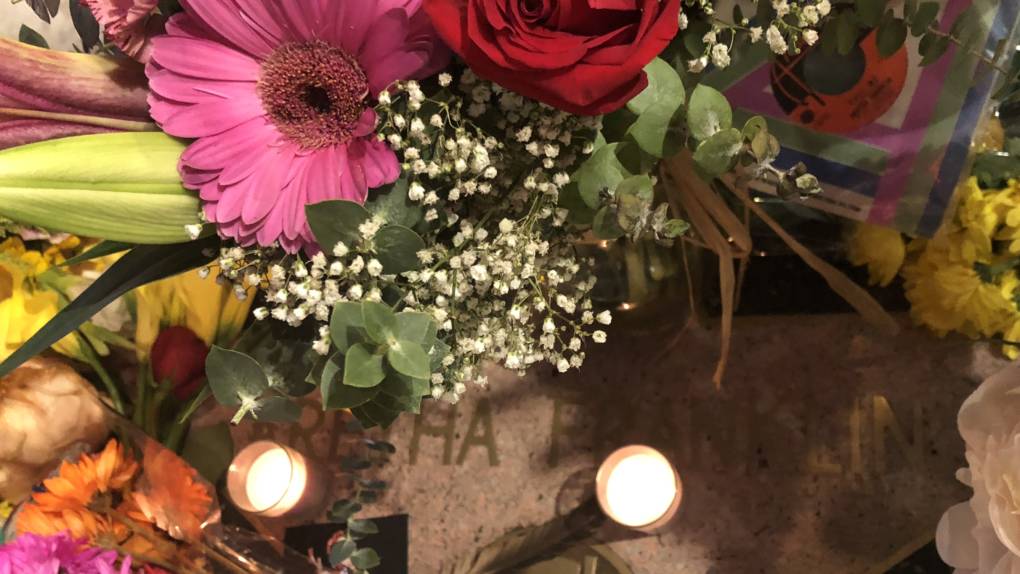
"caption": "By the evening on August 16, 2018, Aretha Franklin's star on the Hollywood Walk of Fame was almost completely submerged under floral tributes from adoring fans.",
"description": "By the evening on August 16, 2018, Aretha Franklin's star on the Hollywood Walk of Fame was almost completely submerged under floral tributes from adoring fans.",
"title": "aretha tribute",
"credit": "Chloe Veltman/KQED",
"status": "inherit",
"isLoading": false,
"fetchFailed": false
},
"arts_13839182": {
"type": "attachments",
"id": "arts_13839182",
"meta": {
"index": "attachments_1716263798",
"site": "arts",
"id": "13839182",
"found": true
},
"parent": 13839171,
"imgSizes": {
"small": {
"file": "https://ww2.kqed.org/app/uploads/sites/2/2018/08/katie-herzig-520x293.jpeg",
"width": 520,
"mimeType": "image/jpeg",
"height": 293
},
"twentyfourteen-full-width": {
"file": "https://ww2.kqed.org/app/uploads/sites/2/2018/08/katie-herzig-1038x576.jpeg",
"width": 1038,
"mimeType": "image/jpeg",
"height": 576
},
"thumbnail": {
"file": "https://ww2.kqed.org/app/uploads/sites/2/2018/08/katie-herzig-160x90.jpeg",
"width": 160,
"mimeType": "image/jpeg",
"height": 90
},
"fd-sm": {
"file": "https://ww2.kqed.org/app/uploads/sites/2/2018/08/katie-herzig-960x540.jpeg",
"width": 960,
"mimeType": "image/jpeg",
"height": 540
},
"post-thumbnail": {
"file": "https://ww2.kqed.org/app/uploads/sites/2/2018/08/katie-herzig-672x372.jpeg",
"width": 672,
"mimeType": "image/jpeg",
"height": 372
},
"xsmall": {
"file": "https://ww2.kqed.org/app/uploads/sites/2/2018/08/katie-herzig-375x211.jpeg",
"width": 375,
"mimeType": "image/jpeg",
"height": 211
},
"kqedFullSize": {
"file": "https://ww2.kqed.org/app/uploads/sites/2/2018/08/katie-herzig.jpeg",
"width": 1920,
"height": 1080
},
"large": {
"file": "https://ww2.kqed.org/app/uploads/sites/2/2018/08/katie-herzig-1020x574.jpeg",
"width": 1020,
"mimeType": "image/jpeg",
"height": 574
},
"xlarge": {
"file": "https://ww2.kqed.org/app/uploads/sites/2/2018/08/katie-herzig-1180x664.jpeg",
"width": 1180,
"mimeType": "image/jpeg",
"height": 664
},
"complete_open_graph": {
"file": "https://ww2.kqed.org/app/uploads/sites/2/2018/08/katie-herzig-1200x675.jpeg",
"width": 1200,
"mimeType": "image/jpeg",
"height": 675
},
"guest-author-50": {
"file": "https://ww2.kqed.org/app/uploads/sites/2/2018/08/katie-herzig-50x50.jpeg",
"width": 50,
"mimeType": "image/jpeg",
"height": 50
},
"guest-author-96": {
"file": "https://ww2.kqed.org/app/uploads/sites/2/2018/08/katie-herzig-96x96.jpeg",
"width": 96,
"mimeType": "image/jpeg",
"height": 96
},
"medium": {
"file": "https://ww2.kqed.org/app/uploads/sites/2/2018/08/katie-herzig-800x450.jpeg",
"width": 800,
"mimeType": "image/jpeg",
"height": 450
},
"guest-author-64": {
"file": "https://ww2.kqed.org/app/uploads/sites/2/2018/08/katie-herzig-64x64.jpeg",
"width": 64,
"mimeType": "image/jpeg",
"height": 64
},
"guest-author-32": {
"file": "https://ww2.kqed.org/app/uploads/sites/2/2018/08/katie-herzig-32x32.jpeg",
"width": 32,
"mimeType": "image/jpeg",
"height": 32
},
"fd-lrg": {
"file": "https://ww2.kqed.org/app/uploads/sites/2/2018/08/katie-herzig-1920x1080.jpeg",
"width": 1920,
"mimeType": "image/jpeg",
"height": 1080
},
"fd-med": {
"file": "https://ww2.kqed.org/app/uploads/sites/2/2018/08/katie-herzig-1180x664.jpeg",
"width": 1180,
"mimeType": "image/jpeg",
"height": 664
},
"full-width": {
"file": "https://ww2.kqed.org/app/uploads/sites/2/2018/08/katie-herzig-1920x1080.jpeg",
"width": 1920,
"mimeType": "image/jpeg",
"height": 1080
},
"detail": {
"file": "https://ww2.kqed.org/app/uploads/sites/2/2018/08/katie-herzig-150x150.jpeg",
"width": 150,
"mimeType": "image/jpeg",
"height": 150
},
"medium_large": {
"file": "https://ww2.kqed.org/app/uploads/sites/2/2018/08/katie-herzig-768x432.jpeg",
"width": 768,
"mimeType": "image/jpeg",
"height": 432
},
"guest-author-128": {
"file": "https://ww2.kqed.org/app/uploads/sites/2/2018/08/katie-herzig-128x128.jpeg",
"width": 128,
"mimeType": "image/jpeg",
"height": 128
},
"xxsmall": {
"file": "https://ww2.kqed.org/app/uploads/sites/2/2018/08/katie-herzig-240x135.jpeg",
"width": 240,
"mimeType": "image/jpeg",
"height": 135
}
},
"publishDate": 1534455061,
"modified": 1534455159,
"caption": "Singer-songwriter Katie Herzig, whose music has appeared in the popular series 'Big Little Lies' and 'Grey's Anatomy,' says she sees San Francisco as a refuge for LGBTQ artists. ",
"description": "Singer-songwriter Katie Herzig, whose music has appeared in the popular series 'Big Little Lies' and 'Grey's Anatomy,' says she sees San Francisco as a refuge for LGBTQ artists. ",
"title": "katie herzig",
"credit": "Courtesy of Katie Herzig ",
"status": "inherit",
"isLoading": false,
"fetchFailed": false
},
"arts_13839204": {
"type": "attachments",
"id": "arts_13839204",
"meta": {
"index": "attachments_1716263798",
"site": "arts",
"id": "13839204",
"found": true
},
"parent": 13839186,
"imgSizes": {
"small": {
"file": "https://ww2.kqed.org/app/uploads/sites/2/2018/08/GettyImages-142896048_1920-520x345.jpg",
"width": 520,
"mimeType": "image/jpeg",
"height": 345
},
"twentyfourteen-full-width": {
"file": "https://ww2.kqed.org/app/uploads/sites/2/2018/08/GettyImages-142896048_1920-1038x576.jpg",
"width": 1038,
"mimeType": "image/jpeg",
"height": 576
},
"thumbnail": {
"file": "https://ww2.kqed.org/app/uploads/sites/2/2018/08/GettyImages-142896048_1920-160x106.jpg",
"width": 160,
"mimeType": "image/jpeg",
"height": 106
},
"fd-sm": {
"file": "https://ww2.kqed.org/app/uploads/sites/2/2018/08/GettyImages-142896048_1920-960x637.jpg",
"width": 960,
"mimeType": "image/jpeg",
"height": 637
},
"post-thumbnail": {
"file": "https://ww2.kqed.org/app/uploads/sites/2/2018/08/GettyImages-142896048_1920-672x372.jpg",
"width": 672,
"mimeType": "image/jpeg",
"height": 372
},
"xsmall": {
"file": "https://ww2.kqed.org/app/uploads/sites/2/2018/08/GettyImages-142896048_1920-375x249.jpg",
"width": 375,
"mimeType": "image/jpeg",
"height": 249
},
"kqedFullSize": {
"file": "https://ww2.kqed.org/app/uploads/sites/2/2018/08/GettyImages-142896048_1920.jpg",
"width": 1920,
"height": 1274
},
"large": {
"file": "https://ww2.kqed.org/app/uploads/sites/2/2018/08/GettyImages-142896048_1920-1020x677.jpg",
"width": 1020,
"mimeType": "image/jpeg",
"height": 677
},
"xlarge": {
"file": "https://ww2.kqed.org/app/uploads/sites/2/2018/08/GettyImages-142896048_1920-1180x783.jpg",
"width": 1180,
"mimeType": "image/jpeg",
"height": 783
},
"complete_open_graph": {
"file": "https://ww2.kqed.org/app/uploads/sites/2/2018/08/GettyImages-142896048_1920-1200x796.jpg",
"width": 1200,
"mimeType": "image/jpeg",
"height": 796
},
"guest-author-50": {
"file": "https://ww2.kqed.org/app/uploads/sites/2/2018/08/GettyImages-142896048_1920-50x50.jpg",
"width": 50,
"mimeType": "image/jpeg",
"height": 50
},
"guest-author-96": {
"file": "https://ww2.kqed.org/app/uploads/sites/2/2018/08/GettyImages-142896048_1920-96x96.jpg",
"width": 96,
"mimeType": "image/jpeg",
"height": 96
},
"medium": {
"file": "https://ww2.kqed.org/app/uploads/sites/2/2018/08/GettyImages-142896048_1920-800x531.jpg",
"width": 800,
"mimeType": "image/jpeg",
"height": 531
},
"guest-author-64": {
"file": "https://ww2.kqed.org/app/uploads/sites/2/2018/08/GettyImages-142896048_1920-64x64.jpg",
"width": 64,
"mimeType": "image/jpeg",
"height": 64
},
"guest-author-32": {
"file": "https://ww2.kqed.org/app/uploads/sites/2/2018/08/GettyImages-142896048_1920-32x32.jpg",
"width": 32,
"mimeType": "image/jpeg",
"height": 32
},
"fd-lrg": {
"file": "https://ww2.kqed.org/app/uploads/sites/2/2018/08/GettyImages-142896048_1920-1920x1274.jpg",
"width": 1920,
"mimeType": "image/jpeg",
"height": 1274
},
"fd-med": {
"file": "https://ww2.kqed.org/app/uploads/sites/2/2018/08/GettyImages-142896048_1920-1180x783.jpg",
"width": 1180,
"mimeType": "image/jpeg",
"height": 783
},
"full-width": {
"file": "https://ww2.kqed.org/app/uploads/sites/2/2018/08/GettyImages-142896048_1920-1920x1274.jpg",
"width": 1920,
"mimeType": "image/jpeg",
"height": 1274
},
"detail": {
"file": "https://ww2.kqed.org/app/uploads/sites/2/2018/08/GettyImages-142896048_1920-150x150.jpg",
"width": 150,
"mimeType": "image/jpeg",
"height": 150
},
"medium_large": {
"file": "https://ww2.kqed.org/app/uploads/sites/2/2018/08/GettyImages-142896048_1920-768x510.jpg",
"width": 768,
"mimeType": "image/jpeg",
"height": 510
},
"guest-author-128": {
"file": "https://ww2.kqed.org/app/uploads/sites/2/2018/08/GettyImages-142896048_1920-128x128.jpg",
"width": 128,
"mimeType": "image/jpeg",
"height": 128
},
"xxsmall": {
"file": "https://ww2.kqed.org/app/uploads/sites/2/2018/08/GettyImages-142896048_1920-240x159.jpg",
"width": 240,
"mimeType": "image/jpeg",
"height": 159
}
},
"publishDate": 1534463588,
"modified": 1534463624,
"caption": "Whenever it seemed as if Aretha had diminished, she’d resurface and stir the soul in a way only she could. ",
"description": "Whenever it seemed as if Aretha had diminished, she’d resurface and stir the soul in a way only she could. ",
"title": "GettyImages-142896048_1920",
"credit": "Andrew H. Walker/Getty Images",
"status": "inherit",
"isLoading": false,
"fetchFailed": false
},
"arts_13839167": {
"type": "attachments",
"id": "arts_13839167",
"meta": {
"index": "attachments_1716263798",
"site": "arts",
"id": "13839167",
"found": true
},
"parent": 13838966,
"imgSizes": {
"small": {
"file": "https://ww2.kqed.org/app/uploads/sites/2/2018/08/KQED_jv_closeup-1-520x287.jpg",
"width": 520,
"mimeType": "image/jpeg",
"height": 287
},
"twentyfourteen-full-width": {
"file": "https://ww2.kqed.org/app/uploads/sites/2/2018/08/KQED_jv_closeup-1-1038x576.jpg",
"width": 1038,
"mimeType": "image/jpeg",
"height": 576
},
"thumbnail": {
"file": "https://ww2.kqed.org/app/uploads/sites/2/2018/08/KQED_jv_closeup-1-160x88.jpg",
"width": 160,
"mimeType": "image/jpeg",
"height": 88
},
"fd-sm": {
"file": "https://ww2.kqed.org/app/uploads/sites/2/2018/08/KQED_jv_closeup-1-960x530.jpg",
"width": 960,
"mimeType": "image/jpeg",
"height": 530
},
"post-thumbnail": {
"file": "https://ww2.kqed.org/app/uploads/sites/2/2018/08/KQED_jv_closeup-1-672x372.jpg",
"width": 672,
"mimeType": "image/jpeg",
"height": 372
},
"xsmall": {
"file": "https://ww2.kqed.org/app/uploads/sites/2/2018/08/KQED_jv_closeup-1-375x207.jpg",
"width": 375,
"mimeType": "image/jpeg",
"height": 207
},
"kqedFullSize": {
"file": "https://ww2.kqed.org/app/uploads/sites/2/2018/08/KQED_jv_closeup-1.jpg",
"width": 1920,
"height": 1059
},
"large": {
"file": "https://ww2.kqed.org/app/uploads/sites/2/2018/08/KQED_jv_closeup-1-1020x563.jpg",
"width": 1020,
"mimeType": "image/jpeg",
"height": 563
},
"xlarge": {
"file": "https://ww2.kqed.org/app/uploads/sites/2/2018/08/KQED_jv_closeup-1-1180x651.jpg",
"width": 1180,
"mimeType": "image/jpeg",
"height": 651
},
"complete_open_graph": {
"file": "https://ww2.kqed.org/app/uploads/sites/2/2018/08/KQED_jv_closeup-1-1200x662.jpg",
"width": 1200,
"mimeType": "image/jpeg",
"height": 662
},
"guest-author-50": {
"file": "https://ww2.kqed.org/app/uploads/sites/2/2018/08/KQED_jv_closeup-1-50x50.jpg",
"width": 50,
"mimeType": "image/jpeg",
"height": 50
},
"guest-author-96": {
"file": "https://ww2.kqed.org/app/uploads/sites/2/2018/08/KQED_jv_closeup-1-96x96.jpg",
"width": 96,
"mimeType": "image/jpeg",
"height": 96
},
"medium": {
"file": "https://ww2.kqed.org/app/uploads/sites/2/2018/08/KQED_jv_closeup-1-800x441.jpg",
"width": 800,
"mimeType": "image/jpeg",
"height": 441
},
"guest-author-64": {
"file": "https://ww2.kqed.org/app/uploads/sites/2/2018/08/KQED_jv_closeup-1-64x64.jpg",
"width": 64,
"mimeType": "image/jpeg",
"height": 64
},
"guest-author-32": {
"file": "https://ww2.kqed.org/app/uploads/sites/2/2018/08/KQED_jv_closeup-1-32x32.jpg",
"width": 32,
"mimeType": "image/jpeg",
"height": 32
},
"fd-lrg": {
"file": "https://ww2.kqed.org/app/uploads/sites/2/2018/08/KQED_jv_closeup-1-1920x1059.jpg",
"width": 1920,
"mimeType": "image/jpeg",
"height": 1059
},
"fd-med": {
"file": "https://ww2.kqed.org/app/uploads/sites/2/2018/08/KQED_jv_closeup-1-1180x651.jpg",
"width": 1180,
"mimeType": "image/jpeg",
"height": 651
},
"full-width": {
"file": "https://ww2.kqed.org/app/uploads/sites/2/2018/08/KQED_jv_closeup-1-1920x1059.jpg",
"width": 1920,
"mimeType": "image/jpeg",
"height": 1059
},
"detail": {
"file": "https://ww2.kqed.org/app/uploads/sites/2/2018/08/KQED_jv_closeup-1-150x150.jpg",
"width": 150,
"mimeType": "image/jpeg",
"height": 150
},
"medium_large": {
"file": "https://ww2.kqed.org/app/uploads/sites/2/2018/08/KQED_jv_closeup-1-768x424.jpg",
"width": 768,
"mimeType": "image/jpeg",
"height": 424
},
"guest-author-128": {
"file": "https://ww2.kqed.org/app/uploads/sites/2/2018/08/KQED_jv_closeup-1-128x128.jpg",
"width": 128,
"mimeType": "image/jpeg",
"height": 128
},
"xxsmall": {
"file": "https://ww2.kqed.org/app/uploads/sites/2/2018/08/KQED_jv_closeup-1-240x132.jpg",
"width": 240,
"mimeType": "image/jpeg",
"height": 132
}
},
"publishDate": 1534447203,
"modified": 1534447235,
"caption": "John Vanderslice prepares to hit the road on his cross-country tour of living rooms, which kicks off Aug. 20 in Chicago. ",
"description": "John Vanderslice prepares to hit the road on his cross-country tour of living rooms, which kicks off Aug. 20 in Chicago. ",
"title": "KQED_jv_closeup",
"credit": "Nicole Gluckstern",
"status": "inherit",
"isLoading": false,
"fetchFailed": false
},
"arts_13839069": {
"type": "attachments",
"id": "arts_13839069",
"meta": {
"index": "attachments_1716263798",
"site": "arts",
"id": "13839069",
"found": true
},
"parent": 0,
"imgSizes": {
"small": {
"file": "https://ww2.kqed.org/app/uploads/sites/2/2018/08/QMNguyen_WP-520x293.jpg",
"width": 520,
"mimeType": "image/jpeg",
"height": 293
},
"twentyfourteen-full-width": {
"file": "https://ww2.kqed.org/app/uploads/sites/2/2018/08/QMNguyen_WP-1038x576.jpg",
"width": 1038,
"mimeType": "image/jpeg",
"height": 576
},
"thumbnail": {
"file": "https://ww2.kqed.org/app/uploads/sites/2/2018/08/QMNguyen_WP-160x90.jpg",
"width": 160,
"mimeType": "image/jpeg",
"height": 90
},
"fd-sm": {
"file": "https://ww2.kqed.org/app/uploads/sites/2/2018/08/QMNguyen_WP-960x540.jpg",
"width": 960,
"mimeType": "image/jpeg",
"height": 540
},
"post-thumbnail": {
"file": "https://ww2.kqed.org/app/uploads/sites/2/2018/08/QMNguyen_WP-672x372.jpg",
"width": 672,
"mimeType": "image/jpeg",
"height": 372
},
"xsmall": {
"file": "https://ww2.kqed.org/app/uploads/sites/2/2018/08/QMNguyen_WP-375x211.jpg",
"width": 375,
"mimeType": "image/jpeg",
"height": 211
},
"kqedFullSize": {
"file": "https://ww2.kqed.org/app/uploads/sites/2/2018/08/QMNguyen_WP.jpg",
"width": 1920,
"height": 1080
},
"large": {
"file": "https://ww2.kqed.org/app/uploads/sites/2/2018/08/QMNguyen_WP-1020x574.jpg",
"width": 1020,
"mimeType": "image/jpeg",
"height": 574
},
"xlarge": {
"file": "https://ww2.kqed.org/app/uploads/sites/2/2018/08/QMNguyen_WP-1180x664.jpg",
"width": 1180,
"mimeType": "image/jpeg",
"height": 664
},
"complete_open_graph": {
"file": "https://ww2.kqed.org/app/uploads/sites/2/2018/08/QMNguyen_WP-1200x675.jpg",
"width": 1200,
"mimeType": "image/jpeg",
"height": 675
},
"guest-author-50": {
"file": "https://ww2.kqed.org/app/uploads/sites/2/2018/08/QMNguyen_WP-50x50.jpg",
"width": 50,
"mimeType": "image/jpeg",
"height": 50
},
"guest-author-96": {
"file": "https://ww2.kqed.org/app/uploads/sites/2/2018/08/QMNguyen_WP-96x96.jpg",
"width": 96,
"mimeType": "image/jpeg",
"height": 96
},
"medium": {
"file": "https://ww2.kqed.org/app/uploads/sites/2/2018/08/QMNguyen_WP-800x450.jpg",
"width": 800,
"mimeType": "image/jpeg",
"height": 450
},
"guest-author-64": {
"file": "https://ww2.kqed.org/app/uploads/sites/2/2018/08/QMNguyen_WP-64x64.jpg",
"width": 64,
"mimeType": "image/jpeg",
"height": 64
},
"guest-author-32": {
"file": "https://ww2.kqed.org/app/uploads/sites/2/2018/08/QMNguyen_WP-32x32.jpg",
"width": 32,
"mimeType": "image/jpeg",
"height": 32
},
"fd-lrg": {
"file": "https://ww2.kqed.org/app/uploads/sites/2/2018/08/QMNguyen_WP-1920x1080.jpg",
"width": 1920,
"mimeType": "image/jpeg",
"height": 1080
},
"fd-med": {
"file": "https://ww2.kqed.org/app/uploads/sites/2/2018/08/QMNguyen_WP-1180x664.jpg",
"width": 1180,
"mimeType": "image/jpeg",
"height": 664
},
"full-width": {
"file": "https://ww2.kqed.org/app/uploads/sites/2/2018/08/QMNguyen_WP-1920x1080.jpg",
"width": 1920,
"mimeType": "image/jpeg",
"height": 1080
},
"detail": {
"file": "https://ww2.kqed.org/app/uploads/sites/2/2018/08/QMNguyen_WP-150x150.jpg",
"width": 150,
"mimeType": "image/jpeg",
"height": 150
},
"medium_large": {
"file": "https://ww2.kqed.org/app/uploads/sites/2/2018/08/QMNguyen_WP-768x432.jpg",
"width": 768,
"mimeType": "image/jpeg",
"height": 432
},
"guest-author-128": {
"file": "https://ww2.kqed.org/app/uploads/sites/2/2018/08/QMNguyen_WP-128x128.jpg",
"width": 128,
"mimeType": "image/jpeg",
"height": 128
},
"xxsmall": {
"file": "https://ww2.kqed.org/app/uploads/sites/2/2018/08/QMNguyen_WP-240x135.jpg",
"width": 240,
"mimeType": "image/jpeg",
"height": 135
}
},
"publishDate": 1534311955,
"modified": 1534312325,
"caption": "Quynh-Mai Nguyen.",
"description": "Quynh-Mai Nguyen.",
"title": "QMNguyen_WP",
"credit": "Jean Melesaine",
"status": "inherit",
"isLoading": false,
"fetchFailed": false
},
"arts_13839148": {
"type": "attachments",
"id": "arts_13839148",
"meta": {
"index": "attachments_1716263798",
"site": "arts",
"id": "13839148",
"found": true
},
"parent": 13839139,
"imgSizes": {
"small": {
"file": "https://ww2.kqed.org/app/uploads/sites/2/2018/08/Aretha.Davis_-520x293.jpg",
"width": 520,
"mimeType": "image/jpeg",
"height": 293
},
"twentyfourteen-full-width": {
"file": "https://ww2.kqed.org/app/uploads/sites/2/2018/08/Aretha.Davis_-1038x576.jpg",
"width": 1038,
"mimeType": "image/jpeg",
"height": 576
},
"thumbnail": {
"file": "https://ww2.kqed.org/app/uploads/sites/2/2018/08/Aretha.Davis_-160x90.jpg",
"width": 160,
"mimeType": "image/jpeg",
"height": 90
},
"fd-sm": {
"file": "https://ww2.kqed.org/app/uploads/sites/2/2018/08/Aretha.Davis_-960x540.jpg",
"width": 960,
"mimeType": "image/jpeg",
"height": 540
},
"post-thumbnail": {
"file": "https://ww2.kqed.org/app/uploads/sites/2/2018/08/Aretha.Davis_-672x372.jpg",
"width": 672,
"mimeType": "image/jpeg",
"height": 372
},
"xsmall": {
"file": "https://ww2.kqed.org/app/uploads/sites/2/2018/08/Aretha.Davis_-375x211.jpg",
"width": 375,
"mimeType": "image/jpeg",
"height": 211
},
"kqedFullSize": {
"file": "https://ww2.kqed.org/app/uploads/sites/2/2018/08/Aretha.Davis_.jpg",
"width": 1920,
"height": 1080
},
"large": {
"file": "https://ww2.kqed.org/app/uploads/sites/2/2018/08/Aretha.Davis_-1020x574.jpg",
"width": 1020,
"mimeType": "image/jpeg",
"height": 574
},
"xlarge": {
"file": "https://ww2.kqed.org/app/uploads/sites/2/2018/08/Aretha.Davis_-1180x664.jpg",
"width": 1180,
"mimeType": "image/jpeg",
"height": 664
},
"complete_open_graph": {
"file": "https://ww2.kqed.org/app/uploads/sites/2/2018/08/Aretha.Davis_-1200x675.jpg",
"width": 1200,
"mimeType": "image/jpeg",
"height": 675
},
"guest-author-50": {
"file": "https://ww2.kqed.org/app/uploads/sites/2/2018/08/Aretha.Davis_-50x50.jpg",
"width": 50,
"mimeType": "image/jpeg",
"height": 50
},
"guest-author-96": {
"file": "https://ww2.kqed.org/app/uploads/sites/2/2018/08/Aretha.Davis_-96x96.jpg",
"width": 96,
"mimeType": "image/jpeg",
"height": 96
},
"medium": {
"file": "https://ww2.kqed.org/app/uploads/sites/2/2018/08/Aretha.Davis_-800x450.jpg",
"width": 800,
"mimeType": "image/jpeg",
"height": 450
},
"guest-author-64": {
"file": "https://ww2.kqed.org/app/uploads/sites/2/2018/08/Aretha.Davis_-64x64.jpg",
"width": 64,
"mimeType": "image/jpeg",
"height": 64
},
"guest-author-32": {
"file": "https://ww2.kqed.org/app/uploads/sites/2/2018/08/Aretha.Davis_-32x32.jpg",
"width": 32,
"mimeType": "image/jpeg",
"height": 32
},
"fd-lrg": {
"file": "https://ww2.kqed.org/app/uploads/sites/2/2018/08/Aretha.Davis_-1920x1080.jpg",
"width": 1920,
"mimeType": "image/jpeg",
"height": 1080
},
"fd-med": {
"file": "https://ww2.kqed.org/app/uploads/sites/2/2018/08/Aretha.Davis_-1180x664.jpg",
"width": 1180,
"mimeType": "image/jpeg",
"height": 664
},
"full-width": {
"file": "https://ww2.kqed.org/app/uploads/sites/2/2018/08/Aretha.Davis_-1920x1080.jpg",
"width": 1920,
"mimeType": "image/jpeg",
"height": 1080
},
"detail": {
"file": "https://ww2.kqed.org/app/uploads/sites/2/2018/08/Aretha.Davis_-150x150.jpg",
"width": 150,
"mimeType": "image/jpeg",
"height": 150
},
"medium_large": {
"file": "https://ww2.kqed.org/app/uploads/sites/2/2018/08/Aretha.Davis_-768x432.jpg",
"width": 768,
"mimeType": "image/jpeg",
"height": 432
},
"guest-author-128": {
"file": "https://ww2.kqed.org/app/uploads/sites/2/2018/08/Aretha.Davis_-128x128.jpg",
"width": 128,
"mimeType": "image/jpeg",
"height": 128
},
"xxsmall": {
"file": "https://ww2.kqed.org/app/uploads/sites/2/2018/08/Aretha.Davis_-240x135.jpg",
"width": 240,
"mimeType": "image/jpeg",
"height": 135
}
},
"publishDate": 1534441864,
"modified": 1534441975,
"caption": "Singer Aretha Franklin performs in 2003 in New York City. ",
"description": "Singer Aretha Franklin performs in 2003 in New York City. ",
"title": "Aretha.Davis",
"credit": "Frank Micelotta/Getty Images",
"status": "inherit",
"isLoading": false,
"fetchFailed": false
},
"arts_13839130": {
"type": "attachments",
"id": "arts_13839130",
"meta": {
"index": "attachments_1716263798",
"site": "arts",
"id": "13839130",
"found": true
},
"parent": 13839127,
"imgSizes": {
"small": {
"file": "https://ww2.kqed.org/app/uploads/sites/2/2018/08/GettyImages-871485134-520x293.jpg",
"width": 520,
"mimeType": "image/jpeg",
"height": 293
},
"twentyfourteen-full-width": {
"file": "https://ww2.kqed.org/app/uploads/sites/2/2018/08/GettyImages-871485134-1038x576.jpg",
"width": 1038,
"mimeType": "image/jpeg",
"height": 576
},
"thumbnail": {
"file": "https://ww2.kqed.org/app/uploads/sites/2/2018/08/GettyImages-871485134-160x90.jpg",
"width": 160,
"mimeType": "image/jpeg",
"height": 90
},
"fd-sm": {
"file": "https://ww2.kqed.org/app/uploads/sites/2/2018/08/GettyImages-871485134-960x540.jpg",
"width": 960,
"mimeType": "image/jpeg",
"height": 540
},
"post-thumbnail": {
"file": "https://ww2.kqed.org/app/uploads/sites/2/2018/08/GettyImages-871485134-672x372.jpg",
"width": 672,
"mimeType": "image/jpeg",
"height": 372
},
"xsmall": {
"file": "https://ww2.kqed.org/app/uploads/sites/2/2018/08/GettyImages-871485134-375x211.jpg",
"width": 375,
"mimeType": "image/jpeg",
"height": 211
},
"kqedFullSize": {
"file": "https://ww2.kqed.org/app/uploads/sites/2/2018/08/GettyImages-871485134.jpg",
"width": 1920,
"height": 1080
},
"large": {
"file": "https://ww2.kqed.org/app/uploads/sites/2/2018/08/GettyImages-871485134-1020x574.jpg",
"width": 1020,
"mimeType": "image/jpeg",
"height": 574
},
"xlarge": {
"file": "https://ww2.kqed.org/app/uploads/sites/2/2018/08/GettyImages-871485134-1180x664.jpg",
"width": 1180,
"mimeType": "image/jpeg",
"height": 664
},
"complete_open_graph": {
"file": "https://ww2.kqed.org/app/uploads/sites/2/2018/08/GettyImages-871485134-1200x675.jpg",
"width": 1200,
"mimeType": "image/jpeg",
"height": 675
},
"guest-author-50": {
"file": "https://ww2.kqed.org/app/uploads/sites/2/2018/08/GettyImages-871485134-50x50.jpg",
"width": 50,
"mimeType": "image/jpeg",
"height": 50
},
"guest-author-96": {
"file": "https://ww2.kqed.org/app/uploads/sites/2/2018/08/GettyImages-871485134-96x96.jpg",
"width": 96,
"mimeType": "image/jpeg",
"height": 96
},
"medium": {
"file": "https://ww2.kqed.org/app/uploads/sites/2/2018/08/GettyImages-871485134-800x450.jpg",
"width": 800,
"mimeType": "image/jpeg",
"height": 450
},
"guest-author-64": {
"file": "https://ww2.kqed.org/app/uploads/sites/2/2018/08/GettyImages-871485134-64x64.jpg",
"width": 64,
"mimeType": "image/jpeg",
"height": 64
},
"guest-author-32": {
"file": "https://ww2.kqed.org/app/uploads/sites/2/2018/08/GettyImages-871485134-32x32.jpg",
"width": 32,
"mimeType": "image/jpeg",
"height": 32
},
"fd-lrg": {
"file": "https://ww2.kqed.org/app/uploads/sites/2/2018/08/GettyImages-871485134-1920x1080.jpg",
"width": 1920,
"mimeType": "image/jpeg",
"height": 1080
},
"fd-med": {
"file": "https://ww2.kqed.org/app/uploads/sites/2/2018/08/GettyImages-871485134-1180x664.jpg",
"width": 1180,
"mimeType": "image/jpeg",
"height": 664
},
"full-width": {
"file": "https://ww2.kqed.org/app/uploads/sites/2/2018/08/GettyImages-871485134-1920x1080.jpg",
"width": 1920,
"mimeType": "image/jpeg",
"height": 1080
},
"detail": {
"file": "https://ww2.kqed.org/app/uploads/sites/2/2018/08/GettyImages-871485134-150x150.jpg",
"width": 150,
"mimeType": "image/jpeg",
"height": 150
},
"medium_large": {
"file": "https://ww2.kqed.org/app/uploads/sites/2/2018/08/GettyImages-871485134-768x432.jpg",
"width": 768,
"mimeType": "image/jpeg",
"height": 432
},
"guest-author-128": {
"file": "https://ww2.kqed.org/app/uploads/sites/2/2018/08/GettyImages-871485134-128x128.jpg",
"width": 128,
"mimeType": "image/jpeg",
"height": 128
},
"xxsmall": {
"file": "https://ww2.kqed.org/app/uploads/sites/2/2018/08/GettyImages-871485134-240x135.jpg",
"width": 240,
"mimeType": "image/jpeg",
"height": 135
}
},
"publishDate": 1534433205,
"modified": 1534433275,
"caption": "Aretha Franklin performs onstage at the Elton John AIDS Foundation Commemorates Its 25th Year And Honors Founder Sir Elton John During New York Fall Gala at Cathedral of St. John the Divine on November 7, 2017 in New York City. ",
"description": "Aretha Franklin performs onstage at the Elton John AIDS Foundation Commemorates Its 25th Year And Honors Founder Sir Elton John During New York Fall Gala at Cathedral of St. John the Divine on November 7, 2017 in New York City. ",
"title": "Elton John AIDS Foundation Commemorates Its 25th Year And Honors Founder Sir Elton John During New York Fall Gala - Show",
"credit": "Dimitrios Kambouris/Getty Images",
"status": "inherit",
"isLoading": false,
"fetchFailed": false
},
"arts_13839120": {
"type": "attachments",
"id": "arts_13839120",
"meta": {
"index": "attachments_1716263798",
"site": "arts",
"id": "13839120",
"found": true
},
"parent": 13839108,
"imgSizes": {
"small": {
"file": "https://ww2.kqed.org/app/uploads/sites/2/2018/08/GettyImages-1015814590-520x293.jpg",
"width": 520,
"mimeType": "image/jpeg",
"height": 293
},
"twentyfourteen-full-width": {
"file": "https://ww2.kqed.org/app/uploads/sites/2/2018/08/GettyImages-1015814590-1038x576.jpg",
"width": 1038,
"mimeType": "image/jpeg",
"height": 576
},
"thumbnail": {
"file": "https://ww2.kqed.org/app/uploads/sites/2/2018/08/GettyImages-1015814590-160x90.jpg",
"width": 160,
"mimeType": "image/jpeg",
"height": 90
},
"fd-sm": {
"file": "https://ww2.kqed.org/app/uploads/sites/2/2018/08/GettyImages-1015814590-960x540.jpg",
"width": 960,
"mimeType": "image/jpeg",
"height": 540
},
"post-thumbnail": {
"file": "https://ww2.kqed.org/app/uploads/sites/2/2018/08/GettyImages-1015814590-672x372.jpg",
"width": 672,
"mimeType": "image/jpeg",
"height": 372
},
"xsmall": {
"file": "https://ww2.kqed.org/app/uploads/sites/2/2018/08/GettyImages-1015814590-375x211.jpg",
"width": 375,
"mimeType": "image/jpeg",
"height": 211
},
"kqedFullSize": {
"file": "https://ww2.kqed.org/app/uploads/sites/2/2018/08/GettyImages-1015814590.jpg",
"width": 2048,
"height": 1152
},
"large": {
"file": "https://ww2.kqed.org/app/uploads/sites/2/2018/08/GettyImages-1015814590-1020x574.jpg",
"width": 1020,
"mimeType": "image/jpeg",
"height": 574
},
"xlarge": {
"file": "https://ww2.kqed.org/app/uploads/sites/2/2018/08/GettyImages-1015814590-1180x664.jpg",
"width": 1180,
"mimeType": "image/jpeg",
"height": 664
},
"complete_open_graph": {
"file": "https://ww2.kqed.org/app/uploads/sites/2/2018/08/GettyImages-1015814590-1200x675.jpg",
"width": 1200,
"mimeType": "image/jpeg",
"height": 675
},
"guest-author-50": {
"file": "https://ww2.kqed.org/app/uploads/sites/2/2018/08/GettyImages-1015814590-50x50.jpg",
"width": 50,
"mimeType": "image/jpeg",
"height": 50
},
"guest-author-96": {
"file": "https://ww2.kqed.org/app/uploads/sites/2/2018/08/GettyImages-1015814590-96x96.jpg",
"width": 96,
"mimeType": "image/jpeg",
"height": 96
},
"medium": {
"file": "https://ww2.kqed.org/app/uploads/sites/2/2018/08/GettyImages-1015814590-800x450.jpg",
"width": 800,
"mimeType": "image/jpeg",
"height": 450
},
"guest-author-64": {
"file": "https://ww2.kqed.org/app/uploads/sites/2/2018/08/GettyImages-1015814590-64x64.jpg",
"width": 64,
"mimeType": "image/jpeg",
"height": 64
},
"guest-author-32": {
"file": "https://ww2.kqed.org/app/uploads/sites/2/2018/08/GettyImages-1015814590-32x32.jpg",
"width": 32,
"mimeType": "image/jpeg",
"height": 32
},
"fd-lrg": {
"file": "https://ww2.kqed.org/app/uploads/sites/2/2018/08/GettyImages-1015814590-1920x1080.jpg",
"width": 1920,
"mimeType": "image/jpeg",
"height": 1080
},
"fd-med": {
"file": "https://ww2.kqed.org/app/uploads/sites/2/2018/08/GettyImages-1015814590-1180x664.jpg",
"width": 1180,
"mimeType": "image/jpeg",
"height": 664
},
"full-width": {
"file": "https://ww2.kqed.org/app/uploads/sites/2/2018/08/GettyImages-1015814590-1920x1080.jpg",
"width": 1920,
"mimeType": "image/jpeg",
"height": 1080
},
"detail": {
"file": "https://ww2.kqed.org/app/uploads/sites/2/2018/08/GettyImages-1015814590-150x150.jpg",
"width": 150,
"mimeType": "image/jpeg",
"height": 150
},
"medium_large": {
"file": "https://ww2.kqed.org/app/uploads/sites/2/2018/08/GettyImages-1015814590-768x432.jpg",
"width": 768,
"mimeType": "image/jpeg",
"height": 432
},
"guest-author-128": {
"file": "https://ww2.kqed.org/app/uploads/sites/2/2018/08/GettyImages-1015814590-128x128.jpg",
"width": 128,
"mimeType": "image/jpeg",
"height": 128
},
"xxsmall": {
"file": "https://ww2.kqed.org/app/uploads/sites/2/2018/08/GettyImages-1015814590-240x135.jpg",
"width": 240,
"mimeType": "image/jpeg",
"height": 135
}
},
"publishDate": 1534382184,
"modified": 1534382223,
"caption": "Nick Cannon speaks onstage during FOX's Teen Choice Awards at The Forum on August 12, 2018 in Inglewood, California. ",
"description": "Nick Cannon speaks onstage during FOX's Teen Choice Awards at The Forum on August 12, 2018 in Inglewood, California. ",
"title": "FOX's Teen Choice Awards 2018 - Show",
"credit": "Photo by Kevin Winter/Getty Images",
"status": "inherit",
"isLoading": false,
"fetchFailed": false
},
"arts_13839041": {
"type": "attachments",
"id": "arts_13839041",
"meta": {
"index": "attachments_1716263798",
"site": "arts",
"id": "13839041",
"found": true
},
"parent": 13839039,
"imgSizes": {
"small": {
"file": "https://ww2.kqed.org/app/uploads/sites/2/2018/08/freddie-gibbs-520x293.jpg",
"width": 520,
"mimeType": "image/jpeg",
"height": 293
},
"twentyfourteen-full-width": {
"file": "https://ww2.kqed.org/app/uploads/sites/2/2018/08/freddie-gibbs-1038x576.jpg",
"width": 1038,
"mimeType": "image/jpeg",
"height": 576
},
"thumbnail": {
"file": "https://ww2.kqed.org/app/uploads/sites/2/2018/08/freddie-gibbs-160x90.jpg",
"width": 160,
"mimeType": "image/jpeg",
"height": 90
},
"fd-sm": {
"file": "https://ww2.kqed.org/app/uploads/sites/2/2018/08/freddie-gibbs-960x540.jpg",
"width": 960,
"mimeType": "image/jpeg",
"height": 540
},
"post-thumbnail": {
"file": "https://ww2.kqed.org/app/uploads/sites/2/2018/08/freddie-gibbs-672x372.jpg",
"width": 672,
"mimeType": "image/jpeg",
"height": 372
},
"xsmall": {
"file": "https://ww2.kqed.org/app/uploads/sites/2/2018/08/freddie-gibbs-375x211.jpg",
"width": 375,
"mimeType": "image/jpeg",
"height": 211
},
"kqedFullSize": {
"file": "https://ww2.kqed.org/app/uploads/sites/2/2018/08/freddie-gibbs.jpg",
"width": 2048,
"height": 1152
},
"large": {
"file": "https://ww2.kqed.org/app/uploads/sites/2/2018/08/freddie-gibbs-1020x574.jpg",
"width": 1020,
"mimeType": "image/jpeg",
"height": 574
},
"xlarge": {
"file": "https://ww2.kqed.org/app/uploads/sites/2/2018/08/freddie-gibbs-1180x664.jpg",
"width": 1180,
"mimeType": "image/jpeg",
"height": 664
},
"complete_open_graph": {
"file": "https://ww2.kqed.org/app/uploads/sites/2/2018/08/freddie-gibbs-1200x675.jpg",
"width": 1200,
"mimeType": "image/jpeg",
"height": 675
},
"guest-author-50": {
"file": "https://ww2.kqed.org/app/uploads/sites/2/2018/08/freddie-gibbs-50x50.jpg",
"width": 50,
"mimeType": "image/jpeg",
"height": 50
},
"guest-author-96": {
"file": "https://ww2.kqed.org/app/uploads/sites/2/2018/08/freddie-gibbs-96x96.jpg",
"width": 96,
"mimeType": "image/jpeg",
"height": 96
},
"medium": {
"file": "https://ww2.kqed.org/app/uploads/sites/2/2018/08/freddie-gibbs-800x450.jpg",
"width": 800,
"mimeType": "image/jpeg",
"height": 450
},
"guest-author-64": {
"file": "https://ww2.kqed.org/app/uploads/sites/2/2018/08/freddie-gibbs-64x64.jpg",
"width": 64,
"mimeType": "image/jpeg",
"height": 64
},
"guest-author-32": {
"file": "https://ww2.kqed.org/app/uploads/sites/2/2018/08/freddie-gibbs-32x32.jpg",
"width": 32,
"mimeType": "image/jpeg",
"height": 32
},
"fd-lrg": {
"file": "https://ww2.kqed.org/app/uploads/sites/2/2018/08/freddie-gibbs-1920x1080.jpg",
"width": 1920,
"mimeType": "image/jpeg",
"height": 1080
},
"fd-med": {
"file": "https://ww2.kqed.org/app/uploads/sites/2/2018/08/freddie-gibbs-1180x664.jpg",
"width": 1180,
"mimeType": "image/jpeg",
"height": 664
},
"full-width": {
"file": "https://ww2.kqed.org/app/uploads/sites/2/2018/08/freddie-gibbs-1920x1080.jpg",
"width": 1920,
"mimeType": "image/jpeg",
"height": 1080
},
"detail": {
"file": "https://ww2.kqed.org/app/uploads/sites/2/2018/08/freddie-gibbs-150x150.jpg",
"width": 150,
"mimeType": "image/jpeg",
"height": 150
},
"medium_large": {
"file": "https://ww2.kqed.org/app/uploads/sites/2/2018/08/freddie-gibbs-768x432.jpg",
"width": 768,
"mimeType": "image/jpeg",
"height": 432
},
"guest-author-128": {
"file": "https://ww2.kqed.org/app/uploads/sites/2/2018/08/freddie-gibbs-128x128.jpg",
"width": 128,
"mimeType": "image/jpeg",
"height": 128
},
"xxsmall": {
"file": "https://ww2.kqed.org/app/uploads/sites/2/2018/08/freddie-gibbs-240x135.jpg",
"width": 240,
"mimeType": "image/jpeg",
"height": 135
}
},
"publishDate": 1534284553,
"modified": 1534284645,
"caption": "Freddie Gibbs performs at Governors Ball in 2013 in New York City. ",
"description": "Freddie Gibbs performs at Governors Ball in 2013 in New York City. ",
"title": "SKYY Vodka At Governors Ball - Day 3",
"credit": "Brad Barket/Getty Images for SKYY Vodka)",
"status": "inherit",
"isLoading": false,
"fetchFailed": false
},
"arts_13816998": {
"type": "attachments",
"id": "arts_13816998",
"meta": {
"index": "attachments_1716263798",
"site": "arts",
"id": "13816998",
"found": true
},
"parent": 13816973,
"imgSizes": {
"small": {
"file": "https://ww2.kqed.org/app/uploads/sites/2/2017/12/Hemlock_Banners194-1024x926-520x293.jpg",
"width": 520,
"mimeType": "image/jpeg",
"height": 293
},
"twentyfourteen-full-width": {
"file": "https://ww2.kqed.org/app/uploads/sites/2/2017/12/Hemlock_Banners194-1024x926-1024x576.jpg",
"width": 1024,
"mimeType": "image/jpeg",
"height": 576
},
"thumbnail": {
"file": "https://ww2.kqed.org/app/uploads/sites/2/2017/12/Hemlock_Banners194-1024x926-160x90.jpg",
"width": 160,
"mimeType": "image/jpeg",
"height": 90
},
"fd-sm": {
"file": "https://ww2.kqed.org/app/uploads/sites/2/2017/12/Hemlock_Banners194-1024x926-960x540.jpg",
"width": 960,
"mimeType": "image/jpeg",
"height": 540
},
"post-thumbnail": {
"file": "https://ww2.kqed.org/app/uploads/sites/2/2017/12/Hemlock_Banners194-1024x926-672x372.jpg",
"width": 672,
"mimeType": "image/jpeg",
"height": 372
},
"xsmall": {
"file": "https://ww2.kqed.org/app/uploads/sites/2/2017/12/Hemlock_Banners194-1024x926-375x211.jpg",
"width": 375,
"mimeType": "image/jpeg",
"height": 211
},
"kqedFullSize": {
"file": "https://ww2.kqed.org/app/uploads/sites/2/2017/12/Hemlock_Banners194-1024x926.jpg",
"width": 1024,
"height": 576
},
"large": {
"file": "https://ww2.kqed.org/app/uploads/sites/2/2017/12/Hemlock_Banners194-1024x926-1020x574.jpg",
"width": 1020,
"mimeType": "image/jpeg",
"height": 574
},
"guest-author-50": {
"file": "https://ww2.kqed.org/app/uploads/sites/2/2017/12/Hemlock_Banners194-1024x926-50x50.jpg",
"width": 50,
"mimeType": "image/jpeg",
"height": 50
},
"guest-author-96": {
"file": "https://ww2.kqed.org/app/uploads/sites/2/2017/12/Hemlock_Banners194-1024x926-96x96.jpg",
"width": 96,
"mimeType": "image/jpeg",
"height": 96
},
"medium": {
"file": "https://ww2.kqed.org/app/uploads/sites/2/2017/12/Hemlock_Banners194-1024x926-800x450.jpg",
"width": 800,
"mimeType": "image/jpeg",
"height": 450
},
"guest-author-64": {
"file": "https://ww2.kqed.org/app/uploads/sites/2/2017/12/Hemlock_Banners194-1024x926-64x64.jpg",
"width": 64,
"mimeType": "image/jpeg",
"height": 64
},
"guest-author-32": {
"file": "https://ww2.kqed.org/app/uploads/sites/2/2017/12/Hemlock_Banners194-1024x926-32x32.jpg",
"width": 32,
"mimeType": "image/jpeg",
"height": 32
},
"detail": {
"file": "https://ww2.kqed.org/app/uploads/sites/2/2017/12/Hemlock_Banners194-1024x926-150x150.jpg",
"width": 150,
"mimeType": "image/jpeg",
"height": 150
},
"medium_large": {
"file": "https://ww2.kqed.org/app/uploads/sites/2/2017/12/Hemlock_Banners194-1024x926-768x432.jpg",
"width": 768,
"mimeType": "image/jpeg",
"height": 432
},
"guest-author-128": {
"file": "https://ww2.kqed.org/app/uploads/sites/2/2017/12/Hemlock_Banners194-1024x926-128x128.jpg",
"width": 128,
"mimeType": "image/jpeg",
"height": 128
},
"xxsmall": {
"file": "https://ww2.kqed.org/app/uploads/sites/2/2017/12/Hemlock_Banners194-1024x926-240x135.jpg",
"width": 240,
"mimeType": "image/jpeg",
"height": 135
}
},
"publishDate": 1512685597,
"modified": 1534227769,
"caption": "The longtime bar and live rock venue is being sold to a developer with plans to reopen a new, unrelated 'Hemlock Tavern.'",
"description": "The longtime bar and live rock venue is being sold to a developer with plans to reopen a new, unrelated 'Hemlock Tavern.'",
"title": "Hemlock_Banners194-1024x926",
"credit": "Courtesy Hemlock Tavern",
"status": "inherit",
"isLoading": false,
"fetchFailed": false
}
},
"audioPlayerReducer": {
"postId": "stream_live",
"isPaused": true,
"isPlaying": false,
"pfsActive": false,
"pledgeModalIsOpen": true,
"playerDrawerIsOpen": false,
"liveAudioPlayStartedAt": 0,
"liveAudioPlayContext": ""
},
"authorsReducer": {
"byline_arts_13839171": {
"type": "authors",
"id": "byline_arts_13839171",
"meta": {
"override": true
},
"slug": "byline_arts_13839171",
"name": "Juli Fraga",
"isLoading": false
},
"byline_arts_13839036": {
"type": "authors",
"id": "byline_arts_13839036",
"meta": {
"override": true
},
"slug": "byline_arts_13839036",
"name": "Michelle Threadgould",
"isLoading": false
},
"byline_arts_13839127": {
"type": "authors",
"id": "byline_arts_13839127",
"meta": {
"override": true
},
"slug": "byline_arts_13839127",
"name": "Mesfin Fekadu and Hillel Italie, Associated Press",
"isLoading": false
},
"agilbert": {
"type": "authors",
"id": "86",
"meta": {
"index": "authors_1716337520",
"id": "86",
"found": true
},
"name": "Andrew Gilbert",
"firstName": "Andrew",
"lastName": "Gilbert",
"slug": "agilbert",
"email": "jazzscribe@aol.com",
"display_author_email": false,
"staff_mastheads": [],
"title": "KQED Contributor",
"bio": "A Los Angeles native based in the Berkeley area since 1996, Andrew Gilbert covers jazz, international music and dance for KQED's \u003ci>California Report, \u003c/i>the\u003ci> Mercury News\u003c/i>, \u003ci>San Francisco Chronicle\u003c/i>, \u003ci>Berkeleyside.com\u003c/i>, and other publications. He is available for weddings and bar and bat mitzvahs. #jazzscribe",
"avatar": "https://secure.gravatar.com/avatar/d7bcafdbefdd39e9a68f88724ca616eb4e7a5a6bff9cdfb62de652a1e1751471?s=600&d=blank&r=g",
"twitter": null,
"bluesky": null,
"facebook": null,
"instagram": null,
"linkedin": null,
"sites": [
{
"site": "arts",
"roles": [
"Contributor",
"author"
]
},
{
"site": "news",
"roles": [
"author"
]
}
],
"headData": {
"title": "Andrew Gilbert | KQED",
"description": "KQED Contributor",
"ogImgSrc": "https://secure.gravatar.com/avatar/d7bcafdbefdd39e9a68f88724ca616eb4e7a5a6bff9cdfb62de652a1e1751471?s=600&d=blank&r=g",
"twImgSrc": "https://secure.gravatar.com/avatar/d7bcafdbefdd39e9a68f88724ca616eb4e7a5a6bff9cdfb62de652a1e1751471?s=600&d=blank&r=g"
},
"isLoading": false,
"link": "/author/agilbert"
},
"gmeline": {
"type": "authors",
"id": "185",
"meta": {
"index": "authors_1716337520",
"id": "185",
"found": true
},
"name": "Gabe Meline",
"firstName": "Gabe",
"lastName": "Meline",
"slug": "gmeline",
"email": "gmeline@kqed.org",
"display_author_email": true,
"staff_mastheads": [
"arts"
],
"title": "Senior Editor, KQED Arts & Culture",
"bio": "Gabe Meline entered journalism at age 15 making photocopied zines, and has since earned awards from the Edward R. Murrow Awards, the Society for Professional Journalists, the Online Journalism Awards, the Association of Alternative Newsweeklies and the California Newspaper Publishers Association. Prior to KQED, he was the editor of the \u003cem>North Bay Bohemian\u003c/em> and a touring musician. He lives with his wife and daughter in his hometown of Santa Rosa, CA.",
"avatar": "https://secure.gravatar.com/avatar/5bebe57be0d8bc2dd318934feb47299e2d2d10cba28d09d8d7afb389a2ce2bdd?s=600&d=blank&r=g",
"twitter": null,
"bluesky": null,
"facebook": null,
"instagram": null,
"linkedin": null,
"sites": [
{
"site": "",
"roles": [
"editor"
]
},
{
"site": "arts",
"roles": [
"administrator"
]
},
{
"site": "artschool",
"roles": [
"editor"
]
},
{
"site": "news",
"roles": [
"author"
]
},
{
"site": "pop",
"roles": [
"editor"
]
},
{
"site": "bayareabites",
"roles": [
"editor"
]
},
{
"site": "food",
"roles": [
"editor"
]
},
{
"site": "forum",
"roles": [
"administrator"
]
},
{
"site": "liveblog",
"roles": [
"editor"
]
},
{
"site": "hiphop",
"roles": [
"editor"
]
}
],
"headData": {
"title": "Gabe Meline | KQED",
"description": "Senior Editor, KQED Arts & Culture",
"ogImgSrc": "https://secure.gravatar.com/avatar/5bebe57be0d8bc2dd318934feb47299e2d2d10cba28d09d8d7afb389a2ce2bdd?s=600&d=blank&r=g",
"twImgSrc": "https://secure.gravatar.com/avatar/5bebe57be0d8bc2dd318934feb47299e2d2d10cba28d09d8d7afb389a2ce2bdd?s=600&d=blank&r=g"
},
"isLoading": false,
"link": "/author/gmeline"
},
"cveltman": {
"type": "authors",
"id": "8608",
"meta": {
"index": "authors_1716337520",
"id": "8608",
"found": true
},
"name": "Chloe Veltman",
"firstName": "Chloe",
"lastName": "Veltman",
"slug": "cveltman",
"email": "cveltman@kqed.org",
"display_author_email": true,
"staff_mastheads": [],
"title": "Arts and Culture Reporter",
"bio": "Chloe Veltman is a former arts and culture reporter for KQED. Prior to joining the organization, she launched and led the arts bureau at Colorado Public Radio, served as the Bay Area's culture columnist for the New York Times, and was the founder, host and executive producer of VoiceBox, a national award-winning weekly podcast/radio show and live events series all about the human voice. Chloe is the recipient of numerous prizes, grants and fellowships including a Webby Award for her work on interactive storytelling, both the John S Knight Journalism Fellowship and Humanities Center Fellowship at Stanford University, the Sundance Arts Writing Fellowship and a Library of Congress Research Fellowship. She is the author of the book \"On Acting\" and has appeared as a guest lecturer at Yale University and the San Francisco Conservatory of Music among other institutions. She holds a BA in english literature from King's College, Cambridge, and a Masters in Dramaturgy from the Central School of Speech and Drama/Harvard Institute for Advanced Theater Training.\r\n\u003ca href=\"https://www.chloeveltman.com\">www.chloeveltman.com\u003c/a>",
"avatar": "https://secure.gravatar.com/avatar/55403394b00a1ddab683952c2eb2cf85?s=600&d=blank&r=g",
"twitter": "chloeveltman",
"facebook": null,
"instagram": null,
"linkedin": null,
"sites": [
{
"site": "arts",
"roles": []
},
{
"site": "news",
"roles": [
"author"
]
},
{
"site": "pop",
"roles": [
"editor"
]
},
{
"site": "science",
"roles": []
}
],
"headData": {
"title": "Chloe Veltman | KQED",
"description": "Arts and Culture Reporter",
"ogImgSrc": "https://secure.gravatar.com/avatar/55403394b00a1ddab683952c2eb2cf85?s=600&d=blank&r=g",
"twImgSrc": "https://secure.gravatar.com/avatar/55403394b00a1ddab683952c2eb2cf85?s=600&d=blank&r=g"
},
"isLoading": false,
"link": "/author/cveltman"
},
"jamedra": {
"type": "authors",
"id": "8661",
"meta": {
"index": "authors_1716337520",
"id": "8661",
"found": true
},
"name": "Jamedra Brown Fleischman",
"firstName": "Jamedra",
"lastName": "Brown Fleischman",
"slug": "jamedra",
"email": "jbrown@kqed.org",
"display_author_email": false,
"staff_mastheads": [],
"title": "KQED Contributor",
"bio": "Jamedra Brown Fleischman is the Social Media & Distribution Specialist for KQED Arts. In her spare time she enjoys most things mommyhood, fashion and pop culture.",
"avatar": "https://secure.gravatar.com/avatar/374f4a7f5b0565e3c4ef33664ec089eefcff922fee4f4d8c6d784e84f35d2558?s=600&d=blank&r=g",
"twitter": null,
"bluesky": null,
"facebook": null,
"instagram": null,
"linkedin": null,
"sites": [
{
"site": "arts",
"roles": [
"subscriber"
]
},
{
"site": "pop",
"roles": [
"subscriber"
]
},
{
"site": "about",
"roles": [
"subscriber"
]
},
{
"site": "education",
"roles": []
}
],
"headData": {
"title": "Jamedra Brown Fleischman | KQED",
"description": "KQED Contributor",
"ogImgSrc": "https://secure.gravatar.com/avatar/374f4a7f5b0565e3c4ef33664ec089eefcff922fee4f4d8c6d784e84f35d2558?s=600&d=blank&r=g",
"twImgSrc": "https://secure.gravatar.com/avatar/374f4a7f5b0565e3c4ef33664ec089eefcff922fee4f4d8c6d784e84f35d2558?s=600&d=blank&r=g"
},
"isLoading": false,
"link": "/author/jamedra"
},
"slefebvre": {
"type": "authors",
"id": "11091",
"meta": {
"index": "authors_1716337520",
"id": "11091",
"found": true
},
"name": "Sam Lefebvre",
"firstName": "Sam",
"lastName": "Lefebvre",
"slug": "slefebvre",
"email": "sdlefebvre@gmail.com",
"display_author_email": false,
"staff_mastheads": [],
"title": "KQED Contributor",
"bio": "Sam Lefebvre is an award-winning reporter at KQED Arts. He has worked as an editor and columnist at the \u003cem>East Bay Express\u003c/em>, \u003cem>SF Weekly \u003c/em>and Impose Magazine, and his journalism and criticism has appeared in \u003cem>The New York Times\u003c/em>, the Guardian and Pitchfork.",
"avatar": "https://secure.gravatar.com/avatar/49d39b42930b77fb13784ddd9fa63fe780666b71bf289368509dba576b64e69b?s=600&d=blank&r=g",
"twitter": "Lefebvre_Sam",
"bluesky": null,
"facebook": null,
"instagram": null,
"linkedin": null,
"sites": [
{
"site": "arts",
"roles": [
"subscriber"
]
},
{
"site": "news",
"roles": [
"author"
]
}
],
"headData": {
"title": "Sam Lefebvre | KQED",
"description": "KQED Contributor",
"ogImgSrc": "https://secure.gravatar.com/avatar/49d39b42930b77fb13784ddd9fa63fe780666b71bf289368509dba576b64e69b?s=600&d=blank&r=g",
"twImgSrc": "https://secure.gravatar.com/avatar/49d39b42930b77fb13784ddd9fa63fe780666b71bf289368509dba576b64e69b?s=600&d=blank&r=g"
},
"isLoading": false,
"link": "/author/slefebvre"
},
"nvoynovskaya": {
"type": "authors",
"id": "11387",
"meta": {
"index": "authors_1716337520",
"id": "11387",
"found": true
},
"name": "Nastia Voynovskaya",
"firstName": "Nastia",
"lastName": "Voynovskaya",
"slug": "nvoynovskaya",
"email": "nvoynovskaya@kqed.org",
"display_author_email": false,
"staff_mastheads": [
"arts"
],
"title": "Editor and reporter",
"bio": "Nastia Voynovskaya is a reporter, editor and host at KQED Arts & Culture. She's been covering the arts in the Bay Area for over a decade, with a focus on music, queer culture, labor issues and grassroots organizing. She has edited KQED story series such as Trans Bay: A History of San Francisco's Gender-Diverse Community, and co-created KQED's Bay Area hip-hop history project, That's My Word. Nastia's work has been recognized by the Society of Professional Journalists and San Francisco Press Club. She regularly appears on podcasts and radio programs, including NPR's All Songs Considered, and hosts live events where music, culture and conversation meet.",
"avatar": "https://secure.gravatar.com/avatar/5025ee460e5a85d69ca20ea6c6f2f80d7e17795c828f61ea3aecfcd924e9042e?s=600&d=blank&r=g",
"twitter": null,
"bluesky": null,
"facebook": null,
"instagram": "https://www.instagram.com/nananastia/",
"linkedin": null,
"sites": [
{
"site": "",
"roles": [
"editor"
]
},
{
"site": "arts",
"roles": [
"administrator"
]
},
{
"site": "news",
"roles": [
"editor"
]
},
{
"site": "pop",
"roles": [
"administrator"
]
},
{
"site": "bayareabites",
"roles": [
"editor"
]
},
{
"site": "podcasts",
"roles": [
"editor"
]
},
{
"site": "hiphop",
"roles": [
"editor"
]
}
],
"headData": {
"title": "Nastia Voynovskaya | KQED",
"description": "Editor and reporter",
"ogImgSrc": "https://secure.gravatar.com/avatar/5025ee460e5a85d69ca20ea6c6f2f80d7e17795c828f61ea3aecfcd924e9042e?s=600&d=blank&r=g",
"twImgSrc": "https://secure.gravatar.com/avatar/5025ee460e5a85d69ca20ea6c6f2f80d7e17795c828f61ea3aecfcd924e9042e?s=600&d=blank&r=g"
},
"isLoading": false,
"link": "/author/nvoynovskaya"
},
"ngluckstern": {
"type": "authors",
"id": "11497",
"meta": {
"index": "authors_1716337520",
"id": "11497",
"found": true
},
"name": "Nicole Gluckstern",
"firstName": "Nicole",
"lastName": "Gluckstern",
"slug": "ngluckstern",
"email": "gluckstern.nicole@gmail.com",
"display_author_email": false,
"staff_mastheads": [],
"title": "KQED Contributor",
"bio": null,
"avatar": "https://secure.gravatar.com/avatar/2c3d593194017bfe811a998ad03140909de330b22abebf4889e1a564ce5b3495?s=600&d=blank&r=g",
"twitter": null,
"bluesky": null,
"facebook": null,
"instagram": null,
"linkedin": null,
"sites": [
{
"site": "arts",
"roles": [
"contributor"
]
}
],
"headData": {
"title": "Nicole Gluckstern | KQED",
"description": "KQED Contributor",
"ogImgSrc": "https://secure.gravatar.com/avatar/2c3d593194017bfe811a998ad03140909de330b22abebf4889e1a564ce5b3495?s=600&d=blank&r=g",
"twImgSrc": "https://secure.gravatar.com/avatar/2c3d593194017bfe811a998ad03140909de330b22abebf4889e1a564ce5b3495?s=600&d=blank&r=g"
},
"isLoading": false,
"link": "/author/ngluckstern"
}
},
"pagesReducer": {
"arts_category_music": {
"type": "terms",
"id": "arts_69",
"meta": {
"index": "terms_1716263798",
"site": "arts",
"id": "69",
"score": 10.85186
},
"featImg": null,
"name": "Music",
"description": null,
"taxonomy": "category",
"headData": {
"twImgId": null,
"twTitle": null,
"ogTitle": null,
"ogImgId": null,
"twDescription": null,
"description": null,
"title": "Music Archives | KQED Arts",
"ogDescription": null
},
"ttid": 70,
"slug": "music",
"isLoading": false,
"title": "Music",
"pageMeta": {
"site": "arts",
"WpPageTemplate": "page-topic-editorial",
"currentPage": 174
},
"blocks": [
{
"blockName": "kqed/post-list",
"attrs": {
"layout": "cardArticle2",
"query": "posts/arts?category=music",
"seeMore": false,
"paginated": true,
"page": 174
}
},
{
"blockName": "kqed/ad"
}
]
}
},
"pfsSessionReducer": {},
"postsReducer": {
"stream_live": {
"type": "live",
"id": "stream_live",
"audioUrl": "https://streams.kqed.org/kqedradio",
"title": "Live Stream",
"excerpt": "Live Stream information currently unavailable.",
"link": "/radio",
"featImg": "",
"label": {
"name": "KQED Live",
"link": "/"
}
},
"stream_kqedNewscast": {
"type": "posts",
"id": "stream_kqedNewscast",
"audioUrl": "https://www.kqed.org/.stream/anon/radio/RDnews/newscast.mp3?_=1",
"title": "KQED Newscast",
"featImg": "",
"label": {
"name": "88.5 FM",
"link": "/"
}
},
"arts_13838939": {
"type": "posts",
"id": "arts_13838939",
"meta": {
"index": "posts_1716263798",
"site": "arts",
"id": "13838939",
"score": null,
"sort": [
1534543250000
]
},
"parent": 0,
"labelTerm": {
"site": "arts"
},
"blocks": [],
"publishDate": 1534543250,
"format": "image",
"title": "Sameer Gupta Brings His Brooklyn-Meets-Bollywood Jazz to the Bay Area",
"headTitle": "Sameer Gupta Brings His Brooklyn-Meets-Bollywood Jazz to the Bay Area | KQED",
"content": "\u003cp>When \u003ca href=\"https://sameergupta.com\" target=\"_blank\" rel=\"noopener\">percussionist Sameer Gupta\u003c/a> last performed in the Bay Area, he was leading an unprecedented East-meets-West exploration of Terry Riley’s protean minimalist composition, “\u003ca href=\"https://en.wikipedia.org/wiki/In_C\" target=\"_blank\" rel=\"noopener\">In C\u003c/a>.”\u003c/p>\n\u003cp>At the \u003ca href=\"https://ybgfestival.org\" target=\"_blank\" rel=\"noopener\">Yerba Buena Gardens\u003c/a> Festival last September, the energizing performance brought together string players from the Bay Area collective \u003ca href=\"http://www.classicalrevolution.org\">Classical Revolution\u003c/a> with musicians from \u003ca href=\"https://www.brooklynragamassive.org\" target=\"_blank\" rel=\"noopener\">Brooklyn Raga Massive\u003c/a>, Gupta’s collective devoted to Indian classical music. Riley’s cellular cycle provided an ideal vehicle for the rhythmically charged encounter, a concept that Brooklyn Raga Massive captured on the album \u003cem>Terry Riley In C\u003c/em> (Northern Spy Records) with a cast of New York musicians.\u003c/p>\n\u003cp>Back in the Bay Area for a series of concerts, Gupta is navigating a different kind of cycle. At the release show for his new album, \u003cem>A Circle Has No Beginning\u003c/em>, at Berkeley’s \u003ca href=\"https://www.thefreight.org/event/1686930-circle-has-no-beginning-by-berkeley/\" target=\"_blank\" rel=\"noopener\">Freight & Salvage\u003c/a> on Aug. 19, he’s presenting original music that that brings together another brilliant bridge-building ensemble that combines East and West Coast and Eastern and Western musical traditions.\u003c/p>\n\u003cp>https://www.youtube.com/watch?v=mUIzJg0in1o\u003c/p>\n\u003cp>“It’s like an orchestra with a wide spectrum of sounds and timbres with the strings and classical Indian elements,” says Gupta, who moves between tablas and a trap drum kit in the band. “I work with people who love to improvise, and that thread draws us together. We’re all in this moment together.”\u003c/p>\n\u003cp>[ad fullwidth]\u003c/p>\n\u003cp>Originally from Fremont, Gupta spent his formative years in the Bay Area scene before decamping for Brooklyn in 2008. At his upcoming album release show, a bevy of accomplished musicians will join him on stage. The diverse lineup includes jazz bassist Rashaan Carter—who’s performed around the Bay Area with trumpet great Wallace Roney—and conservatory-trained cellist and \u003ca href=\"http://www.marikahughes.com\" target=\"_blank\" rel=\"noopener\">vocalist Marika Hughes\u003c/a>, a supremely versatile artist who was a crucial part of the Bay Area’s creative string scene from 1994-2005 via her work with violinist Carla Kihlstedt’s experimental ensemble 2 Foot Yard, vocalist Jewlia Eisenberg’s Charming Hostess and violinist Jeremy Cohen’s Quartet San Francisco.\u003c/p>\n\u003cp>Gupta didn’t connect with Hughes until they were both living in New York, but the album release concert draws on several overlapping circles from his California days. San Francisco Carnatic alto \u003ca href=\"https://prasantmusic.com\" target=\"_blank\" rel=\"noopener\">saxophonist Prasant Radhakrishnan\u003c/a>, Sacramento \u003ca href=\"http://www.rosshammond.com\" target=\"_blank\" rel=\"noopener\">guitarist Ross Hammond\u003c/a> and tenor saxophonist David Boyce of the group Broun Fellinis (with whom Gupta played and recorded in the ecstatic free jazz ensemble The Supplicants) will also perform with the percussionist.\u003c/p>\n\u003cp>“David [Boyce] activates so many things musically,” Gupta says. “I so that spirit that reminds us that there’s a lot of stuff in between these notes, spaces and cracks to explore.”\u003c/p>\n\u003cp>Gupta became a force in Indian classical music in the United States through his work with Brooklyn Raga Massive (BRM), a collective that began as a weekly gathering for musicians interested in studying the tradition. He was inspired to start BRM after witnessing Classical Revolution’s rapid rise in San Francisco. Founded by \u003ca href=\"http://blog.sharmusic.com/blog/bid/83997/Interview-with-Charith-Premawardhana-Founder-of-Classical-Revolution\" target=\"_blank\" rel=\"noopener\">violist Charith Premawardhana\u003c/a>, the collective brings together top-tier string players to present classical music in cafes and other informal settings. (Premawardhana will join him on stage at the Aug. 19 release show for \u003cem>A Circle Has No Beginning\u003c/em>.)\u003c/p>\n\u003cp>When Gupta moved east, he brought the Classic Revolution idea with him, and, working with \u003ca href=\"http://www.neelmurgai.com/html/\" target=\"_blank\" rel=\"noopener\">sitarist Neel Murgai\u003c/a>, based BRM on a similar concept. Since then, BRM has steadily expanded into a major arts organization, producing festivals, holding weekly sessions and events like the recent showcase at Queens Botanical Garden, Women’s Raga Massive.\u003c/p>\n\u003cp>“Watching artists connecting with fellow artists is so powerful at many different levels,” Gupta says. “When Charith started Classical Revolution, people were coming out of the woodwork to play. We saw the same thing happen with Brooklyn Raga Massive. People who love music are drawn to it, but I think many audiences still don’t realize they can go down the street and be part of something extraordinary.”\u003c/p>\n\u003cp>Marika Hughes started playing with Neel Murgai’s ensemble and has kept an eye on BRM as its grown from its initial initial sessions in Gupta’s basement. “It’s amazing to watch what they’ve created,” she says.\u003c/p>\n\u003cp>Fascinated by Gupta’s music, she told him early on that she wanted to be part of any recording he wanted to do. “I love the combination of these grand, beautiful, sweeping Bollywood melodies with a jazz rhythm section underpinning it all,” she says. “There’s the freedom to comp or solo. I love the challenge for me as a player. I come from the Western classical tradition, and it’s always good for me to have to stretch in new ways.”\u003c/p>\n\u003cp>https://www.youtube.com/watch?v=PePrm3xVM9U\u003c/p>\n\u003cp>While the Aug. 19 album release concert at Freight & Salvage for \u003cem>A Circle Has No Beginning\u003c/em> is the centerpiece of Gupta’s Bay Area sojourn, he has several other engagements. On Aug. 23, he focuses on the drum kit when he rejoins forces at San Jose’s \u003ca href=\"https://www.calendarwiz.com/calendars/calendar.php?nolog=1&crd=giglink\" target=\"_blank\" rel=\"noopener\">Café Stritch\u003c/a> with bassist David Ewell and alto saxophonist Prasant Radhakrishnan in VidYa (the date was originally billed as The Supplicants). And on Aug. 24, he plays a solo tabla recital as part of vegan chef \u003ca href=\"https://eatfeastly.com/account/profile/philip.g@@17617fc6/\" target=\"_blank\" rel=\"noopener\">Philip Gelb’s\u003c/a> dinner concert series in Oakland, a reunion that completes another musical circle.\u003c/p>\n\u003cp>“It’s a really interesting way to present the tabla,” Gupta says. “Philip’s concerts are such a gem of Oakland. I hope people don’t forget he’s also an amazing musician. Last year he joined us at the Yerba Buena Gardens Festival for ‘In C’ on shakuhachi.”\u003c/p>\n\u003cp>Beyond his ambidextrous mastery of the drum kit and tabla, Gupta’s talents manifest in his ability to create musical situations that seamlessly encompass disparate worlds, like adding Gelb’s Japanese bamboo flute to the Indo-Riley extravaganza. A circle might have no beginning, but in Gupta’s hands, the infinite continuum is an open door that allows musicians to be themselves even as they explore unfamiliar territory.\u003c/p>\n\u003cp>While Marika Hughes has started studying classical Indian rhythms and phrasing, “I’ve been told I don’t have to be like an Indian musician,” she says. “Sameer is very clear we can come as we are, and be who we are. We can be whatever kind of hybrid of musician we’ve become.”\u003c/p>\n\u003cp>[ad floatright]\u003c/p>\n\u003cp>\u003cem>Sameer Gupta performs at Berkeley’s Freight & Salvage on \u003ca href=\"https://www.thefreight.org/event/1686930-circle-has-no-beginning-by-berkeley/\" target=\"_blank\" rel=\"noopener\">Aug. 19\u003c/a>, at Cafe Stritch in San Jose on \u003ca href=\"https://www.calendarwiz.com/calendars/popup.php?op=view&id=125095346&crd=giglink\" target=\"_blank\" rel=\"noopener\">Aug. 23\u003c/a> and at Philip Gelb’s dinner concert in West Oakland \u003ca href=\"https://eatfeastly.com/meals/d/191442828/sameer-gupta-dinnerconcert/?rf=\" target=\"_blank\" rel=\"noopener\">on Aug. 24\u003c/a>. \u003c/em>\u003c/p>\n\n",
"stats": {
"hasVideo": true,
"hasChartOrMap": false,
"hasAudio": false,
"hasPolis": false,
"wordCount": 1173,
"hasGoogleForm": false,
"hasGallery": false,
"hasHearkenModule": false,
"iframeSrcs": [],
"paragraphCount": 19
},
"modified": 1705027352,
"excerpt": "The tabla player and Brooklyn Raga Massive co-founder facilitates a fascinating, borderless style of jazz through unexpected collaborations. ",
"headData": {
"twImgId": "",
"twTitle": "",
"ogTitle": "",
"ogImgId": "",
"twDescription": "",
"description": "The tabla player and Brooklyn Raga Massive co-founder facilitates a fascinating, borderless style of jazz through unexpected collaborations. ",
"title": "Sameer Gupta Brings His Brooklyn-Meets-Bollywood Jazz to the Bay Area | KQED",
"ogDescription": "",
"schema": {
"@context": "https://schema.org",
"@type": "Article",
"headline": "Sameer Gupta Brings His Brooklyn-Meets-Bollywood Jazz to the Bay Area",
"datePublished": "2018-08-17T15:00:50-07:00",
"dateModified": "2024-01-11T18:42:32-08:00",
"image": "https://cdn.kqed.org/wp-content/uploads/2020/02/KQED-OG-Image@1x.png"
}
},
"guestAuthors": [],
"slug": "sameer-gupta-brings-his-brooklyn-meets-bollywood-jazz-to-the-bay-area",
"status": "publish",
"sticky": false,
"path": "/arts/13838939/sameer-gupta-brings-his-brooklyn-meets-bollywood-jazz-to-the-bay-area",
"audioTrackLength": null,
"parsedContent": [
{
"type": "contentString",
"content": "\u003cdiv class=\"post-body\">\u003cp>\u003cp>When \u003ca href=\"https://sameergupta.com\" target=\"_blank\" rel=\"noopener\">percussionist Sameer Gupta\u003c/a> last performed in the Bay Area, he was leading an unprecedented East-meets-West exploration of Terry Riley’s protean minimalist composition, “\u003ca href=\"https://en.wikipedia.org/wiki/In_C\" target=\"_blank\" rel=\"noopener\">In C\u003c/a>.”\u003c/p>\n\u003cp>At the \u003ca href=\"https://ybgfestival.org\" target=\"_blank\" rel=\"noopener\">Yerba Buena Gardens\u003c/a> Festival last September, the energizing performance brought together string players from the Bay Area collective \u003ca href=\"http://www.classicalrevolution.org\">Classical Revolution\u003c/a> with musicians from \u003ca href=\"https://www.brooklynragamassive.org\" target=\"_blank\" rel=\"noopener\">Brooklyn Raga Massive\u003c/a>, Gupta’s collective devoted to Indian classical music. Riley’s cellular cycle provided an ideal vehicle for the rhythmically charged encounter, a concept that Brooklyn Raga Massive captured on the album \u003cem>Terry Riley In C\u003c/em> (Northern Spy Records) with a cast of New York musicians.\u003c/p>\n\u003cp>Back in the Bay Area for a series of concerts, Gupta is navigating a different kind of cycle. At the release show for his new album, \u003cem>A Circle Has No Beginning\u003c/em>, at Berkeley’s \u003ca href=\"https://www.thefreight.org/event/1686930-circle-has-no-beginning-by-berkeley/\" target=\"_blank\" rel=\"noopener\">Freight & Salvage\u003c/a> on Aug. 19, he’s presenting original music that that brings together another brilliant bridge-building ensemble that combines East and West Coast and Eastern and Western musical traditions.\u003c/p>\u003c/p>\u003cp>\u003cspan class='utils-parseShortcode-shortcodes-__youtubeShortcode__embedYoutube'>\n \u003cspan class='utils-parseShortcode-shortcodes-__youtubeShortcode__embedYoutubeInside'>\n \u003ciframe\n loading='lazy'\n class='utils-parseShortcode-shortcodes-__youtubeShortcode__youtubePlayer'\n type='text/html'\n src='//www.youtube.com/embed/mUIzJg0in1o'\n title='//www.youtube.com/embed/mUIzJg0in1o'\n allowfullscreen='true'\n style='border:0;'>\u003c/iframe>\n \u003c/span>\n \u003c/span>\u003c/p>\u003cp>\u003cp>“It’s like an orchestra with a wide spectrum of sounds and timbres with the strings and classical Indian elements,” says Gupta, who moves between tablas and a trap drum kit in the band. “I work with people who love to improvise, and that thread draws us together. We’re all in this moment together.”\u003c/p>\n\u003cp>\u003c/p>\u003c/div>",
"attributes": {
"named": {},
"numeric": []
}
},
{
"type": "component",
"content": "",
"name": "ad",
"attributes": {
"named": {
"label": "fullwidth"
},
"numeric": [
"fullwidth"
]
}
},
{
"type": "contentString",
"content": "\u003cdiv class=\"post-body\">\u003cp>\u003c/p>\n\u003cp>Originally from Fremont, Gupta spent his formative years in the Bay Area scene before decamping for Brooklyn in 2008. At his upcoming album release show, a bevy of accomplished musicians will join him on stage. The diverse lineup includes jazz bassist Rashaan Carter—who’s performed around the Bay Area with trumpet great Wallace Roney—and conservatory-trained cellist and \u003ca href=\"http://www.marikahughes.com\" target=\"_blank\" rel=\"noopener\">vocalist Marika Hughes\u003c/a>, a supremely versatile artist who was a crucial part of the Bay Area’s creative string scene from 1994-2005 via her work with violinist Carla Kihlstedt’s experimental ensemble 2 Foot Yard, vocalist Jewlia Eisenberg’s Charming Hostess and violinist Jeremy Cohen’s Quartet San Francisco.\u003c/p>\n\u003cp>Gupta didn’t connect with Hughes until they were both living in New York, but the album release concert draws on several overlapping circles from his California days. San Francisco Carnatic alto \u003ca href=\"https://prasantmusic.com\" target=\"_blank\" rel=\"noopener\">saxophonist Prasant Radhakrishnan\u003c/a>, Sacramento \u003ca href=\"http://www.rosshammond.com\" target=\"_blank\" rel=\"noopener\">guitarist Ross Hammond\u003c/a> and tenor saxophonist David Boyce of the group Broun Fellinis (with whom Gupta played and recorded in the ecstatic free jazz ensemble The Supplicants) will also perform with the percussionist.\u003c/p>\n\u003cp>“David [Boyce] activates so many things musically,” Gupta says. “I so that spirit that reminds us that there’s a lot of stuff in between these notes, spaces and cracks to explore.”\u003c/p>\n\u003cp>Gupta became a force in Indian classical music in the United States through his work with Brooklyn Raga Massive (BRM), a collective that began as a weekly gathering for musicians interested in studying the tradition. He was inspired to start BRM after witnessing Classical Revolution’s rapid rise in San Francisco. Founded by \u003ca href=\"http://blog.sharmusic.com/blog/bid/83997/Interview-with-Charith-Premawardhana-Founder-of-Classical-Revolution\" target=\"_blank\" rel=\"noopener\">violist Charith Premawardhana\u003c/a>, the collective brings together top-tier string players to present classical music in cafes and other informal settings. (Premawardhana will join him on stage at the Aug. 19 release show for \u003cem>A Circle Has No Beginning\u003c/em>.)\u003c/p>\n\u003cp>When Gupta moved east, he brought the Classic Revolution idea with him, and, working with \u003ca href=\"http://www.neelmurgai.com/html/\" target=\"_blank\" rel=\"noopener\">sitarist Neel Murgai\u003c/a>, based BRM on a similar concept. Since then, BRM has steadily expanded into a major arts organization, producing festivals, holding weekly sessions and events like the recent showcase at Queens Botanical Garden, Women’s Raga Massive.\u003c/p>\n\u003cp>“Watching artists connecting with fellow artists is so powerful at many different levels,” Gupta says. “When Charith started Classical Revolution, people were coming out of the woodwork to play. We saw the same thing happen with Brooklyn Raga Massive. People who love music are drawn to it, but I think many audiences still don’t realize they can go down the street and be part of something extraordinary.”\u003c/p>\n\u003cp>Marika Hughes started playing with Neel Murgai’s ensemble and has kept an eye on BRM as its grown from its initial initial sessions in Gupta’s basement. “It’s amazing to watch what they’ve created,” she says.\u003c/p>\n\u003cp>Fascinated by Gupta’s music, she told him early on that she wanted to be part of any recording he wanted to do. “I love the combination of these grand, beautiful, sweeping Bollywood melodies with a jazz rhythm section underpinning it all,” she says. “There’s the freedom to comp or solo. I love the challenge for me as a player. I come from the Western classical tradition, and it’s always good for me to have to stretch in new ways.”\u003c/p>\u003c/p>\u003cp>\u003cspan class='utils-parseShortcode-shortcodes-__youtubeShortcode__embedYoutube'>\n \u003cspan class='utils-parseShortcode-shortcodes-__youtubeShortcode__embedYoutubeInside'>\n \u003ciframe\n loading='lazy'\n class='utils-parseShortcode-shortcodes-__youtubeShortcode__youtubePlayer'\n type='text/html'\n src='//www.youtube.com/embed/PePrm3xVM9U'\n title='//www.youtube.com/embed/PePrm3xVM9U'\n allowfullscreen='true'\n style='border:0;'>\u003c/iframe>\n \u003c/span>\n \u003c/span>\u003c/p>\u003cp>\u003cp>While the Aug. 19 album release concert at Freight & Salvage for \u003cem>A Circle Has No Beginning\u003c/em> is the centerpiece of Gupta’s Bay Area sojourn, he has several other engagements. On Aug. 23, he focuses on the drum kit when he rejoins forces at San Jose’s \u003ca href=\"https://www.calendarwiz.com/calendars/calendar.php?nolog=1&crd=giglink\" target=\"_blank\" rel=\"noopener\">Café Stritch\u003c/a> with bassist David Ewell and alto saxophonist Prasant Radhakrishnan in VidYa (the date was originally billed as The Supplicants). And on Aug. 24, he plays a solo tabla recital as part of vegan chef \u003ca href=\"https://eatfeastly.com/account/profile/philip.g@@17617fc6/\" target=\"_blank\" rel=\"noopener\">Philip Gelb’s\u003c/a> dinner concert series in Oakland, a reunion that completes another musical circle.\u003c/p>\n\u003cp>“It’s a really interesting way to present the tabla,” Gupta says. “Philip’s concerts are such a gem of Oakland. I hope people don’t forget he’s also an amazing musician. Last year he joined us at the Yerba Buena Gardens Festival for ‘In C’ on shakuhachi.”\u003c/p>\n\u003cp>Beyond his ambidextrous mastery of the drum kit and tabla, Gupta’s talents manifest in his ability to create musical situations that seamlessly encompass disparate worlds, like adding Gelb’s Japanese bamboo flute to the Indo-Riley extravaganza. A circle might have no beginning, but in Gupta’s hands, the infinite continuum is an open door that allows musicians to be themselves even as they explore unfamiliar territory.\u003c/p>\n\u003cp>While Marika Hughes has started studying classical Indian rhythms and phrasing, “I’ve been told I don’t have to be like an Indian musician,” she says. “Sameer is very clear we can come as we are, and be who we are. We can be whatever kind of hybrid of musician we’ve become.”\u003c/p>\n\u003cp>\u003c/p>\u003c/div>",
"attributes": {
"named": {},
"numeric": []
}
},
{
"type": "component",
"content": "",
"name": "ad",
"attributes": {
"named": {
"label": "floatright"
},
"numeric": [
"floatright"
]
}
},
{
"type": "contentString",
"content": "\u003cdiv class=\"post-body\">\u003cp>\u003c/p>\n\u003cp>\u003cem>Sameer Gupta performs at Berkeley’s Freight & Salvage on \u003ca href=\"https://www.thefreight.org/event/1686930-circle-has-no-beginning-by-berkeley/\" target=\"_blank\" rel=\"noopener\">Aug. 19\u003c/a>, at Cafe Stritch in San Jose on \u003ca href=\"https://www.calendarwiz.com/calendars/popup.php?op=view&id=125095346&crd=giglink\" target=\"_blank\" rel=\"noopener\">Aug. 23\u003c/a> and at Philip Gelb’s dinner concert in West Oakland \u003ca href=\"https://eatfeastly.com/meals/d/191442828/sameer-gupta-dinnerconcert/?rf=\" target=\"_blank\" rel=\"noopener\">on Aug. 24\u003c/a>. \u003c/em>\u003c/p>\n\n\u003c/div>\u003c/p>",
"attributes": {
"named": {},
"numeric": []
}
}
],
"link": "/arts/13838939/sameer-gupta-brings-his-brooklyn-meets-bollywood-jazz-to-the-bay-area",
"authors": [
"86"
],
"categories": [
"arts_69"
],
"tags": [
"arts_1118",
"arts_1420",
"arts_596"
],
"featImg": "arts_13839304",
"label": "arts"
},
"arts_13838812": {
"type": "posts",
"id": "arts_13838812",
"meta": {
"index": "posts_1716263798",
"site": "arts",
"id": "13838812",
"score": null,
"sort": [
1534538194000
]
},
"guestAuthors": [],
"slug": "bay-brilliant-sol-development",
"title": "Bay Brilliant: SOL Development",
"publishDate": 1534538194,
"format": "image",
"headTitle": "Bay Brilliant: SOL Development | KQED",
"labelTerm": {
"site": "arts"
},
"content": "\u003cp>\u003cem>Welcome to KQED Arts’ \u003ca href=\"https://www.kqed.org/arts/tag/bay-brilliant\" rel=\"noopener\" target=\"_blank\">Bay Brilliant\u003c/a>, a series celebrating 10 local artists, creatives and makers who are pushing boundaries in 2018. Driven by passion for their own disciplines—music, dance, theater, visual art, performance, writing, illustration and more—these artists are true vanguards paving the way in their respective communities.\u003c/em>\u003c/p>\n\u003cp>If there’s one word to describe SOL Development, it’s \u003cem>intent\u003c/em>.\u003c/p>\n\u003cp>The Oakland-based hip-hop group, whose recent song “\u003ca href=\"https://www.youtube.com/watch?v=tVxb76h-pXs\" rel=\"noopener\" target=\"_blank\">Helicopter\u003c/a>” instantly became \u003ca href=\"https://www.kqed.org/arts/13829305/sol-development-the-black-experience-and-hip-hop-as-healing\" rel=\"noopener\" target=\"_blank\">a KQED Arts favorite\u003c/a>, rarely does anything without intention. And in a commercial music landscape that works fast to monetize the latest trend, SOL Development is thoughtful and deliberate in their moves, learning from the knowledge of their predecessors, playing the long game. \u003c/p>\n\u003cp>That sort of patient approach could come from their individual roles as founders and educators at Roses in Concrete community school in Oakland, named for a famous Tupac Shakur poem. It could come from their own life experience in black communities in Sacramento, San Francisco, Washington D.C. and beyond. But ask any of the members, and they’ll eventually attribute it to their light—a term they use often, with multiple meanings of love, wisdom, spirituality and centeredness.\u003c/p>\n\u003cp>I recently spoke with three members of SOL Development (the “SOL” stands for “Source Of Light”) about their work: Karega Bailey, Felicia Gangloff-Bailey, and Lauren Adams. Together with fourth member Brittany Tanner, they’re natural honorees for our Bay Brilliant series.\u003c/p>\n\u003cfigure id=\"attachment_13839072\" class=\"wp-caption aligncenter\" style=\"max-width: 800px\">\u003cimg loading=\"lazy\" decoding=\"async\" src=\"https://ww2.kqed.org/arts/wp-content/uploads/sites/2/2018/08/Sol_horiz3-800x571.jpg\" alt=\"Sol Development.\" width=\"800\" height=\"571\" class=\"size-medium wp-image-13839072\" srcset=\"https://cdn.kqed.org/wp-content/uploads/sites/2/2018/08/Sol_horiz3-800x571.jpg 800w, https://cdn.kqed.org/wp-content/uploads/sites/2/2018/08/Sol_horiz3-160x114.jpg 160w, https://cdn.kqed.org/wp-content/uploads/sites/2/2018/08/Sol_horiz3-768x549.jpg 768w, https://cdn.kqed.org/wp-content/uploads/sites/2/2018/08/Sol_horiz3-1020x729.jpg 1020w, https://cdn.kqed.org/wp-content/uploads/sites/2/2018/08/Sol_horiz3-1200x857.jpg 1200w, https://cdn.kqed.org/wp-content/uploads/sites/2/2018/08/Sol_horiz3-1180x843.jpg 1180w, https://cdn.kqed.org/wp-content/uploads/sites/2/2018/08/Sol_horiz3-960x686.jpg 960w, https://cdn.kqed.org/wp-content/uploads/sites/2/2018/08/Sol_horiz3-240x171.jpg 240w, https://cdn.kqed.org/wp-content/uploads/sites/2/2018/08/Sol_horiz3-375x268.jpg 375w, https://cdn.kqed.org/wp-content/uploads/sites/2/2018/08/Sol_horiz3-520x371.jpg 520w, https://cdn.kqed.org/wp-content/uploads/sites/2/2018/08/Sol_horiz3.jpg 1512w\" sizes=\"(max-width: 800px) 100vw, 800px\">\u003cfigcaption class=\"wp-caption-text\">SOL Development. \u003ccite>(Jean Melesaine)\u003c/cite>\u003c/figcaption>\u003c/figure>\n\u003cp>\u003cstrong>Oakland has this amazing history of activist movements and music, which continues to today. How does Oakland and the Bay Area inform your work as a group?\u003c/strong>\u003c/p>\n\u003cp>[ad fullwidth]\u003c/p>\n\u003cp>\u003cstrong>Karega\u003c/strong>: The Bay Area represents a conversation-based liberation. I know people go around the world crying equity all the time, but really it’s been a region that has shown itself heavily in elevating organized voices. Oakland is just a rich, fertile oil here filled with movement for liberation. Roses in Concrete lends itself to a lot of Panther philosophy, too. So it was definitely the elders here and what has been done before.\u003c/p>\n\u003cp>\u003cstrong>Felicia\u003c/strong>: I’d like our music to provide a soundtrack for the black experience for freedom, for justice, for hope, for freedom fighting. It’s no coincidence that we were able to come here to be a part of opening this school in the home of the Panthers. I value being in this space. It’s like a liberation town.\u003c/p>\n\u003cp>https://www.youtube.com/watch?v=tVxb76h-pXs\u003c/p>\n\u003cp>\u003cstrong>Lauren\u003c/strong>: The way that it informs our work, especially as educators here in the Bay Area, is that we see what happens when the black experience isn’t treated with humanity, with care, with love. You see what Tupac called “roses in concrete”—these beautiful children that we teach every day, and we see the struggles that not only they go through, but their parents have gone through, and their grandparents, when they come to pick up their family. When I listen to music and what it’s standing for, it has a way of baptizing me all over again to continue working toward liberation and freedom. But the black experience in the Bay Area gives us a whole other leg to stand on— or rather, shoulders to stand on, because we’re standing on the shoulders of the Panthers, and the Brown Berets, and everybody else that came through Oakland and did their part.\u003c/p>\n\u003cp>\u003cstrong>Karega\u003c/strong>: When I got to Oakland, I learned of the great migration and how this music has really traveled from the South and New Orleans and gathered in West Oakland. I realized that Black American music can have a spiritual context of its own—and it’s not to be confused with spiritual music; the music has spirit. We came on the heels of that. The music has a migratory pattern, and this was the application place. A place where art and activism really blends incredibly well.\u003c/p>\n\u003cfigure id=\"attachment_13839256\" class=\"wp-caption aligncenter\" style=\"max-width: 800px\">\u003cimg loading=\"lazy\" decoding=\"async\" src=\"https://ww2.kqed.org/arts/wp-content/uploads/sites/2/2018/08/Sol_Karega_vert-800x1120.jpg\" alt=\"SOL Development.\" width=\"800\" height=\"1120\" class=\"size-medium wp-image-13839256\" srcset=\"https://cdn.kqed.org/wp-content/uploads/sites/2/2018/08/Sol_Karega_vert-800x1120.jpg 800w, https://cdn.kqed.org/wp-content/uploads/sites/2/2018/08/Sol_Karega_vert-160x224.jpg 160w, https://cdn.kqed.org/wp-content/uploads/sites/2/2018/08/Sol_Karega_vert-768x1075.jpg 768w, https://cdn.kqed.org/wp-content/uploads/sites/2/2018/08/Sol_Karega_vert-1020x1428.jpg 1020w, https://cdn.kqed.org/wp-content/uploads/sites/2/2018/08/Sol_Karega_vert-857x1200.jpg 857w, https://cdn.kqed.org/wp-content/uploads/sites/2/2018/08/Sol_Karega_vert-960x1344.jpg 960w, https://cdn.kqed.org/wp-content/uploads/sites/2/2018/08/Sol_Karega_vert-240x336.jpg 240w, https://cdn.kqed.org/wp-content/uploads/sites/2/2018/08/Sol_Karega_vert-375x525.jpg 375w, https://cdn.kqed.org/wp-content/uploads/sites/2/2018/08/Sol_Karega_vert-520x728.jpg 520w, https://cdn.kqed.org/wp-content/uploads/sites/2/2018/08/Sol_Karega_vert.jpg 1080w\" sizes=\"(max-width: 800px) 100vw, 800px\">\u003cfigcaption class=\"wp-caption-text\">Karega Bailey from SOL Development. \u003ccite>(Jean Melesaine)\u003c/cite>\u003c/figcaption>\u003c/figure>\n\u003cp>\u003cstrong>There’s this idea in mainstream circles that rap with a direct, positive message is this outdated thing. That it got branded as “conscious rap” and seen as a relic of the ’90s while a new wave of SoundCloud rap is taking over. Do you think music with a positive message ever really goes out of style?\u003c/strong>\u003c/p>\n\u003cp>\u003cstrong>Karega\u003c/strong>: Does people’s need for light ever go out of style? I don’t think it does. Insofar as the human experience continues and evolves, there’s always going to be that need to be that reminder of hope. Black, brown, API, European, it doesn’t matter who you are, there’s a quest for light that every human experiences. Circumstances around us are as dismal as they’ve been, so no, it ain’t going out of style no time soon. In fact, we’re repackaging that style.\u003c/p>\n\u003cp>\u003cstrong>Felicia\u003c/strong>: When we first started performing in Oakland, it was at First Friday. People are walking around, you kind of get into whatever you get into, however you flow and whatever your vibe is. And after every show, people would say “Thank you, I needed to hear that.” They’re like, I was looking for this. People, they crave it.\u003c/p>\n\u003cfigure id=\"attachment_13839071\" class=\"wp-caption aligncenter\" style=\"max-width: 800px\">\u003cimg loading=\"lazy\" decoding=\"async\" src=\"https://ww2.kqed.org/arts/wp-content/uploads/sites/2/2018/08/Sol_horiz2-800x571.jpg\" alt=\"Sol Development.\" width=\"800\" height=\"571\" class=\"size-medium wp-image-13839071\" srcset=\"https://cdn.kqed.org/wp-content/uploads/sites/2/2018/08/Sol_horiz2-800x571.jpg 800w, https://cdn.kqed.org/wp-content/uploads/sites/2/2018/08/Sol_horiz2-160x114.jpg 160w, https://cdn.kqed.org/wp-content/uploads/sites/2/2018/08/Sol_horiz2-768x549.jpg 768w, https://cdn.kqed.org/wp-content/uploads/sites/2/2018/08/Sol_horiz2-1020x729.jpg 1020w, https://cdn.kqed.org/wp-content/uploads/sites/2/2018/08/Sol_horiz2-1200x857.jpg 1200w, https://cdn.kqed.org/wp-content/uploads/sites/2/2018/08/Sol_horiz2-1180x843.jpg 1180w, https://cdn.kqed.org/wp-content/uploads/sites/2/2018/08/Sol_horiz2-960x686.jpg 960w, https://cdn.kqed.org/wp-content/uploads/sites/2/2018/08/Sol_horiz2-240x171.jpg 240w, https://cdn.kqed.org/wp-content/uploads/sites/2/2018/08/Sol_horiz2-375x268.jpg 375w, https://cdn.kqed.org/wp-content/uploads/sites/2/2018/08/Sol_horiz2-520x371.jpg 520w, https://cdn.kqed.org/wp-content/uploads/sites/2/2018/08/Sol_horiz2.jpg 1512w\" sizes=\"(max-width: 800px) 100vw, 800px\">\u003cfigcaption class=\"wp-caption-text\">SOL Development. \u003ccite>(Jean Melesaine)\u003c/cite>\u003c/figcaption>\u003c/figure>\n\u003cp>\u003cstrong>Lauren\u003c/strong>: The only way this goes out of style is that every issue or problem that we are discussing in our music goes away. You know what I’m saying? Donny Hathaway, Curtis Mayfield, Roberta Flack, Nina Simone, these people were putting out positive messages during the darkest of times, so that people were aware of what was going on in the black experience, and what was happening in neighborhoods. \u003c/p>\n\u003cp>\u003cstrong>Karega\u003c/strong>: Genre umbrellas are often too large to capture the nuances of what an artist really comes to bring. If you call it conscious, however you experience consciousness, you’ll then define conscious rap as whatever conscious is to you. If you’re in a space where people are constantly banging on the system, and you call that conscious, then you’ll think that is what we came to do. But what we came to do is really develop the light, which means that sometimes we have to go to the darkest spaces to emit that light. Sometimes those darkest spaces might be social issues. Sometimes those darkest spaces might be political issues. Sometimes those darkest spaces might be relegated specifically to the black experience. But if we make you conscious of the light, then yeah, you can be conscious. That’s the consciousness we’re bringing. That light. \u003c/p>\n\u003cfigure id=\"attachment_13839257\" class=\"wp-caption aligncenter\" style=\"max-width: 800px\">\u003cimg loading=\"lazy\" decoding=\"async\" src=\"https://ww2.kqed.org/arts/wp-content/uploads/sites/2/2018/08/Sol_Lauren_vert-800x1120.jpg\" alt=\"Lauren Adams from SOL Development.\" width=\"800\" height=\"1120\" class=\"size-medium wp-image-13839257\" srcset=\"https://cdn.kqed.org/wp-content/uploads/sites/2/2018/08/Sol_Lauren_vert-800x1120.jpg 800w, https://cdn.kqed.org/wp-content/uploads/sites/2/2018/08/Sol_Lauren_vert-160x224.jpg 160w, https://cdn.kqed.org/wp-content/uploads/sites/2/2018/08/Sol_Lauren_vert-768x1075.jpg 768w, https://cdn.kqed.org/wp-content/uploads/sites/2/2018/08/Sol_Lauren_vert-1020x1428.jpg 1020w, https://cdn.kqed.org/wp-content/uploads/sites/2/2018/08/Sol_Lauren_vert-857x1200.jpg 857w, https://cdn.kqed.org/wp-content/uploads/sites/2/2018/08/Sol_Lauren_vert-960x1344.jpg 960w, https://cdn.kqed.org/wp-content/uploads/sites/2/2018/08/Sol_Lauren_vert-240x336.jpg 240w, https://cdn.kqed.org/wp-content/uploads/sites/2/2018/08/Sol_Lauren_vert-375x525.jpg 375w, https://cdn.kqed.org/wp-content/uploads/sites/2/2018/08/Sol_Lauren_vert-520x728.jpg 520w, https://cdn.kqed.org/wp-content/uploads/sites/2/2018/08/Sol_Lauren_vert.jpg 1080w\" sizes=\"(max-width: 800px) 100vw, 800px\">\u003cfigcaption class=\"wp-caption-text\">Lauren Adams from SOL Development. \u003ccite>(Jean Melesaine)\u003c/cite>\u003c/figcaption>\u003c/figure>\n\u003cp>\u003cstrong>One word comes up a lot, talking about your music: healing. You’ve personally had family that’s been incarcerated, you’ve had family that’s been murdered. When you put out a song like “Helicopter,” you must have deep discussions among each other when you create a song like that. What are those discussions like? You talk about needing to go into the darkness before providing light. What’s that process like as a band? \u003c/strong>\u003c/p>\n\u003cp>\u003cstrong>Karega\u003c/strong>: It’s beautiful.\u003c/p>\n\u003cp>\u003cstrong>Lauren\u003c/strong>: Those conversations happen, probably one, more often than you think. These are friendships that are 15-plus years in, so these conversations started in Sacramento, on a basketball court, when I first met Felicia and Karega, and these conversations continued while we were in undergrad at Hampton University, and now as teachers together. You have a member who sees one of his darkest days and you’re listening to the music that he’s putting out because of the tragedy. You’re reading about how he’s surrendering to everything that’s going on in his black experience. And you come back together in Oakland and you’re discussing, again, all these experiences together and what you went through.\u003c/p>\n\u003cp>\u003cstrong>Felicia\u003c/strong>: It’s necessary for your wellness, for your mental health. \u003c/p>\n\u003cp>\u003cstrong>Lauren\u003c/strong>: Part of this trauma that you’ve just experienced, how did you keep your light on during this? Or what did I do as a friend to help keep your light on during this time? And now we’re opening this conversation to everybody else. We no longer want to just have it between the four or five of us. We want to invite everybody to see that in your darkest moments, your tribe is going to keep your light on, your faith, your black joy. \u003c/p>\n\u003cp>\u003cstrong>Karega\u003c/strong>: We make the music. But you can just look into the audience and see who’s carrying the light and you feel them on that level. They are an extension of us and we are an extension of them. It’s an infinity group when you really look at it, of folks who have similar experiences. A place to practice, a place to sympathize. It’s a place to become healthy. \u003c/p>\n\u003cfigure id=\"attachment_13839255\" class=\"wp-caption aligncenter\" style=\"max-width: 800px\">\u003cimg loading=\"lazy\" decoding=\"async\" src=\"https://ww2.kqed.org/arts/wp-content/uploads/sites/2/2018/08/Sol_Felicia_vert-800x1120.jpg\" alt=\"Felicia Gangloff-Bailey from SOL Development.\" width=\"800\" height=\"1120\" class=\"size-medium wp-image-13839255\" srcset=\"https://cdn.kqed.org/wp-content/uploads/sites/2/2018/08/Sol_Felicia_vert-800x1120.jpg 800w, https://cdn.kqed.org/wp-content/uploads/sites/2/2018/08/Sol_Felicia_vert-160x224.jpg 160w, https://cdn.kqed.org/wp-content/uploads/sites/2/2018/08/Sol_Felicia_vert-768x1075.jpg 768w, https://cdn.kqed.org/wp-content/uploads/sites/2/2018/08/Sol_Felicia_vert-1020x1428.jpg 1020w, https://cdn.kqed.org/wp-content/uploads/sites/2/2018/08/Sol_Felicia_vert-857x1200.jpg 857w, https://cdn.kqed.org/wp-content/uploads/sites/2/2018/08/Sol_Felicia_vert-960x1344.jpg 960w, https://cdn.kqed.org/wp-content/uploads/sites/2/2018/08/Sol_Felicia_vert-240x336.jpg 240w, https://cdn.kqed.org/wp-content/uploads/sites/2/2018/08/Sol_Felicia_vert-375x525.jpg 375w, https://cdn.kqed.org/wp-content/uploads/sites/2/2018/08/Sol_Felicia_vert-520x728.jpg 520w, https://cdn.kqed.org/wp-content/uploads/sites/2/2018/08/Sol_Felicia_vert.jpg 1080w\" sizes=\"(max-width: 800px) 100vw, 800px\">\u003cfigcaption class=\"wp-caption-text\">Felicia Gangloff-Bailey from SOL Development. \u003ccite>(Jean Melesaine)\u003c/cite>\u003c/figcaption>\u003c/figure>\n\u003cp>\u003cstrong>You’re all teachers now, making an impact on young kids. What are some people or places in the Bay Area that made you who you are today?\u003c/strong>\u003c/p>\n\u003cp>\u003cstrong>Karega\u003c/strong>: I’d say Jennifer Johns and Kev Choice—that was like in the first few days of coming here, Kev Choice and I had did a show in Sacramento where we opened up for Mos Def. I’d also like to name The Way Church. And the McBrides: Jim McBride, Michael McBride and BJ McBride. The McBride family. Roses in Concrete, naturally, that’s our hub, that’s our home. Mercedes Martin and Tres Mercedes. YBG, Young Gifted and Black, the young folks. And man, the Lake, for sure. Lake Merritt is like an open history book. You know what I mean? If you get a chance to experience what it is, and to hear the stories of how it used to be. It’s like an ongoing family reunion.\u003c/p>\n\u003cfigure id=\"attachment_13839254\" class=\"wp-caption aligncenter\" style=\"max-width: 800px\">\u003cimg loading=\"lazy\" decoding=\"async\" src=\"https://ww2.kqed.org/arts/wp-content/uploads/sites/2/2018/08/Sol_Brittany_vert-800x1120.jpg\" alt=\"Brittany Tanner from SOL Development.\" width=\"800\" height=\"1120\" class=\"size-medium wp-image-13839254\" srcset=\"https://cdn.kqed.org/wp-content/uploads/sites/2/2018/08/Sol_Brittany_vert-800x1120.jpg 800w, https://cdn.kqed.org/wp-content/uploads/sites/2/2018/08/Sol_Brittany_vert-160x224.jpg 160w, https://cdn.kqed.org/wp-content/uploads/sites/2/2018/08/Sol_Brittany_vert-768x1075.jpg 768w, https://cdn.kqed.org/wp-content/uploads/sites/2/2018/08/Sol_Brittany_vert-1020x1428.jpg 1020w, https://cdn.kqed.org/wp-content/uploads/sites/2/2018/08/Sol_Brittany_vert-857x1200.jpg 857w, https://cdn.kqed.org/wp-content/uploads/sites/2/2018/08/Sol_Brittany_vert-960x1344.jpg 960w, https://cdn.kqed.org/wp-content/uploads/sites/2/2018/08/Sol_Brittany_vert-240x336.jpg 240w, https://cdn.kqed.org/wp-content/uploads/sites/2/2018/08/Sol_Brittany_vert-375x525.jpg 375w, https://cdn.kqed.org/wp-content/uploads/sites/2/2018/08/Sol_Brittany_vert-520x728.jpg 520w, https://cdn.kqed.org/wp-content/uploads/sites/2/2018/08/Sol_Brittany_vert.jpg 1080w\" sizes=\"(max-width: 800px) 100vw, 800px\">\u003cfigcaption class=\"wp-caption-text\">Brittany Tanner from SOL Development. \u003ccite>(Jean Melesaine)\u003c/cite>\u003c/figcaption>\u003c/figure>\n\u003cp>\u003cstrong>Lauren\u003c/strong>: A lot of the black churches here in Oakland. Olivet Church, Pastor Humphrey passed away, but they brought a certain brand of black spirituality that was definitely open, and still is to this day. But as Karega said, the McBrides, they’re from San Francisco. Some of the things that they found in the city mirrored everything they’ve seen in Oakland and Berkeley, and it’s inspiring to see them use their light in such a powerful and unapologetically black way, that hasn’t been seen. Lastly, I would say definitely my grandmother. She let me experience Oakland for myself. She let me walk around the neighborhood with my little cousins in tow and let me lead them to the corner store and to the park and to other friends’ houses. Just showing us never to be afraid of our people, never be afraid to be in spaces where our people live and where they gather. So I owe a great deal of that to her, being here in Oakland.\u003c/p>\n\u003cp>\u003cstrong>Felicia\u003c/strong>: My granny’s brother. My granny is here from Louisiana and worked here on the railroads and in Alameda. But her brother, he actually just passed not too long ago. He was 95 but he’d lived here for many, many years. Roses in Concrete, of course, because it was that bridge that brought me back. I would also have to say one of my very first experiences coming into Oakland as an adult was the Umoja Festival and I will never forget how that felt. Being in D.C. for so long, and living that black experience in D.C.—which is an easy experience, almost, because it’s just \u003cem>so\u003c/em> black—and then coming to Oakland and being at the Umoja Fest and seeing how being black was celebrated here in California. That was just mind-blowing for me. I had never seen that before.\u003c/p>\n\u003cfigure id=\"attachment_13839073\" class=\"wp-caption aligncenter\" style=\"max-width: 800px\">\u003cimg loading=\"lazy\" decoding=\"async\" src=\"https://ww2.kqed.org/arts/wp-content/uploads/sites/2/2018/08/Sol_vert1-800x1120.jpg\" alt=\"Sol Development.\" width=\"800\" height=\"1120\" class=\"size-medium wp-image-13839073\" srcset=\"https://cdn.kqed.org/wp-content/uploads/sites/2/2018/08/Sol_vert1-800x1120.jpg 800w, https://cdn.kqed.org/wp-content/uploads/sites/2/2018/08/Sol_vert1-160x224.jpg 160w, https://cdn.kqed.org/wp-content/uploads/sites/2/2018/08/Sol_vert1-768x1075.jpg 768w, https://cdn.kqed.org/wp-content/uploads/sites/2/2018/08/Sol_vert1-1020x1428.jpg 1020w, https://cdn.kqed.org/wp-content/uploads/sites/2/2018/08/Sol_vert1-857x1200.jpg 857w, https://cdn.kqed.org/wp-content/uploads/sites/2/2018/08/Sol_vert1-960x1344.jpg 960w, https://cdn.kqed.org/wp-content/uploads/sites/2/2018/08/Sol_vert1-240x336.jpg 240w, https://cdn.kqed.org/wp-content/uploads/sites/2/2018/08/Sol_vert1-375x525.jpg 375w, https://cdn.kqed.org/wp-content/uploads/sites/2/2018/08/Sol_vert1-520x728.jpg 520w, https://cdn.kqed.org/wp-content/uploads/sites/2/2018/08/Sol_vert1.jpg 1080w\" sizes=\"(max-width: 800px) 100vw, 800px\">\u003cfigcaption class=\"wp-caption-text\">SOL Development. \u003ccite>(Jean Melesaine)\u003c/cite>\u003c/figcaption>\u003c/figure>\n\u003cp>\u003cstrong>What does your ideal future look like for artists in the Bay Area?\u003c/strong>\u003c/p>\n\u003cp>\u003cstrong>Karega\u003c/strong>: Well, if I can’t secure an ideal, I still want to secure a place for us to be and exist. Oakland is changing and spaces are becoming limited; we’ve seen that with the Alena Museum and what’s going on with them. So as Oakland changes, and keeping a space for artist communities, live music is a real thing. Having spaces that honor live music. I can’t stress it enough. Lastly, man, ways for artists to monetize so the community is able to support them as they want to. \u003c/p>\n\u003cp>\u003cstrong>Felicia\u003c/strong>: Oakland is so unique in terms of valuing community. I didn’t learn that until I moved here. So, to what Karega said, don’t push us out. Just don’t push us out. \u003c/p>\n\u003cp>\u003cstrong>Lauren\u003c/strong>: I’ve seen what the music scene here in the Bay has been in the past, and I always wanted the Bay Area to be respected more for what we do bring to the musical table. I look at all the many artists who have come out of Oakland and there’s a ceiling placed above them, being overshadowed by the larger musical scene in Southern California. It’s finally beginning to open up for the Bay to get a little more sunshine. I tell people, “We’ve got the sun out here too!” Since I’ve been back in Oakland, I’ve seen an influx of tourism, and I’m from San Francisco, so I know what tourism looks like in your city. People are coming in droves, and I think this is a perfect opportunity for musicians, local artists, local creatives to finally get the whole world looking at them. I think we’re in a great spot.\u003c/p>\n\u003cp>\u003cimg loading=\"lazy\" decoding=\"async\" src=\"https://ww2.kqed.org/arts/wp-content/uploads/sites/2/2016/09/Q.Logo_.Break_-800x78.jpg\" alt=\"\" width=\"800\" height=\"78\" class=\"aligncenter size-medium wp-image-12127869\" srcset=\"https://cdn.kqed.org/wp-content/uploads/sites/2/2016/09/Q.Logo_.Break_.jpg 800w, https://cdn.kqed.org/wp-content/uploads/sites/2/2016/09/Q.Logo_.Break_-400x39.jpg 400w, https://cdn.kqed.org/wp-content/uploads/sites/2/2016/09/Q.Logo_.Break_-768x75.jpg 768w\" sizes=\"(max-width: 800px) 100vw, 800px\">\u003c/p>\n\u003cp>[ad floatright]\u003c/p>\n\u003cp>\u003cem>Learn more about SOL Development \u003ca href=\"http://soldevelopmentmusic.com/\" rel=\"noopener\" target=\"_blank\">here\u003c/a>.\u003c/em>\u003c/p>\n\n",
"blocks": [],
"excerpt": "The Oakland-based hip-hop group creates thoughtful, deliberate music to inspire the body and soul.",
"status": "publish",
"parent": 0,
"modified": 1726771001,
"stats": {
"hasAudio": false,
"hasVideo": true,
"hasChartOrMap": false,
"iframeSrcs": [],
"hasGoogleForm": false,
"hasGallery": false,
"hasHearkenModule": false,
"hasPolis": false,
"paragraphCount": 33,
"wordCount": 2380
},
"headData": {
"title": "Bay Brilliant: SOL Development | KQED",
"description": "The Oakland-based hip-hop group creates thoughtful, deliberate music to inspire the body and soul.",
"ogTitle": "",
"ogDescription": "",
"ogImgId": "",
"twTitle": "",
"twDescription": "",
"twImgId": "",
"schema": {
"@context": "https://schema.org",
"@type": "Article",
"headline": "Bay Brilliant: SOL Development",
"datePublished": "2018-08-17T13:36:34-07:00",
"dateModified": "2024-09-19T11:36:41-07:00",
"image": "https://cdn.kqed.org/wp-content/uploads/2020/02/KQED-OG-Image@1x.png"
}
},
"sticky": false,
"path": "/arts/13838812/bay-brilliant-sol-development",
"audioTrackLength": null,
"parsedContent": [
{
"type": "contentString",
"content": "\u003cdiv class=\"post-body\">\u003cp>\u003cp>\u003cem>Welcome to KQED Arts’ \u003ca href=\"https://www.kqed.org/arts/tag/bay-brilliant\" rel=\"noopener\" target=\"_blank\">Bay Brilliant\u003c/a>, a series celebrating 10 local artists, creatives and makers who are pushing boundaries in 2018. Driven by passion for their own disciplines—music, dance, theater, visual art, performance, writing, illustration and more—these artists are true vanguards paving the way in their respective communities.\u003c/em>\u003c/p>\n\u003cp>If there’s one word to describe SOL Development, it’s \u003cem>intent\u003c/em>.\u003c/p>\n\u003cp>The Oakland-based hip-hop group, whose recent song “\u003ca href=\"https://www.youtube.com/watch?v=tVxb76h-pXs\" rel=\"noopener\" target=\"_blank\">Helicopter\u003c/a>” instantly became \u003ca href=\"https://www.kqed.org/arts/13829305/sol-development-the-black-experience-and-hip-hop-as-healing\" rel=\"noopener\" target=\"_blank\">a KQED Arts favorite\u003c/a>, rarely does anything without intention. And in a commercial music landscape that works fast to monetize the latest trend, SOL Development is thoughtful and deliberate in their moves, learning from the knowledge of their predecessors, playing the long game. \u003c/p>\n\u003cp>That sort of patient approach could come from their individual roles as founders and educators at Roses in Concrete community school in Oakland, named for a famous Tupac Shakur poem. It could come from their own life experience in black communities in Sacramento, San Francisco, Washington D.C. and beyond. But ask any of the members, and they’ll eventually attribute it to their light—a term they use often, with multiple meanings of love, wisdom, spirituality and centeredness.\u003c/p>\n\u003cp>I recently spoke with three members of SOL Development (the “SOL” stands for “Source Of Light”) about their work: Karega Bailey, Felicia Gangloff-Bailey, and Lauren Adams. Together with fourth member Brittany Tanner, they’re natural honorees for our Bay Brilliant series.\u003c/p>\n\u003cfigure id=\"attachment_13839072\" class=\"wp-caption aligncenter\" style=\"max-width: 800px\">\u003cimg loading=\"lazy\" decoding=\"async\" src=\"https://ww2.kqed.org/arts/wp-content/uploads/sites/2/2018/08/Sol_horiz3-800x571.jpg\" alt=\"Sol Development.\" width=\"800\" height=\"571\" class=\"size-medium wp-image-13839072\" srcset=\"https://cdn.kqed.org/wp-content/uploads/sites/2/2018/08/Sol_horiz3-800x571.jpg 800w, https://cdn.kqed.org/wp-content/uploads/sites/2/2018/08/Sol_horiz3-160x114.jpg 160w, https://cdn.kqed.org/wp-content/uploads/sites/2/2018/08/Sol_horiz3-768x549.jpg 768w, https://cdn.kqed.org/wp-content/uploads/sites/2/2018/08/Sol_horiz3-1020x729.jpg 1020w, https://cdn.kqed.org/wp-content/uploads/sites/2/2018/08/Sol_horiz3-1200x857.jpg 1200w, https://cdn.kqed.org/wp-content/uploads/sites/2/2018/08/Sol_horiz3-1180x843.jpg 1180w, https://cdn.kqed.org/wp-content/uploads/sites/2/2018/08/Sol_horiz3-960x686.jpg 960w, https://cdn.kqed.org/wp-content/uploads/sites/2/2018/08/Sol_horiz3-240x171.jpg 240w, https://cdn.kqed.org/wp-content/uploads/sites/2/2018/08/Sol_horiz3-375x268.jpg 375w, https://cdn.kqed.org/wp-content/uploads/sites/2/2018/08/Sol_horiz3-520x371.jpg 520w, https://cdn.kqed.org/wp-content/uploads/sites/2/2018/08/Sol_horiz3.jpg 1512w\" sizes=\"(max-width: 800px) 100vw, 800px\">\u003cfigcaption class=\"wp-caption-text\">SOL Development. \u003ccite>(Jean Melesaine)\u003c/cite>\u003c/figcaption>\u003c/figure>\n\u003cp>\u003cstrong>Oakland has this amazing history of activist movements and music, which continues to today. How does Oakland and the Bay Area inform your work as a group?\u003c/strong>\u003c/p>\n\u003cp>\u003c/p>\u003c/div>",
"attributes": {
"named": {},
"numeric": []
}
},
{
"type": "component",
"content": "",
"name": "ad",
"attributes": {
"named": {
"label": "fullwidth"
},
"numeric": [
"fullwidth"
]
}
},
{
"type": "contentString",
"content": "\u003cdiv class=\"post-body\">\u003cp>\u003c/p>\n\u003cp>\u003cstrong>Karega\u003c/strong>: The Bay Area represents a conversation-based liberation. I know people go around the world crying equity all the time, but really it’s been a region that has shown itself heavily in elevating organized voices. Oakland is just a rich, fertile oil here filled with movement for liberation. Roses in Concrete lends itself to a lot of Panther philosophy, too. So it was definitely the elders here and what has been done before.\u003c/p>\n\u003cp>\u003cstrong>Felicia\u003c/strong>: I’d like our music to provide a soundtrack for the black experience for freedom, for justice, for hope, for freedom fighting. It’s no coincidence that we were able to come here to be a part of opening this school in the home of the Panthers. I value being in this space. It’s like a liberation town.\u003c/p>\u003c/p>\u003cp>\u003cspan class='utils-parseShortcode-shortcodes-__youtubeShortcode__embedYoutube'>\n \u003cspan class='utils-parseShortcode-shortcodes-__youtubeShortcode__embedYoutubeInside'>\n \u003ciframe\n loading='lazy'\n class='utils-parseShortcode-shortcodes-__youtubeShortcode__youtubePlayer'\n type='text/html'\n src='//www.youtube.com/embed/tVxb76h-pXs'\n title='//www.youtube.com/embed/tVxb76h-pXs'\n allowfullscreen='true'\n style='border:0;'>\u003c/iframe>\n \u003c/span>\n \u003c/span>\u003c/p>\u003cp>\u003cp>\u003cstrong>Lauren\u003c/strong>: The way that it informs our work, especially as educators here in the Bay Area, is that we see what happens when the black experience isn’t treated with humanity, with care, with love. You see what Tupac called “roses in concrete”—these beautiful children that we teach every day, and we see the struggles that not only they go through, but their parents have gone through, and their grandparents, when they come to pick up their family. When I listen to music and what it’s standing for, it has a way of baptizing me all over again to continue working toward liberation and freedom. But the black experience in the Bay Area gives us a whole other leg to stand on— or rather, shoulders to stand on, because we’re standing on the shoulders of the Panthers, and the Brown Berets, and everybody else that came through Oakland and did their part.\u003c/p>\n\u003cp>\u003cstrong>Karega\u003c/strong>: When I got to Oakland, I learned of the great migration and how this music has really traveled from the South and New Orleans and gathered in West Oakland. I realized that Black American music can have a spiritual context of its own—and it’s not to be confused with spiritual music; the music has spirit. We came on the heels of that. The music has a migratory pattern, and this was the application place. A place where art and activism really blends incredibly well.\u003c/p>\n\u003cfigure id=\"attachment_13839256\" class=\"wp-caption aligncenter\" style=\"max-width: 800px\">\u003cimg loading=\"lazy\" decoding=\"async\" src=\"https://ww2.kqed.org/arts/wp-content/uploads/sites/2/2018/08/Sol_Karega_vert-800x1120.jpg\" alt=\"SOL Development.\" width=\"800\" height=\"1120\" class=\"size-medium wp-image-13839256\" srcset=\"https://cdn.kqed.org/wp-content/uploads/sites/2/2018/08/Sol_Karega_vert-800x1120.jpg 800w, https://cdn.kqed.org/wp-content/uploads/sites/2/2018/08/Sol_Karega_vert-160x224.jpg 160w, https://cdn.kqed.org/wp-content/uploads/sites/2/2018/08/Sol_Karega_vert-768x1075.jpg 768w, https://cdn.kqed.org/wp-content/uploads/sites/2/2018/08/Sol_Karega_vert-1020x1428.jpg 1020w, https://cdn.kqed.org/wp-content/uploads/sites/2/2018/08/Sol_Karega_vert-857x1200.jpg 857w, https://cdn.kqed.org/wp-content/uploads/sites/2/2018/08/Sol_Karega_vert-960x1344.jpg 960w, https://cdn.kqed.org/wp-content/uploads/sites/2/2018/08/Sol_Karega_vert-240x336.jpg 240w, https://cdn.kqed.org/wp-content/uploads/sites/2/2018/08/Sol_Karega_vert-375x525.jpg 375w, https://cdn.kqed.org/wp-content/uploads/sites/2/2018/08/Sol_Karega_vert-520x728.jpg 520w, https://cdn.kqed.org/wp-content/uploads/sites/2/2018/08/Sol_Karega_vert.jpg 1080w\" sizes=\"(max-width: 800px) 100vw, 800px\">\u003cfigcaption class=\"wp-caption-text\">Karega Bailey from SOL Development. \u003ccite>(Jean Melesaine)\u003c/cite>\u003c/figcaption>\u003c/figure>\n\u003cp>\u003cstrong>There’s this idea in mainstream circles that rap with a direct, positive message is this outdated thing. That it got branded as “conscious rap” and seen as a relic of the ’90s while a new wave of SoundCloud rap is taking over. Do you think music with a positive message ever really goes out of style?\u003c/strong>\u003c/p>\n\u003cp>\u003cstrong>Karega\u003c/strong>: Does people’s need for light ever go out of style? I don’t think it does. Insofar as the human experience continues and evolves, there’s always going to be that need to be that reminder of hope. Black, brown, API, European, it doesn’t matter who you are, there’s a quest for light that every human experiences. Circumstances around us are as dismal as they’ve been, so no, it ain’t going out of style no time soon. In fact, we’re repackaging that style.\u003c/p>\n\u003cp>\u003cstrong>Felicia\u003c/strong>: When we first started performing in Oakland, it was at First Friday. People are walking around, you kind of get into whatever you get into, however you flow and whatever your vibe is. And after every show, people would say “Thank you, I needed to hear that.” They’re like, I was looking for this. People, they crave it.\u003c/p>\n\u003cfigure id=\"attachment_13839071\" class=\"wp-caption aligncenter\" style=\"max-width: 800px\">\u003cimg loading=\"lazy\" decoding=\"async\" src=\"https://ww2.kqed.org/arts/wp-content/uploads/sites/2/2018/08/Sol_horiz2-800x571.jpg\" alt=\"Sol Development.\" width=\"800\" height=\"571\" class=\"size-medium wp-image-13839071\" srcset=\"https://cdn.kqed.org/wp-content/uploads/sites/2/2018/08/Sol_horiz2-800x571.jpg 800w, https://cdn.kqed.org/wp-content/uploads/sites/2/2018/08/Sol_horiz2-160x114.jpg 160w, https://cdn.kqed.org/wp-content/uploads/sites/2/2018/08/Sol_horiz2-768x549.jpg 768w, https://cdn.kqed.org/wp-content/uploads/sites/2/2018/08/Sol_horiz2-1020x729.jpg 1020w, https://cdn.kqed.org/wp-content/uploads/sites/2/2018/08/Sol_horiz2-1200x857.jpg 1200w, https://cdn.kqed.org/wp-content/uploads/sites/2/2018/08/Sol_horiz2-1180x843.jpg 1180w, https://cdn.kqed.org/wp-content/uploads/sites/2/2018/08/Sol_horiz2-960x686.jpg 960w, https://cdn.kqed.org/wp-content/uploads/sites/2/2018/08/Sol_horiz2-240x171.jpg 240w, https://cdn.kqed.org/wp-content/uploads/sites/2/2018/08/Sol_horiz2-375x268.jpg 375w, https://cdn.kqed.org/wp-content/uploads/sites/2/2018/08/Sol_horiz2-520x371.jpg 520w, https://cdn.kqed.org/wp-content/uploads/sites/2/2018/08/Sol_horiz2.jpg 1512w\" sizes=\"(max-width: 800px) 100vw, 800px\">\u003cfigcaption class=\"wp-caption-text\">SOL Development. \u003ccite>(Jean Melesaine)\u003c/cite>\u003c/figcaption>\u003c/figure>\n\u003cp>\u003cstrong>Lauren\u003c/strong>: The only way this goes out of style is that every issue or problem that we are discussing in our music goes away. You know what I’m saying? Donny Hathaway, Curtis Mayfield, Roberta Flack, Nina Simone, these people were putting out positive messages during the darkest of times, so that people were aware of what was going on in the black experience, and what was happening in neighborhoods. \u003c/p>\n\u003cp>\u003cstrong>Karega\u003c/strong>: Genre umbrellas are often too large to capture the nuances of what an artist really comes to bring. If you call it conscious, however you experience consciousness, you’ll then define conscious rap as whatever conscious is to you. If you’re in a space where people are constantly banging on the system, and you call that conscious, then you’ll think that is what we came to do. But what we came to do is really develop the light, which means that sometimes we have to go to the darkest spaces to emit that light. Sometimes those darkest spaces might be social issues. Sometimes those darkest spaces might be political issues. Sometimes those darkest spaces might be relegated specifically to the black experience. But if we make you conscious of the light, then yeah, you can be conscious. That’s the consciousness we’re bringing. That light. \u003c/p>\n\u003cfigure id=\"attachment_13839257\" class=\"wp-caption aligncenter\" style=\"max-width: 800px\">\u003cimg loading=\"lazy\" decoding=\"async\" src=\"https://ww2.kqed.org/arts/wp-content/uploads/sites/2/2018/08/Sol_Lauren_vert-800x1120.jpg\" alt=\"Lauren Adams from SOL Development.\" width=\"800\" height=\"1120\" class=\"size-medium wp-image-13839257\" srcset=\"https://cdn.kqed.org/wp-content/uploads/sites/2/2018/08/Sol_Lauren_vert-800x1120.jpg 800w, https://cdn.kqed.org/wp-content/uploads/sites/2/2018/08/Sol_Lauren_vert-160x224.jpg 160w, https://cdn.kqed.org/wp-content/uploads/sites/2/2018/08/Sol_Lauren_vert-768x1075.jpg 768w, https://cdn.kqed.org/wp-content/uploads/sites/2/2018/08/Sol_Lauren_vert-1020x1428.jpg 1020w, https://cdn.kqed.org/wp-content/uploads/sites/2/2018/08/Sol_Lauren_vert-857x1200.jpg 857w, https://cdn.kqed.org/wp-content/uploads/sites/2/2018/08/Sol_Lauren_vert-960x1344.jpg 960w, https://cdn.kqed.org/wp-content/uploads/sites/2/2018/08/Sol_Lauren_vert-240x336.jpg 240w, https://cdn.kqed.org/wp-content/uploads/sites/2/2018/08/Sol_Lauren_vert-375x525.jpg 375w, https://cdn.kqed.org/wp-content/uploads/sites/2/2018/08/Sol_Lauren_vert-520x728.jpg 520w, https://cdn.kqed.org/wp-content/uploads/sites/2/2018/08/Sol_Lauren_vert.jpg 1080w\" sizes=\"(max-width: 800px) 100vw, 800px\">\u003cfigcaption class=\"wp-caption-text\">Lauren Adams from SOL Development. \u003ccite>(Jean Melesaine)\u003c/cite>\u003c/figcaption>\u003c/figure>\n\u003cp>\u003cstrong>One word comes up a lot, talking about your music: healing. You’ve personally had family that’s been incarcerated, you’ve had family that’s been murdered. When you put out a song like “Helicopter,” you must have deep discussions among each other when you create a song like that. What are those discussions like? You talk about needing to go into the darkness before providing light. What’s that process like as a band? \u003c/strong>\u003c/p>\n\u003cp>\u003cstrong>Karega\u003c/strong>: It’s beautiful.\u003c/p>\n\u003cp>\u003cstrong>Lauren\u003c/strong>: Those conversations happen, probably one, more often than you think. These are friendships that are 15-plus years in, so these conversations started in Sacramento, on a basketball court, when I first met Felicia and Karega, and these conversations continued while we were in undergrad at Hampton University, and now as teachers together. You have a member who sees one of his darkest days and you’re listening to the music that he’s putting out because of the tragedy. You’re reading about how he’s surrendering to everything that’s going on in his black experience. And you come back together in Oakland and you’re discussing, again, all these experiences together and what you went through.\u003c/p>\n\u003cp>\u003cstrong>Felicia\u003c/strong>: It’s necessary for your wellness, for your mental health. \u003c/p>\n\u003cp>\u003cstrong>Lauren\u003c/strong>: Part of this trauma that you’ve just experienced, how did you keep your light on during this? Or what did I do as a friend to help keep your light on during this time? And now we’re opening this conversation to everybody else. We no longer want to just have it between the four or five of us. We want to invite everybody to see that in your darkest moments, your tribe is going to keep your light on, your faith, your black joy. \u003c/p>\n\u003cp>\u003cstrong>Karega\u003c/strong>: We make the music. But you can just look into the audience and see who’s carrying the light and you feel them on that level. They are an extension of us and we are an extension of them. It’s an infinity group when you really look at it, of folks who have similar experiences. A place to practice, a place to sympathize. It’s a place to become healthy. \u003c/p>\n\u003cfigure id=\"attachment_13839255\" class=\"wp-caption aligncenter\" style=\"max-width: 800px\">\u003cimg loading=\"lazy\" decoding=\"async\" src=\"https://ww2.kqed.org/arts/wp-content/uploads/sites/2/2018/08/Sol_Felicia_vert-800x1120.jpg\" alt=\"Felicia Gangloff-Bailey from SOL Development.\" width=\"800\" height=\"1120\" class=\"size-medium wp-image-13839255\" srcset=\"https://cdn.kqed.org/wp-content/uploads/sites/2/2018/08/Sol_Felicia_vert-800x1120.jpg 800w, https://cdn.kqed.org/wp-content/uploads/sites/2/2018/08/Sol_Felicia_vert-160x224.jpg 160w, https://cdn.kqed.org/wp-content/uploads/sites/2/2018/08/Sol_Felicia_vert-768x1075.jpg 768w, https://cdn.kqed.org/wp-content/uploads/sites/2/2018/08/Sol_Felicia_vert-1020x1428.jpg 1020w, https://cdn.kqed.org/wp-content/uploads/sites/2/2018/08/Sol_Felicia_vert-857x1200.jpg 857w, https://cdn.kqed.org/wp-content/uploads/sites/2/2018/08/Sol_Felicia_vert-960x1344.jpg 960w, https://cdn.kqed.org/wp-content/uploads/sites/2/2018/08/Sol_Felicia_vert-240x336.jpg 240w, https://cdn.kqed.org/wp-content/uploads/sites/2/2018/08/Sol_Felicia_vert-375x525.jpg 375w, https://cdn.kqed.org/wp-content/uploads/sites/2/2018/08/Sol_Felicia_vert-520x728.jpg 520w, https://cdn.kqed.org/wp-content/uploads/sites/2/2018/08/Sol_Felicia_vert.jpg 1080w\" sizes=\"(max-width: 800px) 100vw, 800px\">\u003cfigcaption class=\"wp-caption-text\">Felicia Gangloff-Bailey from SOL Development. \u003ccite>(Jean Melesaine)\u003c/cite>\u003c/figcaption>\u003c/figure>\n\u003cp>\u003cstrong>You’re all teachers now, making an impact on young kids. What are some people or places in the Bay Area that made you who you are today?\u003c/strong>\u003c/p>\n\u003cp>\u003cstrong>Karega\u003c/strong>: I’d say Jennifer Johns and Kev Choice—that was like in the first few days of coming here, Kev Choice and I had did a show in Sacramento where we opened up for Mos Def. I’d also like to name The Way Church. And the McBrides: Jim McBride, Michael McBride and BJ McBride. The McBride family. Roses in Concrete, naturally, that’s our hub, that’s our home. Mercedes Martin and Tres Mercedes. YBG, Young Gifted and Black, the young folks. And man, the Lake, for sure. Lake Merritt is like an open history book. You know what I mean? If you get a chance to experience what it is, and to hear the stories of how it used to be. It’s like an ongoing family reunion.\u003c/p>\n\u003cfigure id=\"attachment_13839254\" class=\"wp-caption aligncenter\" style=\"max-width: 800px\">\u003cimg loading=\"lazy\" decoding=\"async\" src=\"https://ww2.kqed.org/arts/wp-content/uploads/sites/2/2018/08/Sol_Brittany_vert-800x1120.jpg\" alt=\"Brittany Tanner from SOL Development.\" width=\"800\" height=\"1120\" class=\"size-medium wp-image-13839254\" srcset=\"https://cdn.kqed.org/wp-content/uploads/sites/2/2018/08/Sol_Brittany_vert-800x1120.jpg 800w, https://cdn.kqed.org/wp-content/uploads/sites/2/2018/08/Sol_Brittany_vert-160x224.jpg 160w, https://cdn.kqed.org/wp-content/uploads/sites/2/2018/08/Sol_Brittany_vert-768x1075.jpg 768w, https://cdn.kqed.org/wp-content/uploads/sites/2/2018/08/Sol_Brittany_vert-1020x1428.jpg 1020w, https://cdn.kqed.org/wp-content/uploads/sites/2/2018/08/Sol_Brittany_vert-857x1200.jpg 857w, https://cdn.kqed.org/wp-content/uploads/sites/2/2018/08/Sol_Brittany_vert-960x1344.jpg 960w, https://cdn.kqed.org/wp-content/uploads/sites/2/2018/08/Sol_Brittany_vert-240x336.jpg 240w, https://cdn.kqed.org/wp-content/uploads/sites/2/2018/08/Sol_Brittany_vert-375x525.jpg 375w, https://cdn.kqed.org/wp-content/uploads/sites/2/2018/08/Sol_Brittany_vert-520x728.jpg 520w, https://cdn.kqed.org/wp-content/uploads/sites/2/2018/08/Sol_Brittany_vert.jpg 1080w\" sizes=\"(max-width: 800px) 100vw, 800px\">\u003cfigcaption class=\"wp-caption-text\">Brittany Tanner from SOL Development. \u003ccite>(Jean Melesaine)\u003c/cite>\u003c/figcaption>\u003c/figure>\n\u003cp>\u003cstrong>Lauren\u003c/strong>: A lot of the black churches here in Oakland. Olivet Church, Pastor Humphrey passed away, but they brought a certain brand of black spirituality that was definitely open, and still is to this day. But as Karega said, the McBrides, they’re from San Francisco. Some of the things that they found in the city mirrored everything they’ve seen in Oakland and Berkeley, and it’s inspiring to see them use their light in such a powerful and unapologetically black way, that hasn’t been seen. Lastly, I would say definitely my grandmother. She let me experience Oakland for myself. She let me walk around the neighborhood with my little cousins in tow and let me lead them to the corner store and to the park and to other friends’ houses. Just showing us never to be afraid of our people, never be afraid to be in spaces where our people live and where they gather. So I owe a great deal of that to her, being here in Oakland.\u003c/p>\n\u003cp>\u003cstrong>Felicia\u003c/strong>: My granny’s brother. My granny is here from Louisiana and worked here on the railroads and in Alameda. But her brother, he actually just passed not too long ago. He was 95 but he’d lived here for many, many years. Roses in Concrete, of course, because it was that bridge that brought me back. I would also have to say one of my very first experiences coming into Oakland as an adult was the Umoja Festival and I will never forget how that felt. Being in D.C. for so long, and living that black experience in D.C.—which is an easy experience, almost, because it’s just \u003cem>so\u003c/em> black—and then coming to Oakland and being at the Umoja Fest and seeing how being black was celebrated here in California. That was just mind-blowing for me. I had never seen that before.\u003c/p>\n\u003cfigure id=\"attachment_13839073\" class=\"wp-caption aligncenter\" style=\"max-width: 800px\">\u003cimg loading=\"lazy\" decoding=\"async\" src=\"https://ww2.kqed.org/arts/wp-content/uploads/sites/2/2018/08/Sol_vert1-800x1120.jpg\" alt=\"Sol Development.\" width=\"800\" height=\"1120\" class=\"size-medium wp-image-13839073\" srcset=\"https://cdn.kqed.org/wp-content/uploads/sites/2/2018/08/Sol_vert1-800x1120.jpg 800w, https://cdn.kqed.org/wp-content/uploads/sites/2/2018/08/Sol_vert1-160x224.jpg 160w, https://cdn.kqed.org/wp-content/uploads/sites/2/2018/08/Sol_vert1-768x1075.jpg 768w, https://cdn.kqed.org/wp-content/uploads/sites/2/2018/08/Sol_vert1-1020x1428.jpg 1020w, https://cdn.kqed.org/wp-content/uploads/sites/2/2018/08/Sol_vert1-857x1200.jpg 857w, https://cdn.kqed.org/wp-content/uploads/sites/2/2018/08/Sol_vert1-960x1344.jpg 960w, https://cdn.kqed.org/wp-content/uploads/sites/2/2018/08/Sol_vert1-240x336.jpg 240w, https://cdn.kqed.org/wp-content/uploads/sites/2/2018/08/Sol_vert1-375x525.jpg 375w, https://cdn.kqed.org/wp-content/uploads/sites/2/2018/08/Sol_vert1-520x728.jpg 520w, https://cdn.kqed.org/wp-content/uploads/sites/2/2018/08/Sol_vert1.jpg 1080w\" sizes=\"(max-width: 800px) 100vw, 800px\">\u003cfigcaption class=\"wp-caption-text\">SOL Development. \u003ccite>(Jean Melesaine)\u003c/cite>\u003c/figcaption>\u003c/figure>\n\u003cp>\u003cstrong>What does your ideal future look like for artists in the Bay Area?\u003c/strong>\u003c/p>\n\u003cp>\u003cstrong>Karega\u003c/strong>: Well, if I can’t secure an ideal, I still want to secure a place for us to be and exist. Oakland is changing and spaces are becoming limited; we’ve seen that with the Alena Museum and what’s going on with them. So as Oakland changes, and keeping a space for artist communities, live music is a real thing. Having spaces that honor live music. I can’t stress it enough. Lastly, man, ways for artists to monetize so the community is able to support them as they want to. \u003c/p>\n\u003cp>\u003cstrong>Felicia\u003c/strong>: Oakland is so unique in terms of valuing community. I didn’t learn that until I moved here. So, to what Karega said, don’t push us out. Just don’t push us out. \u003c/p>\n\u003cp>\u003cstrong>Lauren\u003c/strong>: I’ve seen what the music scene here in the Bay has been in the past, and I always wanted the Bay Area to be respected more for what we do bring to the musical table. I look at all the many artists who have come out of Oakland and there’s a ceiling placed above them, being overshadowed by the larger musical scene in Southern California. It’s finally beginning to open up for the Bay to get a little more sunshine. I tell people, “We’ve got the sun out here too!” Since I’ve been back in Oakland, I’ve seen an influx of tourism, and I’m from San Francisco, so I know what tourism looks like in your city. People are coming in droves, and I think this is a perfect opportunity for musicians, local artists, local creatives to finally get the whole world looking at them. I think we’re in a great spot.\u003c/p>\n\u003cp>\u003cimg loading=\"lazy\" decoding=\"async\" src=\"https://ww2.kqed.org/arts/wp-content/uploads/sites/2/2016/09/Q.Logo_.Break_-800x78.jpg\" alt=\"\" width=\"800\" height=\"78\" class=\"aligncenter size-medium wp-image-12127869\" srcset=\"https://cdn.kqed.org/wp-content/uploads/sites/2/2016/09/Q.Logo_.Break_.jpg 800w, https://cdn.kqed.org/wp-content/uploads/sites/2/2016/09/Q.Logo_.Break_-400x39.jpg 400w, https://cdn.kqed.org/wp-content/uploads/sites/2/2016/09/Q.Logo_.Break_-768x75.jpg 768w\" sizes=\"(max-width: 800px) 100vw, 800px\">\u003c/p>\n\u003cp>\u003c/p>\u003c/div>",
"attributes": {
"named": {},
"numeric": []
}
},
{
"type": "component",
"content": "",
"name": "ad",
"attributes": {
"named": {
"label": "floatright"
},
"numeric": [
"floatright"
]
}
},
{
"type": "contentString",
"content": "\u003cdiv class=\"post-body\">\u003cp>\u003c/p>\n\u003cp>\u003cem>Learn more about SOL Development \u003ca href=\"http://soldevelopmentmusic.com/\" rel=\"noopener\" target=\"_blank\">here\u003c/a>.\u003c/em>\u003c/p>\n\n\u003c/div>\u003c/p>",
"attributes": {
"named": {},
"numeric": []
}
}
],
"link": "/arts/13838812/bay-brilliant-sol-development",
"authors": [
"185"
],
"categories": [
"arts_69"
],
"tags": [
"arts_5449",
"arts_1118",
"arts_596",
"arts_1143",
"arts_4502"
],
"featImg": "arts_13839076",
"label": "arts"
},
"news_11687342": {
"type": "posts",
"id": "news_11687342",
"meta": {
"index": "posts_1716263798",
"site": "news",
"id": "11687342",
"score": null,
"sort": [
1534530620000
]
},
"guestAuthors": [],
"slug": "fans-pay-tribute-at-aretha-franklins-star-on-hollywood-walk-of-fame",
"title": "Fans Pay Tribute at Aretha Franklin's Star on Hollywood Walk of Fame",
"publishDate": 1534530620,
"format": "audio",
"headTitle": "Fans Pay Tribute at Aretha Franklin’s Star on Hollywood Walk of Fame | KQED",
"labelTerm": {
"term": 72,
"site": "news"
},
"content": "\u003cp>Soon after \u003ca href=\"https://www.kqed.org/arts/13839139/how-aretha-franklin-supported-angela-davis-and-the-black-panthers\" rel=\"noopener\" target=\"_blank\">Aretha Franklin’s death\u003c/a> on August 16 at the age of 76 after a battle with advanced pancreatic cancer, fans flocked to the artist’s star on the Hollywood Walk of Fame in Los Angeles.\u003c/p>\n\u003cp>By nightfall, the star was almost completely submerged under floral tributes. Fans had also placed T-shirts, candles and photographs of Franklin amid the bouquets.\u003c/p>\n\u003cp>Dozens of people crowded around the landmark to take photos, pose for selfies, shoot videos, sing Franklin songs and share stories about what the artist meant to them.\u003c/p>\n\u003cfigure id=\"attachment_11687354\" class=\"wp-caption aligncenter\" style=\"max-width: 800px\">\u003cimg loading=\"lazy\" decoding=\"async\" class=\"size-medium wp-image-11687354\" src=\"https://ww2.kqed.org/news/wp-content/uploads/sites/10/2018/08/Rebecca-and-Megan-800x600.jpg\" alt=\"Rebecca Halpin and her friend Megan Kavanagh were visiting Los Angeles from Dublin, Ireland. \" width=\"800\" height=\"600\" srcset=\"https://cdn.kqed.org/wp-content/uploads/sites/10/2018/08/Rebecca-and-Megan-800x600.jpg 800w, https://cdn.kqed.org/wp-content/uploads/sites/10/2018/08/Rebecca-and-Megan-160x120.jpg 160w, https://cdn.kqed.org/wp-content/uploads/sites/10/2018/08/Rebecca-and-Megan-1020x765.jpg 1020w, https://cdn.kqed.org/wp-content/uploads/sites/10/2018/08/Rebecca-and-Megan-1200x900.jpg 1200w, https://cdn.kqed.org/wp-content/uploads/sites/10/2018/08/Rebecca-and-Megan-1920x1440.jpg 1920w, https://cdn.kqed.org/wp-content/uploads/sites/10/2018/08/Rebecca-and-Megan-1180x885.jpg 1180w, https://cdn.kqed.org/wp-content/uploads/sites/10/2018/08/Rebecca-and-Megan-960x720.jpg 960w, https://cdn.kqed.org/wp-content/uploads/sites/10/2018/08/Rebecca-and-Megan-240x180.jpg 240w, https://cdn.kqed.org/wp-content/uploads/sites/10/2018/08/Rebecca-and-Megan-375x281.jpg 375w, https://cdn.kqed.org/wp-content/uploads/sites/10/2018/08/Rebecca-and-Megan-520x390.jpg 520w\" sizes=\"(max-width: 800px) 100vw, 800px\">\u003cfigcaption class=\"wp-caption-text\">Rebecca Halpin and her friend Megan Kavanagh were visiting Los Angeles from Dublin, Ireland. \u003ccite>(Chloe Veltman/KQED)\u003c/cite>\u003c/figcaption>\u003c/figure>\n\u003cp>Rebecca Halpin and her friend Megan Kavanagh were visiting Los Angeles from Dublin, Ireland. \u003c/p>\n\u003cp>“Everyone knows ‘Respect’ — our parents listened to it, so we listened to it,” Halpin said. “Even if you wouldn’t be able to associate her with singing it, you would know that song.”\u003c/p>\n\u003cp>[ad fullwidth]\u003c/p>\n\u003cp>Mary Martin, from Galveston, Texas, responded to the occasion by belting out songs by Franklin, including “Respect.”\u003c/p>\n\u003cp>Visiting from Portland, Oregon, Irving Calderon and his family stopped briefly by Franklin’s star to pay homage to the singer. \u003c/p>\n\u003cp>“She was a superstar,” Calderon said. “It’s a blow to the music industry.”\u003c/p>\n\u003cfigure id=\"attachment_11687358\" class=\"wp-caption aligncenter\" style=\"max-width: 800px\">\u003cimg loading=\"lazy\" decoding=\"async\" class=\"size-medium wp-image-11687358\" src=\"https://ww2.kqed.org/news/wp-content/uploads/sites/10/2018/08/thai-pickett-800x600.jpg\" alt=\"Angeleno Thai Pickett reminisced about his past at Aretha Franklin’s Walk of Fame star.\" width=\"800\" height=\"600\" srcset=\"https://cdn.kqed.org/wp-content/uploads/sites/10/2018/08/thai-pickett-800x600.jpg 800w, https://cdn.kqed.org/wp-content/uploads/sites/10/2018/08/thai-pickett-160x120.jpg 160w, https://cdn.kqed.org/wp-content/uploads/sites/10/2018/08/thai-pickett-1020x765.jpg 1020w, https://cdn.kqed.org/wp-content/uploads/sites/10/2018/08/thai-pickett-1200x900.jpg 1200w, https://cdn.kqed.org/wp-content/uploads/sites/10/2018/08/thai-pickett-1920x1440.jpg 1920w, https://cdn.kqed.org/wp-content/uploads/sites/10/2018/08/thai-pickett-1180x885.jpg 1180w, https://cdn.kqed.org/wp-content/uploads/sites/10/2018/08/thai-pickett-960x720.jpg 960w, https://cdn.kqed.org/wp-content/uploads/sites/10/2018/08/thai-pickett-240x180.jpg 240w, https://cdn.kqed.org/wp-content/uploads/sites/10/2018/08/thai-pickett-375x281.jpg 375w, https://cdn.kqed.org/wp-content/uploads/sites/10/2018/08/thai-pickett-520x390.jpg 520w\" sizes=\"(max-width: 800px) 100vw, 800px\">\u003cfigcaption class=\"wp-caption-text\">Angeleno Thai Pickett reminisced about his past at Aretha Franklin’s Walk of Fame star. \u003ccite>(Chloe Veltman/KQED)\u003c/cite>\u003c/figcaption>\u003c/figure>\n\u003cp>Meanwhile, seeing the star caused Angeleno Thai Pickett to reminisce about his past. \u003c/p>\n\u003cp>“I remember my mom, my great aunt and all of them imitating dances from ‘Soul Train’ and ‘American Bandstand,'” Pickett said. “I mean, Aretha Franklin is like family, actually.”\u003c/p>\n\u003cp>\u003c/p>\n\u003cp>Franklin received her Hollywood Walk of Fame star in 1979.\u003c/p>\n\n",
"blocks": [],
"excerpt": "The celebrated singer, who passed away August 16 at the age of 76 after a battle with advanced pancreatic cancer, received her Hollywood Walk of Fame star in 1979.",
"status": "publish",
"parent": 0,
"modified": 1721149130,
"stats": {
"hasAudio": false,
"hasVideo": false,
"hasChartOrMap": false,
"iframeSrcs": [],
"hasGoogleForm": false,
"hasGallery": false,
"hasHearkenModule": false,
"hasPolis": false,
"paragraphCount": 13,
"wordCount": 304
},
"headData": {
"title": "Fans Pay Tribute at Aretha Franklin's Star on Hollywood Walk of Fame | KQED",
"description": "The celebrated singer, who passed away August 16 at the age of 76 after a battle with advanced pancreatic cancer, received her Hollywood Walk of Fame star in 1979.",
"ogTitle": "",
"ogDescription": "",
"ogImgId": "",
"twTitle": "",
"twDescription": "",
"twImgId": "",
"schema": {
"@context": "https://schema.org",
"@type": "NewsArticle",
"headline": "Fans Pay Tribute at Aretha Franklin's Star on Hollywood Walk of Fame",
"datePublished": "2018-08-17T11:30:20-07:00",
"dateModified": "2024-07-16T09:58:50-07:00",
"image": "https://cdn.kqed.org/wp-content/uploads/2020/02/KQED-OG-Image@1x.png",
"isAccessibleForFree": "True",
"publisher": {
"@type": "NewsMediaOrganization",
"@id": "https://www.kqed.org/#organization",
"name": "KQED",
"logo": "https://cdn.kqed.org/wp-content/uploads/2020/02/KQED-OG-Image@1x.png",
"url": "https://www.kqed.org",
"sameAs": [
"https://www.facebook.com/KQED",
"https://twitter.com/KQED",
"https://www.instagram.com/kqed/",
"https://www.tiktok.com/@kqedofficial",
"https://www.linkedin.com/company/kqed",
"https://www.youtube.com/channel/UCeC0IOo7i1P_61zVUWbJ4nw"
]
}
}
},
"audioUrl": "https://www.kqed.org/.stream/anon/radio/tcr/2018/08/VeltmanArethaWalkofFame.mp3",
"sticky": false,
"audioTrackLength": 108,
"path": "/news/11687342/fans-pay-tribute-at-aretha-franklins-star-on-hollywood-walk-of-fame",
"parsedContent": [
{
"type": "contentString",
"content": "\u003cdiv class=\"post-body\">\u003cp>\u003cp>Soon after \u003ca href=\"https://www.kqed.org/arts/13839139/how-aretha-franklin-supported-angela-davis-and-the-black-panthers\" rel=\"noopener\" target=\"_blank\">Aretha Franklin’s death\u003c/a> on August 16 at the age of 76 after a battle with advanced pancreatic cancer, fans flocked to the artist’s star on the Hollywood Walk of Fame in Los Angeles.\u003c/p>\n\u003cp>By nightfall, the star was almost completely submerged under floral tributes. Fans had also placed T-shirts, candles and photographs of Franklin amid the bouquets.\u003c/p>\n\u003cp>Dozens of people crowded around the landmark to take photos, pose for selfies, shoot videos, sing Franklin songs and share stories about what the artist meant to them.\u003c/p>\n\u003cfigure id=\"attachment_11687354\" class=\"wp-caption aligncenter\" style=\"max-width: 800px\">\u003cimg loading=\"lazy\" decoding=\"async\" class=\"size-medium wp-image-11687354\" src=\"https://ww2.kqed.org/news/wp-content/uploads/sites/10/2018/08/Rebecca-and-Megan-800x600.jpg\" alt=\"Rebecca Halpin and her friend Megan Kavanagh were visiting Los Angeles from Dublin, Ireland. \" width=\"800\" height=\"600\" srcset=\"https://cdn.kqed.org/wp-content/uploads/sites/10/2018/08/Rebecca-and-Megan-800x600.jpg 800w, https://cdn.kqed.org/wp-content/uploads/sites/10/2018/08/Rebecca-and-Megan-160x120.jpg 160w, https://cdn.kqed.org/wp-content/uploads/sites/10/2018/08/Rebecca-and-Megan-1020x765.jpg 1020w, https://cdn.kqed.org/wp-content/uploads/sites/10/2018/08/Rebecca-and-Megan-1200x900.jpg 1200w, https://cdn.kqed.org/wp-content/uploads/sites/10/2018/08/Rebecca-and-Megan-1920x1440.jpg 1920w, https://cdn.kqed.org/wp-content/uploads/sites/10/2018/08/Rebecca-and-Megan-1180x885.jpg 1180w, https://cdn.kqed.org/wp-content/uploads/sites/10/2018/08/Rebecca-and-Megan-960x720.jpg 960w, https://cdn.kqed.org/wp-content/uploads/sites/10/2018/08/Rebecca-and-Megan-240x180.jpg 240w, https://cdn.kqed.org/wp-content/uploads/sites/10/2018/08/Rebecca-and-Megan-375x281.jpg 375w, https://cdn.kqed.org/wp-content/uploads/sites/10/2018/08/Rebecca-and-Megan-520x390.jpg 520w\" sizes=\"(max-width: 800px) 100vw, 800px\">\u003cfigcaption class=\"wp-caption-text\">Rebecca Halpin and her friend Megan Kavanagh were visiting Los Angeles from Dublin, Ireland. \u003ccite>(Chloe Veltman/KQED)\u003c/cite>\u003c/figcaption>\u003c/figure>\n\u003cp>Rebecca Halpin and her friend Megan Kavanagh were visiting Los Angeles from Dublin, Ireland. \u003c/p>\n\u003cp>“Everyone knows ‘Respect’ — our parents listened to it, so we listened to it,” Halpin said. “Even if you wouldn’t be able to associate her with singing it, you would know that song.”\u003c/p>\n\u003cp>\u003c/p>\u003c/div>",
"attributes": {
"named": {},
"numeric": []
}
},
{
"type": "component",
"content": "",
"name": "ad",
"attributes": {
"named": {
"label": "fullwidth"
},
"numeric": [
"fullwidth"
]
}
},
{
"type": "contentString",
"content": "\u003cdiv class=\"post-body\">\u003cp>\u003c/p>\n\u003cp>Mary Martin, from Galveston, Texas, responded to the occasion by belting out songs by Franklin, including “Respect.”\u003c/p>\n\u003cp>Visiting from Portland, Oregon, Irving Calderon and his family stopped briefly by Franklin’s star to pay homage to the singer. \u003c/p>\n\u003cp>“She was a superstar,” Calderon said. “It’s a blow to the music industry.”\u003c/p>\n\u003cfigure id=\"attachment_11687358\" class=\"wp-caption aligncenter\" style=\"max-width: 800px\">\u003cimg loading=\"lazy\" decoding=\"async\" class=\"size-medium wp-image-11687358\" src=\"https://ww2.kqed.org/news/wp-content/uploads/sites/10/2018/08/thai-pickett-800x600.jpg\" alt=\"Angeleno Thai Pickett reminisced about his past at Aretha Franklin’s Walk of Fame star.\" width=\"800\" height=\"600\" srcset=\"https://cdn.kqed.org/wp-content/uploads/sites/10/2018/08/thai-pickett-800x600.jpg 800w, https://cdn.kqed.org/wp-content/uploads/sites/10/2018/08/thai-pickett-160x120.jpg 160w, https://cdn.kqed.org/wp-content/uploads/sites/10/2018/08/thai-pickett-1020x765.jpg 1020w, https://cdn.kqed.org/wp-content/uploads/sites/10/2018/08/thai-pickett-1200x900.jpg 1200w, https://cdn.kqed.org/wp-content/uploads/sites/10/2018/08/thai-pickett-1920x1440.jpg 1920w, https://cdn.kqed.org/wp-content/uploads/sites/10/2018/08/thai-pickett-1180x885.jpg 1180w, https://cdn.kqed.org/wp-content/uploads/sites/10/2018/08/thai-pickett-960x720.jpg 960w, https://cdn.kqed.org/wp-content/uploads/sites/10/2018/08/thai-pickett-240x180.jpg 240w, https://cdn.kqed.org/wp-content/uploads/sites/10/2018/08/thai-pickett-375x281.jpg 375w, https://cdn.kqed.org/wp-content/uploads/sites/10/2018/08/thai-pickett-520x390.jpg 520w\" sizes=\"(max-width: 800px) 100vw, 800px\">\u003cfigcaption class=\"wp-caption-text\">Angeleno Thai Pickett reminisced about his past at Aretha Franklin’s Walk of Fame star. \u003ccite>(Chloe Veltman/KQED)\u003c/cite>\u003c/figcaption>\u003c/figure>\n\u003cp>Meanwhile, seeing the star caused Angeleno Thai Pickett to reminisce about his past. \u003c/p>\n\u003cp>“I remember my mom, my great aunt and all of them imitating dances from ‘Soul Train’ and ‘American Bandstand,'” Pickett said. “I mean, Aretha Franklin is like family, actually.”\u003c/p>\n\u003cp>\u003c/p>\n\u003cp>Franklin received her Hollywood Walk of Fame star in 1979.\u003c/p>\n\n\u003c/div>\u003c/p>",
"attributes": {
"named": {},
"numeric": []
}
}
],
"link": "/news/11687342/fans-pay-tribute-at-aretha-franklins-star-on-hollywood-walk-of-fame",
"authors": [
"8608"
],
"programs": [
"news_72"
],
"categories": [
"news_223",
"news_8"
],
"tags": [
"news_1425",
"news_17041"
],
"featImg": "news_11687346",
"label": "news_72"
},
"arts_13839171": {
"type": "posts",
"id": "arts_13839171",
"meta": {
"index": "posts_1716263798",
"site": "arts",
"id": "13839171",
"score": null,
"sort": [
1534463901000
]
},
"parent": 0,
"labelTerm": {
"site": "arts"
},
"blocks": [],
"publishDate": 1534463901,
"format": "standard",
"title": "Television Called for Singer-Songwriter Katie Herzig, but Her Heart's in SF",
"headTitle": "Television Called for Singer-Songwriter Katie Herzig, but Her Heart’s in SF | KQED",
"content": "\u003cp>“My new song, ‘Feel Alive,’ is about being in this difficult time and speaking to the hope that it will get better,” says Nashville-based, California-raised singer-songwriter \u003ca href=\"http://www.katieherzig.com/\" target=\"_blank\" rel=\"noopener\">Katie Herzig\u003c/a>. “As I sing the lyrics, it feels like I wrote them for this particular political moment.”\u003c/p>\n\u003cp>Writing songs about relationships, loss and authenticity, Herzig wouldn’t call herself a political artist. Still, she says it’s impossible to separate politics from her music.\u003c/p>\n\u003cfigure id=\"attachment_13839191\" class=\"wp-caption alignright\" style=\"max-width: 800px\">\u003cimg loading=\"lazy\" decoding=\"async\" class=\"size-medium wp-image-13839191\" src=\"https://ww2.kqed.org/arts/wp-content/uploads/sites/2/2018/08/Live-Tour-Shot-800x1200.jpg\" alt=\"Katie Herzig. \" width=\"800\" height=\"1200\" srcset=\"https://cdn.kqed.org/wp-content/uploads/sites/2/2018/08/Live-Tour-Shot.jpg 800w, https://cdn.kqed.org/wp-content/uploads/sites/2/2018/08/Live-Tour-Shot-160x240.jpg 160w, https://cdn.kqed.org/wp-content/uploads/sites/2/2018/08/Live-Tour-Shot-768x1152.jpg 768w, https://cdn.kqed.org/wp-content/uploads/sites/2/2018/08/Live-Tour-Shot-240x360.jpg 240w, https://cdn.kqed.org/wp-content/uploads/sites/2/2018/08/Live-Tour-Shot-375x563.jpg 375w, https://cdn.kqed.org/wp-content/uploads/sites/2/2018/08/Live-Tour-Shot-520x780.jpg 520w\" sizes=\"(max-width: 800px) 100vw, 800px\">\u003cfigcaption class=\"wp-caption-text\">Katie Herzig. \u003ccite>(Courtsy of Katie Herzig)\u003c/cite>\u003c/figcaption>\u003c/figure>\n\u003cp>“Whether it’s climate change or standing up for people who are being compartmentalized, I respond to the world as an artist and speak to the issues I care about,” she says.\u003c/p>\n\u003cp>Herzig’s latest album, \u003cem>Moment of Bliss\u003c/em>, came out in March. It had been four years since the musician, whose songs “Holding Us Back” and “Crazy” have appeared in popular television shows like \u003cem>Grey’s Anatomy\u003c/em> and \u003cem>Big Little Lies\u003c/em>, released a new body of work.\u003c/p>\n\u003cp>In the intervening years, Herzig co-produced singer Ingrid Michaelson’s hit song, “Girls Chase Boys,” which was \u003ca href=\"https://www.glaad.org/blog/video-glaad-interviews-ingrid-michaelson-being-ally-through-music\" target=\"_blank\" rel=\"noopener\">hailed as a beacon of pro-LGBTQ pop\u003c/a> when it climbed the Billboard Hot 100 in 2014. She also continued her TV soundtrack work: in 2016, she wrote the song “Morse Code” for the Netflix show \u003cem>Mr. Peabody & Sherman\u003c/em>.\u003c/p>\n\u003cp>[ad fullwidth]\u003c/p>\n\u003cp>“Being an artist, my most blissful times are in the creation and production process,” she says. “Having worked on my album for so long, it’s a relief to finally put the new music out there.”\u003c/p>\n\u003cp>Influenced by artists like Coldplay, Bon Iver and Peter Gabriel, \u003cem>Moment of Bliss\u003c/em> layers Herzig’s angelic vocals with piano, guitar and synthesizers; its mellow pop crosses genres, combining an acoustic, folky sound with sleek electronic production. In preparation for her summer tour, Herzig released an EP in June, \u003cem>Delicate\u003c/em>, which features acoustic reinterpretations of some of her most popular songs, including “Lost and Found” and “Wish You Well.”\u003c/p>\n\u003cp>https://youtu.be/-UrEjDktCmg\u003c/p>\n\u003cp>Now touring in support of her two new projects, Herzig performs in San Francisco on Saturday, Aug. 18, at The Independent. She says playing in the Bay Area is particularly significant to her as an LGBTQ musician.\u003c/p>\n\u003cp>“Every time I tour, I return to San Francisco,” she says. “Because of my history touring and playing in San Francisco with artists who’ve been open about their identities, like Brandi Carlile and Missy Higgins, it’s significant to revisit a city that promotes LGBTQ equality because it’s part of my journey now, too.”\u003c/p>\n\u003cp>While her work has long broached queer themes, Herzig came out only recently by going public with her relationship with Australian singer-songwriter Butterfly Boucher.\u003c/p>\n\u003cp>“Over the past year, deciding to publicly announce who I’m with, I’ve learned that I’m doing it at a time when I have less to lose than those who’ve come before me,” she says. “I know that not everybody has that experience.”\u003c/p>\n\u003cp>https://youtu.be/LINKTcBOFgY\u003c/p>\n\u003cp>Since becoming open with her identity, Herzig’s been surprised to learn how speaking out has supported and encouraged her fans. “We underestimate the power of saying our truths, even when it’s complicated and can’t be explained in one sound bite or sentence,” she says.\u003c/p>\n\u003cp>In light of the Trump administration’s \u003ca href=\"https://www.politico.com/story/2018/02/19/trump-lgbt-rights-discrimination-353774\" target=\"_blank\" rel=\"noopener\">rollbacks of many Obama-era protections of LGBTQ rights\u003c/a>, Herzig’s songs, which champion speaking out and taking pride in one’s authentic self, have taken on new meaning. “On tour, we’re performing old songs like ‘Proud’ and ‘Make a Noise,’ and there are times when I have to hold it together because I feel the impact of the lyrics and how they speak to what we’re going through in this country,” she continues. “I can’t recall a time when I’ve been playing shows where I’m saying something that has such relevance collectively. It’s a very powerful thing.”\u003c/p>\n\u003cp>\u003c/p>\n\u003cp>\u003cem>Katie Herzig performs at The Independent on Aug. 18. Details \u003ca href=\"https://www.theindependentsf.com/\" target=\"_blank\" rel=\"noopener\">here\u003c/a>.\u003c/em>\u003c/p>\n\n",
"stats": {
"hasVideo": false,
"hasChartOrMap": false,
"hasAudio": false,
"hasPolis": false,
"wordCount": 735,
"hasGoogleForm": false,
"hasGallery": false,
"hasHearkenModule": false,
"iframeSrcs": [],
"paragraphCount": 16
},
"modified": 1705027361,
"excerpt": "Katie Herzig, whose tunes you may recognize from 'Grey's Anatomy' and 'Big Little Lies,' sees San Francisco as a refuge for LGBTQ artists. ",
"headData": {
"twImgId": "",
"twTitle": "",
"ogTitle": "",
"ogImgId": "",
"twDescription": "",
"description": "Katie Herzig, whose tunes you may recognize from 'Grey's Anatomy' and 'Big Little Lies,' sees San Francisco as a refuge for LGBTQ artists. ",
"title": "Television Called for Singer-Songwriter Katie Herzig, but Her Heart's in SF | KQED",
"ogDescription": "",
"schema": {
"@context": "https://schema.org",
"@type": "Article",
"headline": "Television Called for Singer-Songwriter Katie Herzig, but Her Heart's in SF",
"datePublished": "2018-08-16T16:58:21-07:00",
"dateModified": "2024-01-11T18:42:41-08:00",
"image": "https://cdn.kqed.org/wp-content/uploads/2020/02/KQED-OG-Image@1x.png"
}
},
"guestAuthors": [],
"slug": "television-called-for-singer-songwriter-katie-herzig-but-her-hearts-in-sf",
"status": "publish",
"nprByline": "Juli Fraga",
"sticky": false,
"path": "/arts/13839171/television-called-for-singer-songwriter-katie-herzig-but-her-hearts-in-sf",
"audioTrackLength": null,
"parsedContent": [
{
"type": "contentString",
"content": "\u003cdiv class=\"post-body\">\u003cp>\u003cp>“My new song, ‘Feel Alive,’ is about being in this difficult time and speaking to the hope that it will get better,” says Nashville-based, California-raised singer-songwriter \u003ca href=\"http://www.katieherzig.com/\" target=\"_blank\" rel=\"noopener\">Katie Herzig\u003c/a>. “As I sing the lyrics, it feels like I wrote them for this particular political moment.”\u003c/p>\n\u003cp>Writing songs about relationships, loss and authenticity, Herzig wouldn’t call herself a political artist. Still, she says it’s impossible to separate politics from her music.\u003c/p>\n\u003cfigure id=\"attachment_13839191\" class=\"wp-caption alignright\" style=\"max-width: 800px\">\u003cimg loading=\"lazy\" decoding=\"async\" class=\"size-medium wp-image-13839191\" src=\"https://ww2.kqed.org/arts/wp-content/uploads/sites/2/2018/08/Live-Tour-Shot-800x1200.jpg\" alt=\"Katie Herzig. \" width=\"800\" height=\"1200\" srcset=\"https://cdn.kqed.org/wp-content/uploads/sites/2/2018/08/Live-Tour-Shot.jpg 800w, https://cdn.kqed.org/wp-content/uploads/sites/2/2018/08/Live-Tour-Shot-160x240.jpg 160w, https://cdn.kqed.org/wp-content/uploads/sites/2/2018/08/Live-Tour-Shot-768x1152.jpg 768w, https://cdn.kqed.org/wp-content/uploads/sites/2/2018/08/Live-Tour-Shot-240x360.jpg 240w, https://cdn.kqed.org/wp-content/uploads/sites/2/2018/08/Live-Tour-Shot-375x563.jpg 375w, https://cdn.kqed.org/wp-content/uploads/sites/2/2018/08/Live-Tour-Shot-520x780.jpg 520w\" sizes=\"(max-width: 800px) 100vw, 800px\">\u003cfigcaption class=\"wp-caption-text\">Katie Herzig. \u003ccite>(Courtsy of Katie Herzig)\u003c/cite>\u003c/figcaption>\u003c/figure>\n\u003cp>“Whether it’s climate change or standing up for people who are being compartmentalized, I respond to the world as an artist and speak to the issues I care about,” she says.\u003c/p>\n\u003cp>Herzig’s latest album, \u003cem>Moment of Bliss\u003c/em>, came out in March. It had been four years since the musician, whose songs “Holding Us Back” and “Crazy” have appeared in popular television shows like \u003cem>Grey’s Anatomy\u003c/em> and \u003cem>Big Little Lies\u003c/em>, released a new body of work.\u003c/p>\n\u003cp>In the intervening years, Herzig co-produced singer Ingrid Michaelson’s hit song, “Girls Chase Boys,” which was \u003ca href=\"https://www.glaad.org/blog/video-glaad-interviews-ingrid-michaelson-being-ally-through-music\" target=\"_blank\" rel=\"noopener\">hailed as a beacon of pro-LGBTQ pop\u003c/a> when it climbed the Billboard Hot 100 in 2014. She also continued her TV soundtrack work: in 2016, she wrote the song “Morse Code” for the Netflix show \u003cem>Mr. Peabody & Sherman\u003c/em>.\u003c/p>\n\u003cp>\u003c/p>\u003c/div>",
"attributes": {
"named": {},
"numeric": []
}
},
{
"type": "component",
"content": "",
"name": "ad",
"attributes": {
"named": {
"label": "fullwidth"
},
"numeric": [
"fullwidth"
]
}
},
{
"type": "contentString",
"content": "\u003cdiv class=\"post-body\">\u003cp>\u003c/p>\n\u003cp>“Being an artist, my most blissful times are in the creation and production process,” she says. “Having worked on my album for so long, it’s a relief to finally put the new music out there.”\u003c/p>\n\u003cp>Influenced by artists like Coldplay, Bon Iver and Peter Gabriel, \u003cem>Moment of Bliss\u003c/em> layers Herzig’s angelic vocals with piano, guitar and synthesizers; its mellow pop crosses genres, combining an acoustic, folky sound with sleek electronic production. In preparation for her summer tour, Herzig released an EP in June, \u003cem>Delicate\u003c/em>, which features acoustic reinterpretations of some of her most popular songs, including “Lost and Found” and “Wish You Well.”\u003c/p>\u003c/p>\u003cp>\u003cspan class='utils-parseShortcode-shortcodes-__youtubeShortcode__embedYoutube'>\n \u003cspan class='utils-parseShortcode-shortcodes-__youtubeShortcode__embedYoutubeInside'>\n \u003ciframe\n loading='lazy'\n class='utils-parseShortcode-shortcodes-__youtubeShortcode__youtubePlayer'\n type='text/html'\n src='//www.youtube.com/embed/-UrEjDktCmg'\n title='//www.youtube.com/embed/-UrEjDktCmg'\n allowfullscreen='true'\n style='border:0;'>\u003c/iframe>\n \u003c/span>\n \u003c/span>\u003c/p>\u003cp>\u003cp>Now touring in support of her two new projects, Herzig performs in San Francisco on Saturday, Aug. 18, at The Independent. She says playing in the Bay Area is particularly significant to her as an LGBTQ musician.\u003c/p>\n\u003cp>“Every time I tour, I return to San Francisco,” she says. “Because of my history touring and playing in San Francisco with artists who’ve been open about their identities, like Brandi Carlile and Missy Higgins, it’s significant to revisit a city that promotes LGBTQ equality because it’s part of my journey now, too.”\u003c/p>\n\u003cp>While her work has long broached queer themes, Herzig came out only recently by going public with her relationship with Australian singer-songwriter Butterfly Boucher.\u003c/p>\n\u003cp>“Over the past year, deciding to publicly announce who I’m with, I’ve learned that I’m doing it at a time when I have less to lose than those who’ve come before me,” she says. “I know that not everybody has that experience.”\u003c/p>\u003c/p>\u003cp>\u003cspan class='utils-parseShortcode-shortcodes-__youtubeShortcode__embedYoutube'>\n \u003cspan class='utils-parseShortcode-shortcodes-__youtubeShortcode__embedYoutubeInside'>\n \u003ciframe\n loading='lazy'\n class='utils-parseShortcode-shortcodes-__youtubeShortcode__youtubePlayer'\n type='text/html'\n src='//www.youtube.com/embed/LINKTcBOFgY'\n title='//www.youtube.com/embed/LINKTcBOFgY'\n allowfullscreen='true'\n style='border:0;'>\u003c/iframe>\n \u003c/span>\n \u003c/span>\u003c/p>\u003cp>\u003cp>Since becoming open with her identity, Herzig’s been surprised to learn how speaking out has supported and encouraged her fans. “We underestimate the power of saying our truths, even when it’s complicated and can’t be explained in one sound bite or sentence,” she says.\u003c/p>\n\u003cp>In light of the Trump administration’s \u003ca href=\"https://www.politico.com/story/2018/02/19/trump-lgbt-rights-discrimination-353774\" target=\"_blank\" rel=\"noopener\">rollbacks of many Obama-era protections of LGBTQ rights\u003c/a>, Herzig’s songs, which champion speaking out and taking pride in one’s authentic self, have taken on new meaning. “On tour, we’re performing old songs like ‘Proud’ and ‘Make a Noise,’ and there are times when I have to hold it together because I feel the impact of the lyrics and how they speak to what we’re going through in this country,” she continues. “I can’t recall a time when I’ve been playing shows where I’m saying something that has such relevance collectively. It’s a very powerful thing.”\u003c/p>\n\u003cp>\u003c/p>\n\u003cp>\u003cem>Katie Herzig performs at The Independent on Aug. 18. Details \u003ca href=\"https://www.theindependentsf.com/\" target=\"_blank\" rel=\"noopener\">here\u003c/a>.\u003c/em>\u003c/p>\n\n\u003c/div>\u003c/p>",
"attributes": {
"named": {},
"numeric": []
}
}
],
"link": "/arts/13839171/television-called-for-singer-songwriter-katie-herzig-but-her-hearts-in-sf",
"authors": [
"byline_arts_13839171"
],
"categories": [
"arts_69"
],
"tags": [
"arts_1118",
"arts_21788",
"arts_596"
],
"featImg": "arts_13839182",
"label": "arts"
},
"arts_13839186": {
"type": "posts",
"id": "arts_13839186",
"meta": {
"index": "posts_1716263798",
"site": "arts",
"id": "13839186",
"score": null,
"sort": [
1534459019000
]
},
"parent": 0,
"labelTerm": {
"site": "arts"
},
"blocks": [],
"publishDate": 1534459019,
"format": "standard",
"title": "There Was Only One Queen",
"headTitle": "There Was Only One Queen | KQED",
"content": "\u003cp>Trying to recall the first time I heard the voice of Aretha Franklin is like trying to recall when I first noticed the sky.\u003c/p>\n\u003cp>From the time I could crawl across our green shag carpet at our home in Oakland’s Fruitvale District, I can recall rummaging through the dual polished mahogany cabinets in our home that served as a treasure chest for my mother’s LPs and 45s. I’d flip through cardboard sleeves covered with the faces of Teddy, Tina, Isaac, James, Diana and Smokey, an act that would often evoke a \u003cem>“girl, you don’t know nothin’ about this,”\u003c/em> followed by a brief history lesson from by mother and grandmother, culminating in a decadent sampling of music.\u003c/p>\n\u003cp>Many names were exalted. But I came to understand that there was only one queen.\u003c/p>\n\u003cp>Saturday mornings were reserved for her. As I partook in the weekly ritual of morning chores, Aretha’s voice would pour over my soul like warm honey, transforming my pajamas and headscarf into an ornate ball gown and elaborate bouffant. Broom sticks became makeshift mic stands. And, for a few minutes, the voice overpowering the faint crackle of the spinning 45 belonged to me. A child of the ’80s, born to a daughter of Detroit, I demanded R-E-S-P-E-C-T when I was still learning to spell, I was feeling like a natural woman before I hit puberty, and I vowed I’d never be in someone’s chain of fools before I ever went on a date.\u003c/p>\n\u003cfigure id=\"attachment_13839193\" class=\"wp-caption aligncenter\" style=\"max-width: 800px\">\u003cimg loading=\"lazy\" decoding=\"async\" class=\"size-medium wp-image-13839193\" src=\"https://ww2.kqed.org/arts/wp-content/uploads/sites/2/2018/08/Aretha.Jamedra.Inline-800x563.jpg\" alt=\"Aretha Franklin accepts the Vanguard Award onstage during the 39th NAACP Image Awards on February 14, 2008 in Los Angeles, California.\" width=\"800\" height=\"563\" srcset=\"https://cdn.kqed.org/wp-content/uploads/sites/2/2018/08/Aretha.Jamedra.Inline-800x563.jpg 800w, https://cdn.kqed.org/wp-content/uploads/sites/2/2018/08/Aretha.Jamedra.Inline-160x113.jpg 160w, https://cdn.kqed.org/wp-content/uploads/sites/2/2018/08/Aretha.Jamedra.Inline-768x541.jpg 768w, https://cdn.kqed.org/wp-content/uploads/sites/2/2018/08/Aretha.Jamedra.Inline-1020x718.jpg 1020w, https://cdn.kqed.org/wp-content/uploads/sites/2/2018/08/Aretha.Jamedra.Inline-1200x845.jpg 1200w, https://cdn.kqed.org/wp-content/uploads/sites/2/2018/08/Aretha.Jamedra.Inline.jpg 1920w, https://cdn.kqed.org/wp-content/uploads/sites/2/2018/08/Aretha.Jamedra.Inline-1180x831.jpg 1180w, https://cdn.kqed.org/wp-content/uploads/sites/2/2018/08/Aretha.Jamedra.Inline-960x676.jpg 960w, https://cdn.kqed.org/wp-content/uploads/sites/2/2018/08/Aretha.Jamedra.Inline-240x169.jpg 240w, https://cdn.kqed.org/wp-content/uploads/sites/2/2018/08/Aretha.Jamedra.Inline-375x264.jpg 375w, https://cdn.kqed.org/wp-content/uploads/sites/2/2018/08/Aretha.Jamedra.Inline-520x366.jpg 520w\" sizes=\"(max-width: 800px) 100vw, 800px\">\u003cfigcaption class=\"wp-caption-text\">Aretha Franklin accepts the Vanguard Award onstage during the 39th NAACP Image Awards on February 14, 2008 in Los Angeles, California. \u003ccite>(Jesse Grant/Getty Images)\u003c/cite>\u003c/figcaption>\u003c/figure>\n\u003cp>As I matured, my fascination for the family’s old records would give way to the novelty of compact discs, new jack swing, R&B and neo-soul. But Aretha’s indelible impact couldn’t be erased. I’d find myself craving her voice when modern music failed to take me to the places only Aretha could reach. And as I grew older and aged into love and romance, I discovered new dimensions to her music. The urgency of her plea on “Call Me,” articulating feelings of longing I’d had yet to experience. The eternal truth of “(You Make Me Feel Like) A Natural Woman,” which took on an entirely new meaning once I crossed the threshold into womanhood.\u003c/p>\n\u003cp>[ad fullwidth]\u003c/p>\n\u003cp>Whenever I thought my adoration for Aretha had diminished, she’d resurface and stir my soul in a way only she could. She’d translate emotions from a pivotal film in my youth, \u003cem>Waiting to Exhale\u003c/em>. She’d collaborate with my then-favorite artist Lauryn Hill on her album \u003cem>A Rose is Still A Rose\u003c/em>.\u003c/p>\n\u003cp>And at Barack Obama’s 2009 inauguration, her presence on the Capitol steps that morning meant that a piece of me was there onstage beside America’s first black president.\u003c/p>\n\u003cp>While other artists from her generation struggled to reinvent themselves and connect with a younger audience, Aretha never wavered from the confidence of her throne. Hers was a gift that required no embellishment or novelty; even when she was called to \u003ca href=\"https://www.youtube.com/watch?v=KBCWLhlJV0Y\" target=\"_blank\" rel=\"noopener noreferrer\">duet with a contemporary pop star\u003c/a>, it rarely felt forced. She forged a deep bond with anyone who heard her voice, the power to distill pain, joy and unfiltered soul into every word she sung.\u003c/p>\n\u003cfigure id=\"attachment_13839194\" class=\"wp-caption aligncenter\" style=\"max-width: 617px\">\u003cimg loading=\"lazy\" decoding=\"async\" class=\"size-full wp-image-13839194\" src=\"https://ww2.kqed.org/arts/wp-content/uploads/sites/2/2018/08/Aretha.ItHurts.WaitingExhal.jpg\" alt=\"The single for 'It Hurts Like Hell' from the film 'Waiting to Exhale.'\" width=\"617\" height=\"591\" srcset=\"https://cdn.kqed.org/wp-content/uploads/sites/2/2018/08/Aretha.ItHurts.WaitingExhal.jpg 617w, https://cdn.kqed.org/wp-content/uploads/sites/2/2018/08/Aretha.ItHurts.WaitingExhal-160x153.jpg 160w, https://cdn.kqed.org/wp-content/uploads/sites/2/2018/08/Aretha.ItHurts.WaitingExhal-240x230.jpg 240w, https://cdn.kqed.org/wp-content/uploads/sites/2/2018/08/Aretha.ItHurts.WaitingExhal-375x359.jpg 375w, https://cdn.kqed.org/wp-content/uploads/sites/2/2018/08/Aretha.ItHurts.WaitingExhal-520x498.jpg 520w, https://cdn.kqed.org/wp-content/uploads/sites/2/2018/08/Aretha.ItHurts.WaitingExhal-32x32.jpg 32w\" sizes=\"(max-width: 617px) 100vw, 617px\">\u003cfigcaption class=\"wp-caption-text\">The single for ‘It Hurts Like Hell’ from the film ‘Waiting to Exhale.’\u003c/figcaption>\u003c/figure>\n\u003cp>While I’m undoubtedly a child of the Bay Area, my mother was raised in Detroit. It’s her stories about the makings of Motown (including Barry Gordy’s ill-conceived idea to pass on Aretha in favor of her sister Carol Franklin), and her retelling of how her great aunt watched a young Aretha sing in her father’s church on Sunday mornings, that almost make me feel like Aretha was a part of our family. Her music, her voice, her implicit understanding… she was always \u003cem>there\u003c/em>.\u003c/p>\n\u003cp>Today, still processing the news of her death, I’m sad—and a little ashamed. For it’s only today that I realize how much I’ve taken the undisputed Queen of Soul for granted. For all the glorious spectrum of emotion she gifted me, I expected even more.\u003c/p>\n\u003cp>\u003c/p>\n\u003cp>Let it be told: Aretha gave us more than enough. May she forever remain the moderator of feelings, for young girls and grown women alike, and may her majesty attain immortality.\u003c/p>\n\n",
"stats": {
"hasVideo": false,
"hasChartOrMap": false,
"hasAudio": false,
"hasPolis": false,
"wordCount": 785,
"hasGoogleForm": false,
"hasGallery": false,
"hasHearkenModule": false,
"iframeSrcs": [],
"paragraphCount": 13
},
"modified": 1705027363,
"excerpt": "Growing up in Oakland, Aretha Franklin was like family—her music, her voice, her implicit understanding was always there.",
"headData": {
"twImgId": "",
"twTitle": "",
"ogTitle": "",
"ogImgId": "",
"twDescription": "",
"description": "Growing up in Oakland, Aretha Franklin was like family—her music, her voice, her implicit understanding was always there.",
"title": "There Was Only One Queen | KQED",
"ogDescription": "",
"schema": {
"@context": "https://schema.org",
"@type": "Article",
"headline": "There Was Only One Queen",
"datePublished": "2018-08-16T15:36:59-07:00",
"dateModified": "2024-01-11T18:42:43-08:00",
"image": "https://cdn.kqed.org/wp-content/uploads/2020/02/KQED-OG-Image@1x.png"
}
},
"guestAuthors": [],
"slug": "aretha-franklin-there-was-only-one-queen",
"status": "publish",
"excludeFromSiteSearch": "Include",
"sticky": false,
"WpOldSlug": "there-was-only-one-queen",
"articleAge": "0",
"path": "/arts/13839186/aretha-franklin-there-was-only-one-queen",
"audioTrackLength": null,
"parsedContent": [
{
"type": "contentString",
"content": "\u003cdiv class=\"post-body\">\u003cp>\u003cp>Trying to recall the first time I heard the voice of Aretha Franklin is like trying to recall when I first noticed the sky.\u003c/p>\n\u003cp>From the time I could crawl across our green shag carpet at our home in Oakland’s Fruitvale District, I can recall rummaging through the dual polished mahogany cabinets in our home that served as a treasure chest for my mother’s LPs and 45s. I’d flip through cardboard sleeves covered with the faces of Teddy, Tina, Isaac, James, Diana and Smokey, an act that would often evoke a \u003cem>“girl, you don’t know nothin’ about this,”\u003c/em> followed by a brief history lesson from by mother and grandmother, culminating in a decadent sampling of music.\u003c/p>\n\u003cp>Many names were exalted. But I came to understand that there was only one queen.\u003c/p>\n\u003cp>Saturday mornings were reserved for her. As I partook in the weekly ritual of morning chores, Aretha’s voice would pour over my soul like warm honey, transforming my pajamas and headscarf into an ornate ball gown and elaborate bouffant. Broom sticks became makeshift mic stands. And, for a few minutes, the voice overpowering the faint crackle of the spinning 45 belonged to me. A child of the ’80s, born to a daughter of Detroit, I demanded R-E-S-P-E-C-T when I was still learning to spell, I was feeling like a natural woman before I hit puberty, and I vowed I’d never be in someone’s chain of fools before I ever went on a date.\u003c/p>\n\u003cfigure id=\"attachment_13839193\" class=\"wp-caption aligncenter\" style=\"max-width: 800px\">\u003cimg loading=\"lazy\" decoding=\"async\" class=\"size-medium wp-image-13839193\" src=\"https://ww2.kqed.org/arts/wp-content/uploads/sites/2/2018/08/Aretha.Jamedra.Inline-800x563.jpg\" alt=\"Aretha Franklin accepts the Vanguard Award onstage during the 39th NAACP Image Awards on February 14, 2008 in Los Angeles, California.\" width=\"800\" height=\"563\" srcset=\"https://cdn.kqed.org/wp-content/uploads/sites/2/2018/08/Aretha.Jamedra.Inline-800x563.jpg 800w, https://cdn.kqed.org/wp-content/uploads/sites/2/2018/08/Aretha.Jamedra.Inline-160x113.jpg 160w, https://cdn.kqed.org/wp-content/uploads/sites/2/2018/08/Aretha.Jamedra.Inline-768x541.jpg 768w, https://cdn.kqed.org/wp-content/uploads/sites/2/2018/08/Aretha.Jamedra.Inline-1020x718.jpg 1020w, https://cdn.kqed.org/wp-content/uploads/sites/2/2018/08/Aretha.Jamedra.Inline-1200x845.jpg 1200w, https://cdn.kqed.org/wp-content/uploads/sites/2/2018/08/Aretha.Jamedra.Inline.jpg 1920w, https://cdn.kqed.org/wp-content/uploads/sites/2/2018/08/Aretha.Jamedra.Inline-1180x831.jpg 1180w, https://cdn.kqed.org/wp-content/uploads/sites/2/2018/08/Aretha.Jamedra.Inline-960x676.jpg 960w, https://cdn.kqed.org/wp-content/uploads/sites/2/2018/08/Aretha.Jamedra.Inline-240x169.jpg 240w, https://cdn.kqed.org/wp-content/uploads/sites/2/2018/08/Aretha.Jamedra.Inline-375x264.jpg 375w, https://cdn.kqed.org/wp-content/uploads/sites/2/2018/08/Aretha.Jamedra.Inline-520x366.jpg 520w\" sizes=\"(max-width: 800px) 100vw, 800px\">\u003cfigcaption class=\"wp-caption-text\">Aretha Franklin accepts the Vanguard Award onstage during the 39th NAACP Image Awards on February 14, 2008 in Los Angeles, California. \u003ccite>(Jesse Grant/Getty Images)\u003c/cite>\u003c/figcaption>\u003c/figure>\n\u003cp>As I matured, my fascination for the family’s old records would give way to the novelty of compact discs, new jack swing, R&B and neo-soul. But Aretha’s indelible impact couldn’t be erased. I’d find myself craving her voice when modern music failed to take me to the places only Aretha could reach. And as I grew older and aged into love and romance, I discovered new dimensions to her music. The urgency of her plea on “Call Me,” articulating feelings of longing I’d had yet to experience. The eternal truth of “(You Make Me Feel Like) A Natural Woman,” which took on an entirely new meaning once I crossed the threshold into womanhood.\u003c/p>\n\u003cp>\u003c/p>\u003c/div>",
"attributes": {
"named": {},
"numeric": []
}
},
{
"type": "component",
"content": "",
"name": "ad",
"attributes": {
"named": {
"label": "fullwidth"
},
"numeric": [
"fullwidth"
]
}
},
{
"type": "contentString",
"content": "\u003cdiv class=\"post-body\">\u003cp>\u003c/p>\n\u003cp>Whenever I thought my adoration for Aretha had diminished, she’d resurface and stir my soul in a way only she could. She’d translate emotions from a pivotal film in my youth, \u003cem>Waiting to Exhale\u003c/em>. She’d collaborate with my then-favorite artist Lauryn Hill on her album \u003cem>A Rose is Still A Rose\u003c/em>.\u003c/p>\n\u003cp>And at Barack Obama’s 2009 inauguration, her presence on the Capitol steps that morning meant that a piece of me was there onstage beside America’s first black president.\u003c/p>\n\u003cp>While other artists from her generation struggled to reinvent themselves and connect with a younger audience, Aretha never wavered from the confidence of her throne. Hers was a gift that required no embellishment or novelty; even when she was called to \u003ca href=\"https://www.youtube.com/watch?v=KBCWLhlJV0Y\" target=\"_blank\" rel=\"noopener noreferrer\">duet with a contemporary pop star\u003c/a>, it rarely felt forced. She forged a deep bond with anyone who heard her voice, the power to distill pain, joy and unfiltered soul into every word she sung.\u003c/p>\n\u003cfigure id=\"attachment_13839194\" class=\"wp-caption aligncenter\" style=\"max-width: 617px\">\u003cimg loading=\"lazy\" decoding=\"async\" class=\"size-full wp-image-13839194\" src=\"https://ww2.kqed.org/arts/wp-content/uploads/sites/2/2018/08/Aretha.ItHurts.WaitingExhal.jpg\" alt=\"The single for 'It Hurts Like Hell' from the film 'Waiting to Exhale.'\" width=\"617\" height=\"591\" srcset=\"https://cdn.kqed.org/wp-content/uploads/sites/2/2018/08/Aretha.ItHurts.WaitingExhal.jpg 617w, https://cdn.kqed.org/wp-content/uploads/sites/2/2018/08/Aretha.ItHurts.WaitingExhal-160x153.jpg 160w, https://cdn.kqed.org/wp-content/uploads/sites/2/2018/08/Aretha.ItHurts.WaitingExhal-240x230.jpg 240w, https://cdn.kqed.org/wp-content/uploads/sites/2/2018/08/Aretha.ItHurts.WaitingExhal-375x359.jpg 375w, https://cdn.kqed.org/wp-content/uploads/sites/2/2018/08/Aretha.ItHurts.WaitingExhal-520x498.jpg 520w, https://cdn.kqed.org/wp-content/uploads/sites/2/2018/08/Aretha.ItHurts.WaitingExhal-32x32.jpg 32w\" sizes=\"(max-width: 617px) 100vw, 617px\">\u003cfigcaption class=\"wp-caption-text\">The single for ‘It Hurts Like Hell’ from the film ‘Waiting to Exhale.’\u003c/figcaption>\u003c/figure>\n\u003cp>While I’m undoubtedly a child of the Bay Area, my mother was raised in Detroit. It’s her stories about the makings of Motown (including Barry Gordy’s ill-conceived idea to pass on Aretha in favor of her sister Carol Franklin), and her retelling of how her great aunt watched a young Aretha sing in her father’s church on Sunday mornings, that almost make me feel like Aretha was a part of our family. Her music, her voice, her implicit understanding… she was always \u003cem>there\u003c/em>.\u003c/p>\n\u003cp>Today, still processing the news of her death, I’m sad—and a little ashamed. For it’s only today that I realize how much I’ve taken the undisputed Queen of Soul for granted. For all the glorious spectrum of emotion she gifted me, I expected even more.\u003c/p>\n\u003cp>\u003c/p>\n\u003cp>Let it be told: Aretha gave us more than enough. May she forever remain the moderator of feelings, for young girls and grown women alike, and may her majesty attain immortality.\u003c/p>\n\n\u003c/div>\u003c/p>",
"attributes": {
"named": {},
"numeric": []
}
}
],
"link": "/arts/13839186/aretha-franklin-there-was-only-one-queen",
"authors": [
"8661"
],
"categories": [
"arts_2303",
"arts_69",
"arts_1564"
],
"tags": [
"arts_5470",
"arts_2767",
"arts_596",
"arts_1143"
],
"featImg": "arts_13839204",
"label": "arts"
},
"arts_13838966": {
"type": "posts",
"id": "arts_13838966",
"meta": {
"index": "posts_1716263798",
"site": "arts",
"id": "13838966",
"score": null,
"sort": [
1534456837000
]
},
"parent": 0,
"labelTerm": {
"site": "arts"
},
"blocks": [],
"publishDate": 1534456837,
"format": "image",
"title": "Tired of Club Gigs, John Vanderslice Opts for a Living Room Tour Instead",
"headTitle": "Tired of Club Gigs, John Vanderslice Opts for a Living Room Tour Instead | KQED",
"content": "\u003cp>For a touring musician, the open road can quickly become a drag. One must juggle travel time, performing, shared hotel rooms and an unappetizing array of gas station snacks. The hours between between load-in and showtime require spending time in an unfamiliar watering hole that mostly resembles last night’s watering hole. Musicians are always calculating the thin margin between going for broke and just going broke.\u003c/p>\n\u003cp>It’s a fatiguing cycle that local musician and studio owner John Vanderslice doesn’t miss.\u003c/p>\n\u003cp>“You’re like, ‘Shit, we’re in Norman, Oklahoma on a Monday night, maybe we should flip this other date,'” he says, “And you start playing this chess game, and it’s just too complicated.”\u003c/p>\n\u003cfigure id=\"attachment_13838971\" class=\"wp-caption aligncenter\" style=\"max-width: 800px\">\u003cimg loading=\"lazy\" decoding=\"async\" class=\"size-medium wp-image-13838971\" src=\"https://ww2.kqed.org/arts/wp-content/uploads/sites/2/2018/08/vanderslice1_credit_autumn_dewilde-800x586.jpg\" alt=\"\" width=\"800\" height=\"586\" srcset=\"https://cdn.kqed.org/wp-content/uploads/sites/2/2018/08/vanderslice1_credit_autumn_dewilde-800x586.jpg 800w, https://cdn.kqed.org/wp-content/uploads/sites/2/2018/08/vanderslice1_credit_autumn_dewilde-160x117.jpg 160w, https://cdn.kqed.org/wp-content/uploads/sites/2/2018/08/vanderslice1_credit_autumn_dewilde-768x563.jpg 768w, https://cdn.kqed.org/wp-content/uploads/sites/2/2018/08/vanderslice1_credit_autumn_dewilde-1020x747.jpg 1020w, https://cdn.kqed.org/wp-content/uploads/sites/2/2018/08/vanderslice1_credit_autumn_dewilde-1200x879.jpg 1200w, https://cdn.kqed.org/wp-content/uploads/sites/2/2018/08/vanderslice1_credit_autumn_dewilde-1180x864.jpg 1180w, https://cdn.kqed.org/wp-content/uploads/sites/2/2018/08/vanderslice1_credit_autumn_dewilde-960x703.jpg 960w, https://cdn.kqed.org/wp-content/uploads/sites/2/2018/08/vanderslice1_credit_autumn_dewilde-240x176.jpg 240w, https://cdn.kqed.org/wp-content/uploads/sites/2/2018/08/vanderslice1_credit_autumn_dewilde-375x275.jpg 375w, https://cdn.kqed.org/wp-content/uploads/sites/2/2018/08/vanderslice1_credit_autumn_dewilde-520x381.jpg 520w, https://cdn.kqed.org/wp-content/uploads/sites/2/2018/08/vanderslice1_credit_autumn_dewilde.jpg 1398w\" sizes=\"(max-width: 800px) 100vw, 800px\">\u003cfigcaption class=\"wp-caption-text\">Solitary man: John Vanderslice is looking forward to his solo living room tour. \u003ccite>(Autumn de Wilde)\u003c/cite>\u003c/figcaption>\u003c/figure>\n\u003cp>With over one thousand live performances under his belt, it’s no wonder Vanderslice grew weary of life on the road. He wrapped up his last tour in 2013, following the release of his last two albums, \u003ci>Dagger Beach \u003c/i>and \u003ci>Vanderslice Plays Diamond Dogs\u003c/i>, that same year. With his San Francisco analog recording studio, Tiny Telephone, in high demand, it made sense to call it quits on the touring front and channel his energies into nurturing his business, which expanded into Oakland in 2016 and is now angling at a third location in Los Angeles.\u003c/p>\n\u003cp>After some years away from the stage, Vanderslice found himself missing musician life. He began working on his next album (as yet untitled, due out in spring). And he’s ready to venture out on tour again. This time, he’s avoiding the club scene altogether: instead, all of Vanderslice’s upcoming dates will take place in living rooms across the country.\u003c/p>\n\u003cp>[ad fullwidth]\u003c/p>\n\u003cp>The main difference? “When you walk into a bar [for sound check] at 4pm, you’re basically walking into a tomb because there’s no natural light. It smells like stale alcohol, and someone’s playing Thin Lizzy, and you just fry out,” he says. “When you play house shows, you’re in someone’s house. They make cupcakes.”\u003c/p>\n\u003cp>Although house shows are hardly a new concept, one that punk bands, poets and folk troubadours have been utilizing for decades, there aren’t too many artists of Vanderslice’s caliber systematically touring cross-country in nothing but houses. But that trend is beginning to change among veteran indie rock acts, with Clap Your Hands Say Yeah and Tim Kasher of Cursive recently embarking on living room tours on their own.\u003c/p>\n\u003cp>For bands that prefer cozy house show environments over clubs, \u003ca href=\"http://www.undertowmusic.com/\" target=\"_blank\" rel=\"noopener\">Undertow Music\u003c/a>, based in Champaign, Illinois, organizes living room tours for a select roster of artists—an experience Vanderslice has had one other time, in 2013. He embarks on his next tour on Aug. 20, in Chicago and will finish the run on Oct. 3 in New York City—with more dates planned for 2019.\u003c/p>\n\u003cfigure id=\"attachment_13838969\" class=\"wp-caption aligncenter\" style=\"max-width: 800px\">\u003cimg loading=\"lazy\" decoding=\"async\" class=\"size-medium wp-image-13838969\" src=\"https://ww2.kqed.org/arts/wp-content/uploads/sites/2/2018/08/KQED_jv_organ1-800x544.jpg\" alt=\"\" width=\"800\" height=\"544\" srcset=\"https://cdn.kqed.org/wp-content/uploads/sites/2/2018/08/KQED_jv_organ1-800x544.jpg 800w, https://cdn.kqed.org/wp-content/uploads/sites/2/2018/08/KQED_jv_organ1-160x109.jpg 160w, https://cdn.kqed.org/wp-content/uploads/sites/2/2018/08/KQED_jv_organ1-768x522.jpg 768w, https://cdn.kqed.org/wp-content/uploads/sites/2/2018/08/KQED_jv_organ1-960x653.jpg 960w, https://cdn.kqed.org/wp-content/uploads/sites/2/2018/08/KQED_jv_organ1-240x163.jpg 240w, https://cdn.kqed.org/wp-content/uploads/sites/2/2018/08/KQED_jv_organ1-375x255.jpg 375w, https://cdn.kqed.org/wp-content/uploads/sites/2/2018/08/KQED_jv_organ1-520x354.jpg 520w, https://cdn.kqed.org/wp-content/uploads/sites/2/2018/08/KQED_jv_organ1.jpg 1000w\" sizes=\"(max-width: 800px) 100vw, 800px\">\u003cfigcaption class=\"wp-caption-text\">John Vanderslice at Tiny Telephone Oakland. \u003ccite>(Nicole Gluckstern)\u003c/cite>\u003c/figcaption>\u003c/figure>\n\u003cp>Best known as the artistic home of indie singer-songwriter David Bazan (a.k.a. Pedro the Lion), Undertow has their living room tour booking process down to a science. All ticketing is done in advance; shows only feature the headliner with no opening acts; hosts must apply and are vetted ahead of time by the Undertow staff. The individual artist—though not in charge of booking the entire tour—is tasked with finding willing hosts, and is his or her own sole representative on the premises come showtime.\u003c/p>\n\u003cp>“You’re kind of taking responsibility for the whole night, and it’s really about communicating with people,” Vanderslice explains. “You end up having to be really, really present, so it doesn’t work if you don’t want to do that.”\u003c/p>\n\u003cp>His favorite part? “Usually living rooms sound really good because they’re diffuse. There’s a lot of books, there’s a couch and there’s people, and they’re not reflective. They can just be the most pleasant acoustic environment.”\u003c/p>\n\u003cfigure id=\"attachment_13838968\" class=\"wp-caption aligncenter\" style=\"max-width: 800px\">\u003cimg loading=\"lazy\" decoding=\"async\" class=\"size-medium wp-image-13838968\" src=\"https://ww2.kqed.org/arts/wp-content/uploads/sites/2/2018/08/KQED_jv_books_cropped-800x562.jpg\" alt=\"\" width=\"800\" height=\"562\" srcset=\"https://cdn.kqed.org/wp-content/uploads/sites/2/2018/08/KQED_jv_books_cropped-800x562.jpg 800w, https://cdn.kqed.org/wp-content/uploads/sites/2/2018/08/KQED_jv_books_cropped-160x112.jpg 160w, https://cdn.kqed.org/wp-content/uploads/sites/2/2018/08/KQED_jv_books_cropped-768x540.jpg 768w, https://cdn.kqed.org/wp-content/uploads/sites/2/2018/08/KQED_jv_books_cropped-1020x717.jpg 1020w, https://cdn.kqed.org/wp-content/uploads/sites/2/2018/08/KQED_jv_books_cropped-1200x844.jpg 1200w, https://cdn.kqed.org/wp-content/uploads/sites/2/2018/08/KQED_jv_books_cropped-1920x1350.jpg 1920w, https://cdn.kqed.org/wp-content/uploads/sites/2/2018/08/KQED_jv_books_cropped-1180x830.jpg 1180w, https://cdn.kqed.org/wp-content/uploads/sites/2/2018/08/KQED_jv_books_cropped-960x675.jpg 960w, https://cdn.kqed.org/wp-content/uploads/sites/2/2018/08/KQED_jv_books_cropped-240x169.jpg 240w, https://cdn.kqed.org/wp-content/uploads/sites/2/2018/08/KQED_jv_books_cropped-375x264.jpg 375w, https://cdn.kqed.org/wp-content/uploads/sites/2/2018/08/KQED_jv_books_cropped-520x366.jpg 520w, https://cdn.kqed.org/wp-content/uploads/sites/2/2018/08/KQED_jv_books_cropped.jpg 2000w\" sizes=\"(max-width: 800px) 100vw, 800px\">\u003cfigcaption class=\"wp-caption-text\">Books help make living rooms (and Tiny Telephone Oakland) sound great. \u003ccite>(Nicole Gluckstern)\u003c/cite>\u003c/figcaption>\u003c/figure>\n\u003cp>For their role in booking and promotion, Undertow takes 15 percent of the ticket sales (with tickets typically going for $20-$25) and lets the artist keep all of the profits from merch sales, a cut Vanderslice asserts is more than reasonable. Hosts offer their living rooms on a volunteer basis and are compensated with five free tickets for their friends.\u003c/p>\n\u003cp>“We want them to make money,” he points out. “When I had my other booking agent, he would take 10 percent, but he would also take 15 percent of my merch. In Europe, I had two booking agents and one here, so there would go 25 percent, right off the top, and then 15 percent of my merch. At that point, you’re just touring to even stay afloat.”\u003c/p>\n\u003cp>Closer to his Bay Area home, Vanderslice has also performed multiple times on local promoter \u003ca href=\"http://kcturnerpresents.com/\" target=\"_blank\" rel=\"noopener\">KC Turner’s house concert\u003c/a> series, which Turner has been running since 2007. Unlike Undertow, Turner is always on hand, in person, to set up and break down all of the necessary seating and sound equipment for the evening. These concerts have built an enthusiastic following over the years, not least of all from the musicians themselves, many of whom are repeat participants.\u003c/p>\n\u003cp>As his roster of artists continues to grow, Turner has also expanded into listening rooms and clubs across the Bay Area. And though Vanderslice has performed at some of these larger venues, such as HopMonk Tavern in Novato, he couldn’t be more excited to scale back down again for his upcoming living room tour.\u003c/p>\n\u003cp>\u003c/p>\n\u003cp>“I would definitely not go back to touring the way I was, with a band in a van and a trailer,” he says. “I just knew when I booked my house tour that this is the only way I want to do it.”\u003c/p>\n\n",
"stats": {
"hasVideo": false,
"hasChartOrMap": false,
"hasAudio": false,
"hasPolis": false,
"wordCount": 1048,
"hasGoogleForm": false,
"hasGallery": false,
"hasHearkenModule": false,
"iframeSrcs": [],
"paragraphCount": 18
},
"modified": 1705027364,
"excerpt": "The veteran San Francisco indie rocker returns to the road under one condition: house shows only. ",
"headData": {
"twImgId": "",
"twTitle": "",
"ogTitle": "",
"ogImgId": "",
"twDescription": "",
"description": "The veteran San Francisco indie rocker returns to the road under one condition: house shows only. ",
"title": "Tired of Club Gigs, John Vanderslice Opts for a Living Room Tour Instead | KQED",
"ogDescription": "",
"schema": {
"@context": "https://schema.org",
"@type": "Article",
"headline": "Tired of Club Gigs, John Vanderslice Opts for a Living Room Tour Instead",
"datePublished": "2018-08-16T15:00:37-07:00",
"dateModified": "2024-01-11T18:42:44-08:00",
"image": "https://cdn.kqed.org/wp-content/uploads/2020/02/KQED-OG-Image@1x.png"
}
},
"guestAuthors": [],
"slug": "tired-of-club-gigs-john-vanderslice-opts-for-a-living-room-tour-instead",
"status": "publish",
"sticky": false,
"path": "/arts/13838966/tired-of-club-gigs-john-vanderslice-opts-for-a-living-room-tour-instead",
"audioTrackLength": null,
"parsedContent": [
{
"type": "contentString",
"content": "\u003cdiv class=\"post-body\">\u003cp>\u003cp>For a touring musician, the open road can quickly become a drag. One must juggle travel time, performing, shared hotel rooms and an unappetizing array of gas station snacks. The hours between between load-in and showtime require spending time in an unfamiliar watering hole that mostly resembles last night’s watering hole. Musicians are always calculating the thin margin between going for broke and just going broke.\u003c/p>\n\u003cp>It’s a fatiguing cycle that local musician and studio owner John Vanderslice doesn’t miss.\u003c/p>\n\u003cp>“You’re like, ‘Shit, we’re in Norman, Oklahoma on a Monday night, maybe we should flip this other date,'” he says, “And you start playing this chess game, and it’s just too complicated.”\u003c/p>\n\u003cfigure id=\"attachment_13838971\" class=\"wp-caption aligncenter\" style=\"max-width: 800px\">\u003cimg loading=\"lazy\" decoding=\"async\" class=\"size-medium wp-image-13838971\" src=\"https://ww2.kqed.org/arts/wp-content/uploads/sites/2/2018/08/vanderslice1_credit_autumn_dewilde-800x586.jpg\" alt=\"\" width=\"800\" height=\"586\" srcset=\"https://cdn.kqed.org/wp-content/uploads/sites/2/2018/08/vanderslice1_credit_autumn_dewilde-800x586.jpg 800w, https://cdn.kqed.org/wp-content/uploads/sites/2/2018/08/vanderslice1_credit_autumn_dewilde-160x117.jpg 160w, https://cdn.kqed.org/wp-content/uploads/sites/2/2018/08/vanderslice1_credit_autumn_dewilde-768x563.jpg 768w, https://cdn.kqed.org/wp-content/uploads/sites/2/2018/08/vanderslice1_credit_autumn_dewilde-1020x747.jpg 1020w, https://cdn.kqed.org/wp-content/uploads/sites/2/2018/08/vanderslice1_credit_autumn_dewilde-1200x879.jpg 1200w, https://cdn.kqed.org/wp-content/uploads/sites/2/2018/08/vanderslice1_credit_autumn_dewilde-1180x864.jpg 1180w, https://cdn.kqed.org/wp-content/uploads/sites/2/2018/08/vanderslice1_credit_autumn_dewilde-960x703.jpg 960w, https://cdn.kqed.org/wp-content/uploads/sites/2/2018/08/vanderslice1_credit_autumn_dewilde-240x176.jpg 240w, https://cdn.kqed.org/wp-content/uploads/sites/2/2018/08/vanderslice1_credit_autumn_dewilde-375x275.jpg 375w, https://cdn.kqed.org/wp-content/uploads/sites/2/2018/08/vanderslice1_credit_autumn_dewilde-520x381.jpg 520w, https://cdn.kqed.org/wp-content/uploads/sites/2/2018/08/vanderslice1_credit_autumn_dewilde.jpg 1398w\" sizes=\"(max-width: 800px) 100vw, 800px\">\u003cfigcaption class=\"wp-caption-text\">Solitary man: John Vanderslice is looking forward to his solo living room tour. \u003ccite>(Autumn de Wilde)\u003c/cite>\u003c/figcaption>\u003c/figure>\n\u003cp>With over one thousand live performances under his belt, it’s no wonder Vanderslice grew weary of life on the road. He wrapped up his last tour in 2013, following the release of his last two albums, \u003ci>Dagger Beach \u003c/i>and \u003ci>Vanderslice Plays Diamond Dogs\u003c/i>, that same year. With his San Francisco analog recording studio, Tiny Telephone, in high demand, it made sense to call it quits on the touring front and channel his energies into nurturing his business, which expanded into Oakland in 2016 and is now angling at a third location in Los Angeles.\u003c/p>\n\u003cp>After some years away from the stage, Vanderslice found himself missing musician life. He began working on his next album (as yet untitled, due out in spring). And he’s ready to venture out on tour again. This time, he’s avoiding the club scene altogether: instead, all of Vanderslice’s upcoming dates will take place in living rooms across the country.\u003c/p>\n\u003cp>\u003c/p>\u003c/div>",
"attributes": {
"named": {},
"numeric": []
}
},
{
"type": "component",
"content": "",
"name": "ad",
"attributes": {
"named": {
"label": "fullwidth"
},
"numeric": [
"fullwidth"
]
}
},
{
"type": "contentString",
"content": "\u003cdiv class=\"post-body\">\u003cp>\u003c/p>\n\u003cp>The main difference? “When you walk into a bar [for sound check] at 4pm, you’re basically walking into a tomb because there’s no natural light. It smells like stale alcohol, and someone’s playing Thin Lizzy, and you just fry out,” he says. “When you play house shows, you’re in someone’s house. They make cupcakes.”\u003c/p>\n\u003cp>Although house shows are hardly a new concept, one that punk bands, poets and folk troubadours have been utilizing for decades, there aren’t too many artists of Vanderslice’s caliber systematically touring cross-country in nothing but houses. But that trend is beginning to change among veteran indie rock acts, with Clap Your Hands Say Yeah and Tim Kasher of Cursive recently embarking on living room tours on their own.\u003c/p>\n\u003cp>For bands that prefer cozy house show environments over clubs, \u003ca href=\"http://www.undertowmusic.com/\" target=\"_blank\" rel=\"noopener\">Undertow Music\u003c/a>, based in Champaign, Illinois, organizes living room tours for a select roster of artists—an experience Vanderslice has had one other time, in 2013. He embarks on his next tour on Aug. 20, in Chicago and will finish the run on Oct. 3 in New York City—with more dates planned for 2019.\u003c/p>\n\u003cfigure id=\"attachment_13838969\" class=\"wp-caption aligncenter\" style=\"max-width: 800px\">\u003cimg loading=\"lazy\" decoding=\"async\" class=\"size-medium wp-image-13838969\" src=\"https://ww2.kqed.org/arts/wp-content/uploads/sites/2/2018/08/KQED_jv_organ1-800x544.jpg\" alt=\"\" width=\"800\" height=\"544\" srcset=\"https://cdn.kqed.org/wp-content/uploads/sites/2/2018/08/KQED_jv_organ1-800x544.jpg 800w, https://cdn.kqed.org/wp-content/uploads/sites/2/2018/08/KQED_jv_organ1-160x109.jpg 160w, https://cdn.kqed.org/wp-content/uploads/sites/2/2018/08/KQED_jv_organ1-768x522.jpg 768w, https://cdn.kqed.org/wp-content/uploads/sites/2/2018/08/KQED_jv_organ1-960x653.jpg 960w, https://cdn.kqed.org/wp-content/uploads/sites/2/2018/08/KQED_jv_organ1-240x163.jpg 240w, https://cdn.kqed.org/wp-content/uploads/sites/2/2018/08/KQED_jv_organ1-375x255.jpg 375w, https://cdn.kqed.org/wp-content/uploads/sites/2/2018/08/KQED_jv_organ1-520x354.jpg 520w, https://cdn.kqed.org/wp-content/uploads/sites/2/2018/08/KQED_jv_organ1.jpg 1000w\" sizes=\"(max-width: 800px) 100vw, 800px\">\u003cfigcaption class=\"wp-caption-text\">John Vanderslice at Tiny Telephone Oakland. \u003ccite>(Nicole Gluckstern)\u003c/cite>\u003c/figcaption>\u003c/figure>\n\u003cp>Best known as the artistic home of indie singer-songwriter David Bazan (a.k.a. Pedro the Lion), Undertow has their living room tour booking process down to a science. All ticketing is done in advance; shows only feature the headliner with no opening acts; hosts must apply and are vetted ahead of time by the Undertow staff. The individual artist—though not in charge of booking the entire tour—is tasked with finding willing hosts, and is his or her own sole representative on the premises come showtime.\u003c/p>\n\u003cp>“You’re kind of taking responsibility for the whole night, and it’s really about communicating with people,” Vanderslice explains. “You end up having to be really, really present, so it doesn’t work if you don’t want to do that.”\u003c/p>\n\u003cp>His favorite part? “Usually living rooms sound really good because they’re diffuse. There’s a lot of books, there’s a couch and there’s people, and they’re not reflective. They can just be the most pleasant acoustic environment.”\u003c/p>\n\u003cfigure id=\"attachment_13838968\" class=\"wp-caption aligncenter\" style=\"max-width: 800px\">\u003cimg loading=\"lazy\" decoding=\"async\" class=\"size-medium wp-image-13838968\" src=\"https://ww2.kqed.org/arts/wp-content/uploads/sites/2/2018/08/KQED_jv_books_cropped-800x562.jpg\" alt=\"\" width=\"800\" height=\"562\" srcset=\"https://cdn.kqed.org/wp-content/uploads/sites/2/2018/08/KQED_jv_books_cropped-800x562.jpg 800w, https://cdn.kqed.org/wp-content/uploads/sites/2/2018/08/KQED_jv_books_cropped-160x112.jpg 160w, https://cdn.kqed.org/wp-content/uploads/sites/2/2018/08/KQED_jv_books_cropped-768x540.jpg 768w, https://cdn.kqed.org/wp-content/uploads/sites/2/2018/08/KQED_jv_books_cropped-1020x717.jpg 1020w, https://cdn.kqed.org/wp-content/uploads/sites/2/2018/08/KQED_jv_books_cropped-1200x844.jpg 1200w, https://cdn.kqed.org/wp-content/uploads/sites/2/2018/08/KQED_jv_books_cropped-1920x1350.jpg 1920w, https://cdn.kqed.org/wp-content/uploads/sites/2/2018/08/KQED_jv_books_cropped-1180x830.jpg 1180w, https://cdn.kqed.org/wp-content/uploads/sites/2/2018/08/KQED_jv_books_cropped-960x675.jpg 960w, https://cdn.kqed.org/wp-content/uploads/sites/2/2018/08/KQED_jv_books_cropped-240x169.jpg 240w, https://cdn.kqed.org/wp-content/uploads/sites/2/2018/08/KQED_jv_books_cropped-375x264.jpg 375w, https://cdn.kqed.org/wp-content/uploads/sites/2/2018/08/KQED_jv_books_cropped-520x366.jpg 520w, https://cdn.kqed.org/wp-content/uploads/sites/2/2018/08/KQED_jv_books_cropped.jpg 2000w\" sizes=\"(max-width: 800px) 100vw, 800px\">\u003cfigcaption class=\"wp-caption-text\">Books help make living rooms (and Tiny Telephone Oakland) sound great. \u003ccite>(Nicole Gluckstern)\u003c/cite>\u003c/figcaption>\u003c/figure>\n\u003cp>For their role in booking and promotion, Undertow takes 15 percent of the ticket sales (with tickets typically going for $20-$25) and lets the artist keep all of the profits from merch sales, a cut Vanderslice asserts is more than reasonable. Hosts offer their living rooms on a volunteer basis and are compensated with five free tickets for their friends.\u003c/p>\n\u003cp>“We want them to make money,” he points out. “When I had my other booking agent, he would take 10 percent, but he would also take 15 percent of my merch. In Europe, I had two booking agents and one here, so there would go 25 percent, right off the top, and then 15 percent of my merch. At that point, you’re just touring to even stay afloat.”\u003c/p>\n\u003cp>Closer to his Bay Area home, Vanderslice has also performed multiple times on local promoter \u003ca href=\"http://kcturnerpresents.com/\" target=\"_blank\" rel=\"noopener\">KC Turner’s house concert\u003c/a> series, which Turner has been running since 2007. Unlike Undertow, Turner is always on hand, in person, to set up and break down all of the necessary seating and sound equipment for the evening. These concerts have built an enthusiastic following over the years, not least of all from the musicians themselves, many of whom are repeat participants.\u003c/p>\n\u003cp>As his roster of artists continues to grow, Turner has also expanded into listening rooms and clubs across the Bay Area. And though Vanderslice has performed at some of these larger venues, such as HopMonk Tavern in Novato, he couldn’t be more excited to scale back down again for his upcoming living room tour.\u003c/p>\n\u003cp>\u003c/p>\n\u003cp>“I would definitely not go back to touring the way I was, with a band in a van and a trailer,” he says. “I just knew when I booked my house tour that this is the only way I want to do it.”\u003c/p>\n\n\u003c/div>\u003c/p>",
"attributes": {
"named": {},
"numeric": []
}
}
],
"link": "/arts/13838966/tired-of-club-gigs-john-vanderslice-opts-for-a-living-room-tour-instead",
"authors": [
"11497"
],
"categories": [
"arts_69"
],
"tags": [
"arts_1118",
"arts_21788",
"arts_596"
],
"featImg": "arts_13839167",
"label": "arts"
},
"arts_13839036": {
"type": "posts",
"id": "arts_13839036",
"meta": {
"index": "posts_1716263798",
"site": "arts",
"id": "13839036",
"score": null,
"sort": [
1534448454000
]
},
"guestAuthors": [],
"slug": "bay-brilliant-quynh-mai-nguyen",
"title": "Bay Brilliant: Quynh-Mai Nguyen",
"publishDate": 1534448454,
"format": "image",
"headTitle": "Bay Brilliant: Quynh-Mai Nguyen | KQED",
"labelTerm": {
"site": "arts"
},
"content": "\u003cp>\u003ci>Welcome to KQED Arts’ \u003ca href=\"https://www.kqed.org/arts/tag/bay-brilliant\" rel=\"noopener\" target=\"_blank\">Bay Brilliant\u003c/a>, a series celebrating 10 local artists, creatives and makers who are pushing boundaries in 2018. Driven by passion for their own disciplines—music, dance, theater, visual art, performance, writing, illustration and more—these artists are true vanguards paving the way in their respective communities.\u003c/i>\u003c/p>\n\u003cp>For \u003ca href=\"https://www.quynh-mai.com/\" rel=\"noopener\" target=\"_blank\">Quynh-Mai Nguyen\u003c/a>, the most interesting stories are the ones that often go untold—the stories of women, Asian Americans, immigrants and artists. \u003c/p>\n\u003cp>As a Vietnamese American artist who grew up on the east side of San Jose and still lives there, she’s committed to celebrating the narratives of the under-recognized, or as she calls them, a nation of hustlers.\u003c/p>\n\u003cp>Nguyen is also a poet, a musician and an event curator; everything she creates centers on building community. Whether it’s her \u003ca href=\"http://www.quynh-mai.com/name-dictionary/\" rel=\"noopener\" target=\"_blank\">Name Dictionary\u003c/a> project that gives people “with foreign sounding names” the space they deserve on the page, performing music with her duo Q&A, curating an \u003ca href=\"http://www.metroactive.com/features/columns/All-Womxn-Showcase-Female-Artists.html\" rel=\"noopener\" target=\"_blank\">All Womxn’s Showcase\u003c/a> with over 100 performers, or helping produce events that capture the fiercely vibrant and multicultural soul of San Jose like the \u003ca href=\"http://sonidoclash.com/\" rel=\"noopener\" target=\"_blank\">Sonido Clash\u003c/a> music festival, Nguyen is shaping culture, constantly questioning who gets the mic and why.\u003c/p>\n\u003cp>\u003cstrong>How has being from the South Bay influenced your art? Do you think the South Bay has a sound, a rhythm or a flow? If so: how would you describe it? \u003c/strong>\u003c/p>\n\u003cp>[ad fullwidth]\u003c/p>\n\u003cp>When you turn any corner, you can meet an artist. They could be undercover poets or they could be DJs and you don’t actually know until you speak to them. It’s warm, there’s just a lot of soul here, it doesn’t just come through the art, it comes through the people. \u003c/p>\n\u003cfigure id=\"attachment_13839086\" class=\"wp-caption alignright\" style=\"max-width: 1080px\">\u003cimg loading=\"lazy\" decoding=\"async\" src=\"https://ww2.kqed.org/arts/wp-content/uploads/sites/2/2018/08/QMNguyen_vert.jpg\" alt=\"Quynh-Mai Nguyen.\" width=\"1080\" height=\"1512\" class=\"size-full wp-image-13839086\" srcset=\"https://cdn.kqed.org/wp-content/uploads/sites/2/2018/08/QMNguyen_vert.jpg 1080w, https://cdn.kqed.org/wp-content/uploads/sites/2/2018/08/QMNguyen_vert-160x224.jpg 160w, https://cdn.kqed.org/wp-content/uploads/sites/2/2018/08/QMNguyen_vert-800x1120.jpg 800w, https://cdn.kqed.org/wp-content/uploads/sites/2/2018/08/QMNguyen_vert-768x1075.jpg 768w, https://cdn.kqed.org/wp-content/uploads/sites/2/2018/08/QMNguyen_vert-1020x1428.jpg 1020w, https://cdn.kqed.org/wp-content/uploads/sites/2/2018/08/QMNguyen_vert-857x1200.jpg 857w, https://cdn.kqed.org/wp-content/uploads/sites/2/2018/08/QMNguyen_vert-960x1344.jpg 960w, https://cdn.kqed.org/wp-content/uploads/sites/2/2018/08/QMNguyen_vert-240x336.jpg 240w, https://cdn.kqed.org/wp-content/uploads/sites/2/2018/08/QMNguyen_vert-375x525.jpg 375w, https://cdn.kqed.org/wp-content/uploads/sites/2/2018/08/QMNguyen_vert-520x728.jpg 520w\" sizes=\"(max-width: 1080px) 100vw, 1080px\">\u003cfigcaption class=\"wp-caption-text\">Quynh-Mai Nguyen. \u003ccite>(Courtesy of the artist)\u003c/cite>\u003c/figcaption>\u003c/figure>\n\u003cp>\u003cstrong>There’s a certain kind of rhythm and tension central to the work you produce, whether that’s art, music, poetry or your events. Can you talk more about that?\u003c/strong>\u003c/p>\n\u003cp>I had an exhibition called \u003ci>Lips Uncurled, Eyes Forward\u003c/i>, and that was a social art exhibition inviting other artists who identified as Asian American to tell their personal narratives of growing up through performance, workshop, seminar, or visual art, pottery and coloring. It was a space to allow people to come in and break down stereotypes and the perception that media has portrayed of us. To allow those people themselves to be those teachers.\u003c/p>\n\u003cp>The art piece that I did, \u003ci>Lips Uncurled, Eyes Forward\u003c/i> was a visual representation of a microaggression. I’ve heard, “I can’t tell you guys apart, I don’t have my eye dictionary with me.” To have that said to you at a very young age is very confusing, and it fills you with anger. So a lot of the art I try to create and a lot of my processing going through these experiences is to create art in order to challenge that narrative. \u003c/p>\n\u003cp>\u003cstrong>How do you see the role of community-building in the events you run and the art you create? Why do you think that’s especially important in the Bay Area today? \u003c/strong>\u003c/p>\n\u003cp>We’re seeing so much gentrification, especially in the east side. The prices are jumping up. But, [that’s why it’s important to create] more of a community. I’ve got your back, what do you need? Do you need more work, more visibility, do you need a favor? I’m going to attend your event or I’m going to promote your event or I’m going to go to your show. \u003c/p>\n\u003cp>And so it’s really the effort of the community, from artists, to organizers, to cultural workers that come together to really try to preserve the essence and the heart. \u003c/p>\n\u003cfigure id=\"attachment_13833629\" class=\"wp-caption aligncenter\" style=\"max-width: 1920px\">\u003cimg loading=\"lazy\" decoding=\"async\" src=\"https://ww2.kqed.org/arts/wp-content/uploads/sites/2/2018/05/Sonido-Clash-Fest-2017-Sister-Mantos-Cred-Samuel-Reyes.jpg\" alt=\"\" width=\"1920\" height=\"1200\" class=\"size-full wp-image-13833629\" srcset=\"https://cdn.kqed.org/wp-content/uploads/sites/2/2018/05/Sonido-Clash-Fest-2017-Sister-Mantos-Cred-Samuel-Reyes.jpg 1920w, https://cdn.kqed.org/wp-content/uploads/sites/2/2018/05/Sonido-Clash-Fest-2017-Sister-Mantos-Cred-Samuel-Reyes-160x100.jpg 160w, https://cdn.kqed.org/wp-content/uploads/sites/2/2018/05/Sonido-Clash-Fest-2017-Sister-Mantos-Cred-Samuel-Reyes-800x500.jpg 800w, https://cdn.kqed.org/wp-content/uploads/sites/2/2018/05/Sonido-Clash-Fest-2017-Sister-Mantos-Cred-Samuel-Reyes-768x480.jpg 768w, https://cdn.kqed.org/wp-content/uploads/sites/2/2018/05/Sonido-Clash-Fest-2017-Sister-Mantos-Cred-Samuel-Reyes-1020x638.jpg 1020w, https://cdn.kqed.org/wp-content/uploads/sites/2/2018/05/Sonido-Clash-Fest-2017-Sister-Mantos-Cred-Samuel-Reyes-1200x750.jpg 1200w, https://cdn.kqed.org/wp-content/uploads/sites/2/2018/05/Sonido-Clash-Fest-2017-Sister-Mantos-Cred-Samuel-Reyes-1180x738.jpg 1180w, https://cdn.kqed.org/wp-content/uploads/sites/2/2018/05/Sonido-Clash-Fest-2017-Sister-Mantos-Cred-Samuel-Reyes-960x600.jpg 960w, https://cdn.kqed.org/wp-content/uploads/sites/2/2018/05/Sonido-Clash-Fest-2017-Sister-Mantos-Cred-Samuel-Reyes-240x150.jpg 240w, https://cdn.kqed.org/wp-content/uploads/sites/2/2018/05/Sonido-Clash-Fest-2017-Sister-Mantos-Cred-Samuel-Reyes-375x234.jpg 375w, https://cdn.kqed.org/wp-content/uploads/sites/2/2018/05/Sonido-Clash-Fest-2017-Sister-Mantos-Cred-Samuel-Reyes-520x325.jpg 520w\" sizes=\"(max-width: 1920px) 100vw, 1920px\">\u003cfigcaption class=\"wp-caption-text\">Sister Mantos perform at Sonido Clash 2017. \u003ccite>(Samuel Reyes)\u003c/cite>\u003c/figcaption>\u003c/figure>\n\u003cp>\u003cstrong>Can you tell me more about the All-Womxn’s Showcase you’ve been putting on with over 100 performers, writers, comedians and artists participating? What are the guiding principles and what’re you trying to achieve?\u003c/strong> \u003c/p>\n\u003cp>Being a performer, I’m fortunate to meet a lot of talented women, but I don’t feel like there are enough spaces out there just dedicated to women to take up space. Not many people know that a lot of the hustlers, a lot of the artists, are women. I see it. I work with them, I’m friends with them, and I’m inspired by them. Whether they’re holding direct positions or holding down the front lines of production, or are part of the art, or organizing the logistics, they are unseen. \u003c/p>\n\u003cp>If you were there last year for the All Womxn’s Showcase, where we took over Forager downtown [in San Jose]—the majority of the comments were around the vibe and the atmosphere. You can really tell when a space is created with a certain focus, whether that’s as a safe space or a space just for women. It was more empowering.\u003c/p>\n\u003cfigure id=\"attachment_13833809\" class=\"wp-caption aligncenter\" style=\"max-width: 1920px\">\u003cimg loading=\"lazy\" decoding=\"async\" src=\"https://ww2.kqed.org/arts/wp-content/uploads/sites/2/2018/05/Sonido-Clash-Fest-17-Sister-Mantos-Cred-Samuel-Reyes.jpg\" alt=\"Sister Mantos vocalist Oscar Miguel Santos performs at Second Annual Sonido Clash Festival, September 3, 2017.\" width=\"1920\" height=\"1200\" class=\"size-full wp-image-13833809\" srcset=\"https://cdn.kqed.org/wp-content/uploads/sites/2/2018/05/Sonido-Clash-Fest-17-Sister-Mantos-Cred-Samuel-Reyes.jpg 1920w, https://cdn.kqed.org/wp-content/uploads/sites/2/2018/05/Sonido-Clash-Fest-17-Sister-Mantos-Cred-Samuel-Reyes-160x100.jpg 160w, https://cdn.kqed.org/wp-content/uploads/sites/2/2018/05/Sonido-Clash-Fest-17-Sister-Mantos-Cred-Samuel-Reyes-800x500.jpg 800w, https://cdn.kqed.org/wp-content/uploads/sites/2/2018/05/Sonido-Clash-Fest-17-Sister-Mantos-Cred-Samuel-Reyes-768x480.jpg 768w, https://cdn.kqed.org/wp-content/uploads/sites/2/2018/05/Sonido-Clash-Fest-17-Sister-Mantos-Cred-Samuel-Reyes-1020x638.jpg 1020w, https://cdn.kqed.org/wp-content/uploads/sites/2/2018/05/Sonido-Clash-Fest-17-Sister-Mantos-Cred-Samuel-Reyes-1200x750.jpg 1200w, https://cdn.kqed.org/wp-content/uploads/sites/2/2018/05/Sonido-Clash-Fest-17-Sister-Mantos-Cred-Samuel-Reyes-1180x738.jpg 1180w, https://cdn.kqed.org/wp-content/uploads/sites/2/2018/05/Sonido-Clash-Fest-17-Sister-Mantos-Cred-Samuel-Reyes-960x600.jpg 960w, https://cdn.kqed.org/wp-content/uploads/sites/2/2018/05/Sonido-Clash-Fest-17-Sister-Mantos-Cred-Samuel-Reyes-240x150.jpg 240w, https://cdn.kqed.org/wp-content/uploads/sites/2/2018/05/Sonido-Clash-Fest-17-Sister-Mantos-Cred-Samuel-Reyes-375x234.jpg 375w, https://cdn.kqed.org/wp-content/uploads/sites/2/2018/05/Sonido-Clash-Fest-17-Sister-Mantos-Cred-Samuel-Reyes-520x325.jpg 520w\" sizes=\"(max-width: 1920px) 100vw, 1920px\">\u003cfigcaption class=\"wp-caption-text\">Sister Mantos vocalist Oscar Miguel Santos performs at Second Annual Sonido Clash Festival, September 3, 2017. \u003ccite>(Samuel Reyes)\u003c/cite>\u003c/figcaption>\u003c/figure>\n\u003cp>\u003cstrong>Tell me about your work with Sonido Clash, why it’s in the South Bay and what makes it special to you?\u003c/strong>\u003c/p>\n\u003cp>You create an event to allow people to destress and come together for a common interest. This [year’s] \u003ca href=\"http://sonidoclash.com/sonido-clash-music-fest/\" rel=\"noopener\" target=\"_blank\">30-artist lineup\u003c/a> is such an eclectic mix from different genres, from reggaeton, psychedelic punk, tropical, hip hop and rap. The music curation is really guided by the experiences that collective members grew up with, and the experiences of what their parents grew up with and the experiences of their friends. I believe that’s why a lot of people are drawn to Sonido Clash, because they can see that. \u003c/p>\n\u003cp>\u003cstrong>What does your ideal future look like for artists in the Bay Area?\u003c/strong>\u003c/p>\n\u003cp>I can only hope that in the future, as we see more and more of our community developing, especially in San Jose, we can see more of the art integrated into it. Not just murals on walls, but more public art that comes into play and goes into our parks. And into the communities that don’t necessarily get as much funding as the downtown populated areas. More art in the east side and people’s homes and backyards. \u003c/p>\n\u003cp>I remember going to Tucson, Arizona and as I was driving down the street you just saw fences of murals and art. People feeling so freely to make it their own space. As big as San Jose is, I want to see all of that, everywhere. And I want to see artists be able to take seats in the decision making of how the city is developed, viewed and seen. \u003c/p>\n\u003cp>[ad floatright]\u003c/p>\n\u003cp>\u003cimg loading=\"lazy\" decoding=\"async\" src=\"https://ww2.kqed.org/arts/wp-content/uploads/sites/2/2016/09/Q.Logo_.Break_.jpg\" alt=\"\" width=\"800\" height=\"78\" class=\"aligncenter size-full wp-image-12127869\" srcset=\"https://cdn.kqed.org/wp-content/uploads/sites/2/2016/09/Q.Logo_.Break_.jpg 800w, https://cdn.kqed.org/wp-content/uploads/sites/2/2016/09/Q.Logo_.Break_-400x39.jpg 400w, https://cdn.kqed.org/wp-content/uploads/sites/2/2016/09/Q.Logo_.Break_-768x75.jpg 768w\" sizes=\"(max-width: 800px) 100vw, 800px\">\u003c/p>\n\n",
"blocks": [],
"excerpt": "The San Jose-based artist, poet, musician and event curator creates spaces of empowerment by constantly questioning who gets the mic and why.",
"status": "publish",
"parent": 0,
"modified": 1726703432,
"stats": {
"hasAudio": false,
"hasVideo": false,
"hasChartOrMap": false,
"iframeSrcs": [],
"hasGoogleForm": false,
"hasGallery": false,
"hasHearkenModule": false,
"hasPolis": false,
"paragraphCount": 23,
"wordCount": 1166
},
"headData": {
"title": "Bay Brilliant: Quynh-Mai Nguyen | KQED",
"description": "The San Jose-based artist, poet, musician and event curator creates spaces of empowerment by constantly questioning who gets the mic and why.",
"ogTitle": "",
"ogDescription": "",
"ogImgId": "",
"twTitle": "",
"twDescription": "",
"twImgId": "",
"schema": {
"@context": "https://schema.org",
"@type": "Article",
"headline": "Bay Brilliant: Quynh-Mai Nguyen",
"datePublished": "2018-08-16T12:40:54-07:00",
"dateModified": "2024-09-18T16:50:32-07:00",
"image": "https://cdn.kqed.org/wp-content/uploads/2020/02/KQED-OG-Image@1x.png"
}
},
"sticky": false,
"nprByline": "Michelle Threadgould",
"path": "/arts/13839036/bay-brilliant-quynh-mai-nguyen",
"audioTrackLength": null,
"parsedContent": [
{
"type": "contentString",
"content": "\u003cdiv class=\"post-body\">\u003cp>\u003cp>\u003ci>Welcome to KQED Arts’ \u003ca href=\"https://www.kqed.org/arts/tag/bay-brilliant\" rel=\"noopener\" target=\"_blank\">Bay Brilliant\u003c/a>, a series celebrating 10 local artists, creatives and makers who are pushing boundaries in 2018. Driven by passion for their own disciplines—music, dance, theater, visual art, performance, writing, illustration and more—these artists are true vanguards paving the way in their respective communities.\u003c/i>\u003c/p>\n\u003cp>For \u003ca href=\"https://www.quynh-mai.com/\" rel=\"noopener\" target=\"_blank\">Quynh-Mai Nguyen\u003c/a>, the most interesting stories are the ones that often go untold—the stories of women, Asian Americans, immigrants and artists. \u003c/p>\n\u003cp>As a Vietnamese American artist who grew up on the east side of San Jose and still lives there, she’s committed to celebrating the narratives of the under-recognized, or as she calls them, a nation of hustlers.\u003c/p>\n\u003cp>Nguyen is also a poet, a musician and an event curator; everything she creates centers on building community. Whether it’s her \u003ca href=\"http://www.quynh-mai.com/name-dictionary/\" rel=\"noopener\" target=\"_blank\">Name Dictionary\u003c/a> project that gives people “with foreign sounding names” the space they deserve on the page, performing music with her duo Q&A, curating an \u003ca href=\"http://www.metroactive.com/features/columns/All-Womxn-Showcase-Female-Artists.html\" rel=\"noopener\" target=\"_blank\">All Womxn’s Showcase\u003c/a> with over 100 performers, or helping produce events that capture the fiercely vibrant and multicultural soul of San Jose like the \u003ca href=\"http://sonidoclash.com/\" rel=\"noopener\" target=\"_blank\">Sonido Clash\u003c/a> music festival, Nguyen is shaping culture, constantly questioning who gets the mic and why.\u003c/p>\n\u003cp>\u003cstrong>How has being from the South Bay influenced your art? Do you think the South Bay has a sound, a rhythm or a flow? If so: how would you describe it? \u003c/strong>\u003c/p>\n\u003cp>\u003c/p>\u003c/div>",
"attributes": {
"named": {},
"numeric": []
}
},
{
"type": "component",
"content": "",
"name": "ad",
"attributes": {
"named": {
"label": "fullwidth"
},
"numeric": [
"fullwidth"
]
}
},
{
"type": "contentString",
"content": "\u003cdiv class=\"post-body\">\u003cp>\u003c/p>\n\u003cp>When you turn any corner, you can meet an artist. They could be undercover poets or they could be DJs and you don’t actually know until you speak to them. It’s warm, there’s just a lot of soul here, it doesn’t just come through the art, it comes through the people. \u003c/p>\n\u003cfigure id=\"attachment_13839086\" class=\"wp-caption alignright\" style=\"max-width: 1080px\">\u003cimg loading=\"lazy\" decoding=\"async\" src=\"https://ww2.kqed.org/arts/wp-content/uploads/sites/2/2018/08/QMNguyen_vert.jpg\" alt=\"Quynh-Mai Nguyen.\" width=\"1080\" height=\"1512\" class=\"size-full wp-image-13839086\" srcset=\"https://cdn.kqed.org/wp-content/uploads/sites/2/2018/08/QMNguyen_vert.jpg 1080w, https://cdn.kqed.org/wp-content/uploads/sites/2/2018/08/QMNguyen_vert-160x224.jpg 160w, https://cdn.kqed.org/wp-content/uploads/sites/2/2018/08/QMNguyen_vert-800x1120.jpg 800w, https://cdn.kqed.org/wp-content/uploads/sites/2/2018/08/QMNguyen_vert-768x1075.jpg 768w, https://cdn.kqed.org/wp-content/uploads/sites/2/2018/08/QMNguyen_vert-1020x1428.jpg 1020w, https://cdn.kqed.org/wp-content/uploads/sites/2/2018/08/QMNguyen_vert-857x1200.jpg 857w, https://cdn.kqed.org/wp-content/uploads/sites/2/2018/08/QMNguyen_vert-960x1344.jpg 960w, https://cdn.kqed.org/wp-content/uploads/sites/2/2018/08/QMNguyen_vert-240x336.jpg 240w, https://cdn.kqed.org/wp-content/uploads/sites/2/2018/08/QMNguyen_vert-375x525.jpg 375w, https://cdn.kqed.org/wp-content/uploads/sites/2/2018/08/QMNguyen_vert-520x728.jpg 520w\" sizes=\"(max-width: 1080px) 100vw, 1080px\">\u003cfigcaption class=\"wp-caption-text\">Quynh-Mai Nguyen. \u003ccite>(Courtesy of the artist)\u003c/cite>\u003c/figcaption>\u003c/figure>\n\u003cp>\u003cstrong>There’s a certain kind of rhythm and tension central to the work you produce, whether that’s art, music, poetry or your events. Can you talk more about that?\u003c/strong>\u003c/p>\n\u003cp>I had an exhibition called \u003ci>Lips Uncurled, Eyes Forward\u003c/i>, and that was a social art exhibition inviting other artists who identified as Asian American to tell their personal narratives of growing up through performance, workshop, seminar, or visual art, pottery and coloring. It was a space to allow people to come in and break down stereotypes and the perception that media has portrayed of us. To allow those people themselves to be those teachers.\u003c/p>\n\u003cp>The art piece that I did, \u003ci>Lips Uncurled, Eyes Forward\u003c/i> was a visual representation of a microaggression. I’ve heard, “I can’t tell you guys apart, I don’t have my eye dictionary with me.” To have that said to you at a very young age is very confusing, and it fills you with anger. So a lot of the art I try to create and a lot of my processing going through these experiences is to create art in order to challenge that narrative. \u003c/p>\n\u003cp>\u003cstrong>How do you see the role of community-building in the events you run and the art you create? Why do you think that’s especially important in the Bay Area today? \u003c/strong>\u003c/p>\n\u003cp>We’re seeing so much gentrification, especially in the east side. The prices are jumping up. But, [that’s why it’s important to create] more of a community. I’ve got your back, what do you need? Do you need more work, more visibility, do you need a favor? I’m going to attend your event or I’m going to promote your event or I’m going to go to your show. \u003c/p>\n\u003cp>And so it’s really the effort of the community, from artists, to organizers, to cultural workers that come together to really try to preserve the essence and the heart. \u003c/p>\n\u003cfigure id=\"attachment_13833629\" class=\"wp-caption aligncenter\" style=\"max-width: 1920px\">\u003cimg loading=\"lazy\" decoding=\"async\" src=\"https://ww2.kqed.org/arts/wp-content/uploads/sites/2/2018/05/Sonido-Clash-Fest-2017-Sister-Mantos-Cred-Samuel-Reyes.jpg\" alt=\"\" width=\"1920\" height=\"1200\" class=\"size-full wp-image-13833629\" srcset=\"https://cdn.kqed.org/wp-content/uploads/sites/2/2018/05/Sonido-Clash-Fest-2017-Sister-Mantos-Cred-Samuel-Reyes.jpg 1920w, https://cdn.kqed.org/wp-content/uploads/sites/2/2018/05/Sonido-Clash-Fest-2017-Sister-Mantos-Cred-Samuel-Reyes-160x100.jpg 160w, https://cdn.kqed.org/wp-content/uploads/sites/2/2018/05/Sonido-Clash-Fest-2017-Sister-Mantos-Cred-Samuel-Reyes-800x500.jpg 800w, https://cdn.kqed.org/wp-content/uploads/sites/2/2018/05/Sonido-Clash-Fest-2017-Sister-Mantos-Cred-Samuel-Reyes-768x480.jpg 768w, https://cdn.kqed.org/wp-content/uploads/sites/2/2018/05/Sonido-Clash-Fest-2017-Sister-Mantos-Cred-Samuel-Reyes-1020x638.jpg 1020w, https://cdn.kqed.org/wp-content/uploads/sites/2/2018/05/Sonido-Clash-Fest-2017-Sister-Mantos-Cred-Samuel-Reyes-1200x750.jpg 1200w, https://cdn.kqed.org/wp-content/uploads/sites/2/2018/05/Sonido-Clash-Fest-2017-Sister-Mantos-Cred-Samuel-Reyes-1180x738.jpg 1180w, https://cdn.kqed.org/wp-content/uploads/sites/2/2018/05/Sonido-Clash-Fest-2017-Sister-Mantos-Cred-Samuel-Reyes-960x600.jpg 960w, https://cdn.kqed.org/wp-content/uploads/sites/2/2018/05/Sonido-Clash-Fest-2017-Sister-Mantos-Cred-Samuel-Reyes-240x150.jpg 240w, https://cdn.kqed.org/wp-content/uploads/sites/2/2018/05/Sonido-Clash-Fest-2017-Sister-Mantos-Cred-Samuel-Reyes-375x234.jpg 375w, https://cdn.kqed.org/wp-content/uploads/sites/2/2018/05/Sonido-Clash-Fest-2017-Sister-Mantos-Cred-Samuel-Reyes-520x325.jpg 520w\" sizes=\"(max-width: 1920px) 100vw, 1920px\">\u003cfigcaption class=\"wp-caption-text\">Sister Mantos perform at Sonido Clash 2017. \u003ccite>(Samuel Reyes)\u003c/cite>\u003c/figcaption>\u003c/figure>\n\u003cp>\u003cstrong>Can you tell me more about the All-Womxn’s Showcase you’ve been putting on with over 100 performers, writers, comedians and artists participating? What are the guiding principles and what’re you trying to achieve?\u003c/strong> \u003c/p>\n\u003cp>Being a performer, I’m fortunate to meet a lot of talented women, but I don’t feel like there are enough spaces out there just dedicated to women to take up space. Not many people know that a lot of the hustlers, a lot of the artists, are women. I see it. I work with them, I’m friends with them, and I’m inspired by them. Whether they’re holding direct positions or holding down the front lines of production, or are part of the art, or organizing the logistics, they are unseen. \u003c/p>\n\u003cp>If you were there last year for the All Womxn’s Showcase, where we took over Forager downtown [in San Jose]—the majority of the comments were around the vibe and the atmosphere. You can really tell when a space is created with a certain focus, whether that’s as a safe space or a space just for women. It was more empowering.\u003c/p>\n\u003cfigure id=\"attachment_13833809\" class=\"wp-caption aligncenter\" style=\"max-width: 1920px\">\u003cimg loading=\"lazy\" decoding=\"async\" src=\"https://ww2.kqed.org/arts/wp-content/uploads/sites/2/2018/05/Sonido-Clash-Fest-17-Sister-Mantos-Cred-Samuel-Reyes.jpg\" alt=\"Sister Mantos vocalist Oscar Miguel Santos performs at Second Annual Sonido Clash Festival, September 3, 2017.\" width=\"1920\" height=\"1200\" class=\"size-full wp-image-13833809\" srcset=\"https://cdn.kqed.org/wp-content/uploads/sites/2/2018/05/Sonido-Clash-Fest-17-Sister-Mantos-Cred-Samuel-Reyes.jpg 1920w, https://cdn.kqed.org/wp-content/uploads/sites/2/2018/05/Sonido-Clash-Fest-17-Sister-Mantos-Cred-Samuel-Reyes-160x100.jpg 160w, https://cdn.kqed.org/wp-content/uploads/sites/2/2018/05/Sonido-Clash-Fest-17-Sister-Mantos-Cred-Samuel-Reyes-800x500.jpg 800w, https://cdn.kqed.org/wp-content/uploads/sites/2/2018/05/Sonido-Clash-Fest-17-Sister-Mantos-Cred-Samuel-Reyes-768x480.jpg 768w, https://cdn.kqed.org/wp-content/uploads/sites/2/2018/05/Sonido-Clash-Fest-17-Sister-Mantos-Cred-Samuel-Reyes-1020x638.jpg 1020w, https://cdn.kqed.org/wp-content/uploads/sites/2/2018/05/Sonido-Clash-Fest-17-Sister-Mantos-Cred-Samuel-Reyes-1200x750.jpg 1200w, https://cdn.kqed.org/wp-content/uploads/sites/2/2018/05/Sonido-Clash-Fest-17-Sister-Mantos-Cred-Samuel-Reyes-1180x738.jpg 1180w, https://cdn.kqed.org/wp-content/uploads/sites/2/2018/05/Sonido-Clash-Fest-17-Sister-Mantos-Cred-Samuel-Reyes-960x600.jpg 960w, https://cdn.kqed.org/wp-content/uploads/sites/2/2018/05/Sonido-Clash-Fest-17-Sister-Mantos-Cred-Samuel-Reyes-240x150.jpg 240w, https://cdn.kqed.org/wp-content/uploads/sites/2/2018/05/Sonido-Clash-Fest-17-Sister-Mantos-Cred-Samuel-Reyes-375x234.jpg 375w, https://cdn.kqed.org/wp-content/uploads/sites/2/2018/05/Sonido-Clash-Fest-17-Sister-Mantos-Cred-Samuel-Reyes-520x325.jpg 520w\" sizes=\"(max-width: 1920px) 100vw, 1920px\">\u003cfigcaption class=\"wp-caption-text\">Sister Mantos vocalist Oscar Miguel Santos performs at Second Annual Sonido Clash Festival, September 3, 2017. \u003ccite>(Samuel Reyes)\u003c/cite>\u003c/figcaption>\u003c/figure>\n\u003cp>\u003cstrong>Tell me about your work with Sonido Clash, why it’s in the South Bay and what makes it special to you?\u003c/strong>\u003c/p>\n\u003cp>You create an event to allow people to destress and come together for a common interest. This [year’s] \u003ca href=\"http://sonidoclash.com/sonido-clash-music-fest/\" rel=\"noopener\" target=\"_blank\">30-artist lineup\u003c/a> is such an eclectic mix from different genres, from reggaeton, psychedelic punk, tropical, hip hop and rap. The music curation is really guided by the experiences that collective members grew up with, and the experiences of what their parents grew up with and the experiences of their friends. I believe that’s why a lot of people are drawn to Sonido Clash, because they can see that. \u003c/p>\n\u003cp>\u003cstrong>What does your ideal future look like for artists in the Bay Area?\u003c/strong>\u003c/p>\n\u003cp>I can only hope that in the future, as we see more and more of our community developing, especially in San Jose, we can see more of the art integrated into it. Not just murals on walls, but more public art that comes into play and goes into our parks. And into the communities that don’t necessarily get as much funding as the downtown populated areas. More art in the east side and people’s homes and backyards. \u003c/p>\n\u003cp>I remember going to Tucson, Arizona and as I was driving down the street you just saw fences of murals and art. People feeling so freely to make it their own space. As big as San Jose is, I want to see all of that, everywhere. And I want to see artists be able to take seats in the decision making of how the city is developed, viewed and seen. \u003c/p>\n\u003cp>\u003c/p>\u003c/div>",
"attributes": {
"named": {},
"numeric": []
}
},
{
"type": "component",
"content": "",
"name": "ad",
"attributes": {
"named": {
"label": "floatright"
},
"numeric": [
"floatright"
]
}
},
{
"type": "contentString",
"content": "\u003cdiv class=\"post-body\">\u003cp>\u003c/p>\n\u003cp>\u003cimg loading=\"lazy\" decoding=\"async\" src=\"https://ww2.kqed.org/arts/wp-content/uploads/sites/2/2016/09/Q.Logo_.Break_.jpg\" alt=\"\" width=\"800\" height=\"78\" class=\"aligncenter size-full wp-image-12127869\" srcset=\"https://cdn.kqed.org/wp-content/uploads/sites/2/2016/09/Q.Logo_.Break_.jpg 800w, https://cdn.kqed.org/wp-content/uploads/sites/2/2016/09/Q.Logo_.Break_-400x39.jpg 400w, https://cdn.kqed.org/wp-content/uploads/sites/2/2016/09/Q.Logo_.Break_-768x75.jpg 768w\" sizes=\"(max-width: 800px) 100vw, 800px\">\u003c/p>\n\n\u003c/div>\u003c/p>",
"attributes": {
"named": {},
"numeric": []
}
}
],
"link": "/arts/13839036/bay-brilliant-quynh-mai-nguyen",
"authors": [
"byline_arts_13839036"
],
"categories": [
"arts_1",
"arts_69",
"arts_70"
],
"tags": [
"arts_5449",
"arts_1118",
"arts_596",
"arts_2238"
],
"featImg": "arts_13839069",
"label": "arts"
},
"arts_13839139": {
"type": "posts",
"id": "arts_13839139",
"meta": {
"index": "posts_1716263798",
"site": "arts",
"id": "13839139",
"score": null,
"sort": [
1534442235000
]
},
"guestAuthors": [],
"slug": "how-aretha-franklin-supported-angela-davis-and-the-black-panthers",
"title": "How Aretha Franklin Supported Angela Davis and the Black Panthers",
"publishDate": 1534442235,
"format": "standard",
"headTitle": "How Aretha Franklin Supported Angela Davis and the Black Panthers | KQED",
"labelTerm": {
"site": "arts"
},
"content": "\u003cp>Aretha Franklin, the queen of soul and 20th century pop titan who died Thursday at home in Detroit, had a special connection to the Bay Area’s radical history. \u003c/p>\n\u003cp>Franklin, whose “Respect” became a civil-rights anthem, connected with the Black Power movement in the Bay Area. In a 1971 \u003cem>Jet\u003c/em> magazine interview, she offered to pay the bail of Angela Davis, then imprisoned after eluding arrest for alleged ties to a courtroom escape-turned-shootout in Marin. \u003c/p>\n\u003cp>“Angela Davis must go free,” Franklin said. “Black people will be free. I’ve been locked up… and I know you got to disturb the peace when you can’t get no peace. Jail is hell to be in. I’m going to see her free if there is any justice in our courts, not because I believe in communism, but because she’s a black woman and she wants freedom for black people. I have the money; I got it from black people.”\u003c/p>\n\u003cp>Franklin noted that her father, the preacher C.L. Franklin, did not approve of her position. “Well, I respect him, of course,” she said, “but I’m going to stick by my beliefs. Angela Davis must go free. Black people will be free.”\u003c/p>\n\u003cblockquote class=\"twitter-tweet\">\n\u003cp lang=\"en\" dir=\"ltr\">Aretha Franklin in a December 1970 issue of Jet Magazine, on why she was willing to post bond for Angela Davis. \u003ca href=\"https://t.co/UN7at4MiyD\">pic.twitter.com/UN7at4MiyD\u003c/a>\u003c/p>\n\u003cp>— Jacobin (@jacobinmag) \u003ca href=\"https://twitter.com/jacobinmag/status/1030117996138823680?ref_src=twsrc%5Etfw\">August 16, 2018\u003c/a>\u003c/p>\u003c/blockquote>\n\u003cp>The next year, Franklin wrote a letter to Black Panther Party Minister of Culture Emory Douglas, expressing her regret that due to timing issues, she couldn’t appear at a fundraiser for the Oakland-headquartered organization. “I love what you are doing in the community, and I am looking forward to meeting all of you,” she wrote.\u003c/p>\n\u003cp>[ad fullwidth]\u003c/p>\n\u003cp>“I am also gratified that you thought enough to write and let me know your feelings, as once in a while one feels so inadequate in this business and wonders if people really feel we have talent or not and if that talent brings a smile or so from those we try to reach.” \u003c/p>\n\u003cp>Davis \u003ca href=\"https://www.thenation.com/article/aretha-franklin-musical-genius-truth-teller-freedom-fighter/\" rel=\"noopener noreferrer\" target=\"_blank\">told \u003cem>The Nation\u003c/em> \u003c/a>this week that Franklin was among her most high-profile supporters. “Her bold public call for justice in my case helped in a major way to consolidate the international campaign for my freedom,” Davis said.\u003c/p>\n\u003cblockquote class=\"twitter-tweet\">\n\u003cp lang=\"en\" dir=\"ltr\">just found this mind blowingly humble letter from Aretha Franklin to Emory Douglas, Minster of Culture for Culture of the Black Panther Party while doing some archival digging: “Once in a while one feels so inadequate in this business” \u003ca href=\"https://t.co/tGh7FXTMxT\">pic.twitter.com/tGh7FXTMxT\u003c/a>\u003c/p>\n\u003cp>— your friend jeff (@muttgomery) \u003ca href=\"https://twitter.com/muttgomery/status/1029045575423942656?ref_src=twsrc%5Etfw\">August 13, 2018\u003c/a>\u003c/p>\u003c/blockquote>\n\u003cp>Franklin’s connection to the Bay Area was also cemented in her concert appearances over the decades.\u003c/p>\n\u003cp>As a teenager in the 1950s, Franklin performed at the Oakland Civic Auditorium (later named for industrialist Henry J. Kaiser) as part of a gospel revue led by her father. The event, promoted by Mel Reid of \u003ca href=\"https://www.npr.org/sections/therecord/2010/10/06/130376601/reid-s-records-65-years-of-family-owned-gospel\" rel=\"noopener noreferrer\" target=\"_blank\">Reid’s Records\u003c/a> in Berkeley, yielded her classic recording, “\u003ca href=\"https://www.youtube.com/watch?v=korCFV2etT8\">Precious Lord, Parts 1 and 2\u003c/a>.” In 1967, after making her San Francisco debut at the Jazz Workshop in North Beach, she returned to the Oakland Civic Auditorium as a headliner near the height of her secular stardom. \u003c/p>\n\u003cp>(Franklin has a plaque on the West Oakland Blues of Walk of Fame commemorating artists who performed on 7th Street, but in a 2015 \u003ca href=\"http://www.oaklandpost.org/2015/08/04/queen-soul-aretha-franklin-returns-oakland/\">interview\u003c/a> with the \u003cem>Oakland Post\u003c/em>, she claimed she never played Esther’s Orbit Room, as some have said.) \u003c/p>\n\u003cp>In 1971, storied promoter Bill Graham brought her to his Fillmore West in San Francisco for three nights, a recording of which was released on Atlantic Records that year as \u003cem>Live at Fillmore West\u003c/em>. Album highlights include her crossover covers of Simon & Garfunkel and Beatles, done as stomping, gospel-tinged funk, and a 19-minute duet, “Spirit in the Dark,” with surprise guest Ray Charles. \u003c/p>\n\u003cp>\u003c/p>\n\u003cp>Franklin performed several times at the Circle Star Theater in Santa Clara, but between the years 1978 and 2014, a fear of flying kept Franklin from performing in the Bay Area entirely. She finally returned after nearly four decades for a concert at the Oracle Arena.\u003c/p>\n\n",
"blocks": [],
"excerpt": "The queen of soul connected with the Black Power movement in the Bay Area.",
"status": "publish",
"parent": 0,
"modified": 1726771004,
"stats": {
"hasAudio": false,
"hasVideo": false,
"hasChartOrMap": false,
"iframeSrcs": [],
"hasGoogleForm": false,
"hasGallery": false,
"hasHearkenModule": false,
"hasPolis": false,
"paragraphCount": 16,
"wordCount": 727
},
"headData": {
"title": "How Aretha Franklin Supported Angela Davis and the Black Panthers | KQED",
"description": "The queen of soul connected with the Black Power movement in the Bay Area.",
"ogTitle": "",
"ogDescription": "",
"ogImgId": "",
"twTitle": "",
"twDescription": "",
"twImgId": "",
"schema": {
"@context": "https://schema.org",
"@type": "Article",
"headline": "How Aretha Franklin Supported Angela Davis and the Black Panthers",
"datePublished": "2018-08-16T10:57:15-07:00",
"dateModified": "2024-09-19T11:36:44-07:00",
"image": "https://cdn.kqed.org/wp-content/uploads/2020/02/KQED-OG-Image@1x.png"
}
},
"sticky": false,
"templateType": "standard",
"featuredImageType": "standard",
"path": "/arts/13839139/how-aretha-franklin-supported-angela-davis-and-the-black-panthers",
"audioTrackLength": null,
"parsedContent": [
{
"type": "contentString",
"content": "\u003cdiv class=\"post-body\">\u003cp>\u003cp>Aretha Franklin, the queen of soul and 20th century pop titan who died Thursday at home in Detroit, had a special connection to the Bay Area’s radical history. \u003c/p>\n\u003cp>Franklin, whose “Respect” became a civil-rights anthem, connected with the Black Power movement in the Bay Area. In a 1971 \u003cem>Jet\u003c/em> magazine interview, she offered to pay the bail of Angela Davis, then imprisoned after eluding arrest for alleged ties to a courtroom escape-turned-shootout in Marin. \u003c/p>\n\u003cp>“Angela Davis must go free,” Franklin said. “Black people will be free. I’ve been locked up… and I know you got to disturb the peace when you can’t get no peace. Jail is hell to be in. I’m going to see her free if there is any justice in our courts, not because I believe in communism, but because she’s a black woman and she wants freedom for black people. I have the money; I got it from black people.”\u003c/p>\n\u003cp>Franklin noted that her father, the preacher C.L. Franklin, did not approve of her position. “Well, I respect him, of course,” she said, “but I’m going to stick by my beliefs. Angela Davis must go free. Black people will be free.”\u003c/p>\n\u003cblockquote class=\"twitter-tweet\">\n\u003cp lang=\"en\" dir=\"ltr\">Aretha Franklin in a December 1970 issue of Jet Magazine, on why she was willing to post bond for Angela Davis. \u003ca href=\"https://t.co/UN7at4MiyD\">pic.twitter.com/UN7at4MiyD\u003c/a>\u003c/p>\n\u003cp>— Jacobin (@jacobinmag) \u003ca href=\"https://twitter.com/jacobinmag/status/1030117996138823680?ref_src=twsrc%5Etfw\">August 16, 2018\u003c/a>\u003c/p>\u003c/blockquote>\n\u003cp>The next year, Franklin wrote a letter to Black Panther Party Minister of Culture Emory Douglas, expressing her regret that due to timing issues, she couldn’t appear at a fundraiser for the Oakland-headquartered organization. “I love what you are doing in the community, and I am looking forward to meeting all of you,” she wrote.\u003c/p>\n\u003cp>\u003c/p>\u003c/div>",
"attributes": {
"named": {},
"numeric": []
}
},
{
"type": "component",
"content": "",
"name": "ad",
"attributes": {
"named": {
"label": "fullwidth"
},
"numeric": [
"fullwidth"
]
}
},
{
"type": "contentString",
"content": "\u003cdiv class=\"post-body\">\u003cp>\u003c/p>\n\u003cp>“I am also gratified that you thought enough to write and let me know your feelings, as once in a while one feels so inadequate in this business and wonders if people really feel we have talent or not and if that talent brings a smile or so from those we try to reach.” \u003c/p>\n\u003cp>Davis \u003ca href=\"https://www.thenation.com/article/aretha-franklin-musical-genius-truth-teller-freedom-fighter/\" rel=\"noopener noreferrer\" target=\"_blank\">told \u003cem>The Nation\u003c/em> \u003c/a>this week that Franklin was among her most high-profile supporters. “Her bold public call for justice in my case helped in a major way to consolidate the international campaign for my freedom,” Davis said.\u003c/p>\n\u003cblockquote class=\"twitter-tweet\">\n\u003cp lang=\"en\" dir=\"ltr\">just found this mind blowingly humble letter from Aretha Franklin to Emory Douglas, Minster of Culture for Culture of the Black Panther Party while doing some archival digging: “Once in a while one feels so inadequate in this business” \u003ca href=\"https://t.co/tGh7FXTMxT\">pic.twitter.com/tGh7FXTMxT\u003c/a>\u003c/p>\n\u003cp>— your friend jeff (@muttgomery) \u003ca href=\"https://twitter.com/muttgomery/status/1029045575423942656?ref_src=twsrc%5Etfw\">August 13, 2018\u003c/a>\u003c/p>\u003c/blockquote>\n\u003cp>Franklin’s connection to the Bay Area was also cemented in her concert appearances over the decades.\u003c/p>\n\u003cp>As a teenager in the 1950s, Franklin performed at the Oakland Civic Auditorium (later named for industrialist Henry J. Kaiser) as part of a gospel revue led by her father. The event, promoted by Mel Reid of \u003ca href=\"https://www.npr.org/sections/therecord/2010/10/06/130376601/reid-s-records-65-years-of-family-owned-gospel\" rel=\"noopener noreferrer\" target=\"_blank\">Reid’s Records\u003c/a> in Berkeley, yielded her classic recording, “\u003ca href=\"https://www.youtube.com/watch?v=korCFV2etT8\">Precious Lord, Parts 1 and 2\u003c/a>.” In 1967, after making her San Francisco debut at the Jazz Workshop in North Beach, she returned to the Oakland Civic Auditorium as a headliner near the height of her secular stardom. \u003c/p>\n\u003cp>(Franklin has a plaque on the West Oakland Blues of Walk of Fame commemorating artists who performed on 7th Street, but in a 2015 \u003ca href=\"http://www.oaklandpost.org/2015/08/04/queen-soul-aretha-franklin-returns-oakland/\">interview\u003c/a> with the \u003cem>Oakland Post\u003c/em>, she claimed she never played Esther’s Orbit Room, as some have said.) \u003c/p>\n\u003cp>In 1971, storied promoter Bill Graham brought her to his Fillmore West in San Francisco for three nights, a recording of which was released on Atlantic Records that year as \u003cem>Live at Fillmore West\u003c/em>. Album highlights include her crossover covers of Simon & Garfunkel and Beatles, done as stomping, gospel-tinged funk, and a 19-minute duet, “Spirit in the Dark,” with surprise guest Ray Charles. \u003c/p>\n\u003cp>\u003c/p>\n\u003cp>Franklin performed several times at the Circle Star Theater in Santa Clara, but between the years 1978 and 2014, a fear of flying kept Franklin from performing in the Bay Area entirely. She finally returned after nearly four decades for a concert at the Oracle Arena.\u003c/p>\n\n\u003c/div>\u003c/p>",
"attributes": {
"named": {},
"numeric": []
}
}
],
"link": "/arts/13839139/how-aretha-franklin-supported-angela-davis-and-the-black-panthers",
"authors": [
"11091"
],
"categories": [
"arts_69",
"arts_235",
"arts_1564"
],
"tags": [
"arts_4906",
"arts_5470",
"arts_1346",
"arts_5471",
"arts_1118",
"arts_746",
"arts_596"
],
"featImg": "arts_13839148",
"label": "arts"
},
"arts_13839127": {
"type": "posts",
"id": "arts_13839127",
"meta": {
"index": "posts_1716263798",
"site": "arts",
"id": "13839127",
"score": null,
"sort": [
1534433690000
]
},
"parent": 0,
"labelTerm": {
"site": "arts"
},
"blocks": [],
"publishDate": 1534433690,
"format": "image",
"title": "'Queen of Soul' Aretha Franklin Dies at 76",
"headTitle": "‘Queen of Soul’ Aretha Franklin Dies at 76 | KQED",
"content": "\u003cp>Aretha Franklin, the undisputed “Queen of Soul” who sang with matchless style on such classics as “Think,” “I Say a Little Prayer” and her signature song, “Respect,” and stood as a cultural icon around the globe, has died at age 76 from pancreatic cancer.\u003c/p>\n\u003cp>Publicist Gwendolyn Quinn tells The Associated Press through a family statement that Franklin died Thursday at 9:50 a.m. at her home in Detroit. The statement said “Franklin’s official cause of death was due to advanced pancreatic cancer of the neuroendocrine type, which was confirmed by Franklin’s oncologist, Dr. Philip Phillips of Karmanos Cancer Institute” in Detroit.\u003c/p>\n\u003cp>The family added: “In one of the darkest moments of our lives, we are not able to find the appropriate words to express the pain in our heart. We have lost the matriarch and rock of our family. The love she had for her children, grandchildren, nieces, nephews, and cousins knew no bounds.”\u003c/p>\n\u003cp>The statement continued:\u003c/p>\n\u003cp>“We have been deeply touched by the incredible outpouring of love and support we have received from close friends, supporters and fans all around the world. Thank you for your compassion and prayers. We have felt your love for Aretha and it brings us comfort to know that her legacy will live on. As we grieve, we ask that you respect our privacy during this difficult time.”\u003c/p>\n\u003cp>[ad fullwidth]\u003c/p>\n\u003cp>Funeral arrangements will be announced in the coming days.\u003c/p>\n\u003cp>Franklin, who had battled undisclosed health issues in recent years, had in 2017 announced her retirement from touring.\u003c/p>\n\u003cfigure id=\"attachment_13839132\" class=\"wp-caption aligncenter\" style=\"max-width: 800px\">\u003cimg loading=\"lazy\" decoding=\"async\" src=\"https://ww2.kqed.org/arts/wp-content/uploads/sites/2/2018/08/GettyImages-670445552-800x534.jpg\" alt='Aretha Franklin performs onstage during the \"Clive Davis: The Soundtrack of Our Lives\" Premiere Concert during the 2017 Tribeca Film Festival at Radio City Music Hall on April 19, 2017 in New York City. ' width=\"800\" height=\"534\" class=\"size-medium wp-image-13839132\" srcset=\"https://cdn.kqed.org/wp-content/uploads/sites/2/2018/08/GettyImages-670445552-800x534.jpg 800w, https://cdn.kqed.org/wp-content/uploads/sites/2/2018/08/GettyImages-670445552-160x107.jpg 160w, https://cdn.kqed.org/wp-content/uploads/sites/2/2018/08/GettyImages-670445552-768x513.jpg 768w, https://cdn.kqed.org/wp-content/uploads/sites/2/2018/08/GettyImages-670445552-1020x681.jpg 1020w, https://cdn.kqed.org/wp-content/uploads/sites/2/2018/08/GettyImages-670445552-1200x801.jpg 1200w, https://cdn.kqed.org/wp-content/uploads/sites/2/2018/08/GettyImages-670445552.jpg 1920w, https://cdn.kqed.org/wp-content/uploads/sites/2/2018/08/GettyImages-670445552-1180x788.jpg 1180w, https://cdn.kqed.org/wp-content/uploads/sites/2/2018/08/GettyImages-670445552-960x641.jpg 960w, https://cdn.kqed.org/wp-content/uploads/sites/2/2018/08/GettyImages-670445552-240x160.jpg 240w, https://cdn.kqed.org/wp-content/uploads/sites/2/2018/08/GettyImages-670445552-375x250.jpg 375w, https://cdn.kqed.org/wp-content/uploads/sites/2/2018/08/GettyImages-670445552-520x347.jpg 520w\" sizes=\"(max-width: 800px) 100vw, 800px\">\u003cfigcaption class=\"wp-caption-text\">Aretha Franklin performs onstage during the “Clive Davis: The Soundtrack of Our Lives” Premiere Concert during the 2017 Tribeca Film Festival at Radio City Music Hall on April 19, 2017 in New York City. \u003ccite>(Noam Galai/Getty Images for Tribeca Film Festival)\u003c/cite>\u003c/figcaption>\u003c/figure>\n\u003cp>A professional singer and accomplished pianist by her late teens, a superstar by her mid-20s, Franklin had long ago settled any arguments over who was the greatest popular vocalist of her time. Her gifts, natural and acquired, were a multi-octave mezzo-soprano, gospel passion and training worthy of a preacher’s daughter, taste sophisticated and eccentric, and the courage to channel private pain into liberating song.\u003c/p>\n\u003cp>She recorded hundreds of tracks and had dozens of hits over the span of a half century, including 20 that reached No. 1 on the R&B charts. But her reputation was defined by an extraordinary run of top 10 smashes in the late 1960s, from the morning-after bliss of “(You Make Me Feel Like) A Natural Woman,” to the wised-up “Chain of Fools” to her unstoppable call for “Respect.”\u003c/p>\n\u003cp>Her records sold millions of copies and the music industry couldn’t honor her enough. Franklin won 18 Grammy awards. In 1987, she became the first woman inducted into the Rock and Roll Hall of Fame.\u003c/p>\n\u003cp>Clive Davis, the music mogul who brought her to Arista Records and helped revive her career in the 1980s, said he was “devastated” by her death.\u003c/p>\n\u003cp>“She was truly one of a kind. She was more than the Queen of Soul. She was a national treasure to be cherished by every generation throughout the world,” he said in a statement. “Apart from our long professional relationship, Aretha was my friend. Her loss is deeply profound and my heart is full of sadness.”\u003c/p>\n\u003cp>Fellow singers bowed to her eminence and political and civic leaders treated her as a peer. The Rev. Martin Luther King Jr. was a longtime friend, and she sang at the dedication of King’s memorial, in 2011. She performed at the inaugurations of Presidents Bill Clinton and Jimmy Carter, and at the funeral for civil rights pioneer Rosa Parks. Clinton gave Franklin the National Medal of Arts. President George W. Bush awarded her the Presidential Medal of Freedom, the nation’s highest civilian honor, in 2005.\u003c/p>\n\u003cp>Bill and Hillary Clinton issued a statement mourning the loss of their friend and “one of America’s greatest treasures.”\u003c/p>\n\u003cp>“For more than 50 years, she stirred our souls. She was elegant, graceful, and utterly uncompromising in her artistry. Aretha’s first music school was the church and her performances were powered by what she learned there. I’ll always be grateful for her kindness and support, including her performances at both my inaugural celebrations, and for the chance to be there for what sadly turned out to be her final performance last November at a benefit supporting the fight against HIV/AIDS.”\u003c/p>\n\u003cp>Franklin’s best-known appearance with a president was in January 2009, when she sang “My Country ’tis of Thee” at President Barack Obama’s inauguration. She wore a gray felt hat with a huge, Swarovski rhinestone-bordered bow that became an Internet sensation and even had its own website. In 2015, she brought Obama and others to tears with a triumphant performance of “Natural Woman” at a Kennedy Center tribute to the song’s co-writer, Carole King.\u003c/p>\n\u003cp>Franklin endured the exhausting grind of celebrity and personal troubles dating back to childhood. She was married from 1961 to 1969 to her manager, Ted White, and their battles are widely believed to have inspired her performances on several songs, including “(Sweet Sweet Baby) Since You’ve Been Gone,” ″Think” and her heartbreaking ballad of despair, “Ain’t No Way.” The mother of two sons by age 16 (she later had two more), she was often in turmoil as she struggled with her weight, family problems and financial predicaments. Her best known producer, Jerry Wexler, nicknamed her “Our Lady of Mysterious Sorrows.”\u003c/p>\n\u003cp>https://youtu.be/Vyx34kgHGng\u003c/p>\n\u003cp>Franklin married actor Glynn Turman in 1978 in Los Angeles but returned to her hometown of Detroit the following year after her father was shot by burglars and left semi-comatose until his death in 1984. She and Turman divorced that year.\u003c/p>\n\u003cp>Despite growing up in Detroit, and having Smokey Robinson as a childhood friend, Franklin never recorded for Motown Records; stints with Columbia and Arista were sandwiched around her prime years with Atlantic Records. But it was at Detroit’s New Bethel Baptist Church, where her father was pastor, that Franklin learned the gospel fundamentals that would make her a soul institution.\u003c/p>\n\u003cp>Aretha Louise Franklin was born March 25, 1942, in Memphis, Tennessee. The Rev. C.L. Franklin soon moved his family to Buffalo, New York, then to Detroit, where the Franklins settled after the marriage of Aretha’s parents collapsed and her mother (and reputed sound-alike) Barbara returned to Buffalo.\u003c/p>\n\u003cp>C.L. Franklin was among the most prominent Baptist ministers of his time. He recorded dozens of albums of sermons and music and knew such gospel stars as Marion Williams and Clara Ward, who mentored Aretha and her sisters Carolyn and Erma. (Both sisters sang on Aretha’s records, and Carolyn also wrote “Ain’t No Way” and other songs for Aretha). Music was the family business and performers from Sam Cooke to Lou Rawls were guests at the Franklin house. In the living room, the shy young Aretha awed friends with her playing on the grand piano.\u003c/p>\n\u003cp>Franklin occasionally performed at New Bethel Baptist throughout her career; her 1987 gospel album “One Lord One Faith One Baptism” was recorded live at the church.\u003c/p>\n\u003cp>Her most acclaimed gospel recording came in 1972 with the Grammy-winning album “Amazing Grace,” which was recorded live at New Temple Missionary Baptist Church in South Central Los Angeles and featured gospel legend James Cleveland, along with her own father (Mick Jagger was one of the celebrities in the audience). It became one of of the best-selling gospel albums ever.\u003c/p>\n\u003cp>The piano she began learning at age 8 became a jazzy component of much of her work, including arranging as well as songwriting. “If I’m writing and I’m producing and singing, too, you get more of me that way, rather than having four or five different people working on one song,” Franklin told The Detroit News in 2003.\u003c/p>\n\u003cp>Franklin was in her early teens when she began touring with her father, and she released a gospel album in 1956 through J-V-B Records. Four years later, she signed with Columbia Records producer John Hammond, who called Franklin the most exciting singer he had heard since a vocalist he promoted decades earlier, Billie Holiday. Franklin knew Motown founder Berry Gordy Jr. and considered joining his label, but decided it was just a local company at the time.\u003c/p>\n\u003cp>Franklin recorded several albums for Columbia Records over the next six years. She had a handful of minor hits, including “Rock-A-Bye Your Baby With a Dixie Melody” and “Runnin’ Out of Fools,” but never quite caught on as the label tried to fit into her a variety of styles, from jazz and show songs to such pop numbers as “Mockingbird.” Franklin jumped to Atlantic Records when her contract ran out, in 1966.\u003c/p>\n\u003cp>“But the years at Columbia also taught her several important things,” critic Russell Gersten later wrote. “She worked hard at controlling and modulating her phrasing, giving her a discipline that most other soul singers lacked. She also developed a versatility with mainstream music that gave her later albums a breadth that was lacking on Motown LPs from the same period.\u003c/p>\n\u003cp>“Most important, she learned what she didn’t like: to do what she was told to do.”\u003c/p>\n\u003cp>At Atlantic, Wexler teamed her with veteran R&B musicians from Fame Studios in Muscle Shoals, and the result was a tougher, soulful sound, with call-and-response vocals and Franklin’s gospel-style piano, which anchored “I Say a Little Prayer,” ″Natural Woman” and others.\u003c/p>\n\u003cp>https://youtu.be/n0POmdK18WU\u003c/p>\n\u003cp>Of Franklin’s dozens of hits, none was linked more firmly to her than the funky, horn-led march “Respect” and its spelled out demand for “R-E-S-P-E-C-T.”\u003c/p>\n\u003cp>Writing in Rolling Stone magazine in 2004, Wexler said: “It was an appeal for dignity combined with a blatant lubricity. There are songs that are a call to action. There are love songs. There are sex songs. But it’s hard to think of another song where all those elements are combined.”\u003c/p>\n\u003cp>Franklin had decided she wanted to “embellish” the R&B song written by Otis Redding, whose version had been a modest hit in 1965, Wexler said.\u003c/p>\n\u003cp>“When she walked into the studio, it was already worked out in her head,” the producer wrote. “Otis came up to my office right before ‘Respect’ was released, and I played him the tape. He said, ‘She done took my song.’ He said it benignly and ruefully. He knew the identity of the song was slipping away from him to her.”\u003c/p>\n\u003cp>In a 2004 interview with the St. Petersburg (Florida) Times, Franklin was asked whether she sensed in the ’60s that she was helping change popular music.\u003c/p>\n\u003cp>“Somewhat, certainly with ‘Respect,’ that was a battle cry for freedom and many people of many ethnicities took pride in that word,” she answered. “It was meaningful to all of us.”\u003c/p>\n\u003cp>In 1968, Franklin was pictured on the cover of Time magazine and had more than 10 Top 20 hits in 1967 and 1968. At a time of rebellion and division, Franklin’s records were a musical union of the church and the secular, man and woman, black and white, North and South, East and West. They were produced and engineered by New Yorkers Wexler and Tom Dowd, arranged by Turkish-born Arif Mardin and backed by an interracial assembly of top session musicians based mostly in Alabama.\u003c/p>\n\u003cp>Her popularity faded during the 1970s despite such hits as the funky “Rock Steady” and such acclaimed albums as the intimate “Spirit in the Dark.” But her career was revived in 1980 with a cameo appearance in the smash movie “The Blues Brothers” and her switch to Arista Records. Franklin collaborated with such pop and soul artists as Luther Vandross, Elton John, Whitney Houston and George Michael, with whom she recorded a No. 1 single, “I Knew You Were Waiting (for Me).” Her 1985 album “Who’s Zoomin’ Who” received some of her best reviews and included such hits as the title track and “Freeway of Love.”\u003c/p>\n\u003cp>Critics consistently praised Franklin’s singing but sometimes questioned her material; she covered songs by Stephen Sondheim, Bread, the Doobie Brothers. For Aretha, anything she performed was “soul.”\u003c/p>\n\u003cp>From her earliest recording sessions at Columbia, when she asked to sing “Over the Rainbow,” she defied category. The 1998 Grammys gave her a chance to demonstrate her range. Franklin performed “Respect,” then, with only a few minutes’ notice, filled in for an ailing Luciano Pavarotti and drew rave reviews for her rendition of “Nessun Dorma,” a stirring aria for tenors from Puccini’s “Turandot.”\u003c/p>\n\u003cp>“I’m sure many people were surprised, but I’m not there to prove anything,” Franklin told The Associated Press. “Not necessary.”\u003c/p>\n\u003cp>Fame never eclipsed Franklin’s charitable works, or her loyalty to Detroit.\u003c/p>\n\u003cp>Franklin sang the national anthem at Super Bowl in her hometown in 2006, after grousing that Detroit’s rich musical legacy was being snubbed when the Rolling Stones were chosen as halftime performers.\u003c/p>\n\u003cp>“I didn’t think there was enough (Detroit representation) by any means,” she said. “And it was my feeling, ‘How dare you come to Detroit, a city of legends — musical legends, plural — and not ask one or two of them to participate?’ That’s not the way it should be.”\u003c/p>\n\u003cp>Franklin did most of her extensive touring by bus after Redding’s death in a 1967 plane crash, and a rough flight to Detroit in 1982 left her with a fear of flying that anti-anxiety tapes and classes couldn’t help. She told Time in 1998 that the custom bus was a comfortable alternative: “You can pull over, go to Red Lobster. You can’t pull over at 35,000 feet.”\u003c/p>\n\u003cp>She only released a few albums over the past two decades, including “A Rose is Still a Rose,” which featured songs by Sean “Diddy” Combs, Lauryn Hill and other contemporary artists, and “So Damn Happy,” for which Franklin wrote the gratified title ballad. Franklin’s autobiography, “Aretha: From These Roots,” came out in 1999, when she was in her 50s. But she always made it clear that her story would continue.\u003c/p>\n\u003cp>[ad floatright]\u003c/p>\n\u003cp>“Music is my thing, it’s who I am. I’m in it for the long run,” she told The Associated Press in 2008. “I’ll be around, singing, ‘What you want, baby I got it.’ Having fun all the way.”\u003c/p>\n\n",
"stats": {
"hasVideo": false,
"hasChartOrMap": false,
"hasAudio": false,
"hasPolis": false,
"wordCount": 2617,
"hasGoogleForm": false,
"hasGallery": false,
"hasHearkenModule": false,
"iframeSrcs": [],
"paragraphCount": 48
},
"modified": 1705027368,
"excerpt": "Franklin was known as the greatest popular vocalist of her time.",
"headData": {
"twImgId": "",
"twTitle": "",
"ogTitle": "",
"ogImgId": "",
"twDescription": "",
"description": "Franklin was known as the greatest popular vocalist of her time.",
"title": "'Queen of Soul' Aretha Franklin Dies at 76 | KQED",
"ogDescription": "",
"schema": {
"@context": "https://schema.org",
"@type": "Article",
"headline": "'Queen of Soul' Aretha Franklin Dies at 76",
"datePublished": "2018-08-16T08:34:50-07:00",
"dateModified": "2024-01-11T18:42:48-08:00",
"image": "https://cdn.kqed.org/wp-content/uploads/2020/02/KQED-OG-Image@1x.png"
}
},
"guestAuthors": [],
"slug": "queen-of-soul-aretha-franklin-dies-at-76",
"status": "publish",
"nprByline": "Mesfin Fekadu and Hillel Italie, Associated Press",
"sticky": false,
"path": "/arts/13839127/queen-of-soul-aretha-franklin-dies-at-76",
"audioTrackLength": null,
"parsedContent": [
{
"type": "contentString",
"content": "\u003cdiv class=\"post-body\">\u003cp>\u003cp>Aretha Franklin, the undisputed “Queen of Soul” who sang with matchless style on such classics as “Think,” “I Say a Little Prayer” and her signature song, “Respect,” and stood as a cultural icon around the globe, has died at age 76 from pancreatic cancer.\u003c/p>\n\u003cp>Publicist Gwendolyn Quinn tells The Associated Press through a family statement that Franklin died Thursday at 9:50 a.m. at her home in Detroit. The statement said “Franklin’s official cause of death was due to advanced pancreatic cancer of the neuroendocrine type, which was confirmed by Franklin’s oncologist, Dr. Philip Phillips of Karmanos Cancer Institute” in Detroit.\u003c/p>\n\u003cp>The family added: “In one of the darkest moments of our lives, we are not able to find the appropriate words to express the pain in our heart. We have lost the matriarch and rock of our family. The love she had for her children, grandchildren, nieces, nephews, and cousins knew no bounds.”\u003c/p>\n\u003cp>The statement continued:\u003c/p>\n\u003cp>“We have been deeply touched by the incredible outpouring of love and support we have received from close friends, supporters and fans all around the world. Thank you for your compassion and prayers. We have felt your love for Aretha and it brings us comfort to know that her legacy will live on. As we grieve, we ask that you respect our privacy during this difficult time.”\u003c/p>\n\u003cp>\u003c/p>\u003c/div>",
"attributes": {
"named": {},
"numeric": []
}
},
{
"type": "component",
"content": "",
"name": "ad",
"attributes": {
"named": {
"label": "fullwidth"
},
"numeric": [
"fullwidth"
]
}
},
{
"type": "contentString",
"content": "\u003cdiv class=\"post-body\">\u003cp>\u003c/p>\n\u003cp>Funeral arrangements will be announced in the coming days.\u003c/p>\n\u003cp>Franklin, who had battled undisclosed health issues in recent years, had in 2017 announced her retirement from touring.\u003c/p>\n\u003cfigure id=\"attachment_13839132\" class=\"wp-caption aligncenter\" style=\"max-width: 800px\">\u003cimg loading=\"lazy\" decoding=\"async\" src=\"https://ww2.kqed.org/arts/wp-content/uploads/sites/2/2018/08/GettyImages-670445552-800x534.jpg\" alt='Aretha Franklin performs onstage during the \"Clive Davis: The Soundtrack of Our Lives\" Premiere Concert during the 2017 Tribeca Film Festival at Radio City Music Hall on April 19, 2017 in New York City. ' width=\"800\" height=\"534\" class=\"size-medium wp-image-13839132\" srcset=\"https://cdn.kqed.org/wp-content/uploads/sites/2/2018/08/GettyImages-670445552-800x534.jpg 800w, https://cdn.kqed.org/wp-content/uploads/sites/2/2018/08/GettyImages-670445552-160x107.jpg 160w, https://cdn.kqed.org/wp-content/uploads/sites/2/2018/08/GettyImages-670445552-768x513.jpg 768w, https://cdn.kqed.org/wp-content/uploads/sites/2/2018/08/GettyImages-670445552-1020x681.jpg 1020w, https://cdn.kqed.org/wp-content/uploads/sites/2/2018/08/GettyImages-670445552-1200x801.jpg 1200w, https://cdn.kqed.org/wp-content/uploads/sites/2/2018/08/GettyImages-670445552.jpg 1920w, https://cdn.kqed.org/wp-content/uploads/sites/2/2018/08/GettyImages-670445552-1180x788.jpg 1180w, https://cdn.kqed.org/wp-content/uploads/sites/2/2018/08/GettyImages-670445552-960x641.jpg 960w, https://cdn.kqed.org/wp-content/uploads/sites/2/2018/08/GettyImages-670445552-240x160.jpg 240w, https://cdn.kqed.org/wp-content/uploads/sites/2/2018/08/GettyImages-670445552-375x250.jpg 375w, https://cdn.kqed.org/wp-content/uploads/sites/2/2018/08/GettyImages-670445552-520x347.jpg 520w\" sizes=\"(max-width: 800px) 100vw, 800px\">\u003cfigcaption class=\"wp-caption-text\">Aretha Franklin performs onstage during the “Clive Davis: The Soundtrack of Our Lives” Premiere Concert during the 2017 Tribeca Film Festival at Radio City Music Hall on April 19, 2017 in New York City. \u003ccite>(Noam Galai/Getty Images for Tribeca Film Festival)\u003c/cite>\u003c/figcaption>\u003c/figure>\n\u003cp>A professional singer and accomplished pianist by her late teens, a superstar by her mid-20s, Franklin had long ago settled any arguments over who was the greatest popular vocalist of her time. Her gifts, natural and acquired, were a multi-octave mezzo-soprano, gospel passion and training worthy of a preacher’s daughter, taste sophisticated and eccentric, and the courage to channel private pain into liberating song.\u003c/p>\n\u003cp>She recorded hundreds of tracks and had dozens of hits over the span of a half century, including 20 that reached No. 1 on the R&B charts. But her reputation was defined by an extraordinary run of top 10 smashes in the late 1960s, from the morning-after bliss of “(You Make Me Feel Like) A Natural Woman,” to the wised-up “Chain of Fools” to her unstoppable call for “Respect.”\u003c/p>\n\u003cp>Her records sold millions of copies and the music industry couldn’t honor her enough. Franklin won 18 Grammy awards. In 1987, she became the first woman inducted into the Rock and Roll Hall of Fame.\u003c/p>\n\u003cp>Clive Davis, the music mogul who brought her to Arista Records and helped revive her career in the 1980s, said he was “devastated” by her death.\u003c/p>\n\u003cp>“She was truly one of a kind. She was more than the Queen of Soul. She was a national treasure to be cherished by every generation throughout the world,” he said in a statement. “Apart from our long professional relationship, Aretha was my friend. Her loss is deeply profound and my heart is full of sadness.”\u003c/p>\n\u003cp>Fellow singers bowed to her eminence and political and civic leaders treated her as a peer. The Rev. Martin Luther King Jr. was a longtime friend, and she sang at the dedication of King’s memorial, in 2011. She performed at the inaugurations of Presidents Bill Clinton and Jimmy Carter, and at the funeral for civil rights pioneer Rosa Parks. Clinton gave Franklin the National Medal of Arts. President George W. Bush awarded her the Presidential Medal of Freedom, the nation’s highest civilian honor, in 2005.\u003c/p>\n\u003cp>Bill and Hillary Clinton issued a statement mourning the loss of their friend and “one of America’s greatest treasures.”\u003c/p>\n\u003cp>“For more than 50 years, she stirred our souls. She was elegant, graceful, and utterly uncompromising in her artistry. Aretha’s first music school was the church and her performances were powered by what she learned there. I’ll always be grateful for her kindness and support, including her performances at both my inaugural celebrations, and for the chance to be there for what sadly turned out to be her final performance last November at a benefit supporting the fight against HIV/AIDS.”\u003c/p>\n\u003cp>Franklin’s best-known appearance with a president was in January 2009, when she sang “My Country ’tis of Thee” at President Barack Obama’s inauguration. She wore a gray felt hat with a huge, Swarovski rhinestone-bordered bow that became an Internet sensation and even had its own website. In 2015, she brought Obama and others to tears with a triumphant performance of “Natural Woman” at a Kennedy Center tribute to the song’s co-writer, Carole King.\u003c/p>\n\u003cp>Franklin endured the exhausting grind of celebrity and personal troubles dating back to childhood. She was married from 1961 to 1969 to her manager, Ted White, and their battles are widely believed to have inspired her performances on several songs, including “(Sweet Sweet Baby) Since You’ve Been Gone,” ″Think” and her heartbreaking ballad of despair, “Ain’t No Way.” The mother of two sons by age 16 (she later had two more), she was often in turmoil as she struggled with her weight, family problems and financial predicaments. Her best known producer, Jerry Wexler, nicknamed her “Our Lady of Mysterious Sorrows.”\u003c/p>\u003c/p>\u003cp>\u003cspan class='utils-parseShortcode-shortcodes-__youtubeShortcode__embedYoutube'>\n \u003cspan class='utils-parseShortcode-shortcodes-__youtubeShortcode__embedYoutubeInside'>\n \u003ciframe\n loading='lazy'\n class='utils-parseShortcode-shortcodes-__youtubeShortcode__youtubePlayer'\n type='text/html'\n src='//www.youtube.com/embed/Vyx34kgHGng'\n title='//www.youtube.com/embed/Vyx34kgHGng'\n allowfullscreen='true'\n style='border:0;'>\u003c/iframe>\n \u003c/span>\n \u003c/span>\u003c/p>\u003cp>\u003cp>Franklin married actor Glynn Turman in 1978 in Los Angeles but returned to her hometown of Detroit the following year after her father was shot by burglars and left semi-comatose until his death in 1984. She and Turman divorced that year.\u003c/p>\n\u003cp>Despite growing up in Detroit, and having Smokey Robinson as a childhood friend, Franklin never recorded for Motown Records; stints with Columbia and Arista were sandwiched around her prime years with Atlantic Records. But it was at Detroit’s New Bethel Baptist Church, where her father was pastor, that Franklin learned the gospel fundamentals that would make her a soul institution.\u003c/p>\n\u003cp>Aretha Louise Franklin was born March 25, 1942, in Memphis, Tennessee. The Rev. C.L. Franklin soon moved his family to Buffalo, New York, then to Detroit, where the Franklins settled after the marriage of Aretha’s parents collapsed and her mother (and reputed sound-alike) Barbara returned to Buffalo.\u003c/p>\n\u003cp>C.L. Franklin was among the most prominent Baptist ministers of his time. He recorded dozens of albums of sermons and music and knew such gospel stars as Marion Williams and Clara Ward, who mentored Aretha and her sisters Carolyn and Erma. (Both sisters sang on Aretha’s records, and Carolyn also wrote “Ain’t No Way” and other songs for Aretha). Music was the family business and performers from Sam Cooke to Lou Rawls were guests at the Franklin house. In the living room, the shy young Aretha awed friends with her playing on the grand piano.\u003c/p>\n\u003cp>Franklin occasionally performed at New Bethel Baptist throughout her career; her 1987 gospel album “One Lord One Faith One Baptism” was recorded live at the church.\u003c/p>\n\u003cp>Her most acclaimed gospel recording came in 1972 with the Grammy-winning album “Amazing Grace,” which was recorded live at New Temple Missionary Baptist Church in South Central Los Angeles and featured gospel legend James Cleveland, along with her own father (Mick Jagger was one of the celebrities in the audience). It became one of of the best-selling gospel albums ever.\u003c/p>\n\u003cp>The piano she began learning at age 8 became a jazzy component of much of her work, including arranging as well as songwriting. “If I’m writing and I’m producing and singing, too, you get more of me that way, rather than having four or five different people working on one song,” Franklin told The Detroit News in 2003.\u003c/p>\n\u003cp>Franklin was in her early teens when she began touring with her father, and she released a gospel album in 1956 through J-V-B Records. Four years later, she signed with Columbia Records producer John Hammond, who called Franklin the most exciting singer he had heard since a vocalist he promoted decades earlier, Billie Holiday. Franklin knew Motown founder Berry Gordy Jr. and considered joining his label, but decided it was just a local company at the time.\u003c/p>\n\u003cp>Franklin recorded several albums for Columbia Records over the next six years. She had a handful of minor hits, including “Rock-A-Bye Your Baby With a Dixie Melody” and “Runnin’ Out of Fools,” but never quite caught on as the label tried to fit into her a variety of styles, from jazz and show songs to such pop numbers as “Mockingbird.” Franklin jumped to Atlantic Records when her contract ran out, in 1966.\u003c/p>\n\u003cp>“But the years at Columbia also taught her several important things,” critic Russell Gersten later wrote. “She worked hard at controlling and modulating her phrasing, giving her a discipline that most other soul singers lacked. She also developed a versatility with mainstream music that gave her later albums a breadth that was lacking on Motown LPs from the same period.\u003c/p>\n\u003cp>“Most important, she learned what she didn’t like: to do what she was told to do.”\u003c/p>\n\u003cp>At Atlantic, Wexler teamed her with veteran R&B musicians from Fame Studios in Muscle Shoals, and the result was a tougher, soulful sound, with call-and-response vocals and Franklin’s gospel-style piano, which anchored “I Say a Little Prayer,” ″Natural Woman” and others.\u003c/p>\u003c/p>\u003cp>\u003cspan class='utils-parseShortcode-shortcodes-__youtubeShortcode__embedYoutube'>\n \u003cspan class='utils-parseShortcode-shortcodes-__youtubeShortcode__embedYoutubeInside'>\n \u003ciframe\n loading='lazy'\n class='utils-parseShortcode-shortcodes-__youtubeShortcode__youtubePlayer'\n type='text/html'\n src='//www.youtube.com/embed/n0POmdK18WU'\n title='//www.youtube.com/embed/n0POmdK18WU'\n allowfullscreen='true'\n style='border:0;'>\u003c/iframe>\n \u003c/span>\n \u003c/span>\u003c/p>\u003cp>\u003cp>Of Franklin’s dozens of hits, none was linked more firmly to her than the funky, horn-led march “Respect” and its spelled out demand for “R-E-S-P-E-C-T.”\u003c/p>\n\u003cp>Writing in Rolling Stone magazine in 2004, Wexler said: “It was an appeal for dignity combined with a blatant lubricity. There are songs that are a call to action. There are love songs. There are sex songs. But it’s hard to think of another song where all those elements are combined.”\u003c/p>\n\u003cp>Franklin had decided she wanted to “embellish” the R&B song written by Otis Redding, whose version had been a modest hit in 1965, Wexler said.\u003c/p>\n\u003cp>“When she walked into the studio, it was already worked out in her head,” the producer wrote. “Otis came up to my office right before ‘Respect’ was released, and I played him the tape. He said, ‘She done took my song.’ He said it benignly and ruefully. He knew the identity of the song was slipping away from him to her.”\u003c/p>\n\u003cp>In a 2004 interview with the St. Petersburg (Florida) Times, Franklin was asked whether she sensed in the ’60s that she was helping change popular music.\u003c/p>\n\u003cp>“Somewhat, certainly with ‘Respect,’ that was a battle cry for freedom and many people of many ethnicities took pride in that word,” she answered. “It was meaningful to all of us.”\u003c/p>\n\u003cp>In 1968, Franklin was pictured on the cover of Time magazine and had more than 10 Top 20 hits in 1967 and 1968. At a time of rebellion and division, Franklin’s records were a musical union of the church and the secular, man and woman, black and white, North and South, East and West. They were produced and engineered by New Yorkers Wexler and Tom Dowd, arranged by Turkish-born Arif Mardin and backed by an interracial assembly of top session musicians based mostly in Alabama.\u003c/p>\n\u003cp>Her popularity faded during the 1970s despite such hits as the funky “Rock Steady” and such acclaimed albums as the intimate “Spirit in the Dark.” But her career was revived in 1980 with a cameo appearance in the smash movie “The Blues Brothers” and her switch to Arista Records. Franklin collaborated with such pop and soul artists as Luther Vandross, Elton John, Whitney Houston and George Michael, with whom she recorded a No. 1 single, “I Knew You Were Waiting (for Me).” Her 1985 album “Who’s Zoomin’ Who” received some of her best reviews and included such hits as the title track and “Freeway of Love.”\u003c/p>\n\u003cp>Critics consistently praised Franklin’s singing but sometimes questioned her material; she covered songs by Stephen Sondheim, Bread, the Doobie Brothers. For Aretha, anything she performed was “soul.”\u003c/p>\n\u003cp>From her earliest recording sessions at Columbia, when she asked to sing “Over the Rainbow,” she defied category. The 1998 Grammys gave her a chance to demonstrate her range. Franklin performed “Respect,” then, with only a few minutes’ notice, filled in for an ailing Luciano Pavarotti and drew rave reviews for her rendition of “Nessun Dorma,” a stirring aria for tenors from Puccini’s “Turandot.”\u003c/p>\n\u003cp>“I’m sure many people were surprised, but I’m not there to prove anything,” Franklin told The Associated Press. “Not necessary.”\u003c/p>\n\u003cp>Fame never eclipsed Franklin’s charitable works, or her loyalty to Detroit.\u003c/p>\n\u003cp>Franklin sang the national anthem at Super Bowl in her hometown in 2006, after grousing that Detroit’s rich musical legacy was being snubbed when the Rolling Stones were chosen as halftime performers.\u003c/p>\n\u003cp>“I didn’t think there was enough (Detroit representation) by any means,” she said. “And it was my feeling, ‘How dare you come to Detroit, a city of legends — musical legends, plural — and not ask one or two of them to participate?’ That’s not the way it should be.”\u003c/p>\n\u003cp>Franklin did most of her extensive touring by bus after Redding’s death in a 1967 plane crash, and a rough flight to Detroit in 1982 left her with a fear of flying that anti-anxiety tapes and classes couldn’t help. She told Time in 1998 that the custom bus was a comfortable alternative: “You can pull over, go to Red Lobster. You can’t pull over at 35,000 feet.”\u003c/p>\n\u003cp>She only released a few albums over the past two decades, including “A Rose is Still a Rose,” which featured songs by Sean “Diddy” Combs, Lauryn Hill and other contemporary artists, and “So Damn Happy,” for which Franklin wrote the gratified title ballad. Franklin’s autobiography, “Aretha: From These Roots,” came out in 1999, when she was in her 50s. But she always made it clear that her story would continue.\u003c/p>\n\u003cp>\u003c/p>\u003c/div>",
"attributes": {
"named": {},
"numeric": []
}
},
{
"type": "component",
"content": "",
"name": "ad",
"attributes": {
"named": {
"label": "floatright"
},
"numeric": [
"floatright"
]
}
},
{
"type": "contentString",
"content": "\u003cdiv class=\"post-body\">\u003cp>\u003c/p>\n\u003cp>“Music is my thing, it’s who I am. I’m in it for the long run,” she told The Associated Press in 2008. “I’ll be around, singing, ‘What you want, baby I got it.’ Having fun all the way.”\u003c/p>\n\n\u003c/div>\u003c/p>",
"attributes": {
"named": {},
"numeric": []
}
}
],
"link": "/arts/13839127/queen-of-soul-aretha-franklin-dies-at-76",
"authors": [
"byline_arts_13839127"
],
"categories": [
"arts_69",
"arts_235",
"arts_1564"
],
"tags": [
"arts_5470",
"arts_1118",
"arts_596"
],
"featImg": "arts_13839130",
"label": "arts"
},
"arts_13839108": {
"type": "posts",
"id": "arts_13839108",
"meta": {
"index": "posts_1716263798",
"site": "arts",
"id": "13839108",
"score": null,
"sort": [
1534382375000
]
},
"parent": 0,
"labelTerm": {
"site": "arts"
},
"blocks": [],
"publishDate": 1534382375,
"format": "standard",
"title": "Nick Cannon is Making a Show About the 'Yay Area' with E-40 and Too Short's Help",
"headTitle": "Nick Cannon is Making a Show About the ‘Yay Area’ with E-40 and Too Short’s Help | KQED",
"content": "\u003cp>With the recent successes of \u003cem>Black Panther\u003c/em>, \u003cem>Sorry to Bother You\u003c/em> and \u003cem>Blindspotting\u003c/em>, Oakland is having its Hollywood moment. And now, Nick Cannon, the actor and host of\u003cem> MTV’s Wild ‘N Out\u003c/em>, has his sights set on putting the Bay Area on the silver screen. He recently told TMZ that he’s working on a crime drama called \u003cem>The Yay Area\u003c/em> that he describes as “\u003cem>The Sopranos\u003c/em>-meets-\u003cem>The Wire\u003c/em>.”\u003c/p>\n\u003cp>“When you think about the culture of Northern California, it’s never been expressed from our voice,” he tells \u003ca href=\"http://www.tmz.com/2018/08/14/nick-cannon-e-40-too-short-the-yay-area-new-show/\" target=\"_blank\" rel=\"noopener\">TMZ\u003c/a>. “When everything has so much richness, from the Black Panther Party movement to the culture of hip-hop with E-40 and Too Short—and then really, when you think about Silicon Valley, when you think about everything that goes on from the drug trade to biker gangs to how all the different cultures that come together—is something I have yet to see on television.”\u003c/p>\n\u003cp>Still unsure what the show will be about? Us too. But it reportedly starts filming this fall.\u003c/p>\n\u003cp>Cannon says he’s partnering with E-40 and Too Short to give the show an authentic feel. We’ve reached out to Cannon and E-40’s reps for comment and will update when we hear back.\u003c/p>\n\u003cp> \u003c/p>\n\u003cp>[ad fullwidth]\u003c/p>\n\u003cp>\u003c/p>\n\u003cp> \u003c/p>\n\n",
"stats": {
"hasVideo": false,
"hasChartOrMap": false,
"hasAudio": false,
"hasPolis": false,
"wordCount": 233,
"hasGoogleForm": false,
"hasGallery": false,
"hasHearkenModule": false,
"iframeSrcs": [],
"paragraphCount": 6
},
"modified": 1705027370,
"excerpt": "Cannon says the show will be inspired by the Black Panthers, Silicon Valley, biker gangs and the drug trade. ",
"headData": {
"twImgId": "",
"twTitle": "",
"ogTitle": "",
"ogImgId": "",
"twDescription": "",
"description": "Cannon says the show will be inspired by the Black Panthers, Silicon Valley, biker gangs and the drug trade. ",
"title": "Nick Cannon is Making a Show About the 'Yay Area' with E-40 and Too Short's Help | KQED",
"ogDescription": "",
"schema": {
"@context": "https://schema.org",
"@type": "Article",
"headline": "Nick Cannon is Making a Show About the 'Yay Area' with E-40 and Too Short's Help",
"datePublished": "2018-08-15T18:19:35-07:00",
"dateModified": "2024-01-11T18:42:50-08:00",
"image": "https://cdn.kqed.org/wp-content/uploads/2020/02/KQED-OG-Image@1x.png"
}
},
"guestAuthors": [],
"slug": "nick-cannon-is-making-a-show-about-the-yay-area-with-e-40-and-too-shorts-help",
"status": "publish",
"sticky": false,
"path": "/arts/13839108/nick-cannon-is-making-a-show-about-the-yay-area-with-e-40-and-too-shorts-help",
"audioTrackLength": null,
"parsedContent": [
{
"type": "contentString",
"content": "\u003cdiv class=\"post-body\">\u003cp>\u003cp>With the recent successes of \u003cem>Black Panther\u003c/em>, \u003cem>Sorry to Bother You\u003c/em> and \u003cem>Blindspotting\u003c/em>, Oakland is having its Hollywood moment. And now, Nick Cannon, the actor and host of\u003cem> MTV’s Wild ‘N Out\u003c/em>, has his sights set on putting the Bay Area on the silver screen. He recently told TMZ that he’s working on a crime drama called \u003cem>The Yay Area\u003c/em> that he describes as “\u003cem>The Sopranos\u003c/em>-meets-\u003cem>The Wire\u003c/em>.”\u003c/p>\n\u003cp>“When you think about the culture of Northern California, it’s never been expressed from our voice,” he tells \u003ca href=\"http://www.tmz.com/2018/08/14/nick-cannon-e-40-too-short-the-yay-area-new-show/\" target=\"_blank\" rel=\"noopener\">TMZ\u003c/a>. “When everything has so much richness, from the Black Panther Party movement to the culture of hip-hop with E-40 and Too Short—and then really, when you think about Silicon Valley, when you think about everything that goes on from the drug trade to biker gangs to how all the different cultures that come together—is something I have yet to see on television.”\u003c/p>\n\u003cp>Still unsure what the show will be about? Us too. But it reportedly starts filming this fall.\u003c/p>\n\u003cp>Cannon says he’s partnering with E-40 and Too Short to give the show an authentic feel. We’ve reached out to Cannon and E-40’s reps for comment and will update when we hear back.\u003c/p>\n\u003cp> \u003c/p>\n\u003cp>\u003c/p>\u003c/div>",
"attributes": {
"named": {},
"numeric": []
}
},
{
"type": "component",
"content": "",
"name": "ad",
"attributes": {
"named": {
"label": "fullwidth"
},
"numeric": [
"fullwidth"
]
}
},
{
"type": "contentString",
"content": "\u003cdiv class=\"post-body\">\u003cp>\u003c/p>\n\u003cp>\u003c/p>\n\u003cp> \u003c/p>\n\n\u003c/div>\u003c/p>",
"attributes": {
"named": {},
"numeric": []
}
}
],
"link": "/arts/13839108/nick-cannon-is-making-a-show-about-the-yay-area-with-e-40-and-too-shorts-help",
"authors": [
"11387"
],
"categories": [
"arts_74",
"arts_69",
"arts_990"
],
"tags": [
"arts_1331",
"arts_1601",
"arts_596",
"arts_3478",
"arts_2792"
],
"featImg": "arts_13839120",
"label": "arts"
},
"arts_13839039": {
"type": "posts",
"id": "arts_13839039",
"meta": {
"index": "posts_1716263798",
"site": "arts",
"id": "13839039",
"score": null,
"sort": [
1534284823000
]
},
"parent": 0,
"labelTerm": {
"site": "arts"
},
"blocks": [],
"publishDate": 1534284823,
"format": "image",
"title": "Hiero Day Lineup Announced: Black Thought, Freddie Gibbs and More",
"headTitle": "Hiero Day Lineup Announced: Black Thought, Freddie Gibbs and More | KQED",
"content": "\u003cp>Hiero Day, Oakland rap crew Hieroglyphics’ homegrown festival, is back for its seventh edition on Labor Day, Sept. 3—this time at the corner of Third Street and Martin Luther King Jr. Way near Oakland’s Jack London Square. [contextly_sidebar id=”x7A9YTP4nM22CZC8Na2gGeJjl4niK89M”]\u003c/p>\n\u003cp>The fest started as a block party and relocated last year to American Steel Studios in West Oakland, the former site of another homegrown music fest, Feels. The American Steel building sold and Hiero Day is back to its street party format.\u003c/p>\n\u003cp>Per usual, the lineup features up-and-coming locals, local legends and a few big names from out of town. This year’s heavy hitters include The Roots’ Black Thought, “Runnin'” MCs The Pharcyde, Cash Money Records producer Mannie Fresh and Freddie Gibbs.\u003c/p>\n\u003cp>Young Gully, one of Oakland’s hardest-working MCs, is featured on this year’s lineup, as well as Guapdad4000, the “Scamboy” rapper and internet class clown. DJs Shellheart and Red Corvette, both rising stars in the Oakland nightlife scene, will be behind the decks, as well as producers DJ Fresh and Traxamillion—who are both responsible for some of the most recognizable beats to come out of the hyphy movement.\u003c/p>\n\u003cp>Check out the full lineup below and more info \u003ca href=\"https://www.eventbrite.com/e/7th-annual-hiero-day-music-festival-tickets-48624711822\" target=\"_blank\" rel=\"noopener\">here\u003c/a>.\u003c/p>\n\u003cp>[ad fullwidth]\u003c/p>\n\u003cp>\u003c/p>\n\u003cp>https://twitter.com/YoungGully/status/1029443762978582528\u003c/p>\n\n",
"stats": {
"hasVideo": false,
"hasChartOrMap": false,
"hasAudio": false,
"hasPolis": false,
"wordCount": 231,
"hasGoogleForm": false,
"hasGallery": false,
"hasHearkenModule": false,
"iframeSrcs": [],
"paragraphCount": 7
},
"modified": 1705027374,
"excerpt": "Hieroglyphics' annual Oakland hip-hop fest returns for Labor Day with a lineup of established locals and out-of-town heavy hitters. ",
"headData": {
"twImgId": "",
"twTitle": "",
"ogTitle": "",
"ogImgId": "",
"twDescription": "",
"description": "Hieroglyphics' annual Oakland hip-hop fest returns for Labor Day with a lineup of established locals and out-of-town heavy hitters. ",
"title": "Hiero Day Lineup Announced: Black Thought, Freddie Gibbs and More | KQED",
"ogDescription": "",
"schema": {
"@context": "https://schema.org",
"@type": "Article",
"headline": "Hiero Day Lineup Announced: Black Thought, Freddie Gibbs and More",
"datePublished": "2018-08-14T15:13:43-07:00",
"dateModified": "2024-01-11T18:42:54-08:00",
"image": "https://cdn.kqed.org/wp-content/uploads/2020/02/KQED-OG-Image@1x.png"
}
},
"guestAuthors": [],
"slug": "hiero-day-lineup-announced-black-thought-freddie-gibbs-and-more",
"status": "publish",
"sticky": false,
"path": "/arts/13839039/hiero-day-lineup-announced-black-thought-freddie-gibbs-and-more",
"audioTrackLength": null,
"parsedContent": [
{
"type": "contentString",
"content": "\u003cdiv class=\"post-body\">\u003cp>\u003cp>Hiero Day, Oakland rap crew Hieroglyphics’ homegrown festival, is back for its seventh edition on Labor Day, Sept. 3—this time at the corner of Third Street and Martin Luther King Jr. Way near Oakland’s Jack London Square. \u003c/p>\u003cp>\u003c/p>\u003cp>\u003c/p>\n\u003cp>The fest started as a block party and relocated last year to American Steel Studios in West Oakland, the former site of another homegrown music fest, Feels. The American Steel building sold and Hiero Day is back to its street party format.\u003c/p>\n\u003cp>Per usual, the lineup features up-and-coming locals, local legends and a few big names from out of town. This year’s heavy hitters include The Roots’ Black Thought, “Runnin'” MCs The Pharcyde, Cash Money Records producer Mannie Fresh and Freddie Gibbs.\u003c/p>\n\u003cp>Young Gully, one of Oakland’s hardest-working MCs, is featured on this year’s lineup, as well as Guapdad4000, the “Scamboy” rapper and internet class clown. DJs Shellheart and Red Corvette, both rising stars in the Oakland nightlife scene, will be behind the decks, as well as producers DJ Fresh and Traxamillion—who are both responsible for some of the most recognizable beats to come out of the hyphy movement.\u003c/p>\n\u003cp>Check out the full lineup below and more info \u003ca href=\"https://www.eventbrite.com/e/7th-annual-hiero-day-music-festival-tickets-48624711822\" target=\"_blank\" rel=\"noopener\">here\u003c/a>.\u003c/p>\n\u003cp>\u003c/p>\u003c/div>",
"attributes": {
"named": {},
"numeric": []
}
},
{
"type": "component",
"content": "",
"name": "ad",
"attributes": {
"named": {
"label": "fullwidth"
},
"numeric": [
"fullwidth"
]
}
},
{
"type": "contentString",
"content": "\u003cdiv class=\"post-body\">\u003cp>\u003c/p>\n\u003cp>\u003c/p>\u003c/p>\u003c/div>",
"attributes": {
"named": {},
"numeric": []
}
},
{
"type": "component",
"content": "",
"name": "singleTwitterStatus",
"attributes": {
"named": {
"id": "1029443762978582528"
},
"numeric": []
}
},
{
"type": "contentString",
"content": "\u003cdiv class=\"post-body\">\u003cp>\n\n\u003c/div>\u003c/p>",
"attributes": {
"named": {},
"numeric": []
}
}
],
"link": "/arts/13839039/hiero-day-lineup-announced-black-thought-freddie-gibbs-and-more",
"authors": [
"11387"
],
"categories": [
"arts_69",
"arts_235"
],
"tags": [
"arts_1118",
"arts_1088",
"arts_2284",
"arts_831",
"arts_596",
"arts_1143",
"arts_974"
],
"featImg": "arts_13839041",
"label": "arts"
},
"arts_13839003": {
"type": "posts",
"id": "arts_13839003",
"meta": {
"index": "posts_1716263798",
"site": "arts",
"id": "13839003",
"score": null,
"sort": [
1534266055000
]
},
"guestAuthors": [],
"slug": "hemlock-tavern-to-close-in-early-october",
"title": "Hemlock Tavern to Close in Early October",
"publishDate": 1534266055,
"format": "standard",
"headTitle": "Hemlock Tavern to Close in Early October | KQED",
"labelTerm": {
"site": "arts"
},
"content": "\u003cp>Polk Street mainstay and longtime rocker haunt the Hemlock Tavern will close following an 17-year anniversary party Sunday, Oct. 6, ownership announced Tuesday.\u003c/p>\n\u003cp>Managing partner Don Alan is selling the bar-venue and its liquor license to the developer that bought the property in 2015, Dolmen Property Group. \u003c/p>\n\u003cp>Although the Hemlock Tavern’s lease extends to 2022, Alan opted to sell the business after the rest of the building’s tenants accepted buyouts. Dolmen owns the block bounded by Hemlock, Polk and Sutter streets, and intends to demolish the extant structure and erect a 54-unit commercial-residential building with a rooftop terrace, according to \u003ca href=\"https://hoodline.com/2017/12/city-reviewing-plans-to-demolish-hemlock-tavern-for-lower-polk-development\" rel=\"noopener\" target=\"_blank\">planning documents\u003c/a>.\u003c/p>\n\u003cp>Alan, who also owns Casanova Lounge in the Mission District, told KQED he was motivated to sell the Hemlock by a decline in business, which he attributes to shifting demographics in San Francisco. The “blue collar” mix of punks and service-industry workers who once packed the Hemlock on weeknights, like the bar employees, are now more concentrated in the East Bay, he said. Ticket sales have slowed as well.\u003c/p>\n\u003cfigure id=\"attachment_10746939\" class=\"wp-caption aligncenter\" style=\"max-width: 640px\">\u003cimg loading=\"lazy\" decoding=\"async\" src=\"https://ww2.kqed.org/arts/wp-content/uploads/sites/2/2015/06/HemlockStage.jpg\" alt=\"The Hemlock's small back room.\" width=\"640\" height=\"579\" class=\"size-full wp-image-10746939\" srcset=\"https://cdn.kqed.org/wp-content/uploads/sites/2/2015/06/HemlockStage.jpg 640w, https://cdn.kqed.org/wp-content/uploads/sites/2/2015/06/HemlockStage-400x362.jpg 400w\" sizes=\"(max-width: 640px) 100vw, 640px\">\u003cfigcaption class=\"wp-caption-text\">The Hemlock’s small back room, where over 15,000 bands have performed. \u003ccite>(Courtesy Hemlock Tavern)\u003c/cite>\u003c/figcaption>\u003c/figure>\n\u003cp>“We booked up-and-coming bands,” he said. “Now people seem more interested in spending more money at bigger venues to see bands that are further along in their careers.” \u003c/p>\n\u003cp>[ad fullwidth]\u003c/p>\n\u003cp>Alan and booker Tony Bedard said the developer plans to reopen an unrelated Hemlock on site. “The new owners have unspecified plans to find an owner/operator to develop and open a business called ‘Hemlock Tavern’ on the ground floor of the new building, but no one from the current Hemlock Tavern will be involved,” Bedard wrote in an email. (Dolmen didn’t respond to a request for comment on its plans for a future Hemlock.) \u003c/p>\n\u003cp>How does the prospect of another bar eventually carrying the same name sit with Alan? “I’m not going to project how it’ll feel to see that happen in three or four years,” he said. \u003c/p>\n\u003cp>Bedard, drummer in cult rock outfits Icky Boyfriends and Hank IV, has booked the Hemlock full-time since 2002, \u003ca href=\"https://www.kqed.org/arts/10746648/backstage-heroes-tony-bedard\" rel=\"noopener\" target=\"_blank\">developing a reputation\u003c/a> for showcasing decidedly underground fare and spotlighting emerging artists before they graduate to larger venues. More than 15,000 acts have performed in the venue’s narrow back room to date, he said.\u003c/p>\n\u003cp>(White Fence, regular Ty Segall collaborator Tim Presley’s homespun psych-pop project, name-checks the venue in a 2013 song, “\u003ca href=\"https://www.youtube.com/watch?v=1LwO6WW5CFg\">To the Boy I Jumped in Hemlock Alley\u003c/a>.”) \u003c/p>\n\u003cp>Anticipating the closure, Bedard took a part-time job booking the Great American Music Hall and Slim’s in early 2017, only to be let go when the venues partnered with corporate promoter Goldenvoice—an experience underscoring the \u003ca href=\"https://www.eastbayexpress.com/oakland/will-corporations-ruin-live-music-in-the-bay-area/Content?oid=14129707\">decline of independent venues in San Francisco\u003c/a>. He’s started promoting shows elsewhere, for example bringing Australian punk group the Scientists to the Chapel Sept. 30 on their first U.S. tour. \u003c/p>\n\u003cp>\u003c/p>\n\u003cp>The Hemlock will operate as usual, with a full calendar of events, through the first week of October. \u003c/p>\n\n",
"blocks": [],
"excerpt": "The longtime bar and live rock venue is being sold to a developer with plans to reopen a new, unrelated 'Hemlock Tavern.'\r\n ",
"status": "publish",
"parent": 0,
"modified": 1726771007,
"stats": {
"hasAudio": false,
"hasVideo": false,
"hasChartOrMap": false,
"iframeSrcs": [],
"hasGoogleForm": false,
"hasGallery": false,
"hasHearkenModule": false,
"hasPolis": false,
"paragraphCount": 13,
"wordCount": 535
},
"headData": {
"title": "Hemlock Tavern to Close in Early October | KQED",
"description": "The longtime bar and live rock venue is being sold to a developer with plans to reopen a new, unrelated 'Hemlock Tavern.'\r\n ",
"ogTitle": "",
"ogDescription": "",
"ogImgId": "",
"twTitle": "",
"twDescription": "",
"twImgId": "",
"schema": {
"@context": "https://schema.org",
"@type": "Article",
"headline": "Hemlock Tavern to Close in Early October",
"datePublished": "2018-08-14T10:00:55-07:00",
"dateModified": "2024-09-19T11:36:47-07:00",
"image": "https://cdn.kqed.org/wp-content/uploads/2020/02/KQED-OG-Image@1x.png"
}
},
"sticky": false,
"path": "/arts/13839003/hemlock-tavern-to-close-in-early-october",
"audioTrackLength": null,
"parsedContent": [
{
"type": "contentString",
"content": "\u003cdiv class=\"post-body\">\u003cp>\u003cp>Polk Street mainstay and longtime rocker haunt the Hemlock Tavern will close following an 17-year anniversary party Sunday, Oct. 6, ownership announced Tuesday.\u003c/p>\n\u003cp>Managing partner Don Alan is selling the bar-venue and its liquor license to the developer that bought the property in 2015, Dolmen Property Group. \u003c/p>\n\u003cp>Although the Hemlock Tavern’s lease extends to 2022, Alan opted to sell the business after the rest of the building’s tenants accepted buyouts. Dolmen owns the block bounded by Hemlock, Polk and Sutter streets, and intends to demolish the extant structure and erect a 54-unit commercial-residential building with a rooftop terrace, according to \u003ca href=\"https://hoodline.com/2017/12/city-reviewing-plans-to-demolish-hemlock-tavern-for-lower-polk-development\" rel=\"noopener\" target=\"_blank\">planning documents\u003c/a>.\u003c/p>\n\u003cp>Alan, who also owns Casanova Lounge in the Mission District, told KQED he was motivated to sell the Hemlock by a decline in business, which he attributes to shifting demographics in San Francisco. The “blue collar” mix of punks and service-industry workers who once packed the Hemlock on weeknights, like the bar employees, are now more concentrated in the East Bay, he said. Ticket sales have slowed as well.\u003c/p>\n\u003cfigure id=\"attachment_10746939\" class=\"wp-caption aligncenter\" style=\"max-width: 640px\">\u003cimg loading=\"lazy\" decoding=\"async\" src=\"https://ww2.kqed.org/arts/wp-content/uploads/sites/2/2015/06/HemlockStage.jpg\" alt=\"The Hemlock's small back room.\" width=\"640\" height=\"579\" class=\"size-full wp-image-10746939\" srcset=\"https://cdn.kqed.org/wp-content/uploads/sites/2/2015/06/HemlockStage.jpg 640w, https://cdn.kqed.org/wp-content/uploads/sites/2/2015/06/HemlockStage-400x362.jpg 400w\" sizes=\"(max-width: 640px) 100vw, 640px\">\u003cfigcaption class=\"wp-caption-text\">The Hemlock’s small back room, where over 15,000 bands have performed. \u003ccite>(Courtesy Hemlock Tavern)\u003c/cite>\u003c/figcaption>\u003c/figure>\n\u003cp>“We booked up-and-coming bands,” he said. “Now people seem more interested in spending more money at bigger venues to see bands that are further along in their careers.” \u003c/p>\n\u003cp>\u003c/p>\u003c/div>",
"attributes": {
"named": {},
"numeric": []
}
},
{
"type": "component",
"content": "",
"name": "ad",
"attributes": {
"named": {
"label": "fullwidth"
},
"numeric": [
"fullwidth"
]
}
},
{
"type": "contentString",
"content": "\u003cdiv class=\"post-body\">\u003cp>\u003c/p>\n\u003cp>Alan and booker Tony Bedard said the developer plans to reopen an unrelated Hemlock on site. “The new owners have unspecified plans to find an owner/operator to develop and open a business called ‘Hemlock Tavern’ on the ground floor of the new building, but no one from the current Hemlock Tavern will be involved,” Bedard wrote in an email. (Dolmen didn’t respond to a request for comment on its plans for a future Hemlock.) \u003c/p>\n\u003cp>How does the prospect of another bar eventually carrying the same name sit with Alan? “I’m not going to project how it’ll feel to see that happen in three or four years,” he said. \u003c/p>\n\u003cp>Bedard, drummer in cult rock outfits Icky Boyfriends and Hank IV, has booked the Hemlock full-time since 2002, \u003ca href=\"https://www.kqed.org/arts/10746648/backstage-heroes-tony-bedard\" rel=\"noopener\" target=\"_blank\">developing a reputation\u003c/a> for showcasing decidedly underground fare and spotlighting emerging artists before they graduate to larger venues. More than 15,000 acts have performed in the venue’s narrow back room to date, he said.\u003c/p>\n\u003cp>(White Fence, regular Ty Segall collaborator Tim Presley’s homespun psych-pop project, name-checks the venue in a 2013 song, “\u003ca href=\"https://www.youtube.com/watch?v=1LwO6WW5CFg\">To the Boy I Jumped in Hemlock Alley\u003c/a>.”) \u003c/p>\n\u003cp>Anticipating the closure, Bedard took a part-time job booking the Great American Music Hall and Slim’s in early 2017, only to be let go when the venues partnered with corporate promoter Goldenvoice—an experience underscoring the \u003ca href=\"https://www.eastbayexpress.com/oakland/will-corporations-ruin-live-music-in-the-bay-area/Content?oid=14129707\">decline of independent venues in San Francisco\u003c/a>. He’s started promoting shows elsewhere, for example bringing Australian punk group the Scientists to the Chapel Sept. 30 on their first U.S. tour. \u003c/p>\n\u003cp>\u003c/p>\n\u003cp>The Hemlock will operate as usual, with a full calendar of events, through the first week of October. \u003c/p>\n\n\u003c/div>\u003c/p>",
"attributes": {
"named": {},
"numeric": []
}
}
],
"link": "/arts/13839003/hemlock-tavern-to-close-in-early-october",
"authors": [
"11091"
],
"categories": [
"arts_69",
"arts_235"
],
"tags": [
"arts_10589",
"arts_1118",
"arts_746",
"arts_596"
],
"featImg": "arts_13816998",
"label": "arts"
}
},
"podcastsReducer": {
"isFetching": false,
"fetchFailed": false,
"hasFetched": false,
"podcasts": {}
},
"radioProgramsReducer": {
"isFetching": false,
"fetchFailed": false,
"hasFetched": false,
"radioPrograms": {}
},
"radioSearchSegmentsReducer": {},
"programsReducer": {
"all-things-considered": {
"id": "all-things-considered",
"title": "All Things Considered",
"info": "Every weekday, \u003cem>All Things Considered\u003c/em> hosts Robert Siegel, Audie Cornish, Ari Shapiro, and Kelly McEvers present the program's trademark mix of news, interviews, commentaries, reviews, and offbeat features. Michel Martin hosts on the weekends.",
"airtime": "MON-FRI 1pm-2pm, 4:30pm-6:30pm\u003cbr />SAT-SUN 5pm-6pm",
"imageSrc": "https://cdn.kqed.org/wp-content/uploads/2024/04/All-Things-Considered-Podcast-Tile-360x360-1.jpg",
"officialWebsiteLink": "https://www.npr.org/programs/all-things-considered/",
"meta": {
"site": "news",
"source": "npr"
},
"link": "/radio/program/all-things-considered"
},
"american-suburb-podcast": {
"id": "american-suburb-podcast",
"title": "American Suburb: The Podcast",
"tagline": "The flip side of gentrification, told through one town",
"info": "Gentrification is changing cities across America, forcing people from neighborhoods they have long called home. Call them the displaced. Now those priced out of the Bay Area are looking for a better life in an unlikely place. American Suburb follows this migration to one California town along the Delta, 45 miles from San Francisco. But is this once sleepy suburb ready for them?",
"imageSrc": "https://cdn.kqed.org/wp-content/uploads/2024/04/American-Suburb-Podcast-Tile-703x703-1.jpg",
"officialWebsiteLink": "/news/series/american-suburb-podcast",
"meta": {
"site": "news",
"source": "kqed",
"order": 19
},
"link": "/news/series/american-suburb-podcast/",
"subscribe": {
"npr": "https://rpb3r.app.goo.gl/RBrW",
"apple": "https://itunes.apple.com/WebObjects/MZStore.woa/wa/viewPodcast?mt=2&id=1287748328",
"tuneIn": "https://tunein.com/radio/American-Suburb-p1086805/",
"rss": "https://ww2.kqed.org/news/series/american-suburb-podcast/feed/podcast",
"google": "https://podcasts.google.com/feed/aHR0cHM6Ly9mZWVkcy5tZWdhcGhvbmUuZm0vS1FJTkMzMDExODgxNjA5"
}
},
"baycurious": {
"id": "baycurious",
"title": "Bay Curious",
"tagline": "Exploring the Bay Area, one question at a time",
"info": "KQED’s new podcast, Bay Curious, gets to the bottom of the mysteries — both profound and peculiar — that give the Bay Area its unique identity. And we’ll do it with your help! You ask the questions. You decide what Bay Curious investigates. And you join us on the journey to find the answers.",
"imageSrc": "https://cdn.kqed.org/wp-content/uploads/2024/04/Bay-Curious-Podcast-Tile-703x703-1.jpg",
"imageAlt": "KQED Bay Curious",
"officialWebsiteLink": "/news/series/baycurious",
"meta": {
"site": "news",
"source": "kqed",
"order": 3
},
"link": "/podcasts/baycurious",
"subscribe": {
"apple": "https://podcasts.apple.com/us/podcast/bay-curious/id1172473406",
"npr": "https://www.npr.org/podcasts/500557090/bay-curious",
"rss": "https://ww2.kqed.org/news/category/bay-curious-podcast/feed/podcast",
"amazon": "https://music.amazon.com/podcasts/9a90d476-aa04-455d-9a4c-0871ed6216d4/bay-curious",
"stitcher": "https://www.stitcher.com/podcast/kqed/bay-curious",
"spotify": "https://open.spotify.com/show/6O76IdmhixfijmhTZLIJ8k"
}
},
"bbc-world-service": {
"id": "bbc-world-service",
"title": "BBC World Service",
"info": "The day's top stories from BBC News compiled twice daily in the week, once at weekends.",
"airtime": "MON-FRI 9pm-10pm, TUE-FRI 1am-2am",
"imageSrc": "https://cdn.kqed.org/wp-content/uploads/2024/04/BBC-World-Service-Podcast-Tile-360x360-1.jpg",
"officialWebsiteLink": "https://www.bbc.co.uk/sounds/play/live:bbc_world_service",
"meta": {
"site": "news",
"source": "BBC World Service"
},
"link": "/radio/program/bbc-world-service",
"subscribe": {
"apple": "https://itunes.apple.com/us/podcast/global-news-podcast/id135067274?mt=2",
"tuneIn": "https://tunein.com/radio/BBC-World-Service-p455581/",
"rss": "https://podcasts.files.bbci.co.uk/p02nq0gn.rss"
}
},
"californiareport": {
"id": "californiareport",
"title": "The California Report",
"tagline": "California, day by day",
"info": "KQED’s statewide radio news program providing daily coverage of issues, trends and public policy decisions.",
"imageSrc": "https://cdn.kqed.org/wp-content/uploads/2024/04/The-California-Report-Podcast-Tile-703x703-1.jpg",
"imageAlt": "KQED The California Report",
"officialWebsiteLink": "/californiareport",
"meta": {
"site": "news",
"source": "kqed",
"order": 8
},
"link": "/californiareport",
"subscribe": {
"apple": "https://podcasts.apple.com/us/podcast/kqeds-the-california-report/id79681292",
"amazon": "https://music.amazon.com/podcasts/26099305-72af-4542-9dde-ac1807fe36d5/kqed-s-the-california-report",
"npr": "https://www.npr.org/podcasts/432285393/the-california-report",
"stitcher": "https://www.stitcher.com/podcast/kqedfm-kqeds-the-california-report-podcast-8838",
"rss": "https://ww2.kqed.org/news/tag/tcram/feed/podcast"
}
},
"californiareportmagazine": {
"id": "californiareportmagazine",
"title": "The California Report Magazine",
"tagline": "Your state, your stories",
"info": "Every week, The California Report Magazine takes you on a road trip for the ears: to visit the places and meet the people who make California unique. The in-depth storytelling podcast from the California Report.",
"airtime": "FRI 4:30pm-5pm, 6:30pm-7pm, 11pm-11:30pm",
"imageSrc": "https://cdn.kqed.org/wp-content/uploads/2024/04/The-California-Report-Magazine-Podcast-Tile-703x703-1.jpg",
"imageAlt": "KQED The California Report Magazine",
"officialWebsiteLink": "/californiareportmagazine",
"meta": {
"site": "news",
"source": "kqed",
"order": 10
},
"link": "/californiareportmagazine",
"subscribe": {
"apple": "https://podcasts.apple.com/us/podcast/the-california-report-magazine/id1314750545",
"google": "https://podcasts.google.com/feed/aHR0cHM6Ly9mZWVkcy5tZWdhcGhvbmUuZm0vS1FJTkM3NjkwNjk1OTAz",
"npr": "https://www.npr.org/podcasts/564733126/the-california-report-magazine",
"stitcher": "https://www.stitcher.com/podcast/kqed/the-california-report-magazine",
"rss": "https://ww2.kqed.org/news/tag/tcrmag/feed/podcast"
}
},
"city-arts": {
"id": "city-arts",
"title": "City Arts & Lectures",
"info": "A one-hour radio program to hear celebrated writers, artists and thinkers address contemporary ideas and values, often discussing the creative process. Please note: tapes or transcripts are not available",
"imageSrc": "https://ww2.kqed.org/radio/wp-content/uploads/sites/50/2018/05/cityartsandlecture-300x300.jpg",
"officialWebsiteLink": "https://www.cityarts.net/",
"airtime": "SUN 1pm-2pm, TUE 10pm, WED 1am",
"meta": {
"site": "news",
"source": "City Arts & Lectures"
},
"link": "https://www.cityarts.net",
"subscribe": {
"tuneIn": "https://tunein.com/radio/City-Arts-and-Lectures-p692/",
"rss": "https://www.cityarts.net/feed/"
}
},
"closealltabs": {
"id": "closealltabs",
"title": "Close All Tabs",
"tagline": "Your irreverent guide to the trends redefining our world",
"info": "Close All Tabs breaks down how digital culture shapes our world through thoughtful insights and irreverent humor.",
"imageSrc": "https://cdn.kqed.org/wp-content/uploads/2025/02/CAT_2_Tile-scaled.jpg",
"imageAlt": "KQED Close All Tabs",
"officialWebsiteLink": "/podcasts/closealltabs",
"meta": {
"site": "news",
"source": "kqed",
"order": 1
},
"link": "/podcasts/closealltabs",
"subscribe": {
"apple": "https://podcasts.apple.com/us/podcast/close-all-tabs/id214663465",
"rss": "https://feeds.megaphone.fm/KQINC6993880386",
"amazon": "https://music.amazon.com/podcasts/92d9d4ac-67a3-4eed-b10a-fb45d45b1ef2/close-all-tabs",
"spotify": "https://open.spotify.com/show/6LAJFHnGK1pYXYzv6SIol6?si=deb0cae19813417c"
}
},
"code-switch-life-kit": {
"id": "code-switch-life-kit",
"title": "Code Switch / Life Kit",
"info": "\u003cem>Code Switch\u003c/em>, which listeners will hear in the first part of the hour, has fearless and much-needed conversations about race. Hosted by journalists of color, the show tackles the subject of race head-on, exploring how it impacts every part of society — from politics and pop culture to history, sports and more.\u003cbr />\u003cbr />\u003cem>Life Kit\u003c/em>, which will be in the second part of the hour, guides you through spaces and feelings no one prepares you for — from finances to mental health, from workplace microaggressions to imposter syndrome, from relationships to parenting. The show features experts with real world experience and shares their knowledge. Because everyone needs a little help being human.\u003cbr />\u003cbr />\u003ca href=\"https://www.npr.org/podcasts/510312/codeswitch\">\u003cem>Code Switch\u003c/em> offical site and podcast\u003c/a>\u003cbr />\u003ca href=\"https://www.npr.org/lifekit\">\u003cem>Life Kit\u003c/em> offical site and podcast\u003c/a>\u003cbr />",
"airtime": "SUN 9pm-10pm",
"imageSrc": "https://cdn.kqed.org/wp-content/uploads/2024/04/Code-Switch-Life-Kit-Podcast-Tile-360x360-1.jpg",
"meta": {
"site": "radio",
"source": "npr"
},
"link": "/radio/program/code-switch-life-kit",
"subscribe": {
"apple": "https://podcasts.apple.com/podcast/1112190608?mt=2&at=11l79Y&ct=nprdirectory",
"google": "https://podcasts.google.com/feed/aHR0cHM6Ly93d3cubnByLm9yZy9yc3MvcG9kY2FzdC5waHA_aWQ9NTEwMzEy",
"spotify": "https://open.spotify.com/show/3bExJ9JQpkwNhoHvaIIuyV",
"rss": "https://feeds.npr.org/510312/podcast.xml"
}
},
"commonwealth-club": {
"id": "commonwealth-club",
"title": "Commonwealth Club of California Podcast",
"info": "The Commonwealth Club of California is the nation's oldest and largest public affairs forum. As a non-partisan forum, The Club brings to the public airwaves diverse viewpoints on important topics. The Club's weekly radio broadcast - the oldest in the U.S., dating back to 1924 - is carried across the nation on public radio stations and is now podcasting. Our website archive features audio of our recent programs, as well as selected speeches from our long and distinguished history. This podcast feed is usually updated twice a week and is always un-edited.",
"airtime": "THU 10pm, FRI 1am",
"imageSrc": "https://cdn.kqed.org/wp-content/uploads/2024/04/Commonwealth-Club-Podcast-Tile-360x360-1.jpg",
"officialWebsiteLink": "https://www.commonwealthclub.org/podcasts",
"meta": {
"site": "news",
"source": "Commonwealth Club of California"
},
"link": "/radio/program/commonwealth-club",
"subscribe": {
"apple": "https://itunes.apple.com/us/podcast/commonwealth-club-of-california-podcast/id976334034?mt=2",
"google": "https://podcasts.google.com/feed/aHR0cDovL3d3dy5jb21tb253ZWFsdGhjbHViLm9yZy9hdWRpby9wb2RjYXN0L3dlZWtseS54bWw",
"tuneIn": "https://tunein.com/radio/Commonwealth-Club-of-California-p1060/"
}
},
"forum": {
"id": "forum",
"title": "Forum",
"tagline": "The conversation starts here",
"info": "KQED’s live call-in program discussing local, state, national and international issues, as well as in-depth interviews.",
"airtime": "MON-FRI 9am-11am, 10pm-11pm",
"imageSrc": "https://cdn.kqed.org/wp-content/uploads/2024/04/Forum-Podcast-Tile-703x703-1.jpg",
"imageAlt": "KQED Forum with Mina Kim and Alexis Madrigal",
"officialWebsiteLink": "/forum",
"meta": {
"site": "news",
"source": "kqed",
"order": 9
},
"link": "/forum",
"subscribe": {
"apple": "https://podcasts.apple.com/us/podcast/kqeds-forum/id73329719",
"google": "https://podcasts.google.com/feed/aHR0cHM6Ly9mZWVkcy5tZWdhcGhvbmUuZm0vS1FJTkM5NTU3MzgxNjMz",
"npr": "https://www.npr.org/podcasts/432307980/forum",
"stitcher": "https://www.stitcher.com/podcast/kqedfm-kqeds-forum-podcast",
"rss": "https://feeds.megaphone.fm/KQINC9557381633"
}
},
"freakonomics-radio": {
"id": "freakonomics-radio",
"title": "Freakonomics Radio",
"info": "Freakonomics Radio is a one-hour award-winning podcast and public-radio project hosted by Stephen Dubner, with co-author Steve Levitt as a regular guest. It is produced in partnership with WNYC.",
"imageSrc": "https://ww2.kqed.org/news/wp-content/uploads/sites/10/2018/05/freakonomicsRadio.png",
"officialWebsiteLink": "http://freakonomics.com/",
"airtime": "SUN 1am-2am, SAT 3pm-4pm",
"meta": {
"site": "radio",
"source": "WNYC"
},
"link": "/radio/program/freakonomics-radio",
"subscribe": {
"npr": "https://rpb3r.app.goo.gl/4s8b",
"apple": "https://itunes.apple.com/us/podcast/freakonomics-radio/id354668519",
"tuneIn": "https://tunein.com/podcasts/WNYC-Podcasts/Freakonomics-Radio-p272293/",
"rss": "https://feeds.feedburner.com/freakonomicsradio"
}
},
"fresh-air": {
"id": "fresh-air",
"title": "Fresh Air",
"info": "Hosted by Terry Gross, \u003cem>Fresh Air from WHYY\u003c/em> is the Peabody Award-winning weekday magazine of contemporary arts and issues. One of public radio's most popular programs, Fresh Air features intimate conversations with today's biggest luminaries.",
"airtime": "MON-FRI 7pm-8pm",
"imageSrc": "https://cdn.kqed.org/wp-content/uploads/2024/04/Fresh-Air-Podcast-Tile-360x360-1.jpg",
"officialWebsiteLink": "https://www.npr.org/programs/fresh-air/",
"meta": {
"site": "radio",
"source": "npr"
},
"link": "/radio/program/fresh-air",
"subscribe": {
"npr": "https://rpb3r.app.goo.gl/4s8b",
"apple": "https://itunes.apple.com/WebObjects/MZStore.woa/wa/viewPodcast?s=143441&mt=2&id=214089682&at=11l79Y&ct=nprdirectory",
"tuneIn": "https://tunein.com/radio/Fresh-Air-p17/",
"rss": "https://feeds.npr.org/381444908/podcast.xml"
}
},
"here-and-now": {
"id": "here-and-now",
"title": "Here & Now",
"info": "A live production of NPR and WBUR Boston, in collaboration with stations across the country, Here & Now reflects the fluid world of news as it's happening in the middle of the day, with timely, in-depth news, interviews and conversation. Hosted by Robin Young, Jeremy Hobson and Tonya Mosley.",
"airtime": "MON-THU 11am-12pm",
"imageSrc": "https://cdn.kqed.org/wp-content/uploads/2024/04/Here-And-Now-Podcast-Tile-360x360-1.jpg",
"officialWebsiteLink": "http://www.wbur.org/hereandnow",
"meta": {
"site": "news",
"source": "npr"
},
"link": "/radio/program/here-and-now",
"subsdcribe": {
"apple": "https://itunes.apple.com/WebObjects/MZStore.woa/wa/viewPodcast?mt=2&id=426698661",
"tuneIn": "https://tunein.com/radio/Here--Now-p211/",
"rss": "https://feeds.npr.org/510051/podcast.xml"
}
},
"hidden-brain": {
"id": "hidden-brain",
"title": "Hidden Brain",
"info": "Shankar Vedantam uses science and storytelling to reveal the unconscious patterns that drive human behavior, shape our choices and direct our relationships.",
"imageSrc": "https://ww2.kqed.org/radio/wp-content/uploads/sites/50/2018/05/hiddenbrain.jpg",
"officialWebsiteLink": "https://www.npr.org/series/423302056/hidden-brain",
"airtime": "SUN 7pm-8pm",
"meta": {
"site": "news",
"source": "NPR"
},
"link": "/radio/program/hidden-brain",
"subscribe": {
"apple": "https://itunes.apple.com/us/podcast/hidden-brain/id1028908750?mt=2",
"tuneIn": "https://tunein.com/podcasts/Science-Podcasts/Hidden-Brain-p787503/",
"rss": "https://feeds.npr.org/510308/podcast.xml"
}
},
"how-i-built-this": {
"id": "how-i-built-this",
"title": "How I Built This with Guy Raz",
"info": "Guy Raz dives into the stories behind some of the world's best known companies. How I Built This weaves a narrative journey about innovators, entrepreneurs and idealists—and the movements they built.",
"imageSrc": "https://ww2.kqed.org/news/wp-content/uploads/sites/10/2018/05/howIBuiltThis.png",
"officialWebsiteLink": "https://www.npr.org/podcasts/510313/how-i-built-this",
"airtime": "SUN 7:30pm-8pm",
"meta": {
"site": "news",
"source": "npr"
},
"link": "/radio/program/how-i-built-this",
"subscribe": {
"npr": "https://rpb3r.app.goo.gl/3zxy",
"apple": "https://itunes.apple.com/us/podcast/how-i-built-this-with-guy-raz/id1150510297?mt=2",
"tuneIn": "https://tunein.com/podcasts/Arts--Culture-Podcasts/How-I-Built-This-p910896/",
"rss": "https://feeds.npr.org/510313/podcast.xml"
}
},
"hyphenacion": {
"id": "hyphenacion",
"title": "Hyphenación",
"tagline": "Where conversation and cultura meet",
"info": "What kind of no sabo word is Hyphenación? For us, it’s about living within a hyphenation. Like being a third-gen Mexican-American from the Texas border now living that Bay Area Chicano life. Like Xorje! Each week we bring together a couple of hyphenated Latinos to talk all about personal life choices: family, careers, relationships, belonging … everything is on the table. ",
"imageSrc": "https://cdn.kqed.org/wp-content/uploads/2025/03/Hyphenacion_FinalAssets_PodcastTile.png",
"imageAlt": "KQED Hyphenación",
"officialWebsiteLink": "/podcasts/hyphenacion",
"meta": {
"site": "news",
"source": "kqed",
"order": 15
},
"link": "/podcasts/hyphenacion",
"subscribe": {
"apple": "https://podcasts.apple.com/us/podcast/hyphenaci%C3%B3n/id1191591838",
"spotify": "https://open.spotify.com/show/2p3Fifq96nw9BPcmFdIq0o?si=39209f7b25774f38",
"youtube": "https://www.youtube.com/c/kqedarts",
"amazon": "https://music.amazon.com/podcasts/6c3dd23c-93fb-4aab-97ba-1725fa6315f1/hyphenaci%C3%B3n",
"rss": "https://feeds.megaphone.fm/KQINC2275451163"
}
},
"jerrybrown": {
"id": "jerrybrown",
"title": "The Political Mind of Jerry Brown",
"tagline": "Lessons from a lifetime in politics",
"info": "The Political Mind of Jerry Brown brings listeners the wisdom of the former Governor, Mayor, and presidential candidate. Scott Shafer interviewed Brown for more than 40 hours, covering the former governor's life and half-century in the political game – and Brown has some lessons he'd like to share. ",
"imageSrc": "https://cdn.kqed.org/wp-content/uploads/2024/04/The-Political-Mind-of-Jerry-Brown-Podcast-Tile-703x703-1.jpg",
"imageAlt": "KQED The Political Mind of Jerry Brown",
"officialWebsiteLink": "/podcasts/jerrybrown",
"meta": {
"site": "news",
"source": "kqed",
"order": 18
},
"link": "/podcasts/jerrybrown",
"subscribe": {
"npr": "https://www.npr.org/podcasts/790253322/the-political-mind-of-jerry-brown",
"apple": "https://itunes.apple.com/us/podcast/id1492194549",
"rss": "https://ww2.kqed.org/news/series/jerrybrown/feed/podcast/",
"tuneIn": "http://tun.in/pjGcK",
"stitcher": "https://www.stitcher.com/podcast/kqed/the-political-mind-of-jerry-brown",
"spotify": "https://open.spotify.com/show/54C1dmuyFyKMFttY6X2j6r?si=K8SgRCoISNK6ZbjpXrX5-w",
"amazon": "https://music.amazon.com/podcasts/44420f75-3b0e-4301-ab3b-16da6b09e543/the-political-mind-of-jerry-brown"
}
},
"latino-usa": {
"id": "latino-usa",
"title": "Latino USA",
"airtime": "MON 1am-2am, SUN 6pm-7pm",
"info": "Latino USA, the radio journal of news and culture, is the only national, English-language radio program produced from a Latino perspective.",
"imageSrc": "https://ww2.kqed.org/radio/wp-content/uploads/sites/50/2018/04/latinoUsa.jpg",
"officialWebsiteLink": "http://latinousa.org/",
"meta": {
"site": "news",
"source": "npr"
},
"link": "/radio/program/latino-usa",
"subscribe": {
"npr": "https://rpb3r.app.goo.gl/xtTd",
"apple": "https://itunes.apple.com/WebObjects/MZStore.woa/wa/viewPodcast?s=143441&mt=2&id=79681317&at=11l79Y&ct=nprdirectory",
"tuneIn": "https://tunein.com/radio/Latino-USA-p621/",
"rss": "https://feeds.npr.org/510016/podcast.xml"
}
},
"marketplace": {
"id": "marketplace",
"title": "Marketplace",
"info": "Our flagship program, helmed by Kai Ryssdal, examines what the day in money delivered, through stories, conversations, newsworthy numbers and more. Updated Monday through Friday at about 3:30 p.m. PT.",
"airtime": "MON-FRI 4pm-4:30pm, MON-WED 6:30pm-7pm",
"imageSrc": "https://cdn.kqed.org/wp-content/uploads/2024/04/Marketplace-Podcast-Tile-360x360-1.jpg",
"officialWebsiteLink": "https://www.marketplace.org/",
"meta": {
"site": "news",
"source": "American Public Media"
},
"link": "/radio/program/marketplace",
"subscribe": {
"apple": "https://itunes.apple.com/WebObjects/MZStore.woa/wa/viewPodcast?s=143441&mt=2&id=201853034&at=11l79Y&ct=nprdirectory",
"tuneIn": "https://tunein.com/radio/APM-Marketplace-p88/",
"rss": "https://feeds.publicradio.org/public_feeds/marketplace-pm/rss/rss"
}
},
"masters-of-scale": {
"id": "masters-of-scale",
"title": "Masters of Scale",
"info": "Masters of Scale is an original podcast in which LinkedIn co-founder and Greylock Partner Reid Hoffman sets out to describe and prove theories that explain how great entrepreneurs take their companies from zero to a gazillion in ingenious fashion.",
"airtime": "Every other Wednesday June 12 through October 16 at 8pm (repeats Thursdays at 2am)",
"imageSrc": "https://cdn.kqed.org/wp-content/uploads/2024/04/Masters-of-Scale-Podcast-Tile-360x360-1.jpg",
"officialWebsiteLink": "https://mastersofscale.com/",
"meta": {
"site": "radio",
"source": "WaitWhat"
},
"link": "/radio/program/masters-of-scale",
"subscribe": {
"apple": "http://mastersofscale.app.link/",
"rss": "https://rss.art19.com/masters-of-scale"
}
},
"mindshift": {
"id": "mindshift",
"title": "MindShift",
"tagline": "A podcast about the future of learning and how we raise our kids",
"info": "The MindShift podcast explores the innovations in education that are shaping how kids learn. Hosts Ki Sung and Katrina Schwartz introduce listeners to educators, researchers, parents and students who are developing effective ways to improve how kids learn. We cover topics like how fed-up administrators are developing surprising tactics to deal with classroom disruptions; how listening to podcasts are helping kids develop reading skills; the consequences of overparenting; and why interdisciplinary learning can engage students on all ends of the traditional achievement spectrum. This podcast is part of the MindShift education site, a division of KQED News. KQED is an NPR/PBS member station based in San Francisco. You can also visit the MindShift website for episodes and supplemental blog posts or tweet us \u003ca href=\"https://twitter.com/MindShiftKQED\">@MindShiftKQED\u003c/a> or visit us at \u003ca href=\"/mindshift\">MindShift.KQED.org\u003c/a>",
"imageSrc": "https://cdn.kqed.org/wp-content/uploads/2024/04/Mindshift-Podcast-Tile-703x703-1.jpg",
"imageAlt": "KQED MindShift: How We Will Learn",
"officialWebsiteLink": "/mindshift/",
"meta": {
"site": "news",
"source": "kqed",
"order": 12
},
"link": "/podcasts/mindshift",
"subscribe": {
"apple": "https://podcasts.apple.com/us/podcast/mindshift-podcast/id1078765985",
"google": "https://podcasts.google.com/feed/aHR0cHM6Ly9mZWVkcy5tZWdhcGhvbmUuZm0vS1FJTkM1NzY0NjAwNDI5",
"npr": "https://www.npr.org/podcasts/464615685/mind-shift-podcast",
"stitcher": "https://www.stitcher.com/podcast/kqed/stories-teachers-share",
"spotify": "https://open.spotify.com/show/0MxSpNYZKNprFLCl7eEtyx"
}
},
"morning-edition": {
"id": "morning-edition",
"title": "Morning Edition",
"info": "\u003cem>Morning Edition\u003c/em> takes listeners around the country and the world with multi-faceted stories and commentaries every weekday. Hosts Steve Inskeep, David Greene and Rachel Martin bring you the latest breaking news and features to prepare you for the day.",
"airtime": "MON-FRI 3am-9am",
"imageSrc": "https://cdn.kqed.org/wp-content/uploads/2024/04/Morning-Edition-Podcast-Tile-360x360-1.jpg",
"officialWebsiteLink": "https://www.npr.org/programs/morning-edition/",
"meta": {
"site": "news",
"source": "npr"
},
"link": "/radio/program/morning-edition"
},
"onourwatch": {
"id": "onourwatch",
"title": "On Our Watch",
"tagline": "Deeply-reported investigative journalism",
"info": "For decades, the process for how police police themselves has been inconsistent – if not opaque. In some states, like California, these proceedings were completely hidden. After a new police transparency law unsealed scores of internal affairs files, our reporters set out to examine these cases and the shadow world of police discipline. On Our Watch brings listeners into the rooms where officers are questioned and witnesses are interrogated to find out who this system is really protecting. Is it the officers, or the public they've sworn to serve?",
"imageSrc": "https://cdn.kqed.org/wp-content/uploads/2024/04/On-Our-Watch-Podcast-Tile-703x703-1.jpg",
"imageAlt": "On Our Watch from NPR and KQED",
"officialWebsiteLink": "/podcasts/onourwatch",
"meta": {
"site": "news",
"source": "kqed",
"order": 11
},
"link": "/podcasts/onourwatch",
"subscribe": {
"apple": "https://podcasts.apple.com/podcast/id1567098962",
"google": "https://podcasts.google.com/feed/aHR0cHM6Ly9mZWVkcy5ucHIub3JnLzUxMDM2MC9wb2RjYXN0LnhtbD9zYz1nb29nbGVwb2RjYXN0cw",
"npr": "https://rpb3r.app.goo.gl/onourwatch",
"spotify": "https://open.spotify.com/show/0OLWoyizopu6tY1XiuX70x",
"tuneIn": "https://tunein.com/radio/On-Our-Watch-p1436229/",
"stitcher": "https://www.stitcher.com/show/on-our-watch",
"rss": "https://feeds.npr.org/510360/podcast.xml"
}
},
"on-the-media": {
"id": "on-the-media",
"title": "On The Media",
"info": "Our weekly podcast explores how the media 'sausage' is made, casts an incisive eye on fluctuations in the marketplace of ideas, and examines threats to the freedom of information and expression in America and abroad. For one hour a week, the show tries to lift the veil from the process of \"making media,\" especially news media, because it's through that lens that we see the world and the world sees us",
"airtime": "SUN 2pm-3pm, MON 12am-1am",
"imageSrc": "https://ww2.kqed.org/radio/wp-content/uploads/sites/50/2018/04/onTheMedia.png",
"officialWebsiteLink": "https://www.wnycstudios.org/shows/otm",
"meta": {
"site": "news",
"source": "wnyc"
},
"link": "/radio/program/on-the-media",
"subscribe": {
"apple": "https://itunes.apple.com/us/podcast/on-the-media/id73330715?mt=2",
"tuneIn": "https://tunein.com/radio/On-the-Media-p69/",
"rss": "http://feeds.wnyc.org/onthemedia"
}
},
"pbs-newshour": {
"id": "pbs-newshour",
"title": "PBS NewsHour",
"info": "Analysis, background reports and updates from the PBS NewsHour putting today's news in context.",
"airtime": "MON-FRI 3pm-4pm",
"imageSrc": "https://cdn.kqed.org/wp-content/uploads/2024/04/PBS-News-Hour-Podcast-Tile-360x360-1.jpg",
"officialWebsiteLink": "https://www.pbs.org/newshour/",
"meta": {
"site": "news",
"source": "pbs"
},
"link": "/radio/program/pbs-newshour",
"subscribe": {
"apple": "https://itunes.apple.com/us/podcast/pbs-newshour-full-show/id394432287?mt=2",
"tuneIn": "https://tunein.com/radio/PBS-NewsHour---Full-Show-p425698/",
"rss": "https://www.pbs.org/newshour/feeds/rss/podcasts/show"
}
},
"perspectives": {
"id": "perspectives",
"title": "Perspectives",
"tagline": "KQED's series of daily listener commentaries since 1991",
"info": "KQED's series of daily listener commentaries since 1991.",
"imageSrc": "https://cdn.kqed.org/wp-content/uploads/2025/01/Perspectives_Tile_Final.jpg",
"imageAlt": "KQED Perspectives",
"officialWebsiteLink": "/perspectives/",
"meta": {
"site": "radio",
"source": "kqed",
"order": 14
},
"link": "/perspectives",
"subscribe": {
"apple": "https://podcasts.apple.com/us/podcast/id73801135",
"npr": "https://www.npr.org/podcasts/432309616/perspectives",
"rss": "https://ww2.kqed.org/perspectives/category/perspectives/feed/",
"google": "https://podcasts.google.com/feed/aHR0cHM6Ly93dzIua3FlZC5vcmcvcGVyc3BlY3RpdmVzL2NhdGVnb3J5L3BlcnNwZWN0aXZlcy9mZWVkLw"
}
},
"planet-money": {
"id": "planet-money",
"title": "Planet Money",
"info": "The economy explained. Imagine you could call up a friend and say, Meet me at the bar and tell me what's going on with the economy. Now imagine that's actually a fun evening.",
"airtime": "SUN 3pm-4pm",
"imageSrc": "https://ww2.kqed.org/radio/wp-content/uploads/sites/50/2018/04/planetmoney.jpg",
"officialWebsiteLink": "https://www.npr.org/sections/money/",
"meta": {
"site": "news",
"source": "npr"
},
"link": "/radio/program/planet-money",
"subscribe": {
"npr": "https://rpb3r.app.goo.gl/M4f5",
"apple": "https://itunes.apple.com/us/podcast/planet-money/id290783428?mt=2",
"tuneIn": "https://tunein.com/podcasts/Business--Economics-Podcasts/Planet-Money-p164680/",
"rss": "https://feeds.npr.org/510289/podcast.xml"
}
},
"politicalbreakdown": {
"id": "politicalbreakdown",
"title": "Political Breakdown",
"tagline": "Politics from a personal perspective",
"info": "Political Breakdown is a new series that explores the political intersection of California and the nation. Each week hosts Scott Shafer and Marisa Lagos are joined with a new special guest to unpack politics -- with personality — and offer an insider’s glimpse at how politics happens.",
"airtime": "THU 6:30pm-7pm",
"imageSrc": "https://cdn.kqed.org/wp-content/uploads/2024/04/Political-Breakdown-2024-Podcast-Tile-703x703-1.jpg",
"imageAlt": "KQED Political Breakdown",
"officialWebsiteLink": "/podcasts/politicalbreakdown",
"meta": {
"site": "radio",
"source": "kqed",
"order": 5
},
"link": "/podcasts/politicalbreakdown",
"subscribe": {
"apple": "https://podcasts.apple.com/us/podcast/political-breakdown/id1327641087",
"amazon": "https://music.amazon.com/podcasts/e0c2d153-ad36-4c8d-901d-f1da6a724824/political-breakdown",
"npr": "https://www.npr.org/podcasts/572155894/political-breakdown",
"stitcher": "https://www.stitcher.com/podcast/kqed/political-breakdown",
"spotify": "https://open.spotify.com/show/07RVyIjIdk2WDuVehvBMoN",
"rss": "https://ww2.kqed.org/news/tag/political-breakdown/feed/podcast"
}
},
"possible": {
"id": "possible",
"title": "Possible",
"info": "Possible is hosted by entrepreneur Reid Hoffman and writer Aria Finger. Together in Possible, Hoffman and Finger lead enlightening discussions about building a brighter collective future. The show features interviews with visionary guests like Trevor Noah, Sam Altman and Janette Sadik-Khan. Possible paints an optimistic portrait of the world we can create through science, policy, business, art and our shared humanity. It asks: What if everything goes right for once? How can we get there? Each episode also includes a short fiction story generated by advanced AI GPT-4, serving as a thought-provoking springboard to speculate how humanity could leverage technology for good.",
"airtime": "SUN 2pm",
"imageSrc": "https://cdn.kqed.org/wp-content/uploads/2024/04/Possible-Podcast-Tile-360x360-1.jpg",
"officialWebsiteLink": "https://www.possible.fm/",
"meta": {
"site": "news",
"source": "Possible"
},
"link": "/radio/program/possible",
"subscribe": {
"apple": "https://podcasts.apple.com/us/podcast/possible/id1677184070",
"spotify": "https://open.spotify.com/show/730YpdUSNlMyPQwNnyjp4k"
}
},
"pri-the-world": {
"id": "pri-the-world",
"title": "PRI's The World: Latest Edition",
"info": "Each weekday, host Marco Werman and his team of producers bring you the world's most interesting stories in an hour of radio that reminds us just how small our planet really is.",
"airtime": "MON-FRI 2pm-3pm",
"imageSrc": "https://cdn.kqed.org/wp-content/uploads/2024/04/The-World-Podcast-Tile-360x360-1.jpg",
"officialWebsiteLink": "https://www.pri.org/programs/the-world",
"meta": {
"site": "news",
"source": "PRI"
},
"link": "/radio/program/pri-the-world",
"subscribe": {
"apple": "https://itunes.apple.com/us/podcast/pris-the-world-latest-edition/id278196007?mt=2",
"tuneIn": "https://tunein.com/podcasts/News--Politics-Podcasts/PRIs-The-World-p24/",
"rss": "http://feeds.feedburner.com/pri/theworld"
}
},
"radiolab": {
"id": "radiolab",
"title": "Radiolab",
"info": "A two-time Peabody Award-winner, Radiolab is an investigation told through sounds and stories, and centered around one big idea. In the Radiolab world, information sounds like music and science and culture collide. Hosted by Jad Abumrad and Robert Krulwich, the show is designed for listeners who demand skepticism, but appreciate wonder. WNYC Studios is the producer of other leading podcasts including Freakonomics Radio, Death, Sex & Money, On the Media and many more.",
"airtime": "SUN 12am-1am, SAT 2pm-3pm",
"imageSrc": "https://ww2.kqed.org/radio/wp-content/uploads/sites/50/2018/04/radiolab1400.png",
"officialWebsiteLink": "https://www.wnycstudios.org/shows/radiolab/",
"meta": {
"site": "science",
"source": "WNYC"
},
"link": "/radio/program/radiolab",
"subscribe": {
"apple": "https://itunes.apple.com/us/podcast/radiolab/id152249110?mt=2",
"tuneIn": "https://tunein.com/radio/RadioLab-p68032/",
"rss": "https://feeds.wnyc.org/radiolab"
}
},
"reveal": {
"id": "reveal",
"title": "Reveal",
"info": "Created by The Center for Investigative Reporting and PRX, Reveal is public radios first one-hour weekly radio show and podcast dedicated to investigative reporting. Credible, fact based and without a partisan agenda, Reveal combines the power and artistry of driveway moment storytelling with data-rich reporting on critically important issues. The result is stories that inform and inspire, arming our listeners with information to right injustices, hold the powerful accountable and improve lives.Reveal is hosted by Al Letson and showcases the award-winning work of CIR and newsrooms large and small across the nation. In a radio and podcast market crowded with choices, Reveal focuses on important and often surprising stories that illuminate the world for our listeners.",
"airtime": "SAT 4pm-5pm",
"imageSrc": "https://ww2.kqed.org/radio/wp-content/uploads/sites/50/2018/04/reveal300px.png",
"officialWebsiteLink": "https://www.revealnews.org/episodes/",
"meta": {
"site": "news",
"source": "npr"
},
"link": "/radio/program/reveal",
"subscribe": {
"apple": "https://itunes.apple.com/us/podcast/reveal/id886009669",
"tuneIn": "https://tunein.com/radio/Reveal-p679597/",
"rss": "http://feeds.revealradio.org/revealpodcast"
}
},
"rightnowish": {
"id": "rightnowish",
"title": "Rightnowish",
"tagline": "Art is where you find it",
"info": "Rightnowish digs into life in the Bay Area right now… ish. Journalist Pendarvis Harshaw takes us to galleries painted on the sides of liquor stores in West Oakland. We'll dance in warehouses in the Bayview, make smoothies with kids in South Berkeley, and listen to classical music in a 1984 Cutlass Supreme in Richmond. Every week, Pen talks to movers and shakers about how the Bay Area shapes what they create, and how they shape the place we call home.",
"imageSrc": "https://cdn.kqed.org/wp-content/uploads/2024/04/Rightnowish-Podcast-Tile-500x500-1.jpg",
"imageAlt": "KQED Rightnowish with Pendarvis Harshaw",
"officialWebsiteLink": "/podcasts/rightnowish",
"meta": {
"site": "arts",
"source": "kqed",
"order": 16
},
"link": "/podcasts/rightnowish",
"subscribe": {
"npr": "https://www.npr.org/podcasts/721590300/rightnowish",
"rss": "https://ww2.kqed.org/arts/programs/rightnowish/feed/podcast",
"apple": "https://podcasts.apple.com/us/podcast/rightnowish/id1482187648",
"stitcher": "https://www.stitcher.com/podcast/kqed/rightnowish",
"google": "https://podcasts.google.com/feed/aHR0cHM6Ly9mZWVkcy5tZWdhcGhvbmUuZm0vS1FJTkMxMjU5MTY3NDc4",
"spotify": "https://open.spotify.com/show/7kEJuafTzTVan7B78ttz1I"
}
},
"science-friday": {
"id": "science-friday",
"title": "Science Friday",
"info": "Science Friday is a weekly science talk show, broadcast live over public radio stations nationwide. Each week, the show focuses on science topics that are in the news and tries to bring an educated, balanced discussion to bear on the scientific issues at hand. Panels of expert guests join host Ira Flatow, a veteran science journalist, to discuss science and to take questions from listeners during the call-in portion of the program.",
"airtime": "FRI 11am-1pm",
"imageSrc": "https://cdn.kqed.org/wp-content/uploads/2024/04/Science-Friday-Podcast-Tile-360x360-1.jpg",
"officialWebsiteLink": "https://www.wnycstudios.org/shows/science-friday",
"meta": {
"site": "news",
"source": "npr"
},
"link": "/radio/program/science-friday",
"subscribe": {
"apple": "https://itunes.apple.com/WebObjects/MZStore.woa/wa/viewPodcast?s=143441&mt=2&id=73329284&at=11l79Y&ct=nprdirectory",
"tuneIn": "https://tunein.com/radio/Science-Friday-p394/",
"rss": "http://feeds.wnyc.org/science-friday"
}
},
"snap-judgment": {
"id": "snap-judgment",
"title": "Snap Judgment",
"tagline": "Real stories with killer beats",
"info": "The Snap Judgment radio show and podcast mixes real stories with killer beats to produce cinematic, dramatic radio. Snap's musical brand of storytelling dares listeners to see the world through the eyes of another. This is storytelling... with a BEAT!! Snap first aired on public radio stations nationwide in July 2010. Today, Snap Judgment airs on over 450 public radio stations and is brought to the airwaves by KQED & PRX.",
"airtime": "SAT 1pm-2pm, 9pm-10pm",
"imageSrc": "https://cdn.kqed.org/wp-content/uploads/2024/05/Snap-Judgment-Podcast-Tile-703x703-1.jpg",
"imageAlt": "KQED Snap Judgment",
"officialWebsiteLink": "https://snapjudgment.org",
"meta": {
"site": "arts",
"source": "kqed",
"order": 4
},
"link": "https://snapjudgment.org",
"subscribe": {
"apple": "https://podcasts.apple.com/us/podcast/snap-judgment/id283657561",
"npr": "https://www.npr.org/podcasts/449018144/snap-judgment",
"stitcher": "https://www.pandora.com/podcast/snap-judgment/PC:241?source=stitcher-sunset",
"spotify": "https://open.spotify.com/show/3Cct7ZWmxHNAtLgBTqjC5v",
"rss": "https://snap.feed.snapjudgment.org/"
}
},
"soldout": {
"id": "soldout",
"title": "SOLD OUT: Rethinking Housing in America",
"tagline": "A new future for housing",
"info": "Sold Out: Rethinking Housing in America",
"imageSrc": "https://cdn.kqed.org/wp-content/uploads/2024/04/Sold-Out-Podcast-Tile-703x703-1.jpg",
"imageAlt": "KQED Sold Out: Rethinking Housing in America",
"officialWebsiteLink": "/podcasts/soldout",
"meta": {
"site": "news",
"source": "kqed",
"order": 13
},
"link": "/podcasts/soldout",
"subscribe": {
"npr": "https://www.npr.org/podcasts/911586047/s-o-l-d-o-u-t-a-new-future-for-housing",
"apple": "https://podcasts.apple.com/us/podcast/introducing-sold-out-rethinking-housing-in-america/id1531354937",
"rss": "https://feeds.megaphone.fm/soldout",
"spotify": "https://open.spotify.com/show/38dTBSk2ISFoPiyYNoKn1X",
"stitcher": "https://www.stitcher.com/podcast/kqed/sold-out-rethinking-housing-in-america",
"tunein": "https://tunein.com/radio/SOLD-OUT-Rethinking-Housing-in-America-p1365871/"
}
},
"spooked": {
"id": "spooked",
"title": "Spooked",
"tagline": "True-life supernatural stories",
"info": "",
"imageSrc": "https://cdn.kqed.org/wp-content/uploads/2024/10/Spooked-Podcast-Tile-703x703-1.jpg",
"imageAlt": "KQED Spooked",
"officialWebsiteLink": "https://spookedpodcast.org/",
"meta": {
"site": "news",
"source": "kqed",
"order": 7
},
"link": "https://spookedpodcast.org/",
"subscribe": {
"apple": "https://podcasts.apple.com/us/podcast/spooked/id1279361017",
"npr": "https://www.npr.org/podcasts/549547848/snap-judgment-presents-spooked",
"spotify": "https://open.spotify.com/show/76571Rfl3m7PLJQZKQIGCT",
"rss": "https://feeds.simplecast.com/TBotaapn"
}
},
"tech-nation": {
"id": "tech-nation",
"title": "Tech Nation Radio Podcast",
"info": "Tech Nation is a weekly public radio program, hosted by Dr. Moira Gunn. Founded in 1993, it has grown from a simple interview show to a multi-faceted production, featuring conversations with noted technology and science leaders, and a weekly science and technology-related commentary.",
"airtime": "FRI 10pm",
"imageSrc": "https://cdn.kqed.org/wp-content/uploads/2024/04/Tech-Nation-Radio-Podcast-Tile-360x360-1.jpg",
"officialWebsiteLink": "http://technation.podomatic.com/",
"meta": {
"site": "science",
"source": "Tech Nation Media"
},
"link": "/radio/program/tech-nation",
"subscribe": {
"rss": "https://technation.podomatic.com/rss2.xml"
}
},
"ted-radio-hour": {
"id": "ted-radio-hour",
"title": "TED Radio Hour",
"info": "The TED Radio Hour is a journey through fascinating ideas, astonishing inventions, fresh approaches to old problems, and new ways to think and create.",
"airtime": "SUN 3pm-4pm, SAT 10pm-11pm",
"imageSrc": "https://ww2.kqed.org/radio/wp-content/uploads/sites/50/2018/04/tedRadioHour.jpg",
"officialWebsiteLink": "https://www.npr.org/programs/ted-radio-hour/?showDate=2018-06-22",
"meta": {
"site": "news",
"source": "npr"
},
"link": "/radio/program/ted-radio-hour",
"subscribe": {
"npr": "https://rpb3r.app.goo.gl/8vsS",
"apple": "https://itunes.apple.com/WebObjects/MZStore.woa/wa/viewPodcast?s=143441&mt=2&id=523121474&at=11l79Y&ct=nprdirectory",
"tuneIn": "https://tunein.com/radio/TED-Radio-Hour-p418021/",
"rss": "https://feeds.npr.org/510298/podcast.xml"
}
},
"thebay": {
"id": "thebay",
"title": "The Bay",
"tagline": "Local news to keep you rooted",
"info": "Host Devin Katayama walks you through the biggest story of the day with reporters and newsmakers.",
"imageSrc": "https://cdn.kqed.org/wp-content/uploads/2024/04/The-Bay-Podcast-Tile-703x703-1.jpg",
"imageAlt": "KQED The Bay",
"officialWebsiteLink": "/podcasts/thebay",
"meta": {
"site": "radio",
"source": "kqed",
"order": 2
},
"link": "/podcasts/thebay",
"subscribe": {
"apple": "https://podcasts.apple.com/us/podcast/the-bay/id1350043452",
"amazon": "https://music.amazon.com/podcasts/d800ea4c-7a2c-42f2-b861-edaf78a5db0b/the-bay",
"npr": "https://www.npr.org/podcasts/586725995/the-bay",
"stitcher": "https://www.stitcher.com/podcast/kqed/the-bay",
"spotify": "https://open.spotify.com/show/4BIKBKIujizLHlIlBNaAqQ",
"rss": "https://feeds.megaphone.fm/KQINC8259786327"
}
},
"thelatest": {
"id": "thelatest",
"title": "The Latest",
"tagline": "Trusted local news in real time",
"info": "",
"imageSrc": "https://cdn.kqed.org/wp-content/uploads/2025/05/The-Latest-2025-Podcast-Tile-703x703-1.jpg",
"imageAlt": "KQED The Latest",
"officialWebsiteLink": "/thelatest",
"meta": {
"site": "news",
"source": "kqed",
"order": 6
},
"link": "/thelatest",
"subscribe": {
"apple": "https://podcasts.apple.com/us/podcast/the-latest-from-kqed/id1197721799",
"npr": "https://www.npr.org/podcasts/1257949365/the-latest-from-k-q-e-d",
"spotify": "https://open.spotify.com/show/5KIIXMgM9GTi5AepwOYvIZ?si=bd3053fec7244dba",
"rss": "https://feeds.megaphone.fm/KQINC9137121918"
}
},
"theleap": {
"id": "theleap",
"title": "The Leap",
"tagline": "What if you closed your eyes, and jumped?",
"info": "Stories about people making dramatic, risky changes, told by award-winning public radio reporter Judy Campbell.",
"imageSrc": "https://cdn.kqed.org/wp-content/uploads/2024/04/The-Leap-Podcast-Tile-703x703-1.jpg",
"imageAlt": "KQED The Leap",
"officialWebsiteLink": "/podcasts/theleap",
"meta": {
"site": "news",
"source": "kqed",
"order": 17
},
"link": "/podcasts/theleap",
"subscribe": {
"apple": "https://podcasts.apple.com/us/podcast/the-leap/id1046668171",
"npr": "https://www.npr.org/podcasts/447248267/the-leap",
"stitcher": "https://www.stitcher.com/podcast/kqed/the-leap",
"spotify": "https://open.spotify.com/show/3sSlVHHzU0ytLwuGs1SD1U",
"rss": "https://ww2.kqed.org/news/programs/the-leap/feed/podcast"
}
},
"the-moth-radio-hour": {
"id": "the-moth-radio-hour",
"title": "The Moth Radio Hour",
"info": "Since its launch in 1997, The Moth has presented thousands of true stories, told live and without notes, to standing-room-only crowds worldwide. Moth storytellers stand alone, under a spotlight, with only a microphone and a roomful of strangers. The storyteller and the audience embark on a high-wire act of shared experience which is both terrifying and exhilarating. Since 2008, The Moth podcast has featured many of our favorite stories told live on Moth stages around the country. For information on all of our programs and live events, visit themoth.org.",
"airtime": "SAT 8pm-9pm and SUN 11am-12pm",
"imageSrc": "https://ww2.kqed.org/radio/wp-content/uploads/sites/50/2018/04/theMoth.jpg",
"officialWebsiteLink": "https://themoth.org/",
"meta": {
"site": "arts",
"source": "prx"
},
"link": "/radio/program/the-moth-radio-hour",
"subscribe": {
"apple": "https://itunes.apple.com/us/podcast/the-moth-podcast/id275699983?mt=2",
"tuneIn": "https://tunein.com/radio/The-Moth-p273888/",
"rss": "http://feeds.themoth.org/themothpodcast"
}
},
"the-new-yorker-radio-hour": {
"id": "the-new-yorker-radio-hour",
"title": "The New Yorker Radio Hour",
"info": "The New Yorker Radio Hour is a weekly program presented by the magazine's editor, David Remnick, and produced by WNYC Studios and The New Yorker. Each episode features a diverse mix of interviews, profiles, storytelling, and an occasional burst of humor inspired by the magazine, and shaped by its writers, artists, and editors. This isn't a radio version of a magazine, but something all its own, reflecting the rich possibilities of audio storytelling and conversation. Theme music for the show was composed and performed by Merrill Garbus of tUnE-YArDs.",
"airtime": "SAT 10am-11am",
"imageSrc": "https://cdn.kqed.org/wp-content/uploads/2024/04/The-New-Yorker-Podcast-Tile-360x360-1.jpg",
"officialWebsiteLink": "https://www.wnycstudios.org/shows/tnyradiohour",
"meta": {
"site": "arts",
"source": "WNYC"
},
"link": "/radio/program/the-new-yorker-radio-hour",
"subscribe": {
"apple": "https://itunes.apple.com/us/podcast/id1050430296",
"tuneIn": "https://tunein.com/podcasts/WNYC-Podcasts/New-Yorker-Radio-Hour-p803804/",
"rss": "https://feeds.feedburner.com/newyorkerradiohour"
}
},
"the-sam-sanders-show": {
"id": "the-sam-sanders-show",
"title": "The Sam Sanders Show",
"info": "One of public radio's most dynamic voices, Sam Sanders helped launch The NPR Politics Podcast and hosted NPR's hit show It's Been A Minute. Now, the award-winning host returns with something brand new, The Sam Sanders Show. Every week, Sam Sanders and friends dig into the culture that shapes our lives: what's driving the biggest trends, how artists really think, and even the memes you can't stop scrolling past. Sam is beloved for his way of unpacking the world and bringing you up close to fresh currents and engaging conversations. The Sam Sanders Show is smart, funny and always a good time.",
"airtime": "FRI 12-1pm AND SAT 11am-12pm",
"imageSrc": "https://cdn.kqed.org/wp-content/uploads/2025/11/The-Sam-Sanders-Show-Podcast-Tile-400x400-1.jpg",
"officialWebsiteLink": "https://www.kcrw.com/shows/the-sam-sanders-show/latest",
"meta": {
"site": "arts",
"source": "KCRW"
},
"link": "https://www.kcrw.com/shows/the-sam-sanders-show/latest",
"subscribe": {
"rss": "https://feed.cdnstream1.com/zjb/feed/download/ac/28/59/ac28594c-e1d0-4231-8728-61865cdc80e8.xml"
}
},
"the-splendid-table": {
"id": "the-splendid-table",
"title": "The Splendid Table",
"info": "\u003cem>The Splendid Table\u003c/em> hosts our nation's conversations about cooking, sustainability and food culture.",
"imageSrc": "https://cdn.kqed.org/wp-content/uploads/2024/04/The-Splendid-Table-Podcast-Tile-360x360-1.jpg",
"officialWebsiteLink": "https://www.splendidtable.org/",
"airtime": "SUN 10-11 pm",
"meta": {
"site": "radio",
"source": "npr"
},
"link": "/radio/program/the-splendid-table"
},
"this-american-life": {
"id": "this-american-life",
"title": "This American Life",
"info": "This American Life is a weekly public radio show, heard by 2.2 million people on more than 500 stations. Another 2.5 million people download the weekly podcast. It is hosted by Ira Glass, produced in collaboration with Chicago Public Media, delivered to stations by PRX The Public Radio Exchange, and has won all of the major broadcasting awards.",
"airtime": "SAT 12pm-1pm, 7pm-8pm",
"imageSrc": "https://ww2.kqed.org/radio/wp-content/uploads/sites/50/2018/04/thisAmericanLife.png",
"officialWebsiteLink": "https://www.thisamericanlife.org/",
"meta": {
"site": "news",
"source": "wbez"
},
"link": "/radio/program/this-american-life",
"subscribe": {
"apple": "https://itunes.apple.com/WebObjects/MZStore.woa/wa/viewPodcast?s=143441&mt=2&id=201671138&at=11l79Y&ct=nprdirectory",
"rss": "https://www.thisamericanlife.org/podcast/rss.xml"
}
},
"tinydeskradio": {
"id": "tinydeskradio",
"title": "Tiny Desk Radio",
"info": "We're bringing the best of Tiny Desk to the airwaves, only on public radio.",
"airtime": "SUN 8pm and SAT 9pm",
"imageSrc": "https://cdn.kqed.org/wp-content/uploads/2025/04/300x300-For-Member-Station-Logo-Tiny-Desk-Radio-@2x.png",
"officialWebsiteLink": "https://www.npr.org/series/g-s1-52030/tiny-desk-radio",
"meta": {
"site": "news",
"source": "npr"
},
"link": "/radio/program/tinydeskradio",
"subscribe": {
"rss": "https://feeds.npr.org/g-s1-52030/rss.xml"
}
},
"wait-wait-dont-tell-me": {
"id": "wait-wait-dont-tell-me",
"title": "Wait Wait... Don't Tell Me!",
"info": "Peter Sagal and Bill Kurtis host the weekly NPR News quiz show alongside some of the best and brightest news and entertainment personalities.",
"airtime": "SUN 10am-11am, SAT 11am-12pm, SAT 6pm-7pm",
"imageSrc": "https://cdn.kqed.org/wp-content/uploads/2024/04/Wait-Wait-Podcast-Tile-300x300-1.jpg",
"officialWebsiteLink": "https://www.npr.org/programs/wait-wait-dont-tell-me/",
"meta": {
"site": "news",
"source": "npr"
},
"link": "/radio/program/wait-wait-dont-tell-me",
"subscribe": {
"npr": "https://rpb3r.app.goo.gl/Xogv",
"apple": "https://itunes.apple.com/WebObjects/MZStore.woa/wa/viewPodcast?s=143441&mt=2&id=121493804&at=11l79Y&ct=nprdirectory",
"tuneIn": "https://tunein.com/radio/Wait-Wait-Dont-Tell-Me-p46/",
"rss": "https://feeds.npr.org/344098539/podcast.xml"
}
},
"weekend-edition-saturday": {
"id": "weekend-edition-saturday",
"title": "Weekend Edition Saturday",
"info": "Weekend Edition Saturday wraps up the week's news and offers a mix of analysis and features on a wide range of topics, including arts, sports, entertainment, and human interest stories. The two-hour program is hosted by NPR's Peabody Award-winning Scott Simon.",
"airtime": "SAT 5am-10am",
"imageSrc": "https://cdn.kqed.org/wp-content/uploads/2024/04/Weekend-Edition-Podcast-Tile-360x360-1.jpg",
"officialWebsiteLink": "https://www.npr.org/programs/weekend-edition-saturday/",
"meta": {
"site": "news",
"source": "npr"
},
"link": "/radio/program/weekend-edition-saturday"
},
"weekend-edition-sunday": {
"id": "weekend-edition-sunday",
"title": "Weekend Edition Sunday",
"info": "Weekend Edition Sunday features interviews with newsmakers, artists, scientists, politicians, musicians, writers, theologians and historians. The program has covered news events from Nelson Mandela's 1990 release from a South African prison to the capture of Saddam Hussein.",
"airtime": "SUN 5am-10am",
"imageSrc": "https://cdn.kqed.org/wp-content/uploads/2024/04/Weekend-Edition-Podcast-Tile-360x360-1.jpg",
"officialWebsiteLink": "https://www.npr.org/programs/weekend-edition-sunday/",
"meta": {
"site": "news",
"source": "npr"
},
"link": "/radio/program/weekend-edition-sunday"
}
},
"racesReducer": {},
"racesGenElectionReducer": {},
"racesGenElection2026Reducer": {},
"racesGenElection2026PresidentialReducer": {},
"radioSchedulesReducer": {},
"listsReducer": {
"posts/arts?category=music": {
"isFetching": false,
"latestQuery": {
"from": 2076,
"size": 12
},
"vitalsOnly": false,
"totalRequested": 12,
"isLoading": false,
"isLoadingMore": true,
"total": {
"value": 4934,
"relation": "eq"
},
"items": [
"arts_13838939",
"arts_13838812",
"news_11687342",
"arts_13839171",
"arts_13839186",
"arts_13838966",
"arts_13839036",
"arts_13839139",
"arts_13839127",
"arts_13839108",
"arts_13839039",
"arts_13839003"
],
"complete": true
}
},
"recallGuideReducer": {
"intros": {},
"policy": {},
"candidates": {}
},
"savedArticleReducer": {
"articles": [],
"status": {}
},
"newslettersReducer": {
"isFetching": false,
"fetchFailed": false,
"hasFetched": false,
"newsletters": {},
"isSubscribing": false,
"isUnsubscribing": false,
"subscribedNewsletters": {}
},
"termsReducer": {
"about": {
"name": "About",
"type": "terms",
"id": "about",
"slug": "about",
"link": "/about",
"taxonomy": "site"
},
"arts": {
"name": "Arts & Culture",
"grouping": [
"arts",
"pop",
"trulyca"
],
"description": "KQED Arts provides daily in-depth coverage of the Bay Area's music, art, film, performing arts, literature and arts news, as well as cultural commentary and criticism.",
"type": "terms",
"id": "arts",
"slug": "arts",
"link": "/arts",
"taxonomy": "site"
},
"artschool": {
"name": "Art School",
"parent": "arts",
"type": "terms",
"id": "artschool",
"slug": "artschool",
"link": "/artschool",
"taxonomy": "site"
},
"bayareabites": {
"name": "KQED food",
"grouping": [
"food",
"bayareabites",
"checkplease"
],
"parent": "food",
"type": "terms",
"id": "bayareabites",
"slug": "bayareabites",
"link": "/food",
"taxonomy": "site"
},
"bayareahiphop": {
"name": "Bay Area Hiphop",
"type": "terms",
"id": "bayareahiphop",
"slug": "bayareahiphop",
"link": "/bayareahiphop",
"taxonomy": "site"
},
"campaign21": {
"name": "Campaign 21",
"type": "terms",
"id": "campaign21",
"slug": "campaign21",
"link": "/campaign21",
"taxonomy": "site"
},
"careers": {
"name": "Careers",
"type": "terms",
"id": "careers",
"slug": "careers",
"link": "/careers",
"taxonomy": "site"
},
"checkplease": {
"name": "KQED food",
"grouping": [
"food",
"bayareabites",
"checkplease"
],
"parent": "food",
"type": "terms",
"id": "checkplease",
"slug": "checkplease",
"link": "/food",
"taxonomy": "site"
},
"education": {
"name": "Education",
"grouping": [
"education"
],
"type": "terms",
"id": "education",
"slug": "education",
"link": "/education",
"taxonomy": "site"
},
"elections": {
"name": "Elections",
"type": "terms",
"id": "elections",
"slug": "elections",
"link": "/elections",
"taxonomy": "site"
},
"events": {
"name": "Events",
"type": "terms",
"id": "events",
"slug": "events",
"link": "/events",
"taxonomy": "site"
},
"event": {
"name": "Event",
"alias": "events",
"type": "terms",
"id": "event",
"slug": "event",
"link": "/event",
"taxonomy": "site"
},
"filmschoolshorts": {
"name": "Film School Shorts",
"type": "terms",
"id": "filmschoolshorts",
"slug": "filmschoolshorts",
"link": "/filmschoolshorts",
"taxonomy": "site"
},
"food": {
"name": "KQED food",
"grouping": [
"food",
"bayareabites",
"checkplease"
],
"type": "terms",
"id": "food",
"slug": "food",
"link": "/food",
"taxonomy": "site"
},
"forum": {
"name": "Forum",
"relatedContentQuery": "posts/forum?",
"parent": "news",
"type": "terms",
"id": "forum",
"slug": "forum",
"link": "/forum",
"taxonomy": "site"
},
"futureofyou": {
"name": "Future of You",
"grouping": [
"science",
"futureofyou"
],
"parent": "science",
"type": "terms",
"id": "futureofyou",
"slug": "futureofyou",
"link": "/futureofyou",
"taxonomy": "site"
},
"jpepinheart": {
"name": "KQED food",
"relatedContentQuery": "posts/food,bayareabites,checkplease",
"parent": "food",
"type": "terms",
"id": "jpepinheart",
"slug": "jpepinheart",
"link": "/food",
"taxonomy": "site"
},
"liveblog": {
"name": "Live Blog",
"type": "terms",
"id": "liveblog",
"slug": "liveblog",
"link": "/liveblog",
"taxonomy": "site"
},
"livetv": {
"name": "Live TV",
"parent": "tv",
"type": "terms",
"id": "livetv",
"slug": "livetv",
"link": "/livetv",
"taxonomy": "site"
},
"lowdown": {
"name": "The Lowdown",
"relatedContentQuery": "posts/lowdown?",
"parent": "news",
"type": "terms",
"id": "lowdown",
"slug": "lowdown",
"link": "/lowdown",
"taxonomy": "site"
},
"mindshift": {
"name": "Mindshift",
"parent": "news",
"description": "MindShift explores the future of education by highlighting the innovative – and sometimes counterintuitive – ways educators and parents are helping all children succeed.",
"type": "terms",
"id": "mindshift",
"slug": "mindshift",
"link": "/mindshift",
"taxonomy": "site"
},
"news": {
"name": "News",
"grouping": [
"news",
"forum"
],
"type": "terms",
"id": "news",
"slug": "news",
"link": "/news",
"taxonomy": "site"
},
"newsletters": {
"name": "newsletters",
"type": "terms",
"id": "newsletters",
"slug": "newsletters",
"link": "/newsletters",
"taxonomy": "site"
},
"perspectives": {
"name": "Perspectives",
"parent": "radio",
"type": "terms",
"id": "perspectives",
"slug": "perspectives",
"link": "/perspectives",
"taxonomy": "site"
},
"podcasts": {
"name": "Podcasts",
"type": "terms",
"id": "podcasts",
"slug": "podcasts",
"link": "/podcasts",
"taxonomy": "site"
},
"pop": {
"name": "Pop",
"parent": "arts",
"type": "terms",
"id": "pop",
"slug": "pop",
"link": "/pop",
"taxonomy": "site"
},
"pressroom": {
"name": "Pressroom",
"type": "terms",
"id": "pressroom",
"slug": "pressroom",
"link": "/pressroom",
"taxonomy": "site"
},
"quest": {
"name": "Quest",
"parent": "science",
"type": "terms",
"id": "quest",
"slug": "quest",
"link": "/quest",
"taxonomy": "site"
},
"radio": {
"name": "Radio",
"grouping": [
"forum",
"perspectives"
],
"description": "Listen to KQED Public Radio – home of Forum and The California Report – on 88.5 FM in San Francisco, 89.3 FM in Sacramento, 88.3 FM in Santa Rosa and 88.1 FM in Martinez.",
"type": "terms",
"id": "radio",
"slug": "radio",
"link": "/radio",
"taxonomy": "site"
},
"root": {
"name": "KQED",
"image": "https://ww2.kqed.org/app/uploads/2020/02/KQED-OG-Image@1x.png",
"imageWidth": 1200,
"imageHeight": 630,
"headData": {
"title": "KQED | News, Radio, Podcasts, TV | Public Media for Northern California",
"description": "KQED provides public radio, television, and independent reporting on issues that matter to the Bay Area. We’re the NPR and PBS member station for Northern California."
},
"type": "terms",
"id": "root",
"slug": "root",
"link": "/root",
"taxonomy": "site"
},
"science": {
"name": "Science",
"grouping": [
"science",
"futureofyou"
],
"description": "KQED Science brings you award-winning science and environment coverage from the Bay Area and beyond.",
"type": "terms",
"id": "science",
"slug": "science",
"link": "/science",
"taxonomy": "site"
},
"stateofhealth": {
"name": "State of Health",
"parent": "science",
"type": "terms",
"id": "stateofhealth",
"slug": "stateofhealth",
"link": "/stateofhealth",
"taxonomy": "site"
},
"support": {
"name": "Support",
"type": "terms",
"id": "support",
"slug": "support",
"link": "/support",
"taxonomy": "site"
},
"thedolist": {
"name": "The Do List",
"parent": "arts",
"type": "terms",
"id": "thedolist",
"slug": "thedolist",
"link": "/thedolist",
"taxonomy": "site"
},
"trulyca": {
"name": "Truly CA",
"grouping": [
"arts",
"pop",
"trulyca"
],
"parent": "arts",
"type": "terms",
"id": "trulyca",
"slug": "trulyca",
"link": "/trulyca",
"taxonomy": "site"
},
"tv": {
"name": "TV",
"type": "terms",
"id": "tv",
"slug": "tv",
"link": "/tv",
"taxonomy": "site"
},
"voterguide": {
"name": "Voter Guide",
"parent": "elections",
"alias": "elections",
"type": "terms",
"id": "voterguide",
"slug": "voterguide",
"link": "/voterguide",
"taxonomy": "site"
},
"guiaelectoral": {
"name": "Guia Electoral",
"parent": "elections",
"alias": "elections",
"type": "terms",
"id": "guiaelectoral",
"slug": "guiaelectoral",
"link": "/guiaelectoral",
"taxonomy": "site"
},
"arts_category_music": {
"isLoading": true
},
"arts_69": {
"type": "terms",
"id": "arts_69",
"meta": {
"index": "terms_1716263798",
"site": "arts",
"id": "69",
"found": true
},
"relationships": {},
"featImg": null,
"name": "Music",
"description": null,
"taxonomy": "category",
"headData": {
"twImgId": null,
"twTitle": null,
"ogTitle": null,
"ogImgId": null,
"twDescription": null,
"description": null,
"title": "Music Archives | KQED Arts",
"ogDescription": null
},
"ttid": 70,
"slug": "music",
"isLoading": false,
"link": "/arts/category/music"
},
"arts_1118": {
"type": "terms",
"id": "arts_1118",
"meta": {
"index": "terms_1716263798",
"site": "arts",
"id": "1118",
"found": true
},
"relationships": {},
"featImg": null,
"name": "featured",
"description": null,
"taxonomy": "tag",
"headData": {
"twImgId": null,
"twTitle": null,
"ogTitle": null,
"ogImgId": null,
"twDescription": null,
"description": null,
"title": "featured Archives | KQED Arts",
"ogDescription": null
},
"ttid": 1135,
"slug": "featured",
"isLoading": false,
"link": "/arts/tag/featured"
},
"arts_1420": {
"type": "terms",
"id": "arts_1420",
"meta": {
"index": "terms_1716263798",
"site": "arts",
"id": "1420",
"found": true
},
"relationships": {},
"featImg": null,
"name": "jazz",
"description": null,
"taxonomy": "tag",
"headData": {
"twImgId": null,
"twTitle": null,
"ogTitle": null,
"ogImgId": null,
"twDescription": null,
"description": null,
"title": "jazz Archives | KQED Arts",
"ogDescription": null
},
"ttid": 1432,
"slug": "jazz",
"isLoading": false,
"link": "/arts/tag/jazz"
},
"arts_596": {
"type": "terms",
"id": "arts_596",
"meta": {
"index": "terms_1716263798",
"site": "arts",
"id": "596",
"found": true
},
"relationships": {},
"featImg": null,
"name": "ntv",
"description": null,
"taxonomy": "tag",
"headData": {
"twImgId": null,
"twTitle": null,
"ogTitle": null,
"ogImgId": null,
"twDescription": null,
"description": null,
"title": "ntv Archives | KQED Arts",
"ogDescription": null
},
"ttid": 602,
"slug": "ntv",
"isLoading": false,
"link": "/arts/tag/ntv"
},
"arts_5449": {
"type": "terms",
"id": "arts_5449",
"meta": {
"index": "terms_1716263798",
"site": "arts",
"id": "5449",
"found": true
},
"relationships": {},
"featImg": null,
"name": "bay brilliant",
"description": null,
"taxonomy": "tag",
"headData": {
"twImgId": null,
"twTitle": null,
"ogTitle": null,
"ogImgId": null,
"twDescription": null,
"description": null,
"title": "bay brilliant Archives | KQED Arts",
"ogDescription": null
},
"ttid": 5461,
"slug": "bay-brilliant",
"isLoading": false,
"link": "/arts/tag/bay-brilliant"
},
"arts_1143": {
"type": "terms",
"id": "arts_1143",
"meta": {
"index": "terms_1716263798",
"site": "arts",
"id": "1143",
"found": true
},
"relationships": {},
"featImg": null,
"name": "Oakland",
"description": null,
"taxonomy": "tag",
"headData": {
"twImgId": null,
"twTitle": null,
"ogTitle": null,
"ogImgId": null,
"twDescription": null,
"description": null,
"title": "Oakland Archives | KQED Arts",
"ogDescription": null
},
"ttid": 692,
"slug": "oakland",
"isLoading": false,
"link": "/arts/tag/oakland"
},
"arts_4502": {
"type": "terms",
"id": "arts_4502",
"meta": {
"index": "terms_1716263798",
"site": "arts",
"id": "4502",
"found": true
},
"relationships": {},
"featImg": null,
"name": "sol development",
"description": null,
"taxonomy": "tag",
"headData": {
"twImgId": null,
"twTitle": null,
"ogTitle": null,
"ogImgId": null,
"twDescription": null,
"description": null,
"title": "sol development Archives | KQED Arts",
"ogDescription": null
},
"ttid": 4514,
"slug": "sol-development",
"isLoading": false,
"link": "/arts/tag/sol-development"
},
"news_72": {
"type": "terms",
"id": "news_72",
"meta": {
"index": "terms_1716263798",
"site": "news",
"id": "72",
"found": true
},
"relationships": {},
"featImg": "https://ww2.kqed.org/app/uploads/sites/10/2014/10/TCR-2-Logo-Web-Banners-03.png",
"name": "The California Report",
"description": null,
"taxonomy": "program",
"headData": {
"twImgId": null,
"twTitle": null,
"ogTitle": null,
"ogImgId": null,
"twDescription": null,
"description": null,
"title": "The California Report Archives | KQED News",
"ogDescription": null
},
"ttid": 6969,
"slug": "the-california-report",
"isLoading": false,
"link": "/news/program/the-california-report"
},
"news_223": {
"type": "terms",
"id": "news_223",
"meta": {
"index": "terms_1716263798",
"site": "news",
"id": "223",
"found": true
},
"relationships": {},
"featImg": null,
"name": "Arts and Culture",
"description": null,
"taxonomy": "category",
"headData": {
"twImgId": null,
"twTitle": null,
"ogTitle": null,
"ogImgId": null,
"twDescription": null,
"description": null,
"title": "Arts and Culture Archives | KQED News",
"ogDescription": null
},
"ttid": 231,
"slug": "arts-and-culture",
"isLoading": false,
"link": "/news/category/arts-and-culture"
},
"news_8": {
"type": "terms",
"id": "news_8",
"meta": {
"index": "terms_1716263798",
"site": "news",
"id": "8",
"found": true
},
"relationships": {},
"featImg": null,
"name": "News",
"description": null,
"taxonomy": "category",
"headData": {
"twImgId": null,
"twTitle": null,
"ogTitle": null,
"ogImgId": null,
"twDescription": null,
"description": null,
"title": "News Archives | KQED News",
"ogDescription": null
},
"ttid": 8,
"slug": "news",
"isLoading": false,
"link": "/news/category/news"
},
"news_1425": {
"type": "terms",
"id": "news_1425",
"meta": {
"index": "terms_1716263798",
"site": "news",
"id": "1425",
"found": true
},
"relationships": {},
"featImg": null,
"name": "music",
"description": null,
"taxonomy": "tag",
"headData": {
"twImgId": null,
"twTitle": null,
"ogTitle": null,
"ogImgId": null,
"twDescription": null,
"description": null,
"title": "music Archives | KQED News",
"ogDescription": null
},
"ttid": 1437,
"slug": "music",
"isLoading": false,
"link": "/news/tag/music"
},
"news_17041": {
"type": "terms",
"id": "news_17041",
"meta": {
"index": "terms_1716263798",
"site": "news",
"id": "17041",
"found": true
},
"relationships": {},
"featImg": null,
"name": "the-california-report-featured",
"description": null,
"taxonomy": "tag",
"headData": {
"twImgId": null,
"twTitle": null,
"ogTitle": null,
"ogImgId": null,
"twDescription": null,
"description": null,
"title": "the-california-report-featured Archives | KQED News",
"ogDescription": null
},
"ttid": 17067,
"slug": "the-california-report-featured",
"isLoading": false,
"link": "/news/tag/the-california-report-featured"
},
"arts_21788": {
"type": "terms",
"id": "arts_21788",
"meta": {
"index": "terms_1716263798",
"site": "arts",
"id": "21788",
"found": true
},
"relationships": {},
"featImg": null,
"name": "indie rock",
"description": null,
"taxonomy": "tag",
"headData": {
"twImgId": null,
"twTitle": null,
"ogTitle": null,
"ogImgId": null,
"twDescription": null,
"description": null,
"title": "indie rock Archives | KQED Arts",
"ogDescription": null
},
"ttid": 21800,
"slug": "indie-rock",
"isLoading": false,
"link": "/arts/tag/indie-rock"
},
"arts_2303": {
"type": "terms",
"id": "arts_2303",
"meta": {
"index": "terms_1716263798",
"site": "arts",
"id": "2303",
"found": true
},
"relationships": {},
"featImg": null,
"name": "Commentary",
"description": null,
"taxonomy": "category",
"headData": {
"twImgId": null,
"twTitle": null,
"ogTitle": null,
"ogImgId": null,
"twDescription": null,
"description": null,
"title": "Commentary Archives | KQED Arts",
"ogDescription": null
},
"ttid": 2315,
"slug": "commentary",
"isLoading": false,
"link": "/arts/category/commentary"
},
"arts_1564": {
"type": "terms",
"id": "arts_1564",
"meta": {
"index": "terms_1716263798",
"site": "arts",
"id": "1564",
"found": true
},
"relationships": {},
"featImg": null,
"name": "Remembrance",
"description": null,
"taxonomy": "category",
"headData": {
"twImgId": null,
"twTitle": null,
"ogTitle": null,
"ogImgId": null,
"twDescription": null,
"description": null,
"title": "Remembrance Archives | KQED Arts",
"ogDescription": null
},
"ttid": 1576,
"slug": "remembrance",
"isLoading": false,
"link": "/arts/category/remembrance"
},
"arts_5470": {
"type": "terms",
"id": "arts_5470",
"meta": {
"index": "terms_1716263798",
"site": "arts",
"id": "5470",
"found": true
},
"relationships": {},
"featImg": null,
"name": "aretha franklin",
"description": null,
"taxonomy": "tag",
"headData": {
"twImgId": null,
"twTitle": null,
"ogTitle": null,
"ogImgId": null,
"twDescription": null,
"description": null,
"title": "aretha franklin Archives | KQED Arts",
"ogDescription": null
},
"ttid": 5482,
"slug": "aretha-franklin",
"isLoading": false,
"link": "/arts/tag/aretha-franklin"
},
"arts_2767": {
"type": "terms",
"id": "arts_2767",
"meta": {
"index": "terms_1716263798",
"site": "arts",
"id": "2767",
"found": true
},
"relationships": {},
"featImg": null,
"name": "commentary",
"description": null,
"taxonomy": "tag",
"headData": {
"twImgId": null,
"twTitle": null,
"ogTitle": null,
"ogImgId": null,
"twDescription": null,
"description": null,
"title": "commentary Archives | KQED Arts",
"ogDescription": null
},
"ttid": 2779,
"slug": "commentary",
"isLoading": false,
"link": "/arts/tag/commentary"
},
"arts_1": {
"type": "terms",
"id": "arts_1",
"meta": {
"index": "terms_1716263798",
"site": "arts",
"id": "1",
"found": true
},
"relationships": {},
"featImg": null,
"name": "Arts",
"description": null,
"taxonomy": "category",
"headData": {
"twImgId": null,
"twTitle": null,
"ogTitle": null,
"ogImgId": null,
"twDescription": null,
"description": null,
"title": "Arts Archives | KQED Arts",
"ogDescription": null
},
"ttid": 1,
"slug": "arts",
"isLoading": false,
"link": "/arts/category/arts"
},
"arts_70": {
"type": "terms",
"id": "arts_70",
"meta": {
"index": "terms_1716263798",
"site": "arts",
"id": "70",
"found": true
},
"relationships": {},
"featImg": null,
"name": "Visual Arts",
"description": null,
"taxonomy": "category",
"headData": {
"twImgId": null,
"twTitle": null,
"ogTitle": null,
"ogImgId": null,
"twDescription": null,
"description": null,
"title": "Visual Arts Archives | KQED Arts",
"ogDescription": null
},
"ttid": 71,
"slug": "visualarts",
"isLoading": false,
"link": "/arts/category/visualarts"
},
"arts_2238": {
"type": "terms",
"id": "arts_2238",
"meta": {
"index": "terms_1716263798",
"site": "arts",
"id": "2238",
"found": true
},
"relationships": {},
"featImg": null,
"name": "sonido clash",
"description": null,
"taxonomy": "tag",
"headData": {
"twImgId": null,
"twTitle": null,
"ogTitle": null,
"ogImgId": null,
"twDescription": null,
"description": null,
"title": "sonido clash Archives | KQED Arts",
"ogDescription": null
},
"ttid": 2250,
"slug": "sonido-clash",
"isLoading": false,
"link": "/arts/tag/sonido-clash"
},
"arts_235": {
"type": "terms",
"id": "arts_235",
"meta": {
"index": "terms_1716263798",
"site": "arts",
"id": "235",
"found": true
},
"relationships": {},
"featImg": null,
"name": "News",
"description": null,
"taxonomy": "category",
"headData": {
"twImgId": null,
"twTitle": null,
"ogTitle": null,
"ogImgId": null,
"twDescription": null,
"description": null,
"title": "News Archives | KQED Arts",
"ogDescription": null
},
"ttid": 236,
"slug": "news",
"isLoading": false,
"link": "/arts/category/news"
},
"arts_4906": {
"type": "terms",
"id": "arts_4906",
"meta": {
"index": "terms_1716263798",
"site": "arts",
"id": "4906",
"found": true
},
"relationships": {},
"featImg": null,
"name": "angela davis",
"description": null,
"taxonomy": "tag",
"headData": {
"twImgId": null,
"twTitle": null,
"ogTitle": null,
"ogImgId": null,
"twDescription": null,
"description": null,
"title": "angela davis Archives | KQED Arts",
"ogDescription": null
},
"ttid": 4918,
"slug": "angela-davis",
"isLoading": false,
"link": "/arts/tag/angela-davis"
},
"arts_1346": {
"type": "terms",
"id": "arts_1346",
"meta": {
"index": "terms_1716263798",
"site": "arts",
"id": "1346",
"found": true
},
"relationships": {},
"featImg": null,
"name": "Black Panthers",
"description": null,
"taxonomy": "tag",
"headData": {
"twImgId": null,
"twTitle": null,
"ogTitle": null,
"ogImgId": null,
"twDescription": null,
"description": null,
"title": "Black Panthers Archives | KQED Arts",
"ogDescription": null
},
"ttid": 1358,
"slug": "black-panthers",
"isLoading": false,
"link": "/arts/tag/black-panthers"
},
"arts_5471": {
"type": "terms",
"id": "arts_5471",
"meta": {
"index": "terms_1716263798",
"site": "arts",
"id": "5471",
"found": true
},
"relationships": {},
"featImg": null,
"name": "emory douglas",
"description": null,
"taxonomy": "tag",
"headData": {
"twImgId": null,
"twTitle": null,
"ogTitle": null,
"ogImgId": null,
"twDescription": null,
"description": null,
"title": "emory douglas Archives | KQED Arts",
"ogDescription": null
},
"ttid": 5483,
"slug": "emory-douglas",
"isLoading": false,
"link": "/arts/tag/emory-douglas"
},
"arts_746": {
"type": "terms",
"id": "arts_746",
"meta": {
"index": "terms_1716263798",
"site": "arts",
"id": "746",
"found": true
},
"relationships": {},
"featImg": null,
"name": "news",
"description": null,
"taxonomy": "tag",
"headData": {
"twImgId": null,
"twTitle": null,
"ogTitle": null,
"ogImgId": null,
"twDescription": null,
"description": null,
"title": "news Archives | KQED Arts",
"ogDescription": null
},
"ttid": 764,
"slug": "news-2",
"isLoading": false,
"link": "/arts/tag/news-2"
},
"arts_74": {
"type": "terms",
"id": "arts_74",
"meta": {
"index": "terms_1716263798",
"site": "arts",
"id": "74",
"found": true
},
"relationships": {},
"featImg": null,
"name": "Movies",
"description": null,
"taxonomy": "category",
"headData": {
"twImgId": null,
"twTitle": null,
"ogTitle": null,
"ogImgId": null,
"twDescription": null,
"description": null,
"title": "Movies Archives | KQED Arts",
"ogDescription": null
},
"ttid": 75,
"slug": "movies",
"isLoading": false,
"link": "/arts/category/movies"
},
"arts_990": {
"type": "terms",
"id": "arts_990",
"meta": {
"index": "terms_1716263798",
"site": "arts",
"id": "990",
"found": true
},
"relationships": {},
"featImg": null,
"name": "TV",
"description": null,
"taxonomy": "category",
"headData": {
"twImgId": null,
"twTitle": null,
"ogTitle": null,
"ogImgId": null,
"twDescription": null,
"description": null,
"title": "TV Archives | KQED Arts",
"ogDescription": null
},
"ttid": 1008,
"slug": "tv",
"isLoading": false,
"link": "/arts/category/tv"
},
"arts_1331": {
"type": "terms",
"id": "arts_1331",
"meta": {
"index": "terms_1716263798",
"site": "arts",
"id": "1331",
"found": true
},
"relationships": {},
"featImg": null,
"name": "bay area",
"description": null,
"taxonomy": "tag",
"headData": {
"twImgId": null,
"twTitle": null,
"ogTitle": null,
"ogImgId": null,
"twDescription": null,
"description": null,
"title": "bay area Archives | KQED Arts",
"ogDescription": null
},
"ttid": 1343,
"slug": "bay-area",
"isLoading": false,
"link": "/arts/tag/bay-area"
},
"arts_1601": {
"type": "terms",
"id": "arts_1601",
"meta": {
"index": "terms_1716263798",
"site": "arts",
"id": "1601",
"found": true
},
"relationships": {},
"featImg": null,
"name": "E-40",
"description": null,
"taxonomy": "tag",
"headData": {
"twImgId": null,
"twTitle": null,
"ogTitle": null,
"ogImgId": null,
"twDescription": null,
"description": null,
"title": "E-40 Archives | KQED Arts",
"ogDescription": null
},
"ttid": 1613,
"slug": "e-40",
"isLoading": false,
"link": "/arts/tag/e-40"
},
"arts_3478": {
"type": "terms",
"id": "arts_3478",
"meta": {
"index": "terms_1716263798",
"site": "arts",
"id": "3478",
"found": true
},
"relationships": {},
"featImg": null,
"name": "Too Short",
"description": null,
"taxonomy": "tag",
"headData": {
"twImgId": null,
"twTitle": null,
"ogTitle": null,
"ogImgId": null,
"twDescription": null,
"description": null,
"title": "Too Short Archives | KQED Arts",
"ogDescription": null
},
"ttid": 3490,
"slug": "too-short",
"isLoading": false,
"link": "/arts/tag/too-short"
},
"arts_2792": {
"type": "terms",
"id": "arts_2792",
"meta": {
"index": "terms_1716263798",
"site": "arts",
"id": "2792",
"found": true
},
"relationships": {},
"featImg": null,
"name": "tv",
"description": null,
"taxonomy": "tag",
"headData": {
"twImgId": null,
"twTitle": null,
"ogTitle": null,
"ogImgId": null,
"twDescription": null,
"description": null,
"title": "tv Archives | KQED Arts",
"ogDescription": null
},
"ttid": 2804,
"slug": "tv",
"isLoading": false,
"link": "/arts/tag/tv"
},
"arts_1088": {
"type": "terms",
"id": "arts_1088",
"meta": {
"index": "terms_1716263798",
"site": "arts",
"id": "1088",
"found": true
},
"relationships": {},
"featImg": null,
"name": "Hiero Day",
"description": null,
"taxonomy": "tag",
"headData": {
"twImgId": null,
"twTitle": null,
"ogTitle": null,
"ogImgId": null,
"twDescription": null,
"description": null,
"title": "Hiero Day Archives | KQED Arts",
"ogDescription": null
},
"ttid": 1105,
"slug": "hiero-day",
"isLoading": false,
"link": "/arts/tag/hiero-day"
},
"arts_2284": {
"type": "terms",
"id": "arts_2284",
"meta": {
"index": "terms_1716263798",
"site": "arts",
"id": "2284",
"found": true
},
"relationships": {},
"featImg": null,
"name": "Hieroglyphics",
"description": null,
"taxonomy": "tag",
"headData": {
"twImgId": null,
"twTitle": null,
"ogTitle": null,
"ogImgId": null,
"twDescription": null,
"description": null,
"title": "Hieroglyphics Archives | KQED Arts",
"ogDescription": null
},
"ttid": 2296,
"slug": "hieroglyphics",
"isLoading": false,
"link": "/arts/tag/hieroglyphics"
},
"arts_831": {
"type": "terms",
"id": "arts_831",
"meta": {
"index": "terms_1716263798",
"site": "arts",
"id": "831",
"found": true
},
"relationships": {},
"featImg": null,
"name": "Hip Hop",
"description": null,
"taxonomy": "tag",
"headData": {
"twImgId": null,
"twTitle": null,
"socialTitle": "Fresh Off the Streets: Get Amped by the Bay's Hottest Hip-Hop Stories",
"ogTitle": null,
"ogImgId": null,
"twDescription": null,
"description": "Discover rising stars, hidden gems, and live events that'll keep your head nodding. Find your next favorite local hip hop artist right here.",
"metaRobotsNoIndex": "index",
"title": "Fresh Off the Streets: Get Amped by the Bay's Hottest Hip-Hop Stories",
"ogDescription": null
},
"ttid": 849,
"slug": "hip-hop",
"isLoading": false,
"link": "/arts/tag/hip-hop"
},
"arts_974": {
"type": "terms",
"id": "arts_974",
"meta": {
"index": "terms_1716263798",
"site": "arts",
"id": "974",
"found": true
},
"relationships": {},
"featImg": null,
"name": "rap",
"description": null,
"taxonomy": "tag",
"headData": {
"twImgId": null,
"twTitle": null,
"ogTitle": null,
"ogImgId": null,
"twDescription": null,
"description": null,
"title": "rap Archives | KQED Arts",
"ogDescription": null
},
"ttid": 992,
"slug": "rap",
"isLoading": false,
"link": "/arts/tag/rap"
},
"arts_10589": {
"type": "terms",
"id": "arts_10589",
"meta": {
"index": "terms_1716263798",
"site": "arts",
"id": "10589",
"found": true
},
"relationships": {},
"featImg": null,
"name": "&Music",
"description": null,
"taxonomy": "tag",
"headData": {
"twImgId": null,
"twTitle": null,
"ogTitle": null,
"ogImgId": null,
"twDescription": null,
"description": null,
"title": "&Music Archives | KQED Arts",
"ogDescription": null
},
"ttid": 10601,
"slug": "music",
"isLoading": false,
"link": "/arts/tag/music"
}
},
"userPermissionsReducer": {
"wpLoggedIn": false
},
"eventsReducer": {},
"fssReducer": {},
"tvDailyScheduleReducer": {},
"tvWeeklyScheduleReducer": {},
"tvPrimetimeScheduleReducer": {},
"tvMonthlyScheduleReducer": {},
"userAccountReducer": {
"user": {
"email": null,
"emailStatus": "EMAIL_UNVALIDATED",
"loggedStatus": "LOGGED_OUT",
"loggingChecked": false,
"articles": [],
"firstName": null,
"lastName": null,
"phoneNumber": null,
"fetchingMembership": false,
"membershipError": false,
"memberships": [
{
"id": null,
"startDate": null,
"firstName": null,
"lastName": null,
"familyNumber": null,
"memberNumber": null,
"memberSince": null,
"expirationDate": null,
"pfsEligible": false,
"isSustaining": false,
"membershipLevel": "Prospect",
"membershipStatus": "Non Member",
"lastGiftDate": null,
"renewalDate": null,
"lastDonationAmount": null
}
]
},
"authModal": {
"isOpen": false,
"view": "LANDING_VIEW"
},
"error": null
},
"youthMediaReducer": {},
"checkPleaseReducer": {
"filterData": {
"region": {
"key": "Restaurant Region",
"filters": [
"Any Region"
]
},
"cuisine": {
"key": "Restaurant Cuisine",
"filters": [
"Any Cuisine"
]
}
},
"restaurantDataById": {},
"restaurantIdsSorted": [],
"error": null
},
"userAgentReducer": {
"userAgent": "Mozilla/5.0 AppleWebKit/537.36 (KHTML, like Gecko; compatible; ClaudeBot/1.0; +claudebot@anthropic.com)",
"isBot": true
},
"requestOutcomesReducer": {
"notFound": []
}
}