window.__IS_SSR__=true
window.__INITIAL_STATE__={
"attachmentsReducer": {
"audio_0": {
"type": "attachments",
"id": "audio_0",
"imgSizes": {
"kqedFullSize": {
"file": "https://ww2.kqed.org/news/wp-content/themes/KQED-unified/img/audio_bgs/background0.jpg"
}
}
},
"audio_1": {
"type": "attachments",
"id": "audio_1",
"imgSizes": {
"kqedFullSize": {
"file": "https://ww2.kqed.org/news/wp-content/themes/KQED-unified/img/audio_bgs/background1.jpg"
}
}
},
"audio_2": {
"type": "attachments",
"id": "audio_2",
"imgSizes": {
"kqedFullSize": {
"file": "https://ww2.kqed.org/news/wp-content/themes/KQED-unified/img/audio_bgs/background2.jpg"
}
}
},
"audio_3": {
"type": "attachments",
"id": "audio_3",
"imgSizes": {
"kqedFullSize": {
"file": "https://ww2.kqed.org/news/wp-content/themes/KQED-unified/img/audio_bgs/background3.jpg"
}
}
},
"audio_4": {
"type": "attachments",
"id": "audio_4",
"imgSizes": {
"kqedFullSize": {
"file": "https://ww2.kqed.org/news/wp-content/themes/KQED-unified/img/audio_bgs/background4.jpg"
}
}
},
"placeholder": {
"type": "attachments",
"id": "placeholder",
"imgSizes": {
"thumbnail": {
"file": "https://cdn.kqed.org/wp-content/uploads/2024/12/KQED-Default-Image-816638274-2000x1333-1-160x107.jpg",
"width": 160,
"height": 107,
"mimeType": "image/jpeg"
},
"medium": {
"file": "https://cdn.kqed.org/wp-content/uploads/2024/12/KQED-Default-Image-816638274-2000x1333-1-800x533.jpg",
"width": 800,
"height": 533,
"mimeType": "image/jpeg"
},
"medium_large": {
"file": "https://cdn.kqed.org/wp-content/uploads/2024/12/KQED-Default-Image-816638274-2000x1333-1-768x512.jpg",
"width": 768,
"height": 512,
"mimeType": "image/jpeg"
},
"large": {
"file": "https://cdn.kqed.org/wp-content/uploads/2024/12/KQED-Default-Image-816638274-2000x1333-1-1020x680.jpg",
"width": 1020,
"height": 680,
"mimeType": "image/jpeg"
},
"1536x1536": {
"file": "https://cdn.kqed.org/wp-content/uploads/2024/12/KQED-Default-Image-816638274-2000x1333-1-1536x1024.jpg",
"width": 1536,
"height": 1024,
"mimeType": "image/jpeg"
},
"fd-lrg": {
"file": "https://cdn.kqed.org/wp-content/uploads/2024/12/KQED-Default-Image-816638274-2000x1333-1-1536x1024.jpg",
"width": 1536,
"height": 1024,
"mimeType": "image/jpeg"
},
"fd-med": {
"file": "https://cdn.kqed.org/wp-content/uploads/2024/12/KQED-Default-Image-816638274-2000x1333-1-1020x680.jpg",
"width": 1020,
"height": 680,
"mimeType": "image/jpeg"
},
"fd-sm": {
"file": "https://cdn.kqed.org/wp-content/uploads/2024/12/KQED-Default-Image-816638274-2000x1333-1-800x533.jpg",
"width": 800,
"height": 533,
"mimeType": "image/jpeg"
},
"post-thumbnail": {
"file": "https://cdn.kqed.org/wp-content/uploads/2024/12/KQED-Default-Image-816638274-2000x1333-1-672x372.jpg",
"width": 672,
"height": 372,
"mimeType": "image/jpeg"
},
"twentyfourteen-full-width": {
"file": "https://cdn.kqed.org/wp-content/uploads/2024/12/KQED-Default-Image-816638274-2000x1333-1-1038x576.jpg",
"width": 1038,
"height": 576,
"mimeType": "image/jpeg"
},
"xxsmall": {
"file": "https://cdn.kqed.org/wp-content/uploads/2024/12/KQED-Default-Image-816638274-2000x1333-1-160x107.jpg",
"width": 160,
"height": 107,
"mimeType": "image/jpeg"
},
"xsmall": {
"file": "https://cdn.kqed.org/wp-content/uploads/2024/12/KQED-Default-Image-816638274-2000x1333-1-672x372.jpg",
"width": 672,
"height": 372,
"mimeType": "image/jpeg"
},
"small": {
"file": "https://cdn.kqed.org/wp-content/uploads/2024/12/KQED-Default-Image-816638274-2000x1333-1-672x372.jpg",
"width": 672,
"height": 372,
"mimeType": "image/jpeg"
},
"xlarge": {
"file": "https://cdn.kqed.org/wp-content/uploads/2024/12/KQED-Default-Image-816638274-2000x1333-1-1020x680.jpg",
"width": 1020,
"height": 680,
"mimeType": "image/jpeg"
},
"full-width": {
"file": "https://cdn.kqed.org/wp-content/uploads/2024/12/KQED-Default-Image-816638274-2000x1333-1-1920x1280.jpg",
"width": 1920,
"height": 1280,
"mimeType": "image/jpeg"
},
"guest-author-32": {
"file": "https://cdn.kqed.org/wp-content/uploads/2025/01/KQED-Default-Image-816638274-1333x1333-1-160x160.jpg",
"width": 32,
"height": 32,
"mimeType": "image/jpeg"
},
"guest-author-50": {
"file": "https://cdn.kqed.org/wp-content/uploads/2025/01/KQED-Default-Image-816638274-1333x1333-1-160x160.jpg",
"width": 50,
"height": 50,
"mimeType": "image/jpeg"
},
"guest-author-64": {
"file": "https://cdn.kqed.org/wp-content/uploads/2025/01/KQED-Default-Image-816638274-1333x1333-1-160x160.jpg",
"width": 64,
"height": 64,
"mimeType": "image/jpeg"
},
"guest-author-96": {
"file": "https://cdn.kqed.org/wp-content/uploads/2025/01/KQED-Default-Image-816638274-1333x1333-1-160x160.jpg",
"width": 96,
"height": 96,
"mimeType": "image/jpeg"
},
"guest-author-128": {
"file": "https://cdn.kqed.org/wp-content/uploads/2025/01/KQED-Default-Image-816638274-1333x1333-1-160x160.jpg",
"width": 128,
"height": 128,
"mimeType": "image/jpeg"
},
"detail": {
"file": "https://cdn.kqed.org/wp-content/uploads/2025/01/KQED-Default-Image-816638274-1333x1333-1-160x160.jpg",
"width": 160,
"height": 160,
"mimeType": "image/jpeg"
},
"kqedFullSize": {
"file": "https://cdn.kqed.org/wp-content/uploads/2024/12/KQED-Default-Image-816638274-2000x1333-1.jpg",
"width": 2000,
"height": 1333
}
}
},
"arts_13840043": {
"type": "attachments",
"id": "arts_13840043",
"meta": {
"index": "attachments_1716263798",
"site": "arts",
"id": "13840043",
"found": true
},
"parent": 13840023,
"imgSizes": {
"small": {
"file": "https://ww2.kqed.org/app/uploads/sites/2/2018/08/FallArts.Cecile-520x293.jpg",
"width": 520,
"mimeType": "image/jpeg",
"height": 293
},
"thumbnail": {
"file": "https://ww2.kqed.org/app/uploads/sites/2/2018/08/FallArts.Cecile-160x90.jpg",
"width": 160,
"mimeType": "image/jpeg",
"height": 90
},
"post-thumbnail": {
"file": "https://ww2.kqed.org/app/uploads/sites/2/2018/08/FallArts.Cecile-672x372.jpg",
"width": 672,
"mimeType": "image/jpeg",
"height": 372
},
"xsmall": {
"file": "https://ww2.kqed.org/app/uploads/sites/2/2018/08/FallArts.Cecile-375x211.jpg",
"width": 375,
"mimeType": "image/jpeg",
"height": 211
},
"kqedFullSize": {
"file": "https://ww2.kqed.org/app/uploads/sites/2/2018/08/FallArts.Cecile.jpg",
"width": 800,
"height": 450
},
"guest-author-50": {
"file": "https://ww2.kqed.org/app/uploads/sites/2/2018/08/FallArts.Cecile-50x50.jpg",
"width": 50,
"mimeType": "image/jpeg",
"height": 50
},
"guest-author-96": {
"file": "https://ww2.kqed.org/app/uploads/sites/2/2018/08/FallArts.Cecile-96x96.jpg",
"width": 96,
"mimeType": "image/jpeg",
"height": 96
},
"medium": {
"file": "https://ww2.kqed.org/app/uploads/sites/2/2018/08/FallArts.Cecile-800x450.jpg",
"width": 800,
"mimeType": "image/jpeg",
"height": 450
},
"guest-author-64": {
"file": "https://ww2.kqed.org/app/uploads/sites/2/2018/08/FallArts.Cecile-64x64.jpg",
"width": 64,
"mimeType": "image/jpeg",
"height": 64
},
"guest-author-32": {
"file": "https://ww2.kqed.org/app/uploads/sites/2/2018/08/FallArts.Cecile-32x32.jpg",
"width": 32,
"mimeType": "image/jpeg",
"height": 32
},
"detail": {
"file": "https://ww2.kqed.org/app/uploads/sites/2/2018/08/FallArts.Cecile-150x150.jpg",
"width": 150,
"mimeType": "image/jpeg",
"height": 150
},
"medium_large": {
"file": "https://ww2.kqed.org/app/uploads/sites/2/2018/08/FallArts.Cecile-768x432.jpg",
"width": 768,
"mimeType": "image/jpeg",
"height": 432
},
"guest-author-128": {
"file": "https://ww2.kqed.org/app/uploads/sites/2/2018/08/FallArts.Cecile-128x128.jpg",
"width": 128,
"mimeType": "image/jpeg",
"height": 128
},
"xxsmall": {
"file": "https://ww2.kqed.org/app/uploads/sites/2/2018/08/FallArts.Cecile-240x135.jpg",
"width": 240,
"mimeType": "image/jpeg",
"height": 135
}
},
"publishDate": 1535655461,
"modified": 1535675940,
"caption": "Cecile McLorin Salvant kicks off SFJAZZ's new season.",
"description": "Cecile McLorin Salvant kicks off SFJAZZ's new season.",
"title": "FallArts.Cecile",
"credit": null,
"status": "inherit",
"isLoading": false,
"fetchFailed": false
},
"arts_13840067": {
"type": "attachments",
"id": "arts_13840067",
"meta": {
"index": "attachments_1716263798",
"site": "arts",
"id": "13840067",
"found": true
},
"parent": 13839952,
"imgSizes": {
"small": {
"file": "https://ww2.kqed.org/app/uploads/sites/2/2018/08/GettyImages-668280982-1-520x293.jpg",
"width": 520,
"mimeType": "image/jpeg",
"height": 293
},
"twentyfourteen-full-width": {
"file": "https://ww2.kqed.org/app/uploads/sites/2/2018/08/GettyImages-668280982-1-1038x576.jpg",
"width": 1038,
"mimeType": "image/jpeg",
"height": 576
},
"thumbnail": {
"file": "https://ww2.kqed.org/app/uploads/sites/2/2018/08/GettyImages-668280982-1-160x90.jpg",
"width": 160,
"mimeType": "image/jpeg",
"height": 90
},
"fd-sm": {
"file": "https://ww2.kqed.org/app/uploads/sites/2/2018/08/GettyImages-668280982-1-960x540.jpg",
"width": 960,
"mimeType": "image/jpeg",
"height": 540
},
"post-thumbnail": {
"file": "https://ww2.kqed.org/app/uploads/sites/2/2018/08/GettyImages-668280982-1-672x372.jpg",
"width": 672,
"mimeType": "image/jpeg",
"height": 372
},
"xsmall": {
"file": "https://ww2.kqed.org/app/uploads/sites/2/2018/08/GettyImages-668280982-1-375x211.jpg",
"width": 375,
"mimeType": "image/jpeg",
"height": 211
},
"kqedFullSize": {
"file": "https://ww2.kqed.org/app/uploads/sites/2/2018/08/GettyImages-668280982-1.jpg",
"width": 1920,
"height": 1080
},
"large": {
"file": "https://ww2.kqed.org/app/uploads/sites/2/2018/08/GettyImages-668280982-1-1020x574.jpg",
"width": 1020,
"mimeType": "image/jpeg",
"height": 574
},
"xlarge": {
"file": "https://ww2.kqed.org/app/uploads/sites/2/2018/08/GettyImages-668280982-1-1180x664.jpg",
"width": 1180,
"mimeType": "image/jpeg",
"height": 664
},
"complete_open_graph": {
"file": "https://ww2.kqed.org/app/uploads/sites/2/2018/08/GettyImages-668280982-1-1200x675.jpg",
"width": 1200,
"mimeType": "image/jpeg",
"height": 675
},
"guest-author-50": {
"file": "https://ww2.kqed.org/app/uploads/sites/2/2018/08/GettyImages-668280982-1-50x50.jpg",
"width": 50,
"mimeType": "image/jpeg",
"height": 50
},
"guest-author-96": {
"file": "https://ww2.kqed.org/app/uploads/sites/2/2018/08/GettyImages-668280982-1-96x96.jpg",
"width": 96,
"mimeType": "image/jpeg",
"height": 96
},
"medium": {
"file": "https://ww2.kqed.org/app/uploads/sites/2/2018/08/GettyImages-668280982-1-800x450.jpg",
"width": 800,
"mimeType": "image/jpeg",
"height": 450
},
"guest-author-64": {
"file": "https://ww2.kqed.org/app/uploads/sites/2/2018/08/GettyImages-668280982-1-64x64.jpg",
"width": 64,
"mimeType": "image/jpeg",
"height": 64
},
"guest-author-32": {
"file": "https://ww2.kqed.org/app/uploads/sites/2/2018/08/GettyImages-668280982-1-32x32.jpg",
"width": 32,
"mimeType": "image/jpeg",
"height": 32
},
"fd-lrg": {
"file": "https://ww2.kqed.org/app/uploads/sites/2/2018/08/GettyImages-668280982-1-1920x1080.jpg",
"width": 1920,
"mimeType": "image/jpeg",
"height": 1080
},
"fd-med": {
"file": "https://ww2.kqed.org/app/uploads/sites/2/2018/08/GettyImages-668280982-1-1180x664.jpg",
"width": 1180,
"mimeType": "image/jpeg",
"height": 664
},
"full-width": {
"file": "https://ww2.kqed.org/app/uploads/sites/2/2018/08/GettyImages-668280982-1-1920x1080.jpg",
"width": 1920,
"mimeType": "image/jpeg",
"height": 1080
},
"detail": {
"file": "https://ww2.kqed.org/app/uploads/sites/2/2018/08/GettyImages-668280982-1-150x150.jpg",
"width": 150,
"mimeType": "image/jpeg",
"height": 150
},
"medium_large": {
"file": "https://ww2.kqed.org/app/uploads/sites/2/2018/08/GettyImages-668280982-1-768x432.jpg",
"width": 768,
"mimeType": "image/jpeg",
"height": 432
},
"guest-author-128": {
"file": "https://ww2.kqed.org/app/uploads/sites/2/2018/08/GettyImages-668280982-1-128x128.jpg",
"width": 128,
"mimeType": "image/jpeg",
"height": 128
},
"xxsmall": {
"file": "https://ww2.kqed.org/app/uploads/sites/2/2018/08/GettyImages-668280982-1-240x135.jpg",
"width": 240,
"mimeType": "image/jpeg",
"height": 135
}
},
"publishDate": 1535667846,
"modified": 1535667891,
"caption": "George Clinton performs at the 2017 SESAC Pop Awards on April 13, 2017 in New York City. ",
"description": "George Clinton performs at the 2017 SESAC Pop Awards on April 13, 2017 in New York City. ",
"title": "2017 SESAC Pop Awards - Show",
"credit": "Theo Wargo/Getty Images for SESAC",
"status": "inherit",
"isLoading": false,
"fetchFailed": false
},
"arts_13839942": {
"type": "attachments",
"id": "arts_13839942",
"meta": {
"index": "attachments_1716263798",
"site": "arts",
"id": "13839942",
"found": true
},
"parent": 13839804,
"imgSizes": {
"small": {
"file": "https://ww2.kqed.org/app/uploads/sites/2/2018/08/GettyImages-597606060-520x293.jpg",
"width": 520,
"mimeType": "image/jpeg",
"height": 293
},
"twentyfourteen-full-width": {
"file": "https://ww2.kqed.org/app/uploads/sites/2/2018/08/GettyImages-597606060-1038x576.jpg",
"width": 1038,
"mimeType": "image/jpeg",
"height": 576
},
"thumbnail": {
"file": "https://ww2.kqed.org/app/uploads/sites/2/2018/08/GettyImages-597606060-160x90.jpg",
"width": 160,
"mimeType": "image/jpeg",
"height": 90
},
"fd-sm": {
"file": "https://ww2.kqed.org/app/uploads/sites/2/2018/08/GettyImages-597606060-960x540.jpg",
"width": 960,
"mimeType": "image/jpeg",
"height": 540
},
"post-thumbnail": {
"file": "https://ww2.kqed.org/app/uploads/sites/2/2018/08/GettyImages-597606060-672x372.jpg",
"width": 672,
"mimeType": "image/jpeg",
"height": 372
},
"xsmall": {
"file": "https://ww2.kqed.org/app/uploads/sites/2/2018/08/GettyImages-597606060-375x211.jpg",
"width": 375,
"mimeType": "image/jpeg",
"height": 211
},
"kqedFullSize": {
"file": "https://ww2.kqed.org/app/uploads/sites/2/2018/08/GettyImages-597606060.jpg",
"width": 1920,
"height": 1080
},
"large": {
"file": "https://ww2.kqed.org/app/uploads/sites/2/2018/08/GettyImages-597606060-1020x574.jpg",
"width": 1020,
"mimeType": "image/jpeg",
"height": 574
},
"xlarge": {
"file": "https://ww2.kqed.org/app/uploads/sites/2/2018/08/GettyImages-597606060-1180x664.jpg",
"width": 1180,
"mimeType": "image/jpeg",
"height": 664
},
"complete_open_graph": {
"file": "https://ww2.kqed.org/app/uploads/sites/2/2018/08/GettyImages-597606060-1200x675.jpg",
"width": 1200,
"mimeType": "image/jpeg",
"height": 675
},
"guest-author-50": {
"file": "https://ww2.kqed.org/app/uploads/sites/2/2018/08/GettyImages-597606060-50x50.jpg",
"width": 50,
"mimeType": "image/jpeg",
"height": 50
},
"guest-author-96": {
"file": "https://ww2.kqed.org/app/uploads/sites/2/2018/08/GettyImages-597606060-96x96.jpg",
"width": 96,
"mimeType": "image/jpeg",
"height": 96
},
"medium": {
"file": "https://ww2.kqed.org/app/uploads/sites/2/2018/08/GettyImages-597606060-800x450.jpg",
"width": 800,
"mimeType": "image/jpeg",
"height": 450
},
"guest-author-64": {
"file": "https://ww2.kqed.org/app/uploads/sites/2/2018/08/GettyImages-597606060-64x64.jpg",
"width": 64,
"mimeType": "image/jpeg",
"height": 64
},
"guest-author-32": {
"file": "https://ww2.kqed.org/app/uploads/sites/2/2018/08/GettyImages-597606060-32x32.jpg",
"width": 32,
"mimeType": "image/jpeg",
"height": 32
},
"fd-lrg": {
"file": "https://ww2.kqed.org/app/uploads/sites/2/2018/08/GettyImages-597606060-1920x1080.jpg",
"width": 1920,
"mimeType": "image/jpeg",
"height": 1080
},
"fd-med": {
"file": "https://ww2.kqed.org/app/uploads/sites/2/2018/08/GettyImages-597606060-1180x664.jpg",
"width": 1180,
"mimeType": "image/jpeg",
"height": 664
},
"full-width": {
"file": "https://ww2.kqed.org/app/uploads/sites/2/2018/08/GettyImages-597606060-1920x1080.jpg",
"width": 1920,
"mimeType": "image/jpeg",
"height": 1080
},
"detail": {
"file": "https://ww2.kqed.org/app/uploads/sites/2/2018/08/GettyImages-597606060-150x150.jpg",
"width": 150,
"mimeType": "image/jpeg",
"height": 150
},
"medium_large": {
"file": "https://ww2.kqed.org/app/uploads/sites/2/2018/08/GettyImages-597606060-768x432.jpg",
"width": 768,
"mimeType": "image/jpeg",
"height": 432
},
"guest-author-128": {
"file": "https://ww2.kqed.org/app/uploads/sites/2/2018/08/GettyImages-597606060-128x128.jpg",
"width": 128,
"mimeType": "image/jpeg",
"height": 128
},
"xxsmall": {
"file": "https://ww2.kqed.org/app/uploads/sites/2/2018/08/GettyImages-597606060-240x135.jpg",
"width": 240,
"mimeType": "image/jpeg",
"height": 135
}
},
"publishDate": 1535575034,
"modified": 1535575130,
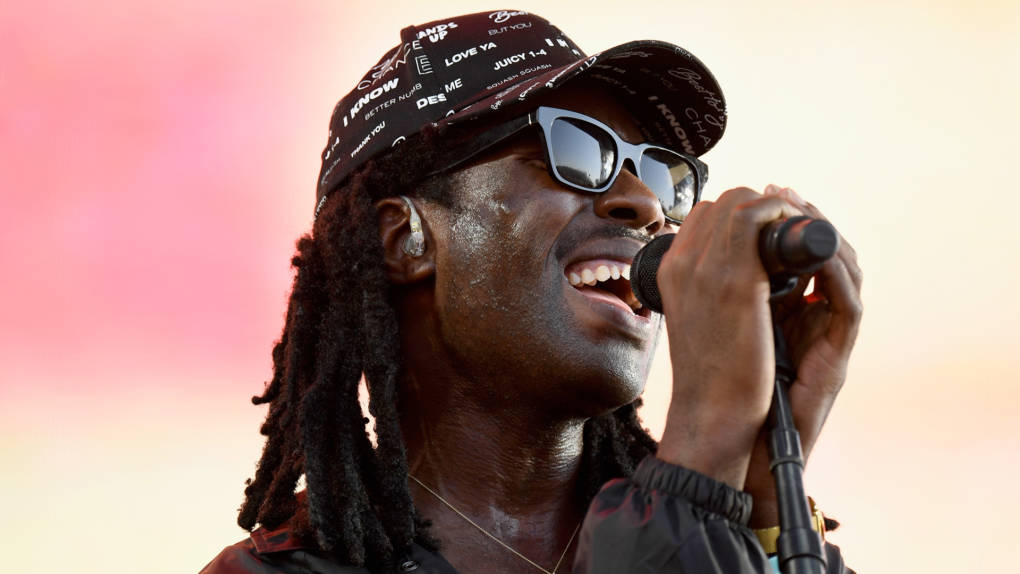
"caption": "Dev Hynes aka Blood Orange performs at FYF Fest 2016 in Los Angeles. ",
"description": "Dev Hynes aka Blood Orange performs at FYF Fest 2016 in Los Angeles. ",
"title": "FYF Fest 2016 - Day 2",
"credit": "Kevin Winter/Getty Images for FYF",
"status": "inherit",
"isLoading": false,
"fetchFailed": false
},
"arts_13839879": {
"type": "attachments",
"id": "arts_13839879",
"meta": {
"index": "attachments_1716263798",
"site": "arts",
"id": "13839879",
"found": true
},
"parent": 13839650,
"imgSizes": {
"small": {
"file": "https://ww2.kqed.org/app/uploads/sites/2/2018/08/Dirtbag-Dan-KQED-1920x1200-1-520x293.jpg",
"width": 520,
"mimeType": "image/jpeg",
"height": 293
},
"twentyfourteen-full-width": {
"file": "https://ww2.kqed.org/app/uploads/sites/2/2018/08/Dirtbag-Dan-KQED-1920x1200-1-1038x576.jpg",
"width": 1038,
"mimeType": "image/jpeg",
"height": 576
},
"thumbnail": {
"file": "https://ww2.kqed.org/app/uploads/sites/2/2018/08/Dirtbag-Dan-KQED-1920x1200-1-160x90.jpg",
"width": 160,
"mimeType": "image/jpeg",
"height": 90
},
"fd-sm": {
"file": "https://ww2.kqed.org/app/uploads/sites/2/2018/08/Dirtbag-Dan-KQED-1920x1200-1-960x540.jpg",
"width": 960,
"mimeType": "image/jpeg",
"height": 540
},
"post-thumbnail": {
"file": "https://ww2.kqed.org/app/uploads/sites/2/2018/08/Dirtbag-Dan-KQED-1920x1200-1-672x372.jpg",
"width": 672,
"mimeType": "image/jpeg",
"height": 372
},
"xsmall": {
"file": "https://ww2.kqed.org/app/uploads/sites/2/2018/08/Dirtbag-Dan-KQED-1920x1200-1-375x211.jpg",
"width": 375,
"mimeType": "image/jpeg",
"height": 211
},
"kqedFullSize": {
"file": "https://ww2.kqed.org/app/uploads/sites/2/2018/08/Dirtbag-Dan-KQED-1920x1200-1.jpg",
"width": 1920,
"height": 1080
},
"large": {
"file": "https://ww2.kqed.org/app/uploads/sites/2/2018/08/Dirtbag-Dan-KQED-1920x1200-1-1020x574.jpg",
"width": 1020,
"mimeType": "image/jpeg",
"height": 574
},
"xlarge": {
"file": "https://ww2.kqed.org/app/uploads/sites/2/2018/08/Dirtbag-Dan-KQED-1920x1200-1-1180x664.jpg",
"width": 1180,
"mimeType": "image/jpeg",
"height": 664
},
"complete_open_graph": {
"file": "https://ww2.kqed.org/app/uploads/sites/2/2018/08/Dirtbag-Dan-KQED-1920x1200-1-1200x675.jpg",
"width": 1200,
"mimeType": "image/jpeg",
"height": 675
},
"guest-author-50": {
"file": "https://ww2.kqed.org/app/uploads/sites/2/2018/08/Dirtbag-Dan-KQED-1920x1200-1-50x50.jpg",
"width": 50,
"mimeType": "image/jpeg",
"height": 50
},
"guest-author-96": {
"file": "https://ww2.kqed.org/app/uploads/sites/2/2018/08/Dirtbag-Dan-KQED-1920x1200-1-96x96.jpg",
"width": 96,
"mimeType": "image/jpeg",
"height": 96
},
"medium": {
"file": "https://ww2.kqed.org/app/uploads/sites/2/2018/08/Dirtbag-Dan-KQED-1920x1200-1-800x450.jpg",
"width": 800,
"mimeType": "image/jpeg",
"height": 450
},
"guest-author-64": {
"file": "https://ww2.kqed.org/app/uploads/sites/2/2018/08/Dirtbag-Dan-KQED-1920x1200-1-64x64.jpg",
"width": 64,
"mimeType": "image/jpeg",
"height": 64
},
"guest-author-32": {
"file": "https://ww2.kqed.org/app/uploads/sites/2/2018/08/Dirtbag-Dan-KQED-1920x1200-1-32x32.jpg",
"width": 32,
"mimeType": "image/jpeg",
"height": 32
},
"fd-lrg": {
"file": "https://ww2.kqed.org/app/uploads/sites/2/2018/08/Dirtbag-Dan-KQED-1920x1200-1-1920x1080.jpg",
"width": 1920,
"mimeType": "image/jpeg",
"height": 1080
},
"fd-med": {
"file": "https://ww2.kqed.org/app/uploads/sites/2/2018/08/Dirtbag-Dan-KQED-1920x1200-1-1180x664.jpg",
"width": 1180,
"mimeType": "image/jpeg",
"height": 664
},
"full-width": {
"file": "https://ww2.kqed.org/app/uploads/sites/2/2018/08/Dirtbag-Dan-KQED-1920x1200-1-1920x1080.jpg",
"width": 1920,
"mimeType": "image/jpeg",
"height": 1080
},
"detail": {
"file": "https://ww2.kqed.org/app/uploads/sites/2/2018/08/Dirtbag-Dan-KQED-1920x1200-1-150x150.jpg",
"width": 150,
"mimeType": "image/jpeg",
"height": 150
},
"medium_large": {
"file": "https://ww2.kqed.org/app/uploads/sites/2/2018/08/Dirtbag-Dan-KQED-1920x1200-1-768x432.jpg",
"width": 768,
"mimeType": "image/jpeg",
"height": 432
},
"guest-author-128": {
"file": "https://ww2.kqed.org/app/uploads/sites/2/2018/08/Dirtbag-Dan-KQED-1920x1200-1-128x128.jpg",
"width": 128,
"mimeType": "image/jpeg",
"height": 128
},
"xxsmall": {
"file": "https://ww2.kqed.org/app/uploads/sites/2/2018/08/Dirtbag-Dan-KQED-1920x1200-1-240x135.jpg",
"width": 240,
"mimeType": "image/jpeg",
"height": 135
}
},
"publishDate": 1535498067,
"modified": 1535498124,
"caption": "No matter how far across the globe battle rap has taken him, Dirtbag Dan reps his hometown with the battle cry, \"The Zae, baby!\"",
"description": "No matter how far across the globe battle rap has taken him, Dirtbag Dan reps his hometown with the battle cry, \"The Zae, baby!\"",
"title": "Dirtbag-Dan-KQED-1920x1200",
"credit": "Phil Emerson",
"status": "inherit",
"isLoading": false,
"fetchFailed": false
},
"arts_13839867": {
"type": "attachments",
"id": "arts_13839867",
"meta": {
"index": "attachments_1716263798",
"site": "arts",
"id": "13839867",
"found": true
},
"parent": 13839833,
"imgSizes": {
"small": {
"file": "https://ww2.kqed.org/app/uploads/sites/2/2018/08/GettyImages-143810746-520x293.jpg",
"width": 520,
"mimeType": "image/jpeg",
"height": 293
},
"twentyfourteen-full-width": {
"file": "https://ww2.kqed.org/app/uploads/sites/2/2018/08/GettyImages-143810746-1038x576.jpg",
"width": 1038,
"mimeType": "image/jpeg",
"height": 576
},
"thumbnail": {
"file": "https://ww2.kqed.org/app/uploads/sites/2/2018/08/GettyImages-143810746-160x90.jpg",
"width": 160,
"mimeType": "image/jpeg",
"height": 90
},
"fd-sm": {
"file": "https://ww2.kqed.org/app/uploads/sites/2/2018/08/GettyImages-143810746-960x540.jpg",
"width": 960,
"mimeType": "image/jpeg",
"height": 540
},
"post-thumbnail": {
"file": "https://ww2.kqed.org/app/uploads/sites/2/2018/08/GettyImages-143810746-672x372.jpg",
"width": 672,
"mimeType": "image/jpeg",
"height": 372
},
"xsmall": {
"file": "https://ww2.kqed.org/app/uploads/sites/2/2018/08/GettyImages-143810746-375x211.jpg",
"width": 375,
"mimeType": "image/jpeg",
"height": 211
},
"kqedFullSize": {
"file": "https://ww2.kqed.org/app/uploads/sites/2/2018/08/GettyImages-143810746.jpg",
"width": 1920,
"height": 1080
},
"large": {
"file": "https://ww2.kqed.org/app/uploads/sites/2/2018/08/GettyImages-143810746-1020x574.jpg",
"width": 1020,
"mimeType": "image/jpeg",
"height": 574
},
"xlarge": {
"file": "https://ww2.kqed.org/app/uploads/sites/2/2018/08/GettyImages-143810746-1180x664.jpg",
"width": 1180,
"mimeType": "image/jpeg",
"height": 664
},
"complete_open_graph": {
"file": "https://ww2.kqed.org/app/uploads/sites/2/2018/08/GettyImages-143810746-1200x675.jpg",
"width": 1200,
"mimeType": "image/jpeg",
"height": 675
},
"guest-author-50": {
"file": "https://ww2.kqed.org/app/uploads/sites/2/2018/08/GettyImages-143810746-50x50.jpg",
"width": 50,
"mimeType": "image/jpeg",
"height": 50
},
"guest-author-96": {
"file": "https://ww2.kqed.org/app/uploads/sites/2/2018/08/GettyImages-143810746-96x96.jpg",
"width": 96,
"mimeType": "image/jpeg",
"height": 96
},
"medium": {
"file": "https://ww2.kqed.org/app/uploads/sites/2/2018/08/GettyImages-143810746-800x450.jpg",
"width": 800,
"mimeType": "image/jpeg",
"height": 450
},
"guest-author-64": {
"file": "https://ww2.kqed.org/app/uploads/sites/2/2018/08/GettyImages-143810746-64x64.jpg",
"width": 64,
"mimeType": "image/jpeg",
"height": 64
},
"guest-author-32": {
"file": "https://ww2.kqed.org/app/uploads/sites/2/2018/08/GettyImages-143810746-32x32.jpg",
"width": 32,
"mimeType": "image/jpeg",
"height": 32
},
"fd-lrg": {
"file": "https://ww2.kqed.org/app/uploads/sites/2/2018/08/GettyImages-143810746-1920x1080.jpg",
"width": 1920,
"mimeType": "image/jpeg",
"height": 1080
},
"fd-med": {
"file": "https://ww2.kqed.org/app/uploads/sites/2/2018/08/GettyImages-143810746-1180x664.jpg",
"width": 1180,
"mimeType": "image/jpeg",
"height": 664
},
"full-width": {
"file": "https://ww2.kqed.org/app/uploads/sites/2/2018/08/GettyImages-143810746-1920x1080.jpg",
"width": 1920,
"mimeType": "image/jpeg",
"height": 1080
},
"detail": {
"file": "https://ww2.kqed.org/app/uploads/sites/2/2018/08/GettyImages-143810746-150x150.jpg",
"width": 150,
"mimeType": "image/jpeg",
"height": 150
},
"medium_large": {
"file": "https://ww2.kqed.org/app/uploads/sites/2/2018/08/GettyImages-143810746-768x432.jpg",
"width": 768,
"mimeType": "image/jpeg",
"height": 432
},
"guest-author-128": {
"file": "https://ww2.kqed.org/app/uploads/sites/2/2018/08/GettyImages-143810746-128x128.jpg",
"width": 128,
"mimeType": "image/jpeg",
"height": 128
},
"xxsmall": {
"file": "https://ww2.kqed.org/app/uploads/sites/2/2018/08/GettyImages-143810746-240x135.jpg",
"width": 240,
"mimeType": "image/jpeg",
"height": 135
}
},
"publishDate": 1535494682,
"modified": 1535494740,
"caption": "Ani DiFranco performs during the 2012 New Orleans Jazz & Heritage Festival on May 3, 2012 in New Orleans, Louisiana.",
"description": "Ani DiFranco performs during the 2012 New Orleans Jazz & Heritage Festival on May 3, 2012 in New Orleans, Louisiana.",
"title": "2012 New Orleans Jazz & Heritage Festival Presented By Shell - Day 4",
"credit": " Rick Diamond/Getty Images",
"status": "inherit",
"isLoading": false,
"fetchFailed": false
},
"arts_13829149": {
"type": "attachments",
"id": "arts_13829149",
"meta": {
"index": "attachments_1716263798",
"site": "arts",
"id": "13829149",
"found": true
},
"parent": 13829142,
"imgSizes": {
"small": {
"file": "https://ww2.kqed.org/app/uploads/sites/2/2018/04/Wax-Idols-photo-credit-Matthew-Vincent-520x292.jpg",
"width": 520,
"mimeType": "image/jpeg",
"height": 292
},
"twentyfourteen-full-width": {
"file": "https://ww2.kqed.org/app/uploads/sites/2/2018/04/Wax-Idols-photo-credit-Matthew-Vincent-1038x576.jpg",
"width": 1038,
"mimeType": "image/jpeg",
"height": 576
},
"thumbnail": {
"file": "https://ww2.kqed.org/app/uploads/sites/2/2018/04/Wax-Idols-photo-credit-Matthew-Vincent-160x90.jpg",
"width": 160,
"mimeType": "image/jpeg",
"height": 90
},
"fd-sm": {
"file": "https://ww2.kqed.org/app/uploads/sites/2/2018/04/Wax-Idols-photo-credit-Matthew-Vincent-960x540.jpg",
"width": 960,
"mimeType": "image/jpeg",
"height": 540
},
"post-thumbnail": {
"file": "https://ww2.kqed.org/app/uploads/sites/2/2018/04/Wax-Idols-photo-credit-Matthew-Vincent-672x372.jpg",
"width": 672,
"mimeType": "image/jpeg",
"height": 372
},
"xsmall": {
"file": "https://ww2.kqed.org/app/uploads/sites/2/2018/04/Wax-Idols-photo-credit-Matthew-Vincent-375x211.jpg",
"width": 375,
"mimeType": "image/jpeg",
"height": 211
},
"kqedFullSize": {
"file": "https://ww2.kqed.org/app/uploads/sites/2/2018/04/Wax-Idols-photo-credit-Matthew-Vincent.jpg",
"width": 1334,
"height": 750
},
"large": {
"file": "https://ww2.kqed.org/app/uploads/sites/2/2018/04/Wax-Idols-photo-credit-Matthew-Vincent-1020x573.jpg",
"width": 1020,
"mimeType": "image/jpeg",
"height": 573
},
"xlarge": {
"file": "https://ww2.kqed.org/app/uploads/sites/2/2018/04/Wax-Idols-photo-credit-Matthew-Vincent-1180x663.jpg",
"width": 1180,
"mimeType": "image/jpeg",
"height": 663
},
"guest-author-50": {
"file": "https://ww2.kqed.org/app/uploads/sites/2/2018/04/Wax-Idols-photo-credit-Matthew-Vincent-50x50.jpg",
"width": 50,
"mimeType": "image/jpeg",
"height": 50
},
"guest-author-96": {
"file": "https://ww2.kqed.org/app/uploads/sites/2/2018/04/Wax-Idols-photo-credit-Matthew-Vincent-96x96.jpg",
"width": 96,
"mimeType": "image/jpeg",
"height": 96
},
"medium": {
"file": "https://ww2.kqed.org/app/uploads/sites/2/2018/04/Wax-Idols-photo-credit-Matthew-Vincent-800x450.jpg",
"width": 800,
"mimeType": "image/jpeg",
"height": 450
},
"guest-author-64": {
"file": "https://ww2.kqed.org/app/uploads/sites/2/2018/04/Wax-Idols-photo-credit-Matthew-Vincent-64x64.jpg",
"width": 64,
"mimeType": "image/jpeg",
"height": 64
},
"guest-author-32": {
"file": "https://ww2.kqed.org/app/uploads/sites/2/2018/04/Wax-Idols-photo-credit-Matthew-Vincent-32x32.jpg",
"width": 32,
"mimeType": "image/jpeg",
"height": 32
},
"fd-med": {
"file": "https://ww2.kqed.org/app/uploads/sites/2/2018/04/Wax-Idols-photo-credit-Matthew-Vincent-1180x663.jpg",
"width": 1180,
"mimeType": "image/jpeg",
"height": 663
},
"detail": {
"file": "https://ww2.kqed.org/app/uploads/sites/2/2018/04/Wax-Idols-photo-credit-Matthew-Vincent-150x150.jpg",
"width": 150,
"mimeType": "image/jpeg",
"height": 150
},
"medium_large": {
"file": "https://ww2.kqed.org/app/uploads/sites/2/2018/04/Wax-Idols-photo-credit-Matthew-Vincent-768x432.jpg",
"width": 768,
"mimeType": "image/jpeg",
"height": 432
},
"guest-author-128": {
"file": "https://ww2.kqed.org/app/uploads/sites/2/2018/04/Wax-Idols-photo-credit-Matthew-Vincent-128x128.jpg",
"width": 128,
"mimeType": "image/jpeg",
"height": 128
},
"xxsmall": {
"file": "https://ww2.kqed.org/app/uploads/sites/2/2018/04/Wax-Idols-photo-credit-Matthew-Vincent-240x135.jpg",
"width": 240,
"mimeType": "image/jpeg",
"height": 135
}
},
"publishDate": 1523475222,
"modified": 1535402632,
"caption": "Greer McGettrick, Rachel Travers, Hether Fortune, and Peter Lightning (left to right) of Wax Idols. ",
"description": "Greer McGettrick, Rachel Travers, Hether Fortune, and Peter Lightning (left to right) of Wax Idols. ",
"title": "Wax-Idols-photo-credit-Matthew-Vincent",
"credit": "Matthew Vincent",
"status": "inherit",
"isLoading": false,
"fetchFailed": false
},
"arts_13839606": {
"type": "attachments",
"id": "arts_13839606",
"meta": {
"index": "attachments_1716263798",
"site": "arts",
"id": "13839606",
"found": true
},
"parent": 13839604,
"imgSizes": {
"small": {
"file": "https://ww2.kqed.org/app/uploads/sites/2/2018/08/Moss-St-Rehearsal-520x317.png",
"width": 520,
"mimeType": "image/png",
"height": 317
},
"twentyfourteen-full-width": {
"file": "https://ww2.kqed.org/app/uploads/sites/2/2018/08/Moss-St-Rehearsal-946x576.png",
"width": 946,
"mimeType": "image/png",
"height": 576
},
"thumbnail": {
"file": "https://ww2.kqed.org/app/uploads/sites/2/2018/08/Moss-St-Rehearsal-160x98.png",
"width": 160,
"mimeType": "image/png",
"height": 98
},
"post-thumbnail": {
"file": "https://ww2.kqed.org/app/uploads/sites/2/2018/08/Moss-St-Rehearsal-672x372.png",
"width": 672,
"mimeType": "image/png",
"height": 372
},
"xsmall": {
"file": "https://ww2.kqed.org/app/uploads/sites/2/2018/08/Moss-St-Rehearsal-375x229.png",
"width": 375,
"mimeType": "image/png",
"height": 229
},
"kqedFullSize": {
"file": "https://ww2.kqed.org/app/uploads/sites/2/2018/08/Moss-St-Rehearsal.png",
"width": 946,
"height": 577
},
"guest-author-50": {
"file": "https://ww2.kqed.org/app/uploads/sites/2/2018/08/Moss-St-Rehearsal-50x50.png",
"width": 50,
"mimeType": "image/png",
"height": 50
},
"guest-author-96": {
"file": "https://ww2.kqed.org/app/uploads/sites/2/2018/08/Moss-St-Rehearsal-96x96.png",
"width": 96,
"mimeType": "image/png",
"height": 96
},
"medium": {
"file": "https://ww2.kqed.org/app/uploads/sites/2/2018/08/Moss-St-Rehearsal-800x488.png",
"width": 800,
"mimeType": "image/png",
"height": 488
},
"guest-author-64": {
"file": "https://ww2.kqed.org/app/uploads/sites/2/2018/08/Moss-St-Rehearsal-64x64.png",
"width": 64,
"mimeType": "image/png",
"height": 64
},
"guest-author-32": {
"file": "https://ww2.kqed.org/app/uploads/sites/2/2018/08/Moss-St-Rehearsal-32x32.png",
"width": 32,
"mimeType": "image/png",
"height": 32
},
"detail": {
"file": "https://ww2.kqed.org/app/uploads/sites/2/2018/08/Moss-St-Rehearsal-150x150.png",
"width": 150,
"mimeType": "image/png",
"height": 150
},
"medium_large": {
"file": "https://ww2.kqed.org/app/uploads/sites/2/2018/08/Moss-St-Rehearsal-768x468.png",
"width": 768,
"mimeType": "image/png",
"height": 468
},
"guest-author-128": {
"file": "https://ww2.kqed.org/app/uploads/sites/2/2018/08/Moss-St-Rehearsal-128x128.png",
"width": 128,
"mimeType": "image/png",
"height": 128
},
"xxsmall": {
"file": "https://ww2.kqed.org/app/uploads/sites/2/2018/08/Moss-St-Rehearsal-240x146.png",
"width": 240,
"mimeType": "image/png",
"height": 146
}
},
"publishDate": 1535056745,
"modified": 1535056786,
"caption": "Moss St. opened 35 years ago.",
"description": null,
"title": "Moss St Rehearsal",
"credit": null,
"status": "inherit",
"isLoading": false,
"fetchFailed": false
},
"arts_13839673": {
"type": "attachments",
"id": "arts_13839673",
"meta": {
"index": "attachments_1716263798",
"site": "arts",
"id": "13839673",
"found": true
},
"parent": 13839672,
"imgSizes": {
"small": {
"file": "https://ww2.kqed.org/app/uploads/sites/2/2018/08/gettyimages-2661076_wide-cc4d6c959a8cf89139bbfd0e1382ca3954592483-520x292.jpg",
"width": 520,
"mimeType": "image/jpeg",
"height": 292
},
"twentyfourteen-full-width": {
"file": "https://ww2.kqed.org/app/uploads/sites/2/2018/08/gettyimages-2661076_wide-cc4d6c959a8cf89139bbfd0e1382ca3954592483-1038x576.jpg",
"width": 1038,
"mimeType": "image/jpeg",
"height": 576
},
"thumbnail": {
"file": "https://ww2.kqed.org/app/uploads/sites/2/2018/08/gettyimages-2661076_wide-cc4d6c959a8cf89139bbfd0e1382ca3954592483-160x90.jpg",
"width": 160,
"mimeType": "image/jpeg",
"height": 90
},
"fd-sm": {
"file": "https://ww2.kqed.org/app/uploads/sites/2/2018/08/gettyimages-2661076_wide-cc4d6c959a8cf89139bbfd0e1382ca3954592483-960x540.jpg",
"width": 960,
"mimeType": "image/jpeg",
"height": 540
},
"post-thumbnail": {
"file": "https://ww2.kqed.org/app/uploads/sites/2/2018/08/gettyimages-2661076_wide-cc4d6c959a8cf89139bbfd0e1382ca3954592483-672x372.jpg",
"width": 672,
"mimeType": "image/jpeg",
"height": 372
},
"xsmall": {
"file": "https://ww2.kqed.org/app/uploads/sites/2/2018/08/gettyimages-2661076_wide-cc4d6c959a8cf89139bbfd0e1382ca3954592483-375x211.jpg",
"width": 375,
"mimeType": "image/jpeg",
"height": 211
},
"kqedFullSize": {
"file": "https://ww2.kqed.org/app/uploads/sites/2/2018/08/gettyimages-2661076_wide-cc4d6c959a8cf89139bbfd0e1382ca3954592483.jpg",
"width": 2048,
"height": 1152
},
"large": {
"file": "https://ww2.kqed.org/app/uploads/sites/2/2018/08/gettyimages-2661076_wide-cc4d6c959a8cf89139bbfd0e1382ca3954592483-1020x574.jpg",
"width": 1020,
"mimeType": "image/jpeg",
"height": 574
},
"xlarge": {
"file": "https://ww2.kqed.org/app/uploads/sites/2/2018/08/gettyimages-2661076_wide-cc4d6c959a8cf89139bbfd0e1382ca3954592483-1180x664.jpg",
"width": 1180,
"mimeType": "image/jpeg",
"height": 664
},
"complete_open_graph": {
"file": "https://ww2.kqed.org/app/uploads/sites/2/2018/08/gettyimages-2661076_wide-cc4d6c959a8cf89139bbfd0e1382ca3954592483-1200x675.jpg",
"width": 1200,
"mimeType": "image/jpeg",
"height": 675
},
"guest-author-50": {
"file": "https://ww2.kqed.org/app/uploads/sites/2/2018/08/gettyimages-2661076_wide-cc4d6c959a8cf89139bbfd0e1382ca3954592483-50x50.jpg",
"width": 50,
"mimeType": "image/jpeg",
"height": 50
},
"guest-author-96": {
"file": "https://ww2.kqed.org/app/uploads/sites/2/2018/08/gettyimages-2661076_wide-cc4d6c959a8cf89139bbfd0e1382ca3954592483-96x96.jpg",
"width": 96,
"mimeType": "image/jpeg",
"height": 96
},
"medium": {
"file": "https://ww2.kqed.org/app/uploads/sites/2/2018/08/gettyimages-2661076_wide-cc4d6c959a8cf89139bbfd0e1382ca3954592483-800x450.jpg",
"width": 800,
"mimeType": "image/jpeg",
"height": 450
},
"guest-author-64": {
"file": "https://ww2.kqed.org/app/uploads/sites/2/2018/08/gettyimages-2661076_wide-cc4d6c959a8cf89139bbfd0e1382ca3954592483-64x64.jpg",
"width": 64,
"mimeType": "image/jpeg",
"height": 64
},
"guest-author-32": {
"file": "https://ww2.kqed.org/app/uploads/sites/2/2018/08/gettyimages-2661076_wide-cc4d6c959a8cf89139bbfd0e1382ca3954592483-32x32.jpg",
"width": 32,
"mimeType": "image/jpeg",
"height": 32
},
"fd-lrg": {
"file": "https://ww2.kqed.org/app/uploads/sites/2/2018/08/gettyimages-2661076_wide-cc4d6c959a8cf89139bbfd0e1382ca3954592483-1920x1080.jpg",
"width": 1920,
"mimeType": "image/jpeg",
"height": 1080
},
"fd-med": {
"file": "https://ww2.kqed.org/app/uploads/sites/2/2018/08/gettyimages-2661076_wide-cc4d6c959a8cf89139bbfd0e1382ca3954592483-1180x664.jpg",
"width": 1180,
"mimeType": "image/jpeg",
"height": 664
},
"full-width": {
"file": "https://ww2.kqed.org/app/uploads/sites/2/2018/08/gettyimages-2661076_wide-cc4d6c959a8cf89139bbfd0e1382ca3954592483-1920x1080.jpg",
"width": 1920,
"mimeType": "image/jpeg",
"height": 1080
},
"detail": {
"file": "https://ww2.kqed.org/app/uploads/sites/2/2018/08/gettyimages-2661076_wide-cc4d6c959a8cf89139bbfd0e1382ca3954592483-150x150.jpg",
"width": 150,
"mimeType": "image/jpeg",
"height": 150
},
"medium_large": {
"file": "https://ww2.kqed.org/app/uploads/sites/2/2018/08/gettyimages-2661076_wide-cc4d6c959a8cf89139bbfd0e1382ca3954592483-768x432.jpg",
"width": 768,
"mimeType": "image/jpeg",
"height": 432
},
"guest-author-128": {
"file": "https://ww2.kqed.org/app/uploads/sites/2/2018/08/gettyimages-2661076_wide-cc4d6c959a8cf89139bbfd0e1382ca3954592483-128x128.jpg",
"width": 128,
"mimeType": "image/jpeg",
"height": 128
},
"xxsmall": {
"file": "https://ww2.kqed.org/app/uploads/sites/2/2018/08/gettyimages-2661076_wide-cc4d6c959a8cf89139bbfd0e1382ca3954592483-240x135.jpg",
"width": 240,
"mimeType": "image/jpeg",
"height": 135
}
},
"publishDate": 1535133036,
"modified": 1535133382,
"caption": "Leonard Bernstein conducting at London's Royal Festival Hall in 1963.",
"description": "Leonard Bernstein conducting at London's Royal Festival Hall in 1963.",
"title": "Leonard Bernstein conducting at London's Royal Festival Hall in 1963.",
"credit": "NPR",
"status": "inherit",
"isLoading": false,
"fetchFailed": false
},
"arts_13839667": {
"type": "attachments",
"id": "arts_13839667",
"meta": {
"index": "attachments_1716263798",
"site": "arts",
"id": "13839667",
"found": true
},
"parent": 13839666,
"imgSizes": {
"small": {
"file": "https://ww2.kqed.org/app/uploads/sites/2/2018/08/ttt-robyn_custom-886e1f4c19aec3e192b3965d40d4351f0242ef32-520x358.jpg",
"width": 520,
"mimeType": "image/jpeg",
"height": 358
},
"twentyfourteen-full-width": {
"file": "https://ww2.kqed.org/app/uploads/sites/2/2018/08/ttt-robyn_custom-886e1f4c19aec3e192b3965d40d4351f0242ef32-1038x576.jpg",
"width": 1038,
"mimeType": "image/jpeg",
"height": 576
},
"thumbnail": {
"file": "https://ww2.kqed.org/app/uploads/sites/2/2018/08/ttt-robyn_custom-886e1f4c19aec3e192b3965d40d4351f0242ef32-160x110.jpg",
"width": 160,
"mimeType": "image/jpeg",
"height": 110
},
"fd-sm": {
"file": "https://ww2.kqed.org/app/uploads/sites/2/2018/08/ttt-robyn_custom-886e1f4c19aec3e192b3965d40d4351f0242ef32-960x661.jpg",
"width": 960,
"mimeType": "image/jpeg",
"height": 661
},
"post-thumbnail": {
"file": "https://ww2.kqed.org/app/uploads/sites/2/2018/08/ttt-robyn_custom-886e1f4c19aec3e192b3965d40d4351f0242ef32-672x372.jpg",
"width": 672,
"mimeType": "image/jpeg",
"height": 372
},
"xsmall": {
"file": "https://ww2.kqed.org/app/uploads/sites/2/2018/08/ttt-robyn_custom-886e1f4c19aec3e192b3965d40d4351f0242ef32-375x258.jpg",
"width": 375,
"mimeType": "image/jpeg",
"height": 258
},
"kqedFullSize": {
"file": "https://ww2.kqed.org/app/uploads/sites/2/2018/08/ttt-robyn_custom-886e1f4c19aec3e192b3965d40d4351f0242ef32.jpg",
"width": 2048,
"height": 1410
},
"large": {
"file": "https://ww2.kqed.org/app/uploads/sites/2/2018/08/ttt-robyn_custom-886e1f4c19aec3e192b3965d40d4351f0242ef32-1020x702.jpg",
"width": 1020,
"mimeType": "image/jpeg",
"height": 702
},
"xlarge": {
"file": "https://ww2.kqed.org/app/uploads/sites/2/2018/08/ttt-robyn_custom-886e1f4c19aec3e192b3965d40d4351f0242ef32-1180x813.jpg",
"width": 1180,
"mimeType": "image/jpeg",
"height": 813
},
"complete_open_graph": {
"file": "https://ww2.kqed.org/app/uploads/sites/2/2018/08/ttt-robyn_custom-886e1f4c19aec3e192b3965d40d4351f0242ef32-1200x826.jpg",
"width": 1200,
"mimeType": "image/jpeg",
"height": 826
},
"guest-author-50": {
"file": "https://ww2.kqed.org/app/uploads/sites/2/2018/08/ttt-robyn_custom-886e1f4c19aec3e192b3965d40d4351f0242ef32-50x50.jpg",
"width": 50,
"mimeType": "image/jpeg",
"height": 50
},
"guest-author-96": {
"file": "https://ww2.kqed.org/app/uploads/sites/2/2018/08/ttt-robyn_custom-886e1f4c19aec3e192b3965d40d4351f0242ef32-96x96.jpg",
"width": 96,
"mimeType": "image/jpeg",
"height": 96
},
"medium": {
"file": "https://ww2.kqed.org/app/uploads/sites/2/2018/08/ttt-robyn_custom-886e1f4c19aec3e192b3965d40d4351f0242ef32-800x551.jpg",
"width": 800,
"mimeType": "image/jpeg",
"height": 551
},
"guest-author-64": {
"file": "https://ww2.kqed.org/app/uploads/sites/2/2018/08/ttt-robyn_custom-886e1f4c19aec3e192b3965d40d4351f0242ef32-64x64.jpg",
"width": 64,
"mimeType": "image/jpeg",
"height": 64
},
"guest-author-32": {
"file": "https://ww2.kqed.org/app/uploads/sites/2/2018/08/ttt-robyn_custom-886e1f4c19aec3e192b3965d40d4351f0242ef32-32x32.jpg",
"width": 32,
"mimeType": "image/jpeg",
"height": 32
},
"fd-lrg": {
"file": "https://ww2.kqed.org/app/uploads/sites/2/2018/08/ttt-robyn_custom-886e1f4c19aec3e192b3965d40d4351f0242ef32-1920x1322.jpg",
"width": 1920,
"mimeType": "image/jpeg",
"height": 1322
},
"fd-med": {
"file": "https://ww2.kqed.org/app/uploads/sites/2/2018/08/ttt-robyn_custom-886e1f4c19aec3e192b3965d40d4351f0242ef32-1180x813.jpg",
"width": 1180,
"mimeType": "image/jpeg",
"height": 813
},
"full-width": {
"file": "https://ww2.kqed.org/app/uploads/sites/2/2018/08/ttt-robyn_custom-886e1f4c19aec3e192b3965d40d4351f0242ef32-1920x1322.jpg",
"width": 1920,
"mimeType": "image/jpeg",
"height": 1322
},
"detail": {
"file": "https://ww2.kqed.org/app/uploads/sites/2/2018/08/ttt-robyn_custom-886e1f4c19aec3e192b3965d40d4351f0242ef32-150x150.jpg",
"width": 150,
"mimeType": "image/jpeg",
"height": 150
},
"medium_large": {
"file": "https://ww2.kqed.org/app/uploads/sites/2/2018/08/ttt-robyn_custom-886e1f4c19aec3e192b3965d40d4351f0242ef32-768x529.jpg",
"width": 768,
"mimeType": "image/jpeg",
"height": 529
},
"guest-author-128": {
"file": "https://ww2.kqed.org/app/uploads/sites/2/2018/08/ttt-robyn_custom-886e1f4c19aec3e192b3965d40d4351f0242ef32-128x128.jpg",
"width": 128,
"mimeType": "image/jpeg",
"height": 128
},
"xxsmall": {
"file": "https://ww2.kqed.org/app/uploads/sites/2/2018/08/ttt-robyn_custom-886e1f4c19aec3e192b3965d40d4351f0242ef32-240x165.jpg",
"width": 240,
"mimeType": "image/jpeg",
"height": 165
}
},
"publishDate": 1535131284,
"modified": 1535131674,
"caption": "Robyn performs at Radio City Music Hall in 2011.",
"description": "Robyn performs at Radio City Music Hall in 2011.",
"title": "Robyn performs at Radio City Music Hall in 2011.",
"credit": "Mike Coppola/Getty Images and Angela Hsieh/NPR",
"status": "inherit",
"isLoading": false,
"fetchFailed": false
},
"arts_13839557": {
"type": "attachments",
"id": "arts_13839557",
"meta": {
"index": "attachments_1716263798",
"site": "arts",
"id": "13839557",
"found": true
},
"parent": 13839507,
"imgSizes": {
"small": {
"file": "https://ww2.kqed.org/app/uploads/sites/2/2018/08/hem3-520x293.jpg",
"width": 520,
"mimeType": "image/jpeg",
"height": 293
},
"thumbnail": {
"file": "https://ww2.kqed.org/app/uploads/sites/2/2018/08/hem3-160x90.jpg",
"width": 160,
"mimeType": "image/jpeg",
"height": 90
},
"post-thumbnail": {
"file": "https://ww2.kqed.org/app/uploads/sites/2/2018/08/hem3-672x372.jpg",
"width": 672,
"mimeType": "image/jpeg",
"height": 372
},
"xsmall": {
"file": "https://ww2.kqed.org/app/uploads/sites/2/2018/08/hem3-375x211.jpg",
"width": 375,
"mimeType": "image/jpeg",
"height": 211
},
"kqedFullSize": {
"file": "https://ww2.kqed.org/app/uploads/sites/2/2018/08/hem3.jpg",
"width": 800,
"height": 450
},
"guest-author-50": {
"file": "https://ww2.kqed.org/app/uploads/sites/2/2018/08/hem3-50x50.jpg",
"width": 50,
"mimeType": "image/jpeg",
"height": 50
},
"guest-author-96": {
"file": "https://ww2.kqed.org/app/uploads/sites/2/2018/08/hem3-96x96.jpg",
"width": 96,
"mimeType": "image/jpeg",
"height": 96
},
"medium": {
"file": "https://ww2.kqed.org/app/uploads/sites/2/2018/08/hem3-800x450.jpg",
"width": 800,
"mimeType": "image/jpeg",
"height": 450
},
"guest-author-64": {
"file": "https://ww2.kqed.org/app/uploads/sites/2/2018/08/hem3-64x64.jpg",
"width": 64,
"mimeType": "image/jpeg",
"height": 64
},
"guest-author-32": {
"file": "https://ww2.kqed.org/app/uploads/sites/2/2018/08/hem3-32x32.jpg",
"width": 32,
"mimeType": "image/jpeg",
"height": 32
},
"detail": {
"file": "https://ww2.kqed.org/app/uploads/sites/2/2018/08/hem3-150x150.jpg",
"width": 150,
"mimeType": "image/jpeg",
"height": 150
},
"medium_large": {
"file": "https://ww2.kqed.org/app/uploads/sites/2/2018/08/hem3-768x432.jpg",
"width": 768,
"mimeType": "image/jpeg",
"height": 432
},
"guest-author-128": {
"file": "https://ww2.kqed.org/app/uploads/sites/2/2018/08/hem3-128x128.jpg",
"width": 128,
"mimeType": "image/jpeg",
"height": 128
},
"xxsmall": {
"file": "https://ww2.kqed.org/app/uploads/sites/2/2018/08/hem3-240x135.jpg",
"width": 240,
"mimeType": "image/jpeg",
"height": 135
}
},
"publishDate": 1534975086,
"modified": 1534975163,
"caption": "Kelley Stoltz performs at the Hemlock in 2003. ",
"description": "Kelley Stoltz performs at the Hemlock in 2003. ",
"title": "hem3",
"credit": "Debra Zeller",
"status": "inherit",
"isLoading": false,
"fetchFailed": false
},
"arts_13839551": {
"type": "attachments",
"id": "arts_13839551",
"meta": {
"index": "attachments_1716263798",
"site": "arts",
"id": "13839551",
"found": true
},
"parent": 13839406,
"imgSizes": {
"small": {
"file": "https://ww2.kqed.org/app/uploads/sites/2/2018/08/e.24th.MAIN_.GrahamHoloch-520x293.jpg",
"width": 520,
"mimeType": "image/jpeg",
"height": 293
},
"twentyfourteen-full-width": {
"file": "https://ww2.kqed.org/app/uploads/sites/2/2018/08/e.24th.MAIN_.GrahamHoloch-1038x576.jpg",
"width": 1038,
"mimeType": "image/jpeg",
"height": 576
},
"thumbnail": {
"file": "https://ww2.kqed.org/app/uploads/sites/2/2018/08/e.24th.MAIN_.GrahamHoloch-160x90.jpg",
"width": 160,
"mimeType": "image/jpeg",
"height": 90
},
"fd-sm": {
"file": "https://ww2.kqed.org/app/uploads/sites/2/2018/08/e.24th.MAIN_.GrahamHoloch-960x540.jpg",
"width": 960,
"mimeType": "image/jpeg",
"height": 540
},
"post-thumbnail": {
"file": "https://ww2.kqed.org/app/uploads/sites/2/2018/08/e.24th.MAIN_.GrahamHoloch-672x372.jpg",
"width": 672,
"mimeType": "image/jpeg",
"height": 372
},
"xsmall": {
"file": "https://ww2.kqed.org/app/uploads/sites/2/2018/08/e.24th.MAIN_.GrahamHoloch-375x211.jpg",
"width": 375,
"mimeType": "image/jpeg",
"height": 211
},
"kqedFullSize": {
"file": "https://ww2.kqed.org/app/uploads/sites/2/2018/08/e.24th.MAIN_.GrahamHoloch.jpg",
"width": 1200,
"height": 675
},
"large": {
"file": "https://ww2.kqed.org/app/uploads/sites/2/2018/08/e.24th.MAIN_.GrahamHoloch-1020x574.jpg",
"width": 1020,
"mimeType": "image/jpeg",
"height": 574
},
"xlarge": {
"file": "https://ww2.kqed.org/app/uploads/sites/2/2018/08/e.24th.MAIN_.GrahamHoloch-1180x664.jpg",
"width": 1180,
"mimeType": "image/jpeg",
"height": 664
},
"complete_open_graph": {
"file": "https://ww2.kqed.org/app/uploads/sites/2/2018/08/e.24th.MAIN_.GrahamHoloch-1200x675.jpg",
"width": 1200,
"mimeType": "image/jpeg",
"height": 675
},
"guest-author-50": {
"file": "https://ww2.kqed.org/app/uploads/sites/2/2018/08/e.24th.MAIN_.GrahamHoloch-50x50.jpg",
"width": 50,
"mimeType": "image/jpeg",
"height": 50
},
"guest-author-96": {
"file": "https://ww2.kqed.org/app/uploads/sites/2/2018/08/e.24th.MAIN_.GrahamHoloch-96x96.jpg",
"width": 96,
"mimeType": "image/jpeg",
"height": 96
},
"medium": {
"file": "https://ww2.kqed.org/app/uploads/sites/2/2018/08/e.24th.MAIN_.GrahamHoloch-800x450.jpg",
"width": 800,
"mimeType": "image/jpeg",
"height": 450
},
"guest-author-64": {
"file": "https://ww2.kqed.org/app/uploads/sites/2/2018/08/e.24th.MAIN_.GrahamHoloch-64x64.jpg",
"width": 64,
"mimeType": "image/jpeg",
"height": 64
},
"guest-author-32": {
"file": "https://ww2.kqed.org/app/uploads/sites/2/2018/08/e.24th.MAIN_.GrahamHoloch-32x32.jpg",
"width": 32,
"mimeType": "image/jpeg",
"height": 32
},
"fd-med": {
"file": "https://ww2.kqed.org/app/uploads/sites/2/2018/08/e.24th.MAIN_.GrahamHoloch-1180x664.jpg",
"width": 1180,
"mimeType": "image/jpeg",
"height": 664
},
"detail": {
"file": "https://ww2.kqed.org/app/uploads/sites/2/2018/08/e.24th.MAIN_.GrahamHoloch-150x150.jpg",
"width": 150,
"mimeType": "image/jpeg",
"height": 150
},
"medium_large": {
"file": "https://ww2.kqed.org/app/uploads/sites/2/2018/08/e.24th.MAIN_.GrahamHoloch-768x432.jpg",
"width": 768,
"mimeType": "image/jpeg",
"height": 432
},
"guest-author-128": {
"file": "https://ww2.kqed.org/app/uploads/sites/2/2018/08/e.24th.MAIN_.GrahamHoloch-128x128.jpg",
"width": 128,
"mimeType": "image/jpeg",
"height": 128
},
"xxsmall": {
"file": "https://ww2.kqed.org/app/uploads/sites/2/2018/08/e.24th.MAIN_.GrahamHoloch-240x135.jpg",
"width": 240,
"mimeType": "image/jpeg",
"height": 135
}
},
"publishDate": 1534969899,
"modified": 1535042074,
"caption": "L to R: E 24th St. residents Alan Tarbell, Polly Moller Springhorn, Pedro Cielo, and Kristin Allen with Dixi Carrillo.",
"description": "Residents of the building on E. 24th Street in Oakland, with Dixi Carrillo (at right).",
"title": "e.24th.MAIN.GrahamHoloch",
"credit": "Graham Holoch",
"status": "inherit",
"isLoading": false,
"fetchFailed": false
},
"arts_13839325": {
"type": "attachments",
"id": "arts_13839325",
"meta": {
"index": "attachments_1716263798",
"site": "arts",
"id": "13839325",
"found": true
},
"parent": 13839312,
"imgSizes": {
"small": {
"file": "https://ww2.kqed.org/app/uploads/sites/2/2018/08/TheFaceOnTheBarroomFloor-2-520x371.jpg",
"width": 520,
"mimeType": "image/jpeg",
"height": 371
},
"twentyfourteen-full-width": {
"file": "https://ww2.kqed.org/app/uploads/sites/2/2018/08/TheFaceOnTheBarroomFloor-2-1038x576.jpg",
"width": 1038,
"mimeType": "image/jpeg",
"height": 576
},
"thumbnail": {
"file": "https://ww2.kqed.org/app/uploads/sites/2/2018/08/TheFaceOnTheBarroomFloor-2-160x114.jpg",
"width": 160,
"mimeType": "image/jpeg",
"height": 114
},
"fd-sm": {
"file": "https://ww2.kqed.org/app/uploads/sites/2/2018/08/TheFaceOnTheBarroomFloor-2-960x685.jpg",
"width": 960,
"mimeType": "image/jpeg",
"height": 685
},
"post-thumbnail": {
"file": "https://ww2.kqed.org/app/uploads/sites/2/2018/08/TheFaceOnTheBarroomFloor-2-672x372.jpg",
"width": 672,
"mimeType": "image/jpeg",
"height": 372
},
"xsmall": {
"file": "https://ww2.kqed.org/app/uploads/sites/2/2018/08/TheFaceOnTheBarroomFloor-2-375x268.jpg",
"width": 375,
"mimeType": "image/jpeg",
"height": 268
},
"kqedFullSize": {
"file": "https://ww2.kqed.org/app/uploads/sites/2/2018/08/TheFaceOnTheBarroomFloor-2.jpg",
"width": 2048,
"height": 1462
},
"large": {
"file": "https://ww2.kqed.org/app/uploads/sites/2/2018/08/TheFaceOnTheBarroomFloor-2-1020x728.jpg",
"width": 1020,
"mimeType": "image/jpeg",
"height": 728
},
"xlarge": {
"file": "https://ww2.kqed.org/app/uploads/sites/2/2018/08/TheFaceOnTheBarroomFloor-2-1180x842.jpg",
"width": 1180,
"mimeType": "image/jpeg",
"height": 842
},
"complete_open_graph": {
"file": "https://ww2.kqed.org/app/uploads/sites/2/2018/08/TheFaceOnTheBarroomFloor-2-1200x856.jpg",
"width": 1200,
"mimeType": "image/jpeg",
"height": 856
},
"guest-author-50": {
"file": "https://ww2.kqed.org/app/uploads/sites/2/2018/08/TheFaceOnTheBarroomFloor-2-50x50.jpg",
"width": 50,
"mimeType": "image/jpeg",
"height": 50
},
"guest-author-96": {
"file": "https://ww2.kqed.org/app/uploads/sites/2/2018/08/TheFaceOnTheBarroomFloor-2-96x96.jpg",
"width": 96,
"mimeType": "image/jpeg",
"height": 96
},
"medium": {
"file": "https://ww2.kqed.org/app/uploads/sites/2/2018/08/TheFaceOnTheBarroomFloor-2-800x571.jpg",
"width": 800,
"mimeType": "image/jpeg",
"height": 571
},
"guest-author-64": {
"file": "https://ww2.kqed.org/app/uploads/sites/2/2018/08/TheFaceOnTheBarroomFloor-2-64x64.jpg",
"width": 64,
"mimeType": "image/jpeg",
"height": 64
},
"guest-author-32": {
"file": "https://ww2.kqed.org/app/uploads/sites/2/2018/08/TheFaceOnTheBarroomFloor-2-32x32.jpg",
"width": 32,
"mimeType": "image/jpeg",
"height": 32
},
"fd-lrg": {
"file": "https://ww2.kqed.org/app/uploads/sites/2/2018/08/TheFaceOnTheBarroomFloor-2-1920x1370.jpg",
"width": 1920,
"mimeType": "image/jpeg",
"height": 1370
},
"fd-med": {
"file": "https://ww2.kqed.org/app/uploads/sites/2/2018/08/TheFaceOnTheBarroomFloor-2-1180x842.jpg",
"width": 1180,
"mimeType": "image/jpeg",
"height": 842
},
"full-width": {
"file": "https://ww2.kqed.org/app/uploads/sites/2/2018/08/TheFaceOnTheBarroomFloor-2-1920x1370.jpg",
"width": 1920,
"mimeType": "image/jpeg",
"height": 1370
},
"detail": {
"file": "https://ww2.kqed.org/app/uploads/sites/2/2018/08/TheFaceOnTheBarroomFloor-2-150x150.jpg",
"width": 150,
"mimeType": "image/jpeg",
"height": 150
},
"medium_large": {
"file": "https://ww2.kqed.org/app/uploads/sites/2/2018/08/TheFaceOnTheBarroomFloor-2-768x548.jpg",
"width": 768,
"mimeType": "image/jpeg",
"height": 548
},
"guest-author-128": {
"file": "https://ww2.kqed.org/app/uploads/sites/2/2018/08/TheFaceOnTheBarroomFloor-2-128x128.jpg",
"width": 128,
"mimeType": "image/jpeg",
"height": 128
},
"xxsmall": {
"file": "https://ww2.kqed.org/app/uploads/sites/2/2018/08/TheFaceOnTheBarroomFloor-2-240x171.jpg",
"width": 240,
"mimeType": "image/jpeg",
"height": 171
}
},
"publishDate": 1534557306,
"modified": 1534557351,
"caption": "The eponymous \"face on the barroom floor\" in Central City, Colorado that inspired the one-act opera by composer Henry Mollicone and librettist John Bowman.",
"description": "The eponymous \"face on the barroom floor\" in Central City, Colorado that inspired the one-act opera by composer Henry Mollicone and librettist John Bowman.",
"title": "TheFaceOnTheBarroomFloor 2",
"credit": "Photo: Courtesy of Teller House",
"status": "inherit",
"isLoading": false,
"fetchFailed": false
}
},
"audioPlayerReducer": {
"postId": "stream_live",
"isPaused": true,
"isPlaying": false,
"pfsActive": false,
"pledgeModalIsOpen": true,
"playerDrawerIsOpen": false,
"liveAudioPlayStartedAt": 0,
"liveAudioPlayContext": ""
},
"authorsReducer": {
"byline_arts_13839672": {
"type": "authors",
"id": "byline_arts_13839672",
"meta": {
"override": true
},
"slug": "byline_arts_13839672",
"name": "Jeff Lunden",
"isLoading": false
},
"byline_arts_13839666": {
"type": "authors",
"id": "byline_arts_13839666",
"meta": {
"override": true
},
"slug": "byline_arts_13839666",
"name": "Jessica Hopper",
"isLoading": false
},
"byline_arts_13839507": {
"type": "authors",
"id": "byline_arts_13839507",
"meta": {
"override": true
},
"slug": "byline_arts_13839507",
"name": "Ned Raggett",
"isLoading": false
},
"gmeline": {
"type": "authors",
"id": "185",
"meta": {
"index": "authors_1716337520",
"id": "185",
"found": true
},
"name": "Gabe Meline",
"firstName": "Gabe",
"lastName": "Meline",
"slug": "gmeline",
"email": "gmeline@kqed.org",
"display_author_email": true,
"staff_mastheads": [
"arts"
],
"title": "Senior Editor, KQED Arts & Culture",
"bio": "Gabe Meline entered journalism at age 15 making photocopied zines, and has since earned awards from the Edward R. Murrow Awards, the Society for Professional Journalists, the Online Journalism Awards, the Association of Alternative Newsweeklies and the California Newspaper Publishers Association. Prior to KQED, he was the editor of the \u003cem>North Bay Bohemian\u003c/em> and a touring musician. He lives with his wife and daughter in his hometown of Santa Rosa, CA.",
"avatar": "https://secure.gravatar.com/avatar/5bebe57be0d8bc2dd318934feb47299e2d2d10cba28d09d8d7afb389a2ce2bdd?s=600&d=blank&r=g",
"twitter": null,
"bluesky": null,
"facebook": null,
"instagram": null,
"linkedin": null,
"sites": [
{
"site": "",
"roles": [
"editor"
]
},
{
"site": "arts",
"roles": [
"administrator"
]
},
{
"site": "artschool",
"roles": [
"editor"
]
},
{
"site": "news",
"roles": [
"author"
]
},
{
"site": "pop",
"roles": [
"editor"
]
},
{
"site": "bayareabites",
"roles": [
"editor"
]
},
{
"site": "food",
"roles": [
"editor"
]
},
{
"site": "forum",
"roles": [
"administrator"
]
},
{
"site": "liveblog",
"roles": [
"editor"
]
},
{
"site": "hiphop",
"roles": [
"editor"
]
}
],
"headData": {
"title": "Gabe Meline | KQED",
"description": "Senior Editor, KQED Arts & Culture",
"ogImgSrc": "https://secure.gravatar.com/avatar/5bebe57be0d8bc2dd318934feb47299e2d2d10cba28d09d8d7afb389a2ce2bdd?s=600&d=blank&r=g",
"twImgSrc": "https://secure.gravatar.com/avatar/5bebe57be0d8bc2dd318934feb47299e2d2d10cba28d09d8d7afb389a2ce2bdd?s=600&d=blank&r=g"
},
"isLoading": false,
"link": "/author/gmeline"
},
"rachael-myrow": {
"type": "authors",
"id": "251",
"meta": {
"index": "authors_1716337520",
"id": "251",
"found": true
},
"name": "Rachael Myrow",
"firstName": "Rachael",
"lastName": "Myrow",
"slug": "rachael-myrow",
"email": "rmyrow@kqed.org",
"display_author_email": true,
"staff_mastheads": [
"news"
],
"title": "Senior Editor of KQED's Silicon Valley News Desk",
"bio": "• I write and edit stories about how Silicon Valley power and policies shape everyday life in California. I’m also passionate about making Bay Area history and culture more accessible to a broad public. • I’ve been a journalist for most of my life, starting in high school with The Franklin Press in Los Angeles, where I grew up. While earning my first degree in English at UC Berkeley, I got my start in public radio at KALX-FM. After completing a second degree in journalism at Cal, I landed my first professional job at Marketplace, then moved on to KPCC (now LAist), and then KQED, where I hosted The California Report for more than seven years. • My reporting has appeared on NPR, The World, WBUR’s \u003ci>Here & Now\u003c/i>, and the BBC. I also guest host for KQED’s \u003ci>Forum\u003c/i>, as well as the Commonwealth Club in San Francisco. • I speak periodically on media, democracy and technology issues, and do voiceover work for documentaries and educational video projects. • Outside of the studio, you'll find me hiking Bay Area trails and whipping up Insta-ready meals in my kitchen. • I do not accept gifts, money, or favors from anyone connected to my reporting, I don't pay people for information, and I do not support or donate to political causes. • I strive to treat the people I report on with fairness, honesty, and respect. I also recognize there are often multiple sides to a story and work to verify information through multiple sources and documentation. If I get something wrong, I correct it.",
"avatar": "https://secure.gravatar.com/avatar/3ed8a3c5f26025e4a805ba634cda8cd764906b97438a6d9ce216b044e340da4e?s=600&d=blank&r=g",
"twitter": "rachaelmyrow",
"bluesky": null,
"facebook": null,
"instagram": null,
"linkedin": "https://www.linkedin.com/in/rachaelmyrow/",
"sites": [
{
"site": "arts",
"roles": [
"administrator"
]
},
{
"site": "news",
"roles": [
"edit_others_posts",
"editor"
]
},
{
"site": "futureofyou",
"roles": [
"editor"
]
},
{
"site": "bayareabites",
"roles": [
"editor"
]
},
{
"site": "stateofhealth",
"roles": [
"editor"
]
},
{
"site": "science",
"roles": [
"editor"
]
},
{
"site": "food",
"roles": [
"editor"
]
},
{
"site": "forum",
"roles": [
"editor"
]
},
{
"site": "liveblog",
"roles": [
"author"
]
}
],
"headData": {
"title": "Rachael Myrow | KQED",
"description": "Senior Editor of KQED's Silicon Valley News Desk",
"ogImgSrc": "https://secure.gravatar.com/avatar/3ed8a3c5f26025e4a805ba634cda8cd764906b97438a6d9ce216b044e340da4e?s=600&d=blank&r=g",
"twImgSrc": "https://secure.gravatar.com/avatar/3ed8a3c5f26025e4a805ba634cda8cd764906b97438a6d9ce216b044e340da4e?s=600&d=blank&r=g"
},
"isLoading": false,
"link": "/author/rachael-myrow"
},
"broos": {
"type": "authors",
"id": "3250",
"meta": {
"index": "authors_1716337520",
"id": "3250",
"found": true
},
"name": "Brandon Roos",
"firstName": "Brandon",
"lastName": "Roos",
"slug": "broos",
"email": "roos.b@sbcglobal.net",
"display_author_email": false,
"staff_mastheads": [],
"title": null,
"bio": null,
"avatar": "https://secure.gravatar.com/avatar/d3dd0b201284955bebf9395b371d1ad4?s=600&d=blank&r=g",
"twitter": null,
"facebook": null,
"instagram": null,
"linkedin": null,
"sites": [
{
"site": "arts",
"roles": [
"contributor"
]
}
],
"headData": {
"title": "Brandon Roos | KQED",
"description": null,
"ogImgSrc": "https://secure.gravatar.com/avatar/d3dd0b201284955bebf9395b371d1ad4?s=600&d=blank&r=g",
"twImgSrc": "https://secure.gravatar.com/avatar/d3dd0b201284955bebf9395b371d1ad4?s=600&d=blank&r=g"
},
"isLoading": false,
"link": "/author/broos"
},
"slefebvre": {
"type": "authors",
"id": "11091",
"meta": {
"index": "authors_1716337520",
"id": "11091",
"found": true
},
"name": "Sam Lefebvre",
"firstName": "Sam",
"lastName": "Lefebvre",
"slug": "slefebvre",
"email": "sdlefebvre@gmail.com",
"display_author_email": false,
"staff_mastheads": [],
"title": "KQED Contributor",
"bio": "Sam Lefebvre is an award-winning reporter at KQED Arts. He has worked as an editor and columnist at the \u003cem>East Bay Express\u003c/em>, \u003cem>SF Weekly \u003c/em>and Impose Magazine, and his journalism and criticism has appeared in \u003cem>The New York Times\u003c/em>, the Guardian and Pitchfork.",
"avatar": "https://secure.gravatar.com/avatar/49d39b42930b77fb13784ddd9fa63fe780666b71bf289368509dba576b64e69b?s=600&d=blank&r=g",
"twitter": "Lefebvre_Sam",
"bluesky": null,
"facebook": null,
"instagram": null,
"linkedin": null,
"sites": [
{
"site": "arts",
"roles": [
"subscriber"
]
},
{
"site": "news",
"roles": [
"author"
]
}
],
"headData": {
"title": "Sam Lefebvre | KQED",
"description": "KQED Contributor",
"ogImgSrc": "https://secure.gravatar.com/avatar/49d39b42930b77fb13784ddd9fa63fe780666b71bf289368509dba576b64e69b?s=600&d=blank&r=g",
"twImgSrc": "https://secure.gravatar.com/avatar/49d39b42930b77fb13784ddd9fa63fe780666b71bf289368509dba576b64e69b?s=600&d=blank&r=g"
},
"isLoading": false,
"link": "/author/slefebvre"
},
"nvoynovskaya": {
"type": "authors",
"id": "11387",
"meta": {
"index": "authors_1716337520",
"id": "11387",
"found": true
},
"name": "Nastia Voynovskaya",
"firstName": "Nastia",
"lastName": "Voynovskaya",
"slug": "nvoynovskaya",
"email": "nvoynovskaya@kqed.org",
"display_author_email": false,
"staff_mastheads": [
"arts"
],
"title": "Editor and reporter",
"bio": "Nastia Voynovskaya is a reporter, editor and host at KQED Arts & Culture. She's been covering the arts in the Bay Area for over a decade, with a focus on music, queer culture, labor issues and grassroots organizing. She has edited KQED story series such as Trans Bay: A History of San Francisco's Gender-Diverse Community, and co-created KQED's Bay Area hip-hop history project, That's My Word. Nastia's work has been recognized by the Society of Professional Journalists and San Francisco Press Club. She regularly appears on podcasts and radio programs, including NPR's All Songs Considered, and hosts live events where music, culture and conversation meet.",
"avatar": "https://secure.gravatar.com/avatar/5025ee460e5a85d69ca20ea6c6f2f80d7e17795c828f61ea3aecfcd924e9042e?s=600&d=blank&r=g",
"twitter": null,
"bluesky": null,
"facebook": null,
"instagram": "https://www.instagram.com/nananastia/",
"linkedin": null,
"sites": [
{
"site": "",
"roles": [
"editor"
]
},
{
"site": "arts",
"roles": [
"administrator"
]
},
{
"site": "news",
"roles": [
"editor"
]
},
{
"site": "pop",
"roles": [
"administrator"
]
},
{
"site": "bayareabites",
"roles": [
"editor"
]
},
{
"site": "podcasts",
"roles": [
"editor"
]
},
{
"site": "hiphop",
"roles": [
"editor"
]
}
],
"headData": {
"title": "Nastia Voynovskaya | KQED",
"description": "Editor and reporter",
"ogImgSrc": "https://secure.gravatar.com/avatar/5025ee460e5a85d69ca20ea6c6f2f80d7e17795c828f61ea3aecfcd924e9042e?s=600&d=blank&r=g",
"twImgSrc": "https://secure.gravatar.com/avatar/5025ee460e5a85d69ca20ea6c6f2f80d7e17795c828f61ea3aecfcd924e9042e?s=600&d=blank&r=g"
},
"isLoading": false,
"link": "/author/nvoynovskaya"
}
},
"pagesReducer": {
"arts_category_music": {
"type": "terms",
"id": "arts_69",
"meta": {
"index": "terms_1716263798",
"site": "arts",
"id": "69",
"score": 10.851903
},
"featImg": null,
"name": "Music",
"description": null,
"taxonomy": "category",
"headData": {
"twImgId": null,
"twTitle": null,
"ogTitle": null,
"ogImgId": null,
"twDescription": null,
"description": null,
"title": "Music Archives | KQED Arts",
"ogDescription": null
},
"ttid": 70,
"slug": "music",
"isLoading": false,
"title": "Music",
"pageMeta": {
"site": "arts",
"WpPageTemplate": "page-topic-editorial",
"currentPage": 173
},
"blocks": [
{
"blockName": "kqed/post-list",
"attrs": {
"layout": "cardArticle2",
"query": "posts/arts?category=music",
"seeMore": false,
"paginated": true,
"page": 173
}
},
{
"blockName": "kqed/ad"
}
]
}
},
"pfsSessionReducer": {},
"postsReducer": {
"stream_live": {
"type": "live",
"id": "stream_live",
"audioUrl": "https://streams.kqed.org/kqedradio",
"title": "Live Stream",
"excerpt": "Live Stream information currently unavailable.",
"link": "/radio",
"featImg": "",
"label": {
"name": "KQED Live",
"link": "/"
}
},
"stream_kqedNewscast": {
"type": "posts",
"id": "stream_kqedNewscast",
"audioUrl": "https://www.kqed.org/.stream/anon/radio/RDnews/newscast.mp3?_=1",
"title": "KQED Newscast",
"featImg": "",
"label": {
"name": "88.5 FM",
"link": "/"
}
},
"arts_13840023": {
"type": "posts",
"id": "arts_13840023",
"meta": {
"index": "posts_1716263798",
"site": "arts",
"id": "13840023",
"score": null,
"sort": [
1535720441000
]
},
"parent": 0,
"labelTerm": {
"site": "arts",
"term": 140
},
"blocks": [],
"publishDate": 1535720441,
"format": "standard",
"title": "Jazz, Classical, and More: 10 Picks for Fall in the Bay Area",
"headTitle": "Jazz, Classical, and More: 10 Picks for Fall in the Bay Area | KQED",
"content": "\u003cp>For jazz and classical lovers, the Bay Area in the fall is hard to beat. In late September, the fine annual tradition of \u003ca href=\"https://www.intermusicsf.org/sfmd\" rel=\"noopener\" target=\"_blank\">SF Music Day\u003c/a>—completely free!—brings dozens of early music, chamber, jazz and avant-garde ensembles to the Herbst Theatre and surrounding venues, while all around the region, new seasons get underway and big names come to town.\u003c/p>\n\u003cp>Here’s a selection of upcoming best bets in jazz and classical. \u003c/p>\n\u003cfigure id=\"attachment_13840040\" class=\"wp-caption aligncenter\" style=\"max-width: 800px\">\u003cimg loading=\"lazy\" decoding=\"async\" src=\"https://ww2.kqed.org/arts/wp-content/uploads/sites/2/2018/08/FallArts.Zorn_.CRED_.MacArthurFound-800x533.jpg\" alt=\"John Zorn.\" width=\"800\" height=\"533\" class=\"size-medium wp-image-13840040\" srcset=\"https://cdn.kqed.org/wp-content/uploads/sites/2/2018/08/FallArts.Zorn_.CRED_.MacArthurFound-800x533.jpg 800w, https://cdn.kqed.org/wp-content/uploads/sites/2/2018/08/FallArts.Zorn_.CRED_.MacArthurFound-160x107.jpg 160w, https://cdn.kqed.org/wp-content/uploads/sites/2/2018/08/FallArts.Zorn_.CRED_.MacArthurFound-768x512.jpg 768w, https://cdn.kqed.org/wp-content/uploads/sites/2/2018/08/FallArts.Zorn_.CRED_.MacArthurFound-1020x680.jpg 1020w, https://cdn.kqed.org/wp-content/uploads/sites/2/2018/08/FallArts.Zorn_.CRED_.MacArthurFound-1200x800.jpg 1200w, https://cdn.kqed.org/wp-content/uploads/sites/2/2018/08/FallArts.Zorn_.CRED_.MacArthurFound.jpg 1920w, https://cdn.kqed.org/wp-content/uploads/sites/2/2018/08/FallArts.Zorn_.CRED_.MacArthurFound-1180x787.jpg 1180w, https://cdn.kqed.org/wp-content/uploads/sites/2/2018/08/FallArts.Zorn_.CRED_.MacArthurFound-960x640.jpg 960w, https://cdn.kqed.org/wp-content/uploads/sites/2/2018/08/FallArts.Zorn_.CRED_.MacArthurFound-240x160.jpg 240w, https://cdn.kqed.org/wp-content/uploads/sites/2/2018/08/FallArts.Zorn_.CRED_.MacArthurFound-375x250.jpg 375w, https://cdn.kqed.org/wp-content/uploads/sites/2/2018/08/FallArts.Zorn_.CRED_.MacArthurFound-520x347.jpg 520w\" sizes=\"(max-width: 800px) 100vw, 800px\">\u003cfigcaption class=\"wp-caption-text\">John Zorn. \u003ccite>(MacArthur Foundation)\u003c/cite>\u003c/figcaption>\u003c/figure>\n\u003ch2>John Zorn 65th Birthday Residency\u003c/h2>\n\u003cp>\u003cstrong>The Chapel, San Francisco\u003cbr>\nSept. 1–4, 2018\u003c/strong>\u003cbr>\n\u003ca href=\"https://www.thechapelsf.com/calendar\" rel=\"noopener\" target=\"_blank\">Details Here\u003c/a>\u003c/p>\n\u003cp>The New York iconoclast John Zorn seems only comes to the Bay Area every 10 years or so, but when he does, he brings an army. This residency features the man and his “radical Jewish music” in a variety of settings, including a group with Mr. Bungle’s Mike Patton and Slayer’s Dave Lombardo, and an evening with Laurie Anderson and Terry Riley.\u003c/p>\n\u003cfigure id=\"attachment_13840038\" class=\"wp-caption aligncenter\" style=\"max-width: 800px\">\u003cimg loading=\"lazy\" decoding=\"async\" src=\"https://ww2.kqed.org/arts/wp-content/uploads/sites/2/2018/08/FallArts.Cecile.MarkFitton-800x450.jpg\" alt=\"Cecile McLorin Salvant.\" width=\"800\" height=\"450\" class=\"size-medium wp-image-13840038\" srcset=\"https://cdn.kqed.org/wp-content/uploads/sites/2/2018/08/FallArts.Cecile.MarkFitton-800x450.jpg 800w, https://cdn.kqed.org/wp-content/uploads/sites/2/2018/08/FallArts.Cecile.MarkFitton-160x90.jpg 160w, https://cdn.kqed.org/wp-content/uploads/sites/2/2018/08/FallArts.Cecile.MarkFitton-768x432.jpg 768w, https://cdn.kqed.org/wp-content/uploads/sites/2/2018/08/FallArts.Cecile.MarkFitton-1020x574.jpg 1020w, https://cdn.kqed.org/wp-content/uploads/sites/2/2018/08/FallArts.Cecile.MarkFitton-1200x675.jpg 1200w, https://cdn.kqed.org/wp-content/uploads/sites/2/2018/08/FallArts.Cecile.MarkFitton.jpg 1920w, https://cdn.kqed.org/wp-content/uploads/sites/2/2018/08/FallArts.Cecile.MarkFitton-1180x664.jpg 1180w, https://cdn.kqed.org/wp-content/uploads/sites/2/2018/08/FallArts.Cecile.MarkFitton-960x540.jpg 960w, https://cdn.kqed.org/wp-content/uploads/sites/2/2018/08/FallArts.Cecile.MarkFitton-240x135.jpg 240w, https://cdn.kqed.org/wp-content/uploads/sites/2/2018/08/FallArts.Cecile.MarkFitton-375x211.jpg 375w, https://cdn.kqed.org/wp-content/uploads/sites/2/2018/08/FallArts.Cecile.MarkFitton-520x293.jpg 520w\" sizes=\"(max-width: 800px) 100vw, 800px\">\u003cfigcaption class=\"wp-caption-text\">Cecile McLorin Salvant. \u003ccite>(Mark Fitton)\u003c/cite>\u003c/figcaption>\u003c/figure>\n\u003ch2>Cecile McLorin Salvant\u003c/h2>\n\u003cp>\u003cstrong>SFJAZZ Center, San Francisco\u003cbr>\nSept. 6–9, 2018\u003c/strong>\u003cbr>\n\u003ca href=\"https://www.sfjazz.org/tickets/productions/cecile-mclorin-salvant/?gclid=EAIaIQobChMI2Y_UvYWW3QIVhsVkCh23mwPXEAAYASAAEgINH_D_BwE&gclsrc=aw.ds\" rel=\"noopener\" target=\"_blank\">Details Here\u003c/a>\u003c/p>\n\u003cp>[ad fullwidth]\u003c/p>\n\u003cp>Anyone unsure if female jazz vocals are having “a moment” need look no further than their local box office: the Texas-based singer Jazzmeia Horn has already sold out four shows at SFJAZZ, and Cecile McLorin Salvant is in line to do the same. For anyone who’s on a first-name basis with Sarah and Billie, Cecile delivers the goods.\u003c/p>\n\u003cfigure id=\"attachment_13840091\" class=\"wp-caption aligncenter\" style=\"max-width: 800px\">\u003cimg loading=\"lazy\" decoding=\"async\" src=\"https://ww2.kqed.org/arts/wp-content/uploads/sites/2/2018/08/Redman-800x525.jpg\" alt=\"Joshua Redman's 'Still Dreaming' quartet.\" width=\"800\" height=\"525\" class=\"size-medium wp-image-13840091\" srcset=\"https://cdn.kqed.org/wp-content/uploads/sites/2/2018/08/Redman.jpg 800w, https://cdn.kqed.org/wp-content/uploads/sites/2/2018/08/Redman-160x105.jpg 160w, https://cdn.kqed.org/wp-content/uploads/sites/2/2018/08/Redman-768x504.jpg 768w, https://cdn.kqed.org/wp-content/uploads/sites/2/2018/08/Redman-240x158.jpg 240w, https://cdn.kqed.org/wp-content/uploads/sites/2/2018/08/Redman-375x246.jpg 375w, https://cdn.kqed.org/wp-content/uploads/sites/2/2018/08/Redman-520x341.jpg 520w\" sizes=\"(max-width: 800px) 100vw, 800px\">\u003cfigcaption class=\"wp-caption-text\">Joshua Redman’s ‘Still Dreaming’ quartet. \u003ccite>(NPR)\u003c/cite>\u003c/figcaption>\u003c/figure>\n\u003ch2>Joshua Redman: Still Dreaming\u003c/h2>\n\u003cp>\u003cstrong>SFJAZZ Center, San Francisco\u003cbr>\nSept 13–16, 2018\u003c/strong>\u003cbr>\n\u003ca href=\"https://www.sfjazz.org/tickets/productions/redman-miles-colley-blade/?gclid=EAIaIQobChMIkZHoy4WW3QIVg2h-Ch0_SgzLEAAYASAAEgJFfPD_BwE&gclsrc=aw.ds\" rel=\"noopener\" target=\"_blank\">Details Here\u003c/a>\u003c/p>\n\u003cp>As a student in the jazz program at Berkeley High, Joshua Redman began following in the footsteps of his father, the great saxophonist Dewey Redman. The thing was, Joshua didn’t really know his dad that well. Lately, he’s assembled a quartet to explore the music of Dewey Redman’s group New and Old Dreams, and the results are dazzling.\u003c/p>\n\u003cfigure id=\"attachment_13840041\" class=\"wp-caption aligncenter\" style=\"max-width: 800px\">\u003cimg loading=\"lazy\" decoding=\"async\" src=\"https://ww2.kqed.org/arts/wp-content/uploads/sites/2/2018/08/MaryHalvorsonThumbscrew.CRED_.AmyTouchette-800x502.jpg\" alt=\"Thumbscrew.\" width=\"800\" height=\"502\" class=\"size-medium wp-image-13840041\" srcset=\"https://cdn.kqed.org/wp-content/uploads/sites/2/2018/08/MaryHalvorsonThumbscrew.CRED_.AmyTouchette-800x502.jpg 800w, https://cdn.kqed.org/wp-content/uploads/sites/2/2018/08/MaryHalvorsonThumbscrew.CRED_.AmyTouchette-160x100.jpg 160w, https://cdn.kqed.org/wp-content/uploads/sites/2/2018/08/MaryHalvorsonThumbscrew.CRED_.AmyTouchette-768x482.jpg 768w, https://cdn.kqed.org/wp-content/uploads/sites/2/2018/08/MaryHalvorsonThumbscrew.CRED_.AmyTouchette-1020x640.jpg 1020w, https://cdn.kqed.org/wp-content/uploads/sites/2/2018/08/MaryHalvorsonThumbscrew.CRED_.AmyTouchette-1200x753.jpg 1200w, https://cdn.kqed.org/wp-content/uploads/sites/2/2018/08/MaryHalvorsonThumbscrew.CRED_.AmyTouchette.jpg 1920w, https://cdn.kqed.org/wp-content/uploads/sites/2/2018/08/MaryHalvorsonThumbscrew.CRED_.AmyTouchette-1180x741.jpg 1180w, https://cdn.kqed.org/wp-content/uploads/sites/2/2018/08/MaryHalvorsonThumbscrew.CRED_.AmyTouchette-960x603.jpg 960w, https://cdn.kqed.org/wp-content/uploads/sites/2/2018/08/MaryHalvorsonThumbscrew.CRED_.AmyTouchette-240x151.jpg 240w, https://cdn.kqed.org/wp-content/uploads/sites/2/2018/08/MaryHalvorsonThumbscrew.CRED_.AmyTouchette-375x235.jpg 375w, https://cdn.kqed.org/wp-content/uploads/sites/2/2018/08/MaryHalvorsonThumbscrew.CRED_.AmyTouchette-520x326.jpg 520w\" sizes=\"(max-width: 800px) 100vw, 800px\">\u003cfigcaption class=\"wp-caption-text\">Thumbscrew. \u003ccite>(Amy Touchette)\u003c/cite>\u003c/figcaption>\u003c/figure>\n\u003ch2>Thumbscrew (feat. Mary Halvorson)\u003c/h2>\n\u003cp>\u003cstrong>Center for New Music, San Francisco\u003cbr>\nSept. 20, 2018\u003c/strong>\u003cbr>\n\u003ca href=\"https://centerfornewmusic.com/calendar/\" rel=\"noopener\" target=\"_blank\">Details Here\u003c/a>\u003c/p>\n\u003cp>Mary Halvorson’s guitar playing is like a long, winding treasure map, where getting lost is half the fun. She appears with her trio Thumbscrew at the Center for New Music, which on any other night laudably gives 100 percent of the door money to the artists. For this fundraiser (at $45, hardly a black-tie gala price tier), the money benefits this worthy venue.\u003c/p>\n\u003cfigure id=\"attachment_13840034\" class=\"wp-caption aligncenter\" style=\"max-width: 800px\">\u003cimg loading=\"lazy\" decoding=\"async\" src=\"https://ww2.kqed.org/arts/wp-content/uploads/sites/2/2018/08/FallArts.MaxRichter.CREDYul-800x450.jpg\" alt=\"Max Richter.\" width=\"800\" height=\"450\" class=\"size-medium wp-image-13840034\" srcset=\"https://cdn.kqed.org/wp-content/uploads/sites/2/2018/08/FallArts.MaxRichter.CREDYul-800x450.jpg 800w, https://cdn.kqed.org/wp-content/uploads/sites/2/2018/08/FallArts.MaxRichter.CREDYul-160x90.jpg 160w, https://cdn.kqed.org/wp-content/uploads/sites/2/2018/08/FallArts.MaxRichter.CREDYul-768x432.jpg 768w, https://cdn.kqed.org/wp-content/uploads/sites/2/2018/08/FallArts.MaxRichter.CREDYul-1020x574.jpg 1020w, https://cdn.kqed.org/wp-content/uploads/sites/2/2018/08/FallArts.MaxRichter.CREDYul-960x540.jpg 960w, https://cdn.kqed.org/wp-content/uploads/sites/2/2018/08/FallArts.MaxRichter.CREDYul-240x135.jpg 240w, https://cdn.kqed.org/wp-content/uploads/sites/2/2018/08/FallArts.MaxRichter.CREDYul-375x211.jpg 375w, https://cdn.kqed.org/wp-content/uploads/sites/2/2018/08/FallArts.MaxRichter.CREDYul-520x293.jpg 520w, https://cdn.kqed.org/wp-content/uploads/sites/2/2018/08/FallArts.MaxRichter.CREDYul.jpg 1100w\" sizes=\"(max-width: 800px) 100vw, 800px\">\u003cfigcaption class=\"wp-caption-text\">Max Richter. \u003ccite>(Yulia Mahr)\u003c/cite>\u003c/figcaption>\u003c/figure>\n\u003ch2>Max Richter\u003c/h2>\n\u003cp>\u003cstrong>Zellerbach Hall, Berkeley\u003cbr>\nOct. 5, 2018\u003c/strong>\u003cbr>\n\u003ca href=\"http://calperformances.org/learn/press-room/press-kits/2018-19/max-richter-with-the-american-contemporary-music-ensemble-performing-infra-and-music-from-the-leftovers.php\" rel=\"noopener\" target=\"_blank\">Details Here\u003c/a>\u003c/p>\n\u003cp>The world may have lost Icelandic composer Jóhann Jóhannsson this past February, but carrying a similar torch is Max Richter, whose accessible compositions are simultaneously melodic and melancholy. In other words, perfect for a TV drama. At Zellerbach, Richter performs music from his 2004 breakout album, \u003cem>The Blue Notebooks\u003c/em>, and his 2010 album \u003cem>Infra\u003c/em>, inspired by T.S. Eliot’s \u003cem>The Waste Land\u003c/em>.\u003c/p>\n\u003cfigure id=\"attachment_13840036\" class=\"wp-caption aligncenter\" style=\"max-width: 800px\">\u003cimg loading=\"lazy\" decoding=\"async\" src=\"https://ww2.kqed.org/arts/wp-content/uploads/sites/2/2018/08/FallArts.SRSymphony-800x519.jpg\" alt=\"Francesco Lecce-Chong.\" width=\"800\" height=\"519\" class=\"size-medium wp-image-13840036\" srcset=\"https://cdn.kqed.org/wp-content/uploads/sites/2/2018/08/FallArts.SRSymphony-800x519.jpg 800w, https://cdn.kqed.org/wp-content/uploads/sites/2/2018/08/FallArts.SRSymphony-160x104.jpg 160w, https://cdn.kqed.org/wp-content/uploads/sites/2/2018/08/FallArts.SRSymphony-768x499.jpg 768w, https://cdn.kqed.org/wp-content/uploads/sites/2/2018/08/FallArts.SRSymphony-1020x662.jpg 1020w, https://cdn.kqed.org/wp-content/uploads/sites/2/2018/08/FallArts.SRSymphony-960x623.jpg 960w, https://cdn.kqed.org/wp-content/uploads/sites/2/2018/08/FallArts.SRSymphony-240x156.jpg 240w, https://cdn.kqed.org/wp-content/uploads/sites/2/2018/08/FallArts.SRSymphony-375x243.jpg 375w, https://cdn.kqed.org/wp-content/uploads/sites/2/2018/08/FallArts.SRSymphony-520x338.jpg 520w, https://cdn.kqed.org/wp-content/uploads/sites/2/2018/08/FallArts.SRSymphony.jpg 1100w\" sizes=\"(max-width: 800px) 100vw, 800px\">\u003cfigcaption class=\"wp-caption-text\">Francesco Lecce-Chong.\u003c/figcaption>\u003c/figure>\n\u003ch2>Francesco Lecce-Chong conducts ‘Passion and Power’\u003c/h2>\n\u003cp>\u003cstrong>Green Music Center, Rohnert Park\u003cbr>\nOct. 6–8, 2018\u003c/strong>\u003cbr>\n\u003ca href=\"https://www.srsymphony.org/EventDetail/134\" rel=\"noopener\" target=\"_blank\">Details Here\u003c/a>\u003c/p>\n\u003cp>Sure, this season at the Santa Rosa Symphony includes some returning faces: namely, conductors emeritus Jeffrey Kahane and Bruno Ferrandis. But it’s all about the new kid on the block: Francesco Lecce-Chong, who starts his first season on the podium with a program including Brahms’ Violin Concerto and Beethoven’s \u003cem>Symphony No. 5\u003c/em> inside the acoustically delightful Green Music Center.\u003c/p>\n\u003cfigure id=\"attachment_13840035\" class=\"wp-caption aligncenter\" style=\"max-width: 800px\">\u003cimg loading=\"lazy\" decoding=\"async\" src=\"https://ww2.kqed.org/arts/wp-content/uploads/sites/2/2018/08/FallArts.Iverson.Turner-800x502.jpg\" alt=\"Mark Turner and Ethan Iverson.\" width=\"800\" height=\"502\" class=\"size-medium wp-image-13840035\" srcset=\"https://cdn.kqed.org/wp-content/uploads/sites/2/2018/08/FallArts.Iverson.Turner-800x502.jpg 800w, https://cdn.kqed.org/wp-content/uploads/sites/2/2018/08/FallArts.Iverson.Turner-160x100.jpg 160w, https://cdn.kqed.org/wp-content/uploads/sites/2/2018/08/FallArts.Iverson.Turner-768x482.jpg 768w, https://cdn.kqed.org/wp-content/uploads/sites/2/2018/08/FallArts.Iverson.Turner-1020x640.jpg 1020w, https://cdn.kqed.org/wp-content/uploads/sites/2/2018/08/FallArts.Iverson.Turner-1200x753.jpg 1200w, https://cdn.kqed.org/wp-content/uploads/sites/2/2018/08/FallArts.Iverson.Turner.jpg 1920w, https://cdn.kqed.org/wp-content/uploads/sites/2/2018/08/FallArts.Iverson.Turner-1180x741.jpg 1180w, https://cdn.kqed.org/wp-content/uploads/sites/2/2018/08/FallArts.Iverson.Turner-960x603.jpg 960w, https://cdn.kqed.org/wp-content/uploads/sites/2/2018/08/FallArts.Iverson.Turner-240x151.jpg 240w, https://cdn.kqed.org/wp-content/uploads/sites/2/2018/08/FallArts.Iverson.Turner-375x235.jpg 375w, https://cdn.kqed.org/wp-content/uploads/sites/2/2018/08/FallArts.Iverson.Turner-520x326.jpg 520w\" sizes=\"(max-width: 800px) 100vw, 800px\">\u003cfigcaption class=\"wp-caption-text\">Mark Turner and Ethan Iverson.\u003c/figcaption>\u003c/figure>\n\u003ch2>Ethan Iverson-Mark Turner Duo\u003c/h2>\n\u003cp>\u003cstrong>Kuumbwa Jazz Center, Santa Cruz\u003cbr>\nOct. 11, 2018\u003c/strong>\u003cbr>\n\u003ca href=\"https://www.kuumbwajazz.org/calendar/ethan-iverson-mark-turner-duo/\" rel=\"noopener\" target=\"_blank\">Details Here\u003c/a>\u003c/p>\n\u003cp>Since leaving his longtime trio The Bad Plus, Ethan Iverson has worked in a variety of settings, always with a scholar’s mind for the history of the music. In the Bay Area for a performance of the \u003ca href=\"http://calperformances.org/performances/2018-19/dance/mark-morris-dance-group-pepperland-sgt-pepper-at-50.php\" rel=\"noopener\" target=\"_blank\">choreographed Beatles tribute \u003cem>Pepperland\u003c/em>\u003c/a>, Iverson steals away with the expressive saxophonist Mark Turner in Santa Cruz for a sure-to-please night.\u003c/p>\n\u003cfigure id=\"attachment_13840037\" class=\"wp-caption aligncenter\" style=\"max-width: 800px\">\u003cimg loading=\"lazy\" decoding=\"async\" src=\"https://ww2.kqed.org/arts/wp-content/uploads/sites/2/2018/08/FallArts.Arabella.CREDMicha-800x471.jpg\" alt=\"Minnesota Opera's production of 'Arabella.'\" width=\"800\" height=\"471\" class=\"size-medium wp-image-13840037\" srcset=\"https://cdn.kqed.org/wp-content/uploads/sites/2/2018/08/FallArts.Arabella.CREDMicha-800x471.jpg 800w, https://cdn.kqed.org/wp-content/uploads/sites/2/2018/08/FallArts.Arabella.CREDMicha-160x94.jpg 160w, https://cdn.kqed.org/wp-content/uploads/sites/2/2018/08/FallArts.Arabella.CREDMicha-768x452.jpg 768w, https://cdn.kqed.org/wp-content/uploads/sites/2/2018/08/FallArts.Arabella.CREDMicha-1020x600.jpg 1020w, https://cdn.kqed.org/wp-content/uploads/sites/2/2018/08/FallArts.Arabella.CREDMicha-960x565.jpg 960w, https://cdn.kqed.org/wp-content/uploads/sites/2/2018/08/FallArts.Arabella.CREDMicha-240x141.jpg 240w, https://cdn.kqed.org/wp-content/uploads/sites/2/2018/08/FallArts.Arabella.CREDMicha-375x221.jpg 375w, https://cdn.kqed.org/wp-content/uploads/sites/2/2018/08/FallArts.Arabella.CREDMicha-520x306.jpg 520w, https://cdn.kqed.org/wp-content/uploads/sites/2/2018/08/FallArts.Arabella.CREDMicha.jpg 1100w\" sizes=\"(max-width: 800px) 100vw, 800px\">\u003cfigcaption class=\"wp-caption-text\">Minnesota Opera’s production of ‘Arabella.’ \u003ccite>(Michal Daniel)\u003c/cite>\u003c/figcaption>\u003c/figure>\n\u003ch2>‘Arabella’\u003c/h2>\n\u003cp>\u003cstrong>War Memorial Opera House, San Francisco\u003cbr>\nOct. 16–Nov. 3, 2018\u003c/strong>\u003cbr>\n\u003ca href=\"https://sfopera.com/1819season/arabella/\" rel=\"noopener\" target=\"_blank\">Details Here\u003c/a>\u003c/p>\n\u003cp>Most people know Richard Strauss as the composer of Also Sprach Zarathustra, the celestial overture used as the opening of \u003cem>2001: A Space Odyssey\u003c/em>. For his rarely performed opera \u003cem>Arabella\u003c/em>, he brings the themes down to Earth: specifically, sex, love, and money. Freudian undertones and a story set between the Weimar Republic and the Third Reich make for a layered production. \u003c/p>\n\u003cfigure id=\"attachment_13840042\" class=\"wp-caption aligncenter\" style=\"max-width: 800px\">\u003cimg loading=\"lazy\" decoding=\"async\" src=\"https://ww2.kqed.org/arts/wp-content/uploads/sites/2/2018/08/FallArts.SVSymph.Daniela-800x450.jpg\" alt=\"Daniela Tabeling.\" width=\"800\" height=\"450\" class=\"size-medium wp-image-13840042\" srcset=\"https://cdn.kqed.org/wp-content/uploads/sites/2/2018/08/FallArts.SVSymph.Daniela-800x450.jpg 800w, https://cdn.kqed.org/wp-content/uploads/sites/2/2018/08/FallArts.SVSymph.Daniela-160x90.jpg 160w, https://cdn.kqed.org/wp-content/uploads/sites/2/2018/08/FallArts.SVSymph.Daniela-768x432.jpg 768w, https://cdn.kqed.org/wp-content/uploads/sites/2/2018/08/FallArts.SVSymph.Daniela-1020x574.jpg 1020w, https://cdn.kqed.org/wp-content/uploads/sites/2/2018/08/FallArts.SVSymph.Daniela-960x540.jpg 960w, https://cdn.kqed.org/wp-content/uploads/sites/2/2018/08/FallArts.SVSymph.Daniela-240x135.jpg 240w, https://cdn.kqed.org/wp-content/uploads/sites/2/2018/08/FallArts.SVSymph.Daniela-375x211.jpg 375w, https://cdn.kqed.org/wp-content/uploads/sites/2/2018/08/FallArts.SVSymph.Daniela-520x293.jpg 520w, https://cdn.kqed.org/wp-content/uploads/sites/2/2018/08/FallArts.SVSymph.Daniela.jpg 1100w\" sizes=\"(max-width: 800px) 100vw, 800px\">\u003cfigcaption class=\"wp-caption-text\">Daniela Tabeling.\u003c/figcaption>\u003c/figure>\n\u003ch2>Daniela Tabernig sings ‘Four Last Songs’\u003c/h2>\n\u003cp>\u003cstrong>California Theater, San Jose\u003cbr>\nOct. 27–28, 2018\u003c/strong>\u003cbr>\n\u003ca href=\"https://www.symphonysiliconvalley.org/concerts.php\" rel=\"noopener\" target=\"_blank\">Details Here\u003c/a>\u003c/p>\n\u003cp>A run of sold-out concerts by Japanese Studio Ghibli composer Joe Hisaishi during Symphony Silicon Valley’s last season brought an infusion of life and joy to the California Theater; this October, expect a pivot into death. Richard Strauss’ \u003cem>Four Last Songs\u003c/em>, a song cycle on dying, is a rich, moving experience; it’s paired here with Strauss’ \u003cem>Der Rosenkavalier\u003c/em> suite and two early, lesser-performed pieces by Debussy.\u003c/p>\n\u003cfigure id=\"attachment_13826296\" class=\"wp-caption aligncenter\" style=\"max-width: 800px\">\u003cimg loading=\"lazy\" decoding=\"async\" src=\"https://ww2.kqed.org/arts/wp-content/uploads/sites/2/2018/03/Tilson-Thomas-Michael-c-Kristin-Loken-800x534.jpg\" alt=\"Music director Michael Tilson Thomas.\" width=\"800\" height=\"534\" class=\"size-medium wp-image-13826296\" srcset=\"https://cdn.kqed.org/wp-content/uploads/sites/2/2018/03/Tilson-Thomas-Michael-c-Kristin-Loken.jpg 800w, https://cdn.kqed.org/wp-content/uploads/sites/2/2018/03/Tilson-Thomas-Michael-c-Kristin-Loken-160x107.jpg 160w, https://cdn.kqed.org/wp-content/uploads/sites/2/2018/03/Tilson-Thomas-Michael-c-Kristin-Loken-768x513.jpg 768w, https://cdn.kqed.org/wp-content/uploads/sites/2/2018/03/Tilson-Thomas-Michael-c-Kristin-Loken-240x160.jpg 240w, https://cdn.kqed.org/wp-content/uploads/sites/2/2018/03/Tilson-Thomas-Michael-c-Kristin-Loken-375x250.jpg 375w, https://cdn.kqed.org/wp-content/uploads/sites/2/2018/03/Tilson-Thomas-Michael-c-Kristin-Loken-520x347.jpg 520w\" sizes=\"(max-width: 800px) 100vw, 800px\">\u003cfigcaption class=\"wp-caption-text\">Music director Michael Tilson Thomas. \u003ccite>(Kristin Loken)\u003c/cite>\u003c/figcaption>\u003c/figure>\n\u003ch2>MTT conducts ‘From The Diary of Anne Frank’\u003c/h2>\n\u003cp>\u003cstrong>Davies Symphony Hall, San Francisco\u003cbr>\nNov. 15–18, 2018\u003c/strong>\u003cbr>\n\u003ca href=\"https://www.sfsymphony.org/Buy-Tickets/2018-19/MTT-From-the-Diary-of-Anne-Frank\" rel=\"noopener\" target=\"_blank\">Details Here\u003c/a>\u003c/p>\n\u003cp>Welcome to 2018, when the Anne Frank Center finds its posts about the Holocaust \u003ca href=\"https://gizmodo.com/facebook-sorry-for-deleting-holocaust-education-post-ov-1828714854\" rel=\"noopener\" target=\"_blank\">censored by Facebook\u003c/a>, while Holocaust deniers and actual neo-Nazis thrive across social media and find favor in upper levels of government. How the hell did we get here? Conducting the San Francisco Symphony, Michael Tilson Thomas slyly answers with a performance of ‘From The Diary of Anne Frank,’ his own composition; it’s from 1990, but its themes are as relevant as ever.\u003c/p>\n\u003cp>\u003cstrong>Plus more shows of note below:\u003c/strong>\u003c/p>\n\u003cp>\u003cstrong>Omar Sosa\u003c/strong>\u003cbr>\nBlue Note, Napa\u003cbr>\nSept. 6–8, 2018\u003cbr>\n\u003ca href=\"https://www.bluenotenapa.com/event/tw-artistinfo/Omar+Sosa/\" rel=\"noopener\" target=\"_blank\">Details Here\u003c/a>\u003c/p>\n\u003cp>\u003cstrong>Yo-Yo Ma plays the Complete Bach Cello Suites\u003c/strong>\u003cbr>\nGreek Theater, Berkeley\u003cbr>\nSept. 30, 2018\u003cbr>\n\u003ca href=\"http://calperformances.org/performances/2018-19/special-events/yo-yo-ma-cello-the-complete-bach-suites.php\" rel=\"noopener\" target=\"_blank\">Details Here\u003c/a> (Note: Sold out at press time)\u003c/p>\n\u003cp>\u003cstrong>John Cage’s Electronic Music for Piano\u003c/strong>\u003cbr>\nThe Lab, San Francisco\u003cbr>\nOct. 6, 2018\u003cbr>\n\u003ca href=\"https://www.thelab.org/projects/2018/7/27/john-cage-electronic-music-for-piano-performed-by-tender-buttons\" rel=\"noopener\" target=\"_blank\">Details Here\u003c/a>\u003c/p>\n\u003cp>\u003cstrong>Placido Domingo\u003c/strong>\u003cbr>\nWar Memorial Opera House, San Francisco\u003cbr>\nOct. 21, 2018\u003cbr>\n\u003ca href=\"https://sfopera.com/1819season/placido-domingo-in-concert/\" rel=\"noopener\" target=\"_blank\">Details Here\u003c/a>\u003c/p>\n\u003cp>\u003cstrong>Allison Miller’s Boom Tic Boom\u003c/strong>\u003cbr>\nKuumbwa Jazz Center, Santa Cruz\u003cbr>\nOct. 25, 2018\u003cbr>\n\u003ca href=\"https://www.kuumbwajazz.org/calendar/allison-millers-boom-tic-boom/\" rel=\"noopener\" target=\"_blank\">Details Here\u003c/a>\u003c/p>\n\u003cp>\u003cstrong>Daniel Barenboim conducts the West Eastern Divan Orchestra\u003c/strong>\u003cbr>\nZellerbach Hall, Berkeley\u003cbr>\nNov. 10, 2018\u003cbr>\n\u003ca href=\"http://calperformances.org/performances/2018-19/chamber-orchestra/daniel-barenboim-and-the-west-eastern-divan-orchestra.php\" rel=\"noopener\" target=\"_blank\">Details Here\u003c/a>\u003c/p>\n\u003cp>\u003c/p>\n\u003cp>\u003cstrong>John Brothers Piano Co. plays ‘Mingus Plays Piano’\u003c/strong>\u003cbr>\nJoe Henderson Lab, SFJAZZ\u003cbr>\nNov. 16, 2018\u003cbr>\n\u003ca href=\"https://www.sfjazz.org/tickets/productions/john-brothers-piano-co-hotplate/?performanceNumber=11576\" rel=\"noopener\" target=\"_blank\">Details Here\u003c/a>\u003c/p>\n\n",
"stats": {
"hasVideo": false,
"hasChartOrMap": false,
"hasAudio": false,
"hasPolis": false,
"wordCount": 1091,
"hasGoogleForm": false,
"hasGallery": false,
"hasHearkenModule": false,
"iframeSrcs": [],
"paragraphCount": 32
},
"modified": 1705027302,
"excerpt": "Set your plans with these 17 best bets in the upcoming season.",
"headData": {
"twImgId": "",
"twTitle": "",
"ogTitle": "",
"ogImgId": "",
"twDescription": "",
"description": "Set your plans with these 17 best bets in the upcoming season.",
"title": "Jazz, Classical, and More: 10 Picks for Fall in the Bay Area | KQED",
"ogDescription": "",
"schema": {
"@context": "https://schema.org",
"@type": "Article",
"headline": "Jazz, Classical, and More: 10 Picks for Fall in the Bay Area",
"datePublished": "2018-08-31T06:00:41-07:00",
"dateModified": "2024-01-11T18:41:42-08:00",
"image": "https://cdn.kqed.org/wp-content/uploads/2020/02/KQED-OG-Image@1x.png"
}
},
"guestAuthors": [],
"slug": "jazz-classical-and-more-10-picks-for-fall-in-the-bay-area",
"status": "publish",
"sticky": false,
"path": "/arts/13840023/jazz-classical-and-more-10-picks-for-fall-in-the-bay-area",
"audioTrackLength": null,
"parsedContent": [
{
"type": "contentString",
"content": "\u003cdiv class=\"post-body\">\u003cp>\u003cp>For jazz and classical lovers, the Bay Area in the fall is hard to beat. In late September, the fine annual tradition of \u003ca href=\"https://www.intermusicsf.org/sfmd\" rel=\"noopener\" target=\"_blank\">SF Music Day\u003c/a>—completely free!—brings dozens of early music, chamber, jazz and avant-garde ensembles to the Herbst Theatre and surrounding venues, while all around the region, new seasons get underway and big names come to town.\u003c/p>\n\u003cp>Here’s a selection of upcoming best bets in jazz and classical. \u003c/p>\n\u003cfigure id=\"attachment_13840040\" class=\"wp-caption aligncenter\" style=\"max-width: 800px\">\u003cimg loading=\"lazy\" decoding=\"async\" src=\"https://ww2.kqed.org/arts/wp-content/uploads/sites/2/2018/08/FallArts.Zorn_.CRED_.MacArthurFound-800x533.jpg\" alt=\"John Zorn.\" width=\"800\" height=\"533\" class=\"size-medium wp-image-13840040\" srcset=\"https://cdn.kqed.org/wp-content/uploads/sites/2/2018/08/FallArts.Zorn_.CRED_.MacArthurFound-800x533.jpg 800w, https://cdn.kqed.org/wp-content/uploads/sites/2/2018/08/FallArts.Zorn_.CRED_.MacArthurFound-160x107.jpg 160w, https://cdn.kqed.org/wp-content/uploads/sites/2/2018/08/FallArts.Zorn_.CRED_.MacArthurFound-768x512.jpg 768w, https://cdn.kqed.org/wp-content/uploads/sites/2/2018/08/FallArts.Zorn_.CRED_.MacArthurFound-1020x680.jpg 1020w, https://cdn.kqed.org/wp-content/uploads/sites/2/2018/08/FallArts.Zorn_.CRED_.MacArthurFound-1200x800.jpg 1200w, https://cdn.kqed.org/wp-content/uploads/sites/2/2018/08/FallArts.Zorn_.CRED_.MacArthurFound.jpg 1920w, https://cdn.kqed.org/wp-content/uploads/sites/2/2018/08/FallArts.Zorn_.CRED_.MacArthurFound-1180x787.jpg 1180w, https://cdn.kqed.org/wp-content/uploads/sites/2/2018/08/FallArts.Zorn_.CRED_.MacArthurFound-960x640.jpg 960w, https://cdn.kqed.org/wp-content/uploads/sites/2/2018/08/FallArts.Zorn_.CRED_.MacArthurFound-240x160.jpg 240w, https://cdn.kqed.org/wp-content/uploads/sites/2/2018/08/FallArts.Zorn_.CRED_.MacArthurFound-375x250.jpg 375w, https://cdn.kqed.org/wp-content/uploads/sites/2/2018/08/FallArts.Zorn_.CRED_.MacArthurFound-520x347.jpg 520w\" sizes=\"(max-width: 800px) 100vw, 800px\">\u003cfigcaption class=\"wp-caption-text\">John Zorn. \u003ccite>(MacArthur Foundation)\u003c/cite>\u003c/figcaption>\u003c/figure>\n\u003ch2>John Zorn 65th Birthday Residency\u003c/h2>\n\u003cp>\u003cstrong>The Chapel, San Francisco\u003cbr>\nSept. 1–4, 2018\u003c/strong>\u003cbr>\n\u003ca href=\"https://www.thechapelsf.com/calendar\" rel=\"noopener\" target=\"_blank\">Details Here\u003c/a>\u003c/p>\n\u003cp>The New York iconoclast John Zorn seems only comes to the Bay Area every 10 years or so, but when he does, he brings an army. This residency features the man and his “radical Jewish music” in a variety of settings, including a group with Mr. Bungle’s Mike Patton and Slayer’s Dave Lombardo, and an evening with Laurie Anderson and Terry Riley.\u003c/p>\n\u003cfigure id=\"attachment_13840038\" class=\"wp-caption aligncenter\" style=\"max-width: 800px\">\u003cimg loading=\"lazy\" decoding=\"async\" src=\"https://ww2.kqed.org/arts/wp-content/uploads/sites/2/2018/08/FallArts.Cecile.MarkFitton-800x450.jpg\" alt=\"Cecile McLorin Salvant.\" width=\"800\" height=\"450\" class=\"size-medium wp-image-13840038\" srcset=\"https://cdn.kqed.org/wp-content/uploads/sites/2/2018/08/FallArts.Cecile.MarkFitton-800x450.jpg 800w, https://cdn.kqed.org/wp-content/uploads/sites/2/2018/08/FallArts.Cecile.MarkFitton-160x90.jpg 160w, https://cdn.kqed.org/wp-content/uploads/sites/2/2018/08/FallArts.Cecile.MarkFitton-768x432.jpg 768w, https://cdn.kqed.org/wp-content/uploads/sites/2/2018/08/FallArts.Cecile.MarkFitton-1020x574.jpg 1020w, https://cdn.kqed.org/wp-content/uploads/sites/2/2018/08/FallArts.Cecile.MarkFitton-1200x675.jpg 1200w, https://cdn.kqed.org/wp-content/uploads/sites/2/2018/08/FallArts.Cecile.MarkFitton.jpg 1920w, https://cdn.kqed.org/wp-content/uploads/sites/2/2018/08/FallArts.Cecile.MarkFitton-1180x664.jpg 1180w, https://cdn.kqed.org/wp-content/uploads/sites/2/2018/08/FallArts.Cecile.MarkFitton-960x540.jpg 960w, https://cdn.kqed.org/wp-content/uploads/sites/2/2018/08/FallArts.Cecile.MarkFitton-240x135.jpg 240w, https://cdn.kqed.org/wp-content/uploads/sites/2/2018/08/FallArts.Cecile.MarkFitton-375x211.jpg 375w, https://cdn.kqed.org/wp-content/uploads/sites/2/2018/08/FallArts.Cecile.MarkFitton-520x293.jpg 520w\" sizes=\"(max-width: 800px) 100vw, 800px\">\u003cfigcaption class=\"wp-caption-text\">Cecile McLorin Salvant. \u003ccite>(Mark Fitton)\u003c/cite>\u003c/figcaption>\u003c/figure>\n\u003ch2>Cecile McLorin Salvant\u003c/h2>\n\u003cp>\u003cstrong>SFJAZZ Center, San Francisco\u003cbr>\nSept. 6–9, 2018\u003c/strong>\u003cbr>\n\u003ca href=\"https://www.sfjazz.org/tickets/productions/cecile-mclorin-salvant/?gclid=EAIaIQobChMI2Y_UvYWW3QIVhsVkCh23mwPXEAAYASAAEgINH_D_BwE&gclsrc=aw.ds\" rel=\"noopener\" target=\"_blank\">Details Here\u003c/a>\u003c/p>\n\u003cp>\u003c/p>\u003c/div>",
"attributes": {
"named": {},
"numeric": []
}
},
{
"type": "component",
"content": "",
"name": "ad",
"attributes": {
"named": {
"label": "fullwidth"
},
"numeric": [
"fullwidth"
]
}
},
{
"type": "contentString",
"content": "\u003cdiv class=\"post-body\">\u003cp>\u003c/p>\n\u003cp>Anyone unsure if female jazz vocals are having “a moment” need look no further than their local box office: the Texas-based singer Jazzmeia Horn has already sold out four shows at SFJAZZ, and Cecile McLorin Salvant is in line to do the same. For anyone who’s on a first-name basis with Sarah and Billie, Cecile delivers the goods.\u003c/p>\n\u003cfigure id=\"attachment_13840091\" class=\"wp-caption aligncenter\" style=\"max-width: 800px\">\u003cimg loading=\"lazy\" decoding=\"async\" src=\"https://ww2.kqed.org/arts/wp-content/uploads/sites/2/2018/08/Redman-800x525.jpg\" alt=\"Joshua Redman's 'Still Dreaming' quartet.\" width=\"800\" height=\"525\" class=\"size-medium wp-image-13840091\" srcset=\"https://cdn.kqed.org/wp-content/uploads/sites/2/2018/08/Redman.jpg 800w, https://cdn.kqed.org/wp-content/uploads/sites/2/2018/08/Redman-160x105.jpg 160w, https://cdn.kqed.org/wp-content/uploads/sites/2/2018/08/Redman-768x504.jpg 768w, https://cdn.kqed.org/wp-content/uploads/sites/2/2018/08/Redman-240x158.jpg 240w, https://cdn.kqed.org/wp-content/uploads/sites/2/2018/08/Redman-375x246.jpg 375w, https://cdn.kqed.org/wp-content/uploads/sites/2/2018/08/Redman-520x341.jpg 520w\" sizes=\"(max-width: 800px) 100vw, 800px\">\u003cfigcaption class=\"wp-caption-text\">Joshua Redman’s ‘Still Dreaming’ quartet. \u003ccite>(NPR)\u003c/cite>\u003c/figcaption>\u003c/figure>\n\u003ch2>Joshua Redman: Still Dreaming\u003c/h2>\n\u003cp>\u003cstrong>SFJAZZ Center, San Francisco\u003cbr>\nSept 13–16, 2018\u003c/strong>\u003cbr>\n\u003ca href=\"https://www.sfjazz.org/tickets/productions/redman-miles-colley-blade/?gclid=EAIaIQobChMIkZHoy4WW3QIVg2h-Ch0_SgzLEAAYASAAEgJFfPD_BwE&gclsrc=aw.ds\" rel=\"noopener\" target=\"_blank\">Details Here\u003c/a>\u003c/p>\n\u003cp>As a student in the jazz program at Berkeley High, Joshua Redman began following in the footsteps of his father, the great saxophonist Dewey Redman. The thing was, Joshua didn’t really know his dad that well. Lately, he’s assembled a quartet to explore the music of Dewey Redman’s group New and Old Dreams, and the results are dazzling.\u003c/p>\n\u003cfigure id=\"attachment_13840041\" class=\"wp-caption aligncenter\" style=\"max-width: 800px\">\u003cimg loading=\"lazy\" decoding=\"async\" src=\"https://ww2.kqed.org/arts/wp-content/uploads/sites/2/2018/08/MaryHalvorsonThumbscrew.CRED_.AmyTouchette-800x502.jpg\" alt=\"Thumbscrew.\" width=\"800\" height=\"502\" class=\"size-medium wp-image-13840041\" srcset=\"https://cdn.kqed.org/wp-content/uploads/sites/2/2018/08/MaryHalvorsonThumbscrew.CRED_.AmyTouchette-800x502.jpg 800w, https://cdn.kqed.org/wp-content/uploads/sites/2/2018/08/MaryHalvorsonThumbscrew.CRED_.AmyTouchette-160x100.jpg 160w, https://cdn.kqed.org/wp-content/uploads/sites/2/2018/08/MaryHalvorsonThumbscrew.CRED_.AmyTouchette-768x482.jpg 768w, https://cdn.kqed.org/wp-content/uploads/sites/2/2018/08/MaryHalvorsonThumbscrew.CRED_.AmyTouchette-1020x640.jpg 1020w, https://cdn.kqed.org/wp-content/uploads/sites/2/2018/08/MaryHalvorsonThumbscrew.CRED_.AmyTouchette-1200x753.jpg 1200w, https://cdn.kqed.org/wp-content/uploads/sites/2/2018/08/MaryHalvorsonThumbscrew.CRED_.AmyTouchette.jpg 1920w, https://cdn.kqed.org/wp-content/uploads/sites/2/2018/08/MaryHalvorsonThumbscrew.CRED_.AmyTouchette-1180x741.jpg 1180w, https://cdn.kqed.org/wp-content/uploads/sites/2/2018/08/MaryHalvorsonThumbscrew.CRED_.AmyTouchette-960x603.jpg 960w, https://cdn.kqed.org/wp-content/uploads/sites/2/2018/08/MaryHalvorsonThumbscrew.CRED_.AmyTouchette-240x151.jpg 240w, https://cdn.kqed.org/wp-content/uploads/sites/2/2018/08/MaryHalvorsonThumbscrew.CRED_.AmyTouchette-375x235.jpg 375w, https://cdn.kqed.org/wp-content/uploads/sites/2/2018/08/MaryHalvorsonThumbscrew.CRED_.AmyTouchette-520x326.jpg 520w\" sizes=\"(max-width: 800px) 100vw, 800px\">\u003cfigcaption class=\"wp-caption-text\">Thumbscrew. \u003ccite>(Amy Touchette)\u003c/cite>\u003c/figcaption>\u003c/figure>\n\u003ch2>Thumbscrew (feat. Mary Halvorson)\u003c/h2>\n\u003cp>\u003cstrong>Center for New Music, San Francisco\u003cbr>\nSept. 20, 2018\u003c/strong>\u003cbr>\n\u003ca href=\"https://centerfornewmusic.com/calendar/\" rel=\"noopener\" target=\"_blank\">Details Here\u003c/a>\u003c/p>\n\u003cp>Mary Halvorson’s guitar playing is like a long, winding treasure map, where getting lost is half the fun. She appears with her trio Thumbscrew at the Center for New Music, which on any other night laudably gives 100 percent of the door money to the artists. For this fundraiser (at $45, hardly a black-tie gala price tier), the money benefits this worthy venue.\u003c/p>\n\u003cfigure id=\"attachment_13840034\" class=\"wp-caption aligncenter\" style=\"max-width: 800px\">\u003cimg loading=\"lazy\" decoding=\"async\" src=\"https://ww2.kqed.org/arts/wp-content/uploads/sites/2/2018/08/FallArts.MaxRichter.CREDYul-800x450.jpg\" alt=\"Max Richter.\" width=\"800\" height=\"450\" class=\"size-medium wp-image-13840034\" srcset=\"https://cdn.kqed.org/wp-content/uploads/sites/2/2018/08/FallArts.MaxRichter.CREDYul-800x450.jpg 800w, https://cdn.kqed.org/wp-content/uploads/sites/2/2018/08/FallArts.MaxRichter.CREDYul-160x90.jpg 160w, https://cdn.kqed.org/wp-content/uploads/sites/2/2018/08/FallArts.MaxRichter.CREDYul-768x432.jpg 768w, https://cdn.kqed.org/wp-content/uploads/sites/2/2018/08/FallArts.MaxRichter.CREDYul-1020x574.jpg 1020w, https://cdn.kqed.org/wp-content/uploads/sites/2/2018/08/FallArts.MaxRichter.CREDYul-960x540.jpg 960w, https://cdn.kqed.org/wp-content/uploads/sites/2/2018/08/FallArts.MaxRichter.CREDYul-240x135.jpg 240w, https://cdn.kqed.org/wp-content/uploads/sites/2/2018/08/FallArts.MaxRichter.CREDYul-375x211.jpg 375w, https://cdn.kqed.org/wp-content/uploads/sites/2/2018/08/FallArts.MaxRichter.CREDYul-520x293.jpg 520w, https://cdn.kqed.org/wp-content/uploads/sites/2/2018/08/FallArts.MaxRichter.CREDYul.jpg 1100w\" sizes=\"(max-width: 800px) 100vw, 800px\">\u003cfigcaption class=\"wp-caption-text\">Max Richter. \u003ccite>(Yulia Mahr)\u003c/cite>\u003c/figcaption>\u003c/figure>\n\u003ch2>Max Richter\u003c/h2>\n\u003cp>\u003cstrong>Zellerbach Hall, Berkeley\u003cbr>\nOct. 5, 2018\u003c/strong>\u003cbr>\n\u003ca href=\"http://calperformances.org/learn/press-room/press-kits/2018-19/max-richter-with-the-american-contemporary-music-ensemble-performing-infra-and-music-from-the-leftovers.php\" rel=\"noopener\" target=\"_blank\">Details Here\u003c/a>\u003c/p>\n\u003cp>The world may have lost Icelandic composer Jóhann Jóhannsson this past February, but carrying a similar torch is Max Richter, whose accessible compositions are simultaneously melodic and melancholy. In other words, perfect for a TV drama. At Zellerbach, Richter performs music from his 2004 breakout album, \u003cem>The Blue Notebooks\u003c/em>, and his 2010 album \u003cem>Infra\u003c/em>, inspired by T.S. Eliot’s \u003cem>The Waste Land\u003c/em>.\u003c/p>\n\u003cfigure id=\"attachment_13840036\" class=\"wp-caption aligncenter\" style=\"max-width: 800px\">\u003cimg loading=\"lazy\" decoding=\"async\" src=\"https://ww2.kqed.org/arts/wp-content/uploads/sites/2/2018/08/FallArts.SRSymphony-800x519.jpg\" alt=\"Francesco Lecce-Chong.\" width=\"800\" height=\"519\" class=\"size-medium wp-image-13840036\" srcset=\"https://cdn.kqed.org/wp-content/uploads/sites/2/2018/08/FallArts.SRSymphony-800x519.jpg 800w, https://cdn.kqed.org/wp-content/uploads/sites/2/2018/08/FallArts.SRSymphony-160x104.jpg 160w, https://cdn.kqed.org/wp-content/uploads/sites/2/2018/08/FallArts.SRSymphony-768x499.jpg 768w, https://cdn.kqed.org/wp-content/uploads/sites/2/2018/08/FallArts.SRSymphony-1020x662.jpg 1020w, https://cdn.kqed.org/wp-content/uploads/sites/2/2018/08/FallArts.SRSymphony-960x623.jpg 960w, https://cdn.kqed.org/wp-content/uploads/sites/2/2018/08/FallArts.SRSymphony-240x156.jpg 240w, https://cdn.kqed.org/wp-content/uploads/sites/2/2018/08/FallArts.SRSymphony-375x243.jpg 375w, https://cdn.kqed.org/wp-content/uploads/sites/2/2018/08/FallArts.SRSymphony-520x338.jpg 520w, https://cdn.kqed.org/wp-content/uploads/sites/2/2018/08/FallArts.SRSymphony.jpg 1100w\" sizes=\"(max-width: 800px) 100vw, 800px\">\u003cfigcaption class=\"wp-caption-text\">Francesco Lecce-Chong.\u003c/figcaption>\u003c/figure>\n\u003ch2>Francesco Lecce-Chong conducts ‘Passion and Power’\u003c/h2>\n\u003cp>\u003cstrong>Green Music Center, Rohnert Park\u003cbr>\nOct. 6–8, 2018\u003c/strong>\u003cbr>\n\u003ca href=\"https://www.srsymphony.org/EventDetail/134\" rel=\"noopener\" target=\"_blank\">Details Here\u003c/a>\u003c/p>\n\u003cp>Sure, this season at the Santa Rosa Symphony includes some returning faces: namely, conductors emeritus Jeffrey Kahane and Bruno Ferrandis. But it’s all about the new kid on the block: Francesco Lecce-Chong, who starts his first season on the podium with a program including Brahms’ Violin Concerto and Beethoven’s \u003cem>Symphony No. 5\u003c/em> inside the acoustically delightful Green Music Center.\u003c/p>\n\u003cfigure id=\"attachment_13840035\" class=\"wp-caption aligncenter\" style=\"max-width: 800px\">\u003cimg loading=\"lazy\" decoding=\"async\" src=\"https://ww2.kqed.org/arts/wp-content/uploads/sites/2/2018/08/FallArts.Iverson.Turner-800x502.jpg\" alt=\"Mark Turner and Ethan Iverson.\" width=\"800\" height=\"502\" class=\"size-medium wp-image-13840035\" srcset=\"https://cdn.kqed.org/wp-content/uploads/sites/2/2018/08/FallArts.Iverson.Turner-800x502.jpg 800w, https://cdn.kqed.org/wp-content/uploads/sites/2/2018/08/FallArts.Iverson.Turner-160x100.jpg 160w, https://cdn.kqed.org/wp-content/uploads/sites/2/2018/08/FallArts.Iverson.Turner-768x482.jpg 768w, https://cdn.kqed.org/wp-content/uploads/sites/2/2018/08/FallArts.Iverson.Turner-1020x640.jpg 1020w, https://cdn.kqed.org/wp-content/uploads/sites/2/2018/08/FallArts.Iverson.Turner-1200x753.jpg 1200w, https://cdn.kqed.org/wp-content/uploads/sites/2/2018/08/FallArts.Iverson.Turner.jpg 1920w, https://cdn.kqed.org/wp-content/uploads/sites/2/2018/08/FallArts.Iverson.Turner-1180x741.jpg 1180w, https://cdn.kqed.org/wp-content/uploads/sites/2/2018/08/FallArts.Iverson.Turner-960x603.jpg 960w, https://cdn.kqed.org/wp-content/uploads/sites/2/2018/08/FallArts.Iverson.Turner-240x151.jpg 240w, https://cdn.kqed.org/wp-content/uploads/sites/2/2018/08/FallArts.Iverson.Turner-375x235.jpg 375w, https://cdn.kqed.org/wp-content/uploads/sites/2/2018/08/FallArts.Iverson.Turner-520x326.jpg 520w\" sizes=\"(max-width: 800px) 100vw, 800px\">\u003cfigcaption class=\"wp-caption-text\">Mark Turner and Ethan Iverson.\u003c/figcaption>\u003c/figure>\n\u003ch2>Ethan Iverson-Mark Turner Duo\u003c/h2>\n\u003cp>\u003cstrong>Kuumbwa Jazz Center, Santa Cruz\u003cbr>\nOct. 11, 2018\u003c/strong>\u003cbr>\n\u003ca href=\"https://www.kuumbwajazz.org/calendar/ethan-iverson-mark-turner-duo/\" rel=\"noopener\" target=\"_blank\">Details Here\u003c/a>\u003c/p>\n\u003cp>Since leaving his longtime trio The Bad Plus, Ethan Iverson has worked in a variety of settings, always with a scholar’s mind for the history of the music. In the Bay Area for a performance of the \u003ca href=\"http://calperformances.org/performances/2018-19/dance/mark-morris-dance-group-pepperland-sgt-pepper-at-50.php\" rel=\"noopener\" target=\"_blank\">choreographed Beatles tribute \u003cem>Pepperland\u003c/em>\u003c/a>, Iverson steals away with the expressive saxophonist Mark Turner in Santa Cruz for a sure-to-please night.\u003c/p>\n\u003cfigure id=\"attachment_13840037\" class=\"wp-caption aligncenter\" style=\"max-width: 800px\">\u003cimg loading=\"lazy\" decoding=\"async\" src=\"https://ww2.kqed.org/arts/wp-content/uploads/sites/2/2018/08/FallArts.Arabella.CREDMicha-800x471.jpg\" alt=\"Minnesota Opera's production of 'Arabella.'\" width=\"800\" height=\"471\" class=\"size-medium wp-image-13840037\" srcset=\"https://cdn.kqed.org/wp-content/uploads/sites/2/2018/08/FallArts.Arabella.CREDMicha-800x471.jpg 800w, https://cdn.kqed.org/wp-content/uploads/sites/2/2018/08/FallArts.Arabella.CREDMicha-160x94.jpg 160w, https://cdn.kqed.org/wp-content/uploads/sites/2/2018/08/FallArts.Arabella.CREDMicha-768x452.jpg 768w, https://cdn.kqed.org/wp-content/uploads/sites/2/2018/08/FallArts.Arabella.CREDMicha-1020x600.jpg 1020w, https://cdn.kqed.org/wp-content/uploads/sites/2/2018/08/FallArts.Arabella.CREDMicha-960x565.jpg 960w, https://cdn.kqed.org/wp-content/uploads/sites/2/2018/08/FallArts.Arabella.CREDMicha-240x141.jpg 240w, https://cdn.kqed.org/wp-content/uploads/sites/2/2018/08/FallArts.Arabella.CREDMicha-375x221.jpg 375w, https://cdn.kqed.org/wp-content/uploads/sites/2/2018/08/FallArts.Arabella.CREDMicha-520x306.jpg 520w, https://cdn.kqed.org/wp-content/uploads/sites/2/2018/08/FallArts.Arabella.CREDMicha.jpg 1100w\" sizes=\"(max-width: 800px) 100vw, 800px\">\u003cfigcaption class=\"wp-caption-text\">Minnesota Opera’s production of ‘Arabella.’ \u003ccite>(Michal Daniel)\u003c/cite>\u003c/figcaption>\u003c/figure>\n\u003ch2>‘Arabella’\u003c/h2>\n\u003cp>\u003cstrong>War Memorial Opera House, San Francisco\u003cbr>\nOct. 16–Nov. 3, 2018\u003c/strong>\u003cbr>\n\u003ca href=\"https://sfopera.com/1819season/arabella/\" rel=\"noopener\" target=\"_blank\">Details Here\u003c/a>\u003c/p>\n\u003cp>Most people know Richard Strauss as the composer of Also Sprach Zarathustra, the celestial overture used as the opening of \u003cem>2001: A Space Odyssey\u003c/em>. For his rarely performed opera \u003cem>Arabella\u003c/em>, he brings the themes down to Earth: specifically, sex, love, and money. Freudian undertones and a story set between the Weimar Republic and the Third Reich make for a layered production. \u003c/p>\n\u003cfigure id=\"attachment_13840042\" class=\"wp-caption aligncenter\" style=\"max-width: 800px\">\u003cimg loading=\"lazy\" decoding=\"async\" src=\"https://ww2.kqed.org/arts/wp-content/uploads/sites/2/2018/08/FallArts.SVSymph.Daniela-800x450.jpg\" alt=\"Daniela Tabeling.\" width=\"800\" height=\"450\" class=\"size-medium wp-image-13840042\" srcset=\"https://cdn.kqed.org/wp-content/uploads/sites/2/2018/08/FallArts.SVSymph.Daniela-800x450.jpg 800w, https://cdn.kqed.org/wp-content/uploads/sites/2/2018/08/FallArts.SVSymph.Daniela-160x90.jpg 160w, https://cdn.kqed.org/wp-content/uploads/sites/2/2018/08/FallArts.SVSymph.Daniela-768x432.jpg 768w, https://cdn.kqed.org/wp-content/uploads/sites/2/2018/08/FallArts.SVSymph.Daniela-1020x574.jpg 1020w, https://cdn.kqed.org/wp-content/uploads/sites/2/2018/08/FallArts.SVSymph.Daniela-960x540.jpg 960w, https://cdn.kqed.org/wp-content/uploads/sites/2/2018/08/FallArts.SVSymph.Daniela-240x135.jpg 240w, https://cdn.kqed.org/wp-content/uploads/sites/2/2018/08/FallArts.SVSymph.Daniela-375x211.jpg 375w, https://cdn.kqed.org/wp-content/uploads/sites/2/2018/08/FallArts.SVSymph.Daniela-520x293.jpg 520w, https://cdn.kqed.org/wp-content/uploads/sites/2/2018/08/FallArts.SVSymph.Daniela.jpg 1100w\" sizes=\"(max-width: 800px) 100vw, 800px\">\u003cfigcaption class=\"wp-caption-text\">Daniela Tabeling.\u003c/figcaption>\u003c/figure>\n\u003ch2>Daniela Tabernig sings ‘Four Last Songs’\u003c/h2>\n\u003cp>\u003cstrong>California Theater, San Jose\u003cbr>\nOct. 27–28, 2018\u003c/strong>\u003cbr>\n\u003ca href=\"https://www.symphonysiliconvalley.org/concerts.php\" rel=\"noopener\" target=\"_blank\">Details Here\u003c/a>\u003c/p>\n\u003cp>A run of sold-out concerts by Japanese Studio Ghibli composer Joe Hisaishi during Symphony Silicon Valley’s last season brought an infusion of life and joy to the California Theater; this October, expect a pivot into death. Richard Strauss’ \u003cem>Four Last Songs\u003c/em>, a song cycle on dying, is a rich, moving experience; it’s paired here with Strauss’ \u003cem>Der Rosenkavalier\u003c/em> suite and two early, lesser-performed pieces by Debussy.\u003c/p>\n\u003cfigure id=\"attachment_13826296\" class=\"wp-caption aligncenter\" style=\"max-width: 800px\">\u003cimg loading=\"lazy\" decoding=\"async\" src=\"https://ww2.kqed.org/arts/wp-content/uploads/sites/2/2018/03/Tilson-Thomas-Michael-c-Kristin-Loken-800x534.jpg\" alt=\"Music director Michael Tilson Thomas.\" width=\"800\" height=\"534\" class=\"size-medium wp-image-13826296\" srcset=\"https://cdn.kqed.org/wp-content/uploads/sites/2/2018/03/Tilson-Thomas-Michael-c-Kristin-Loken.jpg 800w, https://cdn.kqed.org/wp-content/uploads/sites/2/2018/03/Tilson-Thomas-Michael-c-Kristin-Loken-160x107.jpg 160w, https://cdn.kqed.org/wp-content/uploads/sites/2/2018/03/Tilson-Thomas-Michael-c-Kristin-Loken-768x513.jpg 768w, https://cdn.kqed.org/wp-content/uploads/sites/2/2018/03/Tilson-Thomas-Michael-c-Kristin-Loken-240x160.jpg 240w, https://cdn.kqed.org/wp-content/uploads/sites/2/2018/03/Tilson-Thomas-Michael-c-Kristin-Loken-375x250.jpg 375w, https://cdn.kqed.org/wp-content/uploads/sites/2/2018/03/Tilson-Thomas-Michael-c-Kristin-Loken-520x347.jpg 520w\" sizes=\"(max-width: 800px) 100vw, 800px\">\u003cfigcaption class=\"wp-caption-text\">Music director Michael Tilson Thomas. \u003ccite>(Kristin Loken)\u003c/cite>\u003c/figcaption>\u003c/figure>\n\u003ch2>MTT conducts ‘From The Diary of Anne Frank’\u003c/h2>\n\u003cp>\u003cstrong>Davies Symphony Hall, San Francisco\u003cbr>\nNov. 15–18, 2018\u003c/strong>\u003cbr>\n\u003ca href=\"https://www.sfsymphony.org/Buy-Tickets/2018-19/MTT-From-the-Diary-of-Anne-Frank\" rel=\"noopener\" target=\"_blank\">Details Here\u003c/a>\u003c/p>\n\u003cp>Welcome to 2018, when the Anne Frank Center finds its posts about the Holocaust \u003ca href=\"https://gizmodo.com/facebook-sorry-for-deleting-holocaust-education-post-ov-1828714854\" rel=\"noopener\" target=\"_blank\">censored by Facebook\u003c/a>, while Holocaust deniers and actual neo-Nazis thrive across social media and find favor in upper levels of government. How the hell did we get here? Conducting the San Francisco Symphony, Michael Tilson Thomas slyly answers with a performance of ‘From The Diary of Anne Frank,’ his own composition; it’s from 1990, but its themes are as relevant as ever.\u003c/p>\n\u003cp>\u003cstrong>Plus more shows of note below:\u003c/strong>\u003c/p>\n\u003cp>\u003cstrong>Omar Sosa\u003c/strong>\u003cbr>\nBlue Note, Napa\u003cbr>\nSept. 6–8, 2018\u003cbr>\n\u003ca href=\"https://www.bluenotenapa.com/event/tw-artistinfo/Omar+Sosa/\" rel=\"noopener\" target=\"_blank\">Details Here\u003c/a>\u003c/p>\n\u003cp>\u003cstrong>Yo-Yo Ma plays the Complete Bach Cello Suites\u003c/strong>\u003cbr>\nGreek Theater, Berkeley\u003cbr>\nSept. 30, 2018\u003cbr>\n\u003ca href=\"http://calperformances.org/performances/2018-19/special-events/yo-yo-ma-cello-the-complete-bach-suites.php\" rel=\"noopener\" target=\"_blank\">Details Here\u003c/a> (Note: Sold out at press time)\u003c/p>\n\u003cp>\u003cstrong>John Cage’s Electronic Music for Piano\u003c/strong>\u003cbr>\nThe Lab, San Francisco\u003cbr>\nOct. 6, 2018\u003cbr>\n\u003ca href=\"https://www.thelab.org/projects/2018/7/27/john-cage-electronic-music-for-piano-performed-by-tender-buttons\" rel=\"noopener\" target=\"_blank\">Details Here\u003c/a>\u003c/p>\n\u003cp>\u003cstrong>Placido Domingo\u003c/strong>\u003cbr>\nWar Memorial Opera House, San Francisco\u003cbr>\nOct. 21, 2018\u003cbr>\n\u003ca href=\"https://sfopera.com/1819season/placido-domingo-in-concert/\" rel=\"noopener\" target=\"_blank\">Details Here\u003c/a>\u003c/p>\n\u003cp>\u003cstrong>Allison Miller’s Boom Tic Boom\u003c/strong>\u003cbr>\nKuumbwa Jazz Center, Santa Cruz\u003cbr>\nOct. 25, 2018\u003cbr>\n\u003ca href=\"https://www.kuumbwajazz.org/calendar/allison-millers-boom-tic-boom/\" rel=\"noopener\" target=\"_blank\">Details Here\u003c/a>\u003c/p>\n\u003cp>\u003cstrong>Daniel Barenboim conducts the West Eastern Divan Orchestra\u003c/strong>\u003cbr>\nZellerbach Hall, Berkeley\u003cbr>\nNov. 10, 2018\u003cbr>\n\u003ca href=\"http://calperformances.org/performances/2018-19/chamber-orchestra/daniel-barenboim-and-the-west-eastern-divan-orchestra.php\" rel=\"noopener\" target=\"_blank\">Details Here\u003c/a>\u003c/p>\n\u003cp>\u003c/p>\n\u003cp>\u003cstrong>John Brothers Piano Co. plays ‘Mingus Plays Piano’\u003c/strong>\u003cbr>\nJoe Henderson Lab, SFJAZZ\u003cbr>\nNov. 16, 2018\u003cbr>\n\u003ca href=\"https://www.sfjazz.org/tickets/productions/john-brothers-piano-co-hotplate/?performanceNumber=11576\" rel=\"noopener\" target=\"_blank\">Details Here\u003c/a>\u003c/p>\n\n\u003c/div>\u003c/p>",
"attributes": {
"named": {},
"numeric": []
}
}
],
"link": "/arts/13840023/jazz-classical-and-more-10-picks-for-fall-in-the-bay-area",
"authors": [
"185"
],
"programs": [
"arts_140"
],
"categories": [
"arts_69"
],
"tags": [
"arts_2435",
"arts_5537",
"arts_1118",
"arts_596",
"arts_1367",
"arts_3316",
"arts_2048"
],
"featImg": "arts_13840043",
"label": "arts_140"
},
"arts_13839952": {
"type": "posts",
"id": "arts_13839952",
"meta": {
"index": "posts_1716263798",
"site": "arts",
"id": "13839952",
"score": null,
"sort": [
1535672924000
]
},
"guestAuthors": [],
"slug": "its-that-naughty-feeling-george-clinton-on-funks-enduring-appeal",
"title": "'It's That Naughty Feeling': George Clinton on Funk's Enduring Appeal",
"publishDate": 1535672924,
"format": "image",
"headTitle": "‘It’s That Naughty Feeling’: George Clinton on Funk’s Enduring Appeal | KQED",
"labelTerm": {
"site": "arts"
},
"content": "\u003cp>\u003cspan style=\"font-size: 4.6875em;float: left;line-height: 0.733em;padding: 0.05em 0.1em 0 0;font-family: times, serif, georgia\">A\u003c/span>sk \u003ca href=\"https://mn2s.com/booking-agency/live-roster/george-clinton/\" target=\"_blank\" rel=\"noopener\">George Clinton\u003c/a> about the first time he came to the Bay Area, and the 77-year-old funk legend remembers it vividly.\u003c/p>\n\u003cp>Well, \u003cem>almost\u003c/em> vividly.\u003c/p>\n\u003cp>The year was 1971, just before the release of Funkadelic’s \u003cem>America Eats Its Young\u003c/em>, a rock-influenced project drenched in far-out jam sessions and Summer of Love psychedelia. In a phone interview from his home in Tallahassee, Florida, he admits his memories of that time are hazy, but he definitely went to Haight-Ashbury and dropped acid.\u003c/p>\n\u003cp>“We was overgrown hippies,” he laughs in his low, raspy tone. “It’s one carnival of a good time when you play over there.”\u003c/p>\n\u003cp>Clinton, who returns to the Bay Area to play the \u003ca href=\"https://www.sausalitoartfestival.org/entertainment-2017/\" target=\"_blank\" rel=\"noopener\">Sausalito Art Festival on Sept. 1\u003c/a>, knows a thing or two about a good time. If one were to diagram the family tree of present-day American popular music, a good number of its branches would trace back to Clinton, the eccentric funk pioneer whose bands Parliament and Funkadelic were responsible for genre-defining hits like “\u003ca href=\"https://youtu.be/T0ZGNGBNIL8\" target=\"_blank\" rel=\"noopener\">Flashlight\u003c/a>,” “\u003ca href=\"https://youtu.be/gBWH3OWfT2Y\" target=\"_blank\" rel=\"noopener\">Give Up the Funk (Tear the Roof off the Sucker)\u003c/a>” and “\u003ca href=\"https://www.youtube.com/watch?v=3WOZwwRH6XU\" target=\"_blank\" rel=\"noopener\">One Nation Under a Groove\u003c/a>.”\u003c/p>\n\u003cp>[ad fullwidth]\u003c/p>\n\u003cp>Clinton’s deep grooves, larger-than-life performances (his \u003ca href=\"https://www.smithsonianmag.com/smithsonian-institution/watch-george-clintons-mothership-get-reassembled-for-its-museum-debut-180951685/\" target=\"_blank\" rel=\"noopener\">spaceship stage prop\u003c/a> is in the Smithsonian) and otherworldly fashions were a major source of inspiration for Prince, who \u003ca href=\"https://youtu.be/EbS2dIADcsg\" target=\"_blank\" rel=\"noopener\">inducted Parliament-Funkadelic\u003c/a> into the Rock’n’roll Hall of Fame in 1997. In turn, Prince passed those funky, Afrofuturist sensibilities onto Janelle Monáe, with whom he had a close working relationship. Meanwhile, Childish Gambino won a 2018 Grammy for cloning Clinton’s sound on “\u003ca href=\"https://www.youtube.com/watch?v=Kp7eSUU9oy8\" target=\"_blank\" rel=\"noopener\">Redbone\u003c/a>,” a reinterpretation of “\u003ca href=\"https://www.youtube.com/watch?v=0tgYr03o3dE\" target=\"_blank\" rel=\"noopener\">I’d Rather Be With You\u003c/a>,” which Clinton produced for Bootsy Collins.\u003c/p>\n\u003cfigure id=\"attachment_13840061\" class=\"wp-caption alignright\" style=\"max-width: 800px\">\u003cimg loading=\"lazy\" decoding=\"async\" class=\"size-medium wp-image-13840061\" src=\"https://ww2.kqed.org/arts/wp-content/uploads/sites/2/2018/08/GeorgeClinton_photo-credot-Jenny-Risher-2-800x1220.jpg\" alt=\"As the father of funk and one of the most sampled artists in hip-hop, George Clinton has made a lasting mark on American popular music.\" width=\"800\" height=\"1220\" srcset=\"https://cdn.kqed.org/wp-content/uploads/sites/2/2018/08/GeorgeClinton_photo-credot-Jenny-Risher-2.jpg 800w, https://cdn.kqed.org/wp-content/uploads/sites/2/2018/08/GeorgeClinton_photo-credot-Jenny-Risher-2-160x244.jpg 160w, https://cdn.kqed.org/wp-content/uploads/sites/2/2018/08/GeorgeClinton_photo-credot-Jenny-Risher-2-768x1171.jpg 768w, https://cdn.kqed.org/wp-content/uploads/sites/2/2018/08/GeorgeClinton_photo-credot-Jenny-Risher-2-787x1200.jpg 787w, https://cdn.kqed.org/wp-content/uploads/sites/2/2018/08/GeorgeClinton_photo-credot-Jenny-Risher-2-240x366.jpg 240w, https://cdn.kqed.org/wp-content/uploads/sites/2/2018/08/GeorgeClinton_photo-credot-Jenny-Risher-2-375x572.jpg 375w, https://cdn.kqed.org/wp-content/uploads/sites/2/2018/08/GeorgeClinton_photo-credot-Jenny-Risher-2-520x793.jpg 520w\" sizes=\"(max-width: 800px) 100vw, 800px\">\u003cfigcaption class=\"wp-caption-text\">As the father of funk and one of the most sampled artists in hip-hop, George Clinton has made a lasting mark on American popular music. \u003ccite>(Jenny Risher)\u003c/cite>\u003c/figcaption>\u003c/figure>\n\u003cp>Not to mention, Clinton is one of the most-sampled artists in hip-hop history. Dr. Dre’s Death Row Records, Tupac’s Digital Underground and Too $hort drew the blueprint for West Coast rap from Parliament and Funkadelic’s infectious grooves. New iterations of the style live on today through artists like Kendrick Lamar, YG and Kamaiyah.\u003c/p>\n\u003cp>In short, the offshoots of Clinton’s influence are infinite.\u003c/p>\n\u003cp>“Funk is the DNA in all of that hip-hop, electronic music—whatcha call it—house music, rave,” says Clinton. Over 60 years into his music career, he’s still going full force, with a new Parliament album out called \u003cem>Medicaid Fraud Dogg\u003c/em> and a hectic tour schedule. (For the past two years, he’s been touring extensively with psychedelic producer Flying Lotus and experimental bassist Thundercat, both of whom he’s greatly influenced.)\u003c/p>\n\u003cp>Life on the road can take a toll on one’s health, and Clinton is preparing to retire from performing live in 2019. He told \u003ca href=\"https://hiphopdx.com/interviews/id.3092/title.george-clinton-is-retiring-from-touring-because-he-funked-too-hard#\" target=\"_blank\" rel=\"noopener\">HipHopDX\u003c/a> that he was “funkin’ too hard” for his pacemaker when he made the announcement earlier this year.\u003c/p>\n\u003cp>https://youtu.be/IxAcW7zgAD4\u003c/p>\n\u003cp>However, Clinton’s impending retirement from touring doesn’t mean he’s ready to slow down creatively. He plans to record new material with Parliament-Funkadelic, and he’s training his next generation of heirs. Several of his grandchildren and kids he “found in Tallahassee” lent modern rap and R&B stylings to the ’70s slap of \u003cem>Medicaid Fraud Dogg.\u003c/em>\u003c/p>\n\u003cp>\u003cspan style=\"font-size: 4.6875em;float: left;line-height: 0.733em;padding: 0.05em 0.1em 0 0;font-family: times, serif, georgia\">W\u003c/span>hen I ask Clinton about the scores of Californian artists he’s influenced, he says with a chuckle, “I guess the West Coast got the funk,” before schooling me on which Parliament and Funkadelic tracks took off in which region. (Funkadelic’s “Knee Deep” and “One Nation Under a Groove” and Parliament’s “Flashlight” resonated on the West Coast, he says, while Funkadelic’s trippier \u003cem>Maggot Brain\u003c/em> and \u003cem>Free Your Mind… \u003c/em>solidified his fan base in the East. The South was into all of it.)\u003c/p>\n\u003cp>As Gen X, millennial and Gen Z fans continue to \u003ca href=\"https://www.complex.com/music/2017/01/complex-conversations-rap-music-generation-gap-debate\" target=\"_blank\" rel=\"noopener\">debate\u003c/a> what constitutes “real” hip-hop, Clinton takes a much longer view of music.\u003c/p>\n\u003cp>“The way I look at it is, the music that gets on your nerves is usually the new music,” he says. “The music you least wanna like is always the music that’s actually putting you out of business. So just let yourself go and enjoy.”\u003c/p>\n\u003cp>https://youtu.be/0eR4aQrYozY\u003c/p>\n\u003cp>Rather than shake his fist at the kids who’ve cobbled their own styles out of Parliament-Funkadelic’s perpetually pulsing grooves, Clinton challenges himself to keep an open mind. He’s even into current chart-topper Cardi B. “I love Cardi B! You can’t help but—the groove is so for real, but your first instinct is, ‘What the hell is this?!'” he exclaims, then pauses. “When I first heard her, just the tone of her voice sounded like a good time.”\u003c/p>\n\u003cp>As for the reason for his music’s longevity? Clinton attributes the enduring appeal of funk—and the ways its spirit lives on through so many disparate newer genres—to a visceral feeling. “It makes you frown up, makes you squint your nose up—almost like something stinks but it still feels good anyway,” he says. “It’s that naughty feeling. That’s the funk breaking out, that’s when your body’s betraying you.”\u003c/p>\n\u003cp>\u003cspan style=\"font-size: 4.6875em;float: left;line-height: 0.733em;padding: 0.05em 0.1em 0 0;font-family: times, serif, georgia\">P\u003c/span>arliament’s 2018 album is their first release since 1980’s \u003cem>Trombipulation\u003c/em>, though Clinton has put out plenty of music—solo and with Funkadelic—in the intervening years. The distinction between Parliament, Funkadelic and Parliament-Funkadelic is often blurry; when we talk, Clinton calls the loose musical collective a “thang” rather than a band. The latest incarnation features original members and their children.\u003c/p>\n\u003cp>In the tradition of previous Parliament-Funkadelic releases, \u003cem>Medicaid Fraud Dogg\u003c/em> is a concept album that uses sci-fi imagination and raunchy bodily-function humor to underscore real-world issues—in this case, Big Pharma and the opioid epidemic.\u003c/p>\n\u003cp>“It’s really one nation under sedation. They’ve got people hooked on things that sound like Tylenol or Aspirin, but really they’re hardcore drugs,” says Clinton, who himself struggled with drug addiction for years and now abstains from everything except medical marijuana. “The Food and Drug Administration have a nice game goin’ with people’s lives and bodies.”\u003c/p>\n\u003cp>https://youtu.be/mVJpzKbPzyA\u003c/p>\n\u003cp>Few musicians can say they’ve remained relevant since the ’60s, when Clinton first became a staff songwriter at Motown. He attributes his longevity in the digital age to his quickness to adapt to the internet, which he likens to FM radio taking off 60 years ago.\u003c/p>\n\u003cp>“I’ve always dealt with it from the underground point of view,” he says. “With YouTube, you just put your records on the air. Once we realized we could do that, we started focusing on social media just like the kids do.”\u003c/p>\n\u003cp>Parliament-Funkadelic were undoubtedly ahead of their time. With their conceptual albums, alien- and space-themed album art and outlandish performances, their work—like that of jazz pioneer Sun Ra—predated the term “Afrofuturism,” which scholar Mark Dery coined in the early ’90s. Now, with the popularity of Erykah Badu, Janelle Monáe, Outkast and Missy Elliott, science fiction is part of popular music’s vocabulary for imagining more liberated futures where people, and black people in particular, are free to express themselves.\u003c/p>\n\u003cp>“Now it should be common, because we’re getting ready to visit other planets, it’s a reality to this generation,” says Clinton, for whom funk is clearly a universal life force, an energy.\u003c/p>\n\u003cp>And when that next generation gets to other planets?\u003c/p>\n\u003cp>“They’re gonna find out,” Clinton chuckles, “the funk was out there already.”\u003c/p>\n\u003cp>\u003cimg loading=\"lazy\" decoding=\"async\" class=\"aligncenter size-medium wp-image-12127869\" src=\"https://ww2.kqed.org/arts/wp-content/uploads/sites/2/2016/09/Q.Logo_.Break_-800x78.jpg\" alt=\"\" width=\"800\" height=\"78\" srcset=\"https://cdn.kqed.org/wp-content/uploads/sites/2/2016/09/Q.Logo_.Break_.jpg 800w, https://cdn.kqed.org/wp-content/uploads/sites/2/2016/09/Q.Logo_.Break_-400x39.jpg 400w, https://cdn.kqed.org/wp-content/uploads/sites/2/2016/09/Q.Logo_.Break_-768x75.jpg 768w\" sizes=\"(max-width: 800px) 100vw, 800px\">\u003c/p>\n\u003cp>[ad floatright]\u003c/p>\n\u003cp>\u003cem>George Clinton performs at the Sausalito Art Festival on Saturday, Sept. 1. \u003ca href=\"https://www.sausalitoartfestival.org/entertainment-2017/\" target=\"_blank\" rel=\"noopener\">Details here\u003c/a>.\u003c/em>\u003c/p>\n\n",
"blocks": [],
"excerpt": "The funk mastermind and one of hip-hop's most-sampled artists performs at the Sausalito Art Festival on Sept. 1. ",
"status": "publish",
"parent": 0,
"modified": 1726792530,
"stats": {
"hasAudio": false,
"hasVideo": false,
"hasChartOrMap": false,
"iframeSrcs": [],
"hasGoogleForm": false,
"hasGallery": false,
"hasHearkenModule": false,
"hasPolis": false,
"paragraphCount": 29,
"wordCount": 1422
},
"headData": {
"title": "'It's That Naughty Feeling': George Clinton on Funk's Enduring Appeal | KQED",
"description": "The funk mastermind and one of hip-hop's most-sampled artists performs at the Sausalito Art Festival on Sept. 1. ",
"ogTitle": "",
"ogDescription": "",
"ogImgId": "",
"twTitle": "",
"twDescription": "",
"twImgId": "",
"schema": {
"@context": "https://schema.org",
"@type": "Article",
"headline": "'It's That Naughty Feeling': George Clinton on Funk's Enduring Appeal",
"datePublished": "2018-08-30T16:48:44-07:00",
"dateModified": "2024-09-19T17:35:30-07:00",
"image": "https://cdn.kqed.org/wp-content/uploads/2020/02/KQED-OG-Image@1x.png"
}
},
"sticky": false,
"path": "/arts/13839952/its-that-naughty-feeling-george-clinton-on-funks-enduring-appeal",
"audioTrackLength": null,
"parsedContent": [
{
"type": "contentString",
"content": "\u003cdiv class=\"post-body\">\u003cp>\u003cp>\u003cspan style=\"font-size: 4.6875em;float: left;line-height: 0.733em;padding: 0.05em 0.1em 0 0;font-family: times, serif, georgia\">A\u003c/span>sk \u003ca href=\"https://mn2s.com/booking-agency/live-roster/george-clinton/\" target=\"_blank\" rel=\"noopener\">George Clinton\u003c/a> about the first time he came to the Bay Area, and the 77-year-old funk legend remembers it vividly.\u003c/p>\n\u003cp>Well, \u003cem>almost\u003c/em> vividly.\u003c/p>\n\u003cp>The year was 1971, just before the release of Funkadelic’s \u003cem>America Eats Its Young\u003c/em>, a rock-influenced project drenched in far-out jam sessions and Summer of Love psychedelia. In a phone interview from his home in Tallahassee, Florida, he admits his memories of that time are hazy, but he definitely went to Haight-Ashbury and dropped acid.\u003c/p>\n\u003cp>“We was overgrown hippies,” he laughs in his low, raspy tone. “It’s one carnival of a good time when you play over there.”\u003c/p>\n\u003cp>Clinton, who returns to the Bay Area to play the \u003ca href=\"https://www.sausalitoartfestival.org/entertainment-2017/\" target=\"_blank\" rel=\"noopener\">Sausalito Art Festival on Sept. 1\u003c/a>, knows a thing or two about a good time. If one were to diagram the family tree of present-day American popular music, a good number of its branches would trace back to Clinton, the eccentric funk pioneer whose bands Parliament and Funkadelic were responsible for genre-defining hits like “\u003ca href=\"https://youtu.be/T0ZGNGBNIL8\" target=\"_blank\" rel=\"noopener\">Flashlight\u003c/a>,” “\u003ca href=\"https://youtu.be/gBWH3OWfT2Y\" target=\"_blank\" rel=\"noopener\">Give Up the Funk (Tear the Roof off the Sucker)\u003c/a>” and “\u003ca href=\"https://www.youtube.com/watch?v=3WOZwwRH6XU\" target=\"_blank\" rel=\"noopener\">One Nation Under a Groove\u003c/a>.”\u003c/p>\n\u003cp>\u003c/p>\u003c/div>",
"attributes": {
"named": {},
"numeric": []
}
},
{
"type": "component",
"content": "",
"name": "ad",
"attributes": {
"named": {
"label": "fullwidth"
},
"numeric": [
"fullwidth"
]
}
},
{
"type": "contentString",
"content": "\u003cdiv class=\"post-body\">\u003cp>\u003c/p>\n\u003cp>Clinton’s deep grooves, larger-than-life performances (his \u003ca href=\"https://www.smithsonianmag.com/smithsonian-institution/watch-george-clintons-mothership-get-reassembled-for-its-museum-debut-180951685/\" target=\"_blank\" rel=\"noopener\">spaceship stage prop\u003c/a> is in the Smithsonian) and otherworldly fashions were a major source of inspiration for Prince, who \u003ca href=\"https://youtu.be/EbS2dIADcsg\" target=\"_blank\" rel=\"noopener\">inducted Parliament-Funkadelic\u003c/a> into the Rock’n’roll Hall of Fame in 1997. In turn, Prince passed those funky, Afrofuturist sensibilities onto Janelle Monáe, with whom he had a close working relationship. Meanwhile, Childish Gambino won a 2018 Grammy for cloning Clinton’s sound on “\u003ca href=\"https://www.youtube.com/watch?v=Kp7eSUU9oy8\" target=\"_blank\" rel=\"noopener\">Redbone\u003c/a>,” a reinterpretation of “\u003ca href=\"https://www.youtube.com/watch?v=0tgYr03o3dE\" target=\"_blank\" rel=\"noopener\">I’d Rather Be With You\u003c/a>,” which Clinton produced for Bootsy Collins.\u003c/p>\n\u003cfigure id=\"attachment_13840061\" class=\"wp-caption alignright\" style=\"max-width: 800px\">\u003cimg loading=\"lazy\" decoding=\"async\" class=\"size-medium wp-image-13840061\" src=\"https://ww2.kqed.org/arts/wp-content/uploads/sites/2/2018/08/GeorgeClinton_photo-credot-Jenny-Risher-2-800x1220.jpg\" alt=\"As the father of funk and one of the most sampled artists in hip-hop, George Clinton has made a lasting mark on American popular music.\" width=\"800\" height=\"1220\" srcset=\"https://cdn.kqed.org/wp-content/uploads/sites/2/2018/08/GeorgeClinton_photo-credot-Jenny-Risher-2.jpg 800w, https://cdn.kqed.org/wp-content/uploads/sites/2/2018/08/GeorgeClinton_photo-credot-Jenny-Risher-2-160x244.jpg 160w, https://cdn.kqed.org/wp-content/uploads/sites/2/2018/08/GeorgeClinton_photo-credot-Jenny-Risher-2-768x1171.jpg 768w, https://cdn.kqed.org/wp-content/uploads/sites/2/2018/08/GeorgeClinton_photo-credot-Jenny-Risher-2-787x1200.jpg 787w, https://cdn.kqed.org/wp-content/uploads/sites/2/2018/08/GeorgeClinton_photo-credot-Jenny-Risher-2-240x366.jpg 240w, https://cdn.kqed.org/wp-content/uploads/sites/2/2018/08/GeorgeClinton_photo-credot-Jenny-Risher-2-375x572.jpg 375w, https://cdn.kqed.org/wp-content/uploads/sites/2/2018/08/GeorgeClinton_photo-credot-Jenny-Risher-2-520x793.jpg 520w\" sizes=\"(max-width: 800px) 100vw, 800px\">\u003cfigcaption class=\"wp-caption-text\">As the father of funk and one of the most sampled artists in hip-hop, George Clinton has made a lasting mark on American popular music. \u003ccite>(Jenny Risher)\u003c/cite>\u003c/figcaption>\u003c/figure>\n\u003cp>Not to mention, Clinton is one of the most-sampled artists in hip-hop history. Dr. Dre’s Death Row Records, Tupac’s Digital Underground and Too $hort drew the blueprint for West Coast rap from Parliament and Funkadelic’s infectious grooves. New iterations of the style live on today through artists like Kendrick Lamar, YG and Kamaiyah.\u003c/p>\n\u003cp>In short, the offshoots of Clinton’s influence are infinite.\u003c/p>\n\u003cp>“Funk is the DNA in all of that hip-hop, electronic music—whatcha call it—house music, rave,” says Clinton. Over 60 years into his music career, he’s still going full force, with a new Parliament album out called \u003cem>Medicaid Fraud Dogg\u003c/em> and a hectic tour schedule. (For the past two years, he’s been touring extensively with psychedelic producer Flying Lotus and experimental bassist Thundercat, both of whom he’s greatly influenced.)\u003c/p>\n\u003cp>Life on the road can take a toll on one’s health, and Clinton is preparing to retire from performing live in 2019. He told \u003ca href=\"https://hiphopdx.com/interviews/id.3092/title.george-clinton-is-retiring-from-touring-because-he-funked-too-hard#\" target=\"_blank\" rel=\"noopener\">HipHopDX\u003c/a> that he was “funkin’ too hard” for his pacemaker when he made the announcement earlier this year.\u003c/p>\u003c/p>\u003cp>\u003cspan class='utils-parseShortcode-shortcodes-__youtubeShortcode__embedYoutube'>\n \u003cspan class='utils-parseShortcode-shortcodes-__youtubeShortcode__embedYoutubeInside'>\n \u003ciframe\n loading='lazy'\n class='utils-parseShortcode-shortcodes-__youtubeShortcode__youtubePlayer'\n type='text/html'\n src='//www.youtube.com/embed/IxAcW7zgAD4'\n title='//www.youtube.com/embed/IxAcW7zgAD4'\n allowfullscreen='true'\n style='border:0;'>\u003c/iframe>\n \u003c/span>\n \u003c/span>\u003c/p>\u003cp>\u003cp>However, Clinton’s impending retirement from touring doesn’t mean he’s ready to slow down creatively. He plans to record new material with Parliament-Funkadelic, and he’s training his next generation of heirs. Several of his grandchildren and kids he “found in Tallahassee” lent modern rap and R&B stylings to the ’70s slap of \u003cem>Medicaid Fraud Dogg.\u003c/em>\u003c/p>\n\u003cp>\u003cspan style=\"font-size: 4.6875em;float: left;line-height: 0.733em;padding: 0.05em 0.1em 0 0;font-family: times, serif, georgia\">W\u003c/span>hen I ask Clinton about the scores of Californian artists he’s influenced, he says with a chuckle, “I guess the West Coast got the funk,” before schooling me on which Parliament and Funkadelic tracks took off in which region. (Funkadelic’s “Knee Deep” and “One Nation Under a Groove” and Parliament’s “Flashlight” resonated on the West Coast, he says, while Funkadelic’s trippier \u003cem>Maggot Brain\u003c/em> and \u003cem>Free Your Mind… \u003c/em>solidified his fan base in the East. The South was into all of it.)\u003c/p>\n\u003cp>As Gen X, millennial and Gen Z fans continue to \u003ca href=\"https://www.complex.com/music/2017/01/complex-conversations-rap-music-generation-gap-debate\" target=\"_blank\" rel=\"noopener\">debate\u003c/a> what constitutes “real” hip-hop, Clinton takes a much longer view of music.\u003c/p>\n\u003cp>“The way I look at it is, the music that gets on your nerves is usually the new music,” he says. “The music you least wanna like is always the music that’s actually putting you out of business. So just let yourself go and enjoy.”\u003c/p>\u003c/p>\u003cp>\u003cspan class='utils-parseShortcode-shortcodes-__youtubeShortcode__embedYoutube'>\n \u003cspan class='utils-parseShortcode-shortcodes-__youtubeShortcode__embedYoutubeInside'>\n \u003ciframe\n loading='lazy'\n class='utils-parseShortcode-shortcodes-__youtubeShortcode__youtubePlayer'\n type='text/html'\n src='//www.youtube.com/embed/0eR4aQrYozY'\n title='//www.youtube.com/embed/0eR4aQrYozY'\n allowfullscreen='true'\n style='border:0;'>\u003c/iframe>\n \u003c/span>\n \u003c/span>\u003c/p>\u003cp>\u003cp>Rather than shake his fist at the kids who’ve cobbled their own styles out of Parliament-Funkadelic’s perpetually pulsing grooves, Clinton challenges himself to keep an open mind. He’s even into current chart-topper Cardi B. “I love Cardi B! You can’t help but—the groove is so for real, but your first instinct is, ‘What the hell is this?!'” he exclaims, then pauses. “When I first heard her, just the tone of her voice sounded like a good time.”\u003c/p>\n\u003cp>As for the reason for his music’s longevity? Clinton attributes the enduring appeal of funk—and the ways its spirit lives on through so many disparate newer genres—to a visceral feeling. “It makes you frown up, makes you squint your nose up—almost like something stinks but it still feels good anyway,” he says. “It’s that naughty feeling. That’s the funk breaking out, that’s when your body’s betraying you.”\u003c/p>\n\u003cp>\u003cspan style=\"font-size: 4.6875em;float: left;line-height: 0.733em;padding: 0.05em 0.1em 0 0;font-family: times, serif, georgia\">P\u003c/span>arliament’s 2018 album is their first release since 1980’s \u003cem>Trombipulation\u003c/em>, though Clinton has put out plenty of music—solo and with Funkadelic—in the intervening years. The distinction between Parliament, Funkadelic and Parliament-Funkadelic is often blurry; when we talk, Clinton calls the loose musical collective a “thang” rather than a band. The latest incarnation features original members and their children.\u003c/p>\n\u003cp>In the tradition of previous Parliament-Funkadelic releases, \u003cem>Medicaid Fraud Dogg\u003c/em> is a concept album that uses sci-fi imagination and raunchy bodily-function humor to underscore real-world issues—in this case, Big Pharma and the opioid epidemic.\u003c/p>\n\u003cp>“It’s really one nation under sedation. They’ve got people hooked on things that sound like Tylenol or Aspirin, but really they’re hardcore drugs,” says Clinton, who himself struggled with drug addiction for years and now abstains from everything except medical marijuana. “The Food and Drug Administration have a nice game goin’ with people’s lives and bodies.”\u003c/p>\u003c/p>\u003cp>\u003cspan class='utils-parseShortcode-shortcodes-__youtubeShortcode__embedYoutube'>\n \u003cspan class='utils-parseShortcode-shortcodes-__youtubeShortcode__embedYoutubeInside'>\n \u003ciframe\n loading='lazy'\n class='utils-parseShortcode-shortcodes-__youtubeShortcode__youtubePlayer'\n type='text/html'\n src='//www.youtube.com/embed/mVJpzKbPzyA'\n title='//www.youtube.com/embed/mVJpzKbPzyA'\n allowfullscreen='true'\n style='border:0;'>\u003c/iframe>\n \u003c/span>\n \u003c/span>\u003c/p>\u003cp>\u003cp>Few musicians can say they’ve remained relevant since the ’60s, when Clinton first became a staff songwriter at Motown. He attributes his longevity in the digital age to his quickness to adapt to the internet, which he likens to FM radio taking off 60 years ago.\u003c/p>\n\u003cp>“I’ve always dealt with it from the underground point of view,” he says. “With YouTube, you just put your records on the air. Once we realized we could do that, we started focusing on social media just like the kids do.”\u003c/p>\n\u003cp>Parliament-Funkadelic were undoubtedly ahead of their time. With their conceptual albums, alien- and space-themed album art and outlandish performances, their work—like that of jazz pioneer Sun Ra—predated the term “Afrofuturism,” which scholar Mark Dery coined in the early ’90s. Now, with the popularity of Erykah Badu, Janelle Monáe, Outkast and Missy Elliott, science fiction is part of popular music’s vocabulary for imagining more liberated futures where people, and black people in particular, are free to express themselves.\u003c/p>\n\u003cp>“Now it should be common, because we’re getting ready to visit other planets, it’s a reality to this generation,” says Clinton, for whom funk is clearly a universal life force, an energy.\u003c/p>\n\u003cp>And when that next generation gets to other planets?\u003c/p>\n\u003cp>“They’re gonna find out,” Clinton chuckles, “the funk was out there already.”\u003c/p>\n\u003cp>\u003cimg loading=\"lazy\" decoding=\"async\" class=\"aligncenter size-medium wp-image-12127869\" src=\"https://ww2.kqed.org/arts/wp-content/uploads/sites/2/2016/09/Q.Logo_.Break_-800x78.jpg\" alt=\"\" width=\"800\" height=\"78\" srcset=\"https://cdn.kqed.org/wp-content/uploads/sites/2/2016/09/Q.Logo_.Break_.jpg 800w, https://cdn.kqed.org/wp-content/uploads/sites/2/2016/09/Q.Logo_.Break_-400x39.jpg 400w, https://cdn.kqed.org/wp-content/uploads/sites/2/2016/09/Q.Logo_.Break_-768x75.jpg 768w\" sizes=\"(max-width: 800px) 100vw, 800px\">\u003c/p>\n\u003cp>\u003c/p>\u003c/div>",
"attributes": {
"named": {},
"numeric": []
}
},
{
"type": "component",
"content": "",
"name": "ad",
"attributes": {
"named": {
"label": "floatright"
},
"numeric": [
"floatright"
]
}
},
{
"type": "contentString",
"content": "\u003cdiv class=\"post-body\">\u003cp>\u003c/p>\n\u003cp>\u003cem>George Clinton performs at the Sausalito Art Festival on Saturday, Sept. 1. \u003ca href=\"https://www.sausalitoartfestival.org/entertainment-2017/\" target=\"_blank\" rel=\"noopener\">Details here\u003c/a>.\u003c/em>\u003c/p>\n\n\u003c/div>\u003c/p>",
"attributes": {
"named": {},
"numeric": []
}
}
],
"link": "/arts/13839952/its-that-naughty-feeling-george-clinton-on-funks-enduring-appeal",
"authors": [
"11387"
],
"categories": [
"arts_69",
"arts_235"
],
"tags": [
"arts_1118",
"arts_1923",
"arts_596",
"arts_5554"
],
"featImg": "arts_13840067",
"label": "arts"
},
"arts_13839804": {
"type": "posts",
"id": "arts_13839804",
"meta": {
"index": "posts_1716263798",
"site": "arts",
"id": "13839804",
"score": null,
"sort": [
1535580892000
]
},
"parent": 0,
"labelTerm": {
"site": "arts",
"term": 140
},
"blocks": [],
"publishDate": 1535580892,
"format": "image",
"title": "11 Must-See Fall Concerts: Beyoncé, Giorgio Moroder, Blood Orange and More",
"headTitle": "11 Must-See Fall Concerts: Beyoncé, Giorgio Moroder, Blood Orange and More | KQED",
"content": "\u003cp>This fall, the Bay Area concert calendar is packed with music festivals, tours from all-time greats and club appearances from notable up-and-comers. Whether you’re nostalgic for hyphy, craving a rave or need a soul-cleansing night of protest anthems, we’ve got you covered with our selective list of shows not to miss this season. Stay tuned for our jazz and classical preview later this week.\u003c/p>\n\u003ch2>September\u003c/h2>\n\u003cfigure id=\"attachment_13839943\" class=\"wp-caption aligncenter\" style=\"max-width: 800px\">\u003cimg loading=\"lazy\" decoding=\"async\" class=\"size-medium wp-image-13839943\" src=\"https://ww2.kqed.org/arts/wp-content/uploads/sites/2/2018/08/GettyImages-484349659-800x450.jpg\" alt=\"E-40 performs at the 2014 Coachella Valley Music & Arts Festival.\" width=\"800\" height=\"450\" srcset=\"https://cdn.kqed.org/wp-content/uploads/sites/2/2018/08/GettyImages-484349659-800x450.jpg 800w, https://cdn.kqed.org/wp-content/uploads/sites/2/2018/08/GettyImages-484349659-160x90.jpg 160w, https://cdn.kqed.org/wp-content/uploads/sites/2/2018/08/GettyImages-484349659-768x432.jpg 768w, https://cdn.kqed.org/wp-content/uploads/sites/2/2018/08/GettyImages-484349659-1020x574.jpg 1020w, https://cdn.kqed.org/wp-content/uploads/sites/2/2018/08/GettyImages-484349659-1200x675.jpg 1200w, https://cdn.kqed.org/wp-content/uploads/sites/2/2018/08/GettyImages-484349659-1920x1080.jpg 1920w, https://cdn.kqed.org/wp-content/uploads/sites/2/2018/08/GettyImages-484349659-1180x664.jpg 1180w, https://cdn.kqed.org/wp-content/uploads/sites/2/2018/08/GettyImages-484349659-960x540.jpg 960w, https://cdn.kqed.org/wp-content/uploads/sites/2/2018/08/GettyImages-484349659-240x135.jpg 240w, https://cdn.kqed.org/wp-content/uploads/sites/2/2018/08/GettyImages-484349659-375x211.jpg 375w, https://cdn.kqed.org/wp-content/uploads/sites/2/2018/08/GettyImages-484349659-520x293.jpg 520w, https://cdn.kqed.org/wp-content/uploads/sites/2/2018/08/GettyImages-484349659.jpg 2048w\" sizes=\"(max-width: 800px) 100vw, 800px\">\u003cfigcaption class=\"wp-caption-text\">E-40 performs at the 2014 Coachella Valley Music & Arts Festival. \u003ccite>(Kevin Winter/Getty Images for Coachella)\u003c/cite>\u003c/figcaption>\u003c/figure>\n\u003cp>\u003cstrong>\u003ca href=\"http://www.oraclearena.com/events/detail/rolling-loud\" target=\"_blank\" rel=\"noopener\">Rolling Loud\u003c/a>\u003cbr>\nSept. 15–16, Oracle Arena, Oakland.\u003c/strong>\u003c/p>\n\u003cp>Rolling Loud, the traveling rap festival, comes to the Bay Area for the second year in a row, bringing a solid mix of local and national talent to Oakland’s Oracle Arena. This festival is all about street and party rap, booking underground favorites alongside established major label signees. E-40, Kamaiyah, Mozzy, Noni Blanco, ALLBLACK and Saweetie are just a few of the artists representing Northern California, while Wiz Khalifa and Travis Scott headline. Gucci Mane, one of the architects of modern-day trap music, also appears, alongside next-generation trap artists like Lil Uzi Vert and Playboy Carti.\u003c/p>\n\u003cfigure id=\"attachment_13839941\" class=\"wp-caption aligncenter\" style=\"max-width: 800px\">\u003cimg loading=\"lazy\" decoding=\"async\" class=\"size-medium wp-image-13839941\" src=\"https://ww2.kqed.org/arts/wp-content/uploads/sites/2/2018/08/GettyImages-597566750-800x457.jpg\" alt=\"Dev Hynes aka Blood Orange performs at FYF Fest 2016 in Los Angeles. \" width=\"800\" height=\"457\" srcset=\"https://cdn.kqed.org/wp-content/uploads/sites/2/2018/08/GettyImages-597566750-800x457.jpg 800w, https://cdn.kqed.org/wp-content/uploads/sites/2/2018/08/GettyImages-597566750-160x91.jpg 160w, https://cdn.kqed.org/wp-content/uploads/sites/2/2018/08/GettyImages-597566750-768x439.jpg 768w, https://cdn.kqed.org/wp-content/uploads/sites/2/2018/08/GettyImages-597566750-1020x583.jpg 1020w, https://cdn.kqed.org/wp-content/uploads/sites/2/2018/08/GettyImages-597566750-1200x686.jpg 1200w, https://cdn.kqed.org/wp-content/uploads/sites/2/2018/08/GettyImages-597566750.jpg 1920w, https://cdn.kqed.org/wp-content/uploads/sites/2/2018/08/GettyImages-597566750-1180x674.jpg 1180w, https://cdn.kqed.org/wp-content/uploads/sites/2/2018/08/GettyImages-597566750-960x549.jpg 960w, https://cdn.kqed.org/wp-content/uploads/sites/2/2018/08/GettyImages-597566750-240x137.jpg 240w, https://cdn.kqed.org/wp-content/uploads/sites/2/2018/08/GettyImages-597566750-375x214.jpg 375w, https://cdn.kqed.org/wp-content/uploads/sites/2/2018/08/GettyImages-597566750-520x297.jpg 520w\" sizes=\"(max-width: 800px) 100vw, 800px\">\u003cfigcaption class=\"wp-caption-text\">Dev Hynes aka Blood Orange performs at FYF Fest 2016 in Los Angeles. \u003ccite>(Kevin Winter/Getty Images for FYF)\u003c/cite>\u003c/figcaption>\u003c/figure>\n\u003cp>\u003ca href=\"https://thefoxoakland.com/events/blood-orange-2\" target=\"_blank\" rel=\"noopener\">\u003cb>Blood Orange\u003c/b>\u003c/a>\u003cbr>\n\u003cstrong>Sept. 20, Fox Theater, Oakland.\u003c/strong>\u003c/p>\n\u003cp>Devonté Hynes originally gained attention as a producer for indie-pop favorites Solange and Sky Ferreira before rising to major acclaim as a solo artist. As Blood Orange, his soulful tracks, with ’80s power-ballad drums and funky bass lines, stem from the lineages of Prince and Sade. Blood Orange brings a decisively melancholy overtone to his compositions; his latest album,\u003cem> Negro Swan\u003c/em>, is a highly personal project that deals with coming to terms with being different. He’s also a Bay Area favorite. When he opened for Grace Jones at the Greek Theater in 2016, he paid homage to Terrence McCrary, a.k.a TMACK, an artist and well-loved member of the creative community who was killed in a shooting.\u003c/p>\n\u003cfigure id=\"attachment_13829933\" class=\"wp-caption aligncenter\" style=\"max-width: 800px\">\u003cimg loading=\"lazy\" decoding=\"async\" class=\"size-medium wp-image-13829933\" src=\"https://ww2.kqed.org/arts/wp-content/uploads/sites/2/2018/04/folsom-1_wide-02ac599b37ab10db7d7da273963b73cf4dc2e746-800x450.jpg\" alt=\"Hernán and Jorge Hernández from Los Tigres del Norte perform at Folsom State Prison.\" width=\"800\" height=\"450\" srcset=\"https://cdn.kqed.org/wp-content/uploads/sites/2/2018/04/folsom-1_wide-02ac599b37ab10db7d7da273963b73cf4dc2e746-800x450.jpg 800w, https://cdn.kqed.org/wp-content/uploads/sites/2/2018/04/folsom-1_wide-02ac599b37ab10db7d7da273963b73cf4dc2e746-160x90.jpg 160w, https://cdn.kqed.org/wp-content/uploads/sites/2/2018/04/folsom-1_wide-02ac599b37ab10db7d7da273963b73cf4dc2e746-768x432.jpg 768w, https://cdn.kqed.org/wp-content/uploads/sites/2/2018/04/folsom-1_wide-02ac599b37ab10db7d7da273963b73cf4dc2e746-1020x573.jpg 1020w, https://cdn.kqed.org/wp-content/uploads/sites/2/2018/04/folsom-1_wide-02ac599b37ab10db7d7da273963b73cf4dc2e746-1200x674.jpg 1200w, https://cdn.kqed.org/wp-content/uploads/sites/2/2018/04/folsom-1_wide-02ac599b37ab10db7d7da273963b73cf4dc2e746-1180x663.jpg 1180w, https://cdn.kqed.org/wp-content/uploads/sites/2/2018/04/folsom-1_wide-02ac599b37ab10db7d7da273963b73cf4dc2e746-960x540.jpg 960w, https://cdn.kqed.org/wp-content/uploads/sites/2/2018/04/folsom-1_wide-02ac599b37ab10db7d7da273963b73cf4dc2e746-240x135.jpg 240w, https://cdn.kqed.org/wp-content/uploads/sites/2/2018/04/folsom-1_wide-02ac599b37ab10db7d7da273963b73cf4dc2e746-375x211.jpg 375w, https://cdn.kqed.org/wp-content/uploads/sites/2/2018/04/folsom-1_wide-02ac599b37ab10db7d7da273963b73cf4dc2e746-520x292.jpg 520w, https://cdn.kqed.org/wp-content/uploads/sites/2/2018/04/folsom-1_wide-02ac599b37ab10db7d7da273963b73cf4dc2e746.jpg 1500w\" sizes=\"(max-width: 800px) 100vw, 800px\">\u003cfigcaption class=\"wp-caption-text\">Hernán and Jorge Hernández from Los Tigres del Norte perform at Folsom State Prison. \u003ccite>(Lance Dawes/Courtesy of Los Tigres del Norte)\u003c/cite>\u003c/figcaption>\u003c/figure>\n\u003cp>\u003cstrong>\u003ca href=\"http://www.sapcenter.com/events/detail/lostigresdelnorteandalejandrofernandez\" target=\"_blank\" rel=\"noopener\">Los Tigres del Norte and Alejandro Fernández\u003c/a>\u003cbr>\nSept. 21, SAP Center, San Jose.\u003c/strong>\u003c/p>\n\u003cp>[ad fullwidth]\u003c/p>\n\u003cp>Los Tigres del Norte are practically synonymous with Mexican norteño music. Led by three brothers originally from Mexico, the band was founded in San Jose, where they perform in September with Mexican singer Alexandro Fernández, son of the great balladeer Vicente Fernández. With several generations of fans, Los Tigres have leveraged their fame to make powerful political statements. Most recently, they performed at Folsom State Prison in an act of solidarity with incarcerated people; prior to that, their song “Paisano a Paisano” told the stories of undocumented farm workers who toil in the fields as their bosses reap the riches.\u003c/p>\n\u003cfigure id=\"attachment_13839939\" class=\"wp-caption aligncenter\" style=\"max-width: 800px\">\u003cimg loading=\"lazy\" decoding=\"async\" class=\"size-medium wp-image-13839939\" src=\"https://ww2.kqed.org/arts/wp-content/uploads/sites/2/2018/08/GettyImages-469249174-800x450.jpg\" alt=\"Lil B performs at the 2015 Coachella Valley Music & Arts Festival.\" width=\"800\" height=\"450\" srcset=\"https://cdn.kqed.org/wp-content/uploads/sites/2/2018/08/GettyImages-469249174-800x450.jpg 800w, https://cdn.kqed.org/wp-content/uploads/sites/2/2018/08/GettyImages-469249174-160x90.jpg 160w, https://cdn.kqed.org/wp-content/uploads/sites/2/2018/08/GettyImages-469249174-768x432.jpg 768w, https://cdn.kqed.org/wp-content/uploads/sites/2/2018/08/GettyImages-469249174-1020x574.jpg 1020w, https://cdn.kqed.org/wp-content/uploads/sites/2/2018/08/GettyImages-469249174-1200x675.jpg 1200w, https://cdn.kqed.org/wp-content/uploads/sites/2/2018/08/GettyImages-469249174.jpg 1920w, https://cdn.kqed.org/wp-content/uploads/sites/2/2018/08/GettyImages-469249174-1180x664.jpg 1180w, https://cdn.kqed.org/wp-content/uploads/sites/2/2018/08/GettyImages-469249174-960x540.jpg 960w, https://cdn.kqed.org/wp-content/uploads/sites/2/2018/08/GettyImages-469249174-240x135.jpg 240w, https://cdn.kqed.org/wp-content/uploads/sites/2/2018/08/GettyImages-469249174-375x211.jpg 375w, https://cdn.kqed.org/wp-content/uploads/sites/2/2018/08/GettyImages-469249174-520x293.jpg 520w\" sizes=\"(max-width: 800px) 100vw, 800px\">\u003cfigcaption class=\"wp-caption-text\">Lil B performs at the 2015 Coachella Valley Music & Arts Festival. \u003ccite>(Frazer Harrison/Getty Images for Coachella)\u003c/cite>\u003c/figcaption>\u003c/figure>\n\u003cp>\u003cstrong>\u003ca href=\"https://www.facebook.com/events/210090923180784/\" target=\"_blank\" rel=\"noopener\">DMP Music Festival\u003c/a>\u003c/strong>\u003cbr>\n\u003cstrong>Sept. 23, SoMa StrEat Food Park, San Francisco.\u003c/strong>\u003c/p>\n\u003cp>Nostalgic for the hyphy movement? DMP Music Festival, a new event in its first year, is the place to go stupid. The Pack, Lil B’s rap group responsible for songs like “Vans” and “Booty Bounce Boppa,” reunites for this event. Joining them on the bill is Vallejo rap prodigy Nef the Pharaoh, along with D-Lo, the North Oakland rapper whose 2009 song “No Hoe” still puts dance floors in a frenzy nearly 10 years later. Stunna shades and tall tees not required.\u003c/p>\n\u003cfigure id=\"attachment_10136103\" class=\"wp-caption aligncenter\" style=\"max-width: 640px\">\u003cimg loading=\"lazy\" decoding=\"async\" class=\"wp-image-10136103 size-large\" src=\"https://ww2.kqed.org/arts/wp-content/uploads/sites/2/2014/05/186799878_custom-49bd38fa52b87ae2afc5980791481eaa9028d70a-1440x1014.jpg\" alt=\"Giorgio Moroder performs at HARD Day Of The Dead in Los Angeles in November 2013.\" width=\"640\" height=\"451\">\u003cfigcaption class=\"wp-caption-text\">Giorgio Moroder performs at HARD Day Of The Dead in Los Angeles in November 2013. \u003ccite>(Gabriel Olsen/Getty Images)\u003c/cite>\u003c/figcaption>\u003c/figure>\n\u003cp>\u003cstrong>\u003ca href=\"https://mezzaninesf.com/events/giorgio-moroder/\" target=\"_blank\" rel=\"noopener\">Giorgio Moroder\u003c/a>\u003cbr>\nSept. 28, Mezzanine, San Francisco.\u003c/strong>\u003c/p>\n\u003cp>Giorgio Moroder is the reason why half of the music on the radio sounds the way it does. Known as the father of disco and grandfather of house, the Italian producer helped popularize the synthesizer as a staple instrument of popular music, working with Donna Summer, Blondie, David Bowie, Daft Punk and many more. At 78 years old, he’s still touring and creating, and is considered the oldest DJ in the world. A true living legend.\u003c/p>\n\u003cp>\u003cb>\u003ca href=\"http://www.levisstadium.com/event/2018-09-29-otr-ll/\" target=\"_blank\" rel=\"noopener\">Beyoncé and Jay Z\u003c/a>\u003cbr>\n\u003cb>Sept. 29, Levi’s Stadium, Santa Clara.\u003c/b>\u003c/b>\u003c/p>\n\u003cfigure id=\"attachment_13829594\" class=\"wp-caption aligncenter\" style=\"max-width: 800px\">\u003cimg loading=\"lazy\" decoding=\"async\" class=\"size-medium wp-image-13829594\" src=\"https://ww2.kqed.org/arts/wp-content/uploads/sites/2/2018/04/GettyImages-946417964-800x450.jpg\" alt=\"Beyonce Knowles performs onstage during 2018 Coachella Valley Music And Arts Festival Weekend 1 at the Empire Polo Field on April 14, 2018 in Indio, California.\" width=\"800\" height=\"450\" srcset=\"https://cdn.kqed.org/wp-content/uploads/sites/2/2018/04/GettyImages-946417964-800x450.jpg 800w, https://cdn.kqed.org/wp-content/uploads/sites/2/2018/04/GettyImages-946417964-160x90.jpg 160w, https://cdn.kqed.org/wp-content/uploads/sites/2/2018/04/GettyImages-946417964-768x432.jpg 768w, https://cdn.kqed.org/wp-content/uploads/sites/2/2018/04/GettyImages-946417964-1020x574.jpg 1020w, https://cdn.kqed.org/wp-content/uploads/sites/2/2018/04/GettyImages-946417964-1200x675.jpg 1200w, https://cdn.kqed.org/wp-content/uploads/sites/2/2018/04/GettyImages-946417964.jpg 1920w, https://cdn.kqed.org/wp-content/uploads/sites/2/2018/04/GettyImages-946417964-1180x664.jpg 1180w, https://cdn.kqed.org/wp-content/uploads/sites/2/2018/04/GettyImages-946417964-960x540.jpg 960w, https://cdn.kqed.org/wp-content/uploads/sites/2/2018/04/GettyImages-946417964-240x135.jpg 240w, https://cdn.kqed.org/wp-content/uploads/sites/2/2018/04/GettyImages-946417964-375x211.jpg 375w, https://cdn.kqed.org/wp-content/uploads/sites/2/2018/04/GettyImages-946417964-520x293.jpg 520w\" sizes=\"(max-width: 800px) 100vw, 800px\">\u003cfigcaption class=\"wp-caption-text\">Beyonce Knowles performs onstage during 2018 Coachella Valley Music And Arts Festival Weekend 1 at the Empire Polo Field on April 14, 2018 in Indio, California. \u003ccite>(Larry Busacca/Getty Images for Coachella)\u003c/cite>\u003c/figcaption>\u003c/figure>\n\u003cp>Jay Z may have spat some bars about financial literacy recently, but Beyoncé is the true star of her and her husband’s On the Run II tour. As we saw with her Coachella performance, her live show is a larger-than-life, dazzling showcase that celebrates black family, femininity, love, creativity and resistance. Beyoncé and Jay Z’s latest album, \u003cem>Everything is Love\u003c/em>, which they released as The Carters, is a jubilant victory lap that celebrates America’s first family of pop.\u003c/p>\n\u003ch2>October\u003c/h2>\n\u003cfigure id=\"attachment_13839867\" class=\"wp-caption aligncenter\" style=\"max-width: 800px\">\u003cimg loading=\"lazy\" decoding=\"async\" class=\"size-medium wp-image-13839867\" src=\"https://ww2.kqed.org/arts/wp-content/uploads/sites/2/2018/08/GettyImages-143810746-800x450.jpg\" alt=\"Ani DiFranco performs during the 2012 New Orleans Jazz & Heritage Festival on May 3, 2012 in New Orleans, Louisiana.\" width=\"800\" height=\"450\" srcset=\"https://cdn.kqed.org/wp-content/uploads/sites/2/2018/08/GettyImages-143810746-800x450.jpg 800w, https://cdn.kqed.org/wp-content/uploads/sites/2/2018/08/GettyImages-143810746-160x90.jpg 160w, https://cdn.kqed.org/wp-content/uploads/sites/2/2018/08/GettyImages-143810746-768x432.jpg 768w, https://cdn.kqed.org/wp-content/uploads/sites/2/2018/08/GettyImages-143810746-1020x574.jpg 1020w, https://cdn.kqed.org/wp-content/uploads/sites/2/2018/08/GettyImages-143810746-1200x675.jpg 1200w, https://cdn.kqed.org/wp-content/uploads/sites/2/2018/08/GettyImages-143810746.jpg 1920w, https://cdn.kqed.org/wp-content/uploads/sites/2/2018/08/GettyImages-143810746-1180x664.jpg 1180w, https://cdn.kqed.org/wp-content/uploads/sites/2/2018/08/GettyImages-143810746-960x540.jpg 960w, https://cdn.kqed.org/wp-content/uploads/sites/2/2018/08/GettyImages-143810746-240x135.jpg 240w, https://cdn.kqed.org/wp-content/uploads/sites/2/2018/08/GettyImages-143810746-375x211.jpg 375w, https://cdn.kqed.org/wp-content/uploads/sites/2/2018/08/GettyImages-143810746-520x293.jpg 520w\" sizes=\"(max-width: 800px) 100vw, 800px\">\u003cfigcaption class=\"wp-caption-text\">Ani DiFranco performs during the 2012 New Orleans Jazz & Heritage Festival on May 3, 2012 in New Orleans, Louisiana. \u003ccite>( Rick Diamond/Getty Images)\u003c/cite>\u003c/figcaption>\u003c/figure>\n\u003cp>\u003cstrong>\u003ca href=\"http://www.hardlystrictlybluegrass.com/2018/\" target=\"_blank\" rel=\"noopener\">Hardly Strictly Bluegrass\u003c/a>\u003cbr>\nOct. 5–7, Golden Gate Park, San Francisco.\u003c/strong>\u003c/p>\n\u003cp>Hardly Strictly Bluegrass has become a San Francisco tradition over the past 18 years, and best of all, it’s free. The fest books mostly bluegrass, folk and country acts, but there are also usually surprises from other genres (past years have featured MC Hammer and Big Freedia). The 2018 lineup includes over 80 acts on six stages; notable artists to look out for include singer-songwriter Ani DiFranco, Chicano rockers Los Lobos, Graham Nash of Crosby, Stills, Nash & Young and lots more.\u003c/p>\n\u003cfigure id=\"attachment_13832404\" class=\"wp-caption aligncenter\" style=\"max-width: 800px\">\u003cimg loading=\"lazy\" decoding=\"async\" class=\"size-medium wp-image-13832404\" src=\"https://ww2.kqed.org/arts/wp-content/uploads/sites/2/2018/05/tame-impala-800x450.jpg\" alt=\"Tame Impala performs onstage during FYF Fest 2016 at Los Angeles Sports Arena on August 27, 2016.\" width=\"800\" height=\"450\" srcset=\"https://cdn.kqed.org/wp-content/uploads/sites/2/2018/05/tame-impala-800x450.jpg 800w, https://cdn.kqed.org/wp-content/uploads/sites/2/2018/05/tame-impala-160x90.jpg 160w, https://cdn.kqed.org/wp-content/uploads/sites/2/2018/05/tame-impala-768x432.jpg 768w, https://cdn.kqed.org/wp-content/uploads/sites/2/2018/05/tame-impala-1020x574.jpg 1020w, https://cdn.kqed.org/wp-content/uploads/sites/2/2018/05/tame-impala-1200x675.jpg 1200w, https://cdn.kqed.org/wp-content/uploads/sites/2/2018/05/tame-impala.jpg 1920w, https://cdn.kqed.org/wp-content/uploads/sites/2/2018/05/tame-impala-1180x664.jpg 1180w, https://cdn.kqed.org/wp-content/uploads/sites/2/2018/05/tame-impala-960x540.jpg 960w, https://cdn.kqed.org/wp-content/uploads/sites/2/2018/05/tame-impala-240x135.jpg 240w, https://cdn.kqed.org/wp-content/uploads/sites/2/2018/05/tame-impala-375x211.jpg 375w, https://cdn.kqed.org/wp-content/uploads/sites/2/2018/05/tame-impala-520x293.jpg 520w\" sizes=\"(max-width: 800px) 100vw, 800px\">\u003cfigcaption class=\"wp-caption-text\">Tame Impala performs onstage during FYF Fest 2016 at Los Angeles Sports Arena on August 27, 2016. \u003ccite>(Kevin Winter/Getty Images for FYF)\u003c/cite>\u003c/figcaption>\u003c/figure>\n\u003cp>\u003cstrong>\u003ca href=\"https://www.treasureislandfestival.com/\" target=\"_blank\" rel=\"noopener\">Treasure Island Music Festival\u003c/a>\u003cbr>\nOct. 13–14, Middle Harbor Shoreline Park, Oakland.\u003c/strong>\u003c/p>\n\u003cp>After skipping a year in 2017, Treasure Island is back—this time across the bay in West Oakland’s Middle Harbor Shoreline Park. Headliners this year include “L$D” rapper A$AP Rocky and psych rockers Tame Impala. Pusha T, who recently made a comeback on Kanye West’s G.O.O.D. Music after his infamous beef with Drake, will also be there, as well as Courtney Barnett and Soccer Mommy, two of the most interesting indie rock singer-songwriters to come out in years.\u003c/p>\n\u003ch2>November\u003c/h2>\n\u003cfigure id=\"attachment_13013074\" class=\"wp-caption aligncenter\" style=\"max-width: 800px\">\u003cimg loading=\"lazy\" decoding=\"async\" class=\"size-medium wp-image-13013074\" src=\"https://ww2.kqed.org/arts/wp-content/uploads/sites/2/2017/04/Joan-Baez-1020x574-800x450.jpg\" alt=\"Joan Baez performs onstage at the ASCAP Centennial Awards in 2014.\" width=\"800\" height=\"450\" srcset=\"https://cdn.kqed.org/wp-content/uploads/sites/2/2017/04/Joan-Baez-1020x574-800x450.jpg 800w, https://cdn.kqed.org/wp-content/uploads/sites/2/2017/04/Joan-Baez-1020x574-160x90.jpg 160w, https://cdn.kqed.org/wp-content/uploads/sites/2/2017/04/Joan-Baez-1020x574-768x432.jpg 768w, https://cdn.kqed.org/wp-content/uploads/sites/2/2017/04/Joan-Baez-1020x574.jpg 1020w, https://cdn.kqed.org/wp-content/uploads/sites/2/2017/04/Joan-Baez-1020x574-960x540.jpg 960w, https://cdn.kqed.org/wp-content/uploads/sites/2/2017/04/Joan-Baez-1020x574-240x135.jpg 240w, https://cdn.kqed.org/wp-content/uploads/sites/2/2017/04/Joan-Baez-1020x574-375x211.jpg 375w, https://cdn.kqed.org/wp-content/uploads/sites/2/2017/04/Joan-Baez-1020x574-520x293.jpg 520w\" sizes=\"(max-width: 800px) 100vw, 800px\">\u003cfigcaption class=\"wp-caption-text\">Joan Baez performs onstage at the ASCAP Centennial Awards in 2014. \u003ccite>(Brian Ach/Getty Images for ASCAP)\u003c/cite>\u003c/figcaption>\u003c/figure>\n\u003cp>\u003cstrong>\u003ca href=\"https://www.stubhub.com/joan-baez-tickets/performer/228/\" target=\"_blank\" rel=\"noopener\">Joan Baez\u003c/a>\u003cbr>\nNov. 11, Weill Hall, Ronhert Park\u003cbr>\nNov. 15, The Masonic, San Francisco\u003cbr>\nNov. 16–17, Fox Theater, Oakland.\u003c/strong>\u003c/p>\n\u003cp>Joan Baez—need I say more? The folk great and activist will be making her rounds through Northern California in November with four sold-out concerts. (At press time, tickets are still available on the secondary market starting in the $70 range.) Baez has used her voice to stand in solidarity with the civil rights, labor and anti-war movements and continues to give people hope in today’s political moment with classic songs like “We Shall Overcome.”\u003c/p>\n\u003cfigure id=\"attachment_13839946\" class=\"wp-caption aligncenter\" style=\"max-width: 800px\">\u003cimg loading=\"lazy\" decoding=\"async\" class=\"size-medium wp-image-13839946\" src=\"https://ww2.kqed.org/arts/wp-content/uploads/sites/2/2018/08/GettyImages-484285045-800x450.jpg\" alt=\"Bonobo at the 2014 Coachella Valley Music & Arts Festival.\" width=\"800\" height=\"450\" srcset=\"https://cdn.kqed.org/wp-content/uploads/sites/2/2018/08/GettyImages-484285045-800x450.jpg 800w, https://cdn.kqed.org/wp-content/uploads/sites/2/2018/08/GettyImages-484285045-160x90.jpg 160w, https://cdn.kqed.org/wp-content/uploads/sites/2/2018/08/GettyImages-484285045-768x432.jpg 768w, https://cdn.kqed.org/wp-content/uploads/sites/2/2018/08/GettyImages-484285045-1020x574.jpg 1020w, https://cdn.kqed.org/wp-content/uploads/sites/2/2018/08/GettyImages-484285045-1200x675.jpg 1200w, https://cdn.kqed.org/wp-content/uploads/sites/2/2018/08/GettyImages-484285045.jpg 1920w, https://cdn.kqed.org/wp-content/uploads/sites/2/2018/08/GettyImages-484285045-1180x664.jpg 1180w, https://cdn.kqed.org/wp-content/uploads/sites/2/2018/08/GettyImages-484285045-960x540.jpg 960w, https://cdn.kqed.org/wp-content/uploads/sites/2/2018/08/GettyImages-484285045-240x135.jpg 240w, https://cdn.kqed.org/wp-content/uploads/sites/2/2018/08/GettyImages-484285045-375x211.jpg 375w, https://cdn.kqed.org/wp-content/uploads/sites/2/2018/08/GettyImages-484285045-520x293.jpg 520w\" sizes=\"(max-width: 800px) 100vw, 800px\">\u003cfigcaption class=\"wp-caption-text\">Bonobo at the 2014 Coachella Valley Music & Arts Festival. \u003ccite>(Jason Kempin/Getty Images for Coachella)\u003c/cite>\u003c/figcaption>\u003c/figure>\n\u003cp>\u003cstrong>\u003ca href=\"https://www.themidwaysf.com/event/1750684-bonobo-dj-set-san-francisco/\" target=\"_blank\" rel=\"noopener\">Bonobo\u003c/a>\u003cbr>\nNov. 17, The Midway, San Francisco.\u003c/strong>\u003c/p>\n\u003cp>The Midway, the spacious warehouse-turned-venue in San Francisco’s Dogpatch neighborhood, is an excellent place to rave. This November, it plays host to British producer Bonobo, who’s earned a cult following over the past 20 years for his eclectic house, EDM and ambient production, fusing jazz and world music elements into his danceable and surprising beats.\u003c/p>\n\u003cfigure id=\"attachment_13839947\" class=\"wp-caption aligncenter\" style=\"max-width: 800px\">\u003cimg loading=\"lazy\" decoding=\"async\" class=\"size-medium wp-image-13839947\" src=\"https://ww2.kqed.org/arts/wp-content/uploads/sites/2/2018/08/GettyImages-910834964-800x450.jpg\" alt=\"Christine McVie (L) and Stevie Nicks of Fleetwood Mac perform during MusiCares Person of the Year honoring Fleetwood Mac at Radio City Music Hall on January 26, 2018 in New York City. \" width=\"800\" height=\"450\" srcset=\"https://cdn.kqed.org/wp-content/uploads/sites/2/2018/08/GettyImages-910834964-800x450.jpg 800w, https://cdn.kqed.org/wp-content/uploads/sites/2/2018/08/GettyImages-910834964-160x90.jpg 160w, https://cdn.kqed.org/wp-content/uploads/sites/2/2018/08/GettyImages-910834964-768x432.jpg 768w, https://cdn.kqed.org/wp-content/uploads/sites/2/2018/08/GettyImages-910834964-1020x574.jpg 1020w, https://cdn.kqed.org/wp-content/uploads/sites/2/2018/08/GettyImages-910834964-1200x675.jpg 1200w, https://cdn.kqed.org/wp-content/uploads/sites/2/2018/08/GettyImages-910834964.jpg 1920w, https://cdn.kqed.org/wp-content/uploads/sites/2/2018/08/GettyImages-910834964-1180x664.jpg 1180w, https://cdn.kqed.org/wp-content/uploads/sites/2/2018/08/GettyImages-910834964-960x540.jpg 960w, https://cdn.kqed.org/wp-content/uploads/sites/2/2018/08/GettyImages-910834964-240x135.jpg 240w, https://cdn.kqed.org/wp-content/uploads/sites/2/2018/08/GettyImages-910834964-375x211.jpg 375w, https://cdn.kqed.org/wp-content/uploads/sites/2/2018/08/GettyImages-910834964-520x293.jpg 520w\" sizes=\"(max-width: 800px) 100vw, 800px\">\u003cfigcaption class=\"wp-caption-text\">Christine McVie (L) and Stevie Nicks of Fleetwood Mac perform during MusiCares Person of the Year honoring Fleetwood Mac at Radio City Music Hall on January 26, 2018 in New York City. \u003ccite>(Steven Ferdman/Getty Images)\u003c/cite>\u003c/figcaption>\u003c/figure>\n\u003cp>\u003cstrong>\u003ca href=\"http://www.oraclearena.com/events/detail/fleetwood-mac-2\" target=\"_blank\" rel=\"noopener\">Fleetwood Mac\u003c/a>\u003cbr>\nNov. 25, Oracle Arena, Oakland.\u003c/strong>\u003c/p>\n\u003cp>[ad floatright]\u003c/p>\n\u003cp>Fleetwood Mac’s “Dreams” unexpectedly shot to the top of Billboard’s rock chart this year on the strength of a viral meme that paired the 1977 track with a video of Alcorn State University’s dance troupe—a testament to Fleetwood Mac’s enduring, cross-cultural and intergenerational appeal. The band is back on tour and working on new material, so here’s a chance to watch them perform classics like “The Chain” and “Go Your Own Way” and witness frontwoman Stevie Nicks in all her bohemian goddess glory.\u003c/p>\n\n",
"stats": {
"hasVideo": false,
"hasChartOrMap": false,
"hasAudio": false,
"hasPolis": false,
"wordCount": 1464,
"hasGoogleForm": false,
"hasGallery": false,
"hasHearkenModule": false,
"iframeSrcs": [],
"paragraphCount": 25
},
"modified": 1705027309,
"excerpt": " Whether you're nostalgic for the hyphy movement, craving a rave or need a soul-cleansing moment of singing along to protest anthems, we've got you covered. ",
"headData": {
"twImgId": "",
"twTitle": "",
"ogTitle": "",
"ogImgId": "",
"twDescription": "",
"description": " Whether you're nostalgic for the hyphy movement, craving a rave or need a soul-cleansing moment of singing along to protest anthems, we've got you covered. ",
"title": "11 Must-See Fall Concerts: Beyoncé, Giorgio Moroder, Blood Orange and More | KQED",
"ogDescription": "",
"schema": {
"@context": "https://schema.org",
"@type": "Article",
"headline": "11 Must-See Fall Concerts: Beyoncé, Giorgio Moroder, Blood Orange and More",
"datePublished": "2018-08-29T15:14:52-07:00",
"dateModified": "2024-01-11T18:41:49-08:00",
"image": "https://cdn.kqed.org/wp-content/uploads/2020/02/KQED-OG-Image@1x.png"
}
},
"guestAuthors": [],
"slug": "11-must-see-fall-concerts-beyonce-giorgio-moroder-blood-orange-and-more",
"status": "publish",
"sticky": false,
"path": "/arts/13839804/11-must-see-fall-concerts-beyonce-giorgio-moroder-blood-orange-and-more",
"audioTrackLength": null,
"parsedContent": [
{
"type": "contentString",
"content": "\u003cdiv class=\"post-body\">\u003cp>\u003cp>This fall, the Bay Area concert calendar is packed with music festivals, tours from all-time greats and club appearances from notable up-and-comers. Whether you’re nostalgic for hyphy, craving a rave or need a soul-cleansing night of protest anthems, we’ve got you covered with our selective list of shows not to miss this season. Stay tuned for our jazz and classical preview later this week.\u003c/p>\n\u003ch2>September\u003c/h2>\n\u003cfigure id=\"attachment_13839943\" class=\"wp-caption aligncenter\" style=\"max-width: 800px\">\u003cimg loading=\"lazy\" decoding=\"async\" class=\"size-medium wp-image-13839943\" src=\"https://ww2.kqed.org/arts/wp-content/uploads/sites/2/2018/08/GettyImages-484349659-800x450.jpg\" alt=\"E-40 performs at the 2014 Coachella Valley Music & Arts Festival.\" width=\"800\" height=\"450\" srcset=\"https://cdn.kqed.org/wp-content/uploads/sites/2/2018/08/GettyImages-484349659-800x450.jpg 800w, https://cdn.kqed.org/wp-content/uploads/sites/2/2018/08/GettyImages-484349659-160x90.jpg 160w, https://cdn.kqed.org/wp-content/uploads/sites/2/2018/08/GettyImages-484349659-768x432.jpg 768w, https://cdn.kqed.org/wp-content/uploads/sites/2/2018/08/GettyImages-484349659-1020x574.jpg 1020w, https://cdn.kqed.org/wp-content/uploads/sites/2/2018/08/GettyImages-484349659-1200x675.jpg 1200w, https://cdn.kqed.org/wp-content/uploads/sites/2/2018/08/GettyImages-484349659-1920x1080.jpg 1920w, https://cdn.kqed.org/wp-content/uploads/sites/2/2018/08/GettyImages-484349659-1180x664.jpg 1180w, https://cdn.kqed.org/wp-content/uploads/sites/2/2018/08/GettyImages-484349659-960x540.jpg 960w, https://cdn.kqed.org/wp-content/uploads/sites/2/2018/08/GettyImages-484349659-240x135.jpg 240w, https://cdn.kqed.org/wp-content/uploads/sites/2/2018/08/GettyImages-484349659-375x211.jpg 375w, https://cdn.kqed.org/wp-content/uploads/sites/2/2018/08/GettyImages-484349659-520x293.jpg 520w, https://cdn.kqed.org/wp-content/uploads/sites/2/2018/08/GettyImages-484349659.jpg 2048w\" sizes=\"(max-width: 800px) 100vw, 800px\">\u003cfigcaption class=\"wp-caption-text\">E-40 performs at the 2014 Coachella Valley Music & Arts Festival. \u003ccite>(Kevin Winter/Getty Images for Coachella)\u003c/cite>\u003c/figcaption>\u003c/figure>\n\u003cp>\u003cstrong>\u003ca href=\"http://www.oraclearena.com/events/detail/rolling-loud\" target=\"_blank\" rel=\"noopener\">Rolling Loud\u003c/a>\u003cbr>\nSept. 15–16, Oracle Arena, Oakland.\u003c/strong>\u003c/p>\n\u003cp>Rolling Loud, the traveling rap festival, comes to the Bay Area for the second year in a row, bringing a solid mix of local and national talent to Oakland’s Oracle Arena. This festival is all about street and party rap, booking underground favorites alongside established major label signees. E-40, Kamaiyah, Mozzy, Noni Blanco, ALLBLACK and Saweetie are just a few of the artists representing Northern California, while Wiz Khalifa and Travis Scott headline. Gucci Mane, one of the architects of modern-day trap music, also appears, alongside next-generation trap artists like Lil Uzi Vert and Playboy Carti.\u003c/p>\n\u003cfigure id=\"attachment_13839941\" class=\"wp-caption aligncenter\" style=\"max-width: 800px\">\u003cimg loading=\"lazy\" decoding=\"async\" class=\"size-medium wp-image-13839941\" src=\"https://ww2.kqed.org/arts/wp-content/uploads/sites/2/2018/08/GettyImages-597566750-800x457.jpg\" alt=\"Dev Hynes aka Blood Orange performs at FYF Fest 2016 in Los Angeles. \" width=\"800\" height=\"457\" srcset=\"https://cdn.kqed.org/wp-content/uploads/sites/2/2018/08/GettyImages-597566750-800x457.jpg 800w, https://cdn.kqed.org/wp-content/uploads/sites/2/2018/08/GettyImages-597566750-160x91.jpg 160w, https://cdn.kqed.org/wp-content/uploads/sites/2/2018/08/GettyImages-597566750-768x439.jpg 768w, https://cdn.kqed.org/wp-content/uploads/sites/2/2018/08/GettyImages-597566750-1020x583.jpg 1020w, https://cdn.kqed.org/wp-content/uploads/sites/2/2018/08/GettyImages-597566750-1200x686.jpg 1200w, https://cdn.kqed.org/wp-content/uploads/sites/2/2018/08/GettyImages-597566750.jpg 1920w, https://cdn.kqed.org/wp-content/uploads/sites/2/2018/08/GettyImages-597566750-1180x674.jpg 1180w, https://cdn.kqed.org/wp-content/uploads/sites/2/2018/08/GettyImages-597566750-960x549.jpg 960w, https://cdn.kqed.org/wp-content/uploads/sites/2/2018/08/GettyImages-597566750-240x137.jpg 240w, https://cdn.kqed.org/wp-content/uploads/sites/2/2018/08/GettyImages-597566750-375x214.jpg 375w, https://cdn.kqed.org/wp-content/uploads/sites/2/2018/08/GettyImages-597566750-520x297.jpg 520w\" sizes=\"(max-width: 800px) 100vw, 800px\">\u003cfigcaption class=\"wp-caption-text\">Dev Hynes aka Blood Orange performs at FYF Fest 2016 in Los Angeles. \u003ccite>(Kevin Winter/Getty Images for FYF)\u003c/cite>\u003c/figcaption>\u003c/figure>\n\u003cp>\u003ca href=\"https://thefoxoakland.com/events/blood-orange-2\" target=\"_blank\" rel=\"noopener\">\u003cb>Blood Orange\u003c/b>\u003c/a>\u003cbr>\n\u003cstrong>Sept. 20, Fox Theater, Oakland.\u003c/strong>\u003c/p>\n\u003cp>Devonté Hynes originally gained attention as a producer for indie-pop favorites Solange and Sky Ferreira before rising to major acclaim as a solo artist. As Blood Orange, his soulful tracks, with ’80s power-ballad drums and funky bass lines, stem from the lineages of Prince and Sade. Blood Orange brings a decisively melancholy overtone to his compositions; his latest album,\u003cem> Negro Swan\u003c/em>, is a highly personal project that deals with coming to terms with being different. He’s also a Bay Area favorite. When he opened for Grace Jones at the Greek Theater in 2016, he paid homage to Terrence McCrary, a.k.a TMACK, an artist and well-loved member of the creative community who was killed in a shooting.\u003c/p>\n\u003cfigure id=\"attachment_13829933\" class=\"wp-caption aligncenter\" style=\"max-width: 800px\">\u003cimg loading=\"lazy\" decoding=\"async\" class=\"size-medium wp-image-13829933\" src=\"https://ww2.kqed.org/arts/wp-content/uploads/sites/2/2018/04/folsom-1_wide-02ac599b37ab10db7d7da273963b73cf4dc2e746-800x450.jpg\" alt=\"Hernán and Jorge Hernández from Los Tigres del Norte perform at Folsom State Prison.\" width=\"800\" height=\"450\" srcset=\"https://cdn.kqed.org/wp-content/uploads/sites/2/2018/04/folsom-1_wide-02ac599b37ab10db7d7da273963b73cf4dc2e746-800x450.jpg 800w, https://cdn.kqed.org/wp-content/uploads/sites/2/2018/04/folsom-1_wide-02ac599b37ab10db7d7da273963b73cf4dc2e746-160x90.jpg 160w, https://cdn.kqed.org/wp-content/uploads/sites/2/2018/04/folsom-1_wide-02ac599b37ab10db7d7da273963b73cf4dc2e746-768x432.jpg 768w, https://cdn.kqed.org/wp-content/uploads/sites/2/2018/04/folsom-1_wide-02ac599b37ab10db7d7da273963b73cf4dc2e746-1020x573.jpg 1020w, https://cdn.kqed.org/wp-content/uploads/sites/2/2018/04/folsom-1_wide-02ac599b37ab10db7d7da273963b73cf4dc2e746-1200x674.jpg 1200w, https://cdn.kqed.org/wp-content/uploads/sites/2/2018/04/folsom-1_wide-02ac599b37ab10db7d7da273963b73cf4dc2e746-1180x663.jpg 1180w, https://cdn.kqed.org/wp-content/uploads/sites/2/2018/04/folsom-1_wide-02ac599b37ab10db7d7da273963b73cf4dc2e746-960x540.jpg 960w, https://cdn.kqed.org/wp-content/uploads/sites/2/2018/04/folsom-1_wide-02ac599b37ab10db7d7da273963b73cf4dc2e746-240x135.jpg 240w, https://cdn.kqed.org/wp-content/uploads/sites/2/2018/04/folsom-1_wide-02ac599b37ab10db7d7da273963b73cf4dc2e746-375x211.jpg 375w, https://cdn.kqed.org/wp-content/uploads/sites/2/2018/04/folsom-1_wide-02ac599b37ab10db7d7da273963b73cf4dc2e746-520x292.jpg 520w, https://cdn.kqed.org/wp-content/uploads/sites/2/2018/04/folsom-1_wide-02ac599b37ab10db7d7da273963b73cf4dc2e746.jpg 1500w\" sizes=\"(max-width: 800px) 100vw, 800px\">\u003cfigcaption class=\"wp-caption-text\">Hernán and Jorge Hernández from Los Tigres del Norte perform at Folsom State Prison. \u003ccite>(Lance Dawes/Courtesy of Los Tigres del Norte)\u003c/cite>\u003c/figcaption>\u003c/figure>\n\u003cp>\u003cstrong>\u003ca href=\"http://www.sapcenter.com/events/detail/lostigresdelnorteandalejandrofernandez\" target=\"_blank\" rel=\"noopener\">Los Tigres del Norte and Alejandro Fernández\u003c/a>\u003cbr>\nSept. 21, SAP Center, San Jose.\u003c/strong>\u003c/p>\n\u003cp>\u003c/p>\u003c/div>",
"attributes": {
"named": {},
"numeric": []
}
},
{
"type": "component",
"content": "",
"name": "ad",
"attributes": {
"named": {
"label": "fullwidth"
},
"numeric": [
"fullwidth"
]
}
},
{
"type": "contentString",
"content": "\u003cdiv class=\"post-body\">\u003cp>\u003c/p>\n\u003cp>Los Tigres del Norte are practically synonymous with Mexican norteño music. Led by three brothers originally from Mexico, the band was founded in San Jose, where they perform in September with Mexican singer Alexandro Fernández, son of the great balladeer Vicente Fernández. With several generations of fans, Los Tigres have leveraged their fame to make powerful political statements. Most recently, they performed at Folsom State Prison in an act of solidarity with incarcerated people; prior to that, their song “Paisano a Paisano” told the stories of undocumented farm workers who toil in the fields as their bosses reap the riches.\u003c/p>\n\u003cfigure id=\"attachment_13839939\" class=\"wp-caption aligncenter\" style=\"max-width: 800px\">\u003cimg loading=\"lazy\" decoding=\"async\" class=\"size-medium wp-image-13839939\" src=\"https://ww2.kqed.org/arts/wp-content/uploads/sites/2/2018/08/GettyImages-469249174-800x450.jpg\" alt=\"Lil B performs at the 2015 Coachella Valley Music & Arts Festival.\" width=\"800\" height=\"450\" srcset=\"https://cdn.kqed.org/wp-content/uploads/sites/2/2018/08/GettyImages-469249174-800x450.jpg 800w, https://cdn.kqed.org/wp-content/uploads/sites/2/2018/08/GettyImages-469249174-160x90.jpg 160w, https://cdn.kqed.org/wp-content/uploads/sites/2/2018/08/GettyImages-469249174-768x432.jpg 768w, https://cdn.kqed.org/wp-content/uploads/sites/2/2018/08/GettyImages-469249174-1020x574.jpg 1020w, https://cdn.kqed.org/wp-content/uploads/sites/2/2018/08/GettyImages-469249174-1200x675.jpg 1200w, https://cdn.kqed.org/wp-content/uploads/sites/2/2018/08/GettyImages-469249174.jpg 1920w, https://cdn.kqed.org/wp-content/uploads/sites/2/2018/08/GettyImages-469249174-1180x664.jpg 1180w, https://cdn.kqed.org/wp-content/uploads/sites/2/2018/08/GettyImages-469249174-960x540.jpg 960w, https://cdn.kqed.org/wp-content/uploads/sites/2/2018/08/GettyImages-469249174-240x135.jpg 240w, https://cdn.kqed.org/wp-content/uploads/sites/2/2018/08/GettyImages-469249174-375x211.jpg 375w, https://cdn.kqed.org/wp-content/uploads/sites/2/2018/08/GettyImages-469249174-520x293.jpg 520w\" sizes=\"(max-width: 800px) 100vw, 800px\">\u003cfigcaption class=\"wp-caption-text\">Lil B performs at the 2015 Coachella Valley Music & Arts Festival. \u003ccite>(Frazer Harrison/Getty Images for Coachella)\u003c/cite>\u003c/figcaption>\u003c/figure>\n\u003cp>\u003cstrong>\u003ca href=\"https://www.facebook.com/events/210090923180784/\" target=\"_blank\" rel=\"noopener\">DMP Music Festival\u003c/a>\u003c/strong>\u003cbr>\n\u003cstrong>Sept. 23, SoMa StrEat Food Park, San Francisco.\u003c/strong>\u003c/p>\n\u003cp>Nostalgic for the hyphy movement? DMP Music Festival, a new event in its first year, is the place to go stupid. The Pack, Lil B’s rap group responsible for songs like “Vans” and “Booty Bounce Boppa,” reunites for this event. Joining them on the bill is Vallejo rap prodigy Nef the Pharaoh, along with D-Lo, the North Oakland rapper whose 2009 song “No Hoe” still puts dance floors in a frenzy nearly 10 years later. Stunna shades and tall tees not required.\u003c/p>\n\u003cfigure id=\"attachment_10136103\" class=\"wp-caption aligncenter\" style=\"max-width: 640px\">\u003cimg loading=\"lazy\" decoding=\"async\" class=\"wp-image-10136103 size-large\" src=\"https://ww2.kqed.org/arts/wp-content/uploads/sites/2/2014/05/186799878_custom-49bd38fa52b87ae2afc5980791481eaa9028d70a-1440x1014.jpg\" alt=\"Giorgio Moroder performs at HARD Day Of The Dead in Los Angeles in November 2013.\" width=\"640\" height=\"451\">\u003cfigcaption class=\"wp-caption-text\">Giorgio Moroder performs at HARD Day Of The Dead in Los Angeles in November 2013. \u003ccite>(Gabriel Olsen/Getty Images)\u003c/cite>\u003c/figcaption>\u003c/figure>\n\u003cp>\u003cstrong>\u003ca href=\"https://mezzaninesf.com/events/giorgio-moroder/\" target=\"_blank\" rel=\"noopener\">Giorgio Moroder\u003c/a>\u003cbr>\nSept. 28, Mezzanine, San Francisco.\u003c/strong>\u003c/p>\n\u003cp>Giorgio Moroder is the reason why half of the music on the radio sounds the way it does. Known as the father of disco and grandfather of house, the Italian producer helped popularize the synthesizer as a staple instrument of popular music, working with Donna Summer, Blondie, David Bowie, Daft Punk and many more. At 78 years old, he’s still touring and creating, and is considered the oldest DJ in the world. A true living legend.\u003c/p>\n\u003cp>\u003cb>\u003ca href=\"http://www.levisstadium.com/event/2018-09-29-otr-ll/\" target=\"_blank\" rel=\"noopener\">Beyoncé and Jay Z\u003c/a>\u003cbr>\n\u003cb>Sept. 29, Levi’s Stadium, Santa Clara.\u003c/b>\u003c/b>\u003c/p>\n\u003cfigure id=\"attachment_13829594\" class=\"wp-caption aligncenter\" style=\"max-width: 800px\">\u003cimg loading=\"lazy\" decoding=\"async\" class=\"size-medium wp-image-13829594\" src=\"https://ww2.kqed.org/arts/wp-content/uploads/sites/2/2018/04/GettyImages-946417964-800x450.jpg\" alt=\"Beyonce Knowles performs onstage during 2018 Coachella Valley Music And Arts Festival Weekend 1 at the Empire Polo Field on April 14, 2018 in Indio, California.\" width=\"800\" height=\"450\" srcset=\"https://cdn.kqed.org/wp-content/uploads/sites/2/2018/04/GettyImages-946417964-800x450.jpg 800w, https://cdn.kqed.org/wp-content/uploads/sites/2/2018/04/GettyImages-946417964-160x90.jpg 160w, https://cdn.kqed.org/wp-content/uploads/sites/2/2018/04/GettyImages-946417964-768x432.jpg 768w, https://cdn.kqed.org/wp-content/uploads/sites/2/2018/04/GettyImages-946417964-1020x574.jpg 1020w, https://cdn.kqed.org/wp-content/uploads/sites/2/2018/04/GettyImages-946417964-1200x675.jpg 1200w, https://cdn.kqed.org/wp-content/uploads/sites/2/2018/04/GettyImages-946417964.jpg 1920w, https://cdn.kqed.org/wp-content/uploads/sites/2/2018/04/GettyImages-946417964-1180x664.jpg 1180w, https://cdn.kqed.org/wp-content/uploads/sites/2/2018/04/GettyImages-946417964-960x540.jpg 960w, https://cdn.kqed.org/wp-content/uploads/sites/2/2018/04/GettyImages-946417964-240x135.jpg 240w, https://cdn.kqed.org/wp-content/uploads/sites/2/2018/04/GettyImages-946417964-375x211.jpg 375w, https://cdn.kqed.org/wp-content/uploads/sites/2/2018/04/GettyImages-946417964-520x293.jpg 520w\" sizes=\"(max-width: 800px) 100vw, 800px\">\u003cfigcaption class=\"wp-caption-text\">Beyonce Knowles performs onstage during 2018 Coachella Valley Music And Arts Festival Weekend 1 at the Empire Polo Field on April 14, 2018 in Indio, California. \u003ccite>(Larry Busacca/Getty Images for Coachella)\u003c/cite>\u003c/figcaption>\u003c/figure>\n\u003cp>Jay Z may have spat some bars about financial literacy recently, but Beyoncé is the true star of her and her husband’s On the Run II tour. As we saw with her Coachella performance, her live show is a larger-than-life, dazzling showcase that celebrates black family, femininity, love, creativity and resistance. Beyoncé and Jay Z’s latest album, \u003cem>Everything is Love\u003c/em>, which they released as The Carters, is a jubilant victory lap that celebrates America’s first family of pop.\u003c/p>\n\u003ch2>October\u003c/h2>\n\u003cfigure id=\"attachment_13839867\" class=\"wp-caption aligncenter\" style=\"max-width: 800px\">\u003cimg loading=\"lazy\" decoding=\"async\" class=\"size-medium wp-image-13839867\" src=\"https://ww2.kqed.org/arts/wp-content/uploads/sites/2/2018/08/GettyImages-143810746-800x450.jpg\" alt=\"Ani DiFranco performs during the 2012 New Orleans Jazz & Heritage Festival on May 3, 2012 in New Orleans, Louisiana.\" width=\"800\" height=\"450\" srcset=\"https://cdn.kqed.org/wp-content/uploads/sites/2/2018/08/GettyImages-143810746-800x450.jpg 800w, https://cdn.kqed.org/wp-content/uploads/sites/2/2018/08/GettyImages-143810746-160x90.jpg 160w, https://cdn.kqed.org/wp-content/uploads/sites/2/2018/08/GettyImages-143810746-768x432.jpg 768w, https://cdn.kqed.org/wp-content/uploads/sites/2/2018/08/GettyImages-143810746-1020x574.jpg 1020w, https://cdn.kqed.org/wp-content/uploads/sites/2/2018/08/GettyImages-143810746-1200x675.jpg 1200w, https://cdn.kqed.org/wp-content/uploads/sites/2/2018/08/GettyImages-143810746.jpg 1920w, https://cdn.kqed.org/wp-content/uploads/sites/2/2018/08/GettyImages-143810746-1180x664.jpg 1180w, https://cdn.kqed.org/wp-content/uploads/sites/2/2018/08/GettyImages-143810746-960x540.jpg 960w, https://cdn.kqed.org/wp-content/uploads/sites/2/2018/08/GettyImages-143810746-240x135.jpg 240w, https://cdn.kqed.org/wp-content/uploads/sites/2/2018/08/GettyImages-143810746-375x211.jpg 375w, https://cdn.kqed.org/wp-content/uploads/sites/2/2018/08/GettyImages-143810746-520x293.jpg 520w\" sizes=\"(max-width: 800px) 100vw, 800px\">\u003cfigcaption class=\"wp-caption-text\">Ani DiFranco performs during the 2012 New Orleans Jazz & Heritage Festival on May 3, 2012 in New Orleans, Louisiana. \u003ccite>( Rick Diamond/Getty Images)\u003c/cite>\u003c/figcaption>\u003c/figure>\n\u003cp>\u003cstrong>\u003ca href=\"http://www.hardlystrictlybluegrass.com/2018/\" target=\"_blank\" rel=\"noopener\">Hardly Strictly Bluegrass\u003c/a>\u003cbr>\nOct. 5–7, Golden Gate Park, San Francisco.\u003c/strong>\u003c/p>\n\u003cp>Hardly Strictly Bluegrass has become a San Francisco tradition over the past 18 years, and best of all, it’s free. The fest books mostly bluegrass, folk and country acts, but there are also usually surprises from other genres (past years have featured MC Hammer and Big Freedia). The 2018 lineup includes over 80 acts on six stages; notable artists to look out for include singer-songwriter Ani DiFranco, Chicano rockers Los Lobos, Graham Nash of Crosby, Stills, Nash & Young and lots more.\u003c/p>\n\u003cfigure id=\"attachment_13832404\" class=\"wp-caption aligncenter\" style=\"max-width: 800px\">\u003cimg loading=\"lazy\" decoding=\"async\" class=\"size-medium wp-image-13832404\" src=\"https://ww2.kqed.org/arts/wp-content/uploads/sites/2/2018/05/tame-impala-800x450.jpg\" alt=\"Tame Impala performs onstage during FYF Fest 2016 at Los Angeles Sports Arena on August 27, 2016.\" width=\"800\" height=\"450\" srcset=\"https://cdn.kqed.org/wp-content/uploads/sites/2/2018/05/tame-impala-800x450.jpg 800w, https://cdn.kqed.org/wp-content/uploads/sites/2/2018/05/tame-impala-160x90.jpg 160w, https://cdn.kqed.org/wp-content/uploads/sites/2/2018/05/tame-impala-768x432.jpg 768w, https://cdn.kqed.org/wp-content/uploads/sites/2/2018/05/tame-impala-1020x574.jpg 1020w, https://cdn.kqed.org/wp-content/uploads/sites/2/2018/05/tame-impala-1200x675.jpg 1200w, https://cdn.kqed.org/wp-content/uploads/sites/2/2018/05/tame-impala.jpg 1920w, https://cdn.kqed.org/wp-content/uploads/sites/2/2018/05/tame-impala-1180x664.jpg 1180w, https://cdn.kqed.org/wp-content/uploads/sites/2/2018/05/tame-impala-960x540.jpg 960w, https://cdn.kqed.org/wp-content/uploads/sites/2/2018/05/tame-impala-240x135.jpg 240w, https://cdn.kqed.org/wp-content/uploads/sites/2/2018/05/tame-impala-375x211.jpg 375w, https://cdn.kqed.org/wp-content/uploads/sites/2/2018/05/tame-impala-520x293.jpg 520w\" sizes=\"(max-width: 800px) 100vw, 800px\">\u003cfigcaption class=\"wp-caption-text\">Tame Impala performs onstage during FYF Fest 2016 at Los Angeles Sports Arena on August 27, 2016. \u003ccite>(Kevin Winter/Getty Images for FYF)\u003c/cite>\u003c/figcaption>\u003c/figure>\n\u003cp>\u003cstrong>\u003ca href=\"https://www.treasureislandfestival.com/\" target=\"_blank\" rel=\"noopener\">Treasure Island Music Festival\u003c/a>\u003cbr>\nOct. 13–14, Middle Harbor Shoreline Park, Oakland.\u003c/strong>\u003c/p>\n\u003cp>After skipping a year in 2017, Treasure Island is back—this time across the bay in West Oakland’s Middle Harbor Shoreline Park. Headliners this year include “L$D” rapper A$AP Rocky and psych rockers Tame Impala. Pusha T, who recently made a comeback on Kanye West’s G.O.O.D. Music after his infamous beef with Drake, will also be there, as well as Courtney Barnett and Soccer Mommy, two of the most interesting indie rock singer-songwriters to come out in years.\u003c/p>\n\u003ch2>November\u003c/h2>\n\u003cfigure id=\"attachment_13013074\" class=\"wp-caption aligncenter\" style=\"max-width: 800px\">\u003cimg loading=\"lazy\" decoding=\"async\" class=\"size-medium wp-image-13013074\" src=\"https://ww2.kqed.org/arts/wp-content/uploads/sites/2/2017/04/Joan-Baez-1020x574-800x450.jpg\" alt=\"Joan Baez performs onstage at the ASCAP Centennial Awards in 2014.\" width=\"800\" height=\"450\" srcset=\"https://cdn.kqed.org/wp-content/uploads/sites/2/2017/04/Joan-Baez-1020x574-800x450.jpg 800w, https://cdn.kqed.org/wp-content/uploads/sites/2/2017/04/Joan-Baez-1020x574-160x90.jpg 160w, https://cdn.kqed.org/wp-content/uploads/sites/2/2017/04/Joan-Baez-1020x574-768x432.jpg 768w, https://cdn.kqed.org/wp-content/uploads/sites/2/2017/04/Joan-Baez-1020x574.jpg 1020w, https://cdn.kqed.org/wp-content/uploads/sites/2/2017/04/Joan-Baez-1020x574-960x540.jpg 960w, https://cdn.kqed.org/wp-content/uploads/sites/2/2017/04/Joan-Baez-1020x574-240x135.jpg 240w, https://cdn.kqed.org/wp-content/uploads/sites/2/2017/04/Joan-Baez-1020x574-375x211.jpg 375w, https://cdn.kqed.org/wp-content/uploads/sites/2/2017/04/Joan-Baez-1020x574-520x293.jpg 520w\" sizes=\"(max-width: 800px) 100vw, 800px\">\u003cfigcaption class=\"wp-caption-text\">Joan Baez performs onstage at the ASCAP Centennial Awards in 2014. \u003ccite>(Brian Ach/Getty Images for ASCAP)\u003c/cite>\u003c/figcaption>\u003c/figure>\n\u003cp>\u003cstrong>\u003ca href=\"https://www.stubhub.com/joan-baez-tickets/performer/228/\" target=\"_blank\" rel=\"noopener\">Joan Baez\u003c/a>\u003cbr>\nNov. 11, Weill Hall, Ronhert Park\u003cbr>\nNov. 15, The Masonic, San Francisco\u003cbr>\nNov. 16–17, Fox Theater, Oakland.\u003c/strong>\u003c/p>\n\u003cp>Joan Baez—need I say more? The folk great and activist will be making her rounds through Northern California in November with four sold-out concerts. (At press time, tickets are still available on the secondary market starting in the $70 range.) Baez has used her voice to stand in solidarity with the civil rights, labor and anti-war movements and continues to give people hope in today’s political moment with classic songs like “We Shall Overcome.”\u003c/p>\n\u003cfigure id=\"attachment_13839946\" class=\"wp-caption aligncenter\" style=\"max-width: 800px\">\u003cimg loading=\"lazy\" decoding=\"async\" class=\"size-medium wp-image-13839946\" src=\"https://ww2.kqed.org/arts/wp-content/uploads/sites/2/2018/08/GettyImages-484285045-800x450.jpg\" alt=\"Bonobo at the 2014 Coachella Valley Music & Arts Festival.\" width=\"800\" height=\"450\" srcset=\"https://cdn.kqed.org/wp-content/uploads/sites/2/2018/08/GettyImages-484285045-800x450.jpg 800w, https://cdn.kqed.org/wp-content/uploads/sites/2/2018/08/GettyImages-484285045-160x90.jpg 160w, https://cdn.kqed.org/wp-content/uploads/sites/2/2018/08/GettyImages-484285045-768x432.jpg 768w, https://cdn.kqed.org/wp-content/uploads/sites/2/2018/08/GettyImages-484285045-1020x574.jpg 1020w, https://cdn.kqed.org/wp-content/uploads/sites/2/2018/08/GettyImages-484285045-1200x675.jpg 1200w, https://cdn.kqed.org/wp-content/uploads/sites/2/2018/08/GettyImages-484285045.jpg 1920w, https://cdn.kqed.org/wp-content/uploads/sites/2/2018/08/GettyImages-484285045-1180x664.jpg 1180w, https://cdn.kqed.org/wp-content/uploads/sites/2/2018/08/GettyImages-484285045-960x540.jpg 960w, https://cdn.kqed.org/wp-content/uploads/sites/2/2018/08/GettyImages-484285045-240x135.jpg 240w, https://cdn.kqed.org/wp-content/uploads/sites/2/2018/08/GettyImages-484285045-375x211.jpg 375w, https://cdn.kqed.org/wp-content/uploads/sites/2/2018/08/GettyImages-484285045-520x293.jpg 520w\" sizes=\"(max-width: 800px) 100vw, 800px\">\u003cfigcaption class=\"wp-caption-text\">Bonobo at the 2014 Coachella Valley Music & Arts Festival. \u003ccite>(Jason Kempin/Getty Images for Coachella)\u003c/cite>\u003c/figcaption>\u003c/figure>\n\u003cp>\u003cstrong>\u003ca href=\"https://www.themidwaysf.com/event/1750684-bonobo-dj-set-san-francisco/\" target=\"_blank\" rel=\"noopener\">Bonobo\u003c/a>\u003cbr>\nNov. 17, The Midway, San Francisco.\u003c/strong>\u003c/p>\n\u003cp>The Midway, the spacious warehouse-turned-venue in San Francisco’s Dogpatch neighborhood, is an excellent place to rave. This November, it plays host to British producer Bonobo, who’s earned a cult following over the past 20 years for his eclectic house, EDM and ambient production, fusing jazz and world music elements into his danceable and surprising beats.\u003c/p>\n\u003cfigure id=\"attachment_13839947\" class=\"wp-caption aligncenter\" style=\"max-width: 800px\">\u003cimg loading=\"lazy\" decoding=\"async\" class=\"size-medium wp-image-13839947\" src=\"https://ww2.kqed.org/arts/wp-content/uploads/sites/2/2018/08/GettyImages-910834964-800x450.jpg\" alt=\"Christine McVie (L) and Stevie Nicks of Fleetwood Mac perform during MusiCares Person of the Year honoring Fleetwood Mac at Radio City Music Hall on January 26, 2018 in New York City. \" width=\"800\" height=\"450\" srcset=\"https://cdn.kqed.org/wp-content/uploads/sites/2/2018/08/GettyImages-910834964-800x450.jpg 800w, https://cdn.kqed.org/wp-content/uploads/sites/2/2018/08/GettyImages-910834964-160x90.jpg 160w, https://cdn.kqed.org/wp-content/uploads/sites/2/2018/08/GettyImages-910834964-768x432.jpg 768w, https://cdn.kqed.org/wp-content/uploads/sites/2/2018/08/GettyImages-910834964-1020x574.jpg 1020w, https://cdn.kqed.org/wp-content/uploads/sites/2/2018/08/GettyImages-910834964-1200x675.jpg 1200w, https://cdn.kqed.org/wp-content/uploads/sites/2/2018/08/GettyImages-910834964.jpg 1920w, https://cdn.kqed.org/wp-content/uploads/sites/2/2018/08/GettyImages-910834964-1180x664.jpg 1180w, https://cdn.kqed.org/wp-content/uploads/sites/2/2018/08/GettyImages-910834964-960x540.jpg 960w, https://cdn.kqed.org/wp-content/uploads/sites/2/2018/08/GettyImages-910834964-240x135.jpg 240w, https://cdn.kqed.org/wp-content/uploads/sites/2/2018/08/GettyImages-910834964-375x211.jpg 375w, https://cdn.kqed.org/wp-content/uploads/sites/2/2018/08/GettyImages-910834964-520x293.jpg 520w\" sizes=\"(max-width: 800px) 100vw, 800px\">\u003cfigcaption class=\"wp-caption-text\">Christine McVie (L) and Stevie Nicks of Fleetwood Mac perform during MusiCares Person of the Year honoring Fleetwood Mac at Radio City Music Hall on January 26, 2018 in New York City. \u003ccite>(Steven Ferdman/Getty Images)\u003c/cite>\u003c/figcaption>\u003c/figure>\n\u003cp>\u003cstrong>\u003ca href=\"http://www.oraclearena.com/events/detail/fleetwood-mac-2\" target=\"_blank\" rel=\"noopener\">Fleetwood Mac\u003c/a>\u003cbr>\nNov. 25, Oracle Arena, Oakland.\u003c/strong>\u003c/p>\n\u003cp>\u003c/p>\u003c/div>",
"attributes": {
"named": {},
"numeric": []
}
},
{
"type": "component",
"content": "",
"name": "ad",
"attributes": {
"named": {
"label": "floatright"
},
"numeric": [
"floatright"
]
}
},
{
"type": "contentString",
"content": "\u003cdiv class=\"post-body\">\u003cp>\u003c/p>\n\u003cp>Fleetwood Mac’s “Dreams” unexpectedly shot to the top of Billboard’s rock chart this year on the strength of a viral meme that paired the 1977 track with a video of Alcorn State University’s dance troupe—a testament to Fleetwood Mac’s enduring, cross-cultural and intergenerational appeal. The band is back on tour and working on new material, so here’s a chance to watch them perform classics like “The Chain” and “Go Your Own Way” and witness frontwoman Stevie Nicks in all her bohemian goddess glory.\u003c/p>\n\n\u003c/div>\u003c/p>",
"attributes": {
"named": {},
"numeric": []
}
}
],
"link": "/arts/13839804/11-must-see-fall-concerts-beyonce-giorgio-moroder-blood-orange-and-more",
"authors": [
"11387"
],
"programs": [
"arts_140"
],
"categories": [
"arts_69"
],
"tags": [
"arts_1686",
"arts_5537",
"arts_1118",
"arts_2415",
"arts_1006",
"arts_2688",
"arts_2519",
"arts_596",
"arts_905",
"arts_2458",
"arts_4845"
],
"featImg": "arts_13839942",
"label": "arts_140"
},
"arts_13839650": {
"type": "posts",
"id": "arts_13839650",
"meta": {
"index": "posts_1716263798",
"site": "arts",
"id": "13839650",
"score": null,
"sort": [
1535500804000
]
},
"parent": 0,
"labelTerm": {
"site": "arts"
},
"blocks": [],
"publishDate": 1535500804,
"format": "image",
"title": "On '3rtys,' Veteran San Jose Battle Rapper Dirtbag Dan Reveals His Introspective Side",
"headTitle": "On ‘3rtys,’ Veteran San Jose Battle Rapper Dirtbag Dan Reveals His Introspective Side | KQED",
"content": "\u003cp>One month to prepare nine minutes of unique material directed squarely at your opponent, with hundreds of thousands of fans tuning in and no control over the barbs thrown your way once the cameras start rolling.\u003c/p>\n\u003cp>Such is the cutthroat nature of the a cappella battle rap leagues where Dirtbag Dan sharpened his skills. A star of the scene, Dan (born Daniel Martinez) has battled in Sweden, the U.K. and the Philippines. But no matter how far across the globe his rhymes have taken him, he’s never forgotten to pay homage to his hometown of San Jose with his signature battlecry: “The Zae, baby!”\u003c/p>\n\u003cp>His comedic approach, novel for its time, earned Martinez adoration and scorn alike as he rose in the ranks of the 2000s battle rap scene. It also set him up for a transition into stand-up comedy, which he started pursuing in earnest after retiring from battle rap in 2015, after 75 bouts and over 14 million total views online.\u003c/p>\n\u003cp>Though Martinez bowed out of battling, he’s hasn’t stepped completely away from the mic. His \u003cem>Dirtbag Dan Show \u003c/em>video podcast, broadcasting since 2012, established him as a battle rap commentator and comedic personality. With \u003cem>3rtys\u003c/em>, his new album out Aug. 30, he presents a work he admits is his most cohesive project to date. It’s also a monumental South Bay pairing, with production by Rey Resurreccion, a fellow San Jose rap heavyweight.\u003c/p>\n\u003cp>https://youtu.be/326C_HajilY\u003c/p>\n\u003cp>[ad fullwidth]\u003c/p>\n\u003cp>Compared to the outward aggression required to dominate one’s opponent in a rap battle, \u003cem>3rtys\u003c/em> finds Martinez channeling his focus inward. “\u003ca href=\"https://www.youtube.com/watch?v=_M6nwv9g50Q\">Suburbanites\u003c/a>,” a fan favorite from 2014’s \u003cem>Dirtbag Dan LP\u003c/em>, signaled that shift four years ago with a startlingly honest portrait of his upbringing. He further mines that creative space on his latest release, but not at the expense of the punchlines that earned him acclaim in the battle arena.\u003c/p>\n\u003cp>“There’s a lot less uncertainty in my life these days and a lot more accountability,” says Martinez. “I hope the album reflects that.”\u003c/p>\n\u003cp>He’s pliable lyrically over the nine-song set, and Resurreccion’s production remains constantly dialed into Martinez’s vibe. There’s the quick and quippy “Socials” with closing couplet “Even the president’s a twitter troll / The next President will be elected via Twitter poll.” “532AM” gets more personal, with Martinez sharing “My brother got popped with a shottie, he’ll probably see prison now / I can’t get him out, $90,000 bail, he’s just chilling in a cell / Trying to hit me on the cell, I was probably on a plane.”\u003c/p>\n\u003cp>“Caddy PH Immortal” is similarly pensive, with Martinez pondering life in the wake of losing two battle rap colleagues, Cadalack Ron and P.H. His tightly tightly-tailored vocal pattern adds a double-time immediacy to a bedrock of laid-back, searching keys and skittering hi-hats.\u003c/p>\n\u003cp>https://youtu.be/VVNbkYQsZX8\u003c/p>\n\u003cp>Despite the chemistry they exude on \u003cem>3rtys\u003c/em>, it took Martinez and Ressurreccion 20 years of orbiting in overlapping circles of the San Jose rap scene to finally come together.\u003c/p>\n\u003cp>“We’ve been on different ends of the spectrum in the scene for a long time,” notes Resurreccion inside his Japantown studio. Though the two are plenty familiar with one another—they both rose out of the city’s freestyle rap scene in their teens—they followed different musical trajectories in the years that followed.\u003c/p>\n\u003cp>While Martinez was building his rep on the battle rap league circuit, Resurreccion was honing his craft in studio, continuing to showcase his chops as an MC and producer over a series of slick, thoughtful releases.\u003c/p>\n\u003cp>“We represent every aspect of this city. Any parts that I didn’t fully immerse myself in, he did,” says Martinez. “This feels like a San Jose project more than anything else I’ve ever done.”\u003c/p>\n\u003cp>\u003cem>3rtys\u003c/em> wasn’t planned: it started a year and a half ago, when Martinez stopped by Resurreccion’s studio to pick up three beats, which eventually became the tracks “Danger,” “Socials” and “Church.”\u003c/p>\n\u003cp>“Any good project I’ve ever worked on has come together like that, where it’s not super thought-out. It kind of just starts rolling into a bigger ball,” says Martinez.\u003c/p>\n\u003cp>“Church” is the best showcase of Resurreccion’s catered production approach. The beat never grows complacent, constantly shifting under Martinez’s bars, sometimes even in the span of the same verse. “Danger,” the album’s darkest track, dives head-first into the struggles of exercising tough love with someone caught in the spiral of addiction.\u003c/p>\n\u003cp>https://youtu.be/gcOFUPmhYRM\u003c/p>\n\u003cp>After collaborating in secret for a year, “Sheet of Cid,” the album’s party anthem, was the first taste of \u003ci>3rtys.\u003c/i> Martinez released the song in March accompanied by a video of him and his friends in the desert, mid acid trip.\u003c/p>\n\u003cp>Compared to his ferocious, take-no-prisoners demeanor in those archived battles, \u003cem>3rtys \u003c/em>finds Martinez in a more patient, contemplative mood. As the title suggests, it’s indicative of where the two artists are in their respective careers.\u003c/p>\n\u003cp>Both in their mid-thirties, Martinez and Resurreccion admit it’s surreal to still be recording and performing after so many former colleagues have hung it up. Both bonafide veterans of the South Bay scene, there’s a definite confidence in their craft and process.\u003c/p>\n\u003cp>“There’s this poise that comes along with being confident in your training,” says Resurreccion. “I think when you can have more of a clear picture of that, all this uncertainty fades away a little bit more.”\u003c/p>\n\u003cp>\u003cimg loading=\"lazy\" decoding=\"async\" class=\"aligncenter size-medium wp-image-12127869\" src=\"https://ww2.kqed.org/arts/wp-content/uploads/sites/2/2016/09/Q.Logo_.Break_-800x78.jpg\" alt=\"\" width=\"800\" height=\"78\" srcset=\"https://cdn.kqed.org/wp-content/uploads/sites/2/2016/09/Q.Logo_.Break_.jpg 800w, https://cdn.kqed.org/wp-content/uploads/sites/2/2016/09/Q.Logo_.Break_-400x39.jpg 400w, https://cdn.kqed.org/wp-content/uploads/sites/2/2016/09/Q.Logo_.Break_-768x75.jpg 768w\" sizes=\"(max-width: 800px) 100vw, 800px\">\u003c/p>\n\u003cp>\u003c/p>\n\u003cp>\u003cem>Dirtbag Dan headlines the \u003c/em>3rtys\u003cem> record release party on Aug. 30 at the Elbo Room in San Francisco. \u003ca href=\"https://www.facebook.com/events/231617644129667/\" target=\"_blank\" rel=\"noopener\">Details here\u003c/a>\u003c/em>.\u003c/p>\n\n",
"stats": {
"hasVideo": false,
"hasChartOrMap": false,
"hasAudio": false,
"hasPolis": false,
"wordCount": 1035,
"hasGoogleForm": false,
"hasGallery": false,
"hasHearkenModule": false,
"iframeSrcs": [],
"paragraphCount": 23
},
"modified": 1705027315,
"excerpt": "“This feels like a San Jose project more than anything else I’ve ever done.”",
"headData": {
"twImgId": "",
"twTitle": "",
"ogTitle": "",
"ogImgId": "",
"twDescription": "",
"description": "“This feels like a San Jose project more than anything else I’ve ever done.”",
"title": "On '3rtys,' Veteran San Jose Battle Rapper Dirtbag Dan Reveals His Introspective Side | KQED",
"ogDescription": "",
"schema": {
"@context": "https://schema.org",
"@type": "Article",
"headline": "On '3rtys,' Veteran San Jose Battle Rapper Dirtbag Dan Reveals His Introspective Side",
"datePublished": "2018-08-28T17:00:04-07:00",
"dateModified": "2024-01-11T18:41:55-08:00",
"image": "https://cdn.kqed.org/wp-content/uploads/2020/02/KQED-OG-Image@1x.png"
}
},
"guestAuthors": [],
"slug": "on-3rtys-veteran-san-jose-battle-rapper-dirtbag-dan-reveals-his-introspective-side",
"status": "publish",
"sticky": false,
"path": "/arts/13839650/on-3rtys-veteran-san-jose-battle-rapper-dirtbag-dan-reveals-his-introspective-side",
"audioTrackLength": null,
"parsedContent": [
{
"type": "contentString",
"content": "\u003cdiv class=\"post-body\">\u003cp>\u003cp>One month to prepare nine minutes of unique material directed squarely at your opponent, with hundreds of thousands of fans tuning in and no control over the barbs thrown your way once the cameras start rolling.\u003c/p>\n\u003cp>Such is the cutthroat nature of the a cappella battle rap leagues where Dirtbag Dan sharpened his skills. A star of the scene, Dan (born Daniel Martinez) has battled in Sweden, the U.K. and the Philippines. But no matter how far across the globe his rhymes have taken him, he’s never forgotten to pay homage to his hometown of San Jose with his signature battlecry: “The Zae, baby!”\u003c/p>\n\u003cp>His comedic approach, novel for its time, earned Martinez adoration and scorn alike as he rose in the ranks of the 2000s battle rap scene. It also set him up for a transition into stand-up comedy, which he started pursuing in earnest after retiring from battle rap in 2015, after 75 bouts and over 14 million total views online.\u003c/p>\n\u003cp>Though Martinez bowed out of battling, he’s hasn’t stepped completely away from the mic. His \u003cem>Dirtbag Dan Show \u003c/em>video podcast, broadcasting since 2012, established him as a battle rap commentator and comedic personality. With \u003cem>3rtys\u003c/em>, his new album out Aug. 30, he presents a work he admits is his most cohesive project to date. It’s also a monumental South Bay pairing, with production by Rey Resurreccion, a fellow San Jose rap heavyweight.\u003c/p>\u003c/p>\u003cp>\u003cspan class='utils-parseShortcode-shortcodes-__youtubeShortcode__embedYoutube'>\n \u003cspan class='utils-parseShortcode-shortcodes-__youtubeShortcode__embedYoutubeInside'>\n \u003ciframe\n loading='lazy'\n class='utils-parseShortcode-shortcodes-__youtubeShortcode__youtubePlayer'\n type='text/html'\n src='//www.youtube.com/embed/326C_HajilY'\n title='//www.youtube.com/embed/326C_HajilY'\n allowfullscreen='true'\n style='border:0;'>\u003c/iframe>\n \u003c/span>\n \u003c/span>\u003c/p>\u003cp>\u003cp>\u003c/p>\u003c/div>",
"attributes": {
"named": {},
"numeric": []
}
},
{
"type": "component",
"content": "",
"name": "ad",
"attributes": {
"named": {
"label": "fullwidth"
},
"numeric": [
"fullwidth"
]
}
},
{
"type": "contentString",
"content": "\u003cdiv class=\"post-body\">\u003cp>\u003c/p>\n\u003cp>Compared to the outward aggression required to dominate one’s opponent in a rap battle, \u003cem>3rtys\u003c/em> finds Martinez channeling his focus inward. “\u003ca href=\"https://www.youtube.com/watch?v=_M6nwv9g50Q\">Suburbanites\u003c/a>,” a fan favorite from 2014’s \u003cem>Dirtbag Dan LP\u003c/em>, signaled that shift four years ago with a startlingly honest portrait of his upbringing. He further mines that creative space on his latest release, but not at the expense of the punchlines that earned him acclaim in the battle arena.\u003c/p>\n\u003cp>“There’s a lot less uncertainty in my life these days and a lot more accountability,” says Martinez. “I hope the album reflects that.”\u003c/p>\n\u003cp>He’s pliable lyrically over the nine-song set, and Resurreccion’s production remains constantly dialed into Martinez’s vibe. There’s the quick and quippy “Socials” with closing couplet “Even the president’s a twitter troll / The next President will be elected via Twitter poll.” “532AM” gets more personal, with Martinez sharing “My brother got popped with a shottie, he’ll probably see prison now / I can’t get him out, $90,000 bail, he’s just chilling in a cell / Trying to hit me on the cell, I was probably on a plane.”\u003c/p>\n\u003cp>“Caddy PH Immortal” is similarly pensive, with Martinez pondering life in the wake of losing two battle rap colleagues, Cadalack Ron and P.H. His tightly tightly-tailored vocal pattern adds a double-time immediacy to a bedrock of laid-back, searching keys and skittering hi-hats.\u003c/p>\u003c/p>\u003cp>\u003cspan class='utils-parseShortcode-shortcodes-__youtubeShortcode__embedYoutube'>\n \u003cspan class='utils-parseShortcode-shortcodes-__youtubeShortcode__embedYoutubeInside'>\n \u003ciframe\n loading='lazy'\n class='utils-parseShortcode-shortcodes-__youtubeShortcode__youtubePlayer'\n type='text/html'\n src='//www.youtube.com/embed/VVNbkYQsZX8'\n title='//www.youtube.com/embed/VVNbkYQsZX8'\n allowfullscreen='true'\n style='border:0;'>\u003c/iframe>\n \u003c/span>\n \u003c/span>\u003c/p>\u003cp>\u003cp>Despite the chemistry they exude on \u003cem>3rtys\u003c/em>, it took Martinez and Ressurreccion 20 years of orbiting in overlapping circles of the San Jose rap scene to finally come together.\u003c/p>\n\u003cp>“We’ve been on different ends of the spectrum in the scene for a long time,” notes Resurreccion inside his Japantown studio. Though the two are plenty familiar with one another—they both rose out of the city’s freestyle rap scene in their teens—they followed different musical trajectories in the years that followed.\u003c/p>\n\u003cp>While Martinez was building his rep on the battle rap league circuit, Resurreccion was honing his craft in studio, continuing to showcase his chops as an MC and producer over a series of slick, thoughtful releases.\u003c/p>\n\u003cp>“We represent every aspect of this city. Any parts that I didn’t fully immerse myself in, he did,” says Martinez. “This feels like a San Jose project more than anything else I’ve ever done.”\u003c/p>\n\u003cp>\u003cem>3rtys\u003c/em> wasn’t planned: it started a year and a half ago, when Martinez stopped by Resurreccion’s studio to pick up three beats, which eventually became the tracks “Danger,” “Socials” and “Church.”\u003c/p>\n\u003cp>“Any good project I’ve ever worked on has come together like that, where it’s not super thought-out. It kind of just starts rolling into a bigger ball,” says Martinez.\u003c/p>\n\u003cp>“Church” is the best showcase of Resurreccion’s catered production approach. The beat never grows complacent, constantly shifting under Martinez’s bars, sometimes even in the span of the same verse. “Danger,” the album’s darkest track, dives head-first into the struggles of exercising tough love with someone caught in the spiral of addiction.\u003c/p>\u003c/p>\u003cp>\u003cspan class='utils-parseShortcode-shortcodes-__youtubeShortcode__embedYoutube'>\n \u003cspan class='utils-parseShortcode-shortcodes-__youtubeShortcode__embedYoutubeInside'>\n \u003ciframe\n loading='lazy'\n class='utils-parseShortcode-shortcodes-__youtubeShortcode__youtubePlayer'\n type='text/html'\n src='//www.youtube.com/embed/gcOFUPmhYRM'\n title='//www.youtube.com/embed/gcOFUPmhYRM'\n allowfullscreen='true'\n style='border:0;'>\u003c/iframe>\n \u003c/span>\n \u003c/span>\u003c/p>\u003cp>\u003cp>After collaborating in secret for a year, “Sheet of Cid,” the album’s party anthem, was the first taste of \u003ci>3rtys.\u003c/i> Martinez released the song in March accompanied by a video of him and his friends in the desert, mid acid trip.\u003c/p>\n\u003cp>Compared to his ferocious, take-no-prisoners demeanor in those archived battles, \u003cem>3rtys \u003c/em>finds Martinez in a more patient, contemplative mood. As the title suggests, it’s indicative of where the two artists are in their respective careers.\u003c/p>\n\u003cp>Both in their mid-thirties, Martinez and Resurreccion admit it’s surreal to still be recording and performing after so many former colleagues have hung it up. Both bonafide veterans of the South Bay scene, there’s a definite confidence in their craft and process.\u003c/p>\n\u003cp>“There’s this poise that comes along with being confident in your training,” says Resurreccion. “I think when you can have more of a clear picture of that, all this uncertainty fades away a little bit more.”\u003c/p>\n\u003cp>\u003cimg loading=\"lazy\" decoding=\"async\" class=\"aligncenter size-medium wp-image-12127869\" src=\"https://ww2.kqed.org/arts/wp-content/uploads/sites/2/2016/09/Q.Logo_.Break_-800x78.jpg\" alt=\"\" width=\"800\" height=\"78\" srcset=\"https://cdn.kqed.org/wp-content/uploads/sites/2/2016/09/Q.Logo_.Break_.jpg 800w, https://cdn.kqed.org/wp-content/uploads/sites/2/2016/09/Q.Logo_.Break_-400x39.jpg 400w, https://cdn.kqed.org/wp-content/uploads/sites/2/2016/09/Q.Logo_.Break_-768x75.jpg 768w\" sizes=\"(max-width: 800px) 100vw, 800px\">\u003c/p>\n\u003cp>\u003c/p>\n\u003cp>\u003cem>Dirtbag Dan headlines the \u003c/em>3rtys\u003cem> record release party on Aug. 30 at the Elbo Room in San Francisco. \u003ca href=\"https://www.facebook.com/events/231617644129667/\" target=\"_blank\" rel=\"noopener\">Details here\u003c/a>\u003c/em>.\u003c/p>\n\n\u003c/div>\u003c/p>",
"attributes": {
"named": {},
"numeric": []
}
}
],
"link": "/arts/13839650/on-3rtys-veteran-san-jose-battle-rapper-dirtbag-dan-reveals-his-introspective-side",
"authors": [
"3250"
],
"categories": [
"arts_69"
],
"tags": [
"arts_5540",
"arts_1118",
"arts_596",
"arts_974"
],
"featImg": "arts_13839879",
"label": "arts"
},
"arts_13839833": {
"type": "posts",
"id": "arts_13839833",
"meta": {
"index": "posts_1716263798",
"site": "arts",
"id": "13839833",
"score": null,
"sort": [
1535495659000
]
},
"parent": 0,
"labelTerm": {
"site": "arts"
},
"blocks": [],
"publishDate": 1535495659,
"format": "standard",
"title": "Hardly Strictly 2018 Lineup: Ani DiFranco, Los Lobos, Graham Nash and More",
"headTitle": "Hardly Strictly 2018 Lineup: Ani DiFranco, Los Lobos, Graham Nash and More | KQED",
"content": "\u003cp>\u003ca href=\"http://www.hardlystrictlybluegrass.com/2018/\" target=\"_blank\" rel=\"noopener\">Hardly Strictly Bluegrass\u003c/a>, the annual free musical festival, returns to Golden Gate Park for its 18th edition for the weekend of Oct. 5–7. As its name suggests, the festival has branched outside of the bluegrass, folk and country realm in recent years, sprinkling their lineups with unusual surprises like last year’s set from New Orleans’ queen of bounce, Big Freedia, who brought audience members up on stage for a twerk contest.\u003c/p>\n\u003cp>This year’s Hardly Strictly lineup was chosen by a new curator, Chris Porter, following the departure of longtime talent booker Dawn Holliday. The event features over 80 acts on six stages.\u003c/p>\n\u003cp>A few highlights from this year’s Hardly Strictly lineup, announced Tuesday, include rising bluegrass band I’m With Her; veteran Angeleno rockers Los Lobos; New Orleans indie rock, neo-soul and folk band Hurray for the Riff Raff; singer-songwriter Ani DiFranco; Graham Nash of Crosby, Stills, Nash & Young; and Jeff Tweedy of Wilco.\u003c/p>\n\u003cp>https://youtu.be/T7xWl50pKyo\u003c/p>\n\u003cp>Check out the complete lineup below:\u003c/p>\n\u003cp>[ad fullwidth]\u003c/p>\n\u003cp>\u003c/p>\n\u003cp>Aaron Lee Tasjan, Aki Kumar, Alison Krauss, Ana Tijoux, Andrea Gibson, Ani DiFranco, Bo & Lebo with Friends, Booker T. Jones Stax Revue, Buddy Miller’s Cavalcade of Stars featuring The Cave Singers, Tracy Nelson, Molly Tuttle, The War and Treaty, Buddy Miller, Courtney Marie Andrews, Dale Watson, Darlingside, Dave Alvin & Jimmie Dale Gilmore with The Guilty Ones, David Bromberg Quintet, David Luning, Deer Tick, Del McCoury Band, Don Was & Friends, Dry Branch Fire Squad, Eilen Jewell, Emmylou Harris & The Red Dirt Boys, Evolfo, Four Year Bender, Glorietta, Gomez, Graham Nash, Gregory Alan Isakov, Hip Spanic Allstars, Howlin Rain, Hurray For The Riff Raff, I’m With Her, JD McPherson, Jeff Tweedy, Jon Langford and the Sturdy Nelsons, Justin Townes Earle, Kacy & Clayton, Kevin & Dustin Welch, Kieran Kane & Rayna Gellert, Langhorne Slim, Laurie Lewis & The Right Hands, Live From Here with Chris Thile, Liz Brasher, Los Lobos, Marco and The Polos, Matador! Soul Sounds, Mavis Staples, Moonalice, Nancy & The Lambchops, Nick Lowe’s Quality Rock & Roll Revue with Los Straitjackets, Patty Griffin, Peter Rowan, Prairie Prince Presents “Tommy,” Raise Your Voice, Robert Finley, Robyn Hitchcock: Electrospective, Rodney Crowell, Roky Erickson, Sammy Brue, Sera Cahoone, Songcatching Hazel feat. Eli West, Ismay & Paper Wings, Steve Earle & The Dukes, Steve Forbert, The Brothers Gibb, The Dead South, The Family Crest, The Flatlanders, The Go To Hell Man Band, The Greyboy Allstars, The Letterboxers feat. SF Middle Schoolers, The Lone Bellow, The Mastersons, The Wailin’ Jennys, Tim Barry, Tim O’Brien, Trampled by Turtles, Vetiver, Ween.\u003c/p>\n\n",
"stats": {
"hasVideo": false,
"hasChartOrMap": false,
"hasAudio": false,
"hasPolis": false,
"wordCount": 449,
"hasGoogleForm": false,
"hasGallery": false,
"hasHearkenModule": false,
"iframeSrcs": [],
"paragraphCount": 7
},
"modified": 1705027317,
"excerpt": "The 18th annual more-than-just-bluegrass festival comes to Golden Gate Park Oct. 5–7. ",
"headData": {
"twImgId": "",
"twTitle": "",
"ogTitle": "",
"ogImgId": "",
"twDescription": "",
"description": "The 18th annual more-than-just-bluegrass festival comes to Golden Gate Park Oct. 5–7. ",
"title": "Hardly Strictly 2018 Lineup: Ani DiFranco, Los Lobos, Graham Nash and More | KQED",
"ogDescription": "",
"schema": {
"@context": "https://schema.org",
"@type": "Article",
"headline": "Hardly Strictly 2018 Lineup: Ani DiFranco, Los Lobos, Graham Nash and More",
"datePublished": "2018-08-28T15:34:19-07:00",
"dateModified": "2024-01-11T18:41:57-08:00",
"image": "https://cdn.kqed.org/wp-content/uploads/2020/02/KQED-OG-Image@1x.png"
}
},
"guestAuthors": [],
"slug": "hardly-strictly-2018-lineup-ani-difranco-los-lobos-graham-nash-and-more",
"status": "publish",
"sticky": false,
"path": "/arts/13839833/hardly-strictly-2018-lineup-ani-difranco-los-lobos-graham-nash-and-more",
"audioTrackLength": null,
"parsedContent": [
{
"type": "contentString",
"content": "\u003cdiv class=\"post-body\">\u003cp>\u003cp>\u003ca href=\"http://www.hardlystrictlybluegrass.com/2018/\" target=\"_blank\" rel=\"noopener\">Hardly Strictly Bluegrass\u003c/a>, the annual free musical festival, returns to Golden Gate Park for its 18th edition for the weekend of Oct. 5–7. As its name suggests, the festival has branched outside of the bluegrass, folk and country realm in recent years, sprinkling their lineups with unusual surprises like last year’s set from New Orleans’ queen of bounce, Big Freedia, who brought audience members up on stage for a twerk contest.\u003c/p>\n\u003cp>This year’s Hardly Strictly lineup was chosen by a new curator, Chris Porter, following the departure of longtime talent booker Dawn Holliday. The event features over 80 acts on six stages.\u003c/p>\n\u003cp>A few highlights from this year’s Hardly Strictly lineup, announced Tuesday, include rising bluegrass band I’m With Her; veteran Angeleno rockers Los Lobos; New Orleans indie rock, neo-soul and folk band Hurray for the Riff Raff; singer-songwriter Ani DiFranco; Graham Nash of Crosby, Stills, Nash & Young; and Jeff Tweedy of Wilco.\u003c/p>\u003c/p>\u003cp>\u003cspan class='utils-parseShortcode-shortcodes-__youtubeShortcode__embedYoutube'>\n \u003cspan class='utils-parseShortcode-shortcodes-__youtubeShortcode__embedYoutubeInside'>\n \u003ciframe\n loading='lazy'\n class='utils-parseShortcode-shortcodes-__youtubeShortcode__youtubePlayer'\n type='text/html'\n src='//www.youtube.com/embed/T7xWl50pKyo'\n title='//www.youtube.com/embed/T7xWl50pKyo'\n allowfullscreen='true'\n style='border:0;'>\u003c/iframe>\n \u003c/span>\n \u003c/span>\u003c/p>\u003cp>\u003cp>Check out the complete lineup below:\u003c/p>\n\u003cp>\u003c/p>\u003c/div>",
"attributes": {
"named": {},
"numeric": []
}
},
{
"type": "component",
"content": "",
"name": "ad",
"attributes": {
"named": {
"label": "fullwidth"
},
"numeric": [
"fullwidth"
]
}
},
{
"type": "contentString",
"content": "\u003cdiv class=\"post-body\">\u003cp>\u003c/p>\n\u003cp>\u003c/p>\n\u003cp>Aaron Lee Tasjan, Aki Kumar, Alison Krauss, Ana Tijoux, Andrea Gibson, Ani DiFranco, Bo & Lebo with Friends, Booker T. Jones Stax Revue, Buddy Miller’s Cavalcade of Stars featuring The Cave Singers, Tracy Nelson, Molly Tuttle, The War and Treaty, Buddy Miller, Courtney Marie Andrews, Dale Watson, Darlingside, Dave Alvin & Jimmie Dale Gilmore with The Guilty Ones, David Bromberg Quintet, David Luning, Deer Tick, Del McCoury Band, Don Was & Friends, Dry Branch Fire Squad, Eilen Jewell, Emmylou Harris & The Red Dirt Boys, Evolfo, Four Year Bender, Glorietta, Gomez, Graham Nash, Gregory Alan Isakov, Hip Spanic Allstars, Howlin Rain, Hurray For The Riff Raff, I’m With Her, JD McPherson, Jeff Tweedy, Jon Langford and the Sturdy Nelsons, Justin Townes Earle, Kacy & Clayton, Kevin & Dustin Welch, Kieran Kane & Rayna Gellert, Langhorne Slim, Laurie Lewis & The Right Hands, Live From Here with Chris Thile, Liz Brasher, Los Lobos, Marco and The Polos, Matador! Soul Sounds, Mavis Staples, Moonalice, Nancy & The Lambchops, Nick Lowe’s Quality Rock & Roll Revue with Los Straitjackets, Patty Griffin, Peter Rowan, Prairie Prince Presents “Tommy,” Raise Your Voice, Robert Finley, Robyn Hitchcock: Electrospective, Rodney Crowell, Roky Erickson, Sammy Brue, Sera Cahoone, Songcatching Hazel feat. Eli West, Ismay & Paper Wings, Steve Earle & The Dukes, Steve Forbert, The Brothers Gibb, The Dead South, The Family Crest, The Flatlanders, The Go To Hell Man Band, The Greyboy Allstars, The Letterboxers feat. SF Middle Schoolers, The Lone Bellow, The Mastersons, The Wailin’ Jennys, Tim Barry, Tim O’Brien, Trampled by Turtles, Vetiver, Ween.\u003c/p>\n\n\u003c/div>\u003c/p>",
"attributes": {
"named": {},
"numeric": []
}
}
],
"link": "/arts/13839833/hardly-strictly-2018-lineup-ani-difranco-los-lobos-graham-nash-and-more",
"authors": [
"11387"
],
"categories": [
"arts_69",
"arts_235"
],
"tags": [
"arts_2688",
"arts_1694",
"arts_596"
],
"featImg": "arts_13839867",
"label": "arts"
},
"arts_13839778": {
"type": "posts",
"id": "arts_13839778",
"meta": {
"index": "posts_1716263798",
"site": "arts",
"id": "13839778",
"score": null,
"sort": [
1535405877000
]
},
"guestAuthors": [],
"slug": "oaklands-wax-idols-cancel-tour-announce-indefinite-hiatus",
"title": "Oakland's Wax Idols Cancel Tour, Announce Indefinite Hiatus",
"publishDate": 1535405877,
"format": "standard",
"headTitle": "Oakland’s Wax Idols Cancel Tour, Announce Indefinite Hiatus | KQED",
"labelTerm": {
"site": "arts"
},
"content": "\u003cp>Wax Idols, an Oakland post-punk band with a national following, announced \u003ca href=\"https://www.facebook.com/waxidols/posts/1959871824051820\" target=\"_blank\" rel=\"noopener\">on Facebook\u003c/a> Tuesday that they’re taking an indefinite hiatus due to “personal issues.” The band is canceling their upcoming East Coast tour dates with goth band Shadow Age and offering full refunds to fans. [contextly_sidebar id=”p9tjVO8DqvkbnhqdVP7LFNyAYUMGo71e”]\u003c/p>\n\u003cp>“Thank you to everyone who has supported this band through the 9 years since I put ‘All Too Human’ on Myspace,” bandleader Hether Fortune wrote in the statement. “What started as a glorified solo project\u003cspan class=\"text_exposed_show\"> has morphed and evolved many times to include & highlight the talents of some extraordinary people and I remain humbled and eternally grateful for all of their contributions to this dream of mine. I’m no soothsayer – I don’t know what the future holds – but for now, we say goodbye.”\u003c/span>\u003c/p>\n\u003cp>Wax Idols released their latest album, \u003cem>Happy Ending\u003c/em>, in May. In an \u003ca href=\"https://www.kqed.org/arts/13829142/hether-fortune-talks-wax-idols-wild-path-to-their-happy-ending\" target=\"_blank\" rel=\"noopener\">April interview\u003c/a> with KQED Arts’ Ned Raggett, Fortune mentioned some difficulties during the album’s creation but kept her statements intentionally vague.\u003c/p>\n\u003cp>“We started writing the record in the summer of 2016 and started recording it, then scrapped it all,” she said at the time. “When it came time to get back to it, nothing felt right anymore. It felt almost too funny, too light. Some of the original dark humor and sarcasm is still intact because that’s how I am as a writer. It was going to be a lot more conceptual before. Now it feels very real.”\u003c/p>\n\u003cp>Bradon Stosuy, a music critic and founder of \u003ca href=\"https://thecreativeindependent.com/about/\" target=\"_blank\" rel=\"noopener\">The Creative Independent\u003c/a>, an online resource for artists, announced on Twitter that he’s now managing Fortune as a solo artist, promising more music.\u003c/p>\n\u003cp>[ad fullwidth]\u003c/p>\n\u003cp>https://twitter.com/brandonstosuy/status/1034156664247779330\u003c/p>\n\u003cp>\u003c/p>\n\u003cp>Fortune will perform solo on Aug. 31 at Elsewhere in Brooklyn and at Basilica Soundscape, a festival taking place Sept. 14-16 in Hudson, New York.\u003c/p>\n\n",
"blocks": [],
"excerpt": "Bandleader Hether Fortune will continue as a solo artist. ",
"status": "publish",
"parent": 0,
"modified": 1726704899,
"stats": {
"hasAudio": false,
"hasVideo": false,
"hasChartOrMap": false,
"iframeSrcs": [],
"hasGoogleForm": false,
"hasGallery": false,
"hasHearkenModule": false,
"hasPolis": false,
"paragraphCount": 8,
"wordCount": 340
},
"headData": {
"title": "Oakland's Wax Idols Cancel Tour, Announce Indefinite Hiatus | KQED",
"description": "Bandleader Hether Fortune will continue as a solo artist. ",
"ogTitle": "",
"ogDescription": "",
"ogImgId": "",
"twTitle": "",
"twDescription": "",
"twImgId": "",
"schema": {
"@context": "https://schema.org",
"@type": "Article",
"headline": "Oakland's Wax Idols Cancel Tour, Announce Indefinite Hiatus",
"datePublished": "2018-08-27T14:37:57-07:00",
"dateModified": "2024-09-18T17:14:59-07:00",
"image": "https://cdn.kqed.org/wp-content/uploads/2020/02/KQED-OG-Image@1x.png"
}
},
"sticky": false,
"path": "/arts/13839778/oaklands-wax-idols-cancel-tour-announce-indefinite-hiatus",
"audioTrackLength": null,
"parsedContent": [
{
"type": "contentString",
"content": "\u003cdiv class=\"post-body\">\u003cp>\u003cp>Wax Idols, an Oakland post-punk band with a national following, announced \u003ca href=\"https://www.facebook.com/waxidols/posts/1959871824051820\" target=\"_blank\" rel=\"noopener\">on Facebook\u003c/a> Tuesday that they’re taking an indefinite hiatus due to “personal issues.” The band is canceling their upcoming East Coast tour dates with goth band Shadow Age and offering full refunds to fans. \u003c/p>\u003cp>\u003c/p>\u003cp>\u003c/p>\n\u003cp>“Thank you to everyone who has supported this band through the 9 years since I put ‘All Too Human’ on Myspace,” bandleader Hether Fortune wrote in the statement. “What started as a glorified solo project\u003cspan class=\"text_exposed_show\"> has morphed and evolved many times to include & highlight the talents of some extraordinary people and I remain humbled and eternally grateful for all of their contributions to this dream of mine. I’m no soothsayer – I don’t know what the future holds – but for now, we say goodbye.”\u003c/span>\u003c/p>\n\u003cp>Wax Idols released their latest album, \u003cem>Happy Ending\u003c/em>, in May. In an \u003ca href=\"https://www.kqed.org/arts/13829142/hether-fortune-talks-wax-idols-wild-path-to-their-happy-ending\" target=\"_blank\" rel=\"noopener\">April interview\u003c/a> with KQED Arts’ Ned Raggett, Fortune mentioned some difficulties during the album’s creation but kept her statements intentionally vague.\u003c/p>\n\u003cp>“We started writing the record in the summer of 2016 and started recording it, then scrapped it all,” she said at the time. “When it came time to get back to it, nothing felt right anymore. It felt almost too funny, too light. Some of the original dark humor and sarcasm is still intact because that’s how I am as a writer. It was going to be a lot more conceptual before. Now it feels very real.”\u003c/p>\n\u003cp>Bradon Stosuy, a music critic and founder of \u003ca href=\"https://thecreativeindependent.com/about/\" target=\"_blank\" rel=\"noopener\">The Creative Independent\u003c/a>, an online resource for artists, announced on Twitter that he’s now managing Fortune as a solo artist, promising more music.\u003c/p>\n\u003cp>\u003c/p>\u003c/div>",
"attributes": {
"named": {},
"numeric": []
}
},
{
"type": "component",
"content": "",
"name": "ad",
"attributes": {
"named": {
"label": "fullwidth"
},
"numeric": [
"fullwidth"
]
}
},
{
"type": "contentString",
"content": "\u003cdiv class=\"post-body\">\u003cp>\u003c/p>\u003c/p>\u003c/div>",
"attributes": {
"named": {},
"numeric": []
}
},
{
"type": "component",
"content": "",
"name": "singleTwitterStatus",
"attributes": {
"named": {
"id": "1034156664247779330"
},
"numeric": []
}
},
{
"type": "contentString",
"content": "\u003cdiv class=\"post-body\">\u003cp>\n\u003cp>\u003c/p>\n\u003cp>Fortune will perform solo on Aug. 31 at Elsewhere in Brooklyn and at Basilica Soundscape, a festival taking place Sept. 14-16 in Hudson, New York.\u003c/p>\n\n\u003c/div>\u003c/p>",
"attributes": {
"named": {},
"numeric": []
}
}
],
"link": "/arts/13839778/oaklands-wax-idols-cancel-tour-announce-indefinite-hiatus",
"authors": [
"11387"
],
"categories": [
"arts_69"
],
"tags": [
"arts_1118",
"arts_596",
"arts_1143",
"arts_905"
],
"featImg": "arts_13829149",
"label": "arts"
},
"arts_13839604": {
"type": "posts",
"id": "arts_13839604",
"meta": {
"index": "posts_1716263798",
"site": "arts",
"id": "13839604",
"score": null,
"sort": [
1535396420000
]
},
"guestAuthors": [],
"slug": "moss-street-rehearsal-studio-tenants-evicted-by-luxury-realtor",
"title": "Moss Street Rehearsal Studio Tenants Evicted by High-End Realtor",
"publishDate": 1535396420,
"format": "standard",
"headTitle": "Moss Street Rehearsal Studio Tenants Evicted by High-End Realtor | KQED",
"labelTerm": {
"site": "arts"
},
"content": "\u003cp>Tenants of San Francisco practice space Moss Street Rehearsal Studios received 30-day eviction notices Aug. 13, bringing an end to the business after 35 years. \u003c/p>\n\u003cp>The rehearsal space, located at the corner of Moss and Folsom streets, is a turn-of-the-century Victorian subdivided into eight monthly practice units and one residence for an on-site manager. According to its owner, the space was founded in 1983 by musicians, including one who roadied for the Grateful Dead. \u003c/p>\n\u003cp>Jake Rodriguez, a nine-year Moss St. tenant and an experimental artist who performs as \u003ca href=\"https://branpos.bandcamp.com/\" rel=\"noopener\" target=\"_blank\">bran(…)pos\u003c/a>, described it as the best practice space he’s encountered in the Bay Area. He called the eviction and news of the \u003ca href=\"https://www.kqed.org/arts/13839003/hemlock-tavern-to-close-in-early-october\">Hemlock Tavern’s closure\u003c/a> a “1-2 punch by the Bay.” \u003c/p>\n\u003cp>Groups that have rehearsed at Moss St., which local artists describe as a fixture of San Francisco’s underground rock scene in the 2000s, include Thee Oh Sees, Burmese, Sic Alps, Erase Errata, XBXRX, Total Shutdown, and the Flying Luttenbachers. \u003c/p>\n\u003cp>Pam Dubier, a Sotheby’s realtor specializing in overseas investment and “high-end Northern San Francisco neighborhoods,” according to \u003ca href=\"http://dubiergroup.com/about/\">her website\u003c/a>, bought the building and the business in 2007. The 30-day notices, posted to all occupied units, came from Daniel Bornstein, an attorney known for hosting \u003ca href=\"https://www.sfgate.com/bayarea/article/Lawyer-pumps-up-S-F-landlords-at-boot-camp-5008552.php\" rel=\"noopener\" target=\"_blank\">eviction “boot camps”\u003c/a> for landlords.\u003c/p>\n\u003cp>[ad fullwidth]\u003c/p>\n\u003cp>Dubier told KQED she bought the building because, growing up in New Orleans, she developed an appreciation for local music. But she added that there’s less and less demand for rehearsal space in San Francisco. “The musicians with money have their own studios at home now,” she said. “Unfortunately, a lot of local musicians have had to leave the area.”\u003c/p>\n\u003cp>Dubier said she’s struggled to fill two vacant units: one has been empty for six weeks, the other for three months. But the last post advertising a vacancy on the space’s Facebook page appeared more than a year ago, and local rehearsal space operators—\u003ca href=\"https://www.eastbayexpress.com/oakland/rehearsal-studios-booming-business-sends-mixed-message-about-local-music/Content?oid=16716748\">especially in the East Bay\u003c/a>—say monthly studio demand is the highest it’s been since the early 2000s. \u003c/p>\n\u003cp>For example, the waiting list for lockout units at three-story Oakland Music Complex, the largest space in the Bay Area, boasts more than 150 names, according to management. \u003c/p>\n\u003cp>Asked if 30 days is enough time for her tenants to find another practice space, Dubier brought up nearby Lennon Studios, which has 26 monthly rental units. “They’ve got an option six blocks away,” she said. But Jimmy Crucifix, who manages Lennon’s lockout units, told KQED that they have no lockout vacancies. “It’s really hard to find a monthly space—there’s always demand.” he said. “Right now our list is like 40, 50 pages long.”\u003c/p>\n\u003cp>Crucifix added that he’s already gotten three calls from tenants at Moss Street. “They’re desperate,” he said. “What I tell them is we have storage lockers for gear and that we do hourly, too.” \u003c/p>\n\u003cp>\u003c/p>\n\u003cp>Dubier said she’s open to selling the business. \u003c/p>\n\n",
"blocks": [],
"excerpt": "The practice space, a fixture of San Francisco’s underground rock scene, opened 35 years ago. ",
"status": "publish",
"parent": 0,
"modified": 1726770991,
"stats": {
"hasAudio": false,
"hasVideo": false,
"hasChartOrMap": false,
"iframeSrcs": [],
"hasGoogleForm": false,
"hasGallery": false,
"hasHearkenModule": false,
"hasPolis": false,
"paragraphCount": 13,
"wordCount": 541
},
"headData": {
"title": "Moss Street Rehearsal Studio Tenants Evicted by High-End Realtor | KQED",
"description": "The practice space, a fixture of San Francisco’s underground rock scene, opened 35 years ago. ",
"ogTitle": "",
"ogDescription": "",
"ogImgId": "",
"twTitle": "",
"twDescription": "",
"twImgId": "",
"schema": {
"@context": "https://schema.org",
"@type": "Article",
"headline": "Moss Street Rehearsal Studio Tenants Evicted by High-End Realtor",
"datePublished": "2018-08-27T12:00:20-07:00",
"dateModified": "2024-09-19T11:36:31-07:00",
"image": "https://cdn.kqed.org/wp-content/uploads/2020/02/KQED-OG-Image@1x.png"
}
},
"sticky": false,
"path": "/arts/13839604/moss-street-rehearsal-studio-tenants-evicted-by-luxury-realtor",
"audioTrackLength": null,
"parsedContent": [
{
"type": "contentString",
"content": "\u003cdiv class=\"post-body\">\u003cp>\u003cp>Tenants of San Francisco practice space Moss Street Rehearsal Studios received 30-day eviction notices Aug. 13, bringing an end to the business after 35 years. \u003c/p>\n\u003cp>The rehearsal space, located at the corner of Moss and Folsom streets, is a turn-of-the-century Victorian subdivided into eight monthly practice units and one residence for an on-site manager. According to its owner, the space was founded in 1983 by musicians, including one who roadied for the Grateful Dead. \u003c/p>\n\u003cp>Jake Rodriguez, a nine-year Moss St. tenant and an experimental artist who performs as \u003ca href=\"https://branpos.bandcamp.com/\" rel=\"noopener\" target=\"_blank\">bran(…)pos\u003c/a>, described it as the best practice space he’s encountered in the Bay Area. He called the eviction and news of the \u003ca href=\"https://www.kqed.org/arts/13839003/hemlock-tavern-to-close-in-early-october\">Hemlock Tavern’s closure\u003c/a> a “1-2 punch by the Bay.” \u003c/p>\n\u003cp>Groups that have rehearsed at Moss St., which local artists describe as a fixture of San Francisco’s underground rock scene in the 2000s, include Thee Oh Sees, Burmese, Sic Alps, Erase Errata, XBXRX, Total Shutdown, and the Flying Luttenbachers. \u003c/p>\n\u003cp>Pam Dubier, a Sotheby’s realtor specializing in overseas investment and “high-end Northern San Francisco neighborhoods,” according to \u003ca href=\"http://dubiergroup.com/about/\">her website\u003c/a>, bought the building and the business in 2007. The 30-day notices, posted to all occupied units, came from Daniel Bornstein, an attorney known for hosting \u003ca href=\"https://www.sfgate.com/bayarea/article/Lawyer-pumps-up-S-F-landlords-at-boot-camp-5008552.php\" rel=\"noopener\" target=\"_blank\">eviction “boot camps”\u003c/a> for landlords.\u003c/p>\n\u003cp>\u003c/p>\u003c/div>",
"attributes": {
"named": {},
"numeric": []
}
},
{
"type": "component",
"content": "",
"name": "ad",
"attributes": {
"named": {
"label": "fullwidth"
},
"numeric": [
"fullwidth"
]
}
},
{
"type": "contentString",
"content": "\u003cdiv class=\"post-body\">\u003cp>\u003c/p>\n\u003cp>Dubier told KQED she bought the building because, growing up in New Orleans, she developed an appreciation for local music. But she added that there’s less and less demand for rehearsal space in San Francisco. “The musicians with money have their own studios at home now,” she said. “Unfortunately, a lot of local musicians have had to leave the area.”\u003c/p>\n\u003cp>Dubier said she’s struggled to fill two vacant units: one has been empty for six weeks, the other for three months. But the last post advertising a vacancy on the space’s Facebook page appeared more than a year ago, and local rehearsal space operators—\u003ca href=\"https://www.eastbayexpress.com/oakland/rehearsal-studios-booming-business-sends-mixed-message-about-local-music/Content?oid=16716748\">especially in the East Bay\u003c/a>—say monthly studio demand is the highest it’s been since the early 2000s. \u003c/p>\n\u003cp>For example, the waiting list for lockout units at three-story Oakland Music Complex, the largest space in the Bay Area, boasts more than 150 names, according to management. \u003c/p>\n\u003cp>Asked if 30 days is enough time for her tenants to find another practice space, Dubier brought up nearby Lennon Studios, which has 26 monthly rental units. “They’ve got an option six blocks away,” she said. But Jimmy Crucifix, who manages Lennon’s lockout units, told KQED that they have no lockout vacancies. “It’s really hard to find a monthly space—there’s always demand.” he said. “Right now our list is like 40, 50 pages long.”\u003c/p>\n\u003cp>Crucifix added that he’s already gotten three calls from tenants at Moss Street. “They’re desperate,” he said. “What I tell them is we have storage lockers for gear and that we do hourly, too.” \u003c/p>\n\u003cp>\u003c/p>\n\u003cp>Dubier said she’s open to selling the business. \u003c/p>\n\n\u003c/div>\u003c/p>",
"attributes": {
"named": {},
"numeric": []
}
}
],
"link": "/arts/13839604/moss-street-rehearsal-studio-tenants-evicted-by-luxury-realtor",
"authors": [
"11091"
],
"categories": [
"arts_69",
"arts_235"
],
"tags": [
"arts_1118",
"arts_4544",
"arts_21788",
"arts_746",
"arts_596"
],
"featImg": "arts_13839606",
"label": "arts"
},
"arts_13839672": {
"type": "posts",
"id": "arts_13839672",
"meta": {
"index": "posts_1716263798",
"site": "arts",
"id": "13839672",
"score": null,
"sort": [
1535202055000
]
},
"parent": 0,
"labelTerm": {
"site": "arts",
"term": 137
},
"blocks": [],
"publishDate": 1535202055,
"format": "standard",
"title": "The Complex Life Of Leonard Bernstein, A Once-In-A-Century Talent",
"headTitle": "The Complex Life Of Leonard Bernstein, A Once-In-A-Century Talent | KQED",
"content": "\u003cp>Aug. 25, 2018 marks \u003ca href=\"https://leonardbernstein.com/\">the centennial\u003c/a> of \u003ca href=\"https://www.npr.org/artists/15234027/leonard-bernstein\">Leonard Bernstein\u003c/a>‘s birth. He was a singular American talent and one of the great orchestra conductors of his generation. He was also a composer of symphonies, ballets and hit musicals, a teacher, a television personality and a complicated man with a complicated personal life.\u003c/p>\n\u003cp>If there was one moment when Leonard Bernstein became Leonard Bernstein, at least to the general public, it was at a concert by the New York Philharmonic on \u003ca href=\"https://leonardbernstein.com/about/conductor/historic-concerts/the-debut-concert-1943\">Nov. 14, 1943 at Carnegie Hall\u003c/a> in Manhattan. The conductor, Bruno Walter, called in sick. The 25-year-old Bernstein stepped in with only a few hours’ notice and without a single rehearsal.\u003c/p>\n\u003cp>“When my father climbed up on that podium in Carnegie Hall and conducted the New York Philharmonic on a national radio broadcast that Sunday afternoon, that was why it was front page news the next day. Like, ‘Local boy makes good,'” says Jamie Bernstein, the late conductor’s daughter.\u003c/p>\n\u003cp>In just the following year alone, Bernstein premiered his first symphony, \u003cem>Jeremiah\u003c/em>, his first ballet, \u003cem>Fancy Free\u003c/em> and his first Broadway musical, \u003cem>On the Town\u003c/em>.\u003c/p>\n\u003cfigure id=\"attachment_13839683\" class=\"wp-caption aligncenter\" style=\"max-width: 800px\">\u003cimg loading=\"lazy\" decoding=\"async\" src=\"https://ww2.kqed.org/arts/wp-content/uploads/sites/2/2018/08/leonard-bernstein-by-paul-de-hueck-courtesy-of-the-leonard-bernstein-office-2efecf93a7d1cd5f71cf9ce80af349cabab66bd8-s800-c85-800x599.jpg\" alt=\""Sometimes when you watch Bernstein conduct ... it's his own involvement and enthusiasm at that moment, his own kind of oneness with the work," archivist Barbara Haws says.\" width=\"800\" height=\"599\" class=\"size-medium wp-image-13839683\" srcset=\"https://cdn.kqed.org/wp-content/uploads/sites/2/2018/08/leonard-bernstein-by-paul-de-hueck-courtesy-of-the-leonard-bernstein-office-2efecf93a7d1cd5f71cf9ce80af349cabab66bd8-s800-c85.jpg 800w, https://cdn.kqed.org/wp-content/uploads/sites/2/2018/08/leonard-bernstein-by-paul-de-hueck-courtesy-of-the-leonard-bernstein-office-2efecf93a7d1cd5f71cf9ce80af349cabab66bd8-s800-c85-160x120.jpg 160w, https://cdn.kqed.org/wp-content/uploads/sites/2/2018/08/leonard-bernstein-by-paul-de-hueck-courtesy-of-the-leonard-bernstein-office-2efecf93a7d1cd5f71cf9ce80af349cabab66bd8-s800-c85-768x575.jpg 768w, https://cdn.kqed.org/wp-content/uploads/sites/2/2018/08/leonard-bernstein-by-paul-de-hueck-courtesy-of-the-leonard-bernstein-office-2efecf93a7d1cd5f71cf9ce80af349cabab66bd8-s800-c85-240x180.jpg 240w, https://cdn.kqed.org/wp-content/uploads/sites/2/2018/08/leonard-bernstein-by-paul-de-hueck-courtesy-of-the-leonard-bernstein-office-2efecf93a7d1cd5f71cf9ce80af349cabab66bd8-s800-c85-375x281.jpg 375w, https://cdn.kqed.org/wp-content/uploads/sites/2/2018/08/leonard-bernstein-by-paul-de-hueck-courtesy-of-the-leonard-bernstein-office-2efecf93a7d1cd5f71cf9ce80af349cabab66bd8-s800-c85-520x389.jpg 520w\" sizes=\"(max-width: 800px) 100vw, 800px\">\u003cfigcaption class=\"wp-caption-text\">“Sometimes when you watch Bernstein conduct … it’s his own involvement and enthusiasm at that moment, his own kind of oneness with the work,” archivist Barbara Haws says.\u003cbr> \u003ccite>(Paul de Hueck/Courtesy of The Leonard Bernstein Office, Inc.)\u003c/cite>\u003c/figcaption>\u003c/figure>\n\u003cp>Bernstein grew up outside of Boston, born to Russian immigrant parents. His father, Sam, had every expectation that his son would follow him into the hair and beauty products business, to the point that he wouldn’t pay for young Leonard’s piano lessons. Nevertheless, Bernstein studied at Harvard and the Curtis Institute of Music, and spent summers at Tanglewood, the \u003ca href=\"https://www.bso.org/Home\">Boston Symphony Orchestra\u003c/a>‘s seasonal home in the Berkshires. It was there that Bernstein came under the influence of conductor Serge Koussevitzky and composer \u003ca href=\"https://www.npr.org/artists/15404219/aaron-copland\">Aaron Copland\u003c/a>. The two of them had grand plans for their protégé, says Nigel Simeone, who edited a volume of Bernstein’s letters.\u003c/p>\n\u003cp>[ad fullwidth]\u003c/p>\n\u003cp>“‘\u003cem>I don’t know whether they think of me as a conductor or a composer, you know. Maybe they want me to be a conductor so that I can play their music and they don’t want me to be a composer so that I’m not kind of competition for them\u003c/em>,'” Simeone says, reading from one of Bernstein’s letters. “I don’t think Copland saw it that way, at all. But I think he did see in Bernstein somebody who could be, you know, a really stunning advocate of his music and of other people’s music.”\u003c/p>\n\u003cp>Whether to be a conductor or a composer was one of the big conflicts of Bernstein’s life. Yet he was good at expressing those feelings in the music to his orchestras, according to New York Philharmonic archivist Barbara Haws.\u003c/p>\n\u003cp>“Sometimes when you watch Bernstein conduct, and he’s so involved and he’s so into it — you know, it’s his own expression,” Haws says. “It’s not even trying to communicate something specific to the orchestra. It’s his own involvement and enthusiasm at that moment, his own kind of oneness with the work.”\u003c/p>\n\u003cp>https://www.youtube.com/watch?v=rxwWlQNGeKE\u003c/p>\n\u003cp>And communicating that enthusiasm to audiences led to, perhaps, one of Leonard Bernstein’s greatest contributions. His nationally televised Young People’s Concerts not only helped introduce classical music to children, but also popularized it with their parents.\u003c/p>\n\u003cp>Some of those TV scripts were worked out at home with his kids, Jamie Bernstein says. But she notes that her father had to turn off that public persona to compose. “A composer is solitary and contemplative and turned inward,” she says. “They have to work all by themselves, which was not a thing my father liked to do. He hated being all alone.”\u003c/p>\n\u003cp>This may explain why, for many, some of Bernstein’s greatest compositions were for either the ballet or the theater, where he was able to collaborate in the same room with artists such as choreographer Jerome Robbins or lyricist \u003ca href=\"https://www.npr.org/artists/15871266/stephen-sondheim\">Stephen Sondheim\u003c/a>, as they did for \u003cem>West Side Story\u003c/em> in 1957. Jazz pianist Bill Charlap says Bernstein’s music for the theater was as serious as his music for the concert hall. “It’s real through-composed music, all the way from the bottom to the top,” he says.\u003c/p>\n\u003cp>Bernstein’s personal life was complex as well. As a young man, he had many gay affairs, but he married Felicia Montealegre, a Chilean-born actress, and raised a family. And while their family life was loving, Jamie Bernstein has revealed some less savory aspects of her father’s behavior in her recently published memoir, \u003cem>Famous Father Girl: A Memoir of Growing Up Bernstein. \u003c/em>She recalls\u003cem> \u003c/em>unwanted kissing of men and women, and of herself.\u003c/p>\n\u003cp>“He prided himself on being governed by his whims, in a way in a way that’s just not really adult,” says Anne Midgette, the \u003cem>Washington Post\u003c/em> music critic who has written about the \u003ca href=\"https://www.npr.org/tags/570698249/-metoo\">#MeToo movement\u003c/a> in classical music and about Bernstein. “For a long time, our society has embraced this view of artists as people who were to be indulged. Bernstein kind of epitomizes that. And I feel like we, as a society, are moving past that.”\u003c/p>\n\u003cp>\u003c/p>\n\u003cp>Still, Midgette sees Bernstein as a crucial figure in classical music, as does Barbara Haws. “We’re still trying to find the next Leonard Bernstein,” Haws says. “He set that bar so high that it’s very difficult for symphony orchestras to kind of recover and move on, because you only have one of those, probably, once in a century, if you’re lucky.”\u003c/p>\n\u003cdiv class=\"fullattribution\">Copyright 2018 NPR. To see more, visit http://www.npr.org/.\u003cimg decoding=\"async\" src=\"https://www.google-analytics.com/__utm.gif?utmac=UA-5828686-4&utmdt=The+Complex+Life+Of+Leonard+Bernstein%2C+A+Once-In-A-Century+Talent&utme=8(APIKey)9(MDAxOTAwOTE4MDEyMTkxMDAzNjczZDljZA004)\">\u003c/div>\n\n",
"stats": {
"hasVideo": true,
"hasChartOrMap": false,
"hasAudio": false,
"hasPolis": false,
"wordCount": 1019,
"hasGoogleForm": false,
"hasGallery": false,
"hasHearkenModule": false,
"iframeSrcs": [],
"paragraphCount": 16
},
"modified": 1705027328,
"excerpt": "Born 100 years ago on Aug. 25, 1918, Bernstein was a larger-than-life character—both on stage and in a sometimes tangled personal life.",
"headData": {
"twImgId": "",
"twTitle": "",
"ogTitle": "",
"ogImgId": "",
"twDescription": "",
"description": "Born 100 years ago on Aug. 25, 1918, Bernstein was a larger-than-life character—both on stage and in a sometimes tangled personal life.",
"title": "The Complex Life Of Leonard Bernstein, A Once-In-A-Century Talent | KQED",
"ogDescription": "",
"schema": {
"@context": "https://schema.org",
"@type": "Article",
"headline": "The Complex Life Of Leonard Bernstein, A Once-In-A-Century Talent",
"datePublished": "2018-08-25T06:00:55-07:00",
"dateModified": "2024-01-11T18:42:08-08:00",
"image": "https://cdn.kqed.org/wp-content/uploads/2020/02/KQED-OG-Image@1x.png"
}
},
"guestAuthors": [],
"slug": "the-complex-life-of-leonard-bernstein-a-once-in-a-century-talent",
"status": "publish",
"nprApiLink": "http://api.npr.org/query?id=641208843&apiKey=MDAxOTAwOTE4MDEyMTkxMDAzNjczZDljZA004",
"nprStoryDate": "Fri, 24 Aug 2018 04:45:00 -0400",
"nprLastModifiedDate": "Fri, 24 Aug 2018 08:28:11 -0400",
"nprHtmlLink": "https://www.npr.org/sections/deceptivecadence/2018/08/24/641208843/the-complex-life-of-leonard-bernstein-a-once-in-a-century-talent?ft=nprml&f=641208843",
"nprAudio": "https://ondemand.npr.org/anon.npr-mp3/npr/me/2018/08/20180824_me_the_complex_life_of_leonard_bernstein_a_once-in-a-century_talent.mp3?orgId=1&topicId=1105&d=436&p=3&story=641208843&ft=nprml&f=641208843",
"nprImageAgency": "Getty Images",
"nprAudioM3u": "http://api.npr.org/m3u/1641474556-9a0083.m3u?orgId=1&topicId=1105&d=436&p=3&story=641208843&ft=nprml&f=641208843",
"nprStoryId": "641208843",
"nprByline": "Jeff Lunden",
"sticky": false,
"audioTrackLength": 436,
"nprImageCredit": "Evening Standard",
"nprRetrievedStory": "1",
"nprPubDate": "Fri, 24 Aug 2018 12:07:00 -0400",
"path": "/arts/13839672/the-complex-life-of-leonard-bernstein-a-once-in-a-century-talent",
"audioUrl": "https://ondemand.npr.org/anon.npr-mp3/npr/me/2018/08/20180824_me_the_complex_life_of_leonard_bernstein_a_once-in-a-century_talent.mp3?orgId=1&topicId=1105&d=436&p=3&story=641208843&ft=nprml&f=641208843",
"parsedContent": [
{
"type": "contentString",
"content": "\u003cdiv class=\"post-body\">\u003cp>\u003cp>Aug. 25, 2018 marks \u003ca href=\"https://leonardbernstein.com/\">the centennial\u003c/a> of \u003ca href=\"https://www.npr.org/artists/15234027/leonard-bernstein\">Leonard Bernstein\u003c/a>‘s birth. He was a singular American talent and one of the great orchestra conductors of his generation. He was also a composer of symphonies, ballets and hit musicals, a teacher, a television personality and a complicated man with a complicated personal life.\u003c/p>\n\u003cp>If there was one moment when Leonard Bernstein became Leonard Bernstein, at least to the general public, it was at a concert by the New York Philharmonic on \u003ca href=\"https://leonardbernstein.com/about/conductor/historic-concerts/the-debut-concert-1943\">Nov. 14, 1943 at Carnegie Hall\u003c/a> in Manhattan. The conductor, Bruno Walter, called in sick. The 25-year-old Bernstein stepped in with only a few hours’ notice and without a single rehearsal.\u003c/p>\n\u003cp>“When my father climbed up on that podium in Carnegie Hall and conducted the New York Philharmonic on a national radio broadcast that Sunday afternoon, that was why it was front page news the next day. Like, ‘Local boy makes good,'” says Jamie Bernstein, the late conductor’s daughter.\u003c/p>\n\u003cp>In just the following year alone, Bernstein premiered his first symphony, \u003cem>Jeremiah\u003c/em>, his first ballet, \u003cem>Fancy Free\u003c/em> and his first Broadway musical, \u003cem>On the Town\u003c/em>.\u003c/p>\n\u003cfigure id=\"attachment_13839683\" class=\"wp-caption aligncenter\" style=\"max-width: 800px\">\u003cimg loading=\"lazy\" decoding=\"async\" src=\"https://ww2.kqed.org/arts/wp-content/uploads/sites/2/2018/08/leonard-bernstein-by-paul-de-hueck-courtesy-of-the-leonard-bernstein-office-2efecf93a7d1cd5f71cf9ce80af349cabab66bd8-s800-c85-800x599.jpg\" alt=\""Sometimes when you watch Bernstein conduct ... it's his own involvement and enthusiasm at that moment, his own kind of oneness with the work," archivist Barbara Haws says.\" width=\"800\" height=\"599\" class=\"size-medium wp-image-13839683\" srcset=\"https://cdn.kqed.org/wp-content/uploads/sites/2/2018/08/leonard-bernstein-by-paul-de-hueck-courtesy-of-the-leonard-bernstein-office-2efecf93a7d1cd5f71cf9ce80af349cabab66bd8-s800-c85.jpg 800w, https://cdn.kqed.org/wp-content/uploads/sites/2/2018/08/leonard-bernstein-by-paul-de-hueck-courtesy-of-the-leonard-bernstein-office-2efecf93a7d1cd5f71cf9ce80af349cabab66bd8-s800-c85-160x120.jpg 160w, https://cdn.kqed.org/wp-content/uploads/sites/2/2018/08/leonard-bernstein-by-paul-de-hueck-courtesy-of-the-leonard-bernstein-office-2efecf93a7d1cd5f71cf9ce80af349cabab66bd8-s800-c85-768x575.jpg 768w, https://cdn.kqed.org/wp-content/uploads/sites/2/2018/08/leonard-bernstein-by-paul-de-hueck-courtesy-of-the-leonard-bernstein-office-2efecf93a7d1cd5f71cf9ce80af349cabab66bd8-s800-c85-240x180.jpg 240w, https://cdn.kqed.org/wp-content/uploads/sites/2/2018/08/leonard-bernstein-by-paul-de-hueck-courtesy-of-the-leonard-bernstein-office-2efecf93a7d1cd5f71cf9ce80af349cabab66bd8-s800-c85-375x281.jpg 375w, https://cdn.kqed.org/wp-content/uploads/sites/2/2018/08/leonard-bernstein-by-paul-de-hueck-courtesy-of-the-leonard-bernstein-office-2efecf93a7d1cd5f71cf9ce80af349cabab66bd8-s800-c85-520x389.jpg 520w\" sizes=\"(max-width: 800px) 100vw, 800px\">\u003cfigcaption class=\"wp-caption-text\">“Sometimes when you watch Bernstein conduct … it’s his own involvement and enthusiasm at that moment, his own kind of oneness with the work,” archivist Barbara Haws says.\u003cbr> \u003ccite>(Paul de Hueck/Courtesy of The Leonard Bernstein Office, Inc.)\u003c/cite>\u003c/figcaption>\u003c/figure>\n\u003cp>Bernstein grew up outside of Boston, born to Russian immigrant parents. His father, Sam, had every expectation that his son would follow him into the hair and beauty products business, to the point that he wouldn’t pay for young Leonard’s piano lessons. Nevertheless, Bernstein studied at Harvard and the Curtis Institute of Music, and spent summers at Tanglewood, the \u003ca href=\"https://www.bso.org/Home\">Boston Symphony Orchestra\u003c/a>‘s seasonal home in the Berkshires. It was there that Bernstein came under the influence of conductor Serge Koussevitzky and composer \u003ca href=\"https://www.npr.org/artists/15404219/aaron-copland\">Aaron Copland\u003c/a>. The two of them had grand plans for their protégé, says Nigel Simeone, who edited a volume of Bernstein’s letters.\u003c/p>\n\u003cp>\u003c/p>\u003c/div>",
"attributes": {
"named": {},
"numeric": []
}
},
{
"type": "component",
"content": "",
"name": "ad",
"attributes": {
"named": {
"label": "fullwidth"
},
"numeric": [
"fullwidth"
]
}
},
{
"type": "contentString",
"content": "\u003cdiv class=\"post-body\">\u003cp>\u003c/p>\n\u003cp>“‘\u003cem>I don’t know whether they think of me as a conductor or a composer, you know. Maybe they want me to be a conductor so that I can play their music and they don’t want me to be a composer so that I’m not kind of competition for them\u003c/em>,'” Simeone says, reading from one of Bernstein’s letters. “I don’t think Copland saw it that way, at all. But I think he did see in Bernstein somebody who could be, you know, a really stunning advocate of his music and of other people’s music.”\u003c/p>\n\u003cp>Whether to be a conductor or a composer was one of the big conflicts of Bernstein’s life. Yet he was good at expressing those feelings in the music to his orchestras, according to New York Philharmonic archivist Barbara Haws.\u003c/p>\n\u003cp>“Sometimes when you watch Bernstein conduct, and he’s so involved and he’s so into it — you know, it’s his own expression,” Haws says. “It’s not even trying to communicate something specific to the orchestra. It’s his own involvement and enthusiasm at that moment, his own kind of oneness with the work.”\u003c/p>\u003c/p>\u003cp>\u003cspan class='utils-parseShortcode-shortcodes-__youtubeShortcode__embedYoutube'>\n \u003cspan class='utils-parseShortcode-shortcodes-__youtubeShortcode__embedYoutubeInside'>\n \u003ciframe\n loading='lazy'\n class='utils-parseShortcode-shortcodes-__youtubeShortcode__youtubePlayer'\n type='text/html'\n src='//www.youtube.com/embed/rxwWlQNGeKE'\n title='//www.youtube.com/embed/rxwWlQNGeKE'\n allowfullscreen='true'\n style='border:0;'>\u003c/iframe>\n \u003c/span>\n \u003c/span>\u003c/p>\u003cp>\u003cp>And communicating that enthusiasm to audiences led to, perhaps, one of Leonard Bernstein’s greatest contributions. His nationally televised Young People’s Concerts not only helped introduce classical music to children, but also popularized it with their parents.\u003c/p>\n\u003cp>Some of those TV scripts were worked out at home with his kids, Jamie Bernstein says. But she notes that her father had to turn off that public persona to compose. “A composer is solitary and contemplative and turned inward,” she says. “They have to work all by themselves, which was not a thing my father liked to do. He hated being all alone.”\u003c/p>\n\u003cp>This may explain why, for many, some of Bernstein’s greatest compositions were for either the ballet or the theater, where he was able to collaborate in the same room with artists such as choreographer Jerome Robbins or lyricist \u003ca href=\"https://www.npr.org/artists/15871266/stephen-sondheim\">Stephen Sondheim\u003c/a>, as they did for \u003cem>West Side Story\u003c/em> in 1957. Jazz pianist Bill Charlap says Bernstein’s music for the theater was as serious as his music for the concert hall. “It’s real through-composed music, all the way from the bottom to the top,” he says.\u003c/p>\n\u003cp>Bernstein’s personal life was complex as well. As a young man, he had many gay affairs, but he married Felicia Montealegre, a Chilean-born actress, and raised a family. And while their family life was loving, Jamie Bernstein has revealed some less savory aspects of her father’s behavior in her recently published memoir, \u003cem>Famous Father Girl: A Memoir of Growing Up Bernstein. \u003c/em>She recalls\u003cem> \u003c/em>unwanted kissing of men and women, and of herself.\u003c/p>\n\u003cp>“He prided himself on being governed by his whims, in a way in a way that’s just not really adult,” says Anne Midgette, the \u003cem>Washington Post\u003c/em> music critic who has written about the \u003ca href=\"https://www.npr.org/tags/570698249/-metoo\">#MeToo movement\u003c/a> in classical music and about Bernstein. “For a long time, our society has embraced this view of artists as people who were to be indulged. Bernstein kind of epitomizes that. And I feel like we, as a society, are moving past that.”\u003c/p>\n\u003cp>\u003c/p>\n\u003cp>Still, Midgette sees Bernstein as a crucial figure in classical music, as does Barbara Haws. “We’re still trying to find the next Leonard Bernstein,” Haws says. “He set that bar so high that it’s very difficult for symphony orchestras to kind of recover and move on, because you only have one of those, probably, once in a century, if you’re lucky.”\u003c/p>\n\u003cdiv class=\"fullattribution\">Copyright 2018 NPR. To see more, visit http://www.npr.org/.\u003cimg decoding=\"async\" src=\"https://www.google-analytics.com/__utm.gif?utmac=UA-5828686-4&utmdt=The+Complex+Life+Of+Leonard+Bernstein%2C+A+Once-In-A-Century+Talent&utme=8(APIKey)9(MDAxOTAwOTE4MDEyMTkxMDAzNjczZDljZA004)\">\u003c/div>\n\n\u003c/div>\u003c/p>",
"attributes": {
"named": {},
"numeric": []
}
}
],
"link": "/arts/13839672/the-complex-life-of-leonard-bernstein-a-once-in-a-century-talent",
"authors": [
"byline_arts_13839672"
],
"categories": [
"arts_69"
],
"tags": [
"arts_15393",
"arts_1118",
"arts_596"
],
"affiliates": [
"arts_137"
],
"featImg": "arts_13839673",
"label": "arts_137"
},
"arts_13839666": {
"type": "posts",
"id": "arts_13839666",
"meta": {
"index": "posts_1716263798",
"site": "arts",
"id": "13839666",
"score": null,
"sort": [
1535132250000
]
},
"parent": 0,
"labelTerm": {
"site": "arts",
"term": 137
},
"blocks": [],
"publishDate": 1535132250,
"format": "standard",
"title": "Robyn Is The 21st Century's Pop Oracle",
"headTitle": "Robyn Is The 21st Century’s Pop Oracle | KQED",
"content": "\u003cp>There is this moment, about a minute and a half into the music video for \u003ca href=\"https://www.npr.org/artists/90029878/robyn\">Robyn\u003c/a>’s flawless 2010 single “Call Your Girlfriend,” that gives us a quintessential glimpse, something just shy of a thesis, of the Swedish pop star. In it, she’s doing a highly aerobic choreographed dance in an empty warehouse, performing to the camera, which is capturing it in a single, continuous shot; the song she’s singing is premised largely on passing caring and hard-won advice about getting over a break-up to a woman through the man she is seemingly stealing from her. The song foregrounds the feelings of the two women; the romance with the new dude is somewhere in the backseat.\u003c/p>\n\u003cp>As Robyn is laying this drama, she’s meeting our gaze by staring intently back at us through the camera; she’s pacing through stuttering rhythmic moves, her severe silvery-white bowlcut motionless throughout. She’s fully clothed in a long-sleeve sweater, leggings and candy pink platform oxfords. She prances backwards and with a rough somersault, unfurls herself, cheek to the floor. She humps the ground in a way that recalls both Prince and a cartoon caterpillar while intoning the line “Tell her that I give you something you never even knew you missed.” The camera does not zoom in on her body; it does not grant the reassurance a close-up of Robyn’s smiling or seductive face would provide. Robyn then rolls away on the floor in her Muppet-y sweater. She’s not here to seduce us in all the hackneyed ways that are so familiar. She’s here to give us something we never even knew we missed.\u003c/p>\n\u003cp>[contextly_sidebar id=”zzH3Ft2NdlbDDmL2shNGslcptsm7MnKF”]\u003c/p>\n\u003cp>Since early on in her two-decade-plus career as a pop artist, the popular line has always been that even though Robyn has the perfect voice and songs that fit seamlessly amid the bland and the bold of the American pop Top 40, she’s never quite broken through, because something is \u003cem>off\u003c/em>. She’s \u003cem>too\u003c/em> Euro, \u003cem>too\u003c/em> cool, \u003cem>too\u003c/em> weird—but that insistent “too” reveals the unspoken rules: We demand pop star girls to be less; to be vessels for our desire, not confidently expressing the complexity of their own; malleable, not showing up with an auteur’s vision. They are supposed to be writhing, glistening tits-up on the floor, not log-rolling away in a sweater. She sings on 2005’s “Who’s That Girl:”\u003c/p>\n\u003cblockquote>\n\u003cp>\u003cem>Who’s that girl that you dream of?\u003cbr>Who’s that girl that you think you love?\u003cbr>Who’s that girl, well I’m nothing like her\u003cbr>I know there’s no such girl\u003c/em>\u003c/p>\n\u003c/blockquote>\n\u003cp>In blunting the fantasy-girl with the real, it’s not that Robyn isn’t (fill in the blank) enough, but rather, \u003cem>she’s\u003c/em> \u003cem>everything.\u003c/em>\u003c/p>\n\u003cp>[ad fullwidth]\u003c/p>\n\u003cp>The reductive reasoning about Robyn also misses the way her image and music has been so instructive for both her fans and the artists who came in her wake. She’s an artist in control of her work, a soft-butch cool-girl who served us a dreamy possibility beyond the rigid binaries, who adapted pop’s dance floor language into something that served her own dreams. Her complexity is a kind of permission; leaving the major label climate after a decade of nursing stardom to start her own label (Konichiwa Records) and make the music she wanted to make, taking long multi-year stretches between releasing her albums, being a constant collaborator (\u003ca href=\"https://www.npr.org/artists/154570682/neneh-cherry\">Neneh Cherry\u003c/a>, \u003ca href=\"https://www.npr.org/artists/15793896/the-knife\">The Knife\u003c/a>, Röyksopp), making EPs and mini-albums as is her wont. She has conducted her career with continual centering on independence, on what makes sense and suits her, rather than any sort of industry convention or pacing. She’s a teen pop star who has only gotten more interesting and assertive with age, an artist who is not ducking out, now, at 39. She’s served as an icon for weird girls, queer artists and non-binary folks who are the innovators behind some of the best pop music (and its boldest experiments) of the last few years: \u003ca href=\"https://www.npr.org/artists/227790178/lorde\">Lorde\u003c/a>, \u003ca href=\"https://www.npr.org/artists/167801992/perfume-genius\">Perfume Genius\u003c/a>, \u003ca href=\"https://www.npr.org/artists/160542455/carly-rae-jepsen\">Carly Rae Jepsen\u003c/a>, Alma, SSION and \u003ca href=\"https://www.npr.org/artists/370400904/charli-xcx\">Charli XCX\u003c/a> chief among them.\u003c/p>\n\u003cp>\u003c/p>\n\u003cp>While her image and her independence continue to matter, her songs are what have gained salience in recent years. While thematic echoes of “Dancing on My Own,” show up in Lorde’s “Green Light” (the young singer performed with a framed portrait of Robyn on \u003cem>Saturday Night Live\u003c/em> last year)—the spiritual endowment of, particularly, Robyn’s post-2005 work feels especially prescient. The songs of \u003cem>Robyn\u003c/em> and the three-part \u003cem>Body Talk\u003c/em> endure musically, and the emotional range in them still feels revelatory—a relief even. She created dance floor anthems that stack hooks with anger (“Don’t F*cking Tell Me What To Do,” “Dancing On My Own”), alienation (“None of Dem”) resistance (“Fembot”) and sorrow (“Missing U”) and cynicism (“Love Kills”) as much as they broach romance. Historically, the dance floor has been a safe space, a night-long utopia of lust and freedom and carefree self-expression. In 2018, it’s all the more necessary. But the reality is that we need music that brings—and allows for—so much more: for songs that assure us that yes, music is the place where we can come in our frightened loneliness. Even in the darkness of our mourning, our confusion and sadness, Robyn assures, again and again, that the disco ball will still shine on us.\u003c/p>\n\u003cdiv class=\"fullattribution\">Copyright 2018 NPR. To see more, visit http://www.npr.org/.\u003cimg decoding=\"async\" src=\"https://www.google-analytics.com/__utm.gif?utmac=UA-5828686-4&utmdt=Robyn+Is+The+21st+Century%27s+Pop+Oracle&utme=8(APIKey)9(MDAxOTAwOTE4MDEyMTkxMDAzNjczZDljZA004)\">\u003c/div>\n\n",
"stats": {
"hasVideo": false,
"hasChartOrMap": false,
"hasAudio": false,
"hasPolis": false,
"wordCount": 996,
"hasGoogleForm": false,
"hasGallery": false,
"hasHearkenModule": false,
"iframeSrcs": [],
"paragraphCount": 10
},
"modified": 1705027332,
"excerpt": "Robyn serves us a dreamy possibility beyond binaries, and adapts pop's dance floor language to serve her own dreams.",
"headData": {
"twImgId": "",
"twTitle": "",
"ogTitle": "",
"ogImgId": "",
"twDescription": "",
"description": "Robyn serves us a dreamy possibility beyond binaries, and adapts pop's dance floor language to serve her own dreams.",
"title": "Robyn Is The 21st Century's Pop Oracle | KQED",
"ogDescription": "",
"schema": {
"@context": "https://schema.org",
"@type": "Article",
"headline": "Robyn Is The 21st Century's Pop Oracle",
"datePublished": "2018-08-24T10:37:30-07:00",
"dateModified": "2024-01-11T18:42:12-08:00",
"image": "https://cdn.kqed.org/wp-content/uploads/2020/02/KQED-OG-Image@1x.png"
}
},
"guestAuthors": [],
"slug": "robyn-is-the-21st-centurys-pop-oracle",
"status": "publish",
"nprApiLink": "http://api.npr.org/query?id=638896615&apiKey=MDAxOTAwOTE4MDEyMTkxMDAzNjczZDljZA004",
"nprByline": "Jessica Hopper",
"nprStoryDate": "Thu, 23 Aug 2018 07:00:18 -0400",
"nprLastModifiedDate": "Thu, 23 Aug 2018 09:31:53 -0400",
"sticky": false,
"nprHtmlLink": "https://www.npr.org/2018/08/23/638896615/robyn-is-the-21st-centurys-pop-oracle?ft=nprml&f=638896615",
"nprImageAgency": "Photo Illustration: Mike Coppola/Getty Images and Angela Hsieh/NPR",
"nprStoryId": "638896615",
"nprRetrievedStory": "1",
"nprPubDate": "Thu, 23 Aug 2018 09:31:00 -0400",
"path": "/arts/13839666/robyn-is-the-21st-centurys-pop-oracle",
"audioTrackLength": null,
"parsedContent": [
{
"type": "contentString",
"content": "\u003cdiv class=\"post-body\">\u003cp>\u003cp>There is this moment, about a minute and a half into the music video for \u003ca href=\"https://www.npr.org/artists/90029878/robyn\">Robyn\u003c/a>’s flawless 2010 single “Call Your Girlfriend,” that gives us a quintessential glimpse, something just shy of a thesis, of the Swedish pop star. In it, she’s doing a highly aerobic choreographed dance in an empty warehouse, performing to the camera, which is capturing it in a single, continuous shot; the song she’s singing is premised largely on passing caring and hard-won advice about getting over a break-up to a woman through the man she is seemingly stealing from her. The song foregrounds the feelings of the two women; the romance with the new dude is somewhere in the backseat.\u003c/p>\n\u003cp>As Robyn is laying this drama, she’s meeting our gaze by staring intently back at us through the camera; she’s pacing through stuttering rhythmic moves, her severe silvery-white bowlcut motionless throughout. She’s fully clothed in a long-sleeve sweater, leggings and candy pink platform oxfords. She prances backwards and with a rough somersault, unfurls herself, cheek to the floor. She humps the ground in a way that recalls both Prince and a cartoon caterpillar while intoning the line “Tell her that I give you something you never even knew you missed.” The camera does not zoom in on her body; it does not grant the reassurance a close-up of Robyn’s smiling or seductive face would provide. Robyn then rolls away on the floor in her Muppet-y sweater. She’s not here to seduce us in all the hackneyed ways that are so familiar. She’s here to give us something we never even knew we missed.\u003c/p>\n\u003cp>\u003c/p>\u003cp>\u003c/p>\u003cp>\u003c/p>\n\u003cp>Since early on in her two-decade-plus career as a pop artist, the popular line has always been that even though Robyn has the perfect voice and songs that fit seamlessly amid the bland and the bold of the American pop Top 40, she’s never quite broken through, because something is \u003cem>off\u003c/em>. She’s \u003cem>too\u003c/em> Euro, \u003cem>too\u003c/em> cool, \u003cem>too\u003c/em> weird—but that insistent “too” reveals the unspoken rules: We demand pop star girls to be less; to be vessels for our desire, not confidently expressing the complexity of their own; malleable, not showing up with an auteur’s vision. They are supposed to be writhing, glistening tits-up on the floor, not log-rolling away in a sweater. She sings on 2005’s “Who’s That Girl:”\u003c/p>\n\u003cblockquote>\n\u003cp>\u003cem>Who’s that girl that you dream of?\u003cbr>Who’s that girl that you think you love?\u003cbr>Who’s that girl, well I’m nothing like her\u003cbr>I know there’s no such girl\u003c/em>\u003c/p>\n\u003c/blockquote>\n\u003cp>In blunting the fantasy-girl with the real, it’s not that Robyn isn’t (fill in the blank) enough, but rather, \u003cem>she’s\u003c/em> \u003cem>everything.\u003c/em>\u003c/p>\n\u003cp>\u003c/p>\u003c/div>",
"attributes": {
"named": {},
"numeric": []
}
},
{
"type": "component",
"content": "",
"name": "ad",
"attributes": {
"named": {
"label": "fullwidth"
},
"numeric": [
"fullwidth"
]
}
},
{
"type": "contentString",
"content": "\u003cdiv class=\"post-body\">\u003cp>\u003c/p>\n\u003cp>The reductive reasoning about Robyn also misses the way her image and music has been so instructive for both her fans and the artists who came in her wake. She’s an artist in control of her work, a soft-butch cool-girl who served us a dreamy possibility beyond the rigid binaries, who adapted pop’s dance floor language into something that served her own dreams. Her complexity is a kind of permission; leaving the major label climate after a decade of nursing stardom to start her own label (Konichiwa Records) and make the music she wanted to make, taking long multi-year stretches between releasing her albums, being a constant collaborator (\u003ca href=\"https://www.npr.org/artists/154570682/neneh-cherry\">Neneh Cherry\u003c/a>, \u003ca href=\"https://www.npr.org/artists/15793896/the-knife\">The Knife\u003c/a>, Röyksopp), making EPs and mini-albums as is her wont. She has conducted her career with continual centering on independence, on what makes sense and suits her, rather than any sort of industry convention or pacing. She’s a teen pop star who has only gotten more interesting and assertive with age, an artist who is not ducking out, now, at 39. She’s served as an icon for weird girls, queer artists and non-binary folks who are the innovators behind some of the best pop music (and its boldest experiments) of the last few years: \u003ca href=\"https://www.npr.org/artists/227790178/lorde\">Lorde\u003c/a>, \u003ca href=\"https://www.npr.org/artists/167801992/perfume-genius\">Perfume Genius\u003c/a>, \u003ca href=\"https://www.npr.org/artists/160542455/carly-rae-jepsen\">Carly Rae Jepsen\u003c/a>, Alma, SSION and \u003ca href=\"https://www.npr.org/artists/370400904/charli-xcx\">Charli XCX\u003c/a> chief among them.\u003c/p>\n\u003cp>\u003c/p>\n\u003cp>While her image and her independence continue to matter, her songs are what have gained salience in recent years. While thematic echoes of “Dancing on My Own,” show up in Lorde’s “Green Light” (the young singer performed with a framed portrait of Robyn on \u003cem>Saturday Night Live\u003c/em> last year)—the spiritual endowment of, particularly, Robyn’s post-2005 work feels especially prescient. The songs of \u003cem>Robyn\u003c/em> and the three-part \u003cem>Body Talk\u003c/em> endure musically, and the emotional range in them still feels revelatory—a relief even. She created dance floor anthems that stack hooks with anger (“Don’t F*cking Tell Me What To Do,” “Dancing On My Own”), alienation (“None of Dem”) resistance (“Fembot”) and sorrow (“Missing U”) and cynicism (“Love Kills”) as much as they broach romance. Historically, the dance floor has been a safe space, a night-long utopia of lust and freedom and carefree self-expression. In 2018, it’s all the more necessary. But the reality is that we need music that brings—and allows for—so much more: for songs that assure us that yes, music is the place where we can come in our frightened loneliness. Even in the darkness of our mourning, our confusion and sadness, Robyn assures, again and again, that the disco ball will still shine on us.\u003c/p>\n\u003cdiv class=\"fullattribution\">Copyright 2018 NPR. To see more, visit http://www.npr.org/.\u003cimg decoding=\"async\" src=\"https://www.google-analytics.com/__utm.gif?utmac=UA-5828686-4&utmdt=Robyn+Is+The+21st+Century%27s+Pop+Oracle&utme=8(APIKey)9(MDAxOTAwOTE4MDEyMTkxMDAzNjczZDljZA004)\">\u003c/div>\n\n\u003c/div>\u003c/p>",
"attributes": {
"named": {},
"numeric": []
}
}
],
"link": "/arts/13839666/robyn-is-the-21st-centurys-pop-oracle",
"authors": [
"byline_arts_13839666"
],
"categories": [
"arts_69"
],
"tags": [
"arts_5522",
"arts_596",
"arts_6012"
],
"affiliates": [
"arts_137"
],
"featImg": "arts_13839667",
"label": "arts_137"
},
"arts_13839507": {
"type": "posts",
"id": "arts_13839507",
"meta": {
"index": "posts_1716263798",
"site": "arts",
"id": "13839507",
"score": null,
"sort": [
1535036413000
]
},
"parent": 0,
"labelTerm": {
"site": "arts"
},
"blocks": [],
"publishDate": 1535036413,
"format": "standard",
"title": "If the Hemlock's Walls Could Talk: Looking Back at 17 Years of Shows",
"headTitle": "If the Hemlock’s Walls Could Talk: Looking Back at 17 Years of Shows | KQED",
"content": "\u003cp>On Oct. 6, the Hemlock Tavern, the longtime Tenderloin rock bar, will celebrate its 17th anniversary. But the occasion is bittersweet: the celebration is also a goodbye party, as the venue is slated for demolition and will close its doors—at least in this iteration—after its last show.\u003c/p>\n\u003cp>[contextly_sidebar id=”ruGaPjSyklxBU3WXMFCwlcKate0cwAs2″]\u003c/p>\n\u003cp>The Hemlock has, per the estimate of its longtime booker, Tony Bedard, hosted around 15,000 bands since opening in 2001. Animal Collective, Joanna Newsom, Beach House, Reggie Watts, Ty Segall and Parquet Courts are just a few of the high-caliber indie rock and pop acts that cut their teeth on the Hemlock’s intimate stage.\u003c/p>\n\u003cp>The Hemlock staff has always had an ear for the weird and obscure. Other memorable performances included the exploratory acoustic guitar work of the late Jack Rose; the heavy and beautiful droning feedback of Liz Harris’s Grouper; and, in an especially memorable combination, Captain Beefheart sideman Moris Teper alongside U.K. alternative icon PJ Harvey.\u003c/p>\n\u003cp>Dolmen Property Group purchased the Hemlock in 2015. Last week, it was announced that managing partner Don Alan has \u003ca href=\"https://www.kqed.org/arts/13839003/hemlock-tavern-to-close-in-early-october\" rel=\"noopener\" target=\"_blank\">sold the business\u003c/a> after the building’s other tenants accepted buyouts. A 54-unit commercial-residential development is slated for the Polk Street property. Dolmen currently plans to open a new Hemlock Tavern in the building, but this version won’t be affiliated with its current management.\u003c/p>\n\u003cfigure id=\"attachment_13816998\" class=\"wp-caption aligncenter\" style=\"max-width: 800px\">\u003cimg loading=\"lazy\" decoding=\"async\" class=\"size-medium wp-image-13816998\" src=\"https://ww2.kqed.org/arts/wp-content/uploads/sites/2/2017/12/Hemlock_Banners194-1024x926-800x450.jpg\" alt=\"The longtime bar and live rock venue is being sold to a developer with plans to reopen a new, unrelated 'Hemlock Tavern.'\" width=\"800\" height=\"450\" srcset=\"https://cdn.kqed.org/wp-content/uploads/sites/2/2017/12/Hemlock_Banners194-1024x926-800x450.jpg 800w, https://cdn.kqed.org/wp-content/uploads/sites/2/2017/12/Hemlock_Banners194-1024x926-160x90.jpg 160w, https://cdn.kqed.org/wp-content/uploads/sites/2/2017/12/Hemlock_Banners194-1024x926-768x432.jpg 768w, https://cdn.kqed.org/wp-content/uploads/sites/2/2017/12/Hemlock_Banners194-1024x926-1020x574.jpg 1020w, https://cdn.kqed.org/wp-content/uploads/sites/2/2017/12/Hemlock_Banners194-1024x926-960x540.jpg 960w, https://cdn.kqed.org/wp-content/uploads/sites/2/2017/12/Hemlock_Banners194-1024x926.jpg 1024w, https://cdn.kqed.org/wp-content/uploads/sites/2/2017/12/Hemlock_Banners194-1024x926-240x135.jpg 240w, https://cdn.kqed.org/wp-content/uploads/sites/2/2017/12/Hemlock_Banners194-1024x926-375x211.jpg 375w, https://cdn.kqed.org/wp-content/uploads/sites/2/2017/12/Hemlock_Banners194-1024x926-520x293.jpg 520w\" sizes=\"(max-width: 800px) 100vw, 800px\">\u003cfigcaption class=\"wp-caption-text\">The longtime bar and live rock venue is being sold to a developer with plans to reopen a new, unrelated ‘Hemlock Tavern.’ \u003ccite>(Courtesy Hemlock Tavern)\u003c/cite>\u003c/figcaption>\u003c/figure>\n\u003cp>For a generation of musicians and fans that came to appreciate the current Hemlock’s adventurousness—its willingness to book small acts rather than aiming for big stars—the news stings.\u003c/p>\n\u003cp>[ad fullwidth]\u003c/p>\n\u003cp>“We gave shows to bands that we liked that were underappreciated,” Bedard says. “Almost all the local bands for the last 17 years at one point or another have played [here]. Some we ended up giving a lot of shows to, and some play a couple of shows and boom, they blow up and they’re on to bigger and better things.”\u003c/p>\n\u003cp>“It was to help these bands out because I felt like they needed to be heard,” says Debra Zeller, a longtime show photographer who also books bands at the Hemlock.\u003c/p>\n\u003ch2>An underground mainstay\u003c/h2>\n\u003cp>The Hemlock’s opening followed the closing of another longtime Tenderloin rock club, Kimo’s, and quickly attracted a loyal following of underground and alternative music fans. A key figure who helped get the Hemlock off the ground was musician and engineer Kyle Statham. Now living in Memphis, Statham previously owned and operated Blind Pig Studios in the Tenderloin when he learned about Alan’s plans to open a new bar and joined him as co-owner.\u003c/p>\n\u003cp>“Don was looking at these different places in the Mission,” says Statham. “I say, ‘No, no, no, no, there’s enough bars in the Mission! The Tenderloin’s a little dicey, but, man, there’s a ton of people.’”\u003c/p>\n\u003cp>Statham and Alan settled on the former location of a famed Tenderloin gay bar, The Giraffe, which had existed in one form or another since the 1950s. Stories circulate about how Statham was still coating the Hemlock’s bar with shellac just hours before the tavern formally opened. Statham’s audio engineering expertise also helped the noisy bar avoid complaints—something Kimo’s had struggled with for years.\u003c/p>\n\u003cp>“Don and Kyle and those guys sunk a bunch of money into extra soundproofing and sound reinforcement for the room,” says Bedard. “When he put that room together, he did it with the ear and the eye of an engineer. I think the fact the room sounded as good as it did, that was a bit of a calling card—one reason that we were able to attract bands to play there early on.”\u003c/p>\n\u003cp>Bedard’s hiring proved to be another crucial step. Initial show bookings were somewhat haphazard. (Bedard and Zeller recall at least one situation when three different bills of bands showed up, all thinking they were playing the same night.)\u003c/p>\n\u003cp>“Tony had been very involved in all sorts of different scenes,” remembers George Chen, whose bands Kit, 7 Year Rabbit Cycle and Common Eider King Eider performed at the Hemlock. “He was an in for the kind of scene that was Mission- and Oakland-based people. He has really broad and specific tastes. He was willing to go along with a lot of things; he was willing to take a lot more chances than a lot of other bookers in that era.”\u003c/p>\n\u003cfigure id=\"attachment_13839558\" class=\"wp-caption aligncenter\" style=\"max-width: 800px\">\u003cimg loading=\"lazy\" decoding=\"async\" class=\"size-medium wp-image-13839558\" src=\"https://ww2.kqed.org/arts/wp-content/uploads/sites/2/2018/08/hem4-800x535.jpg\" alt=\"Vetiver performs at the Hemlock Tavern in 2002. \" width=\"800\" height=\"535\" srcset=\"https://cdn.kqed.org/wp-content/uploads/sites/2/2018/08/hem4-800x535.jpg 800w, https://cdn.kqed.org/wp-content/uploads/sites/2/2018/08/hem4-160x107.jpg 160w, https://cdn.kqed.org/wp-content/uploads/sites/2/2018/08/hem4-768x513.jpg 768w, https://cdn.kqed.org/wp-content/uploads/sites/2/2018/08/hem4-1020x682.jpg 1020w, https://cdn.kqed.org/wp-content/uploads/sites/2/2018/08/hem4-1200x802.jpg 1200w, https://cdn.kqed.org/wp-content/uploads/sites/2/2018/08/hem4-1180x789.jpg 1180w, https://cdn.kqed.org/wp-content/uploads/sites/2/2018/08/hem4-960x642.jpg 960w, https://cdn.kqed.org/wp-content/uploads/sites/2/2018/08/hem4-240x160.jpg 240w, https://cdn.kqed.org/wp-content/uploads/sites/2/2018/08/hem4-375x251.jpg 375w, https://cdn.kqed.org/wp-content/uploads/sites/2/2018/08/hem4-520x348.jpg 520w, https://cdn.kqed.org/wp-content/uploads/sites/2/2018/08/hem4.jpg 1532w\" sizes=\"(max-width: 800px) 100vw, 800px\">\u003cfigcaption class=\"wp-caption-text\">Vetiver performs at the Hemlock Tavern in 2002. \u003ccite>(Debra Zeller)\u003c/cite>\u003c/figcaption>\u003c/figure>\n\u003cp>Even as Bedard kept his eye out for touring talent coming through town, he kept the emphasis on new, local acts, including bands like Vetiver, Kelley Stoltz, Xiu Xiu and Hunx and His Punx, not to mention other Northern California groups like Comets on Fire. The focus on unknown bands was part of the inevitable limitations of a small performance space, but also stemmed from his commitment to making sure new performers had a place to start.\u003c/p>\n\u003cp>“At the time, you would aspire to certain rooms,” Chen says. “For some people, the Hemlock became that room, but because it could be cozy, it was an attainable goal to have.”\u003c/p>\n\u003cp>“I think of all of the bands that would not have gotten a toehold otherwise,” says Bedard. “There was really a high bar. If you wanted to get into Bottom of the Hill or anything like that, it was really tough. There was this whole underground scene bubbling up, right?”\u003c/p>\n\u003cp>“That’s why with my shows, too, it was to help these bands out because I felt like they needed to be heard,” says Zeller. “Eventually they did gain a following and grew to bigger clubs.”\u003c/p>\n\u003ch2>The affordability crisis curbs the good times\u003c/h2>\n\u003cp>Bedard says he approached Zeller to help with booking because she liked bands with a cleaner sound while he preferred noise and chaos. Aside from booking emerging local favorites of the 2000s, including Film School and the Stratford 4, Zeller was also instrumental in putting on a famed secret show by Chan Marshall, who performs as Cat Power.\u003c/p>\n\u003cfigure id=\"attachment_13839559\" class=\"wp-caption alignright\" style=\"max-width: 800px\">\u003cimg loading=\"lazy\" decoding=\"async\" class=\"size-medium wp-image-13839559\" src=\"https://ww2.kqed.org/arts/wp-content/uploads/sites/2/2018/08/hem5-800x1191.jpg\" alt=\"Cat Power at the Hemlock Tavern in 2002.\" width=\"800\" height=\"1191\" srcset=\"https://cdn.kqed.org/wp-content/uploads/sites/2/2018/08/hem5.jpg 800w, https://cdn.kqed.org/wp-content/uploads/sites/2/2018/08/hem5-160x238.jpg 160w, https://cdn.kqed.org/wp-content/uploads/sites/2/2018/08/hem5-768x1143.jpg 768w, https://cdn.kqed.org/wp-content/uploads/sites/2/2018/08/hem5-240x357.jpg 240w, https://cdn.kqed.org/wp-content/uploads/sites/2/2018/08/hem5-375x558.jpg 375w, https://cdn.kqed.org/wp-content/uploads/sites/2/2018/08/hem5-520x774.jpg 520w\" sizes=\"(max-width: 800px) 100vw, 800px\">\u003cfigcaption class=\"wp-caption-text\">Cat Power at the Hemlock Tavern in 2002. \u003ccite>(Debra Zeller)\u003c/cite>\u003c/figcaption>\u003c/figure>\n\u003cp>“This was an infamous day and night at the Hemlock,” Bedard says, recalling how, per the artist’s request, the bar had to borrow a piano from a local music store. “After that show was over, we had to roll the piano out the side door, roll it down Hemlock Alley towards Polk to the piano store. It started to get away from us! So flashing in front of our eyes, this piano’s going to go rolling into Polk Street traffic and we were trying to wrangle and manhandle this piano into the front door of the club.”\u003c/p>\n\u003cp>Bedard and Zeller have plenty of other stories about memorable shows. On a wholly separate evening in 2007, the late underground rocker Jay Reatard took offense to a clock meant to keep bands on time onstage and smashed it over his own head—to Bedard’s admitted relief, as he wasn’t fond of said clock to begin with.\u003c/p>\n\u003cp>Following the booking of surrealist anti-comic Neil Hamburger, Bedard also began booking monthly standup comedy shows under the name Club Chuckles in 2003, leading to early appearances by now-famed comedians like Ali Wong and Amy Schumer. “[We pulled] out the all the bar totals for some rock ‘n’ roll shows versus these comedy shows I had booked, and we came to the discovery that Neil Hamburger had set the all-time single bar record,” Bedard recalls.\u003c/p>\n\u003cp>With booking giant Goldenvoice recently taking over Slim’s and Great American Music Hall—as well as the Hemlock’s impending closure—independent booking is becoming increasingly scarce in San Francisco’s live music scene. But Bedard says the bigger concern for his community of musicians and fans is the city’s affordability crisis. “It maybe impacts us somewhat, but this is more about Dotcom 2.0: real estate prices, musicians and audiences and bar patrons being priced out of San Francisco,” he says.\u003c/p>\n\u003cp>Statham, for his part, takes a slightly longer view. “I moved there in the late ’80s, and by the early ’90s, I was moaning about how much it changed. But I’m sure I rented somebody’s apartment that they couldn’t afford any more and I’m sure they looked at me exactly the same way. I think different generations deserve the opportunity to make the best out of what they can make out of it.”\u003c/p>\n\u003cp>“Up-and-coming bands will find places to play, it’s just going to move somewhere else. In some way, shape or form, it’s going to exist,” says Bedard.\u003c/p>\n\u003cp>“People are asking, ‘Oh, are you going to do a big last show at the Hemlock?’” Bedard adds. “At this point, I don’t think there’d be any way to really sum it up.”\u003c/p>\n\u003cp>[ad floatright]\u003c/p>\n\u003cp>\u003cem>Statham returns with his longtime band Fu¢k for two shows at the Hemlock on Aug. 25 and 26. The Hemlock Tavern celebrates its 17th anniversary on Oct. 6. Details \u003ca href=\"http://www.hemlocktavern.com/calendar/\" target=\"_blank\" rel=\"noopener\">here\u003c/a>. \u003c/em>\u003c/p>\n\n",
"stats": {
"hasVideo": false,
"hasChartOrMap": false,
"hasAudio": false,
"hasPolis": false,
"wordCount": 1641,
"hasGoogleForm": false,
"hasGallery": false,
"hasHearkenModule": false,
"iframeSrcs": [],
"paragraphCount": 29
},
"modified": 1705027337,
"excerpt": "Over the past 17 years, the Hemlock Tavern has hosted 15,000 bands. It will soon be demolished to make way for new development. ",
"headData": {
"twImgId": "",
"twTitle": "",
"ogTitle": "",
"ogImgId": "",
"twDescription": "",
"description": "Over the past 17 years, the Hemlock Tavern has hosted 15,000 bands. It will soon be demolished to make way for new development. ",
"title": "If the Hemlock's Walls Could Talk: Looking Back at 17 Years of Shows | KQED",
"ogDescription": "",
"schema": {
"@context": "https://schema.org",
"@type": "Article",
"headline": "If the Hemlock's Walls Could Talk: Looking Back at 17 Years of Shows",
"datePublished": "2018-08-23T08:00:13-07:00",
"dateModified": "2024-01-11T18:42:17-08:00",
"image": "https://cdn.kqed.org/wp-content/uploads/2020/02/KQED-OG-Image@1x.png"
}
},
"guestAuthors": [],
"slug": "if-the-hemlocks-walls-could-talk-looking-back-at-17-years-of-shows",
"status": "publish",
"nprByline": "Ned Raggett",
"sticky": false,
"path": "/arts/13839507/if-the-hemlocks-walls-could-talk-looking-back-at-17-years-of-shows",
"audioTrackLength": null,
"parsedContent": [
{
"type": "contentString",
"content": "\u003cdiv class=\"post-body\">\u003cp>\u003cp>On Oct. 6, the Hemlock Tavern, the longtime Tenderloin rock bar, will celebrate its 17th anniversary. But the occasion is bittersweet: the celebration is also a goodbye party, as the venue is slated for demolition and will close its doors—at least in this iteration—after its last show.\u003c/p>\n\u003cp>\u003c/p>\u003cp>\u003c/p>\u003cp>\u003c/p>\n\u003cp>The Hemlock has, per the estimate of its longtime booker, Tony Bedard, hosted around 15,000 bands since opening in 2001. Animal Collective, Joanna Newsom, Beach House, Reggie Watts, Ty Segall and Parquet Courts are just a few of the high-caliber indie rock and pop acts that cut their teeth on the Hemlock’s intimate stage.\u003c/p>\n\u003cp>The Hemlock staff has always had an ear for the weird and obscure. Other memorable performances included the exploratory acoustic guitar work of the late Jack Rose; the heavy and beautiful droning feedback of Liz Harris’s Grouper; and, in an especially memorable combination, Captain Beefheart sideman Moris Teper alongside U.K. alternative icon PJ Harvey.\u003c/p>\n\u003cp>Dolmen Property Group purchased the Hemlock in 2015. Last week, it was announced that managing partner Don Alan has \u003ca href=\"https://www.kqed.org/arts/13839003/hemlock-tavern-to-close-in-early-october\" rel=\"noopener\" target=\"_blank\">sold the business\u003c/a> after the building’s other tenants accepted buyouts. A 54-unit commercial-residential development is slated for the Polk Street property. Dolmen currently plans to open a new Hemlock Tavern in the building, but this version won’t be affiliated with its current management.\u003c/p>\n\u003cfigure id=\"attachment_13816998\" class=\"wp-caption aligncenter\" style=\"max-width: 800px\">\u003cimg loading=\"lazy\" decoding=\"async\" class=\"size-medium wp-image-13816998\" src=\"https://ww2.kqed.org/arts/wp-content/uploads/sites/2/2017/12/Hemlock_Banners194-1024x926-800x450.jpg\" alt=\"The longtime bar and live rock venue is being sold to a developer with plans to reopen a new, unrelated 'Hemlock Tavern.'\" width=\"800\" height=\"450\" srcset=\"https://cdn.kqed.org/wp-content/uploads/sites/2/2017/12/Hemlock_Banners194-1024x926-800x450.jpg 800w, https://cdn.kqed.org/wp-content/uploads/sites/2/2017/12/Hemlock_Banners194-1024x926-160x90.jpg 160w, https://cdn.kqed.org/wp-content/uploads/sites/2/2017/12/Hemlock_Banners194-1024x926-768x432.jpg 768w, https://cdn.kqed.org/wp-content/uploads/sites/2/2017/12/Hemlock_Banners194-1024x926-1020x574.jpg 1020w, https://cdn.kqed.org/wp-content/uploads/sites/2/2017/12/Hemlock_Banners194-1024x926-960x540.jpg 960w, https://cdn.kqed.org/wp-content/uploads/sites/2/2017/12/Hemlock_Banners194-1024x926.jpg 1024w, https://cdn.kqed.org/wp-content/uploads/sites/2/2017/12/Hemlock_Banners194-1024x926-240x135.jpg 240w, https://cdn.kqed.org/wp-content/uploads/sites/2/2017/12/Hemlock_Banners194-1024x926-375x211.jpg 375w, https://cdn.kqed.org/wp-content/uploads/sites/2/2017/12/Hemlock_Banners194-1024x926-520x293.jpg 520w\" sizes=\"(max-width: 800px) 100vw, 800px\">\u003cfigcaption class=\"wp-caption-text\">The longtime bar and live rock venue is being sold to a developer with plans to reopen a new, unrelated ‘Hemlock Tavern.’ \u003ccite>(Courtesy Hemlock Tavern)\u003c/cite>\u003c/figcaption>\u003c/figure>\n\u003cp>For a generation of musicians and fans that came to appreciate the current Hemlock’s adventurousness—its willingness to book small acts rather than aiming for big stars—the news stings.\u003c/p>\n\u003cp>\u003c/p>\u003c/div>",
"attributes": {
"named": {},
"numeric": []
}
},
{
"type": "component",
"content": "",
"name": "ad",
"attributes": {
"named": {
"label": "fullwidth"
},
"numeric": [
"fullwidth"
]
}
},
{
"type": "contentString",
"content": "\u003cdiv class=\"post-body\">\u003cp>\u003c/p>\n\u003cp>“We gave shows to bands that we liked that were underappreciated,” Bedard says. “Almost all the local bands for the last 17 years at one point or another have played [here]. Some we ended up giving a lot of shows to, and some play a couple of shows and boom, they blow up and they’re on to bigger and better things.”\u003c/p>\n\u003cp>“It was to help these bands out because I felt like they needed to be heard,” says Debra Zeller, a longtime show photographer who also books bands at the Hemlock.\u003c/p>\n\u003ch2>An underground mainstay\u003c/h2>\n\u003cp>The Hemlock’s opening followed the closing of another longtime Tenderloin rock club, Kimo’s, and quickly attracted a loyal following of underground and alternative music fans. A key figure who helped get the Hemlock off the ground was musician and engineer Kyle Statham. Now living in Memphis, Statham previously owned and operated Blind Pig Studios in the Tenderloin when he learned about Alan’s plans to open a new bar and joined him as co-owner.\u003c/p>\n\u003cp>“Don was looking at these different places in the Mission,” says Statham. “I say, ‘No, no, no, no, there’s enough bars in the Mission! The Tenderloin’s a little dicey, but, man, there’s a ton of people.’”\u003c/p>\n\u003cp>Statham and Alan settled on the former location of a famed Tenderloin gay bar, The Giraffe, which had existed in one form or another since the 1950s. Stories circulate about how Statham was still coating the Hemlock’s bar with shellac just hours before the tavern formally opened. Statham’s audio engineering expertise also helped the noisy bar avoid complaints—something Kimo’s had struggled with for years.\u003c/p>\n\u003cp>“Don and Kyle and those guys sunk a bunch of money into extra soundproofing and sound reinforcement for the room,” says Bedard. “When he put that room together, he did it with the ear and the eye of an engineer. I think the fact the room sounded as good as it did, that was a bit of a calling card—one reason that we were able to attract bands to play there early on.”\u003c/p>\n\u003cp>Bedard’s hiring proved to be another crucial step. Initial show bookings were somewhat haphazard. (Bedard and Zeller recall at least one situation when three different bills of bands showed up, all thinking they were playing the same night.)\u003c/p>\n\u003cp>“Tony had been very involved in all sorts of different scenes,” remembers George Chen, whose bands Kit, 7 Year Rabbit Cycle and Common Eider King Eider performed at the Hemlock. “He was an in for the kind of scene that was Mission- and Oakland-based people. He has really broad and specific tastes. He was willing to go along with a lot of things; he was willing to take a lot more chances than a lot of other bookers in that era.”\u003c/p>\n\u003cfigure id=\"attachment_13839558\" class=\"wp-caption aligncenter\" style=\"max-width: 800px\">\u003cimg loading=\"lazy\" decoding=\"async\" class=\"size-medium wp-image-13839558\" src=\"https://ww2.kqed.org/arts/wp-content/uploads/sites/2/2018/08/hem4-800x535.jpg\" alt=\"Vetiver performs at the Hemlock Tavern in 2002. \" width=\"800\" height=\"535\" srcset=\"https://cdn.kqed.org/wp-content/uploads/sites/2/2018/08/hem4-800x535.jpg 800w, https://cdn.kqed.org/wp-content/uploads/sites/2/2018/08/hem4-160x107.jpg 160w, https://cdn.kqed.org/wp-content/uploads/sites/2/2018/08/hem4-768x513.jpg 768w, https://cdn.kqed.org/wp-content/uploads/sites/2/2018/08/hem4-1020x682.jpg 1020w, https://cdn.kqed.org/wp-content/uploads/sites/2/2018/08/hem4-1200x802.jpg 1200w, https://cdn.kqed.org/wp-content/uploads/sites/2/2018/08/hem4-1180x789.jpg 1180w, https://cdn.kqed.org/wp-content/uploads/sites/2/2018/08/hem4-960x642.jpg 960w, https://cdn.kqed.org/wp-content/uploads/sites/2/2018/08/hem4-240x160.jpg 240w, https://cdn.kqed.org/wp-content/uploads/sites/2/2018/08/hem4-375x251.jpg 375w, https://cdn.kqed.org/wp-content/uploads/sites/2/2018/08/hem4-520x348.jpg 520w, https://cdn.kqed.org/wp-content/uploads/sites/2/2018/08/hem4.jpg 1532w\" sizes=\"(max-width: 800px) 100vw, 800px\">\u003cfigcaption class=\"wp-caption-text\">Vetiver performs at the Hemlock Tavern in 2002. \u003ccite>(Debra Zeller)\u003c/cite>\u003c/figcaption>\u003c/figure>\n\u003cp>Even as Bedard kept his eye out for touring talent coming through town, he kept the emphasis on new, local acts, including bands like Vetiver, Kelley Stoltz, Xiu Xiu and Hunx and His Punx, not to mention other Northern California groups like Comets on Fire. The focus on unknown bands was part of the inevitable limitations of a small performance space, but also stemmed from his commitment to making sure new performers had a place to start.\u003c/p>\n\u003cp>“At the time, you would aspire to certain rooms,” Chen says. “For some people, the Hemlock became that room, but because it could be cozy, it was an attainable goal to have.”\u003c/p>\n\u003cp>“I think of all of the bands that would not have gotten a toehold otherwise,” says Bedard. “There was really a high bar. If you wanted to get into Bottom of the Hill or anything like that, it was really tough. There was this whole underground scene bubbling up, right?”\u003c/p>\n\u003cp>“That’s why with my shows, too, it was to help these bands out because I felt like they needed to be heard,” says Zeller. “Eventually they did gain a following and grew to bigger clubs.”\u003c/p>\n\u003ch2>The affordability crisis curbs the good times\u003c/h2>\n\u003cp>Bedard says he approached Zeller to help with booking because she liked bands with a cleaner sound while he preferred noise and chaos. Aside from booking emerging local favorites of the 2000s, including Film School and the Stratford 4, Zeller was also instrumental in putting on a famed secret show by Chan Marshall, who performs as Cat Power.\u003c/p>\n\u003cfigure id=\"attachment_13839559\" class=\"wp-caption alignright\" style=\"max-width: 800px\">\u003cimg loading=\"lazy\" decoding=\"async\" class=\"size-medium wp-image-13839559\" src=\"https://ww2.kqed.org/arts/wp-content/uploads/sites/2/2018/08/hem5-800x1191.jpg\" alt=\"Cat Power at the Hemlock Tavern in 2002.\" width=\"800\" height=\"1191\" srcset=\"https://cdn.kqed.org/wp-content/uploads/sites/2/2018/08/hem5.jpg 800w, https://cdn.kqed.org/wp-content/uploads/sites/2/2018/08/hem5-160x238.jpg 160w, https://cdn.kqed.org/wp-content/uploads/sites/2/2018/08/hem5-768x1143.jpg 768w, https://cdn.kqed.org/wp-content/uploads/sites/2/2018/08/hem5-240x357.jpg 240w, https://cdn.kqed.org/wp-content/uploads/sites/2/2018/08/hem5-375x558.jpg 375w, https://cdn.kqed.org/wp-content/uploads/sites/2/2018/08/hem5-520x774.jpg 520w\" sizes=\"(max-width: 800px) 100vw, 800px\">\u003cfigcaption class=\"wp-caption-text\">Cat Power at the Hemlock Tavern in 2002. \u003ccite>(Debra Zeller)\u003c/cite>\u003c/figcaption>\u003c/figure>\n\u003cp>“This was an infamous day and night at the Hemlock,” Bedard says, recalling how, per the artist’s request, the bar had to borrow a piano from a local music store. “After that show was over, we had to roll the piano out the side door, roll it down Hemlock Alley towards Polk to the piano store. It started to get away from us! So flashing in front of our eyes, this piano’s going to go rolling into Polk Street traffic and we were trying to wrangle and manhandle this piano into the front door of the club.”\u003c/p>\n\u003cp>Bedard and Zeller have plenty of other stories about memorable shows. On a wholly separate evening in 2007, the late underground rocker Jay Reatard took offense to a clock meant to keep bands on time onstage and smashed it over his own head—to Bedard’s admitted relief, as he wasn’t fond of said clock to begin with.\u003c/p>\n\u003cp>Following the booking of surrealist anti-comic Neil Hamburger, Bedard also began booking monthly standup comedy shows under the name Club Chuckles in 2003, leading to early appearances by now-famed comedians like Ali Wong and Amy Schumer. “[We pulled] out the all the bar totals for some rock ‘n’ roll shows versus these comedy shows I had booked, and we came to the discovery that Neil Hamburger had set the all-time single bar record,” Bedard recalls.\u003c/p>\n\u003cp>With booking giant Goldenvoice recently taking over Slim’s and Great American Music Hall—as well as the Hemlock’s impending closure—independent booking is becoming increasingly scarce in San Francisco’s live music scene. But Bedard says the bigger concern for his community of musicians and fans is the city’s affordability crisis. “It maybe impacts us somewhat, but this is more about Dotcom 2.0: real estate prices, musicians and audiences and bar patrons being priced out of San Francisco,” he says.\u003c/p>\n\u003cp>Statham, for his part, takes a slightly longer view. “I moved there in the late ’80s, and by the early ’90s, I was moaning about how much it changed. But I’m sure I rented somebody’s apartment that they couldn’t afford any more and I’m sure they looked at me exactly the same way. I think different generations deserve the opportunity to make the best out of what they can make out of it.”\u003c/p>\n\u003cp>“Up-and-coming bands will find places to play, it’s just going to move somewhere else. In some way, shape or form, it’s going to exist,” says Bedard.\u003c/p>\n\u003cp>“People are asking, ‘Oh, are you going to do a big last show at the Hemlock?’” Bedard adds. “At this point, I don’t think there’d be any way to really sum it up.”\u003c/p>\n\u003cp>\u003c/p>\u003c/div>",
"attributes": {
"named": {},
"numeric": []
}
},
{
"type": "component",
"content": "",
"name": "ad",
"attributes": {
"named": {
"label": "floatright"
},
"numeric": [
"floatright"
]
}
},
{
"type": "contentString",
"content": "\u003cdiv class=\"post-body\">\u003cp>\u003c/p>\n\u003cp>\u003cem>Statham returns with his longtime band Fu¢k for two shows at the Hemlock on Aug. 25 and 26. The Hemlock Tavern celebrates its 17th anniversary on Oct. 6. Details \u003ca href=\"http://www.hemlocktavern.com/calendar/\" target=\"_blank\" rel=\"noopener\">here\u003c/a>. \u003c/em>\u003c/p>\n\n\u003c/div>\u003c/p>",
"attributes": {
"named": {},
"numeric": []
}
}
],
"link": "/arts/13839507/if-the-hemlocks-walls-could-talk-looking-back-at-17-years-of-shows",
"authors": [
"byline_arts_13839507"
],
"categories": [
"arts_69"
],
"tags": [
"arts_1118",
"arts_1332",
"arts_596",
"arts_913",
"arts_905",
"arts_1146"
],
"featImg": "arts_13839557",
"label": "arts"
},
"arts_13839406": {
"type": "posts",
"id": "arts_13839406",
"meta": {
"index": "posts_1716263798",
"site": "arts",
"id": "13839406",
"score": null,
"sort": [
1534975250000
]
},
"guestAuthors": [],
"slug": "art-studios-saved-as-oakland-community-land-trust-acquires-first-live-work-building",
"title": "Art Studios Saved as Oakland Community Land Trust Acquires First Live-Work Building",
"publishDate": 1534975250,
"format": "standard",
"headTitle": "Art Studios Saved as Oakland Community Land Trust Acquires First Live-Work Building | KQED",
"labelTerm": {
"site": "arts"
},
"content": "\u003cp>In 1984, Dixi and Mario Carrillo bought the storefront next door to their home in East Oakland. A few years later, they bought the property next to that. The couple then combined the two parcels, converted them to live-work, and marketed the long, narrow loft units to other artists like themselves. Mario, a painter, gradually added mosaic tiles to the buildings’ exteriors: at first a simple row of red rectangles, and later intricate, jazzily patterned shards of color.\u003c/p>\n\u003cp>“The white in front of 808—that was his last piece,” Dixi said recently in her late husband’s studio, where ceramic casts of his face filled a table. “He had a stroke. When I visited him in the hospital, he said, ‘I finished the tiles, but they still need to be glazed.’”\u003c/p>\n\u003cp>[contextly_sidebar id=”3mec7epR936g3lpQ0eBqi663stZbHk0a”]\u003c/p>\n\u003cp>Dixi, 74, a landscape photographer, contemplated selling the 7-unit rental property next to her home when she retired five years ago, but realtors gave her pause. One wanted to make the building his office, and Dixi, after learning of his shoddy record as a property manager, declined the $1.4 million offer. She was nervous for her tenants, two of whom have been there more than 25 years, and she also felt protective of Mario’s artwork.\u003c/p>\n\u003cp>Instead, Dixi recently sold the property to the \u003ca href=\"https://oakclt.org/\">Oakland Community Land Trust\u003c/a> (OakCLT), a nonprofit aiming to preserve affordable housing through the acquisition and stewardship of land. Steve King, the organization’s director, happens to be one of her tenants, and helped engineer a $1.1 million deal for the property that will maintain the tenants’ low rent. (King lives in a separate rental of Dixi’s that’s not part of the sale.)\u003c/p>\n\u003cp>[ad fullwidth]\u003c/p>\n\u003cp>“There’s all kinds of below market-rate housing in East Oakland,” King said. “A speculator sees an opportunity to raise rent where we see an opportunity to preserve it.”\u003c/p>\n\u003cfigure id=\"attachment_13839548\" class=\"wp-caption aligncenter\" style=\"max-width: 800px\">\u003cimg loading=\"lazy\" decoding=\"async\" src=\"https://ww2.kqed.org/arts/wp-content/uploads/sites/2/2018/08/KQED_800_24_Graham_Holoch_2-800x533.jpg\" alt=\"Dixi Carrillo.\" width=\"800\" height=\"533\" class=\"size-medium wp-image-13839548\" srcset=\"https://cdn.kqed.org/wp-content/uploads/sites/2/2018/08/KQED_800_24_Graham_Holoch_2-800x533.jpg 800w, https://cdn.kqed.org/wp-content/uploads/sites/2/2018/08/KQED_800_24_Graham_Holoch_2-160x107.jpg 160w, https://cdn.kqed.org/wp-content/uploads/sites/2/2018/08/KQED_800_24_Graham_Holoch_2-768x512.jpg 768w, https://cdn.kqed.org/wp-content/uploads/sites/2/2018/08/KQED_800_24_Graham_Holoch_2-1020x680.jpg 1020w, https://cdn.kqed.org/wp-content/uploads/sites/2/2018/08/KQED_800_24_Graham_Holoch_2-1200x800.jpg 1200w, https://cdn.kqed.org/wp-content/uploads/sites/2/2018/08/KQED_800_24_Graham_Holoch_2-1920x1280.jpg 1920w, https://cdn.kqed.org/wp-content/uploads/sites/2/2018/08/KQED_800_24_Graham_Holoch_2-1180x787.jpg 1180w, https://cdn.kqed.org/wp-content/uploads/sites/2/2018/08/KQED_800_24_Graham_Holoch_2-960x640.jpg 960w, https://cdn.kqed.org/wp-content/uploads/sites/2/2018/08/KQED_800_24_Graham_Holoch_2-240x160.jpg 240w, https://cdn.kqed.org/wp-content/uploads/sites/2/2018/08/KQED_800_24_Graham_Holoch_2-375x250.jpg 375w, https://cdn.kqed.org/wp-content/uploads/sites/2/2018/08/KQED_800_24_Graham_Holoch_2-520x347.jpg 520w, https://cdn.kqed.org/wp-content/uploads/sites/2/2018/08/KQED_800_24_Graham_Holoch_2.jpg 2048w\" sizes=\"(max-width: 800px) 100vw, 800px\">\u003cfigcaption class=\"wp-caption-text\">Dixi Carrillo. \u003ccite>(Graham Holoch)\u003c/cite>\u003c/figcaption>\u003c/figure>\n\u003cp>OakCLT, which was founded amid the foreclosure crisis in 2009, owns 24 properties—mostly single-family homes bound by affordability covenants where the nonprofit is the permanent land steward. But last year OakCLT acquired its \u003ca href=\"https://www.kqed.org/arts/13003192/oakland-grassroots-groups-unite-to-purchase-23rd-avenue-building\">first mixed-use building\u003c/a>: a two-story structure containing four social justice-oriented storefronts and eight housing units. Recently it also bought the \u003ca href=\"https://www.sfchronicle.com/restaurants/article/Haste-Muerte-created-a-safe-space-for-Oakland-13147211.php\">commercial-residential building\u003c/a> containing controversial cafe Hasta Muerte.\u003c/p>\n\u003cp>The acquisition of Dixi Carrillo’s property, at 800 E 24th St., marks its first foray into live-work spaces, which have long provided emerging and underground artists affordable alternatives to remote studios. Now Oakland artists are increasingly looking to land trusts and collective ownership models to combat displacement and cultural erasure as real-estate competition intensifies. (The residents of 5th Avenue live-work complex Shadetree \u003ca href=\"https://www.kqed.org/arts/13838421/with-luxury-development-on-all-sides-oakland-artists-buy-the-right-to-stay-put\">recently bought their waterfront home\u003c/a> in a land trust-inspired arrangement.) What’s to stop OakCLT from continuing to scale to meet the need? \u003c/p>\n\u003cp>“It’s a question of values and political will,” King said. “We’re trying to make the case for more resources for community-driven projects like this.”\u003c/p>\n\u003cp>It’s also a question of sellers who are willing—and patient.\u003c/p>\n\u003cp>Dixi and King started discussing the sale four years ago, but couldn’t finance the transaction without raising the current tenants’ rent. Then, in 2016, King participated in Oakland Mayor Libby Schaaf’s Artist Housing and Workspace Task Force, which ended up citing OakCLT as a model for protecting artist enclaves vulnerable to displacement in its final report. That November, Alameda County voters also approved Measure KK, issuing $600 million in bond funds for infrastructure improvements and affordable housing.\u003c/p>\n\u003cp>To finance the E. 24th St. acquisition, King applied for $900,000 in KK funds, and OakCLT put up $200,000 in equity. The sale closed July 10. “We bought it because we cared about the neighborhood and preserving the environment,” Dixi said. “Now I’ve sold it for the same reason.” The units range from 800-2,000 square feet, with rent averaging $1 per square foot. The residents will continue to pay rent to the land trust, but are considering a limited-equity cooperative, which would give them an ownership stake.\u003c/p>\n\u003cfigure id=\"attachment_13839549\" class=\"wp-caption alignnone\" style=\"max-width: 800px\">\u003cimg loading=\"lazy\" decoding=\"async\" src=\"https://ww2.kqed.org/arts/wp-content/uploads/sites/2/2018/08/KQED_800_24_Graham_Holoch_8-800x533.jpg\" alt=\"\" width=\"800\" height=\"533\" class=\"size-medium wp-image-13839549\" srcset=\"https://cdn.kqed.org/wp-content/uploads/sites/2/2018/08/KQED_800_24_Graham_Holoch_8-800x533.jpg 800w, https://cdn.kqed.org/wp-content/uploads/sites/2/2018/08/KQED_800_24_Graham_Holoch_8-160x107.jpg 160w, https://cdn.kqed.org/wp-content/uploads/sites/2/2018/08/KQED_800_24_Graham_Holoch_8-768x512.jpg 768w, https://cdn.kqed.org/wp-content/uploads/sites/2/2018/08/KQED_800_24_Graham_Holoch_8-1020x680.jpg 1020w, https://cdn.kqed.org/wp-content/uploads/sites/2/2018/08/KQED_800_24_Graham_Holoch_8-1200x800.jpg 1200w, https://cdn.kqed.org/wp-content/uploads/sites/2/2018/08/KQED_800_24_Graham_Holoch_8-1920x1280.jpg 1920w, https://cdn.kqed.org/wp-content/uploads/sites/2/2018/08/KQED_800_24_Graham_Holoch_8-1180x787.jpg 1180w, https://cdn.kqed.org/wp-content/uploads/sites/2/2018/08/KQED_800_24_Graham_Holoch_8-960x640.jpg 960w, https://cdn.kqed.org/wp-content/uploads/sites/2/2018/08/KQED_800_24_Graham_Holoch_8-240x160.jpg 240w, https://cdn.kqed.org/wp-content/uploads/sites/2/2018/08/KQED_800_24_Graham_Holoch_8-375x250.jpg 375w, https://cdn.kqed.org/wp-content/uploads/sites/2/2018/08/KQED_800_24_Graham_Holoch_8-520x347.jpg 520w, https://cdn.kqed.org/wp-content/uploads/sites/2/2018/08/KQED_800_24_Graham_Holoch_8.jpg 2048w\" sizes=\"(max-width: 800px) 100vw, 800px\">\u003cfigcaption class=\"wp-caption-text\">E 24th St. residents with Dixi Carrillo. \u003ccite>(Graham Holoch)\u003c/cite>\u003c/figcaption>\u003c/figure>\n\u003cp>Residents include Myles Boisen, an audio engineer and decades-long fixture of local experimental music who moved in 25 years ago; and Polly Moller Springhorn, who lives with her partner and bandmate Tim Walters in a lofted unit with a recording studio. Springhorn moved in three years ago, replacing her guitar teacher. “My old neighbors didn’t appreciate me practicing my voice or flute or guitar,” she said. Now she and Walters rehearse Tuesday evenings; the neighbor’s Malian group practices on Mondays.\u003c/p>\n\u003cp>Dixi said she plans to use the proceeds from the sale to help her daughter, a radio producer in New York, buy a house in Brooklyn. She pointed out more of Mario’s art: a gate made from interlocking chrome circles (which a stolen car drove through mid-construction), and an excruciatingly detailed wooden-door carving. “He went through three Dremels,” she said, noting that OakCLT is in talks with local preservationist Betty Marvin, who led the city’s Cultural Heritage Survey, about memorializing his work.\u003c/p>\n\u003cp>\u003c/p>\n\u003cp>For now, at least, his studio will be preserved, too.\u003c/p>\n\n",
"blocks": [],
"excerpt": "The purchase follows the Oakland Land Trust acquisition of its first two commercial-residential structures.",
"status": "publish",
"parent": 0,
"modified": 1726770999,
"stats": {
"hasAudio": false,
"hasVideo": false,
"hasChartOrMap": false,
"iframeSrcs": [],
"hasGoogleForm": false,
"hasGallery": false,
"hasHearkenModule": false,
"hasPolis": false,
"paragraphCount": 17,
"wordCount": 926
},
"headData": {
"title": "Art Studios Saved as Oakland Community Land Trust Acquires First Live-Work Building | KQED",
"description": "The purchase follows the Oakland Land Trust acquisition of its first two commercial-residential structures.",
"ogTitle": "",
"ogDescription": "",
"ogImgId": "",
"twTitle": "",
"twDescription": "",
"twImgId": "",
"schema": {
"@context": "https://schema.org",
"@type": "Article",
"headline": "Art Studios Saved as Oakland Community Land Trust Acquires First Live-Work Building",
"datePublished": "2018-08-22T15:00:50-07:00",
"dateModified": "2024-09-19T11:36:39-07:00",
"image": "https://cdn.kqed.org/wp-content/uploads/2020/02/KQED-OG-Image@1x.png"
}
},
"sticky": false,
"path": "/arts/13839406/art-studios-saved-as-oakland-community-land-trust-acquires-first-live-work-building",
"audioTrackLength": null,
"parsedContent": [
{
"type": "contentString",
"content": "\u003cdiv class=\"post-body\">\u003cp>\u003cp>In 1984, Dixi and Mario Carrillo bought the storefront next door to their home in East Oakland. A few years later, they bought the property next to that. The couple then combined the two parcels, converted them to live-work, and marketed the long, narrow loft units to other artists like themselves. Mario, a painter, gradually added mosaic tiles to the buildings’ exteriors: at first a simple row of red rectangles, and later intricate, jazzily patterned shards of color.\u003c/p>\n\u003cp>“The white in front of 808—that was his last piece,” Dixi said recently in her late husband’s studio, where ceramic casts of his face filled a table. “He had a stroke. When I visited him in the hospital, he said, ‘I finished the tiles, but they still need to be glazed.’”\u003c/p>\n\u003cp>\u003c/p>\u003cp>\u003c/p>\u003cp>\u003c/p>\n\u003cp>Dixi, 74, a landscape photographer, contemplated selling the 7-unit rental property next to her home when she retired five years ago, but realtors gave her pause. One wanted to make the building his office, and Dixi, after learning of his shoddy record as a property manager, declined the $1.4 million offer. She was nervous for her tenants, two of whom have been there more than 25 years, and she also felt protective of Mario’s artwork.\u003c/p>\n\u003cp>Instead, Dixi recently sold the property to the \u003ca href=\"https://oakclt.org/\">Oakland Community Land Trust\u003c/a> (OakCLT), a nonprofit aiming to preserve affordable housing through the acquisition and stewardship of land. Steve King, the organization’s director, happens to be one of her tenants, and helped engineer a $1.1 million deal for the property that will maintain the tenants’ low rent. (King lives in a separate rental of Dixi’s that’s not part of the sale.)\u003c/p>\n\u003cp>\u003c/p>\u003c/div>",
"attributes": {
"named": {},
"numeric": []
}
},
{
"type": "component",
"content": "",
"name": "ad",
"attributes": {
"named": {
"label": "fullwidth"
},
"numeric": [
"fullwidth"
]
}
},
{
"type": "contentString",
"content": "\u003cdiv class=\"post-body\">\u003cp>\u003c/p>\n\u003cp>“There’s all kinds of below market-rate housing in East Oakland,” King said. “A speculator sees an opportunity to raise rent where we see an opportunity to preserve it.”\u003c/p>\n\u003cfigure id=\"attachment_13839548\" class=\"wp-caption aligncenter\" style=\"max-width: 800px\">\u003cimg loading=\"lazy\" decoding=\"async\" src=\"https://ww2.kqed.org/arts/wp-content/uploads/sites/2/2018/08/KQED_800_24_Graham_Holoch_2-800x533.jpg\" alt=\"Dixi Carrillo.\" width=\"800\" height=\"533\" class=\"size-medium wp-image-13839548\" srcset=\"https://cdn.kqed.org/wp-content/uploads/sites/2/2018/08/KQED_800_24_Graham_Holoch_2-800x533.jpg 800w, https://cdn.kqed.org/wp-content/uploads/sites/2/2018/08/KQED_800_24_Graham_Holoch_2-160x107.jpg 160w, https://cdn.kqed.org/wp-content/uploads/sites/2/2018/08/KQED_800_24_Graham_Holoch_2-768x512.jpg 768w, https://cdn.kqed.org/wp-content/uploads/sites/2/2018/08/KQED_800_24_Graham_Holoch_2-1020x680.jpg 1020w, https://cdn.kqed.org/wp-content/uploads/sites/2/2018/08/KQED_800_24_Graham_Holoch_2-1200x800.jpg 1200w, https://cdn.kqed.org/wp-content/uploads/sites/2/2018/08/KQED_800_24_Graham_Holoch_2-1920x1280.jpg 1920w, https://cdn.kqed.org/wp-content/uploads/sites/2/2018/08/KQED_800_24_Graham_Holoch_2-1180x787.jpg 1180w, https://cdn.kqed.org/wp-content/uploads/sites/2/2018/08/KQED_800_24_Graham_Holoch_2-960x640.jpg 960w, https://cdn.kqed.org/wp-content/uploads/sites/2/2018/08/KQED_800_24_Graham_Holoch_2-240x160.jpg 240w, https://cdn.kqed.org/wp-content/uploads/sites/2/2018/08/KQED_800_24_Graham_Holoch_2-375x250.jpg 375w, https://cdn.kqed.org/wp-content/uploads/sites/2/2018/08/KQED_800_24_Graham_Holoch_2-520x347.jpg 520w, https://cdn.kqed.org/wp-content/uploads/sites/2/2018/08/KQED_800_24_Graham_Holoch_2.jpg 2048w\" sizes=\"(max-width: 800px) 100vw, 800px\">\u003cfigcaption class=\"wp-caption-text\">Dixi Carrillo. \u003ccite>(Graham Holoch)\u003c/cite>\u003c/figcaption>\u003c/figure>\n\u003cp>OakCLT, which was founded amid the foreclosure crisis in 2009, owns 24 properties—mostly single-family homes bound by affordability covenants where the nonprofit is the permanent land steward. But last year OakCLT acquired its \u003ca href=\"https://www.kqed.org/arts/13003192/oakland-grassroots-groups-unite-to-purchase-23rd-avenue-building\">first mixed-use building\u003c/a>: a two-story structure containing four social justice-oriented storefronts and eight housing units. Recently it also bought the \u003ca href=\"https://www.sfchronicle.com/restaurants/article/Haste-Muerte-created-a-safe-space-for-Oakland-13147211.php\">commercial-residential building\u003c/a> containing controversial cafe Hasta Muerte.\u003c/p>\n\u003cp>The acquisition of Dixi Carrillo’s property, at 800 E 24th St., marks its first foray into live-work spaces, which have long provided emerging and underground artists affordable alternatives to remote studios. Now Oakland artists are increasingly looking to land trusts and collective ownership models to combat displacement and cultural erasure as real-estate competition intensifies. (The residents of 5th Avenue live-work complex Shadetree \u003ca href=\"https://www.kqed.org/arts/13838421/with-luxury-development-on-all-sides-oakland-artists-buy-the-right-to-stay-put\">recently bought their waterfront home\u003c/a> in a land trust-inspired arrangement.) What’s to stop OakCLT from continuing to scale to meet the need? \u003c/p>\n\u003cp>“It’s a question of values and political will,” King said. “We’re trying to make the case for more resources for community-driven projects like this.”\u003c/p>\n\u003cp>It’s also a question of sellers who are willing—and patient.\u003c/p>\n\u003cp>Dixi and King started discussing the sale four years ago, but couldn’t finance the transaction without raising the current tenants’ rent. Then, in 2016, King participated in Oakland Mayor Libby Schaaf’s Artist Housing and Workspace Task Force, which ended up citing OakCLT as a model for protecting artist enclaves vulnerable to displacement in its final report. That November, Alameda County voters also approved Measure KK, issuing $600 million in bond funds for infrastructure improvements and affordable housing.\u003c/p>\n\u003cp>To finance the E. 24th St. acquisition, King applied for $900,000 in KK funds, and OakCLT put up $200,000 in equity. The sale closed July 10. “We bought it because we cared about the neighborhood and preserving the environment,” Dixi said. “Now I’ve sold it for the same reason.” The units range from 800-2,000 square feet, with rent averaging $1 per square foot. The residents will continue to pay rent to the land trust, but are considering a limited-equity cooperative, which would give them an ownership stake.\u003c/p>\n\u003cfigure id=\"attachment_13839549\" class=\"wp-caption alignnone\" style=\"max-width: 800px\">\u003cimg loading=\"lazy\" decoding=\"async\" src=\"https://ww2.kqed.org/arts/wp-content/uploads/sites/2/2018/08/KQED_800_24_Graham_Holoch_8-800x533.jpg\" alt=\"\" width=\"800\" height=\"533\" class=\"size-medium wp-image-13839549\" srcset=\"https://cdn.kqed.org/wp-content/uploads/sites/2/2018/08/KQED_800_24_Graham_Holoch_8-800x533.jpg 800w, https://cdn.kqed.org/wp-content/uploads/sites/2/2018/08/KQED_800_24_Graham_Holoch_8-160x107.jpg 160w, https://cdn.kqed.org/wp-content/uploads/sites/2/2018/08/KQED_800_24_Graham_Holoch_8-768x512.jpg 768w, https://cdn.kqed.org/wp-content/uploads/sites/2/2018/08/KQED_800_24_Graham_Holoch_8-1020x680.jpg 1020w, https://cdn.kqed.org/wp-content/uploads/sites/2/2018/08/KQED_800_24_Graham_Holoch_8-1200x800.jpg 1200w, https://cdn.kqed.org/wp-content/uploads/sites/2/2018/08/KQED_800_24_Graham_Holoch_8-1920x1280.jpg 1920w, https://cdn.kqed.org/wp-content/uploads/sites/2/2018/08/KQED_800_24_Graham_Holoch_8-1180x787.jpg 1180w, https://cdn.kqed.org/wp-content/uploads/sites/2/2018/08/KQED_800_24_Graham_Holoch_8-960x640.jpg 960w, https://cdn.kqed.org/wp-content/uploads/sites/2/2018/08/KQED_800_24_Graham_Holoch_8-240x160.jpg 240w, https://cdn.kqed.org/wp-content/uploads/sites/2/2018/08/KQED_800_24_Graham_Holoch_8-375x250.jpg 375w, https://cdn.kqed.org/wp-content/uploads/sites/2/2018/08/KQED_800_24_Graham_Holoch_8-520x347.jpg 520w, https://cdn.kqed.org/wp-content/uploads/sites/2/2018/08/KQED_800_24_Graham_Holoch_8.jpg 2048w\" sizes=\"(max-width: 800px) 100vw, 800px\">\u003cfigcaption class=\"wp-caption-text\">E 24th St. residents with Dixi Carrillo. \u003ccite>(Graham Holoch)\u003c/cite>\u003c/figcaption>\u003c/figure>\n\u003cp>Residents include Myles Boisen, an audio engineer and decades-long fixture of local experimental music who moved in 25 years ago; and Polly Moller Springhorn, who lives with her partner and bandmate Tim Walters in a lofted unit with a recording studio. Springhorn moved in three years ago, replacing her guitar teacher. “My old neighbors didn’t appreciate me practicing my voice or flute or guitar,” she said. Now she and Walters rehearse Tuesday evenings; the neighbor’s Malian group practices on Mondays.\u003c/p>\n\u003cp>Dixi said she plans to use the proceeds from the sale to help her daughter, a radio producer in New York, buy a house in Brooklyn. She pointed out more of Mario’s art: a gate made from interlocking chrome circles (which a stolen car drove through mid-construction), and an excruciatingly detailed wooden-door carving. “He went through three Dremels,” she said, noting that OakCLT is in talks with local preservationist Betty Marvin, who led the city’s Cultural Heritage Survey, about memorializing his work.\u003c/p>\n\u003cp>\u003c/p>\n\u003cp>For now, at least, his studio will be preserved, too.\u003c/p>\n\n\u003c/div>\u003c/p>",
"attributes": {
"named": {},
"numeric": []
}
}
],
"link": "/arts/13839406/art-studios-saved-as-oakland-community-land-trust-acquires-first-live-work-building",
"authors": [
"11091"
],
"categories": [
"arts_69",
"arts_235",
"arts_70"
],
"tags": [
"arts_1118",
"arts_746",
"arts_596",
"arts_1143"
],
"featImg": "arts_13839551",
"label": "arts"
},
"arts_13839312": {
"type": "posts",
"id": "arts_13839312",
"meta": {
"index": "posts_1716263798",
"site": "arts",
"id": "13839312",
"score": null,
"sort": [
1534597210000
]
},
"parent": 0,
"labelTerm": {
"site": "arts"
},
"blocks": [],
"publishDate": 1534597210,
"format": "audio",
"title": "'The Face on the Barroom Floor' Celebrates 40 Years",
"headTitle": "‘The Face on the Barroom Floor’ Celebrates 40 Years | KQED",
"content": "\u003cp>Composer \u003ca href=\"http://henrymollicone.com\" target=\"_blank\" rel=\"noopener\">Henry Mollicone\u003c/a> was a young man 40 years ago when the \u003ca href=\"https://centralcityopera.org\" target=\"_blank\" rel=\"noopener\">Central City Opera Company\u003c/a> in Colorado commissioned him to write something short, something its younger singers could cut their teeth on. \u003c/p>\n\u003cp>“To our great shock it caught on like wildfire,” he says.\u003c/p>\n\u003cp>Mollicone, a South Bay local, doesn’t have an exact count as to how many times \u003ci>The Face on the Barroom Floor\u003c/i> has been performed since 1978, but it’s well north of 700. \u003c/p>\n\u003cp>“Unbelievable. We had no idea that it would become a popular work,” he says.\u003c/p>\n\u003cp>No, that’s not a common fate for most modern American operas, even for Mollicone, who’s written more than one popular work in a long, successful career as a composer. Mollicone suspects this opera’s enduring appeal is tied to the fact that it’s cheap to perform.\u003c/p>\n\u003cp>[ad fullwidth]\u003c/p>\n\u003cp>“There’s only three instruments and three singers, and all you need is a set, the barroom set. Or even better, perform it in a barroom,” Mollicone says. \u003c/p>\n\u003cp>Also, there’s the engaging libretto by John Bowman, inspired by a locally-famous painting of a pretty woman’s face on the floor of a hotel bar near the Central City Opera House. The Denver artist who created it, Herndon Davis, was said to have used his wife Juanita as the model, but the concept was inspired by Hugh Antoine D’Arcy’s 1887 poem, \u003ca href=\"https://en.wikipedia.org/wiki/The_Face_upon_the_Barroom_Floor\" target=\"_blank\" rel=\"noopener\">\u003cem>The Face Upon the Floor\u003c/em>\u003c/a>. Here’s a wee excerpt to give you an idea:\u003c/p>\n\u003cdl>\n\u003cdd>\u003cem>Say boys, if you give me just another whiskey, I’ll be glad.\u003c/em>\u003c/dd>\n\u003cdd>\u003cem>And I’ll draw right here a picture, of the face that drove me mad.\u003c/em>\u003c/dd>\n\u003cdd>\u003cem>Give me that piece of chalk with which you mark the baseball score\u003c/em>\u003c/dd>\n\u003cdd>\u003cem>And you shall see the lovely Madeline upon the barroom floor.\u003c/em>\u003c/dd>\n\u003c/dl>\n\u003cp>The poem, it must be said, is a little dated. But it wasn’t anything more than a loose inspiration for the opera. “We created our own story,” Mollicone says.\u003c/p>\n\u003cfigure id=\"attachment_13839328\" class=\"wp-caption aligncenter\" style=\"max-width: 800px\">\u003cimg loading=\"lazy\" decoding=\"async\" class=\"size-medium wp-image-13839328\" src=\"https://ww2.kqed.org/arts/wp-content/uploads/sites/2/2018/08/RS32464_finalccofacedress18_0015-qut-800x533.jpg\" alt=\"The Central City Opera Company still performs the opera it commissioned. In their production earlier this year, Zachary Johnson played Tom and John.\" width=\"800\" height=\"533\" srcset=\"https://cdn.kqed.org/wp-content/uploads/sites/2/2018/08/RS32464_finalccofacedress18_0015-qut-800x533.jpg 800w, https://cdn.kqed.org/wp-content/uploads/sites/2/2018/08/RS32464_finalccofacedress18_0015-qut-160x107.jpg 160w, https://cdn.kqed.org/wp-content/uploads/sites/2/2018/08/RS32464_finalccofacedress18_0015-qut-768x512.jpg 768w, https://cdn.kqed.org/wp-content/uploads/sites/2/2018/08/RS32464_finalccofacedress18_0015-qut-1020x680.jpg 1020w, https://cdn.kqed.org/wp-content/uploads/sites/2/2018/08/RS32464_finalccofacedress18_0015-qut-1200x800.jpg 1200w, https://cdn.kqed.org/wp-content/uploads/sites/2/2018/08/RS32464_finalccofacedress18_0015-qut.jpg 1920w, https://cdn.kqed.org/wp-content/uploads/sites/2/2018/08/RS32464_finalccofacedress18_0015-qut-1180x787.jpg 1180w, https://cdn.kqed.org/wp-content/uploads/sites/2/2018/08/RS32464_finalccofacedress18_0015-qut-960x640.jpg 960w, https://cdn.kqed.org/wp-content/uploads/sites/2/2018/08/RS32464_finalccofacedress18_0015-qut-240x160.jpg 240w, https://cdn.kqed.org/wp-content/uploads/sites/2/2018/08/RS32464_finalccofacedress18_0015-qut-375x250.jpg 375w, https://cdn.kqed.org/wp-content/uploads/sites/2/2018/08/RS32464_finalccofacedress18_0015-qut-520x347.jpg 520w\" sizes=\"(max-width: 800px) 100vw, 800px\">\u003cfigcaption class=\"wp-caption-text\">The Central City Opera Company still performs the opera it commissioned. In their production earlier this year, Zachary Johnson played Tom and John. \u003ccite>(Photo: Courtesy of Amanda Tipton)\u003c/cite>\u003c/figcaption>\u003c/figure>\n\u003cp>The opera tells two tales, separated in time, and parallel in character and theme. The poem’s Madeline becomes a saloon girl in a 19th-century gold mining camp. Her modern counterpart, sung by the same singer, is Isabel, an ambitious up-and-comer in the Central City Opera chorus. Both are loved by two men, and as the opera moves between centuries, the parallel plots come to the same tragic end — all in less than half an hour.\u003c/p>\n\u003cp>Mollicone’s music is accessible, even to non-opera fans, as it draws liberally from jazz and musical theater. “It’s melodic. Like many of my operas, it has popular jazz elements woven into an operatic texture. I call a lot of my operatic works crossover pieces,” he says.\u003c/p>\n\u003cp>Barbara Day Turner and \u003ca href=\"https://www.danielhelfgot.com\" target=\"_blank\" rel=\"noopener\">Daniel Helfgot\u003c/a>, a super couple in the South Bay opera world working on the latest rendition of \u003cem>The Face\u003c/em>, agree. Turner is the founder and music director of the \u003ca href=\"https://sjco.org\" target=\"_blank\" rel=\"noopener\">San Jose Chamber Orchestra\u003c/a>, which is performing \u003ci>The Face on the Barroom Floor\u003c/i> at \u003ca href=\"https://3belowtheaters.com/events/face-barroom-floor/\" target=\"_blank\" rel=\"noopener\">3Below Theaters\u003c/a>.\u003c/p>\n\u003cp>Helfgot is a stage director. “We love Henry Mollicone’s musical language. We’ve done at least three of his operas,” he says.\u003c/p>\n\u003cp>“He really is a treasure,” says Turner, who recalls performing \u003cem>Face on the Barroom Floor\u003c/em> roughly 30 years ago with \u003ca href=\"https://www.operasj.org\" target=\"_blank\" rel=\"noopener\">Opera San Jose\u003c/a>, back when the space \u003ca href=\"http://www.cafestritch.com\" target=\"_blank\" rel=\"noopener\">Cafe Stritch\u003c/a> now occupies was the Eulipia Restaurant and Bar.\u003c/p>\n\u003cp>If you’re thinking a half hour is rather short for a schlep to downtown San Jose, you’ll be pleased to hear there’s more to the evening than the opera. Its performance will be preceded by a selection of Mollicone’s other works, as well as a clip from a 2013 documentary, \u003cem>The Face On The Barroom Floor: The Poem, The Place, The Opera.\u003c/em>\u003cbr>\n[youtube https://www.youtube.com/watch?v=QnKiW8AP4CQ]\u003c/p>\n\u003cp>As for why Turner believes the opera hasn’t aged out of the opera world’s repertoire? “Human relationships and artistry: It’s a story that’s not tied to a time.”\u003c/p>\n\u003cp>Helfgot adds, “Most opera was written reflecting some contemporary issues. The fact that they survive the time is because the musical language is valuable. Most operas premiere and you never hear about them again. So the fact that [\u003cem>The\u003c/em> \u003cem>Face on the Barroom Floor\u003c/em>] has been around for forty years is a really good sign.”\u003c/p>\n\u003cp>\u003c/p>\n\u003cp>\u003cem>\u003cstrong>The Face on the Barroom Floor\u003c/strong> plays August 24-26, 2018 at 3Below Theaters in San Jose. For more information, click \u003ca href=\"https://3belowtheaters.com/events/face-barroom-floor/\" target=\"_blank\" rel=\"noopener\">\u003cstrong>here\u003c/strong>\u003c/a>.\u003c/em>\u003c/p>\n\n",
"stats": {
"hasVideo": true,
"hasChartOrMap": false,
"hasAudio": false,
"hasPolis": false,
"wordCount": 840,
"hasGoogleForm": false,
"hasGallery": false,
"hasHearkenModule": false,
"iframeSrcs": [],
"paragraphCount": 19
},
"modified": 1705027351,
"excerpt": "\"Unbelievable. We had no idea that it would become a popular work,\" says composer and South Bay local, Henry Mollicone.",
"headData": {
"twImgId": "",
"twTitle": "",
"ogTitle": "",
"ogImgId": "",
"twDescription": "",
"description": ""Unbelievable. We had no idea that it would become a popular work," says composer and South Bay local, Henry Mollicone.",
"title": "'The Face on the Barroom Floor' Celebrates 40 Years | KQED",
"ogDescription": "",
"schema": {
"@context": "https://schema.org",
"@type": "Article",
"headline": "'The Face on the Barroom Floor' Celebrates 40 Years",
"datePublished": "2018-08-18T06:00:10-07:00",
"dateModified": "2024-01-11T18:42:31-08:00",
"image": "https://cdn.kqed.org/wp-content/uploads/2020/02/KQED-OG-Image@1x.png"
}
},
"guestAuthors": [],
"slug": "the-face-on-the-barroom-floor-celebrates-40-years",
"status": "publish",
"audioUrl": "https://www.kqed.org/.stream/anon/radio/RDnews/2018/08/MyrowFaceBarroomFloor.mp3",
"sticky": false,
"audioTrackLength": 117,
"path": "/arts/13839312/the-face-on-the-barroom-floor-celebrates-40-years",
"parsedContent": [
{
"type": "contentString",
"content": "\u003cdiv class=\"post-body\">\u003cp>\u003cp>Composer \u003ca href=\"http://henrymollicone.com\" target=\"_blank\" rel=\"noopener\">Henry Mollicone\u003c/a> was a young man 40 years ago when the \u003ca href=\"https://centralcityopera.org\" target=\"_blank\" rel=\"noopener\">Central City Opera Company\u003c/a> in Colorado commissioned him to write something short, something its younger singers could cut their teeth on. \u003c/p>\n\u003cp>“To our great shock it caught on like wildfire,” he says.\u003c/p>\n\u003cp>Mollicone, a South Bay local, doesn’t have an exact count as to how many times \u003ci>The Face on the Barroom Floor\u003c/i> has been performed since 1978, but it’s well north of 700. \u003c/p>\n\u003cp>“Unbelievable. We had no idea that it would become a popular work,” he says.\u003c/p>\n\u003cp>No, that’s not a common fate for most modern American operas, even for Mollicone, who’s written more than one popular work in a long, successful career as a composer. Mollicone suspects this opera’s enduring appeal is tied to the fact that it’s cheap to perform.\u003c/p>\n\u003cp>\u003c/p>\u003c/div>",
"attributes": {
"named": {},
"numeric": []
}
},
{
"type": "component",
"content": "",
"name": "ad",
"attributes": {
"named": {
"label": "fullwidth"
},
"numeric": [
"fullwidth"
]
}
},
{
"type": "contentString",
"content": "\u003cdiv class=\"post-body\">\u003cp>\u003c/p>\n\u003cp>“There’s only three instruments and three singers, and all you need is a set, the barroom set. Or even better, perform it in a barroom,” Mollicone says. \u003c/p>\n\u003cp>Also, there’s the engaging libretto by John Bowman, inspired by a locally-famous painting of a pretty woman’s face on the floor of a hotel bar near the Central City Opera House. The Denver artist who created it, Herndon Davis, was said to have used his wife Juanita as the model, but the concept was inspired by Hugh Antoine D’Arcy’s 1887 poem, \u003ca href=\"https://en.wikipedia.org/wiki/The_Face_upon_the_Barroom_Floor\" target=\"_blank\" rel=\"noopener\">\u003cem>The Face Upon the Floor\u003c/em>\u003c/a>. Here’s a wee excerpt to give you an idea:\u003c/p>\n\u003cdl>\n\u003cdd>\u003cem>Say boys, if you give me just another whiskey, I’ll be glad.\u003c/em>\u003c/dd>\n\u003cdd>\u003cem>And I’ll draw right here a picture, of the face that drove me mad.\u003c/em>\u003c/dd>\n\u003cdd>\u003cem>Give me that piece of chalk with which you mark the baseball score\u003c/em>\u003c/dd>\n\u003cdd>\u003cem>And you shall see the lovely Madeline upon the barroom floor.\u003c/em>\u003c/dd>\n\u003c/dl>\n\u003cp>The poem, it must be said, is a little dated. But it wasn’t anything more than a loose inspiration for the opera. “We created our own story,” Mollicone says.\u003c/p>\n\u003cfigure id=\"attachment_13839328\" class=\"wp-caption aligncenter\" style=\"max-width: 800px\">\u003cimg loading=\"lazy\" decoding=\"async\" class=\"size-medium wp-image-13839328\" src=\"https://ww2.kqed.org/arts/wp-content/uploads/sites/2/2018/08/RS32464_finalccofacedress18_0015-qut-800x533.jpg\" alt=\"The Central City Opera Company still performs the opera it commissioned. In their production earlier this year, Zachary Johnson played Tom and John.\" width=\"800\" height=\"533\" srcset=\"https://cdn.kqed.org/wp-content/uploads/sites/2/2018/08/RS32464_finalccofacedress18_0015-qut-800x533.jpg 800w, https://cdn.kqed.org/wp-content/uploads/sites/2/2018/08/RS32464_finalccofacedress18_0015-qut-160x107.jpg 160w, https://cdn.kqed.org/wp-content/uploads/sites/2/2018/08/RS32464_finalccofacedress18_0015-qut-768x512.jpg 768w, https://cdn.kqed.org/wp-content/uploads/sites/2/2018/08/RS32464_finalccofacedress18_0015-qut-1020x680.jpg 1020w, https://cdn.kqed.org/wp-content/uploads/sites/2/2018/08/RS32464_finalccofacedress18_0015-qut-1200x800.jpg 1200w, https://cdn.kqed.org/wp-content/uploads/sites/2/2018/08/RS32464_finalccofacedress18_0015-qut.jpg 1920w, https://cdn.kqed.org/wp-content/uploads/sites/2/2018/08/RS32464_finalccofacedress18_0015-qut-1180x787.jpg 1180w, https://cdn.kqed.org/wp-content/uploads/sites/2/2018/08/RS32464_finalccofacedress18_0015-qut-960x640.jpg 960w, https://cdn.kqed.org/wp-content/uploads/sites/2/2018/08/RS32464_finalccofacedress18_0015-qut-240x160.jpg 240w, https://cdn.kqed.org/wp-content/uploads/sites/2/2018/08/RS32464_finalccofacedress18_0015-qut-375x250.jpg 375w, https://cdn.kqed.org/wp-content/uploads/sites/2/2018/08/RS32464_finalccofacedress18_0015-qut-520x347.jpg 520w\" sizes=\"(max-width: 800px) 100vw, 800px\">\u003cfigcaption class=\"wp-caption-text\">The Central City Opera Company still performs the opera it commissioned. In their production earlier this year, Zachary Johnson played Tom and John. \u003ccite>(Photo: Courtesy of Amanda Tipton)\u003c/cite>\u003c/figcaption>\u003c/figure>\n\u003cp>The opera tells two tales, separated in time, and parallel in character and theme. The poem’s Madeline becomes a saloon girl in a 19th-century gold mining camp. Her modern counterpart, sung by the same singer, is Isabel, an ambitious up-and-comer in the Central City Opera chorus. Both are loved by two men, and as the opera moves between centuries, the parallel plots come to the same tragic end — all in less than half an hour.\u003c/p>\n\u003cp>Mollicone’s music is accessible, even to non-opera fans, as it draws liberally from jazz and musical theater. “It’s melodic. Like many of my operas, it has popular jazz elements woven into an operatic texture. I call a lot of my operatic works crossover pieces,” he says.\u003c/p>\n\u003cp>Barbara Day Turner and \u003ca href=\"https://www.danielhelfgot.com\" target=\"_blank\" rel=\"noopener\">Daniel Helfgot\u003c/a>, a super couple in the South Bay opera world working on the latest rendition of \u003cem>The Face\u003c/em>, agree. Turner is the founder and music director of the \u003ca href=\"https://sjco.org\" target=\"_blank\" rel=\"noopener\">San Jose Chamber Orchestra\u003c/a>, which is performing \u003ci>The Face on the Barroom Floor\u003c/i> at \u003ca href=\"https://3belowtheaters.com/events/face-barroom-floor/\" target=\"_blank\" rel=\"noopener\">3Below Theaters\u003c/a>.\u003c/p>\n\u003cp>Helfgot is a stage director. “We love Henry Mollicone’s musical language. We’ve done at least three of his operas,” he says.\u003c/p>\n\u003cp>“He really is a treasure,” says Turner, who recalls performing \u003cem>Face on the Barroom Floor\u003c/em> roughly 30 years ago with \u003ca href=\"https://www.operasj.org\" target=\"_blank\" rel=\"noopener\">Opera San Jose\u003c/a>, back when the space \u003ca href=\"http://www.cafestritch.com\" target=\"_blank\" rel=\"noopener\">Cafe Stritch\u003c/a> now occupies was the Eulipia Restaurant and Bar.\u003c/p>\n\u003cp>If you’re thinking a half hour is rather short for a schlep to downtown San Jose, you’ll be pleased to hear there’s more to the evening than the opera. Its performance will be preceded by a selection of Mollicone’s other works, as well as a clip from a 2013 documentary, \u003cem>The Face On The Barroom Floor: The Poem, The Place, The Opera.\u003c/em>\u003cbr>\n\u003c/p>\u003cp>\u003cspan class='utils-parseShortcode-shortcodes-__youtubeShortcode__embedYoutube'>\n \u003cspan class='utils-parseShortcode-shortcodes-__youtubeShortcode__embedYoutubeInside'>\n \u003ciframe\n loading='lazy'\n class='utils-parseShortcode-shortcodes-__youtubeShortcode__youtubePlayer'\n type='text/html'\n src='//www.youtube.com/embed/QnKiW8AP4CQ'\n title='//www.youtube.com/embed/QnKiW8AP4CQ'\n allowfullscreen='true'\n style='border:0;'>\u003c/iframe>\n \u003c/span>\n \u003c/span>\u003c/p>\u003cp>\u003c/p>\n\u003cp>As for why Turner believes the opera hasn’t aged out of the opera world’s repertoire? “Human relationships and artistry: It’s a story that’s not tied to a time.”\u003c/p>\n\u003cp>Helfgot adds, “Most opera was written reflecting some contemporary issues. The fact that they survive the time is because the musical language is valuable. Most operas premiere and you never hear about them again. So the fact that [\u003cem>The\u003c/em> \u003cem>Face on the Barroom Floor\u003c/em>] has been around for forty years is a really good sign.”\u003c/p>\n\u003cp>\u003c/p>\n\u003cp>\u003cem>\u003cstrong>The Face on the Barroom Floor\u003c/strong> plays August 24-26, 2018 at 3Below Theaters in San Jose. For more information, click \u003ca href=\"https://3belowtheaters.com/events/face-barroom-floor/\" target=\"_blank\" rel=\"noopener\">\u003cstrong>here\u003c/strong>\u003c/a>.\u003c/em>\u003c/p>\n\n\u003c/div>\u003c/p>",
"attributes": {
"named": {},
"numeric": []
}
}
],
"link": "/arts/13839312/the-face-on-the-barroom-floor-celebrates-40-years",
"authors": [
"251"
],
"categories": [
"arts_1",
"arts_69",
"arts_235",
"arts_967"
],
"tags": [
"arts_1118",
"arts_596",
"arts_763",
"arts_4642",
"arts_1084",
"arts_5164"
],
"featImg": "arts_13839325",
"label": "arts"
}
},
"podcastsReducer": {
"isFetching": false,
"fetchFailed": false,
"hasFetched": false,
"podcasts": {}
},
"radioProgramsReducer": {
"isFetching": false,
"fetchFailed": false,
"hasFetched": false,
"radioPrograms": {}
},
"radioSearchSegmentsReducer": {},
"programsReducer": {
"all-things-considered": {
"id": "all-things-considered",
"title": "All Things Considered",
"info": "Every weekday, \u003cem>All Things Considered\u003c/em> hosts Robert Siegel, Audie Cornish, Ari Shapiro, and Kelly McEvers present the program's trademark mix of news, interviews, commentaries, reviews, and offbeat features. Michel Martin hosts on the weekends.",
"airtime": "MON-FRI 1pm-2pm, 4:30pm-6:30pm\u003cbr />SAT-SUN 5pm-6pm",
"imageSrc": "https://cdn.kqed.org/wp-content/uploads/2024/04/All-Things-Considered-Podcast-Tile-360x360-1.jpg",
"officialWebsiteLink": "https://www.npr.org/programs/all-things-considered/",
"meta": {
"site": "news",
"source": "npr"
},
"link": "/radio/program/all-things-considered"
},
"american-suburb-podcast": {
"id": "american-suburb-podcast",
"title": "American Suburb: The Podcast",
"tagline": "The flip side of gentrification, told through one town",
"info": "Gentrification is changing cities across America, forcing people from neighborhoods they have long called home. Call them the displaced. Now those priced out of the Bay Area are looking for a better life in an unlikely place. American Suburb follows this migration to one California town along the Delta, 45 miles from San Francisco. But is this once sleepy suburb ready for them?",
"imageSrc": "https://cdn.kqed.org/wp-content/uploads/2024/04/American-Suburb-Podcast-Tile-703x703-1.jpg",
"officialWebsiteLink": "/news/series/american-suburb-podcast",
"meta": {
"site": "news",
"source": "kqed",
"order": 19
},
"link": "/news/series/american-suburb-podcast/",
"subscribe": {
"npr": "https://rpb3r.app.goo.gl/RBrW",
"apple": "https://itunes.apple.com/WebObjects/MZStore.woa/wa/viewPodcast?mt=2&id=1287748328",
"tuneIn": "https://tunein.com/radio/American-Suburb-p1086805/",
"rss": "https://ww2.kqed.org/news/series/american-suburb-podcast/feed/podcast",
"google": "https://podcasts.google.com/feed/aHR0cHM6Ly9mZWVkcy5tZWdhcGhvbmUuZm0vS1FJTkMzMDExODgxNjA5"
}
},
"baycurious": {
"id": "baycurious",
"title": "Bay Curious",
"tagline": "Exploring the Bay Area, one question at a time",
"info": "KQED’s new podcast, Bay Curious, gets to the bottom of the mysteries — both profound and peculiar — that give the Bay Area its unique identity. And we’ll do it with your help! You ask the questions. You decide what Bay Curious investigates. And you join us on the journey to find the answers.",
"imageSrc": "https://cdn.kqed.org/wp-content/uploads/2024/04/Bay-Curious-Podcast-Tile-703x703-1.jpg",
"imageAlt": "KQED Bay Curious",
"officialWebsiteLink": "/news/series/baycurious",
"meta": {
"site": "news",
"source": "kqed",
"order": 3
},
"link": "/podcasts/baycurious",
"subscribe": {
"apple": "https://podcasts.apple.com/us/podcast/bay-curious/id1172473406",
"npr": "https://www.npr.org/podcasts/500557090/bay-curious",
"rss": "https://ww2.kqed.org/news/category/bay-curious-podcast/feed/podcast",
"amazon": "https://music.amazon.com/podcasts/9a90d476-aa04-455d-9a4c-0871ed6216d4/bay-curious",
"stitcher": "https://www.stitcher.com/podcast/kqed/bay-curious",
"spotify": "https://open.spotify.com/show/6O76IdmhixfijmhTZLIJ8k"
}
},
"bbc-world-service": {
"id": "bbc-world-service",
"title": "BBC World Service",
"info": "The day's top stories from BBC News compiled twice daily in the week, once at weekends.",
"airtime": "MON-FRI 9pm-10pm, TUE-FRI 1am-2am",
"imageSrc": "https://cdn.kqed.org/wp-content/uploads/2024/04/BBC-World-Service-Podcast-Tile-360x360-1.jpg",
"officialWebsiteLink": "https://www.bbc.co.uk/sounds/play/live:bbc_world_service",
"meta": {
"site": "news",
"source": "BBC World Service"
},
"link": "/radio/program/bbc-world-service",
"subscribe": {
"apple": "https://itunes.apple.com/us/podcast/global-news-podcast/id135067274?mt=2",
"tuneIn": "https://tunein.com/radio/BBC-World-Service-p455581/",
"rss": "https://podcasts.files.bbci.co.uk/p02nq0gn.rss"
}
},
"californiareport": {
"id": "californiareport",
"title": "The California Report",
"tagline": "California, day by day",
"info": "KQED’s statewide radio news program providing daily coverage of issues, trends and public policy decisions.",
"imageSrc": "https://cdn.kqed.org/wp-content/uploads/2024/04/The-California-Report-Podcast-Tile-703x703-1.jpg",
"imageAlt": "KQED The California Report",
"officialWebsiteLink": "/californiareport",
"meta": {
"site": "news",
"source": "kqed",
"order": 8
},
"link": "/californiareport",
"subscribe": {
"apple": "https://podcasts.apple.com/us/podcast/kqeds-the-california-report/id79681292",
"amazon": "https://music.amazon.com/podcasts/26099305-72af-4542-9dde-ac1807fe36d5/kqed-s-the-california-report",
"npr": "https://www.npr.org/podcasts/432285393/the-california-report",
"stitcher": "https://www.stitcher.com/podcast/kqedfm-kqeds-the-california-report-podcast-8838",
"rss": "https://ww2.kqed.org/news/tag/tcram/feed/podcast"
}
},
"californiareportmagazine": {
"id": "californiareportmagazine",
"title": "The California Report Magazine",
"tagline": "Your state, your stories",
"info": "Every week, The California Report Magazine takes you on a road trip for the ears: to visit the places and meet the people who make California unique. The in-depth storytelling podcast from the California Report.",
"airtime": "FRI 4:30pm-5pm, 6:30pm-7pm, 11pm-11:30pm",
"imageSrc": "https://cdn.kqed.org/wp-content/uploads/2024/04/The-California-Report-Magazine-Podcast-Tile-703x703-1.jpg",
"imageAlt": "KQED The California Report Magazine",
"officialWebsiteLink": "/californiareportmagazine",
"meta": {
"site": "news",
"source": "kqed",
"order": 10
},
"link": "/californiareportmagazine",
"subscribe": {
"apple": "https://podcasts.apple.com/us/podcast/the-california-report-magazine/id1314750545",
"google": "https://podcasts.google.com/feed/aHR0cHM6Ly9mZWVkcy5tZWdhcGhvbmUuZm0vS1FJTkM3NjkwNjk1OTAz",
"npr": "https://www.npr.org/podcasts/564733126/the-california-report-magazine",
"stitcher": "https://www.stitcher.com/podcast/kqed/the-california-report-magazine",
"rss": "https://ww2.kqed.org/news/tag/tcrmag/feed/podcast"
}
},
"city-arts": {
"id": "city-arts",
"title": "City Arts & Lectures",
"info": "A one-hour radio program to hear celebrated writers, artists and thinkers address contemporary ideas and values, often discussing the creative process. Please note: tapes or transcripts are not available",
"imageSrc": "https://ww2.kqed.org/radio/wp-content/uploads/sites/50/2018/05/cityartsandlecture-300x300.jpg",
"officialWebsiteLink": "https://www.cityarts.net/",
"airtime": "SUN 1pm-2pm, TUE 10pm, WED 1am",
"meta": {
"site": "news",
"source": "City Arts & Lectures"
},
"link": "https://www.cityarts.net",
"subscribe": {
"tuneIn": "https://tunein.com/radio/City-Arts-and-Lectures-p692/",
"rss": "https://www.cityarts.net/feed/"
}
},
"closealltabs": {
"id": "closealltabs",
"title": "Close All Tabs",
"tagline": "Your irreverent guide to the trends redefining our world",
"info": "Close All Tabs breaks down how digital culture shapes our world through thoughtful insights and irreverent humor.",
"imageSrc": "https://cdn.kqed.org/wp-content/uploads/2025/02/CAT_2_Tile-scaled.jpg",
"imageAlt": "KQED Close All Tabs",
"officialWebsiteLink": "/podcasts/closealltabs",
"meta": {
"site": "news",
"source": "kqed",
"order": 1
},
"link": "/podcasts/closealltabs",
"subscribe": {
"apple": "https://podcasts.apple.com/us/podcast/close-all-tabs/id214663465",
"rss": "https://feeds.megaphone.fm/KQINC6993880386",
"amazon": "https://music.amazon.com/podcasts/92d9d4ac-67a3-4eed-b10a-fb45d45b1ef2/close-all-tabs",
"spotify": "https://open.spotify.com/show/6LAJFHnGK1pYXYzv6SIol6?si=deb0cae19813417c"
}
},
"code-switch-life-kit": {
"id": "code-switch-life-kit",
"title": "Code Switch / Life Kit",
"info": "\u003cem>Code Switch\u003c/em>, which listeners will hear in the first part of the hour, has fearless and much-needed conversations about race. Hosted by journalists of color, the show tackles the subject of race head-on, exploring how it impacts every part of society — from politics and pop culture to history, sports and more.\u003cbr />\u003cbr />\u003cem>Life Kit\u003c/em>, which will be in the second part of the hour, guides you through spaces and feelings no one prepares you for — from finances to mental health, from workplace microaggressions to imposter syndrome, from relationships to parenting. The show features experts with real world experience and shares their knowledge. Because everyone needs a little help being human.\u003cbr />\u003cbr />\u003ca href=\"https://www.npr.org/podcasts/510312/codeswitch\">\u003cem>Code Switch\u003c/em> offical site and podcast\u003c/a>\u003cbr />\u003ca href=\"https://www.npr.org/lifekit\">\u003cem>Life Kit\u003c/em> offical site and podcast\u003c/a>\u003cbr />",
"airtime": "SUN 9pm-10pm",
"imageSrc": "https://cdn.kqed.org/wp-content/uploads/2024/04/Code-Switch-Life-Kit-Podcast-Tile-360x360-1.jpg",
"meta": {
"site": "radio",
"source": "npr"
},
"link": "/radio/program/code-switch-life-kit",
"subscribe": {
"apple": "https://podcasts.apple.com/podcast/1112190608?mt=2&at=11l79Y&ct=nprdirectory",
"google": "https://podcasts.google.com/feed/aHR0cHM6Ly93d3cubnByLm9yZy9yc3MvcG9kY2FzdC5waHA_aWQ9NTEwMzEy",
"spotify": "https://open.spotify.com/show/3bExJ9JQpkwNhoHvaIIuyV",
"rss": "https://feeds.npr.org/510312/podcast.xml"
}
},
"commonwealth-club": {
"id": "commonwealth-club",
"title": "Commonwealth Club of California Podcast",
"info": "The Commonwealth Club of California is the nation's oldest and largest public affairs forum. As a non-partisan forum, The Club brings to the public airwaves diverse viewpoints on important topics. The Club's weekly radio broadcast - the oldest in the U.S., dating back to 1924 - is carried across the nation on public radio stations and is now podcasting. Our website archive features audio of our recent programs, as well as selected speeches from our long and distinguished history. This podcast feed is usually updated twice a week and is always un-edited.",
"airtime": "THU 10pm, FRI 1am",
"imageSrc": "https://cdn.kqed.org/wp-content/uploads/2024/04/Commonwealth-Club-Podcast-Tile-360x360-1.jpg",
"officialWebsiteLink": "https://www.commonwealthclub.org/podcasts",
"meta": {
"site": "news",
"source": "Commonwealth Club of California"
},
"link": "/radio/program/commonwealth-club",
"subscribe": {
"apple": "https://itunes.apple.com/us/podcast/commonwealth-club-of-california-podcast/id976334034?mt=2",
"google": "https://podcasts.google.com/feed/aHR0cDovL3d3dy5jb21tb253ZWFsdGhjbHViLm9yZy9hdWRpby9wb2RjYXN0L3dlZWtseS54bWw",
"tuneIn": "https://tunein.com/radio/Commonwealth-Club-of-California-p1060/"
}
},
"forum": {
"id": "forum",
"title": "Forum",
"tagline": "The conversation starts here",
"info": "KQED’s live call-in program discussing local, state, national and international issues, as well as in-depth interviews.",
"airtime": "MON-FRI 9am-11am, 10pm-11pm",
"imageSrc": "https://cdn.kqed.org/wp-content/uploads/2024/04/Forum-Podcast-Tile-703x703-1.jpg",
"imageAlt": "KQED Forum with Mina Kim and Alexis Madrigal",
"officialWebsiteLink": "/forum",
"meta": {
"site": "news",
"source": "kqed",
"order": 9
},
"link": "/forum",
"subscribe": {
"apple": "https://podcasts.apple.com/us/podcast/kqeds-forum/id73329719",
"google": "https://podcasts.google.com/feed/aHR0cHM6Ly9mZWVkcy5tZWdhcGhvbmUuZm0vS1FJTkM5NTU3MzgxNjMz",
"npr": "https://www.npr.org/podcasts/432307980/forum",
"stitcher": "https://www.stitcher.com/podcast/kqedfm-kqeds-forum-podcast",
"rss": "https://feeds.megaphone.fm/KQINC9557381633"
}
},
"freakonomics-radio": {
"id": "freakonomics-radio",
"title": "Freakonomics Radio",
"info": "Freakonomics Radio is a one-hour award-winning podcast and public-radio project hosted by Stephen Dubner, with co-author Steve Levitt as a regular guest. It is produced in partnership with WNYC.",
"imageSrc": "https://ww2.kqed.org/news/wp-content/uploads/sites/10/2018/05/freakonomicsRadio.png",
"officialWebsiteLink": "http://freakonomics.com/",
"airtime": "SUN 1am-2am, SAT 3pm-4pm",
"meta": {
"site": "radio",
"source": "WNYC"
},
"link": "/radio/program/freakonomics-radio",
"subscribe": {
"npr": "https://rpb3r.app.goo.gl/4s8b",
"apple": "https://itunes.apple.com/us/podcast/freakonomics-radio/id354668519",
"tuneIn": "https://tunein.com/podcasts/WNYC-Podcasts/Freakonomics-Radio-p272293/",
"rss": "https://feeds.feedburner.com/freakonomicsradio"
}
},
"fresh-air": {
"id": "fresh-air",
"title": "Fresh Air",
"info": "Hosted by Terry Gross, \u003cem>Fresh Air from WHYY\u003c/em> is the Peabody Award-winning weekday magazine of contemporary arts and issues. One of public radio's most popular programs, Fresh Air features intimate conversations with today's biggest luminaries.",
"airtime": "MON-FRI 7pm-8pm",
"imageSrc": "https://cdn.kqed.org/wp-content/uploads/2024/04/Fresh-Air-Podcast-Tile-360x360-1.jpg",
"officialWebsiteLink": "https://www.npr.org/programs/fresh-air/",
"meta": {
"site": "radio",
"source": "npr"
},
"link": "/radio/program/fresh-air",
"subscribe": {
"npr": "https://rpb3r.app.goo.gl/4s8b",
"apple": "https://itunes.apple.com/WebObjects/MZStore.woa/wa/viewPodcast?s=143441&mt=2&id=214089682&at=11l79Y&ct=nprdirectory",
"tuneIn": "https://tunein.com/radio/Fresh-Air-p17/",
"rss": "https://feeds.npr.org/381444908/podcast.xml"
}
},
"here-and-now": {
"id": "here-and-now",
"title": "Here & Now",
"info": "A live production of NPR and WBUR Boston, in collaboration with stations across the country, Here & Now reflects the fluid world of news as it's happening in the middle of the day, with timely, in-depth news, interviews and conversation. Hosted by Robin Young, Jeremy Hobson and Tonya Mosley.",
"airtime": "MON-THU 11am-12pm",
"imageSrc": "https://cdn.kqed.org/wp-content/uploads/2024/04/Here-And-Now-Podcast-Tile-360x360-1.jpg",
"officialWebsiteLink": "http://www.wbur.org/hereandnow",
"meta": {
"site": "news",
"source": "npr"
},
"link": "/radio/program/here-and-now",
"subsdcribe": {
"apple": "https://itunes.apple.com/WebObjects/MZStore.woa/wa/viewPodcast?mt=2&id=426698661",
"tuneIn": "https://tunein.com/radio/Here--Now-p211/",
"rss": "https://feeds.npr.org/510051/podcast.xml"
}
},
"hidden-brain": {
"id": "hidden-brain",
"title": "Hidden Brain",
"info": "Shankar Vedantam uses science and storytelling to reveal the unconscious patterns that drive human behavior, shape our choices and direct our relationships.",
"imageSrc": "https://ww2.kqed.org/radio/wp-content/uploads/sites/50/2018/05/hiddenbrain.jpg",
"officialWebsiteLink": "https://www.npr.org/series/423302056/hidden-brain",
"airtime": "SUN 7pm-8pm",
"meta": {
"site": "news",
"source": "NPR"
},
"link": "/radio/program/hidden-brain",
"subscribe": {
"apple": "https://itunes.apple.com/us/podcast/hidden-brain/id1028908750?mt=2",
"tuneIn": "https://tunein.com/podcasts/Science-Podcasts/Hidden-Brain-p787503/",
"rss": "https://feeds.npr.org/510308/podcast.xml"
}
},
"how-i-built-this": {
"id": "how-i-built-this",
"title": "How I Built This with Guy Raz",
"info": "Guy Raz dives into the stories behind some of the world's best known companies. How I Built This weaves a narrative journey about innovators, entrepreneurs and idealists—and the movements they built.",
"imageSrc": "https://ww2.kqed.org/news/wp-content/uploads/sites/10/2018/05/howIBuiltThis.png",
"officialWebsiteLink": "https://www.npr.org/podcasts/510313/how-i-built-this",
"airtime": "SUN 7:30pm-8pm",
"meta": {
"site": "news",
"source": "npr"
},
"link": "/radio/program/how-i-built-this",
"subscribe": {
"npr": "https://rpb3r.app.goo.gl/3zxy",
"apple": "https://itunes.apple.com/us/podcast/how-i-built-this-with-guy-raz/id1150510297?mt=2",
"tuneIn": "https://tunein.com/podcasts/Arts--Culture-Podcasts/How-I-Built-This-p910896/",
"rss": "https://feeds.npr.org/510313/podcast.xml"
}
},
"hyphenacion": {
"id": "hyphenacion",
"title": "Hyphenación",
"tagline": "Where conversation and cultura meet",
"info": "What kind of no sabo word is Hyphenación? For us, it’s about living within a hyphenation. Like being a third-gen Mexican-American from the Texas border now living that Bay Area Chicano life. Like Xorje! Each week we bring together a couple of hyphenated Latinos to talk all about personal life choices: family, careers, relationships, belonging … everything is on the table. ",
"imageSrc": "https://cdn.kqed.org/wp-content/uploads/2025/03/Hyphenacion_FinalAssets_PodcastTile.png",
"imageAlt": "KQED Hyphenación",
"officialWebsiteLink": "/podcasts/hyphenacion",
"meta": {
"site": "news",
"source": "kqed",
"order": 15
},
"link": "/podcasts/hyphenacion",
"subscribe": {
"apple": "https://podcasts.apple.com/us/podcast/hyphenaci%C3%B3n/id1191591838",
"spotify": "https://open.spotify.com/show/2p3Fifq96nw9BPcmFdIq0o?si=39209f7b25774f38",
"youtube": "https://www.youtube.com/c/kqedarts",
"amazon": "https://music.amazon.com/podcasts/6c3dd23c-93fb-4aab-97ba-1725fa6315f1/hyphenaci%C3%B3n",
"rss": "https://feeds.megaphone.fm/KQINC2275451163"
}
},
"jerrybrown": {
"id": "jerrybrown",
"title": "The Political Mind of Jerry Brown",
"tagline": "Lessons from a lifetime in politics",
"info": "The Political Mind of Jerry Brown brings listeners the wisdom of the former Governor, Mayor, and presidential candidate. Scott Shafer interviewed Brown for more than 40 hours, covering the former governor's life and half-century in the political game – and Brown has some lessons he'd like to share. ",
"imageSrc": "https://cdn.kqed.org/wp-content/uploads/2024/04/The-Political-Mind-of-Jerry-Brown-Podcast-Tile-703x703-1.jpg",
"imageAlt": "KQED The Political Mind of Jerry Brown",
"officialWebsiteLink": "/podcasts/jerrybrown",
"meta": {
"site": "news",
"source": "kqed",
"order": 18
},
"link": "/podcasts/jerrybrown",
"subscribe": {
"npr": "https://www.npr.org/podcasts/790253322/the-political-mind-of-jerry-brown",
"apple": "https://itunes.apple.com/us/podcast/id1492194549",
"rss": "https://ww2.kqed.org/news/series/jerrybrown/feed/podcast/",
"tuneIn": "http://tun.in/pjGcK",
"stitcher": "https://www.stitcher.com/podcast/kqed/the-political-mind-of-jerry-brown",
"spotify": "https://open.spotify.com/show/54C1dmuyFyKMFttY6X2j6r?si=K8SgRCoISNK6ZbjpXrX5-w",
"amazon": "https://music.amazon.com/podcasts/44420f75-3b0e-4301-ab3b-16da6b09e543/the-political-mind-of-jerry-brown"
}
},
"latino-usa": {
"id": "latino-usa",
"title": "Latino USA",
"airtime": "MON 1am-2am, SUN 6pm-7pm",
"info": "Latino USA, the radio journal of news and culture, is the only national, English-language radio program produced from a Latino perspective.",
"imageSrc": "https://ww2.kqed.org/radio/wp-content/uploads/sites/50/2018/04/latinoUsa.jpg",
"officialWebsiteLink": "http://latinousa.org/",
"meta": {
"site": "news",
"source": "npr"
},
"link": "/radio/program/latino-usa",
"subscribe": {
"npr": "https://rpb3r.app.goo.gl/xtTd",
"apple": "https://itunes.apple.com/WebObjects/MZStore.woa/wa/viewPodcast?s=143441&mt=2&id=79681317&at=11l79Y&ct=nprdirectory",
"tuneIn": "https://tunein.com/radio/Latino-USA-p621/",
"rss": "https://feeds.npr.org/510016/podcast.xml"
}
},
"marketplace": {
"id": "marketplace",
"title": "Marketplace",
"info": "Our flagship program, helmed by Kai Ryssdal, examines what the day in money delivered, through stories, conversations, newsworthy numbers and more. Updated Monday through Friday at about 3:30 p.m. PT.",
"airtime": "MON-FRI 4pm-4:30pm, MON-WED 6:30pm-7pm",
"imageSrc": "https://cdn.kqed.org/wp-content/uploads/2024/04/Marketplace-Podcast-Tile-360x360-1.jpg",
"officialWebsiteLink": "https://www.marketplace.org/",
"meta": {
"site": "news",
"source": "American Public Media"
},
"link": "/radio/program/marketplace",
"subscribe": {
"apple": "https://itunes.apple.com/WebObjects/MZStore.woa/wa/viewPodcast?s=143441&mt=2&id=201853034&at=11l79Y&ct=nprdirectory",
"tuneIn": "https://tunein.com/radio/APM-Marketplace-p88/",
"rss": "https://feeds.publicradio.org/public_feeds/marketplace-pm/rss/rss"
}
},
"masters-of-scale": {
"id": "masters-of-scale",
"title": "Masters of Scale",
"info": "Masters of Scale is an original podcast in which LinkedIn co-founder and Greylock Partner Reid Hoffman sets out to describe and prove theories that explain how great entrepreneurs take their companies from zero to a gazillion in ingenious fashion.",
"airtime": "Every other Wednesday June 12 through October 16 at 8pm (repeats Thursdays at 2am)",
"imageSrc": "https://cdn.kqed.org/wp-content/uploads/2024/04/Masters-of-Scale-Podcast-Tile-360x360-1.jpg",
"officialWebsiteLink": "https://mastersofscale.com/",
"meta": {
"site": "radio",
"source": "WaitWhat"
},
"link": "/radio/program/masters-of-scale",
"subscribe": {
"apple": "http://mastersofscale.app.link/",
"rss": "https://rss.art19.com/masters-of-scale"
}
},
"mindshift": {
"id": "mindshift",
"title": "MindShift",
"tagline": "A podcast about the future of learning and how we raise our kids",
"info": "The MindShift podcast explores the innovations in education that are shaping how kids learn. Hosts Ki Sung and Katrina Schwartz introduce listeners to educators, researchers, parents and students who are developing effective ways to improve how kids learn. We cover topics like how fed-up administrators are developing surprising tactics to deal with classroom disruptions; how listening to podcasts are helping kids develop reading skills; the consequences of overparenting; and why interdisciplinary learning can engage students on all ends of the traditional achievement spectrum. This podcast is part of the MindShift education site, a division of KQED News. KQED is an NPR/PBS member station based in San Francisco. You can also visit the MindShift website for episodes and supplemental blog posts or tweet us \u003ca href=\"https://twitter.com/MindShiftKQED\">@MindShiftKQED\u003c/a> or visit us at \u003ca href=\"/mindshift\">MindShift.KQED.org\u003c/a>",
"imageSrc": "https://cdn.kqed.org/wp-content/uploads/2024/04/Mindshift-Podcast-Tile-703x703-1.jpg",
"imageAlt": "KQED MindShift: How We Will Learn",
"officialWebsiteLink": "/mindshift/",
"meta": {
"site": "news",
"source": "kqed",
"order": 12
},
"link": "/podcasts/mindshift",
"subscribe": {
"apple": "https://podcasts.apple.com/us/podcast/mindshift-podcast/id1078765985",
"google": "https://podcasts.google.com/feed/aHR0cHM6Ly9mZWVkcy5tZWdhcGhvbmUuZm0vS1FJTkM1NzY0NjAwNDI5",
"npr": "https://www.npr.org/podcasts/464615685/mind-shift-podcast",
"stitcher": "https://www.stitcher.com/podcast/kqed/stories-teachers-share",
"spotify": "https://open.spotify.com/show/0MxSpNYZKNprFLCl7eEtyx"
}
},
"morning-edition": {
"id": "morning-edition",
"title": "Morning Edition",
"info": "\u003cem>Morning Edition\u003c/em> takes listeners around the country and the world with multi-faceted stories and commentaries every weekday. Hosts Steve Inskeep, David Greene and Rachel Martin bring you the latest breaking news and features to prepare you for the day.",
"airtime": "MON-FRI 3am-9am",
"imageSrc": "https://cdn.kqed.org/wp-content/uploads/2024/04/Morning-Edition-Podcast-Tile-360x360-1.jpg",
"officialWebsiteLink": "https://www.npr.org/programs/morning-edition/",
"meta": {
"site": "news",
"source": "npr"
},
"link": "/radio/program/morning-edition"
},
"onourwatch": {
"id": "onourwatch",
"title": "On Our Watch",
"tagline": "Deeply-reported investigative journalism",
"info": "For decades, the process for how police police themselves has been inconsistent – if not opaque. In some states, like California, these proceedings were completely hidden. After a new police transparency law unsealed scores of internal affairs files, our reporters set out to examine these cases and the shadow world of police discipline. On Our Watch brings listeners into the rooms where officers are questioned and witnesses are interrogated to find out who this system is really protecting. Is it the officers, or the public they've sworn to serve?",
"imageSrc": "https://cdn.kqed.org/wp-content/uploads/2024/04/On-Our-Watch-Podcast-Tile-703x703-1.jpg",
"imageAlt": "On Our Watch from NPR and KQED",
"officialWebsiteLink": "/podcasts/onourwatch",
"meta": {
"site": "news",
"source": "kqed",
"order": 11
},
"link": "/podcasts/onourwatch",
"subscribe": {
"apple": "https://podcasts.apple.com/podcast/id1567098962",
"google": "https://podcasts.google.com/feed/aHR0cHM6Ly9mZWVkcy5ucHIub3JnLzUxMDM2MC9wb2RjYXN0LnhtbD9zYz1nb29nbGVwb2RjYXN0cw",
"npr": "https://rpb3r.app.goo.gl/onourwatch",
"spotify": "https://open.spotify.com/show/0OLWoyizopu6tY1XiuX70x",
"tuneIn": "https://tunein.com/radio/On-Our-Watch-p1436229/",
"stitcher": "https://www.stitcher.com/show/on-our-watch",
"rss": "https://feeds.npr.org/510360/podcast.xml"
}
},
"on-the-media": {
"id": "on-the-media",
"title": "On The Media",
"info": "Our weekly podcast explores how the media 'sausage' is made, casts an incisive eye on fluctuations in the marketplace of ideas, and examines threats to the freedom of information and expression in America and abroad. For one hour a week, the show tries to lift the veil from the process of \"making media,\" especially news media, because it's through that lens that we see the world and the world sees us",
"airtime": "SUN 2pm-3pm, MON 12am-1am",
"imageSrc": "https://ww2.kqed.org/radio/wp-content/uploads/sites/50/2018/04/onTheMedia.png",
"officialWebsiteLink": "https://www.wnycstudios.org/shows/otm",
"meta": {
"site": "news",
"source": "wnyc"
},
"link": "/radio/program/on-the-media",
"subscribe": {
"apple": "https://itunes.apple.com/us/podcast/on-the-media/id73330715?mt=2",
"tuneIn": "https://tunein.com/radio/On-the-Media-p69/",
"rss": "http://feeds.wnyc.org/onthemedia"
}
},
"pbs-newshour": {
"id": "pbs-newshour",
"title": "PBS NewsHour",
"info": "Analysis, background reports and updates from the PBS NewsHour putting today's news in context.",
"airtime": "MON-FRI 3pm-4pm",
"imageSrc": "https://cdn.kqed.org/wp-content/uploads/2024/04/PBS-News-Hour-Podcast-Tile-360x360-1.jpg",
"officialWebsiteLink": "https://www.pbs.org/newshour/",
"meta": {
"site": "news",
"source": "pbs"
},
"link": "/radio/program/pbs-newshour",
"subscribe": {
"apple": "https://itunes.apple.com/us/podcast/pbs-newshour-full-show/id394432287?mt=2",
"tuneIn": "https://tunein.com/radio/PBS-NewsHour---Full-Show-p425698/",
"rss": "https://www.pbs.org/newshour/feeds/rss/podcasts/show"
}
},
"perspectives": {
"id": "perspectives",
"title": "Perspectives",
"tagline": "KQED's series of daily listener commentaries since 1991",
"info": "KQED's series of daily listener commentaries since 1991.",
"imageSrc": "https://cdn.kqed.org/wp-content/uploads/2025/01/Perspectives_Tile_Final.jpg",
"imageAlt": "KQED Perspectives",
"officialWebsiteLink": "/perspectives/",
"meta": {
"site": "radio",
"source": "kqed",
"order": 14
},
"link": "/perspectives",
"subscribe": {
"apple": "https://podcasts.apple.com/us/podcast/id73801135",
"npr": "https://www.npr.org/podcasts/432309616/perspectives",
"rss": "https://ww2.kqed.org/perspectives/category/perspectives/feed/",
"google": "https://podcasts.google.com/feed/aHR0cHM6Ly93dzIua3FlZC5vcmcvcGVyc3BlY3RpdmVzL2NhdGVnb3J5L3BlcnNwZWN0aXZlcy9mZWVkLw"
}
},
"planet-money": {
"id": "planet-money",
"title": "Planet Money",
"info": "The economy explained. Imagine you could call up a friend and say, Meet me at the bar and tell me what's going on with the economy. Now imagine that's actually a fun evening.",
"airtime": "SUN 3pm-4pm",
"imageSrc": "https://ww2.kqed.org/radio/wp-content/uploads/sites/50/2018/04/planetmoney.jpg",
"officialWebsiteLink": "https://www.npr.org/sections/money/",
"meta": {
"site": "news",
"source": "npr"
},
"link": "/radio/program/planet-money",
"subscribe": {
"npr": "https://rpb3r.app.goo.gl/M4f5",
"apple": "https://itunes.apple.com/us/podcast/planet-money/id290783428?mt=2",
"tuneIn": "https://tunein.com/podcasts/Business--Economics-Podcasts/Planet-Money-p164680/",
"rss": "https://feeds.npr.org/510289/podcast.xml"
}
},
"politicalbreakdown": {
"id": "politicalbreakdown",
"title": "Political Breakdown",
"tagline": "Politics from a personal perspective",
"info": "Political Breakdown is a new series that explores the political intersection of California and the nation. Each week hosts Scott Shafer and Marisa Lagos are joined with a new special guest to unpack politics -- with personality — and offer an insider’s glimpse at how politics happens.",
"airtime": "THU 6:30pm-7pm",
"imageSrc": "https://cdn.kqed.org/wp-content/uploads/2024/04/Political-Breakdown-2024-Podcast-Tile-703x703-1.jpg",
"imageAlt": "KQED Political Breakdown",
"officialWebsiteLink": "/podcasts/politicalbreakdown",
"meta": {
"site": "radio",
"source": "kqed",
"order": 5
},
"link": "/podcasts/politicalbreakdown",
"subscribe": {
"apple": "https://podcasts.apple.com/us/podcast/political-breakdown/id1327641087",
"amazon": "https://music.amazon.com/podcasts/e0c2d153-ad36-4c8d-901d-f1da6a724824/political-breakdown",
"npr": "https://www.npr.org/podcasts/572155894/political-breakdown",
"stitcher": "https://www.stitcher.com/podcast/kqed/political-breakdown",
"spotify": "https://open.spotify.com/show/07RVyIjIdk2WDuVehvBMoN",
"rss": "https://ww2.kqed.org/news/tag/political-breakdown/feed/podcast"
}
},
"possible": {
"id": "possible",
"title": "Possible",
"info": "Possible is hosted by entrepreneur Reid Hoffman and writer Aria Finger. Together in Possible, Hoffman and Finger lead enlightening discussions about building a brighter collective future. The show features interviews with visionary guests like Trevor Noah, Sam Altman and Janette Sadik-Khan. Possible paints an optimistic portrait of the world we can create through science, policy, business, art and our shared humanity. It asks: What if everything goes right for once? How can we get there? Each episode also includes a short fiction story generated by advanced AI GPT-4, serving as a thought-provoking springboard to speculate how humanity could leverage technology for good.",
"airtime": "SUN 2pm",
"imageSrc": "https://cdn.kqed.org/wp-content/uploads/2024/04/Possible-Podcast-Tile-360x360-1.jpg",
"officialWebsiteLink": "https://www.possible.fm/",
"meta": {
"site": "news",
"source": "Possible"
},
"link": "/radio/program/possible",
"subscribe": {
"apple": "https://podcasts.apple.com/us/podcast/possible/id1677184070",
"spotify": "https://open.spotify.com/show/730YpdUSNlMyPQwNnyjp4k"
}
},
"pri-the-world": {
"id": "pri-the-world",
"title": "PRI's The World: Latest Edition",
"info": "Each weekday, host Marco Werman and his team of producers bring you the world's most interesting stories in an hour of radio that reminds us just how small our planet really is.",
"airtime": "MON-FRI 2pm-3pm",
"imageSrc": "https://cdn.kqed.org/wp-content/uploads/2024/04/The-World-Podcast-Tile-360x360-1.jpg",
"officialWebsiteLink": "https://www.pri.org/programs/the-world",
"meta": {
"site": "news",
"source": "PRI"
},
"link": "/radio/program/pri-the-world",
"subscribe": {
"apple": "https://itunes.apple.com/us/podcast/pris-the-world-latest-edition/id278196007?mt=2",
"tuneIn": "https://tunein.com/podcasts/News--Politics-Podcasts/PRIs-The-World-p24/",
"rss": "http://feeds.feedburner.com/pri/theworld"
}
},
"radiolab": {
"id": "radiolab",
"title": "Radiolab",
"info": "A two-time Peabody Award-winner, Radiolab is an investigation told through sounds and stories, and centered around one big idea. In the Radiolab world, information sounds like music and science and culture collide. Hosted by Jad Abumrad and Robert Krulwich, the show is designed for listeners who demand skepticism, but appreciate wonder. WNYC Studios is the producer of other leading podcasts including Freakonomics Radio, Death, Sex & Money, On the Media and many more.",
"airtime": "SUN 12am-1am, SAT 2pm-3pm",
"imageSrc": "https://ww2.kqed.org/radio/wp-content/uploads/sites/50/2018/04/radiolab1400.png",
"officialWebsiteLink": "https://www.wnycstudios.org/shows/radiolab/",
"meta": {
"site": "science",
"source": "WNYC"
},
"link": "/radio/program/radiolab",
"subscribe": {
"apple": "https://itunes.apple.com/us/podcast/radiolab/id152249110?mt=2",
"tuneIn": "https://tunein.com/radio/RadioLab-p68032/",
"rss": "https://feeds.wnyc.org/radiolab"
}
},
"reveal": {
"id": "reveal",
"title": "Reveal",
"info": "Created by The Center for Investigative Reporting and PRX, Reveal is public radios first one-hour weekly radio show and podcast dedicated to investigative reporting. Credible, fact based and without a partisan agenda, Reveal combines the power and artistry of driveway moment storytelling with data-rich reporting on critically important issues. The result is stories that inform and inspire, arming our listeners with information to right injustices, hold the powerful accountable and improve lives.Reveal is hosted by Al Letson and showcases the award-winning work of CIR and newsrooms large and small across the nation. In a radio and podcast market crowded with choices, Reveal focuses on important and often surprising stories that illuminate the world for our listeners.",
"airtime": "SAT 4pm-5pm",
"imageSrc": "https://ww2.kqed.org/radio/wp-content/uploads/sites/50/2018/04/reveal300px.png",
"officialWebsiteLink": "https://www.revealnews.org/episodes/",
"meta": {
"site": "news",
"source": "npr"
},
"link": "/radio/program/reveal",
"subscribe": {
"apple": "https://itunes.apple.com/us/podcast/reveal/id886009669",
"tuneIn": "https://tunein.com/radio/Reveal-p679597/",
"rss": "http://feeds.revealradio.org/revealpodcast"
}
},
"rightnowish": {
"id": "rightnowish",
"title": "Rightnowish",
"tagline": "Art is where you find it",
"info": "Rightnowish digs into life in the Bay Area right now… ish. Journalist Pendarvis Harshaw takes us to galleries painted on the sides of liquor stores in West Oakland. We'll dance in warehouses in the Bayview, make smoothies with kids in South Berkeley, and listen to classical music in a 1984 Cutlass Supreme in Richmond. Every week, Pen talks to movers and shakers about how the Bay Area shapes what they create, and how they shape the place we call home.",
"imageSrc": "https://cdn.kqed.org/wp-content/uploads/2024/04/Rightnowish-Podcast-Tile-500x500-1.jpg",
"imageAlt": "KQED Rightnowish with Pendarvis Harshaw",
"officialWebsiteLink": "/podcasts/rightnowish",
"meta": {
"site": "arts",
"source": "kqed",
"order": 16
},
"link": "/podcasts/rightnowish",
"subscribe": {
"npr": "https://www.npr.org/podcasts/721590300/rightnowish",
"rss": "https://ww2.kqed.org/arts/programs/rightnowish/feed/podcast",
"apple": "https://podcasts.apple.com/us/podcast/rightnowish/id1482187648",
"stitcher": "https://www.stitcher.com/podcast/kqed/rightnowish",
"google": "https://podcasts.google.com/feed/aHR0cHM6Ly9mZWVkcy5tZWdhcGhvbmUuZm0vS1FJTkMxMjU5MTY3NDc4",
"spotify": "https://open.spotify.com/show/7kEJuafTzTVan7B78ttz1I"
}
},
"science-friday": {
"id": "science-friday",
"title": "Science Friday",
"info": "Science Friday is a weekly science talk show, broadcast live over public radio stations nationwide. Each week, the show focuses on science topics that are in the news and tries to bring an educated, balanced discussion to bear on the scientific issues at hand. Panels of expert guests join host Ira Flatow, a veteran science journalist, to discuss science and to take questions from listeners during the call-in portion of the program.",
"airtime": "FRI 11am-1pm",
"imageSrc": "https://cdn.kqed.org/wp-content/uploads/2024/04/Science-Friday-Podcast-Tile-360x360-1.jpg",
"officialWebsiteLink": "https://www.wnycstudios.org/shows/science-friday",
"meta": {
"site": "news",
"source": "npr"
},
"link": "/radio/program/science-friday",
"subscribe": {
"apple": "https://itunes.apple.com/WebObjects/MZStore.woa/wa/viewPodcast?s=143441&mt=2&id=73329284&at=11l79Y&ct=nprdirectory",
"tuneIn": "https://tunein.com/radio/Science-Friday-p394/",
"rss": "http://feeds.wnyc.org/science-friday"
}
},
"snap-judgment": {
"id": "snap-judgment",
"title": "Snap Judgment",
"tagline": "Real stories with killer beats",
"info": "The Snap Judgment radio show and podcast mixes real stories with killer beats to produce cinematic, dramatic radio. Snap's musical brand of storytelling dares listeners to see the world through the eyes of another. This is storytelling... with a BEAT!! Snap first aired on public radio stations nationwide in July 2010. Today, Snap Judgment airs on over 450 public radio stations and is brought to the airwaves by KQED & PRX.",
"airtime": "SAT 1pm-2pm, 9pm-10pm",
"imageSrc": "https://cdn.kqed.org/wp-content/uploads/2024/05/Snap-Judgment-Podcast-Tile-703x703-1.jpg",
"imageAlt": "KQED Snap Judgment",
"officialWebsiteLink": "https://snapjudgment.org",
"meta": {
"site": "arts",
"source": "kqed",
"order": 4
},
"link": "https://snapjudgment.org",
"subscribe": {
"apple": "https://podcasts.apple.com/us/podcast/snap-judgment/id283657561",
"npr": "https://www.npr.org/podcasts/449018144/snap-judgment",
"stitcher": "https://www.pandora.com/podcast/snap-judgment/PC:241?source=stitcher-sunset",
"spotify": "https://open.spotify.com/show/3Cct7ZWmxHNAtLgBTqjC5v",
"rss": "https://snap.feed.snapjudgment.org/"
}
},
"soldout": {
"id": "soldout",
"title": "SOLD OUT: Rethinking Housing in America",
"tagline": "A new future for housing",
"info": "Sold Out: Rethinking Housing in America",
"imageSrc": "https://cdn.kqed.org/wp-content/uploads/2024/04/Sold-Out-Podcast-Tile-703x703-1.jpg",
"imageAlt": "KQED Sold Out: Rethinking Housing in America",
"officialWebsiteLink": "/podcasts/soldout",
"meta": {
"site": "news",
"source": "kqed",
"order": 13
},
"link": "/podcasts/soldout",
"subscribe": {
"npr": "https://www.npr.org/podcasts/911586047/s-o-l-d-o-u-t-a-new-future-for-housing",
"apple": "https://podcasts.apple.com/us/podcast/introducing-sold-out-rethinking-housing-in-america/id1531354937",
"rss": "https://feeds.megaphone.fm/soldout",
"spotify": "https://open.spotify.com/show/38dTBSk2ISFoPiyYNoKn1X",
"stitcher": "https://www.stitcher.com/podcast/kqed/sold-out-rethinking-housing-in-america",
"tunein": "https://tunein.com/radio/SOLD-OUT-Rethinking-Housing-in-America-p1365871/"
}
},
"spooked": {
"id": "spooked",
"title": "Spooked",
"tagline": "True-life supernatural stories",
"info": "",
"imageSrc": "https://cdn.kqed.org/wp-content/uploads/2024/10/Spooked-Podcast-Tile-703x703-1.jpg",
"imageAlt": "KQED Spooked",
"officialWebsiteLink": "https://spookedpodcast.org/",
"meta": {
"site": "news",
"source": "kqed",
"order": 7
},
"link": "https://spookedpodcast.org/",
"subscribe": {
"apple": "https://podcasts.apple.com/us/podcast/spooked/id1279361017",
"npr": "https://www.npr.org/podcasts/549547848/snap-judgment-presents-spooked",
"spotify": "https://open.spotify.com/show/76571Rfl3m7PLJQZKQIGCT",
"rss": "https://feeds.simplecast.com/TBotaapn"
}
},
"tech-nation": {
"id": "tech-nation",
"title": "Tech Nation Radio Podcast",
"info": "Tech Nation is a weekly public radio program, hosted by Dr. Moira Gunn. Founded in 1993, it has grown from a simple interview show to a multi-faceted production, featuring conversations with noted technology and science leaders, and a weekly science and technology-related commentary.",
"airtime": "FRI 10pm",
"imageSrc": "https://cdn.kqed.org/wp-content/uploads/2024/04/Tech-Nation-Radio-Podcast-Tile-360x360-1.jpg",
"officialWebsiteLink": "http://technation.podomatic.com/",
"meta": {
"site": "science",
"source": "Tech Nation Media"
},
"link": "/radio/program/tech-nation",
"subscribe": {
"rss": "https://technation.podomatic.com/rss2.xml"
}
},
"ted-radio-hour": {
"id": "ted-radio-hour",
"title": "TED Radio Hour",
"info": "The TED Radio Hour is a journey through fascinating ideas, astonishing inventions, fresh approaches to old problems, and new ways to think and create.",
"airtime": "SUN 3pm-4pm, SAT 10pm-11pm",
"imageSrc": "https://ww2.kqed.org/radio/wp-content/uploads/sites/50/2018/04/tedRadioHour.jpg",
"officialWebsiteLink": "https://www.npr.org/programs/ted-radio-hour/?showDate=2018-06-22",
"meta": {
"site": "news",
"source": "npr"
},
"link": "/radio/program/ted-radio-hour",
"subscribe": {
"npr": "https://rpb3r.app.goo.gl/8vsS",
"apple": "https://itunes.apple.com/WebObjects/MZStore.woa/wa/viewPodcast?s=143441&mt=2&id=523121474&at=11l79Y&ct=nprdirectory",
"tuneIn": "https://tunein.com/radio/TED-Radio-Hour-p418021/",
"rss": "https://feeds.npr.org/510298/podcast.xml"
}
},
"thebay": {
"id": "thebay",
"title": "The Bay",
"tagline": "Local news to keep you rooted",
"info": "Host Devin Katayama walks you through the biggest story of the day with reporters and newsmakers.",
"imageSrc": "https://cdn.kqed.org/wp-content/uploads/2024/04/The-Bay-Podcast-Tile-703x703-1.jpg",
"imageAlt": "KQED The Bay",
"officialWebsiteLink": "/podcasts/thebay",
"meta": {
"site": "radio",
"source": "kqed",
"order": 2
},
"link": "/podcasts/thebay",
"subscribe": {
"apple": "https://podcasts.apple.com/us/podcast/the-bay/id1350043452",
"amazon": "https://music.amazon.com/podcasts/d800ea4c-7a2c-42f2-b861-edaf78a5db0b/the-bay",
"npr": "https://www.npr.org/podcasts/586725995/the-bay",
"stitcher": "https://www.stitcher.com/podcast/kqed/the-bay",
"spotify": "https://open.spotify.com/show/4BIKBKIujizLHlIlBNaAqQ",
"rss": "https://feeds.megaphone.fm/KQINC8259786327"
}
},
"thelatest": {
"id": "thelatest",
"title": "The Latest",
"tagline": "Trusted local news in real time",
"info": "",
"imageSrc": "https://cdn.kqed.org/wp-content/uploads/2025/05/The-Latest-2025-Podcast-Tile-703x703-1.jpg",
"imageAlt": "KQED The Latest",
"officialWebsiteLink": "/thelatest",
"meta": {
"site": "news",
"source": "kqed",
"order": 6
},
"link": "/thelatest",
"subscribe": {
"apple": "https://podcasts.apple.com/us/podcast/the-latest-from-kqed/id1197721799",
"npr": "https://www.npr.org/podcasts/1257949365/the-latest-from-k-q-e-d",
"spotify": "https://open.spotify.com/show/5KIIXMgM9GTi5AepwOYvIZ?si=bd3053fec7244dba",
"rss": "https://feeds.megaphone.fm/KQINC9137121918"
}
},
"theleap": {
"id": "theleap",
"title": "The Leap",
"tagline": "What if you closed your eyes, and jumped?",
"info": "Stories about people making dramatic, risky changes, told by award-winning public radio reporter Judy Campbell.",
"imageSrc": "https://cdn.kqed.org/wp-content/uploads/2024/04/The-Leap-Podcast-Tile-703x703-1.jpg",
"imageAlt": "KQED The Leap",
"officialWebsiteLink": "/podcasts/theleap",
"meta": {
"site": "news",
"source": "kqed",
"order": 17
},
"link": "/podcasts/theleap",
"subscribe": {
"apple": "https://podcasts.apple.com/us/podcast/the-leap/id1046668171",
"npr": "https://www.npr.org/podcasts/447248267/the-leap",
"stitcher": "https://www.stitcher.com/podcast/kqed/the-leap",
"spotify": "https://open.spotify.com/show/3sSlVHHzU0ytLwuGs1SD1U",
"rss": "https://ww2.kqed.org/news/programs/the-leap/feed/podcast"
}
},
"the-moth-radio-hour": {
"id": "the-moth-radio-hour",
"title": "The Moth Radio Hour",
"info": "Since its launch in 1997, The Moth has presented thousands of true stories, told live and without notes, to standing-room-only crowds worldwide. Moth storytellers stand alone, under a spotlight, with only a microphone and a roomful of strangers. The storyteller and the audience embark on a high-wire act of shared experience which is both terrifying and exhilarating. Since 2008, The Moth podcast has featured many of our favorite stories told live on Moth stages around the country. For information on all of our programs and live events, visit themoth.org.",
"airtime": "SAT 8pm-9pm and SUN 11am-12pm",
"imageSrc": "https://ww2.kqed.org/radio/wp-content/uploads/sites/50/2018/04/theMoth.jpg",
"officialWebsiteLink": "https://themoth.org/",
"meta": {
"site": "arts",
"source": "prx"
},
"link": "/radio/program/the-moth-radio-hour",
"subscribe": {
"apple": "https://itunes.apple.com/us/podcast/the-moth-podcast/id275699983?mt=2",
"tuneIn": "https://tunein.com/radio/The-Moth-p273888/",
"rss": "http://feeds.themoth.org/themothpodcast"
}
},
"the-new-yorker-radio-hour": {
"id": "the-new-yorker-radio-hour",
"title": "The New Yorker Radio Hour",
"info": "The New Yorker Radio Hour is a weekly program presented by the magazine's editor, David Remnick, and produced by WNYC Studios and The New Yorker. Each episode features a diverse mix of interviews, profiles, storytelling, and an occasional burst of humor inspired by the magazine, and shaped by its writers, artists, and editors. This isn't a radio version of a magazine, but something all its own, reflecting the rich possibilities of audio storytelling and conversation. Theme music for the show was composed and performed by Merrill Garbus of tUnE-YArDs.",
"airtime": "SAT 10am-11am",
"imageSrc": "https://cdn.kqed.org/wp-content/uploads/2024/04/The-New-Yorker-Podcast-Tile-360x360-1.jpg",
"officialWebsiteLink": "https://www.wnycstudios.org/shows/tnyradiohour",
"meta": {
"site": "arts",
"source": "WNYC"
},
"link": "/radio/program/the-new-yorker-radio-hour",
"subscribe": {
"apple": "https://itunes.apple.com/us/podcast/id1050430296",
"tuneIn": "https://tunein.com/podcasts/WNYC-Podcasts/New-Yorker-Radio-Hour-p803804/",
"rss": "https://feeds.feedburner.com/newyorkerradiohour"
}
},
"the-sam-sanders-show": {
"id": "the-sam-sanders-show",
"title": "The Sam Sanders Show",
"info": "One of public radio's most dynamic voices, Sam Sanders helped launch The NPR Politics Podcast and hosted NPR's hit show It's Been A Minute. Now, the award-winning host returns with something brand new, The Sam Sanders Show. Every week, Sam Sanders and friends dig into the culture that shapes our lives: what's driving the biggest trends, how artists really think, and even the memes you can't stop scrolling past. Sam is beloved for his way of unpacking the world and bringing you up close to fresh currents and engaging conversations. The Sam Sanders Show is smart, funny and always a good time.",
"airtime": "FRI 12-1pm AND SAT 11am-12pm",
"imageSrc": "https://cdn.kqed.org/wp-content/uploads/2025/11/The-Sam-Sanders-Show-Podcast-Tile-400x400-1.jpg",
"officialWebsiteLink": "https://www.kcrw.com/shows/the-sam-sanders-show/latest",
"meta": {
"site": "arts",
"source": "KCRW"
},
"link": "https://www.kcrw.com/shows/the-sam-sanders-show/latest",
"subscribe": {
"rss": "https://feed.cdnstream1.com/zjb/feed/download/ac/28/59/ac28594c-e1d0-4231-8728-61865cdc80e8.xml"
}
},
"the-splendid-table": {
"id": "the-splendid-table",
"title": "The Splendid Table",
"info": "\u003cem>The Splendid Table\u003c/em> hosts our nation's conversations about cooking, sustainability and food culture.",
"imageSrc": "https://cdn.kqed.org/wp-content/uploads/2024/04/The-Splendid-Table-Podcast-Tile-360x360-1.jpg",
"officialWebsiteLink": "https://www.splendidtable.org/",
"airtime": "SUN 10-11 pm",
"meta": {
"site": "radio",
"source": "npr"
},
"link": "/radio/program/the-splendid-table"
},
"this-american-life": {
"id": "this-american-life",
"title": "This American Life",
"info": "This American Life is a weekly public radio show, heard by 2.2 million people on more than 500 stations. Another 2.5 million people download the weekly podcast. It is hosted by Ira Glass, produced in collaboration with Chicago Public Media, delivered to stations by PRX The Public Radio Exchange, and has won all of the major broadcasting awards.",
"airtime": "SAT 12pm-1pm, 7pm-8pm",
"imageSrc": "https://ww2.kqed.org/radio/wp-content/uploads/sites/50/2018/04/thisAmericanLife.png",
"officialWebsiteLink": "https://www.thisamericanlife.org/",
"meta": {
"site": "news",
"source": "wbez"
},
"link": "/radio/program/this-american-life",
"subscribe": {
"apple": "https://itunes.apple.com/WebObjects/MZStore.woa/wa/viewPodcast?s=143441&mt=2&id=201671138&at=11l79Y&ct=nprdirectory",
"rss": "https://www.thisamericanlife.org/podcast/rss.xml"
}
},
"tinydeskradio": {
"id": "tinydeskradio",
"title": "Tiny Desk Radio",
"info": "We're bringing the best of Tiny Desk to the airwaves, only on public radio.",
"airtime": "SUN 8pm and SAT 9pm",
"imageSrc": "https://cdn.kqed.org/wp-content/uploads/2025/04/300x300-For-Member-Station-Logo-Tiny-Desk-Radio-@2x.png",
"officialWebsiteLink": "https://www.npr.org/series/g-s1-52030/tiny-desk-radio",
"meta": {
"site": "news",
"source": "npr"
},
"link": "/radio/program/tinydeskradio",
"subscribe": {
"rss": "https://feeds.npr.org/g-s1-52030/rss.xml"
}
},
"wait-wait-dont-tell-me": {
"id": "wait-wait-dont-tell-me",
"title": "Wait Wait... Don't Tell Me!",
"info": "Peter Sagal and Bill Kurtis host the weekly NPR News quiz show alongside some of the best and brightest news and entertainment personalities.",
"airtime": "SUN 10am-11am, SAT 11am-12pm, SAT 6pm-7pm",
"imageSrc": "https://cdn.kqed.org/wp-content/uploads/2024/04/Wait-Wait-Podcast-Tile-300x300-1.jpg",
"officialWebsiteLink": "https://www.npr.org/programs/wait-wait-dont-tell-me/",
"meta": {
"site": "news",
"source": "npr"
},
"link": "/radio/program/wait-wait-dont-tell-me",
"subscribe": {
"npr": "https://rpb3r.app.goo.gl/Xogv",
"apple": "https://itunes.apple.com/WebObjects/MZStore.woa/wa/viewPodcast?s=143441&mt=2&id=121493804&at=11l79Y&ct=nprdirectory",
"tuneIn": "https://tunein.com/radio/Wait-Wait-Dont-Tell-Me-p46/",
"rss": "https://feeds.npr.org/344098539/podcast.xml"
}
},
"weekend-edition-saturday": {
"id": "weekend-edition-saturday",
"title": "Weekend Edition Saturday",
"info": "Weekend Edition Saturday wraps up the week's news and offers a mix of analysis and features on a wide range of topics, including arts, sports, entertainment, and human interest stories. The two-hour program is hosted by NPR's Peabody Award-winning Scott Simon.",
"airtime": "SAT 5am-10am",
"imageSrc": "https://cdn.kqed.org/wp-content/uploads/2024/04/Weekend-Edition-Podcast-Tile-360x360-1.jpg",
"officialWebsiteLink": "https://www.npr.org/programs/weekend-edition-saturday/",
"meta": {
"site": "news",
"source": "npr"
},
"link": "/radio/program/weekend-edition-saturday"
},
"weekend-edition-sunday": {
"id": "weekend-edition-sunday",
"title": "Weekend Edition Sunday",
"info": "Weekend Edition Sunday features interviews with newsmakers, artists, scientists, politicians, musicians, writers, theologians and historians. The program has covered news events from Nelson Mandela's 1990 release from a South African prison to the capture of Saddam Hussein.",
"airtime": "SUN 5am-10am",
"imageSrc": "https://cdn.kqed.org/wp-content/uploads/2024/04/Weekend-Edition-Podcast-Tile-360x360-1.jpg",
"officialWebsiteLink": "https://www.npr.org/programs/weekend-edition-sunday/",
"meta": {
"site": "news",
"source": "npr"
},
"link": "/radio/program/weekend-edition-sunday"
}
},
"racesReducer": {},
"racesGenElectionReducer": {},
"racesGenElection2026Reducer": {},
"racesGenElection2026PresidentialReducer": {},
"radioSchedulesReducer": {},
"listsReducer": {
"posts/arts?category=music": {
"isFetching": false,
"latestQuery": {
"from": 2064,
"size": 12
},
"vitalsOnly": false,
"totalRequested": 12,
"isLoading": false,
"isLoadingMore": true,
"total": {
"value": 4934,
"relation": "eq"
},
"items": [
"arts_13840023",
"arts_13839952",
"arts_13839804",
"arts_13839650",
"arts_13839833",
"arts_13839778",
"arts_13839604",
"arts_13839672",
"arts_13839666",
"arts_13839507",
"arts_13839406",
"arts_13839312"
],
"complete": true
}
},
"recallGuideReducer": {
"intros": {},
"policy": {},
"candidates": {}
},
"savedArticleReducer": {
"articles": [],
"status": {}
},
"newslettersReducer": {
"isFetching": false,
"fetchFailed": false,
"hasFetched": false,
"newsletters": {},
"isSubscribing": false,
"isUnsubscribing": false,
"subscribedNewsletters": {}
},
"termsReducer": {
"about": {
"name": "About",
"type": "terms",
"id": "about",
"slug": "about",
"link": "/about",
"taxonomy": "site"
},
"arts": {
"name": "Arts & Culture",
"grouping": [
"arts",
"pop",
"trulyca"
],
"description": "KQED Arts provides daily in-depth coverage of the Bay Area's music, art, film, performing arts, literature and arts news, as well as cultural commentary and criticism.",
"type": "terms",
"id": "arts",
"slug": "arts",
"link": "/arts",
"taxonomy": "site"
},
"artschool": {
"name": "Art School",
"parent": "arts",
"type": "terms",
"id": "artschool",
"slug": "artschool",
"link": "/artschool",
"taxonomy": "site"
},
"bayareabites": {
"name": "KQED food",
"grouping": [
"food",
"bayareabites",
"checkplease"
],
"parent": "food",
"type": "terms",
"id": "bayareabites",
"slug": "bayareabites",
"link": "/food",
"taxonomy": "site"
},
"bayareahiphop": {
"name": "Bay Area Hiphop",
"type": "terms",
"id": "bayareahiphop",
"slug": "bayareahiphop",
"link": "/bayareahiphop",
"taxonomy": "site"
},
"campaign21": {
"name": "Campaign 21",
"type": "terms",
"id": "campaign21",
"slug": "campaign21",
"link": "/campaign21",
"taxonomy": "site"
},
"careers": {
"name": "Careers",
"type": "terms",
"id": "careers",
"slug": "careers",
"link": "/careers",
"taxonomy": "site"
},
"checkplease": {
"name": "KQED food",
"grouping": [
"food",
"bayareabites",
"checkplease"
],
"parent": "food",
"type": "terms",
"id": "checkplease",
"slug": "checkplease",
"link": "/food",
"taxonomy": "site"
},
"education": {
"name": "Education",
"grouping": [
"education"
],
"type": "terms",
"id": "education",
"slug": "education",
"link": "/education",
"taxonomy": "site"
},
"elections": {
"name": "Elections",
"type": "terms",
"id": "elections",
"slug": "elections",
"link": "/elections",
"taxonomy": "site"
},
"events": {
"name": "Events",
"type": "terms",
"id": "events",
"slug": "events",
"link": "/events",
"taxonomy": "site"
},
"event": {
"name": "Event",
"alias": "events",
"type": "terms",
"id": "event",
"slug": "event",
"link": "/event",
"taxonomy": "site"
},
"filmschoolshorts": {
"name": "Film School Shorts",
"type": "terms",
"id": "filmschoolshorts",
"slug": "filmschoolshorts",
"link": "/filmschoolshorts",
"taxonomy": "site"
},
"food": {
"name": "KQED food",
"grouping": [
"food",
"bayareabites",
"checkplease"
],
"type": "terms",
"id": "food",
"slug": "food",
"link": "/food",
"taxonomy": "site"
},
"forum": {
"name": "Forum",
"relatedContentQuery": "posts/forum?",
"parent": "news",
"type": "terms",
"id": "forum",
"slug": "forum",
"link": "/forum",
"taxonomy": "site"
},
"futureofyou": {
"name": "Future of You",
"grouping": [
"science",
"futureofyou"
],
"parent": "science",
"type": "terms",
"id": "futureofyou",
"slug": "futureofyou",
"link": "/futureofyou",
"taxonomy": "site"
},
"jpepinheart": {
"name": "KQED food",
"relatedContentQuery": "posts/food,bayareabites,checkplease",
"parent": "food",
"type": "terms",
"id": "jpepinheart",
"slug": "jpepinheart",
"link": "/food",
"taxonomy": "site"
},
"liveblog": {
"name": "Live Blog",
"type": "terms",
"id": "liveblog",
"slug": "liveblog",
"link": "/liveblog",
"taxonomy": "site"
},
"livetv": {
"name": "Live TV",
"parent": "tv",
"type": "terms",
"id": "livetv",
"slug": "livetv",
"link": "/livetv",
"taxonomy": "site"
},
"lowdown": {
"name": "The Lowdown",
"relatedContentQuery": "posts/lowdown?",
"parent": "news",
"type": "terms",
"id": "lowdown",
"slug": "lowdown",
"link": "/lowdown",
"taxonomy": "site"
},
"mindshift": {
"name": "Mindshift",
"parent": "news",
"description": "MindShift explores the future of education by highlighting the innovative – and sometimes counterintuitive – ways educators and parents are helping all children succeed.",
"type": "terms",
"id": "mindshift",
"slug": "mindshift",
"link": "/mindshift",
"taxonomy": "site"
},
"news": {
"name": "News",
"grouping": [
"news",
"forum"
],
"type": "terms",
"id": "news",
"slug": "news",
"link": "/news",
"taxonomy": "site"
},
"newsletters": {
"name": "newsletters",
"type": "terms",
"id": "newsletters",
"slug": "newsletters",
"link": "/newsletters",
"taxonomy": "site"
},
"perspectives": {
"name": "Perspectives",
"parent": "radio",
"type": "terms",
"id": "perspectives",
"slug": "perspectives",
"link": "/perspectives",
"taxonomy": "site"
},
"podcasts": {
"name": "Podcasts",
"type": "terms",
"id": "podcasts",
"slug": "podcasts",
"link": "/podcasts",
"taxonomy": "site"
},
"pop": {
"name": "Pop",
"parent": "arts",
"type": "terms",
"id": "pop",
"slug": "pop",
"link": "/pop",
"taxonomy": "site"
},
"pressroom": {
"name": "Pressroom",
"type": "terms",
"id": "pressroom",
"slug": "pressroom",
"link": "/pressroom",
"taxonomy": "site"
},
"quest": {
"name": "Quest",
"parent": "science",
"type": "terms",
"id": "quest",
"slug": "quest",
"link": "/quest",
"taxonomy": "site"
},
"radio": {
"name": "Radio",
"grouping": [
"forum",
"perspectives"
],
"description": "Listen to KQED Public Radio – home of Forum and The California Report – on 88.5 FM in San Francisco, 89.3 FM in Sacramento, 88.3 FM in Santa Rosa and 88.1 FM in Martinez.",
"type": "terms",
"id": "radio",
"slug": "radio",
"link": "/radio",
"taxonomy": "site"
},
"root": {
"name": "KQED",
"image": "https://ww2.kqed.org/app/uploads/2020/02/KQED-OG-Image@1x.png",
"imageWidth": 1200,
"imageHeight": 630,
"headData": {
"title": "KQED | News, Radio, Podcasts, TV | Public Media for Northern California",
"description": "KQED provides public radio, television, and independent reporting on issues that matter to the Bay Area. We’re the NPR and PBS member station for Northern California."
},
"type": "terms",
"id": "root",
"slug": "root",
"link": "/root",
"taxonomy": "site"
},
"science": {
"name": "Science",
"grouping": [
"science",
"futureofyou"
],
"description": "KQED Science brings you award-winning science and environment coverage from the Bay Area and beyond.",
"type": "terms",
"id": "science",
"slug": "science",
"link": "/science",
"taxonomy": "site"
},
"stateofhealth": {
"name": "State of Health",
"parent": "science",
"type": "terms",
"id": "stateofhealth",
"slug": "stateofhealth",
"link": "/stateofhealth",
"taxonomy": "site"
},
"support": {
"name": "Support",
"type": "terms",
"id": "support",
"slug": "support",
"link": "/support",
"taxonomy": "site"
},
"thedolist": {
"name": "The Do List",
"parent": "arts",
"type": "terms",
"id": "thedolist",
"slug": "thedolist",
"link": "/thedolist",
"taxonomy": "site"
},
"trulyca": {
"name": "Truly CA",
"grouping": [
"arts",
"pop",
"trulyca"
],
"parent": "arts",
"type": "terms",
"id": "trulyca",
"slug": "trulyca",
"link": "/trulyca",
"taxonomy": "site"
},
"tv": {
"name": "TV",
"type": "terms",
"id": "tv",
"slug": "tv",
"link": "/tv",
"taxonomy": "site"
},
"voterguide": {
"name": "Voter Guide",
"parent": "elections",
"alias": "elections",
"type": "terms",
"id": "voterguide",
"slug": "voterguide",
"link": "/voterguide",
"taxonomy": "site"
},
"guiaelectoral": {
"name": "Guia Electoral",
"parent": "elections",
"alias": "elections",
"type": "terms",
"id": "guiaelectoral",
"slug": "guiaelectoral",
"link": "/guiaelectoral",
"taxonomy": "site"
},
"arts_category_music": {
"isLoading": true
},
"arts_69": {
"type": "terms",
"id": "arts_69",
"meta": {
"index": "terms_1716263798",
"site": "arts",
"id": "69",
"found": true
},
"relationships": {},
"featImg": null,
"name": "Music",
"description": null,
"taxonomy": "category",
"headData": {
"twImgId": null,
"twTitle": null,
"ogTitle": null,
"ogImgId": null,
"twDescription": null,
"description": null,
"title": "Music Archives | KQED Arts",
"ogDescription": null
},
"ttid": 70,
"slug": "music",
"isLoading": false,
"link": "/arts/category/music"
},
"arts_140": {
"type": "terms",
"id": "arts_140",
"meta": {
"index": "terms_1716263798",
"site": "arts",
"id": "140",
"found": true
},
"relationships": {},
"name": "The Do List",
"slug": "the-do-list",
"taxonomy": "program",
"description": null,
"featImg": "https://cdn.kqed.org/wp-content/uploads/sites/2/2015/11/The-Do-LIst-logo-2014-horizontal-015.png",
"headData": {
"title": "The Do List Archives | KQED Arts",
"description": null,
"ogTitle": null,
"ogDescription": null,
"ogImgId": null,
"twTitle": null,
"twDescription": null,
"twImgId": null
},
"ttid": 141,
"isLoading": false,
"link": "/arts/program/the-do-list"
},
"arts_2435": {
"type": "terms",
"id": "arts_2435",
"meta": {
"index": "terms_1716263798",
"site": "arts",
"id": "2435",
"found": true
},
"relationships": {},
"featImg": null,
"name": "Cal Performances",
"description": null,
"taxonomy": "tag",
"headData": {
"twImgId": null,
"twTitle": null,
"ogTitle": null,
"ogImgId": null,
"twDescription": null,
"description": null,
"title": "Cal Performances Archives | KQED Arts",
"ogDescription": null
},
"ttid": 2447,
"slug": "cal-performances",
"isLoading": false,
"link": "/arts/tag/cal-performances"
},
"arts_5537": {
"type": "terms",
"id": "arts_5537",
"meta": {
"index": "terms_1716263798",
"site": "arts",
"id": "5537",
"found": true
},
"relationships": {},
"featImg": null,
"name": "fall arts guide 2018",
"description": null,
"taxonomy": "tag",
"headData": {
"twImgId": null,
"twTitle": null,
"ogTitle": null,
"ogImgId": null,
"twDescription": null,
"description": null,
"title": "fall arts guide 2018 Archives | KQED Arts",
"ogDescription": null
},
"ttid": 5549,
"slug": "fall-arts-guide-2018",
"isLoading": false,
"link": "/arts/tag/fall-arts-guide-2018"
},
"arts_1118": {
"type": "terms",
"id": "arts_1118",
"meta": {
"index": "terms_1716263798",
"site": "arts",
"id": "1118",
"found": true
},
"relationships": {},
"featImg": null,
"name": "featured",
"description": null,
"taxonomy": "tag",
"headData": {
"twImgId": null,
"twTitle": null,
"ogTitle": null,
"ogImgId": null,
"twDescription": null,
"description": null,
"title": "featured Archives | KQED Arts",
"ogDescription": null
},
"ttid": 1135,
"slug": "featured",
"isLoading": false,
"link": "/arts/tag/featured"
},
"arts_596": {
"type": "terms",
"id": "arts_596",
"meta": {
"index": "terms_1716263798",
"site": "arts",
"id": "596",
"found": true
},
"relationships": {},
"featImg": null,
"name": "ntv",
"description": null,
"taxonomy": "tag",
"headData": {
"twImgId": null,
"twTitle": null,
"ogTitle": null,
"ogImgId": null,
"twDescription": null,
"description": null,
"title": "ntv Archives | KQED Arts",
"ogDescription": null
},
"ttid": 602,
"slug": "ntv",
"isLoading": false,
"link": "/arts/tag/ntv"
},
"arts_1367": {
"type": "terms",
"id": "arts_1367",
"meta": {
"index": "terms_1716263798",
"site": "arts",
"id": "1367",
"found": true
},
"relationships": {},
"featImg": null,
"name": "San Francisco Symphony",
"description": null,
"taxonomy": "tag",
"headData": {
"twImgId": null,
"twTitle": null,
"ogTitle": null,
"ogImgId": null,
"twDescription": null,
"description": null,
"title": "San Francisco Symphony Archives | KQED Arts",
"ogDescription": null
},
"ttid": 1379,
"slug": "san-francisco-symphony",
"isLoading": false,
"link": "/arts/tag/san-francisco-symphony"
},
"arts_3316": {
"type": "terms",
"id": "arts_3316",
"meta": {
"index": "terms_1716263798",
"site": "arts",
"id": "3316",
"found": true
},
"relationships": {},
"featImg": null,
"name": "SF Opera",
"description": null,
"taxonomy": "tag",
"headData": {
"twImgId": null,
"twTitle": null,
"ogTitle": null,
"ogImgId": null,
"twDescription": null,
"description": null,
"title": "SF Opera Archives | KQED Arts",
"ogDescription": null
},
"ttid": 3328,
"slug": "sf-opera",
"isLoading": false,
"link": "/arts/tag/sf-opera"
},
"arts_2048": {
"type": "terms",
"id": "arts_2048",
"meta": {
"index": "terms_1716263798",
"site": "arts",
"id": "2048",
"found": true
},
"relationships": {},
"featImg": null,
"name": "SFJAZZ",
"description": null,
"taxonomy": "tag",
"headData": {
"twImgId": null,
"twTitle": null,
"ogTitle": null,
"ogImgId": null,
"twDescription": null,
"description": null,
"title": "SFJAZZ Archives | KQED Arts",
"ogDescription": null
},
"ttid": 2060,
"slug": "sfjazz",
"isLoading": false,
"link": "/arts/tag/sfjazz"
},
"arts_235": {
"type": "terms",
"id": "arts_235",
"meta": {
"index": "terms_1716263798",
"site": "arts",
"id": "235",
"found": true
},
"relationships": {},
"featImg": null,
"name": "News",
"description": null,
"taxonomy": "category",
"headData": {
"twImgId": null,
"twTitle": null,
"ogTitle": null,
"ogImgId": null,
"twDescription": null,
"description": null,
"title": "News Archives | KQED Arts",
"ogDescription": null
},
"ttid": 236,
"slug": "news",
"isLoading": false,
"link": "/arts/category/news"
},
"arts_1923": {
"type": "terms",
"id": "arts_1923",
"meta": {
"index": "terms_1716263798",
"site": "arts",
"id": "1923",
"found": true
},
"relationships": {},
"featImg": null,
"name": "Funk",
"description": null,
"taxonomy": "tag",
"headData": {
"twImgId": null,
"twTitle": null,
"ogTitle": null,
"ogImgId": null,
"twDescription": null,
"description": null,
"title": "Funk Archives | KQED Arts",
"ogDescription": null
},
"ttid": 1935,
"slug": "funk",
"isLoading": false,
"link": "/arts/tag/funk"
},
"arts_5554": {
"type": "terms",
"id": "arts_5554",
"meta": {
"index": "terms_1716263798",
"site": "arts",
"id": "5554",
"found": true
},
"relationships": {},
"featImg": null,
"name": "parliament",
"description": null,
"taxonomy": "tag",
"headData": {
"twImgId": null,
"twTitle": null,
"ogTitle": null,
"ogImgId": null,
"twDescription": null,
"description": null,
"title": "parliament Archives | KQED Arts",
"ogDescription": null
},
"ttid": 5566,
"slug": "parliament",
"isLoading": false,
"link": "/arts/tag/parliament"
},
"arts_1686": {
"type": "terms",
"id": "arts_1686",
"meta": {
"index": "terms_1716263798",
"site": "arts",
"id": "1686",
"found": true
},
"relationships": {},
"featImg": null,
"name": "beyonce",
"description": null,
"taxonomy": "tag",
"headData": {
"twImgId": null,
"twTitle": null,
"ogTitle": null,
"ogImgId": null,
"twDescription": null,
"description": null,
"title": "beyonce Archives | KQED Arts",
"ogDescription": null
},
"ttid": 1698,
"slug": "beyonce",
"isLoading": false,
"link": "/arts/tag/beyonce"
},
"arts_2415": {
"type": "terms",
"id": "arts_2415",
"meta": {
"index": "terms_1716263798",
"site": "arts",
"id": "2415",
"found": true
},
"relationships": {},
"featImg": null,
"name": "folk music",
"description": null,
"taxonomy": "tag",
"headData": {
"twImgId": null,
"twTitle": null,
"ogTitle": null,
"ogImgId": null,
"twDescription": null,
"description": null,
"title": "folk music Archives | KQED Arts",
"ogDescription": null
},
"ttid": 2427,
"slug": "folk-music",
"isLoading": false,
"link": "/arts/tag/folk-music"
},
"arts_1006": {
"type": "terms",
"id": "arts_1006",
"meta": {
"index": "terms_1716263798",
"site": "arts",
"id": "1006",
"found": true
},
"relationships": {},
"featImg": null,
"name": "guide",
"description": null,
"taxonomy": "tag",
"headData": {
"twImgId": null,
"twTitle": null,
"ogTitle": null,
"ogImgId": null,
"twDescription": null,
"description": null,
"title": "guide Archives | KQED Arts",
"ogDescription": null
},
"ttid": 1023,
"slug": "guide",
"isLoading": false,
"link": "/arts/tag/guide"
},
"arts_2688": {
"type": "terms",
"id": "arts_2688",
"meta": {
"index": "terms_1716263798",
"site": "arts",
"id": "2688",
"found": true
},
"relationships": {},
"featImg": null,
"name": "Hardly Strictly Bluegrass",
"description": null,
"taxonomy": "tag",
"headData": {
"twImgId": null,
"twTitle": null,
"ogTitle": null,
"ogImgId": null,
"twDescription": null,
"description": null,
"title": "Hardly Strictly Bluegrass Archives | KQED Arts",
"ogDescription": null
},
"ttid": 2700,
"slug": "hardly-strictly-bluegrass",
"isLoading": false,
"link": "/arts/tag/hardly-strictly-bluegrass"
},
"arts_2519": {
"type": "terms",
"id": "arts_2519",
"meta": {
"index": "terms_1716263798",
"site": "arts",
"id": "2519",
"found": true
},
"relationships": {},
"featImg": null,
"name": "Latin music",
"description": null,
"taxonomy": "tag",
"headData": {
"twImgId": null,
"twTitle": null,
"ogTitle": null,
"ogImgId": null,
"twDescription": null,
"description": null,
"title": "Latin music Archives | KQED Arts",
"ogDescription": null
},
"ttid": 2531,
"slug": "latin-music",
"isLoading": false,
"link": "/arts/tag/latin-music"
},
"arts_905": {
"type": "terms",
"id": "arts_905",
"meta": {
"index": "terms_1716263798",
"site": "arts",
"id": "905",
"found": true
},
"relationships": {},
"featImg": null,
"name": "rock",
"description": null,
"taxonomy": "tag",
"headData": {
"twImgId": null,
"twTitle": null,
"ogTitle": null,
"ogImgId": null,
"twDescription": null,
"description": null,
"title": "rock Archives | KQED Arts",
"ogDescription": null
},
"ttid": 923,
"slug": "rock",
"isLoading": false,
"link": "/arts/tag/rock"
},
"arts_2458": {
"type": "terms",
"id": "arts_2458",
"meta": {
"index": "terms_1716263798",
"site": "arts",
"id": "2458",
"found": true
},
"relationships": {},
"featImg": null,
"name": "Rolling Loud",
"description": null,
"taxonomy": "tag",
"headData": {
"twImgId": null,
"twTitle": null,
"ogTitle": null,
"ogImgId": null,
"twDescription": null,
"description": null,
"title": "Rolling Loud Archives | KQED Arts",
"ogDescription": null
},
"ttid": 2470,
"slug": "rolling-loud",
"isLoading": false,
"link": "/arts/tag/rolling-loud"
},
"arts_4845": {
"type": "terms",
"id": "arts_4845",
"meta": {
"index": "terms_1716263798",
"site": "arts",
"id": "4845",
"found": true
},
"relationships": {},
"featImg": null,
"name": "tame impala",
"description": null,
"taxonomy": "tag",
"headData": {
"twImgId": null,
"twTitle": null,
"ogTitle": null,
"ogImgId": null,
"twDescription": null,
"description": null,
"title": "tame impala Archives | KQED Arts",
"ogDescription": null
},
"ttid": 4857,
"slug": "tame-impala",
"isLoading": false,
"link": "/arts/tag/tame-impala"
},
"arts_5540": {
"type": "terms",
"id": "arts_5540",
"meta": {
"index": "terms_1716263798",
"site": "arts",
"id": "5540",
"found": true
},
"relationships": {},
"featImg": null,
"name": "battle rap",
"description": null,
"taxonomy": "tag",
"headData": {
"twImgId": null,
"twTitle": null,
"ogTitle": null,
"ogImgId": null,
"twDescription": null,
"description": null,
"title": "battle rap Archives | KQED Arts",
"ogDescription": null
},
"ttid": 5552,
"slug": "battle-rap",
"isLoading": false,
"link": "/arts/tag/battle-rap"
},
"arts_974": {
"type": "terms",
"id": "arts_974",
"meta": {
"index": "terms_1716263798",
"site": "arts",
"id": "974",
"found": true
},
"relationships": {},
"featImg": null,
"name": "rap",
"description": null,
"taxonomy": "tag",
"headData": {
"twImgId": null,
"twTitle": null,
"ogTitle": null,
"ogImgId": null,
"twDescription": null,
"description": null,
"title": "rap Archives | KQED Arts",
"ogDescription": null
},
"ttid": 992,
"slug": "rap",
"isLoading": false,
"link": "/arts/tag/rap"
},
"arts_1694": {
"type": "terms",
"id": "arts_1694",
"meta": {
"index": "terms_1716263798",
"site": "arts",
"id": "1694",
"found": true
},
"relationships": {},
"featImg": null,
"name": "music festivals",
"description": null,
"taxonomy": "tag",
"headData": {
"twImgId": null,
"twTitle": null,
"ogTitle": null,
"ogImgId": null,
"twDescription": null,
"description": null,
"title": "music festivals Archives | KQED Arts",
"ogDescription": null
},
"ttid": 1706,
"slug": "music-festivals",
"isLoading": false,
"link": "/arts/tag/music-festivals"
},
"arts_1143": {
"type": "terms",
"id": "arts_1143",
"meta": {
"index": "terms_1716263798",
"site": "arts",
"id": "1143",
"found": true
},
"relationships": {},
"featImg": null,
"name": "Oakland",
"description": null,
"taxonomy": "tag",
"headData": {
"twImgId": null,
"twTitle": null,
"ogTitle": null,
"ogImgId": null,
"twDescription": null,
"description": null,
"title": "Oakland Archives | KQED Arts",
"ogDescription": null
},
"ttid": 692,
"slug": "oakland",
"isLoading": false,
"link": "/arts/tag/oakland"
},
"arts_4544": {
"type": "terms",
"id": "arts_4544",
"meta": {
"index": "terms_1716263798",
"site": "arts",
"id": "4544",
"found": true
},
"relationships": {},
"featImg": null,
"name": "Housing",
"description": null,
"taxonomy": "tag",
"headData": {
"twImgId": null,
"twTitle": null,
"ogTitle": null,
"ogImgId": null,
"twDescription": null,
"description": null,
"title": "Housing Archives | KQED Arts",
"ogDescription": null
},
"ttid": 4556,
"slug": "housing",
"isLoading": false,
"link": "/arts/tag/housing"
},
"arts_21788": {
"type": "terms",
"id": "arts_21788",
"meta": {
"index": "terms_1716263798",
"site": "arts",
"id": "21788",
"found": true
},
"relationships": {},
"featImg": null,
"name": "indie rock",
"description": null,
"taxonomy": "tag",
"headData": {
"twImgId": null,
"twTitle": null,
"ogTitle": null,
"ogImgId": null,
"twDescription": null,
"description": null,
"title": "indie rock Archives | KQED Arts",
"ogDescription": null
},
"ttid": 21800,
"slug": "indie-rock",
"isLoading": false,
"link": "/arts/tag/indie-rock"
},
"arts_746": {
"type": "terms",
"id": "arts_746",
"meta": {
"index": "terms_1716263798",
"site": "arts",
"id": "746",
"found": true
},
"relationships": {},
"featImg": null,
"name": "news",
"description": null,
"taxonomy": "tag",
"headData": {
"twImgId": null,
"twTitle": null,
"ogTitle": null,
"ogImgId": null,
"twDescription": null,
"description": null,
"title": "news Archives | KQED Arts",
"ogDescription": null
},
"ttid": 764,
"slug": "news-2",
"isLoading": false,
"link": "/arts/tag/news-2"
},
"arts_15393": {
"type": "terms",
"id": "arts_15393",
"meta": {
"index": "terms_1716263798",
"site": "arts",
"id": "15393",
"found": true
},
"relationships": {},
"featImg": null,
"name": "classical",
"description": null,
"taxonomy": "tag",
"headData": {
"twImgId": null,
"twTitle": null,
"ogTitle": null,
"ogImgId": null,
"twDescription": null,
"description": null,
"title": "classical Archives | KQED Arts",
"ogDescription": null
},
"ttid": 15405,
"slug": "classical",
"isLoading": false,
"link": "/arts/tag/classical"
},
"arts_137": {
"type": "terms",
"id": "arts_137",
"meta": {
"index": "terms_1716263798",
"site": "arts",
"id": "137",
"found": true
},
"relationships": {},
"featImg": "https://ww2.kqed.org/app/uploads/sites/2/2014/04/logo-npr-lg1.png",
"name": "NPR",
"description": null,
"taxonomy": "affiliate",
"headData": {
"twImgId": null,
"twTitle": null,
"ogTitle": null,
"ogImgId": null,
"twDescription": null,
"description": null,
"title": "NPR Archives | KQED Arts",
"ogDescription": null
},
"ttid": 138,
"slug": "npr",
"isLoading": false,
"link": "/arts/affiliate/npr"
},
"arts_5522": {
"type": "terms",
"id": "arts_5522",
"meta": {
"index": "terms_1716263798",
"site": "arts",
"id": "5522",
"found": true
},
"relationships": {},
"featImg": null,
"name": "jessica hopper",
"description": null,
"taxonomy": "tag",
"headData": {
"twImgId": null,
"twTitle": null,
"ogTitle": null,
"ogImgId": null,
"twDescription": null,
"description": null,
"title": "jessica hopper Archives | KQED Arts",
"ogDescription": null
},
"ttid": 5534,
"slug": "jessica-hopper",
"isLoading": false,
"link": "/arts/tag/jessica-hopper"
},
"arts_6012": {
"type": "terms",
"id": "arts_6012",
"meta": {
"index": "terms_1716263798",
"site": "arts",
"id": "6012",
"found": true
},
"relationships": {},
"featImg": null,
"name": "pop music",
"description": null,
"taxonomy": "tag",
"headData": {
"twImgId": null,
"twTitle": null,
"ogTitle": null,
"ogImgId": null,
"twDescription": null,
"description": null,
"title": "pop music Archives | KQED Arts",
"ogDescription": null
},
"ttid": 6024,
"slug": "pop-music",
"isLoading": false,
"link": "/arts/tag/pop-music"
},
"arts_1332": {
"type": "terms",
"id": "arts_1332",
"meta": {
"index": "terms_1716263798",
"site": "arts",
"id": "1332",
"found": true
},
"relationships": {},
"featImg": null,
"name": "gentrification",
"description": null,
"taxonomy": "tag",
"headData": {
"twImgId": null,
"twTitle": null,
"ogTitle": null,
"ogImgId": null,
"twDescription": null,
"description": null,
"title": "gentrification Archives | KQED Arts",
"ogDescription": null
},
"ttid": 1344,
"slug": "gentrification",
"isLoading": false,
"link": "/arts/tag/gentrification"
},
"arts_913": {
"type": "terms",
"id": "arts_913",
"meta": {
"index": "terms_1716263798",
"site": "arts",
"id": "913",
"found": true
},
"relationships": {},
"featImg": null,
"name": "punk",
"description": null,
"taxonomy": "tag",
"headData": {
"twImgId": null,
"twTitle": null,
"ogTitle": null,
"ogImgId": null,
"twDescription": null,
"description": null,
"title": "punk Archives | KQED Arts",
"ogDescription": null
},
"ttid": 931,
"slug": "punk",
"isLoading": false,
"link": "/arts/tag/punk"
},
"arts_1146": {
"type": "terms",
"id": "arts_1146",
"meta": {
"index": "terms_1716263798",
"site": "arts",
"id": "1146",
"found": true
},
"relationships": {},
"featImg": null,
"name": "San Francisco",
"description": null,
"taxonomy": "tag",
"headData": {
"twImgId": null,
"twTitle": null,
"ogTitle": null,
"ogImgId": null,
"twDescription": null,
"description": null,
"title": "San Francisco Archives | KQED Arts",
"ogDescription": null
},
"ttid": 701,
"slug": "san-francisco",
"isLoading": false,
"link": "/arts/tag/san-francisco"
},
"arts_70": {
"type": "terms",
"id": "arts_70",
"meta": {
"index": "terms_1716263798",
"site": "arts",
"id": "70",
"found": true
},
"relationships": {},
"featImg": null,
"name": "Visual Arts",
"description": null,
"taxonomy": "category",
"headData": {
"twImgId": null,
"twTitle": null,
"ogTitle": null,
"ogImgId": null,
"twDescription": null,
"description": null,
"title": "Visual Arts Archives | KQED Arts",
"ogDescription": null
},
"ttid": 71,
"slug": "visualarts",
"isLoading": false,
"link": "/arts/category/visualarts"
},
"arts_1": {
"type": "terms",
"id": "arts_1",
"meta": {
"index": "terms_1716263798",
"site": "arts",
"id": "1",
"found": true
},
"relationships": {},
"featImg": null,
"name": "Arts",
"description": null,
"taxonomy": "category",
"headData": {
"twImgId": null,
"twTitle": null,
"ogTitle": null,
"ogImgId": null,
"twDescription": null,
"description": null,
"title": "Arts Archives | KQED Arts",
"ogDescription": null
},
"ttid": 1,
"slug": "arts",
"isLoading": false,
"link": "/arts/category/arts"
},
"arts_967": {
"type": "terms",
"id": "arts_967",
"meta": {
"index": "terms_1716263798",
"site": "arts",
"id": "967",
"found": true
},
"relationships": {},
"featImg": null,
"name": "Theater",
"description": null,
"taxonomy": "category",
"headData": {
"twImgId": null,
"twTitle": null,
"ogTitle": null,
"ogImgId": null,
"twDescription": null,
"description": null,
"title": "Theater Archives | KQED Arts",
"ogDescription": null
},
"ttid": 985,
"slug": "theater",
"isLoading": false,
"link": "/arts/category/theater"
},
"arts_763": {
"type": "terms",
"id": "arts_763",
"meta": {
"index": "terms_1716263798",
"site": "arts",
"id": "763",
"found": true
},
"relationships": {},
"featImg": null,
"name": "Opera",
"description": null,
"taxonomy": "tag",
"headData": {
"twImgId": null,
"twTitle": null,
"ogTitle": null,
"ogImgId": null,
"twDescription": null,
"description": null,
"title": "Opera Archives | KQED Arts",
"ogDescription": null
},
"ttid": 781,
"slug": "opera",
"isLoading": false,
"link": "/arts/tag/opera"
},
"arts_4642": {
"type": "terms",
"id": "arts_4642",
"meta": {
"index": "terms_1716263798",
"site": "arts",
"id": "4642",
"found": true
},
"relationships": {},
"featImg": null,
"name": "Rachael Myrow",
"description": null,
"taxonomy": "tag",
"headData": {
"twImgId": null,
"twTitle": null,
"ogTitle": null,
"ogImgId": null,
"twDescription": null,
"description": null,
"title": "Rachael Myrow Archives | KQED Arts",
"ogDescription": null
},
"ttid": 4654,
"slug": "rachael-myrow",
"isLoading": false,
"link": "/arts/tag/rachael-myrow"
},
"arts_1084": {
"type": "terms",
"id": "arts_1084",
"meta": {
"index": "terms_1716263798",
"site": "arts",
"id": "1084",
"found": true
},
"relationships": {},
"featImg": null,
"name": "San Jose",
"description": null,
"taxonomy": "tag",
"headData": {
"twImgId": null,
"twTitle": null,
"ogTitle": null,
"ogImgId": null,
"twDescription": null,
"description": null,
"title": "San Jose Archives | KQED Arts",
"ogDescription": null
},
"ttid": 1101,
"slug": "san-jose",
"isLoading": false,
"link": "/arts/tag/san-jose"
},
"arts_5164": {
"type": "terms",
"id": "arts_5164",
"meta": {
"index": "terms_1716263798",
"site": "arts",
"id": "5164",
"found": true
},
"relationships": {},
"featImg": null,
"name": "SVCulture",
"description": null,
"taxonomy": "tag",
"headData": {
"twImgId": null,
"twTitle": null,
"ogTitle": null,
"ogImgId": null,
"twDescription": null,
"description": null,
"title": "SVCulture Archives | KQED Arts",
"ogDescription": null
},
"ttid": 5176,
"slug": "svculture",
"isLoading": false,
"link": "/arts/tag/svculture"
}
},
"userPermissionsReducer": {
"wpLoggedIn": false
},
"eventsReducer": {},
"fssReducer": {},
"tvDailyScheduleReducer": {},
"tvWeeklyScheduleReducer": {},
"tvPrimetimeScheduleReducer": {},
"tvMonthlyScheduleReducer": {},
"userAccountReducer": {
"user": {
"email": null,
"emailStatus": "EMAIL_UNVALIDATED",
"loggedStatus": "LOGGED_OUT",
"loggingChecked": false,
"articles": [],
"firstName": null,
"lastName": null,
"phoneNumber": null,
"fetchingMembership": false,
"membershipError": false,
"memberships": [
{
"id": null,
"startDate": null,
"firstName": null,
"lastName": null,
"familyNumber": null,
"memberNumber": null,
"memberSince": null,
"expirationDate": null,
"pfsEligible": false,
"isSustaining": false,
"membershipLevel": "Prospect",
"membershipStatus": "Non Member",
"lastGiftDate": null,
"renewalDate": null,
"lastDonationAmount": null
}
]
},
"authModal": {
"isOpen": false,
"view": "LANDING_VIEW"
},
"error": null
},
"youthMediaReducer": {},
"checkPleaseReducer": {
"filterData": {
"region": {
"key": "Restaurant Region",
"filters": [
"Any Region"
]
},
"cuisine": {
"key": "Restaurant Cuisine",
"filters": [
"Any Cuisine"
]
}
},
"restaurantDataById": {},
"restaurantIdsSorted": [],
"error": null
},
"userAgentReducer": {
"userAgent": "Mozilla/5.0 AppleWebKit/537.36 (KHTML, like Gecko; compatible; ClaudeBot/1.0; +claudebot@anthropic.com)",
"isBot": true
},
"requestOutcomesReducer": {
"notFound": []
}
}