window.__IS_SSR__=true
window.__INITIAL_STATE__={
"attachmentsReducer": {
"audio_0": {
"type": "attachments",
"id": "audio_0",
"imgSizes": {
"kqedFullSize": {
"file": "https://ww2.kqed.org/news/wp-content/themes/KQED-unified/img/audio_bgs/background0.jpg"
}
}
},
"audio_1": {
"type": "attachments",
"id": "audio_1",
"imgSizes": {
"kqedFullSize": {
"file": "https://ww2.kqed.org/news/wp-content/themes/KQED-unified/img/audio_bgs/background1.jpg"
}
}
},
"audio_2": {
"type": "attachments",
"id": "audio_2",
"imgSizes": {
"kqedFullSize": {
"file": "https://ww2.kqed.org/news/wp-content/themes/KQED-unified/img/audio_bgs/background2.jpg"
}
}
},
"audio_3": {
"type": "attachments",
"id": "audio_3",
"imgSizes": {
"kqedFullSize": {
"file": "https://ww2.kqed.org/news/wp-content/themes/KQED-unified/img/audio_bgs/background3.jpg"
}
}
},
"audio_4": {
"type": "attachments",
"id": "audio_4",
"imgSizes": {
"kqedFullSize": {
"file": "https://ww2.kqed.org/news/wp-content/themes/KQED-unified/img/audio_bgs/background4.jpg"
}
}
},
"placeholder": {
"type": "attachments",
"id": "placeholder",
"imgSizes": {
"thumbnail": {
"file": "https://cdn.kqed.org/wp-content/uploads/2024/12/KQED-Default-Image-816638274-2000x1333-1-160x107.jpg",
"width": 160,
"height": 107,
"mimeType": "image/jpeg"
},
"medium": {
"file": "https://cdn.kqed.org/wp-content/uploads/2024/12/KQED-Default-Image-816638274-2000x1333-1-800x533.jpg",
"width": 800,
"height": 533,
"mimeType": "image/jpeg"
},
"medium_large": {
"file": "https://cdn.kqed.org/wp-content/uploads/2024/12/KQED-Default-Image-816638274-2000x1333-1-768x512.jpg",
"width": 768,
"height": 512,
"mimeType": "image/jpeg"
},
"large": {
"file": "https://cdn.kqed.org/wp-content/uploads/2024/12/KQED-Default-Image-816638274-2000x1333-1-1020x680.jpg",
"width": 1020,
"height": 680,
"mimeType": "image/jpeg"
},
"1536x1536": {
"file": "https://cdn.kqed.org/wp-content/uploads/2024/12/KQED-Default-Image-816638274-2000x1333-1-1536x1024.jpg",
"width": 1536,
"height": 1024,
"mimeType": "image/jpeg"
},
"fd-lrg": {
"file": "https://cdn.kqed.org/wp-content/uploads/2024/12/KQED-Default-Image-816638274-2000x1333-1-1536x1024.jpg",
"width": 1536,
"height": 1024,
"mimeType": "image/jpeg"
},
"fd-med": {
"file": "https://cdn.kqed.org/wp-content/uploads/2024/12/KQED-Default-Image-816638274-2000x1333-1-1020x680.jpg",
"width": 1020,
"height": 680,
"mimeType": "image/jpeg"
},
"fd-sm": {
"file": "https://cdn.kqed.org/wp-content/uploads/2024/12/KQED-Default-Image-816638274-2000x1333-1-800x533.jpg",
"width": 800,
"height": 533,
"mimeType": "image/jpeg"
},
"post-thumbnail": {
"file": "https://cdn.kqed.org/wp-content/uploads/2024/12/KQED-Default-Image-816638274-2000x1333-1-672x372.jpg",
"width": 672,
"height": 372,
"mimeType": "image/jpeg"
},
"twentyfourteen-full-width": {
"file": "https://cdn.kqed.org/wp-content/uploads/2024/12/KQED-Default-Image-816638274-2000x1333-1-1038x576.jpg",
"width": 1038,
"height": 576,
"mimeType": "image/jpeg"
},
"xxsmall": {
"file": "https://cdn.kqed.org/wp-content/uploads/2024/12/KQED-Default-Image-816638274-2000x1333-1-160x107.jpg",
"width": 160,
"height": 107,
"mimeType": "image/jpeg"
},
"xsmall": {
"file": "https://cdn.kqed.org/wp-content/uploads/2024/12/KQED-Default-Image-816638274-2000x1333-1-672x372.jpg",
"width": 672,
"height": 372,
"mimeType": "image/jpeg"
},
"small": {
"file": "https://cdn.kqed.org/wp-content/uploads/2024/12/KQED-Default-Image-816638274-2000x1333-1-672x372.jpg",
"width": 672,
"height": 372,
"mimeType": "image/jpeg"
},
"xlarge": {
"file": "https://cdn.kqed.org/wp-content/uploads/2024/12/KQED-Default-Image-816638274-2000x1333-1-1020x680.jpg",
"width": 1020,
"height": 680,
"mimeType": "image/jpeg"
},
"full-width": {
"file": "https://cdn.kqed.org/wp-content/uploads/2024/12/KQED-Default-Image-816638274-2000x1333-1-1920x1280.jpg",
"width": 1920,
"height": 1280,
"mimeType": "image/jpeg"
},
"guest-author-32": {
"file": "https://cdn.kqed.org/wp-content/uploads/2025/01/KQED-Default-Image-816638274-1333x1333-1-160x160.jpg",
"width": 32,
"height": 32,
"mimeType": "image/jpeg"
},
"guest-author-50": {
"file": "https://cdn.kqed.org/wp-content/uploads/2025/01/KQED-Default-Image-816638274-1333x1333-1-160x160.jpg",
"width": 50,
"height": 50,
"mimeType": "image/jpeg"
},
"guest-author-64": {
"file": "https://cdn.kqed.org/wp-content/uploads/2025/01/KQED-Default-Image-816638274-1333x1333-1-160x160.jpg",
"width": 64,
"height": 64,
"mimeType": "image/jpeg"
},
"guest-author-96": {
"file": "https://cdn.kqed.org/wp-content/uploads/2025/01/KQED-Default-Image-816638274-1333x1333-1-160x160.jpg",
"width": 96,
"height": 96,
"mimeType": "image/jpeg"
},
"guest-author-128": {
"file": "https://cdn.kqed.org/wp-content/uploads/2025/01/KQED-Default-Image-816638274-1333x1333-1-160x160.jpg",
"width": 128,
"height": 128,
"mimeType": "image/jpeg"
},
"detail": {
"file": "https://cdn.kqed.org/wp-content/uploads/2025/01/KQED-Default-Image-816638274-1333x1333-1-160x160.jpg",
"width": 160,
"height": 160,
"mimeType": "image/jpeg"
},
"kqedFullSize": {
"file": "https://cdn.kqed.org/wp-content/uploads/2024/12/KQED-Default-Image-816638274-2000x1333-1.jpg",
"width": 2000,
"height": 1333
}
}
},
"arts_13883107": {
"type": "attachments",
"id": "arts_13883107",
"meta": {
"index": "attachments_1716263798",
"site": "arts",
"id": "13883107",
"found": true
},
"parent": 13860431,
"imgSizes": {
"twentyfourteen-full-width": {
"file": "https://ww2.kqed.org/app/uploads/sites/2/2020/07/DagheDigitalWEB-1038x576.jpg",
"width": 1038,
"mimeType": "image/jpeg",
"height": 576
},
"thumbnail": {
"file": "https://ww2.kqed.org/app/uploads/sites/2/2020/07/DagheDigitalWEB-160x102.jpg",
"width": 160,
"mimeType": "image/jpeg",
"height": 102
},
"post-thumbnail": {
"file": "https://ww2.kqed.org/app/uploads/sites/2/2020/07/DagheDigitalWEB-672x372.jpg",
"width": 672,
"mimeType": "image/jpeg",
"height": 372
},
"kqedFullSize": {
"file": "https://ww2.kqed.org/app/uploads/sites/2/2020/07/DagheDigitalWEB.jpg",
"width": 1256,
"height": 800
},
"large": {
"file": "https://ww2.kqed.org/app/uploads/sites/2/2020/07/DagheDigitalWEB-1020x650.jpg",
"width": 1020,
"mimeType": "image/jpeg",
"height": 650
},
"medium": {
"file": "https://ww2.kqed.org/app/uploads/sites/2/2020/07/DagheDigitalWEB-800x510.jpg",
"width": 800,
"mimeType": "image/jpeg",
"height": 510
},
"medium_large": {
"file": "https://ww2.kqed.org/app/uploads/sites/2/2020/07/DagheDigitalWEB-768x489.jpg",
"width": 768,
"mimeType": "image/jpeg",
"height": 489
}
},
"publishDate": 1594234051,
"modified": 1595884517,
"caption": "DAGHE Digital ",
"description": "DAGHE Digital ",
"title": "DagheDigitalWEB",
"credit": "Carlos Coleman ",
"status": "inherit",
"isLoading": false,
"fetchFailed": false
},
"arts_13883149": {
"type": "attachments",
"id": "arts_13883149",
"meta": {
"index": "attachments_1716263798",
"site": "arts",
"id": "13883149",
"found": true
},
"parent": 13883143,
"imgSizes": {
"twentyfourteen-full-width": {
"file": "https://ww2.kqed.org/app/uploads/sites/2/2020/07/GettyImages-1135653832-1024x576.jpg",
"width": 1024,
"mimeType": "image/jpeg",
"height": 576
},
"thumbnail": {
"file": "https://ww2.kqed.org/app/uploads/sites/2/2020/07/GettyImages-1135653832-160x107.jpg",
"width": 160,
"mimeType": "image/jpeg",
"height": 107
},
"post-thumbnail": {
"file": "https://ww2.kqed.org/app/uploads/sites/2/2020/07/GettyImages-1135653832-672x372.jpg",
"width": 672,
"mimeType": "image/jpeg",
"height": 372
},
"kqedFullSize": {
"file": "https://ww2.kqed.org/app/uploads/sites/2/2020/07/GettyImages-1135653832.jpg",
"width": 1024,
"height": 683
},
"large": {
"file": "https://ww2.kqed.org/app/uploads/sites/2/2020/07/GettyImages-1135653832-1020x680.jpg",
"width": 1020,
"mimeType": "image/jpeg",
"height": 680
},
"medium": {
"file": "https://ww2.kqed.org/app/uploads/sites/2/2020/07/GettyImages-1135653832-800x534.jpg",
"width": 800,
"mimeType": "image/jpeg",
"height": 534
},
"medium_large": {
"file": "https://ww2.kqed.org/app/uploads/sites/2/2020/07/GettyImages-1135653832-768x512.jpg",
"width": 768,
"mimeType": "image/jpeg",
"height": 512
}
},
"publishDate": 1594319942,
"modified": 1594320020,
"caption": "Dave Haywood, Hillary Scott and Charles Kelley of Lady A at the 54th Academy of Country Music Awards on April 2019. ",
"description": "Dave Haywood, Hillary Scott and Charles Kelley of Lady A at the 54th Academy of Country Music Awards on April 2019. ",
"title": "Dave Haywood, Hillary Scott and Charles Kelley of Lady A at the 54th Academy of Country Music Awards on April 2019.",
"credit": "ROBYN BECK/AFP via Getty Images",
"status": "inherit",
"isLoading": false,
"fetchFailed": false
},
"arts_13882931": {
"type": "attachments",
"id": "arts_13882931",
"meta": {
"index": "attachments_1716263798",
"site": "arts",
"id": "13882931",
"found": true
},
"parent": 13882929,
"imgSizes": {
"twentyfourteen-full-width": {
"file": "https://ww2.kqed.org/app/uploads/sites/2/2020/07/Ennio.MAIN_-1000x576.jpg",
"width": 1000,
"mimeType": "image/jpeg",
"height": 576
},
"thumbnail": {
"file": "https://ww2.kqed.org/app/uploads/sites/2/2020/07/Ennio.MAIN_-160x99.jpg",
"width": 160,
"mimeType": "image/jpeg",
"height": 99
},
"post-thumbnail": {
"file": "https://ww2.kqed.org/app/uploads/sites/2/2020/07/Ennio.MAIN_-672x372.jpg",
"width": 672,
"mimeType": "image/jpeg",
"height": 372
},
"kqedFullSize": {
"file": "https://ww2.kqed.org/app/uploads/sites/2/2020/07/Ennio.MAIN_.jpg",
"width": 1000,
"height": 616
},
"medium": {
"file": "https://ww2.kqed.org/app/uploads/sites/2/2020/07/Ennio.MAIN_-800x493.jpg",
"width": 800,
"mimeType": "image/jpeg",
"height": 493
},
"medium_large": {
"file": "https://ww2.kqed.org/app/uploads/sites/2/2020/07/Ennio.MAIN_-768x473.jpg",
"width": 768,
"mimeType": "image/jpeg",
"height": 473
}
},
"publishDate": 1594051809,
"modified": 1594051919,
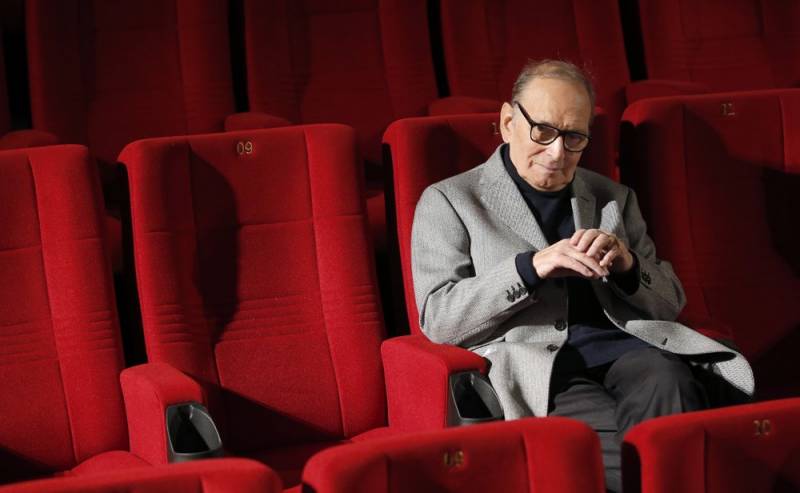
"caption": "Ennio Morricone, the giant of Spaghetti Western film scores, died Sunday night at 91. The composer is pictured here in 2013.",
"description": "Ennio Morricone, the giant of Spaghetti Western film scores, died Sunday night at 91. The composer is pictured here in 2013.",
"title": "Ennio.MAIN",
"credit": "AP Photo/Michael Sohn, file",
"status": "inherit",
"isLoading": false,
"fetchFailed": false
},
"arts_13882672": {
"type": "attachments",
"id": "arts_13882672",
"meta": {
"index": "attachments_1716263798",
"site": "arts",
"id": "13882672",
"found": true
},
"title": "Lin-Manuel Miranda and Phillipa Soo played Alexander and Eliza Hamilton in the original Broadway production of 'Hamilton.' A film production of the show, taped in 2016, debuts on Disney+ on July 3.",
"publishDate": 1593457968,
"status": "inherit",
"parent": 13882671,
"modified": 1741222053,
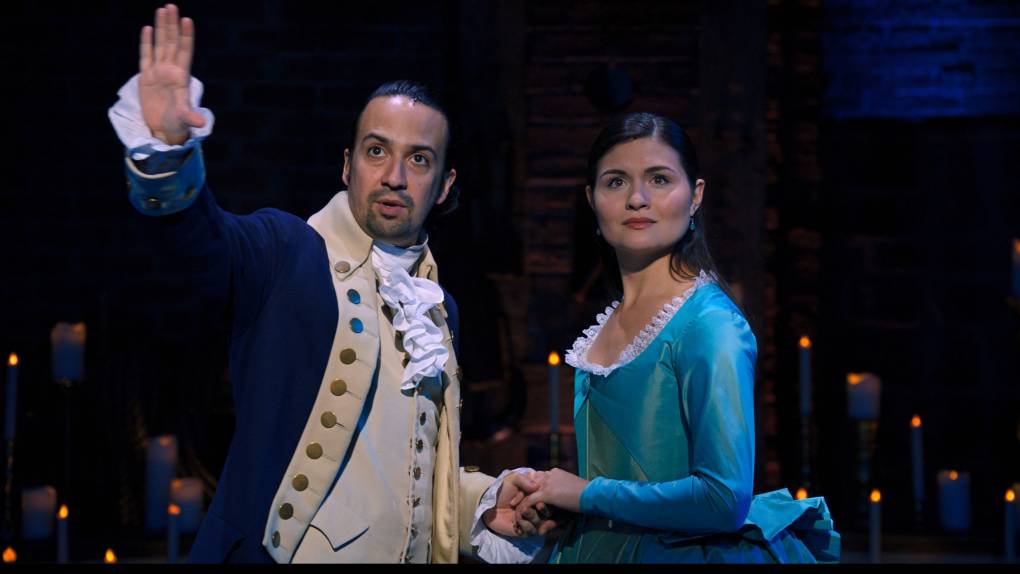
"caption": "Lin-Manuel Miranda and Phillipa Soo played Alexander and Eliza Hamilton in the original Broadway production of 'Hamilton.' ",
"credit": "Disney+",
"altTag": "Lin-Manuel Miranda and Phillipa Soo played Alexander and Eliza Hamilton in the original Broadway production of 'Hamilton.' A film production of the show, taped in 2016, debuts on Disney+ on July 3.",
"description": "Lin-Manuel Miranda and Phillipa Soo played Alexander and Eliza Hamilton in the original Broadway production of 'Hamilton.' A film production of the show, taped in 2016, debuts on Disney+ on July 3.",
"imgSizes": {
"medium": {
"file": "https://cdn.kqed.org/wp-content/uploads/sites/2/2020/06/fg24xang_wide-f6fc578f836c1b8bf489a09c162c048284bcb249-800x450.jpe",
"width": 800,
"height": 450,
"mimeType": "image/jpeg"
},
"large": {
"file": "https://cdn.kqed.org/wp-content/uploads/sites/2/2020/06/fg24xang_wide-f6fc578f836c1b8bf489a09c162c048284bcb249-1020x574.jpe",
"width": 1020,
"height": 574,
"mimeType": "image/jpeg"
},
"thumbnail": {
"file": "https://cdn.kqed.org/wp-content/uploads/sites/2/2020/06/fg24xang_wide-f6fc578f836c1b8bf489a09c162c048284bcb249-160x90.jpe",
"width": 160,
"height": 90,
"mimeType": "image/jpeg"
},
"medium_large": {
"file": "https://cdn.kqed.org/wp-content/uploads/sites/2/2020/06/fg24xang_wide-f6fc578f836c1b8bf489a09c162c048284bcb249-768x432.jpe",
"width": 768,
"height": 432,
"mimeType": "image/jpeg"
},
"1536x1536": {
"file": "https://cdn.kqed.org/wp-content/uploads/sites/2/2020/06/fg24xang_wide-f6fc578f836c1b8bf489a09c162c048284bcb249-1536x864.jpe",
"width": 1536,
"height": 864,
"mimeType": "image/jpeg"
},
"2048x2048": {
"file": "https://cdn.kqed.org/wp-content/uploads/sites/2/2020/06/fg24xang_wide-f6fc578f836c1b8bf489a09c162c048284bcb249-2048x1152.jpe",
"width": 2048,
"height": 1152,
"mimeType": "image/jpeg"
},
"post-thumbnail": {
"file": "https://cdn.kqed.org/wp-content/uploads/sites/2/2020/06/fg24xang_wide-f6fc578f836c1b8bf489a09c162c048284bcb249-672x372.jpe",
"width": 672,
"height": 372,
"mimeType": "image/jpeg"
},
"twentyfourteen-full-width": {
"file": "https://cdn.kqed.org/wp-content/uploads/sites/2/2020/06/fg24xang_wide-f6fc578f836c1b8bf489a09c162c048284bcb249-1038x576.jpe",
"width": 1038,
"height": 576,
"mimeType": "image/jpeg"
},
"full-width": {
"file": "https://cdn.kqed.org/wp-content/uploads/sites/2/2020/06/fg24xang_wide-f6fc578f836c1b8bf489a09c162c048284bcb249-1920x1080.jpe",
"width": 1920,
"height": 1080,
"mimeType": "image/jpeg"
},
"kqedFullSize": {
"file": "https://cdn.kqed.org/wp-content/uploads/sites/2/2020/06/fg24xang_wide-f6fc578f836c1b8bf489a09c162c048284bcb249-scaled-e1593461486338.jpe",
"width": 1920,
"height": 1080
}
},
"isLoading": false,
"fetchFailed": false
},
"arts_13882668": {
"type": "attachments",
"id": "arts_13882668",
"meta": {
"index": "attachments_1716263798",
"site": "arts",
"id": "13882668",
"found": true
},
"parent": 13882665,
"imgSizes": {
"twentyfourteen-full-width": {
"file": "https://ww2.kqed.org/app/uploads/sites/2/2020/06/GettyImages-1161993471-1024x576.jpg",
"width": 1024,
"mimeType": "image/jpeg",
"height": 576
},
"thumbnail": {
"file": "https://ww2.kqed.org/app/uploads/sites/2/2020/06/GettyImages-1161993471-160x112.jpg",
"width": 160,
"mimeType": "image/jpeg",
"height": 112
},
"post-thumbnail": {
"file": "https://ww2.kqed.org/app/uploads/sites/2/2020/06/GettyImages-1161993471-672x372.jpg",
"width": 672,
"mimeType": "image/jpeg",
"height": 372
},
"kqedFullSize": {
"file": "https://ww2.kqed.org/app/uploads/sites/2/2020/06/GettyImages-1161993471.jpg",
"width": 1024,
"height": 715
},
"large": {
"file": "https://ww2.kqed.org/app/uploads/sites/2/2020/06/GettyImages-1161993471-1020x712.jpg",
"width": 1020,
"mimeType": "image/jpeg",
"height": 712
},
"medium": {
"file": "https://ww2.kqed.org/app/uploads/sites/2/2020/06/GettyImages-1161993471-800x559.jpg",
"width": 800,
"mimeType": "image/jpeg",
"height": 559
},
"medium_large": {
"file": "https://ww2.kqed.org/app/uploads/sites/2/2020/06/GettyImages-1161993471-768x536.jpg",
"width": 768,
"mimeType": "image/jpeg",
"height": 536
}
},
"publishDate": 1593455025,
"modified": 1593455125,
"caption": "Beyoncé attends the 2019 European Premiere of 'The Lion King' in London, England.",
"description": "Beyoncé attends the 2019 European Premiere of 'The Lion King' in London, England.",
"title": "Beyoncé attends the 2019 European Premiere of 'The Lion King' in London, England.",
"credit": "Gareth Cattermole/Getty Images for Disney",
"status": "inherit",
"isLoading": false,
"fetchFailed": false
},
"arts_13882623": {
"type": "attachments",
"id": "arts_13882623",
"meta": {
"index": "attachments_1716263798",
"site": "arts",
"id": "13882623",
"found": true
},
"parent": 13882622,
"imgSizes": {
"twentyfourteen-full-width": {
"file": "https://ww2.kqed.org/app/uploads/sites/2/2020/06/dawson135_drawing-d40f810542d2e722394a8f64a7e90607050faf06-1038x576.jpg",
"width": 1038,
"mimeType": "image/jpeg",
"height": 576
},
"thumbnail": {
"file": "https://ww2.kqed.org/app/uploads/sites/2/2020/06/dawson135_drawing-d40f810542d2e722394a8f64a7e90607050faf06-160x120.jpg",
"width": 160,
"mimeType": "image/jpeg",
"height": 120
},
"post-thumbnail": {
"file": "https://ww2.kqed.org/app/uploads/sites/2/2020/06/dawson135_drawing-d40f810542d2e722394a8f64a7e90607050faf06-672x372.jpg",
"width": 672,
"mimeType": "image/jpeg",
"height": 372
},
"kqedFullSize": {
"file": "https://ww2.kqed.org/app/uploads/sites/2/2020/06/dawson135_drawing-d40f810542d2e722394a8f64a7e90607050faf06.jpg",
"width": 1747,
"height": 1310
},
"large": {
"file": "https://ww2.kqed.org/app/uploads/sites/2/2020/06/dawson135_drawing-d40f810542d2e722394a8f64a7e90607050faf06-1020x765.jpg",
"width": 1020,
"mimeType": "image/jpeg",
"height": 765
},
"1536x1536": {
"file": "https://ww2.kqed.org/app/uploads/sites/2/2020/06/dawson135_drawing-d40f810542d2e722394a8f64a7e90607050faf06-1536x1152.jpg",
"width": 1536,
"mimeType": "image/jpeg",
"height": 1152
},
"medium": {
"file": "https://ww2.kqed.org/app/uploads/sites/2/2020/06/dawson135_drawing-d40f810542d2e722394a8f64a7e90607050faf06-800x600.jpg",
"width": 800,
"mimeType": "image/jpeg",
"height": 600
},
"medium_large": {
"file": "https://ww2.kqed.org/app/uploads/sites/2/2020/06/dawson135_drawing-d40f810542d2e722394a8f64a7e90607050faf06-768x576.jpg",
"width": 768,
"mimeType": "image/jpeg",
"height": 576
}
},
"publishDate": 1593196060,
"modified": 1593196219,
"caption": "A drawing of composer William Dawson in 1935 by Aaron Douglas. Dawson's 'Negro Folk Symphony,' long neglected, has received a new recording.",
"description": "A drawing of composer William Dawson in 1935 by Aaron Douglas. Dawson's 'Negro Folk Symphony,' long neglected, has received a new recording.",
"title": "A drawing of composer William Dawson in 1935 by Aaron Douglas. Dawson's 'Negro Folk Symphony,' long neglected, has received a new recording.",
"credit": "Aaron Douglas/Tuskegee University Archives",
"status": "inherit",
"isLoading": false,
"fetchFailed": false
},
"arts_13882560": {
"type": "attachments",
"id": "arts_13882560",
"meta": {
"index": "attachments_1716263798",
"site": "arts",
"id": "13882560",
"found": true
},
"parent": 13882347,
"imgSizes": {
"twentyfourteen-full-width": {
"file": "https://ww2.kqed.org/app/uploads/sites/2/2020/06/AndersonPaak-1038x576.jpg",
"width": 1038,
"mimeType": "image/jpeg",
"height": 576
},
"thumbnail": {
"file": "https://ww2.kqed.org/app/uploads/sites/2/2020/06/AndersonPaak-160x90.jpg",
"width": 160,
"mimeType": "image/jpeg",
"height": 90
},
"post-thumbnail": {
"file": "https://ww2.kqed.org/app/uploads/sites/2/2020/06/AndersonPaak-672x372.jpg",
"width": 672,
"mimeType": "image/jpeg",
"height": 372
},
"kqedFullSize": {
"file": "https://ww2.kqed.org/app/uploads/sites/2/2020/06/AndersonPaak.jpg",
"width": 1920,
"height": 1080
},
"large": {
"file": "https://ww2.kqed.org/app/uploads/sites/2/2020/06/AndersonPaak-1020x574.jpg",
"width": 1020,
"mimeType": "image/jpeg",
"height": 574
},
"1536x1536": {
"file": "https://ww2.kqed.org/app/uploads/sites/2/2020/06/AndersonPaak-1536x864.jpg",
"width": 1536,
"mimeType": "image/jpeg",
"height": 864
},
"medium": {
"file": "https://ww2.kqed.org/app/uploads/sites/2/2020/06/AndersonPaak-800x450.jpg",
"width": 800,
"mimeType": "image/jpeg",
"height": 450
},
"medium_large": {
"file": "https://ww2.kqed.org/app/uploads/sites/2/2020/06/AndersonPaak-768x432.jpg",
"width": 768,
"mimeType": "image/jpeg",
"height": 432
}
},
"publishDate": 1593113938,
"modified": 1593113978,
"caption": "A still from Anderson .Paak's 'Lockdown' video, released on Juneteenth, 2020.",
"description": "A still from Anderson .Paak's 'Lockdown' video, released on Juneteenth, 2020.",
"title": "AndersonPaak",
"credit": "Directed by Dave Meyers ",
"status": "inherit",
"isLoading": false,
"fetchFailed": false
},
"arts_13882576": {
"type": "attachments",
"id": "arts_13882576",
"meta": {
"index": "attachments_1716263798",
"site": "arts",
"id": "13882576",
"found": true
},
"parent": 13882575,
"imgSizes": {
"thumbnail": {
"file": "https://ww2.kqed.org/app/uploads/sites/2/2020/06/tank-fantastic_wide-f72cae219878161fcbc7699073ec90e8506c621b-160x90.jpg",
"width": 160,
"mimeType": "image/jpeg",
"height": 90
},
"post-thumbnail": {
"file": "https://ww2.kqed.org/app/uploads/sites/2/2020/06/tank-fantastic_wide-f72cae219878161fcbc7699073ec90e8506c621b-672x372.jpg",
"width": 672,
"mimeType": "image/jpeg",
"height": 372
},
"kqedFullSize": {
"file": "https://ww2.kqed.org/app/uploads/sites/2/2020/06/tank-fantastic_wide-f72cae219878161fcbc7699073ec90e8506c621b.jpg",
"width": 902,
"height": 507
},
"medium": {
"file": "https://ww2.kqed.org/app/uploads/sites/2/2020/06/tank-fantastic_wide-f72cae219878161fcbc7699073ec90e8506c621b-800x450.jpg",
"width": 800,
"mimeType": "image/jpeg",
"height": 450
},
"medium_large": {
"file": "https://ww2.kqed.org/app/uploads/sites/2/2020/06/tank-fantastic_wide-f72cae219878161fcbc7699073ec90e8506c621b-768x432.jpg",
"width": 768,
"mimeType": "image/jpeg",
"height": 432
}
},
"publishDate": 1593115892,
"modified": 1593115892,
"caption": null,
"description": "A still from the music video for \"I'm So Happy I Cry\"",
"title": "A still from the music video for \"I'm So Happy I Cry\"",
"credit": null,
"status": "inherit",
"isLoading": false,
"fetchFailed": false
},
"arts_13882455": {
"type": "attachments",
"id": "arts_13882455",
"meta": {
"index": "attachments_1716263798",
"site": "arts",
"id": "13882455",
"found": true
},
"parent": 13882454,
"imgSizes": {
"twentyfourteen-full-width": {
"file": "https://ww2.kqed.org/app/uploads/sites/2/2020/06/gettyimages-1179144046_wide-a09f0fab14324b0a2096d56bfb8cf2926b02b0ea-1038x576.jpg",
"width": 1038,
"mimeType": "image/jpeg",
"height": 576
},
"thumbnail": {
"file": "https://ww2.kqed.org/app/uploads/sites/2/2020/06/gettyimages-1179144046_wide-a09f0fab14324b0a2096d56bfb8cf2926b02b0ea-160x90.jpg",
"width": 160,
"mimeType": "image/jpeg",
"height": 90
},
"post-thumbnail": {
"file": "https://ww2.kqed.org/app/uploads/sites/2/2020/06/gettyimages-1179144046_wide-a09f0fab14324b0a2096d56bfb8cf2926b02b0ea-672x372.jpg",
"width": 672,
"mimeType": "image/jpeg",
"height": 372
},
"kqedFullSize": {
"file": "https://ww2.kqed.org/app/uploads/sites/2/2020/06/gettyimages-1179144046_wide-a09f0fab14324b0a2096d56bfb8cf2926b02b0ea-scaled.jpg",
"width": 2560,
"height": 1440
},
"2048x2048": {
"file": "https://ww2.kqed.org/app/uploads/sites/2/2020/06/gettyimages-1179144046_wide-a09f0fab14324b0a2096d56bfb8cf2926b02b0ea-2048x1152.jpg",
"width": 2048,
"mimeType": "image/jpeg",
"height": 1152
},
"large": {
"file": "https://ww2.kqed.org/app/uploads/sites/2/2020/06/gettyimages-1179144046_wide-a09f0fab14324b0a2096d56bfb8cf2926b02b0ea-1020x574.jpg",
"width": 1020,
"mimeType": "image/jpeg",
"height": 574
},
"1536x1536": {
"file": "https://ww2.kqed.org/app/uploads/sites/2/2020/06/gettyimages-1179144046_wide-a09f0fab14324b0a2096d56bfb8cf2926b02b0ea-1536x864.jpg",
"width": 1536,
"mimeType": "image/jpeg",
"height": 864
},
"full-width": {
"file": "https://ww2.kqed.org/app/uploads/sites/2/2020/06/gettyimages-1179144046_wide-a09f0fab14324b0a2096d56bfb8cf2926b02b0ea-1920x1080.jpg",
"width": 1920,
"mimeType": "image/jpeg",
"height": 1080
},
"medium": {
"file": "https://ww2.kqed.org/app/uploads/sites/2/2020/06/gettyimages-1179144046_wide-a09f0fab14324b0a2096d56bfb8cf2926b02b0ea-800x450.jpg",
"width": 800,
"mimeType": "image/jpeg",
"height": 450
},
"medium_large": {
"file": "https://ww2.kqed.org/app/uploads/sites/2/2020/06/gettyimages-1179144046_wide-a09f0fab14324b0a2096d56bfb8cf2926b02b0ea-768x432.jpg",
"width": 768,
"mimeType": "image/jpeg",
"height": 432
}
},
"publishDate": 1593022588,
"modified": 1593023381,
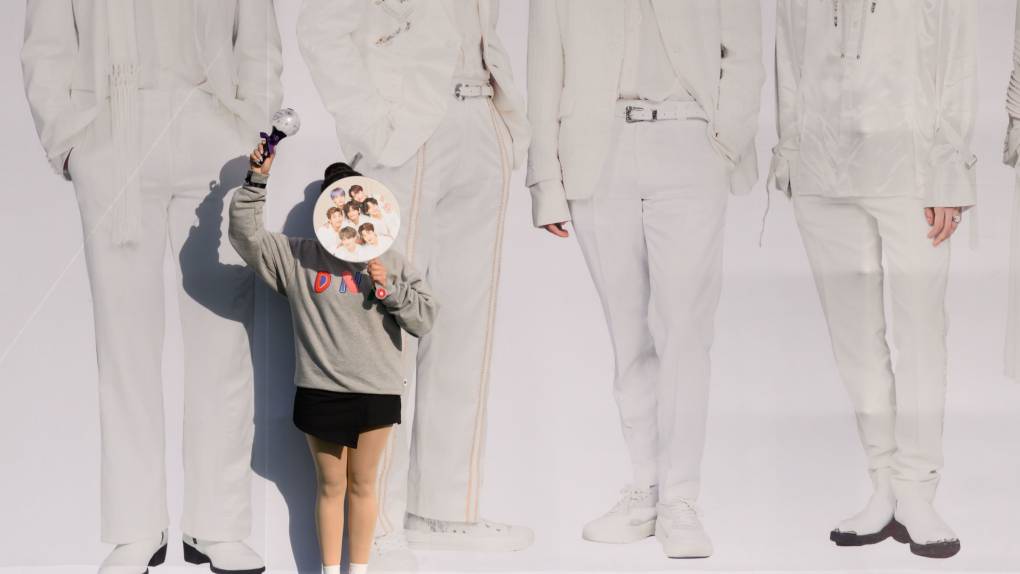
"caption": "A fan of BTS poses for photos against a backdrop featuring an image of the group's members in Seoul on Oct. 29, 2019.",
"description": "A fan of BTS poses for photos against a backdrop featuring an image of the group's members in Seoul on Oct. 29, 2019.",
"title": "A fan of BTS poses for photos against a backdrop featuring an image of the group's members in Seoul on Oct. 29, 2019.",
"credit": "ED JONES/AFP via Getty Images",
"status": "inherit",
"isLoading": false,
"fetchFailed": false
},
"arts_13882275": {
"type": "attachments",
"id": "arts_13882275",
"meta": {
"index": "attachments_1716263798",
"site": "arts",
"id": "13882275",
"found": true
},
"parent": 13882274,
"imgSizes": {
"twentyfourteen-full-width": {
"file": "https://ww2.kqed.org/app/uploads/sites/2/2020/06/3.-San-Francisco-Opera_Fidelio_FlorestanCell_set-design-by-Alexander-V.-Nichols-1038x576.jpg",
"width": 1038,
"mimeType": "image/jpeg",
"height": 576
},
"thumbnail": {
"file": "https://ww2.kqed.org/app/uploads/sites/2/2020/06/3.-San-Francisco-Opera_Fidelio_FlorestanCell_set-design-by-Alexander-V.-Nichols-160x90.jpg",
"width": 160,
"mimeType": "image/jpeg",
"height": 90
},
"post-thumbnail": {
"file": "https://ww2.kqed.org/app/uploads/sites/2/2020/06/3.-San-Francisco-Opera_Fidelio_FlorestanCell_set-design-by-Alexander-V.-Nichols-672x372.jpg",
"width": 672,
"mimeType": "image/jpeg",
"height": 372
},
"kqedFullSize": {
"file": "https://ww2.kqed.org/app/uploads/sites/2/2020/06/3.-San-Francisco-Opera_Fidelio_FlorestanCell_set-design-by-Alexander-V.-Nichols.jpg",
"width": 1920,
"height": 1080
},
"large": {
"file": "https://ww2.kqed.org/app/uploads/sites/2/2020/06/3.-San-Francisco-Opera_Fidelio_FlorestanCell_set-design-by-Alexander-V.-Nichols-1020x574.jpg",
"width": 1020,
"mimeType": "image/jpeg",
"height": 574
},
"full-width": {
"file": "https://ww2.kqed.org/app/uploads/sites/2/2020/06/3.-San-Francisco-Opera_Fidelio_FlorestanCell_set-design-by-Alexander-V.-Nichols-1920x1080.jpg",
"width": 1920,
"mimeType": "image/jpeg",
"height": 1080
},
"medium": {
"file": "https://ww2.kqed.org/app/uploads/sites/2/2020/06/3.-San-Francisco-Opera_Fidelio_FlorestanCell_set-design-by-Alexander-V.-Nichols-800x450.jpg",
"width": 800,
"mimeType": "image/jpeg",
"height": 450
},
"medium_large": {
"file": "https://ww2.kqed.org/app/uploads/sites/2/2020/06/3.-San-Francisco-Opera_Fidelio_FlorestanCell_set-design-by-Alexander-V.-Nichols-768x432.jpg",
"width": 768,
"mimeType": "image/jpeg",
"height": 432
}
},
"publishDate": 1592578828,
"modified": 1592578872,
"caption": "A scene from 'Fidelio,' with set design by Alexander V. Nichols.",
"description": "A scene from 'Fidelio,' with set design by Alexander V. Nichols.",
"title": "3.-San-Francisco-Opera_Fidelio_FlorestanCell_set-design-by-Alexander-V.-Nichols",
"credit": "Courtesy SF Opera",
"status": "inherit",
"isLoading": false,
"fetchFailed": false
},
"arts_13882187": {
"type": "attachments",
"id": "arts_13882187",
"meta": {
"index": "attachments_1716263798",
"site": "arts",
"id": "13882187",
"found": true
},
"parent": 13881954,
"imgSizes": {
"twentyfourteen-full-width": {
"file": "https://ww2.kqed.org/app/uploads/sites/2/2020/06/IMG_5570-1038x576.jpeg",
"width": 1038,
"mimeType": "image/jpeg",
"height": 576
},
"thumbnail": {
"file": "https://ww2.kqed.org/app/uploads/sites/2/2020/06/IMG_5570-160x120.jpeg",
"width": 160,
"mimeType": "image/jpeg",
"height": 120
},
"post-thumbnail": {
"file": "https://ww2.kqed.org/app/uploads/sites/2/2020/06/IMG_5570-672x372.jpeg",
"width": 672,
"mimeType": "image/jpeg",
"height": 372
},
"kqedFullSize": {
"file": "https://ww2.kqed.org/app/uploads/sites/2/2020/06/IMG_5570.jpeg",
"width": 2700,
"height": 2025
},
"large": {
"file": "https://ww2.kqed.org/app/uploads/sites/2/2020/06/IMG_5570-1020x765.jpeg",
"width": 1020,
"mimeType": "image/jpeg",
"height": 765
},
"full-width": {
"file": "https://ww2.kqed.org/app/uploads/sites/2/2020/06/IMG_5570-1920x1440.jpeg",
"width": 1920,
"mimeType": "image/jpeg",
"height": 1440
},
"medium": {
"file": "https://ww2.kqed.org/app/uploads/sites/2/2020/06/IMG_5570-800x600.jpeg",
"width": 800,
"mimeType": "image/jpeg",
"height": 600
},
"medium_large": {
"file": "https://ww2.kqed.org/app/uploads/sites/2/2020/06/IMG_5570-768x576.jpeg",
"width": 768,
"mimeType": "image/jpeg",
"height": 576
}
},
"publishDate": 1592491808,
"modified": 1592491879,
"caption": "A young Sydney Nycole and Gary Reeves",
"description": null,
"title": "A young Sydney Nycole and Gary Reeves",
"credit": "Sydney Nycole",
"status": "inherit",
"isLoading": false,
"fetchFailed": false
},
"arts_13882226": {
"type": "attachments",
"id": "arts_13882226",
"meta": {
"index": "attachments_1716263798",
"site": "arts",
"id": "13882226",
"found": true
},
"parent": 13882225,
"imgSizes": {
"twentyfourteen-full-width": {
"file": "https://ww2.kqed.org/app/uploads/sites/2/2020/06/gettyimages-962083828_custom-6fb0815a037c9e032ad7306ce4f47c6f8c74dc14-1038x576.jpg",
"width": 1038,
"mimeType": "image/jpeg",
"height": 576
},
"thumbnail": {
"file": "https://ww2.kqed.org/app/uploads/sites/2/2020/06/gettyimages-962083828_custom-6fb0815a037c9e032ad7306ce4f47c6f8c74dc14-160x107.jpg",
"width": 160,
"mimeType": "image/jpeg",
"height": 107
},
"post-thumbnail": {
"file": "https://ww2.kqed.org/app/uploads/sites/2/2020/06/gettyimages-962083828_custom-6fb0815a037c9e032ad7306ce4f47c6f8c74dc14-672x372.jpg",
"width": 672,
"mimeType": "image/jpeg",
"height": 372
},
"kqedFullSize": {
"file": "https://ww2.kqed.org/app/uploads/sites/2/2020/06/gettyimages-962083828_custom-6fb0815a037c9e032ad7306ce4f47c6f8c74dc14-e1592509604334.jpg",
"width": 1920,
"height": 1281
},
"large": {
"file": "https://ww2.kqed.org/app/uploads/sites/2/2020/06/gettyimages-962083828_custom-6fb0815a037c9e032ad7306ce4f47c6f8c74dc14-1020x681.jpg",
"width": 1020,
"mimeType": "image/jpeg",
"height": 681
},
"full-width": {
"file": "https://ww2.kqed.org/app/uploads/sites/2/2020/06/gettyimages-962083828_custom-6fb0815a037c9e032ad7306ce4f47c6f8c74dc14-1920x1281.jpg",
"width": 1920,
"mimeType": "image/jpeg",
"height": 1281
},
"medium": {
"file": "https://ww2.kqed.org/app/uploads/sites/2/2020/06/gettyimages-962083828_custom-6fb0815a037c9e032ad7306ce4f47c6f8c74dc14-800x534.jpg",
"width": 800,
"mimeType": "image/jpeg",
"height": 534
},
"medium_large": {
"file": "https://ww2.kqed.org/app/uploads/sites/2/2020/06/gettyimages-962083828_custom-6fb0815a037c9e032ad7306ce4f47c6f8c74dc14-768x512.jpg",
"width": 768,
"mimeType": "image/jpeg",
"height": 512
}
},
"publishDate": 1592508969,
"modified": 1592509640,
"caption": "Bandcamp has pledged to donate its cut of sales made on this and every subsequent Juneteenth holiday to the NAACP Legal Defense Fund.",
"description": "Bandcamp has pledged to donate its cut of sales made on this and every subsequent Juneteenth holiday to the NAACP Legal Defense Fund.",
"title": "Bandcamp has pledged to donate its cut of sales made on this and every subsequent Juneteenth holiday to the NAACP Legal Defense Fund.",
"credit": "Guillaume Payen/SOPA Images/LightRocket via Getty Images",
"status": "inherit",
"isLoading": false,
"fetchFailed": false
}
},
"audioPlayerReducer": {
"postId": "stream_live",
"isPaused": true,
"isPlaying": false,
"pfsActive": false,
"pledgeModalIsOpen": true,
"playerDrawerIsOpen": false,
"liveAudioPlayStartedAt": 0,
"liveAudioPlayContext": ""
},
"authorsReducer": {
"byline_arts_13883143": {
"type": "authors",
"id": "byline_arts_13883143",
"meta": {
"override": true
},
"slug": "byline_arts_13883143",
"name": "Anastasia Tsioulcas",
"isLoading": false
},
"byline_arts_13882929": {
"type": "authors",
"id": "byline_arts_13882929",
"meta": {
"override": true
},
"slug": "byline_arts_13882929",
"name": "Frances D'Emilio, Associated Press",
"isLoading": false
},
"byline_arts_13882671": {
"type": "authors",
"id": "byline_arts_13882671",
"meta": {
"override": true
},
"slug": "byline_arts_13882671",
"name": "Terry Gross",
"isLoading": false
},
"byline_arts_13882665": {
"type": "authors",
"id": "byline_arts_13882665",
"meta": {
"override": true
},
"slug": "byline_arts_13882665",
"name": "Rachel Treisman",
"isLoading": false
},
"byline_arts_13882622": {
"type": "authors",
"id": "byline_arts_13882622",
"meta": {
"override": true
},
"slug": "byline_arts_13882622",
"name": "Tom Huizenga",
"isLoading": false
},
"byline_arts_13882575": {
"type": "authors",
"id": "byline_arts_13882575",
"meta": {
"override": true
},
"slug": "byline_arts_13882575",
"name": "Elle Mannion",
"isLoading": false
},
"byline_arts_13882454": {
"type": "authors",
"id": "byline_arts_13882454",
"meta": {
"override": true
},
"slug": "byline_arts_13882454",
"name": "Haeryun Kang",
"isLoading": false
},
"byline_arts_13882225": {
"type": "authors",
"id": "byline_arts_13882225",
"meta": {
"override": true
},
"slug": "byline_arts_13882225",
"name": "Andrew Flanagan",
"isLoading": false
},
"gmeline": {
"type": "authors",
"id": "185",
"meta": {
"index": "authors_1716337520",
"id": "185",
"found": true
},
"name": "Gabe Meline",
"firstName": "Gabe",
"lastName": "Meline",
"slug": "gmeline",
"email": "gmeline@kqed.org",
"display_author_email": true,
"staff_mastheads": [
"arts"
],
"title": "Senior Editor, KQED Arts & Culture",
"bio": "Gabe Meline entered journalism at age 15 making photocopied zines, and has since earned awards from the Edward R. Murrow Awards, the Society for Professional Journalists, the Online Journalism Awards, the Association of Alternative Newsweeklies and the California Newspaper Publishers Association. Prior to KQED, he was the editor of the \u003cem>North Bay Bohemian\u003c/em> and a touring musician. He lives with his wife and daughter in his hometown of Santa Rosa, CA.",
"avatar": "https://secure.gravatar.com/avatar/5bebe57be0d8bc2dd318934feb47299e2d2d10cba28d09d8d7afb389a2ce2bdd?s=600&d=blank&r=g",
"twitter": null,
"bluesky": null,
"facebook": null,
"instagram": null,
"linkedin": null,
"sites": [
{
"site": "",
"roles": [
"editor"
]
},
{
"site": "arts",
"roles": [
"administrator"
]
},
{
"site": "artschool",
"roles": [
"editor"
]
},
{
"site": "news",
"roles": [
"author"
]
},
{
"site": "pop",
"roles": [
"editor"
]
},
{
"site": "bayareabites",
"roles": [
"editor"
]
},
{
"site": "food",
"roles": [
"editor"
]
},
{
"site": "forum",
"roles": [
"administrator"
]
},
{
"site": "liveblog",
"roles": [
"editor"
]
},
{
"site": "hiphop",
"roles": [
"editor"
]
}
],
"headData": {
"title": "Gabe Meline | KQED",
"description": "Senior Editor, KQED Arts & Culture",
"ogImgSrc": "https://secure.gravatar.com/avatar/5bebe57be0d8bc2dd318934feb47299e2d2d10cba28d09d8d7afb389a2ce2bdd?s=600&d=blank&r=g",
"twImgSrc": "https://secure.gravatar.com/avatar/5bebe57be0d8bc2dd318934feb47299e2d2d10cba28d09d8d7afb389a2ce2bdd?s=600&d=blank&r=g"
},
"isLoading": false,
"link": "/author/gmeline"
},
"ogpenn": {
"type": "authors",
"id": "11491",
"meta": {
"index": "authors_1716337520",
"id": "11491",
"found": true
},
"name": "Pendarvis Harshaw",
"firstName": "Pendarvis",
"lastName": "Harshaw",
"slug": "ogpenn",
"email": "ogpenn@gmail.com",
"display_author_email": false,
"staff_mastheads": [
"arts"
],
"title": "Community Engagement Reporter",
"bio": "Pendarvis Harshaw is an educator, host and writer with KQED Arts.",
"avatar": "https://secure.gravatar.com/avatar/972b77ee8e3f346ae2b00622661187fbfabd059b5693bbdc1475ea7a722fd4cd?s=600&d=blank&r=g",
"twitter": null,
"bluesky": null,
"facebook": null,
"instagram": "ogpenn",
"linkedin": null,
"sites": [
{
"site": "arts",
"roles": [
"administrator"
]
},
{
"site": "news",
"roles": [
"editor"
]
},
{
"site": "bayareabites",
"roles": [
"author"
]
},
{
"site": "hiphop",
"roles": [
"editor"
]
}
],
"headData": {
"title": "Pendarvis Harshaw | KQED",
"description": "Community Engagement Reporter",
"ogImgSrc": "https://secure.gravatar.com/avatar/972b77ee8e3f346ae2b00622661187fbfabd059b5693bbdc1475ea7a722fd4cd?s=600&d=blank&r=g",
"twImgSrc": "https://secure.gravatar.com/avatar/972b77ee8e3f346ae2b00622661187fbfabd059b5693bbdc1475ea7a722fd4cd?s=600&d=blank&r=g"
},
"isLoading": false,
"link": "/author/ogpenn"
}
},
"pagesReducer": {
"arts_category_music": {
"type": "terms",
"id": "arts_69",
"meta": {
"index": "terms_1716263798",
"site": "arts",
"id": "69",
"score": 10.85186
},
"featImg": null,
"name": "Music",
"description": null,
"taxonomy": "category",
"headData": {
"twImgId": null,
"twTitle": null,
"ogTitle": null,
"ogImgId": null,
"twDescription": null,
"description": null,
"title": "Music Archives | KQED Arts",
"ogDescription": null
},
"ttid": 70,
"slug": "music",
"isLoading": false,
"title": "Music",
"pageMeta": {
"site": "arts",
"WpPageTemplate": "page-topic-editorial",
"currentPage": 118
},
"blocks": [
{
"blockName": "kqed/post-list",
"attrs": {
"layout": "cardArticle2",
"query": "posts/arts?category=music",
"seeMore": false,
"paginated": true,
"page": 118
}
},
{
"blockName": "kqed/ad"
}
]
}
},
"pfsSessionReducer": {},
"postsReducer": {
"stream_live": {
"type": "live",
"id": "stream_live",
"audioUrl": "https://streams.kqed.org/kqedradio",
"title": "Live Stream",
"excerpt": "Live Stream information currently unavailable.",
"link": "/radio",
"featImg": "",
"label": {
"name": "KQED Live",
"link": "/"
}
},
"stream_kqedNewscast": {
"type": "posts",
"id": "stream_kqedNewscast",
"audioUrl": "https://www.kqed.org/.stream/anon/radio/RDnews/newscast.mp3?_=1",
"title": "KQED Newscast",
"featImg": "",
"label": {
"name": "88.5 FM",
"link": "/"
}
},
"arts_13860431": {
"type": "posts",
"id": "arts_13860431",
"meta": {
"index": "posts_1716263798",
"site": "arts",
"id": "13860431",
"score": null,
"sort": [
1594375226000
]
},
"guestAuthors": [],
"slug": "rightnowish-the-other-side-of-daghe-digital",
"title": "Rocking the Mic and Running the Lake",
"publishDate": 1594375226,
"format": "audio",
"headTitle": "Rocking the Mic and Running the Lake | KQED",
"labelTerm": {},
"content": "\u003cp>\u003ca href=\"https://www.daghe.digital/\" target=\"_blank\" rel=\"noopener noreferrer\">DAGHE Digital\u003c/a> is just about as unique as they come.\u003c/p>\n\u003cp>He’s a West Oakland kid, who’s clear about his West African roots, as his family hails from Nigeria. He grew up a socialite who turf danced and threw “functions” for people who weren’t old enough to go to legit clubs. He’s grown to become a brand creator, clothing designer, music producer and more.\u003c/p>\n\u003cp>But his main job? Going stupid on the turntables and microphone at some of the biggest events.\u003c/p>\n\u003cp>Daghe has worked with folks like P-Lo, G-Eazy, YBN Cordae and more. When I first interviewed him last summer, DAGHE was rocking shows in Miami, Minnesota, New York and Toronto. He was spinning at the Oakland stop of the \u003ca href=\"https://www.everydayppl.nyc/events\" target=\"_blank\" rel=\"noopener noreferrer\">Everyday People Tour\u003c/a>, the \u003ca href=\"http://www.sooakland.com/\" target=\"_blank\" rel=\"noopener noreferrer\">SoOakland X DAGHE Digital party\u003c/a> at Hello Stranger, while also gearing up for \u003ca href=\"https://www.ticketmaster.com/ybn-cordae-tickets/artist/2529985\" target=\"_blank\" rel=\"noopener noreferrer\">a world tour\u003c/a>.\u003c/p>\n\u003cp>Scrolling through his photos and videos on social media, you might think that all DAGHE does is rage on major stages while folks in the crowd scream their heads off in excitement. But there’s more to him than that.\u003c/p>\n\u003cp>I caught up with him at Cafe Lakeside in Oakland last summer, and talked about the other side of DAGHE. You know, the cerebral side, the side that likes to have “business meetings” with himself while he runs the lake. Not necessarily the “turned down” side—and, in talking to him, I realized it might not be a “different side” at all—but more of a different spot on the spectrum of energy that he can show. And the quieter, contemplative, thoughtful end of that spectrum is rarely heard—until now.\u003c/p>\n\u003cp>\u003c!-- iframe plugin v.4.3 wordpress.org/plugins/iframe/ -->\u003cbr>\n\u003ciframe loading=\"lazy\" frameborder=\"0\" height=\"200\" scrolling=\"no\" src=\"https://playlist.megaphone.fm?e=KQINC2252176750&light=true\" width=\"100%\" class=\"iframe-class\">\u003c/iframe>\u003c/p>\n\u003cp>\u003cstrong>A shorter version of this episode was first broadcast on Jun 28, 2019. Below is a lightly edited excerpt of my more recent conversation with DAGHE.\u003c/strong>\u003c/p>\n\u003cp>\u003cem>Pen: Alright, how you doin’ man?\u003c/em>\u003c/p>\n\u003cp>Daghe: I’m doing good. I mean, as good as I can in times like this, but I’m doing good. I’m blessed. I can’t complain. First I was stressing. Now I’m just kind of chilling, like taking it easy.\u003c/p>\n\u003cp>\u003cem>Pen: Right. Kind of slowed down. But at the same time, you’ve been organizing stuff. I’ve seen the movement by the lake, jogging by the lake, right?\u003c/em>\u003c/p>\n\u003cp>Daghe: Yeah. I did the Peace and Wellness Run to show solidarity and show my alliance with the movement in a way that’s more normal for me. I think it really touched people, like, “Oh, yeah. I can run?” You know, something that’s more positive. At this time, it was the height of everything going on, — rightfully angry protests. I mean, it’s just this other option that’s like, “yo, you want to run?” My whole agenda is do hella fun shit. I just feel like it’s a weird time. \u003cspan style=\"font-weight: 400\">I feel like is my place right now to like bring the community together. \u003c/span>\u003cspan style=\"font-weight: 400\">Like socially and for health and everything, because this shit weighs on you, before this stuff, it’s just the Covid shit weighed on a lot of people, cause I know a weighed on me.\u003c/span>\u003c/p>\n\u003cp>\u003cimg loading=\"lazy\" decoding=\"async\" class=\"aligncenter size-full wp-image-12127869\" src=\"https://ww2.kqed.org/app/uploads/sites/2/2016/09/Q.Logo_.Break_.jpg\" alt=\"\" width=\"800\" height=\"78\" srcset=\"https://cdn.kqed.org/wp-content/uploads/sites/2/2016/09/Q.Logo_.Break_.jpg 800w, https://cdn.kqed.org/wp-content/uploads/sites/2/2016/09/Q.Logo_.Break_-400x39.jpg 400w, https://cdn.kqed.org/wp-content/uploads/sites/2/2016/09/Q.Logo_.Break_-768x75.jpg 768w\" sizes=\"(max-width: 800px) 100vw, 800px\">\u003c/p>\n\u003cp>\u003cstrong>\u003cem>Rightnowish is an arts and culture podcast produced at KQED. Listen to it wherever you get your podcasts or click the play button at the top of this page and subscribe to the show on \u003ca href=\"https://www.npr.org/podcasts/721590300/rightnowish\">NPR One\u003c/a>, \u003ca href=\"https://open.spotify.com/show/7kEJuafTzTVan7B78ttz1I\">Spotify\u003c/a>, \u003ca href=\"https://podcasts.apple.com/us/podcast/rightnowish/id1482187648\">Apple Podcasts\u003c/a>, \u003ca href=\"https://tunein.com/podcasts/Arts--Culture-Podcasts/Rightnowish-p1258245/\">TuneIn\u003c/a>, \u003ca href=\"https://www.stitcher.com/podcast/kqed/rightnowish\">Stitcher\u003c/a> or wherever you get your podcasts. \u003c/em>\u003c/strong>\u003c/p>\n\u003cp>[ad fullwidth]\u003c/p>\n\u003cp>\u003c/p>\n",
"blocks": [],
"excerpt": "Hailing from West Oakland, Daghe's job is rocking turntables for sold-out crowds around the world—but there's more to him than that. He loves to run. And recently he helped organize a run for Peace and Wellness.\r\n",
"status": "publish",
"parent": 0,
"modified": 1726761750,
"stats": {
"hasAudio": true,
"hasVideo": false,
"hasChartOrMap": false,
"iframeSrcs": [],
"hasGoogleForm": false,
"hasGallery": false,
"hasHearkenModule": false,
"hasPolis": false,
"paragraphCount": 16,
"wordCount": 610
},
"headData": {
"title": "Rocking the Mic and Running the Lake | KQED",
"description": "Hailing from West Oakland, Daghe's job is rocking turntables for sold-out crowds around the world—but there's more to him than that. He loves to run. And recently he helped organize a run for Peace and Wellness.\r\n",
"ogTitle": "",
"ogDescription": "",
"ogImgId": "",
"twTitle": "",
"twDescription": "",
"twImgId": "",
"schema": {
"@context": "https://schema.org",
"@type": "Article",
"headline": "Rocking the Mic and Running the Lake",
"datePublished": "2020-07-10T03:00:26-07:00",
"dateModified": "2024-09-19T09:02:30-07:00",
"image": "https://cdn.kqed.org/wp-content/uploads/2020/02/KQED-OG-Image@1x.png"
}
},
"source": "Rightnowish",
"sourceUrl": "https://www.kqed.org/podcasts/rightnowish",
"audioUrl": "https://www.podtrac.com/pts/redirect.mp3/traffic.megaphone.fm/KQINC2252176750.mp3",
"sticky": false,
"audioTrackLength": 239,
"templateType": "standard",
"featuredImageType": "standard",
"path": "/arts/13860431/rightnowish-the-other-side-of-daghe-digital",
"parsedContent": [
{
"type": "contentString",
"content": "\u003cdiv class=\"post-body\">\u003cp>\u003cp>\u003ca href=\"https://www.daghe.digital/\" target=\"_blank\" rel=\"noopener noreferrer\">DAGHE Digital\u003c/a> is just about as unique as they come.\u003c/p>\n\u003cp>He’s a West Oakland kid, who’s clear about his West African roots, as his family hails from Nigeria. He grew up a socialite who turf danced and threw “functions” for people who weren’t old enough to go to legit clubs. He’s grown to become a brand creator, clothing designer, music producer and more.\u003c/p>\n\u003cp>But his main job? Going stupid on the turntables and microphone at some of the biggest events.\u003c/p>\n\u003cp>Daghe has worked with folks like P-Lo, G-Eazy, YBN Cordae and more. When I first interviewed him last summer, DAGHE was rocking shows in Miami, Minnesota, New York and Toronto. He was spinning at the Oakland stop of the \u003ca href=\"https://www.everydayppl.nyc/events\" target=\"_blank\" rel=\"noopener noreferrer\">Everyday People Tour\u003c/a>, the \u003ca href=\"http://www.sooakland.com/\" target=\"_blank\" rel=\"noopener noreferrer\">SoOakland X DAGHE Digital party\u003c/a> at Hello Stranger, while also gearing up for \u003ca href=\"https://www.ticketmaster.com/ybn-cordae-tickets/artist/2529985\" target=\"_blank\" rel=\"noopener noreferrer\">a world tour\u003c/a>.\u003c/p>\n\u003cp>Scrolling through his photos and videos on social media, you might think that all DAGHE does is rage on major stages while folks in the crowd scream their heads off in excitement. But there’s more to him than that.\u003c/p>\n\u003cp>I caught up with him at Cafe Lakeside in Oakland last summer, and talked about the other side of DAGHE. You know, the cerebral side, the side that likes to have “business meetings” with himself while he runs the lake. Not necessarily the “turned down” side—and, in talking to him, I realized it might not be a “different side” at all—but more of a different spot on the spectrum of energy that he can show. And the quieter, contemplative, thoughtful end of that spectrum is rarely heard—until now.\u003c/p>\n\u003cp>\u003c!-- iframe plugin v.4.3 wordpress.org/plugins/iframe/ -->\u003cbr>\n\u003ciframe loading=\"lazy\" frameborder=\"0\" height=\"200\" scrolling=\"no\" src=\"https://playlist.megaphone.fm?e=KQINC2252176750&light=true\" width=\"100%\" class=\"iframe-class\">\u003c/iframe>\u003c/p>\n\u003cp>\u003cstrong>A shorter version of this episode was first broadcast on Jun 28, 2019. Below is a lightly edited excerpt of my more recent conversation with DAGHE.\u003c/strong>\u003c/p>\n\u003cp>\u003cem>Pen: Alright, how you doin’ man?\u003c/em>\u003c/p>\n\u003cp>Daghe: I’m doing good. I mean, as good as I can in times like this, but I’m doing good. I’m blessed. I can’t complain. First I was stressing. Now I’m just kind of chilling, like taking it easy.\u003c/p>\n\u003cp>\u003cem>Pen: Right. Kind of slowed down. But at the same time, you’ve been organizing stuff. I’ve seen the movement by the lake, jogging by the lake, right?\u003c/em>\u003c/p>\n\u003cp>Daghe: Yeah. I did the Peace and Wellness Run to show solidarity and show my alliance with the movement in a way that’s more normal for me. I think it really touched people, like, “Oh, yeah. I can run?” You know, something that’s more positive. At this time, it was the height of everything going on, — rightfully angry protests. I mean, it’s just this other option that’s like, “yo, you want to run?” My whole agenda is do hella fun shit. I just feel like it’s a weird time. \u003cspan style=\"font-weight: 400\">I feel like is my place right now to like bring the community together. \u003c/span>\u003cspan style=\"font-weight: 400\">Like socially and for health and everything, because this shit weighs on you, before this stuff, it’s just the Covid shit weighed on a lot of people, cause I know a weighed on me.\u003c/span>\u003c/p>\n\u003cp>\u003cimg loading=\"lazy\" decoding=\"async\" class=\"aligncenter size-full wp-image-12127869\" src=\"https://ww2.kqed.org/app/uploads/sites/2/2016/09/Q.Logo_.Break_.jpg\" alt=\"\" width=\"800\" height=\"78\" srcset=\"https://cdn.kqed.org/wp-content/uploads/sites/2/2016/09/Q.Logo_.Break_.jpg 800w, https://cdn.kqed.org/wp-content/uploads/sites/2/2016/09/Q.Logo_.Break_-400x39.jpg 400w, https://cdn.kqed.org/wp-content/uploads/sites/2/2016/09/Q.Logo_.Break_-768x75.jpg 768w\" sizes=\"(max-width: 800px) 100vw, 800px\">\u003c/p>\n\u003cp>\u003cstrong>\u003cem>Rightnowish is an arts and culture podcast produced at KQED. Listen to it wherever you get your podcasts or click the play button at the top of this page and subscribe to the show on \u003ca href=\"https://www.npr.org/podcasts/721590300/rightnowish\">NPR One\u003c/a>, \u003ca href=\"https://open.spotify.com/show/7kEJuafTzTVan7B78ttz1I\">Spotify\u003c/a>, \u003ca href=\"https://podcasts.apple.com/us/podcast/rightnowish/id1482187648\">Apple Podcasts\u003c/a>, \u003ca href=\"https://tunein.com/podcasts/Arts--Culture-Podcasts/Rightnowish-p1258245/\">TuneIn\u003c/a>, \u003ca href=\"https://www.stitcher.com/podcast/kqed/rightnowish\">Stitcher\u003c/a> or wherever you get your podcasts. \u003c/em>\u003c/strong>\u003c/p>\n\u003cp>\u003c/p>\u003c/div>",
"attributes": {
"named": {},
"numeric": []
}
},
{
"type": "component",
"content": "",
"name": "ad",
"attributes": {
"named": {
"label": "fullwidth"
},
"numeric": [
"fullwidth"
]
}
},
{
"type": "contentString",
"content": "\u003cdiv class=\"post-body\">\u003cp>\u003c/p>\n\u003cp>\u003c/p>\n\u003c/div>\u003c/p>",
"attributes": {
"named": {},
"numeric": []
}
}
],
"link": "/arts/13860431/rightnowish-the-other-side-of-daghe-digital",
"authors": [
"11491"
],
"programs": [
"arts_8720"
],
"categories": [
"arts_69",
"arts_21759"
],
"tags": [
"arts_1118",
"arts_1143",
"arts_6764"
],
"featImg": "arts_13883107",
"label": "source_arts_13860431"
},
"arts_13883143": {
"type": "posts",
"id": "arts_13883143",
"meta": {
"index": "posts_1716263798",
"site": "arts",
"id": "13883143",
"score": null,
"sort": [
1594320459000
]
},
"parent": 0,
"labelTerm": {
"site": "arts",
"term": 137
},
"blocks": [],
"publishDate": 1594320459,
"format": "standard",
"title": "Lady A is Suing a Black Artist Over the Band's Recent Name Change",
"headTitle": "Lady A is Suing a Black Artist Over the Band’s Recent Name Change | KQED",
"content": "\u003cp>The country act now officially known as \u003ca href=\"https://www.npr.org/sections/live-updates-protests-for-racial-justice/2020/06/11/875062248/lady-antebellum-changes-its-name-to-lady-a\" target=\"_blank\" rel=\"noopener noreferrer\">Lady A\u003c/a> has sued a blues, soul and funk singer who says that she has used Lady A as her stage name for two decades.\u003c/p>\n\u003cp>On June 11, the country trio changed its name to Lady A, saying that they were, in retrospect, “regretful and embarrassed” that they hadn’t considered the loaded and racist history of “antebellum.” This was despite the fact that journalists had challenged them about it \u003ca href=\"https://www.npr.org/transcripts/140312877\" target=\"_blank\" rel=\"noopener noreferrer\">for years\u003c/a>.\u003c/p>\n\u003cp>Shortly after the name change was announced, Anita White, who is a Black artist based in Seattle, emerged to say that she had already been \u003ca href=\"https://ladyababyblues.com/home\" target=\"_blank\" rel=\"noopener noreferrer\">performing\u003c/a> under that name for about 20 years. It was an inauspicious beginning for the trio’s revamped image.\u003c/p>\n\u003cp>On June 15, the band \u003ca href=\"https://www.instagram.com/p/CBeTF3iDVht/\" target=\"_blank\" rel=\"noopener noreferrer\">posted to Instagram\u003c/a> a screenshot of a Zoom call it had with White. “Transparent, honest, and authentic conversations were had,” the trio wrote in part. “We are excited to share we are moving forward with positive solutions and common ground. The hurt is turning into hope.” White \u003ca href=\"https://www.instagram.com/p/CBeiDpAHN6z/\" target=\"_blank\" rel=\"noopener noreferrer\">posted\u003c/a> the same message with the same image, on the same day. In its court filing, the group said that they had begun co-writing a song with White.\u003c/p>\n\u003cp>But that good will evidently soured quite quickly. The day after that happy Instagram post, White gave an emailed interview to \u003ca href=\"https://www.newsday.com/entertainment/music/lady-antebellum-lady-a-1.45795425\" target=\"_blank\" rel=\"noopener noreferrer\">Newsday\u003c/a>, in which she wrote: “Their camp is trying to erase me and I’ll have more to say… Trust is important and I no longer trust them.”\u003c/p>\n\u003cp>[ad fullwidth]\u003c/p>\n\u003cp>According to the band’s court filing with the U.S. District Court for the Middle District of Tennessee on Wednesday which NPR has obtained, White asked for “an exorbitant monetary demand” from the band as part of a proposed settlement on Tuesday.\u003c/p>\n\u003cp>In a statement to NPR Thursday morning, the trio said that White had requested $10 million. It added in part: “We never even entertained the idea that she shouldn’t also be able to use the name Lady A, and never will.” In its filing, the band also said that its fans had been using “Lady A” as a nickname for well over a decade, and it had referred to itself as “Lady A” on its own website starting in 2008.\u003c/p>\n\u003cp>A search by NPR showed that Lady A Entertainment LLC, based in Nashville, Tenn., filed three trademark applications related to the term “Lady A” in 2010; the same company filed for a fourth “Lady A” trademark on June 9, two days before the band started presenting itself publicly under the new moniker.\u003c/p>\n\u003cp>\u003c/p>\n\u003cp>The lawsuit from the Nashville trio said that White had never opposed those trademark applications, nor did she seek the trademark herself.\u003c/p>\n\u003cdiv class=\"fullattribution\">\u003cem>Copyright 2020 NPR. To see more, visit \u003ca href=\"https://www.npr.org\" target=\"_blank\" rel=\"noopener noreferrer\">NPR\u003c/a>.\u003cimg decoding=\"async\" src=\"https://www.google-analytics.com/__utm.gif?utmac=UA-5828686-4&utmdt=Lady+A+The+Band+Sues+Lady+A+The+Singer&utme=8(APIKey)9(MDAxOTAwOTE4MDEyMTkxMDAzNjczZDljZA004)\">\u003c/em>\u003c/div>\n\n",
"stats": {
"hasVideo": false,
"hasChartOrMap": false,
"hasAudio": false,
"hasPolis": false,
"wordCount": 489,
"hasGoogleForm": false,
"hasGallery": false,
"hasHearkenModule": false,
"iframeSrcs": [],
"paragraphCount": 11
},
"modified": 1705020458,
"excerpt": "The country trio recently removed \"Antebellum\" from its name, expressing regret over the word's racist and loaded history.",
"headData": {
"twImgId": "",
"twTitle": "",
"ogTitle": "",
"ogImgId": "",
"twDescription": "",
"description": "The country trio recently removed "Antebellum" from its name, expressing regret over the word's racist and loaded history.",
"title": "Lady A is Suing a Black Artist Over the Band's Recent Name Change | KQED",
"ogDescription": "",
"schema": {
"@context": "https://schema.org",
"@type": "Article",
"headline": "Lady A is Suing a Black Artist Over the Band's Recent Name Change",
"datePublished": "2020-07-09T11:47:39-07:00",
"dateModified": "2024-01-11T16:47:38-08:00",
"image": "https://cdn.kqed.org/wp-content/uploads/2020/02/KQED-OG-Image@1x.png"
}
},
"guestAuthors": [],
"slug": "lady-a-is-suing-a-black-artist-over-the-bands-recent-name-change",
"status": "publish",
"nprApiLink": "http://api.npr.org/query?id=889355126&apiKey=MDAxOTAwOTE4MDEyMTkxMDAzNjczZDljZA004",
"templateType": "standard",
"nprStoryDate": "Thu, 09 Jul 2020 12:01:12 -0400",
"nprLastModifiedDate": "Thu, 09 Jul 2020 13:49:48 -0400",
"featuredImageType": "standard",
"nprHtmlLink": "https://www.npr.org/sections/live-updates-protests-for-racial-justice/2020/07/09/889355126/lady-a-the-band-sues-lady-a-the-singer?ft=nprml&f=889355126",
"nprImageAgency": "Getty Images",
"nprStoryId": "889355126",
"nprByline": "Anastasia Tsioulcas",
"sticky": false,
"nprImageCredit": "Brett Carlsen",
"nprRetrievedStory": "1",
"nprPubDate": "Thu, 09 Jul 2020 13:49:00 -0400",
"path": "/arts/13883143/lady-a-is-suing-a-black-artist-over-the-bands-recent-name-change",
"audioTrackLength": null,
"parsedContent": [
{
"type": "contentString",
"content": "\u003cdiv class=\"post-body\">\u003cp>\u003cp>The country act now officially known as \u003ca href=\"https://www.npr.org/sections/live-updates-protests-for-racial-justice/2020/06/11/875062248/lady-antebellum-changes-its-name-to-lady-a\" target=\"_blank\" rel=\"noopener noreferrer\">Lady A\u003c/a> has sued a blues, soul and funk singer who says that she has used Lady A as her stage name for two decades.\u003c/p>\n\u003cp>On June 11, the country trio changed its name to Lady A, saying that they were, in retrospect, “regretful and embarrassed” that they hadn’t considered the loaded and racist history of “antebellum.” This was despite the fact that journalists had challenged them about it \u003ca href=\"https://www.npr.org/transcripts/140312877\" target=\"_blank\" rel=\"noopener noreferrer\">for years\u003c/a>.\u003c/p>\n\u003cp>Shortly after the name change was announced, Anita White, who is a Black artist based in Seattle, emerged to say that she had already been \u003ca href=\"https://ladyababyblues.com/home\" target=\"_blank\" rel=\"noopener noreferrer\">performing\u003c/a> under that name for about 20 years. It was an inauspicious beginning for the trio’s revamped image.\u003c/p>\n\u003cp>On June 15, the band \u003ca href=\"https://www.instagram.com/p/CBeTF3iDVht/\" target=\"_blank\" rel=\"noopener noreferrer\">posted to Instagram\u003c/a> a screenshot of a Zoom call it had with White. “Transparent, honest, and authentic conversations were had,” the trio wrote in part. “We are excited to share we are moving forward with positive solutions and common ground. The hurt is turning into hope.” White \u003ca href=\"https://www.instagram.com/p/CBeiDpAHN6z/\" target=\"_blank\" rel=\"noopener noreferrer\">posted\u003c/a> the same message with the same image, on the same day. In its court filing, the group said that they had begun co-writing a song with White.\u003c/p>\n\u003cp>But that good will evidently soured quite quickly. The day after that happy Instagram post, White gave an emailed interview to \u003ca href=\"https://www.newsday.com/entertainment/music/lady-antebellum-lady-a-1.45795425\" target=\"_blank\" rel=\"noopener noreferrer\">Newsday\u003c/a>, in which she wrote: “Their camp is trying to erase me and I’ll have more to say… Trust is important and I no longer trust them.”\u003c/p>\n\u003cp>\u003c/p>\u003c/div>",
"attributes": {
"named": {},
"numeric": []
}
},
{
"type": "component",
"content": "",
"name": "ad",
"attributes": {
"named": {
"label": "fullwidth"
},
"numeric": [
"fullwidth"
]
}
},
{
"type": "contentString",
"content": "\u003cdiv class=\"post-body\">\u003cp>\u003c/p>\n\u003cp>According to the band’s court filing with the U.S. District Court for the Middle District of Tennessee on Wednesday which NPR has obtained, White asked for “an exorbitant monetary demand” from the band as part of a proposed settlement on Tuesday.\u003c/p>\n\u003cp>In a statement to NPR Thursday morning, the trio said that White had requested $10 million. It added in part: “We never even entertained the idea that she shouldn’t also be able to use the name Lady A, and never will.” In its filing, the band also said that its fans had been using “Lady A” as a nickname for well over a decade, and it had referred to itself as “Lady A” on its own website starting in 2008.\u003c/p>\n\u003cp>A search by NPR showed that Lady A Entertainment LLC, based in Nashville, Tenn., filed three trademark applications related to the term “Lady A” in 2010; the same company filed for a fourth “Lady A” trademark on June 9, two days before the band started presenting itself publicly under the new moniker.\u003c/p>\n\u003cp>\u003c/p>\n\u003cp>The lawsuit from the Nashville trio said that White had never opposed those trademark applications, nor did she seek the trademark herself.\u003c/p>\n\u003cdiv class=\"fullattribution\">\u003cem>Copyright 2020 NPR. To see more, visit \u003ca href=\"https://www.npr.org\" target=\"_blank\" rel=\"noopener noreferrer\">NPR\u003c/a>.\u003cimg decoding=\"async\" src=\"https://www.google-analytics.com/__utm.gif?utmac=UA-5828686-4&utmdt=Lady+A+The+Band+Sues+Lady+A+The+Singer&utme=8(APIKey)9(MDAxOTAwOTE4MDEyMTkxMDAzNjczZDljZA004)\">\u003c/em>\u003c/div>\n\n\u003c/div>\u003c/p>",
"attributes": {
"named": {},
"numeric": []
}
}
],
"link": "/arts/13883143/lady-a-is-suing-a-black-artist-over-the-bands-recent-name-change",
"authors": [
"byline_arts_13883143"
],
"categories": [
"arts_1",
"arts_69"
],
"affiliates": [
"arts_137"
],
"featImg": "arts_13883149",
"label": "arts_137"
},
"arts_13882929": {
"type": "posts",
"id": "arts_13882929",
"meta": {
"index": "posts_1716263798",
"site": "arts",
"id": "13882929",
"score": null,
"sort": [
1594052388000
]
},
"parent": 0,
"labelTerm": {
"site": "arts"
},
"blocks": [],
"publishDate": 1594052388,
"format": "standard",
"title": "Film Composer Ennio Morricone, Genius of Film Scores, Dies at 91",
"headTitle": "Film Composer Ennio Morricone, Genius of Film Scores, Dies at 91 | KQED",
"content": "\u003cp>Ennio Morricone, the Oscar-winning Italian composer who created the coyote-howl theme for the iconic Spaghetti Western \u003cem>The Good, the Bad and the Ugly\u003c/em> and often haunting soundtracks for such classic Hollywood gangster movies as \u003cem>The Untouchables\u003c/em> and the epic \u003cem>Once Upon A Time In America\u003c/em>, died Monday. He was 91.\u003c/p>\n\u003cp>Morricone’s longtime lawyer, Giorgio Assumma, said “the Maestro,” as he was known, died in a Rome hospital of complications following surgery after a recent fall in which he broke a leg bone.\u003c/p>\n\u003cp>Outside the hospital, Assumma read a farewell message from Morricone.\u003c/p>\n\u003cp>“I am Ennio Morricone, and I am dead,” began the message. In the greeting, the composer went on to explain that the only reason he was saying goodbye this way and had requested a private funeral was: “I don’t want to bother anyone.”\u003c/p>\n\u003cp>During a career that spanned decades and earned him an Oscar for lifetime achievement in 2007, Morricone collaborated with some of Hollywood’s and Italy’s top directors, including on \u003cem>The Untouchables\u003c/em> by Brian de Palma, \u003cem>The Hateful Eight\u003c/em> by Quentin Tarantino , \u003cem>The Battle of Algiers\u003c/em> by Gillo Pontecorvo and \u003cem>Nuovo Cinema Paradiso\u003c/em>, a nostalgic ode to the importance of movie houses in Italian small town life, by Giuseppe Tornatore.\u003c/p>\n\u003cp>The Tarantino film would win him the Oscar for best original score in 2016. In accepting that award, Morricone told the audience at the ceremony: “There is no great music without a great film that inspires it.”\u003c/p>\n\u003cp>In total, he produced more than 400 original scores for feature films.\u003c/p>\n\u003cfigure id=\"attachment_13882932\" class=\"wp-caption aligncenter\" style=\"max-width: 800px\">\u003cimg loading=\"lazy\" decoding=\"async\" src=\"https://ww2.kqed.org/app/uploads/sites/2/2020/07/Ennio.Clint_-800x606.jpg\" alt=\"Ennio Morricone, left, accepts an honorary Oscar for his contributions to the art of film music as director Clint Eastwood looks on during the 79th Academy Awards in Los Angeles, in 2007.\" width=\"800\" height=\"606\" class=\"size-medium wp-image-13882932\" srcset=\"https://cdn.kqed.org/wp-content/uploads/sites/2/2020/07/Ennio.Clint_-800x606.jpg 800w, https://cdn.kqed.org/wp-content/uploads/sites/2/2020/07/Ennio.Clint_-160x121.jpg 160w, https://cdn.kqed.org/wp-content/uploads/sites/2/2020/07/Ennio.Clint_-768x581.jpg 768w, https://cdn.kqed.org/wp-content/uploads/sites/2/2020/07/Ennio.Clint_.jpg 1000w\" sizes=\"(max-width: 800px) 100vw, 800px\">\u003cfigcaption class=\"wp-caption-text\">Ennio Morricone, left, accepts an honorary Oscar for his contributions to the art of film music as director Clint Eastwood looks on during the 79th Academy Awards in Los Angeles, in 2007. \u003ccite>(AP Photo/Mark J. Terrill)\u003c/cite>\u003c/figcaption>\u003c/figure>\n\u003cp>His iconic so-called Spaghetti Western movies saw him work closely with the late Italian film director Sergio Leone, a former classmate.\u003c/p>\n\u003cp>Morricone practically reinvented music for Western genre movies through his partnership with Leone. Their partnership included the \u003cem>Dollars\u003c/em> trilogy starring Clint Eastwood as a quick-shooting, lonesome gunman: \u003cem>A Fistful of Dollars\u003c/em> in 1964, \u003cem>For a Few Dollars More\u003c/em> in 1965 and \u003cem>The Good, the Bad and the Ugly\u003c/em> a year later.\u003c/p>\n\u003cp>Morricone was celebrated for crafting just a few notes — like those played on a harmonica in Leone’s 1984 movie \u003cem>Once Upon A Time in America\u003c/em> — that would instantly become a film’s highly memorable motif.\u003c/p>\n\u003cp>That movie is a saga about Jewish gangsters in New York that explores themes of friendship, lost love and the passing of time, starring Robert De Niro and James Wood. It is considered by some to be Leone’s masterpiece, thanks in part to Morricone’s evocative score, including a lush section played on string instruments.\u003c/p>\n\u003cp>“Inspiration does not exist,” Morricone said in a 2004 interview with The Associated Press. “What exists is an idea, a minimal idea that the composer develops at the desk, and that small idea becomes something important.”\u003c/p>\n\u003cp>In a later interview, with Italian state TV, Morricone cited “study, discipline and curiosity” as the keys to his creative genius. “Writing music, like all creative arts, comes from a long path” along life’s experiences, he said.\u003c/p>\n\u003cp>“A great phenomenon of world music” was how Italian film director Dario Argento described Morricone, who scored five of his films.\u003c/p>\n\u003cfigure id=\"attachment_13882933\" class=\"wp-caption aligncenter\" style=\"max-width: 800px\">\u003cimg loading=\"lazy\" decoding=\"async\" src=\"https://ww2.kqed.org/app/uploads/sites/2/2020/07/Ennio.Conduct-800x560.jpg\" alt=\"Ennio Morricone conducts with the Budapest Symphonic Orchestra - Gyor in 2009.\" width=\"800\" height=\"560\" class=\"size-medium wp-image-13882933\" srcset=\"https://cdn.kqed.org/wp-content/uploads/sites/2/2020/07/Ennio.Conduct-800x560.jpg 800w, https://cdn.kqed.org/wp-content/uploads/sites/2/2020/07/Ennio.Conduct-160x112.jpg 160w, https://cdn.kqed.org/wp-content/uploads/sites/2/2020/07/Ennio.Conduct-768x538.jpg 768w, https://cdn.kqed.org/wp-content/uploads/sites/2/2020/07/Ennio.Conduct.jpg 1000w\" sizes=\"(max-width: 800px) 100vw, 800px\">\u003cfigcaption class=\"wp-caption-text\">Ennio Morricone conducts with the Budapest Symphonic Orchestra – Gyor in 2009. \u003ccite>(AP Photo/Boris Grdanoski)\u003c/cite>\u003c/figcaption>\u003c/figure>\n\u003cp>In his late 80s, Morricone provided the score for \u003cem>The Hateful Eight\u003c/em>, Tarantino’s 2015 70-mm epic and the first time in decades that he had composed new music for a Western. It was also the first time Tarantino had used an original score.\u003c/p>\n\u003cp>In accepting Morricone’s Golden Globe for the music in his place, Tarantino called him his favorite composer.\u003c/p>\n\u003cp>“When I say ‘favorite composer,’ I don’t mean movie composer. … I’m talking about Mozart, I’m talking about Beethoven, I’m talking about Schubert,” Tarantino said.\u003c/p>\n\u003cp>Italy’s head of state, President Sergio Mattarella, in a condolence message to the composer’s family, wrote: “Both a refined and popular musician, he left a deep footprint on the musical history of the second half of the 1900s.”\u003c/p>\n\u003cp>Morricone’s sound tracks, Mattarella said, “contributed greatly to spreading and reinforcing the prestige of Italy in the world.”\u003c/p>\n\u003cp>Morricone’s style was sparse, made of memorable tunes and unusual instruments and arrangements, and often stirred deep emotions.\u003c/p>\n\u003cp>His music punctuated the long silences typical of the Spaghetti Westerns, with the characters locked in close-ups, staring at each other and waiting for their next moves. The coyote howl, harmonicas and eerie whistling of \u003cem>The Good, the Bad and the Ugly\u003c/em> became Morricone’s trademark and one of the most easily recognizable soundtracks in cinema.\u003c/p>\n\u003cp>Minutes before handing Morricone the Oscar for lifetime achievement in 2007, Eastwood recalled hearing for the first time the score of \u003cem>A Fistful of Dollars\u003c/em> and thinking: “What actor wouldn’t want to ride into town with that kind of music playing behind him?”\u003c/p>\n\u003cp>It was a night to remember for Morricone, who had been nominated for Oscars five times (\u003cem>The Hateful Eight\u003c/em> was his sixth) but until then had never won.\u003c/p>\n\u003cp>[ad fullwidth]\u003c/p>\n\u003cp>Born in Rome on Nov. 10, 1928, Morricone was the oldest of the five children. His father was a trumpet player.\u003c/p>\n\u003cp>After studying trumpet and composition at the Conservatory of the Accademia Nazionale di Santa Cecilia in the Italian capital, he started working as a trumpeter and then as an arranger for record companies.\u003c/p>\n\u003cp>“I started working on very easy kinds of music pieces for the radio, for television and then for the theater, and then little by little I started to compose the film scores,” he told the AP in 2016.\u003c/p>\n\u003cp>In 1961 he wrote his first score for a movie, a bittersweet comedy set in the final moments of Fascism called \u003cem>Il Federale\u003c/em> (known in English as \u003cem>The Fascist\u003c/em>). That decade also saw Morricone cooperate with Pontecorvo, first on \u003cem>The Battle of Algiers\u003c/em>, the black-and-white classic depicting the Algerian uprising against the French; and later on \u003cem>Queimada\u003c/em>, a tale of colonialism starring Marlon Brando.\u003c/p>\n\u003cp>Morricone received his first Oscar nomination for original score with \u003cem>Days Of Heaven\u003c/em>, a 1978 movie by U.S. director Terence Malick. Beside \u003cem>The Hateful Eight\u003c/em>, the others were for \u003cem>The Mission\u003c/em> (1986), \u003cem>The Untouchables\u003c/em> (1987), \u003cem>Bugsy\u003c/em> (1991) and \u003cem>Malena\u003c/em> (2000).\u003c/p>\n\u003cp>Shortly before his lifetime Oscar, Morricone joked that he would have been happy without the coveted statuette, saying “I would have remained in the company of illustrious non-winners.”\u003c/p>\n\u003cp>But he also made no secret that he thought \u003cem>The Mission\u003c/em>, with its memorably sweet theme of “Gabriel’s Oboe,” deserved the Academy Award. That year, he lost to Herbie Hancock’s \u003cem>Round Midnight\u003c/em>.\u003c/p>\n\u003cp>Morricone had recently composed music to be performed in Genoa’s Carlo Felice Theater later this summer in honor of the 43 victims of that city’s 2018 Morandi Bridge collapse, Genoa Mayor Marco Bucci said. The music will be performed on the eve of a ceremony inaugurating the bridge’s replacement, the mayor said.\u003c/p>\n\u003cp>Highly versatile, Morricone also orchestrated Italian pop tunes that include enduring classics, like one version of an eternal summer hit, “Sapore di Sale” (“Taste of Salt”), which was written by famed Italian troubadour Gino Paoli.\u003c/p>\n\u003cp>Another renowned maestro, Riccardo Muti, cited his “friendship and admiration″ for Morricone. Muti on Monday recalled that when he directed the composer’s piece “Voci dal Silenzio” (“Voices from the Silence”) the work elicited “true emotion” from the audience, both in Chicago, where Muti directs the symphony orchestra, as well as during a performance in Ravenna, Italy.\u003c/p>\n\u003cp>Muti called Morricone an “extraordinary” composer both for films and in classical music.\u003c/p>\n\u003cp>Asked by Italian state TV a few years ago if there was one director he would have liked to have worked with but didn’t, Morricone said Stanley Kubrick had asked him to work on \u003cem>A Clockwork Orange\u003c/em>. But that collaboration didn’t happen because of a commitment to Leone, Morricone recalled.\u003c/p>\n\u003cp>Morricone is survived by his wife Maria Travia, whom he cited when accepting his 2016 Oscar. Married in 1956, the couple had four children, Marco, Alessandra, Andrea and Giovanni.\u003c/p>\n\u003cp>___\u003c/p>\n\u003cp>\u003cem>Biographical material for this report was contributed by former AP correspondent Alessandra Rizzo.\u003c/em>\u003c/p>\n\u003cp>[ad floatright]\u003c/p>\n",
"stats": {
"hasVideo": false,
"hasChartOrMap": false,
"hasAudio": false,
"hasPolis": false,
"wordCount": 1471,
"hasGoogleForm": false,
"hasGallery": false,
"hasHearkenModule": false,
"iframeSrcs": [],
"paragraphCount": 40
},
"modified": 1705020476,
"excerpt": "Morricone was best known for his work in Spaghetti Western films, such as 'The Good, the Bad and the Ugly.'",
"headData": {
"twImgId": "",
"twTitle": "",
"ogTitle": "",
"ogImgId": "",
"twDescription": "",
"description": "Morricone was best known for his work in Spaghetti Western films, such as 'The Good, the Bad and the Ugly.'",
"title": "Film Composer Ennio Morricone, Genius of Film Scores, Dies at 91 | KQED",
"ogDescription": "",
"schema": {
"@context": "https://schema.org",
"@type": "Article",
"headline": "Film Composer Ennio Morricone, Genius of Film Scores, Dies at 91",
"datePublished": "2020-07-06T09:19:48-07:00",
"dateModified": "2024-01-11T16:47:56-08:00",
"image": "https://cdn.kqed.org/wp-content/uploads/2020/02/KQED-OG-Image@1x.png"
}
},
"guestAuthors": [],
"slug": "film-composer-ennio-morricone-genius-of-western-film-scores-dies-at-91",
"status": "publish",
"templateType": "standard",
"nprByline": "Frances D'Emilio, Associated Press",
"featuredImageType": "standard",
"sticky": false,
"path": "/arts/13882929/film-composer-ennio-morricone-genius-of-western-film-scores-dies-at-91",
"audioTrackLength": null,
"parsedContent": [
{
"type": "contentString",
"content": "\u003cdiv class=\"post-body\">\u003cp>\u003cp>Ennio Morricone, the Oscar-winning Italian composer who created the coyote-howl theme for the iconic Spaghetti Western \u003cem>The Good, the Bad and the Ugly\u003c/em> and often haunting soundtracks for such classic Hollywood gangster movies as \u003cem>The Untouchables\u003c/em> and the epic \u003cem>Once Upon A Time In America\u003c/em>, died Monday. He was 91.\u003c/p>\n\u003cp>Morricone’s longtime lawyer, Giorgio Assumma, said “the Maestro,” as he was known, died in a Rome hospital of complications following surgery after a recent fall in which he broke a leg bone.\u003c/p>\n\u003cp>Outside the hospital, Assumma read a farewell message from Morricone.\u003c/p>\n\u003cp>“I am Ennio Morricone, and I am dead,” began the message. In the greeting, the composer went on to explain that the only reason he was saying goodbye this way and had requested a private funeral was: “I don’t want to bother anyone.”\u003c/p>\n\u003cp>During a career that spanned decades and earned him an Oscar for lifetime achievement in 2007, Morricone collaborated with some of Hollywood’s and Italy’s top directors, including on \u003cem>The Untouchables\u003c/em> by Brian de Palma, \u003cem>The Hateful Eight\u003c/em> by Quentin Tarantino , \u003cem>The Battle of Algiers\u003c/em> by Gillo Pontecorvo and \u003cem>Nuovo Cinema Paradiso\u003c/em>, a nostalgic ode to the importance of movie houses in Italian small town life, by Giuseppe Tornatore.\u003c/p>\n\u003cp>The Tarantino film would win him the Oscar for best original score in 2016. In accepting that award, Morricone told the audience at the ceremony: “There is no great music without a great film that inspires it.”\u003c/p>\n\u003cp>In total, he produced more than 400 original scores for feature films.\u003c/p>\n\u003cfigure id=\"attachment_13882932\" class=\"wp-caption aligncenter\" style=\"max-width: 800px\">\u003cimg loading=\"lazy\" decoding=\"async\" src=\"https://ww2.kqed.org/app/uploads/sites/2/2020/07/Ennio.Clint_-800x606.jpg\" alt=\"Ennio Morricone, left, accepts an honorary Oscar for his contributions to the art of film music as director Clint Eastwood looks on during the 79th Academy Awards in Los Angeles, in 2007.\" width=\"800\" height=\"606\" class=\"size-medium wp-image-13882932\" srcset=\"https://cdn.kqed.org/wp-content/uploads/sites/2/2020/07/Ennio.Clint_-800x606.jpg 800w, https://cdn.kqed.org/wp-content/uploads/sites/2/2020/07/Ennio.Clint_-160x121.jpg 160w, https://cdn.kqed.org/wp-content/uploads/sites/2/2020/07/Ennio.Clint_-768x581.jpg 768w, https://cdn.kqed.org/wp-content/uploads/sites/2/2020/07/Ennio.Clint_.jpg 1000w\" sizes=\"(max-width: 800px) 100vw, 800px\">\u003cfigcaption class=\"wp-caption-text\">Ennio Morricone, left, accepts an honorary Oscar for his contributions to the art of film music as director Clint Eastwood looks on during the 79th Academy Awards in Los Angeles, in 2007. \u003ccite>(AP Photo/Mark J. Terrill)\u003c/cite>\u003c/figcaption>\u003c/figure>\n\u003cp>His iconic so-called Spaghetti Western movies saw him work closely with the late Italian film director Sergio Leone, a former classmate.\u003c/p>\n\u003cp>Morricone practically reinvented music for Western genre movies through his partnership with Leone. Their partnership included the \u003cem>Dollars\u003c/em> trilogy starring Clint Eastwood as a quick-shooting, lonesome gunman: \u003cem>A Fistful of Dollars\u003c/em> in 1964, \u003cem>For a Few Dollars More\u003c/em> in 1965 and \u003cem>The Good, the Bad and the Ugly\u003c/em> a year later.\u003c/p>\n\u003cp>Morricone was celebrated for crafting just a few notes — like those played on a harmonica in Leone’s 1984 movie \u003cem>Once Upon A Time in America\u003c/em> — that would instantly become a film’s highly memorable motif.\u003c/p>\n\u003cp>That movie is a saga about Jewish gangsters in New York that explores themes of friendship, lost love and the passing of time, starring Robert De Niro and James Wood. It is considered by some to be Leone’s masterpiece, thanks in part to Morricone’s evocative score, including a lush section played on string instruments.\u003c/p>\n\u003cp>“Inspiration does not exist,” Morricone said in a 2004 interview with The Associated Press. “What exists is an idea, a minimal idea that the composer develops at the desk, and that small idea becomes something important.”\u003c/p>\n\u003cp>In a later interview, with Italian state TV, Morricone cited “study, discipline and curiosity” as the keys to his creative genius. “Writing music, like all creative arts, comes from a long path” along life’s experiences, he said.\u003c/p>\n\u003cp>“A great phenomenon of world music” was how Italian film director Dario Argento described Morricone, who scored five of his films.\u003c/p>\n\u003cfigure id=\"attachment_13882933\" class=\"wp-caption aligncenter\" style=\"max-width: 800px\">\u003cimg loading=\"lazy\" decoding=\"async\" src=\"https://ww2.kqed.org/app/uploads/sites/2/2020/07/Ennio.Conduct-800x560.jpg\" alt=\"Ennio Morricone conducts with the Budapest Symphonic Orchestra - Gyor in 2009.\" width=\"800\" height=\"560\" class=\"size-medium wp-image-13882933\" srcset=\"https://cdn.kqed.org/wp-content/uploads/sites/2/2020/07/Ennio.Conduct-800x560.jpg 800w, https://cdn.kqed.org/wp-content/uploads/sites/2/2020/07/Ennio.Conduct-160x112.jpg 160w, https://cdn.kqed.org/wp-content/uploads/sites/2/2020/07/Ennio.Conduct-768x538.jpg 768w, https://cdn.kqed.org/wp-content/uploads/sites/2/2020/07/Ennio.Conduct.jpg 1000w\" sizes=\"(max-width: 800px) 100vw, 800px\">\u003cfigcaption class=\"wp-caption-text\">Ennio Morricone conducts with the Budapest Symphonic Orchestra – Gyor in 2009. \u003ccite>(AP Photo/Boris Grdanoski)\u003c/cite>\u003c/figcaption>\u003c/figure>\n\u003cp>In his late 80s, Morricone provided the score for \u003cem>The Hateful Eight\u003c/em>, Tarantino’s 2015 70-mm epic and the first time in decades that he had composed new music for a Western. It was also the first time Tarantino had used an original score.\u003c/p>\n\u003cp>In accepting Morricone’s Golden Globe for the music in his place, Tarantino called him his favorite composer.\u003c/p>\n\u003cp>“When I say ‘favorite composer,’ I don’t mean movie composer. … I’m talking about Mozart, I’m talking about Beethoven, I’m talking about Schubert,” Tarantino said.\u003c/p>\n\u003cp>Italy’s head of state, President Sergio Mattarella, in a condolence message to the composer’s family, wrote: “Both a refined and popular musician, he left a deep footprint on the musical history of the second half of the 1900s.”\u003c/p>\n\u003cp>Morricone’s sound tracks, Mattarella said, “contributed greatly to spreading and reinforcing the prestige of Italy in the world.”\u003c/p>\n\u003cp>Morricone’s style was sparse, made of memorable tunes and unusual instruments and arrangements, and often stirred deep emotions.\u003c/p>\n\u003cp>His music punctuated the long silences typical of the Spaghetti Westerns, with the characters locked in close-ups, staring at each other and waiting for their next moves. The coyote howl, harmonicas and eerie whistling of \u003cem>The Good, the Bad and the Ugly\u003c/em> became Morricone’s trademark and one of the most easily recognizable soundtracks in cinema.\u003c/p>\n\u003cp>Minutes before handing Morricone the Oscar for lifetime achievement in 2007, Eastwood recalled hearing for the first time the score of \u003cem>A Fistful of Dollars\u003c/em> and thinking: “What actor wouldn’t want to ride into town with that kind of music playing behind him?”\u003c/p>\n\u003cp>It was a night to remember for Morricone, who had been nominated for Oscars five times (\u003cem>The Hateful Eight\u003c/em> was his sixth) but until then had never won.\u003c/p>\n\u003cp>\u003c/p>\u003c/div>",
"attributes": {
"named": {},
"numeric": []
}
},
{
"type": "component",
"content": "",
"name": "ad",
"attributes": {
"named": {
"label": "fullwidth"
},
"numeric": [
"fullwidth"
]
}
},
{
"type": "contentString",
"content": "\u003cdiv class=\"post-body\">\u003cp>\u003c/p>\n\u003cp>Born in Rome on Nov. 10, 1928, Morricone was the oldest of the five children. His father was a trumpet player.\u003c/p>\n\u003cp>After studying trumpet and composition at the Conservatory of the Accademia Nazionale di Santa Cecilia in the Italian capital, he started working as a trumpeter and then as an arranger for record companies.\u003c/p>\n\u003cp>“I started working on very easy kinds of music pieces for the radio, for television and then for the theater, and then little by little I started to compose the film scores,” he told the AP in 2016.\u003c/p>\n\u003cp>In 1961 he wrote his first score for a movie, a bittersweet comedy set in the final moments of Fascism called \u003cem>Il Federale\u003c/em> (known in English as \u003cem>The Fascist\u003c/em>). That decade also saw Morricone cooperate with Pontecorvo, first on \u003cem>The Battle of Algiers\u003c/em>, the black-and-white classic depicting the Algerian uprising against the French; and later on \u003cem>Queimada\u003c/em>, a tale of colonialism starring Marlon Brando.\u003c/p>\n\u003cp>Morricone received his first Oscar nomination for original score with \u003cem>Days Of Heaven\u003c/em>, a 1978 movie by U.S. director Terence Malick. Beside \u003cem>The Hateful Eight\u003c/em>, the others were for \u003cem>The Mission\u003c/em> (1986), \u003cem>The Untouchables\u003c/em> (1987), \u003cem>Bugsy\u003c/em> (1991) and \u003cem>Malena\u003c/em> (2000).\u003c/p>\n\u003cp>Shortly before his lifetime Oscar, Morricone joked that he would have been happy without the coveted statuette, saying “I would have remained in the company of illustrious non-winners.”\u003c/p>\n\u003cp>But he also made no secret that he thought \u003cem>The Mission\u003c/em>, with its memorably sweet theme of “Gabriel’s Oboe,” deserved the Academy Award. That year, he lost to Herbie Hancock’s \u003cem>Round Midnight\u003c/em>.\u003c/p>\n\u003cp>Morricone had recently composed music to be performed in Genoa’s Carlo Felice Theater later this summer in honor of the 43 victims of that city’s 2018 Morandi Bridge collapse, Genoa Mayor Marco Bucci said. The music will be performed on the eve of a ceremony inaugurating the bridge’s replacement, the mayor said.\u003c/p>\n\u003cp>Highly versatile, Morricone also orchestrated Italian pop tunes that include enduring classics, like one version of an eternal summer hit, “Sapore di Sale” (“Taste of Salt”), which was written by famed Italian troubadour Gino Paoli.\u003c/p>\n\u003cp>Another renowned maestro, Riccardo Muti, cited his “friendship and admiration″ for Morricone. Muti on Monday recalled that when he directed the composer’s piece “Voci dal Silenzio” (“Voices from the Silence”) the work elicited “true emotion” from the audience, both in Chicago, where Muti directs the symphony orchestra, as well as during a performance in Ravenna, Italy.\u003c/p>\n\u003cp>Muti called Morricone an “extraordinary” composer both for films and in classical music.\u003c/p>\n\u003cp>Asked by Italian state TV a few years ago if there was one director he would have liked to have worked with but didn’t, Morricone said Stanley Kubrick had asked him to work on \u003cem>A Clockwork Orange\u003c/em>. But that collaboration didn’t happen because of a commitment to Leone, Morricone recalled.\u003c/p>\n\u003cp>Morricone is survived by his wife Maria Travia, whom he cited when accepting his 2016 Oscar. Married in 1956, the couple had four children, Marco, Alessandra, Andrea and Giovanni.\u003c/p>\n\u003cp>___\u003c/p>\n\u003cp>\u003cem>Biographical material for this report was contributed by former AP correspondent Alessandra Rizzo.\u003c/em>\u003c/p>\n\u003cp>\u003c/p>\u003c/div>",
"attributes": {
"named": {},
"numeric": []
}
},
{
"type": "component",
"content": "",
"name": "ad",
"attributes": {
"named": {
"label": "floatright"
},
"numeric": [
"floatright"
]
}
},
{
"type": "contentString",
"content": "\u003cdiv class=\"post-body\">\u003cp>\u003c/p>\n\u003c/div>\u003c/p>",
"attributes": {
"named": {},
"numeric": []
}
}
],
"link": "/arts/13882929/film-composer-ennio-morricone-genius-of-western-film-scores-dies-at-91",
"authors": [
"byline_arts_13882929"
],
"categories": [
"arts_1",
"arts_74",
"arts_69",
"arts_235",
"arts_1564"
],
"tags": [
"arts_10278",
"arts_977"
],
"featImg": "arts_13882931",
"label": "arts"
},
"arts_13882671": {
"type": "posts",
"id": "arts_13882671",
"meta": {
"index": "posts_1716263798",
"site": "arts",
"id": "13882671",
"score": null,
"sort": [
1593462746000
]
},
"parent": 0,
"labelTerm": {
"site": "arts",
"term": 137
},
"blocks": [],
"publishDate": 1593462746,
"format": "standard",
"title": "'The Past Isn't Done With Us,' Says 'Hamilton' Creator Lin-Manuel Miranda",
"headTitle": "‘The Past Isn’t Done With Us,’ Says ‘Hamilton’ Creator Lin-Manuel Miranda | KQED",
"content": "\u003cp>For \u003ca href=\"https://www.npr.org/artists/508048614/lin-manuel-miranda\" target=\"_blank\" rel=\"noopener noreferrer\">Lin-Manuel Miranda\u003c/a>, creator of the hip-hop musical \u003cem>Hamilton\u003c/em>, history always informs the present. “The past isn’t done with us. Ever, ever, ever,” he says.\u003c/p>\n\u003cp>\u003cem>Hamilton\u003c/em> tells the story of the nation’s founding fathers, including Treasury Secretary Alexander Hamilton. Miranda wrote the music and lyrics and starred in the original production, which debuted on Broadway in 2015. The production garnered 11 Tony Awards, a Pulitzer Prize for drama and a Grammy for its original cast recording.\u003c/p>\n\u003cp>Miranda’s been heartened to see the musical’s lyrics—including “I’m past patiently waiting” and “History has its eyes on you”—printed on signs at \u003ca href=\"https://www.npr.org/2020/06/06/871553038/largely-peaceful-anti-police-brutality-protests-continue-across-the-country\" target=\"_blank\" rel=\"noopener noreferrer\">Black Lives Matter protests \u003c/a>around the country.\u003c/p>\n\u003cp>“When you write a musical that brushes against sort of the origins of this country, it’s always going to be relevant,” he says. “The fights we had at the [country’s] origin are the fights we’re still having. … I’ve always said that slavery is the original sin of this country.”\u003c/p>\n\u003cp>A film of the original Broadway production of \u003cem>Hamilton,\u003c/em> taped in 2016\u003cem>, \u003c/em>will begin streaming on Disney+ on July 3. Miranda, who stars in the title role, calls the film a “a love letter and thank you” to the company.\u003c/p>\n\u003cp>[ad fullwidth]\u003c/p>\n\u003cp>“It’s probably the best rehearsed movie cast of all time, because we’d been doing our roles for a year,” Miranda says. “It’s not a definitive production of a live\u003cem> Hamilton\u003c/em>, but it is a snapshot of what it felt like with that company at the end of June of 2016.”\u003c/p>\n\u003cp>https://www.youtube.com/watch?v=DSCKfXpAGHc\u003c/p>\n\u003chr>\n\u003ch3>\u003cstrong>Interview highlights \u003c/strong>\u003c/h3>\n\u003cp>\u003cstrong>On the way \u003c/strong>\u003cstrong>\u003cem>Hamilton \u003c/em>\u003c/strong>\u003cstrong>fits into the country’s current conversation about systemic racism and the legacy of slavery \u003c/strong>\u003c/p>\n\u003cp>[Slavery] is in the third line of our show. It’s a system in which every character in our show is complicit in some way or another. And again, I think different things resonate differently. …\u003c/p>\n\u003cp>Hamilton—although he voiced anti-slavery beliefs—remained complicit in the system. And other than calling out Jefferson on his hypocrisy with regards to slavery in Act 2, doesn’t really say much else over the course of Act 2. And I think that’s actually pretty honest. … He didn’t really do much about it after that. None of them did. None of them did enough. And we say that, too, in the final moments of the song. So that hits differently now because we’re having a conversation, we’re having a real reckoning of how do you uproot an original sin?\u003c/p>\n\u003cp>\u003cstrong>On creating Broadway roles for people of color with \u003c/strong>\u003cem>\u003cstrong>Hamilton \u003c/strong>\u003c/em>\u003c/p>\n\u003cp>Listen, I’m a musical theater composer because I couldn’t be just a musical theater actor. If I’d settled for being a musical theater actor I’d be hopefully auditioning for a bus-and-truck [production] of \u003cem>West Side Story \u003c/em>somewhere. … The realization landed on me early, like there’s no life for you in musical theater because there are no parts. And \u003cem>In the Heights\u003c/em> [Miranda’s first Broadway production] really came out of a result of seeing [and] writing what I saw as missing in the musical theater canon for Latinos, and really as simple as: Can we not be holding knives in a gang in the ’50s? Because that exists. And like, what do we have to show for it nearly 50 years later?\u003c/p>\n\u003cp>And so every time I write a piece of theater, I’m trying to get us on the board. And that continued with \u003cem>Hamilton\u003c/em>, of, how can we write the parts that I didn’t see existing? Really, the only thing I saw that really gave me permission to write musicals was\u003cem> Rent\u003c/em>, which was an incredibly diverse cast. And I went from being a fan of musicals to writing musicals when I saw that show, because it was the thing that gave me permission. It was contemporary and it had Latino actors and Black actors, and it told me you’re allowed to write what you know into a show. No other musical had told me that. … It’s been gratifying to see how these shows\u003cem> Heights\u003c/em> and \u003cem>Hamilton\u003c/em> in particular, not only provide employment, but also provide like permission and amplification of a lot of other voices.\u003c/p>\n\u003cp>\u003cstrong>On this work being ongoing \u003c/strong>\u003c/p>\n\u003cp>I never bought into the illusion that the Obamas being in the White House ended racial issues in our country. Just the same way I used to get the question all the time in that first year of, “Now that \u003cem>Hamilton\u003c/em>‘s here, do you feel like Broadway will be more diverse?” And I was like, no, because shows take years to develop. And I know what’s in the pipeline and it’s not [diverse]. Next year is going to be even whiter than this year was. … I gird myself for the whiplash in both the country and the particular corner of the world that is theater.\u003c/p>\n\u003cp>\u003cstrong>On being a Puerto Rican kid\u003c/strong>\u003c/p>\n\u003cp>I went to a school with not a lot of other Latino kids. I think [there was] one other Puerto Rican kid in my grade. And so for me, it was this fantastic secret. And my parents were so proudly Puerto Rican and so pro-learning [our] heritage that I was proud that I got extra Three Kings Day on top of Christmas. …\u003c/p>\n\u003cp>I also would spend my summers on [Puerto Rico], this beautiful island where my grandparents both worked. My grandmother ran a travel agency and my grandfather was a bank manager. And I bounced between their businesses eating candy and left to my own devices, exploring town, and was sort of spoiled rotten in this incredible landscape. …\u003c/p>\n\u003cp>So it to me, it felt additive. But it also wasn’t something I brought to school much. And I think a lot of \u003cem>In the Heights \u003c/em>was me learning to bring all of myself in the room. I let most folks call me Lin. My parents and my wife call me Lin-Manuel, and a lot of what\u003cem> In the Heights \u003c/em>was about was bringing Lin-Manuel into the same room where Lin was writing musicals and sort of using all of myself to write.\u003c/p>\n\u003cp>\u003cstrong>On seeing his musical \u003c/strong>\u003cstrong>\u003cem>In the Heights\u003c/em>\u003c/strong>\u003cstrong> brought to the screen on a large scale—the film is scheduled for release in 2021\u003c/strong>\u003c/p>\n\u003cp>I have to give [director] Jon [M. Chu] a lot of credit, because he had a big vision for it and it was bigger than even my vision of it. I always sort of pictured it as this little indie musical and hopefully we could film it in our neighborhood, because I just don’t think any other neighborhood looks like [New York City’s] Washington Heights. Demographics aside, the hills and the bridge and the literal heights of it, I find it breathtaking every day. I breathe easier when I’m in it.\u003c/p>\n\u003cp>But Jon also was coming off the success of \u003ca href=\"https://www.npr.org/sections/codeswitch/2018/08/15/638775885/in-crazy-rich-asians-jon-chu-directs-all-asian-cast\" target=\"_blank\" rel=\"noopener noreferrer\">\u003cem>Crazy Rich Asians\u003c/em>\u003c/a>. And what he learned on that was, we don’t get a lot of opportunities like this, so we have to swing big. And he really lobbied for a big movie that is also set in this neighborhood. And so filming last summer was one of those joyous experiences of my life because, again, I was writing songs about this neighborhood I loved to be performed on stage. But then to see those songs reinterpreted on the streets where I was writing them was breathtaking.\u003c/p>\n\u003cp>\u003cstrong> On not putting pressure on himself to be creatively productive during the pandemic \u003c/strong>\u003c/p>\n\u003cp>[I] feed so much on the energy of the city, and I miss that. One of my favorite writing spots is actually taking the train, because you kind of choose your level of engagement. I can sit in a corner of the A train. I can absorb the energy from the folks around me, whatever mariachi or break-dancing group might be happening, wherever folks are getting on and whatever lives are coming on and off the train. And I still have my headphones on and still be in my bubble and write. It’s like all of the energy of interaction without necessarily being drawn out of the writing trance. So I think I miss that the most. …\u003c/p>\n\u003cp>I’d love to be able to tell you that I am writing \u003cem>King Lear\u003c/em> or the sonnets now that the plagues have closed all the playhouses. I’m afraid I can’t, because I’m as worried about the world as anyone else. I think I wake up with stomachaches more often than I don’t, because I worry about what’s going on. I worry about my city reopening too soon and having a second spike. I worry about the protesters and hoping they’re okay. I worry about all the things everyone is worried about.\u003c/p>\n\u003cp>And I find that because I’m home, it is harder to … distance myself from those thoughts. … And I think that’s okay. Like, the world is being remade in a fundamentally different way because of this pandemic, and just because of where we are. And artists have to give themselves the latitude to acknowledge that. So give yourself a break if you’re not writing right now.\u003c/p>\n\u003cp>[ad floatright]\u003c/p>\n\u003cp>\u003cem>Lauren Krenzel and Seth Kelley produced and edited this interview for broadcast. Bridget Bentz, Molly Seavy-Nesper and Beth Novey adapted it for the Web.\u003c/em>\u003c/p>\n\u003cdiv class=\"fullattribution\">\u003cem>Copyright 2020 Fresh Air. To see more, visit \u003ca href=\"http://www.npr.org/programs/fresh-air/\" target=\"_blank\" rel=\"noopener noreferrer\">Fresh Air\u003c/a>.\u003cimg decoding=\"async\" src=\"https://www.google-analytics.com/__utm.gif?utmac=UA-5828686-4&utmdt=%27The+Past+Isn%27t+Done+With+Us%2C%27+Says+%27Hamilton%27+Creator+Lin-Manuel+Miranda+&utme=8(APIKey)9(MDAxOTAwOTE4MDEyMTkxMDAzNjczZDljZA004)\">\u003c/em>\u003c/div>\n\n",
"stats": {
"hasVideo": true,
"hasChartOrMap": false,
"hasAudio": false,
"hasPolis": false,
"wordCount": 1673,
"hasGoogleForm": false,
"hasGallery": false,
"hasHearkenModule": false,
"iframeSrcs": [],
"paragraphCount": 28
},
"modified": 1705020502,
"excerpt": "A film of the original Broadway production of 'Hamilton,' taped in 2016, begins streaming on Disney+ on July 3. ",
"headData": {
"twImgId": "",
"twTitle": "",
"ogTitle": "",
"ogImgId": "",
"twDescription": "",
"description": "A film of the original Broadway production of 'Hamilton,' taped in 2016, begins streaming on Disney+ on July 3. ",
"title": "'The Past Isn't Done With Us,' Says 'Hamilton' Creator Lin-Manuel Miranda | KQED",
"ogDescription": "",
"schema": {
"@context": "https://schema.org",
"@type": "Article",
"headline": "'The Past Isn't Done With Us,' Says 'Hamilton' Creator Lin-Manuel Miranda",
"datePublished": "2020-06-29T13:32:26-07:00",
"dateModified": "2024-01-11T16:48:22-08:00",
"image": "https://cdn.kqed.org/wp-content/uploads/2020/02/KQED-OG-Image@1x.png"
}
},
"guestAuthors": [],
"slug": "the-past-isnt-done-with-us-says-hamilton-creator-lin-manuel-miranda",
"status": "publish",
"nprApiLink": "http://api.npr.org/query?id=884592985&apiKey=MDAxOTAwOTE4MDEyMTkxMDAzNjczZDljZA004",
"templateType": "standard",
"nprStoryDate": "Mon, 29 Jun 2020 13:04:56 -0400",
"nprLastModifiedDate": "Mon, 29 Jun 2020 13:07:53 -0400",
"featuredImageType": "standard",
"nprHtmlLink": "https://www.npr.org/2020/06/29/884592985/the-past-isn-t-done-with-us-says-hamilton-creator-lin-manuel-miranda?ft=nprml&f=884592985",
"nprAudio": "https://ondemand.npr.org/anon.npr-mp3/npr/fa/2020/06/20200629_fa_01.mp3?orgId=427869011&topicId=1137&d=2642&p=13&story=884592985&ft=nprml&f=884592985",
"nprImageAgency": "Disney+",
"nprAudioM3u": "http://api.npr.org/m3u/1884775126-4a6259.m3u?orgId=427869011&topicId=1137&d=2642&p=13&story=884592985&ft=nprml&f=884592985",
"nprStoryId": "884592985",
"nprByline": "Terry Gross",
"sticky": false,
"nprRetrievedStory": "1",
"nprPubDate": "Mon, 29 Jun 2020 13:54:00 -0400",
"path": "/arts/13882671/the-past-isnt-done-with-us-says-hamilton-creator-lin-manuel-miranda",
"audioUrl": "https://ondemand.npr.org/anon.npr-mp3/npr/fa/2020/06/20200629_fa_01.mp3?orgId=427869011&topicId=1137&d=2642&p=13&story=884592985&ft=nprml&f=884592985",
"audioTrackLength": null,
"parsedContent": [
{
"type": "contentString",
"content": "\u003cdiv class=\"post-body\">\u003cp>\u003cp>For \u003ca href=\"https://www.npr.org/artists/508048614/lin-manuel-miranda\" target=\"_blank\" rel=\"noopener noreferrer\">Lin-Manuel Miranda\u003c/a>, creator of the hip-hop musical \u003cem>Hamilton\u003c/em>, history always informs the present. “The past isn’t done with us. Ever, ever, ever,” he says.\u003c/p>\n\u003cp>\u003cem>Hamilton\u003c/em> tells the story of the nation’s founding fathers, including Treasury Secretary Alexander Hamilton. Miranda wrote the music and lyrics and starred in the original production, which debuted on Broadway in 2015. The production garnered 11 Tony Awards, a Pulitzer Prize for drama and a Grammy for its original cast recording.\u003c/p>\n\u003cp>Miranda’s been heartened to see the musical’s lyrics—including “I’m past patiently waiting” and “History has its eyes on you”—printed on signs at \u003ca href=\"https://www.npr.org/2020/06/06/871553038/largely-peaceful-anti-police-brutality-protests-continue-across-the-country\" target=\"_blank\" rel=\"noopener noreferrer\">Black Lives Matter protests \u003c/a>around the country.\u003c/p>\n\u003cp>“When you write a musical that brushes against sort of the origins of this country, it’s always going to be relevant,” he says. “The fights we had at the [country’s] origin are the fights we’re still having. … I’ve always said that slavery is the original sin of this country.”\u003c/p>\n\u003cp>A film of the original Broadway production of \u003cem>Hamilton,\u003c/em> taped in 2016\u003cem>, \u003c/em>will begin streaming on Disney+ on July 3. Miranda, who stars in the title role, calls the film a “a love letter and thank you” to the company.\u003c/p>\n\u003cp>\u003c/p>\u003c/div>",
"attributes": {
"named": {},
"numeric": []
}
},
{
"type": "component",
"content": "",
"name": "ad",
"attributes": {
"named": {
"label": "fullwidth"
},
"numeric": [
"fullwidth"
]
}
},
{
"type": "contentString",
"content": "\u003cdiv class=\"post-body\">\u003cp>\u003c/p>\n\u003cp>“It’s probably the best rehearsed movie cast of all time, because we’d been doing our roles for a year,” Miranda says. “It’s not a definitive production of a live\u003cem> Hamilton\u003c/em>, but it is a snapshot of what it felt like with that company at the end of June of 2016.”\u003c/p>\u003c/p>\u003cp>\u003cspan class='utils-parseShortcode-shortcodes-__youtubeShortcode__embedYoutube'>\n \u003cspan class='utils-parseShortcode-shortcodes-__youtubeShortcode__embedYoutubeInside'>\n \u003ciframe\n loading='lazy'\n class='utils-parseShortcode-shortcodes-__youtubeShortcode__youtubePlayer'\n type='text/html'\n src='//www.youtube.com/embed/DSCKfXpAGHc'\n title='//www.youtube.com/embed/DSCKfXpAGHc'\n allowfullscreen='true'\n style='border:0;'>\u003c/iframe>\n \u003c/span>\n \u003c/span>\u003c/p>\u003cp>\u003chr>\n\u003ch3>\u003cstrong>Interview highlights \u003c/strong>\u003c/h3>\n\u003cp>\u003cstrong>On the way \u003c/strong>\u003cstrong>\u003cem>Hamilton \u003c/em>\u003c/strong>\u003cstrong>fits into the country’s current conversation about systemic racism and the legacy of slavery \u003c/strong>\u003c/p>\n\u003cp>[Slavery] is in the third line of our show. It’s a system in which every character in our show is complicit in some way or another. And again, I think different things resonate differently. …\u003c/p>\n\u003cp>Hamilton—although he voiced anti-slavery beliefs—remained complicit in the system. And other than calling out Jefferson on his hypocrisy with regards to slavery in Act 2, doesn’t really say much else over the course of Act 2. And I think that’s actually pretty honest. … He didn’t really do much about it after that. None of them did. None of them did enough. And we say that, too, in the final moments of the song. So that hits differently now because we’re having a conversation, we’re having a real reckoning of how do you uproot an original sin?\u003c/p>\n\u003cp>\u003cstrong>On creating Broadway roles for people of color with \u003c/strong>\u003cem>\u003cstrong>Hamilton \u003c/strong>\u003c/em>\u003c/p>\n\u003cp>Listen, I’m a musical theater composer because I couldn’t be just a musical theater actor. If I’d settled for being a musical theater actor I’d be hopefully auditioning for a bus-and-truck [production] of \u003cem>West Side Story \u003c/em>somewhere. … The realization landed on me early, like there’s no life for you in musical theater because there are no parts. And \u003cem>In the Heights\u003c/em> [Miranda’s first Broadway production] really came out of a result of seeing [and] writing what I saw as missing in the musical theater canon for Latinos, and really as simple as: Can we not be holding knives in a gang in the ’50s? Because that exists. And like, what do we have to show for it nearly 50 years later?\u003c/p>\n\u003cp>And so every time I write a piece of theater, I’m trying to get us on the board. And that continued with \u003cem>Hamilton\u003c/em>, of, how can we write the parts that I didn’t see existing? Really, the only thing I saw that really gave me permission to write musicals was\u003cem> Rent\u003c/em>, which was an incredibly diverse cast. And I went from being a fan of musicals to writing musicals when I saw that show, because it was the thing that gave me permission. It was contemporary and it had Latino actors and Black actors, and it told me you’re allowed to write what you know into a show. No other musical had told me that. … It’s been gratifying to see how these shows\u003cem> Heights\u003c/em> and \u003cem>Hamilton\u003c/em> in particular, not only provide employment, but also provide like permission and amplification of a lot of other voices.\u003c/p>\n\u003cp>\u003cstrong>On this work being ongoing \u003c/strong>\u003c/p>\n\u003cp>I never bought into the illusion that the Obamas being in the White House ended racial issues in our country. Just the same way I used to get the question all the time in that first year of, “Now that \u003cem>Hamilton\u003c/em>‘s here, do you feel like Broadway will be more diverse?” And I was like, no, because shows take years to develop. And I know what’s in the pipeline and it’s not [diverse]. Next year is going to be even whiter than this year was. … I gird myself for the whiplash in both the country and the particular corner of the world that is theater.\u003c/p>\n\u003cp>\u003cstrong>On being a Puerto Rican kid\u003c/strong>\u003c/p>\n\u003cp>I went to a school with not a lot of other Latino kids. I think [there was] one other Puerto Rican kid in my grade. And so for me, it was this fantastic secret. And my parents were so proudly Puerto Rican and so pro-learning [our] heritage that I was proud that I got extra Three Kings Day on top of Christmas. …\u003c/p>\n\u003cp>I also would spend my summers on [Puerto Rico], this beautiful island where my grandparents both worked. My grandmother ran a travel agency and my grandfather was a bank manager. And I bounced between their businesses eating candy and left to my own devices, exploring town, and was sort of spoiled rotten in this incredible landscape. …\u003c/p>\n\u003cp>So it to me, it felt additive. But it also wasn’t something I brought to school much. And I think a lot of \u003cem>In the Heights \u003c/em>was me learning to bring all of myself in the room. I let most folks call me Lin. My parents and my wife call me Lin-Manuel, and a lot of what\u003cem> In the Heights \u003c/em>was about was bringing Lin-Manuel into the same room where Lin was writing musicals and sort of using all of myself to write.\u003c/p>\n\u003cp>\u003cstrong>On seeing his musical \u003c/strong>\u003cstrong>\u003cem>In the Heights\u003c/em>\u003c/strong>\u003cstrong> brought to the screen on a large scale—the film is scheduled for release in 2021\u003c/strong>\u003c/p>\n\u003cp>I have to give [director] Jon [M. Chu] a lot of credit, because he had a big vision for it and it was bigger than even my vision of it. I always sort of pictured it as this little indie musical and hopefully we could film it in our neighborhood, because I just don’t think any other neighborhood looks like [New York City’s] Washington Heights. Demographics aside, the hills and the bridge and the literal heights of it, I find it breathtaking every day. I breathe easier when I’m in it.\u003c/p>\n\u003cp>But Jon also was coming off the success of \u003ca href=\"https://www.npr.org/sections/codeswitch/2018/08/15/638775885/in-crazy-rich-asians-jon-chu-directs-all-asian-cast\" target=\"_blank\" rel=\"noopener noreferrer\">\u003cem>Crazy Rich Asians\u003c/em>\u003c/a>. And what he learned on that was, we don’t get a lot of opportunities like this, so we have to swing big. And he really lobbied for a big movie that is also set in this neighborhood. And so filming last summer was one of those joyous experiences of my life because, again, I was writing songs about this neighborhood I loved to be performed on stage. But then to see those songs reinterpreted on the streets where I was writing them was breathtaking.\u003c/p>\n\u003cp>\u003cstrong> On not putting pressure on himself to be creatively productive during the pandemic \u003c/strong>\u003c/p>\n\u003cp>[I] feed so much on the energy of the city, and I miss that. One of my favorite writing spots is actually taking the train, because you kind of choose your level of engagement. I can sit in a corner of the A train. I can absorb the energy from the folks around me, whatever mariachi or break-dancing group might be happening, wherever folks are getting on and whatever lives are coming on and off the train. And I still have my headphones on and still be in my bubble and write. It’s like all of the energy of interaction without necessarily being drawn out of the writing trance. So I think I miss that the most. …\u003c/p>\n\u003cp>I’d love to be able to tell you that I am writing \u003cem>King Lear\u003c/em> or the sonnets now that the plagues have closed all the playhouses. I’m afraid I can’t, because I’m as worried about the world as anyone else. I think I wake up with stomachaches more often than I don’t, because I worry about what’s going on. I worry about my city reopening too soon and having a second spike. I worry about the protesters and hoping they’re okay. I worry about all the things everyone is worried about.\u003c/p>\n\u003cp>And I find that because I’m home, it is harder to … distance myself from those thoughts. … And I think that’s okay. Like, the world is being remade in a fundamentally different way because of this pandemic, and just because of where we are. And artists have to give themselves the latitude to acknowledge that. So give yourself a break if you’re not writing right now.\u003c/p>\n\u003cp>\u003c/p>\u003c/div>",
"attributes": {
"named": {},
"numeric": []
}
},
{
"type": "component",
"content": "",
"name": "ad",
"attributes": {
"named": {
"label": "floatright"
},
"numeric": [
"floatright"
]
}
},
{
"type": "contentString",
"content": "\u003cdiv class=\"post-body\">\u003cp>\u003c/p>\n\u003cp>\u003cem>Lauren Krenzel and Seth Kelley produced and edited this interview for broadcast. Bridget Bentz, Molly Seavy-Nesper and Beth Novey adapted it for the Web.\u003c/em>\u003c/p>\n\u003cdiv class=\"fullattribution\">\u003cem>Copyright 2020 Fresh Air. To see more, visit \u003ca href=\"http://www.npr.org/programs/fresh-air/\" target=\"_blank\" rel=\"noopener noreferrer\">Fresh Air\u003c/a>.\u003cimg decoding=\"async\" src=\"https://www.google-analytics.com/__utm.gif?utmac=UA-5828686-4&utmdt=%27The+Past+Isn%27t+Done+With+Us%2C%27+Says+%27Hamilton%27+Creator+Lin-Manuel+Miranda+&utme=8(APIKey)9(MDAxOTAwOTE4MDEyMTkxMDAzNjczZDljZA004)\">\u003c/em>\u003c/div>\n\n\u003c/div>\u003c/p>",
"attributes": {
"named": {},
"numeric": []
}
}
],
"link": "/arts/13882671/the-past-isnt-done-with-us-says-hamilton-creator-lin-manuel-miranda",
"authors": [
"byline_arts_13882671"
],
"categories": [
"arts_1",
"arts_74",
"arts_69",
"arts_967",
"arts_990"
],
"tags": [
"arts_1922",
"arts_5108",
"arts_1072"
],
"affiliates": [
"arts_137"
],
"featImg": "arts_13882672",
"label": "arts_137"
},
"arts_13882665": {
"type": "posts",
"id": "arts_13882665",
"meta": {
"index": "posts_1716263798",
"site": "arts",
"id": "13882665",
"score": null,
"sort": [
1593455359000
]
},
"parent": 0,
"labelTerm": {
"site": "arts",
"term": 137
},
"blocks": [],
"publishDate": 1593455359,
"format": "standard",
"title": "Beyoncé to Drop Visual Album, 'Black is King,' on Disney+ in July",
"headTitle": "Beyoncé to Drop Visual Album, ‘Black is King,’ on Disney+ in July | KQED",
"content": "\u003cp>A new visual album written, directed and executive produced by Beyoncé is on its way.\u003c/p>\n\u003cp>\u003cem>Black Is King\u003c/em> will celebrate Black resilience and culture, and premiere globally on Disney+ on July 31, according to a \u003ca href=\"https://dtcimedia.disney.com/news/black-is-king-july-31\" target=\"_blank\" rel=\"noopener noreferrer\">press release\u003c/a>. The album is based on the music of \u003cem>The Lion King: The Gift\u003c/em>, the Beyoncé-curated soundtrack album for the \u003cem>Lion King\u003c/em> animated remake released last July, in which she voiced the character of Nala.\u003c/p>\n\u003cp>“The visual album from Beyoncé reimagines the lessons of \u003cem>The Lion King\u003c/em> for today’s young kings and queens in search of their own crowns,” reads the statement from Disney and from Beyoncé’s company, Parkwood Entertainment.\u003c/p>\n\u003cp>The film, which was in production for one year, will star the album’s featured artists as well as special guest appearances. A minute-long \u003ca href=\"https://beyonce.com/\" target=\"_blank\" rel=\"noopener noreferrer\">teaser video\u003c/a> is available on Beyoncé’s website.\u003c/p>\n\u003cp>The press release says the album honors the voyages of Black families throughout time, and tells the story of a young king’s journey through betrayal, love and self-identity. Guided by his ancestors, father and childhood love, he earns the virtues needed to reclaim his “home and throne.”\u003c/p>\n\u003cp>[ad fullwidth]\u003c/p>\n\u003cp>“These timeless lessons are revealed and reflected through Black voices of today, now sitting in their own power,” it reads. \u003cem>Black Is King \u003c/em>“is an affirmation of a grand purpose, with lush visuals that celebrate Black resilience and culture. The film highlights the beauty of tradition and Black excellence.”\u003c/p>\n\u003cp>The announcement comes on the heels of Beyoncé’s latest surprise, a single called \u003ca href=\"https://www.npr.org/2020/06/20/881215617/beyonce-releases-new-song-black-parade-in-the-final-hours-of-juneteenth\" target=\"_blank\" rel=\"noopener noreferrer\">“Black Parade”\u003c/a> that she released on Juneteenth. She announced \u003ca href=\"https://www.beyonce.com/black-parade-route/?q=&page=1&category=all\" target=\"_blank\" rel=\"noopener noreferrer\">on her website\u003c/a> that proceeds from the song will benefit Black-owned small businesses in need through her BeyGOOD initiative.\u003c/p>\n\u003cp>\u003c/p>\n\u003cp>“Black excellence is a form of protest,” the post said. “Black joy is your right.”\u003c/p>\n\u003cdiv class=\"fullattribution\">\u003cem>Copyright 2020 NPR. To see more, visit \u003ca href=\"https://www.npr.org\" target=\"_blank\" rel=\"noopener noreferrer\">NPR\u003c/a>.\u003cimg decoding=\"async\" src=\"https://www.google-analytics.com/__utm.gif?utmac=UA-5828686-4&utmdt=Beyonc%C3%A9+To+Drop+Visual+Album%2C+%27Black+Is+King%2C%27+On+Disney%2B+In+July&utme=8(APIKey)9(MDAxOTAwOTE4MDEyMTkxMDAzNjczZDljZA004)\">\u003c/em>\u003c/div>\n\n",
"stats": {
"hasVideo": false,
"hasChartOrMap": false,
"hasAudio": false,
"hasPolis": false,
"wordCount": 334,
"hasGoogleForm": false,
"hasGallery": false,
"hasHearkenModule": false,
"iframeSrcs": [],
"paragraphCount": 10
},
"modified": 1705020504,
"excerpt": "Beyoncé's upcoming visual album, 'Black is King,' will be \"a celebratory memoir for the world on the Black experience.\" ",
"headData": {
"twImgId": "",
"twTitle": "",
"ogTitle": "",
"ogImgId": "",
"twDescription": "",
"description": "Beyoncé's upcoming visual album, 'Black is King,' will be "a celebratory memoir for the world on the Black experience." ",
"title": "Beyoncé to Drop Visual Album, 'Black is King,' on Disney+ in July | KQED",
"ogDescription": "",
"schema": {
"@context": "https://schema.org",
"@type": "Article",
"headline": "Beyoncé to Drop Visual Album, 'Black is King,' on Disney+ in July",
"datePublished": "2020-06-29T11:29:19-07:00",
"dateModified": "2024-01-11T16:48:24-08:00",
"image": "https://cdn.kqed.org/wp-content/uploads/2020/02/KQED-OG-Image@1x.png"
}
},
"guestAuthors": [],
"slug": "beyonce-to-drop-visual-album-black-is-king-on-disney-in-july",
"status": "publish",
"nprApiLink": "http://api.npr.org/query?id=884436678&apiKey=MDAxOTAwOTE4MDEyMTkxMDAzNjczZDljZA004",
"templateType": "standard",
"nprByline": "Rachel Treisman",
"nprStoryDate": "Sun, 28 Jun 2020 17:08:18 -0400",
"nprLastModifiedDate": "Sun, 28 Jun 2020 18:52:01 -0400",
"featuredImageType": "standard",
"sticky": false,
"nprHtmlLink": "https://www.npr.org/2020/06/28/884436678/beyonc-to-drop-visual-album-black-is-king-on-disney-in-july?ft=nprml&f=884436678",
"nprStoryId": "884436678",
"nprRetrievedStory": "1",
"nprPubDate": "Sun, 28 Jun 2020 18:51:00 -0400",
"path": "/arts/13882665/beyonce-to-drop-visual-album-black-is-king-on-disney-in-july",
"audioTrackLength": null,
"parsedContent": [
{
"type": "contentString",
"content": "\u003cdiv class=\"post-body\">\u003cp>\u003cp>A new visual album written, directed and executive produced by Beyoncé is on its way.\u003c/p>\n\u003cp>\u003cem>Black Is King\u003c/em> will celebrate Black resilience and culture, and premiere globally on Disney+ on July 31, according to a \u003ca href=\"https://dtcimedia.disney.com/news/black-is-king-july-31\" target=\"_blank\" rel=\"noopener noreferrer\">press release\u003c/a>. The album is based on the music of \u003cem>The Lion King: The Gift\u003c/em>, the Beyoncé-curated soundtrack album for the \u003cem>Lion King\u003c/em> animated remake released last July, in which she voiced the character of Nala.\u003c/p>\n\u003cp>“The visual album from Beyoncé reimagines the lessons of \u003cem>The Lion King\u003c/em> for today’s young kings and queens in search of their own crowns,” reads the statement from Disney and from Beyoncé’s company, Parkwood Entertainment.\u003c/p>\n\u003cp>The film, which was in production for one year, will star the album’s featured artists as well as special guest appearances. A minute-long \u003ca href=\"https://beyonce.com/\" target=\"_blank\" rel=\"noopener noreferrer\">teaser video\u003c/a> is available on Beyoncé’s website.\u003c/p>\n\u003cp>The press release says the album honors the voyages of Black families throughout time, and tells the story of a young king’s journey through betrayal, love and self-identity. Guided by his ancestors, father and childhood love, he earns the virtues needed to reclaim his “home and throne.”\u003c/p>\n\u003cp>\u003c/p>\u003c/div>",
"attributes": {
"named": {},
"numeric": []
}
},
{
"type": "component",
"content": "",
"name": "ad",
"attributes": {
"named": {
"label": "fullwidth"
},
"numeric": [
"fullwidth"
]
}
},
{
"type": "contentString",
"content": "\u003cdiv class=\"post-body\">\u003cp>\u003c/p>\n\u003cp>“These timeless lessons are revealed and reflected through Black voices of today, now sitting in their own power,” it reads. \u003cem>Black Is King \u003c/em>“is an affirmation of a grand purpose, with lush visuals that celebrate Black resilience and culture. The film highlights the beauty of tradition and Black excellence.”\u003c/p>\n\u003cp>The announcement comes on the heels of Beyoncé’s latest surprise, a single called \u003ca href=\"https://www.npr.org/2020/06/20/881215617/beyonce-releases-new-song-black-parade-in-the-final-hours-of-juneteenth\" target=\"_blank\" rel=\"noopener noreferrer\">“Black Parade”\u003c/a> that she released on Juneteenth. She announced \u003ca href=\"https://www.beyonce.com/black-parade-route/?q=&page=1&category=all\" target=\"_blank\" rel=\"noopener noreferrer\">on her website\u003c/a> that proceeds from the song will benefit Black-owned small businesses in need through her BeyGOOD initiative.\u003c/p>\n\u003cp>\u003c/p>\n\u003cp>“Black excellence is a form of protest,” the post said. “Black joy is your right.”\u003c/p>\n\u003cdiv class=\"fullattribution\">\u003cem>Copyright 2020 NPR. To see more, visit \u003ca href=\"https://www.npr.org\" target=\"_blank\" rel=\"noopener noreferrer\">NPR\u003c/a>.\u003cimg decoding=\"async\" src=\"https://www.google-analytics.com/__utm.gif?utmac=UA-5828686-4&utmdt=Beyonc%C3%A9+To+Drop+Visual+Album%2C+%27Black+Is+King%2C%27+On+Disney%2B+In+July&utme=8(APIKey)9(MDAxOTAwOTE4MDEyMTkxMDAzNjczZDljZA004)\">\u003c/em>\u003c/div>\n\n\u003c/div>\u003c/p>",
"attributes": {
"named": {},
"numeric": []
}
}
],
"link": "/arts/13882665/beyonce-to-drop-visual-album-black-is-king-on-disney-in-july",
"authors": [
"byline_arts_13882665"
],
"categories": [
"arts_1",
"arts_69",
"arts_75"
],
"tags": [
"arts_1686",
"arts_3114"
],
"affiliates": [
"arts_137"
],
"featImg": "arts_13882668",
"label": "arts_137"
},
"arts_13882622": {
"type": "posts",
"id": "arts_13882622",
"meta": {
"index": "posts_1716263798",
"site": "arts",
"id": "13882622",
"score": null,
"sort": [
1593197171000
]
},
"parent": 0,
"labelTerm": {
"site": "arts"
},
"blocks": [],
"publishDate": 1593197171,
"format": "standard",
"title": "Someone Finally Remembered William Dawson's 'Negro Folk Symphony'",
"headTitle": "Someone Finally Remembered William Dawson’s ‘Negro Folk Symphony’ | KQED",
"content": "\u003cp>On Nov. 20, 1934, a brand new symphony brought a \u003ca href=\"https://collections.carnegiehall.org/CS.aspx?VP3=SearchResult&VBID=2RRMLBE0Z296&SMLS=1&RW=1887&RH=901&RW=1598&RH=843\">Carnegie Hall\u003c/a> audience to its feet. The concert featured the \u003ca href=\"https://www.npr.org/artists/16021984/philadelphia-orchestra\">Philadelphia Orchestra\u003c/a>, led by its star conductor \u003ca href=\"https://www.npr.org/artists/15459644/leopold-stokowski\">Leopold Stokowski\u003c/a>. The music was the \u003cem>Negro Folk Symphony\u003c/em>, by the 35-year-old African American composer William Dawson. He was called back to the stage several times to take bows after his symphony ended. \u003c/p>\n\u003cp>Stokowski conducted four back-to-back performances of the piece, one of which was nationally broadcast by CBS radio. One New York critic called it “the most distinctive and promising American symphonic proclamation which has so far been achieved.” Olin Downes, writing in \u003cem>The New York Times\u003c/em>, \u003ca href=\"https://timesmachine.nytimes.com/timesmachine/1934/11/21/101513372.pdf?pdf_redirect=true&ip=0\">noted\u003c/a>: “This music has dramatic feeling, a racial sensuousness and directness of melodic speech.”\u003c/p>\n\u003cp>The immediate success should have made Dawson a household name and buoyed him to write more symphonic works. But after just a handful of performances over the next 18 months, the symphony inexplicably dropped off the radar, and Dawson never wrote another. After decades of neglect, a new recording of the \u003cem>Negro Folk Symphony\u003c/em> has finally been released this week, performed by the ORF Vienna Radio Symphony Orchestra.\u003c/p>\n\u003cp>https://www.youtube.com/watch?v=jv76C8-cXd4&feature=youtu.be\u003c/p>\n\u003cp>The three-movement piece is emotionally charged and rigorously constructed. Dawson said he wasn’t out to imitate Beethoven or Brahms, but wanted those who heard it to know that it was “unmistakably not the work of a white man.” He found inspiration for the piece in traditional spirituals, which he preferred to call “Negro folk-music.” \u003c/p>\n\u003cp>[ad fullwidth]\u003c/p>\n\u003cp>“The themes are taken from what are popularly known as Negro Spirituals,” Dawson wrote for the program notes of the Carnegie Hall performance. “In this composition, the composer has employed three themes taken from typical melodies over which he has brooded since childhood, having learned them at his mother’s knee.” \u003c/p>\n\u003cp>In an \u003ca href=\"https://www.cambridge.org/core/journals/journal-of-the-society-for-american-music/article/whatever-happened-to-william-dawsons-negro-folk-symphony/AC26FD837CD5DB2EC63B5872C423454D\">article\u003c/a> published in the \u003cem>Journal of the Society for American Music\u003c/em>, Gwynne Kuhner Brown, professor of Music History and Music Theory at the University of Puget Sound, notes that Dawson didn’t simply build his symphony by quoting singable melodies from spirituals. “The themes are handled with such virtuosic flexibility of rhythm and timbre that each movement seems to evolve organically,” she writes, adding that Dawson offers a “persuasive musical bridge between the ‘Negro Folk’ and the ‘Symphony.'” \u003c/p>\n\u003cp>William Levi Dawson was born in 1899, in Alabama. At age 13, he ran away from home to the Tuskegee Institute, where he studied music, wrote his first pieces and graduated in 1921. Ten years later, after earning a master’s degree, he returned to the historically Black institution to launch its music school, while making its choir internationally famous, singing his arrangements of spirituals. \u003c/p>\n\u003cp>https://youtu.be/51rIXqGxLOk\u003c/p>\n\u003cp>The heart of Dawson’s symphony is its central movement, titled “Hope in the Night,” which is not based on a spiritual. After three soft strokes of a gong, Dawson gives a plaintive melody to a lone English horn soaring over a lumbering, march-like beat in plucked strings. Dawson described it as an “atmosphere of the humdrum life of a people whose bodies were baked by the sun and lashed with the whip for two hundred and fifty years; whose lives were proscribed before they were born.” In a dramatic moment later in the movement, Dawson lets the entire orchestra take over the theme. \u003c/p>\n\u003cp>The \u003cem>Negro Folk Symphony\u003c/em> was Dawson’s first and last. Stokowski \u003ca href=\"https://www.youtube.com/watch?v=AXDNHwFsmrE\">recorded\u003c/a> the piece in 1963 after Dawson made a trip to Africa and revised the music, and the Detroit Symphony recorded it in 1992. But since then, nothing. The problem in part, was the score: There were never enough copies of it available to meet the early demand, and some say it could stand a careful editing and republication. \u003c/p>\n\u003cp>This new recording, while lacking some of the visceral immediacy of Stokowski’s, has plenty of elegance and fire. Arthur Fagen deftly conducts the orchestra, and to his credit also includes two exemplary works by Ulysses Kay — another African American, slightly younger than Dawson, but more prolific. \u003c/p>\n\u003cp>Kay’s music, too, deserves to be heard more. His\u003cem> Fantasy Variations\u003c/em>, from 1963, is brilliantly orchestrated and deceptive. Instead of starting with the theme and spinning off variations, Kay does the opposite, offering his big reveal at the end. His \u003cem>Umbrian Scene\u003c/em>, written under the spell of his days in Italy after winning the prestigious Prix de Rome Prize twice, presents Kay at his tranquil best. \u003c/p>\n\u003cp>\u003c/p>\n\u003cp>There are a lot of questions these days about diversity and what American orchestras should and shouldn’t be performing. An engaging album like this, with arresting music by two fine American composers, offers some answers. \u003c/p>\n\u003cdiv class=\"fullattribution\">Copyright 2020 NPR. To see more, visit \u003ca href=\"https://www.npr.org\" rel=\"noopener noreferrer\" target=\"_blank\">NPR\u003c/a>.\u003cimg decoding=\"async\" src=\"https://www.google-analytics.com/__utm.gif?utmac=UA-5828686-4&utmdt=Someone+Finally+Remembered+William+Dawson%27s+%27Negro+Folk+Symphony%27&utme=8(APIKey)9(MDAxOTAwOTE4MDEyMTkxMDAzNjczZDljZA004)\">\u003c/div>\n\n",
"stats": {
"hasVideo": true,
"hasChartOrMap": false,
"hasAudio": false,
"hasPolis": false,
"wordCount": 828,
"hasGoogleForm": false,
"hasGallery": false,
"hasHearkenModule": false,
"iframeSrcs": [],
"paragraphCount": 14
},
"modified": 1705020509,
"excerpt": "Broadcast nationwide in 1934, a masterful symphony soon fell silent. A new recording hopes to revive it. ",
"headData": {
"twImgId": "",
"twTitle": "",
"ogTitle": "",
"ogImgId": "",
"twDescription": "",
"description": "Broadcast nationwide in 1934, a masterful symphony soon fell silent. A new recording hopes to revive it. ",
"title": "Someone Finally Remembered William Dawson's 'Negro Folk Symphony' | KQED",
"ogDescription": "",
"schema": {
"@context": "https://schema.org",
"@type": "Article",
"headline": "Someone Finally Remembered William Dawson's 'Negro Folk Symphony'",
"datePublished": "2020-06-26T11:46:11-07:00",
"dateModified": "2024-01-11T16:48:29-08:00",
"image": "https://cdn.kqed.org/wp-content/uploads/2020/02/KQED-OG-Image@1x.png"
}
},
"guestAuthors": [],
"slug": "someone-finally-remembered-william-dawsons-negro-folk-symphony",
"status": "publish",
"nprApiLink": "http://api.npr.org/query?id=883011513&apiKey=MDAxOTAwOTE4MDEyMTkxMDAzNjczZDljZA004",
"templateType": "standard",
"nprStoryDate": "Fri, 26 Jun 2020 11:45:25 -0400",
"nprLastModifiedDate": "Fri, 26 Jun 2020 11:45:25 -0400",
"featuredImageType": "standard",
"nprHtmlLink": "https://www.npr.org/sections/deceptivecadence/2020/06/26/883011513/someone-finally-remembered-william-dawsons-negro-folk-symphony?ft=nprml&f=883011513",
"nprImageAgency": "Tuskegee University Archives",
"nprStoryId": "883011513",
"nprByline": "Tom Huizenga",
"sticky": false,
"nprImageCredit": "Aaron Douglas",
"nprRetrievedStory": "1",
"nprPubDate": "Fri, 26 Jun 2020 11:45:00 -0400",
"path": "/arts/13882622/someone-finally-remembered-william-dawsons-negro-folk-symphony",
"audioTrackLength": null,
"parsedContent": [
{
"type": "contentString",
"content": "\u003cdiv class=\"post-body\">\u003cp>\u003cp>On Nov. 20, 1934, a brand new symphony brought a \u003ca href=\"https://collections.carnegiehall.org/CS.aspx?VP3=SearchResult&VBID=2RRMLBE0Z296&SMLS=1&RW=1887&RH=901&RW=1598&RH=843\">Carnegie Hall\u003c/a> audience to its feet. The concert featured the \u003ca href=\"https://www.npr.org/artists/16021984/philadelphia-orchestra\">Philadelphia Orchestra\u003c/a>, led by its star conductor \u003ca href=\"https://www.npr.org/artists/15459644/leopold-stokowski\">Leopold Stokowski\u003c/a>. The music was the \u003cem>Negro Folk Symphony\u003c/em>, by the 35-year-old African American composer William Dawson. He was called back to the stage several times to take bows after his symphony ended. \u003c/p>\n\u003cp>Stokowski conducted four back-to-back performances of the piece, one of which was nationally broadcast by CBS radio. One New York critic called it “the most distinctive and promising American symphonic proclamation which has so far been achieved.” Olin Downes, writing in \u003cem>The New York Times\u003c/em>, \u003ca href=\"https://timesmachine.nytimes.com/timesmachine/1934/11/21/101513372.pdf?pdf_redirect=true&ip=0\">noted\u003c/a>: “This music has dramatic feeling, a racial sensuousness and directness of melodic speech.”\u003c/p>\n\u003cp>The immediate success should have made Dawson a household name and buoyed him to write more symphonic works. But after just a handful of performances over the next 18 months, the symphony inexplicably dropped off the radar, and Dawson never wrote another. After decades of neglect, a new recording of the \u003cem>Negro Folk Symphony\u003c/em> has finally been released this week, performed by the ORF Vienna Radio Symphony Orchestra.\u003c/p>\u003c/p>\u003cp>\u003cspan class='utils-parseShortcode-shortcodes-__youtubeShortcode__embedYoutube'>\n \u003cspan class='utils-parseShortcode-shortcodes-__youtubeShortcode__embedYoutubeInside'>\n \u003ciframe\n loading='lazy'\n class='utils-parseShortcode-shortcodes-__youtubeShortcode__youtubePlayer'\n type='text/html'\n src='//www.youtube.com/embed/jv76C8-cXd4'\n title='//www.youtube.com/embed/jv76C8-cXd4'\n allowfullscreen='true'\n style='border:0;'>\u003c/iframe>\n \u003c/span>\n \u003c/span>\u003c/p>\u003cp>\u003cp>The three-movement piece is emotionally charged and rigorously constructed. Dawson said he wasn’t out to imitate Beethoven or Brahms, but wanted those who heard it to know that it was “unmistakably not the work of a white man.” He found inspiration for the piece in traditional spirituals, which he preferred to call “Negro folk-music.” \u003c/p>\n\u003cp>\u003c/p>\u003c/div>",
"attributes": {
"named": {},
"numeric": []
}
},
{
"type": "component",
"content": "",
"name": "ad",
"attributes": {
"named": {
"label": "fullwidth"
},
"numeric": [
"fullwidth"
]
}
},
{
"type": "contentString",
"content": "\u003cdiv class=\"post-body\">\u003cp>\u003c/p>\n\u003cp>“The themes are taken from what are popularly known as Negro Spirituals,” Dawson wrote for the program notes of the Carnegie Hall performance. “In this composition, the composer has employed three themes taken from typical melodies over which he has brooded since childhood, having learned them at his mother’s knee.” \u003c/p>\n\u003cp>In an \u003ca href=\"https://www.cambridge.org/core/journals/journal-of-the-society-for-american-music/article/whatever-happened-to-william-dawsons-negro-folk-symphony/AC26FD837CD5DB2EC63B5872C423454D\">article\u003c/a> published in the \u003cem>Journal of the Society for American Music\u003c/em>, Gwynne Kuhner Brown, professor of Music History and Music Theory at the University of Puget Sound, notes that Dawson didn’t simply build his symphony by quoting singable melodies from spirituals. “The themes are handled with such virtuosic flexibility of rhythm and timbre that each movement seems to evolve organically,” she writes, adding that Dawson offers a “persuasive musical bridge between the ‘Negro Folk’ and the ‘Symphony.'” \u003c/p>\n\u003cp>William Levi Dawson was born in 1899, in Alabama. At age 13, he ran away from home to the Tuskegee Institute, where he studied music, wrote his first pieces and graduated in 1921. Ten years later, after earning a master’s degree, he returned to the historically Black institution to launch its music school, while making its choir internationally famous, singing his arrangements of spirituals. \u003c/p>\u003c/p>\u003cp>\u003cspan class='utils-parseShortcode-shortcodes-__youtubeShortcode__embedYoutube'>\n \u003cspan class='utils-parseShortcode-shortcodes-__youtubeShortcode__embedYoutubeInside'>\n \u003ciframe\n loading='lazy'\n class='utils-parseShortcode-shortcodes-__youtubeShortcode__youtubePlayer'\n type='text/html'\n src='//www.youtube.com/embed/51rIXqGxLOk'\n title='//www.youtube.com/embed/51rIXqGxLOk'\n allowfullscreen='true'\n style='border:0;'>\u003c/iframe>\n \u003c/span>\n \u003c/span>\u003c/p>\u003cp>\u003cp>The heart of Dawson’s symphony is its central movement, titled “Hope in the Night,” which is not based on a spiritual. After three soft strokes of a gong, Dawson gives a plaintive melody to a lone English horn soaring over a lumbering, march-like beat in plucked strings. Dawson described it as an “atmosphere of the humdrum life of a people whose bodies were baked by the sun and lashed with the whip for two hundred and fifty years; whose lives were proscribed before they were born.” In a dramatic moment later in the movement, Dawson lets the entire orchestra take over the theme. \u003c/p>\n\u003cp>The \u003cem>Negro Folk Symphony\u003c/em> was Dawson’s first and last. Stokowski \u003ca href=\"https://www.youtube.com/watch?v=AXDNHwFsmrE\">recorded\u003c/a> the piece in 1963 after Dawson made a trip to Africa and revised the music, and the Detroit Symphony recorded it in 1992. But since then, nothing. The problem in part, was the score: There were never enough copies of it available to meet the early demand, and some say it could stand a careful editing and republication. \u003c/p>\n\u003cp>This new recording, while lacking some of the visceral immediacy of Stokowski’s, has plenty of elegance and fire. Arthur Fagen deftly conducts the orchestra, and to his credit also includes two exemplary works by Ulysses Kay — another African American, slightly younger than Dawson, but more prolific. \u003c/p>\n\u003cp>Kay’s music, too, deserves to be heard more. His\u003cem> Fantasy Variations\u003c/em>, from 1963, is brilliantly orchestrated and deceptive. Instead of starting with the theme and spinning off variations, Kay does the opposite, offering his big reveal at the end. His \u003cem>Umbrian Scene\u003c/em>, written under the spell of his days in Italy after winning the prestigious Prix de Rome Prize twice, presents Kay at his tranquil best. \u003c/p>\n\u003cp>\u003c/p>\n\u003cp>There are a lot of questions these days about diversity and what American orchestras should and shouldn’t be performing. An engaging album like this, with arresting music by two fine American composers, offers some answers. \u003c/p>\n\u003cdiv class=\"fullattribution\">Copyright 2020 NPR. To see more, visit \u003ca href=\"https://www.npr.org\" rel=\"noopener noreferrer\" target=\"_blank\">NPR\u003c/a>.\u003cimg decoding=\"async\" src=\"https://www.google-analytics.com/__utm.gif?utmac=UA-5828686-4&utmdt=Someone+Finally+Remembered+William+Dawson%27s+%27Negro+Folk+Symphony%27&utme=8(APIKey)9(MDAxOTAwOTE4MDEyMTkxMDAzNjczZDljZA004)\">\u003c/div>\n\n\u003c/div>\u003c/p>",
"attributes": {
"named": {},
"numeric": []
}
}
],
"link": "/arts/13882622/someone-finally-remembered-william-dawsons-negro-folk-symphony",
"authors": [
"byline_arts_13882622"
],
"categories": [
"arts_1",
"arts_7862",
"arts_69"
],
"featImg": "arts_13882623",
"label": "arts"
},
"arts_13882347": {
"type": "posts",
"id": "arts_13882347",
"meta": {
"index": "posts_1716263798",
"site": "arts",
"id": "13882347",
"score": null,
"sort": [
1593122405000
]
},
"guestAuthors": [],
"slug": "the-pandemic-the-protests-and-the-police-songs-of-the-summer-2020",
"title": "The Pandemic, the Protests and the Police: Songs of the Summer 2020",
"publishDate": 1593122405,
"format": "standard",
"headTitle": "The Pandemic, the Protests and the Police: Songs of the Summer 2020 | KQED",
"labelTerm": {
"site": "arts"
},
"content": "\u003cp>\u003cspan style=\"font-size: 4.6875em;float: left;line-height: 0.733em;padding: 0.05em 0.1em 0 0;font-family: times, serif, georgia\">I\u003c/span> can’t tell you if it’s music for the movement, music for “the moment,” or just music to make money. But I can tell you artists have been working. And I’ve been listening.\u003c/p>\n\u003cp>\u003cimg loading=\"lazy\" decoding=\"async\" class=\"alignright size-thumbnail wp-image-13833985\" src=\"https://ww2.kqed.org/arts/wp-content/uploads/sites/2/2018/05/OGPenn.Cap_-160x184.jpg\" alt=\"\" width=\"160\" height=\"184\" srcset=\"https://cdn.kqed.org/wp-content/uploads/sites/2/2018/05/OGPenn.Cap_-160x184.jpg 160w, https://cdn.kqed.org/wp-content/uploads/sites/2/2018/05/OGPenn.Cap_.jpg 180w\" sizes=\"(max-width: 160px) 100vw, 160px\">\u003c/p>\n\u003cp>Between the COVID-19 pandemic, the nationwide protests and the push for defunding the police, a wave of songs has arrived, all of them documenting the beginning of summertime in 2020.\u003c/p>\n\u003cp>Last week, Beyoncé released the track “\u003ca href=\"https://www.youtube.com/watch?v=EJT1m1ele00\">Black Parade\u003c/a>,” a lil’ southern flavor to accompany the Juneteenth holiday. Queen B doubled down on its message of Black empowerment by teaming up with stylist Zerina Akers, who runs the \u003ca href=\"https://www.instagram.com/p/CBn6B4iFkNr/?utm_source=ig_web_copy_link\" target=\"_blank\" rel=\"noopener noreferrer\">@black.owned.everything\u003c/a> page, to create a Black business directory called the \u003ca href=\"https://www.beyonce.com/black-parade-route/\" target=\"_blank\" rel=\"noopener noreferrer\">Black Parade Route\u003c/a>.\u003c/p>\n\u003cp>J. Cole and Noname had a back-and-forth, during which Cole dropped “\u003ca href=\"https://www.youtube.com/watch?v=OZa3HyVLimQ\">Snow On The Bluff\u003c/a>,” a call for Noname to make her message accessible to the masses. Noname responded with “\u003ca href=\"https://www.youtube.com/watch?v=NFp1eW2bihg\">Song 33\u003c/a>,” a track that pretty much asked J. Cole why he was rapping about her, asking her to change her “tone,” when there are far more important issues to be addressed.\u003c/p>\n\u003cp>In the past month, \u003ca href=\"https://www.youtube.com/watch?v=_VDGysJGNoI\">Lil Baby\u003c/a>, \u003ca href=\"https://www.youtube.com/watch?v=Z5HN-4396Jo\">Tee Grizzley\u003c/a>, \u003ca href=\"https://www.youtube.com/watch?v=DWZkjXCU-ds\">Trey Songz\u003c/a>, \u003ca href=\"https://www.youtube.com/watch?v=ramteyfi9bE\">YG\u003c/a> and \u003ca href=\"https://www.youtube.com/watch?v=JUnc3kl0DcA\">Meek Mill\u003c/a> all dropped songs about police brutality and systematic racism. Wale released a six-song EP, \u003cem>\u003ca href=\"https://www.youtube.com/playlist?list=PLHzeg4D5T9v4peshRjOitaZVT9N05Kt2f&src=Linkfire&lId=747b96e4-d374-4dd3-8990-9a4dcab5c737&cId=d3d58fd7-4c47-11e6-9fd0-066c3e7a8751\">The Imperfect Storm\u003c/a>\u003c/em>, which covers those issues and more. DaBaby released a “Black Lives Matter Remix” to his chart-topping song “\u003ca href=\"https://www.youtube.com/watch?v=0Em5cZFocQ0&feature=emb_title\">Rockstar\u003c/a>” featuring Roddy Ricch.\u003c/p>\n\u003cp>And Anderson .Paak crossed off all the boxes on his “Summer Song 2020” bingo card—he put out a song called “\u003ca href=\"https://www.youtube.com/watch?v=TgItkJCm09c\">Lockdown\u003c/a>,” on Juneteenth, that managed to mention COVID, police brutality, looting, slavery, protests \u003cem>and\u003c/em> the unemployment rate.\u003c/p>\n\u003cp>https://www.youtube.com/watch?v=TgItkJCm09c\u003c/p>\n\u003cp>\u003cspan style=\"font-size: 4.6875em;float: left;line-height: 0.733em;padding: 0.05em 0.1em 0 0;font-family: times, serif, georgia\">U\u003c/span>p here in the Bay Area, one of the most politically engaged and artistically inclined regions in the country, you already know artists have been getting active.\u003c/p>\n\u003cp>E-40’s new track “\u003ca href=\"https://www.youtube.com/watch?v=OT20KfhnQow\">Give Me 6\u003c/a>” is a musical request that suggests maintaining the proper physical distance for pandemic socializing. Oakland’s Damian Lillard dropped “\u003ca href=\"https://www.youtube.com/watch?v=J1wQ7_h824U\">Blacklist\u003c/a>,” a track about the racism he faces, even as a wealthy African American man. And Berkeley’s Rexx Life Raj released a single about police brutality simply called “\u003ca href=\"https://www.youtube.com/watch?v=VL4VLUSfwg8&feature=youtu.be\">War\u003c/a>”.\u003c/p>\n\u003cp>But it’s the artists who aren’t as popular who’ve really been talking that shit.\u003c/p>\n\u003cp>I saw Oakland’s \u003ca href=\"https://twitter.com/STSpittin\" target=\"_blank\" rel=\"noopener noreferrer\">ST Spittin’\u003c/a> in traffic recently, where he said he had something for me. His latest single “Huey P. Malcolm Martin” features a sample of Stevie Wonder’s “Visions”—and I was sold on it from the first note.\u003c/p>\n\u003cp>https://youtu.be/2VM99IYLF-I\u003c/p>\n\u003cp>Berkeley’s \u003ca href=\"https://twitter.com/NettaBrielle\" target=\"_blank\" rel=\"noopener noreferrer\">Netta Brielle\u003c/a> shifted the tempo with her new release, “\u003ca href=\"https://www.youtube.com/watch?v=AU-3Uea4PyI\">Get To You\u003c/a>,” a song that’s more about embracing love than protesting hate—a needed sentiment in these times. Another track using R&B to express emotion during tumult came from Oakland’s \u003ca href=\"https://twitter.com/TalyaPatrick\">Tai Marie\u003c/a>, who recently put out a soulful R&B single titled “\u003ca href=\"https://soundcloud.com/ttaimarie/war-zone\">Warzone\u003c/a>.”\u003c/p>\n\u003cp>Dipping her toes in the classical-piano realm is San Francisco’s \u003ca href=\"https://twitter.com/ImtheJournalist\" target=\"_blank\" rel=\"noopener noreferrer\">Angélica Ekeke\u003c/a>, who just put out the song “\u003ca href=\"https://www.instagram.com/p/CByayJUh8qs/?utm_source=ig_web_copy_link\" target=\"_blank\" rel=\"noopener noreferrer\">Modern War\u003c/a>.” She says the track is inspired by her upcoming film on African American contributions during WWII at one of the nation’s largest shipyards, right here in Marin. But the words she sings, in her trademark soprano tone, are eerily relevant to today.\u003c/p>\n\u003cp>From Sacramento, Rob Woods’ \u003cem>\u003ca href=\"https://soundcloud.com/therealrobwoods/sets/the-black-tape/s-7dyuknyLjtr\">The Black Tape\u003c/a>\u003c/em> mixes rap lyrics about hope and oppression over R&B vibes, and an undertone of that church feeling throughout the project. (He even incorporates a cold saxophone on the song “Stuck.”) And Pittsburg’s Hotboikal shot the video for “\u003ca href=\"https://www.youtube.com/watch?v=VO1dP7CMy78\" target=\"_blank\" rel=\"noopener noreferrer\">Hands Up, Man Down\u003c/a>” in the \u003ca href=\"https://twitter.com/gmeline/status/1269139427751673858\" target=\"_blank\" rel=\"noopener noreferrer\">middle of a protest march\u003c/a> in Santa Rosa, with lyrics about racial profiling and police brutality.\u003c/p>\n\u003cp>https://www.youtube.com/watch?v=VO1dP7CMy78\u003c/p>\n\u003cp>Sharing that sentiment is Richmond’s \u003ca href=\"https://twitter.com/WallahUmoja\">Wallah Umoja\u003c/a>, who dropped a new video for an older track, \u003ca href=\"https://open.spotify.com/album/7vbwGIkNzDs2PKryN9BFZ0?highlight=spotify:track:3ZPM9hdhw42oKotLM4Zc2N\">Senses\u003c/a>, delivered in a boom-bap cadence. Following that flow is Dom Shalom’s “\u003ca href=\"https://open.spotify.com/album/7HmoIXj4Z0GQhNXdqqrj19?si=FgqfUqSgRDiZnmo79Tx-FA\">The Next\u003c/a>,” a chill vibe that I’d also describe as boom-bap rap.\u003c/p>\n\u003cp>And if you like music that bends genres, Oakland’s Dom Jones came through with soulful jazz-rock for the spirit. Her latest track “\u003ca href=\"https://distrokid.com/hyperfollow/domjones/sayin-nothin\" target=\"_blank\" rel=\"noopener noreferrer\">Sayin’ Nothin’\u003c/a>” is the stuff movie soundtracks are made of.\u003c/p>\n\u003cp>[ad fullwidth]\u003c/p>\n\u003cp>Speaking of movies, the content in Nicholas Easter’s “\u003ca href=\"https://www.youtube.com/watch?v=fKDyDBIOjhs&feature=youtu.be&fbclid=IwAR1AhAh620HVoEkRP5kgQAgHRIl67PQlv0gQ-B_58KHGMhC-ZvWfjerpwog\">Native Tongue\u003c/a>” video isn’t a song as much as it is a compilation of speeches and interviews from the civil rights era to today’s Black Lives Matter movement—featuring the likes of Maya Angelou, Ryan Coogler and Tupac, all layered on top of modern-day footage.\u003c/p>\n\u003cp>Want more spoken-word quotes? \u003ca href=\"https://twitter.com/ClifSoulo\" target=\"_blank\" rel=\"noopener noreferrer\">Clif Soulo\u003c/a> offers a new release titled \u003cem>\u003ca href=\"https://soundcloud.com/clifsoulo/sets/bunchy-carter-grooves/s-YAJYJ0GJAOY\" target=\"_blank\" rel=\"noopener noreferrer\">Bunchy Carter Grooves\u003c/a> \u003c/em>that’s full of clips from interviews with former members of the Black Panther Party.\u003c/p>\n\u003cp>Want something more militant? Oakland’s \u003ca href=\"https://twitter.com/BeastellaAllDat\">Beastella\u003c/a> got a verse from Jay Jonah, and dropped “\u003ca href=\"https://www.youtube.com/watch?v=Snbr-qCpxjY&feature=youtu.be&fbclid=IwAR3PK1zW-v_0moh9V2MUE6rTuIIze6fyTQ15NGdcdCzHgb-QacprRGPR1gs\">1825\u003c/a>.” The track is up there with the most aggressive songs I’ve heard all month, and I’m here for it. As Jay Jonah says on the track: “She Harriet and I’m Nat,” comparing the duo to well-known abolitionist Harriet Tubman and rebellion leader Nat Turner.\u003c/p>\n\u003cp>https://youtu.be/Snbr-qCpxjY\u003c/p>\n\u003cp>\u003cspan style=\"font-size: 4.6875em;float: left;line-height: 0.733em;padding: 0.05em 0.1em 0 0;font-family: times, serif, georgia\">S\u003c/span>o yeah, I’ve been listening. I caught the a capella \u003ca href=\"https://twitter.com/caseycopesodope/status/1270886631994613762?s=20\">Twitter\u003c/a> post from San Leandro’s Casey Cope about being a Black man in these times, and I slapped Oaktownsoul’s trippy-hop bass-heavy joint “\u003ca href=\"https://soundcloud.com/oaktownsoul/maskup\">Mask Up\u003c/a>.” I soaked in Gina Madrid’s “\u003ca href=\"https://www.youtube.com/watch?time_continue=2&v=2NYtB9g8VrE&feature=emb_title\">Dame La Mano\u003c/a>” and was reminded the need for unity across different demographics. And through Coco Peila’s track “\u003ca href=\"https://soundcloud.com/cocopeilamusic/coco-peila-whose-world-greennewdeal-prod-hawk-beatz/s-N5s69FMW0Gj\" target=\"_blank\" rel=\"noopener noreferrer\">Whose World?\u003c/a>” I was reminded that in the midst of everything, global warming is still an issue.\u003c/p>\n\u003cp>I listened to Redtone Records’ “\u003ca href=\"https://www.youtube.com/watch?v=8TQuiigys6I&feature=youtu.be&fbclid=IwAR0Gf4iyMU8EYVPksCnr7TP84x8d8WBh-MMVKR3AiiMe4a3mVaVg5QUoWIs\">Right Now\u003c/a>!,” a bouncy jazz track with some New Orleans flavor, out of East Palo Alto. Man, I even listened to \u003ca href=\"https://www.youtube.com/watch?v=6wGk8jZQfQ8&feature=youtu.be&fbclid=IwAR1EBRQ0yc2ZFzL-vonhWVVnsEaITwp8eQtrZ-pkDCnY0fKhu0w-Upn_ZlQ\">We Will Break Free, \u003c/a>written by Byron Au Yong and Aaron Jafferis and performed by an acoustic ensemble over videoconferencing:\u003c/p>\n\u003cblockquote>\u003cp>A body isn’t made for a jail, or a box.\u003cbr>\nA body will defy all the fences, all the locks.\u003cbr>\nWe will break the walls that lock us into cells.\u003cbr>\nWe will break the laws that keep us from ourselves.\u003cbr>\nWe will break free.\u003c/p>\u003c/blockquote>\n\u003cp>Taking in all these songs was like reading reports from a classroom full of students who all got the same assignment. There was no wrong answer. In fact, the only wrong would be \u003cem>not\u003c/em> saying something.\u003c/p>\n\u003cp>Chances are, the real “song of the summer”—dubbed so by the music industry itself—will probably be a pop hit. (I’ve got $10 on something that incorporates that \u003ca href=\"https://www.youtube.com/watch?v=TH_gfaiStm0&feature=emb_logo\" target=\"_blank\" rel=\"noopener noreferrer\">Hip Hop Harry remix\u003c/a>.)\u003c/p>\n\u003cp>It likely won’t be a protest song, or a song of Black celebration, and for sure not Black liberation.\u003c/p>\n\u003cp>In spite of that, there are many artists, all across this nation, making music that documents what it means to be living right now.\u003c/p>\n\u003cp>I hear ya’ll.\u003c/p>\n\u003cp>[ad floatright]\u003c/p>\n",
"blocks": [],
"excerpt": "The 'Song of the Summer' will probably be some pop hit—but here are the songs really saying something.",
"status": "publish",
"parent": 0,
"modified": 1726761807,
"stats": {
"hasAudio": false,
"hasVideo": true,
"hasChartOrMap": false,
"iframeSrcs": [],
"hasGoogleForm": false,
"hasGallery": false,
"hasHearkenModule": false,
"hasPolis": false,
"paragraphCount": 29,
"wordCount": 1272
},
"headData": {
"title": "The Pandemic, the Protests and the Police: Songs of the Summer 2020 | KQED",
"description": "The 'Song of the Summer' will probably be some pop hit—but here are the songs really saying something.",
"ogTitle": "",
"ogDescription": "",
"ogImgId": "",
"twTitle": "",
"twDescription": "",
"twImgId": "",
"schema": {
"@context": "https://schema.org",
"@type": "Article",
"headline": "The Pandemic, the Protests and the Police: Songs of the Summer 2020",
"datePublished": "2020-06-25T15:00:05-07:00",
"dateModified": "2024-09-19T09:03:27-07:00",
"image": "https://cdn.kqed.org/wp-content/uploads/2020/02/KQED-OG-Image@1x.png"
}
},
"sticky": false,
"templateType": "standard",
"featuredImageType": "standard",
"path": "/arts/13882347/the-pandemic-the-protests-and-the-police-songs-of-the-summer-2020",
"audioTrackLength": null,
"parsedContent": [
{
"type": "contentString",
"content": "\u003cdiv class=\"post-body\">\u003cp>\u003cp>\u003cspan style=\"font-size: 4.6875em;float: left;line-height: 0.733em;padding: 0.05em 0.1em 0 0;font-family: times, serif, georgia\">I\u003c/span> can’t tell you if it’s music for the movement, music for “the moment,” or just music to make money. But I can tell you artists have been working. And I’ve been listening.\u003c/p>\n\u003cp>\u003cimg loading=\"lazy\" decoding=\"async\" class=\"alignright size-thumbnail wp-image-13833985\" src=\"https://ww2.kqed.org/arts/wp-content/uploads/sites/2/2018/05/OGPenn.Cap_-160x184.jpg\" alt=\"\" width=\"160\" height=\"184\" srcset=\"https://cdn.kqed.org/wp-content/uploads/sites/2/2018/05/OGPenn.Cap_-160x184.jpg 160w, https://cdn.kqed.org/wp-content/uploads/sites/2/2018/05/OGPenn.Cap_.jpg 180w\" sizes=\"(max-width: 160px) 100vw, 160px\">\u003c/p>\n\u003cp>Between the COVID-19 pandemic, the nationwide protests and the push for defunding the police, a wave of songs has arrived, all of them documenting the beginning of summertime in 2020.\u003c/p>\n\u003cp>Last week, Beyoncé released the track “\u003ca href=\"https://www.youtube.com/watch?v=EJT1m1ele00\">Black Parade\u003c/a>,” a lil’ southern flavor to accompany the Juneteenth holiday. Queen B doubled down on its message of Black empowerment by teaming up with stylist Zerina Akers, who runs the \u003ca href=\"https://www.instagram.com/p/CBn6B4iFkNr/?utm_source=ig_web_copy_link\" target=\"_blank\" rel=\"noopener noreferrer\">@black.owned.everything\u003c/a> page, to create a Black business directory called the \u003ca href=\"https://www.beyonce.com/black-parade-route/\" target=\"_blank\" rel=\"noopener noreferrer\">Black Parade Route\u003c/a>.\u003c/p>\n\u003cp>J. Cole and Noname had a back-and-forth, during which Cole dropped “\u003ca href=\"https://www.youtube.com/watch?v=OZa3HyVLimQ\">Snow On The Bluff\u003c/a>,” a call for Noname to make her message accessible to the masses. Noname responded with “\u003ca href=\"https://www.youtube.com/watch?v=NFp1eW2bihg\">Song 33\u003c/a>,” a track that pretty much asked J. Cole why he was rapping about her, asking her to change her “tone,” when there are far more important issues to be addressed.\u003c/p>\n\u003cp>In the past month, \u003ca href=\"https://www.youtube.com/watch?v=_VDGysJGNoI\">Lil Baby\u003c/a>, \u003ca href=\"https://www.youtube.com/watch?v=Z5HN-4396Jo\">Tee Grizzley\u003c/a>, \u003ca href=\"https://www.youtube.com/watch?v=DWZkjXCU-ds\">Trey Songz\u003c/a>, \u003ca href=\"https://www.youtube.com/watch?v=ramteyfi9bE\">YG\u003c/a> and \u003ca href=\"https://www.youtube.com/watch?v=JUnc3kl0DcA\">Meek Mill\u003c/a> all dropped songs about police brutality and systematic racism. Wale released a six-song EP, \u003cem>\u003ca href=\"https://www.youtube.com/playlist?list=PLHzeg4D5T9v4peshRjOitaZVT9N05Kt2f&src=Linkfire&lId=747b96e4-d374-4dd3-8990-9a4dcab5c737&cId=d3d58fd7-4c47-11e6-9fd0-066c3e7a8751\">The Imperfect Storm\u003c/a>\u003c/em>, which covers those issues and more. DaBaby released a “Black Lives Matter Remix” to his chart-topping song “\u003ca href=\"https://www.youtube.com/watch?v=0Em5cZFocQ0&feature=emb_title\">Rockstar\u003c/a>” featuring Roddy Ricch.\u003c/p>\n\u003cp>And Anderson .Paak crossed off all the boxes on his “Summer Song 2020” bingo card—he put out a song called “\u003ca href=\"https://www.youtube.com/watch?v=TgItkJCm09c\">Lockdown\u003c/a>,” on Juneteenth, that managed to mention COVID, police brutality, looting, slavery, protests \u003cem>and\u003c/em> the unemployment rate.\u003c/p>\u003c/p>\u003cp>\u003cspan class='utils-parseShortcode-shortcodes-__youtubeShortcode__embedYoutube'>\n \u003cspan class='utils-parseShortcode-shortcodes-__youtubeShortcode__embedYoutubeInside'>\n \u003ciframe\n loading='lazy'\n class='utils-parseShortcode-shortcodes-__youtubeShortcode__youtubePlayer'\n type='text/html'\n src='//www.youtube.com/embed/TgItkJCm09c'\n title='//www.youtube.com/embed/TgItkJCm09c'\n allowfullscreen='true'\n style='border:0;'>\u003c/iframe>\n \u003c/span>\n \u003c/span>\u003c/p>\u003cp>\u003cp>\u003cspan style=\"font-size: 4.6875em;float: left;line-height: 0.733em;padding: 0.05em 0.1em 0 0;font-family: times, serif, georgia\">U\u003c/span>p here in the Bay Area, one of the most politically engaged and artistically inclined regions in the country, you already know artists have been getting active.\u003c/p>\n\u003cp>E-40’s new track “\u003ca href=\"https://www.youtube.com/watch?v=OT20KfhnQow\">Give Me 6\u003c/a>” is a musical request that suggests maintaining the proper physical distance for pandemic socializing. Oakland’s Damian Lillard dropped “\u003ca href=\"https://www.youtube.com/watch?v=J1wQ7_h824U\">Blacklist\u003c/a>,” a track about the racism he faces, even as a wealthy African American man. And Berkeley’s Rexx Life Raj released a single about police brutality simply called “\u003ca href=\"https://www.youtube.com/watch?v=VL4VLUSfwg8&feature=youtu.be\">War\u003c/a>”.\u003c/p>\n\u003cp>But it’s the artists who aren’t as popular who’ve really been talking that shit.\u003c/p>\n\u003cp>I saw Oakland’s \u003ca href=\"https://twitter.com/STSpittin\" target=\"_blank\" rel=\"noopener noreferrer\">ST Spittin’\u003c/a> in traffic recently, where he said he had something for me. His latest single “Huey P. Malcolm Martin” features a sample of Stevie Wonder’s “Visions”—and I was sold on it from the first note.\u003c/p>\u003c/p>\u003cp>\u003cspan class='utils-parseShortcode-shortcodes-__youtubeShortcode__embedYoutube'>\n \u003cspan class='utils-parseShortcode-shortcodes-__youtubeShortcode__embedYoutubeInside'>\n \u003ciframe\n loading='lazy'\n class='utils-parseShortcode-shortcodes-__youtubeShortcode__youtubePlayer'\n type='text/html'\n src='//www.youtube.com/embed/2VM99IYLF-I'\n title='//www.youtube.com/embed/2VM99IYLF-I'\n allowfullscreen='true'\n style='border:0;'>\u003c/iframe>\n \u003c/span>\n \u003c/span>\u003c/p>\u003cp>\u003cp>Berkeley’s \u003ca href=\"https://twitter.com/NettaBrielle\" target=\"_blank\" rel=\"noopener noreferrer\">Netta Brielle\u003c/a> shifted the tempo with her new release, “\u003ca href=\"https://www.youtube.com/watch?v=AU-3Uea4PyI\">Get To You\u003c/a>,” a song that’s more about embracing love than protesting hate—a needed sentiment in these times. Another track using R&B to express emotion during tumult came from Oakland’s \u003ca href=\"https://twitter.com/TalyaPatrick\">Tai Marie\u003c/a>, who recently put out a soulful R&B single titled “\u003ca href=\"https://soundcloud.com/ttaimarie/war-zone\">Warzone\u003c/a>.”\u003c/p>\n\u003cp>Dipping her toes in the classical-piano realm is San Francisco’s \u003ca href=\"https://twitter.com/ImtheJournalist\" target=\"_blank\" rel=\"noopener noreferrer\">Angélica Ekeke\u003c/a>, who just put out the song “\u003ca href=\"https://www.instagram.com/p/CByayJUh8qs/?utm_source=ig_web_copy_link\" target=\"_blank\" rel=\"noopener noreferrer\">Modern War\u003c/a>.” She says the track is inspired by her upcoming film on African American contributions during WWII at one of the nation’s largest shipyards, right here in Marin. But the words she sings, in her trademark soprano tone, are eerily relevant to today.\u003c/p>\n\u003cp>From Sacramento, Rob Woods’ \u003cem>\u003ca href=\"https://soundcloud.com/therealrobwoods/sets/the-black-tape/s-7dyuknyLjtr\">The Black Tape\u003c/a>\u003c/em> mixes rap lyrics about hope and oppression over R&B vibes, and an undertone of that church feeling throughout the project. (He even incorporates a cold saxophone on the song “Stuck.”) And Pittsburg’s Hotboikal shot the video for “\u003ca href=\"https://www.youtube.com/watch?v=VO1dP7CMy78\" target=\"_blank\" rel=\"noopener noreferrer\">Hands Up, Man Down\u003c/a>” in the \u003ca href=\"https://twitter.com/gmeline/status/1269139427751673858\" target=\"_blank\" rel=\"noopener noreferrer\">middle of a protest march\u003c/a> in Santa Rosa, with lyrics about racial profiling and police brutality.\u003c/p>\u003c/p>\u003cp>\u003cspan class='utils-parseShortcode-shortcodes-__youtubeShortcode__embedYoutube'>\n \u003cspan class='utils-parseShortcode-shortcodes-__youtubeShortcode__embedYoutubeInside'>\n \u003ciframe\n loading='lazy'\n class='utils-parseShortcode-shortcodes-__youtubeShortcode__youtubePlayer'\n type='text/html'\n src='//www.youtube.com/embed/VO1dP7CMy78'\n title='//www.youtube.com/embed/VO1dP7CMy78'\n allowfullscreen='true'\n style='border:0;'>\u003c/iframe>\n \u003c/span>\n \u003c/span>\u003c/p>\u003cp>\u003cp>Sharing that sentiment is Richmond’s \u003ca href=\"https://twitter.com/WallahUmoja\">Wallah Umoja\u003c/a>, who dropped a new video for an older track, \u003ca href=\"https://open.spotify.com/album/7vbwGIkNzDs2PKryN9BFZ0?highlight=spotify:track:3ZPM9hdhw42oKotLM4Zc2N\">Senses\u003c/a>, delivered in a boom-bap cadence. Following that flow is Dom Shalom’s “\u003ca href=\"https://open.spotify.com/album/7HmoIXj4Z0GQhNXdqqrj19?si=FgqfUqSgRDiZnmo79Tx-FA\">The Next\u003c/a>,” a chill vibe that I’d also describe as boom-bap rap.\u003c/p>\n\u003cp>And if you like music that bends genres, Oakland’s Dom Jones came through with soulful jazz-rock for the spirit. Her latest track “\u003ca href=\"https://distrokid.com/hyperfollow/domjones/sayin-nothin\" target=\"_blank\" rel=\"noopener noreferrer\">Sayin’ Nothin’\u003c/a>” is the stuff movie soundtracks are made of.\u003c/p>\n\u003cp>\u003c/p>\u003c/div>",
"attributes": {
"named": {},
"numeric": []
}
},
{
"type": "component",
"content": "",
"name": "ad",
"attributes": {
"named": {
"label": "fullwidth"
},
"numeric": [
"fullwidth"
]
}
},
{
"type": "contentString",
"content": "\u003cdiv class=\"post-body\">\u003cp>\u003c/p>\n\u003cp>Speaking of movies, the content in Nicholas Easter’s “\u003ca href=\"https://www.youtube.com/watch?v=fKDyDBIOjhs&feature=youtu.be&fbclid=IwAR1AhAh620HVoEkRP5kgQAgHRIl67PQlv0gQ-B_58KHGMhC-ZvWfjerpwog\">Native Tongue\u003c/a>” video isn’t a song as much as it is a compilation of speeches and interviews from the civil rights era to today’s Black Lives Matter movement—featuring the likes of Maya Angelou, Ryan Coogler and Tupac, all layered on top of modern-day footage.\u003c/p>\n\u003cp>Want more spoken-word quotes? \u003ca href=\"https://twitter.com/ClifSoulo\" target=\"_blank\" rel=\"noopener noreferrer\">Clif Soulo\u003c/a> offers a new release titled \u003cem>\u003ca href=\"https://soundcloud.com/clifsoulo/sets/bunchy-carter-grooves/s-YAJYJ0GJAOY\" target=\"_blank\" rel=\"noopener noreferrer\">Bunchy Carter Grooves\u003c/a> \u003c/em>that’s full of clips from interviews with former members of the Black Panther Party.\u003c/p>\n\u003cp>Want something more militant? Oakland’s \u003ca href=\"https://twitter.com/BeastellaAllDat\">Beastella\u003c/a> got a verse from Jay Jonah, and dropped “\u003ca href=\"https://www.youtube.com/watch?v=Snbr-qCpxjY&feature=youtu.be&fbclid=IwAR3PK1zW-v_0moh9V2MUE6rTuIIze6fyTQ15NGdcdCzHgb-QacprRGPR1gs\">1825\u003c/a>.” The track is up there with the most aggressive songs I’ve heard all month, and I’m here for it. As Jay Jonah says on the track: “She Harriet and I’m Nat,” comparing the duo to well-known abolitionist Harriet Tubman and rebellion leader Nat Turner.\u003c/p>\u003c/p>\u003cp>\u003cspan class='utils-parseShortcode-shortcodes-__youtubeShortcode__embedYoutube'>\n \u003cspan class='utils-parseShortcode-shortcodes-__youtubeShortcode__embedYoutubeInside'>\n \u003ciframe\n loading='lazy'\n class='utils-parseShortcode-shortcodes-__youtubeShortcode__youtubePlayer'\n type='text/html'\n src='//www.youtube.com/embed/Snbr-qCpxjY'\n title='//www.youtube.com/embed/Snbr-qCpxjY'\n allowfullscreen='true'\n style='border:0;'>\u003c/iframe>\n \u003c/span>\n \u003c/span>\u003c/p>\u003cp>\u003cp>\u003cspan style=\"font-size: 4.6875em;float: left;line-height: 0.733em;padding: 0.05em 0.1em 0 0;font-family: times, serif, georgia\">S\u003c/span>o yeah, I’ve been listening. I caught the a capella \u003ca href=\"https://twitter.com/caseycopesodope/status/1270886631994613762?s=20\">Twitter\u003c/a> post from San Leandro’s Casey Cope about being a Black man in these times, and I slapped Oaktownsoul’s trippy-hop bass-heavy joint “\u003ca href=\"https://soundcloud.com/oaktownsoul/maskup\">Mask Up\u003c/a>.” I soaked in Gina Madrid’s “\u003ca href=\"https://www.youtube.com/watch?time_continue=2&v=2NYtB9g8VrE&feature=emb_title\">Dame La Mano\u003c/a>” and was reminded the need for unity across different demographics. And through Coco Peila’s track “\u003ca href=\"https://soundcloud.com/cocopeilamusic/coco-peila-whose-world-greennewdeal-prod-hawk-beatz/s-N5s69FMW0Gj\" target=\"_blank\" rel=\"noopener noreferrer\">Whose World?\u003c/a>” I was reminded that in the midst of everything, global warming is still an issue.\u003c/p>\n\u003cp>I listened to Redtone Records’ “\u003ca href=\"https://www.youtube.com/watch?v=8TQuiigys6I&feature=youtu.be&fbclid=IwAR0Gf4iyMU8EYVPksCnr7TP84x8d8WBh-MMVKR3AiiMe4a3mVaVg5QUoWIs\">Right Now\u003c/a>!,” a bouncy jazz track with some New Orleans flavor, out of East Palo Alto. Man, I even listened to \u003ca href=\"https://www.youtube.com/watch?v=6wGk8jZQfQ8&feature=youtu.be&fbclid=IwAR1EBRQ0yc2ZFzL-vonhWVVnsEaITwp8eQtrZ-pkDCnY0fKhu0w-Upn_ZlQ\">We Will Break Free, \u003c/a>written by Byron Au Yong and Aaron Jafferis and performed by an acoustic ensemble over videoconferencing:\u003c/p>\n\u003cblockquote>\u003cp>A body isn’t made for a jail, or a box.\u003cbr>\nA body will defy all the fences, all the locks.\u003cbr>\nWe will break the walls that lock us into cells.\u003cbr>\nWe will break the laws that keep us from ourselves.\u003cbr>\nWe will break free.\u003c/p>\u003c/blockquote>\n\u003cp>Taking in all these songs was like reading reports from a classroom full of students who all got the same assignment. There was no wrong answer. In fact, the only wrong would be \u003cem>not\u003c/em> saying something.\u003c/p>\n\u003cp>Chances are, the real “song of the summer”—dubbed so by the music industry itself—will probably be a pop hit. (I’ve got $10 on something that incorporates that \u003ca href=\"https://www.youtube.com/watch?v=TH_gfaiStm0&feature=emb_logo\" target=\"_blank\" rel=\"noopener noreferrer\">Hip Hop Harry remix\u003c/a>.)\u003c/p>\n\u003cp>It likely won’t be a protest song, or a song of Black celebration, and for sure not Black liberation.\u003c/p>\n\u003cp>In spite of that, there are many artists, all across this nation, making music that documents what it means to be living right now.\u003c/p>\n\u003cp>I hear ya’ll.\u003c/p>\n\u003cp>\u003c/p>\u003c/div>",
"attributes": {
"named": {},
"numeric": []
}
},
{
"type": "component",
"content": "",
"name": "ad",
"attributes": {
"named": {
"label": "floatright"
},
"numeric": [
"floatright"
]
}
},
{
"type": "contentString",
"content": "\u003cdiv class=\"post-body\">\u003cp>\u003c/p>\n\u003c/div>\u003c/p>",
"attributes": {
"named": {},
"numeric": []
}
}
],
"link": "/arts/13882347/the-pandemic-the-protests-and-the-police-songs-of-the-summer-2020",
"authors": [
"11491"
],
"categories": [
"arts_1",
"arts_2303",
"arts_69"
],
"tags": [
"arts_4822",
"arts_5397",
"arts_3156",
"arts_2767",
"arts_1601",
"arts_10278",
"arts_1143",
"arts_5779"
],
"featImg": "arts_13882560",
"label": "arts"
},
"arts_13882575": {
"type": "posts",
"id": "arts_13882575",
"meta": {
"index": "posts_1716263798",
"site": "arts",
"id": "13882575",
"score": null,
"sort": [
1593116526000
]
},
"parent": 0,
"labelTerm": {
"site": "arts"
},
"blocks": [],
"publishDate": 1593116526,
"format": "standard",
"title": "Watch 'I'm So Happy I Cry,' Fantastic Negrito's New Video With Tarriona 'Tank' Ball",
"headTitle": "Watch ‘I’m So Happy I Cry,’ Fantastic Negrito’s New Video With Tarriona ‘Tank’ Ball | KQED",
"content": "\u003cp>“Get ready for Oakland to meet New Orleans!” Fantastic Negrito, aka Xavier Dphrepaulezz, \u003ca href=\"https://twitter.com/MusicNegrito/status/1275556802201968640\">teased on Twitter\u003c/a>. It’s an apt description of “I’m So Happy I Cry,” the \u003ca href=\"https://www.npr.org/2020/06/09/872867237/music-for-right-now\">second single\u003c/a> from his forthcoming album, \u003cem>Have You Lost Your Mind Yet?\u003c/em> The song features Tarriona “Tank” Ball of Tank and the Bangas, and the vibrant sounds of their respective hometowns of Oakland and New Orleans ring through.\u003c/p>\n\u003cp>\u003ca href=\"https://www.npr.org/2015/03/09/391288717/fantastic-negrito-tiny-desk-concert\">Fantastic Negrito\u003c/a> won NPR Music’s first-ever Tiny Desk Contest in 2015 and \u003ca href=\"https://www.npr.org/2017/03/10/519418207/tank-and-the-bangas-tiny-desk-concert\">Tank and the Bangas\u003c/a> won the Contest in 2017. These two artists with spectacularly singular voices form quite the dynamic duo on the new track. \u003c/p>\n\u003cp>Of their collaboration, Fantastic Negrito says in a press statement: “Working with Tank was such a joy. She is a powerful, dynamic artist, and we made a little bit of history together. It was the first time that two Tiny Desk winners collaborated on a song.”\u003c/p>\n\u003cp>Tank adds: “‘I’m So Happy I Cry’ to me is about being so overjoyed when change finally comes from living a life of constant fear and survival. It’s the truest testament in believing not only is change gonna come, but it is here.”\u003c/p>\n\u003cp>This recognition of change fuels the song and its accompanying music video, which was filmed in downtown Oakland. The video features \u003ca href=\"https://www.remember-them.org/monument-facts.html\">The Remember Them: Champions for Humanity Monument\u003c/a>, an Oakland landmark that serves as “a poignant reminder of the power we each possess to make positive change.”\u003c/p>\n\u003cp>[ad fullwidth]\u003c/p>\n\u003cp>We received \u003ca href=\"https://tinydeskcontest.npr.org/2020/browse.html\">thousands of entries\u003c/a> to the 2020 Tiny Desk Contest. Before we announce this year’s winner, you can tune in to \u003ca href=\"https://www.npr.org/sections/allsongs/2020/06/08/868167492/tiny-desk-contest-top-shelf-watch-our-judges-favorite-entries-every-week\">Tiny Desk Contest Top Shelf\u003c/a> to hear the judges’ favorite entries. \u003c/p>\n\u003chr>\n\u003cp>\u003c/p>\n\u003cp>\u003cem>Have You Lost Your Mind Yet?\u003c/em> is out August 14 via \u003ca href=\"https://fn.lnk.to/HYLYMY\">Cooking Vinyl\u003c/a>. \u003c/p>\n\u003cdiv class=\"fullattribution\">Copyright 2020 NPR. To see more, visit \u003ca href=\"https://www.npr.org\" rel=\"noopener noreferrer\" target=\"_blank\">NPR\u003c/a>.\u003cimg decoding=\"async\" src=\"https://www.google-analytics.com/__utm.gif?utmac=UA-5828686-4&utmdt=Hear+%27I%27m+So+Happy+I+Cry%2C%27+Fantastic+Negrito%27s+New+Song+With+Tarriona+%27Tank%27+Ball&utme=8(APIKey)9(MDAxOTAwOTE4MDEyMTkxMDAzNjczZDljZA004)\">\u003c/div>\n\n",
"stats": {
"hasVideo": false,
"hasChartOrMap": false,
"hasAudio": false,
"hasPolis": false,
"wordCount": 322,
"hasGoogleForm": false,
"hasGallery": false,
"hasHearkenModule": false,
"iframeSrcs": [],
"paragraphCount": 9
},
"modified": 1705020518,
"excerpt": "The video pairing two Tiny Desk winners was shot in downtown Oakland.",
"headData": {
"twImgId": "",
"twTitle": "",
"ogTitle": "",
"ogImgId": "",
"twDescription": "",
"description": "The video pairing two Tiny Desk winners was shot in downtown Oakland.",
"title": "Watch 'I'm So Happy I Cry,' Fantastic Negrito's New Video With Tarriona 'Tank' Ball | KQED",
"ogDescription": "",
"schema": {
"@context": "https://schema.org",
"@type": "Article",
"headline": "Watch 'I'm So Happy I Cry,' Fantastic Negrito's New Video With Tarriona 'Tank' Ball",
"datePublished": "2020-06-25T13:22:06-07:00",
"dateModified": "2024-01-11T16:48:38-08:00",
"image": "https://cdn.kqed.org/wp-content/uploads/2020/02/KQED-OG-Image@1x.png"
}
},
"guestAuthors": [],
"slug": "watch-im-so-happy-i-cry-fantastic-negritos-new-video-with-tarriona-tank-ball",
"status": "publish",
"nprApiLink": "http://api.npr.org/query?id=883317148&apiKey=MDAxOTAwOTE4MDEyMTkxMDAzNjczZDljZA004",
"templateType": "standard",
"nprByline": "Elle Mannion",
"nprStoryDate": "Thu, 25 Jun 2020 13:06:08 -0400",
"nprLastModifiedDate": "Thu, 25 Jun 2020 13:06:49 -0400",
"featuredImageType": "standard",
"sticky": false,
"nprHtmlLink": "https://www.npr.org/sections/allsongs/2020/06/25/883317148/hear-i-m-so-happy-i-cry-fantastic-negrito-s-new-song-with-tarriona-tank-ball?ft=nprml&f=883317148",
"nprImageAgency": "YouTube",
"nprStoryId": "883317148",
"nprRetrievedStory": "1",
"nprPubDate": "Thu, 25 Jun 2020 13:06:00 -0400",
"path": "/arts/13882575/watch-im-so-happy-i-cry-fantastic-negritos-new-video-with-tarriona-tank-ball",
"audioTrackLength": null,
"parsedContent": [
{
"type": "contentString",
"content": "\u003cdiv class=\"post-body\">\u003cp>\u003cp>“Get ready for Oakland to meet New Orleans!” Fantastic Negrito, aka Xavier Dphrepaulezz, \u003ca href=\"https://twitter.com/MusicNegrito/status/1275556802201968640\">teased on Twitter\u003c/a>. It’s an apt description of “I’m So Happy I Cry,” the \u003ca href=\"https://www.npr.org/2020/06/09/872867237/music-for-right-now\">second single\u003c/a> from his forthcoming album, \u003cem>Have You Lost Your Mind Yet?\u003c/em> The song features Tarriona “Tank” Ball of Tank and the Bangas, and the vibrant sounds of their respective hometowns of Oakland and New Orleans ring through.\u003c/p>\n\u003cp>\u003ca href=\"https://www.npr.org/2015/03/09/391288717/fantastic-negrito-tiny-desk-concert\">Fantastic Negrito\u003c/a> won NPR Music’s first-ever Tiny Desk Contest in 2015 and \u003ca href=\"https://www.npr.org/2017/03/10/519418207/tank-and-the-bangas-tiny-desk-concert\">Tank and the Bangas\u003c/a> won the Contest in 2017. These two artists with spectacularly singular voices form quite the dynamic duo on the new track. \u003c/p>\n\u003cp>Of their collaboration, Fantastic Negrito says in a press statement: “Working with Tank was such a joy. She is a powerful, dynamic artist, and we made a little bit of history together. It was the first time that two Tiny Desk winners collaborated on a song.”\u003c/p>\n\u003cp>Tank adds: “‘I’m So Happy I Cry’ to me is about being so overjoyed when change finally comes from living a life of constant fear and survival. It’s the truest testament in believing not only is change gonna come, but it is here.”\u003c/p>\n\u003cp>This recognition of change fuels the song and its accompanying music video, which was filmed in downtown Oakland. The video features \u003ca href=\"https://www.remember-them.org/monument-facts.html\">The Remember Them: Champions for Humanity Monument\u003c/a>, an Oakland landmark that serves as “a poignant reminder of the power we each possess to make positive change.”\u003c/p>\n\u003cp>\u003c/p>\u003c/div>",
"attributes": {
"named": {},
"numeric": []
}
},
{
"type": "component",
"content": "",
"name": "ad",
"attributes": {
"named": {
"label": "fullwidth"
},
"numeric": [
"fullwidth"
]
}
},
{
"type": "contentString",
"content": "\u003cdiv class=\"post-body\">\u003cp>\u003c/p>\n\u003cp>We received \u003ca href=\"https://tinydeskcontest.npr.org/2020/browse.html\">thousands of entries\u003c/a> to the 2020 Tiny Desk Contest. Before we announce this year’s winner, you can tune in to \u003ca href=\"https://www.npr.org/sections/allsongs/2020/06/08/868167492/tiny-desk-contest-top-shelf-watch-our-judges-favorite-entries-every-week\">Tiny Desk Contest Top Shelf\u003c/a> to hear the judges’ favorite entries. \u003c/p>\n\u003chr>\n\u003cp>\u003c/p>\n\u003cp>\u003cem>Have You Lost Your Mind Yet?\u003c/em> is out August 14 via \u003ca href=\"https://fn.lnk.to/HYLYMY\">Cooking Vinyl\u003c/a>. \u003c/p>\n\u003cdiv class=\"fullattribution\">Copyright 2020 NPR. To see more, visit \u003ca href=\"https://www.npr.org\" rel=\"noopener noreferrer\" target=\"_blank\">NPR\u003c/a>.\u003cimg decoding=\"async\" src=\"https://www.google-analytics.com/__utm.gif?utmac=UA-5828686-4&utmdt=Hear+%27I%27m+So+Happy+I+Cry%2C%27+Fantastic+Negrito%27s+New+Song+With+Tarriona+%27Tank%27+Ball&utme=8(APIKey)9(MDAxOTAwOTE4MDEyMTkxMDAzNjczZDljZA004)\">\u003c/div>\n\n\u003c/div>\u003c/p>",
"attributes": {
"named": {},
"numeric": []
}
}
],
"link": "/arts/13882575/watch-im-so-happy-i-cry-fantastic-negritos-new-video-with-tarriona-tank-ball",
"authors": [
"byline_arts_13882575"
],
"categories": [
"arts_1",
"arts_69"
],
"tags": [
"arts_1588",
"arts_1143",
"arts_6554"
],
"featImg": "arts_13882576",
"label": "arts"
},
"arts_13882454": {
"type": "posts",
"id": "arts_13882454",
"meta": {
"index": "posts_1716263798",
"site": "arts",
"id": "13882454",
"score": null,
"sort": [
1593024014000
]
},
"parent": 0,
"labelTerm": {
"site": "arts",
"term": 137
},
"blocks": [],
"publishDate": 1593024014,
"format": "standard",
"title": "K-Pop's Digital 'Army' Musters to Meet the Moment, Baggage in Tow",
"headTitle": "K-Pop’s Digital ‘Army’ Musters to Meet the Moment, Baggage in Tow | KQED",
"content": "\u003cp>A week before Trump held his controversial campaign rally in Tulsa was when Viviana Dark, a K-pop fan from Wisconsin (who has requested pseudonymity over concerns of online harassment), first heard of plans to “sabotage” the event. Users on TikTok, the exceptionally popular social-video platform, were urging others to reserve tickets to the rally, with no intention of actually going. “You know how a TikTok Challenge happens? It was kind of like that. ‘Everybody go do this!’ And it spread like wildfire,” Dark, 19 years old, tells NPR Music.\u003c/p>\n\u003cp>She signed up for two seats, received a confirmation email from the Trump campaign—”I’m counting on my loyal supporters like you”—and never showed up to the rally, which drew just \u003ca href=\"https://www.npr.org/2020/06/20/881313605/trump-crowd-size-underwhelms-campaign-blames-protesters\" target=\"_blank\" rel=\"noopener noreferrer\">a few thousand\u003c/a> supporters to the 19,000-seat auditorium on June 20.\u003c/p>\n\u003cp>It’s \u003ca href=\"https://www.washingtonpost.com/technology/2020/06/21/tiktok-kpop-trump-tulsa-rally/\" target=\"_blank\" rel=\"noopener noreferrer\">not clear\u003c/a> how much TikTok teens and K-pop fans should be credited for the rally’s disappointing turnout; Trump’s campaign originally \u003ca href=\"https://www.theguardian.com/us-news/2020/jun/15/trump-tulsa-rally-coronavirus-calls-for-cancellation\" target=\"_blank\" rel=\"noopener noreferrer\">claimed\u003c/a> it received more than a million requests for tickets. A stage prepared for overflow was \u003ca href=\"https://twitter.com/daveweigel/status/1274481380836114433\" target=\"_blank\" rel=\"noopener noreferrer\">never used\u003c/a>.\u003c/p>\n\u003cp>Dark, who supports the girl groups TWICE and GWSN, is no stranger to political activism in coordination with her K-pop community. She has a Twitter group chat with fellow idol fans from all over the world, where they exchange info about stars, petitions and hashtag movements. To “clog up” the platform, she tweeted #WhiteLivesMatter and #KeepAmericaGreat hashtags, coupled with irrelevant fancams of her favorite stars, as a way of diluting the usefulness and relevance of the tags.\u003c/p>\n\u003cp>“I’m Black before I’m a K-pop stan,” she says. “The main point of why we were fighting was for the Black Lives Matter cause, not to get recognized [as K-pop fans].”\u003c/p>\n\u003cp>[ad fullwidth]\u003c/p>\n\u003cp>But getting recognized they are, as “\u003ca href=\"https://www.latimes.com/world-nation/story/2020-06-04/k-pop-fans-maestros-of-social-media-bring-their-powers-to-bear-on-blacklivesmatter-protests\" target=\"_blank\" rel=\"noopener noreferrer\">maestros of social media\u003c/a>,” “\u003ca href=\"https://time.com/5851211/kpop-bts-black-lives-matter-social-media/\" target=\"_blank\" rel=\"noopener noreferrer\">an unexpected ally\u003c/a>,” “\u003ca href=\"https://www.adobomagazine.com/digital-news/digital-dont-anger-the-k-pop-fans-k-pop-community-invades-racist-hashtags/\" target=\"_blank\" rel=\"noopener noreferrer\">unlikely heroes\u003c/a>.” Earlier this month, fans of BTS matched the boy band’s $1 million Black Lives Matter donation in roughly a day. Others are credited with flooding the iWatch Dallas app \u003ca href=\"https://www.insider.com/kpop-trump-tulsa-rally-hashtags-fancams-donations-activism-online-stan-2020-6#in-late-may-some-k-pop-fans-tried-to-stop-fandom-hashtags-from-trending-out-of-respect-for-blacklivesmatter-1\" target=\"_blank\" rel=\"noopener noreferrer\">with fancams\u003c/a> (and sinking its App Store \u003ca href=\"https://apps.apple.com/us/app/iwatch-dallas/id1482321757\" target=\"_blank\" rel=\"noopener noreferrer\">ranking\u003c/a>), after the Dallas police asked people to report “illegal activity” from the George Floyd and Black Lives Matter protests.\u003c/p>\n\u003cp>“I never thought I’d see the day where K-pop stans are defeating the police,” \u003ca href=\"https://twitter.com/blom_dot_com/status/1267252731959554050\" target=\"_blank\" rel=\"noopener noreferrer\">read\u003c/a> one tweet that received over 4,000 likes.\u003c/p>\n\u003cp>“Why is this so surprising? If you know the people in the K-pop fandom, this [political activism] seems natural,” says Lee Jeeheng, a cultural studies scholar and author of \u003ca href=\"https://www.amazon.com/BTS-ARMY-Culture-Lee-Jeeheng-ebook/dp/B083NJNNPR\" target=\"_blank\" rel=\"noopener noreferrer\">\u003cem>BTS and ARMY Culture\u003c/em>\u003c/a>, a book analyzing the fandom of the extremely popular group. “K-pop fandom is a digital tribe. Fans have been trained to mobilize quickly. They already have the infrastructure; when someone says, \u003cem>‘Go here!\u003c/em>‘ everybody can run towards the target.”\u003c/p>\n\u003cfigure id=\"attachment_13882460\" class=\"wp-caption aligncenter\" style=\"max-width: 800px\">\u003cimg loading=\"lazy\" decoding=\"async\" class=\"size-medium wp-image-13882460\" src=\"https://ww2.kqed.org/app/uploads/sites/2/2020/06/gettyimages-1143982902_wide-902ba8609047c8c705b9b42ce98ec20e0ed89d3e-1-800x450.jpg\" alt=\"K-pop fans in Central Park on May 15, 2019 in New York.\" width=\"800\" height=\"450\" srcset=\"https://cdn.kqed.org/wp-content/uploads/sites/2/2020/06/gettyimages-1143982902_wide-902ba8609047c8c705b9b42ce98ec20e0ed89d3e-1-800x450.jpg 800w, https://cdn.kqed.org/wp-content/uploads/sites/2/2020/06/gettyimages-1143982902_wide-902ba8609047c8c705b9b42ce98ec20e0ed89d3e-1-1020x574.jpg 1020w, https://cdn.kqed.org/wp-content/uploads/sites/2/2020/06/gettyimages-1143982902_wide-902ba8609047c8c705b9b42ce98ec20e0ed89d3e-1-160x90.jpg 160w, https://cdn.kqed.org/wp-content/uploads/sites/2/2020/06/gettyimages-1143982902_wide-902ba8609047c8c705b9b42ce98ec20e0ed89d3e-1-768x432.jpg 768w, https://cdn.kqed.org/wp-content/uploads/sites/2/2020/06/gettyimages-1143982902_wide-902ba8609047c8c705b9b42ce98ec20e0ed89d3e-1-1536x864.jpg 1536w, https://cdn.kqed.org/wp-content/uploads/sites/2/2020/06/gettyimages-1143982902_wide-902ba8609047c8c705b9b42ce98ec20e0ed89d3e-1-2048x1152.jpg 2048w, https://cdn.kqed.org/wp-content/uploads/sites/2/2020/06/gettyimages-1143982902_wide-902ba8609047c8c705b9b42ce98ec20e0ed89d3e-1-1920x1080.jpg 1920w\" sizes=\"(max-width: 800px) 100vw, 800px\">\u003cfigcaption class=\"wp-caption-text\">K-pop fans in Central Park on May 15, 2019 in New York. \u003ccite>(Drew Angerer/Getty Images)\u003c/cite>\u003c/figcaption>\u003c/figure>\n\u003cp>In the past, fans have \u003ca href=\"https://twitter.com/magic_breakfast/status/1222920159851094018\" target=\"_blank\" rel=\"noopener noreferrer\">donated to a London charity\u003c/a> to fund over 35,000 meals, reportedly \u003ca href=\"https://www.newsweek.com/chilean-government-blames-k-pop-recent-protests-1479151\" target=\"_blank\" rel=\"noopener noreferrer\">protested against\u003c/a> the Chilean government in 2019, \u003ca href=\"https://twitter.com/hyunsuinseoul/status/1268520597853581312\" target=\"_blank\" rel=\"noopener noreferrer\">raised awareness\u003c/a> about the need for safer roads in Bangladesh.\u003c/p>\n\u003cp>This activism, while not practiced by every K-pop fan, has a \u003ca href=\"https://www.koreaexpose.com/fascinating-world-k-pop-fandom-culture/\" target=\"_blank\" rel=\"noopener noreferrer\">long history\u003c/a>. In South Korea, organized music fandoms \u003ca href=\"https://www.reportshop.co.kr/social/102427\" target=\"_blank\" rel=\"noopener noreferrer\">began appearing\u003c/a> in the 1980s and ’90s. Fan philanthropy, now common in Korea beyond pop music, \u003ca href=\"https://www.newsen.com/news_view.php?uid=201812081756208010\" target=\"_blank\" rel=\"noopener noreferrer\">has its roots\u003c/a> in the early 2000s. Fans of the “first-generation” idol band Shinhwa, which debuted in 1998 and is still active, are credited with starting the “fan rice” trend in 2007, sending thousands of kilograms of rice to charity. Other fandoms \u003ca href=\"https://www.soompi.com/article/837751wpp/fans-donate-to-deaf-children-for-infinites-hoyas-birthday\" target=\"_blank\" rel=\"noopener noreferrer\">have funded\u003c/a> cochlear implants for deaf children and more recently, \u003ca href=\"http://www.wowtv.co.kr/NewsCenter/News/Read?articleId=A202006110079&t=NN\" target=\"_blank\" rel=\"noopener noreferrer\">COVID-19 efforts\u003c/a>.\u003c/p>\n\u003cp>Within and across different fandoms, political awareness is shared through loose online networks on Twitter, Instagram, fan cafes, etc.\u003c/p>\n\u003cp>Scholar Lee, a BTS fan, remembers one instance: In 2018, BTS member Jimin wore \u003ca href=\"https://www.bbc.com/news/world-asia-46147777\" target=\"_blank\" rel=\"noopener noreferrer\">a shirt\u003c/a> depicting the U.S atomic bombing of Japan, after which fans became embroiled in contentious debates about Western imperialism and Japan’s atrocities during WWII, including \u003ca href=\"https://www.npr.org/sections/parallels/2017/11/13/563838610/comfort-woman-memorial-statues-a-thorn-in-japans-side-now-sit-on-korean-buses\" target=\"_blank\" rel=\"noopener noreferrer\">sexually enslaving women\u003c/a> for its military. Multilingual fans furiously translated on Twitter, including Lee. “Fans from Southeast Asia started talking about their grandmothers who were sexually enslaved,” she recalls. “It was an incredible history lesson. It was a really moving experience. I witnessed diversity and minority representation in action.”\u003c/p>\n\u003cp>“Worldwide, K-pop is being consumed in the name of diversity politics,” \u003ca href=\"http://news.khan.co.kr/kh_news/khan_art_view.html?artid=202006082139025&code=960802#csidx183f27eda83c4abb96adce82d8be04b\" target=\"_blank\" rel=\"noopener noreferrer\">says \u003c/a>Mimyo, the editor-in-chief of \u003ca href=\"http://idology.kr/\" target=\"_blank\" rel=\"noopener noreferrer\">\u003cem>Idology\u003c/em>\u003c/a>, an online magazine specializing in K-pop idol music. “Most K-pop fans are already interested in diversity politics; combine this with K-pop fandom’s culture of collective action. That’s why K-pop’s global fandom is participating actively in social movements like Black Lives Matter.”\u003c/p>\n\u003cp>“To be a non-Korean K-pop fan is innately political, I dunno why anyone is still surprised that K-pop fans are political,” \u003ca href=\"https://twitter.com/TamarWrites/status/1274531852829765632\" target=\"_blank\" rel=\"noopener noreferrer\">tweeted \u003c/a>Tamar Herman, a K-pop correspondent for \u003cem>Billboard\u003c/em>.\u003c/p>\n\u003cp>Herman and Mimyo’s comments are part of a growing media \u003ca href=\"https://www.washingtonpost.com/opinions/2020/06/11/surprised-seeing-k-pop-fans-stand-up-black-lives-matter-you-shouldnt-be/\" target=\"_blank\" rel=\"noopener noreferrer\">narrative\u003c/a> highlighting K-pop fans’ political progressiveness. But the reality is more complicated.\u003c/p>\n\u003cp>For one, there are plenty of fans like Dionne Saville, who don’t really engage in K-pop’s political activities. “K-pop is not at all an inherently political act for me. It’s just excellent music that crosses global boundaries. I enjoy the deeper cultural connection it brings,” Saville, a 47-year-old BTS fan in Yorkshire, U.K., tells NPR Music.\u003c/p>\n\u003cp>Then there are more sinister issues. Ironically for a music industry seen as heralding diversity politics, with millions of POC fans worldwide, K-pop creators still face constant accusations of \u003ca href=\"https://www.insider.com/kpop-stans-hashtags-fancams-whitelivesmatter-bts-matchamillion-army-donation-2020-6\" target=\"_blank\" rel=\"noopener noreferrer\">cultural appropriation\u003c/a> and racism, particularly against Black people.\u003c/p>\n\u003cp>For example, \u003ca href=\"https://popcrush.com/k-pop-scandals-international-blackface-racist/\" target=\"_blank\" rel=\"noopener noreferrer\">blackface\u003c/a>, though less common now, has brought plenty of A-list idols under fire. Artists also frequently stylize themselves after Black culture, and many cite Black music as a central influence.\u003c/p>\n\u003cp>“Traditionally, K-pop has not been a space that has validated Black feelings about those choices,” \u003ca href=\"https://www.teenvogue.com/story/k-pop-stars-speaking-up-black-lives-matter\" target=\"_blank\" rel=\"noopener noreferrer\">writes\u003c/a> Natasha Mulenga for \u003cem>Teen Vogue\u003c/em>, “despite the impact Blackness has had on an industry that was reported at $5.4 billion … in 2018.”\u003c/p>\n\u003cp>Within the fandom, plenty of Black fans have voiced concerns about being \u003ca href=\"https://www.teenvogue.com/story/bts-fandom-needs-to-check-anti-blackness\" target=\"_blank\" rel=\"noopener noreferrer\">gaslit\u003c/a> by other fans when bringing up racism.\u003c/p>\n\u003cp>“It feels really hard to be a POC in K-pop,” says Dark. “When some fans try to talk about internal racism, or even cultural appropriation, it kind of gets pushed under the bed. People of color are shushed by other K-pop fans.”\u003c/p>\n\u003cp>That’s why, for Dark, some K-pop fans jumping in online to support the BLM movement feels hollow. “Some people’s gestures of ‘being an ally’ feels performative, like it’s just on a surface level.”\u003c/p>\n\u003cp>“Being a K-pop fan causes me lots of drama and issues mentally, because of the racism. But I feel it’s almost worth it to have that connection to the world, to music, to all these different ideas. K-pop helps me learn about the world.”\u003c/p>\n\u003cp>Meanwhile, many \u003ca href=\"https://abcnews.go.com/International/pop-stars-part-black-lives-matter-movement/story?id=71131938\" target=\"_blank\" rel=\"noopener noreferrer\">K-pop artists have spoken out\u003c/a> on Black Lives Matter—a rare sight, since unlike many of their fans, most artists refrain from making political statements in public.\u003c/p>\n\u003chr>\n\u003cp>[ad floatright]\u003c/p>\n\u003cp>\u003ca href=\"http://www.twitter.com/Haekoko\" target=\"_blank\" rel=\"noopener noreferrer\">\u003cem>Haeryun Kang\u003c/em>\u003c/a>\u003cem> is a freelance journalist based in Seoul and the creative director of \u003c/em>\u003ca href=\"https://twitter.com/videocusIN\" target=\"_blank\" rel=\"noopener noreferrer\">\u003cem>videocusIN\u003c/em>\u003c/a>\u003cem>, a media incubator.\u003c/em>\u003c/p>\n\u003cdiv class=\"fullattribution\">\u003cem>Copyright 2020 NPR. To see more, visit \u003ca href=\"https://www.npr.org/2020/06/24/882867577/k-pops-digital-army-musters-to-meet-the-moment-baggage-in-tow\" target=\"_blank\" rel=\"noopener noreferrer\">NPR\u003c/a>.\u003cimg decoding=\"async\" src=\"https://www.google-analytics.com/__utm.gif?utmac=UA-5828686-4&utmdt=K-Pop%27s+Digital+%27Army%27+Musters+To+Meet+The+Moment%2C+Baggage+In+Tow&utme=8(APIKey)9(MDAxOTAwOTE4MDEyMTkxMDAzNjczZDljZA004)\">\u003c/em>\u003c/div>\n\n",
"stats": {
"hasVideo": false,
"hasChartOrMap": false,
"hasAudio": false,
"hasPolis": false,
"wordCount": 1311,
"hasGoogleForm": false,
"hasGallery": false,
"hasHearkenModule": false,
"iframeSrcs": [],
"paragraphCount": 27
},
"modified": 1705020530,
"excerpt": "There's a growing narrative highlighting K-pop fans' political progressiveness. But the reality is far more complicated.",
"headData": {
"twImgId": "",
"twTitle": "",
"ogTitle": "",
"ogImgId": "",
"twDescription": "",
"description": "There's a growing narrative highlighting K-pop fans' political progressiveness. But the reality is far more complicated.",
"title": "K-Pop's Digital 'Army' Musters to Meet the Moment, Baggage in Tow | KQED",
"ogDescription": "",
"schema": {
"@context": "https://schema.org",
"@type": "Article",
"headline": "K-Pop's Digital 'Army' Musters to Meet the Moment, Baggage in Tow",
"datePublished": "2020-06-24T11:40:14-07:00",
"dateModified": "2024-01-11T16:48:50-08:00",
"image": "https://cdn.kqed.org/wp-content/uploads/2020/02/KQED-OG-Image@1x.png"
}
},
"guestAuthors": [],
"slug": "k-pops-digital-army-musters-to-meet-the-moment-baggage-in-tow",
"status": "publish",
"nprApiLink": "http://api.npr.org/query?id=882867577&apiKey=MDAxOTAwOTE4MDEyMTkxMDAzNjczZDljZA004",
"templateType": "standard",
"nprStoryDate": "Wed, 24 Jun 2020 14:00:01 -0400",
"nprLastModifiedDate": "Wed, 24 Jun 2020 14:00:01 -0400",
"featuredImageType": "standard",
"nprHtmlLink": "https://www.npr.org/2020/06/24/882867577/k-pops-digital-army-musters-to-meet-the-moment-baggage-in-tow?ft=nprml&f=882867577",
"nprImageAgency": "AFP via Getty Images",
"nprStoryId": "882867577",
"nprByline": "Haeryun Kang",
"sticky": false,
"nprImageCredit": "ED JONES",
"nprRetrievedStory": "1",
"nprPubDate": "Wed, 24 Jun 2020 14:00:00 -0400",
"path": "/arts/13882454/k-pops-digital-army-musters-to-meet-the-moment-baggage-in-tow",
"audioTrackLength": null,
"parsedContent": [
{
"type": "contentString",
"content": "\u003cdiv class=\"post-body\">\u003cp>\u003cp>A week before Trump held his controversial campaign rally in Tulsa was when Viviana Dark, a K-pop fan from Wisconsin (who has requested pseudonymity over concerns of online harassment), first heard of plans to “sabotage” the event. Users on TikTok, the exceptionally popular social-video platform, were urging others to reserve tickets to the rally, with no intention of actually going. “You know how a TikTok Challenge happens? It was kind of like that. ‘Everybody go do this!’ And it spread like wildfire,” Dark, 19 years old, tells NPR Music.\u003c/p>\n\u003cp>She signed up for two seats, received a confirmation email from the Trump campaign—”I’m counting on my loyal supporters like you”—and never showed up to the rally, which drew just \u003ca href=\"https://www.npr.org/2020/06/20/881313605/trump-crowd-size-underwhelms-campaign-blames-protesters\" target=\"_blank\" rel=\"noopener noreferrer\">a few thousand\u003c/a> supporters to the 19,000-seat auditorium on June 20.\u003c/p>\n\u003cp>It’s \u003ca href=\"https://www.washingtonpost.com/technology/2020/06/21/tiktok-kpop-trump-tulsa-rally/\" target=\"_blank\" rel=\"noopener noreferrer\">not clear\u003c/a> how much TikTok teens and K-pop fans should be credited for the rally’s disappointing turnout; Trump’s campaign originally \u003ca href=\"https://www.theguardian.com/us-news/2020/jun/15/trump-tulsa-rally-coronavirus-calls-for-cancellation\" target=\"_blank\" rel=\"noopener noreferrer\">claimed\u003c/a> it received more than a million requests for tickets. A stage prepared for overflow was \u003ca href=\"https://twitter.com/daveweigel/status/1274481380836114433\" target=\"_blank\" rel=\"noopener noreferrer\">never used\u003c/a>.\u003c/p>\n\u003cp>Dark, who supports the girl groups TWICE and GWSN, is no stranger to political activism in coordination with her K-pop community. She has a Twitter group chat with fellow idol fans from all over the world, where they exchange info about stars, petitions and hashtag movements. To “clog up” the platform, she tweeted #WhiteLivesMatter and #KeepAmericaGreat hashtags, coupled with irrelevant fancams of her favorite stars, as a way of diluting the usefulness and relevance of the tags.\u003c/p>\n\u003cp>“I’m Black before I’m a K-pop stan,” she says. “The main point of why we were fighting was for the Black Lives Matter cause, not to get recognized [as K-pop fans].”\u003c/p>\n\u003cp>\u003c/p>\u003c/div>",
"attributes": {
"named": {},
"numeric": []
}
},
{
"type": "component",
"content": "",
"name": "ad",
"attributes": {
"named": {
"label": "fullwidth"
},
"numeric": [
"fullwidth"
]
}
},
{
"type": "contentString",
"content": "\u003cdiv class=\"post-body\">\u003cp>\u003c/p>\n\u003cp>But getting recognized they are, as “\u003ca href=\"https://www.latimes.com/world-nation/story/2020-06-04/k-pop-fans-maestros-of-social-media-bring-their-powers-to-bear-on-blacklivesmatter-protests\" target=\"_blank\" rel=\"noopener noreferrer\">maestros of social media\u003c/a>,” “\u003ca href=\"https://time.com/5851211/kpop-bts-black-lives-matter-social-media/\" target=\"_blank\" rel=\"noopener noreferrer\">an unexpected ally\u003c/a>,” “\u003ca href=\"https://www.adobomagazine.com/digital-news/digital-dont-anger-the-k-pop-fans-k-pop-community-invades-racist-hashtags/\" target=\"_blank\" rel=\"noopener noreferrer\">unlikely heroes\u003c/a>.” Earlier this month, fans of BTS matched the boy band’s $1 million Black Lives Matter donation in roughly a day. Others are credited with flooding the iWatch Dallas app \u003ca href=\"https://www.insider.com/kpop-trump-tulsa-rally-hashtags-fancams-donations-activism-online-stan-2020-6#in-late-may-some-k-pop-fans-tried-to-stop-fandom-hashtags-from-trending-out-of-respect-for-blacklivesmatter-1\" target=\"_blank\" rel=\"noopener noreferrer\">with fancams\u003c/a> (and sinking its App Store \u003ca href=\"https://apps.apple.com/us/app/iwatch-dallas/id1482321757\" target=\"_blank\" rel=\"noopener noreferrer\">ranking\u003c/a>), after the Dallas police asked people to report “illegal activity” from the George Floyd and Black Lives Matter protests.\u003c/p>\n\u003cp>“I never thought I’d see the day where K-pop stans are defeating the police,” \u003ca href=\"https://twitter.com/blom_dot_com/status/1267252731959554050\" target=\"_blank\" rel=\"noopener noreferrer\">read\u003c/a> one tweet that received over 4,000 likes.\u003c/p>\n\u003cp>“Why is this so surprising? If you know the people in the K-pop fandom, this [political activism] seems natural,” says Lee Jeeheng, a cultural studies scholar and author of \u003ca href=\"https://www.amazon.com/BTS-ARMY-Culture-Lee-Jeeheng-ebook/dp/B083NJNNPR\" target=\"_blank\" rel=\"noopener noreferrer\">\u003cem>BTS and ARMY Culture\u003c/em>\u003c/a>, a book analyzing the fandom of the extremely popular group. “K-pop fandom is a digital tribe. Fans have been trained to mobilize quickly. They already have the infrastructure; when someone says, \u003cem>‘Go here!\u003c/em>‘ everybody can run towards the target.”\u003c/p>\n\u003cfigure id=\"attachment_13882460\" class=\"wp-caption aligncenter\" style=\"max-width: 800px\">\u003cimg loading=\"lazy\" decoding=\"async\" class=\"size-medium wp-image-13882460\" src=\"https://ww2.kqed.org/app/uploads/sites/2/2020/06/gettyimages-1143982902_wide-902ba8609047c8c705b9b42ce98ec20e0ed89d3e-1-800x450.jpg\" alt=\"K-pop fans in Central Park on May 15, 2019 in New York.\" width=\"800\" height=\"450\" srcset=\"https://cdn.kqed.org/wp-content/uploads/sites/2/2020/06/gettyimages-1143982902_wide-902ba8609047c8c705b9b42ce98ec20e0ed89d3e-1-800x450.jpg 800w, https://cdn.kqed.org/wp-content/uploads/sites/2/2020/06/gettyimages-1143982902_wide-902ba8609047c8c705b9b42ce98ec20e0ed89d3e-1-1020x574.jpg 1020w, https://cdn.kqed.org/wp-content/uploads/sites/2/2020/06/gettyimages-1143982902_wide-902ba8609047c8c705b9b42ce98ec20e0ed89d3e-1-160x90.jpg 160w, https://cdn.kqed.org/wp-content/uploads/sites/2/2020/06/gettyimages-1143982902_wide-902ba8609047c8c705b9b42ce98ec20e0ed89d3e-1-768x432.jpg 768w, https://cdn.kqed.org/wp-content/uploads/sites/2/2020/06/gettyimages-1143982902_wide-902ba8609047c8c705b9b42ce98ec20e0ed89d3e-1-1536x864.jpg 1536w, https://cdn.kqed.org/wp-content/uploads/sites/2/2020/06/gettyimages-1143982902_wide-902ba8609047c8c705b9b42ce98ec20e0ed89d3e-1-2048x1152.jpg 2048w, https://cdn.kqed.org/wp-content/uploads/sites/2/2020/06/gettyimages-1143982902_wide-902ba8609047c8c705b9b42ce98ec20e0ed89d3e-1-1920x1080.jpg 1920w\" sizes=\"(max-width: 800px) 100vw, 800px\">\u003cfigcaption class=\"wp-caption-text\">K-pop fans in Central Park on May 15, 2019 in New York. \u003ccite>(Drew Angerer/Getty Images)\u003c/cite>\u003c/figcaption>\u003c/figure>\n\u003cp>In the past, fans have \u003ca href=\"https://twitter.com/magic_breakfast/status/1222920159851094018\" target=\"_blank\" rel=\"noopener noreferrer\">donated to a London charity\u003c/a> to fund over 35,000 meals, reportedly \u003ca href=\"https://www.newsweek.com/chilean-government-blames-k-pop-recent-protests-1479151\" target=\"_blank\" rel=\"noopener noreferrer\">protested against\u003c/a> the Chilean government in 2019, \u003ca href=\"https://twitter.com/hyunsuinseoul/status/1268520597853581312\" target=\"_blank\" rel=\"noopener noreferrer\">raised awareness\u003c/a> about the need for safer roads in Bangladesh.\u003c/p>\n\u003cp>This activism, while not practiced by every K-pop fan, has a \u003ca href=\"https://www.koreaexpose.com/fascinating-world-k-pop-fandom-culture/\" target=\"_blank\" rel=\"noopener noreferrer\">long history\u003c/a>. In South Korea, organized music fandoms \u003ca href=\"https://www.reportshop.co.kr/social/102427\" target=\"_blank\" rel=\"noopener noreferrer\">began appearing\u003c/a> in the 1980s and ’90s. Fan philanthropy, now common in Korea beyond pop music, \u003ca href=\"https://www.newsen.com/news_view.php?uid=201812081756208010\" target=\"_blank\" rel=\"noopener noreferrer\">has its roots\u003c/a> in the early 2000s. Fans of the “first-generation” idol band Shinhwa, which debuted in 1998 and is still active, are credited with starting the “fan rice” trend in 2007, sending thousands of kilograms of rice to charity. Other fandoms \u003ca href=\"https://www.soompi.com/article/837751wpp/fans-donate-to-deaf-children-for-infinites-hoyas-birthday\" target=\"_blank\" rel=\"noopener noreferrer\">have funded\u003c/a> cochlear implants for deaf children and more recently, \u003ca href=\"http://www.wowtv.co.kr/NewsCenter/News/Read?articleId=A202006110079&t=NN\" target=\"_blank\" rel=\"noopener noreferrer\">COVID-19 efforts\u003c/a>.\u003c/p>\n\u003cp>Within and across different fandoms, political awareness is shared through loose online networks on Twitter, Instagram, fan cafes, etc.\u003c/p>\n\u003cp>Scholar Lee, a BTS fan, remembers one instance: In 2018, BTS member Jimin wore \u003ca href=\"https://www.bbc.com/news/world-asia-46147777\" target=\"_blank\" rel=\"noopener noreferrer\">a shirt\u003c/a> depicting the U.S atomic bombing of Japan, after which fans became embroiled in contentious debates about Western imperialism and Japan’s atrocities during WWII, including \u003ca href=\"https://www.npr.org/sections/parallels/2017/11/13/563838610/comfort-woman-memorial-statues-a-thorn-in-japans-side-now-sit-on-korean-buses\" target=\"_blank\" rel=\"noopener noreferrer\">sexually enslaving women\u003c/a> for its military. Multilingual fans furiously translated on Twitter, including Lee. “Fans from Southeast Asia started talking about their grandmothers who were sexually enslaved,” she recalls. “It was an incredible history lesson. It was a really moving experience. I witnessed diversity and minority representation in action.”\u003c/p>\n\u003cp>“Worldwide, K-pop is being consumed in the name of diversity politics,” \u003ca href=\"http://news.khan.co.kr/kh_news/khan_art_view.html?artid=202006082139025&code=960802#csidx183f27eda83c4abb96adce82d8be04b\" target=\"_blank\" rel=\"noopener noreferrer\">says \u003c/a>Mimyo, the editor-in-chief of \u003ca href=\"http://idology.kr/\" target=\"_blank\" rel=\"noopener noreferrer\">\u003cem>Idology\u003c/em>\u003c/a>, an online magazine specializing in K-pop idol music. “Most K-pop fans are already interested in diversity politics; combine this with K-pop fandom’s culture of collective action. That’s why K-pop’s global fandom is participating actively in social movements like Black Lives Matter.”\u003c/p>\n\u003cp>“To be a non-Korean K-pop fan is innately political, I dunno why anyone is still surprised that K-pop fans are political,” \u003ca href=\"https://twitter.com/TamarWrites/status/1274531852829765632\" target=\"_blank\" rel=\"noopener noreferrer\">tweeted \u003c/a>Tamar Herman, a K-pop correspondent for \u003cem>Billboard\u003c/em>.\u003c/p>\n\u003cp>Herman and Mimyo’s comments are part of a growing media \u003ca href=\"https://www.washingtonpost.com/opinions/2020/06/11/surprised-seeing-k-pop-fans-stand-up-black-lives-matter-you-shouldnt-be/\" target=\"_blank\" rel=\"noopener noreferrer\">narrative\u003c/a> highlighting K-pop fans’ political progressiveness. But the reality is more complicated.\u003c/p>\n\u003cp>For one, there are plenty of fans like Dionne Saville, who don’t really engage in K-pop’s political activities. “K-pop is not at all an inherently political act for me. It’s just excellent music that crosses global boundaries. I enjoy the deeper cultural connection it brings,” Saville, a 47-year-old BTS fan in Yorkshire, U.K., tells NPR Music.\u003c/p>\n\u003cp>Then there are more sinister issues. Ironically for a music industry seen as heralding diversity politics, with millions of POC fans worldwide, K-pop creators still face constant accusations of \u003ca href=\"https://www.insider.com/kpop-stans-hashtags-fancams-whitelivesmatter-bts-matchamillion-army-donation-2020-6\" target=\"_blank\" rel=\"noopener noreferrer\">cultural appropriation\u003c/a> and racism, particularly against Black people.\u003c/p>\n\u003cp>For example, \u003ca href=\"https://popcrush.com/k-pop-scandals-international-blackface-racist/\" target=\"_blank\" rel=\"noopener noreferrer\">blackface\u003c/a>, though less common now, has brought plenty of A-list idols under fire. Artists also frequently stylize themselves after Black culture, and many cite Black music as a central influence.\u003c/p>\n\u003cp>“Traditionally, K-pop has not been a space that has validated Black feelings about those choices,” \u003ca href=\"https://www.teenvogue.com/story/k-pop-stars-speaking-up-black-lives-matter\" target=\"_blank\" rel=\"noopener noreferrer\">writes\u003c/a> Natasha Mulenga for \u003cem>Teen Vogue\u003c/em>, “despite the impact Blackness has had on an industry that was reported at $5.4 billion … in 2018.”\u003c/p>\n\u003cp>Within the fandom, plenty of Black fans have voiced concerns about being \u003ca href=\"https://www.teenvogue.com/story/bts-fandom-needs-to-check-anti-blackness\" target=\"_blank\" rel=\"noopener noreferrer\">gaslit\u003c/a> by other fans when bringing up racism.\u003c/p>\n\u003cp>“It feels really hard to be a POC in K-pop,” says Dark. “When some fans try to talk about internal racism, or even cultural appropriation, it kind of gets pushed under the bed. People of color are shushed by other K-pop fans.”\u003c/p>\n\u003cp>That’s why, for Dark, some K-pop fans jumping in online to support the BLM movement feels hollow. “Some people’s gestures of ‘being an ally’ feels performative, like it’s just on a surface level.”\u003c/p>\n\u003cp>“Being a K-pop fan causes me lots of drama and issues mentally, because of the racism. But I feel it’s almost worth it to have that connection to the world, to music, to all these different ideas. K-pop helps me learn about the world.”\u003c/p>\n\u003cp>Meanwhile, many \u003ca href=\"https://abcnews.go.com/International/pop-stars-part-black-lives-matter-movement/story?id=71131938\" target=\"_blank\" rel=\"noopener noreferrer\">K-pop artists have spoken out\u003c/a> on Black Lives Matter—a rare sight, since unlike many of their fans, most artists refrain from making political statements in public.\u003c/p>\n\u003chr>\n\u003cp>\u003c/p>\u003c/div>",
"attributes": {
"named": {},
"numeric": []
}
},
{
"type": "component",
"content": "",
"name": "ad",
"attributes": {
"named": {
"label": "floatright"
},
"numeric": [
"floatright"
]
}
},
{
"type": "contentString",
"content": "\u003cdiv class=\"post-body\">\u003cp>\u003c/p>\n\u003cp>\u003ca href=\"http://www.twitter.com/Haekoko\" target=\"_blank\" rel=\"noopener noreferrer\">\u003cem>Haeryun Kang\u003c/em>\u003c/a>\u003cem> is a freelance journalist based in Seoul and the creative director of \u003c/em>\u003ca href=\"https://twitter.com/videocusIN\" target=\"_blank\" rel=\"noopener noreferrer\">\u003cem>videocusIN\u003c/em>\u003c/a>\u003cem>, a media incubator.\u003c/em>\u003c/p>\n\u003cdiv class=\"fullattribution\">\u003cem>Copyright 2020 NPR. To see more, visit \u003ca href=\"https://www.npr.org/2020/06/24/882867577/k-pops-digital-army-musters-to-meet-the-moment-baggage-in-tow\" target=\"_blank\" rel=\"noopener noreferrer\">NPR\u003c/a>.\u003cimg decoding=\"async\" src=\"https://www.google-analytics.com/__utm.gif?utmac=UA-5828686-4&utmdt=K-Pop%27s+Digital+%27Army%27+Musters+To+Meet+The+Moment%2C+Baggage+In+Tow&utme=8(APIKey)9(MDAxOTAwOTE4MDEyMTkxMDAzNjczZDljZA004)\">\u003c/em>\u003c/div>\n\n\u003c/div>\u003c/p>",
"attributes": {
"named": {},
"numeric": []
}
}
],
"link": "/arts/13882454/k-pops-digital-army-musters-to-meet-the-moment-baggage-in-tow",
"authors": [
"byline_arts_13882454"
],
"categories": [
"arts_1",
"arts_69",
"arts_75"
],
"tags": [
"arts_3156",
"arts_11272",
"arts_10124",
"arts_8017"
],
"affiliates": [
"arts_137"
],
"featImg": "arts_13882455",
"label": "arts_137"
},
"arts_13882274": {
"type": "posts",
"id": "arts_13882274",
"meta": {
"index": "posts_1716263798",
"site": "arts",
"id": "13882274",
"score": null,
"sort": [
1592583862000
]
},
"parent": 0,
"labelTerm": {
"site": "arts"
},
"blocks": [],
"publishDate": 1592583862,
"format": "standard",
"title": "San Francisco Symphony, SF Opera Cancel All Remaining 2020 Performances",
"headTitle": "San Francisco Symphony, SF Opera Cancel All Remaining 2020 Performances | KQED",
"content": "\u003cp>Performances by the \u003ca href=\"https://www.sfsymphony.org/\" rel=\"noopener noreferrer\" target=\"_blank\">San Francisco Symphony\u003c/a> and \u003ca href=\"https://sfopera.com/\" rel=\"noopener noreferrer\" target=\"_blank\">SF Opera\u003c/a> have been canceled through the 2020 calendar year, both organizations announced this week. \u003c/p>\n\u003cp>The cancellations come “in accordance with statewide guidelines that live concert performances will not be permitted until the final stage of the reopening process,” said San Francisco Symphony CEO Mark C. Hanson in a statement. “The City of San Francisco and the War Memorial and Performing Arts Center have indicated that all performances in Davies Symphony Hall must be canceled through the end of the calendar year.” \u003c/p>\n\u003cp>The empty stages across from City Hall come at a pivotal time for the Symphony, with the departure of Music Director Michael Tilson Thomas and the on boarding of new director Esa-Pekka Salonen. Due to lost revenue, the Symphony also announced “temporary pay reductions for all employees earning more than $75,000 annually, and a staff restructuring that includes the elimination of some positions and some temporary furloughs of varied duration.”\u003c/p>\n\u003cp>The fall season for SF Opera, also canceled, had been scheduled to include performances of \u003cem>Fidelio, Così fan tutte, The Handmaid’s Tale, Rigoletto\u003c/em> and \u003cem>La Bohème\u003c/em>. The popular Opera in the Park event in October is also canceled. In a statement, General Director Matthew Shilvock called the decision “heartbreaking,” adding that the company looks eagerly to a Spring 2021 season. “The creative urge to share our art with audiences has never been stronger,” Shilvock said. “We will keep the music alive.”\u003c/p>\n\u003cp>Both organizations have online events planned in place of live concerts, including a \u003ca href=\"https://www.kqed.org/arts/13881347/sf-symphony-kicks-off-digital-celebration-of-michael-tilson-thomas-25-year-tenure\" rel=\"noopener noreferrer\" target=\"_blank\">farewell series\u003c/a> for Michael Tilson Thomas.\u003c/p>\n\u003cp>[ad fullwidth]\u003c/p>\n\u003cp>\u003c/p>\n\u003cp>—Gabe Meline (\u003ca href=\"https://twitter.com/gmeline\" rel=\"noopener noreferrer\" target=\"_blank\">@gmeline\u003c/a>)\u003c/p>\n\n",
"stats": {
"hasVideo": false,
"hasChartOrMap": false,
"hasAudio": false,
"hasPolis": false,
"wordCount": 284,
"hasGoogleForm": false,
"hasGallery": false,
"hasHearkenModule": false,
"iframeSrcs": [],
"paragraphCount": 8
},
"modified": 1705020546,
"excerpt": "The Symphony also announced pay cuts, layoffs and furloughs for staff.",
"headData": {
"twImgId": "",
"twTitle": "",
"ogTitle": "",
"ogImgId": "",
"twDescription": "",
"description": "The Symphony also announced pay cuts, layoffs and furloughs for staff.",
"title": "San Francisco Symphony, SF Opera Cancel All Remaining 2020 Performances | KQED",
"ogDescription": "",
"schema": {
"@context": "https://schema.org",
"@type": "Article",
"headline": "San Francisco Symphony, SF Opera Cancel All Remaining 2020 Performances",
"datePublished": "2020-06-19T09:24:22-07:00",
"dateModified": "2024-01-11T16:49:06-08:00",
"image": "https://cdn.kqed.org/wp-content/uploads/2020/02/KQED-OG-Image@1x.png"
}
},
"guestAuthors": [],
"slug": "san-francisco-symphony-sf-opera-cancel-all-remaining-2020-performances",
"status": "publish",
"templateType": "standard",
"featuredImageType": "standard",
"justInHeadline": "San Francisco Symphony, SF Opera cancel all performances for 2020",
"sticky": false,
"path": "/arts/13882274/san-francisco-symphony-sf-opera-cancel-all-remaining-2020-performances",
"redirect": {
"type": "internal",
"url": "/coronavirusliveupdates/arts/13882274/san-francisco-symphony-sf-opera-cancel-all-remaining-2020-performances"
},
"audioTrackLength": null,
"parsedContent": [
{
"type": "contentString",
"content": "\u003cdiv class=\"post-body\">\u003cp>\u003cp>Performances by the \u003ca href=\"https://www.sfsymphony.org/\" rel=\"noopener noreferrer\" target=\"_blank\">San Francisco Symphony\u003c/a> and \u003ca href=\"https://sfopera.com/\" rel=\"noopener noreferrer\" target=\"_blank\">SF Opera\u003c/a> have been canceled through the 2020 calendar year, both organizations announced this week. \u003c/p>\n\u003cp>The cancellations come “in accordance with statewide guidelines that live concert performances will not be permitted until the final stage of the reopening process,” said San Francisco Symphony CEO Mark C. Hanson in a statement. “The City of San Francisco and the War Memorial and Performing Arts Center have indicated that all performances in Davies Symphony Hall must be canceled through the end of the calendar year.” \u003c/p>\n\u003cp>The empty stages across from City Hall come at a pivotal time for the Symphony, with the departure of Music Director Michael Tilson Thomas and the on boarding of new director Esa-Pekka Salonen. Due to lost revenue, the Symphony also announced “temporary pay reductions for all employees earning more than $75,000 annually, and a staff restructuring that includes the elimination of some positions and some temporary furloughs of varied duration.”\u003c/p>\n\u003cp>The fall season for SF Opera, also canceled, had been scheduled to include performances of \u003cem>Fidelio, Così fan tutte, The Handmaid’s Tale, Rigoletto\u003c/em> and \u003cem>La Bohème\u003c/em>. The popular Opera in the Park event in October is also canceled. In a statement, General Director Matthew Shilvock called the decision “heartbreaking,” adding that the company looks eagerly to a Spring 2021 season. “The creative urge to share our art with audiences has never been stronger,” Shilvock said. “We will keep the music alive.”\u003c/p>\n\u003cp>Both organizations have online events planned in place of live concerts, including a \u003ca href=\"https://www.kqed.org/arts/13881347/sf-symphony-kicks-off-digital-celebration-of-michael-tilson-thomas-25-year-tenure\" rel=\"noopener noreferrer\" target=\"_blank\">farewell series\u003c/a> for Michael Tilson Thomas.\u003c/p>\n\u003cp>\u003c/p>\u003c/div>",
"attributes": {
"named": {},
"numeric": []
}
},
{
"type": "component",
"content": "",
"name": "ad",
"attributes": {
"named": {
"label": "fullwidth"
},
"numeric": [
"fullwidth"
]
}
},
{
"type": "contentString",
"content": "\u003cdiv class=\"post-body\">\u003cp>\u003c/p>\n\u003cp>\u003c/p>\n\u003cp>—Gabe Meline (\u003ca href=\"https://twitter.com/gmeline\" rel=\"noopener noreferrer\" target=\"_blank\">@gmeline\u003c/a>)\u003c/p>\n\n\u003c/div>\u003c/p>",
"attributes": {
"named": {},
"numeric": []
}
}
],
"link": "/coronavirusliveupdates/arts/13882274/san-francisco-symphony-sf-opera-cancel-all-remaining-2020-performances",
"authors": [
"185"
],
"categories": [
"arts_1",
"arts_10797",
"arts_69"
],
"tags": [
"arts_10126",
"arts_7736",
"arts_10651",
"arts_1367",
"arts_3316"
],
"featImg": "arts_13882275",
"label": "arts"
},
"arts_13881954": {
"type": "posts",
"id": "arts_13881954",
"meta": {
"index": "posts_1716263798",
"site": "arts",
"id": "13881954",
"score": null,
"sort": [
1592560805000
]
},
"parent": 0,
"labelTerm": {},
"blocks": [],
"publishDate": 1592560805,
"format": "audio",
"title": "Getting Out of the Way for Your Creative Child",
"headTitle": "Getting Out of the Way for Your Creative Child | KQED",
"content": "\u003cp>I’ve got a lot to learn when it comes to this fatherhood thing. Not just about love and discipline, but about guiding my daughter toward whatever she aspires to be– and even though she’s only 3, it starts now.\u003c/p>\n\u003cp>With that said, I figured it was time to talk to a father-daughter-duo with experience.\u003c/p>\n\u003cp>\u003ca href=\"https://www.instagram.com/sydneynycole_/\" target=\"_blank\" rel=\"noopener noreferrer\">Sydney Nycole\u003c/a> is a singer and songwriter from Berkeley who has been making music since she was a teen. And although her father (and manager) Gary Reeves has been in the industry since the 1980s, Sydney found this passion on her own.\u003c/p>\n\u003cfigure id=\"attachment_13882186\" class=\"wp-caption alignnone\" style=\"max-width: 732px\">\u003cimg loading=\"lazy\" decoding=\"async\" class=\"size-full wp-image-13882186\" src=\"https://ww2.kqed.org/app/uploads/sites/2/2020/06/FullSizeRender.jpeg\" alt=\"Singer and songwriter Sydney Nycole and her father/manager Gary Reeves\" width=\"732\" height=\"1019\" srcset=\"https://cdn.kqed.org/wp-content/uploads/sites/2/2020/06/FullSizeRender.jpeg 732w, https://cdn.kqed.org/wp-content/uploads/sites/2/2020/06/FullSizeRender-160x223.jpeg 160w\" sizes=\"(max-width: 732px) 100vw, 732px\">\u003cfigcaption class=\"wp-caption-text\">Singer and songwriter Sydney Nycole and her father/manager Gary Reeves \u003ccite>(Sydney Nycole)\u003c/cite>\u003c/figcaption>\u003c/figure>\n\u003cp>Once it was established that Sydney, a free spirit who has no problem speaking her mind, was on the path to becoming an artist, it was on Gary to make sure he did his best to be there to support her and to know when to step back and let Sydney do her own thing.\u003c/p>\n\u003cp>In this conversation, Gary talks about how his experiences working with the likes of Michael Jordan, Jamie Foxx and Blair Underwood informed what it’s like to be a father in the entertainment industry. Sydney also offers some insight into what her father has done to help her on her path.\u003c/p>\n\u003cp>[ad fullwidth]\u003c/p>\n\u003cp>In between the laughter and jokes, there’s wisdom from a shared experience. And I just sit there and take notes.\u003c/p>\n\u003cp>\u003c!-- iframe plugin v.4.3 wordpress.org/plugins/iframe/ -->\u003cbr>\n\u003ciframe loading=\"lazy\" frameborder=\"0\" height=\"200\" scrolling=\"no\" src=\"https://playlist.megaphone.fm?e=KQINC6323086442&light=true\" width=\"100%\" class=\"iframe-class\">\u003c/iframe>\u003c/p>\n\u003cp> \u003c/p>\n\u003cp>\u003cstrong>Below are lightly edited excerpts of my conversation with Sydney Nycole and Gary Reeves.\u003c/strong>\u003c/p>\n\u003cp>\u003cem>Pen: So Gary, when when did you first notice Sydney’s talents?\u003c/em>\u003c/p>\n\u003cp>Gary: A friend of mine who’s an engineer was in town from Florida and basically Sydney had asked you know to go into the studio for her birthday. He took her in. He was gracious enough to kind of –he worked with a lot of big artists. And he said, “Man Sydney can really write, man, and sing, man.” And I’m like, “Dude what are you doing?” And I’m like, Huh? I mean, like Sydney was doing softball and volleyball, you know, in high school. So I’m like we’re working on this softball scholarship is what we doin it right now [delete: he said]. I said I’m not trying to pull Sydney into music. He said, no bro, you got to hear this song, man. You’ve got to hear this song like it’s right in front of you.\u003c/p>\n\u003cp>Gary: You know, after that, I mean, at the time, I was working heavily with Jamie Foxx. So she said, “Dad, I just want to do these three songs and then have a meeting with Jamie Foxx. And I said, “Okay, cool. I mean, like, that’s not a big ask, OK? You know, I mean, you was like, if anybody can take, you know, so she’s like she’s like, let me just take take me right to the table dad. So I can go land this deal for myself like tomorrow, you know. (Laughs)\u003c/p>\n\u003cp>\u003cem>Pen: Wait, hold on. Wait, wait. What age is this?\u003c/em>\u003c/p>\n\u003cp>Sydney: This is sixteen. Sixteen!\u003c/p>\n\u003cp>\u003cem>Pen: Oh yeah. Just let me meet Jamie Foxx. Whatever. I’m a go ahead and get started…\u003c/em>\u003c/p>\n\u003cp>\u003cem>Pen: The reason why I wanted to have this conversation is not only to highlight the work that you all are doing, but also because it’s Father’s Day weekend and I’m a father of a young daughter who’s she’s some type of entertainer. So, like, do you have any advice?\u003c/em>\u003c/p>\n\u003cp>Gary: The main thing is to be loving as a dad, you know? and then be real right? At the same time. Because if we sugarcoat it, the reality is going to hit them in the face at some point if they don’t have what it takes to make it, right? So so from that standpoint, I’m always real with Sydney. Sydney has enough confidence where she will challenge me on certain things, I feel a certain way about. So I just let it go and like, hey, OK that’s your decision, you live with your decision. fine. But Daddy love you, you know. But, understand Daddy’s been in the game for 20 years, so so just understand that.\u003c/p>\n\u003cp>Sydney: My dad has let me be me. Like I went from volleyball to softball to being a singer to be like just he just let me go. But it was still of course, there’s always love. So I feel like when you let a person be free and still have that love, they’re going to blossom no matter what.\u003c/p>\n\u003cp>\u003c/p>\n\u003cp>\u003cstrong>\u003cem>Rightnowish is an arts and culture podcast produced at KQED. Listen to it wherever you get your podcasts or click the play button at the top of this page and subscribe to the show on \u003ca href=\"https://www.npr.org/podcasts/721590300/rightnowish\">NPR One\u003c/a>, \u003ca href=\"https://open.spotify.com/show/7kEJuafTzTVan7B78ttz1I\">Spotify\u003c/a>, \u003ca href=\"https://podcasts.apple.com/us/podcast/rightnowish/id1482187648\">Apple Podcasts\u003c/a>, \u003ca href=\"https://tunein.com/podcasts/Arts--Culture-Podcasts/Rightnowish-p1258245/\">TuneIn\u003c/a>, \u003ca href=\"https://www.stitcher.com/podcast/kqed/rightnowish\">Stitcher\u003c/a> or wherever you get your podcasts. \u003c/em>\u003c/strong>\u003c/p>\n\n",
"stats": {
"hasVideo": false,
"hasChartOrMap": false,
"hasAudio": true,
"hasPolis": false,
"wordCount": 870,
"hasGoogleForm": false,
"hasGallery": false,
"hasHearkenModule": false,
"iframeSrcs": [],
"paragraphCount": 20
},
"modified": 1705020548,
"excerpt": "Gary Reeves and Sydney Nycole discuss creating a healthy father-daughter relationship in the entertainment industry.",
"headData": {
"twImgId": "",
"twTitle": "",
"ogTitle": "",
"ogImgId": "",
"twDescription": "",
"description": "Gary Reeves and Sydney Nycole discuss creating a healthy father-daughter relationship in the entertainment industry.",
"title": "Getting Out of the Way for Your Creative Child | KQED",
"ogDescription": "",
"schema": {
"@context": "https://schema.org",
"@type": "Article",
"headline": "Getting Out of the Way for Your Creative Child",
"datePublished": "2020-06-19T03:00:05-07:00",
"dateModified": "2024-01-11T16:49:08-08:00",
"image": "https://cdn.kqed.org/wp-content/uploads/2020/02/KQED-OG-Image@1x.png"
}
},
"guestAuthors": [],
"slug": "getting-out-of-the-way-for-your-creative-child",
"status": "publish",
"sourceUrl": "https://www.kqed.org/podcasts/rightnowish",
"templateType": "standard",
"audioUrl": "https://traffic.megaphone.fm/KQINC6323086442.mp3",
"featuredImageType": "standard",
"sticky": false,
"source": "Rightnowish",
"path": "/arts/13881954/getting-out-of-the-way-for-your-creative-child",
"audioTrackLength": null,
"parsedContent": [
{
"type": "contentString",
"content": "\u003cdiv class=\"post-body\">\u003cp>\u003cp>I’ve got a lot to learn when it comes to this fatherhood thing. Not just about love and discipline, but about guiding my daughter toward whatever she aspires to be– and even though she’s only 3, it starts now.\u003c/p>\n\u003cp>With that said, I figured it was time to talk to a father-daughter-duo with experience.\u003c/p>\n\u003cp>\u003ca href=\"https://www.instagram.com/sydneynycole_/\" target=\"_blank\" rel=\"noopener noreferrer\">Sydney Nycole\u003c/a> is a singer and songwriter from Berkeley who has been making music since she was a teen. And although her father (and manager) Gary Reeves has been in the industry since the 1980s, Sydney found this passion on her own.\u003c/p>\n\u003cfigure id=\"attachment_13882186\" class=\"wp-caption alignnone\" style=\"max-width: 732px\">\u003cimg loading=\"lazy\" decoding=\"async\" class=\"size-full wp-image-13882186\" src=\"https://ww2.kqed.org/app/uploads/sites/2/2020/06/FullSizeRender.jpeg\" alt=\"Singer and songwriter Sydney Nycole and her father/manager Gary Reeves\" width=\"732\" height=\"1019\" srcset=\"https://cdn.kqed.org/wp-content/uploads/sites/2/2020/06/FullSizeRender.jpeg 732w, https://cdn.kqed.org/wp-content/uploads/sites/2/2020/06/FullSizeRender-160x223.jpeg 160w\" sizes=\"(max-width: 732px) 100vw, 732px\">\u003cfigcaption class=\"wp-caption-text\">Singer and songwriter Sydney Nycole and her father/manager Gary Reeves \u003ccite>(Sydney Nycole)\u003c/cite>\u003c/figcaption>\u003c/figure>\n\u003cp>Once it was established that Sydney, a free spirit who has no problem speaking her mind, was on the path to becoming an artist, it was on Gary to make sure he did his best to be there to support her and to know when to step back and let Sydney do her own thing.\u003c/p>\n\u003cp>In this conversation, Gary talks about how his experiences working with the likes of Michael Jordan, Jamie Foxx and Blair Underwood informed what it’s like to be a father in the entertainment industry. Sydney also offers some insight into what her father has done to help her on her path.\u003c/p>\n\u003cp>\u003c/p>\u003c/div>",
"attributes": {
"named": {},
"numeric": []
}
},
{
"type": "component",
"content": "",
"name": "ad",
"attributes": {
"named": {
"label": "fullwidth"
},
"numeric": [
"fullwidth"
]
}
},
{
"type": "contentString",
"content": "\u003cdiv class=\"post-body\">\u003cp>\u003c/p>\n\u003cp>In between the laughter and jokes, there’s wisdom from a shared experience. And I just sit there and take notes.\u003c/p>\n\u003cp>\u003c!-- iframe plugin v.4.3 wordpress.org/plugins/iframe/ -->\u003cbr>\n\u003ciframe loading=\"lazy\" frameborder=\"0\" height=\"200\" scrolling=\"no\" src=\"https://playlist.megaphone.fm?e=KQINC6323086442&light=true\" width=\"100%\" class=\"iframe-class\">\u003c/iframe>\u003c/p>\n\u003cp> \u003c/p>\n\u003cp>\u003cstrong>Below are lightly edited excerpts of my conversation with Sydney Nycole and Gary Reeves.\u003c/strong>\u003c/p>\n\u003cp>\u003cem>Pen: So Gary, when when did you first notice Sydney’s talents?\u003c/em>\u003c/p>\n\u003cp>Gary: A friend of mine who’s an engineer was in town from Florida and basically Sydney had asked you know to go into the studio for her birthday. He took her in. He was gracious enough to kind of –he worked with a lot of big artists. And he said, “Man Sydney can really write, man, and sing, man.” And I’m like, “Dude what are you doing?” And I’m like, Huh? I mean, like Sydney was doing softball and volleyball, you know, in high school. So I’m like we’re working on this softball scholarship is what we doin it right now [delete: he said]. I said I’m not trying to pull Sydney into music. He said, no bro, you got to hear this song, man. You’ve got to hear this song like it’s right in front of you.\u003c/p>\n\u003cp>Gary: You know, after that, I mean, at the time, I was working heavily with Jamie Foxx. So she said, “Dad, I just want to do these three songs and then have a meeting with Jamie Foxx. And I said, “Okay, cool. I mean, like, that’s not a big ask, OK? You know, I mean, you was like, if anybody can take, you know, so she’s like she’s like, let me just take take me right to the table dad. So I can go land this deal for myself like tomorrow, you know. (Laughs)\u003c/p>\n\u003cp>\u003cem>Pen: Wait, hold on. Wait, wait. What age is this?\u003c/em>\u003c/p>\n\u003cp>Sydney: This is sixteen. Sixteen!\u003c/p>\n\u003cp>\u003cem>Pen: Oh yeah. Just let me meet Jamie Foxx. Whatever. I’m a go ahead and get started…\u003c/em>\u003c/p>\n\u003cp>\u003cem>Pen: The reason why I wanted to have this conversation is not only to highlight the work that you all are doing, but also because it’s Father’s Day weekend and I’m a father of a young daughter who’s she’s some type of entertainer. So, like, do you have any advice?\u003c/em>\u003c/p>\n\u003cp>Gary: The main thing is to be loving as a dad, you know? and then be real right? At the same time. Because if we sugarcoat it, the reality is going to hit them in the face at some point if they don’t have what it takes to make it, right? So so from that standpoint, I’m always real with Sydney. Sydney has enough confidence where she will challenge me on certain things, I feel a certain way about. So I just let it go and like, hey, OK that’s your decision, you live with your decision. fine. But Daddy love you, you know. But, understand Daddy’s been in the game for 20 years, so so just understand that.\u003c/p>\n\u003cp>Sydney: My dad has let me be me. Like I went from volleyball to softball to being a singer to be like just he just let me go. But it was still of course, there’s always love. So I feel like when you let a person be free and still have that love, they’re going to blossom no matter what.\u003c/p>\n\u003cp>\u003c/p>\n\u003cp>\u003cstrong>\u003cem>Rightnowish is an arts and culture podcast produced at KQED. Listen to it wherever you get your podcasts or click the play button at the top of this page and subscribe to the show on \u003ca href=\"https://www.npr.org/podcasts/721590300/rightnowish\">NPR One\u003c/a>, \u003ca href=\"https://open.spotify.com/show/7kEJuafTzTVan7B78ttz1I\">Spotify\u003c/a>, \u003ca href=\"https://podcasts.apple.com/us/podcast/rightnowish/id1482187648\">Apple Podcasts\u003c/a>, \u003ca href=\"https://tunein.com/podcasts/Arts--Culture-Podcasts/Rightnowish-p1258245/\">TuneIn\u003c/a>, \u003ca href=\"https://www.stitcher.com/podcast/kqed/rightnowish\">Stitcher\u003c/a> or wherever you get your podcasts. \u003c/em>\u003c/strong>\u003c/p>\n\n\u003c/div>\u003c/p>",
"attributes": {
"named": {},
"numeric": []
}
}
],
"link": "/arts/13881954/getting-out-of-the-way-for-your-creative-child",
"authors": [
"11491"
],
"programs": [
"arts_8720"
],
"categories": [
"arts_1",
"arts_69",
"arts_21759"
],
"tags": [
"arts_1270",
"arts_1118",
"arts_6285",
"arts_6764"
],
"featImg": "arts_13882187",
"label": "source_arts_13881954"
},
"arts_13882225": {
"type": "posts",
"id": "arts_13882225",
"meta": {
"index": "posts_1716263798",
"site": "arts",
"id": "13882225",
"score": null,
"sort": [
1592510512000
]
},
"parent": 0,
"labelTerm": {
"site": "arts",
"term": 137
},
"blocks": [],
"publishDate": 1592510512,
"format": "standard",
"title": "Bandcamp Launches a Juneteenth Tradition to Benefit the NAACP",
"headTitle": "Bandcamp Launches a Juneteenth Tradition to Benefit the NAACP | KQED",
"content": "\u003cp>Bandcamp, the online music marketplace used by tens of thousands of independent artists and labels, has once again announced plans to donate its cut of one day’s sales to a progressive cause, this time adding an annual commitment. On this and every subsequent Juneteenth—the June 19 holiday commemorating the end of African American slavery—the platform intends to direct its usual revenue share to the NAACP Legal Defense Fund.\u003c/p>\n\u003cp>\u003ca href=\"https://daily.bandcamp.com/features/bandcamp-naacp-ldf-fundraiser\" target=\"_blank\" rel=\"noopener noreferrer\">In a statement\u003c/a>, Bandcamp CEO Ethan Diamond described that fund as “a national organization that has a long history of effectively enacting racial justice and change through litigation, advocacy, and public education.” Diamond added, “We’re also allocating an additional $30,000 per year to partner with organizations that fight for racial justice and create opportunities for people of color.” [aside postid='arts_13882177']\u003c/p>\n\u003cp>This year’s sales event, which runs from 12 a.m. Friday through midnight that evening, will be bolstered by the \u003ca href=\"https://daily.bandcamp.com/features/artists-and-labels-offering-donations-special-merch-juneteenth-fundraiser\" target=\"_blank\" rel=\"noopener noreferrer\">participation\u003c/a> of many artists and labels who have pledged to donate their own proceeds to various racial justice initiatives and organizations. The independent artist Jennifer Vanilla, based in New York, plans to direct proceeds to the advocacy group \u003ca href=\"https://www.justiceforblackgirls.com/\" target=\"_blank\" rel=\"noopener noreferrer\">Justice for Black Girls\u003c/a>. The Munich-based dance music label Public Possession will direct its money towards \u003ca href=\"https://www.helpdirect.org/spenden-organisationen/details/initiative-schwarze-menschen-in-deutschland-e-v/\" target=\"_blank\" rel=\"noopener noreferrer\">Die Initiative Schwarze Menschen\u003c/a>, a German-focused black rights organization. The Chicago-based Numero Group, a label known for reissuing lost gems, has said it is forming an employee-led fund to support equality initiatives. [aside postid='arts_13877139']\u003c/p>\n\u003cp>Bandcamp has promoted similar campaigns as far back as 2017, spurred on by President Trump’s executive order \u003ca href=\"https://www.npr.org/sections/therecord/2017/01/31/512685625/bandcamp-joins-artists-and-tech-companies-in-aclu-funding-drive\" target=\"_blank\" rel=\"noopener noreferrer\">around immigration\u003c/a> that January. This March, after the global lockdown had decimated many musicians’ bottom lines due to the lack of live performances, the company announced a \u003ca href=\"https://www.npr.org/2020/03/18/817740137/bandcamp-will-forfeit-its-share-of-sales-this-friday\" target=\"_blank\" rel=\"noopener noreferrer\">similar campaign\u003c/a> directed instead towards financial relief for those artists, which it has repeated on the first Fridays of May and June, with another planned for July 3. The company reported that on the first of those “Bandcamp Fridays,” $4.3 million in revenue (of which roughly $516,000 would ordinarily have gone to the company) was paid directly to the artists and labels whose work was purchased.\u003c/p>\n\u003cdiv class=\"fullattribution\">\u003cem>Copyright 2020 NPR. To see more, visit \u003ca href=\"https://www.npr.org\" target=\"_blank\" rel=\"noopener noreferrer\">NPR\u003c/a>.\u003cimg decoding=\"async\" src=\"https://www.google-analytics.com/__utm.gif?utmac=UA-5828686-4&utmdt=Bandcamp%2C+Much-Loved+Indie+Music+Marketplace%2C+Launches+A+Juneteenth+Tradition&utme=8(APIKey)9(MDAxOTAwOTE4MDEyMTkxMDAzNjczZDljZA004)\">\u003c/em>\u003c/div>\n\u003cp>[ad fullwidth]\u003c/p>\u003cp>\u003c/p>\n",
"stats": {
"hasVideo": false,
"hasChartOrMap": false,
"hasAudio": false,
"hasPolis": false,
"wordCount": 384,
"hasGoogleForm": false,
"hasGallery": false,
"hasHearkenModule": false,
"iframeSrcs": [],
"paragraphCount": 6
},
"modified": 1705020551,
"excerpt": "As with past sales events, Bandcamp will direct its usual cut of revenue made in a 24-hour period toward a progressive cause.",
"headData": {
"twImgId": "",
"twTitle": "",
"ogTitle": "",
"ogImgId": "",
"twDescription": "",
"description": "As with past sales events, Bandcamp will direct its usual cut of revenue made in a 24-hour period toward a progressive cause.",
"title": "Bandcamp Launches a Juneteenth Tradition to Benefit the NAACP | KQED",
"ogDescription": "",
"schema": {
"@context": "https://schema.org",
"@type": "Article",
"headline": "Bandcamp Launches a Juneteenth Tradition to Benefit the NAACP",
"datePublished": "2020-06-18T13:01:52-07:00",
"dateModified": "2024-01-11T16:49:11-08:00",
"image": "https://cdn.kqed.org/wp-content/uploads/2020/02/KQED-OG-Image@1x.png"
}
},
"guestAuthors": [],
"slug": "bandcamp-launches-a-juneteenth-tradition-to-benefit-the-naacp",
"status": "publish",
"nprApiLink": "http://api.npr.org/query?id=880111107&apiKey=MDAxOTAwOTE4MDEyMTkxMDAzNjczZDljZA004",
"templateType": "standard",
"nprStoryDate": "Thu, 18 Jun 2020 13:01:57 -0400",
"nprLastModifiedDate": "Thu, 18 Jun 2020 13:03:43 -0400",
"featuredImageType": "standard",
"nprHtmlLink": "https://www.npr.org/sections/live-updates-protests-for-racial-justice/2020/06/18/880111107/bandcamp-much-loved-indie-music-marketplace-launches-a-juneteenth-tradition?ft=nprml&f=880111107",
"nprImageAgency": "LightRocket via Getty Images",
"nprStoryId": "880111107",
"nprByline": "Andrew Flanagan",
"sticky": false,
"nprImageCredit": "Guillaume Payen/SOPA Images",
"nprRetrievedStory": "1",
"nprPubDate": "Thu, 18 Jun 2020 13:02:00 -0400",
"path": "/arts/13882225/bandcamp-launches-a-juneteenth-tradition-to-benefit-the-naacp",
"audioTrackLength": null,
"parsedContent": [
{
"type": "contentString",
"content": "\u003cdiv class=\"post-body\">\u003cp>\u003cp>Bandcamp, the online music marketplace used by tens of thousands of independent artists and labels, has once again announced plans to donate its cut of one day’s sales to a progressive cause, this time adding an annual commitment. On this and every subsequent Juneteenth—the June 19 holiday commemorating the end of African American slavery—the platform intends to direct its usual revenue share to the NAACP Legal Defense Fund.\u003c/p>\n\u003cp>\u003ca href=\"https://daily.bandcamp.com/features/bandcamp-naacp-ldf-fundraiser\" target=\"_blank\" rel=\"noopener noreferrer\">In a statement\u003c/a>, Bandcamp CEO Ethan Diamond described that fund as “a national organization that has a long history of effectively enacting racial justice and change through litigation, advocacy, and public education.” Diamond added, “We’re also allocating an additional $30,000 per year to partner with organizations that fight for racial justice and create opportunities for people of color.” \u003c/p>\u003c/div>",
"attributes": {
"named": {},
"numeric": []
}
},
{
"type": "component",
"content": "",
"name": "aside",
"attributes": {
"named": {
"postid": "arts_13882177",
"label": ""
},
"numeric": []
}
},
{
"type": "contentString",
"content": "\u003cdiv class=\"post-body\">\u003cp>\u003c/p>\n\u003cp>This year’s sales event, which runs from 12 a.m. Friday through midnight that evening, will be bolstered by the \u003ca href=\"https://daily.bandcamp.com/features/artists-and-labels-offering-donations-special-merch-juneteenth-fundraiser\" target=\"_blank\" rel=\"noopener noreferrer\">participation\u003c/a> of many artists and labels who have pledged to donate their own proceeds to various racial justice initiatives and organizations. The independent artist Jennifer Vanilla, based in New York, plans to direct proceeds to the advocacy group \u003ca href=\"https://www.justiceforblackgirls.com/\" target=\"_blank\" rel=\"noopener noreferrer\">Justice for Black Girls\u003c/a>. The Munich-based dance music label Public Possession will direct its money towards \u003ca href=\"https://www.helpdirect.org/spenden-organisationen/details/initiative-schwarze-menschen-in-deutschland-e-v/\" target=\"_blank\" rel=\"noopener noreferrer\">Die Initiative Schwarze Menschen\u003c/a>, a German-focused black rights organization. The Chicago-based Numero Group, a label known for reissuing lost gems, has said it is forming an employee-led fund to support equality initiatives. \u003c/p>\u003c/div>",
"attributes": {
"named": {},
"numeric": []
}
},
{
"type": "component",
"content": "",
"name": "aside",
"attributes": {
"named": {
"postid": "arts_13877139",
"label": ""
},
"numeric": []
}
},
{
"type": "contentString",
"content": "\u003cdiv class=\"post-body\">\u003cp>\u003c/p>\n\u003cp>Bandcamp has promoted similar campaigns as far back as 2017, spurred on by President Trump’s executive order \u003ca href=\"https://www.npr.org/sections/therecord/2017/01/31/512685625/bandcamp-joins-artists-and-tech-companies-in-aclu-funding-drive\" target=\"_blank\" rel=\"noopener noreferrer\">around immigration\u003c/a> that January. This March, after the global lockdown had decimated many musicians’ bottom lines due to the lack of live performances, the company announced a \u003ca href=\"https://www.npr.org/2020/03/18/817740137/bandcamp-will-forfeit-its-share-of-sales-this-friday\" target=\"_blank\" rel=\"noopener noreferrer\">similar campaign\u003c/a> directed instead towards financial relief for those artists, which it has repeated on the first Fridays of May and June, with another planned for July 3. The company reported that on the first of those “Bandcamp Fridays,” $4.3 million in revenue (of which roughly $516,000 would ordinarily have gone to the company) was paid directly to the artists and labels whose work was purchased.\u003c/p>\n\u003cdiv class=\"fullattribution\">\u003cem>Copyright 2020 NPR. To see more, visit \u003ca href=\"https://www.npr.org\" target=\"_blank\" rel=\"noopener noreferrer\">NPR\u003c/a>.\u003cimg decoding=\"async\" src=\"https://www.google-analytics.com/__utm.gif?utmac=UA-5828686-4&utmdt=Bandcamp%2C+Much-Loved+Indie+Music+Marketplace%2C+Launches+A+Juneteenth+Tradition&utme=8(APIKey)9(MDAxOTAwOTE4MDEyMTkxMDAzNjczZDljZA004)\">\u003c/em>\u003c/div>\n\u003cp>\u003c/p>\u003c/div>",
"attributes": {
"named": {},
"numeric": []
}
},
{
"type": "component",
"content": "",
"name": "ad",
"attributes": {
"named": {
"label": "fullwidth"
},
"numeric": [
"fullwidth"
]
}
},
{
"type": "contentString",
"content": "\u003cdiv class=\"post-body\">\u003cp>\u003c/p>\u003cp>\u003c/p>\n\u003c/div>\u003c/p>",
"attributes": {
"named": {},
"numeric": []
}
}
],
"link": "/arts/13882225/bandcamp-launches-a-juneteenth-tradition-to-benefit-the-naacp",
"authors": [
"byline_arts_13882225"
],
"categories": [
"arts_1",
"arts_69"
],
"tags": [
"arts_6425",
"arts_7465"
],
"affiliates": [
"arts_137"
],
"featImg": "arts_13882226",
"label": "arts_137"
}
},
"podcastsReducer": {
"isFetching": false,
"fetchFailed": false,
"hasFetched": false,
"podcasts": {}
},
"radioProgramsReducer": {
"isFetching": false,
"fetchFailed": false,
"hasFetched": false,
"radioPrograms": {}
},
"radioSearchSegmentsReducer": {},
"programsReducer": {
"all-things-considered": {
"id": "all-things-considered",
"title": "All Things Considered",
"info": "Every weekday, \u003cem>All Things Considered\u003c/em> hosts Robert Siegel, Audie Cornish, Ari Shapiro, and Kelly McEvers present the program's trademark mix of news, interviews, commentaries, reviews, and offbeat features. Michel Martin hosts on the weekends.",
"airtime": "MON-FRI 1pm-2pm, 4:30pm-6:30pm\u003cbr />SAT-SUN 5pm-6pm",
"imageSrc": "https://cdn.kqed.org/wp-content/uploads/2024/04/All-Things-Considered-Podcast-Tile-360x360-1.jpg",
"officialWebsiteLink": "https://www.npr.org/programs/all-things-considered/",
"meta": {
"site": "news",
"source": "npr"
},
"link": "/radio/program/all-things-considered"
},
"american-suburb-podcast": {
"id": "american-suburb-podcast",
"title": "American Suburb: The Podcast",
"tagline": "The flip side of gentrification, told through one town",
"info": "Gentrification is changing cities across America, forcing people from neighborhoods they have long called home. Call them the displaced. Now those priced out of the Bay Area are looking for a better life in an unlikely place. American Suburb follows this migration to one California town along the Delta, 45 miles from San Francisco. But is this once sleepy suburb ready for them?",
"imageSrc": "https://cdn.kqed.org/wp-content/uploads/2024/04/American-Suburb-Podcast-Tile-703x703-1.jpg",
"officialWebsiteLink": "/news/series/american-suburb-podcast",
"meta": {
"site": "news",
"source": "kqed",
"order": 19
},
"link": "/news/series/american-suburb-podcast/",
"subscribe": {
"npr": "https://rpb3r.app.goo.gl/RBrW",
"apple": "https://itunes.apple.com/WebObjects/MZStore.woa/wa/viewPodcast?mt=2&id=1287748328",
"tuneIn": "https://tunein.com/radio/American-Suburb-p1086805/",
"rss": "https://ww2.kqed.org/news/series/american-suburb-podcast/feed/podcast",
"google": "https://podcasts.google.com/feed/aHR0cHM6Ly9mZWVkcy5tZWdhcGhvbmUuZm0vS1FJTkMzMDExODgxNjA5"
}
},
"baycurious": {
"id": "baycurious",
"title": "Bay Curious",
"tagline": "Exploring the Bay Area, one question at a time",
"info": "KQED’s new podcast, Bay Curious, gets to the bottom of the mysteries — both profound and peculiar — that give the Bay Area its unique identity. And we’ll do it with your help! You ask the questions. You decide what Bay Curious investigates. And you join us on the journey to find the answers.",
"imageSrc": "https://cdn.kqed.org/wp-content/uploads/2024/04/Bay-Curious-Podcast-Tile-703x703-1.jpg",
"imageAlt": "KQED Bay Curious",
"officialWebsiteLink": "/news/series/baycurious",
"meta": {
"site": "news",
"source": "kqed",
"order": 3
},
"link": "/podcasts/baycurious",
"subscribe": {
"apple": "https://podcasts.apple.com/us/podcast/bay-curious/id1172473406",
"npr": "https://www.npr.org/podcasts/500557090/bay-curious",
"rss": "https://ww2.kqed.org/news/category/bay-curious-podcast/feed/podcast",
"amazon": "https://music.amazon.com/podcasts/9a90d476-aa04-455d-9a4c-0871ed6216d4/bay-curious",
"stitcher": "https://www.stitcher.com/podcast/kqed/bay-curious",
"spotify": "https://open.spotify.com/show/6O76IdmhixfijmhTZLIJ8k"
}
},
"bbc-world-service": {
"id": "bbc-world-service",
"title": "BBC World Service",
"info": "The day's top stories from BBC News compiled twice daily in the week, once at weekends.",
"airtime": "MON-FRI 9pm-10pm, TUE-FRI 1am-2am",
"imageSrc": "https://cdn.kqed.org/wp-content/uploads/2024/04/BBC-World-Service-Podcast-Tile-360x360-1.jpg",
"officialWebsiteLink": "https://www.bbc.co.uk/sounds/play/live:bbc_world_service",
"meta": {
"site": "news",
"source": "BBC World Service"
},
"link": "/radio/program/bbc-world-service",
"subscribe": {
"apple": "https://itunes.apple.com/us/podcast/global-news-podcast/id135067274?mt=2",
"tuneIn": "https://tunein.com/radio/BBC-World-Service-p455581/",
"rss": "https://podcasts.files.bbci.co.uk/p02nq0gn.rss"
}
},
"californiareport": {
"id": "californiareport",
"title": "The California Report",
"tagline": "California, day by day",
"info": "KQED’s statewide radio news program providing daily coverage of issues, trends and public policy decisions.",
"imageSrc": "https://cdn.kqed.org/wp-content/uploads/2024/04/The-California-Report-Podcast-Tile-703x703-1.jpg",
"imageAlt": "KQED The California Report",
"officialWebsiteLink": "/californiareport",
"meta": {
"site": "news",
"source": "kqed",
"order": 8
},
"link": "/californiareport",
"subscribe": {
"apple": "https://podcasts.apple.com/us/podcast/kqeds-the-california-report/id79681292",
"amazon": "https://music.amazon.com/podcasts/26099305-72af-4542-9dde-ac1807fe36d5/kqed-s-the-california-report",
"npr": "https://www.npr.org/podcasts/432285393/the-california-report",
"stitcher": "https://www.stitcher.com/podcast/kqedfm-kqeds-the-california-report-podcast-8838",
"rss": "https://ww2.kqed.org/news/tag/tcram/feed/podcast"
}
},
"californiareportmagazine": {
"id": "californiareportmagazine",
"title": "The California Report Magazine",
"tagline": "Your state, your stories",
"info": "Every week, The California Report Magazine takes you on a road trip for the ears: to visit the places and meet the people who make California unique. The in-depth storytelling podcast from the California Report.",
"airtime": "FRI 4:30pm-5pm, 6:30pm-7pm, 11pm-11:30pm",
"imageSrc": "https://cdn.kqed.org/wp-content/uploads/2024/04/The-California-Report-Magazine-Podcast-Tile-703x703-1.jpg",
"imageAlt": "KQED The California Report Magazine",
"officialWebsiteLink": "/californiareportmagazine",
"meta": {
"site": "news",
"source": "kqed",
"order": 10
},
"link": "/californiareportmagazine",
"subscribe": {
"apple": "https://podcasts.apple.com/us/podcast/the-california-report-magazine/id1314750545",
"google": "https://podcasts.google.com/feed/aHR0cHM6Ly9mZWVkcy5tZWdhcGhvbmUuZm0vS1FJTkM3NjkwNjk1OTAz",
"npr": "https://www.npr.org/podcasts/564733126/the-california-report-magazine",
"stitcher": "https://www.stitcher.com/podcast/kqed/the-california-report-magazine",
"rss": "https://ww2.kqed.org/news/tag/tcrmag/feed/podcast"
}
},
"city-arts": {
"id": "city-arts",
"title": "City Arts & Lectures",
"info": "A one-hour radio program to hear celebrated writers, artists and thinkers address contemporary ideas and values, often discussing the creative process. Please note: tapes or transcripts are not available",
"imageSrc": "https://ww2.kqed.org/radio/wp-content/uploads/sites/50/2018/05/cityartsandlecture-300x300.jpg",
"officialWebsiteLink": "https://www.cityarts.net/",
"airtime": "SUN 1pm-2pm, TUE 10pm, WED 1am",
"meta": {
"site": "news",
"source": "City Arts & Lectures"
},
"link": "https://www.cityarts.net",
"subscribe": {
"tuneIn": "https://tunein.com/radio/City-Arts-and-Lectures-p692/",
"rss": "https://www.cityarts.net/feed/"
}
},
"closealltabs": {
"id": "closealltabs",
"title": "Close All Tabs",
"tagline": "Your irreverent guide to the trends redefining our world",
"info": "Close All Tabs breaks down how digital culture shapes our world through thoughtful insights and irreverent humor.",
"imageSrc": "https://cdn.kqed.org/wp-content/uploads/2025/02/CAT_2_Tile-scaled.jpg",
"imageAlt": "KQED Close All Tabs",
"officialWebsiteLink": "/podcasts/closealltabs",
"meta": {
"site": "news",
"source": "kqed",
"order": 1
},
"link": "/podcasts/closealltabs",
"subscribe": {
"apple": "https://podcasts.apple.com/us/podcast/close-all-tabs/id214663465",
"rss": "https://feeds.megaphone.fm/KQINC6993880386",
"amazon": "https://music.amazon.com/podcasts/92d9d4ac-67a3-4eed-b10a-fb45d45b1ef2/close-all-tabs",
"spotify": "https://open.spotify.com/show/6LAJFHnGK1pYXYzv6SIol6?si=deb0cae19813417c"
}
},
"code-switch-life-kit": {
"id": "code-switch-life-kit",
"title": "Code Switch / Life Kit",
"info": "\u003cem>Code Switch\u003c/em>, which listeners will hear in the first part of the hour, has fearless and much-needed conversations about race. Hosted by journalists of color, the show tackles the subject of race head-on, exploring how it impacts every part of society — from politics and pop culture to history, sports and more.\u003cbr />\u003cbr />\u003cem>Life Kit\u003c/em>, which will be in the second part of the hour, guides you through spaces and feelings no one prepares you for — from finances to mental health, from workplace microaggressions to imposter syndrome, from relationships to parenting. The show features experts with real world experience and shares their knowledge. Because everyone needs a little help being human.\u003cbr />\u003cbr />\u003ca href=\"https://www.npr.org/podcasts/510312/codeswitch\">\u003cem>Code Switch\u003c/em> offical site and podcast\u003c/a>\u003cbr />\u003ca href=\"https://www.npr.org/lifekit\">\u003cem>Life Kit\u003c/em> offical site and podcast\u003c/a>\u003cbr />",
"airtime": "SUN 9pm-10pm",
"imageSrc": "https://cdn.kqed.org/wp-content/uploads/2024/04/Code-Switch-Life-Kit-Podcast-Tile-360x360-1.jpg",
"meta": {
"site": "radio",
"source": "npr"
},
"link": "/radio/program/code-switch-life-kit",
"subscribe": {
"apple": "https://podcasts.apple.com/podcast/1112190608?mt=2&at=11l79Y&ct=nprdirectory",
"google": "https://podcasts.google.com/feed/aHR0cHM6Ly93d3cubnByLm9yZy9yc3MvcG9kY2FzdC5waHA_aWQ9NTEwMzEy",
"spotify": "https://open.spotify.com/show/3bExJ9JQpkwNhoHvaIIuyV",
"rss": "https://feeds.npr.org/510312/podcast.xml"
}
},
"commonwealth-club": {
"id": "commonwealth-club",
"title": "Commonwealth Club of California Podcast",
"info": "The Commonwealth Club of California is the nation's oldest and largest public affairs forum. As a non-partisan forum, The Club brings to the public airwaves diverse viewpoints on important topics. The Club's weekly radio broadcast - the oldest in the U.S., dating back to 1924 - is carried across the nation on public radio stations and is now podcasting. Our website archive features audio of our recent programs, as well as selected speeches from our long and distinguished history. This podcast feed is usually updated twice a week and is always un-edited.",
"airtime": "THU 10pm, FRI 1am",
"imageSrc": "https://cdn.kqed.org/wp-content/uploads/2024/04/Commonwealth-Club-Podcast-Tile-360x360-1.jpg",
"officialWebsiteLink": "https://www.commonwealthclub.org/podcasts",
"meta": {
"site": "news",
"source": "Commonwealth Club of California"
},
"link": "/radio/program/commonwealth-club",
"subscribe": {
"apple": "https://itunes.apple.com/us/podcast/commonwealth-club-of-california-podcast/id976334034?mt=2",
"google": "https://podcasts.google.com/feed/aHR0cDovL3d3dy5jb21tb253ZWFsdGhjbHViLm9yZy9hdWRpby9wb2RjYXN0L3dlZWtseS54bWw",
"tuneIn": "https://tunein.com/radio/Commonwealth-Club-of-California-p1060/"
}
},
"forum": {
"id": "forum",
"title": "Forum",
"tagline": "The conversation starts here",
"info": "KQED’s live call-in program discussing local, state, national and international issues, as well as in-depth interviews.",
"airtime": "MON-FRI 9am-11am, 10pm-11pm",
"imageSrc": "https://cdn.kqed.org/wp-content/uploads/2024/04/Forum-Podcast-Tile-703x703-1.jpg",
"imageAlt": "KQED Forum with Mina Kim and Alexis Madrigal",
"officialWebsiteLink": "/forum",
"meta": {
"site": "news",
"source": "kqed",
"order": 9
},
"link": "/forum",
"subscribe": {
"apple": "https://podcasts.apple.com/us/podcast/kqeds-forum/id73329719",
"google": "https://podcasts.google.com/feed/aHR0cHM6Ly9mZWVkcy5tZWdhcGhvbmUuZm0vS1FJTkM5NTU3MzgxNjMz",
"npr": "https://www.npr.org/podcasts/432307980/forum",
"stitcher": "https://www.stitcher.com/podcast/kqedfm-kqeds-forum-podcast",
"rss": "https://feeds.megaphone.fm/KQINC9557381633"
}
},
"freakonomics-radio": {
"id": "freakonomics-radio",
"title": "Freakonomics Radio",
"info": "Freakonomics Radio is a one-hour award-winning podcast and public-radio project hosted by Stephen Dubner, with co-author Steve Levitt as a regular guest. It is produced in partnership with WNYC.",
"imageSrc": "https://ww2.kqed.org/news/wp-content/uploads/sites/10/2018/05/freakonomicsRadio.png",
"officialWebsiteLink": "http://freakonomics.com/",
"airtime": "SUN 1am-2am, SAT 3pm-4pm",
"meta": {
"site": "radio",
"source": "WNYC"
},
"link": "/radio/program/freakonomics-radio",
"subscribe": {
"npr": "https://rpb3r.app.goo.gl/4s8b",
"apple": "https://itunes.apple.com/us/podcast/freakonomics-radio/id354668519",
"tuneIn": "https://tunein.com/podcasts/WNYC-Podcasts/Freakonomics-Radio-p272293/",
"rss": "https://feeds.feedburner.com/freakonomicsradio"
}
},
"fresh-air": {
"id": "fresh-air",
"title": "Fresh Air",
"info": "Hosted by Terry Gross, \u003cem>Fresh Air from WHYY\u003c/em> is the Peabody Award-winning weekday magazine of contemporary arts and issues. One of public radio's most popular programs, Fresh Air features intimate conversations with today's biggest luminaries.",
"airtime": "MON-FRI 7pm-8pm",
"imageSrc": "https://cdn.kqed.org/wp-content/uploads/2024/04/Fresh-Air-Podcast-Tile-360x360-1.jpg",
"officialWebsiteLink": "https://www.npr.org/programs/fresh-air/",
"meta": {
"site": "radio",
"source": "npr"
},
"link": "/radio/program/fresh-air",
"subscribe": {
"npr": "https://rpb3r.app.goo.gl/4s8b",
"apple": "https://itunes.apple.com/WebObjects/MZStore.woa/wa/viewPodcast?s=143441&mt=2&id=214089682&at=11l79Y&ct=nprdirectory",
"tuneIn": "https://tunein.com/radio/Fresh-Air-p17/",
"rss": "https://feeds.npr.org/381444908/podcast.xml"
}
},
"here-and-now": {
"id": "here-and-now",
"title": "Here & Now",
"info": "A live production of NPR and WBUR Boston, in collaboration with stations across the country, Here & Now reflects the fluid world of news as it's happening in the middle of the day, with timely, in-depth news, interviews and conversation. Hosted by Robin Young, Jeremy Hobson and Tonya Mosley.",
"airtime": "MON-THU 11am-12pm",
"imageSrc": "https://cdn.kqed.org/wp-content/uploads/2024/04/Here-And-Now-Podcast-Tile-360x360-1.jpg",
"officialWebsiteLink": "http://www.wbur.org/hereandnow",
"meta": {
"site": "news",
"source": "npr"
},
"link": "/radio/program/here-and-now",
"subsdcribe": {
"apple": "https://itunes.apple.com/WebObjects/MZStore.woa/wa/viewPodcast?mt=2&id=426698661",
"tuneIn": "https://tunein.com/radio/Here--Now-p211/",
"rss": "https://feeds.npr.org/510051/podcast.xml"
}
},
"hidden-brain": {
"id": "hidden-brain",
"title": "Hidden Brain",
"info": "Shankar Vedantam uses science and storytelling to reveal the unconscious patterns that drive human behavior, shape our choices and direct our relationships.",
"imageSrc": "https://ww2.kqed.org/radio/wp-content/uploads/sites/50/2018/05/hiddenbrain.jpg",
"officialWebsiteLink": "https://www.npr.org/series/423302056/hidden-brain",
"airtime": "SUN 7pm-8pm",
"meta": {
"site": "news",
"source": "NPR"
},
"link": "/radio/program/hidden-brain",
"subscribe": {
"apple": "https://itunes.apple.com/us/podcast/hidden-brain/id1028908750?mt=2",
"tuneIn": "https://tunein.com/podcasts/Science-Podcasts/Hidden-Brain-p787503/",
"rss": "https://feeds.npr.org/510308/podcast.xml"
}
},
"how-i-built-this": {
"id": "how-i-built-this",
"title": "How I Built This with Guy Raz",
"info": "Guy Raz dives into the stories behind some of the world's best known companies. How I Built This weaves a narrative journey about innovators, entrepreneurs and idealists—and the movements they built.",
"imageSrc": "https://ww2.kqed.org/news/wp-content/uploads/sites/10/2018/05/howIBuiltThis.png",
"officialWebsiteLink": "https://www.npr.org/podcasts/510313/how-i-built-this",
"airtime": "SUN 7:30pm-8pm",
"meta": {
"site": "news",
"source": "npr"
},
"link": "/radio/program/how-i-built-this",
"subscribe": {
"npr": "https://rpb3r.app.goo.gl/3zxy",
"apple": "https://itunes.apple.com/us/podcast/how-i-built-this-with-guy-raz/id1150510297?mt=2",
"tuneIn": "https://tunein.com/podcasts/Arts--Culture-Podcasts/How-I-Built-This-p910896/",
"rss": "https://feeds.npr.org/510313/podcast.xml"
}
},
"hyphenacion": {
"id": "hyphenacion",
"title": "Hyphenación",
"tagline": "Where conversation and cultura meet",
"info": "What kind of no sabo word is Hyphenación? For us, it’s about living within a hyphenation. Like being a third-gen Mexican-American from the Texas border now living that Bay Area Chicano life. Like Xorje! Each week we bring together a couple of hyphenated Latinos to talk all about personal life choices: family, careers, relationships, belonging … everything is on the table. ",
"imageSrc": "https://cdn.kqed.org/wp-content/uploads/2025/03/Hyphenacion_FinalAssets_PodcastTile.png",
"imageAlt": "KQED Hyphenación",
"officialWebsiteLink": "/podcasts/hyphenacion",
"meta": {
"site": "news",
"source": "kqed",
"order": 15
},
"link": "/podcasts/hyphenacion",
"subscribe": {
"apple": "https://podcasts.apple.com/us/podcast/hyphenaci%C3%B3n/id1191591838",
"spotify": "https://open.spotify.com/show/2p3Fifq96nw9BPcmFdIq0o?si=39209f7b25774f38",
"youtube": "https://www.youtube.com/c/kqedarts",
"amazon": "https://music.amazon.com/podcasts/6c3dd23c-93fb-4aab-97ba-1725fa6315f1/hyphenaci%C3%B3n",
"rss": "https://feeds.megaphone.fm/KQINC2275451163"
}
},
"jerrybrown": {
"id": "jerrybrown",
"title": "The Political Mind of Jerry Brown",
"tagline": "Lessons from a lifetime in politics",
"info": "The Political Mind of Jerry Brown brings listeners the wisdom of the former Governor, Mayor, and presidential candidate. Scott Shafer interviewed Brown for more than 40 hours, covering the former governor's life and half-century in the political game – and Brown has some lessons he'd like to share. ",
"imageSrc": "https://cdn.kqed.org/wp-content/uploads/2024/04/The-Political-Mind-of-Jerry-Brown-Podcast-Tile-703x703-1.jpg",
"imageAlt": "KQED The Political Mind of Jerry Brown",
"officialWebsiteLink": "/podcasts/jerrybrown",
"meta": {
"site": "news",
"source": "kqed",
"order": 18
},
"link": "/podcasts/jerrybrown",
"subscribe": {
"npr": "https://www.npr.org/podcasts/790253322/the-political-mind-of-jerry-brown",
"apple": "https://itunes.apple.com/us/podcast/id1492194549",
"rss": "https://ww2.kqed.org/news/series/jerrybrown/feed/podcast/",
"tuneIn": "http://tun.in/pjGcK",
"stitcher": "https://www.stitcher.com/podcast/kqed/the-political-mind-of-jerry-brown",
"spotify": "https://open.spotify.com/show/54C1dmuyFyKMFttY6X2j6r?si=K8SgRCoISNK6ZbjpXrX5-w",
"amazon": "https://music.amazon.com/podcasts/44420f75-3b0e-4301-ab3b-16da6b09e543/the-political-mind-of-jerry-brown"
}
},
"latino-usa": {
"id": "latino-usa",
"title": "Latino USA",
"airtime": "MON 1am-2am, SUN 6pm-7pm",
"info": "Latino USA, the radio journal of news and culture, is the only national, English-language radio program produced from a Latino perspective.",
"imageSrc": "https://ww2.kqed.org/radio/wp-content/uploads/sites/50/2018/04/latinoUsa.jpg",
"officialWebsiteLink": "http://latinousa.org/",
"meta": {
"site": "news",
"source": "npr"
},
"link": "/radio/program/latino-usa",
"subscribe": {
"npr": "https://rpb3r.app.goo.gl/xtTd",
"apple": "https://itunes.apple.com/WebObjects/MZStore.woa/wa/viewPodcast?s=143441&mt=2&id=79681317&at=11l79Y&ct=nprdirectory",
"tuneIn": "https://tunein.com/radio/Latino-USA-p621/",
"rss": "https://feeds.npr.org/510016/podcast.xml"
}
},
"marketplace": {
"id": "marketplace",
"title": "Marketplace",
"info": "Our flagship program, helmed by Kai Ryssdal, examines what the day in money delivered, through stories, conversations, newsworthy numbers and more. Updated Monday through Friday at about 3:30 p.m. PT.",
"airtime": "MON-FRI 4pm-4:30pm, MON-WED 6:30pm-7pm",
"imageSrc": "https://cdn.kqed.org/wp-content/uploads/2024/04/Marketplace-Podcast-Tile-360x360-1.jpg",
"officialWebsiteLink": "https://www.marketplace.org/",
"meta": {
"site": "news",
"source": "American Public Media"
},
"link": "/radio/program/marketplace",
"subscribe": {
"apple": "https://itunes.apple.com/WebObjects/MZStore.woa/wa/viewPodcast?s=143441&mt=2&id=201853034&at=11l79Y&ct=nprdirectory",
"tuneIn": "https://tunein.com/radio/APM-Marketplace-p88/",
"rss": "https://feeds.publicradio.org/public_feeds/marketplace-pm/rss/rss"
}
},
"masters-of-scale": {
"id": "masters-of-scale",
"title": "Masters of Scale",
"info": "Masters of Scale is an original podcast in which LinkedIn co-founder and Greylock Partner Reid Hoffman sets out to describe and prove theories that explain how great entrepreneurs take their companies from zero to a gazillion in ingenious fashion.",
"airtime": "Every other Wednesday June 12 through October 16 at 8pm (repeats Thursdays at 2am)",
"imageSrc": "https://cdn.kqed.org/wp-content/uploads/2024/04/Masters-of-Scale-Podcast-Tile-360x360-1.jpg",
"officialWebsiteLink": "https://mastersofscale.com/",
"meta": {
"site": "radio",
"source": "WaitWhat"
},
"link": "/radio/program/masters-of-scale",
"subscribe": {
"apple": "http://mastersofscale.app.link/",
"rss": "https://rss.art19.com/masters-of-scale"
}
},
"mindshift": {
"id": "mindshift",
"title": "MindShift",
"tagline": "A podcast about the future of learning and how we raise our kids",
"info": "The MindShift podcast explores the innovations in education that are shaping how kids learn. Hosts Ki Sung and Katrina Schwartz introduce listeners to educators, researchers, parents and students who are developing effective ways to improve how kids learn. We cover topics like how fed-up administrators are developing surprising tactics to deal with classroom disruptions; how listening to podcasts are helping kids develop reading skills; the consequences of overparenting; and why interdisciplinary learning can engage students on all ends of the traditional achievement spectrum. This podcast is part of the MindShift education site, a division of KQED News. KQED is an NPR/PBS member station based in San Francisco. You can also visit the MindShift website for episodes and supplemental blog posts or tweet us \u003ca href=\"https://twitter.com/MindShiftKQED\">@MindShiftKQED\u003c/a> or visit us at \u003ca href=\"/mindshift\">MindShift.KQED.org\u003c/a>",
"imageSrc": "https://cdn.kqed.org/wp-content/uploads/2024/04/Mindshift-Podcast-Tile-703x703-1.jpg",
"imageAlt": "KQED MindShift: How We Will Learn",
"officialWebsiteLink": "/mindshift/",
"meta": {
"site": "news",
"source": "kqed",
"order": 12
},
"link": "/podcasts/mindshift",
"subscribe": {
"apple": "https://podcasts.apple.com/us/podcast/mindshift-podcast/id1078765985",
"google": "https://podcasts.google.com/feed/aHR0cHM6Ly9mZWVkcy5tZWdhcGhvbmUuZm0vS1FJTkM1NzY0NjAwNDI5",
"npr": "https://www.npr.org/podcasts/464615685/mind-shift-podcast",
"stitcher": "https://www.stitcher.com/podcast/kqed/stories-teachers-share",
"spotify": "https://open.spotify.com/show/0MxSpNYZKNprFLCl7eEtyx"
}
},
"morning-edition": {
"id": "morning-edition",
"title": "Morning Edition",
"info": "\u003cem>Morning Edition\u003c/em> takes listeners around the country and the world with multi-faceted stories and commentaries every weekday. Hosts Steve Inskeep, David Greene and Rachel Martin bring you the latest breaking news and features to prepare you for the day.",
"airtime": "MON-FRI 3am-9am",
"imageSrc": "https://cdn.kqed.org/wp-content/uploads/2024/04/Morning-Edition-Podcast-Tile-360x360-1.jpg",
"officialWebsiteLink": "https://www.npr.org/programs/morning-edition/",
"meta": {
"site": "news",
"source": "npr"
},
"link": "/radio/program/morning-edition"
},
"onourwatch": {
"id": "onourwatch",
"title": "On Our Watch",
"tagline": "Deeply-reported investigative journalism",
"info": "For decades, the process for how police police themselves has been inconsistent – if not opaque. In some states, like California, these proceedings were completely hidden. After a new police transparency law unsealed scores of internal affairs files, our reporters set out to examine these cases and the shadow world of police discipline. On Our Watch brings listeners into the rooms where officers are questioned and witnesses are interrogated to find out who this system is really protecting. Is it the officers, or the public they've sworn to serve?",
"imageSrc": "https://cdn.kqed.org/wp-content/uploads/2024/04/On-Our-Watch-Podcast-Tile-703x703-1.jpg",
"imageAlt": "On Our Watch from NPR and KQED",
"officialWebsiteLink": "/podcasts/onourwatch",
"meta": {
"site": "news",
"source": "kqed",
"order": 11
},
"link": "/podcasts/onourwatch",
"subscribe": {
"apple": "https://podcasts.apple.com/podcast/id1567098962",
"google": "https://podcasts.google.com/feed/aHR0cHM6Ly9mZWVkcy5ucHIub3JnLzUxMDM2MC9wb2RjYXN0LnhtbD9zYz1nb29nbGVwb2RjYXN0cw",
"npr": "https://rpb3r.app.goo.gl/onourwatch",
"spotify": "https://open.spotify.com/show/0OLWoyizopu6tY1XiuX70x",
"tuneIn": "https://tunein.com/radio/On-Our-Watch-p1436229/",
"stitcher": "https://www.stitcher.com/show/on-our-watch",
"rss": "https://feeds.npr.org/510360/podcast.xml"
}
},
"on-the-media": {
"id": "on-the-media",
"title": "On The Media",
"info": "Our weekly podcast explores how the media 'sausage' is made, casts an incisive eye on fluctuations in the marketplace of ideas, and examines threats to the freedom of information and expression in America and abroad. For one hour a week, the show tries to lift the veil from the process of \"making media,\" especially news media, because it's through that lens that we see the world and the world sees us",
"airtime": "SUN 2pm-3pm, MON 12am-1am",
"imageSrc": "https://ww2.kqed.org/radio/wp-content/uploads/sites/50/2018/04/onTheMedia.png",
"officialWebsiteLink": "https://www.wnycstudios.org/shows/otm",
"meta": {
"site": "news",
"source": "wnyc"
},
"link": "/radio/program/on-the-media",
"subscribe": {
"apple": "https://itunes.apple.com/us/podcast/on-the-media/id73330715?mt=2",
"tuneIn": "https://tunein.com/radio/On-the-Media-p69/",
"rss": "http://feeds.wnyc.org/onthemedia"
}
},
"pbs-newshour": {
"id": "pbs-newshour",
"title": "PBS NewsHour",
"info": "Analysis, background reports and updates from the PBS NewsHour putting today's news in context.",
"airtime": "MON-FRI 3pm-4pm",
"imageSrc": "https://cdn.kqed.org/wp-content/uploads/2024/04/PBS-News-Hour-Podcast-Tile-360x360-1.jpg",
"officialWebsiteLink": "https://www.pbs.org/newshour/",
"meta": {
"site": "news",
"source": "pbs"
},
"link": "/radio/program/pbs-newshour",
"subscribe": {
"apple": "https://itunes.apple.com/us/podcast/pbs-newshour-full-show/id394432287?mt=2",
"tuneIn": "https://tunein.com/radio/PBS-NewsHour---Full-Show-p425698/",
"rss": "https://www.pbs.org/newshour/feeds/rss/podcasts/show"
}
},
"perspectives": {
"id": "perspectives",
"title": "Perspectives",
"tagline": "KQED's series of daily listener commentaries since 1991",
"info": "KQED's series of daily listener commentaries since 1991.",
"imageSrc": "https://cdn.kqed.org/wp-content/uploads/2025/01/Perspectives_Tile_Final.jpg",
"imageAlt": "KQED Perspectives",
"officialWebsiteLink": "/perspectives/",
"meta": {
"site": "radio",
"source": "kqed",
"order": 14
},
"link": "/perspectives",
"subscribe": {
"apple": "https://podcasts.apple.com/us/podcast/id73801135",
"npr": "https://www.npr.org/podcasts/432309616/perspectives",
"rss": "https://ww2.kqed.org/perspectives/category/perspectives/feed/",
"google": "https://podcasts.google.com/feed/aHR0cHM6Ly93dzIua3FlZC5vcmcvcGVyc3BlY3RpdmVzL2NhdGVnb3J5L3BlcnNwZWN0aXZlcy9mZWVkLw"
}
},
"planet-money": {
"id": "planet-money",
"title": "Planet Money",
"info": "The economy explained. Imagine you could call up a friend and say, Meet me at the bar and tell me what's going on with the economy. Now imagine that's actually a fun evening.",
"airtime": "SUN 3pm-4pm",
"imageSrc": "https://ww2.kqed.org/radio/wp-content/uploads/sites/50/2018/04/planetmoney.jpg",
"officialWebsiteLink": "https://www.npr.org/sections/money/",
"meta": {
"site": "news",
"source": "npr"
},
"link": "/radio/program/planet-money",
"subscribe": {
"npr": "https://rpb3r.app.goo.gl/M4f5",
"apple": "https://itunes.apple.com/us/podcast/planet-money/id290783428?mt=2",
"tuneIn": "https://tunein.com/podcasts/Business--Economics-Podcasts/Planet-Money-p164680/",
"rss": "https://feeds.npr.org/510289/podcast.xml"
}
},
"politicalbreakdown": {
"id": "politicalbreakdown",
"title": "Political Breakdown",
"tagline": "Politics from a personal perspective",
"info": "Political Breakdown is a new series that explores the political intersection of California and the nation. Each week hosts Scott Shafer and Marisa Lagos are joined with a new special guest to unpack politics -- with personality — and offer an insider’s glimpse at how politics happens.",
"airtime": "THU 6:30pm-7pm",
"imageSrc": "https://cdn.kqed.org/wp-content/uploads/2024/04/Political-Breakdown-2024-Podcast-Tile-703x703-1.jpg",
"imageAlt": "KQED Political Breakdown",
"officialWebsiteLink": "/podcasts/politicalbreakdown",
"meta": {
"site": "radio",
"source": "kqed",
"order": 5
},
"link": "/podcasts/politicalbreakdown",
"subscribe": {
"apple": "https://podcasts.apple.com/us/podcast/political-breakdown/id1327641087",
"amazon": "https://music.amazon.com/podcasts/e0c2d153-ad36-4c8d-901d-f1da6a724824/political-breakdown",
"npr": "https://www.npr.org/podcasts/572155894/political-breakdown",
"stitcher": "https://www.stitcher.com/podcast/kqed/political-breakdown",
"spotify": "https://open.spotify.com/show/07RVyIjIdk2WDuVehvBMoN",
"rss": "https://ww2.kqed.org/news/tag/political-breakdown/feed/podcast"
}
},
"possible": {
"id": "possible",
"title": "Possible",
"info": "Possible is hosted by entrepreneur Reid Hoffman and writer Aria Finger. Together in Possible, Hoffman and Finger lead enlightening discussions about building a brighter collective future. The show features interviews with visionary guests like Trevor Noah, Sam Altman and Janette Sadik-Khan. Possible paints an optimistic portrait of the world we can create through science, policy, business, art and our shared humanity. It asks: What if everything goes right for once? How can we get there? Each episode also includes a short fiction story generated by advanced AI GPT-4, serving as a thought-provoking springboard to speculate how humanity could leverage technology for good.",
"airtime": "SUN 2pm",
"imageSrc": "https://cdn.kqed.org/wp-content/uploads/2024/04/Possible-Podcast-Tile-360x360-1.jpg",
"officialWebsiteLink": "https://www.possible.fm/",
"meta": {
"site": "news",
"source": "Possible"
},
"link": "/radio/program/possible",
"subscribe": {
"apple": "https://podcasts.apple.com/us/podcast/possible/id1677184070",
"spotify": "https://open.spotify.com/show/730YpdUSNlMyPQwNnyjp4k"
}
},
"pri-the-world": {
"id": "pri-the-world",
"title": "PRI's The World: Latest Edition",
"info": "Each weekday, host Marco Werman and his team of producers bring you the world's most interesting stories in an hour of radio that reminds us just how small our planet really is.",
"airtime": "MON-FRI 2pm-3pm",
"imageSrc": "https://cdn.kqed.org/wp-content/uploads/2024/04/The-World-Podcast-Tile-360x360-1.jpg",
"officialWebsiteLink": "https://www.pri.org/programs/the-world",
"meta": {
"site": "news",
"source": "PRI"
},
"link": "/radio/program/pri-the-world",
"subscribe": {
"apple": "https://itunes.apple.com/us/podcast/pris-the-world-latest-edition/id278196007?mt=2",
"tuneIn": "https://tunein.com/podcasts/News--Politics-Podcasts/PRIs-The-World-p24/",
"rss": "http://feeds.feedburner.com/pri/theworld"
}
},
"radiolab": {
"id": "radiolab",
"title": "Radiolab",
"info": "A two-time Peabody Award-winner, Radiolab is an investigation told through sounds and stories, and centered around one big idea. In the Radiolab world, information sounds like music and science and culture collide. Hosted by Jad Abumrad and Robert Krulwich, the show is designed for listeners who demand skepticism, but appreciate wonder. WNYC Studios is the producer of other leading podcasts including Freakonomics Radio, Death, Sex & Money, On the Media and many more.",
"airtime": "SUN 12am-1am, SAT 2pm-3pm",
"imageSrc": "https://ww2.kqed.org/radio/wp-content/uploads/sites/50/2018/04/radiolab1400.png",
"officialWebsiteLink": "https://www.wnycstudios.org/shows/radiolab/",
"meta": {
"site": "science",
"source": "WNYC"
},
"link": "/radio/program/radiolab",
"subscribe": {
"apple": "https://itunes.apple.com/us/podcast/radiolab/id152249110?mt=2",
"tuneIn": "https://tunein.com/radio/RadioLab-p68032/",
"rss": "https://feeds.wnyc.org/radiolab"
}
},
"reveal": {
"id": "reveal",
"title": "Reveal",
"info": "Created by The Center for Investigative Reporting and PRX, Reveal is public radios first one-hour weekly radio show and podcast dedicated to investigative reporting. Credible, fact based and without a partisan agenda, Reveal combines the power and artistry of driveway moment storytelling with data-rich reporting on critically important issues. The result is stories that inform and inspire, arming our listeners with information to right injustices, hold the powerful accountable and improve lives.Reveal is hosted by Al Letson and showcases the award-winning work of CIR and newsrooms large and small across the nation. In a radio and podcast market crowded with choices, Reveal focuses on important and often surprising stories that illuminate the world for our listeners.",
"airtime": "SAT 4pm-5pm",
"imageSrc": "https://ww2.kqed.org/radio/wp-content/uploads/sites/50/2018/04/reveal300px.png",
"officialWebsiteLink": "https://www.revealnews.org/episodes/",
"meta": {
"site": "news",
"source": "npr"
},
"link": "/radio/program/reveal",
"subscribe": {
"apple": "https://itunes.apple.com/us/podcast/reveal/id886009669",
"tuneIn": "https://tunein.com/radio/Reveal-p679597/",
"rss": "http://feeds.revealradio.org/revealpodcast"
}
},
"rightnowish": {
"id": "rightnowish",
"title": "Rightnowish",
"tagline": "Art is where you find it",
"info": "Rightnowish digs into life in the Bay Area right now… ish. Journalist Pendarvis Harshaw takes us to galleries painted on the sides of liquor stores in West Oakland. We'll dance in warehouses in the Bayview, make smoothies with kids in South Berkeley, and listen to classical music in a 1984 Cutlass Supreme in Richmond. Every week, Pen talks to movers and shakers about how the Bay Area shapes what they create, and how they shape the place we call home.",
"imageSrc": "https://cdn.kqed.org/wp-content/uploads/2024/04/Rightnowish-Podcast-Tile-500x500-1.jpg",
"imageAlt": "KQED Rightnowish with Pendarvis Harshaw",
"officialWebsiteLink": "/podcasts/rightnowish",
"meta": {
"site": "arts",
"source": "kqed",
"order": 16
},
"link": "/podcasts/rightnowish",
"subscribe": {
"npr": "https://www.npr.org/podcasts/721590300/rightnowish",
"rss": "https://ww2.kqed.org/arts/programs/rightnowish/feed/podcast",
"apple": "https://podcasts.apple.com/us/podcast/rightnowish/id1482187648",
"stitcher": "https://www.stitcher.com/podcast/kqed/rightnowish",
"google": "https://podcasts.google.com/feed/aHR0cHM6Ly9mZWVkcy5tZWdhcGhvbmUuZm0vS1FJTkMxMjU5MTY3NDc4",
"spotify": "https://open.spotify.com/show/7kEJuafTzTVan7B78ttz1I"
}
},
"science-friday": {
"id": "science-friday",
"title": "Science Friday",
"info": "Science Friday is a weekly science talk show, broadcast live over public radio stations nationwide. Each week, the show focuses on science topics that are in the news and tries to bring an educated, balanced discussion to bear on the scientific issues at hand. Panels of expert guests join host Ira Flatow, a veteran science journalist, to discuss science and to take questions from listeners during the call-in portion of the program.",
"airtime": "FRI 11am-1pm",
"imageSrc": "https://cdn.kqed.org/wp-content/uploads/2024/04/Science-Friday-Podcast-Tile-360x360-1.jpg",
"officialWebsiteLink": "https://www.wnycstudios.org/shows/science-friday",
"meta": {
"site": "news",
"source": "npr"
},
"link": "/radio/program/science-friday",
"subscribe": {
"apple": "https://itunes.apple.com/WebObjects/MZStore.woa/wa/viewPodcast?s=143441&mt=2&id=73329284&at=11l79Y&ct=nprdirectory",
"tuneIn": "https://tunein.com/radio/Science-Friday-p394/",
"rss": "http://feeds.wnyc.org/science-friday"
}
},
"snap-judgment": {
"id": "snap-judgment",
"title": "Snap Judgment",
"tagline": "Real stories with killer beats",
"info": "The Snap Judgment radio show and podcast mixes real stories with killer beats to produce cinematic, dramatic radio. Snap's musical brand of storytelling dares listeners to see the world through the eyes of another. This is storytelling... with a BEAT!! Snap first aired on public radio stations nationwide in July 2010. Today, Snap Judgment airs on over 450 public radio stations and is brought to the airwaves by KQED & PRX.",
"airtime": "SAT 1pm-2pm, 9pm-10pm",
"imageSrc": "https://cdn.kqed.org/wp-content/uploads/2024/05/Snap-Judgment-Podcast-Tile-703x703-1.jpg",
"imageAlt": "KQED Snap Judgment",
"officialWebsiteLink": "https://snapjudgment.org",
"meta": {
"site": "arts",
"source": "kqed",
"order": 4
},
"link": "https://snapjudgment.org",
"subscribe": {
"apple": "https://podcasts.apple.com/us/podcast/snap-judgment/id283657561",
"npr": "https://www.npr.org/podcasts/449018144/snap-judgment",
"stitcher": "https://www.pandora.com/podcast/snap-judgment/PC:241?source=stitcher-sunset",
"spotify": "https://open.spotify.com/show/3Cct7ZWmxHNAtLgBTqjC5v",
"rss": "https://snap.feed.snapjudgment.org/"
}
},
"soldout": {
"id": "soldout",
"title": "SOLD OUT: Rethinking Housing in America",
"tagline": "A new future for housing",
"info": "Sold Out: Rethinking Housing in America",
"imageSrc": "https://cdn.kqed.org/wp-content/uploads/2024/04/Sold-Out-Podcast-Tile-703x703-1.jpg",
"imageAlt": "KQED Sold Out: Rethinking Housing in America",
"officialWebsiteLink": "/podcasts/soldout",
"meta": {
"site": "news",
"source": "kqed",
"order": 13
},
"link": "/podcasts/soldout",
"subscribe": {
"npr": "https://www.npr.org/podcasts/911586047/s-o-l-d-o-u-t-a-new-future-for-housing",
"apple": "https://podcasts.apple.com/us/podcast/introducing-sold-out-rethinking-housing-in-america/id1531354937",
"rss": "https://feeds.megaphone.fm/soldout",
"spotify": "https://open.spotify.com/show/38dTBSk2ISFoPiyYNoKn1X",
"stitcher": "https://www.stitcher.com/podcast/kqed/sold-out-rethinking-housing-in-america",
"tunein": "https://tunein.com/radio/SOLD-OUT-Rethinking-Housing-in-America-p1365871/"
}
},
"spooked": {
"id": "spooked",
"title": "Spooked",
"tagline": "True-life supernatural stories",
"info": "",
"imageSrc": "https://cdn.kqed.org/wp-content/uploads/2024/10/Spooked-Podcast-Tile-703x703-1.jpg",
"imageAlt": "KQED Spooked",
"officialWebsiteLink": "https://spookedpodcast.org/",
"meta": {
"site": "news",
"source": "kqed",
"order": 7
},
"link": "https://spookedpodcast.org/",
"subscribe": {
"apple": "https://podcasts.apple.com/us/podcast/spooked/id1279361017",
"npr": "https://www.npr.org/podcasts/549547848/snap-judgment-presents-spooked",
"spotify": "https://open.spotify.com/show/76571Rfl3m7PLJQZKQIGCT",
"rss": "https://feeds.simplecast.com/TBotaapn"
}
},
"tech-nation": {
"id": "tech-nation",
"title": "Tech Nation Radio Podcast",
"info": "Tech Nation is a weekly public radio program, hosted by Dr. Moira Gunn. Founded in 1993, it has grown from a simple interview show to a multi-faceted production, featuring conversations with noted technology and science leaders, and a weekly science and technology-related commentary.",
"airtime": "FRI 10pm",
"imageSrc": "https://cdn.kqed.org/wp-content/uploads/2024/04/Tech-Nation-Radio-Podcast-Tile-360x360-1.jpg",
"officialWebsiteLink": "http://technation.podomatic.com/",
"meta": {
"site": "science",
"source": "Tech Nation Media"
},
"link": "/radio/program/tech-nation",
"subscribe": {
"rss": "https://technation.podomatic.com/rss2.xml"
}
},
"ted-radio-hour": {
"id": "ted-radio-hour",
"title": "TED Radio Hour",
"info": "The TED Radio Hour is a journey through fascinating ideas, astonishing inventions, fresh approaches to old problems, and new ways to think and create.",
"airtime": "SUN 3pm-4pm, SAT 10pm-11pm",
"imageSrc": "https://ww2.kqed.org/radio/wp-content/uploads/sites/50/2018/04/tedRadioHour.jpg",
"officialWebsiteLink": "https://www.npr.org/programs/ted-radio-hour/?showDate=2018-06-22",
"meta": {
"site": "news",
"source": "npr"
},
"link": "/radio/program/ted-radio-hour",
"subscribe": {
"npr": "https://rpb3r.app.goo.gl/8vsS",
"apple": "https://itunes.apple.com/WebObjects/MZStore.woa/wa/viewPodcast?s=143441&mt=2&id=523121474&at=11l79Y&ct=nprdirectory",
"tuneIn": "https://tunein.com/radio/TED-Radio-Hour-p418021/",
"rss": "https://feeds.npr.org/510298/podcast.xml"
}
},
"thebay": {
"id": "thebay",
"title": "The Bay",
"tagline": "Local news to keep you rooted",
"info": "Host Devin Katayama walks you through the biggest story of the day with reporters and newsmakers.",
"imageSrc": "https://cdn.kqed.org/wp-content/uploads/2024/04/The-Bay-Podcast-Tile-703x703-1.jpg",
"imageAlt": "KQED The Bay",
"officialWebsiteLink": "/podcasts/thebay",
"meta": {
"site": "radio",
"source": "kqed",
"order": 2
},
"link": "/podcasts/thebay",
"subscribe": {
"apple": "https://podcasts.apple.com/us/podcast/the-bay/id1350043452",
"amazon": "https://music.amazon.com/podcasts/d800ea4c-7a2c-42f2-b861-edaf78a5db0b/the-bay",
"npr": "https://www.npr.org/podcasts/586725995/the-bay",
"stitcher": "https://www.stitcher.com/podcast/kqed/the-bay",
"spotify": "https://open.spotify.com/show/4BIKBKIujizLHlIlBNaAqQ",
"rss": "https://feeds.megaphone.fm/KQINC8259786327"
}
},
"thelatest": {
"id": "thelatest",
"title": "The Latest",
"tagline": "Trusted local news in real time",
"info": "",
"imageSrc": "https://cdn.kqed.org/wp-content/uploads/2025/05/The-Latest-2025-Podcast-Tile-703x703-1.jpg",
"imageAlt": "KQED The Latest",
"officialWebsiteLink": "/thelatest",
"meta": {
"site": "news",
"source": "kqed",
"order": 6
},
"link": "/thelatest",
"subscribe": {
"apple": "https://podcasts.apple.com/us/podcast/the-latest-from-kqed/id1197721799",
"npr": "https://www.npr.org/podcasts/1257949365/the-latest-from-k-q-e-d",
"spotify": "https://open.spotify.com/show/5KIIXMgM9GTi5AepwOYvIZ?si=bd3053fec7244dba",
"rss": "https://feeds.megaphone.fm/KQINC9137121918"
}
},
"theleap": {
"id": "theleap",
"title": "The Leap",
"tagline": "What if you closed your eyes, and jumped?",
"info": "Stories about people making dramatic, risky changes, told by award-winning public radio reporter Judy Campbell.",
"imageSrc": "https://cdn.kqed.org/wp-content/uploads/2024/04/The-Leap-Podcast-Tile-703x703-1.jpg",
"imageAlt": "KQED The Leap",
"officialWebsiteLink": "/podcasts/theleap",
"meta": {
"site": "news",
"source": "kqed",
"order": 17
},
"link": "/podcasts/theleap",
"subscribe": {
"apple": "https://podcasts.apple.com/us/podcast/the-leap/id1046668171",
"npr": "https://www.npr.org/podcasts/447248267/the-leap",
"stitcher": "https://www.stitcher.com/podcast/kqed/the-leap",
"spotify": "https://open.spotify.com/show/3sSlVHHzU0ytLwuGs1SD1U",
"rss": "https://ww2.kqed.org/news/programs/the-leap/feed/podcast"
}
},
"the-moth-radio-hour": {
"id": "the-moth-radio-hour",
"title": "The Moth Radio Hour",
"info": "Since its launch in 1997, The Moth has presented thousands of true stories, told live and without notes, to standing-room-only crowds worldwide. Moth storytellers stand alone, under a spotlight, with only a microphone and a roomful of strangers. The storyteller and the audience embark on a high-wire act of shared experience which is both terrifying and exhilarating. Since 2008, The Moth podcast has featured many of our favorite stories told live on Moth stages around the country. For information on all of our programs and live events, visit themoth.org.",
"airtime": "SAT 8pm-9pm and SUN 11am-12pm",
"imageSrc": "https://ww2.kqed.org/radio/wp-content/uploads/sites/50/2018/04/theMoth.jpg",
"officialWebsiteLink": "https://themoth.org/",
"meta": {
"site": "arts",
"source": "prx"
},
"link": "/radio/program/the-moth-radio-hour",
"subscribe": {
"apple": "https://itunes.apple.com/us/podcast/the-moth-podcast/id275699983?mt=2",
"tuneIn": "https://tunein.com/radio/The-Moth-p273888/",
"rss": "http://feeds.themoth.org/themothpodcast"
}
},
"the-new-yorker-radio-hour": {
"id": "the-new-yorker-radio-hour",
"title": "The New Yorker Radio Hour",
"info": "The New Yorker Radio Hour is a weekly program presented by the magazine's editor, David Remnick, and produced by WNYC Studios and The New Yorker. Each episode features a diverse mix of interviews, profiles, storytelling, and an occasional burst of humor inspired by the magazine, and shaped by its writers, artists, and editors. This isn't a radio version of a magazine, but something all its own, reflecting the rich possibilities of audio storytelling and conversation. Theme music for the show was composed and performed by Merrill Garbus of tUnE-YArDs.",
"airtime": "SAT 10am-11am",
"imageSrc": "https://cdn.kqed.org/wp-content/uploads/2024/04/The-New-Yorker-Podcast-Tile-360x360-1.jpg",
"officialWebsiteLink": "https://www.wnycstudios.org/shows/tnyradiohour",
"meta": {
"site": "arts",
"source": "WNYC"
},
"link": "/radio/program/the-new-yorker-radio-hour",
"subscribe": {
"apple": "https://itunes.apple.com/us/podcast/id1050430296",
"tuneIn": "https://tunein.com/podcasts/WNYC-Podcasts/New-Yorker-Radio-Hour-p803804/",
"rss": "https://feeds.feedburner.com/newyorkerradiohour"
}
},
"the-sam-sanders-show": {
"id": "the-sam-sanders-show",
"title": "The Sam Sanders Show",
"info": "One of public radio's most dynamic voices, Sam Sanders helped launch The NPR Politics Podcast and hosted NPR's hit show It's Been A Minute. Now, the award-winning host returns with something brand new, The Sam Sanders Show. Every week, Sam Sanders and friends dig into the culture that shapes our lives: what's driving the biggest trends, how artists really think, and even the memes you can't stop scrolling past. Sam is beloved for his way of unpacking the world and bringing you up close to fresh currents and engaging conversations. The Sam Sanders Show is smart, funny and always a good time.",
"airtime": "FRI 12-1pm AND SAT 11am-12pm",
"imageSrc": "https://cdn.kqed.org/wp-content/uploads/2025/11/The-Sam-Sanders-Show-Podcast-Tile-400x400-1.jpg",
"officialWebsiteLink": "https://www.kcrw.com/shows/the-sam-sanders-show/latest",
"meta": {
"site": "arts",
"source": "KCRW"
},
"link": "https://www.kcrw.com/shows/the-sam-sanders-show/latest",
"subscribe": {
"rss": "https://feed.cdnstream1.com/zjb/feed/download/ac/28/59/ac28594c-e1d0-4231-8728-61865cdc80e8.xml"
}
},
"the-splendid-table": {
"id": "the-splendid-table",
"title": "The Splendid Table",
"info": "\u003cem>The Splendid Table\u003c/em> hosts our nation's conversations about cooking, sustainability and food culture.",
"imageSrc": "https://cdn.kqed.org/wp-content/uploads/2024/04/The-Splendid-Table-Podcast-Tile-360x360-1.jpg",
"officialWebsiteLink": "https://www.splendidtable.org/",
"airtime": "SUN 10-11 pm",
"meta": {
"site": "radio",
"source": "npr"
},
"link": "/radio/program/the-splendid-table"
},
"this-american-life": {
"id": "this-american-life",
"title": "This American Life",
"info": "This American Life is a weekly public radio show, heard by 2.2 million people on more than 500 stations. Another 2.5 million people download the weekly podcast. It is hosted by Ira Glass, produced in collaboration with Chicago Public Media, delivered to stations by PRX The Public Radio Exchange, and has won all of the major broadcasting awards.",
"airtime": "SAT 12pm-1pm, 7pm-8pm",
"imageSrc": "https://ww2.kqed.org/radio/wp-content/uploads/sites/50/2018/04/thisAmericanLife.png",
"officialWebsiteLink": "https://www.thisamericanlife.org/",
"meta": {
"site": "news",
"source": "wbez"
},
"link": "/radio/program/this-american-life",
"subscribe": {
"apple": "https://itunes.apple.com/WebObjects/MZStore.woa/wa/viewPodcast?s=143441&mt=2&id=201671138&at=11l79Y&ct=nprdirectory",
"rss": "https://www.thisamericanlife.org/podcast/rss.xml"
}
},
"tinydeskradio": {
"id": "tinydeskradio",
"title": "Tiny Desk Radio",
"info": "We're bringing the best of Tiny Desk to the airwaves, only on public radio.",
"airtime": "SUN 8pm and SAT 9pm",
"imageSrc": "https://cdn.kqed.org/wp-content/uploads/2025/04/300x300-For-Member-Station-Logo-Tiny-Desk-Radio-@2x.png",
"officialWebsiteLink": "https://www.npr.org/series/g-s1-52030/tiny-desk-radio",
"meta": {
"site": "news",
"source": "npr"
},
"link": "/radio/program/tinydeskradio",
"subscribe": {
"rss": "https://feeds.npr.org/g-s1-52030/rss.xml"
}
},
"wait-wait-dont-tell-me": {
"id": "wait-wait-dont-tell-me",
"title": "Wait Wait... Don't Tell Me!",
"info": "Peter Sagal and Bill Kurtis host the weekly NPR News quiz show alongside some of the best and brightest news and entertainment personalities.",
"airtime": "SUN 10am-11am, SAT 11am-12pm, SAT 6pm-7pm",
"imageSrc": "https://cdn.kqed.org/wp-content/uploads/2024/04/Wait-Wait-Podcast-Tile-300x300-1.jpg",
"officialWebsiteLink": "https://www.npr.org/programs/wait-wait-dont-tell-me/",
"meta": {
"site": "news",
"source": "npr"
},
"link": "/radio/program/wait-wait-dont-tell-me",
"subscribe": {
"npr": "https://rpb3r.app.goo.gl/Xogv",
"apple": "https://itunes.apple.com/WebObjects/MZStore.woa/wa/viewPodcast?s=143441&mt=2&id=121493804&at=11l79Y&ct=nprdirectory",
"tuneIn": "https://tunein.com/radio/Wait-Wait-Dont-Tell-Me-p46/",
"rss": "https://feeds.npr.org/344098539/podcast.xml"
}
},
"weekend-edition-saturday": {
"id": "weekend-edition-saturday",
"title": "Weekend Edition Saturday",
"info": "Weekend Edition Saturday wraps up the week's news and offers a mix of analysis and features on a wide range of topics, including arts, sports, entertainment, and human interest stories. The two-hour program is hosted by NPR's Peabody Award-winning Scott Simon.",
"airtime": "SAT 5am-10am",
"imageSrc": "https://cdn.kqed.org/wp-content/uploads/2024/04/Weekend-Edition-Podcast-Tile-360x360-1.jpg",
"officialWebsiteLink": "https://www.npr.org/programs/weekend-edition-saturday/",
"meta": {
"site": "news",
"source": "npr"
},
"link": "/radio/program/weekend-edition-saturday"
},
"weekend-edition-sunday": {
"id": "weekend-edition-sunday",
"title": "Weekend Edition Sunday",
"info": "Weekend Edition Sunday features interviews with newsmakers, artists, scientists, politicians, musicians, writers, theologians and historians. The program has covered news events from Nelson Mandela's 1990 release from a South African prison to the capture of Saddam Hussein.",
"airtime": "SUN 5am-10am",
"imageSrc": "https://cdn.kqed.org/wp-content/uploads/2024/04/Weekend-Edition-Podcast-Tile-360x360-1.jpg",
"officialWebsiteLink": "https://www.npr.org/programs/weekend-edition-sunday/",
"meta": {
"site": "news",
"source": "npr"
},
"link": "/radio/program/weekend-edition-sunday"
}
},
"racesReducer": {},
"racesGenElectionReducer": {},
"racesGenElection2026Reducer": {},
"racesGenElection2026PresidentialReducer": {},
"radioSchedulesReducer": {},
"listsReducer": {
"posts/arts?category=music": {
"isFetching": false,
"latestQuery": {
"from": 1404,
"size": 12
},
"vitalsOnly": false,
"totalRequested": 12,
"isLoading": false,
"isLoadingMore": true,
"total": {
"value": 4933,
"relation": "eq"
},
"items": [
"arts_13860431",
"arts_13883143",
"arts_13882929",
"arts_13882671",
"arts_13882665",
"arts_13882622",
"arts_13882347",
"arts_13882575",
"arts_13882454",
"arts_13882274",
"arts_13881954",
"arts_13882225"
],
"complete": true
}
},
"recallGuideReducer": {
"intros": {},
"policy": {},
"candidates": {}
},
"savedArticleReducer": {
"articles": [],
"status": {}
},
"newslettersReducer": {
"isFetching": false,
"fetchFailed": false,
"hasFetched": false,
"newsletters": {},
"isSubscribing": false,
"isUnsubscribing": false,
"subscribedNewsletters": {}
},
"termsReducer": {
"about": {
"name": "About",
"type": "terms",
"id": "about",
"slug": "about",
"link": "/about",
"taxonomy": "site"
},
"arts": {
"name": "Arts & Culture",
"grouping": [
"arts",
"pop",
"trulyca"
],
"description": "KQED Arts provides daily in-depth coverage of the Bay Area's music, art, film, performing arts, literature and arts news, as well as cultural commentary and criticism.",
"type": "terms",
"id": "arts",
"slug": "arts",
"link": "/arts",
"taxonomy": "site"
},
"artschool": {
"name": "Art School",
"parent": "arts",
"type": "terms",
"id": "artschool",
"slug": "artschool",
"link": "/artschool",
"taxonomy": "site"
},
"bayareabites": {
"name": "KQED food",
"grouping": [
"food",
"bayareabites",
"checkplease"
],
"parent": "food",
"type": "terms",
"id": "bayareabites",
"slug": "bayareabites",
"link": "/food",
"taxonomy": "site"
},
"bayareahiphop": {
"name": "Bay Area Hiphop",
"type": "terms",
"id": "bayareahiphop",
"slug": "bayareahiphop",
"link": "/bayareahiphop",
"taxonomy": "site"
},
"campaign21": {
"name": "Campaign 21",
"type": "terms",
"id": "campaign21",
"slug": "campaign21",
"link": "/campaign21",
"taxonomy": "site"
},
"careers": {
"name": "Careers",
"type": "terms",
"id": "careers",
"slug": "careers",
"link": "/careers",
"taxonomy": "site"
},
"checkplease": {
"name": "KQED food",
"grouping": [
"food",
"bayareabites",
"checkplease"
],
"parent": "food",
"type": "terms",
"id": "checkplease",
"slug": "checkplease",
"link": "/food",
"taxonomy": "site"
},
"education": {
"name": "Education",
"grouping": [
"education"
],
"type": "terms",
"id": "education",
"slug": "education",
"link": "/education",
"taxonomy": "site"
},
"elections": {
"name": "Elections",
"type": "terms",
"id": "elections",
"slug": "elections",
"link": "/elections",
"taxonomy": "site"
},
"events": {
"name": "Events",
"type": "terms",
"id": "events",
"slug": "events",
"link": "/events",
"taxonomy": "site"
},
"event": {
"name": "Event",
"alias": "events",
"type": "terms",
"id": "event",
"slug": "event",
"link": "/event",
"taxonomy": "site"
},
"filmschoolshorts": {
"name": "Film School Shorts",
"type": "terms",
"id": "filmschoolshorts",
"slug": "filmschoolshorts",
"link": "/filmschoolshorts",
"taxonomy": "site"
},
"food": {
"name": "KQED food",
"grouping": [
"food",
"bayareabites",
"checkplease"
],
"type": "terms",
"id": "food",
"slug": "food",
"link": "/food",
"taxonomy": "site"
},
"forum": {
"name": "Forum",
"relatedContentQuery": "posts/forum?",
"parent": "news",
"type": "terms",
"id": "forum",
"slug": "forum",
"link": "/forum",
"taxonomy": "site"
},
"futureofyou": {
"name": "Future of You",
"grouping": [
"science",
"futureofyou"
],
"parent": "science",
"type": "terms",
"id": "futureofyou",
"slug": "futureofyou",
"link": "/futureofyou",
"taxonomy": "site"
},
"jpepinheart": {
"name": "KQED food",
"relatedContentQuery": "posts/food,bayareabites,checkplease",
"parent": "food",
"type": "terms",
"id": "jpepinheart",
"slug": "jpepinheart",
"link": "/food",
"taxonomy": "site"
},
"liveblog": {
"name": "Live Blog",
"type": "terms",
"id": "liveblog",
"slug": "liveblog",
"link": "/liveblog",
"taxonomy": "site"
},
"livetv": {
"name": "Live TV",
"parent": "tv",
"type": "terms",
"id": "livetv",
"slug": "livetv",
"link": "/livetv",
"taxonomy": "site"
},
"lowdown": {
"name": "The Lowdown",
"relatedContentQuery": "posts/lowdown?",
"parent": "news",
"type": "terms",
"id": "lowdown",
"slug": "lowdown",
"link": "/lowdown",
"taxonomy": "site"
},
"mindshift": {
"name": "Mindshift",
"parent": "news",
"description": "MindShift explores the future of education by highlighting the innovative – and sometimes counterintuitive – ways educators and parents are helping all children succeed.",
"type": "terms",
"id": "mindshift",
"slug": "mindshift",
"link": "/mindshift",
"taxonomy": "site"
},
"news": {
"name": "News",
"grouping": [
"news",
"forum"
],
"type": "terms",
"id": "news",
"slug": "news",
"link": "/news",
"taxonomy": "site"
},
"newsletters": {
"name": "newsletters",
"type": "terms",
"id": "newsletters",
"slug": "newsletters",
"link": "/newsletters",
"taxonomy": "site"
},
"perspectives": {
"name": "Perspectives",
"parent": "radio",
"type": "terms",
"id": "perspectives",
"slug": "perspectives",
"link": "/perspectives",
"taxonomy": "site"
},
"podcasts": {
"name": "Podcasts",
"type": "terms",
"id": "podcasts",
"slug": "podcasts",
"link": "/podcasts",
"taxonomy": "site"
},
"pop": {
"name": "Pop",
"parent": "arts",
"type": "terms",
"id": "pop",
"slug": "pop",
"link": "/pop",
"taxonomy": "site"
},
"pressroom": {
"name": "Pressroom",
"type": "terms",
"id": "pressroom",
"slug": "pressroom",
"link": "/pressroom",
"taxonomy": "site"
},
"quest": {
"name": "Quest",
"parent": "science",
"type": "terms",
"id": "quest",
"slug": "quest",
"link": "/quest",
"taxonomy": "site"
},
"radio": {
"name": "Radio",
"grouping": [
"forum",
"perspectives"
],
"description": "Listen to KQED Public Radio – home of Forum and The California Report – on 88.5 FM in San Francisco, 89.3 FM in Sacramento, 88.3 FM in Santa Rosa and 88.1 FM in Martinez.",
"type": "terms",
"id": "radio",
"slug": "radio",
"link": "/radio",
"taxonomy": "site"
},
"root": {
"name": "KQED",
"image": "https://ww2.kqed.org/app/uploads/2020/02/KQED-OG-Image@1x.png",
"imageWidth": 1200,
"imageHeight": 630,
"headData": {
"title": "KQED | News, Radio, Podcasts, TV | Public Media for Northern California",
"description": "KQED provides public radio, television, and independent reporting on issues that matter to the Bay Area. We’re the NPR and PBS member station for Northern California."
},
"type": "terms",
"id": "root",
"slug": "root",
"link": "/root",
"taxonomy": "site"
},
"science": {
"name": "Science",
"grouping": [
"science",
"futureofyou"
],
"description": "KQED Science brings you award-winning science and environment coverage from the Bay Area and beyond.",
"type": "terms",
"id": "science",
"slug": "science",
"link": "/science",
"taxonomy": "site"
},
"stateofhealth": {
"name": "State of Health",
"parent": "science",
"type": "terms",
"id": "stateofhealth",
"slug": "stateofhealth",
"link": "/stateofhealth",
"taxonomy": "site"
},
"support": {
"name": "Support",
"type": "terms",
"id": "support",
"slug": "support",
"link": "/support",
"taxonomy": "site"
},
"thedolist": {
"name": "The Do List",
"parent": "arts",
"type": "terms",
"id": "thedolist",
"slug": "thedolist",
"link": "/thedolist",
"taxonomy": "site"
},
"trulyca": {
"name": "Truly CA",
"grouping": [
"arts",
"pop",
"trulyca"
],
"parent": "arts",
"type": "terms",
"id": "trulyca",
"slug": "trulyca",
"link": "/trulyca",
"taxonomy": "site"
},
"tv": {
"name": "TV",
"type": "terms",
"id": "tv",
"slug": "tv",
"link": "/tv",
"taxonomy": "site"
},
"voterguide": {
"name": "Voter Guide",
"parent": "elections",
"alias": "elections",
"type": "terms",
"id": "voterguide",
"slug": "voterguide",
"link": "/voterguide",
"taxonomy": "site"
},
"guiaelectoral": {
"name": "Guia Electoral",
"parent": "elections",
"alias": "elections",
"type": "terms",
"id": "guiaelectoral",
"slug": "guiaelectoral",
"link": "/guiaelectoral",
"taxonomy": "site"
},
"arts_category_music": {
"isLoading": true
},
"arts_69": {
"type": "terms",
"id": "arts_69",
"meta": {
"index": "terms_1716263798",
"site": "arts",
"id": "69",
"found": true
},
"relationships": {},
"featImg": null,
"name": "Music",
"description": null,
"taxonomy": "category",
"headData": {
"twImgId": null,
"twTitle": null,
"ogTitle": null,
"ogImgId": null,
"twDescription": null,
"description": null,
"title": "Music Archives | KQED Arts",
"ogDescription": null
},
"ttid": 70,
"slug": "music",
"isLoading": false,
"link": "/arts/category/music"
},
"source_arts_13860431": {
"type": "terms",
"id": "source_arts_13860431",
"meta": {
"override": true
},
"name": "Rightnowish",
"link": "https://www.kqed.org/podcasts/rightnowish",
"isLoading": false
},
"source_arts_13881954": {
"type": "terms",
"id": "source_arts_13881954",
"meta": {
"override": true
},
"name": "Rightnowish",
"link": "https://www.kqed.org/podcasts/rightnowish",
"isLoading": false
},
"arts_8720": {
"type": "terms",
"id": "arts_8720",
"meta": {
"index": "terms_1716263798",
"site": "arts",
"id": "8720",
"found": true
},
"relationships": {},
"featImg": null,
"name": "Rightnowish",
"description": null,
"taxonomy": "program",
"headData": {
"twImgId": null,
"twTitle": null,
"ogTitle": null,
"ogImgId": null,
"twDescription": null,
"description": null,
"title": "Rightnowish Archives | KQED Arts",
"ogDescription": null
},
"ttid": 8732,
"slug": "rightnowish",
"isLoading": false,
"link": "/arts/program/rightnowish"
},
"arts_21759": {
"type": "terms",
"id": "arts_21759",
"meta": {
"index": "terms_1716263798",
"site": "arts",
"id": "21759",
"found": true
},
"relationships": {},
"featImg": null,
"name": "Podcast",
"description": null,
"taxonomy": "category",
"headData": {
"twImgId": null,
"twTitle": null,
"ogTitle": null,
"ogImgId": null,
"twDescription": null,
"description": null,
"title": "Podcast Archives | KQED Arts",
"ogDescription": null
},
"ttid": 21771,
"slug": "podcast",
"isLoading": false,
"link": "/arts/category/podcast"
},
"arts_1118": {
"type": "terms",
"id": "arts_1118",
"meta": {
"index": "terms_1716263798",
"site": "arts",
"id": "1118",
"found": true
},
"relationships": {},
"featImg": null,
"name": "featured",
"description": null,
"taxonomy": "tag",
"headData": {
"twImgId": null,
"twTitle": null,
"ogTitle": null,
"ogImgId": null,
"twDescription": null,
"description": null,
"title": "featured Archives | KQED Arts",
"ogDescription": null
},
"ttid": 1135,
"slug": "featured",
"isLoading": false,
"link": "/arts/tag/featured"
},
"arts_1143": {
"type": "terms",
"id": "arts_1143",
"meta": {
"index": "terms_1716263798",
"site": "arts",
"id": "1143",
"found": true
},
"relationships": {},
"featImg": null,
"name": "Oakland",
"description": null,
"taxonomy": "tag",
"headData": {
"twImgId": null,
"twTitle": null,
"ogTitle": null,
"ogImgId": null,
"twDescription": null,
"description": null,
"title": "Oakland Archives | KQED Arts",
"ogDescription": null
},
"ttid": 692,
"slug": "oakland",
"isLoading": false,
"link": "/arts/tag/oakland"
},
"arts_6764": {
"type": "terms",
"id": "arts_6764",
"meta": {
"index": "terms_1716263798",
"site": "arts",
"id": "6764",
"found": true
},
"relationships": {},
"featImg": "https://ww2.kqed.org/app/uploads/sites/2/2019/02/Rightnowish-Link-for-Social.jpg",
"name": "Rightnowish",
"description": "Art is where you find it. Each week, follow lifelong Oaklander, Pendarvis Harshaw, on a brief but memorable trip through the Bay Area’s creative hubs. ",
"taxonomy": "tag",
"headData": {
"twImgId": null,
"twTitle": null,
"ogTitle": null,
"ogImgId": null,
"twDescription": null,
"description": "Art is where you find it. Each week, follow lifelong Oaklander, Pendarvis Harshaw, on a brief but memorable trip through the Bay Area’s creative hubs.",
"title": "Rightnowish Archives | KQED Arts",
"ogDescription": null
},
"ttid": 6776,
"slug": "rightnowish",
"isLoading": false,
"link": "/arts/tag/rightnowish"
},
"arts_1": {
"type": "terms",
"id": "arts_1",
"meta": {
"index": "terms_1716263798",
"site": "arts",
"id": "1",
"found": true
},
"relationships": {},
"featImg": null,
"name": "Arts",
"description": null,
"taxonomy": "category",
"headData": {
"twImgId": null,
"twTitle": null,
"ogTitle": null,
"ogImgId": null,
"twDescription": null,
"description": null,
"title": "Arts Archives | KQED Arts",
"ogDescription": null
},
"ttid": 1,
"slug": "arts",
"isLoading": false,
"link": "/arts/category/arts"
},
"arts_137": {
"type": "terms",
"id": "arts_137",
"meta": {
"index": "terms_1716263798",
"site": "arts",
"id": "137",
"found": true
},
"relationships": {},
"featImg": "https://ww2.kqed.org/app/uploads/sites/2/2014/04/logo-npr-lg1.png",
"name": "NPR",
"description": null,
"taxonomy": "affiliate",
"headData": {
"twImgId": null,
"twTitle": null,
"ogTitle": null,
"ogImgId": null,
"twDescription": null,
"description": null,
"title": "NPR Archives | KQED Arts",
"ogDescription": null
},
"ttid": 138,
"slug": "npr",
"isLoading": false,
"link": "/arts/affiliate/npr"
},
"arts_74": {
"type": "terms",
"id": "arts_74",
"meta": {
"index": "terms_1716263798",
"site": "arts",
"id": "74",
"found": true
},
"relationships": {},
"featImg": null,
"name": "Movies",
"description": null,
"taxonomy": "category",
"headData": {
"twImgId": null,
"twTitle": null,
"ogTitle": null,
"ogImgId": null,
"twDescription": null,
"description": null,
"title": "Movies Archives | KQED Arts",
"ogDescription": null
},
"ttid": 75,
"slug": "movies",
"isLoading": false,
"link": "/arts/category/movies"
},
"arts_235": {
"type": "terms",
"id": "arts_235",
"meta": {
"index": "terms_1716263798",
"site": "arts",
"id": "235",
"found": true
},
"relationships": {},
"featImg": null,
"name": "News",
"description": null,
"taxonomy": "category",
"headData": {
"twImgId": null,
"twTitle": null,
"ogTitle": null,
"ogImgId": null,
"twDescription": null,
"description": null,
"title": "News Archives | KQED Arts",
"ogDescription": null
},
"ttid": 236,
"slug": "news",
"isLoading": false,
"link": "/arts/category/news"
},
"arts_1564": {
"type": "terms",
"id": "arts_1564",
"meta": {
"index": "terms_1716263798",
"site": "arts",
"id": "1564",
"found": true
},
"relationships": {},
"featImg": null,
"name": "Remembrance",
"description": null,
"taxonomy": "category",
"headData": {
"twImgId": null,
"twTitle": null,
"ogTitle": null,
"ogImgId": null,
"twDescription": null,
"description": null,
"title": "Remembrance Archives | KQED Arts",
"ogDescription": null
},
"ttid": 1576,
"slug": "remembrance",
"isLoading": false,
"link": "/arts/category/remembrance"
},
"arts_10278": {
"type": "terms",
"id": "arts_10278",
"meta": {
"index": "terms_1716263798",
"site": "arts",
"id": "10278",
"found": true
},
"relationships": {},
"featImg": null,
"name": "featured-arts",
"description": null,
"taxonomy": "tag",
"headData": {
"twImgId": null,
"twTitle": null,
"ogTitle": null,
"ogImgId": null,
"twDescription": null,
"description": null,
"title": "featured-arts Archives | KQED Arts",
"ogDescription": null
},
"ttid": 10290,
"slug": "featured-arts",
"isLoading": false,
"link": "/arts/tag/featured-arts"
},
"arts_977": {
"type": "terms",
"id": "arts_977",
"meta": {
"index": "terms_1716263798",
"site": "arts",
"id": "977",
"found": true
},
"relationships": {},
"name": "Film",
"slug": "film",
"taxonomy": "tag",
"description": null,
"featImg": null,
"headData": {
"title": "Film Archives | KQED Arts",
"description": null,
"ogTitle": null,
"ogDescription": null,
"ogImgId": null,
"twTitle": null,
"twDescription": null,
"twImgId": null
},
"ttid": 995,
"isLoading": false,
"link": "/arts/tag/film"
},
"arts_967": {
"type": "terms",
"id": "arts_967",
"meta": {
"index": "terms_1716263798",
"site": "arts",
"id": "967",
"found": true
},
"relationships": {},
"featImg": null,
"name": "Theater",
"description": null,
"taxonomy": "category",
"headData": {
"twImgId": null,
"twTitle": null,
"ogTitle": null,
"ogImgId": null,
"twDescription": null,
"description": null,
"title": "Theater Archives | KQED Arts",
"ogDescription": null
},
"ttid": 985,
"slug": "theater",
"isLoading": false,
"link": "/arts/category/theater"
},
"arts_990": {
"type": "terms",
"id": "arts_990",
"meta": {
"index": "terms_1716263798",
"site": "arts",
"id": "990",
"found": true
},
"relationships": {},
"featImg": null,
"name": "TV",
"description": null,
"taxonomy": "category",
"headData": {
"twImgId": null,
"twTitle": null,
"ogTitle": null,
"ogImgId": null,
"twDescription": null,
"description": null,
"title": "TV Archives | KQED Arts",
"ogDescription": null
},
"ttid": 1008,
"slug": "tv",
"isLoading": false,
"link": "/arts/category/tv"
},
"arts_1922": {
"type": "terms",
"id": "arts_1922",
"meta": {
"index": "terms_1716263798",
"site": "arts",
"id": "1922",
"found": true
},
"relationships": {},
"featImg": null,
"name": "hamilton",
"description": null,
"taxonomy": "tag",
"headData": {
"twImgId": null,
"twTitle": null,
"ogTitle": null,
"ogImgId": null,
"twDescription": null,
"description": null,
"title": "hamilton Archives | KQED Arts",
"ogDescription": null
},
"ttid": 1934,
"slug": "hamilton",
"isLoading": false,
"link": "/arts/tag/hamilton"
},
"arts_5108": {
"type": "terms",
"id": "arts_5108",
"meta": {
"index": "terms_1716263798",
"site": "arts",
"id": "5108",
"found": true
},
"relationships": {},
"featImg": null,
"name": "Lin-Manuel Miranda",
"description": null,
"taxonomy": "tag",
"headData": {
"twImgId": null,
"twTitle": null,
"ogTitle": null,
"ogImgId": null,
"twDescription": null,
"description": null,
"title": "Lin-Manuel Miranda Archives | KQED Arts",
"ogDescription": null
},
"ttid": 5120,
"slug": "lin-manuel-miranda",
"isLoading": false,
"link": "/arts/tag/lin-manuel-miranda"
},
"arts_1072": {
"type": "terms",
"id": "arts_1072",
"meta": {
"index": "terms_1716263798",
"site": "arts",
"id": "1072",
"found": true
},
"relationships": {},
"featImg": null,
"name": "theater",
"description": null,
"taxonomy": "tag",
"headData": {
"twImgId": null,
"twTitle": null,
"ogTitle": null,
"ogImgId": null,
"twDescription": null,
"description": null,
"title": "theater Archives | KQED Arts",
"ogDescription": null
},
"ttid": 1089,
"slug": "theater",
"isLoading": false,
"link": "/arts/tag/theater"
},
"arts_75": {
"type": "terms",
"id": "arts_75",
"meta": {
"index": "terms_1716263798",
"site": "arts",
"id": "75",
"found": true
},
"relationships": {},
"featImg": null,
"name": "Pop Culture",
"description": null,
"taxonomy": "category",
"headData": {
"twImgId": null,
"twTitle": null,
"ogTitle": null,
"ogImgId": null,
"twDescription": null,
"description": null,
"title": "Pop Culture Archives | KQED Arts",
"ogDescription": null
},
"ttid": 76,
"slug": "popculture",
"isLoading": false,
"link": "/arts/category/popculture"
},
"arts_1686": {
"type": "terms",
"id": "arts_1686",
"meta": {
"index": "terms_1716263798",
"site": "arts",
"id": "1686",
"found": true
},
"relationships": {},
"featImg": null,
"name": "beyonce",
"description": null,
"taxonomy": "tag",
"headData": {
"twImgId": null,
"twTitle": null,
"ogTitle": null,
"ogImgId": null,
"twDescription": null,
"description": null,
"title": "beyonce Archives | KQED Arts",
"ogDescription": null
},
"ttid": 1698,
"slug": "beyonce",
"isLoading": false,
"link": "/arts/tag/beyonce"
},
"arts_3114": {
"type": "terms",
"id": "arts_3114",
"meta": {
"index": "terms_1716263798",
"site": "arts",
"id": "3114",
"found": true
},
"relationships": {},
"featImg": null,
"name": "Disney",
"description": null,
"taxonomy": "tag",
"headData": {
"twImgId": null,
"twTitle": null,
"ogTitle": null,
"ogImgId": null,
"twDescription": null,
"description": null,
"title": "Disney Archives | KQED Arts",
"ogDescription": null
},
"ttid": 3126,
"slug": "disney",
"isLoading": false,
"link": "/arts/tag/disney"
},
"arts_7862": {
"type": "terms",
"id": "arts_7862",
"meta": {
"index": "terms_1716263798",
"site": "arts",
"id": "7862",
"found": true
},
"relationships": {},
"featImg": null,
"name": "History",
"description": null,
"taxonomy": "category",
"headData": {
"twImgId": null,
"twTitle": null,
"ogTitle": null,
"ogImgId": null,
"twDescription": null,
"description": null,
"title": "History Archives | KQED Arts",
"ogDescription": null
},
"ttid": 7874,
"slug": "history",
"isLoading": false,
"link": "/arts/category/history"
},
"arts_2303": {
"type": "terms",
"id": "arts_2303",
"meta": {
"index": "terms_1716263798",
"site": "arts",
"id": "2303",
"found": true
},
"relationships": {},
"featImg": null,
"name": "Commentary",
"description": null,
"taxonomy": "category",
"headData": {
"twImgId": null,
"twTitle": null,
"ogTitle": null,
"ogImgId": null,
"twDescription": null,
"description": null,
"title": "Commentary Archives | KQED Arts",
"ogDescription": null
},
"ttid": 2315,
"slug": "commentary",
"isLoading": false,
"link": "/arts/category/commentary"
},
"arts_4822": {
"type": "terms",
"id": "arts_4822",
"meta": {
"index": "terms_1716263798",
"site": "arts",
"id": "4822",
"found": true
},
"relationships": {},
"featImg": null,
"name": "anderson .paak",
"description": null,
"taxonomy": "tag",
"headData": {
"twImgId": null,
"twTitle": null,
"ogTitle": null,
"ogImgId": null,
"twDescription": null,
"description": null,
"title": "anderson .paak Archives | KQED Arts",
"ogDescription": null
},
"ttid": 4834,
"slug": "anderson-paak",
"isLoading": false,
"link": "/arts/tag/anderson-paak"
},
"arts_5397": {
"type": "terms",
"id": "arts_5397",
"meta": {
"index": "terms_1716263798",
"site": "arts",
"id": "5397",
"found": true
},
"relationships": {},
"featImg": null,
"name": "bay area rap",
"description": null,
"taxonomy": "tag",
"headData": {
"twImgId": null,
"twTitle": null,
"ogTitle": null,
"ogImgId": null,
"twDescription": null,
"description": null,
"title": "bay area rap Archives | KQED Arts",
"ogDescription": null
},
"ttid": 5409,
"slug": "bay-area-rap",
"isLoading": false,
"link": "/arts/tag/bay-area-rap"
},
"arts_3156": {
"type": "terms",
"id": "arts_3156",
"meta": {
"index": "terms_1716263798",
"site": "arts",
"id": "3156",
"found": true
},
"relationships": {},
"featImg": null,
"name": "Black Lives Matter",
"description": null,
"taxonomy": "tag",
"headData": {
"twImgId": null,
"twTitle": null,
"ogTitle": null,
"ogImgId": null,
"twDescription": null,
"description": null,
"title": "Black Lives Matter Archives | KQED Arts",
"ogDescription": null
},
"ttid": 3168,
"slug": "black-lives-matter",
"isLoading": false,
"link": "/arts/tag/black-lives-matter"
},
"arts_2767": {
"type": "terms",
"id": "arts_2767",
"meta": {
"index": "terms_1716263798",
"site": "arts",
"id": "2767",
"found": true
},
"relationships": {},
"featImg": null,
"name": "commentary",
"description": null,
"taxonomy": "tag",
"headData": {
"twImgId": null,
"twTitle": null,
"ogTitle": null,
"ogImgId": null,
"twDescription": null,
"description": null,
"title": "commentary Archives | KQED Arts",
"ogDescription": null
},
"ttid": 2779,
"slug": "commentary",
"isLoading": false,
"link": "/arts/tag/commentary"
},
"arts_1601": {
"type": "terms",
"id": "arts_1601",
"meta": {
"index": "terms_1716263798",
"site": "arts",
"id": "1601",
"found": true
},
"relationships": {},
"featImg": null,
"name": "E-40",
"description": null,
"taxonomy": "tag",
"headData": {
"twImgId": null,
"twTitle": null,
"ogTitle": null,
"ogImgId": null,
"twDescription": null,
"description": null,
"title": "E-40 Archives | KQED Arts",
"ogDescription": null
},
"ttid": 1613,
"slug": "e-40",
"isLoading": false,
"link": "/arts/tag/e-40"
},
"arts_5779": {
"type": "terms",
"id": "arts_5779",
"meta": {
"index": "terms_1716263798",
"site": "arts",
"id": "5779",
"found": true
},
"relationships": {},
"featImg": null,
"name": "sacramento",
"description": null,
"taxonomy": "tag",
"headData": {
"twImgId": null,
"twTitle": null,
"ogTitle": null,
"ogImgId": null,
"twDescription": null,
"description": null,
"title": "sacramento Archives | KQED Arts",
"ogDescription": null
},
"ttid": 5791,
"slug": "sacramento",
"isLoading": false,
"link": "/arts/tag/sacramento"
},
"arts_1588": {
"type": "terms",
"id": "arts_1588",
"meta": {
"index": "terms_1716263798",
"site": "arts",
"id": "1588",
"found": true
},
"relationships": {},
"name": "Fantastic Negrito",
"slug": "fantastic-negrito",
"taxonomy": "tag",
"description": null,
"featImg": null,
"headData": {
"title": "Fantastic Negrito | KQED Arts",
"description": null,
"ogTitle": null,
"ogDescription": null,
"ogImgId": null,
"twTitle": null,
"twDescription": null,
"twImgId": null
},
"ttid": 1600,
"isLoading": false,
"link": "/arts/tag/fantastic-negrito"
},
"arts_6554": {
"type": "terms",
"id": "arts_6554",
"meta": {
"index": "terms_1716263798",
"site": "arts",
"id": "6554",
"found": true
},
"relationships": {},
"featImg": null,
"name": "tiny desk",
"description": null,
"taxonomy": "tag",
"headData": {
"twImgId": null,
"twTitle": null,
"ogTitle": null,
"ogImgId": null,
"twDescription": null,
"description": null,
"title": "tiny desk Archives | KQED Arts",
"ogDescription": null
},
"ttid": 6566,
"slug": "tiny-desk",
"isLoading": false,
"link": "/arts/tag/tiny-desk"
},
"arts_11272": {
"type": "terms",
"id": "arts_11272",
"meta": {
"index": "terms_1716263798",
"site": "arts",
"id": "11272",
"found": true
},
"relationships": {},
"featImg": null,
"name": "BLM",
"description": null,
"taxonomy": "tag",
"headData": {
"twImgId": null,
"twTitle": null,
"ogTitle": null,
"ogImgId": null,
"twDescription": null,
"description": null,
"title": "BLM Archives | KQED Arts",
"ogDescription": null
},
"ttid": 11284,
"slug": "blm",
"isLoading": false,
"link": "/arts/tag/blm"
},
"arts_10124": {
"type": "terms",
"id": "arts_10124",
"meta": {
"index": "terms_1716263798",
"site": "arts",
"id": "10124",
"found": true
},
"relationships": {},
"featImg": null,
"name": "bts",
"description": null,
"taxonomy": "tag",
"headData": {
"twImgId": null,
"twTitle": null,
"ogTitle": null,
"ogImgId": null,
"twDescription": null,
"description": null,
"title": "bts Archives | KQED Arts",
"ogDescription": null
},
"ttid": 10136,
"slug": "bts",
"isLoading": false,
"link": "/arts/tag/bts"
},
"arts_8017": {
"type": "terms",
"id": "arts_8017",
"meta": {
"index": "terms_1716263798",
"site": "arts",
"id": "8017",
"found": true
},
"relationships": {},
"featImg": null,
"name": "tiktok",
"description": null,
"taxonomy": "tag",
"headData": {
"twImgId": null,
"twTitle": null,
"ogTitle": null,
"ogImgId": null,
"twDescription": null,
"description": null,
"title": "tiktok Archives | KQED Arts",
"ogDescription": null
},
"ttid": 8029,
"slug": "tiktok",
"isLoading": false,
"link": "/arts/tag/tiktok"
},
"arts_10797": {
"type": "terms",
"id": "arts_10797",
"meta": {
"index": "terms_1716263798",
"site": "arts",
"id": "10797",
"found": true
},
"relationships": {},
"featImg": null,
"name": "Live Updates",
"description": null,
"taxonomy": "category",
"headData": {
"twImgId": null,
"twTitle": null,
"ogTitle": null,
"ogImgId": null,
"twDescription": null,
"description": null,
"title": "Live Updates Archives | KQED Arts",
"ogDescription": null
},
"ttid": 10809,
"slug": "live-updates",
"isLoading": false,
"link": "/arts/category/live-updates"
},
"arts_10126": {
"type": "terms",
"id": "arts_10126",
"meta": {
"index": "terms_1716263798",
"site": "arts",
"id": "10126",
"found": true
},
"relationships": {},
"featImg": null,
"name": "coronavirus",
"description": null,
"taxonomy": "tag",
"headData": {
"twImgId": null,
"twTitle": null,
"ogTitle": null,
"ogImgId": null,
"twDescription": null,
"description": null,
"title": "coronavirus Archives | KQED Arts",
"ogDescription": null
},
"ttid": 10138,
"slug": "coronavirus",
"isLoading": false,
"link": "/arts/tag/coronavirus"
},
"arts_7736": {
"type": "terms",
"id": "arts_7736",
"meta": {
"index": "terms_1716263798",
"site": "arts",
"id": "7736",
"found": true
},
"relationships": {},
"featImg": null,
"name": "layoffs",
"description": null,
"taxonomy": "tag",
"headData": {
"twImgId": null,
"twTitle": null,
"ogTitle": null,
"ogImgId": null,
"twDescription": null,
"description": null,
"title": "layoffs Archives | KQED Arts",
"ogDescription": null
},
"ttid": 7748,
"slug": "layoffs",
"isLoading": false,
"link": "/arts/tag/layoffs"
},
"arts_10651": {
"type": "terms",
"id": "arts_10651",
"meta": {
"index": "terms_1716263798",
"site": "arts",
"id": "10651",
"found": true
},
"relationships": {},
"featImg": null,
"name": "liveupdates",
"description": null,
"taxonomy": "tag",
"headData": {
"twImgId": null,
"twTitle": null,
"ogTitle": null,
"ogImgId": null,
"twDescription": null,
"description": null,
"title": "liveupdates Archives | KQED Arts",
"ogDescription": null
},
"ttid": 10663,
"slug": "liveupdates",
"isLoading": false,
"link": "/arts/tag/liveupdates"
},
"arts_1367": {
"type": "terms",
"id": "arts_1367",
"meta": {
"index": "terms_1716263798",
"site": "arts",
"id": "1367",
"found": true
},
"relationships": {},
"featImg": null,
"name": "San Francisco Symphony",
"description": null,
"taxonomy": "tag",
"headData": {
"twImgId": null,
"twTitle": null,
"ogTitle": null,
"ogImgId": null,
"twDescription": null,
"description": null,
"title": "San Francisco Symphony Archives | KQED Arts",
"ogDescription": null
},
"ttid": 1379,
"slug": "san-francisco-symphony",
"isLoading": false,
"link": "/arts/tag/san-francisco-symphony"
},
"arts_3316": {
"type": "terms",
"id": "arts_3316",
"meta": {
"index": "terms_1716263798",
"site": "arts",
"id": "3316",
"found": true
},
"relationships": {},
"featImg": null,
"name": "SF Opera",
"description": null,
"taxonomy": "tag",
"headData": {
"twImgId": null,
"twTitle": null,
"ogTitle": null,
"ogImgId": null,
"twDescription": null,
"description": null,
"title": "SF Opera Archives | KQED Arts",
"ogDescription": null
},
"ttid": 3328,
"slug": "sf-opera",
"isLoading": false,
"link": "/arts/tag/sf-opera"
},
"arts_1270": {
"type": "terms",
"id": "arts_1270",
"meta": {
"index": "terms_1716263798",
"site": "arts",
"id": "1270",
"found": true
},
"relationships": {},
"featImg": null,
"name": "Berkeley",
"description": null,
"taxonomy": "tag",
"headData": {
"twImgId": null,
"twTitle": null,
"ogTitle": null,
"ogImgId": null,
"twDescription": null,
"description": null,
"title": "Berkeley Archives | KQED Arts",
"ogDescription": null
},
"ttid": 1282,
"slug": "berkeley",
"isLoading": false,
"link": "/arts/tag/berkeley"
},
"arts_6285": {
"type": "terms",
"id": "arts_6285",
"meta": {
"index": "terms_1716263798",
"site": "arts",
"id": "6285",
"found": true
},
"relationships": {},
"featImg": null,
"name": "Parenthood",
"description": null,
"taxonomy": "tag",
"headData": {
"twImgId": null,
"twTitle": null,
"ogTitle": null,
"ogImgId": null,
"twDescription": null,
"description": null,
"title": "Parenthood Archives | KQED Arts",
"ogDescription": null
},
"ttid": 6297,
"slug": "parenthood",
"isLoading": false,
"link": "/arts/tag/parenthood"
},
"arts_6425": {
"type": "terms",
"id": "arts_6425",
"meta": {
"index": "terms_1716263798",
"site": "arts",
"id": "6425",
"found": true
},
"relationships": {},
"featImg": null,
"name": "bandcamp",
"description": null,
"taxonomy": "tag",
"headData": {
"twImgId": null,
"twTitle": null,
"ogTitle": null,
"ogImgId": null,
"twDescription": null,
"description": null,
"title": "bandcamp Archives | KQED Arts",
"ogDescription": null
},
"ttid": 6437,
"slug": "bandcamp",
"isLoading": false,
"link": "/arts/tag/bandcamp"
},
"arts_7465": {
"type": "terms",
"id": "arts_7465",
"meta": {
"index": "terms_1716263798",
"site": "arts",
"id": "7465",
"found": true
},
"relationships": {},
"featImg": null,
"name": "juneteenth",
"description": null,
"taxonomy": "tag",
"headData": {
"twImgId": null,
"twTitle": null,
"ogTitle": null,
"ogImgId": null,
"twDescription": null,
"description": null,
"title": "juneteenth Archives | KQED Arts",
"ogDescription": null
},
"ttid": 7477,
"slug": "juneteenth",
"isLoading": false,
"link": "/arts/tag/juneteenth"
}
},
"userPermissionsReducer": {
"wpLoggedIn": false
},
"eventsReducer": {},
"fssReducer": {},
"tvDailyScheduleReducer": {},
"tvWeeklyScheduleReducer": {},
"tvPrimetimeScheduleReducer": {},
"tvMonthlyScheduleReducer": {},
"userAccountReducer": {
"user": {
"email": null,
"emailStatus": "EMAIL_UNVALIDATED",
"loggedStatus": "LOGGED_OUT",
"loggingChecked": false,
"articles": [],
"firstName": null,
"lastName": null,
"phoneNumber": null,
"fetchingMembership": false,
"membershipError": false,
"memberships": [
{
"id": null,
"startDate": null,
"firstName": null,
"lastName": null,
"familyNumber": null,
"memberNumber": null,
"memberSince": null,
"expirationDate": null,
"pfsEligible": false,
"isSustaining": false,
"membershipLevel": "Prospect",
"membershipStatus": "Non Member",
"lastGiftDate": null,
"renewalDate": null,
"lastDonationAmount": null
}
]
},
"authModal": {
"isOpen": false,
"view": "LANDING_VIEW"
},
"error": null
},
"youthMediaReducer": {},
"checkPleaseReducer": {
"filterData": {
"region": {
"key": "Restaurant Region",
"filters": [
"Any Region"
]
},
"cuisine": {
"key": "Restaurant Cuisine",
"filters": [
"Any Cuisine"
]
}
},
"restaurantDataById": {},
"restaurantIdsSorted": [],
"error": null
},
"userAgentReducer": {
"userAgent": "Mozilla/5.0 AppleWebKit/537.36 (KHTML, like Gecko; compatible; ClaudeBot/1.0; +claudebot@anthropic.com)",
"isBot": true
},
"requestOutcomesReducer": {
"notFound": []
}
}