window.__IS_SSR__=true
window.__INITIAL_STATE__={
"attachmentsReducer": {
"audio_0": {
"type": "attachments",
"id": "audio_0",
"imgSizes": {
"kqedFullSize": {
"file": "https://ww2.kqed.org/news/wp-content/themes/KQED-unified/img/audio_bgs/background0.jpg"
}
}
},
"audio_1": {
"type": "attachments",
"id": "audio_1",
"imgSizes": {
"kqedFullSize": {
"file": "https://ww2.kqed.org/news/wp-content/themes/KQED-unified/img/audio_bgs/background1.jpg"
}
}
},
"audio_2": {
"type": "attachments",
"id": "audio_2",
"imgSizes": {
"kqedFullSize": {
"file": "https://ww2.kqed.org/news/wp-content/themes/KQED-unified/img/audio_bgs/background2.jpg"
}
}
},
"audio_3": {
"type": "attachments",
"id": "audio_3",
"imgSizes": {
"kqedFullSize": {
"file": "https://ww2.kqed.org/news/wp-content/themes/KQED-unified/img/audio_bgs/background3.jpg"
}
}
},
"audio_4": {
"type": "attachments",
"id": "audio_4",
"imgSizes": {
"kqedFullSize": {
"file": "https://ww2.kqed.org/news/wp-content/themes/KQED-unified/img/audio_bgs/background4.jpg"
}
}
},
"placeholder": {
"type": "attachments",
"id": "placeholder",
"imgSizes": {
"thumbnail": {
"file": "https://cdn.kqed.org/wp-content/uploads/2024/12/KQED-Default-Image-816638274-2000x1333-1-160x107.jpg",
"width": 160,
"height": 107,
"mimeType": "image/jpeg"
},
"medium": {
"file": "https://cdn.kqed.org/wp-content/uploads/2024/12/KQED-Default-Image-816638274-2000x1333-1-800x533.jpg",
"width": 800,
"height": 533,
"mimeType": "image/jpeg"
},
"medium_large": {
"file": "https://cdn.kqed.org/wp-content/uploads/2024/12/KQED-Default-Image-816638274-2000x1333-1-768x512.jpg",
"width": 768,
"height": 512,
"mimeType": "image/jpeg"
},
"large": {
"file": "https://cdn.kqed.org/wp-content/uploads/2024/12/KQED-Default-Image-816638274-2000x1333-1-1020x680.jpg",
"width": 1020,
"height": 680,
"mimeType": "image/jpeg"
},
"1536x1536": {
"file": "https://cdn.kqed.org/wp-content/uploads/2024/12/KQED-Default-Image-816638274-2000x1333-1-1536x1024.jpg",
"width": 1536,
"height": 1024,
"mimeType": "image/jpeg"
},
"fd-lrg": {
"file": "https://cdn.kqed.org/wp-content/uploads/2024/12/KQED-Default-Image-816638274-2000x1333-1-1536x1024.jpg",
"width": 1536,
"height": 1024,
"mimeType": "image/jpeg"
},
"fd-med": {
"file": "https://cdn.kqed.org/wp-content/uploads/2024/12/KQED-Default-Image-816638274-2000x1333-1-1020x680.jpg",
"width": 1020,
"height": 680,
"mimeType": "image/jpeg"
},
"fd-sm": {
"file": "https://cdn.kqed.org/wp-content/uploads/2024/12/KQED-Default-Image-816638274-2000x1333-1-800x533.jpg",
"width": 800,
"height": 533,
"mimeType": "image/jpeg"
},
"post-thumbnail": {
"file": "https://cdn.kqed.org/wp-content/uploads/2024/12/KQED-Default-Image-816638274-2000x1333-1-672x372.jpg",
"width": 672,
"height": 372,
"mimeType": "image/jpeg"
},
"twentyfourteen-full-width": {
"file": "https://cdn.kqed.org/wp-content/uploads/2024/12/KQED-Default-Image-816638274-2000x1333-1-1038x576.jpg",
"width": 1038,
"height": 576,
"mimeType": "image/jpeg"
},
"xxsmall": {
"file": "https://cdn.kqed.org/wp-content/uploads/2024/12/KQED-Default-Image-816638274-2000x1333-1-160x107.jpg",
"width": 160,
"height": 107,
"mimeType": "image/jpeg"
},
"xsmall": {
"file": "https://cdn.kqed.org/wp-content/uploads/2024/12/KQED-Default-Image-816638274-2000x1333-1-672x372.jpg",
"width": 672,
"height": 372,
"mimeType": "image/jpeg"
},
"small": {
"file": "https://cdn.kqed.org/wp-content/uploads/2024/12/KQED-Default-Image-816638274-2000x1333-1-672x372.jpg",
"width": 672,
"height": 372,
"mimeType": "image/jpeg"
},
"xlarge": {
"file": "https://cdn.kqed.org/wp-content/uploads/2024/12/KQED-Default-Image-816638274-2000x1333-1-1020x680.jpg",
"width": 1020,
"height": 680,
"mimeType": "image/jpeg"
},
"full-width": {
"file": "https://cdn.kqed.org/wp-content/uploads/2024/12/KQED-Default-Image-816638274-2000x1333-1-1920x1280.jpg",
"width": 1920,
"height": 1280,
"mimeType": "image/jpeg"
},
"guest-author-32": {
"file": "https://cdn.kqed.org/wp-content/uploads/2025/01/KQED-Default-Image-816638274-1333x1333-1-160x160.jpg",
"width": 32,
"height": 32,
"mimeType": "image/jpeg"
},
"guest-author-50": {
"file": "https://cdn.kqed.org/wp-content/uploads/2025/01/KQED-Default-Image-816638274-1333x1333-1-160x160.jpg",
"width": 50,
"height": 50,
"mimeType": "image/jpeg"
},
"guest-author-64": {
"file": "https://cdn.kqed.org/wp-content/uploads/2025/01/KQED-Default-Image-816638274-1333x1333-1-160x160.jpg",
"width": 64,
"height": 64,
"mimeType": "image/jpeg"
},
"guest-author-96": {
"file": "https://cdn.kqed.org/wp-content/uploads/2025/01/KQED-Default-Image-816638274-1333x1333-1-160x160.jpg",
"width": 96,
"height": 96,
"mimeType": "image/jpeg"
},
"guest-author-128": {
"file": "https://cdn.kqed.org/wp-content/uploads/2025/01/KQED-Default-Image-816638274-1333x1333-1-160x160.jpg",
"width": 128,
"height": 128,
"mimeType": "image/jpeg"
},
"detail": {
"file": "https://cdn.kqed.org/wp-content/uploads/2025/01/KQED-Default-Image-816638274-1333x1333-1-160x160.jpg",
"width": 160,
"height": 160,
"mimeType": "image/jpeg"
},
"kqedFullSize": {
"file": "https://cdn.kqed.org/wp-content/uploads/2024/12/KQED-Default-Image-816638274-2000x1333-1.jpg",
"width": 2000,
"height": 1333
}
}
},
"arts_11977171": {
"type": "attachments",
"id": "arts_11977171",
"meta": {
"index": "attachments_1716263798",
"site": "arts",
"id": "11977171",
"found": true
},
"parent": 11976285,
"imgSizes": {
"twentyfourteen-full-width": {
"file": "https://ww2.kqed.org/app/uploads/sites/2/2016/08/IMG_2340-1038x576.jpg",
"width": 1038,
"mimeType": "image/jpeg",
"height": 576
},
"thumbnail": {
"file": "https://ww2.kqed.org/app/uploads/sites/2/2016/08/IMG_2340-400x225.jpg",
"width": 400,
"mimeType": "image/jpeg",
"height": 225
},
"fd-sm": {
"file": "https://ww2.kqed.org/app/uploads/sites/2/2016/08/IMG_2340-960x540.jpg",
"width": 960,
"mimeType": "image/jpeg",
"height": 540
},
"post-thumbnail": {
"file": "https://ww2.kqed.org/app/uploads/sites/2/2016/08/IMG_2340-672x372.jpg",
"width": 672,
"mimeType": "image/jpeg",
"height": 372
},
"kqedFullSize": {
"file": "https://ww2.kqed.org/app/uploads/sites/2/2016/08/IMG_2340.jpg",
"width": 3264,
"height": 1836
},
"large": {
"file": "https://ww2.kqed.org/app/uploads/sites/2/2016/08/IMG_2340-1180x664.jpg",
"width": 1180,
"mimeType": "image/jpeg",
"height": 664
},
"guest-author-50": {
"file": "https://ww2.kqed.org/app/uploads/sites/2/2016/08/IMG_2340-50x50.jpg",
"width": 50,
"mimeType": "image/jpeg",
"height": 50
},
"guest-author-96": {
"file": "https://ww2.kqed.org/app/uploads/sites/2/2016/08/IMG_2340-96x96.jpg",
"width": 96,
"mimeType": "image/jpeg",
"height": 96
},
"medium": {
"file": "https://ww2.kqed.org/app/uploads/sites/2/2016/08/IMG_2340-800x450.jpg",
"width": 800,
"mimeType": "image/jpeg",
"height": 450
},
"guest-author-64": {
"file": "https://ww2.kqed.org/app/uploads/sites/2/2016/08/IMG_2340-64x64.jpg",
"width": 64,
"mimeType": "image/jpeg",
"height": 64
},
"guest-author-32": {
"file": "https://ww2.kqed.org/app/uploads/sites/2/2016/08/IMG_2340-32x32.jpg",
"width": 32,
"mimeType": "image/jpeg",
"height": 32
},
"fd-lrg": {
"file": "https://ww2.kqed.org/app/uploads/sites/2/2016/08/IMG_2340-1920x1080.jpg",
"width": 1920,
"mimeType": "image/jpeg",
"height": 1080
},
"fd-med": {
"file": "https://ww2.kqed.org/app/uploads/sites/2/2016/08/IMG_2340-1180x664.jpg",
"width": 1180,
"mimeType": "image/jpeg",
"height": 664
},
"detail": {
"file": "https://ww2.kqed.org/app/uploads/sites/2/2016/08/IMG_2340-150x150.jpg",
"width": 150,
"mimeType": "image/jpeg",
"height": 150
},
"medium_large": {
"file": "https://ww2.kqed.org/app/uploads/sites/2/2016/08/IMG_2340-768x432.jpg",
"width": 768,
"mimeType": "image/jpeg",
"height": 432
},
"guest-author-128": {
"file": "https://ww2.kqed.org/app/uploads/sites/2/2016/08/IMG_2340-128x128.jpg",
"width": 128,
"mimeType": "image/jpeg",
"height": 128
}
},
"publishDate": 1472100322,
"modified": 1472149779,
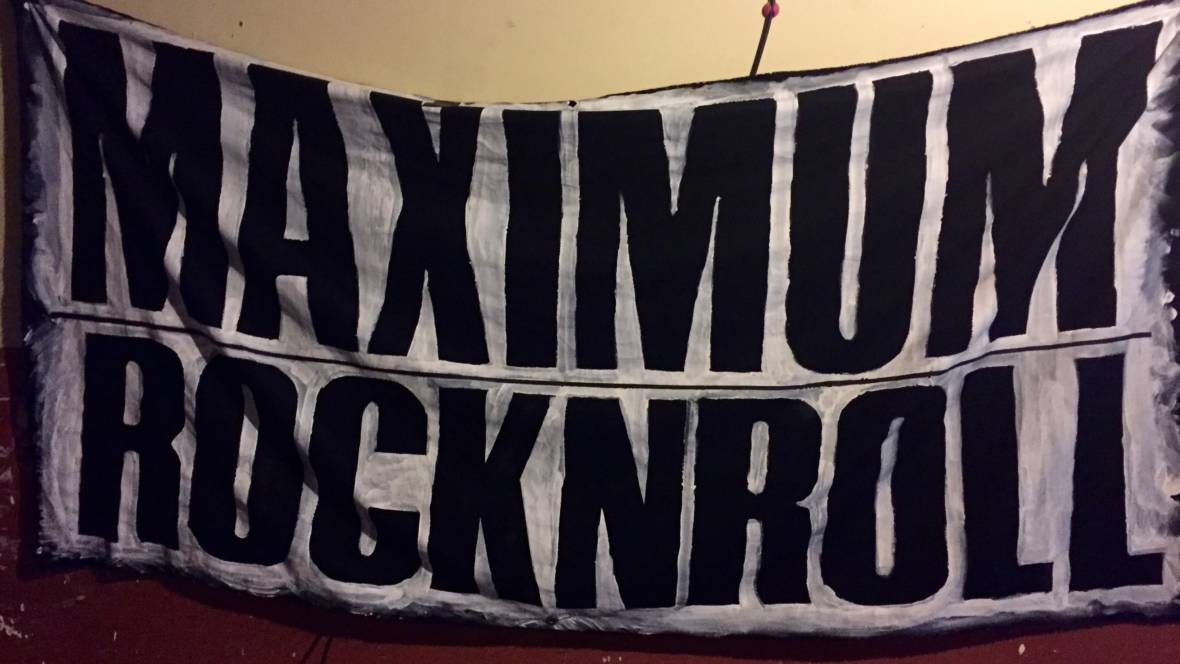
"caption": "A banner at Maximum Rocknroll's office",
"description": "A banner at Maximum Rocknroll's office",
"title": "IMG_2340",
"credit": "Photo: Kevin L. Jones/KQED",
"status": "inherit",
"isLoading": false,
"fetchFailed": false
},
"arts_11975410": {
"type": "attachments",
"id": "arts_11975410",
"meta": {
"index": "attachments_1716263798",
"site": "arts",
"id": "11975410",
"found": true
},
"parent": 11975409,
"imgSizes": {
"twentyfourteen-full-width": {
"file": "https://ww2.kqed.org/app/uploads/sites/2/2016/08/ap_720316057-edit1_custom-206e1d713265f46f4fb5bf4beb41dee4108dd030-1038x576.jpg",
"width": 1038,
"mimeType": "image/jpeg",
"height": 576
},
"thumbnail": {
"file": "https://ww2.kqed.org/app/uploads/sites/2/2016/08/ap_720316057-edit1_custom-206e1d713265f46f4fb5bf4beb41dee4108dd030-400x269.jpg",
"width": 400,
"mimeType": "image/jpeg",
"height": 269
},
"fd-sm": {
"file": "https://ww2.kqed.org/app/uploads/sites/2/2016/08/ap_720316057-edit1_custom-206e1d713265f46f4fb5bf4beb41dee4108dd030-960x646.jpg",
"width": 960,
"mimeType": "image/jpeg",
"height": 646
},
"post-thumbnail": {
"file": "https://ww2.kqed.org/app/uploads/sites/2/2016/08/ap_720316057-edit1_custom-206e1d713265f46f4fb5bf4beb41dee4108dd030-672x372.jpg",
"width": 672,
"mimeType": "image/jpeg",
"height": 372
},
"kqedFullSize": {
"file": "https://ww2.kqed.org/app/uploads/sites/2/2016/08/ap_720316057-edit1_custom-206e1d713265f46f4fb5bf4beb41dee4108dd030.jpg",
"width": 1884,
"height": 1267
},
"large": {
"file": "https://ww2.kqed.org/app/uploads/sites/2/2016/08/ap_720316057-edit1_custom-206e1d713265f46f4fb5bf4beb41dee4108dd030-1180x794.jpg",
"width": 1180,
"mimeType": "image/jpeg",
"height": 794
},
"guest-author-50": {
"file": "https://ww2.kqed.org/app/uploads/sites/2/2016/08/ap_720316057-edit1_custom-206e1d713265f46f4fb5bf4beb41dee4108dd030-50x50.jpg",
"width": 50,
"mimeType": "image/jpeg",
"height": 50
},
"guest-author-96": {
"file": "https://ww2.kqed.org/app/uploads/sites/2/2016/08/ap_720316057-edit1_custom-206e1d713265f46f4fb5bf4beb41dee4108dd030-96x96.jpg",
"width": 96,
"mimeType": "image/jpeg",
"height": 96
},
"medium": {
"file": "https://ww2.kqed.org/app/uploads/sites/2/2016/08/ap_720316057-edit1_custom-206e1d713265f46f4fb5bf4beb41dee4108dd030-800x538.jpg",
"width": 800,
"mimeType": "image/jpeg",
"height": 538
},
"guest-author-64": {
"file": "https://ww2.kqed.org/app/uploads/sites/2/2016/08/ap_720316057-edit1_custom-206e1d713265f46f4fb5bf4beb41dee4108dd030-64x64.jpg",
"width": 64,
"mimeType": "image/jpeg",
"height": 64
},
"guest-author-32": {
"file": "https://ww2.kqed.org/app/uploads/sites/2/2016/08/ap_720316057-edit1_custom-206e1d713265f46f4fb5bf4beb41dee4108dd030-32x32.jpg",
"width": 32,
"mimeType": "image/jpeg",
"height": 32
},
"fd-med": {
"file": "https://ww2.kqed.org/app/uploads/sites/2/2016/08/ap_720316057-edit1_custom-206e1d713265f46f4fb5bf4beb41dee4108dd030-1180x794.jpg",
"width": 1180,
"mimeType": "image/jpeg",
"height": 794
},
"detail": {
"file": "https://ww2.kqed.org/app/uploads/sites/2/2016/08/ap_720316057-edit1_custom-206e1d713265f46f4fb5bf4beb41dee4108dd030-150x150.jpg",
"width": 150,
"mimeType": "image/jpeg",
"height": 150
},
"medium_large": {
"file": "https://ww2.kqed.org/app/uploads/sites/2/2016/08/ap_720316057-edit1_custom-206e1d713265f46f4fb5bf4beb41dee4108dd030-768x516.jpg",
"width": 768,
"mimeType": "image/jpeg",
"height": 516
},
"guest-author-128": {
"file": "https://ww2.kqed.org/app/uploads/sites/2/2016/08/ap_720316057-edit1_custom-206e1d713265f46f4fb5bf4beb41dee4108dd030-128x128.jpg",
"width": 128,
"mimeType": "image/jpeg",
"height": 128
}
},
"publishDate": 1472064878,
"modified": 1472064878,
"caption": null,
"description": "Yoko Ono, John Lennon and their immigration attorney, Michael Wildes (right), leave the Immigration and Naturalization Service in New York City on March 16, 1972.",
"title": "Yoko Ono, John Lennon and their immigration attorney, Michael Wildes (right), leave the Immigration and Naturalization Service in New York City on March 16, 1972.",
"credit": null,
"status": "inherit",
"isLoading": false,
"fetchFailed": false
},
"arts_11963136": {
"type": "attachments",
"id": "arts_11963136",
"meta": {
"index": "attachments_1716263798",
"site": "arts",
"id": "11963136",
"found": true
},
"parent": 11955779,
"imgSizes": {
"twentyfourteen-full-width": {
"file": "https://ww2.kqed.org/app/uploads/sites/2/2016/08/Tahereh-1-1038x576.jpg",
"width": 1038,
"mimeType": "image/jpeg",
"height": 576
},
"thumbnail": {
"file": "https://ww2.kqed.org/app/uploads/sites/2/2016/08/Tahereh-1-400x261.jpg",
"width": 400,
"mimeType": "image/jpeg",
"height": 261
},
"fd-sm": {
"file": "https://ww2.kqed.org/app/uploads/sites/2/2016/08/Tahereh-1-960x626.jpg",
"width": 960,
"mimeType": "image/jpeg",
"height": 626
},
"post-thumbnail": {
"file": "https://ww2.kqed.org/app/uploads/sites/2/2016/08/Tahereh-1-672x372.jpg",
"width": 672,
"mimeType": "image/jpeg",
"height": 372
},
"kqedFullSize": {
"file": "https://ww2.kqed.org/app/uploads/sites/2/2016/08/Tahereh-1.jpg",
"width": 1864,
"height": 1215
},
"large": {
"file": "https://ww2.kqed.org/app/uploads/sites/2/2016/08/Tahereh-1-1180x769.jpg",
"width": 1180,
"mimeType": "image/jpeg",
"height": 769
},
"guest-author-50": {
"file": "https://ww2.kqed.org/app/uploads/sites/2/2016/08/Tahereh-1-50x50.jpg",
"width": 50,
"mimeType": "image/jpeg",
"height": 50
},
"guest-author-96": {
"file": "https://ww2.kqed.org/app/uploads/sites/2/2016/08/Tahereh-1-96x96.jpg",
"width": 96,
"mimeType": "image/jpeg",
"height": 96
},
"medium": {
"file": "https://ww2.kqed.org/app/uploads/sites/2/2016/08/Tahereh-1-800x521.jpg",
"width": 800,
"mimeType": "image/jpeg",
"height": 521
},
"guest-author-64": {
"file": "https://ww2.kqed.org/app/uploads/sites/2/2016/08/Tahereh-1-64x64.jpg",
"width": 64,
"mimeType": "image/jpeg",
"height": 64
},
"guest-author-32": {
"file": "https://ww2.kqed.org/app/uploads/sites/2/2016/08/Tahereh-1-32x32.jpg",
"width": 32,
"mimeType": "image/jpeg",
"height": 32
},
"fd-med": {
"file": "https://ww2.kqed.org/app/uploads/sites/2/2016/08/Tahereh-1-1180x769.jpg",
"width": 1180,
"mimeType": "image/jpeg",
"height": 769
},
"detail": {
"file": "https://ww2.kqed.org/app/uploads/sites/2/2016/08/Tahereh-1-150x150.jpg",
"width": 150,
"mimeType": "image/jpeg",
"height": 150
},
"medium_large": {
"file": "https://ww2.kqed.org/app/uploads/sites/2/2016/08/Tahereh-1-768x501.jpg",
"width": 768,
"mimeType": "image/jpeg",
"height": 501
},
"guest-author-128": {
"file": "https://ww2.kqed.org/app/uploads/sites/2/2016/08/Tahereh-1-128x128.jpg",
"width": 128,
"mimeType": "image/jpeg",
"height": 128
}
},
"publishDate": 1471799781,
"modified": 1471799802,
"caption": "Tahereh Mafi appears at Kepler's Books on Sept. 1.",
"description": null,
"title": "Tahereh-1",
"credit": null,
"status": "inherit",
"isLoading": false,
"fetchFailed": false
},
"arts_11947869": {
"type": "attachments",
"id": "arts_11947869",
"meta": {
"index": "attachments_1716263798",
"site": "arts",
"id": "11947869",
"found": true
},
"parent": 11945089,
"imgSizes": {
"twentyfourteen-full-width": {
"file": "https://ww2.kqed.org/app/uploads/sites/2/2016/08/BVCover-1038x576.jpg",
"width": 1038,
"mimeType": "image/jpeg",
"height": 576
},
"thumbnail": {
"file": "https://ww2.kqed.org/app/uploads/sites/2/2016/08/BVCover-400x225.jpg",
"width": 400,
"mimeType": "image/jpeg",
"height": 225
},
"fd-sm": {
"file": "https://ww2.kqed.org/app/uploads/sites/2/2016/08/BVCover-960x540.jpg",
"width": 960,
"mimeType": "image/jpeg",
"height": 540
},
"post-thumbnail": {
"file": "https://ww2.kqed.org/app/uploads/sites/2/2016/08/BVCover-672x372.jpg",
"width": 672,
"mimeType": "image/jpeg",
"height": 372
},
"kqedFullSize": {
"file": "https://ww2.kqed.org/app/uploads/sites/2/2016/08/BVCover.jpg",
"width": 1920,
"height": 1080
},
"large": {
"file": "https://ww2.kqed.org/app/uploads/sites/2/2016/08/BVCover-1180x664.jpg",
"width": 1180,
"mimeType": "image/jpeg",
"height": 664
},
"guest-author-50": {
"file": "https://ww2.kqed.org/app/uploads/sites/2/2016/08/BVCover-50x50.jpg",
"width": 50,
"mimeType": "image/jpeg",
"height": 50
},
"guest-author-96": {
"file": "https://ww2.kqed.org/app/uploads/sites/2/2016/08/BVCover-96x96.jpg",
"width": 96,
"mimeType": "image/jpeg",
"height": 96
},
"medium": {
"file": "https://ww2.kqed.org/app/uploads/sites/2/2016/08/BVCover-800x450.jpg",
"width": 800,
"mimeType": "image/jpeg",
"height": 450
},
"guest-author-64": {
"file": "https://ww2.kqed.org/app/uploads/sites/2/2016/08/BVCover-64x64.jpg",
"width": 64,
"mimeType": "image/jpeg",
"height": 64
},
"guest-author-32": {
"file": "https://ww2.kqed.org/app/uploads/sites/2/2016/08/BVCover-32x32.jpg",
"width": 32,
"mimeType": "image/jpeg",
"height": 32
},
"fd-lrg": {
"file": "https://ww2.kqed.org/app/uploads/sites/2/2016/08/BVCover-1920x1080.jpg",
"width": 1920,
"mimeType": "image/jpeg",
"height": 1080
},
"fd-med": {
"file": "https://ww2.kqed.org/app/uploads/sites/2/2016/08/BVCover-1180x664.jpg",
"width": 1180,
"mimeType": "image/jpeg",
"height": 664
},
"detail": {
"file": "https://ww2.kqed.org/app/uploads/sites/2/2016/08/BVCover-150x150.jpg",
"width": 150,
"mimeType": "image/jpeg",
"height": 150
},
"medium_large": {
"file": "https://ww2.kqed.org/app/uploads/sites/2/2016/08/BVCover-768x432.jpg",
"width": 768,
"mimeType": "image/jpeg",
"height": 432
},
"guest-author-128": {
"file": "https://ww2.kqed.org/app/uploads/sites/2/2016/08/BVCover-128x128.jpg",
"width": 128,
"mimeType": "image/jpeg",
"height": 128
}
},
"publishDate": 1471455070,
"modified": 1471457894,
"caption": "'Blue Velvet' screens at BAMPFA Saturday, Aug. 20 at 6pm.",
"description": null,
"title": "BVCover",
"credit": "Courtesy of BAMPFA",
"status": "inherit",
"isLoading": false,
"fetchFailed": false
},
"forum_2010101856242": {
"type": "attachments",
"id": "forum_2010101856242",
"meta": {
"index": "attachments_1716263798",
"site": "forum",
"id": "2010101856242",
"found": true
},
"parent": 2010101856241,
"imgSizes": {
"twentyfourteen-full-width": {
"file": "https://ww2.kqed.org/app/uploads/sites/43/2016/08/Amiri-Baraka-for-Forum-1038x576.jpg",
"width": 1038,
"mimeType": "image/jpeg",
"height": 576
},
"thumbnail": {
"file": "https://ww2.kqed.org/app/uploads/sites/43/2016/08/Amiri-Baraka-for-Forum-400x225.jpg",
"width": 400,
"mimeType": "image/jpeg",
"height": 225
},
"fd-sm": {
"file": "https://ww2.kqed.org/app/uploads/sites/43/2016/08/Amiri-Baraka-for-Forum-960x540.jpg",
"width": 960,
"mimeType": "image/jpeg",
"height": 540
},
"post-thumbnail": {
"file": "https://ww2.kqed.org/app/uploads/sites/43/2016/08/Amiri-Baraka-for-Forum-672x372.jpg",
"width": 672,
"mimeType": "image/jpeg",
"height": 372
},
"kqedFullSize": {
"file": "https://ww2.kqed.org/app/uploads/sites/43/2016/08/Amiri-Baraka-for-Forum.jpg",
"width": 1920,
"height": 1080
},
"large": {
"file": "https://ww2.kqed.org/app/uploads/sites/43/2016/08/Amiri-Baraka-for-Forum-1180x664.jpg",
"width": 1180,
"mimeType": "image/jpeg",
"height": 664
},
"guest-author-50": {
"file": "https://ww2.kqed.org/app/uploads/sites/43/2016/08/Amiri-Baraka-for-Forum-50x50.jpg",
"width": 50,
"mimeType": "image/jpeg",
"height": 50
},
"guest-author-96": {
"file": "https://ww2.kqed.org/app/uploads/sites/43/2016/08/Amiri-Baraka-for-Forum-96x96.jpg",
"width": 96,
"mimeType": "image/jpeg",
"height": 96
},
"medium": {
"file": "https://ww2.kqed.org/app/uploads/sites/43/2016/08/Amiri-Baraka-for-Forum-800x450.jpg",
"width": 800,
"mimeType": "image/jpeg",
"height": 450
},
"guest-author-64": {
"file": "https://ww2.kqed.org/app/uploads/sites/43/2016/08/Amiri-Baraka-for-Forum-64x64.jpg",
"width": 64,
"mimeType": "image/jpeg",
"height": 64
},
"guest-author-32": {
"file": "https://ww2.kqed.org/app/uploads/sites/43/2016/08/Amiri-Baraka-for-Forum-32x32.jpg",
"width": 32,
"mimeType": "image/jpeg",
"height": 32
},
"fd-lrg": {
"file": "https://ww2.kqed.org/app/uploads/sites/43/2016/08/Amiri-Baraka-for-Forum-1920x1080.jpg",
"width": 1920,
"mimeType": "image/jpeg",
"height": 1080
},
"fd-med": {
"file": "https://ww2.kqed.org/app/uploads/sites/43/2016/08/Amiri-Baraka-for-Forum-1180x664.jpg",
"width": 1180,
"mimeType": "image/jpeg",
"height": 664
},
"detail": {
"file": "https://ww2.kqed.org/app/uploads/sites/43/2016/08/Amiri-Baraka-for-Forum-150x150.jpg",
"width": 150,
"mimeType": "image/jpeg",
"height": 150
},
"medium_large": {
"file": "https://ww2.kqed.org/app/uploads/sites/43/2016/08/Amiri-Baraka-for-Forum-768x432.jpg",
"width": 768,
"mimeType": "image/jpeg",
"height": 432
},
"guest-author-128": {
"file": "https://ww2.kqed.org/app/uploads/sites/43/2016/08/Amiri-Baraka-for-Forum-128x128.jpg",
"width": 128,
"mimeType": "image/jpeg",
"height": 128
}
},
"publishDate": 1471383221,
"modified": 1471383461,
"caption": "Amiri Baraka addressing the Malcolm X Festival on May 19, 2007 in San Antonio Park, Oakland, California.",
"description": null,
"title": "Amiri Baraka",
"credit": "Photo: David Sasaki",
"status": "inherit",
"isLoading": false,
"fetchFailed": false
},
"arts_11933327": {
"type": "attachments",
"id": "arts_11933327",
"meta": {
"index": "attachments_1716263798",
"site": "arts",
"id": "11933327",
"found": true
},
"parent": 11933324,
"imgSizes": {
"twentyfourteen-full-width": {
"file": "https://ww2.kqed.org/app/uploads/sites/2/2016/08/Harmony.MAIN_-1038x576.jpg",
"width": 1038,
"mimeType": "image/jpeg",
"height": 576
},
"thumbnail": {
"file": "https://ww2.kqed.org/app/uploads/sites/2/2016/08/Harmony.MAIN_-400x263.jpg",
"width": 400,
"mimeType": "image/jpeg",
"height": 263
},
"fd-sm": {
"file": "https://ww2.kqed.org/app/uploads/sites/2/2016/08/Harmony.MAIN_-960x630.jpg",
"width": 960,
"mimeType": "image/jpeg",
"height": 630
},
"post-thumbnail": {
"file": "https://ww2.kqed.org/app/uploads/sites/2/2016/08/Harmony.MAIN_-672x372.jpg",
"width": 672,
"mimeType": "image/jpeg",
"height": 372
},
"kqedFullSize": {
"file": "https://ww2.kqed.org/app/uploads/sites/2/2016/08/Harmony.MAIN_.jpg",
"width": 1920,
"height": 1260
},
"large": {
"file": "https://ww2.kqed.org/app/uploads/sites/2/2016/08/Harmony.MAIN_-1180x774.jpg",
"width": 1180,
"mimeType": "image/jpeg",
"height": 774
},
"guest-author-50": {
"file": "https://ww2.kqed.org/app/uploads/sites/2/2016/08/Harmony.MAIN_-50x50.jpg",
"width": 50,
"mimeType": "image/jpeg",
"height": 50
},
"guest-author-96": {
"file": "https://ww2.kqed.org/app/uploads/sites/2/2016/08/Harmony.MAIN_-96x96.jpg",
"width": 96,
"mimeType": "image/jpeg",
"height": 96
},
"medium": {
"file": "https://ww2.kqed.org/app/uploads/sites/2/2016/08/Harmony.MAIN_-800x525.jpg",
"width": 800,
"mimeType": "image/jpeg",
"height": 525
},
"guest-author-64": {
"file": "https://ww2.kqed.org/app/uploads/sites/2/2016/08/Harmony.MAIN_-64x64.jpg",
"width": 64,
"mimeType": "image/jpeg",
"height": 64
},
"guest-author-32": {
"file": "https://ww2.kqed.org/app/uploads/sites/2/2016/08/Harmony.MAIN_-32x32.jpg",
"width": 32,
"mimeType": "image/jpeg",
"height": 32
},
"fd-lrg": {
"file": "https://ww2.kqed.org/app/uploads/sites/2/2016/08/Harmony.MAIN_-1920x1260.jpg",
"width": 1920,
"mimeType": "image/jpeg",
"height": 1260
},
"fd-med": {
"file": "https://ww2.kqed.org/app/uploads/sites/2/2016/08/Harmony.MAIN_-1180x774.jpg",
"width": 1180,
"mimeType": "image/jpeg",
"height": 774
},
"detail": {
"file": "https://ww2.kqed.org/app/uploads/sites/2/2016/08/Harmony.MAIN_-150x150.jpg",
"width": 150,
"mimeType": "image/jpeg",
"height": 150
},
"medium_large": {
"file": "https://ww2.kqed.org/app/uploads/sites/2/2016/08/Harmony.MAIN_-768x504.jpg",
"width": 768,
"mimeType": "image/jpeg",
"height": 504
},
"guest-author-128": {
"file": "https://ww2.kqed.org/app/uploads/sites/2/2016/08/Harmony.MAIN_-128x128.jpg",
"width": 128,
"mimeType": "image/jpeg",
"height": 128
}
},
"publishDate": 1471142145,
"modified": 1471142179,
"caption": "'Harmony,' by Carolyn Parkhurst.",
"description": "'Harmony,' by Carolyn Parkhurst.",
"title": "Harmony.MAIN",
"credit": "NPR",
"status": "inherit",
"isLoading": false,
"fetchFailed": false
},
"arts_11928680": {
"type": "attachments",
"id": "arts_11928680",
"meta": {
"index": "attachments_1716263798",
"site": "arts",
"id": "11928680",
"found": true
},
"parent": 11928524,
"imgSizes": {
"twentyfourteen-full-width": {
"file": "https://ww2.kqed.org/app/uploads/sites/2/2016/08/FAcebook-AHP-pic-e1471050114814-1038x576.jpg",
"width": 1038,
"mimeType": "image/jpeg",
"height": 576
},
"thumbnail": {
"file": "https://ww2.kqed.org/app/uploads/sites/2/2016/08/FAcebook-AHP-pic-e1471050114814-400x216.jpg",
"width": 400,
"mimeType": "image/jpeg",
"height": 216
},
"fd-sm": {
"file": "https://ww2.kqed.org/app/uploads/sites/2/2016/08/FAcebook-AHP-pic-e1471050114814-960x519.jpg",
"width": 960,
"mimeType": "image/jpeg",
"height": 519
},
"post-thumbnail": {
"file": "https://ww2.kqed.org/app/uploads/sites/2/2016/08/FAcebook-AHP-pic-e1471050114814-672x372.jpg",
"width": 672,
"mimeType": "image/jpeg",
"height": 372
},
"kqedFullSize": {
"file": "https://ww2.kqed.org/app/uploads/sites/2/2016/08/FAcebook-AHP-pic-e1471050114814.jpg",
"width": 1775,
"height": 959
},
"large": {
"file": "https://ww2.kqed.org/app/uploads/sites/2/2016/08/FAcebook-AHP-pic-e1471050114814-1180x638.jpg",
"width": 1180,
"mimeType": "image/jpeg",
"height": 638
},
"guest-author-50": {
"file": "https://ww2.kqed.org/app/uploads/sites/2/2016/08/FAcebook-AHP-pic-e1471050114814-50x50.jpg",
"width": 50,
"mimeType": "image/jpeg",
"height": 50
},
"guest-author-96": {
"file": "https://ww2.kqed.org/app/uploads/sites/2/2016/08/FAcebook-AHP-pic-e1471050114814-96x96.jpg",
"width": 96,
"mimeType": "image/jpeg",
"height": 96
},
"medium": {
"file": "https://ww2.kqed.org/app/uploads/sites/2/2016/08/FAcebook-AHP-pic-e1471050114814-800x432.jpg",
"width": 800,
"mimeType": "image/jpeg",
"height": 432
},
"guest-author-64": {
"file": "https://ww2.kqed.org/app/uploads/sites/2/2016/08/FAcebook-AHP-pic-e1471050114814-64x64.jpg",
"width": 64,
"mimeType": "image/jpeg",
"height": 64
},
"guest-author-32": {
"file": "https://ww2.kqed.org/app/uploads/sites/2/2016/08/FAcebook-AHP-pic-e1471050114814-32x32.jpg",
"width": 32,
"mimeType": "image/jpeg",
"height": 32
},
"fd-med": {
"file": "https://ww2.kqed.org/app/uploads/sites/2/2016/08/FAcebook-AHP-pic-e1471050114814-1180x638.jpg",
"width": 1180,
"mimeType": "image/jpeg",
"height": 638
},
"detail": {
"file": "https://ww2.kqed.org/app/uploads/sites/2/2016/08/FAcebook-AHP-pic-e1471050114814-150x150.jpg",
"width": 150,
"mimeType": "image/jpeg",
"height": 150
},
"medium_large": {
"file": "https://ww2.kqed.org/app/uploads/sites/2/2016/08/FAcebook-AHP-pic-e1471050114814-768x415.jpg",
"width": 768,
"mimeType": "image/jpeg",
"height": 415
},
"guest-author-128": {
"file": "https://ww2.kqed.org/app/uploads/sites/2/2016/08/FAcebook-AHP-pic-e1471050114814-128x128.jpg",
"width": 128,
"mimeType": "image/jpeg",
"height": 128
}
},
"publishDate": 1471042993,
"modified": 1471043066,
"caption": "A picture from Kenneth Walton's Facebook post about a scary run-in with Arizona Highway Patrol",
"description": "A picture from Kenneth Walton's Facebook post about a scary run-in with Arizona Highway Patrol",
"title": "FAcebook AHP pic",
"credit": "Photo: Kenneth Walton",
"status": "inherit",
"isLoading": false,
"fetchFailed": false
},
"arts_11930184": {
"type": "attachments",
"id": "arts_11930184",
"meta": {
"index": "attachments_1716263798",
"site": "arts",
"id": "11930184",
"found": true
},
"parent": 11930183,
"imgSizes": {
"thumbnail": {
"file": "https://ww2.kqed.org/app/uploads/sites/2/2016/08/11930183-thumb-400x413.jpg",
"width": 400,
"mimeType": "image/jpeg",
"height": 413
},
"post-thumbnail": {
"file": "https://ww2.kqed.org/app/uploads/sites/2/2016/08/11930183-thumb-400x372.jpg",
"width": 400,
"mimeType": "image/jpeg",
"height": 372
},
"kqedFullSize": {
"file": "https://ww2.kqed.org/app/uploads/sites/2/2016/08/11930183-thumb.jpg",
"width": 400,
"height": 413
},
"guest-author-50": {
"file": "https://ww2.kqed.org/app/uploads/sites/2/2016/08/11930183-thumb-50x50.jpg",
"width": 50,
"mimeType": "image/jpeg",
"height": 50
},
"guest-author-96": {
"file": "https://ww2.kqed.org/app/uploads/sites/2/2016/08/11930183-thumb-96x96.jpg",
"width": 96,
"mimeType": "image/jpeg",
"height": 96
},
"guest-author-64": {
"file": "https://ww2.kqed.org/app/uploads/sites/2/2016/08/11930183-thumb-64x64.jpg",
"width": 64,
"mimeType": "image/jpeg",
"height": 64
},
"detail": {
"file": "https://ww2.kqed.org/app/uploads/sites/2/2016/08/11930183-thumb-150x150.jpg",
"width": 150,
"mimeType": "image/jpeg",
"height": 150
},
"guest-author-32": {
"file": "https://ww2.kqed.org/app/uploads/sites/2/2016/08/11930183-thumb-32x32.jpg",
"width": 32,
"mimeType": "image/jpeg",
"height": 32
},
"guest-author-128": {
"file": "https://ww2.kqed.org/app/uploads/sites/2/2016/08/11930183-thumb-128x128.jpg",
"width": 128,
"mimeType": "image/jpeg",
"height": 128
}
},
"publishDate": 1471073228,
"modified": 1471073228,
"caption": null,
"description": null,
"title": "Thumbnail for 11930183",
"credit": null,
"status": "inherit",
"isLoading": false,
"fetchFailed": false
},
"arts_11924741": {
"type": "attachments",
"id": "arts_11924741",
"meta": {
"index": "attachments_1716263798",
"site": "arts",
"id": "11924741",
"found": true
},
"parent": 11924424,
"imgSizes": {
"thumbnail": {
"file": "https://ww2.kqed.org/app/uploads/sites/2/2016/08/Thomas-Steinbeck-400x225.jpg",
"width": 400,
"mimeType": "image/jpeg",
"height": 225
},
"post-thumbnail": {
"file": "https://ww2.kqed.org/app/uploads/sites/2/2016/08/Thomas-Steinbeck-672x372.jpg",
"width": 672,
"mimeType": "image/jpeg",
"height": 372
},
"kqedFullSize": {
"file": "https://ww2.kqed.org/app/uploads/sites/2/2016/08/Thomas-Steinbeck.jpg",
"width": 796,
"height": 448
},
"guest-author-50": {
"file": "https://ww2.kqed.org/app/uploads/sites/2/2016/08/Thomas-Steinbeck-50x50.jpg",
"width": 50,
"mimeType": "image/jpeg",
"height": 50
},
"guest-author-96": {
"file": "https://ww2.kqed.org/app/uploads/sites/2/2016/08/Thomas-Steinbeck-96x96.jpg",
"width": 96,
"mimeType": "image/jpeg",
"height": 96
},
"guest-author-64": {
"file": "https://ww2.kqed.org/app/uploads/sites/2/2016/08/Thomas-Steinbeck-64x64.jpg",
"width": 64,
"mimeType": "image/jpeg",
"height": 64
},
"detail": {
"file": "https://ww2.kqed.org/app/uploads/sites/2/2016/08/Thomas-Steinbeck-150x150.jpg",
"width": 150,
"mimeType": "image/jpeg",
"height": 150
},
"guest-author-32": {
"file": "https://ww2.kqed.org/app/uploads/sites/2/2016/08/Thomas-Steinbeck-32x32.jpg",
"width": 32,
"mimeType": "image/jpeg",
"height": 32
},
"medium_large": {
"file": "https://ww2.kqed.org/app/uploads/sites/2/2016/08/Thomas-Steinbeck-768x432.jpg",
"width": 768,
"mimeType": "image/jpeg",
"height": 432
},
"guest-author-128": {
"file": "https://ww2.kqed.org/app/uploads/sites/2/2016/08/Thomas-Steinbeck-128x128.jpg",
"width": 128,
"mimeType": "image/jpeg",
"height": 128
}
},
"publishDate": 1470952419,
"modified": 1470952910,
"caption": "Sarah Lee Guthrie, Johnny Irion, and Thomas Steinbeck perform stage announcements as part of 2008 This Land is Your Land Festival",
"description": "Sarah Lee Guthrie, Johnny Irion, and Thomas Steinbeck perform stage announcements as part of 2008 This Land is Your Land Festival",
"title": "Thomas Steinbeck",
"credit": "Photo: Tim Mosenfelder/Getty Images",
"status": "inherit",
"isLoading": false,
"fetchFailed": false
},
"arts_11920257": {
"type": "attachments",
"id": "arts_11920257",
"meta": {
"index": "attachments_1716263798",
"site": "arts",
"id": "11920257",
"found": true
},
"parent": 11920256,
"imgSizes": {
"twentyfourteen-full-width": {
"file": "https://ww2.kqed.org/app/uploads/sites/2/2016/08/ap_16202267850782-9c7293fc4d28819859598dab7e09c246bdbc6a73-e1470857776933-1038x576.jpg",
"width": 1038,
"mimeType": "image/jpeg",
"height": 576
},
"thumbnail": {
"file": "https://ww2.kqed.org/app/uploads/sites/2/2016/08/ap_16202267850782-9c7293fc4d28819859598dab7e09c246bdbc6a73-e1470857776933-400x266.jpg",
"width": 400,
"mimeType": "image/jpeg",
"height": 266
},
"fd-sm": {
"file": "https://ww2.kqed.org/app/uploads/sites/2/2016/08/ap_16202267850782-9c7293fc4d28819859598dab7e09c246bdbc6a73-e1470857776933-960x638.jpg",
"width": 960,
"mimeType": "image/jpeg",
"height": 638
},
"post-thumbnail": {
"file": "https://ww2.kqed.org/app/uploads/sites/2/2016/08/ap_16202267850782-9c7293fc4d28819859598dab7e09c246bdbc6a73-e1470857776933-672x372.jpg",
"width": 672,
"mimeType": "image/jpeg",
"height": 372
},
"kqedFullSize": {
"file": "https://ww2.kqed.org/app/uploads/sites/2/2016/08/ap_16202267850782-9c7293fc4d28819859598dab7e09c246bdbc6a73-e1470857776933.jpg",
"width": 3996,
"height": 2657
},
"large": {
"file": "https://ww2.kqed.org/app/uploads/sites/2/2016/08/ap_16202267850782-9c7293fc4d28819859598dab7e09c246bdbc6a73-e1470857776933-1180x785.jpg",
"width": 1180,
"mimeType": "image/jpeg",
"height": 785
},
"guest-author-50": {
"file": "https://ww2.kqed.org/app/uploads/sites/2/2016/08/ap_16202267850782-9c7293fc4d28819859598dab7e09c246bdbc6a73-e1470857776933-50x50.jpg",
"width": 50,
"mimeType": "image/jpeg",
"height": 50
},
"guest-author-96": {
"file": "https://ww2.kqed.org/app/uploads/sites/2/2016/08/ap_16202267850782-9c7293fc4d28819859598dab7e09c246bdbc6a73-e1470857776933-96x96.jpg",
"width": 96,
"mimeType": "image/jpeg",
"height": 96
},
"medium": {
"file": "https://ww2.kqed.org/app/uploads/sites/2/2016/08/ap_16202267850782-9c7293fc4d28819859598dab7e09c246bdbc6a73-e1470857776933-800x532.jpg",
"width": 800,
"mimeType": "image/jpeg",
"height": 532
},
"guest-author-64": {
"file": "https://ww2.kqed.org/app/uploads/sites/2/2016/08/ap_16202267850782-9c7293fc4d28819859598dab7e09c246bdbc6a73-e1470857776933-64x64.jpg",
"width": 64,
"mimeType": "image/jpeg",
"height": 64
},
"guest-author-32": {
"file": "https://ww2.kqed.org/app/uploads/sites/2/2016/08/ap_16202267850782-9c7293fc4d28819859598dab7e09c246bdbc6a73-e1470857776933-32x32.jpg",
"width": 32,
"mimeType": "image/jpeg",
"height": 32
},
"fd-lrg": {
"file": "https://ww2.kqed.org/app/uploads/sites/2/2016/08/ap_16202267850782-9c7293fc4d28819859598dab7e09c246bdbc6a73-e1470857776933-1920x1277.jpg",
"width": 1920,
"mimeType": "image/jpeg",
"height": 1277
},
"fd-med": {
"file": "https://ww2.kqed.org/app/uploads/sites/2/2016/08/ap_16202267850782-9c7293fc4d28819859598dab7e09c246bdbc6a73-e1470857776933-1180x785.jpg",
"width": 1180,
"mimeType": "image/jpeg",
"height": 785
},
"detail": {
"file": "https://ww2.kqed.org/app/uploads/sites/2/2016/08/ap_16202267850782-9c7293fc4d28819859598dab7e09c246bdbc6a73-e1470857776933-150x150.jpg",
"width": 150,
"mimeType": "image/jpeg",
"height": 150
},
"medium_large": {
"file": "https://ww2.kqed.org/app/uploads/sites/2/2016/08/ap_16202267850782-9c7293fc4d28819859598dab7e09c246bdbc6a73-e1470857776933-768x511.jpg",
"width": 768,
"mimeType": "image/jpeg",
"height": 511
},
"guest-author-128": {
"file": "https://ww2.kqed.org/app/uploads/sites/2/2016/08/ap_16202267850782-9c7293fc4d28819859598dab7e09c246bdbc6a73-e1470857776933-128x128.jpg",
"width": 128,
"mimeType": "image/jpeg",
"height": 128
}
},
"publishDate": 1470856345,
"modified": 1470857878,
"caption": "Du Daozheng browses his copy of 'The Annals of the Chinese Nation,' or 'Yanhuang Chunqiu,' in July at his home in Beijing. The 93-year old publisher, a stalwart of the Communist Party's embattled liberal wing, announced publication of the magazine would end after government officials ordered a leadership reshuffle and seized its offices.",
"description": "Du Daozheng browses his copy of 'The Annals of the Chinese Nation,' or 'Yanhuang Chunqiu,' in July at his home in Beijing. The 93-year old publisher, a stalwart of the Communist Party's embattled liberal wing, announced publication of the magazine would end after government officials ordered a leadership reshuffle and seized its offices.",
"title": "Du Daozheng browses his copy of The Annals of the Chinese Nation, or Yanhuang Chunqiu, in July at his home in Beijing. The 93-year old publisher, a stalwart of the Communist Party's embattled liberal wing, announced publication of the magazine would end after government officials ordered a leadership reshuffle and seized its offices.",
"credit": "Photo: Gerry Shih",
"status": "inherit",
"isLoading": false,
"fetchFailed": false
},
"arts_11912686": {
"type": "attachments",
"id": "arts_11912686",
"meta": {
"index": "attachments_1716263798",
"site": "arts",
"id": "11912686",
"found": true
},
"parent": 0,
"imgSizes": {
"thumbnail": {
"file": "https://ww2.kqed.org/app/uploads/sites/2/2016/08/RS7893_marcus_books_5dec2013_0021_web-hpf-400x225.jpg",
"width": 400,
"mimeType": "image/jpeg",
"height": 225
},
"post-thumbnail": {
"file": "https://ww2.kqed.org/app/uploads/sites/2/2016/08/RS7893_marcus_books_5dec2013_0021_web-hpf-672x372.jpg",
"width": 672,
"mimeType": "image/jpeg",
"height": 372
},
"kqedFullSize": {
"file": "https://ww2.kqed.org/app/uploads/sites/2/2016/08/RS7893_marcus_books_5dec2013_0021_web-hpf.jpg",
"width": 800,
"height": 450
},
"guest-author-50": {
"file": "https://ww2.kqed.org/app/uploads/sites/2/2016/08/RS7893_marcus_books_5dec2013_0021_web-hpf-50x50.jpg",
"width": 50,
"mimeType": "image/jpeg",
"height": 50
},
"guest-author-96": {
"file": "https://ww2.kqed.org/app/uploads/sites/2/2016/08/RS7893_marcus_books_5dec2013_0021_web-hpf-96x96.jpg",
"width": 96,
"mimeType": "image/jpeg",
"height": 96
},
"medium": {
"file": "https://ww2.kqed.org/app/uploads/sites/2/2016/08/RS7893_marcus_books_5dec2013_0021_web-hpf-800x450.jpg",
"width": 800,
"mimeType": "image/jpeg",
"height": 450
},
"guest-author-64": {
"file": "https://ww2.kqed.org/app/uploads/sites/2/2016/08/RS7893_marcus_books_5dec2013_0021_web-hpf-64x64.jpg",
"width": 64,
"mimeType": "image/jpeg",
"height": 64
},
"detail": {
"file": "https://ww2.kqed.org/app/uploads/sites/2/2016/08/RS7893_marcus_books_5dec2013_0021_web-hpf-150x150.jpg",
"width": 150,
"mimeType": "image/jpeg",
"height": 150
},
"guest-author-32": {
"file": "https://ww2.kqed.org/app/uploads/sites/2/2016/08/RS7893_marcus_books_5dec2013_0021_web-hpf-32x32.jpg",
"width": 32,
"mimeType": "image/jpeg",
"height": 32
},
"medium_large": {
"file": "https://ww2.kqed.org/app/uploads/sites/2/2016/08/RS7893_marcus_books_5dec2013_0021_web-hpf-768x432.jpg",
"width": 768,
"mimeType": "image/jpeg",
"height": 432
},
"guest-author-128": {
"file": "https://ww2.kqed.org/app/uploads/sites/2/2016/08/RS7893_marcus_books_5dec2013_0021_web-hpf-128x128.jpg",
"width": 128,
"mimeType": "image/jpeg",
"height": 128
}
},
"publishDate": 1470696361,
"modified": 1470704105,
"caption": "At Marcus Books old location in the Fillmore, Adella Hand, 7, and her sister Kairi Hand, 3, read classic children's books such as Little Red Riding Hood that are illustrated with black characters.",
"description": "At Marcus Books old location in the Fillmore, Adella Hand, 7, and her sister Kairi Hand, 3, read classic children's books such as Little Red Riding Hood that are illustrated with black characters.",
"title": "Marcus Books",
"credit": "Photo: Sara Bloomberg/KQED",
"status": "inherit",
"isLoading": false,
"fetchFailed": false
},
"arts_11911805": {
"type": "attachments",
"id": "arts_11911805",
"meta": {
"index": "attachments_1716263798",
"site": "arts",
"id": "11911805",
"found": true
},
"parent": 11911804,
"imgSizes": {
"twentyfourteen-full-width": {
"file": "https://ww2.kqed.org/app/uploads/sites/2/2016/08/Comic-books-1038x576.jpg",
"width": 1038,
"mimeType": "image/jpeg",
"height": 576
},
"thumbnail": {
"file": "https://ww2.kqed.org/app/uploads/sites/2/2016/08/Comic-books-400x225.jpg",
"width": 400,
"mimeType": "image/jpeg",
"height": 225
},
"fd-sm": {
"file": "https://ww2.kqed.org/app/uploads/sites/2/2016/08/Comic-books-960x540.jpg",
"width": 960,
"mimeType": "image/jpeg",
"height": 540
},
"post-thumbnail": {
"file": "https://ww2.kqed.org/app/uploads/sites/2/2016/08/Comic-books-672x372.jpg",
"width": 672,
"mimeType": "image/jpeg",
"height": 372
},
"kqedFullSize": {
"file": "https://ww2.kqed.org/app/uploads/sites/2/2016/08/Comic-books.jpg",
"width": 1920,
"height": 1080
},
"large": {
"file": "https://ww2.kqed.org/app/uploads/sites/2/2016/08/Comic-books-1180x664.jpg",
"width": 1180,
"mimeType": "image/jpeg",
"height": 664
},
"guest-author-50": {
"file": "https://ww2.kqed.org/app/uploads/sites/2/2016/08/Comic-books-50x50.jpg",
"width": 50,
"mimeType": "image/jpeg",
"height": 50
},
"guest-author-96": {
"file": "https://ww2.kqed.org/app/uploads/sites/2/2016/08/Comic-books-96x96.jpg",
"width": 96,
"mimeType": "image/jpeg",
"height": 96
},
"medium": {
"file": "https://ww2.kqed.org/app/uploads/sites/2/2016/08/Comic-books-800x450.jpg",
"width": 800,
"mimeType": "image/jpeg",
"height": 450
},
"guest-author-64": {
"file": "https://ww2.kqed.org/app/uploads/sites/2/2016/08/Comic-books-64x64.jpg",
"width": 64,
"mimeType": "image/jpeg",
"height": 64
},
"guest-author-32": {
"file": "https://ww2.kqed.org/app/uploads/sites/2/2016/08/Comic-books-32x32.jpg",
"width": 32,
"mimeType": "image/jpeg",
"height": 32
},
"fd-lrg": {
"file": "https://ww2.kqed.org/app/uploads/sites/2/2016/08/Comic-books-1920x1080.jpg",
"width": 1920,
"mimeType": "image/jpeg",
"height": 1080
},
"fd-med": {
"file": "https://ww2.kqed.org/app/uploads/sites/2/2016/08/Comic-books-1180x664.jpg",
"width": 1180,
"mimeType": "image/jpeg",
"height": 664
},
"detail": {
"file": "https://ww2.kqed.org/app/uploads/sites/2/2016/08/Comic-books-150x150.jpg",
"width": 150,
"mimeType": "image/jpeg",
"height": 150
},
"medium_large": {
"file": "https://ww2.kqed.org/app/uploads/sites/2/2016/08/Comic-books-768x432.jpg",
"width": 768,
"mimeType": "image/jpeg",
"height": 432
},
"guest-author-128": {
"file": "https://ww2.kqed.org/app/uploads/sites/2/2016/08/Comic-books-128x128.jpg",
"width": 128,
"mimeType": "image/jpeg",
"height": 128
}
},
"publishDate": 1470680167,
"modified": 1470680215,
"caption": "Comic books for sale at Comic-Con International 2016\n",
"description": "Comic books for sale at Comic-Con International 2016",
"title": "Comic-Con International 2016 - Preview Night",
"credit": "Photo: Matt Cowan/Getty Images",
"status": "inherit",
"isLoading": false,
"fetchFailed": false
}
},
"audioPlayerReducer": {
"postId": "stream_live",
"isPaused": true,
"isPlaying": false,
"pfsActive": false,
"pledgeModalIsOpen": true,
"playerDrawerIsOpen": false,
"liveAudioPlayStartedAt": 0,
"liveAudioPlayContext": ""
},
"authorsReducer": {
"byline_arts_11975409": {
"type": "authors",
"id": "byline_arts_11975409",
"meta": {
"override": true
},
"slug": "byline_arts_11975409",
"name": "Hansi Lo Wang",
"isLoading": false
},
"byline_arts_11945089": {
"type": "authors",
"id": "byline_arts_11945089",
"meta": {
"override": true
},
"slug": "byline_arts_11945089",
"name": "Max Goldberg",
"isLoading": false
},
"byline_arts_11933324": {
"type": "authors",
"id": "byline_arts_11933324",
"meta": {
"override": true
},
"slug": "byline_arts_11933324",
"name": "Tasha Robinson",
"isLoading": false
},
"byline_arts_11920256": {
"type": "authors",
"id": "byline_arts_11920256",
"meta": {
"override": true
},
"slug": "byline_arts_11920256",
"name": "Anthony Kuhn",
"isLoading": false
},
"byline_arts_11911804": {
"type": "authors",
"id": "byline_arts_11911804",
"meta": {
"override": true
},
"slug": "byline_arts_11911804",
"name": "Associated Press",
"isLoading": false
},
"cmusiker": {
"type": "authors",
"id": "32",
"meta": {
"index": "authors_1716337520",
"id": "32",
"found": true
},
"name": "Cy Musiker",
"firstName": "Cy",
"lastName": "Musiker",
"slug": "cmusiker",
"email": "cmusiker@kqed.org",
"display_author_email": false,
"staff_mastheads": [],
"title": "KQED Contributor",
"bio": "Cy Musiker is a former co-host of The Do List and a former reporter covering the arts for KQED News and The California Report. He loves live performance, especially great theater, jazz, roots music, anything by Mahler. Cy has an MJ from UC Berkeley's School of Journalism, and got his BA from Hampshire College. His work has been recognized by the Society for Professional Journalists with their Sigma Delta Chi Award for Public Service in Journalism. When he can, Cy likes to swim in Tomales Bay, run with his dog in the East Bay Hills, and hike the Sierra.",
"avatar": "https://secure.gravatar.com/avatar/05eaba5c5696ce8f062e4ea2df428a43?s=600&d=blank&r=g",
"twitter": null,
"facebook": null,
"instagram": null,
"linkedin": null,
"sites": [
{
"site": "arts",
"roles": [
"Contributor",
"subscriber"
]
},
{
"site": "news",
"roles": [
"author"
]
},
{
"site": "bayareabites",
"roles": [
"contributor"
]
}
],
"headData": {
"title": "Cy Musiker | KQED",
"description": "KQED Contributor",
"ogImgSrc": "https://secure.gravatar.com/avatar/05eaba5c5696ce8f062e4ea2df428a43?s=600&d=blank&r=g",
"twImgSrc": "https://secure.gravatar.com/avatar/05eaba5c5696ce8f062e4ea2df428a43?s=600&d=blank&r=g"
},
"isLoading": false,
"link": "/author/cmusiker"
},
"kqedarts": {
"type": "authors",
"id": "92",
"meta": {
"index": "authors_1716337520",
"id": "92",
"found": true
},
"name": "KQED Arts",
"firstName": "KQED",
"lastName": "Arts",
"slug": "kqedarts",
"email": "arts@kqed.org",
"display_author_email": false,
"staff_mastheads": [],
"title": null,
"bio": "\u003ca href=\"https://www.kqed.org/arts\">Please see the KQED Arts homepage here\u003c/a>.",
"avatar": "https://secure.gravatar.com/avatar/f79c2ffd1cd9c3a0b9951773c3fe7844fccadefaaf84672bcb414c784d7180cb?s=600&d=blank&r=g",
"twitter": null,
"bluesky": null,
"facebook": null,
"instagram": "https://www.instagram.com/kqedarts/",
"linkedin": null,
"sites": [
{
"site": "arts",
"roles": [
"contributor"
]
},
{
"site": "pop",
"roles": [
"contributor"
]
},
{
"site": "science",
"roles": [
"author"
]
},
{
"site": "food",
"roles": [
"contributor"
]
}
],
"headData": {
"title": "KQED Arts | KQED",
"description": null,
"ogImgSrc": "https://secure.gravatar.com/avatar/f79c2ffd1cd9c3a0b9951773c3fe7844fccadefaaf84672bcb414c784d7180cb?s=600&d=blank&r=g",
"twImgSrc": "https://secure.gravatar.com/avatar/f79c2ffd1cd9c3a0b9951773c3fe7844fccadefaaf84672bcb414c784d7180cb?s=600&d=blank&r=g"
},
"isLoading": false,
"link": "/author/kqedarts"
},
"kjones": {
"type": "authors",
"id": "93",
"meta": {
"index": "authors_1716337520",
"id": "93",
"found": true
},
"name": "Kevin L. Jones",
"firstName": "Kevin",
"lastName": "Jones",
"slug": "kjones",
"email": "kjones@kqed.org",
"display_author_email": false,
"staff_mastheads": [],
"title": null,
"bio": null,
"avatar": "https://secure.gravatar.com/avatar/12c65b5633ed39d0a59bb7f497eff645?s=600&d=blank&r=g",
"twitter": null,
"facebook": null,
"instagram": null,
"linkedin": null,
"sites": [
{
"site": "arts",
"roles": [
"subscriber"
]
},
{
"site": "styleguide",
"roles": [
"contributor"
]
},
{
"site": "artschool",
"roles": [
"subscriber"
]
},
{
"site": "news",
"roles": [
"subscriber"
]
},
{
"site": "pop",
"roles": [
"subscriber"
]
}
],
"headData": {
"title": "Kevin L. Jones | KQED",
"description": null,
"ogImgSrc": "https://secure.gravatar.com/avatar/12c65b5633ed39d0a59bb7f497eff645?s=600&d=blank&r=g",
"twImgSrc": "https://secure.gravatar.com/avatar/12c65b5633ed39d0a59bb7f497eff645?s=600&d=blank&r=g"
},
"isLoading": false,
"link": "/author/kjones"
},
"kqed": {
"type": "authors",
"id": "236",
"meta": {
"index": "authors_1716337520",
"id": "236",
"found": true
},
"name": "KQED News Staff",
"firstName": "KQED News Staff",
"lastName": null,
"slug": "kqed",
"email": "faq@kqed.org",
"display_author_email": false,
"staff_mastheads": [],
"title": null,
"bio": null,
"avatar": "https://secure.gravatar.com/avatar/ef0e801a68c4c54afa9180db14084167?s=600&d=blank&r=g",
"twitter": null,
"facebook": null,
"instagram": null,
"linkedin": null,
"sites": [
{
"site": "arts",
"roles": [
"contributor"
]
},
{
"site": "news",
"roles": [
"editor"
]
},
{
"site": "futureofyou",
"roles": [
"author"
]
}
],
"headData": {
"title": "KQED News Staff | KQED",
"description": null,
"ogImgSrc": "https://secure.gravatar.com/avatar/ef0e801a68c4c54afa9180db14084167?s=600&d=blank&r=g",
"twImgSrc": "https://secure.gravatar.com/avatar/ef0e801a68c4c54afa9180db14084167?s=600&d=blank&r=g"
},
"isLoading": false,
"link": "/author/kqed"
},
"lclark": {
"type": "authors",
"id": "3224",
"meta": {
"index": "authors_1716337520",
"id": "3224",
"found": true
},
"name": "Leilani Clark",
"firstName": "Leilani",
"lastName": "Clark",
"slug": "lclark",
"email": "clark.leil@gmail.com",
"display_author_email": false,
"staff_mastheads": [],
"title": null,
"bio": "Leilani Clark writes about books for KQED Arts. Her writing has been published at Mother Jones, The Guardian, Civil Eats, Time Magazine, Food & Wine, Edible Marin & Wine Country, and The Rumpus. She is the editor of Made Local magazine in Sonoma County. Find her on Twitter \u003ca href=\"https://twitter.com/leilclark\">@leilclark\u003c/a>.",
"avatar": "https://secure.gravatar.com/avatar/7f691fdc52ed2e3f4cf164d1f4ec0889?s=600&d=blank&r=g",
"twitter": null,
"facebook": null,
"instagram": null,
"linkedin": null,
"sites": [
{
"site": "arts",
"roles": [
"contributor"
]
},
{
"site": "bayareabites",
"roles": [
"contributor"
]
},
{
"site": "food",
"roles": [
"contributor"
]
}
],
"headData": {
"title": "Leilani Clark | KQED",
"description": null,
"ogImgSrc": "https://secure.gravatar.com/avatar/7f691fdc52ed2e3f4cf164d1f4ec0889?s=600&d=blank&r=g",
"twImgSrc": "https://secure.gravatar.com/avatar/7f691fdc52ed2e3f4cf164d1f4ec0889?s=600&d=blank&r=g"
},
"isLoading": false,
"link": "/author/lclark"
},
"mkrasny": {
"type": "authors",
"id": "11247",
"meta": {
"index": "authors_1716337520",
"id": "11247",
"found": true
},
"name": "Michael Krasny",
"firstName": "Michael",
"lastName": "Krasny",
"slug": "mkrasny",
"email": "mkrasny@kqed.org",
"display_author_email": false,
"staff_mastheads": [],
"title": "KQED Contributor",
"bio": "Michael Krasny was the former host of the program, Forum. He was with ABC in both radio and television and migrated to public broadcasting in 1993. He was a Professor of English at San Francisco State University and also taught at Stanford, the University of San Francisco and the University of California, as well as in the Fulbright International Institutes. A veteran interviewer for the nationally broadcast City Arts and Lectures, he is the author of a number of books, including “Off Mike: A Memoir of Talk Radio and Literary Life” (Stanford University Press) “Spiritual Envy” (New World); “Sound Ideas” (with M.E. Sokolik/ McGraw-Hill); “Let There Be Laughter” (Harper-Collins) as well as the twenty-four lecture series in DVD, audio and book, “Short Story Masterpieces” (The Teaching Company). He has interviewed many of the world’s leading political, cultural, literary, science and technology figures, as well as major figures from the world of entertainment. He is the recipient of many awards and honors including the S.Y. Agnon Medal for Intellectual Achievement; The Eugene Block Award for Human Rights Journalism; the James Madison Freedom of Information Award; the Excellence in Journalism Award from the National Lesbian and Gay Journalists Association; Career Achievement Award from the Society of Professional Journalists and an award from the Radio and Television News Directors Association. He holds a B.A. (cum laude) and M.A. from Ohio University and a PhD from the University of Wisconsin.",
"avatar": "https://secure.gravatar.com/avatar/243c9ef51f3b90a42850d3a766d24865?s=600&d=blank&r=g",
"twitter": null,
"facebook": null,
"instagram": null,
"linkedin": null,
"sites": [
{
"site": "forum",
"roles": [
"subscriber"
]
}
],
"headData": {
"title": "Michael Krasny | KQED",
"description": "KQED Contributor",
"ogImgSrc": "https://secure.gravatar.com/avatar/243c9ef51f3b90a42850d3a766d24865?s=600&d=blank&r=g",
"twImgSrc": "https://secure.gravatar.com/avatar/243c9ef51f3b90a42850d3a766d24865?s=600&d=blank&r=g"
},
"isLoading": false,
"link": "/author/mkrasny"
}
},
"pagesReducer": {
"arts_category_literature": {
"type": "terms",
"id": "arts_73",
"meta": {
"index": "terms_1716263798",
"site": "arts",
"id": "73",
"score": 12.795155
},
"featImg": null,
"name": "Books",
"description": null,
"taxonomy": "category",
"headData": {
"twImgId": null,
"twTitle": null,
"ogTitle": null,
"ogImgId": null,
"twDescription": null,
"description": null,
"title": "Books Archives | KQED Arts",
"ogDescription": null
},
"ttid": 74,
"slug": "literature",
"isLoading": false,
"title": "Books",
"pageMeta": {
"site": "arts",
"WpPageTemplate": "page-topic-editorial",
"currentPage": 85
},
"blocks": [
{
"blockName": "kqed/post-list",
"attrs": {
"layout": "cardArticle2",
"query": "posts/arts?category=literature",
"seeMore": false,
"paginated": true,
"page": 85
}
},
{
"blockName": "kqed/ad"
}
]
}
},
"pfsSessionReducer": {},
"postsReducer": {
"stream_live": {
"type": "live",
"id": "stream_live",
"audioUrl": "https://hls.kqed.org/hls/kqed_app/playlist.m3u8",
"title": "Live Stream",
"excerpt": "Live Stream information currently unavailable.",
"link": "/radio",
"featImg": "",
"label": {
"name": "KQED Live",
"link": "/"
}
},
"stream_kqedNewscast": {
"type": "posts",
"id": "stream_kqedNewscast",
"audioUrl": "https://www.kqed.org/.stream/anon/radio/RDnews/newscast.mp3?_=1",
"title": "KQED Newscast",
"featImg": "",
"label": {
"name": "88.5 FM",
"link": "/"
}
},
"arts_11976285": {
"type": "posts",
"id": "arts_11976285",
"meta": {
"index": "posts_1716263798",
"site": "arts",
"id": "11976285",
"score": null,
"sort": [
1472162423000
]
},
"guestAuthors": [],
"slug": "400-issues-life-at-maximum-rocknroll-after-tim-yohannan",
"title": "400 Issues: Life at 'Maximum Rocknroll' After Tim Yohannan",
"publishDate": 1472162423,
"format": "image",
"headTitle": "400 Issues: Life at ‘Maximum Rocknroll’ After Tim Yohannan | KQED",
"labelTerm": {
"site": "arts"
},
"content": "\u003cp>The staff at \u003ca href=\"http://www.maximumrocknroll.com/\" target=\"_blank\" rel=\"noopener\">\u003cem>Maximum Rocknroll\u003c/em>\u003c/a> are convinced Tim Yohannan haunts their offices. The founder of the punk magazine died in 1998 at age 52 — too soon — and his opinionated ghost likes to make his presence known during odd moments.\u003c/p>\n\u003cp>“[Once] a shelf of books came toppling down when we spent too much time talking about [the band] Integrity,” Grace Ambrose, \u003cem>Maximum Rocknroll\u003c/em>’s current content coordinator, wrote in an email, referring to the long-running Cleveland hardcore band who was probably a little too metal for Yohannan’s taste.\u003c/p>\n\u003cp>There are stories of needles skipping on ‘80s pop records and of push pins suddenly disappearing from a poster on a wall; basically everyone who has lived in the magazine’s office/living space north of the San Francisco Panhandle since Yohannan’s death 18 years ago has had some kind of supernatural experience. But you don’t have to live there to feel his overwhelming presence, it’s in the green tape on every single one of the thousands of records on the office shelves, the custom 7″ covers and other memorabilia, and in the immaculately clean office — a middle finger to anyone who assumes punks are lazy and gross.\u003c/p>\n\u003cp>Yohannan founded\u003cem> Maximum Rocknroll\u003c/em> (\u003cem>MRR\u003c/em>) in 1982; by now it has been around longer without him than it was with him. The magazine’s longevity can be partially credited to his planning: after he was diagnosed with non-Hodgkins lymphoma, Yohannan elected to find not one, but two replacements for himself because he did so much for the magazine. (The staff later found they actually needed three people to fully fill his shoes.)\u003c/p>\n\u003cfigure id=\"attachment_11981518\" class=\"wp-caption alignright\" style=\"max-width: 640px\">\u003cimg loading=\"lazy\" decoding=\"async\" src=\"http://ww2.kqed.org/arts/wp-content/uploads/sites/2/2016/08/Issue-400-Cover-922x1180.jpeg\" alt=\"Cover of Maximum Rocknroll's 400th issue\" width=\"640\" height=\"819\" class=\"size-large wp-image-11981518\" srcset=\"https://cdn.kqed.org/wp-content/uploads/sites/2/2016/08/Issue-400-Cover-922x1180.jpeg 922w, https://cdn.kqed.org/wp-content/uploads/sites/2/2016/08/Issue-400-Cover-400x512.jpeg 400w, https://cdn.kqed.org/wp-content/uploads/sites/2/2016/08/Issue-400-Cover-469x600.jpeg 469w, https://cdn.kqed.org/wp-content/uploads/sites/2/2016/08/Issue-400-Cover-768x983.jpeg 768w, https://cdn.kqed.org/wp-content/uploads/sites/2/2016/08/Issue-400-Cover-1920x2459.jpeg 1920w, https://cdn.kqed.org/wp-content/uploads/sites/2/2016/08/Issue-400-Cover-1180x1511.jpeg 1180w, https://cdn.kqed.org/wp-content/uploads/sites/2/2016/08/Issue-400-Cover-960x1229.jpeg 960w\" sizes=\"(max-width: 640px) 100vw, 640px\">\u003cfigcaption class=\"wp-caption-text\">Cover of Maximum Rocknroll’s 400th issue \u003ccite>(Photo: Shivaun Watchorn)\u003c/cite>\u003c/figcaption>\u003c/figure>\n\u003cp>The staff at \u003cem>Maximum Rocknroll\u003c/em> have also encountered unforeseen obstacles and, without Yohannan’s guidance, managed to keep publishing the zine, never missing a month. Like all legacy print publications, \u003cem>MRR\u003c/em> no longer makes the riches on ad sales that it did during the ’90s (thanks internet). It’s come close to shutting its doors many times, and yet it lives today — the September 2016 issue of the zine is its 400th issue. The issue is dedicated to the volunteers, aka “the shitworkers,” who are mostly responsible for \u003cem>Maximum Rocknroll\u003c/em>’s continuing existence.\u003c/p>\n\u003cp>[ad fullwidth]\u003c/p>\n\u003cp>“It’s an arbitrary numerical milestone, but we always do something for those issues,” \u003cem>MRR\u003c/em> archive coordinator Shivaun Watchorn said. “We have a lot of exciting stuff going on, so we felt like we should support those who made it happen. It’s a labor of love.”\u003c/p>\n\u003cp>\u003cb>After Yohannan’s Death\u003c/b>\u003c/p>\n\u003cp>When Yohannan died in April of 1998, not only was it a tragic end to a local legend, it was sooner than unexpected. The magazine’s staff thought he had at least three more months, and it left the magazine in a bit of a bind; Yohannan still needed to train Mark “Icki” Murrmann.\u003c/p>\n\u003cp>Murrmann, who is now the photo editor at \u003cem>Mother Jones\u003c/em> magazine, applied for the content coordinator position when Yohannan began looking for his replacements. He got far enough along in the process that he was flown out from the Midwest to interview in person, but Yohannan ended up choosing Jen Angel and Jacqueline Pritchard to succeed him. A few months later, he called Murrmann to offer him the job — Yohannan had a falling out with Angel and she was asked to leave the magazine. (She would go on to start \u003cem>Clamor\u003c/em> magazine with Jason Kucsma.)\u003c/p>\n\u003cp>Murrmann drove from Florida to San Francisco and moved into the offices a week after Yohannan died. He says those first days of living at the offices were difficult; the staff was still reeling from Yohannan’s death and Murrmann, who nobody really knew, had to be an authority figure.\u003c/p>\n\u003cfigure id=\"attachment_11979391\" class=\"wp-caption alignright\" style=\"max-width: 800px\">\u003cimg loading=\"lazy\" decoding=\"async\" class=\"size-full wp-image-11979391\" src=\"http://ww2.kqed.org/arts/wp-content/uploads/sites/2/2016/08/Murrmann-2.jpg\" alt='Mark \"Icki\" Murrman' width=\"800\" height=\"531\" srcset=\"https://cdn.kqed.org/wp-content/uploads/sites/2/2016/08/Murrmann-2.jpg 800w, https://cdn.kqed.org/wp-content/uploads/sites/2/2016/08/Murrmann-2-400x266.jpg 400w, https://cdn.kqed.org/wp-content/uploads/sites/2/2016/08/Murrmann-2-768x510.jpg 768w\" sizes=\"(max-width: 800px) 100vw, 800px\">\u003cfigcaption class=\"wp-caption-text\">Mark “Icki” Murrmann \u003ccite>(Photo: Ian Willms)\u003c/cite>\u003c/figcaption>\u003c/figure>\n\u003cp>“It was a really tough time to come into a scene where nobody knew you and you were in charge. People were trying decide if they wanted to stick around,” Murrmann said. “They were also dealing with the fact that somebody had stolen a lot of high value records immediately after Tim’s death.”\u003c/p>\n\u003cp>As it turned out, Murrmann didn’t really need Yohannan’s supervision as Pritchard had been trained by Yohannan. But even if she wasn’t there, Yohannan had it covered before he died, compiling instructions for putting the magazine together. The instructions were in a binder that literally said “How to Run Maximum Rocknroll” on the cover.\u003c/p>\n\u003cp>Murrmann would only last about eight months, and his early exit was the result of the number one rule at \u003cem>MRR\u003c/em>: coordinators are not paid for their work. They live at the offices for free but they cannot receive any compensation, which ensures that those who apply for the position are passionate about the job, not the income.\u003c/p>\n\u003cp>“The three tenets of the magazine were that it will always be on newsprint, nobody will get paid and there will never be a color cover,” Murrmann says. “And those are things that basically handicap it.”\u003c/p>\n\u003cp>Murrmann had to take a second job to pay off debt, there were records he wanted to own and he somehow needed to pay for food. But his options for employment were limited thanks to another rule for coordinators — they both had to be present when the office was open from 10am to 6pm, hours that Yohannan could keep because his job as head of shipping and receiving at UC Berkeley freed him up. Murrmann had to find work during unconventional hours.\u003c/p>\n\u003cp>“I worked all types of odd jobs. I worked as security at Tower Records in the Castro, I worked at a catering company on the graveyard shift washing dishes, I made buttons for Busy Beaver buttons, shit like that,” Murrmann says. “Basically I just wasn’t making enough money and I wound up going back to Indiana.”\u003c/p>\n\u003cp>Murrmann’s employment issues did inspire change at the magazine. The magazine has a board of directors made up of \u003cem>MRR\u003c/em> veterans and Yohannan’s friends, set up to ensure the magazine stays true its mission. The board hires new coordinators, approves price increases, and changed the rules before Murrmann’s departure to hire a third coordinator. Now only one coordinator is required to be at the office when \u003cem>MRR\u003c/em> is open.\u003c/p>\n\u003cfigure id=\"attachment_11976289\" class=\"wp-caption aligncenter\" style=\"max-width: 931px\">\u003cimg loading=\"lazy\" decoding=\"async\" class=\"size-full wp-image-11976289\" src=\"http://ww2.kqed.org/arts/wp-content/uploads/sites/2/2016/08/record_green_tape1.png\" alt=\"A MRR sh*tworker adding green tape to records\" width=\"931\" height=\"808\" srcset=\"https://cdn.kqed.org/wp-content/uploads/sites/2/2016/08/record_green_tape1.png 931w, https://cdn.kqed.org/wp-content/uploads/sites/2/2016/08/record_green_tape1-400x347.png 400w, https://cdn.kqed.org/wp-content/uploads/sites/2/2016/08/record_green_tape1-691x600.png 691w, https://cdn.kqed.org/wp-content/uploads/sites/2/2016/08/record_green_tape1-768x667.png 768w\" sizes=\"(max-width: 931px) 100vw, 931px\">\u003cfigcaption class=\"wp-caption-text\">A MRR shitworker adding green tape to records \u003ccite>(Photo: Courtesy of Maximum Rocknroll)\u003c/cite>\u003c/figcaption>\u003c/figure>\n\u003cp>\u003cb>The End of the Heyday\u003c/b>\u003c/p>\n\u003cp>These changes made it easier for coordinators to support themselves, but it didn’t stop the inevitable revolving door in the position. Since Yohannan’s death, the turnover has been so high in the magazine’s top position that it’s difficult to keep track (but the magazine reportedly has a list). A few have left after a year, some after a couple of months. Occasionally some stay in the position for years, such as Pritchard, Layla Gibbon, Golnar Nikpour and Arwen Curry, the third coordinator brought on while Murrmann was still around.\u003c/p>\n\u003caside class=\"pullquote alignright\">\nDuring my tenure we went from having this surplus to really struggling. Sometimes we felt there was an existential threat to the magazine.\u003cbr>\n\u003ccite>Arwen Curry\u003c/cite>\u003cbr>\n\u003c/aside>\n\u003cp>Curry struck up a friendship with Yohannan over email while she was living in Santa Cruz, singing in punk bands and writing a column for the local weekly. She moved up to San Francisco in 1998 but Yohannan died before she could meet him. Still, she went to work at \u003cem>MRR\u003c/em> reviewing records, and as the difficulties of coordinating the magazine increased, it wasn’t long before the board asked Curry to come on as a third coordinator.\u003c/p>\n\u003cp>It was during the turn of the century when Curry says the magazine would see the end of its most profitable era. Before then, as much as the magazine railed against the punk bands like Green Day and Jawbreaker that went mainstream during the ’90s, punk’s popularity was a tide that lifted all boats, acting as a gateway to the bands on smaller independent labels. \u003cem>MRR\u003c/em> profited from that popularity as much as a not-for-profit magazine could. At the end of each year during those salad days, Yohannan would bust open the overflowing coffers and start giving away the would-be-profits to \u003cem>MRR\u003c/em>-related projects — the all-ages music venue \u003ca href=\"http://www.924gilman.org/\" target=\"_blank\" rel=\"noopener\">924 Gilman\u003c/a>, the record store \u003ca href=\"http://www.salon.com/1999/07/01/epicenter/\" target=\"_blank\" rel=\"noopener\">Epicenter Zone\u003c/a>, Blacklist Mailorder — and to the shitworkers, in the form of Christmas bonuses. “The first year I was there, it was a couple hundred dollars per person,” Curry says.\u003c/p>\n\u003cfigure id=\"attachment_11977525\" class=\"wp-caption alignright\" style=\"max-width: 640px\">\u003cimg loading=\"lazy\" decoding=\"async\" class=\"size-large wp-image-11977525\" src=\"http://ww2.kqed.org/arts/wp-content/uploads/sites/2/2016/08/IMG_2323-1180x885.jpg\" alt=\"A pallet of Maximum Rocknroll issues, ready for distribution\" width=\"640\" height=\"480\" srcset=\"https://cdn.kqed.org/wp-content/uploads/sites/2/2016/08/IMG_2323-1180x885.jpg 1180w, https://cdn.kqed.org/wp-content/uploads/sites/2/2016/08/IMG_2323-400x300.jpg 400w, https://cdn.kqed.org/wp-content/uploads/sites/2/2016/08/IMG_2323-800x600.jpg 800w, https://cdn.kqed.org/wp-content/uploads/sites/2/2016/08/IMG_2323-768x576.jpg 768w, https://cdn.kqed.org/wp-content/uploads/sites/2/2016/08/IMG_2323-1920x1440.jpg 1920w, https://cdn.kqed.org/wp-content/uploads/sites/2/2016/08/IMG_2323-960x720.jpg 960w\" sizes=\"(max-width: 640px) 100vw, 640px\">\u003cfigcaption class=\"wp-caption-text\">A pallet of Maximum Rocknroll issues, ready for distribution \u003ccite>(Photo: Kevin L. Jones/KQED)\u003c/cite>\u003c/figcaption>\u003c/figure>\n\u003cp>“That changed pretty quickly when punk stopped being mainstream again and slipped back into its regular underground home,” Curry says. “During my tenure we went from having this surplus to really struggling. Sometimes we felt there was an existential threat to the magazine.”\u003c/p>\n\u003cp>As the magazine entered the ’00s, ad sales sank and subscriptions began a steady decline that would go on for years.\u003c/p>\n\u003cp>Not only did the money stop coming in like it used to, the magazine stopped its longtime distribution deal with Mordam Records, which began almost in tandem with \u003cem>MRR\u003c/em>. By then, Mordam was working with labels that were too corporate for the \u003cem>Maximum\u003c/em> staff, so they opted to distribute \u003cem>MRR\u003c/em> themselves and hire someone to help sell the magazine.\u003c/p>\n\u003cp>“That was a challenge. Financially it still is, although it’s the best option we found,” Curry says.\u003c/p>\n\u003cp>The magazine stayed afloat, but not without a few close calls.\u003c/p>\n\u003cp>“It was terrifying for me because you really feel, as the coordinator, that despite all the people who are helping, it’s on your shoulders ultimately,” Curry says. “I was feeling the burden of the possibility that an incredible institution would go under when I’m at the helm.”\u003c/p>\n\u003cp>\u003cb>Back in the Black\u003c/b>\u003c/p>\n\u003cp>Curry left the coordinator position in 2004 and would later head to UC Berkeley’s Graduate School of Journalism, earning her master’s degree two years after Murrmann completed his own at the same school. (She became a filmmaker, working at KQED before starting her own production company, which is currently producing a \u003ca href=\"https://ww2.kqed.org/arts/2016/03/02/ursula-k-le-guin-documentary-raises-200000-with-kickstarter/\" target=\"_blank\" rel=\"noopener\">feature-length documentary\u003c/a> about sci-fi author Ursula K. Le Guin.)\u003c/p>\n\u003cfigure id=\"attachment_11375013\" class=\"wp-caption alignright\" style=\"max-width: 640px\">\u003cimg loading=\"lazy\" decoding=\"async\" class=\"size-large wp-image-11375013\" src=\"http://ww2.kqed.org/arts/wp-content/uploads/sites/2/2016/03/Curry-WOUKL-1180x664.jpg\" alt=\"'Worlds of Ursula K Le Guin' director Arwen Curry and SciFi author Le Guin\" width=\"640\" height=\"360\" srcset=\"https://cdn.kqed.org/wp-content/uploads/sites/2/2016/03/Curry-WOUKL-1180x664.jpg 1180w, https://cdn.kqed.org/wp-content/uploads/sites/2/2016/03/Curry-WOUKL-400x225.jpg 400w, https://cdn.kqed.org/wp-content/uploads/sites/2/2016/03/Curry-WOUKL-800x450.jpg 800w, https://cdn.kqed.org/wp-content/uploads/sites/2/2016/03/Curry-WOUKL-768x432.jpg 768w, https://cdn.kqed.org/wp-content/uploads/sites/2/2016/03/Curry-WOUKL-960x540.jpg 960w, https://cdn.kqed.org/wp-content/uploads/sites/2/2016/03/Curry-WOUKL.jpg 1799w\" sizes=\"(max-width: 640px) 100vw, 640px\">\u003cfigcaption class=\"wp-caption-text\">‘Worlds of Ursula K Le Guin’ director Arwen Curry and sci-fi author Le Guin \u003ccite>(Courtesy: Arwen Curry)\u003c/cite>\u003c/figcaption>\u003c/figure>\n\u003cp>Murrmann and Curry continued working for the zine, writing, taking photos and even sitting on the board. And they watched for years as the zine continued to struggle with debt and the fact that \u003ca href=\"http://fortune.com/2015/06/01/print-readership-paywalls/\" target=\"_blank\" rel=\"noopener\">print readership in America has been in constant decline\u003c/a>.\u003c/p>\n\u003cp>“I think I’m exaggerating, but I remember a time five years ago where we went through five coordinators in just as many months,” say Brace Belden, a \u003cem>MRR\u003c/em> columnist since 2008.\u003c/p>\n\u003cp>But now, by all accounts, the state of the magazine is good. Under the leadership of coordinator Grace Ambrose, the magazine has paid off its debts and has even built up a bit of a surplus.\u003c/p>\n\u003cp>“I will say right now that \u003cem>MRR\u003c/em> is definitely in its best incarnation since the ’80s,” Belden says. “Grace does a fucking great job. No knocking any of the other coordinators that have been there since I have been there, but the only person who makes it seem like she’s running a magazine is Grace.”\u003c/p>\n\u003cp>Ambrose, who came to the magazine from Philadelphia in 2014, credits her co-workers — “Nothing that happens at MRR can be credited to any one person,” she says — and some lucky breaks for \u003cem>MRR\u003c/em>‘s current financial standing. With the help of distribution coordinator Eli Wald, she identified and eliminated a lot of “inherited inefficiencies” in all aspects of the magazine’s production and developed a new system for distributing the magazine. She also oversaw the expansion of merchandise options and the release of a Los Crudos double-LP discography (compiled over many years by former \u003cem>MRR\u003c/em> coordinators Mariam Bastani, Martin Sorrondeguy (Los Crudos’s singer), and Lydia Athanasopolou) on the magazine’s label. When the album sold out, the band members donated all the profits to \u003cem>MRR\u003c/em>, enough to pay off a massive debt that had been weighing on the publication for a decade.\u003c/p>\n\u003cfigure id=\"attachment_11980291\" class=\"wp-caption aligncenter\" style=\"max-width: 1024px\">\u003cimg loading=\"lazy\" decoding=\"async\" src=\"http://ww2.kqed.org/arts/wp-content/uploads/sites/2/2016/08/benfordree.jpg\" alt=\"MRR coordinator Grace Ambrose with long-time MRR columnist Bryony Beynon\" width=\"1024\" height=\"679\" class=\"size-full wp-image-11980291\" srcset=\"https://cdn.kqed.org/wp-content/uploads/sites/2/2016/08/benfordree.jpg 1024w, https://cdn.kqed.org/wp-content/uploads/sites/2/2016/08/benfordree-400x265.jpg 400w, https://cdn.kqed.org/wp-content/uploads/sites/2/2016/08/benfordree-800x530.jpg 800w, https://cdn.kqed.org/wp-content/uploads/sites/2/2016/08/benfordree-768x509.jpg 768w, https://cdn.kqed.org/wp-content/uploads/sites/2/2016/08/benfordree-960x637.jpg 960w\" sizes=\"(max-width: 1024px) 100vw, 1024px\">\u003cfigcaption class=\"wp-caption-text\">MRR coordinator Grace Ambrose with long-time MRR columnist Bryony Beynon \u003ccite>(Photo: Ben Fordree)\u003c/cite>\u003c/figcaption>\u003c/figure>\n\u003cp>“Cut costs and make more money, that’s the secret to running a business right? We’re figuring it out,” Ambrose says. “Running a print magazine about punk in San Francisco still seems totally improbable, but we’re making it work.”\u003c/p>\n\u003cp>With the magazine on stable footing, Ambrose and staff are working towards the magazine’s next big project: a digital registration of over 50,000 records at \u003cem>Maximum Rocknroll\u003c/em>. The online archive will include a picture, release information and the magazine’s review of each record or cassette in its massive collection. Ambrose even brought out her friend Shivaun Watchorn, a professional archivist, to help with the massive project.\u003c/p>\n\u003cp>“The magazine always had an international readership and it has always been designed to serve the international punk community. We have so many people that read the magazine that are never going to be able to come visit us here in San Francisco,” Ambrose says. “The idea was to do a project that would help us maintain our physical collections that we have here in the building and preserve them for as long as possible. It’s the biggest and most extensive collection of its kind in the world, and we’re making it discoverable and accessible for people all over.”\u003c/p>\n\u003cp>Back in April of 2016, Watchorn started an \u003ca href=\"https://www.indiegogo.com/projects/maximum-rocknroll-archive-and-database-diy-media#/\" target=\"_blank\" rel=\"noopener\">Indiegogo campaign\u003c/a> to raise $15,000 for the project. Within 24 hours it raised half of its goal, and by the second day it was fully funded. By the end of the two-month campaign, the magazine raised over $26,000 for the project.\u003c/p>\n\u003cfigure id=\"attachment_11977526\" class=\"wp-caption aligncenter\" style=\"max-width: 640px\">\u003cimg loading=\"lazy\" decoding=\"async\" class=\"size-large wp-image-11977526\" src=\"http://ww2.kqed.org/arts/wp-content/uploads/sites/2/2016/08/IMG_2328-1180x885.jpg\" alt=\"MRR archivist Shivaun Watchorn adding records to the magazine's massive database\" width=\"640\" height=\"480\" srcset=\"https://cdn.kqed.org/wp-content/uploads/sites/2/2016/08/IMG_2328-1180x885.jpg 1180w, https://cdn.kqed.org/wp-content/uploads/sites/2/2016/08/IMG_2328-400x300.jpg 400w, https://cdn.kqed.org/wp-content/uploads/sites/2/2016/08/IMG_2328-800x600.jpg 800w, https://cdn.kqed.org/wp-content/uploads/sites/2/2016/08/IMG_2328-768x576.jpg 768w, https://cdn.kqed.org/wp-content/uploads/sites/2/2016/08/IMG_2328-1920x1440.jpg 1920w, https://cdn.kqed.org/wp-content/uploads/sites/2/2016/08/IMG_2328-960x720.jpg 960w\" sizes=\"(max-width: 640px) 100vw, 640px\">\u003cfigcaption class=\"wp-caption-text\">MRR archivist Shivaun Watchorn adding records to the magazine’s massive database \u003ccite>(Photo: Kevin L. Jones/KQED)\u003c/cite>\u003c/figcaption>\u003c/figure>\n\u003cp>\u003cb>Living on as an Example\u003c/b>\u003c/p>\n\u003cp>If Yohannan came back from the dead today, he would see much missing from the \u003cem>Maximum Rocknroll\u003c/em> he left behind. Bruce Roehrs, \u003cem>MRR\u003c/em>‘s longest running columnist, died in 2010. Once-popular columns from Mykel Board and George Tabb have been dropped. Screeching Weasel frontman Ben Weasel, whose column was a favorite in the ’90s, probably wouldn’t be allowed anywhere near the magazine’s offices because of \u003ca href=\"http://www.villagevoice.com/music/ben-weasel-punched-two-women-so-why-do-i-still-want-to-watch-his-band-6639154\" target=\"_blank\" rel=\"noopener\">past incidents\u003c/a>. But the zine is still seen as the “cop of punk” for continuing to comment on issues that pop up in the punk scene, like the \u003ca href=\"http://www.eastbayexpress.com/oakland/boycotters-condemn-924-gilman-st-projects-ethical-backslide/Content?oid=4807011\" target=\"_blank\" rel=\"noopener\">recent Gilman Boycott\u003c/a>. It’s also still read all over the world; to get a record review in \u003cem>MRR \u003c/em>is a huge accomplishment for the unheard-of bands that submit their songs.\u003c/p>\n\u003caside class=\"pullquote alignright\">\nCut costs and make more money, that’s the secret to running a business right?\u003cbr>\n\u003ccite>Grace Ambrose\u003c/cite>\u003cbr>\n\u003c/aside>\n\u003cp>Martin Sprouse, who worked at \u003cem>MRR\u003c/em> for decades and was considered Yohannan’s best friend, says that what mattered most to Yohannan was living by example. Yohannan was known for expressing strong opinions about bands who “sold out,” but these opinions were shared by many in the scene, just like his stances against skinhead violence. Yohannan was so vocal because someone had to say something and the magazine was the perfect pulpit.\u003c/p>\n\u003cp>[ad floatright]\u003c/p>\n\u003cp>“When bands started signing up to majors, we were talking about why that was a bad idea — why would you get in bed with the majors? But bands are always going to do what they want to do and we’re just presenting the alternatives to it, like staying with independent labels,” Sprouse says. “It wasn’t telling people not to do it, it was about living as an example. That’s the key to \u003cem>Maximum\u003c/em> and that’s the key to Gilman. It wasn’t about an idea that lasted six months — \u003cem>Maximum\u003c/em> has lasted 400 issues. That’s incredible, and that’s through living by example.”\u003c/p>\n\n",
"blocks": [],
"excerpt": "One of the biggest punk magazines in the world published its 400th issue in August after years of struggling to stay afloat.",
"status": "publish",
"parent": 0,
"modified": 1726709139,
"stats": {
"hasAudio": false,
"hasVideo": false,
"hasChartOrMap": false,
"iframeSrcs": [],
"hasGoogleForm": false,
"hasGallery": false,
"hasHearkenModule": false,
"hasPolis": false,
"paragraphCount": 44,
"wordCount": 2833
},
"headData": {
"title": "400 Issues: Life at 'Maximum Rocknroll' After Tim Yohannan | KQED",
"description": "One of the biggest punk magazines in the world published its 400th issue in August after years of struggling to stay afloat.",
"ogTitle": "",
"ogDescription": "",
"ogImgId": "",
"twTitle": "",
"twDescription": "",
"twImgId": "",
"schema": {
"@context": "https://schema.org",
"@type": "Article",
"headline": "400 Issues: Life at 'Maximum Rocknroll' After Tim Yohannan",
"datePublished": "2016-08-25T15:00:23-07:00",
"dateModified": "2024-09-18T18:25:39-07:00",
"image": "https://cdn.kqed.org/wp-content/uploads/2020/02/KQED-OG-Image@1x.png"
}
},
"sticky": false,
"path": "/arts/11976285/400-issues-life-at-maximum-rocknroll-after-tim-yohannan",
"audioTrackLength": null,
"parsedContent": [
{
"type": "contentString",
"content": "\u003cdiv class=\"post-body\">\u003cp>\u003cp>The staff at \u003ca href=\"http://www.maximumrocknroll.com/\" target=\"_blank\" rel=\"noopener\">\u003cem>Maximum Rocknroll\u003c/em>\u003c/a> are convinced Tim Yohannan haunts their offices. The founder of the punk magazine died in 1998 at age 52 — too soon — and his opinionated ghost likes to make his presence known during odd moments.\u003c/p>\n\u003cp>“[Once] a shelf of books came toppling down when we spent too much time talking about [the band] Integrity,” Grace Ambrose, \u003cem>Maximum Rocknroll\u003c/em>’s current content coordinator, wrote in an email, referring to the long-running Cleveland hardcore band who was probably a little too metal for Yohannan’s taste.\u003c/p>\n\u003cp>There are stories of needles skipping on ‘80s pop records and of push pins suddenly disappearing from a poster on a wall; basically everyone who has lived in the magazine’s office/living space north of the San Francisco Panhandle since Yohannan’s death 18 years ago has had some kind of supernatural experience. But you don’t have to live there to feel his overwhelming presence, it’s in the green tape on every single one of the thousands of records on the office shelves, the custom 7″ covers and other memorabilia, and in the immaculately clean office — a middle finger to anyone who assumes punks are lazy and gross.\u003c/p>\n\u003cp>Yohannan founded\u003cem> Maximum Rocknroll\u003c/em> (\u003cem>MRR\u003c/em>) in 1982; by now it has been around longer without him than it was with him. The magazine’s longevity can be partially credited to his planning: after he was diagnosed with non-Hodgkins lymphoma, Yohannan elected to find not one, but two replacements for himself because he did so much for the magazine. (The staff later found they actually needed three people to fully fill his shoes.)\u003c/p>\n\u003cfigure id=\"attachment_11981518\" class=\"wp-caption alignright\" style=\"max-width: 640px\">\u003cimg loading=\"lazy\" decoding=\"async\" src=\"http://ww2.kqed.org/arts/wp-content/uploads/sites/2/2016/08/Issue-400-Cover-922x1180.jpeg\" alt=\"Cover of Maximum Rocknroll's 400th issue\" width=\"640\" height=\"819\" class=\"size-large wp-image-11981518\" srcset=\"https://cdn.kqed.org/wp-content/uploads/sites/2/2016/08/Issue-400-Cover-922x1180.jpeg 922w, https://cdn.kqed.org/wp-content/uploads/sites/2/2016/08/Issue-400-Cover-400x512.jpeg 400w, https://cdn.kqed.org/wp-content/uploads/sites/2/2016/08/Issue-400-Cover-469x600.jpeg 469w, https://cdn.kqed.org/wp-content/uploads/sites/2/2016/08/Issue-400-Cover-768x983.jpeg 768w, https://cdn.kqed.org/wp-content/uploads/sites/2/2016/08/Issue-400-Cover-1920x2459.jpeg 1920w, https://cdn.kqed.org/wp-content/uploads/sites/2/2016/08/Issue-400-Cover-1180x1511.jpeg 1180w, https://cdn.kqed.org/wp-content/uploads/sites/2/2016/08/Issue-400-Cover-960x1229.jpeg 960w\" sizes=\"(max-width: 640px) 100vw, 640px\">\u003cfigcaption class=\"wp-caption-text\">Cover of Maximum Rocknroll’s 400th issue \u003ccite>(Photo: Shivaun Watchorn)\u003c/cite>\u003c/figcaption>\u003c/figure>\n\u003cp>The staff at \u003cem>Maximum Rocknroll\u003c/em> have also encountered unforeseen obstacles and, without Yohannan’s guidance, managed to keep publishing the zine, never missing a month. Like all legacy print publications, \u003cem>MRR\u003c/em> no longer makes the riches on ad sales that it did during the ’90s (thanks internet). It’s come close to shutting its doors many times, and yet it lives today — the September 2016 issue of the zine is its 400th issue. The issue is dedicated to the volunteers, aka “the shitworkers,” who are mostly responsible for \u003cem>Maximum Rocknroll\u003c/em>’s continuing existence.\u003c/p>\n\u003cp>\u003c/p>\u003c/div>",
"attributes": {
"named": {},
"numeric": []
}
},
{
"type": "component",
"content": "",
"name": "ad",
"attributes": {
"named": {
"label": "fullwidth"
},
"numeric": [
"fullwidth"
]
}
},
{
"type": "contentString",
"content": "\u003cdiv class=\"post-body\">\u003cp>\u003c/p>\n\u003cp>“It’s an arbitrary numerical milestone, but we always do something for those issues,” \u003cem>MRR\u003c/em> archive coordinator Shivaun Watchorn said. “We have a lot of exciting stuff going on, so we felt like we should support those who made it happen. It’s a labor of love.”\u003c/p>\n\u003cp>\u003cb>After Yohannan’s Death\u003c/b>\u003c/p>\n\u003cp>When Yohannan died in April of 1998, not only was it a tragic end to a local legend, it was sooner than unexpected. The magazine’s staff thought he had at least three more months, and it left the magazine in a bit of a bind; Yohannan still needed to train Mark “Icki” Murrmann.\u003c/p>\n\u003cp>Murrmann, who is now the photo editor at \u003cem>Mother Jones\u003c/em> magazine, applied for the content coordinator position when Yohannan began looking for his replacements. He got far enough along in the process that he was flown out from the Midwest to interview in person, but Yohannan ended up choosing Jen Angel and Jacqueline Pritchard to succeed him. A few months later, he called Murrmann to offer him the job — Yohannan had a falling out with Angel and she was asked to leave the magazine. (She would go on to start \u003cem>Clamor\u003c/em> magazine with Jason Kucsma.)\u003c/p>\n\u003cp>Murrmann drove from Florida to San Francisco and moved into the offices a week after Yohannan died. He says those first days of living at the offices were difficult; the staff was still reeling from Yohannan’s death and Murrmann, who nobody really knew, had to be an authority figure.\u003c/p>\n\u003cfigure id=\"attachment_11979391\" class=\"wp-caption alignright\" style=\"max-width: 800px\">\u003cimg loading=\"lazy\" decoding=\"async\" class=\"size-full wp-image-11979391\" src=\"http://ww2.kqed.org/arts/wp-content/uploads/sites/2/2016/08/Murrmann-2.jpg\" alt='Mark \"Icki\" Murrman' width=\"800\" height=\"531\" srcset=\"https://cdn.kqed.org/wp-content/uploads/sites/2/2016/08/Murrmann-2.jpg 800w, https://cdn.kqed.org/wp-content/uploads/sites/2/2016/08/Murrmann-2-400x266.jpg 400w, https://cdn.kqed.org/wp-content/uploads/sites/2/2016/08/Murrmann-2-768x510.jpg 768w\" sizes=\"(max-width: 800px) 100vw, 800px\">\u003cfigcaption class=\"wp-caption-text\">Mark “Icki” Murrmann \u003ccite>(Photo: Ian Willms)\u003c/cite>\u003c/figcaption>\u003c/figure>\n\u003cp>“It was a really tough time to come into a scene where nobody knew you and you were in charge. People were trying decide if they wanted to stick around,” Murrmann said. “They were also dealing with the fact that somebody had stolen a lot of high value records immediately after Tim’s death.”\u003c/p>\n\u003cp>As it turned out, Murrmann didn’t really need Yohannan’s supervision as Pritchard had been trained by Yohannan. But even if she wasn’t there, Yohannan had it covered before he died, compiling instructions for putting the magazine together. The instructions were in a binder that literally said “How to Run Maximum Rocknroll” on the cover.\u003c/p>\n\u003cp>Murrmann would only last about eight months, and his early exit was the result of the number one rule at \u003cem>MRR\u003c/em>: coordinators are not paid for their work. They live at the offices for free but they cannot receive any compensation, which ensures that those who apply for the position are passionate about the job, not the income.\u003c/p>\n\u003cp>“The three tenets of the magazine were that it will always be on newsprint, nobody will get paid and there will never be a color cover,” Murrmann says. “And those are things that basically handicap it.”\u003c/p>\n\u003cp>Murrmann had to take a second job to pay off debt, there were records he wanted to own and he somehow needed to pay for food. But his options for employment were limited thanks to another rule for coordinators — they both had to be present when the office was open from 10am to 6pm, hours that Yohannan could keep because his job as head of shipping and receiving at UC Berkeley freed him up. Murrmann had to find work during unconventional hours.\u003c/p>\n\u003cp>“I worked all types of odd jobs. I worked as security at Tower Records in the Castro, I worked at a catering company on the graveyard shift washing dishes, I made buttons for Busy Beaver buttons, shit like that,” Murrmann says. “Basically I just wasn’t making enough money and I wound up going back to Indiana.”\u003c/p>\n\u003cp>Murrmann’s employment issues did inspire change at the magazine. The magazine has a board of directors made up of \u003cem>MRR\u003c/em> veterans and Yohannan’s friends, set up to ensure the magazine stays true its mission. The board hires new coordinators, approves price increases, and changed the rules before Murrmann’s departure to hire a third coordinator. Now only one coordinator is required to be at the office when \u003cem>MRR\u003c/em> is open.\u003c/p>\n\u003cfigure id=\"attachment_11976289\" class=\"wp-caption aligncenter\" style=\"max-width: 931px\">\u003cimg loading=\"lazy\" decoding=\"async\" class=\"size-full wp-image-11976289\" src=\"http://ww2.kqed.org/arts/wp-content/uploads/sites/2/2016/08/record_green_tape1.png\" alt=\"A MRR sh*tworker adding green tape to records\" width=\"931\" height=\"808\" srcset=\"https://cdn.kqed.org/wp-content/uploads/sites/2/2016/08/record_green_tape1.png 931w, https://cdn.kqed.org/wp-content/uploads/sites/2/2016/08/record_green_tape1-400x347.png 400w, https://cdn.kqed.org/wp-content/uploads/sites/2/2016/08/record_green_tape1-691x600.png 691w, https://cdn.kqed.org/wp-content/uploads/sites/2/2016/08/record_green_tape1-768x667.png 768w\" sizes=\"(max-width: 931px) 100vw, 931px\">\u003cfigcaption class=\"wp-caption-text\">A MRR shitworker adding green tape to records \u003ccite>(Photo: Courtesy of Maximum Rocknroll)\u003c/cite>\u003c/figcaption>\u003c/figure>\n\u003cp>\u003cb>The End of the Heyday\u003c/b>\u003c/p>\n\u003cp>These changes made it easier for coordinators to support themselves, but it didn’t stop the inevitable revolving door in the position. Since Yohannan’s death, the turnover has been so high in the magazine’s top position that it’s difficult to keep track (but the magazine reportedly has a list). A few have left after a year, some after a couple of months. Occasionally some stay in the position for years, such as Pritchard, Layla Gibbon, Golnar Nikpour and Arwen Curry, the third coordinator brought on while Murrmann was still around.\u003c/p>\n\u003caside class=\"pullquote alignright\">\nDuring my tenure we went from having this surplus to really struggling. Sometimes we felt there was an existential threat to the magazine.\u003cbr>\n\u003ccite>Arwen Curry\u003c/cite>\u003cbr>\n\u003c/aside>\n\u003cp>Curry struck up a friendship with Yohannan over email while she was living in Santa Cruz, singing in punk bands and writing a column for the local weekly. She moved up to San Francisco in 1998 but Yohannan died before she could meet him. Still, she went to work at \u003cem>MRR\u003c/em> reviewing records, and as the difficulties of coordinating the magazine increased, it wasn’t long before the board asked Curry to come on as a third coordinator.\u003c/p>\n\u003cp>It was during the turn of the century when Curry says the magazine would see the end of its most profitable era. Before then, as much as the magazine railed against the punk bands like Green Day and Jawbreaker that went mainstream during the ’90s, punk’s popularity was a tide that lifted all boats, acting as a gateway to the bands on smaller independent labels. \u003cem>MRR\u003c/em> profited from that popularity as much as a not-for-profit magazine could. At the end of each year during those salad days, Yohannan would bust open the overflowing coffers and start giving away the would-be-profits to \u003cem>MRR\u003c/em>-related projects — the all-ages music venue \u003ca href=\"http://www.924gilman.org/\" target=\"_blank\" rel=\"noopener\">924 Gilman\u003c/a>, the record store \u003ca href=\"http://www.salon.com/1999/07/01/epicenter/\" target=\"_blank\" rel=\"noopener\">Epicenter Zone\u003c/a>, Blacklist Mailorder — and to the shitworkers, in the form of Christmas bonuses. “The first year I was there, it was a couple hundred dollars per person,” Curry says.\u003c/p>\n\u003cfigure id=\"attachment_11977525\" class=\"wp-caption alignright\" style=\"max-width: 640px\">\u003cimg loading=\"lazy\" decoding=\"async\" class=\"size-large wp-image-11977525\" src=\"http://ww2.kqed.org/arts/wp-content/uploads/sites/2/2016/08/IMG_2323-1180x885.jpg\" alt=\"A pallet of Maximum Rocknroll issues, ready for distribution\" width=\"640\" height=\"480\" srcset=\"https://cdn.kqed.org/wp-content/uploads/sites/2/2016/08/IMG_2323-1180x885.jpg 1180w, https://cdn.kqed.org/wp-content/uploads/sites/2/2016/08/IMG_2323-400x300.jpg 400w, https://cdn.kqed.org/wp-content/uploads/sites/2/2016/08/IMG_2323-800x600.jpg 800w, https://cdn.kqed.org/wp-content/uploads/sites/2/2016/08/IMG_2323-768x576.jpg 768w, https://cdn.kqed.org/wp-content/uploads/sites/2/2016/08/IMG_2323-1920x1440.jpg 1920w, https://cdn.kqed.org/wp-content/uploads/sites/2/2016/08/IMG_2323-960x720.jpg 960w\" sizes=\"(max-width: 640px) 100vw, 640px\">\u003cfigcaption class=\"wp-caption-text\">A pallet of Maximum Rocknroll issues, ready for distribution \u003ccite>(Photo: Kevin L. Jones/KQED)\u003c/cite>\u003c/figcaption>\u003c/figure>\n\u003cp>“That changed pretty quickly when punk stopped being mainstream again and slipped back into its regular underground home,” Curry says. “During my tenure we went from having this surplus to really struggling. Sometimes we felt there was an existential threat to the magazine.”\u003c/p>\n\u003cp>As the magazine entered the ’00s, ad sales sank and subscriptions began a steady decline that would go on for years.\u003c/p>\n\u003cp>Not only did the money stop coming in like it used to, the magazine stopped its longtime distribution deal with Mordam Records, which began almost in tandem with \u003cem>MRR\u003c/em>. By then, Mordam was working with labels that were too corporate for the \u003cem>Maximum\u003c/em> staff, so they opted to distribute \u003cem>MRR\u003c/em> themselves and hire someone to help sell the magazine.\u003c/p>\n\u003cp>“That was a challenge. Financially it still is, although it’s the best option we found,” Curry says.\u003c/p>\n\u003cp>The magazine stayed afloat, but not without a few close calls.\u003c/p>\n\u003cp>“It was terrifying for me because you really feel, as the coordinator, that despite all the people who are helping, it’s on your shoulders ultimately,” Curry says. “I was feeling the burden of the possibility that an incredible institution would go under when I’m at the helm.”\u003c/p>\n\u003cp>\u003cb>Back in the Black\u003c/b>\u003c/p>\n\u003cp>Curry left the coordinator position in 2004 and would later head to UC Berkeley’s Graduate School of Journalism, earning her master’s degree two years after Murrmann completed his own at the same school. (She became a filmmaker, working at KQED before starting her own production company, which is currently producing a \u003ca href=\"https://ww2.kqed.org/arts/2016/03/02/ursula-k-le-guin-documentary-raises-200000-with-kickstarter/\" target=\"_blank\" rel=\"noopener\">feature-length documentary\u003c/a> about sci-fi author Ursula K. Le Guin.)\u003c/p>\n\u003cfigure id=\"attachment_11375013\" class=\"wp-caption alignright\" style=\"max-width: 640px\">\u003cimg loading=\"lazy\" decoding=\"async\" class=\"size-large wp-image-11375013\" src=\"http://ww2.kqed.org/arts/wp-content/uploads/sites/2/2016/03/Curry-WOUKL-1180x664.jpg\" alt=\"'Worlds of Ursula K Le Guin' director Arwen Curry and SciFi author Le Guin\" width=\"640\" height=\"360\" srcset=\"https://cdn.kqed.org/wp-content/uploads/sites/2/2016/03/Curry-WOUKL-1180x664.jpg 1180w, https://cdn.kqed.org/wp-content/uploads/sites/2/2016/03/Curry-WOUKL-400x225.jpg 400w, https://cdn.kqed.org/wp-content/uploads/sites/2/2016/03/Curry-WOUKL-800x450.jpg 800w, https://cdn.kqed.org/wp-content/uploads/sites/2/2016/03/Curry-WOUKL-768x432.jpg 768w, https://cdn.kqed.org/wp-content/uploads/sites/2/2016/03/Curry-WOUKL-960x540.jpg 960w, https://cdn.kqed.org/wp-content/uploads/sites/2/2016/03/Curry-WOUKL.jpg 1799w\" sizes=\"(max-width: 640px) 100vw, 640px\">\u003cfigcaption class=\"wp-caption-text\">‘Worlds of Ursula K Le Guin’ director Arwen Curry and sci-fi author Le Guin \u003ccite>(Courtesy: Arwen Curry)\u003c/cite>\u003c/figcaption>\u003c/figure>\n\u003cp>Murrmann and Curry continued working for the zine, writing, taking photos and even sitting on the board. And they watched for years as the zine continued to struggle with debt and the fact that \u003ca href=\"http://fortune.com/2015/06/01/print-readership-paywalls/\" target=\"_blank\" rel=\"noopener\">print readership in America has been in constant decline\u003c/a>.\u003c/p>\n\u003cp>“I think I’m exaggerating, but I remember a time five years ago where we went through five coordinators in just as many months,” say Brace Belden, a \u003cem>MRR\u003c/em> columnist since 2008.\u003c/p>\n\u003cp>But now, by all accounts, the state of the magazine is good. Under the leadership of coordinator Grace Ambrose, the magazine has paid off its debts and has even built up a bit of a surplus.\u003c/p>\n\u003cp>“I will say right now that \u003cem>MRR\u003c/em> is definitely in its best incarnation since the ’80s,” Belden says. “Grace does a fucking great job. No knocking any of the other coordinators that have been there since I have been there, but the only person who makes it seem like she’s running a magazine is Grace.”\u003c/p>\n\u003cp>Ambrose, who came to the magazine from Philadelphia in 2014, credits her co-workers — “Nothing that happens at MRR can be credited to any one person,” she says — and some lucky breaks for \u003cem>MRR\u003c/em>‘s current financial standing. With the help of distribution coordinator Eli Wald, she identified and eliminated a lot of “inherited inefficiencies” in all aspects of the magazine’s production and developed a new system for distributing the magazine. She also oversaw the expansion of merchandise options and the release of a Los Crudos double-LP discography (compiled over many years by former \u003cem>MRR\u003c/em> coordinators Mariam Bastani, Martin Sorrondeguy (Los Crudos’s singer), and Lydia Athanasopolou) on the magazine’s label. When the album sold out, the band members donated all the profits to \u003cem>MRR\u003c/em>, enough to pay off a massive debt that had been weighing on the publication for a decade.\u003c/p>\n\u003cfigure id=\"attachment_11980291\" class=\"wp-caption aligncenter\" style=\"max-width: 1024px\">\u003cimg loading=\"lazy\" decoding=\"async\" src=\"http://ww2.kqed.org/arts/wp-content/uploads/sites/2/2016/08/benfordree.jpg\" alt=\"MRR coordinator Grace Ambrose with long-time MRR columnist Bryony Beynon\" width=\"1024\" height=\"679\" class=\"size-full wp-image-11980291\" srcset=\"https://cdn.kqed.org/wp-content/uploads/sites/2/2016/08/benfordree.jpg 1024w, https://cdn.kqed.org/wp-content/uploads/sites/2/2016/08/benfordree-400x265.jpg 400w, https://cdn.kqed.org/wp-content/uploads/sites/2/2016/08/benfordree-800x530.jpg 800w, https://cdn.kqed.org/wp-content/uploads/sites/2/2016/08/benfordree-768x509.jpg 768w, https://cdn.kqed.org/wp-content/uploads/sites/2/2016/08/benfordree-960x637.jpg 960w\" sizes=\"(max-width: 1024px) 100vw, 1024px\">\u003cfigcaption class=\"wp-caption-text\">MRR coordinator Grace Ambrose with long-time MRR columnist Bryony Beynon \u003ccite>(Photo: Ben Fordree)\u003c/cite>\u003c/figcaption>\u003c/figure>\n\u003cp>“Cut costs and make more money, that’s the secret to running a business right? We’re figuring it out,” Ambrose says. “Running a print magazine about punk in San Francisco still seems totally improbable, but we’re making it work.”\u003c/p>\n\u003cp>With the magazine on stable footing, Ambrose and staff are working towards the magazine’s next big project: a digital registration of over 50,000 records at \u003cem>Maximum Rocknroll\u003c/em>. The online archive will include a picture, release information and the magazine’s review of each record or cassette in its massive collection. Ambrose even brought out her friend Shivaun Watchorn, a professional archivist, to help with the massive project.\u003c/p>\n\u003cp>“The magazine always had an international readership and it has always been designed to serve the international punk community. We have so many people that read the magazine that are never going to be able to come visit us here in San Francisco,” Ambrose says. “The idea was to do a project that would help us maintain our physical collections that we have here in the building and preserve them for as long as possible. It’s the biggest and most extensive collection of its kind in the world, and we’re making it discoverable and accessible for people all over.”\u003c/p>\n\u003cp>Back in April of 2016, Watchorn started an \u003ca href=\"https://www.indiegogo.com/projects/maximum-rocknroll-archive-and-database-diy-media#/\" target=\"_blank\" rel=\"noopener\">Indiegogo campaign\u003c/a> to raise $15,000 for the project. Within 24 hours it raised half of its goal, and by the second day it was fully funded. By the end of the two-month campaign, the magazine raised over $26,000 for the project.\u003c/p>\n\u003cfigure id=\"attachment_11977526\" class=\"wp-caption aligncenter\" style=\"max-width: 640px\">\u003cimg loading=\"lazy\" decoding=\"async\" class=\"size-large wp-image-11977526\" src=\"http://ww2.kqed.org/arts/wp-content/uploads/sites/2/2016/08/IMG_2328-1180x885.jpg\" alt=\"MRR archivist Shivaun Watchorn adding records to the magazine's massive database\" width=\"640\" height=\"480\" srcset=\"https://cdn.kqed.org/wp-content/uploads/sites/2/2016/08/IMG_2328-1180x885.jpg 1180w, https://cdn.kqed.org/wp-content/uploads/sites/2/2016/08/IMG_2328-400x300.jpg 400w, https://cdn.kqed.org/wp-content/uploads/sites/2/2016/08/IMG_2328-800x600.jpg 800w, https://cdn.kqed.org/wp-content/uploads/sites/2/2016/08/IMG_2328-768x576.jpg 768w, https://cdn.kqed.org/wp-content/uploads/sites/2/2016/08/IMG_2328-1920x1440.jpg 1920w, https://cdn.kqed.org/wp-content/uploads/sites/2/2016/08/IMG_2328-960x720.jpg 960w\" sizes=\"(max-width: 640px) 100vw, 640px\">\u003cfigcaption class=\"wp-caption-text\">MRR archivist Shivaun Watchorn adding records to the magazine’s massive database \u003ccite>(Photo: Kevin L. Jones/KQED)\u003c/cite>\u003c/figcaption>\u003c/figure>\n\u003cp>\u003cb>Living on as an Example\u003c/b>\u003c/p>\n\u003cp>If Yohannan came back from the dead today, he would see much missing from the \u003cem>Maximum Rocknroll\u003c/em> he left behind. Bruce Roehrs, \u003cem>MRR\u003c/em>‘s longest running columnist, died in 2010. Once-popular columns from Mykel Board and George Tabb have been dropped. Screeching Weasel frontman Ben Weasel, whose column was a favorite in the ’90s, probably wouldn’t be allowed anywhere near the magazine’s offices because of \u003ca href=\"http://www.villagevoice.com/music/ben-weasel-punched-two-women-so-why-do-i-still-want-to-watch-his-band-6639154\" target=\"_blank\" rel=\"noopener\">past incidents\u003c/a>. But the zine is still seen as the “cop of punk” for continuing to comment on issues that pop up in the punk scene, like the \u003ca href=\"http://www.eastbayexpress.com/oakland/boycotters-condemn-924-gilman-st-projects-ethical-backslide/Content?oid=4807011\" target=\"_blank\" rel=\"noopener\">recent Gilman Boycott\u003c/a>. It’s also still read all over the world; to get a record review in \u003cem>MRR \u003c/em>is a huge accomplishment for the unheard-of bands that submit their songs.\u003c/p>\n\u003caside class=\"pullquote alignright\">\nCut costs and make more money, that’s the secret to running a business right?\u003cbr>\n\u003ccite>Grace Ambrose\u003c/cite>\u003cbr>\n\u003c/aside>\n\u003cp>Martin Sprouse, who worked at \u003cem>MRR\u003c/em> for decades and was considered Yohannan’s best friend, says that what mattered most to Yohannan was living by example. Yohannan was known for expressing strong opinions about bands who “sold out,” but these opinions were shared by many in the scene, just like his stances against skinhead violence. Yohannan was so vocal because someone had to say something and the magazine was the perfect pulpit.\u003c/p>\n\u003cp>\u003c/p>\u003c/div>",
"attributes": {
"named": {},
"numeric": []
}
},
{
"type": "component",
"content": "",
"name": "ad",
"attributes": {
"named": {
"label": "floatright"
},
"numeric": [
"floatright"
]
}
},
{
"type": "contentString",
"content": "\u003cdiv class=\"post-body\">\u003cp>\u003c/p>\n\u003cp>“When bands started signing up to majors, we were talking about why that was a bad idea — why would you get in bed with the majors? But bands are always going to do what they want to do and we’re just presenting the alternatives to it, like staying with independent labels,” Sprouse says. “It wasn’t telling people not to do it, it was about living as an example. That’s the key to \u003cem>Maximum\u003c/em> and that’s the key to Gilman. It wasn’t about an idea that lasted six months — \u003cem>Maximum\u003c/em> has lasted 400 issues. That’s incredible, and that’s through living by example.”\u003c/p>\n\n\u003c/div>\u003c/p>",
"attributes": {
"named": {},
"numeric": []
}
}
],
"link": "/arts/11976285/400-issues-life-at-maximum-rocknroll-after-tim-yohannan",
"authors": [
"93"
],
"categories": [
"arts_73",
"arts_69",
"arts_70"
],
"tags": [
"arts_1119",
"arts_1118",
"arts_596"
],
"featImg": "arts_11977171",
"label": "arts"
},
"arts_11975409": {
"type": "posts",
"id": "arts_11975409",
"meta": {
"index": "posts_1716263798",
"site": "arts",
"id": "11975409",
"score": null,
"sort": [
1472065251000
]
},
"guestAuthors": [],
"slug": "john-lennons-deportation-fight-paved-way-for-obamas-deferred-action-policy",
"title": "John Lennon's Deportation Fight Paved Way for Obama's Deferred Action Policy",
"publishDate": 1472065251,
"format": "standard",
"headTitle": "John Lennon’s Deportation Fight Paved Way for Obama’s Deferred Action Policy | KQED",
"labelTerm": {
"term": 137,
"site": "arts"
},
"content": "\u003cp>\u003ciframe loading=\"lazy\" src=\"https://www.npr.org/player/embed/490957803/491103757\" width=\"100%\" height=\"290\" frameborder=\"0\" scrolling=\"no\" title=\"NPR embedded audio player\">\u003c/iframe>\u003c/p>\n\u003cp>Back in 1972, John Lennon hired Leon Wildes, an immigration attorney who had no idea who he was.\u003c/p>\n\u003cp>Wildes’ son, Michael, remembers his father coming home to tell his mother about their first meeting.\u003c/p>\n\u003cp>“And he said, ‘A singer by the name of Jack Lemon and his wife Yoko Moto,’ ” Michael recalls. “My mom looked at him like he wasn’t well. ‘Are you talking about the Beatles and John Lennon?’ My father said, ‘Yeah!’ ”\u003c/p>\n\u003cp>Over the next five years, Lennon and Wildes often were caught on camera outside immigration court in New York City — as well as on late-night talk shows, such as NBC’s \u003cem>The Tomorrow Show With Tom Snyder\u003c/em>.\u003c/p>\n\u003cp>[ad fullwidth]\u003c/p>\n\u003cp>“What is your status in the country right now?” Snyder asked Lennon during a show taping in 1975.\u003c/p>\n\u003cp>“That’s why Leon’s here,” Lennon answers. He glances over at Leon Wildes sitting across from him on a dark TV set. “What, what am I, Leon?”\u003c/p>\n\u003cp>“Well, John was charged with being deportable in the U.S. for being an overstay,” says Wildes, who has written a new book about Lennon’s deportation case called \u003cem>John Lennon vs. The U.S.A\u003c/em>.\u003c/p>\n\u003cp>In other words, Lennon was on a tourist visa that expired while he was helping his wife, Yoko Ono, with a custody battle over her daughter from a previous marriage.\u003c/p>\n\u003cp>So Wildes got that visa extended. But immigration officials gave them only just over month before Lennon would have to leave. Later, Wildes put in an application for a green card, which was denied.\u003c/p>\n\u003cp>But Lennon still wanted to stay in America.\u003c/p>\n\u003cp>“I like to be here because this is where the music came from,” Lennon said. “This is what influenced my whole life and got me where I am today.”\u003c/p>\n\u003cp>Wildes appealed the denial.\u003c/p>\n\u003cp>But FBI files show that the Nixon administration wanted Lennon, along with his anti-war activism and influence over young voters, out of the country.\u003c/p>\n\u003cp>So Wildes started digging for another route.\u003c/p>\n\u003cp>“I always had a feeling that the government must have a program to exercise some discretion,” Wildes said.\u003c/p>\n\u003cp>Asked why he had that feeling, Wildes said it was “because there were rumors of certain guys who were — had critical criminal backgrounds and bad immigration histories and seemed to be still around.”\u003c/p>\n\u003cp>Those guys probably benefited from what’s now known as “prosecutorial discretion.” It’s based mainly on the premise that the federal government doesn’t have enough resources to deport all of the immigrants living in the U.S. illegally.\u003c/p>\n\u003cp>Under federal law, immigration officials can choose to prioritize certain deportation cases while holding off on other ones for humanitarian or political reasons.\u003c/p>\n\u003cp>The problem at the time was that Wildes didn’t have proof that this kind of program existed until he filed a Freedom of Information Act request.\u003c/p>\n\u003cp>“When the box came into my office, there was jubilation!” Wildes said. “Unbelievable feeling that I had succeeded.”\u003c/p>\n\u003cp>In the end, Lennon received a green card, which allowed him to stay in the U.S. But those files led U.S. immigration officials to publicize a secret policy.\u003c/p>\n\u003cp>“Before the work of Mr. Wildes, deferred action was a complete mystery because there wasn’t even a guideline for attorneys and noncitizens,” says Shoba Sivaprasad Wadhia, who teaches immigration law at Penn State University and wrote \u003cem>Beyond Deportation: The Role of Prosecutorial Discretion in Immigration Cases\u003c/em>.\u003c/p>\n\u003cp>The files showed that for decades, the government had shielded some immigrants living in the U.S. illegally from deportation because of their sympathetic cases. The Obama administration used that policy to create the original Deferred Action for Childhood Arrivals program, or DACA.\u003c/p>\n\u003cp>“Eligible individuals who do not present a risk to national security or public safety will be able to request temporary relief from deportation proceedings and apply for work authorization,” said President Obama in a 2012 announcement.\u003c/p>\n\u003cp>An expansion of the program, as well as the creation of a similar program called Deferred Action for Parents of Americans and Lawful Permanent Residents, or DAPA, is currently on hold because of legal challenges.\u003c/p>\n\u003cp>\u003c/p>\n\u003cp>But today, the original DACA program covers more than 700,000 young people brought to the U.S. as children — all in part because of that immigrant from Liverpool. \u003c/p>\n\u003cdiv class=\"fullattribution\">Copyright 2016 NPR. To see more, visit http://www.npr.org/.\u003cimg decoding=\"async\" src=\"http://www.google-analytics.com/__utm.gif?utmac=UA-5828686-4&utmdt=John+Lennon%27s+Deportation+Fight+Paved+Way+For+Obama%27s+Deferred+Action+Policy&utme=8(APIKey)9(MDAxOTAwOTE4MDEyMTkxMDAzNjczZDljZA004)\">\u003c/div>\n\n",
"blocks": [],
"excerpt": "John Lennon once fought a deportation order to stay in the U.S. His lawyer uncovered documents that eventually led to a program to temporarily protect unauthorized immigrants from deportation.",
"status": "publish",
"parent": 0,
"modified": 1726787474,
"stats": {
"hasAudio": false,
"hasVideo": false,
"hasChartOrMap": false,
"iframeSrcs": [],
"hasGoogleForm": false,
"hasGallery": false,
"hasHearkenModule": false,
"hasPolis": false,
"paragraphCount": 29,
"wordCount": 774
},
"headData": {
"title": "John Lennon's Deportation Fight Paved Way for Obama's Deferred Action Policy | KQED",
"description": "John Lennon once fought a deportation order to stay in the U.S. His lawyer uncovered documents that eventually led to a program to temporarily protect unauthorized immigrants from deportation.",
"ogTitle": "",
"ogDescription": "",
"ogImgId": "",
"twTitle": "",
"twDescription": "",
"twImgId": "",
"schema": {
"@context": "https://schema.org",
"@type": "Article",
"headline": "John Lennon's Deportation Fight Paved Way for Obama's Deferred Action Policy",
"datePublished": "2016-08-24T12:00:51-07:00",
"dateModified": "2024-09-19T16:11:14-07:00",
"image": "https://cdn.kqed.org/wp-content/uploads/2020/02/KQED-OG-Image@1x.png"
}
},
"sticky": false,
"nprImageCredit": "Anthony Camerano",
"nprByline": "Hansi Lo Wang",
"nprImageAgency": "AP",
"nprStoryId": "490957803",
"nprApiLink": "http://api.npr.org/query?id=490957803&apiKey=MDAxOTAwOTE4MDEyMTkxMDAzNjczZDljZA004",
"nprHtmlLink": "http://www.npr.org/2016/08/23/490957803/john-lennons-deportation-fight-paved-way-to-obamas-deferred-action-policy?ft=nprml&f=490957803",
"nprRetrievedStory": "1",
"nprPubDate": "Wed, 24 Aug 2016 08:34:00 -0400",
"nprStoryDate": "Tue, 23 Aug 2016 16:42:00 -0400",
"nprLastModifiedDate": "Wed, 24 Aug 2016 08:34:24 -0400",
"nprAudio": "https://ondemand.npr.org/anon.npr-mp3/npr/atc/2016/08/20160823_atc_john_lennons_green_card_fight_paved_way_to_obamas_deferred_action_policy.mp3?orgId=1&topicId=1003&d=257&p=2&story=490957803&t=progseg&e=491014243&seg=16&ft=nprml&f=490957803",
"nprAudioM3u": "http://api.npr.org/m3u/1491103757-cf9865.m3u?orgId=1&topicId=1003&d=257&p=2&story=490957803&t=progseg&e=491014243&seg=16&ft=nprml&f=490957803",
"path": "/arts/11975409/john-lennons-deportation-fight-paved-way-for-obamas-deferred-action-policy",
"audioUrl": "https://ondemand.npr.org/anon.npr-mp3/npr/atc/2016/08/20160823_atc_john_lennons_green_card_fight_paved_way_to_obamas_deferred_action_policy.mp3?orgId=1&topicId=1003&d=257&p=2&story=490957803&t=progseg&e=491014243&seg=16&ft=nprml&f=490957803",
"audioTrackLength": null,
"parsedContent": [
{
"type": "contentString",
"content": "\u003cdiv class=\"post-body\">\u003cp>\u003cp>\u003ciframe loading=\"lazy\" src=\"https://www.npr.org/player/embed/490957803/491103757\" width=\"100%\" height=\"290\" frameborder=\"0\" scrolling=\"no\" title=\"NPR embedded audio player\">\u003c/iframe>\u003c/p>\n\u003cp>Back in 1972, John Lennon hired Leon Wildes, an immigration attorney who had no idea who he was.\u003c/p>\n\u003cp>Wildes’ son, Michael, remembers his father coming home to tell his mother about their first meeting.\u003c/p>\n\u003cp>“And he said, ‘A singer by the name of Jack Lemon and his wife Yoko Moto,’ ” Michael recalls. “My mom looked at him like he wasn’t well. ‘Are you talking about the Beatles and John Lennon?’ My father said, ‘Yeah!’ ”\u003c/p>\n\u003cp>Over the next five years, Lennon and Wildes often were caught on camera outside immigration court in New York City — as well as on late-night talk shows, such as NBC’s \u003cem>The Tomorrow Show With Tom Snyder\u003c/em>.\u003c/p>\n\u003cp>\u003c/p>\u003c/div>",
"attributes": {
"named": {},
"numeric": []
}
},
{
"type": "component",
"content": "",
"name": "ad",
"attributes": {
"named": {
"label": "fullwidth"
},
"numeric": [
"fullwidth"
]
}
},
{
"type": "contentString",
"content": "\u003cdiv class=\"post-body\">\u003cp>\u003c/p>\n\u003cp>“What is your status in the country right now?” Snyder asked Lennon during a show taping in 1975.\u003c/p>\n\u003cp>“That’s why Leon’s here,” Lennon answers. He glances over at Leon Wildes sitting across from him on a dark TV set. “What, what am I, Leon?”\u003c/p>\n\u003cp>“Well, John was charged with being deportable in the U.S. for being an overstay,” says Wildes, who has written a new book about Lennon’s deportation case called \u003cem>John Lennon vs. The U.S.A\u003c/em>.\u003c/p>\n\u003cp>In other words, Lennon was on a tourist visa that expired while he was helping his wife, Yoko Ono, with a custody battle over her daughter from a previous marriage.\u003c/p>\n\u003cp>So Wildes got that visa extended. But immigration officials gave them only just over month before Lennon would have to leave. Later, Wildes put in an application for a green card, which was denied.\u003c/p>\n\u003cp>But Lennon still wanted to stay in America.\u003c/p>\n\u003cp>“I like to be here because this is where the music came from,” Lennon said. “This is what influenced my whole life and got me where I am today.”\u003c/p>\n\u003cp>Wildes appealed the denial.\u003c/p>\n\u003cp>But FBI files show that the Nixon administration wanted Lennon, along with his anti-war activism and influence over young voters, out of the country.\u003c/p>\n\u003cp>So Wildes started digging for another route.\u003c/p>\n\u003cp>“I always had a feeling that the government must have a program to exercise some discretion,” Wildes said.\u003c/p>\n\u003cp>Asked why he had that feeling, Wildes said it was “because there were rumors of certain guys who were — had critical criminal backgrounds and bad immigration histories and seemed to be still around.”\u003c/p>\n\u003cp>Those guys probably benefited from what’s now known as “prosecutorial discretion.” It’s based mainly on the premise that the federal government doesn’t have enough resources to deport all of the immigrants living in the U.S. illegally.\u003c/p>\n\u003cp>Under federal law, immigration officials can choose to prioritize certain deportation cases while holding off on other ones for humanitarian or political reasons.\u003c/p>\n\u003cp>The problem at the time was that Wildes didn’t have proof that this kind of program existed until he filed a Freedom of Information Act request.\u003c/p>\n\u003cp>“When the box came into my office, there was jubilation!” Wildes said. “Unbelievable feeling that I had succeeded.”\u003c/p>\n\u003cp>In the end, Lennon received a green card, which allowed him to stay in the U.S. But those files led U.S. immigration officials to publicize a secret policy.\u003c/p>\n\u003cp>“Before the work of Mr. Wildes, deferred action was a complete mystery because there wasn’t even a guideline for attorneys and noncitizens,” says Shoba Sivaprasad Wadhia, who teaches immigration law at Penn State University and wrote \u003cem>Beyond Deportation: The Role of Prosecutorial Discretion in Immigration Cases\u003c/em>.\u003c/p>\n\u003cp>The files showed that for decades, the government had shielded some immigrants living in the U.S. illegally from deportation because of their sympathetic cases. The Obama administration used that policy to create the original Deferred Action for Childhood Arrivals program, or DACA.\u003c/p>\n\u003cp>“Eligible individuals who do not present a risk to national security or public safety will be able to request temporary relief from deportation proceedings and apply for work authorization,” said President Obama in a 2012 announcement.\u003c/p>\n\u003cp>An expansion of the program, as well as the creation of a similar program called Deferred Action for Parents of Americans and Lawful Permanent Residents, or DAPA, is currently on hold because of legal challenges.\u003c/p>\n\u003cp>\u003c/p>\n\u003cp>But today, the original DACA program covers more than 700,000 young people brought to the U.S. as children — all in part because of that immigrant from Liverpool. \u003c/p>\n\u003cdiv class=\"fullattribution\">Copyright 2016 NPR. To see more, visit http://www.npr.org/.\u003cimg decoding=\"async\" src=\"http://www.google-analytics.com/__utm.gif?utmac=UA-5828686-4&utmdt=John+Lennon%27s+Deportation+Fight+Paved+Way+For+Obama%27s+Deferred+Action+Policy&utme=8(APIKey)9(MDAxOTAwOTE4MDEyMTkxMDAzNjczZDljZA004)\">\u003c/div>\n\n\u003c/div>\u003c/p>",
"attributes": {
"named": {},
"numeric": []
}
}
],
"link": "/arts/11975409/john-lennons-deportation-fight-paved-way-for-obamas-deferred-action-policy",
"authors": [
"byline_arts_11975409"
],
"categories": [
"arts_73",
"arts_69",
"arts_235"
],
"tags": [
"arts_1118",
"arts_596",
"arts_1427"
],
"affiliates": [
"arts_137"
],
"featImg": "arts_11975410",
"label": "arts_137"
},
"arts_11955779": {
"type": "posts",
"id": "arts_11955779",
"meta": {
"index": "posts_1716263798",
"site": "arts",
"id": "11955779",
"score": null,
"sort": [
1471791615000
]
},
"guestAuthors": [],
"slug": "lit-picks-joel-selvin-tahereh-mafi-ransom-riggs-and-more",
"title": "Lit Picks: Joel Selvin, Tahereh Mafi, Ransom Riggs and More",
"publishDate": 1471791615,
"format": "standard",
"headTitle": "Lit Picks: Joel Selvin, Tahereh Mafi, Ransom Riggs and More | KQED",
"labelTerm": {
"term": 140,
"site": "arts"
},
"content": "\u003cp>\u003cstrong>Wednesday, August 24: Forrest Leo at Green Apple Books (SF)\u003c/strong>\u003c/p>\n\u003cp>\u003cimg loading=\"lazy\" decoding=\"async\" class=\"alignleft wp-image-11955929\" src=\"http://ww2.kqed.org/arts/wp-content/uploads/sites/2/2016/08/6174e2-23JL.jpg\" alt=\"6174e2-23JL\" width=\"144\" height=\"216\">Forrest Leo’s debut novel The Gentleman opens with a dramatic flourish. Lionel Savage, a 22-year-old poet in Victorian England, has recently realized that he doesn’t love his wife, only six months into his marriage.\u003c/p>\n\u003cblockquote>\u003cp>I am a poet, I am a married man, and I am resolved to my own immediate suicide – for I married for money instead of love, and when I did I discovered I could no longer write.\u003c/p>\u003c/blockquote>\n\u003cp>Things take a turn for the worse (or maybe better) after Savage hits it off with the Devil, a fellow guest at a society party (the gentleman of the book’s title). At the end of the night, the famous poet realizes that he’s accidentally sold his wife to the Prince of Darkness. Thus begins a fast-paced, comedic farce through hell that has been compared to the best of Oscar Wilde and P.G. Wodehouse. Fans of steampunk and Lemony Snicket will love this one. \u003ca href=\"http://www.greenapplebooks.com/event/9th-ave-forrest-leo\">Details here\u003c/a>\u003c/p>\n\u003cp>\u003cstrong>Friday, August 26: Joel Selvin at Copperfield’s Books, Petaluma\u003c/strong>\u003c/p>\n\u003cp>\u003cimg loading=\"lazy\" decoding=\"async\" class=\"alignleft size-full wp-image-11955946\" src=\"http://ww2.kqed.org/arts/wp-content/uploads/sites/2/2016/08/altamont.jpg\" alt=\"altamont\" width=\"183\" height=\"276\">The disastrous free concert at the Altamont Speedway, headlined by the Rolling Stones in 1969, has long been acknowledged as the true end of the Summer of Love. In \u003cem>Altamont: The Rolling Stones, The Hells Angels, and the Inside Story of Rock’s Darkest Day\u003c/em>, San Francisco Chronicle music writer Joel Selvin compiles three decades of research and interviews for an exhaustive chronicle of the lead-up to the Dec. 6 concert, the murder and accidental deaths that occurred as the Rolling Stones performed before a crowd of thousands, and the concert’s aftermath (Bill Graham, for one, screaming at a show promoter and calling him a murderer). By the end of the night, 18-year-old \u003ca href=\"https://en.wikipedia.org/wiki/Death_of_Meredith_Hunter\">Meredith Hunter \u003c/a>had been \u003ca href=\"https://www.youtube.com/watch?v=0qTKsylrpsg\">stabbed and beaten to death\u003c/a> by a Hells Angel hired as security for the concert, and the Rolling Stones had run off back to England with $1.8 million in their band coffers. \u003ca href=\"http://www.copperfieldsbooks.com/event/joel-selvin\">Details here \u003c/a>\u003c/p>\n\u003cp>[ad fullwidth]\u003c/p>\n\u003cp>\u003cstrong>Saturday, August 27: Dan White at Book Passage, Corte Madera\u003c/strong>\u003c/p>\n\u003cp>\u003cimg loading=\"lazy\" decoding=\"async\" class=\"alignleft wp-image-11956085\" src=\"http://ww2.kqed.org/arts/wp-content/uploads/sites/2/2016/08/white_w_cover.jpg\" alt=\"white_w_cover\" width=\"257\" height=\"189\" srcset=\"https://cdn.kqed.org/wp-content/uploads/sites/2/2016/08/white_w_cover.jpg 545w, https://cdn.kqed.org/wp-content/uploads/sites/2/2016/08/white_w_cover-400x294.jpg 400w\" sizes=\"(max-width: 257px) 100vw, 257px\">Every summer I vow to camp at least once. And every summer, by late August, I wonder why I didn’t do any camping. I love the idea of it: the dusty tent, sleeping under the stars, sitting around the fire drinking whiskey, hiking through the glories of nature knowing my sleeping bag bed is somewhere nearby. The execution of it all, that’s the challenge. Luckily, Santa Cruz-based writer Dan White has written a wide-ranging book/memoir about the history of camping in the United States, so that I can feel like I’m camping even if I’m staying in the comfort of my own home. In \u003cem>Under the Stars: How America Fell in Love with Camping\u003c/em>, White travels across the nation to explore the history, realities and joy of outdoor recreation. Yes, this does include a stint of glamping. Sunset magazine would be proud. \u003ca href=\"http://www.bookpassage.com/event/dan-white-under-stars-corte-madera\">Details here \u003c/a>\u003c/p>\n\u003cp>\u003cstrong>Thursday, September 1: Tahereh Mafi and Ransom Riggs at Kepler’s Books, Menlo Park\u003c/strong>\u003c/p>\n\u003cp>\u003c/p>\n\u003cp>Talk about a literary power couple. Let’s start with Tahereh Mafi. She’s the best-selling author of \u003ca href=\"http://www.taherehbooks.com/book/shatter-me/\">Shatter Me,\u003c/a> a dystopian young adult series about a teenage girl with a fatal touch. Her latest book, \u003cem>Furthermore\u003c/em>, takes the magical themes even further. Mafi, not yet 30, calls it a love letter to her \u003cstrong>\u003cimg loading=\"lazy\" decoding=\"async\" class=\"alignleft wp-image-11956100\" src=\"http://ww2.kqed.org/arts/wp-content/uploads/sites/2/2016/08/furthermore_cover-e1471636707423.jpeg\" alt=\"furthermore_cover\" width=\"185\" height=\"278\">\u003c/strong>favorite childhood stories. Her husband, Ransom Riggs, wrote the best-selling \u003cem>Miss Peregrine’s Home for Peculiar Children,\u003c/em> which has been turned into a film by your favorite adaptor of twisted fairytales Tim Burton. Rigg’s latest, \u003cem>Tales of the Peculiar,\u003c/em> delves deeper into a mystical world first introduced in 2011. You can read an excerpt from it \u003ca href=\"http://www.usatoday.com/story/life/books/2016/04/14/ransom-riggs-tales-of-the-peculiar-cover-reveal-exclusive-excerpt/82806822/\">here\u003c/a>. In addition to the Kepler’s appearance, Riggs and Mafi will be traveling around the Bay Area on September 3, \u003ca href=\"http://www.talesofthepeculiar.com/\">stopping in at bookstores to celebrate Loop Day,\u003c/a> a holiday observed by the children in the Miss Peregrine series. \u003ca href=\"http://www.keplers.com/event/tahereh-mafi-conversation-ransom-riggs\">Details here \u003c/a>\u003c/p>\n\n",
"blocks": [],
"excerpt": "This week's picks include a literary power couple and an exploration of one of rock 'n' roll's darkest days.",
"status": "publish",
"parent": 0,
"modified": 1726700375,
"stats": {
"hasAudio": false,
"hasVideo": false,
"hasChartOrMap": false,
"iframeSrcs": [],
"hasGoogleForm": false,
"hasGallery": false,
"hasHearkenModule": false,
"hasPolis": false,
"paragraphCount": 12,
"wordCount": 697
},
"headData": {
"title": "Lit Picks: Joel Selvin, Tahereh Mafi, Ransom Riggs and More | KQED",
"description": "This week's picks include a literary power couple and an exploration of one of rock 'n' roll's darkest days.",
"ogTitle": "",
"ogDescription": "",
"ogImgId": "",
"twTitle": "",
"twDescription": "",
"twImgId": "",
"schema": {
"@context": "https://schema.org",
"@type": "Article",
"headline": "Lit Picks: Joel Selvin, Tahereh Mafi, Ransom Riggs and More",
"datePublished": "2016-08-21T08:00:15-07:00",
"dateModified": "2024-09-18T15:59:35-07:00",
"image": "https://cdn.kqed.org/wp-content/uploads/2020/02/KQED-OG-Image@1x.png"
}
},
"sticky": false,
"path": "/arts/11955779/lit-picks-joel-selvin-tahereh-mafi-ransom-riggs-and-more",
"audioTrackLength": null,
"parsedContent": [
{
"type": "contentString",
"content": "\u003cdiv class=\"post-body\">\u003cp>\u003cp>\u003cstrong>Wednesday, August 24: Forrest Leo at Green Apple Books (SF)\u003c/strong>\u003c/p>\n\u003cp>\u003cimg loading=\"lazy\" decoding=\"async\" class=\"alignleft wp-image-11955929\" src=\"http://ww2.kqed.org/arts/wp-content/uploads/sites/2/2016/08/6174e2-23JL.jpg\" alt=\"6174e2-23JL\" width=\"144\" height=\"216\">Forrest Leo’s debut novel The Gentleman opens with a dramatic flourish. Lionel Savage, a 22-year-old poet in Victorian England, has recently realized that he doesn’t love his wife, only six months into his marriage.\u003c/p>\n\u003cblockquote>\u003cp>I am a poet, I am a married man, and I am resolved to my own immediate suicide – for I married for money instead of love, and when I did I discovered I could no longer write.\u003c/p>\u003c/blockquote>\n\u003cp>Things take a turn for the worse (or maybe better) after Savage hits it off with the Devil, a fellow guest at a society party (the gentleman of the book’s title). At the end of the night, the famous poet realizes that he’s accidentally sold his wife to the Prince of Darkness. Thus begins a fast-paced, comedic farce through hell that has been compared to the best of Oscar Wilde and P.G. Wodehouse. Fans of steampunk and Lemony Snicket will love this one. \u003ca href=\"http://www.greenapplebooks.com/event/9th-ave-forrest-leo\">Details here\u003c/a>\u003c/p>\n\u003cp>\u003cstrong>Friday, August 26: Joel Selvin at Copperfield’s Books, Petaluma\u003c/strong>\u003c/p>\n\u003cp>\u003cimg loading=\"lazy\" decoding=\"async\" class=\"alignleft size-full wp-image-11955946\" src=\"http://ww2.kqed.org/arts/wp-content/uploads/sites/2/2016/08/altamont.jpg\" alt=\"altamont\" width=\"183\" height=\"276\">The disastrous free concert at the Altamont Speedway, headlined by the Rolling Stones in 1969, has long been acknowledged as the true end of the Summer of Love. In \u003cem>Altamont: The Rolling Stones, The Hells Angels, and the Inside Story of Rock’s Darkest Day\u003c/em>, San Francisco Chronicle music writer Joel Selvin compiles three decades of research and interviews for an exhaustive chronicle of the lead-up to the Dec. 6 concert, the murder and accidental deaths that occurred as the Rolling Stones performed before a crowd of thousands, and the concert’s aftermath (Bill Graham, for one, screaming at a show promoter and calling him a murderer). By the end of the night, 18-year-old \u003ca href=\"https://en.wikipedia.org/wiki/Death_of_Meredith_Hunter\">Meredith Hunter \u003c/a>had been \u003ca href=\"https://www.youtube.com/watch?v=0qTKsylrpsg\">stabbed and beaten to death\u003c/a> by a Hells Angel hired as security for the concert, and the Rolling Stones had run off back to England with $1.8 million in their band coffers. \u003ca href=\"http://www.copperfieldsbooks.com/event/joel-selvin\">Details here \u003c/a>\u003c/p>\n\u003cp>\u003c/p>\u003c/div>",
"attributes": {
"named": {},
"numeric": []
}
},
{
"type": "component",
"content": "",
"name": "ad",
"attributes": {
"named": {
"label": "fullwidth"
},
"numeric": [
"fullwidth"
]
}
},
{
"type": "contentString",
"content": "\u003cdiv class=\"post-body\">\u003cp>\u003c/p>\n\u003cp>\u003cstrong>Saturday, August 27: Dan White at Book Passage, Corte Madera\u003c/strong>\u003c/p>\n\u003cp>\u003cimg loading=\"lazy\" decoding=\"async\" class=\"alignleft wp-image-11956085\" src=\"http://ww2.kqed.org/arts/wp-content/uploads/sites/2/2016/08/white_w_cover.jpg\" alt=\"white_w_cover\" width=\"257\" height=\"189\" srcset=\"https://cdn.kqed.org/wp-content/uploads/sites/2/2016/08/white_w_cover.jpg 545w, https://cdn.kqed.org/wp-content/uploads/sites/2/2016/08/white_w_cover-400x294.jpg 400w\" sizes=\"(max-width: 257px) 100vw, 257px\">Every summer I vow to camp at least once. And every summer, by late August, I wonder why I didn’t do any camping. I love the idea of it: the dusty tent, sleeping under the stars, sitting around the fire drinking whiskey, hiking through the glories of nature knowing my sleeping bag bed is somewhere nearby. The execution of it all, that’s the challenge. Luckily, Santa Cruz-based writer Dan White has written a wide-ranging book/memoir about the history of camping in the United States, so that I can feel like I’m camping even if I’m staying in the comfort of my own home. In \u003cem>Under the Stars: How America Fell in Love with Camping\u003c/em>, White travels across the nation to explore the history, realities and joy of outdoor recreation. Yes, this does include a stint of glamping. Sunset magazine would be proud. \u003ca href=\"http://www.bookpassage.com/event/dan-white-under-stars-corte-madera\">Details here \u003c/a>\u003c/p>\n\u003cp>\u003cstrong>Thursday, September 1: Tahereh Mafi and Ransom Riggs at Kepler’s Books, Menlo Park\u003c/strong>\u003c/p>\n\u003cp>\u003c/p>\n\u003cp>Talk about a literary power couple. Let’s start with Tahereh Mafi. She’s the best-selling author of \u003ca href=\"http://www.taherehbooks.com/book/shatter-me/\">Shatter Me,\u003c/a> a dystopian young adult series about a teenage girl with a fatal touch. Her latest book, \u003cem>Furthermore\u003c/em>, takes the magical themes even further. Mafi, not yet 30, calls it a love letter to her \u003cstrong>\u003cimg loading=\"lazy\" decoding=\"async\" class=\"alignleft wp-image-11956100\" src=\"http://ww2.kqed.org/arts/wp-content/uploads/sites/2/2016/08/furthermore_cover-e1471636707423.jpeg\" alt=\"furthermore_cover\" width=\"185\" height=\"278\">\u003c/strong>favorite childhood stories. Her husband, Ransom Riggs, wrote the best-selling \u003cem>Miss Peregrine’s Home for Peculiar Children,\u003c/em> which has been turned into a film by your favorite adaptor of twisted fairytales Tim Burton. Rigg’s latest, \u003cem>Tales of the Peculiar,\u003c/em> delves deeper into a mystical world first introduced in 2011. You can read an excerpt from it \u003ca href=\"http://www.usatoday.com/story/life/books/2016/04/14/ransom-riggs-tales-of-the-peculiar-cover-reveal-exclusive-excerpt/82806822/\">here\u003c/a>. In addition to the Kepler’s appearance, Riggs and Mafi will be traveling around the Bay Area on September 3, \u003ca href=\"http://www.talesofthepeculiar.com/\">stopping in at bookstores to celebrate Loop Day,\u003c/a> a holiday observed by the children in the Miss Peregrine series. \u003ca href=\"http://www.keplers.com/event/tahereh-mafi-conversation-ransom-riggs\">Details here \u003c/a>\u003c/p>\n\n\u003c/div>\u003c/p>",
"attributes": {
"named": {},
"numeric": []
}
}
],
"link": "/arts/11955779/lit-picks-joel-selvin-tahereh-mafi-ransom-riggs-and-more",
"authors": [
"3224"
],
"programs": [
"arts_140"
],
"categories": [
"arts_73"
],
"tags": [
"arts_1118",
"arts_596"
],
"featImg": "arts_11963136",
"label": "arts_140"
},
"arts_11945089": {
"type": "posts",
"id": "arts_11945089",
"meta": {
"index": "posts_1716263798",
"site": "arts",
"id": "11945089",
"score": null,
"sort": [
1471532422000
]
},
"parent": 0,
"labelTerm": {
"site": "arts"
},
"blocks": [],
"publishDate": 1471532422,
"format": "standard",
"title": "Why Some Moments in Life Feel Like a David Lynch Movie",
"headTitle": "Why Some Moments in Life Feel Like a David Lynch Movie | KQED",
"content": "\u003cp>Reading Dennis Lim’s excellent little book, \u003ci>David Lynch: The Man from Another Place\u003c/i>, I began to notice how much I cite Lynch’s films in the ordinary run of internal life. Last week it was an electrical box droning in the midst an otherwise serene day; a week earlier it was two couples sitting knee-to-knee on a covered patio swing in suburban New Hampshire. \u003c/p>\n\u003cfigure id=\"attachment_11947872\" class=\"wp-caption alignright\" style=\"max-width: 427px\">\u003cimg loading=\"lazy\" decoding=\"async\" src=\"http://ww2.kqed.org/arts/wp-content/uploads/sites/2/2016/08/MFAPCover.jpg\" alt=\"Dennis Lim's 'The Man From Another Place.'\" width=\"427\" height=\"640\" class=\"size-full wp-image-11947872\" srcset=\"https://cdn.kqed.org/wp-content/uploads/sites/2/2016/08/MFAPCover.jpg 427w, https://cdn.kqed.org/wp-content/uploads/sites/2/2016/08/MFAPCover-400x600.jpg 400w\" sizes=\"(max-width: 427px) 100vw, 427px\">\u003cfigcaption class=\"wp-caption-text\">Dennis Lim’s ‘The Man From Another Place.’ \u003ccite>(Courtesy of Houghton Mifflin Harcourt)\u003c/cite>\u003c/figcaption>\u003c/figure>\n\u003cp>It turns out there is a whole category of experience that is somehow clarified, or at least rendered more vivid, by being approached as if it is happening in a David Lynch movie. Lim frequently returns to the idea of Lynch’s films as environments or worlds for the viewer to inhabit and linger, but it’s deliciously unobvious whether we are absorbing the films or they us. \u003c/p>\n\u003cp>Every bit the primer, \u003ci>David Lynch: The Man from Another Place\u003c/i> serves as both an introduction to Lynch’s work and an inducement to return to the fold. Bay Area audiences can do just that when the critic visits the \u003ca href=\"http://bampfa.org/\" target=\"_blank\" rel=\"noopener\">UC Berkeley Art Museum and Pacific Film Archive\u003c/a> (BAMPFA) for a \u003ca href=\"http://bampfa.org/program/david-lynch-man-another-place\" target=\"_blank\" rel=\"noopener\">marathon weekend of screenings\u003c/a> spanning the full sweep of Lynch’s career. \u003c/p>\n\u003cp>Lim’s book briskly recounts the production history of all this work, as well as charting Lynch’s constellation of collaborators (a deep bow for sound designer Alan Splet), influences (how’s Ronald Reagan, Francis Bacon, and the Maharishi for an unlikely trio?), and affectations (buttoned up, fiending for sugar). As for the psychological tie between life and work, how much more needs to be said once you know that a young Lynch himself slept in \u003cem>\u003ca href=\"http://bampfa.org/event/eraserhead-1\" target=\"_blank\" rel=\"noopener\">Eraserhead\u003c/a>\u003c/em>’s (1976) bedroom set?\u003c/p>\n\u003cfigure id=\"attachment_11947870\" class=\"wp-caption aligncenter\" style=\"max-width: 1200px\">\u003cimg loading=\"lazy\" decoding=\"async\" src=\"http://ww2.kqed.org/arts/wp-content/uploads/sites/2/2016/08/Eraserhead.jpg\" alt=\"'Eraserhead' screens at BAMPFA Saturday, Aug. 20 at 8:45pm.\" width=\"1200\" height=\"939\" class=\"size-full wp-image-11947870\" srcset=\"https://cdn.kqed.org/wp-content/uploads/sites/2/2016/08/Eraserhead.jpg 1200w, https://cdn.kqed.org/wp-content/uploads/sites/2/2016/08/Eraserhead-400x313.jpg 400w, https://cdn.kqed.org/wp-content/uploads/sites/2/2016/08/Eraserhead-767x600.jpg 767w, https://cdn.kqed.org/wp-content/uploads/sites/2/2016/08/Eraserhead-768x601.jpg 768w, https://cdn.kqed.org/wp-content/uploads/sites/2/2016/08/Eraserhead-1180x923.jpg 1180w, https://cdn.kqed.org/wp-content/uploads/sites/2/2016/08/Eraserhead-960x751.jpg 960w\" sizes=\"(max-width: 1200px) 100vw, 1200px\">\u003cfigcaption class=\"wp-caption-text\">‘Eraserhead’ screens at BAMPFA Saturday, Aug. 20 at 8:45pm. \u003ccite>(Courtesy of BAMPFA)\u003c/cite>\u003c/figcaption>\u003c/figure>\n\u003cp>Lim peppers his descriptions of the films themselves with epigrammatic insights: “Sincerity can rip open a Lynch film as decisively as dread;” “All of [Lynch’s bad guys] wield knowledge they shouldn’t have as an instrument of fear;” “The very presence of mystery suggests realms of possibility, a transformative way of looking at the world.” Intelligent, honed criticism of this kind is always refreshing, but especially so when applied to this particular subject. \u003c/p>\n\u003cp>[ad fullwidth]\u003c/p>\n\u003cp>Lim perceptively notes how journalists tend to follow Lynch’s own script — and specifically \u003cem>\u003ca href=\"http://bampfa.org/event/blue-velvet-2\" target=\"_blank\" rel=\"noopener\">Blue Velvet\u003c/a>\u003c/em>’s (1986) indelible opening — in searching out the seamy reality underlying Lynch’s bright exterior. The academic equivalent is to respond all too eagerly to the overabundant symbols and enigmas set like so many lures in Lynch’s work. By avoiding interpretive excess, Lim actually helps us to see Lynch’s singular position in film culture as a “populist experimental filmmaker, [who] has only grown freer and more radical with age.” \u003c/p>\n\u003cfigure id=\"attachment_11947871\" class=\"wp-caption aligncenter\" style=\"max-width: 900px\">\u003cimg loading=\"lazy\" decoding=\"async\" src=\"http://ww2.kqed.org/arts/wp-content/uploads/sites/2/2016/08/Shadow-History-of-the-Lynchian.jpg\" alt=\"'A Shadow History of the Lynchian: Oddities and Marginalia' plays at BAMPFA Sunday, Aug. 21 at 4:30pm.\" width=\"900\" height=\"600\" class=\"size-full wp-image-11947871\" srcset=\"https://cdn.kqed.org/wp-content/uploads/sites/2/2016/08/Shadow-History-of-the-Lynchian.jpg 900w, https://cdn.kqed.org/wp-content/uploads/sites/2/2016/08/Shadow-History-of-the-Lynchian-400x267.jpg 400w, https://cdn.kqed.org/wp-content/uploads/sites/2/2016/08/Shadow-History-of-the-Lynchian-800x533.jpg 800w, https://cdn.kqed.org/wp-content/uploads/sites/2/2016/08/Shadow-History-of-the-Lynchian-768x512.jpg 768w\" sizes=\"(max-width: 900px) 100vw, 900px\">\u003cfigcaption class=\"wp-caption-text\">‘A Shadow History of the Lynchian: Oddities and Marginalia’ plays at BAMPFA Sunday, Aug. 21 at 4:30pm. \u003ccite>(Courtesy of BAMPFA)\u003c/cite>\u003c/figcaption>\u003c/figure>\n\u003cp>While Lim mostly leaves cultural commentary to a minimum, he rightly pauses over \u003cem>Twin Peaks\u003c/em> to emphasize just how out of the ordinary it seemed in 1990. “The TV terrain of the 1980s was a smaller, safer place,” he recalls — which was precisely the attraction for Lynch. “People are in their own homes and nobody’s bothering them,” he told an interviewer at the time. “They’re well placed for entering into the dream.” \u003c/p>\n\u003cp>We learn that \u003cem>Twin Peaks\u003c/em> was the most recorded television show of its moment, a fact as revealing as it is anachronistic. Along with \u003cem>\u003ca href=\"http://bampfa.org/event/mulholland-drive-0\" target=\"_blank\" rel=\"noopener\">Mulholland Drive\u003c/a>\u003c/em> (2001), which also had its start in television, \u003cem>Twin Peaks\u003c/em> remains the most fully inhabitable of Lynch’s work. \u003c/p>\n\u003cfigure id=\"attachment_11948724\" class=\"wp-caption aligncenter\" style=\"max-width: 623px\">\u003cimg loading=\"lazy\" decoding=\"async\" src=\"http://ww2.kqed.org/arts/wp-content/uploads/sites/2/2016/08/Lynch_Twin-Peaks_001.jpg\" alt=\"'Twin Peaks: Fire Walk with Me,' screens at BAMPFA on Sunday, Aug. 21 Sunday, August 21 7pm.\" width=\"623\" height=\"420\" class=\"size-full wp-image-11948724\" srcset=\"https://cdn.kqed.org/wp-content/uploads/sites/2/2016/08/Lynch_Twin-Peaks_001.jpg 623w, https://cdn.kqed.org/wp-content/uploads/sites/2/2016/08/Lynch_Twin-Peaks_001-400x270.jpg 400w\" sizes=\"(max-width: 623px) 100vw, 623px\">\u003cfigcaption class=\"wp-caption-text\">‘Twin Peaks: Fire Walk with Me,’ screens at BAMPFA on Sunday, Aug. 21 Sunday, August 21\u003cbr>7pm. \u003ccite>(Courtesy of BAMPFA)\u003c/cite>\u003c/figcaption>\u003c/figure>\n\u003cp>The BAMPFA program includes a rare 35mm screening of \u003cem>\u003ca href=\"http://bampfa.org/event/twin-peaks-fire-walk-me\" target=\"_blank\" rel=\"noopener\">Twin Peaks: Fire Walk With Me\u003c/a>\u003c/em> (1992), the feature-length prequel that annulled any doubt that Lynch would be going his own way. “I happened to be in love with the world of Twin Peaks and the characters that exist there,” he told a press conference at the time. “I wanted to go back into the world before it started on the series and to see what was there, to actually see things that we had heard about.” It’s one of the more remarkable quotations in Lim’s book, suggesting not only that Lynch is comfortable working without a net — indeed, that he is perhaps only comfortable working this way — but that he might well find his own films as strange as the rest of us.\u003c/p>\n\u003cp>\u003c/p>\n\u003cp>\u003ci>Dennis Lim introduces each screening in the series \u003cb>David Lynch: The Man from Another Place\u003c/b> at the UC Berkeley Art Museum and Pacific Film Archive, Aug. 19-21. For tickets and more information visit \u003ca href=\"http://bampfa.org/program/david-lynch-man-another-place\" target=\"_blank\" rel=\"noopener\">bampfa.org\u003c/a>.\u003c/i>\u003c/p>\n\n",
"stats": {
"hasVideo": false,
"hasChartOrMap": false,
"hasAudio": false,
"hasPolis": false,
"wordCount": 853,
"hasGoogleForm": false,
"hasGallery": false,
"hasHearkenModule": false,
"iframeSrcs": [],
"paragraphCount": 12
},
"modified": 1705033274,
"excerpt": "Critic Dennis Lim, author of the excellent 'David Lynch: The Man from Another Place,' brings three days of wild at heart films to BAMPFA this weekend.",
"headData": {
"twImgId": "",
"twTitle": "",
"ogTitle": "",
"ogImgId": "",
"twDescription": "",
"description": "Critic Dennis Lim, author of the excellent 'David Lynch: The Man from Another Place,' brings three days of wild at heart films to BAMPFA this weekend.",
"title": "Why Some Moments in Life Feel Like a David Lynch Movie | KQED",
"ogDescription": "",
"schema": {
"@context": "https://schema.org",
"@type": "Article",
"headline": "Why Some Moments in Life Feel Like a David Lynch Movie",
"datePublished": "2016-08-18T08:00:22-07:00",
"dateModified": "2024-01-11T20:21:14-08:00",
"image": "https://cdn.kqed.org/wp-content/uploads/2020/02/KQED-OG-Image@1x.png"
}
},
"guestAuthors": [],
"slug": "why-some-moments-in-life-feel-like-a-david-lynch-movie",
"status": "publish",
"nprByline": "Max Goldberg",
"sticky": false,
"path": "/arts/11945089/why-some-moments-in-life-feel-like-a-david-lynch-movie",
"audioTrackLength": null,
"parsedContent": [
{
"type": "contentString",
"content": "\u003cdiv class=\"post-body\">\u003cp>\u003cp>Reading Dennis Lim’s excellent little book, \u003ci>David Lynch: The Man from Another Place\u003c/i>, I began to notice how much I cite Lynch’s films in the ordinary run of internal life. Last week it was an electrical box droning in the midst an otherwise serene day; a week earlier it was two couples sitting knee-to-knee on a covered patio swing in suburban New Hampshire. \u003c/p>\n\u003cfigure id=\"attachment_11947872\" class=\"wp-caption alignright\" style=\"max-width: 427px\">\u003cimg loading=\"lazy\" decoding=\"async\" src=\"http://ww2.kqed.org/arts/wp-content/uploads/sites/2/2016/08/MFAPCover.jpg\" alt=\"Dennis Lim's 'The Man From Another Place.'\" width=\"427\" height=\"640\" class=\"size-full wp-image-11947872\" srcset=\"https://cdn.kqed.org/wp-content/uploads/sites/2/2016/08/MFAPCover.jpg 427w, https://cdn.kqed.org/wp-content/uploads/sites/2/2016/08/MFAPCover-400x600.jpg 400w\" sizes=\"(max-width: 427px) 100vw, 427px\">\u003cfigcaption class=\"wp-caption-text\">Dennis Lim’s ‘The Man From Another Place.’ \u003ccite>(Courtesy of Houghton Mifflin Harcourt)\u003c/cite>\u003c/figcaption>\u003c/figure>\n\u003cp>It turns out there is a whole category of experience that is somehow clarified, or at least rendered more vivid, by being approached as if it is happening in a David Lynch movie. Lim frequently returns to the idea of Lynch’s films as environments or worlds for the viewer to inhabit and linger, but it’s deliciously unobvious whether we are absorbing the films or they us. \u003c/p>\n\u003cp>Every bit the primer, \u003ci>David Lynch: The Man from Another Place\u003c/i> serves as both an introduction to Lynch’s work and an inducement to return to the fold. Bay Area audiences can do just that when the critic visits the \u003ca href=\"http://bampfa.org/\" target=\"_blank\" rel=\"noopener\">UC Berkeley Art Museum and Pacific Film Archive\u003c/a> (BAMPFA) for a \u003ca href=\"http://bampfa.org/program/david-lynch-man-another-place\" target=\"_blank\" rel=\"noopener\">marathon weekend of screenings\u003c/a> spanning the full sweep of Lynch’s career. \u003c/p>\n\u003cp>Lim’s book briskly recounts the production history of all this work, as well as charting Lynch’s constellation of collaborators (a deep bow for sound designer Alan Splet), influences (how’s Ronald Reagan, Francis Bacon, and the Maharishi for an unlikely trio?), and affectations (buttoned up, fiending for sugar). As for the psychological tie between life and work, how much more needs to be said once you know that a young Lynch himself slept in \u003cem>\u003ca href=\"http://bampfa.org/event/eraserhead-1\" target=\"_blank\" rel=\"noopener\">Eraserhead\u003c/a>\u003c/em>’s (1976) bedroom set?\u003c/p>\n\u003cfigure id=\"attachment_11947870\" class=\"wp-caption aligncenter\" style=\"max-width: 1200px\">\u003cimg loading=\"lazy\" decoding=\"async\" src=\"http://ww2.kqed.org/arts/wp-content/uploads/sites/2/2016/08/Eraserhead.jpg\" alt=\"'Eraserhead' screens at BAMPFA Saturday, Aug. 20 at 8:45pm.\" width=\"1200\" height=\"939\" class=\"size-full wp-image-11947870\" srcset=\"https://cdn.kqed.org/wp-content/uploads/sites/2/2016/08/Eraserhead.jpg 1200w, https://cdn.kqed.org/wp-content/uploads/sites/2/2016/08/Eraserhead-400x313.jpg 400w, https://cdn.kqed.org/wp-content/uploads/sites/2/2016/08/Eraserhead-767x600.jpg 767w, https://cdn.kqed.org/wp-content/uploads/sites/2/2016/08/Eraserhead-768x601.jpg 768w, https://cdn.kqed.org/wp-content/uploads/sites/2/2016/08/Eraserhead-1180x923.jpg 1180w, https://cdn.kqed.org/wp-content/uploads/sites/2/2016/08/Eraserhead-960x751.jpg 960w\" sizes=\"(max-width: 1200px) 100vw, 1200px\">\u003cfigcaption class=\"wp-caption-text\">‘Eraserhead’ screens at BAMPFA Saturday, Aug. 20 at 8:45pm. \u003ccite>(Courtesy of BAMPFA)\u003c/cite>\u003c/figcaption>\u003c/figure>\n\u003cp>Lim peppers his descriptions of the films themselves with epigrammatic insights: “Sincerity can rip open a Lynch film as decisively as dread;” “All of [Lynch’s bad guys] wield knowledge they shouldn’t have as an instrument of fear;” “The very presence of mystery suggests realms of possibility, a transformative way of looking at the world.” Intelligent, honed criticism of this kind is always refreshing, but especially so when applied to this particular subject. \u003c/p>\n\u003cp>\u003c/p>\u003c/div>",
"attributes": {
"named": {},
"numeric": []
}
},
{
"type": "component",
"content": "",
"name": "ad",
"attributes": {
"named": {
"label": "fullwidth"
},
"numeric": [
"fullwidth"
]
}
},
{
"type": "contentString",
"content": "\u003cdiv class=\"post-body\">\u003cp>\u003c/p>\n\u003cp>Lim perceptively notes how journalists tend to follow Lynch’s own script — and specifically \u003cem>\u003ca href=\"http://bampfa.org/event/blue-velvet-2\" target=\"_blank\" rel=\"noopener\">Blue Velvet\u003c/a>\u003c/em>’s (1986) indelible opening — in searching out the seamy reality underlying Lynch’s bright exterior. The academic equivalent is to respond all too eagerly to the overabundant symbols and enigmas set like so many lures in Lynch’s work. By avoiding interpretive excess, Lim actually helps us to see Lynch’s singular position in film culture as a “populist experimental filmmaker, [who] has only grown freer and more radical with age.” \u003c/p>\n\u003cfigure id=\"attachment_11947871\" class=\"wp-caption aligncenter\" style=\"max-width: 900px\">\u003cimg loading=\"lazy\" decoding=\"async\" src=\"http://ww2.kqed.org/arts/wp-content/uploads/sites/2/2016/08/Shadow-History-of-the-Lynchian.jpg\" alt=\"'A Shadow History of the Lynchian: Oddities and Marginalia' plays at BAMPFA Sunday, Aug. 21 at 4:30pm.\" width=\"900\" height=\"600\" class=\"size-full wp-image-11947871\" srcset=\"https://cdn.kqed.org/wp-content/uploads/sites/2/2016/08/Shadow-History-of-the-Lynchian.jpg 900w, https://cdn.kqed.org/wp-content/uploads/sites/2/2016/08/Shadow-History-of-the-Lynchian-400x267.jpg 400w, https://cdn.kqed.org/wp-content/uploads/sites/2/2016/08/Shadow-History-of-the-Lynchian-800x533.jpg 800w, https://cdn.kqed.org/wp-content/uploads/sites/2/2016/08/Shadow-History-of-the-Lynchian-768x512.jpg 768w\" sizes=\"(max-width: 900px) 100vw, 900px\">\u003cfigcaption class=\"wp-caption-text\">‘A Shadow History of the Lynchian: Oddities and Marginalia’ plays at BAMPFA Sunday, Aug. 21 at 4:30pm. \u003ccite>(Courtesy of BAMPFA)\u003c/cite>\u003c/figcaption>\u003c/figure>\n\u003cp>While Lim mostly leaves cultural commentary to a minimum, he rightly pauses over \u003cem>Twin Peaks\u003c/em> to emphasize just how out of the ordinary it seemed in 1990. “The TV terrain of the 1980s was a smaller, safer place,” he recalls — which was precisely the attraction for Lynch. “People are in their own homes and nobody’s bothering them,” he told an interviewer at the time. “They’re well placed for entering into the dream.” \u003c/p>\n\u003cp>We learn that \u003cem>Twin Peaks\u003c/em> was the most recorded television show of its moment, a fact as revealing as it is anachronistic. Along with \u003cem>\u003ca href=\"http://bampfa.org/event/mulholland-drive-0\" target=\"_blank\" rel=\"noopener\">Mulholland Drive\u003c/a>\u003c/em> (2001), which also had its start in television, \u003cem>Twin Peaks\u003c/em> remains the most fully inhabitable of Lynch’s work. \u003c/p>\n\u003cfigure id=\"attachment_11948724\" class=\"wp-caption aligncenter\" style=\"max-width: 623px\">\u003cimg loading=\"lazy\" decoding=\"async\" src=\"http://ww2.kqed.org/arts/wp-content/uploads/sites/2/2016/08/Lynch_Twin-Peaks_001.jpg\" alt=\"'Twin Peaks: Fire Walk with Me,' screens at BAMPFA on Sunday, Aug. 21 Sunday, August 21 7pm.\" width=\"623\" height=\"420\" class=\"size-full wp-image-11948724\" srcset=\"https://cdn.kqed.org/wp-content/uploads/sites/2/2016/08/Lynch_Twin-Peaks_001.jpg 623w, https://cdn.kqed.org/wp-content/uploads/sites/2/2016/08/Lynch_Twin-Peaks_001-400x270.jpg 400w\" sizes=\"(max-width: 623px) 100vw, 623px\">\u003cfigcaption class=\"wp-caption-text\">‘Twin Peaks: Fire Walk with Me,’ screens at BAMPFA on Sunday, Aug. 21 Sunday, August 21\u003cbr>7pm. \u003ccite>(Courtesy of BAMPFA)\u003c/cite>\u003c/figcaption>\u003c/figure>\n\u003cp>The BAMPFA program includes a rare 35mm screening of \u003cem>\u003ca href=\"http://bampfa.org/event/twin-peaks-fire-walk-me\" target=\"_blank\" rel=\"noopener\">Twin Peaks: Fire Walk With Me\u003c/a>\u003c/em> (1992), the feature-length prequel that annulled any doubt that Lynch would be going his own way. “I happened to be in love with the world of Twin Peaks and the characters that exist there,” he told a press conference at the time. “I wanted to go back into the world before it started on the series and to see what was there, to actually see things that we had heard about.” It’s one of the more remarkable quotations in Lim’s book, suggesting not only that Lynch is comfortable working without a net — indeed, that he is perhaps only comfortable working this way — but that he might well find his own films as strange as the rest of us.\u003c/p>\n\u003cp>\u003c/p>\n\u003cp>\u003ci>Dennis Lim introduces each screening in the series \u003cb>David Lynch: The Man from Another Place\u003c/b> at the UC Berkeley Art Museum and Pacific Film Archive, Aug. 19-21. For tickets and more information visit \u003ca href=\"http://bampfa.org/program/david-lynch-man-another-place\" target=\"_blank\" rel=\"noopener\">bampfa.org\u003c/a>.\u003c/i>\u003c/p>\n\n\u003c/div>\u003c/p>",
"attributes": {
"named": {},
"numeric": []
}
}
],
"link": "/arts/11945089/why-some-moments-in-life-feel-like-a-david-lynch-movie",
"authors": [
"byline_arts_11945089"
],
"categories": [
"arts_73",
"arts_74"
],
"tags": [
"arts_1118",
"arts_596",
"arts_769"
],
"featImg": "arts_11947869",
"label": "arts"
},
"forum_2010101856241": {
"type": "posts",
"id": "forum_2010101856241",
"meta": {
"index": "posts_1716263798",
"site": "forum",
"id": "2010101856241",
"score": null,
"sort": [
1471453200000
]
},
"parent": 0,
"labelTerm": {
"site": "forum",
"term": 3
},
"blocks": [],
"publishDate": 1471383503,
"format": "audio",
"title": "Speaking Up: The Power of Protest Poetry",
"headTitle": "Speaking Up: The Power of Protest Poetry | KQED",
"content": "\u003cp>The late poet Amiri Baraka once said, “I wrote poetry ’cause I always had something to say. Always.” Baraka’s work is included in a new anthology, “Of Poetry and Protest: From Emmett Till to Trayvon Martin,” alongside the verses of other poets tackling topics of racism and the killings of black Americans. We speak with the co-editor Michael Warr and other local poets about how the power of the verse has helped to inspire and inform protest movements.\u003c/p>\n\u003cp>https://www.youtube.com/watch?v=-Tdw6n1ZJCw#action=share\u003c/p>\n\u003cp>[ad fullwidth]\u003c/p>\u003cp>\u003c/p>\n",
"stats": {
"hasVideo": true,
"hasChartOrMap": false,
"hasAudio": false,
"hasPolis": false,
"wordCount": 97,
"hasGoogleForm": false,
"hasGallery": false,
"hasHearkenModule": false,
"iframeSrcs": [],
"paragraphCount": 3
},
"modified": 1704435269,
"excerpt": "The late poet Amiri Baraka once said, \"I wrote poetry 'cause I always had something to say. Always.\" Baraka's work is included in a new anthology, \"Of Poetry and Protest: From Emmett Till to Trayvon Martin,\" alongside the verses of other poets tackling topics of racism and the killings of black Americans. We speak with the co-editor Michael Warr and other local poets about how the power of the verse has helped to inspire and inform protests movements.",
"headData": {
"twImgId": "",
"twTitle": "",
"ogTitle": "",
"ogImgId": "",
"twDescription": "",
"description": "The late poet Amiri Baraka once said, "I wrote poetry 'cause I always had something to say. Always." Baraka's work is included in a new anthology, "Of Poetry and Protest: From Emmett Till to Trayvon Martin," alongside the verses of other poets tackling topics of racism and the killings of black Americans. We speak with the co-editor Michael Warr and other local poets about how the power of the verse has helped to inspire and inform protests movements.",
"title": "Speaking Up: The Power of Protest Poetry | KQED",
"ogDescription": "",
"schema": {
"@context": "https://schema.org",
"@type": "Article",
"headline": "Speaking Up: The Power of Protest Poetry",
"datePublished": "2016-08-16T14:38:23-07:00",
"dateModified": "2024-01-04T22:14:29-08:00",
"image": "https://cdn.kqed.org/wp-content/uploads/2020/02/KQED-OG-Image@1x.png"
}
},
"guestAuthors": [],
"slug": "speaking-up-the-power-of-protest-poetry",
"status": "publish",
"audioUrl": "https://www.kqed.org/.stream/mp3splice/radio/forum/2016/08/20160817bb.mp3",
"forumGuests": [
{
"name": "Al Young",
"bio": "poet laureate of California in 2005"
},
{
"name": "Michael Warr",
"bio": "deputy director, Museum of the African Diaspora in San Francisco; co-editor, \"Of Poetry and Protest: From Emmet Till to Trayvon Martin\""
},
{
"name": "Prentice Powell",
"bio": "Oakland-based spoken word artist"
},
{
"name": "Aya de Leon",
"bio": "poet & director, June Jordan's Poetry for the People at UC Berkeley"
}
],
"airdate": 1471453200,
"sticky": false,
"nprStoryId": "492013345",
"path": "/forum/2010101856241/speaking-up-the-power-of-protest-poetry",
"audioDuration": 3102000,
"audioTrackLength": null,
"parsedContent": [
{
"type": "contentString",
"content": "\u003cdiv class=\"post-body\">\u003cp>\u003cp>The late poet Amiri Baraka once said, “I wrote poetry ’cause I always had something to say. Always.” Baraka’s work is included in a new anthology, “Of Poetry and Protest: From Emmett Till to Trayvon Martin,” alongside the verses of other poets tackling topics of racism and the killings of black Americans. We speak with the co-editor Michael Warr and other local poets about how the power of the verse has helped to inspire and inform protest movements.\u003c/p>\n\u003cp>https://www.youtube.com/watch?v=-Tdw6n1ZJCw#action=share\u003c/p>\n\u003cp>\u003c/p>\u003c/div>",
"attributes": {
"named": {},
"numeric": []
}
},
{
"type": "component",
"content": "",
"name": "ad",
"attributes": {
"named": {
"label": "fullwidth"
},
"numeric": [
"fullwidth"
]
}
},
{
"type": "contentString",
"content": "\u003cdiv class=\"post-body\">\u003cp>\u003c/p>\u003cp>\u003c/p>\n\u003c/div>\u003c/p>",
"attributes": {
"named": {},
"numeric": []
}
}
],
"link": "/forum/2010101856241/speaking-up-the-power-of-protest-poetry",
"authors": [
"11247"
],
"programs": [
"forum_3"
],
"categories": [
"forum_1623"
],
"tags": [
"forum_216",
"forum_29",
"forum_175"
],
"featImg": "forum_2010101856242",
"label": "forum_3"
},
"arts_11933324": {
"type": "posts",
"id": "arts_11933324",
"meta": {
"index": "posts_1716263798",
"site": "arts",
"id": "11933324",
"score": null,
"sort": [
1471186854000
]
},
"parent": 0,
"labelTerm": {
"site": "arts"
},
"blocks": [],
"publishDate": 1471186854,
"format": "standard",
"title": "In 'Harmony,' Women Are Mysteries, Men Are Open Books",
"headTitle": "In ‘Harmony,’ Women Are Mysteries, Men Are Open Books | KQED",
"content": "\u003cp>Carolyn Parkhurst’s fourth novel, \u003cem>Harmony\u003c/em>, is told entirely from female perspectives. Alexandra Hammond and her two daughters each get their own chapters to develop the story: Alexandra fills in the past, while prosaic 11-year-old Iris narrates the present. And Tilly, a mercurial 13-year-old on the autistic spectrum, invents wild futures where the Hammonds have become the subjects of wild theorizing and lost lore. But the strange and fascinating thing about \u003cem>Harmony\u003c/em> is how it uses its female points of view to turn the male characters into evocative mysteries. The entire book revolves around the question of what’s going on in the head of one man, children’s counselor Scott Bean. And while Alexandra’s husband Josh is less important to the plot, he’s just as much of an enigma.\u003c/p>\n\u003cp>\u003cem>Harmony\u003c/em> takes its name from a run-down wilderness camp Scott has established for families struggling with children on the spectrum. Alexandra has become dependent on Scott as a parenting consultant, an oasis of calm in a world that’s largely indifferent to her struggles with Tilly. Alexandra worries that Josh is a better parent than she is — certainly he seems to relate to the girls better, and deal with them more casually and comfortably, though it’s hard to entirely interpret his jocular but tense behavior. Scott, on the other hand, seems to understand Alexandra’s secret struggles, and doesn’t judge her for the way she’s withdrawn into mindless distractions. When school after school rejects Tilly, Scott is there to help, and his methods work so well that Alexandra pushes the family to “simplify” by shedding most of their belongings and moving to Camp Harmony to help run the place.\u003c/p>\n\u003cfigure id=\"attachment_11933330\" class=\"wp-caption aligncenter\" style=\"max-width: 640px\">\u003cimg loading=\"lazy\" decoding=\"async\" src=\"http://ww2.kqed.org/arts/wp-content/uploads/sites/2/2016/08/Carolyn-Parkhurst-2-jpg-1085x1180.jpg\" alt=\"Carolyn Parkhurst.\" width=\"640\" height=\"696\" class=\"size-large wp-image-11933330\" srcset=\"https://cdn.kqed.org/wp-content/uploads/sites/2/2016/08/Carolyn-Parkhurst-2-jpg-1085x1180.jpg 1085w, https://cdn.kqed.org/wp-content/uploads/sites/2/2016/08/Carolyn-Parkhurst-2-jpg-400x435.jpg 400w, https://cdn.kqed.org/wp-content/uploads/sites/2/2016/08/Carolyn-Parkhurst-2-jpg-551x600.jpg 551w, https://cdn.kqed.org/wp-content/uploads/sites/2/2016/08/Carolyn-Parkhurst-2-jpg-768x836.jpg 768w, https://cdn.kqed.org/wp-content/uploads/sites/2/2016/08/Carolyn-Parkhurst-2-jpg.jpg 1920w, https://cdn.kqed.org/wp-content/uploads/sites/2/2016/08/Carolyn-Parkhurst-2-jpg-1180x1284.jpg 1180w, https://cdn.kqed.org/wp-content/uploads/sites/2/2016/08/Carolyn-Parkhurst-2-jpg-960x1045.jpg 960w\" sizes=\"(max-width: 640px) 100vw, 640px\">\u003cfigcaption class=\"wp-caption-text\">Carolyn Parkhurst. \u003ccite>(Pamela Dorman Books)\u003c/cite>\u003c/figcaption>\u003c/figure>\n\u003cp>Iris’ chapters capture just as much discontent, but in a blunter, less sophisticated voice. She’s jealous of her sister, who gets more attention and causes more trouble. She’s worried about the primitive, computer-free camp, where she’s put to work and surrounded by strangers. And while she loves Tilly with the fierce, mercurial love of a little sister, she’s also exasperated by her disruptions and obliviousness. Iris hasn’t fallen within Scott’s sway, but she’s just as dependent on him to address Tilly’s problems. And only she sees some behavior that she accepts as normal, but that will raise alarms for adult readers.\u003c/p>\n\u003cp>\u003cem>Harmony \u003c/em>is a frustratingly short book that skips past the chance to fully develop some of the plot hooks it teases, like Josh and Alexandra’s growing estrangement, or Scott’s mysterious past. Parkhurst’s past novels have all been unusually structured, high-concept stories: \u003cem>The Dogs Of Babel\u003c/em> deals with a linguist trying to learn more about his dead wife (another Alexandra) by teaching his dog to talk; \u003cem>Lost And Found\u003c/em> follows competing couples on an \u003cem>Amazing Race\u003c/em>-like reality-TV show; and \u003cem>The Nobodies Album\u003c/em> features an aging author trying to rewrite her son’s troubled life by rewriting her own novels. All three books deal intimately with families struggling to communicate with and understand each other, often after a crisis that makes rapprochement an especially tall order.\u003c/p>\n\u003cp>\u003cem>Harmony\u003c/em> fits that pattern, but while Iris, Alexandra, and especially Tilly all have distinctive personal voices, Parkhurst doesn’t get into their characters with her usual depth. The book is a fleet page-turner, as the Hammonds careen toward obvious catastrophe of one kind or another. The question looms: Is Scott a kind genius, a dangerously unprepared amateur, or even a violent cult leader in the making? But the answers come with startling abruptness, cutting off a compelling, seductive narrative that could have sustained much more thorough exploration.\u003c/p>\n\u003cp>[ad fullwidth]\u003c/p>\n\u003cp>\u003cimg loading=\"lazy\" decoding=\"async\" src=\"http://ww2.kqed.org/arts/wp-content/uploads/sites/2/2016/08/CoyGtw2WgAAoj_W-400x603.jpg\" alt=\"CoyGtw2WgAAoj_W\" width=\"400\" height=\"603\" class=\"aligncenter size-thumbnail wp-image-11933328\" srcset=\"https://cdn.kqed.org/wp-content/uploads/sites/2/2016/08/CoyGtw2WgAAoj_W-400x603.jpg 400w, https://cdn.kqed.org/wp-content/uploads/sites/2/2016/08/CoyGtw2WgAAoj_W-398x600.jpg 398w, https://cdn.kqed.org/wp-content/uploads/sites/2/2016/08/CoyGtw2WgAAoj_W-768x1158.jpg 768w, https://cdn.kqed.org/wp-content/uploads/sites/2/2016/08/CoyGtw2WgAAoj_W-782x1180.jpg 782w, https://cdn.kqed.org/wp-content/uploads/sites/2/2016/08/CoyGtw2WgAAoj_W.jpg 795w\" sizes=\"(max-width: 400px) 100vw, 400px\">\u003c/p>\n\u003cp>\u003c/p>\n\u003cp>\u003cem>Harmony\u003c/em>‘s strengths come in its observations about what it takes to parent an unpredictable, unusual child. Alexandra’s exhaustion over constant change, internal and external second-guessing, and the world’s judgment is understandable. But Parkhurst makes it particularly accessible as she teases out her protagonist’s desire to see Tilly fit in, while still preserving the curiosity and energy that makes her different. And the way Alexandra and Iris reflect each other’s fears is particularly touching and compelling. \u003cem>Harmony \u003c/em>deals with ugly family undercurrents of jealousy and resentment remarkably well, and finds sympathy for all its characters in their difficult and sometimes selfish opposition. And it’s unusual and refreshing in its approach to its central mystery. But it’s hard to let go of these characters just as they’re coming into focus. Their troubles, and their story potential, are both deeper than the fast-moving book around them.\u003c/p>\n\n",
"stats": {
"hasVideo": false,
"hasChartOrMap": false,
"hasAudio": false,
"hasPolis": false,
"wordCount": 812,
"hasGoogleForm": false,
"hasGallery": false,
"hasHearkenModule": false,
"iframeSrcs": [],
"paragraphCount": 9
},
"modified": 1705033317,
"excerpt": "Carolyn Parkhurst's new novel is told entirely from female perspectives; a mother and two troubled daughters. But the book really revolves around what's going on in the head of one man.",
"headData": {
"twImgId": "",
"twTitle": "",
"ogTitle": "",
"ogImgId": "",
"twDescription": "",
"description": "Carolyn Parkhurst's new novel is told entirely from female perspectives; a mother and two troubled daughters. But the book really revolves around what's going on in the head of one man.",
"title": "In 'Harmony,' Women Are Mysteries, Men Are Open Books | KQED",
"ogDescription": "",
"schema": {
"@context": "https://schema.org",
"@type": "Article",
"headline": "In 'Harmony,' Women Are Mysteries, Men Are Open Books",
"datePublished": "2016-08-14T08:00:54-07:00",
"dateModified": "2024-01-11T20:21:57-08:00",
"image": "https://cdn.kqed.org/wp-content/uploads/2020/02/KQED-OG-Image@1x.png"
}
},
"guestAuthors": [],
"slug": "in-harmony-women-are-mysteries-men-are-open-books",
"status": "publish",
"nprApiLink": "http://api.npr.org/query?id=487634623&apiKey=MDAxOTAwOTE4MDEyMTkxMDAzNjczZDljZA004",
"nprByline": "Tasha Robinson",
"nprStoryDate": "Sat, 13 Aug 2016 07:00:17 -0400",
"nprLastModifiedDate": "Sat, 13 Aug 2016 07:00:17 -0400",
"sticky": false,
"nprHtmlLink": "http://www.npr.org/2016/08/13/487634623/in-harmony-women-are-mysteries-men-are-open-books?ft=nprml&f=487634623",
"nprImageAgency": "Ruby Wallau",
"nprImageCredit": "Ruby Wallau",
"nprStoryId": "487634623",
"nprRetrievedStory": "1",
"nprPubDate": "Sat, 13 Aug 2016 07:00:00 -0400",
"path": "/arts/11933324/in-harmony-women-are-mysteries-men-are-open-books",
"audioTrackLength": null,
"parsedContent": [
{
"type": "contentString",
"content": "\u003cdiv class=\"post-body\">\u003cp>\u003cp>Carolyn Parkhurst’s fourth novel, \u003cem>Harmony\u003c/em>, is told entirely from female perspectives. Alexandra Hammond and her two daughters each get their own chapters to develop the story: Alexandra fills in the past, while prosaic 11-year-old Iris narrates the present. And Tilly, a mercurial 13-year-old on the autistic spectrum, invents wild futures where the Hammonds have become the subjects of wild theorizing and lost lore. But the strange and fascinating thing about \u003cem>Harmony\u003c/em> is how it uses its female points of view to turn the male characters into evocative mysteries. The entire book revolves around the question of what’s going on in the head of one man, children’s counselor Scott Bean. And while Alexandra’s husband Josh is less important to the plot, he’s just as much of an enigma.\u003c/p>\n\u003cp>\u003cem>Harmony\u003c/em> takes its name from a run-down wilderness camp Scott has established for families struggling with children on the spectrum. Alexandra has become dependent on Scott as a parenting consultant, an oasis of calm in a world that’s largely indifferent to her struggles with Tilly. Alexandra worries that Josh is a better parent than she is — certainly he seems to relate to the girls better, and deal with them more casually and comfortably, though it’s hard to entirely interpret his jocular but tense behavior. Scott, on the other hand, seems to understand Alexandra’s secret struggles, and doesn’t judge her for the way she’s withdrawn into mindless distractions. When school after school rejects Tilly, Scott is there to help, and his methods work so well that Alexandra pushes the family to “simplify” by shedding most of their belongings and moving to Camp Harmony to help run the place.\u003c/p>\n\u003cfigure id=\"attachment_11933330\" class=\"wp-caption aligncenter\" style=\"max-width: 640px\">\u003cimg loading=\"lazy\" decoding=\"async\" src=\"http://ww2.kqed.org/arts/wp-content/uploads/sites/2/2016/08/Carolyn-Parkhurst-2-jpg-1085x1180.jpg\" alt=\"Carolyn Parkhurst.\" width=\"640\" height=\"696\" class=\"size-large wp-image-11933330\" srcset=\"https://cdn.kqed.org/wp-content/uploads/sites/2/2016/08/Carolyn-Parkhurst-2-jpg-1085x1180.jpg 1085w, https://cdn.kqed.org/wp-content/uploads/sites/2/2016/08/Carolyn-Parkhurst-2-jpg-400x435.jpg 400w, https://cdn.kqed.org/wp-content/uploads/sites/2/2016/08/Carolyn-Parkhurst-2-jpg-551x600.jpg 551w, https://cdn.kqed.org/wp-content/uploads/sites/2/2016/08/Carolyn-Parkhurst-2-jpg-768x836.jpg 768w, https://cdn.kqed.org/wp-content/uploads/sites/2/2016/08/Carolyn-Parkhurst-2-jpg.jpg 1920w, https://cdn.kqed.org/wp-content/uploads/sites/2/2016/08/Carolyn-Parkhurst-2-jpg-1180x1284.jpg 1180w, https://cdn.kqed.org/wp-content/uploads/sites/2/2016/08/Carolyn-Parkhurst-2-jpg-960x1045.jpg 960w\" sizes=\"(max-width: 640px) 100vw, 640px\">\u003cfigcaption class=\"wp-caption-text\">Carolyn Parkhurst. \u003ccite>(Pamela Dorman Books)\u003c/cite>\u003c/figcaption>\u003c/figure>\n\u003cp>Iris’ chapters capture just as much discontent, but in a blunter, less sophisticated voice. She’s jealous of her sister, who gets more attention and causes more trouble. She’s worried about the primitive, computer-free camp, where she’s put to work and surrounded by strangers. And while she loves Tilly with the fierce, mercurial love of a little sister, she’s also exasperated by her disruptions and obliviousness. Iris hasn’t fallen within Scott’s sway, but she’s just as dependent on him to address Tilly’s problems. And only she sees some behavior that she accepts as normal, but that will raise alarms for adult readers.\u003c/p>\n\u003cp>\u003cem>Harmony \u003c/em>is a frustratingly short book that skips past the chance to fully develop some of the plot hooks it teases, like Josh and Alexandra’s growing estrangement, or Scott’s mysterious past. Parkhurst’s past novels have all been unusually structured, high-concept stories: \u003cem>The Dogs Of Babel\u003c/em> deals with a linguist trying to learn more about his dead wife (another Alexandra) by teaching his dog to talk; \u003cem>Lost And Found\u003c/em> follows competing couples on an \u003cem>Amazing Race\u003c/em>-like reality-TV show; and \u003cem>The Nobodies Album\u003c/em> features an aging author trying to rewrite her son’s troubled life by rewriting her own novels. All three books deal intimately with families struggling to communicate with and understand each other, often after a crisis that makes rapprochement an especially tall order.\u003c/p>\n\u003cp>\u003cem>Harmony\u003c/em> fits that pattern, but while Iris, Alexandra, and especially Tilly all have distinctive personal voices, Parkhurst doesn’t get into their characters with her usual depth. The book is a fleet page-turner, as the Hammonds careen toward obvious catastrophe of one kind or another. The question looms: Is Scott a kind genius, a dangerously unprepared amateur, or even a violent cult leader in the making? But the answers come with startling abruptness, cutting off a compelling, seductive narrative that could have sustained much more thorough exploration.\u003c/p>\n\u003cp>\u003c/p>\u003c/div>",
"attributes": {
"named": {},
"numeric": []
}
},
{
"type": "component",
"content": "",
"name": "ad",
"attributes": {
"named": {
"label": "fullwidth"
},
"numeric": [
"fullwidth"
]
}
},
{
"type": "contentString",
"content": "\u003cdiv class=\"post-body\">\u003cp>\u003c/p>\n\u003cp>\u003cimg loading=\"lazy\" decoding=\"async\" src=\"http://ww2.kqed.org/arts/wp-content/uploads/sites/2/2016/08/CoyGtw2WgAAoj_W-400x603.jpg\" alt=\"CoyGtw2WgAAoj_W\" width=\"400\" height=\"603\" class=\"aligncenter size-thumbnail wp-image-11933328\" srcset=\"https://cdn.kqed.org/wp-content/uploads/sites/2/2016/08/CoyGtw2WgAAoj_W-400x603.jpg 400w, https://cdn.kqed.org/wp-content/uploads/sites/2/2016/08/CoyGtw2WgAAoj_W-398x600.jpg 398w, https://cdn.kqed.org/wp-content/uploads/sites/2/2016/08/CoyGtw2WgAAoj_W-768x1158.jpg 768w, https://cdn.kqed.org/wp-content/uploads/sites/2/2016/08/CoyGtw2WgAAoj_W-782x1180.jpg 782w, https://cdn.kqed.org/wp-content/uploads/sites/2/2016/08/CoyGtw2WgAAoj_W.jpg 795w\" sizes=\"(max-width: 400px) 100vw, 400px\">\u003c/p>\n\u003cp>\u003c/p>\n\u003cp>\u003cem>Harmony\u003c/em>‘s strengths come in its observations about what it takes to parent an unpredictable, unusual child. Alexandra’s exhaustion over constant change, internal and external second-guessing, and the world’s judgment is understandable. But Parkhurst makes it particularly accessible as she teases out her protagonist’s desire to see Tilly fit in, while still preserving the curiosity and energy that makes her different. And the way Alexandra and Iris reflect each other’s fears is particularly touching and compelling. \u003cem>Harmony \u003c/em>deals with ugly family undercurrents of jealousy and resentment remarkably well, and finds sympathy for all its characters in their difficult and sometimes selfish opposition. And it’s unusual and refreshing in its approach to its central mystery. But it’s hard to let go of these characters just as they’re coming into focus. Their troubles, and their story potential, are both deeper than the fast-moving book around them.\u003c/p>\n\n\u003c/div>\u003c/p>",
"attributes": {
"named": {},
"numeric": []
}
}
],
"link": "/arts/11933324/in-harmony-women-are-mysteries-men-are-open-books",
"authors": [
"byline_arts_11933324"
],
"categories": [
"arts_73"
],
"tags": [
"arts_1118",
"arts_596",
"arts_769"
],
"featImg": "arts_11933327",
"label": "arts"
},
"arts_11928524": {
"type": "posts",
"id": "arts_11928524",
"meta": {
"index": "posts_1716263798",
"site": "arts",
"id": "11928524",
"score": null,
"sort": [
1471047087000
]
},
"guestAuthors": [],
"slug": "local-authors-post-about-run-in-with-arizona-highway-patrol-goes-viral",
"title": "Local Author's Post About Run-In with Arizona Highway Patrol Goes Viral [UPDATED]",
"publishDate": 1471047087,
"format": "standard",
"headTitle": "Local Author’s Post About Run-In with Arizona Highway Patrol Goes Viral [UPDATED] | KQED",
"labelTerm": {
"site": "arts"
},
"content": "\u003cp>\u003cb>Update Below:\u003c/b> \u003ci>Written Aug. 12, 11pm\u003c/i>\u003c/p>\n\u003cp>Around 2001, Kenneth Walton made headlines for trying to sell a forged Richard Diebenkorn painting, getting caught and then writing a memoir about the experience. Now the San Francisco-based author is in the news again, but this time for a viral Facebook post detailing his side of a run-in with Arizona’s Department of Public Safety (DPS).\u003c/p>\n\u003cp>As of 14 hours after Walton posted his story to Facebook, the post has been shared more than 2,500 times, one of the sharers being outspoken New York Daily News reporter Shaun King. \u003c/p>\n\u003cp>Early Friday morning, Walton posted that he had been pulled over by a highway patrol officer from Arizona’s DPS while driving to the Grand Canyon from Nevada with his daughter. Unfamiliar with the rental car he was driving, Walton said he had issues opening his passenger side window and the officer, growing impatient, pulled his weapon and threatened to shoot Walton.\u003c/p>\n\u003cblockquote>\u003cp>My daughter rolled down her window and I explained that we were in a rental car, that we had no weapons, and I was having trouble figuring out how to roll down the front passenger window from my driver’s side door. The officer didn’t listen, and kept yelling louder and more insistently, ordering me to comply with his request as he leered at me down the barrel of his pistol. My daughter panicked and tried to get out of her booster seat to reach forward to roll down the front window, and the officer screamed her at her not to move as he pointed his pistol at her.\u003c/p>\n\u003cp>Somehow I was able to get the window down, and then the officer ordered me to exit the car with my hands up. I did so slowly and with my hands raised as high in the air as possible, and as he came around to the driver’s side of the car he screamed at me to face away from him, as if I were doing something wrong. (I didn’t know this was the protocol for being arrested at gunpoint.) Then, as I had my hands in the air, he yelled, at the top of his lungs, in a voice I will never forget, as my daughter looked on in terror, “Get your hands away from your waist or I’ll blow two holes through your back right now!”\u003c/p>\u003c/blockquote>\n\u003cfigure id=\"attachment_11928839\" class=\"wp-caption alignright\" style=\"max-width: 654px\">\u003cimg loading=\"lazy\" decoding=\"async\" class=\"size-medium wp-image-11928839\" src=\"http://ww2.kqed.org/arts/wp-content/uploads/sites/2/2016/08/Walton-and-DAughter-654x600.jpg\" alt=\"Kenneth Walton and his daughter\" width=\"654\" height=\"600\" srcset=\"https://cdn.kqed.org/wp-content/uploads/sites/2/2016/08/Walton-and-DAughter-654x600.jpg 654w, https://cdn.kqed.org/wp-content/uploads/sites/2/2016/08/Walton-and-DAughter-400x367.jpg 400w, https://cdn.kqed.org/wp-content/uploads/sites/2/2016/08/Walton-and-DAughter.jpg 722w\" sizes=\"(max-width: 654px) 100vw, 654px\">\u003cfigcaption class=\"wp-caption-text\">Kenneth Walton and his daughter in 2016 \u003ccite>(Photo: Courtesy of Facebook)\u003c/cite>\u003c/figcaption>\u003c/figure>\n\u003cp>Walton says the police officer let him go after determining that he was not driving a stolen vehicle. But Walton’s daughter was traumatized by the incident. In his Facebook post, Walton named the officer who held him at gunpoint — Oton Villegas. Villegas joined the Arizonas DPS’ Highway Patrol in 2008, according to an Arizona Department of Public Safety \u003ca href=\"http://www.azdps.gov/Media/Digest/Home/View/?FileID=259\" target=\"_blank\" rel=\"noopener\">newsletter\u003c/a>.\u003c/p>\n\u003cp>[ad fullwidth]\u003c/p>\n\u003cp>\u003ca href=\"https://www.facebook.com/Ariz.DPS/\" target=\"_blank\" rel=\"noopener\">The Arizona DPS\u003c/a> has yet to respond to Walton’s accusations.\u003c/p>\n\u003cp>A lawyer-turned-businessman, Walton has helped build companies such as HammerTap and the social media game developer KlickNation, and is also the founder of the \u003ca href=\"http://streetfoto.org/\" target=\"_blank\" rel=\"noopener\">StreetFoto San Francisco\u003c/a> festival, an international street photography event.\u003c/p>\n\u003cp>But Walton is perhaps best known for his time as an online art dealer who used dozens of fake profiles to drive up the prices of his eBay auctions and who, in 2000, claimed that a painting he was selling might have been the work of the famous abstract expressionist Diebenkorn. Diebenkorn was a Berkeley resident when he died in 1993 and Walton reportedly bought the painting at a Berkeley garage sale.\u003c/p>\n\u003cp>In 2001, Walton and two other art dealers were arrested and charged with fraud for manipulating eBay auctions. He pleaded guilty in exchange for leniency and was sentenced to nine months probation. Walton also relinquished his law license.\u003c/p>\n\u003cp>In 2006, Simon & Schuster published \u003ci>Fake: Forgery, Lies, & eBay,\u003c/i> Walton’s memoir detailing his time as an online dealer of forged paintings, and his story was covered by publications such as the \u003cem>\u003ca href=\"http://partners.nytimes.com/library/tech/00/05/biztech/articles/10ebay.html\" target=\"_blank\" rel=\"noopener\">New York Times\u003c/a> \u003c/em>and the \u003ca href=\"https://web.archive.org/web/20070107080240/http://dwb.sacbee.com/content/news/story/14251861p-15068114c.html\" target=\"_blank\" rel=\"noopener\">\u003cem>Sacramento Bee\u003c/em>\u003c/a>.\u003c/p>\n\u003cp>\u003cb>UPDATE:\u003c/b> Walton updated his post at 11pm Friday night with a response to critics of his story that included his case number:\u003c/p>\n\u003cblockquote>\u003cp> I get that many of you don’t believe my story. I’ve attached the AHP case number to this post in case you want to verify it. Arizona Highway Patrol district 2, Flagstaff. Officer Villegas, #7251. I have his card but I’m not going to post his personal information here. Check it if you want, but I doubt many of you will.\u003c/p>\n\u003cp>For the record, I don’t have an axe to grind with law enforcement. Nearly every interaction I’ve ever had with police in my life has been polite and professional. I’ve been a victim of violent crime and have been assisted by police officers who went beyond the call of duty to make me feel safe. I have immense respect for the job cops do and the danger they face. My daughter and I ended up in an unfortunate encounter with an officer that I believe responded in and excessive and unreasonable way, and it was terrifying. I wanted people to know about it, and know that what we encountered is an everyday reality for less privileged segments of our society. But I’m not trying to cast blame or disparage all police officers, most of whom are kind and decent people.\u003c/p>\u003c/blockquote>\n\u003cp>He also addressed his involvement in the eBay scandal:\u003c/p>\n\u003cblockquote>\u003cp>And for the record, yes, I was involved in an eBay art forgery scandal that came to light back in in 2000. I cooperated with the authorities, plead guilty, served 9 months of probation, and took responsibility for my actions. I make no excuses for it. If you think that has anything to do with this, there is nothing I can do to change your mind. I’ve also been a taxi driver, a lawyer, a city planner, a video game startup founder, a dad, and a street photographer, in case you want to hold any of those things against me.\u003c/p>\u003c/blockquote>\n\u003cp>\u003ci>Read Walton’s entire post below:\u003c/i>\u003c/p>\n\u003cp>[ad floatright]\u003c/p>\n\u003cp>https://www.facebook.com/photo.php?fbid=10154366414123077&set=a.43585593076.53031.641348076\u003c/p>\n\n",
"blocks": [],
"excerpt": "Kenneth Walton once made headlines after getting caught selling a fake painting and writing a book about it.",
"status": "publish",
"parent": 0,
"modified": 1726771084,
"stats": {
"hasAudio": false,
"hasVideo": false,
"hasChartOrMap": false,
"iframeSrcs": [],
"hasGoogleForm": false,
"hasGallery": false,
"hasHearkenModule": false,
"hasPolis": false,
"paragraphCount": 20,
"wordCount": 1068
},
"headData": {
"title": "Local Author's Post About Run-In with Arizona Highway Patrol Goes Viral [UPDATED] | KQED",
"description": "Kenneth Walton once made headlines after getting caught selling a fake painting and writing a book about it.",
"ogTitle": "",
"ogDescription": "",
"ogImgId": "",
"twTitle": "",
"twDescription": "",
"twImgId": "",
"schema": {
"@context": "https://schema.org",
"@type": "Article",
"headline": "Local Author's Post About Run-In with Arizona Highway Patrol Goes Viral [UPDATED]",
"datePublished": "2016-08-12T17:11:27-07:00",
"dateModified": "2024-09-19T11:38:04-07:00",
"image": "https://cdn.kqed.org/wp-content/uploads/2020/02/KQED-OG-Image@1x.png"
}
},
"sticky": false,
"path": "/arts/11928524/local-authors-post-about-run-in-with-arizona-highway-patrol-goes-viral",
"audioTrackLength": null,
"parsedContent": [
{
"type": "contentString",
"content": "\u003cdiv class=\"post-body\">\u003cp>\u003cp>\u003cb>Update Below:\u003c/b> \u003ci>Written Aug. 12, 11pm\u003c/i>\u003c/p>\n\u003cp>Around 2001, Kenneth Walton made headlines for trying to sell a forged Richard Diebenkorn painting, getting caught and then writing a memoir about the experience. Now the San Francisco-based author is in the news again, but this time for a viral Facebook post detailing his side of a run-in with Arizona’s Department of Public Safety (DPS).\u003c/p>\n\u003cp>As of 14 hours after Walton posted his story to Facebook, the post has been shared more than 2,500 times, one of the sharers being outspoken New York Daily News reporter Shaun King. \u003c/p>\n\u003cp>Early Friday morning, Walton posted that he had been pulled over by a highway patrol officer from Arizona’s DPS while driving to the Grand Canyon from Nevada with his daughter. Unfamiliar with the rental car he was driving, Walton said he had issues opening his passenger side window and the officer, growing impatient, pulled his weapon and threatened to shoot Walton.\u003c/p>\n\u003cblockquote>\u003cp>My daughter rolled down her window and I explained that we were in a rental car, that we had no weapons, and I was having trouble figuring out how to roll down the front passenger window from my driver’s side door. The officer didn’t listen, and kept yelling louder and more insistently, ordering me to comply with his request as he leered at me down the barrel of his pistol. My daughter panicked and tried to get out of her booster seat to reach forward to roll down the front window, and the officer screamed her at her not to move as he pointed his pistol at her.\u003c/p>\n\u003cp>Somehow I was able to get the window down, and then the officer ordered me to exit the car with my hands up. I did so slowly and with my hands raised as high in the air as possible, and as he came around to the driver’s side of the car he screamed at me to face away from him, as if I were doing something wrong. (I didn’t know this was the protocol for being arrested at gunpoint.) Then, as I had my hands in the air, he yelled, at the top of his lungs, in a voice I will never forget, as my daughter looked on in terror, “Get your hands away from your waist or I’ll blow two holes through your back right now!”\u003c/p>\u003c/blockquote>\n\u003cfigure id=\"attachment_11928839\" class=\"wp-caption alignright\" style=\"max-width: 654px\">\u003cimg loading=\"lazy\" decoding=\"async\" class=\"size-medium wp-image-11928839\" src=\"http://ww2.kqed.org/arts/wp-content/uploads/sites/2/2016/08/Walton-and-DAughter-654x600.jpg\" alt=\"Kenneth Walton and his daughter\" width=\"654\" height=\"600\" srcset=\"https://cdn.kqed.org/wp-content/uploads/sites/2/2016/08/Walton-and-DAughter-654x600.jpg 654w, https://cdn.kqed.org/wp-content/uploads/sites/2/2016/08/Walton-and-DAughter-400x367.jpg 400w, https://cdn.kqed.org/wp-content/uploads/sites/2/2016/08/Walton-and-DAughter.jpg 722w\" sizes=\"(max-width: 654px) 100vw, 654px\">\u003cfigcaption class=\"wp-caption-text\">Kenneth Walton and his daughter in 2016 \u003ccite>(Photo: Courtesy of Facebook)\u003c/cite>\u003c/figcaption>\u003c/figure>\n\u003cp>Walton says the police officer let him go after determining that he was not driving a stolen vehicle. But Walton’s daughter was traumatized by the incident. In his Facebook post, Walton named the officer who held him at gunpoint — Oton Villegas. Villegas joined the Arizonas DPS’ Highway Patrol in 2008, according to an Arizona Department of Public Safety \u003ca href=\"http://www.azdps.gov/Media/Digest/Home/View/?FileID=259\" target=\"_blank\" rel=\"noopener\">newsletter\u003c/a>.\u003c/p>\n\u003cp>\u003c/p>\u003c/div>",
"attributes": {
"named": {},
"numeric": []
}
},
{
"type": "component",
"content": "",
"name": "ad",
"attributes": {
"named": {
"label": "fullwidth"
},
"numeric": [
"fullwidth"
]
}
},
{
"type": "contentString",
"content": "\u003cdiv class=\"post-body\">\u003cp>\u003c/p>\n\u003cp>\u003ca href=\"https://www.facebook.com/Ariz.DPS/\" target=\"_blank\" rel=\"noopener\">The Arizona DPS\u003c/a> has yet to respond to Walton’s accusations.\u003c/p>\n\u003cp>A lawyer-turned-businessman, Walton has helped build companies such as HammerTap and the social media game developer KlickNation, and is also the founder of the \u003ca href=\"http://streetfoto.org/\" target=\"_blank\" rel=\"noopener\">StreetFoto San Francisco\u003c/a> festival, an international street photography event.\u003c/p>\n\u003cp>But Walton is perhaps best known for his time as an online art dealer who used dozens of fake profiles to drive up the prices of his eBay auctions and who, in 2000, claimed that a painting he was selling might have been the work of the famous abstract expressionist Diebenkorn. Diebenkorn was a Berkeley resident when he died in 1993 and Walton reportedly bought the painting at a Berkeley garage sale.\u003c/p>\n\u003cp>In 2001, Walton and two other art dealers were arrested and charged with fraud for manipulating eBay auctions. He pleaded guilty in exchange for leniency and was sentenced to nine months probation. Walton also relinquished his law license.\u003c/p>\n\u003cp>In 2006, Simon & Schuster published \u003ci>Fake: Forgery, Lies, & eBay,\u003c/i> Walton’s memoir detailing his time as an online dealer of forged paintings, and his story was covered by publications such as the \u003cem>\u003ca href=\"http://partners.nytimes.com/library/tech/00/05/biztech/articles/10ebay.html\" target=\"_blank\" rel=\"noopener\">New York Times\u003c/a> \u003c/em>and the \u003ca href=\"https://web.archive.org/web/20070107080240/http://dwb.sacbee.com/content/news/story/14251861p-15068114c.html\" target=\"_blank\" rel=\"noopener\">\u003cem>Sacramento Bee\u003c/em>\u003c/a>.\u003c/p>\n\u003cp>\u003cb>UPDATE:\u003c/b> Walton updated his post at 11pm Friday night with a response to critics of his story that included his case number:\u003c/p>\n\u003cblockquote>\u003cp> I get that many of you don’t believe my story. I’ve attached the AHP case number to this post in case you want to verify it. Arizona Highway Patrol district 2, Flagstaff. Officer Villegas, #7251. I have his card but I’m not going to post his personal information here. Check it if you want, but I doubt many of you will.\u003c/p>\n\u003cp>For the record, I don’t have an axe to grind with law enforcement. Nearly every interaction I’ve ever had with police in my life has been polite and professional. I’ve been a victim of violent crime and have been assisted by police officers who went beyond the call of duty to make me feel safe. I have immense respect for the job cops do and the danger they face. My daughter and I ended up in an unfortunate encounter with an officer that I believe responded in and excessive and unreasonable way, and it was terrifying. I wanted people to know about it, and know that what we encountered is an everyday reality for less privileged segments of our society. But I’m not trying to cast blame or disparage all police officers, most of whom are kind and decent people.\u003c/p>\u003c/blockquote>\n\u003cp>He also addressed his involvement in the eBay scandal:\u003c/p>\n\u003cblockquote>\u003cp>And for the record, yes, I was involved in an eBay art forgery scandal that came to light back in in 2000. I cooperated with the authorities, plead guilty, served 9 months of probation, and took responsibility for my actions. I make no excuses for it. If you think that has anything to do with this, there is nothing I can do to change your mind. I’ve also been a taxi driver, a lawyer, a city planner, a video game startup founder, a dad, and a street photographer, in case you want to hold any of those things against me.\u003c/p>\u003c/blockquote>\n\u003cp>\u003ci>Read Walton’s entire post below:\u003c/i>\u003c/p>\n\u003cp>\u003c/p>\u003c/div>",
"attributes": {
"named": {},
"numeric": []
}
},
{
"type": "component",
"content": "",
"name": "ad",
"attributes": {
"named": {
"label": "floatright"
},
"numeric": [
"floatright"
]
}
},
{
"type": "contentString",
"content": "\u003cdiv class=\"post-body\">\u003cp>\u003c/p>\n\u003cp>https://www.facebook.com/photo.php?fbid=10154366414123077&set=a.43585593076.53031.641348076\u003c/p>\n\n\u003c/div>\u003c/p>",
"attributes": {
"named": {},
"numeric": []
}
}
],
"link": "/arts/11928524/local-authors-post-about-run-in-with-arizona-highway-patrol-goes-viral",
"authors": [
"93"
],
"categories": [
"arts_73",
"arts_235"
],
"tags": [
"arts_1119",
"arts_596"
],
"featImg": "arts_11928680",
"label": "arts"
},
"arts_11930183": {
"type": "posts",
"id": "arts_11930183",
"meta": {
"index": "posts_1716263798",
"site": "arts",
"id": "11930183",
"score": null,
"sort": [
1471046475000
]
},
"parent": 0,
"labelTerm": {
"site": "news"
},
"blocks": [],
"publishDate": 1471046475,
"format": "standard",
"title": "The ‘Negro Motorist Green Book’: Window on Yesterday, Lesson for Today",
"headTitle": "The ‘Negro Motorist Green Book’: Window on Yesterday, Lesson for Today | KQED",
"content": "\u003cp>\u003cspan>C\u003c/span>andacy Taylor, a California writer and photographer, was looking for a new way to tell the tale of Route 66, the Mother Road that brought dirt-poor Dust Bowl migrants and generations of dreamers to the Golden State.\u003c/p>\n\u003cp>Taylor started driving the old federal highway back in the early 1990s while working \u003ca href=\"https://ww2.kqed.org/news/2016/08/13/the-green-book-project-route-66-candacy-taylor/\" target=\"_blank\" id=\"rssmi_more\" rel=\"noopener\"> …read more\u003c/a> \u003c/p>\n\u003cp>Source:: \u003ca href=\"https://ww2.kqed.org/news/2016/08/13/the-green-book-project-route-66-candacy-taylor/\" target=\"_blank\" title=\"The ‘Negro Motorist Green Book’: Window on Yesterday, Lesson for Today\" rel=\"noopener\">Arts News\u003c/a>\u003c/p>\n\u003cp>[ad fullwidth]\u003c/p>\u003cp>\u003c/p>\n",
"stats": {
"hasVideo": false,
"hasChartOrMap": false,
"hasAudio": false,
"hasPolis": false,
"wordCount": 60,
"hasGoogleForm": false,
"hasGallery": false,
"hasHearkenModule": false,
"iframeSrcs": [],
"paragraphCount": 5
},
"modified": 1705033323,
"excerpt": "\u003cp>\u003cspan>C\u003c/span>andacy Taylor, a California writer and photographer, was looking for a new way to tell the tale of Route 66, the Mother Road that brought dirt-poor Dust Bowl migrants and generations of dreamers to the Golden State.\u003c/p>\n\u003cp>Taylor started driving the old federal highway back in the early 1990s while working \u003ca href=\"https://ww2.kqed.org/news/2016/08/13/the-green-book-project-route-66-candacy-taylor/\" target=\"_blank\" id=\"rssmi_more\" rel=\"noopener\"> ...read more\u003c/a>",
"headData": {
"twImgId": "",
"twTitle": "",
"ogTitle": "",
"ogImgId": "",
"twDescription": "",
"description": "Candacy Taylor, a California writer and photographer, was looking for a new way to tell the tale of Route 66, the Mother Road that brought dirt-poor Dust Bowl migrants and generations of dreamers to the Golden State.\nTaylor started driving the old federal highway back in the early 1990s while working ...read more",
"title": "The ‘Negro Motorist Green Book’: Window on Yesterday, Lesson for Today | KQED",
"ogDescription": "",
"schema": {
"@context": "https://schema.org",
"@type": "Article",
"headline": "The ‘Negro Motorist Green Book’: Window on Yesterday, Lesson for Today",
"datePublished": "2016-08-12T17:01:15-07:00",
"dateModified": "2024-01-11T20:22:03-08:00",
"image": "https://cdn.kqed.org/wp-content/uploads/2020/02/KQED-OG-Image@1x.png"
}
},
"guestAuthors": [],
"slug": "the-negro-motorist-green-book-window-on-yesterday-lesson-for-today",
"status": "publish",
"redirect": {
"type": "external",
"url": "https://ww2.kqed.org/news/2016/08/13/the-green-book-project-route-66-candacy-taylor/"
},
"rssmiSourceLink": "https://ww2.kqed.org/news/2016/08/13/the-green-book-project-route-66-candacy-taylor/",
"sticky": false,
"path": "/arts/11930183/the-negro-motorist-green-book-window-on-yesterday-lesson-for-today",
"audioTrackLength": null,
"parsedContent": [
{
"type": "contentString",
"content": "\u003cdiv class=\"post-body\">\u003cp>\u003cp>\u003cspan>C\u003c/span>andacy Taylor, a California writer and photographer, was looking for a new way to tell the tale of Route 66, the Mother Road that brought dirt-poor Dust Bowl migrants and generations of dreamers to the Golden State.\u003c/p>\n\u003cp>Taylor started driving the old federal highway back in the early 1990s while working \u003ca href=\"https://ww2.kqed.org/news/2016/08/13/the-green-book-project-route-66-candacy-taylor/\" target=\"_blank\" id=\"rssmi_more\" rel=\"noopener\"> …read more\u003c/a> \u003c/p>\n\u003cp>Source:: \u003ca href=\"https://ww2.kqed.org/news/2016/08/13/the-green-book-project-route-66-candacy-taylor/\" target=\"_blank\" title=\"The ‘Negro Motorist Green Book’: Window on Yesterday, Lesson for Today\" rel=\"noopener\">Arts News\u003c/a>\u003c/p>\n\u003cp>\u003c/p>\u003c/div>",
"attributes": {
"named": {},
"numeric": []
}
},
{
"type": "component",
"content": "",
"name": "ad",
"attributes": {
"named": {
"label": "fullwidth"
},
"numeric": [
"fullwidth"
]
}
},
{
"type": "contentString",
"content": "\u003cdiv class=\"post-body\">\u003cp>\u003c/p>\u003cp>\u003c/p>\n\u003c/div>\u003c/p>",
"attributes": {
"named": {},
"numeric": []
}
}
],
"link": "https://ww2.kqed.org/news/2016/08/13/the-green-book-project-route-66-candacy-taylor/",
"authors": [
"236"
],
"categories": [
"arts_73",
"arts_235",
"arts_70"
],
"featImg": "arts_11930184",
"label": "arts"
},
"arts_11924424": {
"type": "posts",
"id": "arts_11924424",
"meta": {
"index": "posts_1716263798",
"site": "arts",
"id": "11924424",
"score": null,
"sort": [
1470952915000
]
},
"guestAuthors": [],
"slug": "thomas-steinbeck-john-steinbecks-son-and-a-fellow-author-dies",
"title": "Thomas Steinbeck, John Steinbeck's Son and a Fellow Author, Dies",
"publishDate": 1470952915,
"format": "standard",
"headTitle": "Thomas Steinbeck, John Steinbeck’s Son and a Fellow Author, Dies | KQED",
"labelTerm": {
"site": "arts"
},
"content": "\u003cp>Thomas Steinbeck, eldest son of Nobel Prize-winning author John Steinbeck and a prominent author and screenwriter in his own right, has died at age 72.\u003c/p>\n\u003cp>Stephanie Hornback of Carway Communications says \u003cem>The Grapes of Wrath\u003c/em> author’s son died Thursday at his home in Santa Barbara, Calif. The cause was chronic obstructive pulmonary disease.\u003c/p>\n\u003cp>Steinbeck began his own career as an author relatively late in life.\u003c/p>\n\u003cp>His first book, \u003cem>Down to a Soundless Sea\u003c/em>, a collection of short stories, was published in 2002.\u003c/p>\n\u003cp>He published the novels \u003cem>In the Shadow of the Cypress\u003c/em> in 2010 and \u003cem>The Silver Lotus in 2011\u003c/em>.\u003c/p>\n\u003cp>[ad fullwidth]\u003c/p>\n\u003cp>He was working on a memoir when he died.\u003c/p>\n\u003cp>Steinbeck also wrote and produced several films based on his father’s books.\u003c/p>\n\u003cp>\u003c/p>\n\u003cp>Copyright 2016 The Associated Press. All rights reserved.\u003c/p>\n\n",
"blocks": [],
"excerpt": "Steinbeck began his own career as an author relatively late in life, publishing three books in the past decade",
"status": "publish",
"parent": 0,
"modified": 1726709216,
"stats": {
"hasAudio": false,
"hasVideo": false,
"hasChartOrMap": false,
"iframeSrcs": [],
"hasGoogleForm": false,
"hasGallery": false,
"hasHearkenModule": false,
"hasPolis": false,
"paragraphCount": 10,
"wordCount": 136
},
"headData": {
"title": "Thomas Steinbeck, John Steinbeck's Son and a Fellow Author, Dies | KQED",
"description": "Steinbeck began his own career as an author relatively late in life, publishing three books in the past decade",
"ogTitle": "",
"ogDescription": "",
"ogImgId": "",
"twTitle": "",
"twDescription": "",
"twImgId": "",
"schema": {
"@context": "https://schema.org",
"@type": "Article",
"headline": "Thomas Steinbeck, John Steinbeck's Son and a Fellow Author, Dies",
"datePublished": "2016-08-11T15:01:55-07:00",
"dateModified": "2024-09-18T18:26:56-07:00",
"image": "https://cdn.kqed.org/wp-content/uploads/2020/02/KQED-OG-Image@1x.png"
}
},
"sticky": false,
"path": "/arts/11924424/thomas-steinbeck-john-steinbecks-son-and-a-fellow-author-dies",
"audioTrackLength": null,
"parsedContent": [
{
"type": "contentString",
"content": "\u003cdiv class=\"post-body\">\u003cp>\u003cp>Thomas Steinbeck, eldest son of Nobel Prize-winning author John Steinbeck and a prominent author and screenwriter in his own right, has died at age 72.\u003c/p>\n\u003cp>Stephanie Hornback of Carway Communications says \u003cem>The Grapes of Wrath\u003c/em> author’s son died Thursday at his home in Santa Barbara, Calif. The cause was chronic obstructive pulmonary disease.\u003c/p>\n\u003cp>Steinbeck began his own career as an author relatively late in life.\u003c/p>\n\u003cp>His first book, \u003cem>Down to a Soundless Sea\u003c/em>, a collection of short stories, was published in 2002.\u003c/p>\n\u003cp>He published the novels \u003cem>In the Shadow of the Cypress\u003c/em> in 2010 and \u003cem>The Silver Lotus in 2011\u003c/em>.\u003c/p>\n\u003cp>\u003c/p>\u003c/div>",
"attributes": {
"named": {},
"numeric": []
}
},
{
"type": "component",
"content": "",
"name": "ad",
"attributes": {
"named": {
"label": "fullwidth"
},
"numeric": [
"fullwidth"
]
}
},
{
"type": "contentString",
"content": "\u003cdiv class=\"post-body\">\u003cp>\u003c/p>\n\u003cp>He was working on a memoir when he died.\u003c/p>\n\u003cp>Steinbeck also wrote and produced several films based on his father’s books.\u003c/p>\n\u003cp>\u003c/p>\n\u003cp>Copyright 2016 The Associated Press. All rights reserved.\u003c/p>\n\n\u003c/div>\u003c/p>",
"attributes": {
"named": {},
"numeric": []
}
}
],
"link": "/arts/11924424/thomas-steinbeck-john-steinbecks-son-and-a-fellow-author-dies",
"authors": [
"92"
],
"categories": [
"arts_73",
"arts_74"
],
"tags": [
"arts_596",
"arts_1427"
],
"featImg": "arts_11924741",
"label": "arts"
},
"arts_11920256": {
"type": "posts",
"id": "arts_11920256",
"meta": {
"index": "posts_1716263798",
"site": "arts",
"id": "11920256",
"score": null,
"sort": [
1470856832000
]
},
"guestAuthors": [],
"slug": "amid-crackdown-chinas-last-liberal-magazine-fights-for-survival",
"title": "Amid Crackdown, China's Last Liberal Magazine Fights for Survival",
"publishDate": 1470856832,
"format": "standard",
"headTitle": "Amid Crackdown, China’s Last Liberal Magazine Fights for Survival | KQED",
"labelTerm": {
"term": 137,
"site": "arts"
},
"content": "\u003cp>Just days after editors ended publication of China’s leading liberal history journal last month, a new edition of the magazine is out again. But the original publishers are calling this a pirate edition — and they’re preparing to fight it in court.\u003c/p>\n\u003cp>The magazine, the \u003cem>Annals of the Chinese Nation\u003c/em>, or \u003cem>Yanhuang Chunqiu\u003c/em> in Chinese, is seen as the standard bearer of the embattled liberal wing of China’s ruling Communist Party. The publication has made bold calls for democratic reforms and questions the party’s version of history.\u003c/p>\n\u003cp>The journal’s predicament has triggered a sense of crisis among China’s liberal intellectuals and journalists, who see little room left in their country for critical reporting and dissenting opinions.\u003c/p>\n\u003cp>In March, President Xi Jinping demanded obedience from state media. Last month, the government shut down a slew of political columns on major Internet portals in a bid to enforce a ban on independent political reporting.\u003c/p>\n\u003cp>The \u003cem>Annals\u003c/em>‘ deputy editor in chief, Wang Yanjun, ticks off a list of other liberal, critical media voices that the government has silenced in recent years, including some at the Southern Media Group and the \u003ca href=\"http://www.cyol.net/home/english/intro/daily.htm\" target=\"_blank\" rel=\"noopener\">China Youth Daily\u003c/a> column “Freezing Point.”\u003c/p>\n\u003cp>[ad fullwidth]\u003c/p>\n\u003cp>“They’ve killed off one outlet after another, leaving the \u003cem>Annals of the Chinese Nation\u003c/em> as the last bastion,” he says. “Readers cherish our magazine. Some have even taken it as a sign that there is still hope for China.”\u003c/p>\n\u003cp>\u003cstrong> ‘A question of whether we can still exist’\u003c/strong>\u003c/p>\n\u003cp>Wang says the magazine was forcibly taken over last month by its supervising organization, the National Academy of Arts, an official body under China’s Ministry of Culture.\u003c/p>\n\u003cp>In China, every media outlet is under the supervision of an official organization. None are completely independent.\u003c/p>\n\u003cp>Wang says representatives of the academy physically occupied the magazine’s offices, installed their own editors and even broke into the magazine’s computer systems and changed the password. Wang says this violated the terms of the magazine’s contract with the academy. He describes their actions as “barbaric.”\u003c/p>\n\u003cp>“Some folks commented that for an arts academy, they didn’t seem very artistic at all,” he harrumphs. “Unless, of course, it was some kind of performance art.”\u003c/p>\n\u003cp>Wang says the magazine has survived previous attempts to silence it, but this time is different.\u003c/p>\n\u003cp>“Before, it was a question of whether we were managed strictly or leniently,” he says. “Now it’s a question of whether we can still exist or not.”\u003c/p>\n\u003cp>None of the editors or advisers knows exactly who is behind the assault on their magazine or why it’s happening. But veteran jurist Li Buyun, an adviser to the magazine, says conservatives dislike the \u003cem>Annals of the Chinese Nation\u003c/em> simply because of its liberal bent.\u003c/p>\n\u003cp>“The magazine’s specialty is speaking the truth, especially about history, so that people may learn from it,” he says. “There’s no other motivation. We’re not trying to smear the party.”\u003c/p>\n\u003cfigure id=\"attachment_11920259\" class=\"wp-caption aligncenter\" style=\"max-width: 640px\">\u003cimg loading=\"lazy\" decoding=\"async\" src=\"http://ww2.kqed.org/arts/wp-content/uploads/sites/2/2016/08/2334746-kuhn-3-0412a7b0fe001e8012bf26aaccbee6417920cab4-1180x885.jpg\" alt=\"A picture of Li Rui and his wife appears in the 'Annals of the Chinese Nation.' Li, 100, is a top adviser to the magazine and a godfather figure to liberals inside the Communist Party.\" width=\"640\" height=\"480\" class=\"size-large wp-image-11920259\" srcset=\"https://cdn.kqed.org/wp-content/uploads/sites/2/2016/08/2334746-kuhn-3-0412a7b0fe001e8012bf26aaccbee6417920cab4-1180x885.jpg 1180w, https://cdn.kqed.org/wp-content/uploads/sites/2/2016/08/2334746-kuhn-3-0412a7b0fe001e8012bf26aaccbee6417920cab4-400x300.jpg 400w, https://cdn.kqed.org/wp-content/uploads/sites/2/2016/08/2334746-kuhn-3-0412a7b0fe001e8012bf26aaccbee6417920cab4-800x600.jpg 800w, https://cdn.kqed.org/wp-content/uploads/sites/2/2016/08/2334746-kuhn-3-0412a7b0fe001e8012bf26aaccbee6417920cab4-768x576.jpg 768w, https://cdn.kqed.org/wp-content/uploads/sites/2/2016/08/2334746-kuhn-3-0412a7b0fe001e8012bf26aaccbee6417920cab4-1920x1440.jpg 1920w, https://cdn.kqed.org/wp-content/uploads/sites/2/2016/08/2334746-kuhn-3-0412a7b0fe001e8012bf26aaccbee6417920cab4-960x720.jpg 960w\" sizes=\"(max-width: 640px) 100vw, 640px\">\u003cfigcaption class=\"wp-caption-text\">A picture of Li Rui and his wife appears in the ‘Annals of the Chinese Nation.’ Li, 100, is a top adviser to the magazine and a godfather figure to liberals inside the Communist Party. \u003ccite>(Photo: Anthony Kuhn/NPR)\u003c/cite>\u003c/figcaption>\u003c/figure>\n\u003cp>In a recent issue\u003cem>\u003c/em>, former culture minister Wang Meng called on China to reflect on the lessons of the Cultural Revolution of 1966 to 1976. In another issue, a former provincial police official explained how millions starved to death in his province after the “Great Leap Forward” campaign of 1958 to 1961.\u003c/p>\n\u003cp>And Li Rui, former secretary to Chairman Mao and the most senior adviser to the \u003cem>Annals\u003c/em>, looked back on his life on the occasion of his 100th birthday.\u003c/p>\n\u003cp>Conservatives believe the magazine has unfairly negated all of the Communist Party’s achievements — the current administration labels this “historical nihilism” and has vowed to root it out — while adulating Western, liberal values.\u003c/p>\n\u003cp>\u003cstrong>Unwilling to go down without a fight\u003c/strong>\u003c/p>\n\u003cp>The magazine was founded 25 years ago by a small group of retired officials, working on old school desks and chairs in an office near Beijing’s Forbidden City. Over the years, its circulation grew to some 190,000 copies a month.\u003c/p>\n\u003cp>The magazine’s publisher, Du Daozheng, now 93, is representative of the people who put out and read the magazine — mostly liberal establishment intellectuals. He joined the Communist Party in 1937 and served as chief editor of the \u003cem>Guangming Daily\u003c/em>, a newspaper catering to China’s intellectuals.\u003c/p>\n\u003cp>He later headed China’s Press and Publications Administration, which is part of the government’s censorship apparatus. Du held this post during the 1980s, under then-Party Secretary Zhao Ziyang. Media freedoms reached their height at that time — until Zhao was deposed in 1989 for siding with pro-democracy protesters in Tiananmen Square.\u003c/p>\n\u003cp>Many liberal party elders like Du willingly joined the Communist movement because they hoped that, as it promised, it would lead China to modernity, democracy, human rights and the rule of law. But, with occasional exceptions, one administration after another suppressed and disappointed them.\u003c/p>\n\u003cp>The administration of Xi Jinping is just the latest to do so.\u003c/p>\n\u003cp>Unwilling to go down without a fight, the magazine’s editors and advisers sued the National Academy of Arts last month for taking over their publication, but a Beijing district court refused to hear the case.\u003c/p>\n\u003cp>Mo Shaoping, one of China’s leading human rights lawyers — and one of the few, he jokes nervously, who has not been arrested in an ongoing crackdown — says that the ousted editors are now considering suing higher levels of the government.\u003c/p>\n\u003cp>The entire incident, he says, will serve as a political litmus test. If the party’s leadership “can’t even tolerate a magazine such as the \u003cem>Annals of the Chinese Nation\u003c/em>, then the leadership’s talk of the rule of law and of listening to different opinions is nothing but empty words,” he says.\u003c/p>\n\u003cp>[ad floatright]\u003c/p>\n\u003cp>The editors admit, though, that they’re having a hard time getting out their side of the story. The government has banned Chinese media from reporting the controversy surrounding the magazine. \u003c/p>\n\u003cdiv class=\"fullattribution\">Copyright 2016 NPR. To see more, visit http://www.npr.org/.\u003cimg decoding=\"async\" src=\"http://www.google-analytics.com/__utm.gif?utmac=UA-5828686-4&utmdt=Amid+Crackdown%2C+China%27s+Last+Liberal+Magazine+Fights+For+Survival&utme=8(APIKey)9(MDAxOTAwOTE4MDEyMTkxMDAzNjczZDljZA004)\">\u003c/div>\n\n",
"blocks": [],
"excerpt": "Journalists are fighting to keep alive one of China's leading liberal publications, a modern history journal that's made bold calls for democratic reform. Their prospects don't look good.",
"status": "publish",
"parent": 0,
"modified": 1726787499,
"stats": {
"hasAudio": false,
"hasVideo": false,
"hasChartOrMap": false,
"iframeSrcs": [],
"hasGoogleForm": false,
"hasGallery": false,
"hasHearkenModule": false,
"hasPolis": false,
"paragraphCount": 30,
"wordCount": 1093
},
"headData": {
"title": "Amid Crackdown, China's Last Liberal Magazine Fights for Survival | KQED",
"description": "Journalists are fighting to keep alive one of China's leading liberal publications, a modern history journal that's made bold calls for democratic reform. Their prospects don't look good.",
"ogTitle": "",
"ogDescription": "",
"ogImgId": "",
"twTitle": "",
"twDescription": "",
"twImgId": "",
"schema": {
"@context": "https://schema.org",
"@type": "Article",
"headline": "Amid Crackdown, China's Last Liberal Magazine Fights for Survival",
"datePublished": "2016-08-10T12:20:32-07:00",
"dateModified": "2024-09-19T16:11:39-07:00",
"image": "https://cdn.kqed.org/wp-content/uploads/2020/02/KQED-OG-Image@1x.png"
}
},
"sticky": false,
"nprImageCredit": "Gerry Shih",
"nprByline": "Anthony Kuhn",
"nprImageAgency": "AP",
"nprStoryId": "489318226",
"nprApiLink": "http://api.npr.org/query?id=489318226&apiKey=MDAxOTAwOTE4MDEyMTkxMDAzNjczZDljZA004",
"nprHtmlLink": "http://www.npr.org/sections/parallels/2016/08/10/489318226/amid-crackdown-chinas-last-liberal-magazine-fights-for-survival?ft=nprml&f=489318226",
"nprRetrievedStory": "1",
"nprPubDate": "Wed, 10 Aug 2016 11:13:00 -0400",
"nprStoryDate": "Wed, 10 Aug 2016 11:15:00 -0400",
"nprLastModifiedDate": "Wed, 10 Aug 2016 14:39:19 -0400",
"path": "/arts/11920256/amid-crackdown-chinas-last-liberal-magazine-fights-for-survival",
"audioTrackLength": null,
"parsedContent": [
{
"type": "contentString",
"content": "\u003cdiv class=\"post-body\">\u003cp>\u003cp>Just days after editors ended publication of China’s leading liberal history journal last month, a new edition of the magazine is out again. But the original publishers are calling this a pirate edition — and they’re preparing to fight it in court.\u003c/p>\n\u003cp>The magazine, the \u003cem>Annals of the Chinese Nation\u003c/em>, or \u003cem>Yanhuang Chunqiu\u003c/em> in Chinese, is seen as the standard bearer of the embattled liberal wing of China’s ruling Communist Party. The publication has made bold calls for democratic reforms and questions the party’s version of history.\u003c/p>\n\u003cp>The journal’s predicament has triggered a sense of crisis among China’s liberal intellectuals and journalists, who see little room left in their country for critical reporting and dissenting opinions.\u003c/p>\n\u003cp>In March, President Xi Jinping demanded obedience from state media. Last month, the government shut down a slew of political columns on major Internet portals in a bid to enforce a ban on independent political reporting.\u003c/p>\n\u003cp>The \u003cem>Annals\u003c/em>‘ deputy editor in chief, Wang Yanjun, ticks off a list of other liberal, critical media voices that the government has silenced in recent years, including some at the Southern Media Group and the \u003ca href=\"http://www.cyol.net/home/english/intro/daily.htm\" target=\"_blank\" rel=\"noopener\">China Youth Daily\u003c/a> column “Freezing Point.”\u003c/p>\n\u003cp>\u003c/p>\u003c/div>",
"attributes": {
"named": {},
"numeric": []
}
},
{
"type": "component",
"content": "",
"name": "ad",
"attributes": {
"named": {
"label": "fullwidth"
},
"numeric": [
"fullwidth"
]
}
},
{
"type": "contentString",
"content": "\u003cdiv class=\"post-body\">\u003cp>\u003c/p>\n\u003cp>“They’ve killed off one outlet after another, leaving the \u003cem>Annals of the Chinese Nation\u003c/em> as the last bastion,” he says. “Readers cherish our magazine. Some have even taken it as a sign that there is still hope for China.”\u003c/p>\n\u003cp>\u003cstrong> ‘A question of whether we can still exist’\u003c/strong>\u003c/p>\n\u003cp>Wang says the magazine was forcibly taken over last month by its supervising organization, the National Academy of Arts, an official body under China’s Ministry of Culture.\u003c/p>\n\u003cp>In China, every media outlet is under the supervision of an official organization. None are completely independent.\u003c/p>\n\u003cp>Wang says representatives of the academy physically occupied the magazine’s offices, installed their own editors and even broke into the magazine’s computer systems and changed the password. Wang says this violated the terms of the magazine’s contract with the academy. He describes their actions as “barbaric.”\u003c/p>\n\u003cp>“Some folks commented that for an arts academy, they didn’t seem very artistic at all,” he harrumphs. “Unless, of course, it was some kind of performance art.”\u003c/p>\n\u003cp>Wang says the magazine has survived previous attempts to silence it, but this time is different.\u003c/p>\n\u003cp>“Before, it was a question of whether we were managed strictly or leniently,” he says. “Now it’s a question of whether we can still exist or not.”\u003c/p>\n\u003cp>None of the editors or advisers knows exactly who is behind the assault on their magazine or why it’s happening. But veteran jurist Li Buyun, an adviser to the magazine, says conservatives dislike the \u003cem>Annals of the Chinese Nation\u003c/em> simply because of its liberal bent.\u003c/p>\n\u003cp>“The magazine’s specialty is speaking the truth, especially about history, so that people may learn from it,” he says. “There’s no other motivation. We’re not trying to smear the party.”\u003c/p>\n\u003cfigure id=\"attachment_11920259\" class=\"wp-caption aligncenter\" style=\"max-width: 640px\">\u003cimg loading=\"lazy\" decoding=\"async\" src=\"http://ww2.kqed.org/arts/wp-content/uploads/sites/2/2016/08/2334746-kuhn-3-0412a7b0fe001e8012bf26aaccbee6417920cab4-1180x885.jpg\" alt=\"A picture of Li Rui and his wife appears in the 'Annals of the Chinese Nation.' Li, 100, is a top adviser to the magazine and a godfather figure to liberals inside the Communist Party.\" width=\"640\" height=\"480\" class=\"size-large wp-image-11920259\" srcset=\"https://cdn.kqed.org/wp-content/uploads/sites/2/2016/08/2334746-kuhn-3-0412a7b0fe001e8012bf26aaccbee6417920cab4-1180x885.jpg 1180w, https://cdn.kqed.org/wp-content/uploads/sites/2/2016/08/2334746-kuhn-3-0412a7b0fe001e8012bf26aaccbee6417920cab4-400x300.jpg 400w, https://cdn.kqed.org/wp-content/uploads/sites/2/2016/08/2334746-kuhn-3-0412a7b0fe001e8012bf26aaccbee6417920cab4-800x600.jpg 800w, https://cdn.kqed.org/wp-content/uploads/sites/2/2016/08/2334746-kuhn-3-0412a7b0fe001e8012bf26aaccbee6417920cab4-768x576.jpg 768w, https://cdn.kqed.org/wp-content/uploads/sites/2/2016/08/2334746-kuhn-3-0412a7b0fe001e8012bf26aaccbee6417920cab4-1920x1440.jpg 1920w, https://cdn.kqed.org/wp-content/uploads/sites/2/2016/08/2334746-kuhn-3-0412a7b0fe001e8012bf26aaccbee6417920cab4-960x720.jpg 960w\" sizes=\"(max-width: 640px) 100vw, 640px\">\u003cfigcaption class=\"wp-caption-text\">A picture of Li Rui and his wife appears in the ‘Annals of the Chinese Nation.’ Li, 100, is a top adviser to the magazine and a godfather figure to liberals inside the Communist Party. \u003ccite>(Photo: Anthony Kuhn/NPR)\u003c/cite>\u003c/figcaption>\u003c/figure>\n\u003cp>In a recent issue\u003cem>\u003c/em>, former culture minister Wang Meng called on China to reflect on the lessons of the Cultural Revolution of 1966 to 1976. In another issue, a former provincial police official explained how millions starved to death in his province after the “Great Leap Forward” campaign of 1958 to 1961.\u003c/p>\n\u003cp>And Li Rui, former secretary to Chairman Mao and the most senior adviser to the \u003cem>Annals\u003c/em>, looked back on his life on the occasion of his 100th birthday.\u003c/p>\n\u003cp>Conservatives believe the magazine has unfairly negated all of the Communist Party’s achievements — the current administration labels this “historical nihilism” and has vowed to root it out — while adulating Western, liberal values.\u003c/p>\n\u003cp>\u003cstrong>Unwilling to go down without a fight\u003c/strong>\u003c/p>\n\u003cp>The magazine was founded 25 years ago by a small group of retired officials, working on old school desks and chairs in an office near Beijing’s Forbidden City. Over the years, its circulation grew to some 190,000 copies a month.\u003c/p>\n\u003cp>The magazine’s publisher, Du Daozheng, now 93, is representative of the people who put out and read the magazine — mostly liberal establishment intellectuals. He joined the Communist Party in 1937 and served as chief editor of the \u003cem>Guangming Daily\u003c/em>, a newspaper catering to China’s intellectuals.\u003c/p>\n\u003cp>He later headed China’s Press and Publications Administration, which is part of the government’s censorship apparatus. Du held this post during the 1980s, under then-Party Secretary Zhao Ziyang. Media freedoms reached their height at that time — until Zhao was deposed in 1989 for siding with pro-democracy protesters in Tiananmen Square.\u003c/p>\n\u003cp>Many liberal party elders like Du willingly joined the Communist movement because they hoped that, as it promised, it would lead China to modernity, democracy, human rights and the rule of law. But, with occasional exceptions, one administration after another suppressed and disappointed them.\u003c/p>\n\u003cp>The administration of Xi Jinping is just the latest to do so.\u003c/p>\n\u003cp>Unwilling to go down without a fight, the magazine’s editors and advisers sued the National Academy of Arts last month for taking over their publication, but a Beijing district court refused to hear the case.\u003c/p>\n\u003cp>Mo Shaoping, one of China’s leading human rights lawyers — and one of the few, he jokes nervously, who has not been arrested in an ongoing crackdown — says that the ousted editors are now considering suing higher levels of the government.\u003c/p>\n\u003cp>The entire incident, he says, will serve as a political litmus test. If the party’s leadership “can’t even tolerate a magazine such as the \u003cem>Annals of the Chinese Nation\u003c/em>, then the leadership’s talk of the rule of law and of listening to different opinions is nothing but empty words,” he says.\u003c/p>\n\u003cp>\u003c/p>\u003c/div>",
"attributes": {
"named": {},
"numeric": []
}
},
{
"type": "component",
"content": "",
"name": "ad",
"attributes": {
"named": {
"label": "floatright"
},
"numeric": [
"floatright"
]
}
},
{
"type": "contentString",
"content": "\u003cdiv class=\"post-body\">\u003cp>\u003c/p>\n\u003cp>The editors admit, though, that they’re having a hard time getting out their side of the story. The government has banned Chinese media from reporting the controversy surrounding the magazine. \u003c/p>\n\u003cdiv class=\"fullattribution\">Copyright 2016 NPR. To see more, visit http://www.npr.org/.\u003cimg decoding=\"async\" src=\"http://www.google-analytics.com/__utm.gif?utmac=UA-5828686-4&utmdt=Amid+Crackdown%2C+China%27s+Last+Liberal+Magazine+Fights+For+Survival&utme=8(APIKey)9(MDAxOTAwOTE4MDEyMTkxMDAzNjczZDljZA004)\">\u003c/div>\n\n\u003c/div>\u003c/p>",
"attributes": {
"named": {},
"numeric": []
}
}
],
"link": "/arts/11920256/amid-crackdown-chinas-last-liberal-magazine-fights-for-survival",
"authors": [
"byline_arts_11920256"
],
"categories": [
"arts_73",
"arts_235"
],
"tags": [
"arts_1118",
"arts_596",
"arts_1427"
],
"affiliates": [
"arts_137"
],
"featImg": "arts_11920257",
"label": "arts_137"
},
"arts_11913017": {
"type": "posts",
"id": "arts_11913017",
"meta": {
"index": "posts_1716263798",
"site": "arts",
"id": "11913017",
"score": null,
"sort": [
1470705338000
]
},
"parent": 0,
"labelTerm": {
"site": "arts"
},
"blocks": [],
"publishDate": 1470705338,
"format": "standard",
"title": "African-American Bookstore Marcus Books Returns to the Fillmore",
"headTitle": "African-American Bookstore Marcus Books Returns to the Fillmore | KQED",
"content": "\u003cp>The nation’s oldest bookstore devoted to African-American themes and authors is re-opening in San Francisco.\u003c/p>\n\u003cp>\u003ca href=\"http://marcusbooksoakland.com/\" target=\"_blank\" rel=\"noopener\">Marcus Books\u003c/a> lost its home of 33 years in the city’s \u003ca href=\"http://www.thefillmoredistrict.com/\" target=\"_blank\" rel=\"noopener\">Fillmore District \u003c/a>two years ago in a dispute over rent. But now the \u003ca href=\"http://www.aaacc.org/index.html\" target=\"_blank\" rel=\"noopener\">African American Art and Culture Complex\u003c/a>, in the same neighborhood, has invited Marcus to open a small store in the lobby of the complex. The company still operates a store in Oakland, which opened near the MacArthur BART station in 1976.\u003c/p>\n\u003cp>Co-owner Karen Johnson says she’s been hearing from a lot of people happy about the bookstore’s return.\u003c/p>\n\u003cp>“The joy that people have expressed is because we get to access that deep creative high consciousness humanity part of our ourselves,” Johnson said in a phone interview from Marcus Books in Oakland. “I think that’s what was missing.”\u003c/p>\n\u003cp>Since its founding in 1960, Marcus Books has moved seven times. Johnson attributes the many relocations to the gradual exodus of black people from San Francisco during the latter half of the 20th century. “With issues about race getting a lot of play right now, its moving was associated with the ending of black people in San Francisco,” Johnson said. “But the spirit lives on and then reincarnates in another shell.”\u003c/p>\n\u003cp>[ad fullwidth]\u003c/p>\n\u003cp>Johnson said the shop at the complex will be tiny — about one sixth the size of the old bookstore. But there’s one advantage over the old location, Johnson said: she’ll have access to a large theater and conference rooms at the complex for popular author events.\u003c/p>\n\u003cp>“So it kind of worked out,” Johnson said.\u003c/p>\n\u003cp>\u003c/p>\n\u003cp> \u003c/p>\n\n",
"stats": {
"hasVideo": false,
"hasChartOrMap": false,
"hasAudio": false,
"hasPolis": false,
"wordCount": 297,
"hasGoogleForm": false,
"hasGallery": false,
"hasHearkenModule": false,
"iframeSrcs": [],
"paragraphCount": 9
},
"modified": 1705033366,
"excerpt": "The nation's oldest black bookstore returns to San Francisco two years after losing its home.",
"headData": {
"twImgId": "",
"twTitle": "",
"ogTitle": "",
"ogImgId": "",
"twDescription": "",
"description": "The nation's oldest black bookstore returns to San Francisco two years after losing its home.",
"title": "African-American Bookstore Marcus Books Returns to the Fillmore | KQED",
"ogDescription": "",
"schema": {
"@context": "https://schema.org",
"@type": "Article",
"headline": "African-American Bookstore Marcus Books Returns to the Fillmore",
"datePublished": "2016-08-08T18:15:38-07:00",
"dateModified": "2024-01-11T20:22:46-08:00",
"image": "https://cdn.kqed.org/wp-content/uploads/2020/02/KQED-OG-Image@1x.png"
}
},
"guestAuthors": [],
"slug": "african-american-bookstore-marcus-books-returns-to-the-fillmore",
"status": "publish",
"sticky": false,
"path": "/arts/11913017/african-american-bookstore-marcus-books-returns-to-the-fillmore",
"audioTrackLength": null,
"parsedContent": [
{
"type": "contentString",
"content": "\u003cdiv class=\"post-body\">\u003cp>\u003cp>The nation’s oldest bookstore devoted to African-American themes and authors is re-opening in San Francisco.\u003c/p>\n\u003cp>\u003ca href=\"http://marcusbooksoakland.com/\" target=\"_blank\" rel=\"noopener\">Marcus Books\u003c/a> lost its home of 33 years in the city’s \u003ca href=\"http://www.thefillmoredistrict.com/\" target=\"_blank\" rel=\"noopener\">Fillmore District \u003c/a>two years ago in a dispute over rent. But now the \u003ca href=\"http://www.aaacc.org/index.html\" target=\"_blank\" rel=\"noopener\">African American Art and Culture Complex\u003c/a>, in the same neighborhood, has invited Marcus to open a small store in the lobby of the complex. The company still operates a store in Oakland, which opened near the MacArthur BART station in 1976.\u003c/p>\n\u003cp>Co-owner Karen Johnson says she’s been hearing from a lot of people happy about the bookstore’s return.\u003c/p>\n\u003cp>“The joy that people have expressed is because we get to access that deep creative high consciousness humanity part of our ourselves,” Johnson said in a phone interview from Marcus Books in Oakland. “I think that’s what was missing.”\u003c/p>\n\u003cp>Since its founding in 1960, Marcus Books has moved seven times. Johnson attributes the many relocations to the gradual exodus of black people from San Francisco during the latter half of the 20th century. “With issues about race getting a lot of play right now, its moving was associated with the ending of black people in San Francisco,” Johnson said. “But the spirit lives on and then reincarnates in another shell.”\u003c/p>\n\u003cp>\u003c/p>\u003c/div>",
"attributes": {
"named": {},
"numeric": []
}
},
{
"type": "component",
"content": "",
"name": "ad",
"attributes": {
"named": {
"label": "fullwidth"
},
"numeric": [
"fullwidth"
]
}
},
{
"type": "contentString",
"content": "\u003cdiv class=\"post-body\">\u003cp>\u003c/p>\n\u003cp>Johnson said the shop at the complex will be tiny — about one sixth the size of the old bookstore. But there’s one advantage over the old location, Johnson said: she’ll have access to a large theater and conference rooms at the complex for popular author events.\u003c/p>\n\u003cp>“So it kind of worked out,” Johnson said.\u003c/p>\n\u003cp>\u003c/p>\n\u003cp> \u003c/p>\n\n\u003c/div>\u003c/p>",
"attributes": {
"named": {},
"numeric": []
}
}
],
"link": "/arts/11913017/african-american-bookstore-marcus-books-returns-to-the-fillmore",
"authors": [
"32"
],
"categories": [
"arts_73",
"arts_235"
],
"tags": [
"arts_596"
],
"featImg": "arts_11912686",
"label": "arts"
},
"arts_11911804": {
"type": "posts",
"id": "arts_11911804",
"meta": {
"index": "posts_1716263798",
"site": "arts",
"id": "11911804",
"score": null,
"sort": [
1470680375000
]
},
"guestAuthors": [],
"slug": "comics-dealer-says-85000-in-books-stolen-at-convention",
"title": "Comics Dealer Says $85,000 in Books Stolen at Convention",
"publishDate": 1470680375,
"format": "standard",
"headTitle": "Comics Dealer Says $85,000 in Books Stolen at Convention | KQED",
"labelTerm": {
"site": "arts"
},
"content": "\u003cp>A Florida comics dealer says books worth tens of thousands were stolen at a Tampa convention, including two rare editions that marked the first appearance of Spider-Man.\u003c/p>\n\u003cp>Tampa police say Rick Whitelock of Panama City said he brought several boxes of books to the Tampa Bay Comic Con on Thursday and left them in the locked convention center overnight. When he began preparing his booth Friday, one box was missing.\u003c/p>\n\u003cp>Whitelock told the \u003ca href=\"http://bit.ly/2aEKlTw\" target=\"_blank\" rel=\"noopener\">Tampa Bay Times\u003c/a> the box contained such rarities as two copies of \u003cem>Amazing Fantasy\u003c/em> No. 15 from 1962, which features the first appearance of Spider-Man. Another book had the first appearance of the Justice League team of Batman, Superman, Wonder Woman, Aquaman and The Flash.\u003c/p>\n\u003cp>Whitelock says the books are unique and would be difficult to sell unnoticed.\u003c/p>\n\u003cp>___\u003c/p>\n\u003cp>[ad fullwidth]\u003c/p>\n\u003cp>\u003c/p>\n\u003cp>Copyright 2016 The Associated Press. All rights reserved. \u003c/p>\n\n",
"blocks": [],
"excerpt": "Among the items stolen from a Tampa convention were two rare books that marked the first appearance of Spider-Man",
"status": "publish",
"parent": 0,
"modified": 1726709226,
"stats": {
"hasAudio": false,
"hasVideo": false,
"hasChartOrMap": false,
"iframeSrcs": [],
"hasGoogleForm": false,
"hasGallery": false,
"hasHearkenModule": false,
"hasPolis": false,
"paragraphCount": 8,
"wordCount": 144
},
"headData": {
"title": "Comics Dealer Says $85,000 in Books Stolen at Convention | KQED",
"description": "Among the items stolen from a Tampa convention were two rare books that marked the first appearance of Spider-Man",
"ogTitle": "",
"ogDescription": "",
"ogImgId": "",
"twTitle": "",
"twDescription": "",
"twImgId": "",
"schema": {
"@context": "https://schema.org",
"@type": "Article",
"headline": "Comics Dealer Says $85,000 in Books Stolen at Convention",
"datePublished": "2016-08-08T11:19:35-07:00",
"dateModified": "2024-09-18T18:27:06-07:00",
"image": "https://cdn.kqed.org/wp-content/uploads/2020/02/KQED-OG-Image@1x.png"
}
},
"sticky": false,
"nprByline": "Associated Press",
"path": "/arts/11911804/comics-dealer-says-85000-in-books-stolen-at-convention",
"audioTrackLength": null,
"parsedContent": [
{
"type": "contentString",
"content": "\u003cdiv class=\"post-body\">\u003cp>\u003cp>A Florida comics dealer says books worth tens of thousands were stolen at a Tampa convention, including two rare editions that marked the first appearance of Spider-Man.\u003c/p>\n\u003cp>Tampa police say Rick Whitelock of Panama City said he brought several boxes of books to the Tampa Bay Comic Con on Thursday and left them in the locked convention center overnight. When he began preparing his booth Friday, one box was missing.\u003c/p>\n\u003cp>Whitelock told the \u003ca href=\"http://bit.ly/2aEKlTw\" target=\"_blank\" rel=\"noopener\">Tampa Bay Times\u003c/a> the box contained such rarities as two copies of \u003cem>Amazing Fantasy\u003c/em> No. 15 from 1962, which features the first appearance of Spider-Man. Another book had the first appearance of the Justice League team of Batman, Superman, Wonder Woman, Aquaman and The Flash.\u003c/p>\n\u003cp>Whitelock says the books are unique and would be difficult to sell unnoticed.\u003c/p>\n\u003cp>___\u003c/p>\n\u003cp>\u003c/p>\u003c/div>",
"attributes": {
"named": {},
"numeric": []
}
},
{
"type": "component",
"content": "",
"name": "ad",
"attributes": {
"named": {
"label": "fullwidth"
},
"numeric": [
"fullwidth"
]
}
},
{
"type": "contentString",
"content": "\u003cdiv class=\"post-body\">\u003cp>\u003c/p>\n\u003cp>\u003c/p>\n\u003cp>Copyright 2016 The Associated Press. All rights reserved. \u003c/p>\n\n\u003c/div>\u003c/p>",
"attributes": {
"named": {},
"numeric": []
}
}
],
"link": "/arts/11911804/comics-dealer-says-85000-in-books-stolen-at-convention",
"authors": [
"byline_arts_11911804"
],
"categories": [
"arts_73",
"arts_235",
"arts_70"
],
"tags": [
"arts_596",
"arts_1427"
],
"featImg": "arts_11911805",
"label": "arts"
}
},
"podcastsReducer": {
"isFetching": false,
"fetchFailed": false,
"hasFetched": false,
"podcasts": {}
},
"radioProgramsReducer": {
"isFetching": false,
"fetchFailed": false,
"hasFetched": false,
"radioPrograms": {}
},
"radioSearchSegmentsReducer": {},
"programsReducer": {
"all-things-considered": {
"id": "all-things-considered",
"title": "All Things Considered",
"info": "Every weekday, \u003cem>All Things Considered\u003c/em> hosts Robert Siegel, Audie Cornish, Ari Shapiro, and Kelly McEvers present the program's trademark mix of news, interviews, commentaries, reviews, and offbeat features. Michel Martin hosts on the weekends.",
"airtime": "MON-FRI 1pm-2pm, 4:30pm-6:30pm\u003cbr />SAT-SUN 5pm-6pm",
"imageSrc": "https://cdn.kqed.org/wp-content/uploads/2024/04/All-Things-Considered-Podcast-Tile-360x360-1.jpg",
"officialWebsiteLink": "https://www.npr.org/programs/all-things-considered/",
"meta": {
"site": "news",
"source": "npr"
},
"link": "/radio/program/all-things-considered"
},
"american-suburb-podcast": {
"id": "american-suburb-podcast",
"title": "American Suburb: The Podcast",
"tagline": "The flip side of gentrification, told through one town",
"info": "Gentrification is changing cities across America, forcing people from neighborhoods they have long called home. Call them the displaced. Now those priced out of the Bay Area are looking for a better life in an unlikely place. American Suburb follows this migration to one California town along the Delta, 45 miles from San Francisco. But is this once sleepy suburb ready for them?",
"imageSrc": "https://cdn.kqed.org/wp-content/uploads/2024/04/American-Suburb-Podcast-Tile-703x703-1.jpg",
"officialWebsiteLink": "/news/series/american-suburb-podcast",
"meta": {
"site": "news",
"source": "kqed",
"order": 19
},
"link": "/news/series/american-suburb-podcast/",
"subscribe": {
"npr": "https://rpb3r.app.goo.gl/RBrW",
"apple": "https://itunes.apple.com/WebObjects/MZStore.woa/wa/viewPodcast?mt=2&id=1287748328",
"tuneIn": "https://tunein.com/radio/American-Suburb-p1086805/",
"rss": "https://ww2.kqed.org/news/series/american-suburb-podcast/feed/podcast",
"google": "https://podcasts.google.com/feed/aHR0cHM6Ly9mZWVkcy5tZWdhcGhvbmUuZm0vS1FJTkMzMDExODgxNjA5"
}
},
"baycurious": {
"id": "baycurious",
"title": "Bay Curious",
"tagline": "Exploring the Bay Area, one question at a time",
"info": "KQED’s new podcast, Bay Curious, gets to the bottom of the mysteries — both profound and peculiar — that give the Bay Area its unique identity. And we’ll do it with your help! You ask the questions. You decide what Bay Curious investigates. And you join us on the journey to find the answers.",
"imageSrc": "https://cdn.kqed.org/wp-content/uploads/2024/04/Bay-Curious-Podcast-Tile-703x703-1.jpg",
"imageAlt": "KQED Bay Curious",
"officialWebsiteLink": "/news/series/baycurious",
"meta": {
"site": "news",
"source": "kqed",
"order": 3
},
"link": "/podcasts/baycurious",
"subscribe": {
"apple": "https://podcasts.apple.com/us/podcast/bay-curious/id1172473406",
"npr": "https://www.npr.org/podcasts/500557090/bay-curious",
"rss": "https://ww2.kqed.org/news/category/bay-curious-podcast/feed/podcast",
"amazon": "https://music.amazon.com/podcasts/9a90d476-aa04-455d-9a4c-0871ed6216d4/bay-curious",
"stitcher": "https://www.stitcher.com/podcast/kqed/bay-curious",
"spotify": "https://open.spotify.com/show/6O76IdmhixfijmhTZLIJ8k"
}
},
"bbc-world-service": {
"id": "bbc-world-service",
"title": "BBC World Service",
"info": "The day's top stories from BBC News compiled twice daily in the week, once at weekends.",
"airtime": "MON-FRI 9pm-10pm, TUE-FRI 1am-2am",
"imageSrc": "https://cdn.kqed.org/wp-content/uploads/2024/04/BBC-World-Service-Podcast-Tile-360x360-1.jpg",
"officialWebsiteLink": "https://www.bbc.co.uk/sounds/play/live:bbc_world_service",
"meta": {
"site": "news",
"source": "BBC World Service"
},
"link": "/radio/program/bbc-world-service",
"subscribe": {
"apple": "https://itunes.apple.com/us/podcast/global-news-podcast/id135067274?mt=2",
"tuneIn": "https://tunein.com/radio/BBC-World-Service-p455581/",
"rss": "https://podcasts.files.bbci.co.uk/p02nq0gn.rss"
}
},
"californiareport": {
"id": "californiareport",
"title": "The California Report",
"tagline": "California, day by day",
"info": "KQED’s statewide radio news program providing daily coverage of issues, trends and public policy decisions.",
"imageSrc": "https://cdn.kqed.org/wp-content/uploads/2024/04/The-California-Report-Podcast-Tile-703x703-1.jpg",
"imageAlt": "KQED The California Report",
"officialWebsiteLink": "/californiareport",
"meta": {
"site": "news",
"source": "kqed",
"order": 8
},
"link": "/californiareport",
"subscribe": {
"apple": "https://podcasts.apple.com/us/podcast/kqeds-the-california-report/id79681292",
"amazon": "https://music.amazon.com/podcasts/26099305-72af-4542-9dde-ac1807fe36d5/kqed-s-the-california-report",
"npr": "https://www.npr.org/podcasts/432285393/the-california-report",
"stitcher": "https://www.stitcher.com/podcast/kqedfm-kqeds-the-california-report-podcast-8838",
"rss": "https://ww2.kqed.org/news/tag/tcram/feed/podcast"
}
},
"californiareportmagazine": {
"id": "californiareportmagazine",
"title": "The California Report Magazine",
"tagline": "Your state, your stories",
"info": "Every week, The California Report Magazine takes you on a road trip for the ears: to visit the places and meet the people who make California unique. The in-depth storytelling podcast from the California Report.",
"airtime": "FRI 4:30pm-5pm, 6:30pm-7pm, 11pm-11:30pm",
"imageSrc": "https://cdn.kqed.org/wp-content/uploads/2024/04/The-California-Report-Magazine-Podcast-Tile-703x703-1.jpg",
"imageAlt": "KQED The California Report Magazine",
"officialWebsiteLink": "/californiareportmagazine",
"meta": {
"site": "news",
"source": "kqed",
"order": 10
},
"link": "/californiareportmagazine",
"subscribe": {
"apple": "https://podcasts.apple.com/us/podcast/the-california-report-magazine/id1314750545",
"google": "https://podcasts.google.com/feed/aHR0cHM6Ly9mZWVkcy5tZWdhcGhvbmUuZm0vS1FJTkM3NjkwNjk1OTAz",
"npr": "https://www.npr.org/podcasts/564733126/the-california-report-magazine",
"stitcher": "https://www.stitcher.com/podcast/kqed/the-california-report-magazine",
"rss": "https://ww2.kqed.org/news/tag/tcrmag/feed/podcast"
}
},
"city-arts": {
"id": "city-arts",
"title": "City Arts & Lectures",
"info": "A one-hour radio program to hear celebrated writers, artists and thinkers address contemporary ideas and values, often discussing the creative process. Please note: tapes or transcripts are not available",
"imageSrc": "https://ww2.kqed.org/radio/wp-content/uploads/sites/50/2018/05/cityartsandlecture-300x300.jpg",
"officialWebsiteLink": "https://www.cityarts.net/",
"airtime": "SUN 1pm-2pm, TUE 10pm, WED 1am",
"meta": {
"site": "news",
"source": "City Arts & Lectures"
},
"link": "https://www.cityarts.net",
"subscribe": {
"tuneIn": "https://tunein.com/radio/City-Arts-and-Lectures-p692/",
"rss": "https://www.cityarts.net/feed/"
}
},
"closealltabs": {
"id": "closealltabs",
"title": "Close All Tabs",
"tagline": "Your irreverent guide to the trends redefining our world",
"info": "Close All Tabs breaks down how digital culture shapes our world through thoughtful insights and irreverent humor.",
"imageSrc": "https://cdn.kqed.org/wp-content/uploads/2025/02/CAT_2_Tile-scaled.jpg",
"imageAlt": "KQED Close All Tabs",
"officialWebsiteLink": "/podcasts/closealltabs",
"meta": {
"site": "news",
"source": "kqed",
"order": 1
},
"link": "/podcasts/closealltabs",
"subscribe": {
"apple": "https://podcasts.apple.com/us/podcast/close-all-tabs/id214663465",
"rss": "https://feeds.megaphone.fm/KQINC6993880386",
"amazon": "https://music.amazon.com/podcasts/92d9d4ac-67a3-4eed-b10a-fb45d45b1ef2/close-all-tabs",
"spotify": "https://open.spotify.com/show/6LAJFHnGK1pYXYzv6SIol6?si=deb0cae19813417c"
}
},
"code-switch-life-kit": {
"id": "code-switch-life-kit",
"title": "Code Switch / Life Kit",
"info": "\u003cem>Code Switch\u003c/em>, which listeners will hear in the first part of the hour, has fearless and much-needed conversations about race. Hosted by journalists of color, the show tackles the subject of race head-on, exploring how it impacts every part of society — from politics and pop culture to history, sports and more.\u003cbr />\u003cbr />\u003cem>Life Kit\u003c/em>, which will be in the second part of the hour, guides you through spaces and feelings no one prepares you for — from finances to mental health, from workplace microaggressions to imposter syndrome, from relationships to parenting. The show features experts with real world experience and shares their knowledge. Because everyone needs a little help being human.\u003cbr />\u003cbr />\u003ca href=\"https://www.npr.org/podcasts/510312/codeswitch\">\u003cem>Code Switch\u003c/em> offical site and podcast\u003c/a>\u003cbr />\u003ca href=\"https://www.npr.org/lifekit\">\u003cem>Life Kit\u003c/em> offical site and podcast\u003c/a>\u003cbr />",
"airtime": "SUN 9pm-10pm",
"imageSrc": "https://cdn.kqed.org/wp-content/uploads/2024/04/Code-Switch-Life-Kit-Podcast-Tile-360x360-1.jpg",
"meta": {
"site": "radio",
"source": "npr"
},
"link": "/radio/program/code-switch-life-kit",
"subscribe": {
"apple": "https://podcasts.apple.com/podcast/1112190608?mt=2&at=11l79Y&ct=nprdirectory",
"google": "https://podcasts.google.com/feed/aHR0cHM6Ly93d3cubnByLm9yZy9yc3MvcG9kY2FzdC5waHA_aWQ9NTEwMzEy",
"spotify": "https://open.spotify.com/show/3bExJ9JQpkwNhoHvaIIuyV",
"rss": "https://feeds.npr.org/510312/podcast.xml"
}
},
"commonwealth-club": {
"id": "commonwealth-club",
"title": "Commonwealth Club of California Podcast",
"info": "The Commonwealth Club of California is the nation's oldest and largest public affairs forum. As a non-partisan forum, The Club brings to the public airwaves diverse viewpoints on important topics. The Club's weekly radio broadcast - the oldest in the U.S., dating back to 1924 - is carried across the nation on public radio stations and is now podcasting. Our website archive features audio of our recent programs, as well as selected speeches from our long and distinguished history. This podcast feed is usually updated twice a week and is always un-edited.",
"airtime": "THU 10pm, FRI 1am",
"imageSrc": "https://cdn.kqed.org/wp-content/uploads/2024/04/Commonwealth-Club-Podcast-Tile-360x360-1.jpg",
"officialWebsiteLink": "https://www.commonwealthclub.org/podcasts",
"meta": {
"site": "news",
"source": "Commonwealth Club of California"
},
"link": "/radio/program/commonwealth-club",
"subscribe": {
"apple": "https://itunes.apple.com/us/podcast/commonwealth-club-of-california-podcast/id976334034?mt=2",
"google": "https://podcasts.google.com/feed/aHR0cDovL3d3dy5jb21tb253ZWFsdGhjbHViLm9yZy9hdWRpby9wb2RjYXN0L3dlZWtseS54bWw",
"tuneIn": "https://tunein.com/radio/Commonwealth-Club-of-California-p1060/"
}
},
"forum": {
"id": "forum",
"title": "Forum",
"tagline": "The conversation starts here",
"info": "KQED’s live call-in program discussing local, state, national and international issues, as well as in-depth interviews.",
"airtime": "MON-FRI 9am-11am, 10pm-11pm",
"imageSrc": "https://cdn.kqed.org/wp-content/uploads/2024/04/Forum-Podcast-Tile-703x703-1.jpg",
"imageAlt": "KQED Forum with Mina Kim and Alexis Madrigal",
"officialWebsiteLink": "/forum",
"meta": {
"site": "news",
"source": "kqed",
"order": 9
},
"link": "/forum",
"subscribe": {
"apple": "https://podcasts.apple.com/us/podcast/kqeds-forum/id73329719",
"google": "https://podcasts.google.com/feed/aHR0cHM6Ly9mZWVkcy5tZWdhcGhvbmUuZm0vS1FJTkM5NTU3MzgxNjMz",
"npr": "https://www.npr.org/podcasts/432307980/forum",
"stitcher": "https://www.stitcher.com/podcast/kqedfm-kqeds-forum-podcast",
"rss": "https://feeds.megaphone.fm/KQINC9557381633"
}
},
"freakonomics-radio": {
"id": "freakonomics-radio",
"title": "Freakonomics Radio",
"info": "Freakonomics Radio is a one-hour award-winning podcast and public-radio project hosted by Stephen Dubner, with co-author Steve Levitt as a regular guest. It is produced in partnership with WNYC.",
"imageSrc": "https://ww2.kqed.org/news/wp-content/uploads/sites/10/2018/05/freakonomicsRadio.png",
"officialWebsiteLink": "http://freakonomics.com/",
"airtime": "SUN 1am-2am, SAT 3pm-4pm",
"meta": {
"site": "radio",
"source": "WNYC"
},
"link": "/radio/program/freakonomics-radio",
"subscribe": {
"npr": "https://rpb3r.app.goo.gl/4s8b",
"apple": "https://itunes.apple.com/us/podcast/freakonomics-radio/id354668519",
"tuneIn": "https://tunein.com/podcasts/WNYC-Podcasts/Freakonomics-Radio-p272293/",
"rss": "https://feeds.feedburner.com/freakonomicsradio"
}
},
"fresh-air": {
"id": "fresh-air",
"title": "Fresh Air",
"info": "Hosted by Terry Gross, \u003cem>Fresh Air from WHYY\u003c/em> is the Peabody Award-winning weekday magazine of contemporary arts and issues. One of public radio's most popular programs, Fresh Air features intimate conversations with today's biggest luminaries.",
"airtime": "MON-FRI 7pm-8pm",
"imageSrc": "https://cdn.kqed.org/wp-content/uploads/2024/04/Fresh-Air-Podcast-Tile-360x360-1.jpg",
"officialWebsiteLink": "https://www.npr.org/programs/fresh-air/",
"meta": {
"site": "radio",
"source": "npr"
},
"link": "/radio/program/fresh-air",
"subscribe": {
"npr": "https://rpb3r.app.goo.gl/4s8b",
"apple": "https://itunes.apple.com/WebObjects/MZStore.woa/wa/viewPodcast?s=143441&mt=2&id=214089682&at=11l79Y&ct=nprdirectory",
"tuneIn": "https://tunein.com/radio/Fresh-Air-p17/",
"rss": "https://feeds.npr.org/381444908/podcast.xml"
}
},
"here-and-now": {
"id": "here-and-now",
"title": "Here & Now",
"info": "A live production of NPR and WBUR Boston, in collaboration with stations across the country, Here & Now reflects the fluid world of news as it's happening in the middle of the day, with timely, in-depth news, interviews and conversation. Hosted by Robin Young, Jeremy Hobson and Tonya Mosley.",
"airtime": "MON-THU 11am-12pm",
"imageSrc": "https://cdn.kqed.org/wp-content/uploads/2024/04/Here-And-Now-Podcast-Tile-360x360-1.jpg",
"officialWebsiteLink": "http://www.wbur.org/hereandnow",
"meta": {
"site": "news",
"source": "npr"
},
"link": "/radio/program/here-and-now",
"subsdcribe": {
"apple": "https://itunes.apple.com/WebObjects/MZStore.woa/wa/viewPodcast?mt=2&id=426698661",
"tuneIn": "https://tunein.com/radio/Here--Now-p211/",
"rss": "https://feeds.npr.org/510051/podcast.xml"
}
},
"hidden-brain": {
"id": "hidden-brain",
"title": "Hidden Brain",
"info": "Shankar Vedantam uses science and storytelling to reveal the unconscious patterns that drive human behavior, shape our choices and direct our relationships.",
"imageSrc": "https://ww2.kqed.org/radio/wp-content/uploads/sites/50/2018/05/hiddenbrain.jpg",
"officialWebsiteLink": "https://www.npr.org/series/423302056/hidden-brain",
"airtime": "SUN 7pm-8pm",
"meta": {
"site": "news",
"source": "NPR"
},
"link": "/radio/program/hidden-brain",
"subscribe": {
"apple": "https://itunes.apple.com/us/podcast/hidden-brain/id1028908750?mt=2",
"tuneIn": "https://tunein.com/podcasts/Science-Podcasts/Hidden-Brain-p787503/",
"rss": "https://feeds.npr.org/510308/podcast.xml"
}
},
"how-i-built-this": {
"id": "how-i-built-this",
"title": "How I Built This with Guy Raz",
"info": "Guy Raz dives into the stories behind some of the world's best known companies. How I Built This weaves a narrative journey about innovators, entrepreneurs and idealists—and the movements they built.",
"imageSrc": "https://ww2.kqed.org/news/wp-content/uploads/sites/10/2018/05/howIBuiltThis.png",
"officialWebsiteLink": "https://www.npr.org/podcasts/510313/how-i-built-this",
"airtime": "SUN 7:30pm-8pm",
"meta": {
"site": "news",
"source": "npr"
},
"link": "/radio/program/how-i-built-this",
"subscribe": {
"npr": "https://rpb3r.app.goo.gl/3zxy",
"apple": "https://itunes.apple.com/us/podcast/how-i-built-this-with-guy-raz/id1150510297?mt=2",
"tuneIn": "https://tunein.com/podcasts/Arts--Culture-Podcasts/How-I-Built-This-p910896/",
"rss": "https://feeds.npr.org/510313/podcast.xml"
}
},
"hyphenacion": {
"id": "hyphenacion",
"title": "Hyphenación",
"tagline": "Where conversation and cultura meet",
"info": "What kind of no sabo word is Hyphenación? For us, it’s about living within a hyphenation. Like being a third-gen Mexican-American from the Texas border now living that Bay Area Chicano life. Like Xorje! Each week we bring together a couple of hyphenated Latinos to talk all about personal life choices: family, careers, relationships, belonging … everything is on the table. ",
"imageSrc": "https://cdn.kqed.org/wp-content/uploads/2025/03/Hyphenacion_FinalAssets_PodcastTile.png",
"imageAlt": "KQED Hyphenación",
"officialWebsiteLink": "/podcasts/hyphenacion",
"meta": {
"site": "news",
"source": "kqed",
"order": 15
},
"link": "/podcasts/hyphenacion",
"subscribe": {
"apple": "https://podcasts.apple.com/us/podcast/hyphenaci%C3%B3n/id1191591838",
"spotify": "https://open.spotify.com/show/2p3Fifq96nw9BPcmFdIq0o?si=39209f7b25774f38",
"youtube": "https://www.youtube.com/c/kqedarts",
"amazon": "https://music.amazon.com/podcasts/6c3dd23c-93fb-4aab-97ba-1725fa6315f1/hyphenaci%C3%B3n",
"rss": "https://feeds.megaphone.fm/KQINC2275451163"
}
},
"jerrybrown": {
"id": "jerrybrown",
"title": "The Political Mind of Jerry Brown",
"tagline": "Lessons from a lifetime in politics",
"info": "The Political Mind of Jerry Brown brings listeners the wisdom of the former Governor, Mayor, and presidential candidate. Scott Shafer interviewed Brown for more than 40 hours, covering the former governor's life and half-century in the political game – and Brown has some lessons he'd like to share. ",
"imageSrc": "https://cdn.kqed.org/wp-content/uploads/2024/04/The-Political-Mind-of-Jerry-Brown-Podcast-Tile-703x703-1.jpg",
"imageAlt": "KQED The Political Mind of Jerry Brown",
"officialWebsiteLink": "/podcasts/jerrybrown",
"meta": {
"site": "news",
"source": "kqed",
"order": 18
},
"link": "/podcasts/jerrybrown",
"subscribe": {
"npr": "https://www.npr.org/podcasts/790253322/the-political-mind-of-jerry-brown",
"apple": "https://itunes.apple.com/us/podcast/id1492194549",
"rss": "https://ww2.kqed.org/news/series/jerrybrown/feed/podcast/",
"tuneIn": "http://tun.in/pjGcK",
"stitcher": "https://www.stitcher.com/podcast/kqed/the-political-mind-of-jerry-brown",
"spotify": "https://open.spotify.com/show/54C1dmuyFyKMFttY6X2j6r?si=K8SgRCoISNK6ZbjpXrX5-w",
"amazon": "https://music.amazon.com/podcasts/44420f75-3b0e-4301-ab3b-16da6b09e543/the-political-mind-of-jerry-brown"
}
},
"latino-usa": {
"id": "latino-usa",
"title": "Latino USA",
"airtime": "MON 1am-2am, SUN 6pm-7pm",
"info": "Latino USA, the radio journal of news and culture, is the only national, English-language radio program produced from a Latino perspective.",
"imageSrc": "https://ww2.kqed.org/radio/wp-content/uploads/sites/50/2018/04/latinoUsa.jpg",
"officialWebsiteLink": "http://latinousa.org/",
"meta": {
"site": "news",
"source": "npr"
},
"link": "/radio/program/latino-usa",
"subscribe": {
"npr": "https://rpb3r.app.goo.gl/xtTd",
"apple": "https://itunes.apple.com/WebObjects/MZStore.woa/wa/viewPodcast?s=143441&mt=2&id=79681317&at=11l79Y&ct=nprdirectory",
"tuneIn": "https://tunein.com/radio/Latino-USA-p621/",
"rss": "https://feeds.npr.org/510016/podcast.xml"
}
},
"marketplace": {
"id": "marketplace",
"title": "Marketplace",
"info": "Our flagship program, helmed by Kai Ryssdal, examines what the day in money delivered, through stories, conversations, newsworthy numbers and more. Updated Monday through Friday at about 3:30 p.m. PT.",
"airtime": "MON-FRI 4pm-4:30pm, MON-WED 6:30pm-7pm",
"imageSrc": "https://cdn.kqed.org/wp-content/uploads/2024/04/Marketplace-Podcast-Tile-360x360-1.jpg",
"officialWebsiteLink": "https://www.marketplace.org/",
"meta": {
"site": "news",
"source": "American Public Media"
},
"link": "/radio/program/marketplace",
"subscribe": {
"apple": "https://itunes.apple.com/WebObjects/MZStore.woa/wa/viewPodcast?s=143441&mt=2&id=201853034&at=11l79Y&ct=nprdirectory",
"tuneIn": "https://tunein.com/radio/APM-Marketplace-p88/",
"rss": "https://feeds.publicradio.org/public_feeds/marketplace-pm/rss/rss"
}
},
"masters-of-scale": {
"id": "masters-of-scale",
"title": "Masters of Scale",
"info": "Masters of Scale is an original podcast in which LinkedIn co-founder and Greylock Partner Reid Hoffman sets out to describe and prove theories that explain how great entrepreneurs take their companies from zero to a gazillion in ingenious fashion.",
"airtime": "Every other Wednesday June 12 through October 16 at 8pm (repeats Thursdays at 2am)",
"imageSrc": "https://cdn.kqed.org/wp-content/uploads/2024/04/Masters-of-Scale-Podcast-Tile-360x360-1.jpg",
"officialWebsiteLink": "https://mastersofscale.com/",
"meta": {
"site": "radio",
"source": "WaitWhat"
},
"link": "/radio/program/masters-of-scale",
"subscribe": {
"apple": "http://mastersofscale.app.link/",
"rss": "https://rss.art19.com/masters-of-scale"
}
},
"mindshift": {
"id": "mindshift",
"title": "MindShift",
"tagline": "A podcast about the future of learning and how we raise our kids",
"info": "The MindShift podcast explores the innovations in education that are shaping how kids learn. Hosts Ki Sung and Katrina Schwartz introduce listeners to educators, researchers, parents and students who are developing effective ways to improve how kids learn. We cover topics like how fed-up administrators are developing surprising tactics to deal with classroom disruptions; how listening to podcasts are helping kids develop reading skills; the consequences of overparenting; and why interdisciplinary learning can engage students on all ends of the traditional achievement spectrum. This podcast is part of the MindShift education site, a division of KQED News. KQED is an NPR/PBS member station based in San Francisco. You can also visit the MindShift website for episodes and supplemental blog posts or tweet us \u003ca href=\"https://twitter.com/MindShiftKQED\">@MindShiftKQED\u003c/a> or visit us at \u003ca href=\"/mindshift\">MindShift.KQED.org\u003c/a>",
"imageSrc": "https://cdn.kqed.org/wp-content/uploads/2024/04/Mindshift-Podcast-Tile-703x703-1.jpg",
"imageAlt": "KQED MindShift: How We Will Learn",
"officialWebsiteLink": "/mindshift/",
"meta": {
"site": "news",
"source": "kqed",
"order": 12
},
"link": "/podcasts/mindshift",
"subscribe": {
"apple": "https://podcasts.apple.com/us/podcast/mindshift-podcast/id1078765985",
"google": "https://podcasts.google.com/feed/aHR0cHM6Ly9mZWVkcy5tZWdhcGhvbmUuZm0vS1FJTkM1NzY0NjAwNDI5",
"npr": "https://www.npr.org/podcasts/464615685/mind-shift-podcast",
"stitcher": "https://www.stitcher.com/podcast/kqed/stories-teachers-share",
"spotify": "https://open.spotify.com/show/0MxSpNYZKNprFLCl7eEtyx"
}
},
"morning-edition": {
"id": "morning-edition",
"title": "Morning Edition",
"info": "\u003cem>Morning Edition\u003c/em> takes listeners around the country and the world with multi-faceted stories and commentaries every weekday. Hosts Steve Inskeep, David Greene and Rachel Martin bring you the latest breaking news and features to prepare you for the day.",
"airtime": "MON-FRI 3am-9am",
"imageSrc": "https://cdn.kqed.org/wp-content/uploads/2024/04/Morning-Edition-Podcast-Tile-360x360-1.jpg",
"officialWebsiteLink": "https://www.npr.org/programs/morning-edition/",
"meta": {
"site": "news",
"source": "npr"
},
"link": "/radio/program/morning-edition"
},
"onourwatch": {
"id": "onourwatch",
"title": "On Our Watch",
"tagline": "Deeply-reported investigative journalism",
"info": "For decades, the process for how police police themselves has been inconsistent – if not opaque. In some states, like California, these proceedings were completely hidden. After a new police transparency law unsealed scores of internal affairs files, our reporters set out to examine these cases and the shadow world of police discipline. On Our Watch brings listeners into the rooms where officers are questioned and witnesses are interrogated to find out who this system is really protecting. Is it the officers, or the public they've sworn to serve?",
"imageSrc": "https://cdn.kqed.org/wp-content/uploads/2024/04/On-Our-Watch-Podcast-Tile-703x703-1.jpg",
"imageAlt": "On Our Watch from NPR and KQED",
"officialWebsiteLink": "/podcasts/onourwatch",
"meta": {
"site": "news",
"source": "kqed",
"order": 11
},
"link": "/podcasts/onourwatch",
"subscribe": {
"apple": "https://podcasts.apple.com/podcast/id1567098962",
"google": "https://podcasts.google.com/feed/aHR0cHM6Ly9mZWVkcy5ucHIub3JnLzUxMDM2MC9wb2RjYXN0LnhtbD9zYz1nb29nbGVwb2RjYXN0cw",
"npr": "https://rpb3r.app.goo.gl/onourwatch",
"spotify": "https://open.spotify.com/show/0OLWoyizopu6tY1XiuX70x",
"tuneIn": "https://tunein.com/radio/On-Our-Watch-p1436229/",
"stitcher": "https://www.stitcher.com/show/on-our-watch",
"rss": "https://feeds.npr.org/510360/podcast.xml"
}
},
"on-the-media": {
"id": "on-the-media",
"title": "On The Media",
"info": "Our weekly podcast explores how the media 'sausage' is made, casts an incisive eye on fluctuations in the marketplace of ideas, and examines threats to the freedom of information and expression in America and abroad. For one hour a week, the show tries to lift the veil from the process of \"making media,\" especially news media, because it's through that lens that we see the world and the world sees us",
"airtime": "SUN 2pm-3pm, MON 12am-1am",
"imageSrc": "https://ww2.kqed.org/radio/wp-content/uploads/sites/50/2018/04/onTheMedia.png",
"officialWebsiteLink": "https://www.wnycstudios.org/shows/otm",
"meta": {
"site": "news",
"source": "wnyc"
},
"link": "/radio/program/on-the-media",
"subscribe": {
"apple": "https://itunes.apple.com/us/podcast/on-the-media/id73330715?mt=2",
"tuneIn": "https://tunein.com/radio/On-the-Media-p69/",
"rss": "http://feeds.wnyc.org/onthemedia"
}
},
"pbs-newshour": {
"id": "pbs-newshour",
"title": "PBS NewsHour",
"info": "Analysis, background reports and updates from the PBS NewsHour putting today's news in context.",
"airtime": "MON-FRI 3pm-4pm",
"imageSrc": "https://cdn.kqed.org/wp-content/uploads/2024/04/PBS-News-Hour-Podcast-Tile-360x360-1.jpg",
"officialWebsiteLink": "https://www.pbs.org/newshour/",
"meta": {
"site": "news",
"source": "pbs"
},
"link": "/radio/program/pbs-newshour",
"subscribe": {
"apple": "https://itunes.apple.com/us/podcast/pbs-newshour-full-show/id394432287?mt=2",
"tuneIn": "https://tunein.com/radio/PBS-NewsHour---Full-Show-p425698/",
"rss": "https://www.pbs.org/newshour/feeds/rss/podcasts/show"
}
},
"perspectives": {
"id": "perspectives",
"title": "Perspectives",
"tagline": "KQED's series of daily listener commentaries since 1991",
"info": "KQED's series of daily listener commentaries since 1991.",
"imageSrc": "https://cdn.kqed.org/wp-content/uploads/2025/01/Perspectives_Tile_Final.jpg",
"imageAlt": "KQED Perspectives",
"officialWebsiteLink": "/perspectives/",
"meta": {
"site": "radio",
"source": "kqed",
"order": 14
},
"link": "/perspectives",
"subscribe": {
"apple": "https://podcasts.apple.com/us/podcast/id73801135",
"npr": "https://www.npr.org/podcasts/432309616/perspectives",
"rss": "https://ww2.kqed.org/perspectives/category/perspectives/feed/",
"google": "https://podcasts.google.com/feed/aHR0cHM6Ly93dzIua3FlZC5vcmcvcGVyc3BlY3RpdmVzL2NhdGVnb3J5L3BlcnNwZWN0aXZlcy9mZWVkLw"
}
},
"planet-money": {
"id": "planet-money",
"title": "Planet Money",
"info": "The economy explained. Imagine you could call up a friend and say, Meet me at the bar and tell me what's going on with the economy. Now imagine that's actually a fun evening.",
"airtime": "SUN 3pm-4pm",
"imageSrc": "https://ww2.kqed.org/radio/wp-content/uploads/sites/50/2018/04/planetmoney.jpg",
"officialWebsiteLink": "https://www.npr.org/sections/money/",
"meta": {
"site": "news",
"source": "npr"
},
"link": "/radio/program/planet-money",
"subscribe": {
"npr": "https://rpb3r.app.goo.gl/M4f5",
"apple": "https://itunes.apple.com/us/podcast/planet-money/id290783428?mt=2",
"tuneIn": "https://tunein.com/podcasts/Business--Economics-Podcasts/Planet-Money-p164680/",
"rss": "https://feeds.npr.org/510289/podcast.xml"
}
},
"politicalbreakdown": {
"id": "politicalbreakdown",
"title": "Political Breakdown",
"tagline": "Politics from a personal perspective",
"info": "Political Breakdown is a new series that explores the political intersection of California and the nation. Each week hosts Scott Shafer and Marisa Lagos are joined with a new special guest to unpack politics -- with personality — and offer an insider’s glimpse at how politics happens.",
"airtime": "THU 6:30pm-7pm",
"imageSrc": "https://cdn.kqed.org/wp-content/uploads/2024/04/Political-Breakdown-2024-Podcast-Tile-703x703-1.jpg",
"imageAlt": "KQED Political Breakdown",
"officialWebsiteLink": "/podcasts/politicalbreakdown",
"meta": {
"site": "radio",
"source": "kqed",
"order": 5
},
"link": "/podcasts/politicalbreakdown",
"subscribe": {
"apple": "https://podcasts.apple.com/us/podcast/political-breakdown/id1327641087",
"amazon": "https://music.amazon.com/podcasts/e0c2d153-ad36-4c8d-901d-f1da6a724824/political-breakdown",
"npr": "https://www.npr.org/podcasts/572155894/political-breakdown",
"stitcher": "https://www.stitcher.com/podcast/kqed/political-breakdown",
"spotify": "https://open.spotify.com/show/07RVyIjIdk2WDuVehvBMoN",
"rss": "https://ww2.kqed.org/news/tag/political-breakdown/feed/podcast"
}
},
"possible": {
"id": "possible",
"title": "Possible",
"info": "Possible is hosted by entrepreneur Reid Hoffman and writer Aria Finger. Together in Possible, Hoffman and Finger lead enlightening discussions about building a brighter collective future. The show features interviews with visionary guests like Trevor Noah, Sam Altman and Janette Sadik-Khan. Possible paints an optimistic portrait of the world we can create through science, policy, business, art and our shared humanity. It asks: What if everything goes right for once? How can we get there? Each episode also includes a short fiction story generated by advanced AI GPT-4, serving as a thought-provoking springboard to speculate how humanity could leverage technology for good.",
"airtime": "SUN 2pm",
"imageSrc": "https://cdn.kqed.org/wp-content/uploads/2024/04/Possible-Podcast-Tile-360x360-1.jpg",
"officialWebsiteLink": "https://www.possible.fm/",
"meta": {
"site": "news",
"source": "Possible"
},
"link": "/radio/program/possible",
"subscribe": {
"apple": "https://podcasts.apple.com/us/podcast/possible/id1677184070",
"spotify": "https://open.spotify.com/show/730YpdUSNlMyPQwNnyjp4k"
}
},
"pri-the-world": {
"id": "pri-the-world",
"title": "PRI's The World: Latest Edition",
"info": "Each weekday, host Marco Werman and his team of producers bring you the world's most interesting stories in an hour of radio that reminds us just how small our planet really is.",
"airtime": "MON-FRI 2pm-3pm",
"imageSrc": "https://cdn.kqed.org/wp-content/uploads/2024/04/The-World-Podcast-Tile-360x360-1.jpg",
"officialWebsiteLink": "https://www.pri.org/programs/the-world",
"meta": {
"site": "news",
"source": "PRI"
},
"link": "/radio/program/pri-the-world",
"subscribe": {
"apple": "https://itunes.apple.com/us/podcast/pris-the-world-latest-edition/id278196007?mt=2",
"tuneIn": "https://tunein.com/podcasts/News--Politics-Podcasts/PRIs-The-World-p24/",
"rss": "http://feeds.feedburner.com/pri/theworld"
}
},
"radiolab": {
"id": "radiolab",
"title": "Radiolab",
"info": "A two-time Peabody Award-winner, Radiolab is an investigation told through sounds and stories, and centered around one big idea. In the Radiolab world, information sounds like music and science and culture collide. Hosted by Jad Abumrad and Robert Krulwich, the show is designed for listeners who demand skepticism, but appreciate wonder. WNYC Studios is the producer of other leading podcasts including Freakonomics Radio, Death, Sex & Money, On the Media and many more.",
"airtime": "SUN 12am-1am, SAT 2pm-3pm",
"imageSrc": "https://ww2.kqed.org/radio/wp-content/uploads/sites/50/2018/04/radiolab1400.png",
"officialWebsiteLink": "https://www.wnycstudios.org/shows/radiolab/",
"meta": {
"site": "science",
"source": "WNYC"
},
"link": "/radio/program/radiolab",
"subscribe": {
"apple": "https://itunes.apple.com/us/podcast/radiolab/id152249110?mt=2",
"tuneIn": "https://tunein.com/radio/RadioLab-p68032/",
"rss": "https://feeds.wnyc.org/radiolab"
}
},
"reveal": {
"id": "reveal",
"title": "Reveal",
"info": "Created by The Center for Investigative Reporting and PRX, Reveal is public radios first one-hour weekly radio show and podcast dedicated to investigative reporting. Credible, fact based and without a partisan agenda, Reveal combines the power and artistry of driveway moment storytelling with data-rich reporting on critically important issues. The result is stories that inform and inspire, arming our listeners with information to right injustices, hold the powerful accountable and improve lives.Reveal is hosted by Al Letson and showcases the award-winning work of CIR and newsrooms large and small across the nation. In a radio and podcast market crowded with choices, Reveal focuses on important and often surprising stories that illuminate the world for our listeners.",
"airtime": "SAT 4pm-5pm",
"imageSrc": "https://ww2.kqed.org/radio/wp-content/uploads/sites/50/2018/04/reveal300px.png",
"officialWebsiteLink": "https://www.revealnews.org/episodes/",
"meta": {
"site": "news",
"source": "npr"
},
"link": "/radio/program/reveal",
"subscribe": {
"apple": "https://itunes.apple.com/us/podcast/reveal/id886009669",
"tuneIn": "https://tunein.com/radio/Reveal-p679597/",
"rss": "http://feeds.revealradio.org/revealpodcast"
}
},
"rightnowish": {
"id": "rightnowish",
"title": "Rightnowish",
"tagline": "Art is where you find it",
"info": "Rightnowish digs into life in the Bay Area right now… ish. Journalist Pendarvis Harshaw takes us to galleries painted on the sides of liquor stores in West Oakland. We'll dance in warehouses in the Bayview, make smoothies with kids in South Berkeley, and listen to classical music in a 1984 Cutlass Supreme in Richmond. Every week, Pen talks to movers and shakers about how the Bay Area shapes what they create, and how they shape the place we call home.",
"imageSrc": "https://cdn.kqed.org/wp-content/uploads/2024/04/Rightnowish-Podcast-Tile-500x500-1.jpg",
"imageAlt": "KQED Rightnowish with Pendarvis Harshaw",
"officialWebsiteLink": "/podcasts/rightnowish",
"meta": {
"site": "arts",
"source": "kqed",
"order": 16
},
"link": "/podcasts/rightnowish",
"subscribe": {
"npr": "https://www.npr.org/podcasts/721590300/rightnowish",
"rss": "https://ww2.kqed.org/arts/programs/rightnowish/feed/podcast",
"apple": "https://podcasts.apple.com/us/podcast/rightnowish/id1482187648",
"stitcher": "https://www.stitcher.com/podcast/kqed/rightnowish",
"google": "https://podcasts.google.com/feed/aHR0cHM6Ly9mZWVkcy5tZWdhcGhvbmUuZm0vS1FJTkMxMjU5MTY3NDc4",
"spotify": "https://open.spotify.com/show/7kEJuafTzTVan7B78ttz1I"
}
},
"science-friday": {
"id": "science-friday",
"title": "Science Friday",
"info": "Science Friday is a weekly science talk show, broadcast live over public radio stations nationwide. Each week, the show focuses on science topics that are in the news and tries to bring an educated, balanced discussion to bear on the scientific issues at hand. Panels of expert guests join host Ira Flatow, a veteran science journalist, to discuss science and to take questions from listeners during the call-in portion of the program.",
"airtime": "FRI 11am-1pm",
"imageSrc": "https://cdn.kqed.org/wp-content/uploads/2024/04/Science-Friday-Podcast-Tile-360x360-1.jpg",
"officialWebsiteLink": "https://www.wnycstudios.org/shows/science-friday",
"meta": {
"site": "news",
"source": "npr"
},
"link": "/radio/program/science-friday",
"subscribe": {
"apple": "https://itunes.apple.com/WebObjects/MZStore.woa/wa/viewPodcast?s=143441&mt=2&id=73329284&at=11l79Y&ct=nprdirectory",
"tuneIn": "https://tunein.com/radio/Science-Friday-p394/",
"rss": "http://feeds.wnyc.org/science-friday"
}
},
"snap-judgment": {
"id": "snap-judgment",
"title": "Snap Judgment",
"tagline": "Real stories with killer beats",
"info": "The Snap Judgment radio show and podcast mixes real stories with killer beats to produce cinematic, dramatic radio. Snap's musical brand of storytelling dares listeners to see the world through the eyes of another. This is storytelling... with a BEAT!! Snap first aired on public radio stations nationwide in July 2010. Today, Snap Judgment airs on over 450 public radio stations and is brought to the airwaves by KQED & PRX.",
"airtime": "SAT 1pm-2pm, 9pm-10pm",
"imageSrc": "https://cdn.kqed.org/wp-content/uploads/2024/05/Snap-Judgment-Podcast-Tile-703x703-1.jpg",
"imageAlt": "KQED Snap Judgment",
"officialWebsiteLink": "https://snapjudgment.org",
"meta": {
"site": "arts",
"source": "kqed",
"order": 4
},
"link": "https://snapjudgment.org",
"subscribe": {
"apple": "https://podcasts.apple.com/us/podcast/snap-judgment/id283657561",
"npr": "https://www.npr.org/podcasts/449018144/snap-judgment",
"stitcher": "https://www.pandora.com/podcast/snap-judgment/PC:241?source=stitcher-sunset",
"spotify": "https://open.spotify.com/show/3Cct7ZWmxHNAtLgBTqjC5v",
"rss": "https://snap.feed.snapjudgment.org/"
}
},
"soldout": {
"id": "soldout",
"title": "SOLD OUT: Rethinking Housing in America",
"tagline": "A new future for housing",
"info": "Sold Out: Rethinking Housing in America",
"imageSrc": "https://cdn.kqed.org/wp-content/uploads/2024/04/Sold-Out-Podcast-Tile-703x703-1.jpg",
"imageAlt": "KQED Sold Out: Rethinking Housing in America",
"officialWebsiteLink": "/podcasts/soldout",
"meta": {
"site": "news",
"source": "kqed",
"order": 13
},
"link": "/podcasts/soldout",
"subscribe": {
"npr": "https://www.npr.org/podcasts/911586047/s-o-l-d-o-u-t-a-new-future-for-housing",
"apple": "https://podcasts.apple.com/us/podcast/introducing-sold-out-rethinking-housing-in-america/id1531354937",
"rss": "https://feeds.megaphone.fm/soldout",
"spotify": "https://open.spotify.com/show/38dTBSk2ISFoPiyYNoKn1X",
"stitcher": "https://www.stitcher.com/podcast/kqed/sold-out-rethinking-housing-in-america",
"tunein": "https://tunein.com/radio/SOLD-OUT-Rethinking-Housing-in-America-p1365871/"
}
},
"spooked": {
"id": "spooked",
"title": "Spooked",
"tagline": "True-life supernatural stories",
"info": "",
"imageSrc": "https://cdn.kqed.org/wp-content/uploads/2024/10/Spooked-Podcast-Tile-703x703-1.jpg",
"imageAlt": "KQED Spooked",
"officialWebsiteLink": "https://spookedpodcast.org/",
"meta": {
"site": "news",
"source": "kqed",
"order": 7
},
"link": "https://spookedpodcast.org/",
"subscribe": {
"apple": "https://podcasts.apple.com/us/podcast/spooked/id1279361017",
"npr": "https://www.npr.org/podcasts/549547848/snap-judgment-presents-spooked",
"spotify": "https://open.spotify.com/show/76571Rfl3m7PLJQZKQIGCT",
"rss": "https://feeds.simplecast.com/TBotaapn"
}
},
"tech-nation": {
"id": "tech-nation",
"title": "Tech Nation Radio Podcast",
"info": "Tech Nation is a weekly public radio program, hosted by Dr. Moira Gunn. Founded in 1993, it has grown from a simple interview show to a multi-faceted production, featuring conversations with noted technology and science leaders, and a weekly science and technology-related commentary.",
"airtime": "FRI 10pm",
"imageSrc": "https://cdn.kqed.org/wp-content/uploads/2024/04/Tech-Nation-Radio-Podcast-Tile-360x360-1.jpg",
"officialWebsiteLink": "http://technation.podomatic.com/",
"meta": {
"site": "science",
"source": "Tech Nation Media"
},
"link": "/radio/program/tech-nation",
"subscribe": {
"rss": "https://technation.podomatic.com/rss2.xml"
}
},
"ted-radio-hour": {
"id": "ted-radio-hour",
"title": "TED Radio Hour",
"info": "The TED Radio Hour is a journey through fascinating ideas, astonishing inventions, fresh approaches to old problems, and new ways to think and create.",
"airtime": "SUN 3pm-4pm, SAT 10pm-11pm",
"imageSrc": "https://ww2.kqed.org/radio/wp-content/uploads/sites/50/2018/04/tedRadioHour.jpg",
"officialWebsiteLink": "https://www.npr.org/programs/ted-radio-hour/?showDate=2018-06-22",
"meta": {
"site": "news",
"source": "npr"
},
"link": "/radio/program/ted-radio-hour",
"subscribe": {
"npr": "https://rpb3r.app.goo.gl/8vsS",
"apple": "https://itunes.apple.com/WebObjects/MZStore.woa/wa/viewPodcast?s=143441&mt=2&id=523121474&at=11l79Y&ct=nprdirectory",
"tuneIn": "https://tunein.com/radio/TED-Radio-Hour-p418021/",
"rss": "https://feeds.npr.org/510298/podcast.xml"
}
},
"thebay": {
"id": "thebay",
"title": "The Bay",
"tagline": "Local news to keep you rooted",
"info": "Host Devin Katayama walks you through the biggest story of the day with reporters and newsmakers.",
"imageSrc": "https://cdn.kqed.org/wp-content/uploads/2024/04/The-Bay-Podcast-Tile-703x703-1.jpg",
"imageAlt": "KQED The Bay",
"officialWebsiteLink": "/podcasts/thebay",
"meta": {
"site": "radio",
"source": "kqed",
"order": 2
},
"link": "/podcasts/thebay",
"subscribe": {
"apple": "https://podcasts.apple.com/us/podcast/the-bay/id1350043452",
"amazon": "https://music.amazon.com/podcasts/d800ea4c-7a2c-42f2-b861-edaf78a5db0b/the-bay",
"npr": "https://www.npr.org/podcasts/586725995/the-bay",
"stitcher": "https://www.stitcher.com/podcast/kqed/the-bay",
"spotify": "https://open.spotify.com/show/4BIKBKIujizLHlIlBNaAqQ",
"rss": "https://feeds.megaphone.fm/KQINC8259786327"
}
},
"thelatest": {
"id": "thelatest",
"title": "The Latest",
"tagline": "Trusted local news in real time",
"info": "",
"imageSrc": "https://cdn.kqed.org/wp-content/uploads/2025/05/The-Latest-2025-Podcast-Tile-703x703-1.jpg",
"imageAlt": "KQED The Latest",
"officialWebsiteLink": "/thelatest",
"meta": {
"site": "news",
"source": "kqed",
"order": 6
},
"link": "/thelatest",
"subscribe": {
"apple": "https://podcasts.apple.com/us/podcast/the-latest-from-kqed/id1197721799",
"npr": "https://www.npr.org/podcasts/1257949365/the-latest-from-k-q-e-d",
"spotify": "https://open.spotify.com/show/5KIIXMgM9GTi5AepwOYvIZ?si=bd3053fec7244dba",
"rss": "https://feeds.megaphone.fm/KQINC9137121918"
}
},
"theleap": {
"id": "theleap",
"title": "The Leap",
"tagline": "What if you closed your eyes, and jumped?",
"info": "Stories about people making dramatic, risky changes, told by award-winning public radio reporter Judy Campbell.",
"imageSrc": "https://cdn.kqed.org/wp-content/uploads/2024/04/The-Leap-Podcast-Tile-703x703-1.jpg",
"imageAlt": "KQED The Leap",
"officialWebsiteLink": "/podcasts/theleap",
"meta": {
"site": "news",
"source": "kqed",
"order": 17
},
"link": "/podcasts/theleap",
"subscribe": {
"apple": "https://podcasts.apple.com/us/podcast/the-leap/id1046668171",
"npr": "https://www.npr.org/podcasts/447248267/the-leap",
"stitcher": "https://www.stitcher.com/podcast/kqed/the-leap",
"spotify": "https://open.spotify.com/show/3sSlVHHzU0ytLwuGs1SD1U",
"rss": "https://ww2.kqed.org/news/programs/the-leap/feed/podcast"
}
},
"the-moth-radio-hour": {
"id": "the-moth-radio-hour",
"title": "The Moth Radio Hour",
"info": "Since its launch in 1997, The Moth has presented thousands of true stories, told live and without notes, to standing-room-only crowds worldwide. Moth storytellers stand alone, under a spotlight, with only a microphone and a roomful of strangers. The storyteller and the audience embark on a high-wire act of shared experience which is both terrifying and exhilarating. Since 2008, The Moth podcast has featured many of our favorite stories told live on Moth stages around the country. For information on all of our programs and live events, visit themoth.org.",
"airtime": "SAT 8pm-9pm and SUN 11am-12pm",
"imageSrc": "https://ww2.kqed.org/radio/wp-content/uploads/sites/50/2018/04/theMoth.jpg",
"officialWebsiteLink": "https://themoth.org/",
"meta": {
"site": "arts",
"source": "prx"
},
"link": "/radio/program/the-moth-radio-hour",
"subscribe": {
"apple": "https://itunes.apple.com/us/podcast/the-moth-podcast/id275699983?mt=2",
"tuneIn": "https://tunein.com/radio/The-Moth-p273888/",
"rss": "http://feeds.themoth.org/themothpodcast"
}
},
"the-new-yorker-radio-hour": {
"id": "the-new-yorker-radio-hour",
"title": "The New Yorker Radio Hour",
"info": "The New Yorker Radio Hour is a weekly program presented by the magazine's editor, David Remnick, and produced by WNYC Studios and The New Yorker. Each episode features a diverse mix of interviews, profiles, storytelling, and an occasional burst of humor inspired by the magazine, and shaped by its writers, artists, and editors. This isn't a radio version of a magazine, but something all its own, reflecting the rich possibilities of audio storytelling and conversation. Theme music for the show was composed and performed by Merrill Garbus of tUnE-YArDs.",
"airtime": "SAT 10am-11am",
"imageSrc": "https://cdn.kqed.org/wp-content/uploads/2024/04/The-New-Yorker-Podcast-Tile-360x360-1.jpg",
"officialWebsiteLink": "https://www.wnycstudios.org/shows/tnyradiohour",
"meta": {
"site": "arts",
"source": "WNYC"
},
"link": "/radio/program/the-new-yorker-radio-hour",
"subscribe": {
"apple": "https://itunes.apple.com/us/podcast/id1050430296",
"tuneIn": "https://tunein.com/podcasts/WNYC-Podcasts/New-Yorker-Radio-Hour-p803804/",
"rss": "https://feeds.feedburner.com/newyorkerradiohour"
}
},
"the-sam-sanders-show": {
"id": "the-sam-sanders-show",
"title": "The Sam Sanders Show",
"info": "One of public radio's most dynamic voices, Sam Sanders helped launch The NPR Politics Podcast and hosted NPR's hit show It's Been A Minute. Now, the award-winning host returns with something brand new, The Sam Sanders Show. Every week, Sam Sanders and friends dig into the culture that shapes our lives: what's driving the biggest trends, how artists really think, and even the memes you can't stop scrolling past. Sam is beloved for his way of unpacking the world and bringing you up close to fresh currents and engaging conversations. The Sam Sanders Show is smart, funny and always a good time.",
"airtime": "FRI 12-1pm AND SAT 11am-12pm",
"imageSrc": "https://cdn.kqed.org/wp-content/uploads/2025/11/The-Sam-Sanders-Show-Podcast-Tile-400x400-1.jpg",
"officialWebsiteLink": "https://www.kcrw.com/shows/the-sam-sanders-show/latest",
"meta": {
"site": "arts",
"source": "KCRW"
},
"link": "https://www.kcrw.com/shows/the-sam-sanders-show/latest",
"subscribe": {
"rss": "https://feed.cdnstream1.com/zjb/feed/download/ac/28/59/ac28594c-e1d0-4231-8728-61865cdc80e8.xml"
}
},
"the-splendid-table": {
"id": "the-splendid-table",
"title": "The Splendid Table",
"info": "\u003cem>The Splendid Table\u003c/em> hosts our nation's conversations about cooking, sustainability and food culture.",
"imageSrc": "https://cdn.kqed.org/wp-content/uploads/2024/04/The-Splendid-Table-Podcast-Tile-360x360-1.jpg",
"officialWebsiteLink": "https://www.splendidtable.org/",
"airtime": "SUN 10-11 pm",
"meta": {
"site": "radio",
"source": "npr"
},
"link": "/radio/program/the-splendid-table"
},
"this-american-life": {
"id": "this-american-life",
"title": "This American Life",
"info": "This American Life is a weekly public radio show, heard by 2.2 million people on more than 500 stations. Another 2.5 million people download the weekly podcast. It is hosted by Ira Glass, produced in collaboration with Chicago Public Media, delivered to stations by PRX The Public Radio Exchange, and has won all of the major broadcasting awards.",
"airtime": "SAT 12pm-1pm, 7pm-8pm",
"imageSrc": "https://ww2.kqed.org/radio/wp-content/uploads/sites/50/2018/04/thisAmericanLife.png",
"officialWebsiteLink": "https://www.thisamericanlife.org/",
"meta": {
"site": "news",
"source": "wbez"
},
"link": "/radio/program/this-american-life",
"subscribe": {
"apple": "https://itunes.apple.com/WebObjects/MZStore.woa/wa/viewPodcast?s=143441&mt=2&id=201671138&at=11l79Y&ct=nprdirectory",
"rss": "https://www.thisamericanlife.org/podcast/rss.xml"
}
},
"tinydeskradio": {
"id": "tinydeskradio",
"title": "Tiny Desk Radio",
"info": "We're bringing the best of Tiny Desk to the airwaves, only on public radio.",
"airtime": "SUN 8pm and SAT 9pm",
"imageSrc": "https://cdn.kqed.org/wp-content/uploads/2025/04/300x300-For-Member-Station-Logo-Tiny-Desk-Radio-@2x.png",
"officialWebsiteLink": "https://www.npr.org/series/g-s1-52030/tiny-desk-radio",
"meta": {
"site": "news",
"source": "npr"
},
"link": "/radio/program/tinydeskradio",
"subscribe": {
"rss": "https://feeds.npr.org/g-s1-52030/rss.xml"
}
},
"wait-wait-dont-tell-me": {
"id": "wait-wait-dont-tell-me",
"title": "Wait Wait... Don't Tell Me!",
"info": "Peter Sagal and Bill Kurtis host the weekly NPR News quiz show alongside some of the best and brightest news and entertainment personalities.",
"airtime": "SUN 10am-11am, SAT 11am-12pm, SAT 6pm-7pm",
"imageSrc": "https://cdn.kqed.org/wp-content/uploads/2024/04/Wait-Wait-Podcast-Tile-300x300-1.jpg",
"officialWebsiteLink": "https://www.npr.org/programs/wait-wait-dont-tell-me/",
"meta": {
"site": "news",
"source": "npr"
},
"link": "/radio/program/wait-wait-dont-tell-me",
"subscribe": {
"npr": "https://rpb3r.app.goo.gl/Xogv",
"apple": "https://itunes.apple.com/WebObjects/MZStore.woa/wa/viewPodcast?s=143441&mt=2&id=121493804&at=11l79Y&ct=nprdirectory",
"tuneIn": "https://tunein.com/radio/Wait-Wait-Dont-Tell-Me-p46/",
"rss": "https://feeds.npr.org/344098539/podcast.xml"
}
},
"weekend-edition-saturday": {
"id": "weekend-edition-saturday",
"title": "Weekend Edition Saturday",
"info": "Weekend Edition Saturday wraps up the week's news and offers a mix of analysis and features on a wide range of topics, including arts, sports, entertainment, and human interest stories. The two-hour program is hosted by NPR's Peabody Award-winning Scott Simon.",
"airtime": "SAT 5am-10am",
"imageSrc": "https://cdn.kqed.org/wp-content/uploads/2024/04/Weekend-Edition-Podcast-Tile-360x360-1.jpg",
"officialWebsiteLink": "https://www.npr.org/programs/weekend-edition-saturday/",
"meta": {
"site": "news",
"source": "npr"
},
"link": "/radio/program/weekend-edition-saturday"
},
"weekend-edition-sunday": {
"id": "weekend-edition-sunday",
"title": "Weekend Edition Sunday",
"info": "Weekend Edition Sunday features interviews with newsmakers, artists, scientists, politicians, musicians, writers, theologians and historians. The program has covered news events from Nelson Mandela's 1990 release from a South African prison to the capture of Saddam Hussein.",
"airtime": "SUN 5am-10am",
"imageSrc": "https://cdn.kqed.org/wp-content/uploads/2024/04/Weekend-Edition-Podcast-Tile-360x360-1.jpg",
"officialWebsiteLink": "https://www.npr.org/programs/weekend-edition-sunday/",
"meta": {
"site": "news",
"source": "npr"
},
"link": "/radio/program/weekend-edition-sunday"
}
},
"racesReducer": {},
"racesGenElectionReducer": {},
"racesGenElection2026Reducer": {},
"racesGeneralEl2026Reducer": {},
"radioSchedulesReducer": {},
"listsReducer": {
"posts/arts?category=literature": {
"isFetching": false,
"latestQuery": {
"from": 1008,
"size": 12
},
"vitalsOnly": false,
"totalRequested": 12,
"isLoading": false,
"isLoadingMore": true,
"total": {
"value": 1936,
"relation": "eq"
},
"items": [
"arts_11976285",
"arts_11975409",
"arts_11955779",
"arts_11945089",
"forum_2010101856241",
"arts_11933324",
"arts_11928524",
"arts_11930183",
"arts_11924424",
"arts_11920256",
"arts_11913017",
"arts_11911804"
],
"complete": true
}
},
"recallGuideReducer": {
"intros": {},
"policy": {},
"candidates": {}
},
"savedArticleReducer": {
"articles": [],
"status": {}
},
"newslettersReducer": {
"isFetching": false,
"fetchFailed": false,
"hasFetched": false,
"newsletters": {},
"isSubscribing": false,
"isUnsubscribing": false,
"subscribedNewsletters": {}
},
"termsReducer": {
"about": {
"name": "About",
"type": "terms",
"id": "about",
"slug": "about",
"link": "/about",
"taxonomy": "site"
},
"arts": {
"name": "Arts & Culture",
"grouping": [
"arts",
"pop",
"trulyca"
],
"description": "KQED Arts provides daily in-depth coverage of the Bay Area's music, art, film, performing arts, literature and arts news, as well as cultural commentary and criticism.",
"type": "terms",
"id": "arts",
"slug": "arts",
"link": "/arts",
"taxonomy": "site"
},
"artschool": {
"name": "Art School",
"parent": "arts",
"type": "terms",
"id": "artschool",
"slug": "artschool",
"link": "/artschool",
"taxonomy": "site"
},
"bayareabites": {
"name": "KQED food",
"grouping": [
"food",
"bayareabites",
"checkplease"
],
"parent": "food",
"type": "terms",
"id": "bayareabites",
"slug": "bayareabites",
"link": "/food",
"taxonomy": "site"
},
"bayareahiphop": {
"name": "Bay Area Hiphop",
"type": "terms",
"id": "bayareahiphop",
"slug": "bayareahiphop",
"link": "/bayareahiphop",
"taxonomy": "site"
},
"campaign21": {
"name": "Campaign 21",
"type": "terms",
"id": "campaign21",
"slug": "campaign21",
"link": "/campaign21",
"taxonomy": "site"
},
"careers": {
"name": "Careers",
"type": "terms",
"id": "careers",
"slug": "careers",
"link": "/careers",
"taxonomy": "site"
},
"checkplease": {
"name": "KQED food",
"grouping": [
"food",
"bayareabites",
"checkplease"
],
"parent": "food",
"type": "terms",
"id": "checkplease",
"slug": "checkplease",
"link": "/food",
"taxonomy": "site"
},
"education": {
"name": "Education",
"grouping": [
"education"
],
"type": "terms",
"id": "education",
"slug": "education",
"link": "/education",
"taxonomy": "site"
},
"elections": {
"name": "Elections",
"type": "terms",
"id": "elections",
"slug": "elections",
"link": "/elections",
"taxonomy": "site"
},
"events": {
"name": "Events",
"type": "terms",
"id": "events",
"slug": "events",
"link": "/events",
"taxonomy": "site"
},
"event": {
"name": "Event",
"alias": "events",
"type": "terms",
"id": "event",
"slug": "event",
"link": "/event",
"taxonomy": "site"
},
"filmschoolshorts": {
"name": "Film School Shorts",
"type": "terms",
"id": "filmschoolshorts",
"slug": "filmschoolshorts",
"link": "/filmschoolshorts",
"taxonomy": "site"
},
"food": {
"name": "KQED food",
"grouping": [
"food",
"bayareabites",
"checkplease"
],
"type": "terms",
"id": "food",
"slug": "food",
"link": "/food",
"taxonomy": "site"
},
"forum": {
"name": "Forum",
"relatedContentQuery": "posts/forum?",
"parent": "news",
"type": "terms",
"id": "forum",
"slug": "forum",
"link": "/forum",
"taxonomy": "site"
},
"futureofyou": {
"name": "Future of You",
"grouping": [
"science",
"futureofyou"
],
"parent": "science",
"type": "terms",
"id": "futureofyou",
"slug": "futureofyou",
"link": "/futureofyou",
"taxonomy": "site"
},
"jpepinheart": {
"name": "KQED food",
"relatedContentQuery": "posts/food,bayareabites,checkplease",
"parent": "food",
"type": "terms",
"id": "jpepinheart",
"slug": "jpepinheart",
"link": "/food",
"taxonomy": "site"
},
"liveblog": {
"name": "Live Blog",
"type": "terms",
"id": "liveblog",
"slug": "liveblog",
"link": "/liveblog",
"taxonomy": "site"
},
"livetv": {
"name": "Live TV",
"parent": "tv",
"type": "terms",
"id": "livetv",
"slug": "livetv",
"link": "/livetv",
"taxonomy": "site"
},
"lowdown": {
"name": "The Lowdown",
"relatedContentQuery": "posts/lowdown?",
"parent": "news",
"type": "terms",
"id": "lowdown",
"slug": "lowdown",
"link": "/lowdown",
"taxonomy": "site"
},
"mindshift": {
"name": "Mindshift",
"parent": "news",
"description": "MindShift explores the future of education by highlighting the innovative – and sometimes counterintuitive – ways educators and parents are helping all children succeed.",
"type": "terms",
"id": "mindshift",
"slug": "mindshift",
"link": "/mindshift",
"taxonomy": "site"
},
"news": {
"name": "News",
"grouping": [
"news",
"forum"
],
"type": "terms",
"id": "news",
"slug": "news",
"link": "/news",
"taxonomy": "site"
},
"newsletters": {
"name": "newsletters",
"type": "terms",
"id": "newsletters",
"slug": "newsletters",
"link": "/newsletters",
"taxonomy": "site"
},
"perspectives": {
"name": "Perspectives",
"parent": "radio",
"type": "terms",
"id": "perspectives",
"slug": "perspectives",
"link": "/perspectives",
"taxonomy": "site"
},
"podcasts": {
"name": "Podcasts",
"type": "terms",
"id": "podcasts",
"slug": "podcasts",
"link": "/podcasts",
"taxonomy": "site"
},
"pop": {
"name": "Pop",
"parent": "arts",
"type": "terms",
"id": "pop",
"slug": "pop",
"link": "/pop",
"taxonomy": "site"
},
"pressroom": {
"name": "Pressroom",
"type": "terms",
"id": "pressroom",
"slug": "pressroom",
"link": "/pressroom",
"taxonomy": "site"
},
"quest": {
"name": "Quest",
"parent": "science",
"type": "terms",
"id": "quest",
"slug": "quest",
"link": "/quest",
"taxonomy": "site"
},
"radio": {
"name": "Radio",
"grouping": [
"forum",
"perspectives"
],
"description": "Listen to KQED Public Radio – home of Forum and The California Report – on 88.5 FM in San Francisco, 89.3 FM in Sacramento, 88.3 FM in Santa Rosa and 88.1 FM in Martinez.",
"type": "terms",
"id": "radio",
"slug": "radio",
"link": "/radio",
"taxonomy": "site"
},
"root": {
"name": "KQED",
"image": "https://ww2.kqed.org/app/uploads/2020/02/KQED-OG-Image@1x.png",
"imageWidth": 1200,
"imageHeight": 630,
"headData": {
"title": "KQED | News, Radio, Podcasts, TV | Public Media for Northern California",
"description": "KQED provides public radio, television, and independent reporting on issues that matter to the Bay Area. We’re the NPR and PBS member station for Northern California."
},
"type": "terms",
"id": "root",
"slug": "root",
"link": "/root",
"taxonomy": "site"
},
"science": {
"name": "Science",
"grouping": [
"science",
"futureofyou"
],
"description": "KQED Science brings you award-winning science and environment coverage from the Bay Area and beyond.",
"type": "terms",
"id": "science",
"slug": "science",
"link": "/science",
"taxonomy": "site"
},
"stateofhealth": {
"name": "State of Health",
"parent": "science",
"type": "terms",
"id": "stateofhealth",
"slug": "stateofhealth",
"link": "/stateofhealth",
"taxonomy": "site"
},
"support": {
"name": "Support",
"type": "terms",
"id": "support",
"slug": "support",
"link": "/support",
"taxonomy": "site"
},
"thedolist": {
"name": "The Do List",
"parent": "arts",
"type": "terms",
"id": "thedolist",
"slug": "thedolist",
"link": "/thedolist",
"taxonomy": "site"
},
"trulyca": {
"name": "Truly CA",
"grouping": [
"arts",
"pop",
"trulyca"
],
"parent": "arts",
"type": "terms",
"id": "trulyca",
"slug": "trulyca",
"link": "/trulyca",
"taxonomy": "site"
},
"tv": {
"name": "TV",
"type": "terms",
"id": "tv",
"slug": "tv",
"link": "/tv",
"taxonomy": "site"
},
"voterguide": {
"name": "Voter Guide",
"parent": "elections",
"alias": "elections",
"type": "terms",
"id": "voterguide",
"slug": "voterguide",
"link": "/voterguide",
"taxonomy": "site"
},
"guiaelectoral": {
"name": "Guia Electoral",
"parent": "elections",
"alias": "elections",
"type": "terms",
"id": "guiaelectoral",
"slug": "guiaelectoral",
"link": "/guiaelectoral",
"taxonomy": "site"
},
"arts_category_literature": {
"isLoading": true
},
"arts_73": {
"type": "terms",
"id": "arts_73",
"meta": {
"index": "terms_1716263798",
"site": "arts",
"id": "73",
"found": true
},
"relationships": {},
"featImg": null,
"name": "Books",
"description": null,
"taxonomy": "category",
"headData": {
"twImgId": null,
"twTitle": null,
"ogTitle": null,
"ogImgId": null,
"twDescription": null,
"description": null,
"title": "Books Archives | KQED Arts",
"ogDescription": null
},
"ttid": 74,
"slug": "literature",
"isLoading": false,
"link": "/arts/category/literature"
},
"arts_69": {
"type": "terms",
"id": "arts_69",
"meta": {
"index": "terms_1716263798",
"site": "arts",
"id": "69",
"found": true
},
"relationships": {},
"featImg": null,
"name": "Music",
"description": null,
"taxonomy": "category",
"headData": {
"twImgId": null,
"twTitle": null,
"ogTitle": null,
"ogImgId": null,
"twDescription": null,
"description": null,
"title": "Music Archives | KQED Arts",
"ogDescription": null
},
"ttid": 70,
"slug": "music",
"isLoading": false,
"link": "/arts/category/music"
},
"arts_70": {
"type": "terms",
"id": "arts_70",
"meta": {
"index": "terms_1716263798",
"site": "arts",
"id": "70",
"found": true
},
"relationships": {},
"featImg": null,
"name": "Visual Arts",
"description": null,
"taxonomy": "category",
"headData": {
"twImgId": null,
"twTitle": null,
"ogTitle": null,
"ogImgId": null,
"twDescription": null,
"description": null,
"title": "Visual Arts Archives | KQED Arts",
"ogDescription": null
},
"ttid": 71,
"slug": "visualarts",
"isLoading": false,
"link": "/arts/category/visualarts"
},
"arts_1119": {
"type": "terms",
"id": "arts_1119",
"meta": {
"index": "terms_1716263798",
"site": "arts",
"id": "1119",
"found": true
},
"relationships": {},
"featImg": null,
"name": "feature",
"description": null,
"taxonomy": "tag",
"headData": {
"twImgId": null,
"twTitle": null,
"ogTitle": null,
"ogImgId": null,
"twDescription": null,
"description": null,
"title": "feature Archives | KQED Arts",
"ogDescription": null
},
"ttid": 1136,
"slug": "feature",
"isLoading": false,
"link": "/arts/tag/feature"
},
"arts_1118": {
"type": "terms",
"id": "arts_1118",
"meta": {
"index": "terms_1716263798",
"site": "arts",
"id": "1118",
"found": true
},
"relationships": {},
"featImg": null,
"name": "featured",
"description": null,
"taxonomy": "tag",
"headData": {
"twImgId": null,
"twTitle": null,
"ogTitle": null,
"ogImgId": null,
"twDescription": null,
"description": null,
"title": "featured Archives | KQED Arts",
"ogDescription": null
},
"ttid": 1135,
"slug": "featured",
"isLoading": false,
"link": "/arts/tag/featured"
},
"arts_596": {
"type": "terms",
"id": "arts_596",
"meta": {
"index": "terms_1716263798",
"site": "arts",
"id": "596",
"found": true
},
"relationships": {},
"featImg": null,
"name": "ntv",
"description": null,
"taxonomy": "tag",
"headData": {
"twImgId": null,
"twTitle": null,
"ogTitle": null,
"ogImgId": null,
"twDescription": null,
"description": null,
"title": "ntv Archives | KQED Arts",
"ogDescription": null
},
"ttid": 602,
"slug": "ntv",
"isLoading": false,
"link": "/arts/tag/ntv"
},
"arts_235": {
"type": "terms",
"id": "arts_235",
"meta": {
"index": "terms_1716263798",
"site": "arts",
"id": "235",
"found": true
},
"relationships": {},
"featImg": null,
"name": "News",
"description": null,
"taxonomy": "category",
"headData": {
"twImgId": null,
"twTitle": null,
"ogTitle": null,
"ogImgId": null,
"twDescription": null,
"description": null,
"title": "News Archives | KQED Arts",
"ogDescription": null
},
"ttid": 236,
"slug": "news",
"isLoading": false,
"link": "/arts/category/news"
},
"arts_1427": {
"type": "terms",
"id": "arts_1427",
"meta": {
"index": "terms_1716263798",
"site": "arts",
"id": "1427",
"found": true
},
"relationships": {},
"featImg": null,
"name": "wire",
"description": null,
"taxonomy": "tag",
"headData": {
"twImgId": null,
"twTitle": null,
"ogTitle": null,
"ogImgId": null,
"twDescription": null,
"description": null,
"title": "wire Archives | KQED Arts",
"ogDescription": null
},
"ttid": 1439,
"slug": "wire",
"isLoading": false,
"link": "/arts/tag/wire"
},
"arts_137": {
"type": "terms",
"id": "arts_137",
"meta": {
"index": "terms_1716263798",
"site": "arts",
"id": "137",
"found": true
},
"relationships": {},
"featImg": "https://ww2.kqed.org/app/uploads/sites/2/2014/04/logo-npr-lg1.png",
"name": "NPR",
"description": null,
"taxonomy": "affiliate",
"headData": {
"twImgId": null,
"twTitle": null,
"ogTitle": null,
"ogImgId": null,
"twDescription": null,
"description": null,
"title": "NPR Archives | KQED Arts",
"ogDescription": null
},
"ttid": 138,
"slug": "npr",
"isLoading": false,
"link": "/arts/affiliate/npr"
},
"arts_140": {
"type": "terms",
"id": "arts_140",
"meta": {
"index": "terms_1716263798",
"site": "arts",
"id": "140",
"found": true
},
"relationships": {},
"name": "The Do List",
"slug": "the-do-list",
"taxonomy": "program",
"description": null,
"featImg": "https://cdn.kqed.org/wp-content/uploads/sites/2/2015/11/The-Do-LIst-logo-2014-horizontal-015.png",
"headData": {
"title": "The Do List Archives | KQED Arts",
"description": null,
"ogTitle": null,
"ogDescription": null,
"ogImgId": null,
"twTitle": null,
"twDescription": null,
"twImgId": null
},
"ttid": 141,
"isLoading": false,
"link": "/arts/program/the-do-list"
},
"arts_74": {
"type": "terms",
"id": "arts_74",
"meta": {
"index": "terms_1716263798",
"site": "arts",
"id": "74",
"found": true
},
"relationships": {},
"featImg": null,
"name": "Movies",
"description": null,
"taxonomy": "category",
"headData": {
"twImgId": null,
"twTitle": null,
"ogTitle": null,
"ogImgId": null,
"twDescription": null,
"description": null,
"title": "Movies Archives | KQED Arts",
"ogDescription": null
},
"ttid": 75,
"slug": "movies",
"isLoading": false,
"link": "/arts/category/movies"
},
"arts_769": {
"type": "terms",
"id": "arts_769",
"meta": {
"index": "terms_1716263798",
"site": "arts",
"id": "769",
"found": true
},
"relationships": {},
"featImg": null,
"name": "review",
"description": null,
"taxonomy": "tag",
"headData": {
"twImgId": null,
"twTitle": null,
"ogTitle": null,
"ogImgId": null,
"twDescription": null,
"description": null,
"title": "review Archives | KQED Arts",
"ogDescription": null
},
"ttid": 787,
"slug": "review",
"isLoading": false,
"link": "/arts/tag/review"
},
"forum_3": {
"type": "terms",
"id": "forum_3",
"meta": {
"index": "terms_1716263798",
"site": "forum",
"id": "3",
"found": true
},
"relationships": {},
"name": "Forum",
"slug": "forum",
"taxonomy": "program",
"description": "\u003cem>Forum\u003c/em> finds the most interesting stories about where we live and who we are, and charts where our region and world are headed. Hosts Mina Kim and Alexis Madrigal invite communities in the Bay Area and California to engage in meaningful conversation in a two-hour live show that informs and challenges listeners with big ideas and different viewpoints.\r\n\r\nAt 9 a.m., Alexis gives the mic to the Bay Area, from San Rafael to San Jose, and at 10 a.m. with Mina, the perspective widens to all of California.Want to call/submit your comments during our live \u003cem>Forum\u003c/em> program Mon-Fri, 9am-11am? We'd love to hear from you! Please dial 866.SF.FORUM or \u003cstrong>(866) 733-6786\u003c/strong>, email \u003ca href=\"mailto:forum@kqed.org\" target=\"_blank\" rel=\"noreferrer noopener\">forum@kqed.org\u003c/a>, \u003ca href=\"https://twitter.com/search?q=%40kqedforum\" target=\"_blank\" rel=\"noreferrer noopener\">tweet\u003c/a>, or post on \u003ca href=\"https://www.facebook.com/KQEDForum/\" target=\"_blank\" rel=\"noreferrer noopener\">Facebook\u003c/a>.",
"featImg": null,
"headData": {
"title": "Forum - Forum",
"description": "Forum finds the most interesting stories about where we live and who we are, and charts where our region and world are headed. Hosts Mina Kim and Alexis Madrigal invite communities in the Bay Area and California to engage in meaningful conversation in a two-hour live show that informs and challenges listeners with big ideas and different viewpoints. At 9 a.m., Alexis gives the mic to the Bay Area, from San Rafael to San Jose, and at 10 a.m. with Mina, the perspective widens to all of California.Want to call/submit your comments during our live Forum program Mon-Fri, 9am-11am? We'd love to hear from you! Please dial 866.SF.FORUM or (866) 733-6786, email forum@kqed.org, tweet, or post on Facebook.",
"ogTitle": null,
"ogDescription": null,
"ogImgId": null,
"twTitle": null,
"twDescription": null,
"twImgId": null
},
"ttid": 3,
"isLoading": false,
"link": "/forum/program/forum"
},
"forum_1623": {
"type": "terms",
"id": "forum_1623",
"meta": {
"index": "terms_1716263798",
"site": "forum",
"id": "1623",
"found": true
},
"relationships": {},
"featImg": null,
"name": "Podcast",
"description": null,
"taxonomy": "category",
"headData": {
"twImgId": null,
"twTitle": null,
"ogTitle": null,
"ogImgId": null,
"twDescription": null,
"description": null,
"title": "Podcast Archives - KQED Forum",
"ogDescription": null
},
"ttid": 1623,
"slug": "podcast",
"isLoading": false,
"link": "/forum/category/podcast"
},
"forum_216": {
"type": "terms",
"id": "forum_216",
"meta": {
"index": "terms_1716263798",
"site": "forum",
"id": "216",
"found": true
},
"relationships": {},
"featImg": null,
"name": "Activism",
"description": null,
"taxonomy": "tag",
"headData": {
"twImgId": null,
"twTitle": null,
"ogTitle": null,
"ogImgId": null,
"twDescription": null,
"description": null,
"title": "Activism Archives | KQED Forum",
"ogDescription": null
},
"ttid": 216,
"slug": "activism",
"isLoading": false,
"link": "/forum/tag/activism"
},
"forum_29": {
"type": "terms",
"id": "forum_29",
"meta": {
"index": "terms_1716263798",
"site": "forum",
"id": "29",
"found": true
},
"relationships": {},
"featImg": null,
"name": "Arts: Literature",
"description": null,
"taxonomy": "tag",
"headData": {
"twImgId": null,
"twTitle": null,
"ogTitle": null,
"ogImgId": null,
"twDescription": null,
"description": null,
"title": "Arts: Literature Archives | KQED Forum",
"ogDescription": null
},
"ttid": 29,
"slug": "arts-literature",
"isLoading": false,
"link": "/forum/tag/arts-literature"
},
"forum_175": {
"type": "terms",
"id": "forum_175",
"meta": {
"index": "terms_1716263798",
"site": "forum",
"id": "175",
"found": true
},
"relationships": {},
"featImg": null,
"name": "poetry",
"description": null,
"taxonomy": "tag",
"headData": {
"twImgId": null,
"twTitle": null,
"ogTitle": null,
"ogImgId": null,
"twDescription": null,
"description": null,
"title": "poetry Archives | KQED Forum",
"ogDescription": null
},
"ttid": 175,
"slug": "poetry",
"isLoading": false,
"link": "/forum/tag/poetry"
}
},
"userPermissionsReducer": {
"wpLoggedIn": false
},
"eventsReducer": {},
"fssReducer": {},
"tvDailyScheduleReducer": {},
"tvWeeklyScheduleReducer": {},
"tvPrimetimeScheduleReducer": {},
"tvMonthlyScheduleReducer": {},
"userAccountReducer": {
"user": {
"email": null,
"emailStatus": "EMAIL_UNVALIDATED",
"loggedStatus": "LOGGED_OUT",
"loggingChecked": false,
"articles": [],
"firstName": null,
"lastName": null,
"phoneNumber": null,
"fetchingMembership": false,
"membershipError": false,
"memberships": [
{
"id": null,
"startDate": null,
"firstName": null,
"lastName": null,
"familyNumber": null,
"memberNumber": null,
"memberSince": null,
"expirationDate": null,
"pfsEligible": false,
"isSustaining": false,
"membershipLevel": "Prospect",
"membershipStatus": "Non Member",
"lastGiftDate": null,
"renewalDate": null,
"lastDonationAmount": null
}
]
},
"authModal": {
"isOpen": false,
"view": "LANDING_VIEW"
},
"error": null
},
"youthMediaReducer": {},
"checkPleaseReducer": {
"filterData": {
"region": {
"key": "Restaurant Region",
"filters": [
"Any Region"
]
},
"cuisine": {
"key": "Restaurant Cuisine",
"filters": [
"Any Cuisine"
]
}
},
"restaurantDataById": {},
"restaurantIdsSorted": [],
"error": null
},
"userAgentReducer": {
"userAgent": "Mozilla/5.0 AppleWebKit/537.36 (KHTML, like Gecko; compatible; ClaudeBot/1.0; +claudebot@anthropic.com)",
"isBot": true
},
"requestOutcomesReducer": {
"notFound": []
},
"navPromosReducer": {
"isFetching": false,
"fetchFailed": false,
"hasFetched": true,
"promos": {
"news": {},
"podcasts-radio": {},
"video-tv": {},
"events": {},
"support": {
"name": "Shop exclusive Bay Area offers",
"link": "https://shop.kqed.org/",
"imageURL": "https://cdn.kqed.org/wp-content/uploads/2026/11/Nav-Support-KQED-Marketplace@2x-e29b8111.png",
"description": "100% of net proceeds go to support KQED’s mission."
}
}
}
}