window.__IS_SSR__=true
window.__INITIAL_STATE__={
"attachmentsReducer": {
"audio_0": {
"type": "attachments",
"id": "audio_0",
"imgSizes": {
"kqedFullSize": {
"file": "https://ww2.kqed.org/news/wp-content/themes/KQED-unified/img/audio_bgs/background0.jpg"
}
}
},
"audio_1": {
"type": "attachments",
"id": "audio_1",
"imgSizes": {
"kqedFullSize": {
"file": "https://ww2.kqed.org/news/wp-content/themes/KQED-unified/img/audio_bgs/background1.jpg"
}
}
},
"audio_2": {
"type": "attachments",
"id": "audio_2",
"imgSizes": {
"kqedFullSize": {
"file": "https://ww2.kqed.org/news/wp-content/themes/KQED-unified/img/audio_bgs/background2.jpg"
}
}
},
"audio_3": {
"type": "attachments",
"id": "audio_3",
"imgSizes": {
"kqedFullSize": {
"file": "https://ww2.kqed.org/news/wp-content/themes/KQED-unified/img/audio_bgs/background3.jpg"
}
}
},
"audio_4": {
"type": "attachments",
"id": "audio_4",
"imgSizes": {
"kqedFullSize": {
"file": "https://ww2.kqed.org/news/wp-content/themes/KQED-unified/img/audio_bgs/background4.jpg"
}
}
},
"placeholder": {
"type": "attachments",
"id": "placeholder",
"imgSizes": {
"thumbnail": {
"file": "https://cdn.kqed.org/wp-content/uploads/2024/12/KQED-Default-Image-816638274-2000x1333-1-160x107.jpg",
"width": 160,
"height": 107,
"mimeType": "image/jpeg"
},
"medium": {
"file": "https://cdn.kqed.org/wp-content/uploads/2024/12/KQED-Default-Image-816638274-2000x1333-1-800x533.jpg",
"width": 800,
"height": 533,
"mimeType": "image/jpeg"
},
"medium_large": {
"file": "https://cdn.kqed.org/wp-content/uploads/2024/12/KQED-Default-Image-816638274-2000x1333-1-768x512.jpg",
"width": 768,
"height": 512,
"mimeType": "image/jpeg"
},
"large": {
"file": "https://cdn.kqed.org/wp-content/uploads/2024/12/KQED-Default-Image-816638274-2000x1333-1-1020x680.jpg",
"width": 1020,
"height": 680,
"mimeType": "image/jpeg"
},
"1536x1536": {
"file": "https://cdn.kqed.org/wp-content/uploads/2024/12/KQED-Default-Image-816638274-2000x1333-1-1536x1024.jpg",
"width": 1536,
"height": 1024,
"mimeType": "image/jpeg"
},
"fd-lrg": {
"file": "https://cdn.kqed.org/wp-content/uploads/2024/12/KQED-Default-Image-816638274-2000x1333-1-1536x1024.jpg",
"width": 1536,
"height": 1024,
"mimeType": "image/jpeg"
},
"fd-med": {
"file": "https://cdn.kqed.org/wp-content/uploads/2024/12/KQED-Default-Image-816638274-2000x1333-1-1020x680.jpg",
"width": 1020,
"height": 680,
"mimeType": "image/jpeg"
},
"fd-sm": {
"file": "https://cdn.kqed.org/wp-content/uploads/2024/12/KQED-Default-Image-816638274-2000x1333-1-800x533.jpg",
"width": 800,
"height": 533,
"mimeType": "image/jpeg"
},
"post-thumbnail": {
"file": "https://cdn.kqed.org/wp-content/uploads/2024/12/KQED-Default-Image-816638274-2000x1333-1-672x372.jpg",
"width": 672,
"height": 372,
"mimeType": "image/jpeg"
},
"twentyfourteen-full-width": {
"file": "https://cdn.kqed.org/wp-content/uploads/2024/12/KQED-Default-Image-816638274-2000x1333-1-1038x576.jpg",
"width": 1038,
"height": 576,
"mimeType": "image/jpeg"
},
"xxsmall": {
"file": "https://cdn.kqed.org/wp-content/uploads/2024/12/KQED-Default-Image-816638274-2000x1333-1-160x107.jpg",
"width": 160,
"height": 107,
"mimeType": "image/jpeg"
},
"xsmall": {
"file": "https://cdn.kqed.org/wp-content/uploads/2024/12/KQED-Default-Image-816638274-2000x1333-1-672x372.jpg",
"width": 672,
"height": 372,
"mimeType": "image/jpeg"
},
"small": {
"file": "https://cdn.kqed.org/wp-content/uploads/2024/12/KQED-Default-Image-816638274-2000x1333-1-672x372.jpg",
"width": 672,
"height": 372,
"mimeType": "image/jpeg"
},
"xlarge": {
"file": "https://cdn.kqed.org/wp-content/uploads/2024/12/KQED-Default-Image-816638274-2000x1333-1-1020x680.jpg",
"width": 1020,
"height": 680,
"mimeType": "image/jpeg"
},
"full-width": {
"file": "https://cdn.kqed.org/wp-content/uploads/2024/12/KQED-Default-Image-816638274-2000x1333-1-1920x1280.jpg",
"width": 1920,
"height": 1280,
"mimeType": "image/jpeg"
},
"guest-author-32": {
"file": "https://cdn.kqed.org/wp-content/uploads/2025/01/KQED-Default-Image-816638274-1333x1333-1-160x160.jpg",
"width": 32,
"height": 32,
"mimeType": "image/jpeg"
},
"guest-author-50": {
"file": "https://cdn.kqed.org/wp-content/uploads/2025/01/KQED-Default-Image-816638274-1333x1333-1-160x160.jpg",
"width": 50,
"height": 50,
"mimeType": "image/jpeg"
},
"guest-author-64": {
"file": "https://cdn.kqed.org/wp-content/uploads/2025/01/KQED-Default-Image-816638274-1333x1333-1-160x160.jpg",
"width": 64,
"height": 64,
"mimeType": "image/jpeg"
},
"guest-author-96": {
"file": "https://cdn.kqed.org/wp-content/uploads/2025/01/KQED-Default-Image-816638274-1333x1333-1-160x160.jpg",
"width": 96,
"height": 96,
"mimeType": "image/jpeg"
},
"guest-author-128": {
"file": "https://cdn.kqed.org/wp-content/uploads/2025/01/KQED-Default-Image-816638274-1333x1333-1-160x160.jpg",
"width": 128,
"height": 128,
"mimeType": "image/jpeg"
},
"detail": {
"file": "https://cdn.kqed.org/wp-content/uploads/2025/01/KQED-Default-Image-816638274-1333x1333-1-160x160.jpg",
"width": 160,
"height": 160,
"mimeType": "image/jpeg"
},
"kqedFullSize": {
"file": "https://cdn.kqed.org/wp-content/uploads/2024/12/KQED-Default-Image-816638274-2000x1333-1.jpg",
"width": 2000,
"height": 1333
}
}
},
"arts_12195460": {
"type": "attachments",
"id": "arts_12195460",
"meta": {
"index": "attachments_1716263798",
"site": "arts",
"id": "12195460",
"found": true
},
"parent": 12190997,
"imgSizes": {
"twentyfourteen-full-width": {
"file": "https://ww2.kqed.org/app/uploads/sites/2/2016/10/dolby07-1200-80-e1476310271936-1038x576.jpg",
"width": 1038,
"mimeType": "image/jpeg",
"height": 576
},
"thumbnail": {
"file": "https://ww2.kqed.org/app/uploads/sites/2/2016/10/dolby07-1200-80-e1476310271936-400x232.jpg",
"width": 400,
"mimeType": "image/jpeg",
"height": 232
},
"fd-sm": {
"file": "https://ww2.kqed.org/app/uploads/sites/2/2016/10/dolby07-1200-80-e1476310271936-960x557.jpg",
"width": 960,
"mimeType": "image/jpeg",
"height": 557
},
"post-thumbnail": {
"file": "https://ww2.kqed.org/app/uploads/sites/2/2016/10/dolby07-1200-80-e1476310271936-672x372.jpg",
"width": 672,
"mimeType": "image/jpeg",
"height": 372
},
"kqedFullSize": {
"file": "https://ww2.kqed.org/app/uploads/sites/2/2016/10/dolby07-1200-80-e1476310271936.jpg",
"width": 1164,
"height": 675
},
"large": {
"file": "https://ww2.kqed.org/app/uploads/sites/2/2016/10/dolby07-1200-80-1180x664.jpg",
"width": 1180,
"mimeType": "image/jpeg",
"height": 664
},
"guest-author-50": {
"file": "https://ww2.kqed.org/app/uploads/sites/2/2016/10/dolby07-1200-80-e1476310271936-50x50.jpg",
"width": 50,
"mimeType": "image/jpeg",
"height": 50
},
"guest-author-96": {
"file": "https://ww2.kqed.org/app/uploads/sites/2/2016/10/dolby07-1200-80-e1476310271936-96x96.jpg",
"width": 96,
"mimeType": "image/jpeg",
"height": 96
},
"medium": {
"file": "https://ww2.kqed.org/app/uploads/sites/2/2016/10/dolby07-1200-80-e1476310271936-800x464.jpg",
"width": 800,
"mimeType": "image/jpeg",
"height": 464
},
"guest-author-64": {
"file": "https://ww2.kqed.org/app/uploads/sites/2/2016/10/dolby07-1200-80-e1476310271936-64x64.jpg",
"width": 64,
"mimeType": "image/jpeg",
"height": 64
},
"guest-author-32": {
"file": "https://ww2.kqed.org/app/uploads/sites/2/2016/10/dolby07-1200-80-e1476310271936-32x32.jpg",
"width": 32,
"mimeType": "image/jpeg",
"height": 32
},
"fd-med": {
"file": "https://ww2.kqed.org/app/uploads/sites/2/2016/10/dolby07-1200-80-1180x664.jpg",
"width": 1180,
"mimeType": "image/jpeg",
"height": 664
},
"detail": {
"file": "https://ww2.kqed.org/app/uploads/sites/2/2016/10/dolby07-1200-80-e1476310271936-150x150.jpg",
"width": 150,
"mimeType": "image/jpeg",
"height": 150
},
"medium_large": {
"file": "https://ww2.kqed.org/app/uploads/sites/2/2016/10/dolby07-1200-80-e1476310271936-768x445.jpg",
"width": 768,
"mimeType": "image/jpeg",
"height": 445
},
"guest-author-128": {
"file": "https://ww2.kqed.org/app/uploads/sites/2/2016/10/dolby07-1200-80-e1476310271936-128x128.jpg",
"width": 128,
"mimeType": "image/jpeg",
"height": 128
}
},
"publishDate": 1476310241,
"modified": 1476310301,
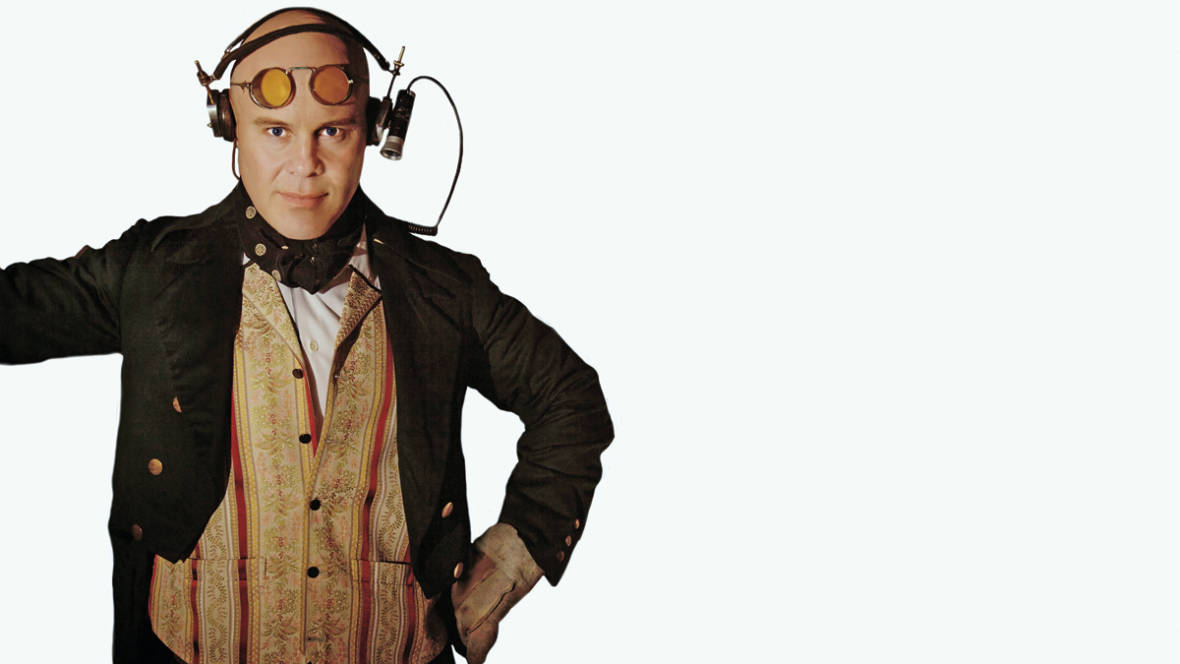
"caption": "Thomas Dolby will read and perform at the Swedish American Hall Oct.14. ",
"description": null,
"title": "dolby07-1200-80",
"credit": null,
"status": "inherit",
"isLoading": false,
"fetchFailed": false
},
"arts_12190787": {
"type": "attachments",
"id": "arts_12190787",
"meta": {
"index": "attachments_1716263798",
"site": "arts",
"id": "12190787",
"found": true
},
"parent": 12190404,
"imgSizes": {
"thumbnail": {
"file": "https://ww2.kqed.org/app/uploads/sites/2/2016/10/12118987_434235283433575_4553268895729402721_n-400x225.jpg",
"width": 400,
"mimeType": "image/jpeg",
"height": 225
},
"fd-sm": {
"file": "https://ww2.kqed.org/app/uploads/sites/2/2016/10/12118987_434235283433575_4553268895729402721_n-960x540.jpg",
"width": 960,
"mimeType": "image/jpeg",
"height": 540
},
"post-thumbnail": {
"file": "https://ww2.kqed.org/app/uploads/sites/2/2016/10/12118987_434235283433575_4553268895729402721_n-672x372.jpg",
"width": 672,
"mimeType": "image/jpeg",
"height": 372
},
"kqedFullSize": {
"file": "https://ww2.kqed.org/app/uploads/sites/2/2016/10/12118987_434235283433575_4553268895729402721_n.jpg",
"width": 960,
"height": 540
},
"guest-author-50": {
"file": "https://ww2.kqed.org/app/uploads/sites/2/2016/10/12118987_434235283433575_4553268895729402721_n-50x50.jpg",
"width": 50,
"mimeType": "image/jpeg",
"height": 50
},
"guest-author-96": {
"file": "https://ww2.kqed.org/app/uploads/sites/2/2016/10/12118987_434235283433575_4553268895729402721_n-96x96.jpg",
"width": 96,
"mimeType": "image/jpeg",
"height": 96
},
"medium": {
"file": "https://ww2.kqed.org/app/uploads/sites/2/2016/10/12118987_434235283433575_4553268895729402721_n-800x450.jpg",
"width": 800,
"mimeType": "image/jpeg",
"height": 450
},
"guest-author-64": {
"file": "https://ww2.kqed.org/app/uploads/sites/2/2016/10/12118987_434235283433575_4553268895729402721_n-64x64.jpg",
"width": 64,
"mimeType": "image/jpeg",
"height": 64
},
"detail": {
"file": "https://ww2.kqed.org/app/uploads/sites/2/2016/10/12118987_434235283433575_4553268895729402721_n-150x150.jpg",
"width": 150,
"mimeType": "image/jpeg",
"height": 150
},
"guest-author-32": {
"file": "https://ww2.kqed.org/app/uploads/sites/2/2016/10/12118987_434235283433575_4553268895729402721_n-32x32.jpg",
"width": 32,
"mimeType": "image/jpeg",
"height": 32
},
"medium_large": {
"file": "https://ww2.kqed.org/app/uploads/sites/2/2016/10/12118987_434235283433575_4553268895729402721_n-768x432.jpg",
"width": 768,
"mimeType": "image/jpeg",
"height": 432
},
"guest-author-128": {
"file": "https://ww2.kqed.org/app/uploads/sites/2/2016/10/12118987_434235283433575_4553268895729402721_n-128x128.jpg",
"width": 128,
"mimeType": "image/jpeg",
"height": 128
}
},
"publishDate": 1476217815,
"modified": 1476217879,
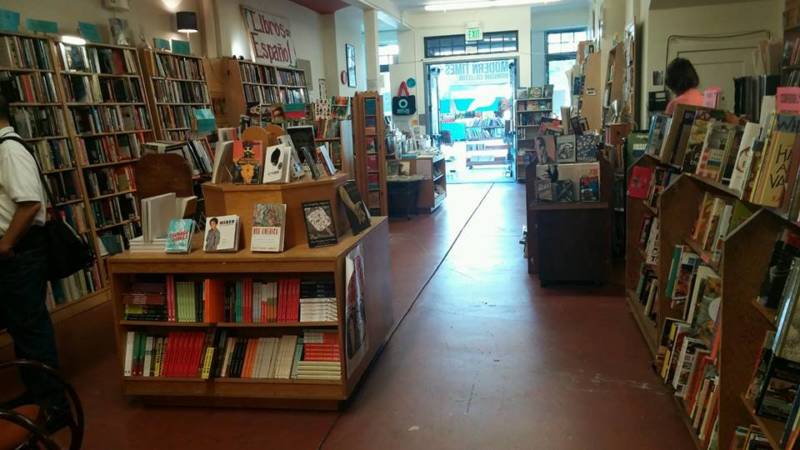
"caption": "Inside the Modern Times Bookstore on 24th Street. ",
"description": "Inside the Modern Times Bookstore on 24th Street. ",
"title": "Inside the Modern Times Bookstore on 24th Street.",
"credit": "Courtesy of the Modern Times Bookstore Collective Facebook.",
"status": "inherit",
"isLoading": false,
"fetchFailed": false
},
"forum_2010101856991": {
"type": "attachments",
"id": "forum_2010101856991",
"meta": {
"index": "attachments_1716263798",
"site": "forum",
"id": "2010101856991",
"found": true
},
"parent": 2010101856990,
"imgSizes": {
"twentyfourteen-full-width": {
"file": "https://ww2.kqed.org/app/uploads/sites/43/2016/10/boland-picture-for-web-1038x576.jpg",
"width": 1038,
"mimeType": "image/jpeg",
"height": 576
},
"thumbnail": {
"file": "https://ww2.kqed.org/app/uploads/sites/43/2016/10/boland-picture-for-web-400x225.jpg",
"width": 400,
"mimeType": "image/jpeg",
"height": 225
},
"fd-sm": {
"file": "https://ww2.kqed.org/app/uploads/sites/43/2016/10/boland-picture-for-web-960x541.jpg",
"width": 960,
"mimeType": "image/jpeg",
"height": 541
},
"post-thumbnail": {
"file": "https://ww2.kqed.org/app/uploads/sites/43/2016/10/boland-picture-for-web-672x372.jpg",
"width": 672,
"mimeType": "image/jpeg",
"height": 372
},
"kqedFullSize": {
"file": "https://ww2.kqed.org/app/uploads/sites/43/2016/10/boland-picture-for-web.jpg",
"width": 1920,
"height": 1081
},
"large": {
"file": "https://ww2.kqed.org/app/uploads/sites/43/2016/10/boland-picture-for-web-1180x664.jpg",
"width": 1180,
"mimeType": "image/jpeg",
"height": 664
},
"guest-author-50": {
"file": "https://ww2.kqed.org/app/uploads/sites/43/2016/10/boland-picture-for-web-50x50.jpg",
"width": 50,
"mimeType": "image/jpeg",
"height": 50
},
"guest-author-96": {
"file": "https://ww2.kqed.org/app/uploads/sites/43/2016/10/boland-picture-for-web-96x96.jpg",
"width": 96,
"mimeType": "image/jpeg",
"height": 96
},
"medium": {
"file": "https://ww2.kqed.org/app/uploads/sites/43/2016/10/boland-picture-for-web-800x450.jpg",
"width": 800,
"mimeType": "image/jpeg",
"height": 450
},
"guest-author-64": {
"file": "https://ww2.kqed.org/app/uploads/sites/43/2016/10/boland-picture-for-web-64x64.jpg",
"width": 64,
"mimeType": "image/jpeg",
"height": 64
},
"guest-author-32": {
"file": "https://ww2.kqed.org/app/uploads/sites/43/2016/10/boland-picture-for-web-32x32.jpg",
"width": 32,
"mimeType": "image/jpeg",
"height": 32
},
"fd-lrg": {
"file": "https://ww2.kqed.org/app/uploads/sites/43/2016/10/boland-picture-for-web-1920x1081.jpg",
"width": 1920,
"mimeType": "image/jpeg",
"height": 1081
},
"fd-med": {
"file": "https://ww2.kqed.org/app/uploads/sites/43/2016/10/boland-picture-for-web-1180x664.jpg",
"width": 1180,
"mimeType": "image/jpeg",
"height": 664
},
"detail": {
"file": "https://ww2.kqed.org/app/uploads/sites/43/2016/10/boland-picture-for-web-150x150.jpg",
"width": 150,
"mimeType": "image/jpeg",
"height": 150
},
"medium_large": {
"file": "https://ww2.kqed.org/app/uploads/sites/43/2016/10/boland-picture-for-web-768x432.jpg",
"width": 768,
"mimeType": "image/jpeg",
"height": 432
},
"guest-author-128": {
"file": "https://ww2.kqed.org/app/uploads/sites/43/2016/10/boland-picture-for-web-128x128.jpg",
"width": 128,
"mimeType": "image/jpeg",
"height": 128
}
},
"publishDate": 1476072135,
"modified": 1476072189,
"caption": null,
"description": null,
"title": "boland-picture-for-web",
"credit": "Photo: Eavan Boland",
"status": "inherit",
"isLoading": false,
"fetchFailed": false
},
"arts_12168841": {
"type": "attachments",
"id": "arts_12168841",
"meta": {
"index": "attachments_1716263798",
"site": "arts",
"id": "12168841",
"found": true
},
"parent": 12167811,
"imgSizes": {
"thumbnail": {
"file": "https://ww2.kqed.org/app/uploads/sites/2/2016/10/Beyonce.Abbi_-400x225.jpg",
"width": 400,
"mimeType": "image/jpeg",
"height": 225
},
"post-thumbnail": {
"file": "https://ww2.kqed.org/app/uploads/sites/2/2016/10/Beyonce.Abbi_-672x372.jpg",
"width": 672,
"mimeType": "image/jpeg",
"height": 372
},
"kqedFullSize": {
"file": "https://ww2.kqed.org/app/uploads/sites/2/2016/10/Beyonce.Abbi_.jpg",
"width": 800,
"height": 450
},
"guest-author-50": {
"file": "https://ww2.kqed.org/app/uploads/sites/2/2016/10/Beyonce.Abbi_-50x50.jpg",
"width": 50,
"mimeType": "image/jpeg",
"height": 50
},
"guest-author-96": {
"file": "https://ww2.kqed.org/app/uploads/sites/2/2016/10/Beyonce.Abbi_-96x96.jpg",
"width": 96,
"mimeType": "image/jpeg",
"height": 96
},
"medium": {
"file": "https://ww2.kqed.org/app/uploads/sites/2/2016/10/Beyonce.Abbi_-800x450.jpg",
"width": 800,
"mimeType": "image/jpeg",
"height": 450
},
"guest-author-64": {
"file": "https://ww2.kqed.org/app/uploads/sites/2/2016/10/Beyonce.Abbi_-64x64.jpg",
"width": 64,
"mimeType": "image/jpeg",
"height": 64
},
"detail": {
"file": "https://ww2.kqed.org/app/uploads/sites/2/2016/10/Beyonce.Abbi_-150x150.jpg",
"width": 150,
"mimeType": "image/jpeg",
"height": 150
},
"guest-author-32": {
"file": "https://ww2.kqed.org/app/uploads/sites/2/2016/10/Beyonce.Abbi_-32x32.jpg",
"width": 32,
"mimeType": "image/jpeg",
"height": 32
},
"medium_large": {
"file": "https://ww2.kqed.org/app/uploads/sites/2/2016/10/Beyonce.Abbi_-768x432.jpg",
"width": 768,
"mimeType": "image/jpeg",
"height": 432
},
"guest-author-128": {
"file": "https://ww2.kqed.org/app/uploads/sites/2/2016/10/Beyonce.Abbi_-128x128.jpg",
"width": 128,
"mimeType": "image/jpeg",
"height": 128
}
},
"publishDate": 1475794903,
"modified": 1475794955,
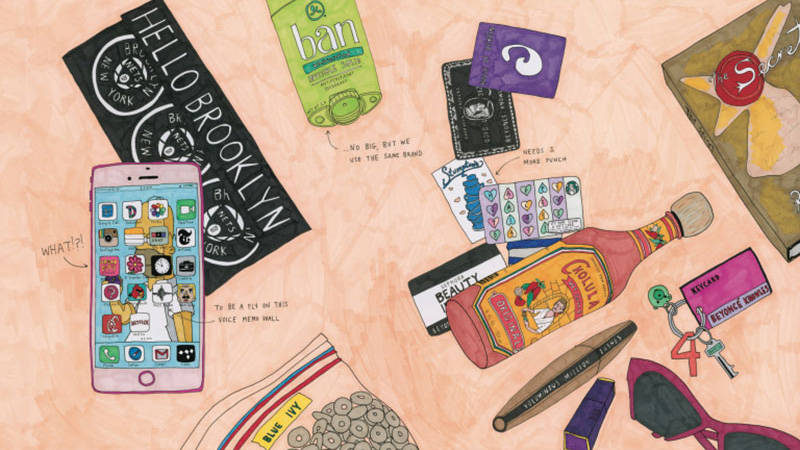
"caption": "What's in Beyoncé's purse? A new book by Abbi Jacobsen from 'Broad City' ponders the mystery.",
"description": "What's in Beyoncé's purse? A new book by Abbi Jacobsen from 'Broad City' ponders the mystery.",
"title": "Beyonce.Abbi",
"credit": "Illustration: Abbi Jacobsen",
"status": "inherit",
"isLoading": false,
"fetchFailed": false
},
"arts_12168843": {
"type": "attachments",
"id": "arts_12168843",
"meta": {
"index": "attachments_1716263798",
"site": "arts",
"id": "12168843",
"found": true
},
"parent": 12164405,
"imgSizes": {
"twentyfourteen-full-width": {
"file": "https://ww2.kqed.org/app/uploads/sites/2/2016/10/Wayne.Prison.MAIN_-1038x576.jpg",
"width": 1038,
"mimeType": "image/jpeg",
"height": 576
},
"thumbnail": {
"file": "https://ww2.kqed.org/app/uploads/sites/2/2016/10/Wayne.Prison.MAIN_-400x225.jpg",
"width": 400,
"mimeType": "image/jpeg",
"height": 225
},
"fd-sm": {
"file": "https://ww2.kqed.org/app/uploads/sites/2/2016/10/Wayne.Prison.MAIN_-960x540.jpg",
"width": 960,
"mimeType": "image/jpeg",
"height": 540
},
"post-thumbnail": {
"file": "https://ww2.kqed.org/app/uploads/sites/2/2016/10/Wayne.Prison.MAIN_-672x372.jpg",
"width": 672,
"mimeType": "image/jpeg",
"height": 372
},
"kqedFullSize": {
"file": "https://ww2.kqed.org/app/uploads/sites/2/2016/10/Wayne.Prison.MAIN_.jpg",
"width": 1920,
"height": 1080
},
"large": {
"file": "https://ww2.kqed.org/app/uploads/sites/2/2016/10/Wayne.Prison.MAIN_-1180x664.jpg",
"width": 1180,
"mimeType": "image/jpeg",
"height": 664
},
"guest-author-50": {
"file": "https://ww2.kqed.org/app/uploads/sites/2/2016/10/Wayne.Prison.MAIN_-50x50.jpg",
"width": 50,
"mimeType": "image/jpeg",
"height": 50
},
"guest-author-96": {
"file": "https://ww2.kqed.org/app/uploads/sites/2/2016/10/Wayne.Prison.MAIN_-96x96.jpg",
"width": 96,
"mimeType": "image/jpeg",
"height": 96
},
"medium": {
"file": "https://ww2.kqed.org/app/uploads/sites/2/2016/10/Wayne.Prison.MAIN_-800x450.jpg",
"width": 800,
"mimeType": "image/jpeg",
"height": 450
},
"guest-author-64": {
"file": "https://ww2.kqed.org/app/uploads/sites/2/2016/10/Wayne.Prison.MAIN_-64x64.jpg",
"width": 64,
"mimeType": "image/jpeg",
"height": 64
},
"guest-author-32": {
"file": "https://ww2.kqed.org/app/uploads/sites/2/2016/10/Wayne.Prison.MAIN_-32x32.jpg",
"width": 32,
"mimeType": "image/jpeg",
"height": 32
},
"fd-lrg": {
"file": "https://ww2.kqed.org/app/uploads/sites/2/2016/10/Wayne.Prison.MAIN_-1920x1080.jpg",
"width": 1920,
"mimeType": "image/jpeg",
"height": 1080
},
"fd-med": {
"file": "https://ww2.kqed.org/app/uploads/sites/2/2016/10/Wayne.Prison.MAIN_-1180x664.jpg",
"width": 1180,
"mimeType": "image/jpeg",
"height": 664
},
"detail": {
"file": "https://ww2.kqed.org/app/uploads/sites/2/2016/10/Wayne.Prison.MAIN_-150x150.jpg",
"width": 150,
"mimeType": "image/jpeg",
"height": 150
},
"medium_large": {
"file": "https://ww2.kqed.org/app/uploads/sites/2/2016/10/Wayne.Prison.MAIN_-768x432.jpg",
"width": 768,
"mimeType": "image/jpeg",
"height": 432
},
"guest-author-128": {
"file": "https://ww2.kqed.org/app/uploads/sites/2/2016/10/Wayne.Prison.MAIN_-128x128.jpg",
"width": 128,
"mimeType": "image/jpeg",
"height": 128
}
},
"publishDate": 1475795228,
"modified": 1475795267,
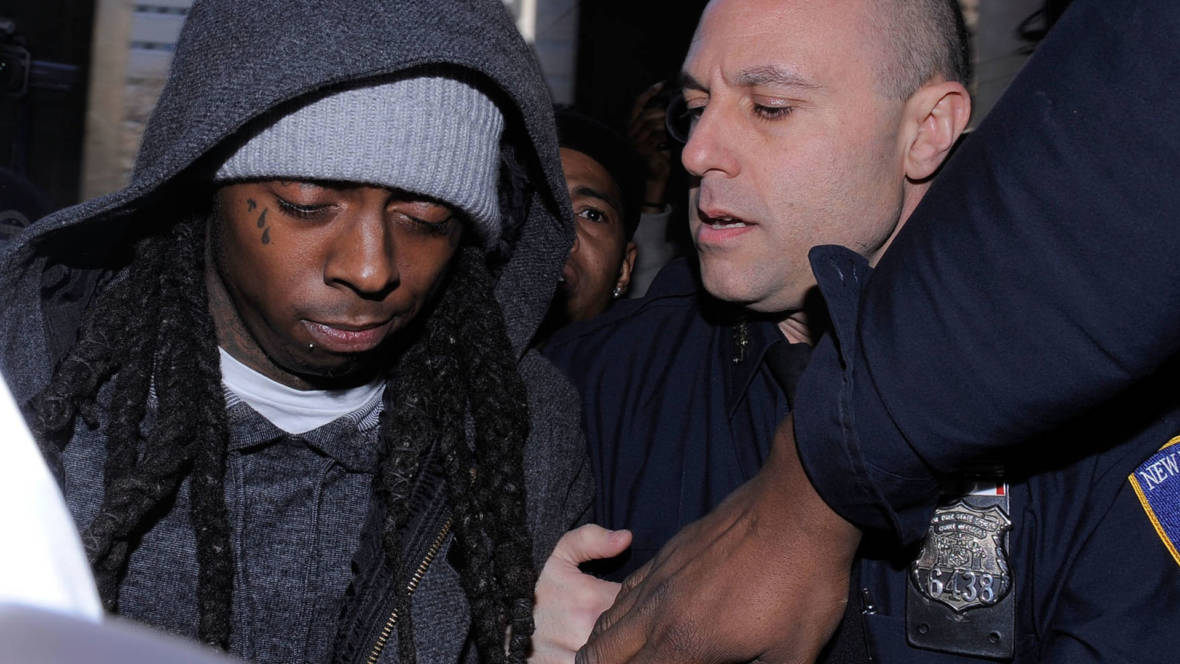
"caption": "Lil Wayne arrives at New York State Supreme Court to begin serving a 1 year prison sentence for possession of an illegal weapon on March 8, 2010, in New York City. ",
"description": "Lil Wayne arrives at New York State Supreme Court to begin serving a 1 year prison sentence for possession of an illegal weapon on March 8, 2010, in New York City. ",
"title": "Wayne.Prison.MAIN",
"credit": "Jemal Countess/Getty Images",
"status": "inherit",
"isLoading": false,
"fetchFailed": false
},
"arts_12168409": {
"type": "attachments",
"id": "arts_12168409",
"meta": {
"index": "attachments_1716263798",
"site": "arts",
"id": "12168409",
"found": true
},
"parent": 12168408,
"imgSizes": {
"twentyfourteen-full-width": {
"file": "https://ww2.kqed.org/app/uploads/sites/2/2016/10/gettyimages-570481205_wide-7e09ae33efda722229d441964ace6d37e4078158-1038x576.jpg",
"width": 1038,
"mimeType": "image/jpeg",
"height": 576
},
"thumbnail": {
"file": "https://ww2.kqed.org/app/uploads/sites/2/2016/10/gettyimages-570481205_wide-7e09ae33efda722229d441964ace6d37e4078158-400x225.jpg",
"width": 400,
"mimeType": "image/jpeg",
"height": 225
},
"fd-sm": {
"file": "https://ww2.kqed.org/app/uploads/sites/2/2016/10/gettyimages-570481205_wide-7e09ae33efda722229d441964ace6d37e4078158-960x540.jpg",
"width": 960,
"mimeType": "image/jpeg",
"height": 540
},
"post-thumbnail": {
"file": "https://ww2.kqed.org/app/uploads/sites/2/2016/10/gettyimages-570481205_wide-7e09ae33efda722229d441964ace6d37e4078158-672x372.jpg",
"width": 672,
"mimeType": "image/jpeg",
"height": 372
},
"kqedFullSize": {
"file": "https://ww2.kqed.org/app/uploads/sites/2/2016/10/gettyimages-570481205_wide-7e09ae33efda722229d441964ace6d37e4078158.jpg",
"width": 3259,
"height": 1833
},
"large": {
"file": "https://ww2.kqed.org/app/uploads/sites/2/2016/10/gettyimages-570481205_wide-7e09ae33efda722229d441964ace6d37e4078158-1180x664.jpg",
"width": 1180,
"mimeType": "image/jpeg",
"height": 664
},
"guest-author-50": {
"file": "https://ww2.kqed.org/app/uploads/sites/2/2016/10/gettyimages-570481205_wide-7e09ae33efda722229d441964ace6d37e4078158-50x50.jpg",
"width": 50,
"mimeType": "image/jpeg",
"height": 50
},
"guest-author-96": {
"file": "https://ww2.kqed.org/app/uploads/sites/2/2016/10/gettyimages-570481205_wide-7e09ae33efda722229d441964ace6d37e4078158-96x96.jpg",
"width": 96,
"mimeType": "image/jpeg",
"height": 96
},
"medium": {
"file": "https://ww2.kqed.org/app/uploads/sites/2/2016/10/gettyimages-570481205_wide-7e09ae33efda722229d441964ace6d37e4078158-800x450.jpg",
"width": 800,
"mimeType": "image/jpeg",
"height": 450
},
"guest-author-64": {
"file": "https://ww2.kqed.org/app/uploads/sites/2/2016/10/gettyimages-570481205_wide-7e09ae33efda722229d441964ace6d37e4078158-64x64.jpg",
"width": 64,
"mimeType": "image/jpeg",
"height": 64
},
"guest-author-32": {
"file": "https://ww2.kqed.org/app/uploads/sites/2/2016/10/gettyimages-570481205_wide-7e09ae33efda722229d441964ace6d37e4078158-32x32.jpg",
"width": 32,
"mimeType": "image/jpeg",
"height": 32
},
"fd-lrg": {
"file": "https://ww2.kqed.org/app/uploads/sites/2/2016/10/gettyimages-570481205_wide-7e09ae33efda722229d441964ace6d37e4078158-1920x1080.jpg",
"width": 1920,
"mimeType": "image/jpeg",
"height": 1080
},
"fd-med": {
"file": "https://ww2.kqed.org/app/uploads/sites/2/2016/10/gettyimages-570481205_wide-7e09ae33efda722229d441964ace6d37e4078158-1180x664.jpg",
"width": 1180,
"mimeType": "image/jpeg",
"height": 664
},
"detail": {
"file": "https://ww2.kqed.org/app/uploads/sites/2/2016/10/gettyimages-570481205_wide-7e09ae33efda722229d441964ace6d37e4078158-150x150.jpg",
"width": 150,
"mimeType": "image/jpeg",
"height": 150
},
"medium_large": {
"file": "https://ww2.kqed.org/app/uploads/sites/2/2016/10/gettyimages-570481205_wide-7e09ae33efda722229d441964ace6d37e4078158-768x432.jpg",
"width": 768,
"mimeType": "image/jpeg",
"height": 432
},
"guest-author-128": {
"file": "https://ww2.kqed.org/app/uploads/sites/2/2016/10/gettyimages-570481205_wide-7e09ae33efda722229d441964ace6d37e4078158-128x128.jpg",
"width": 128,
"mimeType": "image/jpeg",
"height": 128
}
},
"publishDate": 1475787666,
"modified": 1523662999,
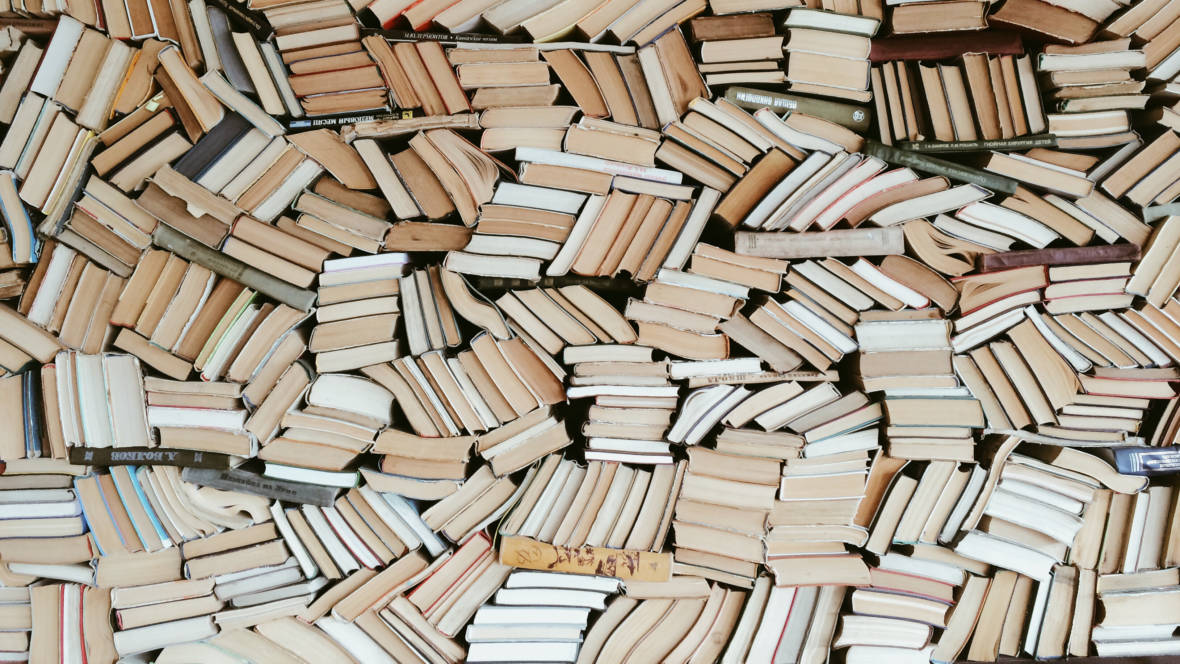
"caption": "Books!",
"description": "Books!",
"title": "Books!",
"credit": null,
"status": "inherit",
"isLoading": false,
"fetchFailed": false
},
"arts_12164408": {
"type": "attachments",
"id": "arts_12164408",
"meta": {
"index": "attachments_1716263798",
"site": "arts",
"id": "12164408",
"found": true
},
"parent": 12163814,
"imgSizes": {
"thumbnail": {
"file": "https://ww2.kqed.org/app/uploads/sites/2/2016/10/BritBennett-400x225.jpg",
"width": 400,
"mimeType": "image/jpeg",
"height": 225
},
"post-thumbnail": {
"file": "https://ww2.kqed.org/app/uploads/sites/2/2016/10/BritBennett-672x372.jpg",
"width": 672,
"mimeType": "image/jpeg",
"height": 372
},
"kqedFullSize": {
"file": "https://ww2.kqed.org/app/uploads/sites/2/2016/10/BritBennett.jpg",
"width": 800,
"height": 450
},
"guest-author-50": {
"file": "https://ww2.kqed.org/app/uploads/sites/2/2016/10/BritBennett-50x50.jpg",
"width": 50,
"mimeType": "image/jpeg",
"height": 50
},
"guest-author-96": {
"file": "https://ww2.kqed.org/app/uploads/sites/2/2016/10/BritBennett-96x96.jpg",
"width": 96,
"mimeType": "image/jpeg",
"height": 96
},
"medium": {
"file": "https://ww2.kqed.org/app/uploads/sites/2/2016/10/BritBennett-800x450.jpg",
"width": 800,
"mimeType": "image/jpeg",
"height": 450
},
"guest-author-64": {
"file": "https://ww2.kqed.org/app/uploads/sites/2/2016/10/BritBennett-64x64.jpg",
"width": 64,
"mimeType": "image/jpeg",
"height": 64
},
"detail": {
"file": "https://ww2.kqed.org/app/uploads/sites/2/2016/10/BritBennett-150x150.jpg",
"width": 150,
"mimeType": "image/jpeg",
"height": 150
},
"guest-author-32": {
"file": "https://ww2.kqed.org/app/uploads/sites/2/2016/10/BritBennett-32x32.jpg",
"width": 32,
"mimeType": "image/jpeg",
"height": 32
},
"medium_large": {
"file": "https://ww2.kqed.org/app/uploads/sites/2/2016/10/BritBennett-768x432.jpg",
"width": 768,
"mimeType": "image/jpeg",
"height": 432
},
"guest-author-128": {
"file": "https://ww2.kqed.org/app/uploads/sites/2/2016/10/BritBennett-128x128.jpg",
"width": 128,
"mimeType": "image/jpeg",
"height": 128
}
},
"publishDate": 1475711015,
"modified": 1475711190,
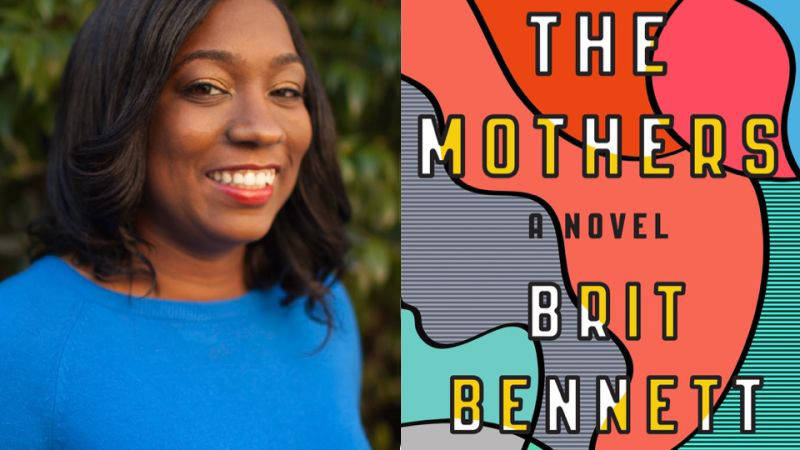
"caption": "Brit Bennett, who earned her bachelor's in English at Stanford, will see publication of her debut novel 'The Mothers' on Oct. 11.",
"description": "Brit Bennett, who earned her bachelor's in English at Stanford, will see publication of her debut novel 'The Mothers' on Oct. 11.",
"title": "BritBennett",
"credit": "Photo: Emma Trim/Riverhead Books",
"status": "inherit",
"isLoading": false,
"fetchFailed": false
},
"arts_12159555": {
"type": "attachments",
"id": "arts_12159555",
"meta": {
"index": "attachments_1716263798",
"site": "arts",
"id": "12159555",
"found": true
},
"parent": 12159358,
"imgSizes": {
"twentyfourteen-full-width": {
"file": "https://ww2.kqed.org/app/uploads/sites/2/2016/10/Gloria_Naylor_by_David_Shankbone-1038x576.jpg",
"width": 1038,
"mimeType": "image/jpeg",
"height": 576
},
"thumbnail": {
"file": "https://ww2.kqed.org/app/uploads/sites/2/2016/10/Gloria_Naylor_by_David_Shankbone-400x225.jpg",
"width": 400,
"mimeType": "image/jpeg",
"height": 225
},
"fd-sm": {
"file": "https://ww2.kqed.org/app/uploads/sites/2/2016/10/Gloria_Naylor_by_David_Shankbone-960x540.jpg",
"width": 960,
"mimeType": "image/jpeg",
"height": 540
},
"post-thumbnail": {
"file": "https://ww2.kqed.org/app/uploads/sites/2/2016/10/Gloria_Naylor_by_David_Shankbone-672x372.jpg",
"width": 672,
"mimeType": "image/jpeg",
"height": 372
},
"kqedFullSize": {
"file": "https://ww2.kqed.org/app/uploads/sites/2/2016/10/Gloria_Naylor_by_David_Shankbone.jpg",
"width": 1920,
"height": 1080
},
"large": {
"file": "https://ww2.kqed.org/app/uploads/sites/2/2016/10/Gloria_Naylor_by_David_Shankbone-1180x664.jpg",
"width": 1180,
"mimeType": "image/jpeg",
"height": 664
},
"guest-author-50": {
"file": "https://ww2.kqed.org/app/uploads/sites/2/2016/10/Gloria_Naylor_by_David_Shankbone-50x50.jpg",
"width": 50,
"mimeType": "image/jpeg",
"height": 50
},
"guest-author-96": {
"file": "https://ww2.kqed.org/app/uploads/sites/2/2016/10/Gloria_Naylor_by_David_Shankbone-96x96.jpg",
"width": 96,
"mimeType": "image/jpeg",
"height": 96
},
"medium": {
"file": "https://ww2.kqed.org/app/uploads/sites/2/2016/10/Gloria_Naylor_by_David_Shankbone-800x450.jpg",
"width": 800,
"mimeType": "image/jpeg",
"height": 450
},
"guest-author-64": {
"file": "https://ww2.kqed.org/app/uploads/sites/2/2016/10/Gloria_Naylor_by_David_Shankbone-64x64.jpg",
"width": 64,
"mimeType": "image/jpeg",
"height": 64
},
"guest-author-32": {
"file": "https://ww2.kqed.org/app/uploads/sites/2/2016/10/Gloria_Naylor_by_David_Shankbone-32x32.jpg",
"width": 32,
"mimeType": "image/jpeg",
"height": 32
},
"fd-lrg": {
"file": "https://ww2.kqed.org/app/uploads/sites/2/2016/10/Gloria_Naylor_by_David_Shankbone-1920x1080.jpg",
"width": 1920,
"mimeType": "image/jpeg",
"height": 1080
},
"fd-med": {
"file": "https://ww2.kqed.org/app/uploads/sites/2/2016/10/Gloria_Naylor_by_David_Shankbone-1180x664.jpg",
"width": 1180,
"mimeType": "image/jpeg",
"height": 664
},
"detail": {
"file": "https://ww2.kqed.org/app/uploads/sites/2/2016/10/Gloria_Naylor_by_David_Shankbone-150x150.jpg",
"width": 150,
"mimeType": "image/jpeg",
"height": 150
},
"medium_large": {
"file": "https://ww2.kqed.org/app/uploads/sites/2/2016/10/Gloria_Naylor_by_David_Shankbone-768x432.jpg",
"width": 768,
"mimeType": "image/jpeg",
"height": 432
},
"guest-author-128": {
"file": "https://ww2.kqed.org/app/uploads/sites/2/2016/10/Gloria_Naylor_by_David_Shankbone-128x128.jpg",
"width": 128,
"mimeType": "image/jpeg",
"height": 128
}
},
"publishDate": 1475623266,
"modified": 1475623302,
"caption": null,
"description": "Gloria Naylor",
"title": "Gloria_Naylor_by_David_Shankbone",
"credit": "Photo: David Shankbone",
"status": "inherit",
"isLoading": false,
"fetchFailed": false
},
"arts_12154447": {
"type": "attachments",
"id": "arts_12154447",
"meta": {
"index": "attachments_1716263798",
"site": "arts",
"id": "12154447",
"found": true
},
"parent": 12146945,
"imgSizes": {
"twentyfourteen-full-width": {
"file": "https://ww2.kqed.org/app/uploads/sites/2/2016/10/JeffChang.CRED_.JeremyKeithV-1038x576.jpg",
"width": 1038,
"mimeType": "image/jpeg",
"height": 576
},
"thumbnail": {
"file": "https://ww2.kqed.org/app/uploads/sites/2/2016/10/JeffChang.CRED_.JeremyKeithV-400x225.jpg",
"width": 400,
"mimeType": "image/jpeg",
"height": 225
},
"fd-sm": {
"file": "https://ww2.kqed.org/app/uploads/sites/2/2016/10/JeffChang.CRED_.JeremyKeithV-960x540.jpg",
"width": 960,
"mimeType": "image/jpeg",
"height": 540
},
"post-thumbnail": {
"file": "https://ww2.kqed.org/app/uploads/sites/2/2016/10/JeffChang.CRED_.JeremyKeithV-672x372.jpg",
"width": 672,
"mimeType": "image/jpeg",
"height": 372
},
"kqedFullSize": {
"file": "https://ww2.kqed.org/app/uploads/sites/2/2016/10/JeffChang.CRED_.JeremyKeithV.jpg",
"width": 1920,
"height": 1080
},
"large": {
"file": "https://ww2.kqed.org/app/uploads/sites/2/2016/10/JeffChang.CRED_.JeremyKeithV-1180x664.jpg",
"width": 1180,
"mimeType": "image/jpeg",
"height": 664
},
"guest-author-50": {
"file": "https://ww2.kqed.org/app/uploads/sites/2/2016/10/JeffChang.CRED_.JeremyKeithV-50x50.jpg",
"width": 50,
"mimeType": "image/jpeg",
"height": 50
},
"guest-author-96": {
"file": "https://ww2.kqed.org/app/uploads/sites/2/2016/10/JeffChang.CRED_.JeremyKeithV-96x96.jpg",
"width": 96,
"mimeType": "image/jpeg",
"height": 96
},
"medium": {
"file": "https://ww2.kqed.org/app/uploads/sites/2/2016/10/JeffChang.CRED_.JeremyKeithV-800x450.jpg",
"width": 800,
"mimeType": "image/jpeg",
"height": 450
},
"guest-author-64": {
"file": "https://ww2.kqed.org/app/uploads/sites/2/2016/10/JeffChang.CRED_.JeremyKeithV-64x64.jpg",
"width": 64,
"mimeType": "image/jpeg",
"height": 64
},
"guest-author-32": {
"file": "https://ww2.kqed.org/app/uploads/sites/2/2016/10/JeffChang.CRED_.JeremyKeithV-32x32.jpg",
"width": 32,
"mimeType": "image/jpeg",
"height": 32
},
"fd-lrg": {
"file": "https://ww2.kqed.org/app/uploads/sites/2/2016/10/JeffChang.CRED_.JeremyKeithV-1920x1080.jpg",
"width": 1920,
"mimeType": "image/jpeg",
"height": 1080
},
"fd-med": {
"file": "https://ww2.kqed.org/app/uploads/sites/2/2016/10/JeffChang.CRED_.JeremyKeithV-1180x664.jpg",
"width": 1180,
"mimeType": "image/jpeg",
"height": 664
},
"detail": {
"file": "https://ww2.kqed.org/app/uploads/sites/2/2016/10/JeffChang.CRED_.JeremyKeithV-150x150.jpg",
"width": 150,
"mimeType": "image/jpeg",
"height": 150
},
"medium_large": {
"file": "https://ww2.kqed.org/app/uploads/sites/2/2016/10/JeffChang.CRED_.JeremyKeithV-768x432.jpg",
"width": 768,
"mimeType": "image/jpeg",
"height": 432
},
"guest-author-128": {
"file": "https://ww2.kqed.org/app/uploads/sites/2/2016/10/JeffChang.CRED_.JeremyKeithV-128x128.jpg",
"width": 128,
"mimeType": "image/jpeg",
"height": 128
}
},
"publishDate": 1475526118,
"modified": 1475526590,
"caption": "Jeff Chang's new essays cover the Ferguson protests, diversity-by-Photoshop and more in 'We Gon' Be Alright'",
"description": "Jeff Chang's new essays cover the Ferguson protests, diversity-by-Photoshop and more in 'We Gon' Be Alright'",
"title": "JeffChang.CRED.JeremyKeithV",
"credit": "Photo: Jeremy Keith Villaluz",
"status": "inherit",
"isLoading": false,
"fetchFailed": false
},
"pop_40034": {
"type": "attachments",
"id": "pop_40034",
"meta": {
"index": "attachments_1716263798",
"site": "pop",
"id": "40034",
"found": true
},
"parent": 40033,
"imgSizes": {
"twentyfourteen-full-width": {
"file": "https://ww2.kqed.org/app/uploads/sites/12/2016/10/gettyimages-520452194_custom-075791ae7ef675ce0e9d90958f0c7068398a7962-1038x576.jpg",
"width": 1038,
"mimeType": "image/jpeg",
"height": 576
},
"thumbnail": {
"file": "https://ww2.kqed.org/app/uploads/sites/12/2016/10/gettyimages-520452194_custom-075791ae7ef675ce0e9d90958f0c7068398a7962-400x180.jpg",
"width": 400,
"mimeType": "image/jpeg",
"height": 180
},
"fd-sm": {
"file": "https://ww2.kqed.org/app/uploads/sites/12/2016/10/gettyimages-520452194_custom-075791ae7ef675ce0e9d90958f0c7068398a7962-960x432.jpg",
"width": 960,
"mimeType": "image/jpeg",
"height": 432
},
"post-thumbnail": {
"file": "https://ww2.kqed.org/app/uploads/sites/12/2016/10/gettyimages-520452194_custom-075791ae7ef675ce0e9d90958f0c7068398a7962-672x372.jpg",
"width": 672,
"mimeType": "image/jpeg",
"height": 372
},
"kqedFullSize": {
"file": "https://ww2.kqed.org/app/uploads/sites/12/2016/10/gettyimages-520452194_custom-075791ae7ef675ce0e9d90958f0c7068398a7962.jpg",
"width": 4823,
"height": 2172
},
"large": {
"file": "https://ww2.kqed.org/app/uploads/sites/12/2016/10/gettyimages-520452194_custom-075791ae7ef675ce0e9d90958f0c7068398a7962-1440x648.jpg",
"width": 1440,
"mimeType": "image/jpeg",
"height": 648
},
"guest-author-50": {
"file": "https://ww2.kqed.org/app/uploads/sites/12/2016/10/gettyimages-520452194_custom-075791ae7ef675ce0e9d90958f0c7068398a7962-50x50.jpg",
"width": 50,
"mimeType": "image/jpeg",
"height": 50
},
"guest-author-96": {
"file": "https://ww2.kqed.org/app/uploads/sites/12/2016/10/gettyimages-520452194_custom-075791ae7ef675ce0e9d90958f0c7068398a7962-96x96.jpg",
"width": 96,
"mimeType": "image/jpeg",
"height": 96
},
"medium": {
"file": "https://ww2.kqed.org/app/uploads/sites/12/2016/10/gettyimages-520452194_custom-075791ae7ef675ce0e9d90958f0c7068398a7962-800x360.jpg",
"width": 800,
"mimeType": "image/jpeg",
"height": 360
},
"guest-author-64": {
"file": "https://ww2.kqed.org/app/uploads/sites/12/2016/10/gettyimages-520452194_custom-075791ae7ef675ce0e9d90958f0c7068398a7962-64x64.jpg",
"width": 64,
"mimeType": "image/jpeg",
"height": 64
},
"guest-author-32": {
"file": "https://ww2.kqed.org/app/uploads/sites/12/2016/10/gettyimages-520452194_custom-075791ae7ef675ce0e9d90958f0c7068398a7962-32x32.jpg",
"width": 32,
"mimeType": "image/jpeg",
"height": 32
},
"fd-lrg": {
"file": "https://ww2.kqed.org/app/uploads/sites/12/2016/10/gettyimages-520452194_custom-075791ae7ef675ce0e9d90958f0c7068398a7962-1920x865.jpg",
"width": 1920,
"mimeType": "image/jpeg",
"height": 865
},
"fd-med": {
"file": "https://ww2.kqed.org/app/uploads/sites/12/2016/10/gettyimages-520452194_custom-075791ae7ef675ce0e9d90958f0c7068398a7962-1180x531.jpg",
"width": 1180,
"mimeType": "image/jpeg",
"height": 531
},
"detail": {
"file": "https://ww2.kqed.org/app/uploads/sites/12/2016/10/gettyimages-520452194_custom-075791ae7ef675ce0e9d90958f0c7068398a7962-150x150.jpg",
"width": 150,
"mimeType": "image/jpeg",
"height": 150
},
"medium_large": {
"file": "https://ww2.kqed.org/app/uploads/sites/12/2016/10/gettyimages-520452194_custom-075791ae7ef675ce0e9d90958f0c7068398a7962-768x346.jpg",
"width": 768,
"mimeType": "image/jpeg",
"height": 346
},
"guest-author-128": {
"file": "https://ww2.kqed.org/app/uploads/sites/12/2016/10/gettyimages-520452194_custom-075791ae7ef675ce0e9d90958f0c7068398a7962-128x128.jpg",
"width": 128,
"mimeType": "image/jpeg",
"height": 128
}
},
"publishDate": 1475531751,
"modified": 1475543902,
"caption": "Elena Ferrante books are photographed at the Harvard Book Store in Cambridge, Mass., on April 8, 2016. ",
"description": "Elena Ferrante books are photographed at the Harvard Book Store in Cambridge, Mass., on April 8, 2016.",
"title": "Elena Ferrante books are photographed at the Harvard Book Store in Cambridge, Mass., on April 8, 2016.",
"credit": "Jonathan Wiggs/Boston Globe via Getty Images",
"status": "inherit",
"isLoading": false,
"fetchFailed": false
},
"about_7615": {
"type": "attachments",
"id": "about_7615",
"meta": {
"index": "attachments_1716263798",
"site": "about",
"id": "7615",
"found": true
},
"parent": 7531,
"imgSizes": {
"jmtc-small-thumb": {
"file": "https://ww2.kqed.org/app/uploads/sites/19/2016/10/david-sedaris-800x450-280x150.jpg",
"width": 280,
"mimeType": "image/jpeg",
"height": 150
},
"thumbnail": {
"file": "https://ww2.kqed.org/app/uploads/sites/19/2016/10/david-sedaris-800x450-400x225.jpg",
"width": 400,
"mimeType": "image/jpeg",
"height": 225
},
"post-thumbnail": {
"file": "https://ww2.kqed.org/app/uploads/sites/19/2016/10/david-sedaris-800x450-672x372.jpg",
"width": 672,
"mimeType": "image/jpeg",
"height": 372
},
"kqedFullSize": {
"file": "https://ww2.kqed.org/app/uploads/sites/19/2016/10/david-sedaris-800x450.jpg",
"width": 800,
"height": 450
},
"guest-author-50": {
"file": "https://ww2.kqed.org/app/uploads/sites/19/2016/10/david-sedaris-800x450-50x50.jpg",
"width": 50,
"mimeType": "image/jpeg",
"height": 50
},
"guest-author-96": {
"file": "https://ww2.kqed.org/app/uploads/sites/19/2016/10/david-sedaris-800x450-96x96.jpg",
"width": 96,
"mimeType": "image/jpeg",
"height": 96
},
"medium": {
"file": "https://ww2.kqed.org/app/uploads/sites/19/2016/10/david-sedaris-800x450-800x450.jpg",
"width": 800,
"mimeType": "image/jpeg",
"height": 450
},
"guest-author-64": {
"file": "https://ww2.kqed.org/app/uploads/sites/19/2016/10/david-sedaris-800x450-64x64.jpg",
"width": 64,
"mimeType": "image/jpeg",
"height": 64
},
"detail": {
"file": "https://ww2.kqed.org/app/uploads/sites/19/2016/10/david-sedaris-800x450-150x150.jpg",
"width": 150,
"mimeType": "image/jpeg",
"height": 150
},
"guest-author-32": {
"file": "https://ww2.kqed.org/app/uploads/sites/19/2016/10/david-sedaris-800x450-32x32.jpg",
"width": 32,
"mimeType": "image/jpeg",
"height": 32
},
"medium_large": {
"file": "https://ww2.kqed.org/app/uploads/sites/19/2016/10/david-sedaris-800x450-768x432.jpg",
"width": 768,
"mimeType": "image/jpeg",
"height": 432
},
"guest-author-128": {
"file": "https://ww2.kqed.org/app/uploads/sites/19/2016/10/david-sedaris-800x450-128x128.jpg",
"width": 128,
"mimeType": "image/jpeg",
"height": 128
}
},
"publishDate": 1475692915,
"modified": 1475692933,
"caption": "An Afternoon with David Sedaris Presented by CCA",
"description": "An Afternoon with David Sedaris Presented by CCA",
"title": "david-sedaris-800x450",
"credit": null,
"status": "inherit",
"isLoading": false,
"fetchFailed": false
},
"arts_12149266": {
"type": "attachments",
"id": "arts_12149266",
"meta": {
"index": "attachments_1716263798",
"site": "arts",
"id": "12149266",
"found": true
},
"parent": 12149263,
"imgSizes": {
"twentyfourteen-full-width": {
"file": "https://ww2.kqed.org/app/uploads/sites/2/2016/10/3YA.Main_-1038x576.jpg",
"width": 1038,
"mimeType": "image/jpeg",
"height": 576
},
"thumbnail": {
"file": "https://ww2.kqed.org/app/uploads/sites/2/2016/10/3YA.Main_-400x225.jpg",
"width": 400,
"mimeType": "image/jpeg",
"height": 225
},
"fd-sm": {
"file": "https://ww2.kqed.org/app/uploads/sites/2/2016/10/3YA.Main_-960x540.jpg",
"width": 960,
"mimeType": "image/jpeg",
"height": 540
},
"post-thumbnail": {
"file": "https://ww2.kqed.org/app/uploads/sites/2/2016/10/3YA.Main_-672x372.jpg",
"width": 672,
"mimeType": "image/jpeg",
"height": 372
},
"kqedFullSize": {
"file": "https://ww2.kqed.org/app/uploads/sites/2/2016/10/3YA.Main_.jpg",
"width": 1182,
"height": 665
},
"large": {
"file": "https://ww2.kqed.org/app/uploads/sites/2/2016/10/3YA.Main_-1180x664.jpg",
"width": 1180,
"mimeType": "image/jpeg",
"height": 664
},
"guest-author-50": {
"file": "https://ww2.kqed.org/app/uploads/sites/2/2016/10/3YA.Main_-50x50.jpg",
"width": 50,
"mimeType": "image/jpeg",
"height": 50
},
"guest-author-96": {
"file": "https://ww2.kqed.org/app/uploads/sites/2/2016/10/3YA.Main_-96x96.jpg",
"width": 96,
"mimeType": "image/jpeg",
"height": 96
},
"medium": {
"file": "https://ww2.kqed.org/app/uploads/sites/2/2016/10/3YA.Main_-800x450.jpg",
"width": 800,
"mimeType": "image/jpeg",
"height": 450
},
"guest-author-64": {
"file": "https://ww2.kqed.org/app/uploads/sites/2/2016/10/3YA.Main_-64x64.jpg",
"width": 64,
"mimeType": "image/jpeg",
"height": 64
},
"guest-author-32": {
"file": "https://ww2.kqed.org/app/uploads/sites/2/2016/10/3YA.Main_-32x32.jpg",
"width": 32,
"mimeType": "image/jpeg",
"height": 32
},
"fd-med": {
"file": "https://ww2.kqed.org/app/uploads/sites/2/2016/10/3YA.Main_-1180x664.jpg",
"width": 1180,
"mimeType": "image/jpeg",
"height": 664
},
"detail": {
"file": "https://ww2.kqed.org/app/uploads/sites/2/2016/10/3YA.Main_-150x150.jpg",
"width": 150,
"mimeType": "image/jpeg",
"height": 150
},
"medium_large": {
"file": "https://ww2.kqed.org/app/uploads/sites/2/2016/10/3YA.Main_-768x432.jpg",
"width": 768,
"mimeType": "image/jpeg",
"height": 432
},
"guest-author-128": {
"file": "https://ww2.kqed.org/app/uploads/sites/2/2016/10/3YA.Main_-128x128.jpg",
"width": 128,
"mimeType": "image/jpeg",
"height": 128
}
},
"publishDate": 1475432126,
"modified": 1475432126,
"caption": null,
"description": null,
"title": "3YA.Main",
"credit": null,
"status": "inherit",
"isLoading": false,
"fetchFailed": false
}
},
"audioPlayerReducer": {
"postId": "stream_live",
"isPaused": true,
"isPlaying": false,
"pfsActive": false,
"pledgeModalIsOpen": true,
"playerDrawerIsOpen": false,
"liveAudioPlayStartedAt": 0,
"liveAudioPlayContext": ""
},
"authorsReducer": {
"byline_arts_12168408": {
"type": "authors",
"id": "byline_arts_12168408",
"meta": {
"override": true
},
"slug": "byline_arts_12168408",
"name": "Colin Dwyer",
"isLoading": false
},
"byline_arts_12159358": {
"type": "authors",
"id": "byline_arts_12159358",
"meta": {
"override": true
},
"slug": "byline_arts_12159358",
"name": "Associated Press",
"isLoading": false
},
"byline_pop_40033": {
"type": "authors",
"id": "byline_pop_40033",
"meta": {
"override": true
},
"slug": "byline_pop_40033",
"name": "Camila Domonoske",
"isLoading": false
},
"byline_arts_12149263": {
"type": "authors",
"id": "byline_arts_12149263",
"meta": {
"override": true
},
"slug": "byline_arts_12149263",
"name": "Caitlyn Paxson",
"isLoading": false
},
"lclark": {
"type": "authors",
"id": "3224",
"meta": {
"index": "authors_1716337520",
"id": "3224",
"found": true
},
"name": "Leilani Clark",
"firstName": "Leilani",
"lastName": "Clark",
"slug": "lclark",
"email": "clark.leil@gmail.com",
"display_author_email": false,
"staff_mastheads": [],
"title": null,
"bio": "Leilani Clark writes about books for KQED Arts. Her writing has been published at Mother Jones, The Guardian, Civil Eats, Time Magazine, Food & Wine, Edible Marin & Wine Country, and The Rumpus. She is the editor of Made Local magazine in Sonoma County. Find her on Twitter \u003ca href=\"https://twitter.com/leilclark\">@leilclark\u003c/a>.",
"avatar": "https://secure.gravatar.com/avatar/7f691fdc52ed2e3f4cf164d1f4ec0889?s=600&d=blank&r=g",
"twitter": null,
"facebook": null,
"instagram": null,
"linkedin": null,
"sites": [
{
"site": "arts",
"roles": [
"contributor"
]
},
{
"site": "bayareabites",
"roles": [
"contributor"
]
},
{
"site": "food",
"roles": [
"contributor"
]
}
],
"headData": {
"title": "Leilani Clark | KQED",
"description": null,
"ogImgSrc": "https://secure.gravatar.com/avatar/7f691fdc52ed2e3f4cf164d1f4ec0889?s=600&d=blank&r=g",
"twImgSrc": "https://secure.gravatar.com/avatar/7f691fdc52ed2e3f4cf164d1f4ec0889?s=600&d=blank&r=g"
},
"isLoading": false,
"link": "/author/lclark"
},
"lakshmi": {
"type": "authors",
"id": "3245",
"meta": {
"index": "authors_1716337520",
"id": "3245",
"found": true
},
"name": "Lakshmi Sarah",
"firstName": "Lakshmi",
"lastName": "Sarah",
"slug": "lakshmi",
"email": "lakisarah@gmail.com",
"display_author_email": false,
"staff_mastheads": [],
"title": null,
"bio": "Born and raised in California, Lakshmi is an educator and journalist with a focus on South Asia, gender, race and the arts. Over the past few years, she has worked with newspapers, radio and magazines from Botswana to Los Angeles. She has written and produced for various audiences, including Mic, Global Voices, Al Jazeera Online, AJ+ and KQED Arts. Lakshmi is a graduate of Pitzer College where she studied Global Communications and Studio Arts.",
"avatar": "https://secure.gravatar.com/avatar/30f520a9238d29ba9187c2a405e0f85d?s=600&d=blank&r=g",
"twitter": "lakitalki",
"facebook": null,
"instagram": null,
"linkedin": null,
"sites": [
{
"site": "arts",
"roles": [
"editor"
]
},
{
"site": "pop",
"roles": [
"contributor"
]
},
{
"site": "science",
"roles": [
"editor"
]
}
],
"headData": {
"title": "Lakshmi Sarah | KQED",
"description": null,
"ogImgSrc": "https://secure.gravatar.com/avatar/30f520a9238d29ba9187c2a405e0f85d?s=600&d=blank&r=g",
"twImgSrc": "https://secure.gravatar.com/avatar/30f520a9238d29ba9187c2a405e0f85d?s=600&d=blank&r=g"
},
"isLoading": false,
"link": "/author/lakshmi"
},
"onqblog": {
"type": "authors",
"id": "6626",
"meta": {
"index": "authors_1716337520",
"id": "6626",
"found": true
},
"name": "On KQED",
"firstName": "On",
"lastName": "KQED",
"slug": "onqblog",
"email": "facebook@kqed.org",
"display_author_email": false,
"staff_mastheads": [],
"title": "KQED Contributor",
"bio": null,
"avatar": "https://secure.gravatar.com/avatar/242146e34ab31d67f77a595e2ccd81f3c43359ca298ca5de24b0d8f4ed0a8834?s=600&d=blank&r=g",
"twitter": null,
"bluesky": null,
"facebook": null,
"instagram": null,
"linkedin": null,
"sites": [
{
"site": "about",
"roles": [
"editor"
]
},
{
"site": "pressroom",
"roles": [
"editor"
]
}
],
"headData": {
"title": "On KQED | KQED",
"description": "KQED Contributor",
"ogImgSrc": "https://secure.gravatar.com/avatar/242146e34ab31d67f77a595e2ccd81f3c43359ca298ca5de24b0d8f4ed0a8834?s=600&d=blank&r=g",
"twImgSrc": "https://secure.gravatar.com/avatar/242146e34ab31d67f77a595e2ccd81f3c43359ca298ca5de24b0d8f4ed0a8834?s=600&d=blank&r=g"
},
"isLoading": false,
"link": "/author/onqblog"
},
"esilvers": {
"type": "authors",
"id": "7237",
"meta": {
"index": "authors_1716337520",
"id": "7237",
"found": true
},
"name": "Emma Silvers",
"firstName": "Emma",
"lastName": "Silvers",
"slug": "esilvers",
"email": "esilvers@kqed.org",
"display_author_email": false,
"staff_mastheads": [],
"title": "KQED Contributor",
"bio": "Emma Silvers is an editor at KQED Arts and a former digital producer at KQED News. Born and raised in the Bay Area, she has previously been an arts and entertainment editor at the \u003cem>San Francisco Chronicle\u003c/em>, \u003cem>SF Weekly\u003c/em> and the \u003cem>San Francisco Bay Guardian.\u003c/em> \u003ca href=\"https://www.emmasilvers.com\">Her work\u003c/a> has also appeared in \u003cem>Rolling Stone\u003c/em>, Pitchfork and \u003cem>Mother Jones\u003c/em>. In 2017 she was the recipient of the Society of Professional Journalists-Northern California's award for arts and culture reporting. In 1993 she \u003ca href=\"https://www.kqed.org/pop/16759/wait-what-my-coworker-was-a-voice-over-hyperventilator-for-jurassic-park\">hyperventilated in \u003cem>Jurassic Park\u003c/em>\u003c/a>.",
"avatar": "https://secure.gravatar.com/avatar/247beada39b88ea5759db1f51dba05cf?s=600&d=blank&r=g",
"twitter": "emmaruthless",
"facebook": null,
"instagram": null,
"linkedin": null,
"sites": [
{
"site": "arts",
"roles": [
"editor"
]
},
{
"site": "news",
"roles": [
"editor"
]
},
{
"site": "pop",
"roles": [
"contributor"
]
},
{
"site": "bayareabites",
"roles": [
"editor"
]
},
{
"site": "food",
"roles": [
"contributor"
]
},
{
"site": "liveblog",
"roles": [
"editor"
]
}
],
"headData": {
"title": "Emma Silvers | KQED",
"description": "KQED Contributor",
"ogImgSrc": "https://secure.gravatar.com/avatar/247beada39b88ea5759db1f51dba05cf?s=600&d=blank&r=g",
"twImgSrc": "https://secure.gravatar.com/avatar/247beada39b88ea5759db1f51dba05cf?s=600&d=blank&r=g"
},
"isLoading": false,
"link": "/author/esilvers"
},
"crnoveno": {
"type": "authors",
"id": "11208",
"meta": {
"index": "authors_1716337520",
"id": "11208",
"found": true
},
"name": "Creo Noveno",
"firstName": "Creo",
"lastName": "Noveno",
"slug": "crnoveno",
"email": "creonoveno@gmail.com",
"display_author_email": false,
"staff_mastheads": [],
"title": "KQED Contributor",
"bio": null,
"avatar": "https://secure.gravatar.com/avatar/0df6606b8e36036309fd287052246d01?s=600&d=blank&r=g",
"twitter": null,
"facebook": null,
"instagram": null,
"linkedin": null,
"sites": [
{
"site": "arts",
"roles": [
"subscriber"
]
},
{
"site": "pop",
"roles": [
"contributor"
]
}
],
"headData": {
"title": "Creo Noveno | KQED",
"description": "KQED Contributor",
"ogImgSrc": "https://secure.gravatar.com/avatar/0df6606b8e36036309fd287052246d01?s=600&d=blank&r=g",
"twImgSrc": "https://secure.gravatar.com/avatar/0df6606b8e36036309fd287052246d01?s=600&d=blank&r=g"
},
"isLoading": false,
"link": "/author/crnoveno"
},
"mkrasny": {
"type": "authors",
"id": "11247",
"meta": {
"index": "authors_1716337520",
"id": "11247",
"found": true
},
"name": "Michael Krasny",
"firstName": "Michael",
"lastName": "Krasny",
"slug": "mkrasny",
"email": "mkrasny@kqed.org",
"display_author_email": false,
"staff_mastheads": [],
"title": "KQED Contributor",
"bio": "Michael Krasny was the former host of the program, Forum. He was with ABC in both radio and television and migrated to public broadcasting in 1993. He was a Professor of English at San Francisco State University and also taught at Stanford, the University of San Francisco and the University of California, as well as in the Fulbright International Institutes. A veteran interviewer for the nationally broadcast City Arts and Lectures, he is the author of a number of books, including “Off Mike: A Memoir of Talk Radio and Literary Life” (Stanford University Press) “Spiritual Envy” (New World); “Sound Ideas” (with M.E. Sokolik/ McGraw-Hill); “Let There Be Laughter” (Harper-Collins) as well as the twenty-four lecture series in DVD, audio and book, “Short Story Masterpieces” (The Teaching Company). He has interviewed many of the world’s leading political, cultural, literary, science and technology figures, as well as major figures from the world of entertainment. He is the recipient of many awards and honors including the S.Y. Agnon Medal for Intellectual Achievement; The Eugene Block Award for Human Rights Journalism; the James Madison Freedom of Information Award; the Excellence in Journalism Award from the National Lesbian and Gay Journalists Association; Career Achievement Award from the Society of Professional Journalists and an award from the Radio and Television News Directors Association. He holds a B.A. (cum laude) and M.A. from Ohio University and a PhD from the University of Wisconsin.",
"avatar": "https://secure.gravatar.com/avatar/243c9ef51f3b90a42850d3a766d24865?s=600&d=blank&r=g",
"twitter": null,
"facebook": null,
"instagram": null,
"linkedin": null,
"sites": [
{
"site": "forum",
"roles": [
"subscriber"
]
}
],
"headData": {
"title": "Michael Krasny | KQED",
"description": "KQED Contributor",
"ogImgSrc": "https://secure.gravatar.com/avatar/243c9ef51f3b90a42850d3a766d24865?s=600&d=blank&r=g",
"twImgSrc": "https://secure.gravatar.com/avatar/243c9ef51f3b90a42850d3a766d24865?s=600&d=blank&r=g"
},
"isLoading": false,
"link": "/author/mkrasny"
},
"jlanzendorfer": {
"type": "authors",
"id": "11351",
"meta": {
"index": "authors_1716337520",
"id": "11351",
"found": true
},
"name": "Joy Lanzendorfer",
"firstName": "Joy",
"lastName": "Lanzendorfer",
"slug": "jlanzendorfer",
"email": "joy@greenfly.net",
"display_author_email": false,
"staff_mastheads": [],
"title": null,
"bio": "Joy Lanzendorfer's work has been in The Atlantic, Smithsonian, NPR, San Francisco Chronicle, The Guardian, Salon, Tin House, and many others. Follow her \u003ca href=\"https://twitter.com/JoyLanzendorfer\">on Twitter.\u003c/a>",
"avatar": "https://secure.gravatar.com/avatar/ad1c022371f706897aa2db1f99c1951b?s=600&d=blank&r=g",
"twitter": null,
"facebook": null,
"instagram": null,
"linkedin": null,
"sites": [
{
"site": "arts",
"roles": [
"contributor"
]
},
{
"site": "bayareabites",
"roles": [
"contributor"
]
}
],
"headData": {
"title": "Joy Lanzendorfer | KQED",
"description": null,
"ogImgSrc": "https://secure.gravatar.com/avatar/ad1c022371f706897aa2db1f99c1951b?s=600&d=blank&r=g",
"twImgSrc": "https://secure.gravatar.com/avatar/ad1c022371f706897aa2db1f99c1951b?s=600&d=blank&r=g"
},
"isLoading": false,
"link": "/author/jlanzendorfer"
}
},
"pagesReducer": {
"arts_category_literature": {
"type": "terms",
"id": "arts_73",
"meta": {
"index": "terms_1716263798",
"site": "arts",
"id": "73",
"score": 12.797771
},
"featImg": null,
"name": "Books",
"description": null,
"taxonomy": "category",
"headData": {
"twImgId": null,
"twTitle": null,
"ogTitle": null,
"ogImgId": null,
"twDescription": null,
"description": null,
"title": "Books Archives | KQED Arts",
"ogDescription": null
},
"ttid": 74,
"slug": "literature",
"isLoading": false,
"title": "Books",
"pageMeta": {
"site": "arts",
"WpPageTemplate": "page-topic-editorial",
"currentPage": 82
},
"blocks": [
{
"blockName": "kqed/post-list",
"attrs": {
"layout": "cardArticle2",
"query": "posts/arts?category=literature",
"seeMore": false,
"paginated": true,
"page": 82
}
},
{
"blockName": "kqed/ad"
}
]
}
},
"pfsSessionReducer": {},
"postsReducer": {
"stream_live": {
"type": "live",
"id": "stream_live",
"audioUrl": "https://streams.kqed.org/kqedradio",
"title": "Live Stream",
"excerpt": "Live Stream information currently unavailable.",
"link": "/radio",
"featImg": "",
"label": {
"name": "KQED Live",
"link": "/"
}
},
"stream_kqedNewscast": {
"type": "posts",
"id": "stream_kqedNewscast",
"audioUrl": "https://www.kqed.org/.stream/anon/radio/RDnews/newscast.mp3?_=1",
"title": "KQED Newscast",
"featImg": "",
"label": {
"name": "88.5 FM",
"link": "/"
}
},
"arts_12190997": {
"type": "posts",
"id": "arts_12190997",
"meta": {
"index": "posts_1716263798",
"site": "arts",
"id": "12190997",
"score": null,
"sort": [
1476311932000
]
},
"parent": 0,
"labelTerm": {
"site": "arts"
},
"blocks": [],
"publishDate": 1476311932,
"format": "standard",
"title": "Sound Advice: Thomas Dolby and 'The Speed of Sound'",
"headTitle": "Sound Advice: Thomas Dolby and ‘The Speed of Sound’ | KQED",
"content": "\u003cp>If you’ve ever grinned somewhat guiltily and turned up the volume when the irreverent, synth-driven 1982 single “\u003ca href=\"https://www.youtube.com/watch?v=nMWGXt979yg\" target=\"_blank\" rel=\"noopener\">She Blinded Me With Science\u003c/a>” comes on the radio, you already have an appreciation for \u003ca href=\"http://www.npr.org/artists/15588544/thomas-dolby\" target=\"_blank\" rel=\"noopener\">Thomas Dolby\u003c/a>.\u003c/p>\n\u003cp>The British singer-songwriter, keyboardist and producer is perhaps less known for his other contributions to music, though one of his innovations has been famous — truly, instantly recognizable in every industrialized country in the world — for the better part of three decades.\u003c/p>\n\u003cp>https://www.youtube.com/watch?v=j7kLNJWTDYA\u003c/p>\n\u003cp>Dolby, 57, has had a long and varied career since his charting singles in the ’80s. He’s been a successful session musician and educator (he’s currently a professor of the arts at Johns Hopkins University), a composer for video games and films, and a technology entrepreneur. His passion for innovation in sound recording and engineering intersected nicely with Silicon Valley’s first tech boom in the ’90s when he founded Headspace, then Beatnik, a company that created the RMF, a groundbreaking new file format for digital music. It was there, too, that Dolby adapted the nearly 100-year-old classical guitar composition “Gran Vals” into the first polyphonic ringtone, now commonly known as the “Nokia tune.”\u003c/p>\n\u003cp>Dolby will regale audiences with this tale, among others, when he reads from his new autobiography \u003cem>The Speed of Sound\u003c/em> on \u003ca href=\"http://www.ticketfly.com/event/1293399-thomas-dolby-speed-sound-san-francisco/\" target=\"_blank\" rel=\"noopener\">Friday, Oct. 14 at the Swedish American Hall in San Francisco\u003c/a>. The event, just one of Litquake’s many music-related offerings, will see Dolby in conversation with \u003cem>Mythbusters’\u003c/em> Kari Byron; he’ll also perform a handful of songs.\u003c/p>\n\u003cp>[ad fullwidth]\u003c/p>\n\u003cp>Perhaps worth noting, for those more drawn in by the book name than anything: Oct. 14 just so happens to be the anniversary of the 1947 flight that broke the sound barrier, too.\u003c/p>\n\u003cp>\u003c/p>\n\u003cp>\u003cem>Thomas Dolby appears on Friday, Oct. 14 at the Swedish American Hall, 2174 Market St. in San Francisco. 8:30pm. \u003ca href=\"http://www.ticketfly.com/event/1293399-thomas-dolby-speed-sound-san-francisco/\" target=\"_blank\" rel=\"noopener\">Tickets ($15) and details here\u003c/a>. \u003c/em>\u003c/p>\n\n",
"stats": {
"hasVideo": true,
"hasChartOrMap": false,
"hasAudio": false,
"hasPolis": false,
"wordCount": 358,
"hasGoogleForm": false,
"hasGallery": false,
"hasHearkenModule": false,
"iframeSrcs": [],
"paragraphCount": 8
},
"modified": 1705032792,
"excerpt": "Get blinded with science -- in a good way -- at this Oct. 14 performance by one of the music industry's most curious technological minds.",
"headData": {
"twImgId": "",
"twTitle": "",
"ogTitle": "",
"ogImgId": "",
"twDescription": "",
"description": "Get blinded with science -- in a good way -- at this Oct. 14 performance by one of the music industry's most curious technological minds.",
"title": "Sound Advice: Thomas Dolby and 'The Speed of Sound' | KQED",
"ogDescription": "",
"schema": {
"@context": "https://schema.org",
"@type": "Article",
"headline": "Sound Advice: Thomas Dolby and 'The Speed of Sound'",
"datePublished": "2016-10-12T15:38:52-07:00",
"dateModified": "2024-01-11T20:13:12-08:00",
"image": "https://cdn.kqed.org/wp-content/uploads/2020/02/KQED-OG-Image@1x.png"
}
},
"guestAuthors": [],
"slug": "sound-advice-thomas-dolby-and-the-speed-of-sound",
"status": "publish",
"sticky": false,
"path": "/arts/12190997/sound-advice-thomas-dolby-and-the-speed-of-sound",
"audioTrackLength": null,
"parsedContent": [
{
"type": "contentString",
"content": "\u003cdiv class=\"post-body\">\u003cp>\u003cp>If you’ve ever grinned somewhat guiltily and turned up the volume when the irreverent, synth-driven 1982 single “\u003ca href=\"https://www.youtube.com/watch?v=nMWGXt979yg\" target=\"_blank\" rel=\"noopener\">She Blinded Me With Science\u003c/a>” comes on the radio, you already have an appreciation for \u003ca href=\"http://www.npr.org/artists/15588544/thomas-dolby\" target=\"_blank\" rel=\"noopener\">Thomas Dolby\u003c/a>.\u003c/p>\n\u003cp>The British singer-songwriter, keyboardist and producer is perhaps less known for his other contributions to music, though one of his innovations has been famous — truly, instantly recognizable in every industrialized country in the world — for the better part of three decades.\u003c/p>\u003c/p>\u003cp>\u003cspan class='utils-parseShortcode-shortcodes-__youtubeShortcode__embedYoutube'>\n \u003cspan class='utils-parseShortcode-shortcodes-__youtubeShortcode__embedYoutubeInside'>\n \u003ciframe\n loading='lazy'\n class='utils-parseShortcode-shortcodes-__youtubeShortcode__youtubePlayer'\n type='text/html'\n src='//www.youtube.com/embed/j7kLNJWTDYA'\n title='//www.youtube.com/embed/j7kLNJWTDYA'\n allowfullscreen='true'\n style='border:0;'>\u003c/iframe>\n \u003c/span>\n \u003c/span>\u003c/p>\u003cp>\u003cp>Dolby, 57, has had a long and varied career since his charting singles in the ’80s. He’s been a successful session musician and educator (he’s currently a professor of the arts at Johns Hopkins University), a composer for video games and films, and a technology entrepreneur. His passion for innovation in sound recording and engineering intersected nicely with Silicon Valley’s first tech boom in the ’90s when he founded Headspace, then Beatnik, a company that created the RMF, a groundbreaking new file format for digital music. It was there, too, that Dolby adapted the nearly 100-year-old classical guitar composition “Gran Vals” into the first polyphonic ringtone, now commonly known as the “Nokia tune.”\u003c/p>\n\u003cp>Dolby will regale audiences with this tale, among others, when he reads from his new autobiography \u003cem>The Speed of Sound\u003c/em> on \u003ca href=\"http://www.ticketfly.com/event/1293399-thomas-dolby-speed-sound-san-francisco/\" target=\"_blank\" rel=\"noopener\">Friday, Oct. 14 at the Swedish American Hall in San Francisco\u003c/a>. The event, just one of Litquake’s many music-related offerings, will see Dolby in conversation with \u003cem>Mythbusters’\u003c/em> Kari Byron; he’ll also perform a handful of songs.\u003c/p>\n\u003cp>\u003c/p>\u003c/div>",
"attributes": {
"named": {},
"numeric": []
}
},
{
"type": "component",
"content": "",
"name": "ad",
"attributes": {
"named": {
"label": "fullwidth"
},
"numeric": [
"fullwidth"
]
}
},
{
"type": "contentString",
"content": "\u003cdiv class=\"post-body\">\u003cp>\u003c/p>\n\u003cp>Perhaps worth noting, for those more drawn in by the book name than anything: Oct. 14 just so happens to be the anniversary of the 1947 flight that broke the sound barrier, too.\u003c/p>\n\u003cp>\u003c/p>\n\u003cp>\u003cem>Thomas Dolby appears on Friday, Oct. 14 at the Swedish American Hall, 2174 Market St. in San Francisco. 8:30pm. \u003ca href=\"http://www.ticketfly.com/event/1293399-thomas-dolby-speed-sound-san-francisco/\" target=\"_blank\" rel=\"noopener\">Tickets ($15) and details here\u003c/a>. \u003c/em>\u003c/p>\n\n\u003c/div>\u003c/p>",
"attributes": {
"named": {},
"numeric": []
}
}
],
"link": "/arts/12190997/sound-advice-thomas-dolby-and-the-speed-of-sound",
"authors": [
"7237"
],
"categories": [
"arts_73",
"arts_69"
],
"tags": [
"arts_1194",
"arts_596"
],
"featImg": "arts_12195460",
"label": "arts"
},
"arts_12190404": {
"type": "posts",
"id": "arts_12190404",
"meta": {
"index": "posts_1716263798",
"site": "arts",
"id": "12190404",
"score": null,
"sort": [
1476221593000
]
},
"guestAuthors": [],
"slug": "mission-bookstore-modern-times-to-close-after-45-years-in-operation",
"title": "Mission Bookstore Modern Times To Close After 45 Years in Operation",
"publishDate": 1476221593,
"format": "standard",
"headTitle": "Mission Bookstore Modern Times To Close After 45 Years in Operation | KQED",
"labelTerm": {
"site": "arts"
},
"content": "\u003cp>Mission mainstay \u003ca href=\"http://moderntimesbookstore.com/\" target=\"_blank\" rel=\"noopener\">Modern Times Bookstore Collective\u003c/a> has come to the end of its story.\u003c/p>\n\u003cp>The 45-year-old worker-owned bookstore will close its doors on Tuesday, Nov. 15, only five years after being displaced from its previous Valencia Street location to a nearby storefront on 24th Street. \u003c/p>\n\u003cp>According to a \u003ca href=\"http://missionlocal.org/2016/10/modern-times-ends-45-years-in-sfs-mission-district/\" target=\"_blank\" rel=\"noopener\">press release\u003c/a> issued Monday night, Modern Times struggled to sustain itself as a business since its relocation, despite ongoing community support.\u003c/p>\n\u003cp>“Though we have persevered out of love and duty and a willingness to continue to fulfill our mission, we are the first to admit the store is not operating at the level we would like and we can no longer serve our customer’s needs as well as those of our workers,” reads a \u003ca href=\"https://www.facebook.com/moderntimesbookstore/posts/565239356999833\" target=\"_blank\" rel=\"noopener\">Facebook post\u003c/a> from the collective.\u003c/p>\n\u003cp>Modern Times has served the Mission District since 1971, when it was founded in response to the Vietnam War. It moved through two other locations in the Mission before settling in its landmark location in Valencia for 20 years. The bookstore housed extensive offerings on topics like politics, globalization and sexuality. It also provided a space for arts and community events, such as a Spanish Book Club and its Modern Comedy night.\u003c/p>\n\u003cp>[ad fullwidth]\u003c/p>\n\u003cp>Comedian \u003ca href=\"www.natogreen.com/%20\" target=\"_blank\" rel=\"noopener\">Nato Green\u003c/a>, host of Modern Comedy, says the store offered a place for artists and comedians to stretch out and innovate, adding that San Francisco is becoming short on these qualities.\u003c/p>\n\u003cp>“San Francisco is a great city to be a comedian, but because of gentrification, audiences are getting less diverse and less curious,” Green says. “Shows at Modern Times immediately drew such a varied audience, and it’s a big loss in that sense. I think the experience of being a native San Franciscan in this day and age is one of continuous farewells.”\u003c/p>\n\u003cp>The \u003ca href=\"http://www.unitedbooksellers.com/\" target=\"_blank\" rel=\"noopener\">United Booksellers of San Francisco\u003c/a> plan to celebrate Modern Times’ 45th anniversary \u003ca href=\"https://litquake2016.sched.org/event/aa79e785825e6b3d18e71d392072c5ae#.V9Dgr65_qaQ.facebook\" target=\"_blank\" rel=\"noopener\">tonight, Oct. 11, at the Make Out Room\u003c/a>, a club and alternative performance space in the Mission.\u003c/p>\n\u003cp>“Our main concern right now is that the Modern Times communities continue to be served, and the books, events, and space it provided continue to be available in the neighborhood,” says Denise Sullivan, co-founder of United Booksellers of San Francisco and Modern Times community events coordinator. “We’re working on solutions together.”\u003c/p>\n\u003cp>\u003c/p>\n\u003cp>Modern Times will continue to host in-store events up until its final day of business. The store also plans to host a party on Saturday, Oct. 22 to bid farewell to both the business and retiring collective member Ruth Mahaney.\u003c/p>\n\n",
"blocks": [],
"excerpt": "The beloved worker-owned Mission bookstore closes its doors for good on Nov. 15.",
"status": "publish",
"parent": 0,
"modified": 1726708954,
"stats": {
"hasAudio": false,
"hasVideo": false,
"hasChartOrMap": false,
"iframeSrcs": [],
"hasGoogleForm": false,
"hasGallery": false,
"hasHearkenModule": false,
"hasPolis": false,
"paragraphCount": 12,
"wordCount": 447
},
"headData": {
"title": "Mission Bookstore Modern Times To Close After 45 Years in Operation | KQED",
"description": "The beloved worker-owned Mission bookstore closes its doors for good on Nov. 15.",
"ogTitle": "",
"ogDescription": "",
"ogImgId": "",
"twTitle": "",
"twDescription": "",
"twImgId": "",
"schema": {
"@context": "https://schema.org",
"@type": "Article",
"headline": "Mission Bookstore Modern Times To Close After 45 Years in Operation",
"datePublished": "2016-10-11T14:33:13-07:00",
"dateModified": "2024-09-18T18:22:34-07:00",
"image": "https://cdn.kqed.org/wp-content/uploads/2020/02/KQED-OG-Image@1x.png"
}
},
"sticky": false,
"path": "/arts/12190404/mission-bookstore-modern-times-to-close-after-45-years-in-operation",
"audioTrackLength": null,
"parsedContent": [
{
"type": "contentString",
"content": "\u003cdiv class=\"post-body\">\u003cp>\u003cp>Mission mainstay \u003ca href=\"http://moderntimesbookstore.com/\" target=\"_blank\" rel=\"noopener\">Modern Times Bookstore Collective\u003c/a> has come to the end of its story.\u003c/p>\n\u003cp>The 45-year-old worker-owned bookstore will close its doors on Tuesday, Nov. 15, only five years after being displaced from its previous Valencia Street location to a nearby storefront on 24th Street. \u003c/p>\n\u003cp>According to a \u003ca href=\"http://missionlocal.org/2016/10/modern-times-ends-45-years-in-sfs-mission-district/\" target=\"_blank\" rel=\"noopener\">press release\u003c/a> issued Monday night, Modern Times struggled to sustain itself as a business since its relocation, despite ongoing community support.\u003c/p>\n\u003cp>“Though we have persevered out of love and duty and a willingness to continue to fulfill our mission, we are the first to admit the store is not operating at the level we would like and we can no longer serve our customer’s needs as well as those of our workers,” reads a \u003ca href=\"https://www.facebook.com/moderntimesbookstore/posts/565239356999833\" target=\"_blank\" rel=\"noopener\">Facebook post\u003c/a> from the collective.\u003c/p>\n\u003cp>Modern Times has served the Mission District since 1971, when it was founded in response to the Vietnam War. It moved through two other locations in the Mission before settling in its landmark location in Valencia for 20 years. The bookstore housed extensive offerings on topics like politics, globalization and sexuality. It also provided a space for arts and community events, such as a Spanish Book Club and its Modern Comedy night.\u003c/p>\n\u003cp>\u003c/p>\u003c/div>",
"attributes": {
"named": {},
"numeric": []
}
},
{
"type": "component",
"content": "",
"name": "ad",
"attributes": {
"named": {
"label": "fullwidth"
},
"numeric": [
"fullwidth"
]
}
},
{
"type": "contentString",
"content": "\u003cdiv class=\"post-body\">\u003cp>\u003c/p>\n\u003cp>Comedian \u003ca href=\"www.natogreen.com/%20\" target=\"_blank\" rel=\"noopener\">Nato Green\u003c/a>, host of Modern Comedy, says the store offered a place for artists and comedians to stretch out and innovate, adding that San Francisco is becoming short on these qualities.\u003c/p>\n\u003cp>“San Francisco is a great city to be a comedian, but because of gentrification, audiences are getting less diverse and less curious,” Green says. “Shows at Modern Times immediately drew such a varied audience, and it’s a big loss in that sense. I think the experience of being a native San Franciscan in this day and age is one of continuous farewells.”\u003c/p>\n\u003cp>The \u003ca href=\"http://www.unitedbooksellers.com/\" target=\"_blank\" rel=\"noopener\">United Booksellers of San Francisco\u003c/a> plan to celebrate Modern Times’ 45th anniversary \u003ca href=\"https://litquake2016.sched.org/event/aa79e785825e6b3d18e71d392072c5ae#.V9Dgr65_qaQ.facebook\" target=\"_blank\" rel=\"noopener\">tonight, Oct. 11, at the Make Out Room\u003c/a>, a club and alternative performance space in the Mission.\u003c/p>\n\u003cp>“Our main concern right now is that the Modern Times communities continue to be served, and the books, events, and space it provided continue to be available in the neighborhood,” says Denise Sullivan, co-founder of United Booksellers of San Francisco and Modern Times community events coordinator. “We’re working on solutions together.”\u003c/p>\n\u003cp>\u003c/p>\n\u003cp>Modern Times will continue to host in-store events up until its final day of business. The store also plans to host a party on Saturday, Oct. 22 to bid farewell to both the business and retiring collective member Ruth Mahaney.\u003c/p>\n\n\u003c/div>\u003c/p>",
"attributes": {
"named": {},
"numeric": []
}
}
],
"link": "/arts/12190404/mission-bookstore-modern-times-to-close-after-45-years-in-operation",
"authors": [
"11208"
],
"categories": [
"arts_73",
"arts_235"
],
"tags": [
"arts_1448",
"arts_596"
],
"featImg": "arts_12190787",
"label": "arts"
},
"forum_2010101856990": {
"type": "posts",
"id": "forum_2010101856990",
"meta": {
"index": "posts_1716263798",
"site": "forum",
"id": "2010101856990",
"score": null,
"sort": [
1476120600000
]
},
"parent": 0,
"labelTerm": {
"site": "forum",
"term": 3
},
"blocks": [],
"publishDate": 1476072283,
"format": "audio",
"title": "Poet Eavan Boland Reflects on Dublin's Influence",
"headTitle": "Poet Eavan Boland Reflects on Dublin’s Influence | KQED",
"content": "\u003cp>For Irish poet and Stanford professor Eavan Boland, Ireland is the home where she published her first book of poetry and raised her children. It’s also the home where she witnessed the deadly car bombings of 1974 during the period known as The Troubles. Boland’s latest collection, “A Poet’s Dublin,” pairs poetry with photographs of the city and reflects on its place in history and influence on Boland’s writing.\u003c/p>\n\u003cp>[ad fullwidth]\u003c/p>\u003cp>\u003c/p>\n",
"stats": {
"hasVideo": false,
"hasChartOrMap": false,
"hasAudio": false,
"hasPolis": false,
"wordCount": 85,
"hasGoogleForm": false,
"hasGallery": false,
"hasHearkenModule": false,
"iframeSrcs": [],
"paragraphCount": 3
},
"modified": 1704434898,
"excerpt": "For Irish poet and Stanford professor Eavan Boland, Ireland is the home where she published her first book of poetry and raised her children. It's also the home where she witnessed the deadly car bombings of 1974 during the period known as The Troubles. Boland's latest collection, \"A Poet's Dublin,\" pairs poetry with photographs of the city and reflects on its place in history and influence on Boland's writing.",
"headData": {
"twImgId": "",
"twTitle": "",
"ogTitle": "",
"ogImgId": "",
"twDescription": "",
"description": "For Irish poet and Stanford professor Eavan Boland, Ireland is the home where she published her first book of poetry and raised her children. It's also the home where she witnessed the deadly car bombings of 1974 during the period known as The Troubles. Boland's latest collection, "A Poet's Dublin," pairs poetry with photographs of the city and reflects on its place in history and influence on Boland's writing.",
"title": "Poet Eavan Boland Reflects on Dublin's Influence | KQED",
"ogDescription": "",
"schema": {
"@context": "https://schema.org",
"@type": "Article",
"headline": "Poet Eavan Boland Reflects on Dublin's Influence",
"datePublished": "2016-10-09T21:04:43-07:00",
"dateModified": "2024-01-04T22:08:18-08:00",
"image": "https://cdn.kqed.org/wp-content/uploads/2020/02/KQED-OG-Image@1x.png"
}
},
"guestAuthors": [],
"slug": "poet-eavan-boland-reflects-on-dublins-influence",
"status": "publish",
"audioUrl": "https://www.kqed.org/.stream/mp3splice/radio/forum/2016/10/Forum20161010bb.mp3",
"forumGuests": [
{
"name": "Eavan Boland",
"bio": "professor of English and director of the creative writing program, Stanford University; author, \"A Poet's Dublin\""
}
],
"airdate": 1476120600,
"sticky": false,
"nprStoryId": "497333567",
"path": "/forum/2010101856990/poet-eavan-boland-reflects-on-dublins-influence",
"audioDuration": 1679000,
"audioTrackLength": null,
"parsedContent": [
{
"type": "contentString",
"content": "\u003cdiv class=\"post-body\">\u003cp>\u003cp>For Irish poet and Stanford professor Eavan Boland, Ireland is the home where she published her first book of poetry and raised her children. It’s also the home where she witnessed the deadly car bombings of 1974 during the period known as The Troubles. Boland’s latest collection, “A Poet’s Dublin,” pairs poetry with photographs of the city and reflects on its place in history and influence on Boland’s writing.\u003c/p>\n\u003cp>\u003c/p>\u003c/div>",
"attributes": {
"named": {},
"numeric": []
}
},
{
"type": "component",
"content": "",
"name": "ad",
"attributes": {
"named": {
"label": "fullwidth"
},
"numeric": [
"fullwidth"
]
}
},
{
"type": "contentString",
"content": "\u003cdiv class=\"post-body\">\u003cp>\u003c/p>\u003cp>\u003c/p>\n\u003c/div>\u003c/p>",
"attributes": {
"named": {},
"numeric": []
}
}
],
"link": "/forum/2010101856990/poet-eavan-boland-reflects-on-dublins-influence",
"authors": [
"11247"
],
"programs": [
"forum_3"
],
"categories": [
"forum_1623"
],
"tags": [
"forum_29"
],
"featImg": "forum_2010101856991",
"label": "forum_3"
},
"arts_12167811": {
"type": "posts",
"id": "arts_12167811",
"meta": {
"index": "posts_1716263798",
"site": "arts",
"id": "12167811",
"score": null,
"sort": [
1476025247000
]
},
"guestAuthors": [],
"slug": "charting-our-lives-through-the-little-things-we-carry",
"title": "Charting Our Lives Through the Little Things We Carry Around",
"publishDate": 1476025247,
"format": "standard",
"headTitle": "Charting Our Lives Through the Little Things We Carry Around | KQED",
"labelTerm": {
"site": "arts"
},
"content": "\u003cp>If you have a visible tattoo, you’re probably regularly asked if there’s a meaning behind it. I’ve only managed to sit under the needle once, for an excruciating 20 minutes, but the small Old English “V” on my right shoulder has led to a lifetime of questions. “What is that?” people ask, and I’m forced to come up with a pithy story about what was, honestly, a spontaneous, hazily thought-out decision.\u003c/p>\n\u003cp>\u003cimg loading=\"lazy\" decoding=\"async\" class=\"alignleft size-full wp-image-12168015\" src=\"http://ww2.kqed.org/arts/wp-content/uploads/sites/2/2016/10/knivesinkx.jpg\" alt=\"knivesinkx\" width=\"194\" height=\"259\">\u003c/p>\n\u003cp>\u003cem>Knives & Ink: Chefs and the Stories Behind Their Tattoos \u003c/em>\u003cem>(Bloomsbury; 2016)\u003c/em> is the latest collaboration from \u003ca href=\"https://twitter.com/IsaacFitzgerald\">Isaac Fitzgerald\u003c/a>, editor of Buzzfeed Books and former editor of The Rumpus, and \u003ca href=\"http://wendymacnaughton.com/\">Wendy MacNaughton\u003c/a>, the San Francisco-based illustrator and author of the quixotically beautiful \u003cem>\u003ca href=\"http://www.sfgate.com/books/article/Meanwhile-in-San-Francisco-by-Wendy-5358128.php\">Meanwhile in San Francisco: The City in Its Own Words\u003c/a>. \u003c/em>Their 2014 collaboration \u003ca href=\"https://www.amazon.com/dp/B00LUURP84/ref=dp-kindle-redirect?_encoding=UTF8&btkr=1\">\u003cem>Pen & Ink\u003c/em>\u003c/a> explored the stories behind the tattoos of a spectrum of people, famous and ordinary. For this sequel, it’s no surprise Fitzgerald (who has 12 tattoos) and MacNaughton have shifted their focus to chefs. It’s apparently a requirement for chefs these days to get sleeve tattoos on the first day of work; spotting a tattoo-less chef competing on \u003cem>Top Chef\u003c/em> is like finding a feminist Mexican immigrant at a Trump rally. Fitzgerald mentions as much in the introduction to \u003cem>Knives & Ink\u003c/em> (just after confessing to being a terrible cook—I can relate):\u003c/p>\n\u003cblockquote>\u003cp>What is it about chefs and tattoos? Whether you’re looking in a backwoods diner or a Michelin-starred eatery, it’s hard to find a cook who doesn’t sport some ink. A lot of chefs get a tattoo because they see it as a commitment to the craft. A neck tattoo or a hand tattoo – or maybe even a tattoo atop your head – is a way of ensuring you’ll never work a desk job again. Others get tattoos for the reasons so many of us get them, to remember a moment, or a person, to carry something with us for the rest of our lives. Still others get them for possibly the best reason of all: just for kicks. Wendy MacNaughton and I have attempted to portray these tattoos, some food-related and some not, as the beautiful works of art they are, and to share the fascinating personal stories behind them.\u003c/p>\n\u003cp>\u003cimg loading=\"lazy\" decoding=\"async\" class=\"size-full wp-image-12168203 aligncenter\" src=\"http://ww2.kqed.org/arts/wp-content/uploads/sites/2/2016/10/Catherine-Doyle.jpg\" alt=\"Catherine Doyle\" width=\"360\" height=\"476\">\u003c/p>\u003c/blockquote>\n\u003cp>For the most part, the stories and anecdotes collected in the book are intriguing. Each page contains lovely black-and-white drawings of body parts, with the actual tattoos rendered by MacNaughton in full-color and fine detail. Some of the stories are short: “They’re just pretty,” says Sean Thomas, Chef De Cuisine at Blue Plate in San Francisco, about his pink daisy-like sleeve tattoos. Others are heart-breaking in their intimacy. Take the story about the angel wings on the forearms of Danny Bowien, owner and chef at \u003ca href=\"https://missionchinesefood.com/\">Mission Chinese Food\u003c/a>.\u003c/p>\n\u003cblockquote>\u003cp>My mother was super religious and collected angel figurines. She was sick most of my childhood and passed away when I was in high school. At the age of twenty I moved from Oklahoma City, where tattoos were illegal, to San Francisco. I got these wings in a tattoo shop in the Castro. They were expensive and I was broke, so I had to get them one at a time, about a year apart. They were, and still are, my way of always keeping her with me.\u003c/p>\n\u003cp>\u003cimg loading=\"lazy\" decoding=\"async\" class=\"size-full wp-image-12168204 aligncenter\" src=\"http://ww2.kqed.org/arts/wp-content/uploads/sites/2/2016/10/Timmy-Molloy.jpg\" alt=\"Timmy Molloy\" width=\"362\" height=\"460\">\u003c/p>\u003c/blockquote>\n\u003cp>Tattoos are a way to preserve a moment, a child, a lost parent, a spiritual understanding, a location, whatever it may be, with us always. Of course, you don’t necessarily have to subject your body to a hot needle to carry hope, meaning, and the mundane through life. Which leads me to Abbi Jacobson’s new colorful illustrated romp \u003cem>Carry This Book\u003c/em> (Viking; 2016). Fans of the Comedy Central show \u003ca href=\"http://www.cc.com/shows/broad-city\">\u003cem>Broad City\u003c/em>\u003c/a> will recognize Jacobson as one half of the bawdy, brilliant, feminist version of Cheech and Chong; it turns out that she’s also a talented illustrator, with two coloring books and a degree in Fine Arts under her belt.\u003c/p>\n\u003cfigure id=\"attachment_12167816\" class=\"wp-caption aligncenter\" style=\"max-width: 1000px\">\u003cimg loading=\"lazy\" decoding=\"async\" class=\"wp-image-12167816 size-full\" src=\"http://ww2.kqed.org/arts/wp-content/uploads/sites/2/2016/10/Abbi-Jacobson-Credit-Patrik-Giardino-e1475777279137.jpg\" alt=\"Abbi Jacobson Credit Patrik Giardino\" width=\"1000\" height=\"1297\">\u003cfigcaption class=\"wp-caption-text\">Abbi Jacobson (Photo Credit: Patrik Giardino)\u003c/figcaption>\u003c/figure>\n\u003cp>Like tattoos, the items people carry around with them in purses and pockets can also reveal character, desire, hopes, dreams. \u003cem>Carry This Book\u003c/em> is chock-full of adorable, full-color marker and pencil drawings depicting what Jacobson imagines to be in the pocketbooks and purses of those both famous and fictional. “This book is my own sort of fan fiction — full of objects I think make people refreshingly interesting or refreshingly normal,” writes Jacobson.\u003c/p>\n\u003cp>[ad fullwidth]\u003c/p>\n\u003cp>\u003cimg loading=\"lazy\" decoding=\"async\" class=\"wp-image-12168205 aligncenter\" src=\"http://ww2.kqed.org/arts/wp-content/uploads/sites/2/2016/10/Cover.CarryThisBook.jpg\" alt=\"Cover.CarryThisBook\" width=\"318\" height=\"390\" srcset=\"https://cdn.kqed.org/wp-content/uploads/sites/2/2016/10/Cover.CarryThisBook.jpg 977w, https://cdn.kqed.org/wp-content/uploads/sites/2/2016/10/Cover.CarryThisBook-400x491.jpg 400w, https://cdn.kqed.org/wp-content/uploads/sites/2/2016/10/Cover.CarryThisBook-489x600.jpg 489w, https://cdn.kqed.org/wp-content/uploads/sites/2/2016/10/Cover.CarryThisBook-768x943.jpg 768w, https://cdn.kqed.org/wp-content/uploads/sites/2/2016/10/Cover.CarryThisBook-961x1180.jpg 961w, https://cdn.kqed.org/wp-content/uploads/sites/2/2016/10/Cover.CarryThisBook-960x1179.jpg 960w\" sizes=\"(max-width: 318px) 100vw, 318px\">\u003c/p>\n\u003cblockquote>\u003cp>I’ve always been intrigued with what people carry around with them. It can tell you everything. I like how people organize their things, their wallets, their cars, their bags, etc. We are curating our worlds almost constantly with the items we choose to bring with us.\u003c/p>\u003c/blockquote>\n\u003cp>If \u003ca href=\"https://www.google.com/search?hl=en&site=imghp&tbm=isch&source=hp&biw=1920&bih=1089&q=anna+wintor&oq=anna+wintor&gs_l=img.3..0i10k1l10.1200.2510.0.2830.11.10.0.1.1.0.173.1048.7j3.10.0....0...1ac.1.64.img..1.10.914...0.s4do-UelIW8#hl=en&tbm=isch&q=anna+wintour&imgrc=_\">Anna Wintour\u003c/a> does indeed carry around a Chipotle burrito punch card, as she does in Abbi’s rendering, that would certainly push her in the direction of refreshingly normal. Likewise for Beyoncé with Cheerios in a Ziploc bag labeled “Blue Ivy.” Pages are also dedicated to David Bowie, Sigmund Freud, Ruth Bader Ginsberg, Neil deGrasse Tyson, Donald Trump, Oprah Winfrey, Pee-Wee Herman, Leslie Knope, Banksy, and plenty others. Jacobson says she searched the internet for real information about each person (did you know that Albert Einstein never wore socks?), which adds a wily touch to the book. What’s real and what’s made up? It’s all part of the fun.\u003c/p>\n\u003cp>\u003cimg loading=\"lazy\" decoding=\"async\" src=\"http://ww2.kqed.org/arts/wp-content/uploads/sites/2/2016/09/Q.Logo_.Break_-800x78.jpg\" alt=\"Q.Logo.Break\" width=\"800\" height=\"78\" class=\"aligncenter size-medium wp-image-12127869\" srcset=\"https://cdn.kqed.org/wp-content/uploads/sites/2/2016/09/Q.Logo_.Break_.jpg 800w, https://cdn.kqed.org/wp-content/uploads/sites/2/2016/09/Q.Logo_.Break_-400x39.jpg 400w, https://cdn.kqed.org/wp-content/uploads/sites/2/2016/09/Q.Logo_.Break_-768x75.jpg 768w\" sizes=\"(max-width: 800px) 100vw, 800px\">\u003c/p>\n\u003cp>\u003cem>Isaac Fitzgerald and Wendy MacNaughton appear at the Jewish Community Center of San Francisco on Wednesday, Nov. 2. Tickets available \u003ca href=\"https://www.jccsf.org/arts-ideas/knives-and-ink/\">here\u003c/a>. \u003c/em>\u003c/p>\n\u003cp>\u003c/p>\n\u003cp>\u003cem>Abbi Jacobsen appears at the Nourse Theater as part of the City Arts & Lecture Series on Saturday, Oct. 29. Tickets, unfortunately, are \u003ca href=\"http://www.cityarts.net/event/abbi-jacobson/\">sold out\u003c/a>. \u003c/em>\u003c/p>\n\n",
"blocks": [],
"excerpt": "New Books By Isaac Fitzgerald, Wendy MacNaughton, and Abbi Jacobson explore the human condition as expressed through tattoos and pocketbooks.",
"status": "publish",
"parent": 0,
"modified": 1726700328,
"stats": {
"hasAudio": false,
"hasVideo": false,
"hasChartOrMap": false,
"iframeSrcs": [],
"hasGoogleForm": false,
"hasGallery": false,
"hasHearkenModule": false,
"hasPolis": false,
"paragraphCount": 18,
"wordCount": 1005
},
"headData": {
"title": "Charting Our Lives Through the Little Things We Carry Around | KQED",
"description": "New Books By Isaac Fitzgerald, Wendy MacNaughton, and Abbi Jacobson explore the human condition as expressed through tattoos and pocketbooks.",
"ogTitle": "",
"ogDescription": "",
"ogImgId": "",
"twTitle": "",
"twDescription": "",
"twImgId": "",
"schema": {
"@context": "https://schema.org",
"@type": "Article",
"headline": "Charting Our Lives Through the Little Things We Carry Around",
"datePublished": "2016-10-09T08:00:47-07:00",
"dateModified": "2024-09-18T15:58:48-07:00",
"image": "https://cdn.kqed.org/wp-content/uploads/2020/02/KQED-OG-Image@1x.png"
}
},
"sticky": false,
"nprStoryId": "497271108",
"path": "/arts/12167811/charting-our-lives-through-the-little-things-we-carry",
"audioTrackLength": null,
"parsedContent": [
{
"type": "contentString",
"content": "\u003cdiv class=\"post-body\">\u003cp>\u003cp>If you have a visible tattoo, you’re probably regularly asked if there’s a meaning behind it. I’ve only managed to sit under the needle once, for an excruciating 20 minutes, but the small Old English “V” on my right shoulder has led to a lifetime of questions. “What is that?” people ask, and I’m forced to come up with a pithy story about what was, honestly, a spontaneous, hazily thought-out decision.\u003c/p>\n\u003cp>\u003cimg loading=\"lazy\" decoding=\"async\" class=\"alignleft size-full wp-image-12168015\" src=\"http://ww2.kqed.org/arts/wp-content/uploads/sites/2/2016/10/knivesinkx.jpg\" alt=\"knivesinkx\" width=\"194\" height=\"259\">\u003c/p>\n\u003cp>\u003cem>Knives & Ink: Chefs and the Stories Behind Their Tattoos \u003c/em>\u003cem>(Bloomsbury; 2016)\u003c/em> is the latest collaboration from \u003ca href=\"https://twitter.com/IsaacFitzgerald\">Isaac Fitzgerald\u003c/a>, editor of Buzzfeed Books and former editor of The Rumpus, and \u003ca href=\"http://wendymacnaughton.com/\">Wendy MacNaughton\u003c/a>, the San Francisco-based illustrator and author of the quixotically beautiful \u003cem>\u003ca href=\"http://www.sfgate.com/books/article/Meanwhile-in-San-Francisco-by-Wendy-5358128.php\">Meanwhile in San Francisco: The City in Its Own Words\u003c/a>. \u003c/em>Their 2014 collaboration \u003ca href=\"https://www.amazon.com/dp/B00LUURP84/ref=dp-kindle-redirect?_encoding=UTF8&btkr=1\">\u003cem>Pen & Ink\u003c/em>\u003c/a> explored the stories behind the tattoos of a spectrum of people, famous and ordinary. For this sequel, it’s no surprise Fitzgerald (who has 12 tattoos) and MacNaughton have shifted their focus to chefs. It’s apparently a requirement for chefs these days to get sleeve tattoos on the first day of work; spotting a tattoo-less chef competing on \u003cem>Top Chef\u003c/em> is like finding a feminist Mexican immigrant at a Trump rally. Fitzgerald mentions as much in the introduction to \u003cem>Knives & Ink\u003c/em> (just after confessing to being a terrible cook—I can relate):\u003c/p>\n\u003cblockquote>\u003cp>What is it about chefs and tattoos? Whether you’re looking in a backwoods diner or a Michelin-starred eatery, it’s hard to find a cook who doesn’t sport some ink. A lot of chefs get a tattoo because they see it as a commitment to the craft. A neck tattoo or a hand tattoo – or maybe even a tattoo atop your head – is a way of ensuring you’ll never work a desk job again. Others get tattoos for the reasons so many of us get them, to remember a moment, or a person, to carry something with us for the rest of our lives. Still others get them for possibly the best reason of all: just for kicks. Wendy MacNaughton and I have attempted to portray these tattoos, some food-related and some not, as the beautiful works of art they are, and to share the fascinating personal stories behind them.\u003c/p>\n\u003cp>\u003cimg loading=\"lazy\" decoding=\"async\" class=\"size-full wp-image-12168203 aligncenter\" src=\"http://ww2.kqed.org/arts/wp-content/uploads/sites/2/2016/10/Catherine-Doyle.jpg\" alt=\"Catherine Doyle\" width=\"360\" height=\"476\">\u003c/p>\u003c/blockquote>\n\u003cp>For the most part, the stories and anecdotes collected in the book are intriguing. Each page contains lovely black-and-white drawings of body parts, with the actual tattoos rendered by MacNaughton in full-color and fine detail. Some of the stories are short: “They’re just pretty,” says Sean Thomas, Chef De Cuisine at Blue Plate in San Francisco, about his pink daisy-like sleeve tattoos. Others are heart-breaking in their intimacy. Take the story about the angel wings on the forearms of Danny Bowien, owner and chef at \u003ca href=\"https://missionchinesefood.com/\">Mission Chinese Food\u003c/a>.\u003c/p>\n\u003cblockquote>\u003cp>My mother was super religious and collected angel figurines. She was sick most of my childhood and passed away when I was in high school. At the age of twenty I moved from Oklahoma City, where tattoos were illegal, to San Francisco. I got these wings in a tattoo shop in the Castro. They were expensive and I was broke, so I had to get them one at a time, about a year apart. They were, and still are, my way of always keeping her with me.\u003c/p>\n\u003cp>\u003cimg loading=\"lazy\" decoding=\"async\" class=\"size-full wp-image-12168204 aligncenter\" src=\"http://ww2.kqed.org/arts/wp-content/uploads/sites/2/2016/10/Timmy-Molloy.jpg\" alt=\"Timmy Molloy\" width=\"362\" height=\"460\">\u003c/p>\u003c/blockquote>\n\u003cp>Tattoos are a way to preserve a moment, a child, a lost parent, a spiritual understanding, a location, whatever it may be, with us always. Of course, you don’t necessarily have to subject your body to a hot needle to carry hope, meaning, and the mundane through life. Which leads me to Abbi Jacobson’s new colorful illustrated romp \u003cem>Carry This Book\u003c/em> (Viking; 2016). Fans of the Comedy Central show \u003ca href=\"http://www.cc.com/shows/broad-city\">\u003cem>Broad City\u003c/em>\u003c/a> will recognize Jacobson as one half of the bawdy, brilliant, feminist version of Cheech and Chong; it turns out that she’s also a talented illustrator, with two coloring books and a degree in Fine Arts under her belt.\u003c/p>\n\u003cfigure id=\"attachment_12167816\" class=\"wp-caption aligncenter\" style=\"max-width: 1000px\">\u003cimg loading=\"lazy\" decoding=\"async\" class=\"wp-image-12167816 size-full\" src=\"http://ww2.kqed.org/arts/wp-content/uploads/sites/2/2016/10/Abbi-Jacobson-Credit-Patrik-Giardino-e1475777279137.jpg\" alt=\"Abbi Jacobson Credit Patrik Giardino\" width=\"1000\" height=\"1297\">\u003cfigcaption class=\"wp-caption-text\">Abbi Jacobson (Photo Credit: Patrik Giardino)\u003c/figcaption>\u003c/figure>\n\u003cp>Like tattoos, the items people carry around with them in purses and pockets can also reveal character, desire, hopes, dreams. \u003cem>Carry This Book\u003c/em> is chock-full of adorable, full-color marker and pencil drawings depicting what Jacobson imagines to be in the pocketbooks and purses of those both famous and fictional. “This book is my own sort of fan fiction — full of objects I think make people refreshingly interesting or refreshingly normal,” writes Jacobson.\u003c/p>\n\u003cp>\u003c/p>\u003c/div>",
"attributes": {
"named": {},
"numeric": []
}
},
{
"type": "component",
"content": "",
"name": "ad",
"attributes": {
"named": {
"label": "fullwidth"
},
"numeric": [
"fullwidth"
]
}
},
{
"type": "contentString",
"content": "\u003cdiv class=\"post-body\">\u003cp>\u003c/p>\n\u003cp>\u003cimg loading=\"lazy\" decoding=\"async\" class=\"wp-image-12168205 aligncenter\" src=\"http://ww2.kqed.org/arts/wp-content/uploads/sites/2/2016/10/Cover.CarryThisBook.jpg\" alt=\"Cover.CarryThisBook\" width=\"318\" height=\"390\" srcset=\"https://cdn.kqed.org/wp-content/uploads/sites/2/2016/10/Cover.CarryThisBook.jpg 977w, https://cdn.kqed.org/wp-content/uploads/sites/2/2016/10/Cover.CarryThisBook-400x491.jpg 400w, https://cdn.kqed.org/wp-content/uploads/sites/2/2016/10/Cover.CarryThisBook-489x600.jpg 489w, https://cdn.kqed.org/wp-content/uploads/sites/2/2016/10/Cover.CarryThisBook-768x943.jpg 768w, https://cdn.kqed.org/wp-content/uploads/sites/2/2016/10/Cover.CarryThisBook-961x1180.jpg 961w, https://cdn.kqed.org/wp-content/uploads/sites/2/2016/10/Cover.CarryThisBook-960x1179.jpg 960w\" sizes=\"(max-width: 318px) 100vw, 318px\">\u003c/p>\n\u003cblockquote>\u003cp>I’ve always been intrigued with what people carry around with them. It can tell you everything. I like how people organize their things, their wallets, their cars, their bags, etc. We are curating our worlds almost constantly with the items we choose to bring with us.\u003c/p>\u003c/blockquote>\n\u003cp>If \u003ca href=\"https://www.google.com/search?hl=en&site=imghp&tbm=isch&source=hp&biw=1920&bih=1089&q=anna+wintor&oq=anna+wintor&gs_l=img.3..0i10k1l10.1200.2510.0.2830.11.10.0.1.1.0.173.1048.7j3.10.0....0...1ac.1.64.img..1.10.914...0.s4do-UelIW8#hl=en&tbm=isch&q=anna+wintour&imgrc=_\">Anna Wintour\u003c/a> does indeed carry around a Chipotle burrito punch card, as she does in Abbi’s rendering, that would certainly push her in the direction of refreshingly normal. Likewise for Beyoncé with Cheerios in a Ziploc bag labeled “Blue Ivy.” Pages are also dedicated to David Bowie, Sigmund Freud, Ruth Bader Ginsberg, Neil deGrasse Tyson, Donald Trump, Oprah Winfrey, Pee-Wee Herman, Leslie Knope, Banksy, and plenty others. Jacobson says she searched the internet for real information about each person (did you know that Albert Einstein never wore socks?), which adds a wily touch to the book. What’s real and what’s made up? It’s all part of the fun.\u003c/p>\n\u003cp>\u003cimg loading=\"lazy\" decoding=\"async\" src=\"http://ww2.kqed.org/arts/wp-content/uploads/sites/2/2016/09/Q.Logo_.Break_-800x78.jpg\" alt=\"Q.Logo.Break\" width=\"800\" height=\"78\" class=\"aligncenter size-medium wp-image-12127869\" srcset=\"https://cdn.kqed.org/wp-content/uploads/sites/2/2016/09/Q.Logo_.Break_.jpg 800w, https://cdn.kqed.org/wp-content/uploads/sites/2/2016/09/Q.Logo_.Break_-400x39.jpg 400w, https://cdn.kqed.org/wp-content/uploads/sites/2/2016/09/Q.Logo_.Break_-768x75.jpg 768w\" sizes=\"(max-width: 800px) 100vw, 800px\">\u003c/p>\n\u003cp>\u003cem>Isaac Fitzgerald and Wendy MacNaughton appear at the Jewish Community Center of San Francisco on Wednesday, Nov. 2. Tickets available \u003ca href=\"https://www.jccsf.org/arts-ideas/knives-and-ink/\">here\u003c/a>. \u003c/em>\u003c/p>\n\u003cp>\u003c/p>\n\u003cp>\u003cem>Abbi Jacobsen appears at the Nourse Theater as part of the City Arts & Lecture Series on Saturday, Oct. 29. Tickets, unfortunately, are \u003ca href=\"http://www.cityarts.net/event/abbi-jacobson/\">sold out\u003c/a>. \u003c/em>\u003c/p>\n\n\u003c/div>\u003c/p>",
"attributes": {
"named": {},
"numeric": []
}
}
],
"link": "/arts/12167811/charting-our-lives-through-the-little-things-we-carry",
"authors": [
"3224"
],
"categories": [
"arts_73"
],
"tags": [
"arts_1118",
"arts_596",
"arts_769"
],
"featImg": "arts_12168841",
"label": "arts"
},
"arts_12164405": {
"type": "posts",
"id": "arts_12164405",
"meta": {
"index": "posts_1716263798",
"site": "arts",
"id": "12164405",
"score": null,
"sort": [
1475852401000
]
},
"parent": 0,
"labelTerm": {
"site": "arts"
},
"blocks": [],
"publishDate": 1475852401,
"format": "image",
"title": "Weezy Demons: What We Learned From Lil Wayne's New Prison Memoir",
"headTitle": "Weezy Demons: What We Learned From Lil Wayne’s New Prison Memoir | KQED",
"content": "\u003cp>\u003cem>[\u003cstrong>Ed. note\u003c/strong>: Lil Wayne’s recollections include sex, drugs and profanity; we present them here uncensored. Reader be advised.]\u003c/em>\u003c/p>\n\u003cp>If you were to line up every famous piece of writing penned while its author was incarcerated, it would make for one vast and varied bookshelf — from the great Nelson Mandela’s autobiography \u003cem>Conversations With Myself\u003c/em>, written during his 27 years spent in prison, to the beginnings of Adolf Hitler’s \u003cem>Mein Kampf\u003c/em>.\u003c/p>\n\u003cfigure id=\"attachment_12167808\" class=\"wp-caption alignright\" style=\"max-width: 432px\">\u003ca href=\"http://ww2.kqed.org/arts/wp-content/uploads/sites/2/2016/10/book-venture2.jpg\">\u003cimg loading=\"lazy\" decoding=\"async\" class=\"size-medium wp-image-12167808\" src=\"http://ww2.kqed.org/arts/wp-content/uploads/sites/2/2016/10/book-venture2-432x600.jpg\" alt=\"'Gone 'til November,' by Lil Tunechi himself. \" width=\"432\" height=\"600\" srcset=\"https://cdn.kqed.org/wp-content/uploads/sites/2/2016/10/book-venture2-432x600.jpg 432w, https://cdn.kqed.org/wp-content/uploads/sites/2/2016/10/book-venture2-400x555.jpg 400w, https://cdn.kqed.org/wp-content/uploads/sites/2/2016/10/book-venture2.jpg 525w\" sizes=\"(max-width: 432px) 100vw, 432px\">\u003c/a>\u003cfigcaption class=\"wp-caption-text\">‘Gone ’til November,’ by Lil Tunechi himself.\u003c/figcaption>\u003c/figure>\n\u003cp>Suffice it to say, the free time, loss of self-determination, forced reflection, and flat-out boredom that come with incarceration have long been recognized as a petri dish for the written word.\u003c/p>\n\u003cp>Exactly where in this literary canon will history place \u003cem>Gone ‘Til November\u003c/em>, Lil Wayne’s newly published journal from his eight months behind bars? Only time will tell. What I can tell you now, having recently finished the 176-page book (out Oct. 11; Penguin/Random House), is that prison sounds truly, mundanely and consistently miserable — even if you’re a celebrity worth $150 million.\u003c/p>\n\u003cp>Dwayne Michael Carter Jr., 34, is best known to the casual Top 40 fan as the raspy, cough syrup-coated drawl behind songs like 2008’s inescapable “Lollipop.” But to people who spend their days concerned with these sorts of rankings, he’s also one of the greatest rappers of all time; the \u003cem>Washington Post\u003c/em> once called him a “nonsensical genius,” while Kendrick Lamar, hip-hop’s current golden child, continues to \u003ca href=\"http://www.bet.com/music/2016/09/09/watch-kendrick-lamar-literally-beg-lil-wayne-not-to-retire.html\" target=\"_blank\" rel=\"noopener\">pledge his allegiance\u003c/a>. Wayne is scattershot at times, sure — but vital to the fabric of modern rap music nonetheless.\u003c/p>\n\u003cp>[ad fullwidth]\u003c/p>\n\u003cp>Which is part of why it made for such screaming headlines when Lil Wayne, aka Weezy, was convicted of possession of a firearm in 2009, and in March 2010 began serving a year at Rikers Island. That sentence was reduced to eight months, over the course of which the rapper apparently journaled nearly every single day.\u003c/p>\n\u003cp>The result is a simple (and, as someone in his camp clearly realized, easily marketable) diary: Each entry is titled with that day’s overarching mood or sentiment, from “Day 1 Up In This Bitch!” and “Welcome 2 Da Family” to “This Fucking Place.”\u003c/p>\n\u003cfigure id=\"attachment_12168839\" class=\"wp-caption aligncenter\" style=\"max-width: 800px\">\u003ca href=\"http://ww2.kqed.org/arts/wp-content/uploads/sites/2/2016/10/GettyImages-94469537.jpg\">\u003cimg loading=\"lazy\" decoding=\"async\" class=\"size-medium wp-image-12168839\" src=\"http://ww2.kqed.org/arts/wp-content/uploads/sites/2/2016/10/GettyImages-94469537-800x530.jpg\" alt=\"Lil Wayne arrives in court for weapon charges at the New York State Supreme Court in December 2009.\" width=\"800\" height=\"530\" srcset=\"https://cdn.kqed.org/wp-content/uploads/sites/2/2016/10/GettyImages-94469537-800x530.jpg 800w, https://cdn.kqed.org/wp-content/uploads/sites/2/2016/10/GettyImages-94469537-400x265.jpg 400w, https://cdn.kqed.org/wp-content/uploads/sites/2/2016/10/GettyImages-94469537-768x509.jpg 768w, https://cdn.kqed.org/wp-content/uploads/sites/2/2016/10/GettyImages-94469537-960x636.jpg 960w, https://cdn.kqed.org/wp-content/uploads/sites/2/2016/10/GettyImages-94469537.jpg 1024w\" sizes=\"(max-width: 800px) 100vw, 800px\">\u003c/a>\u003cfigcaption class=\"wp-caption-text\">Lil Wayne arrives in court for weapon charges at the New York State Supreme Court in December 2009. \u003ccite>(Andy Kropa/Getty Images)\u003c/cite>\u003c/figcaption>\u003c/figure>\n\u003cp>If you’re looking for the TMZ highlight reel, it’s easy to find. Visiting hours bring drop-ins from Kanye, Diddy and Drake, the last of whom apparently confirms the fact that \u003ca href=\"http://www.eonline.com/news/798827/lil-wayne-breaks-down-the-moment-he-found-out-drake-slept-with-his-girlfriend\" target=\"_blank\" rel=\"noopener\">he used to sleep with Wayne’s then-current girlfriend\u003c/a>. (That entry is titled “Bad Day.”)\u003c/p>\n\u003cp>Here’s the rub, though: If you’re in for the long haul with Weezy — and you should be — you’ll soon notice that the gemstones, the tiny yet genuine flashes of epiphany, are buried so far beneath the mundanities that they almost give you whiplash when discovered.\u003c/p>\n\u003cp>Truly, if there’s one thing that makes plain exactly how little editorial polish this book received, it’s not his vocabulary or syntax. It’s the fact that this two-time BET Lyricist of the Year’s honest accounts of overwhelming sadness, regret and anger are wedged between sentences like: “Doritos burrito time! Charlie showed me how to add a beef jerky stick in my shit a couple of days ago. Shit is great!” Which is, of course, how real life goes. Deep feelings don’t always wait for that perfectly timed 15-minute mark. Sometimes they arrive around lunch.\u003c/p>\n\u003cfigure id=\"attachment_12167824\" class=\"wp-caption aligncenter\" style=\"max-width: 800px\">\u003ca href=\"http://ww2.kqed.org/arts/wp-content/uploads/sites/2/2016/10/GettyImages-117479401.jpg\">\u003cimg loading=\"lazy\" decoding=\"async\" class=\"size-medium wp-image-12167824\" src=\"http://ww2.kqed.org/arts/wp-content/uploads/sites/2/2016/10/GettyImages-117479401-800x562.jpg\" alt=\"He clearly didn't stay mad for long: Lil Wayne performed with buddy Drake at BET Awards in 201, roughly six months after Wayne got out of Rikers.\" width=\"800\" height=\"562\" srcset=\"https://cdn.kqed.org/wp-content/uploads/sites/2/2016/10/GettyImages-117479401-800x562.jpg 800w, https://cdn.kqed.org/wp-content/uploads/sites/2/2016/10/GettyImages-117479401-400x281.jpg 400w, https://cdn.kqed.org/wp-content/uploads/sites/2/2016/10/GettyImages-117479401-768x539.jpg 768w, https://cdn.kqed.org/wp-content/uploads/sites/2/2016/10/GettyImages-117479401-1180x829.jpg 1180w, https://cdn.kqed.org/wp-content/uploads/sites/2/2016/10/GettyImages-117479401-1920x1348.jpg 1920w, https://cdn.kqed.org/wp-content/uploads/sites/2/2016/10/GettyImages-117479401-960x674.jpg 960w\" sizes=\"(max-width: 800px) 100vw, 800px\">\u003c/a>\u003cfigcaption class=\"wp-caption-text\">He clearly didn’t stay mad for long: Lil Wayne performed with buddy Drake at BET Awards in 201, roughly six months after Wayne got out of Rikers. \u003ccite>(Kevin Winter/Getty Images)\u003c/cite>\u003c/figcaption>\u003c/figure>\n\u003cp>Let’s be clear: this book is repetitive, and it’s sometimes a slog. Things that make Weezy happy are generally punctuated by a “Yeah!” while bad things get a “Damn!” Sometimes there are several of each in one paragraph. Facts you will know when you finish this book include an exhaustive inventory of foods Lil Wayne consumed during his time behind bars (coffee with lots of sugar, Cup o’ Noodles, chicken and rice, burritos with either Doritos or Ruffles in them); exercises Lil Wayne did (triceps, obliques and back, usually, if he goes to yard; push-ups later in his cell before bed); and TV shows and movies Lil Wayne watched (a lot of sports, loves the Red Sox, hates the Yankees, he thought \u003cem>Shutter Island\u003c/em> was cool, he’s a \u003cem>big\u003c/em> fan of \u003cem>Martin\u003c/em>, and he’s down for \u003cem>American Idol\u003c/em> and\u003cem> Dancing With the Stars\u003c/em>, though that last one mainly because Erin Andrews is hot). Nearly every entry concludes “Push-ups, prayer, ESPN, sleep.”\u003c/p>\n\u003cfigure id=\"attachment_12168831\" class=\"wp-caption aligncenter\" style=\"max-width: 510px\">\u003ca href=\"http://ww2.kqed.org/arts/wp-content/uploads/sites/2/2016/10/GettyImages-487188904.jpg\">\u003cimg loading=\"lazy\" decoding=\"async\" class=\"size-medium wp-image-12168831\" src=\"http://ww2.kqed.org/arts/wp-content/uploads/sites/2/2016/10/GettyImages-487188904-510x600.jpg\" alt=\"Lil Wayne before a performance in Las Vegas in September 2015.\" width=\"510\" height=\"600\" srcset=\"https://cdn.kqed.org/wp-content/uploads/sites/2/2016/10/GettyImages-487188904-510x600.jpg 510w, https://cdn.kqed.org/wp-content/uploads/sites/2/2016/10/GettyImages-487188904-400x470.jpg 400w, https://cdn.kqed.org/wp-content/uploads/sites/2/2016/10/GettyImages-487188904-768x903.jpg 768w, https://cdn.kqed.org/wp-content/uploads/sites/2/2016/10/GettyImages-487188904.jpg 871w\" sizes=\"(max-width: 510px) 100vw, 510px\">\u003c/a>\u003cfigcaption class=\"wp-caption-text\">Lil Wayne before a performance in Las Vegas in September 2015. \u003ccite>(Ethan Miller/Getty Images)\u003c/cite>\u003c/figcaption>\u003c/figure>\n\u003cp>But every 15 pages or so, you also get something like this:\u003c/p>\n\u003cblockquote>\u003cp>This letter that I got from a church made me think a lot. They were making some real good points about how if I’m going to be rapping, I should be rapping for the Lord ‘cause that’s the reason why I’m here. I didn’t really know how to take that. Did they mean the reason for me being here on Earth or in prison? Regardless of the point that they were trying to make, it really did have me considering that maybe I am going down the wrong road.\u003c/p>\n\u003cp>It’s not like I thought I should stop rapping or no shit like that, but more if I was rapping for the Lord, I’d probably be the coldest nigga on the planet. I was looking at it like everything that I do already gets followed, so if I fucked around and did that, I would literally change the world. It would be way bigger than having a million mothafuckas walking around with tattoos every-damn-where with dreadlocks or saying shit like “bling-bling.” I would truly have the power of having pop culture turn to God. I would have straight killers in church every Sunday.\u003c/p>\n\u003cp>Man, I really got lost in those thoughts listening to Lauryn Hill and dozed off. That’s when God spoke to me in my sleep and told me to stop tripping. That’s not my calling…yet, that is…’cause if it was, those types of thoughts would be popping in my head instead of “I will merk you,” “I will shine on you,” and “I’m going to fuck that bitch.” It was a cool thought though… but it was just a thought.\u003c/p>\u003c/blockquote>\n\u003cp>Classic Lil Wayne: He knows better than anyone the greatness of which he’s capable; he’d just generally prefer to ignore it.\u003c/p>\n\u003cfigure id=\"attachment_12168829\" class=\"wp-caption aligncenter\" style=\"max-width: 519px\">\u003ca href=\"http://ww2.kqed.org/arts/wp-content/uploads/sites/2/2016/10/GettyImages-589469940.jpg\">\u003cimg loading=\"lazy\" decoding=\"async\" class=\"size-medium wp-image-12168829\" src=\"http://ww2.kqed.org/arts/wp-content/uploads/sites/2/2016/10/GettyImages-589469940-519x600.jpg\" alt=\"Lil Wayne performs in Houston on Aug. 13, 2016.\" width=\"519\" height=\"600\" srcset=\"https://cdn.kqed.org/wp-content/uploads/sites/2/2016/10/GettyImages-589469940-519x600.jpg 519w, https://cdn.kqed.org/wp-content/uploads/sites/2/2016/10/GettyImages-589469940-400x462.jpg 400w, https://cdn.kqed.org/wp-content/uploads/sites/2/2016/10/GettyImages-589469940-768x888.jpg 768w, https://cdn.kqed.org/wp-content/uploads/sites/2/2016/10/GettyImages-589469940.jpg 886w\" sizes=\"(max-width: 519px) 100vw, 519px\">\u003c/a>\u003cfigcaption class=\"wp-caption-text\">Lil Wayne performs in Houston on Aug. 13, 2016. \u003ccite>( Rick Kern/Getty Images)\u003c/cite>\u003c/figcaption>\u003c/figure>\n\u003cp>It’s tempting to blame his \u003ca href=\"http://www.thedailybeast.com/articles/2016/06/18/the-cocktail-that-s-killing-lil-wayne.html\" target=\"_blank\" rel=\"noopener\">well-documented codeine addiction\u003c/a> for, well, a lot of things. But if you’ve been following the man’s output, it’s undeniable that in the releases since his career-defining \u003cem>Tha Carter III\u003c/em>, he’s become that gifted kid you want to send home from school with a note: \u003cem>Not quite working up to potential\u003c/em>. (Worth adding here, perhaps, that he actually was an honors student at his magnet high school in New Orleans until the age of 14, when he dropped out to focus on music.)\u003c/p>\n\u003cp>Which is part of why, for Lil Wayne fans, the prospect of his rapping skillfully, intelligently and introspectively again — even sorrowfully, as he does on “Mad,” from Solange’s new record — feels like the sun emerging from behind the clouds. As Micah Peters recently put it in a \u003ca href=\"https://theringer.com/in-praise-of-lil-waynes-r-b-guest-verses-b18eee17a041#.6fhay7oiu\" target=\"_blank\" rel=\"noopener\">Ringer piece praising Wayne’s guest verses\u003c/a>, “it’s not that he only can rap about weed and cunnilingus; it’s just that he has to remember to \u003cem>not\u003c/em> rap about those things.” When he tries even a little, he can make people cry.\u003c/p>\n\u003cp>https://www.youtube.com/watch?v=ZI_zlkGN46Y\u003c/p>\n\u003cp>Other moments of self-reflection arrive with a less-defined lightbulb. He spends a lot of time on the phone with his kids’ mothers; he feels awful that he’s not there for birthdays. He eats Oreos and wishes he was high. He answers fan mail. He gets a job as a suicide prevention aide, then quits after a few shifts, noting vaguely how unsettling it was to be that close to suicide — a sentiment that takes on new weight in light of that verse on “Mad,” in which he raps about his own early suicide attempt. He records a verse for Drake’s “Light Up” over the phone. He gets an mp3 player taken away from him; he reads Anthony Kiedis’ autobiography. He convinces his girl to come for a visitation not wearing any underwear, just so he can sneak a look. Security catches her and makes her put boxers on.\u003c/p>\n\u003cp>By the time we get to the exuberant last entry — titled, helpfully, “Last Day” — we get a clearly enunciated Moral of the Story.\u003c/p>\n\u003cp>“Jail has changed me forever,” he writes. “The greatest positive that I take away from this bullshit is that I was able to tap into a depth of creativity that I never knew was in me. I’ve always thought I needed things like being high with my niggas, a Buggati, a dope ass crib, or some big booty bitches to be creative. But once all that was taken away from me, my creativity was put to the ultimate test. And I passed that shit like a mothafucka! I’ve never felt more creative in my life!”\u003c/p>\n\u003cfigure id=\"attachment_12168818\" class=\"wp-caption aligncenter\" style=\"max-width: 800px\">\u003ca href=\"http://ww2.kqed.org/arts/wp-content/uploads/sites/2/2016/10/GettyImages-154538035.jpg\">\u003cimg loading=\"lazy\" decoding=\"async\" class=\"size-medium wp-image-12168818\" src=\"http://ww2.kqed.org/arts/wp-content/uploads/sites/2/2016/10/GettyImages-154538035-800x534.jpg\" alt=\"Lil Wayne sings 'Take Me Out to the Ball Game' during the seventh inning of Game Six of the 2012 NLCS Championship in San Francisco.\" width=\"800\" height=\"534\" srcset=\"https://cdn.kqed.org/wp-content/uploads/sites/2/2016/10/GettyImages-154538035-800x534.jpg 800w, https://cdn.kqed.org/wp-content/uploads/sites/2/2016/10/GettyImages-154538035-400x267.jpg 400w, https://cdn.kqed.org/wp-content/uploads/sites/2/2016/10/GettyImages-154538035-768x512.jpg 768w, https://cdn.kqed.org/wp-content/uploads/sites/2/2016/10/GettyImages-154538035-960x640.jpg 960w, https://cdn.kqed.org/wp-content/uploads/sites/2/2016/10/GettyImages-154538035.jpg 1024w\" sizes=\"(max-width: 800px) 100vw, 800px\">\u003c/a>\u003cfigcaption class=\"wp-caption-text\">Lil Wayne sings ‘Take Me Out to the Ball Game’ during the seventh inning of Game Six of the 2012 NLCS Championship in San Francisco. \u003ccite>(Ezra Shaw/Getty Images)\u003c/cite>\u003c/figcaption>\u003c/figure>\n\u003cp>\u003cspan style=\"font-weight: 400\">Unfortunately, we know that in the nearly six years since Wayne’s release, that has \u003c/span>\u003cspan style=\"font-weight: 400\">\u003ca href=\"http://pitchfork.com/news/68015-lil-wayne-tweets-hes-defenseless-and-mentally-defeated-artists-respond/\" target=\"_blank\" rel=\"noopener\">rarely seemed\u003c/a> to \u003ca href=\"http://www.nydailynews.com/entertainment/music/lil-wayne-recovers-seizure-attention-lean-resurfaces-article-1.2708471\" target=\"_blank\" rel=\"noopener\">be the case\u003c/a>\u003c/span>\u003cspan style=\"font-weight: 400\">. \u003c/span>\u003c/p>\n\u003cp>https://twitter.com/LilTunechi/status/771982753717891072\u003c/p>\n\u003cp>\u003cspan style=\"font-weight: 400\">Peace doesn’t come easy to Dwayne Michael Carter Jr. He sounds lonely a lot — distrustful of other people, and also loathe to be left alone with his thoughts. (As he laments on “Mad”: “It’s hard when you only got fans around and no fam around, and if they are, then their hands are out…”) \u003c/span>\u003c/p>\n\u003cp>\u003cspan style=\"font-weight: 400\">But if this book provides a window into anything — between the food lists and the push-ups and the damns and the yeahs — it’s a glimpse at a person learning to nurture a quiet resilience in the face of boredom, which is to say in the face of himself.\u003c/span>\u003c/p>\n\u003cp>Does that count as rehabilitation? Probably depends on your view of prison. (How about if it lasts 18 years instead of eight months?) Regardless, \u003ci>Gone ‘Til November\u003c/i> makes clear exactly where Weezy’s demons lie. And also this: he’s not going down without a fight.\u003c/p>\n\u003cp>[ad floatright]\u003c/p>\n\u003cp> \u003c/p>\n\n",
"stats": {
"hasVideo": true,
"hasChartOrMap": false,
"hasAudio": false,
"hasPolis": false,
"wordCount": 1962,
"hasGoogleForm": false,
"hasGallery": false,
"hasHearkenModule": false,
"iframeSrcs": [],
"paragraphCount": 27
},
"modified": 1705032844,
"excerpt": "The man some call the greatest rapper alive chronicles eight months behind bars at Rikers, in an earnest tale of anger, regret, and the power of Doritos burritos. ",
"headData": {
"twImgId": "",
"twTitle": "",
"ogTitle": "",
"ogImgId": "",
"twDescription": "",
"description": "The man some call the greatest rapper alive chronicles eight months behind bars at Rikers, in an earnest tale of anger, regret, and the power of Doritos burritos. ",
"title": "Weezy Demons: What We Learned From Lil Wayne's New Prison Memoir | KQED",
"ogDescription": "",
"schema": {
"@context": "https://schema.org",
"@type": "Article",
"headline": "Weezy Demons: What We Learned From Lil Wayne's New Prison Memoir",
"datePublished": "2016-10-07T08:00:01-07:00",
"dateModified": "2024-01-11T20:14:04-08:00",
"image": "https://cdn.kqed.org/wp-content/uploads/2020/02/KQED-OG-Image@1x.png"
}
},
"guestAuthors": [],
"slug": "weezy-demons-what-we-learned-from-lil-waynes-new-prison-memoir",
"status": "publish",
"sticky": false,
"nprStoryId": "497029293",
"path": "/arts/12164405/weezy-demons-what-we-learned-from-lil-waynes-new-prison-memoir",
"audioTrackLength": null,
"parsedContent": [
{
"type": "contentString",
"content": "\u003cdiv class=\"post-body\">\u003cp>\u003cp>\u003cem>[\u003cstrong>Ed. note\u003c/strong>: Lil Wayne’s recollections include sex, drugs and profanity; we present them here uncensored. Reader be advised.]\u003c/em>\u003c/p>\n\u003cp>If you were to line up every famous piece of writing penned while its author was incarcerated, it would make for one vast and varied bookshelf — from the great Nelson Mandela’s autobiography \u003cem>Conversations With Myself\u003c/em>, written during his 27 years spent in prison, to the beginnings of Adolf Hitler’s \u003cem>Mein Kampf\u003c/em>.\u003c/p>\n\u003cfigure id=\"attachment_12167808\" class=\"wp-caption alignright\" style=\"max-width: 432px\">\u003ca href=\"http://ww2.kqed.org/arts/wp-content/uploads/sites/2/2016/10/book-venture2.jpg\">\u003cimg loading=\"lazy\" decoding=\"async\" class=\"size-medium wp-image-12167808\" src=\"http://ww2.kqed.org/arts/wp-content/uploads/sites/2/2016/10/book-venture2-432x600.jpg\" alt=\"'Gone 'til November,' by Lil Tunechi himself. \" width=\"432\" height=\"600\" srcset=\"https://cdn.kqed.org/wp-content/uploads/sites/2/2016/10/book-venture2-432x600.jpg 432w, https://cdn.kqed.org/wp-content/uploads/sites/2/2016/10/book-venture2-400x555.jpg 400w, https://cdn.kqed.org/wp-content/uploads/sites/2/2016/10/book-venture2.jpg 525w\" sizes=\"(max-width: 432px) 100vw, 432px\">\u003c/a>\u003cfigcaption class=\"wp-caption-text\">‘Gone ’til November,’ by Lil Tunechi himself.\u003c/figcaption>\u003c/figure>\n\u003cp>Suffice it to say, the free time, loss of self-determination, forced reflection, and flat-out boredom that come with incarceration have long been recognized as a petri dish for the written word.\u003c/p>\n\u003cp>Exactly where in this literary canon will history place \u003cem>Gone ‘Til November\u003c/em>, Lil Wayne’s newly published journal from his eight months behind bars? Only time will tell. What I can tell you now, having recently finished the 176-page book (out Oct. 11; Penguin/Random House), is that prison sounds truly, mundanely and consistently miserable — even if you’re a celebrity worth $150 million.\u003c/p>\n\u003cp>Dwayne Michael Carter Jr., 34, is best known to the casual Top 40 fan as the raspy, cough syrup-coated drawl behind songs like 2008’s inescapable “Lollipop.” But to people who spend their days concerned with these sorts of rankings, he’s also one of the greatest rappers of all time; the \u003cem>Washington Post\u003c/em> once called him a “nonsensical genius,” while Kendrick Lamar, hip-hop’s current golden child, continues to \u003ca href=\"http://www.bet.com/music/2016/09/09/watch-kendrick-lamar-literally-beg-lil-wayne-not-to-retire.html\" target=\"_blank\" rel=\"noopener\">pledge his allegiance\u003c/a>. Wayne is scattershot at times, sure — but vital to the fabric of modern rap music nonetheless.\u003c/p>\n\u003cp>\u003c/p>\u003c/div>",
"attributes": {
"named": {},
"numeric": []
}
},
{
"type": "component",
"content": "",
"name": "ad",
"attributes": {
"named": {
"label": "fullwidth"
},
"numeric": [
"fullwidth"
]
}
},
{
"type": "contentString",
"content": "\u003cdiv class=\"post-body\">\u003cp>\u003c/p>\n\u003cp>Which is part of why it made for such screaming headlines when Lil Wayne, aka Weezy, was convicted of possession of a firearm in 2009, and in March 2010 began serving a year at Rikers Island. That sentence was reduced to eight months, over the course of which the rapper apparently journaled nearly every single day.\u003c/p>\n\u003cp>The result is a simple (and, as someone in his camp clearly realized, easily marketable) diary: Each entry is titled with that day’s overarching mood or sentiment, from “Day 1 Up In This Bitch!” and “Welcome 2 Da Family” to “This Fucking Place.”\u003c/p>\n\u003cfigure id=\"attachment_12168839\" class=\"wp-caption aligncenter\" style=\"max-width: 800px\">\u003ca href=\"http://ww2.kqed.org/arts/wp-content/uploads/sites/2/2016/10/GettyImages-94469537.jpg\">\u003cimg loading=\"lazy\" decoding=\"async\" class=\"size-medium wp-image-12168839\" src=\"http://ww2.kqed.org/arts/wp-content/uploads/sites/2/2016/10/GettyImages-94469537-800x530.jpg\" alt=\"Lil Wayne arrives in court for weapon charges at the New York State Supreme Court in December 2009.\" width=\"800\" height=\"530\" srcset=\"https://cdn.kqed.org/wp-content/uploads/sites/2/2016/10/GettyImages-94469537-800x530.jpg 800w, https://cdn.kqed.org/wp-content/uploads/sites/2/2016/10/GettyImages-94469537-400x265.jpg 400w, https://cdn.kqed.org/wp-content/uploads/sites/2/2016/10/GettyImages-94469537-768x509.jpg 768w, https://cdn.kqed.org/wp-content/uploads/sites/2/2016/10/GettyImages-94469537-960x636.jpg 960w, https://cdn.kqed.org/wp-content/uploads/sites/2/2016/10/GettyImages-94469537.jpg 1024w\" sizes=\"(max-width: 800px) 100vw, 800px\">\u003c/a>\u003cfigcaption class=\"wp-caption-text\">Lil Wayne arrives in court for weapon charges at the New York State Supreme Court in December 2009. \u003ccite>(Andy Kropa/Getty Images)\u003c/cite>\u003c/figcaption>\u003c/figure>\n\u003cp>If you’re looking for the TMZ highlight reel, it’s easy to find. Visiting hours bring drop-ins from Kanye, Diddy and Drake, the last of whom apparently confirms the fact that \u003ca href=\"http://www.eonline.com/news/798827/lil-wayne-breaks-down-the-moment-he-found-out-drake-slept-with-his-girlfriend\" target=\"_blank\" rel=\"noopener\">he used to sleep with Wayne’s then-current girlfriend\u003c/a>. (That entry is titled “Bad Day.”)\u003c/p>\n\u003cp>Here’s the rub, though: If you’re in for the long haul with Weezy — and you should be — you’ll soon notice that the gemstones, the tiny yet genuine flashes of epiphany, are buried so far beneath the mundanities that they almost give you whiplash when discovered.\u003c/p>\n\u003cp>Truly, if there’s one thing that makes plain exactly how little editorial polish this book received, it’s not his vocabulary or syntax. It’s the fact that this two-time BET Lyricist of the Year’s honest accounts of overwhelming sadness, regret and anger are wedged between sentences like: “Doritos burrito time! Charlie showed me how to add a beef jerky stick in my shit a couple of days ago. Shit is great!” Which is, of course, how real life goes. Deep feelings don’t always wait for that perfectly timed 15-minute mark. Sometimes they arrive around lunch.\u003c/p>\n\u003cfigure id=\"attachment_12167824\" class=\"wp-caption aligncenter\" style=\"max-width: 800px\">\u003ca href=\"http://ww2.kqed.org/arts/wp-content/uploads/sites/2/2016/10/GettyImages-117479401.jpg\">\u003cimg loading=\"lazy\" decoding=\"async\" class=\"size-medium wp-image-12167824\" src=\"http://ww2.kqed.org/arts/wp-content/uploads/sites/2/2016/10/GettyImages-117479401-800x562.jpg\" alt=\"He clearly didn't stay mad for long: Lil Wayne performed with buddy Drake at BET Awards in 201, roughly six months after Wayne got out of Rikers.\" width=\"800\" height=\"562\" srcset=\"https://cdn.kqed.org/wp-content/uploads/sites/2/2016/10/GettyImages-117479401-800x562.jpg 800w, https://cdn.kqed.org/wp-content/uploads/sites/2/2016/10/GettyImages-117479401-400x281.jpg 400w, https://cdn.kqed.org/wp-content/uploads/sites/2/2016/10/GettyImages-117479401-768x539.jpg 768w, https://cdn.kqed.org/wp-content/uploads/sites/2/2016/10/GettyImages-117479401-1180x829.jpg 1180w, https://cdn.kqed.org/wp-content/uploads/sites/2/2016/10/GettyImages-117479401-1920x1348.jpg 1920w, https://cdn.kqed.org/wp-content/uploads/sites/2/2016/10/GettyImages-117479401-960x674.jpg 960w\" sizes=\"(max-width: 800px) 100vw, 800px\">\u003c/a>\u003cfigcaption class=\"wp-caption-text\">He clearly didn’t stay mad for long: Lil Wayne performed with buddy Drake at BET Awards in 201, roughly six months after Wayne got out of Rikers. \u003ccite>(Kevin Winter/Getty Images)\u003c/cite>\u003c/figcaption>\u003c/figure>\n\u003cp>Let’s be clear: this book is repetitive, and it’s sometimes a slog. Things that make Weezy happy are generally punctuated by a “Yeah!” while bad things get a “Damn!” Sometimes there are several of each in one paragraph. Facts you will know when you finish this book include an exhaustive inventory of foods Lil Wayne consumed during his time behind bars (coffee with lots of sugar, Cup o’ Noodles, chicken and rice, burritos with either Doritos or Ruffles in them); exercises Lil Wayne did (triceps, obliques and back, usually, if he goes to yard; push-ups later in his cell before bed); and TV shows and movies Lil Wayne watched (a lot of sports, loves the Red Sox, hates the Yankees, he thought \u003cem>Shutter Island\u003c/em> was cool, he’s a \u003cem>big\u003c/em> fan of \u003cem>Martin\u003c/em>, and he’s down for \u003cem>American Idol\u003c/em> and\u003cem> Dancing With the Stars\u003c/em>, though that last one mainly because Erin Andrews is hot). Nearly every entry concludes “Push-ups, prayer, ESPN, sleep.”\u003c/p>\n\u003cfigure id=\"attachment_12168831\" class=\"wp-caption aligncenter\" style=\"max-width: 510px\">\u003ca href=\"http://ww2.kqed.org/arts/wp-content/uploads/sites/2/2016/10/GettyImages-487188904.jpg\">\u003cimg loading=\"lazy\" decoding=\"async\" class=\"size-medium wp-image-12168831\" src=\"http://ww2.kqed.org/arts/wp-content/uploads/sites/2/2016/10/GettyImages-487188904-510x600.jpg\" alt=\"Lil Wayne before a performance in Las Vegas in September 2015.\" width=\"510\" height=\"600\" srcset=\"https://cdn.kqed.org/wp-content/uploads/sites/2/2016/10/GettyImages-487188904-510x600.jpg 510w, https://cdn.kqed.org/wp-content/uploads/sites/2/2016/10/GettyImages-487188904-400x470.jpg 400w, https://cdn.kqed.org/wp-content/uploads/sites/2/2016/10/GettyImages-487188904-768x903.jpg 768w, https://cdn.kqed.org/wp-content/uploads/sites/2/2016/10/GettyImages-487188904.jpg 871w\" sizes=\"(max-width: 510px) 100vw, 510px\">\u003c/a>\u003cfigcaption class=\"wp-caption-text\">Lil Wayne before a performance in Las Vegas in September 2015. \u003ccite>(Ethan Miller/Getty Images)\u003c/cite>\u003c/figcaption>\u003c/figure>\n\u003cp>But every 15 pages or so, you also get something like this:\u003c/p>\n\u003cblockquote>\u003cp>This letter that I got from a church made me think a lot. They were making some real good points about how if I’m going to be rapping, I should be rapping for the Lord ‘cause that’s the reason why I’m here. I didn’t really know how to take that. Did they mean the reason for me being here on Earth or in prison? Regardless of the point that they were trying to make, it really did have me considering that maybe I am going down the wrong road.\u003c/p>\n\u003cp>It’s not like I thought I should stop rapping or no shit like that, but more if I was rapping for the Lord, I’d probably be the coldest nigga on the planet. I was looking at it like everything that I do already gets followed, so if I fucked around and did that, I would literally change the world. It would be way bigger than having a million mothafuckas walking around with tattoos every-damn-where with dreadlocks or saying shit like “bling-bling.” I would truly have the power of having pop culture turn to God. I would have straight killers in church every Sunday.\u003c/p>\n\u003cp>Man, I really got lost in those thoughts listening to Lauryn Hill and dozed off. That’s when God spoke to me in my sleep and told me to stop tripping. That’s not my calling…yet, that is…’cause if it was, those types of thoughts would be popping in my head instead of “I will merk you,” “I will shine on you,” and “I’m going to fuck that bitch.” It was a cool thought though… but it was just a thought.\u003c/p>\u003c/blockquote>\n\u003cp>Classic Lil Wayne: He knows better than anyone the greatness of which he’s capable; he’d just generally prefer to ignore it.\u003c/p>\n\u003cfigure id=\"attachment_12168829\" class=\"wp-caption aligncenter\" style=\"max-width: 519px\">\u003ca href=\"http://ww2.kqed.org/arts/wp-content/uploads/sites/2/2016/10/GettyImages-589469940.jpg\">\u003cimg loading=\"lazy\" decoding=\"async\" class=\"size-medium wp-image-12168829\" src=\"http://ww2.kqed.org/arts/wp-content/uploads/sites/2/2016/10/GettyImages-589469940-519x600.jpg\" alt=\"Lil Wayne performs in Houston on Aug. 13, 2016.\" width=\"519\" height=\"600\" srcset=\"https://cdn.kqed.org/wp-content/uploads/sites/2/2016/10/GettyImages-589469940-519x600.jpg 519w, https://cdn.kqed.org/wp-content/uploads/sites/2/2016/10/GettyImages-589469940-400x462.jpg 400w, https://cdn.kqed.org/wp-content/uploads/sites/2/2016/10/GettyImages-589469940-768x888.jpg 768w, https://cdn.kqed.org/wp-content/uploads/sites/2/2016/10/GettyImages-589469940.jpg 886w\" sizes=\"(max-width: 519px) 100vw, 519px\">\u003c/a>\u003cfigcaption class=\"wp-caption-text\">Lil Wayne performs in Houston on Aug. 13, 2016. \u003ccite>( Rick Kern/Getty Images)\u003c/cite>\u003c/figcaption>\u003c/figure>\n\u003cp>It’s tempting to blame his \u003ca href=\"http://www.thedailybeast.com/articles/2016/06/18/the-cocktail-that-s-killing-lil-wayne.html\" target=\"_blank\" rel=\"noopener\">well-documented codeine addiction\u003c/a> for, well, a lot of things. But if you’ve been following the man’s output, it’s undeniable that in the releases since his career-defining \u003cem>Tha Carter III\u003c/em>, he’s become that gifted kid you want to send home from school with a note: \u003cem>Not quite working up to potential\u003c/em>. (Worth adding here, perhaps, that he actually was an honors student at his magnet high school in New Orleans until the age of 14, when he dropped out to focus on music.)\u003c/p>\n\u003cp>Which is part of why, for Lil Wayne fans, the prospect of his rapping skillfully, intelligently and introspectively again — even sorrowfully, as he does on “Mad,” from Solange’s new record — feels like the sun emerging from behind the clouds. As Micah Peters recently put it in a \u003ca href=\"https://theringer.com/in-praise-of-lil-waynes-r-b-guest-verses-b18eee17a041#.6fhay7oiu\" target=\"_blank\" rel=\"noopener\">Ringer piece praising Wayne’s guest verses\u003c/a>, “it’s not that he only can rap about weed and cunnilingus; it’s just that he has to remember to \u003cem>not\u003c/em> rap about those things.” When he tries even a little, he can make people cry.\u003c/p>\u003c/p>\u003cp>\u003cspan class='utils-parseShortcode-shortcodes-__youtubeShortcode__embedYoutube'>\n \u003cspan class='utils-parseShortcode-shortcodes-__youtubeShortcode__embedYoutubeInside'>\n \u003ciframe\n loading='lazy'\n class='utils-parseShortcode-shortcodes-__youtubeShortcode__youtubePlayer'\n type='text/html'\n src='//www.youtube.com/embed/ZI_zlkGN46Y'\n title='//www.youtube.com/embed/ZI_zlkGN46Y'\n allowfullscreen='true'\n style='border:0;'>\u003c/iframe>\n \u003c/span>\n \u003c/span>\u003c/p>\u003cp>\u003cp>Other moments of self-reflection arrive with a less-defined lightbulb. He spends a lot of time on the phone with his kids’ mothers; he feels awful that he’s not there for birthdays. He eats Oreos and wishes he was high. He answers fan mail. He gets a job as a suicide prevention aide, then quits after a few shifts, noting vaguely how unsettling it was to be that close to suicide — a sentiment that takes on new weight in light of that verse on “Mad,” in which he raps about his own early suicide attempt. He records a verse for Drake’s “Light Up” over the phone. He gets an mp3 player taken away from him; he reads Anthony Kiedis’ autobiography. He convinces his girl to come for a visitation not wearing any underwear, just so he can sneak a look. Security catches her and makes her put boxers on.\u003c/p>\n\u003cp>By the time we get to the exuberant last entry — titled, helpfully, “Last Day” — we get a clearly enunciated Moral of the Story.\u003c/p>\n\u003cp>“Jail has changed me forever,” he writes. “The greatest positive that I take away from this bullshit is that I was able to tap into a depth of creativity that I never knew was in me. I’ve always thought I needed things like being high with my niggas, a Buggati, a dope ass crib, or some big booty bitches to be creative. But once all that was taken away from me, my creativity was put to the ultimate test. And I passed that shit like a mothafucka! I’ve never felt more creative in my life!”\u003c/p>\n\u003cfigure id=\"attachment_12168818\" class=\"wp-caption aligncenter\" style=\"max-width: 800px\">\u003ca href=\"http://ww2.kqed.org/arts/wp-content/uploads/sites/2/2016/10/GettyImages-154538035.jpg\">\u003cimg loading=\"lazy\" decoding=\"async\" class=\"size-medium wp-image-12168818\" src=\"http://ww2.kqed.org/arts/wp-content/uploads/sites/2/2016/10/GettyImages-154538035-800x534.jpg\" alt=\"Lil Wayne sings 'Take Me Out to the Ball Game' during the seventh inning of Game Six of the 2012 NLCS Championship in San Francisco.\" width=\"800\" height=\"534\" srcset=\"https://cdn.kqed.org/wp-content/uploads/sites/2/2016/10/GettyImages-154538035-800x534.jpg 800w, https://cdn.kqed.org/wp-content/uploads/sites/2/2016/10/GettyImages-154538035-400x267.jpg 400w, https://cdn.kqed.org/wp-content/uploads/sites/2/2016/10/GettyImages-154538035-768x512.jpg 768w, https://cdn.kqed.org/wp-content/uploads/sites/2/2016/10/GettyImages-154538035-960x640.jpg 960w, https://cdn.kqed.org/wp-content/uploads/sites/2/2016/10/GettyImages-154538035.jpg 1024w\" sizes=\"(max-width: 800px) 100vw, 800px\">\u003c/a>\u003cfigcaption class=\"wp-caption-text\">Lil Wayne sings ‘Take Me Out to the Ball Game’ during the seventh inning of Game Six of the 2012 NLCS Championship in San Francisco. \u003ccite>(Ezra Shaw/Getty Images)\u003c/cite>\u003c/figcaption>\u003c/figure>\n\u003cp>\u003cspan style=\"font-weight: 400\">Unfortunately, we know that in the nearly six years since Wayne’s release, that has \u003c/span>\u003cspan style=\"font-weight: 400\">\u003ca href=\"http://pitchfork.com/news/68015-lil-wayne-tweets-hes-defenseless-and-mentally-defeated-artists-respond/\" target=\"_blank\" rel=\"noopener\">rarely seemed\u003c/a> to \u003ca href=\"http://www.nydailynews.com/entertainment/music/lil-wayne-recovers-seizure-attention-lean-resurfaces-article-1.2708471\" target=\"_blank\" rel=\"noopener\">be the case\u003c/a>\u003c/span>\u003cspan style=\"font-weight: 400\">. \u003c/span>\u003c/p>\u003c/p>\u003c/div>",
"attributes": {
"named": {},
"numeric": []
}
},
{
"type": "component",
"content": "",
"name": "singleTwitterStatus",
"attributes": {
"named": {
"id": "771982753717891072"
},
"numeric": []
}
},
{
"type": "contentString",
"content": "\u003cdiv class=\"post-body\">\u003cp>\n\u003cp>\u003cspan style=\"font-weight: 400\">Peace doesn’t come easy to Dwayne Michael Carter Jr. He sounds lonely a lot — distrustful of other people, and also loathe to be left alone with his thoughts. (As he laments on “Mad”: “It’s hard when you only got fans around and no fam around, and if they are, then their hands are out…”) \u003c/span>\u003c/p>\n\u003cp>\u003cspan style=\"font-weight: 400\">But if this book provides a window into anything — between the food lists and the push-ups and the damns and the yeahs — it’s a glimpse at a person learning to nurture a quiet resilience in the face of boredom, which is to say in the face of himself.\u003c/span>\u003c/p>\n\u003cp>Does that count as rehabilitation? Probably depends on your view of prison. (How about if it lasts 18 years instead of eight months?) Regardless, \u003ci>Gone ‘Til November\u003c/i> makes clear exactly where Weezy’s demons lie. And also this: he’s not going down without a fight.\u003c/p>\n\u003cp>\u003c/p>\u003c/div>",
"attributes": {
"named": {},
"numeric": []
}
},
{
"type": "component",
"content": "",
"name": "ad",
"attributes": {
"named": {
"label": "floatright"
},
"numeric": [
"floatright"
]
}
},
{
"type": "contentString",
"content": "\u003cdiv class=\"post-body\">\u003cp>\u003c/p>\n\u003cp> \u003c/p>\n\n\u003c/div>\u003c/p>",
"attributes": {
"named": {},
"numeric": []
}
}
],
"link": "/arts/12164405/weezy-demons-what-we-learned-from-lil-waynes-new-prison-memoir",
"authors": [
"7237"
],
"categories": [
"arts_73",
"arts_69"
],
"tags": [
"arts_1118",
"arts_831",
"arts_596",
"arts_1526",
"arts_974"
],
"featImg": "arts_12168843",
"label": "arts"
},
"arts_12168408": {
"type": "posts",
"id": "arts_12168408",
"meta": {
"index": "posts_1716263798",
"site": "arts",
"id": "12168408",
"score": null,
"sort": [
1475788298000
]
},
"parent": 0,
"labelTerm": {
"site": "arts",
"term": 137
},
"blocks": [],
"publishDate": 1475788298,
"format": "standard",
"title": "These Are the 2016 National Book Award Finalists",
"headTitle": "These Are the 2016 National Book Award Finalists | KQED",
"content": "\u003cp>From \u003ca href=\"http://www.npr.org/sections/thetwo-way/2016/09/15/493918569/colson-whitehead-john-lewis-rita-dove-among-national-book-award-nominees\" target=\"_blank\" rel=\"noopener\">a group of 40\u003c/a>, the finalists for the National Book Awards have been whittled to just half that number. The National Book Foundation released its shortlists Thursday for its annual prize in four categories: \u003ca href=\"#fiction\">fiction\u003c/a>, \u003ca href=\"#nonfiction\">nonfiction\u003c/a>, \u003ca href=\"#poetry\">poetry\u003c/a> and \u003ca href=\"#ypl\">young people’s literature\u003c/a>.\u003c/p>\n\u003cp>Among the novelists, scholars, poets and illustrators listed below, some — such as \u003ca href=\"http://www.npr.org/2016/08/10/489341628/jacqueline-woodsons-new-novel-for-adults-has-its-roots-in-adolescence\" target=\"_blank\" rel=\"noopener\">Jacqueline Woodson\u003c/a>, \u003ca href=\"http://www.npr.org/2016/05/17/478384200/author-viet-thanh-nguyen-discusses-the-sympathizer-and-his-escape-from-vietnam\" target=\"_blank\" rel=\"noopener\">Viet Thanh Nguyen\u003c/a> and Rita Dove — are no strangers to literary laurels. Dove, a former U.S. poet laureate, brings the heft of three decades of poems — while Nguyen has racked up a raft of honors over a career much more brief (so far). Meanwhile, Woodson is now one step from returning to the stage she took in 2014, when \u003ca href=\"http://www.npr.org/sections/thetwo-way/2014/11/19/365288220/the-2014-national-book-awards\" target=\"_blank\" rel=\"noopener\">she won the National Book Award\u003c/a> for young people’s literature, for \u003ca href=\"http://www.npr.org/sections/codeswitch/2014/09/18/348992638/jacqueline-woodson-on-being-a-brown-girl-who-dreams\" target=\"_blank\" rel=\"noopener\">Brown Girl Dreaming\u003c/a>\u003cem>.\u003c/em>\u003c/p>\n\u003cp>Still, the lists feature more than just past awards-season favorites. \u003ca href=\"http://www.npr.org/2016/07/15/486208834/poets-take-cues-from-journalism-in-recent-collections\" target=\"_blank\" rel=\"noopener\">Solmaz Sharif\u003c/a>, a lecturer at Stanford, has earned the nod for her first poetry collection, while it’s Nicola Yoon’s second novel, \u003ca href=\"http://www.npr.org/2015/08/30/435500605/the-glimmering-sheen-of-a-wide-world-seen-from-inside-a-bubble\" target=\"_blank\" rel=\"noopener\">The Sun Is Also a Star\u003c/a>, that made this year’s shortlist for young people’s literature.\u003c/p>\n\u003cp>Beyond a medal, a statue and adoring gazes, the winning author in each category also receives $10,000. Winners for all four categories will be announced on Nov. 16 in New York City.\u003c/p>\n\u003cp>In the meantime, one winner has been decided already: \u003ca href=\"http://www.npr.org/2013/05/13/180880018/in-passage-caro-mines-lbjs-changing-political-roles\" target=\"_blank\" rel=\"noopener\">Robert A. Caro\u003c/a>, who has earned the medal for distinguished contribution to American letters — the National Book Awards’ version of a lifetime achievement honor. The Pulitzer- (and National Book Award- and National Book Critics Circle Award-) winning biographer will receive his award on the same night.\u003c/p>\n\u003chr>\n\u003ch3>\u003ca name=\"fiction\">\u003c/a>Fiction\u003c/h3>\n\u003cp>\u003ca href=\"http://www.npr.org/2016/03/13/470280400/-the-throwback-special-tackles-middle-age-manhood\" target=\"_blank\" rel=\"noopener\">\u003cstrong>Chris Bachelder\u003c/strong>, The Throwback Special\u003c/a>\u003cem>\u003cbr>\u003c/em>\u003cstrong>Paulette Jiles\u003c/strong>,\u003cem> \u003cem>News of the World\u003c/em>\u003cbr>\u003c/em>\u003cstrong>Karan Mahajan\u003c/strong>,\u003cem> \u003cem>The Association of Small Bombs\u003c/em>\u003cbr>\u003c/em>\u003cstrong>\u003ca href=\"http://www.npr.org/2016/08/08/489168232/colson-whiteheads-underground-railroad-is-a-literal-train-to-freedom\" target=\"_blank\" rel=\"noopener\">Colson Whitehead\u003c/a>\u003c/strong>,\u003cem> \u003cem>\u003ca href=\"http://www.npr.org/2016/08/08/489168232/colson-whiteheads-underground-railroad-is-a-literal-train-to-freedom\" target=\"_blank\" rel=\"noopener\">The Underground Railroad\u003c/a>\u003cbr>\u003c/em>\u003c/em>\u003ca href=\"http://www.npr.org/2016/08/10/489341628/jacqueline-woodsons-new-novel-for-adults-has-its-roots-in-adolescence\" target=\"_blank\" rel=\"noopener\">\u003cstrong>Jacqueline Woodson\u003c/strong>,\u003cem>\u003cem> \u003cem>Another Brooklyn\u003c/em>\u003c/em>\u003c/em>\u003c/a>\u003c/p>\n\u003ch3>\u003ca name=\"nonfiction\">\u003c/a>Nonfiction\u003c/h3>\n\u003cp>\u003cstrong>Arlie Russell Hochschild\u003c/strong>, \u003cem>Strangers in Their Own Land: Anger and Mourning on the American Right\u003cbr>\u003c/em>\u003cstrong>Ibram X. Kendi\u003c/strong>\u003cem>, \u003cem>Stamped from the Beginning: The Definitive History of Racist Ideas in America\u003c/em>\u003cbr>\u003c/em>\u003ca href=\"http://www.npr.org/2016/05/17/478384200/author-viet-thanh-nguyen-discusses-the-sympathizer-and-his-escape-from-vietnam\" target=\"_blank\" rel=\"noopener\">\u003cstrong>Viet Thanh Nguyen\u003c/strong>, \u003cem>Nothing Ever Dies: Vietnam and the Memory of War\u003c/em>\u003c/a>\u003cbr>\u003ca href=\"http://www.npr.org/2016/04/17/471622218/horrors-pile-up-quietly-in-the-other-slavery\" target=\"_blank\" rel=\"noopener\">\u003cstrong>Andrés Reséndez\u003c/strong>, \u003cem>The Other Slavery: The Uncovered Story of Indian Enslavement in America\u003c/em>\u003c/a>\u003cbr>\u003cstrong>Heather Ann Thompson\u003c/strong>, \u003cem>Blood in the Water: The Attica Prison Uprising of 1971 and Its Legacy\u003c/em>\u003c/p>\n\u003ch3>\u003ca name=\"poetry\">\u003c/a>Poetry\u003c/h3>\n\u003cp>\u003cstrong>Daniel Borzutzky\u003c/strong>,\u003cstrong> \u003c/strong>\u003cem>The Performance of Becoming Human\u003cbr>\u003c/em>\u003cstrong>Rita Dove\u003c/strong>,\u003cem> \u003cem>Collected Poems 1974 – 2004\u003c/em>\u003cbr>\u003c/em>\u003cstrong>Peter Gizzi\u003c/strong>,\u003cstrong> \u003c/strong>\u003cem>\u003cem>Archeophonics\u003c/em>\u003cbr>\u003c/em>\u003cstrong>Jay Hopler\u003c/strong>,\u003cstrong> \u003c/strong>\u003cem>\u003cem>The Abridged History of Rainfall\u003c/em>\u003cbr>\u003c/em>\u003ca href=\"http://www.npr.org/2016/07/15/486208834/poets-take-cues-from-journalism-in-recent-collections\" target=\"_blank\" rel=\"noopener\">\u003cstrong>Solmaz Sharif\u003c/strong>,\u003cstrong> \u003c/strong>\u003cem>Look\u003c/em>\u003c/a>\u003c/p>\n\u003ch3>\u003ca name=\"ypl\">\u003c/a>Young People’s Literature\u003c/h3>\n\u003cp>\u003ca href=\"http://www.npr.org/2016/04/18/474416269/it-takes-a-lot-of-bravery-to-be-kind-says-kids-author-kate-dicamillo\" target=\"_blank\" rel=\"noopener\">\u003cstrong>Kate DiCamillo\u003c/strong>, \u003c/a>\u003cem>\u003ca href=\"http://www.npr.org/2016/04/18/474416269/it-takes-a-lot-of-bravery-to-be-kind-says-kids-author-kate-dicamillo\" target=\"_blank\" rel=\"noopener\">Raymie Nightingale\u003c/a>\u003cbr>\u003c/em>\u003ca href=\"http://www.npr.org/2013/08/28/216157638/rep-lewis-i-gave-a-little-blood-here-and-there\" target=\"_blank\" rel=\"noopener\">\u003cstrong>John Lewis, Andrew Aydin & Nate Powell\u003c/strong>,\u003cem> March: Book Three\u003c/em>\u003c/a>\u003cbr>\u003cstrong>Grace Lin\u003c/strong>, \u003cem>When the Sea Turned to Silver\u003c/em>\u003cbr>\u003ca href=\"http://www.npr.org/2016/08/07/489061736/words-of-wisdom-from-young-adult-authors-jason-reynolds\" target=\"_blank\" rel=\"noopener\">\u003cstrong>Jason Reynolds\u003c/strong>, \u003cem>Ghost\u003c/em>\u003c/a>\u003cbr>\u003ca href=\"http://www.npr.org/2015/08/30/435500605/the-glimmering-sheen-of-a-wide-world-seen-from-inside-a-bubble\" target=\"_blank\" rel=\"noopener\">\u003cstrong>Nicola Yoon\u003c/strong>, \u003cem>The Sun Is Also a Star\u003c/em>\u003c/a> \u003c/p>\n\u003cdiv class=\"fullattribution\">Copyright 2016 NPR. To see more, visit http://www.npr.org/.\u003cimg decoding=\"async\" src=\"http://www.google-analytics.com/__utm.gif?utmac=UA-5828686-4&utmdt=These+Are+The+2016+National+Book+Award+Finalists&utme=8(APIKey)9(MDAxOTAwOTE4MDEyMTkxMDAzNjczZDljZA004)\">\u003c/div>\n\u003cp>[ad fullwidth]\u003c/p>\u003cp>\u003c/p>\n",
"stats": {
"hasVideo": false,
"hasChartOrMap": false,
"hasAudio": false,
"hasPolis": false,
"wordCount": 449,
"hasGoogleForm": false,
"hasGallery": false,
"hasHearkenModule": false,
"iframeSrcs": [],
"paragraphCount": 11
},
"modified": 1705032850,
"excerpt": "Colson Whitehead, Jacqueline Woodson and Rita Dove are just three of the authors on the shortlists for the National Book Awards. The 20 books still in contention for the prizes were unveiled Thursday.",
"headData": {
"twImgId": "",
"twTitle": "",
"ogTitle": "",
"ogImgId": "",
"twDescription": "",
"description": "Colson Whitehead, Jacqueline Woodson and Rita Dove are just three of the authors on the shortlists for the National Book Awards. The 20 books still in contention for the prizes were unveiled Thursday.",
"title": "These Are the 2016 National Book Award Finalists | KQED",
"ogDescription": "",
"schema": {
"@context": "https://schema.org",
"@type": "Article",
"headline": "These Are the 2016 National Book Award Finalists",
"datePublished": "2016-10-06T14:11:38-07:00",
"dateModified": "2024-01-11T20:14:10-08:00",
"image": "https://cdn.kqed.org/wp-content/uploads/2020/02/KQED-OG-Image@1x.png"
}
},
"guestAuthors": [],
"slug": "these-are-the-2016-national-book-award-finalists",
"status": "publish",
"nprApiLink": "http://api.npr.org/query?id=496760469&apiKey=MDAxOTAwOTE4MDEyMTkxMDAzNjczZDljZA004",
"nprByline": "Colin Dwyer",
"nprStoryDate": "Thu, 06 Oct 2016 10:31:01 -0400",
"nprLastModifiedDate": "Thu, 06 Oct 2016 10:31:02 -0400",
"sticky": false,
"nprHtmlLink": "http://www.npr.org/sections/thetwo-way/2016/10/06/496760469/these-are-the-2016-national-book-award-finalists?ft=nprml&f=496760469",
"nprImageAgency": "Getty Images",
"nprImageCredit": "Alexander Spatari",
"nprStoryId": "496760469",
"nprRetrievedStory": "1",
"nprPubDate": "Thu, 06 Oct 2016 10:31:00 -0400",
"path": "/arts/12168408/these-are-the-2016-national-book-award-finalists",
"audioTrackLength": null,
"parsedContent": [
{
"type": "contentString",
"content": "\u003cdiv class=\"post-body\">\u003cp>\u003cp>From \u003ca href=\"http://www.npr.org/sections/thetwo-way/2016/09/15/493918569/colson-whitehead-john-lewis-rita-dove-among-national-book-award-nominees\" target=\"_blank\" rel=\"noopener\">a group of 40\u003c/a>, the finalists for the National Book Awards have been whittled to just half that number. The National Book Foundation released its shortlists Thursday for its annual prize in four categories: \u003ca href=\"#fiction\">fiction\u003c/a>, \u003ca href=\"#nonfiction\">nonfiction\u003c/a>, \u003ca href=\"#poetry\">poetry\u003c/a> and \u003ca href=\"#ypl\">young people’s literature\u003c/a>.\u003c/p>\n\u003cp>Among the novelists, scholars, poets and illustrators listed below, some — such as \u003ca href=\"http://www.npr.org/2016/08/10/489341628/jacqueline-woodsons-new-novel-for-adults-has-its-roots-in-adolescence\" target=\"_blank\" rel=\"noopener\">Jacqueline Woodson\u003c/a>, \u003ca href=\"http://www.npr.org/2016/05/17/478384200/author-viet-thanh-nguyen-discusses-the-sympathizer-and-his-escape-from-vietnam\" target=\"_blank\" rel=\"noopener\">Viet Thanh Nguyen\u003c/a> and Rita Dove — are no strangers to literary laurels. Dove, a former U.S. poet laureate, brings the heft of three decades of poems — while Nguyen has racked up a raft of honors over a career much more brief (so far). Meanwhile, Woodson is now one step from returning to the stage she took in 2014, when \u003ca href=\"http://www.npr.org/sections/thetwo-way/2014/11/19/365288220/the-2014-national-book-awards\" target=\"_blank\" rel=\"noopener\">she won the National Book Award\u003c/a> for young people’s literature, for \u003ca href=\"http://www.npr.org/sections/codeswitch/2014/09/18/348992638/jacqueline-woodson-on-being-a-brown-girl-who-dreams\" target=\"_blank\" rel=\"noopener\">Brown Girl Dreaming\u003c/a>\u003cem>.\u003c/em>\u003c/p>\n\u003cp>Still, the lists feature more than just past awards-season favorites. \u003ca href=\"http://www.npr.org/2016/07/15/486208834/poets-take-cues-from-journalism-in-recent-collections\" target=\"_blank\" rel=\"noopener\">Solmaz Sharif\u003c/a>, a lecturer at Stanford, has earned the nod for her first poetry collection, while it’s Nicola Yoon’s second novel, \u003ca href=\"http://www.npr.org/2015/08/30/435500605/the-glimmering-sheen-of-a-wide-world-seen-from-inside-a-bubble\" target=\"_blank\" rel=\"noopener\">The Sun Is Also a Star\u003c/a>, that made this year’s shortlist for young people’s literature.\u003c/p>\n\u003cp>Beyond a medal, a statue and adoring gazes, the winning author in each category also receives $10,000. Winners for all four categories will be announced on Nov. 16 in New York City.\u003c/p>\n\u003cp>In the meantime, one winner has been decided already: \u003ca href=\"http://www.npr.org/2013/05/13/180880018/in-passage-caro-mines-lbjs-changing-political-roles\" target=\"_blank\" rel=\"noopener\">Robert A. Caro\u003c/a>, who has earned the medal for distinguished contribution to American letters — the National Book Awards’ version of a lifetime achievement honor. The Pulitzer- (and National Book Award- and National Book Critics Circle Award-) winning biographer will receive his award on the same night.\u003c/p>\n\u003chr>\n\u003ch3>\u003ca name=\"fiction\">\u003c/a>Fiction\u003c/h3>\n\u003cp>\u003ca href=\"http://www.npr.org/2016/03/13/470280400/-the-throwback-special-tackles-middle-age-manhood\" target=\"_blank\" rel=\"noopener\">\u003cstrong>Chris Bachelder\u003c/strong>, The Throwback Special\u003c/a>\u003cem>\u003cbr>\u003c/em>\u003cstrong>Paulette Jiles\u003c/strong>,\u003cem> \u003cem>News of the World\u003c/em>\u003cbr>\u003c/em>\u003cstrong>Karan Mahajan\u003c/strong>,\u003cem> \u003cem>The Association of Small Bombs\u003c/em>\u003cbr>\u003c/em>\u003cstrong>\u003ca href=\"http://www.npr.org/2016/08/08/489168232/colson-whiteheads-underground-railroad-is-a-literal-train-to-freedom\" target=\"_blank\" rel=\"noopener\">Colson Whitehead\u003c/a>\u003c/strong>,\u003cem> \u003cem>\u003ca href=\"http://www.npr.org/2016/08/08/489168232/colson-whiteheads-underground-railroad-is-a-literal-train-to-freedom\" target=\"_blank\" rel=\"noopener\">The Underground Railroad\u003c/a>\u003cbr>\u003c/em>\u003c/em>\u003ca href=\"http://www.npr.org/2016/08/10/489341628/jacqueline-woodsons-new-novel-for-adults-has-its-roots-in-adolescence\" target=\"_blank\" rel=\"noopener\">\u003cstrong>Jacqueline Woodson\u003c/strong>,\u003cem>\u003cem> \u003cem>Another Brooklyn\u003c/em>\u003c/em>\u003c/em>\u003c/a>\u003c/p>\n\u003ch3>\u003ca name=\"nonfiction\">\u003c/a>Nonfiction\u003c/h3>\n\u003cp>\u003cstrong>Arlie Russell Hochschild\u003c/strong>, \u003cem>Strangers in Their Own Land: Anger and Mourning on the American Right\u003cbr>\u003c/em>\u003cstrong>Ibram X. Kendi\u003c/strong>\u003cem>, \u003cem>Stamped from the Beginning: The Definitive History of Racist Ideas in America\u003c/em>\u003cbr>\u003c/em>\u003ca href=\"http://www.npr.org/2016/05/17/478384200/author-viet-thanh-nguyen-discusses-the-sympathizer-and-his-escape-from-vietnam\" target=\"_blank\" rel=\"noopener\">\u003cstrong>Viet Thanh Nguyen\u003c/strong>, \u003cem>Nothing Ever Dies: Vietnam and the Memory of War\u003c/em>\u003c/a>\u003cbr>\u003ca href=\"http://www.npr.org/2016/04/17/471622218/horrors-pile-up-quietly-in-the-other-slavery\" target=\"_blank\" rel=\"noopener\">\u003cstrong>Andrés Reséndez\u003c/strong>, \u003cem>The Other Slavery: The Uncovered Story of Indian Enslavement in America\u003c/em>\u003c/a>\u003cbr>\u003cstrong>Heather Ann Thompson\u003c/strong>, \u003cem>Blood in the Water: The Attica Prison Uprising of 1971 and Its Legacy\u003c/em>\u003c/p>\n\u003ch3>\u003ca name=\"poetry\">\u003c/a>Poetry\u003c/h3>\n\u003cp>\u003cstrong>Daniel Borzutzky\u003c/strong>,\u003cstrong> \u003c/strong>\u003cem>The Performance of Becoming Human\u003cbr>\u003c/em>\u003cstrong>Rita Dove\u003c/strong>,\u003cem> \u003cem>Collected Poems 1974 – 2004\u003c/em>\u003cbr>\u003c/em>\u003cstrong>Peter Gizzi\u003c/strong>,\u003cstrong> \u003c/strong>\u003cem>\u003cem>Archeophonics\u003c/em>\u003cbr>\u003c/em>\u003cstrong>Jay Hopler\u003c/strong>,\u003cstrong> \u003c/strong>\u003cem>\u003cem>The Abridged History of Rainfall\u003c/em>\u003cbr>\u003c/em>\u003ca href=\"http://www.npr.org/2016/07/15/486208834/poets-take-cues-from-journalism-in-recent-collections\" target=\"_blank\" rel=\"noopener\">\u003cstrong>Solmaz Sharif\u003c/strong>,\u003cstrong> \u003c/strong>\u003cem>Look\u003c/em>\u003c/a>\u003c/p>\n\u003ch3>\u003ca name=\"ypl\">\u003c/a>Young People’s Literature\u003c/h3>\n\u003cp>\u003ca href=\"http://www.npr.org/2016/04/18/474416269/it-takes-a-lot-of-bravery-to-be-kind-says-kids-author-kate-dicamillo\" target=\"_blank\" rel=\"noopener\">\u003cstrong>Kate DiCamillo\u003c/strong>, \u003c/a>\u003cem>\u003ca href=\"http://www.npr.org/2016/04/18/474416269/it-takes-a-lot-of-bravery-to-be-kind-says-kids-author-kate-dicamillo\" target=\"_blank\" rel=\"noopener\">Raymie Nightingale\u003c/a>\u003cbr>\u003c/em>\u003ca href=\"http://www.npr.org/2013/08/28/216157638/rep-lewis-i-gave-a-little-blood-here-and-there\" target=\"_blank\" rel=\"noopener\">\u003cstrong>John Lewis, Andrew Aydin & Nate Powell\u003c/strong>,\u003cem> March: Book Three\u003c/em>\u003c/a>\u003cbr>\u003cstrong>Grace Lin\u003c/strong>, \u003cem>When the Sea Turned to Silver\u003c/em>\u003cbr>\u003ca href=\"http://www.npr.org/2016/08/07/489061736/words-of-wisdom-from-young-adult-authors-jason-reynolds\" target=\"_blank\" rel=\"noopener\">\u003cstrong>Jason Reynolds\u003c/strong>, \u003cem>Ghost\u003c/em>\u003c/a>\u003cbr>\u003ca href=\"http://www.npr.org/2015/08/30/435500605/the-glimmering-sheen-of-a-wide-world-seen-from-inside-a-bubble\" target=\"_blank\" rel=\"noopener\">\u003cstrong>Nicola Yoon\u003c/strong>, \u003cem>The Sun Is Also a Star\u003c/em>\u003c/a> \u003c/p>\n\u003cdiv class=\"fullattribution\">Copyright 2016 NPR. To see more, visit http://www.npr.org/.\u003cimg decoding=\"async\" src=\"http://www.google-analytics.com/__utm.gif?utmac=UA-5828686-4&utmdt=These+Are+The+2016+National+Book+Award+Finalists&utme=8(APIKey)9(MDAxOTAwOTE4MDEyMTkxMDAzNjczZDljZA004)\">\u003c/div>\n\u003cp>\u003c/p>\u003c/div>",
"attributes": {
"named": {},
"numeric": []
}
},
{
"type": "component",
"content": "",
"name": "ad",
"attributes": {
"named": {
"label": "fullwidth"
},
"numeric": [
"fullwidth"
]
}
},
{
"type": "contentString",
"content": "\u003cdiv class=\"post-body\">\u003cp>\u003c/p>\u003cp>\u003c/p>\n\u003c/div>\u003c/p>",
"attributes": {
"named": {},
"numeric": []
}
}
],
"link": "/arts/12168408/these-are-the-2016-national-book-award-finalists",
"authors": [
"byline_arts_12168408"
],
"categories": [
"arts_73"
],
"tags": [
"arts_596",
"arts_1427"
],
"affiliates": [
"arts_137"
],
"featImg": "arts_12168409",
"label": "arts_137"
},
"arts_12163814": {
"type": "posts",
"id": "arts_12163814",
"meta": {
"index": "posts_1716263798",
"site": "arts",
"id": "12163814",
"score": null,
"sort": [
1475766000000
]
},
"parent": 0,
"labelTerm": {
"site": "arts"
},
"blocks": [],
"publishDate": 1475766000,
"format": "standard",
"title": "Church, Abortion and Family Converge in Debut Novel 'The Mothers'",
"headTitle": "Church, Abortion and Family Converge in Debut Novel ‘The Mothers’ | KQED",
"content": "\u003cp>How critical should a reviewer be of a first novel? This is the question I asked myself as I read \u003cem>The Mothers\u003c/em>, the debut novel by Brit Bennett, a National Book Foundation 5 Under 35 honoree who’s written for the \u003cem>New Yorker\u003c/em>, Jezebel, and the \u003cem>New York Times\u003c/em>. There are, of course, brilliant first novels, but most of the time they’re the flawed result of a writer learning how to tell a story. Often they’re more indicative of talent than craftsmanship.\u003c/p>\n\u003cp>\u003cem>The Mothers\u003c/em> (Riverhead Books; $26, out Oct. 11) falls into this category. It’s a novel full of authentic observations and complex moments, yet its parts never quite weave together in the way its author seems to intend.\u003c/p>\n\u003cp>The story revolves around Upper Room Chapel, a church in a black community in San Diego. Nadia Turner is a teenager whose mother has just committed suicide. To escape her grief, she begins secretly dating the pastor’s son, Luke Sheppard. When Nadia discovers she’s pregnant, she gets an abortion, a big no-no in the religious community in which she lives. This event continues to affect the characters, and those they love, well into adulthood. \u003c/p>\n\u003cp>\u003cimg loading=\"lazy\" decoding=\"async\" src=\"http://ww2.kqed.org/arts/wp-content/uploads/sites/2/2016/10/mothers.jpg\" alt=\"'The Mothers' book cover\" width=\"298\" height=\"450\" class=\"aligncenter size-full wp-image-12164410\">\u003c/p>\n\u003cp>Bennett has an eye for emotional details, especially related to grief and emptiness. Before her mother’s death, Nadia felt like she was “being handed from person to person like a baton… Then one day, her mother’s hand was gone and she’d fallen, clattering to the floor.” As the title suggests, this novel is concerned with motherhood and mothering. The moms in this book are either stern, disapproving, or absent. Nadia becomes friends with Aubrey, a teenager whose mom has abandoned her. The girls bond over their loss, wondering “if they were the only ones who felt they didn’t know their mothers. Maybe mothers were inherently vast and unknowable.” \u003c/p>\n\u003cp>[ad fullwidth]\u003c/p>\n\u003cp>In this novel, love is a rare and costly commodity. The characters are both desperately seeking love and withholding it from others. It’s “that littlebit of honey left in an empty jar that traps the sweetness in your mouth long enough to mask your hunger… and in all our living, nothing has starved us more.” \u003cem>The Mothers\u003c/em> seems to suggest that happiness, or at least peace, lies in avoiding the trouble of attaching others and in loving yourself instead. \u003c/p>\n\u003cp>Less successful are the many minor characters who appear and disappear like guest stars on a TV show, as well as the frequent changes in points of view. In the span of four pages, the novel dips into Nadia mom’s mind, Nadia age 4, Nadia in the present, Nadia at her mom’s funeral, and Nadia’s first kiss behind the church. That’s a lot of shifting even for a modernist master — Virginia Woolf, say. \u003c/p>\n\u003cp>\u003cem>The Mothers\u003c/em> takes its name from the church women of Upper Room, who speak in the first-person-plural “we” at the beginning of each chapter. These women, who are in their 80s and 90s, gossip about Nadia and her family. While individually named, the mothers are interchangeable and never come together as real entities or a convincing chorus. Instead they seem like a distraction from the real action of the novel, which is the love triangle between Luke, Nadia, and Aubrey.\u003c/p>\n\u003cp>\u003cimg loading=\"lazy\" decoding=\"async\" src=\"http://ww2.kqed.org/arts/wp-content/uploads/sites/2/2016/10/Brit.jpg\" alt=\"Brit\" width=\"300\" height=\"450\" class=\"aligncenter size-full wp-image-12164411\">\u003c/p>\n\u003cp>It would be hard to write a book about a church community without either condemning that community or allowing religious symbolism to overtake the narrative. Bennett handles this by downplaying the religious beliefs of her characters. The mothers rarely mention Jesus, for example. Prayer to them isn’t communion with God but an act of empathy, where you “slip inside” the person you’re praying for. That’s an interesting idea, but unlikely to be the thoughts of women so religious they practically live at church.\u003c/p>\n\u003cp>Since a great deal of the plot deals with teenage pregnancy, including a pastor paying for an abortion in a church conservative enough to protest health clinics, the lack of insight into belief feels unconvincing. It has the effect of hollowing out a narrative that doesn’t seem to want to talk about religion in the first place, despite the writer’s choice of a church as its setting. \u003c/p>\n\u003cp>\u003cem>The Mothers\u003c/em> is strongest when dealing with the emotional entanglement of the young adults at its center, so much so that it might have missed its calling as a young adult novel. It is, however, a vivid story, with lots of juicy bits, and a satisfying, lyrical ending. Bennett’s gift for characters, and her ability to unpack emotions and make them feel real, means that I’m sure we’ll be seeing more from her in the future. \u003c/p>\n\u003cp>\u003cimg loading=\"lazy\" decoding=\"async\" src=\"http://ww2.kqed.org/arts/wp-content/uploads/sites/2/2016/09/Q.Logo_.Break_-800x78.jpg\" alt=\"Q.Logo.Break\" width=\"800\" height=\"78\" class=\"aligncenter size-medium wp-image-12127869\" srcset=\"https://cdn.kqed.org/wp-content/uploads/sites/2/2016/09/Q.Logo_.Break_.jpg 800w, https://cdn.kqed.org/wp-content/uploads/sites/2/2016/09/Q.Logo_.Break_-400x39.jpg 400w, https://cdn.kqed.org/wp-content/uploads/sites/2/2016/09/Q.Logo_.Break_-768x75.jpg 768w\" sizes=\"(max-width: 800px) 100vw, 800px\">\u003c/p>\n\u003cp>\u003c/p>\n\u003cp>\u003cem>Brit Bennett appears at Green Apple Books on the Park on Wednesday, Oct. 26. \u003ca href=\"http://www.greenapplebooks.com/event/9th-ave-brit-bennett\" target=\"_blank\" rel=\"noopener\">Details here\u003c/a>. \u003c/em>\u003c/p>\n\n",
"stats": {
"hasVideo": false,
"hasChartOrMap": false,
"hasAudio": false,
"hasPolis": false,
"wordCount": 838,
"hasGoogleForm": false,
"hasGallery": false,
"hasHearkenModule": false,
"iframeSrcs": [],
"paragraphCount": 16
},
"modified": 1705032855,
"excerpt": "Though its narrative never seems to weave together as intended, 'The Mothers,' set against a black church in San Diego, is full of emotional moments and well-rounded characters. ",
"headData": {
"twImgId": "",
"twTitle": "",
"ogTitle": "",
"ogImgId": "",
"twDescription": "",
"description": "Though its narrative never seems to weave together as intended, 'The Mothers,' set against a black church in San Diego, is full of emotional moments and well-rounded characters. ",
"title": "Church, Abortion and Family Converge in Debut Novel 'The Mothers' | KQED",
"ogDescription": "",
"schema": {
"@context": "https://schema.org",
"@type": "Article",
"headline": "Church, Abortion and Family Converge in Debut Novel 'The Mothers'",
"datePublished": "2016-10-06T08:00:00-07:00",
"dateModified": "2024-01-11T20:14:15-08:00",
"image": "https://cdn.kqed.org/wp-content/uploads/2020/02/KQED-OG-Image@1x.png"
}
},
"guestAuthors": [],
"slug": "church-abortion-and-family-converge-in-debut-novel-the-mothers",
"status": "publish",
"sticky": false,
"nprStoryId": "496864191",
"path": "/arts/12163814/church-abortion-and-family-converge-in-debut-novel-the-mothers",
"audioTrackLength": null,
"parsedContent": [
{
"type": "contentString",
"content": "\u003cdiv class=\"post-body\">\u003cp>\u003cp>How critical should a reviewer be of a first novel? This is the question I asked myself as I read \u003cem>The Mothers\u003c/em>, the debut novel by Brit Bennett, a National Book Foundation 5 Under 35 honoree who’s written for the \u003cem>New Yorker\u003c/em>, Jezebel, and the \u003cem>New York Times\u003c/em>. There are, of course, brilliant first novels, but most of the time they’re the flawed result of a writer learning how to tell a story. Often they’re more indicative of talent than craftsmanship.\u003c/p>\n\u003cp>\u003cem>The Mothers\u003c/em> (Riverhead Books; $26, out Oct. 11) falls into this category. It’s a novel full of authentic observations and complex moments, yet its parts never quite weave together in the way its author seems to intend.\u003c/p>\n\u003cp>The story revolves around Upper Room Chapel, a church in a black community in San Diego. Nadia Turner is a teenager whose mother has just committed suicide. To escape her grief, she begins secretly dating the pastor’s son, Luke Sheppard. When Nadia discovers she’s pregnant, she gets an abortion, a big no-no in the religious community in which she lives. This event continues to affect the characters, and those they love, well into adulthood. \u003c/p>\n\u003cp>\u003cimg loading=\"lazy\" decoding=\"async\" src=\"http://ww2.kqed.org/arts/wp-content/uploads/sites/2/2016/10/mothers.jpg\" alt=\"'The Mothers' book cover\" width=\"298\" height=\"450\" class=\"aligncenter size-full wp-image-12164410\">\u003c/p>\n\u003cp>Bennett has an eye for emotional details, especially related to grief and emptiness. Before her mother’s death, Nadia felt like she was “being handed from person to person like a baton… Then one day, her mother’s hand was gone and she’d fallen, clattering to the floor.” As the title suggests, this novel is concerned with motherhood and mothering. The moms in this book are either stern, disapproving, or absent. Nadia becomes friends with Aubrey, a teenager whose mom has abandoned her. The girls bond over their loss, wondering “if they were the only ones who felt they didn’t know their mothers. Maybe mothers were inherently vast and unknowable.” \u003c/p>\n\u003cp>\u003c/p>\u003c/div>",
"attributes": {
"named": {},
"numeric": []
}
},
{
"type": "component",
"content": "",
"name": "ad",
"attributes": {
"named": {
"label": "fullwidth"
},
"numeric": [
"fullwidth"
]
}
},
{
"type": "contentString",
"content": "\u003cdiv class=\"post-body\">\u003cp>\u003c/p>\n\u003cp>In this novel, love is a rare and costly commodity. The characters are both desperately seeking love and withholding it from others. It’s “that littlebit of honey left in an empty jar that traps the sweetness in your mouth long enough to mask your hunger… and in all our living, nothing has starved us more.” \u003cem>The Mothers\u003c/em> seems to suggest that happiness, or at least peace, lies in avoiding the trouble of attaching others and in loving yourself instead. \u003c/p>\n\u003cp>Less successful are the many minor characters who appear and disappear like guest stars on a TV show, as well as the frequent changes in points of view. In the span of four pages, the novel dips into Nadia mom’s mind, Nadia age 4, Nadia in the present, Nadia at her mom’s funeral, and Nadia’s first kiss behind the church. That’s a lot of shifting even for a modernist master — Virginia Woolf, say. \u003c/p>\n\u003cp>\u003cem>The Mothers\u003c/em> takes its name from the church women of Upper Room, who speak in the first-person-plural “we” at the beginning of each chapter. These women, who are in their 80s and 90s, gossip about Nadia and her family. While individually named, the mothers are interchangeable and never come together as real entities or a convincing chorus. Instead they seem like a distraction from the real action of the novel, which is the love triangle between Luke, Nadia, and Aubrey.\u003c/p>\n\u003cp>\u003cimg loading=\"lazy\" decoding=\"async\" src=\"http://ww2.kqed.org/arts/wp-content/uploads/sites/2/2016/10/Brit.jpg\" alt=\"Brit\" width=\"300\" height=\"450\" class=\"aligncenter size-full wp-image-12164411\">\u003c/p>\n\u003cp>It would be hard to write a book about a church community without either condemning that community or allowing religious symbolism to overtake the narrative. Bennett handles this by downplaying the religious beliefs of her characters. The mothers rarely mention Jesus, for example. Prayer to them isn’t communion with God but an act of empathy, where you “slip inside” the person you’re praying for. That’s an interesting idea, but unlikely to be the thoughts of women so religious they practically live at church.\u003c/p>\n\u003cp>Since a great deal of the plot deals with teenage pregnancy, including a pastor paying for an abortion in a church conservative enough to protest health clinics, the lack of insight into belief feels unconvincing. It has the effect of hollowing out a narrative that doesn’t seem to want to talk about religion in the first place, despite the writer’s choice of a church as its setting. \u003c/p>\n\u003cp>\u003cem>The Mothers\u003c/em> is strongest when dealing with the emotional entanglement of the young adults at its center, so much so that it might have missed its calling as a young adult novel. It is, however, a vivid story, with lots of juicy bits, and a satisfying, lyrical ending. Bennett’s gift for characters, and her ability to unpack emotions and make them feel real, means that I’m sure we’ll be seeing more from her in the future. \u003c/p>\n\u003cp>\u003cimg loading=\"lazy\" decoding=\"async\" src=\"http://ww2.kqed.org/arts/wp-content/uploads/sites/2/2016/09/Q.Logo_.Break_-800x78.jpg\" alt=\"Q.Logo.Break\" width=\"800\" height=\"78\" class=\"aligncenter size-medium wp-image-12127869\" srcset=\"https://cdn.kqed.org/wp-content/uploads/sites/2/2016/09/Q.Logo_.Break_.jpg 800w, https://cdn.kqed.org/wp-content/uploads/sites/2/2016/09/Q.Logo_.Break_-400x39.jpg 400w, https://cdn.kqed.org/wp-content/uploads/sites/2/2016/09/Q.Logo_.Break_-768x75.jpg 768w\" sizes=\"(max-width: 800px) 100vw, 800px\">\u003c/p>\n\u003cp>\u003c/p>\n\u003cp>\u003cem>Brit Bennett appears at Green Apple Books on the Park on Wednesday, Oct. 26. \u003ca href=\"http://www.greenapplebooks.com/event/9th-ave-brit-bennett\" target=\"_blank\" rel=\"noopener\">Details here\u003c/a>. \u003c/em>\u003c/p>\n\n\u003c/div>\u003c/p>",
"attributes": {
"named": {},
"numeric": []
}
}
],
"link": "/arts/12163814/church-abortion-and-family-converge-in-debut-novel-the-mothers",
"authors": [
"11351"
],
"categories": [
"arts_73"
],
"tags": [
"arts_1118",
"arts_596",
"arts_769"
],
"featImg": "arts_12164408",
"label": "arts"
},
"arts_12159358": {
"type": "posts",
"id": "arts_12159358",
"meta": {
"index": "posts_1716263798",
"site": "arts",
"id": "12159358",
"score": null,
"sort": [
1475623328000
]
},
"guestAuthors": [],
"slug": "gloria-naylor-who-wrote-the-women-of-brewster-place-dies",
"title": "Gloria Naylor, Who Wrote 'The Women of Brewster Place,' Dies",
"publishDate": 1475623328,
"format": "standard",
"headTitle": "Gloria Naylor, Who Wrote ‘The Women of Brewster Place,’ Dies | KQED",
"labelTerm": {
"site": "arts"
},
"content": "\u003cp>Gloria Naylor, whose debut novel \u003cem>The Women of Brewster Place\u003c/em>, became a best-seller, a National Book Award winner and a TV miniseries released through Oprah Winfrey’s production company, has died at the age of 66.\u003c/p>\n\u003cp>Naylor’s death was confirmed Monday to The Associated Press by Cara Reilly, an assistant at the literary agency Sterling Lord Literistic. Reilly provided no other details about Naylor’s death. Fellow authors soon paid tribute on Twitter, with Terry McMillan urging her followers to “read everything Gloria Naylor has ever written” and Tayari Jones thanking her for choosing her for a literary award in 2000 and helping to launch her career.\u003c/p>\n\u003cp>Naylor’s other books included \u003cem>Linden Hills\u003c/em>, \u003cem>Mama Day\u003c/em> and \u003cem>Bailey’s Cafe\u003c/em>.\u003c/p>\n\u003cp>\u003cem>The Women of Brewster Place\u003c/em> is Naylor’s self-described “love letter” to a determined community of seven African-American women in a decaying housing project, the exact location unspecified. It was published in 1982 and praised by \u003cem>The New York Times\u003c/em> as “emotionally satisfying and technically accomplished,” with Brewster Place itself the narrative’s star. “Brewster Place” won the National Book Award for best first fiction and was often likened to novels by Toni Morrison and Alice Walker among others as landmark books by black women.\u003c/p>\n\u003cp>Naylor, who grew up in New York City, would credit her mother for making “Brewster Place” possible.\u003c/p>\n\u003cp>[ad fullwidth]\u003c/p>\n\u003cp>“Realizing that I was a painfully shy child, she gave me my first diary and told me to write my feelings down in there,” Naylor said in her National Book Award acceptance speech. “Over the years that diary was followed by reams and reams of paper that eventually culminated into \u003cem>The Women of Brewster Place\u003c/em>. And I wrote that book as a tribute to her and other black woman who, in spite of the very limited personal circumstances, somehow manage to hold a fierce belief in the limitless possibilities of the human spirit.”\u003c/p>\n\u003cp>Winfrey was among the novel’s many fans and the miniseries came out in 1989, with a cast including Winfrey, Cicely Tyson and Robin Givens. \u003cem>The Women of Brewster of Place\u003c/em> was also adapted into a musical, and Naylor revisited the setting in her 1998 novel \u003cem>The Men of Brewster Place\u003c/em>.\u003c/p>\n\u003cp>Naylor was an undergraduate at Brooklyn College and received a master’s from Yale University in African American studies, a degree earned around the time \u003cem>The Women of Brewster Place\u003c/em> was published. By the late 1970s, she had published stories in Essence magazine that would later become part of “Brewster Place.”\u003c/p>\n\u003cp>In college, she had vowed to write at least four novels, and at least one that would outlast her. Her fiction often centered on a common meeting place, like the diner in \u003cem>Bailey’s Cafe\u003c/em>, and her characters tended to be dreamers whose fantasies reflected Naylor’s early love for fairy tales.\u003c/p>\n\u003cp>“It runs throughout my work, the theme of dreaming,” she told \u003cem>The Associated Press\u003c/em> in 1992. “I ask myself why it always seems important. I am a daydreamer and I once was an avid daydreamer. I would dream in serials, the daydreams would start where the others left off.”\u003c/p>\n\u003cp>“I was still reading (fairy tales) … at age 16. You wanted Prince Charming and I looked too long. At some point, an adult woman has to wake up and smell the coffee.”\u003c/p>\n\u003cp>\u003c/p>\n\u003cp>Copyright 2016 The Associated Press. All rights reserved. \u003c/p>\n\n",
"blocks": [],
"excerpt": "In college, Naylor had vowed to write at least four novels, and at least one that would outlast her",
"status": "publish",
"parent": 0,
"modified": 1726708966,
"stats": {
"hasAudio": false,
"hasVideo": false,
"hasChartOrMap": false,
"iframeSrcs": [],
"hasGoogleForm": false,
"hasGallery": false,
"hasHearkenModule": false,
"hasPolis": false,
"paragraphCount": 14,
"wordCount": 598
},
"headData": {
"title": "Gloria Naylor, Who Wrote 'The Women of Brewster Place,' Dies | KQED",
"description": "In college, Naylor had vowed to write at least four novels, and at least one that would outlast her",
"ogTitle": "",
"ogDescription": "",
"ogImgId": "",
"twTitle": "",
"twDescription": "",
"twImgId": "",
"schema": {
"@context": "https://schema.org",
"@type": "Article",
"headline": "Gloria Naylor, Who Wrote 'The Women of Brewster Place,' Dies",
"datePublished": "2016-10-04T16:22:08-07:00",
"dateModified": "2024-09-18T18:22:46-07:00",
"image": "https://cdn.kqed.org/wp-content/uploads/2020/02/KQED-OG-Image@1x.png"
}
},
"sticky": false,
"nprByline": "Associated Press",
"nprStoryId": "496627276",
"path": "/arts/12159358/gloria-naylor-who-wrote-the-women-of-brewster-place-dies",
"audioTrackLength": null,
"parsedContent": [
{
"type": "contentString",
"content": "\u003cdiv class=\"post-body\">\u003cp>\u003cp>Gloria Naylor, whose debut novel \u003cem>The Women of Brewster Place\u003c/em>, became a best-seller, a National Book Award winner and a TV miniseries released through Oprah Winfrey’s production company, has died at the age of 66.\u003c/p>\n\u003cp>Naylor’s death was confirmed Monday to The Associated Press by Cara Reilly, an assistant at the literary agency Sterling Lord Literistic. Reilly provided no other details about Naylor’s death. Fellow authors soon paid tribute on Twitter, with Terry McMillan urging her followers to “read everything Gloria Naylor has ever written” and Tayari Jones thanking her for choosing her for a literary award in 2000 and helping to launch her career.\u003c/p>\n\u003cp>Naylor’s other books included \u003cem>Linden Hills\u003c/em>, \u003cem>Mama Day\u003c/em> and \u003cem>Bailey’s Cafe\u003c/em>.\u003c/p>\n\u003cp>\u003cem>The Women of Brewster Place\u003c/em> is Naylor’s self-described “love letter” to a determined community of seven African-American women in a decaying housing project, the exact location unspecified. It was published in 1982 and praised by \u003cem>The New York Times\u003c/em> as “emotionally satisfying and technically accomplished,” with Brewster Place itself the narrative’s star. “Brewster Place” won the National Book Award for best first fiction and was often likened to novels by Toni Morrison and Alice Walker among others as landmark books by black women.\u003c/p>\n\u003cp>Naylor, who grew up in New York City, would credit her mother for making “Brewster Place” possible.\u003c/p>\n\u003cp>\u003c/p>\u003c/div>",
"attributes": {
"named": {},
"numeric": []
}
},
{
"type": "component",
"content": "",
"name": "ad",
"attributes": {
"named": {
"label": "fullwidth"
},
"numeric": [
"fullwidth"
]
}
},
{
"type": "contentString",
"content": "\u003cdiv class=\"post-body\">\u003cp>\u003c/p>\n\u003cp>“Realizing that I was a painfully shy child, she gave me my first diary and told me to write my feelings down in there,” Naylor said in her National Book Award acceptance speech. “Over the years that diary was followed by reams and reams of paper that eventually culminated into \u003cem>The Women of Brewster Place\u003c/em>. And I wrote that book as a tribute to her and other black woman who, in spite of the very limited personal circumstances, somehow manage to hold a fierce belief in the limitless possibilities of the human spirit.”\u003c/p>\n\u003cp>Winfrey was among the novel’s many fans and the miniseries came out in 1989, with a cast including Winfrey, Cicely Tyson and Robin Givens. \u003cem>The Women of Brewster of Place\u003c/em> was also adapted into a musical, and Naylor revisited the setting in her 1998 novel \u003cem>The Men of Brewster Place\u003c/em>.\u003c/p>\n\u003cp>Naylor was an undergraduate at Brooklyn College and received a master’s from Yale University in African American studies, a degree earned around the time \u003cem>The Women of Brewster Place\u003c/em> was published. By the late 1970s, she had published stories in Essence magazine that would later become part of “Brewster Place.”\u003c/p>\n\u003cp>In college, she had vowed to write at least four novels, and at least one that would outlast her. Her fiction often centered on a common meeting place, like the diner in \u003cem>Bailey’s Cafe\u003c/em>, and her characters tended to be dreamers whose fantasies reflected Naylor’s early love for fairy tales.\u003c/p>\n\u003cp>“It runs throughout my work, the theme of dreaming,” she told \u003cem>The Associated Press\u003c/em> in 1992. “I ask myself why it always seems important. I am a daydreamer and I once was an avid daydreamer. I would dream in serials, the daydreams would start where the others left off.”\u003c/p>\n\u003cp>“I was still reading (fairy tales) … at age 16. You wanted Prince Charming and I looked too long. At some point, an adult woman has to wake up and smell the coffee.”\u003c/p>\n\u003cp>\u003c/p>\n\u003cp>Copyright 2016 The Associated Press. All rights reserved. \u003c/p>\n\n\u003c/div>\u003c/p>",
"attributes": {
"named": {},
"numeric": []
}
}
],
"link": "/arts/12159358/gloria-naylor-who-wrote-the-women-of-brewster-place-dies",
"authors": [
"byline_arts_12159358"
],
"categories": [
"arts_73",
"arts_235"
],
"tags": [
"arts_596",
"arts_1091",
"arts_1427"
],
"featImg": "arts_12159555",
"label": "arts"
},
"arts_12146945": {
"type": "posts",
"id": "arts_12146945",
"meta": {
"index": "posts_1716263798",
"site": "arts",
"id": "12146945",
"score": null,
"sort": [
1475593226000
]
},
"guestAuthors": [],
"slug": "resegregation-and-identity-in-jeff-changs-we-gon-be-alright",
"title": "Resegregation and Identity in Jeff Chang’s 'We Gon' Be Alright'",
"publishDate": 1475593226,
"format": "standard",
"headTitle": "Resegregation and Identity in Jeff Chang’s ‘We Gon’ Be Alright’ | KQED",
"labelTerm": {
"site": "arts"
},
"content": "\u003cp>Since sitting in on Jeff Chang’s \u003ca href=\"https://ccsre.stanford.edu/newsletter-art/innovative-course-explores-art-occupy-movement\">Occupy Art class\u003c/a> at Stanford in 2012, I’ve been a fan of his essays on the intersection of \u003ca href=\"https://www.amazon.com/dp/B007MB66WG/ref=dp-kindle-redirect?_encoding=UTF8&btkr=1\" target=\"_blank\" rel=\"noopener\">contemporary art and hip-hop\u003c/a>, and his 416-page book, \u003ca href=\"https://www.amazon.com/Who-We-Be-Cultural-Post-Civil/dp/0312571291\">\u003c/a>\u003ca href=\"http://ww2.kqed.org/forum/2014/12/01/cultural-critic-jeff-changs-new-book-about-race/\" target=\"_blank\" rel=\"noopener\">Who We Be: The Colorization of America\u003c/a>, which accompanied me on an international trip.\u003c/p>\n\u003cp>Yet in Chang’s most recent collection of essays, \u003ca href=\"https://books.google.com/books/about/We_Gon_Be_Alright.html?id=JkIkjwEACAAJ\">We Gon’ Be Alright\u003c/a>, what I appreciate most is that his writing seems more personal. He lets his readers in on what’s happening beyond the heady and occasionally stuffy academic world, and into what’s going on in the heart. A modern-day \u003cem>Chicken Soup for the Burned Out-Yet-Still-Hopeful Activist Soul\u003c/em>, if you will. \u003c/p>\n\u003cfigure id=\"attachment_12151213\" class=\"wp-caption aligncenter\" style=\"max-width: 400px\">\u003cimg loading=\"lazy\" decoding=\"async\" class=\"wp-image-12151213 size-thumbnail\" src=\"http://ww2.kqed.org/arts/wp-content/uploads/sites/2/2016/10/JeremyKeithVillaluz-credit.2-400x399.jpg\" alt=\"Author Jeff Chang is also director of Stanford's Institute for Diversity in the Arts.\" width=\"400\" height=\"399\" srcset=\"https://cdn.kqed.org/wp-content/uploads/sites/2/2016/10/JeremyKeithVillaluz-credit.2-400x399.jpg 400w, https://cdn.kqed.org/wp-content/uploads/sites/2/2016/10/JeremyKeithVillaluz-credit.2-602x600.jpg 602w, https://cdn.kqed.org/wp-content/uploads/sites/2/2016/10/JeremyKeithVillaluz-credit.2-768x765.jpg 768w, https://cdn.kqed.org/wp-content/uploads/sites/2/2016/10/JeremyKeithVillaluz-credit.2-1180x1176.jpg 1180w, https://cdn.kqed.org/wp-content/uploads/sites/2/2016/10/JeremyKeithVillaluz-credit.2-1920x1913.jpg 1920w, https://cdn.kqed.org/wp-content/uploads/sites/2/2016/10/JeremyKeithVillaluz-credit.2-960x957.jpg 960w, https://cdn.kqed.org/wp-content/uploads/sites/2/2016/10/JeremyKeithVillaluz-credit.2-32x32.jpg 32w, https://cdn.kqed.org/wp-content/uploads/sites/2/2016/10/JeremyKeithVillaluz-credit.2-50x50.jpg 50w, https://cdn.kqed.org/wp-content/uploads/sites/2/2016/10/JeremyKeithVillaluz-credit.2-64x64.jpg 64w, https://cdn.kqed.org/wp-content/uploads/sites/2/2016/10/JeremyKeithVillaluz-credit.2-96x96.jpg 96w, https://cdn.kqed.org/wp-content/uploads/sites/2/2016/10/JeremyKeithVillaluz-credit.2-128x128.jpg 128w, https://cdn.kqed.org/wp-content/uploads/sites/2/2016/10/JeremyKeithVillaluz-credit.2-150x150.jpg 150w, https://cdn.kqed.org/wp-content/uploads/sites/2/2016/10/JeremyKeithVillaluz-credit.2.jpg 2007w\" sizes=\"(max-width: 400px) 100vw, 400px\">\u003cfigcaption class=\"wp-caption-text\">Author Jeff Chang is also director of Stanford’s Institute for Diversity in the Arts. \u003ccite>(Jeremy Keith Villaluz)\u003c/cite>\u003c/figcaption>\u003c/figure>\n\u003cp>Compared to \u003cem>Who We Be\u003c/em>, which details the cultural history of the idea of race in the United States, Chang’s latest book of six essays is much smaller in weight and volume — but the content is still powerful.\u003c/p>\n\u003cp>His first two essays, “Is Diversity for White People? On Fearmongering, Picture Taking, and Avoidance” and “What a Time to Be Alive: On Student Protest” both focus on students and educational institutions. The former concerns the all-too-familiar account of a college trying too hard to show its diversity in promotional materials. In 2000, the University of Wisconsin \u003ca href=\"http://www.npr.org/2013/12/29/257765543/a-campus-more-colorful-than-reality-beware-that-college-brochure\" target=\"_blank\" rel=\"noopener\">went viral for all the wrong reasons\u003c/a> by photoshopping Diallo Shabazz, a black student, into the cover of its admission booklet, prompting Chang to question — who is diversity for? The essay prompts a re-thinking of the very word “diversity,” and asks, “What would a diversity that liberated everyone look like?”\u003c/p>\n\u003cp>Another essay, “Vanilla Cities and Their Chocolate Suburbs: On Resegregation,” discusses the current climate of resegregation; in particular regarding education. Full of sentences that could serve as topics for future books, the essay is driven by statistics. The average white student attends a school that is 75 percent white, Chang writes. He also notes that in 2014, more than 300 school districts across the country were still involved in active desegregation orders dating to the civil rights era, and takes on changing city demographics as a result of evictions and gentrification in the Bay Area.\u003c/p>\n\u003cp>[ad fullwidth]\u003c/p>\n\u003cp>\u003cimg loading=\"lazy\" decoding=\"async\" class=\" wp-image-12151214 aligncenter\" src=\"http://ww2.kqed.org/arts/wp-content/uploads/sites/2/2016/10/WGBA.Cover_.hires_-400x625.jpg\" alt=\"WGBA.Cover.hires\" width=\"295\" height=\"461\" srcset=\"https://cdn.kqed.org/wp-content/uploads/sites/2/2016/10/WGBA.Cover_.hires_-400x625.jpg 400w, https://cdn.kqed.org/wp-content/uploads/sites/2/2016/10/WGBA.Cover_.hires_-384x600.jpg 384w, https://cdn.kqed.org/wp-content/uploads/sites/2/2016/10/WGBA.Cover_.hires_-768x1199.jpg 768w, https://cdn.kqed.org/wp-content/uploads/sites/2/2016/10/WGBA.Cover_.hires_-756x1180.jpg 756w, https://cdn.kqed.org/wp-content/uploads/sites/2/2016/10/WGBA.Cover_.hires_-1180x1843.jpg 1180w, https://cdn.kqed.org/wp-content/uploads/sites/2/2016/10/WGBA.Cover_.hires_-960x1499.jpg 960w, https://cdn.kqed.org/wp-content/uploads/sites/2/2016/10/WGBA.Cover_.hires_.jpg 1825w\" sizes=\"(max-width: 295px) 100vw, 295px\">\u003c/p>\n\u003cp>“Hands Up: On Ferguson” takes the reader through the intense nights of the Ferguson protests, beginning before Michael Brown was shot and leading the reader through the protests that followed. The essay humanizes both Brown and the protesters, and provides a deeper look into the structural inequities of the city of Ferguson.\u003c/p>\n\u003cp>Finally, Chang’s last essay “The In-Betweens: On Asian Americanness” reads like a spoken-word piece. Written in second person, Chang, himself Asian American, addresses the reader intimately: “You wanted an identity that would not just be a weapon but a tool, something that would not just bludgeon but build, that would not only justify your pain — inherited and accumulated — but let you stay open to the world, let you connect and grow.” I found myself nodding in agreement, feeling as though he was speaking directly to me.\u003c/p>\n\u003cp>Though the essay topics in \u003cem>We Gon’ Be Alright\u003c/em> might be considered somewhat disjointed, they show the myriad ways identity, culture and race are involved in our everyday lives — from educational institutions to cultural icons.\u003c/p>\n\u003cp>\u003ci>\u003cstrong>BONUS VIDEO:\u003c/strong> KQED Newsroom’s Thuy Vu talks with Jeff Chang about his new book and race relations in America. \u003c/i>\u003c/p>\n\u003cp>\u003c/p>\n\u003cp>https://www.youtube.com/watch?v=0JLW0d42Cyc\u003c/p>\n\n",
"blocks": [],
"excerpt": "The hip-hop author and Stanford director explores the Ferguson protests, school resegregation, diversity-by-Photoshop and more in his latest collection of essays.",
"status": "publish",
"parent": 0,
"modified": 1726787401,
"stats": {
"hasAudio": false,
"hasVideo": true,
"hasChartOrMap": false,
"iframeSrcs": [],
"hasGoogleForm": false,
"hasGallery": false,
"hasHearkenModule": false,
"hasPolis": false,
"paragraphCount": 12,
"wordCount": 617
},
"headData": {
"title": "Resegregation and Identity in Jeff Chang’s 'We Gon' Be Alright' | KQED",
"description": "The hip-hop author and Stanford director explores the Ferguson protests, school resegregation, diversity-by-Photoshop and more in his latest collection of essays.",
"ogTitle": "",
"ogDescription": "",
"ogImgId": "",
"twTitle": "",
"twDescription": "",
"twImgId": "",
"schema": {
"@context": "https://schema.org",
"@type": "Article",
"headline": "Resegregation and Identity in Jeff Chang’s 'We Gon' Be Alright'",
"datePublished": "2016-10-04T08:00:26-07:00",
"dateModified": "2024-09-19T16:10:01-07:00",
"image": "https://cdn.kqed.org/wp-content/uploads/2020/02/KQED-OG-Image@1x.png"
}
},
"sticky": false,
"nprStoryId": "496548356",
"path": "/arts/12146945/resegregation-and-identity-in-jeff-changs-we-gon-be-alright",
"audioTrackLength": null,
"parsedContent": [
{
"type": "contentString",
"content": "\u003cdiv class=\"post-body\">\u003cp>\u003cp>Since sitting in on Jeff Chang’s \u003ca href=\"https://ccsre.stanford.edu/newsletter-art/innovative-course-explores-art-occupy-movement\">Occupy Art class\u003c/a> at Stanford in 2012, I’ve been a fan of his essays on the intersection of \u003ca href=\"https://www.amazon.com/dp/B007MB66WG/ref=dp-kindle-redirect?_encoding=UTF8&btkr=1\" target=\"_blank\" rel=\"noopener\">contemporary art and hip-hop\u003c/a>, and his 416-page book, \u003ca href=\"https://www.amazon.com/Who-We-Be-Cultural-Post-Civil/dp/0312571291\">\u003c/a>\u003ca href=\"http://ww2.kqed.org/forum/2014/12/01/cultural-critic-jeff-changs-new-book-about-race/\" target=\"_blank\" rel=\"noopener\">Who We Be: The Colorization of America\u003c/a>, which accompanied me on an international trip.\u003c/p>\n\u003cp>Yet in Chang’s most recent collection of essays, \u003ca href=\"https://books.google.com/books/about/We_Gon_Be_Alright.html?id=JkIkjwEACAAJ\">We Gon’ Be Alright\u003c/a>, what I appreciate most is that his writing seems more personal. He lets his readers in on what’s happening beyond the heady and occasionally stuffy academic world, and into what’s going on in the heart. A modern-day \u003cem>Chicken Soup for the Burned Out-Yet-Still-Hopeful Activist Soul\u003c/em>, if you will. \u003c/p>\n\u003cfigure id=\"attachment_12151213\" class=\"wp-caption aligncenter\" style=\"max-width: 400px\">\u003cimg loading=\"lazy\" decoding=\"async\" class=\"wp-image-12151213 size-thumbnail\" src=\"http://ww2.kqed.org/arts/wp-content/uploads/sites/2/2016/10/JeremyKeithVillaluz-credit.2-400x399.jpg\" alt=\"Author Jeff Chang is also director of Stanford's Institute for Diversity in the Arts.\" width=\"400\" height=\"399\" srcset=\"https://cdn.kqed.org/wp-content/uploads/sites/2/2016/10/JeremyKeithVillaluz-credit.2-400x399.jpg 400w, https://cdn.kqed.org/wp-content/uploads/sites/2/2016/10/JeremyKeithVillaluz-credit.2-602x600.jpg 602w, https://cdn.kqed.org/wp-content/uploads/sites/2/2016/10/JeremyKeithVillaluz-credit.2-768x765.jpg 768w, https://cdn.kqed.org/wp-content/uploads/sites/2/2016/10/JeremyKeithVillaluz-credit.2-1180x1176.jpg 1180w, https://cdn.kqed.org/wp-content/uploads/sites/2/2016/10/JeremyKeithVillaluz-credit.2-1920x1913.jpg 1920w, https://cdn.kqed.org/wp-content/uploads/sites/2/2016/10/JeremyKeithVillaluz-credit.2-960x957.jpg 960w, https://cdn.kqed.org/wp-content/uploads/sites/2/2016/10/JeremyKeithVillaluz-credit.2-32x32.jpg 32w, https://cdn.kqed.org/wp-content/uploads/sites/2/2016/10/JeremyKeithVillaluz-credit.2-50x50.jpg 50w, https://cdn.kqed.org/wp-content/uploads/sites/2/2016/10/JeremyKeithVillaluz-credit.2-64x64.jpg 64w, https://cdn.kqed.org/wp-content/uploads/sites/2/2016/10/JeremyKeithVillaluz-credit.2-96x96.jpg 96w, https://cdn.kqed.org/wp-content/uploads/sites/2/2016/10/JeremyKeithVillaluz-credit.2-128x128.jpg 128w, https://cdn.kqed.org/wp-content/uploads/sites/2/2016/10/JeremyKeithVillaluz-credit.2-150x150.jpg 150w, https://cdn.kqed.org/wp-content/uploads/sites/2/2016/10/JeremyKeithVillaluz-credit.2.jpg 2007w\" sizes=\"(max-width: 400px) 100vw, 400px\">\u003cfigcaption class=\"wp-caption-text\">Author Jeff Chang is also director of Stanford’s Institute for Diversity in the Arts. \u003ccite>(Jeremy Keith Villaluz)\u003c/cite>\u003c/figcaption>\u003c/figure>\n\u003cp>Compared to \u003cem>Who We Be\u003c/em>, which details the cultural history of the idea of race in the United States, Chang’s latest book of six essays is much smaller in weight and volume — but the content is still powerful.\u003c/p>\n\u003cp>His first two essays, “Is Diversity for White People? On Fearmongering, Picture Taking, and Avoidance” and “What a Time to Be Alive: On Student Protest” both focus on students and educational institutions. The former concerns the all-too-familiar account of a college trying too hard to show its diversity in promotional materials. In 2000, the University of Wisconsin \u003ca href=\"http://www.npr.org/2013/12/29/257765543/a-campus-more-colorful-than-reality-beware-that-college-brochure\" target=\"_blank\" rel=\"noopener\">went viral for all the wrong reasons\u003c/a> by photoshopping Diallo Shabazz, a black student, into the cover of its admission booklet, prompting Chang to question — who is diversity for? The essay prompts a re-thinking of the very word “diversity,” and asks, “What would a diversity that liberated everyone look like?”\u003c/p>\n\u003cp>Another essay, “Vanilla Cities and Their Chocolate Suburbs: On Resegregation,” discusses the current climate of resegregation; in particular regarding education. Full of sentences that could serve as topics for future books, the essay is driven by statistics. The average white student attends a school that is 75 percent white, Chang writes. He also notes that in 2014, more than 300 school districts across the country were still involved in active desegregation orders dating to the civil rights era, and takes on changing city demographics as a result of evictions and gentrification in the Bay Area.\u003c/p>\n\u003cp>\u003c/p>\u003c/div>",
"attributes": {
"named": {},
"numeric": []
}
},
{
"type": "component",
"content": "",
"name": "ad",
"attributes": {
"named": {
"label": "fullwidth"
},
"numeric": [
"fullwidth"
]
}
},
{
"type": "contentString",
"content": "\u003cdiv class=\"post-body\">\u003cp>\u003c/p>\n\u003cp>\u003cimg loading=\"lazy\" decoding=\"async\" class=\" wp-image-12151214 aligncenter\" src=\"http://ww2.kqed.org/arts/wp-content/uploads/sites/2/2016/10/WGBA.Cover_.hires_-400x625.jpg\" alt=\"WGBA.Cover.hires\" width=\"295\" height=\"461\" srcset=\"https://cdn.kqed.org/wp-content/uploads/sites/2/2016/10/WGBA.Cover_.hires_-400x625.jpg 400w, https://cdn.kqed.org/wp-content/uploads/sites/2/2016/10/WGBA.Cover_.hires_-384x600.jpg 384w, https://cdn.kqed.org/wp-content/uploads/sites/2/2016/10/WGBA.Cover_.hires_-768x1199.jpg 768w, https://cdn.kqed.org/wp-content/uploads/sites/2/2016/10/WGBA.Cover_.hires_-756x1180.jpg 756w, https://cdn.kqed.org/wp-content/uploads/sites/2/2016/10/WGBA.Cover_.hires_-1180x1843.jpg 1180w, https://cdn.kqed.org/wp-content/uploads/sites/2/2016/10/WGBA.Cover_.hires_-960x1499.jpg 960w, https://cdn.kqed.org/wp-content/uploads/sites/2/2016/10/WGBA.Cover_.hires_.jpg 1825w\" sizes=\"(max-width: 295px) 100vw, 295px\">\u003c/p>\n\u003cp>“Hands Up: On Ferguson” takes the reader through the intense nights of the Ferguson protests, beginning before Michael Brown was shot and leading the reader through the protests that followed. The essay humanizes both Brown and the protesters, and provides a deeper look into the structural inequities of the city of Ferguson.\u003c/p>\n\u003cp>Finally, Chang’s last essay “The In-Betweens: On Asian Americanness” reads like a spoken-word piece. Written in second person, Chang, himself Asian American, addresses the reader intimately: “You wanted an identity that would not just be a weapon but a tool, something that would not just bludgeon but build, that would not only justify your pain — inherited and accumulated — but let you stay open to the world, let you connect and grow.” I found myself nodding in agreement, feeling as though he was speaking directly to me.\u003c/p>\n\u003cp>Though the essay topics in \u003cem>We Gon’ Be Alright\u003c/em> might be considered somewhat disjointed, they show the myriad ways identity, culture and race are involved in our everyday lives — from educational institutions to cultural icons.\u003c/p>\n\u003cp>\u003ci>\u003cstrong>BONUS VIDEO:\u003c/strong> KQED Newsroom’s Thuy Vu talks with Jeff Chang about his new book and race relations in America. \u003c/i>\u003c/p>\n\u003cp>\u003c/p>\u003c/p>\u003cp>\u003cspan class='utils-parseShortcode-shortcodes-__youtubeShortcode__embedYoutube'>\n \u003cspan class='utils-parseShortcode-shortcodes-__youtubeShortcode__embedYoutubeInside'>\n \u003ciframe\n loading='lazy'\n class='utils-parseShortcode-shortcodes-__youtubeShortcode__youtubePlayer'\n type='text/html'\n src='//www.youtube.com/embed/0JLW0d42Cyc'\n title='//www.youtube.com/embed/0JLW0d42Cyc'\n allowfullscreen='true'\n style='border:0;'>\u003c/iframe>\n \u003c/span>\n \u003c/span>\u003c/p>\u003cp>\n\u003c/div>\u003c/p>",
"attributes": {
"named": {},
"numeric": []
}
}
],
"link": "/arts/12146945/resegregation-and-identity-in-jeff-changs-we-gon-be-alright",
"authors": [
"3245"
],
"categories": [
"arts_73",
"arts_235"
],
"tags": [
"arts_1522",
"arts_1118",
"arts_596",
"arts_925",
"arts_769"
],
"featImg": "arts_12154447",
"label": "arts"
},
"pop_40033": {
"type": "posts",
"id": "pop_40033",
"meta": {
"index": "posts_1716263798",
"site": "pop",
"id": "40033",
"score": null,
"sort": [
1475593307000
]
},
"parent": 0,
"labelTerm": {
"site": "pop"
},
"blocks": [],
"publishDate": 1475593307,
"format": "standard",
"disqusTitle": "For Literary World, Unmasking Elena Ferrante's Not A Scoop. It's A Disgrace",
"title": "For Literary World, Unmasking Elena Ferrante's Not A Scoop. It's A Disgrace",
"headTitle": "KQED Pop | KQED Arts",
"content": "\u003cp>Tax records and literary criticism are strange bedfellows. But over the weekend, the two combined and brought into the world a literary controversy — call it the Ferrante Furor of 2016.\u003c/p>\n\u003cp>\u003cem>To put it briefly:\u003c/em> Elena Ferrante, an admired and cherished Italian novelist, has always made it clear that her name is a pseudonym and her true identity is not for public consumption.\u003c/p>\n\u003cp>Claudio Gatti, an investigative journalist, used financial records to, as he put it, \"make a powerful case for Ferrante's true identity.\" The result was \u003ca href=\"http://www.nybooks.com/daily/2016/10/02/elena-ferrante-an-answer/\">published in the \u003c/a>\u003ca href=\"http://www.nybooks.com/daily/2016/10/02/elena-ferrante-an-answer/\">New York Review of Books\u003c/a>\u003cem>, \u003c/em>prompting uproar from writers and readers.\u003c/p>\n\u003cp>\u003cem>To put it rather less briefly:\u003c/em>\u003c/p>\n\u003cp>A translator put forward by Gatti has been named by Ferrante-truthers before, and is married to a man who has \u003cem>also \u003c/em>been proposed as a possible author. You may have heard her name on NPR before, when Christopher Livesay \u003ca href=\"http://www.npr.org/2015/09/01/436289199/in-new-neapolitan-novel-fans-seek-clues-about-mysterious-authors-past?ft=nprml&f=436289199\">reported\u003c/a> on the mystery of Ferrante's identity (without claiming to solve it, or arguing it ought to be solved).\u003c/p>\n\u003cp>[ad fullwidth]\u003c/p>\n\u003cp>Ferrante's publisher has always denied the alleged connection. But Gatti draws on tax records to make an unusually confident claim that the translator is the woman behind Ferrante's work.\u003c/p>\n\u003cp>In his piece, Gatti says that by suggesting she'd be willing to lie to protect her identity, \"Ferrante has in a way relinquished her right to disappear behind her books and let them live and grow while their author remained unknown.\"\u003c/p>\n\u003cp>Her willingness to protect her identity, he seems to argue, is justification to strip it bare. He also says her striking success makes the search for her name \"virtually inevitable,\" while the profits from her books leave financial clues that \"speak by themselves.\"\u003c/p>\n\u003cp>The reaction of editors, writers and readers? Well, as long as we're talking about things that \"speak by themselves\" ...\u003c/p>\n\u003cul>\n\u003cli>Katherine Angel, \u003ca href=\"http://www.versobooks.com/blogs/2862-a-pound-of-flesh\">writing on Verso\u003c/a>, called Gatti's work \"a sorry reflection on literary journalism.\"\u003c/li>\n\u003cli>In \u003cem>The New Yorker,\u003c/em> Alexandra Schwartz \u003ca href=\"http://www.newyorker.com/culture/cultural-comment/the-unmasking-of-elena-ferrante?mbid=social_twitter\">called Gatti himself\u003c/a> \"a puffed-up pedant straight out of Nabokov, right down to his Nabokovian name: Claudio the Cat, prowling around in search of secrets.\"\u003c/li>\n\u003cli>The editor of the \u003cem>Times Literary Supplement\u003c/em> — a highbrow literary review similar in stature to the NYRB — said \u003ca href=\"http://www.the-tls.co.uk/articles/public/tls-not-named-elena-ferrante/\">his publication would not have published Gatti's work\u003c/a>, and would instead have asked, \"what good does this do Elena Ferrante; what good does this do the \u003cem>TLS\u003c/em>; what good does this do the world at large? The answer is, resoundingly, too little on all counts. ... Gatti's is not an important work of journalism: intellectually, ethically or artistically. He didn't need to investigate this; and the \u003cem>NYRB\u003c/em> – and others – shouldn't have published it.\"\u003c/li>\n\u003cli>Keith Law, a book-loving baseball writer at ESPN, \u003ca href=\"http://meadowparty.com/blog/2016/10/03/the-doxing-of-elena-ferrante/\">called the piece\u003c/a> \"a malicious, tawdry exercise in placing money over integrity, the sort of yellow journalism we might expect from the Drudge Report or an alt-right site.\"\u003c/li>\n\u003cli>Hannah Gold, writing for feminist blog Jezebel, \u003ca href=\"http://jezebel.com/doxxing-elena-ferrante-will-get-you-nowhere-1787335159\">tersely summed up\u003c/a> the general tenor of the response: \"What the hell, guys?\"\u003c/li>\n\u003c/ul>\n\u003cp>Not everyone was so critical. In the Washingtonian, \u003ca href=\"https://www.washingtonian.com/2016/10/03/nyrb-reveals-true-identity-of-elena-ferrante-which-is-justified/\">Amanda Whiting argued for the opposition\u003c/a>, making the lonely case that the NYRB was in the right to publish the alleged unmasking.\u003c/p>\n\u003cp>She said the key point was the Ferrante has published an autobiographical work, \u003cem>Frantumaglia, \u003c/em>which is about to come out in English. \"There are discrepancies between the text of \u003cem>Frantumaglia\u003c/em> and the life of the person \u003cem>NYRB\u003c/em> says is its real author,\" Whiting writes. \"Readers are being asked to pay for this self-portrait ($13.21 on Amazon), with no warning that its finer details belong to a person who doesn't exist. ... This isn't as simple as a private woman being exposed against her will.\"\u003c/p>\n\u003cp>But the overwhelming response to Gatti's piece fell on a spectrum from irritation to anger.\u003c/p>\n\u003cp>The conversation invoked vast questions — from privacy in the modern age to to the very existence and role of the author. Gender dynamics were inevitably at play, given the persistent allegations that Ferrante's work is written by a man, and the fact that it was a man who felt the need to expose her identity.\u003c/p>\n\u003cp>There was, too, a much smaller and sadder narrative — a sense of loss, of something beautiful and precious in Ferrante's preservation of a private self. A sense of something that may have been destroyed forever by, of all things, tax records.\u003c/p>\n\u003cp>This is not the first literary \"unmasking,\" of course. The New Yorker's Emily Nussbaum \u003ca href=\"https://twitter.com/emilynussbaum/status/782723068632367104\">points out\u003c/a> journalist Nancy Jo Sales gave \"similar treatment\" to notoriously no-profile literary legend Thomas Pynchon, \u003ca href=\"http://nymag.com/arts/books/features/48268/#print\">tracking down his address\u003c/a> and trying to pry details out of his friends.\u003c/p>\n\u003cp>And pseudonyms have been busted: Robert Galbraith was revealed to be J.K. Rowling in 2013, after a lawyer's wife's best friend leaked the secret. Rowling was \u003ca href=\"http://www.npr.org/sections/thetwo-way/2013/07/19/203548818/book-news-j-k-rowling-very-angry-that-law-firm-leaked-her-name\">\"very angry,\" in her own words\u003c/a>, at the unraveling of her choice to write free of fame, but general outcry over the leak was muted. Decades before, Richard Bachman \u003ca href=\"http://www.theatlantic.com/entertainment/archive/2013/07/jk-rowling-was-robert-galbraith-stephen-king-was-richard-bachman/313311/\">was outed as Stephen King.\u003c/a>\u003c/p>\n\u003cp>But Ferrante was something special.\u003c/p>\n\u003cp>She was fiercely protective of her identity — and said, again and again, that keeping her true name out of the spotlight was a central element of her writing process.\u003c/p>\n\u003cp>One of the most poignant and cutting rebuttals to Gatti's piece was a simple collection of quotations \u003ca href=\"https://www.theguardian.com/books/2016/oct/03/elena-ferrante-in-her-own-words-to-relinquish-my-anonymity-would-be-very-painful?utm_source=twitterfeed&utm_medium=twitter\">published by The Guardian\u003c/a> — comments from Ferrante over the years, on the value of her pseudonym.\u003c/p>\n\u003cp>She describes her secret identity as liberation, an act of independence, central to cultivating creative space. \"The writing becomes intimate,\" she told \u003cem>The Paris Review.\u003c/em>\u003c/p>\n\u003cp>\"To relinquish it would be very painful,\" she told \u003cem>Vanity Fair.\u003c/em>\u003c/p>\n\u003cp>Ferrante also told \u003cem>Vanity Fair\u003c/em> that her readers didn't seem to mind. They \"do not despair at all,\" she said. \"I receive letters of support for my little battle in favor of the centrality of the work. Evidently, for those who love literature, the books are enough.\"\u003c/p>\n\u003cp>Indeed, Ferrante has always been fiercely beloved by her fans. And as the backlash to unmasking has made clear, most of her readers were far more fond of her mysteries than suspicious of her secrets.\u003c/p>\n\u003cp>Dayna Tortorici described the author-and-audience relationship \u003ca href=\"https://nplusonemag.com/online-only/online-only/bluebeard/\">in literary journal n+1\u003c/a>: \"More than Ferrante herself, her readers have benefited from her choice, spared so much extradiegetic noise. We are as invested in her anonymity—and her autonomy—as she is. It is a compact: she won't tell us, we won't ask, and she won't change her mind and tell us anyway. In exchange, she'll write books and we'll read them.\"\u003c/p>\n\u003cp>\"I can only hope that Ferrante will not stop writing, as she said she might,\" Tortorici wrote. \"Perhaps she will find a new name. The one she guarded was no truer or more revealing than the one she gave; it was simply hers.\"\u003c/p>\n\u003cp>[ad floatright]\u003c/p>\n\u003cp>\u003cem>Copyright 2016 NPR. To see more, visit http://www.npr.org/.\u003cbr>\n\u003c/em>\u003c/p>\n\n",
"disqusIdentifier": "40033 http://ww2.kqed.org/pop/?p=40033",
"disqusUrl": "https://ww2.kqed.org/pop/2016/10/04/for-literary-world-unmasking-elena-ferrantes-not-a-scoop-its-a-disgrace/",
"stats": {
"hasVideo": false,
"hasChartOrMap": false,
"hasAudio": false,
"hasPolis": false,
"wordCount": 1174,
"hasGoogleForm": false,
"hasGallery": false,
"hasHearkenModule": false,
"iframeSrcs": [],
"paragraphCount": 28
},
"modified": 1475543989,
"excerpt": "An investigative journalist claims to have uncovered the true identity of a famously private novelist. Writers and readers alike have rejected the claims as an egregious, unnecessary intrusion.",
"headData": {
"twImgId": "",
"twTitle": "",
"ogTitle": "",
"ogImgId": "",
"twDescription": "",
"description": "An investigative journalist claims to have uncovered the true identity of a famously private novelist. Writers and readers alike have rejected the claims as an egregious, unnecessary intrusion.",
"title": "For Literary World, Unmasking Elena Ferrante's Not A Scoop. It's A Disgrace | KQED",
"ogDescription": "",
"schema": {
"@context": "https://schema.org",
"@type": "Article",
"headline": "For Literary World, Unmasking Elena Ferrante's Not A Scoop. It's A Disgrace",
"datePublished": "2016-10-04T08:01:47-07:00",
"dateModified": "2016-10-03T18:19:49-07:00",
"image": "https://cdn.kqed.org/wp-content/uploads/2020/02/KQED-OG-Image@1x.png"
}
},
"guestAuthors": [],
"slug": "for-literary-world-unmasking-elena-ferrantes-not-a-scoop-its-a-disgrace",
"status": "publish",
"nprApiLink": "http://api.npr.org/query?id=496406869&apiKey=MDAxOTAwOTE4MDEyMTkxMDAzNjczZDljZA004",
"nprByline": "Camila Domonoske",
"nprStoryDate": "Mon, 03 Oct 2016 16:24:53 -0400",
"nprLastModifiedDate": "Mon, 03 Oct 2016 16:24:53 -0400",
"nprHtmlLink": "http://www.npr.org/sections/thetwo-way/2016/10/03/496406869/for-literary-world-unmasking-elena-ferrantes-not-a-scoop-its-a-disgrace?ft=nprml&f=496406869",
"nprImageAgency": "Boston Globe via Getty Images",
"nprImageCredit": "Jonathan Wiggs",
"nprStoryId": "496406869",
"nprRetrievedStory": "1",
"nprPubDate": "Mon, 03 Oct 2016 16:24:00 -0400",
"path": "/pop/40033/for-literary-world-unmasking-elena-ferrantes-not-a-scoop-its-a-disgrace",
"audioTrackLength": null,
"parsedContent": [
{
"type": "contentString",
"content": "\u003cdiv class=\"post-body\">\u003cp>\u003cp>Tax records and literary criticism are strange bedfellows. But over the weekend, the two combined and brought into the world a literary controversy — call it the Ferrante Furor of 2016.\u003c/p>\n\u003cp>\u003cem>To put it briefly:\u003c/em> Elena Ferrante, an admired and cherished Italian novelist, has always made it clear that her name is a pseudonym and her true identity is not for public consumption.\u003c/p>\n\u003cp>Claudio Gatti, an investigative journalist, used financial records to, as he put it, \"make a powerful case for Ferrante's true identity.\" The result was \u003ca href=\"http://www.nybooks.com/daily/2016/10/02/elena-ferrante-an-answer/\">published in the \u003c/a>\u003ca href=\"http://www.nybooks.com/daily/2016/10/02/elena-ferrante-an-answer/\">New York Review of Books\u003c/a>\u003cem>, \u003c/em>prompting uproar from writers and readers.\u003c/p>\n\u003cp>\u003cem>To put it rather less briefly:\u003c/em>\u003c/p>\n\u003cp>A translator put forward by Gatti has been named by Ferrante-truthers before, and is married to a man who has \u003cem>also \u003c/em>been proposed as a possible author. You may have heard her name on NPR before, when Christopher Livesay \u003ca href=\"http://www.npr.org/2015/09/01/436289199/in-new-neapolitan-novel-fans-seek-clues-about-mysterious-authors-past?ft=nprml&f=436289199\">reported\u003c/a> on the mystery of Ferrante's identity (without claiming to solve it, or arguing it ought to be solved).\u003c/p>\n\u003cp>\u003c/p>\u003c/div>",
"attributes": {
"named": {},
"numeric": []
}
},
{
"type": "component",
"content": "",
"name": "ad",
"attributes": {
"named": {
"label": "fullwidth"
},
"numeric": [
"fullwidth"
]
}
},
{
"type": "contentString",
"content": "\u003cdiv class=\"post-body\">\u003cp>\u003c/p>\n\u003cp>Ferrante's publisher has always denied the alleged connection. But Gatti draws on tax records to make an unusually confident claim that the translator is the woman behind Ferrante's work.\u003c/p>\n\u003cp>In his piece, Gatti says that by suggesting she'd be willing to lie to protect her identity, \"Ferrante has in a way relinquished her right to disappear behind her books and let them live and grow while their author remained unknown.\"\u003c/p>\n\u003cp>Her willingness to protect her identity, he seems to argue, is justification to strip it bare. He also says her striking success makes the search for her name \"virtually inevitable,\" while the profits from her books leave financial clues that \"speak by themselves.\"\u003c/p>\n\u003cp>The reaction of editors, writers and readers? Well, as long as we're talking about things that \"speak by themselves\" ...\u003c/p>\n\u003cul>\n\u003cli>Katherine Angel, \u003ca href=\"http://www.versobooks.com/blogs/2862-a-pound-of-flesh\">writing on Verso\u003c/a>, called Gatti's work \"a sorry reflection on literary journalism.\"\u003c/li>\n\u003cli>In \u003cem>The New Yorker,\u003c/em> Alexandra Schwartz \u003ca href=\"http://www.newyorker.com/culture/cultural-comment/the-unmasking-of-elena-ferrante?mbid=social_twitter\">called Gatti himself\u003c/a> \"a puffed-up pedant straight out of Nabokov, right down to his Nabokovian name: Claudio the Cat, prowling around in search of secrets.\"\u003c/li>\n\u003cli>The editor of the \u003cem>Times Literary Supplement\u003c/em> — a highbrow literary review similar in stature to the NYRB — said \u003ca href=\"http://www.the-tls.co.uk/articles/public/tls-not-named-elena-ferrante/\">his publication would not have published Gatti's work\u003c/a>, and would instead have asked, \"what good does this do Elena Ferrante; what good does this do the \u003cem>TLS\u003c/em>; what good does this do the world at large? The answer is, resoundingly, too little on all counts. ... Gatti's is not an important work of journalism: intellectually, ethically or artistically. He didn't need to investigate this; and the \u003cem>NYRB\u003c/em> – and others – shouldn't have published it.\"\u003c/li>\n\u003cli>Keith Law, a book-loving baseball writer at ESPN, \u003ca href=\"http://meadowparty.com/blog/2016/10/03/the-doxing-of-elena-ferrante/\">called the piece\u003c/a> \"a malicious, tawdry exercise in placing money over integrity, the sort of yellow journalism we might expect from the Drudge Report or an alt-right site.\"\u003c/li>\n\u003cli>Hannah Gold, writing for feminist blog Jezebel, \u003ca href=\"http://jezebel.com/doxxing-elena-ferrante-will-get-you-nowhere-1787335159\">tersely summed up\u003c/a> the general tenor of the response: \"What the hell, guys?\"\u003c/li>\n\u003c/ul>\n\u003cp>Not everyone was so critical. In the Washingtonian, \u003ca href=\"https://www.washingtonian.com/2016/10/03/nyrb-reveals-true-identity-of-elena-ferrante-which-is-justified/\">Amanda Whiting argued for the opposition\u003c/a>, making the lonely case that the NYRB was in the right to publish the alleged unmasking.\u003c/p>\n\u003cp>She said the key point was the Ferrante has published an autobiographical work, \u003cem>Frantumaglia, \u003c/em>which is about to come out in English. \"There are discrepancies between the text of \u003cem>Frantumaglia\u003c/em> and the life of the person \u003cem>NYRB\u003c/em> says is its real author,\" Whiting writes. \"Readers are being asked to pay for this self-portrait ($13.21 on Amazon), with no warning that its finer details belong to a person who doesn't exist. ... This isn't as simple as a private woman being exposed against her will.\"\u003c/p>\n\u003cp>But the overwhelming response to Gatti's piece fell on a spectrum from irritation to anger.\u003c/p>\n\u003cp>The conversation invoked vast questions — from privacy in the modern age to to the very existence and role of the author. Gender dynamics were inevitably at play, given the persistent allegations that Ferrante's work is written by a man, and the fact that it was a man who felt the need to expose her identity.\u003c/p>\n\u003cp>There was, too, a much smaller and sadder narrative — a sense of loss, of something beautiful and precious in Ferrante's preservation of a private self. A sense of something that may have been destroyed forever by, of all things, tax records.\u003c/p>\n\u003cp>This is not the first literary \"unmasking,\" of course. The New Yorker's Emily Nussbaum \u003ca href=\"https://twitter.com/emilynussbaum/status/782723068632367104\">points out\u003c/a> journalist Nancy Jo Sales gave \"similar treatment\" to notoriously no-profile literary legend Thomas Pynchon, \u003ca href=\"http://nymag.com/arts/books/features/48268/#print\">tracking down his address\u003c/a> and trying to pry details out of his friends.\u003c/p>\n\u003cp>And pseudonyms have been busted: Robert Galbraith was revealed to be J.K. Rowling in 2013, after a lawyer's wife's best friend leaked the secret. Rowling was \u003ca href=\"http://www.npr.org/sections/thetwo-way/2013/07/19/203548818/book-news-j-k-rowling-very-angry-that-law-firm-leaked-her-name\">\"very angry,\" in her own words\u003c/a>, at the unraveling of her choice to write free of fame, but general outcry over the leak was muted. Decades before, Richard Bachman \u003ca href=\"http://www.theatlantic.com/entertainment/archive/2013/07/jk-rowling-was-robert-galbraith-stephen-king-was-richard-bachman/313311/\">was outed as Stephen King.\u003c/a>\u003c/p>\n\u003cp>But Ferrante was something special.\u003c/p>\n\u003cp>She was fiercely protective of her identity — and said, again and again, that keeping her true name out of the spotlight was a central element of her writing process.\u003c/p>\n\u003cp>One of the most poignant and cutting rebuttals to Gatti's piece was a simple collection of quotations \u003ca href=\"https://www.theguardian.com/books/2016/oct/03/elena-ferrante-in-her-own-words-to-relinquish-my-anonymity-would-be-very-painful?utm_source=twitterfeed&utm_medium=twitter\">published by The Guardian\u003c/a> — comments from Ferrante over the years, on the value of her pseudonym.\u003c/p>\n\u003cp>She describes her secret identity as liberation, an act of independence, central to cultivating creative space. \"The writing becomes intimate,\" she told \u003cem>The Paris Review.\u003c/em>\u003c/p>\n\u003cp>\"To relinquish it would be very painful,\" she told \u003cem>Vanity Fair.\u003c/em>\u003c/p>\n\u003cp>Ferrante also told \u003cem>Vanity Fair\u003c/em> that her readers didn't seem to mind. They \"do not despair at all,\" she said. \"I receive letters of support for my little battle in favor of the centrality of the work. Evidently, for those who love literature, the books are enough.\"\u003c/p>\n\u003cp>Indeed, Ferrante has always been fiercely beloved by her fans. And as the backlash to unmasking has made clear, most of her readers were far more fond of her mysteries than suspicious of her secrets.\u003c/p>\n\u003cp>Dayna Tortorici described the author-and-audience relationship \u003ca href=\"https://nplusonemag.com/online-only/online-only/bluebeard/\">in literary journal n+1\u003c/a>: \"More than Ferrante herself, her readers have benefited from her choice, spared so much extradiegetic noise. We are as invested in her anonymity—and her autonomy—as she is. It is a compact: she won't tell us, we won't ask, and she won't change her mind and tell us anyway. In exchange, she'll write books and we'll read them.\"\u003c/p>\n\u003cp>\"I can only hope that Ferrante will not stop writing, as she said she might,\" Tortorici wrote. \"Perhaps she will find a new name. The one she guarded was no truer or more revealing than the one she gave; it was simply hers.\"\u003c/p>\n\u003cp>\u003c/p>\u003c/div>",
"attributes": {
"named": {},
"numeric": []
}
},
{
"type": "component",
"content": "",
"name": "ad",
"attributes": {
"named": {
"label": "floatright"
},
"numeric": [
"floatright"
]
}
},
{
"type": "contentString",
"content": "\u003cdiv class=\"post-body\">\u003cp>\u003c/p>\n\u003cp>\u003cem>Copyright 2016 NPR. To see more, visit http://www.npr.org/.\u003cbr>\n\u003c/em>\u003c/p>\n\n\u003c/div>\u003c/p>",
"attributes": {
"named": {},
"numeric": []
}
}
],
"link": "/pop/40033/for-literary-world-unmasking-elena-ferrantes-not-a-scoop-its-a-disgrace",
"authors": [
"byline_pop_40033"
],
"categories": [
"pop_1548"
],
"featImg": "pop_40034",
"label": "pop"
},
"about_7531": {
"type": "posts",
"id": "about_7531",
"meta": {
"index": "posts_1716263798",
"site": "about",
"id": "7531",
"score": null,
"sort": [
1475508610000
]
},
"parent": 0,
"labelTerm": {
"site": "about",
"term": 15
},
"blocks": [],
"publishDate": 1475508610,
"format": "standard",
"disqusTitle": "Win: Tix to See David Sedaris at California College of the Arts",
"title": "Win: Tix to See David Sedaris at California College of the Arts",
"headTitle": "Giveaways | About KQED",
"content": "\u003cp>Would you like to spend an evening with one of America’s preeminent humorists? California College of the Arts presents \u003cem>An Afternoon with David Sedaris. \u003c/em>The bestselling author of \u003cem>Barrel Fever\u003c/em>, \u003cem>Holidays on Ice\u003c/em>, \u003cem>Naked, Me Talk Pretty One Day, Dress Your Family in Corduroy and Denim, When You Are Engulfed in Flames\u003c/em>, and his most recent book, \u003cem>Let’s Explore Diabetes with Owls \u003c/em>will read from his various books.\u003c/p>\n\u003cp>\u003cstrong>For a chance to win a pair of tickets, just send an email to \u003ca href=\"mailto:giveaway@kqed.org\">giveaway@kqed.org\u003c/a> with the subject “Sedaris” that contains your full name.\u003c/strong>\u003c/p>\n\u003cp>From all entries, we’ll randomly select \u003cstrong>one\u003c/strong> \u003cstrong>winner for a pair of tickets\u003c/strong> (worth $45 each). \u003cstrong>Deadline to enter is Sunday, November 6 at 11:59 pm. \u003c/strong>Winners will be notified by e-mail on Monday, and tickets will be held at Will Call. You must be a California resident and 18 years or older to participate. Employees of KQED are not eligible to enter.\u003c/p>\n\u003cp>\u003ca href=\"https://www.eventbrite.com/e/an-afternoon-with-david-sedaris-presented-by-cca-tickets-25999283557\" target=\"_blank\">\u003cstrong>An Afternoon with David Sedaris Presented by CCA\u003c/strong>\u003c/a>\u003cbr>\n\u003cstrong>Sunday, November 13\u003c/strong>\u003cbr>\n\u003cstrong>Doors at 3pm \u003c/strong>\u003cbr>\nOakland Scottish Rite\u003cbr>\n\u003cspan class=\"_Xbe\">1547 Lakeside Dr. Oakland, CA 94612\u003c/span>\u003cbr>\n\u003ca href=\"https://www.eventbrite.com/e/an-afternoon-with-david-sedaris-presented-by-cca-tickets-25999283557\">Purchase Tickets\u003c/a>\u003c/p>\n\u003cp>[ad fullwidth]\u003c/p>\u003cp>\u003c/p>\n",
"disqusIdentifier": "7531 http://ww2.kqed.org/about?p=7531&preview_id=7531",
"disqusUrl": "https://ww2.kqed.org/about/2016/10/03/win-tix-to-see-david-sedaris-at-california-college-of-the-arts/",
"stats": {
"hasVideo": false,
"hasChartOrMap": false,
"hasAudio": false,
"hasPolis": false,
"wordCount": 206,
"hasGoogleForm": false,
"hasGallery": false,
"hasHearkenModule": false,
"iframeSrcs": [],
"paragraphCount": 6
},
"modified": 1475692946,
"excerpt": null,
"headData": {
"twImgId": "",
"twTitle": "",
"ogTitle": "",
"ogImgId": "",
"twDescription": "",
"description": "Would you like to spend an evening with one of America’s preeminent humorists? California College of the Arts presents An Afternoon with David Sedaris. The bestselling author of Barrel Fever, Holidays on Ice, Naked, Me Talk Pretty One Day, Dress Your Family in Corduroy and Denim, When You Are Engulfed in Flames, and his most recent book, Let’s",
"title": "Win: Tix to See David Sedaris at California College of the Arts | KQED",
"ogDescription": "",
"schema": {
"@context": "https://schema.org",
"@type": "Article",
"headline": "Win: Tix to See David Sedaris at California College of the Arts",
"datePublished": "2016-10-03T08:30:10-07:00",
"dateModified": "2016-10-05T11:42:26-07:00",
"image": "https://cdn.kqed.org/wp-content/uploads/2020/02/KQED-OG-Image@1x.png"
}
},
"guestAuthors": [],
"slug": "win-tix-to-see-david-sedaris-at-california-college-of-the-arts",
"status": "publish",
"path": "/about/7531/win-tix-to-see-david-sedaris-at-california-college-of-the-arts",
"audioTrackLength": null,
"parsedContent": [
{
"type": "contentString",
"content": "\u003cdiv class=\"post-body\">\u003cp>\u003cp>Would you like to spend an evening with one of America’s preeminent humorists? California College of the Arts presents \u003cem>An Afternoon with David Sedaris. \u003c/em>The bestselling author of \u003cem>Barrel Fever\u003c/em>, \u003cem>Holidays on Ice\u003c/em>, \u003cem>Naked, Me Talk Pretty One Day, Dress Your Family in Corduroy and Denim, When You Are Engulfed in Flames\u003c/em>, and his most recent book, \u003cem>Let’s Explore Diabetes with Owls \u003c/em>will read from his various books.\u003c/p>\n\u003cp>\u003cstrong>For a chance to win a pair of tickets, just send an email to \u003ca href=\"mailto:giveaway@kqed.org\">giveaway@kqed.org\u003c/a> with the subject “Sedaris” that contains your full name.\u003c/strong>\u003c/p>\n\u003cp>From all entries, we’ll randomly select \u003cstrong>one\u003c/strong> \u003cstrong>winner for a pair of tickets\u003c/strong> (worth $45 each). \u003cstrong>Deadline to enter is Sunday, November 6 at 11:59 pm. \u003c/strong>Winners will be notified by e-mail on Monday, and tickets will be held at Will Call. You must be a California resident and 18 years or older to participate. Employees of KQED are not eligible to enter.\u003c/p>\n\u003cp>\u003ca href=\"https://www.eventbrite.com/e/an-afternoon-with-david-sedaris-presented-by-cca-tickets-25999283557\" target=\"_blank\">\u003cstrong>An Afternoon with David Sedaris Presented by CCA\u003c/strong>\u003c/a>\u003cbr>\n\u003cstrong>Sunday, November 13\u003c/strong>\u003cbr>\n\u003cstrong>Doors at 3pm \u003c/strong>\u003cbr>\nOakland Scottish Rite\u003cbr>\n\u003cspan class=\"_Xbe\">1547 Lakeside Dr. Oakland, CA 94612\u003c/span>\u003cbr>\n\u003ca href=\"https://www.eventbrite.com/e/an-afternoon-with-david-sedaris-presented-by-cca-tickets-25999283557\">Purchase Tickets\u003c/a>\u003c/p>\n\u003cp>\u003c/p>\u003c/div>",
"attributes": {
"named": {},
"numeric": []
}
},
{
"type": "component",
"content": "",
"name": "ad",
"attributes": {
"named": {
"label": "fullwidth"
},
"numeric": [
"fullwidth"
]
}
},
{
"type": "contentString",
"content": "\u003cdiv class=\"post-body\">\u003cp>\u003c/p>\u003cp>\u003c/p>\n\u003c/div>\u003c/p>",
"attributes": {
"named": {},
"numeric": []
}
}
],
"link": "/about/7531/win-tix-to-see-david-sedaris-at-california-college-of-the-arts",
"authors": [
"6626"
],
"programs": [
"about_15"
],
"featImg": "about_7615",
"label": "about_15"
},
"arts_12149263": {
"type": "posts",
"id": "arts_12149263",
"meta": {
"index": "posts_1716263798",
"site": "arts",
"id": "12149263",
"score": null,
"sort": [
1475434851000
]
},
"parent": 0,
"labelTerm": {
"site": "arts"
},
"blocks": [],
"publishDate": 1475434851,
"format": "standard",
"title": "Magic In The Air: Three Young Adult Fantasy Reads For Fall",
"headTitle": "Magic In The Air: Three Young Adult Fantasy Reads For Fall | KQED",
"content": "\u003cp>It’s inevitable: As soon as I’m too busy to read for pleasure, all I want to do is dig into a new novel. So it somehow seems fitting that during this month of school starting and nose-to-the grindstone necessity, we’re having a glut of alluring young adult releases.\u003c/p>\n\u003cp>The three books that caught my fancy this month look wildly different on the surface. Traci Chee’s \u003cem>The Reader\u003c/em> follows multiple characters through a fantasy world where pirates sail the waves and a secret society seeks to hoard the written word. \u003cem>Labyrinth Lost\u003c/em> by Zoraida Córdova draws inspiration from Latin American cultures to offer up modern teen witches on a journey through the spirit realm, and Sarah Glenn Marsh’s novel \u003cem>Fear the Drowning Deep \u003c/em>paints a portrait of a little fishing village in 1913, where people are disappearing and creatures out of Manx folklore may be to blame. They have different cultural influences and different types of narrative – so imagine my surprise when I began to feel like these three books were circling in the same orbit.\u003c/p>\n\u003cp>\u003cimg loading=\"lazy\" decoding=\"async\" src=\"http://ww2.kqed.org/arts/wp-content/uploads/sites/2/2016/10/LabyrinthLost.jpg\" alt=\"Labyrinth Lost\" width=\"397\" height=\"600\" class=\"aligncenter size-full wp-image-12149465\">\u003c/p>\n\u003cp>First and foremost, all three focus on girls who must come to terms with magic. \u003cem>The Reader\u003c/em> gives us Sefia, a girl on the run from her past with a forbidden book in her pack and a strange ability to divine the stories of the people that she meets. \u003cem>In Labyrinth Lost\u003c/em>, we meet Alex, the world’s most reluctant \u003cem>bruja\u003c/em>, who is so desperate to be rid of her powers that she accidentally curses her entire family. And then there’s Bridey, a girl who hates the sea and seems to be the only one noticing that her village is being menaced by monsters. All of these girls are uncomfortable in their skins, haunted by having failed to protect the people they loved, and so deeply in denial that I wish they could form some kind of teenage magic victim support group. And while they all have very different journeys to make, self — acceptance is a key destination for all three.\u003c/p>\n\u003cp>And so is falling for boys who have even more scars than they do — both literally and metaphorically. A collar of scar tissue and memory loss, creeping tattoos and a devil-may-care attitude, sea monster bites and (even more) memory loss: These boys are nothing but sweet, sweet trouble. It’s hard not to fall a little bit in love, but I would not be quite so forgiving of some of the dark pasts lurking just beneath the surface. Maybe forgiving others will help our girls be kinder to themselves – or maybe it will make them step closer to the darkness.\u003c/p>\n\u003cp>[ad fullwidth]\u003c/p>\n\u003cp>\u003cimg loading=\"lazy\" decoding=\"async\" src=\"http://ww2.kqed.org/arts/wp-content/uploads/sites/2/2016/10/FearDrowningDeep.jpg\" alt=\"'Fear the Droening Deep'\" width=\"388\" height=\"600\" class=\"aligncenter size-full wp-image-12149460\">\u003c/p>\n\u003cp>Finally, all three books revel in creating strong ties between the girls and their female family members and friends. Sefia stops running and takes control of her destiny when her aunt Nin is kidnapped. Above all, she is motived by her desire to save the woman who protected her and taught her how to survive when she lost her parents. Alex must claim her magic in order to rescue her sisters and her mother (along with the rest of her relations, living and dead) from the spirit world, and finds strength in her blossoming relationship with her best friend, Rishi. Bridey puts aside her terror of the sea in order to protect her sisters and her best friend from the creatures that are threatening the village. All of these women have complex, interesting relationships that give depth to their fantastic worlds. I actually wish that all three books had focused even more on these elements — I would have happily spared a little screen time with Byronic boys in exchange!\u003c/p>\n\u003cp>Regardless, those in search of magical adventure to liven up that back — to — school reading list will find these to be three very enjoyable books that sing in harmony when read in close succession.\u003c/p>\n\u003cp>\u003cimg loading=\"lazy\" decoding=\"async\" src=\"http://ww2.kqed.org/arts/wp-content/uploads/sites/2/2016/10/TheReader.jpg\" alt=\"'The Reader'\" width=\"398\" height=\"600\" class=\"aligncenter size-full wp-image-12149461\">\u003c/p>\n\u003cp>\u003c/p>\n\u003cp>\u003cem>Caitlyn Paxson is a writer and performer. She is an editor at \u003c/em>\u003ca href=\"http://goblinfruit.net/\">Goblin Fruit\u003c/a>, \u003cem>and can be found discussing folklore and pop culture on the\u003c/em> \u003ca href=\"http://fakelore.the-back-row.com/\">Fakelore Podcast.\u003c/a> \u003c/p>\n\n",
"stats": {
"hasVideo": false,
"hasChartOrMap": false,
"hasAudio": false,
"hasPolis": false,
"wordCount": 695,
"hasGoogleForm": false,
"hasGallery": false,
"hasHearkenModule": false,
"iframeSrcs": [],
"paragraphCount": 12
},
"modified": 1705032898,
"excerpt": "You may be back in school, but your bookshelf doesn't have to reflect that — we've got three YA fantasy novels for fall starring three girls grappling with the impact of magic on their lives.",
"headData": {
"twImgId": "",
"twTitle": "",
"ogTitle": "",
"ogImgId": "",
"twDescription": "",
"description": "You may be back in school, but your bookshelf doesn't have to reflect that — we've got three YA fantasy novels for fall starring three girls grappling with the impact of magic on their lives.",
"title": "Magic In The Air: Three Young Adult Fantasy Reads For Fall | KQED",
"ogDescription": "",
"schema": {
"@context": "https://schema.org",
"@type": "Article",
"headline": "Magic In The Air: Three Young Adult Fantasy Reads For Fall",
"datePublished": "2016-10-02T12:00:51-07:00",
"dateModified": "2024-01-11T20:14:58-08:00",
"image": "https://cdn.kqed.org/wp-content/uploads/2020/02/KQED-OG-Image@1x.png"
}
},
"guestAuthors": [],
"slug": "magic-in-the-air-three-young-adult-fantasy-reads-for-fall",
"status": "publish",
"nprApiLink": "http://api.npr.org/query?id=494916840&apiKey=MDAxOTAwOTE4MDEyMTkxMDAzNjczZDljZA004",
"nprByline": "Caitlyn Paxson",
"nprStoryDate": "Sat, 01 Oct 2016 07:00:29 -0400",
"nprLastModifiedDate": "Sat, 01 Oct 2016 07:00:29 -0400",
"sticky": false,
"nprHtmlLink": "http://www.npr.org/2016/10/01/494916840/magic-in-the-air-3-young-adult-fantasy-reads-for-fall?ft=nprml&f=494916840",
"nprImageAgency": " ",
"nprStoryId": "494916840",
"nprRetrievedStory": "1",
"nprPubDate": "Sat, 01 Oct 2016 07:00:00 -0400",
"path": "/arts/12149263/magic-in-the-air-three-young-adult-fantasy-reads-for-fall",
"audioTrackLength": null,
"parsedContent": [
{
"type": "contentString",
"content": "\u003cdiv class=\"post-body\">\u003cp>\u003cp>It’s inevitable: As soon as I’m too busy to read for pleasure, all I want to do is dig into a new novel. So it somehow seems fitting that during this month of school starting and nose-to-the grindstone necessity, we’re having a glut of alluring young adult releases.\u003c/p>\n\u003cp>The three books that caught my fancy this month look wildly different on the surface. Traci Chee’s \u003cem>The Reader\u003c/em> follows multiple characters through a fantasy world where pirates sail the waves and a secret society seeks to hoard the written word. \u003cem>Labyrinth Lost\u003c/em> by Zoraida Córdova draws inspiration from Latin American cultures to offer up modern teen witches on a journey through the spirit realm, and Sarah Glenn Marsh’s novel \u003cem>Fear the Drowning Deep \u003c/em>paints a portrait of a little fishing village in 1913, where people are disappearing and creatures out of Manx folklore may be to blame. They have different cultural influences and different types of narrative – so imagine my surprise when I began to feel like these three books were circling in the same orbit.\u003c/p>\n\u003cp>\u003cimg loading=\"lazy\" decoding=\"async\" src=\"http://ww2.kqed.org/arts/wp-content/uploads/sites/2/2016/10/LabyrinthLost.jpg\" alt=\"Labyrinth Lost\" width=\"397\" height=\"600\" class=\"aligncenter size-full wp-image-12149465\">\u003c/p>\n\u003cp>First and foremost, all three focus on girls who must come to terms with magic. \u003cem>The Reader\u003c/em> gives us Sefia, a girl on the run from her past with a forbidden book in her pack and a strange ability to divine the stories of the people that she meets. \u003cem>In Labyrinth Lost\u003c/em>, we meet Alex, the world’s most reluctant \u003cem>bruja\u003c/em>, who is so desperate to be rid of her powers that she accidentally curses her entire family. And then there’s Bridey, a girl who hates the sea and seems to be the only one noticing that her village is being menaced by monsters. All of these girls are uncomfortable in their skins, haunted by having failed to protect the people they loved, and so deeply in denial that I wish they could form some kind of teenage magic victim support group. And while they all have very different journeys to make, self — acceptance is a key destination for all three.\u003c/p>\n\u003cp>And so is falling for boys who have even more scars than they do — both literally and metaphorically. A collar of scar tissue and memory loss, creeping tattoos and a devil-may-care attitude, sea monster bites and (even more) memory loss: These boys are nothing but sweet, sweet trouble. It’s hard not to fall a little bit in love, but I would not be quite so forgiving of some of the dark pasts lurking just beneath the surface. Maybe forgiving others will help our girls be kinder to themselves – or maybe it will make them step closer to the darkness.\u003c/p>\n\u003cp>\u003c/p>\u003c/div>",
"attributes": {
"named": {},
"numeric": []
}
},
{
"type": "component",
"content": "",
"name": "ad",
"attributes": {
"named": {
"label": "fullwidth"
},
"numeric": [
"fullwidth"
]
}
},
{
"type": "contentString",
"content": "\u003cdiv class=\"post-body\">\u003cp>\u003c/p>\n\u003cp>\u003cimg loading=\"lazy\" decoding=\"async\" src=\"http://ww2.kqed.org/arts/wp-content/uploads/sites/2/2016/10/FearDrowningDeep.jpg\" alt=\"'Fear the Droening Deep'\" width=\"388\" height=\"600\" class=\"aligncenter size-full wp-image-12149460\">\u003c/p>\n\u003cp>Finally, all three books revel in creating strong ties between the girls and their female family members and friends. Sefia stops running and takes control of her destiny when her aunt Nin is kidnapped. Above all, she is motived by her desire to save the woman who protected her and taught her how to survive when she lost her parents. Alex must claim her magic in order to rescue her sisters and her mother (along with the rest of her relations, living and dead) from the spirit world, and finds strength in her blossoming relationship with her best friend, Rishi. Bridey puts aside her terror of the sea in order to protect her sisters and her best friend from the creatures that are threatening the village. All of these women have complex, interesting relationships that give depth to their fantastic worlds. I actually wish that all three books had focused even more on these elements — I would have happily spared a little screen time with Byronic boys in exchange!\u003c/p>\n\u003cp>Regardless, those in search of magical adventure to liven up that back — to — school reading list will find these to be three very enjoyable books that sing in harmony when read in close succession.\u003c/p>\n\u003cp>\u003cimg loading=\"lazy\" decoding=\"async\" src=\"http://ww2.kqed.org/arts/wp-content/uploads/sites/2/2016/10/TheReader.jpg\" alt=\"'The Reader'\" width=\"398\" height=\"600\" class=\"aligncenter size-full wp-image-12149461\">\u003c/p>\n\u003cp>\u003c/p>\n\u003cp>\u003cem>Caitlyn Paxson is a writer and performer. She is an editor at \u003c/em>\u003ca href=\"http://goblinfruit.net/\">Goblin Fruit\u003c/a>, \u003cem>and can be found discussing folklore and pop culture on the\u003c/em> \u003ca href=\"http://fakelore.the-back-row.com/\">Fakelore Podcast.\u003c/a> \u003c/p>\n\n\u003c/div>\u003c/p>",
"attributes": {
"named": {},
"numeric": []
}
}
],
"link": "/arts/12149263/magic-in-the-air-three-young-adult-fantasy-reads-for-fall",
"authors": [
"byline_arts_12149263"
],
"categories": [
"arts_73"
],
"tags": [
"arts_1118",
"arts_596",
"arts_769"
],
"featImg": "arts_12149266",
"label": "arts"
}
},
"podcastsReducer": {
"isFetching": false,
"fetchFailed": false,
"hasFetched": false,
"podcasts": {}
},
"radioProgramsReducer": {
"isFetching": false,
"fetchFailed": false,
"hasFetched": false,
"radioPrograms": {}
},
"radioSearchSegmentsReducer": {},
"programsReducer": {
"all-things-considered": {
"id": "all-things-considered",
"title": "All Things Considered",
"info": "Every weekday, \u003cem>All Things Considered\u003c/em> hosts Robert Siegel, Audie Cornish, Ari Shapiro, and Kelly McEvers present the program's trademark mix of news, interviews, commentaries, reviews, and offbeat features. Michel Martin hosts on the weekends.",
"airtime": "MON-FRI 1pm-2pm, 4:30pm-6:30pm\u003cbr />SAT-SUN 5pm-6pm",
"imageSrc": "https://cdn.kqed.org/wp-content/uploads/2024/04/All-Things-Considered-Podcast-Tile-360x360-1.jpg",
"officialWebsiteLink": "https://www.npr.org/programs/all-things-considered/",
"meta": {
"site": "news",
"source": "npr"
},
"link": "/radio/program/all-things-considered"
},
"american-suburb-podcast": {
"id": "american-suburb-podcast",
"title": "American Suburb: The Podcast",
"tagline": "The flip side of gentrification, told through one town",
"info": "Gentrification is changing cities across America, forcing people from neighborhoods they have long called home. Call them the displaced. Now those priced out of the Bay Area are looking for a better life in an unlikely place. American Suburb follows this migration to one California town along the Delta, 45 miles from San Francisco. But is this once sleepy suburb ready for them?",
"imageSrc": "https://cdn.kqed.org/wp-content/uploads/2024/04/American-Suburb-Podcast-Tile-703x703-1.jpg",
"officialWebsiteLink": "/news/series/american-suburb-podcast",
"meta": {
"site": "news",
"source": "kqed",
"order": 19
},
"link": "/news/series/american-suburb-podcast/",
"subscribe": {
"npr": "https://rpb3r.app.goo.gl/RBrW",
"apple": "https://itunes.apple.com/WebObjects/MZStore.woa/wa/viewPodcast?mt=2&id=1287748328",
"tuneIn": "https://tunein.com/radio/American-Suburb-p1086805/",
"rss": "https://ww2.kqed.org/news/series/american-suburb-podcast/feed/podcast",
"google": "https://podcasts.google.com/feed/aHR0cHM6Ly9mZWVkcy5tZWdhcGhvbmUuZm0vS1FJTkMzMDExODgxNjA5"
}
},
"baycurious": {
"id": "baycurious",
"title": "Bay Curious",
"tagline": "Exploring the Bay Area, one question at a time",
"info": "KQED’s new podcast, Bay Curious, gets to the bottom of the mysteries — both profound and peculiar — that give the Bay Area its unique identity. And we’ll do it with your help! You ask the questions. You decide what Bay Curious investigates. And you join us on the journey to find the answers.",
"imageSrc": "https://cdn.kqed.org/wp-content/uploads/2024/04/Bay-Curious-Podcast-Tile-703x703-1.jpg",
"imageAlt": "KQED Bay Curious",
"officialWebsiteLink": "/news/series/baycurious",
"meta": {
"site": "news",
"source": "kqed",
"order": 3
},
"link": "/podcasts/baycurious",
"subscribe": {
"apple": "https://podcasts.apple.com/us/podcast/bay-curious/id1172473406",
"npr": "https://www.npr.org/podcasts/500557090/bay-curious",
"rss": "https://ww2.kqed.org/news/category/bay-curious-podcast/feed/podcast",
"amazon": "https://music.amazon.com/podcasts/9a90d476-aa04-455d-9a4c-0871ed6216d4/bay-curious",
"stitcher": "https://www.stitcher.com/podcast/kqed/bay-curious",
"spotify": "https://open.spotify.com/show/6O76IdmhixfijmhTZLIJ8k"
}
},
"bbc-world-service": {
"id": "bbc-world-service",
"title": "BBC World Service",
"info": "The day's top stories from BBC News compiled twice daily in the week, once at weekends.",
"airtime": "MON-FRI 9pm-10pm, TUE-FRI 1am-2am",
"imageSrc": "https://cdn.kqed.org/wp-content/uploads/2024/04/BBC-World-Service-Podcast-Tile-360x360-1.jpg",
"officialWebsiteLink": "https://www.bbc.co.uk/sounds/play/live:bbc_world_service",
"meta": {
"site": "news",
"source": "BBC World Service"
},
"link": "/radio/program/bbc-world-service",
"subscribe": {
"apple": "https://itunes.apple.com/us/podcast/global-news-podcast/id135067274?mt=2",
"tuneIn": "https://tunein.com/radio/BBC-World-Service-p455581/",
"rss": "https://podcasts.files.bbci.co.uk/p02nq0gn.rss"
}
},
"californiareport": {
"id": "californiareport",
"title": "The California Report",
"tagline": "California, day by day",
"info": "KQED’s statewide radio news program providing daily coverage of issues, trends and public policy decisions.",
"imageSrc": "https://cdn.kqed.org/wp-content/uploads/2024/04/The-California-Report-Podcast-Tile-703x703-1.jpg",
"imageAlt": "KQED The California Report",
"officialWebsiteLink": "/californiareport",
"meta": {
"site": "news",
"source": "kqed",
"order": 8
},
"link": "/californiareport",
"subscribe": {
"apple": "https://podcasts.apple.com/us/podcast/kqeds-the-california-report/id79681292",
"amazon": "https://music.amazon.com/podcasts/26099305-72af-4542-9dde-ac1807fe36d5/kqed-s-the-california-report",
"npr": "https://www.npr.org/podcasts/432285393/the-california-report",
"stitcher": "https://www.stitcher.com/podcast/kqedfm-kqeds-the-california-report-podcast-8838",
"rss": "https://ww2.kqed.org/news/tag/tcram/feed/podcast"
}
},
"californiareportmagazine": {
"id": "californiareportmagazine",
"title": "The California Report Magazine",
"tagline": "Your state, your stories",
"info": "Every week, The California Report Magazine takes you on a road trip for the ears: to visit the places and meet the people who make California unique. The in-depth storytelling podcast from the California Report.",
"airtime": "FRI 4:30pm-5pm, 6:30pm-7pm, 11pm-11:30pm",
"imageSrc": "https://cdn.kqed.org/wp-content/uploads/2024/04/The-California-Report-Magazine-Podcast-Tile-703x703-1.jpg",
"imageAlt": "KQED The California Report Magazine",
"officialWebsiteLink": "/californiareportmagazine",
"meta": {
"site": "news",
"source": "kqed",
"order": 10
},
"link": "/californiareportmagazine",
"subscribe": {
"apple": "https://podcasts.apple.com/us/podcast/the-california-report-magazine/id1314750545",
"google": "https://podcasts.google.com/feed/aHR0cHM6Ly9mZWVkcy5tZWdhcGhvbmUuZm0vS1FJTkM3NjkwNjk1OTAz",
"npr": "https://www.npr.org/podcasts/564733126/the-california-report-magazine",
"stitcher": "https://www.stitcher.com/podcast/kqed/the-california-report-magazine",
"rss": "https://ww2.kqed.org/news/tag/tcrmag/feed/podcast"
}
},
"city-arts": {
"id": "city-arts",
"title": "City Arts & Lectures",
"info": "A one-hour radio program to hear celebrated writers, artists and thinkers address contemporary ideas and values, often discussing the creative process. Please note: tapes or transcripts are not available",
"imageSrc": "https://ww2.kqed.org/radio/wp-content/uploads/sites/50/2018/05/cityartsandlecture-300x300.jpg",
"officialWebsiteLink": "https://www.cityarts.net/",
"airtime": "SUN 1pm-2pm, TUE 10pm, WED 1am",
"meta": {
"site": "news",
"source": "City Arts & Lectures"
},
"link": "https://www.cityarts.net",
"subscribe": {
"tuneIn": "https://tunein.com/radio/City-Arts-and-Lectures-p692/",
"rss": "https://www.cityarts.net/feed/"
}
},
"closealltabs": {
"id": "closealltabs",
"title": "Close All Tabs",
"tagline": "Your irreverent guide to the trends redefining our world",
"info": "Close All Tabs breaks down how digital culture shapes our world through thoughtful insights and irreverent humor.",
"imageSrc": "https://cdn.kqed.org/wp-content/uploads/2025/02/CAT_2_Tile-scaled.jpg",
"imageAlt": "KQED Close All Tabs",
"officialWebsiteLink": "/podcasts/closealltabs",
"meta": {
"site": "news",
"source": "kqed",
"order": 1
},
"link": "/podcasts/closealltabs",
"subscribe": {
"apple": "https://podcasts.apple.com/us/podcast/close-all-tabs/id214663465",
"rss": "https://feeds.megaphone.fm/KQINC6993880386",
"amazon": "https://music.amazon.com/podcasts/92d9d4ac-67a3-4eed-b10a-fb45d45b1ef2/close-all-tabs",
"spotify": "https://open.spotify.com/show/6LAJFHnGK1pYXYzv6SIol6?si=deb0cae19813417c"
}
},
"code-switch-life-kit": {
"id": "code-switch-life-kit",
"title": "Code Switch / Life Kit",
"info": "\u003cem>Code Switch\u003c/em>, which listeners will hear in the first part of the hour, has fearless and much-needed conversations about race. Hosted by journalists of color, the show tackles the subject of race head-on, exploring how it impacts every part of society — from politics and pop culture to history, sports and more.\u003cbr />\u003cbr />\u003cem>Life Kit\u003c/em>, which will be in the second part of the hour, guides you through spaces and feelings no one prepares you for — from finances to mental health, from workplace microaggressions to imposter syndrome, from relationships to parenting. The show features experts with real world experience and shares their knowledge. Because everyone needs a little help being human.\u003cbr />\u003cbr />\u003ca href=\"https://www.npr.org/podcasts/510312/codeswitch\">\u003cem>Code Switch\u003c/em> offical site and podcast\u003c/a>\u003cbr />\u003ca href=\"https://www.npr.org/lifekit\">\u003cem>Life Kit\u003c/em> offical site and podcast\u003c/a>\u003cbr />",
"airtime": "SUN 9pm-10pm",
"imageSrc": "https://cdn.kqed.org/wp-content/uploads/2024/04/Code-Switch-Life-Kit-Podcast-Tile-360x360-1.jpg",
"meta": {
"site": "radio",
"source": "npr"
},
"link": "/radio/program/code-switch-life-kit",
"subscribe": {
"apple": "https://podcasts.apple.com/podcast/1112190608?mt=2&at=11l79Y&ct=nprdirectory",
"google": "https://podcasts.google.com/feed/aHR0cHM6Ly93d3cubnByLm9yZy9yc3MvcG9kY2FzdC5waHA_aWQ9NTEwMzEy",
"spotify": "https://open.spotify.com/show/3bExJ9JQpkwNhoHvaIIuyV",
"rss": "https://feeds.npr.org/510312/podcast.xml"
}
},
"commonwealth-club": {
"id": "commonwealth-club",
"title": "Commonwealth Club of California Podcast",
"info": "The Commonwealth Club of California is the nation's oldest and largest public affairs forum. As a non-partisan forum, The Club brings to the public airwaves diverse viewpoints on important topics. The Club's weekly radio broadcast - the oldest in the U.S., dating back to 1924 - is carried across the nation on public radio stations and is now podcasting. Our website archive features audio of our recent programs, as well as selected speeches from our long and distinguished history. This podcast feed is usually updated twice a week and is always un-edited.",
"airtime": "THU 10pm, FRI 1am",
"imageSrc": "https://cdn.kqed.org/wp-content/uploads/2024/04/Commonwealth-Club-Podcast-Tile-360x360-1.jpg",
"officialWebsiteLink": "https://www.commonwealthclub.org/podcasts",
"meta": {
"site": "news",
"source": "Commonwealth Club of California"
},
"link": "/radio/program/commonwealth-club",
"subscribe": {
"apple": "https://itunes.apple.com/us/podcast/commonwealth-club-of-california-podcast/id976334034?mt=2",
"google": "https://podcasts.google.com/feed/aHR0cDovL3d3dy5jb21tb253ZWFsdGhjbHViLm9yZy9hdWRpby9wb2RjYXN0L3dlZWtseS54bWw",
"tuneIn": "https://tunein.com/radio/Commonwealth-Club-of-California-p1060/"
}
},
"forum": {
"id": "forum",
"title": "Forum",
"tagline": "The conversation starts here",
"info": "KQED’s live call-in program discussing local, state, national and international issues, as well as in-depth interviews.",
"airtime": "MON-FRI 9am-11am, 10pm-11pm",
"imageSrc": "https://cdn.kqed.org/wp-content/uploads/2024/04/Forum-Podcast-Tile-703x703-1.jpg",
"imageAlt": "KQED Forum with Mina Kim and Alexis Madrigal",
"officialWebsiteLink": "/forum",
"meta": {
"site": "news",
"source": "kqed",
"order": 9
},
"link": "/forum",
"subscribe": {
"apple": "https://podcasts.apple.com/us/podcast/kqeds-forum/id73329719",
"google": "https://podcasts.google.com/feed/aHR0cHM6Ly9mZWVkcy5tZWdhcGhvbmUuZm0vS1FJTkM5NTU3MzgxNjMz",
"npr": "https://www.npr.org/podcasts/432307980/forum",
"stitcher": "https://www.stitcher.com/podcast/kqedfm-kqeds-forum-podcast",
"rss": "https://feeds.megaphone.fm/KQINC9557381633"
}
},
"freakonomics-radio": {
"id": "freakonomics-radio",
"title": "Freakonomics Radio",
"info": "Freakonomics Radio is a one-hour award-winning podcast and public-radio project hosted by Stephen Dubner, with co-author Steve Levitt as a regular guest. It is produced in partnership with WNYC.",
"imageSrc": "https://ww2.kqed.org/news/wp-content/uploads/sites/10/2018/05/freakonomicsRadio.png",
"officialWebsiteLink": "http://freakonomics.com/",
"airtime": "SUN 1am-2am, SAT 3pm-4pm",
"meta": {
"site": "radio",
"source": "WNYC"
},
"link": "/radio/program/freakonomics-radio",
"subscribe": {
"npr": "https://rpb3r.app.goo.gl/4s8b",
"apple": "https://itunes.apple.com/us/podcast/freakonomics-radio/id354668519",
"tuneIn": "https://tunein.com/podcasts/WNYC-Podcasts/Freakonomics-Radio-p272293/",
"rss": "https://feeds.feedburner.com/freakonomicsradio"
}
},
"fresh-air": {
"id": "fresh-air",
"title": "Fresh Air",
"info": "Hosted by Terry Gross, \u003cem>Fresh Air from WHYY\u003c/em> is the Peabody Award-winning weekday magazine of contemporary arts and issues. One of public radio's most popular programs, Fresh Air features intimate conversations with today's biggest luminaries.",
"airtime": "MON-FRI 7pm-8pm",
"imageSrc": "https://cdn.kqed.org/wp-content/uploads/2024/04/Fresh-Air-Podcast-Tile-360x360-1.jpg",
"officialWebsiteLink": "https://www.npr.org/programs/fresh-air/",
"meta": {
"site": "radio",
"source": "npr"
},
"link": "/radio/program/fresh-air",
"subscribe": {
"npr": "https://rpb3r.app.goo.gl/4s8b",
"apple": "https://itunes.apple.com/WebObjects/MZStore.woa/wa/viewPodcast?s=143441&mt=2&id=214089682&at=11l79Y&ct=nprdirectory",
"tuneIn": "https://tunein.com/radio/Fresh-Air-p17/",
"rss": "https://feeds.npr.org/381444908/podcast.xml"
}
},
"here-and-now": {
"id": "here-and-now",
"title": "Here & Now",
"info": "A live production of NPR and WBUR Boston, in collaboration with stations across the country, Here & Now reflects the fluid world of news as it's happening in the middle of the day, with timely, in-depth news, interviews and conversation. Hosted by Robin Young, Jeremy Hobson and Tonya Mosley.",
"airtime": "MON-THU 11am-12pm",
"imageSrc": "https://cdn.kqed.org/wp-content/uploads/2024/04/Here-And-Now-Podcast-Tile-360x360-1.jpg",
"officialWebsiteLink": "http://www.wbur.org/hereandnow",
"meta": {
"site": "news",
"source": "npr"
},
"link": "/radio/program/here-and-now",
"subsdcribe": {
"apple": "https://itunes.apple.com/WebObjects/MZStore.woa/wa/viewPodcast?mt=2&id=426698661",
"tuneIn": "https://tunein.com/radio/Here--Now-p211/",
"rss": "https://feeds.npr.org/510051/podcast.xml"
}
},
"hidden-brain": {
"id": "hidden-brain",
"title": "Hidden Brain",
"info": "Shankar Vedantam uses science and storytelling to reveal the unconscious patterns that drive human behavior, shape our choices and direct our relationships.",
"imageSrc": "https://ww2.kqed.org/radio/wp-content/uploads/sites/50/2018/05/hiddenbrain.jpg",
"officialWebsiteLink": "https://www.npr.org/series/423302056/hidden-brain",
"airtime": "SUN 7pm-8pm",
"meta": {
"site": "news",
"source": "NPR"
},
"link": "/radio/program/hidden-brain",
"subscribe": {
"apple": "https://itunes.apple.com/us/podcast/hidden-brain/id1028908750?mt=2",
"tuneIn": "https://tunein.com/podcasts/Science-Podcasts/Hidden-Brain-p787503/",
"rss": "https://feeds.npr.org/510308/podcast.xml"
}
},
"how-i-built-this": {
"id": "how-i-built-this",
"title": "How I Built This with Guy Raz",
"info": "Guy Raz dives into the stories behind some of the world's best known companies. How I Built This weaves a narrative journey about innovators, entrepreneurs and idealists—and the movements they built.",
"imageSrc": "https://ww2.kqed.org/news/wp-content/uploads/sites/10/2018/05/howIBuiltThis.png",
"officialWebsiteLink": "https://www.npr.org/podcasts/510313/how-i-built-this",
"airtime": "SUN 7:30pm-8pm",
"meta": {
"site": "news",
"source": "npr"
},
"link": "/radio/program/how-i-built-this",
"subscribe": {
"npr": "https://rpb3r.app.goo.gl/3zxy",
"apple": "https://itunes.apple.com/us/podcast/how-i-built-this-with-guy-raz/id1150510297?mt=2",
"tuneIn": "https://tunein.com/podcasts/Arts--Culture-Podcasts/How-I-Built-This-p910896/",
"rss": "https://feeds.npr.org/510313/podcast.xml"
}
},
"hyphenacion": {
"id": "hyphenacion",
"title": "Hyphenación",
"tagline": "Where conversation and cultura meet",
"info": "What kind of no sabo word is Hyphenación? For us, it’s about living within a hyphenation. Like being a third-gen Mexican-American from the Texas border now living that Bay Area Chicano life. Like Xorje! Each week we bring together a couple of hyphenated Latinos to talk all about personal life choices: family, careers, relationships, belonging … everything is on the table. ",
"imageSrc": "https://cdn.kqed.org/wp-content/uploads/2025/03/Hyphenacion_FinalAssets_PodcastTile.png",
"imageAlt": "KQED Hyphenación",
"officialWebsiteLink": "/podcasts/hyphenacion",
"meta": {
"site": "news",
"source": "kqed",
"order": 15
},
"link": "/podcasts/hyphenacion",
"subscribe": {
"apple": "https://podcasts.apple.com/us/podcast/hyphenaci%C3%B3n/id1191591838",
"spotify": "https://open.spotify.com/show/2p3Fifq96nw9BPcmFdIq0o?si=39209f7b25774f38",
"youtube": "https://www.youtube.com/c/kqedarts",
"amazon": "https://music.amazon.com/podcasts/6c3dd23c-93fb-4aab-97ba-1725fa6315f1/hyphenaci%C3%B3n",
"rss": "https://feeds.megaphone.fm/KQINC2275451163"
}
},
"jerrybrown": {
"id": "jerrybrown",
"title": "The Political Mind of Jerry Brown",
"tagline": "Lessons from a lifetime in politics",
"info": "The Political Mind of Jerry Brown brings listeners the wisdom of the former Governor, Mayor, and presidential candidate. Scott Shafer interviewed Brown for more than 40 hours, covering the former governor's life and half-century in the political game – and Brown has some lessons he'd like to share. ",
"imageSrc": "https://cdn.kqed.org/wp-content/uploads/2024/04/The-Political-Mind-of-Jerry-Brown-Podcast-Tile-703x703-1.jpg",
"imageAlt": "KQED The Political Mind of Jerry Brown",
"officialWebsiteLink": "/podcasts/jerrybrown",
"meta": {
"site": "news",
"source": "kqed",
"order": 18
},
"link": "/podcasts/jerrybrown",
"subscribe": {
"npr": "https://www.npr.org/podcasts/790253322/the-political-mind-of-jerry-brown",
"apple": "https://itunes.apple.com/us/podcast/id1492194549",
"rss": "https://ww2.kqed.org/news/series/jerrybrown/feed/podcast/",
"tuneIn": "http://tun.in/pjGcK",
"stitcher": "https://www.stitcher.com/podcast/kqed/the-political-mind-of-jerry-brown",
"spotify": "https://open.spotify.com/show/54C1dmuyFyKMFttY6X2j6r?si=K8SgRCoISNK6ZbjpXrX5-w",
"amazon": "https://music.amazon.com/podcasts/44420f75-3b0e-4301-ab3b-16da6b09e543/the-political-mind-of-jerry-brown"
}
},
"latino-usa": {
"id": "latino-usa",
"title": "Latino USA",
"airtime": "MON 1am-2am, SUN 6pm-7pm",
"info": "Latino USA, the radio journal of news and culture, is the only national, English-language radio program produced from a Latino perspective.",
"imageSrc": "https://ww2.kqed.org/radio/wp-content/uploads/sites/50/2018/04/latinoUsa.jpg",
"officialWebsiteLink": "http://latinousa.org/",
"meta": {
"site": "news",
"source": "npr"
},
"link": "/radio/program/latino-usa",
"subscribe": {
"npr": "https://rpb3r.app.goo.gl/xtTd",
"apple": "https://itunes.apple.com/WebObjects/MZStore.woa/wa/viewPodcast?s=143441&mt=2&id=79681317&at=11l79Y&ct=nprdirectory",
"tuneIn": "https://tunein.com/radio/Latino-USA-p621/",
"rss": "https://feeds.npr.org/510016/podcast.xml"
}
},
"marketplace": {
"id": "marketplace",
"title": "Marketplace",
"info": "Our flagship program, helmed by Kai Ryssdal, examines what the day in money delivered, through stories, conversations, newsworthy numbers and more. Updated Monday through Friday at about 3:30 p.m. PT.",
"airtime": "MON-FRI 4pm-4:30pm, MON-WED 6:30pm-7pm",
"imageSrc": "https://cdn.kqed.org/wp-content/uploads/2024/04/Marketplace-Podcast-Tile-360x360-1.jpg",
"officialWebsiteLink": "https://www.marketplace.org/",
"meta": {
"site": "news",
"source": "American Public Media"
},
"link": "/radio/program/marketplace",
"subscribe": {
"apple": "https://itunes.apple.com/WebObjects/MZStore.woa/wa/viewPodcast?s=143441&mt=2&id=201853034&at=11l79Y&ct=nprdirectory",
"tuneIn": "https://tunein.com/radio/APM-Marketplace-p88/",
"rss": "https://feeds.publicradio.org/public_feeds/marketplace-pm/rss/rss"
}
},
"masters-of-scale": {
"id": "masters-of-scale",
"title": "Masters of Scale",
"info": "Masters of Scale is an original podcast in which LinkedIn co-founder and Greylock Partner Reid Hoffman sets out to describe and prove theories that explain how great entrepreneurs take their companies from zero to a gazillion in ingenious fashion.",
"airtime": "Every other Wednesday June 12 through October 16 at 8pm (repeats Thursdays at 2am)",
"imageSrc": "https://cdn.kqed.org/wp-content/uploads/2024/04/Masters-of-Scale-Podcast-Tile-360x360-1.jpg",
"officialWebsiteLink": "https://mastersofscale.com/",
"meta": {
"site": "radio",
"source": "WaitWhat"
},
"link": "/radio/program/masters-of-scale",
"subscribe": {
"apple": "http://mastersofscale.app.link/",
"rss": "https://rss.art19.com/masters-of-scale"
}
},
"mindshift": {
"id": "mindshift",
"title": "MindShift",
"tagline": "A podcast about the future of learning and how we raise our kids",
"info": "The MindShift podcast explores the innovations in education that are shaping how kids learn. Hosts Ki Sung and Katrina Schwartz introduce listeners to educators, researchers, parents and students who are developing effective ways to improve how kids learn. We cover topics like how fed-up administrators are developing surprising tactics to deal with classroom disruptions; how listening to podcasts are helping kids develop reading skills; the consequences of overparenting; and why interdisciplinary learning can engage students on all ends of the traditional achievement spectrum. This podcast is part of the MindShift education site, a division of KQED News. KQED is an NPR/PBS member station based in San Francisco. You can also visit the MindShift website for episodes and supplemental blog posts or tweet us \u003ca href=\"https://twitter.com/MindShiftKQED\">@MindShiftKQED\u003c/a> or visit us at \u003ca href=\"/mindshift\">MindShift.KQED.org\u003c/a>",
"imageSrc": "https://cdn.kqed.org/wp-content/uploads/2024/04/Mindshift-Podcast-Tile-703x703-1.jpg",
"imageAlt": "KQED MindShift: How We Will Learn",
"officialWebsiteLink": "/mindshift/",
"meta": {
"site": "news",
"source": "kqed",
"order": 12
},
"link": "/podcasts/mindshift",
"subscribe": {
"apple": "https://podcasts.apple.com/us/podcast/mindshift-podcast/id1078765985",
"google": "https://podcasts.google.com/feed/aHR0cHM6Ly9mZWVkcy5tZWdhcGhvbmUuZm0vS1FJTkM1NzY0NjAwNDI5",
"npr": "https://www.npr.org/podcasts/464615685/mind-shift-podcast",
"stitcher": "https://www.stitcher.com/podcast/kqed/stories-teachers-share",
"spotify": "https://open.spotify.com/show/0MxSpNYZKNprFLCl7eEtyx"
}
},
"morning-edition": {
"id": "morning-edition",
"title": "Morning Edition",
"info": "\u003cem>Morning Edition\u003c/em> takes listeners around the country and the world with multi-faceted stories and commentaries every weekday. Hosts Steve Inskeep, David Greene and Rachel Martin bring you the latest breaking news and features to prepare you for the day.",
"airtime": "MON-FRI 3am-9am",
"imageSrc": "https://cdn.kqed.org/wp-content/uploads/2024/04/Morning-Edition-Podcast-Tile-360x360-1.jpg",
"officialWebsiteLink": "https://www.npr.org/programs/morning-edition/",
"meta": {
"site": "news",
"source": "npr"
},
"link": "/radio/program/morning-edition"
},
"onourwatch": {
"id": "onourwatch",
"title": "On Our Watch",
"tagline": "Deeply-reported investigative journalism",
"info": "For decades, the process for how police police themselves has been inconsistent – if not opaque. In some states, like California, these proceedings were completely hidden. After a new police transparency law unsealed scores of internal affairs files, our reporters set out to examine these cases and the shadow world of police discipline. On Our Watch brings listeners into the rooms where officers are questioned and witnesses are interrogated to find out who this system is really protecting. Is it the officers, or the public they've sworn to serve?",
"imageSrc": "https://cdn.kqed.org/wp-content/uploads/2024/04/On-Our-Watch-Podcast-Tile-703x703-1.jpg",
"imageAlt": "On Our Watch from NPR and KQED",
"officialWebsiteLink": "/podcasts/onourwatch",
"meta": {
"site": "news",
"source": "kqed",
"order": 11
},
"link": "/podcasts/onourwatch",
"subscribe": {
"apple": "https://podcasts.apple.com/podcast/id1567098962",
"google": "https://podcasts.google.com/feed/aHR0cHM6Ly9mZWVkcy5ucHIub3JnLzUxMDM2MC9wb2RjYXN0LnhtbD9zYz1nb29nbGVwb2RjYXN0cw",
"npr": "https://rpb3r.app.goo.gl/onourwatch",
"spotify": "https://open.spotify.com/show/0OLWoyizopu6tY1XiuX70x",
"tuneIn": "https://tunein.com/radio/On-Our-Watch-p1436229/",
"stitcher": "https://www.stitcher.com/show/on-our-watch",
"rss": "https://feeds.npr.org/510360/podcast.xml"
}
},
"on-the-media": {
"id": "on-the-media",
"title": "On The Media",
"info": "Our weekly podcast explores how the media 'sausage' is made, casts an incisive eye on fluctuations in the marketplace of ideas, and examines threats to the freedom of information and expression in America and abroad. For one hour a week, the show tries to lift the veil from the process of \"making media,\" especially news media, because it's through that lens that we see the world and the world sees us",
"airtime": "SUN 2pm-3pm, MON 12am-1am",
"imageSrc": "https://ww2.kqed.org/radio/wp-content/uploads/sites/50/2018/04/onTheMedia.png",
"officialWebsiteLink": "https://www.wnycstudios.org/shows/otm",
"meta": {
"site": "news",
"source": "wnyc"
},
"link": "/radio/program/on-the-media",
"subscribe": {
"apple": "https://itunes.apple.com/us/podcast/on-the-media/id73330715?mt=2",
"tuneIn": "https://tunein.com/radio/On-the-Media-p69/",
"rss": "http://feeds.wnyc.org/onthemedia"
}
},
"pbs-newshour": {
"id": "pbs-newshour",
"title": "PBS NewsHour",
"info": "Analysis, background reports and updates from the PBS NewsHour putting today's news in context.",
"airtime": "MON-FRI 3pm-4pm",
"imageSrc": "https://cdn.kqed.org/wp-content/uploads/2024/04/PBS-News-Hour-Podcast-Tile-360x360-1.jpg",
"officialWebsiteLink": "https://www.pbs.org/newshour/",
"meta": {
"site": "news",
"source": "pbs"
},
"link": "/radio/program/pbs-newshour",
"subscribe": {
"apple": "https://itunes.apple.com/us/podcast/pbs-newshour-full-show/id394432287?mt=2",
"tuneIn": "https://tunein.com/radio/PBS-NewsHour---Full-Show-p425698/",
"rss": "https://www.pbs.org/newshour/feeds/rss/podcasts/show"
}
},
"perspectives": {
"id": "perspectives",
"title": "Perspectives",
"tagline": "KQED's series of daily listener commentaries since 1991",
"info": "KQED's series of daily listener commentaries since 1991.",
"imageSrc": "https://cdn.kqed.org/wp-content/uploads/2025/01/Perspectives_Tile_Final.jpg",
"imageAlt": "KQED Perspectives",
"officialWebsiteLink": "/perspectives/",
"meta": {
"site": "radio",
"source": "kqed",
"order": 14
},
"link": "/perspectives",
"subscribe": {
"apple": "https://podcasts.apple.com/us/podcast/id73801135",
"npr": "https://www.npr.org/podcasts/432309616/perspectives",
"rss": "https://ww2.kqed.org/perspectives/category/perspectives/feed/",
"google": "https://podcasts.google.com/feed/aHR0cHM6Ly93dzIua3FlZC5vcmcvcGVyc3BlY3RpdmVzL2NhdGVnb3J5L3BlcnNwZWN0aXZlcy9mZWVkLw"
}
},
"planet-money": {
"id": "planet-money",
"title": "Planet Money",
"info": "The economy explained. Imagine you could call up a friend and say, Meet me at the bar and tell me what's going on with the economy. Now imagine that's actually a fun evening.",
"airtime": "SUN 3pm-4pm",
"imageSrc": "https://ww2.kqed.org/radio/wp-content/uploads/sites/50/2018/04/planetmoney.jpg",
"officialWebsiteLink": "https://www.npr.org/sections/money/",
"meta": {
"site": "news",
"source": "npr"
},
"link": "/radio/program/planet-money",
"subscribe": {
"npr": "https://rpb3r.app.goo.gl/M4f5",
"apple": "https://itunes.apple.com/us/podcast/planet-money/id290783428?mt=2",
"tuneIn": "https://tunein.com/podcasts/Business--Economics-Podcasts/Planet-Money-p164680/",
"rss": "https://feeds.npr.org/510289/podcast.xml"
}
},
"politicalbreakdown": {
"id": "politicalbreakdown",
"title": "Political Breakdown",
"tagline": "Politics from a personal perspective",
"info": "Political Breakdown is a new series that explores the political intersection of California and the nation. Each week hosts Scott Shafer and Marisa Lagos are joined with a new special guest to unpack politics -- with personality — and offer an insider’s glimpse at how politics happens.",
"airtime": "THU 6:30pm-7pm",
"imageSrc": "https://cdn.kqed.org/wp-content/uploads/2024/04/Political-Breakdown-2024-Podcast-Tile-703x703-1.jpg",
"imageAlt": "KQED Political Breakdown",
"officialWebsiteLink": "/podcasts/politicalbreakdown",
"meta": {
"site": "radio",
"source": "kqed",
"order": 5
},
"link": "/podcasts/politicalbreakdown",
"subscribe": {
"apple": "https://podcasts.apple.com/us/podcast/political-breakdown/id1327641087",
"amazon": "https://music.amazon.com/podcasts/e0c2d153-ad36-4c8d-901d-f1da6a724824/political-breakdown",
"npr": "https://www.npr.org/podcasts/572155894/political-breakdown",
"stitcher": "https://www.stitcher.com/podcast/kqed/political-breakdown",
"spotify": "https://open.spotify.com/show/07RVyIjIdk2WDuVehvBMoN",
"rss": "https://ww2.kqed.org/news/tag/political-breakdown/feed/podcast"
}
},
"possible": {
"id": "possible",
"title": "Possible",
"info": "Possible is hosted by entrepreneur Reid Hoffman and writer Aria Finger. Together in Possible, Hoffman and Finger lead enlightening discussions about building a brighter collective future. The show features interviews with visionary guests like Trevor Noah, Sam Altman and Janette Sadik-Khan. Possible paints an optimistic portrait of the world we can create through science, policy, business, art and our shared humanity. It asks: What if everything goes right for once? How can we get there? Each episode also includes a short fiction story generated by advanced AI GPT-4, serving as a thought-provoking springboard to speculate how humanity could leverage technology for good.",
"airtime": "SUN 2pm",
"imageSrc": "https://cdn.kqed.org/wp-content/uploads/2024/04/Possible-Podcast-Tile-360x360-1.jpg",
"officialWebsiteLink": "https://www.possible.fm/",
"meta": {
"site": "news",
"source": "Possible"
},
"link": "/radio/program/possible",
"subscribe": {
"apple": "https://podcasts.apple.com/us/podcast/possible/id1677184070",
"spotify": "https://open.spotify.com/show/730YpdUSNlMyPQwNnyjp4k"
}
},
"pri-the-world": {
"id": "pri-the-world",
"title": "PRI's The World: Latest Edition",
"info": "Each weekday, host Marco Werman and his team of producers bring you the world's most interesting stories in an hour of radio that reminds us just how small our planet really is.",
"airtime": "MON-FRI 2pm-3pm",
"imageSrc": "https://cdn.kqed.org/wp-content/uploads/2024/04/The-World-Podcast-Tile-360x360-1.jpg",
"officialWebsiteLink": "https://www.pri.org/programs/the-world",
"meta": {
"site": "news",
"source": "PRI"
},
"link": "/radio/program/pri-the-world",
"subscribe": {
"apple": "https://itunes.apple.com/us/podcast/pris-the-world-latest-edition/id278196007?mt=2",
"tuneIn": "https://tunein.com/podcasts/News--Politics-Podcasts/PRIs-The-World-p24/",
"rss": "http://feeds.feedburner.com/pri/theworld"
}
},
"radiolab": {
"id": "radiolab",
"title": "Radiolab",
"info": "A two-time Peabody Award-winner, Radiolab is an investigation told through sounds and stories, and centered around one big idea. In the Radiolab world, information sounds like music and science and culture collide. Hosted by Jad Abumrad and Robert Krulwich, the show is designed for listeners who demand skepticism, but appreciate wonder. WNYC Studios is the producer of other leading podcasts including Freakonomics Radio, Death, Sex & Money, On the Media and many more.",
"airtime": "SUN 12am-1am, SAT 2pm-3pm",
"imageSrc": "https://ww2.kqed.org/radio/wp-content/uploads/sites/50/2018/04/radiolab1400.png",
"officialWebsiteLink": "https://www.wnycstudios.org/shows/radiolab/",
"meta": {
"site": "science",
"source": "WNYC"
},
"link": "/radio/program/radiolab",
"subscribe": {
"apple": "https://itunes.apple.com/us/podcast/radiolab/id152249110?mt=2",
"tuneIn": "https://tunein.com/radio/RadioLab-p68032/",
"rss": "https://feeds.wnyc.org/radiolab"
}
},
"reveal": {
"id": "reveal",
"title": "Reveal",
"info": "Created by The Center for Investigative Reporting and PRX, Reveal is public radios first one-hour weekly radio show and podcast dedicated to investigative reporting. Credible, fact based and without a partisan agenda, Reveal combines the power and artistry of driveway moment storytelling with data-rich reporting on critically important issues. The result is stories that inform and inspire, arming our listeners with information to right injustices, hold the powerful accountable and improve lives.Reveal is hosted by Al Letson and showcases the award-winning work of CIR and newsrooms large and small across the nation. In a radio and podcast market crowded with choices, Reveal focuses on important and often surprising stories that illuminate the world for our listeners.",
"airtime": "SAT 4pm-5pm",
"imageSrc": "https://ww2.kqed.org/radio/wp-content/uploads/sites/50/2018/04/reveal300px.png",
"officialWebsiteLink": "https://www.revealnews.org/episodes/",
"meta": {
"site": "news",
"source": "npr"
},
"link": "/radio/program/reveal",
"subscribe": {
"apple": "https://itunes.apple.com/us/podcast/reveal/id886009669",
"tuneIn": "https://tunein.com/radio/Reveal-p679597/",
"rss": "http://feeds.revealradio.org/revealpodcast"
}
},
"rightnowish": {
"id": "rightnowish",
"title": "Rightnowish",
"tagline": "Art is where you find it",
"info": "Rightnowish digs into life in the Bay Area right now… ish. Journalist Pendarvis Harshaw takes us to galleries painted on the sides of liquor stores in West Oakland. We'll dance in warehouses in the Bayview, make smoothies with kids in South Berkeley, and listen to classical music in a 1984 Cutlass Supreme in Richmond. Every week, Pen talks to movers and shakers about how the Bay Area shapes what they create, and how they shape the place we call home.",
"imageSrc": "https://cdn.kqed.org/wp-content/uploads/2024/04/Rightnowish-Podcast-Tile-500x500-1.jpg",
"imageAlt": "KQED Rightnowish with Pendarvis Harshaw",
"officialWebsiteLink": "/podcasts/rightnowish",
"meta": {
"site": "arts",
"source": "kqed",
"order": 16
},
"link": "/podcasts/rightnowish",
"subscribe": {
"npr": "https://www.npr.org/podcasts/721590300/rightnowish",
"rss": "https://ww2.kqed.org/arts/programs/rightnowish/feed/podcast",
"apple": "https://podcasts.apple.com/us/podcast/rightnowish/id1482187648",
"stitcher": "https://www.stitcher.com/podcast/kqed/rightnowish",
"google": "https://podcasts.google.com/feed/aHR0cHM6Ly9mZWVkcy5tZWdhcGhvbmUuZm0vS1FJTkMxMjU5MTY3NDc4",
"spotify": "https://open.spotify.com/show/7kEJuafTzTVan7B78ttz1I"
}
},
"science-friday": {
"id": "science-friday",
"title": "Science Friday",
"info": "Science Friday is a weekly science talk show, broadcast live over public radio stations nationwide. Each week, the show focuses on science topics that are in the news and tries to bring an educated, balanced discussion to bear on the scientific issues at hand. Panels of expert guests join host Ira Flatow, a veteran science journalist, to discuss science and to take questions from listeners during the call-in portion of the program.",
"airtime": "FRI 11am-1pm",
"imageSrc": "https://cdn.kqed.org/wp-content/uploads/2024/04/Science-Friday-Podcast-Tile-360x360-1.jpg",
"officialWebsiteLink": "https://www.wnycstudios.org/shows/science-friday",
"meta": {
"site": "news",
"source": "npr"
},
"link": "/radio/program/science-friday",
"subscribe": {
"apple": "https://itunes.apple.com/WebObjects/MZStore.woa/wa/viewPodcast?s=143441&mt=2&id=73329284&at=11l79Y&ct=nprdirectory",
"tuneIn": "https://tunein.com/radio/Science-Friday-p394/",
"rss": "http://feeds.wnyc.org/science-friday"
}
},
"snap-judgment": {
"id": "snap-judgment",
"title": "Snap Judgment",
"tagline": "Real stories with killer beats",
"info": "The Snap Judgment radio show and podcast mixes real stories with killer beats to produce cinematic, dramatic radio. Snap's musical brand of storytelling dares listeners to see the world through the eyes of another. This is storytelling... with a BEAT!! Snap first aired on public radio stations nationwide in July 2010. Today, Snap Judgment airs on over 450 public radio stations and is brought to the airwaves by KQED & PRX.",
"airtime": "SAT 1pm-2pm, 9pm-10pm",
"imageSrc": "https://cdn.kqed.org/wp-content/uploads/2024/05/Snap-Judgment-Podcast-Tile-703x703-1.jpg",
"imageAlt": "KQED Snap Judgment",
"officialWebsiteLink": "https://snapjudgment.org",
"meta": {
"site": "arts",
"source": "kqed",
"order": 4
},
"link": "https://snapjudgment.org",
"subscribe": {
"apple": "https://podcasts.apple.com/us/podcast/snap-judgment/id283657561",
"npr": "https://www.npr.org/podcasts/449018144/snap-judgment",
"stitcher": "https://www.pandora.com/podcast/snap-judgment/PC:241?source=stitcher-sunset",
"spotify": "https://open.spotify.com/show/3Cct7ZWmxHNAtLgBTqjC5v",
"rss": "https://snap.feed.snapjudgment.org/"
}
},
"soldout": {
"id": "soldout",
"title": "SOLD OUT: Rethinking Housing in America",
"tagline": "A new future for housing",
"info": "Sold Out: Rethinking Housing in America",
"imageSrc": "https://cdn.kqed.org/wp-content/uploads/2024/04/Sold-Out-Podcast-Tile-703x703-1.jpg",
"imageAlt": "KQED Sold Out: Rethinking Housing in America",
"officialWebsiteLink": "/podcasts/soldout",
"meta": {
"site": "news",
"source": "kqed",
"order": 13
},
"link": "/podcasts/soldout",
"subscribe": {
"npr": "https://www.npr.org/podcasts/911586047/s-o-l-d-o-u-t-a-new-future-for-housing",
"apple": "https://podcasts.apple.com/us/podcast/introducing-sold-out-rethinking-housing-in-america/id1531354937",
"rss": "https://feeds.megaphone.fm/soldout",
"spotify": "https://open.spotify.com/show/38dTBSk2ISFoPiyYNoKn1X",
"stitcher": "https://www.stitcher.com/podcast/kqed/sold-out-rethinking-housing-in-america",
"tunein": "https://tunein.com/radio/SOLD-OUT-Rethinking-Housing-in-America-p1365871/"
}
},
"spooked": {
"id": "spooked",
"title": "Spooked",
"tagline": "True-life supernatural stories",
"info": "",
"imageSrc": "https://cdn.kqed.org/wp-content/uploads/2024/10/Spooked-Podcast-Tile-703x703-1.jpg",
"imageAlt": "KQED Spooked",
"officialWebsiteLink": "https://spookedpodcast.org/",
"meta": {
"site": "news",
"source": "kqed",
"order": 7
},
"link": "https://spookedpodcast.org/",
"subscribe": {
"apple": "https://podcasts.apple.com/us/podcast/spooked/id1279361017",
"npr": "https://www.npr.org/podcasts/549547848/snap-judgment-presents-spooked",
"spotify": "https://open.spotify.com/show/76571Rfl3m7PLJQZKQIGCT",
"rss": "https://feeds.simplecast.com/TBotaapn"
}
},
"tech-nation": {
"id": "tech-nation",
"title": "Tech Nation Radio Podcast",
"info": "Tech Nation is a weekly public radio program, hosted by Dr. Moira Gunn. Founded in 1993, it has grown from a simple interview show to a multi-faceted production, featuring conversations with noted technology and science leaders, and a weekly science and technology-related commentary.",
"airtime": "FRI 10pm",
"imageSrc": "https://cdn.kqed.org/wp-content/uploads/2024/04/Tech-Nation-Radio-Podcast-Tile-360x360-1.jpg",
"officialWebsiteLink": "http://technation.podomatic.com/",
"meta": {
"site": "science",
"source": "Tech Nation Media"
},
"link": "/radio/program/tech-nation",
"subscribe": {
"rss": "https://technation.podomatic.com/rss2.xml"
}
},
"ted-radio-hour": {
"id": "ted-radio-hour",
"title": "TED Radio Hour",
"info": "The TED Radio Hour is a journey through fascinating ideas, astonishing inventions, fresh approaches to old problems, and new ways to think and create.",
"airtime": "SUN 3pm-4pm, SAT 10pm-11pm",
"imageSrc": "https://ww2.kqed.org/radio/wp-content/uploads/sites/50/2018/04/tedRadioHour.jpg",
"officialWebsiteLink": "https://www.npr.org/programs/ted-radio-hour/?showDate=2018-06-22",
"meta": {
"site": "news",
"source": "npr"
},
"link": "/radio/program/ted-radio-hour",
"subscribe": {
"npr": "https://rpb3r.app.goo.gl/8vsS",
"apple": "https://itunes.apple.com/WebObjects/MZStore.woa/wa/viewPodcast?s=143441&mt=2&id=523121474&at=11l79Y&ct=nprdirectory",
"tuneIn": "https://tunein.com/radio/TED-Radio-Hour-p418021/",
"rss": "https://feeds.npr.org/510298/podcast.xml"
}
},
"thebay": {
"id": "thebay",
"title": "The Bay",
"tagline": "Local news to keep you rooted",
"info": "Host Devin Katayama walks you through the biggest story of the day with reporters and newsmakers.",
"imageSrc": "https://cdn.kqed.org/wp-content/uploads/2024/04/The-Bay-Podcast-Tile-703x703-1.jpg",
"imageAlt": "KQED The Bay",
"officialWebsiteLink": "/podcasts/thebay",
"meta": {
"site": "radio",
"source": "kqed",
"order": 2
},
"link": "/podcasts/thebay",
"subscribe": {
"apple": "https://podcasts.apple.com/us/podcast/the-bay/id1350043452",
"amazon": "https://music.amazon.com/podcasts/d800ea4c-7a2c-42f2-b861-edaf78a5db0b/the-bay",
"npr": "https://www.npr.org/podcasts/586725995/the-bay",
"stitcher": "https://www.stitcher.com/podcast/kqed/the-bay",
"spotify": "https://open.spotify.com/show/4BIKBKIujizLHlIlBNaAqQ",
"rss": "https://feeds.megaphone.fm/KQINC8259786327"
}
},
"thelatest": {
"id": "thelatest",
"title": "The Latest",
"tagline": "Trusted local news in real time",
"info": "",
"imageSrc": "https://cdn.kqed.org/wp-content/uploads/2025/05/The-Latest-2025-Podcast-Tile-703x703-1.jpg",
"imageAlt": "KQED The Latest",
"officialWebsiteLink": "/thelatest",
"meta": {
"site": "news",
"source": "kqed",
"order": 6
},
"link": "/thelatest",
"subscribe": {
"apple": "https://podcasts.apple.com/us/podcast/the-latest-from-kqed/id1197721799",
"npr": "https://www.npr.org/podcasts/1257949365/the-latest-from-k-q-e-d",
"spotify": "https://open.spotify.com/show/5KIIXMgM9GTi5AepwOYvIZ?si=bd3053fec7244dba",
"rss": "https://feeds.megaphone.fm/KQINC9137121918"
}
},
"theleap": {
"id": "theleap",
"title": "The Leap",
"tagline": "What if you closed your eyes, and jumped?",
"info": "Stories about people making dramatic, risky changes, told by award-winning public radio reporter Judy Campbell.",
"imageSrc": "https://cdn.kqed.org/wp-content/uploads/2024/04/The-Leap-Podcast-Tile-703x703-1.jpg",
"imageAlt": "KQED The Leap",
"officialWebsiteLink": "/podcasts/theleap",
"meta": {
"site": "news",
"source": "kqed",
"order": 17
},
"link": "/podcasts/theleap",
"subscribe": {
"apple": "https://podcasts.apple.com/us/podcast/the-leap/id1046668171",
"npr": "https://www.npr.org/podcasts/447248267/the-leap",
"stitcher": "https://www.stitcher.com/podcast/kqed/the-leap",
"spotify": "https://open.spotify.com/show/3sSlVHHzU0ytLwuGs1SD1U",
"rss": "https://ww2.kqed.org/news/programs/the-leap/feed/podcast"
}
},
"the-moth-radio-hour": {
"id": "the-moth-radio-hour",
"title": "The Moth Radio Hour",
"info": "Since its launch in 1997, The Moth has presented thousands of true stories, told live and without notes, to standing-room-only crowds worldwide. Moth storytellers stand alone, under a spotlight, with only a microphone and a roomful of strangers. The storyteller and the audience embark on a high-wire act of shared experience which is both terrifying and exhilarating. Since 2008, The Moth podcast has featured many of our favorite stories told live on Moth stages around the country. For information on all of our programs and live events, visit themoth.org.",
"airtime": "SAT 8pm-9pm and SUN 11am-12pm",
"imageSrc": "https://ww2.kqed.org/radio/wp-content/uploads/sites/50/2018/04/theMoth.jpg",
"officialWebsiteLink": "https://themoth.org/",
"meta": {
"site": "arts",
"source": "prx"
},
"link": "/radio/program/the-moth-radio-hour",
"subscribe": {
"apple": "https://itunes.apple.com/us/podcast/the-moth-podcast/id275699983?mt=2",
"tuneIn": "https://tunein.com/radio/The-Moth-p273888/",
"rss": "http://feeds.themoth.org/themothpodcast"
}
},
"the-new-yorker-radio-hour": {
"id": "the-new-yorker-radio-hour",
"title": "The New Yorker Radio Hour",
"info": "The New Yorker Radio Hour is a weekly program presented by the magazine's editor, David Remnick, and produced by WNYC Studios and The New Yorker. Each episode features a diverse mix of interviews, profiles, storytelling, and an occasional burst of humor inspired by the magazine, and shaped by its writers, artists, and editors. This isn't a radio version of a magazine, but something all its own, reflecting the rich possibilities of audio storytelling and conversation. Theme music for the show was composed and performed by Merrill Garbus of tUnE-YArDs.",
"airtime": "SAT 10am-11am",
"imageSrc": "https://cdn.kqed.org/wp-content/uploads/2024/04/The-New-Yorker-Podcast-Tile-360x360-1.jpg",
"officialWebsiteLink": "https://www.wnycstudios.org/shows/tnyradiohour",
"meta": {
"site": "arts",
"source": "WNYC"
},
"link": "/radio/program/the-new-yorker-radio-hour",
"subscribe": {
"apple": "https://itunes.apple.com/us/podcast/id1050430296",
"tuneIn": "https://tunein.com/podcasts/WNYC-Podcasts/New-Yorker-Radio-Hour-p803804/",
"rss": "https://feeds.feedburner.com/newyorkerradiohour"
}
},
"the-sam-sanders-show": {
"id": "the-sam-sanders-show",
"title": "The Sam Sanders Show",
"info": "One of public radio's most dynamic voices, Sam Sanders helped launch The NPR Politics Podcast and hosted NPR's hit show It's Been A Minute. Now, the award-winning host returns with something brand new, The Sam Sanders Show. Every week, Sam Sanders and friends dig into the culture that shapes our lives: what's driving the biggest trends, how artists really think, and even the memes you can't stop scrolling past. Sam is beloved for his way of unpacking the world and bringing you up close to fresh currents and engaging conversations. The Sam Sanders Show is smart, funny and always a good time.",
"airtime": "FRI 12-1pm AND SAT 11am-12pm",
"imageSrc": "https://cdn.kqed.org/wp-content/uploads/2025/11/The-Sam-Sanders-Show-Podcast-Tile-400x400-1.jpg",
"officialWebsiteLink": "https://www.kcrw.com/shows/the-sam-sanders-show/latest",
"meta": {
"site": "arts",
"source": "KCRW"
},
"link": "https://www.kcrw.com/shows/the-sam-sanders-show/latest",
"subscribe": {
"rss": "https://feed.cdnstream1.com/zjb/feed/download/ac/28/59/ac28594c-e1d0-4231-8728-61865cdc80e8.xml"
}
},
"the-splendid-table": {
"id": "the-splendid-table",
"title": "The Splendid Table",
"info": "\u003cem>The Splendid Table\u003c/em> hosts our nation's conversations about cooking, sustainability and food culture.",
"imageSrc": "https://cdn.kqed.org/wp-content/uploads/2024/04/The-Splendid-Table-Podcast-Tile-360x360-1.jpg",
"officialWebsiteLink": "https://www.splendidtable.org/",
"airtime": "SUN 10-11 pm",
"meta": {
"site": "radio",
"source": "npr"
},
"link": "/radio/program/the-splendid-table"
},
"this-american-life": {
"id": "this-american-life",
"title": "This American Life",
"info": "This American Life is a weekly public radio show, heard by 2.2 million people on more than 500 stations. Another 2.5 million people download the weekly podcast. It is hosted by Ira Glass, produced in collaboration with Chicago Public Media, delivered to stations by PRX The Public Radio Exchange, and has won all of the major broadcasting awards.",
"airtime": "SAT 12pm-1pm, 7pm-8pm",
"imageSrc": "https://ww2.kqed.org/radio/wp-content/uploads/sites/50/2018/04/thisAmericanLife.png",
"officialWebsiteLink": "https://www.thisamericanlife.org/",
"meta": {
"site": "news",
"source": "wbez"
},
"link": "/radio/program/this-american-life",
"subscribe": {
"apple": "https://itunes.apple.com/WebObjects/MZStore.woa/wa/viewPodcast?s=143441&mt=2&id=201671138&at=11l79Y&ct=nprdirectory",
"rss": "https://www.thisamericanlife.org/podcast/rss.xml"
}
},
"tinydeskradio": {
"id": "tinydeskradio",
"title": "Tiny Desk Radio",
"info": "We're bringing the best of Tiny Desk to the airwaves, only on public radio.",
"airtime": "SUN 8pm and SAT 9pm",
"imageSrc": "https://cdn.kqed.org/wp-content/uploads/2025/04/300x300-For-Member-Station-Logo-Tiny-Desk-Radio-@2x.png",
"officialWebsiteLink": "https://www.npr.org/series/g-s1-52030/tiny-desk-radio",
"meta": {
"site": "news",
"source": "npr"
},
"link": "/radio/program/tinydeskradio",
"subscribe": {
"rss": "https://feeds.npr.org/g-s1-52030/rss.xml"
}
},
"wait-wait-dont-tell-me": {
"id": "wait-wait-dont-tell-me",
"title": "Wait Wait... Don't Tell Me!",
"info": "Peter Sagal and Bill Kurtis host the weekly NPR News quiz show alongside some of the best and brightest news and entertainment personalities.",
"airtime": "SUN 10am-11am, SAT 11am-12pm, SAT 6pm-7pm",
"imageSrc": "https://cdn.kqed.org/wp-content/uploads/2024/04/Wait-Wait-Podcast-Tile-300x300-1.jpg",
"officialWebsiteLink": "https://www.npr.org/programs/wait-wait-dont-tell-me/",
"meta": {
"site": "news",
"source": "npr"
},
"link": "/radio/program/wait-wait-dont-tell-me",
"subscribe": {
"npr": "https://rpb3r.app.goo.gl/Xogv",
"apple": "https://itunes.apple.com/WebObjects/MZStore.woa/wa/viewPodcast?s=143441&mt=2&id=121493804&at=11l79Y&ct=nprdirectory",
"tuneIn": "https://tunein.com/radio/Wait-Wait-Dont-Tell-Me-p46/",
"rss": "https://feeds.npr.org/344098539/podcast.xml"
}
},
"weekend-edition-saturday": {
"id": "weekend-edition-saturday",
"title": "Weekend Edition Saturday",
"info": "Weekend Edition Saturday wraps up the week's news and offers a mix of analysis and features on a wide range of topics, including arts, sports, entertainment, and human interest stories. The two-hour program is hosted by NPR's Peabody Award-winning Scott Simon.",
"airtime": "SAT 5am-10am",
"imageSrc": "https://cdn.kqed.org/wp-content/uploads/2024/04/Weekend-Edition-Podcast-Tile-360x360-1.jpg",
"officialWebsiteLink": "https://www.npr.org/programs/weekend-edition-saturday/",
"meta": {
"site": "news",
"source": "npr"
},
"link": "/radio/program/weekend-edition-saturday"
},
"weekend-edition-sunday": {
"id": "weekend-edition-sunday",
"title": "Weekend Edition Sunday",
"info": "Weekend Edition Sunday features interviews with newsmakers, artists, scientists, politicians, musicians, writers, theologians and historians. The program has covered news events from Nelson Mandela's 1990 release from a South African prison to the capture of Saddam Hussein.",
"airtime": "SUN 5am-10am",
"imageSrc": "https://cdn.kqed.org/wp-content/uploads/2024/04/Weekend-Edition-Podcast-Tile-360x360-1.jpg",
"officialWebsiteLink": "https://www.npr.org/programs/weekend-edition-sunday/",
"meta": {
"site": "news",
"source": "npr"
},
"link": "/radio/program/weekend-edition-sunday"
}
},
"racesReducer": {},
"racesGenElectionReducer": {},
"racesGenElection2026Reducer": {},
"racesGenElection2026PresidentialReducer": {},
"radioSchedulesReducer": {},
"listsReducer": {
"posts/arts?category=literature": {
"isFetching": false,
"latestQuery": {
"from": 972,
"size": 12
},
"vitalsOnly": false,
"totalRequested": 12,
"isLoading": false,
"isLoadingMore": true,
"total": {
"value": 1928,
"relation": "eq"
},
"items": [
"arts_12190997",
"arts_12190404",
"forum_2010101856990",
"arts_12167811",
"arts_12164405",
"arts_12168408",
"arts_12163814",
"arts_12159358",
"arts_12146945",
"pop_40033",
"about_7531",
"arts_12149263"
],
"complete": true
}
},
"recallGuideReducer": {
"intros": {},
"policy": {},
"candidates": {}
},
"savedArticleReducer": {
"articles": [],
"status": {}
},
"newslettersReducer": {
"isFetching": false,
"fetchFailed": false,
"hasFetched": false,
"newsletters": {},
"isSubscribing": false,
"isUnsubscribing": false,
"subscribedNewsletters": {}
},
"termsReducer": {
"about": {
"name": "About",
"type": "terms",
"id": "about",
"slug": "about",
"link": "/about",
"taxonomy": "site"
},
"arts": {
"name": "Arts & Culture",
"grouping": [
"arts",
"pop",
"trulyca"
],
"description": "KQED Arts provides daily in-depth coverage of the Bay Area's music, art, film, performing arts, literature and arts news, as well as cultural commentary and criticism.",
"type": "terms",
"id": "arts",
"slug": "arts",
"link": "/arts",
"taxonomy": "site"
},
"artschool": {
"name": "Art School",
"parent": "arts",
"type": "terms",
"id": "artschool",
"slug": "artschool",
"link": "/artschool",
"taxonomy": "site"
},
"bayareabites": {
"name": "KQED food",
"grouping": [
"food",
"bayareabites",
"checkplease"
],
"parent": "food",
"type": "terms",
"id": "bayareabites",
"slug": "bayareabites",
"link": "/food",
"taxonomy": "site"
},
"bayareahiphop": {
"name": "Bay Area Hiphop",
"type": "terms",
"id": "bayareahiphop",
"slug": "bayareahiphop",
"link": "/bayareahiphop",
"taxonomy": "site"
},
"campaign21": {
"name": "Campaign 21",
"type": "terms",
"id": "campaign21",
"slug": "campaign21",
"link": "/campaign21",
"taxonomy": "site"
},
"careers": {
"name": "Careers",
"type": "terms",
"id": "careers",
"slug": "careers",
"link": "/careers",
"taxonomy": "site"
},
"checkplease": {
"name": "KQED food",
"grouping": [
"food",
"bayareabites",
"checkplease"
],
"parent": "food",
"type": "terms",
"id": "checkplease",
"slug": "checkplease",
"link": "/food",
"taxonomy": "site"
},
"education": {
"name": "Education",
"grouping": [
"education"
],
"type": "terms",
"id": "education",
"slug": "education",
"link": "/education",
"taxonomy": "site"
},
"elections": {
"name": "Elections",
"type": "terms",
"id": "elections",
"slug": "elections",
"link": "/elections",
"taxonomy": "site"
},
"events": {
"name": "Events",
"type": "terms",
"id": "events",
"slug": "events",
"link": "/events",
"taxonomy": "site"
},
"event": {
"name": "Event",
"alias": "events",
"type": "terms",
"id": "event",
"slug": "event",
"link": "/event",
"taxonomy": "site"
},
"filmschoolshorts": {
"name": "Film School Shorts",
"type": "terms",
"id": "filmschoolshorts",
"slug": "filmschoolshorts",
"link": "/filmschoolshorts",
"taxonomy": "site"
},
"food": {
"name": "KQED food",
"grouping": [
"food",
"bayareabites",
"checkplease"
],
"type": "terms",
"id": "food",
"slug": "food",
"link": "/food",
"taxonomy": "site"
},
"forum": {
"name": "Forum",
"relatedContentQuery": "posts/forum?",
"parent": "news",
"type": "terms",
"id": "forum",
"slug": "forum",
"link": "/forum",
"taxonomy": "site"
},
"futureofyou": {
"name": "Future of You",
"grouping": [
"science",
"futureofyou"
],
"parent": "science",
"type": "terms",
"id": "futureofyou",
"slug": "futureofyou",
"link": "/futureofyou",
"taxonomy": "site"
},
"jpepinheart": {
"name": "KQED food",
"relatedContentQuery": "posts/food,bayareabites,checkplease",
"parent": "food",
"type": "terms",
"id": "jpepinheart",
"slug": "jpepinheart",
"link": "/food",
"taxonomy": "site"
},
"liveblog": {
"name": "Live Blog",
"type": "terms",
"id": "liveblog",
"slug": "liveblog",
"link": "/liveblog",
"taxonomy": "site"
},
"livetv": {
"name": "Live TV",
"parent": "tv",
"type": "terms",
"id": "livetv",
"slug": "livetv",
"link": "/livetv",
"taxonomy": "site"
},
"lowdown": {
"name": "The Lowdown",
"relatedContentQuery": "posts/lowdown?",
"parent": "news",
"type": "terms",
"id": "lowdown",
"slug": "lowdown",
"link": "/lowdown",
"taxonomy": "site"
},
"mindshift": {
"name": "Mindshift",
"parent": "news",
"description": "MindShift explores the future of education by highlighting the innovative – and sometimes counterintuitive – ways educators and parents are helping all children succeed.",
"type": "terms",
"id": "mindshift",
"slug": "mindshift",
"link": "/mindshift",
"taxonomy": "site"
},
"news": {
"name": "News",
"grouping": [
"news",
"forum"
],
"type": "terms",
"id": "news",
"slug": "news",
"link": "/news",
"taxonomy": "site"
},
"newsletters": {
"name": "newsletters",
"type": "terms",
"id": "newsletters",
"slug": "newsletters",
"link": "/newsletters",
"taxonomy": "site"
},
"perspectives": {
"name": "Perspectives",
"parent": "radio",
"type": "terms",
"id": "perspectives",
"slug": "perspectives",
"link": "/perspectives",
"taxonomy": "site"
},
"podcasts": {
"name": "Podcasts",
"type": "terms",
"id": "podcasts",
"slug": "podcasts",
"link": "/podcasts",
"taxonomy": "site"
},
"pop": {
"name": "Pop",
"parent": "arts",
"type": "terms",
"id": "pop",
"slug": "pop",
"link": "/pop",
"taxonomy": "site"
},
"pressroom": {
"name": "Pressroom",
"type": "terms",
"id": "pressroom",
"slug": "pressroom",
"link": "/pressroom",
"taxonomy": "site"
},
"quest": {
"name": "Quest",
"parent": "science",
"type": "terms",
"id": "quest",
"slug": "quest",
"link": "/quest",
"taxonomy": "site"
},
"radio": {
"name": "Radio",
"grouping": [
"forum",
"perspectives"
],
"description": "Listen to KQED Public Radio – home of Forum and The California Report – on 88.5 FM in San Francisco, 89.3 FM in Sacramento, 88.3 FM in Santa Rosa and 88.1 FM in Martinez.",
"type": "terms",
"id": "radio",
"slug": "radio",
"link": "/radio",
"taxonomy": "site"
},
"root": {
"name": "KQED",
"image": "https://ww2.kqed.org/app/uploads/2020/02/KQED-OG-Image@1x.png",
"imageWidth": 1200,
"imageHeight": 630,
"headData": {
"title": "KQED | News, Radio, Podcasts, TV | Public Media for Northern California",
"description": "KQED provides public radio, television, and independent reporting on issues that matter to the Bay Area. We’re the NPR and PBS member station for Northern California."
},
"type": "terms",
"id": "root",
"slug": "root",
"link": "/root",
"taxonomy": "site"
},
"science": {
"name": "Science",
"grouping": [
"science",
"futureofyou"
],
"description": "KQED Science brings you award-winning science and environment coverage from the Bay Area and beyond.",
"type": "terms",
"id": "science",
"slug": "science",
"link": "/science",
"taxonomy": "site"
},
"stateofhealth": {
"name": "State of Health",
"parent": "science",
"type": "terms",
"id": "stateofhealth",
"slug": "stateofhealth",
"link": "/stateofhealth",
"taxonomy": "site"
},
"support": {
"name": "Support",
"type": "terms",
"id": "support",
"slug": "support",
"link": "/support",
"taxonomy": "site"
},
"thedolist": {
"name": "The Do List",
"parent": "arts",
"type": "terms",
"id": "thedolist",
"slug": "thedolist",
"link": "/thedolist",
"taxonomy": "site"
},
"trulyca": {
"name": "Truly CA",
"grouping": [
"arts",
"pop",
"trulyca"
],
"parent": "arts",
"type": "terms",
"id": "trulyca",
"slug": "trulyca",
"link": "/trulyca",
"taxonomy": "site"
},
"tv": {
"name": "TV",
"type": "terms",
"id": "tv",
"slug": "tv",
"link": "/tv",
"taxonomy": "site"
},
"voterguide": {
"name": "Voter Guide",
"parent": "elections",
"alias": "elections",
"type": "terms",
"id": "voterguide",
"slug": "voterguide",
"link": "/voterguide",
"taxonomy": "site"
},
"guiaelectoral": {
"name": "Guia Electoral",
"parent": "elections",
"alias": "elections",
"type": "terms",
"id": "guiaelectoral",
"slug": "guiaelectoral",
"link": "/guiaelectoral",
"taxonomy": "site"
},
"arts_category_literature": {
"isLoading": true
},
"arts_73": {
"type": "terms",
"id": "arts_73",
"meta": {
"index": "terms_1716263798",
"site": "arts",
"id": "73",
"found": true
},
"relationships": {},
"featImg": null,
"name": "Books",
"description": null,
"taxonomy": "category",
"headData": {
"twImgId": null,
"twTitle": null,
"ogTitle": null,
"ogImgId": null,
"twDescription": null,
"description": null,
"title": "Books Archives | KQED Arts",
"ogDescription": null
},
"ttid": 74,
"slug": "literature",
"isLoading": false,
"link": "/arts/category/literature"
},
"arts_69": {
"type": "terms",
"id": "arts_69",
"meta": {
"index": "terms_1716263798",
"site": "arts",
"id": "69",
"found": true
},
"relationships": {},
"featImg": null,
"name": "Music",
"description": null,
"taxonomy": "category",
"headData": {
"twImgId": null,
"twTitle": null,
"ogTitle": null,
"ogImgId": null,
"twDescription": null,
"description": null,
"title": "Music Archives | KQED Arts",
"ogDescription": null
},
"ttid": 70,
"slug": "music",
"isLoading": false,
"link": "/arts/category/music"
},
"arts_1194": {
"type": "terms",
"id": "arts_1194",
"meta": {
"index": "terms_1716263798",
"site": "arts",
"id": "1194",
"found": true
},
"relationships": {},
"featImg": null,
"name": "litquake",
"description": null,
"taxonomy": "tag",
"headData": {
"twImgId": null,
"twTitle": null,
"ogTitle": null,
"ogImgId": null,
"twDescription": null,
"description": null,
"title": "litquake Archives | KQED Arts",
"ogDescription": null
},
"ttid": 1206,
"slug": "litquake",
"isLoading": false,
"link": "/arts/tag/litquake"
},
"arts_596": {
"type": "terms",
"id": "arts_596",
"meta": {
"index": "terms_1716263798",
"site": "arts",
"id": "596",
"found": true
},
"relationships": {},
"featImg": null,
"name": "ntv",
"description": null,
"taxonomy": "tag",
"headData": {
"twImgId": null,
"twTitle": null,
"ogTitle": null,
"ogImgId": null,
"twDescription": null,
"description": null,
"title": "ntv Archives | KQED Arts",
"ogDescription": null
},
"ttid": 602,
"slug": "ntv",
"isLoading": false,
"link": "/arts/tag/ntv"
},
"arts_235": {
"type": "terms",
"id": "arts_235",
"meta": {
"index": "terms_1716263798",
"site": "arts",
"id": "235",
"found": true
},
"relationships": {},
"featImg": null,
"name": "News",
"description": null,
"taxonomy": "category",
"headData": {
"twImgId": null,
"twTitle": null,
"ogTitle": null,
"ogImgId": null,
"twDescription": null,
"description": null,
"title": "News Archives | KQED Arts",
"ogDescription": null
},
"ttid": 236,
"slug": "news",
"isLoading": false,
"link": "/arts/category/news"
},
"arts_1448": {
"type": "terms",
"id": "arts_1448",
"meta": {
"index": "terms_1716263798",
"site": "arts",
"id": "1448",
"found": true
},
"relationships": {},
"featImg": null,
"name": "art wire",
"description": null,
"taxonomy": "tag",
"headData": {
"twImgId": null,
"twTitle": null,
"ogTitle": null,
"ogImgId": null,
"twDescription": null,
"description": null,
"title": "art wire Archives | KQED Arts",
"ogDescription": null
},
"ttid": 1460,
"slug": "art-wire",
"isLoading": false,
"link": "/arts/tag/art-wire"
},
"forum_3": {
"type": "terms",
"id": "forum_3",
"meta": {
"index": "terms_1716263798",
"site": "forum",
"id": "3",
"found": true
},
"relationships": {},
"name": "Forum",
"slug": "forum",
"taxonomy": "program",
"description": "\u003cem>Forum\u003c/em> finds the most interesting stories about where we live and who we are, and charts where our region and world are headed. Hosts Mina Kim and Alexis Madrigal invite communities in the Bay Area and California to engage in meaningful conversation in a two-hour live show that informs and challenges listeners with big ideas and different viewpoints.\r\n\r\nAt 9 a.m., Alexis gives the mic to the Bay Area, from San Rafael to San Jose, and at 10 a.m. with Mina, the perspective widens to all of California.Want to call/submit your comments during our live \u003cem>Forum\u003c/em> program Mon-Fri, 9am-11am? We'd love to hear from you! Please dial 866.SF.FORUM or \u003cstrong>(866) 733-6786\u003c/strong>, email \u003ca href=\"mailto:forum@kqed.org\" target=\"_blank\" rel=\"noreferrer noopener\">forum@kqed.org\u003c/a>, \u003ca href=\"https://twitter.com/search?q=%40kqedforum\" target=\"_blank\" rel=\"noreferrer noopener\">tweet\u003c/a>, or post on \u003ca href=\"https://www.facebook.com/KQEDForum/\" target=\"_blank\" rel=\"noreferrer noopener\">Facebook\u003c/a>.",
"featImg": null,
"headData": {
"title": "Forum - Forum",
"description": "Forum finds the most interesting stories about where we live and who we are, and charts where our region and world are headed. Hosts Mina Kim and Alexis Madrigal invite communities in the Bay Area and California to engage in meaningful conversation in a two-hour live show that informs and challenges listeners with big ideas and different viewpoints. At 9 a.m., Alexis gives the mic to the Bay Area, from San Rafael to San Jose, and at 10 a.m. with Mina, the perspective widens to all of California.Want to call/submit your comments during our live Forum program Mon-Fri, 9am-11am? We'd love to hear from you! Please dial 866.SF.FORUM or (866) 733-6786, email forum@kqed.org, tweet, or post on Facebook.",
"ogTitle": null,
"ogDescription": null,
"ogImgId": null,
"twTitle": null,
"twDescription": null,
"twImgId": null
},
"ttid": 3,
"isLoading": false,
"link": "/forum/program/forum"
},
"forum_1623": {
"type": "terms",
"id": "forum_1623",
"meta": {
"index": "terms_1716263798",
"site": "forum",
"id": "1623",
"found": true
},
"relationships": {},
"featImg": null,
"name": "Podcast",
"description": null,
"taxonomy": "category",
"headData": {
"twImgId": null,
"twTitle": null,
"ogTitle": null,
"ogImgId": null,
"twDescription": null,
"description": null,
"title": "Podcast Archives - KQED Forum",
"ogDescription": null
},
"ttid": 1623,
"slug": "podcast",
"isLoading": false,
"link": "/forum/category/podcast"
},
"forum_29": {
"type": "terms",
"id": "forum_29",
"meta": {
"index": "terms_1716263798",
"site": "forum",
"id": "29",
"found": true
},
"relationships": {},
"featImg": null,
"name": "Arts: Literature",
"description": null,
"taxonomy": "tag",
"headData": {
"twImgId": null,
"twTitle": null,
"ogTitle": null,
"ogImgId": null,
"twDescription": null,
"description": null,
"title": "Arts: Literature Archives | KQED Forum",
"ogDescription": null
},
"ttid": 29,
"slug": "arts-literature",
"isLoading": false,
"link": "/forum/tag/arts-literature"
},
"arts_1118": {
"type": "terms",
"id": "arts_1118",
"meta": {
"index": "terms_1716263798",
"site": "arts",
"id": "1118",
"found": true
},
"relationships": {},
"featImg": null,
"name": "featured",
"description": null,
"taxonomy": "tag",
"headData": {
"twImgId": null,
"twTitle": null,
"ogTitle": null,
"ogImgId": null,
"twDescription": null,
"description": null,
"title": "featured Archives | KQED Arts",
"ogDescription": null
},
"ttid": 1135,
"slug": "featured",
"isLoading": false,
"link": "/arts/tag/featured"
},
"arts_769": {
"type": "terms",
"id": "arts_769",
"meta": {
"index": "terms_1716263798",
"site": "arts",
"id": "769",
"found": true
},
"relationships": {},
"featImg": null,
"name": "review",
"description": null,
"taxonomy": "tag",
"headData": {
"twImgId": null,
"twTitle": null,
"ogTitle": null,
"ogImgId": null,
"twDescription": null,
"description": null,
"title": "review Archives | KQED Arts",
"ogDescription": null
},
"ttid": 787,
"slug": "review",
"isLoading": false,
"link": "/arts/tag/review"
},
"arts_831": {
"type": "terms",
"id": "arts_831",
"meta": {
"index": "terms_1716263798",
"site": "arts",
"id": "831",
"found": true
},
"relationships": {},
"featImg": null,
"name": "Hip Hop",
"description": null,
"taxonomy": "tag",
"headData": {
"twImgId": null,
"twTitle": null,
"socialTitle": "Fresh Off the Streets: Get Amped by the Bay's Hottest Hip-Hop Stories",
"ogTitle": null,
"ogImgId": null,
"twDescription": null,
"description": "Discover rising stars, hidden gems, and live events that'll keep your head nodding. Find your next favorite local hip hop artist right here.",
"metaRobotsNoIndex": "index",
"title": "Fresh Off the Streets: Get Amped by the Bay's Hottest Hip-Hop Stories",
"ogDescription": null
},
"ttid": 849,
"slug": "hip-hop",
"isLoading": false,
"link": "/arts/tag/hip-hop"
},
"arts_1526": {
"type": "terms",
"id": "arts_1526",
"meta": {
"index": "terms_1716263798",
"site": "arts",
"id": "1526",
"found": true
},
"relationships": {},
"featImg": null,
"name": "prison",
"description": null,
"taxonomy": "tag",
"headData": {
"twImgId": null,
"twTitle": null,
"ogTitle": null,
"ogImgId": null,
"twDescription": null,
"description": null,
"title": "prison Archives | KQED Arts",
"ogDescription": null
},
"ttid": 1538,
"slug": "prison",
"isLoading": false,
"link": "/arts/tag/prison"
},
"arts_974": {
"type": "terms",
"id": "arts_974",
"meta": {
"index": "terms_1716263798",
"site": "arts",
"id": "974",
"found": true
},
"relationships": {},
"featImg": null,
"name": "rap",
"description": null,
"taxonomy": "tag",
"headData": {
"twImgId": null,
"twTitle": null,
"ogTitle": null,
"ogImgId": null,
"twDescription": null,
"description": null,
"title": "rap Archives | KQED Arts",
"ogDescription": null
},
"ttid": 992,
"slug": "rap",
"isLoading": false,
"link": "/arts/tag/rap"
},
"arts_1427": {
"type": "terms",
"id": "arts_1427",
"meta": {
"index": "terms_1716263798",
"site": "arts",
"id": "1427",
"found": true
},
"relationships": {},
"featImg": null,
"name": "wire",
"description": null,
"taxonomy": "tag",
"headData": {
"twImgId": null,
"twTitle": null,
"ogTitle": null,
"ogImgId": null,
"twDescription": null,
"description": null,
"title": "wire Archives | KQED Arts",
"ogDescription": null
},
"ttid": 1439,
"slug": "wire",
"isLoading": false,
"link": "/arts/tag/wire"
},
"arts_137": {
"type": "terms",
"id": "arts_137",
"meta": {
"index": "terms_1716263798",
"site": "arts",
"id": "137",
"found": true
},
"relationships": {},
"featImg": "https://ww2.kqed.org/app/uploads/sites/2/2014/04/logo-npr-lg1.png",
"name": "NPR",
"description": null,
"taxonomy": "affiliate",
"headData": {
"twImgId": null,
"twTitle": null,
"ogTitle": null,
"ogImgId": null,
"twDescription": null,
"description": null,
"title": "NPR Archives | KQED Arts",
"ogDescription": null
},
"ttid": 138,
"slug": "npr",
"isLoading": false,
"link": "/arts/affiliate/npr"
},
"arts_1091": {
"type": "terms",
"id": "arts_1091",
"meta": {
"index": "terms_1716263798",
"site": "arts",
"id": "1091",
"found": true
},
"relationships": {},
"featImg": null,
"name": "obit",
"description": null,
"taxonomy": "tag",
"headData": {
"twImgId": null,
"twTitle": null,
"ogTitle": null,
"ogImgId": null,
"twDescription": null,
"description": null,
"title": "obit Archives | KQED Arts",
"ogDescription": null
},
"ttid": 1108,
"slug": "obit",
"isLoading": false,
"link": "/arts/tag/obit"
},
"arts_1522": {
"type": "terms",
"id": "arts_1522",
"meta": {
"index": "terms_1716263798",
"site": "arts",
"id": "1522",
"found": true
},
"relationships": {},
"featImg": null,
"name": "culture cue",
"description": null,
"taxonomy": "tag",
"headData": {
"twImgId": null,
"twTitle": null,
"ogTitle": null,
"ogImgId": null,
"twDescription": null,
"description": null,
"title": "culture cue Archives | KQED Arts",
"ogDescription": null
},
"ttid": 1534,
"slug": "culture-cue",
"isLoading": false,
"link": "/arts/tag/culture-cue"
},
"arts_925": {
"type": "terms",
"id": "arts_925",
"meta": {
"index": "terms_1716263798",
"site": "arts",
"id": "925",
"found": true
},
"relationships": {},
"featImg": null,
"name": "pop",
"description": null,
"taxonomy": "tag",
"headData": {
"twImgId": null,
"twTitle": null,
"ogTitle": null,
"ogImgId": null,
"twDescription": null,
"description": null,
"title": "pop Archives | KQED Arts",
"ogDescription": null
},
"ttid": 943,
"slug": "pop",
"isLoading": false,
"link": "/arts/tag/pop"
},
"pop_1548": {
"type": "terms",
"id": "pop_1548",
"meta": {
"index": "terms_1716263798",
"site": "pop",
"id": "1548",
"found": true
},
"relationships": {},
"featImg": null,
"name": "Books",
"description": null,
"taxonomy": "category",
"headData": {
"twImgId": null,
"twTitle": null,
"ogTitle": null,
"ogImgId": null,
"twDescription": null,
"description": null,
"title": "Books Archives | KQED Arts",
"ogDescription": null
},
"ttid": 1552,
"slug": "books-2",
"isLoading": false,
"link": "/pop/category/books-2"
},
"about_15": {
"type": "terms",
"id": "about_15",
"meta": {
"index": "terms_1716263798",
"site": "about",
"id": "15",
"found": true
},
"relationships": {},
"featImg": null,
"name": "Giveaways",
"description": null,
"taxonomy": "program",
"headData": {
"twImgId": null,
"twTitle": null,
"ogTitle": null,
"ogImgId": null,
"twDescription": null,
"description": null,
"title": "Giveaways | KQED",
"ogDescription": null
},
"ttid": 15,
"slug": "giveaways",
"isLoading": false,
"link": "/about/program/giveaways"
}
},
"userPermissionsReducer": {
"wpLoggedIn": false
},
"eventsReducer": {},
"fssReducer": {},
"tvDailyScheduleReducer": {},
"tvWeeklyScheduleReducer": {},
"tvPrimetimeScheduleReducer": {},
"tvMonthlyScheduleReducer": {},
"userAccountReducer": {
"user": {
"email": null,
"emailStatus": "EMAIL_UNVALIDATED",
"loggedStatus": "LOGGED_OUT",
"loggingChecked": false,
"articles": [],
"firstName": null,
"lastName": null,
"phoneNumber": null,
"fetchingMembership": false,
"membershipError": false,
"memberships": [
{
"id": null,
"startDate": null,
"firstName": null,
"lastName": null,
"familyNumber": null,
"memberNumber": null,
"memberSince": null,
"expirationDate": null,
"pfsEligible": false,
"isSustaining": false,
"membershipLevel": "Prospect",
"membershipStatus": "Non Member",
"lastGiftDate": null,
"renewalDate": null,
"lastDonationAmount": null
}
]
},
"authModal": {
"isOpen": false,
"view": "LANDING_VIEW"
},
"error": null
},
"youthMediaReducer": {},
"checkPleaseReducer": {
"filterData": {
"region": {
"key": "Restaurant Region",
"filters": [
"Any Region"
]
},
"cuisine": {
"key": "Restaurant Cuisine",
"filters": [
"Any Cuisine"
]
}
},
"restaurantDataById": {},
"restaurantIdsSorted": [],
"error": null
},
"userAgentReducer": {
"userAgent": "Mozilla/5.0 AppleWebKit/537.36 (KHTML, like Gecko; compatible; ClaudeBot/1.0; +claudebot@anthropic.com)",
"isBot": true
},
"requestOutcomesReducer": {
"notFound": []
}
}