window.__IS_SSR__=true
window.__INITIAL_STATE__={
"attachmentsReducer": {
"audio_0": {
"type": "attachments",
"id": "audio_0",
"imgSizes": {
"kqedFullSize": {
"file": "https://ww2.kqed.org/news/wp-content/themes/KQED-unified/img/audio_bgs/background0.jpg"
}
}
},
"audio_1": {
"type": "attachments",
"id": "audio_1",
"imgSizes": {
"kqedFullSize": {
"file": "https://ww2.kqed.org/news/wp-content/themes/KQED-unified/img/audio_bgs/background1.jpg"
}
}
},
"audio_2": {
"type": "attachments",
"id": "audio_2",
"imgSizes": {
"kqedFullSize": {
"file": "https://ww2.kqed.org/news/wp-content/themes/KQED-unified/img/audio_bgs/background2.jpg"
}
}
},
"audio_3": {
"type": "attachments",
"id": "audio_3",
"imgSizes": {
"kqedFullSize": {
"file": "https://ww2.kqed.org/news/wp-content/themes/KQED-unified/img/audio_bgs/background3.jpg"
}
}
},
"audio_4": {
"type": "attachments",
"id": "audio_4",
"imgSizes": {
"kqedFullSize": {
"file": "https://ww2.kqed.org/news/wp-content/themes/KQED-unified/img/audio_bgs/background4.jpg"
}
}
},
"placeholder": {
"type": "attachments",
"id": "placeholder",
"imgSizes": {
"thumbnail": {
"file": "https://cdn.kqed.org/wp-content/uploads/2024/12/KQED-Default-Image-816638274-2000x1333-1-160x107.jpg",
"width": 160,
"height": 107,
"mimeType": "image/jpeg"
},
"medium": {
"file": "https://cdn.kqed.org/wp-content/uploads/2024/12/KQED-Default-Image-816638274-2000x1333-1-800x533.jpg",
"width": 800,
"height": 533,
"mimeType": "image/jpeg"
},
"medium_large": {
"file": "https://cdn.kqed.org/wp-content/uploads/2024/12/KQED-Default-Image-816638274-2000x1333-1-768x512.jpg",
"width": 768,
"height": 512,
"mimeType": "image/jpeg"
},
"large": {
"file": "https://cdn.kqed.org/wp-content/uploads/2024/12/KQED-Default-Image-816638274-2000x1333-1-1020x680.jpg",
"width": 1020,
"height": 680,
"mimeType": "image/jpeg"
},
"1536x1536": {
"file": "https://cdn.kqed.org/wp-content/uploads/2024/12/KQED-Default-Image-816638274-2000x1333-1-1536x1024.jpg",
"width": 1536,
"height": 1024,
"mimeType": "image/jpeg"
},
"fd-lrg": {
"file": "https://cdn.kqed.org/wp-content/uploads/2024/12/KQED-Default-Image-816638274-2000x1333-1-1536x1024.jpg",
"width": 1536,
"height": 1024,
"mimeType": "image/jpeg"
},
"fd-med": {
"file": "https://cdn.kqed.org/wp-content/uploads/2024/12/KQED-Default-Image-816638274-2000x1333-1-1020x680.jpg",
"width": 1020,
"height": 680,
"mimeType": "image/jpeg"
},
"fd-sm": {
"file": "https://cdn.kqed.org/wp-content/uploads/2024/12/KQED-Default-Image-816638274-2000x1333-1-800x533.jpg",
"width": 800,
"height": 533,
"mimeType": "image/jpeg"
},
"post-thumbnail": {
"file": "https://cdn.kqed.org/wp-content/uploads/2024/12/KQED-Default-Image-816638274-2000x1333-1-672x372.jpg",
"width": 672,
"height": 372,
"mimeType": "image/jpeg"
},
"twentyfourteen-full-width": {
"file": "https://cdn.kqed.org/wp-content/uploads/2024/12/KQED-Default-Image-816638274-2000x1333-1-1038x576.jpg",
"width": 1038,
"height": 576,
"mimeType": "image/jpeg"
},
"xxsmall": {
"file": "https://cdn.kqed.org/wp-content/uploads/2024/12/KQED-Default-Image-816638274-2000x1333-1-160x107.jpg",
"width": 160,
"height": 107,
"mimeType": "image/jpeg"
},
"xsmall": {
"file": "https://cdn.kqed.org/wp-content/uploads/2024/12/KQED-Default-Image-816638274-2000x1333-1-672x372.jpg",
"width": 672,
"height": 372,
"mimeType": "image/jpeg"
},
"small": {
"file": "https://cdn.kqed.org/wp-content/uploads/2024/12/KQED-Default-Image-816638274-2000x1333-1-672x372.jpg",
"width": 672,
"height": 372,
"mimeType": "image/jpeg"
},
"xlarge": {
"file": "https://cdn.kqed.org/wp-content/uploads/2024/12/KQED-Default-Image-816638274-2000x1333-1-1020x680.jpg",
"width": 1020,
"height": 680,
"mimeType": "image/jpeg"
},
"full-width": {
"file": "https://cdn.kqed.org/wp-content/uploads/2024/12/KQED-Default-Image-816638274-2000x1333-1-1920x1280.jpg",
"width": 1920,
"height": 1280,
"mimeType": "image/jpeg"
},
"guest-author-32": {
"file": "https://cdn.kqed.org/wp-content/uploads/2025/01/KQED-Default-Image-816638274-1333x1333-1-160x160.jpg",
"width": 32,
"height": 32,
"mimeType": "image/jpeg"
},
"guest-author-50": {
"file": "https://cdn.kqed.org/wp-content/uploads/2025/01/KQED-Default-Image-816638274-1333x1333-1-160x160.jpg",
"width": 50,
"height": 50,
"mimeType": "image/jpeg"
},
"guest-author-64": {
"file": "https://cdn.kqed.org/wp-content/uploads/2025/01/KQED-Default-Image-816638274-1333x1333-1-160x160.jpg",
"width": 64,
"height": 64,
"mimeType": "image/jpeg"
},
"guest-author-96": {
"file": "https://cdn.kqed.org/wp-content/uploads/2025/01/KQED-Default-Image-816638274-1333x1333-1-160x160.jpg",
"width": 96,
"height": 96,
"mimeType": "image/jpeg"
},
"guest-author-128": {
"file": "https://cdn.kqed.org/wp-content/uploads/2025/01/KQED-Default-Image-816638274-1333x1333-1-160x160.jpg",
"width": 128,
"height": 128,
"mimeType": "image/jpeg"
},
"detail": {
"file": "https://cdn.kqed.org/wp-content/uploads/2025/01/KQED-Default-Image-816638274-1333x1333-1-160x160.jpg",
"width": 160,
"height": 160,
"mimeType": "image/jpeg"
},
"kqedFullSize": {
"file": "https://cdn.kqed.org/wp-content/uploads/2024/12/KQED-Default-Image-816638274-2000x1333-1.jpg",
"width": 2000,
"height": 1333
}
}
},
"arts_10182884": {
"type": "attachments",
"id": "arts_10182884",
"meta": {
"index": "attachments_1716263798",
"site": "arts",
"id": "10182884",
"found": true
},
"parent": 10182883,
"imgSizes": {
"thumbnail": {
"file": "https://ww2.kqed.org/app/uploads/sites/2/2014/12/RebeccaSolnit-400x225.jpg",
"width": 400,
"mimeType": "image/jpeg",
"height": 225
},
"post-thumbnail": {
"file": "https://ww2.kqed.org/app/uploads/sites/2/2014/12/RebeccaSolnit-672x372.jpg",
"width": 672,
"mimeType": "image/jpeg",
"height": 372
},
"kqedFullSize": {
"file": "https://ww2.kqed.org/app/uploads/sites/2/2014/12/RebeccaSolnit.jpg",
"width": 800,
"height": 450
},
"guest-author-96": {
"file": "https://ww2.kqed.org/app/uploads/sites/2/2014/12/RebeccaSolnit-96x96.jpg",
"width": 96,
"mimeType": "image/jpeg",
"height": 96
},
"guest-author-64": {
"file": "https://ww2.kqed.org/app/uploads/sites/2/2014/12/RebeccaSolnit-64x64.jpg",
"width": 64,
"mimeType": "image/jpeg",
"height": 64
},
"detail": {
"file": "https://ww2.kqed.org/app/uploads/sites/2/2014/12/RebeccaSolnit-75x75.jpg",
"width": 75,
"mimeType": "image/jpeg",
"height": 75
},
"guest-author-32": {
"file": "https://ww2.kqed.org/app/uploads/sites/2/2014/12/RebeccaSolnit-32x32.jpg",
"width": 32,
"mimeType": "image/jpeg",
"height": 32
},
"guest-author-128": {
"file": "https://ww2.kqed.org/app/uploads/sites/2/2014/12/RebeccaSolnit-128x128.jpg",
"width": 128,
"mimeType": "image/jpeg",
"height": 128
}
},
"publishDate": 1417555519,
"modified": 1479254415,
"caption": "A publisher is giving away free ebooks of San Francisco author Rebecca Solnit's 'Hope in the Dark' as a comment on the election ",
"description": "A publisher is giving away free ebooks of San Francisco author Rebecca Solnit's 'Hope in the Dark' as a comment on the election ",
"title": "Rebecca Solnit",
"credit": "Photo: Courtesy of Rebecca Solnit",
"status": "inherit",
"isLoading": false,
"fetchFailed": false
},
"arts_12318270": {
"type": "attachments",
"id": "arts_12318270",
"meta": {
"index": "attachments_1716263798",
"site": "arts",
"id": "12318270",
"found": true
},
"parent": 12317891,
"imgSizes": {
"small": {
"file": "https://ww2.kqed.org/app/uploads/sites/2/2016/11/ZippyCrop-520x293.jpg",
"width": 520,
"mimeType": "image/jpeg",
"height": 293
},
"twentyfourteen-full-width": {
"file": "https://ww2.kqed.org/app/uploads/sites/2/2016/11/ZippyCrop-1038x576.jpg",
"width": 1038,
"mimeType": "image/jpeg",
"height": 576
},
"thumbnail": {
"file": "https://ww2.kqed.org/app/uploads/sites/2/2016/11/ZippyCrop-160x90.jpg",
"width": 160,
"mimeType": "image/jpeg",
"height": 90
},
"fd-sm": {
"file": "https://ww2.kqed.org/app/uploads/sites/2/2016/11/ZippyCrop-960x540.jpg",
"width": 960,
"mimeType": "image/jpeg",
"height": 540
},
"post-thumbnail": {
"file": "https://ww2.kqed.org/app/uploads/sites/2/2016/11/ZippyCrop-672x372.jpg",
"width": 672,
"mimeType": "image/jpeg",
"height": 372
},
"xsmall": {
"file": "https://ww2.kqed.org/app/uploads/sites/2/2016/11/ZippyCrop-375x211.jpg",
"width": 375,
"mimeType": "image/jpeg",
"height": 211
},
"kqedFullSize": {
"file": "https://ww2.kqed.org/app/uploads/sites/2/2016/11/ZippyCrop.jpg",
"width": 1920,
"height": 1080
},
"large": {
"file": "https://ww2.kqed.org/app/uploads/sites/2/2016/11/ZippyCrop-1020x574.jpg",
"width": 1020,
"mimeType": "image/jpeg",
"height": 574
},
"xlarge": {
"file": "https://ww2.kqed.org/app/uploads/sites/2/2016/11/ZippyCrop-1180x664.jpg",
"width": 1180,
"mimeType": "image/jpeg",
"height": 664
},
"guest-author-50": {
"file": "https://ww2.kqed.org/app/uploads/sites/2/2016/11/ZippyCrop-50x50.jpg",
"width": 50,
"mimeType": "image/jpeg",
"height": 50
},
"guest-author-96": {
"file": "https://ww2.kqed.org/app/uploads/sites/2/2016/11/ZippyCrop-96x96.jpg",
"width": 96,
"mimeType": "image/jpeg",
"height": 96
},
"medium": {
"file": "https://ww2.kqed.org/app/uploads/sites/2/2016/11/ZippyCrop-800x450.jpg",
"width": 800,
"mimeType": "image/jpeg",
"height": 450
},
"guest-author-64": {
"file": "https://ww2.kqed.org/app/uploads/sites/2/2016/11/ZippyCrop-64x64.jpg",
"width": 64,
"mimeType": "image/jpeg",
"height": 64
},
"guest-author-32": {
"file": "https://ww2.kqed.org/app/uploads/sites/2/2016/11/ZippyCrop-32x32.jpg",
"width": 32,
"mimeType": "image/jpeg",
"height": 32
},
"fd-lrg": {
"file": "https://ww2.kqed.org/app/uploads/sites/2/2016/11/ZippyCrop-1920x1080.jpg",
"width": 1920,
"mimeType": "image/jpeg",
"height": 1080
},
"fd-med": {
"file": "https://ww2.kqed.org/app/uploads/sites/2/2016/11/ZippyCrop-1180x664.jpg",
"width": 1180,
"mimeType": "image/jpeg",
"height": 664
},
"full-width": {
"file": "https://ww2.kqed.org/app/uploads/sites/2/2016/11/ZippyCrop-1920x1080.jpg",
"width": 1920,
"mimeType": "image/jpeg",
"height": 1080
},
"detail": {
"file": "https://ww2.kqed.org/app/uploads/sites/2/2016/11/ZippyCrop-150x150.jpg",
"width": 150,
"mimeType": "image/jpeg",
"height": 150
},
"medium_large": {
"file": "https://ww2.kqed.org/app/uploads/sites/2/2016/11/ZippyCrop-768x432.jpg",
"width": 768,
"mimeType": "image/jpeg",
"height": 432
},
"guest-author-128": {
"file": "https://ww2.kqed.org/app/uploads/sites/2/2016/11/ZippyCrop-128x128.jpg",
"width": 128,
"mimeType": "image/jpeg",
"height": 128
},
"xxsmall": {
"file": "https://ww2.kqed.org/app/uploads/sites/2/2016/11/ZippyCrop-240x135.jpg",
"width": 240,
"mimeType": "image/jpeg",
"height": 135
}
},
"publishDate": 1478647599,
"modified": 1478647599,
"caption": null,
"description": null,
"title": "zippycrop",
"credit": null,
"status": "inherit",
"isLoading": false,
"fetchFailed": false
},
"arts_12313345": {
"type": "attachments",
"id": "arts_12313345",
"meta": {
"index": "attachments_1716263798",
"site": "arts",
"id": "12313345",
"found": true
},
"parent": 12312763,
"imgSizes": {
"small": {
"file": "https://ww2.kqed.org/app/uploads/sites/2/2016/11/dadasceanceCOVER-520x293.jpg",
"width": 520,
"mimeType": "image/jpeg",
"height": 293
},
"twentyfourteen-full-width": {
"file": "https://ww2.kqed.org/app/uploads/sites/2/2016/11/dadasceanceCOVER-1038x576.jpg",
"width": 1038,
"mimeType": "image/jpeg",
"height": 576
},
"thumbnail": {
"file": "https://ww2.kqed.org/app/uploads/sites/2/2016/11/dadasceanceCOVER-160x90.jpg",
"width": 160,
"mimeType": "image/jpeg",
"height": 90
},
"fd-sm": {
"file": "https://ww2.kqed.org/app/uploads/sites/2/2016/11/dadasceanceCOVER-960x540.jpg",
"width": 960,
"mimeType": "image/jpeg",
"height": 540
},
"post-thumbnail": {
"file": "https://ww2.kqed.org/app/uploads/sites/2/2016/11/dadasceanceCOVER-672x372.jpg",
"width": 672,
"mimeType": "image/jpeg",
"height": 372
},
"xsmall": {
"file": "https://ww2.kqed.org/app/uploads/sites/2/2016/11/dadasceanceCOVER-375x211.jpg",
"width": 375,
"mimeType": "image/jpeg",
"height": 211
},
"kqedFullSize": {
"file": "https://ww2.kqed.org/app/uploads/sites/2/2016/11/dadasceanceCOVER.jpg",
"width": 1920,
"height": 1080
},
"large": {
"file": "https://ww2.kqed.org/app/uploads/sites/2/2016/11/dadasceanceCOVER-1020x574.jpg",
"width": 1020,
"mimeType": "image/jpeg",
"height": 574
},
"xlarge": {
"file": "https://ww2.kqed.org/app/uploads/sites/2/2016/11/dadasceanceCOVER-1180x664.jpg",
"width": 1180,
"mimeType": "image/jpeg",
"height": 664
},
"guest-author-50": {
"file": "https://ww2.kqed.org/app/uploads/sites/2/2016/11/dadasceanceCOVER-50x50.jpg",
"width": 50,
"mimeType": "image/jpeg",
"height": 50
},
"guest-author-96": {
"file": "https://ww2.kqed.org/app/uploads/sites/2/2016/11/dadasceanceCOVER-96x96.jpg",
"width": 96,
"mimeType": "image/jpeg",
"height": 96
},
"medium": {
"file": "https://ww2.kqed.org/app/uploads/sites/2/2016/11/dadasceanceCOVER-800x450.jpg",
"width": 800,
"mimeType": "image/jpeg",
"height": 450
},
"guest-author-64": {
"file": "https://ww2.kqed.org/app/uploads/sites/2/2016/11/dadasceanceCOVER-64x64.jpg",
"width": 64,
"mimeType": "image/jpeg",
"height": 64
},
"guest-author-32": {
"file": "https://ww2.kqed.org/app/uploads/sites/2/2016/11/dadasceanceCOVER-32x32.jpg",
"width": 32,
"mimeType": "image/jpeg",
"height": 32
},
"fd-lrg": {
"file": "https://ww2.kqed.org/app/uploads/sites/2/2016/11/dadasceanceCOVER-1920x1080.jpg",
"width": 1920,
"mimeType": "image/jpeg",
"height": 1080
},
"fd-med": {
"file": "https://ww2.kqed.org/app/uploads/sites/2/2016/11/dadasceanceCOVER-1180x664.jpg",
"width": 1180,
"mimeType": "image/jpeg",
"height": 664
},
"full-width": {
"file": "https://ww2.kqed.org/app/uploads/sites/2/2016/11/dadasceanceCOVER-1920x1080.jpg",
"width": 1920,
"mimeType": "image/jpeg",
"height": 1080
},
"detail": {
"file": "https://ww2.kqed.org/app/uploads/sites/2/2016/11/dadasceanceCOVER-150x150.jpg",
"width": 150,
"mimeType": "image/jpeg",
"height": 150
},
"medium_large": {
"file": "https://ww2.kqed.org/app/uploads/sites/2/2016/11/dadasceanceCOVER-768x432.jpg",
"width": 768,
"mimeType": "image/jpeg",
"height": 432
},
"guest-author-128": {
"file": "https://ww2.kqed.org/app/uploads/sites/2/2016/11/dadasceanceCOVER-128x128.jpg",
"width": 128,
"mimeType": "image/jpeg",
"height": 128
},
"xxsmall": {
"file": "https://ww2.kqed.org/app/uploads/sites/2/2016/11/dadasceanceCOVER-240x135.jpg",
"width": 240,
"mimeType": "image/jpeg",
"height": 135
}
},
"publishDate": 1478556637,
"modified": 1478558556,
"caption": "Dada seance collage.",
"description": "Dada seance collage.",
"title": "dadasceancecover",
"credit": "Design by Poly Morphous",
"status": "inherit",
"isLoading": false,
"fetchFailed": false
},
"arts_12298612": {
"type": "attachments",
"id": "arts_12298612",
"meta": {
"index": "attachments_1716263798",
"site": "arts",
"id": "12298612",
"found": true
},
"parent": 12295105,
"imgSizes": {
"small": {
"file": "https://ww2.kqed.org/app/uploads/sites/2/2016/11/major-520x345.jpg",
"width": 520,
"mimeType": "image/jpeg",
"height": 345
},
"twentyfourteen-full-width": {
"file": "https://ww2.kqed.org/app/uploads/sites/2/2016/11/major-1038x576.jpg",
"width": 1038,
"mimeType": "image/jpeg",
"height": 576
},
"thumbnail": {
"file": "https://ww2.kqed.org/app/uploads/sites/2/2016/11/major-160x106.jpg",
"width": 160,
"mimeType": "image/jpeg",
"height": 106
},
"fd-sm": {
"file": "https://ww2.kqed.org/app/uploads/sites/2/2016/11/major-960x638.jpg",
"width": 960,
"mimeType": "image/jpeg",
"height": 638
},
"post-thumbnail": {
"file": "https://ww2.kqed.org/app/uploads/sites/2/2016/11/major-672x372.jpg",
"width": 672,
"mimeType": "image/jpeg",
"height": 372
},
"xsmall": {
"file": "https://ww2.kqed.org/app/uploads/sites/2/2016/11/major-375x249.jpg",
"width": 375,
"mimeType": "image/jpeg",
"height": 249
},
"kqedFullSize": {
"file": "https://ww2.kqed.org/app/uploads/sites/2/2016/11/major-e1478268649701.jpg",
"width": 1080,
"height": 717
},
"large": {
"file": "https://ww2.kqed.org/app/uploads/sites/2/2016/11/major-1020x678.jpg",
"width": 1020,
"mimeType": "image/jpeg",
"height": 678
},
"xlarge": {
"file": "https://ww2.kqed.org/app/uploads/sites/2/2016/11/major-1180x784.jpg",
"width": 1180,
"mimeType": "image/jpeg",
"height": 784
},
"guest-author-50": {
"file": "https://ww2.kqed.org/app/uploads/sites/2/2016/11/major-50x50.jpg",
"width": 50,
"mimeType": "image/jpeg",
"height": 50
},
"guest-author-96": {
"file": "https://ww2.kqed.org/app/uploads/sites/2/2016/11/major-96x96.jpg",
"width": 96,
"mimeType": "image/jpeg",
"height": 96
},
"medium": {
"file": "https://ww2.kqed.org/app/uploads/sites/2/2016/11/major-800x531.jpg",
"width": 800,
"mimeType": "image/jpeg",
"height": 531
},
"guest-author-64": {
"file": "https://ww2.kqed.org/app/uploads/sites/2/2016/11/major-64x64.jpg",
"width": 64,
"mimeType": "image/jpeg",
"height": 64
},
"guest-author-32": {
"file": "https://ww2.kqed.org/app/uploads/sites/2/2016/11/major-32x32.jpg",
"width": 32,
"mimeType": "image/jpeg",
"height": 32
},
"fd-lrg": {
"file": "https://ww2.kqed.org/app/uploads/sites/2/2016/11/major-1920x1275.jpg",
"width": 1920,
"mimeType": "image/jpeg",
"height": 1275
},
"fd-med": {
"file": "https://ww2.kqed.org/app/uploads/sites/2/2016/11/major-1180x784.jpg",
"width": 1180,
"mimeType": "image/jpeg",
"height": 784
},
"full-width": {
"file": "https://ww2.kqed.org/app/uploads/sites/2/2016/11/major-1920x1275.jpg",
"width": 1920,
"mimeType": "image/jpeg",
"height": 1275
},
"detail": {
"file": "https://ww2.kqed.org/app/uploads/sites/2/2016/11/major-150x150.jpg",
"width": 150,
"mimeType": "image/jpeg",
"height": 150
},
"medium_large": {
"file": "https://ww2.kqed.org/app/uploads/sites/2/2016/11/major-768x510.jpg",
"width": 768,
"mimeType": "image/jpeg",
"height": 510
},
"guest-author-128": {
"file": "https://ww2.kqed.org/app/uploads/sites/2/2016/11/major-128x128.jpg",
"width": 128,
"mimeType": "image/jpeg",
"height": 128
},
"xxsmall": {
"file": "https://ww2.kqed.org/app/uploads/sites/2/2016/11/major-240x159.jpg",
"width": 240,
"mimeType": "image/jpeg",
"height": 159
}
},
"publishDate": 1478268605,
"modified": 1478409870,
"caption": "Devorah Major.",
"description": "Devorah Major.",
"title": "major",
"credit": "Photo: Andrea Pecchioli",
"status": "inherit",
"isLoading": false,
"fetchFailed": false
},
"bayareabites_113522": {
"type": "attachments",
"id": "bayareabites_113522",
"meta": {
"index": "attachments_1716263798",
"site": "bayareabites",
"id": "113522",
"found": true
},
"parent": 113492,
"imgSizes": {
"small": {
"file": "https://ww2.kqed.org/app/uploads/sites/24/2016/11/14566390_1176222979080050_3772418622232063877_o-520x293.jpg",
"width": 520,
"mimeType": "image/jpeg",
"height": 293
},
"twentyfourteen-full-width": {
"file": "https://ww2.kqed.org/app/uploads/sites/24/2016/11/14566390_1176222979080050_3772418622232063877_o-1038x576.jpg",
"width": 1038,
"mimeType": "image/jpeg",
"height": 576
},
"thumbnail": {
"file": "https://ww2.kqed.org/app/uploads/sites/24/2016/11/14566390_1176222979080050_3772418622232063877_o-160x90.jpg",
"width": 160,
"mimeType": "image/jpeg",
"height": 90
},
"fd-sm": {
"file": "https://ww2.kqed.org/app/uploads/sites/24/2016/11/14566390_1176222979080050_3772418622232063877_o-960x540.jpg",
"width": 960,
"mimeType": "image/jpeg",
"height": 540
},
"post-thumbnail": {
"file": "https://ww2.kqed.org/app/uploads/sites/24/2016/11/14566390_1176222979080050_3772418622232063877_o-672x372.jpg",
"width": 672,
"mimeType": "image/jpeg",
"height": 372
},
"xsmall": {
"file": "https://ww2.kqed.org/app/uploads/sites/24/2016/11/14566390_1176222979080050_3772418622232063877_o-375x211.jpg",
"width": 375,
"mimeType": "image/jpeg",
"height": 211
},
"kqedFullSize": {
"file": "https://ww2.kqed.org/app/uploads/sites/24/2016/11/14566390_1176222979080050_3772418622232063877_o.jpg",
"width": 1280,
"height": 720
},
"large": {
"file": "https://ww2.kqed.org/app/uploads/sites/24/2016/11/14566390_1176222979080050_3772418622232063877_o-1020x574.jpg",
"width": 1020,
"mimeType": "image/jpeg",
"height": 574
},
"xlarge": {
"file": "https://ww2.kqed.org/app/uploads/sites/24/2016/11/14566390_1176222979080050_3772418622232063877_o-1180x664.jpg",
"width": 1180,
"mimeType": "image/jpeg",
"height": 664
},
"guest-author-50": {
"file": "https://ww2.kqed.org/app/uploads/sites/24/2016/11/14566390_1176222979080050_3772418622232063877_o-50x50.jpg",
"width": 50,
"mimeType": "image/jpeg",
"height": 50
},
"guest-author-96": {
"file": "https://ww2.kqed.org/app/uploads/sites/24/2016/11/14566390_1176222979080050_3772418622232063877_o-96x96.jpg",
"width": 96,
"mimeType": "image/jpeg",
"height": 96
},
"medium": {
"file": "https://ww2.kqed.org/app/uploads/sites/24/2016/11/14566390_1176222979080050_3772418622232063877_o-800x450.jpg",
"width": 800,
"mimeType": "image/jpeg",
"height": 450
},
"guest-author-64": {
"file": "https://ww2.kqed.org/app/uploads/sites/24/2016/11/14566390_1176222979080050_3772418622232063877_o-64x64.jpg",
"width": 64,
"mimeType": "image/jpeg",
"height": 64
},
"guest-author-32": {
"file": "https://ww2.kqed.org/app/uploads/sites/24/2016/11/14566390_1176222979080050_3772418622232063877_o-32x32.jpg",
"width": 32,
"mimeType": "image/jpeg",
"height": 32
},
"fd-med": {
"file": "https://ww2.kqed.org/app/uploads/sites/24/2016/11/14566390_1176222979080050_3772418622232063877_o-1180x664.jpg",
"width": 1180,
"mimeType": "image/jpeg",
"height": 664
},
"detail": {
"file": "https://ww2.kqed.org/app/uploads/sites/24/2016/11/14566390_1176222979080050_3772418622232063877_o-150x150.jpg",
"width": 150,
"mimeType": "image/jpeg",
"height": 150
},
"medium_large": {
"file": "https://ww2.kqed.org/app/uploads/sites/24/2016/11/14566390_1176222979080050_3772418622232063877_o-768x432.jpg",
"width": 768,
"mimeType": "image/jpeg",
"height": 432
},
"guest-author-128": {
"file": "https://ww2.kqed.org/app/uploads/sites/24/2016/11/14566390_1176222979080050_3772418622232063877_o-128x128.jpg",
"width": 128,
"mimeType": "image/jpeg",
"height": 128
},
"xxsmall": {
"file": "https://ww2.kqed.org/app/uploads/sites/24/2016/11/14566390_1176222979080050_3772418622232063877_o-240x135.jpg",
"width": 240,
"mimeType": "image/jpeg",
"height": 135
}
},
"publishDate": 1478220865,
"modified": 1478220865,
"caption": null,
"description": null,
"title": "14566390_1176222979080050_3772418622232063877_o",
"credit": null,
"status": "inherit",
"isLoading": false,
"fetchFailed": false
},
"arts_12273169": {
"type": "attachments",
"id": "arts_12273169",
"meta": {
"index": "attachments_1716263798",
"site": "arts",
"id": "12273169",
"found": true
},
"parent": 12272985,
"imgSizes": {
"small": {
"file": "https://ww2.kqed.org/app/uploads/sites/2/2016/10/la-ca-jc-solmaz-sharif-20160627-snap-520x293.jpg",
"width": 520,
"mimeType": "image/jpeg",
"height": 293
},
"twentyfourteen-full-width": {
"file": "https://ww2.kqed.org/app/uploads/sites/2/2016/10/la-ca-jc-solmaz-sharif-20160627-snap-1038x576.jpg",
"width": 1038,
"mimeType": "image/jpeg",
"height": 576
},
"thumbnail": {
"file": "https://ww2.kqed.org/app/uploads/sites/2/2016/10/la-ca-jc-solmaz-sharif-20160627-snap-160x90.jpg",
"width": 160,
"mimeType": "image/jpeg",
"height": 90
},
"fd-sm": {
"file": "https://ww2.kqed.org/app/uploads/sites/2/2016/10/la-ca-jc-solmaz-sharif-20160627-snap-960x540.jpg",
"width": 960,
"mimeType": "image/jpeg",
"height": 540
},
"post-thumbnail": {
"file": "https://ww2.kqed.org/app/uploads/sites/2/2016/10/la-ca-jc-solmaz-sharif-20160627-snap-672x372.jpg",
"width": 672,
"mimeType": "image/jpeg",
"height": 372
},
"xsmall": {
"file": "https://ww2.kqed.org/app/uploads/sites/2/2016/10/la-ca-jc-solmaz-sharif-20160627-snap-375x211.jpg",
"width": 375,
"mimeType": "image/jpeg",
"height": 211
},
"kqedFullSize": {
"file": "https://ww2.kqed.org/app/uploads/sites/2/2016/10/la-ca-jc-solmaz-sharif-20160627-snap-e1477761788275.jpg",
"width": 1080,
"height": 608
},
"large": {
"file": "https://ww2.kqed.org/app/uploads/sites/2/2016/10/la-ca-jc-solmaz-sharif-20160627-snap-1020x574.jpg",
"width": 1020,
"mimeType": "image/jpeg",
"height": 574
},
"xlarge": {
"file": "https://ww2.kqed.org/app/uploads/sites/2/2016/10/la-ca-jc-solmaz-sharif-20160627-snap-1180x664.jpg",
"width": 1180,
"mimeType": "image/jpeg",
"height": 664
},
"guest-author-50": {
"file": "https://ww2.kqed.org/app/uploads/sites/2/2016/10/la-ca-jc-solmaz-sharif-20160627-snap-50x50.jpg",
"width": 50,
"mimeType": "image/jpeg",
"height": 50
},
"guest-author-96": {
"file": "https://ww2.kqed.org/app/uploads/sites/2/2016/10/la-ca-jc-solmaz-sharif-20160627-snap-96x96.jpg",
"width": 96,
"mimeType": "image/jpeg",
"height": 96
},
"medium": {
"file": "https://ww2.kqed.org/app/uploads/sites/2/2016/10/la-ca-jc-solmaz-sharif-20160627-snap-800x450.jpg",
"width": 800,
"mimeType": "image/jpeg",
"height": 450
},
"guest-author-64": {
"file": "https://ww2.kqed.org/app/uploads/sites/2/2016/10/la-ca-jc-solmaz-sharif-20160627-snap-64x64.jpg",
"width": 64,
"mimeType": "image/jpeg",
"height": 64
},
"guest-author-32": {
"file": "https://ww2.kqed.org/app/uploads/sites/2/2016/10/la-ca-jc-solmaz-sharif-20160627-snap-32x32.jpg",
"width": 32,
"mimeType": "image/jpeg",
"height": 32
},
"fd-lrg": {
"file": "https://ww2.kqed.org/app/uploads/sites/2/2016/10/la-ca-jc-solmaz-sharif-20160627-snap-1920x1080.jpg",
"width": 1920,
"mimeType": "image/jpeg",
"height": 1080
},
"fd-med": {
"file": "https://ww2.kqed.org/app/uploads/sites/2/2016/10/la-ca-jc-solmaz-sharif-20160627-snap-1180x664.jpg",
"width": 1180,
"mimeType": "image/jpeg",
"height": 664
},
"full-width": {
"file": "https://ww2.kqed.org/app/uploads/sites/2/2016/10/la-ca-jc-solmaz-sharif-20160627-snap-1920x1080.jpg",
"width": 1920,
"mimeType": "image/jpeg",
"height": 1080
},
"detail": {
"file": "https://ww2.kqed.org/app/uploads/sites/2/2016/10/la-ca-jc-solmaz-sharif-20160627-snap-150x150.jpg",
"width": 150,
"mimeType": "image/jpeg",
"height": 150
},
"medium_large": {
"file": "https://ww2.kqed.org/app/uploads/sites/2/2016/10/la-ca-jc-solmaz-sharif-20160627-snap-768x432.jpg",
"width": 768,
"mimeType": "image/jpeg",
"height": 432
},
"guest-author-128": {
"file": "https://ww2.kqed.org/app/uploads/sites/2/2016/10/la-ca-jc-solmaz-sharif-20160627-snap-128x128.jpg",
"width": 128,
"mimeType": "image/jpeg",
"height": 128
},
"xxsmall": {
"file": "https://ww2.kqed.org/app/uploads/sites/2/2016/10/la-ca-jc-solmaz-sharif-20160627-snap-240x135.jpg",
"width": 240,
"mimeType": "image/jpeg",
"height": 135
}
},
"publishDate": 1477761748,
"modified": 1477810848,
"caption": "Solmaz Sharif.",
"description": "Solmaz Sharif.",
"title": "la-ca-jc-solmaz-sharif-20160627-snap",
"credit": "Photo: Arash Saedinia",
"status": "inherit",
"isLoading": false,
"fetchFailed": false
},
"news_11143777": {
"type": "attachments",
"id": "news_11143777",
"meta": {
"index": "attachments_1716263798",
"site": "news",
"id": "11143777",
"found": true
},
"parent": 11143776,
"imgSizes": {
"small": {
"file": "https://ww2.kqed.org/app/uploads/sites/10/2016/10/gettyimages-74877780_wide-e73162143b090ff8f8d7f4ba237cdf2fb8893238-520x292.jpg",
"width": 520,
"mimeType": "image/jpeg",
"height": 292
},
"twentyfourteen-full-width": {
"file": "https://ww2.kqed.org/app/uploads/sites/10/2016/10/gettyimages-74877780_wide-e73162143b090ff8f8d7f4ba237cdf2fb8893238-1038x576.jpg",
"width": 1038,
"mimeType": "image/jpeg",
"height": 576
},
"thumbnail": {
"file": "https://ww2.kqed.org/app/uploads/sites/10/2016/10/gettyimages-74877780_wide-e73162143b090ff8f8d7f4ba237cdf2fb8893238-160x90.jpg",
"width": 160,
"mimeType": "image/jpeg",
"height": 90
},
"fd-sm": {
"file": "https://ww2.kqed.org/app/uploads/sites/10/2016/10/gettyimages-74877780_wide-e73162143b090ff8f8d7f4ba237cdf2fb8893238-960x540.jpg",
"width": 960,
"mimeType": "image/jpeg",
"height": 540
},
"post-thumbnail": {
"file": "https://ww2.kqed.org/app/uploads/sites/10/2016/10/gettyimages-74877780_wide-e73162143b090ff8f8d7f4ba237cdf2fb8893238-672x372.jpg",
"width": 672,
"mimeType": "image/jpeg",
"height": 372
},
"xsmall": {
"file": "https://ww2.kqed.org/app/uploads/sites/10/2016/10/gettyimages-74877780_wide-e73162143b090ff8f8d7f4ba237cdf2fb8893238-375x211.jpg",
"width": 375,
"mimeType": "image/jpeg",
"height": 211
},
"kqedFullSize": {
"file": "https://ww2.kqed.org/app/uploads/sites/10/2016/10/gettyimages-74877780_wide-e73162143b090ff8f8d7f4ba237cdf2fb8893238.jpg",
"width": 3000,
"height": 1687
},
"large": {
"file": "https://ww2.kqed.org/app/uploads/sites/10/2016/10/gettyimages-74877780_wide-e73162143b090ff8f8d7f4ba237cdf2fb8893238-1020x574.jpg",
"width": 1020,
"mimeType": "image/jpeg",
"height": 574
},
"xlarge": {
"file": "https://ww2.kqed.org/app/uploads/sites/10/2016/10/gettyimages-74877780_wide-e73162143b090ff8f8d7f4ba237cdf2fb8893238-1180x664.jpg",
"width": 1180,
"mimeType": "image/jpeg",
"height": 664
},
"guest-author-50": {
"file": "https://ww2.kqed.org/app/uploads/sites/10/2016/10/gettyimages-74877780_wide-e73162143b090ff8f8d7f4ba237cdf2fb8893238-50x50.jpg",
"width": 50,
"mimeType": "image/jpeg",
"height": 50
},
"guest-author-96": {
"file": "https://ww2.kqed.org/app/uploads/sites/10/2016/10/gettyimages-74877780_wide-e73162143b090ff8f8d7f4ba237cdf2fb8893238-96x96.jpg",
"width": 96,
"mimeType": "image/jpeg",
"height": 96
},
"medium": {
"file": "https://ww2.kqed.org/app/uploads/sites/10/2016/10/gettyimages-74877780_wide-e73162143b090ff8f8d7f4ba237cdf2fb8893238-800x450.jpg",
"width": 800,
"mimeType": "image/jpeg",
"height": 450
},
"guest-author-64": {
"file": "https://ww2.kqed.org/app/uploads/sites/10/2016/10/gettyimages-74877780_wide-e73162143b090ff8f8d7f4ba237cdf2fb8893238-64x64.jpg",
"width": 64,
"mimeType": "image/jpeg",
"height": 64
},
"guest-author-32": {
"file": "https://ww2.kqed.org/app/uploads/sites/10/2016/10/gettyimages-74877780_wide-e73162143b090ff8f8d7f4ba237cdf2fb8893238-32x32.jpg",
"width": 32,
"mimeType": "image/jpeg",
"height": 32
},
"jmtc-small-thumb": {
"file": "https://ww2.kqed.org/app/uploads/sites/10/2016/10/gettyimages-74877780_wide-e73162143b090ff8f8d7f4ba237cdf2fb8893238-280x150.jpg",
"width": 280,
"mimeType": "image/jpeg",
"height": 150
},
"fd-lrg": {
"file": "https://ww2.kqed.org/app/uploads/sites/10/2016/10/gettyimages-74877780_wide-e73162143b090ff8f8d7f4ba237cdf2fb8893238-1920x1080.jpg",
"width": 1920,
"mimeType": "image/jpeg",
"height": 1080
},
"fd-med": {
"file": "https://ww2.kqed.org/app/uploads/sites/10/2016/10/gettyimages-74877780_wide-e73162143b090ff8f8d7f4ba237cdf2fb8893238-1180x664.jpg",
"width": 1180,
"mimeType": "image/jpeg",
"height": 664
},
"full-width": {
"file": "https://ww2.kqed.org/app/uploads/sites/10/2016/10/gettyimages-74877780_wide-e73162143b090ff8f8d7f4ba237cdf2fb8893238-1920x1080.jpg",
"width": 1920,
"mimeType": "image/jpeg",
"height": 1080
},
"detail": {
"file": "https://ww2.kqed.org/app/uploads/sites/10/2016/10/gettyimages-74877780_wide-e73162143b090ff8f8d7f4ba237cdf2fb8893238-150x150.jpg",
"width": 150,
"mimeType": "image/jpeg",
"height": 150
},
"guest-author-128": {
"file": "https://ww2.kqed.org/app/uploads/sites/10/2016/10/gettyimages-74877780_wide-e73162143b090ff8f8d7f4ba237cdf2fb8893238-128x128.jpg",
"width": 128,
"mimeType": "image/jpeg",
"height": 128
},
"xxsmall": {
"file": "https://ww2.kqed.org/app/uploads/sites/10/2016/10/gettyimages-74877780_wide-e73162143b090ff8f8d7f4ba237cdf2fb8893238-240x135.jpg",
"width": 240,
"mimeType": "image/jpeg",
"height": 135
}
},
"publishDate": 1477329764,
"modified": 1477345476,
"caption": "Author Tom Hayden poses before signing copies of his book, 'Ending The War in Iraq,' at Book Soup in Los Angeles in 2007. Hayden has died at 76.\n",
"description": "Author Tom Hayden poses before signing copies of his book, Ending The War in Iraq at Book Soup in Los Angeles in 2007. Hayden has died at 76.\n",
"title": "Author Tom Hayden poses before signing copies of his book, Ending The War in Iraq at Book Soup in Los Angeles in 2007. Hayden has died at 76.",
"credit": "Michael Buckner/Getty Images",
"status": "inherit",
"isLoading": false,
"fetchFailed": false
},
"arts_12240836": {
"type": "attachments",
"id": "arts_12240836",
"meta": {
"index": "attachments_1716263798",
"site": "arts",
"id": "12240836",
"found": true
},
"parent": 12236190,
"imgSizes": {
"small": {
"file": "https://ww2.kqed.org/app/uploads/sites/2/2016/10/PeterOrner-520x325.jpg",
"width": 520,
"mimeType": "image/jpeg",
"height": 325
},
"thumbnail": {
"file": "https://ww2.kqed.org/app/uploads/sites/2/2016/10/PeterOrner-160x100.jpg",
"width": 160,
"mimeType": "image/jpeg",
"height": 100
},
"post-thumbnail": {
"file": "https://ww2.kqed.org/app/uploads/sites/2/2016/10/PeterOrner-672x372.jpg",
"width": 672,
"mimeType": "image/jpeg",
"height": 372
},
"xsmall": {
"file": "https://ww2.kqed.org/app/uploads/sites/2/2016/10/PeterOrner-375x234.jpg",
"width": 375,
"mimeType": "image/jpeg",
"height": 234
},
"kqedFullSize": {
"file": "https://ww2.kqed.org/app/uploads/sites/2/2016/10/PeterOrner.jpg",
"width": 800,
"height": 500
},
"guest-author-50": {
"file": "https://ww2.kqed.org/app/uploads/sites/2/2016/10/PeterOrner-50x50.jpg",
"width": 50,
"mimeType": "image/jpeg",
"height": 50
},
"guest-author-96": {
"file": "https://ww2.kqed.org/app/uploads/sites/2/2016/10/PeterOrner-96x96.jpg",
"width": 96,
"mimeType": "image/jpeg",
"height": 96
},
"medium": {
"file": "https://ww2.kqed.org/app/uploads/sites/2/2016/10/PeterOrner-800x500.jpg",
"width": 800,
"mimeType": "image/jpeg",
"height": 500
},
"guest-author-64": {
"file": "https://ww2.kqed.org/app/uploads/sites/2/2016/10/PeterOrner-64x64.jpg",
"width": 64,
"mimeType": "image/jpeg",
"height": 64
},
"guest-author-32": {
"file": "https://ww2.kqed.org/app/uploads/sites/2/2016/10/PeterOrner-32x32.jpg",
"width": 32,
"mimeType": "image/jpeg",
"height": 32
},
"detail": {
"file": "https://ww2.kqed.org/app/uploads/sites/2/2016/10/PeterOrner-150x150.jpg",
"width": 150,
"mimeType": "image/jpeg",
"height": 150
},
"medium_large": {
"file": "https://ww2.kqed.org/app/uploads/sites/2/2016/10/PeterOrner-768x480.jpg",
"width": 768,
"mimeType": "image/jpeg",
"height": 480
},
"guest-author-128": {
"file": "https://ww2.kqed.org/app/uploads/sites/2/2016/10/PeterOrner-128x128.jpg",
"width": 128,
"mimeType": "image/jpeg",
"height": 128
},
"xxsmall": {
"file": "https://ww2.kqed.org/app/uploads/sites/2/2016/10/PeterOrner-240x150.jpg",
"width": 240,
"mimeType": "image/jpeg",
"height": 150
}
},
"publishDate": 1477156218,
"modified": 1477156246,
"caption": "Peter Orner.",
"description": "Peter Orner.",
"title": "PeterOrner",
"credit": "Photo: Pawul Kruk",
"status": "inherit",
"isLoading": false,
"fetchFailed": false
},
"arts_12199570": {
"type": "attachments",
"id": "arts_12199570",
"meta": {
"index": "attachments_1716263798",
"site": "arts",
"id": "12199570",
"found": true
},
"parent": 12199377,
"imgSizes": {
"twentyfourteen-full-width": {
"file": "https://ww2.kqed.org/app/uploads/sites/2/2016/10/0922_Margot-Livesey-by-Tony-Rinaldi-copy-1038x576.jpg",
"width": 1038,
"mimeType": "image/jpeg",
"height": 576
},
"thumbnail": {
"file": "https://ww2.kqed.org/app/uploads/sites/2/2016/10/0922_Margot-Livesey-by-Tony-Rinaldi-copy-400x286.jpg",
"width": 400,
"mimeType": "image/jpeg",
"height": 286
},
"fd-sm": {
"file": "https://ww2.kqed.org/app/uploads/sites/2/2016/10/0922_Margot-Livesey-by-Tony-Rinaldi-copy-960x687.jpg",
"width": 960,
"mimeType": "image/jpeg",
"height": 687
},
"post-thumbnail": {
"file": "https://ww2.kqed.org/app/uploads/sites/2/2016/10/0922_Margot-Livesey-by-Tony-Rinaldi-copy-672x372.jpg",
"width": 672,
"mimeType": "image/jpeg",
"height": 372
},
"kqedFullSize": {
"file": "https://ww2.kqed.org/app/uploads/sites/2/2016/10/0922_Margot-Livesey-by-Tony-Rinaldi-copy.jpg",
"width": 1700,
"height": 1217
},
"large": {
"file": "https://ww2.kqed.org/app/uploads/sites/2/2016/10/0922_Margot-Livesey-by-Tony-Rinaldi-copy-1180x845.jpg",
"width": 1180,
"mimeType": "image/jpeg",
"height": 845
},
"guest-author-50": {
"file": "https://ww2.kqed.org/app/uploads/sites/2/2016/10/0922_Margot-Livesey-by-Tony-Rinaldi-copy-50x50.jpg",
"width": 50,
"mimeType": "image/jpeg",
"height": 50
},
"guest-author-96": {
"file": "https://ww2.kqed.org/app/uploads/sites/2/2016/10/0922_Margot-Livesey-by-Tony-Rinaldi-copy-96x96.jpg",
"width": 96,
"mimeType": "image/jpeg",
"height": 96
},
"medium": {
"file": "https://ww2.kqed.org/app/uploads/sites/2/2016/10/0922_Margot-Livesey-by-Tony-Rinaldi-copy-800x573.jpg",
"width": 800,
"mimeType": "image/jpeg",
"height": 573
},
"guest-author-64": {
"file": "https://ww2.kqed.org/app/uploads/sites/2/2016/10/0922_Margot-Livesey-by-Tony-Rinaldi-copy-64x64.jpg",
"width": 64,
"mimeType": "image/jpeg",
"height": 64
},
"guest-author-32": {
"file": "https://ww2.kqed.org/app/uploads/sites/2/2016/10/0922_Margot-Livesey-by-Tony-Rinaldi-copy-32x32.jpg",
"width": 32,
"mimeType": "image/jpeg",
"height": 32
},
"fd-med": {
"file": "https://ww2.kqed.org/app/uploads/sites/2/2016/10/0922_Margot-Livesey-by-Tony-Rinaldi-copy-1180x845.jpg",
"width": 1180,
"mimeType": "image/jpeg",
"height": 845
},
"detail": {
"file": "https://ww2.kqed.org/app/uploads/sites/2/2016/10/0922_Margot-Livesey-by-Tony-Rinaldi-copy-150x150.jpg",
"width": 150,
"mimeType": "image/jpeg",
"height": 150
},
"medium_large": {
"file": "https://ww2.kqed.org/app/uploads/sites/2/2016/10/0922_Margot-Livesey-by-Tony-Rinaldi-copy-768x550.jpg",
"width": 768,
"mimeType": "image/jpeg",
"height": 550
},
"guest-author-128": {
"file": "https://ww2.kqed.org/app/uploads/sites/2/2016/10/0922_Margot-Livesey-by-Tony-Rinaldi-copy-128x128.jpg",
"width": 128,
"mimeType": "image/jpeg",
"height": 128
}
},
"publishDate": 1476386931,
"modified": 1476386971,
"caption": "Novelist Margo Livesey appears at Mrs. Dalloway's and Book Passage this month. (Photo Credit: Tony Rinaldi) ",
"description": null,
"title": "0922_Margot-Livesey-by-Tony-Rinaldi-copy",
"credit": null,
"status": "inherit",
"isLoading": false,
"fetchFailed": false
},
"arts_12199970": {
"type": "attachments",
"id": "arts_12199970",
"meta": {
"index": "attachments_1716263798",
"site": "arts",
"id": "12199970",
"found": true
},
"parent": 12199961,
"imgSizes": {
"twentyfourteen-full-width": {
"file": "https://ww2.kqed.org/app/uploads/sites/2/2016/10/RS21473_crysanthemums-qut-1038x576.jpg",
"width": 1038,
"mimeType": "image/jpeg",
"height": 576
},
"thumbnail": {
"file": "https://ww2.kqed.org/app/uploads/sites/2/2016/10/RS21473_crysanthemums-qut-400x225.jpg",
"width": 400,
"mimeType": "image/jpeg",
"height": 225
},
"fd-sm": {
"file": "https://ww2.kqed.org/app/uploads/sites/2/2016/10/RS21473_crysanthemums-qut-960x540.jpg",
"width": 960,
"mimeType": "image/jpeg",
"height": 540
},
"post-thumbnail": {
"file": "https://ww2.kqed.org/app/uploads/sites/2/2016/10/RS21473_crysanthemums-qut-672x372.jpg",
"width": 672,
"mimeType": "image/jpeg",
"height": 372
},
"kqedFullSize": {
"file": "https://ww2.kqed.org/app/uploads/sites/2/2016/10/RS21473_crysanthemums-qut.jpg",
"width": 1103,
"height": 621
},
"guest-author-50": {
"file": "https://ww2.kqed.org/app/uploads/sites/2/2016/10/RS21473_crysanthemums-qut-50x50.jpg",
"width": 50,
"mimeType": "image/jpeg",
"height": 50
},
"guest-author-96": {
"file": "https://ww2.kqed.org/app/uploads/sites/2/2016/10/RS21473_crysanthemums-qut-96x96.jpg",
"width": 96,
"mimeType": "image/jpeg",
"height": 96
},
"medium": {
"file": "https://ww2.kqed.org/app/uploads/sites/2/2016/10/RS21473_crysanthemums-qut-800x450.jpg",
"width": 800,
"mimeType": "image/jpeg",
"height": 450
},
"guest-author-64": {
"file": "https://ww2.kqed.org/app/uploads/sites/2/2016/10/RS21473_crysanthemums-qut-64x64.jpg",
"width": 64,
"mimeType": "image/jpeg",
"height": 64
},
"guest-author-32": {
"file": "https://ww2.kqed.org/app/uploads/sites/2/2016/10/RS21473_crysanthemums-qut-32x32.jpg",
"width": 32,
"mimeType": "image/jpeg",
"height": 32
},
"detail": {
"file": "https://ww2.kqed.org/app/uploads/sites/2/2016/10/RS21473_crysanthemums-qut-150x150.jpg",
"width": 150,
"mimeType": "image/jpeg",
"height": 150
},
"medium_large": {
"file": "https://ww2.kqed.org/app/uploads/sites/2/2016/10/RS21473_crysanthemums-qut-768x432.jpg",
"width": 768,
"mimeType": "image/jpeg",
"height": 432
},
"guest-author-128": {
"file": "https://ww2.kqed.org/app/uploads/sites/2/2016/10/RS21473_crysanthemums-qut-128x128.jpg",
"width": 128,
"mimeType": "image/jpeg",
"height": 128
}
},
"publishDate": 1476397129,
"modified": 1476397333,
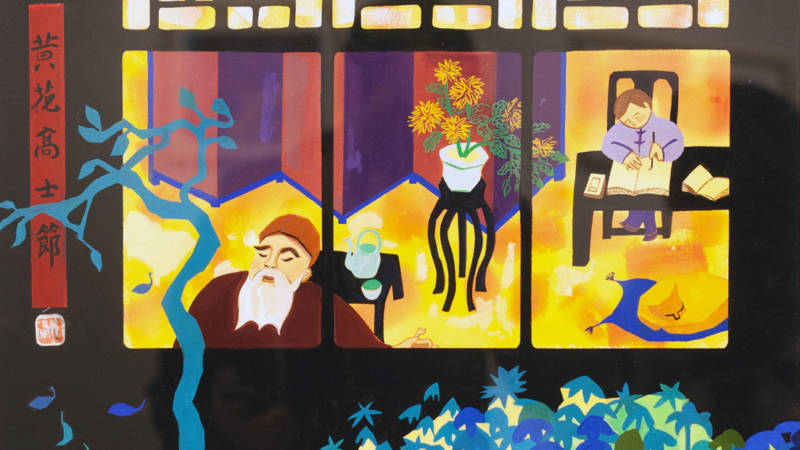
"caption": "Belle Yang never knew her great-grandfather, or the world he inhabited, but her father did. Yang's stories and paintings based on her parents' experiences bring a lost China to life in the US.",
"description": "Belle Yang never knew her great-grandfather, or the world he inhabited, but her father did. Yang's stories and paintings based on her parents' experiences bring a lost China to life in the US.",
"title": "RS21473_crysanthemums-qut",
"credit": "Photo: Courtesy of Belle Yang",
"status": "inherit",
"isLoading": false,
"fetchFailed": false
},
"arts_12199181": {
"type": "attachments",
"id": "arts_12199181",
"meta": {
"index": "attachments_1716263798",
"site": "arts",
"id": "12199181",
"found": true
},
"parent": 12199180,
"imgSizes": {
"twentyfourteen-full-width": {
"file": "https://ww2.kqed.org/app/uploads/sites/2/2016/10/pg-2-david-hockney-in-his-studio-feb-2015_enl-e1f26eddfcd61fc31af011d65e5a2b27b9eb1037-1038x576.jpg",
"width": 1038,
"mimeType": "image/jpeg",
"height": 576
},
"thumbnail": {
"file": "https://ww2.kqed.org/app/uploads/sites/2/2016/10/pg-2-david-hockney-in-his-studio-feb-2015_enl-e1f26eddfcd61fc31af011d65e5a2b27b9eb1037-400x252.jpg",
"width": 400,
"mimeType": "image/jpeg",
"height": 252
},
"fd-sm": {
"file": "https://ww2.kqed.org/app/uploads/sites/2/2016/10/pg-2-david-hockney-in-his-studio-feb-2015_enl-e1f26eddfcd61fc31af011d65e5a2b27b9eb1037-960x606.jpg",
"width": 960,
"mimeType": "image/jpeg",
"height": 606
},
"post-thumbnail": {
"file": "https://ww2.kqed.org/app/uploads/sites/2/2016/10/pg-2-david-hockney-in-his-studio-feb-2015_enl-e1f26eddfcd61fc31af011d65e5a2b27b9eb1037-672x372.jpg",
"width": 672,
"mimeType": "image/jpeg",
"height": 372
},
"kqedFullSize": {
"file": "https://ww2.kqed.org/app/uploads/sites/2/2016/10/pg-2-david-hockney-in-his-studio-feb-2015_enl-e1f26eddfcd61fc31af011d65e5a2b27b9eb1037.jpg",
"width": 3000,
"height": 1893
},
"large": {
"file": "https://ww2.kqed.org/app/uploads/sites/2/2016/10/pg-2-david-hockney-in-his-studio-feb-2015_enl-e1f26eddfcd61fc31af011d65e5a2b27b9eb1037-1180x745.jpg",
"width": 1180,
"mimeType": "image/jpeg",
"height": 745
},
"guest-author-50": {
"file": "https://ww2.kqed.org/app/uploads/sites/2/2016/10/pg-2-david-hockney-in-his-studio-feb-2015_enl-e1f26eddfcd61fc31af011d65e5a2b27b9eb1037-50x50.jpg",
"width": 50,
"mimeType": "image/jpeg",
"height": 50
},
"guest-author-96": {
"file": "https://ww2.kqed.org/app/uploads/sites/2/2016/10/pg-2-david-hockney-in-his-studio-feb-2015_enl-e1f26eddfcd61fc31af011d65e5a2b27b9eb1037-96x96.jpg",
"width": 96,
"mimeType": "image/jpeg",
"height": 96
},
"medium": {
"file": "https://ww2.kqed.org/app/uploads/sites/2/2016/10/pg-2-david-hockney-in-his-studio-feb-2015_enl-e1f26eddfcd61fc31af011d65e5a2b27b9eb1037-800x505.jpg",
"width": 800,
"mimeType": "image/jpeg",
"height": 505
},
"guest-author-64": {
"file": "https://ww2.kqed.org/app/uploads/sites/2/2016/10/pg-2-david-hockney-in-his-studio-feb-2015_enl-e1f26eddfcd61fc31af011d65e5a2b27b9eb1037-64x64.jpg",
"width": 64,
"mimeType": "image/jpeg",
"height": 64
},
"guest-author-32": {
"file": "https://ww2.kqed.org/app/uploads/sites/2/2016/10/pg-2-david-hockney-in-his-studio-feb-2015_enl-e1f26eddfcd61fc31af011d65e5a2b27b9eb1037-32x32.jpg",
"width": 32,
"mimeType": "image/jpeg",
"height": 32
},
"fd-lrg": {
"file": "https://ww2.kqed.org/app/uploads/sites/2/2016/10/pg-2-david-hockney-in-his-studio-feb-2015_enl-e1f26eddfcd61fc31af011d65e5a2b27b9eb1037-1920x1212.jpg",
"width": 1920,
"mimeType": "image/jpeg",
"height": 1212
},
"fd-med": {
"file": "https://ww2.kqed.org/app/uploads/sites/2/2016/10/pg-2-david-hockney-in-his-studio-feb-2015_enl-e1f26eddfcd61fc31af011d65e5a2b27b9eb1037-1180x745.jpg",
"width": 1180,
"mimeType": "image/jpeg",
"height": 745
},
"detail": {
"file": "https://ww2.kqed.org/app/uploads/sites/2/2016/10/pg-2-david-hockney-in-his-studio-feb-2015_enl-e1f26eddfcd61fc31af011d65e5a2b27b9eb1037-150x150.jpg",
"width": 150,
"mimeType": "image/jpeg",
"height": 150
},
"medium_large": {
"file": "https://ww2.kqed.org/app/uploads/sites/2/2016/10/pg-2-david-hockney-in-his-studio-feb-2015_enl-e1f26eddfcd61fc31af011d65e5a2b27b9eb1037-768x485.jpg",
"width": 768,
"mimeType": "image/jpeg",
"height": 485
},
"guest-author-128": {
"file": "https://ww2.kqed.org/app/uploads/sites/2/2016/10/pg-2-david-hockney-in-his-studio-feb-2015_enl-e1f26eddfcd61fc31af011d65e5a2b27b9eb1037-128x128.jpg",
"width": 128,
"mimeType": "image/jpeg",
"height": 128
}
},
"publishDate": 1476381860,
"modified": 1476381860,
"caption": null,
"description": "In a recent series of photographic drawings, David Hockney, shown above in his studio, plays with the relationship between painting and photography.",
"title": "In a recent series of photographic drawings, David Hockney, shown above in his studio, plays with the relationship between painting and photography.",
"credit": null,
"status": "inherit",
"isLoading": false,
"fetchFailed": false
},
"arts_12198806": {
"type": "attachments",
"id": "arts_12198806",
"meta": {
"index": "attachments_1716263798",
"site": "arts",
"id": "12198806",
"found": true
},
"parent": 12198805,
"imgSizes": {
"twentyfourteen-full-width": {
"file": "https://ww2.kqed.org/app/uploads/sites/2/2016/10/gettyimages-156038135-6ea6b50095eaa7c2418424f95b8308f49dceeb55-1038x576.jpg",
"width": 1038,
"mimeType": "image/jpeg",
"height": 576
},
"thumbnail": {
"file": "https://ww2.kqed.org/app/uploads/sites/2/2016/10/gettyimages-156038135-6ea6b50095eaa7c2418424f95b8308f49dceeb55-400x300.jpg",
"width": 400,
"mimeType": "image/jpeg",
"height": 300
},
"fd-sm": {
"file": "https://ww2.kqed.org/app/uploads/sites/2/2016/10/gettyimages-156038135-6ea6b50095eaa7c2418424f95b8308f49dceeb55-960x720.jpg",
"width": 960,
"mimeType": "image/jpeg",
"height": 720
},
"post-thumbnail": {
"file": "https://ww2.kqed.org/app/uploads/sites/2/2016/10/gettyimages-156038135-6ea6b50095eaa7c2418424f95b8308f49dceeb55-672x372.jpg",
"width": 672,
"mimeType": "image/jpeg",
"height": 372
},
"kqedFullSize": {
"file": "https://ww2.kqed.org/app/uploads/sites/2/2016/10/gettyimages-156038135-6ea6b50095eaa7c2418424f95b8308f49dceeb55.jpg",
"width": 2748,
"height": 2061
},
"large": {
"file": "https://ww2.kqed.org/app/uploads/sites/2/2016/10/gettyimages-156038135-6ea6b50095eaa7c2418424f95b8308f49dceeb55-1180x885.jpg",
"width": 1180,
"mimeType": "image/jpeg",
"height": 885
},
"guest-author-50": {
"file": "https://ww2.kqed.org/app/uploads/sites/2/2016/10/gettyimages-156038135-6ea6b50095eaa7c2418424f95b8308f49dceeb55-50x50.jpg",
"width": 50,
"mimeType": "image/jpeg",
"height": 50
},
"guest-author-96": {
"file": "https://ww2.kqed.org/app/uploads/sites/2/2016/10/gettyimages-156038135-6ea6b50095eaa7c2418424f95b8308f49dceeb55-96x96.jpg",
"width": 96,
"mimeType": "image/jpeg",
"height": 96
},
"medium": {
"file": "https://ww2.kqed.org/app/uploads/sites/2/2016/10/gettyimages-156038135-6ea6b50095eaa7c2418424f95b8308f49dceeb55-800x600.jpg",
"width": 800,
"mimeType": "image/jpeg",
"height": 600
},
"guest-author-64": {
"file": "https://ww2.kqed.org/app/uploads/sites/2/2016/10/gettyimages-156038135-6ea6b50095eaa7c2418424f95b8308f49dceeb55-64x64.jpg",
"width": 64,
"mimeType": "image/jpeg",
"height": 64
},
"guest-author-32": {
"file": "https://ww2.kqed.org/app/uploads/sites/2/2016/10/gettyimages-156038135-6ea6b50095eaa7c2418424f95b8308f49dceeb55-32x32.jpg",
"width": 32,
"mimeType": "image/jpeg",
"height": 32
},
"fd-lrg": {
"file": "https://ww2.kqed.org/app/uploads/sites/2/2016/10/gettyimages-156038135-6ea6b50095eaa7c2418424f95b8308f49dceeb55-1920x1440.jpg",
"width": 1920,
"mimeType": "image/jpeg",
"height": 1440
},
"fd-med": {
"file": "https://ww2.kqed.org/app/uploads/sites/2/2016/10/gettyimages-156038135-6ea6b50095eaa7c2418424f95b8308f49dceeb55-1180x885.jpg",
"width": 1180,
"mimeType": "image/jpeg",
"height": 885
},
"detail": {
"file": "https://ww2.kqed.org/app/uploads/sites/2/2016/10/gettyimages-156038135-6ea6b50095eaa7c2418424f95b8308f49dceeb55-150x150.jpg",
"width": 150,
"mimeType": "image/jpeg",
"height": 150
},
"medium_large": {
"file": "https://ww2.kqed.org/app/uploads/sites/2/2016/10/gettyimages-156038135-6ea6b50095eaa7c2418424f95b8308f49dceeb55-768x576.jpg",
"width": 768,
"mimeType": "image/jpeg",
"height": 576
},
"guest-author-128": {
"file": "https://ww2.kqed.org/app/uploads/sites/2/2016/10/gettyimages-156038135-6ea6b50095eaa7c2418424f95b8308f49dceeb55-128x128.jpg",
"width": 128,
"mimeType": "image/jpeg",
"height": 128
}
},
"publishDate": 1476375092,
"modified": 1497480341,
"caption": "Bob Dylan performs in Chicago in 1978. He is the first American to claim the Nobel Prize in literature since Toni Morrison won in 1993.",
"description": "Bob Dylan performs in Chicago in 1978. He is the first American to claim the Nobel Prize in literature since Toni Morrison won in 1993.",
"title": "Bob Dylan performs in Chicago in 1978. He is the first American to claim the Nobel Prize in literature since Toni Morrison won in 1993.",
"credit": null,
"status": "inherit",
"isLoading": false,
"fetchFailed": false
}
},
"audioPlayerReducer": {
"postId": "stream_live",
"isPaused": true,
"isPlaying": false,
"pfsActive": false,
"pledgeModalIsOpen": true,
"playerDrawerIsOpen": false,
"liveAudioPlayStartedAt": 0,
"liveAudioPlayContext": ""
},
"authorsReducer": {
"byline_news_11143776": {
"type": "authors",
"id": "byline_news_11143776",
"meta": {
"override": true
},
"slug": "byline_news_11143776",
"name": "Camila Domonoske ",
"isLoading": false
},
"byline_arts_12199180": {
"type": "authors",
"id": "byline_arts_12199180",
"meta": {
"override": true
},
"slug": "byline_arts_12199180",
"name": "Susan Stamberg",
"isLoading": false
},
"byline_arts_12198805": {
"type": "authors",
"id": "byline_arts_12198805",
"meta": {
"override": true
},
"slug": "byline_arts_12198805",
"name": "Colin Dwyer",
"isLoading": false
},
"cmusiker": {
"type": "authors",
"id": "32",
"meta": {
"index": "authors_1716337520",
"id": "32",
"found": true
},
"name": "Cy Musiker",
"firstName": "Cy",
"lastName": "Musiker",
"slug": "cmusiker",
"email": "cmusiker@kqed.org",
"display_author_email": false,
"staff_mastheads": [],
"title": "KQED Contributor",
"bio": "Cy Musiker is a former co-host of The Do List and a former reporter covering the arts for KQED News and The California Report. He loves live performance, especially great theater, jazz, roots music, anything by Mahler. Cy has an MJ from UC Berkeley's School of Journalism, and got his BA from Hampshire College. His work has been recognized by the Society for Professional Journalists with their Sigma Delta Chi Award for Public Service in Journalism. When he can, Cy likes to swim in Tomales Bay, run with his dog in the East Bay Hills, and hike the Sierra.",
"avatar": "https://secure.gravatar.com/avatar/05eaba5c5696ce8f062e4ea2df428a43?s=600&d=blank&r=g",
"twitter": null,
"facebook": null,
"instagram": null,
"linkedin": null,
"sites": [
{
"site": "arts",
"roles": [
"Contributor",
"subscriber"
]
},
{
"site": "news",
"roles": [
"author"
]
},
{
"site": "bayareabites",
"roles": [
"contributor"
]
}
],
"headData": {
"title": "Cy Musiker | KQED",
"description": "KQED Contributor",
"ogImgSrc": "https://secure.gravatar.com/avatar/05eaba5c5696ce8f062e4ea2df428a43?s=600&d=blank&r=g",
"twImgSrc": "https://secure.gravatar.com/avatar/05eaba5c5696ce8f062e4ea2df428a43?s=600&d=blank&r=g"
},
"isLoading": false,
"link": "/author/cmusiker"
},
"irojascontreras": {
"type": "authors",
"id": "78",
"meta": {
"index": "authors_1716337520",
"id": "78",
"found": true
},
"name": "Ingrid Rojas Contreras",
"firstName": "Ingrid",
"lastName": "Rojas Contreras",
"slug": "irojascontreras",
"email": "ingrid.rojas.c@gmail.com",
"display_author_email": false,
"staff_mastheads": [],
"title": null,
"bio": "Ingrid Rojas Contreras lives in San Francisco with her books. Her debut novel\u003cem> Fruit of the Drunken Tree \u003c/em>is forthcoming from Doubleday (Summer 2018). Find more at \u003ca href=\"http://www.ingridrojascontreras.com\">www.ingridrojascontreras.com\u003c/a>.",
"avatar": "https://secure.gravatar.com/avatar/908d94de9342e71b9d5ceaa8152a16a0?s=600&d=blank&r=g",
"twitter": null,
"facebook": null,
"instagram": null,
"linkedin": null,
"sites": [
{
"site": "arts",
"roles": [
"Contributor",
"contributor"
]
}
],
"headData": {
"title": "Ingrid Rojas Contreras | KQED",
"description": null,
"ogImgSrc": "https://secure.gravatar.com/avatar/908d94de9342e71b9d5ceaa8152a16a0?s=600&d=blank&r=g",
"twImgSrc": "https://secure.gravatar.com/avatar/908d94de9342e71b9d5ceaa8152a16a0?s=600&d=blank&r=g"
},
"isLoading": false,
"link": "/author/irojascontreras"
},
"kjones": {
"type": "authors",
"id": "93",
"meta": {
"index": "authors_1716337520",
"id": "93",
"found": true
},
"name": "Kevin L. Jones",
"firstName": "Kevin",
"lastName": "Jones",
"slug": "kjones",
"email": "kjones@kqed.org",
"display_author_email": false,
"staff_mastheads": [],
"title": null,
"bio": null,
"avatar": "https://secure.gravatar.com/avatar/12c65b5633ed39d0a59bb7f497eff645?s=600&d=blank&r=g",
"twitter": null,
"facebook": null,
"instagram": null,
"linkedin": null,
"sites": [
{
"site": "arts",
"roles": [
"subscriber"
]
},
{
"site": "styleguide",
"roles": [
"contributor"
]
},
{
"site": "artschool",
"roles": [
"subscriber"
]
},
{
"site": "news",
"roles": [
"subscriber"
]
},
{
"site": "pop",
"roles": [
"subscriber"
]
}
],
"headData": {
"title": "Kevin L. Jones | KQED",
"description": null,
"ogImgSrc": "https://secure.gravatar.com/avatar/12c65b5633ed39d0a59bb7f497eff645?s=600&d=blank&r=g",
"twImgSrc": "https://secure.gravatar.com/avatar/12c65b5633ed39d0a59bb7f497eff645?s=600&d=blank&r=g"
},
"isLoading": false,
"link": "/author/kjones"
},
"rachael-myrow": {
"type": "authors",
"id": "251",
"meta": {
"index": "authors_1716337520",
"id": "251",
"found": true
},
"name": "Rachael Myrow",
"firstName": "Rachael",
"lastName": "Myrow",
"slug": "rachael-myrow",
"email": "rmyrow@kqed.org",
"display_author_email": true,
"staff_mastheads": [
"news"
],
"title": "Senior Editor of KQED's Silicon Valley News Desk",
"bio": "• I write and edit stories about how Silicon Valley power and policies shape everyday life in California. I’m also passionate about making Bay Area history and culture more accessible to a broad public. • I’ve been a journalist for most of my life, starting in high school with The Franklin Press in Los Angeles, where I grew up. While earning my first degree in English at UC Berkeley, I got my start in public radio at KALX-FM. After completing a second degree in journalism at Cal, I landed my first professional job at Marketplace, then moved on to KPCC (now LAist), and then KQED, where I hosted The California Report for more than seven years. • My reporting has appeared on NPR, The World, WBUR’s \u003ci>Here & Now\u003c/i>, and the BBC. I also guest host for KQED’s \u003ci>Forum\u003c/i>, as well as the Commonwealth Club in San Francisco. • I speak periodically on media, democracy and technology issues, and do voiceover work for documentaries and educational video projects. • Outside of the studio, you'll find me hiking Bay Area trails and whipping up Insta-ready meals in my kitchen. • I do not accept gifts, money, or favors from anyone connected to my reporting, I don't pay people for information, and I do not support or donate to political causes. • I strive to treat the people I report on with fairness, honesty, and respect. I also recognize there are often multiple sides to a story and work to verify information through multiple sources and documentation. If I get something wrong, I correct it.",
"avatar": "https://secure.gravatar.com/avatar/3ed8a3c5f26025e4a805ba634cda8cd764906b97438a6d9ce216b044e340da4e?s=600&d=blank&r=g",
"twitter": "rachaelmyrow",
"bluesky": null,
"facebook": null,
"instagram": null,
"linkedin": "https://www.linkedin.com/in/rachaelmyrow/",
"sites": [
{
"site": "arts",
"roles": [
"administrator"
]
},
{
"site": "news",
"roles": [
"edit_others_posts",
"editor"
]
},
{
"site": "futureofyou",
"roles": [
"editor"
]
},
{
"site": "bayareabites",
"roles": [
"editor"
]
},
{
"site": "stateofhealth",
"roles": [
"editor"
]
},
{
"site": "science",
"roles": [
"editor"
]
},
{
"site": "food",
"roles": [
"editor"
]
},
{
"site": "forum",
"roles": [
"editor"
]
},
{
"site": "liveblog",
"roles": [
"author"
]
}
],
"headData": {
"title": "Rachael Myrow | KQED",
"description": "Senior Editor of KQED's Silicon Valley News Desk",
"ogImgSrc": "https://secure.gravatar.com/avatar/3ed8a3c5f26025e4a805ba634cda8cd764906b97438a6d9ce216b044e340da4e?s=600&d=blank&r=g",
"twImgSrc": "https://secure.gravatar.com/avatar/3ed8a3c5f26025e4a805ba634cda8cd764906b97438a6d9ce216b044e340da4e?s=600&d=blank&r=g"
},
"isLoading": false,
"link": "/author/rachael-myrow"
},
"lclark": {
"type": "authors",
"id": "3224",
"meta": {
"index": "authors_1716337520",
"id": "3224",
"found": true
},
"name": "Leilani Clark",
"firstName": "Leilani",
"lastName": "Clark",
"slug": "lclark",
"email": "clark.leil@gmail.com",
"display_author_email": false,
"staff_mastheads": [],
"title": null,
"bio": "Leilani Clark writes about books for KQED Arts. Her writing has been published at Mother Jones, The Guardian, Civil Eats, Time Magazine, Food & Wine, Edible Marin & Wine Country, and The Rumpus. She is the editor of Made Local magazine in Sonoma County. Find her on Twitter \u003ca href=\"https://twitter.com/leilclark\">@leilclark\u003c/a>.",
"avatar": "https://secure.gravatar.com/avatar/7f691fdc52ed2e3f4cf164d1f4ec0889?s=600&d=blank&r=g",
"twitter": null,
"facebook": null,
"instagram": null,
"linkedin": null,
"sites": [
{
"site": "arts",
"roles": [
"contributor"
]
},
{
"site": "bayareabites",
"roles": [
"contributor"
]
},
{
"site": "food",
"roles": [
"contributor"
]
}
],
"headData": {
"title": "Leilani Clark | KQED",
"description": null,
"ogImgSrc": "https://secure.gravatar.com/avatar/7f691fdc52ed2e3f4cf164d1f4ec0889?s=600&d=blank&r=g",
"twImgSrc": "https://secure.gravatar.com/avatar/7f691fdc52ed2e3f4cf164d1f4ec0889?s=600&d=blank&r=g"
},
"isLoading": false,
"link": "/author/lclark"
},
"stephanie-rosenbaum": {
"type": "authors",
"id": "5038",
"meta": {
"index": "authors_1716337520",
"id": "5038",
"found": true
},
"name": "Stephanie Rosenbaum Klassen",
"firstName": "Stephanie",
"lastName": "Rosenbaum Klassen",
"slug": "stephanie-rosenbaum",
"email": "dixieday@aol.com",
"display_author_email": false,
"staff_mastheads": [],
"title": "KQED Contributor",
"bio": "Stephanie Rosenbaum Klassen is a longtime local food writer, author, and cook. Her books include The Art of Vintage Cocktails (Egg & Dart Press), World of Doughnuts (Egg & Dart Press); Kids in the Kitchen: Fun Food (Williams Sonoma); Honey from Flower to Table (Chronicle Books) and The Astrology Cookbook: A Cosmic Guide to Feasts of Love (Manic D Press). She has studied organic farming at UCSC and holds a certificate in Ecological Horticulture from the Center for Agroecology and Sustainable Food Systems. She does frequent cooking demonstrations at local farmers’ markets and has taught food writing at Media Alliance in San Francisco and the Continuing Education program at Stanford University. She has been the lead restaurant critic for the San Francisco Bay Guardian as well as for San Francisco magazine. She has been an assistant chef at the Headlands Center for the Arts, an artists' residency program located in the Marin Headlands, and a production cook at the Marin Sun Farms Cafe in Pt Reyes Station. After some 20 years in San Francisco interspersed with stints in Oakland, Santa Cruz, Brooklyn, and Manhattan, she recently moved to Sonoma county but still writes in San Francisco several days a week.",
"avatar": "https://secure.gravatar.com/avatar/26520681f950a766c2c0eb9872646dec42b88de07cc4cdd65958385671e93cf7?s=600&d=mm&r=g",
"twitter": "sjrosenbaum",
"bluesky": null,
"facebook": null,
"instagram": null,
"linkedin": null,
"sites": [
{
"site": "bayareabites",
"roles": [
"subscriber"
]
},
{
"site": "food",
"roles": [
"subscriber"
]
}
],
"headData": {
"title": "Stephanie Rosenbaum Klassen | KQED",
"description": "KQED Contributor",
"ogImgSrc": "https://secure.gravatar.com/avatar/26520681f950a766c2c0eb9872646dec42b88de07cc4cdd65958385671e93cf7?s=600&d=mm&r=g",
"twImgSrc": "https://secure.gravatar.com/avatar/26520681f950a766c2c0eb9872646dec42b88de07cc4cdd65958385671e93cf7?s=600&d=mm&r=g"
},
"isLoading": false,
"link": "/author/stephanie-rosenbaum"
}
},
"pagesReducer": {
"arts_category_literature": {
"type": "terms",
"id": "arts_73",
"meta": {
"index": "terms_1716263798",
"site": "arts",
"id": "73",
"score": 12.797728
},
"featImg": null,
"name": "Books",
"description": null,
"taxonomy": "category",
"headData": {
"twImgId": null,
"twTitle": null,
"ogTitle": null,
"ogImgId": null,
"twDescription": null,
"description": null,
"title": "Books Archives | KQED Arts",
"ogDescription": null
},
"ttid": 74,
"slug": "literature",
"isLoading": false,
"title": "Books",
"pageMeta": {
"site": "arts",
"WpPageTemplate": "page-topic-editorial",
"currentPage": 81
},
"blocks": [
{
"blockName": "kqed/post-list",
"attrs": {
"layout": "cardArticle2",
"query": "posts/arts?category=literature",
"seeMore": false,
"paginated": true,
"page": 81
}
},
{
"blockName": "kqed/ad"
}
]
}
},
"pfsSessionReducer": {},
"postsReducer": {
"stream_live": {
"type": "live",
"id": "stream_live",
"audioUrl": "https://streams.kqed.org/kqedradio",
"title": "Live Stream",
"excerpt": "Live Stream information currently unavailable.",
"link": "/radio",
"featImg": "",
"label": {
"name": "KQED Live",
"link": "/"
}
},
"stream_kqedNewscast": {
"type": "posts",
"id": "stream_kqedNewscast",
"audioUrl": "https://www.kqed.org/.stream/anon/radio/RDnews/newscast.mp3?_=1",
"title": "KQED Newscast",
"featImg": "",
"label": {
"name": "88.5 FM",
"link": "/"
}
},
"arts_12350445": {
"type": "posts",
"id": "arts_12350445",
"meta": {
"index": "posts_1716263798",
"site": "arts",
"id": "12350445",
"score": null,
"sort": [
1479256381000
]
},
"guestAuthors": [],
"slug": "a-publisher-offers-hope-free-ebook-by-rebecca-solnit-for-election-doldrums",
"title": "Rebecca Solnit's Publisher Offers 'Hope' For Election Doldrums: A Free eBook",
"publishDate": 1479256381,
"format": "standard",
"headTitle": "Rebecca Solnit’s Publisher Offers ‘Hope’ For Election Doldrums: A Free eBook | KQED",
"labelTerm": {
"site": "arts"
},
"content": "\u003cp>In the days before Prohibition, candidates often wooed voters on election day with free beer and liquor. This week, a publisher is offering a free eBook by a San Francisco writer to anyone nursing a hangover — not from drink, but from election results.\u003c/p>\n\u003cp>\u003ca href=\"https://www.haymarketbooks.org/\" target=\"_blank\" rel=\"noopener\">Haymarket Books\u003c/a> in Chicago, a publisher of left-leaning authors like Angela Davis, Noam Chomsky, and Howard Zinn, announced days after the election that it’s \u003ca href=\"http://www.haymarketbooks.org/blogs\" target=\"_blank\" rel=\"noopener\">offering free electronic copies \u003c/a>of \u003ca href=\"http://rebeccasolnit.net/\" target=\"_blank\" rel=\"noopener\">Rebecca Solnit\u003c/a>’s \u003cem>Hope in the Dark\u003c/em>, written during the presidency of George W. Bush in 2004, and described as “a radical case for hope as a commitment to act in a world whose future remains uncertain and unknowable.”\u003c/p>\n\u003cfigure id=\"attachment_12350453\" class=\"wp-caption alignright\" style=\"max-width: 800px\">\u003cimg loading=\"lazy\" decoding=\"async\" class=\"size-medium wp-image-12350453\" src=\"http://ww2.kqed.org/arts/wp-content/uploads/sites/2/2016/11/Hope-in-the-Dark-Solnit-800x1206.jpg\" alt=\"Rebecca Solnit's book 'Hope in the Dark'\" width=\"800\" height=\"1206\" srcset=\"https://cdn.kqed.org/wp-content/uploads/sites/2/2016/11/Hope-in-the-Dark-Solnit-800x1206.jpg 800w, https://cdn.kqed.org/wp-content/uploads/sites/2/2016/11/Hope-in-the-Dark-Solnit-160x241.jpg 160w, https://cdn.kqed.org/wp-content/uploads/sites/2/2016/11/Hope-in-the-Dark-Solnit-768x1158.jpg 768w, https://cdn.kqed.org/wp-content/uploads/sites/2/2016/11/Hope-in-the-Dark-Solnit-1020x1538.jpg 1020w, https://cdn.kqed.org/wp-content/uploads/sites/2/2016/11/Hope-in-the-Dark-Solnit-1180x1779.jpg 1180w, https://cdn.kqed.org/wp-content/uploads/sites/2/2016/11/Hope-in-the-Dark-Solnit-960x1447.jpg 960w, https://cdn.kqed.org/wp-content/uploads/sites/2/2016/11/Hope-in-the-Dark-Solnit-240x362.jpg 240w, https://cdn.kqed.org/wp-content/uploads/sites/2/2016/11/Hope-in-the-Dark-Solnit-375x565.jpg 375w, https://cdn.kqed.org/wp-content/uploads/sites/2/2016/11/Hope-in-the-Dark-Solnit-520x784.jpg 520w, https://cdn.kqed.org/wp-content/uploads/sites/2/2016/11/Hope-in-the-Dark-Solnit.jpg 1653w\" sizes=\"(max-width: 800px) 100vw, 800px\">\u003cfigcaption class=\"wp-caption-text\">Rebecca Solnit’s book ‘Hope in the Dark’ \u003ccite>(Photo: Courtesy of Haymarket Books)\u003c/cite>\u003c/figcaption>\u003c/figure>\n\u003cp>“I write for a living,” Solnit wrote in an email Tuesday, “but I also write to be of use and benefit, and it seemed like this book, written in another nightmarish time — the outbreak of the Iraq War — might be of benefit to a bunch of people in this horrific and bleak moment.”\u003c/p>\n\u003cp>Needless to say, Solnit was not a supporter of Donald Trump.\u003c/p>\n\u003cp>Haymarket Editor Julie Fain says the publisher has given away more than 25 thousand copies so far, which would make it a bestseller for the company, if it were for sale. \u003c/p>\n\u003cp>[ad fullwidth]\u003c/p>\n\u003cp>\u003c/p>\n\u003cp>“When people we care about a lot are under attack, women, immigrants, people of color,” Fain said in a phone conversation, “we want to remember that resistance is also part of who we are. And Rebecca speaks to this, remembering the capacity of human beings to resist politically pessimistic times.”\u003c/p>\n\n",
"blocks": [],
"excerpt": "This week, a publisher is offering a free eBook by a San Francisco writer to anyone nursing an election hangover.",
"status": "publish",
"parent": 0,
"modified": 1726708812,
"stats": {
"hasAudio": false,
"hasVideo": false,
"hasChartOrMap": false,
"iframeSrcs": [],
"hasGoogleForm": false,
"hasGallery": false,
"hasHearkenModule": false,
"hasPolis": false,
"paragraphCount": 8,
"wordCount": 292
},
"headData": {
"title": "Rebecca Solnit's Publisher Offers 'Hope' For Election Doldrums: A Free eBook | KQED",
"description": "This week, a publisher is offering a free eBook by a San Francisco writer to anyone nursing an election hangover.",
"ogTitle": "",
"ogDescription": "",
"ogImgId": "",
"twTitle": "",
"twDescription": "",
"twImgId": "",
"schema": {
"@context": "https://schema.org",
"@type": "Article",
"headline": "Rebecca Solnit's Publisher Offers 'Hope' For Election Doldrums: A Free eBook",
"datePublished": "2016-11-15T16:33:01-08:00",
"dateModified": "2024-09-18T18:20:12-07:00",
"image": "https://cdn.kqed.org/wp-content/uploads/2020/02/KQED-OG-Image@1x.png"
}
},
"sticky": false,
"path": "/arts/12350445/a-publisher-offers-hope-free-ebook-by-rebecca-solnit-for-election-doldrums",
"audioTrackLength": null,
"parsedContent": [
{
"type": "contentString",
"content": "\u003cdiv class=\"post-body\">\u003cp>\u003cp>In the days before Prohibition, candidates often wooed voters on election day with free beer and liquor. This week, a publisher is offering a free eBook by a San Francisco writer to anyone nursing a hangover — not from drink, but from election results.\u003c/p>\n\u003cp>\u003ca href=\"https://www.haymarketbooks.org/\" target=\"_blank\" rel=\"noopener\">Haymarket Books\u003c/a> in Chicago, a publisher of left-leaning authors like Angela Davis, Noam Chomsky, and Howard Zinn, announced days after the election that it’s \u003ca href=\"http://www.haymarketbooks.org/blogs\" target=\"_blank\" rel=\"noopener\">offering free electronic copies \u003c/a>of \u003ca href=\"http://rebeccasolnit.net/\" target=\"_blank\" rel=\"noopener\">Rebecca Solnit\u003c/a>’s \u003cem>Hope in the Dark\u003c/em>, written during the presidency of George W. Bush in 2004, and described as “a radical case for hope as a commitment to act in a world whose future remains uncertain and unknowable.”\u003c/p>\n\u003cfigure id=\"attachment_12350453\" class=\"wp-caption alignright\" style=\"max-width: 800px\">\u003cimg loading=\"lazy\" decoding=\"async\" class=\"size-medium wp-image-12350453\" src=\"http://ww2.kqed.org/arts/wp-content/uploads/sites/2/2016/11/Hope-in-the-Dark-Solnit-800x1206.jpg\" alt=\"Rebecca Solnit's book 'Hope in the Dark'\" width=\"800\" height=\"1206\" srcset=\"https://cdn.kqed.org/wp-content/uploads/sites/2/2016/11/Hope-in-the-Dark-Solnit-800x1206.jpg 800w, https://cdn.kqed.org/wp-content/uploads/sites/2/2016/11/Hope-in-the-Dark-Solnit-160x241.jpg 160w, https://cdn.kqed.org/wp-content/uploads/sites/2/2016/11/Hope-in-the-Dark-Solnit-768x1158.jpg 768w, https://cdn.kqed.org/wp-content/uploads/sites/2/2016/11/Hope-in-the-Dark-Solnit-1020x1538.jpg 1020w, https://cdn.kqed.org/wp-content/uploads/sites/2/2016/11/Hope-in-the-Dark-Solnit-1180x1779.jpg 1180w, https://cdn.kqed.org/wp-content/uploads/sites/2/2016/11/Hope-in-the-Dark-Solnit-960x1447.jpg 960w, https://cdn.kqed.org/wp-content/uploads/sites/2/2016/11/Hope-in-the-Dark-Solnit-240x362.jpg 240w, https://cdn.kqed.org/wp-content/uploads/sites/2/2016/11/Hope-in-the-Dark-Solnit-375x565.jpg 375w, https://cdn.kqed.org/wp-content/uploads/sites/2/2016/11/Hope-in-the-Dark-Solnit-520x784.jpg 520w, https://cdn.kqed.org/wp-content/uploads/sites/2/2016/11/Hope-in-the-Dark-Solnit.jpg 1653w\" sizes=\"(max-width: 800px) 100vw, 800px\">\u003cfigcaption class=\"wp-caption-text\">Rebecca Solnit’s book ‘Hope in the Dark’ \u003ccite>(Photo: Courtesy of Haymarket Books)\u003c/cite>\u003c/figcaption>\u003c/figure>\n\u003cp>“I write for a living,” Solnit wrote in an email Tuesday, “but I also write to be of use and benefit, and it seemed like this book, written in another nightmarish time — the outbreak of the Iraq War — might be of benefit to a bunch of people in this horrific and bleak moment.”\u003c/p>\n\u003cp>Needless to say, Solnit was not a supporter of Donald Trump.\u003c/p>\n\u003cp>Haymarket Editor Julie Fain says the publisher has given away more than 25 thousand copies so far, which would make it a bestseller for the company, if it were for sale. \u003c/p>\n\u003cp>\u003c/p>\u003c/div>",
"attributes": {
"named": {},
"numeric": []
}
},
{
"type": "component",
"content": "",
"name": "ad",
"attributes": {
"named": {
"label": "fullwidth"
},
"numeric": [
"fullwidth"
]
}
},
{
"type": "contentString",
"content": "\u003cdiv class=\"post-body\">\u003cp>\u003c/p>\n\u003cp>\u003c/p>\n\u003cp>“When people we care about a lot are under attack, women, immigrants, people of color,” Fain said in a phone conversation, “we want to remember that resistance is also part of who we are. And Rebecca speaks to this, remembering the capacity of human beings to resist politically pessimistic times.”\u003c/p>\n\n\u003c/div>\u003c/p>",
"attributes": {
"named": {},
"numeric": []
}
}
],
"link": "/arts/12350445/a-publisher-offers-hope-free-ebook-by-rebecca-solnit-for-election-doldrums",
"authors": [
"32"
],
"categories": [
"arts_73"
],
"tags": [
"arts_1448",
"arts_596",
"arts_4358"
],
"featImg": "arts_10182884",
"label": "arts"
},
"arts_12317891": {
"type": "posts",
"id": "arts_12317891",
"meta": {
"index": "posts_1716263798",
"site": "arts",
"id": "12317891",
"score": null,
"sort": [
1479236097000
]
},
"guestAuthors": [],
"slug": "massive-art-collection-full-of-sf-underground-comix-up-for-auction",
"title": "Massive Art Collection Full of SF Underground Comix Up for Auction",
"publishDate": 1479236097,
"format": "image",
"headTitle": "Massive Art Collection Full of SF Underground Comix Up for Auction | KQED",
"labelTerm": {
"site": "arts"
},
"content": "\u003cp>A Philadelphia-based comic collector who spent almost 40 years building his museum-worthy collection of underground comic art — much of it purchased directly from the artists themselves — is putting it up for auction this week.\u003c/p>\n\u003cp>Eric Sack, author of \u003cem>The Life and Times of R. Crumb: Comments From Contemporaries,\u003c/em> will see the majority of his collection of ’60s and ’70s comic art auctioned off on Nov. 17 and 18 at \u003ca href=\"https://www.ha.com/c/search-results.zx?N=0+793+794+791+792+1893+1577+2088&Ntk=SI_Titles-Desc&Nty=1&Ntt=Eric+Sack&limitTo=all&ic=homepage-search-A-K-071316\" target=\"_blank\" rel=\"noopener\">Heritage Auctions\u003c/a>. Sack began collecting in 1978, and over the decades amassed over 1,300 pages of original works from artists such as Robert Crumb, S. Clay Wilson and Spain Rodriguez. The collection achieved such prominence that it was loaned to \u003ca href=\"http://undergroundcomixart.com/exhibitions/\" target=\"_blank\" rel=\"noopener\">various exhibitions\u003c/a> later in his collecting career.\u003c/p>\n\u003cp>Speaking on the phone last week, Sack, 62, says he put his collection up for auction because he felt he couldn’t collect any more artwork. He had bought everything that he wanted, and could afford.\u003c/p>\n\u003cfigure id=\"attachment_12318494\" class=\"wp-caption alignright\" style=\"max-width: 800px\">\u003cimg loading=\"lazy\" decoding=\"async\" src=\"http://ww2.kqed.org/arts/wp-content/uploads/sites/2/2016/11/Erick-Sack-collection-800x1011.jpg\" alt=\"Drawing of comic collector Eric Sack by artist Jim Lyons\" width=\"800\" height=\"1011\" class=\"size-medium wp-image-12318494\" srcset=\"https://cdn.kqed.org/wp-content/uploads/sites/2/2016/11/Erick-Sack-collection-800x1011.jpg 800w, https://cdn.kqed.org/wp-content/uploads/sites/2/2016/11/Erick-Sack-collection-160x202.jpg 160w, https://cdn.kqed.org/wp-content/uploads/sites/2/2016/11/Erick-Sack-collection-768x970.jpg 768w, https://cdn.kqed.org/wp-content/uploads/sites/2/2016/11/Erick-Sack-collection-240x303.jpg 240w, https://cdn.kqed.org/wp-content/uploads/sites/2/2016/11/Erick-Sack-collection-375x474.jpg 375w, https://cdn.kqed.org/wp-content/uploads/sites/2/2016/11/Erick-Sack-collection-520x657.jpg 520w, https://cdn.kqed.org/wp-content/uploads/sites/2/2016/11/Erick-Sack-collection.jpg 950w\" sizes=\"(max-width: 800px) 100vw, 800px\">\u003cfigcaption class=\"wp-caption-text\">Drawing of comic collector Eric Sack by artist Jay Lynch \u003ccite>(Photo: Courtesy of Eric Sack)\u003c/cite>\u003c/figcaption>\u003c/figure>\n\u003cp>“There was nowhere to go with my collection but down,” Sack says. “There wasn’t much else for me to buy, which is a little weird to say. But short of going into collections where I had to offer stupid money that I couldn’t really afford to do, I did a pretty good job.”\u003c/p>\n\u003cp>Except for about 50 pieces he’ll keep from his 1,300 pages of comic art, he’s selling it all.\u003c/p>\n\u003cp>[ad fullwidth]\u003c/p>\n\u003cp>The most valuable pieces in Sack’s collection come from R. Crumb, who Sack cited as his favorite artist, and one of the first artists whose works he bought. Some of the pieces from Crumb in Sack’s collection are estimated to be worth tens of thousands, including a two-page original story artwork titled “Freak Out Funnies,” which was estimated to be worth $40,000, \u003ca href=\"http://www.artlyst.com/articles/original-underground-comix-art-including-r-crumb-to-be-sold-at-auction\" target=\"_blank\" rel=\"noopener\">according to Artlyst\u003c/a>. \u003c/p>\n\u003cp>This is a great time for Sack to sell, as the market for underground comic art has grown in recent years, says \u003ca href=\"http://www.patrickrosenkranz.com/Welcome.html\" target=\"_blank\" rel=\"noopener\">Patrick Rosenkranz\u003c/a>, author of \u003ci>Rebel Visions: The Underground Comix Revolution\u003c/i>. The global popularity of Crumb and \u003ci>Juxtapoz\u003c/i> founder Robert Williams — and the success of museum exhibits featuring works from collections like Sack’s — have pushed prices for underground comix to fine art prices. For example, Rosenkranz says copies of \u003cem>Zap Comix\u003c/em> #1, which were drawn completely by Crumb and sold by his wife in the Haight-Ashbury back in 1968, can fetch as much as $10,000 if they are first editions with “Printed by Charles Plymell” on the back cover.\u003c/p>\n\u003cp>Rosenkranz feels other collectors will start selling their collections as well, as the market appears to peak. \u003c/p>\n\u003cfigure id=\"attachment_12349428\" class=\"wp-caption aligncenter\" style=\"max-width: 800px\">\u003cimg loading=\"lazy\" decoding=\"async\" src=\"http://ww2.kqed.org/arts/wp-content/uploads/sites/2/2016/11/Zap-logo-800x348.jpg\" alt=\"Zap Logo\" width=\"800\" height=\"348\" class=\"size-medium wp-image-12349428\" srcset=\"https://cdn.kqed.org/wp-content/uploads/sites/2/2016/11/Zap-logo-800x348.jpg 800w, https://cdn.kqed.org/wp-content/uploads/sites/2/2016/11/Zap-logo-160x70.jpg 160w, https://cdn.kqed.org/wp-content/uploads/sites/2/2016/11/Zap-logo-768x334.jpg 768w, https://cdn.kqed.org/wp-content/uploads/sites/2/2016/11/Zap-logo-1020x444.jpg 1020w, https://cdn.kqed.org/wp-content/uploads/sites/2/2016/11/Zap-logo.jpg 1920w, https://cdn.kqed.org/wp-content/uploads/sites/2/2016/11/Zap-logo-1180x513.jpg 1180w, https://cdn.kqed.org/wp-content/uploads/sites/2/2016/11/Zap-logo-960x418.jpg 960w, https://cdn.kqed.org/wp-content/uploads/sites/2/2016/11/Zap-logo-240x104.jpg 240w, https://cdn.kqed.org/wp-content/uploads/sites/2/2016/11/Zap-logo-375x163.jpg 375w, https://cdn.kqed.org/wp-content/uploads/sites/2/2016/11/Zap-logo-520x226.jpg 520w\" sizes=\"(max-width: 800px) 100vw, 800px\">\u003cfigcaption class=\"wp-caption-text\">Zap Logo \u003ccite>(Courtesy of Eric Sack)\u003c/cite>\u003c/figcaption>\u003c/figure>\n\u003cp>“Any collectible goes out of style after the people who experienced it in their own lives die out,” Rosenkranz says. “Who cares about Hopalong Cassidy anymore? But 20 years ago a Hopalong Cassidy collection could fetch a decent price.”\u003c/p>\n\u003cp>Still, the Sack auction marks the end of an era in the Underground Comix world. Well-known in the scene for collecting pieces in the ’80s, when the artists were practically forgotten, Sack picked up a lot coveted works for cheap. He also took his pursuit of original works much more seriously than your average collector; for example, he says he spent 20 years pushing Wilson to sell one of his earliest pieces.\u003c/p>\n\u003cp>“I don’t know if he told you any stories about ‘figurative’ briefcases full of cash,” Rosenkranz says, “but he’d go up to someone’s studio or store, show the cash, say, ‘I want this, this and this’ and walk out with all of it.”\u003c/p>\n\u003cfigure id=\"attachment_12349429\" class=\"wp-caption alignright\" style=\"max-width: 640px\">\u003cimg loading=\"lazy\" decoding=\"async\" src=\"http://ww2.kqed.org/arts/wp-content/uploads/sites/2/2016/11/R-Crumb-1020x1519.jpg\" alt=\"'R.Crumb' by R. Crumb\" width=\"640\" height=\"953\" class=\"size-large wp-image-12349429\" srcset=\"https://cdn.kqed.org/wp-content/uploads/sites/2/2016/11/R-Crumb-1020x1519.jpg 1020w, https://cdn.kqed.org/wp-content/uploads/sites/2/2016/11/R-Crumb-160x238.jpg 160w, https://cdn.kqed.org/wp-content/uploads/sites/2/2016/11/R-Crumb-800x1192.jpg 800w, https://cdn.kqed.org/wp-content/uploads/sites/2/2016/11/R-Crumb-768x1144.jpg 768w, https://cdn.kqed.org/wp-content/uploads/sites/2/2016/11/R-Crumb.jpg 1920w, https://cdn.kqed.org/wp-content/uploads/sites/2/2016/11/R-Crumb-1180x1758.jpg 1180w, https://cdn.kqed.org/wp-content/uploads/sites/2/2016/11/R-Crumb-960x1430.jpg 960w, https://cdn.kqed.org/wp-content/uploads/sites/2/2016/11/R-Crumb-240x358.jpg 240w, https://cdn.kqed.org/wp-content/uploads/sites/2/2016/11/R-Crumb-375x559.jpg 375w, https://cdn.kqed.org/wp-content/uploads/sites/2/2016/11/R-Crumb-520x775.jpg 520w\" sizes=\"(max-width: 640px) 100vw, 640px\">\u003cfigcaption class=\"wp-caption-text\">‘R.Crumb’ by R. Crumb \u003ccite>(Courtesy of Eric Sack)\u003c/cite>\u003c/figcaption>\u003c/figure>\n\u003cp>Sack says he’ll miss his ritual of poring over his new purchases, examining each drawing for signs of the artist’s creative process, such as streaks of white out and doodles on the back. But his passion never rubbed off on his children, which Rosenkranz says is a common reason for Underground Comix collectors to sell.\u003c/p>\n\u003cp>“A lot of collectors are getting old and their kids don’t want the stuff — either they’re not interested, or they’re embarrassed by it, or they think it’s too dirty,” Rosenkranz says.\u003c/p>\n\u003cp>In Sack’s case, loaning out his collection to various museums led to family trips to Europe, yet his kids never showed interest — that is, until after Sack set up the auction.\u003c/p>\n\u003cp>“My youngest, who is in her 20s, recently posted the Artlyst article on her Facebook page,” Sack says. “In the heading she put, ‘Oh my God, my dad’s weird hobby is now the Eric Sack Collection.'” \u003c/p>\n\u003cp>\u003ci>Watch a video of Sack discussing his collection:\u003c/i>\u003c/p>\n\u003cp>\u003c/p>\n\u003cp>https://www.youtube.com/watch?v=O89JuAd7wDQ\u003c/p>\n\n",
"blocks": [],
"excerpt": "A one-of-a-kind collection of underground comic art that was used for museum exhibitions goes up for auction this week.",
"status": "publish",
"parent": 0,
"modified": 1726708821,
"stats": {
"hasAudio": false,
"hasVideo": true,
"hasChartOrMap": false,
"iframeSrcs": [],
"hasGoogleForm": false,
"hasGallery": false,
"hasHearkenModule": false,
"hasPolis": false,
"paragraphCount": 18,
"wordCount": 853
},
"headData": {
"title": "Massive Art Collection Full of SF Underground Comix Up for Auction | KQED",
"description": "A one-of-a-kind collection of underground comic art that was used for museum exhibitions goes up for auction this week.",
"ogTitle": "",
"ogDescription": "",
"ogImgId": "",
"twTitle": "",
"twDescription": "",
"twImgId": "",
"schema": {
"@context": "https://schema.org",
"@type": "Article",
"headline": "Massive Art Collection Full of SF Underground Comix Up for Auction",
"datePublished": "2016-11-15T10:54:57-08:00",
"dateModified": "2024-09-18T18:20:21-07:00",
"image": "https://cdn.kqed.org/wp-content/uploads/2020/02/KQED-OG-Image@1x.png"
}
},
"sticky": false,
"path": "/arts/12317891/massive-art-collection-full-of-sf-underground-comix-up-for-auction",
"audioTrackLength": null,
"parsedContent": [
{
"type": "contentString",
"content": "\u003cdiv class=\"post-body\">\u003cp>\u003cp>A Philadelphia-based comic collector who spent almost 40 years building his museum-worthy collection of underground comic art — much of it purchased directly from the artists themselves — is putting it up for auction this week.\u003c/p>\n\u003cp>Eric Sack, author of \u003cem>The Life and Times of R. Crumb: Comments From Contemporaries,\u003c/em> will see the majority of his collection of ’60s and ’70s comic art auctioned off on Nov. 17 and 18 at \u003ca href=\"https://www.ha.com/c/search-results.zx?N=0+793+794+791+792+1893+1577+2088&Ntk=SI_Titles-Desc&Nty=1&Ntt=Eric+Sack&limitTo=all&ic=homepage-search-A-K-071316\" target=\"_blank\" rel=\"noopener\">Heritage Auctions\u003c/a>. Sack began collecting in 1978, and over the decades amassed over 1,300 pages of original works from artists such as Robert Crumb, S. Clay Wilson and Spain Rodriguez. The collection achieved such prominence that it was loaned to \u003ca href=\"http://undergroundcomixart.com/exhibitions/\" target=\"_blank\" rel=\"noopener\">various exhibitions\u003c/a> later in his collecting career.\u003c/p>\n\u003cp>Speaking on the phone last week, Sack, 62, says he put his collection up for auction because he felt he couldn’t collect any more artwork. He had bought everything that he wanted, and could afford.\u003c/p>\n\u003cfigure id=\"attachment_12318494\" class=\"wp-caption alignright\" style=\"max-width: 800px\">\u003cimg loading=\"lazy\" decoding=\"async\" src=\"http://ww2.kqed.org/arts/wp-content/uploads/sites/2/2016/11/Erick-Sack-collection-800x1011.jpg\" alt=\"Drawing of comic collector Eric Sack by artist Jim Lyons\" width=\"800\" height=\"1011\" class=\"size-medium wp-image-12318494\" srcset=\"https://cdn.kqed.org/wp-content/uploads/sites/2/2016/11/Erick-Sack-collection-800x1011.jpg 800w, https://cdn.kqed.org/wp-content/uploads/sites/2/2016/11/Erick-Sack-collection-160x202.jpg 160w, https://cdn.kqed.org/wp-content/uploads/sites/2/2016/11/Erick-Sack-collection-768x970.jpg 768w, https://cdn.kqed.org/wp-content/uploads/sites/2/2016/11/Erick-Sack-collection-240x303.jpg 240w, https://cdn.kqed.org/wp-content/uploads/sites/2/2016/11/Erick-Sack-collection-375x474.jpg 375w, https://cdn.kqed.org/wp-content/uploads/sites/2/2016/11/Erick-Sack-collection-520x657.jpg 520w, https://cdn.kqed.org/wp-content/uploads/sites/2/2016/11/Erick-Sack-collection.jpg 950w\" sizes=\"(max-width: 800px) 100vw, 800px\">\u003cfigcaption class=\"wp-caption-text\">Drawing of comic collector Eric Sack by artist Jay Lynch \u003ccite>(Photo: Courtesy of Eric Sack)\u003c/cite>\u003c/figcaption>\u003c/figure>\n\u003cp>“There was nowhere to go with my collection but down,” Sack says. “There wasn’t much else for me to buy, which is a little weird to say. But short of going into collections where I had to offer stupid money that I couldn’t really afford to do, I did a pretty good job.”\u003c/p>\n\u003cp>Except for about 50 pieces he’ll keep from his 1,300 pages of comic art, he’s selling it all.\u003c/p>\n\u003cp>\u003c/p>\u003c/div>",
"attributes": {
"named": {},
"numeric": []
}
},
{
"type": "component",
"content": "",
"name": "ad",
"attributes": {
"named": {
"label": "fullwidth"
},
"numeric": [
"fullwidth"
]
}
},
{
"type": "contentString",
"content": "\u003cdiv class=\"post-body\">\u003cp>\u003c/p>\n\u003cp>The most valuable pieces in Sack’s collection come from R. Crumb, who Sack cited as his favorite artist, and one of the first artists whose works he bought. Some of the pieces from Crumb in Sack’s collection are estimated to be worth tens of thousands, including a two-page original story artwork titled “Freak Out Funnies,” which was estimated to be worth $40,000, \u003ca href=\"http://www.artlyst.com/articles/original-underground-comix-art-including-r-crumb-to-be-sold-at-auction\" target=\"_blank\" rel=\"noopener\">according to Artlyst\u003c/a>. \u003c/p>\n\u003cp>This is a great time for Sack to sell, as the market for underground comic art has grown in recent years, says \u003ca href=\"http://www.patrickrosenkranz.com/Welcome.html\" target=\"_blank\" rel=\"noopener\">Patrick Rosenkranz\u003c/a>, author of \u003ci>Rebel Visions: The Underground Comix Revolution\u003c/i>. The global popularity of Crumb and \u003ci>Juxtapoz\u003c/i> founder Robert Williams — and the success of museum exhibits featuring works from collections like Sack’s — have pushed prices for underground comix to fine art prices. For example, Rosenkranz says copies of \u003cem>Zap Comix\u003c/em> #1, which were drawn completely by Crumb and sold by his wife in the Haight-Ashbury back in 1968, can fetch as much as $10,000 if they are first editions with “Printed by Charles Plymell” on the back cover.\u003c/p>\n\u003cp>Rosenkranz feels other collectors will start selling their collections as well, as the market appears to peak. \u003c/p>\n\u003cfigure id=\"attachment_12349428\" class=\"wp-caption aligncenter\" style=\"max-width: 800px\">\u003cimg loading=\"lazy\" decoding=\"async\" src=\"http://ww2.kqed.org/arts/wp-content/uploads/sites/2/2016/11/Zap-logo-800x348.jpg\" alt=\"Zap Logo\" width=\"800\" height=\"348\" class=\"size-medium wp-image-12349428\" srcset=\"https://cdn.kqed.org/wp-content/uploads/sites/2/2016/11/Zap-logo-800x348.jpg 800w, https://cdn.kqed.org/wp-content/uploads/sites/2/2016/11/Zap-logo-160x70.jpg 160w, https://cdn.kqed.org/wp-content/uploads/sites/2/2016/11/Zap-logo-768x334.jpg 768w, https://cdn.kqed.org/wp-content/uploads/sites/2/2016/11/Zap-logo-1020x444.jpg 1020w, https://cdn.kqed.org/wp-content/uploads/sites/2/2016/11/Zap-logo.jpg 1920w, https://cdn.kqed.org/wp-content/uploads/sites/2/2016/11/Zap-logo-1180x513.jpg 1180w, https://cdn.kqed.org/wp-content/uploads/sites/2/2016/11/Zap-logo-960x418.jpg 960w, https://cdn.kqed.org/wp-content/uploads/sites/2/2016/11/Zap-logo-240x104.jpg 240w, https://cdn.kqed.org/wp-content/uploads/sites/2/2016/11/Zap-logo-375x163.jpg 375w, https://cdn.kqed.org/wp-content/uploads/sites/2/2016/11/Zap-logo-520x226.jpg 520w\" sizes=\"(max-width: 800px) 100vw, 800px\">\u003cfigcaption class=\"wp-caption-text\">Zap Logo \u003ccite>(Courtesy of Eric Sack)\u003c/cite>\u003c/figcaption>\u003c/figure>\n\u003cp>“Any collectible goes out of style after the people who experienced it in their own lives die out,” Rosenkranz says. “Who cares about Hopalong Cassidy anymore? But 20 years ago a Hopalong Cassidy collection could fetch a decent price.”\u003c/p>\n\u003cp>Still, the Sack auction marks the end of an era in the Underground Comix world. Well-known in the scene for collecting pieces in the ’80s, when the artists were practically forgotten, Sack picked up a lot coveted works for cheap. He also took his pursuit of original works much more seriously than your average collector; for example, he says he spent 20 years pushing Wilson to sell one of his earliest pieces.\u003c/p>\n\u003cp>“I don’t know if he told you any stories about ‘figurative’ briefcases full of cash,” Rosenkranz says, “but he’d go up to someone’s studio or store, show the cash, say, ‘I want this, this and this’ and walk out with all of it.”\u003c/p>\n\u003cfigure id=\"attachment_12349429\" class=\"wp-caption alignright\" style=\"max-width: 640px\">\u003cimg loading=\"lazy\" decoding=\"async\" src=\"http://ww2.kqed.org/arts/wp-content/uploads/sites/2/2016/11/R-Crumb-1020x1519.jpg\" alt=\"'R.Crumb' by R. Crumb\" width=\"640\" height=\"953\" class=\"size-large wp-image-12349429\" srcset=\"https://cdn.kqed.org/wp-content/uploads/sites/2/2016/11/R-Crumb-1020x1519.jpg 1020w, https://cdn.kqed.org/wp-content/uploads/sites/2/2016/11/R-Crumb-160x238.jpg 160w, https://cdn.kqed.org/wp-content/uploads/sites/2/2016/11/R-Crumb-800x1192.jpg 800w, https://cdn.kqed.org/wp-content/uploads/sites/2/2016/11/R-Crumb-768x1144.jpg 768w, https://cdn.kqed.org/wp-content/uploads/sites/2/2016/11/R-Crumb.jpg 1920w, https://cdn.kqed.org/wp-content/uploads/sites/2/2016/11/R-Crumb-1180x1758.jpg 1180w, https://cdn.kqed.org/wp-content/uploads/sites/2/2016/11/R-Crumb-960x1430.jpg 960w, https://cdn.kqed.org/wp-content/uploads/sites/2/2016/11/R-Crumb-240x358.jpg 240w, https://cdn.kqed.org/wp-content/uploads/sites/2/2016/11/R-Crumb-375x559.jpg 375w, https://cdn.kqed.org/wp-content/uploads/sites/2/2016/11/R-Crumb-520x775.jpg 520w\" sizes=\"(max-width: 640px) 100vw, 640px\">\u003cfigcaption class=\"wp-caption-text\">‘R.Crumb’ by R. Crumb \u003ccite>(Courtesy of Eric Sack)\u003c/cite>\u003c/figcaption>\u003c/figure>\n\u003cp>Sack says he’ll miss his ritual of poring over his new purchases, examining each drawing for signs of the artist’s creative process, such as streaks of white out and doodles on the back. But his passion never rubbed off on his children, which Rosenkranz says is a common reason for Underground Comix collectors to sell.\u003c/p>\n\u003cp>“A lot of collectors are getting old and their kids don’t want the stuff — either they’re not interested, or they’re embarrassed by it, or they think it’s too dirty,” Rosenkranz says.\u003c/p>\n\u003cp>In Sack’s case, loaning out his collection to various museums led to family trips to Europe, yet his kids never showed interest — that is, until after Sack set up the auction.\u003c/p>\n\u003cp>“My youngest, who is in her 20s, recently posted the Artlyst article on her Facebook page,” Sack says. “In the heading she put, ‘Oh my God, my dad’s weird hobby is now the Eric Sack Collection.'” \u003c/p>\n\u003cp>\u003ci>Watch a video of Sack discussing his collection:\u003c/i>\u003c/p>\n\u003cp>\u003c/p>\u003c/p>\u003cp>\u003cspan class='utils-parseShortcode-shortcodes-__youtubeShortcode__embedYoutube'>\n \u003cspan class='utils-parseShortcode-shortcodes-__youtubeShortcode__embedYoutubeInside'>\n \u003ciframe\n loading='lazy'\n class='utils-parseShortcode-shortcodes-__youtubeShortcode__youtubePlayer'\n type='text/html'\n src='//www.youtube.com/embed/O89JuAd7wDQ'\n title='//www.youtube.com/embed/O89JuAd7wDQ'\n allowfullscreen='true'\n style='border:0;'>\u003c/iframe>\n \u003c/span>\n \u003c/span>\u003c/p>\u003cp>\n\u003c/div>\u003c/p>",
"attributes": {
"named": {},
"numeric": []
}
}
],
"link": "/arts/12317891/massive-art-collection-full-of-sf-underground-comix-up-for-auction",
"authors": [
"93"
],
"categories": [
"arts_73",
"arts_235",
"arts_70"
],
"tags": [
"arts_1448",
"arts_596"
],
"featImg": "arts_12318270",
"label": "arts"
},
"arts_12312763": {
"type": "posts",
"id": "arts_12312763",
"meta": {
"index": "posts_1716263798",
"site": "arts",
"id": "12312763",
"score": null,
"sort": [
1478560228000
]
},
"guestAuthors": [],
"slug": "reveling-in-exuberant-absurdity-at-the-san-francisco-dada-world-fair",
"title": "Reveling in Exuberant Absurdity at the San Francisco Dada World Fair",
"publishDate": 1478560228,
"format": "standard",
"headTitle": "Reveling in Exuberant Absurdity at the San Francisco Dada World Fair | KQED",
"labelTerm": {
"term": 140,
"site": "arts"
},
"content": "\u003cp>It’s the 100th anniversary of Dada, an art practice that finds meaning in meaninglessness — and though it is an old movement, it’s bizarrely relevant with each passing day of national news. \u003c/p>\n\u003cp>San Francisco is four days into the San Francisco Dada World Fair, a \u003ca href=\"http://www.dadaworldfair.net/#cover-page\" target=\"_blank\" rel=\"noopener\">two-week celebration of Dada\u003c/a> with poetry, performance art, music, scholarly talks, and gatherings. If the first four days are any barometer, it is a real-life celebration of expecting the unexpected.\u003c/p>\n\u003cp>The inaugural night on Nov. 1 presented new and old interpretations of Dada at City Lights Bookstore. A mirror was broken, and to the beat of a drum performance, artist Guillermo Gomez Peña performed glitch poetry while the artist Balitrónica, in a black spandex sentai suit and mariachi hat, towered in an arched doorway holding a sign that read “AGAINST DEPORTATION AND EVICTION.” \u003c/p>\n\u003cp>New satirist favorite, writer Jon Longhi, informed us the internet — with its love of willful disinformation and e-mail spam (“made to outwit artificial machines”) — is the epitome of Dada. Old favorite Andrei Codrescu silenced the room by asking why San Francisco is still victim of compulsive optimism. Andrew Joron elicited random numbers from the audience, dialed them, and put the caller on speakerphone, asking who will win the election, to which the random caller said, “Death.” Poet Daphne Gottlieb asked us: “Are you ready for the wrench?”\u003c/p>\n\u003cfigure id=\"attachment_12313343\" class=\"wp-caption aligncenter\" style=\"max-width: 900px\">\u003cimg loading=\"lazy\" decoding=\"async\" src=\"http://ww2.kqed.org/arts/wp-content/uploads/sites/2/2016/11/dadaatsea1200.jpg\" alt=\"'Dada@Sea.'\" width=\"900\" height=\"1200\" class=\"size-full wp-image-12313343\" srcset=\"https://cdn.kqed.org/wp-content/uploads/sites/2/2016/11/dadaatsea1200.jpg 900w, https://cdn.kqed.org/wp-content/uploads/sites/2/2016/11/dadaatsea1200-160x213.jpg 160w, https://cdn.kqed.org/wp-content/uploads/sites/2/2016/11/dadaatsea1200-800x1067.jpg 800w, https://cdn.kqed.org/wp-content/uploads/sites/2/2016/11/dadaatsea1200-768x1024.jpg 768w, https://cdn.kqed.org/wp-content/uploads/sites/2/2016/11/dadaatsea1200-240x320.jpg 240w, https://cdn.kqed.org/wp-content/uploads/sites/2/2016/11/dadaatsea1200-375x500.jpg 375w, https://cdn.kqed.org/wp-content/uploads/sites/2/2016/11/dadaatsea1200-520x693.jpg 520w\" sizes=\"(max-width: 900px) 100vw, 900px\">\u003cfigcaption class=\"wp-caption-text\">‘Dada@Sea.’ \u003ccite>(Courtesy of Frederick Young and Linus Lancaster)\u003c/cite>\u003c/figcaption>\u003c/figure>\n\u003cp>Earlier, by the water at Maritime Park, artist duo Frederick Young and Linus Lancaster, officiators of \u003ca href=\"https://dadaatsea.wordpress.com/\" target=\"_blank\" rel=\"noopener\">\u003ci>Dada@Sea\u003c/i>\u003c/a>, offered gifts to Poseidon, pointing small horse sculptures covered in beef at the water and firing away. \u003c/p>\n\u003cp>[ad fullwidth]\u003c/p>\n\u003cp>City Lights event director Peter Maravelis is the head organizer of the Dada World Fair. “Dada is a disruption of consensus reality, of capitalist reality, which basically says things are a certain way, and to be a good consumer,” he explained to me. “Whereas Dada really brings up the specter of citizenry.”\u003c/p>\n\u003cp>Dada was born of politics. Dadaists were immigrants and refugees running from fascism in World War I. It was the first war of the industrialized age, and as such the first modern shock of its kind. Along the trenches, ghostly green clouds of chlorine were creeping in, invading the foxholes, swelling and blocking soldiers’ lungs, causing suffocation. The returning soldiers wore new, fully practical prosthetic limbs, giving Dadaists the impression of the rise of half-mechanical men. So in Berlin, Paris, New York and Zurich, propaganda evenings took place in cabarets aiming to captivate youth in a movement of exuberant absurdity. \u003c/p>\n\u003cp>Maravelis thinks Dada is relevant to us now not only because of this year’s lion-share of absurdity, but because of the state of San Francisco as a lost (though potentially salvageable) place of counterculture. He is troubled by San Francisco’s descent towards “an insect colony built around creating widgets.” The Dada World Fair developed organically through Maravelis’ friendship with Codrescu (author of \u003cem>\u003ca href=\"http://press.princeton.edu/titles/8846.html\" target=\"_blank\" rel=\"noopener\">The Posthuman Dada Guide\u003c/a>\u003c/em>) to include political and artistic events on land and sea. \u003c/p>\n\u003cfigure id=\"attachment_12313342\" class=\"wp-caption aligncenter\" style=\"max-width: 640px\">\u003cimg loading=\"lazy\" decoding=\"async\" src=\"http://ww2.kqed.org/arts/wp-content/uploads/sites/2/2016/11/divers.jpg\" alt=\"'Dada@Sea.'\" width=\"640\" height=\"424\" class=\"size-full wp-image-12313342\" srcset=\"https://cdn.kqed.org/wp-content/uploads/sites/2/2016/11/divers.jpg 640w, https://cdn.kqed.org/wp-content/uploads/sites/2/2016/11/divers-160x106.jpg 160w, https://cdn.kqed.org/wp-content/uploads/sites/2/2016/11/divers-240x159.jpg 240w, https://cdn.kqed.org/wp-content/uploads/sites/2/2016/11/divers-375x248.jpg 375w, https://cdn.kqed.org/wp-content/uploads/sites/2/2016/11/divers-520x345.jpg 520w\" sizes=\"(max-width: 640px) 100vw, 640px\">\u003cfigcaption class=\"wp-caption-text\">‘Dada@Sea.’ \u003ccite>(Courtesy of Frederick Young and Linus Lancaster)\u003c/cite>\u003c/figcaption>\u003c/figure>\n\u003cp>\u003ci>Dada@Sea\u003c/i> artists Frederick Young and Linus Lancaster take politics head on, ditto the mass eviction of artists and working class people from the city, and in circuitous whimsy they have christened the predicament “Vichy San Francisco.” They’ve applied to the Swiss Consulate for artistic asylum (Martin Schwartz at the Swiss Consulate said, “Artistic asylum is not a legal concept, to my knowledge”). They have acquired a barge — that was swamped, lost in a storm, towed by the city, and finally reborn — around which \u003ci>Dada@Sea\u003c/i> takes place (tours available by dory).\u003c/p>\n\u003cp>At the Sea Scout base by the Maritime Museum, Lancaster, a navy vet, says the two met as activists; they’re interested in the way performance art can mobilize where activism can grow stale. Invoking the rise of the political right, Young says, “The political and social shifts to the right are as dire as any point in history. The critique of the moment is very important.” \u003c/p>\n\u003cp>At noon on election day, Nov. 8, the duo plans to declare a state of emergency, and standing on Swiss soil from a jar donated by the Swiss consulate, they will hold a kind of civic artistic theater of disobedience. I won’t say any more; you will be remiss not to be there. \u003c/p>\n\u003cfigure id=\"attachment_12313340\" class=\"wp-caption aligncenter\" style=\"max-width: 500px\">\u003cimg loading=\"lazy\" decoding=\"async\" src=\"http://ww2.kqed.org/arts/wp-content/uploads/sites/2/2016/11/FrederickYoungLinusLancaster.png\" alt=\"Digital collage by 'Dada@Sea.'\" width=\"500\" height=\"434\" class=\"size-full wp-image-12313340\" srcset=\"https://cdn.kqed.org/wp-content/uploads/sites/2/2016/11/FrederickYoungLinusLancaster.png 500w, https://cdn.kqed.org/wp-content/uploads/sites/2/2016/11/FrederickYoungLinusLancaster-160x139.png 160w, https://cdn.kqed.org/wp-content/uploads/sites/2/2016/11/FrederickYoungLinusLancaster-240x208.png 240w, https://cdn.kqed.org/wp-content/uploads/sites/2/2016/11/FrederickYoungLinusLancaster-375x326.png 375w\" sizes=\"(max-width: 500px) 100vw, 500px\">\u003cfigcaption class=\"wp-caption-text\">Digital collage by ‘Dada@Sea.’ \u003ccite>(Courtesy of Frederick young and Linus Lancaster)\u003c/cite>\u003c/figcaption>\u003c/figure>\n\u003cp>What else can you expect at a Dada World Fair? If you make your way to a panel, be warned that there are several interventions planned. Maravelis says, “The interventions should also be intervened upon when the time comes so even those interventions will be intervened. And so it may be that nobody will be able to speak at any of these lectures. I have no idea what’s going to happen.”\u003c/p>\n\u003cp>On night three of the fair, I visited a \u003ca href=\"https://en.wikipedia.org/wiki/%27Pataphysics\" target=\"_blank\" rel=\"noopener\">pataphysics\u003c/a> event at Canessa gallery. Upon arrival, a pataphysicist in a lilac coat told me there was absinthe inside. They were serving absinthe because they discovered that Alfred Jarry, founder of pataphysics, used to ride a bicycle in San Francisco whilst drinking it. I’m learning not to believe anything a Dadaist tells me, so instead I asked what, exactly, is pataphysics. “Pataphysics is to metaphysics as metaphysics is to physics.” I stared, thinking, for a long time, then headed inside for a drink. A woman wore a hat of felted eyeballs. There were capricious sculptures and mass spontaneous eruptions of fake laughter: Ha! Ha! Ha! Another pataphysicist told me pataphysics is the science of imaginary solutions. \u003c/p>\n\u003cp>In the most touchingly beautiful act of the evening, the youngest pataphysicist, a girl of fourteen, blew on a didgeridoo, while another pataphysicist wore a large fish mask. The fish head with huge pearlescent eyes turned this way and that, playing, we were told, an invisible bell from a bicycle built for two. \u003c/p>\n\u003cp>These events required some alcohol to make sense, so I headed to Vesuvio, where Andrei Codrescu sat alone at a small table with a drink and a book. Later I saw him at a reading at City Lights, where Jack Foley performed Jerome Rothenberg’s “That Dada Strain,” accompanied by a bassist. It was nonsensical, humorous, and hypnotic. I caught the stanza, “the arctic bones strung out on Saint Germain.” I caught, “a message from the grim computer ‘ye are hamburgers.’”\u003c/p>\n\u003cp>I floated out of the bookstore to the bus stop, and nearby on a sidewalk table I spotted art historian Adrian Sudhalter, who gave a talk on day two, having a drink. Somehow I felt better about being in this nascent world before the election where none know what will happen. \u003c/p>\n\u003cp>If you’re looking for a splash of absurdity, some relief, or some voices of unreasonable reason, I recommend you make your way to this celebration. Here are some events worth looking forward to: \u003c/p>\n\u003ch3>Tuesday, Nov. 8\u003c/h3>\n\u003cp>On Election Day at noon, make your way to the \u003ci>Dada@Sea\u003c/i> special Election Day presentation. (Sea Scout Base, Maritime Park, San Francisco; Free.) At 8pm, make sure not to miss Dada Haus: a DeElection Night Soiree, where I am told there will be a walking, talking, breathing voting booth. (Location disclosed by invitation, available at the front counter of City Lights. $15-50 sliding scale.)\u003c/p>\n\u003ch3>Thursday, Nov. 10\u003c/h3>\n\u003cp>Meet at City Lights at 8pm for a Dada Séance through the streets of North Beach. Featuring a Dada toy instrument marching band. Costumes encouraged. (City Lights Bookstore, 261 Columbus Avenue; Free.)\u003c/p>\n\u003ch3>Saturday, Nov. 12\u003c/h3>\n\u003cp>Attend Dada Bordello, a “kind of mini-Dada Ball following in the footsteps of Cabaret Voltaire” with performances starting at 8pm by Conspiracy of Beards, Poetics of Narrative, Luciano Chessa, and Jack Foley, among others. (Odd Fellows Hall, 26 7th Street, San Francisco; Free, but tickets required and available at City Lights.) \u003c/p>\n\u003ch3>Sunday, Nov. 13\u003c/h3>\n\u003cp>At noon, \u003ci>Dada@Sea\u003c/i> will bid farewell to the Bay and embark toward the Golden Gate in what’s sure to be a luminous conclusion. (Sea Scout Base, Maritime Park, San Francisco; Free.) At 7:30pm, make sure not to miss the closing event of the Dada World Fair: Dada Divas is a musical and theatrical performance that “re-imagines the stories and creative works of important female artists and performers who were among the originators of the Dada movement.” (Swissnex, Pier 17, San Francisco; $10-$15; Tickets at Swissnex.)\u003c/p>\n\u003cp>\u003cimg loading=\"lazy\" decoding=\"async\" src=\"http://ww2.kqed.org/arts/wp-content/uploads/sites/2/2016/09/Q.Logo_.Break_.jpg\" alt=\"Q.Logo.Break\" width=\"800\" height=\"78\" class=\"aligncenter size-full wp-image-12127869\" srcset=\"https://cdn.kqed.org/wp-content/uploads/sites/2/2016/09/Q.Logo_.Break_.jpg 800w, https://cdn.kqed.org/wp-content/uploads/sites/2/2016/09/Q.Logo_.Break_-400x39.jpg 400w, https://cdn.kqed.org/wp-content/uploads/sites/2/2016/09/Q.Logo_.Break_-768x75.jpg 768w\" sizes=\"(max-width: 800px) 100vw, 800px\">\u003c/p>\n\u003cp>[ad floatright]\u003c/p>\n\u003cp>\u003ci>The Dada World Fair runs through Nov. 13 with events happening daily at various locations around San Francisco. For a full schedule visit \u003ca href=\"http://www.dadaworldfair.net/devil-in-the-details/\" target=\"_blank\" rel=\"noopener\">dadaworldfair.net\u003c/a>.\u003c/i>\u003c/p>\n\n",
"blocks": [],
"excerpt": "Looking for a splash of relief, some meaning in meaninglessness, or some voices of unreasonable reason? Make your way to this celebration of Dada's 100th anniversary.",
"status": "publish",
"parent": 0,
"modified": 1726770888,
"stats": {
"hasAudio": false,
"hasVideo": false,
"hasChartOrMap": false,
"iframeSrcs": [],
"hasGoogleForm": false,
"hasGallery": false,
"hasHearkenModule": false,
"hasPolis": false,
"paragraphCount": 25,
"wordCount": 1505
},
"headData": {
"title": "Reveling in Exuberant Absurdity at the San Francisco Dada World Fair | KQED",
"description": "Looking for a splash of relief, some meaning in meaninglessness, or some voices of unreasonable reason? Make your way to this celebration of Dada's 100th anniversary.",
"ogTitle": "",
"ogDescription": "",
"ogImgId": "",
"twTitle": "",
"twDescription": "",
"twImgId": "",
"schema": {
"@context": "https://schema.org",
"@type": "Article",
"headline": "Reveling in Exuberant Absurdity at the San Francisco Dada World Fair",
"datePublished": "2016-11-07T15:10:28-08:00",
"dateModified": "2024-09-19T11:34:48-07:00",
"image": "https://cdn.kqed.org/wp-content/uploads/2020/02/KQED-OG-Image@1x.png"
}
},
"sticky": false,
"path": "/arts/12312763/reveling-in-exuberant-absurdity-at-the-san-francisco-dada-world-fair",
"audioTrackLength": null,
"parsedContent": [
{
"type": "contentString",
"content": "\u003cdiv class=\"post-body\">\u003cp>\u003cp>It’s the 100th anniversary of Dada, an art practice that finds meaning in meaninglessness — and though it is an old movement, it’s bizarrely relevant with each passing day of national news. \u003c/p>\n\u003cp>San Francisco is four days into the San Francisco Dada World Fair, a \u003ca href=\"http://www.dadaworldfair.net/#cover-page\" target=\"_blank\" rel=\"noopener\">two-week celebration of Dada\u003c/a> with poetry, performance art, music, scholarly talks, and gatherings. If the first four days are any barometer, it is a real-life celebration of expecting the unexpected.\u003c/p>\n\u003cp>The inaugural night on Nov. 1 presented new and old interpretations of Dada at City Lights Bookstore. A mirror was broken, and to the beat of a drum performance, artist Guillermo Gomez Peña performed glitch poetry while the artist Balitrónica, in a black spandex sentai suit and mariachi hat, towered in an arched doorway holding a sign that read “AGAINST DEPORTATION AND EVICTION.” \u003c/p>\n\u003cp>New satirist favorite, writer Jon Longhi, informed us the internet — with its love of willful disinformation and e-mail spam (“made to outwit artificial machines”) — is the epitome of Dada. Old favorite Andrei Codrescu silenced the room by asking why San Francisco is still victim of compulsive optimism. Andrew Joron elicited random numbers from the audience, dialed them, and put the caller on speakerphone, asking who will win the election, to which the random caller said, “Death.” Poet Daphne Gottlieb asked us: “Are you ready for the wrench?”\u003c/p>\n\u003cfigure id=\"attachment_12313343\" class=\"wp-caption aligncenter\" style=\"max-width: 900px\">\u003cimg loading=\"lazy\" decoding=\"async\" src=\"http://ww2.kqed.org/arts/wp-content/uploads/sites/2/2016/11/dadaatsea1200.jpg\" alt=\"'Dada@Sea.'\" width=\"900\" height=\"1200\" class=\"size-full wp-image-12313343\" srcset=\"https://cdn.kqed.org/wp-content/uploads/sites/2/2016/11/dadaatsea1200.jpg 900w, https://cdn.kqed.org/wp-content/uploads/sites/2/2016/11/dadaatsea1200-160x213.jpg 160w, https://cdn.kqed.org/wp-content/uploads/sites/2/2016/11/dadaatsea1200-800x1067.jpg 800w, https://cdn.kqed.org/wp-content/uploads/sites/2/2016/11/dadaatsea1200-768x1024.jpg 768w, https://cdn.kqed.org/wp-content/uploads/sites/2/2016/11/dadaatsea1200-240x320.jpg 240w, https://cdn.kqed.org/wp-content/uploads/sites/2/2016/11/dadaatsea1200-375x500.jpg 375w, https://cdn.kqed.org/wp-content/uploads/sites/2/2016/11/dadaatsea1200-520x693.jpg 520w\" sizes=\"(max-width: 900px) 100vw, 900px\">\u003cfigcaption class=\"wp-caption-text\">‘Dada@Sea.’ \u003ccite>(Courtesy of Frederick Young and Linus Lancaster)\u003c/cite>\u003c/figcaption>\u003c/figure>\n\u003cp>Earlier, by the water at Maritime Park, artist duo Frederick Young and Linus Lancaster, officiators of \u003ca href=\"https://dadaatsea.wordpress.com/\" target=\"_blank\" rel=\"noopener\">\u003ci>Dada@Sea\u003c/i>\u003c/a>, offered gifts to Poseidon, pointing small horse sculptures covered in beef at the water and firing away. \u003c/p>\n\u003cp>\u003c/p>\u003c/div>",
"attributes": {
"named": {},
"numeric": []
}
},
{
"type": "component",
"content": "",
"name": "ad",
"attributes": {
"named": {
"label": "fullwidth"
},
"numeric": [
"fullwidth"
]
}
},
{
"type": "contentString",
"content": "\u003cdiv class=\"post-body\">\u003cp>\u003c/p>\n\u003cp>City Lights event director Peter Maravelis is the head organizer of the Dada World Fair. “Dada is a disruption of consensus reality, of capitalist reality, which basically says things are a certain way, and to be a good consumer,” he explained to me. “Whereas Dada really brings up the specter of citizenry.”\u003c/p>\n\u003cp>Dada was born of politics. Dadaists were immigrants and refugees running from fascism in World War I. It was the first war of the industrialized age, and as such the first modern shock of its kind. Along the trenches, ghostly green clouds of chlorine were creeping in, invading the foxholes, swelling and blocking soldiers’ lungs, causing suffocation. The returning soldiers wore new, fully practical prosthetic limbs, giving Dadaists the impression of the rise of half-mechanical men. So in Berlin, Paris, New York and Zurich, propaganda evenings took place in cabarets aiming to captivate youth in a movement of exuberant absurdity. \u003c/p>\n\u003cp>Maravelis thinks Dada is relevant to us now not only because of this year’s lion-share of absurdity, but because of the state of San Francisco as a lost (though potentially salvageable) place of counterculture. He is troubled by San Francisco’s descent towards “an insect colony built around creating widgets.” The Dada World Fair developed organically through Maravelis’ friendship with Codrescu (author of \u003cem>\u003ca href=\"http://press.princeton.edu/titles/8846.html\" target=\"_blank\" rel=\"noopener\">The Posthuman Dada Guide\u003c/a>\u003c/em>) to include political and artistic events on land and sea. \u003c/p>\n\u003cfigure id=\"attachment_12313342\" class=\"wp-caption aligncenter\" style=\"max-width: 640px\">\u003cimg loading=\"lazy\" decoding=\"async\" src=\"http://ww2.kqed.org/arts/wp-content/uploads/sites/2/2016/11/divers.jpg\" alt=\"'Dada@Sea.'\" width=\"640\" height=\"424\" class=\"size-full wp-image-12313342\" srcset=\"https://cdn.kqed.org/wp-content/uploads/sites/2/2016/11/divers.jpg 640w, https://cdn.kqed.org/wp-content/uploads/sites/2/2016/11/divers-160x106.jpg 160w, https://cdn.kqed.org/wp-content/uploads/sites/2/2016/11/divers-240x159.jpg 240w, https://cdn.kqed.org/wp-content/uploads/sites/2/2016/11/divers-375x248.jpg 375w, https://cdn.kqed.org/wp-content/uploads/sites/2/2016/11/divers-520x345.jpg 520w\" sizes=\"(max-width: 640px) 100vw, 640px\">\u003cfigcaption class=\"wp-caption-text\">‘Dada@Sea.’ \u003ccite>(Courtesy of Frederick Young and Linus Lancaster)\u003c/cite>\u003c/figcaption>\u003c/figure>\n\u003cp>\u003ci>Dada@Sea\u003c/i> artists Frederick Young and Linus Lancaster take politics head on, ditto the mass eviction of artists and working class people from the city, and in circuitous whimsy they have christened the predicament “Vichy San Francisco.” They’ve applied to the Swiss Consulate for artistic asylum (Martin Schwartz at the Swiss Consulate said, “Artistic asylum is not a legal concept, to my knowledge”). They have acquired a barge — that was swamped, lost in a storm, towed by the city, and finally reborn — around which \u003ci>Dada@Sea\u003c/i> takes place (tours available by dory).\u003c/p>\n\u003cp>At the Sea Scout base by the Maritime Museum, Lancaster, a navy vet, says the two met as activists; they’re interested in the way performance art can mobilize where activism can grow stale. Invoking the rise of the political right, Young says, “The political and social shifts to the right are as dire as any point in history. The critique of the moment is very important.” \u003c/p>\n\u003cp>At noon on election day, Nov. 8, the duo plans to declare a state of emergency, and standing on Swiss soil from a jar donated by the Swiss consulate, they will hold a kind of civic artistic theater of disobedience. I won’t say any more; you will be remiss not to be there. \u003c/p>\n\u003cfigure id=\"attachment_12313340\" class=\"wp-caption aligncenter\" style=\"max-width: 500px\">\u003cimg loading=\"lazy\" decoding=\"async\" src=\"http://ww2.kqed.org/arts/wp-content/uploads/sites/2/2016/11/FrederickYoungLinusLancaster.png\" alt=\"Digital collage by 'Dada@Sea.'\" width=\"500\" height=\"434\" class=\"size-full wp-image-12313340\" srcset=\"https://cdn.kqed.org/wp-content/uploads/sites/2/2016/11/FrederickYoungLinusLancaster.png 500w, https://cdn.kqed.org/wp-content/uploads/sites/2/2016/11/FrederickYoungLinusLancaster-160x139.png 160w, https://cdn.kqed.org/wp-content/uploads/sites/2/2016/11/FrederickYoungLinusLancaster-240x208.png 240w, https://cdn.kqed.org/wp-content/uploads/sites/2/2016/11/FrederickYoungLinusLancaster-375x326.png 375w\" sizes=\"(max-width: 500px) 100vw, 500px\">\u003cfigcaption class=\"wp-caption-text\">Digital collage by ‘Dada@Sea.’ \u003ccite>(Courtesy of Frederick young and Linus Lancaster)\u003c/cite>\u003c/figcaption>\u003c/figure>\n\u003cp>What else can you expect at a Dada World Fair? If you make your way to a panel, be warned that there are several interventions planned. Maravelis says, “The interventions should also be intervened upon when the time comes so even those interventions will be intervened. And so it may be that nobody will be able to speak at any of these lectures. I have no idea what’s going to happen.”\u003c/p>\n\u003cp>On night three of the fair, I visited a \u003ca href=\"https://en.wikipedia.org/wiki/%27Pataphysics\" target=\"_blank\" rel=\"noopener\">pataphysics\u003c/a> event at Canessa gallery. Upon arrival, a pataphysicist in a lilac coat told me there was absinthe inside. They were serving absinthe because they discovered that Alfred Jarry, founder of pataphysics, used to ride a bicycle in San Francisco whilst drinking it. I’m learning not to believe anything a Dadaist tells me, so instead I asked what, exactly, is pataphysics. “Pataphysics is to metaphysics as metaphysics is to physics.” I stared, thinking, for a long time, then headed inside for a drink. A woman wore a hat of felted eyeballs. There were capricious sculptures and mass spontaneous eruptions of fake laughter: Ha! Ha! Ha! Another pataphysicist told me pataphysics is the science of imaginary solutions. \u003c/p>\n\u003cp>In the most touchingly beautiful act of the evening, the youngest pataphysicist, a girl of fourteen, blew on a didgeridoo, while another pataphysicist wore a large fish mask. The fish head with huge pearlescent eyes turned this way and that, playing, we were told, an invisible bell from a bicycle built for two. \u003c/p>\n\u003cp>These events required some alcohol to make sense, so I headed to Vesuvio, where Andrei Codrescu sat alone at a small table with a drink and a book. Later I saw him at a reading at City Lights, where Jack Foley performed Jerome Rothenberg’s “That Dada Strain,” accompanied by a bassist. It was nonsensical, humorous, and hypnotic. I caught the stanza, “the arctic bones strung out on Saint Germain.” I caught, “a message from the grim computer ‘ye are hamburgers.’”\u003c/p>\n\u003cp>I floated out of the bookstore to the bus stop, and nearby on a sidewalk table I spotted art historian Adrian Sudhalter, who gave a talk on day two, having a drink. Somehow I felt better about being in this nascent world before the election where none know what will happen. \u003c/p>\n\u003cp>If you’re looking for a splash of absurdity, some relief, or some voices of unreasonable reason, I recommend you make your way to this celebration. Here are some events worth looking forward to: \u003c/p>\n\u003ch3>Tuesday, Nov. 8\u003c/h3>\n\u003cp>On Election Day at noon, make your way to the \u003ci>Dada@Sea\u003c/i> special Election Day presentation. (Sea Scout Base, Maritime Park, San Francisco; Free.) At 8pm, make sure not to miss Dada Haus: a DeElection Night Soiree, where I am told there will be a walking, talking, breathing voting booth. (Location disclosed by invitation, available at the front counter of City Lights. $15-50 sliding scale.)\u003c/p>\n\u003ch3>Thursday, Nov. 10\u003c/h3>\n\u003cp>Meet at City Lights at 8pm for a Dada Séance through the streets of North Beach. Featuring a Dada toy instrument marching band. Costumes encouraged. (City Lights Bookstore, 261 Columbus Avenue; Free.)\u003c/p>\n\u003ch3>Saturday, Nov. 12\u003c/h3>\n\u003cp>Attend Dada Bordello, a “kind of mini-Dada Ball following in the footsteps of Cabaret Voltaire” with performances starting at 8pm by Conspiracy of Beards, Poetics of Narrative, Luciano Chessa, and Jack Foley, among others. (Odd Fellows Hall, 26 7th Street, San Francisco; Free, but tickets required and available at City Lights.) \u003c/p>\n\u003ch3>Sunday, Nov. 13\u003c/h3>\n\u003cp>At noon, \u003ci>Dada@Sea\u003c/i> will bid farewell to the Bay and embark toward the Golden Gate in what’s sure to be a luminous conclusion. (Sea Scout Base, Maritime Park, San Francisco; Free.) At 7:30pm, make sure not to miss the closing event of the Dada World Fair: Dada Divas is a musical and theatrical performance that “re-imagines the stories and creative works of important female artists and performers who were among the originators of the Dada movement.” (Swissnex, Pier 17, San Francisco; $10-$15; Tickets at Swissnex.)\u003c/p>\n\u003cp>\u003cimg loading=\"lazy\" decoding=\"async\" src=\"http://ww2.kqed.org/arts/wp-content/uploads/sites/2/2016/09/Q.Logo_.Break_.jpg\" alt=\"Q.Logo.Break\" width=\"800\" height=\"78\" class=\"aligncenter size-full wp-image-12127869\" srcset=\"https://cdn.kqed.org/wp-content/uploads/sites/2/2016/09/Q.Logo_.Break_.jpg 800w, https://cdn.kqed.org/wp-content/uploads/sites/2/2016/09/Q.Logo_.Break_-400x39.jpg 400w, https://cdn.kqed.org/wp-content/uploads/sites/2/2016/09/Q.Logo_.Break_-768x75.jpg 768w\" sizes=\"(max-width: 800px) 100vw, 800px\">\u003c/p>\n\u003cp>\u003c/p>\u003c/div>",
"attributes": {
"named": {},
"numeric": []
}
},
{
"type": "component",
"content": "",
"name": "ad",
"attributes": {
"named": {
"label": "floatright"
},
"numeric": [
"floatright"
]
}
},
{
"type": "contentString",
"content": "\u003cdiv class=\"post-body\">\u003cp>\u003c/p>\n\u003cp>\u003ci>The Dada World Fair runs through Nov. 13 with events happening daily at various locations around San Francisco. For a full schedule visit \u003ca href=\"http://www.dadaworldfair.net/devil-in-the-details/\" target=\"_blank\" rel=\"noopener\">dadaworldfair.net\u003c/a>.\u003c/i>\u003c/p>\n\n\u003c/div>\u003c/p>",
"attributes": {
"named": {},
"numeric": []
}
}
],
"link": "/arts/12312763/reveling-in-exuberant-absurdity-at-the-san-francisco-dada-world-fair",
"authors": [
"78"
],
"programs": [
"arts_140"
],
"categories": [
"arts_73",
"arts_70"
],
"tags": [
"arts_1118",
"arts_1006",
"arts_596"
],
"featImg": "arts_12313345",
"label": "arts_140"
},
"arts_12295105": {
"type": "posts",
"id": "arts_12295105",
"meta": {
"index": "posts_1716263798",
"site": "arts",
"id": "12295105",
"score": null,
"sort": [
1478448022000
]
},
"guestAuthors": [],
"slug": "singing-through-the-night-with-devorah-majors-and-then-we-became",
"title": "Singing Through the Night With Devorah Major's 'And Then We Became'",
"publishDate": 1478448022,
"format": "standard",
"headTitle": "Singing Through the Night With Devorah Major’s ‘And Then We Became’ | KQED",
"labelTerm": {
"site": "arts"
},
"content": "\u003cp>I don’t read poetry as often as I probably should, and so it feels like a gift to have received \u003ca href=\"https://www.cca.edu/academics/faculty/dmajor\">Devorah Major’s\u003c/a> latest poetry collection \u003ca href=\"http://www.citylights.com/book/?GCOI=87286100716460\">\u003cem>And Then We Became\u003c/em>\u003c/a> (City Lights Books; 2016) in the final days of a hand-wringing, nightmare-drenched election cycle.\u003c/p>\n\u003cp>Why, just today, my husband kicked me in the shin in the early morning hours as he dreamed of chasing down a giant rat: Jung might have said that the rat symbolized he of the \u003ca href=\"http://www.politico.com/blogs/2016-gop-primary-live-updates-and-results/2016/03/trump-foreign-policy-adviser-220853\">very good brain that’s said a lot of things\u003c/a>, but I digress. Dipping into \u003cem>And Then We Became — \u003c/em>a slim volume with a beautiful cover, with the geometric look of galaxies flying across a sky between sunset and twilight — offers a quietly righteous respite from the muck of election-related opinion, emotional triggers, and binary arguments on a constant social media loop.\u003c/p>\n\u003cp>\u003cimg loading=\"lazy\" decoding=\"async\" class=\"size-full wp-image-12295113 aligncenter\" src=\"http://ww2.kqed.org/arts/wp-content/uploads/sites/2/2016/11/majorbookcover.jpg\" alt=\"majorbookcover\" width=\"189\" height=\"266\" srcset=\"https://cdn.kqed.org/wp-content/uploads/sites/2/2016/11/majorbookcover.jpg 189w, https://cdn.kqed.org/wp-content/uploads/sites/2/2016/11/majorbookcover-160x225.jpg 160w\" sizes=\"(max-width: 189px) 100vw, 189px\">\u003c/p>\n\u003cp>Even the title of the book is a relief. \u003cem>And Then We Became\u003c/em> is a reminder, a mantra to repeat daily; we are all in the process of becoming. Look around. How many people do you know that have arrived? What does it mean to arrive, to have somehow become what you were always meant to be, when even the universe, as Major points out in the book’s final poem “Cosmology Meditation #2,” is “omnicentric infinitely / expanding in all directions”? Nothing is set in stone, as much as Americans might like to believe (myself included) in the certainty of faith, rationality, to-do lists, and retail therapy.\u003c/p>\n\u003cblockquote>\u003cp>our universe\u003c/p>\n\u003cp>the cosmologist said\u003c/p>\n\u003cp>is creating itself\u003c/p>\u003c/blockquote>\n\u003cp>Other poems in the collection travel between celebration and mourning, on a range of subjects: family, culture, social justice, ambiguity. The effect is equal measures celebratory and sorrowful. You aren’t going to find answers in these poems. Only reminders that we are all searching, living, breathing, struggling, dying. Some are born into legacies of racial and gender oppression. Others survive physical ailments: strokes, cancer, mass shootings. You know, the stuff of modern life in America.\u003c/p>\n\u003cp>[ad fullwidth]\u003c/p>\n\u003cp>Take the poem “Year of the Dragon,” in which Major manages to capture all of life and death in two short stanzas.\u003c/p>\n\u003cblockquote>\u003cp>it’s an abstract constellation we live in\u003c/p>\n\u003cp>knowing the clock will turn\u003c/p>\n\u003cp>at any moment\u003c/p>\n\u003cp>and it will suddenly become the year of passing on\u003c/p>\n\u003cp>the year of roads that end\u003c/p>\u003c/blockquote>\n\u003cp> \u003c/p>\n\u003cblockquote>\u003cp>but this year\u003c/p>\n\u003cp>this year is the year\u003c/p>\n\u003cp>we survived\u003c/p>\n\u003cp>the year of not dying\u003c/p>\u003c/blockquote>\n\u003cp>Major lives in the Bay Area and has long been a central force in the local poetry community. Born in California and raised in San Francisco, she served as the city’s poet laureate from 2002 to 2006. Over the course of her impressive career, she’s authored multiple novels, poetry books and chapbooks, short stories, young adult titles, and essays. In 2015, her poetry play \u003cem>Classic Black: Voices of 19th-Century African-Americans in San Francisco\u003c/em> premiered at the San Francisco International Arts Festival. It’s heartening to see a local poetry icon such as she published on City Lights — another enduring local force.\u003c/p>\n\u003cp>[youtube https://www.youtube.com/watch?v=rz9-axK87xU&w=560&h=315]\u003c/p>\n\u003cp>One of my favorite poems in the collection is “Human.” In a few concise lines, Major captures the utter futility of being human while finding grace and joy in the face of an unfathomably vast universe. I particularly love the last line, another mantra for those of us trying to maintain any kind of creative, empathetic, political consciousness in this topsy-turvy world.\u003c/p>\n\u003cblockquote>\u003cp>under the brightest full moon\u003c/p>\n\u003cp>I am less than a microscopic speck / on the edge of the universe’s lens\u003c/p>\n\u003cp>how can a grain of sand be sentient / how can a drop of rain dream\u003c/p>\n\u003cp>but here i am, singing through the night\u003c/p>\u003c/blockquote>\n\u003cp>\u003cimg loading=\"lazy\" decoding=\"async\" src=\"http://ww2.kqed.org/arts/wp-content/uploads/sites/2/2015/08/Spine.jpg\" alt=\"Spine\" width=\"800\" height=\"42\" class=\"aligncenter size-full wp-image-10905230\" srcset=\"https://cdn.kqed.org/wp-content/uploads/sites/2/2015/08/Spine.jpg 800w, https://cdn.kqed.org/wp-content/uploads/sites/2/2015/08/Spine-400x21.jpg 400w\" sizes=\"(max-width: 800px) 100vw, 800px\">\u003c/p>\n\u003cp>\u003c/p>\n\u003cp>\u003cem>Devorah Major \u003ca href=\"http://www.citylights.com/bookstore/?fa=books_events\">appears at City Lights Books \u003c/a>on Wednesday, Nov. 16, at 7pm. Details \u003ca href=\"http://www.citylights.com/bookstore/?fa=books_events\" target=\"_blank\" rel=\"noopener\">here\u003c/a>.\u003c/em>\u003c/p>\n\n",
"blocks": [],
"excerpt": "The former poet laureate's newest collection feels like a gift of calm during the final days of a hand-wringing, nightmare-drenched election cycle.",
"status": "publish",
"parent": 0,
"modified": 1726700301,
"stats": {
"hasAudio": false,
"hasVideo": true,
"hasChartOrMap": false,
"iframeSrcs": [],
"hasGoogleForm": false,
"hasGallery": false,
"hasHearkenModule": false,
"hasPolis": false,
"paragraphCount": 29,
"wordCount": 674
},
"headData": {
"title": "Singing Through the Night With Devorah Major's 'And Then We Became' | KQED",
"description": "The former poet laureate's newest collection feels like a gift of calm during the final days of a hand-wringing, nightmare-drenched election cycle.",
"ogTitle": "",
"ogDescription": "",
"ogImgId": "",
"twTitle": "",
"twDescription": "",
"twImgId": "",
"schema": {
"@context": "https://schema.org",
"@type": "Article",
"headline": "Singing Through the Night With Devorah Major's 'And Then We Became'",
"datePublished": "2016-11-06T08:00:22-08:00",
"dateModified": "2024-09-18T15:58:21-07:00",
"image": "https://cdn.kqed.org/wp-content/uploads/2020/02/KQED-OG-Image@1x.png"
}
},
"sticky": false,
"path": "/arts/12295105/singing-through-the-night-with-devorah-majors-and-then-we-became",
"audioTrackLength": null,
"parsedContent": [
{
"type": "contentString",
"content": "\u003cdiv class=\"post-body\">\u003cp>\u003cp>I don’t read poetry as often as I probably should, and so it feels like a gift to have received \u003ca href=\"https://www.cca.edu/academics/faculty/dmajor\">Devorah Major’s\u003c/a> latest poetry collection \u003ca href=\"http://www.citylights.com/book/?GCOI=87286100716460\">\u003cem>And Then We Became\u003c/em>\u003c/a> (City Lights Books; 2016) in the final days of a hand-wringing, nightmare-drenched election cycle.\u003c/p>\n\u003cp>Why, just today, my husband kicked me in the shin in the early morning hours as he dreamed of chasing down a giant rat: Jung might have said that the rat symbolized he of the \u003ca href=\"http://www.politico.com/blogs/2016-gop-primary-live-updates-and-results/2016/03/trump-foreign-policy-adviser-220853\">very good brain that’s said a lot of things\u003c/a>, but I digress. Dipping into \u003cem>And Then We Became — \u003c/em>a slim volume with a beautiful cover, with the geometric look of galaxies flying across a sky between sunset and twilight — offers a quietly righteous respite from the muck of election-related opinion, emotional triggers, and binary arguments on a constant social media loop.\u003c/p>\n\u003cp>\u003cimg loading=\"lazy\" decoding=\"async\" class=\"size-full wp-image-12295113 aligncenter\" src=\"http://ww2.kqed.org/arts/wp-content/uploads/sites/2/2016/11/majorbookcover.jpg\" alt=\"majorbookcover\" width=\"189\" height=\"266\" srcset=\"https://cdn.kqed.org/wp-content/uploads/sites/2/2016/11/majorbookcover.jpg 189w, https://cdn.kqed.org/wp-content/uploads/sites/2/2016/11/majorbookcover-160x225.jpg 160w\" sizes=\"(max-width: 189px) 100vw, 189px\">\u003c/p>\n\u003cp>Even the title of the book is a relief. \u003cem>And Then We Became\u003c/em> is a reminder, a mantra to repeat daily; we are all in the process of becoming. Look around. How many people do you know that have arrived? What does it mean to arrive, to have somehow become what you were always meant to be, when even the universe, as Major points out in the book’s final poem “Cosmology Meditation #2,” is “omnicentric infinitely / expanding in all directions”? Nothing is set in stone, as much as Americans might like to believe (myself included) in the certainty of faith, rationality, to-do lists, and retail therapy.\u003c/p>\n\u003cblockquote>\u003cp>our universe\u003c/p>\n\u003cp>the cosmologist said\u003c/p>\n\u003cp>is creating itself\u003c/p>\u003c/blockquote>\n\u003cp>Other poems in the collection travel between celebration and mourning, on a range of subjects: family, culture, social justice, ambiguity. The effect is equal measures celebratory and sorrowful. You aren’t going to find answers in these poems. Only reminders that we are all searching, living, breathing, struggling, dying. Some are born into legacies of racial and gender oppression. Others survive physical ailments: strokes, cancer, mass shootings. You know, the stuff of modern life in America.\u003c/p>\n\u003cp>\u003c/p>\u003c/div>",
"attributes": {
"named": {},
"numeric": []
}
},
{
"type": "component",
"content": "",
"name": "ad",
"attributes": {
"named": {
"label": "fullwidth"
},
"numeric": [
"fullwidth"
]
}
},
{
"type": "contentString",
"content": "\u003cdiv class=\"post-body\">\u003cp>\u003c/p>\n\u003cp>Take the poem “Year of the Dragon,” in which Major manages to capture all of life and death in two short stanzas.\u003c/p>\n\u003cblockquote>\u003cp>it’s an abstract constellation we live in\u003c/p>\n\u003cp>knowing the clock will turn\u003c/p>\n\u003cp>at any moment\u003c/p>\n\u003cp>and it will suddenly become the year of passing on\u003c/p>\n\u003cp>the year of roads that end\u003c/p>\u003c/blockquote>\n\u003cp> \u003c/p>\n\u003cblockquote>\u003cp>but this year\u003c/p>\n\u003cp>this year is the year\u003c/p>\n\u003cp>we survived\u003c/p>\n\u003cp>the year of not dying\u003c/p>\u003c/blockquote>\n\u003cp>Major lives in the Bay Area and has long been a central force in the local poetry community. Born in California and raised in San Francisco, she served as the city’s poet laureate from 2002 to 2006. Over the course of her impressive career, she’s authored multiple novels, poetry books and chapbooks, short stories, young adult titles, and essays. In 2015, her poetry play \u003cem>Classic Black: Voices of 19th-Century African-Americans in San Francisco\u003c/em> premiered at the San Francisco International Arts Festival. It’s heartening to see a local poetry icon such as she published on City Lights — another enduring local force.\u003c/p>\n\u003cp>\u003c/p>\u003cp>\u003cspan class='utils-parseShortcode-shortcodes-__youtubeShortcode__embedYoutube'>\n \u003cspan class='utils-parseShortcode-shortcodes-__youtubeShortcode__embedYoutubeInside'>\n \u003ciframe\n loading='lazy'\n class='utils-parseShortcode-shortcodes-__youtubeShortcode__youtubePlayer'\n type='text/html'\n src='//www.youtube.com/embed/rz9-axK87xU'\n title='//www.youtube.com/embed/rz9-axK87xU'\n allowfullscreen='true'\n style='border:0;'>\u003c/iframe>\n \u003c/span>\n \u003c/span>\u003c/p>\u003cp>\u003c/p>\n\u003cp>One of my favorite poems in the collection is “Human.” In a few concise lines, Major captures the utter futility of being human while finding grace and joy in the face of an unfathomably vast universe. I particularly love the last line, another mantra for those of us trying to maintain any kind of creative, empathetic, political consciousness in this topsy-turvy world.\u003c/p>\n\u003cblockquote>\u003cp>under the brightest full moon\u003c/p>\n\u003cp>I am less than a microscopic speck / on the edge of the universe’s lens\u003c/p>\n\u003cp>how can a grain of sand be sentient / how can a drop of rain dream\u003c/p>\n\u003cp>but here i am, singing through the night\u003c/p>\u003c/blockquote>\n\u003cp>\u003cimg loading=\"lazy\" decoding=\"async\" src=\"http://ww2.kqed.org/arts/wp-content/uploads/sites/2/2015/08/Spine.jpg\" alt=\"Spine\" width=\"800\" height=\"42\" class=\"aligncenter size-full wp-image-10905230\" srcset=\"https://cdn.kqed.org/wp-content/uploads/sites/2/2015/08/Spine.jpg 800w, https://cdn.kqed.org/wp-content/uploads/sites/2/2015/08/Spine-400x21.jpg 400w\" sizes=\"(max-width: 800px) 100vw, 800px\">\u003c/p>\n\u003cp>\u003c/p>\n\u003cp>\u003cem>Devorah Major \u003ca href=\"http://www.citylights.com/bookstore/?fa=books_events\">appears at City Lights Books \u003c/a>on Wednesday, Nov. 16, at 7pm. Details \u003ca href=\"http://www.citylights.com/bookstore/?fa=books_events\" target=\"_blank\" rel=\"noopener\">here\u003c/a>.\u003c/em>\u003c/p>\n\n\u003c/div>\u003c/p>",
"attributes": {
"named": {},
"numeric": []
}
}
],
"link": "/arts/12295105/singing-through-the-night-with-devorah-majors-and-then-we-became",
"authors": [
"3224"
],
"categories": [
"arts_73"
],
"tags": [
"arts_1118",
"arts_596",
"arts_769"
],
"featImg": "arts_12298612",
"label": "arts"
},
"bayareabites_113492": {
"type": "posts",
"id": "bayareabites_113492",
"meta": {
"index": "posts_1716263798",
"site": "bayareabites",
"id": "113492",
"score": null,
"sort": [
1478282352000
]
},
"parent": 0,
"labelTerm": {},
"blocks": [],
"publishDate": 1478282352,
"format": "standard",
"disqusTitle": "Meet Your Favorite Cookbook Authors at A Literary Feast",
"title": "Meet Your Favorite Cookbook Authors at A Literary Feast",
"headTitle": "Bay Area Bites | KQED Food",
"content": "\u003cp>All your favorite cookbook authors up close and personal, in one place! That's the promise of \u003ca href=\"http://www.lesdamessf.org/event-2288124\" target=\"_blank\">A Literary Feast\u003c/a>, the Bay Area cookbook-signing party that the San Francisco chapter of \u003ca href=\"http://www.lesdamessf.org/\" target=\"_blank\">Les Dames d'Escoffier\u003c/a> is throwing inside the \u003ca href=\"http://www.ferrybuildingmarketplace.com/\" target=\"_blank\">Ferry Building \u003c/a> on Sunday, November 13, from 3-6pm. \u003c/p>\n\u003cp>According to the organization, the members of Les Dames d'Escoffier's San Francisco chapter are particularly literary--and successful. The prolific writer-chefs of our city (and its environs) have produced more best-selling, award-winning cookbooks than the Boston, New York, and Washington, D.C. chapters combined. Not that we're surprised, of course; the Bay Area has always been an intensely \u003ca href=\"http://www.sfgate.com/entertainment/books/item/Bay-Area-Literary-Map-23355.php/wrap-raf\" target=\"_blank\">literary place,\u003c/a> a vibrant home for readers and writers alike, whose voracious appetite for prose, poetry, essays, memoir, and more is matched only by a passion for food and cookbooks, and the chefs and cookbook writers who pen them. \u003c/p>\n\u003cp>We love to eat, and we love to read, and we love to eat while hanging out with writers, talking about food and writing. Many of my favorite cookbooks' recipes are annotated with handwritten notes, from questions I've asked our local authors during book signings or cooking demonstrations; it's easy to forget how privileged we are to have so many excellent chefs and authors on hand here as we do. At this event, all of these activities will be encouraged, as many of the cookbook authors on hand will also be handing out tastes of their favorite (or at least most easily served and transportable) signature dishes, as well as selling and signing their books. \u003c/p>\n\u003cp>Since publishing is a fickle business, and bookstores have finite shelf space, the siren call of the newest and latest can push even popular authors' backlists off the shelves. Once they've been marked down or remaindered, old titles can disappear too fast, like the airy pouf of a soufflé, never to be seen again--a sad happening for completists and collectors, or just those of us who fell in love with a recipe or two but delayed buying the book until it was too late. Since authors, at least those with garages or extra closet space, tend to hang on to their past work, this event may be a chance to finally track down some of your favorite writers' hard-to-find earlier books--and get them personally signed, too. \u003c/p>\n\u003cp>Who will be there? It's a who's who of a generation of well-known Bay Area writers, including Georgeanne Brennan, Joyce Goldstein, Dorie Greenspan, Paula Wolfert, forager Connie Green, Sunset Magazine's Margo True, Cowgirl Creamery's Sue Conley and Peggy Smith, Tanya Holland of Brown Sugar Kitchen, chocolatier Amy Guittard, and some two dozen more, including KQED's own Leslie Sbrocco, host of \u003ca href=\"https://ww2.kqed.org/checkplease/\" target=\"_blank\">Check, Please!\u003c/a> and \u003ca href=\"https://ww2.kqed.org/food/series/taste-this/\" target=\"_blank\">Taste This\u003c/a>, and the author of \u003cem>The Simple and Savvy Wine Guide\u003c/em> and \u003cem>Wine for Women.\u003c/em>\u003c/p>\n\u003cp>[ad fullwidth]\u003c/p>\n\u003cp>The ticket fee ($10 in advance through \u003ca href=\"http://www.cellarpass.com/a-literary-feast-tickets-1801\" target=\"_blank\">Cellarpass\u003c/a>, $12 at the door) covers entrance to the event and tastes from many of the authors. If you're a woman in the culinary world, and you haven't heard of \u003ca href=\"http://www.lesdamessf.org/\" target=\"_blank\">Les Dames d'Escoffier-San Francisco\u003c/a> (LDE-SF), you should: the Bay Area's busy chapter has roughly 100 members, with a mission of \"education, advocacy, and philanthropy\" in support of women striving for leadership--whether as chefs, teachers, managers, writers, or entrepreneurs--in the food, beverage, and hospitality industries. (Membership in the San Francisco chapter, like all LDE chapters, is by invitation.) \u003c/p>\n\u003cp>Ticket sales will go towards LDE-SF's Culinary Scholarship Fund, which \"provides deserving female culinary students with funding to enrich their education in the culinary world,\" according to the organization. A portion of the proceeds will also go to support \u003ca href=\"http://www.gardenproject.org\" target=\"_blank\">The Garden Project\u003c/a>, a nonprofit working with high school students and at-risk youth to provide environmentally-based work training and life skills through its Earth Stewards program; the organization also runs a farm in conjunction with prisoners at the San Francisco County Jail's San Bruno Complex. \u003c/p>\n\u003cp>\u003c/p>\n\u003cp>So, stop by on Sunday, November 13, and get your holiday shopping done, and pick up some holiday cooking tips while you're at it. \u003c/p>\n\n",
"disqusIdentifier": "113492 http://ww2.kqed.org/bayareabites/?p=113492",
"disqusUrl": "https://ww2.kqed.org/bayareabites/2016/11/04/meet-your-favorite-cookbook-authors-at-a-literary-feast/",
"stats": {
"hasVideo": false,
"hasChartOrMap": false,
"hasAudio": false,
"hasPolis": false,
"wordCount": 704,
"hasGoogleForm": false,
"hasGallery": false,
"hasHearkenModule": false,
"iframeSrcs": [],
"paragraphCount": 10
},
"modified": 1478308051,
"excerpt": "Meet Joyce Goldstein, Dorie Greenspan, Leslie Sbrocco and others at A Literary Feast cookbook-signing on Nov 13. ",
"headData": {
"twImgId": "",
"twTitle": "",
"ogTitle": "",
"ogImgId": "",
"twDescription": "",
"description": "Meet Joyce Goldstein, Dorie Greenspan, Leslie Sbrocco and others at A Literary Feast cookbook-signing on Nov 13. ",
"title": "Meet Your Favorite Cookbook Authors at A Literary Feast | KQED",
"ogDescription": "",
"schema": {
"@context": "https://schema.org",
"@type": "Article",
"headline": "Meet Your Favorite Cookbook Authors at A Literary Feast",
"datePublished": "2016-11-04T10:59:12-07:00",
"dateModified": "2016-11-04T18:07:31-07:00",
"image": "https://cdn.kqed.org/wp-content/uploads/2020/02/KQED-OG-Image@1x.png"
}
},
"guestAuthors": [],
"slug": "meet-your-favorite-cookbook-authors-at-a-literary-feast",
"status": "publish",
"sourceUrl": "https://ww2.kqed.org/bayareabites/category/events/",
"source": "Events",
"path": "/bayareabites/113492/meet-your-favorite-cookbook-authors-at-a-literary-feast",
"audioTrackLength": null,
"parsedContent": [
{
"type": "contentString",
"content": "\u003cdiv class=\"post-body\">\u003cp>\u003cp>All your favorite cookbook authors up close and personal, in one place! That's the promise of \u003ca href=\"http://www.lesdamessf.org/event-2288124\" target=\"_blank\">A Literary Feast\u003c/a>, the Bay Area cookbook-signing party that the San Francisco chapter of \u003ca href=\"http://www.lesdamessf.org/\" target=\"_blank\">Les Dames d'Escoffier\u003c/a> is throwing inside the \u003ca href=\"http://www.ferrybuildingmarketplace.com/\" target=\"_blank\">Ferry Building \u003c/a> on Sunday, November 13, from 3-6pm. \u003c/p>\n\u003cp>According to the organization, the members of Les Dames d'Escoffier's San Francisco chapter are particularly literary--and successful. The prolific writer-chefs of our city (and its environs) have produced more best-selling, award-winning cookbooks than the Boston, New York, and Washington, D.C. chapters combined. Not that we're surprised, of course; the Bay Area has always been an intensely \u003ca href=\"http://www.sfgate.com/entertainment/books/item/Bay-Area-Literary-Map-23355.php/wrap-raf\" target=\"_blank\">literary place,\u003c/a> a vibrant home for readers and writers alike, whose voracious appetite for prose, poetry, essays, memoir, and more is matched only by a passion for food and cookbooks, and the chefs and cookbook writers who pen them. \u003c/p>\n\u003cp>We love to eat, and we love to read, and we love to eat while hanging out with writers, talking about food and writing. Many of my favorite cookbooks' recipes are annotated with handwritten notes, from questions I've asked our local authors during book signings or cooking demonstrations; it's easy to forget how privileged we are to have so many excellent chefs and authors on hand here as we do. At this event, all of these activities will be encouraged, as many of the cookbook authors on hand will also be handing out tastes of their favorite (or at least most easily served and transportable) signature dishes, as well as selling and signing their books. \u003c/p>\n\u003cp>Since publishing is a fickle business, and bookstores have finite shelf space, the siren call of the newest and latest can push even popular authors' backlists off the shelves. Once they've been marked down or remaindered, old titles can disappear too fast, like the airy pouf of a soufflé, never to be seen again--a sad happening for completists and collectors, or just those of us who fell in love with a recipe or two but delayed buying the book until it was too late. Since authors, at least those with garages or extra closet space, tend to hang on to their past work, this event may be a chance to finally track down some of your favorite writers' hard-to-find earlier books--and get them personally signed, too. \u003c/p>\n\u003cp>Who will be there? It's a who's who of a generation of well-known Bay Area writers, including Georgeanne Brennan, Joyce Goldstein, Dorie Greenspan, Paula Wolfert, forager Connie Green, Sunset Magazine's Margo True, Cowgirl Creamery's Sue Conley and Peggy Smith, Tanya Holland of Brown Sugar Kitchen, chocolatier Amy Guittard, and some two dozen more, including KQED's own Leslie Sbrocco, host of \u003ca href=\"https://ww2.kqed.org/checkplease/\" target=\"_blank\">Check, Please!\u003c/a> and \u003ca href=\"https://ww2.kqed.org/food/series/taste-this/\" target=\"_blank\">Taste This\u003c/a>, and the author of \u003cem>The Simple and Savvy Wine Guide\u003c/em> and \u003cem>Wine for Women.\u003c/em>\u003c/p>\n\u003cp>\u003c/p>\u003c/div>",
"attributes": {
"named": {},
"numeric": []
}
},
{
"type": "component",
"content": "",
"name": "ad",
"attributes": {
"named": {
"label": "fullwidth"
},
"numeric": [
"fullwidth"
]
}
},
{
"type": "contentString",
"content": "\u003cdiv class=\"post-body\">\u003cp>\u003c/p>\n\u003cp>The ticket fee ($10 in advance through \u003ca href=\"http://www.cellarpass.com/a-literary-feast-tickets-1801\" target=\"_blank\">Cellarpass\u003c/a>, $12 at the door) covers entrance to the event and tastes from many of the authors. If you're a woman in the culinary world, and you haven't heard of \u003ca href=\"http://www.lesdamessf.org/\" target=\"_blank\">Les Dames d'Escoffier-San Francisco\u003c/a> (LDE-SF), you should: the Bay Area's busy chapter has roughly 100 members, with a mission of \"education, advocacy, and philanthropy\" in support of women striving for leadership--whether as chefs, teachers, managers, writers, or entrepreneurs--in the food, beverage, and hospitality industries. (Membership in the San Francisco chapter, like all LDE chapters, is by invitation.) \u003c/p>\n\u003cp>Ticket sales will go towards LDE-SF's Culinary Scholarship Fund, which \"provides deserving female culinary students with funding to enrich their education in the culinary world,\" according to the organization. A portion of the proceeds will also go to support \u003ca href=\"http://www.gardenproject.org\" target=\"_blank\">The Garden Project\u003c/a>, a nonprofit working with high school students and at-risk youth to provide environmentally-based work training and life skills through its Earth Stewards program; the organization also runs a farm in conjunction with prisoners at the San Francisco County Jail's San Bruno Complex. \u003c/p>\n\u003cp>\u003c/p>\n\u003cp>So, stop by on Sunday, November 13, and get your holiday shopping done, and pick up some holiday cooking tips while you're at it. \u003c/p>\n\n\u003c/div>\u003c/p>",
"attributes": {
"named": {},
"numeric": []
}
}
],
"link": "/bayareabites/113492/meet-your-favorite-cookbook-authors-at-a-literary-feast",
"authors": [
"5038"
],
"categories": [
"bayareabites_109",
"bayareabites_2254",
"bayareabites_588",
"bayareabites_50",
"bayareabites_90"
],
"tags": [
"bayareabites_15678",
"bayareabites_14758",
"bayareabites_4153",
"bayareabites_8555"
],
"featImg": "bayareabites_113522",
"label": "source_bayareabites_113492"
},
"arts_12272985": {
"type": "posts",
"id": "arts_12272985",
"meta": {
"index": "posts_1716263798",
"site": "arts",
"id": "12272985",
"score": null,
"sort": [
1477839610000
]
},
"guestAuthors": [],
"slug": "lit-picks-solmaz-sharif-lost-profiles-maggie-nelson-and-more",
"title": "Lit Picks: Solmaz Sharif, Lost Profiles, Maggie Nelson, and more",
"publishDate": 1477839610,
"format": "standard",
"headTitle": "Lit Picks: Solmaz Sharif, Lost Profiles, Maggie Nelson, and more | KQED",
"labelTerm": {
"site": "arts"
},
"content": "\u003cp>\u003cem>Every other week, Leilani Clark shares her picks for upcoming author events. \u003c/em>\u003c/p>\n\u003cp>\u003cstrong>Tuesday, Nov. 1: Aichlee Bushnell and Solmaz Sharif at Mills Hall Living Room, Oakland\u003c/strong>\u003c/p>\n\u003cp>\u003cimg loading=\"lazy\" decoding=\"async\" class=\"alignleft size-full wp-image-12273170\" src=\"http://ww2.kqed.org/arts/wp-content/uploads/sites/2/2016/10/index.jpg\" alt=\"index\" width=\"186\" height=\"271\" srcset=\"https://cdn.kqed.org/wp-content/uploads/sites/2/2016/10/index.jpg 186w, https://cdn.kqed.org/wp-content/uploads/sites/2/2016/10/index-160x233.jpg 160w\" sizes=\"(max-width: 186px) 100vw, 186px\">The first Tuesday of November brings an opportunity to watch two award-winning, powerhouse poets at work. Aichlee Bushnell, who lives in Oakland with her family, won the 2014 Noemi Press Book Award for Poetry for her debut collection \u003ca href=\"http://www.noemipress.org/catalog/poetry/objects-of-attention-by-aichlee-bushnell/\">\u003cem>Objects of Attention\u003c/em>\u003c/a>, which uses the writing of Thomas Jefferson to tell the oft-neglected story of \u003ca href=\"http://www.biography.com/people/sally-hemings-9542356\">Sally Hemings\u003c/a>. Solmaz Sharif’s 2016 poetry collection\u003ca href=\"https://www.graywolfpress.org/news/light-all-sides-worlds-we-are-part\"> \u003cem>Look\u003c/em> \u003c/a>was recently announced as a finalist for the National Book Award for poetry. (Winners will be announced on Nov. 16.) Sharif’s work uses language from the Department of Defense to investigate the violence and loss of war, and how these things are embedded in daily language. \u003ca href=\"https://www.mills.edu/academics/graduate/eng/events_and_news/contemporary_writers_series.php\">Details here\u003c/a>.\u003c/p>\n\u003cp>\u003cstrong>Friday, Nov. 4: Frances Dinkenspiel and Frances Stroh at ‘The Basement Series—The Morning After,’ San Francisco \u003c/strong>\u003c/p>\n\u003cp>\u003cimg loading=\"lazy\" decoding=\"async\" class=\"alignleft wp-image-12273172\" src=\"http://ww2.kqed.org/arts/wp-content/uploads/sites/2/2016/10/FrancesStrohAuthorPhoto.jpg\" alt=\"francesstrohauthorphoto\" width=\"154\" height=\"154\" srcset=\"https://cdn.kqed.org/wp-content/uploads/sites/2/2016/10/FrancesStrohAuthorPhoto.jpg 500w, https://cdn.kqed.org/wp-content/uploads/sites/2/2016/10/FrancesStrohAuthorPhoto-160x160.jpg 160w, https://cdn.kqed.org/wp-content/uploads/sites/2/2016/10/FrancesStrohAuthorPhoto-240x240.jpg 240w, https://cdn.kqed.org/wp-content/uploads/sites/2/2016/10/FrancesStrohAuthorPhoto-375x374.jpg 375w, https://cdn.kqed.org/wp-content/uploads/sites/2/2016/10/FrancesStrohAuthorPhoto-32x32.jpg 32w, https://cdn.kqed.org/wp-content/uploads/sites/2/2016/10/FrancesStrohAuthorPhoto-50x50.jpg 50w, https://cdn.kqed.org/wp-content/uploads/sites/2/2016/10/FrancesStrohAuthorPhoto-64x64.jpg 64w, https://cdn.kqed.org/wp-content/uploads/sites/2/2016/10/FrancesStrohAuthorPhoto-96x96.jpg 96w, https://cdn.kqed.org/wp-content/uploads/sites/2/2016/10/FrancesStrohAuthorPhoto-128x128.jpg 128w, https://cdn.kqed.org/wp-content/uploads/sites/2/2016/10/FrancesStrohAuthorPhoto-150x150.jpg 150w\" sizes=\"(max-width: 154px) 100vw, 154px\">Lit Camp’s Basement Series bills itself as the only reading series in the Bay Area with FREE BEER (their caps, not mine), but the real draw to its latest edition are two excellent, drinky writers. \u003ca href=\"http://francesstroh.com/\">Frances Stroh’s\u003c/a> debut \u003cem>Beer Money: A Memoir of Privilege and Loss\u003c/em> explores what it was like to come-of-age as a member of Detroit’s Stroh Beer family, which fell into economic shambles three decades ago. Stroh now lives in the Bay Area, and is a member of the San Francisco Writers’ Grotto. \u003ca href=\"http://francesdinkelspiel.com/biography/\">Frances Dinkenspiel’s\u003c/a> \u003cem>Tangled Vines: Greed, Murder, Obsession and an Arsonist in the Vineyards of California \u003c/em>was a \u003cem>New York Times\u003c/em> and \u003cem>San Francisco Chronicle\u003c/em> bestseller and was named a best wine book of 2015 \u003cimg loading=\"lazy\" decoding=\"async\" class=\"alignleft wp-image-12273171\" src=\"http://ww2.kqed.org/arts/wp-content/uploads/sites/2/2016/10/Tangled-cvr-lrg.png\" alt=\"tangled-cvr-lrg\" width=\"140\" height=\"224\" srcset=\"https://cdn.kqed.org/wp-content/uploads/sites/2/2016/10/Tangled-cvr-lrg.png 271w, https://cdn.kqed.org/wp-content/uploads/sites/2/2016/10/Tangled-cvr-lrg-160x257.png 160w, https://cdn.kqed.org/wp-content/uploads/sites/2/2016/10/Tangled-cvr-lrg-240x385.png 240w\" sizes=\"(max-width: 140px) 100vw, 140px\">by the \u003cem>Wall Street Journal\u003c/em>, \u003cem>Food and Wine\u003c/em> magazine, and the \u003cem>San Jose Mercury News\u003c/em>. This is a great opportunity to get buzzed and hoot it up with a couple of local writing luminaries. Admission is $5-$10 sliding scale at the door, with proceeds split between Dave Eggers ScholarMatch and Lit Camp scholarships. \u003ca href=\"https://www.facebook.com/events/305637459803716/\">Details here\u003c/a>.\u003c/p>\n\u003cp>[ad fullwidth]\u003c/p>\n\u003cp>\u003cstrong>Wednesday, Nov. 9: Lost Profiles—A Parisian Dada Salon at Mechanics’ Institute Library, San Francisco\u003c/strong>\u003c/p>\n\u003cp>\u003cimg loading=\"lazy\" decoding=\"async\" class=\"alignleft wp-image-12273353\" src=\"http://ww2.kqed.org/arts/wp-content/uploads/sites/2/2016/10/87286100571740L.jpg\" alt=\"87286100571740l\" width=\"217\" height=\"304\" srcset=\"https://cdn.kqed.org/wp-content/uploads/sites/2/2016/10/87286100571740L.jpg 714w, https://cdn.kqed.org/wp-content/uploads/sites/2/2016/10/87286100571740L-160x224.jpg 160w, https://cdn.kqed.org/wp-content/uploads/sites/2/2016/10/87286100571740L-240x336.jpg 240w, https://cdn.kqed.org/wp-content/uploads/sites/2/2016/10/87286100571740L-375x525.jpg 375w, https://cdn.kqed.org/wp-content/uploads/sites/2/2016/10/87286100571740L-520x728.jpg 520w\" sizes=\"(max-width: 217px) 100vw, 217px\">In 1962, Phillipe Soupault, a cofounder of the Surrealist movement, published\u003cem> Lost Profiles: Memoirs of Cubism, Dada, and Surrealism\u003c/em>. Somewhat of a memoir, the classic first-person account, now \u003ca href=\"http://www.citylights.com/book/?GCOI=87286100571740\">available in English for the first time\u003c/a> through City Lights, is filled with Soupault’s reminiscences about the period of time when the Dada movement transformed into surrealism. You’ll find appearances by Marcel Proust, James Joyce, Pierre Reverdy, and Henri Rousseau. (An excerpt,\u003ca href=\"http://www.theparisreview.org/blog/2016/10/26/strange-friend-marcel-proust/\"> the awesomely titled “My Strange Friend Marcel Proust, \u003c/a>is available to read \u003ca href=\"http://www.theparisreview.org/blog/2016/10/26/strange-friend-marcel-proust/\" target=\"_blank\" rel=\"noopener\">over at the \u003cem>Paris Review\u003c/em>\u003c/a>.) The new edition of the book by City Lights is part of a centennial celebration of Dada, culminating in the \u003ca href=\"http://www.dadaworldfair.net/#cover-page\">2016 Dada World Fair\u003c/a>. Translator and Bay Area resident Alan Bernheimer will be on hand to present \u003cem>Lost Profiles\u003c/em>. \u003ca href=\"http://www.citylights.com/info/?fa=event&event_id=2724\">Details here\u003c/a>.\u003c/p>\n\u003cp>\u003cstrong>Thursday, Nov. 10: Maggie Nelson at the University of San Francisco, SF\u003c/strong>\u003c/p>\n\u003cp>\u003c/p>\n\u003cp>\u003cimg loading=\"lazy\" decoding=\"async\" class=\"alignleft wp-image-12273354\" src=\"http://ww2.kqed.org/arts/wp-content/uploads/sites/2/2016/10/nelson_maggie_10_10_2013_medium.jpg\" alt=\"nelson_maggie_10_10_2013_medium\" width=\"113\" height=\"170\" srcset=\"https://cdn.kqed.org/wp-content/uploads/sites/2/2016/10/nelson_maggie_10_10_2013_medium.jpg 534w, https://cdn.kqed.org/wp-content/uploads/sites/2/2016/10/nelson_maggie_10_10_2013_medium-160x240.jpg 160w, https://cdn.kqed.org/wp-content/uploads/sites/2/2016/10/nelson_maggie_10_10_2013_medium-240x360.jpg 240w, https://cdn.kqed.org/wp-content/uploads/sites/2/2016/10/nelson_maggie_10_10_2013_medium-375x562.jpg 375w, https://cdn.kqed.org/wp-content/uploads/sites/2/2016/10/nelson_maggie_10_10_2013_medium-520x779.jpg 520w\" sizes=\"(max-width: 113px) 100vw, 113px\">I \u003ca href=\"https://ww2.kqed.org/arts/2015/05/24/ablaze-with-care-maggie-nelson-on-her-new-book-the-argonauts/\">wrote about Maggie Nelson\u003c/a> as my literary godmother last year on the release of \u003ca href=\"https://www.graywolfpress.org/books/argonauts\">\u003cem>The Argonauts\u003c/em>\u003c/a>, her 2015 mashup of queer theory, family memoir, and arts criticism. I seriously cannot get enough of Nelson’s brilliant mind. And I’m not the only one: just last month, the Los Angeles-based writer and professor of criticism at CalArts received the honor of a 2016 MacArthur Genius Grant, which will hopefully guarantee many more books from one of the 21st century’s keenest intellectuals. \u003ca href=\"https://www.usfca.edu/event/2016-11-10-1945/mfa-reading-series-maggie-nelson\">Details here\u003c/a>.\u003c/p>\n\n",
"blocks": [],
"excerpt": "Leilani Clark shares her picks for upcoming author events in the early weeks of November. ",
"status": "publish",
"parent": 0,
"modified": 1726700307,
"stats": {
"hasAudio": false,
"hasVideo": false,
"hasChartOrMap": false,
"iframeSrcs": [],
"hasGoogleForm": false,
"hasGallery": false,
"hasHearkenModule": false,
"hasPolis": false,
"paragraphCount": 11,
"wordCount": 604
},
"headData": {
"title": "Lit Picks: Solmaz Sharif, Lost Profiles, Maggie Nelson, and more | KQED",
"description": "Leilani Clark shares her picks for upcoming author events in the early weeks of November. ",
"ogTitle": "",
"ogDescription": "",
"ogImgId": "",
"twTitle": "",
"twDescription": "",
"twImgId": "",
"schema": {
"@context": "https://schema.org",
"@type": "Article",
"headline": "Lit Picks: Solmaz Sharif, Lost Profiles, Maggie Nelson, and more",
"datePublished": "2016-10-30T08:00:10-07:00",
"dateModified": "2024-09-18T15:58:27-07:00",
"image": "https://cdn.kqed.org/wp-content/uploads/2020/02/KQED-OG-Image@1x.png"
}
},
"sticky": false,
"path": "/arts/12272985/lit-picks-solmaz-sharif-lost-profiles-maggie-nelson-and-more",
"audioTrackLength": null,
"parsedContent": [
{
"type": "contentString",
"content": "\u003cdiv class=\"post-body\">\u003cp>\u003cp>\u003cem>Every other week, Leilani Clark shares her picks for upcoming author events. \u003c/em>\u003c/p>\n\u003cp>\u003cstrong>Tuesday, Nov. 1: Aichlee Bushnell and Solmaz Sharif at Mills Hall Living Room, Oakland\u003c/strong>\u003c/p>\n\u003cp>\u003cimg loading=\"lazy\" decoding=\"async\" class=\"alignleft size-full wp-image-12273170\" src=\"http://ww2.kqed.org/arts/wp-content/uploads/sites/2/2016/10/index.jpg\" alt=\"index\" width=\"186\" height=\"271\" srcset=\"https://cdn.kqed.org/wp-content/uploads/sites/2/2016/10/index.jpg 186w, https://cdn.kqed.org/wp-content/uploads/sites/2/2016/10/index-160x233.jpg 160w\" sizes=\"(max-width: 186px) 100vw, 186px\">The first Tuesday of November brings an opportunity to watch two award-winning, powerhouse poets at work. Aichlee Bushnell, who lives in Oakland with her family, won the 2014 Noemi Press Book Award for Poetry for her debut collection \u003ca href=\"http://www.noemipress.org/catalog/poetry/objects-of-attention-by-aichlee-bushnell/\">\u003cem>Objects of Attention\u003c/em>\u003c/a>, which uses the writing of Thomas Jefferson to tell the oft-neglected story of \u003ca href=\"http://www.biography.com/people/sally-hemings-9542356\">Sally Hemings\u003c/a>. Solmaz Sharif’s 2016 poetry collection\u003ca href=\"https://www.graywolfpress.org/news/light-all-sides-worlds-we-are-part\"> \u003cem>Look\u003c/em> \u003c/a>was recently announced as a finalist for the National Book Award for poetry. (Winners will be announced on Nov. 16.) Sharif’s work uses language from the Department of Defense to investigate the violence and loss of war, and how these things are embedded in daily language. \u003ca href=\"https://www.mills.edu/academics/graduate/eng/events_and_news/contemporary_writers_series.php\">Details here\u003c/a>.\u003c/p>\n\u003cp>\u003cstrong>Friday, Nov. 4: Frances Dinkenspiel and Frances Stroh at ‘The Basement Series—The Morning After,’ San Francisco \u003c/strong>\u003c/p>\n\u003cp>\u003cimg loading=\"lazy\" decoding=\"async\" class=\"alignleft wp-image-12273172\" src=\"http://ww2.kqed.org/arts/wp-content/uploads/sites/2/2016/10/FrancesStrohAuthorPhoto.jpg\" alt=\"francesstrohauthorphoto\" width=\"154\" height=\"154\" srcset=\"https://cdn.kqed.org/wp-content/uploads/sites/2/2016/10/FrancesStrohAuthorPhoto.jpg 500w, https://cdn.kqed.org/wp-content/uploads/sites/2/2016/10/FrancesStrohAuthorPhoto-160x160.jpg 160w, https://cdn.kqed.org/wp-content/uploads/sites/2/2016/10/FrancesStrohAuthorPhoto-240x240.jpg 240w, https://cdn.kqed.org/wp-content/uploads/sites/2/2016/10/FrancesStrohAuthorPhoto-375x374.jpg 375w, https://cdn.kqed.org/wp-content/uploads/sites/2/2016/10/FrancesStrohAuthorPhoto-32x32.jpg 32w, https://cdn.kqed.org/wp-content/uploads/sites/2/2016/10/FrancesStrohAuthorPhoto-50x50.jpg 50w, https://cdn.kqed.org/wp-content/uploads/sites/2/2016/10/FrancesStrohAuthorPhoto-64x64.jpg 64w, https://cdn.kqed.org/wp-content/uploads/sites/2/2016/10/FrancesStrohAuthorPhoto-96x96.jpg 96w, https://cdn.kqed.org/wp-content/uploads/sites/2/2016/10/FrancesStrohAuthorPhoto-128x128.jpg 128w, https://cdn.kqed.org/wp-content/uploads/sites/2/2016/10/FrancesStrohAuthorPhoto-150x150.jpg 150w\" sizes=\"(max-width: 154px) 100vw, 154px\">Lit Camp’s Basement Series bills itself as the only reading series in the Bay Area with FREE BEER (their caps, not mine), but the real draw to its latest edition are two excellent, drinky writers. \u003ca href=\"http://francesstroh.com/\">Frances Stroh’s\u003c/a> debut \u003cem>Beer Money: A Memoir of Privilege and Loss\u003c/em> explores what it was like to come-of-age as a member of Detroit’s Stroh Beer family, which fell into economic shambles three decades ago. Stroh now lives in the Bay Area, and is a member of the San Francisco Writers’ Grotto. \u003ca href=\"http://francesdinkelspiel.com/biography/\">Frances Dinkenspiel’s\u003c/a> \u003cem>Tangled Vines: Greed, Murder, Obsession and an Arsonist in the Vineyards of California \u003c/em>was a \u003cem>New York Times\u003c/em> and \u003cem>San Francisco Chronicle\u003c/em> bestseller and was named a best wine book of 2015 \u003cimg loading=\"lazy\" decoding=\"async\" class=\"alignleft wp-image-12273171\" src=\"http://ww2.kqed.org/arts/wp-content/uploads/sites/2/2016/10/Tangled-cvr-lrg.png\" alt=\"tangled-cvr-lrg\" width=\"140\" height=\"224\" srcset=\"https://cdn.kqed.org/wp-content/uploads/sites/2/2016/10/Tangled-cvr-lrg.png 271w, https://cdn.kqed.org/wp-content/uploads/sites/2/2016/10/Tangled-cvr-lrg-160x257.png 160w, https://cdn.kqed.org/wp-content/uploads/sites/2/2016/10/Tangled-cvr-lrg-240x385.png 240w\" sizes=\"(max-width: 140px) 100vw, 140px\">by the \u003cem>Wall Street Journal\u003c/em>, \u003cem>Food and Wine\u003c/em> magazine, and the \u003cem>San Jose Mercury News\u003c/em>. This is a great opportunity to get buzzed and hoot it up with a couple of local writing luminaries. Admission is $5-$10 sliding scale at the door, with proceeds split between Dave Eggers ScholarMatch and Lit Camp scholarships. \u003ca href=\"https://www.facebook.com/events/305637459803716/\">Details here\u003c/a>.\u003c/p>\n\u003cp>\u003c/p>\u003c/div>",
"attributes": {
"named": {},
"numeric": []
}
},
{
"type": "component",
"content": "",
"name": "ad",
"attributes": {
"named": {
"label": "fullwidth"
},
"numeric": [
"fullwidth"
]
}
},
{
"type": "contentString",
"content": "\u003cdiv class=\"post-body\">\u003cp>\u003c/p>\n\u003cp>\u003cstrong>Wednesday, Nov. 9: Lost Profiles—A Parisian Dada Salon at Mechanics’ Institute Library, San Francisco\u003c/strong>\u003c/p>\n\u003cp>\u003cimg loading=\"lazy\" decoding=\"async\" class=\"alignleft wp-image-12273353\" src=\"http://ww2.kqed.org/arts/wp-content/uploads/sites/2/2016/10/87286100571740L.jpg\" alt=\"87286100571740l\" width=\"217\" height=\"304\" srcset=\"https://cdn.kqed.org/wp-content/uploads/sites/2/2016/10/87286100571740L.jpg 714w, https://cdn.kqed.org/wp-content/uploads/sites/2/2016/10/87286100571740L-160x224.jpg 160w, https://cdn.kqed.org/wp-content/uploads/sites/2/2016/10/87286100571740L-240x336.jpg 240w, https://cdn.kqed.org/wp-content/uploads/sites/2/2016/10/87286100571740L-375x525.jpg 375w, https://cdn.kqed.org/wp-content/uploads/sites/2/2016/10/87286100571740L-520x728.jpg 520w\" sizes=\"(max-width: 217px) 100vw, 217px\">In 1962, Phillipe Soupault, a cofounder of the Surrealist movement, published\u003cem> Lost Profiles: Memoirs of Cubism, Dada, and Surrealism\u003c/em>. Somewhat of a memoir, the classic first-person account, now \u003ca href=\"http://www.citylights.com/book/?GCOI=87286100571740\">available in English for the first time\u003c/a> through City Lights, is filled with Soupault’s reminiscences about the period of time when the Dada movement transformed into surrealism. You’ll find appearances by Marcel Proust, James Joyce, Pierre Reverdy, and Henri Rousseau. (An excerpt,\u003ca href=\"http://www.theparisreview.org/blog/2016/10/26/strange-friend-marcel-proust/\"> the awesomely titled “My Strange Friend Marcel Proust, \u003c/a>is available to read \u003ca href=\"http://www.theparisreview.org/blog/2016/10/26/strange-friend-marcel-proust/\" target=\"_blank\" rel=\"noopener\">over at the \u003cem>Paris Review\u003c/em>\u003c/a>.) The new edition of the book by City Lights is part of a centennial celebration of Dada, culminating in the \u003ca href=\"http://www.dadaworldfair.net/#cover-page\">2016 Dada World Fair\u003c/a>. Translator and Bay Area resident Alan Bernheimer will be on hand to present \u003cem>Lost Profiles\u003c/em>. \u003ca href=\"http://www.citylights.com/info/?fa=event&event_id=2724\">Details here\u003c/a>.\u003c/p>\n\u003cp>\u003cstrong>Thursday, Nov. 10: Maggie Nelson at the University of San Francisco, SF\u003c/strong>\u003c/p>\n\u003cp>\u003c/p>\n\u003cp>\u003cimg loading=\"lazy\" decoding=\"async\" class=\"alignleft wp-image-12273354\" src=\"http://ww2.kqed.org/arts/wp-content/uploads/sites/2/2016/10/nelson_maggie_10_10_2013_medium.jpg\" alt=\"nelson_maggie_10_10_2013_medium\" width=\"113\" height=\"170\" srcset=\"https://cdn.kqed.org/wp-content/uploads/sites/2/2016/10/nelson_maggie_10_10_2013_medium.jpg 534w, https://cdn.kqed.org/wp-content/uploads/sites/2/2016/10/nelson_maggie_10_10_2013_medium-160x240.jpg 160w, https://cdn.kqed.org/wp-content/uploads/sites/2/2016/10/nelson_maggie_10_10_2013_medium-240x360.jpg 240w, https://cdn.kqed.org/wp-content/uploads/sites/2/2016/10/nelson_maggie_10_10_2013_medium-375x562.jpg 375w, https://cdn.kqed.org/wp-content/uploads/sites/2/2016/10/nelson_maggie_10_10_2013_medium-520x779.jpg 520w\" sizes=\"(max-width: 113px) 100vw, 113px\">I \u003ca href=\"https://ww2.kqed.org/arts/2015/05/24/ablaze-with-care-maggie-nelson-on-her-new-book-the-argonauts/\">wrote about Maggie Nelson\u003c/a> as my literary godmother last year on the release of \u003ca href=\"https://www.graywolfpress.org/books/argonauts\">\u003cem>The Argonauts\u003c/em>\u003c/a>, her 2015 mashup of queer theory, family memoir, and arts criticism. I seriously cannot get enough of Nelson’s brilliant mind. And I’m not the only one: just last month, the Los Angeles-based writer and professor of criticism at CalArts received the honor of a 2016 MacArthur Genius Grant, which will hopefully guarantee many more books from one of the 21st century’s keenest intellectuals. \u003ca href=\"https://www.usfca.edu/event/2016-11-10-1945/mfa-reading-series-maggie-nelson\">Details here\u003c/a>.\u003c/p>\n\n\u003c/div>\u003c/p>",
"attributes": {
"named": {},
"numeric": []
}
}
],
"link": "/arts/12272985/lit-picks-solmaz-sharif-lost-profiles-maggie-nelson-and-more",
"authors": [
"3224"
],
"categories": [
"arts_73"
],
"tags": [
"arts_1118",
"arts_596",
"arts_1334",
"arts_1234"
],
"featImg": "arts_12273169",
"label": "arts"
},
"news_11143776": {
"type": "posts",
"id": "news_11143776",
"meta": {
"index": "posts_1716263798",
"site": "news",
"id": "11143776",
"score": null,
"sort": [
1477330077000
]
},
"parent": 0,
"labelTerm": {},
"blocks": [],
"publishDate": 1477330077,
"format": "standard",
"disqusTitle": "Longtime Progressive Activist Tom Hayden Dies at 76",
"title": "Longtime Progressive Activist Tom Hayden Dies at 76",
"headTitle": "The California Report | KQED News",
"content": "\u003cp>Tom Hayden, a radical activist and advocate for progressive causes, died Sunday at the age of 76.\u003c/p>\n\u003cp>In the \u003ca href=\"http://tomhayden.com/biography/\">early 1960s\u003c/a>, Hayden was a freedom rider in the South and a community organizer in Newark. He was a civil rights activist who became famous for his anti-war efforts and made several high-profile (and later controversial) trips to Vietnam. He was a founding member of the Students for a Democratic Society and wrote the first draft of the influential activist group's manifesto, the Port Huron Statement.\u003c/p>\n\u003cp>[soundcloud url=\"https://api.soundcloud.com/tracks/289753182\" params=\"color=ff5500&auto_play=false&hide_related=false&show_comments=true&show_user=true&show_reposts=false\" width=\"100%\" height=\"166\" iframe=\"true\" /]\u003c/p>\n\u003cp>After helping organize protests at the 1968 Democratic National Convention in Chicago, he was prosecuted in the \"Chicago Seven\" conspiracy trial for allegedly inciting a riot. Hayden was convicted, but the charge was later overturned.\u003c/p>\n\u003cp>Hayden was married several times. Most famously, he was married to Jane Fonda — whom he met through their shared anti-war activism — for 17 years.\u003c/p>\n\u003cp>[ad fullwidth]\u003c/p>\n\u003cp>An icon of the anti-establishment protest movement for years, Hayden later became a politician. He made an unsuccessful bid for a Senate seat in 1976, and was later elected to the California state Legislature, where he served for 18 years. He was also an author, publishing books about the Chicago Seven (originally the Chicago Eight, until one defendant had his trial severed) as well as political manifestos and memoirs.\u003c/p>\n\u003cp>In 1993, Hayden spoke to NPR about the tensions on the streets of Chicago in 1968, and the violence between police and protesters at the Democratic National Convention that led to his trial.\u003c/p>\n\u003cp>\"By 1968, the Vietnam War was claiming tens of thousands of lives, Indo-Chinese and American,\" he said in that interview. \"The Democratic Party was running the country, and so you had a bipartisan Democratic and Republican war policy that seemed to be escalating without end ... the Democratic Party was controlled from the top by traditional bosses who chose their nominees and their parties platforms in smoke-filled rooms. And so the goal of the protest was not only to protest the war, but to protest the disenfranchisement that was so deep. Here we were, if you were 18, you could be drafted and sent to war, but you couldn't vote for Eugene McCarthy.\"\u003c/p>\n\u003cp>He said some things had improved in America over the course of 25 years, but that the country had far to go:\u003c/p>\n\u003cblockquote>\u003cp>\"I would hope that we learned something about how to deal with dissent and protest — that having an inclusive process where you open the doors is a lot better than sending in the police. ... What was not learned, however, is the lesson that prevention and getting ahead of our problems is uppermost.\u003c/p>\n\u003cp>\"We still disenfranchise racial minorities in economic terms. Young people still feel they're not listened to. ... I think the environmental issue has begun to eclipse everything else because our population has doubled and the resources of the world have been cut in half since I was born and there's very little focus on those issues on the political agenda.\u003c/p>\n\u003cp>\"So I don't know on the balance sheet whether to mark myself as an optimist or pessimist, but we've got to go on.\"\u003c/p>\u003c/blockquote>\n\u003cp>Go on he did — serving several more years in office and writing more than a dozen other books. He faced censure from some on the left who accused him of joining the same establishment he once criticized, as well as those on the right who objected to his protests in the '60s.\u003c/p>\n\u003cp>But as the decades passed, Hayden remained a prominent voice on progressive causes, including environmental issues, economic policy and continued anti-war efforts.\u003c/p>\n\u003cp>More recently, he surprised some in progressive circles by supporting Hillary Clinton over Bernie Sanders in this year's Democratic primary.\u003c/p>\n\u003cp>\"Bernie and I only have one thing in common you need to know: We're both politicians, so we make decisions based on what's possible,\" he \u003ca href=\"http://www.wbur.org/hereandnow/2016/07/28/tom-hayden-dnc\">told NPR this summer\u003c/a>. \"I've really been trying to work towards a goal that seems to be getting realized, and that's a serious united front against Trump.\"\u003c/p>\n\u003cp>\u003c/p>\n\u003cp>Copyright 2016 NPR. To see more, visit http://www.npr.org/.\u003c/p>\n\n",
"disqusIdentifier": "11143776 http://ww2.kqed.org/news/?p=11143776",
"disqusUrl": "https://ww2.kqed.org/news/2016/10/24/longtime-progressive-activist-tom-hayden-dies-at-76/",
"stats": {
"hasVideo": false,
"hasChartOrMap": false,
"hasAudio": false,
"hasPolis": false,
"wordCount": 727,
"hasGoogleForm": false,
"hasGallery": false,
"hasHearkenModule": false,
"iframeSrcs": [],
"paragraphCount": 19
},
"modified": 1477345493,
"excerpt": "Hayden was a radical anti-war activist in the '60s, and was famously prosecuted in the Chicago Seven conspiracy trial. He later served 18 years in the California Legislature.",
"headData": {
"twImgId": "",
"twTitle": "",
"ogTitle": "",
"ogImgId": "",
"twDescription": "",
"description": "Hayden was a radical anti-war activist in the '60s, and was famously prosecuted in the Chicago Seven conspiracy trial. He later served 18 years in the California Legislature.",
"title": "Longtime Progressive Activist Tom Hayden Dies at 76 | KQED",
"ogDescription": "",
"schema": {
"@context": "https://schema.org",
"@type": "NewsArticle",
"headline": "Longtime Progressive Activist Tom Hayden Dies at 76",
"datePublished": "2016-10-24T10:27:57-07:00",
"dateModified": "2016-10-24T14:44:53-07:00",
"image": "https://cdn.kqed.org/wp-content/uploads/2020/02/KQED-OG-Image@1x.png",
"isAccessibleForFree": "True",
"publisher": {
"@type": "NewsMediaOrganization",
"@id": "https://www.kqed.org/#organization",
"name": "KQED",
"logo": "https://cdn.kqed.org/wp-content/uploads/2020/02/KQED-OG-Image@1x.png",
"url": "https://www.kqed.org",
"sameAs": [
"https://www.facebook.com/KQED",
"https://twitter.com/KQED",
"https://www.instagram.com/kqed/",
"https://www.tiktok.com/@kqedofficial",
"https://www.linkedin.com/company/kqed",
"https://www.youtube.com/channel/UCeC0IOo7i1P_61zVUWbJ4nw"
]
}
}
},
"guestAuthors": [],
"slug": "longtime-progressive-activist-tom-hayden-dies-at-76",
"status": "publish",
"sourceUrl": "http://www.npr.org/",
"nprApiLink": "http://api.npr.org/query?id=499130324&apiKey=MDAxOTAwOTE4MDEyMTkxMDAzNjczZDljZA004",
"nprByline": "Camila Domonoske ",
"nprStoryDate": "Mon, 24 Oct 2016 08:19:00 -0400",
"nprLastModifiedDate": "Mon, 24 Oct 2016 11:03:28 -0400",
"nprHtmlLink": "http://www.npr.org/sections/thetwo-way/2016/10/24/499130324/longtime-progressive-activist-tom-hayden-dies-at-76?ft=nprml&f=499130324",
"nprImageAgency": "Getty Images",
"nprImageCredit": "Michael Buckner",
"source": "NPR",
"nprStoryId": "499130324",
"nprRetrievedStory": "1",
"nprPubDate": "Mon, 24 Oct 2016 11:03:00 -0400",
"path": "/news/11143776/longtime-progressive-activist-tom-hayden-dies-at-76",
"audioTrackLength": null,
"parsedContent": [
{
"type": "contentString",
"content": "\u003cdiv class=\"post-body\">\u003cp>\u003cp>Tom Hayden, a radical activist and advocate for progressive causes, died Sunday at the age of 76.\u003c/p>\n\u003cp>In the \u003ca href=\"http://tomhayden.com/biography/\">early 1960s\u003c/a>, Hayden was a freedom rider in the South and a community organizer in Newark. He was a civil rights activist who became famous for his anti-war efforts and made several high-profile (and later controversial) trips to Vietnam. He was a founding member of the Students for a Democratic Society and wrote the first draft of the influential activist group's manifesto, the Port Huron Statement.\u003c/p>\n\u003cp>\u003c/p>\u003cp>\u003cdiv class='utils-parseShortcode-shortcodes-__shortcodes__shortcodeWrapper'>\n \u003ciframe width='100%' height='166'\n scrolling='no' frameborder='no'\n src='https://w.soundcloud.com/player/?url=https://api.soundcloud.com/tracks/289753182&visual=true&color=ff5500&auto_play=false&hide_related=false&show_comments=true&show_user=true&show_reposts=false'\n title='https://api.soundcloud.com/tracks/289753182'>\n \u003c/iframe>\n \u003c/div>\u003c/p>\u003cp>\u003c/p>\n\u003cp>After helping organize protests at the 1968 Democratic National Convention in Chicago, he was prosecuted in the \"Chicago Seven\" conspiracy trial for allegedly inciting a riot. Hayden was convicted, but the charge was later overturned.\u003c/p>\n\u003cp>Hayden was married several times. Most famously, he was married to Jane Fonda — whom he met through their shared anti-war activism — for 17 years.\u003c/p>\n\u003cp>\u003c/p>\u003c/div>",
"attributes": {
"named": {},
"numeric": []
}
},
{
"type": "component",
"content": "",
"name": "ad",
"attributes": {
"named": {
"label": "fullwidth"
},
"numeric": [
"fullwidth"
]
}
},
{
"type": "contentString",
"content": "\u003cdiv class=\"post-body\">\u003cp>\u003c/p>\n\u003cp>An icon of the anti-establishment protest movement for years, Hayden later became a politician. He made an unsuccessful bid for a Senate seat in 1976, and was later elected to the California state Legislature, where he served for 18 years. He was also an author, publishing books about the Chicago Seven (originally the Chicago Eight, until one defendant had his trial severed) as well as political manifestos and memoirs.\u003c/p>\n\u003cp>In 1993, Hayden spoke to NPR about the tensions on the streets of Chicago in 1968, and the violence between police and protesters at the Democratic National Convention that led to his trial.\u003c/p>\n\u003cp>\"By 1968, the Vietnam War was claiming tens of thousands of lives, Indo-Chinese and American,\" he said in that interview. \"The Democratic Party was running the country, and so you had a bipartisan Democratic and Republican war policy that seemed to be escalating without end ... the Democratic Party was controlled from the top by traditional bosses who chose their nominees and their parties platforms in smoke-filled rooms. And so the goal of the protest was not only to protest the war, but to protest the disenfranchisement that was so deep. Here we were, if you were 18, you could be drafted and sent to war, but you couldn't vote for Eugene McCarthy.\"\u003c/p>\n\u003cp>He said some things had improved in America over the course of 25 years, but that the country had far to go:\u003c/p>\n\u003cblockquote>\u003cp>\"I would hope that we learned something about how to deal with dissent and protest — that having an inclusive process where you open the doors is a lot better than sending in the police. ... What was not learned, however, is the lesson that prevention and getting ahead of our problems is uppermost.\u003c/p>\n\u003cp>\"We still disenfranchise racial minorities in economic terms. Young people still feel they're not listened to. ... I think the environmental issue has begun to eclipse everything else because our population has doubled and the resources of the world have been cut in half since I was born and there's very little focus on those issues on the political agenda.\u003c/p>\n\u003cp>\"So I don't know on the balance sheet whether to mark myself as an optimist or pessimist, but we've got to go on.\"\u003c/p>\u003c/blockquote>\n\u003cp>Go on he did — serving several more years in office and writing more than a dozen other books. He faced censure from some on the left who accused him of joining the same establishment he once criticized, as well as those on the right who objected to his protests in the '60s.\u003c/p>\n\u003cp>But as the decades passed, Hayden remained a prominent voice on progressive causes, including environmental issues, economic policy and continued anti-war efforts.\u003c/p>\n\u003cp>More recently, he surprised some in progressive circles by supporting Hillary Clinton over Bernie Sanders in this year's Democratic primary.\u003c/p>\n\u003cp>\"Bernie and I only have one thing in common you need to know: We're both politicians, so we make decisions based on what's possible,\" he \u003ca href=\"http://www.wbur.org/hereandnow/2016/07/28/tom-hayden-dnc\">told NPR this summer\u003c/a>. \"I've really been trying to work towards a goal that seems to be getting realized, and that's a serious united front against Trump.\"\u003c/p>\n\u003cp>\u003c/p>\n\u003cp>Copyright 2016 NPR. To see more, visit http://www.npr.org/.\u003c/p>\n\n\u003c/div>\u003c/p>",
"attributes": {
"named": {},
"numeric": []
}
}
],
"link": "/news/11143776/longtime-progressive-activist-tom-hayden-dies-at-76",
"authors": [
"byline_news_11143776"
],
"programs": [
"news_6944",
"news_72"
],
"categories": [
"news_223",
"news_8",
"news_13"
],
"tags": [
"news_160",
"news_17286"
],
"affiliates": [
"news_253"
],
"featImg": "news_11143777",
"label": "source_news_11143776"
},
"arts_12236190": {
"type": "posts",
"id": "arts_12236190",
"meta": {
"index": "posts_1716263798",
"site": "arts",
"id": "12236190",
"score": null,
"sort": [
1477234812000
]
},
"guestAuthors": [],
"slug": "reading-about-reading-about-reading-on-peter-orners-am-i-alone-here",
"title": "Reading About Reading About Reading: On Peter Orner's 'Am I Alone Here?'",
"publishDate": 1477234812,
"format": "standard",
"headTitle": "Reading About Reading About Reading: On Peter Orner’s ‘Am I Alone Here?’ | KQED",
"labelTerm": {
"site": "arts"
},
"content": "\u003cp>Midway through his essay about “\u003ca href=\"http://therumpus.net/2010/12/the-lonely-voice-8-in-praise-of-inaction-bellows-the-old-system/\">The Old System\u003c/a>” by Saul Bellow, Peter Orner mentions the “kitchen table story.” This is Orner’s “preferred species of story,” he writes, “where a single, motionless narrator looks out a kitchen window and ponders.”\u003c/p>\n\u003cp>“If I could get away with trying to write such stories for the rest of my life,” Orner, who lives in San Francisco and Bolinas, continues, “I would, because I believe in kitchen table silence.”\u003c/p>\n\u003cp>I can’t think of a more fitting description for the feeling that washes across the entirety of Orner’s latest book, \u003cem>Am I Alone Here?: Notes on Living to Read and Reading to Live\u003c/em>, a collection of essays, both short and long, about books, death, parenting, children, fathers, loneliness, mothers, and everything else that goes along with being alive. These are Orner’s own kitchen table stories.\u003c/p>\n\u003cp>\u003cimg loading=\"lazy\" decoding=\"async\" class=\"size-full wp-image-12236987 aligncenter\" src=\"http://ww2.kqed.org/arts/wp-content/uploads/sites/2/2016/10/51Nlzcpn8vL.jpg\" alt=\"51Nlzcpn8vL\" width=\"333\" height=\"500\" srcset=\"https://cdn.kqed.org/wp-content/uploads/sites/2/2016/10/51Nlzcpn8vL.jpg 333w, https://cdn.kqed.org/wp-content/uploads/sites/2/2016/10/51Nlzcpn8vL-160x240.jpg 160w, https://cdn.kqed.org/wp-content/uploads/sites/2/2016/10/51Nlzcpn8vL-240x360.jpg 240w\" sizes=\"(max-width: 333px) 100vw, 333px\">\u003c/p>\n\u003cp>One of my favorites — though I must say, I adored every essay in this immensely thoughtful and intimate book — is “Stray Thoughts on Kafka.” On the surface, Orner has written a study of Kafka’s own struggle with loneliness. In fact, Orner has an “utterly unprovable theory” based on bits of Kafka’s diary which posits that, as much as Kafka wanted to be glum and lonely, the man wasn’t actually anything of the sort. The author of \u003cem>The Trial\u003c/em> may have craved solitude, but in reality, Orner writes, “we’re talking about a guy who was out at the Cafe Louvre yukking it up with Max Brod and his other law school buddies \u003cem>all of the time\u003c/em>.”\u003c/p>\n\u003cp>[ad fullwidth]\u003c/p>\n\u003cp>That Orner manages to swing between his Kafka theories and his own visit to Harbin Hot Springs (he never mentions it by name, but anyone who’s been to the famously naked and watery New Age destination, burned to the ground in 2015, knows what Orner is talking about) is quite brilliant. At the hot springs, where he’s gone to recover from the bewildering and exhausting ruins of a marriage, Orner escapes from the “competitively exposed flesh” to a thatched hut at the top of a mountain, “two yoga mats side by romantic side.” After an attempt to meditate, foiled by nervous agitation, Orner is approached by a bearded guy wearing “nothing but hiking boots and a loose thong.”\u003c/p>\n\u003cp>Instead of making fun of the young hippie, as most would be inclined to do, Orner moves into a reflection on the nature of loneliness, concluding with a reluctant gratitude to the man for breaking the silence of those Calistoga woods. Kafka has written of this need for a common humanity with the metaphor of the street window, where the lonely soul can stand and watch the tumult, wagons, and people, and be drawn into the “human harmony.”\u003c/p>\n\u003cp>Orner writes:\u003c/p>\n\u003cblockquote>\u003cp>At some point, much as we talk a big game about needing to go it alone, we can’t help but be pulled to the window, to the noise and the voices. Come on into my hut and tell me about the demonology of garments, thong man, I’ll listen.\u003c/p>\u003c/blockquote>\n\u003cp>Books are the glue that holds Orner’s essays together, but this \u003cem>Am I Alone Here\u003c/em> is also a memoir. At its core, this is the story of Orner’s semi-estranged relationship with his father, now deceased. Dave Eggers suggests reading the book from beginning to end, rather than dipping in to individual essays. I agree. The thread running through these essays is the unresolved story of a father and son, and how they push through this life, enmeshed in an antagonistic, distant love.\u003c/p>\n\u003cp>In Orner, you’ll also find a modern author willing to err on the side of loneliness. It’s okay to be the crazy guy in the dark garage, surrounded by dusty books and mice, muttering about some long-dead 19th century writer. Still, \u003cem>Am I Alone Here\u003c/em> serves as a crafty play on the idea. Because, as Orner might himself admit, he’s not alone. He has books as companions. As reference points. As teachers. As instigators of a deep, gracious appreciation for the “phenomenal muddle” that is being alive. He’s also a father and a partner. So even when alone, he’s not, really.\u003c/p>\n\u003cp>I will say that reading this book made me feel woefully under-read. Out of dozens of books and writers mentioned in \u003cem>Am I Alone Here\u003c/em>, I can attest to having read only a few, and that as the holder of an English degree from a relatively prestigious UC school. Yes, I’ve read \u003cem>To the Lighthouse\u003c/em> by Virginia Woolf and \u003cem>Their Eyes Were Watching\u003c/em> God by Zora Neale Hurston. Yes, I’ve read a Chekhov story here and there (you can’t get out alive with an English degree without reading \u003cem>The Lady with the Lapdog\u003c/em> at least, oh, a dozen times), and some Kafka. Who didn’t read \u003cem>The Metamorphosis\u003c/em> in high school?\u003c/p>\n\u003cp>I’ve also enjoyed a few stories by William Trevor, some of which have stuck with me for a long time. But with Orner, it’s not the reading so much as the long tail of processing. Orner makes me jealous with the way that he’s internalized and inhabited a Trevor story (“The Dressmaker’s Child” from at \u003cem>Cheating at Canasta\u003c/em>) so completely that it invades his dreams and makes him question whether a particular event actually happened to him and not a character in the story.\u003c/p>\n\u003cp>With that said, one could spend the next 10 years catching up on the reading list compiled strictly from Orner’s book: Breece D’J Pancake, Frank O’ Connor, Eudora Welty, Robert Walser, Juan Rulfo, William Maxwell, Angela Carter, Bernard Malamud, Gina Berriault, Andre Dubus, Isaac Babel, Wright Morris, Victor Martinez, Mavis Gallant, Saul Bellow, Heinrich Boll, James Salter, Yasunari Kawabata, Elias Canetti, and more.\u003c/p>\n\u003cp>Not that this would be a chore. Honestly, \u003cem>Am I Alone Here\u003c/em> made me want to close myself in a dusty bookstore for a few months to read until my eyes burn and my soul is washed clean of the trivial. Alone there, yes. But with all the world before me.\u003c/p>\n\u003cp>\u003cimg loading=\"lazy\" decoding=\"async\" src=\"http://ww2.kqed.org/arts/wp-content/uploads/sites/2/2015/08/Spine-800x42.jpg\" alt=\"Spine\" width=\"800\" height=\"42\" class=\"aligncenter size-medium wp-image-10905230\" srcset=\"https://cdn.kqed.org/wp-content/uploads/sites/2/2015/08/Spine.jpg 800w, https://cdn.kqed.org/wp-content/uploads/sites/2/2015/08/Spine-400x21.jpg 400w\" sizes=\"(max-width: 800px) 100vw, 800px\">\u003c/p>\n\u003cp>[ad floatright]\u003c/p>\n\u003cp>\u003cem>The Booksmith hosts the\u003ca href=\"http://www.booksmith.com/event/peter-orner-am-i-alone-here\"> San Francisco launch\u003c/a> of ‘Am I Alone Here?’ on Wednesday, Nov. 2. Peter Orner also \u003ca href=\"http://www.bookpassage.com/event/peter-orner-christine-sneed-evening-conversation\">appears \u003c/a>at Book Passage in Corte Madera on Thursday, Dec. 1. \u003c/em>\u003c/p>\n\n",
"blocks": [],
"excerpt": "In a new collection of essays, Peter Orner upends conventional ideas of solitude and loneliness.",
"status": "publish",
"parent": 0,
"modified": 1726700315,
"stats": {
"hasAudio": false,
"hasVideo": false,
"hasChartOrMap": false,
"iframeSrcs": [],
"hasGoogleForm": false,
"hasGallery": false,
"hasHearkenModule": false,
"hasPolis": false,
"paragraphCount": 19,
"wordCount": 1123
},
"headData": {
"title": "Reading About Reading About Reading: On Peter Orner's 'Am I Alone Here?' | KQED",
"description": "In a new collection of essays, Peter Orner upends conventional ideas of solitude and loneliness.",
"ogTitle": "",
"ogDescription": "",
"ogImgId": "",
"twTitle": "",
"twDescription": "",
"twImgId": "",
"schema": {
"@context": "https://schema.org",
"@type": "Article",
"headline": "Reading About Reading About Reading: On Peter Orner's 'Am I Alone Here?'",
"datePublished": "2016-10-23T08:00:12-07:00",
"dateModified": "2024-09-18T15:58:35-07:00",
"image": "https://cdn.kqed.org/wp-content/uploads/2020/02/KQED-OG-Image@1x.png"
}
},
"sticky": false,
"path": "/arts/12236190/reading-about-reading-about-reading-on-peter-orners-am-i-alone-here",
"audioTrackLength": null,
"parsedContent": [
{
"type": "contentString",
"content": "\u003cdiv class=\"post-body\">\u003cp>\u003cp>Midway through his essay about “\u003ca href=\"http://therumpus.net/2010/12/the-lonely-voice-8-in-praise-of-inaction-bellows-the-old-system/\">The Old System\u003c/a>” by Saul Bellow, Peter Orner mentions the “kitchen table story.” This is Orner’s “preferred species of story,” he writes, “where a single, motionless narrator looks out a kitchen window and ponders.”\u003c/p>\n\u003cp>“If I could get away with trying to write such stories for the rest of my life,” Orner, who lives in San Francisco and Bolinas, continues, “I would, because I believe in kitchen table silence.”\u003c/p>\n\u003cp>I can’t think of a more fitting description for the feeling that washes across the entirety of Orner’s latest book, \u003cem>Am I Alone Here?: Notes on Living to Read and Reading to Live\u003c/em>, a collection of essays, both short and long, about books, death, parenting, children, fathers, loneliness, mothers, and everything else that goes along with being alive. These are Orner’s own kitchen table stories.\u003c/p>\n\u003cp>\u003cimg loading=\"lazy\" decoding=\"async\" class=\"size-full wp-image-12236987 aligncenter\" src=\"http://ww2.kqed.org/arts/wp-content/uploads/sites/2/2016/10/51Nlzcpn8vL.jpg\" alt=\"51Nlzcpn8vL\" width=\"333\" height=\"500\" srcset=\"https://cdn.kqed.org/wp-content/uploads/sites/2/2016/10/51Nlzcpn8vL.jpg 333w, https://cdn.kqed.org/wp-content/uploads/sites/2/2016/10/51Nlzcpn8vL-160x240.jpg 160w, https://cdn.kqed.org/wp-content/uploads/sites/2/2016/10/51Nlzcpn8vL-240x360.jpg 240w\" sizes=\"(max-width: 333px) 100vw, 333px\">\u003c/p>\n\u003cp>One of my favorites — though I must say, I adored every essay in this immensely thoughtful and intimate book — is “Stray Thoughts on Kafka.” On the surface, Orner has written a study of Kafka’s own struggle with loneliness. In fact, Orner has an “utterly unprovable theory” based on bits of Kafka’s diary which posits that, as much as Kafka wanted to be glum and lonely, the man wasn’t actually anything of the sort. The author of \u003cem>The Trial\u003c/em> may have craved solitude, but in reality, Orner writes, “we’re talking about a guy who was out at the Cafe Louvre yukking it up with Max Brod and his other law school buddies \u003cem>all of the time\u003c/em>.”\u003c/p>\n\u003cp>\u003c/p>\u003c/div>",
"attributes": {
"named": {},
"numeric": []
}
},
{
"type": "component",
"content": "",
"name": "ad",
"attributes": {
"named": {
"label": "fullwidth"
},
"numeric": [
"fullwidth"
]
}
},
{
"type": "contentString",
"content": "\u003cdiv class=\"post-body\">\u003cp>\u003c/p>\n\u003cp>That Orner manages to swing between his Kafka theories and his own visit to Harbin Hot Springs (he never mentions it by name, but anyone who’s been to the famously naked and watery New Age destination, burned to the ground in 2015, knows what Orner is talking about) is quite brilliant. At the hot springs, where he’s gone to recover from the bewildering and exhausting ruins of a marriage, Orner escapes from the “competitively exposed flesh” to a thatched hut at the top of a mountain, “two yoga mats side by romantic side.” After an attempt to meditate, foiled by nervous agitation, Orner is approached by a bearded guy wearing “nothing but hiking boots and a loose thong.”\u003c/p>\n\u003cp>Instead of making fun of the young hippie, as most would be inclined to do, Orner moves into a reflection on the nature of loneliness, concluding with a reluctant gratitude to the man for breaking the silence of those Calistoga woods. Kafka has written of this need for a common humanity with the metaphor of the street window, where the lonely soul can stand and watch the tumult, wagons, and people, and be drawn into the “human harmony.”\u003c/p>\n\u003cp>Orner writes:\u003c/p>\n\u003cblockquote>\u003cp>At some point, much as we talk a big game about needing to go it alone, we can’t help but be pulled to the window, to the noise and the voices. Come on into my hut and tell me about the demonology of garments, thong man, I’ll listen.\u003c/p>\u003c/blockquote>\n\u003cp>Books are the glue that holds Orner’s essays together, but this \u003cem>Am I Alone Here\u003c/em> is also a memoir. At its core, this is the story of Orner’s semi-estranged relationship with his father, now deceased. Dave Eggers suggests reading the book from beginning to end, rather than dipping in to individual essays. I agree. The thread running through these essays is the unresolved story of a father and son, and how they push through this life, enmeshed in an antagonistic, distant love.\u003c/p>\n\u003cp>In Orner, you’ll also find a modern author willing to err on the side of loneliness. It’s okay to be the crazy guy in the dark garage, surrounded by dusty books and mice, muttering about some long-dead 19th century writer. Still, \u003cem>Am I Alone Here\u003c/em> serves as a crafty play on the idea. Because, as Orner might himself admit, he’s not alone. He has books as companions. As reference points. As teachers. As instigators of a deep, gracious appreciation for the “phenomenal muddle” that is being alive. He’s also a father and a partner. So even when alone, he’s not, really.\u003c/p>\n\u003cp>I will say that reading this book made me feel woefully under-read. Out of dozens of books and writers mentioned in \u003cem>Am I Alone Here\u003c/em>, I can attest to having read only a few, and that as the holder of an English degree from a relatively prestigious UC school. Yes, I’ve read \u003cem>To the Lighthouse\u003c/em> by Virginia Woolf and \u003cem>Their Eyes Were Watching\u003c/em> God by Zora Neale Hurston. Yes, I’ve read a Chekhov story here and there (you can’t get out alive with an English degree without reading \u003cem>The Lady with the Lapdog\u003c/em> at least, oh, a dozen times), and some Kafka. Who didn’t read \u003cem>The Metamorphosis\u003c/em> in high school?\u003c/p>\n\u003cp>I’ve also enjoyed a few stories by William Trevor, some of which have stuck with me for a long time. But with Orner, it’s not the reading so much as the long tail of processing. Orner makes me jealous with the way that he’s internalized and inhabited a Trevor story (“The Dressmaker’s Child” from at \u003cem>Cheating at Canasta\u003c/em>) so completely that it invades his dreams and makes him question whether a particular event actually happened to him and not a character in the story.\u003c/p>\n\u003cp>With that said, one could spend the next 10 years catching up on the reading list compiled strictly from Orner’s book: Breece D’J Pancake, Frank O’ Connor, Eudora Welty, Robert Walser, Juan Rulfo, William Maxwell, Angela Carter, Bernard Malamud, Gina Berriault, Andre Dubus, Isaac Babel, Wright Morris, Victor Martinez, Mavis Gallant, Saul Bellow, Heinrich Boll, James Salter, Yasunari Kawabata, Elias Canetti, and more.\u003c/p>\n\u003cp>Not that this would be a chore. Honestly, \u003cem>Am I Alone Here\u003c/em> made me want to close myself in a dusty bookstore for a few months to read until my eyes burn and my soul is washed clean of the trivial. Alone there, yes. But with all the world before me.\u003c/p>\n\u003cp>\u003cimg loading=\"lazy\" decoding=\"async\" src=\"http://ww2.kqed.org/arts/wp-content/uploads/sites/2/2015/08/Spine-800x42.jpg\" alt=\"Spine\" width=\"800\" height=\"42\" class=\"aligncenter size-medium wp-image-10905230\" srcset=\"https://cdn.kqed.org/wp-content/uploads/sites/2/2015/08/Spine.jpg 800w, https://cdn.kqed.org/wp-content/uploads/sites/2/2015/08/Spine-400x21.jpg 400w\" sizes=\"(max-width: 800px) 100vw, 800px\">\u003c/p>\n\u003cp>\u003c/p>\u003c/div>",
"attributes": {
"named": {},
"numeric": []
}
},
{
"type": "component",
"content": "",
"name": "ad",
"attributes": {
"named": {
"label": "floatright"
},
"numeric": [
"floatright"
]
}
},
{
"type": "contentString",
"content": "\u003cdiv class=\"post-body\">\u003cp>\u003c/p>\n\u003cp>\u003cem>The Booksmith hosts the\u003ca href=\"http://www.booksmith.com/event/peter-orner-am-i-alone-here\"> San Francisco launch\u003c/a> of ‘Am I Alone Here?’ on Wednesday, Nov. 2. Peter Orner also \u003ca href=\"http://www.bookpassage.com/event/peter-orner-christine-sneed-evening-conversation\">appears \u003c/a>at Book Passage in Corte Madera on Thursday, Dec. 1. \u003c/em>\u003c/p>\n\n\u003c/div>\u003c/p>",
"attributes": {
"named": {},
"numeric": []
}
}
],
"link": "/arts/12236190/reading-about-reading-about-reading-on-peter-orners-am-i-alone-here",
"authors": [
"3224"
],
"categories": [
"arts_73"
],
"tags": [
"arts_1118",
"arts_596",
"arts_769",
"arts_1234"
],
"featImg": "arts_12240836",
"label": "arts"
},
"arts_12199377": {
"type": "posts",
"id": "arts_12199377",
"meta": {
"index": "posts_1716263798",
"site": "arts",
"id": "12199377",
"score": null,
"sort": [
1476630021000
]
},
"guestAuthors": [],
"slug": "lit-picks-luis-valdez-margot-livesey-brontez-purnell-and-more",
"title": "Lit Picks: Luis Valdez, Margot Livesey, Brontez Purnell and more",
"publishDate": 1476630021,
"format": "standard",
"headTitle": "Lit Picks: Luis Valdez, Margot Livesey, Brontez Purnell and more | KQED",
"labelTerm": {
"term": 140,
"site": "arts"
},
"content": "\u003cp>\u003cstrong>Wednesday, Oct. 19: Luis Valdez at Hammer Theatre, San Jose State University\u003c/strong>\u003c/p>\n\u003cp>\u003cimg loading=\"lazy\" decoding=\"async\" class=\"alignleft size-full wp-image-12199378\" src=\"http://ww2.kqed.org/arts/wp-content/uploads/sites/2/2016/10/zootsuit.jpg\" alt=\"zootsuit\" width=\"181\" height=\"279\">Luis Valdez is a legend in the Chicano literary world (and beyond). His 1979 play \u003cem>Zoot Suit\u003c/em> was the first Chicano work to debut on Broadway. The play is based on the \u003ca href=\"http://www.pbs.org/wgbh/amex/zoot/eng_peopleevents/e_murder.html\">Sleepy Lagoon murder trial\u003c/a>, in which a Mexican-American man is accused of a crime that he (possibly) didn’t commit, and which infamously led to the Zoot Suit Riots in 1940’s Los Angeles. Valdez also founded El Teatro Campesino in 1965 as a way to dramatize and give attention to the plight of farmworkers in California. And, he directed one of my all time favorite movies from childhood, \u003cem>La Bamba, s\u003c/em>tarring Lou Diamond Phillips as Richie Valens, and featuring a great soundtrack by Los Lobos. Valdez will be delivering the James D. Houston Memorial Lecture on Oct. 19 followed by a fundraiser and reception. \u003ca href=\"http://www.litart.org/luis-valdez/\">Details here \u003c/a>\u003c/p>\n\u003cp>\u003cstrong>Tuesday, Oct.18: Margot Livesey at Mrs. Dalloway’s, Berkeley\u003c/strong>\u003c/p>\n\u003cp>\u003cimg loading=\"lazy\" decoding=\"async\" class=\"alignleft wp-image-12199575\" src=\"http://ww2.kqed.org/arts/wp-content/uploads/sites/2/2016/10/jacket-mercury.jpg\" alt=\"jacket-mercury\" width=\"151\" height=\"227\">I remember reading a couple of short stories by Margot Livesey and becoming immediately enthralled with her way with language. Originally from Scotland, Livesey as written seven novels since the 1986 publication of her short story collection \u003cem>Learning By Heart.\u003c/em> Her eighth novel, \u003cem>Mercury\u003c/em>, was published in September. \u003cem>Mercury\u003c/em> tells the story of love, marriage, guns, and horses, not in that particular order. \u003cem>The New Yorker\u003c/em> calls it “consuming.”\u003c/p>\n\u003cp>\u003ca href=\"https://www.facebook.com/events/1618924015089600/\">Details here \u003c/a>\u003c/p>\n\u003cp>[ad fullwidth]\u003c/p>\n\u003cp>\u003cem>Livesey also appears at Book Passage in Corte Madera on Oct. 19.\u003c/em>\u003c/p>\n\u003cp>\u003cstrong>Thursday, Oct. 20: Brontez Purnell and Laura Zink at E.M. Wolfman General Interest Small Bookstore, Oakland\u003c/strong>\u003c/p>\n\u003cp>\u003cimg loading=\"lazy\" decoding=\"async\" class=\"alignleft wp-image-12199380\" src=\"http://ww2.kqed.org/arts/wp-content/uploads/sites/2/2016/10/BP.jpg\" alt=\"BP\" width=\"163\" height=\"236\" srcset=\"https://cdn.kqed.org/wp-content/uploads/sites/2/2016/10/BP.jpg 506w, https://cdn.kqed.org/wp-content/uploads/sites/2/2016/10/BP-400x578.jpg 400w, https://cdn.kqed.org/wp-content/uploads/sites/2/2016/10/BP-415x600.jpg 415w\" sizes=\"(max-width: 163px) 100vw, 163px\"> \u003ca href=\"http://zinewiki.com/Brontez\">Brontez Purnell\u003c/a> has already made a name for himself as a dynamic front-person/guitarist for the band The Younger Lovers, and as a dancer, and a filmmaker. But he’s also a fiction writer, and in that role, he’ll be reading at Pedestrian Prose, a brand-new Bay Area reading series. “Looking around the East Bay literary scene we’ve noticed a vacuum for short stories and creative non-fiction,” write the organizers on the literary series’ Facebook page. “Pedestrian Prose is our attempt to fill it, with two featured authors reading one complete short story, novel chapter or essay.” The inaugural reading features Purnell and Laura Zink, an editor for \u003cem>Oakland Review\u003c/em> and the Curator Liaison for Oakland’s free literary festival, Beast Crawl.\u003c/p>\n\u003cp>\u003ca href=\"https://www.facebook.com/events/164117727362817/\">Details here \u003c/a>\u003c/p>\n\u003cp>\u003cstrong>Friday, Oct. 21: ‘House A’ launch party at Alley Cat Books, SF\u003c/strong>\u003c/p>\n\u003cp>You might \u003cimg loading=\"lazy\" decoding=\"async\" class=\"alignleft wp-image-12199571\" src=\"http://ww2.kqed.org/arts/wp-content/uploads/sites/2/2016/10/jscheng_photo.jpg\" alt=\"jscheng_photo\" width=\"146\" height=\"195\" srcset=\"https://cdn.kqed.org/wp-content/uploads/sites/2/2016/10/jscheng_photo.jpg 1674w, https://cdn.kqed.org/wp-content/uploads/sites/2/2016/10/jscheng_photo-400x533.jpg 400w, https://cdn.kqed.org/wp-content/uploads/sites/2/2016/10/jscheng_photo-450x600.jpg 450w, https://cdn.kqed.org/wp-content/uploads/sites/2/2016/10/jscheng_photo-768x1024.jpg 768w, https://cdn.kqed.org/wp-content/uploads/sites/2/2016/10/jscheng_photo-885x1180.jpg 885w, https://cdn.kqed.org/wp-content/uploads/sites/2/2016/10/jscheng_photo-1180x1573.jpg 1180w, https://cdn.kqed.org/wp-content/uploads/sites/2/2016/10/jscheng_photo-960x1279.jpg 960w\" sizes=\"(max-width: 146px) 100vw, 146px\">know Claudia Rankine as the author of the brilliant \u003cem>Citizen\u003c/em>. You might also know her as the winner of a 2016 MacArthur Genius Grant. For poet Jennifer Cheng, Claudia Rankine will forever be known as the person who judged her winner of the Omnidawn Poetry Book Prize for a poetry collection called \u003ca href=\"http://jenniferscheng.com/books\">\u003cem>House A\u003c/em>. \u003c/a>\u003c/p>\n\u003cp>Here’s what Rankine said about the book:\u003c/p>\n\u003cblockquote>\u003cp>Jennifer S. Cheng’s \u003ci>House A\u003c/i> is an exquisite exploration of the ability of diasporic longing to live within a continuous and full life. These tender epistolary prose poems embody the constant sense of dislocation for the immigrant, while redefining affiliation nonetheless. The poems addressed to “Dear Mao” in the first section weave, correct, and redirect. They chronicle in the alphabetically-organized second section, and instruct on “How to Build an American Home” in the third section, in order to make apparent the illusive tone and mood of an upbringing—its porousness relative to history, myth, and location. Not since Michael Ondaatje’s \u003ci>Running in the Family\u003c/i> and Calvino’s \u003ci>Invisible Cities\u003c/i> have I encountered such attention to the construction of love and love’s capacity to transform unimagined locations.\u003c/p>\u003c/blockquote>\n\u003cp>Bet you want to read it now. I know I do.\u003c/p>\n\u003cp>\u003ca href=\"http://www.alleycatbookshop.com/events.html\">Details here\u003c/a>\u003c/p>\n\u003cp> \u003c/p>\n\u003cp>\u003c/p>\n\u003cp> \u003c/p>\n\n",
"blocks": [],
"excerpt": "A Chicano literary legend, a new short fiction series and more make up our critic's picks for October. ",
"status": "publish",
"parent": 0,
"modified": 1726700320,
"stats": {
"hasAudio": false,
"hasVideo": false,
"hasChartOrMap": false,
"iframeSrcs": [],
"hasGoogleForm": false,
"hasGallery": false,
"hasHearkenModule": false,
"hasPolis": false,
"paragraphCount": 17,
"wordCount": 647
},
"headData": {
"title": "Lit Picks: Luis Valdez, Margot Livesey, Brontez Purnell and more | KQED",
"description": "A Chicano literary legend, a new short fiction series and more make up our critic's picks for October. ",
"ogTitle": "",
"ogDescription": "",
"ogImgId": "",
"twTitle": "",
"twDescription": "",
"twImgId": "",
"schema": {
"@context": "https://schema.org",
"@type": "Article",
"headline": "Lit Picks: Luis Valdez, Margot Livesey, Brontez Purnell and more",
"datePublished": "2016-10-16T08:00:21-07:00",
"dateModified": "2024-09-18T15:58:40-07:00",
"image": "https://cdn.kqed.org/wp-content/uploads/2020/02/KQED-OG-Image@1x.png"
}
},
"sticky": false,
"path": "/arts/12199377/lit-picks-luis-valdez-margot-livesey-brontez-purnell-and-more",
"audioTrackLength": null,
"parsedContent": [
{
"type": "contentString",
"content": "\u003cdiv class=\"post-body\">\u003cp>\u003cp>\u003cstrong>Wednesday, Oct. 19: Luis Valdez at Hammer Theatre, San Jose State University\u003c/strong>\u003c/p>\n\u003cp>\u003cimg loading=\"lazy\" decoding=\"async\" class=\"alignleft size-full wp-image-12199378\" src=\"http://ww2.kqed.org/arts/wp-content/uploads/sites/2/2016/10/zootsuit.jpg\" alt=\"zootsuit\" width=\"181\" height=\"279\">Luis Valdez is a legend in the Chicano literary world (and beyond). His 1979 play \u003cem>Zoot Suit\u003c/em> was the first Chicano work to debut on Broadway. The play is based on the \u003ca href=\"http://www.pbs.org/wgbh/amex/zoot/eng_peopleevents/e_murder.html\">Sleepy Lagoon murder trial\u003c/a>, in which a Mexican-American man is accused of a crime that he (possibly) didn’t commit, and which infamously led to the Zoot Suit Riots in 1940’s Los Angeles. Valdez also founded El Teatro Campesino in 1965 as a way to dramatize and give attention to the plight of farmworkers in California. And, he directed one of my all time favorite movies from childhood, \u003cem>La Bamba, s\u003c/em>tarring Lou Diamond Phillips as Richie Valens, and featuring a great soundtrack by Los Lobos. Valdez will be delivering the James D. Houston Memorial Lecture on Oct. 19 followed by a fundraiser and reception. \u003ca href=\"http://www.litart.org/luis-valdez/\">Details here \u003c/a>\u003c/p>\n\u003cp>\u003cstrong>Tuesday, Oct.18: Margot Livesey at Mrs. Dalloway’s, Berkeley\u003c/strong>\u003c/p>\n\u003cp>\u003cimg loading=\"lazy\" decoding=\"async\" class=\"alignleft wp-image-12199575\" src=\"http://ww2.kqed.org/arts/wp-content/uploads/sites/2/2016/10/jacket-mercury.jpg\" alt=\"jacket-mercury\" width=\"151\" height=\"227\">I remember reading a couple of short stories by Margot Livesey and becoming immediately enthralled with her way with language. Originally from Scotland, Livesey as written seven novels since the 1986 publication of her short story collection \u003cem>Learning By Heart.\u003c/em> Her eighth novel, \u003cem>Mercury\u003c/em>, was published in September. \u003cem>Mercury\u003c/em> tells the story of love, marriage, guns, and horses, not in that particular order. \u003cem>The New Yorker\u003c/em> calls it “consuming.”\u003c/p>\n\u003cp>\u003ca href=\"https://www.facebook.com/events/1618924015089600/\">Details here \u003c/a>\u003c/p>\n\u003cp>\u003c/p>\u003c/div>",
"attributes": {
"named": {},
"numeric": []
}
},
{
"type": "component",
"content": "",
"name": "ad",
"attributes": {
"named": {
"label": "fullwidth"
},
"numeric": [
"fullwidth"
]
}
},
{
"type": "contentString",
"content": "\u003cdiv class=\"post-body\">\u003cp>\u003c/p>\n\u003cp>\u003cem>Livesey also appears at Book Passage in Corte Madera on Oct. 19.\u003c/em>\u003c/p>\n\u003cp>\u003cstrong>Thursday, Oct. 20: Brontez Purnell and Laura Zink at E.M. Wolfman General Interest Small Bookstore, Oakland\u003c/strong>\u003c/p>\n\u003cp>\u003cimg loading=\"lazy\" decoding=\"async\" class=\"alignleft wp-image-12199380\" src=\"http://ww2.kqed.org/arts/wp-content/uploads/sites/2/2016/10/BP.jpg\" alt=\"BP\" width=\"163\" height=\"236\" srcset=\"https://cdn.kqed.org/wp-content/uploads/sites/2/2016/10/BP.jpg 506w, https://cdn.kqed.org/wp-content/uploads/sites/2/2016/10/BP-400x578.jpg 400w, https://cdn.kqed.org/wp-content/uploads/sites/2/2016/10/BP-415x600.jpg 415w\" sizes=\"(max-width: 163px) 100vw, 163px\"> \u003ca href=\"http://zinewiki.com/Brontez\">Brontez Purnell\u003c/a> has already made a name for himself as a dynamic front-person/guitarist for the band The Younger Lovers, and as a dancer, and a filmmaker. But he’s also a fiction writer, and in that role, he’ll be reading at Pedestrian Prose, a brand-new Bay Area reading series. “Looking around the East Bay literary scene we’ve noticed a vacuum for short stories and creative non-fiction,” write the organizers on the literary series’ Facebook page. “Pedestrian Prose is our attempt to fill it, with two featured authors reading one complete short story, novel chapter or essay.” The inaugural reading features Purnell and Laura Zink, an editor for \u003cem>Oakland Review\u003c/em> and the Curator Liaison for Oakland’s free literary festival, Beast Crawl.\u003c/p>\n\u003cp>\u003ca href=\"https://www.facebook.com/events/164117727362817/\">Details here \u003c/a>\u003c/p>\n\u003cp>\u003cstrong>Friday, Oct. 21: ‘House A’ launch party at Alley Cat Books, SF\u003c/strong>\u003c/p>\n\u003cp>You might \u003cimg loading=\"lazy\" decoding=\"async\" class=\"alignleft wp-image-12199571\" src=\"http://ww2.kqed.org/arts/wp-content/uploads/sites/2/2016/10/jscheng_photo.jpg\" alt=\"jscheng_photo\" width=\"146\" height=\"195\" srcset=\"https://cdn.kqed.org/wp-content/uploads/sites/2/2016/10/jscheng_photo.jpg 1674w, https://cdn.kqed.org/wp-content/uploads/sites/2/2016/10/jscheng_photo-400x533.jpg 400w, https://cdn.kqed.org/wp-content/uploads/sites/2/2016/10/jscheng_photo-450x600.jpg 450w, https://cdn.kqed.org/wp-content/uploads/sites/2/2016/10/jscheng_photo-768x1024.jpg 768w, https://cdn.kqed.org/wp-content/uploads/sites/2/2016/10/jscheng_photo-885x1180.jpg 885w, https://cdn.kqed.org/wp-content/uploads/sites/2/2016/10/jscheng_photo-1180x1573.jpg 1180w, https://cdn.kqed.org/wp-content/uploads/sites/2/2016/10/jscheng_photo-960x1279.jpg 960w\" sizes=\"(max-width: 146px) 100vw, 146px\">know Claudia Rankine as the author of the brilliant \u003cem>Citizen\u003c/em>. You might also know her as the winner of a 2016 MacArthur Genius Grant. For poet Jennifer Cheng, Claudia Rankine will forever be known as the person who judged her winner of the Omnidawn Poetry Book Prize for a poetry collection called \u003ca href=\"http://jenniferscheng.com/books\">\u003cem>House A\u003c/em>. \u003c/a>\u003c/p>\n\u003cp>Here’s what Rankine said about the book:\u003c/p>\n\u003cblockquote>\u003cp>Jennifer S. Cheng’s \u003ci>House A\u003c/i> is an exquisite exploration of the ability of diasporic longing to live within a continuous and full life. These tender epistolary prose poems embody the constant sense of dislocation for the immigrant, while redefining affiliation nonetheless. The poems addressed to “Dear Mao” in the first section weave, correct, and redirect. They chronicle in the alphabetically-organized second section, and instruct on “How to Build an American Home” in the third section, in order to make apparent the illusive tone and mood of an upbringing—its porousness relative to history, myth, and location. Not since Michael Ondaatje’s \u003ci>Running in the Family\u003c/i> and Calvino’s \u003ci>Invisible Cities\u003c/i> have I encountered such attention to the construction of love and love’s capacity to transform unimagined locations.\u003c/p>\u003c/blockquote>\n\u003cp>Bet you want to read it now. I know I do.\u003c/p>\n\u003cp>\u003ca href=\"http://www.alleycatbookshop.com/events.html\">Details here\u003c/a>\u003c/p>\n\u003cp> \u003c/p>\n\u003cp>\u003c/p>\n\u003cp> \u003c/p>\n\n\u003c/div>\u003c/p>",
"attributes": {
"named": {},
"numeric": []
}
}
],
"link": "/arts/12199377/lit-picks-luis-valdez-margot-livesey-brontez-purnell-and-more",
"authors": [
"3224"
],
"programs": [
"arts_140"
],
"categories": [
"arts_73"
],
"tags": [
"arts_1118",
"arts_596",
"arts_1234"
],
"featImg": "arts_12199570",
"label": "arts_140"
},
"arts_12200341": {
"type": "posts",
"id": "arts_12200341",
"meta": {
"index": "posts_1716263798",
"site": "arts",
"id": "12200341",
"score": null,
"sort": [
1476482456000
]
},
"guestAuthors": [],
"slug": "crossing-cultures-the-compelling-tug-of-chinese-memories-on-belle-yang",
"title": "Crossing Cultures: The Compelling Tug of Chinese Memories on Belle Yang",
"publishDate": 1476482456,
"format": "standard",
"headTitle": "Crossing Cultures: The Compelling Tug of Chinese Memories on Belle Yang | KQED",
"labelTerm": {
"site": "arts"
},
"content": "\u003cp>Belle Yang wasn’t always graciously fascinated with her parents tales of days gone by. The family arrived in the San Francisco Bay Area when she was just 7 years old, and like many children of immigrants, Yang was eager to put the old world behind her.\u003c/p>\n\u003cp>“Growing up here,” she says, “I started to go my own way.”\u003c/p>\n\u003cfigure id=\"attachment_12200553\" class=\"wp-caption aligncenter\" style=\"max-width: 800px\">\u003cimg loading=\"lazy\" decoding=\"async\" class=\"size-medium wp-image-12200553\" src=\"http://ww2.kqed.org/arts/wp-content/uploads/sites/2/2016/10/RS21480_81-joseph-laning-belle-new-immigrants-1967-qut-800x450.jpg\" alt=\"The Yang family, early upon their arrival in San Francisco in 1967, looking a little shell-shocked.\" width=\"800\" height=\"450\" srcset=\"https://cdn.kqed.org/wp-content/uploads/sites/2/2016/10/RS21480_81-joseph-laning-belle-new-immigrants-1967-qut-800x450.jpg 800w, https://cdn.kqed.org/wp-content/uploads/sites/2/2016/10/RS21480_81-joseph-laning-belle-new-immigrants-1967-qut-400x225.jpg 400w, https://cdn.kqed.org/wp-content/uploads/sites/2/2016/10/RS21480_81-joseph-laning-belle-new-immigrants-1967-qut-768x432.jpg 768w, https://cdn.kqed.org/wp-content/uploads/sites/2/2016/10/RS21480_81-joseph-laning-belle-new-immigrants-1967-qut-960x540.jpg 960w, https://cdn.kqed.org/wp-content/uploads/sites/2/2016/10/RS21480_81-joseph-laning-belle-new-immigrants-1967-qut.jpg 994w\" sizes=\"(max-width: 800px) 100vw, 800px\">\u003cfigcaption class=\"wp-caption-text\">The Yang family, early upon their arrival in San Francisco in 1967, looking a little shell-shocked. \u003ccite>(Photo: Courtesy of Joseph Laning)\u003c/cite>\u003c/figcaption>\u003c/figure>\n\u003cp>Yang is more frank in the autobiography on her web site, where she writes that she “raged” against the language, iconography, beliefs of her parents: “I wanted to run away from the Chinese universe I had been born into and launch into an American world view, free of the weight of memories.”\u003c/p>\n\u003cp>But after college, in her mid-20s, a relationship went sour, and her physically-abusive boyfriend became a violent stalker. Yang fled to China to escape. For three years, she toured the country and studied classical Chinese art.\u003c/p>\n\u003cfigure id=\"attachment_12200544\" class=\"wp-caption alignright\" style=\"max-width: 429px\">\u003cimg loading=\"lazy\" decoding=\"async\" class=\"size-medium wp-image-12200544\" src=\"http://ww2.kqed.org/arts/wp-content/uploads/sites/2/2016/10/RS21475_44-ForgetSorrow_Page_014-qut-429x600.jpg\" alt=\"A panel from Belle Yang's graphic novel Forget Sorrow: An Ancestral Tale.\" width=\"429\" height=\"600\" srcset=\"https://cdn.kqed.org/wp-content/uploads/sites/2/2016/10/RS21475_44-ForgetSorrow_Page_014-qut-429x600.jpg 429w, https://cdn.kqed.org/wp-content/uploads/sites/2/2016/10/RS21475_44-ForgetSorrow_Page_014-qut-400x559.jpg 400w, https://cdn.kqed.org/wp-content/uploads/sites/2/2016/10/RS21475_44-ForgetSorrow_Page_014-qut-768x1074.jpg 768w, https://cdn.kqed.org/wp-content/uploads/sites/2/2016/10/RS21475_44-ForgetSorrow_Page_014-qut-844x1180.jpg 844w, https://cdn.kqed.org/wp-content/uploads/sites/2/2016/10/RS21475_44-ForgetSorrow_Page_014-qut-1180x1650.jpg 1180w, https://cdn.kqed.org/wp-content/uploads/sites/2/2016/10/RS21475_44-ForgetSorrow_Page_014-qut-960x1342.jpg 960w, https://cdn.kqed.org/wp-content/uploads/sites/2/2016/10/RS21475_44-ForgetSorrow_Page_014-qut.jpg 1916w\" sizes=\"(max-width: 429px) 100vw, 429px\">\u003cfigcaption class=\"wp-caption-text\">A panel from Belle Yang’s graphic novel Forget Sorrow: An Ancestral Tale. \u003ccite>(Photo: Courtesy of Belle Yang)\u003c/cite>\u003c/figcaption>\u003c/figure>\n\u003cp>Then, in 1989, the Tiananmen Square Massacre snapped her to attention. Yang watched in horror as Chinese troops fired on unarmed protesters. Yang wasn’t among the protesters, but the massacre proved to be an “a-ha” moment. She was watching something eerily similar to her own personal experience with the ex-boyfriend.\u003c/p>\n\u003cp>[ad fullwidth]\u003c/p>\n\u003cp>“I was watching the government silencing and mentally abusing its own citizens,” Yang says. “That hit home, and I realized that when I got home, I wanted to serve as a witness to these events.”\u003c/p>\n\u003cp>\u003cstrong>Back In The US, With A Different Attitude\u003c/strong>\u003c/p>\n\u003cp>After three years in China, Yang was ready to relate to her parents with much more intimacy. She wasn’t simply more fluent in Chinese language and art. She had traveled over the landscapes her parents had traversed when they were young.\u003c/p>\n\u003cp>Initially, the stories they told her were snippets of half-awakened memories – not enough detail to constitute a complete narrative. But she persevered. “I set the stories down, and it just grew,” she said.\u003c/p>\n\u003cp>Eventually, she published her first book, \u003ca href=\"http://belleyang.com/adult-nonfiction/baba-a-return-to-china-upon/\" target=\"_blank\" rel=\"noopener\">\u003cem>Baba: A Return to China Upon My Father’s Shoulders\u003c/em>\u003c/a>.\u003c/p>\n\u003cfigure id=\"attachment_12203141\" class=\"wp-caption aligncenter\" style=\"max-width: 800px\">\u003cimg loading=\"lazy\" decoding=\"async\" class=\"size-medium wp-image-12203141\" src=\"http://ww2.kqed.org/arts/wp-content/uploads/sites/2/2016/10/10-cat-at-window-800x452.jpg\" alt='Detail from \"Cat At Window,\" by Belle Yang. Steeped in Chinese tradition, but also evocative of Henri Matisse and Marc Chagall.' width=\"800\" height=\"452\" srcset=\"https://cdn.kqed.org/wp-content/uploads/sites/2/2016/10/10-cat-at-window-800x452.jpg 800w, https://cdn.kqed.org/wp-content/uploads/sites/2/2016/10/10-cat-at-window-400x226.jpg 400w, https://cdn.kqed.org/wp-content/uploads/sites/2/2016/10/10-cat-at-window-768x434.jpg 768w, https://cdn.kqed.org/wp-content/uploads/sites/2/2016/10/10-cat-at-window-1180x666.jpg 1180w, https://cdn.kqed.org/wp-content/uploads/sites/2/2016/10/10-cat-at-window-960x542.jpg 960w, https://cdn.kqed.org/wp-content/uploads/sites/2/2016/10/10-cat-at-window.jpg 1222w\" sizes=\"(max-width: 800px) 100vw, 800px\">\u003cfigcaption class=\"wp-caption-text\">Detail from “Cat At Window,” by Belle Yang. Steeped in Chinese tradition, but also evocative of Henri Matisse and Marc Chagall. \u003ccite>(Photo: Courtesy of Belle Yang)\u003c/cite>\u003c/figcaption>\u003c/figure>\n\u003cp>Over roughly three decades, she’s published 10 illustrated books and a graphic novel.\u003c/p>\n\u003cp>\u003cstrong>Folksy Treatment of Dark History\u003c/strong>\u003c/p>\n\u003cp>For her work, Yang draws on her classic Chinese training and the influence of her father, who’s also an artist. But Yang’s art is a personal amalgamation of her travels through China and Europe. Many of her bright, folksy illustrations bring to mind Marc Chagall, famous for his dreamy depictions of Eastern European Jewish folk culture, a culture that no longer exists. That’s another parallel with the subject matter of Yang’s work.\u003c/p>\n\u003cp>“I fell in love with the folk art that was colorful and naïve and just playful,” she says.\u003c/p>\n\u003cp>There’s another way in which Yang differs. Unlike Chagall’s post-Holocaust work, more nightmarish than dreamy, Yang’s art inhabits a calm, witty space where the viewer is invited to observe the pain and sadness of China’s blood soaked 20\u003csup>th\u003c/sup> century from a safe distance. Some of her books are for children; some are decidedly not.\u003c/p>\n\u003cfigure id=\"attachment_12200547\" class=\"wp-caption aligncenter\" style=\"max-width: 800px\">\u003cimg loading=\"lazy\" decoding=\"async\" class=\"wp-image-12200547 size-medium\" src=\"http://ww2.kqed.org/arts/wp-content/uploads/sites/2/2016/10/RS21477_25-fishmonger-qut-800x451.jpg\" alt='Detail from \"Fishmonger\" relates a story of post-Communist China, when her father returned to a village where he had many friends, only to find people too afraid to talk to him. The village children, the eyes and ears of local party officials, followed close on his heels until he left.' width=\"800\" height=\"451\" srcset=\"https://cdn.kqed.org/wp-content/uploads/sites/2/2016/10/RS21477_25-fishmonger-qut-800x451.jpg 800w, https://cdn.kqed.org/wp-content/uploads/sites/2/2016/10/RS21477_25-fishmonger-qut-400x225.jpg 400w, https://cdn.kqed.org/wp-content/uploads/sites/2/2016/10/RS21477_25-fishmonger-qut-768x433.jpg 768w, https://cdn.kqed.org/wp-content/uploads/sites/2/2016/10/RS21477_25-fishmonger-qut-1180x665.jpg 1180w, https://cdn.kqed.org/wp-content/uploads/sites/2/2016/10/RS21477_25-fishmonger-qut-960x541.jpg 960w, https://cdn.kqed.org/wp-content/uploads/sites/2/2016/10/RS21477_25-fishmonger-qut.jpg 1740w\" sizes=\"(max-width: 800px) 100vw, 800px\">\u003cfigcaption class=\"wp-caption-text\">Detail from “Fishmonger” relates a story of Communist China, when her father returned to a village where he had many friends, only to find people too afraid to talk to him. The village children, the eyes and ears of local party officials, followed close on his heels until he left. \u003ccite>(Photo: Courtesy of Belle Yang)\u003c/cite>\u003c/figcaption>\u003c/figure>\n\u003cp>“The dark seems darker when juxtaposed by something light, bright,” Yang says. “The incongruity of humor makes the words plus pictures much bigger.”\u003c/p>\n\u003cp>\u003cstrong>A Mission to Keep Chinese History Alive\u003c/strong>\u003c/p>\n\u003cp>Gene Luen Yang of San Jose swims in similar artistic waters. He’s a graphic novelist – no relation – who has also mined his experience as a Chinese-American in illustrated books and graphic novels.\u003c/p>\n\u003cp>He compares Belle Yang’s work with that of Art Spiegelman, whose graphic novel \u003ca href=\"https://www.amazon.com/Maus-Survivors-Tale-Art-Spiegelman/dp/0141014083\" target=\"_blank\" rel=\"noopener\">\u003cem>Maus\u003c/em>\u003c/a>, about the Holocaust, is credited with helping people see graphic novels and the like as fitting places to explore tough topics.\u003c/p>\n\u003cp>“Maus is drawn in a way that emphasizes the personal nature of the events,” he says. “Belle’s does the exact same thing. Her art is about drawing the reader into the story.”\u003c/p>\n\u003cfigure id=\"attachment_12200548\" class=\"wp-caption aligncenter\" style=\"max-width: 800px\">\u003cimg loading=\"lazy\" decoding=\"async\" class=\"wp-image-12200548 size-medium\" src=\"http://ww2.kqed.org/arts/wp-content/uploads/sites/2/2016/10/RS21478_30-hannah-is-my-name-qut-800x450.jpg\" alt=\"Detail from the cover art for "Hanna Is My Name: A Young Immigrant's Story."\" width=\"800\" height=\"450\" srcset=\"https://cdn.kqed.org/wp-content/uploads/sites/2/2016/10/RS21478_30-hannah-is-my-name-qut-800x450.jpg 800w, https://cdn.kqed.org/wp-content/uploads/sites/2/2016/10/RS21478_30-hannah-is-my-name-qut-400x225.jpg 400w, https://cdn.kqed.org/wp-content/uploads/sites/2/2016/10/RS21478_30-hannah-is-my-name-qut-768x432.jpg 768w, https://cdn.kqed.org/wp-content/uploads/sites/2/2016/10/RS21478_30-hannah-is-my-name-qut-960x540.jpg 960w, https://cdn.kqed.org/wp-content/uploads/sites/2/2016/10/RS21478_30-hannah-is-my-name-qut.jpg 999w\" sizes=\"(max-width: 800px) 100vw, 800px\">\u003cfigcaption class=\"wp-caption-text\">Detail from the cover art for “Hanna Is My Name: A Young Immigrant’s Story.” \u003ccite>(Photo: Courtesy of Belle Yang)\u003c/cite>\u003c/figcaption>\u003c/figure>\n\u003cp>Gene Yang adds Belle Yang’s work chronicles a history lost to many Chinese-Americans, especially those who parents aren’t as open with their memories, or whose Chinese language skills make it difficult to grasp the subtleties.\u003c/p>\n\u003cp>“Chinese history always feels new to me,” he says. “We are so familiar with European history, that the history of any other country, including the country our ancestors came from feels foreign and now.” Yang’s work, he says, “is bringing something to me that ought to be familiar with me but isn’t.”\u003c/p>\n\u003cp>\u003cstrong>A Few More Stories to Collect and Retell\u003c/strong>\u003c/p>\n\u003cp>Now 56 years old, Belle still lives with her parents. Yang’s dad is 88. Her mom is 84, and because Laning sleepwalks, Belle sleeps in the same room. Which provides yet more material for future stories because her mom also talks in her sleep.\u003c/p>\n\u003cp>[soundcloud url=”https://api.soundcloud.com/tracks/295564261″ params=”color=ff5500&auto_play=false&hide_related=false&show_comments=true&show_user=true&show_reposts=false” width=”100%” height=”166″ iframe=”true” /]\u003c/p>\n\u003cp>“And she enunciates so clearly! She speaks Japanese, she speaks Mandarin Chinese, and also Fujianese, which is a dialect in Taiwan. She has conversations with \u003cem>her\u003c/em> mother at times. I don’t know what that will become, but it could be an interesting project,” Yang said.\u003c/p>\n\u003cp>[ad floatright]\u003c/p>\n\u003cp>\u003cem>You can see for yourself at the \u003cstrong>\u003ca href=\"https://www.scu.edu/desaisset/exhibitions/belleyang/\" target=\"_blank\" rel=\"noopener\">de Saisset Museum\u003c/a>\u003c/strong> at Santa Clara University, which is hosting an exhibition of her work through December 4, 2016.\u003c/em>\u003c/p>\n\n",
"blocks": [],
"excerpt": "Belle Yang's stories and paintings based on her parents' lives bring a lost China to life in the US. ",
"status": "publish",
"parent": 0,
"modified": 1726787374,
"stats": {
"hasAudio": false,
"hasVideo": false,
"hasChartOrMap": false,
"iframeSrcs": [],
"hasGoogleForm": false,
"hasGallery": false,
"hasHearkenModule": false,
"hasPolis": false,
"paragraphCount": 29,
"wordCount": 1130
},
"headData": {
"title": "Crossing Cultures: The Compelling Tug of Chinese Memories on Belle Yang | KQED",
"description": "Belle Yang's stories and paintings based on her parents' lives bring a lost China to life in the US. ",
"ogTitle": "",
"ogDescription": "",
"ogImgId": "",
"twTitle": "",
"twDescription": "",
"twImgId": "",
"schema": {
"@context": "https://schema.org",
"@type": "Article",
"headline": "Crossing Cultures: The Compelling Tug of Chinese Memories on Belle Yang",
"datePublished": "2016-10-14T15:00:56-07:00",
"dateModified": "2024-09-19T16:09:34-07:00",
"image": "https://cdn.kqed.org/wp-content/uploads/2020/02/KQED-OG-Image@1x.png"
}
},
"sticky": false,
"path": "/arts/12200341/crossing-cultures-the-compelling-tug-of-chinese-memories-on-belle-yang",
"audioTrackLength": null,
"parsedContent": [
{
"type": "contentString",
"content": "\u003cdiv class=\"post-body\">\u003cp>\u003cp>Belle Yang wasn’t always graciously fascinated with her parents tales of days gone by. The family arrived in the San Francisco Bay Area when she was just 7 years old, and like many children of immigrants, Yang was eager to put the old world behind her.\u003c/p>\n\u003cp>“Growing up here,” she says, “I started to go my own way.”\u003c/p>\n\u003cfigure id=\"attachment_12200553\" class=\"wp-caption aligncenter\" style=\"max-width: 800px\">\u003cimg loading=\"lazy\" decoding=\"async\" class=\"size-medium wp-image-12200553\" src=\"http://ww2.kqed.org/arts/wp-content/uploads/sites/2/2016/10/RS21480_81-joseph-laning-belle-new-immigrants-1967-qut-800x450.jpg\" alt=\"The Yang family, early upon their arrival in San Francisco in 1967, looking a little shell-shocked.\" width=\"800\" height=\"450\" srcset=\"https://cdn.kqed.org/wp-content/uploads/sites/2/2016/10/RS21480_81-joseph-laning-belle-new-immigrants-1967-qut-800x450.jpg 800w, https://cdn.kqed.org/wp-content/uploads/sites/2/2016/10/RS21480_81-joseph-laning-belle-new-immigrants-1967-qut-400x225.jpg 400w, https://cdn.kqed.org/wp-content/uploads/sites/2/2016/10/RS21480_81-joseph-laning-belle-new-immigrants-1967-qut-768x432.jpg 768w, https://cdn.kqed.org/wp-content/uploads/sites/2/2016/10/RS21480_81-joseph-laning-belle-new-immigrants-1967-qut-960x540.jpg 960w, https://cdn.kqed.org/wp-content/uploads/sites/2/2016/10/RS21480_81-joseph-laning-belle-new-immigrants-1967-qut.jpg 994w\" sizes=\"(max-width: 800px) 100vw, 800px\">\u003cfigcaption class=\"wp-caption-text\">The Yang family, early upon their arrival in San Francisco in 1967, looking a little shell-shocked. \u003ccite>(Photo: Courtesy of Joseph Laning)\u003c/cite>\u003c/figcaption>\u003c/figure>\n\u003cp>Yang is more frank in the autobiography on her web site, where she writes that she “raged” against the language, iconography, beliefs of her parents: “I wanted to run away from the Chinese universe I had been born into and launch into an American world view, free of the weight of memories.”\u003c/p>\n\u003cp>But after college, in her mid-20s, a relationship went sour, and her physically-abusive boyfriend became a violent stalker. Yang fled to China to escape. For three years, she toured the country and studied classical Chinese art.\u003c/p>\n\u003cfigure id=\"attachment_12200544\" class=\"wp-caption alignright\" style=\"max-width: 429px\">\u003cimg loading=\"lazy\" decoding=\"async\" class=\"size-medium wp-image-12200544\" src=\"http://ww2.kqed.org/arts/wp-content/uploads/sites/2/2016/10/RS21475_44-ForgetSorrow_Page_014-qut-429x600.jpg\" alt=\"A panel from Belle Yang's graphic novel Forget Sorrow: An Ancestral Tale.\" width=\"429\" height=\"600\" srcset=\"https://cdn.kqed.org/wp-content/uploads/sites/2/2016/10/RS21475_44-ForgetSorrow_Page_014-qut-429x600.jpg 429w, https://cdn.kqed.org/wp-content/uploads/sites/2/2016/10/RS21475_44-ForgetSorrow_Page_014-qut-400x559.jpg 400w, https://cdn.kqed.org/wp-content/uploads/sites/2/2016/10/RS21475_44-ForgetSorrow_Page_014-qut-768x1074.jpg 768w, https://cdn.kqed.org/wp-content/uploads/sites/2/2016/10/RS21475_44-ForgetSorrow_Page_014-qut-844x1180.jpg 844w, https://cdn.kqed.org/wp-content/uploads/sites/2/2016/10/RS21475_44-ForgetSorrow_Page_014-qut-1180x1650.jpg 1180w, https://cdn.kqed.org/wp-content/uploads/sites/2/2016/10/RS21475_44-ForgetSorrow_Page_014-qut-960x1342.jpg 960w, https://cdn.kqed.org/wp-content/uploads/sites/2/2016/10/RS21475_44-ForgetSorrow_Page_014-qut.jpg 1916w\" sizes=\"(max-width: 429px) 100vw, 429px\">\u003cfigcaption class=\"wp-caption-text\">A panel from Belle Yang’s graphic novel Forget Sorrow: An Ancestral Tale. \u003ccite>(Photo: Courtesy of Belle Yang)\u003c/cite>\u003c/figcaption>\u003c/figure>\n\u003cp>Then, in 1989, the Tiananmen Square Massacre snapped her to attention. Yang watched in horror as Chinese troops fired on unarmed protesters. Yang wasn’t among the protesters, but the massacre proved to be an “a-ha” moment. She was watching something eerily similar to her own personal experience with the ex-boyfriend.\u003c/p>\n\u003cp>\u003c/p>\u003c/div>",
"attributes": {
"named": {},
"numeric": []
}
},
{
"type": "component",
"content": "",
"name": "ad",
"attributes": {
"named": {
"label": "fullwidth"
},
"numeric": [
"fullwidth"
]
}
},
{
"type": "contentString",
"content": "\u003cdiv class=\"post-body\">\u003cp>\u003c/p>\n\u003cp>“I was watching the government silencing and mentally abusing its own citizens,” Yang says. “That hit home, and I realized that when I got home, I wanted to serve as a witness to these events.”\u003c/p>\n\u003cp>\u003cstrong>Back In The US, With A Different Attitude\u003c/strong>\u003c/p>\n\u003cp>After three years in China, Yang was ready to relate to her parents with much more intimacy. She wasn’t simply more fluent in Chinese language and art. She had traveled over the landscapes her parents had traversed when they were young.\u003c/p>\n\u003cp>Initially, the stories they told her were snippets of half-awakened memories – not enough detail to constitute a complete narrative. But she persevered. “I set the stories down, and it just grew,” she said.\u003c/p>\n\u003cp>Eventually, she published her first book, \u003ca href=\"http://belleyang.com/adult-nonfiction/baba-a-return-to-china-upon/\" target=\"_blank\" rel=\"noopener\">\u003cem>Baba: A Return to China Upon My Father’s Shoulders\u003c/em>\u003c/a>.\u003c/p>\n\u003cfigure id=\"attachment_12203141\" class=\"wp-caption aligncenter\" style=\"max-width: 800px\">\u003cimg loading=\"lazy\" decoding=\"async\" class=\"size-medium wp-image-12203141\" src=\"http://ww2.kqed.org/arts/wp-content/uploads/sites/2/2016/10/10-cat-at-window-800x452.jpg\" alt='Detail from \"Cat At Window,\" by Belle Yang. Steeped in Chinese tradition, but also evocative of Henri Matisse and Marc Chagall.' width=\"800\" height=\"452\" srcset=\"https://cdn.kqed.org/wp-content/uploads/sites/2/2016/10/10-cat-at-window-800x452.jpg 800w, https://cdn.kqed.org/wp-content/uploads/sites/2/2016/10/10-cat-at-window-400x226.jpg 400w, https://cdn.kqed.org/wp-content/uploads/sites/2/2016/10/10-cat-at-window-768x434.jpg 768w, https://cdn.kqed.org/wp-content/uploads/sites/2/2016/10/10-cat-at-window-1180x666.jpg 1180w, https://cdn.kqed.org/wp-content/uploads/sites/2/2016/10/10-cat-at-window-960x542.jpg 960w, https://cdn.kqed.org/wp-content/uploads/sites/2/2016/10/10-cat-at-window.jpg 1222w\" sizes=\"(max-width: 800px) 100vw, 800px\">\u003cfigcaption class=\"wp-caption-text\">Detail from “Cat At Window,” by Belle Yang. Steeped in Chinese tradition, but also evocative of Henri Matisse and Marc Chagall. \u003ccite>(Photo: Courtesy of Belle Yang)\u003c/cite>\u003c/figcaption>\u003c/figure>\n\u003cp>Over roughly three decades, she’s published 10 illustrated books and a graphic novel.\u003c/p>\n\u003cp>\u003cstrong>Folksy Treatment of Dark History\u003c/strong>\u003c/p>\n\u003cp>For her work, Yang draws on her classic Chinese training and the influence of her father, who’s also an artist. But Yang’s art is a personal amalgamation of her travels through China and Europe. Many of her bright, folksy illustrations bring to mind Marc Chagall, famous for his dreamy depictions of Eastern European Jewish folk culture, a culture that no longer exists. That’s another parallel with the subject matter of Yang’s work.\u003c/p>\n\u003cp>“I fell in love with the folk art that was colorful and naïve and just playful,” she says.\u003c/p>\n\u003cp>There’s another way in which Yang differs. Unlike Chagall’s post-Holocaust work, more nightmarish than dreamy, Yang’s art inhabits a calm, witty space where the viewer is invited to observe the pain and sadness of China’s blood soaked 20\u003csup>th\u003c/sup> century from a safe distance. Some of her books are for children; some are decidedly not.\u003c/p>\n\u003cfigure id=\"attachment_12200547\" class=\"wp-caption aligncenter\" style=\"max-width: 800px\">\u003cimg loading=\"lazy\" decoding=\"async\" class=\"wp-image-12200547 size-medium\" src=\"http://ww2.kqed.org/arts/wp-content/uploads/sites/2/2016/10/RS21477_25-fishmonger-qut-800x451.jpg\" alt='Detail from \"Fishmonger\" relates a story of post-Communist China, when her father returned to a village where he had many friends, only to find people too afraid to talk to him. The village children, the eyes and ears of local party officials, followed close on his heels until he left.' width=\"800\" height=\"451\" srcset=\"https://cdn.kqed.org/wp-content/uploads/sites/2/2016/10/RS21477_25-fishmonger-qut-800x451.jpg 800w, https://cdn.kqed.org/wp-content/uploads/sites/2/2016/10/RS21477_25-fishmonger-qut-400x225.jpg 400w, https://cdn.kqed.org/wp-content/uploads/sites/2/2016/10/RS21477_25-fishmonger-qut-768x433.jpg 768w, https://cdn.kqed.org/wp-content/uploads/sites/2/2016/10/RS21477_25-fishmonger-qut-1180x665.jpg 1180w, https://cdn.kqed.org/wp-content/uploads/sites/2/2016/10/RS21477_25-fishmonger-qut-960x541.jpg 960w, https://cdn.kqed.org/wp-content/uploads/sites/2/2016/10/RS21477_25-fishmonger-qut.jpg 1740w\" sizes=\"(max-width: 800px) 100vw, 800px\">\u003cfigcaption class=\"wp-caption-text\">Detail from “Fishmonger” relates a story of Communist China, when her father returned to a village where he had many friends, only to find people too afraid to talk to him. The village children, the eyes and ears of local party officials, followed close on his heels until he left. \u003ccite>(Photo: Courtesy of Belle Yang)\u003c/cite>\u003c/figcaption>\u003c/figure>\n\u003cp>“The dark seems darker when juxtaposed by something light, bright,” Yang says. “The incongruity of humor makes the words plus pictures much bigger.”\u003c/p>\n\u003cp>\u003cstrong>A Mission to Keep Chinese History Alive\u003c/strong>\u003c/p>\n\u003cp>Gene Luen Yang of San Jose swims in similar artistic waters. He’s a graphic novelist – no relation – who has also mined his experience as a Chinese-American in illustrated books and graphic novels.\u003c/p>\n\u003cp>He compares Belle Yang’s work with that of Art Spiegelman, whose graphic novel \u003ca href=\"https://www.amazon.com/Maus-Survivors-Tale-Art-Spiegelman/dp/0141014083\" target=\"_blank\" rel=\"noopener\">\u003cem>Maus\u003c/em>\u003c/a>, about the Holocaust, is credited with helping people see graphic novels and the like as fitting places to explore tough topics.\u003c/p>\n\u003cp>“Maus is drawn in a way that emphasizes the personal nature of the events,” he says. “Belle’s does the exact same thing. Her art is about drawing the reader into the story.”\u003c/p>\n\u003cfigure id=\"attachment_12200548\" class=\"wp-caption aligncenter\" style=\"max-width: 800px\">\u003cimg loading=\"lazy\" decoding=\"async\" class=\"wp-image-12200548 size-medium\" src=\"http://ww2.kqed.org/arts/wp-content/uploads/sites/2/2016/10/RS21478_30-hannah-is-my-name-qut-800x450.jpg\" alt=\"Detail from the cover art for "Hanna Is My Name: A Young Immigrant's Story."\" width=\"800\" height=\"450\" srcset=\"https://cdn.kqed.org/wp-content/uploads/sites/2/2016/10/RS21478_30-hannah-is-my-name-qut-800x450.jpg 800w, https://cdn.kqed.org/wp-content/uploads/sites/2/2016/10/RS21478_30-hannah-is-my-name-qut-400x225.jpg 400w, https://cdn.kqed.org/wp-content/uploads/sites/2/2016/10/RS21478_30-hannah-is-my-name-qut-768x432.jpg 768w, https://cdn.kqed.org/wp-content/uploads/sites/2/2016/10/RS21478_30-hannah-is-my-name-qut-960x540.jpg 960w, https://cdn.kqed.org/wp-content/uploads/sites/2/2016/10/RS21478_30-hannah-is-my-name-qut.jpg 999w\" sizes=\"(max-width: 800px) 100vw, 800px\">\u003cfigcaption class=\"wp-caption-text\">Detail from the cover art for “Hanna Is My Name: A Young Immigrant’s Story.” \u003ccite>(Photo: Courtesy of Belle Yang)\u003c/cite>\u003c/figcaption>\u003c/figure>\n\u003cp>Gene Yang adds Belle Yang’s work chronicles a history lost to many Chinese-Americans, especially those who parents aren’t as open with their memories, or whose Chinese language skills make it difficult to grasp the subtleties.\u003c/p>\n\u003cp>“Chinese history always feels new to me,” he says. “We are so familiar with European history, that the history of any other country, including the country our ancestors came from feels foreign and now.” Yang’s work, he says, “is bringing something to me that ought to be familiar with me but isn’t.”\u003c/p>\n\u003cp>\u003cstrong>A Few More Stories to Collect and Retell\u003c/strong>\u003c/p>\n\u003cp>Now 56 years old, Belle still lives with her parents. Yang’s dad is 88. Her mom is 84, and because Laning sleepwalks, Belle sleeps in the same room. Which provides yet more material for future stories because her mom also talks in her sleep.\u003c/p>\n\u003cp>\u003c/p>\u003cp>\u003cdiv class='utils-parseShortcode-shortcodes-__shortcodes__shortcodeWrapper'>\n \u003ciframe width='”100%”' height='”166″'\n scrolling='no' frameborder='no'\n src='https://w.soundcloud.com/player/?url=”https://api.soundcloud.com/tracks/295564261″&visual=true&”color=ff5500&auto_play=false&hide_related=false&show_comments=true&show_user=true&show_reposts=false”'\n title='”https://api.soundcloud.com/tracks/295564261″'>\n \u003c/iframe>\n \u003c/div>\u003c/p>\u003cp>\u003c/p>\n\u003cp>“And she enunciates so clearly! She speaks Japanese, she speaks Mandarin Chinese, and also Fujianese, which is a dialect in Taiwan. She has conversations with \u003cem>her\u003c/em> mother at times. I don’t know what that will become, but it could be an interesting project,” Yang said.\u003c/p>\n\u003cp>\u003c/p>\u003c/div>",
"attributes": {
"named": {},
"numeric": []
}
},
{
"type": "component",
"content": "",
"name": "ad",
"attributes": {
"named": {
"label": "floatright"
},
"numeric": [
"floatright"
]
}
},
{
"type": "contentString",
"content": "\u003cdiv class=\"post-body\">\u003cp>\u003c/p>\n\u003cp>\u003cem>You can see for yourself at the \u003cstrong>\u003ca href=\"https://www.scu.edu/desaisset/exhibitions/belleyang/\" target=\"_blank\" rel=\"noopener\">de Saisset Museum\u003c/a>\u003c/strong> at Santa Clara University, which is hosting an exhibition of her work through December 4, 2016.\u003c/em>\u003c/p>\n\n\u003c/div>\u003c/p>",
"attributes": {
"named": {},
"numeric": []
}
}
],
"link": "/arts/12200341/crossing-cultures-the-compelling-tug-of-chinese-memories-on-belle-yang",
"authors": [
"251"
],
"categories": [
"arts_73",
"arts_70"
],
"tags": [
"arts_5391",
"arts_1119",
"arts_1118",
"arts_596",
"arts_3001"
],
"featImg": "arts_12199970",
"label": "arts"
},
"arts_12199180": {
"type": "posts",
"id": "arts_12199180",
"meta": {
"index": "posts_1716263798",
"site": "arts",
"id": "12199180",
"score": null,
"sort": [
1476385258000
]
},
"parent": 0,
"labelTerm": {
"site": "arts",
"term": 137
},
"blocks": [],
"publishDate": 1476385258,
"format": "standard",
"title": "Artist David Hockney Says the Drive to Create Pictures 'Is Deep Within Us'",
"headTitle": "Artist David Hockney Says the Drive to Create Pictures ‘Is Deep Within Us’ | KQED",
"content": "\u003cp>Artist David Hockney is obsessed with looking. He looks and looks; and then, in his works, he makes \u003cem>us\u003c/em> see what \u003cem>he\u003c/em> sees.\u003c/p>\n\u003cp>The artist says looking and showing are as old as time. “I think the first person to draw an animal on a wall would have perhaps been watched by someone. And then, when he’d got the animal down, the person would’ve grunted or something, and said, ‘I’ve seen something like that.’ ”\u003c/p>\n\u003cp>At nearly 80 years old, Hockney is busier than ever: He’s the subject of a \u003ca href=\"http://www.imdb.com/title/tt4008606/?ref_=ref_ext_NYT\" target=\"_blank\" rel=\"noopener\">new documentary\u003c/a>; he has \u003ca href=\"http://www.tate.org.uk/whats-on/tate-britain/exhibition/david-hockney\" target=\"_blank\" rel=\"noopener\">a big retrospective\u003c/a> in the works at Tate Britain; and he has a new book, \u003cem>A History of Pictures: From the Cave to the Computer Screen\u003c/em>.\u003c/p>\n\u003cp>Hockney believes making pictures is part of human DNA. “Very young people pick up a crayon and start to draw, don’t they? Very, very young people,” he says. ” … I think the idea of making pictures is deep within us.”\u003c/p>\n\u003cp>Today, swap crayons for smart phones and everyone’s making pictures. They may not be artistic, but technically they’re aces. “You can’t take a bad picture, really,” Hockney says. “You can’t take an underexposed picture; you can’t even take an out of focus picture now. My father’s pictures were — he used to take a lot of photographs and they were always a bit out of focus and underexposed. Always. And he died just before the automatic camera came in and the automatic focus. And he’d have been in his element then.”\u003c/p>\n\u003cp>[ad fullwidth]\u003c/p>\n\u003cp>\u003cstrong>Picking Favorites\u003c/strong>\u003c/p>\n\u003cp>Hockney’s \u003cem>A History of Pictures\u003c/em> is chock-full of images — a few photos, but mostly reproductions of paintings he’s loved looking at over the years. His favorite is a quick pen and ink drawing Rembrandt made in 1656. (\u003ca href=\"http://www.britishmuseum.org/research/publications/online_research_catalogues/catalogue_image.aspx?objectId=765074&partId=1&orig=%2fresearch%2fpublications%2fonline_research_catalogues%2frussian_icons%2fcatalogue_of_russian_icons.aspx&sortBy=catNumber&numPages=10¤tPage=1&catalogueOnly=True&catparentPageId=27094&output=bibliography%2f!!%2fOR%2f!!%2f5806%2f!%2f%2f!%2fCatalogue+of+Drawings+by+Rembrandt+and+his+School+in+the+British+Museum%2f!%2f%2f!!%2f%2f!!!%2f&asset_id=18374001\" target=\"_blank\" rel=\"noopener\">You can see it here.\u003c/a>) It shows a mother, a father and a sister teaching a little child to walk. The jot of a curve makes a shoulder; a flick of the brush shows the father squatting, encouraging the child. Hockney thinks it’s a virtuoso piece.\u003c/p>\n\u003cp>“You see the tenderness of the drawing, I think. But you also see … the marks that made the drawing as well,” he says. “I mean, you can look at the mother and see the little ragged dress she has on, but then you see the marks that were made to do this and how few there are.”\u003c/p>\n\u003cp>The drawing is minimal and universal. “Any person anywhere in the world has seen something like this and experienced it,” Hockney says.\u003c/p>\n\u003cp>In addition to Rembrandt, Hockney is crazy for Pablo Picasso (his hero) and Caravaggio. He credits the late 16th-century Italian painter with inventing Hollywood lighting. For example, Caravaggio’s 1599 painting \u003cem>Judith Beheading Holofernes\u003c/em>: “I mean, this is lighting that’s not natural,” he says. No sun could shine so brightly on Judith’s breast and then disappear to make such dark velvety shadows right behind her. Only movies can illuminate like that.\u003c/p>\n\u003cfigure id=\"attachment_12199182\" class=\"wp-caption aligncenter\" style=\"max-width: 798px\">\u003cimg loading=\"lazy\" decoding=\"async\" src=\"http://ww2.kqed.org/arts/wp-content/uploads/sites/2/2016/10/pg-62-caravaggio-judith-beheading-holofernes-1599_enl-3aeb1b5bf5fe00f9baed71cb0103c126531c4646-798x600.jpg\" alt='Hockney says late 16th century Italian painter Caravaggio \"invented Hollywood lighting.\" Above is his 1599 work, \"Judith Beheading Holofernes.\"' width=\"798\" height=\"600\" class=\"size-medium wp-image-12199182\" srcset=\"https://cdn.kqed.org/wp-content/uploads/sites/2/2016/10/pg-62-caravaggio-judith-beheading-holofernes-1599_enl-3aeb1b5bf5fe00f9baed71cb0103c126531c4646-798x600.jpg 798w, https://cdn.kqed.org/wp-content/uploads/sites/2/2016/10/pg-62-caravaggio-judith-beheading-holofernes-1599_enl-3aeb1b5bf5fe00f9baed71cb0103c126531c4646-400x301.jpg 400w, https://cdn.kqed.org/wp-content/uploads/sites/2/2016/10/pg-62-caravaggio-judith-beheading-holofernes-1599_enl-3aeb1b5bf5fe00f9baed71cb0103c126531c4646-768x578.jpg 768w, https://cdn.kqed.org/wp-content/uploads/sites/2/2016/10/pg-62-caravaggio-judith-beheading-holofernes-1599_enl-3aeb1b5bf5fe00f9baed71cb0103c126531c4646-1180x888.jpg 1180w, https://cdn.kqed.org/wp-content/uploads/sites/2/2016/10/pg-62-caravaggio-judith-beheading-holofernes-1599_enl-3aeb1b5bf5fe00f9baed71cb0103c126531c4646-1920x1444.jpg 1920w, https://cdn.kqed.org/wp-content/uploads/sites/2/2016/10/pg-62-caravaggio-judith-beheading-holofernes-1599_enl-3aeb1b5bf5fe00f9baed71cb0103c126531c4646-960x722.jpg 960w\" sizes=\"(max-width: 798px) 100vw, 798px\">\u003cfigcaption class=\"wp-caption-text\">Hockney says late 16th century Italian painter Caravaggio “invented Hollywood lighting.” Above is his 1599 work, “Judith Beheading Holofernes.” \u003ccite>(Photo: Galleria Nazionale d'Arte Antica, Barberini Palace, Rome/Abrams Books)\u003c/cite>\u003c/figcaption>\u003c/figure>\n\u003cp>\u003cstrong>“I Do Get A Deep Pleasure From Looking”\u003c/strong>\u003c/p>\n\u003cp>Light, and where it comes from, is every painter’s preoccupation. And for Hockney, light on water is a particular fascination. “Say a swimming pool: The water is transparent. How do you paint transparency?” he asks. “It’s always a nice problem to me. … Water in a swimming pool is transparent and it has reflections and things. That’s what [it’s] all about — reflections.”\u003c/p>\n\u003cp>Hockney is known for bright, flat paintings of Los Angeles and vivid English landscapes. His best-known painting — 1967’s \u003cem>A Bigger Splash\u003c/em> — shows a California swimming pool the moment after someone has jumped in. (\u003ca href=\"http://www.tate.org.uk/art/artworks/hockney-a-bigger-splash-t03254\" target=\"_blank\" rel=\"noopener\">You can see it here.\u003c/a>) A tan diving board angles in from the bottom right and a lively white splash rises up from the aquamarine water.\u003c/p>\n\u003cp>“I spent longer on the splash than on any other thing in the painting,” Hockney says. “I spent about a week painting it because it’s painted with small brushes. … I mean I didn’t want to just take a brush and splash it like that. I wanted to paint it slowly, and I thought, \u003cem>Then it contradicts the splash, really\u003c/em>.”\u003c/p>\n\u003cp>So many of Hockney’s works are joyful. They feature sundrenched California scenes, British woodlands brimming with fuchsia and neon-green trees, the Grand Canyon in vivid oranges. (When he showed the canyon pieces in London, he put big mirrors in the gallery corners to add dimension to the paintings.)\u003c/p>\n\u003cp>Hockney says the first thing he looks at in anyone’s painting is the surface, “the paint itself and so on. And then you might then see a figure; then you might see something else. But I think, first of all, you see the surface.” It’s a painter’s way of looking. Someone else might look first at the pear, the face, the horse — but not Hockney.\u003c/p>\n\u003cp>\u003c/p>\n\u003cp>That artist believes painting can change the world. In the midst of all our miseries, he says, art lets us see the world as beautiful, thrilling and mysterious. “I do get a deep pleasure from looking,” he says. “I mean, I can look at a little puddle on a road in Yorkshire and just have the rain falling on it and think it’s marvelous. … I see the world as very beautiful.” \u003c/p>\n\u003cfigure id=\"attachment_12199183\" class=\"wp-caption aligncenter\" style=\"max-width: 717px\">\u003cimg loading=\"lazy\" decoding=\"async\" src=\"http://ww2.kqed.org/arts/wp-content/uploads/sites/2/2016/10/pg-6-david-hockney-self-portrait-with-blue-guitar-1977_enl-e15bf7bf26d64dd2714c6f2db41fe64108e9345e-717x600.jpg\" alt='Hockney painted \"Self-Portrait with Blue Guitar\" in 1977.' width=\"717\" height=\"600\" class=\"size-medium wp-image-12199183\" srcset=\"https://cdn.kqed.org/wp-content/uploads/sites/2/2016/10/pg-6-david-hockney-self-portrait-with-blue-guitar-1977_enl-e15bf7bf26d64dd2714c6f2db41fe64108e9345e-717x600.jpg 717w, https://cdn.kqed.org/wp-content/uploads/sites/2/2016/10/pg-6-david-hockney-self-portrait-with-blue-guitar-1977_enl-e15bf7bf26d64dd2714c6f2db41fe64108e9345e-400x335.jpg 400w, https://cdn.kqed.org/wp-content/uploads/sites/2/2016/10/pg-6-david-hockney-self-portrait-with-blue-guitar-1977_enl-e15bf7bf26d64dd2714c6f2db41fe64108e9345e-768x643.jpg 768w, https://cdn.kqed.org/wp-content/uploads/sites/2/2016/10/pg-6-david-hockney-self-portrait-with-blue-guitar-1977_enl-e15bf7bf26d64dd2714c6f2db41fe64108e9345e-1180x987.jpg 1180w, https://cdn.kqed.org/wp-content/uploads/sites/2/2016/10/pg-6-david-hockney-self-portrait-with-blue-guitar-1977_enl-e15bf7bf26d64dd2714c6f2db41fe64108e9345e-1920x1607.jpg 1920w, https://cdn.kqed.org/wp-content/uploads/sites/2/2016/10/pg-6-david-hockney-self-portrait-with-blue-guitar-1977_enl-e15bf7bf26d64dd2714c6f2db41fe64108e9345e-960x803.jpg 960w\" sizes=\"(max-width: 717px) 100vw, 717px\">\u003cfigcaption class=\"wp-caption-text\">Hockney painted “Self-Portrait with Blue Guitar” in 1977. \u003ccite>(Photo: Richard Schmidt/Museum of Modern Art, Ludwig Foundation, Vienna/Abrams Books)\u003c/cite>\u003c/figcaption>\u003c/figure>\n\u003cdiv class=\"fullattribution\">Copyright 2016 NPR. To see more, visit http://www.npr.org/.\u003cimg decoding=\"async\" src=\"http://www.google-analytics.com/__utm.gif?utmac=UA-5828686-4&utmdt=Artist+David+Hockney+Says+The+Drive+To+Create+Pictures+%27Is+Deep+Within+Us%27&utme=8(APIKey)9(MDAxOTAwOTE4MDEyMTkxMDAzNjczZDljZA004)\">\u003c/div>\n\n",
"stats": {
"hasVideo": false,
"hasChartOrMap": false,
"hasAudio": false,
"hasPolis": false,
"wordCount": 1034,
"hasGoogleForm": false,
"hasGallery": false,
"hasHearkenModule": false,
"iframeSrcs": [],
"paragraphCount": 19
},
"modified": 1705032782,
"excerpt": "The nearly 80-year-old artist has written a book called 'A History of Pictures.' It's chock-full of art he's loved looking at, including one painter he credits with inventing Hollywood lighting.",
"headData": {
"twImgId": "",
"twTitle": "",
"ogTitle": "",
"ogImgId": "",
"twDescription": "",
"description": "The nearly 80-year-old artist has written a book called 'A History of Pictures.' It's chock-full of art he's loved looking at, including one painter he credits with inventing Hollywood lighting.",
"title": "Artist David Hockney Says the Drive to Create Pictures 'Is Deep Within Us' | KQED",
"ogDescription": "",
"schema": {
"@context": "https://schema.org",
"@type": "Article",
"headline": "Artist David Hockney Says the Drive to Create Pictures 'Is Deep Within Us'",
"datePublished": "2016-10-13T12:00:58-07:00",
"dateModified": "2024-01-11T20:13:02-08:00",
"image": "https://cdn.kqed.org/wp-content/uploads/2020/02/KQED-OG-Image@1x.png"
}
},
"guestAuthors": [],
"slug": "artist-david-hockney-says-the-drive-to-create-pictures-is-deep-within-us",
"status": "publish",
"nprApiLink": "http://api.npr.org/query?id=497620176&apiKey=MDAxOTAwOTE4MDEyMTkxMDAzNjczZDljZA004",
"nprStoryDate": "Thu, 13 Oct 2016 04:44:00 -0400",
"nprLastModifiedDate": "Thu, 13 Oct 2016 06:24:35 -0400",
"nprHtmlLink": "http://www.npr.org/2016/10/13/497620176/artist-david-hockney-says-the-drive-to-create-pictures-is-deep-within-us?ft=nprml&f=497620176",
"nprAudio": "https://ondemand.npr.org/anon.npr-mp3/npr/me/2016/10/20161013_me_artist_david_hockney_says_the_drive_to_create_pictures_is_deep_within_us.mp3?orgId=1&topicId=1141&aggIds=100876926&d=414&p=3&story=497620176&t=progseg&e=497768197&seg=10&ft=nprml&f=497620176",
"nprImageAgency": "David Hockney/Abrams Books",
"nprAudioM3u": "http://api.npr.org/m3u/1497775080-55b5f5.m3u?orgId=1&topicId=1141&aggIds=100876926&d=414&p=3&story=497620176&t=progseg&e=497768197&seg=10&ft=nprml&f=497620176",
"nprStoryId": "497620176",
"nprByline": "Susan Stamberg",
"sticky": false,
"nprImageCredit": "Richard Schmidt",
"nprRetrievedStory": "1",
"nprPubDate": "Thu, 13 Oct 2016 09:08:00 -0400",
"path": "/arts/12199180/artist-david-hockney-says-the-drive-to-create-pictures-is-deep-within-us",
"audioUrl": "https://ondemand.npr.org/anon.npr-mp3/npr/me/2016/10/20161013_me_artist_david_hockney_says_the_drive_to_create_pictures_is_deep_within_us.mp3?orgId=1&topicId=1141&aggIds=100876926&d=414&p=3&story=497620176&t=progseg&e=497768197&seg=10&ft=nprml&f=497620176",
"audioTrackLength": null,
"parsedContent": [
{
"type": "contentString",
"content": "\u003cdiv class=\"post-body\">\u003cp>\u003cp>Artist David Hockney is obsessed with looking. He looks and looks; and then, in his works, he makes \u003cem>us\u003c/em> see what \u003cem>he\u003c/em> sees.\u003c/p>\n\u003cp>The artist says looking and showing are as old as time. “I think the first person to draw an animal on a wall would have perhaps been watched by someone. And then, when he’d got the animal down, the person would’ve grunted or something, and said, ‘I’ve seen something like that.’ ”\u003c/p>\n\u003cp>At nearly 80 years old, Hockney is busier than ever: He’s the subject of a \u003ca href=\"http://www.imdb.com/title/tt4008606/?ref_=ref_ext_NYT\" target=\"_blank\" rel=\"noopener\">new documentary\u003c/a>; he has \u003ca href=\"http://www.tate.org.uk/whats-on/tate-britain/exhibition/david-hockney\" target=\"_blank\" rel=\"noopener\">a big retrospective\u003c/a> in the works at Tate Britain; and he has a new book, \u003cem>A History of Pictures: From the Cave to the Computer Screen\u003c/em>.\u003c/p>\n\u003cp>Hockney believes making pictures is part of human DNA. “Very young people pick up a crayon and start to draw, don’t they? Very, very young people,” he says. ” … I think the idea of making pictures is deep within us.”\u003c/p>\n\u003cp>Today, swap crayons for smart phones and everyone’s making pictures. They may not be artistic, but technically they’re aces. “You can’t take a bad picture, really,” Hockney says. “You can’t take an underexposed picture; you can’t even take an out of focus picture now. My father’s pictures were — he used to take a lot of photographs and they were always a bit out of focus and underexposed. Always. And he died just before the automatic camera came in and the automatic focus. And he’d have been in his element then.”\u003c/p>\n\u003cp>\u003c/p>\u003c/div>",
"attributes": {
"named": {},
"numeric": []
}
},
{
"type": "component",
"content": "",
"name": "ad",
"attributes": {
"named": {
"label": "fullwidth"
},
"numeric": [
"fullwidth"
]
}
},
{
"type": "contentString",
"content": "\u003cdiv class=\"post-body\">\u003cp>\u003c/p>\n\u003cp>\u003cstrong>Picking Favorites\u003c/strong>\u003c/p>\n\u003cp>Hockney’s \u003cem>A History of Pictures\u003c/em> is chock-full of images — a few photos, but mostly reproductions of paintings he’s loved looking at over the years. His favorite is a quick pen and ink drawing Rembrandt made in 1656. (\u003ca href=\"http://www.britishmuseum.org/research/publications/online_research_catalogues/catalogue_image.aspx?objectId=765074&partId=1&orig=%2fresearch%2fpublications%2fonline_research_catalogues%2frussian_icons%2fcatalogue_of_russian_icons.aspx&sortBy=catNumber&numPages=10¤tPage=1&catalogueOnly=True&catparentPageId=27094&output=bibliography%2f!!%2fOR%2f!!%2f5806%2f!%2f%2f!%2fCatalogue+of+Drawings+by+Rembrandt+and+his+School+in+the+British+Museum%2f!%2f%2f!!%2f%2f!!!%2f&asset_id=18374001\" target=\"_blank\" rel=\"noopener\">You can see it here.\u003c/a>) It shows a mother, a father and a sister teaching a little child to walk. The jot of a curve makes a shoulder; a flick of the brush shows the father squatting, encouraging the child. Hockney thinks it’s a virtuoso piece.\u003c/p>\n\u003cp>“You see the tenderness of the drawing, I think. But you also see … the marks that made the drawing as well,” he says. “I mean, you can look at the mother and see the little ragged dress she has on, but then you see the marks that were made to do this and how few there are.”\u003c/p>\n\u003cp>The drawing is minimal and universal. “Any person anywhere in the world has seen something like this and experienced it,” Hockney says.\u003c/p>\n\u003cp>In addition to Rembrandt, Hockney is crazy for Pablo Picasso (his hero) and Caravaggio. He credits the late 16th-century Italian painter with inventing Hollywood lighting. For example, Caravaggio’s 1599 painting \u003cem>Judith Beheading Holofernes\u003c/em>: “I mean, this is lighting that’s not natural,” he says. No sun could shine so brightly on Judith’s breast and then disappear to make such dark velvety shadows right behind her. Only movies can illuminate like that.\u003c/p>\n\u003cfigure id=\"attachment_12199182\" class=\"wp-caption aligncenter\" style=\"max-width: 798px\">\u003cimg loading=\"lazy\" decoding=\"async\" src=\"http://ww2.kqed.org/arts/wp-content/uploads/sites/2/2016/10/pg-62-caravaggio-judith-beheading-holofernes-1599_enl-3aeb1b5bf5fe00f9baed71cb0103c126531c4646-798x600.jpg\" alt='Hockney says late 16th century Italian painter Caravaggio \"invented Hollywood lighting.\" Above is his 1599 work, \"Judith Beheading Holofernes.\"' width=\"798\" height=\"600\" class=\"size-medium wp-image-12199182\" srcset=\"https://cdn.kqed.org/wp-content/uploads/sites/2/2016/10/pg-62-caravaggio-judith-beheading-holofernes-1599_enl-3aeb1b5bf5fe00f9baed71cb0103c126531c4646-798x600.jpg 798w, https://cdn.kqed.org/wp-content/uploads/sites/2/2016/10/pg-62-caravaggio-judith-beheading-holofernes-1599_enl-3aeb1b5bf5fe00f9baed71cb0103c126531c4646-400x301.jpg 400w, https://cdn.kqed.org/wp-content/uploads/sites/2/2016/10/pg-62-caravaggio-judith-beheading-holofernes-1599_enl-3aeb1b5bf5fe00f9baed71cb0103c126531c4646-768x578.jpg 768w, https://cdn.kqed.org/wp-content/uploads/sites/2/2016/10/pg-62-caravaggio-judith-beheading-holofernes-1599_enl-3aeb1b5bf5fe00f9baed71cb0103c126531c4646-1180x888.jpg 1180w, https://cdn.kqed.org/wp-content/uploads/sites/2/2016/10/pg-62-caravaggio-judith-beheading-holofernes-1599_enl-3aeb1b5bf5fe00f9baed71cb0103c126531c4646-1920x1444.jpg 1920w, https://cdn.kqed.org/wp-content/uploads/sites/2/2016/10/pg-62-caravaggio-judith-beheading-holofernes-1599_enl-3aeb1b5bf5fe00f9baed71cb0103c126531c4646-960x722.jpg 960w\" sizes=\"(max-width: 798px) 100vw, 798px\">\u003cfigcaption class=\"wp-caption-text\">Hockney says late 16th century Italian painter Caravaggio “invented Hollywood lighting.” Above is his 1599 work, “Judith Beheading Holofernes.” \u003ccite>(Photo: Galleria Nazionale d'Arte Antica, Barberini Palace, Rome/Abrams Books)\u003c/cite>\u003c/figcaption>\u003c/figure>\n\u003cp>\u003cstrong>“I Do Get A Deep Pleasure From Looking”\u003c/strong>\u003c/p>\n\u003cp>Light, and where it comes from, is every painter’s preoccupation. And for Hockney, light on water is a particular fascination. “Say a swimming pool: The water is transparent. How do you paint transparency?” he asks. “It’s always a nice problem to me. … Water in a swimming pool is transparent and it has reflections and things. That’s what [it’s] all about — reflections.”\u003c/p>\n\u003cp>Hockney is known for bright, flat paintings of Los Angeles and vivid English landscapes. His best-known painting — 1967’s \u003cem>A Bigger Splash\u003c/em> — shows a California swimming pool the moment after someone has jumped in. (\u003ca href=\"http://www.tate.org.uk/art/artworks/hockney-a-bigger-splash-t03254\" target=\"_blank\" rel=\"noopener\">You can see it here.\u003c/a>) A tan diving board angles in from the bottom right and a lively white splash rises up from the aquamarine water.\u003c/p>\n\u003cp>“I spent longer on the splash than on any other thing in the painting,” Hockney says. “I spent about a week painting it because it’s painted with small brushes. … I mean I didn’t want to just take a brush and splash it like that. I wanted to paint it slowly, and I thought, \u003cem>Then it contradicts the splash, really\u003c/em>.”\u003c/p>\n\u003cp>So many of Hockney’s works are joyful. They feature sundrenched California scenes, British woodlands brimming with fuchsia and neon-green trees, the Grand Canyon in vivid oranges. (When he showed the canyon pieces in London, he put big mirrors in the gallery corners to add dimension to the paintings.)\u003c/p>\n\u003cp>Hockney says the first thing he looks at in anyone’s painting is the surface, “the paint itself and so on. And then you might then see a figure; then you might see something else. But I think, first of all, you see the surface.” It’s a painter’s way of looking. Someone else might look first at the pear, the face, the horse — but not Hockney.\u003c/p>\n\u003cp>\u003c/p>\n\u003cp>That artist believes painting can change the world. In the midst of all our miseries, he says, art lets us see the world as beautiful, thrilling and mysterious. “I do get a deep pleasure from looking,” he says. “I mean, I can look at a little puddle on a road in Yorkshire and just have the rain falling on it and think it’s marvelous. … I see the world as very beautiful.” \u003c/p>\n\u003cfigure id=\"attachment_12199183\" class=\"wp-caption aligncenter\" style=\"max-width: 717px\">\u003cimg loading=\"lazy\" decoding=\"async\" src=\"http://ww2.kqed.org/arts/wp-content/uploads/sites/2/2016/10/pg-6-david-hockney-self-portrait-with-blue-guitar-1977_enl-e15bf7bf26d64dd2714c6f2db41fe64108e9345e-717x600.jpg\" alt='Hockney painted \"Self-Portrait with Blue Guitar\" in 1977.' width=\"717\" height=\"600\" class=\"size-medium wp-image-12199183\" srcset=\"https://cdn.kqed.org/wp-content/uploads/sites/2/2016/10/pg-6-david-hockney-self-portrait-with-blue-guitar-1977_enl-e15bf7bf26d64dd2714c6f2db41fe64108e9345e-717x600.jpg 717w, https://cdn.kqed.org/wp-content/uploads/sites/2/2016/10/pg-6-david-hockney-self-portrait-with-blue-guitar-1977_enl-e15bf7bf26d64dd2714c6f2db41fe64108e9345e-400x335.jpg 400w, https://cdn.kqed.org/wp-content/uploads/sites/2/2016/10/pg-6-david-hockney-self-portrait-with-blue-guitar-1977_enl-e15bf7bf26d64dd2714c6f2db41fe64108e9345e-768x643.jpg 768w, https://cdn.kqed.org/wp-content/uploads/sites/2/2016/10/pg-6-david-hockney-self-portrait-with-blue-guitar-1977_enl-e15bf7bf26d64dd2714c6f2db41fe64108e9345e-1180x987.jpg 1180w, https://cdn.kqed.org/wp-content/uploads/sites/2/2016/10/pg-6-david-hockney-self-portrait-with-blue-guitar-1977_enl-e15bf7bf26d64dd2714c6f2db41fe64108e9345e-1920x1607.jpg 1920w, https://cdn.kqed.org/wp-content/uploads/sites/2/2016/10/pg-6-david-hockney-self-portrait-with-blue-guitar-1977_enl-e15bf7bf26d64dd2714c6f2db41fe64108e9345e-960x803.jpg 960w\" sizes=\"(max-width: 717px) 100vw, 717px\">\u003cfigcaption class=\"wp-caption-text\">Hockney painted “Self-Portrait with Blue Guitar” in 1977. \u003ccite>(Photo: Richard Schmidt/Museum of Modern Art, Ludwig Foundation, Vienna/Abrams Books)\u003c/cite>\u003c/figcaption>\u003c/figure>\n\u003cdiv class=\"fullattribution\">Copyright 2016 NPR. To see more, visit http://www.npr.org/.\u003cimg decoding=\"async\" src=\"http://www.google-analytics.com/__utm.gif?utmac=UA-5828686-4&utmdt=Artist+David+Hockney+Says+The+Drive+To+Create+Pictures+%27Is+Deep+Within+Us%27&utme=8(APIKey)9(MDAxOTAwOTE4MDEyMTkxMDAzNjczZDljZA004)\">\u003c/div>\n\n\u003c/div>\u003c/p>",
"attributes": {
"named": {},
"numeric": []
}
}
],
"link": "/arts/12199180/artist-david-hockney-says-the-drive-to-create-pictures-is-deep-within-us",
"authors": [
"byline_arts_12199180"
],
"categories": [
"arts_73",
"arts_70"
],
"tags": [
"arts_1118",
"arts_596",
"arts_1427"
],
"affiliates": [
"arts_137"
],
"featImg": "arts_12199181",
"label": "arts_137"
},
"arts_12198805": {
"type": "posts",
"id": "arts_12198805",
"meta": {
"index": "posts_1716263798",
"site": "arts",
"id": "12198805",
"score": null,
"sort": [
1476375509000
]
},
"parent": 0,
"labelTerm": {
"site": "arts",
"term": 137
},
"blocks": [],
"publishDate": 1476375509,
"format": "standard",
"title": "Bob Dylan, Titan Of American Music, Wins 2016 Nobel Prize In Literature",
"headTitle": "Bob Dylan, Titan Of American Music, Wins 2016 Nobel Prize In Literature | KQED",
"content": "\u003cp>\u003ca href=\"http://www.npr.org/artists/15193203/bob-dylan\">Bob Dylan\u003c/a> has won the 2016 Nobel Prize in literature. The prolific musician is the first Nobel winner to have forged a career primarily as a singer-songwriter. What’s more, he’s also the first American to have won the prize in more than two decades. Not since novelist Toni Morrison won in 1993 has an American claimed the prize.\u003c/p>\n\u003cp>Dylan earned the prize “for having created new poetic expressions within the great American song tradition,” according to the citation by the Swedish Academy, the committee that annually decides the recipient of the Nobel Prize. The academy’s permanent secretary, Sara Danius, announced the news Thursday.\u003c/p>\n\u003cp>The win comes as something of a shock. As usual, the Swedish Academy did not announce a shortlist of nominees, leaving the betting markets to their best guesses. And while Dylan has enjoyed perennial favor as an outside shot for the award, the prospect that the musician would be the one to break the Americans’ long dry spell was \u003ca href=\"https://newrepublic.com/article/137496/will-win-2016-nobel-prize-literature\">regarded as far-fetched\u003c/a> — not least because he made his career foremost on the stage, not the printed page.\u003c/p>\n\u003cp>Yet few would argue Dylan has been anything but influential, both in the U.S. and beyond its borders. The prolific singer, songwriter and multi-instrumentalist has produced dozens of albums, including \u003cem>The Freewheelin’ Bob Dylan\u003c/em>, \u003cem>Highway 61 Revisited\u003c/em> and \u003cem>Blood on the Tracks\u003c/em>. His track “Like a Rolling Stone” has taken on mythic standing in the decades since its release; many, including Dylan himself, have pointed to it as emblematic of \u003ca href=\"http://www.npr.org/2000/11/09/1113686/like-a-rolling-stone\">a sea change\u003c/a> in American music.\u003c/p>\n\u003cp>“Tin Pan Alley is gone,” Dylan proclaimed in 1985, referring the dominant conventions established by music publishers of the early 20th century. “I put an end to it. People can record their own songs now.”\u003c/p>\n\u003cp>[ad fullwidth]\u003c/p>\n\u003cp>Dylan, who was born Robert Allen Zimmerman in 1941, “has the status of an icon,” the Swedish Academy wrote in a \u003ca href=\"https://www.nobelprize.org/nobel_prizes/literature/laureates/2016/bio-bibl.pdf\">biographical note\u003c/a>. “His influence on contemporary music is profound, and he is the object of a steady stream of secondary literature.”\u003c/p>\n\u003cp>In an interview following the announcement, Danius elaborated on the Swedish Academy’s decision: “He is a great poet in the English-speaking tradition, and he is a wonderful sampler — a very original sampler,” Danius explained. “For 54 years now he has been at it and reinventing himself, constantly creating a new identity.”\u003c/p>\n\u003cp>And for his work, he has been amply recognized by critical community. Dylan has won Grammys, an Academy Award, a Golden Globe and a Medal of Freedom, the highest civilian honor in the U.S. Now, to that trove of honors Dylan has added a Nobel.\u003c/p>\n\u003cp>The Nobel Prize in literature has been awarded since 1901 to writers who have produced “the most outstanding work in an ideal direction.” In that time, 109 prizes have been distributed to 113 writers. This year, the prize carries with it a purse of approximately $900,000 and, as usual, inclusion on literature’s most illustrious list — the pantheon of Nobel winners.\u003c/p>\n\u003cp>\u003c/p>\n\u003cp>The 75-year-old artist will receive his award in Stockholm on Dec. 10.\u003c/p>\n\u003cdiv class=\"fullattribution\">Copyright 2016 NPR. To see more, visit http://www.npr.org/.\u003cimg decoding=\"async\" src=\"http://www.google-analytics.com/__utm.gif?utmac=UA-5828686-4&utmdt=Bob+Dylan%2C+Titan+Of+American+Music%2C+Wins+2016+Nobel+Prize+In+Literature&utme=8(APIKey)9(MDAxOTAwOTE4MDEyMTkxMDAzNjczZDljZA004)\">\u003c/div>\n\n",
"stats": {
"hasVideo": false,
"hasChartOrMap": false,
"hasAudio": false,
"hasPolis": false,
"wordCount": 556,
"hasGoogleForm": false,
"hasGallery": false,
"hasHearkenModule": false,
"iframeSrcs": [],
"paragraphCount": 12
},
"modified": 1705032783,
"excerpt": "The prolific musician is the first American to win the prize for lifetime literary achievement in 23 years. While Dylan long enjoyed favor as an outside shot for the award, few expected him to win.",
"headData": {
"twImgId": "",
"twTitle": "",
"ogTitle": "",
"ogImgId": "",
"twDescription": "",
"description": "The prolific musician is the first American to win the prize for lifetime literary achievement in 23 years. While Dylan long enjoyed favor as an outside shot for the award, few expected him to win.",
"title": "Bob Dylan, Titan Of American Music, Wins 2016 Nobel Prize In Literature | KQED",
"ogDescription": "",
"schema": {
"@context": "https://schema.org",
"@type": "Article",
"headline": "Bob Dylan, Titan Of American Music, Wins 2016 Nobel Prize In Literature",
"datePublished": "2016-10-13T09:18:29-07:00",
"dateModified": "2024-01-11T20:13:03-08:00",
"image": "https://cdn.kqed.org/wp-content/uploads/2020/02/KQED-OG-Image@1x.png"
}
},
"guestAuthors": [],
"slug": "bob-dylan-titan-of-american-music-wins-2016-nobel-prize-in-literature",
"status": "publish",
"nprApiLink": "http://api.npr.org/query?id=497780610&apiKey=MDAxOTAwOTE4MDEyMTkxMDAzNjczZDljZA004",
"nprByline": "Colin Dwyer",
"nprStoryDate": "Thu, 13 Oct 2016 07:08:00 -0400",
"nprLastModifiedDate": "Thu, 13 Oct 2016 10:33:32 -0400",
"sticky": false,
"nprHtmlLink": "http://www.npr.org/sections/thetwo-way/2016/10/13/497780610/bob-dylan-titan-of-american-music-wins-the-2016-nobel-prize-in-literature?ft=nprml&f=497780610",
"nprImageAgency": "Getty Images",
"nprImageCredit": "Paul Natkin",
"nprStoryId": "497780610",
"nprRetrievedStory": "1",
"nprPubDate": "Thu, 13 Oct 2016 10:33:00 -0400",
"path": "/arts/12198805/bob-dylan-titan-of-american-music-wins-2016-nobel-prize-in-literature",
"audioTrackLength": null,
"parsedContent": [
{
"type": "contentString",
"content": "\u003cdiv class=\"post-body\">\u003cp>\u003cp>\u003ca href=\"http://www.npr.org/artists/15193203/bob-dylan\">Bob Dylan\u003c/a> has won the 2016 Nobel Prize in literature. The prolific musician is the first Nobel winner to have forged a career primarily as a singer-songwriter. What’s more, he’s also the first American to have won the prize in more than two decades. Not since novelist Toni Morrison won in 1993 has an American claimed the prize.\u003c/p>\n\u003cp>Dylan earned the prize “for having created new poetic expressions within the great American song tradition,” according to the citation by the Swedish Academy, the committee that annually decides the recipient of the Nobel Prize. The academy’s permanent secretary, Sara Danius, announced the news Thursday.\u003c/p>\n\u003cp>The win comes as something of a shock. As usual, the Swedish Academy did not announce a shortlist of nominees, leaving the betting markets to their best guesses. And while Dylan has enjoyed perennial favor as an outside shot for the award, the prospect that the musician would be the one to break the Americans’ long dry spell was \u003ca href=\"https://newrepublic.com/article/137496/will-win-2016-nobel-prize-literature\">regarded as far-fetched\u003c/a> — not least because he made his career foremost on the stage, not the printed page.\u003c/p>\n\u003cp>Yet few would argue Dylan has been anything but influential, both in the U.S. and beyond its borders. The prolific singer, songwriter and multi-instrumentalist has produced dozens of albums, including \u003cem>The Freewheelin’ Bob Dylan\u003c/em>, \u003cem>Highway 61 Revisited\u003c/em> and \u003cem>Blood on the Tracks\u003c/em>. His track “Like a Rolling Stone” has taken on mythic standing in the decades since its release; many, including Dylan himself, have pointed to it as emblematic of \u003ca href=\"http://www.npr.org/2000/11/09/1113686/like-a-rolling-stone\">a sea change\u003c/a> in American music.\u003c/p>\n\u003cp>“Tin Pan Alley is gone,” Dylan proclaimed in 1985, referring the dominant conventions established by music publishers of the early 20th century. “I put an end to it. People can record their own songs now.”\u003c/p>\n\u003cp>\u003c/p>\u003c/div>",
"attributes": {
"named": {},
"numeric": []
}
},
{
"type": "component",
"content": "",
"name": "ad",
"attributes": {
"named": {
"label": "fullwidth"
},
"numeric": [
"fullwidth"
]
}
},
{
"type": "contentString",
"content": "\u003cdiv class=\"post-body\">\u003cp>\u003c/p>\n\u003cp>Dylan, who was born Robert Allen Zimmerman in 1941, “has the status of an icon,” the Swedish Academy wrote in a \u003ca href=\"https://www.nobelprize.org/nobel_prizes/literature/laureates/2016/bio-bibl.pdf\">biographical note\u003c/a>. “His influence on contemporary music is profound, and he is the object of a steady stream of secondary literature.”\u003c/p>\n\u003cp>In an interview following the announcement, Danius elaborated on the Swedish Academy’s decision: “He is a great poet in the English-speaking tradition, and he is a wonderful sampler — a very original sampler,” Danius explained. “For 54 years now he has been at it and reinventing himself, constantly creating a new identity.”\u003c/p>\n\u003cp>And for his work, he has been amply recognized by critical community. Dylan has won Grammys, an Academy Award, a Golden Globe and a Medal of Freedom, the highest civilian honor in the U.S. Now, to that trove of honors Dylan has added a Nobel.\u003c/p>\n\u003cp>The Nobel Prize in literature has been awarded since 1901 to writers who have produced “the most outstanding work in an ideal direction.” In that time, 109 prizes have been distributed to 113 writers. This year, the prize carries with it a purse of approximately $900,000 and, as usual, inclusion on literature’s most illustrious list — the pantheon of Nobel winners.\u003c/p>\n\u003cp>\u003c/p>\n\u003cp>The 75-year-old artist will receive his award in Stockholm on Dec. 10.\u003c/p>\n\u003cdiv class=\"fullattribution\">Copyright 2016 NPR. To see more, visit http://www.npr.org/.\u003cimg decoding=\"async\" src=\"http://www.google-analytics.com/__utm.gif?utmac=UA-5828686-4&utmdt=Bob+Dylan%2C+Titan+Of+American+Music%2C+Wins+2016+Nobel+Prize+In+Literature&utme=8(APIKey)9(MDAxOTAwOTE4MDEyMTkxMDAzNjczZDljZA004)\">\u003c/div>\n\n\u003c/div>\u003c/p>",
"attributes": {
"named": {},
"numeric": []
}
}
],
"link": "/arts/12198805/bob-dylan-titan-of-american-music-wins-2016-nobel-prize-in-literature",
"authors": [
"byline_arts_12198805"
],
"categories": [
"arts_73"
],
"tags": [
"arts_1537",
"arts_596"
],
"affiliates": [
"arts_137"
],
"featImg": "arts_12198806",
"label": "arts_137"
}
},
"podcastsReducer": {
"isFetching": false,
"fetchFailed": false,
"hasFetched": false,
"podcasts": {}
},
"radioProgramsReducer": {
"isFetching": false,
"fetchFailed": false,
"hasFetched": false,
"radioPrograms": {}
},
"radioSearchSegmentsReducer": {},
"programsReducer": {
"all-things-considered": {
"id": "all-things-considered",
"title": "All Things Considered",
"info": "Every weekday, \u003cem>All Things Considered\u003c/em> hosts Robert Siegel, Audie Cornish, Ari Shapiro, and Kelly McEvers present the program's trademark mix of news, interviews, commentaries, reviews, and offbeat features. Michel Martin hosts on the weekends.",
"airtime": "MON-FRI 1pm-2pm, 4:30pm-6:30pm\u003cbr />SAT-SUN 5pm-6pm",
"imageSrc": "https://cdn.kqed.org/wp-content/uploads/2024/04/All-Things-Considered-Podcast-Tile-360x360-1.jpg",
"officialWebsiteLink": "https://www.npr.org/programs/all-things-considered/",
"meta": {
"site": "news",
"source": "npr"
},
"link": "/radio/program/all-things-considered"
},
"american-suburb-podcast": {
"id": "american-suburb-podcast",
"title": "American Suburb: The Podcast",
"tagline": "The flip side of gentrification, told through one town",
"info": "Gentrification is changing cities across America, forcing people from neighborhoods they have long called home. Call them the displaced. Now those priced out of the Bay Area are looking for a better life in an unlikely place. American Suburb follows this migration to one California town along the Delta, 45 miles from San Francisco. But is this once sleepy suburb ready for them?",
"imageSrc": "https://cdn.kqed.org/wp-content/uploads/2024/04/American-Suburb-Podcast-Tile-703x703-1.jpg",
"officialWebsiteLink": "/news/series/american-suburb-podcast",
"meta": {
"site": "news",
"source": "kqed",
"order": 19
},
"link": "/news/series/american-suburb-podcast/",
"subscribe": {
"npr": "https://rpb3r.app.goo.gl/RBrW",
"apple": "https://itunes.apple.com/WebObjects/MZStore.woa/wa/viewPodcast?mt=2&id=1287748328",
"tuneIn": "https://tunein.com/radio/American-Suburb-p1086805/",
"rss": "https://ww2.kqed.org/news/series/american-suburb-podcast/feed/podcast",
"google": "https://podcasts.google.com/feed/aHR0cHM6Ly9mZWVkcy5tZWdhcGhvbmUuZm0vS1FJTkMzMDExODgxNjA5"
}
},
"baycurious": {
"id": "baycurious",
"title": "Bay Curious",
"tagline": "Exploring the Bay Area, one question at a time",
"info": "KQED’s new podcast, Bay Curious, gets to the bottom of the mysteries — both profound and peculiar — that give the Bay Area its unique identity. And we’ll do it with your help! You ask the questions. You decide what Bay Curious investigates. And you join us on the journey to find the answers.",
"imageSrc": "https://cdn.kqed.org/wp-content/uploads/2024/04/Bay-Curious-Podcast-Tile-703x703-1.jpg",
"imageAlt": "KQED Bay Curious",
"officialWebsiteLink": "/news/series/baycurious",
"meta": {
"site": "news",
"source": "kqed",
"order": 3
},
"link": "/podcasts/baycurious",
"subscribe": {
"apple": "https://podcasts.apple.com/us/podcast/bay-curious/id1172473406",
"npr": "https://www.npr.org/podcasts/500557090/bay-curious",
"rss": "https://ww2.kqed.org/news/category/bay-curious-podcast/feed/podcast",
"amazon": "https://music.amazon.com/podcasts/9a90d476-aa04-455d-9a4c-0871ed6216d4/bay-curious",
"stitcher": "https://www.stitcher.com/podcast/kqed/bay-curious",
"spotify": "https://open.spotify.com/show/6O76IdmhixfijmhTZLIJ8k"
}
},
"bbc-world-service": {
"id": "bbc-world-service",
"title": "BBC World Service",
"info": "The day's top stories from BBC News compiled twice daily in the week, once at weekends.",
"airtime": "MON-FRI 9pm-10pm, TUE-FRI 1am-2am",
"imageSrc": "https://cdn.kqed.org/wp-content/uploads/2024/04/BBC-World-Service-Podcast-Tile-360x360-1.jpg",
"officialWebsiteLink": "https://www.bbc.co.uk/sounds/play/live:bbc_world_service",
"meta": {
"site": "news",
"source": "BBC World Service"
},
"link": "/radio/program/bbc-world-service",
"subscribe": {
"apple": "https://itunes.apple.com/us/podcast/global-news-podcast/id135067274?mt=2",
"tuneIn": "https://tunein.com/radio/BBC-World-Service-p455581/",
"rss": "https://podcasts.files.bbci.co.uk/p02nq0gn.rss"
}
},
"californiareport": {
"id": "californiareport",
"title": "The California Report",
"tagline": "California, day by day",
"info": "KQED’s statewide radio news program providing daily coverage of issues, trends and public policy decisions.",
"imageSrc": "https://cdn.kqed.org/wp-content/uploads/2024/04/The-California-Report-Podcast-Tile-703x703-1.jpg",
"imageAlt": "KQED The California Report",
"officialWebsiteLink": "/californiareport",
"meta": {
"site": "news",
"source": "kqed",
"order": 8
},
"link": "/californiareport",
"subscribe": {
"apple": "https://podcasts.apple.com/us/podcast/kqeds-the-california-report/id79681292",
"amazon": "https://music.amazon.com/podcasts/26099305-72af-4542-9dde-ac1807fe36d5/kqed-s-the-california-report",
"npr": "https://www.npr.org/podcasts/432285393/the-california-report",
"stitcher": "https://www.stitcher.com/podcast/kqedfm-kqeds-the-california-report-podcast-8838",
"rss": "https://ww2.kqed.org/news/tag/tcram/feed/podcast"
}
},
"californiareportmagazine": {
"id": "californiareportmagazine",
"title": "The California Report Magazine",
"tagline": "Your state, your stories",
"info": "Every week, The California Report Magazine takes you on a road trip for the ears: to visit the places and meet the people who make California unique. The in-depth storytelling podcast from the California Report.",
"airtime": "FRI 4:30pm-5pm, 6:30pm-7pm, 11pm-11:30pm",
"imageSrc": "https://cdn.kqed.org/wp-content/uploads/2024/04/The-California-Report-Magazine-Podcast-Tile-703x703-1.jpg",
"imageAlt": "KQED The California Report Magazine",
"officialWebsiteLink": "/californiareportmagazine",
"meta": {
"site": "news",
"source": "kqed",
"order": 10
},
"link": "/californiareportmagazine",
"subscribe": {
"apple": "https://podcasts.apple.com/us/podcast/the-california-report-magazine/id1314750545",
"google": "https://podcasts.google.com/feed/aHR0cHM6Ly9mZWVkcy5tZWdhcGhvbmUuZm0vS1FJTkM3NjkwNjk1OTAz",
"npr": "https://www.npr.org/podcasts/564733126/the-california-report-magazine",
"stitcher": "https://www.stitcher.com/podcast/kqed/the-california-report-magazine",
"rss": "https://ww2.kqed.org/news/tag/tcrmag/feed/podcast"
}
},
"city-arts": {
"id": "city-arts",
"title": "City Arts & Lectures",
"info": "A one-hour radio program to hear celebrated writers, artists and thinkers address contemporary ideas and values, often discussing the creative process. Please note: tapes or transcripts are not available",
"imageSrc": "https://ww2.kqed.org/radio/wp-content/uploads/sites/50/2018/05/cityartsandlecture-300x300.jpg",
"officialWebsiteLink": "https://www.cityarts.net/",
"airtime": "SUN 1pm-2pm, TUE 10pm, WED 1am",
"meta": {
"site": "news",
"source": "City Arts & Lectures"
},
"link": "https://www.cityarts.net",
"subscribe": {
"tuneIn": "https://tunein.com/radio/City-Arts-and-Lectures-p692/",
"rss": "https://www.cityarts.net/feed/"
}
},
"closealltabs": {
"id": "closealltabs",
"title": "Close All Tabs",
"tagline": "Your irreverent guide to the trends redefining our world",
"info": "Close All Tabs breaks down how digital culture shapes our world through thoughtful insights and irreverent humor.",
"imageSrc": "https://cdn.kqed.org/wp-content/uploads/2025/02/CAT_2_Tile-scaled.jpg",
"imageAlt": "KQED Close All Tabs",
"officialWebsiteLink": "/podcasts/closealltabs",
"meta": {
"site": "news",
"source": "kqed",
"order": 1
},
"link": "/podcasts/closealltabs",
"subscribe": {
"apple": "https://podcasts.apple.com/us/podcast/close-all-tabs/id214663465",
"rss": "https://feeds.megaphone.fm/KQINC6993880386",
"amazon": "https://music.amazon.com/podcasts/92d9d4ac-67a3-4eed-b10a-fb45d45b1ef2/close-all-tabs",
"spotify": "https://open.spotify.com/show/6LAJFHnGK1pYXYzv6SIol6?si=deb0cae19813417c"
}
},
"code-switch-life-kit": {
"id": "code-switch-life-kit",
"title": "Code Switch / Life Kit",
"info": "\u003cem>Code Switch\u003c/em>, which listeners will hear in the first part of the hour, has fearless and much-needed conversations about race. Hosted by journalists of color, the show tackles the subject of race head-on, exploring how it impacts every part of society — from politics and pop culture to history, sports and more.\u003cbr />\u003cbr />\u003cem>Life Kit\u003c/em>, which will be in the second part of the hour, guides you through spaces and feelings no one prepares you for — from finances to mental health, from workplace microaggressions to imposter syndrome, from relationships to parenting. The show features experts with real world experience and shares their knowledge. Because everyone needs a little help being human.\u003cbr />\u003cbr />\u003ca href=\"https://www.npr.org/podcasts/510312/codeswitch\">\u003cem>Code Switch\u003c/em> offical site and podcast\u003c/a>\u003cbr />\u003ca href=\"https://www.npr.org/lifekit\">\u003cem>Life Kit\u003c/em> offical site and podcast\u003c/a>\u003cbr />",
"airtime": "SUN 9pm-10pm",
"imageSrc": "https://cdn.kqed.org/wp-content/uploads/2024/04/Code-Switch-Life-Kit-Podcast-Tile-360x360-1.jpg",
"meta": {
"site": "radio",
"source": "npr"
},
"link": "/radio/program/code-switch-life-kit",
"subscribe": {
"apple": "https://podcasts.apple.com/podcast/1112190608?mt=2&at=11l79Y&ct=nprdirectory",
"google": "https://podcasts.google.com/feed/aHR0cHM6Ly93d3cubnByLm9yZy9yc3MvcG9kY2FzdC5waHA_aWQ9NTEwMzEy",
"spotify": "https://open.spotify.com/show/3bExJ9JQpkwNhoHvaIIuyV",
"rss": "https://feeds.npr.org/510312/podcast.xml"
}
},
"commonwealth-club": {
"id": "commonwealth-club",
"title": "Commonwealth Club of California Podcast",
"info": "The Commonwealth Club of California is the nation's oldest and largest public affairs forum. As a non-partisan forum, The Club brings to the public airwaves diverse viewpoints on important topics. The Club's weekly radio broadcast - the oldest in the U.S., dating back to 1924 - is carried across the nation on public radio stations and is now podcasting. Our website archive features audio of our recent programs, as well as selected speeches from our long and distinguished history. This podcast feed is usually updated twice a week and is always un-edited.",
"airtime": "THU 10pm, FRI 1am",
"imageSrc": "https://cdn.kqed.org/wp-content/uploads/2024/04/Commonwealth-Club-Podcast-Tile-360x360-1.jpg",
"officialWebsiteLink": "https://www.commonwealthclub.org/podcasts",
"meta": {
"site": "news",
"source": "Commonwealth Club of California"
},
"link": "/radio/program/commonwealth-club",
"subscribe": {
"apple": "https://itunes.apple.com/us/podcast/commonwealth-club-of-california-podcast/id976334034?mt=2",
"google": "https://podcasts.google.com/feed/aHR0cDovL3d3dy5jb21tb253ZWFsdGhjbHViLm9yZy9hdWRpby9wb2RjYXN0L3dlZWtseS54bWw",
"tuneIn": "https://tunein.com/radio/Commonwealth-Club-of-California-p1060/"
}
},
"forum": {
"id": "forum",
"title": "Forum",
"tagline": "The conversation starts here",
"info": "KQED’s live call-in program discussing local, state, national and international issues, as well as in-depth interviews.",
"airtime": "MON-FRI 9am-11am, 10pm-11pm",
"imageSrc": "https://cdn.kqed.org/wp-content/uploads/2024/04/Forum-Podcast-Tile-703x703-1.jpg",
"imageAlt": "KQED Forum with Mina Kim and Alexis Madrigal",
"officialWebsiteLink": "/forum",
"meta": {
"site": "news",
"source": "kqed",
"order": 9
},
"link": "/forum",
"subscribe": {
"apple": "https://podcasts.apple.com/us/podcast/kqeds-forum/id73329719",
"google": "https://podcasts.google.com/feed/aHR0cHM6Ly9mZWVkcy5tZWdhcGhvbmUuZm0vS1FJTkM5NTU3MzgxNjMz",
"npr": "https://www.npr.org/podcasts/432307980/forum",
"stitcher": "https://www.stitcher.com/podcast/kqedfm-kqeds-forum-podcast",
"rss": "https://feeds.megaphone.fm/KQINC9557381633"
}
},
"freakonomics-radio": {
"id": "freakonomics-radio",
"title": "Freakonomics Radio",
"info": "Freakonomics Radio is a one-hour award-winning podcast and public-radio project hosted by Stephen Dubner, with co-author Steve Levitt as a regular guest. It is produced in partnership with WNYC.",
"imageSrc": "https://ww2.kqed.org/news/wp-content/uploads/sites/10/2018/05/freakonomicsRadio.png",
"officialWebsiteLink": "http://freakonomics.com/",
"airtime": "SUN 1am-2am, SAT 3pm-4pm",
"meta": {
"site": "radio",
"source": "WNYC"
},
"link": "/radio/program/freakonomics-radio",
"subscribe": {
"npr": "https://rpb3r.app.goo.gl/4s8b",
"apple": "https://itunes.apple.com/us/podcast/freakonomics-radio/id354668519",
"tuneIn": "https://tunein.com/podcasts/WNYC-Podcasts/Freakonomics-Radio-p272293/",
"rss": "https://feeds.feedburner.com/freakonomicsradio"
}
},
"fresh-air": {
"id": "fresh-air",
"title": "Fresh Air",
"info": "Hosted by Terry Gross, \u003cem>Fresh Air from WHYY\u003c/em> is the Peabody Award-winning weekday magazine of contemporary arts and issues. One of public radio's most popular programs, Fresh Air features intimate conversations with today's biggest luminaries.",
"airtime": "MON-FRI 7pm-8pm",
"imageSrc": "https://cdn.kqed.org/wp-content/uploads/2024/04/Fresh-Air-Podcast-Tile-360x360-1.jpg",
"officialWebsiteLink": "https://www.npr.org/programs/fresh-air/",
"meta": {
"site": "radio",
"source": "npr"
},
"link": "/radio/program/fresh-air",
"subscribe": {
"npr": "https://rpb3r.app.goo.gl/4s8b",
"apple": "https://itunes.apple.com/WebObjects/MZStore.woa/wa/viewPodcast?s=143441&mt=2&id=214089682&at=11l79Y&ct=nprdirectory",
"tuneIn": "https://tunein.com/radio/Fresh-Air-p17/",
"rss": "https://feeds.npr.org/381444908/podcast.xml"
}
},
"here-and-now": {
"id": "here-and-now",
"title": "Here & Now",
"info": "A live production of NPR and WBUR Boston, in collaboration with stations across the country, Here & Now reflects the fluid world of news as it's happening in the middle of the day, with timely, in-depth news, interviews and conversation. Hosted by Robin Young, Jeremy Hobson and Tonya Mosley.",
"airtime": "MON-THU 11am-12pm",
"imageSrc": "https://cdn.kqed.org/wp-content/uploads/2024/04/Here-And-Now-Podcast-Tile-360x360-1.jpg",
"officialWebsiteLink": "http://www.wbur.org/hereandnow",
"meta": {
"site": "news",
"source": "npr"
},
"link": "/radio/program/here-and-now",
"subsdcribe": {
"apple": "https://itunes.apple.com/WebObjects/MZStore.woa/wa/viewPodcast?mt=2&id=426698661",
"tuneIn": "https://tunein.com/radio/Here--Now-p211/",
"rss": "https://feeds.npr.org/510051/podcast.xml"
}
},
"hidden-brain": {
"id": "hidden-brain",
"title": "Hidden Brain",
"info": "Shankar Vedantam uses science and storytelling to reveal the unconscious patterns that drive human behavior, shape our choices and direct our relationships.",
"imageSrc": "https://ww2.kqed.org/radio/wp-content/uploads/sites/50/2018/05/hiddenbrain.jpg",
"officialWebsiteLink": "https://www.npr.org/series/423302056/hidden-brain",
"airtime": "SUN 7pm-8pm",
"meta": {
"site": "news",
"source": "NPR"
},
"link": "/radio/program/hidden-brain",
"subscribe": {
"apple": "https://itunes.apple.com/us/podcast/hidden-brain/id1028908750?mt=2",
"tuneIn": "https://tunein.com/podcasts/Science-Podcasts/Hidden-Brain-p787503/",
"rss": "https://feeds.npr.org/510308/podcast.xml"
}
},
"how-i-built-this": {
"id": "how-i-built-this",
"title": "How I Built This with Guy Raz",
"info": "Guy Raz dives into the stories behind some of the world's best known companies. How I Built This weaves a narrative journey about innovators, entrepreneurs and idealists—and the movements they built.",
"imageSrc": "https://ww2.kqed.org/news/wp-content/uploads/sites/10/2018/05/howIBuiltThis.png",
"officialWebsiteLink": "https://www.npr.org/podcasts/510313/how-i-built-this",
"airtime": "SUN 7:30pm-8pm",
"meta": {
"site": "news",
"source": "npr"
},
"link": "/radio/program/how-i-built-this",
"subscribe": {
"npr": "https://rpb3r.app.goo.gl/3zxy",
"apple": "https://itunes.apple.com/us/podcast/how-i-built-this-with-guy-raz/id1150510297?mt=2",
"tuneIn": "https://tunein.com/podcasts/Arts--Culture-Podcasts/How-I-Built-This-p910896/",
"rss": "https://feeds.npr.org/510313/podcast.xml"
}
},
"hyphenacion": {
"id": "hyphenacion",
"title": "Hyphenación",
"tagline": "Where conversation and cultura meet",
"info": "What kind of no sabo word is Hyphenación? For us, it’s about living within a hyphenation. Like being a third-gen Mexican-American from the Texas border now living that Bay Area Chicano life. Like Xorje! Each week we bring together a couple of hyphenated Latinos to talk all about personal life choices: family, careers, relationships, belonging … everything is on the table. ",
"imageSrc": "https://cdn.kqed.org/wp-content/uploads/2025/03/Hyphenacion_FinalAssets_PodcastTile.png",
"imageAlt": "KQED Hyphenación",
"officialWebsiteLink": "/podcasts/hyphenacion",
"meta": {
"site": "news",
"source": "kqed",
"order": 15
},
"link": "/podcasts/hyphenacion",
"subscribe": {
"apple": "https://podcasts.apple.com/us/podcast/hyphenaci%C3%B3n/id1191591838",
"spotify": "https://open.spotify.com/show/2p3Fifq96nw9BPcmFdIq0o?si=39209f7b25774f38",
"youtube": "https://www.youtube.com/c/kqedarts",
"amazon": "https://music.amazon.com/podcasts/6c3dd23c-93fb-4aab-97ba-1725fa6315f1/hyphenaci%C3%B3n",
"rss": "https://feeds.megaphone.fm/KQINC2275451163"
}
},
"jerrybrown": {
"id": "jerrybrown",
"title": "The Political Mind of Jerry Brown",
"tagline": "Lessons from a lifetime in politics",
"info": "The Political Mind of Jerry Brown brings listeners the wisdom of the former Governor, Mayor, and presidential candidate. Scott Shafer interviewed Brown for more than 40 hours, covering the former governor's life and half-century in the political game – and Brown has some lessons he'd like to share. ",
"imageSrc": "https://cdn.kqed.org/wp-content/uploads/2024/04/The-Political-Mind-of-Jerry-Brown-Podcast-Tile-703x703-1.jpg",
"imageAlt": "KQED The Political Mind of Jerry Brown",
"officialWebsiteLink": "/podcasts/jerrybrown",
"meta": {
"site": "news",
"source": "kqed",
"order": 18
},
"link": "/podcasts/jerrybrown",
"subscribe": {
"npr": "https://www.npr.org/podcasts/790253322/the-political-mind-of-jerry-brown",
"apple": "https://itunes.apple.com/us/podcast/id1492194549",
"rss": "https://ww2.kqed.org/news/series/jerrybrown/feed/podcast/",
"tuneIn": "http://tun.in/pjGcK",
"stitcher": "https://www.stitcher.com/podcast/kqed/the-political-mind-of-jerry-brown",
"spotify": "https://open.spotify.com/show/54C1dmuyFyKMFttY6X2j6r?si=K8SgRCoISNK6ZbjpXrX5-w",
"amazon": "https://music.amazon.com/podcasts/44420f75-3b0e-4301-ab3b-16da6b09e543/the-political-mind-of-jerry-brown"
}
},
"latino-usa": {
"id": "latino-usa",
"title": "Latino USA",
"airtime": "MON 1am-2am, SUN 6pm-7pm",
"info": "Latino USA, the radio journal of news and culture, is the only national, English-language radio program produced from a Latino perspective.",
"imageSrc": "https://ww2.kqed.org/radio/wp-content/uploads/sites/50/2018/04/latinoUsa.jpg",
"officialWebsiteLink": "http://latinousa.org/",
"meta": {
"site": "news",
"source": "npr"
},
"link": "/radio/program/latino-usa",
"subscribe": {
"npr": "https://rpb3r.app.goo.gl/xtTd",
"apple": "https://itunes.apple.com/WebObjects/MZStore.woa/wa/viewPodcast?s=143441&mt=2&id=79681317&at=11l79Y&ct=nprdirectory",
"tuneIn": "https://tunein.com/radio/Latino-USA-p621/",
"rss": "https://feeds.npr.org/510016/podcast.xml"
}
},
"marketplace": {
"id": "marketplace",
"title": "Marketplace",
"info": "Our flagship program, helmed by Kai Ryssdal, examines what the day in money delivered, through stories, conversations, newsworthy numbers and more. Updated Monday through Friday at about 3:30 p.m. PT.",
"airtime": "MON-FRI 4pm-4:30pm, MON-WED 6:30pm-7pm",
"imageSrc": "https://cdn.kqed.org/wp-content/uploads/2024/04/Marketplace-Podcast-Tile-360x360-1.jpg",
"officialWebsiteLink": "https://www.marketplace.org/",
"meta": {
"site": "news",
"source": "American Public Media"
},
"link": "/radio/program/marketplace",
"subscribe": {
"apple": "https://itunes.apple.com/WebObjects/MZStore.woa/wa/viewPodcast?s=143441&mt=2&id=201853034&at=11l79Y&ct=nprdirectory",
"tuneIn": "https://tunein.com/radio/APM-Marketplace-p88/",
"rss": "https://feeds.publicradio.org/public_feeds/marketplace-pm/rss/rss"
}
},
"masters-of-scale": {
"id": "masters-of-scale",
"title": "Masters of Scale",
"info": "Masters of Scale is an original podcast in which LinkedIn co-founder and Greylock Partner Reid Hoffman sets out to describe and prove theories that explain how great entrepreneurs take their companies from zero to a gazillion in ingenious fashion.",
"airtime": "Every other Wednesday June 12 through October 16 at 8pm (repeats Thursdays at 2am)",
"imageSrc": "https://cdn.kqed.org/wp-content/uploads/2024/04/Masters-of-Scale-Podcast-Tile-360x360-1.jpg",
"officialWebsiteLink": "https://mastersofscale.com/",
"meta": {
"site": "radio",
"source": "WaitWhat"
},
"link": "/radio/program/masters-of-scale",
"subscribe": {
"apple": "http://mastersofscale.app.link/",
"rss": "https://rss.art19.com/masters-of-scale"
}
},
"mindshift": {
"id": "mindshift",
"title": "MindShift",
"tagline": "A podcast about the future of learning and how we raise our kids",
"info": "The MindShift podcast explores the innovations in education that are shaping how kids learn. Hosts Ki Sung and Katrina Schwartz introduce listeners to educators, researchers, parents and students who are developing effective ways to improve how kids learn. We cover topics like how fed-up administrators are developing surprising tactics to deal with classroom disruptions; how listening to podcasts are helping kids develop reading skills; the consequences of overparenting; and why interdisciplinary learning can engage students on all ends of the traditional achievement spectrum. This podcast is part of the MindShift education site, a division of KQED News. KQED is an NPR/PBS member station based in San Francisco. You can also visit the MindShift website for episodes and supplemental blog posts or tweet us \u003ca href=\"https://twitter.com/MindShiftKQED\">@MindShiftKQED\u003c/a> or visit us at \u003ca href=\"/mindshift\">MindShift.KQED.org\u003c/a>",
"imageSrc": "https://cdn.kqed.org/wp-content/uploads/2024/04/Mindshift-Podcast-Tile-703x703-1.jpg",
"imageAlt": "KQED MindShift: How We Will Learn",
"officialWebsiteLink": "/mindshift/",
"meta": {
"site": "news",
"source": "kqed",
"order": 12
},
"link": "/podcasts/mindshift",
"subscribe": {
"apple": "https://podcasts.apple.com/us/podcast/mindshift-podcast/id1078765985",
"google": "https://podcasts.google.com/feed/aHR0cHM6Ly9mZWVkcy5tZWdhcGhvbmUuZm0vS1FJTkM1NzY0NjAwNDI5",
"npr": "https://www.npr.org/podcasts/464615685/mind-shift-podcast",
"stitcher": "https://www.stitcher.com/podcast/kqed/stories-teachers-share",
"spotify": "https://open.spotify.com/show/0MxSpNYZKNprFLCl7eEtyx"
}
},
"morning-edition": {
"id": "morning-edition",
"title": "Morning Edition",
"info": "\u003cem>Morning Edition\u003c/em> takes listeners around the country and the world with multi-faceted stories and commentaries every weekday. Hosts Steve Inskeep, David Greene and Rachel Martin bring you the latest breaking news and features to prepare you for the day.",
"airtime": "MON-FRI 3am-9am",
"imageSrc": "https://cdn.kqed.org/wp-content/uploads/2024/04/Morning-Edition-Podcast-Tile-360x360-1.jpg",
"officialWebsiteLink": "https://www.npr.org/programs/morning-edition/",
"meta": {
"site": "news",
"source": "npr"
},
"link": "/radio/program/morning-edition"
},
"onourwatch": {
"id": "onourwatch",
"title": "On Our Watch",
"tagline": "Deeply-reported investigative journalism",
"info": "For decades, the process for how police police themselves has been inconsistent – if not opaque. In some states, like California, these proceedings were completely hidden. After a new police transparency law unsealed scores of internal affairs files, our reporters set out to examine these cases and the shadow world of police discipline. On Our Watch brings listeners into the rooms where officers are questioned and witnesses are interrogated to find out who this system is really protecting. Is it the officers, or the public they've sworn to serve?",
"imageSrc": "https://cdn.kqed.org/wp-content/uploads/2024/04/On-Our-Watch-Podcast-Tile-703x703-1.jpg",
"imageAlt": "On Our Watch from NPR and KQED",
"officialWebsiteLink": "/podcasts/onourwatch",
"meta": {
"site": "news",
"source": "kqed",
"order": 11
},
"link": "/podcasts/onourwatch",
"subscribe": {
"apple": "https://podcasts.apple.com/podcast/id1567098962",
"google": "https://podcasts.google.com/feed/aHR0cHM6Ly9mZWVkcy5ucHIub3JnLzUxMDM2MC9wb2RjYXN0LnhtbD9zYz1nb29nbGVwb2RjYXN0cw",
"npr": "https://rpb3r.app.goo.gl/onourwatch",
"spotify": "https://open.spotify.com/show/0OLWoyizopu6tY1XiuX70x",
"tuneIn": "https://tunein.com/radio/On-Our-Watch-p1436229/",
"stitcher": "https://www.stitcher.com/show/on-our-watch",
"rss": "https://feeds.npr.org/510360/podcast.xml"
}
},
"on-the-media": {
"id": "on-the-media",
"title": "On The Media",
"info": "Our weekly podcast explores how the media 'sausage' is made, casts an incisive eye on fluctuations in the marketplace of ideas, and examines threats to the freedom of information and expression in America and abroad. For one hour a week, the show tries to lift the veil from the process of \"making media,\" especially news media, because it's through that lens that we see the world and the world sees us",
"airtime": "SUN 2pm-3pm, MON 12am-1am",
"imageSrc": "https://ww2.kqed.org/radio/wp-content/uploads/sites/50/2018/04/onTheMedia.png",
"officialWebsiteLink": "https://www.wnycstudios.org/shows/otm",
"meta": {
"site": "news",
"source": "wnyc"
},
"link": "/radio/program/on-the-media",
"subscribe": {
"apple": "https://itunes.apple.com/us/podcast/on-the-media/id73330715?mt=2",
"tuneIn": "https://tunein.com/radio/On-the-Media-p69/",
"rss": "http://feeds.wnyc.org/onthemedia"
}
},
"pbs-newshour": {
"id": "pbs-newshour",
"title": "PBS NewsHour",
"info": "Analysis, background reports and updates from the PBS NewsHour putting today's news in context.",
"airtime": "MON-FRI 3pm-4pm",
"imageSrc": "https://cdn.kqed.org/wp-content/uploads/2024/04/PBS-News-Hour-Podcast-Tile-360x360-1.jpg",
"officialWebsiteLink": "https://www.pbs.org/newshour/",
"meta": {
"site": "news",
"source": "pbs"
},
"link": "/radio/program/pbs-newshour",
"subscribe": {
"apple": "https://itunes.apple.com/us/podcast/pbs-newshour-full-show/id394432287?mt=2",
"tuneIn": "https://tunein.com/radio/PBS-NewsHour---Full-Show-p425698/",
"rss": "https://www.pbs.org/newshour/feeds/rss/podcasts/show"
}
},
"perspectives": {
"id": "perspectives",
"title": "Perspectives",
"tagline": "KQED's series of daily listener commentaries since 1991",
"info": "KQED's series of daily listener commentaries since 1991.",
"imageSrc": "https://cdn.kqed.org/wp-content/uploads/2025/01/Perspectives_Tile_Final.jpg",
"imageAlt": "KQED Perspectives",
"officialWebsiteLink": "/perspectives/",
"meta": {
"site": "radio",
"source": "kqed",
"order": 14
},
"link": "/perspectives",
"subscribe": {
"apple": "https://podcasts.apple.com/us/podcast/id73801135",
"npr": "https://www.npr.org/podcasts/432309616/perspectives",
"rss": "https://ww2.kqed.org/perspectives/category/perspectives/feed/",
"google": "https://podcasts.google.com/feed/aHR0cHM6Ly93dzIua3FlZC5vcmcvcGVyc3BlY3RpdmVzL2NhdGVnb3J5L3BlcnNwZWN0aXZlcy9mZWVkLw"
}
},
"planet-money": {
"id": "planet-money",
"title": "Planet Money",
"info": "The economy explained. Imagine you could call up a friend and say, Meet me at the bar and tell me what's going on with the economy. Now imagine that's actually a fun evening.",
"airtime": "SUN 3pm-4pm",
"imageSrc": "https://ww2.kqed.org/radio/wp-content/uploads/sites/50/2018/04/planetmoney.jpg",
"officialWebsiteLink": "https://www.npr.org/sections/money/",
"meta": {
"site": "news",
"source": "npr"
},
"link": "/radio/program/planet-money",
"subscribe": {
"npr": "https://rpb3r.app.goo.gl/M4f5",
"apple": "https://itunes.apple.com/us/podcast/planet-money/id290783428?mt=2",
"tuneIn": "https://tunein.com/podcasts/Business--Economics-Podcasts/Planet-Money-p164680/",
"rss": "https://feeds.npr.org/510289/podcast.xml"
}
},
"politicalbreakdown": {
"id": "politicalbreakdown",
"title": "Political Breakdown",
"tagline": "Politics from a personal perspective",
"info": "Political Breakdown is a new series that explores the political intersection of California and the nation. Each week hosts Scott Shafer and Marisa Lagos are joined with a new special guest to unpack politics -- with personality — and offer an insider’s glimpse at how politics happens.",
"airtime": "THU 6:30pm-7pm",
"imageSrc": "https://cdn.kqed.org/wp-content/uploads/2024/04/Political-Breakdown-2024-Podcast-Tile-703x703-1.jpg",
"imageAlt": "KQED Political Breakdown",
"officialWebsiteLink": "/podcasts/politicalbreakdown",
"meta": {
"site": "radio",
"source": "kqed",
"order": 5
},
"link": "/podcasts/politicalbreakdown",
"subscribe": {
"apple": "https://podcasts.apple.com/us/podcast/political-breakdown/id1327641087",
"amazon": "https://music.amazon.com/podcasts/e0c2d153-ad36-4c8d-901d-f1da6a724824/political-breakdown",
"npr": "https://www.npr.org/podcasts/572155894/political-breakdown",
"stitcher": "https://www.stitcher.com/podcast/kqed/political-breakdown",
"spotify": "https://open.spotify.com/show/07RVyIjIdk2WDuVehvBMoN",
"rss": "https://ww2.kqed.org/news/tag/political-breakdown/feed/podcast"
}
},
"possible": {
"id": "possible",
"title": "Possible",
"info": "Possible is hosted by entrepreneur Reid Hoffman and writer Aria Finger. Together in Possible, Hoffman and Finger lead enlightening discussions about building a brighter collective future. The show features interviews with visionary guests like Trevor Noah, Sam Altman and Janette Sadik-Khan. Possible paints an optimistic portrait of the world we can create through science, policy, business, art and our shared humanity. It asks: What if everything goes right for once? How can we get there? Each episode also includes a short fiction story generated by advanced AI GPT-4, serving as a thought-provoking springboard to speculate how humanity could leverage technology for good.",
"airtime": "SUN 2pm",
"imageSrc": "https://cdn.kqed.org/wp-content/uploads/2024/04/Possible-Podcast-Tile-360x360-1.jpg",
"officialWebsiteLink": "https://www.possible.fm/",
"meta": {
"site": "news",
"source": "Possible"
},
"link": "/radio/program/possible",
"subscribe": {
"apple": "https://podcasts.apple.com/us/podcast/possible/id1677184070",
"spotify": "https://open.spotify.com/show/730YpdUSNlMyPQwNnyjp4k"
}
},
"pri-the-world": {
"id": "pri-the-world",
"title": "PRI's The World: Latest Edition",
"info": "Each weekday, host Marco Werman and his team of producers bring you the world's most interesting stories in an hour of radio that reminds us just how small our planet really is.",
"airtime": "MON-FRI 2pm-3pm",
"imageSrc": "https://cdn.kqed.org/wp-content/uploads/2024/04/The-World-Podcast-Tile-360x360-1.jpg",
"officialWebsiteLink": "https://www.pri.org/programs/the-world",
"meta": {
"site": "news",
"source": "PRI"
},
"link": "/radio/program/pri-the-world",
"subscribe": {
"apple": "https://itunes.apple.com/us/podcast/pris-the-world-latest-edition/id278196007?mt=2",
"tuneIn": "https://tunein.com/podcasts/News--Politics-Podcasts/PRIs-The-World-p24/",
"rss": "http://feeds.feedburner.com/pri/theworld"
}
},
"radiolab": {
"id": "radiolab",
"title": "Radiolab",
"info": "A two-time Peabody Award-winner, Radiolab is an investigation told through sounds and stories, and centered around one big idea. In the Radiolab world, information sounds like music and science and culture collide. Hosted by Jad Abumrad and Robert Krulwich, the show is designed for listeners who demand skepticism, but appreciate wonder. WNYC Studios is the producer of other leading podcasts including Freakonomics Radio, Death, Sex & Money, On the Media and many more.",
"airtime": "SUN 12am-1am, SAT 2pm-3pm",
"imageSrc": "https://ww2.kqed.org/radio/wp-content/uploads/sites/50/2018/04/radiolab1400.png",
"officialWebsiteLink": "https://www.wnycstudios.org/shows/radiolab/",
"meta": {
"site": "science",
"source": "WNYC"
},
"link": "/radio/program/radiolab",
"subscribe": {
"apple": "https://itunes.apple.com/us/podcast/radiolab/id152249110?mt=2",
"tuneIn": "https://tunein.com/radio/RadioLab-p68032/",
"rss": "https://feeds.wnyc.org/radiolab"
}
},
"reveal": {
"id": "reveal",
"title": "Reveal",
"info": "Created by The Center for Investigative Reporting and PRX, Reveal is public radios first one-hour weekly radio show and podcast dedicated to investigative reporting. Credible, fact based and without a partisan agenda, Reveal combines the power and artistry of driveway moment storytelling with data-rich reporting on critically important issues. The result is stories that inform and inspire, arming our listeners with information to right injustices, hold the powerful accountable and improve lives.Reveal is hosted by Al Letson and showcases the award-winning work of CIR and newsrooms large and small across the nation. In a radio and podcast market crowded with choices, Reveal focuses on important and often surprising stories that illuminate the world for our listeners.",
"airtime": "SAT 4pm-5pm",
"imageSrc": "https://ww2.kqed.org/radio/wp-content/uploads/sites/50/2018/04/reveal300px.png",
"officialWebsiteLink": "https://www.revealnews.org/episodes/",
"meta": {
"site": "news",
"source": "npr"
},
"link": "/radio/program/reveal",
"subscribe": {
"apple": "https://itunes.apple.com/us/podcast/reveal/id886009669",
"tuneIn": "https://tunein.com/radio/Reveal-p679597/",
"rss": "http://feeds.revealradio.org/revealpodcast"
}
},
"rightnowish": {
"id": "rightnowish",
"title": "Rightnowish",
"tagline": "Art is where you find it",
"info": "Rightnowish digs into life in the Bay Area right now… ish. Journalist Pendarvis Harshaw takes us to galleries painted on the sides of liquor stores in West Oakland. We'll dance in warehouses in the Bayview, make smoothies with kids in South Berkeley, and listen to classical music in a 1984 Cutlass Supreme in Richmond. Every week, Pen talks to movers and shakers about how the Bay Area shapes what they create, and how they shape the place we call home.",
"imageSrc": "https://cdn.kqed.org/wp-content/uploads/2024/04/Rightnowish-Podcast-Tile-500x500-1.jpg",
"imageAlt": "KQED Rightnowish with Pendarvis Harshaw",
"officialWebsiteLink": "/podcasts/rightnowish",
"meta": {
"site": "arts",
"source": "kqed",
"order": 16
},
"link": "/podcasts/rightnowish",
"subscribe": {
"npr": "https://www.npr.org/podcasts/721590300/rightnowish",
"rss": "https://ww2.kqed.org/arts/programs/rightnowish/feed/podcast",
"apple": "https://podcasts.apple.com/us/podcast/rightnowish/id1482187648",
"stitcher": "https://www.stitcher.com/podcast/kqed/rightnowish",
"google": "https://podcasts.google.com/feed/aHR0cHM6Ly9mZWVkcy5tZWdhcGhvbmUuZm0vS1FJTkMxMjU5MTY3NDc4",
"spotify": "https://open.spotify.com/show/7kEJuafTzTVan7B78ttz1I"
}
},
"science-friday": {
"id": "science-friday",
"title": "Science Friday",
"info": "Science Friday is a weekly science talk show, broadcast live over public radio stations nationwide. Each week, the show focuses on science topics that are in the news and tries to bring an educated, balanced discussion to bear on the scientific issues at hand. Panels of expert guests join host Ira Flatow, a veteran science journalist, to discuss science and to take questions from listeners during the call-in portion of the program.",
"airtime": "FRI 11am-1pm",
"imageSrc": "https://cdn.kqed.org/wp-content/uploads/2024/04/Science-Friday-Podcast-Tile-360x360-1.jpg",
"officialWebsiteLink": "https://www.wnycstudios.org/shows/science-friday",
"meta": {
"site": "news",
"source": "npr"
},
"link": "/radio/program/science-friday",
"subscribe": {
"apple": "https://itunes.apple.com/WebObjects/MZStore.woa/wa/viewPodcast?s=143441&mt=2&id=73329284&at=11l79Y&ct=nprdirectory",
"tuneIn": "https://tunein.com/radio/Science-Friday-p394/",
"rss": "http://feeds.wnyc.org/science-friday"
}
},
"snap-judgment": {
"id": "snap-judgment",
"title": "Snap Judgment",
"tagline": "Real stories with killer beats",
"info": "The Snap Judgment radio show and podcast mixes real stories with killer beats to produce cinematic, dramatic radio. Snap's musical brand of storytelling dares listeners to see the world through the eyes of another. This is storytelling... with a BEAT!! Snap first aired on public radio stations nationwide in July 2010. Today, Snap Judgment airs on over 450 public radio stations and is brought to the airwaves by KQED & PRX.",
"airtime": "SAT 1pm-2pm, 9pm-10pm",
"imageSrc": "https://cdn.kqed.org/wp-content/uploads/2024/05/Snap-Judgment-Podcast-Tile-703x703-1.jpg",
"imageAlt": "KQED Snap Judgment",
"officialWebsiteLink": "https://snapjudgment.org",
"meta": {
"site": "arts",
"source": "kqed",
"order": 4
},
"link": "https://snapjudgment.org",
"subscribe": {
"apple": "https://podcasts.apple.com/us/podcast/snap-judgment/id283657561",
"npr": "https://www.npr.org/podcasts/449018144/snap-judgment",
"stitcher": "https://www.pandora.com/podcast/snap-judgment/PC:241?source=stitcher-sunset",
"spotify": "https://open.spotify.com/show/3Cct7ZWmxHNAtLgBTqjC5v",
"rss": "https://snap.feed.snapjudgment.org/"
}
},
"soldout": {
"id": "soldout",
"title": "SOLD OUT: Rethinking Housing in America",
"tagline": "A new future for housing",
"info": "Sold Out: Rethinking Housing in America",
"imageSrc": "https://cdn.kqed.org/wp-content/uploads/2024/04/Sold-Out-Podcast-Tile-703x703-1.jpg",
"imageAlt": "KQED Sold Out: Rethinking Housing in America",
"officialWebsiteLink": "/podcasts/soldout",
"meta": {
"site": "news",
"source": "kqed",
"order": 13
},
"link": "/podcasts/soldout",
"subscribe": {
"npr": "https://www.npr.org/podcasts/911586047/s-o-l-d-o-u-t-a-new-future-for-housing",
"apple": "https://podcasts.apple.com/us/podcast/introducing-sold-out-rethinking-housing-in-america/id1531354937",
"rss": "https://feeds.megaphone.fm/soldout",
"spotify": "https://open.spotify.com/show/38dTBSk2ISFoPiyYNoKn1X",
"stitcher": "https://www.stitcher.com/podcast/kqed/sold-out-rethinking-housing-in-america",
"tunein": "https://tunein.com/radio/SOLD-OUT-Rethinking-Housing-in-America-p1365871/"
}
},
"spooked": {
"id": "spooked",
"title": "Spooked",
"tagline": "True-life supernatural stories",
"info": "",
"imageSrc": "https://cdn.kqed.org/wp-content/uploads/2024/10/Spooked-Podcast-Tile-703x703-1.jpg",
"imageAlt": "KQED Spooked",
"officialWebsiteLink": "https://spookedpodcast.org/",
"meta": {
"site": "news",
"source": "kqed",
"order": 7
},
"link": "https://spookedpodcast.org/",
"subscribe": {
"apple": "https://podcasts.apple.com/us/podcast/spooked/id1279361017",
"npr": "https://www.npr.org/podcasts/549547848/snap-judgment-presents-spooked",
"spotify": "https://open.spotify.com/show/76571Rfl3m7PLJQZKQIGCT",
"rss": "https://feeds.simplecast.com/TBotaapn"
}
},
"tech-nation": {
"id": "tech-nation",
"title": "Tech Nation Radio Podcast",
"info": "Tech Nation is a weekly public radio program, hosted by Dr. Moira Gunn. Founded in 1993, it has grown from a simple interview show to a multi-faceted production, featuring conversations with noted technology and science leaders, and a weekly science and technology-related commentary.",
"airtime": "FRI 10pm",
"imageSrc": "https://cdn.kqed.org/wp-content/uploads/2024/04/Tech-Nation-Radio-Podcast-Tile-360x360-1.jpg",
"officialWebsiteLink": "http://technation.podomatic.com/",
"meta": {
"site": "science",
"source": "Tech Nation Media"
},
"link": "/radio/program/tech-nation",
"subscribe": {
"rss": "https://technation.podomatic.com/rss2.xml"
}
},
"ted-radio-hour": {
"id": "ted-radio-hour",
"title": "TED Radio Hour",
"info": "The TED Radio Hour is a journey through fascinating ideas, astonishing inventions, fresh approaches to old problems, and new ways to think and create.",
"airtime": "SUN 3pm-4pm, SAT 10pm-11pm",
"imageSrc": "https://ww2.kqed.org/radio/wp-content/uploads/sites/50/2018/04/tedRadioHour.jpg",
"officialWebsiteLink": "https://www.npr.org/programs/ted-radio-hour/?showDate=2018-06-22",
"meta": {
"site": "news",
"source": "npr"
},
"link": "/radio/program/ted-radio-hour",
"subscribe": {
"npr": "https://rpb3r.app.goo.gl/8vsS",
"apple": "https://itunes.apple.com/WebObjects/MZStore.woa/wa/viewPodcast?s=143441&mt=2&id=523121474&at=11l79Y&ct=nprdirectory",
"tuneIn": "https://tunein.com/radio/TED-Radio-Hour-p418021/",
"rss": "https://feeds.npr.org/510298/podcast.xml"
}
},
"thebay": {
"id": "thebay",
"title": "The Bay",
"tagline": "Local news to keep you rooted",
"info": "Host Devin Katayama walks you through the biggest story of the day with reporters and newsmakers.",
"imageSrc": "https://cdn.kqed.org/wp-content/uploads/2024/04/The-Bay-Podcast-Tile-703x703-1.jpg",
"imageAlt": "KQED The Bay",
"officialWebsiteLink": "/podcasts/thebay",
"meta": {
"site": "radio",
"source": "kqed",
"order": 2
},
"link": "/podcasts/thebay",
"subscribe": {
"apple": "https://podcasts.apple.com/us/podcast/the-bay/id1350043452",
"amazon": "https://music.amazon.com/podcasts/d800ea4c-7a2c-42f2-b861-edaf78a5db0b/the-bay",
"npr": "https://www.npr.org/podcasts/586725995/the-bay",
"stitcher": "https://www.stitcher.com/podcast/kqed/the-bay",
"spotify": "https://open.spotify.com/show/4BIKBKIujizLHlIlBNaAqQ",
"rss": "https://feeds.megaphone.fm/KQINC8259786327"
}
},
"thelatest": {
"id": "thelatest",
"title": "The Latest",
"tagline": "Trusted local news in real time",
"info": "",
"imageSrc": "https://cdn.kqed.org/wp-content/uploads/2025/05/The-Latest-2025-Podcast-Tile-703x703-1.jpg",
"imageAlt": "KQED The Latest",
"officialWebsiteLink": "/thelatest",
"meta": {
"site": "news",
"source": "kqed",
"order": 6
},
"link": "/thelatest",
"subscribe": {
"apple": "https://podcasts.apple.com/us/podcast/the-latest-from-kqed/id1197721799",
"npr": "https://www.npr.org/podcasts/1257949365/the-latest-from-k-q-e-d",
"spotify": "https://open.spotify.com/show/5KIIXMgM9GTi5AepwOYvIZ?si=bd3053fec7244dba",
"rss": "https://feeds.megaphone.fm/KQINC9137121918"
}
},
"theleap": {
"id": "theleap",
"title": "The Leap",
"tagline": "What if you closed your eyes, and jumped?",
"info": "Stories about people making dramatic, risky changes, told by award-winning public radio reporter Judy Campbell.",
"imageSrc": "https://cdn.kqed.org/wp-content/uploads/2024/04/The-Leap-Podcast-Tile-703x703-1.jpg",
"imageAlt": "KQED The Leap",
"officialWebsiteLink": "/podcasts/theleap",
"meta": {
"site": "news",
"source": "kqed",
"order": 17
},
"link": "/podcasts/theleap",
"subscribe": {
"apple": "https://podcasts.apple.com/us/podcast/the-leap/id1046668171",
"npr": "https://www.npr.org/podcasts/447248267/the-leap",
"stitcher": "https://www.stitcher.com/podcast/kqed/the-leap",
"spotify": "https://open.spotify.com/show/3sSlVHHzU0ytLwuGs1SD1U",
"rss": "https://ww2.kqed.org/news/programs/the-leap/feed/podcast"
}
},
"the-moth-radio-hour": {
"id": "the-moth-radio-hour",
"title": "The Moth Radio Hour",
"info": "Since its launch in 1997, The Moth has presented thousands of true stories, told live and without notes, to standing-room-only crowds worldwide. Moth storytellers stand alone, under a spotlight, with only a microphone and a roomful of strangers. The storyteller and the audience embark on a high-wire act of shared experience which is both terrifying and exhilarating. Since 2008, The Moth podcast has featured many of our favorite stories told live on Moth stages around the country. For information on all of our programs and live events, visit themoth.org.",
"airtime": "SAT 8pm-9pm and SUN 11am-12pm",
"imageSrc": "https://ww2.kqed.org/radio/wp-content/uploads/sites/50/2018/04/theMoth.jpg",
"officialWebsiteLink": "https://themoth.org/",
"meta": {
"site": "arts",
"source": "prx"
},
"link": "/radio/program/the-moth-radio-hour",
"subscribe": {
"apple": "https://itunes.apple.com/us/podcast/the-moth-podcast/id275699983?mt=2",
"tuneIn": "https://tunein.com/radio/The-Moth-p273888/",
"rss": "http://feeds.themoth.org/themothpodcast"
}
},
"the-new-yorker-radio-hour": {
"id": "the-new-yorker-radio-hour",
"title": "The New Yorker Radio Hour",
"info": "The New Yorker Radio Hour is a weekly program presented by the magazine's editor, David Remnick, and produced by WNYC Studios and The New Yorker. Each episode features a diverse mix of interviews, profiles, storytelling, and an occasional burst of humor inspired by the magazine, and shaped by its writers, artists, and editors. This isn't a radio version of a magazine, but something all its own, reflecting the rich possibilities of audio storytelling and conversation. Theme music for the show was composed and performed by Merrill Garbus of tUnE-YArDs.",
"airtime": "SAT 10am-11am",
"imageSrc": "https://cdn.kqed.org/wp-content/uploads/2024/04/The-New-Yorker-Podcast-Tile-360x360-1.jpg",
"officialWebsiteLink": "https://www.wnycstudios.org/shows/tnyradiohour",
"meta": {
"site": "arts",
"source": "WNYC"
},
"link": "/radio/program/the-new-yorker-radio-hour",
"subscribe": {
"apple": "https://itunes.apple.com/us/podcast/id1050430296",
"tuneIn": "https://tunein.com/podcasts/WNYC-Podcasts/New-Yorker-Radio-Hour-p803804/",
"rss": "https://feeds.feedburner.com/newyorkerradiohour"
}
},
"the-sam-sanders-show": {
"id": "the-sam-sanders-show",
"title": "The Sam Sanders Show",
"info": "One of public radio's most dynamic voices, Sam Sanders helped launch The NPR Politics Podcast and hosted NPR's hit show It's Been A Minute. Now, the award-winning host returns with something brand new, The Sam Sanders Show. Every week, Sam Sanders and friends dig into the culture that shapes our lives: what's driving the biggest trends, how artists really think, and even the memes you can't stop scrolling past. Sam is beloved for his way of unpacking the world and bringing you up close to fresh currents and engaging conversations. The Sam Sanders Show is smart, funny and always a good time.",
"airtime": "FRI 12-1pm AND SAT 11am-12pm",
"imageSrc": "https://cdn.kqed.org/wp-content/uploads/2025/11/The-Sam-Sanders-Show-Podcast-Tile-400x400-1.jpg",
"officialWebsiteLink": "https://www.kcrw.com/shows/the-sam-sanders-show/latest",
"meta": {
"site": "arts",
"source": "KCRW"
},
"link": "https://www.kcrw.com/shows/the-sam-sanders-show/latest",
"subscribe": {
"rss": "https://feed.cdnstream1.com/zjb/feed/download/ac/28/59/ac28594c-e1d0-4231-8728-61865cdc80e8.xml"
}
},
"the-splendid-table": {
"id": "the-splendid-table",
"title": "The Splendid Table",
"info": "\u003cem>The Splendid Table\u003c/em> hosts our nation's conversations about cooking, sustainability and food culture.",
"imageSrc": "https://cdn.kqed.org/wp-content/uploads/2024/04/The-Splendid-Table-Podcast-Tile-360x360-1.jpg",
"officialWebsiteLink": "https://www.splendidtable.org/",
"airtime": "SUN 10-11 pm",
"meta": {
"site": "radio",
"source": "npr"
},
"link": "/radio/program/the-splendid-table"
},
"this-american-life": {
"id": "this-american-life",
"title": "This American Life",
"info": "This American Life is a weekly public radio show, heard by 2.2 million people on more than 500 stations. Another 2.5 million people download the weekly podcast. It is hosted by Ira Glass, produced in collaboration with Chicago Public Media, delivered to stations by PRX The Public Radio Exchange, and has won all of the major broadcasting awards.",
"airtime": "SAT 12pm-1pm, 7pm-8pm",
"imageSrc": "https://ww2.kqed.org/radio/wp-content/uploads/sites/50/2018/04/thisAmericanLife.png",
"officialWebsiteLink": "https://www.thisamericanlife.org/",
"meta": {
"site": "news",
"source": "wbez"
},
"link": "/radio/program/this-american-life",
"subscribe": {
"apple": "https://itunes.apple.com/WebObjects/MZStore.woa/wa/viewPodcast?s=143441&mt=2&id=201671138&at=11l79Y&ct=nprdirectory",
"rss": "https://www.thisamericanlife.org/podcast/rss.xml"
}
},
"tinydeskradio": {
"id": "tinydeskradio",
"title": "Tiny Desk Radio",
"info": "We're bringing the best of Tiny Desk to the airwaves, only on public radio.",
"airtime": "SUN 8pm and SAT 9pm",
"imageSrc": "https://cdn.kqed.org/wp-content/uploads/2025/04/300x300-For-Member-Station-Logo-Tiny-Desk-Radio-@2x.png",
"officialWebsiteLink": "https://www.npr.org/series/g-s1-52030/tiny-desk-radio",
"meta": {
"site": "news",
"source": "npr"
},
"link": "/radio/program/tinydeskradio",
"subscribe": {
"rss": "https://feeds.npr.org/g-s1-52030/rss.xml"
}
},
"wait-wait-dont-tell-me": {
"id": "wait-wait-dont-tell-me",
"title": "Wait Wait... Don't Tell Me!",
"info": "Peter Sagal and Bill Kurtis host the weekly NPR News quiz show alongside some of the best and brightest news and entertainment personalities.",
"airtime": "SUN 10am-11am, SAT 11am-12pm, SAT 6pm-7pm",
"imageSrc": "https://cdn.kqed.org/wp-content/uploads/2024/04/Wait-Wait-Podcast-Tile-300x300-1.jpg",
"officialWebsiteLink": "https://www.npr.org/programs/wait-wait-dont-tell-me/",
"meta": {
"site": "news",
"source": "npr"
},
"link": "/radio/program/wait-wait-dont-tell-me",
"subscribe": {
"npr": "https://rpb3r.app.goo.gl/Xogv",
"apple": "https://itunes.apple.com/WebObjects/MZStore.woa/wa/viewPodcast?s=143441&mt=2&id=121493804&at=11l79Y&ct=nprdirectory",
"tuneIn": "https://tunein.com/radio/Wait-Wait-Dont-Tell-Me-p46/",
"rss": "https://feeds.npr.org/344098539/podcast.xml"
}
},
"weekend-edition-saturday": {
"id": "weekend-edition-saturday",
"title": "Weekend Edition Saturday",
"info": "Weekend Edition Saturday wraps up the week's news and offers a mix of analysis and features on a wide range of topics, including arts, sports, entertainment, and human interest stories. The two-hour program is hosted by NPR's Peabody Award-winning Scott Simon.",
"airtime": "SAT 5am-10am",
"imageSrc": "https://cdn.kqed.org/wp-content/uploads/2024/04/Weekend-Edition-Podcast-Tile-360x360-1.jpg",
"officialWebsiteLink": "https://www.npr.org/programs/weekend-edition-saturday/",
"meta": {
"site": "news",
"source": "npr"
},
"link": "/radio/program/weekend-edition-saturday"
},
"weekend-edition-sunday": {
"id": "weekend-edition-sunday",
"title": "Weekend Edition Sunday",
"info": "Weekend Edition Sunday features interviews with newsmakers, artists, scientists, politicians, musicians, writers, theologians and historians. The program has covered news events from Nelson Mandela's 1990 release from a South African prison to the capture of Saddam Hussein.",
"airtime": "SUN 5am-10am",
"imageSrc": "https://cdn.kqed.org/wp-content/uploads/2024/04/Weekend-Edition-Podcast-Tile-360x360-1.jpg",
"officialWebsiteLink": "https://www.npr.org/programs/weekend-edition-sunday/",
"meta": {
"site": "news",
"source": "npr"
},
"link": "/radio/program/weekend-edition-sunday"
}
},
"racesReducer": {},
"racesGenElectionReducer": {},
"racesGenElection2026Reducer": {},
"racesGenElection2026PresidentialReducer": {},
"radioSchedulesReducer": {},
"listsReducer": {
"posts/arts?category=literature": {
"isFetching": false,
"latestQuery": {
"from": 960,
"size": 12
},
"vitalsOnly": false,
"totalRequested": 12,
"isLoading": false,
"isLoadingMore": true,
"total": {
"value": 1928,
"relation": "eq"
},
"items": [
"arts_12350445",
"arts_12317891",
"arts_12312763",
"arts_12295105",
"bayareabites_113492",
"arts_12272985",
"news_11143776",
"arts_12236190",
"arts_12199377",
"arts_12200341",
"arts_12199180",
"arts_12198805"
],
"complete": true
}
},
"recallGuideReducer": {
"intros": {},
"policy": {},
"candidates": {}
},
"savedArticleReducer": {
"articles": [],
"status": {}
},
"newslettersReducer": {
"isFetching": false,
"fetchFailed": false,
"hasFetched": false,
"newsletters": {},
"isSubscribing": false,
"isUnsubscribing": false,
"subscribedNewsletters": {}
},
"termsReducer": {
"about": {
"name": "About",
"type": "terms",
"id": "about",
"slug": "about",
"link": "/about",
"taxonomy": "site"
},
"arts": {
"name": "Arts & Culture",
"grouping": [
"arts",
"pop",
"trulyca"
],
"description": "KQED Arts provides daily in-depth coverage of the Bay Area's music, art, film, performing arts, literature and arts news, as well as cultural commentary and criticism.",
"type": "terms",
"id": "arts",
"slug": "arts",
"link": "/arts",
"taxonomy": "site"
},
"artschool": {
"name": "Art School",
"parent": "arts",
"type": "terms",
"id": "artschool",
"slug": "artschool",
"link": "/artschool",
"taxonomy": "site"
},
"bayareabites": {
"name": "KQED food",
"grouping": [
"food",
"bayareabites",
"checkplease"
],
"parent": "food",
"type": "terms",
"id": "bayareabites",
"slug": "bayareabites",
"link": "/food",
"taxonomy": "site"
},
"bayareahiphop": {
"name": "Bay Area Hiphop",
"type": "terms",
"id": "bayareahiphop",
"slug": "bayareahiphop",
"link": "/bayareahiphop",
"taxonomy": "site"
},
"campaign21": {
"name": "Campaign 21",
"type": "terms",
"id": "campaign21",
"slug": "campaign21",
"link": "/campaign21",
"taxonomy": "site"
},
"careers": {
"name": "Careers",
"type": "terms",
"id": "careers",
"slug": "careers",
"link": "/careers",
"taxonomy": "site"
},
"checkplease": {
"name": "KQED food",
"grouping": [
"food",
"bayareabites",
"checkplease"
],
"parent": "food",
"type": "terms",
"id": "checkplease",
"slug": "checkplease",
"link": "/food",
"taxonomy": "site"
},
"education": {
"name": "Education",
"grouping": [
"education"
],
"type": "terms",
"id": "education",
"slug": "education",
"link": "/education",
"taxonomy": "site"
},
"elections": {
"name": "Elections",
"type": "terms",
"id": "elections",
"slug": "elections",
"link": "/elections",
"taxonomy": "site"
},
"events": {
"name": "Events",
"type": "terms",
"id": "events",
"slug": "events",
"link": "/events",
"taxonomy": "site"
},
"event": {
"name": "Event",
"alias": "events",
"type": "terms",
"id": "event",
"slug": "event",
"link": "/event",
"taxonomy": "site"
},
"filmschoolshorts": {
"name": "Film School Shorts",
"type": "terms",
"id": "filmschoolshorts",
"slug": "filmschoolshorts",
"link": "/filmschoolshorts",
"taxonomy": "site"
},
"food": {
"name": "KQED food",
"grouping": [
"food",
"bayareabites",
"checkplease"
],
"type": "terms",
"id": "food",
"slug": "food",
"link": "/food",
"taxonomy": "site"
},
"forum": {
"name": "Forum",
"relatedContentQuery": "posts/forum?",
"parent": "news",
"type": "terms",
"id": "forum",
"slug": "forum",
"link": "/forum",
"taxonomy": "site"
},
"futureofyou": {
"name": "Future of You",
"grouping": [
"science",
"futureofyou"
],
"parent": "science",
"type": "terms",
"id": "futureofyou",
"slug": "futureofyou",
"link": "/futureofyou",
"taxonomy": "site"
},
"jpepinheart": {
"name": "KQED food",
"relatedContentQuery": "posts/food,bayareabites,checkplease",
"parent": "food",
"type": "terms",
"id": "jpepinheart",
"slug": "jpepinheart",
"link": "/food",
"taxonomy": "site"
},
"liveblog": {
"name": "Live Blog",
"type": "terms",
"id": "liveblog",
"slug": "liveblog",
"link": "/liveblog",
"taxonomy": "site"
},
"livetv": {
"name": "Live TV",
"parent": "tv",
"type": "terms",
"id": "livetv",
"slug": "livetv",
"link": "/livetv",
"taxonomy": "site"
},
"lowdown": {
"name": "The Lowdown",
"relatedContentQuery": "posts/lowdown?",
"parent": "news",
"type": "terms",
"id": "lowdown",
"slug": "lowdown",
"link": "/lowdown",
"taxonomy": "site"
},
"mindshift": {
"name": "Mindshift",
"parent": "news",
"description": "MindShift explores the future of education by highlighting the innovative – and sometimes counterintuitive – ways educators and parents are helping all children succeed.",
"type": "terms",
"id": "mindshift",
"slug": "mindshift",
"link": "/mindshift",
"taxonomy": "site"
},
"news": {
"name": "News",
"grouping": [
"news",
"forum"
],
"type": "terms",
"id": "news",
"slug": "news",
"link": "/news",
"taxonomy": "site"
},
"newsletters": {
"name": "newsletters",
"type": "terms",
"id": "newsletters",
"slug": "newsletters",
"link": "/newsletters",
"taxonomy": "site"
},
"perspectives": {
"name": "Perspectives",
"parent": "radio",
"type": "terms",
"id": "perspectives",
"slug": "perspectives",
"link": "/perspectives",
"taxonomy": "site"
},
"podcasts": {
"name": "Podcasts",
"type": "terms",
"id": "podcasts",
"slug": "podcasts",
"link": "/podcasts",
"taxonomy": "site"
},
"pop": {
"name": "Pop",
"parent": "arts",
"type": "terms",
"id": "pop",
"slug": "pop",
"link": "/pop",
"taxonomy": "site"
},
"pressroom": {
"name": "Pressroom",
"type": "terms",
"id": "pressroom",
"slug": "pressroom",
"link": "/pressroom",
"taxonomy": "site"
},
"quest": {
"name": "Quest",
"parent": "science",
"type": "terms",
"id": "quest",
"slug": "quest",
"link": "/quest",
"taxonomy": "site"
},
"radio": {
"name": "Radio",
"grouping": [
"forum",
"perspectives"
],
"description": "Listen to KQED Public Radio – home of Forum and The California Report – on 88.5 FM in San Francisco, 89.3 FM in Sacramento, 88.3 FM in Santa Rosa and 88.1 FM in Martinez.",
"type": "terms",
"id": "radio",
"slug": "radio",
"link": "/radio",
"taxonomy": "site"
},
"root": {
"name": "KQED",
"image": "https://ww2.kqed.org/app/uploads/2020/02/KQED-OG-Image@1x.png",
"imageWidth": 1200,
"imageHeight": 630,
"headData": {
"title": "KQED | News, Radio, Podcasts, TV | Public Media for Northern California",
"description": "KQED provides public radio, television, and independent reporting on issues that matter to the Bay Area. We’re the NPR and PBS member station for Northern California."
},
"type": "terms",
"id": "root",
"slug": "root",
"link": "/root",
"taxonomy": "site"
},
"science": {
"name": "Science",
"grouping": [
"science",
"futureofyou"
],
"description": "KQED Science brings you award-winning science and environment coverage from the Bay Area and beyond.",
"type": "terms",
"id": "science",
"slug": "science",
"link": "/science",
"taxonomy": "site"
},
"stateofhealth": {
"name": "State of Health",
"parent": "science",
"type": "terms",
"id": "stateofhealth",
"slug": "stateofhealth",
"link": "/stateofhealth",
"taxonomy": "site"
},
"support": {
"name": "Support",
"type": "terms",
"id": "support",
"slug": "support",
"link": "/support",
"taxonomy": "site"
},
"thedolist": {
"name": "The Do List",
"parent": "arts",
"type": "terms",
"id": "thedolist",
"slug": "thedolist",
"link": "/thedolist",
"taxonomy": "site"
},
"trulyca": {
"name": "Truly CA",
"grouping": [
"arts",
"pop",
"trulyca"
],
"parent": "arts",
"type": "terms",
"id": "trulyca",
"slug": "trulyca",
"link": "/trulyca",
"taxonomy": "site"
},
"tv": {
"name": "TV",
"type": "terms",
"id": "tv",
"slug": "tv",
"link": "/tv",
"taxonomy": "site"
},
"voterguide": {
"name": "Voter Guide",
"parent": "elections",
"alias": "elections",
"type": "terms",
"id": "voterguide",
"slug": "voterguide",
"link": "/voterguide",
"taxonomy": "site"
},
"guiaelectoral": {
"name": "Guia Electoral",
"parent": "elections",
"alias": "elections",
"type": "terms",
"id": "guiaelectoral",
"slug": "guiaelectoral",
"link": "/guiaelectoral",
"taxonomy": "site"
},
"arts_category_literature": {
"isLoading": true
},
"arts_73": {
"type": "terms",
"id": "arts_73",
"meta": {
"index": "terms_1716263798",
"site": "arts",
"id": "73",
"found": true
},
"relationships": {},
"featImg": null,
"name": "Books",
"description": null,
"taxonomy": "category",
"headData": {
"twImgId": null,
"twTitle": null,
"ogTitle": null,
"ogImgId": null,
"twDescription": null,
"description": null,
"title": "Books Archives | KQED Arts",
"ogDescription": null
},
"ttid": 74,
"slug": "literature",
"isLoading": false,
"link": "/arts/category/literature"
},
"source_bayareabites_113492": {
"type": "terms",
"id": "source_bayareabites_113492",
"meta": {
"override": true
},
"name": "Events",
"link": "https://ww2.kqed.org/bayareabites/category/events/",
"isLoading": false
},
"source_news_11143776": {
"type": "terms",
"id": "source_news_11143776",
"meta": {
"override": true
},
"name": "NPR",
"link": "http://www.npr.org/",
"isLoading": false
},
"arts_1448": {
"type": "terms",
"id": "arts_1448",
"meta": {
"index": "terms_1716263798",
"site": "arts",
"id": "1448",
"found": true
},
"relationships": {},
"featImg": null,
"name": "art wire",
"description": null,
"taxonomy": "tag",
"headData": {
"twImgId": null,
"twTitle": null,
"ogTitle": null,
"ogImgId": null,
"twDescription": null,
"description": null,
"title": "art wire Archives | KQED Arts",
"ogDescription": null
},
"ttid": 1460,
"slug": "art-wire",
"isLoading": false,
"link": "/arts/tag/art-wire"
},
"arts_596": {
"type": "terms",
"id": "arts_596",
"meta": {
"index": "terms_1716263798",
"site": "arts",
"id": "596",
"found": true
},
"relationships": {},
"featImg": null,
"name": "ntv",
"description": null,
"taxonomy": "tag",
"headData": {
"twImgId": null,
"twTitle": null,
"ogTitle": null,
"ogImgId": null,
"twDescription": null,
"description": null,
"title": "ntv Archives | KQED Arts",
"ogDescription": null
},
"ttid": 602,
"slug": "ntv",
"isLoading": false,
"link": "/arts/tag/ntv"
},
"arts_4358": {
"type": "terms",
"id": "arts_4358",
"meta": {
"index": "terms_1716263798",
"site": "arts",
"id": "4358",
"found": true
},
"relationships": {},
"featImg": null,
"name": "TGAR news",
"description": null,
"taxonomy": "tag",
"headData": {
"twImgId": null,
"twTitle": null,
"ogTitle": null,
"ogImgId": null,
"twDescription": null,
"description": null,
"title": "TGAR news Archives | KQED Arts",
"ogDescription": null
},
"ttid": 4370,
"slug": "tgar-news",
"isLoading": false,
"link": "/arts/tag/tgar-news"
},
"arts_235": {
"type": "terms",
"id": "arts_235",
"meta": {
"index": "terms_1716263798",
"site": "arts",
"id": "235",
"found": true
},
"relationships": {},
"featImg": null,
"name": "News",
"description": null,
"taxonomy": "category",
"headData": {
"twImgId": null,
"twTitle": null,
"ogTitle": null,
"ogImgId": null,
"twDescription": null,
"description": null,
"title": "News Archives | KQED Arts",
"ogDescription": null
},
"ttid": 236,
"slug": "news",
"isLoading": false,
"link": "/arts/category/news"
},
"arts_70": {
"type": "terms",
"id": "arts_70",
"meta": {
"index": "terms_1716263798",
"site": "arts",
"id": "70",
"found": true
},
"relationships": {},
"featImg": null,
"name": "Visual Arts",
"description": null,
"taxonomy": "category",
"headData": {
"twImgId": null,
"twTitle": null,
"ogTitle": null,
"ogImgId": null,
"twDescription": null,
"description": null,
"title": "Visual Arts Archives | KQED Arts",
"ogDescription": null
},
"ttid": 71,
"slug": "visualarts",
"isLoading": false,
"link": "/arts/category/visualarts"
},
"arts_140": {
"type": "terms",
"id": "arts_140",
"meta": {
"index": "terms_1716263798",
"site": "arts",
"id": "140",
"found": true
},
"relationships": {},
"name": "The Do List",
"slug": "the-do-list",
"taxonomy": "program",
"description": null,
"featImg": "https://cdn.kqed.org/wp-content/uploads/sites/2/2015/11/The-Do-LIst-logo-2014-horizontal-015.png",
"headData": {
"title": "The Do List Archives | KQED Arts",
"description": null,
"ogTitle": null,
"ogDescription": null,
"ogImgId": null,
"twTitle": null,
"twDescription": null,
"twImgId": null
},
"ttid": 141,
"isLoading": false,
"link": "/arts/program/the-do-list"
},
"arts_1118": {
"type": "terms",
"id": "arts_1118",
"meta": {
"index": "terms_1716263798",
"site": "arts",
"id": "1118",
"found": true
},
"relationships": {},
"featImg": null,
"name": "featured",
"description": null,
"taxonomy": "tag",
"headData": {
"twImgId": null,
"twTitle": null,
"ogTitle": null,
"ogImgId": null,
"twDescription": null,
"description": null,
"title": "featured Archives | KQED Arts",
"ogDescription": null
},
"ttid": 1135,
"slug": "featured",
"isLoading": false,
"link": "/arts/tag/featured"
},
"arts_1006": {
"type": "terms",
"id": "arts_1006",
"meta": {
"index": "terms_1716263798",
"site": "arts",
"id": "1006",
"found": true
},
"relationships": {},
"featImg": null,
"name": "guide",
"description": null,
"taxonomy": "tag",
"headData": {
"twImgId": null,
"twTitle": null,
"ogTitle": null,
"ogImgId": null,
"twDescription": null,
"description": null,
"title": "guide Archives | KQED Arts",
"ogDescription": null
},
"ttid": 1023,
"slug": "guide",
"isLoading": false,
"link": "/arts/tag/guide"
},
"arts_769": {
"type": "terms",
"id": "arts_769",
"meta": {
"index": "terms_1716263798",
"site": "arts",
"id": "769",
"found": true
},
"relationships": {},
"featImg": null,
"name": "review",
"description": null,
"taxonomy": "tag",
"headData": {
"twImgId": null,
"twTitle": null,
"ogTitle": null,
"ogImgId": null,
"twDescription": null,
"description": null,
"title": "review Archives | KQED Arts",
"ogDescription": null
},
"ttid": 787,
"slug": "review",
"isLoading": false,
"link": "/arts/tag/review"
},
"bayareabites_109": {
"type": "terms",
"id": "bayareabites_109",
"meta": {
"index": "terms_1716263798",
"site": "bayareabites",
"id": "109",
"found": true
},
"relationships": {},
"featImg": null,
"name": "bay area",
"description": null,
"taxonomy": "category",
"headData": {
"twImgId": null,
"twTitle": null,
"ogTitle": null,
"ogImgId": null,
"twDescription": null,
"description": null,
"title": "bay area Archives | KQED Bay Area Bites",
"ogDescription": null
},
"ttid": 73,
"slug": "bay-area",
"isLoading": false,
"link": "/bayareabites/category/bay-area"
},
"bayareabites_2254": {
"type": "terms",
"id": "bayareabites_2254",
"meta": {
"index": "terms_1716263798",
"site": "bayareabites",
"id": "2254",
"found": true
},
"relationships": {},
"featImg": null,
"name": "books, magazines, newspapers",
"description": null,
"taxonomy": "category",
"headData": {
"twImgId": null,
"twTitle": null,
"ogTitle": null,
"ogImgId": null,
"twDescription": null,
"description": null,
"title": "books, magazines, newspapers Archives | KQED Bay Area Bites",
"ogDescription": null
},
"ttid": 11,
"slug": "books-and-magazines",
"isLoading": false,
"link": "/bayareabites/category/books-and-magazines"
},
"bayareabites_588": {
"type": "terms",
"id": "bayareabites_588",
"meta": {
"index": "terms_1716263798",
"site": "bayareabites",
"id": "588",
"found": true
},
"relationships": {},
"featImg": null,
"name": "cookbooks",
"description": null,
"taxonomy": "category",
"headData": {
"twImgId": null,
"twTitle": null,
"ogTitle": null,
"ogImgId": null,
"twDescription": null,
"description": null,
"title": "cookbooks Archives | KQED Bay Area Bites",
"ogDescription": null
},
"ttid": 76,
"slug": "cookbooks",
"isLoading": false,
"link": "/bayareabites/category/cookbooks"
},
"bayareabites_50": {
"type": "terms",
"id": "bayareabites_50",
"meta": {
"index": "terms_1716263798",
"site": "bayareabites",
"id": "50",
"found": true
},
"relationships": {},
"featImg": null,
"name": "events",
"description": null,
"taxonomy": "category",
"headData": {
"twImgId": null,
"twTitle": null,
"ogTitle": null,
"ogImgId": null,
"twDescription": null,
"description": null,
"title": "events Archives | KQED Bay Area Bites",
"ogDescription": null
},
"ttid": 750,
"slug": "events",
"isLoading": false,
"link": "/bayareabites/category/events"
},
"bayareabites_90": {
"type": "terms",
"id": "bayareabites_90",
"meta": {
"index": "terms_1716263798",
"site": "bayareabites",
"id": "90",
"found": true
},
"relationships": {},
"featImg": null,
"name": "san francisco",
"description": null,
"taxonomy": "category",
"headData": {
"twImgId": null,
"twTitle": null,
"ogTitle": null,
"ogImgId": null,
"twDescription": null,
"description": null,
"title": "san francisco Archives | KQED Bay Area Bites",
"ogDescription": null
},
"ttid": 54,
"slug": "san-francisco",
"isLoading": false,
"link": "/bayareabites/category/san-francisco"
},
"bayareabites_15678": {
"type": "terms",
"id": "bayareabites_15678",
"meta": {
"index": "terms_1716263798",
"site": "bayareabites",
"id": "15678",
"found": true
},
"relationships": {},
"featImg": null,
"name": "book signing",
"description": null,
"taxonomy": "tag",
"headData": {
"twImgId": null,
"twTitle": null,
"ogTitle": null,
"ogImgId": null,
"twDescription": null,
"description": null,
"title": "book signing Archives | KQED Bay Area Bites",
"ogDescription": null
},
"ttid": 100008,
"slug": "book-signing",
"isLoading": false,
"link": "/bayareabites/tag/book-signing"
},
"bayareabites_14758": {
"type": "terms",
"id": "bayareabites_14758",
"meta": {
"index": "terms_1716263798",
"site": "bayareabites",
"id": "14758",
"found": true
},
"relationships": {},
"featImg": null,
"name": "cookbooks",
"description": null,
"taxonomy": "tag",
"headData": {
"twImgId": null,
"twTitle": null,
"ogTitle": null,
"ogImgId": null,
"twDescription": null,
"description": null,
"title": "cookbooks Archives | KQED Bay Area Bites",
"ogDescription": null
},
"ttid": 1562,
"slug": "cookbooks",
"isLoading": false,
"link": "/bayareabites/tag/cookbooks"
},
"bayareabites_4153": {
"type": "terms",
"id": "bayareabites_4153",
"meta": {
"index": "terms_1716263798",
"site": "bayareabites",
"id": "4153",
"found": true
},
"relationships": {},
"featImg": null,
"name": "ferry building",
"description": null,
"taxonomy": "tag",
"headData": {
"twImgId": null,
"twTitle": null,
"ogTitle": null,
"ogImgId": null,
"twDescription": null,
"description": null,
"title": "ferry building Archives | KQED Bay Area Bites",
"ogDescription": null
},
"ttid": 2605,
"slug": "ferry-building",
"isLoading": false,
"link": "/bayareabites/tag/ferry-building"
},
"bayareabites_8555": {
"type": "terms",
"id": "bayareabites_8555",
"meta": {
"index": "terms_1716263798",
"site": "bayareabites",
"id": "8555",
"found": true
},
"relationships": {},
"featImg": null,
"name": "holiday shopping",
"description": null,
"taxonomy": "tag",
"headData": {
"twImgId": null,
"twTitle": null,
"ogTitle": null,
"ogImgId": null,
"twDescription": null,
"description": null,
"title": "holiday shopping Archives | KQED Bay Area Bites",
"ogDescription": null
},
"ttid": 3008,
"slug": "holiday-shopping",
"isLoading": false,
"link": "/bayareabites/tag/holiday-shopping"
},
"arts_1334": {
"type": "terms",
"id": "arts_1334",
"meta": {
"index": "terms_1716263798",
"site": "arts",
"id": "1334",
"found": true
},
"relationships": {},
"featImg": null,
"name": "the do list",
"description": null,
"taxonomy": "tag",
"headData": {
"twImgId": null,
"twTitle": null,
"ogTitle": null,
"ogImgId": null,
"twDescription": null,
"description": null,
"title": "the do list Archives | KQED Arts",
"ogDescription": null
},
"ttid": 1346,
"slug": "the-do-list",
"isLoading": false,
"link": "/arts/tag/the-do-list"
},
"arts_1234": {
"type": "terms",
"id": "arts_1234",
"meta": {
"index": "terms_1716263798",
"site": "arts",
"id": "1234",
"found": true
},
"relationships": {},
"featImg": null,
"name": "the spine",
"description": null,
"taxonomy": "tag",
"headData": {
"twImgId": null,
"twTitle": null,
"ogTitle": null,
"ogImgId": null,
"twDescription": null,
"description": null,
"title": "the spine Archives | KQED Arts",
"ogDescription": null
},
"ttid": 1246,
"slug": "the-spine",
"isLoading": false,
"link": "/arts/tag/the-spine"
},
"news_6944": {
"type": "terms",
"id": "news_6944",
"meta": {
"index": "terms_1716263798",
"site": "news",
"id": "6944",
"found": true
},
"relationships": {},
"featImg": "https://ww2.kqed.org/app/uploads/sites/10/2014/10/News-Fix-Logo-Web-Banners-04.png",
"name": "News Fix",
"description": null,
"taxonomy": "program",
"headData": {
"twImgId": null,
"twTitle": null,
"ogTitle": null,
"ogImgId": null,
"twDescription": null,
"description": "The News Fix is a daily news podcast from KQED that breaks down the latest headlines and provides in-depth analysis of the stories that matter to the Bay Area.",
"title": "News Fix - Daily Dose of Bay Area News | KQED",
"ogDescription": null
},
"ttid": 6968,
"slug": "news-fix",
"isLoading": false,
"link": "/news/program/news-fix"
},
"news_72": {
"type": "terms",
"id": "news_72",
"meta": {
"index": "terms_1716263798",
"site": "news",
"id": "72",
"found": true
},
"relationships": {},
"featImg": "https://ww2.kqed.org/app/uploads/sites/10/2014/10/TCR-2-Logo-Web-Banners-03.png",
"name": "The California Report",
"description": null,
"taxonomy": "program",
"headData": {
"twImgId": null,
"twTitle": null,
"ogTitle": null,
"ogImgId": null,
"twDescription": null,
"description": null,
"title": "The California Report Archives | KQED News",
"ogDescription": null
},
"ttid": 6969,
"slug": "the-california-report",
"isLoading": false,
"link": "/news/program/the-california-report"
},
"news_223": {
"type": "terms",
"id": "news_223",
"meta": {
"index": "terms_1716263798",
"site": "news",
"id": "223",
"found": true
},
"relationships": {},
"featImg": null,
"name": "Arts and Culture",
"description": null,
"taxonomy": "category",
"headData": {
"twImgId": null,
"twTitle": null,
"ogTitle": null,
"ogImgId": null,
"twDescription": null,
"description": null,
"title": "Arts and Culture Archives | KQED News",
"ogDescription": null
},
"ttid": 231,
"slug": "arts-and-culture",
"isLoading": false,
"link": "/news/category/arts-and-culture"
},
"news_8": {
"type": "terms",
"id": "news_8",
"meta": {
"index": "terms_1716263798",
"site": "news",
"id": "8",
"found": true
},
"relationships": {},
"featImg": null,
"name": "News",
"description": null,
"taxonomy": "category",
"headData": {
"twImgId": null,
"twTitle": null,
"ogTitle": null,
"ogImgId": null,
"twDescription": null,
"description": null,
"title": "News Archives | KQED News",
"ogDescription": null
},
"ttid": 8,
"slug": "news",
"isLoading": false,
"link": "/news/category/news"
},
"news_13": {
"type": "terms",
"id": "news_13",
"meta": {
"index": "terms_1716263798",
"site": "news",
"id": "13",
"found": true
},
"relationships": {},
"name": "Politics",
"slug": "politics",
"taxonomy": "category",
"description": null,
"featImg": null,
"headData": {
"title": "Politics | KQED News",
"description": null,
"ogTitle": null,
"ogDescription": null,
"ogImgId": null,
"twTitle": null,
"twDescription": null,
"twImgId": null
},
"ttid": 13,
"isLoading": false,
"link": "/news/category/politics"
},
"news_160": {
"type": "terms",
"id": "news_160",
"meta": {
"index": "terms_1716263798",
"site": "news",
"id": "160",
"found": true
},
"relationships": {},
"featImg": null,
"name": "history",
"description": null,
"taxonomy": "tag",
"headData": {
"twImgId": null,
"twTitle": null,
"ogTitle": null,
"ogImgId": null,
"twDescription": null,
"description": null,
"title": "history Archives | KQED News",
"ogDescription": null
},
"ttid": 167,
"slug": "history",
"isLoading": false,
"link": "/news/tag/history"
},
"news_17286": {
"type": "terms",
"id": "news_17286",
"meta": {
"index": "terms_1716263798",
"site": "news",
"id": "17286",
"found": true
},
"relationships": {},
"featImg": null,
"name": "tcr",
"description": null,
"taxonomy": "tag",
"headData": {
"twImgId": null,
"twTitle": null,
"ogTitle": null,
"ogImgId": null,
"twDescription": null,
"description": null,
"title": "tcr Archives | KQED News",
"ogDescription": null
},
"ttid": 17318,
"slug": "tcr",
"isLoading": false,
"link": "/news/tag/tcr"
},
"news_253": {
"type": "terms",
"id": "news_253",
"meta": {
"index": "terms_1716263798",
"site": "news",
"id": "253",
"found": true
},
"relationships": {},
"featImg": null,
"name": "NPR",
"description": null,
"taxonomy": "affiliate",
"headData": {
"twImgId": null,
"twTitle": null,
"ogTitle": null,
"ogImgId": null,
"twDescription": null,
"description": "KQED is the NPR station for the Bay Area, providing award-winning news, programming, and community engagement.",
"title": "NPR Archives - Get the Latest News and Reports from California | KQED",
"ogDescription": null
},
"ttid": 7083,
"slug": "npr",
"isLoading": false,
"link": "/news/affiliate/npr"
},
"arts_5391": {
"type": "terms",
"id": "arts_5391",
"meta": {
"index": "terms_1716263798",
"site": "arts",
"id": "5391",
"found": true
},
"relationships": {},
"featImg": null,
"name": "china",
"description": null,
"taxonomy": "tag",
"headData": {
"twImgId": null,
"twTitle": null,
"ogTitle": null,
"ogImgId": null,
"twDescription": null,
"description": null,
"title": "china Archives | KQED Arts",
"ogDescription": null
},
"ttid": 5403,
"slug": "china",
"isLoading": false,
"link": "/arts/tag/china"
},
"arts_1119": {
"type": "terms",
"id": "arts_1119",
"meta": {
"index": "terms_1716263798",
"site": "arts",
"id": "1119",
"found": true
},
"relationships": {},
"featImg": null,
"name": "feature",
"description": null,
"taxonomy": "tag",
"headData": {
"twImgId": null,
"twTitle": null,
"ogTitle": null,
"ogImgId": null,
"twDescription": null,
"description": null,
"title": "feature Archives | KQED Arts",
"ogDescription": null
},
"ttid": 1136,
"slug": "feature",
"isLoading": false,
"link": "/arts/tag/feature"
},
"arts_3001": {
"type": "terms",
"id": "arts_3001",
"meta": {
"index": "terms_1716263798",
"site": "arts",
"id": "3001",
"found": true
},
"relationships": {},
"featImg": null,
"name": "silicon valley",
"description": null,
"taxonomy": "tag",
"headData": {
"twImgId": null,
"twTitle": null,
"ogTitle": null,
"ogImgId": null,
"twDescription": null,
"description": null,
"title": "silicon valley Archives | KQED Arts",
"ogDescription": null
},
"ttid": 3013,
"slug": "silicon-valley",
"isLoading": false,
"link": "/arts/tag/silicon-valley"
},
"arts_1427": {
"type": "terms",
"id": "arts_1427",
"meta": {
"index": "terms_1716263798",
"site": "arts",
"id": "1427",
"found": true
},
"relationships": {},
"featImg": null,
"name": "wire",
"description": null,
"taxonomy": "tag",
"headData": {
"twImgId": null,
"twTitle": null,
"ogTitle": null,
"ogImgId": null,
"twDescription": null,
"description": null,
"title": "wire Archives | KQED Arts",
"ogDescription": null
},
"ttid": 1439,
"slug": "wire",
"isLoading": false,
"link": "/arts/tag/wire"
},
"arts_137": {
"type": "terms",
"id": "arts_137",
"meta": {
"index": "terms_1716263798",
"site": "arts",
"id": "137",
"found": true
},
"relationships": {},
"featImg": "https://ww2.kqed.org/app/uploads/sites/2/2014/04/logo-npr-lg1.png",
"name": "NPR",
"description": null,
"taxonomy": "affiliate",
"headData": {
"twImgId": null,
"twTitle": null,
"ogTitle": null,
"ogImgId": null,
"twDescription": null,
"description": null,
"title": "NPR Archives | KQED Arts",
"ogDescription": null
},
"ttid": 138,
"slug": "npr",
"isLoading": false,
"link": "/arts/affiliate/npr"
},
"arts_1537": {
"type": "terms",
"id": "arts_1537",
"meta": {
"index": "terms_1716263798",
"site": "arts",
"id": "1537",
"found": true
},
"relationships": {},
"featImg": null,
"name": "Bob Dylan",
"description": null,
"taxonomy": "tag",
"headData": {
"twImgId": null,
"twTitle": null,
"ogTitle": null,
"ogImgId": null,
"twDescription": null,
"description": null,
"title": "Bob Dylan Archives | KQED Arts",
"ogDescription": null
},
"ttid": 1549,
"slug": "bob-dylan",
"isLoading": false,
"link": "/arts/tag/bob-dylan"
}
},
"userPermissionsReducer": {
"wpLoggedIn": false
},
"eventsReducer": {},
"fssReducer": {},
"tvDailyScheduleReducer": {},
"tvWeeklyScheduleReducer": {},
"tvPrimetimeScheduleReducer": {},
"tvMonthlyScheduleReducer": {},
"userAccountReducer": {
"user": {
"email": null,
"emailStatus": "EMAIL_UNVALIDATED",
"loggedStatus": "LOGGED_OUT",
"loggingChecked": false,
"articles": [],
"firstName": null,
"lastName": null,
"phoneNumber": null,
"fetchingMembership": false,
"membershipError": false,
"memberships": [
{
"id": null,
"startDate": null,
"firstName": null,
"lastName": null,
"familyNumber": null,
"memberNumber": null,
"memberSince": null,
"expirationDate": null,
"pfsEligible": false,
"isSustaining": false,
"membershipLevel": "Prospect",
"membershipStatus": "Non Member",
"lastGiftDate": null,
"renewalDate": null,
"lastDonationAmount": null
}
]
},
"authModal": {
"isOpen": false,
"view": "LANDING_VIEW"
},
"error": null
},
"youthMediaReducer": {},
"checkPleaseReducer": {
"filterData": {
"region": {
"key": "Restaurant Region",
"filters": [
"Any Region"
]
},
"cuisine": {
"key": "Restaurant Cuisine",
"filters": [
"Any Cuisine"
]
}
},
"restaurantDataById": {},
"restaurantIdsSorted": [],
"error": null
},
"userAgentReducer": {
"userAgent": "Mozilla/5.0 AppleWebKit/537.36 (KHTML, like Gecko; compatible; ClaudeBot/1.0; +claudebot@anthropic.com)",
"isBot": true
},
"requestOutcomesReducer": {
"notFound": []
}
}