window.__IS_SSR__=true
window.__INITIAL_STATE__={
"attachmentsReducer": {
"audio_0": {
"type": "attachments",
"id": "audio_0",
"imgSizes": {
"kqedFullSize": {
"file": "https://ww2.kqed.org/news/wp-content/themes/KQED-unified/img/audio_bgs/background0.jpg"
}
}
},
"audio_1": {
"type": "attachments",
"id": "audio_1",
"imgSizes": {
"kqedFullSize": {
"file": "https://ww2.kqed.org/news/wp-content/themes/KQED-unified/img/audio_bgs/background1.jpg"
}
}
},
"audio_2": {
"type": "attachments",
"id": "audio_2",
"imgSizes": {
"kqedFullSize": {
"file": "https://ww2.kqed.org/news/wp-content/themes/KQED-unified/img/audio_bgs/background2.jpg"
}
}
},
"audio_3": {
"type": "attachments",
"id": "audio_3",
"imgSizes": {
"kqedFullSize": {
"file": "https://ww2.kqed.org/news/wp-content/themes/KQED-unified/img/audio_bgs/background3.jpg"
}
}
},
"audio_4": {
"type": "attachments",
"id": "audio_4",
"imgSizes": {
"kqedFullSize": {
"file": "https://ww2.kqed.org/news/wp-content/themes/KQED-unified/img/audio_bgs/background4.jpg"
}
}
},
"placeholder": {
"type": "attachments",
"id": "placeholder",
"imgSizes": {
"thumbnail": {
"file": "https://cdn.kqed.org/wp-content/uploads/2024/12/KQED-Default-Image-816638274-2000x1333-1-160x107.jpg",
"width": 160,
"height": 107,
"mimeType": "image/jpeg"
},
"medium": {
"file": "https://cdn.kqed.org/wp-content/uploads/2024/12/KQED-Default-Image-816638274-2000x1333-1-800x533.jpg",
"width": 800,
"height": 533,
"mimeType": "image/jpeg"
},
"medium_large": {
"file": "https://cdn.kqed.org/wp-content/uploads/2024/12/KQED-Default-Image-816638274-2000x1333-1-768x512.jpg",
"width": 768,
"height": 512,
"mimeType": "image/jpeg"
},
"large": {
"file": "https://cdn.kqed.org/wp-content/uploads/2024/12/KQED-Default-Image-816638274-2000x1333-1-1020x680.jpg",
"width": 1020,
"height": 680,
"mimeType": "image/jpeg"
},
"1536x1536": {
"file": "https://cdn.kqed.org/wp-content/uploads/2024/12/KQED-Default-Image-816638274-2000x1333-1-1536x1024.jpg",
"width": 1536,
"height": 1024,
"mimeType": "image/jpeg"
},
"fd-lrg": {
"file": "https://cdn.kqed.org/wp-content/uploads/2024/12/KQED-Default-Image-816638274-2000x1333-1-1536x1024.jpg",
"width": 1536,
"height": 1024,
"mimeType": "image/jpeg"
},
"fd-med": {
"file": "https://cdn.kqed.org/wp-content/uploads/2024/12/KQED-Default-Image-816638274-2000x1333-1-1020x680.jpg",
"width": 1020,
"height": 680,
"mimeType": "image/jpeg"
},
"fd-sm": {
"file": "https://cdn.kqed.org/wp-content/uploads/2024/12/KQED-Default-Image-816638274-2000x1333-1-800x533.jpg",
"width": 800,
"height": 533,
"mimeType": "image/jpeg"
},
"post-thumbnail": {
"file": "https://cdn.kqed.org/wp-content/uploads/2024/12/KQED-Default-Image-816638274-2000x1333-1-672x372.jpg",
"width": 672,
"height": 372,
"mimeType": "image/jpeg"
},
"twentyfourteen-full-width": {
"file": "https://cdn.kqed.org/wp-content/uploads/2024/12/KQED-Default-Image-816638274-2000x1333-1-1038x576.jpg",
"width": 1038,
"height": 576,
"mimeType": "image/jpeg"
},
"xxsmall": {
"file": "https://cdn.kqed.org/wp-content/uploads/2024/12/KQED-Default-Image-816638274-2000x1333-1-160x107.jpg",
"width": 160,
"height": 107,
"mimeType": "image/jpeg"
},
"xsmall": {
"file": "https://cdn.kqed.org/wp-content/uploads/2024/12/KQED-Default-Image-816638274-2000x1333-1-672x372.jpg",
"width": 672,
"height": 372,
"mimeType": "image/jpeg"
},
"small": {
"file": "https://cdn.kqed.org/wp-content/uploads/2024/12/KQED-Default-Image-816638274-2000x1333-1-672x372.jpg",
"width": 672,
"height": 372,
"mimeType": "image/jpeg"
},
"xlarge": {
"file": "https://cdn.kqed.org/wp-content/uploads/2024/12/KQED-Default-Image-816638274-2000x1333-1-1020x680.jpg",
"width": 1020,
"height": 680,
"mimeType": "image/jpeg"
},
"full-width": {
"file": "https://cdn.kqed.org/wp-content/uploads/2024/12/KQED-Default-Image-816638274-2000x1333-1-1920x1280.jpg",
"width": 1920,
"height": 1280,
"mimeType": "image/jpeg"
},
"guest-author-32": {
"file": "https://cdn.kqed.org/wp-content/uploads/2025/01/KQED-Default-Image-816638274-1333x1333-1-160x160.jpg",
"width": 32,
"height": 32,
"mimeType": "image/jpeg"
},
"guest-author-50": {
"file": "https://cdn.kqed.org/wp-content/uploads/2025/01/KQED-Default-Image-816638274-1333x1333-1-160x160.jpg",
"width": 50,
"height": 50,
"mimeType": "image/jpeg"
},
"guest-author-64": {
"file": "https://cdn.kqed.org/wp-content/uploads/2025/01/KQED-Default-Image-816638274-1333x1333-1-160x160.jpg",
"width": 64,
"height": 64,
"mimeType": "image/jpeg"
},
"guest-author-96": {
"file": "https://cdn.kqed.org/wp-content/uploads/2025/01/KQED-Default-Image-816638274-1333x1333-1-160x160.jpg",
"width": 96,
"height": 96,
"mimeType": "image/jpeg"
},
"guest-author-128": {
"file": "https://cdn.kqed.org/wp-content/uploads/2025/01/KQED-Default-Image-816638274-1333x1333-1-160x160.jpg",
"width": 128,
"height": 128,
"mimeType": "image/jpeg"
},
"detail": {
"file": "https://cdn.kqed.org/wp-content/uploads/2025/01/KQED-Default-Image-816638274-1333x1333-1-160x160.jpg",
"width": 160,
"height": 160,
"mimeType": "image/jpeg"
},
"kqedFullSize": {
"file": "https://cdn.kqed.org/wp-content/uploads/2024/12/KQED-Default-Image-816638274-2000x1333-1.jpg",
"width": 2000,
"height": 1333
}
}
},
"arts_13867161": {
"type": "attachments",
"id": "arts_13867161",
"meta": {
"index": "attachments_1716263798",
"site": "arts",
"id": "13867161",
"found": true
},
"parent": 13867152,
"imgSizes": {
"twentyfourteen-full-width": {
"file": "https://ww2.kqed.org/app/uploads/sites/2/2019/09/Audrey-Hepburn-as-Eliza-Doolittle-in-My-Fair-Lady-1964-1038x576.jpg",
"width": 1038,
"mimeType": "image/jpeg",
"height": 576
},
"thumbnail": {
"file": "https://ww2.kqed.org/app/uploads/sites/2/2019/09/Audrey-Hepburn-as-Eliza-Doolittle-in-My-Fair-Lady-1964-160x120.jpg",
"width": 160,
"mimeType": "image/jpeg",
"height": 120
},
"post-thumbnail": {
"file": "https://ww2.kqed.org/app/uploads/sites/2/2019/09/Audrey-Hepburn-as-Eliza-Doolittle-in-My-Fair-Lady-1964-672x372.jpg",
"width": 672,
"mimeType": "image/jpeg",
"height": 372
},
"kqedFullSize": {
"file": "https://ww2.kqed.org/app/uploads/sites/2/2019/09/Audrey-Hepburn-as-Eliza-Doolittle-in-My-Fair-Lady-1964.jpg",
"width": 1200,
"height": 900
},
"large": {
"file": "https://ww2.kqed.org/app/uploads/sites/2/2019/09/Audrey-Hepburn-as-Eliza-Doolittle-in-My-Fair-Lady-1964-1020x765.jpg",
"width": 1020,
"mimeType": "image/jpeg",
"height": 765
},
"complete_open_graph": {
"file": "https://ww2.kqed.org/app/uploads/sites/2/2019/09/Audrey-Hepburn-as-Eliza-Doolittle-in-My-Fair-Lady-1964-1200x900.jpg",
"width": 1200,
"mimeType": "image/jpeg",
"height": 900
},
"medium": {
"file": "https://ww2.kqed.org/app/uploads/sites/2/2019/09/Audrey-Hepburn-as-Eliza-Doolittle-in-My-Fair-Lady-1964-800x600.jpg",
"width": 800,
"mimeType": "image/jpeg",
"height": 600
},
"medium_large": {
"file": "https://ww2.kqed.org/app/uploads/sites/2/2019/09/Audrey-Hepburn-as-Eliza-Doolittle-in-My-Fair-Lady-1964-768x576.jpg",
"width": 768,
"mimeType": "image/jpeg",
"height": 576
}
},
"publishDate": 1569448690,
"modified": 1569448809,
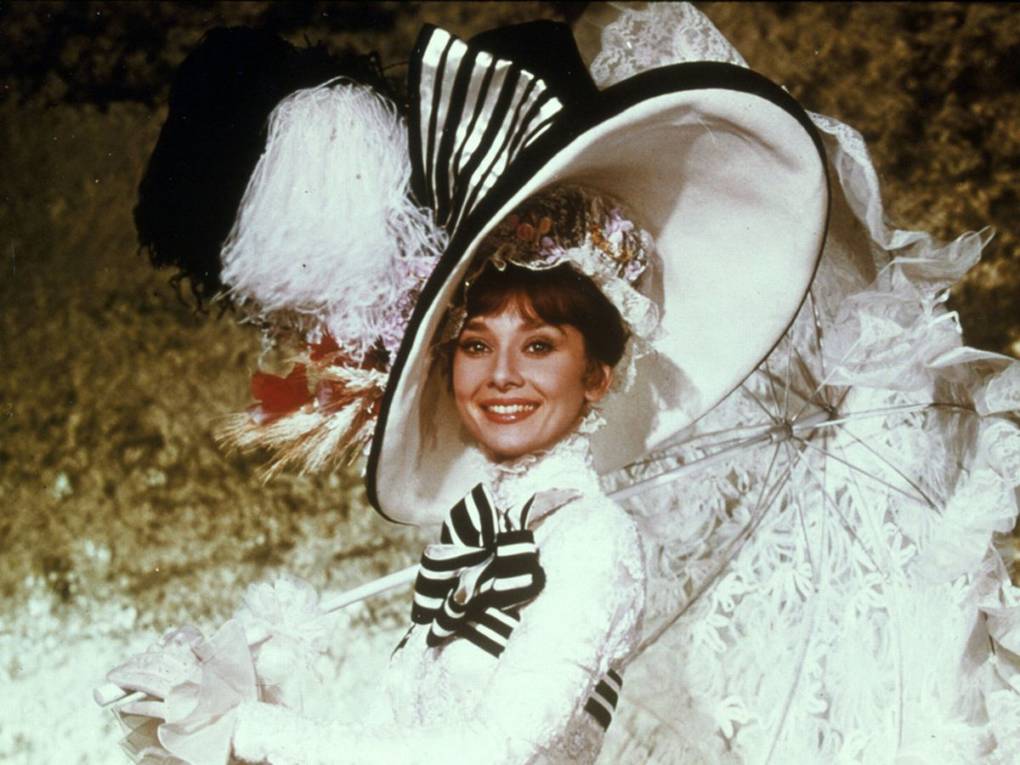
"caption": "Audrey Hepburn appears as Eliza Doolittle in 'My Fair Lady'. In a letter to director George Cukor, she raved about the script.",
"description": "Audrey Hepburn appears as Eliza Doolittle in 'My Fair Lady'. In a letter to director George Cukor, she raved about the script.",
"title": "Audrey Hepburn appears as Eliza Doolittle in 'My Fair Lady'. In a letter to director George Cukor, she raved about the script.",
"credit": null,
"status": "inherit",
"isLoading": false,
"fetchFailed": false
},
"arts_13867089": {
"type": "attachments",
"id": "arts_13867089",
"meta": {
"index": "attachments_1716263798",
"site": "arts",
"id": "13867089",
"found": true
},
"parent": 13867088,
"imgSizes": {
"thumbnail": {
"file": "https://ww2.kqed.org/app/uploads/sites/2/2019/09/smith-fd775eb2a47a60b118ebb0d68402ec2eab163817-160x120.jpg",
"width": 160,
"mimeType": "image/jpeg",
"height": 120
},
"post-thumbnail": {
"file": "https://ww2.kqed.org/app/uploads/sites/2/2019/09/smith-fd775eb2a47a60b118ebb0d68402ec2eab163817-570x372.jpg",
"width": 570,
"mimeType": "image/jpeg",
"height": 372
},
"kqedFullSize": {
"file": "https://ww2.kqed.org/app/uploads/sites/2/2019/09/smith-fd775eb2a47a60b118ebb0d68402ec2eab163817.jpg",
"width": 570,
"height": 427
}
},
"publishDate": 1569382654,
"modified": 1569383002,
"caption": "'Year of the Monkey,' by Patti Smith.",
"description": "'Year of the Monkey,' by Patti Smith.",
"title": "'Year of the Monkey,' by Patti Smith.",
"credit": "Knopf",
"status": "inherit",
"isLoading": false,
"fetchFailed": false
},
"arts_13866931": {
"type": "attachments",
"id": "arts_13866931",
"meta": {
"index": "attachments_1716263798",
"site": "arts",
"id": "13866931",
"found": true
},
"parent": 13866927,
"imgSizes": {
"twentyfourteen-full-width": {
"file": "https://ww2.kqed.org/app/uploads/sites/2/2019/09/gettyimages-525610780_wide-319978e8a3901c87df751f804724eb97fe0ba891-s1500-c85-1038x576.jpg",
"width": 1038,
"mimeType": "image/jpeg",
"height": 576
},
"thumbnail": {
"file": "https://ww2.kqed.org/app/uploads/sites/2/2019/09/gettyimages-525610780_wide-319978e8a3901c87df751f804724eb97fe0ba891-s1500-c85-160x90.jpg",
"width": 160,
"mimeType": "image/jpeg",
"height": 90
},
"post-thumbnail": {
"file": "https://ww2.kqed.org/app/uploads/sites/2/2019/09/gettyimages-525610780_wide-319978e8a3901c87df751f804724eb97fe0ba891-s1500-c85-672x372.jpg",
"width": 672,
"mimeType": "image/jpeg",
"height": 372
},
"kqedFullSize": {
"file": "https://ww2.kqed.org/app/uploads/sites/2/2019/09/gettyimages-525610780_wide-319978e8a3901c87df751f804724eb97fe0ba891-s1500-c85.jpg",
"width": 1500,
"height": 843
},
"large": {
"file": "https://ww2.kqed.org/app/uploads/sites/2/2019/09/gettyimages-525610780_wide-319978e8a3901c87df751f804724eb97fe0ba891-s1500-c85-1020x573.jpg",
"width": 1020,
"mimeType": "image/jpeg",
"height": 573
},
"complete_open_graph": {
"file": "https://ww2.kqed.org/app/uploads/sites/2/2019/09/gettyimages-525610780_wide-319978e8a3901c87df751f804724eb97fe0ba891-s1500-c85-1200x674.jpg",
"width": 1200,
"mimeType": "image/jpeg",
"height": 674
},
"medium": {
"file": "https://ww2.kqed.org/app/uploads/sites/2/2019/09/gettyimages-525610780_wide-319978e8a3901c87df751f804724eb97fe0ba891-s1500-c85-800x450.jpg",
"width": 800,
"mimeType": "image/jpeg",
"height": 450
},
"medium_large": {
"file": "https://ww2.kqed.org/app/uploads/sites/2/2019/09/gettyimages-525610780_wide-319978e8a3901c87df751f804724eb97fe0ba891-s1500-c85-768x432.jpg",
"width": 768,
"mimeType": "image/jpeg",
"height": 432
}
},
"publishDate": 1569265850,
"modified": 1569265890,
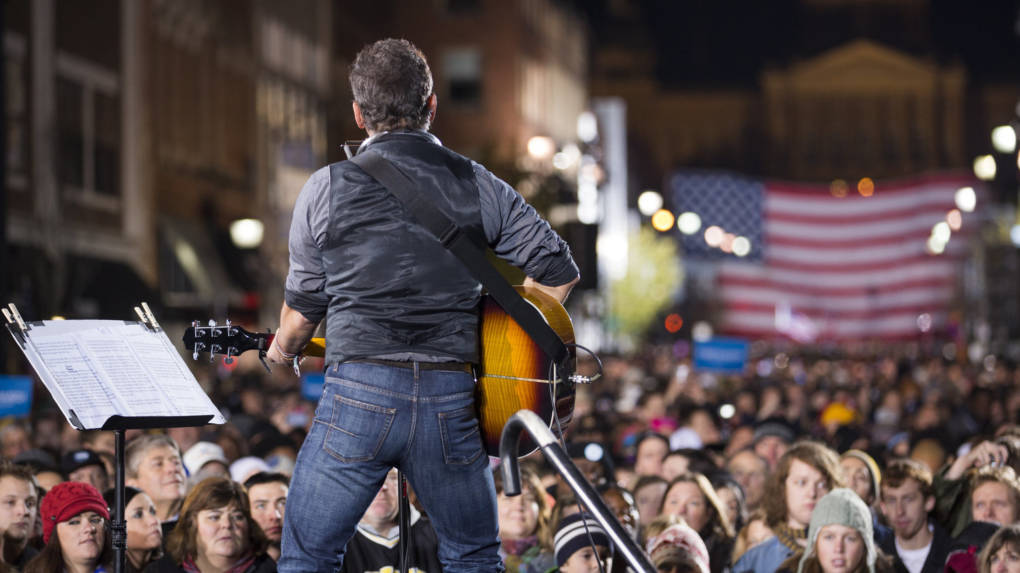
"caption": "Bruce Springsteen performing in 2012 during a campaign rally for former President Barack Obama in Des Moines, Iowa.",
"description": "Bruce Springsteen performing in 2012 during a campaign rally for former President Barack Obama in Des Moines, Iowa.",
"title": "Bruce Springsteen performing in 2012 during a campaign rally for former President Barack Obama in Des Moines, Iowa.",
"credit": "Brooks Kraft/Corbis via Getty Images",
"status": "inherit",
"isLoading": false,
"fetchFailed": false
},
"arts_13866513": {
"type": "attachments",
"id": "arts_13866513",
"meta": {
"index": "attachments_1716263798",
"site": "arts",
"id": "13866513",
"found": true
},
"parent": 13866506,
"imgSizes": {
"twentyfourteen-full-width": {
"file": "https://ww2.kqed.org/app/uploads/sites/2/2019/09/56fae37852bcd028008b9711-1536-768-1038x576.jpg",
"width": 1038,
"mimeType": "image/jpeg",
"height": 576
},
"thumbnail": {
"file": "https://ww2.kqed.org/app/uploads/sites/2/2019/09/56fae37852bcd028008b9711-1536-768-160x80.jpg",
"width": 160,
"mimeType": "image/jpeg",
"height": 80
},
"post-thumbnail": {
"file": "https://ww2.kqed.org/app/uploads/sites/2/2019/09/56fae37852bcd028008b9711-1536-768-672x372.jpg",
"width": 672,
"mimeType": "image/jpeg",
"height": 372
},
"kqedFullSize": {
"file": "https://ww2.kqed.org/app/uploads/sites/2/2019/09/56fae37852bcd028008b9711-1536-768.jpg",
"width": 1536,
"height": 768
},
"large": {
"file": "https://ww2.kqed.org/app/uploads/sites/2/2019/09/56fae37852bcd028008b9711-1536-768-1020x510.jpg",
"width": 1020,
"mimeType": "image/jpeg",
"height": 510
},
"complete_open_graph": {
"file": "https://ww2.kqed.org/app/uploads/sites/2/2019/09/56fae37852bcd028008b9711-1536-768-1200x600.jpg",
"width": 1200,
"mimeType": "image/jpeg",
"height": 600
},
"medium": {
"file": "https://ww2.kqed.org/app/uploads/sites/2/2019/09/56fae37852bcd028008b9711-1536-768-800x400.jpg",
"width": 800,
"mimeType": "image/jpeg",
"height": 400
},
"medium_large": {
"file": "https://ww2.kqed.org/app/uploads/sites/2/2019/09/56fae37852bcd028008b9711-1536-768-768x384.jpg",
"width": 768,
"mimeType": "image/jpeg",
"height": 384
}
},
"publishDate": 1568671092,
"modified": 1568706621,
"caption": "Dustin Hoffman and Meryl Streep in 'Kramer vs. Kramer.'",
"description": "Dustin Hoffman and Meryl Streep in 'Kramer vs. Kramer.'",
"title": "Dustin Hoffman and Meryl Streep in 'Kramer vs. Kramer.'",
"credit": null,
"status": "inherit",
"isLoading": false,
"fetchFailed": false
},
"arts_13866752": {
"type": "attachments",
"id": "arts_13866752",
"meta": {
"index": "attachments_1716263798",
"site": "arts",
"id": "13866752",
"found": true
},
"parent": 13866705,
"imgSizes": {
"thumbnail": {
"file": "https://ww2.kqed.org/app/uploads/sites/2/2019/09/Charo-160x90.jpg",
"width": 160,
"mimeType": "image/jpeg",
"height": 90
},
"post-thumbnail": {
"file": "https://ww2.kqed.org/app/uploads/sites/2/2019/09/Charo-672x372.jpg",
"width": 672,
"mimeType": "image/jpeg",
"height": 372
},
"kqedFullSize": {
"file": "https://ww2.kqed.org/app/uploads/sites/2/2019/09/Charo.jpg",
"width": 800,
"height": 450
},
"medium": {
"file": "https://ww2.kqed.org/app/uploads/sites/2/2019/09/Charo-800x450.jpg",
"width": 800,
"mimeType": "image/jpeg",
"height": 450
},
"medium_large": {
"file": "https://ww2.kqed.org/app/uploads/sites/2/2019/09/Charo-768x432.jpg",
"width": 768,
"mimeType": "image/jpeg",
"height": 432
}
},
"publishDate": 1568919986,
"modified": 1568920031,
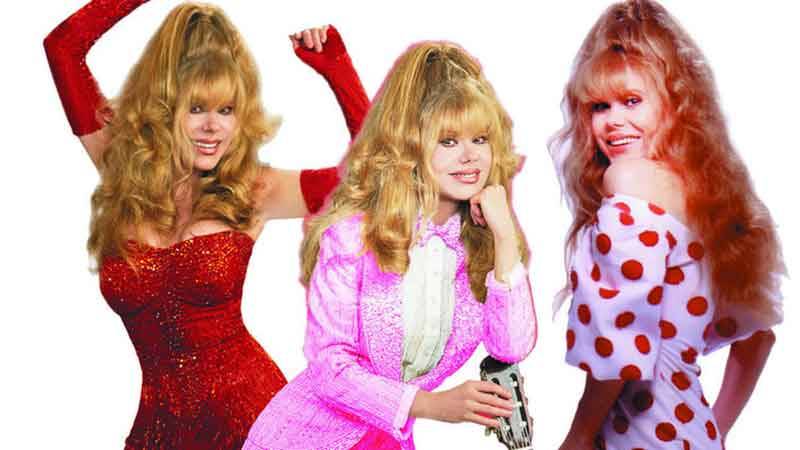
"caption": "Guitarist, singer, comedienne and all-around camp idol Charo performs in San Francisco this weekend.",
"description": "Guitarist, singer, comedienne and all-around camp idol Charo performs in San Francisco this weekend.",
"title": "Charo",
"credit": "artist photo",
"status": "inherit",
"isLoading": false,
"fetchFailed": false
},
"arts_13866693": {
"type": "attachments",
"id": "arts_13866693",
"meta": {
"index": "attachments_1716263798",
"site": "arts",
"id": "13866693",
"found": true
},
"parent": 13866690,
"imgSizes": {
"thumbnail": {
"file": "https://ww2.kqed.org/app/uploads/sites/2/2019/09/PeachesChrist.Axe_-160x90.jpg",
"width": 160,
"mimeType": "image/jpeg",
"height": 90
},
"post-thumbnail": {
"file": "https://ww2.kqed.org/app/uploads/sites/2/2019/09/PeachesChrist.Axe_-672x372.jpg",
"width": 672,
"mimeType": "image/jpeg",
"height": 372
},
"kqedFullSize": {
"file": "https://ww2.kqed.org/app/uploads/sites/2/2019/09/PeachesChrist.Axe_.jpg",
"width": 960,
"height": 540
},
"medium": {
"file": "https://ww2.kqed.org/app/uploads/sites/2/2019/09/PeachesChrist.Axe_-800x450.jpg",
"width": 800,
"mimeType": "image/jpeg",
"height": 450
},
"medium_large": {
"file": "https://ww2.kqed.org/app/uploads/sites/2/2019/09/PeachesChrist.Axe_-768x432.jpg",
"width": 768,
"mimeType": "image/jpeg",
"height": 432
}
},
"publishDate": 1568909829,
"modified": 1568909894,
"caption": "Peaches Christ.",
"description": "Peaches Christ.",
"title": "PeachesChrist.Axe",
"credit": "Ash Danielsen",
"status": "inherit",
"isLoading": false,
"fetchFailed": false
},
"arts_13866487": {
"type": "attachments",
"id": "arts_13866487",
"meta": {
"index": "attachments_1716263798",
"site": "arts",
"id": "13866487",
"found": true
},
"parent": 13866475,
"imgSizes": {
"twentyfourteen-full-width": {
"file": "https://ww2.kqed.org/app/uploads/sites/2/2019/09/SFPL_FaceBook_Cover-1038x576.jpg",
"width": 1038,
"mimeType": "image/jpeg",
"height": 576
},
"thumbnail": {
"file": "https://ww2.kqed.org/app/uploads/sites/2/2019/09/SFPL_FaceBook_Cover-160x90.jpg",
"width": 160,
"mimeType": "image/jpeg",
"height": 90
},
"post-thumbnail": {
"file": "https://ww2.kqed.org/app/uploads/sites/2/2019/09/SFPL_FaceBook_Cover-672x372.jpg",
"width": 672,
"mimeType": "image/jpeg",
"height": 372
},
"kqedFullSize": {
"file": "https://ww2.kqed.org/app/uploads/sites/2/2019/09/SFPL_FaceBook_Cover.jpg",
"width": 1920,
"height": 1080
},
"large": {
"file": "https://ww2.kqed.org/app/uploads/sites/2/2019/09/SFPL_FaceBook_Cover-1020x574.jpg",
"width": 1020,
"mimeType": "image/jpeg",
"height": 574
},
"complete_open_graph": {
"file": "https://ww2.kqed.org/app/uploads/sites/2/2019/09/SFPL_FaceBook_Cover-1200x675.jpg",
"width": 1200,
"mimeType": "image/jpeg",
"height": 675
},
"full-width": {
"file": "https://ww2.kqed.org/app/uploads/sites/2/2019/09/SFPL_FaceBook_Cover-1920x1080.jpg",
"width": 1920,
"mimeType": "image/jpeg",
"height": 1080
},
"medium": {
"file": "https://ww2.kqed.org/app/uploads/sites/2/2019/09/SFPL_FaceBook_Cover-800x450.jpg",
"width": 800,
"mimeType": "image/jpeg",
"height": 450
},
"medium_large": {
"file": "https://ww2.kqed.org/app/uploads/sites/2/2019/09/SFPL_FaceBook_Cover-768x432.jpg",
"width": 768,
"mimeType": "image/jpeg",
"height": 432
}
},
"publishDate": 1568663856,
"modified": 1568663908,
"caption": "Late fees got you down? The SFPL just wiped all our slates clean. ",
"description": "Late fees got you down? The SFPL just wiped all our slates clean. ",
"title": "SFPL_FaceBook_Cover",
"credit": "Wilson Vitorino",
"status": "inherit",
"isLoading": false,
"fetchFailed": false
},
"arts_13866369": {
"type": "attachments",
"id": "arts_13866369",
"meta": {
"index": "attachments_1716263798",
"site": "arts",
"id": "13866369",
"found": true
},
"parent": 13866366,
"imgSizes": {
"twentyfourteen-full-width": {
"file": "https://ww2.kqed.org/app/uploads/sites/2/2019/09/GettyImages-1079458526-1038x576.jpg",
"width": 1038,
"mimeType": "image/jpeg",
"height": 576
},
"thumbnail": {
"file": "https://ww2.kqed.org/app/uploads/sites/2/2019/09/GettyImages-1079458526-160x90.jpg",
"width": 160,
"mimeType": "image/jpeg",
"height": 90
},
"post-thumbnail": {
"file": "https://ww2.kqed.org/app/uploads/sites/2/2019/09/GettyImages-1079458526-672x372.jpg",
"width": 672,
"mimeType": "image/jpeg",
"height": 372
},
"kqedFullSize": {
"file": "https://ww2.kqed.org/app/uploads/sites/2/2019/09/GettyImages-1079458526.jpg",
"width": 1813,
"height": 1020
},
"large": {
"file": "https://ww2.kqed.org/app/uploads/sites/2/2019/09/GettyImages-1079458526-1020x574.jpg",
"width": 1020,
"mimeType": "image/jpeg",
"height": 574
},
"complete_open_graph": {
"file": "https://ww2.kqed.org/app/uploads/sites/2/2019/09/GettyImages-1079458526-1200x675.jpg",
"width": 1200,
"mimeType": "image/jpeg",
"height": 675
},
"medium": {
"file": "https://ww2.kqed.org/app/uploads/sites/2/2019/09/GettyImages-1079458526-800x450.jpg",
"width": 800,
"mimeType": "image/jpeg",
"height": 450
},
"medium_large": {
"file": "https://ww2.kqed.org/app/uploads/sites/2/2019/09/GettyImages-1079458526-768x432.jpg",
"width": 768,
"mimeType": "image/jpeg",
"height": 432
}
},
"publishDate": 1568407280,
"modified": 1568407506,
"caption": "US President Donald Trump appears on a television screen in the Press Briefing Room of the White House in Washington, DC, on January 8, 2019, as he speaks during a presidential address about the government shutdown and border security from the Oval Office. ",
"description": "US President Donald Trump appears on a television screen in the Press Briefing Room of the White House in Washington, DC, on January 8, 2019, as he speaks during a presidential address about the government shutdown and border security from the Oval Office. ",
"title": "US-POLITICS-BORDER-TRUMP",
"credit": "SAUL LOEB/AFP/Getty Images",
"status": "inherit",
"isLoading": false,
"fetchFailed": false
},
"arts_13866338": {
"type": "attachments",
"id": "arts_13866338",
"meta": {
"index": "attachments_1716263798",
"site": "arts",
"id": "13866338",
"found": true
},
"parent": 13866273,
"imgSizes": {
"twentyfourteen-full-width": {
"file": "https://ww2.kqed.org/app/uploads/sites/2/2019/09/Steinbeck_collage_EoEden-1038x576.jpg",
"width": 1038,
"mimeType": "image/jpeg",
"height": 576
},
"thumbnail": {
"file": "https://ww2.kqed.org/app/uploads/sites/2/2019/09/Steinbeck_collage_EoEden-160x90.jpg",
"width": 160,
"mimeType": "image/jpeg",
"height": 90
},
"post-thumbnail": {
"file": "https://ww2.kqed.org/app/uploads/sites/2/2019/09/Steinbeck_collage_EoEden-672x372.jpg",
"width": 672,
"mimeType": "image/jpeg",
"height": 372
},
"kqedFullSize": {
"file": "https://ww2.kqed.org/app/uploads/sites/2/2019/09/Steinbeck_collage_EoEden.jpg",
"width": 1920,
"height": 1080
},
"large": {
"file": "https://ww2.kqed.org/app/uploads/sites/2/2019/09/Steinbeck_collage_EoEden-1020x574.jpg",
"width": 1020,
"mimeType": "image/jpeg",
"height": 574
},
"complete_open_graph": {
"file": "https://ww2.kqed.org/app/uploads/sites/2/2019/09/Steinbeck_collage_EoEden-1200x675.jpg",
"width": 1200,
"mimeType": "image/jpeg",
"height": 675
},
"full-width": {
"file": "https://ww2.kqed.org/app/uploads/sites/2/2019/09/Steinbeck_collage_EoEden-1920x1080.jpg",
"width": 1920,
"mimeType": "image/jpeg",
"height": 1080
},
"medium": {
"file": "https://ww2.kqed.org/app/uploads/sites/2/2019/09/Steinbeck_collage_EoEden-800x450.jpg",
"width": 800,
"mimeType": "image/jpeg",
"height": 450
},
"medium_large": {
"file": "https://ww2.kqed.org/app/uploads/sites/2/2019/09/Steinbeck_collage_EoEden-768x432.jpg",
"width": 768,
"mimeType": "image/jpeg",
"height": 432
}
},
"publishDate": 1568332950,
"modified": 1568332969,
"caption": "The 9th U.S. Circuit Court of Appeals on Monday, Sept. 9, 2019, upheld a $5 million verdict against Gail Steinbeck and told her it's time to end her legal saga.",
"description": "The 9th U.S. Circuit Court of Appeals on Monday, Sept. 9, 2019, upheld a $5 million verdict against Gail Steinbeck and told her it's time to end her legal saga.",
"title": "Steinbeck_collage_EoEden",
"credit": "Wikimedia Commons / Collage by KQED Arts Staff",
"status": "inherit",
"isLoading": false,
"fetchFailed": false
},
"arts_13865689": {
"type": "attachments",
"id": "arts_13865689",
"meta": {
"index": "attachments_1716263798",
"site": "arts",
"id": "13865689",
"found": true
},
"parent": 13865685,
"imgSizes": {
"twentyfourteen-full-width": {
"file": "https://ww2.kqed.org/app/uploads/sites/2/2019/09/GettyImages-1065989868-1024x576.jpg",
"width": 1024,
"mimeType": "image/jpeg",
"height": 576
},
"thumbnail": {
"file": "https://ww2.kqed.org/app/uploads/sites/2/2019/09/GettyImages-1065989868-160x107.jpg",
"width": 160,
"mimeType": "image/jpeg",
"height": 107
},
"post-thumbnail": {
"file": "https://ww2.kqed.org/app/uploads/sites/2/2019/09/GettyImages-1065989868-672x372.jpg",
"width": 672,
"mimeType": "image/jpeg",
"height": 372
},
"kqedFullSize": {
"file": "https://ww2.kqed.org/app/uploads/sites/2/2019/09/GettyImages-1065989868.jpg",
"width": 1024,
"height": 683
},
"large": {
"file": "https://ww2.kqed.org/app/uploads/sites/2/2019/09/GettyImages-1065989868-1020x680.jpg",
"width": 1020,
"mimeType": "image/jpeg",
"height": 680
},
"medium": {
"file": "https://ww2.kqed.org/app/uploads/sites/2/2019/09/GettyImages-1065989868-800x534.jpg",
"width": 800,
"mimeType": "image/jpeg",
"height": 534
},
"medium_large": {
"file": "https://ww2.kqed.org/app/uploads/sites/2/2019/09/GettyImages-1065989868-768x512.jpg",
"width": 768,
"mimeType": "image/jpeg",
"height": 512
}
},
"publishDate": 1567632153,
"modified": 1567632208,
"caption": "Activists at the 2018 #MeToo March on November 10, 2018, Hollywood, California. ",
"description": "Activists at the 2018 #MeToo March on November 10, 2018, Hollywood, California. ",
"title": "Activists at the 2018 #MeToo March on November 10, 2018, Hollywood, California.",
"credit": "Sarah Morris/Getty Images",
"status": "inherit",
"isLoading": false,
"fetchFailed": false
},
"arts_13865716": {
"type": "attachments",
"id": "arts_13865716",
"meta": {
"index": "attachments_1716263798",
"site": "arts",
"id": "13865716",
"found": true
},
"parent": 13865710,
"imgSizes": {
"thumbnail": {
"file": "https://ww2.kqed.org/app/uploads/sites/2/2019/09/astronautica-160x100.jpg",
"width": 160,
"mimeType": "image/jpeg",
"height": 100
},
"post-thumbnail": {
"file": "https://ww2.kqed.org/app/uploads/sites/2/2019/09/astronautica-672x372.jpg",
"width": 672,
"mimeType": "image/jpeg",
"height": 372
},
"kqedFullSize": {
"file": "https://ww2.kqed.org/app/uploads/sites/2/2019/09/astronautica.jpg",
"width": 800,
"height": 500
},
"medium": {
"file": "https://ww2.kqed.org/app/uploads/sites/2/2019/09/astronautica-800x500.jpg",
"width": 800,
"mimeType": "image/jpeg",
"height": 500
},
"medium_large": {
"file": "https://ww2.kqed.org/app/uploads/sites/2/2019/09/astronautica-768x480.jpg",
"width": 768,
"mimeType": "image/jpeg",
"height": 480
}
},
"publishDate": 1567645041,
"modified": 1567645442,
"caption": "Astronautica, pictured above, plays with Giraffage for a free show at the Jerry Garcia Amphitheater in San Francisco this weekend.",
"description": "Astronautica, pictured above, plays with Giraffage for a free show at the Jerry Garcia Amphitheater in San Francisco this weekend.",
"title": "astronautica",
"credit": "Artist photo",
"status": "inherit",
"isLoading": false,
"fetchFailed": false
},
"arts_13865679": {
"type": "attachments",
"id": "arts_13865679",
"meta": {
"index": "attachments_1716263798",
"site": "arts",
"id": "13865679",
"found": true
},
"parent": 13865676,
"imgSizes": {
"twentyfourteen-full-width": {
"file": "https://ww2.kqed.org/app/uploads/sites/2/2019/09/Testaments_Hero_website-3-1-1038x576.jpg",
"width": 1038,
"mimeType": "image/jpeg",
"height": 576
},
"thumbnail": {
"file": "https://ww2.kqed.org/app/uploads/sites/2/2019/09/Testaments_Hero_website-3-1-160x90.jpg",
"width": 160,
"mimeType": "image/jpeg",
"height": 90
},
"post-thumbnail": {
"file": "https://ww2.kqed.org/app/uploads/sites/2/2019/09/Testaments_Hero_website-3-1-672x372.jpg",
"width": 672,
"mimeType": "image/jpeg",
"height": 372
},
"kqedFullSize": {
"file": "https://ww2.kqed.org/app/uploads/sites/2/2019/09/Testaments_Hero_website-3-1.jpg",
"width": 2048,
"height": 1152
},
"large": {
"file": "https://ww2.kqed.org/app/uploads/sites/2/2019/09/Testaments_Hero_website-3-1-1020x574.jpg",
"width": 1020,
"mimeType": "image/jpeg",
"height": 574
},
"complete_open_graph": {
"file": "https://ww2.kqed.org/app/uploads/sites/2/2019/09/Testaments_Hero_website-3-1-1200x675.jpg",
"width": 1200,
"mimeType": "image/jpeg",
"height": 675
},
"full-width": {
"file": "https://ww2.kqed.org/app/uploads/sites/2/2019/09/Testaments_Hero_website-3-1-1920x1080.jpg",
"width": 1920,
"mimeType": "image/jpeg",
"height": 1080
},
"medium": {
"file": "https://ww2.kqed.org/app/uploads/sites/2/2019/09/Testaments_Hero_website-3-1-800x450.jpg",
"width": 800,
"mimeType": "image/jpeg",
"height": 450
},
"medium_large": {
"file": "https://ww2.kqed.org/app/uploads/sites/2/2019/09/Testaments_Hero_website-3-1-768x432.jpg",
"width": 768,
"mimeType": "image/jpeg",
"height": 432
}
},
"publishDate": 1567627202,
"modified": 1567627276,
"caption": "'The Testaments' by Margaret Atwood is released September 10, 2019.",
"description": "'The Testaments' by Margaret Atwood is released September 10, 2019.",
"title": "'The Testaments' by Margaret Atwood is released September 10, 2019.",
"credit": null,
"status": "inherit",
"isLoading": false,
"fetchFailed": false
}
},
"audioPlayerReducer": {
"postId": "stream_live",
"isPaused": true,
"isPlaying": false,
"pfsActive": false,
"pledgeModalIsOpen": true,
"playerDrawerIsOpen": false,
"liveAudioPlayStartedAt": 0,
"liveAudioPlayContext": ""
},
"authorsReducer": {
"byline_arts_13867152": {
"type": "authors",
"id": "byline_arts_13867152",
"meta": {
"override": true
},
"slug": "byline_arts_13867152",
"name": "Susan Stamberg",
"isLoading": false
},
"byline_arts_13867088": {
"type": "authors",
"id": "byline_arts_13867088",
"meta": {
"override": true
},
"slug": "byline_arts_13867088",
"name": "Gabino Iglesias",
"isLoading": false
},
"byline_arts_13866927": {
"type": "authors",
"id": "byline_arts_13866927",
"meta": {
"override": true
},
"slug": "byline_arts_13866927",
"name": "A.O. Scott",
"isLoading": false
},
"byline_arts_13866366": {
"type": "authors",
"id": "byline_arts_13866366",
"meta": {
"override": true
},
"slug": "byline_arts_13866366",
"name": "Annalisa Quinn",
"isLoading": false
},
"byline_arts_13866273": {
"type": "authors",
"id": "byline_arts_13866273",
"meta": {
"override": true
},
"slug": "byline_arts_13866273",
"name": "Brian Melley, Associated Press",
"isLoading": false
},
"byline_arts_13865676": {
"type": "authors",
"id": "byline_arts_13865676",
"meta": {
"override": true
},
"slug": "byline_arts_13865676",
"name": "Petra Mayer",
"isLoading": false
},
"shotchkiss": {
"type": "authors",
"id": "61",
"meta": {
"index": "authors_1716337520",
"id": "61",
"found": true
},
"name": "Sarah Hotchkiss",
"firstName": "Sarah",
"lastName": "Hotchkiss",
"slug": "shotchkiss",
"email": "shotchkiss@kqed.org",
"display_author_email": true,
"staff_mastheads": [
"arts"
],
"title": "Senior Editor",
"bio": "Sarah Hotchkiss is a San Francisco \u003ca href=\"http://www.sarahhotchkiss.com\">artist\u003c/a> and arts writer. In 2019, she received the Dorothea & Leo Rabkin Foundation grant for visual art journalism and in 2020 she received a Society of Professional Journalists, Northern California award for excellence in arts and culture reporting.",
"avatar": "https://secure.gravatar.com/avatar/bc662df144b3d27fd8b1b6f1c2a420d34e91e53154d411bb7ad353cc8b6cea8d?s=600&d=blank&r=g",
"twitter": null,
"bluesky": null,
"facebook": null,
"instagram": null,
"linkedin": null,
"sites": [
{
"site": "",
"roles": [
"editor"
]
},
{
"site": "arts",
"roles": [
"Contributor",
"administrator"
]
},
{
"site": "artschool",
"roles": [
"administrator"
]
},
{
"site": "news",
"roles": [
"editor"
]
},
{
"site": "pop",
"roles": [
"administrator"
]
},
{
"site": "bayareabites",
"roles": [
"editor"
]
},
{
"site": "spark",
"roles": [
"editor"
]
},
{
"site": "checkplease",
"roles": [
"editor"
]
}
],
"headData": {
"title": "Sarah Hotchkiss | KQED",
"description": "Senior Editor",
"ogImgSrc": "https://secure.gravatar.com/avatar/bc662df144b3d27fd8b1b6f1c2a420d34e91e53154d411bb7ad353cc8b6cea8d?s=600&d=blank&r=g",
"twImgSrc": "https://secure.gravatar.com/avatar/bc662df144b3d27fd8b1b6f1c2a420d34e91e53154d411bb7ad353cc8b6cea8d?s=600&d=blank&r=g"
},
"isLoading": false,
"link": "/author/shotchkiss"
},
"gmeline": {
"type": "authors",
"id": "185",
"meta": {
"index": "authors_1716337520",
"id": "185",
"found": true
},
"name": "Gabe Meline",
"firstName": "Gabe",
"lastName": "Meline",
"slug": "gmeline",
"email": "gmeline@kqed.org",
"display_author_email": true,
"staff_mastheads": [
"arts"
],
"title": "Senior Editor, KQED Arts & Culture",
"bio": "Gabe Meline entered journalism at age 15 making photocopied zines, and has since earned awards from the Edward R. Murrow Awards, the Society for Professional Journalists, the Online Journalism Awards, the Association of Alternative Newsweeklies and the California Newspaper Publishers Association. Prior to KQED, he was the editor of the \u003cem>North Bay Bohemian\u003c/em> and a touring musician. He lives with his wife and daughter in his hometown of Santa Rosa, CA.",
"avatar": "https://secure.gravatar.com/avatar/5bebe57be0d8bc2dd318934feb47299e2d2d10cba28d09d8d7afb389a2ce2bdd?s=600&d=blank&r=g",
"twitter": null,
"bluesky": null,
"facebook": null,
"instagram": null,
"linkedin": null,
"sites": [
{
"site": "",
"roles": [
"editor"
]
},
{
"site": "arts",
"roles": [
"administrator"
]
},
{
"site": "artschool",
"roles": [
"editor"
]
},
{
"site": "news",
"roles": [
"author"
]
},
{
"site": "pop",
"roles": [
"editor"
]
},
{
"site": "bayareabites",
"roles": [
"editor"
]
},
{
"site": "food",
"roles": [
"editor"
]
},
{
"site": "forum",
"roles": [
"administrator"
]
},
{
"site": "liveblog",
"roles": [
"editor"
]
},
{
"site": "hiphop",
"roles": [
"editor"
]
}
],
"headData": {
"title": "Gabe Meline | KQED",
"description": "Senior Editor, KQED Arts & Culture",
"ogImgSrc": "https://secure.gravatar.com/avatar/5bebe57be0d8bc2dd318934feb47299e2d2d10cba28d09d8d7afb389a2ce2bdd?s=600&d=blank&r=g",
"twImgSrc": "https://secure.gravatar.com/avatar/5bebe57be0d8bc2dd318934feb47299e2d2d10cba28d09d8d7afb389a2ce2bdd?s=600&d=blank&r=g"
},
"isLoading": false,
"link": "/author/gmeline"
},
"ralexandra": {
"type": "authors",
"id": "11242",
"meta": {
"index": "authors_1716337520",
"id": "11242",
"found": true
},
"name": "Rae Alexandra",
"firstName": "Rae",
"lastName": "Alexandra",
"slug": "ralexandra",
"email": "ralexandra@kqed.org",
"display_author_email": true,
"staff_mastheads": [],
"title": "Reporter/Producer",
"bio": "Rae Alexandra is a Reporter/Producer for KQED Arts & Culture, and the creator/author of the \u003ca href=\"https://www.kqed.org/arts/program/rebel-girls-from-bay-area-history\">Rebel Girls From Bay Area History\u003c/a> and \u003ca href=\"https://www.kqed.org/bizarrebayarea\">Bizarre Bay Area\u003c/a> series. Her debut book, \u003ca href=\"https://citylights.com/politics-current-events-history/unsung-heroines35-women-who-changed/\">Unsung Heroines: 35 Women Who Changed the Bay Area\u003c/a> was published by City Lights in March 2026. In 2023, Rae was awarded an SPJ Excellence in Journalism Award for Arts & Culture. Rae was born and raised in Wales and subsequently — even after two decades in Northern California — still uses phrases that regularly baffle her coworkers.",
"avatar": "https://secure.gravatar.com/avatar/edfee8176c80cc0a382b051190f5341997df378a934a5774dcb0977732dfd401?s=600&d=blank&r=g",
"twitter": null,
"bluesky": null,
"facebook": null,
"instagram": null,
"linkedin": null,
"sites": [
{
"site": "arts",
"roles": [
"subscriber"
]
},
{
"site": "news",
"roles": [
"subscriber"
]
},
{
"site": "pop",
"roles": [
"subscriber"
]
},
{
"site": "bayareabites",
"roles": [
"subscriber"
]
},
{
"site": "science",
"roles": [
"subscriber"
]
}
],
"headData": {
"title": "Rae Alexandra | KQED",
"description": "Reporter/Producer",
"ogImgSrc": "https://secure.gravatar.com/avatar/edfee8176c80cc0a382b051190f5341997df378a934a5774dcb0977732dfd401?s=600&d=blank&r=g",
"twImgSrc": "https://secure.gravatar.com/avatar/edfee8176c80cc0a382b051190f5341997df378a934a5774dcb0977732dfd401?s=600&d=blank&r=g"
},
"isLoading": false,
"link": "/author/ralexandra"
},
"jhesig": {
"type": "authors",
"id": "11333",
"meta": {
"index": "authors_1716337520",
"id": "11333",
"found": true
},
"name": "Janelle Hessig",
"firstName": "Janelle",
"lastName": "Hessig",
"slug": "jhesig",
"email": "jhessig@kqed.org",
"display_author_email": false,
"staff_mastheads": [],
"title": "KQED Contributor",
"bio": null,
"avatar": "https://secure.gravatar.com/avatar/27dd6e3cd88f82541593bd6d8f2aec4a?s=600&d=mm&r=g",
"twitter": null,
"facebook": null,
"instagram": null,
"linkedin": null,
"sites": [
{
"site": "arts",
"roles": []
},
{
"site": "food",
"roles": []
},
{
"site": "filmschoolshorts",
"roles": [
"editor"
]
}
],
"headData": {
"title": "Janelle Hessig | KQED",
"description": "KQED Contributor",
"ogImgSrc": "https://secure.gravatar.com/avatar/27dd6e3cd88f82541593bd6d8f2aec4a?s=600&d=mm&r=g",
"twImgSrc": "https://secure.gravatar.com/avatar/27dd6e3cd88f82541593bd6d8f2aec4a?s=600&d=mm&r=g"
},
"isLoading": false,
"link": "/author/jhesig"
}
},
"pagesReducer": {
"arts_category_literature": {
"type": "terms",
"id": "arts_73",
"meta": {
"index": "terms_1716263798",
"site": "arts",
"id": "73",
"score": 12.797771
},
"featImg": null,
"name": "Books",
"description": null,
"taxonomy": "category",
"headData": {
"twImgId": null,
"twTitle": null,
"ogTitle": null,
"ogImgId": null,
"twDescription": null,
"description": null,
"title": "Books Archives | KQED Arts",
"ogDescription": null
},
"ttid": 74,
"slug": "literature",
"isLoading": false,
"title": "Books",
"pageMeta": {
"site": "arts",
"WpPageTemplate": "page-topic-editorial",
"currentPage": 60
},
"blocks": [
{
"blockName": "kqed/post-list",
"attrs": {
"layout": "cardArticle2",
"query": "posts/arts?category=literature",
"seeMore": false,
"paginated": true,
"page": 60
}
},
{
"blockName": "kqed/ad"
}
]
}
},
"pfsSessionReducer": {},
"postsReducer": {
"stream_live": {
"type": "live",
"id": "stream_live",
"audioUrl": "https://streams.kqed.org/kqedradio",
"title": "Live Stream",
"excerpt": "Live Stream information currently unavailable.",
"link": "/radio",
"featImg": "",
"label": {
"name": "KQED Live",
"link": "/"
}
},
"stream_kqedNewscast": {
"type": "posts",
"id": "stream_kqedNewscast",
"audioUrl": "https://www.kqed.org/.stream/anon/radio/RDnews/newscast.mp3?_=1",
"title": "KQED Newscast",
"featImg": "",
"label": {
"name": "88.5 FM",
"link": "/"
}
},
"arts_13867152": {
"type": "posts",
"id": "arts_13867152",
"meta": {
"index": "posts_1716263798",
"site": "arts",
"id": "13867152",
"score": null,
"sort": [
1569449123000
]
},
"parent": 0,
"labelTerm": {
"site": "arts",
"term": 137
},
"blocks": [],
"publishDate": 1569449123,
"format": "standard",
"title": "In Golden Age Hollywood, Film Stars Slid Into Each Others' Telegrams",
"headTitle": "In Golden Age Hollywood, Film Stars Slid Into Each Others’ Telegrams | KQED",
"content": "\u003cp>Ingrid Bergman was a so-so typist. Katharine Hepburn’s signature was indecipherable. Marlene Dietrich signed her letter to Ernest Hemingway as “Your Kraut.”\u003c/p>\n\u003cp>A collection of letters, memos, telegrams and other written communiques from the golden age of Hollywood are collected in a new book. \u003cem>Letters from Hollywood\u003c/em>, edited and compiled by Barbara Hall and Rocky Lang, is a delicious peek into very famous people’s private lives.\u003c/p>\n\u003cp>Take Audrey Hepburn. On screen, she was perfection: the bangs, the long cigarette-holder in \u003cem>Breakfast at Tiffany’s\u003c/em>, the lavish hat at Ascot in \u003cem>My Fair Lady\u003c/em>.\u003c/p>\n\u003cfigure id=\"attachment_13867154\" class=\"wp-caption alignright\" style=\"max-width: 800px\">\u003cimg loading=\"lazy\" decoding=\"async\" class=\"size-medium wp-image-13867154\" src=\"https://ww2.kqed.org/arts/wp-content/uploads/sites/2/2019/09/lettersfromhollywood_p_p289a_enl-72bffeaf34d442b672b6eba388f42ef7626e72fa-800x1037.jpg\" alt=\"In a letter to the director of 'My Fair Lady,' Audrey Hepburn asks for costume designer Cecil Beaton to send her the designs for her footwear—such that her bootmaker could replicate them. A replication of the note appears in 'Letters from Hollywood.'\" width=\"800\" height=\"1037\" srcset=\"https://cdn.kqed.org/wp-content/uploads/sites/2/2019/09/lettersfromhollywood_p_p289a_enl-72bffeaf34d442b672b6eba388f42ef7626e72fa-800x1037.jpg 800w, https://cdn.kqed.org/wp-content/uploads/sites/2/2019/09/lettersfromhollywood_p_p289a_enl-72bffeaf34d442b672b6eba388f42ef7626e72fa-160x207.jpg 160w, https://cdn.kqed.org/wp-content/uploads/sites/2/2019/09/lettersfromhollywood_p_p289a_enl-72bffeaf34d442b672b6eba388f42ef7626e72fa-768x995.jpg 768w, https://cdn.kqed.org/wp-content/uploads/sites/2/2019/09/lettersfromhollywood_p_p289a_enl-72bffeaf34d442b672b6eba388f42ef7626e72fa-1020x1322.jpg 1020w, https://cdn.kqed.org/wp-content/uploads/sites/2/2019/09/lettersfromhollywood_p_p289a_enl-72bffeaf34d442b672b6eba388f42ef7626e72fa-926x1200.jpg 926w, https://cdn.kqed.org/wp-content/uploads/sites/2/2019/09/lettersfromhollywood_p_p289a_enl-72bffeaf34d442b672b6eba388f42ef7626e72fa.jpg 1353w\" sizes=\"(max-width: 800px) 100vw, 800px\">\u003cfigcaption class=\"wp-caption-text\">In a letter to the director of ‘My Fair Lady,’ Audrey Hepburn asks for costume designer Cecil Beaton to send her the designs for her footwear—such that her bootmaker could replicate them. A replication of the note appears in ‘Letters from Hollywood.’ \u003ccite>(Courtesy of Sean Hepburn Ferrer & Luca Dotti/Abrams Books)\u003c/cite>\u003c/figcaption>\u003c/figure>\n\u003cp>In 1963, after seeing \u003cem>the My Fair Lady\u003c/em> script for the first time, she wrote the director (in perfect schoolgirl penmanship) of her delight.\u003c/p>\n\u003cblockquote>\u003cp>It’s MARVELLOUS, I am beyond myself with happiness and excitement! It is all so good and so solid, warm funny and enchanting. I just pray every day to be as good as the role, or is that too much to ask for? All the wonder of the musical and the play are there, it’s just smashing!\u003c/p>\u003c/blockquote>\n\u003cp>But perfect Audrey, it seems, had bad feet. Hepburn asks for the designer’s sketches of her shoes so that her private bootmaker in Paris can cobble them for the movie.\u003c/p>\n\u003cblockquote>\u003cp>One is an awful lot on ones feet when working—and since my days in the ballet I have had “trouble with me feet” unless properly “shoed.” … It does make all the difference.\u003c/p>\u003c/blockquote>\n\u003cp>“I think it’s the kind of thing that it’s great to learn about an actress,” co-author and film historian Barbara Hall says. “We think of them—sort of put them on a pedestal, but really, she was a regular person, and obviously a very charming one.”\u003c/p>\n\u003cp>[ad fullwidth]\u003c/p>\n\u003cp>In other words, she was a great star who knew what she needed to do her best work.\u003c/p>\n\u003cp>Bette Davis was also like that. A winner of two Oscars, she’s \u003ca href=\"https://www.youtube.com/watch?v=LPPJdOGshUM\">famous for the immortal line\u003c/a> from \u003cem>All About Eve\u003c/em>: “Fasten your seatbelts. It’s going to be a bumpy night.”\u003c/p>\n\u003cp>Years before \u003cem>Eve\u003c/em>, Bette Davis was exhausted, overworked. Hollywood studios controlled their actors in those days, and there was little rest for Warner Brothers’ biggest star.\u003c/p>\n\u003cp>“They just kept putting her in more and more films,” Hall says. “And she felt like she needed more time between projects.”\u003c/p>\n\u003cp>Davis wanted to make fewer pictures every year—more time off between movies. So she wrote (again, by hand) to studio head Jack Warner, protesting her contract. She ended her very firm letter:\u003c/p>\n\u003cblockquote>\u003cp>Would appreciate your not communicating with me—it upsets me very much. I must be allowed to completely forget business. … Also arguing with me is no use—nor do I want to come back until it is settled—\u003c/p>\u003c/blockquote>\n\u003cfigure id=\"attachment_13867163\" class=\"wp-caption alignright\" style=\"max-width: 400px\">\u003cimg loading=\"lazy\" decoding=\"async\" class=\"size-full wp-image-13867163\" src=\"https://ww2.kqed.org/arts/wp-content/uploads/sites/2/2019/09/9781419738098_vert-7bbdaba24c3e706b9c2cd6742b89d419a9554094-s600-c85.jpg\" alt=\"‘Letters from Hollywood’ by Rocky Lang, Barbara Hall and Peter Bogdanovich.\" width=\"400\" height=\"547\" srcset=\"https://cdn.kqed.org/wp-content/uploads/sites/2/2019/09/9781419738098_vert-7bbdaba24c3e706b9c2cd6742b89d419a9554094-s600-c85.jpg 400w, https://cdn.kqed.org/wp-content/uploads/sites/2/2019/09/9781419738098_vert-7bbdaba24c3e706b9c2cd6742b89d419a9554094-s600-c85-160x219.jpg 160w\" sizes=\"(max-width: 400px) 100vw, 400px\">\u003cfigcaption class=\"wp-caption-text\">‘Letters from Hollywood’ by Rocky Lang, Barbara Hall and Peter Bogdanovich. \u003ccite>(Harry N. Abrams)\u003c/cite>\u003c/figcaption>\u003c/figure>\n\u003cp>Another letter-writer in this collection is Hattie McDaniel, the first African American to win an Oscar (for best supporting actress) as Mammy in 1939’s \u003cem>Gone with the Wind\u003c/em>.\u003c/p>\n\u003cp>McDaniel was a busy actor in the 1930s and ’40s—always playing a maid or servant. In 1947, she thanked gossip columnist Hedda Hopper for printing kind words about her. But others criticized her for taking so many servant roles. McDaniel wrote:\u003c/p>\n\u003cblockquote>\u003cp>Truly, a maid or butler in real life is making an honest dollar, just as we are on the screen. I only hope that producers will give us Negro actors and actresses more roles, even if there will be those who call us Uncle Toms.\u003c/p>\u003c/blockquote>\n\u003cp>The NAACP and other civil rights organizations had started pressuring studios to get rid of stereotypical roles like McDaniel was playing—the only parts African Americans could get then. The protests had a bitter result for the Oscar-winner: Hattie McDaniel found that she was getting fewer and fewer roles in the immediate postwar years, because they weren’t being written.\u003c/p>\n\u003cp>Among the 137 items in this book is a telegram to director William Wyler, sent in 1937 by an extremely precocious star-to-be.\u003c/p>\n\u003cblockquote>\u003cp>I ADMIRE YOUR PICTURES AND WOULD LIKE TO WORK FOR YOU I AM EIGHTEEN MINUTES OLD BLONDE HAIR BLUE EYES WEIGHT EIGHT POUNDS, AND I HAVE BEEN CALLED BEAUTIFUL MY FATHER WAS AN ACTOR=\u003cbr>\nJAYNE SEYMOUR FONDA.\u003c/p>\u003c/blockquote>\n\u003cp>The real author of the telegram was Henry Fonda—Jane Fonda’s father. So in his reply to the new baby, Wyler wrote that he wanted to make a screen test of her as soon as possible. But he also took a playful shot at her dad: “WE FEEL IT OUR DUTY TO CORRECT ANY ILLUSION YOU MAY HAVE BEEN UNDER IN THE PAST … YOUR FATHER NEVER WAS AN ACTOR.”\u003c/p>\n\u003cp>\u003cem>Letters from Hollywood \u003c/em>is subtitled \u003cem>Inside the Private World of Classic American Moviemaking\u003c/em>. These are very personal letters from stars, directors, heads of studios. So is it an invasion of privacy to publish them?\u003c/p>\n\u003cp>“I don’t think so,” says Peter Bogdanovich, the director, writer, actor, film historian and author of the book’s foreword. “It’s history.”\u003c/p>\n\u003cp>\u003c/p>\n\u003cp>\u003cem>Nina Gregory edited this story for broadcast.\u003c/em>\u003c/p>\n\u003cdiv class=\"fullattribution\">\u003cem>Copyright 2019 NPR. To see more, visit \u003ca href=\"https://www.npr.org\" target=\"_blank\" rel=\"noopener\">NPR\u003c/a>.\u003cimg decoding=\"async\" src=\"https://www.google-analytics.com/__utm.gif?utmac=UA-5828686-4&utmdt=In+Golden+Age+Hollywood%2C+Film+Stars+Slid+Into+Each+Others%27+Telegrams&utme=8(APIKey)9(MDAxOTAwOTE4MDEyMTkxMDAzNjczZDljZA004)\">\u003c/em>\u003c/div>\n\n",
"stats": {
"hasVideo": false,
"hasChartOrMap": false,
"hasAudio": false,
"hasPolis": false,
"wordCount": 976,
"hasGoogleForm": false,
"hasGallery": false,
"hasHearkenModule": false,
"iframeSrcs": [],
"paragraphCount": 26
},
"modified": 1705022088,
"excerpt": "The new book 'Letters from Hollywood' offers a peek inside the inner workings of the film industry through 137 communiques from luminaries like Audrey Hepburn, Bette Davis and a very young Jane Fonda.",
"headData": {
"twImgId": "",
"twTitle": "",
"ogTitle": "",
"ogImgId": "",
"twDescription": "",
"description": "The new book 'Letters from Hollywood' offers a peek inside the inner workings of the film industry through 137 communiques from luminaries like Audrey Hepburn, Bette Davis and a very young Jane Fonda.",
"title": "In Golden Age Hollywood, Film Stars Slid Into Each Others' Telegrams | KQED",
"ogDescription": "",
"schema": {
"@context": "https://schema.org",
"@type": "Article",
"headline": "In Golden Age Hollywood, Film Stars Slid Into Each Others' Telegrams",
"datePublished": "2019-09-25T15:05:23-07:00",
"dateModified": "2024-01-11T17:14:48-08:00",
"image": "https://cdn.kqed.org/wp-content/uploads/2020/02/KQED-OG-Image@1x.png"
}
},
"guestAuthors": [],
"slug": "in-golden-age-hollywood-film-stars-slid-into-each-others-telegrams",
"status": "publish",
"nprApiLink": "http://api.npr.org/query?id=763542386&apiKey=MDAxOTAwOTE4MDEyMTkxMDAzNjczZDljZA004",
"templateType": "standard",
"nprStoryDate": "Wed, 25 Sep 2019 05:03:19 -0400",
"nprLastModifiedDate": "Wed, 25 Sep 2019 05:03:19 -0400",
"featuredImageType": "standard",
"nprHtmlLink": "https://www.npr.org/2019/09/25/763542386/in-golden-age-hollywood-film-stars-slid-into-each-others-telegrams?ft=nprml&f=763542386",
"nprAudio": "https://ondemand.npr.org/anon.npr-mp3/npr/me/2019/09/20190925_me_in_golden_age_hollywood_film_stars_slid_into_each_others_telegrams.mp3?orgId=1&topicId=1161&d=343&p=3&story=763542386&ft=nprml&f=763542386",
"nprImageAgency": "AP",
"nprAudioM3u": "http://api.npr.org/m3u/1764116773-799398.m3u?orgId=1&topicId=1161&d=343&p=3&story=763542386&ft=nprml&f=763542386",
"nprStoryId": "763542386",
"nprByline": "Susan Stamberg",
"sticky": false,
"audioTrackLength": 343,
"nprRetrievedStory": "1",
"nprPubDate": "Wed, 25 Sep 2019 11:49:00 -0400",
"path": "/arts/13867152/in-golden-age-hollywood-film-stars-slid-into-each-others-telegrams",
"audioUrl": "https://ondemand.npr.org/anon.npr-mp3/npr/me/2019/09/20190925_me_in_golden_age_hollywood_film_stars_slid_into_each_others_telegrams.mp3?orgId=1&topicId=1161&d=343&p=3&story=763542386&ft=nprml&f=763542386",
"parsedContent": [
{
"type": "contentString",
"content": "\u003cdiv class=\"post-body\">\u003cp>\u003cp>Ingrid Bergman was a so-so typist. Katharine Hepburn’s signature was indecipherable. Marlene Dietrich signed her letter to Ernest Hemingway as “Your Kraut.”\u003c/p>\n\u003cp>A collection of letters, memos, telegrams and other written communiques from the golden age of Hollywood are collected in a new book. \u003cem>Letters from Hollywood\u003c/em>, edited and compiled by Barbara Hall and Rocky Lang, is a delicious peek into very famous people’s private lives.\u003c/p>\n\u003cp>Take Audrey Hepburn. On screen, she was perfection: the bangs, the long cigarette-holder in \u003cem>Breakfast at Tiffany’s\u003c/em>, the lavish hat at Ascot in \u003cem>My Fair Lady\u003c/em>.\u003c/p>\n\u003cfigure id=\"attachment_13867154\" class=\"wp-caption alignright\" style=\"max-width: 800px\">\u003cimg loading=\"lazy\" decoding=\"async\" class=\"size-medium wp-image-13867154\" src=\"https://ww2.kqed.org/arts/wp-content/uploads/sites/2/2019/09/lettersfromhollywood_p_p289a_enl-72bffeaf34d442b672b6eba388f42ef7626e72fa-800x1037.jpg\" alt=\"In a letter to the director of 'My Fair Lady,' Audrey Hepburn asks for costume designer Cecil Beaton to send her the designs for her footwear—such that her bootmaker could replicate them. A replication of the note appears in 'Letters from Hollywood.'\" width=\"800\" height=\"1037\" srcset=\"https://cdn.kqed.org/wp-content/uploads/sites/2/2019/09/lettersfromhollywood_p_p289a_enl-72bffeaf34d442b672b6eba388f42ef7626e72fa-800x1037.jpg 800w, https://cdn.kqed.org/wp-content/uploads/sites/2/2019/09/lettersfromhollywood_p_p289a_enl-72bffeaf34d442b672b6eba388f42ef7626e72fa-160x207.jpg 160w, https://cdn.kqed.org/wp-content/uploads/sites/2/2019/09/lettersfromhollywood_p_p289a_enl-72bffeaf34d442b672b6eba388f42ef7626e72fa-768x995.jpg 768w, https://cdn.kqed.org/wp-content/uploads/sites/2/2019/09/lettersfromhollywood_p_p289a_enl-72bffeaf34d442b672b6eba388f42ef7626e72fa-1020x1322.jpg 1020w, https://cdn.kqed.org/wp-content/uploads/sites/2/2019/09/lettersfromhollywood_p_p289a_enl-72bffeaf34d442b672b6eba388f42ef7626e72fa-926x1200.jpg 926w, https://cdn.kqed.org/wp-content/uploads/sites/2/2019/09/lettersfromhollywood_p_p289a_enl-72bffeaf34d442b672b6eba388f42ef7626e72fa.jpg 1353w\" sizes=\"(max-width: 800px) 100vw, 800px\">\u003cfigcaption class=\"wp-caption-text\">In a letter to the director of ‘My Fair Lady,’ Audrey Hepburn asks for costume designer Cecil Beaton to send her the designs for her footwear—such that her bootmaker could replicate them. A replication of the note appears in ‘Letters from Hollywood.’ \u003ccite>(Courtesy of Sean Hepburn Ferrer & Luca Dotti/Abrams Books)\u003c/cite>\u003c/figcaption>\u003c/figure>\n\u003cp>In 1963, after seeing \u003cem>the My Fair Lady\u003c/em> script for the first time, she wrote the director (in perfect schoolgirl penmanship) of her delight.\u003c/p>\n\u003cblockquote>\u003cp>It’s MARVELLOUS, I am beyond myself with happiness and excitement! It is all so good and so solid, warm funny and enchanting. I just pray every day to be as good as the role, or is that too much to ask for? All the wonder of the musical and the play are there, it’s just smashing!\u003c/p>\u003c/blockquote>\n\u003cp>But perfect Audrey, it seems, had bad feet. Hepburn asks for the designer’s sketches of her shoes so that her private bootmaker in Paris can cobble them for the movie.\u003c/p>\n\u003cblockquote>\u003cp>One is an awful lot on ones feet when working—and since my days in the ballet I have had “trouble with me feet” unless properly “shoed.” … It does make all the difference.\u003c/p>\u003c/blockquote>\n\u003cp>“I think it’s the kind of thing that it’s great to learn about an actress,” co-author and film historian Barbara Hall says. “We think of them—sort of put them on a pedestal, but really, she was a regular person, and obviously a very charming one.”\u003c/p>\n\u003cp>\u003c/p>\u003c/div>",
"attributes": {
"named": {},
"numeric": []
}
},
{
"type": "component",
"content": "",
"name": "ad",
"attributes": {
"named": {
"label": "fullwidth"
},
"numeric": [
"fullwidth"
]
}
},
{
"type": "contentString",
"content": "\u003cdiv class=\"post-body\">\u003cp>\u003c/p>\n\u003cp>In other words, she was a great star who knew what she needed to do her best work.\u003c/p>\n\u003cp>Bette Davis was also like that. A winner of two Oscars, she’s \u003ca href=\"https://www.youtube.com/watch?v=LPPJdOGshUM\">famous for the immortal line\u003c/a> from \u003cem>All About Eve\u003c/em>: “Fasten your seatbelts. It’s going to be a bumpy night.”\u003c/p>\n\u003cp>Years before \u003cem>Eve\u003c/em>, Bette Davis was exhausted, overworked. Hollywood studios controlled their actors in those days, and there was little rest for Warner Brothers’ biggest star.\u003c/p>\n\u003cp>“They just kept putting her in more and more films,” Hall says. “And she felt like she needed more time between projects.”\u003c/p>\n\u003cp>Davis wanted to make fewer pictures every year—more time off between movies. So she wrote (again, by hand) to studio head Jack Warner, protesting her contract. She ended her very firm letter:\u003c/p>\n\u003cblockquote>\u003cp>Would appreciate your not communicating with me—it upsets me very much. I must be allowed to completely forget business. … Also arguing with me is no use—nor do I want to come back until it is settled—\u003c/p>\u003c/blockquote>\n\u003cfigure id=\"attachment_13867163\" class=\"wp-caption alignright\" style=\"max-width: 400px\">\u003cimg loading=\"lazy\" decoding=\"async\" class=\"size-full wp-image-13867163\" src=\"https://ww2.kqed.org/arts/wp-content/uploads/sites/2/2019/09/9781419738098_vert-7bbdaba24c3e706b9c2cd6742b89d419a9554094-s600-c85.jpg\" alt=\"‘Letters from Hollywood’ by Rocky Lang, Barbara Hall and Peter Bogdanovich.\" width=\"400\" height=\"547\" srcset=\"https://cdn.kqed.org/wp-content/uploads/sites/2/2019/09/9781419738098_vert-7bbdaba24c3e706b9c2cd6742b89d419a9554094-s600-c85.jpg 400w, https://cdn.kqed.org/wp-content/uploads/sites/2/2019/09/9781419738098_vert-7bbdaba24c3e706b9c2cd6742b89d419a9554094-s600-c85-160x219.jpg 160w\" sizes=\"(max-width: 400px) 100vw, 400px\">\u003cfigcaption class=\"wp-caption-text\">‘Letters from Hollywood’ by Rocky Lang, Barbara Hall and Peter Bogdanovich. \u003ccite>(Harry N. Abrams)\u003c/cite>\u003c/figcaption>\u003c/figure>\n\u003cp>Another letter-writer in this collection is Hattie McDaniel, the first African American to win an Oscar (for best supporting actress) as Mammy in 1939’s \u003cem>Gone with the Wind\u003c/em>.\u003c/p>\n\u003cp>McDaniel was a busy actor in the 1930s and ’40s—always playing a maid or servant. In 1947, she thanked gossip columnist Hedda Hopper for printing kind words about her. But others criticized her for taking so many servant roles. McDaniel wrote:\u003c/p>\n\u003cblockquote>\u003cp>Truly, a maid or butler in real life is making an honest dollar, just as we are on the screen. I only hope that producers will give us Negro actors and actresses more roles, even if there will be those who call us Uncle Toms.\u003c/p>\u003c/blockquote>\n\u003cp>The NAACP and other civil rights organizations had started pressuring studios to get rid of stereotypical roles like McDaniel was playing—the only parts African Americans could get then. The protests had a bitter result for the Oscar-winner: Hattie McDaniel found that she was getting fewer and fewer roles in the immediate postwar years, because they weren’t being written.\u003c/p>\n\u003cp>Among the 137 items in this book is a telegram to director William Wyler, sent in 1937 by an extremely precocious star-to-be.\u003c/p>\n\u003cblockquote>\u003cp>I ADMIRE YOUR PICTURES AND WOULD LIKE TO WORK FOR YOU I AM EIGHTEEN MINUTES OLD BLONDE HAIR BLUE EYES WEIGHT EIGHT POUNDS, AND I HAVE BEEN CALLED BEAUTIFUL MY FATHER WAS AN ACTOR=\u003cbr>\nJAYNE SEYMOUR FONDA.\u003c/p>\u003c/blockquote>\n\u003cp>The real author of the telegram was Henry Fonda—Jane Fonda’s father. So in his reply to the new baby, Wyler wrote that he wanted to make a screen test of her as soon as possible. But he also took a playful shot at her dad: “WE FEEL IT OUR DUTY TO CORRECT ANY ILLUSION YOU MAY HAVE BEEN UNDER IN THE PAST … YOUR FATHER NEVER WAS AN ACTOR.”\u003c/p>\n\u003cp>\u003cem>Letters from Hollywood \u003c/em>is subtitled \u003cem>Inside the Private World of Classic American Moviemaking\u003c/em>. These are very personal letters from stars, directors, heads of studios. So is it an invasion of privacy to publish them?\u003c/p>\n\u003cp>“I don’t think so,” says Peter Bogdanovich, the director, writer, actor, film historian and author of the book’s foreword. “It’s history.”\u003c/p>\n\u003cp>\u003c/p>\n\u003cp>\u003cem>Nina Gregory edited this story for broadcast.\u003c/em>\u003c/p>\n\u003cdiv class=\"fullattribution\">\u003cem>Copyright 2019 NPR. To see more, visit \u003ca href=\"https://www.npr.org\" target=\"_blank\" rel=\"noopener\">NPR\u003c/a>.\u003cimg decoding=\"async\" src=\"https://www.google-analytics.com/__utm.gif?utmac=UA-5828686-4&utmdt=In+Golden+Age+Hollywood%2C+Film+Stars+Slid+Into+Each+Others%27+Telegrams&utme=8(APIKey)9(MDAxOTAwOTE4MDEyMTkxMDAzNjczZDljZA004)\">\u003c/em>\u003c/div>\n\n\u003c/div>\u003c/p>",
"attributes": {
"named": {},
"numeric": []
}
}
],
"link": "/arts/13867152/in-golden-age-hollywood-film-stars-slid-into-each-others-telegrams",
"authors": [
"byline_arts_13867152"
],
"categories": [
"arts_73",
"arts_7862",
"arts_74",
"arts_75"
],
"tags": [
"arts_928",
"arts_2388"
],
"affiliates": [
"arts_137"
],
"featImg": "arts_13867161",
"label": "arts_137"
},
"arts_13867088": {
"type": "posts",
"id": "arts_13867088",
"meta": {
"index": "posts_1716263798",
"site": "arts",
"id": "13867088",
"score": null,
"sort": [
1569415594000
]
},
"parent": 0,
"labelTerm": {
"site": "arts",
"term": 137
},
"blocks": [],
"publishDate": 1569415594,
"format": "standard",
"title": "Patti Smith Weaves Between Worlds Real and Imagined in 'Year of the Monkey'",
"headTitle": "Patti Smith Weaves Between Worlds Real and Imagined in ‘Year of the Monkey’ | KQED",
"content": "\u003cp>Patti Smith’s \u003cem>Year of the Monkey\u003c/em> is a beautiful, elegant, and poetic memoir that takes a single year in the artist’s life, 2016, and delves deep into the events that shaped it—and the feelings and memories they produced.\u003c/p>\n\u003cp>Effortlessly weaving together fiction and nonfiction, Smith takes readers on two unique journeys: one that can be traced on a map and one, infinitely richer and more complex, that takes place inside her head and heart. The result is a hybrid narrative that’s part travel journal, part reflexive essay on our times, and part meditation on existence at the edge of a new decade of life.\u003c/p>\n\u003cp>After a series of New Year’s concerts at the Fillmore, one of San Francisco’s most renowned music venues, musician, writer and photographer Patti Smith decides to spend a year traveling by herself, contemplating life, and connecting with old friends. The journey takes her from a strange hotel in California that talks to her to a long, dreamlike walk in the Arizona desert—and from a farm in Kentucky to the side of the hospital bed of a beloved mentor and friend who unceremoniously collapsed in a parking lot. Along the way, memories abound, strange events happen, and Smith ponders everything around and inside her as she approaches her 70th birthday. The process is a deep conversation with art, politics, a variety of places and books, and some of the people who have influenced her.\u003c/p>\n\u003cp>\u003cem>The Year of the Monkey\u003c/em> walks a fine line between fiction and nonfiction. She is aware of the difference between what happens outside her head and what only goes on inside it, but she happily walks that fine line and allows her writing to obliterate the dividing line. The places and people Smith writes about are real, but the way her mind filters and shapes the events give the narrative a touch of surrealism that sometimes seems to approach dream logic:\u003c/p>\n\u003cblockquote>\u003cp>“In the Dream Motel, I was certain I did not dream, yet the more I thought about it, I realized I did dream. More precisely, I skated along the fringe of dream. First it was morning, then night, then dawn, and the rays of the sun warmed everything. I left all thoughts of the world behind and followed my dream to the sea. The seals were sleeping, save the king, more like a walrus, who lifted his head and bellowed at the sun. There was a sense that everyone was gone, a J.G. Ballard kind of gone.”\u003c/p>\u003c/blockquote>\n\u003cp>In this memoir, the reality of the western landscape melds with Smith’s internal landscape. The emerging place is both real and imagined, immediate and accessible only through memories, welcoming and awful. Despite the amount of time readers spend in Smith’s head, the real world is always present. Places, airplanes, people, food, businesses and politics all anchor the narrative in immediate reality. Smith’s own Polaroids serve as proof of every trip and encounter. These constant reality intrusions range in tone from nostalgic and fun to scary and depressing. For example, she writes about the way the political landscape made her feel:\u003c/p>\n\u003cblockquote>\u003cp>“No matter which way I stepped or whatever plane I was on, it was still the Year of the Monkey. I was still moving within an atmosphere of artificial brightness with corrosive edges, the hyperreality of a polarizing pre-election mudslide, an avalanche of toxicity infiltrating every outpost.”\u003c/p>\u003c/blockquote>\n\u003cfigure id=\"attachment_13867091\" class=\"wp-caption alignright\" style=\"max-width: 346px\">\u003cimg loading=\"lazy\" decoding=\"async\" class=\"size-full wp-image-13867091\" src=\"https://ww2.kqed.org/arts/wp-content/uploads/sites/2/2019/09/51pCQGlRnlL._SX344_BO1204203200_.jpg\" alt=\"'The Year of the Monkey' by Patti Smith.\" width=\"346\" height=\"499\" srcset=\"https://cdn.kqed.org/wp-content/uploads/sites/2/2019/09/51pCQGlRnlL._SX344_BO1204203200_.jpg 346w, https://cdn.kqed.org/wp-content/uploads/sites/2/2019/09/51pCQGlRnlL._SX344_BO1204203200_-160x231.jpg 160w\" sizes=\"(max-width: 346px) 100vw, 346px\">\u003cfigcaption class=\"wp-caption-text\">‘The Year of the Monkey’ by Patti Smith. \u003ccite>(Knopf)\u003c/cite>\u003c/figcaption>\u003c/figure>\n\u003cp>While \u003cem>The Year of the Monkey\u003c/em> is wildly entertaining and, at times, touching, the beauty of it comes from Smith’s writing. Her musical career sometimes threatens to overshadow her accomplishments in other creative fields, but every page in this book is packed with enough outstanding prose to constantly remind readers that Smith is an accomplished novelist, essayist, and poet who won the National Book Award in 2010. In her capable hands, a simple look at New York City in winter becomes a flash of beautiful poetry:\u003c/p>\n\u003cblockquote>\u003cp>“Valentine’s Day was the coldest on record in New York City’s history. A complex mantle of frost covered everything, bare branches strung with a symphony of frozen hearts. Pendants of ice, lethal enough to wound, cracked and plummeted from the edges of the overhangs and scaffolding onto the sidewalks, left to lie like discarded weapons of a primitive age.”\u003c/p>\u003c/blockquote>\n\u003cp>\u003cem>The Year of the Monkey\u003c/em> is a beautifully realized and unique memoir that chronicles a transformative year in the life of one of our most multi-talented creative voices. Smith’s approach to nonfiction is unique and brave: It counts as true if it happened, if she imagined it, and if she felt it. This is a book about Smith and the world all around—and that world includes all of us. And that is just one more reason why everyone should read it.\u003c/p>\n\u003cp>[ad fullwidth]\u003c/p>\n\u003cp>\u003c/p>\n\u003cp>\u003cem>Gabino Iglesias is an author, book reviewer and professor living in Austin, Texas. Find him on Twitter at\u003c/em> \u003ca href=\"https://twitter.com/Gabino_Iglesias\">@Gabino_Iglesias\u003c/a>.\u003c/p>\n\u003cdiv class=\"fullattribution\">\u003cem>Copyright 2019 NPR. To see more, visit \u003ca href=\"https://www.npr.org\" target=\"_blank\" rel=\"noopener\">NPR\u003c/a>.\u003cimg decoding=\"async\" src=\"https://www.google-analytics.com/__utm.gif?utmac=UA-5828686-4&utmdt=Patti+Smith+Weaves+Between+Worlds+Real+And+Imagined+In+%27Year+Of+The+Monkey%27+&utme=8(APIKey)9(MDAxOTAwOTE4MDEyMTkxMDAzNjczZDljZA004)\">\u003c/em>\u003c/div>\n\n",
"stats": {
"hasVideo": false,
"hasChartOrMap": false,
"hasAudio": false,
"hasPolis": false,
"wordCount": 867,
"hasGoogleForm": false,
"hasGallery": false,
"hasHearkenModule": false,
"iframeSrcs": [],
"paragraphCount": 13
},
"modified": 1705022093,
"excerpt": "Smith's musical career sometimes threatens to overshadow her accomplishments in other creative fields, but every page in this book reminds us that she is an accomplished novelist, essayist and poet.",
"headData": {
"twImgId": "",
"twTitle": "",
"ogTitle": "",
"ogImgId": "",
"twDescription": "",
"description": "Smith's musical career sometimes threatens to overshadow her accomplishments in other creative fields, but every page in this book reminds us that she is an accomplished novelist, essayist and poet.",
"title": "Patti Smith Weaves Between Worlds Real and Imagined in 'Year of the Monkey' | KQED",
"ogDescription": "",
"schema": {
"@context": "https://schema.org",
"@type": "Article",
"headline": "Patti Smith Weaves Between Worlds Real and Imagined in 'Year of the Monkey'",
"datePublished": "2019-09-25T05:46:34-07:00",
"dateModified": "2024-01-11T17:14:53-08:00",
"image": "https://cdn.kqed.org/wp-content/uploads/2020/02/KQED-OG-Image@1x.png"
}
},
"guestAuthors": [],
"slug": "patti-smith-weaves-between-worlds-real-and-imagined-in-year-of-the-monkey",
"status": "publish",
"nprApiLink": "http://api.npr.org/query?id=763812369&apiKey=MDAxOTAwOTE4MDEyMTkxMDAzNjczZDljZA004",
"templateType": "standard",
"nprByline": "Gabino Iglesias",
"nprStoryDate": "Tue, 24 Sep 2019 15:24:01 -0400",
"nprLastModifiedDate": "Tue, 24 Sep 2019 15:24:01 -0400",
"featuredImageType": "standard",
"sticky": false,
"nprHtmlLink": "https://www.npr.org/2019/09/24/763812369/patti-smith-weaves-between-worlds-real-and-imagined-in-year-of-the-monkey?ft=nprml&f=763812369",
"nprImageAgency": "Knopf",
"nprStoryId": "763812369",
"nprRetrievedStory": "1",
"nprPubDate": "Tue, 24 Sep 2019 15:24:00 -0400",
"path": "/arts/13867088/patti-smith-weaves-between-worlds-real-and-imagined-in-year-of-the-monkey",
"audioTrackLength": null,
"parsedContent": [
{
"type": "contentString",
"content": "\u003cdiv class=\"post-body\">\u003cp>\u003cp>Patti Smith’s \u003cem>Year of the Monkey\u003c/em> is a beautiful, elegant, and poetic memoir that takes a single year in the artist’s life, 2016, and delves deep into the events that shaped it—and the feelings and memories they produced.\u003c/p>\n\u003cp>Effortlessly weaving together fiction and nonfiction, Smith takes readers on two unique journeys: one that can be traced on a map and one, infinitely richer and more complex, that takes place inside her head and heart. The result is a hybrid narrative that’s part travel journal, part reflexive essay on our times, and part meditation on existence at the edge of a new decade of life.\u003c/p>\n\u003cp>After a series of New Year’s concerts at the Fillmore, one of San Francisco’s most renowned music venues, musician, writer and photographer Patti Smith decides to spend a year traveling by herself, contemplating life, and connecting with old friends. The journey takes her from a strange hotel in California that talks to her to a long, dreamlike walk in the Arizona desert—and from a farm in Kentucky to the side of the hospital bed of a beloved mentor and friend who unceremoniously collapsed in a parking lot. Along the way, memories abound, strange events happen, and Smith ponders everything around and inside her as she approaches her 70th birthday. The process is a deep conversation with art, politics, a variety of places and books, and some of the people who have influenced her.\u003c/p>\n\u003cp>\u003cem>The Year of the Monkey\u003c/em> walks a fine line between fiction and nonfiction. She is aware of the difference between what happens outside her head and what only goes on inside it, but she happily walks that fine line and allows her writing to obliterate the dividing line. The places and people Smith writes about are real, but the way her mind filters and shapes the events give the narrative a touch of surrealism that sometimes seems to approach dream logic:\u003c/p>\n\u003cblockquote>\u003cp>“In the Dream Motel, I was certain I did not dream, yet the more I thought about it, I realized I did dream. More precisely, I skated along the fringe of dream. First it was morning, then night, then dawn, and the rays of the sun warmed everything. I left all thoughts of the world behind and followed my dream to the sea. The seals were sleeping, save the king, more like a walrus, who lifted his head and bellowed at the sun. There was a sense that everyone was gone, a J.G. Ballard kind of gone.”\u003c/p>\u003c/blockquote>\n\u003cp>In this memoir, the reality of the western landscape melds with Smith’s internal landscape. The emerging place is both real and imagined, immediate and accessible only through memories, welcoming and awful. Despite the amount of time readers spend in Smith’s head, the real world is always present. Places, airplanes, people, food, businesses and politics all anchor the narrative in immediate reality. Smith’s own Polaroids serve as proof of every trip and encounter. These constant reality intrusions range in tone from nostalgic and fun to scary and depressing. For example, she writes about the way the political landscape made her feel:\u003c/p>\n\u003cblockquote>\u003cp>“No matter which way I stepped or whatever plane I was on, it was still the Year of the Monkey. I was still moving within an atmosphere of artificial brightness with corrosive edges, the hyperreality of a polarizing pre-election mudslide, an avalanche of toxicity infiltrating every outpost.”\u003c/p>\u003c/blockquote>\n\u003cfigure id=\"attachment_13867091\" class=\"wp-caption alignright\" style=\"max-width: 346px\">\u003cimg loading=\"lazy\" decoding=\"async\" class=\"size-full wp-image-13867091\" src=\"https://ww2.kqed.org/arts/wp-content/uploads/sites/2/2019/09/51pCQGlRnlL._SX344_BO1204203200_.jpg\" alt=\"'The Year of the Monkey' by Patti Smith.\" width=\"346\" height=\"499\" srcset=\"https://cdn.kqed.org/wp-content/uploads/sites/2/2019/09/51pCQGlRnlL._SX344_BO1204203200_.jpg 346w, https://cdn.kqed.org/wp-content/uploads/sites/2/2019/09/51pCQGlRnlL._SX344_BO1204203200_-160x231.jpg 160w\" sizes=\"(max-width: 346px) 100vw, 346px\">\u003cfigcaption class=\"wp-caption-text\">‘The Year of the Monkey’ by Patti Smith. \u003ccite>(Knopf)\u003c/cite>\u003c/figcaption>\u003c/figure>\n\u003cp>While \u003cem>The Year of the Monkey\u003c/em> is wildly entertaining and, at times, touching, the beauty of it comes from Smith’s writing. Her musical career sometimes threatens to overshadow her accomplishments in other creative fields, but every page in this book is packed with enough outstanding prose to constantly remind readers that Smith is an accomplished novelist, essayist, and poet who won the National Book Award in 2010. In her capable hands, a simple look at New York City in winter becomes a flash of beautiful poetry:\u003c/p>\n\u003cblockquote>\u003cp>“Valentine’s Day was the coldest on record in New York City’s history. A complex mantle of frost covered everything, bare branches strung with a symphony of frozen hearts. Pendants of ice, lethal enough to wound, cracked and plummeted from the edges of the overhangs and scaffolding onto the sidewalks, left to lie like discarded weapons of a primitive age.”\u003c/p>\u003c/blockquote>\n\u003cp>\u003cem>The Year of the Monkey\u003c/em> is a beautifully realized and unique memoir that chronicles a transformative year in the life of one of our most multi-talented creative voices. Smith’s approach to nonfiction is unique and brave: It counts as true if it happened, if she imagined it, and if she felt it. This is a book about Smith and the world all around—and that world includes all of us. And that is just one more reason why everyone should read it.\u003c/p>\n\u003cp>\u003c/p>\u003c/div>",
"attributes": {
"named": {},
"numeric": []
}
},
{
"type": "component",
"content": "",
"name": "ad",
"attributes": {
"named": {
"label": "fullwidth"
},
"numeric": [
"fullwidth"
]
}
},
{
"type": "contentString",
"content": "\u003cdiv class=\"post-body\">\u003cp>\u003c/p>\n\u003cp>\u003c/p>\n\u003cp>\u003cem>Gabino Iglesias is an author, book reviewer and professor living in Austin, Texas. Find him on Twitter at\u003c/em> \u003ca href=\"https://twitter.com/Gabino_Iglesias\">@Gabino_Iglesias\u003c/a>.\u003c/p>\n\u003cdiv class=\"fullattribution\">\u003cem>Copyright 2019 NPR. To see more, visit \u003ca href=\"https://www.npr.org\" target=\"_blank\" rel=\"noopener\">NPR\u003c/a>.\u003cimg decoding=\"async\" src=\"https://www.google-analytics.com/__utm.gif?utmac=UA-5828686-4&utmdt=Patti+Smith+Weaves+Between+Worlds+Real+And+Imagined+In+%27Year+Of+The+Monkey%27+&utme=8(APIKey)9(MDAxOTAwOTE4MDEyMTkxMDAzNjczZDljZA004)\">\u003c/em>\u003c/div>\n\n\u003c/div>\u003c/p>",
"attributes": {
"named": {},
"numeric": []
}
}
],
"link": "/arts/13867088/patti-smith-weaves-between-worlds-real-and-imagined-in-year-of-the-monkey",
"authors": [
"byline_arts_13867088"
],
"categories": [
"arts_73",
"arts_69",
"arts_75"
],
"tags": [
"arts_905"
],
"affiliates": [
"arts_137"
],
"featImg": "arts_13867089",
"label": "arts_137"
},
"arts_13866927": {
"type": "posts",
"id": "arts_13866927",
"meta": {
"index": "posts_1716263798",
"site": "arts",
"id": "13866927",
"score": null,
"sort": [
1569266016000
]
},
"parent": 0,
"labelTerm": {
"site": "arts",
"term": 137
},
"blocks": [],
"publishDate": 1569266016,
"format": "standard",
"title": "The Ties That Bind: Bruce Springsteen and the Wide Divide",
"headTitle": "The Ties That Bind: Bruce Springsteen and the Wide Divide | KQED",
"content": "\u003cp>On February 4, 1999, on Wheeler Avenue in the Soundview section of the Bronx, Amadou Diallo, an immigrant from Guinea, was killed by four plainclothes members of the New York Police Department’s Street Crimes Unit. Diallo, who was unarmed, was standing on the front stoop of the building where he lived and reaching for his wallet when the officers started shooting. They fired forty-one bullets, nineteen of which hit Diallo.\u003c/p>\n\u003cp>In response to the shooting, Bruce Springsteen released “American Skin (41 Shots),” a minor- key ballad, more anguished than angry, which applied the balms of empathy and narrative economy to a raw social wound. The central verse dramatizes what African American families call “the talk.” As a mother, Lena, prepares her son, Charles, for school, she reminds him: “You’ve got to understand the rules / if an officer stops you, promise me, you’ll always be polite / and that you’ll never ever run away / and promise mama you’ll keep your hands in sight.”\u003c/p>\n\u003cp>The following summer, I managed to score seats up in the rafters of Madison Square Garden for one of the last shows in the E Street Band’s epic reunion tour. A few rows ahead of me at that show, there were two guys [who] were bigger Bruce fans than I was, or at least fans of longer standing and purer pedigree.\u003c/p>\n\u003cp>But this isn’t really about me. It’s about those other guys, who I might not have noticed, and would never have remembered nearly twenty years after the fact, if not for what I’m about to describe. They looked a little older than I was: closer to forty than thirty. They were meatier, louder, probably drunker and having a great time—dancing, pumping their fists, exchanging high fives with strangers, singing along to every chorus and most of the verses. They were not self-conscious at all.\u003c/p>\n\u003cp>At least not until the first mournful notes of “American Skin.” I don’t remember if Bruce introduced it or if anyone needed reminding. The officers had been acquitted four months earlier, in February 2000. Diallo’s mother, Kadijatou, had filed a suit against the city in April. Maybe he said something about that, or maybe everyone remembered when he sang the line “forty-one shots.” As soon as he did, the two men turned their backs to the stage, clasped their hands in front of them and bowed their heads. They didn’t boo and they didn’t walk out but stood silently, registering their protest at the Boss’s protest.\u003c/p>\n\u003cp>[ad fullwidth]\u003c/p>\n\u003cp>https://www.youtube.com/watch?v=aQMqWAiWPMs\u003c/p>\n\u003cp>Once the final chorus began to fade, he shifted—without pausing for breath—into the familiar harmonica riff that leads into the first verse of “The Promised Land.” Having made their point and enacted their displeasure, the two guys turned back to face the music, and when Bruce stopped singing after the first chorus and turned the microphone toward the crowd, they sang along with everyone else, belting out a stanza that expressed a different kind of protest: “Sometimes I feel so weak, I just wanna explode.”\u003c/p>\n\u003cp>For a long time I held onto that moment as a complicated symbol of civic promise, a testament to the inclusiveness of popular music in general and Bruce Springsteen in particular. Of course he didn’t have the power to fix racism, to resolve the contradictions of class and ideology, to move the world toward justice. But the reach of his empathy was wide enough to extend to both Amadou Diallo’s family and, if not to his killers, surely to their families and supporters. The politics that would take any criticism of the police as a moral provocation, while far from Springsteen’s own beliefs, is in no way alien to his imagination. He might not have agreed with those guys standing with their backs turned but he understood them. And their understanding of \u003cem>him\u003c/em> was what authorized their protest. The concert created a civic space in which two antithetical sentiments could coexist and communicate with each other. Feelings might be hurt, but the bond between performer and fan was stronger than politics.\u003c/p>\n\u003cp>Something like this idea defined the public career of Barack Obama, in some ways the most Springsteenian political figure in American political history. The speech at the 2004 Democratic National Convention that set Obama on course to capture the presidency wove a shimmering dialectic of unity and diversity. Obama rewrote historical conflict—about race, power, money, religion, and culture—as common struggle. He tried to insist in particular that America’s racial wounds could be salved by the mutual recognition of good will, by appreciation of the varieties of American skin we all inhabit.\u003c/p>\n\u003cfigure id=\"attachment_13866929\" class=\"wp-caption alignright\" style=\"max-width: 183px\">\u003cimg loading=\"lazy\" decoding=\"async\" class=\"size-full wp-image-13866929\" src=\"https://ww2.kqed.org/arts/wp-content/uploads/sites/2/2019/09/download-3.jpg\" alt=\"'Long Walk Home: Reflections on Bruce Springsteen' by Jonathan D. Cohen, June Skinner Sawyers, Natalie Adler, Eric Alterman and Regina Barreca.\" width=\"183\" height=\"275\" srcset=\"https://cdn.kqed.org/wp-content/uploads/sites/2/2019/09/download-3.jpg 183w, https://cdn.kqed.org/wp-content/uploads/sites/2/2019/09/download-3-160x240.jpg 160w\" sizes=\"(max-width: 183px) 100vw, 183px\">\u003cfigcaption class=\"wp-caption-text\">‘Long Walk Home:\u003cbr>Reflections on Bruce Springsteen’ by Jonathan D. Cohen, June Skinner Sawyers, Natalie Adler, Eric Alterman and Regina Barreca. \u003ccite>(Rutgers University Press)\u003c/cite>\u003c/figcaption>\u003c/figure>\n\u003cp>“Is a dream a lie if it don’t come true?” As I write this, Obama’s liberal ideals have fallen on hard times. Maybe they were illusions to begin with, each fatally underestimating the depth and jaggedness of the fissures, the intensity of the fury, the tenacity of the tribal ties that bind. And maybe too, some of us invested too much faith in the charisma of our leaders, and rested too comfortably in the conviction of our own goodness.\u003c/p>\n\u003cp>Or maybe we were listening wrong, missing the overtones of irony, the notes of tragedy, longing, and defeat that sounded through even the most ringing and rousing choruses. The liberal Springsteen has been a comforting fantasy, but the radical Springsteen—the poet of work, violence, futility, and all-in existential revolt—needs to be recovered, just as we are being forced to recall that the character of our common civic life has always been a matter of life and death. “You can get killed just for living in your American skin.”\u003c/p>\n\u003chr>\n\u003cp>\u003cem>This is an edited excerpt of a longer work taken from \u003c/em>Long Walk Home: Reflections on Bruce Springsteen\u003cem>, a collection of essays from Rutgers University Press examining the artist, now in his 70th year, and his career. \u003c/em>\u003c/p>\n\u003cp>[ad floatright]\u003c/p>\n\u003cp>\u003cem>Disclosure: NPR Music senior director Lauren Onkey has a piece included in the collection.\u003c/em>\u003c/p>\n\u003cdiv class=\"fullattribution\">\u003cem>Copyright 2019 NPR. To see more, visit \u003ca href=\"https://www.npr.org\" target=\"_blank\" rel=\"noopener noreferrer\">NPR\u003c/a>.\u003cimg decoding=\"async\" src=\"https://www.google-analytics.com/__utm.gif?utmac=UA-5828686-4&utmdt=The+Ties+That+Bind%3A+Bruce+Springsteen+And+The+Wide+Divide&utme=8(APIKey)9(MDAxOTAwOTE4MDEyMTkxMDAzNjczZDljZA004)\">\u003c/em>\u003c/div>\n\n",
"stats": {
"hasVideo": true,
"hasChartOrMap": false,
"hasAudio": false,
"hasPolis": false,
"wordCount": 1098,
"hasGoogleForm": false,
"hasGallery": false,
"hasHearkenModule": false,
"iframeSrcs": [],
"paragraphCount": 14
},
"modified": 1705022107,
"excerpt": "A Springsteen concert \"created a civic space in which two antithetical sentiments could coexist and communicate with each other,\" writes A.O. Scott. The Boss turns 70 years old today.",
"headData": {
"twImgId": "",
"twTitle": "",
"ogTitle": "",
"ogImgId": "",
"twDescription": "",
"description": "A Springsteen concert "created a civic space in which two antithetical sentiments could coexist and communicate with each other," writes A.O. Scott. The Boss turns 70 years old today.",
"title": "The Ties That Bind: Bruce Springsteen and the Wide Divide | KQED",
"ogDescription": "",
"schema": {
"@context": "https://schema.org",
"@type": "Article",
"headline": "The Ties That Bind: Bruce Springsteen and the Wide Divide",
"datePublished": "2019-09-23T12:13:36-07:00",
"dateModified": "2024-01-11T17:15:07-08:00",
"image": "https://cdn.kqed.org/wp-content/uploads/2020/02/KQED-OG-Image@1x.png"
}
},
"guestAuthors": [],
"slug": "the-ties-that-bind-bruce-springsteen-and-the-wide-divide",
"status": "publish",
"nprApiLink": "http://api.npr.org/query?id=762803629&apiKey=MDAxOTAwOTE4MDEyMTkxMDAzNjczZDljZA004",
"templateType": "standard",
"nprStoryDate": "Mon, 23 Sep 2019 06:00:19 -0400",
"excludeFromSiteSearch": "Include",
"nprLastModifiedDate": "Mon, 23 Sep 2019 06:00:19 -0400",
"featuredImageType": "standard",
"nprHtmlLink": "https://www.npr.org/2019/09/23/762803629/the-ties-that-bind-bruce-springsteen-and-the-wide-divide?ft=nprml&f=762803629",
"nprStoryId": "762803629",
"nprByline": "A.O. Scott",
"sticky": false,
"showOnAuthorArchivePages": "No",
"articleAge": "0",
"nprRetrievedStory": "1",
"nprPubDate": "Mon, 23 Sep 2019 06:00:00 -0400",
"path": "/arts/13866927/the-ties-that-bind-bruce-springsteen-and-the-wide-divide",
"audioTrackLength": null,
"parsedContent": [
{
"type": "contentString",
"content": "\u003cdiv class=\"post-body\">\u003cp>\u003cp>On February 4, 1999, on Wheeler Avenue in the Soundview section of the Bronx, Amadou Diallo, an immigrant from Guinea, was killed by four plainclothes members of the New York Police Department’s Street Crimes Unit. Diallo, who was unarmed, was standing on the front stoop of the building where he lived and reaching for his wallet when the officers started shooting. They fired forty-one bullets, nineteen of which hit Diallo.\u003c/p>\n\u003cp>In response to the shooting, Bruce Springsteen released “American Skin (41 Shots),” a minor- key ballad, more anguished than angry, which applied the balms of empathy and narrative economy to a raw social wound. The central verse dramatizes what African American families call “the talk.” As a mother, Lena, prepares her son, Charles, for school, she reminds him: “You’ve got to understand the rules / if an officer stops you, promise me, you’ll always be polite / and that you’ll never ever run away / and promise mama you’ll keep your hands in sight.”\u003c/p>\n\u003cp>The following summer, I managed to score seats up in the rafters of Madison Square Garden for one of the last shows in the E Street Band’s epic reunion tour. A few rows ahead of me at that show, there were two guys [who] were bigger Bruce fans than I was, or at least fans of longer standing and purer pedigree.\u003c/p>\n\u003cp>But this isn’t really about me. It’s about those other guys, who I might not have noticed, and would never have remembered nearly twenty years after the fact, if not for what I’m about to describe. They looked a little older than I was: closer to forty than thirty. They were meatier, louder, probably drunker and having a great time—dancing, pumping their fists, exchanging high fives with strangers, singing along to every chorus and most of the verses. They were not self-conscious at all.\u003c/p>\n\u003cp>At least not until the first mournful notes of “American Skin.” I don’t remember if Bruce introduced it or if anyone needed reminding. The officers had been acquitted four months earlier, in February 2000. Diallo’s mother, Kadijatou, had filed a suit against the city in April. Maybe he said something about that, or maybe everyone remembered when he sang the line “forty-one shots.” As soon as he did, the two men turned their backs to the stage, clasped their hands in front of them and bowed their heads. They didn’t boo and they didn’t walk out but stood silently, registering their protest at the Boss’s protest.\u003c/p>\n\u003cp>\u003c/p>\u003c/div>",
"attributes": {
"named": {},
"numeric": []
}
},
{
"type": "component",
"content": "",
"name": "ad",
"attributes": {
"named": {
"label": "fullwidth"
},
"numeric": [
"fullwidth"
]
}
},
{
"type": "contentString",
"content": "\u003cdiv class=\"post-body\">\u003cp>\u003c/p>\u003c/p>\u003cp>\u003cspan class='utils-parseShortcode-shortcodes-__youtubeShortcode__embedYoutube'>\n \u003cspan class='utils-parseShortcode-shortcodes-__youtubeShortcode__embedYoutubeInside'>\n \u003ciframe\n loading='lazy'\n class='utils-parseShortcode-shortcodes-__youtubeShortcode__youtubePlayer'\n type='text/html'\n src='//www.youtube.com/embed/aQMqWAiWPMs'\n title='//www.youtube.com/embed/aQMqWAiWPMs'\n allowfullscreen='true'\n style='border:0;'>\u003c/iframe>\n \u003c/span>\n \u003c/span>\u003c/p>\u003cp>\u003cp>Once the final chorus began to fade, he shifted—without pausing for breath—into the familiar harmonica riff that leads into the first verse of “The Promised Land.” Having made their point and enacted their displeasure, the two guys turned back to face the music, and when Bruce stopped singing after the first chorus and turned the microphone toward the crowd, they sang along with everyone else, belting out a stanza that expressed a different kind of protest: “Sometimes I feel so weak, I just wanna explode.”\u003c/p>\n\u003cp>For a long time I held onto that moment as a complicated symbol of civic promise, a testament to the inclusiveness of popular music in general and Bruce Springsteen in particular. Of course he didn’t have the power to fix racism, to resolve the contradictions of class and ideology, to move the world toward justice. But the reach of his empathy was wide enough to extend to both Amadou Diallo’s family and, if not to his killers, surely to their families and supporters. The politics that would take any criticism of the police as a moral provocation, while far from Springsteen’s own beliefs, is in no way alien to his imagination. He might not have agreed with those guys standing with their backs turned but he understood them. And their understanding of \u003cem>him\u003c/em> was what authorized their protest. The concert created a civic space in which two antithetical sentiments could coexist and communicate with each other. Feelings might be hurt, but the bond between performer and fan was stronger than politics.\u003c/p>\n\u003cp>Something like this idea defined the public career of Barack Obama, in some ways the most Springsteenian political figure in American political history. The speech at the 2004 Democratic National Convention that set Obama on course to capture the presidency wove a shimmering dialectic of unity and diversity. Obama rewrote historical conflict—about race, power, money, religion, and culture—as common struggle. He tried to insist in particular that America’s racial wounds could be salved by the mutual recognition of good will, by appreciation of the varieties of American skin we all inhabit.\u003c/p>\n\u003cfigure id=\"attachment_13866929\" class=\"wp-caption alignright\" style=\"max-width: 183px\">\u003cimg loading=\"lazy\" decoding=\"async\" class=\"size-full wp-image-13866929\" src=\"https://ww2.kqed.org/arts/wp-content/uploads/sites/2/2019/09/download-3.jpg\" alt=\"'Long Walk Home: Reflections on Bruce Springsteen' by Jonathan D. Cohen, June Skinner Sawyers, Natalie Adler, Eric Alterman and Regina Barreca.\" width=\"183\" height=\"275\" srcset=\"https://cdn.kqed.org/wp-content/uploads/sites/2/2019/09/download-3.jpg 183w, https://cdn.kqed.org/wp-content/uploads/sites/2/2019/09/download-3-160x240.jpg 160w\" sizes=\"(max-width: 183px) 100vw, 183px\">\u003cfigcaption class=\"wp-caption-text\">‘Long Walk Home:\u003cbr>Reflections on Bruce Springsteen’ by Jonathan D. Cohen, June Skinner Sawyers, Natalie Adler, Eric Alterman and Regina Barreca. \u003ccite>(Rutgers University Press)\u003c/cite>\u003c/figcaption>\u003c/figure>\n\u003cp>“Is a dream a lie if it don’t come true?” As I write this, Obama’s liberal ideals have fallen on hard times. Maybe they were illusions to begin with, each fatally underestimating the depth and jaggedness of the fissures, the intensity of the fury, the tenacity of the tribal ties that bind. And maybe too, some of us invested too much faith in the charisma of our leaders, and rested too comfortably in the conviction of our own goodness.\u003c/p>\n\u003cp>Or maybe we were listening wrong, missing the overtones of irony, the notes of tragedy, longing, and defeat that sounded through even the most ringing and rousing choruses. The liberal Springsteen has been a comforting fantasy, but the radical Springsteen—the poet of work, violence, futility, and all-in existential revolt—needs to be recovered, just as we are being forced to recall that the character of our common civic life has always been a matter of life and death. “You can get killed just for living in your American skin.”\u003c/p>\n\u003chr>\n\u003cp>\u003cem>This is an edited excerpt of a longer work taken from \u003c/em>Long Walk Home: Reflections on Bruce Springsteen\u003cem>, a collection of essays from Rutgers University Press examining the artist, now in his 70th year, and his career. \u003c/em>\u003c/p>\n\u003cp>\u003c/p>\u003c/div>",
"attributes": {
"named": {},
"numeric": []
}
},
{
"type": "component",
"content": "",
"name": "ad",
"attributes": {
"named": {
"label": "floatright"
},
"numeric": [
"floatright"
]
}
},
{
"type": "contentString",
"content": "\u003cdiv class=\"post-body\">\u003cp>\u003c/p>\n\u003cp>\u003cem>Disclosure: NPR Music senior director Lauren Onkey has a piece included in the collection.\u003c/em>\u003c/p>\n\u003cdiv class=\"fullattribution\">\u003cem>Copyright 2019 NPR. To see more, visit \u003ca href=\"https://www.npr.org\" target=\"_blank\" rel=\"noopener noreferrer\">NPR\u003c/a>.\u003cimg decoding=\"async\" src=\"https://www.google-analytics.com/__utm.gif?utmac=UA-5828686-4&utmdt=The+Ties+That+Bind%3A+Bruce+Springsteen+And+The+Wide+Divide&utme=8(APIKey)9(MDAxOTAwOTE4MDEyMTkxMDAzNjczZDljZA004)\">\u003c/em>\u003c/div>\n\n\u003c/div>\u003c/p>",
"attributes": {
"named": {},
"numeric": []
}
}
],
"link": "/arts/13866927/the-ties-that-bind-bruce-springsteen-and-the-wide-divide",
"authors": [
"byline_arts_13866927"
],
"categories": [
"arts_73",
"arts_2303",
"arts_69",
"arts_75"
],
"tags": [
"arts_3675",
"arts_2767",
"arts_3652",
"arts_905"
],
"affiliates": [
"arts_137"
],
"featImg": "arts_13866931",
"label": "arts_137"
},
"arts_13866506": {
"type": "posts",
"id": "arts_13866506",
"meta": {
"index": "posts_1716263798",
"site": "arts",
"id": "13866506",
"score": null,
"sort": [
1569000617000
]
},
"parent": 0,
"labelTerm": {},
"blocks": [],
"publishDate": 1569000617,
"format": "standard",
"title": "A New Book About Meryl Streep Will Remind You to Despise Dustin Hoffman",
"headTitle": "A New Book About Meryl Streep Will Remind You to Despise Dustin Hoffman | KQED",
"content": "\u003cp>\u003ca href=\"https://www.amazon.com/Queen-Meryl-Iconic-Heroic-Legendary/dp/0316485276\" target=\"_blank\" rel=\"noopener noreferrer\">\u003cem>Queen Meryl: The Iconic Roles, Heroic Deeds and Legendary Life of Meryl Streep\u003c/em>\u003c/a> is not a book of particularly stirring revelations. Rather, author Erin Carlson has lifted details about Streep from a huge number of magazine articles, online pieces, books, television appearances and radio shows and strung them together to sum up her life, as succinctly as possible. For the most part, it’s all pretty straightforward stuff—except, that is, when it comes to the details in Chapter 2 regarding Dustin Hoffman.\u003c/p>\n\u003cfigure id=\"attachment_13866521\" class=\"wp-caption alignright\" style=\"max-width: 331px\">\u003cimg loading=\"lazy\" decoding=\"async\" class=\"size-full wp-image-13866521\" src=\"https://ww2.kqed.org/arts/wp-content/uploads/sites/2/2019/09/51JalseWxhL.jpg\" alt=\"'Queen Meryl: The Iconic Roles, Heroic Deeds and Legendary Life of Meryl Streep' by Erin Carlson.\" width=\"331\" height=\"500\" srcset=\"https://cdn.kqed.org/wp-content/uploads/sites/2/2019/09/51JalseWxhL.jpg 331w, https://cdn.kqed.org/wp-content/uploads/sites/2/2019/09/51JalseWxhL-160x242.jpg 160w\" sizes=\"(max-width: 331px) 100vw, 331px\">\u003cfigcaption class=\"wp-caption-text\">‘Queen Meryl: The Iconic Roles, Heroic Deeds and Legendary Life of Meryl Streep’ by Erin Carlson. \u003ccite>(Hachette Books)\u003c/cite>\u003c/figcaption>\u003c/figure>\n\u003cp>It’s impossible to read about all the ways Dustin Hoffman has apparently abused Streep over the years, condensed into a few pages, without developing an intense dislike for Hoffman and a new level of respect for Streep.\u003c/p>\n\u003cp>The book reports that when Streep was still a student at Yale, during an audition for a Broadway play directed by Hoffman, \u003ca href=\"https://www.independent.co.uk/arts-entertainment/films/news/meryl-streep-responds-to-claims-dustin-hoffman-groped-her-a8043276.html\" target=\"_blank\" rel=\"noopener noreferrer\">he groped her\u003c/a> breast the moment they met. Though Streep originally revealed this information in a 1979 issue of \u003cem>Time\u003c/em>, a representative for Streep told \u003ca href=\"https://www.eonline.com/news/892012/meryl-streep-says-she-s-accepted-dustin-hoffman-s-apology-for-1970s-groping-offense\" target=\"_blank\" rel=\"noopener noreferrer\">\u003cem>E! News\u003c/em> \u003c/a>in 2017 that the groping story was “not an accurate rendering of that meeting,” while also conceding that, “there was an offense and it is something for which Dustin apologized. And Meryl accepted that.”\u003c/p>\n\u003cp>It’s the torrent of other offenses that Hoffman reportedly unleashed during the filming of 1979’s \u003cem>Kramer vs. Kramer\u003c/em>, however, that truly paints a dark picture of his behavior on set. As previously reported in the \u003ca href=\"https://www.nytimes.com/2018/01/03/movies/meryl-streep-tom-hanks-the-post-metoo.html?_r=0\" target=\"_blank\" rel=\"noopener noreferrer\">\u003cem>New York Times\u003c/em>\u003c/a>, the movie was only two days into filming when Hoffman, during a fraught scene of their on-screen marriage breaking down, slapped Streep across the face so hard that it left, according to \u003cem>Queen Meryl\u003c/em>, “enormous red finger marks.” The book reports that the moment rendered writer/director Robert Benton “in shock.” Still, Streep managed to finish the scene. (The slap did not make it into the final cut of the movie.)\u003c/p>\n\u003cp>To make matters worse, in the course of filming that same sequence, Hoffman \u003ca href=\"https://www.vanityfair.com/hollywood/2016/03/meryl-streep-kramer-vs-kramer-oscar\" target=\"_blank\" rel=\"noopener noreferrer\">tried to provoke\u003c/a> Streep by flinging barbs at her about her recently deceased boyfriend, \u003ca href=\"https://en.wikipedia.org/wiki/John_Cazale\" target=\"_blank\" rel=\"noopener noreferrer\">John Cazale\u003c/a>, who had died of lung cancer just months prior. “Such was his warped approach to get under Meryl’s skin and elicit the performance that \u003cem>he\u003c/em> wanted,” \u003cem>Queen Meryl\u003c/em> notes. (Hoffman is also said to have whispered Cazale’s name to Streep right before an emotional courtroom scene.)\u003c/p>\n\u003cp>[ad fullwidth]\u003c/p>\n\u003cp>The book also quotes Hoffman (from a \u003ca href=\"https://www.washingtonpost.com/archive/lifestyle/1982/12/17/scenes-from-the-battle-of-the-sexes/25d67e7d-4ee7-4830-9253-219686a688b9/\" target=\"_blank\" rel=\"noopener noreferrer\">1982 interview\u003c/a> with \u003cem>The Washington Post\u003c/em>) being almost proud of the fact that he resented script changes Streep made (and that Benton supported), and acted out because of it:\u003c/p>\n\u003cblockquote>\u003cp>“I finally yelled at her, ‘Meryl, why don’t you stop carrying the flag for feminism and just act the scene!’ She got furious. That’s the scene where I throw the glass of wine against the wall and it shatters. That wasn’t in the script, I just threw it at her. Then she got furious again. ‘I’ve got pieces of glass in my hair!’ and so on.”\u003c/p>\u003c/blockquote>\n\u003cp>All that considered, it’s remarkable to read how gracious Streep was to Hoffman when she won the Best Supporting Actress Oscar for her role as Joanna Kramer. Hoffman was the first person she thanked in her acceptance speech, she gave him a kiss on the cheek on her way to the podium and, during her speech, she referred to the making of the film as a “very, very delightful experience.”\u003c/p>\n\u003cp>https://www.youtube.com/watch?v=84DpXtxtyNg\u003c/p>\n\u003cp>In the years since, as her own career has developed, Streep has not held back in the same way she once did. Delightfully, \u003cem>Queen Meryl\u003c/em> includes a panel titled: “SOME SHIT MERYL SAID ABOUT DUSTIN HOFFMAN.” One of the funniest quotes is as follows: “What Dustin really wants to do, you know, is give birth. But he’s still glad he’s got a penis.” That same section of the book also includes a hilarious description of what Streep said during a game of “Shag, Marry, Kill” on a 2012 episode of \u003cem>Watch What Happens Live—\u003c/em>which, handily, you can see below.\u003c/p>\n\u003cp>https://www.youtube.com/watch?v=-vuyZrZxn9Y\u003c/p>\n\u003cp>Decades after \u003cem>Kramer vs. Kramer\u003c/em> was released, new stories about Hoffman’s boorish behavior on set began to trickle out from other sources. According to a \u003ca href=\"https://www.vanityfair.com/hollywood/2016/03/meryl-streep-kramer-vs-kramer-oscar\" target=\"_blank\" rel=\"noopener noreferrer\">2016 \u003cem>Vanity Fair\u003c/em> article\u003c/a>, actress Gail Strickland was fired from \u003cem>Kramer vs. Kramer\u003c/em> after Hoffman intimidated her until she couldn’t stop stuttering on camera. Her replacement, Jane Alexander, later recalled Hoffman calling her a “f-cking fool.” Not even 7-year-old Justin Henry, who played the Kramers’ son, was spared: Hoffman would reportedly force Henry to cry by making the boy think of upsetting scenarios regarding his friends and pet dog, after which Henry would sob when the scenes were over.\u003c/p>\n\u003cp>Though \u003cem>Queen Meryl\u003c/em> doesn’t talk about it, the book serves as an indirect reminder of the slew of #MeToo allegations about Hoffman that emerged in 2017. Those allegations include sexually assaulting \u003ca href=\"https://www.businessinsider.com/women-who-have-accused-dustin-hoffman-of-sexual-misconduct-list-2017-12#pauline-said-hoffman-exposed-himself-to-her-when-she-was-15-7\" target=\"_blank\" rel=\"noopener noreferrer\">two of his \u003cem>Ishtar\u003c/em> co-stars\u003c/a>; flashing a \u003ca href=\"https://www.businessinsider.com/women-who-have-accused-dustin-hoffman-of-sexual-misconduct-list-2017-12#cori-thomas-said-that-hoffman-exposed-himself-to-her-when-she-was-16-years-old-4\" target=\"_blank\" rel=\"noopener noreferrer\">16-year-old friend\u003c/a> of his daughter; masturbating in front of a \u003ca href=\"https://www.hollywoodreporter.com/news/five-dustin-hoffman-accusers-tell-harrowing-stories-sexually-predatory-behavior-1055544\" target=\"_blank\" rel=\"noopener noreferrer\">15-year-old\u003c/a> department store employee; sexually harassing and groping a \u003ca href=\"https://www.hollywoodreporter.com/features/dustin-hoffman-sexually-harassed-me-i-was-17-guest-column-1053466\" target=\"_blank\" rel=\"noopener noreferrer\">17-year-old production assistant;\u003c/a> sexually harassing and repeatedly groping \u003ca href=\"https://www.hollywoodreporter.com/news/new-dustin-hoffman-accuser-claims-harassment-physical-violation-broadway-guest-column-1062349\" target=\"_blank\" rel=\"noopener noreferrer\">co-star Kathryn Rossetter\u003c/a> (an experience she called “horrific, demoralizing and abusive”); groping \u003ca href=\"https://www.rollingstone.com/movies/movie-news/watch-john-oliver-press-dustin-hoffman-on-sexual-misconduct-allegations-116883/\" target=\"_blank\" rel=\"noopener noreferrer\">Katharine Ross\u003c/a> during a screen test for \u003cem>The Graduate\u003c/em>; refusing to let a \u003ca href=\"https://www.hollywoodreporter.com/news/five-dustin-hoffman-accusers-tell-harrowing-stories-sexually-predatory-behavior-1055544\" target=\"_blank\" rel=\"noopener noreferrer\">21-year-old tour guide\u003c/a> leave his hotel room until she granted him sexual contact; and propositioning writer \u003ca href=\"https://variety.com/2017/film/news/dustin-hoffman-sexual-harassment-1202604822/\" target=\"_blank\" rel=\"noopener noreferrer\">Wendy Riss\u003c/a> during a business meeting. Hoffman has \u003ca href=\"https://www.rollingstone.com/movies/movie-news/watch-john-oliver-press-dustin-hoffman-on-sexual-misconduct-allegations-116883/\" target=\"_blank\" rel=\"noopener noreferrer\">repeatedly denied\u003c/a> the accusations.\u003c/p>\n\u003cp>All things considered, it remains a testament to Meryl Streep that, even at age 29, she was able to thrive in her \u003cem>Kramer vs. Kramer\u003c/em> role, despite Hoffman’s outbursts, unpleasantries and aggressions. “This picture started out belonging to Ted Kramer, and by the end it belonged to both of them,” \u003ca href=\"https://www.vanityfair.com/hollywood/2016/03/meryl-streep-kramer-vs-kramer-oscar\" target=\"_blank\" rel=\"noopener noreferrer\">Robert Benton told\u003c/a> \u003cem>Vanity Fair\u003c/em>. “And there was no way Dustin could shake her. No way he could do anything to shake her. She was just there, and she was an incredible force.”\u003c/p>\n\u003cp>[ad floatright]\u003c/p>\n\u003cp>\u003cem>Queen Meryl\u003c/em> goes on sale Sept. 24.\u003c/p>\n\n",
"stats": {
"hasVideo": true,
"hasChartOrMap": false,
"hasAudio": false,
"hasPolis": false,
"wordCount": 1100,
"hasGoogleForm": false,
"hasGallery": false,
"hasHearkenModule": false,
"iframeSrcs": [],
"paragraphCount": 15
},
"modified": 1705022113,
"excerpt": "'Queen Meryl,' in part, details Hoffman's abhorrent behavior before and during the filming of 'Kramer vs. Kramer.' ",
"headData": {
"twImgId": "",
"twTitle": "",
"ogTitle": "",
"ogImgId": "",
"twDescription": "",
"description": "'Queen Meryl,' in part, details Hoffman's abhorrent behavior before and during the filming of 'Kramer vs. Kramer.' ",
"title": "A New Book About Meryl Streep Will Remind You to Despise Dustin Hoffman | KQED",
"ogDescription": "",
"schema": {
"@context": "https://schema.org",
"@type": "Article",
"headline": "A New Book About Meryl Streep Will Remind You to Despise Dustin Hoffman",
"datePublished": "2019-09-20T10:30:17-07:00",
"dateModified": "2024-01-11T17:15:13-08:00",
"image": "https://cdn.kqed.org/wp-content/uploads/2020/02/KQED-OG-Image@1x.png"
}
},
"guestAuthors": [],
"slug": "a-new-book-about-meryl-streep-will-remind-you-to-despise-dustin-hoffman",
"status": "publish",
"templateType": "standard",
"excludeFromSiteSearch": "Include",
"featuredImageType": "standard",
"sticky": false,
"source": "Commentary",
"articleAge": "0",
"path": "/arts/13866506/a-new-book-about-meryl-streep-will-remind-you-to-despise-dustin-hoffman",
"audioTrackLength": null,
"parsedContent": [
{
"type": "contentString",
"content": "\u003cdiv class=\"post-body\">\u003cp>\u003cp>\u003ca href=\"https://www.amazon.com/Queen-Meryl-Iconic-Heroic-Legendary/dp/0316485276\" target=\"_blank\" rel=\"noopener noreferrer\">\u003cem>Queen Meryl: The Iconic Roles, Heroic Deeds and Legendary Life of Meryl Streep\u003c/em>\u003c/a> is not a book of particularly stirring revelations. Rather, author Erin Carlson has lifted details about Streep from a huge number of magazine articles, online pieces, books, television appearances and radio shows and strung them together to sum up her life, as succinctly as possible. For the most part, it’s all pretty straightforward stuff—except, that is, when it comes to the details in Chapter 2 regarding Dustin Hoffman.\u003c/p>\n\u003cfigure id=\"attachment_13866521\" class=\"wp-caption alignright\" style=\"max-width: 331px\">\u003cimg loading=\"lazy\" decoding=\"async\" class=\"size-full wp-image-13866521\" src=\"https://ww2.kqed.org/arts/wp-content/uploads/sites/2/2019/09/51JalseWxhL.jpg\" alt=\"'Queen Meryl: The Iconic Roles, Heroic Deeds and Legendary Life of Meryl Streep' by Erin Carlson.\" width=\"331\" height=\"500\" srcset=\"https://cdn.kqed.org/wp-content/uploads/sites/2/2019/09/51JalseWxhL.jpg 331w, https://cdn.kqed.org/wp-content/uploads/sites/2/2019/09/51JalseWxhL-160x242.jpg 160w\" sizes=\"(max-width: 331px) 100vw, 331px\">\u003cfigcaption class=\"wp-caption-text\">‘Queen Meryl: The Iconic Roles, Heroic Deeds and Legendary Life of Meryl Streep’ by Erin Carlson. \u003ccite>(Hachette Books)\u003c/cite>\u003c/figcaption>\u003c/figure>\n\u003cp>It’s impossible to read about all the ways Dustin Hoffman has apparently abused Streep over the years, condensed into a few pages, without developing an intense dislike for Hoffman and a new level of respect for Streep.\u003c/p>\n\u003cp>The book reports that when Streep was still a student at Yale, during an audition for a Broadway play directed by Hoffman, \u003ca href=\"https://www.independent.co.uk/arts-entertainment/films/news/meryl-streep-responds-to-claims-dustin-hoffman-groped-her-a8043276.html\" target=\"_blank\" rel=\"noopener noreferrer\">he groped her\u003c/a> breast the moment they met. Though Streep originally revealed this information in a 1979 issue of \u003cem>Time\u003c/em>, a representative for Streep told \u003ca href=\"https://www.eonline.com/news/892012/meryl-streep-says-she-s-accepted-dustin-hoffman-s-apology-for-1970s-groping-offense\" target=\"_blank\" rel=\"noopener noreferrer\">\u003cem>E! News\u003c/em> \u003c/a>in 2017 that the groping story was “not an accurate rendering of that meeting,” while also conceding that, “there was an offense and it is something for which Dustin apologized. And Meryl accepted that.”\u003c/p>\n\u003cp>It’s the torrent of other offenses that Hoffman reportedly unleashed during the filming of 1979’s \u003cem>Kramer vs. Kramer\u003c/em>, however, that truly paints a dark picture of his behavior on set. As previously reported in the \u003ca href=\"https://www.nytimes.com/2018/01/03/movies/meryl-streep-tom-hanks-the-post-metoo.html?_r=0\" target=\"_blank\" rel=\"noopener noreferrer\">\u003cem>New York Times\u003c/em>\u003c/a>, the movie was only two days into filming when Hoffman, during a fraught scene of their on-screen marriage breaking down, slapped Streep across the face so hard that it left, according to \u003cem>Queen Meryl\u003c/em>, “enormous red finger marks.” The book reports that the moment rendered writer/director Robert Benton “in shock.” Still, Streep managed to finish the scene. (The slap did not make it into the final cut of the movie.)\u003c/p>\n\u003cp>To make matters worse, in the course of filming that same sequence, Hoffman \u003ca href=\"https://www.vanityfair.com/hollywood/2016/03/meryl-streep-kramer-vs-kramer-oscar\" target=\"_blank\" rel=\"noopener noreferrer\">tried to provoke\u003c/a> Streep by flinging barbs at her about her recently deceased boyfriend, \u003ca href=\"https://en.wikipedia.org/wiki/John_Cazale\" target=\"_blank\" rel=\"noopener noreferrer\">John Cazale\u003c/a>, who had died of lung cancer just months prior. “Such was his warped approach to get under Meryl’s skin and elicit the performance that \u003cem>he\u003c/em> wanted,” \u003cem>Queen Meryl\u003c/em> notes. (Hoffman is also said to have whispered Cazale’s name to Streep right before an emotional courtroom scene.)\u003c/p>\n\u003cp>\u003c/p>\u003c/div>",
"attributes": {
"named": {},
"numeric": []
}
},
{
"type": "component",
"content": "",
"name": "ad",
"attributes": {
"named": {
"label": "fullwidth"
},
"numeric": [
"fullwidth"
]
}
},
{
"type": "contentString",
"content": "\u003cdiv class=\"post-body\">\u003cp>\u003c/p>\n\u003cp>The book also quotes Hoffman (from a \u003ca href=\"https://www.washingtonpost.com/archive/lifestyle/1982/12/17/scenes-from-the-battle-of-the-sexes/25d67e7d-4ee7-4830-9253-219686a688b9/\" target=\"_blank\" rel=\"noopener noreferrer\">1982 interview\u003c/a> with \u003cem>The Washington Post\u003c/em>) being almost proud of the fact that he resented script changes Streep made (and that Benton supported), and acted out because of it:\u003c/p>\n\u003cblockquote>\u003cp>“I finally yelled at her, ‘Meryl, why don’t you stop carrying the flag for feminism and just act the scene!’ She got furious. That’s the scene where I throw the glass of wine against the wall and it shatters. That wasn’t in the script, I just threw it at her. Then she got furious again. ‘I’ve got pieces of glass in my hair!’ and so on.”\u003c/p>\u003c/blockquote>\n\u003cp>All that considered, it’s remarkable to read how gracious Streep was to Hoffman when she won the Best Supporting Actress Oscar for her role as Joanna Kramer. Hoffman was the first person she thanked in her acceptance speech, she gave him a kiss on the cheek on her way to the podium and, during her speech, she referred to the making of the film as a “very, very delightful experience.”\u003c/p>\u003c/p>\u003cp>\u003cspan class='utils-parseShortcode-shortcodes-__youtubeShortcode__embedYoutube'>\n \u003cspan class='utils-parseShortcode-shortcodes-__youtubeShortcode__embedYoutubeInside'>\n \u003ciframe\n loading='lazy'\n class='utils-parseShortcode-shortcodes-__youtubeShortcode__youtubePlayer'\n type='text/html'\n src='//www.youtube.com/embed/84DpXtxtyNg'\n title='//www.youtube.com/embed/84DpXtxtyNg'\n allowfullscreen='true'\n style='border:0;'>\u003c/iframe>\n \u003c/span>\n \u003c/span>\u003c/p>\u003cp>\u003cp>In the years since, as her own career has developed, Streep has not held back in the same way she once did. Delightfully, \u003cem>Queen Meryl\u003c/em> includes a panel titled: “SOME SHIT MERYL SAID ABOUT DUSTIN HOFFMAN.” One of the funniest quotes is as follows: “What Dustin really wants to do, you know, is give birth. But he’s still glad he’s got a penis.” That same section of the book also includes a hilarious description of what Streep said during a game of “Shag, Marry, Kill” on a 2012 episode of \u003cem>Watch What Happens Live—\u003c/em>which, handily, you can see below.\u003c/p>\u003c/p>\u003cp>\u003cspan class='utils-parseShortcode-shortcodes-__youtubeShortcode__embedYoutube'>\n \u003cspan class='utils-parseShortcode-shortcodes-__youtubeShortcode__embedYoutubeInside'>\n \u003ciframe\n loading='lazy'\n class='utils-parseShortcode-shortcodes-__youtubeShortcode__youtubePlayer'\n type='text/html'\n src='//www.youtube.com/embed/-vuyZrZxn9Y'\n title='//www.youtube.com/embed/-vuyZrZxn9Y'\n allowfullscreen='true'\n style='border:0;'>\u003c/iframe>\n \u003c/span>\n \u003c/span>\u003c/p>\u003cp>\u003cp>Decades after \u003cem>Kramer vs. Kramer\u003c/em> was released, new stories about Hoffman’s boorish behavior on set began to trickle out from other sources. According to a \u003ca href=\"https://www.vanityfair.com/hollywood/2016/03/meryl-streep-kramer-vs-kramer-oscar\" target=\"_blank\" rel=\"noopener noreferrer\">2016 \u003cem>Vanity Fair\u003c/em> article\u003c/a>, actress Gail Strickland was fired from \u003cem>Kramer vs. Kramer\u003c/em> after Hoffman intimidated her until she couldn’t stop stuttering on camera. Her replacement, Jane Alexander, later recalled Hoffman calling her a “f-cking fool.” Not even 7-year-old Justin Henry, who played the Kramers’ son, was spared: Hoffman would reportedly force Henry to cry by making the boy think of upsetting scenarios regarding his friends and pet dog, after which Henry would sob when the scenes were over.\u003c/p>\n\u003cp>Though \u003cem>Queen Meryl\u003c/em> doesn’t talk about it, the book serves as an indirect reminder of the slew of #MeToo allegations about Hoffman that emerged in 2017. Those allegations include sexually assaulting \u003ca href=\"https://www.businessinsider.com/women-who-have-accused-dustin-hoffman-of-sexual-misconduct-list-2017-12#pauline-said-hoffman-exposed-himself-to-her-when-she-was-15-7\" target=\"_blank\" rel=\"noopener noreferrer\">two of his \u003cem>Ishtar\u003c/em> co-stars\u003c/a>; flashing a \u003ca href=\"https://www.businessinsider.com/women-who-have-accused-dustin-hoffman-of-sexual-misconduct-list-2017-12#cori-thomas-said-that-hoffman-exposed-himself-to-her-when-she-was-16-years-old-4\" target=\"_blank\" rel=\"noopener noreferrer\">16-year-old friend\u003c/a> of his daughter; masturbating in front of a \u003ca href=\"https://www.hollywoodreporter.com/news/five-dustin-hoffman-accusers-tell-harrowing-stories-sexually-predatory-behavior-1055544\" target=\"_blank\" rel=\"noopener noreferrer\">15-year-old\u003c/a> department store employee; sexually harassing and groping a \u003ca href=\"https://www.hollywoodreporter.com/features/dustin-hoffman-sexually-harassed-me-i-was-17-guest-column-1053466\" target=\"_blank\" rel=\"noopener noreferrer\">17-year-old production assistant;\u003c/a> sexually harassing and repeatedly groping \u003ca href=\"https://www.hollywoodreporter.com/news/new-dustin-hoffman-accuser-claims-harassment-physical-violation-broadway-guest-column-1062349\" target=\"_blank\" rel=\"noopener noreferrer\">co-star Kathryn Rossetter\u003c/a> (an experience she called “horrific, demoralizing and abusive”); groping \u003ca href=\"https://www.rollingstone.com/movies/movie-news/watch-john-oliver-press-dustin-hoffman-on-sexual-misconduct-allegations-116883/\" target=\"_blank\" rel=\"noopener noreferrer\">Katharine Ross\u003c/a> during a screen test for \u003cem>The Graduate\u003c/em>; refusing to let a \u003ca href=\"https://www.hollywoodreporter.com/news/five-dustin-hoffman-accusers-tell-harrowing-stories-sexually-predatory-behavior-1055544\" target=\"_blank\" rel=\"noopener noreferrer\">21-year-old tour guide\u003c/a> leave his hotel room until she granted him sexual contact; and propositioning writer \u003ca href=\"https://variety.com/2017/film/news/dustin-hoffman-sexual-harassment-1202604822/\" target=\"_blank\" rel=\"noopener noreferrer\">Wendy Riss\u003c/a> during a business meeting. Hoffman has \u003ca href=\"https://www.rollingstone.com/movies/movie-news/watch-john-oliver-press-dustin-hoffman-on-sexual-misconduct-allegations-116883/\" target=\"_blank\" rel=\"noopener noreferrer\">repeatedly denied\u003c/a> the accusations.\u003c/p>\n\u003cp>All things considered, it remains a testament to Meryl Streep that, even at age 29, she was able to thrive in her \u003cem>Kramer vs. Kramer\u003c/em> role, despite Hoffman’s outbursts, unpleasantries and aggressions. “This picture started out belonging to Ted Kramer, and by the end it belonged to both of them,” \u003ca href=\"https://www.vanityfair.com/hollywood/2016/03/meryl-streep-kramer-vs-kramer-oscar\" target=\"_blank\" rel=\"noopener noreferrer\">Robert Benton told\u003c/a> \u003cem>Vanity Fair\u003c/em>. “And there was no way Dustin could shake her. No way he could do anything to shake her. She was just there, and she was an incredible force.”\u003c/p>\n\u003cp>\u003c/p>\u003c/div>",
"attributes": {
"named": {},
"numeric": []
}
},
{
"type": "component",
"content": "",
"name": "ad",
"attributes": {
"named": {
"label": "floatright"
},
"numeric": [
"floatright"
]
}
},
{
"type": "contentString",
"content": "\u003cdiv class=\"post-body\">\u003cp>\u003c/p>\n\u003cp>\u003cem>Queen Meryl\u003c/em> goes on sale Sept. 24.\u003c/p>\n\n\u003c/div>\u003c/p>",
"attributes": {
"named": {},
"numeric": []
}
}
],
"link": "/arts/13866506/a-new-book-about-meryl-streep-will-remind-you-to-despise-dustin-hoffman",
"authors": [
"11242"
],
"categories": [
"arts_73",
"arts_2303",
"arts_74",
"arts_75"
],
"tags": [
"arts_2798",
"arts_2767",
"arts_1118",
"arts_977",
"arts_4959",
"arts_4778"
],
"featImg": "arts_13866513",
"label": "source_arts_13866506"
},
"arts_13866705": {
"type": "posts",
"id": "arts_13866705",
"meta": {
"index": "posts_1716263798",
"site": "arts",
"id": "13866705",
"score": null,
"sort": [
1568920946000
]
},
"guestAuthors": [],
"slug": "the-do-list-listen-to-our-event-picks-for-sept-19-25",
"title": "The Do List: Listen to Our Event Picks for Sept. 19–25",
"publishDate": 1568920946,
"format": "audio",
"headTitle": "The Do List: Listen to Our Event Picks for Sept. 19–25 | KQED",
"labelTerm": {
"term": 140,
"site": "arts"
},
"content": "\u003cp>The weekend is almost here. Hooray!\u003c/p>\n\u003cp>Looking for things to do? Listen to KQED Arts’ Gabe Meline and Sarah Hotchkiss discuss their event picks at the audio link above, or read about each event below.\u003c/p>\n\u003cp>\u003cstrong>Charo\u003c/strong>: Ms. “\u003ca href=\"https://www.youtube.com/watch?v=BB8K93NG8qc\" rel=\"noopener\" target=\"_blank\">Cuchi Cuchi\u003c/a>” herself, Charo, is still at it, and this weekend she plays her first show in the Bay Area in ten years. Now, I’m not crazy, hear me out—I saw Charo once and it was so ridiculous, and so fun, I have never been the same since. In San Francisco, she’s bound to have a loyal camp following in the audience, but don’t forget her guitar playing and hilarious, self-effacing jokes. She plays on Friday, Sept. 20, at the Herbst Theater in San Francisco. \u003ca href=\"https://www.koshercomedy.com/charo\" rel=\"noopener\" target=\"_blank\">Details here\u003c/a>.\u003c/p>\n\u003cp>\u003cstrong>Free Museum Day\u003c/strong>: Officially, Sarah’s recommendation is to call in sick on Thursday, Sept. 19. That’s because a bunch of the museums around Yerba Buena Gardens, including SFMOMA, the Museum of the African Diaspora, YBCA and the Contemporary Jewish Museum are all opening their doors for free. It’s a celebration they’re calling Culture for Community, and most of the arts and culture institutions (over a dozen total) have extended hours and special programming happening—all of it completely free (though SFMOMA does recommend reserving your tickets in advance). \u003ca href=\"https://www.kqed.org/arts/13866548/free-entry-at-sfmoma-moad-other-yerba-buena-museums-this-thursday\" rel=\"noopener\" target=\"_blank\">Details here\u003c/a>.\u003c/p>\n\u003cp>\u003cstrong>’50 Faces’\u003c/strong>: This populist show is a collection from Italy of mosaic images of celebrities, and other figures: Carlos Santana, Frida Kahlo, David Bowie, Basquiat. Total Instagram bait, if we’re being honest. Sarah is unsettled by the Frida Kahlo portrait’s tiny doll hand earrings hanging off her mosaic ears, and I’m brave enough to admit that this is not high art. But if you’re like me, you have a side of you that loves this stuff. It opens Saturday, Sept. 21, at the Marin Museum of Contemporary Art in Novato, and runs through Nov. 10. \u003ca href=\"https://marinmoca.org/exhibitions/\" rel=\"noopener\" target=\"_blank\">Details here\u003c/a>.\u003c/p>\n\u003cp>[ad fullwidth]\u003c/p>\n\u003cp>\u003cstrong>‘Cities of the Future’\u003c/strong>: In this show, artists from San Quentin State Prison made one diorama depicting a city of the present, and a second diorama that imagines a city 300 years in the future. This is all made out of paper, cardboard, paint—the models are incredibly detailed. Sarah got to visit the art program at San Quentin just a few weeks ago, and the level of talent in that studio, she attests, is impressive. It’s on view at 2100 Milvia Street in downtown Berkeley through March 2020. \u003ca href=\"http://www.kala.org/exhibition/cities-of-the-future/\" rel=\"noopener\" target=\"_blank\">Details here\u003c/a>.\u003c/p>\n\u003cp>\u003cstrong>‘The Man in Black’\u003c/strong>: Who can pull of a ballet based on the music of Johnny Cash? SMUIN Ballet, that’s who. Created by James Kudelka, ‘The Man in Black’ is a ballet based on five of Johnny Cash’s songs—which also runs along dances based on the music of Dave Brubeck and \u003cem>Carmina Burana\u003c/em>. That’s on Friday and Saturday, Sept. 20 and 21, at the Lesher Center in Walnut Creek. \u003ca href=\"https://lesherartscenter.showare.com/eventperformances.asp?evt=1272\" rel=\"noopener\" target=\"_blank\">Details here\u003c/a>.\u003c/p>\n\u003cp>\u003c/p>\n\u003cp>\u003cstrong>Hank Williams Tribute\u003c/strong>: Meanwhile, to coincide with Ken Burns’ Country Music documentary, up in Petaluma there’s a live music tribute to the Hillbilly Shakespeare himself, Hank Williams. It features an all-star cast of local musicians and benefits KRCB public radio. “Lovesick Blues,” “Hey Good Lookin’,” “Your Cheatin’ Heart”—it all goes down on Saturday, Sept. 21, at the Mystic Theatre. \u003ca href=\"https://mystictheatre.tunestub.com/event.cfm?id=302320\" rel=\"noopener\" target=\"_blank\">Details here\u003c/a>.\u003c/p>\n\n",
"blocks": [],
"excerpt": null,
"status": "publish",
"parent": 0,
"modified": 1726766185,
"stats": {
"hasAudio": false,
"hasVideo": false,
"hasChartOrMap": false,
"iframeSrcs": [],
"hasGoogleForm": false,
"hasGallery": false,
"hasHearkenModule": false,
"hasPolis": false,
"paragraphCount": 10,
"wordCount": 598
},
"headData": {
"title": "The Do List: Listen to Our Event Picks for Sept. 19–25 | KQED",
"description": "The weekend is almost here. Hooray! Looking for things to do? Listen to KQED Arts’ Gabe Meline and Sarah Hotchkiss discuss their event picks at the audio link above, or read about each event below. Charo: Ms. "Cuchi Cuchi" herself, Charo, is still at it, and this weekend she plays her first show in the Bay Area in ten years. Now, I’m not crazy, hear me out—I saw Charo once and it was so ridiculous, and so fun, I have never been the same since. In San Francisco, she’s bound to have a loyal camp following in the audience, but",
"ogTitle": "",
"ogDescription": "",
"ogImgId": "",
"twTitle": "",
"twDescription": "",
"twImgId": "",
"schema": {
"@context": "https://schema.org",
"@type": "Article",
"headline": "The Do List: Listen to Our Event Picks for Sept. 19–25",
"datePublished": "2019-09-19T12:22:26-07:00",
"dateModified": "2024-09-19T10:16:25-07:00",
"image": "https://cdn.kqed.org/wp-content/uploads/2020/02/KQED-OG-Image@1x.png"
}
},
"audioUrl": "https://ww2.kqed.org/podcasts/wp-content/uploads/sites/77/2019/09/307280_TheDoListforThursdaySept19-SundaySept22mix2.mp3",
"sticky": false,
"audioTrackLength": 289,
"templateType": "standard",
"featuredImageType": "standard",
"startTime": 1568876400,
"endTime": 1569481200,
"path": "/arts/13866705/the-do-list-listen-to-our-event-picks-for-sept-19-25",
"parsedContent": [
{
"type": "contentString",
"content": "\u003cdiv class=\"post-body\">\u003cp>\u003cp>The weekend is almost here. Hooray!\u003c/p>\n\u003cp>Looking for things to do? Listen to KQED Arts’ Gabe Meline and Sarah Hotchkiss discuss their event picks at the audio link above, or read about each event below.\u003c/p>\n\u003cp>\u003cstrong>Charo\u003c/strong>: Ms. “\u003ca href=\"https://www.youtube.com/watch?v=BB8K93NG8qc\" rel=\"noopener\" target=\"_blank\">Cuchi Cuchi\u003c/a>” herself, Charo, is still at it, and this weekend she plays her first show in the Bay Area in ten years. Now, I’m not crazy, hear me out—I saw Charo once and it was so ridiculous, and so fun, I have never been the same since. In San Francisco, she’s bound to have a loyal camp following in the audience, but don’t forget her guitar playing and hilarious, self-effacing jokes. She plays on Friday, Sept. 20, at the Herbst Theater in San Francisco. \u003ca href=\"https://www.koshercomedy.com/charo\" rel=\"noopener\" target=\"_blank\">Details here\u003c/a>.\u003c/p>\n\u003cp>\u003cstrong>Free Museum Day\u003c/strong>: Officially, Sarah’s recommendation is to call in sick on Thursday, Sept. 19. That’s because a bunch of the museums around Yerba Buena Gardens, including SFMOMA, the Museum of the African Diaspora, YBCA and the Contemporary Jewish Museum are all opening their doors for free. It’s a celebration they’re calling Culture for Community, and most of the arts and culture institutions (over a dozen total) have extended hours and special programming happening—all of it completely free (though SFMOMA does recommend reserving your tickets in advance). \u003ca href=\"https://www.kqed.org/arts/13866548/free-entry-at-sfmoma-moad-other-yerba-buena-museums-this-thursday\" rel=\"noopener\" target=\"_blank\">Details here\u003c/a>.\u003c/p>\n\u003cp>\u003cstrong>’50 Faces’\u003c/strong>: This populist show is a collection from Italy of mosaic images of celebrities, and other figures: Carlos Santana, Frida Kahlo, David Bowie, Basquiat. Total Instagram bait, if we’re being honest. Sarah is unsettled by the Frida Kahlo portrait’s tiny doll hand earrings hanging off her mosaic ears, and I’m brave enough to admit that this is not high art. But if you’re like me, you have a side of you that loves this stuff. It opens Saturday, Sept. 21, at the Marin Museum of Contemporary Art in Novato, and runs through Nov. 10. \u003ca href=\"https://marinmoca.org/exhibitions/\" rel=\"noopener\" target=\"_blank\">Details here\u003c/a>.\u003c/p>\n\u003cp>\u003c/p>\u003c/div>",
"attributes": {
"named": {},
"numeric": []
}
},
{
"type": "component",
"content": "",
"name": "ad",
"attributes": {
"named": {
"label": "fullwidth"
},
"numeric": [
"fullwidth"
]
}
},
{
"type": "contentString",
"content": "\u003cdiv class=\"post-body\">\u003cp>\u003c/p>\n\u003cp>\u003cstrong>‘Cities of the Future’\u003c/strong>: In this show, artists from San Quentin State Prison made one diorama depicting a city of the present, and a second diorama that imagines a city 300 years in the future. This is all made out of paper, cardboard, paint—the models are incredibly detailed. Sarah got to visit the art program at San Quentin just a few weeks ago, and the level of talent in that studio, she attests, is impressive. It’s on view at 2100 Milvia Street in downtown Berkeley through March 2020. \u003ca href=\"http://www.kala.org/exhibition/cities-of-the-future/\" rel=\"noopener\" target=\"_blank\">Details here\u003c/a>.\u003c/p>\n\u003cp>\u003cstrong>‘The Man in Black’\u003c/strong>: Who can pull of a ballet based on the music of Johnny Cash? SMUIN Ballet, that’s who. Created by James Kudelka, ‘The Man in Black’ is a ballet based on five of Johnny Cash’s songs—which also runs along dances based on the music of Dave Brubeck and \u003cem>Carmina Burana\u003c/em>. That’s on Friday and Saturday, Sept. 20 and 21, at the Lesher Center in Walnut Creek. \u003ca href=\"https://lesherartscenter.showare.com/eventperformances.asp?evt=1272\" rel=\"noopener\" target=\"_blank\">Details here\u003c/a>.\u003c/p>\n\u003cp>\u003c/p>\n\u003cp>\u003cstrong>Hank Williams Tribute\u003c/strong>: Meanwhile, to coincide with Ken Burns’ Country Music documentary, up in Petaluma there’s a live music tribute to the Hillbilly Shakespeare himself, Hank Williams. It features an all-star cast of local musicians and benefits KRCB public radio. “Lovesick Blues,” “Hey Good Lookin’,” “Your Cheatin’ Heart”—it all goes down on Saturday, Sept. 21, at the Mystic Theatre. \u003ca href=\"https://mystictheatre.tunestub.com/event.cfm?id=302320\" rel=\"noopener\" target=\"_blank\">Details here\u003c/a>.\u003c/p>\n\n\u003c/div>\u003c/p>",
"attributes": {
"named": {},
"numeric": []
}
}
],
"link": "/arts/13866705/the-do-list-listen-to-our-event-picks-for-sept-19-25",
"authors": [
"185"
],
"programs": [
"arts_140"
],
"categories": [
"arts_73",
"arts_968",
"arts_966",
"arts_69",
"arts_75",
"arts_967"
],
"tags": [
"arts_7534",
"arts_879",
"arts_2763",
"arts_1985",
"arts_1334"
],
"featImg": "arts_13866752",
"label": "arts_140"
},
"arts_13866690": {
"type": "posts",
"id": "arts_13866690",
"meta": {
"index": "posts_1716263798",
"site": "arts",
"id": "13866690",
"score": null,
"sort": [
1568910163000
]
},
"guestAuthors": [],
"slug": "is-there-anything-more-queer-than-classic-horror",
"title": "Is There Anything More Queer Than Classic Horror?",
"publishDate": 1568910163,
"format": "standard",
"headTitle": "Is There Anything More Queer Than Classic Horror? | KQED",
"labelTerm": {
"term": 140,
"site": "arts"
},
"content": "\u003cp>Capes, transformations, amazing entrances—is there anything more queer than classic horror?\u003c/p>\n\u003cp>How about when horror is presented in comics form, a medium with few boundaries and a long history of cultural subversion? Editors William O. Tyler and Justin Hall (\u003cem>No Straight Lines: Four Decades of Queer Comics\u003c/em>) have conjured a rogue’s gallery of queer cartoonists for a brand-new anthology called \u003cem>Theater of Terror: Revenge of the Queers\u003c/em>, celebrated in a launch party Sept. 25.\u003c/p>\n\u003cp>With a cover that recalls ’50s EC Comics like \u003cem>Tales From the Crypt\u003c/em>, the book weighs in at a hefty 272 pages full of gore and glamour. Art imitates life as San Francisco’s favorite midnight movie drag queen impresario Peaches Christ serves as the book’s ghoulish hostess, haunting a post-apocalyptic Castro Theatre where she forces uninvited guests to watch the stories unfold.\u003c/p>\n\u003cp>\u003cimg loading=\"lazy\" decoding=\"async\" src=\"https://ww2.kqed.org/arts/wp-content/uploads/sites/2/2019/09/TheaterofTerror-800x450.jpg\" alt=\"Art from "Sanguine," by Emeric Kennard, from 'Theater of Terror: Revenge of the Queers.'\" width=\"800\" height=\"450\" class=\"aligncenter size-medium wp-image-13866695\" srcset=\"https://cdn.kqed.org/wp-content/uploads/sites/2/2019/09/TheaterofTerror-800x450.jpg 800w, https://cdn.kqed.org/wp-content/uploads/sites/2/2019/09/TheaterofTerror-160x90.jpg 160w, https://cdn.kqed.org/wp-content/uploads/sites/2/2019/09/TheaterofTerror-768x432.jpg 768w, https://cdn.kqed.org/wp-content/uploads/sites/2/2019/09/TheaterofTerror.jpg 960w\" sizes=\"(max-width: 800px) 100vw, 800px\">\u003c/p>\n\u003cp>In \u003cem>Theater of Terror\u003c/em>, true-life LGBTQ horror, be it cultural oppression or just an especially gnarly date, are transformed into over 30 tales of demons, zombies, and monsters in the closet. Puppy play goes awry during the full moon, a transgender ghost haunts a senator’s estate, and a creepy advance is thwarted with assistance from a Lake Merritt mermaid.\u003c/p>\n\u003cp>[ad fullwidth]\u003c/p>\n\u003cp>Established and emerging cartoonists alike lend their talents: Howard Cruse (\u003cem>Gay Comix\u003c/em>) Lee Marrs (\u003cem>Wimmens Comix\u003c/em>), Mariko Tamaki (\u003cem>This One Summer\u003c/em>), Jennifer Camper (\u003cem>Juicy Mother\u003c/em>), Ed Luce (\u003cem>Wuvable Oaf\u003c/em>), Sina Grace (\u003cem>Self-Obsessed\u003c/em>), and dozens more.\u003c/p>\n\u003cp>For the Hump Day leading into Folsom Street Fair weekend, (the real) Peaches Christ hosts a free evening of author readings from \u003cem>Theater of Terror\u003c/em>, with a performance by drag king goth boy band Nine Inch Males.\u003c/p>\n\u003cp>\u003c/p>\n\u003cp>\u003cem>—Janelle Hessig\u003c/em>\u003c/p>\n\n",
"blocks": [],
"excerpt": "The new anthology 'Theater of Terror: Revenge of the Queers' is celebrated in the Castro.",
"status": "publish",
"parent": 0,
"modified": 1726766205,
"stats": {
"hasAudio": false,
"hasVideo": false,
"hasChartOrMap": false,
"iframeSrcs": [],
"hasGoogleForm": false,
"hasGallery": false,
"hasHearkenModule": false,
"hasPolis": false,
"paragraphCount": 10,
"wordCount": 287
},
"headData": {
"title": "Is There Anything More Queer Than Classic Horror? | KQED",
"description": "The new anthology 'Theater of Terror: Revenge of the Queers' is celebrated in the Castro.",
"ogTitle": "",
"ogDescription": "",
"ogImgId": "",
"twTitle": "",
"twDescription": "",
"twImgId": "",
"schema": {
"@context": "https://schema.org",
"@type": "Article",
"headline": "Is There Anything More Queer Than Classic Horror?",
"datePublished": "2019-09-19T09:22:43-07:00",
"dateModified": "2024-09-19T10:16:45-07:00",
"image": "https://cdn.kqed.org/wp-content/uploads/2020/02/KQED-OG-Image@1x.png"
}
},
"sticky": false,
"templateType": "event",
"featuredImageType": "standard",
"startTime": 1569394800,
"endTime": 1569481200,
"startTimeString": "Sept. 25",
"venueName": "The Strut",
"venueAddress": "470 Castro St., San Francisco",
"eventLink": "https://www.facebook.com/events/strut/theater-of-terror-revenge-of-the-queers-launch-party/223105691959182/",
"path": "/arts/13866690/is-there-anything-more-queer-than-classic-horror",
"audioTrackLength": null,
"parsedContent": [
{
"type": "contentString",
"content": "\u003cdiv class=\"post-body\">\u003cp>\u003cp>Capes, transformations, amazing entrances—is there anything more queer than classic horror?\u003c/p>\n\u003cp>How about when horror is presented in comics form, a medium with few boundaries and a long history of cultural subversion? Editors William O. Tyler and Justin Hall (\u003cem>No Straight Lines: Four Decades of Queer Comics\u003c/em>) have conjured a rogue’s gallery of queer cartoonists for a brand-new anthology called \u003cem>Theater of Terror: Revenge of the Queers\u003c/em>, celebrated in a launch party Sept. 25.\u003c/p>\n\u003cp>With a cover that recalls ’50s EC Comics like \u003cem>Tales From the Crypt\u003c/em>, the book weighs in at a hefty 272 pages full of gore and glamour. Art imitates life as San Francisco’s favorite midnight movie drag queen impresario Peaches Christ serves as the book’s ghoulish hostess, haunting a post-apocalyptic Castro Theatre where she forces uninvited guests to watch the stories unfold.\u003c/p>\n\u003cp>\u003cimg loading=\"lazy\" decoding=\"async\" src=\"https://ww2.kqed.org/arts/wp-content/uploads/sites/2/2019/09/TheaterofTerror-800x450.jpg\" alt=\"Art from "Sanguine," by Emeric Kennard, from 'Theater of Terror: Revenge of the Queers.'\" width=\"800\" height=\"450\" class=\"aligncenter size-medium wp-image-13866695\" srcset=\"https://cdn.kqed.org/wp-content/uploads/sites/2/2019/09/TheaterofTerror-800x450.jpg 800w, https://cdn.kqed.org/wp-content/uploads/sites/2/2019/09/TheaterofTerror-160x90.jpg 160w, https://cdn.kqed.org/wp-content/uploads/sites/2/2019/09/TheaterofTerror-768x432.jpg 768w, https://cdn.kqed.org/wp-content/uploads/sites/2/2019/09/TheaterofTerror.jpg 960w\" sizes=\"(max-width: 800px) 100vw, 800px\">\u003c/p>\n\u003cp>In \u003cem>Theater of Terror\u003c/em>, true-life LGBTQ horror, be it cultural oppression or just an especially gnarly date, are transformed into over 30 tales of demons, zombies, and monsters in the closet. Puppy play goes awry during the full moon, a transgender ghost haunts a senator’s estate, and a creepy advance is thwarted with assistance from a Lake Merritt mermaid.\u003c/p>\n\u003cp>\u003c/p>\u003c/div>",
"attributes": {
"named": {},
"numeric": []
}
},
{
"type": "component",
"content": "",
"name": "ad",
"attributes": {
"named": {
"label": "fullwidth"
},
"numeric": [
"fullwidth"
]
}
},
{
"type": "contentString",
"content": "\u003cdiv class=\"post-body\">\u003cp>\u003c/p>\n\u003cp>Established and emerging cartoonists alike lend their talents: Howard Cruse (\u003cem>Gay Comix\u003c/em>) Lee Marrs (\u003cem>Wimmens Comix\u003c/em>), Mariko Tamaki (\u003cem>This One Summer\u003c/em>), Jennifer Camper (\u003cem>Juicy Mother\u003c/em>), Ed Luce (\u003cem>Wuvable Oaf\u003c/em>), Sina Grace (\u003cem>Self-Obsessed\u003c/em>), and dozens more.\u003c/p>\n\u003cp>For the Hump Day leading into Folsom Street Fair weekend, (the real) Peaches Christ hosts a free evening of author readings from \u003cem>Theater of Terror\u003c/em>, with a performance by drag king goth boy band Nine Inch Males.\u003c/p>\n\u003cp>\u003c/p>\n\u003cp>\u003cem>—Janelle Hessig\u003c/em>\u003c/p>\n\n\u003c/div>\u003c/p>",
"attributes": {
"named": {},
"numeric": []
}
}
],
"link": "/arts/13866690/is-there-anything-more-queer-than-classic-horror",
"authors": [
"11333"
],
"programs": [
"arts_140"
],
"categories": [
"arts_73",
"arts_75",
"arts_967"
],
"tags": [
"arts_3547",
"arts_6476",
"arts_1942",
"arts_5087",
"arts_3226"
],
"featImg": "arts_13866693",
"label": "arts_140"
},
"arts_13866475": {
"type": "posts",
"id": "arts_13866475",
"meta": {
"index": "posts_1716263798",
"site": "arts",
"id": "13866475",
"score": null,
"sort": [
1568664020000
]
},
"parent": 0,
"labelTerm": {
"site": "arts"
},
"blocks": [],
"publishDate": 1568664020,
"format": "audio",
"title": "San Francisco Public Library Eliminates All Overdue Fines",
"headTitle": "San Francisco Public Library Eliminates All Overdue Fines | KQED",
"content": "\u003cp>Readers, rejoice! Starting today, the San Francisco Public Library has \u003ca href=\"https://sfpl.org/index.php?pg=2001163901\" target=\"_blank\" rel=\"noopener\">eliminated overdue fines\u003c/a> for all library patrons.\u003c/p>\n\u003cp>If you have existing overdue fines (guilty as charged), these are now cleared. And moving forward, any overdue materials eligible for renewal will be automatically renewed for you (up to three times, per library policy).\u003c/p>\n\u003cp>According to the SFPL’s announcement, “the fine free movement has taken on momentum \u003ca href=\"https://www.urbanlibraries.org/member-resources/fine-free-map\" target=\"_blank\" rel=\"noopener\">across the nation\u003c/a>.” Berkeley Public Library and San Diego Public Library eliminated overdue fines for all patrons in 2018, and Contra Costa County Library, San Mateo County Library and Marin County Library followed suit earlier this year. The SFPL is actually expanding on an existing policy, adopted in 1974, that eliminated fines for children and teen accounts.\u003c/p>\n\u003cp>\u003ca href=\"https://sfpl.org/uploads/files/pdfs/commission/Fine-Free-Report011719.pdf\" target=\"_blank\" rel=\"noopener\">A study\u003c/a> undertaken by the SFPL and the San Francisco Financial Justice Project of the Treasurer’s Office, published in January 2019, found that “overdue fines restrict access and exacerbate inequality by disproportionately affecting low-income and racial-minority communities, create conflict between patrons and the library, require an inefficient use of staff time, and do not consistently ensure borrowed materials end up back on library shelves.”\u003c/p>\n\u003cp>In short, overdue fines hindered the library’s ability to serve those who would benefit most from it, contradicting the SFPL’s mission of providing its patrons free and equal access to information.\u003c/p>\n\u003cp>[ad fullwidth]\u003c/p>\n\u003cp>Studying their own numbers and fine elimination programs at nine other libraries across the country, the SFPL and treasurer’s office determined that “removing overdue fines from the SFPL would generate benefits at all levels of the library ecosystem.”\u003c/p>\n\u003cp>Previously, overdue items accrued fines of $0.10 a day, maxing out at $5 for a single item. At 60 days past due, the items entered “billed status” (essentially, pay for the replacement of this item or find a suitable replacement yourself). The library blocked accounts with a billed item and those owing $10 or more.\u003c/p>\n\u003cp>Anecdotal evidence within the report shows overdue fines created negative relationships between the library and its patrons. “When I owe money to the library, I do not feel comfortable using the resources of the library,” said one Park Branch patron. “It creates a sense of un-belonging.”\u003c/p>\n\u003cp>For those fretting over lost income: In the 2017–2018 fiscal year, overdue fine collections amounted to just 0.2 percent of the SFPL’s total operating budget. In contrast, library employees spend 1,155–3,464 hours a year collecting fines, which adds up to $64,000–$191,000 in staff capacity. That’s time and money, the SFPL reasons, that could be better spent on services directly benefitting its patrons.\u003c/p>\n\u003cp>The library will still issue \u003ca href=\"https://sfpl.libanswers.com/faq/146652\" target=\"_blank\" rel=\"noopener\">billed item fees\u003c/a> for materials lost, damaged or unreturned 30 days past their due date. You can’t just borrow a book and never return it.\u003c/p>\n\u003cp>\u003c/p>\n\u003cp>But in the meantime, we’re all footloose and fine free.\u003c/p>\n\n",
"stats": {
"hasVideo": false,
"hasChartOrMap": false,
"hasAudio": false,
"hasPolis": false,
"wordCount": 503,
"hasGoogleForm": false,
"hasGallery": false,
"hasHearkenModule": false,
"iframeSrcs": [],
"paragraphCount": 13
},
"modified": 1705022145,
"excerpt": "Joining a growing nationwide trend, the SFPL has gone 'fabulously fine free.'",
"headData": {
"twImgId": "",
"twTitle": "",
"ogTitle": "",
"ogImgId": "",
"twDescription": "",
"description": "Joining a growing nationwide trend, the SFPL has gone 'fabulously fine free.'",
"title": "San Francisco Public Library Eliminates All Overdue Fines | KQED",
"ogDescription": "",
"schema": {
"@context": "https://schema.org",
"@type": "Article",
"headline": "San Francisco Public Library Eliminates All Overdue Fines",
"datePublished": "2019-09-16T13:00:20-07:00",
"dateModified": "2024-01-11T17:15:45-08:00",
"image": "https://cdn.kqed.org/wp-content/uploads/2020/02/KQED-OG-Image@1x.png"
}
},
"guestAuthors": [],
"slug": "san-francisco-public-library-eliminates-overdue-fines",
"status": "publish",
"templateType": "standard",
"audioUrl": "https://www.kqed.org/.stream/anon/radio/RDnews/2019/09/VeltmanSFPublicLibrary.mp3",
"featuredImageType": "standard",
"sticky": false,
"audioTrackLength": 65,
"path": "/arts/13866475/san-francisco-public-library-eliminates-overdue-fines",
"audioDuration": 65000,
"parsedContent": [
{
"type": "contentString",
"content": "\u003cdiv class=\"post-body\">\u003cp>\u003cp>Readers, rejoice! Starting today, the San Francisco Public Library has \u003ca href=\"https://sfpl.org/index.php?pg=2001163901\" target=\"_blank\" rel=\"noopener\">eliminated overdue fines\u003c/a> for all library patrons.\u003c/p>\n\u003cp>If you have existing overdue fines (guilty as charged), these are now cleared. And moving forward, any overdue materials eligible for renewal will be automatically renewed for you (up to three times, per library policy).\u003c/p>\n\u003cp>According to the SFPL’s announcement, “the fine free movement has taken on momentum \u003ca href=\"https://www.urbanlibraries.org/member-resources/fine-free-map\" target=\"_blank\" rel=\"noopener\">across the nation\u003c/a>.” Berkeley Public Library and San Diego Public Library eliminated overdue fines for all patrons in 2018, and Contra Costa County Library, San Mateo County Library and Marin County Library followed suit earlier this year. The SFPL is actually expanding on an existing policy, adopted in 1974, that eliminated fines for children and teen accounts.\u003c/p>\n\u003cp>\u003ca href=\"https://sfpl.org/uploads/files/pdfs/commission/Fine-Free-Report011719.pdf\" target=\"_blank\" rel=\"noopener\">A study\u003c/a> undertaken by the SFPL and the San Francisco Financial Justice Project of the Treasurer’s Office, published in January 2019, found that “overdue fines restrict access and exacerbate inequality by disproportionately affecting low-income and racial-minority communities, create conflict between patrons and the library, require an inefficient use of staff time, and do not consistently ensure borrowed materials end up back on library shelves.”\u003c/p>\n\u003cp>In short, overdue fines hindered the library’s ability to serve those who would benefit most from it, contradicting the SFPL’s mission of providing its patrons free and equal access to information.\u003c/p>\n\u003cp>\u003c/p>\u003c/div>",
"attributes": {
"named": {},
"numeric": []
}
},
{
"type": "component",
"content": "",
"name": "ad",
"attributes": {
"named": {
"label": "fullwidth"
},
"numeric": [
"fullwidth"
]
}
},
{
"type": "contentString",
"content": "\u003cdiv class=\"post-body\">\u003cp>\u003c/p>\n\u003cp>Studying their own numbers and fine elimination programs at nine other libraries across the country, the SFPL and treasurer’s office determined that “removing overdue fines from the SFPL would generate benefits at all levels of the library ecosystem.”\u003c/p>\n\u003cp>Previously, overdue items accrued fines of $0.10 a day, maxing out at $5 for a single item. At 60 days past due, the items entered “billed status” (essentially, pay for the replacement of this item or find a suitable replacement yourself). The library blocked accounts with a billed item and those owing $10 or more.\u003c/p>\n\u003cp>Anecdotal evidence within the report shows overdue fines created negative relationships between the library and its patrons. “When I owe money to the library, I do not feel comfortable using the resources of the library,” said one Park Branch patron. “It creates a sense of un-belonging.”\u003c/p>\n\u003cp>For those fretting over lost income: In the 2017–2018 fiscal year, overdue fine collections amounted to just 0.2 percent of the SFPL’s total operating budget. In contrast, library employees spend 1,155–3,464 hours a year collecting fines, which adds up to $64,000–$191,000 in staff capacity. That’s time and money, the SFPL reasons, that could be better spent on services directly benefitting its patrons.\u003c/p>\n\u003cp>The library will still issue \u003ca href=\"https://sfpl.libanswers.com/faq/146652\" target=\"_blank\" rel=\"noopener\">billed item fees\u003c/a> for materials lost, damaged or unreturned 30 days past their due date. You can’t just borrow a book and never return it.\u003c/p>\n\u003cp>\u003c/p>\n\u003cp>But in the meantime, we’re all footloose and fine free.\u003c/p>\n\n\u003c/div>\u003c/p>",
"attributes": {
"named": {},
"numeric": []
}
}
],
"link": "/arts/13866475/san-francisco-public-library-eliminates-overdue-fines",
"authors": [
"61"
],
"categories": [
"arts_1",
"arts_73",
"arts_235"
],
"tags": [
"arts_1118",
"arts_596",
"arts_3573",
"arts_7221"
],
"featImg": "arts_13866487",
"label": "arts"
},
"arts_13866366": {
"type": "posts",
"id": "arts_13866366",
"meta": {
"index": "posts_1716263798",
"site": "arts",
"id": "13866366",
"score": null,
"sort": [
1568646056000
]
},
"parent": 0,
"labelTerm": {
"site": "arts",
"term": 137
},
"blocks": [],
"publishDate": 1568646056,
"format": "standard",
"title": "'Audience Of One' Aims To Show How TV Shaped Donald Trump—And Led To His Rise",
"headTitle": "‘Audience Of One’ Aims To Show How TV Shaped Donald Trump—And Led To His Rise | KQED",
"content": "\u003cp>Dwight Eisenhower “became president by winning the war in the European theater,” writes James Poniewozik in his new book \u003cem>Audience of One: Donald Trump, Television, and the Fracturing of America\u003c/em>. “Donald Trump became president by winning the 9 p.m. time slot on NBC.”\u003c/p>\n\u003cp>But Trump isn’t just \u003cem>on\u003c/em> TV, according to Poniewozik. He \u003cem>is \u003c/em>TV. Over the course of his life, Trump “achieved symbiosis with the medium,” he argues. “Its impulses were his impulses; its appetites were his appetites; its mentality was his mentality.”\u003c/p>\n\u003cp>Poniewozik does not, of course, mean all TV. Trump is not \u003cem>Gilmore Girls\u003c/em>. Trump is not the \u003cem>Great British Bake Off\u003c/em> or \u003cem>Friday Night Lights\u003c/em> or \u003cem>Frasier\u003c/em> or \u003cem>Glee\u003c/em>, or any kind of TV show grounded in a presumption of empathy for other people. Poniewozik makes the convincing case that the more Darwinian genres of TV—reality, sports, cable news—have legible, internally coherent moral teachings and ideologies, and that these both shaped Trump and helped create the cultural conditions for his rise. Those messages include:\u003c/p>\n\u003cblockquote class=\"edTag\">\n\u003cdiv>\n“That life is a constant, zero-sum competition, and if you are not beating someone then someone is beating you. (The lesson of sports and game shows.) That the best response to any controversy or crisis is to heighten the conflict. (The lesson of TV news.) That people perform best when set to fight against one another for survival. (The lesson of \u003cem>The Apprentice\u003c/em>.) That there is no history or objective truth beyond your immediate situational interests, and that reality resets with every tweet or click of the remote.”\n\u003cfigure id=\"attachment_13866370\" class=\"wp-caption alignright\" style=\"max-width: 329px\">\u003cimg loading=\"lazy\" decoding=\"async\" class=\"size-full wp-image-13866370\" src=\"https://ww2.kqed.org/arts/wp-content/uploads/sites/2/2019/09/audience-of-one-book.jpg\" alt=\"The book cover of 'Audience of One: Donald Trump, Television and the Fracturing of America' by James Poniewozik shows three televisions stacked in a pyramid shape, with pictures of Donald Trump at different ages on each one.\" width=\"329\" height=\"499\" srcset=\"https://cdn.kqed.org/wp-content/uploads/sites/2/2019/09/audience-of-one-book.jpg 329w, https://cdn.kqed.org/wp-content/uploads/sites/2/2019/09/audience-of-one-book-160x243.jpg 160w\" sizes=\"(max-width: 329px) 100vw, 329px\">\u003cfigcaption class=\"wp-caption-text\">‘Audience of One: Donald Trump, Television and the Fracturing of America’ by James Poniewozik.\u003c/figcaption>\u003c/figure>\n\u003c/div>\n\u003c/blockquote>\n\u003cp>Poniewozik is a witty, acrobatic guide through recent decades of TV, tracing the cultural forces that led to Trumpism, touching on everything from Dire Straits’ \u003cem>Money for Nothing\u003c/em> (“like a concert opening act for Trumpism”), to the glitz of the Reagan years, to Archie Bunker (“Trump’s sitcom John the Baptist”) and the rise of the TV antihero (“in literary terms a protagonist without conventional noble attributes; in layman’s terms an a–hole you find interesting.”). These antiheroes, bigots, pugilists, and narcissists lit the way, Poniewozik argues: To get to Trump, we first needed Tony Soprano, pro wrestling, reality TV, and maybe even Batman.\u003c/p>\n\u003cp>Poniewozik is especially perceptive about the incentives of cable news, and how CNN in particular built a business model on people not wanting to look away from disasters. “Trump was a plane that crashed every day, a Poop Cruise in perpetuity…He was a one-man solution to the problem of what to do when there was no breaking news.”\u003c/p>\n\u003cp>[ad fullwidth]\u003c/p>\n\u003cp>Reading Poniewozik is like watching a motorcyclist zip around traffic. (Traffic being the wider history of populism, values voters, demography, etc.). He is abundantly smart, and you get the sense that he’s just tossing out connections and theories the way you might scatter bread crumbs to pigeons. “Someone else can sort that out,” he writes of every other political and cultural consideration in Trump’s rise. [aside postid='arts_13859794']\u003c/p>\n\u003cp>But the book’s largest omission is a serious consideration of Trump’s supporters. You can easily see how Trump’s belligerent, spiteful performances would get him attention. But what happens in that small, crucial distance between attention and support?\u003c/p>\n\u003cp>Between a TV show and person (or book and person) an alchemy takes place, one that has to do with who the person is and what they care about. People have complicated inner lives, they weigh their priorities, they care about abortion or guns or immigration, and these factors affect how they understand and internalize the messages they receive. It would probably be hard to write a book that accounts for both sides of the equation, but here is where a dusting of modesty would help.\u003c/p>\n\u003cp>Poniewozik’s book does contain a quick acknowledgement that “[p]olitical coalitions are complicated things” and that people vote for lots of reasons. But when he imagines himself into the minds of Trump voters, the result feels artificial.\u003c/p>\n\u003cp>Here, for instance, he describes the religious right during the Chick-fil-A controversy: “The president of Chick-fil-A denounced gay marriage; suddenly a chicken sandwich with waffle fries became a religious-right deep-fried Eucharist.” His larger point, about “cultural choices as ideological markers” is clearly true—it’s the simplification, and contempt, that grates. [aside postid='arts_13864750']\u003c/p>\n\u003cp>Over the course of the book, describing Trump’s intended effect, Poniewozik compares Trump to the Pope, to a “voluptuary prince being carried on a palanquin,” to a “golden god,” to the “sun who gave every flower life,” and even, in an extended mapping of the Catholic liturgy onto the structure of \u003cem>The Apprentice\u003c/em>, to God himself. (Though to be fair, he also compares Trump to a pimp, a basilisk, and both Gollum and the flaming eye of Sauron.) This is all meant to be droll, but the idea of MAGA hat wearers as thralls to the golden god onscreen both underestimates and excuses them.\u003c/p>\n\u003cp>It is worth returning to the distinction Poniewozik makes between TV like \u003cem>The Apprentice\u003c/em> and TV like \u003cem>Cheers\u003c/em>: TV that treats other people as objects and obstacles, and TV that treats people as though they have interiority. This is also a distinction we can make in how we treat and think about other people, something related to what the philosopher Martin Buber calls the \u003cem>I-you\u003c/em> interaction, in contrast to the \u003cem>I-it\u003c/em> interaction.\u003c/p>\n\u003cp>To be clear, \u003cem>Audience of One\u003c/em> is both brilliant and daring, particularly when it comes to Trump’s image making. It is a tactile pleasure to read. Poniewozik’s sentences zip! His jokes land! His interpretations shimmy!\u003c/p>\n\u003cp>But I couldn’t get past that gap, the one between image and audience, the place where the thinking, digesting, and responding happens. In Poniewozik’s reading, Trump’s supporters must be stupid, dazzled creatures, absorbing the darkest messages of television and regurgitating them uncritically on the ballot. But people are not mere receptacles of culture. And treating Trump voters as \u003cem>you\u003c/em>s rather than \u003cem>it\u003c/em>—in other words, as though they have interiority, beliefs, and the ability to weigh options—does not exonerate them. If anything, it acknowledges that they are fully responsible for the choice they made.\u003c/p>\n\u003cp>\u003cimg loading=\"lazy\" decoding=\"async\" class=\"aligncenter size-medium wp-image-12935470\" src=\"https://ww2.kqed.org/arts/wp-content/uploads/sites/2/2017/03/Spine-1-800x42.jpg\" alt=\"\" width=\"800\" height=\"42\" srcset=\"https://cdn.kqed.org/wp-content/uploads/sites/2/2017/03/Spine-1.jpg 800w, https://cdn.kqed.org/wp-content/uploads/sites/2/2017/03/Spine-1-160x8.jpg 160w, https://cdn.kqed.org/wp-content/uploads/sites/2/2017/03/Spine-1-768x40.jpg 768w, https://cdn.kqed.org/wp-content/uploads/sites/2/2017/03/Spine-1-240x13.jpg 240w, https://cdn.kqed.org/wp-content/uploads/sites/2/2017/03/Spine-1-375x20.jpg 375w, https://cdn.kqed.org/wp-content/uploads/sites/2/2017/03/Spine-1-520x27.jpg 520w\" sizes=\"(max-width: 800px) 100vw, 800px\">\u003c/p>\n\u003cp>[ad floatright]\u003c/p>\n\u003cp>\u003cem>Copyright 2019 \u003ca href=\"http://npr.org\">NPR\u003c/a>.\u003c/em>\u003c/p>\n\n",
"stats": {
"hasVideo": false,
"hasChartOrMap": false,
"hasAudio": false,
"hasPolis": false,
"wordCount": 1142,
"hasGoogleForm": false,
"hasGallery": false,
"hasHearkenModule": false,
"iframeSrcs": [],
"paragraphCount": 18
},
"modified": 1705022148,
"excerpt": "James Poniewozik's new nonfiction book argues that Trump's worldview aligns with television's least empathetic narratives. ",
"headData": {
"twImgId": "",
"twTitle": "",
"ogTitle": "",
"ogImgId": "",
"twDescription": "",
"description": "James Poniewozik's new nonfiction book argues that Trump's worldview aligns with television's least empathetic narratives. ",
"title": "'Audience Of One' Aims To Show How TV Shaped Donald Trump—And Led To His Rise | KQED",
"ogDescription": "",
"schema": {
"@context": "https://schema.org",
"@type": "Article",
"headline": "'Audience Of One' Aims To Show How TV Shaped Donald Trump—And Led To His Rise",
"datePublished": "2019-09-16T08:00:56-07:00",
"dateModified": "2024-01-11T17:15:48-08:00",
"image": "https://cdn.kqed.org/wp-content/uploads/2020/02/KQED-OG-Image@1x.png"
}
},
"guestAuthors": [],
"slug": "audience-of-one-aims-to-show-how-tv-shaped-donald-trump-and-led-to-his-rise",
"status": "publish",
"templateType": "standard",
"nprByline": "Annalisa Quinn",
"featuredImageType": "standard",
"sticky": false,
"path": "/arts/13866366/audience-of-one-aims-to-show-how-tv-shaped-donald-trump-and-led-to-his-rise",
"audioTrackLength": null,
"parsedContent": [
{
"type": "contentString",
"content": "\u003cdiv class=\"post-body\">\u003cp>\u003cp>Dwight Eisenhower “became president by winning the war in the European theater,” writes James Poniewozik in his new book \u003cem>Audience of One: Donald Trump, Television, and the Fracturing of America\u003c/em>. “Donald Trump became president by winning the 9 p.m. time slot on NBC.”\u003c/p>\n\u003cp>But Trump isn’t just \u003cem>on\u003c/em> TV, according to Poniewozik. He \u003cem>is \u003c/em>TV. Over the course of his life, Trump “achieved symbiosis with the medium,” he argues. “Its impulses were his impulses; its appetites were his appetites; its mentality was his mentality.”\u003c/p>\n\u003cp>Poniewozik does not, of course, mean all TV. Trump is not \u003cem>Gilmore Girls\u003c/em>. Trump is not the \u003cem>Great British Bake Off\u003c/em> or \u003cem>Friday Night Lights\u003c/em> or \u003cem>Frasier\u003c/em> or \u003cem>Glee\u003c/em>, or any kind of TV show grounded in a presumption of empathy for other people. Poniewozik makes the convincing case that the more Darwinian genres of TV—reality, sports, cable news—have legible, internally coherent moral teachings and ideologies, and that these both shaped Trump and helped create the cultural conditions for his rise. Those messages include:\u003c/p>\n\u003cblockquote class=\"edTag\">\n\u003cdiv>\n“That life is a constant, zero-sum competition, and if you are not beating someone then someone is beating you. (The lesson of sports and game shows.) That the best response to any controversy or crisis is to heighten the conflict. (The lesson of TV news.) That people perform best when set to fight against one another for survival. (The lesson of \u003cem>The Apprentice\u003c/em>.) That there is no history or objective truth beyond your immediate situational interests, and that reality resets with every tweet or click of the remote.”\n\u003cfigure id=\"attachment_13866370\" class=\"wp-caption alignright\" style=\"max-width: 329px\">\u003cimg loading=\"lazy\" decoding=\"async\" class=\"size-full wp-image-13866370\" src=\"https://ww2.kqed.org/arts/wp-content/uploads/sites/2/2019/09/audience-of-one-book.jpg\" alt=\"The book cover of 'Audience of One: Donald Trump, Television and the Fracturing of America' by James Poniewozik shows three televisions stacked in a pyramid shape, with pictures of Donald Trump at different ages on each one.\" width=\"329\" height=\"499\" srcset=\"https://cdn.kqed.org/wp-content/uploads/sites/2/2019/09/audience-of-one-book.jpg 329w, https://cdn.kqed.org/wp-content/uploads/sites/2/2019/09/audience-of-one-book-160x243.jpg 160w\" sizes=\"(max-width: 329px) 100vw, 329px\">\u003cfigcaption class=\"wp-caption-text\">‘Audience of One: Donald Trump, Television and the Fracturing of America’ by James Poniewozik.\u003c/figcaption>\u003c/figure>\n\u003c/div>\n\u003c/blockquote>\n\u003cp>Poniewozik is a witty, acrobatic guide through recent decades of TV, tracing the cultural forces that led to Trumpism, touching on everything from Dire Straits’ \u003cem>Money for Nothing\u003c/em> (“like a concert opening act for Trumpism”), to the glitz of the Reagan years, to Archie Bunker (“Trump’s sitcom John the Baptist”) and the rise of the TV antihero (“in literary terms a protagonist without conventional noble attributes; in layman’s terms an a–hole you find interesting.”). These antiheroes, bigots, pugilists, and narcissists lit the way, Poniewozik argues: To get to Trump, we first needed Tony Soprano, pro wrestling, reality TV, and maybe even Batman.\u003c/p>\n\u003cp>Poniewozik is especially perceptive about the incentives of cable news, and how CNN in particular built a business model on people not wanting to look away from disasters. “Trump was a plane that crashed every day, a Poop Cruise in perpetuity…He was a one-man solution to the problem of what to do when there was no breaking news.”\u003c/p>\n\u003cp>\u003c/p>\u003c/div>",
"attributes": {
"named": {},
"numeric": []
}
},
{
"type": "component",
"content": "",
"name": "ad",
"attributes": {
"named": {
"label": "fullwidth"
},
"numeric": [
"fullwidth"
]
}
},
{
"type": "contentString",
"content": "\u003cdiv class=\"post-body\">\u003cp>\u003c/p>\n\u003cp>Reading Poniewozik is like watching a motorcyclist zip around traffic. (Traffic being the wider history of populism, values voters, demography, etc.). He is abundantly smart, and you get the sense that he’s just tossing out connections and theories the way you might scatter bread crumbs to pigeons. “Someone else can sort that out,” he writes of every other political and cultural consideration in Trump’s rise. \u003c/p>\u003c/div>",
"attributes": {
"named": {},
"numeric": []
}
},
{
"type": "component",
"content": "",
"name": "aside",
"attributes": {
"named": {
"postid": "arts_13859794",
"label": ""
},
"numeric": []
}
},
{
"type": "contentString",
"content": "\u003cdiv class=\"post-body\">\u003cp>\u003c/p>\n\u003cp>But the book’s largest omission is a serious consideration of Trump’s supporters. You can easily see how Trump’s belligerent, spiteful performances would get him attention. But what happens in that small, crucial distance between attention and support?\u003c/p>\n\u003cp>Between a TV show and person (or book and person) an alchemy takes place, one that has to do with who the person is and what they care about. People have complicated inner lives, they weigh their priorities, they care about abortion or guns or immigration, and these factors affect how they understand and internalize the messages they receive. It would probably be hard to write a book that accounts for both sides of the equation, but here is where a dusting of modesty would help.\u003c/p>\n\u003cp>Poniewozik’s book does contain a quick acknowledgement that “[p]olitical coalitions are complicated things” and that people vote for lots of reasons. But when he imagines himself into the minds of Trump voters, the result feels artificial.\u003c/p>\n\u003cp>Here, for instance, he describes the religious right during the Chick-fil-A controversy: “The president of Chick-fil-A denounced gay marriage; suddenly a chicken sandwich with waffle fries became a religious-right deep-fried Eucharist.” His larger point, about “cultural choices as ideological markers” is clearly true—it’s the simplification, and contempt, that grates. \u003c/p>\u003c/div>",
"attributes": {
"named": {},
"numeric": []
}
},
{
"type": "component",
"content": "",
"name": "aside",
"attributes": {
"named": {
"postid": "arts_13864750",
"label": ""
},
"numeric": []
}
},
{
"type": "contentString",
"content": "\u003cdiv class=\"post-body\">\u003cp>\u003c/p>\n\u003cp>Over the course of the book, describing Trump’s intended effect, Poniewozik compares Trump to the Pope, to a “voluptuary prince being carried on a palanquin,” to a “golden god,” to the “sun who gave every flower life,” and even, in an extended mapping of the Catholic liturgy onto the structure of \u003cem>The Apprentice\u003c/em>, to God himself. (Though to be fair, he also compares Trump to a pimp, a basilisk, and both Gollum and the flaming eye of Sauron.) This is all meant to be droll, but the idea of MAGA hat wearers as thralls to the golden god onscreen both underestimates and excuses them.\u003c/p>\n\u003cp>It is worth returning to the distinction Poniewozik makes between TV like \u003cem>The Apprentice\u003c/em> and TV like \u003cem>Cheers\u003c/em>: TV that treats other people as objects and obstacles, and TV that treats people as though they have interiority. This is also a distinction we can make in how we treat and think about other people, something related to what the philosopher Martin Buber calls the \u003cem>I-you\u003c/em> interaction, in contrast to the \u003cem>I-it\u003c/em> interaction.\u003c/p>\n\u003cp>To be clear, \u003cem>Audience of One\u003c/em> is both brilliant and daring, particularly when it comes to Trump’s image making. It is a tactile pleasure to read. Poniewozik’s sentences zip! His jokes land! His interpretations shimmy!\u003c/p>\n\u003cp>But I couldn’t get past that gap, the one between image and audience, the place where the thinking, digesting, and responding happens. In Poniewozik’s reading, Trump’s supporters must be stupid, dazzled creatures, absorbing the darkest messages of television and regurgitating them uncritically on the ballot. But people are not mere receptacles of culture. And treating Trump voters as \u003cem>you\u003c/em>s rather than \u003cem>it\u003c/em>—in other words, as though they have interiority, beliefs, and the ability to weigh options—does not exonerate them. If anything, it acknowledges that they are fully responsible for the choice they made.\u003c/p>\n\u003cp>\u003cimg loading=\"lazy\" decoding=\"async\" class=\"aligncenter size-medium wp-image-12935470\" src=\"https://ww2.kqed.org/arts/wp-content/uploads/sites/2/2017/03/Spine-1-800x42.jpg\" alt=\"\" width=\"800\" height=\"42\" srcset=\"https://cdn.kqed.org/wp-content/uploads/sites/2/2017/03/Spine-1.jpg 800w, https://cdn.kqed.org/wp-content/uploads/sites/2/2017/03/Spine-1-160x8.jpg 160w, https://cdn.kqed.org/wp-content/uploads/sites/2/2017/03/Spine-1-768x40.jpg 768w, https://cdn.kqed.org/wp-content/uploads/sites/2/2017/03/Spine-1-240x13.jpg 240w, https://cdn.kqed.org/wp-content/uploads/sites/2/2017/03/Spine-1-375x20.jpg 375w, https://cdn.kqed.org/wp-content/uploads/sites/2/2017/03/Spine-1-520x27.jpg 520w\" sizes=\"(max-width: 800px) 100vw, 800px\">\u003c/p>\n\u003cp>\u003c/p>\u003c/div>",
"attributes": {
"named": {},
"numeric": []
}
},
{
"type": "component",
"content": "",
"name": "ad",
"attributes": {
"named": {
"label": "floatright"
},
"numeric": [
"floatright"
]
}
},
{
"type": "contentString",
"content": "\u003cdiv class=\"post-body\">\u003cp>\u003c/p>\n\u003cp>\u003cem>Copyright 2019 \u003ca href=\"http://npr.org\">NPR\u003c/a>.\u003c/em>\u003c/p>\n\n\u003c/div>\u003c/p>",
"attributes": {
"named": {},
"numeric": []
}
}
],
"link": "/arts/13866366/audience-of-one-aims-to-show-how-tv-shaped-donald-trump-and-led-to-his-rise",
"authors": [
"byline_arts_13866366"
],
"categories": [
"arts_73"
],
"tags": [
"arts_1753",
"arts_1118"
],
"affiliates": [
"arts_137"
],
"featImg": "arts_13866369",
"label": "arts_137"
},
"arts_13866273": {
"type": "posts",
"id": "arts_13866273",
"meta": {
"index": "posts_1716263798",
"site": "arts",
"id": "13866273",
"score": null,
"sort": [
1568332704000
]
},
"guestAuthors": [],
"slug": "federal-court-moves-to-end-litigation-battle-on-john-steinbeck-estate",
"title": "Federal Court Moves to End Litigation Battle on John Steinbeck Estate",
"publishDate": 1568332704,
"format": "standard",
"headTitle": "Federal Court Moves to End Litigation Battle on John Steinbeck Estate | KQED",
"labelTerm": {
"site": "arts"
},
"content": "\u003cp>A federal appeals court attempted to close the book on endless litigation between the relatives of author John Steinbeck in a ruling that upheld a $5 million verdict against his daughter-in-law but threw out $8 million she faced in punitive damages.\u003c/p>\n\u003cp>The decision by the 9th U.S. Circuit Court of Appeals on Monday delivered partial victories to the late author’s stepdaughter, Waverly Scott Kaffaga, and to Gail Steinbeck, the widow of his son, Thomas.\u003c/p>\n\u003cp>The court upheld a jury verdict two years ago in Los Angeles federal court that found Gail Steinbeck and her husband meddled with Kaffaga’s plans as executor of the estate to profit off the Nobel Prize-winning author’s works.\u003c/p>\n\u003cp>[aside postID='arts_13836517' hero='https://ww2.kqed.org/wp-content/uploads/sites/2/2018/07/WNCYL_EastOfEden-1020x686.jpg' label=''East of Eden': The Novel That Changed My Life']\u003c/p>\n\u003cp>Gail Steinbeck helped kill a remake of “The Grapes of Wrath” to be directed by Steven Spielberg and an “East of Eden” reboot to star Jennifer Lawrence, Kaffaga said.\u003c/p>\n\u003cp>The lawsuit followed decades of disputes between Thomas Steinbeck and Kaffaga’s mother over control of the author’s works. Kaffaga’s mother, Elaine, was Steinbeck’s third wife and was married to him when he died in 1968.\u003c/p>\n\u003cp>Elaine Steinbeck died in 2003, leaving her daughter as executor of the estate. Gail Steinbeck became the executor of her husband’s estate when he died in 2016.\u003c/p>\n\u003cp>The court threw out the punitive damages because it said Kaffaga hadn’t shown Gail Steinbeck, who lives off publishing royalties of $120,000 to $200,000 a year — could afford it.\u003c/p>\n\u003cp>Gail Steinbeck’s rental home and belongings in the ritzy Santa Barbara County enclave of Montecito were severely damaged or destroyed by mudslides last year that killed 23 people, her lawyer said in court filings. He estimated it would take her 65 years to pay off the punitive damages.\u003c/p>\n\u003cp>While lifting that penalty from Steinbeck, the ruling may finally free Kaffaga to make the most of Steinbeck’s copyrights. His major works have not come to the big screen in recent years.\u003c/p>\n\u003cp>Kaffaga “is looking forward to bringing Steinbeck’s many works to life for future generations, attorney Susan Kohlmann said in a statement.\u003c/p>\n\u003cp>[aside postID='arts_13831225' hero='https://ww2.kqed.org/wp-content/uploads/sites/2/2018/05/Fest-logo.jpg' label=''Steinbeck Festival in Salinas is All About the Women']\u003c/p>\n\u003cp>The 3-0 ruling said it should mark an end to nearly a half-century of coast-to-coast litigation over the rights to Steinbeck’s works. The judges said Kaffaga even could seek a lower court injunction to end what it called Steinbeck’s “recidivist litigation.”\u003c/p>\n\u003cp>“This has to end. We cannot say it any clearer,” Judge Richard Tallman wrote.\u003c/p>\n\u003cp>Gail Steinbeck had previously said after her husband lost a related case in a New York court that she wouldn’t stop fighting until “I draw my last breath.”\u003c/p>\n\u003cp>While she laughed off that comment during testimony two years ago as “silly,” her lawyer on Wednesday wouldn’t rule out future court action.\u003c/p>\n\u003cp>Attorney Matthew Dowd said they were pleased the court struck down the punitive damages, but he said they were “assessing our options moving forward.”\u003c/p>\n\u003cp>[ad fullwidth]\u003c/p>\n\u003cp>\u003c/p>\n",
"blocks": [],
"excerpt": "The decision by the 9th U.S. Circuit Court of Appeals on Monday delivered partial victories to the late author’s stepdaughter, Waverly Scott Kaffaga, and to Gail Steinbeck, the widow of his son, Thomas.",
"status": "publish",
"parent": 0,
"modified": 1726704500,
"stats": {
"hasAudio": false,
"hasVideo": false,
"hasChartOrMap": false,
"iframeSrcs": [],
"hasGoogleForm": false,
"hasGallery": false,
"hasHearkenModule": false,
"hasPolis": false,
"paragraphCount": 19,
"wordCount": 578
},
"headData": {
"title": "Federal Court Moves to End Litigation Battle on John Steinbeck Estate | KQED",
"description": "The decision by the 9th U.S. Circuit Court of Appeals on Monday delivered partial victories to the late author’s stepdaughter, Waverly Scott Kaffaga, and to Gail Steinbeck, the widow of his son, Thomas.",
"ogTitle": "",
"ogDescription": "",
"ogImgId": "",
"twTitle": "",
"twDescription": "",
"twImgId": "",
"schema": {
"@context": "https://schema.org",
"@type": "Article",
"headline": "Federal Court Moves to End Litigation Battle on John Steinbeck Estate",
"datePublished": "2019-09-12T16:58:24-07:00",
"dateModified": "2024-09-18T17:08:20-07:00",
"image": "https://cdn.kqed.org/wp-content/uploads/2020/02/KQED-OG-Image@1x.png"
}
},
"sticky": false,
"nprByline": "Brian Melley, Associated Press",
"path": "/arts/13866273/federal-court-moves-to-end-litigation-battle-on-john-steinbeck-estate",
"audioTrackLength": null,
"parsedContent": [
{
"type": "contentString",
"content": "\u003cdiv class=\"post-body\">\u003cp>\u003cp>A federal appeals court attempted to close the book on endless litigation between the relatives of author John Steinbeck in a ruling that upheld a $5 million verdict against his daughter-in-law but threw out $8 million she faced in punitive damages.\u003c/p>\n\u003cp>The decision by the 9th U.S. Circuit Court of Appeals on Monday delivered partial victories to the late author’s stepdaughter, Waverly Scott Kaffaga, and to Gail Steinbeck, the widow of his son, Thomas.\u003c/p>\n\u003cp>The court upheld a jury verdict two years ago in Los Angeles federal court that found Gail Steinbeck and her husband meddled with Kaffaga’s plans as executor of the estate to profit off the Nobel Prize-winning author’s works.\u003c/p>\n\u003cp>\u003c/p>\u003c/div>",
"attributes": {
"named": {},
"numeric": []
}
},
{
"type": "component",
"content": "",
"name": "aside",
"attributes": {
"named": {
"postid": "arts_13836517",
"hero": "https://ww2.kqed.org/wp-content/uploads/sites/2/2018/07/WNCYL_EastOfEden-1020x686.jpg",
"label": "label=''East of Eden': The Novel That Changed My Life'"
},
"numeric": [
"label=''East",
"of",
"Eden':",
"The",
"Novel",
"That",
"Changed",
"My",
"Life'"
]
}
},
{
"type": "contentString",
"content": "\u003cdiv class=\"post-body\">\u003cp>\u003c/p>\n\u003cp>Gail Steinbeck helped kill a remake of “The Grapes of Wrath” to be directed by Steven Spielberg and an “East of Eden” reboot to star Jennifer Lawrence, Kaffaga said.\u003c/p>\n\u003cp>The lawsuit followed decades of disputes between Thomas Steinbeck and Kaffaga’s mother over control of the author’s works. Kaffaga’s mother, Elaine, was Steinbeck’s third wife and was married to him when he died in 1968.\u003c/p>\n\u003cp>Elaine Steinbeck died in 2003, leaving her daughter as executor of the estate. Gail Steinbeck became the executor of her husband’s estate when he died in 2016.\u003c/p>\n\u003cp>The court threw out the punitive damages because it said Kaffaga hadn’t shown Gail Steinbeck, who lives off publishing royalties of $120,000 to $200,000 a year — could afford it.\u003c/p>\n\u003cp>Gail Steinbeck’s rental home and belongings in the ritzy Santa Barbara County enclave of Montecito were severely damaged or destroyed by mudslides last year that killed 23 people, her lawyer said in court filings. He estimated it would take her 65 years to pay off the punitive damages.\u003c/p>\n\u003cp>While lifting that penalty from Steinbeck, the ruling may finally free Kaffaga to make the most of Steinbeck’s copyrights. His major works have not come to the big screen in recent years.\u003c/p>\n\u003cp>Kaffaga “is looking forward to bringing Steinbeck’s many works to life for future generations, attorney Susan Kohlmann said in a statement.\u003c/p>\n\u003cp>\u003c/p>\u003c/div>",
"attributes": {
"named": {},
"numeric": []
}
},
{
"type": "component",
"content": "",
"name": "aside",
"attributes": {
"named": {
"postid": "arts_13831225",
"hero": "https://ww2.kqed.org/wp-content/uploads/sites/2/2018/05/Fest-logo.jpg",
"label": "label=''Steinbeck Festival in Salinas is All About the Women'"
},
"numeric": [
"label=''Steinbeck",
"Festival",
"in",
"Salinas",
"is",
"All",
"About",
"the",
"Women'"
]
}
},
{
"type": "contentString",
"content": "\u003cdiv class=\"post-body\">\u003cp>\u003c/p>\n\u003cp>The 3-0 ruling said it should mark an end to nearly a half-century of coast-to-coast litigation over the rights to Steinbeck’s works. The judges said Kaffaga even could seek a lower court injunction to end what it called Steinbeck’s “recidivist litigation.”\u003c/p>\n\u003cp>“This has to end. We cannot say it any clearer,” Judge Richard Tallman wrote.\u003c/p>\n\u003cp>Gail Steinbeck had previously said after her husband lost a related case in a New York court that she wouldn’t stop fighting until “I draw my last breath.”\u003c/p>\n\u003cp>While she laughed off that comment during testimony two years ago as “silly,” her lawyer on Wednesday wouldn’t rule out future court action.\u003c/p>\n\u003cp>Attorney Matthew Dowd said they were pleased the court struck down the punitive damages, but he said they were “assessing our options moving forward.”\u003c/p>\n\u003cp>\u003c/p>\u003c/div>",
"attributes": {
"named": {},
"numeric": []
}
},
{
"type": "component",
"content": "",
"name": "ad",
"attributes": {
"named": {
"label": "fullwidth"
},
"numeric": [
"fullwidth"
]
}
},
{
"type": "contentString",
"content": "\u003cdiv class=\"post-body\">\u003cp>\u003c/p>\n\u003cp>\u003c/p>\n\u003c/div>\u003c/p>",
"attributes": {
"named": {},
"numeric": []
}
}
],
"link": "/arts/13866273/federal-court-moves-to-end-litigation-battle-on-john-steinbeck-estate",
"authors": [
"byline_arts_13866273"
],
"categories": [
"arts_73"
],
"tags": [
"arts_5238",
"arts_596",
"arts_4752",
"arts_4751"
],
"featImg": "arts_13866338",
"label": "arts"
},
"arts_13865685": {
"type": "posts",
"id": "arts_13865685",
"meta": {
"index": "posts_1716263798",
"site": "arts",
"id": "13865685",
"score": null,
"sort": [
1568052155000
]
},
"parent": 0,
"labelTerm": {
"site": "arts"
},
"blocks": [],
"publishDate": 1568052155,
"format": "standard",
"title": "How Emily Doe’s Book ‘Know My Name’ Could Help Reverse the #MeToo Backlash",
"headTitle": "How Emily Doe’s Book ‘Know My Name’ Could Help Reverse the #MeToo Backlash | KQED",
"content": "\u003cp>Last week, the woman sexually assaulted by former “Stanford swimmer” \u003ca href=\"https://en.wikipedia.org/wiki/People_v._Turner\" target=\"_blank\" rel=\"noopener noreferrer\">Brock Turner\u003c/a>, whose 2016 victim impact statement shook the nation, revealed her identity and announced the imminent release of her memoir. Her name is Chanel Miller, and the timing of her book, aptly titled \u003ca href=\"https://www.penguinrandomhouse.com/books/553663/know-my-name-by-chanel-miller/9780735223707/\" target=\"_blank\" rel=\"noopener noreferrer\">\u003ci>Know My Name\u003c/i>\u003c/a>, could not be better, coming in the middle of an intensifying backlash against the #MeToo movement.\u003c/p>\n\u003cp>The tide has been turning for months. Just last week, Scarlett Johansson asserted in \u003ca href=\"https://www.hollywoodreporter.com/features/scarlett-johansson-talks-woody-allen-elizabeth-warren-black-widow-1235618\" target=\"_blank\" rel=\"noopener noreferrer\">\u003cem>The Hollywood Reporter\u003c/em>\u003c/a> that she “loves” and “believes” accused \u003ca href=\"https://www.kqed.org/pop/98603/as-woody-allen-falls-where-is-roman-polanskis-reckoning\" target=\"_blank\" rel=\"noopener noreferrer\">child-molester Woody Allen\u003c/a> and would “work with him anytime.”\u003c/p>\n\u003cp>Billy Bush is about to return to television as host of \u003cem>Extra\u003c/em>, after being fired from NBC’s \u003cem>Today\u003c/em> for giggling his way through a backstage recording of Donald Trump bragging about sexual assault. “I got taken out,” \u003ca href=\"https://www.hollywoodreporter.com/news/billy-bush-says-trump-access-hollywood-video-was-weaponized-1238226?utm_source=twitter&utm_medium=social\" target=\"_blank\" rel=\"noopener noreferrer\">he just told Gayle King\u003c/a> on \u003cem>CBS This Morning\u003c/em>, “but I wasn’t the target.”\u003c/p>\n\u003cp>Last month, Netflix premiered \u003ca href=\"https://www.netflix.com/title/81140577\" target=\"_blank\" rel=\"noopener noreferrer\">a special\u003c/a> by self-identified “victim blamer” Dave Chapelle, in which he declared “I got a f-cking Me Too headache” and defended Louis C.K. He also attempted to draw a direct correlation between women speaking up and the attack on reproductive rights currently unfolding nationally. “What the f-ck is your agenda, ladies?” he asked. “Is sexism dead? No, in fact, the opposite happened.”\u003c/p>\n\u003cp>https://www.youtube.com/watch?v=vI19NamI_OE\u003c/p>\n\u003cp>In July, \u003ca href=\"https://www.newyorker.com/magazine/2019/07/29/the-case-of-al-franken\" target=\"_blank\" rel=\"noopener noreferrer\">\u003cem>The New Yorker\u003c/em>\u003c/a> ran a sympathetic profile of disgraced senator Al Franken, with Jane Mayer writing that Franken “told me that his therapist had likened his experience to ‘what happens when primates are shunned and humiliated by the rest of the other primates.’”\u003c/p>\n\u003cp>That same month, Uma Thurman’s revelations about shocking \u003ca href=\"https://www.nytimes.com/2018/02/03/opinion/sunday/this-is-why-uma-thurman-is-angry.html\" target=\"_blank\" rel=\"noopener noreferrer\">working conditions under director Quentin Tarantino\u003c/a> were effectively wiped from the public consciousness with the release of his latest movie, \u003cem>Once Upon a Time in Hollywood\u003c/em>—a film currently rated 85-percent fresh on Rotten Tomatoes.\u003c/p>\n\u003cp>[pullquote size='large' align='right']‘This recent cacophony of voices coalesce into one message: an attempt to bully women back into good old-fashioned silence.’[/pullquote]\u003c/p>\n\u003cp>Inevitable for a story featuring a fictionalized Sharon Tate, the press tour for Tarantino’s movie also put Roman Polanski back in the spotlight. Not for being \u003ca href=\"https://www.kqed.org/pop/98603/as-woody-allen-falls-where-is-roman-polanskis-reckoning\" target=\"_blank\" rel=\"noopener noreferrer\">a fugitive\u003c/a>, or a statutory rapist; rather because Tarantino is a “\u003ca href=\"https://www.indiewire.com/2019/05/once-upon-a-time-in-hollywood-quentin-tarantino-roman-polanski-1202143803/\" target=\"_blank\" rel=\"noopener noreferrer\">fan of Roman Polanski\u003c/a>’s work, but particularly \u003cem>Rosemary’s Baby\u003c/em>.” Then, despite his 2018 expulsion from the Motion Picture Academy, Polanski then got himself a \u003ca href=\"https://www.vanityfair.com/hollywood/2019/08/roman-polanski-venice-jaccuse-standing-ovation\" target=\"_blank\" rel=\"noopener noreferrer\">standing ovation\u003c/a> and the Grand Jury Prize at the Venice Film Festival for his latest film, \u003cem>J’Accuse\u003c/em>.\u003c/p>\n\u003cp>To make matters worse, several research papers have emerged suggesting women will be punished for speaking up about sexual harassment and assault. In May, the \u003ca href=\"https://leanin.org/sexual-harassment-backlash-survey-results\" target=\"_blank\" rel=\"noopener noreferrer\">Lean In Institute reported\u003c/a> “60 percent of managers who are men are uncomfortable participating in a common work activity with a woman, such as mentoring, working alone, or socializing together. That’s a 32 percent jump from a year ago.”\u003c/p>\n\u003cp>Then a \u003cem>Harvard Business Review\u003c/em> story titled “\u003ca href=\"https://hbr.org/2019/09/the-metoo-backlash\" target=\"_blank\" rel=\"noopener noreferrer\">The #MeToo Backlash\u003c/a>,” described how both male and female professionals from “a wide range of industries” have changed their behavior towards women in the workplace in a negative way, post-#MeToo. The report primarily focused on the fact that 41 percent of men and 57 percent of women agreed that “men in general will be more reluctant to have one-on-one meetings with women.”\u003c/p>\n\u003cp>This recent cacophony of voices coalesce into one message: an attempt to bully women back into good old-fashioned silence. It’s a collective suggestion that #MeToo had its moment, but the movement’s gone too far now. It’s an indirect request for women to go back to their corners and leave all of these poor, frightened men alone.\u003c/p>\n\u003cfigure id=\"attachment_13865782\" class=\"wp-caption alignright\" style=\"max-width: 243px\">\u003cimg loading=\"lazy\" decoding=\"async\" class=\"size-full wp-image-13865782\" src=\"https://ww2.kqed.org/arts/wp-content/uploads/sites/2/2019/09/Screen-Shot-2019-09-05-at-2.31.13-PM.png\" alt=\"Chanel Miller, appearing on '60 Minutes.'\" width=\"243\" height=\"344\" srcset=\"https://cdn.kqed.org/wp-content/uploads/sites/2/2019/09/Screen-Shot-2019-09-05-at-2.31.13-PM.png 243w, https://cdn.kqed.org/wp-content/uploads/sites/2/2019/09/Screen-Shot-2019-09-05-at-2.31.13-PM-160x227.png 160w\" sizes=\"(max-width: 243px) 100vw, 243px\">\u003cfigcaption class=\"wp-caption-text\">Chanel Miller, appearing on ’60 Minutes.’ \u003ccite>(CBS)\u003c/cite>\u003c/figcaption>\u003c/figure>\n\u003cp>Chanel Miller—known only as Emily Doe until now—had the distinction of being one of the first to speak out loudly enough to be heard internationally. Her case predated #MeToo, but her \u003ca href=\"https://www.buzzfeednews.com/article/katiejmbaker/heres-the-powerful-letter-the-stanford-victim-read-to-her-ra\" target=\"_blank\" rel=\"noopener noreferrer\">searing victim impact statement\u003c/a>, first published by Buzzfeed, arguably provided the first spark for the incendiary movement that would explode a year later.\u003c/p>\n\u003cp>Because so much has happened between her case and now, it’s easy to forget that it was she alone who ultimately inspired the campaigns that successfully \u003ca href=\"https://harvardlawreview.org/2019/02/california-judge-recalled-for-sentence-in-sexual-assault-case/\" target=\"_blank\" rel=\"noopener noreferrer\">unseated Judge Aaron Persky\u003c/a> (the man responsible for giving Turner a sentence that allowed him to get out of county jail after only three months), \u003cem>and\u003c/em> got a bill signed into California law that imposes \u003ca href=\"https://www.theguardian.com/us-news/2016/sep/30/stanford-sexual-assault-case-california-rape-law\" target=\"_blank\" rel=\"noopener noreferrer\">mandatory minimum sentences\u003c/a> for sexual assault cases. It was the first case this century to so prominently highlight the issues of white male privilege and a legal system that is prone to disregarding the suffering of sexual assault survivors.\u003c/p>\n\u003cp>Miller reportedly began writing \u003cem>Know My Name\u003c/em> in 2017, using the book to piece together exactly what had happened to her, and heal from it. According to the \u003ca href=\"https://www.nytimes.com/2019/09/04/books/chanel-miller-brock-turner-assault-stanford.html\" target=\"_blank\" rel=\"noopener noreferrer\">\u003cem>New York Times\u003c/em>\u003c/a>, the focus of Miller’s writing expanded “as conversations about sexual violence moved increasingly to the fore” of the national consciousness.\u003c/p>\n\u003cp>What has been obvious in the last few months is that a sizable swath of America has lost sight of the deeply personal, private and systemic nature of sexual assault and harassment that started #MeToo in the first place. Over time—and thanks to the sheer number of famous men brought down by the movement—the focus has shifted disproportionately to the most prominent celebrity cases.\u003c/p>\n\u003cp>Now that men like Bill Cosby, Jeffrey Epstein and Harvey Weinstein (whose \u003ca href=\"https://www.usatoday.com/story/life/2019/04/26/harvey-weinstein-sex-crimes-case-public-media-court-high-stakes/3542755002/\" target=\"_blank\" rel=\"noopener noreferrer\">trial starts this week\u003c/a>) have contended with the legal consequences of their actions, there has been an increasing sense that the biggest monsters have been brought down and the hardest work has already been done. Miller’s return is well-timed to drag the spotlight off the most grotesque men brought down by #MeToo and back onto ordinary, everyday survivors. It gives the nation a much-needed reminder that this was never really only about bad behavior within celebrity circles.\u003c/p>\n\u003cfigure id=\"attachment_13865848\" class=\"wp-caption alignright\" style=\"max-width: 298px\">\u003cimg loading=\"lazy\" decoding=\"async\" class=\"size-full wp-image-13865848\" src=\"https://ww2.kqed.org/arts/wp-content/uploads/sites/2/2019/09/9780735223707.jpg\" alt=\"'Know My Name' by Chanel Miller. \" width=\"298\" height=\"450\" srcset=\"https://cdn.kqed.org/wp-content/uploads/sites/2/2019/09/9780735223707.jpg 298w, https://cdn.kqed.org/wp-content/uploads/sites/2/2019/09/9780735223707-160x242.jpg 160w\" sizes=\"(max-width: 298px) 100vw, 298px\">\u003cfigcaption class=\"wp-caption-text\">‘Know My Name’ by Chanel Miller. \u003ccite>(Penguin Random House)\u003c/cite>\u003c/figcaption>\u003c/figure>\n\u003cp>What Miller’s book is also bound to do—and what Hulu’s excellent new Harvey Weinstein documentary, \u003ca href=\"https://www.hulu.com/movie/untouchable-0204d474-dcce-44f3-af25-d1cca05aba3b\" target=\"_blank\" rel=\"noopener noreferrer\">\u003cem>Untouchable\u003c/em>\u003c/a>, just did—is to explain once more that the lasting trauma sexual assault survivors endure goes on long after trials end, the media attention dissipates and the conversations move elsewhere. It will reemphasize the importance of pushing women’s voices to the forefront and the good things that happen when we make space for that. It will also be an essential reminder of the injustices that women have historically faced, and continue to face.\u003c/p>\n\u003cp>One of the things that has been consistently buried in the reports about the negative workplace consequences of #MeToo is the undoubtedly \u003ca href=\"https://hbr.org/2019/09/the-metoo-backlash\" target=\"_blank\" rel=\"noopener noreferrer\">positive news\u003c/a> that: “74 percent of women said they thought they would be more willing now to speak out against harassment, and 77 percent of men anticipated being more careful about potentially inappropriate behavior.” That is exactly the kind of progress that we must not lose sight of if #MeToo is to continue to thrive.\u003c/p>\n\u003cp>As \u003ca href=\"https://www.refinery29.com/en-us/2018/05/197938/ashley-judd-healing-sexual-assault-times-up\" target=\"_blank\" rel=\"noopener noreferrer\">Ashley Judd made plain\u003c/a> at a #TimesUp event last year: “We use our voices, we weather retaliation—and we act up anyway.” Chanel Miller is a perfect example of how to do all of the above, and it is an honor to finally meet her.\u003c/p>\n\u003cp>\u003cimg loading=\"lazy\" decoding=\"async\" class=\"aligncenter size-full wp-image-12127869\" src=\"https://ww2.kqed.org/arts/wp-content/uploads/sites/2/2016/09/Q.Logo_.Break_.jpg\" alt=\"\" width=\"800\" height=\"78\" srcset=\"https://cdn.kqed.org/wp-content/uploads/sites/2/2016/09/Q.Logo_.Break_.jpg 800w, https://cdn.kqed.org/wp-content/uploads/sites/2/2016/09/Q.Logo_.Break_-400x39.jpg 400w, https://cdn.kqed.org/wp-content/uploads/sites/2/2016/09/Q.Logo_.Break_-768x75.jpg 768w\" sizes=\"(max-width: 800px) 100vw, 800px\">\u003c/p>\n\u003cp>\u003ci>‘Know My Name’ by Chanel Miller is out Sept. 24, 2019 from Viking. \u003ca href=\"https://www.penguinrandomhouse.com/books/553663/know-my-name-by-chanel-miller/9780735223707/\" target=\"_blank\" rel=\"noopener noreferrer\">Details here\u003c/a>.\u003c/i>\u003c/p>\n\u003cp>[ad fullwidth]\u003c/p>\n\u003cp>[ad floatright]\u003c/p>\n",
"stats": {
"hasVideo": true,
"hasChartOrMap": false,
"hasAudio": false,
"hasPolis": false,
"wordCount": 1333,
"hasGoogleForm": false,
"hasGallery": false,
"hasHearkenModule": false,
"iframeSrcs": [],
"paragraphCount": 23
},
"modified": 1705022184,
"excerpt": "Chanel Miller's powerful writing marked the first rumblings of the burgeoning #MeToo movement; her new book is about surviving and moving forward. ",
"headData": {
"twImgId": "",
"twTitle": "",
"ogTitle": "",
"ogImgId": "",
"twDescription": "",
"description": "Chanel Miller's powerful writing marked the first rumblings of the burgeoning #MeToo movement; her new book is about surviving and moving forward. ",
"title": "How Emily Doe’s Book ‘Know My Name’ Could Help Reverse the #MeToo Backlash | KQED",
"ogDescription": "",
"schema": {
"@context": "https://schema.org",
"@type": "Article",
"headline": "How Emily Doe’s Book ‘Know My Name’ Could Help Reverse the #MeToo Backlash",
"datePublished": "2019-09-09T11:02:35-07:00",
"dateModified": "2024-01-11T17:16:24-08:00",
"image": "https://cdn.kqed.org/wp-content/uploads/2020/02/KQED-OG-Image@1x.png"
}
},
"guestAuthors": [],
"slug": "how-emily-does-book-know-my-name-could-help-reverse-the-metoo-backlash",
"status": "publish",
"templateType": "standard",
"excludeFromSiteSearch": "Include",
"featuredImageType": "standard",
"sticky": false,
"articleAge": "0",
"path": "/arts/13865685/how-emily-does-book-know-my-name-could-help-reverse-the-metoo-backlash",
"audioTrackLength": null,
"parsedContent": [
{
"type": "contentString",
"content": "\u003cdiv class=\"post-body\">\u003cp>\u003cp>Last week, the woman sexually assaulted by former “Stanford swimmer” \u003ca href=\"https://en.wikipedia.org/wiki/People_v._Turner\" target=\"_blank\" rel=\"noopener noreferrer\">Brock Turner\u003c/a>, whose 2016 victim impact statement shook the nation, revealed her identity and announced the imminent release of her memoir. Her name is Chanel Miller, and the timing of her book, aptly titled \u003ca href=\"https://www.penguinrandomhouse.com/books/553663/know-my-name-by-chanel-miller/9780735223707/\" target=\"_blank\" rel=\"noopener noreferrer\">\u003ci>Know My Name\u003c/i>\u003c/a>, could not be better, coming in the middle of an intensifying backlash against the #MeToo movement.\u003c/p>\n\u003cp>The tide has been turning for months. Just last week, Scarlett Johansson asserted in \u003ca href=\"https://www.hollywoodreporter.com/features/scarlett-johansson-talks-woody-allen-elizabeth-warren-black-widow-1235618\" target=\"_blank\" rel=\"noopener noreferrer\">\u003cem>The Hollywood Reporter\u003c/em>\u003c/a> that she “loves” and “believes” accused \u003ca href=\"https://www.kqed.org/pop/98603/as-woody-allen-falls-where-is-roman-polanskis-reckoning\" target=\"_blank\" rel=\"noopener noreferrer\">child-molester Woody Allen\u003c/a> and would “work with him anytime.”\u003c/p>\n\u003cp>Billy Bush is about to return to television as host of \u003cem>Extra\u003c/em>, after being fired from NBC’s \u003cem>Today\u003c/em> for giggling his way through a backstage recording of Donald Trump bragging about sexual assault. “I got taken out,” \u003ca href=\"https://www.hollywoodreporter.com/news/billy-bush-says-trump-access-hollywood-video-was-weaponized-1238226?utm_source=twitter&utm_medium=social\" target=\"_blank\" rel=\"noopener noreferrer\">he just told Gayle King\u003c/a> on \u003cem>CBS This Morning\u003c/em>, “but I wasn’t the target.”\u003c/p>\n\u003cp>Last month, Netflix premiered \u003ca href=\"https://www.netflix.com/title/81140577\" target=\"_blank\" rel=\"noopener noreferrer\">a special\u003c/a> by self-identified “victim blamer” Dave Chapelle, in which he declared “I got a f-cking Me Too headache” and defended Louis C.K. He also attempted to draw a direct correlation between women speaking up and the attack on reproductive rights currently unfolding nationally. “What the f-ck is your agenda, ladies?” he asked. “Is sexism dead? No, in fact, the opposite happened.”\u003c/p>\u003c/p>\u003cp>\u003cspan class='utils-parseShortcode-shortcodes-__youtubeShortcode__embedYoutube'>\n \u003cspan class='utils-parseShortcode-shortcodes-__youtubeShortcode__embedYoutubeInside'>\n \u003ciframe\n loading='lazy'\n class='utils-parseShortcode-shortcodes-__youtubeShortcode__youtubePlayer'\n type='text/html'\n src='//www.youtube.com/embed/vI19NamI_OE'\n title='//www.youtube.com/embed/vI19NamI_OE'\n allowfullscreen='true'\n style='border:0;'>\u003c/iframe>\n \u003c/span>\n \u003c/span>\u003c/p>\u003cp>\u003cp>In July, \u003ca href=\"https://www.newyorker.com/magazine/2019/07/29/the-case-of-al-franken\" target=\"_blank\" rel=\"noopener noreferrer\">\u003cem>The New Yorker\u003c/em>\u003c/a> ran a sympathetic profile of disgraced senator Al Franken, with Jane Mayer writing that Franken “told me that his therapist had likened his experience to ‘what happens when primates are shunned and humiliated by the rest of the other primates.’”\u003c/p>\n\u003cp>That same month, Uma Thurman’s revelations about shocking \u003ca href=\"https://www.nytimes.com/2018/02/03/opinion/sunday/this-is-why-uma-thurman-is-angry.html\" target=\"_blank\" rel=\"noopener noreferrer\">working conditions under director Quentin Tarantino\u003c/a> were effectively wiped from the public consciousness with the release of his latest movie, \u003cem>Once Upon a Time in Hollywood\u003c/em>—a film currently rated 85-percent fresh on Rotten Tomatoes.\u003c/p>\n\u003cp>\u003c/p>\u003c/div>",
"attributes": {
"named": {},
"numeric": []
}
},
{
"type": "component",
"content": "‘This recent cacophony of voices coalesce into one message: an attempt to bully women back into good old-fashioned silence.’",
"name": "pullquote",
"attributes": {
"named": {
"size": "large",
"align": "right",
"label": ""
},
"numeric": []
}
},
{
"type": "contentString",
"content": "\u003cdiv class=\"post-body\">\u003cp>\u003c/p>\n\u003cp>Inevitable for a story featuring a fictionalized Sharon Tate, the press tour for Tarantino’s movie also put Roman Polanski back in the spotlight. Not for being \u003ca href=\"https://www.kqed.org/pop/98603/as-woody-allen-falls-where-is-roman-polanskis-reckoning\" target=\"_blank\" rel=\"noopener noreferrer\">a fugitive\u003c/a>, or a statutory rapist; rather because Tarantino is a “\u003ca href=\"https://www.indiewire.com/2019/05/once-upon-a-time-in-hollywood-quentin-tarantino-roman-polanski-1202143803/\" target=\"_blank\" rel=\"noopener noreferrer\">fan of Roman Polanski\u003c/a>’s work, but particularly \u003cem>Rosemary’s Baby\u003c/em>.” Then, despite his 2018 expulsion from the Motion Picture Academy, Polanski then got himself a \u003ca href=\"https://www.vanityfair.com/hollywood/2019/08/roman-polanski-venice-jaccuse-standing-ovation\" target=\"_blank\" rel=\"noopener noreferrer\">standing ovation\u003c/a> and the Grand Jury Prize at the Venice Film Festival for his latest film, \u003cem>J’Accuse\u003c/em>.\u003c/p>\n\u003cp>To make matters worse, several research papers have emerged suggesting women will be punished for speaking up about sexual harassment and assault. In May, the \u003ca href=\"https://leanin.org/sexual-harassment-backlash-survey-results\" target=\"_blank\" rel=\"noopener noreferrer\">Lean In Institute reported\u003c/a> “60 percent of managers who are men are uncomfortable participating in a common work activity with a woman, such as mentoring, working alone, or socializing together. That’s a 32 percent jump from a year ago.”\u003c/p>\n\u003cp>Then a \u003cem>Harvard Business Review\u003c/em> story titled “\u003ca href=\"https://hbr.org/2019/09/the-metoo-backlash\" target=\"_blank\" rel=\"noopener noreferrer\">The #MeToo Backlash\u003c/a>,” described how both male and female professionals from “a wide range of industries” have changed their behavior towards women in the workplace in a negative way, post-#MeToo. The report primarily focused on the fact that 41 percent of men and 57 percent of women agreed that “men in general will be more reluctant to have one-on-one meetings with women.”\u003c/p>\n\u003cp>This recent cacophony of voices coalesce into one message: an attempt to bully women back into good old-fashioned silence. It’s a collective suggestion that #MeToo had its moment, but the movement’s gone too far now. It’s an indirect request for women to go back to their corners and leave all of these poor, frightened men alone.\u003c/p>\n\u003cfigure id=\"attachment_13865782\" class=\"wp-caption alignright\" style=\"max-width: 243px\">\u003cimg loading=\"lazy\" decoding=\"async\" class=\"size-full wp-image-13865782\" src=\"https://ww2.kqed.org/arts/wp-content/uploads/sites/2/2019/09/Screen-Shot-2019-09-05-at-2.31.13-PM.png\" alt=\"Chanel Miller, appearing on '60 Minutes.'\" width=\"243\" height=\"344\" srcset=\"https://cdn.kqed.org/wp-content/uploads/sites/2/2019/09/Screen-Shot-2019-09-05-at-2.31.13-PM.png 243w, https://cdn.kqed.org/wp-content/uploads/sites/2/2019/09/Screen-Shot-2019-09-05-at-2.31.13-PM-160x227.png 160w\" sizes=\"(max-width: 243px) 100vw, 243px\">\u003cfigcaption class=\"wp-caption-text\">Chanel Miller, appearing on ’60 Minutes.’ \u003ccite>(CBS)\u003c/cite>\u003c/figcaption>\u003c/figure>\n\u003cp>Chanel Miller—known only as Emily Doe until now—had the distinction of being one of the first to speak out loudly enough to be heard internationally. Her case predated #MeToo, but her \u003ca href=\"https://www.buzzfeednews.com/article/katiejmbaker/heres-the-powerful-letter-the-stanford-victim-read-to-her-ra\" target=\"_blank\" rel=\"noopener noreferrer\">searing victim impact statement\u003c/a>, first published by Buzzfeed, arguably provided the first spark for the incendiary movement that would explode a year later.\u003c/p>\n\u003cp>Because so much has happened between her case and now, it’s easy to forget that it was she alone who ultimately inspired the campaigns that successfully \u003ca href=\"https://harvardlawreview.org/2019/02/california-judge-recalled-for-sentence-in-sexual-assault-case/\" target=\"_blank\" rel=\"noopener noreferrer\">unseated Judge Aaron Persky\u003c/a> (the man responsible for giving Turner a sentence that allowed him to get out of county jail after only three months), \u003cem>and\u003c/em> got a bill signed into California law that imposes \u003ca href=\"https://www.theguardian.com/us-news/2016/sep/30/stanford-sexual-assault-case-california-rape-law\" target=\"_blank\" rel=\"noopener noreferrer\">mandatory minimum sentences\u003c/a> for sexual assault cases. It was the first case this century to so prominently highlight the issues of white male privilege and a legal system that is prone to disregarding the suffering of sexual assault survivors.\u003c/p>\n\u003cp>Miller reportedly began writing \u003cem>Know My Name\u003c/em> in 2017, using the book to piece together exactly what had happened to her, and heal from it. According to the \u003ca href=\"https://www.nytimes.com/2019/09/04/books/chanel-miller-brock-turner-assault-stanford.html\" target=\"_blank\" rel=\"noopener noreferrer\">\u003cem>New York Times\u003c/em>\u003c/a>, the focus of Miller’s writing expanded “as conversations about sexual violence moved increasingly to the fore” of the national consciousness.\u003c/p>\n\u003cp>What has been obvious in the last few months is that a sizable swath of America has lost sight of the deeply personal, private and systemic nature of sexual assault and harassment that started #MeToo in the first place. Over time—and thanks to the sheer number of famous men brought down by the movement—the focus has shifted disproportionately to the most prominent celebrity cases.\u003c/p>\n\u003cp>Now that men like Bill Cosby, Jeffrey Epstein and Harvey Weinstein (whose \u003ca href=\"https://www.usatoday.com/story/life/2019/04/26/harvey-weinstein-sex-crimes-case-public-media-court-high-stakes/3542755002/\" target=\"_blank\" rel=\"noopener noreferrer\">trial starts this week\u003c/a>) have contended with the legal consequences of their actions, there has been an increasing sense that the biggest monsters have been brought down and the hardest work has already been done. Miller’s return is well-timed to drag the spotlight off the most grotesque men brought down by #MeToo and back onto ordinary, everyday survivors. It gives the nation a much-needed reminder that this was never really only about bad behavior within celebrity circles.\u003c/p>\n\u003cfigure id=\"attachment_13865848\" class=\"wp-caption alignright\" style=\"max-width: 298px\">\u003cimg loading=\"lazy\" decoding=\"async\" class=\"size-full wp-image-13865848\" src=\"https://ww2.kqed.org/arts/wp-content/uploads/sites/2/2019/09/9780735223707.jpg\" alt=\"'Know My Name' by Chanel Miller. \" width=\"298\" height=\"450\" srcset=\"https://cdn.kqed.org/wp-content/uploads/sites/2/2019/09/9780735223707.jpg 298w, https://cdn.kqed.org/wp-content/uploads/sites/2/2019/09/9780735223707-160x242.jpg 160w\" sizes=\"(max-width: 298px) 100vw, 298px\">\u003cfigcaption class=\"wp-caption-text\">‘Know My Name’ by Chanel Miller. \u003ccite>(Penguin Random House)\u003c/cite>\u003c/figcaption>\u003c/figure>\n\u003cp>What Miller’s book is also bound to do—and what Hulu’s excellent new Harvey Weinstein documentary, \u003ca href=\"https://www.hulu.com/movie/untouchable-0204d474-dcce-44f3-af25-d1cca05aba3b\" target=\"_blank\" rel=\"noopener noreferrer\">\u003cem>Untouchable\u003c/em>\u003c/a>, just did—is to explain once more that the lasting trauma sexual assault survivors endure goes on long after trials end, the media attention dissipates and the conversations move elsewhere. It will reemphasize the importance of pushing women’s voices to the forefront and the good things that happen when we make space for that. It will also be an essential reminder of the injustices that women have historically faced, and continue to face.\u003c/p>\n\u003cp>One of the things that has been consistently buried in the reports about the negative workplace consequences of #MeToo is the undoubtedly \u003ca href=\"https://hbr.org/2019/09/the-metoo-backlash\" target=\"_blank\" rel=\"noopener noreferrer\">positive news\u003c/a> that: “74 percent of women said they thought they would be more willing now to speak out against harassment, and 77 percent of men anticipated being more careful about potentially inappropriate behavior.” That is exactly the kind of progress that we must not lose sight of if #MeToo is to continue to thrive.\u003c/p>\n\u003cp>As \u003ca href=\"https://www.refinery29.com/en-us/2018/05/197938/ashley-judd-healing-sexual-assault-times-up\" target=\"_blank\" rel=\"noopener noreferrer\">Ashley Judd made plain\u003c/a> at a #TimesUp event last year: “We use our voices, we weather retaliation—and we act up anyway.” Chanel Miller is a perfect example of how to do all of the above, and it is an honor to finally meet her.\u003c/p>\n\u003cp>\u003cimg loading=\"lazy\" decoding=\"async\" class=\"aligncenter size-full wp-image-12127869\" src=\"https://ww2.kqed.org/arts/wp-content/uploads/sites/2/2016/09/Q.Logo_.Break_.jpg\" alt=\"\" width=\"800\" height=\"78\" srcset=\"https://cdn.kqed.org/wp-content/uploads/sites/2/2016/09/Q.Logo_.Break_.jpg 800w, https://cdn.kqed.org/wp-content/uploads/sites/2/2016/09/Q.Logo_.Break_-400x39.jpg 400w, https://cdn.kqed.org/wp-content/uploads/sites/2/2016/09/Q.Logo_.Break_-768x75.jpg 768w\" sizes=\"(max-width: 800px) 100vw, 800px\">\u003c/p>\n\u003cp>\u003ci>‘Know My Name’ by Chanel Miller is out Sept. 24, 2019 from Viking. \u003ca href=\"https://www.penguinrandomhouse.com/books/553663/know-my-name-by-chanel-miller/9780735223707/\" target=\"_blank\" rel=\"noopener noreferrer\">Details here\u003c/a>.\u003c/i>\u003c/p>\n\u003cp>\u003c/p>\u003c/div>",
"attributes": {
"named": {},
"numeric": []
}
},
{
"type": "component",
"content": "",
"name": "ad",
"attributes": {
"named": {
"label": "fullwidth"
},
"numeric": [
"fullwidth"
]
}
},
{
"type": "contentString",
"content": "\u003cdiv class=\"post-body\">\u003cp>\u003c/p>\n\u003cp>\u003c/p>\u003c/div>",
"attributes": {
"named": {},
"numeric": []
}
},
{
"type": "component",
"content": "",
"name": "ad",
"attributes": {
"named": {
"label": "floatright"
},
"numeric": [
"floatright"
]
}
},
{
"type": "contentString",
"content": "\u003cdiv class=\"post-body\">\u003cp>\u003c/p>\n\u003c/div>\u003c/p>",
"attributes": {
"named": {},
"numeric": []
}
}
],
"link": "/arts/13865685/how-emily-does-book-know-my-name-could-help-reverse-the-metoo-backlash",
"authors": [
"11242"
],
"categories": [
"arts_73",
"arts_2303",
"arts_75"
],
"tags": [
"arts_2798",
"arts_549",
"arts_2767",
"arts_879",
"arts_1118",
"arts_1962",
"arts_977",
"arts_2777",
"arts_5676",
"arts_5050"
],
"featImg": "arts_13865689",
"label": "arts"
},
"arts_13865710": {
"type": "posts",
"id": "arts_13865710",
"meta": {
"index": "posts_1716263798",
"site": "arts",
"id": "13865710",
"score": null,
"sort": [
1567645643000
]
},
"guestAuthors": [],
"slug": "the-do-list-listen-to-our-weekend-picks-for-sept-6-8",
"title": "The Do List: Listen to Our Weekend Picks for Sept. 6–8",
"publishDate": 1567645643,
"format": "audio",
"headTitle": "The Do List: Listen to Our Weekend Picks for Sept. 6–8 | KQED",
"labelTerm": {
"term": 140,
"site": "arts"
},
"content": "\u003cp>It’s time for the weekend!\u003c/p>\n\u003cp>Looking for things to do? Listen to KQED Arts’ Gabe Meline and Sam Lefebvre discuss their critic’s picks for this weekend at the audio link above, or read about each event below.\u003c/p>\n\u003cp>\u003cstrong>Opera in the Park\u003c/strong>: How can you go wrong with arias and other music from SF Opera’s upcoming season, in Golden Gate Park, for free? Opera snippets you might hear include Gounod’s \u003cem>Romeo and Juliet\u003c/em>, Britten’s \u003cem>Billy Budd\u003c/em>, Mozart’s \u003cem>Marriage of Figaro\u003c/em>, or even the new opera about Steve Jobs by local composer Mason Bates. We’re always in favor of so-called “high art” being as accessible as possible, and this is a great way for kids, students, or people curious about opera to experience it. That’s Sunday, Sept. 8, at Robin Williams Meadow in Golden Gate Park. \u003ca href=\"https://sfopera.com/discover-opera/free-events/opera-in-the-park/\" target=\"_blank\" rel=\"noopener\">Details here\u003c/a>.\u003c/p>\n\u003cp>\u003cstrong>‘Underground Living’ Book Release\u003c/strong>: V. Vale, a San Francisco publishing legend, has his first-ever book of photography coming out. Vale was the one behind the old fanzines \u003cem>Search & Destroy\u003c/em> and \u003cem>RE/Search\u003c/em>, and since the late ’70s he’s really obsessively documented San Francisco punk and industrial scenes, as well as a wide variety of subcultural offshoots, under the banner of RE/Search Publications. Yet it’s only now that he’s beginning to share his photography from this journey, including photos from the first-ever Ramones show in the Bay Area. He celebrates the book’s release at City Lights in San Francisco on Sunday, Sept. 8. \u003ca href=\"https://www.kqed.org/arts/13865218/v-vale-tireless-counterculture-chronicler-releases-first-ever-photo-book-at-city-lights\" target=\"_blank\" rel=\"noopener\">Details here\u003c/a>.\u003c/p>\n\u003cp>\u003cstrong>‘The Body Electric’\u003c/strong>: Only in the Bay Area would an underground figure like V. Vale exist alongside the headquarters of Google, Apple, and Facebook. So I’m glad for ‘The Body Electric,’ a giant show at YBCA exploring the intersection of art, tech, and the human body. The exhibit incorporates video, sculpture, virtual reality, and photography, and it zeros in on themes of race, gender, and class. It comes here from the Walker Art Center in Minneapolis, and it’s a natural touring show for the Bay Area, where we’re always trying to get art and tech to talk to each other more smoothly. It opens Friday, Sept. 6, and runs through January of next year, at YBCA in San Francisco. \u003ca href=\"https://ybca.org/event/the-body-electric/\" target=\"_blank\" rel=\"noopener\">Details here\u003c/a>.\u003c/p>\n\u003cp>[ad fullwidth]\u003c/p>\n\u003cp>\u003cstrong>Black Choreographers Festival\u003c/strong>: The Malonga Casquelourd Center for the Arts is an essential performing arts hub for the East Bay, which hosts this dance festival this weekend. Saturday features new works by artists including Kendra Kimbrough Barnes, Gregory Dawson and Reginald Savage, and then on Sunday, the program spotlights youth dance groups from around the Bay. There’s satellite programming and several noteworthy performers and organizers involved here, so check out their website. It runs Sept. 7 and 8 at Malonga Casquelourd Center for the Arts. \u003ca href=\"https://www.bcfhereandnow.com/\" target=\"_blank\" rel=\"noopener\">Details here\u003c/a>.\u003c/p>\n\u003cp>\u003c/p>\n\u003cp>\u003cstrong>Giraffage and Astronautica\u003c/strong>: You might expect a place called the Jerry Garcia Amphitheater to be in the Haight-Ashbury, but no, it’s in the Excelsior neighborhood of San Francisco, which is where Jerry Garcia grew up. But the amphitheater isn’t used as much as it should be, especially for music, which makes this show there on Saturday with some electronic artists really welcome. It’s free, and the performers reflect the demographics of the neighborhood—this weekend, it’s Giraffage, the stage name of electronic producer Charlie Yin, whose music you just heard, and Astronautica, the stage name of Edrina Martinez. That’s the middle of McLaren Park, at at Jerry Garcia Amphitheater, on Saturday, Sept. 7. \u003ca href=\"http://events.noisepop.com/events/2019/9/7/due-south-free-sf-concert\" target=\"_blank\" rel=\"noopener\">Details here\u003c/a>.\u003c/p>\n\n",
"blocks": [],
"excerpt": "On this week's Do List, we're talking about free music in two different parks, the black choreographers festival and more. ",
"status": "publish",
"parent": 0,
"modified": 1726766266,
"stats": {
"hasAudio": false,
"hasVideo": false,
"hasChartOrMap": false,
"iframeSrcs": [],
"hasGoogleForm": false,
"hasGallery": false,
"hasHearkenModule": false,
"hasPolis": false,
"paragraphCount": 9,
"wordCount": 624
},
"headData": {
"title": "The Do List: Listen to Our Weekend Picks for Sept. 6–8 | KQED",
"description": "On this week's Do List, we're talking about free music in two different parks, the black choreographers festival and more. ",
"ogTitle": "",
"ogDescription": "",
"ogImgId": "",
"twTitle": "",
"twDescription": "",
"twImgId": "",
"schema": {
"@context": "https://schema.org",
"@type": "Article",
"headline": "The Do List: Listen to Our Weekend Picks for Sept. 6–8",
"datePublished": "2019-09-04T18:07:23-07:00",
"dateModified": "2024-09-19T10:17:46-07:00",
"image": "https://cdn.kqed.org/wp-content/uploads/2020/02/KQED-OG-Image@1x.png"
}
},
"audioUrl": "https://ww2.kqed.org/podcasts/wp-content/uploads/sites/77/2019/09/The-Do-List-for-Thursday-Sept-5-Sunday-Sept-8.mp3",
"sticky": false,
"WpOldSlug": "the-do-list-listen-to-our-weekend-picks-for-july-19-21-2",
"audioTrackLength": 288,
"templateType": "standard",
"featuredImageType": "standard",
"startTime": 1567584000,
"endTime": 1568055600,
"path": "/arts/13865710/the-do-list-listen-to-our-weekend-picks-for-sept-6-8",
"parsedContent": [
{
"type": "contentString",
"content": "\u003cdiv class=\"post-body\">\u003cp>\u003cp>It’s time for the weekend!\u003c/p>\n\u003cp>Looking for things to do? Listen to KQED Arts’ Gabe Meline and Sam Lefebvre discuss their critic’s picks for this weekend at the audio link above, or read about each event below.\u003c/p>\n\u003cp>\u003cstrong>Opera in the Park\u003c/strong>: How can you go wrong with arias and other music from SF Opera’s upcoming season, in Golden Gate Park, for free? Opera snippets you might hear include Gounod’s \u003cem>Romeo and Juliet\u003c/em>, Britten’s \u003cem>Billy Budd\u003c/em>, Mozart’s \u003cem>Marriage of Figaro\u003c/em>, or even the new opera about Steve Jobs by local composer Mason Bates. We’re always in favor of so-called “high art” being as accessible as possible, and this is a great way for kids, students, or people curious about opera to experience it. That’s Sunday, Sept. 8, at Robin Williams Meadow in Golden Gate Park. \u003ca href=\"https://sfopera.com/discover-opera/free-events/opera-in-the-park/\" target=\"_blank\" rel=\"noopener\">Details here\u003c/a>.\u003c/p>\n\u003cp>\u003cstrong>‘Underground Living’ Book Release\u003c/strong>: V. Vale, a San Francisco publishing legend, has his first-ever book of photography coming out. Vale was the one behind the old fanzines \u003cem>Search & Destroy\u003c/em> and \u003cem>RE/Search\u003c/em>, and since the late ’70s he’s really obsessively documented San Francisco punk and industrial scenes, as well as a wide variety of subcultural offshoots, under the banner of RE/Search Publications. Yet it’s only now that he’s beginning to share his photography from this journey, including photos from the first-ever Ramones show in the Bay Area. He celebrates the book’s release at City Lights in San Francisco on Sunday, Sept. 8. \u003ca href=\"https://www.kqed.org/arts/13865218/v-vale-tireless-counterculture-chronicler-releases-first-ever-photo-book-at-city-lights\" target=\"_blank\" rel=\"noopener\">Details here\u003c/a>.\u003c/p>\n\u003cp>\u003cstrong>‘The Body Electric’\u003c/strong>: Only in the Bay Area would an underground figure like V. Vale exist alongside the headquarters of Google, Apple, and Facebook. So I’m glad for ‘The Body Electric,’ a giant show at YBCA exploring the intersection of art, tech, and the human body. The exhibit incorporates video, sculpture, virtual reality, and photography, and it zeros in on themes of race, gender, and class. It comes here from the Walker Art Center in Minneapolis, and it’s a natural touring show for the Bay Area, where we’re always trying to get art and tech to talk to each other more smoothly. It opens Friday, Sept. 6, and runs through January of next year, at YBCA in San Francisco. \u003ca href=\"https://ybca.org/event/the-body-electric/\" target=\"_blank\" rel=\"noopener\">Details here\u003c/a>.\u003c/p>\n\u003cp>\u003c/p>\u003c/div>",
"attributes": {
"named": {},
"numeric": []
}
},
{
"type": "component",
"content": "",
"name": "ad",
"attributes": {
"named": {
"label": "fullwidth"
},
"numeric": [
"fullwidth"
]
}
},
{
"type": "contentString",
"content": "\u003cdiv class=\"post-body\">\u003cp>\u003c/p>\n\u003cp>\u003cstrong>Black Choreographers Festival\u003c/strong>: The Malonga Casquelourd Center for the Arts is an essential performing arts hub for the East Bay, which hosts this dance festival this weekend. Saturday features new works by artists including Kendra Kimbrough Barnes, Gregory Dawson and Reginald Savage, and then on Sunday, the program spotlights youth dance groups from around the Bay. There’s satellite programming and several noteworthy performers and organizers involved here, so check out their website. It runs Sept. 7 and 8 at Malonga Casquelourd Center for the Arts. \u003ca href=\"https://www.bcfhereandnow.com/\" target=\"_blank\" rel=\"noopener\">Details here\u003c/a>.\u003c/p>\n\u003cp>\u003c/p>\n\u003cp>\u003cstrong>Giraffage and Astronautica\u003c/strong>: You might expect a place called the Jerry Garcia Amphitheater to be in the Haight-Ashbury, but no, it’s in the Excelsior neighborhood of San Francisco, which is where Jerry Garcia grew up. But the amphitheater isn’t used as much as it should be, especially for music, which makes this show there on Saturday with some electronic artists really welcome. It’s free, and the performers reflect the demographics of the neighborhood—this weekend, it’s Giraffage, the stage name of electronic producer Charlie Yin, whose music you just heard, and Astronautica, the stage name of Edrina Martinez. That’s the middle of McLaren Park, at at Jerry Garcia Amphitheater, on Saturday, Sept. 7. \u003ca href=\"http://events.noisepop.com/events/2019/9/7/due-south-free-sf-concert\" target=\"_blank\" rel=\"noopener\">Details here\u003c/a>.\u003c/p>\n\n\u003c/div>\u003c/p>",
"attributes": {
"named": {},
"numeric": []
}
}
],
"link": "/arts/13865710/the-do-list-listen-to-our-weekend-picks-for-sept-6-8",
"authors": [
"185"
],
"programs": [
"arts_140"
],
"categories": [
"arts_73",
"arts_966",
"arts_69",
"arts_967"
],
"tags": [
"arts_2208",
"arts_763",
"arts_3316",
"arts_1334",
"arts_1040"
],
"featImg": "arts_13865716",
"label": "arts_140"
},
"arts_13865676": {
"type": "posts",
"id": "arts_13865676",
"meta": {
"index": "posts_1716263798",
"site": "arts",
"id": "13865676",
"score": null,
"sort": [
1567627983000
]
},
"parent": 0,
"labelTerm": {
"site": "arts",
"term": 137
},
"blocks": [],
"publishDate": 1567627983,
"format": "standard",
"title": "Hear Margaret Atwood Read From Her Sequel to 'The Handmaid's Tale'",
"headTitle": "Hear Margaret Atwood Read From Her Sequel to ‘The Handmaid’s Tale’ | KQED",
"content": "\u003cp>\u003cem>Margaret Atwood’s classic dystopian novel \u003c/em>The Handmaid’s Tale\u003cem> ended on a cliffhanger: The rebellious handmaid Offred stepping into a mysterious black van, on her way to freedom—or to arrest.\u003c/em>\u003c/p>\n\u003cp>\u003cem>Handmaids are in the public eye again thanks to the \u003ca href=\"https://www.npr.org/2017/04/26/525755370/handmaids-tale-wants-you-to-feel-like-this-could-happen-here\">hit TV series\u003c/a>—and the frequent appearance of silent, \u003ca href=\"https://www.kqed.org/pop/79915/the-frightening-realism-of-the-handmaids-tale-is-inspiring-costumed-protests-and-a-lot-of-freaking-out\" target=\"_blank\" rel=\"noopener\">red-robed protesters\u003c/a> at political events. Now, Atwood is returning to the world of Gilead, the repressive theocracy she created out of the ruins of present-day America. \u003c/em>The Testaments \u003cem>opens 15 years after the events of the first book, and follows an old familiar character as well as introducing some new voices. As for what happens to Offred… well, no spoilers here.\u003c/em>\u003c/p>\n\u003cp>\u003cem>We’re excited to bring you a pre-publication excerpt of \u003c/em>The Testaments\u003cem>, and an exclusive recording of Atwood herself reading these first three chapters. You can also hear her in conversation with \u003ca href=\"https://www.npr.org/programs/weekend-edition-saturday/\" target=\"_blank\" rel=\"noopener\">Weekend Edition\u003c/a>‘s Scott Simon on Saturday, Sept. 8, and the book will be released on Sept. 10th.\u003c/em>\u003c/p>\n\u003cp>\u003c!-- iframe plugin v.4.3 wordpress.org/plugins/iframe/ -->\u003cbr>\n\u003ciframe loading=\"lazy\" src=\"https://www.npr.org/player/embed/754859270/756030381\" width=\"100%\" height=\"290\" frameborder=\"0\" scrolling=\"no\" class=\"iframe-class\">\u003c/iframe>\u003c/p>\n\u003cp>\u003cstrong>\u003cem>The Ardua Hall Holograph\u003c/em>\u003c/strong>\u003c/p>\n\u003cp>[ad fullwidth]\u003c/p>\n\u003cp>Only dead people are allowed to have statues, but I have been given one while still alive. Already I am petrified.\u003c/p>\n\u003cp>This statue was a small token of appreciation for my many contributions, said the citation, which was read out by Aunt Vidala. She’d been assigned the task by our superiors, and was far from appreciative. I thanked her with as much modesty as I could summon, then pulled the rope that released the cloth drape shrouding me; it billowed to the ground, and there I stood. We don’t do cheering here at Ardua Hall, but there was some discreet clapping. I inclined my head in a nod.\u003c/p>\n\u003cp>My statue is larger than life, as statues tend to be, and shows me as younger, slimmer, and in better shape than I’ve been for some time. I am standing straight, shoulders back, my lips curved into a firm but benevolent smile. My eyes are fixed on some cosmic point of reference understood to represent my idealism, my unflinching commitment to duty, my determination to move forward despite all obstacles. Not that anything in the sky would be visible to my statue, placed as it is in a morose cluster of trees and shrubs beside the footpath running in front of Ardua Hall. We Aunts must not be too presumptuous, even in stone.\u003c/p>\n\u003cp>Clutching my left hand is a girl of seven or eight, gazing up at me with trusting eyes. My right hand rests on the head of a woman crouched at my side, her hair veiled, her eyes upturned in an expression that could be read as either craven or grateful—one of our Handmaids—and behind me is one of my Pearl Girls, ready to set out on her missionary work. Hanging from a belt around my waist is my Taser. This weapon reminds me of my failings: had I been more effective, I would not have needed such an implement. The persuasion in my voice would have been enough.\u003c/p>\n\u003cp>As a group of statuary it’s not a great success: too crowded. I would have preferred more emphasis on myself. But at least I look sane. It could well have been otherwise, as the elderly sculptress—a true believer since deceased—had a tendency to confer bulging eyes on her subjects as a sign of their pious fervour. Her bust of Aunt Helena looks rabid, that of Aunt Vidala is hyperthyroid, and that of Aunt Elizabeth appears ready to explode.\u003c/p>\n\u003cp>At the unveiling the sculptress was nervous. Was her rendition of me sufficiently flattering? Did I approve of it? Would I be seen to approve? I toyed with the idea of frowning as the sheet came off, but thought better of it: I am not without compassion. “Very lifelike,” I said.\u003c/p>\n\u003cp>That was nine years ago. Since then my statue has weathered: pigeons have decorated me, moss has sprouted in my damper crevices. Votaries have taken to leaving offerings at my feet: eggs for fertility, oranges to suggest the fullness of pregnancy, croissants to reference the moon. I ignore the breadstuffs—usually they have been rained on—but pocket the oranges. Oranges are so refreshing.\u003c/p>\n\u003cp>I write these words in my private sanctum within the library of Ardua Hall—one of the few libraries remaining after the enthusiastic bookburnings that have been going on across our land. The corrupt and blood-smeared fingerprints of the past must be wiped away to create a clean space for the morally pure generation that is surely about to arrive. Such is the theory.\u003c/p>\n\u003cp>But among these bloody fingerprints are those made by ourselves, and these can’t be wiped away so easily. Over the years I’ve buried a lot of bones; now I’m inclined to dig them up again—if only for your edification, my unknown reader. If you are reading, this manuscript at least will have survived. Though perhaps I’m fantasizing: perhaps I will never have a reader. Perhaps I’ll only be talking to the wall, in more ways than one.\u003c/p>\n\u003cp>That’s enough inscribing for today. My hand hurts, my back aches, and my nightly cup of hot milk awaits me. I’ll stash this screed in its hiding place, avoiding the surveillance cameras—I know where they are, having placed them myself. Despite such precautions, I’m aware of the risk I’m running: writing can be dangerous. What betrayals, and then what denunciations, might lie in store for me? There are several within Ardua Hall who would love to get their hands on these pages.\u003c/p>\n\u003cp>Wait, I counsel them silently: it will get worse.\u003c/p>\n\u003cp>* * *\u003c/p>\n\u003cp>\u003cstrong>\u003cem>Transcript of Witness Testimony 369A\u003c/em>\u003c/strong>\u003c/p>\n\u003cp>You have asked me to tell you what it was like for me when I was growing up within Gilead. You say it will be helpful, and I do wish to be helpful. I imagine you expect nothing but horrors, but the reality is that many children were loved and cherished, in Gilead as elsewhere, and many adults were kind though fallible, in Gilead as elsewhere.\u003c/p>\n\u003cp>I hope you will remember, too, that we all have some nostalgia for whatever kindness we have known as children, however bizarre the conditions of that childhood may seem to others. I agree with you that Gilead ought to fade away—there is too much of wrong in it, too much that is false, and too much that is surely contrary to what God intended—but you must permit me some space to mourn the good that will be lost.\u003c/p>\n\u003cp>At our school, pink was for spring and summer, plum was for fall and winter, white was for special days: Sundays and celebrations. Arms covered, hair covered, skirts down to the knee before you were five and no more than two inches above the ankle after that, because the urges of men were terrible things and those urges needed to be curbed. The man eyes that were always roaming here and there like the eyes of tigers, those searchlight eyes, needed to be shielded from the alluring and indeed blinding power of us—of our shapely or skinny or fat legs, of our graceful or knobbly or sausage arms, of our peachy or blotchy skins, of our entwining curls of shining hair or our coarse unruly pelts or our straw-like wispy braids, it did not matter. Whatever our shapes and features, we were snares and enticements despite ourselves, we were the innocent and blameless causes that through our very nature could make men drunk with lust, so that they’d stagger and lurch and topple over the verge—The verge of what? we wondered. Was it like a cliff?—and go plunging down in flames, like snowballs made of burning sulphur hurled by the angry hand of God. We were custodians of an invaluable treasure that existed, unseen, inside us; we were precious flowers that had to be kept safely inside glass houses, or else we would be ambushed and our petals would be torn off and our treasure would be stolen and we would be ripped apart and trampled by the ravenous men who might lurk around any corner, out there in the wide sharp-edged sin-ridden world.\u003c/p>\n\u003cp>That was the kind of thing runny-nosed Aunt Vidala would tell us at school while we were doing petit-point embroidery for handkerchiefs and footstools and framed pictures: flowers in a vase, fruit in a bowl were the favoured patterns. But Aunt Estée, the teacher we liked the best, would say Aunt Vidala was overdoing it and there was no point in frightening us out of our wits, since to instill such an aversion might have a negative influence on the happiness of our future married lives.\u003c/p>\n\u003cp>“All men are not like that, girls,” she would say soothingly. “The better kind have superior characters. Some of them have decent self-restraint. And once you are married it will seem quite different to you, and not very fearsome at all.” Not that she would know anything about it, since the Aunts were not married; they were not allowed to be. That was why they could have writing and books.\u003c/p>\n\u003cp>“We and your fathers and mothers will choose your husbands wisely for you when the time comes,” Aunt Estée would say. “So you don’t need to be afraid. Just learn your lessons and trust your elders to do what is best, and everything will unfold as it should. I will pray for it.”\u003c/p>\n\u003cp>But despite Aunt Estée’s dimples and friendly smile, it was Aunt Vidala’s version that prevailed. It turned up in my nightmares: the shattering of the glass house, then the rending and tearing and the trampling of hooves, with pink and white and plum fragments of myself scattered over the ground. I dreaded the thought of growing older—older enough for a wedding. I had no faith in the wise choices of the Aunts: I feared that I would end up married to a goat on fire.\u003c/p>\n\u003cp>The pink, the white, and the plum dresses were the rule for special girls like us. Ordinary girls from Econofamilies wore the same thing all the time—those ugly multicoloured stripes and grey cloaks, like the clothes of their mothers. They did not even learn petit-point embroidery or crochet work, just plain sewing and the making of paper flowers and other such chores. They were not pre-chosen to be married to the very best men—to the Sons of Jacob and the other Commanders or their sons—not like us; although they might get to be chosen once they were older if they were pretty enough.\u003c/p>\n\u003cp>Nobody said that. You were not supposed to preen yourself on your good looks, it was not modest, or take any notice of the good looks of other people. Though we girls knew the truth: that it was better to be pretty than ugly. Even the Aunts paid more attention to the pretty ones. But if you were already pre-chosen, pretty didn’t matter so much.\u003c/p>\n\u003cp>I didn’t have a squint like Huldah or a pinchy built-in frown like Shunammite, and I didn’t have barely-there eyebrows like Becka, but I was unfinished. I had a dough face, like the cookies my favourite Martha, Zilla, made for me as a treat, with raisin eyes and pumpkinseed teeth. But though I was not especially pretty, I was very, very chosen. Doubly chosen: not only pre-chosen to marry a Commander but chosen in the first place by Tabitha, who was my mother.\u003c/p>\n\u003cp>That is what Tabitha used to tell me: “I went for a walk in the forest,” she would say, “and then I came to an enchanted castle, and there were a lot of little girls locked inside, and none of them had any mothers, and they were under the spell of the wicked witches. I had a magic ring that unlocked the castle, but I could only rescue one little girl. So I looked at them all very carefully, and then, out of the whole crowd, I chose you!”\u003c/p>\n\u003cp>“What happened to the others?” I would ask. “The other little girls?”\u003c/p>\n\u003cp>“Different mothers rescued them,” she would say.\u003c/p>\n\u003cp>“Did they have magic rings too?”\u003c/p>\n\u003cp>“Of course, my darling. In order to be a mother, you need to have a magic ring.”\u003c/p>\n\u003cp>“Where’s the magic ring?” I would ask. “Where is it now?”\u003c/p>\n\u003cp>“It’s right here on my finger,” she would say, indicating the third finger of her left hand. The heart finger, she said it was. “But my ring had only one wish in it, and I used that one up on you. So now it’s an ordinary, everyday mother ring.”\u003c/p>\n\u003cp>At this point I was allowed to try on the ring, which was gold, with three diamonds in it: a big one, and a smaller one on either side. It did look as if it might have been magic once.\u003c/p>\n\u003cp>“Did you lift me up and carry me?” I would ask. “Out of the forest?” I knew the story off by heart, but I liked to hear it repeated.\u003c/p>\n\u003cp>“No, my dearest, you were already too big for that. If I had carried you I would have coughed, and then the witches would have heard us.” I could see this was true: she did cough quite a lot. “So I took you by the hand, and we crept out of the castle so the witches wouldn’t hear us. We both said Shh, shh”—here she would hold her finger up to her lips, and I would hold my finger up too and say Shh, shh delightedly—”and then we had to run very fast through the forest, to get away from the wicked witches, because one of them had seen us going out the door. We ran, and then we hid in a hollow tree. It was very dangerous!”\u003c/p>\n\u003cp>I did have a hazy memory of running through a forest with someone holding my hand. Had I hidden in a hollow tree? It seemed to me that I had hidden somewhere. So maybe it was true.\u003c/p>\n\u003cp>“And then what happened?” I would ask.\u003c/p>\n\u003cp>“And then I brought you to this beautiful house. Aren’t you happy here? You are so cherished, by all of us! Aren’t we both lucky that I chose you?”\u003c/p>\n\u003cp>I would be nestled close to her, with her arm around me and my head against her thin body, through which I could feel her bumpy ribs. My ear would be pressed to her chest, and I could hear her heart hammering away inside her—faster and faster, it seemed to me, as she waited for me to say something. I knew my answer had power: I could make her smile, or not.\u003c/p>\n\u003cp>What could I say but yes and yes? Yes, I was happy. Yes, I was lucky. Anyway it was true.\u003c/p>\n\u003cp>* * *\u003c/p>\n\u003cp>\u003cstrong>\u003cem>Transcript of Witness Testimony 369B\u003c/em>\u003c/strong>\u003c/p>\n\u003cp>They say I will always have the scar, but I’m almost better; so yes, I think I’m strong enough to do this now. You’ve said that you’d like me to tell you how I got involved in this whole story, so I’ll try; though it’s hard to know where to begin.\u003c/p>\n\u003cp>I’ll start just before my birthday, or what I used to believe was my birthday. Neil and Melanie lied to me about that: they’d done it for the best of reasons and they’d meant really well, but when I first found out about it I was very angry at them. Keeping up my anger was difficult, though, because by that time they were dead. You can be angry at dead people, but you can never have a conversation about what they did; or you can only have one side of it. And I felt guilty as well as angry, because they’d been murdered, and I believed then that their murder was my fault.\u003c/p>\n\u003cp>I was supposed to be turning sixteen. What I was most looking forward to was getting my driver’s licence. I felt too old for a birthday party, though Melanie always got me a cake and ice cream and sang “Daisy, Daisy, give me your answer true,” an old song I’d loved as a child and was now finding embarrassing. I did get the cake, later—chocolate cake, vanilla ice cream, my favourites—but by then I couldn’t eat it. By that time Melanie was no longer there.\u003c/p>\n\u003cp>That birthday was the day I discovered that I was a fraud. Or not a fraud, like a bad magician: a fake, like a fake antique. I was a forgery, done on purpose. I was so young at that moment—just a split second ago, it seems—but I’m not young anymore. How little time it takes to change a face: carve it like wood, harden it. No more of that wide-eyed daydream gazing I used to do. I’ve become sharper, more focused. I’ve become narrowed.\u003c/p>\n\u003cp>Neil and Melanie were my parents; they ran a store called The Clothes Hound. It was basically used clothing: Melanie called it “previously loved” because she said “used” meant “exploited.” The sign outside showed a smiling pink poodle in a fluffy skirt with a pink bow on its head, carrying a shopping bag. Underneath was a slogan in italics and quotation marks: \u003cem>“You’d Never Know!” \u003c/em>That meant the used clothes were so good you’d never know they were used, but that wasn’t true at all because most of the clothes were crappy.\u003c/p>\n\u003cp>Melanie said she’d inherited The Clothes Hound from her grandmother. She also said she knew the sign was old-fashioned, but people were familiar with it and it would be disrespectful to change it now.\u003c/p>\n\u003cp>Our store was on Queen West, in a stretch of blocks that had once all been like that, said Melanie—textiles, buttons and trims, cheap linens, dollar stores. But now it was going upmarket: cafés with fair trade and organic were moving in, big-brand outlets, name boutiques. In response, Melanie hung a sign in the window: \u003cem>Wearable Art\u003c/em>. But inside, the store was crowded with all kinds of clothes you would never call wearable art. There was one corner that was kind of designer, though anything really pricey wouldn’t be in The Clothes Hound in the first place. The rest was just everything. And all sorts of people came and went: young, old, looking for bargains or finds, or just looking. Or selling: even street people would try to get a few dollars for T-shirts they’d picked up at garage sales.\u003c/p>\n\u003cp>Melanie worked on the main floor. She wore bright colours, like orange and hot pink, because she said they created a positive and energetic atmosphere, and anyway she was part gypsy at heart. She was always brisk and smiling, though on the lookout for shoplifting. After closing, she sorted and packed: this for charity, this for rags, this for Wearable Art. While doing the sorting she’d sing tunes from musicals—old ones from long ago. “Oh what a beautiful morning” was one of her favourites, and “When you walk through a storm.” I would get irritated by her singing; I’m sorry about that now.\u003c/p>\n\u003cp>Sometimes she’d get overwhelmed: there was too much fabric, it was like the ocean, waves of cloth coming in and threatening to drown her. Cashmere! Who was going to buy thirty-year-old cashmere? It didn’t improve with age, she would say—not like her.\u003c/p>\n\u003cp>Neil had a beard that was going grey and wasn’t always trimmed, and he didn’t have much hair. He didn’t look like a businessman, but he handled what they called “the money end”: the invoices, the accounting, the taxes. He had his office on the second floor, up a flight of rubber-treaded stairs. He had a computer and a filing cabinet and a safe, but otherwise that room wasn’t much like an office: it was just as crowded and cluttered as the store because Neil liked to collect things. Wind-up music boxes, he had a number of those. Clocks, a lot of different clocks. Old adding machines that worked with a handle. Plastic toys that walked or hopped across the floor, such as bears and frogs and sets of false teeth. A slide projector for the kind of coloured slides that nobody had anymore. Cameras—he liked ancient cameras. Some of them could take better pictures than anything nowadays, he’d say. He had one whole shelf with nothing on it but cameras.\u003c/p>\n\u003cp>One time he left the safe open and I looked inside. Instead of the wads of money I’d been expecting, there was nothing in it but a tiny metal-and-glass thing that I thought must be another toy, like the hopping false teeth. But I couldn’t see where to wind it up, and I was afraid to touch it because it was old.\u003c/p>\n\u003cp>“Can I play with it?” I asked Neil.\u003c/p>\n\u003cp>“Play with what?”\u003c/p>\n\u003cp>“That toy in the safe.”\u003c/p>\n\u003cp>“Not today,” he said, smiling. “Maybe when you’re older.” Then he shut the safe door, and I forgot about the strange little toy until it was time for me to remember it, and to understand what it was.\u003c/p>\n\u003cp>Neil would try to repair the various items, though often he failed because he couldn’t find the parts. Then the things would just sit there, “collecting dust,” said Melanie. Neil hated throwing anything out.\u003c/p>\n\u003cp>On the walls he had some old posters: LOOSE LIPS SINK SHIPS, from a long-ago war; a woman in overalls flexing her biceps to show that women could make bombs—that was from the same olden-days war; and a red-and-black one showing a man and a flag that Neil said was from Russia before it was Russia. Those had belonged to his great-grandfather, who’d lived in Winnipeg. I knew nothing about Winnipeg except that it was cold.\u003c/p>\n\u003cp>I loved The Clothes Hound when I was little: it was like a cave full of treasures. I wasn’t supposed to be in Neil’s office by myself because I might “touch things,” and then I might break them. But I could play with the wind-up toys and the music boxes and the adding machines, under supervision. Not the cameras though, because they were too valuable, said Neil, and anyway there was no film in them, so what would be the point?\u003c/p>\n\u003cp>We didn’t live over the store. Our house was a long distance away, in one of those residential neighbourhoods where there were some old bungalows and also some newer, bigger houses that had been built where the bungalows had been torn down. Our house was not a bungalow—it had a second floor, where the bedrooms were—but it was not a new house either. It was made of yellow brick, and it was very ordinary. There was nothing about it that would make you look at it twice. Thinking back, I’m guessing that was their idea.\u003c/p>\n\u003cp>[ad floatright]\u003c/p>\n\u003cp>\u003cem>Excerpt from \u003c/em>The Testaments by Margaret Atwood \u003cem>copyright 2019 by O. W. Toad, Ltd. Published by Nan A. Talese/Doubleday, a division of Penguin Random House. All rights reserved.\u003c/em>\u003c/p>\n\u003cdiv class=\"fullattribution\">\u003cem>Copyright 2019 NPR. To see more, visit \u003ca href=\"https://www.npr.org\" target=\"_blank\" rel=\"noopener\">NPR\u003c/a>.\u003cimg decoding=\"async\" src=\"https://www.google-analytics.com/__utm.gif?utmac=UA-5828686-4&utmdt=Hear+Margaret+Atwood+Read+From+%27The+Testaments%2C%27+Her+Sequel+To+%27The+Handmaid%27s+Tale%27&utme=8(APIKey)9(MDAxOTAwOTE4MDEyMTkxMDAzNjczZDljZA004)\">\u003c/em>\u003c/div>\n\n",
"stats": {
"hasVideo": false,
"hasChartOrMap": false,
"hasAudio": false,
"hasPolis": false,
"wordCount": 4134,
"hasGoogleForm": false,
"hasGallery": false,
"hasHearkenModule": false,
"iframeSrcs": [],
"paragraphCount": 67
},
"modified": 1705022208,
"excerpt": "In this recording, exclusive to NPR, Atwood returns to the world of 'The Handmaid's Tale,' reading from her long-awaited sequel. Some 15 years after the first book, it introduces a few new voices.",
"headData": {
"twImgId": "",
"twTitle": "",
"ogTitle": "",
"ogImgId": "",
"twDescription": "",
"description": "In this recording, exclusive to NPR, Atwood returns to the world of 'The Handmaid's Tale,' reading from her long-awaited sequel. Some 15 years after the first book, it introduces a few new voices.",
"title": "Hear Margaret Atwood Read From Her Sequel to 'The Handmaid's Tale' | KQED",
"ogDescription": "",
"schema": {
"@context": "https://schema.org",
"@type": "Article",
"headline": "Hear Margaret Atwood Read From Her Sequel to 'The Handmaid's Tale'",
"datePublished": "2019-09-04T13:13:03-07:00",
"dateModified": "2024-01-11T17:16:48-08:00",
"image": "https://cdn.kqed.org/wp-content/uploads/2020/02/KQED-OG-Image@1x.png"
}
},
"guestAuthors": [],
"slug": "hear-margaret-atwood-read-from-her-sequel-to-the-handmaids-tale",
"status": "publish",
"nprApiLink": "http://api.npr.org/query?id=754859270&apiKey=MDAxOTAwOTE4MDEyMTkxMDAzNjczZDljZA004",
"templateType": "standard",
"nprByline": "Petra Mayer",
"nprStoryDate": "Wed, 04 Sep 2019 07:09:00 -0400",
"nprLastModifiedDate": "Wed, 04 Sep 2019 07:18:54 -0400",
"featuredImageType": "standard",
"sticky": false,
"nprHtmlLink": "https://www.npr.org/2019/09/04/754859270/first-read-hear-margaret-atwood-tell-the-tale-of-the-testaments?ft=nprml&f=754859270",
"nprImageAgency": "Liam Sharp",
"nprStoryId": "754859270",
"nprRetrievedStory": "1",
"nprPubDate": "Wed, 04 Sep 2019 07:18:00 -0400",
"path": "/arts/13865676/hear-margaret-atwood-read-from-her-sequel-to-the-handmaids-tale",
"audioTrackLength": null,
"parsedContent": [
{
"type": "contentString",
"content": "\u003cdiv class=\"post-body\">\u003cp>\u003cp>\u003cem>Margaret Atwood’s classic dystopian novel \u003c/em>The Handmaid’s Tale\u003cem> ended on a cliffhanger: The rebellious handmaid Offred stepping into a mysterious black van, on her way to freedom—or to arrest.\u003c/em>\u003c/p>\n\u003cp>\u003cem>Handmaids are in the public eye again thanks to the \u003ca href=\"https://www.npr.org/2017/04/26/525755370/handmaids-tale-wants-you-to-feel-like-this-could-happen-here\">hit TV series\u003c/a>—and the frequent appearance of silent, \u003ca href=\"https://www.kqed.org/pop/79915/the-frightening-realism-of-the-handmaids-tale-is-inspiring-costumed-protests-and-a-lot-of-freaking-out\" target=\"_blank\" rel=\"noopener\">red-robed protesters\u003c/a> at political events. Now, Atwood is returning to the world of Gilead, the repressive theocracy she created out of the ruins of present-day America. \u003c/em>The Testaments \u003cem>opens 15 years after the events of the first book, and follows an old familiar character as well as introducing some new voices. As for what happens to Offred… well, no spoilers here.\u003c/em>\u003c/p>\n\u003cp>\u003cem>We’re excited to bring you a pre-publication excerpt of \u003c/em>The Testaments\u003cem>, and an exclusive recording of Atwood herself reading these first three chapters. You can also hear her in conversation with \u003ca href=\"https://www.npr.org/programs/weekend-edition-saturday/\" target=\"_blank\" rel=\"noopener\">Weekend Edition\u003c/a>‘s Scott Simon on Saturday, Sept. 8, and the book will be released on Sept. 10th.\u003c/em>\u003c/p>\n\u003cp>\u003c!-- iframe plugin v.4.3 wordpress.org/plugins/iframe/ -->\u003cbr>\n\u003ciframe loading=\"lazy\" src=\"https://www.npr.org/player/embed/754859270/756030381\" width=\"100%\" height=\"290\" frameborder=\"0\" scrolling=\"no\" class=\"iframe-class\">\u003c/iframe>\u003c/p>\n\u003cp>\u003cstrong>\u003cem>The Ardua Hall Holograph\u003c/em>\u003c/strong>\u003c/p>\n\u003cp>\u003c/p>\u003c/div>",
"attributes": {
"named": {},
"numeric": []
}
},
{
"type": "component",
"content": "",
"name": "ad",
"attributes": {
"named": {
"label": "fullwidth"
},
"numeric": [
"fullwidth"
]
}
},
{
"type": "contentString",
"content": "\u003cdiv class=\"post-body\">\u003cp>\u003c/p>\n\u003cp>Only dead people are allowed to have statues, but I have been given one while still alive. Already I am petrified.\u003c/p>\n\u003cp>This statue was a small token of appreciation for my many contributions, said the citation, which was read out by Aunt Vidala. She’d been assigned the task by our superiors, and was far from appreciative. I thanked her with as much modesty as I could summon, then pulled the rope that released the cloth drape shrouding me; it billowed to the ground, and there I stood. We don’t do cheering here at Ardua Hall, but there was some discreet clapping. I inclined my head in a nod.\u003c/p>\n\u003cp>My statue is larger than life, as statues tend to be, and shows me as younger, slimmer, and in better shape than I’ve been for some time. I am standing straight, shoulders back, my lips curved into a firm but benevolent smile. My eyes are fixed on some cosmic point of reference understood to represent my idealism, my unflinching commitment to duty, my determination to move forward despite all obstacles. Not that anything in the sky would be visible to my statue, placed as it is in a morose cluster of trees and shrubs beside the footpath running in front of Ardua Hall. We Aunts must not be too presumptuous, even in stone.\u003c/p>\n\u003cp>Clutching my left hand is a girl of seven or eight, gazing up at me with trusting eyes. My right hand rests on the head of a woman crouched at my side, her hair veiled, her eyes upturned in an expression that could be read as either craven or grateful—one of our Handmaids—and behind me is one of my Pearl Girls, ready to set out on her missionary work. Hanging from a belt around my waist is my Taser. This weapon reminds me of my failings: had I been more effective, I would not have needed such an implement. The persuasion in my voice would have been enough.\u003c/p>\n\u003cp>As a group of statuary it’s not a great success: too crowded. I would have preferred more emphasis on myself. But at least I look sane. It could well have been otherwise, as the elderly sculptress—a true believer since deceased—had a tendency to confer bulging eyes on her subjects as a sign of their pious fervour. Her bust of Aunt Helena looks rabid, that of Aunt Vidala is hyperthyroid, and that of Aunt Elizabeth appears ready to explode.\u003c/p>\n\u003cp>At the unveiling the sculptress was nervous. Was her rendition of me sufficiently flattering? Did I approve of it? Would I be seen to approve? I toyed with the idea of frowning as the sheet came off, but thought better of it: I am not without compassion. “Very lifelike,” I said.\u003c/p>\n\u003cp>That was nine years ago. Since then my statue has weathered: pigeons have decorated me, moss has sprouted in my damper crevices. Votaries have taken to leaving offerings at my feet: eggs for fertility, oranges to suggest the fullness of pregnancy, croissants to reference the moon. I ignore the breadstuffs—usually they have been rained on—but pocket the oranges. Oranges are so refreshing.\u003c/p>\n\u003cp>I write these words in my private sanctum within the library of Ardua Hall—one of the few libraries remaining after the enthusiastic bookburnings that have been going on across our land. The corrupt and blood-smeared fingerprints of the past must be wiped away to create a clean space for the morally pure generation that is surely about to arrive. Such is the theory.\u003c/p>\n\u003cp>But among these bloody fingerprints are those made by ourselves, and these can’t be wiped away so easily. Over the years I’ve buried a lot of bones; now I’m inclined to dig them up again—if only for your edification, my unknown reader. If you are reading, this manuscript at least will have survived. Though perhaps I’m fantasizing: perhaps I will never have a reader. Perhaps I’ll only be talking to the wall, in more ways than one.\u003c/p>\n\u003cp>That’s enough inscribing for today. My hand hurts, my back aches, and my nightly cup of hot milk awaits me. I’ll stash this screed in its hiding place, avoiding the surveillance cameras—I know where they are, having placed them myself. Despite such precautions, I’m aware of the risk I’m running: writing can be dangerous. What betrayals, and then what denunciations, might lie in store for me? There are several within Ardua Hall who would love to get their hands on these pages.\u003c/p>\n\u003cp>Wait, I counsel them silently: it will get worse.\u003c/p>\n\u003cp>* * *\u003c/p>\n\u003cp>\u003cstrong>\u003cem>Transcript of Witness Testimony 369A\u003c/em>\u003c/strong>\u003c/p>\n\u003cp>You have asked me to tell you what it was like for me when I was growing up within Gilead. You say it will be helpful, and I do wish to be helpful. I imagine you expect nothing but horrors, but the reality is that many children were loved and cherished, in Gilead as elsewhere, and many adults were kind though fallible, in Gilead as elsewhere.\u003c/p>\n\u003cp>I hope you will remember, too, that we all have some nostalgia for whatever kindness we have known as children, however bizarre the conditions of that childhood may seem to others. I agree with you that Gilead ought to fade away—there is too much of wrong in it, too much that is false, and too much that is surely contrary to what God intended—but you must permit me some space to mourn the good that will be lost.\u003c/p>\n\u003cp>At our school, pink was for spring and summer, plum was for fall and winter, white was for special days: Sundays and celebrations. Arms covered, hair covered, skirts down to the knee before you were five and no more than two inches above the ankle after that, because the urges of men were terrible things and those urges needed to be curbed. The man eyes that were always roaming here and there like the eyes of tigers, those searchlight eyes, needed to be shielded from the alluring and indeed blinding power of us—of our shapely or skinny or fat legs, of our graceful or knobbly or sausage arms, of our peachy or blotchy skins, of our entwining curls of shining hair or our coarse unruly pelts or our straw-like wispy braids, it did not matter. Whatever our shapes and features, we were snares and enticements despite ourselves, we were the innocent and blameless causes that through our very nature could make men drunk with lust, so that they’d stagger and lurch and topple over the verge—The verge of what? we wondered. Was it like a cliff?—and go plunging down in flames, like snowballs made of burning sulphur hurled by the angry hand of God. We were custodians of an invaluable treasure that existed, unseen, inside us; we were precious flowers that had to be kept safely inside glass houses, or else we would be ambushed and our petals would be torn off and our treasure would be stolen and we would be ripped apart and trampled by the ravenous men who might lurk around any corner, out there in the wide sharp-edged sin-ridden world.\u003c/p>\n\u003cp>That was the kind of thing runny-nosed Aunt Vidala would tell us at school while we were doing petit-point embroidery for handkerchiefs and footstools and framed pictures: flowers in a vase, fruit in a bowl were the favoured patterns. But Aunt Estée, the teacher we liked the best, would say Aunt Vidala was overdoing it and there was no point in frightening us out of our wits, since to instill such an aversion might have a negative influence on the happiness of our future married lives.\u003c/p>\n\u003cp>“All men are not like that, girls,” she would say soothingly. “The better kind have superior characters. Some of them have decent self-restraint. And once you are married it will seem quite different to you, and not very fearsome at all.” Not that she would know anything about it, since the Aunts were not married; they were not allowed to be. That was why they could have writing and books.\u003c/p>\n\u003cp>“We and your fathers and mothers will choose your husbands wisely for you when the time comes,” Aunt Estée would say. “So you don’t need to be afraid. Just learn your lessons and trust your elders to do what is best, and everything will unfold as it should. I will pray for it.”\u003c/p>\n\u003cp>But despite Aunt Estée’s dimples and friendly smile, it was Aunt Vidala’s version that prevailed. It turned up in my nightmares: the shattering of the glass house, then the rending and tearing and the trampling of hooves, with pink and white and plum fragments of myself scattered over the ground. I dreaded the thought of growing older—older enough for a wedding. I had no faith in the wise choices of the Aunts: I feared that I would end up married to a goat on fire.\u003c/p>\n\u003cp>The pink, the white, and the plum dresses were the rule for special girls like us. Ordinary girls from Econofamilies wore the same thing all the time—those ugly multicoloured stripes and grey cloaks, like the clothes of their mothers. They did not even learn petit-point embroidery or crochet work, just plain sewing and the making of paper flowers and other such chores. They were not pre-chosen to be married to the very best men—to the Sons of Jacob and the other Commanders or their sons—not like us; although they might get to be chosen once they were older if they were pretty enough.\u003c/p>\n\u003cp>Nobody said that. You were not supposed to preen yourself on your good looks, it was not modest, or take any notice of the good looks of other people. Though we girls knew the truth: that it was better to be pretty than ugly. Even the Aunts paid more attention to the pretty ones. But if you were already pre-chosen, pretty didn’t matter so much.\u003c/p>\n\u003cp>I didn’t have a squint like Huldah or a pinchy built-in frown like Shunammite, and I didn’t have barely-there eyebrows like Becka, but I was unfinished. I had a dough face, like the cookies my favourite Martha, Zilla, made for me as a treat, with raisin eyes and pumpkinseed teeth. But though I was not especially pretty, I was very, very chosen. Doubly chosen: not only pre-chosen to marry a Commander but chosen in the first place by Tabitha, who was my mother.\u003c/p>\n\u003cp>That is what Tabitha used to tell me: “I went for a walk in the forest,” she would say, “and then I came to an enchanted castle, and there were a lot of little girls locked inside, and none of them had any mothers, and they were under the spell of the wicked witches. I had a magic ring that unlocked the castle, but I could only rescue one little girl. So I looked at them all very carefully, and then, out of the whole crowd, I chose you!”\u003c/p>\n\u003cp>“What happened to the others?” I would ask. “The other little girls?”\u003c/p>\n\u003cp>“Different mothers rescued them,” she would say.\u003c/p>\n\u003cp>“Did they have magic rings too?”\u003c/p>\n\u003cp>“Of course, my darling. In order to be a mother, you need to have a magic ring.”\u003c/p>\n\u003cp>“Where’s the magic ring?” I would ask. “Where is it now?”\u003c/p>\n\u003cp>“It’s right here on my finger,” she would say, indicating the third finger of her left hand. The heart finger, she said it was. “But my ring had only one wish in it, and I used that one up on you. So now it’s an ordinary, everyday mother ring.”\u003c/p>\n\u003cp>At this point I was allowed to try on the ring, which was gold, with three diamonds in it: a big one, and a smaller one on either side. It did look as if it might have been magic once.\u003c/p>\n\u003cp>“Did you lift me up and carry me?” I would ask. “Out of the forest?” I knew the story off by heart, but I liked to hear it repeated.\u003c/p>\n\u003cp>“No, my dearest, you were already too big for that. If I had carried you I would have coughed, and then the witches would have heard us.” I could see this was true: she did cough quite a lot. “So I took you by the hand, and we crept out of the castle so the witches wouldn’t hear us. We both said Shh, shh”—here she would hold her finger up to her lips, and I would hold my finger up too and say Shh, shh delightedly—”and then we had to run very fast through the forest, to get away from the wicked witches, because one of them had seen us going out the door. We ran, and then we hid in a hollow tree. It was very dangerous!”\u003c/p>\n\u003cp>I did have a hazy memory of running through a forest with someone holding my hand. Had I hidden in a hollow tree? It seemed to me that I had hidden somewhere. So maybe it was true.\u003c/p>\n\u003cp>“And then what happened?” I would ask.\u003c/p>\n\u003cp>“And then I brought you to this beautiful house. Aren’t you happy here? You are so cherished, by all of us! Aren’t we both lucky that I chose you?”\u003c/p>\n\u003cp>I would be nestled close to her, with her arm around me and my head against her thin body, through which I could feel her bumpy ribs. My ear would be pressed to her chest, and I could hear her heart hammering away inside her—faster and faster, it seemed to me, as she waited for me to say something. I knew my answer had power: I could make her smile, or not.\u003c/p>\n\u003cp>What could I say but yes and yes? Yes, I was happy. Yes, I was lucky. Anyway it was true.\u003c/p>\n\u003cp>* * *\u003c/p>\n\u003cp>\u003cstrong>\u003cem>Transcript of Witness Testimony 369B\u003c/em>\u003c/strong>\u003c/p>\n\u003cp>They say I will always have the scar, but I’m almost better; so yes, I think I’m strong enough to do this now. You’ve said that you’d like me to tell you how I got involved in this whole story, so I’ll try; though it’s hard to know where to begin.\u003c/p>\n\u003cp>I’ll start just before my birthday, or what I used to believe was my birthday. Neil and Melanie lied to me about that: they’d done it for the best of reasons and they’d meant really well, but when I first found out about it I was very angry at them. Keeping up my anger was difficult, though, because by that time they were dead. You can be angry at dead people, but you can never have a conversation about what they did; or you can only have one side of it. And I felt guilty as well as angry, because they’d been murdered, and I believed then that their murder was my fault.\u003c/p>\n\u003cp>I was supposed to be turning sixteen. What I was most looking forward to was getting my driver’s licence. I felt too old for a birthday party, though Melanie always got me a cake and ice cream and sang “Daisy, Daisy, give me your answer true,” an old song I’d loved as a child and was now finding embarrassing. I did get the cake, later—chocolate cake, vanilla ice cream, my favourites—but by then I couldn’t eat it. By that time Melanie was no longer there.\u003c/p>\n\u003cp>That birthday was the day I discovered that I was a fraud. Or not a fraud, like a bad magician: a fake, like a fake antique. I was a forgery, done on purpose. I was so young at that moment—just a split second ago, it seems—but I’m not young anymore. How little time it takes to change a face: carve it like wood, harden it. No more of that wide-eyed daydream gazing I used to do. I’ve become sharper, more focused. I’ve become narrowed.\u003c/p>\n\u003cp>Neil and Melanie were my parents; they ran a store called The Clothes Hound. It was basically used clothing: Melanie called it “previously loved” because she said “used” meant “exploited.” The sign outside showed a smiling pink poodle in a fluffy skirt with a pink bow on its head, carrying a shopping bag. Underneath was a slogan in italics and quotation marks: \u003cem>“You’d Never Know!” \u003c/em>That meant the used clothes were so good you’d never know they were used, but that wasn’t true at all because most of the clothes were crappy.\u003c/p>\n\u003cp>Melanie said she’d inherited The Clothes Hound from her grandmother. She also said she knew the sign was old-fashioned, but people were familiar with it and it would be disrespectful to change it now.\u003c/p>\n\u003cp>Our store was on Queen West, in a stretch of blocks that had once all been like that, said Melanie—textiles, buttons and trims, cheap linens, dollar stores. But now it was going upmarket: cafés with fair trade and organic were moving in, big-brand outlets, name boutiques. In response, Melanie hung a sign in the window: \u003cem>Wearable Art\u003c/em>. But inside, the store was crowded with all kinds of clothes you would never call wearable art. There was one corner that was kind of designer, though anything really pricey wouldn’t be in The Clothes Hound in the first place. The rest was just everything. And all sorts of people came and went: young, old, looking for bargains or finds, or just looking. Or selling: even street people would try to get a few dollars for T-shirts they’d picked up at garage sales.\u003c/p>\n\u003cp>Melanie worked on the main floor. She wore bright colours, like orange and hot pink, because she said they created a positive and energetic atmosphere, and anyway she was part gypsy at heart. She was always brisk and smiling, though on the lookout for shoplifting. After closing, she sorted and packed: this for charity, this for rags, this for Wearable Art. While doing the sorting she’d sing tunes from musicals—old ones from long ago. “Oh what a beautiful morning” was one of her favourites, and “When you walk through a storm.” I would get irritated by her singing; I’m sorry about that now.\u003c/p>\n\u003cp>Sometimes she’d get overwhelmed: there was too much fabric, it was like the ocean, waves of cloth coming in and threatening to drown her. Cashmere! Who was going to buy thirty-year-old cashmere? It didn’t improve with age, she would say—not like her.\u003c/p>\n\u003cp>Neil had a beard that was going grey and wasn’t always trimmed, and he didn’t have much hair. He didn’t look like a businessman, but he handled what they called “the money end”: the invoices, the accounting, the taxes. He had his office on the second floor, up a flight of rubber-treaded stairs. He had a computer and a filing cabinet and a safe, but otherwise that room wasn’t much like an office: it was just as crowded and cluttered as the store because Neil liked to collect things. Wind-up music boxes, he had a number of those. Clocks, a lot of different clocks. Old adding machines that worked with a handle. Plastic toys that walked or hopped across the floor, such as bears and frogs and sets of false teeth. A slide projector for the kind of coloured slides that nobody had anymore. Cameras—he liked ancient cameras. Some of them could take better pictures than anything nowadays, he’d say. He had one whole shelf with nothing on it but cameras.\u003c/p>\n\u003cp>One time he left the safe open and I looked inside. Instead of the wads of money I’d been expecting, there was nothing in it but a tiny metal-and-glass thing that I thought must be another toy, like the hopping false teeth. But I couldn’t see where to wind it up, and I was afraid to touch it because it was old.\u003c/p>\n\u003cp>“Can I play with it?” I asked Neil.\u003c/p>\n\u003cp>“Play with what?”\u003c/p>\n\u003cp>“That toy in the safe.”\u003c/p>\n\u003cp>“Not today,” he said, smiling. “Maybe when you’re older.” Then he shut the safe door, and I forgot about the strange little toy until it was time for me to remember it, and to understand what it was.\u003c/p>\n\u003cp>Neil would try to repair the various items, though often he failed because he couldn’t find the parts. Then the things would just sit there, “collecting dust,” said Melanie. Neil hated throwing anything out.\u003c/p>\n\u003cp>On the walls he had some old posters: LOOSE LIPS SINK SHIPS, from a long-ago war; a woman in overalls flexing her biceps to show that women could make bombs—that was from the same olden-days war; and a red-and-black one showing a man and a flag that Neil said was from Russia before it was Russia. Those had belonged to his great-grandfather, who’d lived in Winnipeg. I knew nothing about Winnipeg except that it was cold.\u003c/p>\n\u003cp>I loved The Clothes Hound when I was little: it was like a cave full of treasures. I wasn’t supposed to be in Neil’s office by myself because I might “touch things,” and then I might break them. But I could play with the wind-up toys and the music boxes and the adding machines, under supervision. Not the cameras though, because they were too valuable, said Neil, and anyway there was no film in them, so what would be the point?\u003c/p>\n\u003cp>We didn’t live over the store. Our house was a long distance away, in one of those residential neighbourhoods where there were some old bungalows and also some newer, bigger houses that had been built where the bungalows had been torn down. Our house was not a bungalow—it had a second floor, where the bedrooms were—but it was not a new house either. It was made of yellow brick, and it was very ordinary. There was nothing about it that would make you look at it twice. Thinking back, I’m guessing that was their idea.\u003c/p>\n\u003cp>\u003c/p>\u003c/div>",
"attributes": {
"named": {},
"numeric": []
}
},
{
"type": "component",
"content": "",
"name": "ad",
"attributes": {
"named": {
"label": "floatright"
},
"numeric": [
"floatright"
]
}
},
{
"type": "contentString",
"content": "\u003cdiv class=\"post-body\">\u003cp>\u003c/p>\n\u003cp>\u003cem>Excerpt from \u003c/em>The Testaments by Margaret Atwood \u003cem>copyright 2019 by O. W. Toad, Ltd. Published by Nan A. Talese/Doubleday, a division of Penguin Random House. All rights reserved.\u003c/em>\u003c/p>\n\u003cdiv class=\"fullattribution\">\u003cem>Copyright 2019 NPR. To see more, visit \u003ca href=\"https://www.npr.org\" target=\"_blank\" rel=\"noopener\">NPR\u003c/a>.\u003cimg decoding=\"async\" src=\"https://www.google-analytics.com/__utm.gif?utmac=UA-5828686-4&utmdt=Hear+Margaret+Atwood+Read+From+%27The+Testaments%2C%27+Her+Sequel+To+%27The+Handmaid%27s+Tale%27&utme=8(APIKey)9(MDAxOTAwOTE4MDEyMTkxMDAzNjczZDljZA004)\">\u003c/em>\u003c/div>\n\n\u003c/div>\u003c/p>",
"attributes": {
"named": {},
"numeric": []
}
}
],
"link": "/arts/13865676/hear-margaret-atwood-read-from-her-sequel-to-the-handmaids-tale",
"authors": [
"byline_arts_13865676"
],
"categories": [
"arts_73",
"arts_75"
],
"tags": [
"arts_1962",
"arts_1180"
],
"affiliates": [
"arts_137"
],
"featImg": "arts_13865679",
"label": "arts_137"
}
},
"podcastsReducer": {
"isFetching": false,
"fetchFailed": false,
"hasFetched": false,
"podcasts": {}
},
"radioProgramsReducer": {
"isFetching": false,
"fetchFailed": false,
"hasFetched": false,
"radioPrograms": {}
},
"radioSearchSegmentsReducer": {},
"programsReducer": {
"all-things-considered": {
"id": "all-things-considered",
"title": "All Things Considered",
"info": "Every weekday, \u003cem>All Things Considered\u003c/em> hosts Robert Siegel, Audie Cornish, Ari Shapiro, and Kelly McEvers present the program's trademark mix of news, interviews, commentaries, reviews, and offbeat features. Michel Martin hosts on the weekends.",
"airtime": "MON-FRI 1pm-2pm, 4:30pm-6:30pm\u003cbr />SAT-SUN 5pm-6pm",
"imageSrc": "https://cdn.kqed.org/wp-content/uploads/2024/04/All-Things-Considered-Podcast-Tile-360x360-1.jpg",
"officialWebsiteLink": "https://www.npr.org/programs/all-things-considered/",
"meta": {
"site": "news",
"source": "npr"
},
"link": "/radio/program/all-things-considered"
},
"american-suburb-podcast": {
"id": "american-suburb-podcast",
"title": "American Suburb: The Podcast",
"tagline": "The flip side of gentrification, told through one town",
"info": "Gentrification is changing cities across America, forcing people from neighborhoods they have long called home. Call them the displaced. Now those priced out of the Bay Area are looking for a better life in an unlikely place. American Suburb follows this migration to one California town along the Delta, 45 miles from San Francisco. But is this once sleepy suburb ready for them?",
"imageSrc": "https://cdn.kqed.org/wp-content/uploads/2024/04/American-Suburb-Podcast-Tile-703x703-1.jpg",
"officialWebsiteLink": "/news/series/american-suburb-podcast",
"meta": {
"site": "news",
"source": "kqed",
"order": 19
},
"link": "/news/series/american-suburb-podcast/",
"subscribe": {
"npr": "https://rpb3r.app.goo.gl/RBrW",
"apple": "https://itunes.apple.com/WebObjects/MZStore.woa/wa/viewPodcast?mt=2&id=1287748328",
"tuneIn": "https://tunein.com/radio/American-Suburb-p1086805/",
"rss": "https://ww2.kqed.org/news/series/american-suburb-podcast/feed/podcast",
"google": "https://podcasts.google.com/feed/aHR0cHM6Ly9mZWVkcy5tZWdhcGhvbmUuZm0vS1FJTkMzMDExODgxNjA5"
}
},
"baycurious": {
"id": "baycurious",
"title": "Bay Curious",
"tagline": "Exploring the Bay Area, one question at a time",
"info": "KQED’s new podcast, Bay Curious, gets to the bottom of the mysteries — both profound and peculiar — that give the Bay Area its unique identity. And we’ll do it with your help! You ask the questions. You decide what Bay Curious investigates. And you join us on the journey to find the answers.",
"imageSrc": "https://cdn.kqed.org/wp-content/uploads/2024/04/Bay-Curious-Podcast-Tile-703x703-1.jpg",
"imageAlt": "KQED Bay Curious",
"officialWebsiteLink": "/news/series/baycurious",
"meta": {
"site": "news",
"source": "kqed",
"order": 3
},
"link": "/podcasts/baycurious",
"subscribe": {
"apple": "https://podcasts.apple.com/us/podcast/bay-curious/id1172473406",
"npr": "https://www.npr.org/podcasts/500557090/bay-curious",
"rss": "https://ww2.kqed.org/news/category/bay-curious-podcast/feed/podcast",
"amazon": "https://music.amazon.com/podcasts/9a90d476-aa04-455d-9a4c-0871ed6216d4/bay-curious",
"stitcher": "https://www.stitcher.com/podcast/kqed/bay-curious",
"spotify": "https://open.spotify.com/show/6O76IdmhixfijmhTZLIJ8k"
}
},
"bbc-world-service": {
"id": "bbc-world-service",
"title": "BBC World Service",
"info": "The day's top stories from BBC News compiled twice daily in the week, once at weekends.",
"airtime": "MON-FRI 9pm-10pm, TUE-FRI 1am-2am",
"imageSrc": "https://cdn.kqed.org/wp-content/uploads/2024/04/BBC-World-Service-Podcast-Tile-360x360-1.jpg",
"officialWebsiteLink": "https://www.bbc.co.uk/sounds/play/live:bbc_world_service",
"meta": {
"site": "news",
"source": "BBC World Service"
},
"link": "/radio/program/bbc-world-service",
"subscribe": {
"apple": "https://itunes.apple.com/us/podcast/global-news-podcast/id135067274?mt=2",
"tuneIn": "https://tunein.com/radio/BBC-World-Service-p455581/",
"rss": "https://podcasts.files.bbci.co.uk/p02nq0gn.rss"
}
},
"californiareport": {
"id": "californiareport",
"title": "The California Report",
"tagline": "California, day by day",
"info": "KQED’s statewide radio news program providing daily coverage of issues, trends and public policy decisions.",
"imageSrc": "https://cdn.kqed.org/wp-content/uploads/2024/04/The-California-Report-Podcast-Tile-703x703-1.jpg",
"imageAlt": "KQED The California Report",
"officialWebsiteLink": "/californiareport",
"meta": {
"site": "news",
"source": "kqed",
"order": 8
},
"link": "/californiareport",
"subscribe": {
"apple": "https://podcasts.apple.com/us/podcast/kqeds-the-california-report/id79681292",
"amazon": "https://music.amazon.com/podcasts/26099305-72af-4542-9dde-ac1807fe36d5/kqed-s-the-california-report",
"npr": "https://www.npr.org/podcasts/432285393/the-california-report",
"stitcher": "https://www.stitcher.com/podcast/kqedfm-kqeds-the-california-report-podcast-8838",
"rss": "https://ww2.kqed.org/news/tag/tcram/feed/podcast"
}
},
"californiareportmagazine": {
"id": "californiareportmagazine",
"title": "The California Report Magazine",
"tagline": "Your state, your stories",
"info": "Every week, The California Report Magazine takes you on a road trip for the ears: to visit the places and meet the people who make California unique. The in-depth storytelling podcast from the California Report.",
"airtime": "FRI 4:30pm-5pm, 6:30pm-7pm, 11pm-11:30pm",
"imageSrc": "https://cdn.kqed.org/wp-content/uploads/2024/04/The-California-Report-Magazine-Podcast-Tile-703x703-1.jpg",
"imageAlt": "KQED The California Report Magazine",
"officialWebsiteLink": "/californiareportmagazine",
"meta": {
"site": "news",
"source": "kqed",
"order": 10
},
"link": "/californiareportmagazine",
"subscribe": {
"apple": "https://podcasts.apple.com/us/podcast/the-california-report-magazine/id1314750545",
"google": "https://podcasts.google.com/feed/aHR0cHM6Ly9mZWVkcy5tZWdhcGhvbmUuZm0vS1FJTkM3NjkwNjk1OTAz",
"npr": "https://www.npr.org/podcasts/564733126/the-california-report-magazine",
"stitcher": "https://www.stitcher.com/podcast/kqed/the-california-report-magazine",
"rss": "https://ww2.kqed.org/news/tag/tcrmag/feed/podcast"
}
},
"city-arts": {
"id": "city-arts",
"title": "City Arts & Lectures",
"info": "A one-hour radio program to hear celebrated writers, artists and thinkers address contemporary ideas and values, often discussing the creative process. Please note: tapes or transcripts are not available",
"imageSrc": "https://ww2.kqed.org/radio/wp-content/uploads/sites/50/2018/05/cityartsandlecture-300x300.jpg",
"officialWebsiteLink": "https://www.cityarts.net/",
"airtime": "SUN 1pm-2pm, TUE 10pm, WED 1am",
"meta": {
"site": "news",
"source": "City Arts & Lectures"
},
"link": "https://www.cityarts.net",
"subscribe": {
"tuneIn": "https://tunein.com/radio/City-Arts-and-Lectures-p692/",
"rss": "https://www.cityarts.net/feed/"
}
},
"closealltabs": {
"id": "closealltabs",
"title": "Close All Tabs",
"tagline": "Your irreverent guide to the trends redefining our world",
"info": "Close All Tabs breaks down how digital culture shapes our world through thoughtful insights and irreverent humor.",
"imageSrc": "https://cdn.kqed.org/wp-content/uploads/2025/02/CAT_2_Tile-scaled.jpg",
"imageAlt": "KQED Close All Tabs",
"officialWebsiteLink": "/podcasts/closealltabs",
"meta": {
"site": "news",
"source": "kqed",
"order": 1
},
"link": "/podcasts/closealltabs",
"subscribe": {
"apple": "https://podcasts.apple.com/us/podcast/close-all-tabs/id214663465",
"rss": "https://feeds.megaphone.fm/KQINC6993880386",
"amazon": "https://music.amazon.com/podcasts/92d9d4ac-67a3-4eed-b10a-fb45d45b1ef2/close-all-tabs",
"spotify": "https://open.spotify.com/show/6LAJFHnGK1pYXYzv6SIol6?si=deb0cae19813417c"
}
},
"code-switch-life-kit": {
"id": "code-switch-life-kit",
"title": "Code Switch / Life Kit",
"info": "\u003cem>Code Switch\u003c/em>, which listeners will hear in the first part of the hour, has fearless and much-needed conversations about race. Hosted by journalists of color, the show tackles the subject of race head-on, exploring how it impacts every part of society — from politics and pop culture to history, sports and more.\u003cbr />\u003cbr />\u003cem>Life Kit\u003c/em>, which will be in the second part of the hour, guides you through spaces and feelings no one prepares you for — from finances to mental health, from workplace microaggressions to imposter syndrome, from relationships to parenting. The show features experts with real world experience and shares their knowledge. Because everyone needs a little help being human.\u003cbr />\u003cbr />\u003ca href=\"https://www.npr.org/podcasts/510312/codeswitch\">\u003cem>Code Switch\u003c/em> offical site and podcast\u003c/a>\u003cbr />\u003ca href=\"https://www.npr.org/lifekit\">\u003cem>Life Kit\u003c/em> offical site and podcast\u003c/a>\u003cbr />",
"airtime": "SUN 9pm-10pm",
"imageSrc": "https://cdn.kqed.org/wp-content/uploads/2024/04/Code-Switch-Life-Kit-Podcast-Tile-360x360-1.jpg",
"meta": {
"site": "radio",
"source": "npr"
},
"link": "/radio/program/code-switch-life-kit",
"subscribe": {
"apple": "https://podcasts.apple.com/podcast/1112190608?mt=2&at=11l79Y&ct=nprdirectory",
"google": "https://podcasts.google.com/feed/aHR0cHM6Ly93d3cubnByLm9yZy9yc3MvcG9kY2FzdC5waHA_aWQ9NTEwMzEy",
"spotify": "https://open.spotify.com/show/3bExJ9JQpkwNhoHvaIIuyV",
"rss": "https://feeds.npr.org/510312/podcast.xml"
}
},
"commonwealth-club": {
"id": "commonwealth-club",
"title": "Commonwealth Club of California Podcast",
"info": "The Commonwealth Club of California is the nation's oldest and largest public affairs forum. As a non-partisan forum, The Club brings to the public airwaves diverse viewpoints on important topics. The Club's weekly radio broadcast - the oldest in the U.S., dating back to 1924 - is carried across the nation on public radio stations and is now podcasting. Our website archive features audio of our recent programs, as well as selected speeches from our long and distinguished history. This podcast feed is usually updated twice a week and is always un-edited.",
"airtime": "THU 10pm, FRI 1am",
"imageSrc": "https://cdn.kqed.org/wp-content/uploads/2024/04/Commonwealth-Club-Podcast-Tile-360x360-1.jpg",
"officialWebsiteLink": "https://www.commonwealthclub.org/podcasts",
"meta": {
"site": "news",
"source": "Commonwealth Club of California"
},
"link": "/radio/program/commonwealth-club",
"subscribe": {
"apple": "https://itunes.apple.com/us/podcast/commonwealth-club-of-california-podcast/id976334034?mt=2",
"google": "https://podcasts.google.com/feed/aHR0cDovL3d3dy5jb21tb253ZWFsdGhjbHViLm9yZy9hdWRpby9wb2RjYXN0L3dlZWtseS54bWw",
"tuneIn": "https://tunein.com/radio/Commonwealth-Club-of-California-p1060/"
}
},
"forum": {
"id": "forum",
"title": "Forum",
"tagline": "The conversation starts here",
"info": "KQED’s live call-in program discussing local, state, national and international issues, as well as in-depth interviews.",
"airtime": "MON-FRI 9am-11am, 10pm-11pm",
"imageSrc": "https://cdn.kqed.org/wp-content/uploads/2024/04/Forum-Podcast-Tile-703x703-1.jpg",
"imageAlt": "KQED Forum with Mina Kim and Alexis Madrigal",
"officialWebsiteLink": "/forum",
"meta": {
"site": "news",
"source": "kqed",
"order": 9
},
"link": "/forum",
"subscribe": {
"apple": "https://podcasts.apple.com/us/podcast/kqeds-forum/id73329719",
"google": "https://podcasts.google.com/feed/aHR0cHM6Ly9mZWVkcy5tZWdhcGhvbmUuZm0vS1FJTkM5NTU3MzgxNjMz",
"npr": "https://www.npr.org/podcasts/432307980/forum",
"stitcher": "https://www.stitcher.com/podcast/kqedfm-kqeds-forum-podcast",
"rss": "https://feeds.megaphone.fm/KQINC9557381633"
}
},
"freakonomics-radio": {
"id": "freakonomics-radio",
"title": "Freakonomics Radio",
"info": "Freakonomics Radio is a one-hour award-winning podcast and public-radio project hosted by Stephen Dubner, with co-author Steve Levitt as a regular guest. It is produced in partnership with WNYC.",
"imageSrc": "https://ww2.kqed.org/news/wp-content/uploads/sites/10/2018/05/freakonomicsRadio.png",
"officialWebsiteLink": "http://freakonomics.com/",
"airtime": "SUN 1am-2am, SAT 3pm-4pm",
"meta": {
"site": "radio",
"source": "WNYC"
},
"link": "/radio/program/freakonomics-radio",
"subscribe": {
"npr": "https://rpb3r.app.goo.gl/4s8b",
"apple": "https://itunes.apple.com/us/podcast/freakonomics-radio/id354668519",
"tuneIn": "https://tunein.com/podcasts/WNYC-Podcasts/Freakonomics-Radio-p272293/",
"rss": "https://feeds.feedburner.com/freakonomicsradio"
}
},
"fresh-air": {
"id": "fresh-air",
"title": "Fresh Air",
"info": "Hosted by Terry Gross, \u003cem>Fresh Air from WHYY\u003c/em> is the Peabody Award-winning weekday magazine of contemporary arts and issues. One of public radio's most popular programs, Fresh Air features intimate conversations with today's biggest luminaries.",
"airtime": "MON-FRI 7pm-8pm",
"imageSrc": "https://cdn.kqed.org/wp-content/uploads/2024/04/Fresh-Air-Podcast-Tile-360x360-1.jpg",
"officialWebsiteLink": "https://www.npr.org/programs/fresh-air/",
"meta": {
"site": "radio",
"source": "npr"
},
"link": "/radio/program/fresh-air",
"subscribe": {
"npr": "https://rpb3r.app.goo.gl/4s8b",
"apple": "https://itunes.apple.com/WebObjects/MZStore.woa/wa/viewPodcast?s=143441&mt=2&id=214089682&at=11l79Y&ct=nprdirectory",
"tuneIn": "https://tunein.com/radio/Fresh-Air-p17/",
"rss": "https://feeds.npr.org/381444908/podcast.xml"
}
},
"here-and-now": {
"id": "here-and-now",
"title": "Here & Now",
"info": "A live production of NPR and WBUR Boston, in collaboration with stations across the country, Here & Now reflects the fluid world of news as it's happening in the middle of the day, with timely, in-depth news, interviews and conversation. Hosted by Robin Young, Jeremy Hobson and Tonya Mosley.",
"airtime": "MON-THU 11am-12pm",
"imageSrc": "https://cdn.kqed.org/wp-content/uploads/2024/04/Here-And-Now-Podcast-Tile-360x360-1.jpg",
"officialWebsiteLink": "http://www.wbur.org/hereandnow",
"meta": {
"site": "news",
"source": "npr"
},
"link": "/radio/program/here-and-now",
"subsdcribe": {
"apple": "https://itunes.apple.com/WebObjects/MZStore.woa/wa/viewPodcast?mt=2&id=426698661",
"tuneIn": "https://tunein.com/radio/Here--Now-p211/",
"rss": "https://feeds.npr.org/510051/podcast.xml"
}
},
"hidden-brain": {
"id": "hidden-brain",
"title": "Hidden Brain",
"info": "Shankar Vedantam uses science and storytelling to reveal the unconscious patterns that drive human behavior, shape our choices and direct our relationships.",
"imageSrc": "https://ww2.kqed.org/radio/wp-content/uploads/sites/50/2018/05/hiddenbrain.jpg",
"officialWebsiteLink": "https://www.npr.org/series/423302056/hidden-brain",
"airtime": "SUN 7pm-8pm",
"meta": {
"site": "news",
"source": "NPR"
},
"link": "/radio/program/hidden-brain",
"subscribe": {
"apple": "https://itunes.apple.com/us/podcast/hidden-brain/id1028908750?mt=2",
"tuneIn": "https://tunein.com/podcasts/Science-Podcasts/Hidden-Brain-p787503/",
"rss": "https://feeds.npr.org/510308/podcast.xml"
}
},
"how-i-built-this": {
"id": "how-i-built-this",
"title": "How I Built This with Guy Raz",
"info": "Guy Raz dives into the stories behind some of the world's best known companies. How I Built This weaves a narrative journey about innovators, entrepreneurs and idealists—and the movements they built.",
"imageSrc": "https://ww2.kqed.org/news/wp-content/uploads/sites/10/2018/05/howIBuiltThis.png",
"officialWebsiteLink": "https://www.npr.org/podcasts/510313/how-i-built-this",
"airtime": "SUN 7:30pm-8pm",
"meta": {
"site": "news",
"source": "npr"
},
"link": "/radio/program/how-i-built-this",
"subscribe": {
"npr": "https://rpb3r.app.goo.gl/3zxy",
"apple": "https://itunes.apple.com/us/podcast/how-i-built-this-with-guy-raz/id1150510297?mt=2",
"tuneIn": "https://tunein.com/podcasts/Arts--Culture-Podcasts/How-I-Built-This-p910896/",
"rss": "https://feeds.npr.org/510313/podcast.xml"
}
},
"hyphenacion": {
"id": "hyphenacion",
"title": "Hyphenación",
"tagline": "Where conversation and cultura meet",
"info": "What kind of no sabo word is Hyphenación? For us, it’s about living within a hyphenation. Like being a third-gen Mexican-American from the Texas border now living that Bay Area Chicano life. Like Xorje! Each week we bring together a couple of hyphenated Latinos to talk all about personal life choices: family, careers, relationships, belonging … everything is on the table. ",
"imageSrc": "https://cdn.kqed.org/wp-content/uploads/2025/03/Hyphenacion_FinalAssets_PodcastTile.png",
"imageAlt": "KQED Hyphenación",
"officialWebsiteLink": "/podcasts/hyphenacion",
"meta": {
"site": "news",
"source": "kqed",
"order": 15
},
"link": "/podcasts/hyphenacion",
"subscribe": {
"apple": "https://podcasts.apple.com/us/podcast/hyphenaci%C3%B3n/id1191591838",
"spotify": "https://open.spotify.com/show/2p3Fifq96nw9BPcmFdIq0o?si=39209f7b25774f38",
"youtube": "https://www.youtube.com/c/kqedarts",
"amazon": "https://music.amazon.com/podcasts/6c3dd23c-93fb-4aab-97ba-1725fa6315f1/hyphenaci%C3%B3n",
"rss": "https://feeds.megaphone.fm/KQINC2275451163"
}
},
"jerrybrown": {
"id": "jerrybrown",
"title": "The Political Mind of Jerry Brown",
"tagline": "Lessons from a lifetime in politics",
"info": "The Political Mind of Jerry Brown brings listeners the wisdom of the former Governor, Mayor, and presidential candidate. Scott Shafer interviewed Brown for more than 40 hours, covering the former governor's life and half-century in the political game – and Brown has some lessons he'd like to share. ",
"imageSrc": "https://cdn.kqed.org/wp-content/uploads/2024/04/The-Political-Mind-of-Jerry-Brown-Podcast-Tile-703x703-1.jpg",
"imageAlt": "KQED The Political Mind of Jerry Brown",
"officialWebsiteLink": "/podcasts/jerrybrown",
"meta": {
"site": "news",
"source": "kqed",
"order": 18
},
"link": "/podcasts/jerrybrown",
"subscribe": {
"npr": "https://www.npr.org/podcasts/790253322/the-political-mind-of-jerry-brown",
"apple": "https://itunes.apple.com/us/podcast/id1492194549",
"rss": "https://ww2.kqed.org/news/series/jerrybrown/feed/podcast/",
"tuneIn": "http://tun.in/pjGcK",
"stitcher": "https://www.stitcher.com/podcast/kqed/the-political-mind-of-jerry-brown",
"spotify": "https://open.spotify.com/show/54C1dmuyFyKMFttY6X2j6r?si=K8SgRCoISNK6ZbjpXrX5-w",
"amazon": "https://music.amazon.com/podcasts/44420f75-3b0e-4301-ab3b-16da6b09e543/the-political-mind-of-jerry-brown"
}
},
"latino-usa": {
"id": "latino-usa",
"title": "Latino USA",
"airtime": "MON 1am-2am, SUN 6pm-7pm",
"info": "Latino USA, the radio journal of news and culture, is the only national, English-language radio program produced from a Latino perspective.",
"imageSrc": "https://ww2.kqed.org/radio/wp-content/uploads/sites/50/2018/04/latinoUsa.jpg",
"officialWebsiteLink": "http://latinousa.org/",
"meta": {
"site": "news",
"source": "npr"
},
"link": "/radio/program/latino-usa",
"subscribe": {
"npr": "https://rpb3r.app.goo.gl/xtTd",
"apple": "https://itunes.apple.com/WebObjects/MZStore.woa/wa/viewPodcast?s=143441&mt=2&id=79681317&at=11l79Y&ct=nprdirectory",
"tuneIn": "https://tunein.com/radio/Latino-USA-p621/",
"rss": "https://feeds.npr.org/510016/podcast.xml"
}
},
"marketplace": {
"id": "marketplace",
"title": "Marketplace",
"info": "Our flagship program, helmed by Kai Ryssdal, examines what the day in money delivered, through stories, conversations, newsworthy numbers and more. Updated Monday through Friday at about 3:30 p.m. PT.",
"airtime": "MON-FRI 4pm-4:30pm, MON-WED 6:30pm-7pm",
"imageSrc": "https://cdn.kqed.org/wp-content/uploads/2024/04/Marketplace-Podcast-Tile-360x360-1.jpg",
"officialWebsiteLink": "https://www.marketplace.org/",
"meta": {
"site": "news",
"source": "American Public Media"
},
"link": "/radio/program/marketplace",
"subscribe": {
"apple": "https://itunes.apple.com/WebObjects/MZStore.woa/wa/viewPodcast?s=143441&mt=2&id=201853034&at=11l79Y&ct=nprdirectory",
"tuneIn": "https://tunein.com/radio/APM-Marketplace-p88/",
"rss": "https://feeds.publicradio.org/public_feeds/marketplace-pm/rss/rss"
}
},
"masters-of-scale": {
"id": "masters-of-scale",
"title": "Masters of Scale",
"info": "Masters of Scale is an original podcast in which LinkedIn co-founder and Greylock Partner Reid Hoffman sets out to describe and prove theories that explain how great entrepreneurs take their companies from zero to a gazillion in ingenious fashion.",
"airtime": "Every other Wednesday June 12 through October 16 at 8pm (repeats Thursdays at 2am)",
"imageSrc": "https://cdn.kqed.org/wp-content/uploads/2024/04/Masters-of-Scale-Podcast-Tile-360x360-1.jpg",
"officialWebsiteLink": "https://mastersofscale.com/",
"meta": {
"site": "radio",
"source": "WaitWhat"
},
"link": "/radio/program/masters-of-scale",
"subscribe": {
"apple": "http://mastersofscale.app.link/",
"rss": "https://rss.art19.com/masters-of-scale"
}
},
"mindshift": {
"id": "mindshift",
"title": "MindShift",
"tagline": "A podcast about the future of learning and how we raise our kids",
"info": "The MindShift podcast explores the innovations in education that are shaping how kids learn. Hosts Ki Sung and Katrina Schwartz introduce listeners to educators, researchers, parents and students who are developing effective ways to improve how kids learn. We cover topics like how fed-up administrators are developing surprising tactics to deal with classroom disruptions; how listening to podcasts are helping kids develop reading skills; the consequences of overparenting; and why interdisciplinary learning can engage students on all ends of the traditional achievement spectrum. This podcast is part of the MindShift education site, a division of KQED News. KQED is an NPR/PBS member station based in San Francisco. You can also visit the MindShift website for episodes and supplemental blog posts or tweet us \u003ca href=\"https://twitter.com/MindShiftKQED\">@MindShiftKQED\u003c/a> or visit us at \u003ca href=\"/mindshift\">MindShift.KQED.org\u003c/a>",
"imageSrc": "https://cdn.kqed.org/wp-content/uploads/2024/04/Mindshift-Podcast-Tile-703x703-1.jpg",
"imageAlt": "KQED MindShift: How We Will Learn",
"officialWebsiteLink": "/mindshift/",
"meta": {
"site": "news",
"source": "kqed",
"order": 12
},
"link": "/podcasts/mindshift",
"subscribe": {
"apple": "https://podcasts.apple.com/us/podcast/mindshift-podcast/id1078765985",
"google": "https://podcasts.google.com/feed/aHR0cHM6Ly9mZWVkcy5tZWdhcGhvbmUuZm0vS1FJTkM1NzY0NjAwNDI5",
"npr": "https://www.npr.org/podcasts/464615685/mind-shift-podcast",
"stitcher": "https://www.stitcher.com/podcast/kqed/stories-teachers-share",
"spotify": "https://open.spotify.com/show/0MxSpNYZKNprFLCl7eEtyx"
}
},
"morning-edition": {
"id": "morning-edition",
"title": "Morning Edition",
"info": "\u003cem>Morning Edition\u003c/em> takes listeners around the country and the world with multi-faceted stories and commentaries every weekday. Hosts Steve Inskeep, David Greene and Rachel Martin bring you the latest breaking news and features to prepare you for the day.",
"airtime": "MON-FRI 3am-9am",
"imageSrc": "https://cdn.kqed.org/wp-content/uploads/2024/04/Morning-Edition-Podcast-Tile-360x360-1.jpg",
"officialWebsiteLink": "https://www.npr.org/programs/morning-edition/",
"meta": {
"site": "news",
"source": "npr"
},
"link": "/radio/program/morning-edition"
},
"onourwatch": {
"id": "onourwatch",
"title": "On Our Watch",
"tagline": "Deeply-reported investigative journalism",
"info": "For decades, the process for how police police themselves has been inconsistent – if not opaque. In some states, like California, these proceedings were completely hidden. After a new police transparency law unsealed scores of internal affairs files, our reporters set out to examine these cases and the shadow world of police discipline. On Our Watch brings listeners into the rooms where officers are questioned and witnesses are interrogated to find out who this system is really protecting. Is it the officers, or the public they've sworn to serve?",
"imageSrc": "https://cdn.kqed.org/wp-content/uploads/2024/04/On-Our-Watch-Podcast-Tile-703x703-1.jpg",
"imageAlt": "On Our Watch from NPR and KQED",
"officialWebsiteLink": "/podcasts/onourwatch",
"meta": {
"site": "news",
"source": "kqed",
"order": 11
},
"link": "/podcasts/onourwatch",
"subscribe": {
"apple": "https://podcasts.apple.com/podcast/id1567098962",
"google": "https://podcasts.google.com/feed/aHR0cHM6Ly9mZWVkcy5ucHIub3JnLzUxMDM2MC9wb2RjYXN0LnhtbD9zYz1nb29nbGVwb2RjYXN0cw",
"npr": "https://rpb3r.app.goo.gl/onourwatch",
"spotify": "https://open.spotify.com/show/0OLWoyizopu6tY1XiuX70x",
"tuneIn": "https://tunein.com/radio/On-Our-Watch-p1436229/",
"stitcher": "https://www.stitcher.com/show/on-our-watch",
"rss": "https://feeds.npr.org/510360/podcast.xml"
}
},
"on-the-media": {
"id": "on-the-media",
"title": "On The Media",
"info": "Our weekly podcast explores how the media 'sausage' is made, casts an incisive eye on fluctuations in the marketplace of ideas, and examines threats to the freedom of information and expression in America and abroad. For one hour a week, the show tries to lift the veil from the process of \"making media,\" especially news media, because it's through that lens that we see the world and the world sees us",
"airtime": "SUN 2pm-3pm, MON 12am-1am",
"imageSrc": "https://ww2.kqed.org/radio/wp-content/uploads/sites/50/2018/04/onTheMedia.png",
"officialWebsiteLink": "https://www.wnycstudios.org/shows/otm",
"meta": {
"site": "news",
"source": "wnyc"
},
"link": "/radio/program/on-the-media",
"subscribe": {
"apple": "https://itunes.apple.com/us/podcast/on-the-media/id73330715?mt=2",
"tuneIn": "https://tunein.com/radio/On-the-Media-p69/",
"rss": "http://feeds.wnyc.org/onthemedia"
}
},
"pbs-newshour": {
"id": "pbs-newshour",
"title": "PBS NewsHour",
"info": "Analysis, background reports and updates from the PBS NewsHour putting today's news in context.",
"airtime": "MON-FRI 3pm-4pm",
"imageSrc": "https://cdn.kqed.org/wp-content/uploads/2024/04/PBS-News-Hour-Podcast-Tile-360x360-1.jpg",
"officialWebsiteLink": "https://www.pbs.org/newshour/",
"meta": {
"site": "news",
"source": "pbs"
},
"link": "/radio/program/pbs-newshour",
"subscribe": {
"apple": "https://itunes.apple.com/us/podcast/pbs-newshour-full-show/id394432287?mt=2",
"tuneIn": "https://tunein.com/radio/PBS-NewsHour---Full-Show-p425698/",
"rss": "https://www.pbs.org/newshour/feeds/rss/podcasts/show"
}
},
"perspectives": {
"id": "perspectives",
"title": "Perspectives",
"tagline": "KQED's series of daily listener commentaries since 1991",
"info": "KQED's series of daily listener commentaries since 1991.",
"imageSrc": "https://cdn.kqed.org/wp-content/uploads/2025/01/Perspectives_Tile_Final.jpg",
"imageAlt": "KQED Perspectives",
"officialWebsiteLink": "/perspectives/",
"meta": {
"site": "radio",
"source": "kqed",
"order": 14
},
"link": "/perspectives",
"subscribe": {
"apple": "https://podcasts.apple.com/us/podcast/id73801135",
"npr": "https://www.npr.org/podcasts/432309616/perspectives",
"rss": "https://ww2.kqed.org/perspectives/category/perspectives/feed/",
"google": "https://podcasts.google.com/feed/aHR0cHM6Ly93dzIua3FlZC5vcmcvcGVyc3BlY3RpdmVzL2NhdGVnb3J5L3BlcnNwZWN0aXZlcy9mZWVkLw"
}
},
"planet-money": {
"id": "planet-money",
"title": "Planet Money",
"info": "The economy explained. Imagine you could call up a friend and say, Meet me at the bar and tell me what's going on with the economy. Now imagine that's actually a fun evening.",
"airtime": "SUN 3pm-4pm",
"imageSrc": "https://ww2.kqed.org/radio/wp-content/uploads/sites/50/2018/04/planetmoney.jpg",
"officialWebsiteLink": "https://www.npr.org/sections/money/",
"meta": {
"site": "news",
"source": "npr"
},
"link": "/radio/program/planet-money",
"subscribe": {
"npr": "https://rpb3r.app.goo.gl/M4f5",
"apple": "https://itunes.apple.com/us/podcast/planet-money/id290783428?mt=2",
"tuneIn": "https://tunein.com/podcasts/Business--Economics-Podcasts/Planet-Money-p164680/",
"rss": "https://feeds.npr.org/510289/podcast.xml"
}
},
"politicalbreakdown": {
"id": "politicalbreakdown",
"title": "Political Breakdown",
"tagline": "Politics from a personal perspective",
"info": "Political Breakdown is a new series that explores the political intersection of California and the nation. Each week hosts Scott Shafer and Marisa Lagos are joined with a new special guest to unpack politics -- with personality — and offer an insider’s glimpse at how politics happens.",
"airtime": "THU 6:30pm-7pm",
"imageSrc": "https://cdn.kqed.org/wp-content/uploads/2024/04/Political-Breakdown-2024-Podcast-Tile-703x703-1.jpg",
"imageAlt": "KQED Political Breakdown",
"officialWebsiteLink": "/podcasts/politicalbreakdown",
"meta": {
"site": "radio",
"source": "kqed",
"order": 5
},
"link": "/podcasts/politicalbreakdown",
"subscribe": {
"apple": "https://podcasts.apple.com/us/podcast/political-breakdown/id1327641087",
"amazon": "https://music.amazon.com/podcasts/e0c2d153-ad36-4c8d-901d-f1da6a724824/political-breakdown",
"npr": "https://www.npr.org/podcasts/572155894/political-breakdown",
"stitcher": "https://www.stitcher.com/podcast/kqed/political-breakdown",
"spotify": "https://open.spotify.com/show/07RVyIjIdk2WDuVehvBMoN",
"rss": "https://ww2.kqed.org/news/tag/political-breakdown/feed/podcast"
}
},
"possible": {
"id": "possible",
"title": "Possible",
"info": "Possible is hosted by entrepreneur Reid Hoffman and writer Aria Finger. Together in Possible, Hoffman and Finger lead enlightening discussions about building a brighter collective future. The show features interviews with visionary guests like Trevor Noah, Sam Altman and Janette Sadik-Khan. Possible paints an optimistic portrait of the world we can create through science, policy, business, art and our shared humanity. It asks: What if everything goes right for once? How can we get there? Each episode also includes a short fiction story generated by advanced AI GPT-4, serving as a thought-provoking springboard to speculate how humanity could leverage technology for good.",
"airtime": "SUN 2pm",
"imageSrc": "https://cdn.kqed.org/wp-content/uploads/2024/04/Possible-Podcast-Tile-360x360-1.jpg",
"officialWebsiteLink": "https://www.possible.fm/",
"meta": {
"site": "news",
"source": "Possible"
},
"link": "/radio/program/possible",
"subscribe": {
"apple": "https://podcasts.apple.com/us/podcast/possible/id1677184070",
"spotify": "https://open.spotify.com/show/730YpdUSNlMyPQwNnyjp4k"
}
},
"pri-the-world": {
"id": "pri-the-world",
"title": "PRI's The World: Latest Edition",
"info": "Each weekday, host Marco Werman and his team of producers bring you the world's most interesting stories in an hour of radio that reminds us just how small our planet really is.",
"airtime": "MON-FRI 2pm-3pm",
"imageSrc": "https://cdn.kqed.org/wp-content/uploads/2024/04/The-World-Podcast-Tile-360x360-1.jpg",
"officialWebsiteLink": "https://www.pri.org/programs/the-world",
"meta": {
"site": "news",
"source": "PRI"
},
"link": "/radio/program/pri-the-world",
"subscribe": {
"apple": "https://itunes.apple.com/us/podcast/pris-the-world-latest-edition/id278196007?mt=2",
"tuneIn": "https://tunein.com/podcasts/News--Politics-Podcasts/PRIs-The-World-p24/",
"rss": "http://feeds.feedburner.com/pri/theworld"
}
},
"radiolab": {
"id": "radiolab",
"title": "Radiolab",
"info": "A two-time Peabody Award-winner, Radiolab is an investigation told through sounds and stories, and centered around one big idea. In the Radiolab world, information sounds like music and science and culture collide. Hosted by Jad Abumrad and Robert Krulwich, the show is designed for listeners who demand skepticism, but appreciate wonder. WNYC Studios is the producer of other leading podcasts including Freakonomics Radio, Death, Sex & Money, On the Media and many more.",
"airtime": "SUN 12am-1am, SAT 2pm-3pm",
"imageSrc": "https://ww2.kqed.org/radio/wp-content/uploads/sites/50/2018/04/radiolab1400.png",
"officialWebsiteLink": "https://www.wnycstudios.org/shows/radiolab/",
"meta": {
"site": "science",
"source": "WNYC"
},
"link": "/radio/program/radiolab",
"subscribe": {
"apple": "https://itunes.apple.com/us/podcast/radiolab/id152249110?mt=2",
"tuneIn": "https://tunein.com/radio/RadioLab-p68032/",
"rss": "https://feeds.wnyc.org/radiolab"
}
},
"reveal": {
"id": "reveal",
"title": "Reveal",
"info": "Created by The Center for Investigative Reporting and PRX, Reveal is public radios first one-hour weekly radio show and podcast dedicated to investigative reporting. Credible, fact based and without a partisan agenda, Reveal combines the power and artistry of driveway moment storytelling with data-rich reporting on critically important issues. The result is stories that inform and inspire, arming our listeners with information to right injustices, hold the powerful accountable and improve lives.Reveal is hosted by Al Letson and showcases the award-winning work of CIR and newsrooms large and small across the nation. In a radio and podcast market crowded with choices, Reveal focuses on important and often surprising stories that illuminate the world for our listeners.",
"airtime": "SAT 4pm-5pm",
"imageSrc": "https://ww2.kqed.org/radio/wp-content/uploads/sites/50/2018/04/reveal300px.png",
"officialWebsiteLink": "https://www.revealnews.org/episodes/",
"meta": {
"site": "news",
"source": "npr"
},
"link": "/radio/program/reveal",
"subscribe": {
"apple": "https://itunes.apple.com/us/podcast/reveal/id886009669",
"tuneIn": "https://tunein.com/radio/Reveal-p679597/",
"rss": "http://feeds.revealradio.org/revealpodcast"
}
},
"rightnowish": {
"id": "rightnowish",
"title": "Rightnowish",
"tagline": "Art is where you find it",
"info": "Rightnowish digs into life in the Bay Area right now… ish. Journalist Pendarvis Harshaw takes us to galleries painted on the sides of liquor stores in West Oakland. We'll dance in warehouses in the Bayview, make smoothies with kids in South Berkeley, and listen to classical music in a 1984 Cutlass Supreme in Richmond. Every week, Pen talks to movers and shakers about how the Bay Area shapes what they create, and how they shape the place we call home.",
"imageSrc": "https://cdn.kqed.org/wp-content/uploads/2024/04/Rightnowish-Podcast-Tile-500x500-1.jpg",
"imageAlt": "KQED Rightnowish with Pendarvis Harshaw",
"officialWebsiteLink": "/podcasts/rightnowish",
"meta": {
"site": "arts",
"source": "kqed",
"order": 16
},
"link": "/podcasts/rightnowish",
"subscribe": {
"npr": "https://www.npr.org/podcasts/721590300/rightnowish",
"rss": "https://ww2.kqed.org/arts/programs/rightnowish/feed/podcast",
"apple": "https://podcasts.apple.com/us/podcast/rightnowish/id1482187648",
"stitcher": "https://www.stitcher.com/podcast/kqed/rightnowish",
"google": "https://podcasts.google.com/feed/aHR0cHM6Ly9mZWVkcy5tZWdhcGhvbmUuZm0vS1FJTkMxMjU5MTY3NDc4",
"spotify": "https://open.spotify.com/show/7kEJuafTzTVan7B78ttz1I"
}
},
"science-friday": {
"id": "science-friday",
"title": "Science Friday",
"info": "Science Friday is a weekly science talk show, broadcast live over public radio stations nationwide. Each week, the show focuses on science topics that are in the news and tries to bring an educated, balanced discussion to bear on the scientific issues at hand. Panels of expert guests join host Ira Flatow, a veteran science journalist, to discuss science and to take questions from listeners during the call-in portion of the program.",
"airtime": "FRI 11am-1pm",
"imageSrc": "https://cdn.kqed.org/wp-content/uploads/2024/04/Science-Friday-Podcast-Tile-360x360-1.jpg",
"officialWebsiteLink": "https://www.wnycstudios.org/shows/science-friday",
"meta": {
"site": "news",
"source": "npr"
},
"link": "/radio/program/science-friday",
"subscribe": {
"apple": "https://itunes.apple.com/WebObjects/MZStore.woa/wa/viewPodcast?s=143441&mt=2&id=73329284&at=11l79Y&ct=nprdirectory",
"tuneIn": "https://tunein.com/radio/Science-Friday-p394/",
"rss": "http://feeds.wnyc.org/science-friday"
}
},
"snap-judgment": {
"id": "snap-judgment",
"title": "Snap Judgment",
"tagline": "Real stories with killer beats",
"info": "The Snap Judgment radio show and podcast mixes real stories with killer beats to produce cinematic, dramatic radio. Snap's musical brand of storytelling dares listeners to see the world through the eyes of another. This is storytelling... with a BEAT!! Snap first aired on public radio stations nationwide in July 2010. Today, Snap Judgment airs on over 450 public radio stations and is brought to the airwaves by KQED & PRX.",
"airtime": "SAT 1pm-2pm, 9pm-10pm",
"imageSrc": "https://cdn.kqed.org/wp-content/uploads/2024/05/Snap-Judgment-Podcast-Tile-703x703-1.jpg",
"imageAlt": "KQED Snap Judgment",
"officialWebsiteLink": "https://snapjudgment.org",
"meta": {
"site": "arts",
"source": "kqed",
"order": 4
},
"link": "https://snapjudgment.org",
"subscribe": {
"apple": "https://podcasts.apple.com/us/podcast/snap-judgment/id283657561",
"npr": "https://www.npr.org/podcasts/449018144/snap-judgment",
"stitcher": "https://www.pandora.com/podcast/snap-judgment/PC:241?source=stitcher-sunset",
"spotify": "https://open.spotify.com/show/3Cct7ZWmxHNAtLgBTqjC5v",
"rss": "https://snap.feed.snapjudgment.org/"
}
},
"soldout": {
"id": "soldout",
"title": "SOLD OUT: Rethinking Housing in America",
"tagline": "A new future for housing",
"info": "Sold Out: Rethinking Housing in America",
"imageSrc": "https://cdn.kqed.org/wp-content/uploads/2024/04/Sold-Out-Podcast-Tile-703x703-1.jpg",
"imageAlt": "KQED Sold Out: Rethinking Housing in America",
"officialWebsiteLink": "/podcasts/soldout",
"meta": {
"site": "news",
"source": "kqed",
"order": 13
},
"link": "/podcasts/soldout",
"subscribe": {
"npr": "https://www.npr.org/podcasts/911586047/s-o-l-d-o-u-t-a-new-future-for-housing",
"apple": "https://podcasts.apple.com/us/podcast/introducing-sold-out-rethinking-housing-in-america/id1531354937",
"rss": "https://feeds.megaphone.fm/soldout",
"spotify": "https://open.spotify.com/show/38dTBSk2ISFoPiyYNoKn1X",
"stitcher": "https://www.stitcher.com/podcast/kqed/sold-out-rethinking-housing-in-america",
"tunein": "https://tunein.com/radio/SOLD-OUT-Rethinking-Housing-in-America-p1365871/"
}
},
"spooked": {
"id": "spooked",
"title": "Spooked",
"tagline": "True-life supernatural stories",
"info": "",
"imageSrc": "https://cdn.kqed.org/wp-content/uploads/2024/10/Spooked-Podcast-Tile-703x703-1.jpg",
"imageAlt": "KQED Spooked",
"officialWebsiteLink": "https://spookedpodcast.org/",
"meta": {
"site": "news",
"source": "kqed",
"order": 7
},
"link": "https://spookedpodcast.org/",
"subscribe": {
"apple": "https://podcasts.apple.com/us/podcast/spooked/id1279361017",
"npr": "https://www.npr.org/podcasts/549547848/snap-judgment-presents-spooked",
"spotify": "https://open.spotify.com/show/76571Rfl3m7PLJQZKQIGCT",
"rss": "https://feeds.simplecast.com/TBotaapn"
}
},
"tech-nation": {
"id": "tech-nation",
"title": "Tech Nation Radio Podcast",
"info": "Tech Nation is a weekly public radio program, hosted by Dr. Moira Gunn. Founded in 1993, it has grown from a simple interview show to a multi-faceted production, featuring conversations with noted technology and science leaders, and a weekly science and technology-related commentary.",
"airtime": "FRI 10pm",
"imageSrc": "https://cdn.kqed.org/wp-content/uploads/2024/04/Tech-Nation-Radio-Podcast-Tile-360x360-1.jpg",
"officialWebsiteLink": "http://technation.podomatic.com/",
"meta": {
"site": "science",
"source": "Tech Nation Media"
},
"link": "/radio/program/tech-nation",
"subscribe": {
"rss": "https://technation.podomatic.com/rss2.xml"
}
},
"ted-radio-hour": {
"id": "ted-radio-hour",
"title": "TED Radio Hour",
"info": "The TED Radio Hour is a journey through fascinating ideas, astonishing inventions, fresh approaches to old problems, and new ways to think and create.",
"airtime": "SUN 3pm-4pm, SAT 10pm-11pm",
"imageSrc": "https://ww2.kqed.org/radio/wp-content/uploads/sites/50/2018/04/tedRadioHour.jpg",
"officialWebsiteLink": "https://www.npr.org/programs/ted-radio-hour/?showDate=2018-06-22",
"meta": {
"site": "news",
"source": "npr"
},
"link": "/radio/program/ted-radio-hour",
"subscribe": {
"npr": "https://rpb3r.app.goo.gl/8vsS",
"apple": "https://itunes.apple.com/WebObjects/MZStore.woa/wa/viewPodcast?s=143441&mt=2&id=523121474&at=11l79Y&ct=nprdirectory",
"tuneIn": "https://tunein.com/radio/TED-Radio-Hour-p418021/",
"rss": "https://feeds.npr.org/510298/podcast.xml"
}
},
"thebay": {
"id": "thebay",
"title": "The Bay",
"tagline": "Local news to keep you rooted",
"info": "Host Devin Katayama walks you through the biggest story of the day with reporters and newsmakers.",
"imageSrc": "https://cdn.kqed.org/wp-content/uploads/2024/04/The-Bay-Podcast-Tile-703x703-1.jpg",
"imageAlt": "KQED The Bay",
"officialWebsiteLink": "/podcasts/thebay",
"meta": {
"site": "radio",
"source": "kqed",
"order": 2
},
"link": "/podcasts/thebay",
"subscribe": {
"apple": "https://podcasts.apple.com/us/podcast/the-bay/id1350043452",
"amazon": "https://music.amazon.com/podcasts/d800ea4c-7a2c-42f2-b861-edaf78a5db0b/the-bay",
"npr": "https://www.npr.org/podcasts/586725995/the-bay",
"stitcher": "https://www.stitcher.com/podcast/kqed/the-bay",
"spotify": "https://open.spotify.com/show/4BIKBKIujizLHlIlBNaAqQ",
"rss": "https://feeds.megaphone.fm/KQINC8259786327"
}
},
"thelatest": {
"id": "thelatest",
"title": "The Latest",
"tagline": "Trusted local news in real time",
"info": "",
"imageSrc": "https://cdn.kqed.org/wp-content/uploads/2025/05/The-Latest-2025-Podcast-Tile-703x703-1.jpg",
"imageAlt": "KQED The Latest",
"officialWebsiteLink": "/thelatest",
"meta": {
"site": "news",
"source": "kqed",
"order": 6
},
"link": "/thelatest",
"subscribe": {
"apple": "https://podcasts.apple.com/us/podcast/the-latest-from-kqed/id1197721799",
"npr": "https://www.npr.org/podcasts/1257949365/the-latest-from-k-q-e-d",
"spotify": "https://open.spotify.com/show/5KIIXMgM9GTi5AepwOYvIZ?si=bd3053fec7244dba",
"rss": "https://feeds.megaphone.fm/KQINC9137121918"
}
},
"theleap": {
"id": "theleap",
"title": "The Leap",
"tagline": "What if you closed your eyes, and jumped?",
"info": "Stories about people making dramatic, risky changes, told by award-winning public radio reporter Judy Campbell.",
"imageSrc": "https://cdn.kqed.org/wp-content/uploads/2024/04/The-Leap-Podcast-Tile-703x703-1.jpg",
"imageAlt": "KQED The Leap",
"officialWebsiteLink": "/podcasts/theleap",
"meta": {
"site": "news",
"source": "kqed",
"order": 17
},
"link": "/podcasts/theleap",
"subscribe": {
"apple": "https://podcasts.apple.com/us/podcast/the-leap/id1046668171",
"npr": "https://www.npr.org/podcasts/447248267/the-leap",
"stitcher": "https://www.stitcher.com/podcast/kqed/the-leap",
"spotify": "https://open.spotify.com/show/3sSlVHHzU0ytLwuGs1SD1U",
"rss": "https://ww2.kqed.org/news/programs/the-leap/feed/podcast"
}
},
"the-moth-radio-hour": {
"id": "the-moth-radio-hour",
"title": "The Moth Radio Hour",
"info": "Since its launch in 1997, The Moth has presented thousands of true stories, told live and without notes, to standing-room-only crowds worldwide. Moth storytellers stand alone, under a spotlight, with only a microphone and a roomful of strangers. The storyteller and the audience embark on a high-wire act of shared experience which is both terrifying and exhilarating. Since 2008, The Moth podcast has featured many of our favorite stories told live on Moth stages around the country. For information on all of our programs and live events, visit themoth.org.",
"airtime": "SAT 8pm-9pm and SUN 11am-12pm",
"imageSrc": "https://ww2.kqed.org/radio/wp-content/uploads/sites/50/2018/04/theMoth.jpg",
"officialWebsiteLink": "https://themoth.org/",
"meta": {
"site": "arts",
"source": "prx"
},
"link": "/radio/program/the-moth-radio-hour",
"subscribe": {
"apple": "https://itunes.apple.com/us/podcast/the-moth-podcast/id275699983?mt=2",
"tuneIn": "https://tunein.com/radio/The-Moth-p273888/",
"rss": "http://feeds.themoth.org/themothpodcast"
}
},
"the-new-yorker-radio-hour": {
"id": "the-new-yorker-radio-hour",
"title": "The New Yorker Radio Hour",
"info": "The New Yorker Radio Hour is a weekly program presented by the magazine's editor, David Remnick, and produced by WNYC Studios and The New Yorker. Each episode features a diverse mix of interviews, profiles, storytelling, and an occasional burst of humor inspired by the magazine, and shaped by its writers, artists, and editors. This isn't a radio version of a magazine, but something all its own, reflecting the rich possibilities of audio storytelling and conversation. Theme music for the show was composed and performed by Merrill Garbus of tUnE-YArDs.",
"airtime": "SAT 10am-11am",
"imageSrc": "https://cdn.kqed.org/wp-content/uploads/2024/04/The-New-Yorker-Podcast-Tile-360x360-1.jpg",
"officialWebsiteLink": "https://www.wnycstudios.org/shows/tnyradiohour",
"meta": {
"site": "arts",
"source": "WNYC"
},
"link": "/radio/program/the-new-yorker-radio-hour",
"subscribe": {
"apple": "https://itunes.apple.com/us/podcast/id1050430296",
"tuneIn": "https://tunein.com/podcasts/WNYC-Podcasts/New-Yorker-Radio-Hour-p803804/",
"rss": "https://feeds.feedburner.com/newyorkerradiohour"
}
},
"the-sam-sanders-show": {
"id": "the-sam-sanders-show",
"title": "The Sam Sanders Show",
"info": "One of public radio's most dynamic voices, Sam Sanders helped launch The NPR Politics Podcast and hosted NPR's hit show It's Been A Minute. Now, the award-winning host returns with something brand new, The Sam Sanders Show. Every week, Sam Sanders and friends dig into the culture that shapes our lives: what's driving the biggest trends, how artists really think, and even the memes you can't stop scrolling past. Sam is beloved for his way of unpacking the world and bringing you up close to fresh currents and engaging conversations. The Sam Sanders Show is smart, funny and always a good time.",
"airtime": "FRI 12-1pm AND SAT 11am-12pm",
"imageSrc": "https://cdn.kqed.org/wp-content/uploads/2025/11/The-Sam-Sanders-Show-Podcast-Tile-400x400-1.jpg",
"officialWebsiteLink": "https://www.kcrw.com/shows/the-sam-sanders-show/latest",
"meta": {
"site": "arts",
"source": "KCRW"
},
"link": "https://www.kcrw.com/shows/the-sam-sanders-show/latest",
"subscribe": {
"rss": "https://feed.cdnstream1.com/zjb/feed/download/ac/28/59/ac28594c-e1d0-4231-8728-61865cdc80e8.xml"
}
},
"the-splendid-table": {
"id": "the-splendid-table",
"title": "The Splendid Table",
"info": "\u003cem>The Splendid Table\u003c/em> hosts our nation's conversations about cooking, sustainability and food culture.",
"imageSrc": "https://cdn.kqed.org/wp-content/uploads/2024/04/The-Splendid-Table-Podcast-Tile-360x360-1.jpg",
"officialWebsiteLink": "https://www.splendidtable.org/",
"airtime": "SUN 10-11 pm",
"meta": {
"site": "radio",
"source": "npr"
},
"link": "/radio/program/the-splendid-table"
},
"this-american-life": {
"id": "this-american-life",
"title": "This American Life",
"info": "This American Life is a weekly public radio show, heard by 2.2 million people on more than 500 stations. Another 2.5 million people download the weekly podcast. It is hosted by Ira Glass, produced in collaboration with Chicago Public Media, delivered to stations by PRX The Public Radio Exchange, and has won all of the major broadcasting awards.",
"airtime": "SAT 12pm-1pm, 7pm-8pm",
"imageSrc": "https://ww2.kqed.org/radio/wp-content/uploads/sites/50/2018/04/thisAmericanLife.png",
"officialWebsiteLink": "https://www.thisamericanlife.org/",
"meta": {
"site": "news",
"source": "wbez"
},
"link": "/radio/program/this-american-life",
"subscribe": {
"apple": "https://itunes.apple.com/WebObjects/MZStore.woa/wa/viewPodcast?s=143441&mt=2&id=201671138&at=11l79Y&ct=nprdirectory",
"rss": "https://www.thisamericanlife.org/podcast/rss.xml"
}
},
"tinydeskradio": {
"id": "tinydeskradio",
"title": "Tiny Desk Radio",
"info": "We're bringing the best of Tiny Desk to the airwaves, only on public radio.",
"airtime": "SUN 8pm and SAT 9pm",
"imageSrc": "https://cdn.kqed.org/wp-content/uploads/2025/04/300x300-For-Member-Station-Logo-Tiny-Desk-Radio-@2x.png",
"officialWebsiteLink": "https://www.npr.org/series/g-s1-52030/tiny-desk-radio",
"meta": {
"site": "news",
"source": "npr"
},
"link": "/radio/program/tinydeskradio",
"subscribe": {
"rss": "https://feeds.npr.org/g-s1-52030/rss.xml"
}
},
"wait-wait-dont-tell-me": {
"id": "wait-wait-dont-tell-me",
"title": "Wait Wait... Don't Tell Me!",
"info": "Peter Sagal and Bill Kurtis host the weekly NPR News quiz show alongside some of the best and brightest news and entertainment personalities.",
"airtime": "SUN 10am-11am, SAT 11am-12pm, SAT 6pm-7pm",
"imageSrc": "https://cdn.kqed.org/wp-content/uploads/2024/04/Wait-Wait-Podcast-Tile-300x300-1.jpg",
"officialWebsiteLink": "https://www.npr.org/programs/wait-wait-dont-tell-me/",
"meta": {
"site": "news",
"source": "npr"
},
"link": "/radio/program/wait-wait-dont-tell-me",
"subscribe": {
"npr": "https://rpb3r.app.goo.gl/Xogv",
"apple": "https://itunes.apple.com/WebObjects/MZStore.woa/wa/viewPodcast?s=143441&mt=2&id=121493804&at=11l79Y&ct=nprdirectory",
"tuneIn": "https://tunein.com/radio/Wait-Wait-Dont-Tell-Me-p46/",
"rss": "https://feeds.npr.org/344098539/podcast.xml"
}
},
"weekend-edition-saturday": {
"id": "weekend-edition-saturday",
"title": "Weekend Edition Saturday",
"info": "Weekend Edition Saturday wraps up the week's news and offers a mix of analysis and features on a wide range of topics, including arts, sports, entertainment, and human interest stories. The two-hour program is hosted by NPR's Peabody Award-winning Scott Simon.",
"airtime": "SAT 5am-10am",
"imageSrc": "https://cdn.kqed.org/wp-content/uploads/2024/04/Weekend-Edition-Podcast-Tile-360x360-1.jpg",
"officialWebsiteLink": "https://www.npr.org/programs/weekend-edition-saturday/",
"meta": {
"site": "news",
"source": "npr"
},
"link": "/radio/program/weekend-edition-saturday"
},
"weekend-edition-sunday": {
"id": "weekend-edition-sunday",
"title": "Weekend Edition Sunday",
"info": "Weekend Edition Sunday features interviews with newsmakers, artists, scientists, politicians, musicians, writers, theologians and historians. The program has covered news events from Nelson Mandela's 1990 release from a South African prison to the capture of Saddam Hussein.",
"airtime": "SUN 5am-10am",
"imageSrc": "https://cdn.kqed.org/wp-content/uploads/2024/04/Weekend-Edition-Podcast-Tile-360x360-1.jpg",
"officialWebsiteLink": "https://www.npr.org/programs/weekend-edition-sunday/",
"meta": {
"site": "news",
"source": "npr"
},
"link": "/radio/program/weekend-edition-sunday"
}
},
"racesReducer": {},
"racesGenElectionReducer": {},
"racesGenElection2026Reducer": {},
"racesGenElection2026PresidentialReducer": {},
"radioSchedulesReducer": {},
"listsReducer": {
"posts/arts?category=literature": {
"isFetching": false,
"latestQuery": {
"from": 708,
"size": 12
},
"vitalsOnly": false,
"totalRequested": 12,
"isLoading": false,
"isLoadingMore": true,
"total": {
"value": 1928,
"relation": "eq"
},
"items": [
"arts_13867152",
"arts_13867088",
"arts_13866927",
"arts_13866506",
"arts_13866705",
"arts_13866690",
"arts_13866475",
"arts_13866366",
"arts_13866273",
"arts_13865685",
"arts_13865710",
"arts_13865676"
],
"complete": true
}
},
"recallGuideReducer": {
"intros": {},
"policy": {},
"candidates": {}
},
"savedArticleReducer": {
"articles": [],
"status": {}
},
"newslettersReducer": {
"isFetching": false,
"fetchFailed": false,
"hasFetched": false,
"newsletters": {},
"isSubscribing": false,
"isUnsubscribing": false,
"subscribedNewsletters": {}
},
"termsReducer": {
"about": {
"name": "About",
"type": "terms",
"id": "about",
"slug": "about",
"link": "/about",
"taxonomy": "site"
},
"arts": {
"name": "Arts & Culture",
"grouping": [
"arts",
"pop",
"trulyca"
],
"description": "KQED Arts provides daily in-depth coverage of the Bay Area's music, art, film, performing arts, literature and arts news, as well as cultural commentary and criticism.",
"type": "terms",
"id": "arts",
"slug": "arts",
"link": "/arts",
"taxonomy": "site"
},
"artschool": {
"name": "Art School",
"parent": "arts",
"type": "terms",
"id": "artschool",
"slug": "artschool",
"link": "/artschool",
"taxonomy": "site"
},
"bayareabites": {
"name": "KQED food",
"grouping": [
"food",
"bayareabites",
"checkplease"
],
"parent": "food",
"type": "terms",
"id": "bayareabites",
"slug": "bayareabites",
"link": "/food",
"taxonomy": "site"
},
"bayareahiphop": {
"name": "Bay Area Hiphop",
"type": "terms",
"id": "bayareahiphop",
"slug": "bayareahiphop",
"link": "/bayareahiphop",
"taxonomy": "site"
},
"campaign21": {
"name": "Campaign 21",
"type": "terms",
"id": "campaign21",
"slug": "campaign21",
"link": "/campaign21",
"taxonomy": "site"
},
"careers": {
"name": "Careers",
"type": "terms",
"id": "careers",
"slug": "careers",
"link": "/careers",
"taxonomy": "site"
},
"checkplease": {
"name": "KQED food",
"grouping": [
"food",
"bayareabites",
"checkplease"
],
"parent": "food",
"type": "terms",
"id": "checkplease",
"slug": "checkplease",
"link": "/food",
"taxonomy": "site"
},
"education": {
"name": "Education",
"grouping": [
"education"
],
"type": "terms",
"id": "education",
"slug": "education",
"link": "/education",
"taxonomy": "site"
},
"elections": {
"name": "Elections",
"type": "terms",
"id": "elections",
"slug": "elections",
"link": "/elections",
"taxonomy": "site"
},
"events": {
"name": "Events",
"type": "terms",
"id": "events",
"slug": "events",
"link": "/events",
"taxonomy": "site"
},
"event": {
"name": "Event",
"alias": "events",
"type": "terms",
"id": "event",
"slug": "event",
"link": "/event",
"taxonomy": "site"
},
"filmschoolshorts": {
"name": "Film School Shorts",
"type": "terms",
"id": "filmschoolshorts",
"slug": "filmschoolshorts",
"link": "/filmschoolshorts",
"taxonomy": "site"
},
"food": {
"name": "KQED food",
"grouping": [
"food",
"bayareabites",
"checkplease"
],
"type": "terms",
"id": "food",
"slug": "food",
"link": "/food",
"taxonomy": "site"
},
"forum": {
"name": "Forum",
"relatedContentQuery": "posts/forum?",
"parent": "news",
"type": "terms",
"id": "forum",
"slug": "forum",
"link": "/forum",
"taxonomy": "site"
},
"futureofyou": {
"name": "Future of You",
"grouping": [
"science",
"futureofyou"
],
"parent": "science",
"type": "terms",
"id": "futureofyou",
"slug": "futureofyou",
"link": "/futureofyou",
"taxonomy": "site"
},
"jpepinheart": {
"name": "KQED food",
"relatedContentQuery": "posts/food,bayareabites,checkplease",
"parent": "food",
"type": "terms",
"id": "jpepinheart",
"slug": "jpepinheart",
"link": "/food",
"taxonomy": "site"
},
"liveblog": {
"name": "Live Blog",
"type": "terms",
"id": "liveblog",
"slug": "liveblog",
"link": "/liveblog",
"taxonomy": "site"
},
"livetv": {
"name": "Live TV",
"parent": "tv",
"type": "terms",
"id": "livetv",
"slug": "livetv",
"link": "/livetv",
"taxonomy": "site"
},
"lowdown": {
"name": "The Lowdown",
"relatedContentQuery": "posts/lowdown?",
"parent": "news",
"type": "terms",
"id": "lowdown",
"slug": "lowdown",
"link": "/lowdown",
"taxonomy": "site"
},
"mindshift": {
"name": "Mindshift",
"parent": "news",
"description": "MindShift explores the future of education by highlighting the innovative – and sometimes counterintuitive – ways educators and parents are helping all children succeed.",
"type": "terms",
"id": "mindshift",
"slug": "mindshift",
"link": "/mindshift",
"taxonomy": "site"
},
"news": {
"name": "News",
"grouping": [
"news",
"forum"
],
"type": "terms",
"id": "news",
"slug": "news",
"link": "/news",
"taxonomy": "site"
},
"newsletters": {
"name": "newsletters",
"type": "terms",
"id": "newsletters",
"slug": "newsletters",
"link": "/newsletters",
"taxonomy": "site"
},
"perspectives": {
"name": "Perspectives",
"parent": "radio",
"type": "terms",
"id": "perspectives",
"slug": "perspectives",
"link": "/perspectives",
"taxonomy": "site"
},
"podcasts": {
"name": "Podcasts",
"type": "terms",
"id": "podcasts",
"slug": "podcasts",
"link": "/podcasts",
"taxonomy": "site"
},
"pop": {
"name": "Pop",
"parent": "arts",
"type": "terms",
"id": "pop",
"slug": "pop",
"link": "/pop",
"taxonomy": "site"
},
"pressroom": {
"name": "Pressroom",
"type": "terms",
"id": "pressroom",
"slug": "pressroom",
"link": "/pressroom",
"taxonomy": "site"
},
"quest": {
"name": "Quest",
"parent": "science",
"type": "terms",
"id": "quest",
"slug": "quest",
"link": "/quest",
"taxonomy": "site"
},
"radio": {
"name": "Radio",
"grouping": [
"forum",
"perspectives"
],
"description": "Listen to KQED Public Radio – home of Forum and The California Report – on 88.5 FM in San Francisco, 89.3 FM in Sacramento, 88.3 FM in Santa Rosa and 88.1 FM in Martinez.",
"type": "terms",
"id": "radio",
"slug": "radio",
"link": "/radio",
"taxonomy": "site"
},
"root": {
"name": "KQED",
"image": "https://ww2.kqed.org/app/uploads/2020/02/KQED-OG-Image@1x.png",
"imageWidth": 1200,
"imageHeight": 630,
"headData": {
"title": "KQED | News, Radio, Podcasts, TV | Public Media for Northern California",
"description": "KQED provides public radio, television, and independent reporting on issues that matter to the Bay Area. We’re the NPR and PBS member station for Northern California."
},
"type": "terms",
"id": "root",
"slug": "root",
"link": "/root",
"taxonomy": "site"
},
"science": {
"name": "Science",
"grouping": [
"science",
"futureofyou"
],
"description": "KQED Science brings you award-winning science and environment coverage from the Bay Area and beyond.",
"type": "terms",
"id": "science",
"slug": "science",
"link": "/science",
"taxonomy": "site"
},
"stateofhealth": {
"name": "State of Health",
"parent": "science",
"type": "terms",
"id": "stateofhealth",
"slug": "stateofhealth",
"link": "/stateofhealth",
"taxonomy": "site"
},
"support": {
"name": "Support",
"type": "terms",
"id": "support",
"slug": "support",
"link": "/support",
"taxonomy": "site"
},
"thedolist": {
"name": "The Do List",
"parent": "arts",
"type": "terms",
"id": "thedolist",
"slug": "thedolist",
"link": "/thedolist",
"taxonomy": "site"
},
"trulyca": {
"name": "Truly CA",
"grouping": [
"arts",
"pop",
"trulyca"
],
"parent": "arts",
"type": "terms",
"id": "trulyca",
"slug": "trulyca",
"link": "/trulyca",
"taxonomy": "site"
},
"tv": {
"name": "TV",
"type": "terms",
"id": "tv",
"slug": "tv",
"link": "/tv",
"taxonomy": "site"
},
"voterguide": {
"name": "Voter Guide",
"parent": "elections",
"alias": "elections",
"type": "terms",
"id": "voterguide",
"slug": "voterguide",
"link": "/voterguide",
"taxonomy": "site"
},
"guiaelectoral": {
"name": "Guia Electoral",
"parent": "elections",
"alias": "elections",
"type": "terms",
"id": "guiaelectoral",
"slug": "guiaelectoral",
"link": "/guiaelectoral",
"taxonomy": "site"
},
"arts_category_literature": {
"isLoading": true
},
"arts_73": {
"type": "terms",
"id": "arts_73",
"meta": {
"index": "terms_1716263798",
"site": "arts",
"id": "73",
"found": true
},
"relationships": {},
"featImg": null,
"name": "Books",
"description": null,
"taxonomy": "category",
"headData": {
"twImgId": null,
"twTitle": null,
"ogTitle": null,
"ogImgId": null,
"twDescription": null,
"description": null,
"title": "Books Archives | KQED Arts",
"ogDescription": null
},
"ttid": 74,
"slug": "literature",
"isLoading": false,
"link": "/arts/category/literature"
},
"source_arts_13866506": {
"type": "terms",
"id": "source_arts_13866506",
"meta": {
"override": true
},
"name": "Commentary",
"isLoading": false
},
"arts_7862": {
"type": "terms",
"id": "arts_7862",
"meta": {
"index": "terms_1716263798",
"site": "arts",
"id": "7862",
"found": true
},
"relationships": {},
"featImg": null,
"name": "History",
"description": null,
"taxonomy": "category",
"headData": {
"twImgId": null,
"twTitle": null,
"ogTitle": null,
"ogImgId": null,
"twDescription": null,
"description": null,
"title": "History Archives | KQED Arts",
"ogDescription": null
},
"ttid": 7874,
"slug": "history",
"isLoading": false,
"link": "/arts/category/history"
},
"arts_74": {
"type": "terms",
"id": "arts_74",
"meta": {
"index": "terms_1716263798",
"site": "arts",
"id": "74",
"found": true
},
"relationships": {},
"featImg": null,
"name": "Movies",
"description": null,
"taxonomy": "category",
"headData": {
"twImgId": null,
"twTitle": null,
"ogTitle": null,
"ogImgId": null,
"twDescription": null,
"description": null,
"title": "Movies Archives | KQED Arts",
"ogDescription": null
},
"ttid": 75,
"slug": "movies",
"isLoading": false,
"link": "/arts/category/movies"
},
"arts_75": {
"type": "terms",
"id": "arts_75",
"meta": {
"index": "terms_1716263798",
"site": "arts",
"id": "75",
"found": true
},
"relationships": {},
"featImg": null,
"name": "Pop Culture",
"description": null,
"taxonomy": "category",
"headData": {
"twImgId": null,
"twTitle": null,
"ogTitle": null,
"ogImgId": null,
"twDescription": null,
"description": null,
"title": "Pop Culture Archives | KQED Arts",
"ogDescription": null
},
"ttid": 76,
"slug": "popculture",
"isLoading": false,
"link": "/arts/category/popculture"
},
"arts_928": {
"type": "terms",
"id": "arts_928",
"meta": {
"index": "terms_1716263798",
"site": "arts",
"id": "928",
"found": true
},
"relationships": {},
"featImg": null,
"name": "books",
"description": null,
"taxonomy": "tag",
"headData": {
"twImgId": null,
"twTitle": null,
"ogTitle": null,
"ogImgId": null,
"twDescription": null,
"description": null,
"title": "books Archives | KQED Arts",
"ogDescription": null
},
"ttid": 946,
"slug": "books",
"isLoading": false,
"link": "/arts/tag/books"
},
"arts_2388": {
"type": "terms",
"id": "arts_2388",
"meta": {
"index": "terms_1716263798",
"site": "arts",
"id": "2388",
"found": true
},
"relationships": {},
"featImg": null,
"name": "Jane Fonda",
"description": null,
"taxonomy": "tag",
"headData": {
"twImgId": null,
"twTitle": null,
"ogTitle": null,
"ogImgId": null,
"twDescription": null,
"description": null,
"title": "Jane Fonda Archives | KQED Arts",
"ogDescription": null
},
"ttid": 2400,
"slug": "jane-fonda",
"isLoading": false,
"link": "/arts/tag/jane-fonda"
},
"arts_137": {
"type": "terms",
"id": "arts_137",
"meta": {
"index": "terms_1716263798",
"site": "arts",
"id": "137",
"found": true
},
"relationships": {},
"featImg": "https://ww2.kqed.org/app/uploads/sites/2/2014/04/logo-npr-lg1.png",
"name": "NPR",
"description": null,
"taxonomy": "affiliate",
"headData": {
"twImgId": null,
"twTitle": null,
"ogTitle": null,
"ogImgId": null,
"twDescription": null,
"description": null,
"title": "NPR Archives | KQED Arts",
"ogDescription": null
},
"ttid": 138,
"slug": "npr",
"isLoading": false,
"link": "/arts/affiliate/npr"
},
"arts_69": {
"type": "terms",
"id": "arts_69",
"meta": {
"index": "terms_1716263798",
"site": "arts",
"id": "69",
"found": true
},
"relationships": {},
"featImg": null,
"name": "Music",
"description": null,
"taxonomy": "category",
"headData": {
"twImgId": null,
"twTitle": null,
"ogTitle": null,
"ogImgId": null,
"twDescription": null,
"description": null,
"title": "Music Archives | KQED Arts",
"ogDescription": null
},
"ttid": 70,
"slug": "music",
"isLoading": false,
"link": "/arts/category/music"
},
"arts_905": {
"type": "terms",
"id": "arts_905",
"meta": {
"index": "terms_1716263798",
"site": "arts",
"id": "905",
"found": true
},
"relationships": {},
"featImg": null,
"name": "rock",
"description": null,
"taxonomy": "tag",
"headData": {
"twImgId": null,
"twTitle": null,
"ogTitle": null,
"ogImgId": null,
"twDescription": null,
"description": null,
"title": "rock Archives | KQED Arts",
"ogDescription": null
},
"ttid": 923,
"slug": "rock",
"isLoading": false,
"link": "/arts/tag/rock"
},
"arts_2303": {
"type": "terms",
"id": "arts_2303",
"meta": {
"index": "terms_1716263798",
"site": "arts",
"id": "2303",
"found": true
},
"relationships": {},
"featImg": null,
"name": "Commentary",
"description": null,
"taxonomy": "category",
"headData": {
"twImgId": null,
"twTitle": null,
"ogTitle": null,
"ogImgId": null,
"twDescription": null,
"description": null,
"title": "Commentary Archives | KQED Arts",
"ogDescription": null
},
"ttid": 2315,
"slug": "commentary",
"isLoading": false,
"link": "/arts/category/commentary"
},
"arts_3675": {
"type": "terms",
"id": "arts_3675",
"meta": {
"index": "terms_1716263798",
"site": "arts",
"id": "3675",
"found": true
},
"relationships": {},
"featImg": null,
"name": "barack obama",
"description": null,
"taxonomy": "tag",
"headData": {
"twImgId": null,
"twTitle": null,
"ogTitle": null,
"ogImgId": null,
"twDescription": null,
"description": null,
"title": "barack obama Archives | KQED Arts",
"ogDescription": null
},
"ttid": 3687,
"slug": "barack-obama",
"isLoading": false,
"link": "/arts/tag/barack-obama"
},
"arts_2767": {
"type": "terms",
"id": "arts_2767",
"meta": {
"index": "terms_1716263798",
"site": "arts",
"id": "2767",
"found": true
},
"relationships": {},
"featImg": null,
"name": "commentary",
"description": null,
"taxonomy": "tag",
"headData": {
"twImgId": null,
"twTitle": null,
"ogTitle": null,
"ogImgId": null,
"twDescription": null,
"description": null,
"title": "commentary Archives | KQED Arts",
"ogDescription": null
},
"ttid": 2779,
"slug": "commentary",
"isLoading": false,
"link": "/arts/tag/commentary"
},
"arts_3652": {
"type": "terms",
"id": "arts_3652",
"meta": {
"index": "terms_1716263798",
"site": "arts",
"id": "3652",
"found": true
},
"relationships": {},
"featImg": null,
"name": "racism",
"description": null,
"taxonomy": "tag",
"headData": {
"twImgId": null,
"twTitle": null,
"ogTitle": null,
"ogImgId": null,
"twDescription": null,
"description": null,
"title": "racism Archives | KQED Arts",
"ogDescription": null
},
"ttid": 3664,
"slug": "racism",
"isLoading": false,
"link": "/arts/tag/racism"
},
"arts_2798": {
"type": "terms",
"id": "arts_2798",
"meta": {
"index": "terms_1716263798",
"site": "arts",
"id": "2798",
"found": true
},
"relationships": {},
"name": "#MeToo",
"slug": "metoo",
"taxonomy": "tag",
"description": null,
"featImg": null,
"headData": {
"title": "#MeToo | KQED Arts",
"description": null,
"ogTitle": null,
"ogDescription": null,
"ogImgId": null,
"twTitle": null,
"twDescription": null,
"twImgId": null
},
"ttid": 2810,
"isLoading": false,
"link": "/arts/tag/metoo"
},
"arts_1118": {
"type": "terms",
"id": "arts_1118",
"meta": {
"index": "terms_1716263798",
"site": "arts",
"id": "1118",
"found": true
},
"relationships": {},
"featImg": null,
"name": "featured",
"description": null,
"taxonomy": "tag",
"headData": {
"twImgId": null,
"twTitle": null,
"ogTitle": null,
"ogImgId": null,
"twDescription": null,
"description": null,
"title": "featured Archives | KQED Arts",
"ogDescription": null
},
"ttid": 1135,
"slug": "featured",
"isLoading": false,
"link": "/arts/tag/featured"
},
"arts_977": {
"type": "terms",
"id": "arts_977",
"meta": {
"index": "terms_1716263798",
"site": "arts",
"id": "977",
"found": true
},
"relationships": {},
"name": "Film",
"slug": "film",
"taxonomy": "tag",
"description": null,
"featImg": null,
"headData": {
"title": "Film Archives | KQED Arts",
"description": null,
"ogTitle": null,
"ogDescription": null,
"ogImgId": null,
"twTitle": null,
"twDescription": null,
"twImgId": null
},
"ttid": 995,
"isLoading": false,
"link": "/arts/tag/film"
},
"arts_4959": {
"type": "terms",
"id": "arts_4959",
"meta": {
"index": "terms_1716263798",
"site": "arts",
"id": "4959",
"found": true
},
"relationships": {},
"featImg": null,
"name": "sexual abuse",
"description": null,
"taxonomy": "tag",
"headData": {
"twImgId": null,
"twTitle": null,
"ogTitle": null,
"ogImgId": null,
"twDescription": null,
"description": null,
"title": "sexual abuse Archives | KQED Arts",
"ogDescription": null
},
"ttid": 4971,
"slug": "sexual-abuse",
"isLoading": false,
"link": "/arts/tag/sexual-abuse"
},
"arts_4778": {
"type": "terms",
"id": "arts_4778",
"meta": {
"index": "terms_1716263798",
"site": "arts",
"id": "4778",
"found": true
},
"relationships": {},
"featImg": null,
"name": "sexual harrassment",
"description": null,
"taxonomy": "tag",
"headData": {
"twImgId": null,
"twTitle": null,
"ogTitle": null,
"ogImgId": null,
"twDescription": null,
"description": null,
"title": "sexual harrassment Archives | KQED Arts",
"ogDescription": null
},
"ttid": 4790,
"slug": "sexual-harrassment",
"isLoading": false,
"link": "/arts/tag/sexual-harrassment"
},
"arts_140": {
"type": "terms",
"id": "arts_140",
"meta": {
"index": "terms_1716263798",
"site": "arts",
"id": "140",
"found": true
},
"relationships": {},
"name": "The Do List",
"slug": "the-do-list",
"taxonomy": "program",
"description": null,
"featImg": "https://cdn.kqed.org/wp-content/uploads/sites/2/2015/11/The-Do-LIst-logo-2014-horizontal-015.png",
"headData": {
"title": "The Do List Archives | KQED Arts",
"description": null,
"ogTitle": null,
"ogDescription": null,
"ogImgId": null,
"twTitle": null,
"twDescription": null,
"twImgId": null
},
"ttid": 141,
"isLoading": false,
"link": "/arts/program/the-do-list"
},
"arts_968": {
"type": "terms",
"id": "arts_968",
"meta": {
"index": "terms_1716263798",
"site": "arts",
"id": "968",
"found": true
},
"relationships": {},
"featImg": null,
"name": "Comedy",
"description": null,
"taxonomy": "category",
"headData": {
"twImgId": null,
"twTitle": null,
"ogTitle": null,
"ogImgId": null,
"twDescription": null,
"description": null,
"title": "Comedy Archives | KQED Arts",
"ogDescription": null
},
"ttid": 986,
"slug": "comedy",
"isLoading": false,
"link": "/arts/category/comedy"
},
"arts_966": {
"type": "terms",
"id": "arts_966",
"meta": {
"index": "terms_1716263798",
"site": "arts",
"id": "966",
"found": true
},
"relationships": {},
"featImg": null,
"name": "Dance",
"description": null,
"taxonomy": "category",
"headData": {
"twImgId": null,
"twTitle": null,
"ogTitle": null,
"ogImgId": null,
"twDescription": null,
"description": null,
"title": "Dance Archives | KQED Arts",
"ogDescription": null
},
"ttid": 984,
"slug": "dance",
"isLoading": false,
"link": "/arts/category/dance"
},
"arts_967": {
"type": "terms",
"id": "arts_967",
"meta": {
"index": "terms_1716263798",
"site": "arts",
"id": "967",
"found": true
},
"relationships": {},
"featImg": null,
"name": "Theater",
"description": null,
"taxonomy": "category",
"headData": {
"twImgId": null,
"twTitle": null,
"ogTitle": null,
"ogImgId": null,
"twDescription": null,
"description": null,
"title": "Theater Archives | KQED Arts",
"ogDescription": null
},
"ttid": 985,
"slug": "theater",
"isLoading": false,
"link": "/arts/category/theater"
},
"arts_7534": {
"type": "terms",
"id": "arts_7534",
"meta": {
"index": "terms_1716263798",
"site": "arts",
"id": "7534",
"found": true
},
"relationships": {},
"featImg": null,
"name": "country music",
"description": null,
"taxonomy": "tag",
"headData": {
"twImgId": null,
"twTitle": null,
"ogTitle": null,
"ogImgId": null,
"twDescription": null,
"description": null,
"title": "country music Archives | KQED Arts",
"ogDescription": null
},
"ttid": 7546,
"slug": "country-music",
"isLoading": false,
"link": "/arts/tag/country-music"
},
"arts_879": {
"type": "terms",
"id": "arts_879",
"meta": {
"index": "terms_1716263798",
"site": "arts",
"id": "879",
"found": true
},
"relationships": {},
"featImg": null,
"name": "dance",
"description": "Covering dance events in the Bay Area and more.",
"taxonomy": "tag",
"headData": {
"twImgId": null,
"twTitle": null,
"ogTitle": null,
"ogImgId": null,
"twDescription": null,
"description": "Covering dance events in the Bay Area and more.",
"title": "dance Archives | KQED Arts",
"ogDescription": null
},
"ttid": 897,
"slug": "dance",
"isLoading": false,
"link": "/arts/tag/dance"
},
"arts_2763": {
"type": "terms",
"id": "arts_2763",
"meta": {
"index": "terms_1716263798",
"site": "arts",
"id": "2763",
"found": true
},
"relationships": {},
"featImg": null,
"name": "Mystic Theatre",
"description": null,
"taxonomy": "tag",
"headData": {
"twImgId": null,
"twTitle": null,
"ogTitle": null,
"ogImgId": null,
"twDescription": null,
"description": null,
"title": "Mystic Theatre Archives | KQED Arts",
"ogDescription": null
},
"ttid": 2775,
"slug": "mystic-theatre",
"isLoading": false,
"link": "/arts/tag/mystic-theatre"
},
"arts_1985": {
"type": "terms",
"id": "arts_1985",
"meta": {
"index": "terms_1716263798",
"site": "arts",
"id": "1985",
"found": true
},
"relationships": {},
"featImg": null,
"name": "San Quentin",
"description": null,
"taxonomy": "tag",
"headData": {
"twImgId": null,
"twTitle": null,
"ogTitle": null,
"ogImgId": null,
"twDescription": null,
"description": null,
"title": "San Quentin Archives | KQED Arts",
"ogDescription": null
},
"ttid": 1997,
"slug": "san-quentin",
"isLoading": false,
"link": "/arts/tag/san-quentin"
},
"arts_1334": {
"type": "terms",
"id": "arts_1334",
"meta": {
"index": "terms_1716263798",
"site": "arts",
"id": "1334",
"found": true
},
"relationships": {},
"featImg": null,
"name": "the do list",
"description": null,
"taxonomy": "tag",
"headData": {
"twImgId": null,
"twTitle": null,
"ogTitle": null,
"ogImgId": null,
"twDescription": null,
"description": null,
"title": "the do list Archives | KQED Arts",
"ogDescription": null
},
"ttid": 1346,
"slug": "the-do-list",
"isLoading": false,
"link": "/arts/tag/the-do-list"
},
"arts_3547": {
"type": "terms",
"id": "arts_3547",
"meta": {
"index": "terms_1716263798",
"site": "arts",
"id": "3547",
"found": true
},
"relationships": {},
"featImg": null,
"name": "castro",
"description": null,
"taxonomy": "tag",
"headData": {
"twImgId": null,
"twTitle": null,
"ogTitle": null,
"ogImgId": null,
"twDescription": null,
"description": null,
"title": "castro Archives | KQED Arts",
"ogDescription": null
},
"ttid": 3559,
"slug": "castro",
"isLoading": false,
"link": "/arts/tag/castro"
},
"arts_6476": {
"type": "terms",
"id": "arts_6476",
"meta": {
"index": "terms_1716263798",
"site": "arts",
"id": "6476",
"found": true
},
"relationships": {},
"featImg": null,
"name": "castro theatre",
"description": null,
"taxonomy": "tag",
"headData": {
"twImgId": null,
"twTitle": null,
"ogTitle": null,
"ogImgId": null,
"twDescription": null,
"description": null,
"title": "castro theatre Archives | KQED Arts",
"ogDescription": null
},
"ttid": 6488,
"slug": "castro-theatre",
"isLoading": false,
"link": "/arts/tag/castro-theatre"
},
"arts_1942": {
"type": "terms",
"id": "arts_1942",
"meta": {
"index": "terms_1716263798",
"site": "arts",
"id": "1942",
"found": true
},
"relationships": {},
"featImg": null,
"name": "comics",
"description": null,
"taxonomy": "tag",
"headData": {
"twImgId": null,
"twTitle": null,
"ogTitle": null,
"ogImgId": null,
"twDescription": null,
"description": null,
"title": "comics Archives | KQED Arts",
"ogDescription": null
},
"ttid": 1954,
"slug": "comics",
"isLoading": false,
"link": "/arts/tag/comics"
},
"arts_5087": {
"type": "terms",
"id": "arts_5087",
"meta": {
"index": "terms_1716263798",
"site": "arts",
"id": "5087",
"found": true
},
"relationships": {},
"featImg": null,
"name": "horror",
"description": null,
"taxonomy": "tag",
"headData": {
"twImgId": null,
"twTitle": null,
"ogTitle": null,
"ogImgId": null,
"twDescription": null,
"description": null,
"title": "horror Archives | KQED Arts",
"ogDescription": null
},
"ttid": 5099,
"slug": "horror",
"isLoading": false,
"link": "/arts/tag/horror"
},
"arts_3226": {
"type": "terms",
"id": "arts_3226",
"meta": {
"index": "terms_1716263798",
"site": "arts",
"id": "3226",
"found": true
},
"relationships": {},
"name": "LGBTQ+",
"slug": "lgbtq",
"taxonomy": "tag",
"description": null,
"featImg": null,
"headData": {
"title": "LGBTQ+ | KQED Arts",
"description": null,
"ogTitle": null,
"ogDescription": null,
"ogImgId": null,
"twTitle": null,
"twDescription": null,
"twImgId": null
},
"ttid": 3238,
"isLoading": false,
"link": "/arts/tag/lgbtq"
},
"arts_1": {
"type": "terms",
"id": "arts_1",
"meta": {
"index": "terms_1716263798",
"site": "arts",
"id": "1",
"found": true
},
"relationships": {},
"featImg": null,
"name": "Arts",
"description": null,
"taxonomy": "category",
"headData": {
"twImgId": null,
"twTitle": null,
"ogTitle": null,
"ogImgId": null,
"twDescription": null,
"description": null,
"title": "Arts Archives | KQED Arts",
"ogDescription": null
},
"ttid": 1,
"slug": "arts",
"isLoading": false,
"link": "/arts/category/arts"
},
"arts_235": {
"type": "terms",
"id": "arts_235",
"meta": {
"index": "terms_1716263798",
"site": "arts",
"id": "235",
"found": true
},
"relationships": {},
"featImg": null,
"name": "News",
"description": null,
"taxonomy": "category",
"headData": {
"twImgId": null,
"twTitle": null,
"ogTitle": null,
"ogImgId": null,
"twDescription": null,
"description": null,
"title": "News Archives | KQED Arts",
"ogDescription": null
},
"ttid": 236,
"slug": "news",
"isLoading": false,
"link": "/arts/category/news"
},
"arts_596": {
"type": "terms",
"id": "arts_596",
"meta": {
"index": "terms_1716263798",
"site": "arts",
"id": "596",
"found": true
},
"relationships": {},
"featImg": null,
"name": "ntv",
"description": null,
"taxonomy": "tag",
"headData": {
"twImgId": null,
"twTitle": null,
"ogTitle": null,
"ogImgId": null,
"twDescription": null,
"description": null,
"title": "ntv Archives | KQED Arts",
"ogDescription": null
},
"ttid": 602,
"slug": "ntv",
"isLoading": false,
"link": "/arts/tag/ntv"
},
"arts_3573": {
"type": "terms",
"id": "arts_3573",
"meta": {
"index": "terms_1716263798",
"site": "arts",
"id": "3573",
"found": true
},
"relationships": {},
"featImg": null,
"name": "San Francisco Public Library",
"description": null,
"taxonomy": "tag",
"headData": {
"twImgId": null,
"twTitle": null,
"ogTitle": null,
"ogImgId": null,
"twDescription": null,
"description": null,
"title": "San Francisco Public Library Archives | KQED Arts",
"ogDescription": null
},
"ttid": 3585,
"slug": "san-francisco-public-library",
"isLoading": false,
"link": "/arts/tag/san-francisco-public-library"
},
"arts_7221": {
"type": "terms",
"id": "arts_7221",
"meta": {
"index": "terms_1716263798",
"site": "arts",
"id": "7221",
"found": true
},
"relationships": {},
"featImg": null,
"name": "sfpl",
"description": null,
"taxonomy": "tag",
"headData": {
"twImgId": null,
"twTitle": null,
"ogTitle": null,
"ogImgId": null,
"twDescription": null,
"description": null,
"title": "sfpl Archives | KQED Arts",
"ogDescription": null
},
"ttid": 7233,
"slug": "sfpl",
"isLoading": false,
"link": "/arts/tag/sfpl"
},
"arts_1753": {
"type": "terms",
"id": "arts_1753",
"meta": {
"index": "terms_1716263798",
"site": "arts",
"id": "1753",
"found": true
},
"relationships": {},
"featImg": null,
"name": "Donald Trump",
"description": null,
"taxonomy": "tag",
"headData": {
"twImgId": null,
"twTitle": null,
"ogTitle": null,
"ogImgId": null,
"twDescription": null,
"description": null,
"title": "Donald Trump Archives | KQED Arts",
"ogDescription": null
},
"ttid": 1765,
"slug": "donald-trump",
"isLoading": false,
"link": "/arts/tag/donald-trump"
},
"arts_5238": {
"type": "terms",
"id": "arts_5238",
"meta": {
"index": "terms_1716263798",
"site": "arts",
"id": "5238",
"found": true
},
"relationships": {},
"featImg": null,
"name": "east of eden",
"description": null,
"taxonomy": "tag",
"headData": {
"twImgId": null,
"twTitle": null,
"ogTitle": null,
"ogImgId": null,
"twDescription": null,
"description": null,
"title": "east of eden Archives | KQED Arts",
"ogDescription": null
},
"ttid": 5250,
"slug": "east-of-eden",
"isLoading": false,
"link": "/arts/tag/east-of-eden"
},
"arts_4752": {
"type": "terms",
"id": "arts_4752",
"meta": {
"index": "terms_1716263798",
"site": "arts",
"id": "4752",
"found": true
},
"relationships": {},
"featImg": null,
"name": "Of Mice and Men",
"description": null,
"taxonomy": "tag",
"headData": {
"twImgId": null,
"twTitle": null,
"ogTitle": null,
"ogImgId": null,
"twDescription": null,
"description": null,
"title": "Of Mice and Men Archives | KQED Arts",
"ogDescription": null
},
"ttid": 4764,
"slug": "of-mice-and-men",
"isLoading": false,
"link": "/arts/tag/of-mice-and-men"
},
"arts_4751": {
"type": "terms",
"id": "arts_4751",
"meta": {
"index": "terms_1716263798",
"site": "arts",
"id": "4751",
"found": true
},
"relationships": {},
"featImg": null,
"name": "Salinas",
"description": null,
"taxonomy": "tag",
"headData": {
"twImgId": null,
"twTitle": null,
"ogTitle": null,
"ogImgId": null,
"twDescription": null,
"description": null,
"title": "Salinas Archives | KQED Arts",
"ogDescription": null
},
"ttid": 4763,
"slug": "salinas",
"isLoading": false,
"link": "/arts/tag/salinas"
},
"arts_549": {
"type": "terms",
"id": "arts_549",
"meta": {
"index": "terms_1716263798",
"site": "arts",
"id": "549",
"found": true
},
"relationships": {},
"featImg": null,
"name": "comedy",
"description": null,
"taxonomy": "tag",
"headData": {
"twImgId": null,
"twTitle": null,
"ogTitle": null,
"ogImgId": null,
"twDescription": null,
"description": null,
"title": "comedy Archives | KQED Arts",
"ogDescription": null
},
"ttid": 550,
"slug": "comedy",
"isLoading": false,
"link": "/arts/tag/comedy"
},
"arts_1962": {
"type": "terms",
"id": "arts_1962",
"meta": {
"index": "terms_1716263798",
"site": "arts",
"id": "1962",
"found": true
},
"relationships": {},
"featImg": null,
"name": "feminism",
"description": null,
"taxonomy": "tag",
"headData": {
"twImgId": null,
"twTitle": null,
"ogTitle": null,
"ogImgId": null,
"twDescription": null,
"description": null,
"title": "feminism Archives | KQED Arts",
"ogDescription": null
},
"ttid": 1974,
"slug": "feminism",
"isLoading": false,
"link": "/arts/tag/feminism"
},
"arts_2777": {
"type": "terms",
"id": "arts_2777",
"meta": {
"index": "terms_1716263798",
"site": "arts",
"id": "2777",
"found": true
},
"relationships": {},
"featImg": null,
"name": "Harvey Weinstein",
"description": null,
"taxonomy": "tag",
"headData": {
"twImgId": null,
"twTitle": null,
"ogTitle": null,
"ogImgId": null,
"twDescription": null,
"description": null,
"title": "Harvey Weinstein Archives | KQED Arts",
"ogDescription": null
},
"ttid": 2789,
"slug": "harvey-weinstein",
"isLoading": false,
"link": "/arts/tag/harvey-weinstein"
},
"arts_5676": {
"type": "terms",
"id": "arts_5676",
"meta": {
"index": "terms_1716263798",
"site": "arts",
"id": "5676",
"found": true
},
"relationships": {},
"featImg": null,
"name": "sexual harassment",
"description": null,
"taxonomy": "tag",
"headData": {
"twImgId": null,
"twTitle": null,
"ogTitle": null,
"ogImgId": null,
"twDescription": null,
"description": null,
"title": "sexual harassment Archives | KQED Arts",
"ogDescription": null
},
"ttid": 5688,
"slug": "sexual-harassment",
"isLoading": false,
"link": "/arts/tag/sexual-harassment"
},
"arts_5050": {
"type": "terms",
"id": "arts_5050",
"meta": {
"index": "terms_1716263798",
"site": "arts",
"id": "5050",
"found": true
},
"relationships": {},
"featImg": null,
"name": "Woody Allen",
"description": null,
"taxonomy": "tag",
"headData": {
"twImgId": null,
"twTitle": null,
"ogTitle": null,
"ogImgId": null,
"twDescription": null,
"description": null,
"title": "Woody Allen Archives | KQED Arts",
"ogDescription": null
},
"ttid": 5062,
"slug": "woody-allen",
"isLoading": false,
"link": "/arts/tag/woody-allen"
},
"arts_2208": {
"type": "terms",
"id": "arts_2208",
"meta": {
"index": "terms_1716263798",
"site": "arts",
"id": "2208",
"found": true
},
"relationships": {},
"featImg": null,
"name": "city lights",
"description": null,
"taxonomy": "tag",
"headData": {
"twImgId": null,
"twTitle": null,
"ogTitle": null,
"ogImgId": null,
"twDescription": null,
"description": null,
"title": "city lights Archives | KQED Arts",
"ogDescription": null
},
"ttid": 2220,
"slug": "city-lights",
"isLoading": false,
"link": "/arts/tag/city-lights"
},
"arts_763": {
"type": "terms",
"id": "arts_763",
"meta": {
"index": "terms_1716263798",
"site": "arts",
"id": "763",
"found": true
},
"relationships": {},
"featImg": null,
"name": "Opera",
"description": null,
"taxonomy": "tag",
"headData": {
"twImgId": null,
"twTitle": null,
"ogTitle": null,
"ogImgId": null,
"twDescription": null,
"description": null,
"title": "Opera Archives | KQED Arts",
"ogDescription": null
},
"ttid": 781,
"slug": "opera",
"isLoading": false,
"link": "/arts/tag/opera"
},
"arts_3316": {
"type": "terms",
"id": "arts_3316",
"meta": {
"index": "terms_1716263798",
"site": "arts",
"id": "3316",
"found": true
},
"relationships": {},
"featImg": null,
"name": "SF Opera",
"description": null,
"taxonomy": "tag",
"headData": {
"twImgId": null,
"twTitle": null,
"ogTitle": null,
"ogImgId": null,
"twDescription": null,
"description": null,
"title": "SF Opera Archives | KQED Arts",
"ogDescription": null
},
"ttid": 3328,
"slug": "sf-opera",
"isLoading": false,
"link": "/arts/tag/sf-opera"
},
"arts_1040": {
"type": "terms",
"id": "arts_1040",
"meta": {
"index": "terms_1716263798",
"site": "arts",
"id": "1040",
"found": true
},
"relationships": {},
"featImg": null,
"name": "YBCA",
"description": null,
"taxonomy": "tag",
"headData": {
"twImgId": null,
"twTitle": null,
"ogTitle": null,
"ogImgId": null,
"twDescription": null,
"description": null,
"title": "YBCA Archives | KQED Arts",
"ogDescription": null
},
"ttid": 1057,
"slug": "ybca",
"isLoading": false,
"link": "/arts/tag/ybca"
},
"arts_1180": {
"type": "terms",
"id": "arts_1180",
"meta": {
"index": "terms_1716263798",
"site": "arts",
"id": "1180",
"found": true
},
"relationships": {},
"featImg": null,
"name": "Margaret Atwood",
"description": null,
"taxonomy": "tag",
"headData": {
"twImgId": null,
"twTitle": null,
"ogTitle": null,
"ogImgId": null,
"twDescription": null,
"description": null,
"title": "Margaret Atwood Archives | KQED Arts",
"ogDescription": null
},
"ttid": 1192,
"slug": "margaret-atwood",
"isLoading": false,
"link": "/arts/tag/margaret-atwood"
}
},
"userPermissionsReducer": {
"wpLoggedIn": false
},
"eventsReducer": {},
"fssReducer": {},
"tvDailyScheduleReducer": {},
"tvWeeklyScheduleReducer": {},
"tvPrimetimeScheduleReducer": {},
"tvMonthlyScheduleReducer": {},
"userAccountReducer": {
"user": {
"email": null,
"emailStatus": "EMAIL_UNVALIDATED",
"loggedStatus": "LOGGED_OUT",
"loggingChecked": false,
"articles": [],
"firstName": null,
"lastName": null,
"phoneNumber": null,
"fetchingMembership": false,
"membershipError": false,
"memberships": [
{
"id": null,
"startDate": null,
"firstName": null,
"lastName": null,
"familyNumber": null,
"memberNumber": null,
"memberSince": null,
"expirationDate": null,
"pfsEligible": false,
"isSustaining": false,
"membershipLevel": "Prospect",
"membershipStatus": "Non Member",
"lastGiftDate": null,
"renewalDate": null,
"lastDonationAmount": null
}
]
},
"authModal": {
"isOpen": false,
"view": "LANDING_VIEW"
},
"error": null
},
"youthMediaReducer": {},
"checkPleaseReducer": {
"filterData": {
"region": {
"key": "Restaurant Region",
"filters": [
"Any Region"
]
},
"cuisine": {
"key": "Restaurant Cuisine",
"filters": [
"Any Cuisine"
]
}
},
"restaurantDataById": {},
"restaurantIdsSorted": [],
"error": null
},
"userAgentReducer": {
"userAgent": "Mozilla/5.0 AppleWebKit/537.36 (KHTML, like Gecko; compatible; ClaudeBot/1.0; +claudebot@anthropic.com)",
"isBot": true
},
"requestOutcomesReducer": {
"notFound": []
}
}