window.__IS_SSR__=true
window.__INITIAL_STATE__={
"attachmentsReducer": {
"audio_0": {
"type": "attachments",
"id": "audio_0",
"imgSizes": {
"kqedFullSize": {
"file": "https://ww2.kqed.org/news/wp-content/themes/KQED-unified/img/audio_bgs/background0.jpg"
}
}
},
"audio_1": {
"type": "attachments",
"id": "audio_1",
"imgSizes": {
"kqedFullSize": {
"file": "https://ww2.kqed.org/news/wp-content/themes/KQED-unified/img/audio_bgs/background1.jpg"
}
}
},
"audio_2": {
"type": "attachments",
"id": "audio_2",
"imgSizes": {
"kqedFullSize": {
"file": "https://ww2.kqed.org/news/wp-content/themes/KQED-unified/img/audio_bgs/background2.jpg"
}
}
},
"audio_3": {
"type": "attachments",
"id": "audio_3",
"imgSizes": {
"kqedFullSize": {
"file": "https://ww2.kqed.org/news/wp-content/themes/KQED-unified/img/audio_bgs/background3.jpg"
}
}
},
"audio_4": {
"type": "attachments",
"id": "audio_4",
"imgSizes": {
"kqedFullSize": {
"file": "https://ww2.kqed.org/news/wp-content/themes/KQED-unified/img/audio_bgs/background4.jpg"
}
}
},
"placeholder": {
"type": "attachments",
"id": "placeholder",
"imgSizes": {
"thumbnail": {
"file": "https://cdn.kqed.org/wp-content/uploads/2024/12/KQED-Default-Image-816638274-2000x1333-1-160x107.jpg",
"width": 160,
"height": 107,
"mimeType": "image/jpeg"
},
"medium": {
"file": "https://cdn.kqed.org/wp-content/uploads/2024/12/KQED-Default-Image-816638274-2000x1333-1-800x533.jpg",
"width": 800,
"height": 533,
"mimeType": "image/jpeg"
},
"medium_large": {
"file": "https://cdn.kqed.org/wp-content/uploads/2024/12/KQED-Default-Image-816638274-2000x1333-1-768x512.jpg",
"width": 768,
"height": 512,
"mimeType": "image/jpeg"
},
"large": {
"file": "https://cdn.kqed.org/wp-content/uploads/2024/12/KQED-Default-Image-816638274-2000x1333-1-1020x680.jpg",
"width": 1020,
"height": 680,
"mimeType": "image/jpeg"
},
"1536x1536": {
"file": "https://cdn.kqed.org/wp-content/uploads/2024/12/KQED-Default-Image-816638274-2000x1333-1-1536x1024.jpg",
"width": 1536,
"height": 1024,
"mimeType": "image/jpeg"
},
"fd-lrg": {
"file": "https://cdn.kqed.org/wp-content/uploads/2024/12/KQED-Default-Image-816638274-2000x1333-1-1536x1024.jpg",
"width": 1536,
"height": 1024,
"mimeType": "image/jpeg"
},
"fd-med": {
"file": "https://cdn.kqed.org/wp-content/uploads/2024/12/KQED-Default-Image-816638274-2000x1333-1-1020x680.jpg",
"width": 1020,
"height": 680,
"mimeType": "image/jpeg"
},
"fd-sm": {
"file": "https://cdn.kqed.org/wp-content/uploads/2024/12/KQED-Default-Image-816638274-2000x1333-1-800x533.jpg",
"width": 800,
"height": 533,
"mimeType": "image/jpeg"
},
"post-thumbnail": {
"file": "https://cdn.kqed.org/wp-content/uploads/2024/12/KQED-Default-Image-816638274-2000x1333-1-672x372.jpg",
"width": 672,
"height": 372,
"mimeType": "image/jpeg"
},
"twentyfourteen-full-width": {
"file": "https://cdn.kqed.org/wp-content/uploads/2024/12/KQED-Default-Image-816638274-2000x1333-1-1038x576.jpg",
"width": 1038,
"height": 576,
"mimeType": "image/jpeg"
},
"xxsmall": {
"file": "https://cdn.kqed.org/wp-content/uploads/2024/12/KQED-Default-Image-816638274-2000x1333-1-160x107.jpg",
"width": 160,
"height": 107,
"mimeType": "image/jpeg"
},
"xsmall": {
"file": "https://cdn.kqed.org/wp-content/uploads/2024/12/KQED-Default-Image-816638274-2000x1333-1-672x372.jpg",
"width": 672,
"height": 372,
"mimeType": "image/jpeg"
},
"small": {
"file": "https://cdn.kqed.org/wp-content/uploads/2024/12/KQED-Default-Image-816638274-2000x1333-1-672x372.jpg",
"width": 672,
"height": 372,
"mimeType": "image/jpeg"
},
"xlarge": {
"file": "https://cdn.kqed.org/wp-content/uploads/2024/12/KQED-Default-Image-816638274-2000x1333-1-1020x680.jpg",
"width": 1020,
"height": 680,
"mimeType": "image/jpeg"
},
"full-width": {
"file": "https://cdn.kqed.org/wp-content/uploads/2024/12/KQED-Default-Image-816638274-2000x1333-1-1920x1280.jpg",
"width": 1920,
"height": 1280,
"mimeType": "image/jpeg"
},
"guest-author-32": {
"file": "https://cdn.kqed.org/wp-content/uploads/2025/01/KQED-Default-Image-816638274-1333x1333-1-160x160.jpg",
"width": 32,
"height": 32,
"mimeType": "image/jpeg"
},
"guest-author-50": {
"file": "https://cdn.kqed.org/wp-content/uploads/2025/01/KQED-Default-Image-816638274-1333x1333-1-160x160.jpg",
"width": 50,
"height": 50,
"mimeType": "image/jpeg"
},
"guest-author-64": {
"file": "https://cdn.kqed.org/wp-content/uploads/2025/01/KQED-Default-Image-816638274-1333x1333-1-160x160.jpg",
"width": 64,
"height": 64,
"mimeType": "image/jpeg"
},
"guest-author-96": {
"file": "https://cdn.kqed.org/wp-content/uploads/2025/01/KQED-Default-Image-816638274-1333x1333-1-160x160.jpg",
"width": 96,
"height": 96,
"mimeType": "image/jpeg"
},
"guest-author-128": {
"file": "https://cdn.kqed.org/wp-content/uploads/2025/01/KQED-Default-Image-816638274-1333x1333-1-160x160.jpg",
"width": 128,
"height": 128,
"mimeType": "image/jpeg"
},
"detail": {
"file": "https://cdn.kqed.org/wp-content/uploads/2025/01/KQED-Default-Image-816638274-1333x1333-1-160x160.jpg",
"width": 160,
"height": 160,
"mimeType": "image/jpeg"
},
"kqedFullSize": {
"file": "https://cdn.kqed.org/wp-content/uploads/2024/12/KQED-Default-Image-816638274-2000x1333-1.jpg",
"width": 2000,
"height": 1333
}
}
},
"arts_13899144": {
"type": "attachments",
"id": "arts_13899144",
"meta": {
"index": "attachments_1716263798",
"site": "arts",
"id": "13899144",
"found": true
},
"parent": 13899143,
"imgSizes": {
"twentyfourteen-full-width": {
"file": "https://ww2.kqed.org/app/uploads/sites/2/2021/06/light-perpetual-9781982174149_hr-3e700f288c4440b1f32c26f33b8ef45ee88d061f-1038x576.jpg",
"width": 1038,
"mimeType": "image/jpeg",
"height": 576
},
"thumbnail": {
"file": "https://ww2.kqed.org/app/uploads/sites/2/2021/06/light-perpetual-9781982174149_hr-3e700f288c4440b1f32c26f33b8ef45ee88d061f-160x120.jpg",
"width": 160,
"mimeType": "image/jpeg",
"height": 120
},
"post-thumbnail": {
"file": "https://ww2.kqed.org/app/uploads/sites/2/2021/06/light-perpetual-9781982174149_hr-3e700f288c4440b1f32c26f33b8ef45ee88d061f-672x372.jpg",
"width": 672,
"mimeType": "image/jpeg",
"height": 372
},
"kqedFullSize": {
"file": "https://ww2.kqed.org/app/uploads/sites/2/2021/06/light-perpetual-9781982174149_hr-3e700f288c4440b1f32c26f33b8ef45ee88d061f.jpg",
"width": 1399,
"height": 1049
},
"large": {
"file": "https://ww2.kqed.org/app/uploads/sites/2/2021/06/light-perpetual-9781982174149_hr-3e700f288c4440b1f32c26f33b8ef45ee88d061f-1020x765.jpg",
"width": 1020,
"mimeType": "image/jpeg",
"height": 765
},
"medium": {
"file": "https://ww2.kqed.org/app/uploads/sites/2/2021/06/light-perpetual-9781982174149_hr-3e700f288c4440b1f32c26f33b8ef45ee88d061f-800x600.jpg",
"width": 800,
"mimeType": "image/jpeg",
"height": 600
},
"medium_large": {
"file": "https://ww2.kqed.org/app/uploads/sites/2/2021/06/light-perpetual-9781982174149_hr-3e700f288c4440b1f32c26f33b8ef45ee88d061f-768x576.jpg",
"width": 768,
"mimeType": "image/jpeg",
"height": 576
}
},
"publishDate": 1624385435,
"modified": 1624386173,
"caption": "'Light Perpetual,' by Francis Spufford.",
"description": null,
"title": "'Light Perpetual,' by Francis Spufford.",
"credit": "Simon & Schuster",
"status": "inherit",
"altTag": "Five children stand in a line on the cover of 'Light Perpetual,' by Francis Spufford.",
"isLoading": false,
"fetchFailed": false
},
"arts_13899087": {
"type": "attachments",
"id": "arts_13899087",
"meta": {
"index": "attachments_1716263798",
"site": "arts",
"id": "13899087",
"found": true
},
"parent": 13899078,
"imgSizes": {
"twentyfourteen-full-width": {
"file": "https://ww2.kqed.org/app/uploads/sites/2/2021/06/Screen-Shot-2021-06-21-at-12.35.00-PM-1038x576.png",
"width": 1038,
"mimeType": "image/png",
"height": 576
},
"thumbnail": {
"file": "https://ww2.kqed.org/app/uploads/sites/2/2021/06/Screen-Shot-2021-06-21-at-12.35.00-PM-160x104.png",
"width": 160,
"mimeType": "image/png",
"height": 104
},
"post-thumbnail": {
"file": "https://ww2.kqed.org/app/uploads/sites/2/2021/06/Screen-Shot-2021-06-21-at-12.35.00-PM-672x372.png",
"width": 672,
"mimeType": "image/png",
"height": 372
},
"kqedFullSize": {
"file": "https://ww2.kqed.org/app/uploads/sites/2/2021/06/Screen-Shot-2021-06-21-at-12.35.00-PM-e1624304191437.png",
"width": 1920,
"height": 1246
},
"2048x2048": {
"file": "https://ww2.kqed.org/app/uploads/sites/2/2021/06/Screen-Shot-2021-06-21-at-12.35.00-PM-2048x1329.png",
"width": 2048,
"mimeType": "image/png",
"height": 1329
},
"large": {
"file": "https://ww2.kqed.org/app/uploads/sites/2/2021/06/Screen-Shot-2021-06-21-at-12.35.00-PM-1020x662.png",
"width": 1020,
"mimeType": "image/png",
"height": 662
},
"1536x1536": {
"file": "https://ww2.kqed.org/app/uploads/sites/2/2021/06/Screen-Shot-2021-06-21-at-12.35.00-PM-1536x997.png",
"width": 1536,
"mimeType": "image/png",
"height": 997
},
"full-width": {
"file": "https://ww2.kqed.org/app/uploads/sites/2/2021/06/Screen-Shot-2021-06-21-at-12.35.00-PM-1920x1246.png",
"width": 1920,
"mimeType": "image/png",
"height": 1246
},
"medium": {
"file": "https://ww2.kqed.org/app/uploads/sites/2/2021/06/Screen-Shot-2021-06-21-at-12.35.00-PM-800x519.png",
"width": 800,
"mimeType": "image/png",
"height": 519
},
"medium_large": {
"file": "https://ww2.kqed.org/app/uploads/sites/2/2021/06/Screen-Shot-2021-06-21-at-12.35.00-PM-768x498.png",
"width": 768,
"mimeType": "image/png",
"height": 498
}
},
"publishDate": 1624304133,
"modified": 1624304210,
"caption": "'The Poet X' by Elizabeth Acevedo.",
"description": "'The Poet X' by Elizabeth Acevedo.",
"title": "'The Poet X' by Elizabeth Acevedo.",
"credit": "Quill Tree Books",
"status": "inherit",
"altTag": null,
"isLoading": false,
"fetchFailed": false
},
"arts_13899000": {
"type": "attachments",
"id": "arts_13899000",
"meta": {
"index": "attachments_1716263798",
"site": "arts",
"id": "13899000",
"found": true
},
"parent": 13898999,
"imgSizes": {
"twentyfourteen-full-width": {
"file": "https://ww2.kqed.org/app/uploads/sites/2/2021/06/gettyimages-1068226246-827e265cefbce42a2b8afb097da8518b9b8403b2-1038x576.jpg",
"width": 1038,
"mimeType": "image/jpeg",
"height": 576
},
"thumbnail": {
"file": "https://ww2.kqed.org/app/uploads/sites/2/2021/06/gettyimages-1068226246-827e265cefbce42a2b8afb097da8518b9b8403b2-160x120.jpg",
"width": 160,
"mimeType": "image/jpeg",
"height": 120
},
"post-thumbnail": {
"file": "https://ww2.kqed.org/app/uploads/sites/2/2021/06/gettyimages-1068226246-827e265cefbce42a2b8afb097da8518b9b8403b2-672x372.jpg",
"width": 672,
"mimeType": "image/jpeg",
"height": 372
},
"kqedFullSize": {
"file": "https://ww2.kqed.org/app/uploads/sites/2/2021/06/gettyimages-1068226246-827e265cefbce42a2b8afb097da8518b9b8403b2-scaled-e1623967705396.jpg",
"width": 1920,
"height": 1440
},
"2048x2048": {
"file": "https://ww2.kqed.org/app/uploads/sites/2/2021/06/gettyimages-1068226246-827e265cefbce42a2b8afb097da8518b9b8403b2-2048x1536.jpg",
"width": 2048,
"mimeType": "image/jpeg",
"height": 1536
},
"large": {
"file": "https://ww2.kqed.org/app/uploads/sites/2/2021/06/gettyimages-1068226246-827e265cefbce42a2b8afb097da8518b9b8403b2-1020x765.jpg",
"width": 1020,
"mimeType": "image/jpeg",
"height": 765
},
"1536x1536": {
"file": "https://ww2.kqed.org/app/uploads/sites/2/2021/06/gettyimages-1068226246-827e265cefbce42a2b8afb097da8518b9b8403b2-1536x1152.jpg",
"width": 1536,
"mimeType": "image/jpeg",
"height": 1152
},
"full-width": {
"file": "https://ww2.kqed.org/app/uploads/sites/2/2021/06/gettyimages-1068226246-827e265cefbce42a2b8afb097da8518b9b8403b2-1920x1440.jpg",
"width": 1920,
"mimeType": "image/jpeg",
"height": 1440
},
"medium": {
"file": "https://ww2.kqed.org/app/uploads/sites/2/2021/06/gettyimages-1068226246-827e265cefbce42a2b8afb097da8518b9b8403b2-800x600.jpg",
"width": 800,
"mimeType": "image/jpeg",
"height": 600
},
"medium_large": {
"file": "https://ww2.kqed.org/app/uploads/sites/2/2021/06/gettyimages-1068226246-827e265cefbce42a2b8afb097da8518b9b8403b2-768x576.jpg",
"width": 768,
"mimeType": "image/jpeg",
"height": 576
}
},
"publishDate": 1623967246,
"modified": 1623967745,
"caption": "It was Brett Kavanaugh's conservative cred that led Trump to nominate the jurist for the Supreme Court, which resulted in one of the most dramatic hearings in recent Senate history.",
"description": "It was Brett Kavanaugh's conservative cred that led Trump to nominate the jurist for the Supreme Court, which resulted in one of the most dramatic hearings in recent Senate history.",
"title": "It was Brett Kavanaugh's conservative cred that led Trump to nominate the jurist for the Supreme Court, which resulted in one of the most dramatic hearings in recent Senate history.",
"credit": "Bloomberg via Getty Images",
"status": "inherit",
"altTag": "It was Brett Kavanaugh's conservative cred that led Trump to nominate the jurist for the Supreme Court, which resulted in one of the most dramatic hearings in recent Senate history.",
"isLoading": false,
"fetchFailed": false
},
"arts_13898479": {
"type": "attachments",
"id": "arts_13898479",
"meta": {
"index": "attachments_1716263798",
"site": "arts",
"id": "13898479",
"found": true
},
"parent": 13898469,
"imgSizes": {
"twentyfourteen-full-width": {
"file": "https://ww2.kqed.org/app/uploads/sites/2/2021/06/Screen-Shot-2021-06-08-at-1.17.21-PM-1038x576.png",
"width": 1038,
"mimeType": "image/png",
"height": 576
},
"thumbnail": {
"file": "https://ww2.kqed.org/app/uploads/sites/2/2021/06/Screen-Shot-2021-06-08-at-1.17.21-PM-160x110.png",
"width": 160,
"mimeType": "image/png",
"height": 110
},
"post-thumbnail": {
"file": "https://ww2.kqed.org/app/uploads/sites/2/2021/06/Screen-Shot-2021-06-08-at-1.17.21-PM-672x372.png",
"width": 672,
"mimeType": "image/png",
"height": 372
},
"kqedFullSize": {
"file": "https://ww2.kqed.org/app/uploads/sites/2/2021/06/Screen-Shot-2021-06-08-at-1.17.21-PM-e1623183527912.png",
"width": 1920,
"height": 1316
},
"2048x2048": {
"file": "https://ww2.kqed.org/app/uploads/sites/2/2021/06/Screen-Shot-2021-06-08-at-1.17.21-PM-2048x1404.png",
"width": 2048,
"mimeType": "image/png",
"height": 1404
},
"large": {
"file": "https://ww2.kqed.org/app/uploads/sites/2/2021/06/Screen-Shot-2021-06-08-at-1.17.21-PM-1020x699.png",
"width": 1020,
"mimeType": "image/png",
"height": 699
},
"1536x1536": {
"file": "https://ww2.kqed.org/app/uploads/sites/2/2021/06/Screen-Shot-2021-06-08-at-1.17.21-PM-1536x1053.png",
"width": 1536,
"mimeType": "image/png",
"height": 1053
},
"full-width": {
"file": "https://ww2.kqed.org/app/uploads/sites/2/2021/06/Screen-Shot-2021-06-08-at-1.17.21-PM-1920x1316.png",
"width": 1920,
"mimeType": "image/png",
"height": 1316
},
"medium": {
"file": "https://ww2.kqed.org/app/uploads/sites/2/2021/06/Screen-Shot-2021-06-08-at-1.17.21-PM-800x548.png",
"width": 800,
"mimeType": "image/png",
"height": 548
},
"medium_large": {
"file": "https://ww2.kqed.org/app/uploads/sites/2/2021/06/Screen-Shot-2021-06-08-at-1.17.21-PM-768x526.png",
"width": 768,
"mimeType": "image/png",
"height": 526
}
},
"publishDate": 1623183492,
"modified": 1623183594,
"caption": "Akwaeke Emezi",
"description": "Akwaeke Emezi",
"title": "Akwaeke Emezi",
"credit": "Kathleen Bomani",
"status": "inherit",
"altTag": "Akwaeke Emezi",
"isLoading": false,
"fetchFailed": false
},
"arts_13898176": {
"type": "attachments",
"id": "arts_13898176",
"meta": {
"index": "attachments_1716263798",
"site": "arts",
"id": "13898176",
"found": true
},
"parent": 13898175,
"imgSizes": {
"twentyfourteen-full-width": {
"file": "https://ww2.kqed.org/app/uploads/sites/2/2021/06/gettyimages-517387814-6e7f068c2df707c066d663657a842e0e58693016-1038x576.jpg",
"width": 1038,
"mimeType": "image/jpeg",
"height": 576
},
"thumbnail": {
"file": "https://ww2.kqed.org/app/uploads/sites/2/2021/06/gettyimages-517387814-6e7f068c2df707c066d663657a842e0e58693016-160x120.jpg",
"width": 160,
"mimeType": "image/jpeg",
"height": 120
},
"post-thumbnail": {
"file": "https://ww2.kqed.org/app/uploads/sites/2/2021/06/gettyimages-517387814-6e7f068c2df707c066d663657a842e0e58693016-672x372.jpg",
"width": 672,
"mimeType": "image/jpeg",
"height": 372
},
"kqedFullSize": {
"file": "https://ww2.kqed.org/app/uploads/sites/2/2021/06/gettyimages-517387814-6e7f068c2df707c066d663657a842e0e58693016-scaled-e1622659249650.jpg",
"width": 1920,
"height": 1440
},
"2048x2048": {
"file": "https://ww2.kqed.org/app/uploads/sites/2/2021/06/gettyimages-517387814-6e7f068c2df707c066d663657a842e0e58693016-2048x1536.jpg",
"width": 2048,
"mimeType": "image/jpeg",
"height": 1536
},
"large": {
"file": "https://ww2.kqed.org/app/uploads/sites/2/2021/06/gettyimages-517387814-6e7f068c2df707c066d663657a842e0e58693016-1020x765.jpg",
"width": 1020,
"mimeType": "image/jpeg",
"height": 765
},
"1536x1536": {
"file": "https://ww2.kqed.org/app/uploads/sites/2/2021/06/gettyimages-517387814-6e7f068c2df707c066d663657a842e0e58693016-1536x1152.jpg",
"width": 1536,
"mimeType": "image/jpeg",
"height": 1152
},
"full-width": {
"file": "https://ww2.kqed.org/app/uploads/sites/2/2021/06/gettyimages-517387814-6e7f068c2df707c066d663657a842e0e58693016-1920x1440.jpg",
"width": 1920,
"mimeType": "image/jpeg",
"height": 1440
},
"medium": {
"file": "https://ww2.kqed.org/app/uploads/sites/2/2021/06/gettyimages-517387814-6e7f068c2df707c066d663657a842e0e58693016-800x600.jpg",
"width": 800,
"mimeType": "image/jpeg",
"height": 600
},
"medium_large": {
"file": "https://ww2.kqed.org/app/uploads/sites/2/2021/06/gettyimages-517387814-6e7f068c2df707c066d663657a842e0e58693016-768x576.jpg",
"width": 768,
"mimeType": "image/jpeg",
"height": 576
}
},
"publishDate": 1622658445,
"modified": 1622659321,
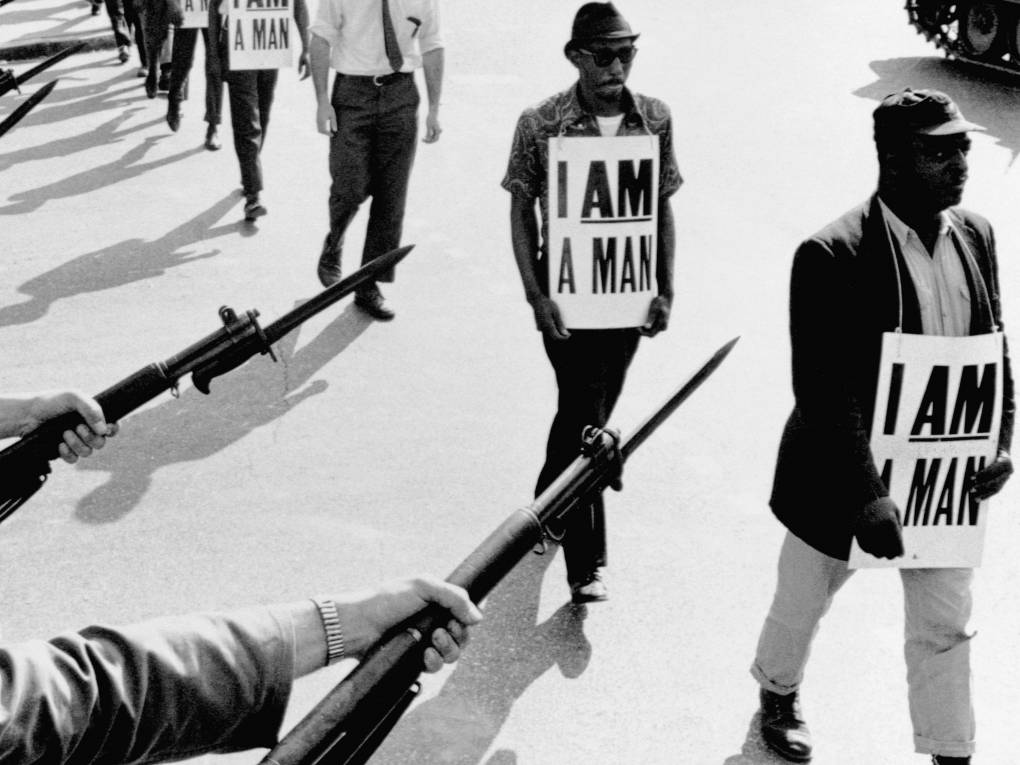
"caption": "Civil Rights activists are blocked by National Guardsmen brandishing bayonets while trying to stage a protest on Beale Street in Memphis, Tenn., in 1968.",
"description": "Civil Rights activists are blocked by National Guardsmen brandishing bayonets while trying to stage a protest on Beale Street in Memphis, Tenn., in 1968.",
"title": "Civil Rights activists are blocked by National Guardsmen brandishing bayonets while trying to stage a protest on Beale Street in Memphis, Tenn., in 1968.",
"credit": "Bettmann/Bettmann Archive",
"status": "inherit",
"altTag": "Civil Rights activists are blocked by National Guardsmen brandishing bayonets while trying to stage a protest on Beale Street in Memphis, Tenn., in 1968.",
"isLoading": false,
"fetchFailed": false
},
"arts_13897993": {
"type": "attachments",
"id": "arts_13897993",
"meta": {
"index": "attachments_1716263798",
"site": "arts",
"id": "13897993",
"found": true
},
"parent": 13897992,
"imgSizes": {
"twentyfourteen-full-width": {
"file": "https://ww2.kqed.org/app/uploads/sites/2/2021/05/gettyimages-1152557230_wide-f12e2f7dc3eebb3b368e475592daea65ea3aed25-1038x576.jpg",
"width": 1038,
"mimeType": "image/jpeg",
"height": 576
},
"thumbnail": {
"file": "https://ww2.kqed.org/app/uploads/sites/2/2021/05/gettyimages-1152557230_wide-f12e2f7dc3eebb3b368e475592daea65ea3aed25-160x90.jpg",
"width": 160,
"mimeType": "image/jpeg",
"height": 90
},
"post-thumbnail": {
"file": "https://ww2.kqed.org/app/uploads/sites/2/2021/05/gettyimages-1152557230_wide-f12e2f7dc3eebb3b368e475592daea65ea3aed25-672x372.jpg",
"width": 672,
"mimeType": "image/jpeg",
"height": 372
},
"kqedFullSize": {
"file": "https://ww2.kqed.org/app/uploads/sites/2/2021/05/gettyimages-1152557230_wide-f12e2f7dc3eebb3b368e475592daea65ea3aed25-scaled-e1622144355949.jpg",
"width": 1920,
"height": 1080
},
"2048x2048": {
"file": "https://ww2.kqed.org/app/uploads/sites/2/2021/05/gettyimages-1152557230_wide-f12e2f7dc3eebb3b368e475592daea65ea3aed25-2048x1152.jpg",
"width": 2048,
"mimeType": "image/jpeg",
"height": 1152
},
"large": {
"file": "https://ww2.kqed.org/app/uploads/sites/2/2021/05/gettyimages-1152557230_wide-f12e2f7dc3eebb3b368e475592daea65ea3aed25-1020x574.jpg",
"width": 1020,
"mimeType": "image/jpeg",
"height": 574
},
"1536x1536": {
"file": "https://ww2.kqed.org/app/uploads/sites/2/2021/05/gettyimages-1152557230_wide-f12e2f7dc3eebb3b368e475592daea65ea3aed25-1536x864.jpg",
"width": 1536,
"mimeType": "image/jpeg",
"height": 864
},
"full-width": {
"file": "https://ww2.kqed.org/app/uploads/sites/2/2021/05/gettyimages-1152557230_wide-f12e2f7dc3eebb3b368e475592daea65ea3aed25-1920x1080.jpg",
"width": 1920,
"mimeType": "image/jpeg",
"height": 1080
},
"medium": {
"file": "https://ww2.kqed.org/app/uploads/sites/2/2021/05/gettyimages-1152557230_wide-f12e2f7dc3eebb3b368e475592daea65ea3aed25-800x450.jpg",
"width": 800,
"mimeType": "image/jpeg",
"height": 450
},
"medium_large": {
"file": "https://ww2.kqed.org/app/uploads/sites/2/2021/05/gettyimages-1152557230_wide-f12e2f7dc3eebb3b368e475592daea65ea3aed25-768x432.jpg",
"width": 768,
"mimeType": "image/jpeg",
"height": 432
}
},
"publishDate": 1622143684,
"modified": 1622144389,
"caption": "Yusef Salaam, shown above in 2019, reflects on his wrongful conviction in the memoir, 'Better, Not Bitter.'",
"description": "Yusef Salaam, member of the Exonerated Five, speaks during the Players Technology Summit in San Francisco, California, U.S., on Thursday, June 27, 2019. Top leaders in the tech community and venture capital met with professional athletes to exchange ideas and share expertise through panels, discussions and interactive networking to help athletes take control of their careers as business professionals. Photographer: David Paul Morris/Bloomberg via Getty Images",
"title": "Yusef Salaam, shown above in 2019, reflects on his wrongful conviction in the memoir, 'Better, Not Bitter.'",
"credit": "David Paul Morris/Bloomberg via Getty Images",
"status": "inherit",
"altTag": "Yusef Salaam, shown above in 2019, reflects on his wrongful conviction in the memoir, 'Better, Not Bitter.'",
"isLoading": false,
"fetchFailed": false
},
"arts_13897386": {
"type": "attachments",
"id": "arts_13897386",
"meta": {
"index": "attachments_1716263798",
"site": "arts",
"id": "13897386",
"found": true
},
"parent": 13897324,
"imgSizes": {
"twentyfourteen-full-width": {
"file": "https://ww2.kqed.org/app/uploads/sites/2/2021/05/GettyImages-941610346-1038x576.jpg",
"width": 1038,
"mimeType": "image/jpeg",
"height": 576
},
"thumbnail": {
"file": "https://ww2.kqed.org/app/uploads/sites/2/2021/05/GettyImages-941610346-160x107.jpg",
"width": 160,
"mimeType": "image/jpeg",
"height": 107
},
"post-thumbnail": {
"file": "https://ww2.kqed.org/app/uploads/sites/2/2021/05/GettyImages-941610346-672x372.jpg",
"width": 672,
"mimeType": "image/jpeg",
"height": 372
},
"kqedFullSize": {
"file": "https://ww2.kqed.org/app/uploads/sites/2/2021/05/GettyImages-941610346-scaled.jpg",
"width": 2560,
"height": 1707
},
"2048x2048": {
"file": "https://ww2.kqed.org/app/uploads/sites/2/2021/05/GettyImages-941610346-2048x1365.jpg",
"width": 2048,
"mimeType": "image/jpeg",
"height": 1365
},
"large": {
"file": "https://ww2.kqed.org/app/uploads/sites/2/2021/05/GettyImages-941610346-1020x680.jpg",
"width": 1020,
"mimeType": "image/jpeg",
"height": 680
},
"1536x1536": {
"file": "https://ww2.kqed.org/app/uploads/sites/2/2021/05/GettyImages-941610346-1536x1024.jpg",
"width": 1536,
"mimeType": "image/jpeg",
"height": 1024
},
"full-width": {
"file": "https://ww2.kqed.org/app/uploads/sites/2/2021/05/GettyImages-941610346-1920x1280.jpg",
"width": 1920,
"mimeType": "image/jpeg",
"height": 1280
},
"medium": {
"file": "https://ww2.kqed.org/app/uploads/sites/2/2021/05/GettyImages-941610346-800x533.jpg",
"width": 800,
"mimeType": "image/jpeg",
"height": 533
},
"medium_large": {
"file": "https://ww2.kqed.org/app/uploads/sites/2/2021/05/GettyImages-941610346-768x512.jpg",
"width": 768,
"mimeType": "image/jpeg",
"height": 512
}
},
"publishDate": 1621380239,
"modified": 1621380317,
"caption": "Seth Rogen in 2018. ",
"description": "Seth Rogen in 2018. ",
"title": "Seth Rogen in 2018.",
"credit": "Christopher Polk/Getty Images",
"status": "inherit",
"altTag": "Seth Rogen in 2018.",
"isLoading": false,
"fetchFailed": false
},
"arts_13897267": {
"type": "attachments",
"id": "arts_13897267",
"meta": {
"index": "attachments_1716263798",
"site": "arts",
"id": "13897267",
"found": true
},
"parent": 13897261,
"imgSizes": {
"twentyfourteen-full-width": {
"file": "https://ww2.kqed.org/app/uploads/sites/2/2021/05/Screen-Shot-2021-05-17-at-3.36.53-PM-1038x576.png",
"width": 1038,
"mimeType": "image/png",
"height": 576
},
"thumbnail": {
"file": "https://ww2.kqed.org/app/uploads/sites/2/2021/05/Screen-Shot-2021-05-17-at-3.36.53-PM-160x101.png",
"width": 160,
"mimeType": "image/png",
"height": 101
},
"post-thumbnail": {
"file": "https://ww2.kqed.org/app/uploads/sites/2/2021/05/Screen-Shot-2021-05-17-at-3.36.53-PM-672x372.png",
"width": 672,
"mimeType": "image/png",
"height": 372
},
"kqedFullSize": {
"file": "https://ww2.kqed.org/app/uploads/sites/2/2021/05/Screen-Shot-2021-05-17-at-3.36.53-PM-e1621291284198.png",
"width": 1920,
"height": 1207
},
"2048x2048": {
"file": "https://ww2.kqed.org/app/uploads/sites/2/2021/05/Screen-Shot-2021-05-17-at-3.36.53-PM-2048x1288.png",
"width": 2048,
"mimeType": "image/png",
"height": 1288
},
"large": {
"file": "https://ww2.kqed.org/app/uploads/sites/2/2021/05/Screen-Shot-2021-05-17-at-3.36.53-PM-1020x641.png",
"width": 1020,
"mimeType": "image/png",
"height": 641
},
"1536x1536": {
"file": "https://ww2.kqed.org/app/uploads/sites/2/2021/05/Screen-Shot-2021-05-17-at-3.36.53-PM-1536x966.png",
"width": 1536,
"mimeType": "image/png",
"height": 966
},
"full-width": {
"file": "https://ww2.kqed.org/app/uploads/sites/2/2021/05/Screen-Shot-2021-05-17-at-3.36.53-PM-1920x1207.png",
"width": 1920,
"mimeType": "image/png",
"height": 1207
},
"medium": {
"file": "https://ww2.kqed.org/app/uploads/sites/2/2021/05/Screen-Shot-2021-05-17-at-3.36.53-PM-800x503.png",
"width": 800,
"mimeType": "image/png",
"height": 503
},
"medium_large": {
"file": "https://ww2.kqed.org/app/uploads/sites/2/2021/05/Screen-Shot-2021-05-17-at-3.36.53-PM-768x483.png",
"width": 768,
"mimeType": "image/png",
"height": 483
}
},
"publishDate": 1621291263,
"modified": 1621291359,
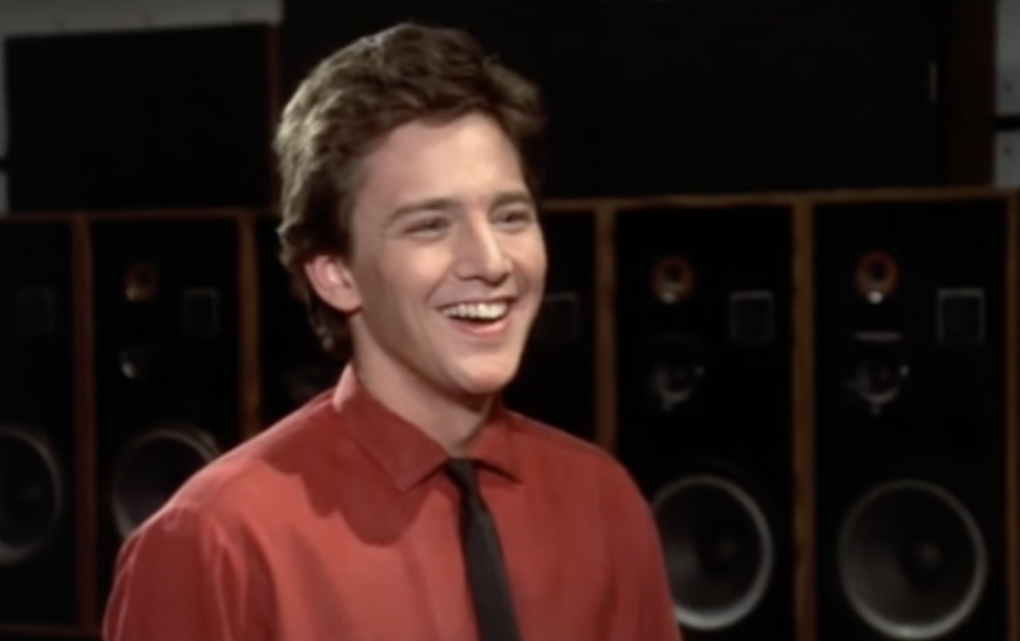
"caption": "Andrew McCarthy in a moment from 1987's'Mannequin'. ",
"description": "Andrew McCarthy in a moment from 1987's'Mannequin'. ",
"title": "Andrew McCarthy in a moment from 1987's'Mannequin'.",
"credit": "YouTube/ @MovieClips",
"status": "inherit",
"altTag": "Andrew McCarthy in a moment from 1987's'Mannequin'.",
"isLoading": false,
"fetchFailed": false
},
"arts_13897022": {
"type": "attachments",
"id": "arts_13897022",
"meta": {
"index": "attachments_1716263798",
"site": "arts",
"id": "13897022",
"found": true
},
"parent": 13897017,
"imgSizes": {
"twentyfourteen-full-width": {
"file": "https://ww2.kqed.org/app/uploads/sites/2/2021/05/GettyImages-909740306-1038x576.jpg",
"width": 1038,
"mimeType": "image/jpeg",
"height": 576
},
"thumbnail": {
"file": "https://ww2.kqed.org/app/uploads/sites/2/2021/05/GettyImages-909740306-160x109.jpg",
"width": 160,
"mimeType": "image/jpeg",
"height": 109
},
"post-thumbnail": {
"file": "https://ww2.kqed.org/app/uploads/sites/2/2021/05/GettyImages-909740306-672x372.jpg",
"width": 672,
"mimeType": "image/jpeg",
"height": 372
},
"kqedFullSize": {
"file": "https://ww2.kqed.org/app/uploads/sites/2/2021/05/GettyImages-909740306-scaled-e1620758939244.jpg",
"width": 1920,
"height": 1308
},
"2048x2048": {
"file": "https://ww2.kqed.org/app/uploads/sites/2/2021/05/GettyImages-909740306-2048x1395.jpg",
"width": 2048,
"mimeType": "image/jpeg",
"height": 1395
},
"large": {
"file": "https://ww2.kqed.org/app/uploads/sites/2/2021/05/GettyImages-909740306-1020x695.jpg",
"width": 1020,
"mimeType": "image/jpeg",
"height": 695
},
"1536x1536": {
"file": "https://ww2.kqed.org/app/uploads/sites/2/2021/05/GettyImages-909740306-1536x1046.jpg",
"width": 1536,
"mimeType": "image/jpeg",
"height": 1046
},
"full-width": {
"file": "https://ww2.kqed.org/app/uploads/sites/2/2021/05/GettyImages-909740306-1920x1308.jpg",
"width": 1920,
"mimeType": "image/jpeg",
"height": 1308
},
"medium": {
"file": "https://ww2.kqed.org/app/uploads/sites/2/2021/05/GettyImages-909740306-800x545.jpg",
"width": 800,
"mimeType": "image/jpeg",
"height": 545
},
"medium_large": {
"file": "https://ww2.kqed.org/app/uploads/sites/2/2021/05/GettyImages-909740306-768x523.jpg",
"width": 768,
"mimeType": "image/jpeg",
"height": 523
}
},
"publishDate": 1620758842,
"modified": 1620758953,
"caption": "Chimamanda Ngozi Adichie in Paris, January 2018.",
"description": "Chimamanda Ngozi Adichie in Paris, January 2018.",
"title": "Chimamanda Ngozi Adichie in Paris, January 2018.",
"credit": "STEPHANE DE SAKUTIN/AFP via Getty Images",
"status": "inherit",
"altTag": null,
"isLoading": false,
"fetchFailed": false
},
"arts_13896739": {
"type": "attachments",
"id": "arts_13896739",
"meta": {
"index": "attachments_1716263798",
"site": "arts",
"id": "13896739",
"found": true
},
"parent": 13896736,
"imgSizes": {
"twentyfourteen-full-width": {
"file": "https://ww2.kqed.org/app/uploads/sites/2/2021/05/GettyImages-1193351586-1038x576.jpg",
"width": 1038,
"mimeType": "image/jpeg",
"height": 576
},
"thumbnail": {
"file": "https://ww2.kqed.org/app/uploads/sites/2/2021/05/GettyImages-1193351586-160x106.jpg",
"width": 160,
"mimeType": "image/jpeg",
"height": 106
},
"post-thumbnail": {
"file": "https://ww2.kqed.org/app/uploads/sites/2/2021/05/GettyImages-1193351586-672x372.jpg",
"width": 672,
"mimeType": "image/jpeg",
"height": 372
},
"kqedFullSize": {
"file": "https://ww2.kqed.org/app/uploads/sites/2/2021/05/GettyImages-1193351586-scaled.jpg",
"width": 2560,
"height": 1696
},
"2048x2048": {
"file": "https://ww2.kqed.org/app/uploads/sites/2/2021/05/GettyImages-1193351586-2048x1357.jpg",
"width": 2048,
"mimeType": "image/jpeg",
"height": 1357
},
"large": {
"file": "https://ww2.kqed.org/app/uploads/sites/2/2021/05/GettyImages-1193351586-1020x676.jpg",
"width": 1020,
"mimeType": "image/jpeg",
"height": 676
},
"1536x1536": {
"file": "https://ww2.kqed.org/app/uploads/sites/2/2021/05/GettyImages-1193351586-1536x1018.jpg",
"width": 1536,
"mimeType": "image/jpeg",
"height": 1018
},
"full-width": {
"file": "https://ww2.kqed.org/app/uploads/sites/2/2021/05/GettyImages-1193351586-1920x1272.jpg",
"width": 1920,
"mimeType": "image/jpeg",
"height": 1272
},
"medium": {
"file": "https://ww2.kqed.org/app/uploads/sites/2/2021/05/GettyImages-1193351586-800x530.jpg",
"width": 800,
"mimeType": "image/jpeg",
"height": 530
},
"medium_large": {
"file": "https://ww2.kqed.org/app/uploads/sites/2/2021/05/GettyImages-1193351586-768x509.jpg",
"width": 768,
"mimeType": "image/jpeg",
"height": 509
}
},
"publishDate": 1620239879,
"modified": 1620240020,
"caption": "Stacey Abrams at a 'Hollywood Reporter' event, 2019. ",
"description": "Stacey Abrams at a 'Hollywood Reporter' event, 2019. ",
"title": "Stacey Abrams at a 'Hollywood Reporter' event, 2019.",
"credit": "Alberto E. Rodriguez/Getty Images for The Hollywood Reporter",
"status": "inherit",
"altTag": "Stacey Abrams smiles at a 'Hollywood Reporter' event, 2019.",
"isLoading": false,
"fetchFailed": false
},
"arts_13896666": {
"type": "attachments",
"id": "arts_13896666",
"meta": {
"index": "attachments_1716263798",
"site": "arts",
"id": "13896666",
"found": true
},
"parent": 13896658,
"imgSizes": {
"twentyfourteen-full-width": {
"file": "https://ww2.kqed.org/app/uploads/sites/2/2021/05/GettyImages-1228670670-1038x576.jpg",
"width": 1038,
"mimeType": "image/jpeg",
"height": 576
},
"thumbnail": {
"file": "https://ww2.kqed.org/app/uploads/sites/2/2021/05/GettyImages-1228670670-160x107.jpg",
"width": 160,
"mimeType": "image/jpeg",
"height": 107
},
"post-thumbnail": {
"file": "https://ww2.kqed.org/app/uploads/sites/2/2021/05/GettyImages-1228670670-672x372.jpg",
"width": 672,
"mimeType": "image/jpeg",
"height": 372
},
"kqedFullSize": {
"file": "https://ww2.kqed.org/app/uploads/sites/2/2021/05/GettyImages-1228670670-scaled.jpg",
"width": 2560,
"height": 1707
},
"2048x2048": {
"file": "https://ww2.kqed.org/app/uploads/sites/2/2021/05/GettyImages-1228670670-2048x1366.jpg",
"width": 2048,
"mimeType": "image/jpeg",
"height": 1366
},
"large": {
"file": "https://ww2.kqed.org/app/uploads/sites/2/2021/05/GettyImages-1228670670-1020x680.jpg",
"width": 1020,
"mimeType": "image/jpeg",
"height": 680
},
"1536x1536": {
"file": "https://ww2.kqed.org/app/uploads/sites/2/2021/05/GettyImages-1228670670-1536x1024.jpg",
"width": 1536,
"mimeType": "image/jpeg",
"height": 1024
},
"full-width": {
"file": "https://ww2.kqed.org/app/uploads/sites/2/2021/05/GettyImages-1228670670-1920x1280.jpg",
"width": 1920,
"mimeType": "image/jpeg",
"height": 1280
},
"medium": {
"file": "https://ww2.kqed.org/app/uploads/sites/2/2021/05/GettyImages-1228670670-800x533.jpg",
"width": 800,
"mimeType": "image/jpeg",
"height": 533
},
"medium_large": {
"file": "https://ww2.kqed.org/app/uploads/sites/2/2021/05/GettyImages-1228670670-768x512.jpg",
"width": 768,
"mimeType": "image/jpeg",
"height": 512
}
},
"publishDate": 1620072971,
"modified": 1620073030,
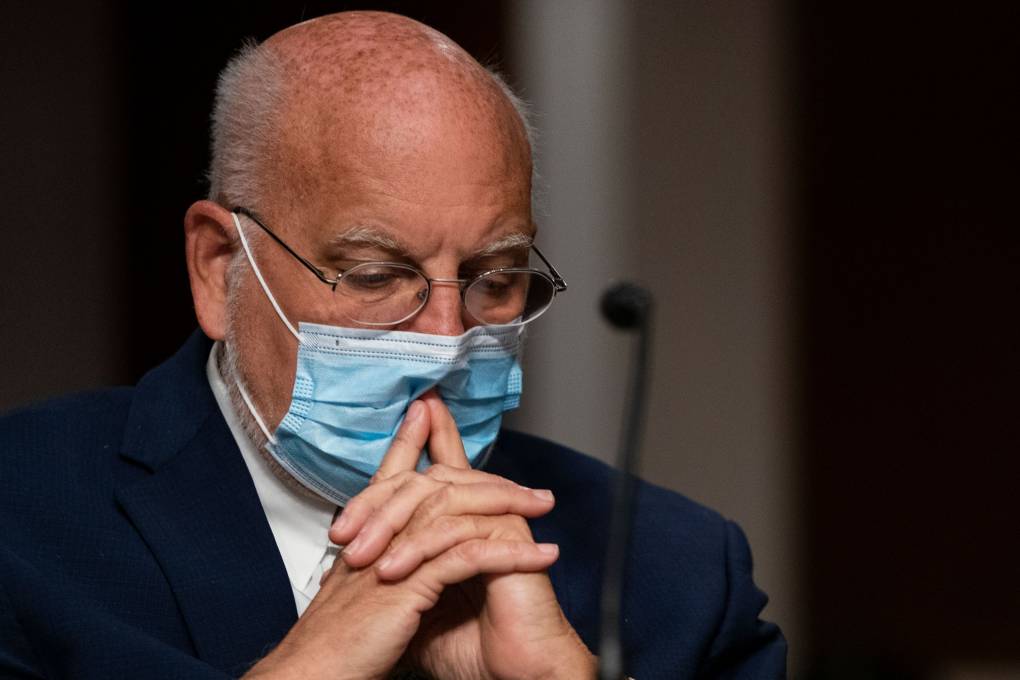
"caption": "CDC Director, Dr. Robert Redfield, testifies during a US Senate Senate Health, Education, Labor, and Pensions Committee hearing to examine Covid-19, focusing on an update on the federal response in Washington, DC, on September 23, 2020.",
"description": "CDC Director, Dr. Robert Redfield, testifies during a US Senate Senate Health, Education, Labor, and Pensions Committee hearing to examine Covid-19, focusing on an update on the federal response in Washington, DC, on September 23, 2020.",
"title": "CDC Director, Dr. Robert Redfield, testifies during a US Senate Senate Health, Education, Labor, and Pensions Committee hearing to examine Covid-19, focusing on an update on the federal response in Washington, DC, on September 23, 2020.",
"credit": "ALEX EDELMAN/POOL/AFP via Getty Images",
"status": "inherit",
"altTag": "CDC Director, Dr. Robert Redfield, testifies during a US Senate Senate Health, Education, Labor, and Pensions Committee hearing to examine Covid-19, focusing on an update on the federal response in Washington, DC, on September 23, 2020.",
"isLoading": false,
"fetchFailed": false
},
"arts_13896657": {
"type": "attachments",
"id": "arts_13896657",
"meta": {
"index": "attachments_1716263798",
"site": "arts",
"id": "13896657",
"found": true
},
"parent": 13896648,
"imgSizes": {
"twentyfourteen-full-width": {
"file": "https://ww2.kqed.org/app/uploads/sites/2/2021/05/20210503_122445-1038x576.jpg",
"width": 1038,
"mimeType": "image/jpeg",
"height": 576
},
"thumbnail": {
"file": "https://ww2.kqed.org/app/uploads/sites/2/2021/05/20210503_122445-160x90.jpg",
"width": 160,
"mimeType": "image/jpeg",
"height": 90
},
"post-thumbnail": {
"file": "https://ww2.kqed.org/app/uploads/sites/2/2021/05/20210503_122445-672x372.jpg",
"width": 672,
"mimeType": "image/jpeg",
"height": 372
},
"kqedFullSize": {
"file": "https://ww2.kqed.org/app/uploads/sites/2/2021/05/20210503_122445.jpg",
"width": 1920,
"height": 1081
},
"large": {
"file": "https://ww2.kqed.org/app/uploads/sites/2/2021/05/20210503_122445-1020x574.jpg",
"width": 1020,
"mimeType": "image/jpeg",
"height": 574
},
"1536x1536": {
"file": "https://ww2.kqed.org/app/uploads/sites/2/2021/05/20210503_122445-1536x865.jpg",
"width": 1536,
"mimeType": "image/jpeg",
"height": 865
},
"medium": {
"file": "https://ww2.kqed.org/app/uploads/sites/2/2021/05/20210503_122445-800x450.jpg",
"width": 800,
"mimeType": "image/jpeg",
"height": 450
},
"medium_large": {
"file": "https://ww2.kqed.org/app/uploads/sites/2/2021/05/20210503_122445-768x432.jpg",
"width": 768,
"mimeType": "image/jpeg",
"height": 432
}
},
"publishDate": 1620071924,
"modified": 1620071966,
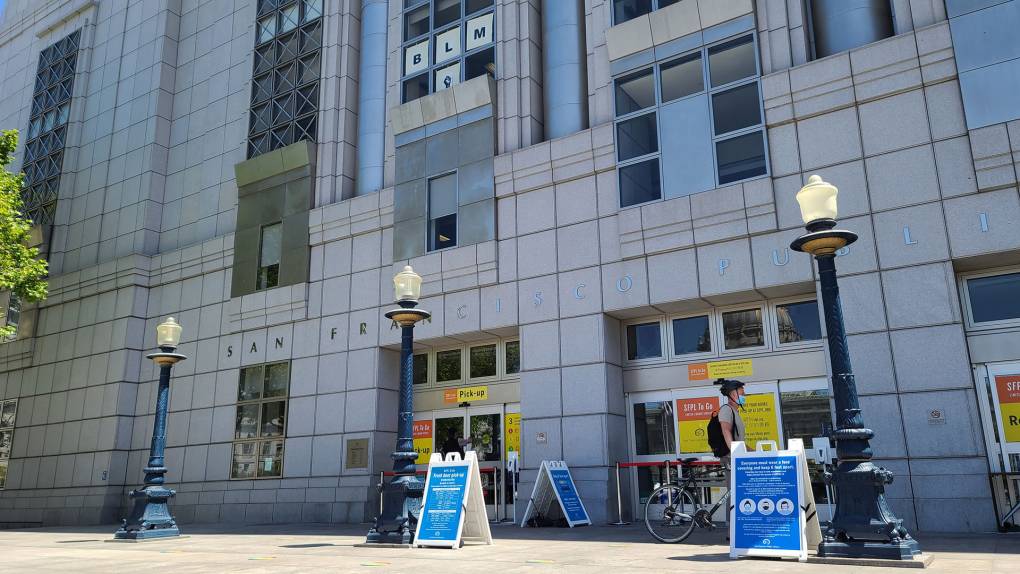
"caption": "The San Francisco Library's Main Branch opened May 3.",
"description": "The San Francisco Library's Main Branch opened May 3.",
"title": "20210503_122445",
"credit": "Carlos Cabrera-Lomelí",
"status": "inherit",
"altTag": "The San Francisco Library's Main Branch opened May 3.",
"isLoading": false,
"fetchFailed": false
}
},
"audioPlayerReducer": {
"postId": "stream_live",
"isPaused": true,
"isPlaying": false,
"pfsActive": false,
"pledgeModalIsOpen": true,
"playerDrawerIsOpen": false,
"liveAudioPlayStartedAt": 0,
"liveAudioPlayContext": ""
},
"authorsReducer": {
"byline_arts_13899143": {
"type": "authors",
"id": "byline_arts_13899143",
"meta": {
"override": true
},
"slug": "byline_arts_13899143",
"name": "Maureen Corrigan",
"isLoading": false
},
"byline_arts_13899078": {
"type": "authors",
"id": "byline_arts_13899078",
"meta": {
"override": true
},
"slug": "byline_arts_13899078",
"name": "Steve Inskeep",
"isLoading": false
},
"byline_arts_13898999": {
"type": "authors",
"id": "byline_arts_13898999",
"meta": {
"override": true
},
"slug": "byline_arts_13898999",
"name": "Michael Schaub",
"isLoading": false
},
"byline_arts_13898469": {
"type": "authors",
"id": "byline_arts_13898469",
"meta": {
"override": true
},
"slug": "byline_arts_13898469",
"name": "Noel King",
"isLoading": false
},
"byline_arts_13898175": {
"type": "authors",
"id": "byline_arts_13898175",
"meta": {
"override": true
},
"slug": "byline_arts_13898175",
"name": "Dave Davies",
"isLoading": false
},
"byline_arts_13897992": {
"type": "authors",
"id": "byline_arts_13897992",
"meta": {
"override": true
},
"slug": "byline_arts_13897992",
"name": "Terry Gross",
"isLoading": false
},
"byline_arts_13897324": {
"type": "authors",
"id": "byline_arts_13897324",
"meta": {
"override": true
},
"slug": "byline_arts_13897324",
"name": "Terry Gross",
"isLoading": false
},
"byline_arts_13897261": {
"type": "authors",
"id": "byline_arts_13897261",
"meta": {
"override": true
},
"slug": "byline_arts_13897261",
"name": "Lulu Garcia-Navarro",
"isLoading": false
},
"byline_arts_13897017": {
"type": "authors",
"id": "byline_arts_13897017",
"meta": {
"override": true
},
"slug": "byline_arts_13897017",
"name": "Hope Wabuke",
"isLoading": false
},
"byline_arts_13896736": {
"type": "authors",
"id": "byline_arts_13896736",
"meta": {
"override": true
},
"slug": "byline_arts_13896736",
"name": "Becky Sullivan",
"isLoading": false
},
"byline_arts_13896658": {
"type": "authors",
"id": "byline_arts_13896658",
"meta": {
"override": true
},
"slug": "byline_arts_13896658",
"name": "Rachel Martin",
"isLoading": false
},
"shotchkiss": {
"type": "authors",
"id": "61",
"meta": {
"index": "authors_1716337520",
"id": "61",
"found": true
},
"name": "Sarah Hotchkiss",
"firstName": "Sarah",
"lastName": "Hotchkiss",
"slug": "shotchkiss",
"email": "shotchkiss@kqed.org",
"display_author_email": true,
"staff_mastheads": [
"arts"
],
"title": "Senior Editor",
"bio": "Sarah Hotchkiss is a San Francisco \u003ca href=\"http://www.sarahhotchkiss.com\">artist\u003c/a> and arts writer. In 2019, she received the Dorothea & Leo Rabkin Foundation grant for visual art journalism and in 2020 she received a Society of Professional Journalists, Northern California award for excellence in arts and culture reporting.",
"avatar": "https://secure.gravatar.com/avatar/bc662df144b3d27fd8b1b6f1c2a420d34e91e53154d411bb7ad353cc8b6cea8d?s=600&d=blank&r=g",
"twitter": null,
"bluesky": null,
"facebook": null,
"instagram": null,
"linkedin": null,
"sites": [
{
"site": "",
"roles": [
"editor"
]
},
{
"site": "arts",
"roles": [
"Contributor",
"administrator"
]
},
{
"site": "artschool",
"roles": [
"administrator"
]
},
{
"site": "news",
"roles": [
"editor"
]
},
{
"site": "pop",
"roles": [
"administrator"
]
},
{
"site": "bayareabites",
"roles": [
"editor"
]
},
{
"site": "spark",
"roles": [
"editor"
]
},
{
"site": "checkplease",
"roles": [
"editor"
]
}
],
"headData": {
"title": "Sarah Hotchkiss | KQED",
"description": "Senior Editor",
"ogImgSrc": "https://secure.gravatar.com/avatar/bc662df144b3d27fd8b1b6f1c2a420d34e91e53154d411bb7ad353cc8b6cea8d?s=600&d=blank&r=g",
"twImgSrc": "https://secure.gravatar.com/avatar/bc662df144b3d27fd8b1b6f1c2a420d34e91e53154d411bb7ad353cc8b6cea8d?s=600&d=blank&r=g"
},
"isLoading": false,
"link": "/author/shotchkiss"
}
},
"pagesReducer": {
"arts_category_literature": {
"type": "terms",
"id": "arts_73",
"meta": {
"index": "terms_1716263798",
"site": "arts",
"id": "73",
"score": 12.797559
},
"featImg": null,
"name": "Books",
"description": null,
"taxonomy": "category",
"headData": {
"twImgId": null,
"twTitle": null,
"ogTitle": null,
"ogImgId": null,
"twDescription": null,
"description": null,
"title": "Books Archives | KQED Arts",
"ogDescription": null
},
"ttid": 74,
"slug": "literature",
"isLoading": false,
"title": "Books",
"pageMeta": {
"site": "arts",
"WpPageTemplate": "page-topic-editorial",
"currentPage": 45
},
"blocks": [
{
"blockName": "kqed/post-list",
"attrs": {
"layout": "cardArticle2",
"query": "posts/arts?category=literature",
"seeMore": false,
"paginated": true,
"page": 45
}
},
{
"blockName": "kqed/ad"
}
]
}
},
"pfsSessionReducer": {},
"postsReducer": {
"stream_live": {
"type": "live",
"id": "stream_live",
"audioUrl": "https://streams.kqed.org/kqedradio",
"title": "Live Stream",
"excerpt": "Live Stream information currently unavailable.",
"link": "/radio",
"featImg": "",
"label": {
"name": "KQED Live",
"link": "/"
}
},
"stream_kqedNewscast": {
"type": "posts",
"id": "stream_kqedNewscast",
"audioUrl": "https://www.kqed.org/.stream/anon/radio/RDnews/newscast.mp3?_=1",
"title": "KQED Newscast",
"featImg": "",
"label": {
"name": "88.5 FM",
"link": "/"
}
},
"arts_13899143": {
"type": "posts",
"id": "arts_13899143",
"meta": {
"index": "posts_1716263798",
"site": "arts",
"id": "13899143",
"score": null,
"sort": [
1624387163000
]
},
"parent": 0,
"labelTerm": {
"site": "arts",
"term": 137
},
"blocks": [],
"publishDate": 1624387163,
"format": "standard",
"title": "'Light Perpetual' Imagines Adulthood For 5 Fictional Kids Killed in WWII Attack",
"headTitle": "‘Light Perpetual’ Imagines Adulthood For 5 Fictional Kids Killed in WWII Attack | KQED",
"content": "\u003cp>At the end of his new novel, \u003cem>Light Perpetual\u003c/em>, Francis Spufford describes how he was inspired by a London plaque:\u003c/p>\n\u003cblockquote>\u003cp>[F]or the last twelve years, I’ve been walking to work at Goldsmiths College past a plaque commemorating the 1944 V-2 attack on the New Cross Road branch of Woolworths. Of the 168 people who died, fifteen were aged eleven or under. The novel is partly written in memory of those South London children, and their lost chance to experience the rest of the twentieth century.\u003c/p>\u003c/blockquote>\n\u003cp>Out of his contemplative pauses in front of that plaque, Spufford has created a resonant novel about what “might have been” for five young casualties of war, as well as a God’s-eye meditation on mutability and loss.\u003c/p>\n\u003cp>\u003cem>\u003cimg loading=\"lazy\" decoding=\"async\" class=\"size-full wp-image-13899148 alignright\" src=\"https://ww2.kqed.org/app/uploads/sites/2/2021/06/51PfIRRYIcL._SX329_BO1204203200_.jpg\" alt=\"\" width=\"331\" height=\"499\" srcset=\"https://cdn.kqed.org/wp-content/uploads/sites/2/2021/06/51PfIRRYIcL._SX329_BO1204203200_.jpg 331w, https://cdn.kqed.org/wp-content/uploads/sites/2/2021/06/51PfIRRYIcL._SX329_BO1204203200_-160x241.jpg 160w\" sizes=\"(max-width: 331px) 100vw, 331px\">Light Perpetual \u003c/em>opens with a slow motion reimagining of the V-2 rocket falling through that Woolworths on that long-ago Saturday. The lunchtime crowd, which has gathered to see a new delivery of aluminum saucepans (a rarity during the war), is instantaneously transformed into “a dome of debris.” Spufford’s omniscient narrator ticks off some of the cloud’s component parts: “Knitting Patterns. … Wooden table. Pans. Much-darned brown worsted hand-me-down served-three-siblings horned-buttoned winter coat. Skin. Bone.”\u003c/p>\n\u003cp>Spufford checks in on his characters at intervals of 15 years, beginning with their deaths in 1944 and ending in 2009 when the “children” are about 70. This plot structure can sound formulaic, plodding even. And, certainly, the pitfalls of sentimentality are many in a story that imagines the lives that five invented dead children might have led.\u003c/p>\n\u003cp>But Spufford avoids those pitfalls and as he moves his children through their imagined lives they become so much more than mere reverent icons. For instance, the class bully, Vernon, dubbed “Vermin” by his classmates, grows into a crooked property developer; another, more delicate child named Ben grows up to hold down jobs as a kitchen porter and bus conductor; he also has to be institutionalized for a time for schizophrenia and persistent nightmares of cannibalism.\u003c/p>\n\u003cp>[ad fullwidth]\u003c/p>\n\u003cp>[aside postid='arts_13893514']Alec, who from the get-go, is one of the most compelling of the children, must surrender his dreams of going to university because of his father’s early death. Alec marries young, becomes a leader in his printer’s union, and, at bedtime, devours heavy tomes like Robert Tressell’s 1914 Socialist classic, \u003cem>The Ragged-Trousered Philanthropists\u003c/em>.\u003c/p>\n\u003cp>Even to tick off these characters and their stories in this fashion renders them reductive in a way that Spufford never does. He’s such a beautiful writer, casually stunning in his language and perceptions. Here, for instance, Spufford captures the middle-aged Alec’s thoughts after an argument with his teenaged son:\u003c/p>\n\u003cblockquote>\u003cp>Everyone knows that parenthood changes you: but [Alec had] thought that meant the rearrangement that comes at the beginning of it, when you learn that your life is going to be curled protectively around the kids. He doesn’t know what to do with this recent, new rage, where you feel the … hopes and expectations you’ve had for them all this time start to shrivel and unpick, … where the story of their lives you’ve been telling yourself, with the chances you’d’ve liked, and a step up you’d’ve been glad to take, turns out to be nothing like their own story of themselves.\u003c/p>\u003c/blockquote>\n\u003cp>Along with incisively describing the progression—and setbacks—of his fictional children’s lives, Spufford conjures up an impressionistic history of six decades of London life. Here’s Jo who grows up to become a member of a “girl group” called the Tearaways during the Swinging ’60s. Spufford describes Jo standing next to a Beatles knock-off band in the wings of the Pelican Club, listening to an older blues musician. In a few quick sentences, Spufford nails the era’s signature style and sexism:\u003c/p>\n\u003cblockquote>\u003cp>She looks good tonight, she knows she does: the Tearaways have an Honor-Blackman-in-\u003cem>The-Avengers\u003c/em> thing going, and are all wearing tight black sweaters, tight black trousers and boots with spike heels. … But right now, she’s girl-furniture as far as these whispering oblivious boys are concerned. They’re locked in the serious business of male-to-male musical adoration.\u003c/p>\u003c/blockquote>\n\u003cp>\u003c/p>\n\u003cp>Again and again, Spufford draws us readers into the mundane particularity of his maturing characters’ lives and, again and again, we readers are jolted by the awareness that those five futures were cut short in 1944. In resurrecting lives that never were, \u003cem>Light Perpetual\u003c/em> is a miracle, not only of art, but of encompassing empathy. The novel becomes not only about the terribly brief lives of these five fictional children, but of the finitude that bounds all the living and the dead.\u003c/p>\n\u003cdiv class=\"fullattribution\">\u003cem>Copyright 2021 Fresh Air. To see more, visit \u003ca href=\"http://www.npr.org/programs/fresh-air/\" target=\"_blank\" rel=\"noopener noreferrer\">Fresh Air\u003c/a>.\u003cimg decoding=\"async\" src=\"https://www.google-analytics.com/__utm.gif?utmac=UA-5828686-4&utmdt=%27Light+Perpetual%27+Imagines+Adulthood+For+5+Fictional+Kids+Killed+In+WWII+Attack&utme=8(APIKey)9(MDAxOTAwOTE4MDEyMTkxMDAzNjczZDljZA004)\">\u003c/em>\u003c/div>\n\n",
"stats": {
"hasVideo": false,
"hasChartOrMap": false,
"hasAudio": false,
"hasPolis": false,
"wordCount": 849,
"hasGoogleForm": false,
"hasGallery": false,
"hasHearkenModule": false,
"iframeSrcs": [],
"paragraphCount": 14
},
"modified": 1705008178,
"excerpt": "Francis Spufford explores what \"might have been\" for five young casualties of a real-life 1944 bombing in London.",
"headData": {
"twImgId": "",
"twTitle": "",
"ogTitle": "",
"ogImgId": "",
"twDescription": "",
"description": "Francis Spufford explores what "might have been" for five young casualties of a real-life 1944 bombing in London.",
"title": "'Light Perpetual' Imagines Adulthood For 5 Fictional Kids Killed in WWII Attack | KQED",
"ogDescription": "",
"schema": {
"@context": "https://schema.org",
"@type": "Article",
"headline": "'Light Perpetual' Imagines Adulthood For 5 Fictional Kids Killed in WWII Attack",
"datePublished": "2021-06-22T11:39:23-07:00",
"dateModified": "2024-01-11T13:22:58-08:00",
"image": "https://cdn.kqed.org/wp-content/uploads/2020/02/KQED-OG-Image@1x.png"
}
},
"guestAuthors": [],
"slug": "light-perpetual-imagines-adulthood-for-5-fictional-kids-killed-in-wwii-attack",
"status": "publish",
"nprApiLink": "http://api.npr.org/query?id=1007677086&apiKey=MDAxOTAwOTE4MDEyMTkxMDAzNjczZDljZA004",
"templateType": "standard",
"nprByline": "Maureen Corrigan",
"nprStoryDate": "Tue, 22 Jun 2021 12:32:46 -0400",
"nprLastModifiedDate": "Tue, 22 Jun 2021 12:33:53 -0400",
"featuredImageType": "standard",
"sticky": false,
"nprHtmlLink": "https://www.npr.org/2021/06/22/1007677086/light-perpetual-francis-spufford-novel-book-review-world-war-ii?ft=nprml&f=1007677086",
"nprImageAgency": "Simon & Schuster",
"nprStoryId": "1007677086",
"nprRetrievedStory": "1",
"nprPubDate": "Tue, 22 Jun 2021 12:33:00 -0400",
"path": "/arts/13899143/light-perpetual-imagines-adulthood-for-5-fictional-kids-killed-in-wwii-attack",
"audioTrackLength": null,
"parsedContent": [
{
"type": "contentString",
"content": "\u003cdiv class=\"post-body\">\u003cp>\u003cp>At the end of his new novel, \u003cem>Light Perpetual\u003c/em>, Francis Spufford describes how he was inspired by a London plaque:\u003c/p>\n\u003cblockquote>\u003cp>[F]or the last twelve years, I’ve been walking to work at Goldsmiths College past a plaque commemorating the 1944 V-2 attack on the New Cross Road branch of Woolworths. Of the 168 people who died, fifteen were aged eleven or under. The novel is partly written in memory of those South London children, and their lost chance to experience the rest of the twentieth century.\u003c/p>\u003c/blockquote>\n\u003cp>Out of his contemplative pauses in front of that plaque, Spufford has created a resonant novel about what “might have been” for five young casualties of war, as well as a God’s-eye meditation on mutability and loss.\u003c/p>\n\u003cp>\u003cem>\u003cimg loading=\"lazy\" decoding=\"async\" class=\"size-full wp-image-13899148 alignright\" src=\"https://ww2.kqed.org/app/uploads/sites/2/2021/06/51PfIRRYIcL._SX329_BO1204203200_.jpg\" alt=\"\" width=\"331\" height=\"499\" srcset=\"https://cdn.kqed.org/wp-content/uploads/sites/2/2021/06/51PfIRRYIcL._SX329_BO1204203200_.jpg 331w, https://cdn.kqed.org/wp-content/uploads/sites/2/2021/06/51PfIRRYIcL._SX329_BO1204203200_-160x241.jpg 160w\" sizes=\"(max-width: 331px) 100vw, 331px\">Light Perpetual \u003c/em>opens with a slow motion reimagining of the V-2 rocket falling through that Woolworths on that long-ago Saturday. The lunchtime crowd, which has gathered to see a new delivery of aluminum saucepans (a rarity during the war), is instantaneously transformed into “a dome of debris.” Spufford’s omniscient narrator ticks off some of the cloud’s component parts: “Knitting Patterns. … Wooden table. Pans. Much-darned brown worsted hand-me-down served-three-siblings horned-buttoned winter coat. Skin. Bone.”\u003c/p>\n\u003cp>Spufford checks in on his characters at intervals of 15 years, beginning with their deaths in 1944 and ending in 2009 when the “children” are about 70. This plot structure can sound formulaic, plodding even. And, certainly, the pitfalls of sentimentality are many in a story that imagines the lives that five invented dead children might have led.\u003c/p>\n\u003cp>But Spufford avoids those pitfalls and as he moves his children through their imagined lives they become so much more than mere reverent icons. For instance, the class bully, Vernon, dubbed “Vermin” by his classmates, grows into a crooked property developer; another, more delicate child named Ben grows up to hold down jobs as a kitchen porter and bus conductor; he also has to be institutionalized for a time for schizophrenia and persistent nightmares of cannibalism.\u003c/p>\n\u003cp>\u003c/p>\u003c/div>",
"attributes": {
"named": {},
"numeric": []
}
},
{
"type": "component",
"content": "",
"name": "ad",
"attributes": {
"named": {
"label": "fullwidth"
},
"numeric": [
"fullwidth"
]
}
},
{
"type": "contentString",
"content": "\u003cdiv class=\"post-body\">\u003cp>\u003c/p>\n\u003cp>\u003c/p>\u003c/div>",
"attributes": {
"named": {},
"numeric": []
}
},
{
"type": "component",
"content": "",
"name": "aside",
"attributes": {
"named": {
"postid": "arts_13893514",
"label": ""
},
"numeric": []
}
},
{
"type": "contentString",
"content": "\u003cdiv class=\"post-body\">\u003cp>Alec, who from the get-go, is one of the most compelling of the children, must surrender his dreams of going to university because of his father’s early death. Alec marries young, becomes a leader in his printer’s union, and, at bedtime, devours heavy tomes like Robert Tressell’s 1914 Socialist classic, \u003cem>The Ragged-Trousered Philanthropists\u003c/em>.\u003c/p>\n\u003cp>Even to tick off these characters and their stories in this fashion renders them reductive in a way that Spufford never does. He’s such a beautiful writer, casually stunning in his language and perceptions. Here, for instance, Spufford captures the middle-aged Alec’s thoughts after an argument with his teenaged son:\u003c/p>\n\u003cblockquote>\u003cp>Everyone knows that parenthood changes you: but [Alec had] thought that meant the rearrangement that comes at the beginning of it, when you learn that your life is going to be curled protectively around the kids. He doesn’t know what to do with this recent, new rage, where you feel the … hopes and expectations you’ve had for them all this time start to shrivel and unpick, … where the story of their lives you’ve been telling yourself, with the chances you’d’ve liked, and a step up you’d’ve been glad to take, turns out to be nothing like their own story of themselves.\u003c/p>\u003c/blockquote>\n\u003cp>Along with incisively describing the progression—and setbacks—of his fictional children’s lives, Spufford conjures up an impressionistic history of six decades of London life. Here’s Jo who grows up to become a member of a “girl group” called the Tearaways during the Swinging ’60s. Spufford describes Jo standing next to a Beatles knock-off band in the wings of the Pelican Club, listening to an older blues musician. In a few quick sentences, Spufford nails the era’s signature style and sexism:\u003c/p>\n\u003cblockquote>\u003cp>She looks good tonight, she knows she does: the Tearaways have an Honor-Blackman-in-\u003cem>The-Avengers\u003c/em> thing going, and are all wearing tight black sweaters, tight black trousers and boots with spike heels. … But right now, she’s girl-furniture as far as these whispering oblivious boys are concerned. They’re locked in the serious business of male-to-male musical adoration.\u003c/p>\u003c/blockquote>\n\u003cp>\u003c/p>\n\u003cp>Again and again, Spufford draws us readers into the mundane particularity of his maturing characters’ lives and, again and again, we readers are jolted by the awareness that those five futures were cut short in 1944. In resurrecting lives that never were, \u003cem>Light Perpetual\u003c/em> is a miracle, not only of art, but of encompassing empathy. The novel becomes not only about the terribly brief lives of these five fictional children, but of the finitude that bounds all the living and the dead.\u003c/p>\n\u003cdiv class=\"fullattribution\">\u003cem>Copyright 2021 Fresh Air. To see more, visit \u003ca href=\"http://www.npr.org/programs/fresh-air/\" target=\"_blank\" rel=\"noopener noreferrer\">Fresh Air\u003c/a>.\u003cimg decoding=\"async\" src=\"https://www.google-analytics.com/__utm.gif?utmac=UA-5828686-4&utmdt=%27Light+Perpetual%27+Imagines+Adulthood+For+5+Fictional+Kids+Killed+In+WWII+Attack&utme=8(APIKey)9(MDAxOTAwOTE4MDEyMTkxMDAzNjczZDljZA004)\">\u003c/em>\u003c/div>\n\n\u003c/div>\u003c/p>",
"attributes": {
"named": {},
"numeric": []
}
}
],
"link": "/arts/13899143/light-perpetual-imagines-adulthood-for-5-fictional-kids-killed-in-wwii-attack",
"authors": [
"byline_arts_13899143"
],
"categories": [
"arts_1",
"arts_73",
"arts_7862"
],
"tags": [
"arts_5237",
"arts_3038"
],
"affiliates": [
"arts_137"
],
"featImg": "arts_13899144",
"label": "arts_137"
},
"arts_13899078": {
"type": "posts",
"id": "arts_13899078",
"meta": {
"index": "posts_1716263798",
"site": "arts",
"id": "13899078",
"score": null,
"sort": [
1624306505000
]
},
"parent": 0,
"labelTerm": {
"site": "arts",
"term": 137
},
"blocks": [],
"publishDate": 1624306505,
"format": "standard",
"title": "6 Books to Help Your Kid Take the Next Steps Toward Social Justice",
"headTitle": "6 Books to Help Your Kid Take the Next Steps Toward Social Justice | KQED",
"content": "\u003cp>The writer \u003ca href=\"https://www.npr.org/2021/03/16/977843348/venture-aims-to-resurrect-and-reimagine-anti-slavery-newspaper-for-the-21st-cent\" target=\"_blank\" rel=\"noopener noreferrer\">Ibram X. Kendi\u003c/a> has been reading a lot of books to his five-year-old daughter, Imani. And when he chooses those books, he makes sure they include many kinds of people.\u003c/p>\n\u003cp>“I’m also really excited now because her favorite color right now is the rainbow,” he says. “And so I feel like we’re doing something right because I constantly emphasize this sort of human rainbow and appreciating it.”\u003c/p>\n\u003cp>Kendi is the author of \u003cem>\u003ca href=\"https://www.npr.org/2020/03/14/814630039/a-history-book-that-isnt-finding-a-way-to-teach-racism-to-a-new-generation\" target=\"_blank\" rel=\"noopener noreferrer\">Stamped From the Beginning: The Definitive History of Racist Ideas in America\u003c/a>\u003c/em>. He also produced a youth version of that work, a chapter book called \u003cem>Stamped for Kids\u003c/em>. So as we discuss summer reading on current events, we asked him to recommend some other books for younger readers on race.\u003c/p>\n\u003cp>[aside postid='arts_13894928']But because we’ll be talking about books on race for young people, I also wanted to ask Kendi about the \u003ca href=\"https://www.npr.org/2021/06/02/1001055828/the-brewing-political-battle-over-critical-race-theory\" target=\"_blank\" rel=\"noopener noreferrer\">unfolding debate over the teaching of race in schools\u003c/a>. “It’s been tragic for me to watch,” Kendi says. “Because we unfortunately live in a society where there’s racial inequity, and our kids are trying to figure out why. They see, you know, let’s say darker people who are more likely to be homeless or incarcerated or impoverished, and they’re trying to figure out why is that the case? And if we’re not actively teaching them it’s because of racism, then what are they going to conclude? The way we can protect them is by actively teaching them about racism. And so I think it’s dangerous to not teach kids about why inequality exists in our society.”\u003c/p>\n\u003cp>\u003cstrong>On whether anti-racist education means being told white equals terrible\u003c/strong>\u003c/p>\n\u003cp>[ad fullwidth]\u003c/p>\n\u003cp>Any good teacher who’s going to teach about racism, and also its history, are going to teach about people of different races who were involved in abolitionist struggles, who were involved in the civil rights movement, who are trying to create an equitable and just society today. So what a white student will learn is, they’ll learn about a white slaveholder and a white abolitionist, and they’ll learn about why both said what they said and did what they did, and they’ll learn which one had the morally right and just position.\u003c/p>\n\u003cp>\u003cstrong>On whether these lessons are better taught at home\u003c/strong>\u003c/p>\n\u003cp>I think these lessons are better taught everywhere. And I think when our teachers are teaching it and the parents are teaching it and, you know, aunts and uncles and grandparents and cousins and friends, and we’re just we’re so focused on ensuring that this next generation of Americans can view different-looking groups as equals and can ultimately eliminate this scourge of racism that this nation has faced. We’re collectively focused on that. I mean, to me that’s what sort of gets me excited. And that’s why I’m so excited about the books that are being produced today that can allow us as parents and caretakers and teachers to facilitate these conversations.\u003c/p>\n\u003ch3>Kendi’s reading recommendations\u003c/h3>\n\u003cp>\u003cstrong>\u003cem>\u003cimg loading=\"lazy\" decoding=\"async\" class=\"size-full wp-image-13899080 alignright\" src=\"https://ww2.kqed.org/app/uploads/sites/2/2021/06/81njqco8tzl_custom-941ed7bb4563e64fcb8e6a6a541f885042bc6a9a.jpg\" alt=\"\" width=\"200\" height=\"300\" srcset=\"https://cdn.kqed.org/wp-content/uploads/sites/2/2021/06/81njqco8tzl_custom-941ed7bb4563e64fcb8e6a6a541f885042bc6a9a.jpg 200w, https://cdn.kqed.org/wp-content/uploads/sites/2/2021/06/81njqco8tzl_custom-941ed7bb4563e64fcb8e6a6a541f885042bc6a9a-160x240.jpg 160w\" sizes=\"(max-width: 200px) 100vw, 200px\">Dear Martin\u003c/em> and \u003cem>Dear Justyce\u003c/em>\u003c/strong>, by Nic Stone\u003c/p>\n\u003cp>\u003cem>Dear Martin\u003c/em> is about a young African American teen who is going to a private school, and is really grappling with his his own identity. And so he ends up, in the book, writing a series of journal entries exploring the life of Martin Luther King to really understand his own identity. And, you know, I think teens everywhere—but especially black teens—are constantly trying to understand who they are. The second book, \u003cem>Dear Justyce\u003c/em>, which is one of Justyce’s friends who’s incarcerated, writing to Justyce … about what really happened, why he’s innocent, but even more importantly about the juvenile justice system. You know, I love when books encourage young people to write and to express themselves, and certainly these two books do.\u003c/p>\n\u003cp>\u003cstrong>\u003cem>\u003cimg loading=\"lazy\" decoding=\"async\" class=\"size-full wp-image-13899081 alignright\" src=\"https://ww2.kqed.org/app/uploads/sites/2/2021/06/91sqy8mp0dl_custom-d62ee53c19e88b952af220cd0f7550d9c4f8bb12.jpg\" alt=\"\" width=\"200\" height=\"300\" srcset=\"https://cdn.kqed.org/wp-content/uploads/sites/2/2021/06/91sqy8mp0dl_custom-d62ee53c19e88b952af220cd0f7550d9c4f8bb12.jpg 200w, https://cdn.kqed.org/wp-content/uploads/sites/2/2021/06/91sqy8mp0dl_custom-d62ee53c19e88b952af220cd0f7550d9c4f8bb12-160x240.jpg 160w\" sizes=\"(max-width: 200px) 100vw, 200px\">Brown Girl Dreaming\u003c/em>\u003c/strong>, by Jacqueline Woodson\u003c/p>\n\u003cp>This book is really a memoir in verse about her life and her upbringing in South Carolina and in New York. And it’s really a book that allows a young person to really explore what it means to be a child, particularly a child in this world. But I think what I really found fascinating about this book and why I can’t wait ’til [my daughter] reads it one day, you know, is because you can just tell through this text just how much Jacqueline came to love stories and storytelling despite the fact that she struggled to read as a child.\u003c/p>\n\u003cp>\u003cstrong>\u003cem>The Poet X\u003c/em>\u003c/strong>, by Elizabeth Acevedo\u003c/p>\n\u003cp>Elizabeth Acevedo is obviously one of the more gifted writers of our generation, and she writes about a character … Xiomara, who has all these frustrations as she’s growing into herself, and she learns to pour these frustrations and these passions into poems. And she recites them to herself and wants to perform them, and knows her overbearing caretakers would not approve, but this is her outlet, this is the way she wants to speak and share herself, and ultimately she refuses to be silent.\u003c/p>\n\u003cp>\u003cem>\u003cstrong>\u003cimg loading=\"lazy\" decoding=\"async\" class=\"size-full wp-image-13899083 alignright\" src=\"https://ww2.kqed.org/app/uploads/sites/2/2021/06/81isnktojul_custom-1ed14edaafdfcaab910f602fee4e179d48f32fc1.jpg\" alt=\"\" width=\"200\" height=\"299\" srcset=\"https://cdn.kqed.org/wp-content/uploads/sites/2/2021/06/81isnktojul_custom-1ed14edaafdfcaab910f602fee4e179d48f32fc1.jpg 200w, https://cdn.kqed.org/wp-content/uploads/sites/2/2021/06/81isnktojul_custom-1ed14edaafdfcaab910f602fee4e179d48f32fc1-160x239.jpg 160w\" sizes=\"(max-width: 200px) 100vw, 200px\">I Am Not Your Perfect Mexican Daughter\u003c/strong>,\u003c/em> by Erika L. Sánchez\u003c/p>\n\u003cp>Well, I think one of the things I’m trying to teach my daughter is the beauty about humanity is our imperfections. And, you know, I think Juan Felipe Herrera spoke about this book as a perfect book about imperfection. And I don’t know whether I mean, I feel like quoting his statement. I don’t know if there’s a better way to describe, you know, I am not your perfect Mexican daughter.\u003c/p>\n\u003cp>It’s really a book in many ways about two sisters, and one sister is perceived by her mother as this perfect child. And the other child is perceived as this far less than perfect child—to be diplomatic. And then the ‘perfect child’ tragically passes away. And then the ‘not perfect’ child begins to learn more about her and begins to find that in many ways she was imperfect, just like she was.\u003c/p>\n\u003cp>\u003cstrong>\u003cem>The Black Friend: On Being a Better White Person\u003c/em>\u003c/strong>, by Joseph Frederick\u003c/p>\n\u003cp>[ad floatright]\u003c/p>\n\u003cp>I think Frederick is pretty open in this book about this being a text specifically for young white people who want to be better, who want to be anti-racist, who want to be people who are striving to recognize and even take down the structures of racism. And so just like many white adults have begun to realize that this is something that is important, so too have many white teens,\u003c/p>\n\u003cdiv class=\"fullattribution\">\u003cem>Copyright 2021 NPR. To see more, visit \u003ca href=\"https://www.npr.org\" target=\"_blank\" rel=\"noopener noreferrer\">NPR\u003c/a>.\u003cimg decoding=\"async\" src=\"https://www.google-analytics.com/__utm.gif?utmac=UA-5828686-4&utmdt=6+Books+To+Help+Your+Kid+Take+The+Next+Steps+Toward+Social+Justice&utme=8(APIKey)9(MDAxOTAwOTE4MDEyMTkxMDAzNjczZDljZA004)\">\u003c/em>\u003c/div>\n\n",
"stats": {
"hasVideo": false,
"hasChartOrMap": false,
"hasAudio": false,
"hasPolis": false,
"wordCount": 1158,
"hasGoogleForm": false,
"hasGallery": false,
"hasHearkenModule": false,
"iframeSrcs": [],
"paragraphCount": 21
},
"modified": 1705008181,
"excerpt": "Ibram X. Kendi has been reading a lot of books about \"the human rainbow\" to his daughter. Here, he recommends some of the best.",
"headData": {
"twImgId": "",
"twTitle": "",
"ogTitle": "",
"ogImgId": "",
"twDescription": "",
"description": "Ibram X. Kendi has been reading a lot of books about "the human rainbow" to his daughter. Here, he recommends some of the best.",
"title": "6 Books to Help Your Kid Take the Next Steps Toward Social Justice | KQED",
"ogDescription": "",
"schema": {
"@context": "https://schema.org",
"@type": "Article",
"headline": "6 Books to Help Your Kid Take the Next Steps Toward Social Justice",
"datePublished": "2021-06-21T13:15:05-07:00",
"dateModified": "2024-01-11T13:23:01-08:00",
"image": "https://cdn.kqed.org/wp-content/uploads/2020/02/KQED-OG-Image@1x.png"
}
},
"guestAuthors": [],
"slug": "6-books-to-help-your-kid-take-the-next-steps-toward-social-justice",
"status": "publish",
"nprApiLink": "http://api.npr.org/query?id=1007634082&apiKey=MDAxOTAwOTE4MDEyMTkxMDAzNjczZDljZA004",
"templateType": "standard",
"nprStoryDate": "Mon, 21 Jun 2021 05:09:00 -0400",
"nprLastModifiedDate": "Mon, 21 Jun 2021 07:38:29 -0400",
"featuredImageType": "standard",
"nprHtmlLink": "https://www.npr.org/2021/06/21/1007634082/social-justice-kids-books?ft=nprml&f=1007634082",
"nprAudio": "https://ondemand.npr.org/anon.npr-mp3/npr/me/2021/06/20210621_me_6_books_to_help_your_kid_take_the_next_steps_towards_social_justice.mp3?orgId=1&topicId=1033&d=416&p=3&story=1007634082&ft=nprml&f=1007634082",
"nprImageAgency": "Stephen Voss",
"nprAudioM3u": "http://api.npr.org/m3u/11008656369-51f1ab.m3u?orgId=1&topicId=1033&d=416&p=3&story=1007634082&ft=nprml&f=1007634082",
"nprStoryId": "1007634082",
"nprByline": "Steve Inskeep",
"sticky": false,
"nprRetrievedStory": "1",
"nprPubDate": "Mon, 21 Jun 2021 11:27:00 -0400",
"path": "/arts/13899078/6-books-to-help-your-kid-take-the-next-steps-toward-social-justice",
"audioUrl": "https://ondemand.npr.org/anon.npr-mp3/npr/me/2021/06/20210621_me_6_books_to_help_your_kid_take_the_next_steps_towards_social_justice.mp3?orgId=1&topicId=1033&d=416&p=3&story=1007634082&ft=nprml&f=1007634082",
"audioTrackLength": null,
"parsedContent": [
{
"type": "contentString",
"content": "\u003cdiv class=\"post-body\">\u003cp>\u003cp>The writer \u003ca href=\"https://www.npr.org/2021/03/16/977843348/venture-aims-to-resurrect-and-reimagine-anti-slavery-newspaper-for-the-21st-cent\" target=\"_blank\" rel=\"noopener noreferrer\">Ibram X. Kendi\u003c/a> has been reading a lot of books to his five-year-old daughter, Imani. And when he chooses those books, he makes sure they include many kinds of people.\u003c/p>\n\u003cp>“I’m also really excited now because her favorite color right now is the rainbow,” he says. “And so I feel like we’re doing something right because I constantly emphasize this sort of human rainbow and appreciating it.”\u003c/p>\n\u003cp>Kendi is the author of \u003cem>\u003ca href=\"https://www.npr.org/2020/03/14/814630039/a-history-book-that-isnt-finding-a-way-to-teach-racism-to-a-new-generation\" target=\"_blank\" rel=\"noopener noreferrer\">Stamped From the Beginning: The Definitive History of Racist Ideas in America\u003c/a>\u003c/em>. He also produced a youth version of that work, a chapter book called \u003cem>Stamped for Kids\u003c/em>. So as we discuss summer reading on current events, we asked him to recommend some other books for younger readers on race.\u003c/p>\n\u003cp>\u003c/p>\u003c/div>",
"attributes": {
"named": {},
"numeric": []
}
},
{
"type": "component",
"content": "",
"name": "aside",
"attributes": {
"named": {
"postid": "arts_13894928",
"label": ""
},
"numeric": []
}
},
{
"type": "contentString",
"content": "\u003cdiv class=\"post-body\">\u003cp>But because we’ll be talking about books on race for young people, I also wanted to ask Kendi about the \u003ca href=\"https://www.npr.org/2021/06/02/1001055828/the-brewing-political-battle-over-critical-race-theory\" target=\"_blank\" rel=\"noopener noreferrer\">unfolding debate over the teaching of race in schools\u003c/a>. “It’s been tragic for me to watch,” Kendi says. “Because we unfortunately live in a society where there’s racial inequity, and our kids are trying to figure out why. They see, you know, let’s say darker people who are more likely to be homeless or incarcerated or impoverished, and they’re trying to figure out why is that the case? And if we’re not actively teaching them it’s because of racism, then what are they going to conclude? The way we can protect them is by actively teaching them about racism. And so I think it’s dangerous to not teach kids about why inequality exists in our society.”\u003c/p>\n\u003cp>\u003cstrong>On whether anti-racist education means being told white equals terrible\u003c/strong>\u003c/p>\n\u003cp>\u003c/p>\u003c/div>",
"attributes": {
"named": {},
"numeric": []
}
},
{
"type": "component",
"content": "",
"name": "ad",
"attributes": {
"named": {
"label": "fullwidth"
},
"numeric": [
"fullwidth"
]
}
},
{
"type": "contentString",
"content": "\u003cdiv class=\"post-body\">\u003cp>\u003c/p>\n\u003cp>Any good teacher who’s going to teach about racism, and also its history, are going to teach about people of different races who were involved in abolitionist struggles, who were involved in the civil rights movement, who are trying to create an equitable and just society today. So what a white student will learn is, they’ll learn about a white slaveholder and a white abolitionist, and they’ll learn about why both said what they said and did what they did, and they’ll learn which one had the morally right and just position.\u003c/p>\n\u003cp>\u003cstrong>On whether these lessons are better taught at home\u003c/strong>\u003c/p>\n\u003cp>I think these lessons are better taught everywhere. And I think when our teachers are teaching it and the parents are teaching it and, you know, aunts and uncles and grandparents and cousins and friends, and we’re just we’re so focused on ensuring that this next generation of Americans can view different-looking groups as equals and can ultimately eliminate this scourge of racism that this nation has faced. We’re collectively focused on that. I mean, to me that’s what sort of gets me excited. And that’s why I’m so excited about the books that are being produced today that can allow us as parents and caretakers and teachers to facilitate these conversations.\u003c/p>\n\u003ch3>Kendi’s reading recommendations\u003c/h3>\n\u003cp>\u003cstrong>\u003cem>\u003cimg loading=\"lazy\" decoding=\"async\" class=\"size-full wp-image-13899080 alignright\" src=\"https://ww2.kqed.org/app/uploads/sites/2/2021/06/81njqco8tzl_custom-941ed7bb4563e64fcb8e6a6a541f885042bc6a9a.jpg\" alt=\"\" width=\"200\" height=\"300\" srcset=\"https://cdn.kqed.org/wp-content/uploads/sites/2/2021/06/81njqco8tzl_custom-941ed7bb4563e64fcb8e6a6a541f885042bc6a9a.jpg 200w, https://cdn.kqed.org/wp-content/uploads/sites/2/2021/06/81njqco8tzl_custom-941ed7bb4563e64fcb8e6a6a541f885042bc6a9a-160x240.jpg 160w\" sizes=\"(max-width: 200px) 100vw, 200px\">Dear Martin\u003c/em> and \u003cem>Dear Justyce\u003c/em>\u003c/strong>, by Nic Stone\u003c/p>\n\u003cp>\u003cem>Dear Martin\u003c/em> is about a young African American teen who is going to a private school, and is really grappling with his his own identity. And so he ends up, in the book, writing a series of journal entries exploring the life of Martin Luther King to really understand his own identity. And, you know, I think teens everywhere—but especially black teens—are constantly trying to understand who they are. The second book, \u003cem>Dear Justyce\u003c/em>, which is one of Justyce’s friends who’s incarcerated, writing to Justyce … about what really happened, why he’s innocent, but even more importantly about the juvenile justice system. You know, I love when books encourage young people to write and to express themselves, and certainly these two books do.\u003c/p>\n\u003cp>\u003cstrong>\u003cem>\u003cimg loading=\"lazy\" decoding=\"async\" class=\"size-full wp-image-13899081 alignright\" src=\"https://ww2.kqed.org/app/uploads/sites/2/2021/06/91sqy8mp0dl_custom-d62ee53c19e88b952af220cd0f7550d9c4f8bb12.jpg\" alt=\"\" width=\"200\" height=\"300\" srcset=\"https://cdn.kqed.org/wp-content/uploads/sites/2/2021/06/91sqy8mp0dl_custom-d62ee53c19e88b952af220cd0f7550d9c4f8bb12.jpg 200w, https://cdn.kqed.org/wp-content/uploads/sites/2/2021/06/91sqy8mp0dl_custom-d62ee53c19e88b952af220cd0f7550d9c4f8bb12-160x240.jpg 160w\" sizes=\"(max-width: 200px) 100vw, 200px\">Brown Girl Dreaming\u003c/em>\u003c/strong>, by Jacqueline Woodson\u003c/p>\n\u003cp>This book is really a memoir in verse about her life and her upbringing in South Carolina and in New York. And it’s really a book that allows a young person to really explore what it means to be a child, particularly a child in this world. But I think what I really found fascinating about this book and why I can’t wait ’til [my daughter] reads it one day, you know, is because you can just tell through this text just how much Jacqueline came to love stories and storytelling despite the fact that she struggled to read as a child.\u003c/p>\n\u003cp>\u003cstrong>\u003cem>The Poet X\u003c/em>\u003c/strong>, by Elizabeth Acevedo\u003c/p>\n\u003cp>Elizabeth Acevedo is obviously one of the more gifted writers of our generation, and she writes about a character … Xiomara, who has all these frustrations as she’s growing into herself, and she learns to pour these frustrations and these passions into poems. And she recites them to herself and wants to perform them, and knows her overbearing caretakers would not approve, but this is her outlet, this is the way she wants to speak and share herself, and ultimately she refuses to be silent.\u003c/p>\n\u003cp>\u003cem>\u003cstrong>\u003cimg loading=\"lazy\" decoding=\"async\" class=\"size-full wp-image-13899083 alignright\" src=\"https://ww2.kqed.org/app/uploads/sites/2/2021/06/81isnktojul_custom-1ed14edaafdfcaab910f602fee4e179d48f32fc1.jpg\" alt=\"\" width=\"200\" height=\"299\" srcset=\"https://cdn.kqed.org/wp-content/uploads/sites/2/2021/06/81isnktojul_custom-1ed14edaafdfcaab910f602fee4e179d48f32fc1.jpg 200w, https://cdn.kqed.org/wp-content/uploads/sites/2/2021/06/81isnktojul_custom-1ed14edaafdfcaab910f602fee4e179d48f32fc1-160x239.jpg 160w\" sizes=\"(max-width: 200px) 100vw, 200px\">I Am Not Your Perfect Mexican Daughter\u003c/strong>,\u003c/em> by Erika L. Sánchez\u003c/p>\n\u003cp>Well, I think one of the things I’m trying to teach my daughter is the beauty about humanity is our imperfections. And, you know, I think Juan Felipe Herrera spoke about this book as a perfect book about imperfection. And I don’t know whether I mean, I feel like quoting his statement. I don’t know if there’s a better way to describe, you know, I am not your perfect Mexican daughter.\u003c/p>\n\u003cp>It’s really a book in many ways about two sisters, and one sister is perceived by her mother as this perfect child. And the other child is perceived as this far less than perfect child—to be diplomatic. And then the ‘perfect child’ tragically passes away. And then the ‘not perfect’ child begins to learn more about her and begins to find that in many ways she was imperfect, just like she was.\u003c/p>\n\u003cp>\u003cstrong>\u003cem>The Black Friend: On Being a Better White Person\u003c/em>\u003c/strong>, by Joseph Frederick\u003c/p>\n\u003cp>\u003c/p>\u003c/div>",
"attributes": {
"named": {},
"numeric": []
}
},
{
"type": "component",
"content": "",
"name": "ad",
"attributes": {
"named": {
"label": "floatright"
},
"numeric": [
"floatright"
]
}
},
{
"type": "contentString",
"content": "\u003cdiv class=\"post-body\">\u003cp>\u003c/p>\n\u003cp>I think Frederick is pretty open in this book about this being a text specifically for young white people who want to be better, who want to be anti-racist, who want to be people who are striving to recognize and even take down the structures of racism. And so just like many white adults have begun to realize that this is something that is important, so too have many white teens,\u003c/p>\n\u003cdiv class=\"fullattribution\">\u003cem>Copyright 2021 NPR. To see more, visit \u003ca href=\"https://www.npr.org\" target=\"_blank\" rel=\"noopener noreferrer\">NPR\u003c/a>.\u003cimg decoding=\"async\" src=\"https://www.google-analytics.com/__utm.gif?utmac=UA-5828686-4&utmdt=6+Books+To+Help+Your+Kid+Take+The+Next+Steps+Toward+Social+Justice&utme=8(APIKey)9(MDAxOTAwOTE4MDEyMTkxMDAzNjczZDljZA004)\">\u003c/em>\u003c/div>\n\n\u003c/div>\u003c/p>",
"attributes": {
"named": {},
"numeric": []
}
}
],
"link": "/arts/13899078/6-books-to-help-your-kid-take-the-next-steps-toward-social-justice",
"authors": [
"byline_arts_13899078"
],
"categories": [
"arts_1",
"arts_73"
],
"tags": [
"arts_930",
"arts_10527"
],
"affiliates": [
"arts_137"
],
"featImg": "arts_13899087",
"label": "arts_137"
},
"arts_13898999": {
"type": "posts",
"id": "arts_13898999",
"meta": {
"index": "posts_1716263798",
"site": "arts",
"id": "13898999",
"score": null,
"sort": [
1623971041000
]
},
"parent": 0,
"labelTerm": {
"site": "arts",
"term": 137
},
"blocks": [],
"publishDate": 1623971041,
"format": "standard",
"title": "Supreme Court Justice Brett Kavanaugh's Rise Continues to Fascinate in 'Dissent'",
"headTitle": "Supreme Court Justice Brett Kavanaugh’s Rise Continues to Fascinate in ‘Dissent’ | KQED",
"content": "\u003cp>The past 4 1/2 years have been a fever dream in American politics.\u003c/p>\n\u003cp>Donald Trump’s administration was marked by unprecedented chaos and drama, with major stories crowding one another out of the news on a daily basis.\u003c/p>\n\u003cp>But one major event—the confirmation hearings of now-Supreme Court Justice Brett Kavanaugh—still sticks in the minds of Americans all along the political spectrum.\u003c/p>\n\u003cp>[aside postid='arts_13842246']Kavanaugh’s ascension to the nation’s highest court is the subject of \u003cem>Dissent,\u003c/em> the new book from \u003cem>Los Angeles Times\u003c/em> White House editor Jackie Calmes. It’s not the first book to tackle the rise of the controversial justice—Ruth Marcus did so in \u003cem>Supreme Ambition\u003c/em>, as did Robin Pogrebin and Kate Kelly in \u003cem>The Education of Brett Kavanaugh\u003c/em>—but it’s a fascinating look not only into the life and career of Kavanaugh, but also into the American conservative movement’s successful long-term plan to move the Supreme Court rightward. As Calmes describes it, this was “a forty-year dream, taking control of the nation’s highest court with an unquestionably conservative majority.”\u003c/p>\n\u003cp>Calmes traces Kavanaugh’s childhood in the Washington, D.C., area, where he grew up the son of a lawyer and a lobbyist. The younger Kavanaugh attended Georgetown Prep, a boys’ high school known for “sports and partying” and which also had a “darker side,” Calmes writes: “[A]t Prep a chauvinistic machismo was celebrated. After a weekend of bad behavior, guys wouldn’t have to soberly confront the offended girls in the corridors and classes.”\u003c/p>\n\u003cp>[ad fullwidth]\u003c/p>\n\u003cp>Kavanaugh went on to earn his undergraduate and law degrees at Yale and earned his conservative bona fides early in his career as a lawyer, interning for Ken Starr, then President George H.W. Bush’s solicitor general. He would later co-author Starr’s famed government report on President Bill Clinton’s affair with Monica Lewinsky, which would lead to the Democrat’s impeachment.\u003c/p>\n\u003cp>\u003cimg loading=\"lazy\" decoding=\"async\" class=\"size-full wp-image-13899001 aligncenter\" src=\"https://ww2.kqed.org/app/uploads/sites/2/2021/06/court_custom-19ab08fd694f892426f8ddc9e7dd281101dfb174.jpg\" alt=\"\" width=\"662\" height=\"988\" srcset=\"https://cdn.kqed.org/wp-content/uploads/sites/2/2021/06/court_custom-19ab08fd694f892426f8ddc9e7dd281101dfb174.jpg 662w, https://cdn.kqed.org/wp-content/uploads/sites/2/2021/06/court_custom-19ab08fd694f892426f8ddc9e7dd281101dfb174-160x239.jpg 160w\" sizes=\"(max-width: 662px) 100vw, 662px\">\u003c/p>\n\u003cp>It was Kavanaugh’s conservative cred that led Trump to nominate the jurist for the Supreme Court, which led to one of the most dramatic hearings in recent Senate history. Psychologist Christine Blasey Ford accused Kavanaugh of viciously assaulting her when they were both high school students as one of the young man’s friends looked on. Her claims shook the nation, with one passage from her testimony—”Indelible in the hippocampus is the laughter—the uproarious laughter between the two—and their having fun at my expense”—resounding among survivors of sexual assault.\u003c/p>\n\u003cp>Calmes writes about Ford’s decision to come forward with real sensitivity and fairness, and she speaks to numerous sources about the psychologist’s experiences—Calmes is a first-rate reporter, and her skills are on full display here. Her chronicle of the Kavanaugh hearing, at which Ford laid out her claims against Kavanaugh, is riveting. She captures Ford’s dramatic appearance beautifully: “At one point, she nervously turned to the friends behind her, smiled, and waved slightly,” Calmes writes. Turning back, she faced the senators, visibly breathed deep, and swallowed hard. The tension was palpable—hers, and everyone else’s.”\u003c/p>\n\u003cp>Kavanaugh, of course, would eventually be confirmed, after his own tearful testimony in which he denied attacking Ford. \u003cem>Dissent \u003c/em>ends with a look at Kavanaugh’s brief tenure on the Supreme Court, which Calmes considers carefully and with real insight. Noting that some conservatives have been disappointed in Chief Justice John Roberts, Calmes writes, “Kavanaugh did not disappoint conservatives, however: He came down on the ‘right’ side on the abortion, Dreamers, and gay rights decisions, and signaled eagerness to expand gun rights.”\u003c/p>\n\u003cp>[aside postid='pop_6057']Interspersed throughout the book is Calmes’ look at the factors that made Kavanaugh’s confirmation—and the Supreme Court’s present composition, which clearly favors conservatives—possible. Republicans had been determined to pack the court even before the newly Democrat-controlled Senate blocked President Ronald Reagan’s nomination of Robert Bork to the court in 1987, Calmes writes. Bork was a mentor of the founders of the Federalist Society, a constitutional originalist group whose influence on the American right is partially responsible for the court’s right-wing lean today; Calmes’ look at the history of the group is captivating.\u003c/p>\n\u003cp>\u003cem>Dissent \u003c/em>is a remarkable work of reportage. Not only does Calmes provide a detailed, well-researched account of Kavanaugh’s life, career and ascent to become one of the country’s nine most influential judges, she offers fascinating context into the factors behind it. She writes elegantly, but without adornment, resisting the urge to editorialize or make grand pronouncements, and the book is the better for it—it’s both a riveting portrait of a particular moment in time as well as of the era that it embodied.\u003c/p>\n\u003cp>\u003c/p>\n\u003cp>Journalism in the age of Trump has been an endlessly fraught enterprise; Calmes’ book is a master class in how to do it well.\u003c/p>\n\u003cdiv class=\"fullattribution\">\u003cem>Copyright 2021 NPR. To see more, visit \u003ca href=\"https://www.npr.org\" target=\"_blank\" rel=\"noopener noreferrer\">NPR\u003c/a>.\u003cimg decoding=\"async\" src=\"https://www.google-analytics.com/__utm.gif?utmac=UA-5828686-4&utmdt=Supreme+Court+Justice+Brett+Kavanaugh%27s+Rise+Continues+To+Fascinate+In+%27Dissent%27&utme=8(APIKey)9(MDAxOTAwOTE4MDEyMTkxMDAzNjczZDljZA004)\">\u003c/em>\u003c/div>\n\n",
"stats": {
"hasVideo": false,
"hasChartOrMap": false,
"hasAudio": false,
"hasPolis": false,
"wordCount": 888,
"hasGoogleForm": false,
"hasGallery": false,
"hasHearkenModule": false,
"iframeSrcs": [],
"paragraphCount": 15
},
"modified": 1705008197,
"excerpt": "Kavanaugh's confirmation hearing for the top court still sticks in the minds of those all along the political spectrum.",
"headData": {
"twImgId": "",
"twTitle": "",
"ogTitle": "",
"ogImgId": "",
"twDescription": "",
"description": "Kavanaugh's confirmation hearing for the top court still sticks in the minds of those all along the political spectrum.",
"title": "Supreme Court Justice Brett Kavanaugh's Rise Continues to Fascinate in 'Dissent' | KQED",
"ogDescription": "",
"schema": {
"@context": "https://schema.org",
"@type": "Article",
"headline": "Supreme Court Justice Brett Kavanaugh's Rise Continues to Fascinate in 'Dissent'",
"datePublished": "2021-06-17T16:04:01-07:00",
"dateModified": "2024-01-11T13:23:17-08:00",
"image": "https://cdn.kqed.org/wp-content/uploads/2020/02/KQED-OG-Image@1x.png"
}
},
"guestAuthors": [],
"slug": "supreme-court-justice-brett-kavanaughs-rise-continues-to-fascinate-in-dissent",
"status": "publish",
"nprApiLink": "http://api.npr.org/query?id=1007079892&apiKey=MDAxOTAwOTE4MDEyMTkxMDAzNjczZDljZA004",
"templateType": "standard",
"nprByline": "Michael Schaub",
"nprStoryDate": "Thu, 17 Jun 2021 07:34:00 -0400",
"nprLastModifiedDate": "Thu, 17 Jun 2021 10:14:22 -0400",
"featuredImageType": "standard",
"sticky": false,
"nprHtmlLink": "https://www.npr.org/2021/06/17/1007079892/supreme-court-justice-brett-kavanaughs-rise-continues-to-fascinate-in-dissent?ft=nprml&f=1007079892",
"nprImageAgency": "Bloomberg via Getty Images",
"nprStoryId": "1007079892",
"nprRetrievedStory": "1",
"nprPubDate": "Thu, 17 Jun 2021 10:14:00 -0400",
"path": "/arts/13898999/supreme-court-justice-brett-kavanaughs-rise-continues-to-fascinate-in-dissent",
"audioTrackLength": null,
"parsedContent": [
{
"type": "contentString",
"content": "\u003cdiv class=\"post-body\">\u003cp>\u003cp>The past 4 1/2 years have been a fever dream in American politics.\u003c/p>\n\u003cp>Donald Trump’s administration was marked by unprecedented chaos and drama, with major stories crowding one another out of the news on a daily basis.\u003c/p>\n\u003cp>But one major event—the confirmation hearings of now-Supreme Court Justice Brett Kavanaugh—still sticks in the minds of Americans all along the political spectrum.\u003c/p>\n\u003cp>\u003c/p>\u003c/div>",
"attributes": {
"named": {},
"numeric": []
}
},
{
"type": "component",
"content": "",
"name": "aside",
"attributes": {
"named": {
"postid": "arts_13842246",
"label": ""
},
"numeric": []
}
},
{
"type": "contentString",
"content": "\u003cdiv class=\"post-body\">\u003cp>Kavanaugh’s ascension to the nation’s highest court is the subject of \u003cem>Dissent,\u003c/em> the new book from \u003cem>Los Angeles Times\u003c/em> White House editor Jackie Calmes. It’s not the first book to tackle the rise of the controversial justice—Ruth Marcus did so in \u003cem>Supreme Ambition\u003c/em>, as did Robin Pogrebin and Kate Kelly in \u003cem>The Education of Brett Kavanaugh\u003c/em>—but it’s a fascinating look not only into the life and career of Kavanaugh, but also into the American conservative movement’s successful long-term plan to move the Supreme Court rightward. As Calmes describes it, this was “a forty-year dream, taking control of the nation’s highest court with an unquestionably conservative majority.”\u003c/p>\n\u003cp>Calmes traces Kavanaugh’s childhood in the Washington, D.C., area, where he grew up the son of a lawyer and a lobbyist. The younger Kavanaugh attended Georgetown Prep, a boys’ high school known for “sports and partying” and which also had a “darker side,” Calmes writes: “[A]t Prep a chauvinistic machismo was celebrated. After a weekend of bad behavior, guys wouldn’t have to soberly confront the offended girls in the corridors and classes.”\u003c/p>\n\u003cp>\u003c/p>\u003c/div>",
"attributes": {
"named": {},
"numeric": []
}
},
{
"type": "component",
"content": "",
"name": "ad",
"attributes": {
"named": {
"label": "fullwidth"
},
"numeric": [
"fullwidth"
]
}
},
{
"type": "contentString",
"content": "\u003cdiv class=\"post-body\">\u003cp>\u003c/p>\n\u003cp>Kavanaugh went on to earn his undergraduate and law degrees at Yale and earned his conservative bona fides early in his career as a lawyer, interning for Ken Starr, then President George H.W. Bush’s solicitor general. He would later co-author Starr’s famed government report on President Bill Clinton’s affair with Monica Lewinsky, which would lead to the Democrat’s impeachment.\u003c/p>\n\u003cp>\u003cimg loading=\"lazy\" decoding=\"async\" class=\"size-full wp-image-13899001 aligncenter\" src=\"https://ww2.kqed.org/app/uploads/sites/2/2021/06/court_custom-19ab08fd694f892426f8ddc9e7dd281101dfb174.jpg\" alt=\"\" width=\"662\" height=\"988\" srcset=\"https://cdn.kqed.org/wp-content/uploads/sites/2/2021/06/court_custom-19ab08fd694f892426f8ddc9e7dd281101dfb174.jpg 662w, https://cdn.kqed.org/wp-content/uploads/sites/2/2021/06/court_custom-19ab08fd694f892426f8ddc9e7dd281101dfb174-160x239.jpg 160w\" sizes=\"(max-width: 662px) 100vw, 662px\">\u003c/p>\n\u003cp>It was Kavanaugh’s conservative cred that led Trump to nominate the jurist for the Supreme Court, which led to one of the most dramatic hearings in recent Senate history. Psychologist Christine Blasey Ford accused Kavanaugh of viciously assaulting her when they were both high school students as one of the young man’s friends looked on. Her claims shook the nation, with one passage from her testimony—”Indelible in the hippocampus is the laughter—the uproarious laughter between the two—and their having fun at my expense”—resounding among survivors of sexual assault.\u003c/p>\n\u003cp>Calmes writes about Ford’s decision to come forward with real sensitivity and fairness, and she speaks to numerous sources about the psychologist’s experiences—Calmes is a first-rate reporter, and her skills are on full display here. Her chronicle of the Kavanaugh hearing, at which Ford laid out her claims against Kavanaugh, is riveting. She captures Ford’s dramatic appearance beautifully: “At one point, she nervously turned to the friends behind her, smiled, and waved slightly,” Calmes writes. Turning back, she faced the senators, visibly breathed deep, and swallowed hard. The tension was palpable—hers, and everyone else’s.”\u003c/p>\n\u003cp>Kavanaugh, of course, would eventually be confirmed, after his own tearful testimony in which he denied attacking Ford. \u003cem>Dissent \u003c/em>ends with a look at Kavanaugh’s brief tenure on the Supreme Court, which Calmes considers carefully and with real insight. Noting that some conservatives have been disappointed in Chief Justice John Roberts, Calmes writes, “Kavanaugh did not disappoint conservatives, however: He came down on the ‘right’ side on the abortion, Dreamers, and gay rights decisions, and signaled eagerness to expand gun rights.”\u003c/p>\n\u003cp>\u003c/p>\u003c/div>",
"attributes": {
"named": {},
"numeric": []
}
},
{
"type": "component",
"content": "",
"name": "aside",
"attributes": {
"named": {
"postid": "pop_6057",
"label": ""
},
"numeric": []
}
},
{
"type": "contentString",
"content": "\u003cdiv class=\"post-body\">\u003cp>Interspersed throughout the book is Calmes’ look at the factors that made Kavanaugh’s confirmation—and the Supreme Court’s present composition, which clearly favors conservatives—possible. Republicans had been determined to pack the court even before the newly Democrat-controlled Senate blocked President Ronald Reagan’s nomination of Robert Bork to the court in 1987, Calmes writes. Bork was a mentor of the founders of the Federalist Society, a constitutional originalist group whose influence on the American right is partially responsible for the court’s right-wing lean today; Calmes’ look at the history of the group is captivating.\u003c/p>\n\u003cp>\u003cem>Dissent \u003c/em>is a remarkable work of reportage. Not only does Calmes provide a detailed, well-researched account of Kavanaugh’s life, career and ascent to become one of the country’s nine most influential judges, she offers fascinating context into the factors behind it. She writes elegantly, but without adornment, resisting the urge to editorialize or make grand pronouncements, and the book is the better for it—it’s both a riveting portrait of a particular moment in time as well as of the era that it embodied.\u003c/p>\n\u003cp>\u003c/p>\n\u003cp>Journalism in the age of Trump has been an endlessly fraught enterprise; Calmes’ book is a master class in how to do it well.\u003c/p>\n\u003cdiv class=\"fullattribution\">\u003cem>Copyright 2021 NPR. To see more, visit \u003ca href=\"https://www.npr.org\" target=\"_blank\" rel=\"noopener noreferrer\">NPR\u003c/a>.\u003cimg decoding=\"async\" src=\"https://www.google-analytics.com/__utm.gif?utmac=UA-5828686-4&utmdt=Supreme+Court+Justice+Brett+Kavanaugh%27s+Rise+Continues+To+Fascinate+In+%27Dissent%27&utme=8(APIKey)9(MDAxOTAwOTE4MDEyMTkxMDAzNjczZDljZA004)\">\u003c/em>\u003c/div>\n\n\u003c/div>\u003c/p>",
"attributes": {
"named": {},
"numeric": []
}
}
],
"link": "/arts/13898999/supreme-court-justice-brett-kavanaughs-rise-continues-to-fascinate-in-dissent",
"authors": [
"byline_arts_13898999"
],
"categories": [
"arts_1",
"arts_73"
],
"tags": [
"arts_5762",
"arts_6470"
],
"affiliates": [
"arts_137"
],
"featImg": "arts_13899000",
"label": "arts_137"
},
"arts_13898469": {
"type": "posts",
"id": "arts_13898469",
"meta": {
"index": "posts_1716263798",
"site": "arts",
"id": "13898469",
"score": null,
"sort": [
1623184327000
]
},
"guestAuthors": [],
"slug": "4-books-that-center-queer-black-characters-as-recommended-by-akwaeke-emezi",
"title": "4 Books That Center Queer, Black Characters, as Recommended by Akwaeke Emezi",
"publishDate": 1623184327,
"format": "standard",
"headTitle": "4 Books That Center Queer, Black Characters, as Recommended by Akwaeke Emezi | KQED",
"labelTerm": {
"term": 137,
"site": "arts"
},
"content": "\u003cp>There are a lot of Pride Month reading lists out there right now—and yes, you should absolutely read \u003ca href=\"https://www.npr.org/2013/12/28/257375561/a-young-seminarian-found-comfort-in-giovannis-melancholy\" target=\"_blank\" rel=\"noopener noreferrer\">\u003cem>Giovanni’s Room\u003c/em>\u003c/a> if you haven’t already—but we wanted to go beyond the classics, and maybe find some new ones.\u003c/p>\n\u003cp>So we invited author Akwaeke Emezi to tell us about a few books they love that showcase voices you might not have heard before. But first, we asked them about their new book, \u003cem>Dear Senthuran: A Black Spirit Memoir\u003c/em>.\u003c/p>\n\u003cp>“It’s a story of a very specific part of my life, but told through the lens of spirit—like, spirit-first. I wanted to give as much as I could in the book, and there’s a lot in it,” they say. “The parts about the publishing industry are things that I would teach if I taught. I don’t like teaching in general, so I don’t teach workshops. I don’t teach craft. But with \u003cem>Dear Senthuran\u003c/em>, I thought, what would I like to teach if I did teach? And it wasn’t, oh, this is how you structure a story, or this is how you structure a novel. It was things like, this is how you finish a novel.\u003c/p>\n\u003cp>“It’s not as simple as saying, ‘You just force time every day and you sit down and do it.’ There’s a lot more that comes up emotionally and psychologically to be able to finish a book. And so I try to create a balance with that in the memoir, and show while my career looks lovely and shiny on the surface, that these were the things I was dealing with behind the scenes. These were the real costs of being visible and being shiny and being prolific. And it was brutal.”\u003c/p>\n\u003cp>Emezi’s reading recommendations begin with a coming-of-age novel about a young girl growing up in Nigeria in the 1960s, just after the country gained independence from Britain.\u003c/p>\n\u003cp>[ad fullwidth]\u003c/p>\n\u003cp>\u003cstrong>Under the Udala Trees\u003c/strong>, by Chinelo Okparanta\u003c/p>\n\u003cp>\u003cimg loading=\"lazy\" decoding=\"async\" class=\"size-full wp-image-13898472 alignright\" src=\"https://ww2.kqed.org/app/uploads/sites/2/2021/06/51zenx99nwl_custom-2969b982389830bc24073f843a9249872fc3cd6c.jpg\" alt=\"\" width=\"200\" height=\"302\" srcset=\"https://cdn.kqed.org/wp-content/uploads/sites/2/2021/06/51zenx99nwl_custom-2969b982389830bc24073f843a9249872fc3cd6c.jpg 200w, https://cdn.kqed.org/wp-content/uploads/sites/2/2021/06/51zenx99nwl_custom-2969b982389830bc24073f843a9249872fc3cd6c-160x242.jpg 160w\" sizes=\"auto, (max-width: 200px) 100vw, 200px\">“The thing that made this book so special to me is that it’s set during the Biafran war, which is a seminal moment in Nigerian history, especially for Igbo people. Chinelo’s book stands out because it’s a queer story. And so to see a queer story set during that time places queer Nigerians in our own history. And Chinelo Okparanta is an author I have immense respect for, because now you can see a lot of young Nigerian writers, myself included, writing queer literature. But she was really one of the vanguard for it.”\u003c/p>\n\u003cp>\u003cstrong>She Called Me Woman: Nigeria’s Queer Women Speak\u003c/strong>, edited by Azeenarh Mohammed, Chitra Nagarajan and Rafeeat Aliyu\u003c/p>\n\u003cp>\u003cimg loading=\"lazy\" decoding=\"async\" class=\"size-full wp-image-13898473 alignright\" src=\"https://ww2.kqed.org/app/uploads/sites/2/2021/06/81th9vxqj-l_custom-05a586df4539e8ad70030ebfaed035d645c8218b.jpg\" alt=\"\" width=\"200\" height=\"320\" srcset=\"https://cdn.kqed.org/wp-content/uploads/sites/2/2021/06/81th9vxqj-l_custom-05a586df4539e8ad70030ebfaed035d645c8218b.jpg 200w, https://cdn.kqed.org/wp-content/uploads/sites/2/2021/06/81th9vxqj-l_custom-05a586df4539e8ad70030ebfaed035d645c8218b-160x256.jpg 160w\" sizes=\"auto, (max-width: 200px) 100vw, 200px\">“To me, it was such a big deal that the editors had curated this space for people to tell their first hand accounts of what they were dealing with, what they were living with. Quite honestly, when we get to hear accounts of what it is to be Black and queer and from Nigeria, it skews towards men. And so having this book that created a space for the women, that was edited by women, I think it’s hugely important. And for a lot of the queer women who live back home, there really isn’t the space to tell these stories. I think it’s crucial to read these accounts, and not just for queer Nigerian women, but I think it’s crucial for queer Black people. We are often very focused on the queer community in the United States, but the larger queer community is… we’re all connected.”\u003c/p>\n\u003cp>\u003cstrong>of colour\u003c/strong>, by Katherine Agyemaa Agard\u003c/p>\n\u003cp>\u003cimg loading=\"lazy\" decoding=\"async\" class=\"size-full wp-image-13898474 alignright\" src=\"https://ww2.kqed.org/app/uploads/sites/2/2021/06/815qw7ln6kl_custom-b2ba91d6028181513996b2ad740a418165b4245b.jpg\" alt=\"\" width=\"200\" height=\"240\" srcset=\"https://cdn.kqed.org/wp-content/uploads/sites/2/2021/06/815qw7ln6kl_custom-b2ba91d6028181513996b2ad740a418165b4245b.jpg 200w, https://cdn.kqed.org/wp-content/uploads/sites/2/2021/06/815qw7ln6kl_custom-b2ba91d6028181513996b2ad740a418165b4245b-160x192.jpg 160w\" sizes=\"auto, (max-width: 200px) 100vw, 200px\">“It’s written by a queer Black woman from Trinidad and from Ghana. And I love it because Katherine Agyemaa Agard is one of my favorite thinkers and I wanted to recommend it because who we are informs how we think. It informs the work we make; the perspectives we come from as we make that work. Traveling through this book was one of the most surreal, catalyzing experiences I’ve had encountering a book, because it is so many things. And I wanted to recommend it because I think part of me wants people to understand that Black queer literature has a wide spectrum of what it can be.”\u003c/p>\n\u003cp>\u003cstrong>How to Find a Princess\u003c/strong>, by Alyssa Cole\u003c/p>\n\u003cp>\u003cimg loading=\"lazy\" decoding=\"async\" class=\"size-full wp-image-13898475 alignright\" src=\"https://ww2.kqed.org/app/uploads/sites/2/2021/06/91hdzbip-tl_custom-234e06a06da11e57095c6dd52301e19f53bdc3a3.jpg\" alt=\"\" width=\"200\" height=\"316\" srcset=\"https://cdn.kqed.org/wp-content/uploads/sites/2/2021/06/91hdzbip-tl_custom-234e06a06da11e57095c6dd52301e19f53bdc3a3.jpg 200w, https://cdn.kqed.org/wp-content/uploads/sites/2/2021/06/91hdzbip-tl_custom-234e06a06da11e57095c6dd52301e19f53bdc3a3-160x253.jpg 160w\" sizes=\"auto, (max-width: 200px) 100vw, 200px\">“I adore Alyssa Cole’s work. And I think that, quite honestly, people need to put a bit more respect on the genre of romance. But I chose this particular book, \u003cem>How to Find a Princess\u003c/em>, because it’s a Black queer love story. And I think that as the world is continually on fire around us, more and more people are looking for books to give them escape. I love romance because I don’t want to read books and see how terrible the world is reflected in the books. I don’t read the kind of books that I write, because if I was to read the type of books that I write, I would be depressed all the time … You need an escape. You need a soft, safe place to land.”\u003c/p>\n\u003cp>\u003c/p>\n\u003cp>\u003cem>This story was edited for radio by Avery Keatley and adapted for the web by Petra Mayer\u003c/em>\u003c/p>\n\u003cdiv class=\"fullattribution\">\u003cem>Copyright 2021 NPR. To see more, visit \u003ca href=\"https://www.npr.org\" target=\"_blank\" rel=\"noopener noreferrer\">NPR\u003c/a>.\u003cimg decoding=\"async\" src=\"https://www.google-analytics.com/__utm.gif?utmac=UA-5828686-4&utmdt=4+Books+To+Broaden+Your+Pride+Month+Reading+List&utme=8(APIKey)9(MDAxOTAwOTE4MDEyMTkxMDAzNjczZDljZA004)\">\u003c/em>\u003c/div>\n\n",
"blocks": [],
"excerpt": "The author of 'Dear Senthuran: A Black Spirit Memoir' shares some of their favorites for Pride month.",
"status": "publish",
"parent": 0,
"modified": 1741366885,
"stats": {
"hasAudio": false,
"hasVideo": false,
"hasChartOrMap": false,
"iframeSrcs": [],
"hasGoogleForm": false,
"hasGallery": false,
"hasHearkenModule": false,
"hasPolis": false,
"paragraphCount": 16,
"wordCount": 931
},
"headData": {
"title": "4 Books That Center Queer, Black Characters, as Recommended by Akwaeke Emezi | KQED",
"description": "The author of 'Dear Senthuran: A Black Spirit Memoir' shares some of their favorites for Pride month.",
"ogTitle": "",
"ogDescription": "",
"ogImgId": "",
"twTitle": "",
"twDescription": "",
"twImgId": "",
"schema": {
"@context": "https://schema.org",
"@type": "Article",
"headline": "4 Books That Center Queer, Black Characters, as Recommended by Akwaeke Emezi",
"datePublished": "2021-06-08T13:32:07-07:00",
"dateModified": "2025-03-07T09:01:25-08:00",
"image": "https://cdn.kqed.org/wp-content/uploads/2020/02/KQED-OG-Image@1x.png"
}
},
"sticky": false,
"nprByline": "Noel King",
"nprImageAgency": "Kathleen Bomani",
"nprStoryId": "1003404065",
"nprApiLink": "http://api.npr.org/query?id=1003404065&apiKey=MDAxOTAwOTE4MDEyMTkxMDAzNjczZDljZA004",
"nprHtmlLink": "https://www.npr.org/2021/06/08/1003404065/pride-month-book-recommendations?ft=nprml&f=1003404065",
"nprRetrievedStory": "1",
"nprPubDate": "Tue, 08 Jun 2021 07:42:00 -0400",
"nprStoryDate": "Tue, 08 Jun 2021 05:05:00 -0400",
"nprLastModifiedDate": "Tue, 08 Jun 2021 06:34:50 -0400",
"nprAudio": "https://ondemand.npr.org/anon.npr-mp3/npr/me/2021/06/20210608_me_4_books_to_broaden_your_pride_month_reading_list.mp3?orgId=1&topicId=1033&aggIds=1002248299&d=423&p=3&story=1003404065&ft=nprml&f=1003404065",
"nprAudioM3u": "http://api.npr.org/m3u/11004269972-58b0a1.m3u?orgId=1&topicId=1033&aggIds=1002248299&d=423&p=3&story=1003404065&ft=nprml&f=1003404065",
"templateType": "standard",
"featuredImageType": "standard",
"path": "/arts/13898469/4-books-that-center-queer-black-characters-as-recommended-by-akwaeke-emezi",
"audioUrl": "https://ondemand.npr.org/anon.npr-mp3/npr/me/2021/06/20210608_me_4_books_to_broaden_your_pride_month_reading_list.mp3?orgId=1&topicId=1033&aggIds=1002248299&d=423&p=3&story=1003404065&ft=nprml&f=1003404065",
"audioTrackLength": null,
"parsedContent": [
{
"type": "contentString",
"content": "\u003cdiv class=\"post-body\">\u003cp>\u003cp>There are a lot of Pride Month reading lists out there right now—and yes, you should absolutely read \u003ca href=\"https://www.npr.org/2013/12/28/257375561/a-young-seminarian-found-comfort-in-giovannis-melancholy\" target=\"_blank\" rel=\"noopener noreferrer\">\u003cem>Giovanni’s Room\u003c/em>\u003c/a> if you haven’t already—but we wanted to go beyond the classics, and maybe find some new ones.\u003c/p>\n\u003cp>So we invited author Akwaeke Emezi to tell us about a few books they love that showcase voices you might not have heard before. But first, we asked them about their new book, \u003cem>Dear Senthuran: A Black Spirit Memoir\u003c/em>.\u003c/p>\n\u003cp>“It’s a story of a very specific part of my life, but told through the lens of spirit—like, spirit-first. I wanted to give as much as I could in the book, and there’s a lot in it,” they say. “The parts about the publishing industry are things that I would teach if I taught. I don’t like teaching in general, so I don’t teach workshops. I don’t teach craft. But with \u003cem>Dear Senthuran\u003c/em>, I thought, what would I like to teach if I did teach? And it wasn’t, oh, this is how you structure a story, or this is how you structure a novel. It was things like, this is how you finish a novel.\u003c/p>\n\u003cp>“It’s not as simple as saying, ‘You just force time every day and you sit down and do it.’ There’s a lot more that comes up emotionally and psychologically to be able to finish a book. And so I try to create a balance with that in the memoir, and show while my career looks lovely and shiny on the surface, that these were the things I was dealing with behind the scenes. These were the real costs of being visible and being shiny and being prolific. And it was brutal.”\u003c/p>\n\u003cp>Emezi’s reading recommendations begin with a coming-of-age novel about a young girl growing up in Nigeria in the 1960s, just after the country gained independence from Britain.\u003c/p>\n\u003cp>\u003c/p>\u003c/div>",
"attributes": {
"named": {},
"numeric": []
}
},
{
"type": "component",
"content": "",
"name": "ad",
"attributes": {
"named": {
"label": "fullwidth"
},
"numeric": [
"fullwidth"
]
}
},
{
"type": "contentString",
"content": "\u003cdiv class=\"post-body\">\u003cp>\u003c/p>\n\u003cp>\u003cstrong>Under the Udala Trees\u003c/strong>, by Chinelo Okparanta\u003c/p>\n\u003cp>\u003cimg loading=\"lazy\" decoding=\"async\" class=\"size-full wp-image-13898472 alignright\" src=\"https://ww2.kqed.org/app/uploads/sites/2/2021/06/51zenx99nwl_custom-2969b982389830bc24073f843a9249872fc3cd6c.jpg\" alt=\"\" width=\"200\" height=\"302\" srcset=\"https://cdn.kqed.org/wp-content/uploads/sites/2/2021/06/51zenx99nwl_custom-2969b982389830bc24073f843a9249872fc3cd6c.jpg 200w, https://cdn.kqed.org/wp-content/uploads/sites/2/2021/06/51zenx99nwl_custom-2969b982389830bc24073f843a9249872fc3cd6c-160x242.jpg 160w\" sizes=\"auto, (max-width: 200px) 100vw, 200px\">“The thing that made this book so special to me is that it’s set during the Biafran war, which is a seminal moment in Nigerian history, especially for Igbo people. Chinelo’s book stands out because it’s a queer story. And so to see a queer story set during that time places queer Nigerians in our own history. And Chinelo Okparanta is an author I have immense respect for, because now you can see a lot of young Nigerian writers, myself included, writing queer literature. But she was really one of the vanguard for it.”\u003c/p>\n\u003cp>\u003cstrong>She Called Me Woman: Nigeria’s Queer Women Speak\u003c/strong>, edited by Azeenarh Mohammed, Chitra Nagarajan and Rafeeat Aliyu\u003c/p>\n\u003cp>\u003cimg loading=\"lazy\" decoding=\"async\" class=\"size-full wp-image-13898473 alignright\" src=\"https://ww2.kqed.org/app/uploads/sites/2/2021/06/81th9vxqj-l_custom-05a586df4539e8ad70030ebfaed035d645c8218b.jpg\" alt=\"\" width=\"200\" height=\"320\" srcset=\"https://cdn.kqed.org/wp-content/uploads/sites/2/2021/06/81th9vxqj-l_custom-05a586df4539e8ad70030ebfaed035d645c8218b.jpg 200w, https://cdn.kqed.org/wp-content/uploads/sites/2/2021/06/81th9vxqj-l_custom-05a586df4539e8ad70030ebfaed035d645c8218b-160x256.jpg 160w\" sizes=\"auto, (max-width: 200px) 100vw, 200px\">“To me, it was such a big deal that the editors had curated this space for people to tell their first hand accounts of what they were dealing with, what they were living with. Quite honestly, when we get to hear accounts of what it is to be Black and queer and from Nigeria, it skews towards men. And so having this book that created a space for the women, that was edited by women, I think it’s hugely important. And for a lot of the queer women who live back home, there really isn’t the space to tell these stories. I think it’s crucial to read these accounts, and not just for queer Nigerian women, but I think it’s crucial for queer Black people. We are often very focused on the queer community in the United States, but the larger queer community is… we’re all connected.”\u003c/p>\n\u003cp>\u003cstrong>of colour\u003c/strong>, by Katherine Agyemaa Agard\u003c/p>\n\u003cp>\u003cimg loading=\"lazy\" decoding=\"async\" class=\"size-full wp-image-13898474 alignright\" src=\"https://ww2.kqed.org/app/uploads/sites/2/2021/06/815qw7ln6kl_custom-b2ba91d6028181513996b2ad740a418165b4245b.jpg\" alt=\"\" width=\"200\" height=\"240\" srcset=\"https://cdn.kqed.org/wp-content/uploads/sites/2/2021/06/815qw7ln6kl_custom-b2ba91d6028181513996b2ad740a418165b4245b.jpg 200w, https://cdn.kqed.org/wp-content/uploads/sites/2/2021/06/815qw7ln6kl_custom-b2ba91d6028181513996b2ad740a418165b4245b-160x192.jpg 160w\" sizes=\"auto, (max-width: 200px) 100vw, 200px\">“It’s written by a queer Black woman from Trinidad and from Ghana. And I love it because Katherine Agyemaa Agard is one of my favorite thinkers and I wanted to recommend it because who we are informs how we think. It informs the work we make; the perspectives we come from as we make that work. Traveling through this book was one of the most surreal, catalyzing experiences I’ve had encountering a book, because it is so many things. And I wanted to recommend it because I think part of me wants people to understand that Black queer literature has a wide spectrum of what it can be.”\u003c/p>\n\u003cp>\u003cstrong>How to Find a Princess\u003c/strong>, by Alyssa Cole\u003c/p>\n\u003cp>\u003cimg loading=\"lazy\" decoding=\"async\" class=\"size-full wp-image-13898475 alignright\" src=\"https://ww2.kqed.org/app/uploads/sites/2/2021/06/91hdzbip-tl_custom-234e06a06da11e57095c6dd52301e19f53bdc3a3.jpg\" alt=\"\" width=\"200\" height=\"316\" srcset=\"https://cdn.kqed.org/wp-content/uploads/sites/2/2021/06/91hdzbip-tl_custom-234e06a06da11e57095c6dd52301e19f53bdc3a3.jpg 200w, https://cdn.kqed.org/wp-content/uploads/sites/2/2021/06/91hdzbip-tl_custom-234e06a06da11e57095c6dd52301e19f53bdc3a3-160x253.jpg 160w\" sizes=\"auto, (max-width: 200px) 100vw, 200px\">“I adore Alyssa Cole’s work. And I think that, quite honestly, people need to put a bit more respect on the genre of romance. But I chose this particular book, \u003cem>How to Find a Princess\u003c/em>, because it’s a Black queer love story. And I think that as the world is continually on fire around us, more and more people are looking for books to give them escape. I love romance because I don’t want to read books and see how terrible the world is reflected in the books. I don’t read the kind of books that I write, because if I was to read the type of books that I write, I would be depressed all the time … You need an escape. You need a soft, safe place to land.”\u003c/p>\n\u003cp>\u003c/p>\n\u003cp>\u003cem>This story was edited for radio by Avery Keatley and adapted for the web by Petra Mayer\u003c/em>\u003c/p>\n\u003cdiv class=\"fullattribution\">\u003cem>Copyright 2021 NPR. To see more, visit \u003ca href=\"https://www.npr.org\" target=\"_blank\" rel=\"noopener noreferrer\">NPR\u003c/a>.\u003cimg decoding=\"async\" src=\"https://www.google-analytics.com/__utm.gif?utmac=UA-5828686-4&utmdt=4+Books+To+Broaden+Your+Pride+Month+Reading+List&utme=8(APIKey)9(MDAxOTAwOTE4MDEyMTkxMDAzNjczZDljZA004)\">\u003c/em>\u003c/div>\n\n\u003c/div>\u003c/p>",
"attributes": {
"named": {},
"numeric": []
}
}
],
"link": "/arts/13898469/4-books-that-center-queer-black-characters-as-recommended-by-akwaeke-emezi",
"authors": [
"byline_arts_13898469"
],
"categories": [
"arts_1",
"arts_73"
],
"tags": [
"arts_3226",
"arts_5158"
],
"affiliates": [
"arts_137"
],
"featImg": "arts_13898479",
"label": "arts_137"
},
"arts_13898175": {
"type": "posts",
"id": "arts_13898175",
"meta": {
"index": "posts_1716263798",
"site": "arts",
"id": "13898175",
"score": null,
"sort": [
1622659484000
]
},
"parent": 0,
"labelTerm": {
"site": "arts",
"term": 137
},
"blocks": [],
"publishDate": 1622659484,
"format": "standard",
"title": "Historian Uncovers the Racist Roots of the 2nd Amendment",
"headTitle": "Historian Uncovers the Racist Roots of the 2nd Amendment | KQED",
"content": "\u003cp>Do Black people have full Second Amendment rights?\u003c/p>\n\u003cp>That’s the question historian Carol Anderson set out to answer after Minnesota police killed \u003ca href=\"https://www.npr.org/sections/thetwo-way/2016/07/07/485066807/police-stop-ends-in-black-mans-death-aftermath-is-livestreamed-online-video\" target=\"_blank\" rel=\"noopener noreferrer\">Philando Castile\u003c/a>, a Black man with a license to carry a gun, during a 2016 traffic stop.\u003c/p>\n\u003cp>“Here was a Black man who was pulled over by the police and the police officer asked to see his identification. Philando Castile, using the NRA guidelines, alerts to the officer that he has a licensed weapon with him,” she says. “[And] the police officer began shooting.”\u003c/p>\n\u003cp>In the 1990s, after the assault on the \u003ca href=\"https://www.npr.org/2013/04/20/178063471/two-decades-later-some-branch-davidians-still-believe\" target=\"_blank\" rel=\"noopener noreferrer\">Branch Davidian compound\u003c/a> in Waco, Texas, the National Rifle Association condemned federal authorities as “jack-booted government thugs.” But Anderson says the organization “went virtually silent” when when it came to Castile’s case, issuing a \u003ca href=\"https://www.facebook.com/NationalRifleAssociation/photos/10154483218346833/\" target=\"_blank\" rel=\"noopener noreferrer\">tepid statement\u003c/a> that did not mention Castile by name.\u003c/p>\n\u003cp>In her new book \u003cem>The Second: Race and Guns in a Fatally Unequal America,\u003c/em> Anderson traces racial distinctions in Americans’ treatment of gun ownership back to the founding of the country and the Second Amendment, which states:\u003c/p>\n\u003cblockquote>\u003cp>“A well-regulated Militia, being necessary to the security of a free State, the right of the people to keep and bear Arms, shall not be infringed.”\u003c/p>\u003c/blockquote>\n\u003cp>The language of the amendment, Anderson says, was crafted to ensure slave owners could quickly crush any rebellion or resistance from those they’d enslaved. And she says the right to bear arms, presumably guaranteed to all citizens, has been repeatedly denied to Black people.\u003c/p>\n\u003cp>[ad fullwidth]\u003c/p>\n\u003cp>“One of the things that I argue throughout this book is that it is just being Black that is the threat. And so when you mix that being Black as the threat with bearing arms, it’s an exponential fear,” she says. “This isn’t an anti-gun or a pro-gun book. This is a book about African Americans’ rights.”\u003c/p>\n\u003cfigure id=\"attachment_13898177\" class=\"wp-caption aligncenter\" style=\"max-width: 500px\">\u003cimg loading=\"lazy\" decoding=\"async\" class=\"size-full wp-image-13898177\" src=\"https://ww2.kqed.org/app/uploads/sites/2/2021/06/9781635574258-2ea460de0e43a1d016ac2f2c3fa40491e0ce53d9.jpg\" alt=\"'The Second: Race and Guns in a Fatally Unequal America,' by Carol Anderson.\" width=\"500\" height=\"375\" srcset=\"https://cdn.kqed.org/wp-content/uploads/sites/2/2021/06/9781635574258-2ea460de0e43a1d016ac2f2c3fa40491e0ce53d9.jpg 500w, https://cdn.kqed.org/wp-content/uploads/sites/2/2021/06/9781635574258-2ea460de0e43a1d016ac2f2c3fa40491e0ce53d9-160x120.jpg 160w\" sizes=\"(max-width: 500px) 100vw, 500px\">\u003cfigcaption class=\"wp-caption-text\">‘The Second: Race and Guns in a Fatally Unequal America,’ by Carol Anderson. \u003ccite>(Bloomsbury Publishing)\u003c/cite>\u003c/figcaption>\u003c/figure>\n\u003chr>\n\u003ch3>\u003cstrong>Interview highlights \u003c/strong>\u003c/h3>\n\u003cp>\u003cstrong>On the crafting of the Second Amendment at the Constitutional Convention \u003c/strong>\u003c/p>\n\u003cp>It was in response to the concerns coming out of the Virginia ratification convention for the Constitution, led by Patrick Henry and George Mason, that a militia that was controlled solely by the federal government would not be there to protect the slave owners from an enslaved uprising. And … James Madison crafted that language in order to mollify the concerns coming out of Virginia and the anti-Federalists, that they would still have full control over their state militias—and those militias were used in order to quell slave revolts. … The Second Amendment really provided the cover, the assurances that Patrick Henry and George Mason needed, that the militias would not be controlled by the federal government, but that they would be controlled by the states and at the beck and call of the states to be able to put down these uprisings.\u003c/p>\n\u003cp>\u003cstrong>On Black peoples’ access to arms after the American Revolution \u003c/strong>\u003c/p>\n\u003cp>You saw incredible restrictions being put in place about limiting access to arms. And this is across the board for free Blacks and, particularly, for the enslaved. And with each uprising, the laws became even more strict, even more definitive about who could and who could not bear arms. And so free Blacks were particularly proscribed. And so we see this, for instance, in Georgia, where Georgia had a law that restricted the carrying of guns.\u003c/p>\n\u003cp>\u003cstrong>On the founding fathers’ fear of a slave revolt, which was stoked by the Haitian revolution \u003c/strong>\u003c/p>\n\u003cp>When Haiti began to overthrow the French colonial masters and were seizing that country for themselves, when Blacks were seizing that country for themselves, the violence of the Haitian revolution, the existence of the Haitian revolution, just sent basically an earthquake of fear throughout the United States. You had George Washington lamenting the violence. You had Thomas Jefferson talking about [how] he was fearful that those ideas over there, if they get here, it’s going to be fire. You had James Madison worried. …\u003c/p>\n\u003cp>[aside postid='arts_13870538']Whites … were fleeing Haiti and were bringing their enslaved populations with them, their enslaved people with them. … [There was a fear that] the ideas that these Black Haitians would have, that somehow those ideas of revolution, those ideas of racial justice, those ideas of freedom and democracy would just metastasize throughout Virginia’s Black enslaved population and cause a revolt. You had that same fear coming out of Baltimore that then began to open up the public armory to whites saying, ‘You are justified in being armed because they’re bringing too many of these Black Haitians, these enslaved Haitians up here who have these ideas that Black people can be free.’\u003c/p>\n\u003cp>\u003cstrong>On how the Black Panthers responded to restrictions in Black people’s ability to bear arms in the 1960s\u003c/strong>\u003c/p>\n\u003cp>What the Black Panthers were dealing with was massive police brutality. Just beating on Black people, killing Black people at will with impunity. And the Panthers decided that they would police the police. Huey P. Newton, who was the co-founder of the Black Panthers along with Bobby Seale, … knew the law and he knew what the law said about being able to open carry weapons and the types of weapons you were able to openly carry and how far you had to stand away from the police arresting somebody or interrogating somebody. … And the police did not like having these aggressive Black men and women doing that work of policing the police. And the response was a thing called the Mulford Act, and the Mulford Act set out to ban open carrying of weapons. And it was drafted by a conservative assemblyman in California with the support and help of an NRA representative and eagerly signed by Gov. Ronald Reagan as a way to make illegal what the Panthers were legally doing.\u003c/p>\n\u003cp>[ad floatright]\u003c/p>\n\u003cp>\u003cem>Sam Briger and Kayla Lattimore produced and edited the audio of this interview. Bridget Bentz, Molly Seavy-Nesper and Meghan Sullivan adapted it for the web.\u003c/em>\u003c/p>\n\u003cdiv class=\"fullattribution\">\u003cem>Copyright 2021 Fresh Air. To see more, visit \u003ca href=\"http://www.npr.org/programs/fresh-air/\" target=\"_blank\" rel=\"noopener noreferrer\">Fresh Air\u003c/a>.\u003cimg decoding=\"async\" src=\"https://www.google-analytics.com/__utm.gif?utmac=UA-5828686-4&utmdt=Historian+Uncovers+The+Racist+Roots+Of+The+2nd+Amendment&utme=8(APIKey)9(MDAxOTAwOTE4MDEyMTkxMDAzNjczZDljZA004)\">\u003c/em>\u003c/div>\n\n",
"stats": {
"hasVideo": false,
"hasChartOrMap": false,
"hasAudio": false,
"hasPolis": false,
"wordCount": 1053,
"hasGoogleForm": false,
"hasGallery": false,
"hasHearkenModule": false,
"iframeSrcs": [],
"paragraphCount": 20
},
"modified": 1705008281,
"excerpt": "Carol Anderson, author of 'The Second,' says the amendment was designed to ensure slave owners could quickly crush rebellions.",
"headData": {
"twImgId": "",
"twTitle": "",
"ogTitle": "",
"ogImgId": "",
"twDescription": "",
"description": "Carol Anderson, author of 'The Second,' says the amendment was designed to ensure slave owners could quickly crush rebellions.",
"title": "Historian Uncovers the Racist Roots of the 2nd Amendment | KQED",
"ogDescription": "",
"schema": {
"@context": "https://schema.org",
"@type": "Article",
"headline": "Historian Uncovers the Racist Roots of the 2nd Amendment",
"datePublished": "2021-06-02T11:44:44-07:00",
"dateModified": "2024-01-11T13:24:41-08:00",
"image": "https://cdn.kqed.org/wp-content/uploads/2020/02/KQED-OG-Image@1x.png"
}
},
"guestAuthors": [],
"slug": "historian-uncovers-the-racist-roots-of-the-2nd-amendment",
"status": "publish",
"nprApiLink": "http://api.npr.org/query?id=1002107670&apiKey=MDAxOTAwOTE4MDEyMTkxMDAzNjczZDljZA004",
"templateType": "standard",
"nprStoryDate": "Wed, 02 Jun 2021 11:40:40 -0400",
"nprLastModifiedDate": "Wed, 02 Jun 2021 11:41:11 -0400",
"featuredImageType": "standard",
"nprHtmlLink": "https://www.npr.org/2021/06/02/1002107670/historian-uncovers-the-racist-roots-of-the-2nd-amendment?ft=nprml&f=1002107670",
"nprAudio": "https://ondemand.npr.org/anon.npr-mp3/npr/fa/2021/06/20210602_fa_01.mp3?orgId=427869011&topicId=1015&d=2124&p=13&story=1002107670&ft=nprml&f=1002107670",
"nprImageAgency": "Bettmann Archive",
"nprAudioM3u": "http://api.npr.org/m3u/11002520291-6ef799.m3u?orgId=427869011&topicId=1015&d=2124&p=13&story=1002107670&ft=nprml&f=1002107670",
"nprStoryId": "1002107670",
"nprByline": "Dave Davies",
"sticky": false,
"nprImageCredit": "Bettmann",
"nprRetrievedStory": "1",
"nprPubDate": "Wed, 02 Jun 2021 13:43:00 -0400",
"path": "/arts/13898175/historian-uncovers-the-racist-roots-of-the-2nd-amendment",
"audioUrl": "https://ondemand.npr.org/anon.npr-mp3/npr/fa/2021/06/20210602_fa_01.mp3?orgId=427869011&topicId=1015&d=2124&p=13&story=1002107670&ft=nprml&f=1002107670",
"audioTrackLength": null,
"parsedContent": [
{
"type": "contentString",
"content": "\u003cdiv class=\"post-body\">\u003cp>\u003cp>Do Black people have full Second Amendment rights?\u003c/p>\n\u003cp>That’s the question historian Carol Anderson set out to answer after Minnesota police killed \u003ca href=\"https://www.npr.org/sections/thetwo-way/2016/07/07/485066807/police-stop-ends-in-black-mans-death-aftermath-is-livestreamed-online-video\" target=\"_blank\" rel=\"noopener noreferrer\">Philando Castile\u003c/a>, a Black man with a license to carry a gun, during a 2016 traffic stop.\u003c/p>\n\u003cp>“Here was a Black man who was pulled over by the police and the police officer asked to see his identification. Philando Castile, using the NRA guidelines, alerts to the officer that he has a licensed weapon with him,” she says. “[And] the police officer began shooting.”\u003c/p>\n\u003cp>In the 1990s, after the assault on the \u003ca href=\"https://www.npr.org/2013/04/20/178063471/two-decades-later-some-branch-davidians-still-believe\" target=\"_blank\" rel=\"noopener noreferrer\">Branch Davidian compound\u003c/a> in Waco, Texas, the National Rifle Association condemned federal authorities as “jack-booted government thugs.” But Anderson says the organization “went virtually silent” when when it came to Castile’s case, issuing a \u003ca href=\"https://www.facebook.com/NationalRifleAssociation/photos/10154483218346833/\" target=\"_blank\" rel=\"noopener noreferrer\">tepid statement\u003c/a> that did not mention Castile by name.\u003c/p>\n\u003cp>In her new book \u003cem>The Second: Race and Guns in a Fatally Unequal America,\u003c/em> Anderson traces racial distinctions in Americans’ treatment of gun ownership back to the founding of the country and the Second Amendment, which states:\u003c/p>\n\u003cblockquote>\u003cp>“A well-regulated Militia, being necessary to the security of a free State, the right of the people to keep and bear Arms, shall not be infringed.”\u003c/p>\u003c/blockquote>\n\u003cp>The language of the amendment, Anderson says, was crafted to ensure slave owners could quickly crush any rebellion or resistance from those they’d enslaved. And she says the right to bear arms, presumably guaranteed to all citizens, has been repeatedly denied to Black people.\u003c/p>\n\u003cp>\u003c/p>\u003c/div>",
"attributes": {
"named": {},
"numeric": []
}
},
{
"type": "component",
"content": "",
"name": "ad",
"attributes": {
"named": {
"label": "fullwidth"
},
"numeric": [
"fullwidth"
]
}
},
{
"type": "contentString",
"content": "\u003cdiv class=\"post-body\">\u003cp>\u003c/p>\n\u003cp>“One of the things that I argue throughout this book is that it is just being Black that is the threat. And so when you mix that being Black as the threat with bearing arms, it’s an exponential fear,” she says. “This isn’t an anti-gun or a pro-gun book. This is a book about African Americans’ rights.”\u003c/p>\n\u003cfigure id=\"attachment_13898177\" class=\"wp-caption aligncenter\" style=\"max-width: 500px\">\u003cimg loading=\"lazy\" decoding=\"async\" class=\"size-full wp-image-13898177\" src=\"https://ww2.kqed.org/app/uploads/sites/2/2021/06/9781635574258-2ea460de0e43a1d016ac2f2c3fa40491e0ce53d9.jpg\" alt=\"'The Second: Race and Guns in a Fatally Unequal America,' by Carol Anderson.\" width=\"500\" height=\"375\" srcset=\"https://cdn.kqed.org/wp-content/uploads/sites/2/2021/06/9781635574258-2ea460de0e43a1d016ac2f2c3fa40491e0ce53d9.jpg 500w, https://cdn.kqed.org/wp-content/uploads/sites/2/2021/06/9781635574258-2ea460de0e43a1d016ac2f2c3fa40491e0ce53d9-160x120.jpg 160w\" sizes=\"(max-width: 500px) 100vw, 500px\">\u003cfigcaption class=\"wp-caption-text\">‘The Second: Race and Guns in a Fatally Unequal America,’ by Carol Anderson. \u003ccite>(Bloomsbury Publishing)\u003c/cite>\u003c/figcaption>\u003c/figure>\n\u003chr>\n\u003ch3>\u003cstrong>Interview highlights \u003c/strong>\u003c/h3>\n\u003cp>\u003cstrong>On the crafting of the Second Amendment at the Constitutional Convention \u003c/strong>\u003c/p>\n\u003cp>It was in response to the concerns coming out of the Virginia ratification convention for the Constitution, led by Patrick Henry and George Mason, that a militia that was controlled solely by the federal government would not be there to protect the slave owners from an enslaved uprising. And … James Madison crafted that language in order to mollify the concerns coming out of Virginia and the anti-Federalists, that they would still have full control over their state militias—and those militias were used in order to quell slave revolts. … The Second Amendment really provided the cover, the assurances that Patrick Henry and George Mason needed, that the militias would not be controlled by the federal government, but that they would be controlled by the states and at the beck and call of the states to be able to put down these uprisings.\u003c/p>\n\u003cp>\u003cstrong>On Black peoples’ access to arms after the American Revolution \u003c/strong>\u003c/p>\n\u003cp>You saw incredible restrictions being put in place about limiting access to arms. And this is across the board for free Blacks and, particularly, for the enslaved. And with each uprising, the laws became even more strict, even more definitive about who could and who could not bear arms. And so free Blacks were particularly proscribed. And so we see this, for instance, in Georgia, where Georgia had a law that restricted the carrying of guns.\u003c/p>\n\u003cp>\u003cstrong>On the founding fathers’ fear of a slave revolt, which was stoked by the Haitian revolution \u003c/strong>\u003c/p>\n\u003cp>When Haiti began to overthrow the French colonial masters and were seizing that country for themselves, when Blacks were seizing that country for themselves, the violence of the Haitian revolution, the existence of the Haitian revolution, just sent basically an earthquake of fear throughout the United States. You had George Washington lamenting the violence. You had Thomas Jefferson talking about [how] he was fearful that those ideas over there, if they get here, it’s going to be fire. You had James Madison worried. …\u003c/p>\n\u003cp>\u003c/p>\u003c/div>",
"attributes": {
"named": {},
"numeric": []
}
},
{
"type": "component",
"content": "",
"name": "aside",
"attributes": {
"named": {
"postid": "arts_13870538",
"label": ""
},
"numeric": []
}
},
{
"type": "contentString",
"content": "\u003cdiv class=\"post-body\">\u003cp>Whites … were fleeing Haiti and were bringing their enslaved populations with them, their enslaved people with them. … [There was a fear that] the ideas that these Black Haitians would have, that somehow those ideas of revolution, those ideas of racial justice, those ideas of freedom and democracy would just metastasize throughout Virginia’s Black enslaved population and cause a revolt. You had that same fear coming out of Baltimore that then began to open up the public armory to whites saying, ‘You are justified in being armed because they’re bringing too many of these Black Haitians, these enslaved Haitians up here who have these ideas that Black people can be free.’\u003c/p>\n\u003cp>\u003cstrong>On how the Black Panthers responded to restrictions in Black people’s ability to bear arms in the 1960s\u003c/strong>\u003c/p>\n\u003cp>What the Black Panthers were dealing with was massive police brutality. Just beating on Black people, killing Black people at will with impunity. And the Panthers decided that they would police the police. Huey P. Newton, who was the co-founder of the Black Panthers along with Bobby Seale, … knew the law and he knew what the law said about being able to open carry weapons and the types of weapons you were able to openly carry and how far you had to stand away from the police arresting somebody or interrogating somebody. … And the police did not like having these aggressive Black men and women doing that work of policing the police. And the response was a thing called the Mulford Act, and the Mulford Act set out to ban open carrying of weapons. And it was drafted by a conservative assemblyman in California with the support and help of an NRA representative and eagerly signed by Gov. Ronald Reagan as a way to make illegal what the Panthers were legally doing.\u003c/p>\n\u003cp>\u003c/p>\u003c/div>",
"attributes": {
"named": {},
"numeric": []
}
},
{
"type": "component",
"content": "",
"name": "ad",
"attributes": {
"named": {
"label": "floatright"
},
"numeric": [
"floatright"
]
}
},
{
"type": "contentString",
"content": "\u003cdiv class=\"post-body\">\u003cp>\u003c/p>\n\u003cp>\u003cem>Sam Briger and Kayla Lattimore produced and edited the audio of this interview. Bridget Bentz, Molly Seavy-Nesper and Meghan Sullivan adapted it for the web.\u003c/em>\u003c/p>\n\u003cdiv class=\"fullattribution\">\u003cem>Copyright 2021 Fresh Air. To see more, visit \u003ca href=\"http://www.npr.org/programs/fresh-air/\" target=\"_blank\" rel=\"noopener noreferrer\">Fresh Air\u003c/a>.\u003cimg decoding=\"async\" src=\"https://www.google-analytics.com/__utm.gif?utmac=UA-5828686-4&utmdt=Historian+Uncovers+The+Racist+Roots+Of+The+2nd+Amendment&utme=8(APIKey)9(MDAxOTAwOTE4MDEyMTkxMDAzNjczZDljZA004)\">\u003c/em>\u003c/div>\n\n\u003c/div>\u003c/p>",
"attributes": {
"named": {},
"numeric": []
}
}
],
"link": "/arts/13898175/historian-uncovers-the-racist-roots-of-the-2nd-amendment",
"authors": [
"byline_arts_13898175"
],
"categories": [
"arts_1",
"arts_73",
"arts_7862"
],
"tags": [
"arts_1346",
"arts_3080",
"arts_7723"
],
"affiliates": [
"arts_137"
],
"featImg": "arts_13898176",
"label": "arts_137"
},
"arts_13897992": {
"type": "posts",
"id": "arts_13897992",
"meta": {
"index": "posts_1716263798",
"site": "arts",
"id": "13897992",
"score": null,
"sort": [
1622144713000
]
},
"parent": 0,
"labelTerm": {
"site": "arts",
"term": 137
},
"blocks": [],
"publishDate": 1622144713,
"format": "standard",
"title": "Central Park 'Exonerated 5' Member Reflects on Freedom and Forgiveness",
"headTitle": "Central Park ‘Exonerated 5’ Member Reflects on Freedom and Forgiveness | KQED",
"content": "\u003cp>In 1989, 15-year-old Yusef Salaam was one of five Black and Latino teenagers who were wrongly accused of assault and rape in the so-called Central Park jogger case.\u003c/p>\n\u003cp>At the time of his 1990 trial, Salaam, then out on bail, felt confident that the truth would come out and that he and the other teens would be proven innocent.\u003c/p>\n\u003cp>“I was on the phone with a friend of mine and I remember someone running up to me, [saying] ‘They got the verdict! They got the verdict!’ ” Salaam says. “And I told the person, ‘Hey, they got the verdict. I’ll see you in a little while. I’ll be right back. I’ll be home.’ And I didn’t come back until seven years later.”\u003c/p>\n\u003cp>[aside postid='arts_13858815']Each of the boys, then known as the “Central Park Five,” was convicted. It wasn’t until 2002—well after Salaam had completed his nearly seven-year prison sentence—that DNA evidence confirmed that they were all innocent. A serial rapist and murderer had acted alone in committing the crime.\u003c/p>\n\u003cp>“When the truth came out, that’s when we got our lives back,” Salaam says. “But for those of us who had five to 10 years prison sentences, we had done all of someone else’s time. … We will never know what our life would have been like had we not gone through this horrible experience.”\u003c/p>\n\u003cp>[ad fullwidth]\u003c/p>\n\u003cp>Salaam now refers to himself, Antron McCray, Kevin Richardson, Raymond Santana and Korey Wise as the Exonerated Five. Their stories were told in a \u003ca href=\"https://www.npr.org/2012/09/08/160795008/tiff-12-the-central-park-five-revisits-a-storm-of-fear\" target=\"_blank\" rel=\"noopener noreferrer\">2012 documentary\u003c/a> by Ken Burns and in the 2019 Netflix series \u003ca href=\"https://www.npr.org/2019/06/01/728237648/horrors-and-humanity-in-ava-duvernays-gripping-when-they-see-us\" target=\"_blank\" rel=\"noopener noreferrer\">\u003cem>When They See Us\u003c/em>\u003c/a>, directed by Ava DuVernay.\u003c/p>\n\u003cp>In the memoir, \u003cem>Better, Not Bitter, \u003c/em>Salaam reflects on his wrongful conviction and his efforts to forgive those responsible for his vilification.\u003c/p>\n\u003cp>“You have to be able to forgive so that you can cut yourself from the ball and chain that’s holding you back,” he says. “It has nothing to do with the individual who harmed you, but everything to do with yourself.”\u003c/p>\n\u003cfigure id=\"attachment_13897994\" class=\"wp-caption aligncenter\" style=\"max-width: 800px\">\u003cimg loading=\"lazy\" decoding=\"async\" class=\"size-medium wp-image-13897994\" src=\"https://ww2.kqed.org/app/uploads/sites/2/2021/05/salaam_custom-415d0ecdaf53c7e35a483a9d6b901f20f893acbf-800x1203.jpg\" alt=\"'Better, Not Bitter: Living on Purpose in the Pursuit of Racial Justice,' by Yusef Salaam.\" width=\"800\" height=\"1203\" srcset=\"https://cdn.kqed.org/wp-content/uploads/sites/2/2021/05/salaam_custom-415d0ecdaf53c7e35a483a9d6b901f20f893acbf-800x1203.jpg 800w, https://cdn.kqed.org/wp-content/uploads/sites/2/2021/05/salaam_custom-415d0ecdaf53c7e35a483a9d6b901f20f893acbf-1020x1533.jpg 1020w, https://cdn.kqed.org/wp-content/uploads/sites/2/2021/05/salaam_custom-415d0ecdaf53c7e35a483a9d6b901f20f893acbf-160x241.jpg 160w, https://cdn.kqed.org/wp-content/uploads/sites/2/2021/05/salaam_custom-415d0ecdaf53c7e35a483a9d6b901f20f893acbf-768x1155.jpg 768w, https://cdn.kqed.org/wp-content/uploads/sites/2/2021/05/salaam_custom-415d0ecdaf53c7e35a483a9d6b901f20f893acbf-1022x1536.jpg 1022w, https://cdn.kqed.org/wp-content/uploads/sites/2/2021/05/salaam_custom-415d0ecdaf53c7e35a483a9d6b901f20f893acbf-1362x2048.jpg 1362w, https://cdn.kqed.org/wp-content/uploads/sites/2/2021/05/salaam_custom-415d0ecdaf53c7e35a483a9d6b901f20f893acbf.jpg 1689w\" sizes=\"(max-width: 800px) 100vw, 800px\">\u003cfigcaption class=\"wp-caption-text\">‘Better, Not Bitter: Living on Purpose in the Pursuit of Racial Justice,’ by Yusef Salaam. \u003ccite>(Grand Central Publishing)\u003c/cite>\u003c/figcaption>\u003c/figure>\n\u003chr>\n\u003ch3>\u003cstrong>Interview highlights \u003c/strong>\u003c/h3>\n\u003cp>\u003cstrong>On how the boys were forced to give false confessions \u003c/strong>\u003c/p>\n\u003cp>I remember when I was [at the precinct] with Korey [Wise] hearing him getting beat up in the next room. I remember hearing him yell out, “OK, OK, I’ll tell you!” And he made, if I’m not mistaken, four completely different confessions, four completely different ones. And the one that he implicated me in, they played at my trial and all we wanted to do was go home. This was a nightmare. We were delirious with hunger. We were delirious, because time was passing and we didn’t know what time it was, just a whole nightmare of the whole situation and I think what happened is, after a certain point, you break and in the breaking point, you say anything that will allow you to get out of that.\u003c/p>\n\u003cp>\u003cstrong>On the advice his mother gave him—which led him to not initially agree to the police’s narrative \u003c/strong>\u003c/p>\n\u003cp>[My mother] told me something that’s very important. And I think that the thing that she told me is something that I tell people often. She said to me, “Stop talking to them.” And then she said to me, “They need you to participate in whatever it is that they’re trying to do. Do not participate. Refuse.” And for me, it was one of the most powerful learning tools that I could ever imagine, because here I was on my own, being told to stand my ground and being told in many ways that it’s on me. “I can’t come into the room with you. I can’t fight for you. You have to fight for yourself. But I need you to know that whatever you do, they’re trying to get you to participate in your own destruction.”\u003c/p>\n\u003cp>\u003cstrong>On being in danger in prison because of how high profile his case was\u003c/strong>\u003c/p>\n\u003cp>I think all throughout our case, there was a knowledge of who we were. It was very difficult for us to hide. I’m saying “hide,” because we wanted to be anonymous, but we had been convicted of this heinous crime. We have been vilified in the media. Over 400 articles [were] written about us within the first few weeks. And our faces were on every single front page of every newspaper in New York City for a very, very long time. So by the time we got to prison, the inmates had already known who we were. …\u003c/p>\n\u003cp>You’re told the worst crime that you can go to prison for is rape. The only crime that trumps rape is child molestation. And then you feel all of the tension, all of the negative [energy] … you feel that, and you’re walking through that in these prisons and here are killers around you. Here are [rapists] around you. Here are child molesters around you, and they want justice. They want to do to you what you have been convicted of.\u003c/p>\n\u003cfigure id=\"attachment_13897995\" class=\"wp-caption aligncenter\" style=\"max-width: 800px\">\u003cimg loading=\"lazy\" decoding=\"async\" class=\"size-medium wp-image-13897995\" src=\"https://ww2.kqed.org/app/uploads/sites/2/2021/05/gettyimages-515328350-c683494613f64d22e90af6dd3dc5450e7371fa55-800x600.jpg\" alt=\"Salaam appears with Rev. Al Sharpton during his 1990 trial.\" width=\"800\" height=\"600\">\u003cfigcaption class=\"wp-caption-text\">Salaam appears with Rev. Al Sharpton during his 1990 trial. \u003ccite>(Bettmann/Bettmann Archive)\u003c/cite>\u003c/figcaption>\u003c/figure>\n\u003cp>\u003cstrong>On his feelings toward the police and prosecutors who put him behind bars\u003c/strong>\u003c/p>\n\u003cp>The overwhelming feeling that I have towards the police and prosecutors is that they knew that we had not done this crime. They knew it, but yet they chose to move forward. They built their careers off of our backs, and the law of karma caught up to them. And they never imagined that they would have to contend with these crimes that they committed—because these are crimes. They’re supposed to be the upholders of law and they have things like prosecutorial immunity. But they were involved in prosecutorial misconduct. No one wants to be in a situation where the people at the highest level in life are the ones who are the most criminal. We want those people to be the most upstanding. They have to hold that truth in their minds and hearts as they move in the justice system because they’re changing people’s lives. … The people who are supposed to uphold the law, it is criminal when they do the exact opposite of that.\u003c/p>\n\u003cp>\u003cstrong>On his healing journey\u003c/strong>\u003c/p>\n\u003cp>[aside postid='arts_111499']We’ve been able to make leaps and bounds in our healing, in our adjustments into society, but at the same time, it’s still there lurking in the background. The awful experience that we should have never gone through is really always the cloud over our heads. But the cool thing about it is that we now know how to deal with those emotions. We now can say, “This is how you get through any prison that you may be going through,” whether you’re physically in bondage or not. Making the choices that are meaningful, taking the time to breathe, meditating, creating vision boards, all of those things are necessary.\u003c/p>\n\u003cp>They say the imagination is the precursor of what’s to come, and so if you can imagine a future that is brighter than the one that you’re growing through—and I’m saying “growing through” on purpose, because when you get to that point, you realize that you’re not just going through something, but that you’re being prepared for greatness, that you need to know the lows in order to appreciate the highs in life. I think that when I look at my story, being able to look at it from the outside gives me the tremendous opportunity to describe in full what it is that I had gone through, and then going back in and being a participant in my growth and development is important because you have to marry those two things together. And it’s that that causes you to step forward with tremendous hope in the future, with tremendous faith in the future, knowing that it can only get better and not get worse.\u003c/p>\n\u003cp>[ad floatright]\u003c/p>\n\u003cp>\u003cem>Sam Briger and Thea Chaloner produced and edited the audio of this interview. Bridget Bentz, Molly Seavy-Nesper and Meghan Sullivan adapted it for the Web.\u003c/em>\u003c/p>\n\u003cdiv class=\"fullattribution\">\u003cem>Copyright 2021 Fresh Air. To see more, visit \u003ca href=\"http://www.npr.org/programs/fresh-air/\" target=\"_blank\" rel=\"noopener noreferrer\">Fresh Air\u003c/a>.\u003cimg decoding=\"async\" src=\"https://www.google-analytics.com/__utm.gif?utmac=UA-5828686-4&utmdt=Central+Park+%27Exonerated+5%27+Member+Reflects+On+Freedom+And+Forgiveness&utme=8(APIKey)9(MDAxOTAwOTE4MDEyMTkxMDAzNjczZDljZA004)\">\u003c/em>\u003c/div>\n\n",
"stats": {
"hasVideo": false,
"hasChartOrMap": false,
"hasAudio": false,
"hasPolis": false,
"wordCount": 1466,
"hasGoogleForm": false,
"hasGallery": false,
"hasHearkenModule": false,
"iframeSrcs": [],
"paragraphCount": 23
},
"modified": 1705008306,
"excerpt": "Yusef Salaam was one of the five boys wrongly convicted in 1990. He tells his story in 'Better, Not Bitter.'",
"headData": {
"twImgId": "",
"twTitle": "",
"ogTitle": "",
"ogImgId": "",
"twDescription": "",
"description": "Yusef Salaam was one of the five boys wrongly convicted in 1990. He tells his story in 'Better, Not Bitter.'",
"title": "Central Park 'Exonerated 5' Member Reflects on Freedom and Forgiveness | KQED",
"ogDescription": "",
"schema": {
"@context": "https://schema.org",
"@type": "Article",
"headline": "Central Park 'Exonerated 5' Member Reflects on Freedom and Forgiveness",
"datePublished": "2021-05-27T12:45:13-07:00",
"dateModified": "2024-01-11T13:25:06-08:00",
"image": "https://cdn.kqed.org/wp-content/uploads/2020/02/KQED-OG-Image@1x.png"
}
},
"guestAuthors": [],
"slug": "central-park-exonerated-5-member-reflects-on-freedom-and-forgiveness",
"status": "publish",
"nprApiLink": "http://api.npr.org/query?id=1000454798&apiKey=MDAxOTAwOTE4MDEyMTkxMDAzNjczZDljZA004",
"templateType": "standard",
"nprStoryDate": "Wed, 26 May 2021 14:06:32 -0400",
"nprLastModifiedDate": "Wed, 26 May 2021 14:13:09 -0400",
"featuredImageType": "standard",
"nprHtmlLink": "https://www.npr.org/2021/05/26/1000454798/central-park-exonerated-5-member-reflects-on-freedom-and-forgiveness?ft=nprml&f=1000454798",
"nprAudio": "https://ondemand.npr.org/anon.npr-mp3/npr/fa/2021/05/20210526_fa_01.mp3?orgId=427869011&topicId=1033&d=2249&p=13&story=1000454798&ft=nprml&f=1000454798",
"nprImageAgency": "Bloomberg via Getty Images",
"nprAudioM3u": "http://api.npr.org/m3u/11000570953-6ef8af.m3u?orgId=427869011&topicId=1033&d=2249&p=13&story=1000454798&ft=nprml&f=1000454798",
"nprStoryId": "1000454798",
"nprByline": "Terry Gross",
"sticky": false,
"nprImageCredit": " David Paul Morris",
"nprRetrievedStory": "1",
"nprPubDate": "Wed, 26 May 2021 14:15:00 -0400",
"path": "/arts/13897992/central-park-exonerated-5-member-reflects-on-freedom-and-forgiveness",
"audioUrl": "https://ondemand.npr.org/anon.npr-mp3/npr/fa/2021/05/20210526_fa_01.mp3?orgId=427869011&topicId=1033&d=2249&p=13&story=1000454798&ft=nprml&f=1000454798",
"audioTrackLength": null,
"parsedContent": [
{
"type": "contentString",
"content": "\u003cdiv class=\"post-body\">\u003cp>\u003cp>In 1989, 15-year-old Yusef Salaam was one of five Black and Latino teenagers who were wrongly accused of assault and rape in the so-called Central Park jogger case.\u003c/p>\n\u003cp>At the time of his 1990 trial, Salaam, then out on bail, felt confident that the truth would come out and that he and the other teens would be proven innocent.\u003c/p>\n\u003cp>“I was on the phone with a friend of mine and I remember someone running up to me, [saying] ‘They got the verdict! They got the verdict!’ ” Salaam says. “And I told the person, ‘Hey, they got the verdict. I’ll see you in a little while. I’ll be right back. I’ll be home.’ And I didn’t come back until seven years later.”\u003c/p>\n\u003cp>\u003c/p>\u003c/div>",
"attributes": {
"named": {},
"numeric": []
}
},
{
"type": "component",
"content": "",
"name": "aside",
"attributes": {
"named": {
"postid": "arts_13858815",
"label": ""
},
"numeric": []
}
},
{
"type": "contentString",
"content": "\u003cdiv class=\"post-body\">\u003cp>Each of the boys, then known as the “Central Park Five,” was convicted. It wasn’t until 2002—well after Salaam had completed his nearly seven-year prison sentence—that DNA evidence confirmed that they were all innocent. A serial rapist and murderer had acted alone in committing the crime.\u003c/p>\n\u003cp>“When the truth came out, that’s when we got our lives back,” Salaam says. “But for those of us who had five to 10 years prison sentences, we had done all of someone else’s time. … We will never know what our life would have been like had we not gone through this horrible experience.”\u003c/p>\n\u003cp>\u003c/p>\u003c/div>",
"attributes": {
"named": {},
"numeric": []
}
},
{
"type": "component",
"content": "",
"name": "ad",
"attributes": {
"named": {
"label": "fullwidth"
},
"numeric": [
"fullwidth"
]
}
},
{
"type": "contentString",
"content": "\u003cdiv class=\"post-body\">\u003cp>\u003c/p>\n\u003cp>Salaam now refers to himself, Antron McCray, Kevin Richardson, Raymond Santana and Korey Wise as the Exonerated Five. Their stories were told in a \u003ca href=\"https://www.npr.org/2012/09/08/160795008/tiff-12-the-central-park-five-revisits-a-storm-of-fear\" target=\"_blank\" rel=\"noopener noreferrer\">2012 documentary\u003c/a> by Ken Burns and in the 2019 Netflix series \u003ca href=\"https://www.npr.org/2019/06/01/728237648/horrors-and-humanity-in-ava-duvernays-gripping-when-they-see-us\" target=\"_blank\" rel=\"noopener noreferrer\">\u003cem>When They See Us\u003c/em>\u003c/a>, directed by Ava DuVernay.\u003c/p>\n\u003cp>In the memoir, \u003cem>Better, Not Bitter, \u003c/em>Salaam reflects on his wrongful conviction and his efforts to forgive those responsible for his vilification.\u003c/p>\n\u003cp>“You have to be able to forgive so that you can cut yourself from the ball and chain that’s holding you back,” he says. “It has nothing to do with the individual who harmed you, but everything to do with yourself.”\u003c/p>\n\u003cfigure id=\"attachment_13897994\" class=\"wp-caption aligncenter\" style=\"max-width: 800px\">\u003cimg loading=\"lazy\" decoding=\"async\" class=\"size-medium wp-image-13897994\" src=\"https://ww2.kqed.org/app/uploads/sites/2/2021/05/salaam_custom-415d0ecdaf53c7e35a483a9d6b901f20f893acbf-800x1203.jpg\" alt=\"'Better, Not Bitter: Living on Purpose in the Pursuit of Racial Justice,' by Yusef Salaam.\" width=\"800\" height=\"1203\" srcset=\"https://cdn.kqed.org/wp-content/uploads/sites/2/2021/05/salaam_custom-415d0ecdaf53c7e35a483a9d6b901f20f893acbf-800x1203.jpg 800w, https://cdn.kqed.org/wp-content/uploads/sites/2/2021/05/salaam_custom-415d0ecdaf53c7e35a483a9d6b901f20f893acbf-1020x1533.jpg 1020w, https://cdn.kqed.org/wp-content/uploads/sites/2/2021/05/salaam_custom-415d0ecdaf53c7e35a483a9d6b901f20f893acbf-160x241.jpg 160w, https://cdn.kqed.org/wp-content/uploads/sites/2/2021/05/salaam_custom-415d0ecdaf53c7e35a483a9d6b901f20f893acbf-768x1155.jpg 768w, https://cdn.kqed.org/wp-content/uploads/sites/2/2021/05/salaam_custom-415d0ecdaf53c7e35a483a9d6b901f20f893acbf-1022x1536.jpg 1022w, https://cdn.kqed.org/wp-content/uploads/sites/2/2021/05/salaam_custom-415d0ecdaf53c7e35a483a9d6b901f20f893acbf-1362x2048.jpg 1362w, https://cdn.kqed.org/wp-content/uploads/sites/2/2021/05/salaam_custom-415d0ecdaf53c7e35a483a9d6b901f20f893acbf.jpg 1689w\" sizes=\"(max-width: 800px) 100vw, 800px\">\u003cfigcaption class=\"wp-caption-text\">‘Better, Not Bitter: Living on Purpose in the Pursuit of Racial Justice,’ by Yusef Salaam. \u003ccite>(Grand Central Publishing)\u003c/cite>\u003c/figcaption>\u003c/figure>\n\u003chr>\n\u003ch3>\u003cstrong>Interview highlights \u003c/strong>\u003c/h3>\n\u003cp>\u003cstrong>On how the boys were forced to give false confessions \u003c/strong>\u003c/p>\n\u003cp>I remember when I was [at the precinct] with Korey [Wise] hearing him getting beat up in the next room. I remember hearing him yell out, “OK, OK, I’ll tell you!” And he made, if I’m not mistaken, four completely different confessions, four completely different ones. And the one that he implicated me in, they played at my trial and all we wanted to do was go home. This was a nightmare. We were delirious with hunger. We were delirious, because time was passing and we didn’t know what time it was, just a whole nightmare of the whole situation and I think what happened is, after a certain point, you break and in the breaking point, you say anything that will allow you to get out of that.\u003c/p>\n\u003cp>\u003cstrong>On the advice his mother gave him—which led him to not initially agree to the police’s narrative \u003c/strong>\u003c/p>\n\u003cp>[My mother] told me something that’s very important. And I think that the thing that she told me is something that I tell people often. She said to me, “Stop talking to them.” And then she said to me, “They need you to participate in whatever it is that they’re trying to do. Do not participate. Refuse.” And for me, it was one of the most powerful learning tools that I could ever imagine, because here I was on my own, being told to stand my ground and being told in many ways that it’s on me. “I can’t come into the room with you. I can’t fight for you. You have to fight for yourself. But I need you to know that whatever you do, they’re trying to get you to participate in your own destruction.”\u003c/p>\n\u003cp>\u003cstrong>On being in danger in prison because of how high profile his case was\u003c/strong>\u003c/p>\n\u003cp>I think all throughout our case, there was a knowledge of who we were. It was very difficult for us to hide. I’m saying “hide,” because we wanted to be anonymous, but we had been convicted of this heinous crime. We have been vilified in the media. Over 400 articles [were] written about us within the first few weeks. And our faces were on every single front page of every newspaper in New York City for a very, very long time. So by the time we got to prison, the inmates had already known who we were. …\u003c/p>\n\u003cp>You’re told the worst crime that you can go to prison for is rape. The only crime that trumps rape is child molestation. And then you feel all of the tension, all of the negative [energy] … you feel that, and you’re walking through that in these prisons and here are killers around you. Here are [rapists] around you. Here are child molesters around you, and they want justice. They want to do to you what you have been convicted of.\u003c/p>\n\u003cfigure id=\"attachment_13897995\" class=\"wp-caption aligncenter\" style=\"max-width: 800px\">\u003cimg loading=\"lazy\" decoding=\"async\" class=\"size-medium wp-image-13897995\" src=\"https://ww2.kqed.org/app/uploads/sites/2/2021/05/gettyimages-515328350-c683494613f64d22e90af6dd3dc5450e7371fa55-800x600.jpg\" alt=\"Salaam appears with Rev. Al Sharpton during his 1990 trial.\" width=\"800\" height=\"600\">\u003cfigcaption class=\"wp-caption-text\">Salaam appears with Rev. Al Sharpton during his 1990 trial. \u003ccite>(Bettmann/Bettmann Archive)\u003c/cite>\u003c/figcaption>\u003c/figure>\n\u003cp>\u003cstrong>On his feelings toward the police and prosecutors who put him behind bars\u003c/strong>\u003c/p>\n\u003cp>The overwhelming feeling that I have towards the police and prosecutors is that they knew that we had not done this crime. They knew it, but yet they chose to move forward. They built their careers off of our backs, and the law of karma caught up to them. And they never imagined that they would have to contend with these crimes that they committed—because these are crimes. They’re supposed to be the upholders of law and they have things like prosecutorial immunity. But they were involved in prosecutorial misconduct. No one wants to be in a situation where the people at the highest level in life are the ones who are the most criminal. We want those people to be the most upstanding. They have to hold that truth in their minds and hearts as they move in the justice system because they’re changing people’s lives. … The people who are supposed to uphold the law, it is criminal when they do the exact opposite of that.\u003c/p>\n\u003cp>\u003cstrong>On his healing journey\u003c/strong>\u003c/p>\n\u003cp>\u003c/p>\u003c/div>",
"attributes": {
"named": {},
"numeric": []
}
},
{
"type": "component",
"content": "",
"name": "aside",
"attributes": {
"named": {
"postid": "arts_111499",
"label": ""
},
"numeric": []
}
},
{
"type": "contentString",
"content": "\u003cdiv class=\"post-body\">\u003cp>We’ve been able to make leaps and bounds in our healing, in our adjustments into society, but at the same time, it’s still there lurking in the background. The awful experience that we should have never gone through is really always the cloud over our heads. But the cool thing about it is that we now know how to deal with those emotions. We now can say, “This is how you get through any prison that you may be going through,” whether you’re physically in bondage or not. Making the choices that are meaningful, taking the time to breathe, meditating, creating vision boards, all of those things are necessary.\u003c/p>\n\u003cp>They say the imagination is the precursor of what’s to come, and so if you can imagine a future that is brighter than the one that you’re growing through—and I’m saying “growing through” on purpose, because when you get to that point, you realize that you’re not just going through something, but that you’re being prepared for greatness, that you need to know the lows in order to appreciate the highs in life. I think that when I look at my story, being able to look at it from the outside gives me the tremendous opportunity to describe in full what it is that I had gone through, and then going back in and being a participant in my growth and development is important because you have to marry those two things together. And it’s that that causes you to step forward with tremendous hope in the future, with tremendous faith in the future, knowing that it can only get better and not get worse.\u003c/p>\n\u003cp>\u003c/p>\u003c/div>",
"attributes": {
"named": {},
"numeric": []
}
},
{
"type": "component",
"content": "",
"name": "ad",
"attributes": {
"named": {
"label": "floatright"
},
"numeric": [
"floatright"
]
}
},
{
"type": "contentString",
"content": "\u003cdiv class=\"post-body\">\u003cp>\u003c/p>\n\u003cp>\u003cem>Sam Briger and Thea Chaloner produced and edited the audio of this interview. Bridget Bentz, Molly Seavy-Nesper and Meghan Sullivan adapted it for the Web.\u003c/em>\u003c/p>\n\u003cdiv class=\"fullattribution\">\u003cem>Copyright 2021 Fresh Air. To see more, visit \u003ca href=\"http://www.npr.org/programs/fresh-air/\" target=\"_blank\" rel=\"noopener noreferrer\">Fresh Air\u003c/a>.\u003cimg decoding=\"async\" src=\"https://www.google-analytics.com/__utm.gif?utmac=UA-5828686-4&utmdt=Central+Park+%27Exonerated+5%27+Member+Reflects+On+Freedom+And+Forgiveness&utme=8(APIKey)9(MDAxOTAwOTE4MDEyMTkxMDAzNjczZDljZA004)\">\u003c/em>\u003c/div>\n\n\u003c/div>\u003c/p>",
"attributes": {
"named": {},
"numeric": []
}
}
],
"link": "/arts/13897992/central-park-exonerated-5-member-reflects-on-freedom-and-forgiveness",
"authors": [
"byline_arts_13897992"
],
"categories": [
"arts_1",
"arts_73"
],
"tags": [
"arts_1526",
"arts_11204"
],
"affiliates": [
"arts_137"
],
"featImg": "arts_13897993",
"label": "arts_137"
},
"arts_13897324": {
"type": "posts",
"id": "arts_13897324",
"meta": {
"index": "posts_1716263798",
"site": "arts",
"id": "13897324",
"score": null,
"sort": [
1621433307000
]
},
"parent": 0,
"labelTerm": {
"site": "arts",
"term": 137
},
"blocks": [],
"publishDate": 1621433307,
"format": "standard",
"title": "Seth Rogen on the Comedy Advice He Got at 12 That He Still Thinks About",
"headTitle": "Seth Rogen on the Comedy Advice He Got at 12 That He Still Thinks About | KQED",
"content": "\u003cp>Growing up, Seth Rogen wasn’t much of a student, but he did like telling jokes. When he was 12, his mother signed him up for a local comedy class. He was the youngest person in the class by far, but that didn’t stop him from performing stand-up in their show, which took place at a lesbian bar.\u003c/p>\n\u003cp>\u003cimg loading=\"lazy\" decoding=\"async\" class=\"size-full wp-image-13897383 alignright\" src=\"https://ww2.kqed.org/app/uploads/sites/2/2021/05/9781984825414.jpg\" alt=\"\" width=\"298\" height=\"450\" srcset=\"https://cdn.kqed.org/wp-content/uploads/sites/2/2021/05/9781984825414.jpg 298w, https://cdn.kqed.org/wp-content/uploads/sites/2/2021/05/9781984825414-160x242.jpg 160w\" sizes=\"(max-width: 298px) 100vw, 298px\">“It always will be a part of my story that the first time I told jokes was in front of about a hundred lesbians,” Rogen says. “Most of my jokes were grandparent-based. … I assumed the lesbians had grandparents just like I did.”\u003c/p>\n\u003cp>Rogen’s set was inspired by his comedy teacher, who taught the class that comedy is pain, and that comics should write material based on the conflicts in their lives. Though he’s moved on from grandparent jokes, his teacher’s advice remains with him.\u003c/p>\n\u003cp>“Entertainment and comedy comes from conflict,” Rogen says. “In general, looking towards that feeling rather than [toward] ‘What do you love? What makes you happy? What’s going great?’ is, for sure, something that I still think about a lot.”\u003c/p>\n\u003cp>Rogen’s film credits include \u003cem>Knocked Up\u003c/em>, \u003cem>Superbad\u003c/em>, \u003cem>Pineapple Express, Steve Jobs \u003c/em>and \u003cem>Long Shot.\u003c/em> In his new memoir, \u003cem>Yearbook\u003c/em>, Rogen shares funny stories of his early years, and his more recent life.\u003c/p>\n\u003chr>\n\u003ch3>Interview highlights\u003c/h3>\n\u003cp>\u003cstrong>On struggling with school as a kid \u003c/strong>\u003c/p>\n\u003cp>[ad fullwidth]\u003c/p>\n\u003cp>I did very bad in school, always. My teachers did not like me. I always was getting kicked out of class in elementary school. I would just get kicked out of class all the time—which is a funny thing when you think about it. That’s how they would just deal with me: It was just like, go stand in the hall alone. I understand why it was maybe the best thing to do with me at that moment. And then in high school, I really just stopped caring about school. And very quickly I was like, this is not going to be my path to success in life. I would say I had a casual relationship with attending high school in general. [Dropping out] felt more like the very expected conclusion of what had been a long downward spiral. It was not surprising that anyone. … No one really tried to convince me to stay or even get a GED. No one in my life was like, “This is going to ruin your life if you drop out of high school!” It was very clear by then that I was highly motivated to do other things—just not academic things.\u003c/p>\n\u003cp>\u003cstrong>On having mild \u003c/strong>\u003ca href=\"https://www.cdc.gov/ncbddd/tourette/\" target=\"_blank\" rel=\"noopener noreferrer\">\u003cstrong>Tourette syndrome\u003c/strong>\u003c/a>\u003cstrong> and finding relief on stage \u003c/strong>\u003c/p>\n\u003cp>[aside postid='pop_5105']What was always interesting is that it would totally go away when I was on stage. I would have a cough. Sometimes I got twitchy, like I would always clear my throat or I’d shake my head or I would flare my nostrils. Those were things I would do a lot. And whenever I went on stage, it completely went away. It never happened when I was on stage, which was always fascinating to me and always kind of showed me that it was not a physical, in the traditional sense, thing that I had. … In some way, my brain was doing it because my brain could stop doing it. And also when I smoked weed, it made it much better. Like, it really kind of relaxed me and put everything at ease a little bit and for sure ease a lot of those symptoms.\u003c/p>\n\u003cp>\u003cstrong>On working with his writing, directing and producing partner Evan Goldberg, and being criticized for having characters in their films be bad influences \u003c/strong>\u003c/p>\n\u003cp>We make R-rated movies, so by nature they’re not something that a lot of young kids can go see on their own without their parents taking them. But, I think that being said, I mean, it’s something that we are more aware of than we used to be, especially now that my friends have kids. There are things that I think when we were younger, honestly looking at movies and things like that, our movies, I think we would justify certain things by saying like, “Well, we’re not condoning this behavior.” Like, sure, the protagonist is doing it, but they are learning a lesson that they shouldn’t do it in the end. But I think over the years I’ve seen more that if your protagonists are doing it, the nuance that maybe they’ve learned a lesson at some point of the movie that they shouldn’t be doing that thing is lost on a lot of people. And most people just take like, “Oh, that’s a cool thing to do!” And so that’s something we’ve grown more aware of over the years, I would say.\u003c/p>\n\u003cp>\u003cstrong>On getting into a car accident (and nearly dying) while on his first date with his now wife \u003c/strong>\u003c/p>\n\u003cp>I think it probably tells you a lot about the other person very fast. I think you could really get a sense for what someone is like after you’ve both almost died, and we really still liked each other. We both dealt with it well, neither of us freaked out. We genuinely cared about the other person’s well-being. … I think it was really something that made us get to know each other much faster than normal dating. It’s like … when you see in an action movie these two people [who] have never met, and then they go through explosions and car chases, and by the end of it, they’re in love. It was like a very kind of lame version of that.\u003c/p>\n\u003cp>\u003c/p>\n\u003cp>\u003cem>Sam Briger and Seth Kelley produced and edited this interview for broadcast. Bridget Bentz, Molly Seavy-Nesper and Petra Mayer adapted it for the Web.\u003c/em>\u003c/p>\n\u003cdiv class=\"fullattribution\">\u003cem>Copyright 2021 Fresh Air. To see more, visit \u003ca href=\"http://www.npr.org/programs/fresh-air/\" target=\"_blank\" rel=\"noopener noreferrer\">Fresh Air\u003c/a>.\u003cimg decoding=\"async\" src=\"https://www.google-analytics.com/__utm.gif?utmac=UA-5828686-4&utmdt=Seth+Rogen+On+The+Comedy+Advice+He+Got+At+12+That+He+Still+Thinks+About+&utme=8(APIKey)9(MDAxOTAwOTE4MDEyMTkxMDAzNjczZDljZA004)\">\u003c/em>\u003c/div>\n\n",
"stats": {
"hasVideo": false,
"hasChartOrMap": false,
"hasAudio": false,
"hasPolis": false,
"wordCount": 1036,
"hasGoogleForm": false,
"hasGallery": false,
"hasHearkenModule": false,
"iframeSrcs": [],
"paragraphCount": 16
},
"modified": 1705008361,
"excerpt": "Rogen's new book of personal essays is 'Yearbook.'",
"headData": {
"twImgId": "",
"twTitle": "",
"ogTitle": "",
"ogImgId": "",
"twDescription": "",
"description": "Rogen's new book of personal essays is 'Yearbook.'",
"title": "Seth Rogen on the Comedy Advice He Got at 12 That He Still Thinks About | KQED",
"ogDescription": "",
"schema": {
"@context": "https://schema.org",
"@type": "Article",
"headline": "Seth Rogen on the Comedy Advice He Got at 12 That He Still Thinks About",
"datePublished": "2021-05-19T07:08:27-07:00",
"dateModified": "2024-01-11T13:26:01-08:00",
"image": "https://cdn.kqed.org/wp-content/uploads/2020/02/KQED-OG-Image@1x.png"
}
},
"guestAuthors": [],
"slug": "seth-rogen-on-the-comedy-advice-he-got-at-12-that-he-still-thinks-about",
"status": "publish",
"nprApiLink": "http://api.npr.org/query?id=997827530&apiKey=MDAxOTAwOTE4MDEyMTkxMDAzNjczZDljZA004",
"templateType": "standard",
"nprStoryDate": "Tue, 18 May 2021 13:14:52 -0400",
"nprLastModifiedDate": "Tue, 18 May 2021 13:17:13 -0400",
"featuredImageType": "standard",
"nprHtmlLink": "https://www.npr.org/2021/05/18/997827530/seth-rogen-on-the-comedy-advice-he-got-at-12-that-he-still-thinks-about?ft=nprml&f=997827530",
"nprAudio": "https://ondemand.npr.org/anon.npr-mp3/npr/fa/2021/05/20210518_fa_01.mp3?orgId=427869011&topicId=1033&d=2643&p=13&story=997827530&ft=nprml&f=997827530",
"nprImageAgency": "WireImage/Getty Images",
"nprAudioM3u": "http://api.npr.org/m3u/1997940468-3e8e50.m3u?orgId=427869011&topicId=1033&d=2643&p=13&story=997827530&ft=nprml&f=997827530",
"nprStoryId": "997827530",
"nprByline": "Terry Gross",
"sticky": false,
"nprImageCredit": "Samir Hussein",
"nprRetrievedStory": "1",
"nprPubDate": "Tue, 18 May 2021 13:39:00 -0400",
"path": "/arts/13897324/seth-rogen-on-the-comedy-advice-he-got-at-12-that-he-still-thinks-about",
"audioUrl": "https://ondemand.npr.org/anon.npr-mp3/npr/fa/2021/05/20210518_fa_01.mp3?orgId=427869011&topicId=1033&d=2643&p=13&story=997827530&ft=nprml&f=997827530",
"audioTrackLength": null,
"parsedContent": [
{
"type": "contentString",
"content": "\u003cdiv class=\"post-body\">\u003cp>\u003cp>Growing up, Seth Rogen wasn’t much of a student, but he did like telling jokes. When he was 12, his mother signed him up for a local comedy class. He was the youngest person in the class by far, but that didn’t stop him from performing stand-up in their show, which took place at a lesbian bar.\u003c/p>\n\u003cp>\u003cimg loading=\"lazy\" decoding=\"async\" class=\"size-full wp-image-13897383 alignright\" src=\"https://ww2.kqed.org/app/uploads/sites/2/2021/05/9781984825414.jpg\" alt=\"\" width=\"298\" height=\"450\" srcset=\"https://cdn.kqed.org/wp-content/uploads/sites/2/2021/05/9781984825414.jpg 298w, https://cdn.kqed.org/wp-content/uploads/sites/2/2021/05/9781984825414-160x242.jpg 160w\" sizes=\"(max-width: 298px) 100vw, 298px\">“It always will be a part of my story that the first time I told jokes was in front of about a hundred lesbians,” Rogen says. “Most of my jokes were grandparent-based. … I assumed the lesbians had grandparents just like I did.”\u003c/p>\n\u003cp>Rogen’s set was inspired by his comedy teacher, who taught the class that comedy is pain, and that comics should write material based on the conflicts in their lives. Though he’s moved on from grandparent jokes, his teacher’s advice remains with him.\u003c/p>\n\u003cp>“Entertainment and comedy comes from conflict,” Rogen says. “In general, looking towards that feeling rather than [toward] ‘What do you love? What makes you happy? What’s going great?’ is, for sure, something that I still think about a lot.”\u003c/p>\n\u003cp>Rogen’s film credits include \u003cem>Knocked Up\u003c/em>, \u003cem>Superbad\u003c/em>, \u003cem>Pineapple Express, Steve Jobs \u003c/em>and \u003cem>Long Shot.\u003c/em> In his new memoir, \u003cem>Yearbook\u003c/em>, Rogen shares funny stories of his early years, and his more recent life.\u003c/p>\n\u003chr>\n\u003ch3>Interview highlights\u003c/h3>\n\u003cp>\u003cstrong>On struggling with school as a kid \u003c/strong>\u003c/p>\n\u003cp>\u003c/p>\u003c/div>",
"attributes": {
"named": {},
"numeric": []
}
},
{
"type": "component",
"content": "",
"name": "ad",
"attributes": {
"named": {
"label": "fullwidth"
},
"numeric": [
"fullwidth"
]
}
},
{
"type": "contentString",
"content": "\u003cdiv class=\"post-body\">\u003cp>\u003c/p>\n\u003cp>I did very bad in school, always. My teachers did not like me. I always was getting kicked out of class in elementary school. I would just get kicked out of class all the time—which is a funny thing when you think about it. That’s how they would just deal with me: It was just like, go stand in the hall alone. I understand why it was maybe the best thing to do with me at that moment. And then in high school, I really just stopped caring about school. And very quickly I was like, this is not going to be my path to success in life. I would say I had a casual relationship with attending high school in general. [Dropping out] felt more like the very expected conclusion of what had been a long downward spiral. It was not surprising that anyone. … No one really tried to convince me to stay or even get a GED. No one in my life was like, “This is going to ruin your life if you drop out of high school!” It was very clear by then that I was highly motivated to do other things—just not academic things.\u003c/p>\n\u003cp>\u003cstrong>On having mild \u003c/strong>\u003ca href=\"https://www.cdc.gov/ncbddd/tourette/\" target=\"_blank\" rel=\"noopener noreferrer\">\u003cstrong>Tourette syndrome\u003c/strong>\u003c/a>\u003cstrong> and finding relief on stage \u003c/strong>\u003c/p>\n\u003cp>\u003c/p>\u003c/div>",
"attributes": {
"named": {},
"numeric": []
}
},
{
"type": "component",
"content": "",
"name": "aside",
"attributes": {
"named": {
"postid": "pop_5105",
"label": ""
},
"numeric": []
}
},
{
"type": "contentString",
"content": "\u003cdiv class=\"post-body\">\u003cp>What was always interesting is that it would totally go away when I was on stage. I would have a cough. Sometimes I got twitchy, like I would always clear my throat or I’d shake my head or I would flare my nostrils. Those were things I would do a lot. And whenever I went on stage, it completely went away. It never happened when I was on stage, which was always fascinating to me and always kind of showed me that it was not a physical, in the traditional sense, thing that I had. … In some way, my brain was doing it because my brain could stop doing it. And also when I smoked weed, it made it much better. Like, it really kind of relaxed me and put everything at ease a little bit and for sure ease a lot of those symptoms.\u003c/p>\n\u003cp>\u003cstrong>On working with his writing, directing and producing partner Evan Goldberg, and being criticized for having characters in their films be bad influences \u003c/strong>\u003c/p>\n\u003cp>We make R-rated movies, so by nature they’re not something that a lot of young kids can go see on their own without their parents taking them. But, I think that being said, I mean, it’s something that we are more aware of than we used to be, especially now that my friends have kids. There are things that I think when we were younger, honestly looking at movies and things like that, our movies, I think we would justify certain things by saying like, “Well, we’re not condoning this behavior.” Like, sure, the protagonist is doing it, but they are learning a lesson that they shouldn’t do it in the end. But I think over the years I’ve seen more that if your protagonists are doing it, the nuance that maybe they’ve learned a lesson at some point of the movie that they shouldn’t be doing that thing is lost on a lot of people. And most people just take like, “Oh, that’s a cool thing to do!” And so that’s something we’ve grown more aware of over the years, I would say.\u003c/p>\n\u003cp>\u003cstrong>On getting into a car accident (and nearly dying) while on his first date with his now wife \u003c/strong>\u003c/p>\n\u003cp>I think it probably tells you a lot about the other person very fast. I think you could really get a sense for what someone is like after you’ve both almost died, and we really still liked each other. We both dealt with it well, neither of us freaked out. We genuinely cared about the other person’s well-being. … I think it was really something that made us get to know each other much faster than normal dating. It’s like … when you see in an action movie these two people [who] have never met, and then they go through explosions and car chases, and by the end of it, they’re in love. It was like a very kind of lame version of that.\u003c/p>\n\u003cp>\u003c/p>\n\u003cp>\u003cem>Sam Briger and Seth Kelley produced and edited this interview for broadcast. Bridget Bentz, Molly Seavy-Nesper and Petra Mayer adapted it for the Web.\u003c/em>\u003c/p>\n\u003cdiv class=\"fullattribution\">\u003cem>Copyright 2021 Fresh Air. To see more, visit \u003ca href=\"http://www.npr.org/programs/fresh-air/\" target=\"_blank\" rel=\"noopener noreferrer\">Fresh Air\u003c/a>.\u003cimg decoding=\"async\" src=\"https://www.google-analytics.com/__utm.gif?utmac=UA-5828686-4&utmdt=Seth+Rogen+On+The+Comedy+Advice+He+Got+At+12+That+He+Still+Thinks+About+&utme=8(APIKey)9(MDAxOTAwOTE4MDEyMTkxMDAzNjczZDljZA004)\">\u003c/em>\u003c/div>\n\n\u003c/div>\u003c/p>",
"attributes": {
"named": {},
"numeric": []
}
}
],
"link": "/arts/13897324/seth-rogen-on-the-comedy-advice-he-got-at-12-that-he-still-thinks-about",
"authors": [
"byline_arts_13897324"
],
"categories": [
"arts_1",
"arts_73",
"arts_74"
],
"tags": [
"arts_549"
],
"affiliates": [
"arts_137"
],
"featImg": "arts_13897386",
"label": "arts_137"
},
"arts_13897261": {
"type": "posts",
"id": "arts_13897261",
"meta": {
"index": "posts_1716263798",
"site": "arts",
"id": "13897261",
"score": null,
"sort": [
1621291515000
]
},
"parent": 0,
"labelTerm": {
"site": "arts",
"term": 137
},
"blocks": [],
"publishDate": 1621291515,
"format": "standard",
"title": "Andrew McCarthy Recalls His Brat Pack Years in a New Memoir",
"headTitle": "Andrew McCarthy Recalls His Brat Pack Years in a New Memoir | KQED",
"content": "\u003cp>We’re going to go back now to the ’80s—you remember that era: big hair, big shoulder pads, Walkmans and a new kind of film star.\u003c/p>\n\u003cp>Andrew McCarthy starred in iconic movies like \u003cem>St. Elmo’s Fire\u003c/em>, \u003cem>Pretty in Pink\u003c/em> and \u003cem>Weekend at Bernie’s\u003c/em>. He’s considered one of the so-called Brat Pack—think Emilio Estevez, Demi Moore, Judd Nelson, young stars with swagger who were in all the hot movies that catered to the desires and dreams of young people for the first time.\u003c/p>\n\u003cp>McCarthy has spent a lot of his adult life running away from that label. But in his new memoir, \u003cem>Brat: An ’80s Story\u003c/em>, he takes a look back at his tumultuous 20s, when he first became famous.\u003c/p>\n\u003cfigure id=\"attachment_13897262\" class=\"wp-caption aligncenter\" style=\"max-width: 800px\">\u003cimg loading=\"lazy\" decoding=\"async\" class=\"size-medium wp-image-13897262\" src=\"https://ww2.kqed.org/app/uploads/sites/2/2021/05/brat_custom-d5a97c7652fe7e4ec38ca0f3c858a6035ae67613-800x1208.jpg\" alt=\"'Brat' by Andrew McCarthy.\" width=\"800\" height=\"1208\" srcset=\"https://cdn.kqed.org/wp-content/uploads/sites/2/2021/05/brat_custom-d5a97c7652fe7e4ec38ca0f3c858a6035ae67613-800x1208.jpg 800w, https://cdn.kqed.org/wp-content/uploads/sites/2/2021/05/brat_custom-d5a97c7652fe7e4ec38ca0f3c858a6035ae67613-1020x1541.jpg 1020w, https://cdn.kqed.org/wp-content/uploads/sites/2/2021/05/brat_custom-d5a97c7652fe7e4ec38ca0f3c858a6035ae67613-160x242.jpg 160w, https://cdn.kqed.org/wp-content/uploads/sites/2/2021/05/brat_custom-d5a97c7652fe7e4ec38ca0f3c858a6035ae67613-768x1160.jpg 768w, https://cdn.kqed.org/wp-content/uploads/sites/2/2021/05/brat_custom-d5a97c7652fe7e4ec38ca0f3c858a6035ae67613-1017x1536.jpg 1017w, https://cdn.kqed.org/wp-content/uploads/sites/2/2021/05/brat_custom-d5a97c7652fe7e4ec38ca0f3c858a6035ae67613-1356x2048.jpg 1356w, https://cdn.kqed.org/wp-content/uploads/sites/2/2021/05/brat_custom-d5a97c7652fe7e4ec38ca0f3c858a6035ae67613-scaled.jpg 1695w\" sizes=\"(max-width: 800px) 100vw, 800px\">\u003cfigcaption class=\"wp-caption-text\">‘Brat’ by Andrew McCarthy. \u003ccite>(Grand Central Publishing)\u003c/cite>\u003c/figcaption>\u003c/figure>\n\u003chr>\n\u003ch3>Interview Highlights\u003c/h3>\n\u003cp>\u003cstrong>On the name “Brat Pack,” which came from a 1985 \u003cem>New York Magazine\u003c/em> article\u003c/strong>\u003c/p>\n\u003cp>Well, it was a shock I think, to all of us, because it was on the cover of the magazine. I think it was supposed to be originally a small feature on Emilio. And then he invited the writer out with some of his buddies to go drinking at the Hard Rock Cafe one night. The writer turned off to his subject and it evolved into this cover story called “The Brat Pack.” And it’s interesting because the photo on the cover was a still shot from \u003cem>St. Elmo’s Fire\u003c/em>, which I was in. And then I was removed, cut out of it, for the cover shot. And when I saw the cover I went, ‘Oh my God, they cut me out.’ And then I read the article and I went, ‘Oh my God, thank God they cut me out.’ And then soon enough, I was swept up into it anyway.\u003c/p>\n\u003cp>[ad fullwidth]\u003c/p>\n\u003cp>\u003cstrong>On how Molly Ringwald picked him for \u003cem>Pretty in Pink\u003c/em>\u003c/strong>\u003c/p>\n\u003cp>They were looking for a square-jawed, broad-shouldered quarterback type to play her boyfriend; to play the guy from the other side of the tracks. The right side of the tracks, as it were. And I had just been in \u003cem>St. Elmo’s Fire\u003c/em>, which hadn’t come out yet, but there was some buzz about the movie. And you’re never hotter than when nobody’s seen anything you’ve done. And so I was granted this sort of courtesy audition, because I was not the square-jawed, broad-shouldered quarterback type.\u003c/p>\n\u003cp>[aside postid='pop_107900']And anyway, I walked in and Molly was in there reading with people, and Molly and I read the scene together and John Hughes kind of went, ‘Okay, thank you.’ And he couldn’t have really cared less. And when I left the room, apparently Molly turned to John, said, ‘Well, that’s the guy.’ And John was like, ‘That wimpy guy?’ She’s like, ‘Yeah, he’s poetic and sensitive. That’s the kind of guy I’d fall for, not some jocky idiot.’ And John, to his credit, not only gave lip service to sort of respecting young people in his movies, he [actually] did. And he said, ‘Okay, I don’t really see it. But if you say he’s the guy, you got him.’\u003c/p>\n\u003cp>\u003cstrong>On the John Hughes movies\u003c/strong>\u003c/p>\n\u003cp>They were … about, you know, respecting young people and honoring that their emotions that they feel are bigger and deeper and fuller and more all-encompassing than yours or mine. You know, as adults, we kind of go, ‘He’s just a kid.’ And no. Like, my son is 19 years old and he’s in love for the first time. And he is the first person to ever be in love. And it is powerful and it is beautiful and it is all-encompassing in his life. And we were all that way at one point. And John honored that in a way that other grown-ups had not. And so kids saw that and went, ‘Yeah, that’s me, that’s my world, and latched onto us in a very deep way.’ And that’s all to John’s credit.\u003c/p>\n\u003cp>\u003cstrong>On his relationship with alcohol\u003c/strong>\u003c/p>\n\u003cp>The first thing I always say in discussing this is that I did not drink in any way as a reaction to my success. I didn’t feel, ‘Oh, he’s too young to handle it, so I turned to drink.’ Not at all. I started drinking sort of parallel—simultaneously. And my drinking was very much about drinking. I drank because I had an affinity to alcohol, and a tendency toward it, and an alcoholic temperament and neurobiology, you know. And it happened to coincide with the movies. And it certainly was detrimental to my career—in the later stages of it, for sure. But it wasn’t a reaction to my career. You know, I drank better vodka because I was in the movies—it didn’t cause me to start drinking.\u003c/p>\n\u003cp>\u003cstrong>On how fame affected him\u003c/strong>\u003c/p>\n\u003cp>Oh, I think fame changes you on a cellular level … As you’re growing up, you’re the center of the world and the center of the universe. And then as you grow up, you kind of get out into the world and you realize your mom was probably wrong. You’re not really the center of the world. And then you become famous and suddenly, no, no, no, no, you \u003cem>are\u003c/em> the center of the world. And so you stop growing in a certain way. And developmentally, it’s probably not the best thing for one’s being a well-rounded adult to be treated in such a way. You know, I always want to be treated special. Who doesn’t? But is that the best thing for me? And, you know, when you’re young—when you’re 20, 22, 23—like I was when I was starting to get successful in that way, you don’t even know who you are in a certain way yet. So stepping out on the hollow ground of fame is precarious when you’re not even sure who you are yet. So I found that a lot to navigate, for sure.\u003c/p>\n\u003cp>\u003cstrong>On the longevity of the Brat Pack-era movies\u003c/strong>\u003c/p>\n\u003cp>I think that’s lovely, you know. I think those kids who find them that way are really responding to their parents who were so invested. And you know what I represent now—I’m like an avatar to that generation’s youth. They’re not only looking back at the movies, they’re looking back at themselves when they were young. And at that moment when they were 20, whenever, they were just bursting out into the world when their life is an empty canvas to be painted on.\u003c/p>\n\u003cp>[aside postid='pop_97337']And there’s no more thrilling, exciting moment in our lives than when we are young and just—get out of my way! I’m coming out, world! And those movies represented that to a lot of people. And so I, in a certain way, kind of represent that to people. And I’ve grown to find that very satisfying, whereas I ran from that for so long. But I’ve come to really think of that as a gift. And that said, the emotions are true in those movies—I think they’re pretty truthful. However dated they may be as movies, the emotions underneath are timeless in that way. And so kids can relate to that. Maybe not the hair, but, you know, the emotions.\u003c/p>\n\u003cp>\u003cem>This story was edited for radio by Isabella Gomez and Melissa Gray, and adapted for the web by Petra Mayer.\u003c/em>\u003c/p>\n\u003cp>[ad floatright]\u003c/p>\n\u003cp>Copyright 2021 \u003ca href=\"http://npr.org\" target=\"_blank\" rel=\"noopener noreferrer\">NPR\u003c/a>.\u003c/p>\n\n",
"stats": {
"hasVideo": false,
"hasChartOrMap": false,
"hasAudio": false,
"hasPolis": false,
"wordCount": 1372,
"hasGoogleForm": false,
"hasGallery": false,
"hasHearkenModule": false,
"iframeSrcs": [],
"paragraphCount": 21
},
"modified": 1705008372,
"excerpt": "The star of movies like ‘St. Elmo’s Fire’ and ‘Pretty in Pink’ writes about his tumultuous 20s in ‘Brat: An ’80s Story.’",
"headData": {
"twImgId": "",
"twTitle": "",
"ogTitle": "",
"ogImgId": "",
"twDescription": "",
"description": "The star of movies like ‘St. Elmo’s Fire’ and ‘Pretty in Pink’ writes about his tumultuous 20s in ‘Brat: An ’80s Story.’",
"title": "Andrew McCarthy Recalls His Brat Pack Years in a New Memoir | KQED",
"ogDescription": "",
"schema": {
"@context": "https://schema.org",
"@type": "Article",
"headline": "Andrew McCarthy Recalls His Brat Pack Years in a New Memoir",
"datePublished": "2021-05-17T15:45:15-07:00",
"dateModified": "2024-01-11T13:26:12-08:00",
"image": "https://cdn.kqed.org/wp-content/uploads/2020/02/KQED-OG-Image@1x.png"
}
},
"guestAuthors": [],
"slug": "andrew-mccarthy-recalls-his-brat-pack-years-in-a-new-memoir",
"status": "publish",
"nprApiLink": "http://api.npr.org/query?id=996894100&apiKey=MDAxOTAwOTE4MDEyMTkxMDAzNjczZDljZA004",
"templateType": "standard",
"nprStoryDate": "Sun, 16 May 2021 07:53:00 -0400",
"nprLastModifiedDate": "Sun, 16 May 2021 11:50:38 -0400",
"featuredImageType": "standard",
"nprHtmlLink": "https://www.npr.org/2021/05/16/996894100/andrew-mccarthy-recalls-his-brat-pack-years-in-a-new-memoir?ft=nprml&f=996894100",
"nprAudio": "https://ondemand.npr.org/anon.npr-mp3/npr/wesun/2021/05/20210516_wesun_andrew_mccarthy_recalls_his_brat_pack_years_in_a_new_memoir.mp3?orgId=1&topicId=1033&d=475&p=10&story=996894100&ft=nprml&f=996894100",
"nprImageAgency": "Grand Central Publishing",
"nprAudioM3u": "http://api.npr.org/m3u/1997259492-867d06.m3u?orgId=1&topicId=1033&d=475&p=10&story=996894100&ft=nprml&f=996894100",
"nprStoryId": "996894100",
"nprByline": "Lulu Garcia-Navarro",
"sticky": false,
"nprRetrievedStory": "1",
"nprPubDate": "Sun, 16 May 2021 11:50:00 -0400",
"path": "/arts/13897261/andrew-mccarthy-recalls-his-brat-pack-years-in-a-new-memoir",
"audioUrl": "https://ondemand.npr.org/anon.npr-mp3/npr/wesun/2021/05/20210516_wesun_andrew_mccarthy_recalls_his_brat_pack_years_in_a_new_memoir.mp3?orgId=1&topicId=1033&d=475&p=10&story=996894100&ft=nprml&f=996894100",
"audioTrackLength": null,
"parsedContent": [
{
"type": "contentString",
"content": "\u003cdiv class=\"post-body\">\u003cp>\u003cp>We’re going to go back now to the ’80s—you remember that era: big hair, big shoulder pads, Walkmans and a new kind of film star.\u003c/p>\n\u003cp>Andrew McCarthy starred in iconic movies like \u003cem>St. Elmo’s Fire\u003c/em>, \u003cem>Pretty in Pink\u003c/em> and \u003cem>Weekend at Bernie’s\u003c/em>. He’s considered one of the so-called Brat Pack—think Emilio Estevez, Demi Moore, Judd Nelson, young stars with swagger who were in all the hot movies that catered to the desires and dreams of young people for the first time.\u003c/p>\n\u003cp>McCarthy has spent a lot of his adult life running away from that label. But in his new memoir, \u003cem>Brat: An ’80s Story\u003c/em>, he takes a look back at his tumultuous 20s, when he first became famous.\u003c/p>\n\u003cfigure id=\"attachment_13897262\" class=\"wp-caption aligncenter\" style=\"max-width: 800px\">\u003cimg loading=\"lazy\" decoding=\"async\" class=\"size-medium wp-image-13897262\" src=\"https://ww2.kqed.org/app/uploads/sites/2/2021/05/brat_custom-d5a97c7652fe7e4ec38ca0f3c858a6035ae67613-800x1208.jpg\" alt=\"'Brat' by Andrew McCarthy.\" width=\"800\" height=\"1208\" srcset=\"https://cdn.kqed.org/wp-content/uploads/sites/2/2021/05/brat_custom-d5a97c7652fe7e4ec38ca0f3c858a6035ae67613-800x1208.jpg 800w, https://cdn.kqed.org/wp-content/uploads/sites/2/2021/05/brat_custom-d5a97c7652fe7e4ec38ca0f3c858a6035ae67613-1020x1541.jpg 1020w, https://cdn.kqed.org/wp-content/uploads/sites/2/2021/05/brat_custom-d5a97c7652fe7e4ec38ca0f3c858a6035ae67613-160x242.jpg 160w, https://cdn.kqed.org/wp-content/uploads/sites/2/2021/05/brat_custom-d5a97c7652fe7e4ec38ca0f3c858a6035ae67613-768x1160.jpg 768w, https://cdn.kqed.org/wp-content/uploads/sites/2/2021/05/brat_custom-d5a97c7652fe7e4ec38ca0f3c858a6035ae67613-1017x1536.jpg 1017w, https://cdn.kqed.org/wp-content/uploads/sites/2/2021/05/brat_custom-d5a97c7652fe7e4ec38ca0f3c858a6035ae67613-1356x2048.jpg 1356w, https://cdn.kqed.org/wp-content/uploads/sites/2/2021/05/brat_custom-d5a97c7652fe7e4ec38ca0f3c858a6035ae67613-scaled.jpg 1695w\" sizes=\"(max-width: 800px) 100vw, 800px\">\u003cfigcaption class=\"wp-caption-text\">‘Brat’ by Andrew McCarthy. \u003ccite>(Grand Central Publishing)\u003c/cite>\u003c/figcaption>\u003c/figure>\n\u003chr>\n\u003ch3>Interview Highlights\u003c/h3>\n\u003cp>\u003cstrong>On the name “Brat Pack,” which came from a 1985 \u003cem>New York Magazine\u003c/em> article\u003c/strong>\u003c/p>\n\u003cp>Well, it was a shock I think, to all of us, because it was on the cover of the magazine. I think it was supposed to be originally a small feature on Emilio. And then he invited the writer out with some of his buddies to go drinking at the Hard Rock Cafe one night. The writer turned off to his subject and it evolved into this cover story called “The Brat Pack.” And it’s interesting because the photo on the cover was a still shot from \u003cem>St. Elmo’s Fire\u003c/em>, which I was in. And then I was removed, cut out of it, for the cover shot. And when I saw the cover I went, ‘Oh my God, they cut me out.’ And then I read the article and I went, ‘Oh my God, thank God they cut me out.’ And then soon enough, I was swept up into it anyway.\u003c/p>\n\u003cp>\u003c/p>\u003c/div>",
"attributes": {
"named": {},
"numeric": []
}
},
{
"type": "component",
"content": "",
"name": "ad",
"attributes": {
"named": {
"label": "fullwidth"
},
"numeric": [
"fullwidth"
]
}
},
{
"type": "contentString",
"content": "\u003cdiv class=\"post-body\">\u003cp>\u003c/p>\n\u003cp>\u003cstrong>On how Molly Ringwald picked him for \u003cem>Pretty in Pink\u003c/em>\u003c/strong>\u003c/p>\n\u003cp>They were looking for a square-jawed, broad-shouldered quarterback type to play her boyfriend; to play the guy from the other side of the tracks. The right side of the tracks, as it were. And I had just been in \u003cem>St. Elmo’s Fire\u003c/em>, which hadn’t come out yet, but there was some buzz about the movie. And you’re never hotter than when nobody’s seen anything you’ve done. And so I was granted this sort of courtesy audition, because I was not the square-jawed, broad-shouldered quarterback type.\u003c/p>\n\u003cp>\u003c/p>\u003c/div>",
"attributes": {
"named": {},
"numeric": []
}
},
{
"type": "component",
"content": "",
"name": "aside",
"attributes": {
"named": {
"postid": "pop_107900",
"label": ""
},
"numeric": []
}
},
{
"type": "contentString",
"content": "\u003cdiv class=\"post-body\">\u003cp>And anyway, I walked in and Molly was in there reading with people, and Molly and I read the scene together and John Hughes kind of went, ‘Okay, thank you.’ And he couldn’t have really cared less. And when I left the room, apparently Molly turned to John, said, ‘Well, that’s the guy.’ And John was like, ‘That wimpy guy?’ She’s like, ‘Yeah, he’s poetic and sensitive. That’s the kind of guy I’d fall for, not some jocky idiot.’ And John, to his credit, not only gave lip service to sort of respecting young people in his movies, he [actually] did. And he said, ‘Okay, I don’t really see it. But if you say he’s the guy, you got him.’\u003c/p>\n\u003cp>\u003cstrong>On the John Hughes movies\u003c/strong>\u003c/p>\n\u003cp>They were … about, you know, respecting young people and honoring that their emotions that they feel are bigger and deeper and fuller and more all-encompassing than yours or mine. You know, as adults, we kind of go, ‘He’s just a kid.’ And no. Like, my son is 19 years old and he’s in love for the first time. And he is the first person to ever be in love. And it is powerful and it is beautiful and it is all-encompassing in his life. And we were all that way at one point. And John honored that in a way that other grown-ups had not. And so kids saw that and went, ‘Yeah, that’s me, that’s my world, and latched onto us in a very deep way.’ And that’s all to John’s credit.\u003c/p>\n\u003cp>\u003cstrong>On his relationship with alcohol\u003c/strong>\u003c/p>\n\u003cp>The first thing I always say in discussing this is that I did not drink in any way as a reaction to my success. I didn’t feel, ‘Oh, he’s too young to handle it, so I turned to drink.’ Not at all. I started drinking sort of parallel—simultaneously. And my drinking was very much about drinking. I drank because I had an affinity to alcohol, and a tendency toward it, and an alcoholic temperament and neurobiology, you know. And it happened to coincide with the movies. And it certainly was detrimental to my career—in the later stages of it, for sure. But it wasn’t a reaction to my career. You know, I drank better vodka because I was in the movies—it didn’t cause me to start drinking.\u003c/p>\n\u003cp>\u003cstrong>On how fame affected him\u003c/strong>\u003c/p>\n\u003cp>Oh, I think fame changes you on a cellular level … As you’re growing up, you’re the center of the world and the center of the universe. And then as you grow up, you kind of get out into the world and you realize your mom was probably wrong. You’re not really the center of the world. And then you become famous and suddenly, no, no, no, no, you \u003cem>are\u003c/em> the center of the world. And so you stop growing in a certain way. And developmentally, it’s probably not the best thing for one’s being a well-rounded adult to be treated in such a way. You know, I always want to be treated special. Who doesn’t? But is that the best thing for me? And, you know, when you’re young—when you’re 20, 22, 23—like I was when I was starting to get successful in that way, you don’t even know who you are in a certain way yet. So stepping out on the hollow ground of fame is precarious when you’re not even sure who you are yet. So I found that a lot to navigate, for sure.\u003c/p>\n\u003cp>\u003cstrong>On the longevity of the Brat Pack-era movies\u003c/strong>\u003c/p>\n\u003cp>I think that’s lovely, you know. I think those kids who find them that way are really responding to their parents who were so invested. And you know what I represent now—I’m like an avatar to that generation’s youth. They’re not only looking back at the movies, they’re looking back at themselves when they were young. And at that moment when they were 20, whenever, they were just bursting out into the world when their life is an empty canvas to be painted on.\u003c/p>\n\u003cp>\u003c/p>\u003c/div>",
"attributes": {
"named": {},
"numeric": []
}
},
{
"type": "component",
"content": "",
"name": "aside",
"attributes": {
"named": {
"postid": "pop_97337",
"label": ""
},
"numeric": []
}
},
{
"type": "contentString",
"content": "\u003cdiv class=\"post-body\">\u003cp>And there’s no more thrilling, exciting moment in our lives than when we are young and just—get out of my way! I’m coming out, world! And those movies represented that to a lot of people. And so I, in a certain way, kind of represent that to people. And I’ve grown to find that very satisfying, whereas I ran from that for so long. But I’ve come to really think of that as a gift. And that said, the emotions are true in those movies—I think they’re pretty truthful. However dated they may be as movies, the emotions underneath are timeless in that way. And so kids can relate to that. Maybe not the hair, but, you know, the emotions.\u003c/p>\n\u003cp>\u003cem>This story was edited for radio by Isabella Gomez and Melissa Gray, and adapted for the web by Petra Mayer.\u003c/em>\u003c/p>\n\u003cp>\u003c/p>\u003c/div>",
"attributes": {
"named": {},
"numeric": []
}
},
{
"type": "component",
"content": "",
"name": "ad",
"attributes": {
"named": {
"label": "floatright"
},
"numeric": [
"floatright"
]
}
},
{
"type": "contentString",
"content": "\u003cdiv class=\"post-body\">\u003cp>\u003c/p>\n\u003cp>Copyright 2021 \u003ca href=\"http://npr.org\" target=\"_blank\" rel=\"noopener noreferrer\">NPR\u003c/a>.\u003c/p>\n\n\u003c/div>\u003c/p>",
"attributes": {
"named": {},
"numeric": []
}
}
],
"link": "/arts/13897261/andrew-mccarthy-recalls-his-brat-pack-years-in-a-new-memoir",
"authors": [
"byline_arts_13897261"
],
"categories": [
"arts_1",
"arts_73",
"arts_74"
],
"affiliates": [
"arts_137"
],
"featImg": "arts_13897267",
"label": "arts_137"
},
"arts_13897017": {
"type": "posts",
"id": "arts_13897017",
"meta": {
"index": "posts_1716263798",
"site": "arts",
"id": "13897017",
"score": null,
"sort": [
1620759263000
]
},
"parent": 0,
"labelTerm": {
"site": "arts",
"term": 137
},
"blocks": [],
"publishDate": 1620759263,
"format": "standard",
"title": "'Notes on Grief' Makes Visceral the Experience of Death and Grieving",
"headTitle": "‘Notes on Grief’ Makes Visceral the Experience of Death and Grieving | KQED",
"content": "\u003cp>The lament, a lyrical outpouring of sorrow, is one of the oldest and most universal art forms, with \u003cem>The Lament for Sumer and Ur \u003c/em>dating back 4,000 years to ancient Sumer.\u003c/p>\n\u003cp>Across time and cultures, the lament has been seen in \u003cem>The Illiad \u003c/em>and \u003cem>t\u003c/em>he Hindu \u003cem>Vedas,\u003c/em> \u003cem>Beowulf\u003c/em> and the \u003cem>Christian Bible. \u003c/em>It has been seen in the operas of Monteverdi and Purcell, the music of Mozart and Rossini. The lament permeates the piobaireachd music of Scotland. And for millenia, the lament has characterized African mourning traditions, from the Bantu in the East to the Igbo in the West.\u003c/p>\n\u003cp>In Chimamanda Ngozi Adichie’s \u003cem>Notes on Grief, \u003c/em>the lament composed to honor and process the death of her father during the early days of the global COVID-19 pandemic, one of our century’s most gifted artists of language makes visceral the experience of death and grieving. In poetic bursts of imagistic prose that mirror the fracturing of self after the death of a beloved parent, Adichie constructs a narrative of mourning—of haunting and of love.\u003c/p>\n\u003cfigure id=\"attachment_13897018\" class=\"wp-caption aligncenter\" style=\"max-width: 800px\">\u003cimg loading=\"lazy\" decoding=\"async\" class=\"size-medium wp-image-13897018\" src=\"https://ww2.kqed.org/app/uploads/sites/2/2021/05/notes_custom-662aa5e0465d980b562621a5ba400a56d4083e0a-800x1156.jpg\" alt=\"'Notes On Grief,' by Chimamanda Ngozi Adichie.\" width=\"800\" height=\"1156\" srcset=\"https://cdn.kqed.org/wp-content/uploads/sites/2/2021/05/notes_custom-662aa5e0465d980b562621a5ba400a56d4083e0a-800x1156.jpg 800w, https://cdn.kqed.org/wp-content/uploads/sites/2/2021/05/notes_custom-662aa5e0465d980b562621a5ba400a56d4083e0a-1020x1474.jpg 1020w, https://cdn.kqed.org/wp-content/uploads/sites/2/2021/05/notes_custom-662aa5e0465d980b562621a5ba400a56d4083e0a-160x231.jpg 160w, https://cdn.kqed.org/wp-content/uploads/sites/2/2021/05/notes_custom-662aa5e0465d980b562621a5ba400a56d4083e0a-768x1110.jpg 768w, https://cdn.kqed.org/wp-content/uploads/sites/2/2021/05/notes_custom-662aa5e0465d980b562621a5ba400a56d4083e0a-1063x1536.jpg 1063w, https://cdn.kqed.org/wp-content/uploads/sites/2/2021/05/notes_custom-662aa5e0465d980b562621a5ba400a56d4083e0a-1417x2048.jpg 1417w, https://cdn.kqed.org/wp-content/uploads/sites/2/2021/05/notes_custom-662aa5e0465d980b562621a5ba400a56d4083e0a.jpg 1495w\" sizes=\"(max-width: 800px) 100vw, 800px\">\u003cfigcaption class=\"wp-caption-text\">‘Notes On Grief,’ by Chimamanda Ngozi Adichie. \u003ccite>(Knopf)\u003c/cite>\u003c/figcaption>\u003c/figure>\n\u003cp>Adichie begins with her understanding of how grief is a raw physical thing, as uncontrollable as the urge to expel bile when sick, as the need to push during childbirth. Perhaps this is because grief is not a choice—nor is the depth of grief one feels. It is all consuming; it overtakes one like the pounding of the monsoon during the rainy season and all one can do is hold on and hope not to be swept underneath by the intensity of its force. Writes Adichie:\u003c/p>\n\u003cblockquote>\u003cp>“My four year old daughter says I scared her. She got down on her knees to demonstrate, her small clenched fist rising and falling, and her mimicry makes me see myself as I was: utterly unraveling, screaming and pounding the floor. The news is like a vicious uprooting.”\u003c/p>\u003c/blockquote>\n\u003cp>Even here, even in the retrospective lament, to look directly at the grief is too much to bear. Adichie must construct the frame of her daughter’s seeing in order to look at the manifestation of her own pain. Grief, Adichie tells us, is grounded in the body memory. “The pain is not surprising, but its physicality is,” she writes early on, her sides achy from crying, her arms heavy with sorrow; understanding that mourning is an act of the whole body.\u003c/p>\n\u003cp>[ad fullwidth]\u003c/p>\n\u003cp>Moving across past and present, Adichie details the familiar—the pandemic-driven Zoom calls with family across three different countries—and then the horrific—her father’s sudden death when he seemed fine—followed by the family’s shock and numbness as they process what has happened, as they wonder what could have been done differently in order for their father not to die. The \u003cem>if onlys \u003c/em>become a familiar refrain, turning over and over in the mind. “Did my spirit know—the way anxiety sat sharp in my stomach once I heard he was unwell; my sleeplessness for two days; and the hovering, darkening pall I could neither name nor shake off?” she writes.\u003c/p>\n\u003cp>And always, the lament that death came too soon, the wishing for more time.\u003c/p>\n\u003cp>[aside postid='arts_13893843']Reflecting upon moments of her father’s life in vivid, richly saturated details allows some comfort. Adichie details her last trip to Nigeria to see her father, the stories of his courtship of her mother and other memories. Carefully, lovingly, she touches upon the objects that are all that are left, now, to mark her father’s life that both comfort and haunt—the piles of stones in the driveway to mark his daily exercise, home videos from trips to Lagos, old sudoku books, old photographs and letters. But even she, the writer, knows these words are not enough to stem the rising waters of grief: “You learn how much grief is about language, the failure of language and the grasping for language,” Adichie writes.\u003c/p>\n\u003cp>A daughter’s love and respect for a father who was pivotal in her formation of self saturates these pages. Equally present is the need to create something out of that grief to honor the father so he will be remembered. But the question is how. As the pandemic rages on, the funeral is delayed; instead, mourners from their community come to sit and tell stories over and over. Adichie reckons with her discomfort with these aspects of Igbo mourning traditions:\u003c/p>\n\u003cblockquote>\u003cp>“There is value in that Igbo way, that African way, of grappling with grief: that performative, expressive mourning, where you take every call and you tell and retell the story of what happened, where isolation is anathema and ‘stop crying’ a refrain. But I am not ready.”\u003c/p>\u003c/blockquote>\n\u003cp>For Adichie, this communal mourning is too much. While her mother must shave her head and sit and bear the grief of the community come to honor her dead husband with their words, both spoken and signed into the death notebook, Adichie thinks: “Who are you coming into our house to write in that alien notebook? How dare you make this thing true?” She is troubled over the platitudes uttered that echo meaningless and empty, and humbly regrets times in the past when she too had uttered those same platitudes to friends who had lost a loved one, unaware of the painful banality of such language in the midst of the sharp haunting of grieving.\u003c/p>\n\u003cp>For Adichie, grief is private, held close. She does not want to speak to others. She wants to wrap herself in grief like a baby in a swaddled blanket and imagine it is her father’s hands, still present, soothing her to sleep. It is only in the stillness of her own lament that she can understand grief. To Adichie, the only word that makes sense is the simple, authentic \u003cem>Ndo,\u003c/em> the Igbo word for sorry.\u003c/p>\n\u003cp>In the closing pages, the body still looms large over the understanding of grief. Adichie, thinking of how to adorn the body for grief, is making T-shirts for her father’s funeral. “I don’t particularly like T-shirts, but I spend hours on a customization website, designing T-shirts to memorialize my father, trying out fonts and colors and images,” she writes.\u003c/p>\n\u003cp>[aside postid='arts_13879768']It is primal and universal, the need to create something to honor the dead; to say “I am my father’s daughter.” First the marking of grief on the body, then the marking of grief on the page.\u003c/p>\n\u003cp>In this way, \u003cem>Notes on Grief \u003c/em>becomes a work larger than its slim size, universal in the experience of the loss of a parent, and the struggle to mourn that loss, during a pandemic when airport closures and social distancing push funerals months and months past their scheduled dates. Of not knowing when the funeral will be, the delaying again, and then again. “‘After the burial we can begin to heal,'” Adichie’s mother says. Perhaps, in the reading of this book, in this personal lament made universal, so too will the rest of us who have lost so much over this past year of loss and grieving.\u003c/p>\n\u003cp>[ad floatright]\u003c/p>\n\u003cp>\u003cem>Hope Wabuke is a poet, writer and assistant professor at the University of Nebraska-Lincoln.\u003c/em>\u003c/p>\n\u003cdiv class=\"fullattribution\">\u003cem>Copyright 2021 NPR. To see more, visit \u003ca href=\"https://www.npr.org\" target=\"_blank\" rel=\"noopener noreferrer\">NPR\u003c/a>.\u003cimg decoding=\"async\" src=\"https://www.google-analytics.com/__utm.gif?utmac=UA-5828686-4&utmdt=%27Notes+On+Grief%27+Makes+Visceral+The+Experience+Of+Death+And+Grieving&utme=8(APIKey)9(MDAxOTAwOTE4MDEyMTkxMDAzNjczZDljZA004)\">\u003c/em>\u003c/div>\n\n",
"stats": {
"hasVideo": false,
"hasChartOrMap": false,
"hasAudio": false,
"hasPolis": false,
"wordCount": 1263,
"hasGoogleForm": false,
"hasGallery": false,
"hasHearkenModule": false,
"iframeSrcs": [],
"paragraphCount": 19
},
"modified": 1705008395,
"excerpt": "Chimamanda Ngozi Adichie explores the primal and universal elements of grief, after a year in which millions experienced it. ",
"headData": {
"twImgId": "",
"twTitle": "",
"ogTitle": "",
"ogImgId": "",
"twDescription": "",
"description": "Chimamanda Ngozi Adichie explores the primal and universal elements of grief, after a year in which millions experienced it. ",
"title": "'Notes on Grief' Makes Visceral the Experience of Death and Grieving | KQED",
"ogDescription": "",
"schema": {
"@context": "https://schema.org",
"@type": "Article",
"headline": "'Notes on Grief' Makes Visceral the Experience of Death and Grieving",
"datePublished": "2021-05-11T11:54:23-07:00",
"dateModified": "2024-01-11T13:26:35-08:00",
"image": "https://cdn.kqed.org/wp-content/uploads/2020/02/KQED-OG-Image@1x.png"
}
},
"guestAuthors": [],
"slug": "notes-on-grief-makes-visceral-the-experience-of-death-and-grieving",
"status": "publish",
"nprApiLink": "http://api.npr.org/query?id=995744328&apiKey=MDAxOTAwOTE4MDEyMTkxMDAzNjczZDljZA004",
"templateType": "standard",
"nprByline": "Hope Wabuke",
"nprStoryDate": "Tue, 11 May 2021 07:12:34 -0400",
"nprLastModifiedDate": "Tue, 11 May 2021 07:12:34 -0400",
"featuredImageType": "standard",
"sticky": false,
"nprHtmlLink": "https://www.npr.org/2021/05/11/995744328/notes-on-grief-makes-visceral-the-experience-of-death-and-grieving?ft=nprml&f=995744328",
"nprImageAgency": "Knopf",
"nprStoryId": "995744328",
"nprRetrievedStory": "1",
"nprPubDate": "Tue, 11 May 2021 07:12:00 -0400",
"path": "/arts/13897017/notes-on-grief-makes-visceral-the-experience-of-death-and-grieving",
"audioTrackLength": null,
"parsedContent": [
{
"type": "contentString",
"content": "\u003cdiv class=\"post-body\">\u003cp>\u003cp>The lament, a lyrical outpouring of sorrow, is one of the oldest and most universal art forms, with \u003cem>The Lament for Sumer and Ur \u003c/em>dating back 4,000 years to ancient Sumer.\u003c/p>\n\u003cp>Across time and cultures, the lament has been seen in \u003cem>The Illiad \u003c/em>and \u003cem>t\u003c/em>he Hindu \u003cem>Vedas,\u003c/em> \u003cem>Beowulf\u003c/em> and the \u003cem>Christian Bible. \u003c/em>It has been seen in the operas of Monteverdi and Purcell, the music of Mozart and Rossini. The lament permeates the piobaireachd music of Scotland. And for millenia, the lament has characterized African mourning traditions, from the Bantu in the East to the Igbo in the West.\u003c/p>\n\u003cp>In Chimamanda Ngozi Adichie’s \u003cem>Notes on Grief, \u003c/em>the lament composed to honor and process the death of her father during the early days of the global COVID-19 pandemic, one of our century’s most gifted artists of language makes visceral the experience of death and grieving. In poetic bursts of imagistic prose that mirror the fracturing of self after the death of a beloved parent, Adichie constructs a narrative of mourning—of haunting and of love.\u003c/p>\n\u003cfigure id=\"attachment_13897018\" class=\"wp-caption aligncenter\" style=\"max-width: 800px\">\u003cimg loading=\"lazy\" decoding=\"async\" class=\"size-medium wp-image-13897018\" src=\"https://ww2.kqed.org/app/uploads/sites/2/2021/05/notes_custom-662aa5e0465d980b562621a5ba400a56d4083e0a-800x1156.jpg\" alt=\"'Notes On Grief,' by Chimamanda Ngozi Adichie.\" width=\"800\" height=\"1156\" srcset=\"https://cdn.kqed.org/wp-content/uploads/sites/2/2021/05/notes_custom-662aa5e0465d980b562621a5ba400a56d4083e0a-800x1156.jpg 800w, https://cdn.kqed.org/wp-content/uploads/sites/2/2021/05/notes_custom-662aa5e0465d980b562621a5ba400a56d4083e0a-1020x1474.jpg 1020w, https://cdn.kqed.org/wp-content/uploads/sites/2/2021/05/notes_custom-662aa5e0465d980b562621a5ba400a56d4083e0a-160x231.jpg 160w, https://cdn.kqed.org/wp-content/uploads/sites/2/2021/05/notes_custom-662aa5e0465d980b562621a5ba400a56d4083e0a-768x1110.jpg 768w, https://cdn.kqed.org/wp-content/uploads/sites/2/2021/05/notes_custom-662aa5e0465d980b562621a5ba400a56d4083e0a-1063x1536.jpg 1063w, https://cdn.kqed.org/wp-content/uploads/sites/2/2021/05/notes_custom-662aa5e0465d980b562621a5ba400a56d4083e0a-1417x2048.jpg 1417w, https://cdn.kqed.org/wp-content/uploads/sites/2/2021/05/notes_custom-662aa5e0465d980b562621a5ba400a56d4083e0a.jpg 1495w\" sizes=\"(max-width: 800px) 100vw, 800px\">\u003cfigcaption class=\"wp-caption-text\">‘Notes On Grief,’ by Chimamanda Ngozi Adichie. \u003ccite>(Knopf)\u003c/cite>\u003c/figcaption>\u003c/figure>\n\u003cp>Adichie begins with her understanding of how grief is a raw physical thing, as uncontrollable as the urge to expel bile when sick, as the need to push during childbirth. Perhaps this is because grief is not a choice—nor is the depth of grief one feels. It is all consuming; it overtakes one like the pounding of the monsoon during the rainy season and all one can do is hold on and hope not to be swept underneath by the intensity of its force. Writes Adichie:\u003c/p>\n\u003cblockquote>\u003cp>“My four year old daughter says I scared her. She got down on her knees to demonstrate, her small clenched fist rising and falling, and her mimicry makes me see myself as I was: utterly unraveling, screaming and pounding the floor. The news is like a vicious uprooting.”\u003c/p>\u003c/blockquote>\n\u003cp>Even here, even in the retrospective lament, to look directly at the grief is too much to bear. Adichie must construct the frame of her daughter’s seeing in order to look at the manifestation of her own pain. Grief, Adichie tells us, is grounded in the body memory. “The pain is not surprising, but its physicality is,” she writes early on, her sides achy from crying, her arms heavy with sorrow; understanding that mourning is an act of the whole body.\u003c/p>\n\u003cp>\u003c/p>\u003c/div>",
"attributes": {
"named": {},
"numeric": []
}
},
{
"type": "component",
"content": "",
"name": "ad",
"attributes": {
"named": {
"label": "fullwidth"
},
"numeric": [
"fullwidth"
]
}
},
{
"type": "contentString",
"content": "\u003cdiv class=\"post-body\">\u003cp>\u003c/p>\n\u003cp>Moving across past and present, Adichie details the familiar—the pandemic-driven Zoom calls with family across three different countries—and then the horrific—her father’s sudden death when he seemed fine—followed by the family’s shock and numbness as they process what has happened, as they wonder what could have been done differently in order for their father not to die. The \u003cem>if onlys \u003c/em>become a familiar refrain, turning over and over in the mind. “Did my spirit know—the way anxiety sat sharp in my stomach once I heard he was unwell; my sleeplessness for two days; and the hovering, darkening pall I could neither name nor shake off?” she writes.\u003c/p>\n\u003cp>And always, the lament that death came too soon, the wishing for more time.\u003c/p>\n\u003cp>\u003c/p>\u003c/div>",
"attributes": {
"named": {},
"numeric": []
}
},
{
"type": "component",
"content": "",
"name": "aside",
"attributes": {
"named": {
"postid": "arts_13893843",
"label": ""
},
"numeric": []
}
},
{
"type": "contentString",
"content": "\u003cdiv class=\"post-body\">\u003cp>Reflecting upon moments of her father’s life in vivid, richly saturated details allows some comfort. Adichie details her last trip to Nigeria to see her father, the stories of his courtship of her mother and other memories. Carefully, lovingly, she touches upon the objects that are all that are left, now, to mark her father’s life that both comfort and haunt—the piles of stones in the driveway to mark his daily exercise, home videos from trips to Lagos, old sudoku books, old photographs and letters. But even she, the writer, knows these words are not enough to stem the rising waters of grief: “You learn how much grief is about language, the failure of language and the grasping for language,” Adichie writes.\u003c/p>\n\u003cp>A daughter’s love and respect for a father who was pivotal in her formation of self saturates these pages. Equally present is the need to create something out of that grief to honor the father so he will be remembered. But the question is how. As the pandemic rages on, the funeral is delayed; instead, mourners from their community come to sit and tell stories over and over. Adichie reckons with her discomfort with these aspects of Igbo mourning traditions:\u003c/p>\n\u003cblockquote>\u003cp>“There is value in that Igbo way, that African way, of grappling with grief: that performative, expressive mourning, where you take every call and you tell and retell the story of what happened, where isolation is anathema and ‘stop crying’ a refrain. But I am not ready.”\u003c/p>\u003c/blockquote>\n\u003cp>For Adichie, this communal mourning is too much. While her mother must shave her head and sit and bear the grief of the community come to honor her dead husband with their words, both spoken and signed into the death notebook, Adichie thinks: “Who are you coming into our house to write in that alien notebook? How dare you make this thing true?” She is troubled over the platitudes uttered that echo meaningless and empty, and humbly regrets times in the past when she too had uttered those same platitudes to friends who had lost a loved one, unaware of the painful banality of such language in the midst of the sharp haunting of grieving.\u003c/p>\n\u003cp>For Adichie, grief is private, held close. She does not want to speak to others. She wants to wrap herself in grief like a baby in a swaddled blanket and imagine it is her father’s hands, still present, soothing her to sleep. It is only in the stillness of her own lament that she can understand grief. To Adichie, the only word that makes sense is the simple, authentic \u003cem>Ndo,\u003c/em> the Igbo word for sorry.\u003c/p>\n\u003cp>In the closing pages, the body still looms large over the understanding of grief. Adichie, thinking of how to adorn the body for grief, is making T-shirts for her father’s funeral. “I don’t particularly like T-shirts, but I spend hours on a customization website, designing T-shirts to memorialize my father, trying out fonts and colors and images,” she writes.\u003c/p>\n\u003cp>\u003c/p>\u003c/div>",
"attributes": {
"named": {},
"numeric": []
}
},
{
"type": "component",
"content": "",
"name": "aside",
"attributes": {
"named": {
"postid": "arts_13879768",
"label": ""
},
"numeric": []
}
},
{
"type": "contentString",
"content": "\u003cdiv class=\"post-body\">\u003cp>It is primal and universal, the need to create something to honor the dead; to say “I am my father’s daughter.” First the marking of grief on the body, then the marking of grief on the page.\u003c/p>\n\u003cp>In this way, \u003cem>Notes on Grief \u003c/em>becomes a work larger than its slim size, universal in the experience of the loss of a parent, and the struggle to mourn that loss, during a pandemic when airport closures and social distancing push funerals months and months past their scheduled dates. Of not knowing when the funeral will be, the delaying again, and then again. “‘After the burial we can begin to heal,'” Adichie’s mother says. Perhaps, in the reading of this book, in this personal lament made universal, so too will the rest of us who have lost so much over this past year of loss and grieving.\u003c/p>\n\u003cp>\u003c/p>\u003c/div>",
"attributes": {
"named": {},
"numeric": []
}
},
{
"type": "component",
"content": "",
"name": "ad",
"attributes": {
"named": {
"label": "floatright"
},
"numeric": [
"floatright"
]
}
},
{
"type": "contentString",
"content": "\u003cdiv class=\"post-body\">\u003cp>\u003c/p>\n\u003cp>\u003cem>Hope Wabuke is a poet, writer and assistant professor at the University of Nebraska-Lincoln.\u003c/em>\u003c/p>\n\u003cdiv class=\"fullattribution\">\u003cem>Copyright 2021 NPR. To see more, visit \u003ca href=\"https://www.npr.org\" target=\"_blank\" rel=\"noopener noreferrer\">NPR\u003c/a>.\u003cimg decoding=\"async\" src=\"https://www.google-analytics.com/__utm.gif?utmac=UA-5828686-4&utmdt=%27Notes+On+Grief%27+Makes+Visceral+The+Experience+Of+Death+And+Grieving&utme=8(APIKey)9(MDAxOTAwOTE4MDEyMTkxMDAzNjczZDljZA004)\">\u003c/em>\u003c/div>\n\n\u003c/div>\u003c/p>",
"attributes": {
"named": {},
"numeric": []
}
}
],
"link": "/arts/13897017/notes-on-grief-makes-visceral-the-experience-of-death-and-grieving",
"authors": [
"byline_arts_13897017"
],
"categories": [
"arts_1",
"arts_73"
],
"tags": [
"arts_10127",
"arts_2838"
],
"affiliates": [
"arts_137"
],
"featImg": "arts_13897022",
"label": "arts_137"
},
"arts_13896736": {
"type": "posts",
"id": "arts_13896736",
"meta": {
"index": "posts_1716263798",
"site": "arts",
"id": "13896736",
"score": null,
"sort": [
1620240295000
]
},
"parent": 0,
"labelTerm": {
"site": "arts",
"term": 137
},
"blocks": [],
"publishDate": 1620240295,
"format": "standard",
"title": "3 Romance Novels Written By Stacey Abrams Will Be Reissued in 2022",
"headTitle": "3 Romance Novels Written By Stacey Abrams Will Be Reissued in 2022 | KQED",
"content": "\u003cp>Before she ran for governor of Georgia, before she registered 800,000 new voters with her organization Fair Fight, before she became a Democratic power broker with her name perennially in the mix for high-level political positions, Stacey Abrams wrote romance novels.\u003c/p>\n\u003cp>Now, her first three books, originally printed about 20 years ago under the nom de plume Selena Montgomery, will be reissued in 2022 by the publisher Berkley, an imprint of Penguin Random House.\u003c/p>\n\u003cp>[aside postid='arts_13886654']“As my first novels, they remain incredibly special to me,” said Abrams in a statement. “The characters and their adventures are what I’d wished to read as a young Black woman—stories that showcase women of color as nuanced, determined, and exciting.”\u003c/p>\n\u003cp>The three books—\u003cem>Rules of Engagement\u003c/em>, \u003cem>The Art of Desire\u003c/em> and \u003cem>Power of Persuasion\u003c/em>, a trilogy—have been out of print for years. Abrams wrote the first book while she was in her final year at Yale Law School.\u003c/p>\n\u003cp>They are romantic suspense novels, all starring a diverse cast of characters who work for an espionage organization in the U.S. government. Each novel features a different pair of Black lead characters, and an overarching storyline connects all three books.\u003c/p>\n\u003cp>[ad fullwidth]\u003c/p>\n\u003cp>“You can definitely see Stacey Abrams, the political leader, in these books, in terms of how everyone is very eager and willing to serve their country in whatever capacity they can, but not without personal sacrifice,” said Cindy Hwang, Abrams’ editor at Berkley and the imprint’s editorial director.\u003c/p>\n\u003cp>As Abrams’ political star has risen, interest in her romance novels has grown.\u003c/p>\n\u003cp>Between her final year of law school and her earliest years as a state representative in Georgia, Abrams wrote eight romance novels, all under the Selena Montgomery pen name. According to an archived version of her personal website, the eight books have sold more than 100,000 copies in total.\u003c/p>\n\u003cp>[aside postid='arts_13892784']Though her latter five novels have been regularly reissued, her first three are harder to come by. Originally published by Arabesque, an imprint that focused on Black romance writers, used copies now regularly sell for $100 or more. Abrams did not control the rights until recently and sold them to Berkley at a private auction, according to the publisher.\u003c/p>\n\u003cp>Berkley will republish them in hardcover, a rarity for romance novels. The new versions will feature both Abrams’ real name and her nom de plume.\u003c/p>\n\u003cp>“As Selena and as Stacey, I am proud to be a part of the romance writing community and excited that Berkley is reintroducing these stories for new readers and faithful fans,” Abrams said in the release.\u003c/p>\n\u003cp>\u003c/p>\n\u003cp>Abrams has also written two nonfiction books, \u003ca href=\"https://www.npr.org/2018/11/20/669280353/stacey-abrams-says-she-was-almost-blocked-from-voting-in-georgia-election\" target=\"_blank\" rel=\"noopener noreferrer\">\u003cem>Minority Leader\u003c/em>\u003c/a> and \u003cem>Our Time Is Now\u003c/em>. Her first novel to be published under her real name, a political thriller set at the U.S. Supreme Court called \u003cem>While Justice Sleeps\u003c/em>, is set to be released next week.\u003c/p>\n\u003cdiv class=\"fullattribution\">\u003cem>Copyright 2021 NPR. To see more, visit \u003ca href=\"https://www.npr.org\" target=\"_blank\" rel=\"noopener noreferrer\">NPR\u003c/a>.\u003cimg decoding=\"async\" src=\"https://www.google-analytics.com/__utm.gif?utmac=UA-5828686-4&utmdt=3+Romance+Novels+Written+By+Stacey+Abrams+Will+Be+Reissued&utme=8(APIKey)9(MDAxOTAwOTE4MDEyMTkxMDAzNjczZDljZA004)\">\u003c/em>\u003c/div>\n\n",
"stats": {
"hasVideo": false,
"hasChartOrMap": false,
"hasAudio": false,
"hasPolis": false,
"wordCount": 508,
"hasGoogleForm": false,
"hasGallery": false,
"hasHearkenModule": false,
"iframeSrcs": [],
"paragraphCount": 14
},
"modified": 1705019077,
"excerpt": "Between her final year of law school and her start as a state representative in Georgia, Abrams wrote eight romance novels.",
"headData": {
"twImgId": "",
"twTitle": "",
"ogTitle": "",
"ogImgId": "",
"twDescription": "",
"description": "Between her final year of law school and her start as a state representative in Georgia, Abrams wrote eight romance novels.",
"title": "3 Romance Novels Written By Stacey Abrams Will Be Reissued in 2022 | KQED",
"ogDescription": "",
"schema": {
"@context": "https://schema.org",
"@type": "Article",
"headline": "3 Romance Novels Written By Stacey Abrams Will Be Reissued in 2022",
"datePublished": "2021-05-05T11:44:55-07:00",
"dateModified": "2024-01-11T16:24:37-08:00",
"image": "https://cdn.kqed.org/wp-content/uploads/2020/02/KQED-OG-Image@1x.png"
}
},
"guestAuthors": [],
"slug": "3-romance-novels-written-by-stacey-abrams-will-be-reissued-in-2022",
"status": "publish",
"nprApiLink": "http://api.npr.org/query?id=993498186&apiKey=MDAxOTAwOTE4MDEyMTkxMDAzNjczZDljZA004",
"templateType": "standard",
"nprStoryDate": "Tue, 04 May 2021 11:25:00 -0400",
"nprLastModifiedDate": "Tue, 04 May 2021 13:00:18 -0400",
"featuredImageType": "standard",
"nprHtmlLink": "https://www.npr.org/2021/05/04/993498186/3-romance-novels-written-by-stacey-abrams-will-be-reissued?ft=nprml&f=993498186",
"nprImageAgency": "Getty Images",
"nprStoryId": "993498186",
"nprByline": "Becky Sullivan",
"sticky": false,
"nprImageCredit": "Drew Angerer",
"nprRetrievedStory": "1",
"nprPubDate": "Tue, 04 May 2021 13:00:00 -0400",
"path": "/arts/13896736/3-romance-novels-written-by-stacey-abrams-will-be-reissued-in-2022",
"audioTrackLength": null,
"parsedContent": [
{
"type": "contentString",
"content": "\u003cdiv class=\"post-body\">\u003cp>\u003cp>Before she ran for governor of Georgia, before she registered 800,000 new voters with her organization Fair Fight, before she became a Democratic power broker with her name perennially in the mix for high-level political positions, Stacey Abrams wrote romance novels.\u003c/p>\n\u003cp>Now, her first three books, originally printed about 20 years ago under the nom de plume Selena Montgomery, will be reissued in 2022 by the publisher Berkley, an imprint of Penguin Random House.\u003c/p>\n\u003cp>\u003c/p>\u003c/div>",
"attributes": {
"named": {},
"numeric": []
}
},
{
"type": "component",
"content": "",
"name": "aside",
"attributes": {
"named": {
"postid": "arts_13886654",
"label": ""
},
"numeric": []
}
},
{
"type": "contentString",
"content": "\u003cdiv class=\"post-body\">\u003cp>“As my first novels, they remain incredibly special to me,” said Abrams in a statement. “The characters and their adventures are what I’d wished to read as a young Black woman—stories that showcase women of color as nuanced, determined, and exciting.”\u003c/p>\n\u003cp>The three books—\u003cem>Rules of Engagement\u003c/em>, \u003cem>The Art of Desire\u003c/em> and \u003cem>Power of Persuasion\u003c/em>, a trilogy—have been out of print for years. Abrams wrote the first book while she was in her final year at Yale Law School.\u003c/p>\n\u003cp>They are romantic suspense novels, all starring a diverse cast of characters who work for an espionage organization in the U.S. government. Each novel features a different pair of Black lead characters, and an overarching storyline connects all three books.\u003c/p>\n\u003cp>\u003c/p>\u003c/div>",
"attributes": {
"named": {},
"numeric": []
}
},
{
"type": "component",
"content": "",
"name": "ad",
"attributes": {
"named": {
"label": "fullwidth"
},
"numeric": [
"fullwidth"
]
}
},
{
"type": "contentString",
"content": "\u003cdiv class=\"post-body\">\u003cp>\u003c/p>\n\u003cp>“You can definitely see Stacey Abrams, the political leader, in these books, in terms of how everyone is very eager and willing to serve their country in whatever capacity they can, but not without personal sacrifice,” said Cindy Hwang, Abrams’ editor at Berkley and the imprint’s editorial director.\u003c/p>\n\u003cp>As Abrams’ political star has risen, interest in her romance novels has grown.\u003c/p>\n\u003cp>Between her final year of law school and her earliest years as a state representative in Georgia, Abrams wrote eight romance novels, all under the Selena Montgomery pen name. According to an archived version of her personal website, the eight books have sold more than 100,000 copies in total.\u003c/p>\n\u003cp>\u003c/p>\u003c/div>",
"attributes": {
"named": {},
"numeric": []
}
},
{
"type": "component",
"content": "",
"name": "aside",
"attributes": {
"named": {
"postid": "arts_13892784",
"label": ""
},
"numeric": []
}
},
{
"type": "contentString",
"content": "\u003cdiv class=\"post-body\">\u003cp>Though her latter five novels have been regularly reissued, her first three are harder to come by. Originally published by Arabesque, an imprint that focused on Black romance writers, used copies now regularly sell for $100 or more. Abrams did not control the rights until recently and sold them to Berkley at a private auction, according to the publisher.\u003c/p>\n\u003cp>Berkley will republish them in hardcover, a rarity for romance novels. The new versions will feature both Abrams’ real name and her nom de plume.\u003c/p>\n\u003cp>“As Selena and as Stacey, I am proud to be a part of the romance writing community and excited that Berkley is reintroducing these stories for new readers and faithful fans,” Abrams said in the release.\u003c/p>\n\u003cp>\u003c/p>\n\u003cp>Abrams has also written two nonfiction books, \u003ca href=\"https://www.npr.org/2018/11/20/669280353/stacey-abrams-says-she-was-almost-blocked-from-voting-in-georgia-election\" target=\"_blank\" rel=\"noopener noreferrer\">\u003cem>Minority Leader\u003c/em>\u003c/a> and \u003cem>Our Time Is Now\u003c/em>. Her first novel to be published under her real name, a political thriller set at the U.S. Supreme Court called \u003cem>While Justice Sleeps\u003c/em>, is set to be released next week.\u003c/p>\n\u003cdiv class=\"fullattribution\">\u003cem>Copyright 2021 NPR. To see more, visit \u003ca href=\"https://www.npr.org\" target=\"_blank\" rel=\"noopener noreferrer\">NPR\u003c/a>.\u003cimg decoding=\"async\" src=\"https://www.google-analytics.com/__utm.gif?utmac=UA-5828686-4&utmdt=3+Romance+Novels+Written+By+Stacey+Abrams+Will+Be+Reissued&utme=8(APIKey)9(MDAxOTAwOTE4MDEyMTkxMDAzNjczZDljZA004)\">\u003c/em>\u003c/div>\n\n\u003c/div>\u003c/p>",
"attributes": {
"named": {},
"numeric": []
}
}
],
"link": "/arts/13896736/3-romance-novels-written-by-stacey-abrams-will-be-reissued-in-2022",
"authors": [
"byline_arts_13896736"
],
"categories": [
"arts_1",
"arts_73"
],
"tags": [
"arts_928"
],
"affiliates": [
"arts_137"
],
"featImg": "arts_13896739",
"label": "arts_137"
},
"arts_13896658": {
"type": "posts",
"id": "arts_13896658",
"meta": {
"index": "posts_1716263798",
"site": "arts",
"id": "13896658",
"score": null,
"sort": [
1620073400000
]
},
"parent": 0,
"labelTerm": {
"site": "arts",
"term": 137
},
"blocks": [],
"publishDate": 1620073400,
"format": "standard",
"title": "Michael Lewis' 'The Premonition' is a Sweeping Indictment of the CDC",
"headTitle": "Michael Lewis’ ‘The Premonition’ is a Sweeping Indictment of the CDC | KQED",
"content": "\u003cp>Much has been written about how the pandemic came to be, but not so well known are the details about how it was able to spread so quickly in the United States.\u003c/p>\n\u003cp>Author Michael Lewis has written a new book, \u003cem>The Premonition\u003c/em>, that fills in those blanks. And it is a sweeping indictment of the Centers for Disease Control and Prevention.\u003c/p>\n\u003cp>Lewis, also author of \u003cem>Liar’s Poker, Moneyball, The Blind Side \u003c/em>and \u003cem>The Big Short,\u003c/em> says a public health doctor in California named Charity Dean is one of the people who saw the real danger of the virus before the rest of the country did.\u003c/p>\n\u003cp>[aside postid='arts_13883590']“No one should have to be as brave as Charity Dean was as a local public health officer. To do her job, she had to be brave in a way that brought tears to my eyes,” Lewis tell NPR. “And when I first met her, I realized I had a character because all over her house were like these Post-it notes reminding her to be brave, like … ‘courage is a muscle memory’ or ‘the tallest oak in the forest was once just a little nut.’ She had all these kind of inspirational things. And when you get into the story of what Charity Dean … had to do on the ground, your hair stands up on the back of your neck.”\u003c/p>\n\u003cp>Lewis writes about how Dean tried and tried to get the state officials around her to look at the data and act to make sure the virus didn’t spread. She put it all on the line, her reputation, her job. And across the country, there was another group of doctors led by Carter Mescher trying to do the same thing at the federal level.\u003c/p>\n\u003cp>[ad fullwidth]\u003c/p>\n\u003cp>“It was incredible to me that there was this kind of secret group of seven doctors—they called themselves the Wolverines—who were positioned in interesting places in and around the federal government, who had been together for the better part of 15 years and who had come together whenever there was a threat of a disease outbreak to help organize the country’s response,” Lewis says.\u003c/p>\n\u003cp>But by 2020, the Trump administration had disbanded the pandemic response unit and these doctors were forced to go rogue. A mutual acquaintance put Charity Dean in touch with Carter Mescher.\u003c/p>\n\u003cp>“And Charity picked up all of Carter Mescher’s analysis. And she said it was like pouring water on a dying plant, that it was the first person she met who was thinking about this threat the way she was thinking about it,” Lewis says. “And so she’s very soon on the private calls. … Think of her as an actual battlefield commander. She’s in the war, in the trenches, as if she’s figured out in the course of her career in public health that there are no generals or the generals don’t understand how the battle’s fought. And she’s going to have to kind of organize the strategy on the field.”\u003c/p>\n\u003cp>[aside postid='arts_13876716']In January and February of 2020, hundreds of Americans in Wuhan, China, were flown back to the U.S. Considering how many people had died of COVID-19 in China at that point, it would have made sense to test those Americans who were coming back. But according to Lewis and his sources, then-CDC Director Robert Redfield refused to test them, saying it would amount to doing research on imprisoned persons.\u003c/p>\n\u003cp>“Redfield is a particularly egregious example, but he’s an expression of a much bigger problem. And if you just say, ‘Oh, it’s the Trump administration’ or ‘Oh, it’s Robert Redfield,’ you’re missing the bigger picture,” Lewis says. “And the bigger picture is we as a society have allowed institutions like the CDC to become very politicized. And this is a larger pattern in the U.S. government. More and more jobs being politicized, more and more people in these jobs being on shorter, tighter leashes. More the kind of person who ends up in the job being someone who is politically pleasing to whoever happens to be in the White House. And so … the conditions for Robert Redfield being in that job were created long ago.”\u003c/p>\n\u003cfigure id=\"attachment_13896659\" class=\"wp-caption aligncenter\" style=\"max-width: 780px\">\u003cimg loading=\"lazy\" decoding=\"async\" class=\"size-full wp-image-13896659\" src=\"https://ww2.kqed.org/app/uploads/sites/2/2021/05/premonition_custom-433cde87cd8ef03af2d69255f4f21b7409e24d87.jpg\" alt=\"'The Premonition: A Pandemic Story' by Michael Lewis.\" width=\"780\" height=\"1185\" srcset=\"https://cdn.kqed.org/wp-content/uploads/sites/2/2021/05/premonition_custom-433cde87cd8ef03af2d69255f4f21b7409e24d87.jpg 780w, https://cdn.kqed.org/wp-content/uploads/sites/2/2021/05/premonition_custom-433cde87cd8ef03af2d69255f4f21b7409e24d87-160x243.jpg 160w, https://cdn.kqed.org/wp-content/uploads/sites/2/2021/05/premonition_custom-433cde87cd8ef03af2d69255f4f21b7409e24d87-768x1167.jpg 768w\" sizes=\"(max-width: 780px) 100vw, 780px\">\u003cfigcaption class=\"wp-caption-text\">‘The Premonition: A Pandemic Story’ by Michael Lewis. \u003ccite>(W. W. Norton & Co.)\u003c/cite>\u003c/figcaption>\u003c/figure>\n\u003cp>Lewis says he reached out to the CDC for comment, but the CDC wouldn’t speak to him.\u003c/p>\n\u003cp>“So what I did was guerilla journalism,” he says. “I interviewed individuals who were willing to talk to me either on background or off the record. And a couple people were on the record. But the CDC itself, I was told would not—didn’t want to talk to me.”\u003c/p>\n\u003cp>According to Lewis’ reporting, the CDC basically had two positions on the pandemic early on. Early on, it was that there was nothing to see here—that this is not a big deal. It’s being overblown. And then there was this very quick pivot when it started spreading in the U.S. and the position became, ‘It’s too late and there’s nothing we can do.’\u003c/p>\n\u003cp>[aside postid='arts_13879415']“Charity Dean said the great shame of their behavior was they waited so long that we were never in a position to contain it,” Lewis says. “They pretended it wasn’t important until it was too late. That it could have been contained the way it was contained, say, by Australia. There were things we could do [if] they’d been more aggressive right up front. Many, many thousands of Americans would be alive today who are not.”\u003c/p>\n\u003cp>According to Lewis, the tragedy that became the American coronavirus pandemic was a perfect storm of the reaction of the president at the time, Donald Trump, the long history of politicization of the CDC, and the lack of a public health care system all coming together.\u003c/p>\n\u003cp>“I think all my characters would say that because of the way we fail to govern ourselves, the way we fail to create a system, this would have been pretty bad under almost any administration and that it would have exposed the holes in the system and the weaknesses in the system—the absence of the system,” Lewis says.\u003c/p>\n\u003cp>Lewis followed these doctors inside and outside the federal government for many months as they tried to raise alarm bells and demand the kind of interventions that would have saved lives. But for him, Charity Dean stands apart for what she was willing to risk.\u003c/p>\n\u003cp>[aside postid='arts_13874757']“You can’t believe what we are requiring of these people,” Lewis says. “And to me, there was something just unbelievably moving about this woman who had decided that even though she herself was full of fears for all kinds of good reasons, had willed herself to be brave for the sake of other people’s lives. And that had saved all these lives because she’d insisted on this trait in herself.”\u003c/p>\n\u003cp>It’s a trait that the system not only didn’t reward, it punished.\u003c/p>\n\u003cp>[ad floatright]\u003c/p>\n\u003cp>“In the pandemic, you saw this. Charity would tell you—and I think it’s true—that the pandemic has created a kind of selective pressure on our public health officers,” Lewis says. “And it’s removed the brave ones. The brave ones have all got their heads chopped off. So it’s sort of institutionalized a cowardice that we’re going to need to face up to, so that this business of punishing people who are doing their damnedest to try to save us from ourselves has got to stop.”\u003c/p>\n\u003cdiv class=\"fullattribution\">\u003cem>Copyright 2021 NPR. To see more, visit \u003ca href=\"https://www.npr.org\" target=\"_blank\" rel=\"noopener noreferrer\">NPR\u003c/a>.\u003cimg decoding=\"async\" src=\"https://www.google-analytics.com/__utm.gif?utmac=UA-5828686-4&utmdt=Michael+Lewis%27+%27The+Premonition%27+Is+A+Sweeping+Indictment+Of+The+CDC&utme=8(APIKey)9(MDAxOTAwOTE4MDEyMTkxMDAzNjczZDljZA004)\">\u003c/em>\u003c/div>\n\n",
"stats": {
"hasVideo": false,
"hasChartOrMap": false,
"hasAudio": false,
"hasPolis": false,
"wordCount": 1374,
"hasGoogleForm": false,
"hasGallery": false,
"hasHearkenModule": false,
"iframeSrcs": [],
"paragraphCount": 22
},
"modified": 1705019084,
"excerpt": "Public health officers tried desperately to get others to look at data on COVID-19 and act to make sure the virus didn't spread.",
"headData": {
"twImgId": "",
"twTitle": "",
"ogTitle": "",
"ogImgId": "",
"twDescription": "",
"description": "Public health officers tried desperately to get others to look at data on COVID-19 and act to make sure the virus didn't spread.",
"title": "Michael Lewis' 'The Premonition' is a Sweeping Indictment of the CDC | KQED",
"ogDescription": "",
"schema": {
"@context": "https://schema.org",
"@type": "Article",
"headline": "Michael Lewis' 'The Premonition' is a Sweeping Indictment of the CDC",
"datePublished": "2021-05-03T13:23:20-07:00",
"dateModified": "2024-01-11T16:24:44-08:00",
"image": "https://cdn.kqed.org/wp-content/uploads/2020/02/KQED-OG-Image@1x.png"
}
},
"guestAuthors": [],
"slug": "michael-lewis-the-premonition-is-a-sweeping-indictment-of-the-cdc",
"status": "publish",
"nprApiLink": "http://api.npr.org/query?id=991570372&apiKey=MDAxOTAwOTE4MDEyMTkxMDAzNjczZDljZA004",
"templateType": "standard",
"nprStoryDate": "Mon, 03 May 2021 05:10:00 -0400",
"nprLastModifiedDate": "Mon, 03 May 2021 09:05:25 -0400",
"featuredImageType": "standard",
"nprHtmlLink": "https://www.npr.org/2021/05/03/991570372/michael-lewis-the-premonition-is-a-sweeping-indictment-of-the-cdc?ft=nprml&f=991570372",
"nprAudio": "https://ondemand.npr.org/anon.npr-mp3/npr/me/2021/05/20210503_me_michael_lewis_the_premonition_is_a_sweeping_indictment_of_the_cdc.mp3?orgId=1&topicId=1033&d=443&p=3&story=991570372&ft=nprml&f=991570372",
"nprImageAgency": "W. W. Norton & Co.",
"nprAudioM3u": "http://api.npr.org/m3u/1992993680-417d57.m3u?orgId=1&topicId=1033&d=443&p=3&story=991570372&ft=nprml&f=991570372",
"nprStoryId": "991570372",
"nprByline": "Rachel Martin",
"sticky": false,
"nprRetrievedStory": "1",
"nprPubDate": "Mon, 03 May 2021 09:05:00 -0400",
"path": "/arts/13896658/michael-lewis-the-premonition-is-a-sweeping-indictment-of-the-cdc",
"audioUrl": "https://ondemand.npr.org/anon.npr-mp3/npr/me/2021/05/20210503_me_michael_lewis_the_premonition_is_a_sweeping_indictment_of_the_cdc.mp3?orgId=1&topicId=1033&d=443&p=3&story=991570372&ft=nprml&f=991570372",
"audioTrackLength": null,
"parsedContent": [
{
"type": "contentString",
"content": "\u003cdiv class=\"post-body\">\u003cp>\u003cp>Much has been written about how the pandemic came to be, but not so well known are the details about how it was able to spread so quickly in the United States.\u003c/p>\n\u003cp>Author Michael Lewis has written a new book, \u003cem>The Premonition\u003c/em>, that fills in those blanks. And it is a sweeping indictment of the Centers for Disease Control and Prevention.\u003c/p>\n\u003cp>Lewis, also author of \u003cem>Liar’s Poker, Moneyball, The Blind Side \u003c/em>and \u003cem>The Big Short,\u003c/em> says a public health doctor in California named Charity Dean is one of the people who saw the real danger of the virus before the rest of the country did.\u003c/p>\n\u003cp>\u003c/p>\u003c/div>",
"attributes": {
"named": {},
"numeric": []
}
},
{
"type": "component",
"content": "",
"name": "aside",
"attributes": {
"named": {
"postid": "arts_13883590",
"label": ""
},
"numeric": []
}
},
{
"type": "contentString",
"content": "\u003cdiv class=\"post-body\">\u003cp>“No one should have to be as brave as Charity Dean was as a local public health officer. To do her job, she had to be brave in a way that brought tears to my eyes,” Lewis tell NPR. “And when I first met her, I realized I had a character because all over her house were like these Post-it notes reminding her to be brave, like … ‘courage is a muscle memory’ or ‘the tallest oak in the forest was once just a little nut.’ She had all these kind of inspirational things. And when you get into the story of what Charity Dean … had to do on the ground, your hair stands up on the back of your neck.”\u003c/p>\n\u003cp>Lewis writes about how Dean tried and tried to get the state officials around her to look at the data and act to make sure the virus didn’t spread. She put it all on the line, her reputation, her job. And across the country, there was another group of doctors led by Carter Mescher trying to do the same thing at the federal level.\u003c/p>\n\u003cp>\u003c/p>\u003c/div>",
"attributes": {
"named": {},
"numeric": []
}
},
{
"type": "component",
"content": "",
"name": "ad",
"attributes": {
"named": {
"label": "fullwidth"
},
"numeric": [
"fullwidth"
]
}
},
{
"type": "contentString",
"content": "\u003cdiv class=\"post-body\">\u003cp>\u003c/p>\n\u003cp>“It was incredible to me that there was this kind of secret group of seven doctors—they called themselves the Wolverines—who were positioned in interesting places in and around the federal government, who had been together for the better part of 15 years and who had come together whenever there was a threat of a disease outbreak to help organize the country’s response,” Lewis says.\u003c/p>\n\u003cp>But by 2020, the Trump administration had disbanded the pandemic response unit and these doctors were forced to go rogue. A mutual acquaintance put Charity Dean in touch with Carter Mescher.\u003c/p>\n\u003cp>“And Charity picked up all of Carter Mescher’s analysis. And she said it was like pouring water on a dying plant, that it was the first person she met who was thinking about this threat the way she was thinking about it,” Lewis says. “And so she’s very soon on the private calls. … Think of her as an actual battlefield commander. She’s in the war, in the trenches, as if she’s figured out in the course of her career in public health that there are no generals or the generals don’t understand how the battle’s fought. And she’s going to have to kind of organize the strategy on the field.”\u003c/p>\n\u003cp>\u003c/p>\u003c/div>",
"attributes": {
"named": {},
"numeric": []
}
},
{
"type": "component",
"content": "",
"name": "aside",
"attributes": {
"named": {
"postid": "arts_13876716",
"label": ""
},
"numeric": []
}
},
{
"type": "contentString",
"content": "\u003cdiv class=\"post-body\">\u003cp>In January and February of 2020, hundreds of Americans in Wuhan, China, were flown back to the U.S. Considering how many people had died of COVID-19 in China at that point, it would have made sense to test those Americans who were coming back. But according to Lewis and his sources, then-CDC Director Robert Redfield refused to test them, saying it would amount to doing research on imprisoned persons.\u003c/p>\n\u003cp>“Redfield is a particularly egregious example, but he’s an expression of a much bigger problem. And if you just say, ‘Oh, it’s the Trump administration’ or ‘Oh, it’s Robert Redfield,’ you’re missing the bigger picture,” Lewis says. “And the bigger picture is we as a society have allowed institutions like the CDC to become very politicized. And this is a larger pattern in the U.S. government. More and more jobs being politicized, more and more people in these jobs being on shorter, tighter leashes. More the kind of person who ends up in the job being someone who is politically pleasing to whoever happens to be in the White House. And so … the conditions for Robert Redfield being in that job were created long ago.”\u003c/p>\n\u003cfigure id=\"attachment_13896659\" class=\"wp-caption aligncenter\" style=\"max-width: 780px\">\u003cimg loading=\"lazy\" decoding=\"async\" class=\"size-full wp-image-13896659\" src=\"https://ww2.kqed.org/app/uploads/sites/2/2021/05/premonition_custom-433cde87cd8ef03af2d69255f4f21b7409e24d87.jpg\" alt=\"'The Premonition: A Pandemic Story' by Michael Lewis.\" width=\"780\" height=\"1185\" srcset=\"https://cdn.kqed.org/wp-content/uploads/sites/2/2021/05/premonition_custom-433cde87cd8ef03af2d69255f4f21b7409e24d87.jpg 780w, https://cdn.kqed.org/wp-content/uploads/sites/2/2021/05/premonition_custom-433cde87cd8ef03af2d69255f4f21b7409e24d87-160x243.jpg 160w, https://cdn.kqed.org/wp-content/uploads/sites/2/2021/05/premonition_custom-433cde87cd8ef03af2d69255f4f21b7409e24d87-768x1167.jpg 768w\" sizes=\"(max-width: 780px) 100vw, 780px\">\u003cfigcaption class=\"wp-caption-text\">‘The Premonition: A Pandemic Story’ by Michael Lewis. \u003ccite>(W. W. Norton & Co.)\u003c/cite>\u003c/figcaption>\u003c/figure>\n\u003cp>Lewis says he reached out to the CDC for comment, but the CDC wouldn’t speak to him.\u003c/p>\n\u003cp>“So what I did was guerilla journalism,” he says. “I interviewed individuals who were willing to talk to me either on background or off the record. And a couple people were on the record. But the CDC itself, I was told would not—didn’t want to talk to me.”\u003c/p>\n\u003cp>According to Lewis’ reporting, the CDC basically had two positions on the pandemic early on. Early on, it was that there was nothing to see here—that this is not a big deal. It’s being overblown. And then there was this very quick pivot when it started spreading in the U.S. and the position became, ‘It’s too late and there’s nothing we can do.’\u003c/p>\n\u003cp>\u003c/p>\u003c/div>",
"attributes": {
"named": {},
"numeric": []
}
},
{
"type": "component",
"content": "",
"name": "aside",
"attributes": {
"named": {
"postid": "arts_13879415",
"label": ""
},
"numeric": []
}
},
{
"type": "contentString",
"content": "\u003cdiv class=\"post-body\">\u003cp>“Charity Dean said the great shame of their behavior was they waited so long that we were never in a position to contain it,” Lewis says. “They pretended it wasn’t important until it was too late. That it could have been contained the way it was contained, say, by Australia. There were things we could do [if] they’d been more aggressive right up front. Many, many thousands of Americans would be alive today who are not.”\u003c/p>\n\u003cp>According to Lewis, the tragedy that became the American coronavirus pandemic was a perfect storm of the reaction of the president at the time, Donald Trump, the long history of politicization of the CDC, and the lack of a public health care system all coming together.\u003c/p>\n\u003cp>“I think all my characters would say that because of the way we fail to govern ourselves, the way we fail to create a system, this would have been pretty bad under almost any administration and that it would have exposed the holes in the system and the weaknesses in the system—the absence of the system,” Lewis says.\u003c/p>\n\u003cp>Lewis followed these doctors inside and outside the federal government for many months as they tried to raise alarm bells and demand the kind of interventions that would have saved lives. But for him, Charity Dean stands apart for what she was willing to risk.\u003c/p>\n\u003cp>\u003c/p>\u003c/div>",
"attributes": {
"named": {},
"numeric": []
}
},
{
"type": "component",
"content": "",
"name": "aside",
"attributes": {
"named": {
"postid": "arts_13874757",
"label": ""
},
"numeric": []
}
},
{
"type": "contentString",
"content": "\u003cdiv class=\"post-body\">\u003cp>“You can’t believe what we are requiring of these people,” Lewis says. “And to me, there was something just unbelievably moving about this woman who had decided that even though she herself was full of fears for all kinds of good reasons, had willed herself to be brave for the sake of other people’s lives. And that had saved all these lives because she’d insisted on this trait in herself.”\u003c/p>\n\u003cp>It’s a trait that the system not only didn’t reward, it punished.\u003c/p>\n\u003cp>\u003c/p>\u003c/div>",
"attributes": {
"named": {},
"numeric": []
}
},
{
"type": "component",
"content": "",
"name": "ad",
"attributes": {
"named": {
"label": "floatright"
},
"numeric": [
"floatright"
]
}
},
{
"type": "contentString",
"content": "\u003cdiv class=\"post-body\">\u003cp>\u003c/p>\n\u003cp>“In the pandemic, you saw this. Charity would tell you—and I think it’s true—that the pandemic has created a kind of selective pressure on our public health officers,” Lewis says. “And it’s removed the brave ones. The brave ones have all got their heads chopped off. So it’s sort of institutionalized a cowardice that we’re going to need to face up to, so that this business of punishing people who are doing their damnedest to try to save us from ourselves has got to stop.”\u003c/p>\n\u003cdiv class=\"fullattribution\">\u003cem>Copyright 2021 NPR. To see more, visit \u003ca href=\"https://www.npr.org\" target=\"_blank\" rel=\"noopener noreferrer\">NPR\u003c/a>.\u003cimg decoding=\"async\" src=\"https://www.google-analytics.com/__utm.gif?utmac=UA-5828686-4&utmdt=Michael+Lewis%27+%27The+Premonition%27+Is+A+Sweeping+Indictment+Of+The+CDC&utme=8(APIKey)9(MDAxOTAwOTE4MDEyMTkxMDAzNjczZDljZA004)\">\u003c/em>\u003c/div>\n\n\u003c/div>\u003c/p>",
"attributes": {
"named": {},
"numeric": []
}
}
],
"link": "/arts/13896658/michael-lewis-the-premonition-is-a-sweeping-indictment-of-the-cdc",
"authors": [
"byline_arts_13896658"
],
"categories": [
"arts_1",
"arts_73"
],
"tags": [
"arts_1753",
"arts_9598"
],
"affiliates": [
"arts_137"
],
"featImg": "arts_13896666",
"label": "arts_137"
},
"arts_13896648": {
"type": "posts",
"id": "arts_13896648",
"meta": {
"index": "posts_1716263798",
"site": "arts",
"id": "13896648",
"score": null,
"sort": [
1620072184000
]
},
"parent": 0,
"labelTerm": {
"site": "arts"
},
"blocks": [],
"publishDate": 1620072184,
"format": "standard",
"title": "San Francisco Public Library Main Branch Reopens to Cheers",
"headTitle": "San Francisco Public Library Main Branch Reopens to Cheers | KQED",
"content": "\u003cp>The San Francisco Main Library opened its doors to \u003ca href=\"https://www.facebook.com/sfpl.org/posts/10158892804730609\" rel=\"noopener noreferrer\" target=\"_blank\">cheering patrons\u003c/a> today for the first time since March 13, 2020.\u003c/p>\n\u003cp>The reopening kicks off a new program called “Browse and Bounce,” offering limited indoor service on the library’s first floor, Monday–Saturday, 10:00am–5:30pm and Sunday, noon–5:30pm. Additional branches in Chinatown (May 17); Mission Bay (May 18); Ortega, Richmond, and Visitacion Valley (June 21); and Excelsior (June 22) will reopen within the “Browse and Bounce” program in the coming weeks.\u003c/p>\n\u003cp>For the time being, patrons can browse library books, music, movies and more, and access the public computers for 50-minute sessions, as well as use the printers and photocopiers. Visits are limited to 60 minutes each. The library will continue to offer SFPL To-Go, which lets people pick up holds at the front door.\u003c/p>\n\u003cp>Additional floors of the Main Library will reopen as soon as staffing allows, but history buffs, long denied access to the \u003ca href=\"https://sfpl.org/locations/main-library/sf-history-center\" rel=\"noopener noreferrer\" target=\"_blank\">San Francisco History Center\u003c/a> on the Main Library’s 6th floor, can visit that collection by appointment.\u003c/p>\n\u003cp>Capacity will be limited and patrons must maintain safety protocols, including social distancing and wearing masks. But even with these limitations (including no chairs for reading or study), today’s reopening was a joyous one for both library patrons and staff.\u003cem>—Sarah Hotchkiss\u003c/em>\u003c/p>\n\u003cp>[ad fullwidth]\u003c/p>\u003cp>\u003c/p>\n",
"stats": {
"hasVideo": false,
"hasChartOrMap": false,
"hasAudio": false,
"hasPolis": false,
"wordCount": 235,
"hasGoogleForm": false,
"hasGallery": false,
"hasHearkenModule": false,
"iframeSrcs": [],
"paragraphCount": 7
},
"modified": 1705019086,
"excerpt": "Additional branches in will reopen within the “Browse and Bounce” program in the coming weeks.",
"headData": {
"twImgId": "",
"twTitle": "",
"ogTitle": "",
"ogImgId": "",
"twDescription": "",
"description": "Additional branches in will reopen within the “Browse and Bounce” program in the coming weeks.",
"title": "San Francisco Public Library Main Branch Reopens to Cheers | KQED",
"ogDescription": "",
"schema": {
"@context": "https://schema.org",
"@type": "Article",
"headline": "San Francisco Public Library Main Branch Reopens to Cheers",
"datePublished": "2021-05-03T13:03:04-07:00",
"dateModified": "2024-01-11T16:24:46-08:00",
"image": "https://cdn.kqed.org/wp-content/uploads/2020/02/KQED-OG-Image@1x.png"
}
},
"guestAuthors": [],
"slug": "san-francisco-public-library-main-branch-reopens-to-cheers",
"status": "publish",
"templateType": "standard",
"featuredImageType": "standard",
"justInHeadline": "The main branch of the San Francisco library has reopened for in-person use",
"sticky": false,
"path": "/arts/13896648/san-francisco-public-library-main-branch-reopens-to-cheers",
"redirect": {
"type": "internal",
"url": "/coronavirusliveupdates/arts/13896648/san-francisco-public-library-main-branch-reopens-to-cheers"
},
"audioTrackLength": null,
"parsedContent": [
{
"type": "contentString",
"content": "\u003cdiv class=\"post-body\">\u003cp>\u003cp>The San Francisco Main Library opened its doors to \u003ca href=\"https://www.facebook.com/sfpl.org/posts/10158892804730609\" rel=\"noopener noreferrer\" target=\"_blank\">cheering patrons\u003c/a> today for the first time since March 13, 2020.\u003c/p>\n\u003cp>The reopening kicks off a new program called “Browse and Bounce,” offering limited indoor service on the library’s first floor, Monday–Saturday, 10:00am–5:30pm and Sunday, noon–5:30pm. Additional branches in Chinatown (May 17); Mission Bay (May 18); Ortega, Richmond, and Visitacion Valley (June 21); and Excelsior (June 22) will reopen within the “Browse and Bounce” program in the coming weeks.\u003c/p>\n\u003cp>For the time being, patrons can browse library books, music, movies and more, and access the public computers for 50-minute sessions, as well as use the printers and photocopiers. Visits are limited to 60 minutes each. The library will continue to offer SFPL To-Go, which lets people pick up holds at the front door.\u003c/p>\n\u003cp>Additional floors of the Main Library will reopen as soon as staffing allows, but history buffs, long denied access to the \u003ca href=\"https://sfpl.org/locations/main-library/sf-history-center\" rel=\"noopener noreferrer\" target=\"_blank\">San Francisco History Center\u003c/a> on the Main Library’s 6th floor, can visit that collection by appointment.\u003c/p>\n\u003cp>Capacity will be limited and patrons must maintain safety protocols, including social distancing and wearing masks. But even with these limitations (including no chairs for reading or study), today’s reopening was a joyous one for both library patrons and staff.\u003cem>—Sarah Hotchkiss\u003c/em>\u003c/p>\n\u003cp>\u003c/p>\u003c/div>",
"attributes": {
"named": {},
"numeric": []
}
},
{
"type": "component",
"content": "",
"name": "ad",
"attributes": {
"named": {
"label": "fullwidth"
},
"numeric": [
"fullwidth"
]
}
},
{
"type": "contentString",
"content": "\u003cdiv class=\"post-body\">\u003cp>\u003c/p>\u003cp>\u003c/p>\n\u003c/div>\u003c/p>",
"attributes": {
"named": {},
"numeric": []
}
}
],
"link": "/coronavirusliveupdates/arts/13896648/san-francisco-public-library-main-branch-reopens-to-cheers",
"authors": [
"61"
],
"categories": [
"arts_1",
"arts_73",
"arts_235"
],
"tags": [
"arts_9646",
"arts_10651",
"arts_10902",
"arts_3573"
],
"featImg": "arts_13896657",
"label": "arts"
}
},
"podcastsReducer": {
"isFetching": false,
"fetchFailed": false,
"hasFetched": false,
"podcasts": {}
},
"radioProgramsReducer": {
"isFetching": false,
"fetchFailed": false,
"hasFetched": false,
"radioPrograms": {}
},
"radioSearchSegmentsReducer": {},
"programsReducer": {
"all-things-considered": {
"id": "all-things-considered",
"title": "All Things Considered",
"info": "Every weekday, \u003cem>All Things Considered\u003c/em> hosts Robert Siegel, Audie Cornish, Ari Shapiro, and Kelly McEvers present the program's trademark mix of news, interviews, commentaries, reviews, and offbeat features. Michel Martin hosts on the weekends.",
"airtime": "MON-FRI 1pm-2pm, 4:30pm-6:30pm\u003cbr />SAT-SUN 5pm-6pm",
"imageSrc": "https://cdn.kqed.org/wp-content/uploads/2024/04/All-Things-Considered-Podcast-Tile-360x360-1.jpg",
"officialWebsiteLink": "https://www.npr.org/programs/all-things-considered/",
"meta": {
"site": "news",
"source": "npr"
},
"link": "/radio/program/all-things-considered"
},
"american-suburb-podcast": {
"id": "american-suburb-podcast",
"title": "American Suburb: The Podcast",
"tagline": "The flip side of gentrification, told through one town",
"info": "Gentrification is changing cities across America, forcing people from neighborhoods they have long called home. Call them the displaced. Now those priced out of the Bay Area are looking for a better life in an unlikely place. American Suburb follows this migration to one California town along the Delta, 45 miles from San Francisco. But is this once sleepy suburb ready for them?",
"imageSrc": "https://cdn.kqed.org/wp-content/uploads/2024/04/American-Suburb-Podcast-Tile-703x703-1.jpg",
"officialWebsiteLink": "/news/series/american-suburb-podcast",
"meta": {
"site": "news",
"source": "kqed",
"order": 19
},
"link": "/news/series/american-suburb-podcast/",
"subscribe": {
"npr": "https://rpb3r.app.goo.gl/RBrW",
"apple": "https://itunes.apple.com/WebObjects/MZStore.woa/wa/viewPodcast?mt=2&id=1287748328",
"tuneIn": "https://tunein.com/radio/American-Suburb-p1086805/",
"rss": "https://ww2.kqed.org/news/series/american-suburb-podcast/feed/podcast",
"google": "https://podcasts.google.com/feed/aHR0cHM6Ly9mZWVkcy5tZWdhcGhvbmUuZm0vS1FJTkMzMDExODgxNjA5"
}
},
"baycurious": {
"id": "baycurious",
"title": "Bay Curious",
"tagline": "Exploring the Bay Area, one question at a time",
"info": "KQED’s new podcast, Bay Curious, gets to the bottom of the mysteries — both profound and peculiar — that give the Bay Area its unique identity. And we’ll do it with your help! You ask the questions. You decide what Bay Curious investigates. And you join us on the journey to find the answers.",
"imageSrc": "https://cdn.kqed.org/wp-content/uploads/2024/04/Bay-Curious-Podcast-Tile-703x703-1.jpg",
"imageAlt": "KQED Bay Curious",
"officialWebsiteLink": "/news/series/baycurious",
"meta": {
"site": "news",
"source": "kqed",
"order": 3
},
"link": "/podcasts/baycurious",
"subscribe": {
"apple": "https://podcasts.apple.com/us/podcast/bay-curious/id1172473406",
"npr": "https://www.npr.org/podcasts/500557090/bay-curious",
"rss": "https://ww2.kqed.org/news/category/bay-curious-podcast/feed/podcast",
"amazon": "https://music.amazon.com/podcasts/9a90d476-aa04-455d-9a4c-0871ed6216d4/bay-curious",
"stitcher": "https://www.stitcher.com/podcast/kqed/bay-curious",
"spotify": "https://open.spotify.com/show/6O76IdmhixfijmhTZLIJ8k"
}
},
"bbc-world-service": {
"id": "bbc-world-service",
"title": "BBC World Service",
"info": "The day's top stories from BBC News compiled twice daily in the week, once at weekends.",
"airtime": "MON-FRI 9pm-10pm, TUE-FRI 1am-2am",
"imageSrc": "https://cdn.kqed.org/wp-content/uploads/2024/04/BBC-World-Service-Podcast-Tile-360x360-1.jpg",
"officialWebsiteLink": "https://www.bbc.co.uk/sounds/play/live:bbc_world_service",
"meta": {
"site": "news",
"source": "BBC World Service"
},
"link": "/radio/program/bbc-world-service",
"subscribe": {
"apple": "https://itunes.apple.com/us/podcast/global-news-podcast/id135067274?mt=2",
"tuneIn": "https://tunein.com/radio/BBC-World-Service-p455581/",
"rss": "https://podcasts.files.bbci.co.uk/p02nq0gn.rss"
}
},
"californiareport": {
"id": "californiareport",
"title": "The California Report",
"tagline": "California, day by day",
"info": "KQED’s statewide radio news program providing daily coverage of issues, trends and public policy decisions.",
"imageSrc": "https://cdn.kqed.org/wp-content/uploads/2024/04/The-California-Report-Podcast-Tile-703x703-1.jpg",
"imageAlt": "KQED The California Report",
"officialWebsiteLink": "/californiareport",
"meta": {
"site": "news",
"source": "kqed",
"order": 8
},
"link": "/californiareport",
"subscribe": {
"apple": "https://podcasts.apple.com/us/podcast/kqeds-the-california-report/id79681292",
"amazon": "https://music.amazon.com/podcasts/26099305-72af-4542-9dde-ac1807fe36d5/kqed-s-the-california-report",
"npr": "https://www.npr.org/podcasts/432285393/the-california-report",
"stitcher": "https://www.stitcher.com/podcast/kqedfm-kqeds-the-california-report-podcast-8838",
"rss": "https://ww2.kqed.org/news/tag/tcram/feed/podcast"
}
},
"californiareportmagazine": {
"id": "californiareportmagazine",
"title": "The California Report Magazine",
"tagline": "Your state, your stories",
"info": "Every week, The California Report Magazine takes you on a road trip for the ears: to visit the places and meet the people who make California unique. The in-depth storytelling podcast from the California Report.",
"airtime": "FRI 4:30pm-5pm, 6:30pm-7pm, 11pm-11:30pm",
"imageSrc": "https://cdn.kqed.org/wp-content/uploads/2024/04/The-California-Report-Magazine-Podcast-Tile-703x703-1.jpg",
"imageAlt": "KQED The California Report Magazine",
"officialWebsiteLink": "/californiareportmagazine",
"meta": {
"site": "news",
"source": "kqed",
"order": 10
},
"link": "/californiareportmagazine",
"subscribe": {
"apple": "https://podcasts.apple.com/us/podcast/the-california-report-magazine/id1314750545",
"google": "https://podcasts.google.com/feed/aHR0cHM6Ly9mZWVkcy5tZWdhcGhvbmUuZm0vS1FJTkM3NjkwNjk1OTAz",
"npr": "https://www.npr.org/podcasts/564733126/the-california-report-magazine",
"stitcher": "https://www.stitcher.com/podcast/kqed/the-california-report-magazine",
"rss": "https://ww2.kqed.org/news/tag/tcrmag/feed/podcast"
}
},
"city-arts": {
"id": "city-arts",
"title": "City Arts & Lectures",
"info": "A one-hour radio program to hear celebrated writers, artists and thinkers address contemporary ideas and values, often discussing the creative process. Please note: tapes or transcripts are not available",
"imageSrc": "https://ww2.kqed.org/radio/wp-content/uploads/sites/50/2018/05/cityartsandlecture-300x300.jpg",
"officialWebsiteLink": "https://www.cityarts.net/",
"airtime": "SUN 1pm-2pm, TUE 10pm, WED 1am",
"meta": {
"site": "news",
"source": "City Arts & Lectures"
},
"link": "https://www.cityarts.net",
"subscribe": {
"tuneIn": "https://tunein.com/radio/City-Arts-and-Lectures-p692/",
"rss": "https://www.cityarts.net/feed/"
}
},
"closealltabs": {
"id": "closealltabs",
"title": "Close All Tabs",
"tagline": "Your irreverent guide to the trends redefining our world",
"info": "Close All Tabs breaks down how digital culture shapes our world through thoughtful insights and irreverent humor.",
"imageSrc": "https://cdn.kqed.org/wp-content/uploads/2025/02/CAT_2_Tile-scaled.jpg",
"imageAlt": "KQED Close All Tabs",
"officialWebsiteLink": "/podcasts/closealltabs",
"meta": {
"site": "news",
"source": "kqed",
"order": 1
},
"link": "/podcasts/closealltabs",
"subscribe": {
"apple": "https://podcasts.apple.com/us/podcast/close-all-tabs/id214663465",
"rss": "https://feeds.megaphone.fm/KQINC6993880386",
"amazon": "https://music.amazon.com/podcasts/92d9d4ac-67a3-4eed-b10a-fb45d45b1ef2/close-all-tabs",
"spotify": "https://open.spotify.com/show/6LAJFHnGK1pYXYzv6SIol6?si=deb0cae19813417c"
}
},
"code-switch-life-kit": {
"id": "code-switch-life-kit",
"title": "Code Switch / Life Kit",
"info": "\u003cem>Code Switch\u003c/em>, which listeners will hear in the first part of the hour, has fearless and much-needed conversations about race. Hosted by journalists of color, the show tackles the subject of race head-on, exploring how it impacts every part of society — from politics and pop culture to history, sports and more.\u003cbr />\u003cbr />\u003cem>Life Kit\u003c/em>, which will be in the second part of the hour, guides you through spaces and feelings no one prepares you for — from finances to mental health, from workplace microaggressions to imposter syndrome, from relationships to parenting. The show features experts with real world experience and shares their knowledge. Because everyone needs a little help being human.\u003cbr />\u003cbr />\u003ca href=\"https://www.npr.org/podcasts/510312/codeswitch\">\u003cem>Code Switch\u003c/em> offical site and podcast\u003c/a>\u003cbr />\u003ca href=\"https://www.npr.org/lifekit\">\u003cem>Life Kit\u003c/em> offical site and podcast\u003c/a>\u003cbr />",
"airtime": "SUN 9pm-10pm",
"imageSrc": "https://cdn.kqed.org/wp-content/uploads/2024/04/Code-Switch-Life-Kit-Podcast-Tile-360x360-1.jpg",
"meta": {
"site": "radio",
"source": "npr"
},
"link": "/radio/program/code-switch-life-kit",
"subscribe": {
"apple": "https://podcasts.apple.com/podcast/1112190608?mt=2&at=11l79Y&ct=nprdirectory",
"google": "https://podcasts.google.com/feed/aHR0cHM6Ly93d3cubnByLm9yZy9yc3MvcG9kY2FzdC5waHA_aWQ9NTEwMzEy",
"spotify": "https://open.spotify.com/show/3bExJ9JQpkwNhoHvaIIuyV",
"rss": "https://feeds.npr.org/510312/podcast.xml"
}
},
"commonwealth-club": {
"id": "commonwealth-club",
"title": "Commonwealth Club of California Podcast",
"info": "The Commonwealth Club of California is the nation's oldest and largest public affairs forum. As a non-partisan forum, The Club brings to the public airwaves diverse viewpoints on important topics. The Club's weekly radio broadcast - the oldest in the U.S., dating back to 1924 - is carried across the nation on public radio stations and is now podcasting. Our website archive features audio of our recent programs, as well as selected speeches from our long and distinguished history. This podcast feed is usually updated twice a week and is always un-edited.",
"airtime": "THU 10pm, FRI 1am",
"imageSrc": "https://cdn.kqed.org/wp-content/uploads/2024/04/Commonwealth-Club-Podcast-Tile-360x360-1.jpg",
"officialWebsiteLink": "https://www.commonwealthclub.org/podcasts",
"meta": {
"site": "news",
"source": "Commonwealth Club of California"
},
"link": "/radio/program/commonwealth-club",
"subscribe": {
"apple": "https://itunes.apple.com/us/podcast/commonwealth-club-of-california-podcast/id976334034?mt=2",
"google": "https://podcasts.google.com/feed/aHR0cDovL3d3dy5jb21tb253ZWFsdGhjbHViLm9yZy9hdWRpby9wb2RjYXN0L3dlZWtseS54bWw",
"tuneIn": "https://tunein.com/radio/Commonwealth-Club-of-California-p1060/"
}
},
"forum": {
"id": "forum",
"title": "Forum",
"tagline": "The conversation starts here",
"info": "KQED’s live call-in program discussing local, state, national and international issues, as well as in-depth interviews.",
"airtime": "MON-FRI 9am-11am, 10pm-11pm",
"imageSrc": "https://cdn.kqed.org/wp-content/uploads/2024/04/Forum-Podcast-Tile-703x703-1.jpg",
"imageAlt": "KQED Forum with Mina Kim and Alexis Madrigal",
"officialWebsiteLink": "/forum",
"meta": {
"site": "news",
"source": "kqed",
"order": 9
},
"link": "/forum",
"subscribe": {
"apple": "https://podcasts.apple.com/us/podcast/kqeds-forum/id73329719",
"google": "https://podcasts.google.com/feed/aHR0cHM6Ly9mZWVkcy5tZWdhcGhvbmUuZm0vS1FJTkM5NTU3MzgxNjMz",
"npr": "https://www.npr.org/podcasts/432307980/forum",
"stitcher": "https://www.stitcher.com/podcast/kqedfm-kqeds-forum-podcast",
"rss": "https://feeds.megaphone.fm/KQINC9557381633"
}
},
"freakonomics-radio": {
"id": "freakonomics-radio",
"title": "Freakonomics Radio",
"info": "Freakonomics Radio is a one-hour award-winning podcast and public-radio project hosted by Stephen Dubner, with co-author Steve Levitt as a regular guest. It is produced in partnership with WNYC.",
"imageSrc": "https://ww2.kqed.org/news/wp-content/uploads/sites/10/2018/05/freakonomicsRadio.png",
"officialWebsiteLink": "http://freakonomics.com/",
"airtime": "SUN 1am-2am, SAT 3pm-4pm",
"meta": {
"site": "radio",
"source": "WNYC"
},
"link": "/radio/program/freakonomics-radio",
"subscribe": {
"npr": "https://rpb3r.app.goo.gl/4s8b",
"apple": "https://itunes.apple.com/us/podcast/freakonomics-radio/id354668519",
"tuneIn": "https://tunein.com/podcasts/WNYC-Podcasts/Freakonomics-Radio-p272293/",
"rss": "https://feeds.feedburner.com/freakonomicsradio"
}
},
"fresh-air": {
"id": "fresh-air",
"title": "Fresh Air",
"info": "Hosted by Terry Gross, \u003cem>Fresh Air from WHYY\u003c/em> is the Peabody Award-winning weekday magazine of contemporary arts and issues. One of public radio's most popular programs, Fresh Air features intimate conversations with today's biggest luminaries.",
"airtime": "MON-FRI 7pm-8pm",
"imageSrc": "https://cdn.kqed.org/wp-content/uploads/2024/04/Fresh-Air-Podcast-Tile-360x360-1.jpg",
"officialWebsiteLink": "https://www.npr.org/programs/fresh-air/",
"meta": {
"site": "radio",
"source": "npr"
},
"link": "/radio/program/fresh-air",
"subscribe": {
"npr": "https://rpb3r.app.goo.gl/4s8b",
"apple": "https://itunes.apple.com/WebObjects/MZStore.woa/wa/viewPodcast?s=143441&mt=2&id=214089682&at=11l79Y&ct=nprdirectory",
"tuneIn": "https://tunein.com/radio/Fresh-Air-p17/",
"rss": "https://feeds.npr.org/381444908/podcast.xml"
}
},
"here-and-now": {
"id": "here-and-now",
"title": "Here & Now",
"info": "A live production of NPR and WBUR Boston, in collaboration with stations across the country, Here & Now reflects the fluid world of news as it's happening in the middle of the day, with timely, in-depth news, interviews and conversation. Hosted by Robin Young, Jeremy Hobson and Tonya Mosley.",
"airtime": "MON-THU 11am-12pm",
"imageSrc": "https://cdn.kqed.org/wp-content/uploads/2024/04/Here-And-Now-Podcast-Tile-360x360-1.jpg",
"officialWebsiteLink": "http://www.wbur.org/hereandnow",
"meta": {
"site": "news",
"source": "npr"
},
"link": "/radio/program/here-and-now",
"subsdcribe": {
"apple": "https://itunes.apple.com/WebObjects/MZStore.woa/wa/viewPodcast?mt=2&id=426698661",
"tuneIn": "https://tunein.com/radio/Here--Now-p211/",
"rss": "https://feeds.npr.org/510051/podcast.xml"
}
},
"hidden-brain": {
"id": "hidden-brain",
"title": "Hidden Brain",
"info": "Shankar Vedantam uses science and storytelling to reveal the unconscious patterns that drive human behavior, shape our choices and direct our relationships.",
"imageSrc": "https://ww2.kqed.org/radio/wp-content/uploads/sites/50/2018/05/hiddenbrain.jpg",
"officialWebsiteLink": "https://www.npr.org/series/423302056/hidden-brain",
"airtime": "SUN 7pm-8pm",
"meta": {
"site": "news",
"source": "NPR"
},
"link": "/radio/program/hidden-brain",
"subscribe": {
"apple": "https://itunes.apple.com/us/podcast/hidden-brain/id1028908750?mt=2",
"tuneIn": "https://tunein.com/podcasts/Science-Podcasts/Hidden-Brain-p787503/",
"rss": "https://feeds.npr.org/510308/podcast.xml"
}
},
"how-i-built-this": {
"id": "how-i-built-this",
"title": "How I Built This with Guy Raz",
"info": "Guy Raz dives into the stories behind some of the world's best known companies. How I Built This weaves a narrative journey about innovators, entrepreneurs and idealists—and the movements they built.",
"imageSrc": "https://ww2.kqed.org/news/wp-content/uploads/sites/10/2018/05/howIBuiltThis.png",
"officialWebsiteLink": "https://www.npr.org/podcasts/510313/how-i-built-this",
"airtime": "SUN 7:30pm-8pm",
"meta": {
"site": "news",
"source": "npr"
},
"link": "/radio/program/how-i-built-this",
"subscribe": {
"npr": "https://rpb3r.app.goo.gl/3zxy",
"apple": "https://itunes.apple.com/us/podcast/how-i-built-this-with-guy-raz/id1150510297?mt=2",
"tuneIn": "https://tunein.com/podcasts/Arts--Culture-Podcasts/How-I-Built-This-p910896/",
"rss": "https://feeds.npr.org/510313/podcast.xml"
}
},
"hyphenacion": {
"id": "hyphenacion",
"title": "Hyphenación",
"tagline": "Where conversation and cultura meet",
"info": "What kind of no sabo word is Hyphenación? For us, it’s about living within a hyphenation. Like being a third-gen Mexican-American from the Texas border now living that Bay Area Chicano life. Like Xorje! Each week we bring together a couple of hyphenated Latinos to talk all about personal life choices: family, careers, relationships, belonging … everything is on the table. ",
"imageSrc": "https://cdn.kqed.org/wp-content/uploads/2025/03/Hyphenacion_FinalAssets_PodcastTile.png",
"imageAlt": "KQED Hyphenación",
"officialWebsiteLink": "/podcasts/hyphenacion",
"meta": {
"site": "news",
"source": "kqed",
"order": 15
},
"link": "/podcasts/hyphenacion",
"subscribe": {
"apple": "https://podcasts.apple.com/us/podcast/hyphenaci%C3%B3n/id1191591838",
"spotify": "https://open.spotify.com/show/2p3Fifq96nw9BPcmFdIq0o?si=39209f7b25774f38",
"youtube": "https://www.youtube.com/c/kqedarts",
"amazon": "https://music.amazon.com/podcasts/6c3dd23c-93fb-4aab-97ba-1725fa6315f1/hyphenaci%C3%B3n",
"rss": "https://feeds.megaphone.fm/KQINC2275451163"
}
},
"jerrybrown": {
"id": "jerrybrown",
"title": "The Political Mind of Jerry Brown",
"tagline": "Lessons from a lifetime in politics",
"info": "The Political Mind of Jerry Brown brings listeners the wisdom of the former Governor, Mayor, and presidential candidate. Scott Shafer interviewed Brown for more than 40 hours, covering the former governor's life and half-century in the political game – and Brown has some lessons he'd like to share. ",
"imageSrc": "https://cdn.kqed.org/wp-content/uploads/2024/04/The-Political-Mind-of-Jerry-Brown-Podcast-Tile-703x703-1.jpg",
"imageAlt": "KQED The Political Mind of Jerry Brown",
"officialWebsiteLink": "/podcasts/jerrybrown",
"meta": {
"site": "news",
"source": "kqed",
"order": 18
},
"link": "/podcasts/jerrybrown",
"subscribe": {
"npr": "https://www.npr.org/podcasts/790253322/the-political-mind-of-jerry-brown",
"apple": "https://itunes.apple.com/us/podcast/id1492194549",
"rss": "https://ww2.kqed.org/news/series/jerrybrown/feed/podcast/",
"tuneIn": "http://tun.in/pjGcK",
"stitcher": "https://www.stitcher.com/podcast/kqed/the-political-mind-of-jerry-brown",
"spotify": "https://open.spotify.com/show/54C1dmuyFyKMFttY6X2j6r?si=K8SgRCoISNK6ZbjpXrX5-w",
"amazon": "https://music.amazon.com/podcasts/44420f75-3b0e-4301-ab3b-16da6b09e543/the-political-mind-of-jerry-brown"
}
},
"latino-usa": {
"id": "latino-usa",
"title": "Latino USA",
"airtime": "MON 1am-2am, SUN 6pm-7pm",
"info": "Latino USA, the radio journal of news and culture, is the only national, English-language radio program produced from a Latino perspective.",
"imageSrc": "https://ww2.kqed.org/radio/wp-content/uploads/sites/50/2018/04/latinoUsa.jpg",
"officialWebsiteLink": "http://latinousa.org/",
"meta": {
"site": "news",
"source": "npr"
},
"link": "/radio/program/latino-usa",
"subscribe": {
"npr": "https://rpb3r.app.goo.gl/xtTd",
"apple": "https://itunes.apple.com/WebObjects/MZStore.woa/wa/viewPodcast?s=143441&mt=2&id=79681317&at=11l79Y&ct=nprdirectory",
"tuneIn": "https://tunein.com/radio/Latino-USA-p621/",
"rss": "https://feeds.npr.org/510016/podcast.xml"
}
},
"marketplace": {
"id": "marketplace",
"title": "Marketplace",
"info": "Our flagship program, helmed by Kai Ryssdal, examines what the day in money delivered, through stories, conversations, newsworthy numbers and more. Updated Monday through Friday at about 3:30 p.m. PT.",
"airtime": "MON-FRI 4pm-4:30pm, MON-WED 6:30pm-7pm",
"imageSrc": "https://cdn.kqed.org/wp-content/uploads/2024/04/Marketplace-Podcast-Tile-360x360-1.jpg",
"officialWebsiteLink": "https://www.marketplace.org/",
"meta": {
"site": "news",
"source": "American Public Media"
},
"link": "/radio/program/marketplace",
"subscribe": {
"apple": "https://itunes.apple.com/WebObjects/MZStore.woa/wa/viewPodcast?s=143441&mt=2&id=201853034&at=11l79Y&ct=nprdirectory",
"tuneIn": "https://tunein.com/radio/APM-Marketplace-p88/",
"rss": "https://feeds.publicradio.org/public_feeds/marketplace-pm/rss/rss"
}
},
"masters-of-scale": {
"id": "masters-of-scale",
"title": "Masters of Scale",
"info": "Masters of Scale is an original podcast in which LinkedIn co-founder and Greylock Partner Reid Hoffman sets out to describe and prove theories that explain how great entrepreneurs take their companies from zero to a gazillion in ingenious fashion.",
"airtime": "Every other Wednesday June 12 through October 16 at 8pm (repeats Thursdays at 2am)",
"imageSrc": "https://cdn.kqed.org/wp-content/uploads/2024/04/Masters-of-Scale-Podcast-Tile-360x360-1.jpg",
"officialWebsiteLink": "https://mastersofscale.com/",
"meta": {
"site": "radio",
"source": "WaitWhat"
},
"link": "/radio/program/masters-of-scale",
"subscribe": {
"apple": "http://mastersofscale.app.link/",
"rss": "https://rss.art19.com/masters-of-scale"
}
},
"mindshift": {
"id": "mindshift",
"title": "MindShift",
"tagline": "A podcast about the future of learning and how we raise our kids",
"info": "The MindShift podcast explores the innovations in education that are shaping how kids learn. Hosts Ki Sung and Katrina Schwartz introduce listeners to educators, researchers, parents and students who are developing effective ways to improve how kids learn. We cover topics like how fed-up administrators are developing surprising tactics to deal with classroom disruptions; how listening to podcasts are helping kids develop reading skills; the consequences of overparenting; and why interdisciplinary learning can engage students on all ends of the traditional achievement spectrum. This podcast is part of the MindShift education site, a division of KQED News. KQED is an NPR/PBS member station based in San Francisco. You can also visit the MindShift website for episodes and supplemental blog posts or tweet us \u003ca href=\"https://twitter.com/MindShiftKQED\">@MindShiftKQED\u003c/a> or visit us at \u003ca href=\"/mindshift\">MindShift.KQED.org\u003c/a>",
"imageSrc": "https://cdn.kqed.org/wp-content/uploads/2024/04/Mindshift-Podcast-Tile-703x703-1.jpg",
"imageAlt": "KQED MindShift: How We Will Learn",
"officialWebsiteLink": "/mindshift/",
"meta": {
"site": "news",
"source": "kqed",
"order": 12
},
"link": "/podcasts/mindshift",
"subscribe": {
"apple": "https://podcasts.apple.com/us/podcast/mindshift-podcast/id1078765985",
"google": "https://podcasts.google.com/feed/aHR0cHM6Ly9mZWVkcy5tZWdhcGhvbmUuZm0vS1FJTkM1NzY0NjAwNDI5",
"npr": "https://www.npr.org/podcasts/464615685/mind-shift-podcast",
"stitcher": "https://www.stitcher.com/podcast/kqed/stories-teachers-share",
"spotify": "https://open.spotify.com/show/0MxSpNYZKNprFLCl7eEtyx"
}
},
"morning-edition": {
"id": "morning-edition",
"title": "Morning Edition",
"info": "\u003cem>Morning Edition\u003c/em> takes listeners around the country and the world with multi-faceted stories and commentaries every weekday. Hosts Steve Inskeep, David Greene and Rachel Martin bring you the latest breaking news and features to prepare you for the day.",
"airtime": "MON-FRI 3am-9am",
"imageSrc": "https://cdn.kqed.org/wp-content/uploads/2024/04/Morning-Edition-Podcast-Tile-360x360-1.jpg",
"officialWebsiteLink": "https://www.npr.org/programs/morning-edition/",
"meta": {
"site": "news",
"source": "npr"
},
"link": "/radio/program/morning-edition"
},
"onourwatch": {
"id": "onourwatch",
"title": "On Our Watch",
"tagline": "Deeply-reported investigative journalism",
"info": "For decades, the process for how police police themselves has been inconsistent – if not opaque. In some states, like California, these proceedings were completely hidden. After a new police transparency law unsealed scores of internal affairs files, our reporters set out to examine these cases and the shadow world of police discipline. On Our Watch brings listeners into the rooms where officers are questioned and witnesses are interrogated to find out who this system is really protecting. Is it the officers, or the public they've sworn to serve?",
"imageSrc": "https://cdn.kqed.org/wp-content/uploads/2024/04/On-Our-Watch-Podcast-Tile-703x703-1.jpg",
"imageAlt": "On Our Watch from NPR and KQED",
"officialWebsiteLink": "/podcasts/onourwatch",
"meta": {
"site": "news",
"source": "kqed",
"order": 11
},
"link": "/podcasts/onourwatch",
"subscribe": {
"apple": "https://podcasts.apple.com/podcast/id1567098962",
"google": "https://podcasts.google.com/feed/aHR0cHM6Ly9mZWVkcy5ucHIub3JnLzUxMDM2MC9wb2RjYXN0LnhtbD9zYz1nb29nbGVwb2RjYXN0cw",
"npr": "https://rpb3r.app.goo.gl/onourwatch",
"spotify": "https://open.spotify.com/show/0OLWoyizopu6tY1XiuX70x",
"tuneIn": "https://tunein.com/radio/On-Our-Watch-p1436229/",
"stitcher": "https://www.stitcher.com/show/on-our-watch",
"rss": "https://feeds.npr.org/510360/podcast.xml"
}
},
"on-the-media": {
"id": "on-the-media",
"title": "On The Media",
"info": "Our weekly podcast explores how the media 'sausage' is made, casts an incisive eye on fluctuations in the marketplace of ideas, and examines threats to the freedom of information and expression in America and abroad. For one hour a week, the show tries to lift the veil from the process of \"making media,\" especially news media, because it's through that lens that we see the world and the world sees us",
"airtime": "SUN 2pm-3pm, MON 12am-1am",
"imageSrc": "https://ww2.kqed.org/radio/wp-content/uploads/sites/50/2018/04/onTheMedia.png",
"officialWebsiteLink": "https://www.wnycstudios.org/shows/otm",
"meta": {
"site": "news",
"source": "wnyc"
},
"link": "/radio/program/on-the-media",
"subscribe": {
"apple": "https://itunes.apple.com/us/podcast/on-the-media/id73330715?mt=2",
"tuneIn": "https://tunein.com/radio/On-the-Media-p69/",
"rss": "http://feeds.wnyc.org/onthemedia"
}
},
"pbs-newshour": {
"id": "pbs-newshour",
"title": "PBS NewsHour",
"info": "Analysis, background reports and updates from the PBS NewsHour putting today's news in context.",
"airtime": "MON-FRI 3pm-4pm",
"imageSrc": "https://cdn.kqed.org/wp-content/uploads/2024/04/PBS-News-Hour-Podcast-Tile-360x360-1.jpg",
"officialWebsiteLink": "https://www.pbs.org/newshour/",
"meta": {
"site": "news",
"source": "pbs"
},
"link": "/radio/program/pbs-newshour",
"subscribe": {
"apple": "https://itunes.apple.com/us/podcast/pbs-newshour-full-show/id394432287?mt=2",
"tuneIn": "https://tunein.com/radio/PBS-NewsHour---Full-Show-p425698/",
"rss": "https://www.pbs.org/newshour/feeds/rss/podcasts/show"
}
},
"perspectives": {
"id": "perspectives",
"title": "Perspectives",
"tagline": "KQED's series of daily listener commentaries since 1991",
"info": "KQED's series of daily listener commentaries since 1991.",
"imageSrc": "https://cdn.kqed.org/wp-content/uploads/2025/01/Perspectives_Tile_Final.jpg",
"imageAlt": "KQED Perspectives",
"officialWebsiteLink": "/perspectives/",
"meta": {
"site": "radio",
"source": "kqed",
"order": 14
},
"link": "/perspectives",
"subscribe": {
"apple": "https://podcasts.apple.com/us/podcast/id73801135",
"npr": "https://www.npr.org/podcasts/432309616/perspectives",
"rss": "https://ww2.kqed.org/perspectives/category/perspectives/feed/",
"google": "https://podcasts.google.com/feed/aHR0cHM6Ly93dzIua3FlZC5vcmcvcGVyc3BlY3RpdmVzL2NhdGVnb3J5L3BlcnNwZWN0aXZlcy9mZWVkLw"
}
},
"planet-money": {
"id": "planet-money",
"title": "Planet Money",
"info": "The economy explained. Imagine you could call up a friend and say, Meet me at the bar and tell me what's going on with the economy. Now imagine that's actually a fun evening.",
"airtime": "SUN 3pm-4pm",
"imageSrc": "https://ww2.kqed.org/radio/wp-content/uploads/sites/50/2018/04/planetmoney.jpg",
"officialWebsiteLink": "https://www.npr.org/sections/money/",
"meta": {
"site": "news",
"source": "npr"
},
"link": "/radio/program/planet-money",
"subscribe": {
"npr": "https://rpb3r.app.goo.gl/M4f5",
"apple": "https://itunes.apple.com/us/podcast/planet-money/id290783428?mt=2",
"tuneIn": "https://tunein.com/podcasts/Business--Economics-Podcasts/Planet-Money-p164680/",
"rss": "https://feeds.npr.org/510289/podcast.xml"
}
},
"politicalbreakdown": {
"id": "politicalbreakdown",
"title": "Political Breakdown",
"tagline": "Politics from a personal perspective",
"info": "Political Breakdown is a new series that explores the political intersection of California and the nation. Each week hosts Scott Shafer and Marisa Lagos are joined with a new special guest to unpack politics -- with personality — and offer an insider’s glimpse at how politics happens.",
"airtime": "THU 6:30pm-7pm",
"imageSrc": "https://cdn.kqed.org/wp-content/uploads/2024/04/Political-Breakdown-2024-Podcast-Tile-703x703-1.jpg",
"imageAlt": "KQED Political Breakdown",
"officialWebsiteLink": "/podcasts/politicalbreakdown",
"meta": {
"site": "radio",
"source": "kqed",
"order": 5
},
"link": "/podcasts/politicalbreakdown",
"subscribe": {
"apple": "https://podcasts.apple.com/us/podcast/political-breakdown/id1327641087",
"amazon": "https://music.amazon.com/podcasts/e0c2d153-ad36-4c8d-901d-f1da6a724824/political-breakdown",
"npr": "https://www.npr.org/podcasts/572155894/political-breakdown",
"stitcher": "https://www.stitcher.com/podcast/kqed/political-breakdown",
"spotify": "https://open.spotify.com/show/07RVyIjIdk2WDuVehvBMoN",
"rss": "https://ww2.kqed.org/news/tag/political-breakdown/feed/podcast"
}
},
"possible": {
"id": "possible",
"title": "Possible",
"info": "Possible is hosted by entrepreneur Reid Hoffman and writer Aria Finger. Together in Possible, Hoffman and Finger lead enlightening discussions about building a brighter collective future. The show features interviews with visionary guests like Trevor Noah, Sam Altman and Janette Sadik-Khan. Possible paints an optimistic portrait of the world we can create through science, policy, business, art and our shared humanity. It asks: What if everything goes right for once? How can we get there? Each episode also includes a short fiction story generated by advanced AI GPT-4, serving as a thought-provoking springboard to speculate how humanity could leverage technology for good.",
"airtime": "SUN 2pm",
"imageSrc": "https://cdn.kqed.org/wp-content/uploads/2024/04/Possible-Podcast-Tile-360x360-1.jpg",
"officialWebsiteLink": "https://www.possible.fm/",
"meta": {
"site": "news",
"source": "Possible"
},
"link": "/radio/program/possible",
"subscribe": {
"apple": "https://podcasts.apple.com/us/podcast/possible/id1677184070",
"spotify": "https://open.spotify.com/show/730YpdUSNlMyPQwNnyjp4k"
}
},
"pri-the-world": {
"id": "pri-the-world",
"title": "PRI's The World: Latest Edition",
"info": "Each weekday, host Marco Werman and his team of producers bring you the world's most interesting stories in an hour of radio that reminds us just how small our planet really is.",
"airtime": "MON-FRI 2pm-3pm",
"imageSrc": "https://cdn.kqed.org/wp-content/uploads/2024/04/The-World-Podcast-Tile-360x360-1.jpg",
"officialWebsiteLink": "https://www.pri.org/programs/the-world",
"meta": {
"site": "news",
"source": "PRI"
},
"link": "/radio/program/pri-the-world",
"subscribe": {
"apple": "https://itunes.apple.com/us/podcast/pris-the-world-latest-edition/id278196007?mt=2",
"tuneIn": "https://tunein.com/podcasts/News--Politics-Podcasts/PRIs-The-World-p24/",
"rss": "http://feeds.feedburner.com/pri/theworld"
}
},
"radiolab": {
"id": "radiolab",
"title": "Radiolab",
"info": "A two-time Peabody Award-winner, Radiolab is an investigation told through sounds and stories, and centered around one big idea. In the Radiolab world, information sounds like music and science and culture collide. Hosted by Jad Abumrad and Robert Krulwich, the show is designed for listeners who demand skepticism, but appreciate wonder. WNYC Studios is the producer of other leading podcasts including Freakonomics Radio, Death, Sex & Money, On the Media and many more.",
"airtime": "SUN 12am-1am, SAT 2pm-3pm",
"imageSrc": "https://ww2.kqed.org/radio/wp-content/uploads/sites/50/2018/04/radiolab1400.png",
"officialWebsiteLink": "https://www.wnycstudios.org/shows/radiolab/",
"meta": {
"site": "science",
"source": "WNYC"
},
"link": "/radio/program/radiolab",
"subscribe": {
"apple": "https://itunes.apple.com/us/podcast/radiolab/id152249110?mt=2",
"tuneIn": "https://tunein.com/radio/RadioLab-p68032/",
"rss": "https://feeds.wnyc.org/radiolab"
}
},
"reveal": {
"id": "reveal",
"title": "Reveal",
"info": "Created by The Center for Investigative Reporting and PRX, Reveal is public radios first one-hour weekly radio show and podcast dedicated to investigative reporting. Credible, fact based and without a partisan agenda, Reveal combines the power and artistry of driveway moment storytelling with data-rich reporting on critically important issues. The result is stories that inform and inspire, arming our listeners with information to right injustices, hold the powerful accountable and improve lives.Reveal is hosted by Al Letson and showcases the award-winning work of CIR and newsrooms large and small across the nation. In a radio and podcast market crowded with choices, Reveal focuses on important and often surprising stories that illuminate the world for our listeners.",
"airtime": "SAT 4pm-5pm",
"imageSrc": "https://ww2.kqed.org/radio/wp-content/uploads/sites/50/2018/04/reveal300px.png",
"officialWebsiteLink": "https://www.revealnews.org/episodes/",
"meta": {
"site": "news",
"source": "npr"
},
"link": "/radio/program/reveal",
"subscribe": {
"apple": "https://itunes.apple.com/us/podcast/reveal/id886009669",
"tuneIn": "https://tunein.com/radio/Reveal-p679597/",
"rss": "http://feeds.revealradio.org/revealpodcast"
}
},
"rightnowish": {
"id": "rightnowish",
"title": "Rightnowish",
"tagline": "Art is where you find it",
"info": "Rightnowish digs into life in the Bay Area right now… ish. Journalist Pendarvis Harshaw takes us to galleries painted on the sides of liquor stores in West Oakland. We'll dance in warehouses in the Bayview, make smoothies with kids in South Berkeley, and listen to classical music in a 1984 Cutlass Supreme in Richmond. Every week, Pen talks to movers and shakers about how the Bay Area shapes what they create, and how they shape the place we call home.",
"imageSrc": "https://cdn.kqed.org/wp-content/uploads/2024/04/Rightnowish-Podcast-Tile-500x500-1.jpg",
"imageAlt": "KQED Rightnowish with Pendarvis Harshaw",
"officialWebsiteLink": "/podcasts/rightnowish",
"meta": {
"site": "arts",
"source": "kqed",
"order": 16
},
"link": "/podcasts/rightnowish",
"subscribe": {
"npr": "https://www.npr.org/podcasts/721590300/rightnowish",
"rss": "https://ww2.kqed.org/arts/programs/rightnowish/feed/podcast",
"apple": "https://podcasts.apple.com/us/podcast/rightnowish/id1482187648",
"stitcher": "https://www.stitcher.com/podcast/kqed/rightnowish",
"google": "https://podcasts.google.com/feed/aHR0cHM6Ly9mZWVkcy5tZWdhcGhvbmUuZm0vS1FJTkMxMjU5MTY3NDc4",
"spotify": "https://open.spotify.com/show/7kEJuafTzTVan7B78ttz1I"
}
},
"science-friday": {
"id": "science-friday",
"title": "Science Friday",
"info": "Science Friday is a weekly science talk show, broadcast live over public radio stations nationwide. Each week, the show focuses on science topics that are in the news and tries to bring an educated, balanced discussion to bear on the scientific issues at hand. Panels of expert guests join host Ira Flatow, a veteran science journalist, to discuss science and to take questions from listeners during the call-in portion of the program.",
"airtime": "FRI 11am-1pm",
"imageSrc": "https://cdn.kqed.org/wp-content/uploads/2024/04/Science-Friday-Podcast-Tile-360x360-1.jpg",
"officialWebsiteLink": "https://www.wnycstudios.org/shows/science-friday",
"meta": {
"site": "news",
"source": "npr"
},
"link": "/radio/program/science-friday",
"subscribe": {
"apple": "https://itunes.apple.com/WebObjects/MZStore.woa/wa/viewPodcast?s=143441&mt=2&id=73329284&at=11l79Y&ct=nprdirectory",
"tuneIn": "https://tunein.com/radio/Science-Friday-p394/",
"rss": "http://feeds.wnyc.org/science-friday"
}
},
"snap-judgment": {
"id": "snap-judgment",
"title": "Snap Judgment",
"tagline": "Real stories with killer beats",
"info": "The Snap Judgment radio show and podcast mixes real stories with killer beats to produce cinematic, dramatic radio. Snap's musical brand of storytelling dares listeners to see the world through the eyes of another. This is storytelling... with a BEAT!! Snap first aired on public radio stations nationwide in July 2010. Today, Snap Judgment airs on over 450 public radio stations and is brought to the airwaves by KQED & PRX.",
"airtime": "SAT 1pm-2pm, 9pm-10pm",
"imageSrc": "https://cdn.kqed.org/wp-content/uploads/2024/05/Snap-Judgment-Podcast-Tile-703x703-1.jpg",
"imageAlt": "KQED Snap Judgment",
"officialWebsiteLink": "https://snapjudgment.org",
"meta": {
"site": "arts",
"source": "kqed",
"order": 4
},
"link": "https://snapjudgment.org",
"subscribe": {
"apple": "https://podcasts.apple.com/us/podcast/snap-judgment/id283657561",
"npr": "https://www.npr.org/podcasts/449018144/snap-judgment",
"stitcher": "https://www.pandora.com/podcast/snap-judgment/PC:241?source=stitcher-sunset",
"spotify": "https://open.spotify.com/show/3Cct7ZWmxHNAtLgBTqjC5v",
"rss": "https://snap.feed.snapjudgment.org/"
}
},
"soldout": {
"id": "soldout",
"title": "SOLD OUT: Rethinking Housing in America",
"tagline": "A new future for housing",
"info": "Sold Out: Rethinking Housing in America",
"imageSrc": "https://cdn.kqed.org/wp-content/uploads/2024/04/Sold-Out-Podcast-Tile-703x703-1.jpg",
"imageAlt": "KQED Sold Out: Rethinking Housing in America",
"officialWebsiteLink": "/podcasts/soldout",
"meta": {
"site": "news",
"source": "kqed",
"order": 13
},
"link": "/podcasts/soldout",
"subscribe": {
"npr": "https://www.npr.org/podcasts/911586047/s-o-l-d-o-u-t-a-new-future-for-housing",
"apple": "https://podcasts.apple.com/us/podcast/introducing-sold-out-rethinking-housing-in-america/id1531354937",
"rss": "https://feeds.megaphone.fm/soldout",
"spotify": "https://open.spotify.com/show/38dTBSk2ISFoPiyYNoKn1X",
"stitcher": "https://www.stitcher.com/podcast/kqed/sold-out-rethinking-housing-in-america",
"tunein": "https://tunein.com/radio/SOLD-OUT-Rethinking-Housing-in-America-p1365871/"
}
},
"spooked": {
"id": "spooked",
"title": "Spooked",
"tagline": "True-life supernatural stories",
"info": "",
"imageSrc": "https://cdn.kqed.org/wp-content/uploads/2024/10/Spooked-Podcast-Tile-703x703-1.jpg",
"imageAlt": "KQED Spooked",
"officialWebsiteLink": "https://spookedpodcast.org/",
"meta": {
"site": "news",
"source": "kqed",
"order": 7
},
"link": "https://spookedpodcast.org/",
"subscribe": {
"apple": "https://podcasts.apple.com/us/podcast/spooked/id1279361017",
"npr": "https://www.npr.org/podcasts/549547848/snap-judgment-presents-spooked",
"spotify": "https://open.spotify.com/show/76571Rfl3m7PLJQZKQIGCT",
"rss": "https://feeds.simplecast.com/TBotaapn"
}
},
"tech-nation": {
"id": "tech-nation",
"title": "Tech Nation Radio Podcast",
"info": "Tech Nation is a weekly public radio program, hosted by Dr. Moira Gunn. Founded in 1993, it has grown from a simple interview show to a multi-faceted production, featuring conversations with noted technology and science leaders, and a weekly science and technology-related commentary.",
"airtime": "FRI 10pm",
"imageSrc": "https://cdn.kqed.org/wp-content/uploads/2024/04/Tech-Nation-Radio-Podcast-Tile-360x360-1.jpg",
"officialWebsiteLink": "http://technation.podomatic.com/",
"meta": {
"site": "science",
"source": "Tech Nation Media"
},
"link": "/radio/program/tech-nation",
"subscribe": {
"rss": "https://technation.podomatic.com/rss2.xml"
}
},
"ted-radio-hour": {
"id": "ted-radio-hour",
"title": "TED Radio Hour",
"info": "The TED Radio Hour is a journey through fascinating ideas, astonishing inventions, fresh approaches to old problems, and new ways to think and create.",
"airtime": "SUN 3pm-4pm, SAT 10pm-11pm",
"imageSrc": "https://ww2.kqed.org/radio/wp-content/uploads/sites/50/2018/04/tedRadioHour.jpg",
"officialWebsiteLink": "https://www.npr.org/programs/ted-radio-hour/?showDate=2018-06-22",
"meta": {
"site": "news",
"source": "npr"
},
"link": "/radio/program/ted-radio-hour",
"subscribe": {
"npr": "https://rpb3r.app.goo.gl/8vsS",
"apple": "https://itunes.apple.com/WebObjects/MZStore.woa/wa/viewPodcast?s=143441&mt=2&id=523121474&at=11l79Y&ct=nprdirectory",
"tuneIn": "https://tunein.com/radio/TED-Radio-Hour-p418021/",
"rss": "https://feeds.npr.org/510298/podcast.xml"
}
},
"thebay": {
"id": "thebay",
"title": "The Bay",
"tagline": "Local news to keep you rooted",
"info": "Host Devin Katayama walks you through the biggest story of the day with reporters and newsmakers.",
"imageSrc": "https://cdn.kqed.org/wp-content/uploads/2024/04/The-Bay-Podcast-Tile-703x703-1.jpg",
"imageAlt": "KQED The Bay",
"officialWebsiteLink": "/podcasts/thebay",
"meta": {
"site": "radio",
"source": "kqed",
"order": 2
},
"link": "/podcasts/thebay",
"subscribe": {
"apple": "https://podcasts.apple.com/us/podcast/the-bay/id1350043452",
"amazon": "https://music.amazon.com/podcasts/d800ea4c-7a2c-42f2-b861-edaf78a5db0b/the-bay",
"npr": "https://www.npr.org/podcasts/586725995/the-bay",
"stitcher": "https://www.stitcher.com/podcast/kqed/the-bay",
"spotify": "https://open.spotify.com/show/4BIKBKIujizLHlIlBNaAqQ",
"rss": "https://feeds.megaphone.fm/KQINC8259786327"
}
},
"thelatest": {
"id": "thelatest",
"title": "The Latest",
"tagline": "Trusted local news in real time",
"info": "",
"imageSrc": "https://cdn.kqed.org/wp-content/uploads/2025/05/The-Latest-2025-Podcast-Tile-703x703-1.jpg",
"imageAlt": "KQED The Latest",
"officialWebsiteLink": "/thelatest",
"meta": {
"site": "news",
"source": "kqed",
"order": 6
},
"link": "/thelatest",
"subscribe": {
"apple": "https://podcasts.apple.com/us/podcast/the-latest-from-kqed/id1197721799",
"npr": "https://www.npr.org/podcasts/1257949365/the-latest-from-k-q-e-d",
"spotify": "https://open.spotify.com/show/5KIIXMgM9GTi5AepwOYvIZ?si=bd3053fec7244dba",
"rss": "https://feeds.megaphone.fm/KQINC9137121918"
}
},
"theleap": {
"id": "theleap",
"title": "The Leap",
"tagline": "What if you closed your eyes, and jumped?",
"info": "Stories about people making dramatic, risky changes, told by award-winning public radio reporter Judy Campbell.",
"imageSrc": "https://cdn.kqed.org/wp-content/uploads/2024/04/The-Leap-Podcast-Tile-703x703-1.jpg",
"imageAlt": "KQED The Leap",
"officialWebsiteLink": "/podcasts/theleap",
"meta": {
"site": "news",
"source": "kqed",
"order": 17
},
"link": "/podcasts/theleap",
"subscribe": {
"apple": "https://podcasts.apple.com/us/podcast/the-leap/id1046668171",
"npr": "https://www.npr.org/podcasts/447248267/the-leap",
"stitcher": "https://www.stitcher.com/podcast/kqed/the-leap",
"spotify": "https://open.spotify.com/show/3sSlVHHzU0ytLwuGs1SD1U",
"rss": "https://ww2.kqed.org/news/programs/the-leap/feed/podcast"
}
},
"the-moth-radio-hour": {
"id": "the-moth-radio-hour",
"title": "The Moth Radio Hour",
"info": "Since its launch in 1997, The Moth has presented thousands of true stories, told live and without notes, to standing-room-only crowds worldwide. Moth storytellers stand alone, under a spotlight, with only a microphone and a roomful of strangers. The storyteller and the audience embark on a high-wire act of shared experience which is both terrifying and exhilarating. Since 2008, The Moth podcast has featured many of our favorite stories told live on Moth stages around the country. For information on all of our programs and live events, visit themoth.org.",
"airtime": "SAT 8pm-9pm and SUN 11am-12pm",
"imageSrc": "https://ww2.kqed.org/radio/wp-content/uploads/sites/50/2018/04/theMoth.jpg",
"officialWebsiteLink": "https://themoth.org/",
"meta": {
"site": "arts",
"source": "prx"
},
"link": "/radio/program/the-moth-radio-hour",
"subscribe": {
"apple": "https://itunes.apple.com/us/podcast/the-moth-podcast/id275699983?mt=2",
"tuneIn": "https://tunein.com/radio/The-Moth-p273888/",
"rss": "http://feeds.themoth.org/themothpodcast"
}
},
"the-new-yorker-radio-hour": {
"id": "the-new-yorker-radio-hour",
"title": "The New Yorker Radio Hour",
"info": "The New Yorker Radio Hour is a weekly program presented by the magazine's editor, David Remnick, and produced by WNYC Studios and The New Yorker. Each episode features a diverse mix of interviews, profiles, storytelling, and an occasional burst of humor inspired by the magazine, and shaped by its writers, artists, and editors. This isn't a radio version of a magazine, but something all its own, reflecting the rich possibilities of audio storytelling and conversation. Theme music for the show was composed and performed by Merrill Garbus of tUnE-YArDs.",
"airtime": "SAT 10am-11am",
"imageSrc": "https://cdn.kqed.org/wp-content/uploads/2024/04/The-New-Yorker-Podcast-Tile-360x360-1.jpg",
"officialWebsiteLink": "https://www.wnycstudios.org/shows/tnyradiohour",
"meta": {
"site": "arts",
"source": "WNYC"
},
"link": "/radio/program/the-new-yorker-radio-hour",
"subscribe": {
"apple": "https://itunes.apple.com/us/podcast/id1050430296",
"tuneIn": "https://tunein.com/podcasts/WNYC-Podcasts/New-Yorker-Radio-Hour-p803804/",
"rss": "https://feeds.feedburner.com/newyorkerradiohour"
}
},
"the-sam-sanders-show": {
"id": "the-sam-sanders-show",
"title": "The Sam Sanders Show",
"info": "One of public radio's most dynamic voices, Sam Sanders helped launch The NPR Politics Podcast and hosted NPR's hit show It's Been A Minute. Now, the award-winning host returns with something brand new, The Sam Sanders Show. Every week, Sam Sanders and friends dig into the culture that shapes our lives: what's driving the biggest trends, how artists really think, and even the memes you can't stop scrolling past. Sam is beloved for his way of unpacking the world and bringing you up close to fresh currents and engaging conversations. The Sam Sanders Show is smart, funny and always a good time.",
"airtime": "FRI 12-1pm AND SAT 11am-12pm",
"imageSrc": "https://cdn.kqed.org/wp-content/uploads/2025/11/The-Sam-Sanders-Show-Podcast-Tile-400x400-1.jpg",
"officialWebsiteLink": "https://www.kcrw.com/shows/the-sam-sanders-show/latest",
"meta": {
"site": "arts",
"source": "KCRW"
},
"link": "https://www.kcrw.com/shows/the-sam-sanders-show/latest",
"subscribe": {
"rss": "https://feed.cdnstream1.com/zjb/feed/download/ac/28/59/ac28594c-e1d0-4231-8728-61865cdc80e8.xml"
}
},
"the-splendid-table": {
"id": "the-splendid-table",
"title": "The Splendid Table",
"info": "\u003cem>The Splendid Table\u003c/em> hosts our nation's conversations about cooking, sustainability and food culture.",
"imageSrc": "https://cdn.kqed.org/wp-content/uploads/2024/04/The-Splendid-Table-Podcast-Tile-360x360-1.jpg",
"officialWebsiteLink": "https://www.splendidtable.org/",
"airtime": "SUN 10-11 pm",
"meta": {
"site": "radio",
"source": "npr"
},
"link": "/radio/program/the-splendid-table"
},
"this-american-life": {
"id": "this-american-life",
"title": "This American Life",
"info": "This American Life is a weekly public radio show, heard by 2.2 million people on more than 500 stations. Another 2.5 million people download the weekly podcast. It is hosted by Ira Glass, produced in collaboration with Chicago Public Media, delivered to stations by PRX The Public Radio Exchange, and has won all of the major broadcasting awards.",
"airtime": "SAT 12pm-1pm, 7pm-8pm",
"imageSrc": "https://ww2.kqed.org/radio/wp-content/uploads/sites/50/2018/04/thisAmericanLife.png",
"officialWebsiteLink": "https://www.thisamericanlife.org/",
"meta": {
"site": "news",
"source": "wbez"
},
"link": "/radio/program/this-american-life",
"subscribe": {
"apple": "https://itunes.apple.com/WebObjects/MZStore.woa/wa/viewPodcast?s=143441&mt=2&id=201671138&at=11l79Y&ct=nprdirectory",
"rss": "https://www.thisamericanlife.org/podcast/rss.xml"
}
},
"tinydeskradio": {
"id": "tinydeskradio",
"title": "Tiny Desk Radio",
"info": "We're bringing the best of Tiny Desk to the airwaves, only on public radio.",
"airtime": "SUN 8pm and SAT 9pm",
"imageSrc": "https://cdn.kqed.org/wp-content/uploads/2025/04/300x300-For-Member-Station-Logo-Tiny-Desk-Radio-@2x.png",
"officialWebsiteLink": "https://www.npr.org/series/g-s1-52030/tiny-desk-radio",
"meta": {
"site": "news",
"source": "npr"
},
"link": "/radio/program/tinydeskradio",
"subscribe": {
"rss": "https://feeds.npr.org/g-s1-52030/rss.xml"
}
},
"wait-wait-dont-tell-me": {
"id": "wait-wait-dont-tell-me",
"title": "Wait Wait... Don't Tell Me!",
"info": "Peter Sagal and Bill Kurtis host the weekly NPR News quiz show alongside some of the best and brightest news and entertainment personalities.",
"airtime": "SUN 10am-11am, SAT 11am-12pm, SAT 6pm-7pm",
"imageSrc": "https://cdn.kqed.org/wp-content/uploads/2024/04/Wait-Wait-Podcast-Tile-300x300-1.jpg",
"officialWebsiteLink": "https://www.npr.org/programs/wait-wait-dont-tell-me/",
"meta": {
"site": "news",
"source": "npr"
},
"link": "/radio/program/wait-wait-dont-tell-me",
"subscribe": {
"npr": "https://rpb3r.app.goo.gl/Xogv",
"apple": "https://itunes.apple.com/WebObjects/MZStore.woa/wa/viewPodcast?s=143441&mt=2&id=121493804&at=11l79Y&ct=nprdirectory",
"tuneIn": "https://tunein.com/radio/Wait-Wait-Dont-Tell-Me-p46/",
"rss": "https://feeds.npr.org/344098539/podcast.xml"
}
},
"weekend-edition-saturday": {
"id": "weekend-edition-saturday",
"title": "Weekend Edition Saturday",
"info": "Weekend Edition Saturday wraps up the week's news and offers a mix of analysis and features on a wide range of topics, including arts, sports, entertainment, and human interest stories. The two-hour program is hosted by NPR's Peabody Award-winning Scott Simon.",
"airtime": "SAT 5am-10am",
"imageSrc": "https://cdn.kqed.org/wp-content/uploads/2024/04/Weekend-Edition-Podcast-Tile-360x360-1.jpg",
"officialWebsiteLink": "https://www.npr.org/programs/weekend-edition-saturday/",
"meta": {
"site": "news",
"source": "npr"
},
"link": "/radio/program/weekend-edition-saturday"
},
"weekend-edition-sunday": {
"id": "weekend-edition-sunday",
"title": "Weekend Edition Sunday",
"info": "Weekend Edition Sunday features interviews with newsmakers, artists, scientists, politicians, musicians, writers, theologians and historians. The program has covered news events from Nelson Mandela's 1990 release from a South African prison to the capture of Saddam Hussein.",
"airtime": "SUN 5am-10am",
"imageSrc": "https://cdn.kqed.org/wp-content/uploads/2024/04/Weekend-Edition-Podcast-Tile-360x360-1.jpg",
"officialWebsiteLink": "https://www.npr.org/programs/weekend-edition-sunday/",
"meta": {
"site": "news",
"source": "npr"
},
"link": "/radio/program/weekend-edition-sunday"
}
},
"racesReducer": {},
"racesGenElectionReducer": {},
"racesGenElection2026Reducer": {},
"racesGenElection2026PresidentialReducer": {},
"radioSchedulesReducer": {},
"listsReducer": {
"posts/arts?category=literature": {
"isFetching": false,
"latestQuery": {
"from": 528,
"size": 12
},
"vitalsOnly": false,
"totalRequested": 12,
"isLoading": false,
"isLoadingMore": true,
"total": {
"value": 1928,
"relation": "eq"
},
"items": [
"arts_13899143",
"arts_13899078",
"arts_13898999",
"arts_13898469",
"arts_13898175",
"arts_13897992",
"arts_13897324",
"arts_13897261",
"arts_13897017",
"arts_13896736",
"arts_13896658",
"arts_13896648"
],
"complete": true
}
},
"recallGuideReducer": {
"intros": {},
"policy": {},
"candidates": {}
},
"savedArticleReducer": {
"articles": [],
"status": {}
},
"newslettersReducer": {
"isFetching": false,
"fetchFailed": false,
"hasFetched": false,
"newsletters": {},
"isSubscribing": false,
"isUnsubscribing": false,
"subscribedNewsletters": {}
},
"termsReducer": {
"about": {
"name": "About",
"type": "terms",
"id": "about",
"slug": "about",
"link": "/about",
"taxonomy": "site"
},
"arts": {
"name": "Arts & Culture",
"grouping": [
"arts",
"pop",
"trulyca"
],
"description": "KQED Arts provides daily in-depth coverage of the Bay Area's music, art, film, performing arts, literature and arts news, as well as cultural commentary and criticism.",
"type": "terms",
"id": "arts",
"slug": "arts",
"link": "/arts",
"taxonomy": "site"
},
"artschool": {
"name": "Art School",
"parent": "arts",
"type": "terms",
"id": "artschool",
"slug": "artschool",
"link": "/artschool",
"taxonomy": "site"
},
"bayareabites": {
"name": "KQED food",
"grouping": [
"food",
"bayareabites",
"checkplease"
],
"parent": "food",
"type": "terms",
"id": "bayareabites",
"slug": "bayareabites",
"link": "/food",
"taxonomy": "site"
},
"bayareahiphop": {
"name": "Bay Area Hiphop",
"type": "terms",
"id": "bayareahiphop",
"slug": "bayareahiphop",
"link": "/bayareahiphop",
"taxonomy": "site"
},
"campaign21": {
"name": "Campaign 21",
"type": "terms",
"id": "campaign21",
"slug": "campaign21",
"link": "/campaign21",
"taxonomy": "site"
},
"careers": {
"name": "Careers",
"type": "terms",
"id": "careers",
"slug": "careers",
"link": "/careers",
"taxonomy": "site"
},
"checkplease": {
"name": "KQED food",
"grouping": [
"food",
"bayareabites",
"checkplease"
],
"parent": "food",
"type": "terms",
"id": "checkplease",
"slug": "checkplease",
"link": "/food",
"taxonomy": "site"
},
"education": {
"name": "Education",
"grouping": [
"education"
],
"type": "terms",
"id": "education",
"slug": "education",
"link": "/education",
"taxonomy": "site"
},
"elections": {
"name": "Elections",
"type": "terms",
"id": "elections",
"slug": "elections",
"link": "/elections",
"taxonomy": "site"
},
"events": {
"name": "Events",
"type": "terms",
"id": "events",
"slug": "events",
"link": "/events",
"taxonomy": "site"
},
"event": {
"name": "Event",
"alias": "events",
"type": "terms",
"id": "event",
"slug": "event",
"link": "/event",
"taxonomy": "site"
},
"filmschoolshorts": {
"name": "Film School Shorts",
"type": "terms",
"id": "filmschoolshorts",
"slug": "filmschoolshorts",
"link": "/filmschoolshorts",
"taxonomy": "site"
},
"food": {
"name": "KQED food",
"grouping": [
"food",
"bayareabites",
"checkplease"
],
"type": "terms",
"id": "food",
"slug": "food",
"link": "/food",
"taxonomy": "site"
},
"forum": {
"name": "Forum",
"relatedContentQuery": "posts/forum?",
"parent": "news",
"type": "terms",
"id": "forum",
"slug": "forum",
"link": "/forum",
"taxonomy": "site"
},
"futureofyou": {
"name": "Future of You",
"grouping": [
"science",
"futureofyou"
],
"parent": "science",
"type": "terms",
"id": "futureofyou",
"slug": "futureofyou",
"link": "/futureofyou",
"taxonomy": "site"
},
"jpepinheart": {
"name": "KQED food",
"relatedContentQuery": "posts/food,bayareabites,checkplease",
"parent": "food",
"type": "terms",
"id": "jpepinheart",
"slug": "jpepinheart",
"link": "/food",
"taxonomy": "site"
},
"liveblog": {
"name": "Live Blog",
"type": "terms",
"id": "liveblog",
"slug": "liveblog",
"link": "/liveblog",
"taxonomy": "site"
},
"livetv": {
"name": "Live TV",
"parent": "tv",
"type": "terms",
"id": "livetv",
"slug": "livetv",
"link": "/livetv",
"taxonomy": "site"
},
"lowdown": {
"name": "The Lowdown",
"relatedContentQuery": "posts/lowdown?",
"parent": "news",
"type": "terms",
"id": "lowdown",
"slug": "lowdown",
"link": "/lowdown",
"taxonomy": "site"
},
"mindshift": {
"name": "Mindshift",
"parent": "news",
"description": "MindShift explores the future of education by highlighting the innovative – and sometimes counterintuitive – ways educators and parents are helping all children succeed.",
"type": "terms",
"id": "mindshift",
"slug": "mindshift",
"link": "/mindshift",
"taxonomy": "site"
},
"news": {
"name": "News",
"grouping": [
"news",
"forum"
],
"type": "terms",
"id": "news",
"slug": "news",
"link": "/news",
"taxonomy": "site"
},
"newsletters": {
"name": "newsletters",
"type": "terms",
"id": "newsletters",
"slug": "newsletters",
"link": "/newsletters",
"taxonomy": "site"
},
"perspectives": {
"name": "Perspectives",
"parent": "radio",
"type": "terms",
"id": "perspectives",
"slug": "perspectives",
"link": "/perspectives",
"taxonomy": "site"
},
"podcasts": {
"name": "Podcasts",
"type": "terms",
"id": "podcasts",
"slug": "podcasts",
"link": "/podcasts",
"taxonomy": "site"
},
"pop": {
"name": "Pop",
"parent": "arts",
"type": "terms",
"id": "pop",
"slug": "pop",
"link": "/pop",
"taxonomy": "site"
},
"pressroom": {
"name": "Pressroom",
"type": "terms",
"id": "pressroom",
"slug": "pressroom",
"link": "/pressroom",
"taxonomy": "site"
},
"quest": {
"name": "Quest",
"parent": "science",
"type": "terms",
"id": "quest",
"slug": "quest",
"link": "/quest",
"taxonomy": "site"
},
"radio": {
"name": "Radio",
"grouping": [
"forum",
"perspectives"
],
"description": "Listen to KQED Public Radio – home of Forum and The California Report – on 88.5 FM in San Francisco, 89.3 FM in Sacramento, 88.3 FM in Santa Rosa and 88.1 FM in Martinez.",
"type": "terms",
"id": "radio",
"slug": "radio",
"link": "/radio",
"taxonomy": "site"
},
"root": {
"name": "KQED",
"image": "https://ww2.kqed.org/app/uploads/2020/02/KQED-OG-Image@1x.png",
"imageWidth": 1200,
"imageHeight": 630,
"headData": {
"title": "KQED | News, Radio, Podcasts, TV | Public Media for Northern California",
"description": "KQED provides public radio, television, and independent reporting on issues that matter to the Bay Area. We’re the NPR and PBS member station for Northern California."
},
"type": "terms",
"id": "root",
"slug": "root",
"link": "/root",
"taxonomy": "site"
},
"science": {
"name": "Science",
"grouping": [
"science",
"futureofyou"
],
"description": "KQED Science brings you award-winning science and environment coverage from the Bay Area and beyond.",
"type": "terms",
"id": "science",
"slug": "science",
"link": "/science",
"taxonomy": "site"
},
"stateofhealth": {
"name": "State of Health",
"parent": "science",
"type": "terms",
"id": "stateofhealth",
"slug": "stateofhealth",
"link": "/stateofhealth",
"taxonomy": "site"
},
"support": {
"name": "Support",
"type": "terms",
"id": "support",
"slug": "support",
"link": "/support",
"taxonomy": "site"
},
"thedolist": {
"name": "The Do List",
"parent": "arts",
"type": "terms",
"id": "thedolist",
"slug": "thedolist",
"link": "/thedolist",
"taxonomy": "site"
},
"trulyca": {
"name": "Truly CA",
"grouping": [
"arts",
"pop",
"trulyca"
],
"parent": "arts",
"type": "terms",
"id": "trulyca",
"slug": "trulyca",
"link": "/trulyca",
"taxonomy": "site"
},
"tv": {
"name": "TV",
"type": "terms",
"id": "tv",
"slug": "tv",
"link": "/tv",
"taxonomy": "site"
},
"voterguide": {
"name": "Voter Guide",
"parent": "elections",
"alias": "elections",
"type": "terms",
"id": "voterguide",
"slug": "voterguide",
"link": "/voterguide",
"taxonomy": "site"
},
"guiaelectoral": {
"name": "Guia Electoral",
"parent": "elections",
"alias": "elections",
"type": "terms",
"id": "guiaelectoral",
"slug": "guiaelectoral",
"link": "/guiaelectoral",
"taxonomy": "site"
},
"arts_category_literature": {
"isLoading": true
},
"arts_73": {
"type": "terms",
"id": "arts_73",
"meta": {
"index": "terms_1716263798",
"site": "arts",
"id": "73",
"found": true
},
"relationships": {},
"featImg": null,
"name": "Books",
"description": null,
"taxonomy": "category",
"headData": {
"twImgId": null,
"twTitle": null,
"ogTitle": null,
"ogImgId": null,
"twDescription": null,
"description": null,
"title": "Books Archives | KQED Arts",
"ogDescription": null
},
"ttid": 74,
"slug": "literature",
"isLoading": false,
"link": "/arts/category/literature"
},
"arts_1": {
"type": "terms",
"id": "arts_1",
"meta": {
"index": "terms_1716263798",
"site": "arts",
"id": "1",
"found": true
},
"relationships": {},
"featImg": null,
"name": "Arts",
"description": null,
"taxonomy": "category",
"headData": {
"twImgId": null,
"twTitle": null,
"ogTitle": null,
"ogImgId": null,
"twDescription": null,
"description": null,
"title": "Arts Archives | KQED Arts",
"ogDescription": null
},
"ttid": 1,
"slug": "arts",
"isLoading": false,
"link": "/arts/category/arts"
},
"arts_7862": {
"type": "terms",
"id": "arts_7862",
"meta": {
"index": "terms_1716263798",
"site": "arts",
"id": "7862",
"found": true
},
"relationships": {},
"featImg": null,
"name": "History",
"description": null,
"taxonomy": "category",
"headData": {
"twImgId": null,
"twTitle": null,
"ogTitle": null,
"ogImgId": null,
"twDescription": null,
"description": null,
"title": "History Archives | KQED Arts",
"ogDescription": null
},
"ttid": 7874,
"slug": "history",
"isLoading": false,
"link": "/arts/category/history"
},
"arts_5237": {
"type": "terms",
"id": "arts_5237",
"meta": {
"index": "terms_1716263798",
"site": "arts",
"id": "5237",
"found": true
},
"relationships": {},
"featImg": null,
"name": "london",
"description": null,
"taxonomy": "tag",
"headData": {
"twImgId": null,
"twTitle": null,
"ogTitle": null,
"ogImgId": null,
"twDescription": null,
"description": null,
"title": "london Archives | KQED Arts",
"ogDescription": null
},
"ttid": 5249,
"slug": "london",
"isLoading": false,
"link": "/arts/tag/london"
},
"arts_3038": {
"type": "terms",
"id": "arts_3038",
"meta": {
"index": "terms_1716263798",
"site": "arts",
"id": "3038",
"found": true
},
"relationships": {},
"featImg": null,
"name": "World War II",
"description": null,
"taxonomy": "tag",
"headData": {
"twImgId": null,
"twTitle": null,
"ogTitle": null,
"ogImgId": null,
"twDescription": null,
"description": null,
"title": "World War II Archives | KQED Arts",
"ogDescription": null
},
"ttid": 3050,
"slug": "world-war-ii",
"isLoading": false,
"link": "/arts/tag/world-war-ii"
},
"arts_137": {
"type": "terms",
"id": "arts_137",
"meta": {
"index": "terms_1716263798",
"site": "arts",
"id": "137",
"found": true
},
"relationships": {},
"featImg": "https://ww2.kqed.org/app/uploads/sites/2/2014/04/logo-npr-lg1.png",
"name": "NPR",
"description": null,
"taxonomy": "affiliate",
"headData": {
"twImgId": null,
"twTitle": null,
"ogTitle": null,
"ogImgId": null,
"twDescription": null,
"description": null,
"title": "NPR Archives | KQED Arts",
"ogDescription": null
},
"ttid": 138,
"slug": "npr",
"isLoading": false,
"link": "/arts/affiliate/npr"
},
"arts_930": {
"type": "terms",
"id": "arts_930",
"meta": {
"index": "terms_1716263798",
"site": "arts",
"id": "930",
"found": true
},
"relationships": {},
"featImg": null,
"name": "kids",
"description": null,
"taxonomy": "tag",
"headData": {
"twImgId": null,
"twTitle": null,
"ogTitle": null,
"ogImgId": null,
"twDescription": null,
"description": null,
"title": "kids Archives | KQED Arts",
"ogDescription": null
},
"ttid": 948,
"slug": "kids",
"isLoading": false,
"link": "/arts/tag/kids"
},
"arts_10527": {
"type": "terms",
"id": "arts_10527",
"meta": {
"index": "terms_1716263798",
"site": "arts",
"id": "10527",
"found": true
},
"relationships": {},
"featImg": null,
"name": "kids books",
"description": null,
"taxonomy": "tag",
"headData": {
"twImgId": null,
"twTitle": null,
"ogTitle": null,
"ogImgId": null,
"twDescription": null,
"description": null,
"title": "kids books Archives | KQED Arts",
"ogDescription": null
},
"ttid": 10539,
"slug": "kids-books",
"isLoading": false,
"link": "/arts/tag/kids-books"
},
"arts_5762": {
"type": "terms",
"id": "arts_5762",
"meta": {
"index": "terms_1716263798",
"site": "arts",
"id": "5762",
"found": true
},
"relationships": {},
"featImg": null,
"name": "brett kavanaugh",
"description": null,
"taxonomy": "tag",
"headData": {
"twImgId": null,
"twTitle": null,
"ogTitle": null,
"ogImgId": null,
"twDescription": null,
"description": null,
"title": "brett kavanaugh Archives | KQED Arts",
"ogDescription": null
},
"ttid": 5774,
"slug": "brett-kavanaugh",
"isLoading": false,
"link": "/arts/tag/brett-kavanaugh"
},
"arts_6470": {
"type": "terms",
"id": "arts_6470",
"meta": {
"index": "terms_1716263798",
"site": "arts",
"id": "6470",
"found": true
},
"relationships": {},
"featImg": null,
"name": "supreme court",
"description": null,
"taxonomy": "tag",
"headData": {
"twImgId": null,
"twTitle": null,
"ogTitle": null,
"ogImgId": null,
"twDescription": null,
"description": null,
"title": "supreme court Archives | KQED Arts",
"ogDescription": null
},
"ttid": 6482,
"slug": "supreme-court",
"isLoading": false,
"link": "/arts/tag/supreme-court"
},
"arts_3226": {
"type": "terms",
"id": "arts_3226",
"meta": {
"index": "terms_1716263798",
"site": "arts",
"id": "3226",
"found": true
},
"relationships": {},
"name": "LGBTQ+",
"slug": "lgbtq",
"taxonomy": "tag",
"description": null,
"featImg": null,
"headData": {
"title": "LGBTQ+ | KQED Arts",
"description": null,
"ogTitle": null,
"ogDescription": null,
"ogImgId": null,
"twTitle": null,
"twDescription": null,
"twImgId": null
},
"ttid": 3238,
"isLoading": false,
"link": "/arts/tag/lgbtq"
},
"arts_5158": {
"type": "terms",
"id": "arts_5158",
"meta": {
"index": "terms_1716263798",
"site": "arts",
"id": "5158",
"found": true
},
"relationships": {},
"name": "Pride",
"slug": "pride",
"taxonomy": "tag",
"description": null,
"featImg": null,
"headData": {
"title": "Pride | KQED Arts",
"description": null,
"ogTitle": null,
"ogDescription": null,
"ogImgId": null,
"twTitle": null,
"twDescription": null,
"twImgId": null
},
"ttid": 5170,
"isLoading": false,
"link": "/arts/tag/pride"
},
"arts_1346": {
"type": "terms",
"id": "arts_1346",
"meta": {
"index": "terms_1716263798",
"site": "arts",
"id": "1346",
"found": true
},
"relationships": {},
"featImg": null,
"name": "Black Panthers",
"description": null,
"taxonomy": "tag",
"headData": {
"twImgId": null,
"twTitle": null,
"ogTitle": null,
"ogImgId": null,
"twDescription": null,
"description": null,
"title": "Black Panthers Archives | KQED Arts",
"ogDescription": null
},
"ttid": 1358,
"slug": "black-panthers",
"isLoading": false,
"link": "/arts/tag/black-panthers"
},
"arts_3080": {
"type": "terms",
"id": "arts_3080",
"meta": {
"index": "terms_1716263798",
"site": "arts",
"id": "3080",
"found": true
},
"relationships": {},
"featImg": null,
"name": "gun control",
"description": null,
"taxonomy": "tag",
"headData": {
"twImgId": null,
"twTitle": null,
"ogTitle": null,
"ogImgId": null,
"twDescription": null,
"description": null,
"title": "gun control Archives | KQED Arts",
"ogDescription": null
},
"ttid": 3092,
"slug": "gun-control",
"isLoading": false,
"link": "/arts/tag/gun-control"
},
"arts_7723": {
"type": "terms",
"id": "arts_7723",
"meta": {
"index": "terms_1716263798",
"site": "arts",
"id": "7723",
"found": true
},
"relationships": {},
"featImg": null,
"name": "slavery",
"description": null,
"taxonomy": "tag",
"headData": {
"twImgId": null,
"twTitle": null,
"ogTitle": null,
"ogImgId": null,
"twDescription": null,
"description": null,
"title": "slavery Archives | KQED Arts",
"ogDescription": null
},
"ttid": 7735,
"slug": "slavery",
"isLoading": false,
"link": "/arts/tag/slavery"
},
"arts_1526": {
"type": "terms",
"id": "arts_1526",
"meta": {
"index": "terms_1716263798",
"site": "arts",
"id": "1526",
"found": true
},
"relationships": {},
"featImg": null,
"name": "prison",
"description": null,
"taxonomy": "tag",
"headData": {
"twImgId": null,
"twTitle": null,
"ogTitle": null,
"ogImgId": null,
"twDescription": null,
"description": null,
"title": "prison Archives | KQED Arts",
"ogDescription": null
},
"ttid": 1538,
"slug": "prison",
"isLoading": false,
"link": "/arts/tag/prison"
},
"arts_11204": {
"type": "terms",
"id": "arts_11204",
"meta": {
"index": "terms_1716263798",
"site": "arts",
"id": "11204",
"found": true
},
"relationships": {},
"featImg": null,
"name": "racial justice",
"description": null,
"taxonomy": "tag",
"headData": {
"twImgId": null,
"twTitle": null,
"ogTitle": null,
"ogImgId": null,
"twDescription": null,
"description": null,
"title": "racial justice Archives | KQED Arts",
"ogDescription": null
},
"ttid": 11216,
"slug": "racial-justice",
"isLoading": false,
"link": "/arts/tag/racial-justice"
},
"arts_74": {
"type": "terms",
"id": "arts_74",
"meta": {
"index": "terms_1716263798",
"site": "arts",
"id": "74",
"found": true
},
"relationships": {},
"featImg": null,
"name": "Movies",
"description": null,
"taxonomy": "category",
"headData": {
"twImgId": null,
"twTitle": null,
"ogTitle": null,
"ogImgId": null,
"twDescription": null,
"description": null,
"title": "Movies Archives | KQED Arts",
"ogDescription": null
},
"ttid": 75,
"slug": "movies",
"isLoading": false,
"link": "/arts/category/movies"
},
"arts_549": {
"type": "terms",
"id": "arts_549",
"meta": {
"index": "terms_1716263798",
"site": "arts",
"id": "549",
"found": true
},
"relationships": {},
"featImg": null,
"name": "comedy",
"description": null,
"taxonomy": "tag",
"headData": {
"twImgId": null,
"twTitle": null,
"ogTitle": null,
"ogImgId": null,
"twDescription": null,
"description": null,
"title": "comedy Archives | KQED Arts",
"ogDescription": null
},
"ttid": 550,
"slug": "comedy",
"isLoading": false,
"link": "/arts/tag/comedy"
},
"arts_10127": {
"type": "terms",
"id": "arts_10127",
"meta": {
"index": "terms_1716263798",
"site": "arts",
"id": "10127",
"found": true
},
"relationships": {},
"featImg": null,
"name": "covid-19",
"description": null,
"taxonomy": "tag",
"headData": {
"twImgId": null,
"twTitle": null,
"ogTitle": null,
"ogImgId": null,
"twDescription": null,
"description": null,
"title": "covid-19 Archives | KQED Arts",
"ogDescription": null
},
"ttid": 10139,
"slug": "covid-19",
"isLoading": false,
"link": "/arts/tag/covid-19"
},
"arts_2838": {
"type": "terms",
"id": "arts_2838",
"meta": {
"index": "terms_1716263798",
"site": "arts",
"id": "2838",
"found": true
},
"relationships": {},
"featImg": null,
"name": "grief",
"description": null,
"taxonomy": "tag",
"headData": {
"twImgId": null,
"twTitle": null,
"ogTitle": null,
"ogImgId": null,
"twDescription": null,
"description": null,
"title": "grief Archives | KQED Arts",
"ogDescription": null
},
"ttid": 2850,
"slug": "grief",
"isLoading": false,
"link": "/arts/tag/grief"
},
"arts_928": {
"type": "terms",
"id": "arts_928",
"meta": {
"index": "terms_1716263798",
"site": "arts",
"id": "928",
"found": true
},
"relationships": {},
"featImg": null,
"name": "books",
"description": null,
"taxonomy": "tag",
"headData": {
"twImgId": null,
"twTitle": null,
"ogTitle": null,
"ogImgId": null,
"twDescription": null,
"description": null,
"title": "books Archives | KQED Arts",
"ogDescription": null
},
"ttid": 946,
"slug": "books",
"isLoading": false,
"link": "/arts/tag/books"
},
"arts_1753": {
"type": "terms",
"id": "arts_1753",
"meta": {
"index": "terms_1716263798",
"site": "arts",
"id": "1753",
"found": true
},
"relationships": {},
"featImg": null,
"name": "Donald Trump",
"description": null,
"taxonomy": "tag",
"headData": {
"twImgId": null,
"twTitle": null,
"ogTitle": null,
"ogImgId": null,
"twDescription": null,
"description": null,
"title": "Donald Trump Archives | KQED Arts",
"ogDescription": null
},
"ttid": 1765,
"slug": "donald-trump",
"isLoading": false,
"link": "/arts/tag/donald-trump"
},
"arts_9598": {
"type": "terms",
"id": "arts_9598",
"meta": {
"index": "terms_1716263798",
"site": "arts",
"id": "9598",
"found": true
},
"relationships": {},
"featImg": null,
"name": "health",
"description": null,
"taxonomy": "tag",
"headData": {
"twImgId": null,
"twTitle": null,
"ogTitle": null,
"ogImgId": null,
"twDescription": null,
"description": null,
"title": "health Archives | KQED Arts",
"ogDescription": null
},
"ttid": 9610,
"slug": "health",
"isLoading": false,
"link": "/arts/tag/health"
},
"arts_235": {
"type": "terms",
"id": "arts_235",
"meta": {
"index": "terms_1716263798",
"site": "arts",
"id": "235",
"found": true
},
"relationships": {},
"featImg": null,
"name": "News",
"description": null,
"taxonomy": "category",
"headData": {
"twImgId": null,
"twTitle": null,
"ogTitle": null,
"ogImgId": null,
"twDescription": null,
"description": null,
"title": "News Archives | KQED Arts",
"ogDescription": null
},
"ttid": 236,
"slug": "news",
"isLoading": false,
"link": "/arts/category/news"
},
"arts_9646": {
"type": "terms",
"id": "arts_9646",
"meta": {
"index": "terms_1716263798",
"site": "arts",
"id": "9646",
"found": true
},
"relationships": {},
"featImg": null,
"name": "libraries",
"description": null,
"taxonomy": "tag",
"headData": {
"twImgId": null,
"twTitle": null,
"ogTitle": null,
"ogImgId": null,
"twDescription": null,
"description": null,
"title": "libraries Archives | KQED Arts",
"ogDescription": null
},
"ttid": 9658,
"slug": "libraries",
"isLoading": false,
"link": "/arts/tag/libraries"
},
"arts_10651": {
"type": "terms",
"id": "arts_10651",
"meta": {
"index": "terms_1716263798",
"site": "arts",
"id": "10651",
"found": true
},
"relationships": {},
"featImg": null,
"name": "liveupdates",
"description": null,
"taxonomy": "tag",
"headData": {
"twImgId": null,
"twTitle": null,
"ogTitle": null,
"ogImgId": null,
"twDescription": null,
"description": null,
"title": "liveupdates Archives | KQED Arts",
"ogDescription": null
},
"ttid": 10663,
"slug": "liveupdates",
"isLoading": false,
"link": "/arts/tag/liveupdates"
},
"arts_10902": {
"type": "terms",
"id": "arts_10902",
"meta": {
"index": "terms_1716263798",
"site": "arts",
"id": "10902",
"found": true
},
"relationships": {},
"featImg": null,
"name": "reopening",
"description": null,
"taxonomy": "tag",
"headData": {
"twImgId": null,
"twTitle": null,
"ogTitle": null,
"ogImgId": null,
"twDescription": null,
"description": null,
"title": "reopening Archives | KQED Arts",
"ogDescription": null
},
"ttid": 10914,
"slug": "reopening",
"isLoading": false,
"link": "/arts/tag/reopening"
},
"arts_3573": {
"type": "terms",
"id": "arts_3573",
"meta": {
"index": "terms_1716263798",
"site": "arts",
"id": "3573",
"found": true
},
"relationships": {},
"featImg": null,
"name": "San Francisco Public Library",
"description": null,
"taxonomy": "tag",
"headData": {
"twImgId": null,
"twTitle": null,
"ogTitle": null,
"ogImgId": null,
"twDescription": null,
"description": null,
"title": "San Francisco Public Library Archives | KQED Arts",
"ogDescription": null
},
"ttid": 3585,
"slug": "san-francisco-public-library",
"isLoading": false,
"link": "/arts/tag/san-francisco-public-library"
}
},
"userPermissionsReducer": {
"wpLoggedIn": false
},
"eventsReducer": {},
"fssReducer": {},
"tvDailyScheduleReducer": {},
"tvWeeklyScheduleReducer": {},
"tvPrimetimeScheduleReducer": {},
"tvMonthlyScheduleReducer": {},
"userAccountReducer": {
"user": {
"email": null,
"emailStatus": "EMAIL_UNVALIDATED",
"loggedStatus": "LOGGED_OUT",
"loggingChecked": false,
"articles": [],
"firstName": null,
"lastName": null,
"phoneNumber": null,
"fetchingMembership": false,
"membershipError": false,
"memberships": [
{
"id": null,
"startDate": null,
"firstName": null,
"lastName": null,
"familyNumber": null,
"memberNumber": null,
"memberSince": null,
"expirationDate": null,
"pfsEligible": false,
"isSustaining": false,
"membershipLevel": "Prospect",
"membershipStatus": "Non Member",
"lastGiftDate": null,
"renewalDate": null,
"lastDonationAmount": null
}
]
},
"authModal": {
"isOpen": false,
"view": "LANDING_VIEW"
},
"error": null
},
"youthMediaReducer": {},
"checkPleaseReducer": {
"filterData": {
"region": {
"key": "Restaurant Region",
"filters": [
"Any Region"
]
},
"cuisine": {
"key": "Restaurant Cuisine",
"filters": [
"Any Cuisine"
]
}
},
"restaurantDataById": {},
"restaurantIdsSorted": [],
"error": null
},
"userAgentReducer": {
"userAgent": "Mozilla/5.0 AppleWebKit/537.36 (KHTML, like Gecko; compatible; ClaudeBot/1.0; +claudebot@anthropic.com)",
"isBot": true
},
"requestOutcomesReducer": {
"notFound": []
}
}